In high-mix manufacturing environments, maintenance queues don't just grow — they fracture. When job variety is high and setup time varies by asset type, traditional backlog management collapses under the weight of mixed priorities, aging tasks, and technician assignment lag. Maintenance queue pressure becomes the invisible bottleneck that slows service restoration, inflates overdue PMs, and erodes throughput. Understanding how queue pressure builds — and how to measure and relieve it — is the difference between a reactive maintenance team and a high-performance reliability operation. Teams who Sign Up Free on Oxmaint gain real-time visibility into open work queues, backlog burn-down rates, and task aging across every asset class in their facility.
Oxmaint gives high-mix facilities real-time queue visibility, automated priority rules, and dispatch tools that cut backlog buildup and reduce overdue PMs by up to 58%.
5 Dimensions of Maintenance Queue Pressure in High-Mix Facilities
Queue pressure isn't a single metric — it's a compound signal built from job mix complexity, dispatch delay, assignment lag, task aging, and priority rule consistency. Facilities that Book a Demo with Oxmaint typically find 3–4 unresolved queue pressure contributors within their first backlog audit. Addressing all five dimensions simultaneously is what separates facilities that run lean from those that perpetually fight the backlog.
High-mix lines require different skills, tools, and parts per job type. When the queue mixes electrical, mechanical, and hydraulic tasks without clear routing, assignment lag compounds fast.
Variable setup times across asset types distort capacity planning. A technician scheduled for three tasks may complete one when setup time spikes, leaving two tasks to age in queue.
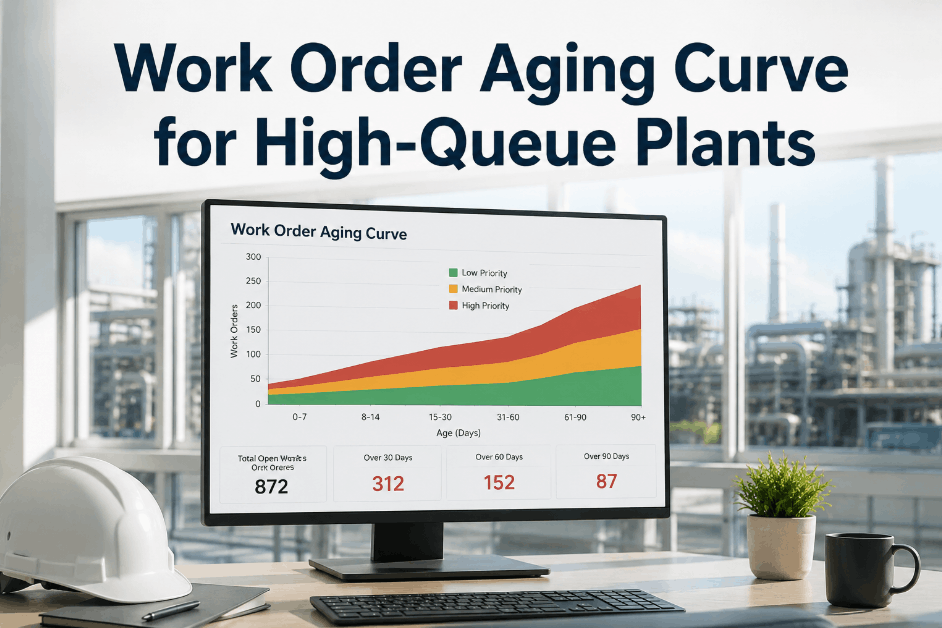
Backlog isn't just a count — it's an age distribution. Tasks older than 72 hours in a production environment signal dispatch delay or skill-gap bottlenecks that need structural correction.
When priority rules change based on who's asking rather than asset criticality, the queue loses integrity. Oxmaint enforces rule-based prioritization tied to asset impact scores and SLA windows.
The gap between work order creation and technician assignment is where queue pressure silently builds. Oxmaint auto-assigns based on skill match, shift availability, and proximity to asset location.
Key Metrics to Measure Maintenance Queue Pressure
You can't reduce what you don't measure. These queue health metrics give maintenance planners a real-time pulse on where backlog is building, which asset classes are generating the most queue friction, and how fast the team is burning down open work. Reliability engineers who Sign Up Free on Oxmaint track all these indicators in live dashboards without manual spreadsheet compilation.
| Metric | What It Measures | Target Benchmark | Queue Pressure Signal |
|---|---|---|---|
| Backlog Burn-Down Rate | Work orders closed vs. opened per shift | Ratio ≥ 1.0 | Below 0.8 signals growing backlog |
| Task Aging Index | Average age of open work orders in hours | < 48 hours | Over 72 hours = dispatch bottleneck |
| Assignment Lag | Time from WO creation to technician assignment | < 30 minutes | Over 2 hours = planner or routing gap |
| Overdue PM Rate | Percentage of PMs past scheduled date | < 5% | Over 15% = capacity or priority issue |
| Queue Depth by Skill Type | Open tasks per technician skill category | Balanced across skills | Imbalance signals skill-gap bottleneck |
| Service Restoration Time | Mean time from fault report to asset return | < 4 hours (production assets) | Rising trend = queue flow degrading |
Reducing Queue Pressure: Phased Approach for High-Mix Facilities
Queue pressure relief requires structural changes to how work flows from detection to completion — not just faster technicians. Facilities that Book a Demo with Oxmaint use a phased approach to tighten dispatch, enforce priority rules, and automate backlog burn-down visibility before scaling to full-facility implementation.
- Audit open work orders by age, skill type, and asset class
- Map assignment lag from WO creation to technician dispatch
- Identify top 3 queue pressure sources by job mix category
- Benchmark burn-down ratio and overdue PM rate at baseline
- Configure Oxmaint priority rules aligned to asset criticality
- Train planners on queue health dashboard interpretation
- Enable auto-assignment based on skill match and shift coverage
- Integrate PM scheduling with real-time queue load visibility
- Set escalation rules for tasks aging beyond threshold limits
- Deploy mobile work order updates to eliminate re-entry lag
- Measure burn-down improvement vs. pre-automation baseline
- Extend queue automation to secondary asset classes and shifts
Connecting Queue Data to CMMS, Scheduling, and Reporting
Queue pressure visibility only delivers value when it connects to scheduling, parts availability, and shift planning. Oxmaint links open work queues to technician calendars, spare parts inventory, and management dashboards so planners act on real data — not morning stand-up estimates. Maintenance leaders who Sign Up Free on Oxmaint eliminate the spreadsheet gap between queue data and dispatch decisions.
All open work orders, fault submissions, and PM triggers feed the live queue. Oxmaint ingests data from operator reports, sensor alerts, and manual submissions in one unified backlog view.
Priority rules score each work order by asset criticality, production impact, and task age. High-pressure queue items automatically surface to shift supervisors before they breach SLA windows.
Oxmaint matches open tasks to available technicians by skill, shift, and location. Dispatch lag drops from hours to minutes when assignment rules replace manual planner coordination.
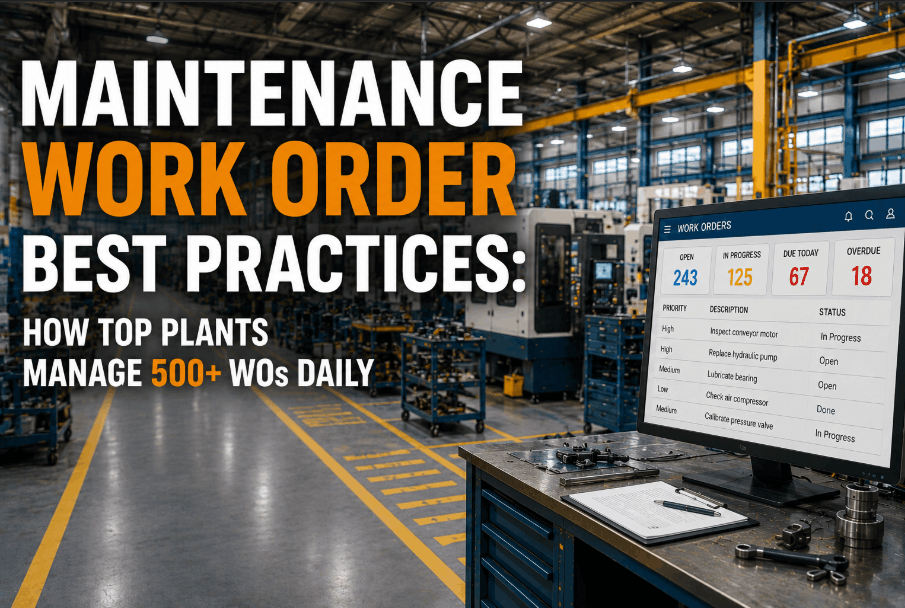
Live burn-down charts, task aging heatmaps, and throughput trends give plant managers and reliability engineers a single-screen view of queue pressure across all shifts and asset classes.
Oxmaint helps high-mix facilities cut dispatch lag, enforce priority rules, and monitor backlog burn-down in real time. Reduce overdue PMs and restore service faster.
Maintenance Queue Pressure in High-Mix Facilities — Common Questions
Queue pressure spikes when job mix variety outpaces technician routing speed, setup times vary unpredictably, and priority rules aren't enforced consistently. A single complex asset failure in a high-mix line can stall 3–5 downstream tasks simultaneously.
Oxmaint auto-assigns work orders based on technician skill profiles, shift availability, and asset location. This eliminates manual planner coordination and reduces assignment lag from hours to under 30 minutes in most implementations.
A burn-down ratio at or above 1.0 means the team closes as many tasks as it opens each shift. Ratios below 0.8 sustained over multiple shifts signal structural capacity or routing problems requiring immediate attention.
Yes. Oxmaint ingests real-time sensor alerts and auto-generates priority work orders that enter the queue with pre-scored criticality. This means predictive failures don't wait for manual submission before entering the dispatch pipeline.
Oxmaint applies rule-based prioritization tied to asset criticality scores, production line impact, and SLA windows. This removes informal overrides and ensures planners and supervisors work from a consistent, objective queue order every shift.
Start by connecting your existing work order data to Oxmaint's queue dashboard, then enable auto-assignment for your highest-volume asset class. Most facilities see measurable burn-down improvement within the first two weeks of deployment. Book a Demo to see the setup process firsthand.
Oxmaint connects your work orders, technician schedules, and asset criticality data into one live queue management system. Reduce backlog, cut dispatch lag, and improve throughput.