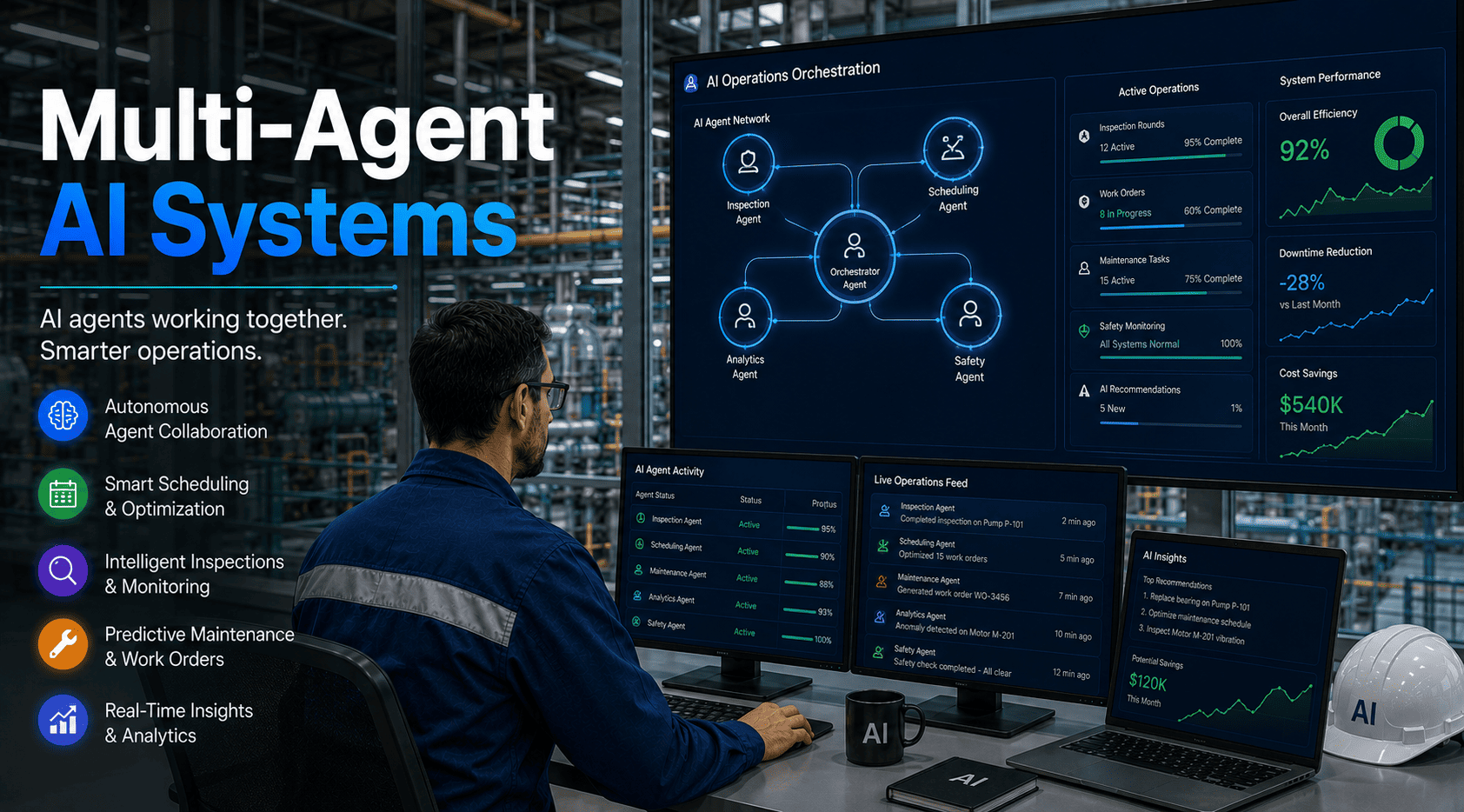
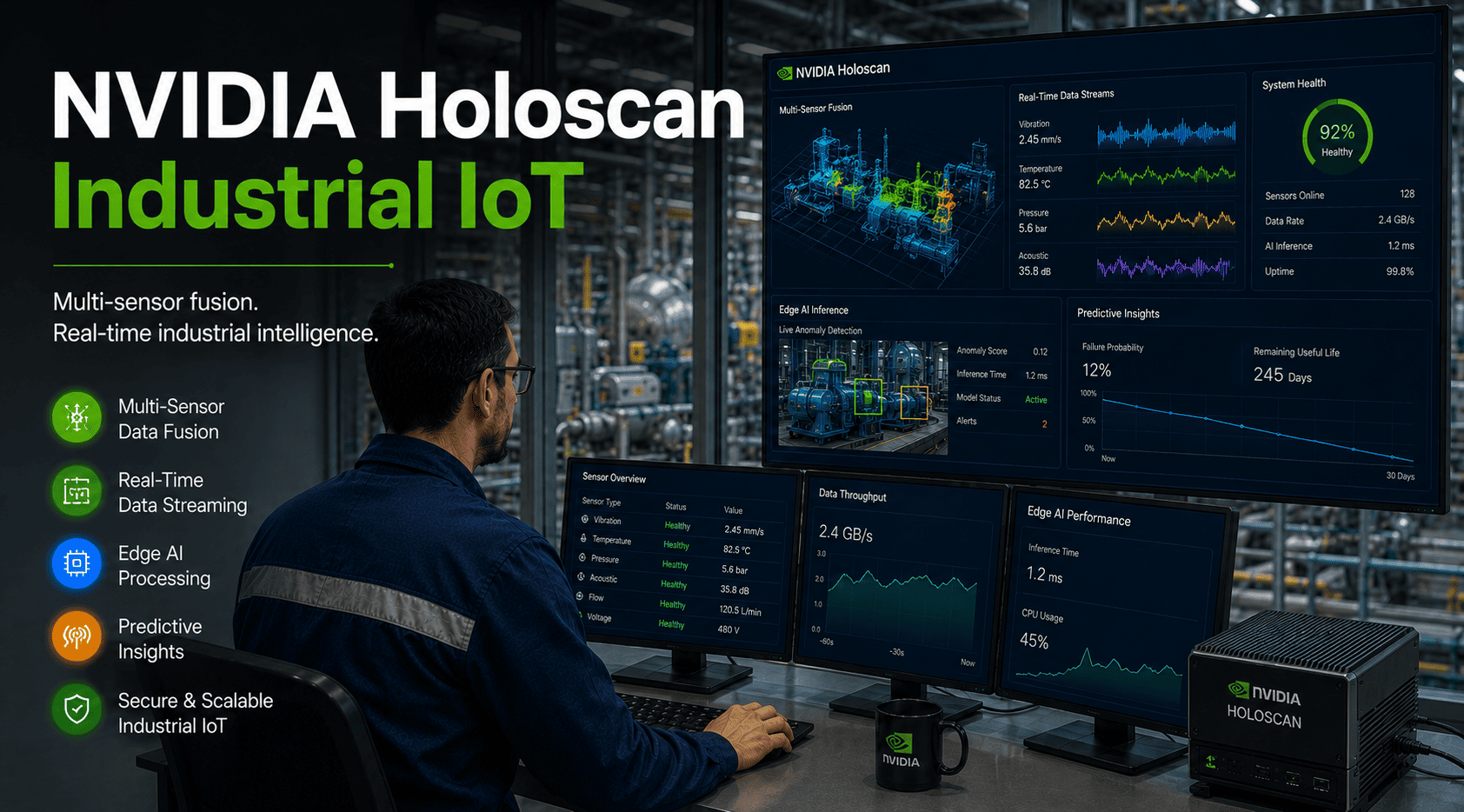
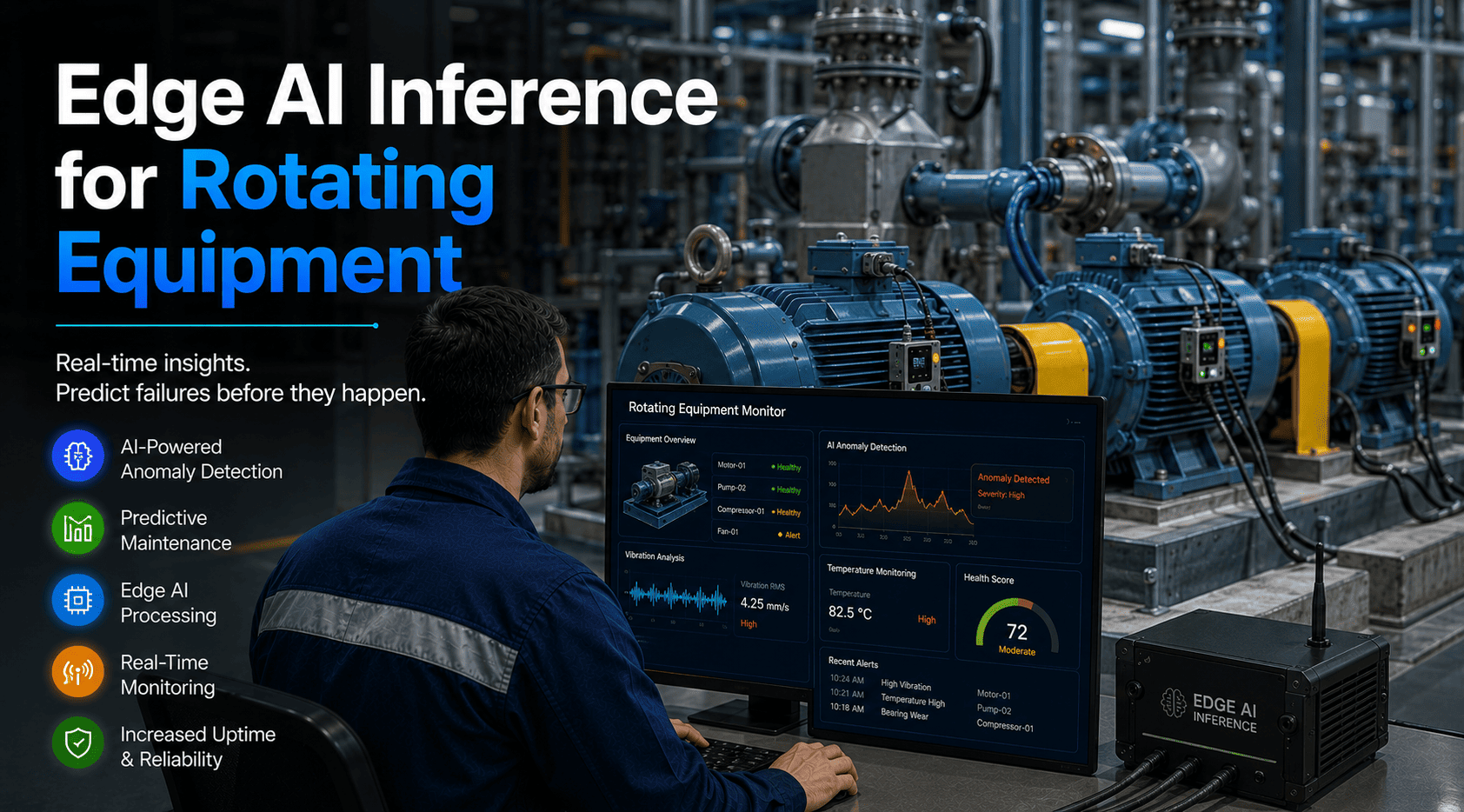
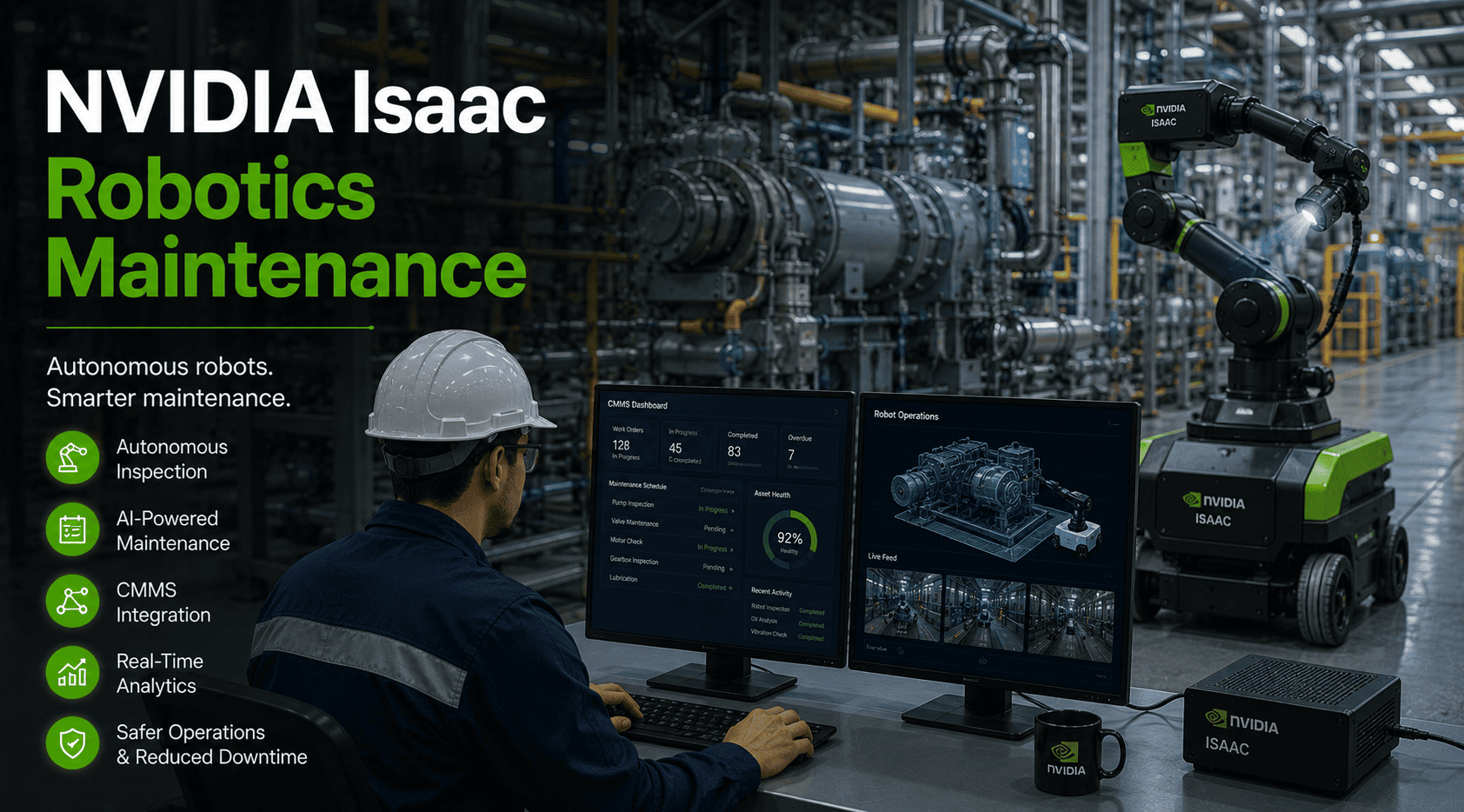
A single AI model watching a single asset is powerful. A coordinated fleet of specialized AI agents — one monitoring vibration across 400 motors, a second tracking parts inventory and triggering procurement when thresholds are reached, a third scheduling work orders around production windows, and a fourth generating compliance reports in real time — is transformational. Multi-agent AI systems represent the next architecture shift in industrial maintenance: moving from AI as a monitoring tool to AI as an autonomous operations layer that handles the coordination complexity no human team can manage at scale. Facilities deploying multi-agent maintenance AI report 40–55% reductions in unplanned downtime, 30% reductions in maintenance labor costs, and the ability to manage asset portfolios that would have required twice the headcount under traditional operations models. Start a free trial to see how OxMaint's coordinated AI architecture works across your asset portfolio, or book a demo and we will walk through a live multi-agent workflow on a facility profile similar to yours.
See Your Asset ROI in 30 Minutes
One AI Agent Monitors. A Coordinated Fleet of Agents Runs Your Operation.
See how much operational complexity OxMaint's multi-agent AI can absorb — and how much cost it eliminates from your maintenance budget.
- Coordinated AI agents for monitoring, scheduling, procurement, and compliance simultaneously
- Autonomous work order generation and dispatch without manual intervention
- Portfolio-wide orchestration across every site, system, and asset class
Used by operations teams managing 10,000+ assets — see measurable results in the first 30 days
55%
Reduction in Unplanned Downtime with Multi-Agent AI
Gartner Manufacturing AI Report, 2024
$1.4T
Global Industrial Downtime Cost Addressable by AI Coordination
McKinsey Global Institute, 2023
30%
Maintenance Labor Cost Reduction Through Autonomous Agent Workflows
Deloitte Operations AI Study, 2024
3×
More Assets Managed Per Technician with AI Agent Coordination
ARC Advisory Industrial AI Benchmark
What Is Multi-Agent AI Maintenance
Beyond Single-Model AI: What a Coordinated Agent Fleet Actually Does
Traditional AI maintenance tools are single-model systems: one algorithm watches sensor data and generates an alert when thresholds are breached. This architecture has a fundamental limitation — the alert still requires human interpretation, routing, scheduling, parts sourcing, and dispatch. The human coordination layer between AI signal and physical repair remains fully intact, consuming exactly the labor and time that organizations hoped AI would reduce.
Multi-agent AI systems eliminate that bottleneck by deploying networks of specialized AI agents that communicate, coordinate, and act autonomously. A health monitoring agent detects a developing fault and passes structured diagnostic data to a scheduling agent, which identifies the optimal repair window against production requirements. The scheduling agent simultaneously signals a procurement agent to verify parts availability and trigger an order if needed. A dispatch agent receives confirmation that parts are secured and generates a complete work order to the appropriate technician's mobile device. A compliance agent logs every step of the sequence with timestamps and audit trail data. All of this happens in minutes — without a single human coordination decision required.
The power of multi-agent architecture is parallelism and scale. A single AI model processes one decision stream. A coordinated fleet processes hundreds simultaneously — monitoring every asset, managing every work order queue, tracking every parts position, and maintaining every compliance record across the entire portfolio at the same time. For operations teams managing large, complex facilities or multi-site portfolios, this is the architectural shift that makes true autonomous maintenance operations possible. Start a free trial to see OxMaint's agent coordination layer running on your asset hierarchy, or book a demo and we will map your specific coordination bottlenecks to the agents that eliminate them.
Most facilities are paying human coordinators to do work that AI agent fleets can handle autonomously — at a fraction of the cost and a fraction of the response time.
Agent Architecture
The 8 Specialized AI Agents That Run an Autonomous Maintenance Operation
01
Health Monitoring Agent
Continuously analyzes sensor streams, vibration data, thermal signatures, and performance metrics across every connected asset. Generates structured fault diagnoses — not just alerts — and passes actionable health intelligence to downstream agents.
02
Scheduling Orchestration Agent
Receives fault intelligence and calculates the optimal repair window by analyzing production schedules, technician availability, equipment criticality, and downtime cost models simultaneously. Minimizes operational impact for every intervention.
03
Procurement and MRO Agent
Monitors parts inventory in real time against scheduled and predicted demand. Triggers purchase orders automatically when stock falls below dynamic thresholds — ensuring parts arrive before planned interventions without manual inventory management.
04
Work Order Dispatch Agent
Generates complete work orders — including procedure steps, parts lists, safety requirements, and estimated time — and dispatches them to the right technician on the right device at the right time, without supervisor routing decisions.
05
Compliance and Audit Agent
Logs every sensor reading, agent action, work order step, and technician sign-off into an immutable audit trail. Generates compliance reports for OSHA, ISO 55001, and GMP frameworks automatically — inspection-ready at all times.
06
CapEx Planning Agent
Continuously updates asset health trajectories and feeds condition-based replacement forecasts into the capital planning model. Produces rolling 5–10 year CapEx projections backed by real asset condition data — not age-based assumptions.
07
Portfolio Prioritization Agent
Aggregates intelligence from all monitoring agents across every site and ranks interventions by economic impact. Ensures that across a 10-site portfolio, the highest-risk, highest-cost-avoidance actions always receive resources first.
08
Continuous Learning Agent
Analyzes outcomes from every completed work order and feeds performance data back into all agent models simultaneously. The entire agent fleet becomes more accurate with every maintenance event — compounding ROI over time.
Industry Pain Points
Why Human Coordination Cannot Scale to Match Modern Asset Complexity
01
Coordination Bottlenecks Kill Response Speed
From sensor anomaly to dispatched technician, the average industrial facility loses 48–72 hours to human coordination — supervisor review, expert consultation, scheduling negotiation, parts confirmation, work order creation. Multi-agent AI compresses this to under 2 hours. At 4.8× the cost of planned repairs, every hour of avoidable delay is a direct financial loss with a calculable value.
02
Human Attention Cannot Monitor Hundreds of Assets Simultaneously
A maintenance manager monitoring 300 assets across multiple systems cannot track every sensor trend, every parts position, and every upcoming PM simultaneously. Critical signals get missed — not through negligence but through cognitive bandwidth limitations that no amount of hiring can fully solve. AI agent fleets monitor all assets continuously without fatigue, distraction, or bandwidth constraints.
Start a free trial to see total asset monitoring coverage across your portfolio from day one.
03
Siloed Systems Create Coordination Gaps
Monitoring data lives in SCADA. Parts data lives in ERP. Work orders live in CMMS. Schedules live in spreadsheets. When these systems do not talk to each other, coordination requires manual data transfer between platforms — creating delays, errors, and decisions made without complete information. Multi-agent AI integrates across all systems and coordinates in real time.
04
Reactive Maintenance Compounds Itself
When one unplanned failure diverts maintenance resources, scheduled preventive tasks slip. Slipped PMs increase the probability of more unplanned failures. More unplanned failures create more resource diversion. This self-reinforcing cycle is how facilities drift from planned to reactive maintenance postures — and why breaking the cycle requires systematic, AI-driven intervention rather than incremental effort.
05
Multi-Site Portfolios Outpace Any Management Structure
Managing maintenance coordination across 5, 10, or 20 facilities requires proportionally more supervisors, analysts, and planners — or accepts proportionally more gaps in oversight. Multi-agent AI scales coordination capacity without scaling headcount: the same agent fleet that manages one site manages ten with equivalent rigor and response quality.
06
Emergency Parts Procurement Destroys Budget Discipline
When failures are not anticipated, parts are ordered at emergency rates — typically 2.4× standard procurement cost. A facilities operation with 200+ emergency parts orders annually is paying a structural premium that compounds into millions of dollars of unnecessary spend. Procurement agents that monitor failure trajectories and order parts on planned timelines eliminate this cost entirely across the portfolio.
The coordination gap between AI signal and human action is where most of the value of industrial AI is being lost today — multi-agent systems close it permanently.
How OxMaint Solves It
OxMaint's Multi-Agent Architecture: Coordinated AI Across Your Entire Portfolio
Integrated Agent Orchestration Platform
OxMaint's agents do not operate in isolation — they share a unified data layer and communicate structured intelligence in real time. A health signal from the monitoring agent automatically triggers coordinated actions across scheduling, procurement, dispatch, and compliance agents without any human handoff required.
IoT and SCADA Native Integration
OxMaint connects to existing sensor networks, SCADA systems, PLCs, and BMS platforms via OPC-UA, Modbus, and MQTT. Health monitoring agents receive continuous real-time data feeds — no manual data entry, no polling delays, no integration middleware required for most industrial configurations.
Asset Hierarchy-Aware Coordination
Every agent decision is context-aware of OxMaint's Portfolio to Property to System to Asset to Component hierarchy. A component fault triggers assessments at the system and property level simultaneously — ensuring no cascade risk is missed and portfolio-level impact is always factored into prioritization decisions.
Autonomous Work Order Lifecycle
From fault detection through work order generation, parts procurement, technician dispatch, completion verification, and audit logging — the entire work order lifecycle executes autonomously. Supervisors manage by exception, reviewing outcomes rather than coordinating every step, multiplying their effective oversight capacity.
OEE and Performance Agent Dashboards
OxMaint's performance agents continuously calculate OEE, availability, and reliability metrics across every asset and site. Portfolio leadership sees real-time performance intelligence — not weekly reports — enabling faster strategic decisions and more credible investor-grade reporting.
No Heavy Implementation Required
OxMaint's agent fleet deploys against your existing asset data and integrations without months of configuration. Most operations have health monitoring and autonomous work order generation active within days of connecting their primary data sources — not quarters.
Multi-agent AI is not a future capability — it is available today in OxMaint for operations teams that are ready to stop paying for coordination that AI can handle autonomously. Start a free trial to see your first autonomous work orders generated from your actual asset health data, or book a demo and we will show a full agent coordination sequence running on a portfolio profile similar to yours.
Traditional vs Multi-Agent Operations
Human-Coordinated Maintenance vs AI Agent Fleet: The Full Operational Comparison
| Operational Dimension |
Human-Coordinated Maintenance |
Multi-Agent AI with OxMaint |
| Fault-to-Work-Order Time |
48–72 hours: alert review, expert consultation, scheduling, parts check, work order creation. |
Under 2 hours: agents coordinate fault analysis, scheduling, parts, and dispatch autonomously. |
| Asset Monitoring Coverage |
Cognitive bandwidth limits effective monitoring to 50–100 assets per analyst. Critical signals missed. |
Continuous monitoring of every connected asset simultaneously. No bandwidth ceiling. No missed signals. |
| Parts Procurement |
Reactive ordering after failures. Emergency premium of 2.4× on urgent parts. Frequent stockouts. |
Procurement agent orders parts weeks ahead based on failure trajectory. Standard cost. Zero stockouts on planned interventions. |
| Multi-Site Scalability |
Each additional site requires proportionally more supervisors, planners, and analysts. |
Same agent fleet manages 1 or 20 sites with equivalent rigor. Coordination capacity scales without headcount. |
| Compliance Documentation |
Manual logging. 3–5 hours per week per site on documentation. Frequent audit gaps. |
Compliance agent auto-logs every action. Inspection-ready audit trail always current. Zero manual documentation effort. |
| CapEx Planning Quality |
Age-based replacement schedules. Surprise CapEx spikes when condition data is unavailable. |
CapEx agent produces condition-based 5–10 year models continuously updated from real asset health data. |
| Supervisor Role |
Managing coordination overhead. Routing decisions, scheduling conflicts, emergency response. |
Managing by exception. Reviewing outcomes, approving strategic decisions, focusing on optimization. |
ROI and Results
Multi-Agent AI for Industrial Maintenance: Measured Outcomes
55%
Unplanned Downtime Reduction
Average reduction in unplanned downtime events reported by multi-agent AI adopters across industrial and manufacturing operations
30%
Maintenance Labor Cost Reduction
Reduction in coordination and administrative labor costs when agent fleets absorb routing, scheduling, and documentation workflows
3×
Assets per Technician
Increase in effective asset management capacity per technician when AI agents handle coordination and administrative overhead autonomously
2 hrs
Fault-to-Work-Order Time
From sensor anomaly to dispatched, parts-confirmed work order — versus 48–72 hours under human-coordinated maintenance workflows
The compounding economics of multi-agent AI are significant: reduced downtime, lower labor costs, eliminated emergency parts premiums, and better CapEx planning each deliver independent ROI streams that reinforce each other. Operations teams that have deployed OxMaint's coordinated agent architecture report that the combined impact exceeds any single-point AI improvement by a factor of 3–5× — because the agents' value multiplies when they work together rather than in isolation. Start a free trial to see your first coordinated agent workflow running across your assets, or book a demo and we will model the combined ROI against your specific operational profile.
Frequently Asked Questions
Multi-Agent AI for Maintenance: Technical and Implementation Questions
How do multiple AI agents coordinate without creating conflicting decisions?
OxMaint's agent architecture uses a shared context layer — a real-time operational state that all agents read and write to simultaneously. When the scheduling agent proposes a repair window, the procurement agent confirms parts availability against that window before the dispatch agent generates the work order. Conflicts are resolved through priority rules and economic optimization logic built into the orchestration layer — not through sequential human approval chains. The result is coherent, coordinated decisions that account for all constraints simultaneously rather than sequential decisions that may conflict.
Can multi-agent AI work with our existing CMMS, ERP, and SCADA systems?
OxMaint integrates with existing industrial systems via OPC-UA, Modbus, REST APIs, and database connectors. Health monitoring agents can read from existing SCADA historians and IoT platforms without replacing them. Work order data can flow bidirectionally with existing CMMS systems. Parts and inventory agents connect to ERP and MRO systems for real-time stock visibility. Most organizations deploy OxMaint's multi-agent layer as an intelligence and coordination tier above their existing systems — enhancing rather than replacing established platforms.
Book a demo to assess integration requirements for your specific technology stack.
How much human oversight is required when AI agents are making autonomous decisions?
OxMaint is designed for supervised autonomy — not unsupervised automation. Routine coordination decisions (work order generation, parts ordering within budget thresholds, PM scheduling) execute autonomously. Decisions above configurable thresholds — major interventions, capital expenditures, novel failure modes — escalate to human review with full AI-generated context and recommendations. Supervisors move from managing coordination overhead to managing exceptions and strategic decisions, typically reducing coordination time by 60–70% while maintaining full human authority over consequential choices.
How does multi-agent AI handle a facility with mixed old and new equipment with varying sensor coverage?
This is a common deployment reality, and OxMaint handles it through tiered agent capability. Assets with full sensor coverage receive continuous AI health monitoring and autonomous coordination. Assets with partial sensor coverage receive condition assessment during planned inspections combined with AI analysis of available operational data. Assets with no sensor coverage receive AI-optimized PM scheduling based on failure history, operating hours, and environmental factors. As sensor coverage is extended incrementally — typically prioritized by asset criticality and failure cost — monitoring agents automatically activate deeper capability for each newly instrumented asset without reconfiguration.
Stop Losing Millions to Reactive Maintenance
Deploy a Fleet of AI Agents That Runs Your Maintenance Operation Autonomously
The coordination work that consumes your team's time and delays your repair response is exactly what multi-agent AI was built to eliminate. OxMaint deploys across your portfolio without heavy implementation — and starts delivering autonomous coordination from day one.
- Coordinated agents for monitoring, scheduling, procurement, and compliance
- Fault-to-work-order in under 2 hours — versus 48–72 hours with human coordination
- Portfolio-wide prioritization with condition-based CapEx planning built in
No heavy implementation — works across multi-site portfolios — live in days, not months