Your Robots Can Inspect Your Assets. OxMaint Makes Sure the Findings Actually Get Fixed.
NVIDIA Isaac robots autonomously patrol your facility. OxMaint auto-generates prioritized work orders from every finding — closing the loop from robot inspection to human repair.
Autonomous robot inspection findingsAuto-generated CMMS work ordersCross-site robotics portfolio reporting
Isaac robots patrol without fatigue across all shifts
4.8x
Higher Emergency Repair Cost
vs. planned maintenance caught by robot inspection (ARC Advisory Group)
What Is It
What Is NVIDIA Isaac for Industrial Robotics Maintenance
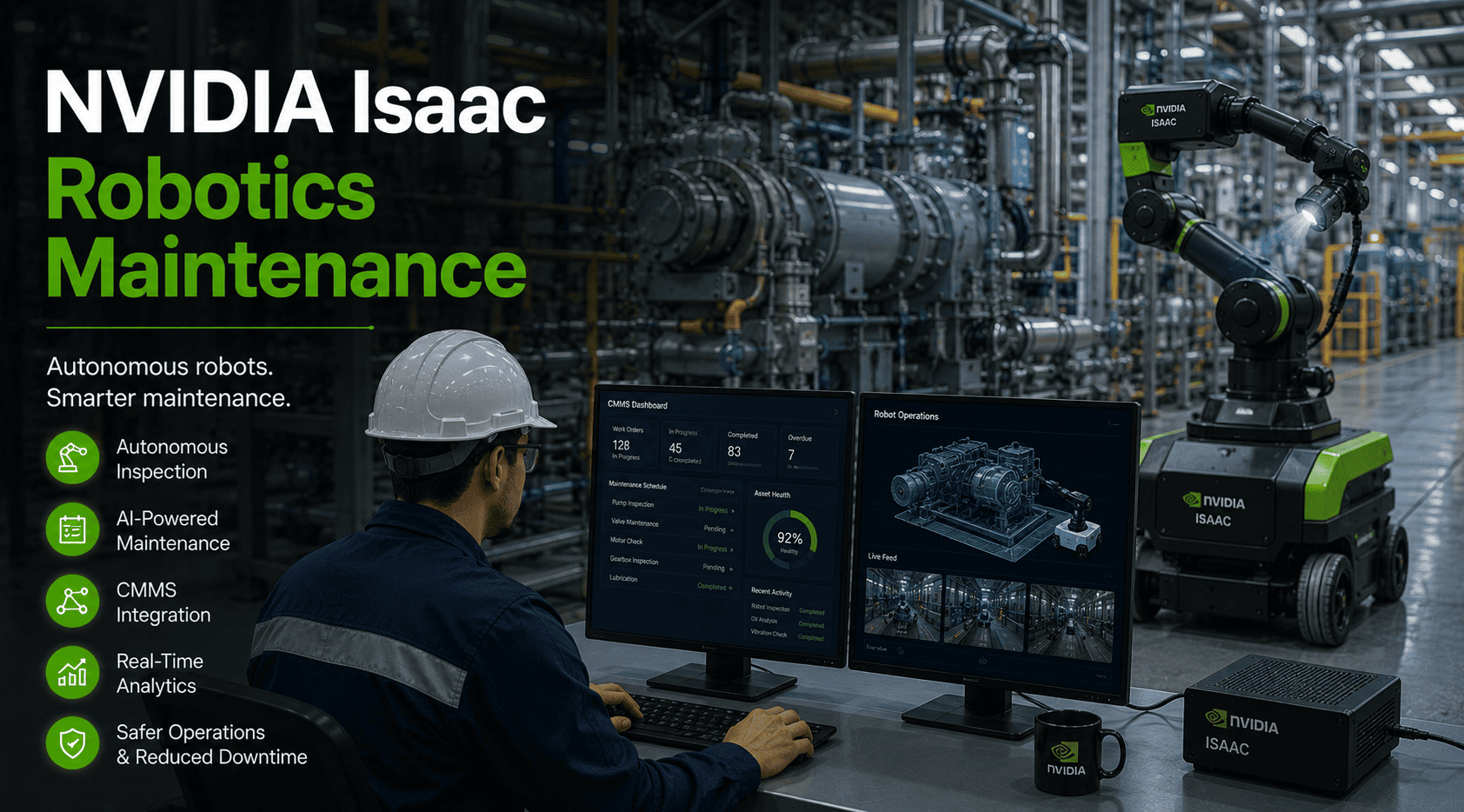
NVIDIA Isaac is a comprehensive platform for developing, simulating, and deploying autonomous robots in industrial environments. It combines Isaac ROS2 for robotics middleware, Isaac Sim for photorealistic simulation-based training, and Isaac Perceptor for 3D environment understanding — giving industrial robots the perception and navigation intelligence needed to operate autonomously in complex, dynamic manufacturing facilities.
In a maintenance context, Isaac-powered robots move beyond their primary production roles to perform inspection tasks during scheduled downtime windows or continuously alongside production. Equipped with thermal cameras, vibration sensors, gas detectors, and visual inspection payloads, these robots detect asset anomalies, measure condition indicators, and report findings with GPS-precise location data — without a human technician walking the floor.
8 Capabilities of an Isaac-Powered Maintenance Robot Program
01
Autonomous Navigation
Isaac Perceptor enables 3D mapping and obstacle-aware navigation through production environments without pre-programmed paths. Robots adapt to layout changes in real time.
02
Thermal Anomaly Detection
Mounted FLIR thermal cameras detect overheating motors, bearings, electrical panels, and piping — flagging temperature excursions before they cause mechanical failure.
03
Visual Inspection AI
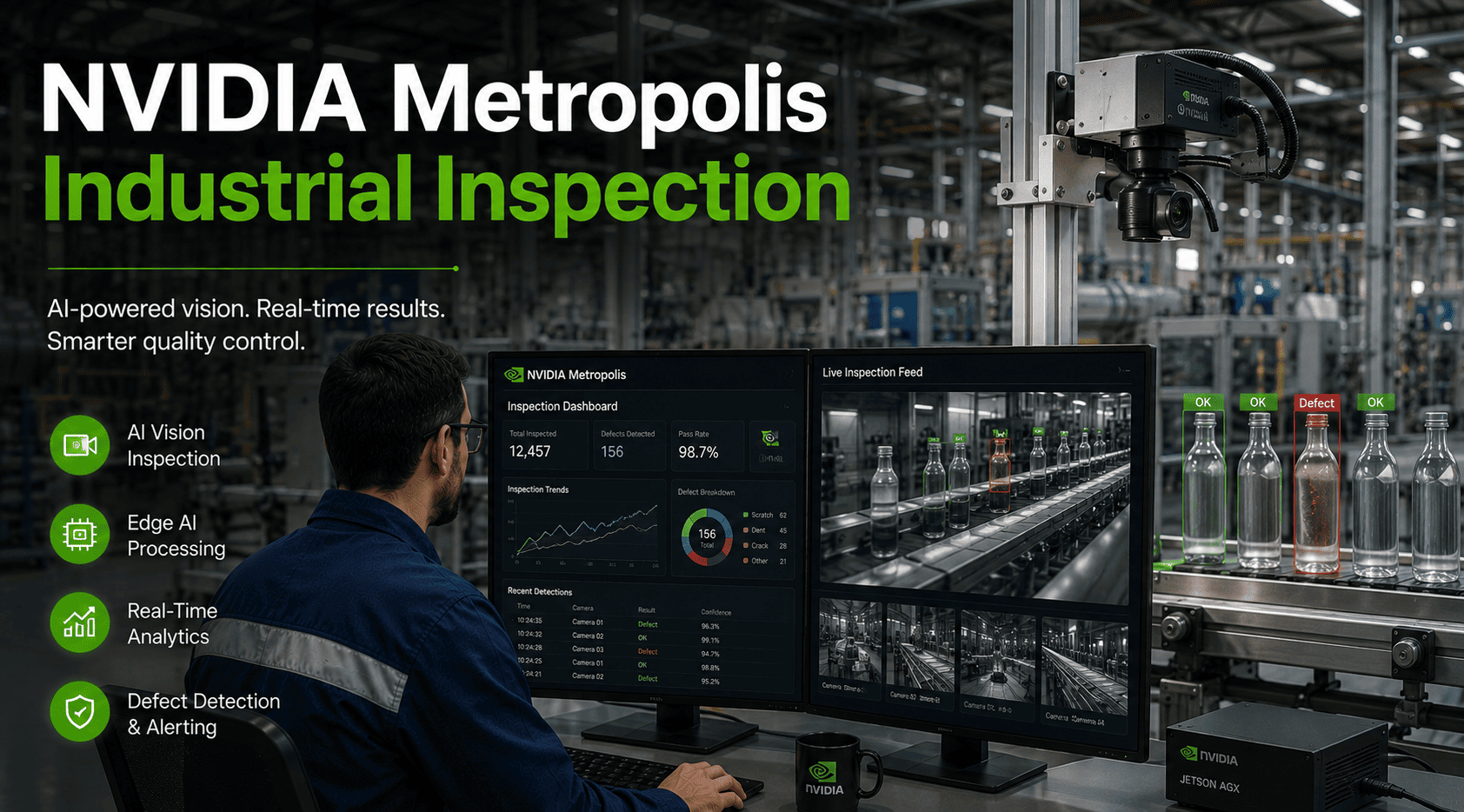
Isaac integrates with Metropolis vision models to detect surface corrosion, seal leaks, label damage, and structural anomalies during inspection passes.
04
Vibration Sensing
Contact vibration sensors deployed by robot arms take bearing frequency measurements on rotating equipment — identifying fault signatures without technician presence.
05
Gas and Leak Detection
Electrochemical and photoionization sensors on mobile robots continuously monitor for VOC, combustible gas, and ammonia leaks across facility zones.
06
Isaac Sim Training Pipeline
New inspection behaviors are trained in photorealistic simulation before physical deployment — eliminating trial-and-error on the production floor and reducing deployment risk.
07
ROS2 Data Integration
Isaac ROS2 packages stream structured inspection data — finding type, severity, asset ID, GPS coordinates, sensor readings — to OxMaint API via standard ROS2 topic architecture.
08
Inspection Route Optimization
AI route planning prioritizes inspection order based on asset criticality, time since last inspection, and current failure probability scores from the OxMaint knowledge graph.
Most manufacturing plants have the robots to inspect every asset in the facility every shift — they just have not connected those robots to a system that acts on what they find.
Pain Points
Why Robot Inspection Programs Fail Without CMMS Integration
Robots Find Problems But Nobody Acts
Without direct CMMS integration, robot inspection findings sit in a separate data system that maintenance teams rarely monitor. High-value inspection data produces zero maintenance improvement.
No Asset Hierarchy Mapping
Robot findings reference coordinates and sensor IDs — not the Portfolio, Property, System, Asset, Component hierarchy that maintenance planners work with. Manual translation kills efficiency and causes findings to be mislabeled or lost.
Inspection Data Siloed from Failure History
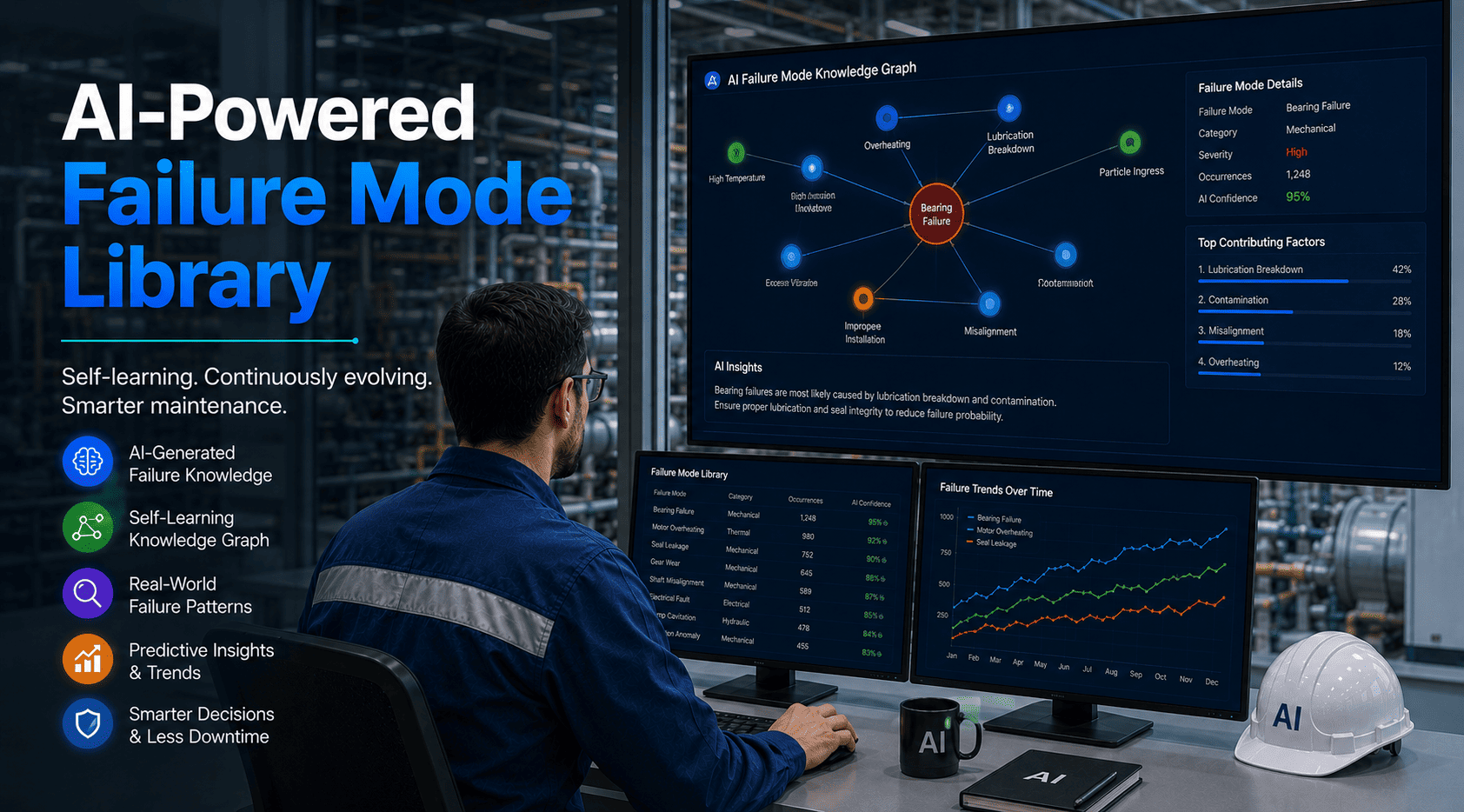
A thermal anomaly found by the robot today has no connection to the bearing failure on the same motor six months ago. Without integration, each finding is treated as the first time — pattern learning is impossible.
No Inspection Route Intelligence
Without connection to asset condition data and failure probability scores, robots inspect on static schedules. High-risk assets in their final hours before failure get the same inspection frequency as healthy equipment.
How OxMaint Converts Isaac Robot Findings Into Maintenance Action
ROS2-to-Work-Order Pipeline
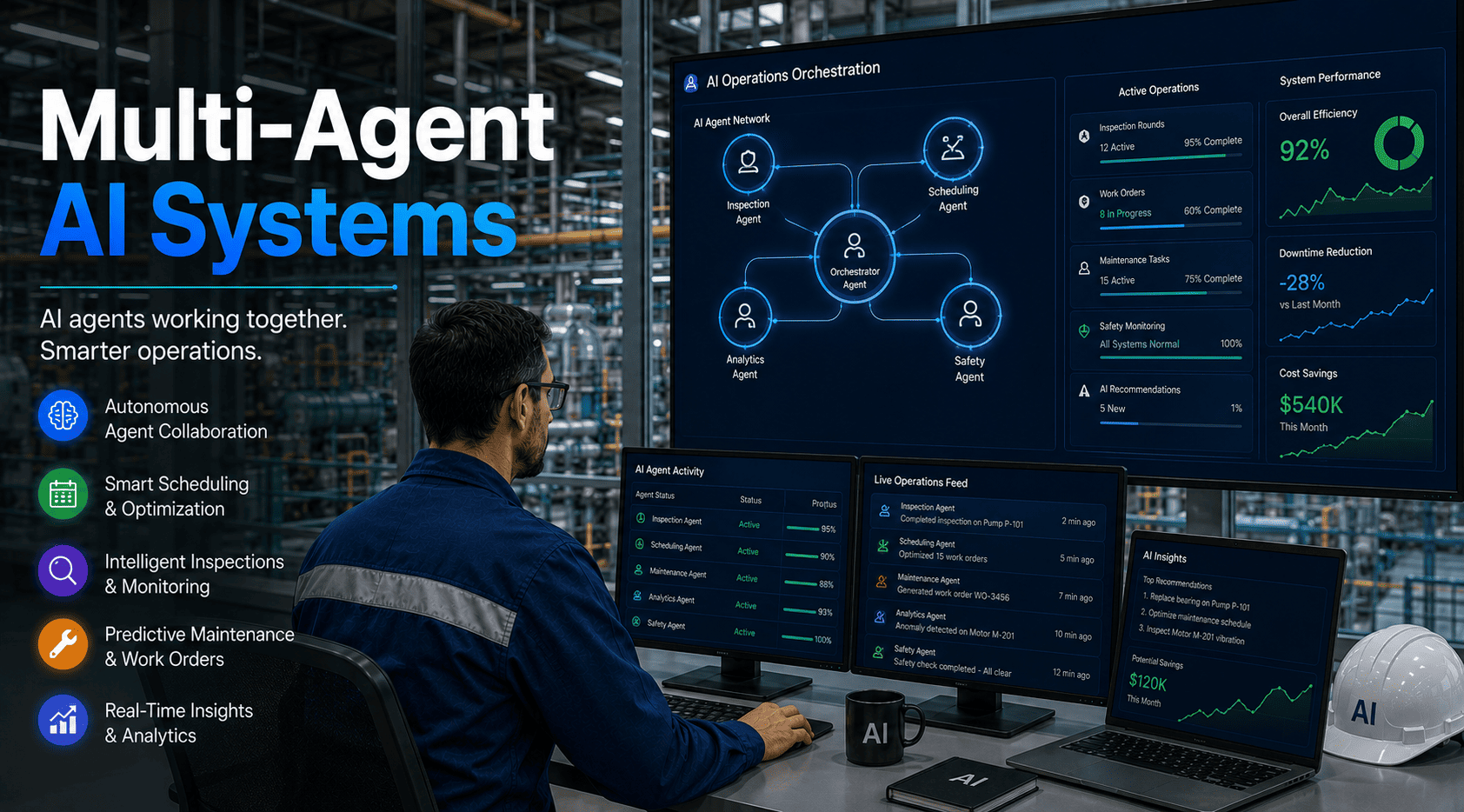
OxMaint's Isaac adapter receives structured finding events from ROS2 topics, maps them to asset IDs in your hierarchy, and auto-creates prioritized work orders within seconds of robot detection.
Asset Hierarchy Geo-Mapping
Robot GPS coordinates are pre-mapped to OxMaint asset IDs. A thermal alert at coordinates (47.2, 12.8) becomes a work order on Motor M-312 in the Compressor System of Plant A automatically.
Multi-Sensor Finding Fusion
Thermal, vibration, visual, and gas findings from a single inspection pass are correlated and attached to one work order with a composite severity score — not four separate disconnected alerts.
Robot-Informed Route Optimization
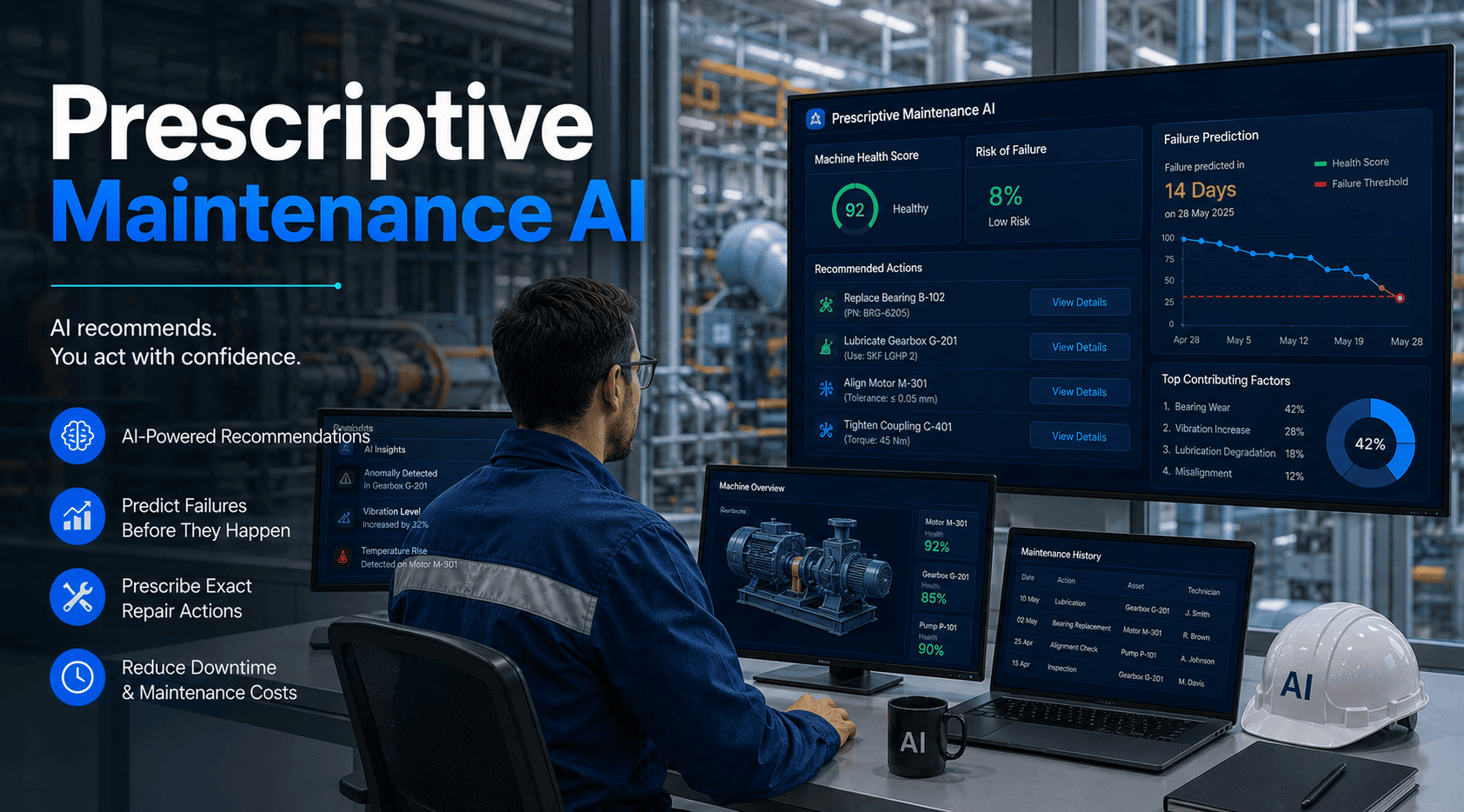
OxMaint shares asset failure probability scores with Isaac's mission planner. High-risk assets get more frequent robot visits; healthy assets get reduced inspection frequency automatically.
Inspection Finding History
Every robot finding is stored against the asset record. Thermal trends over 90 days, vibration signature evolution, visual condition progression — all visible in the asset timeline before a technician opens the work order.
CapEx Robot-Data Forecasting
Assets with deteriorating robot inspection scores feed directly into the rolling 5-10 year CapEx model. Investor-grade replacement forecasting backed by continuous robot observation data.
Before vs After
Isolated Robot Inspection vs. Isaac Integrated with OxMaint
Capability
Isolated Robot Inspection
Isaac + OxMaint Connected
Finding to Work Order
Manual review of robot logs, hours of lag
Auto-generated work order within seconds of detection
Common Questions About NVIDIA Isaac and CMMS Integration
What robot platforms does OxMaint support for Isaac integration
OxMaint integrates with any Isaac-powered robot that publishes inspection findings via ROS2 topics or REST API. This includes Boston Dynamics Spot, ANYbotics ANYmal, Clearpath Robotics platforms, and custom Isaac-based robots. The integration does not depend on the robot hardware — it depends on Isaac ROS2 delivering structured finding data in a standard format.
How is the asset hierarchy mapping configured for robot coordinate systems
OxMaint provides a visual geo-mapping tool where facility floor plans are overlaid with your asset hierarchy. Each asset is assigned a GPS or local coordinate bounding box. When a robot sends a finding at specific coordinates, OxMaint resolves this to the correct asset in your Portfolio, Property, System, Asset, Component hierarchy automatically. This mapping is a one-time configuration that updates when your facility layout changes.
Can Isaac robots be trained in simulation before being deployed to our facility
Yes — this is one of the strongest advantages of the Isaac platform. Isaac Sim provides photorealistic simulation of industrial environments where robot inspection behaviors, sensor configurations, and navigation policies are trained and validated before a robot enters the physical facility. OxMaint can receive simulated inspection findings during this phase to validate the data pipeline before go-live, reducing deployment risk significantly.
What happens when the robot finds something the maintenance team has already scheduled a repair for
OxMaint checks for open work orders on the asset before creating a new one. If a matching open work order exists, the robot finding is appended as additional evidence — updating the condition severity and adding the robot sensor data to the existing work order. This prevents duplicate work orders while ensuring the finding is captured and the priority is updated if the robot-measured condition has deteriorated since the original work order was created.
Stop Losing Millions to Reactive Maintenance
Your Robots Already Know What Needs Fixing. Make Sure Someone Acts On It.
OxMaint turns every NVIDIA Isaac robot finding into a prioritized work order, an updated asset condition score, and a data point that makes your failure mode library smarter. Close the loop from autonomous inspection to human repair — permanently.
Autonomous robot inspection to work orders
Failure-probability-driven inspection routes
5-10 year CapEx from robot condition data
Used by operations teams managing 10,000+ assets | See measurable results in 30 days | Limited onboarding slots this quarter