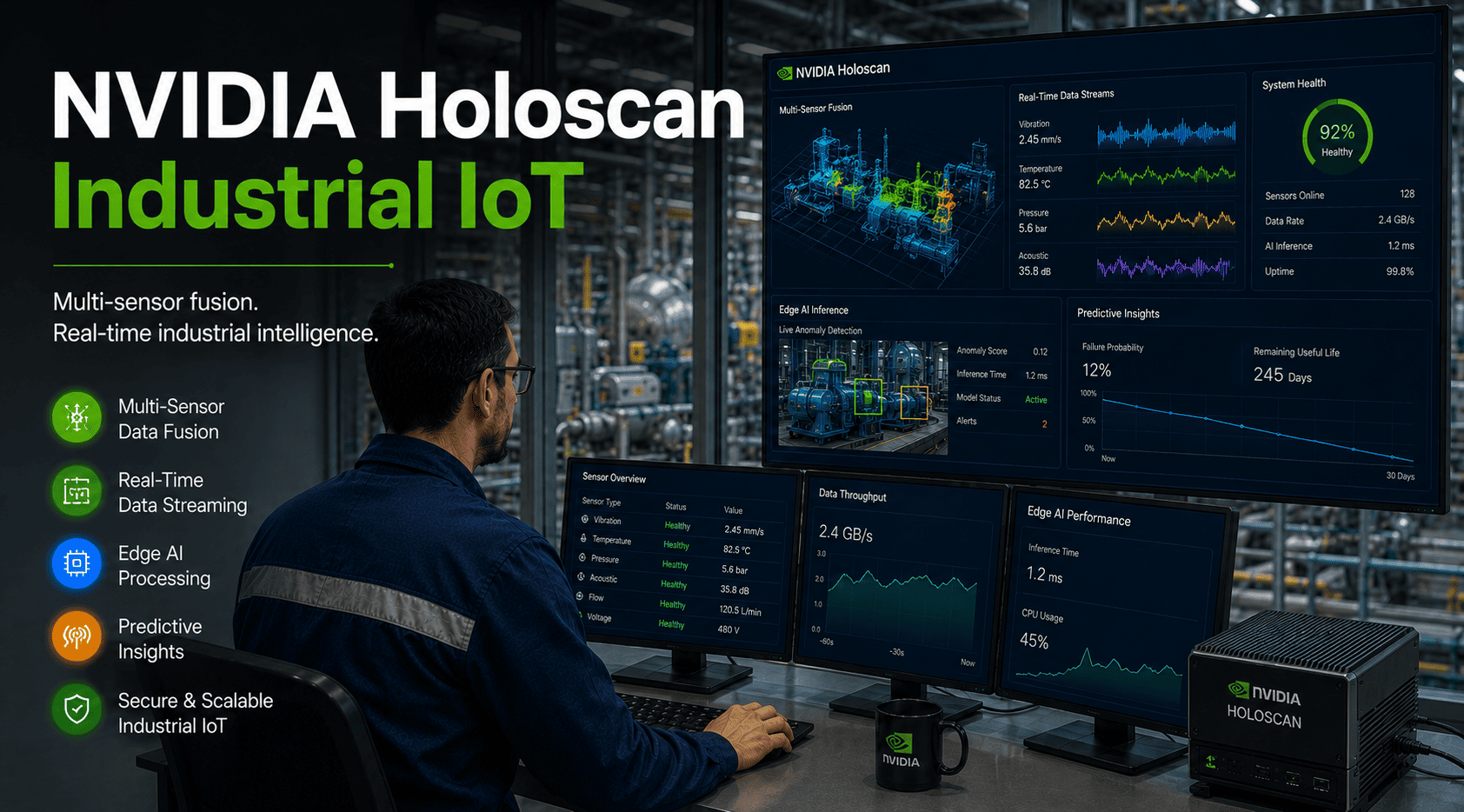
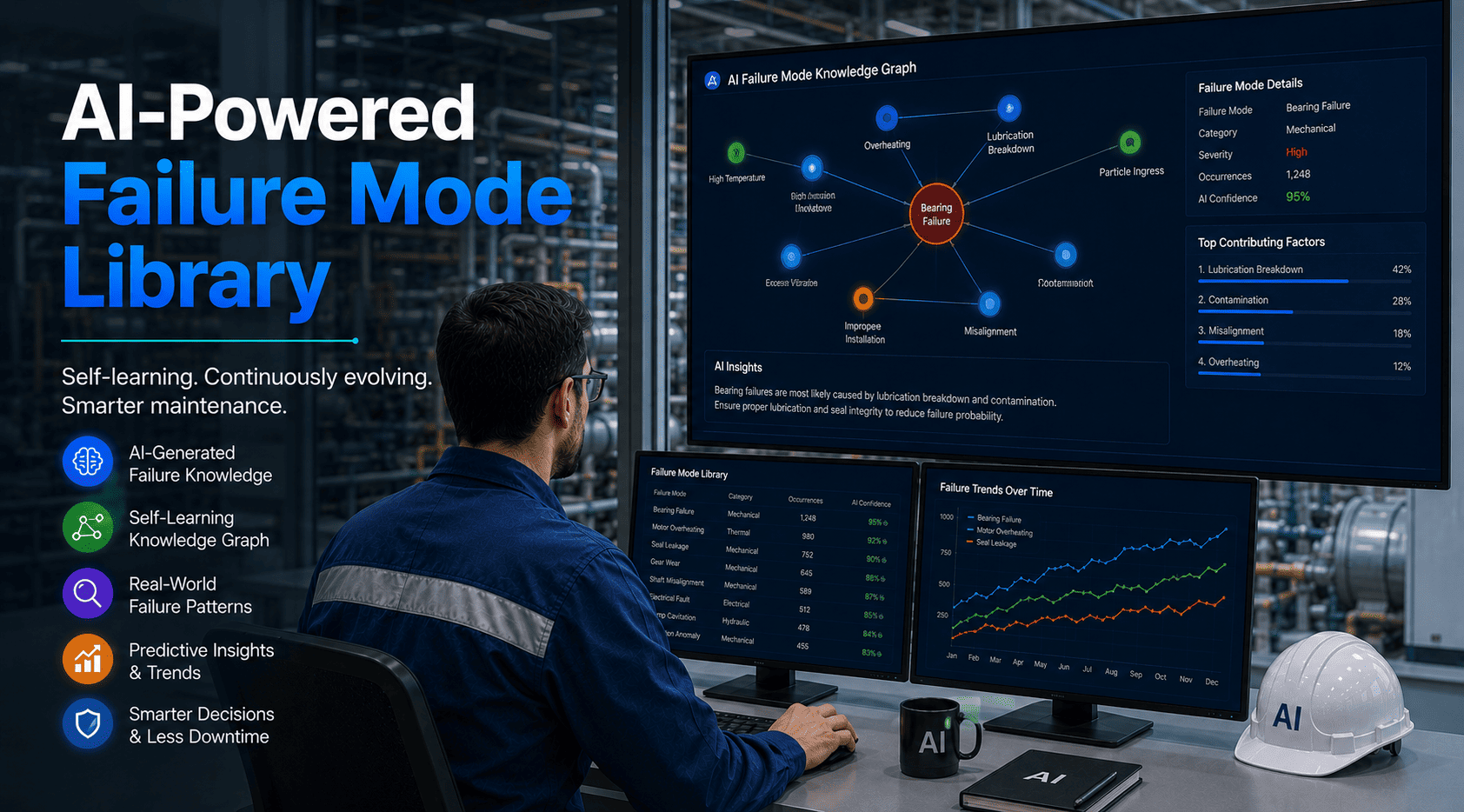
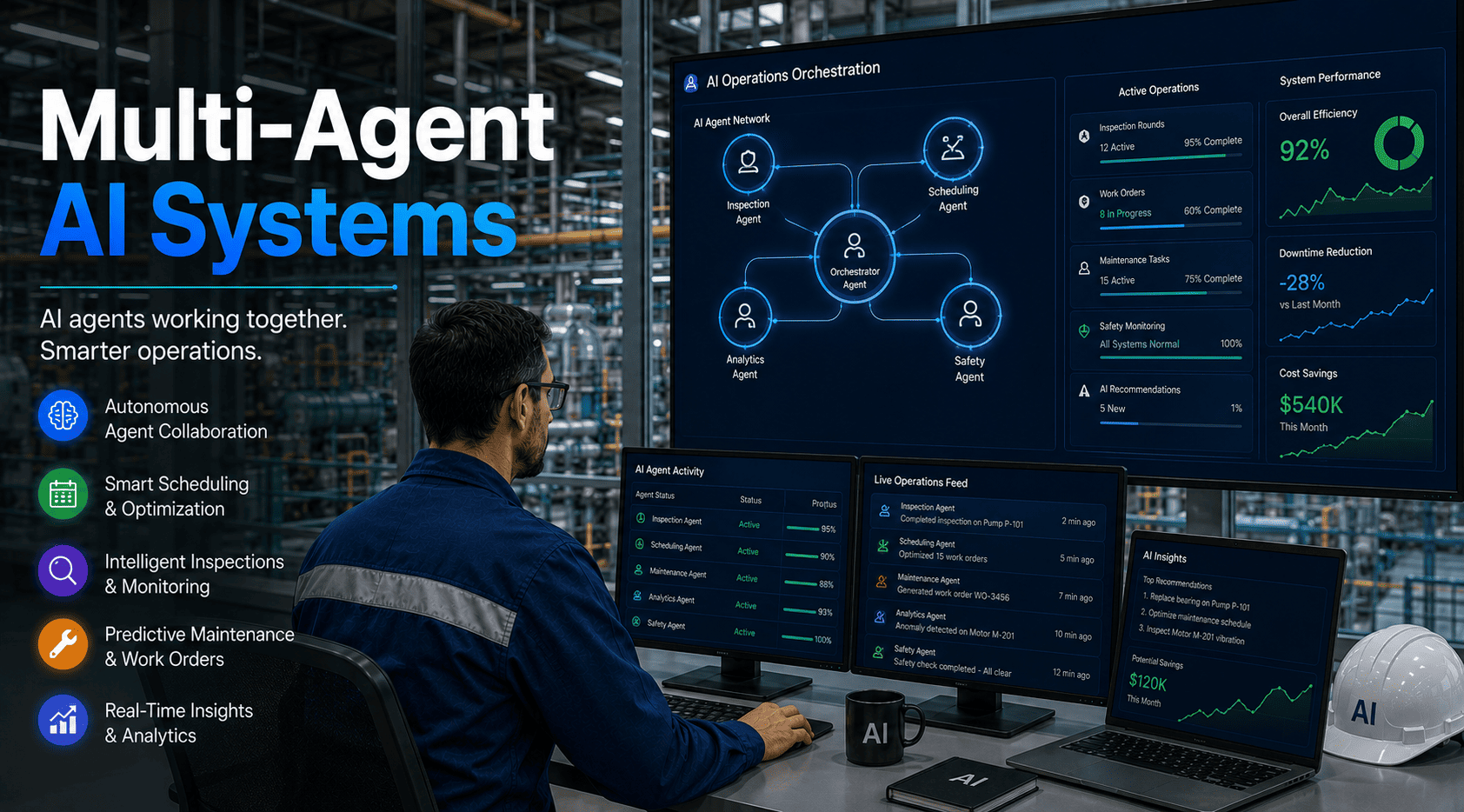
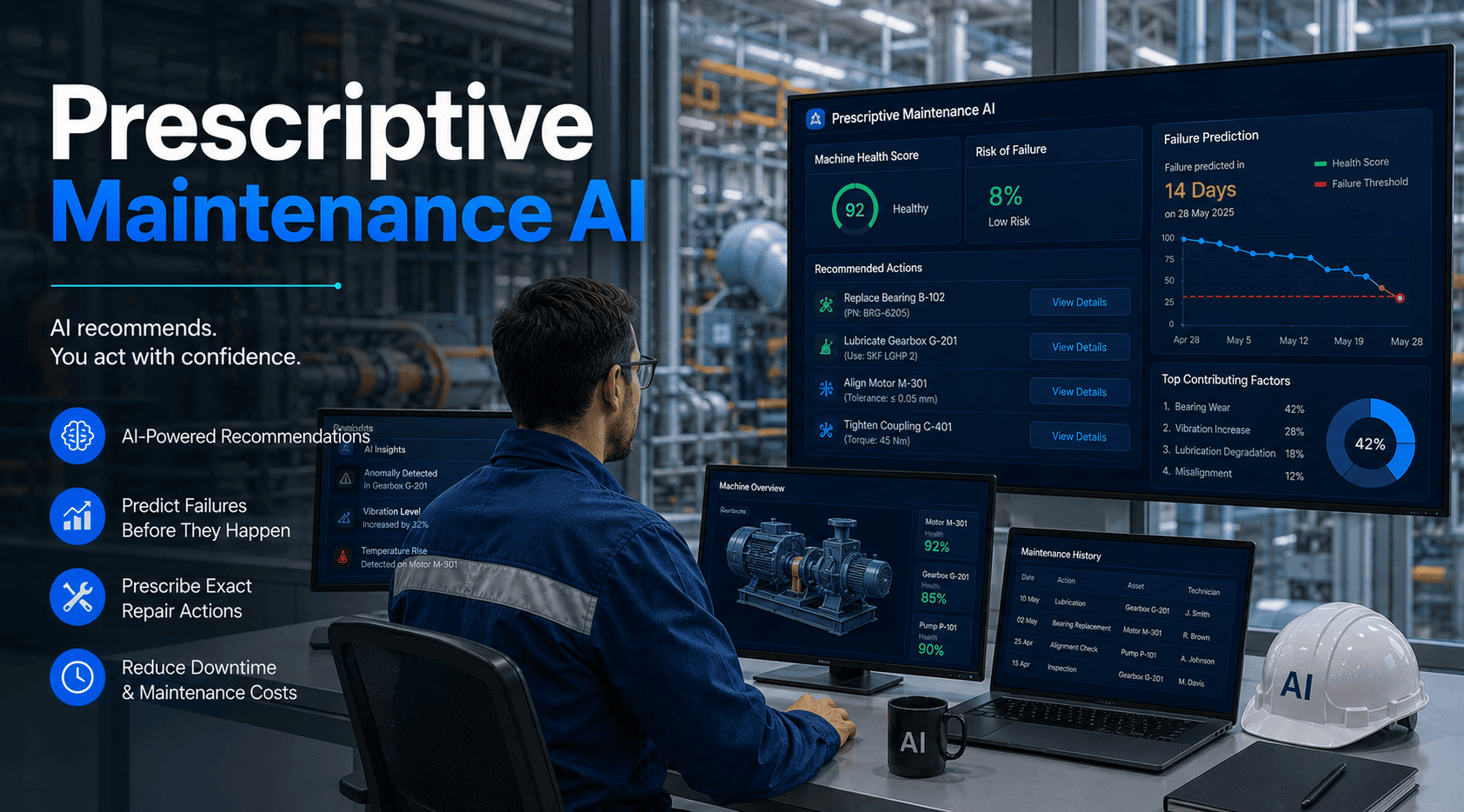
Industrial sensor fusion has a data pipeline problem. A single manufacturing line generates vibration readings, thermal images, current signatures, acoustic emissions, and process telemetry — simultaneously, at kilohertz sampling rates, from dozens of instruments. Historically, each data stream ran through a separate analysis tool, and no single system saw the full picture in real time. NVIDIA Holoscan changes this: it is a streaming AI framework built to fuse heterogeneous sensor data at the edge in real time, running inference models on the unified stream with sub-millisecond latency. When Holoscan's output connects to OxMaint's CMMS layer, every sensor anomaly becomes a structured maintenance event — with work orders, condition scores, and CapEx implications updated automatically. Start a free trial to see how OxMaint turns Holoscan sensor events into actionable maintenance intelligence across your portfolio.
NVIDIA HOLOSCAN + OXMAINT
Real-Time Multi-Sensor Fusion at the Edge — Connected to Your CMMS
NVIDIA Holoscan fuses industrial sensor streams with sub-millisecond latency. OxMaint converts every anomaly into automated work orders, condition score updates, and investor-grade CapEx forecasts — no manual data entry, no monitoring blind spots.
Used by operations teams managing 10,000+ assets — live in days, not months.
Real-time multi-sensor asset visibility
Predictive failure alerts from fused sensor data
5–10 year CapEx forecasting from measured degradation
What Is NVIDIA Holoscan for Industrial IoT?
NVIDIA Holoscan is a real-time AI sensor processing platform originally developed for medical imaging and surgical robotics — then extended to industrial IoT applications where multi-sensor data fusion at the edge is required. At its core, Holoscan is a graph-based streaming framework: each sensor stream is a node, processing operators are graph edges, and the final output is a unified, inference-ready data tensor that AI models can act on in real time.
For industrial maintenance, this means vibration, thermal, acoustic, current, and process data from a single piece of equipment — or an entire production line — are fused into a single coherent representation before the AI model sees it. This is fundamentally different from running separate models on separate streams: fusion eliminates the temporal misalignment and modal ambiguity that causes high false-positive rates in single-sensor systems.
The Holoscan SDK runs natively on NVIDIA Jetson Orin and IGX platforms, enabling deployment directly at the equipment level without cloud round-trips. Combined with OxMaint's CMMS integration layer, Holoscan-detected anomalies become structured maintenance events within seconds of detection — with the full asset context, work history, and parts inventory available to the responding technician. Book a demo to walk through how Holoscan outputs map to OxMaint's asset registry and work order engine for your specific facility.
10TB+
raw sensor data per day
generated by a 200-asset industrial facility with high-frequency monitoring
80%
fewer false-positive alerts
multi-modal sensor fusion vs. single-sensor AI analysis (NVIDIA IoT research)
4.8×
cost of reactive vs. planned repair
McKinsey Operations — emergency repair cost multiplier
45%
reduction in maintenance costs
facilities deploying real-time edge AI condition monitoring
Most industrial facilities stream sensor data to the cloud but act on it hours later. NVIDIA Holoscan fuses and classifies that data in under 1ms — eliminating the lag that turns detectable faults into emergency failures.
How Holoscan Works: Core Architecture and Concepts
01
Graph-Based Streaming Pipeline
Holoscan models sensor processing as a directed acyclic graph. Each sensor stream enters as a source node, passes through processing operators (filtering, FFT, normalization), and merges at fusion nodes before reaching the AI inference operator — all running in parallel with deterministic latency.
02
GXF (Graph Execution Framework)
GXF is Holoscan's underlying execution engine. It schedules tensor operations across CPU, GPU, and DLA compute units on Jetson Orin hardware, maximizing throughput while maintaining pipeline determinism — critical for time-sensitive industrial fault detection applications where timestamp accuracy matters.
03
Heterogeneous Sensor Ingestion
Holoscan natively handles MIPI, GigE Vision, USB3, SDI, and custom serial sensor inputs. Industrial adaptors bring in Modbus, OPC-UA, and EtherNet/IP data alongside high-bandwidth sensor streams — enabling true multi-modal fusion across both process data and physical measurement signals.
04
TensorRT-Optimized Inference
AI models deployed on Holoscan are compiled via TensorRT for INT8 or FP16 execution on Jetson's tensor cores. This achieves inference throughput 4–10× faster than FP32 while maintaining 95–98% accuracy — enabling complex multi-modal fault classification models to run within a 1ms per-inference budget.
05
Zero-Copy GPU Memory Pipeline
Holoscan's memory management keeps sensor data in GPU memory throughout the entire processing pipeline — from ingestion through inference to output. Eliminating CPU-GPU memory transfers reduces latency by 30–60% compared to frameworks that move data across the PCIe bus between processing steps.
06
MQTT and REST Event Publication
Holoscan pipeline outputs — anomaly classifications, severity scores, affected sensor channels — are published to downstream systems via MQTT brokers or REST endpoints. OxMaint subscribes to these event streams, mapping fault payloads to asset records and triggering maintenance workflows automatically.
07
Distributed Multi-Node Deployment
Holoscan supports distributed graph execution across multiple Jetson nodes connected via UCX (Unified Communication X). A single logical pipeline can span multiple physical edge devices — enabling sensor fusion across geographically separated equipment without centralizing raw data to a cloud endpoint.
08
OxMaint CMMS Integration Layer
OxMaint's edge connector receives structured fault events from Holoscan, matches them to assets in the registry hierarchy (Portfolio, Property, System, Asset, Component), and triggers downstream actions: work order creation, condition score updates, PM schedule adjustments, and CapEx risk flag generation — all automatically.
Industrial IoT Pain Points That Holoscan Addresses
01
Siloed Sensor Streams Miss Cross-Modal Faults
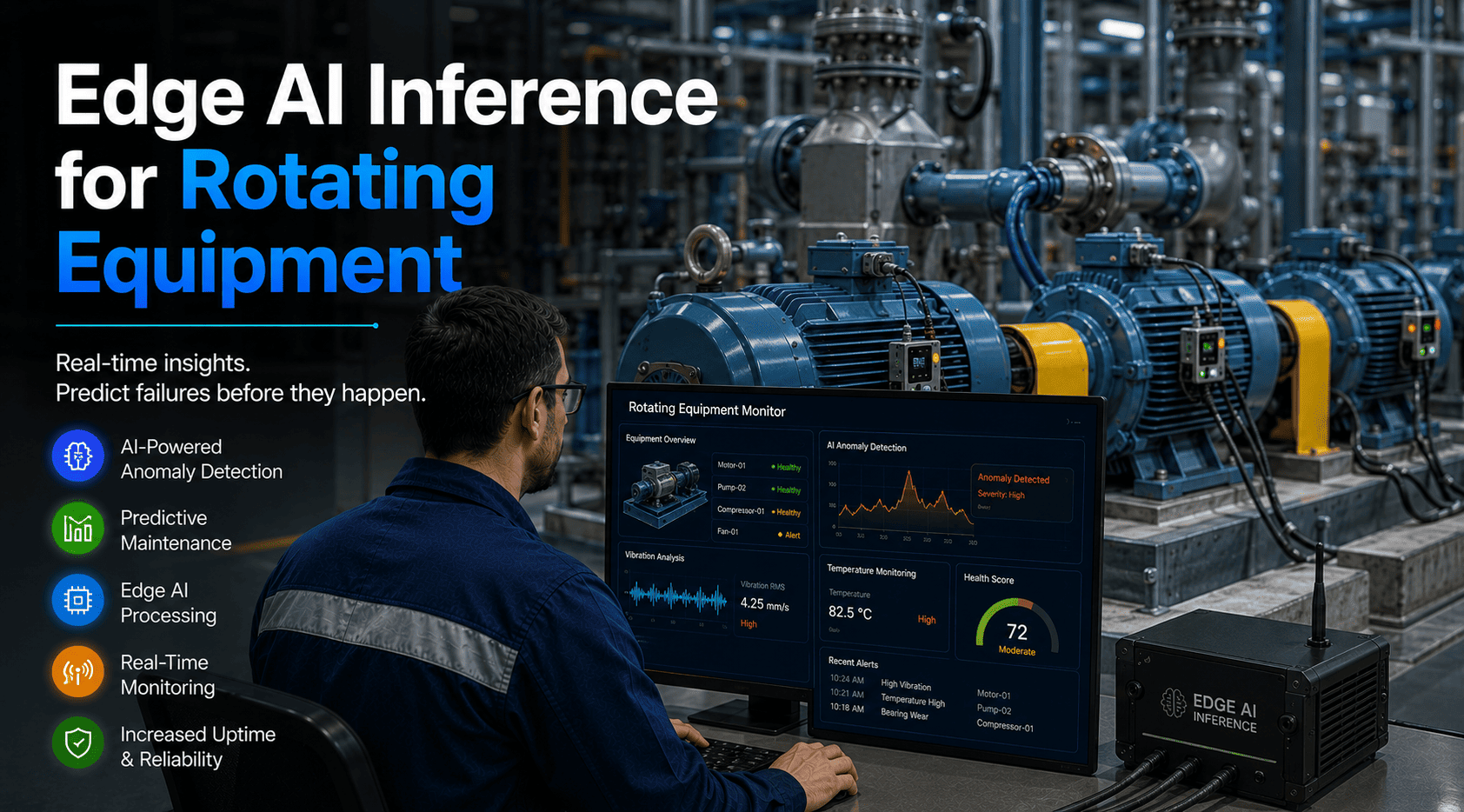
A motor bearing failure produces correlated signatures across vibration, thermal, and current data simultaneously. Systems that analyze each stream independently miss the correlation — and generate higher false-positive rates because they lack the multi-modal context. Holoscan fuses all streams before inference, catching correlated faults that single-sensor systems miss entirely.
02
Cloud Latency Eliminates Diagnostic Windows
High-frequency rotating equipment faults produce diagnostic signatures in 50–200ms windows. Cloud-based AI analysis adds 200–800ms of round-trip latency — closing the diagnostic window before inference completes. Holoscan's on-device inference runs in under 1ms, capturing fault signatures that cloud-dependent systems never see.
03
Sensor Data Volume Overwhelms Cloud Pipelines
Streaming 25.6 kHz vibration data from 200 sensors generates 10TB+ per day. Cloud ingestion costs at this scale exceed the business value of the insights. Holoscan processes data locally and transmits only structured fault events — reducing outbound data volume by 99% while increasing actionable insight density.
04
Fault Events Don't Connect to Maintenance Actions
Even well-designed edge AI systems often stop at the alert — a notification fires, an engineer reviews it, and a work order is created manually hours later. Without direct integration into a CMMS, fault detection does not become fault resolution. OxMaint closes this gap: Holoscan events trigger automated work orders with zero manual handoff.
05
No Historical Context for Anomaly Classification
Edge AI models that lack access to an asset's maintenance history classify every anomaly in isolation — unable to distinguish a recurring bearing fault from a one-time startup transient. OxMaint's asset registry provides Holoscan-integrated systems with full maintenance history context, improving classification specificity and reducing alert fatigue.
06
CapEx Plans Ignore Real Degradation Data
Capital planning for equipment replacement still relies on manufacturer MTBF estimates in most facilities — despite having sensor data that reveals actual degradation trajectories. Holoscan's condition outputs, fed into OxMaint's rolling CapEx models, produce replacement timelines grounded in measured asset condition rather than statistical averages.
Facilities that connect NVIDIA Holoscan sensor fusion directly to OxMaint's CMMS layer eliminate the most costly gap in industrial IoT: the distance between anomaly detection and maintenance action — start a free trial to close that gap in your facility, or book a demo to see how Holoscan events map to your OxMaint asset structure.
Industrial IoT without CMMS integration is a monitoring system, not a maintenance system. The ROI is in the automatic response — not just the alert.
How OxMaint Extends Holoscan Into a Full Maintenance Intelligence Platform
Automated Work Order Generation
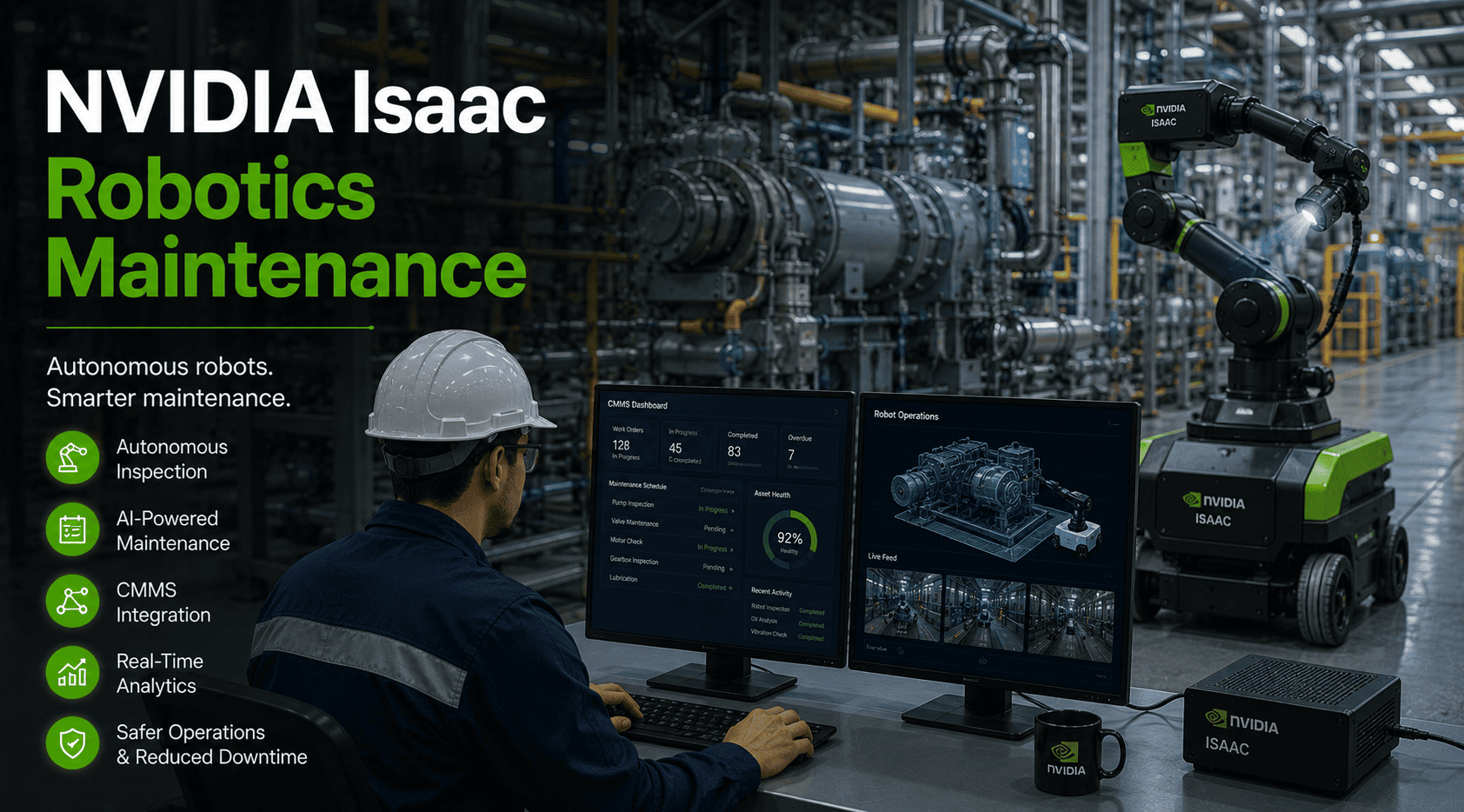
Holoscan fault classifications above configurable severity thresholds automatically generate OxMaint work orders — pre-populated with asset identity, fault description, recommended intervention, and MRO parts from inventory. The gap between anomaly detection and technician dispatch shrinks from hours to seconds.
Asset Condition Score Integration
Every Holoscan anomaly event updates the corresponding asset's condition score in OxMaint's registry. Condition trajectories drive PM schedule adjustments, replacement prioritization, and portfolio health reporting — giving asset managers a real-time, sensor-grounded view of fleet degradation state across all sites.
5–10 Year CapEx Forecasting
Degradation rates measured by Holoscan feed OxMaint's rolling capital planning models. Replacement timelines are derived from actual sensor-measured condition trajectories — producing investor-grade CapEx reports that reflect real asset health, not manufacturer lifetime estimates applied uniformly across a fleet.
Multi-Site Portfolio Anomaly Dashboard
OxMaint aggregates Holoscan anomaly events from all facilities into a unified portfolio risk view. Operations VPs see which sites carry the highest unresolved fault concentration, enabling cross-site resource allocation decisions based on objective severity data rather than subjective escalations from individual plant managers.
OPC-UA and MQTT Native Integration
OxMaint's edge connector ingests Holoscan event payloads via MQTT and OPC-UA without custom middleware. Structured fault messages from Holoscan pipelines map directly to OxMaint's asset hierarchy — Portfolio, Property, System, Asset, Component — enabling precise fault attribution at every level of the asset tree.
Mobile Technician Dispatch
Holoscan-triggered OxMaint work orders reach field technicians via mobile app — with asset location, fault classification, full repair history, and parts availability on a single screen. Technicians arrive at the equipment informed, reducing diagnostic time by 40–60% and eliminating the "what is actually wrong here" uncertainty that drives emergency labor costs.
Before Holoscan Integration vs. After: What Changes in Your Facility
| Capability Area |
Before Holoscan + OxMaint |
After Holoscan + OxMaint Integration |
| Sensor data analysis |
Separate tools per stream, no temporal correlation |
Fused multi-modal analysis in a single coherent pipeline |
| Fault detection latency |
200–800ms cloud round-trip; blind during outages |
Sub-1ms on-device; continuous regardless of connectivity |
| False-positive alert rate |
High — single-sensor models lack cross-modal context |
60–80% lower with multi-modal fusion and adaptive thresholding |
| Work order creation |
Manual — hours after alert, often missing critical detail |
Automated within seconds of fault classification, fully pre-populated |
| Cloud data transmission |
10TB+/day raw sensor streams to cloud |
KB/day — structured fault events only, 99% bandwidth reduction |
| CapEx planning input |
Manufacturer MTBF applied uniformly across asset fleet |
Measured degradation trajectories per asset from Holoscan condition data |
| Multi-site fault visibility |
Siloed by facility, no portfolio-level risk view |
Unified portfolio dashboard with cross-site fault severity ranking |
| Emergency repair exposure |
4.8× planned repair cost per undetected fault cascade |
Planned interventions at 1× cost; emergency events near-eliminated |
ROI and Operational Results: Holoscan-Connected CMMS
45%
Reduction in maintenance costs
Facilities using real-time multi-sensor condition monitoring vs. time-based PM alone
99%
Bandwidth reduction to cloud
Structured fault events replace raw sensor stream transmission — eliminating cloud data costs
60–80%
Fewer false-positive alerts
Multi-modal Holoscan fusion vs. single-sensor cloud AI systems
Days
Time to live — not months
OxMaint connects to Holoscan MQTT/OPC-UA outputs without custom middleware or heavy implementation
Operations teams connecting NVIDIA Holoscan to OxMaint report measurable maintenance cost reductions within the first 30 days — start a free trial to get your custom maintenance plan, or book a demo and we will walk through your specific Holoscan integration path and asset structure in 30 minutes.
Frequently Asked Questions
What hardware is required to run NVIDIA Holoscan for industrial sensor fusion?
NVIDIA Holoscan runs on NVIDIA Jetson Orin and IGX Orin platforms — industrial-grade edge computing hardware with dedicated tensor cores for AI inference. Jetson Orin NX handles medium-complexity multi-sensor fusion workloads. Jetson Orin AGX is suited for high-bandwidth applications with five or more concurrent sensor streams. The Holoscan SDK also supports x86 development environments for pipeline prototyping before edge deployment.
How does OxMaint connect to a NVIDIA Holoscan deployment?
OxMaint connects to Holoscan-based edge systems via MQTT brokers or REST API endpoints that Holoscan pipelines publish fault event payloads to. Structured event messages — containing asset identifier, fault classification, severity score, affected sensor channels, and timestamp — are ingested by OxMaint's edge connector and mapped to the corresponding asset in the registry. No custom middleware or proprietary integration layer is required.
Can Holoscan and OxMaint work in facilities without reliable internet connectivity?
Yes. Holoscan operates entirely on-device — fault detection and anomaly scoring continue without internet connectivity. OxMaint can be deployed in on-premise configurations for air-gapped facilities, or operates in an offline-first mode that buffers fault events locally and synchronizes with the cloud when connectivity is restored. Remote facilities, mining operations, and manufacturing plants with RF-shielded environments benefit particularly from this architecture.
How long does it take to integrate Holoscan with OxMaint in a live facility?
For facilities with an existing Holoscan deployment that publishes fault events to MQTT or OPC-UA endpoints, OxMaint integration is typically operational within days — not months. The OxMaint asset registry is configured to match your equipment hierarchy, event field mappings are established, and automated work order templates are created per fault classification. No heavy implementation process, no extensive custom development, and no extended onboarding period that delays time-to-value.
NVIDIA HOLOSCAN + OXMAINT CMMS
Stop Losing Millions to Reactive Maintenance — Connect Your Sensor Intelligence to Your CMMS
OxMaint turns every NVIDIA Holoscan fault event into a structured maintenance action — automated work orders, condition-based PM adjustments, and CapEx forecasts grounded in real sensor data across your entire asset portfolio.
Real-time multi-sensor asset visibility
Predictive failure alerts 2–8 weeks before breakdown
5–10 year CapEx forecasting from measured degradation data
Works across multi-site portfolios. No heavy implementation. See measurable results in the first 30 days.