When state DOT inspectors cite a refuse truck for failing annual inspection due to frame cracks discovered during roadside check, the municipality faces immediate out-of-service orders halting collections along critical routes. When federal FMCSA audits identify pattern violations—45% of pre-trip inspections missing brake measurements, 30% lacking documentation signatures—the entire fleet risks compliance holds preventing vehicle registration renewals. When a hydraulic failure causes packer blade injury requiring OSHA investigation,incomplete maintenance records expose the agency to $15,000-$70,000 penalties plus litigation exposure.
This guide provides state DOT fleet managers with a comprehensive regulatory compliance framework for waste management operations. Agencies ready to transform fleet compliance from audit liability to systematic program can start building their digital fleet management system today.
Achieve 100% DOT Compliance While Reducing Fleet Downtime by 40%
State waste management fleets face $150K-$400K annual penalties from compliance violations. Mobile inspections + predictive maintenance eliminate 85% of preventable violations while cutting unplanned downtime.
Why Waste Management Fleets Fail Compliance
Critical DOT Compliance Standards
State waste management fleets must comply with federal FMCSA regulations, state DOT requirements, and OSHA safety standards requiring systematic inspection and maintenance programs.
Daily DVIR Inspections
Drivers must complete pre-trip and post-trip vehicle inspection reports covering brake systems, steering components, lighting, tires, coupling devices, emergency equipment, and load securement.
Preventive Maintenance Program
Motor carriers must establish systematic inspection, repair, and maintenance program ensuring safe vehicle operation per manufacturer specifications and industry best practices.
Annual Safety Inspections
Every commercial motor vehicle must undergo comprehensive annual inspection by qualified inspector covering brake performance, steering mechanism, lighting devices, tires, and structural components.
OSHA Hydraulic Safety
Refuse packer hydraulic systems require lockout/tagout procedures, documented maintenance protocols, and systematic inspection programs preventing employee injury during service activities.
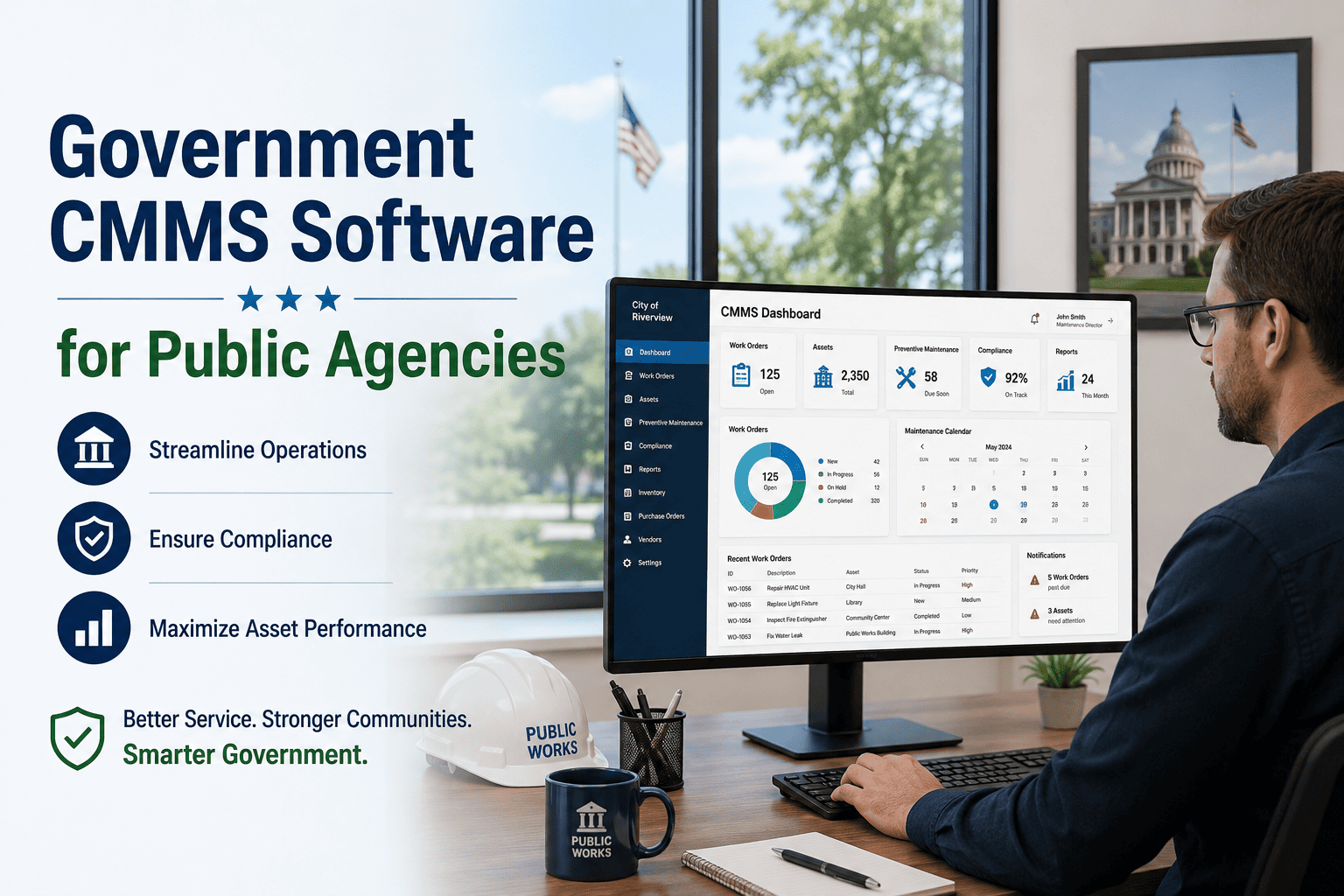
Mobile Fleet Compliance System
Modern fleet compliance requires mobile-first inspection tools with offline capability, automated compliance scoring, and instant regulatory reporting eliminating paperwork delays.
Mobile DVIR App
Drivers complete DOT-compliant pre-trip/post-trip inspections on tablets with offline capability. Prompts ensure all required components checked, defects photographed, signatures captured electronically.
Automated Work Orders
Identified defects instantly generate work orders assigned to mechanics with priority level, photos, parts lists. Mechanic certifies correction completion with signature before vehicle returns to service.
PM Schedule Management
Automated alerts trigger preventive maintenance work orders at 45-day intervals (or custom thresholds) ensuring schedule adherence. System blocks vehicle dispatch if PM overdue.
Predictive Analytics
AI algorithms identify recurring defect patterns (brake adjustments every 25 days, hydraulic leaks on specific units) enabling proactive component replacement before roadside failures.
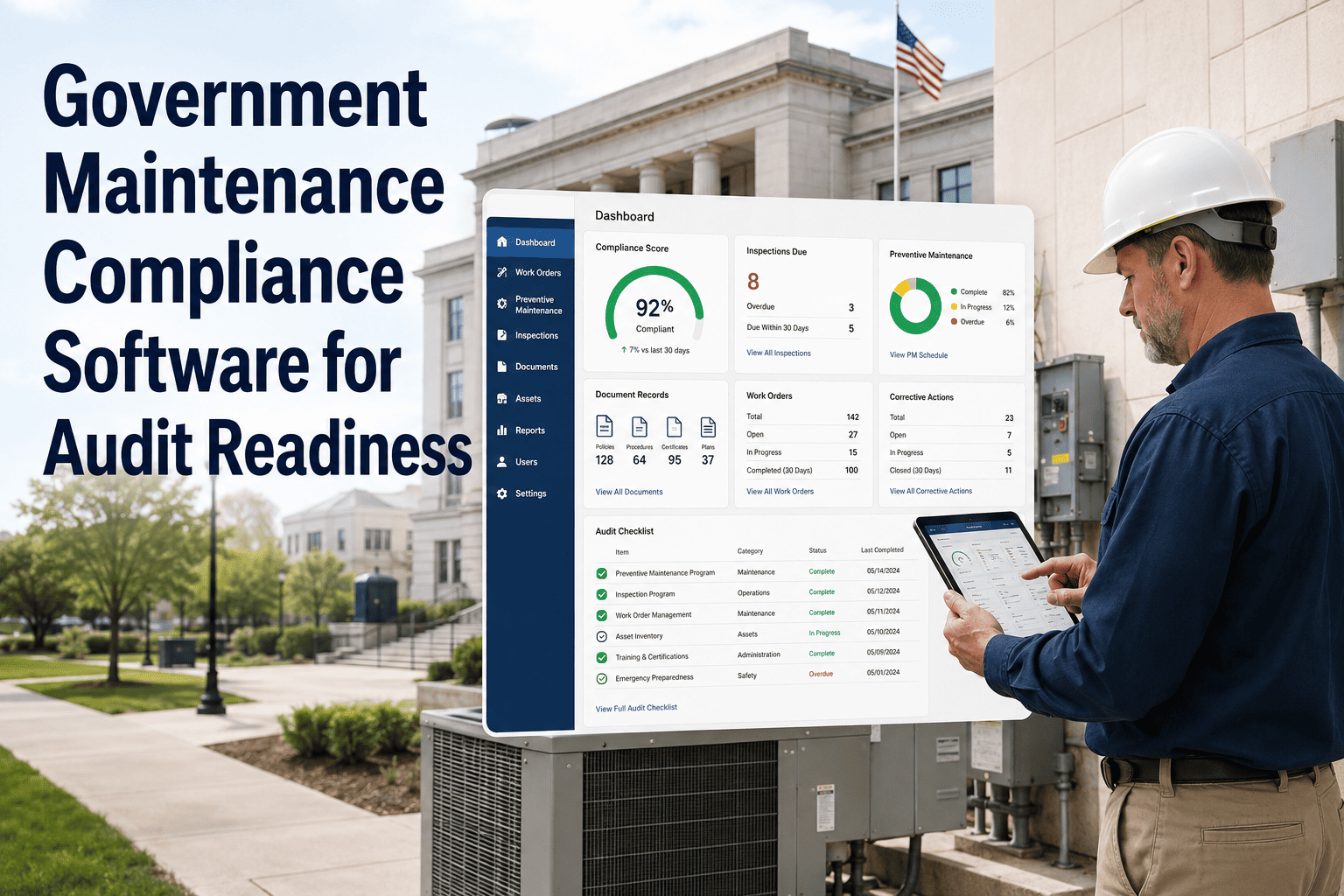
Compliance Dashboard
Real-time visibility into DVIR completion rates, PM schedule adherence, annual inspection status, defect correction times. One-click audit reports with complete documentation history.
Book a Custom Demo
See how mobile inspections eliminate 85% of DOT violations while cutting paperwork time by 75% and reducing fleet downtime.
What Digital Fleet Management Enables
100% DVIR Completion
Electronic prompts ensure every required inspection component checked. Incomplete inspections blocked from submission. Automatic compliance scoring identifies gaps.
Automated PM Enforcement
System prevents vehicle dispatch when PM overdue. Automated alerts 7 days before due date enable proactive scheduling preventing service interruption.
Predictive Component Replacement
AI identifies patterns—brake drums requiring adjustment every 22 days average—triggering proactive replacement before roadside breakdown occurs.
90-Day Compliance Program Rollout
System Setup & Training
- Deploy CMMS with DOT-compliant inspection module
- Import fleet inventory (VIN, make, model, year, equipment type)
- Configure DVIR checklists per FMCSA requirements
- Train drivers on mobile app: pre-trip inspections, defect reporting
- Pilot program with 10 vehicles testing workflows
Full Fleet Deployment
- Roll out mobile inspections to all drivers
- Configure automated PM schedules for entire fleet
- Train mechanics on work order receipt/completion
- Establish compliance dashboards for fleet managers
- Generate baseline compliance metrics
Optimization & Analytics
- Activate AI analytics identifying recurring defect patterns
- Refine PM schedules based on actual component wear data
- Generate first quarterly DOT compliance report
- Conduct mock FMCSA audit demonstrating documentation quality
- Document ROI: reduced violations, downtime savings, productivity gains
Transform Fleet Compliance Management
Join state agencies achieving 100% DOT compliance while reducing fleet downtime by 40% through mobile inspections, automated PM schedules, and predictive analytics.
FAQ
Incomplete DVIR documentation (35-45% of violations): Missing driver signatures, defects identified but not documented, mechanic certification of correction absent. FMCSA requires signed pre-trip and post-trip inspections with complete defect documentation.
Preventive maintenance gaps (25-30%): PM schedules not followed, maintenance histories incomplete, unable to demonstrate systematic inspection program during audits.
Brake system deficiencies (20-25%): Out-of-adjustment brakes discovered during roadside inspections, brake lining thickness below minimums, air system leaks exceeding limits.
Annual inspection lapses (15-20%): Vehicles operating past 12-month inspection deadline, inspection certificates not maintained in vehicle, inspection documentation incomplete.
Guided inspection workflows: App prompts driver through every required component (brakes, steering, lighting, tires, coupling, emergency equipment) preventing incomplete inspections.
Mandatory photo documentation: When defect identified, app requires photo capture before proceeding, providing visual evidence of condition at time of inspection.
Electronic signatures: Driver digitally signs inspection completion, mechanic certifies defect correction—creating tamper-proof audit trail with GPS location and timestamp.
Automatic retention: System stores all DVIR records for required 90-day minimum (or longer per state requirements) with one-click retrieval during audits.
Compliance scoring: AI algorithms analyze inspection patterns identifying drivers with frequent incomplete inspections enabling targeted retraining.
Compliance penalty avoidance: 85% reduction in DOT violations saves $125K-$340K annually (average state fleet 100 vehicles) through eliminated FMCSA pattern violations, reduced roadside OOS orders, avoided OSHA penalties.
Downtime reduction: 40% decrease in unplanned downtime saves $280K-$420K annually (assuming $800-$1,200 cost per vehicle per day including overtime routes, equipment rental, service disruption).
Administrative efficiency: 75% paperwork reduction saves 30 hours weekly ($45K-$65K annually) redeployed from manual DVIR compilation to value-added fleet management.
Parts inventory optimization: Predictive analytics reduce emergency parts purchases by 30% ($35K-$75K annually) through proactive component replacement at planned intervals.
Total ROI: $485K-$900K annual benefit vs. $25K-$45K CMMS investment = 1,078-2,000% ROI with 2-4 week payback.
AI algorithms analyze historical maintenance data identifying patterns invisible to human review:
Brake adjustment patterns: System identifies specific vehicles requiring brake adjustments every 18-22 days average, triggering proactive replacement before out-of-adjustment condition causes roadside violation or brake failure.
Hydraulic component degradation: Packer system pressure readings trending downward indicate seal wear. Predictive alerts trigger planned replacement during scheduled PM rather than emergency repair during route.
Electrical system patterns: Recurring battery replacements on specific chassis indicate alternator degradation requiring replacement before complete failure strands vehicle.
Impact: Proactive component replacement reduces unplanned downtime 40% (from 8.5 to 5.1 days per vehicle annually) while eliminating premium emergency labor rates and rushed parts shipping costs.
Daily DVIR records (90-day retention minimum): Pre-trip and post-trip inspection reports with driver signatures, defect documentation, mechanic certification of corrections.
Preventive maintenance records (fleet life retention): Complete maintenance history for each vehicle including dates, descriptions of work performed, parts replaced, mechanic signatures.
Annual inspection documentation (14 months): Comprehensive safety inspection reports with passing certification, inspector qualifications, facility information.
Roadside inspection reports: All DOT inspection forms including violations cited, out-of-service orders, corrective actions taken.
Driver qualification files: CDL verification, medical certificates, training records for personnel operating CMVs.
Digital fleet management systems automate this documentation: inspections captured electronically, maintenance histories compiled automatically, one-click audit reports with complete records.