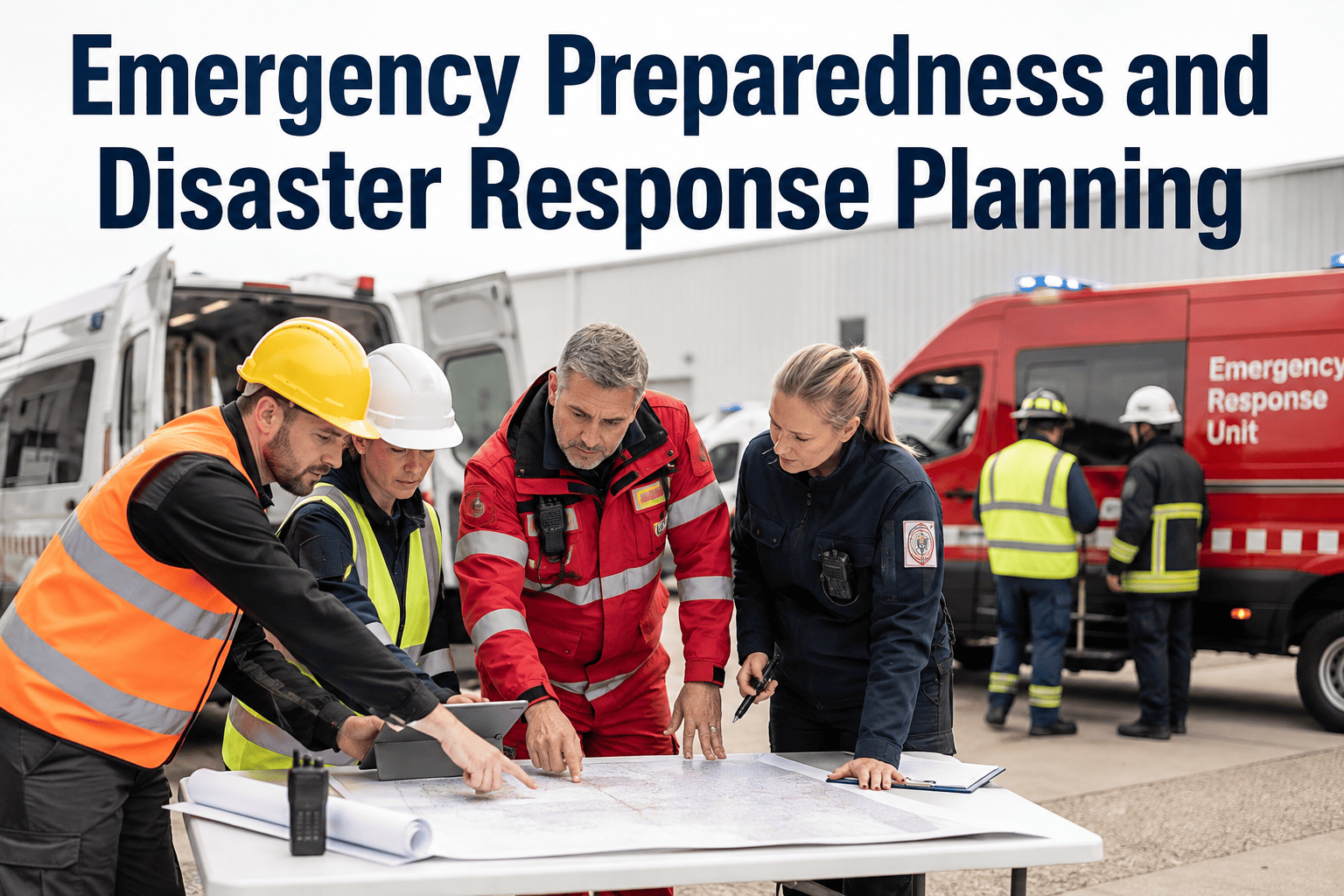
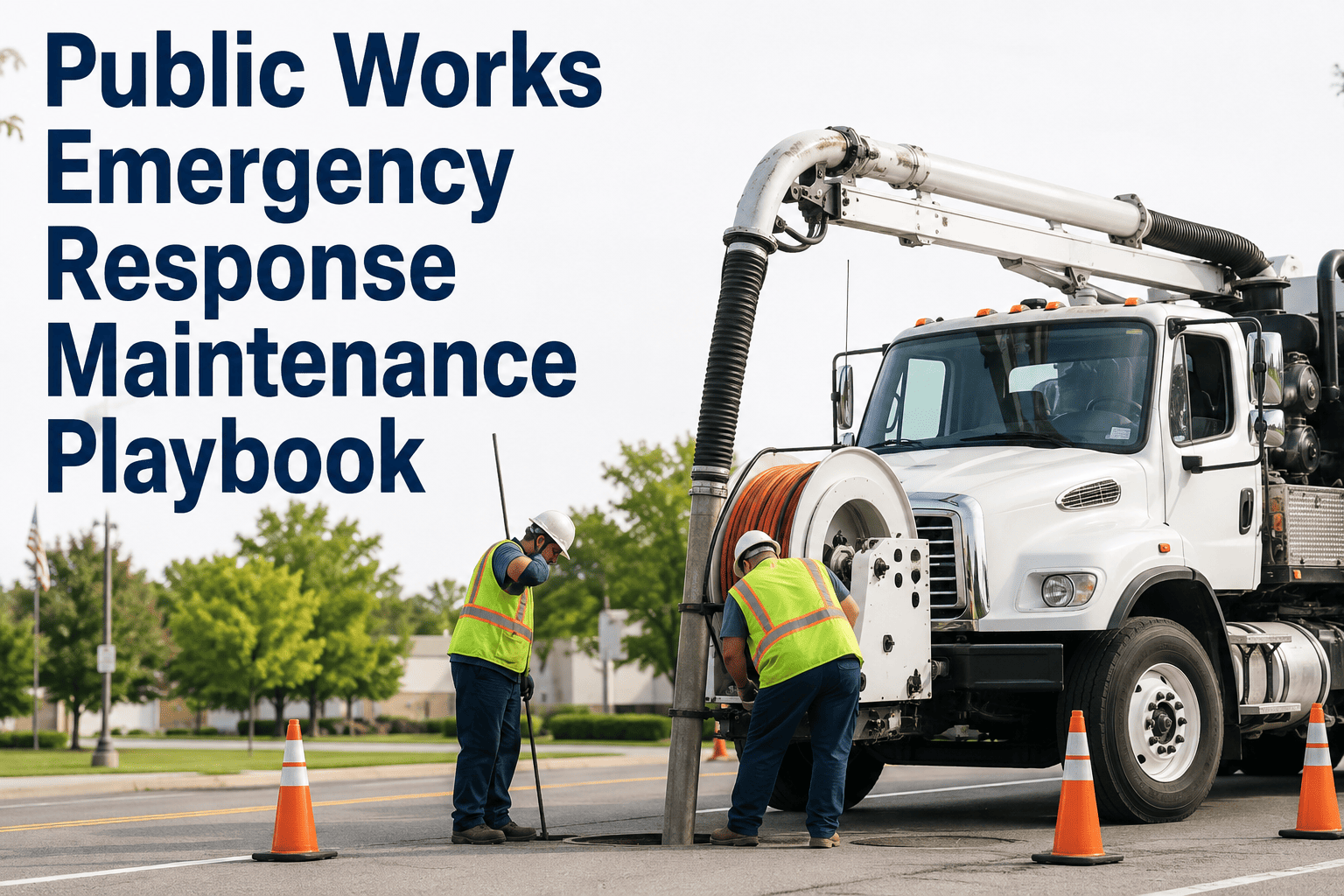
At 2:47 AM on a February night, a water main ruptured in a residential neighborhood serving 4,800 customers. The on-call supervisor arrived to find: no current asset map showing valve locations, no spare parts inventory system (was the replacement coupling in stock?), no pre-planned shutdown sequence documented, and technicians waiting 90 minutes for a backhoe because the equipment tracking system was a whiteboard. By the time water was restored 14 hours later, the county faced $340,000 in emergency costs and 180+ angry citizen calls.
County utilities manage critical infrastructure that cannot fail: water treatment plants, wastewater lift stations, electrical substations, natural gas distribution, stormwater systems. When emergencies strike—main breaks, pump failures, power outages, storm damage—response time determines both cost and public safety impact. Yet most counties track emergency assets on spreadsheets and rely on "institutional knowledge" that walks out the door when experienced staff retire.
Modern emergency preparedness requires digital asset tracking with instant mobile access, risk-scored critical equipment inventories, automated spare parts planning, pre-configured emergency response workflows, and AI-driven predictive maintenance to prevent failures. Digital CMMS platforms for government utilities transform reactive crisis response into proactive emergency readiness.
78%
County Utilities
Cannot produce critical asset inventory with location data within 30 minutes of emergency
$280K
Average Annual Waste
From emergency procurement at premium prices due to no spare parts planning
4.2hr
Avg Response Delay
Additional time lost locating assets, parts, equipment, documentation during emergencies
67%
Faster Response
With digital asset tracking, spare parts systems, and mobile emergency protocols
Core Issue: Emergency response speed depends on instant access to accurate data. Manual systems create delays that compound costs and extend service disruptions.
Not all assets are equally critical during emergencies. Risk scoring prioritizes which equipment deserves emergency preparedness investment:
Risk-Based Emergency Preparedness Tiers
Examples:
- Primary water treatment plant SCADA system
- Main wastewater lift station pumps (no redundancy)
- Electrical substation transformers serving hospitals
- Emergency generator at critical facilities
Examples:
- Secondary lift station pumps (with backup capacity)
- Water distribution main trunk lines (12"+ diameter)
- HVAC systems at critical facilities
- Vehicle fleet (bucket trucks, vactor trucks)
Examples:
- Distribution system valves and hydrants
- Office/warehouse facility equipment
- Non-critical monitoring equipment
- Landscaping/grounds maintenance equipment
Emergency response speed depends on having the right parts immediately available. Automated inventory systems eliminate guesswork:
1
Asset-Part Linkage
Every critical asset linked to required spare parts in database:
Example: Wastewater Pump LP-14
- Impeller (PN: IMP-400-SS) - Stock: 2 units - Min: 1 - Lead: 10 days
- Mechanical seal (PN: SEAL-G92) - Stock: 3 units - Min: 2 - Lead: 3 days
- Bearings (PN: BRG-6308) - Stock: 4 units - Min: 2 - Lead: 2 days
- Motor coupling (PN: CPL-4075) - Stock: 1 unit - Min: 1 - Lead: 7 days
→
2
Automatic Reorder Triggers
System monitors inventory levels and auto-generates purchase orders:
Trigger Logic:
- Critical parts (Risk Score >500): Reorder when stock ≤ minimum
- High priority parts (Score 200-499): Reorder at minimum + lead time buffer
- Medium priority parts (Score 50-199): Reorder quarterly or as-needed
- Automatic supplier notification with approved PO
→
3
Usage Tracking & Optimization
Every part consumed tracked via work orders, feeding optimization:
Analytics:
- Mechanical seals on LP-14: 3 replaced in 12 months (expected: 1/year)
- AI Alert: "Premature seal failure - investigate root cause"
- Recommendation: Increase minimum stock from 2 to 3 units
- Cost Avoidance: Prevents emergency procurement at 3x normal price
Real-Time Inventory Dashboard
Total Inventory Value
$847,200
Optimized
Parts Below Minimum
7 Items
Action Required
Emergency Ready Score
94%
Excellent
Critical Parts Requiring Attention
Impeller IMP-400-SS (Lift Station LP-14)
Stock: 0 units | Minimum: 1 | PO generated | ETA: 8 days
Status: Emergency order placed with expedited shipping
Transformer Oil (Substations)
Stock: 45 gallons | Minimum: 50 | Normal lead: 5 days
Status: Reorder scheduled for next week
Emergency Preparedness
Download Critical Asset & Parts Inventory Template
Pre-configured Excel template with risk scoring calculator, spare parts planning worksheets, and emergency contact lists for water, wastewater, electric, and stormwater utilities.
Paper emergency procedures fail when technicians can't find them at 2 AM or protocols are outdated. Digital mobile-accessible workflows ensure consistent emergency response:
The best emergency response is preventing emergencies. AI-driven predictive maintenance identifies failures before they become crises:
Lift Station Pump Failure Prevention
Monitoring: Vibration sensors, amp draw, flow rates, runtime hours
Week 1-4
AI detects 12% increase in vibration amplitude + 8% higher amp draw on Pump LP-14
↓
Week 5
Pattern matches bearing degradation signature. System generates alert: "Bearing failure predicted within 3-5 weeks"
↓
Week 6
Preventive Action: Schedule repair during planned maintenance window. Cost: $4,200 (parts + labor)
Emergency Prevented: Avoided sewage overflow (EPA violation $25K+), emergency callout ($8K weekend overtime), pump replacement ($28K if catastrophic bearing failure damages shaft)
Transformer Failure Prediction
Monitoring: Oil temperature, dissolved gas analysis, load current, ambient conditions
Months 1-3
Trending oil analysis shows increasing hydrogen and acetylene levels (indicators of arcing/corona discharge)
↓
Month 4
AI flags: "Insulation degradation detected. Schedule detailed inspection within 30 days."
↓
Month 5
Preventive Action: Internal inspection reveals failing bushing. Replacement during planned outage. Cost: $48K
Emergency Prevented: Catastrophic transformer failure ($420K replacement + 7-14 day lead time), extended power outage affecting 2,800 customers, potential wildfire risk from arcing
Water Main Break Prediction
Monitoring: Pressure fluctuations, flow anomalies, soil moisture sensors, acoustic leak detection
Weeks 1-8
Acoustic sensors detect increasing leak noise signature on 16" main installed 1978. Flow balance shows 180 GPM unaccounted water
↓
Week 9
AI correlates: aging cast iron pipe + soil moisture increase + pressure transients = high failure probability. Priority: Urgent
↓
Week 10
Preventive Action: Planned replacement of 200' section during low-demand period. Cost: $85K
Emergency Prevented: Catastrophic main break (emergency repair $140K+ with street damage, business interruption claims, 4,800 customers without water 12+ hours)
See Emergency Response Platform
Watch 15-minute demo showing digital asset tracking, automated spare parts systems, mobile emergency protocols, and predictive maintenance for county utility operations.
Challenge
Averaging 14 emergency events annually (main breaks, pump failures, overflow incidents) with average response time of 6.2 hours from dispatch to service restoration. Emergency response costs $1.8M annually. No digital asset tracking—technicians relied on institutional knowledge and outdated paper maps. Spare parts inventory on spreadsheets; 40% of emergency calls required premium-price emergency procurement. Three EPA compliance violations in 2 years from sewage overflows.
Solution Implemented
• Completed digital asset inventory with GPS coordinates for all critical equipment (2,847 assets)
• Implemented risk scoring system: 180 critical assets, 420 high priority, 2,247 medium/low
• Deployed automated spare parts inventory system with 340 SKUs linked to assets
• Created mobile-accessible emergency response protocols for 12 common scenarios
• Installed IoT monitoring on 28 lift stations + 15 critical water infrastructure assets
• Activated AI predictive maintenance analytics
Results (Year 1)
Response Time Reduction
-58%
From 6.2 hours avg to 2.6 hours (digital asset access)
Emergency Events
-64%
From 14/year to 5/year (predictive prevented 9)
Emergency Procurement
-82%
Spare parts system eliminated premium pricing waste
Annual Cost Savings
$1.24M
From prevented emergencies + faster response + inventory optimization
Specific Emergency Outcomes
✓
Lift Station LP-22: Predictive alert prevented pump failure during storm event. Would have caused sewage overflow affecting creek (EPA violation). Scheduled repair cost $5,200 vs estimated $68K emergency + penalties.
✓
12" Main Break (Oak Street): Mobile protocol reduced response from typical 8hr to 2.4hr. Digital valve map + pre-stocked coupling eliminated search time. Customer outage: 180 homes for 2.4hr vs previous similar events averaging 2,400 customer-hours.
✓
Treatment Plant SCADA Failure: Redundant control parts in inventory (auto-reordered when first used). Repair in 45 minutes vs 6-8hr typical wait for parts. Prevented treatment disruption affecting all 38,000 customers.
✓
Zero EPA Violations: Year 1 after implementation vs 3 violations in previous 2 years. Predictive maintenance prevented all potential overflow events.
"The difference is night and day. When we get an emergency call now, the on-call supervisor opens the mobile app and instantly sees: asset location on map, nearest valves, shutdown sequence, parts in stock, equipment availability. What used to take 2-3 hours of frantic calls and searches now takes 15 minutes. And we're preventing 60% of emergencies before they happen."
— Operations Director, Regional Water & Sewer Authority
County utilities cannot prevent all emergencies, but systematic preparedness dramatically reduces response time, costs, and service disruptions. Digital asset tracking, automated spare parts planning, mobile emergency protocols, and predictive maintenance transform chaotic crisis response into coordinated emergency readiness.
The integration of risk-based asset prioritization, real-time inventory systems, and AI-driven failure prediction creates a comprehensive emergency preparedness framework that satisfies regulators, protects public safety, and optimizes emergency budgets.
Modern CMMS platforms designed for county utilities provide the infrastructure for systematic emergency preparedness. Stop reacting to crises and start preventing them with data-driven asset management.
For Utility Directors: Free emergency preparedness assessment included with platform demo
How long does emergency preparedness implementation take?
Critical asset inventory and risk scoring: 4-6 weeks for typical county utility. Spare parts system operational: 8-12 weeks. Full implementation with predictive monitoring: 6-8 months. But emergency response improvements begin immediately—first mobile protocol deployed and asset mapping starts showing benefits within 30 days.
What if we can't afford to stock all recommended spare parts?
Risk scoring helps prioritize limited budgets. Start with critical assets (score 500+) where failure has severe consequences—stock 100% of parts for these. High priority (200-499) may only need 60-80% coverage. System shows ROI: $1 spent on stocked parts typically prevents $8-12 in emergency procurement premiums + faster response time.
Can predictive maintenance really prevent emergencies?
Yes, but not all. Typical county utilities prevent 50-70% of emergency events through predictive maintenance. Mechanical failures (pumps, motors, bearings) are highly predictable 3-6 weeks in advance. Corrosion failures (pipes) harder to predict but acoustic monitoring helps. Random catastrophic events (lightning strikes, accidents) cannot be predicted but proper spare parts planning reduces recovery time.
How do we get accurate GPS coordinates for all assets?
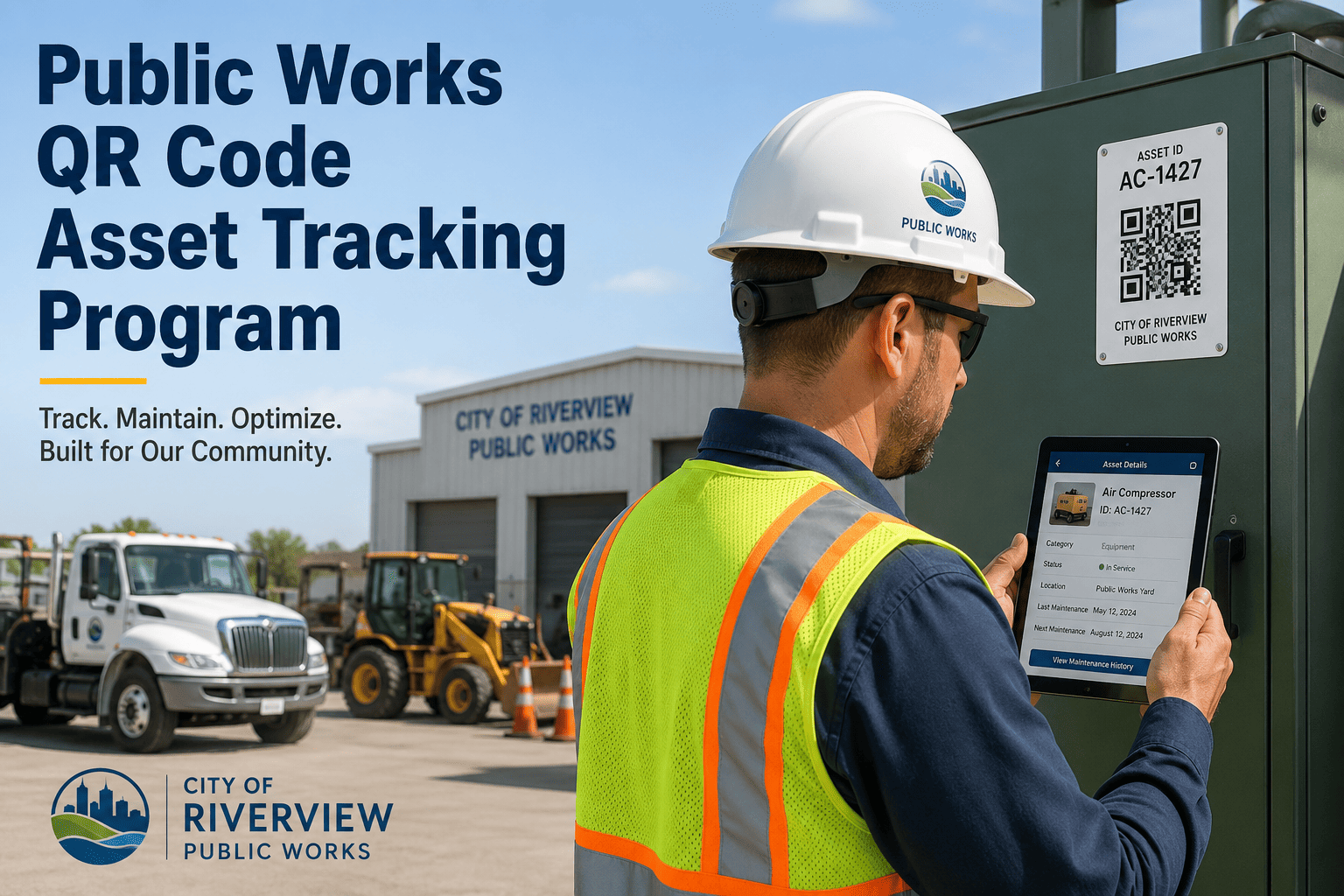
Technicians use mobile app during normal work. When servicing asset, they scan QR/barcode label and app captures GPS automatically. Builds database organically over 3-6 months. For critical emergency assets, dedicated GPS mapping event completes in 2-3 weeks. Consumer-grade GPS (±10 feet) sufficient for emergency response—don't need survey-grade precision.
See mobile workflow.
What about rural areas with no cell coverage?
Mobile apps work completely offline. Emergency protocols, asset maps, spare parts lists all available without connectivity. Technician completes work, documents with photos, data syncs when they return to coverage. Critical for rural county utilities with remote infrastructure.
How do we justify emergency preparedness costs to commissioners?
Build business case showing current emergency costs: average 12-15 events/year × $80K-120K avg cost = $960K-1.8M annually. Implementation costs $150K-280K for typical county utility. ROI achieved in 3-6 months through: prevented emergencies (biggest savings), faster response (reduced overtime), optimized inventory (eliminate premium procurement). Include regulatory compliance benefits (EPA violations avoided).