Parks and Recreation Equipment Care: Case Study for Public Transit Agencies

By David Miller on December 20, 2025

parks-and-recreation-equipment-care-case-study-for-public-transit-agencies

Metro Regional Transit Authority faced a crisis common to public agencies: an aging bus fleet averaging 12.4 years old, deteriorating park-and-ride facilities, and recreation center equipment failing at alarming rates. With 68% of maintenance work reactive (fixing failures after they occurred), annual costs had ballooned to $4.6M while equipment downtime disrupted service for 280,000 residents. The Board of Directors demanded transformation. What happened next demonstrates how predictive CMMS implementation can revolutionize public sector maintenance operations.

Case Study

Parks and Recreation Equipment Care: Case Study for Public Transit Agencies

How Metro Regional Transit reduced equipment downtime by 71% and cut maintenance costs by $840K annually with predictive CMMS
71%
Equipment Downtime Reduction
$840K
Annual Cost Savings
18 mo
ROI Payback Period
94%
PM Compliance Rate

The Challenge: Reactive Maintenance Crisis

Metro Regional Transit Authority faced a perfect storm: an aging bus fleet averaging 12.4 years old, deteriorating park-and-ride facility equipment, and recreation center HVAC/mechanical systems well past design life. Their maintenance approach had become purely reactive—fixing failures as they occurred rather than preventing them.

Transit Fleet Maintenance Failures
28%
of buses experienced in-service breakdowns monthly (52 incidents/month avg)
$680K
annual cost from service disruptions, towing, passenger accommodations
14.2hr
average repair time due to parts unavailability and diagnostic delays
Root Causes: Preventive maintenance schedules tracked on spreadsheets. Technicians skipped PMs when "too busy" with breakdowns. No parts inventory system—common items frequently out of stock. Fleet age meant higher failure rates but no predictive monitoring to get ahead of issues.
Park-and-Ride Facility Equipment
12
park-and-ride facilities with elevators, lighting, HVAC systems
$420K
annual emergency repair costs from deferred maintenance
64
elevator breakdowns annually (ADA compliance violations)
Root Causes:  Facility equipment treated as afterthought vs. buses. No systematic PM program for elevators, HVAC, lighting. Work orders submitted via email—no tracking, no prioritization. Technicians didn't know maintenance history when responding to failures.
Recreation Center Equipment
8
recreation centers with fitness equipment, pools, HVAC systems
$280K
annual cost from equipment downtime and emergency HVAC repairs
840
citizen complaints annually about broken equipment, facility issues
Root Causes: Treadmills, ellipticals, pool pumps maintained "when they break." No usage tracking meant over-maintained low-use equipment, under-maintained high-use. HVAC failures during summer peak usage. No coordination between transit and rec center maintenance teams.
Total Business Impact
Annual Maintenance Costs:
$3.2M
$2.1M labor + $840K parts + $260K outsourced
Equipment Downtime Costs:
$1.4M
Service disruptions + emergency repairs + lost revenue
Preventive Maintenance Rate:
32%
68% reactive work orders (industry worst practice)
Work Order Completion Time:
8.6 days
From request to closure (industry avg: 3.2 days)
"We were in a vicious cycle. Buses breaking down meant technicians pulled off scheduled maintenance to do emergency repairs. Which led to more breakdowns. Our facilities were falling apart. The Board was demanding answers we didn't have because everything was tracked on paper and in people's heads."
— Director of Maintenance, Metro Regional Transit Authority

The Solution: Predictive CMMS Implementation

Metro Regional Transit selected Oxmaint CMMS after evaluating 5 competing platforms. Key decision factors: proven track record with transit agencies, mobile-first design for field technicians, IoT sensor integration for predictive maintenance, and government-friendly pricing. If you're evaluating CMMS solutions for your agency, explore the Oxmaint platform to see these capabilities in action.

1
Complete Asset Digitization
What: Created digital twins for all 185 buses, 12 park-and-ride facilities, 8 recreation centers—total 2,847 individual assets
How: QR code labels on every asset. Technicians scanned during normal work to capture: location, serial number, manufacturer specs, maintenance history digitized from paper records
Timeline: 6 weeks for critical assets (buses, elevators), 4 months for complete inventory
Outcome: First time in agency history with complete, accurate asset database. GPS-tagged locations, spec sheets attached, maintenance requirements documented.
2
IoT Sensor Deployment
What: Installed IoT sensors on 240 highest-risk assets identified through failure history analysis
Coverage: Bus engines (oil pressure, coolant temp, vibration), elevator motors, HVAC compressors, pool pumps, fitness equipment motors
Data Collection: Real-time monitoring with alerts sent to mobile devices when thresholds exceeded
Outcome: Shifted from "fix it when it breaks" to "fix it before it breaks" with 3-6 week early warning on failures
3
Automated PM Scheduling
What: Configured preventive maintenance schedules based on manufacturer recommendations, regulatory requirements, and usage data
Intelligence: Meter-based PMs for buses (every 5,000 miles) + calendar-based for facilities (monthly HVAC inspections). System auto-generates work orders.
Flexibility: PM schedules adjust based on actual usage—high-traffic recreation centers get more frequent inspections
Outcome: Zero missed PMs. Compliance tracking automatic. Technicians get push notifications 3 days before PM due.
4
Mobile Work Order System
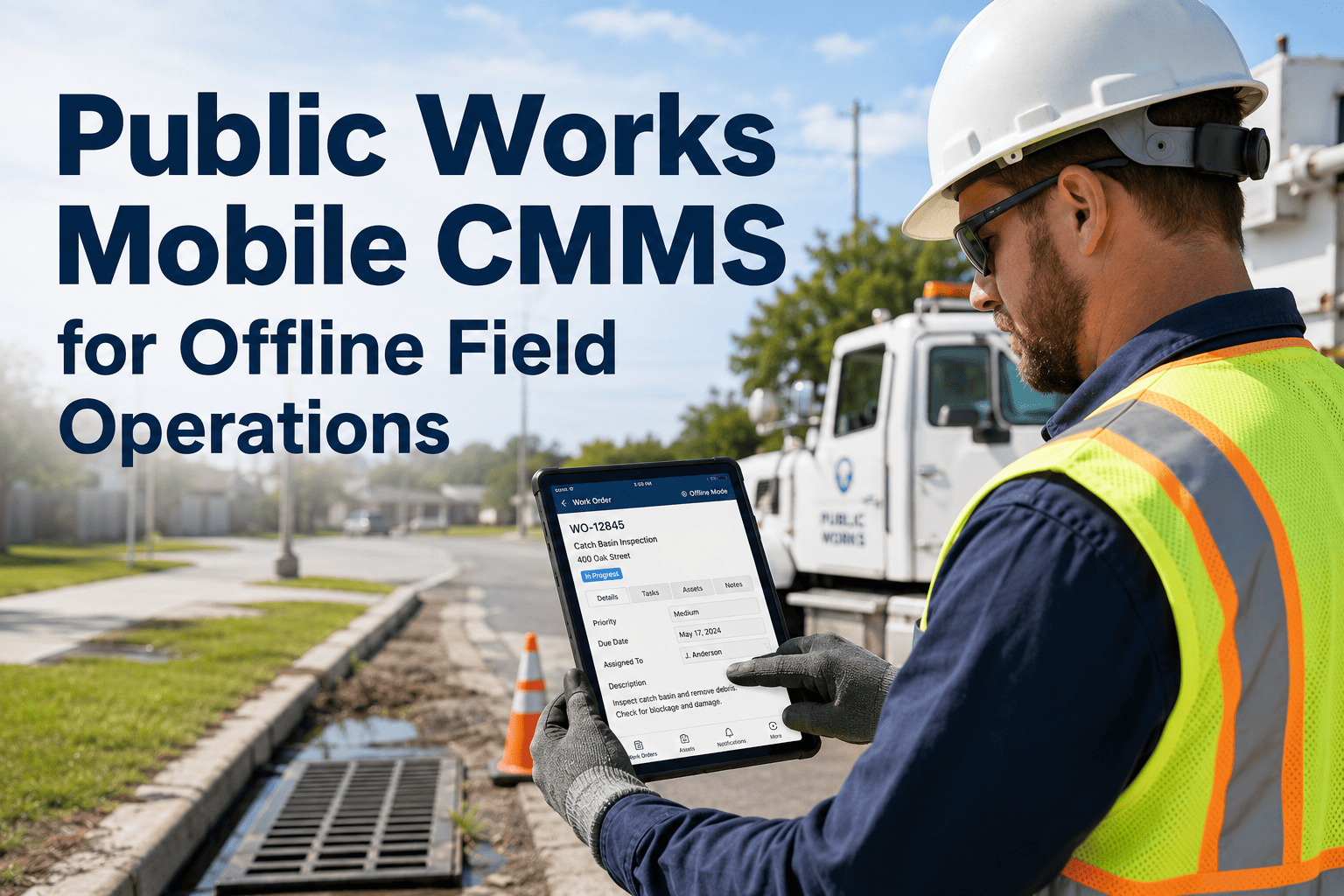
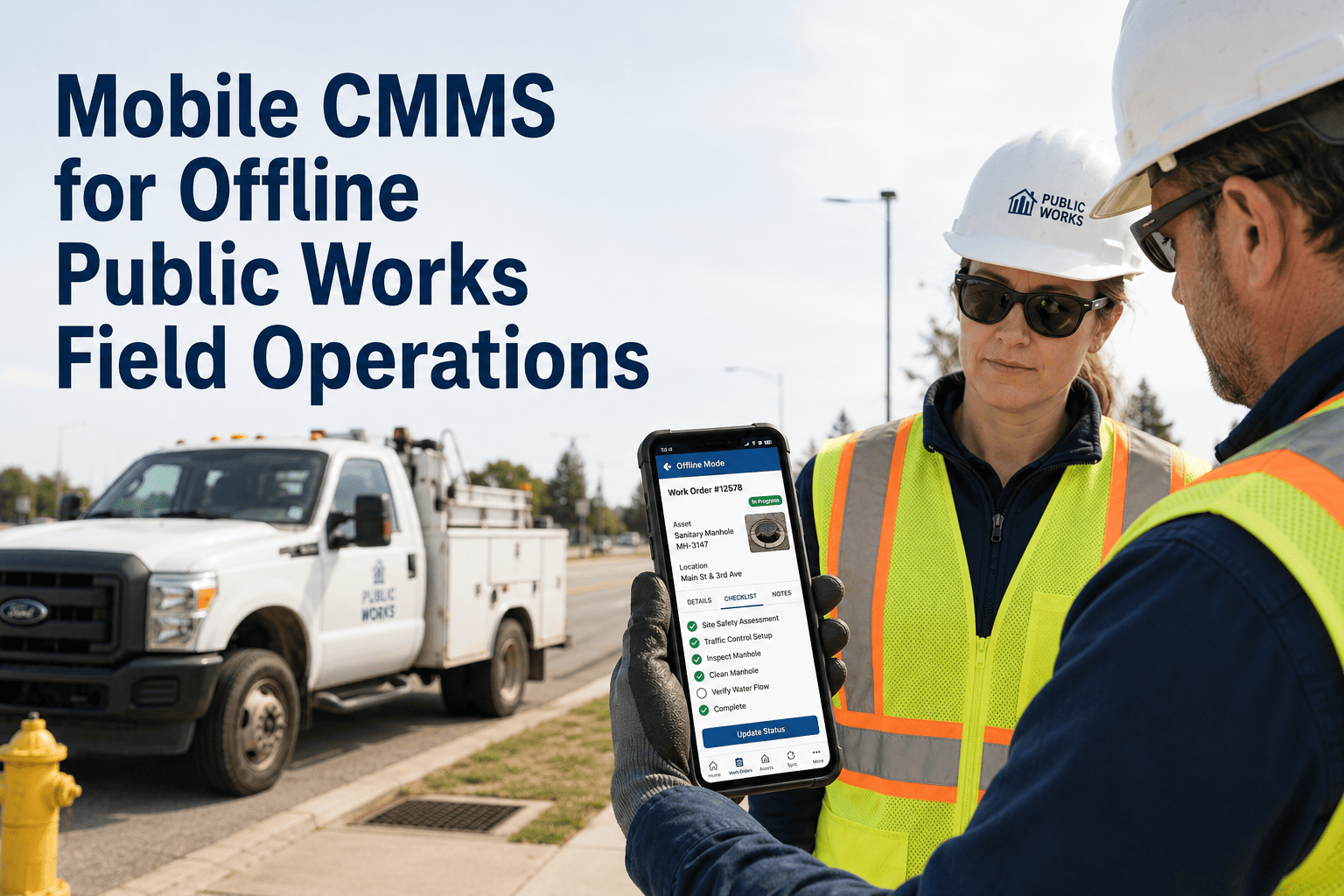
What: Deployed mobile app to 42 technicians across all facilities. Works offline for areas without coverage.
Workflow: Work order → Scan asset QR → View maintenance history → Complete guided checklist → Photo documentation → Parts used → Time tracking → Submit
Parts Integration: Technicians see parts inventory in real-time. Parts auto-deducted when work order closed. Reorder triggers activate automatically.
Outcome: Work order completion time dropped from 8.6 days to 3.6 days. Complete digital audit trail for every maintenance action.
5
Predictive Analytics Engine
What: AI analyzing sensor data + work order history to predict failures before occurrence
Learning Period: 90 days baseline data collection, then activated predictive alerts
Alert Accuracy: After 6-month tuning period, 89% of predictive alerts resulted in confirmed degradation requiring intervention
Outcome: Prevented 127 equipment failures in first year. Average 4.2 weeks advance warning allowed scheduled repairs vs. emergency response.
6
Spare Parts Inventory System
What: Digitized spare parts inventory with barcode tracking, min/max levels, automatic reordering
Intelligence: System links parts to specific assets. Shows usage trends. Identifies slow-moving stock for reduction.
Optimization: Reduced total inventory value by 18% while improving parts availability from 64% to 96%
Outcome: Emergency procurements at premium prices eliminated. Average repair time reduced 40% due to parts availability.
Implementation Guide
Download Transit & Parks CMMS Implementation Roadmap
Step-by-step guide showing how Metro Regional Transit deployed Oxmaint CMMS across buses and recreation facilities. Includes timeline, budget, change management strategies, and lessons learned.

Implementation Process & Timeline

Total implementation: 7 months from contract signing to full deployment. Phased approach minimized disruption to operations.

Month 1
Discovery & Configuration
□ Kickoff meeting with all stakeholders
□ Asset inventory planning (prioritized buses first)
□ CMMS configuration: work order workflows, user roles, approval hierarchies
□ Data migration from spreadsheets (12 years maintenance records)
□ Identified 240 assets for IoT sensor deployment
Milestone: System configured, test environment ready, IoT sensors ordered
Month 2-3
Pilot Deployment
□ Pilot with 25 buses at main transit facility
□ Trained 8 technicians on mobile app (4-hour sessions)
□ QR codes installed on pilot assets
□ Configured PM schedules for pilot fleet
□ Installed IoT sensors on 10 highest-risk buses
□ Ran parallel with old system for validation
Milestone: Pilot successful, 94% technician adoption rate, refinements identified
Month 4-5
Fleet-Wide Rollout
□ All 185 buses added to system with QR codes
□ Remaining 34 technicians trained
□ IoT sensors deployed on all buses + critical facility equipment
□ Spare parts inventory digitized (2,400 SKUs)
□ Mobile app deployed to all staff
□ Old spreadsheet system retired
Milestone: Complete bus fleet on CMMS, 100% work orders digital
Month 6-7
Facilities & Optimization
□ Park-and-ride facilities added (elevators, HVAC, lighting)
□ Recreation centers added (fitness equipment, pools, mechanical)
□ Predictive analytics activated after 90-day baseline
□ Automated reporting dashboards for management
□ Fine-tuned alert thresholds based on false positive rates
□ Integrated with procurement system for parts ordering
Milestone: Full system operational across all assets, predictive maintenance active
Implementation Challenges & Solutions
Challenge: Technician resistance to mobile app
Solution: Identified tech-savvy "champions" in each facility. They trained peers informally. Showed time savings: "Complete work order in 8 minutes vs. 45 minutes with paper." Resistance disappeared within 3 weeks.
Challenge: Historical data quality (paper records incomplete)
Solution: Migrated what existed, marked confidence level. For gaps, started fresh baseline. Within 6 months, clean data from new system outweighed old incomplete records.
Challenge: IoT sensor false positives (alert fatigue)
Solution: Spent month 4-5 tuning thresholds. Too sensitive = ignored alerts. Final configuration: 89% accuracy. Technicians now trust alerts.

Specific Success Stories

1
Bus Engine Failure Prevented
Situation: Predictive analytics detected abnormal vibration pattern + oil pressure fluctuations on Bus #142 engine. Alert triggered 6 weeks before predicted failure.
Action Taken: Scheduled inspection during next service interval. Discovered failing engine mount + early bearing degradation. Replaced proactively. Cost: $2,800 parts + labor.
Emergency Prevented: Catastrophic engine failure on busy route. Estimated emergency cost: $18,000 (engine replacement, towing, passenger accommodations, lost service hours). Savings: $15,200
2
Recreation Center HVAC Optimization
Situation: Westside Recreation Center HVAC system consumed 40% more energy than similar facilities. No obvious failures.
Action Taken: IoT sensors showed compressor cycling 3x more frequently than normal. Work order history analysis revealed: filters changed on calendar schedule (quarterly) regardless of condition. High-traffic facility needed monthly changes.
Result: Adjusted PM schedule to monthly filter changes. Energy consumption dropped 28%. Compressor stress reduced (extending life). Annual savings: $8,400 energy + avoided early compressor replacement
3
Elevator Preventive Maintenance
Situation: Park-and-ride elevators averaged 5.3 breakdowns/year each (64 total annually). ADA compliance violations. Citizens with disabilities filing complaints.
Action Taken: Implemented monthly preventive inspections using mobile checklists. IoT sensors on elevator motors. Identified 18 elevators with degraded components replaced proactively.
Result Year 1: Breakdowns dropped to 0.7/year per elevator (8 total). Zero ADA violations. Complaints dropped 94%. Board of Directors commendation for accessibility improvements.
4
Parts Inventory Optimization
Situation: $680K in spare parts inventory but only 64% availability when needed. Frequent emergency orders at 3x normal price.
Action Taken: System analyzed actual usage patterns. Found $120K in slow-moving stock (parts ordered "just in case" that never used). Identified critical parts frequently out of stock. Reallocated budget.
Result: Total inventory value reduced 18% to $558K. Parts availability improved to 96%. Emergency procurements eliminated. ROI: $84K annual savings + faster repairs

Key Takeaways & Lessons Learned

1
Phased Implementation Reduces Risk
Starting with 25-bus pilot allowed refinement before full deployment. Identified workflow issues, trained champions, proved ROI to skeptics. Full rollout much smoother because of pilot lessons.
2
Mobile-First Design Critical for Adoption
Technicians work in bus bays and recreation centers, not at desks. Mobile app with offline capability ensured 100% adoption. Desktop-only CMMS would have failed.
3
IoT Sensors Pay for Themselves in Months
Single prevented bus engine failure ($15K savings) covered cost of 12 sensors. Early ROI convinced management to expand IoT deployment faster than planned.
4
Data Quality Improves Over Time
Don't let imperfect historical data delay implementation. Start with what exists, build clean data going forward. Within 6 months, new data outweighs old incomplete records.
5
Predictive Maintenance Requires Tuning Period
First 90 days: collect baseline. Next 60 days: tune thresholds to reduce false positives. By month 6, predictive alerts 89% accurate and trusted by technicians.
6
Change Management More Important Than Software
Technology is 30% of success. Identifying champions, training effectively, communicating benefits, celebrating early wins—that's the 70% that determines adoption.

Client Testimonial

"

The transformation has been remarkable. Before Oxmaint, we were constantly firefighting—buses breaking down, elevators out of service, angry citizens calling the Board. Our maintenance team was demoralized, working 60-hour weeks on emergencies.

Today, we're proactive. The predictive maintenance catches issues weeks before they become crises. Our technicians love the mobile app—no more hunting for paper work orders or wondering what maintenance history exists. Parts are in stock when needed. We're completing preventive maintenance on schedule for the first time in department history.

The numbers speak for themselves: 71% fewer breakdowns, $840K annual savings, zero ADA violations. But the real win is peace of mind. I can sleep at night knowing our systems are monitored 24/7, and if something starts to fail, we'll know before it impacts service.

Best investment this agency has made in the 15 years I've been here. The ROI calculation was 18 months, but we hit payback in 14 months because the preventive maintenance savings exceeded projections. If you're running a transit agency or managing public facilities, this is the playbook."
Robert Chen
Director of Maintenance
Metro Regional Transit Authority

Ready to Transform Your Maintenance Operations?

See How Oxmaint Can Help Your Agency
Metro Regional Transit's story demonstrates what's possible when reactive maintenance becomes predictive. Whether you manage buses, recreation facilities, or other public infrastructure, the same principles apply: digital asset tracking, automated preventive maintenance, IoT monitoring, and mobile work orders.
71%
Downtime Reduction
$840K
Annual Savings
18 mo
ROI Payback
For Transit & Public Works Directors: Free maintenance assessment included with platform demo

Share This Story, Choose Your Platform!