When a customer rejects a steel coil, the first question is never "what went wrong?" It is "where did this coil come from, and what else is like it?" If the answer sits across a melt shop log, a rolling mill sheet,...

Keep up-to-date with all our latest company news and business content. The latest news, tips and advice to help you run your business with less fuss.
When a customer rejects a steel coil, the first question is never "what went wrong?" It is "where did this coil come from, and what else is like it?" If the answer sits across a melt shop log, a rolling mill sheet,...

Most maintenance teams live with the same paradox: a storeroom full of parts nobody uses, and an empty bin exactly when a critical machine stops. Surveys of manufacturers regularly find 20–40% of MRO stock is...

In a cement plant, the waste heat recovery (WHR) system quietly turns kiln and cooler exhaust into power — typically around 20–30% of a plant's electricity demand, according to industry sources. But dust-laden gas...
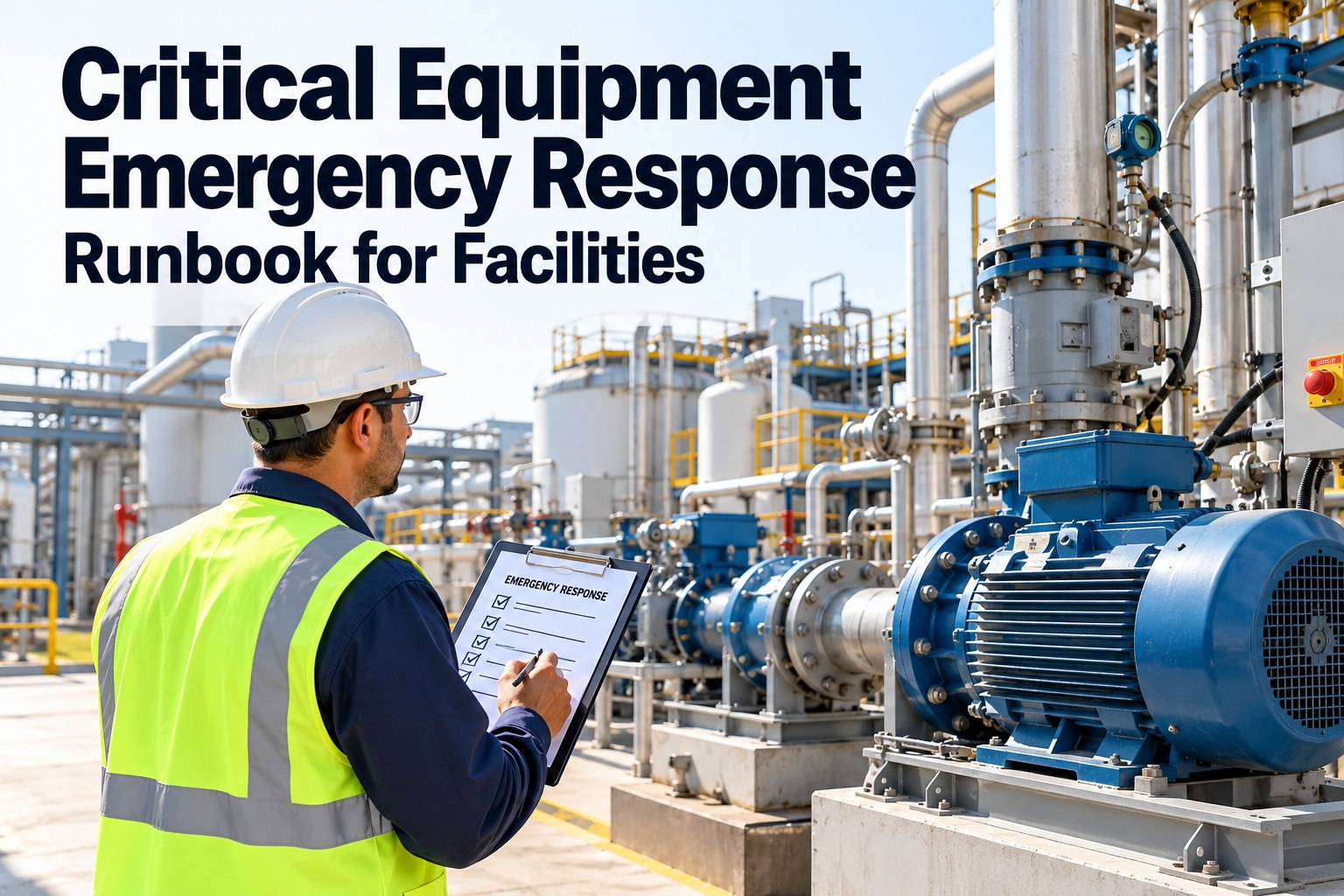
When a chiller trips, a generator fails to start or a fire pump alarm sounds at 2 a.m., the team that responds best is rarely the most experienced one — it's the one with a clear, tested runbook. This guide shows...

A cooling tower runs hot, wet and non-stop, so small problems stay hidden until they are expensive: scale on the fill, a gearbox running low on oil, water chemistry slowly drifting, a chiller burning extra power to...

Commercial HVAC rarely fails on a convenient day. It fails on the hottest afternoon, the coldest morning or the day the building is full. Most of those failures start small: a clogged filter, a dirty coil, a...

A bridge inspector flags advancing section loss on a girder — and the finding sits in a PDF on a laptop while the pier keeps deteriorating. The gap between a documented defect and a dispatched repair is where...

A walk-in that drifts above 41°F overnight, a dish machine rinsing below 180°F, a hood filter pooling grease before service — in a hotel kitchen each one is a food-safety breach, a fire risk or a five-figure...

A driver finds a soft brake at the end of a shift and notes it on a paper DVIR. The sheet goes in a tray, the truck rolls at 5 a.m. with the next driver, and the defect is still there — because nobody closed the...

Tires are the second-largest operating cost in most fleets after fuel — and the one most often managed by guesswork. A steer tire run two sizes low on pressure burns extra fuel every mile and fails without warning;...

Across twenty sites with a spreadsheet in every building, no one can answer the question that matters: which HVAC PMs are overdue, and where. This guide shows how to schedule multi-site HVAC preventive maintenance,...

A water utility is spread across a whole city: pump stations, storage tanks, thousands of valves and hydrants, and miles of buried pipe. The people who know which valve sticks or which main keeps breaking often...

In a multifamily building, the tasks that never make the daily rush are the ones that cause the worst surprises: a clogged condensate line that floods a ceiling, a boiler that quits on the first cold night, a fire...

Guests rarely notice HVAC, plumbing or life safety systems when they work. They notice immediately when the room is too warm, the shower runs cold, or a smoke detector chirps at 3 a.m. For a hotel, every one of...

A turbine trip costs more per hour than a year of vibration monitoring would have. Yet boiler tubes, turbine rotors, and balance-of-plant pumps all fail for completely different reasons, on completely different...
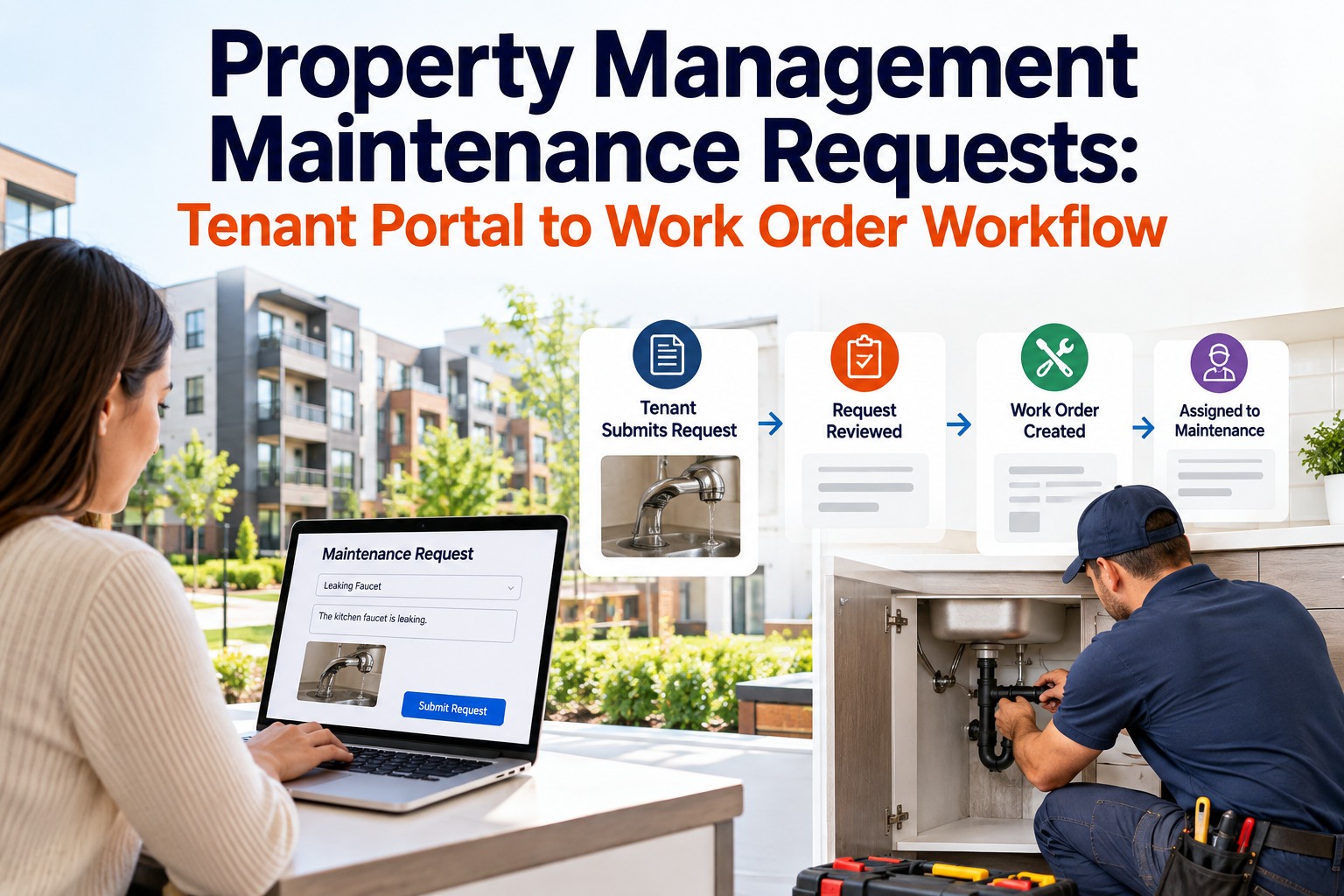
A tenant with a leaking tap doesn't care how your maintenance team is organized they care whether anyone heard them and when it'll be fixed. On most properties the request goes into a void: a phone message, an...

Every machine on the floor is already talking — a PLC flags a fault bit, a sensor crosses a limit, a cycle counter rolls past its interval — but if those signals stop at the SCADA screen, nobody in maintenance acts...

Maintenance runs in two systems that don't talk: SAP holds the equipment masters, cost centres and spare-parts inventory, while the work actually happens in the field — and between them sits manual re-keying, stale...
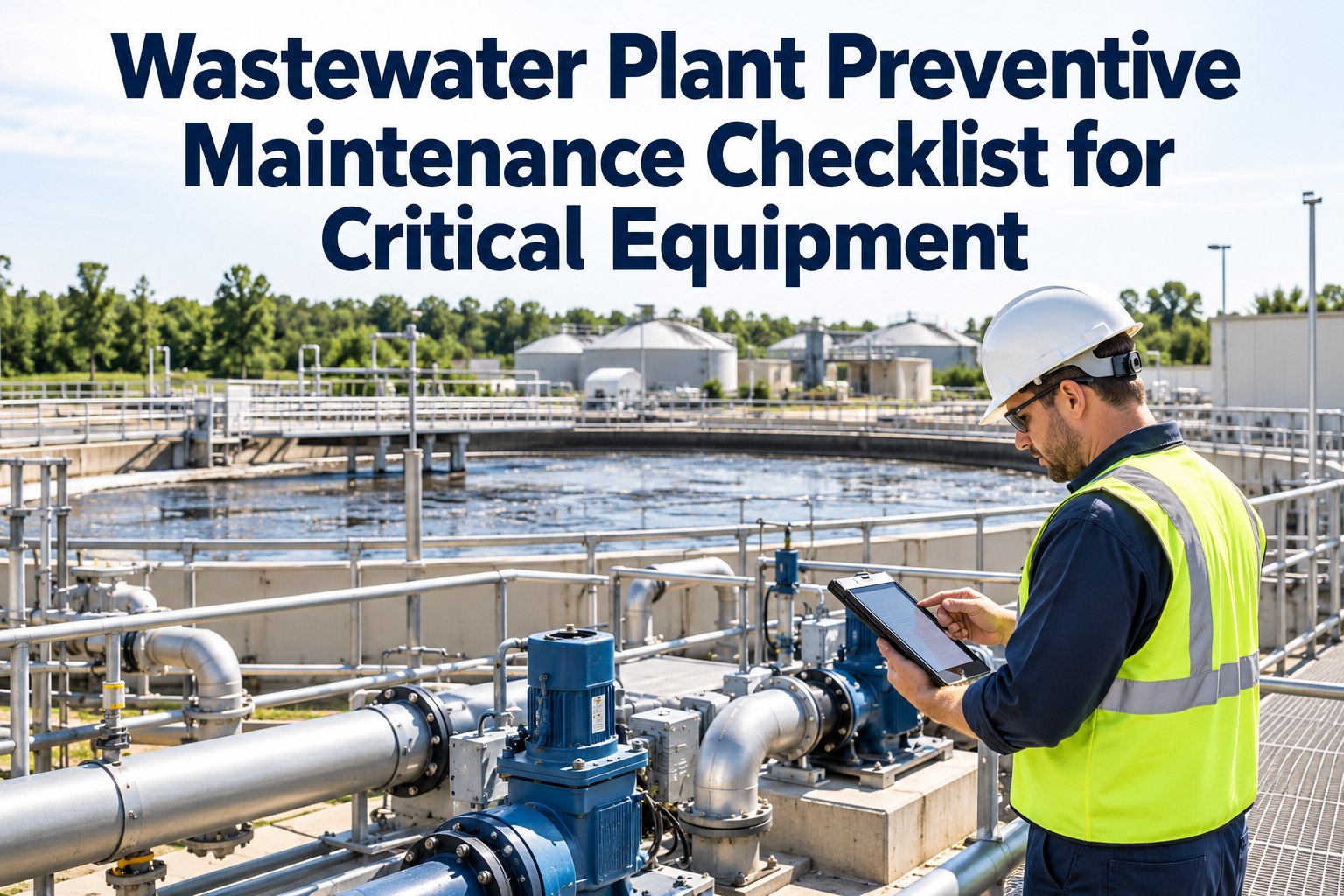
At a wastewater plant, a maintenance miss doesn't stay inside the fence it leaves through the outfall as a permit violation. A blower that trips without its standby can push dissolved oxygen below spec and the...
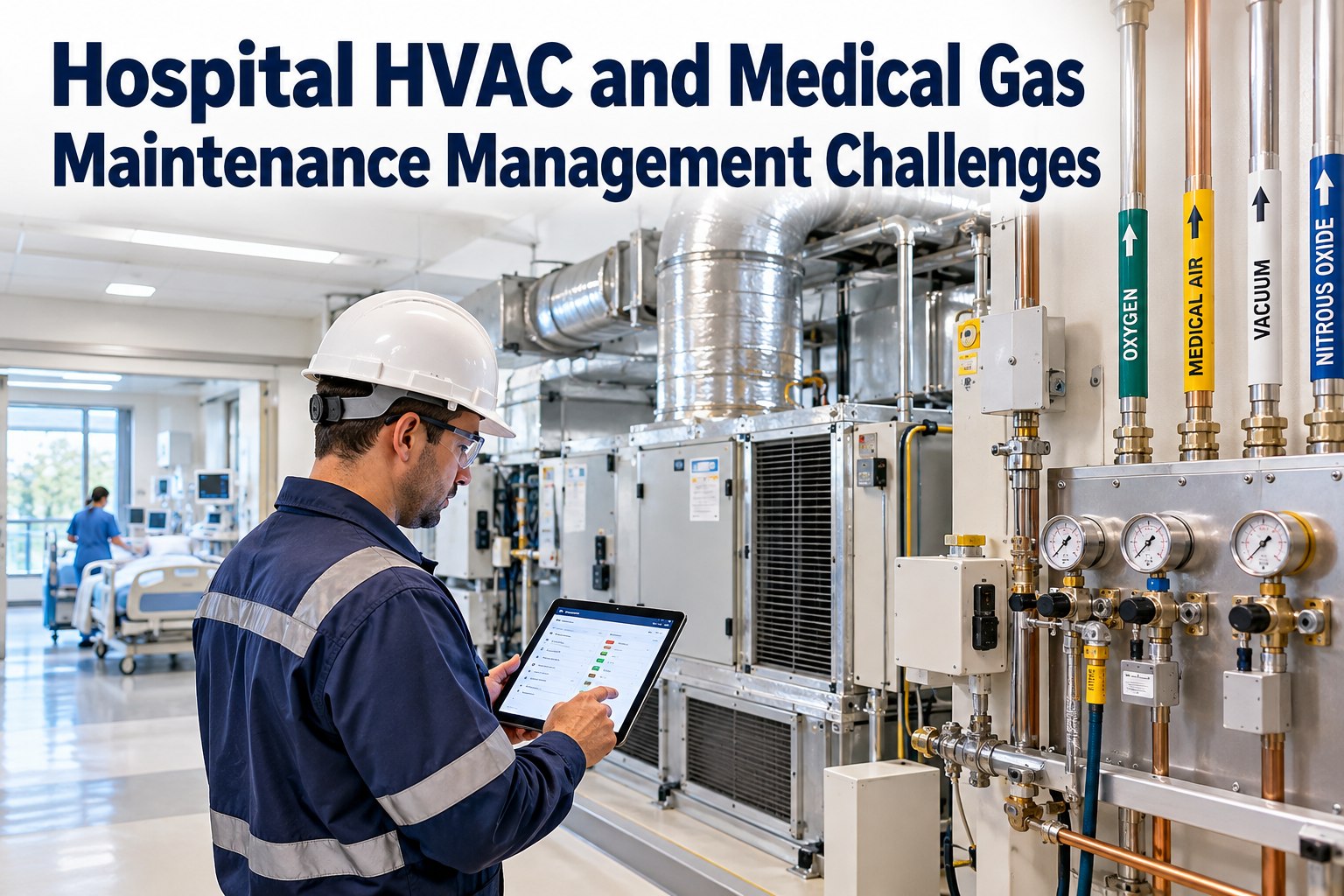
In a hospital, two invisible systems keep patients alive and the building compliant: the HVAC that holds an operating room at positive pressure and an isolation room at negative, and the medical gas network that...
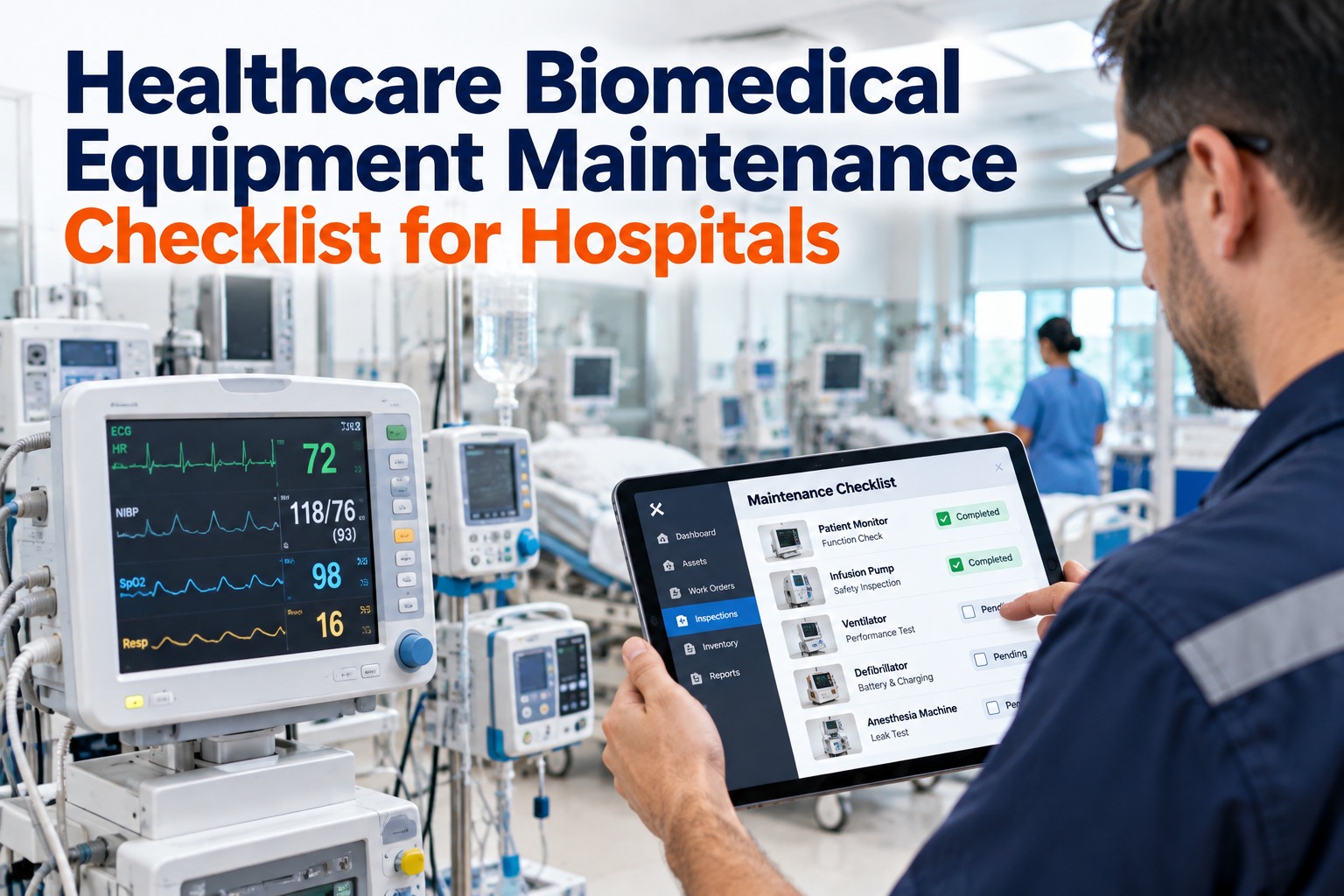
In a hospital, a missed preventive maintenance isn't a deferred cost — it's a ventilator that may alarm late, a defibrillator that may not deliver, an infusion pump that may dose wrong. Biomedical equipment...
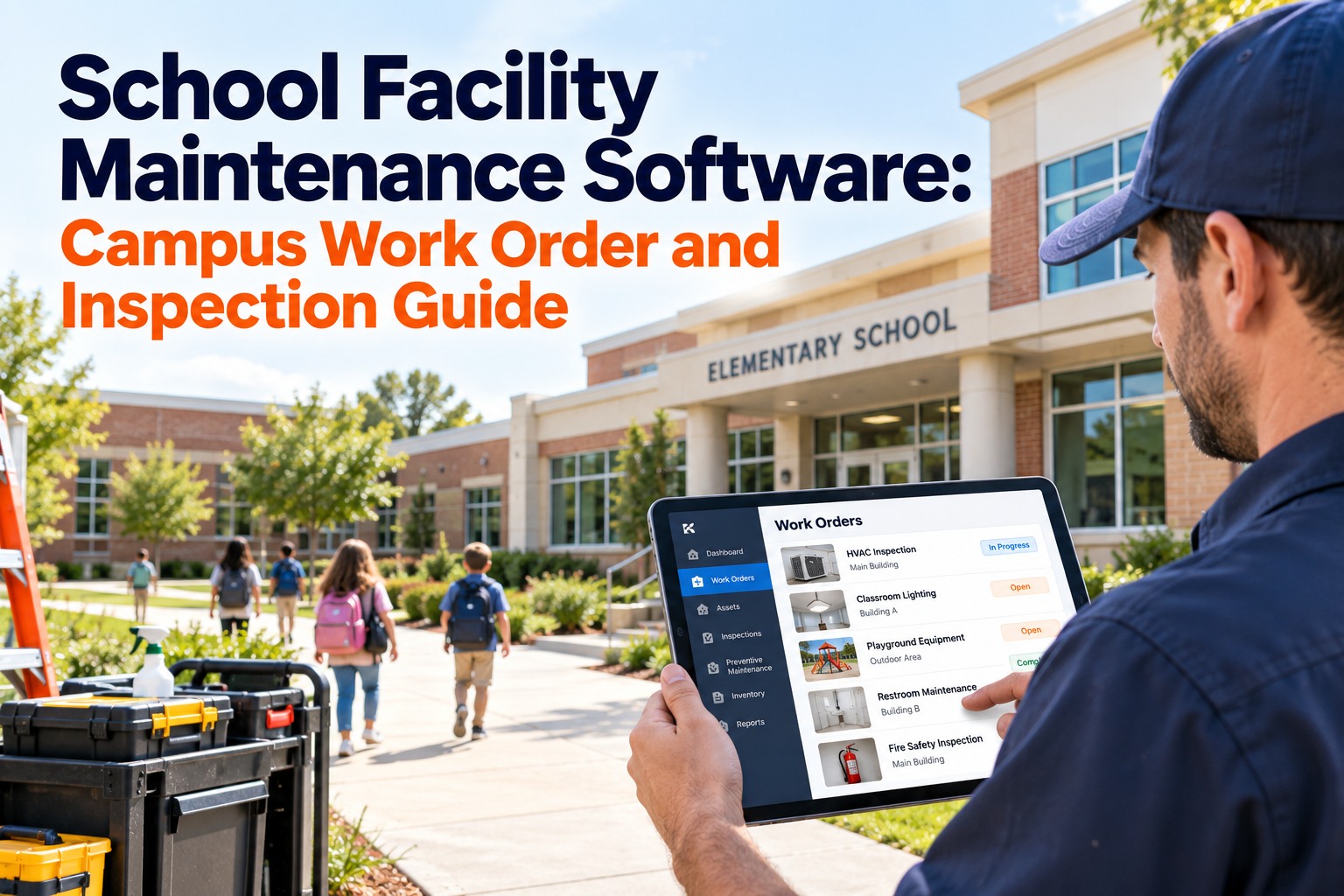
A school runs on a request a teacher sends from a classroom: a broken AC unit, a flickering light, a playground bolt coming loose. On most campuses that request travels by whatever channel the teacher happens to...
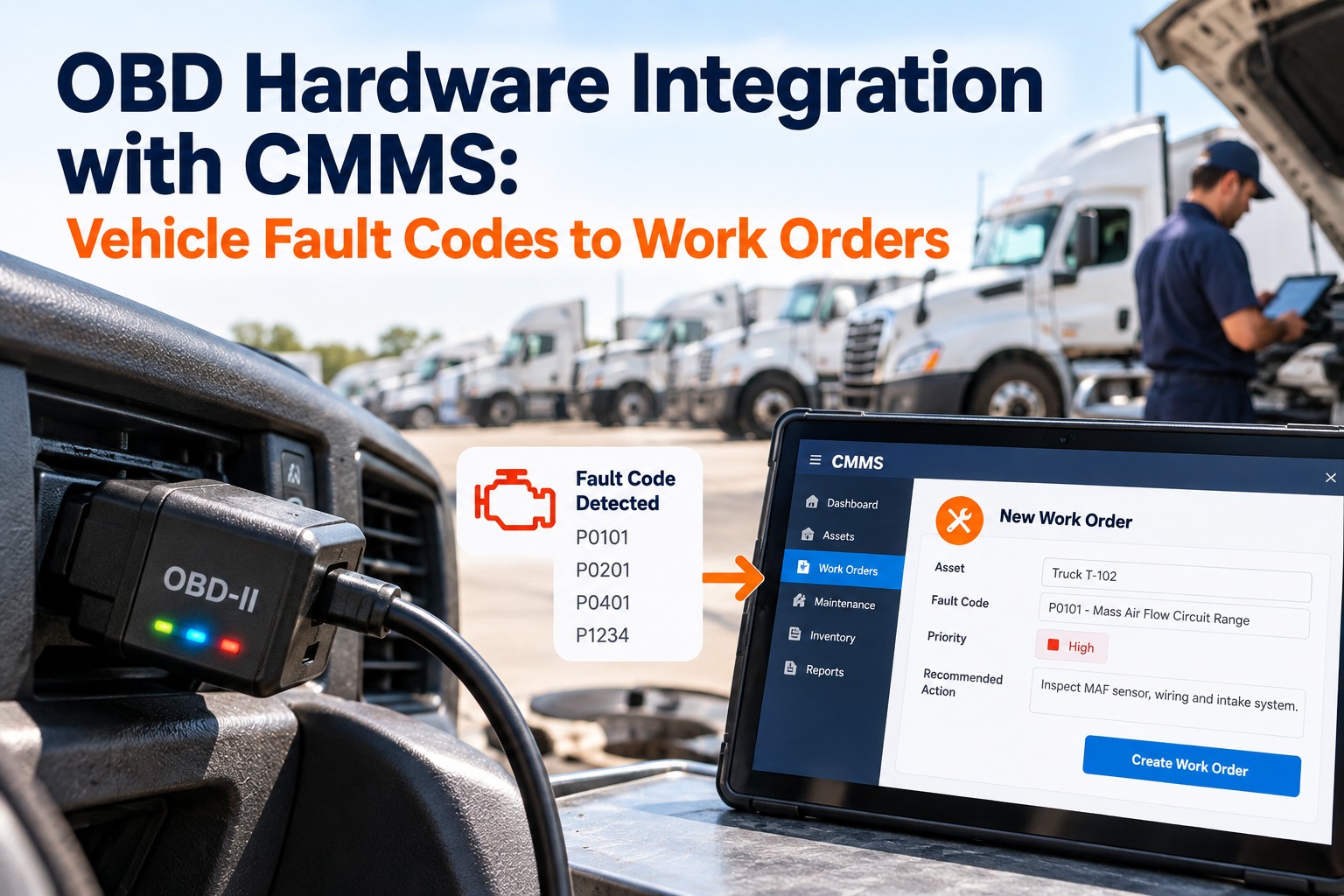
A check-engine light comes on somewhere out on a route, a driver maybe mentions it at end of shift, and by the time anyone pulls the code the fault has either cleared, worsened, or grounded the truck. Fault codes...

A single airport runs three maintenance operations that barely resemble each other. On the airfield, a cracked light lens means a NOTAM and an emergency crew before the next landing. In the terminal, a failing...

The storeroom phone rings again: is my part in yet? The answer lives in three places at once, the shelf, the requisition and the work order, and the storekeeper has both hands full. Spare parts inventory by voice...

Your supervisor fields the same three calls every morning: log this, is the part in, who has that job. Meanwhile the operations team wants its AI assistant to answer the very same questions. A CMMS MCP server for...

It is the start of the shift, a pump seal is weeping, and the technician who owns that job is stuck on another line. Moving it should take one sentence, not a hunt for the whiteboard, the planner and a login. To...

At 7 a.m. the maintenance backlog report lives on a board, the workload lives in a planner's head and the parts holds live in a storeroom list. Supervisors and maintenance leads end up chasing five screens and a...

Hands-free work orders matter most at the moment a technician finds a fault: gloves on, hands greasy, the line still running and the tablet parked back at the cart. If the finding waits for the next screen stop,...

A commercial boiler replacement is one of the largest single line items a facility will budget for — and the range is enormous, from around $18,000 for a small unit to well past $250,000 for a central-plant...
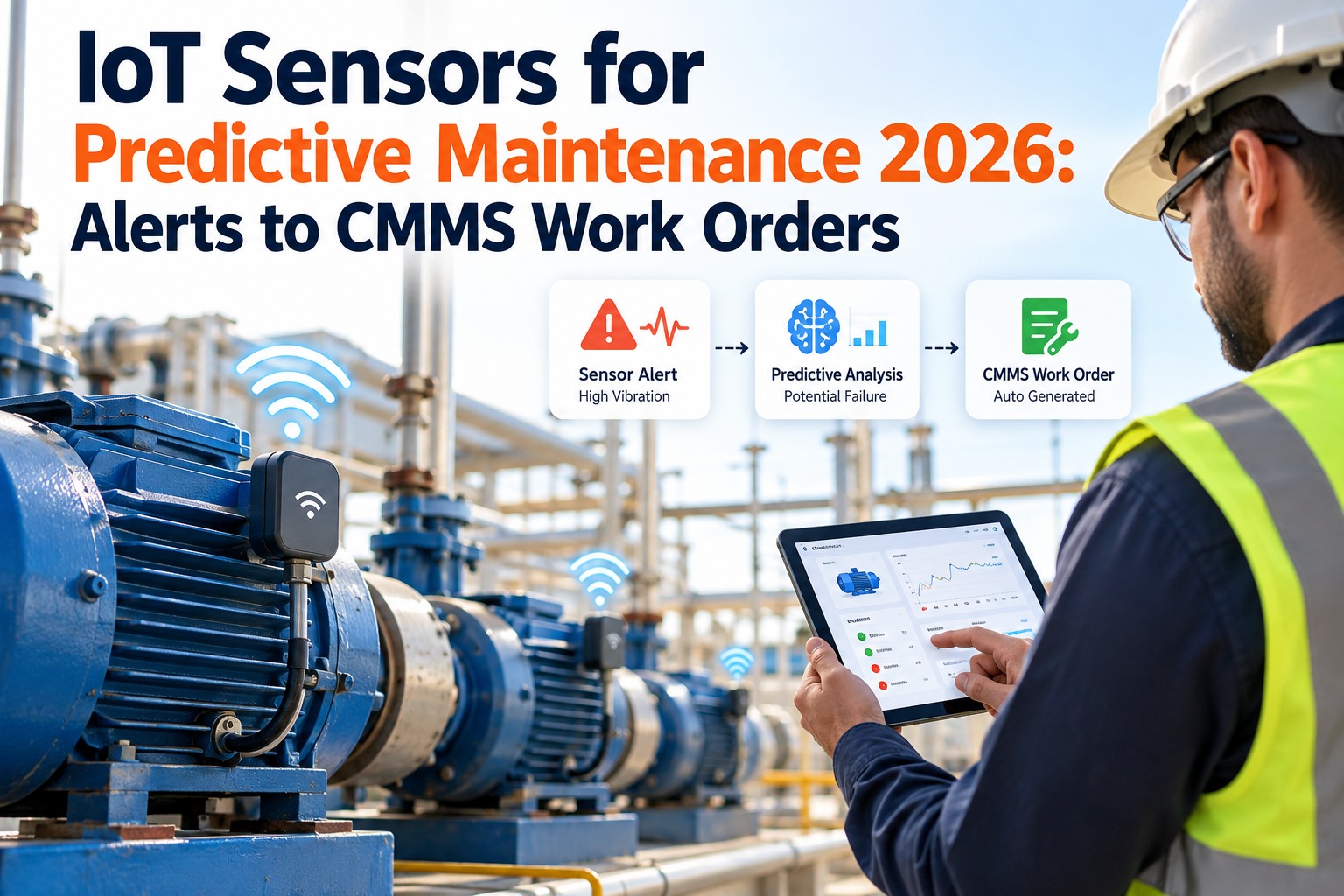
Plenty of plants have already bought the sensors. Vibration nodes on the pumps temperature probes on the motors, an oil-analysis feed on the gearbox — the data is streaming. And yet the reactive work orders keep...
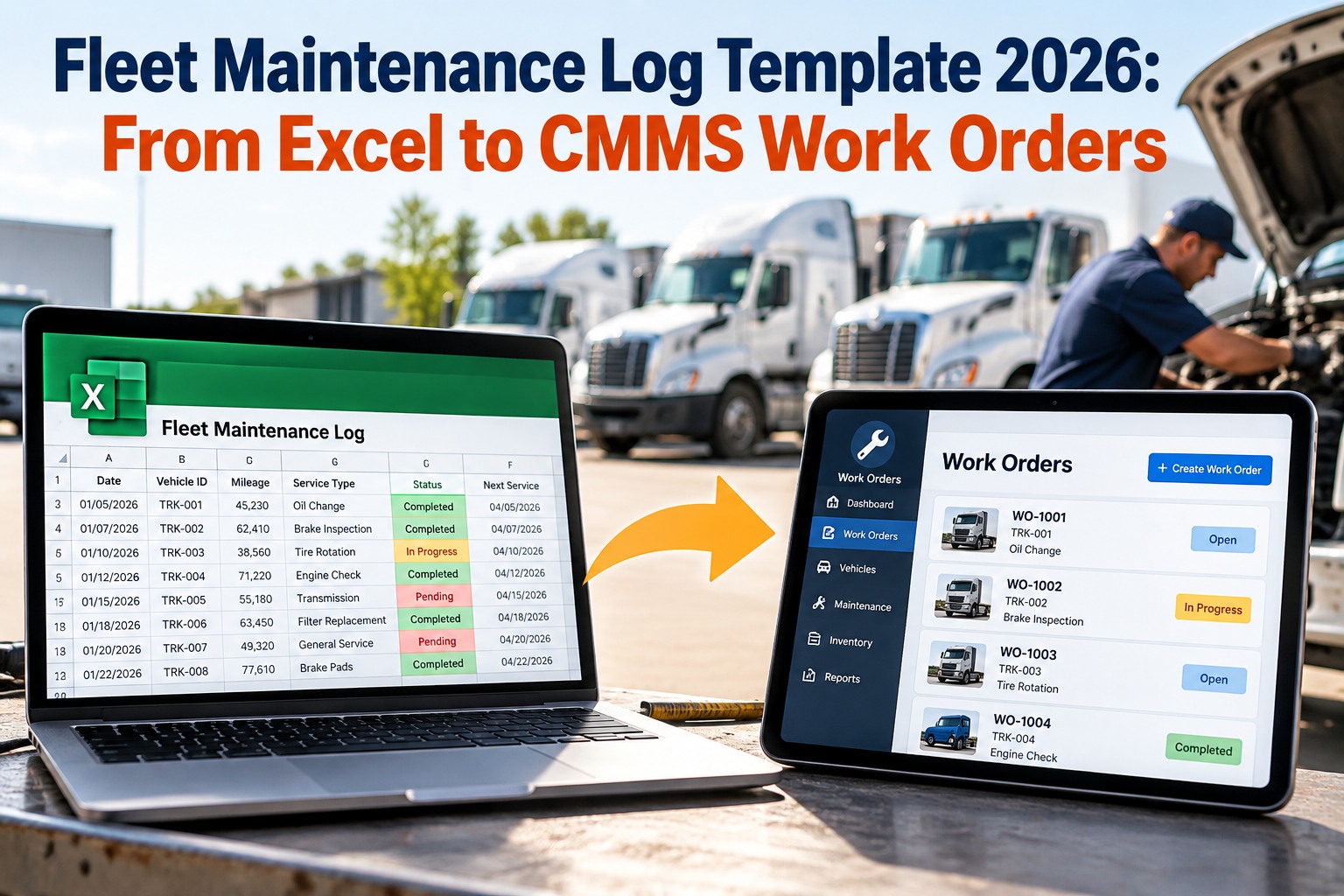
Every fleet starts its maintenance records the same way: a spreadsheet. It's everyone knows how to use it, and for the first few trucks it works fine. Then the fleet grows — and the same spreadsheet that got you...

A facility walkthrough is only as good as what happens after it. Too often a walkthrough surfaces a dozen real issues — a dripping valve, a scuffed fire door, an HVAC unit short-cycling — and they land in a...

In a steel plant, a bad weld is rarely caught the moment it forms — it surfaces later, in a downstream failure, a warranty return, or a line stoppage that traces back to a joint nobody flagged. Manual weld...

A heavy-duty truck doesn't fail on a schedule you set — it fails on the one you ignored. Skip a fuel-filter change and a $200 service becomes a $12,000 injector and DPF job on the shoulder of an interstate. The...

When a chiller throws an alarm, the clock is already running — on a hot afternoon, a tripped unit is a warm building or a stalled process within the hour. The good news is that most chiller faults follow familiar...

A frozen evaporator coil looks like an ice problem, but it's really a symptom — the coil is telling you that something upstream has broken the balance between airflow and refrigerant. Ignore it and the same block...

It's 5:17 am the day before an insurance audit and you realize your exit light records live in faded logbooks and three unlabeled spreadsheets — nobody's sure which failed tests ever became work orders. That ops...

Kiln MTTR up 35% and your backlog is still a spreadsheet? Maintenance KPIs are telling you something is wrong — but dashboards alone aren't turning that signal into scheduled work. If you need maintenance KPIs to...

You're paying for sensors but still drowning in reactive work orders — PdM spend leaks when signals never turn into scheduled repairs. A wireless vibration ping on a chiller shouldn't become another spreadsheet...

One missed compressor overheating event can trigger a 4-hour unplanned shutdown an illustrative $25,000 in lost production and emergency labor — and cascade into building comfort failures across a campus. If your...

Planners lose 4–6 hours every week re-keying PdM alerts that never reach Maximo or SAP often the difference between catching a failure early and running emergency overtime. It's Monday morning: the planner...
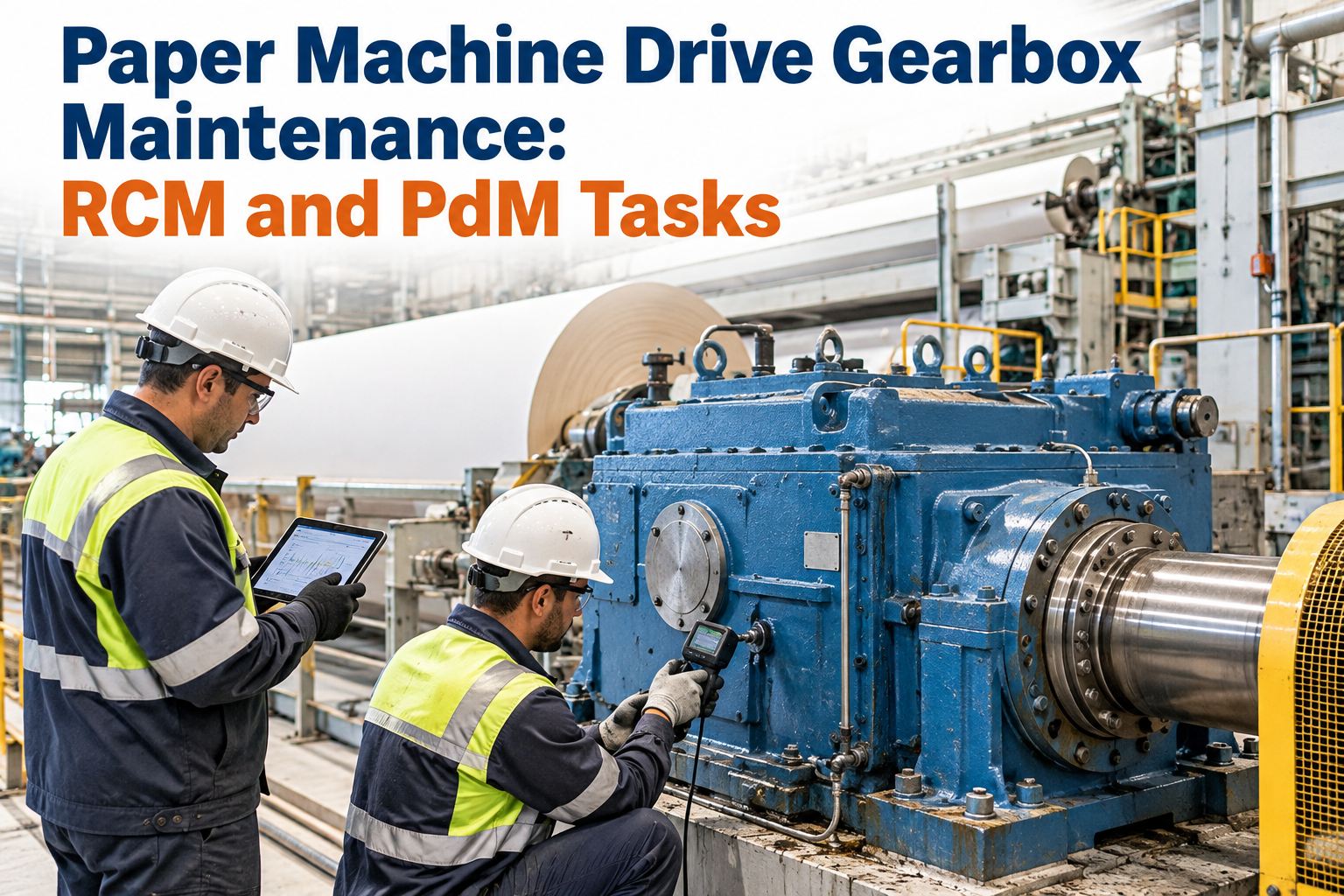
A sectional drive gearbox rarely fails without leaving evidence — but that evidence can disappear inside normal speed changes, felt loading, steam conditions, and machine vibration. On night shift, a new gear-mesh...
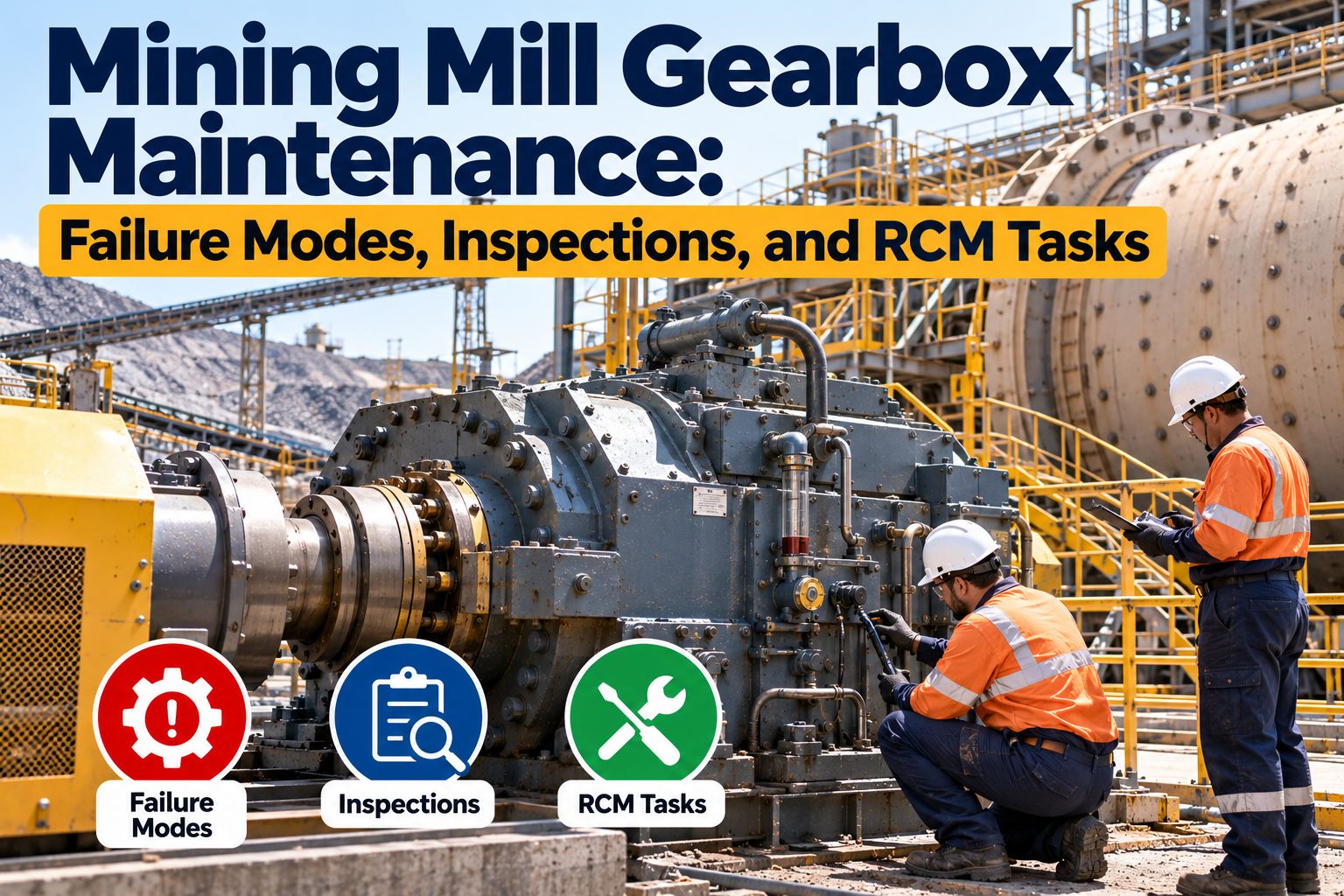
At 02:00, rising gearbox vibration and darkening oil are not reasons to wait for day shift. The mill is carrying the production plan, and the crew needs a defensible call: damaged mesh, failing bearing, normal...

New hum. Rising drive-end temperature. Phase current spreading. At 02:14 the operator knows something changed — but not whether the fault is in the motor, power, coupling, gearbox, or process. Ordering a bearing or...
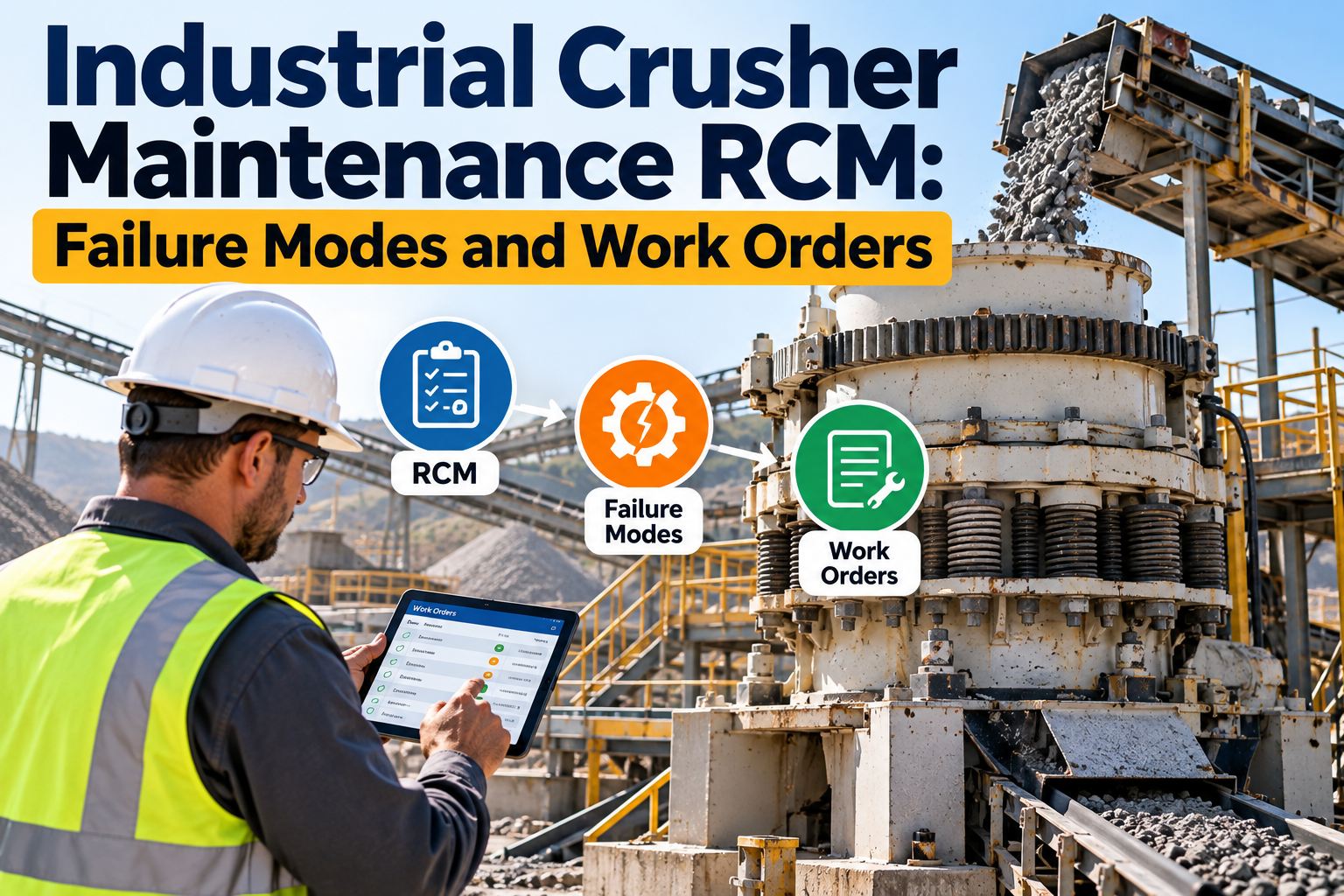
The crusher is still running, but the drive-end vibration has changed, the oil sample is carrying fresh metal, and closed-side setting will not hold. Night shift needs to know whether to keep feeding, reduce load,...

A cooling tower gearbox rarely waits for daylight to announce a problem. On night shift, the first warning may be rising fan-deck vibration, hot oil odor, a drive alarm, or a cell that cannot hold process-water...
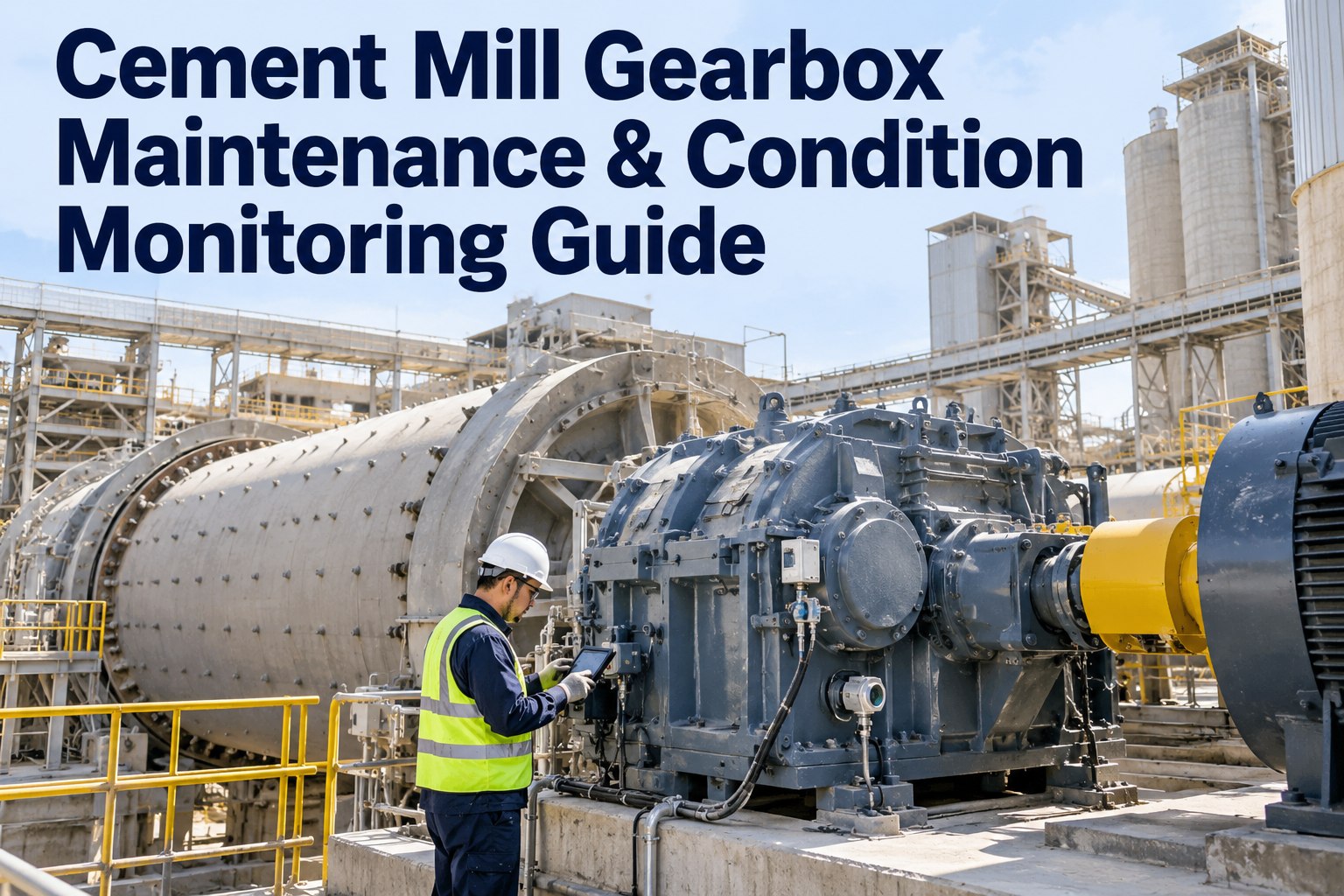
In a cement mill, the gearbox works in one of the harshest environments in heavy industry — continuous high torque, shock loads from grinding, and an atmosphere thick with abrasive clinker dust that finds its way...

A wind turbine gearbox has one of the hardest jobs in rotating machinery — stepping a slow, gusty rotor up to generator speed under constantly shifting loads. It's also the costliest failure point in the...
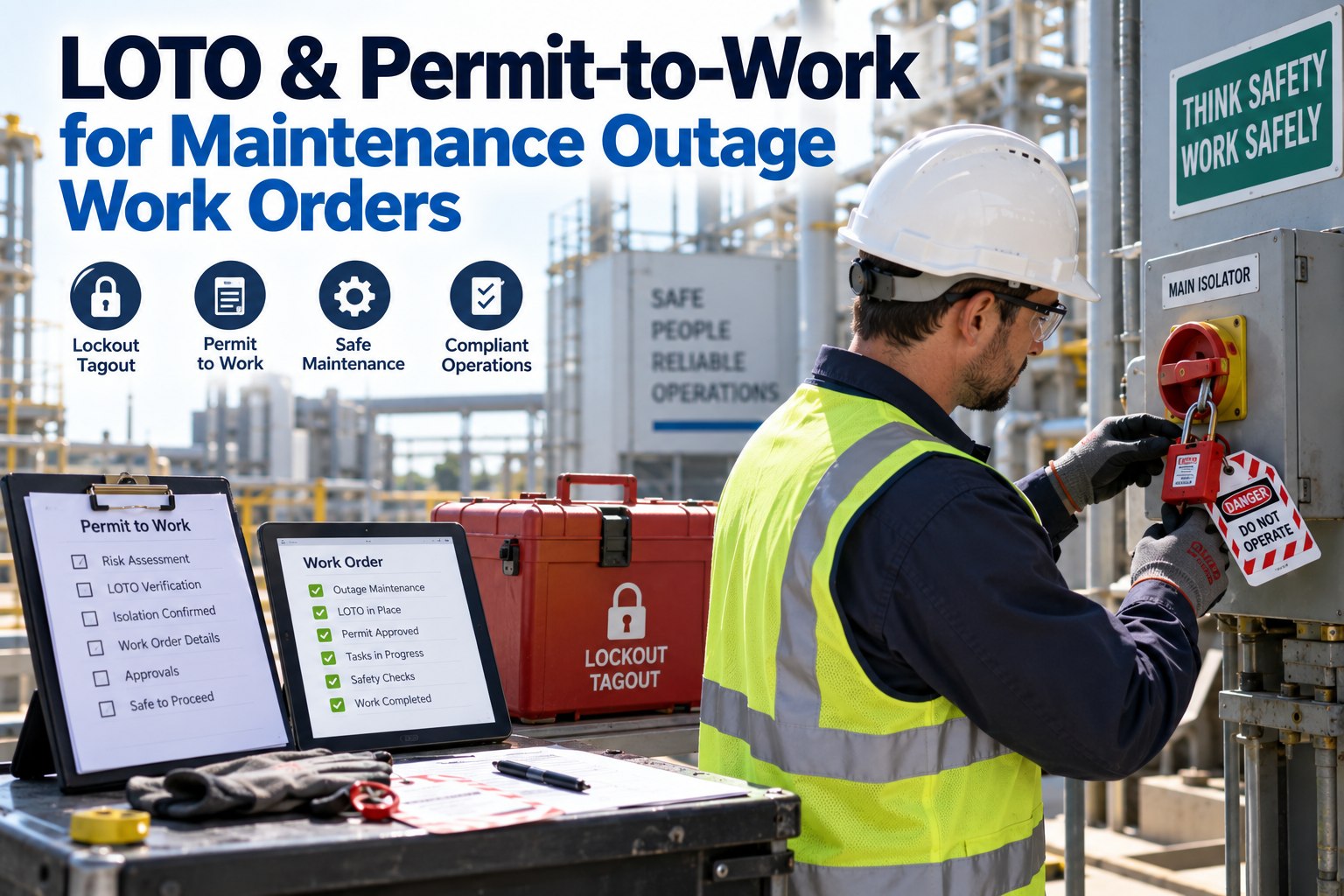
You're on the shop floor during a turnaround: the planner opens a pump de-energizing permit two minutes before crew mobilization and sees the tag register on a clipboard, the permit in a separate app, and the...

At 6:45 AM the night shift lead, coffee in hand, walks the day crew through an elusive conveyor vibration, fingers tracing notes in a paper log. If that handoff isn't captured clearly in a night-shift maintenance...
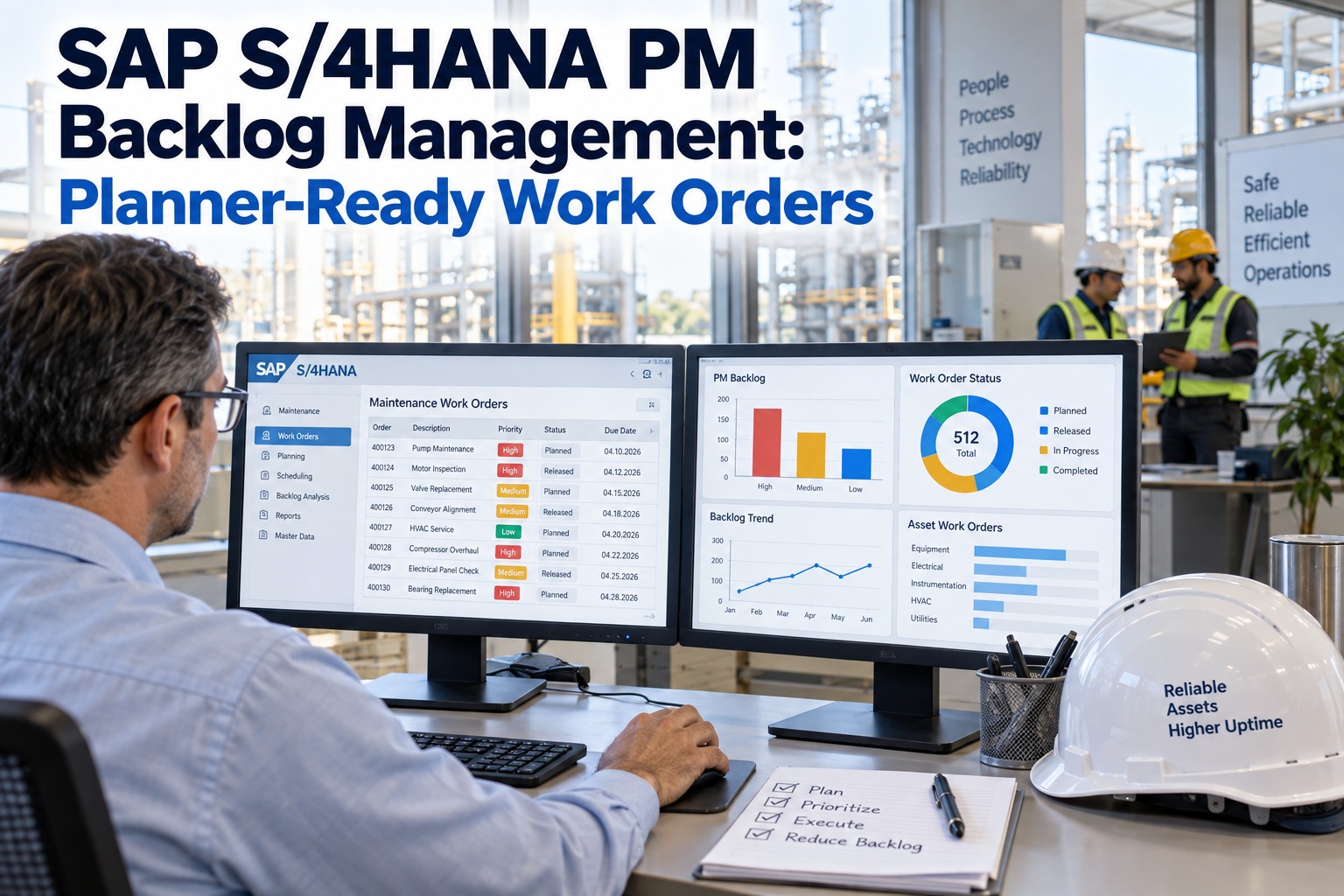
It's 7:10 a.m. and you're staring at 217 new items in the SAP queue — half are missing failure modes, priorities or parts hints, and the rest are thin on evidence. That morning freeze — where nothing moves from...
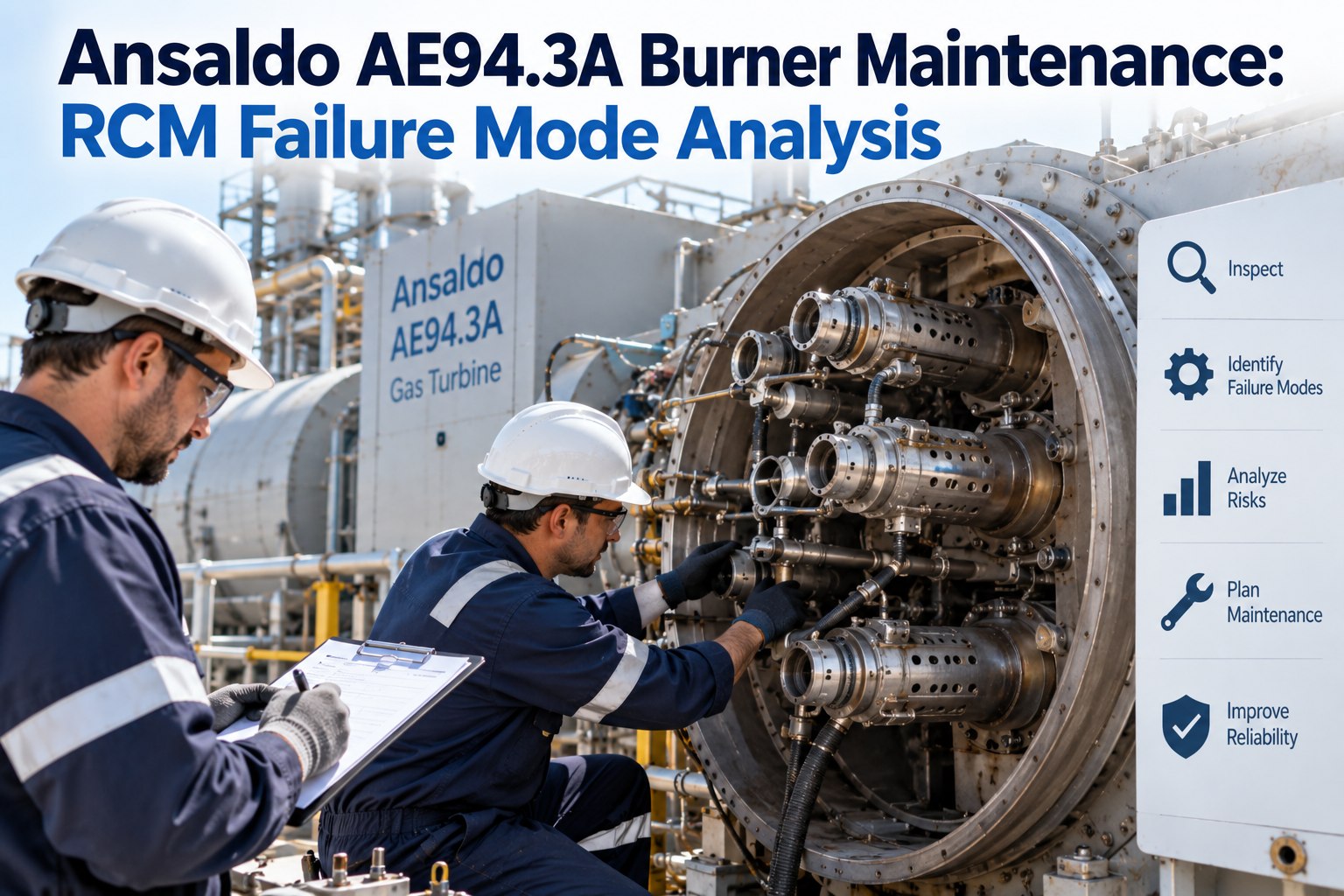
How do you separate routine combustion drift from early-stage, failure-prone hybrid burner lance degradation in an AE94.3A unit — before a costly shutdown or emissions exceedance occurs? In a mid-summer base-load...
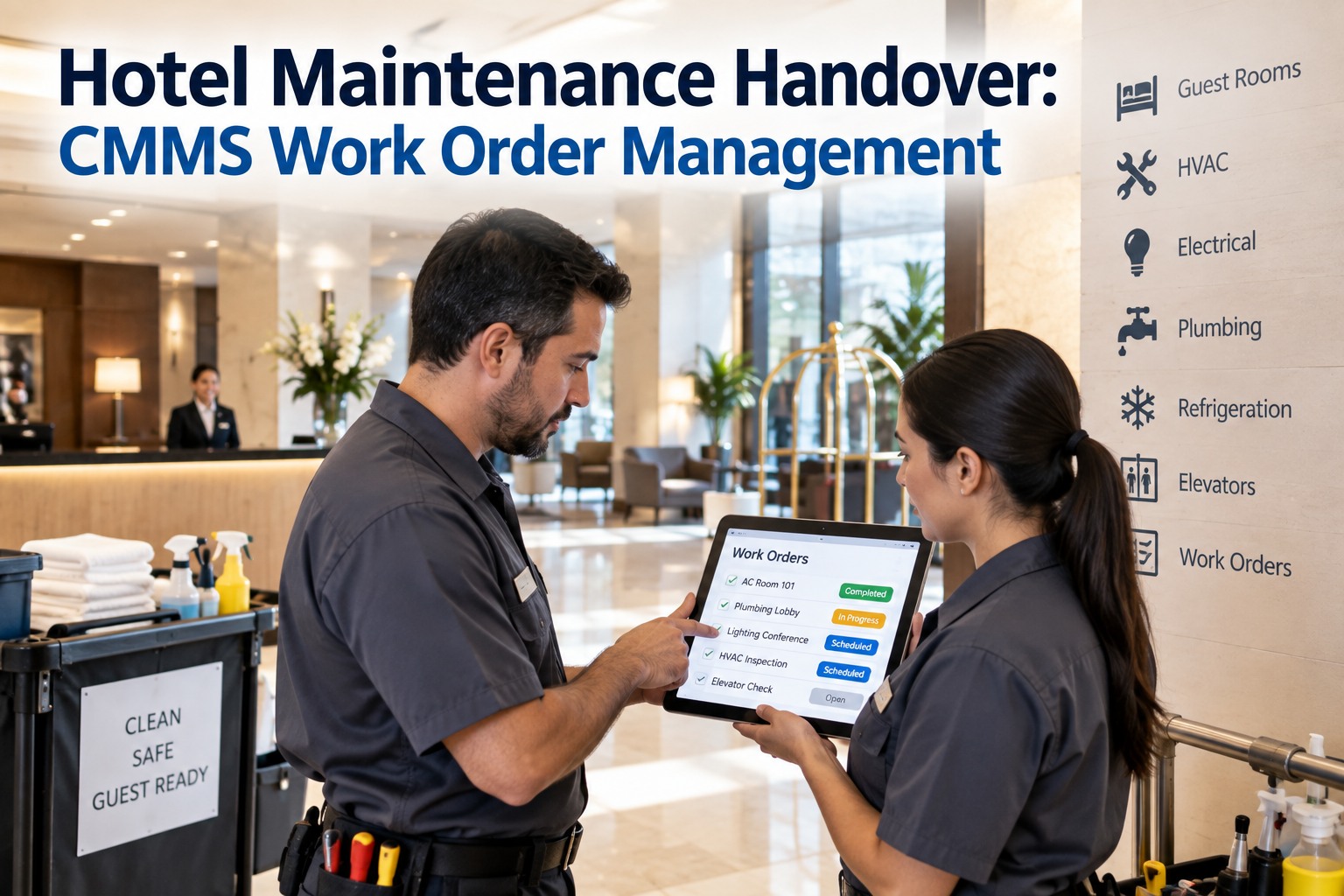
It's 6:45 AM in the engineering office: the night shift leaves two urgent PTAC cooling; failures and one stuck guestroom lock scribbled in a paper log near the desk, but as the day crew clocks in, only one ticket...

The control-room console shows a Stage-3 vibration event and an upward trend in inlet differential pressure. The night lead walks the plant floor list in their head: recent filter access work, a late preventive...

It's 02:10 on a Monday. The online oil-debris monitor for the Titan 130 gas producer (GP) bearing trips an alert: a fast jump in ferrous particle counts. The operator acknowledges the alarm and logs it in the DCS....

At peak summer load, a combined-cycle unit shows sticky servo response and intermittent hydraulic alarms — but the quarterly lab report only flags the membrane patch colorimetry result. When you see "turbine oil...
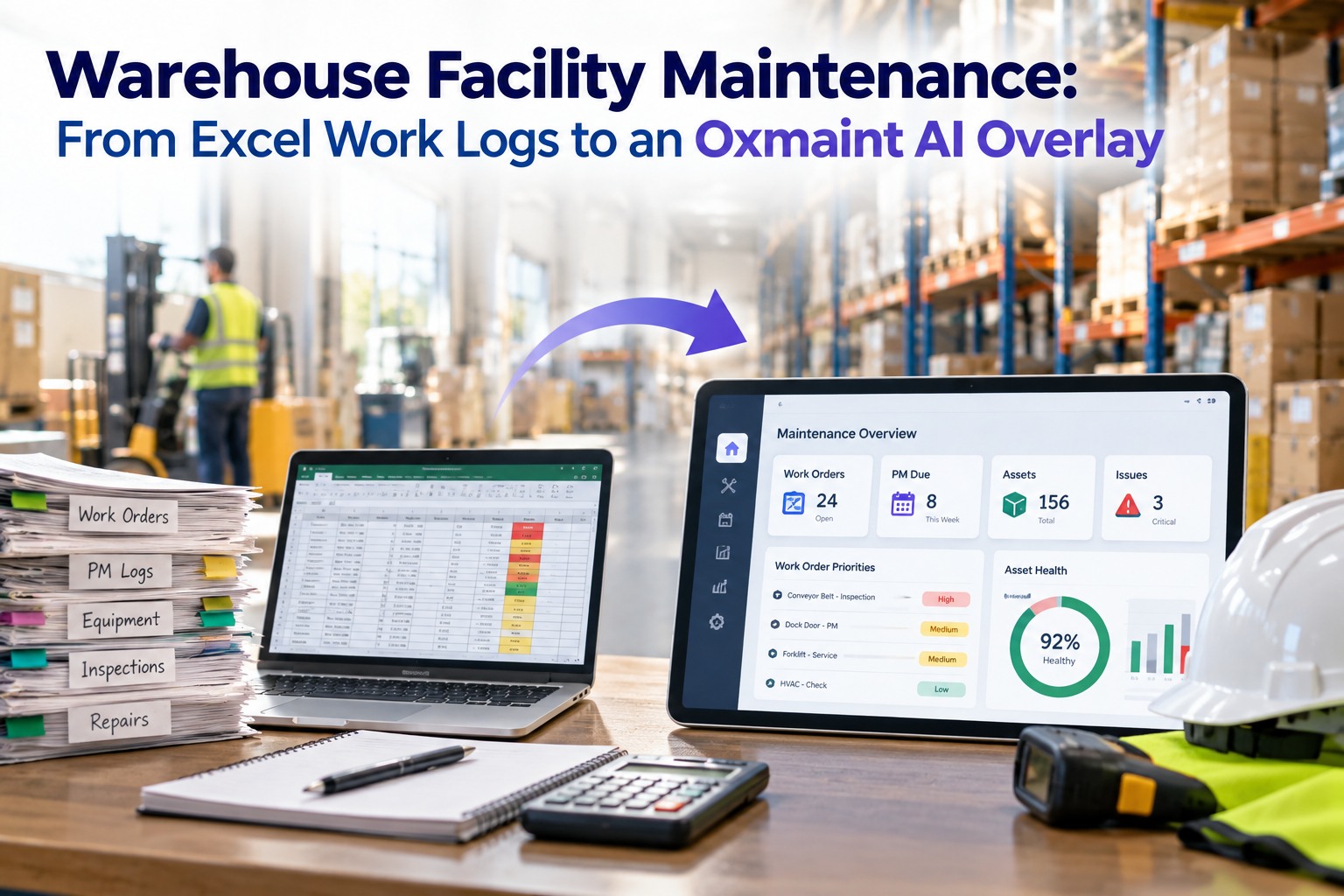
End of shift: the engineering supervisor flips through handwritten logbooks while the maintenance planner juggles half a dozen Excel files, hunting for clues on asset failures missed by last week's rounds —...
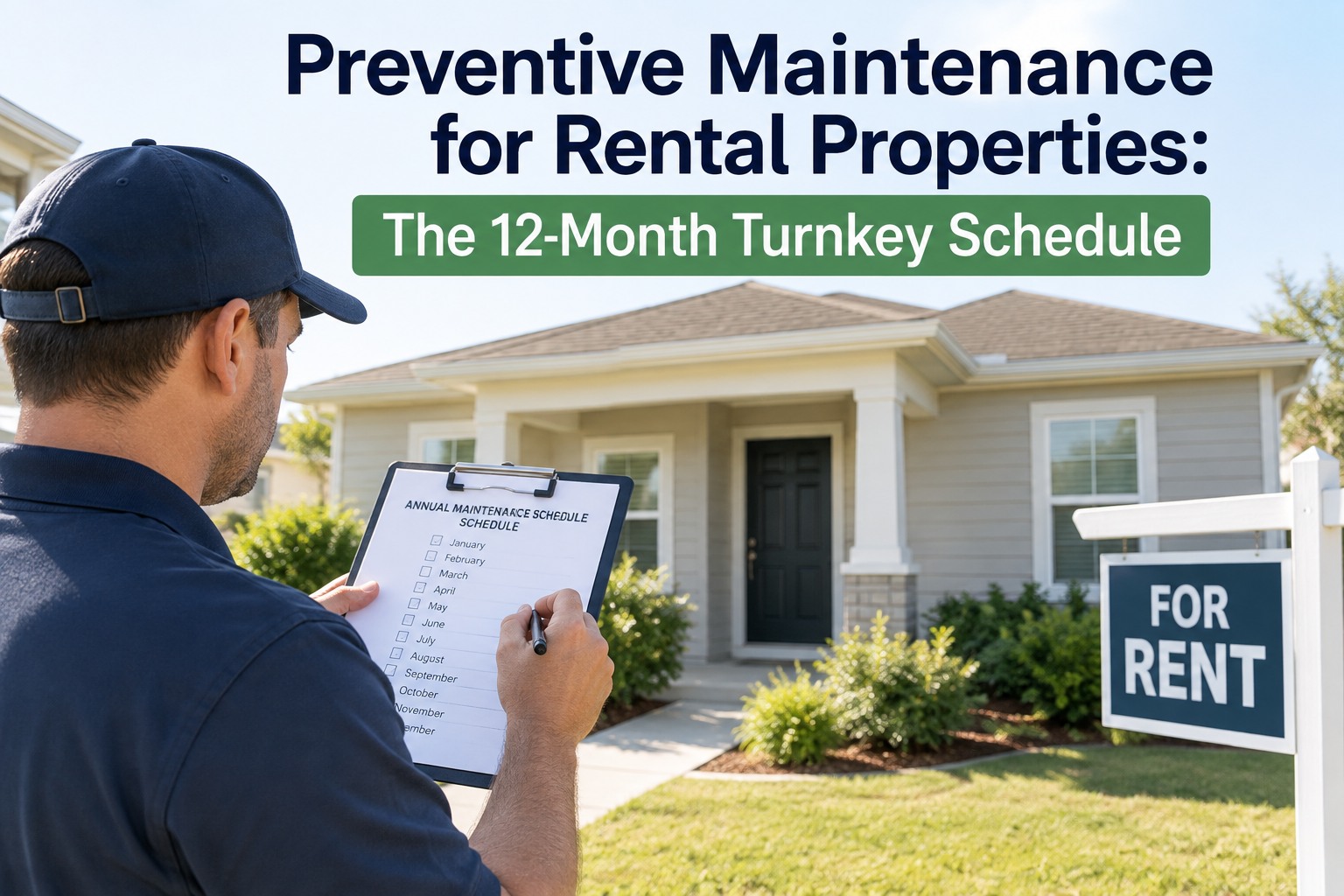
Every rental owner knows the 2 a.m. call — the burst pipe, the dead furnace, the flooded unit. What most don't see is that roughly 70% of those emergencies were preventable, and that reactive repairs run three to...
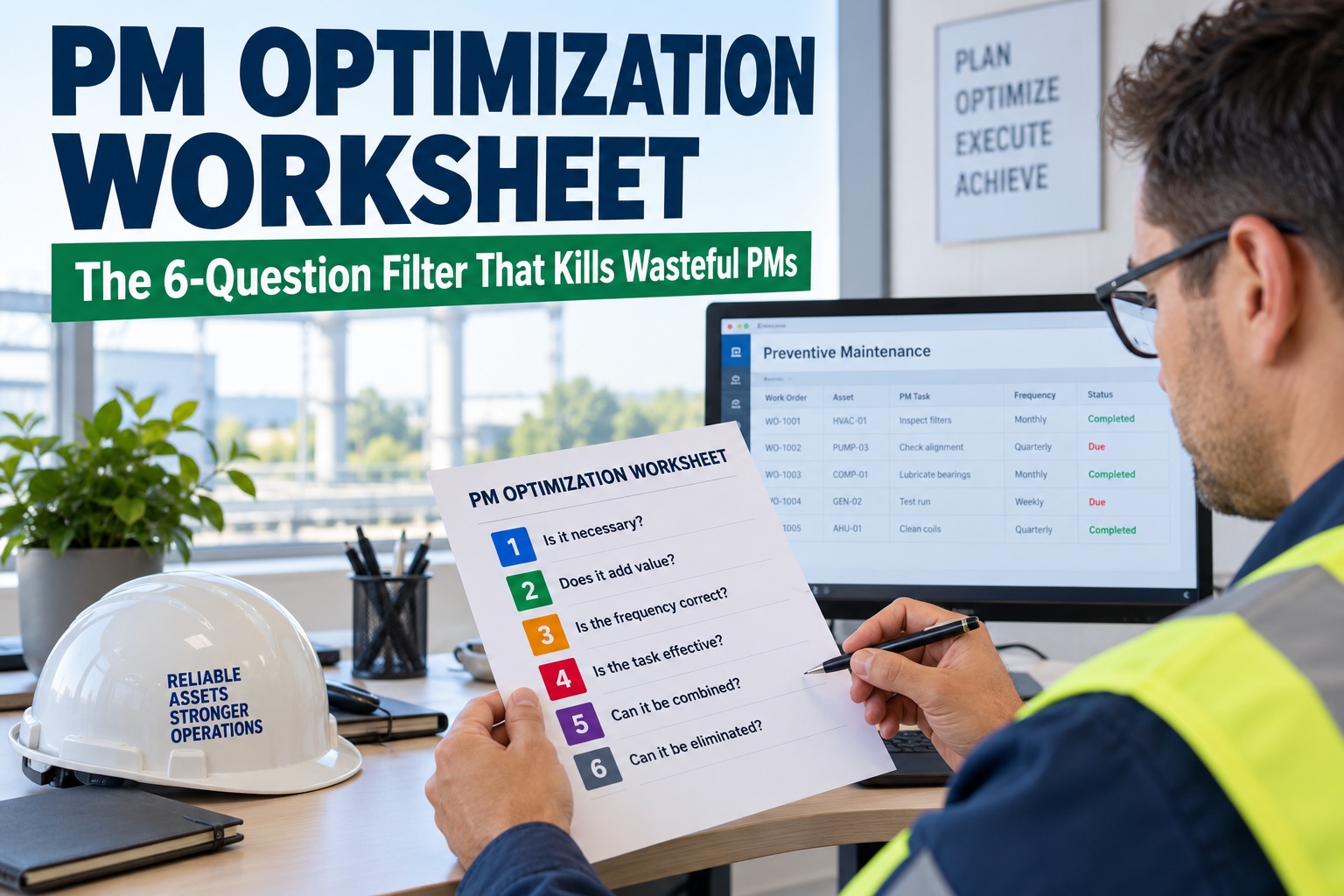
Open almost any CMMS and you'll find a PM library that only ever grew. A motor failed in year one, so someone added a weekly motor check. A bearing seized in year three, so in went a monthly inspection. Nothing was...
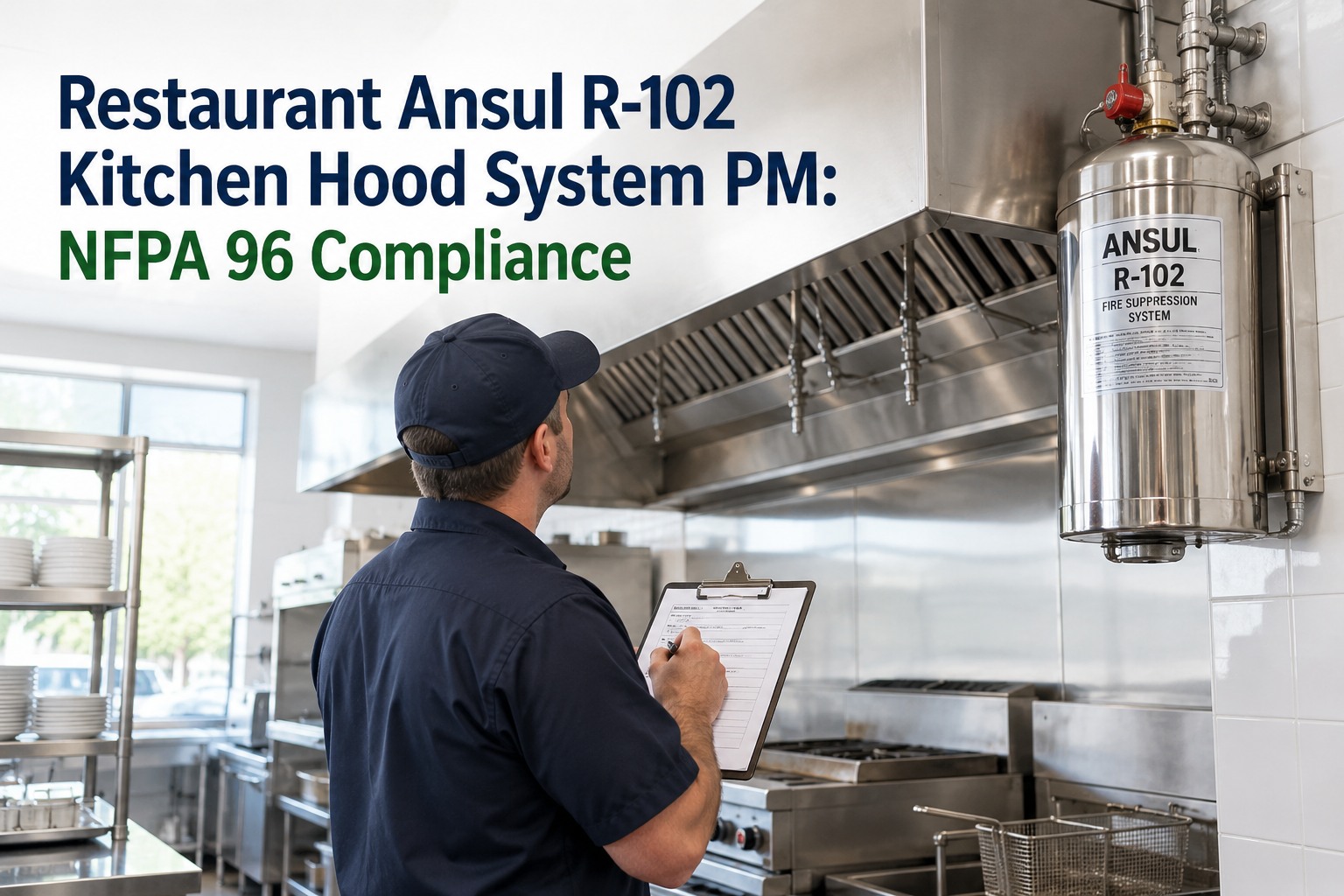
Every commercial kitchen runs on a system nobody thinks about until the worst moment — the wet-chemical hood suppression system, most often an Ansul R-102, sitting silent above the fryers and ranges waiting to...
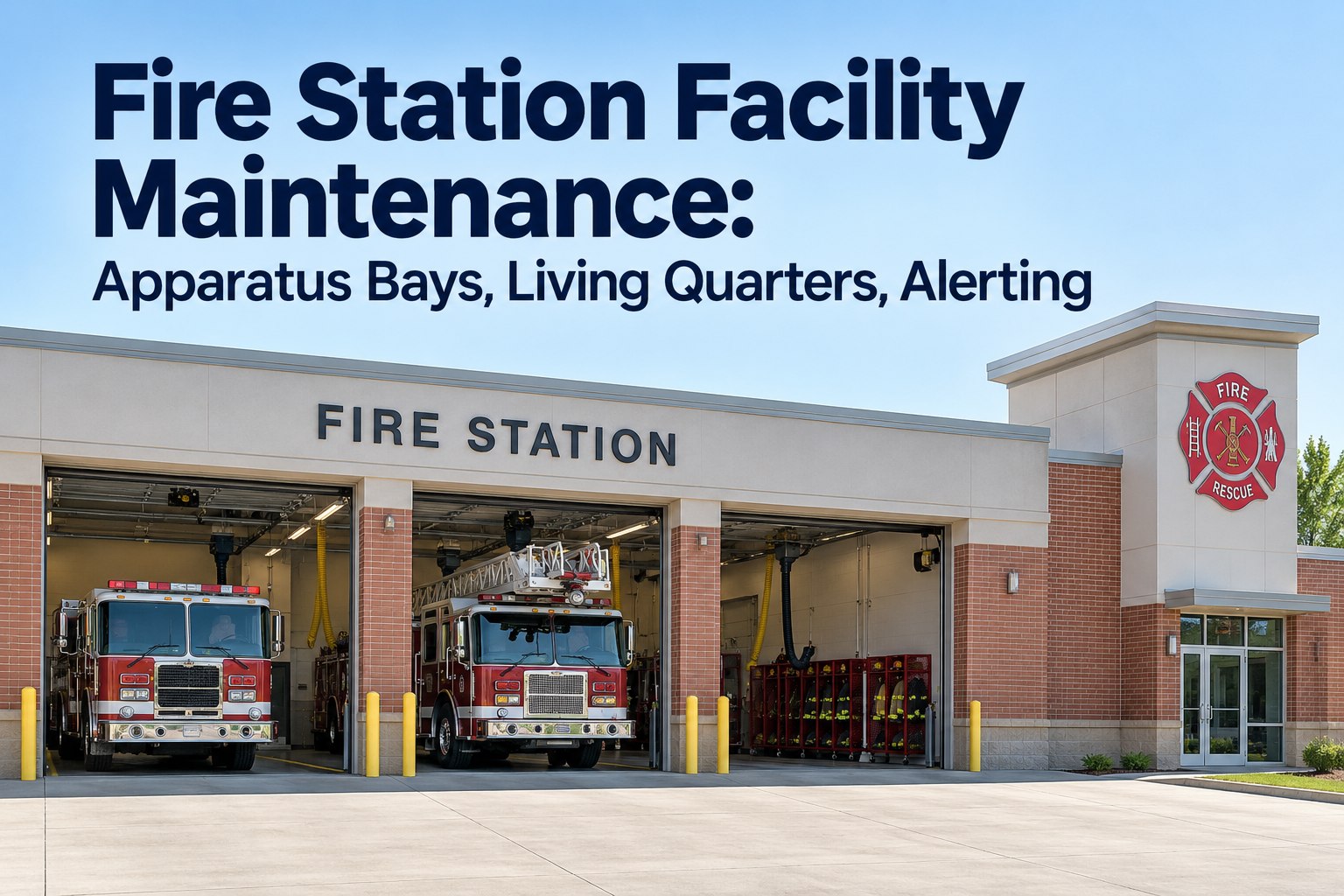
A fire station is three buildings wearing one roof. There's the apparatus bay an industrial garage where diesel apparatus idle and a source-capture exhaust system is quietly protecting crews from a Group 1...
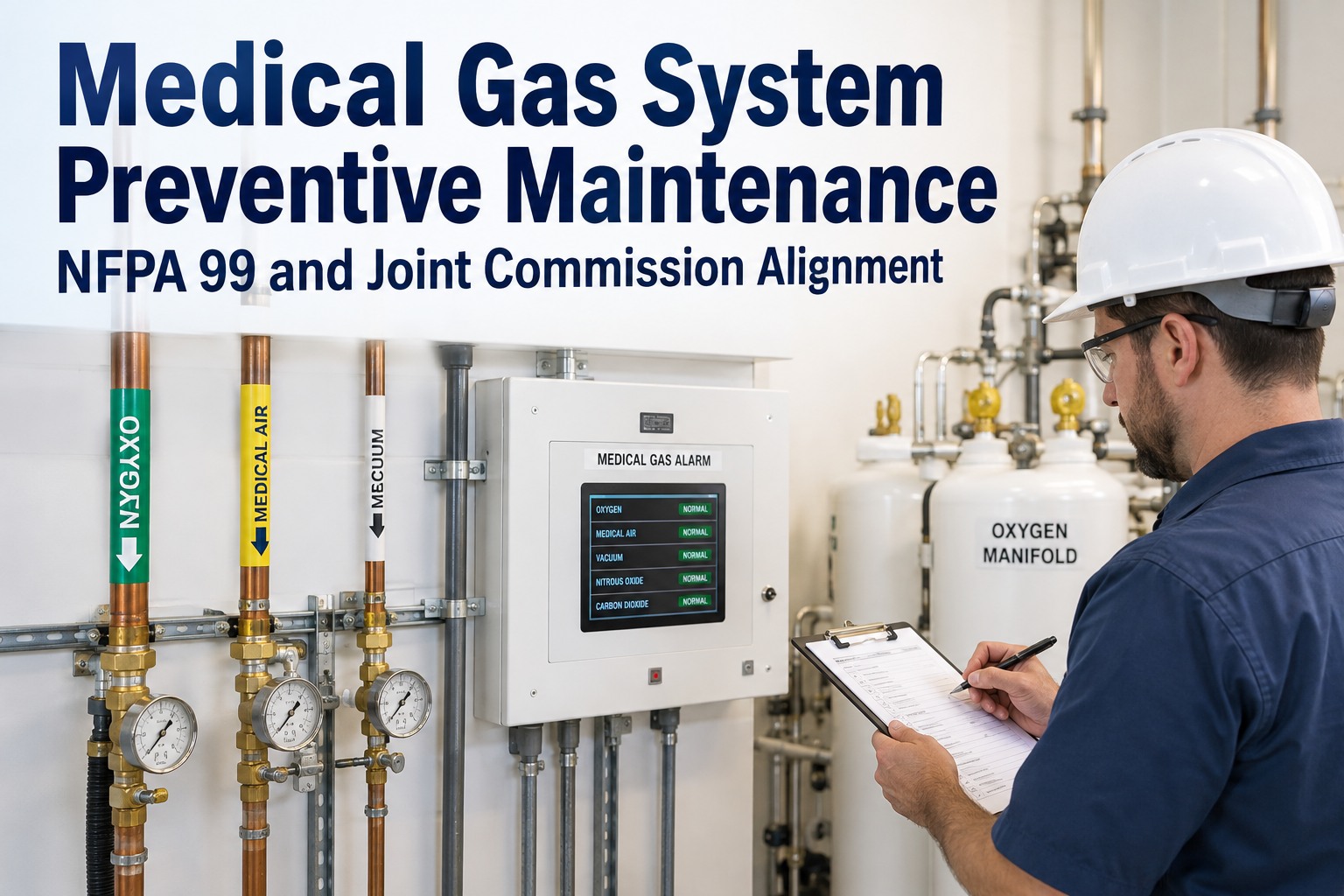
In a hospital, most utility failures are inconvenient. A medical gas failure is a sentinel event — a zone valve that won't isolate during a fire, a master alarm that never sounds, or medical air that drifts past...

Every hotel room is quietly wearing out between guests — a PTAC filter clogging, a faucet starting to drip, a lock battery fading — and you have exactly two chances to catch it before a guest does: the moment the...
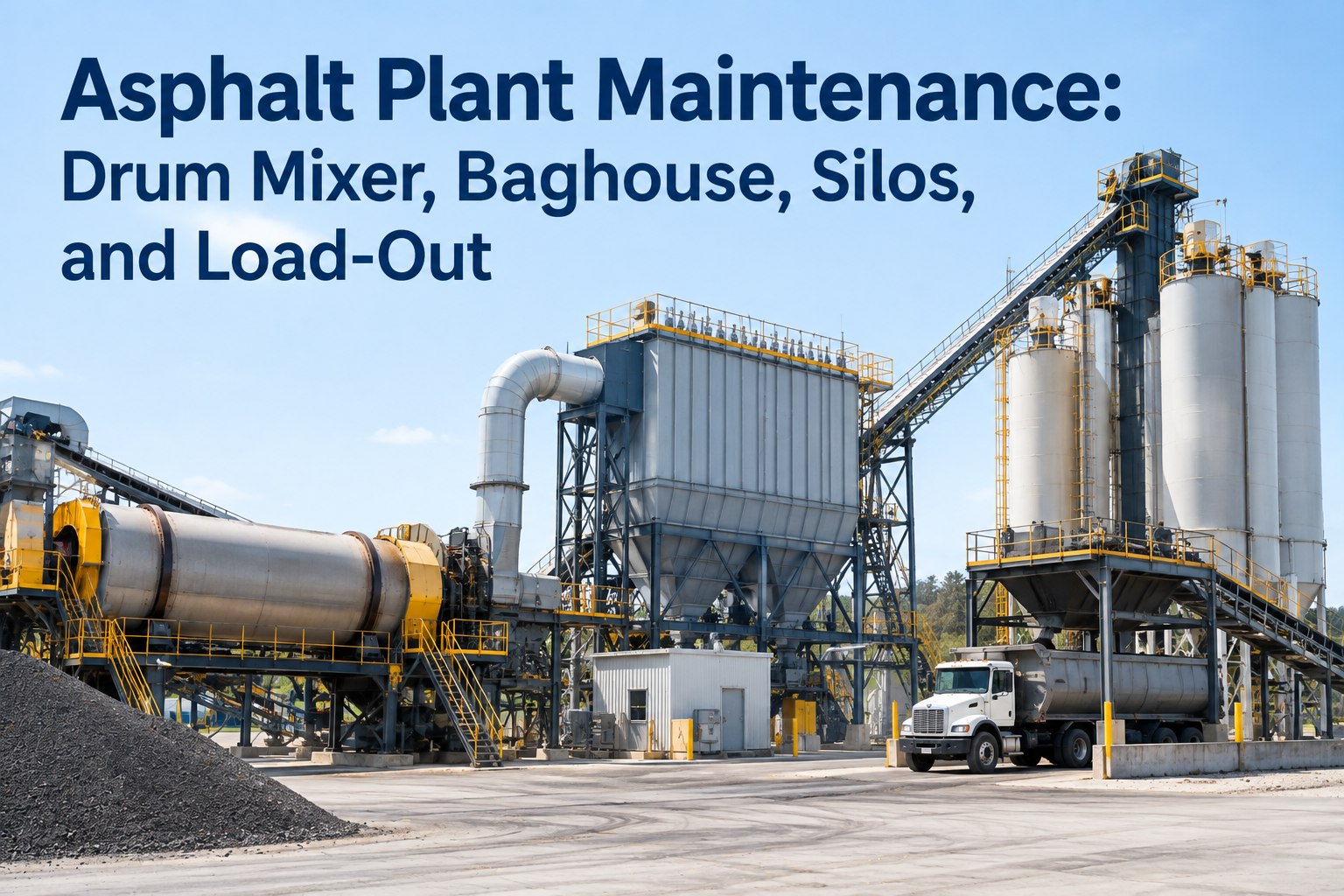
An asphalt plant doesn't fail gradually — it fails on the first hot day of the season, in front of a paving crew that's already loaded and waiting. That's the tax on seasonal equipment: it sits idle through winter,...

It's 2:14 a.m. and a tenant's ceiling is raining. What happens in the next ten minutes decides two things at once: whether that unit floods the one below it, and whether the tech you woke up is still on your team...

A HACCP plan is only as strong as the record behind each Critical Control Point and in an audit, a missing cooling log or an illegible pH reading is the difference between a pass and a corrective-action notice....
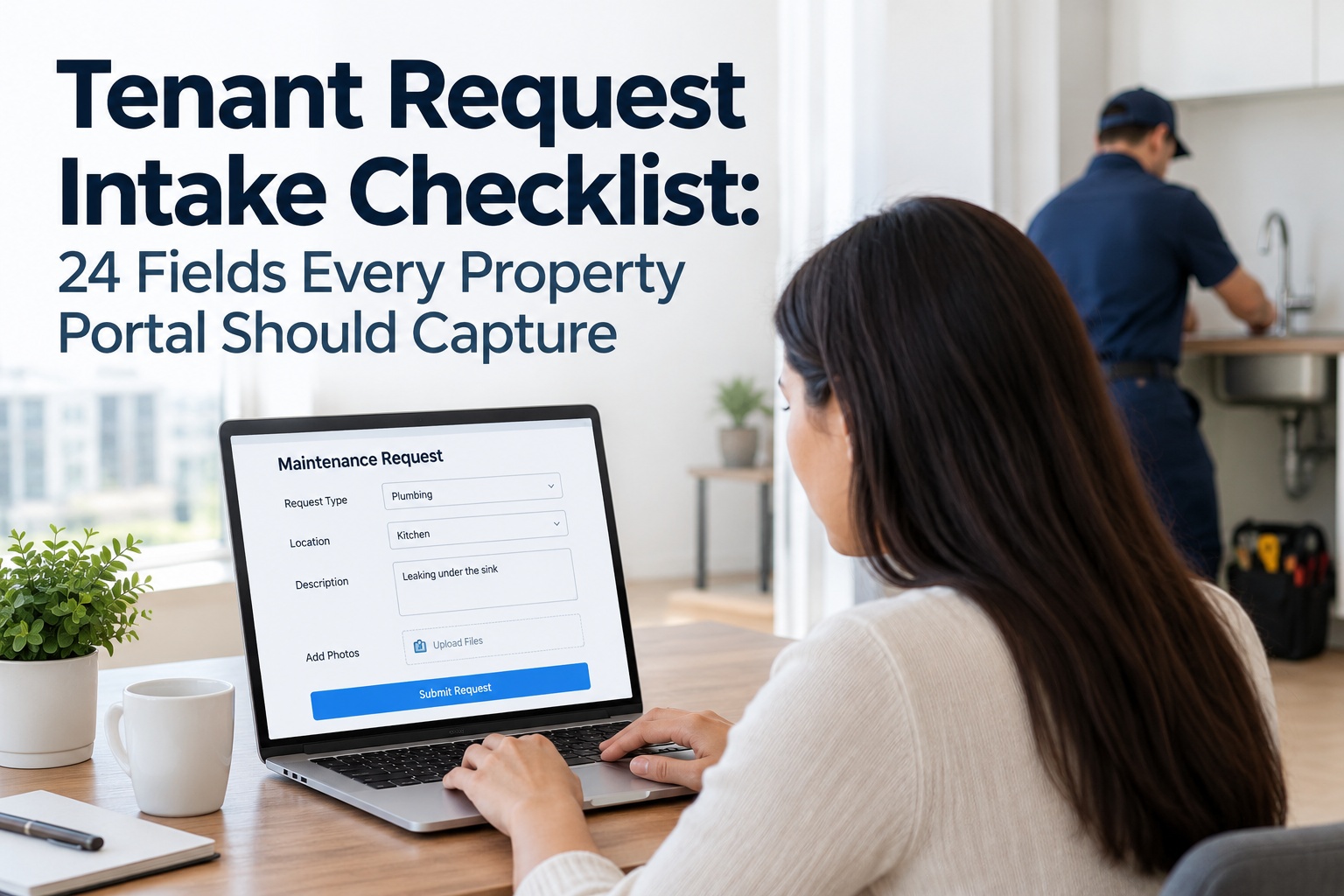
The tenant request form looks like the most boring screen in your property software. It's actually where your SLAs are won or lost — before a technician is even assigned. A request that arrives as "sink broken"...

An air cargo terminal isn't one building — it's four facilities stacked into one footprint. A warehouse full of ULD handling gear, a belt and roller network moving freight to and from the apron, cold rooms holding...

A bakery rarely goes down from one big failure. It bleeds out from four small ones in the same week. One real example: a commercial bakery running three 24-hour shifts lost 11 hours of output in a single week — not...
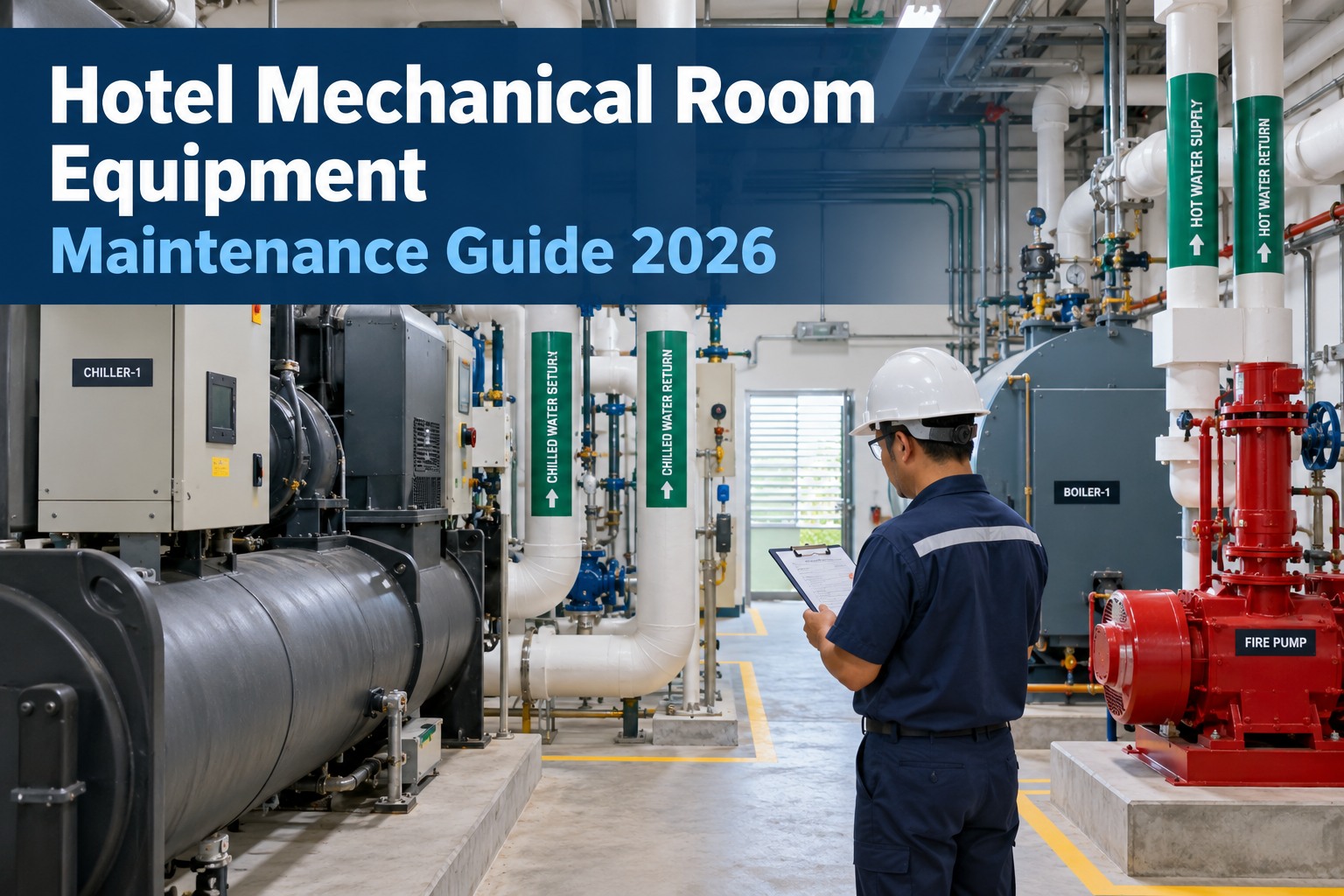
The hotel mechanical room is the one space no guest ever sees and every guest depends on. A hot shower at 6 a.m., a cool lobby in August, water pressure on the top floor, a fire pump that will actually run if it's...

The most dangerous person on your airfield isn't a bad actor — it's a maintenance contractor with an expired badge that never got deactivated, or a subcontractor "borrowed" through a gate under schedule pressure....

An airport perimeter is not a fence — it is a layered security system of barrier, detection, access control, surveillance, and lighting, and a gap in any one layer is a gap in all of them. This guide covers airport...

Your steel plant OEE report says 62%. That single number is a lie of averaging because Shift A ran 71%, Shift B ran 64%, and Shift C ran 51% on the exact same caster, mill, and furnace. Same equipment, same...

A steel plant's energy intensity is its most-watched number after safety and yield and the plants that defend it treat benchmarking as a monthly discipline, not an annual report. This guide covers steel...

Healthcare HVAC is the only building system where a fouled coil or a stuck damper can become a surgical-site infection, a failed survey, and a loss of Medicare deemed status — all from the same root cause. This...

Walk into any commercial building put up before 2000 that hasn't had a controls overhaul, and there's a good chance the thermostats, dampers, and valves are still run by compressed air. Pneumatic HVAC controls are...

Switching to sustainable packaging is a materials decision that lands squarely on the maintenance team. The film supplier changes, the sustainability report looks better — and then the sealing jaws that ran...

Airport aging infrastructure risk register software is where extended asset lives stop being a whispered engineering concern and become a data-backed capital case the board can actually approve. This guide covers...

Aging airport infrastructure is the quiet risk on every executive's balance sheet: runways, HVAC plants, baggage systems and power distribution built decades ago, most with no capital renewal plan behind them and a...
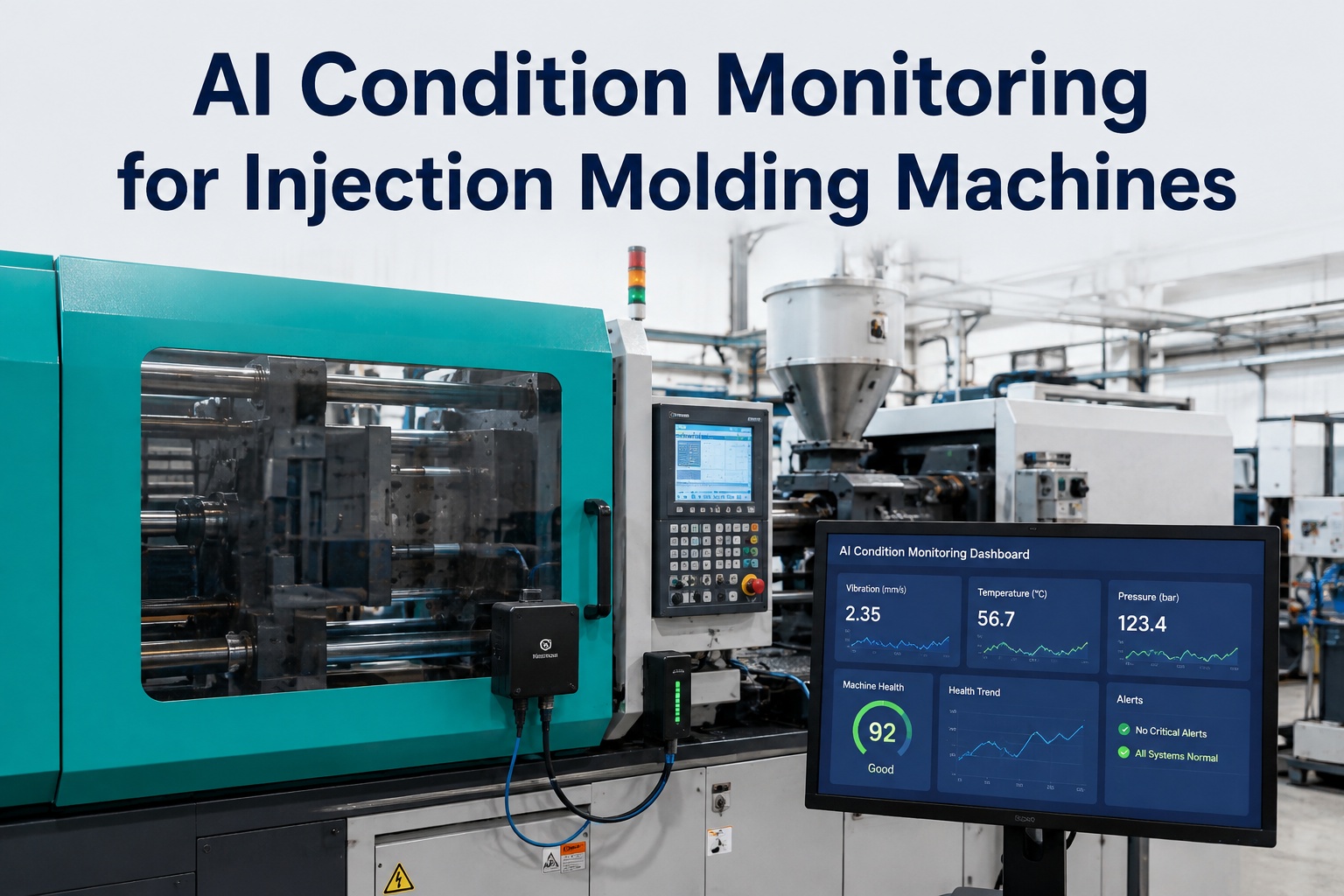
AI condition monitoring turns the vibration, temperature, hydraulic, and cycle-signal streams already flowing from an injection molding machine into work orders that fire weeks before the failure. This guide covers...

Running an RCM strategy for CNC spindles across a manufacturing plant is complex — OxMaint makes it structured. A CNC spindle is the highest-value, highest-risk component on the machine: bearing degradation alone...

An HVAC digital twin lets you test control changes, staging strategies, and retrofits in simulation before touching the real system — turning "we think this will save energy" into a proven number. This guide covers...

When an HVAC system goes dead but nothing is obviously burnt, the fault is almost always electrical — hiding in the control chain that carries a 24-volt thermostat call all the way to a compressor pulling forty...

A daily vehicle inspection report only protects your fleet if it holds up the day an auditor asks to see it. Too many programs run on paper checklists that get signed without really being read, defects that never...

A daily vehicle inventory checklist isn't the same thing as a mechanical inspection — it's the count of everything that's supposed to be on the vehicle and working, from the fire extinguisher to the tie-down straps...
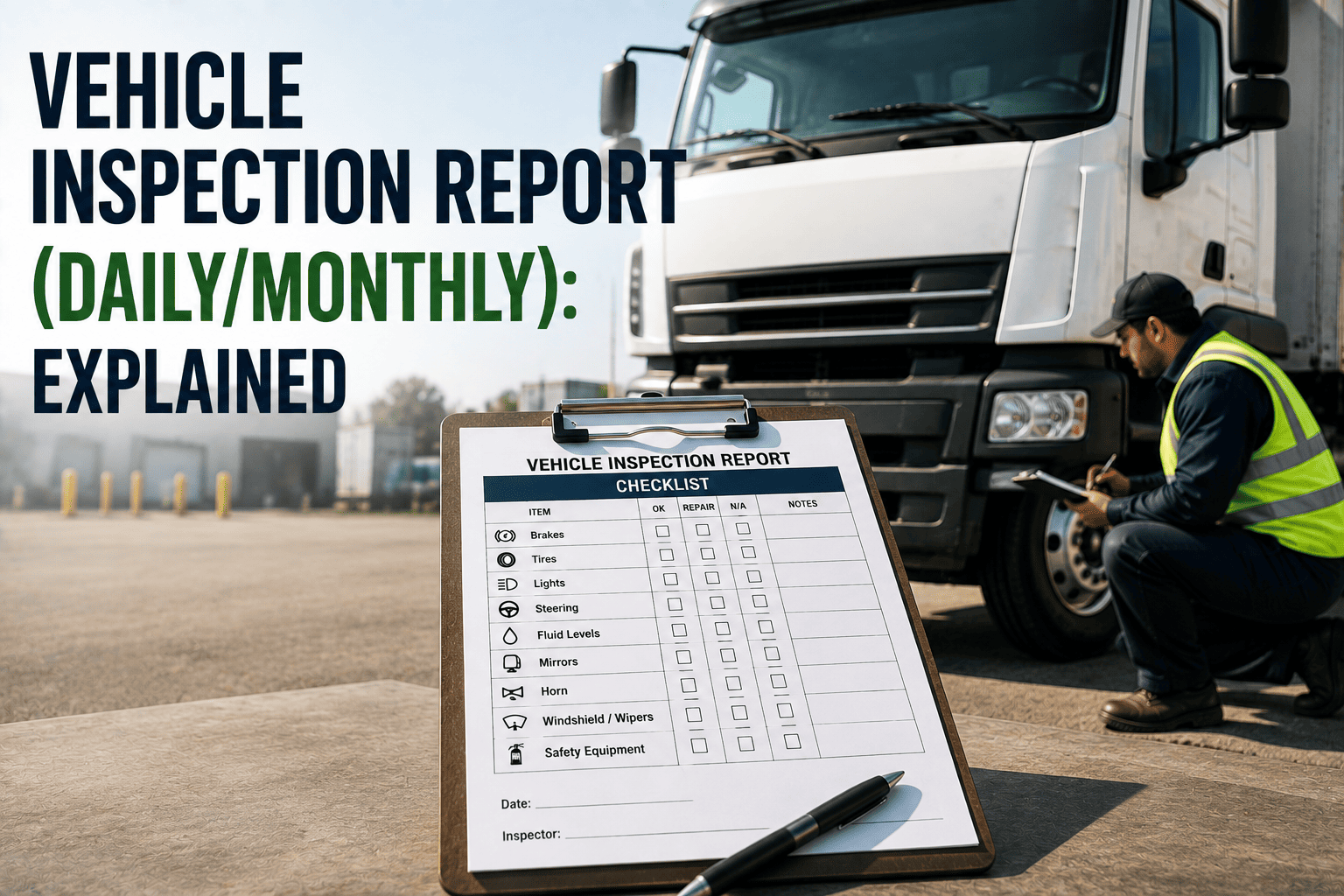
A Vehicle Inspection Report isn't a task you want to do from memory or a photocopied paper form. Missed steps become missed failures, and missed failures become unplanned downtime on a route that can't wait. The...

Fleet compliance stands or falls on the paperwork trail behind every driver, vehicle, and inspection, and a truck inspection checklist is exactly where auditors dig first. A vehicle that's perfectly roadworthy but...

Daily Truck Maintenance Checklist isn't a task you want to do from memory or a photocopied paper form — missed steps become missed failures, and missed failures become unplanned downtime. Sign up to run your daily...

Heavy Vehicle DOT Inspection Checklist is where compliance programs either hold up under audit or fall apart — and the checklist you use is the single biggest variable. Sign up to run DOT-aligned inspections...

Heavy Vehicle Inspection (Weekly) is where safety programs either hold up under audit or fall apart — and a daily walkaround alone doesn't catch everything a weekly deep-check does. Sign up to run your weekly heavy...

Light Vehicle Safety Inspection is where fleet safety programs either hold up under audit or fall apart — and the checklist you use is the single biggest variable. Sign up to run your light vehicle inspections...
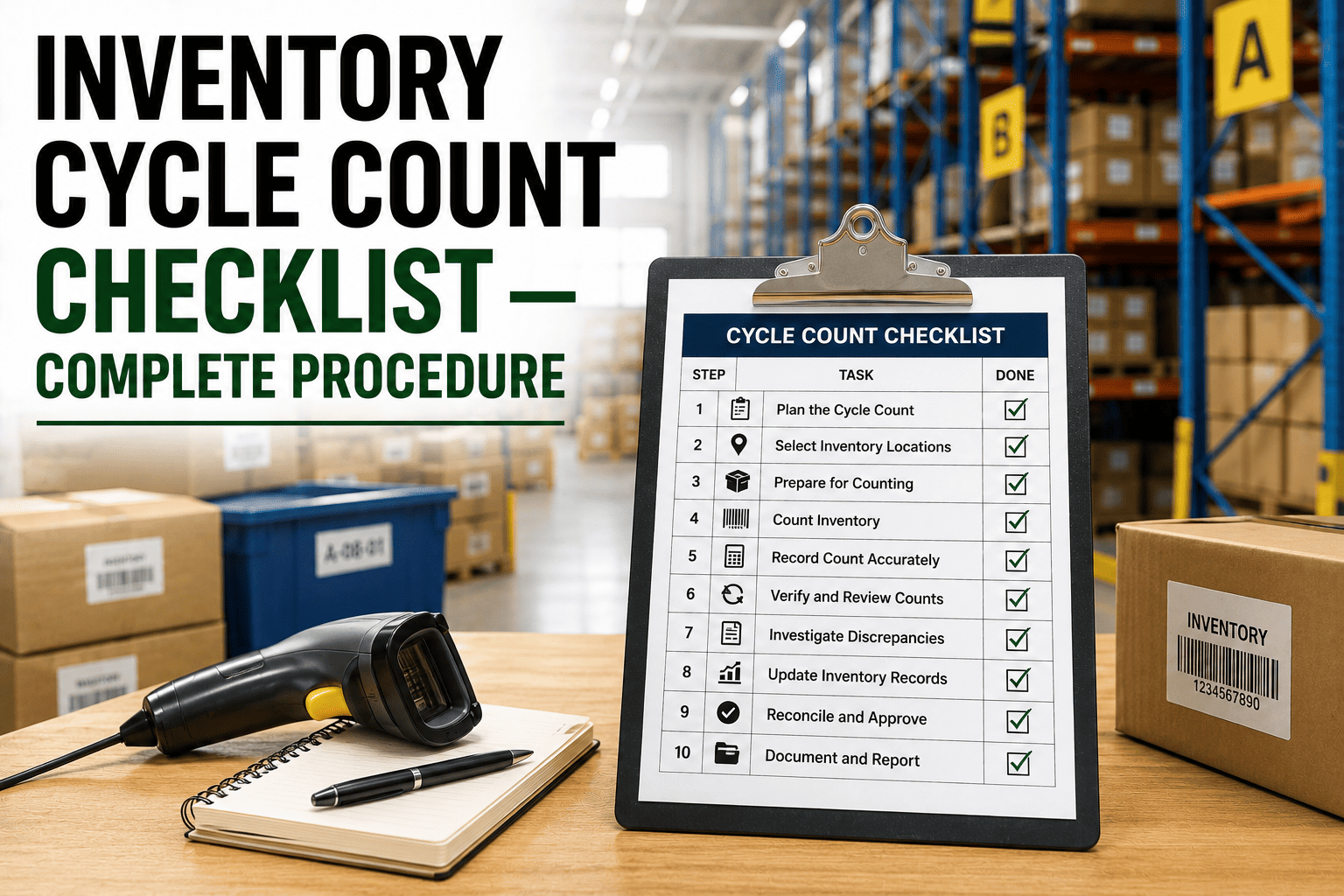
An Inventory Cycle Count Checklist is what separates warehouses that catch a stock error in a day from ones that discover it during a customer complaint three months later. Sign up to run your cycle counts...

Loading Dock Safety Inspection is where most warehouse injury claims start — struck-by incidents, trailer creep, and falls from the dock edge all trace back to a check that got skipped or rushed. Sign up to run...

A Warehouse Racking Annual Expert Inspection is the one check most facilities schedule only after something already looks wrong — and by then a bent upright or overloaded beam has usually been carrying that risk...
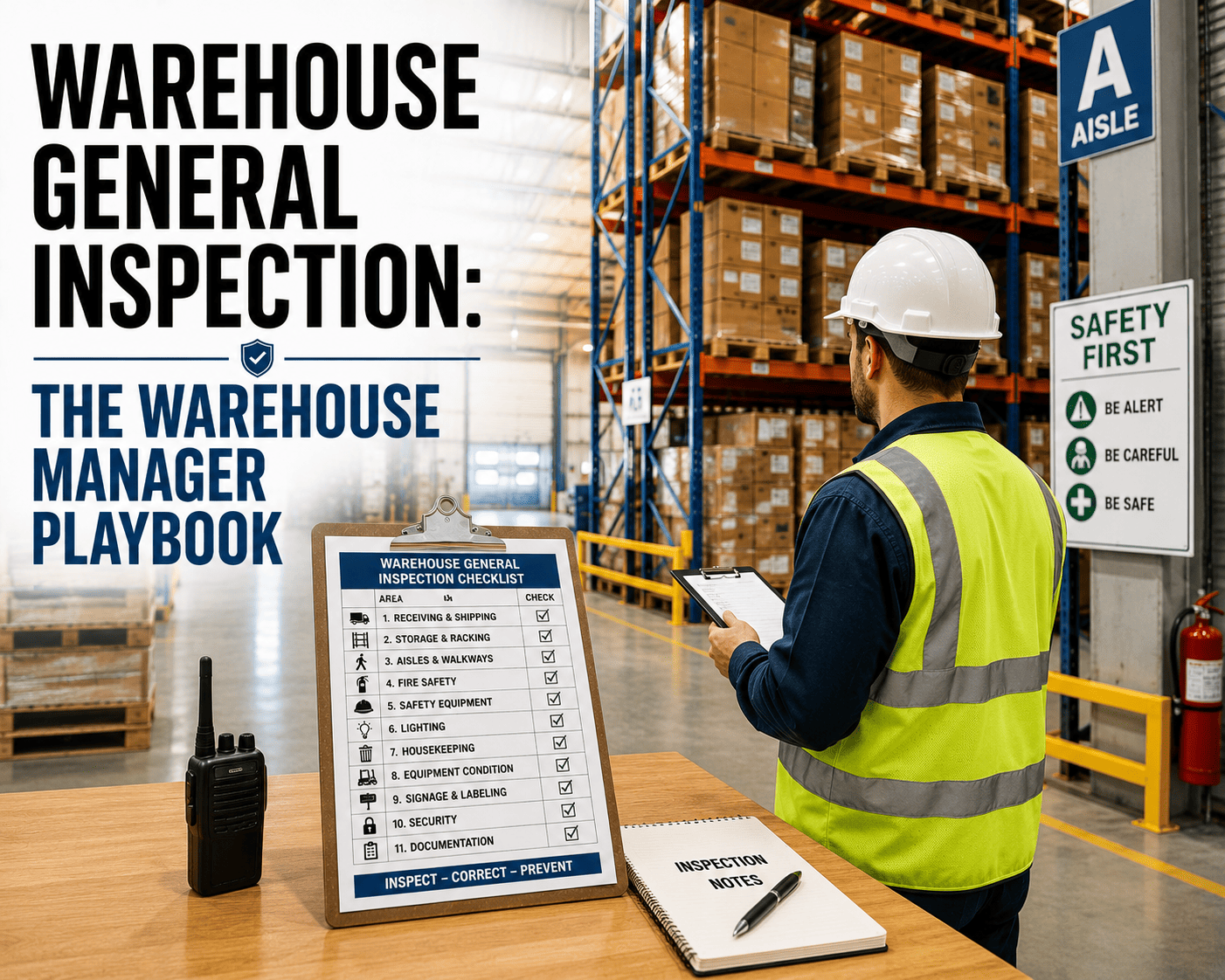
A Warehouse General Inspection is the one walkthrough that's supposed to catch everything else's blind spots — racking, docks, fire exits, electrical, PPE — and it only works if the same zones get checked the same...

A driver hazard report program looks fine right up until an auditor asks for proof. Not proof that a checklist exists somewhere, proof that a specific truck was checked on a specific date, by a specific driver,...

Every fleet has a defect report form. Very few fleets have what FMCSA 396.11 actually asks for: a written record proving a driver inspected a specific vehicle, found a specific defect, and that the defect was fixed...

Most fleets can tell you a driver's on-time percentage. Very few can tell you, on demand, whether that same driver passed their last pre-trip inspection, cleared their post-trip checks, and has a documented record...
.png)
A driver can pass a training session and still get behind the wheel of a vehicle nobody's actually inspected in weeks. Training assessment and vehicle inspection are usually run as two separate checklists, filed in...

A DOT auditor doesn't start with your safety record. They start with the paperwork trail behind one driver, one vehicle, and one run — and a Road Freight Transport Checklist is exactly where that trail either holds...

A field safety walk only works if it catches problems before they become incidents. Too often it turns into a five-minute stroll where nobody writes anything down, and the same hazard gets spotted three months in a...
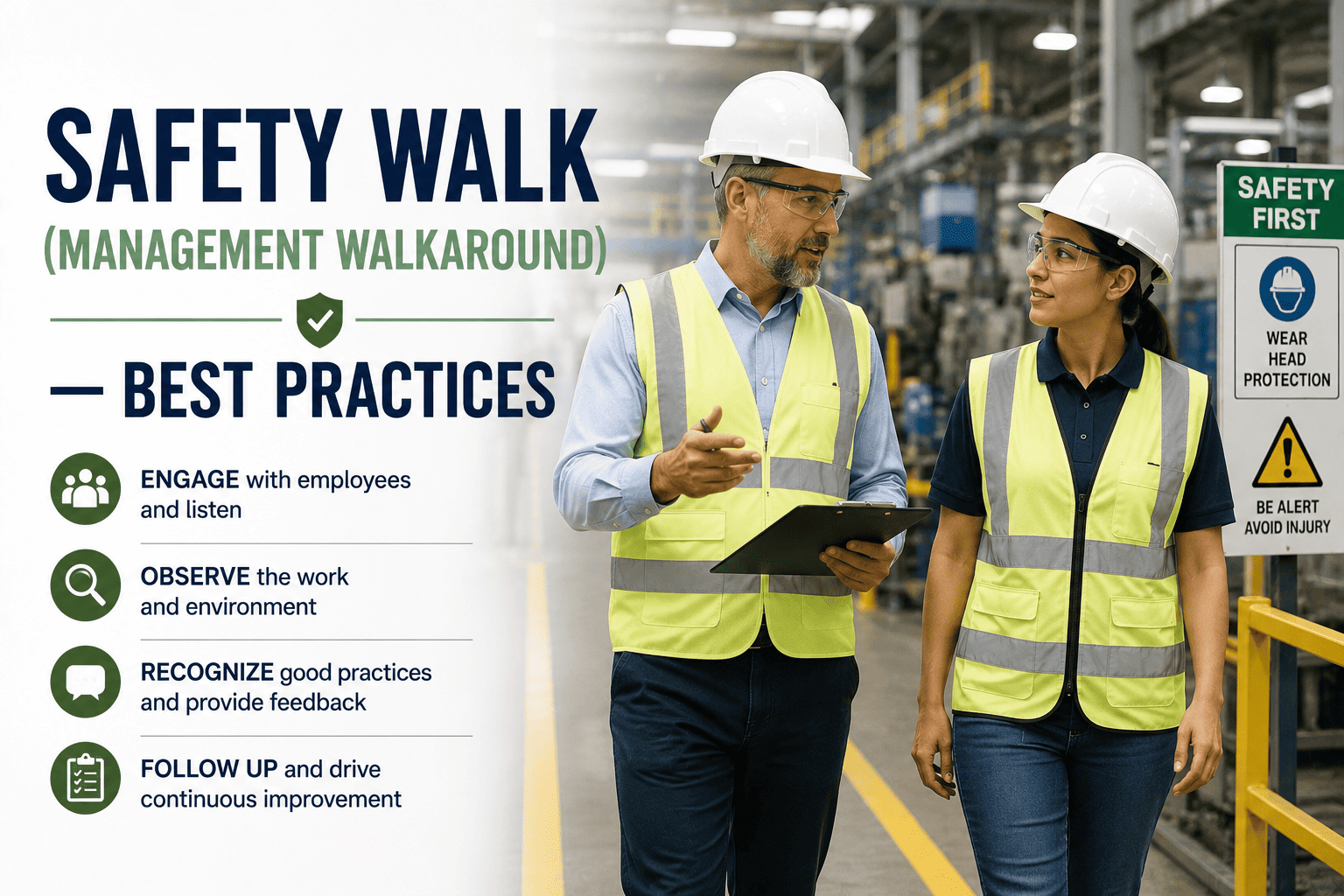
A management walkaround only earns trust on the floor when it's more than a manager passing through with a clipboard. Done right, it's leadership showing up, asking real questions, and following through on what...
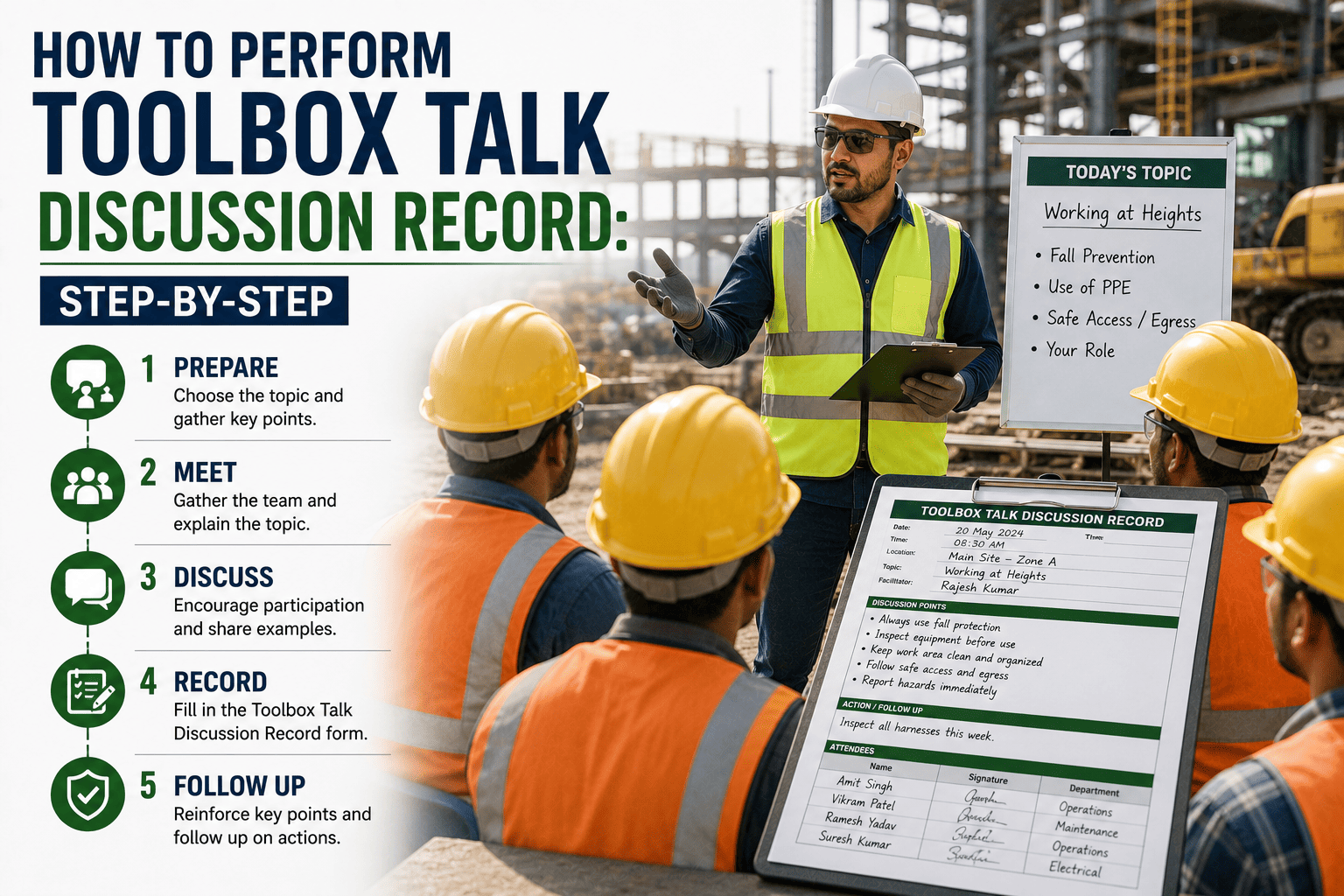
A toolbox talk is supposed to take five minutes and prevent the one mistake that ends a shift badly. But if there's no record of what was actually said, it's just a conversation nobody can prove happened — and...
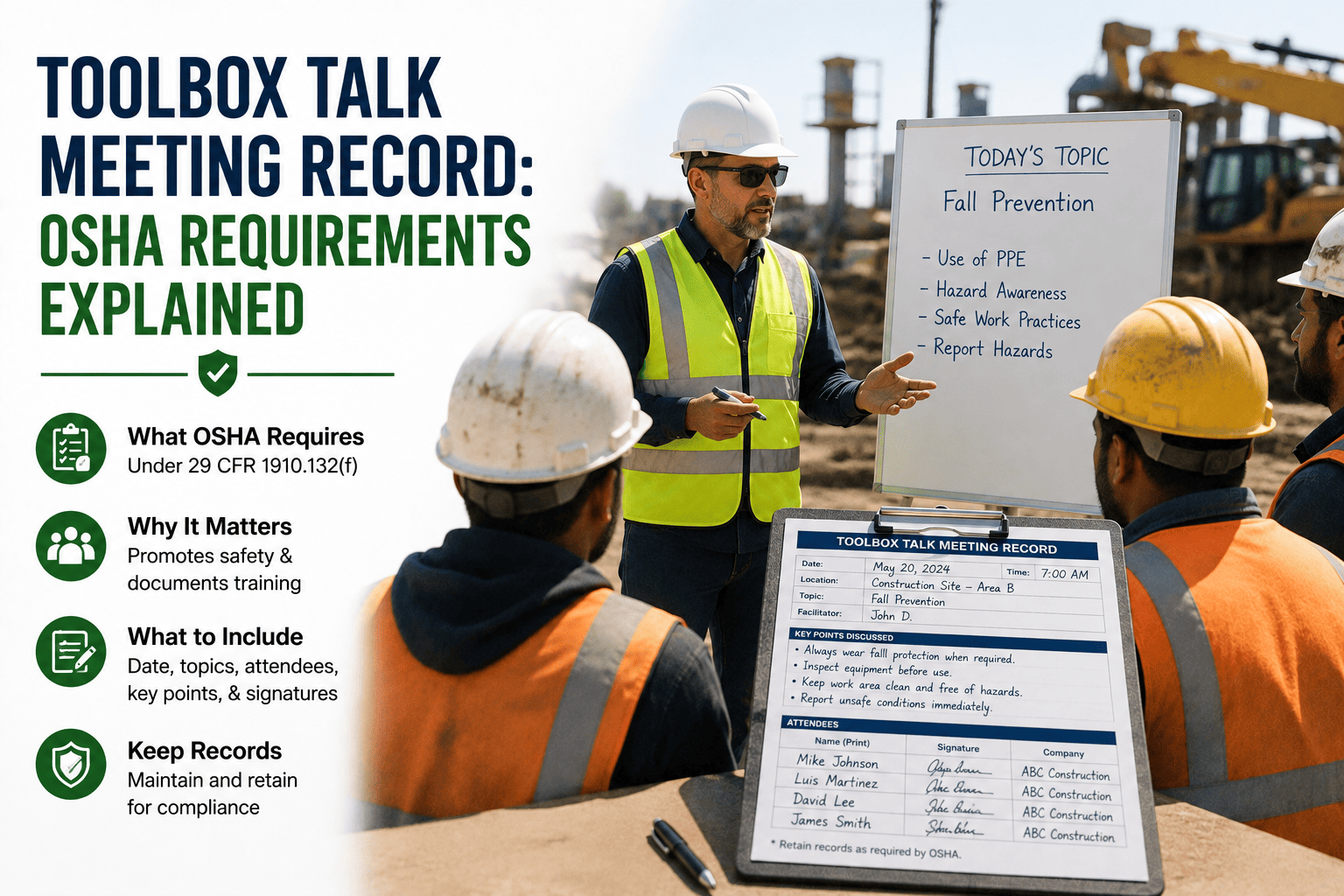
Most teams assume OSHA has a strict form for toolbox talk meeting records. It doesn't — but that gap is exactly where weak documentation slips through, because "we'll just note it somewhere" isn't a system an...

Most workplace inspection checklists fail for the same reason: they were written once, years ago, and nobody's touched them since. The floor changes, new equipment shows up, and the checklist stays frozen in time....
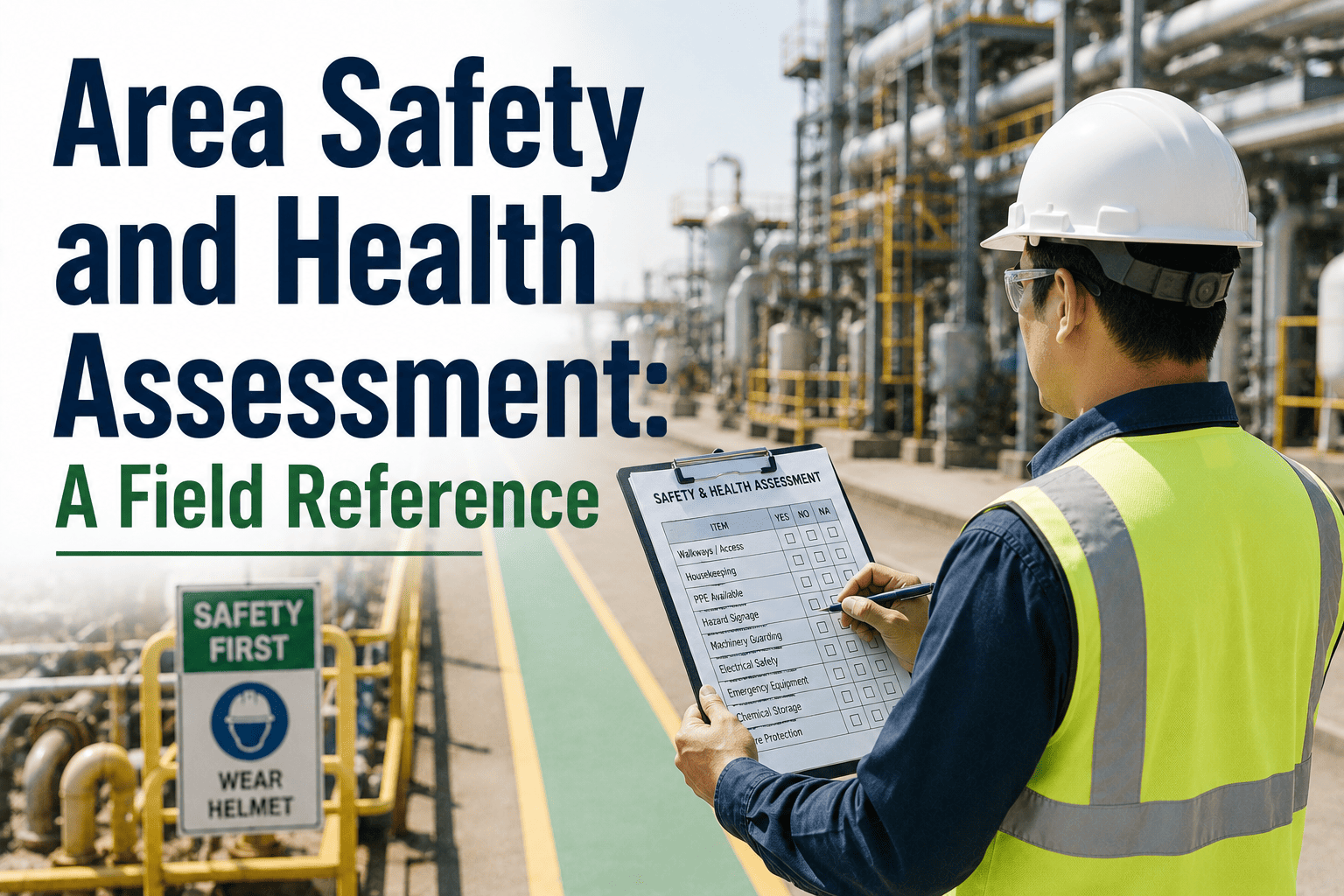
An area safety and health assessment is broader than a single inspection — it's the full picture of what could hurt someone in a given space, from the floor to the air to the equipment running in it. Treat it as a...

Ground handling is one of the highest-risk phases of any flight, and it happens in a tight window under pressure to turn the aircraft around fast. An ISAGO-aligned checklist is what keeps that pressure from cutting...
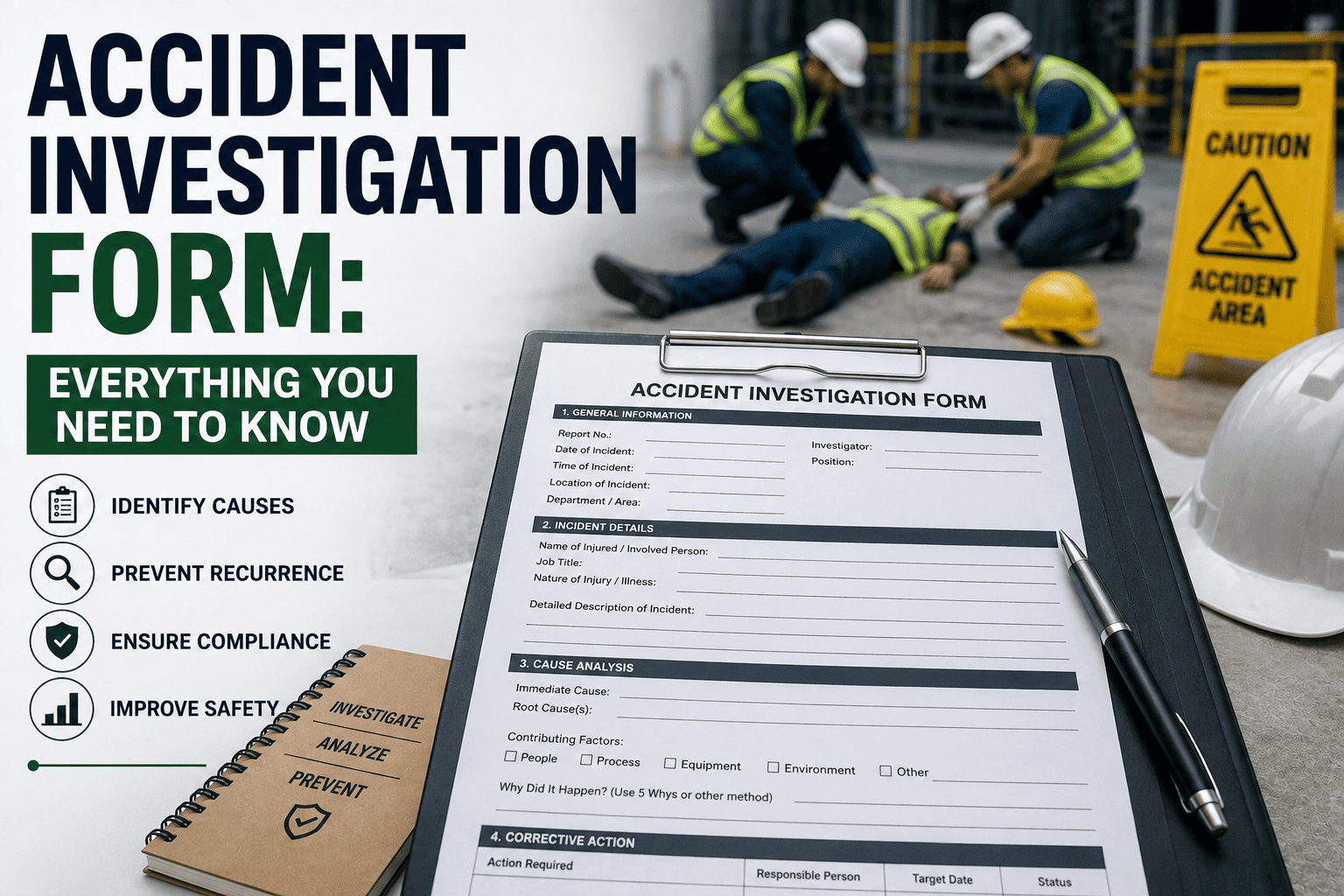
An accident investigation form isn't paperwork that follows an incident, it's the record that determines whether the same incident happens again. Under OSHA 1904, the difference between a defensible investigation...
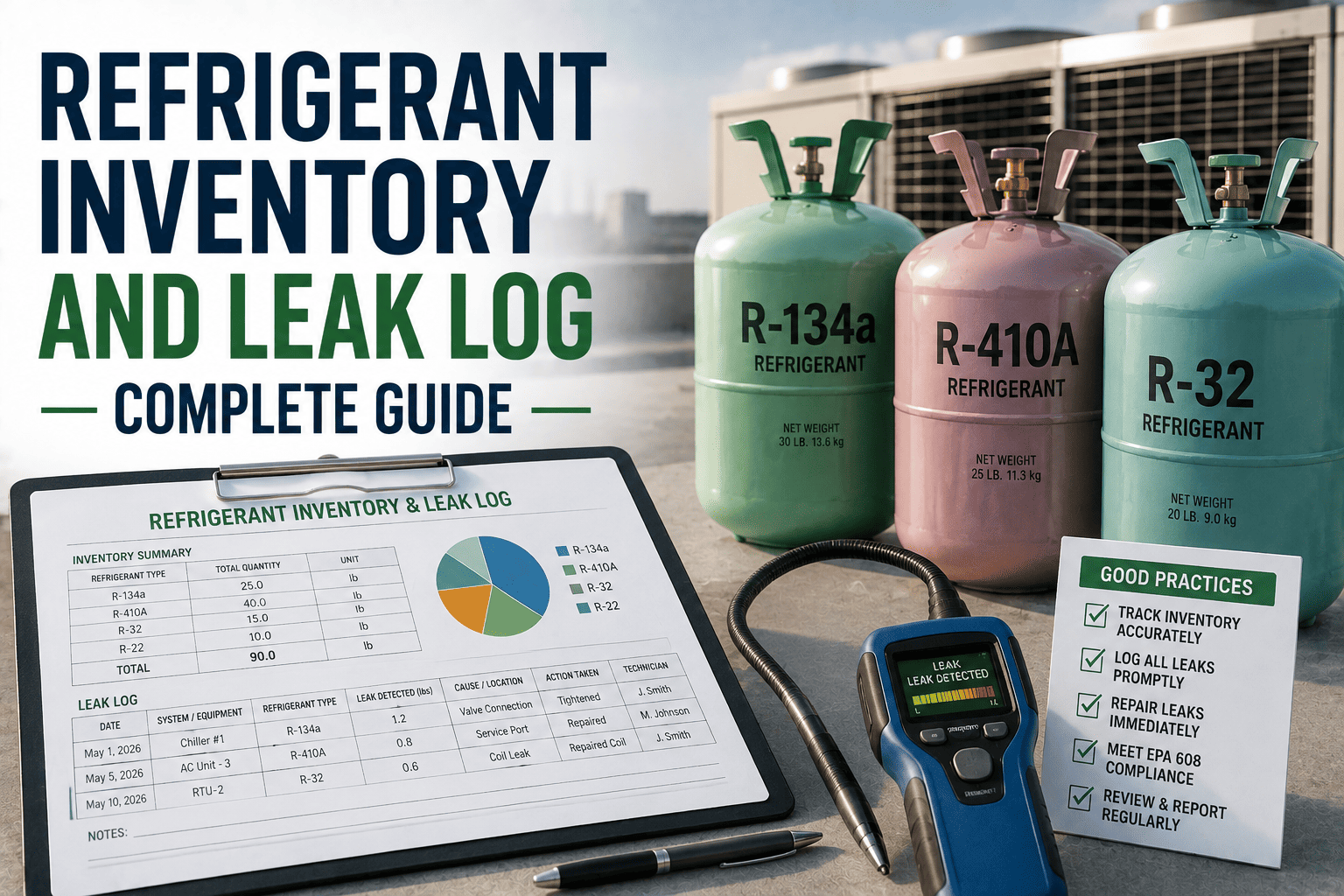
A refrigerant inventory and leak log either holds up in front of an auditor or it doesn't, and the difference almost always comes down to the checklist behind it. The refrigerant itself rarely causes the audit...
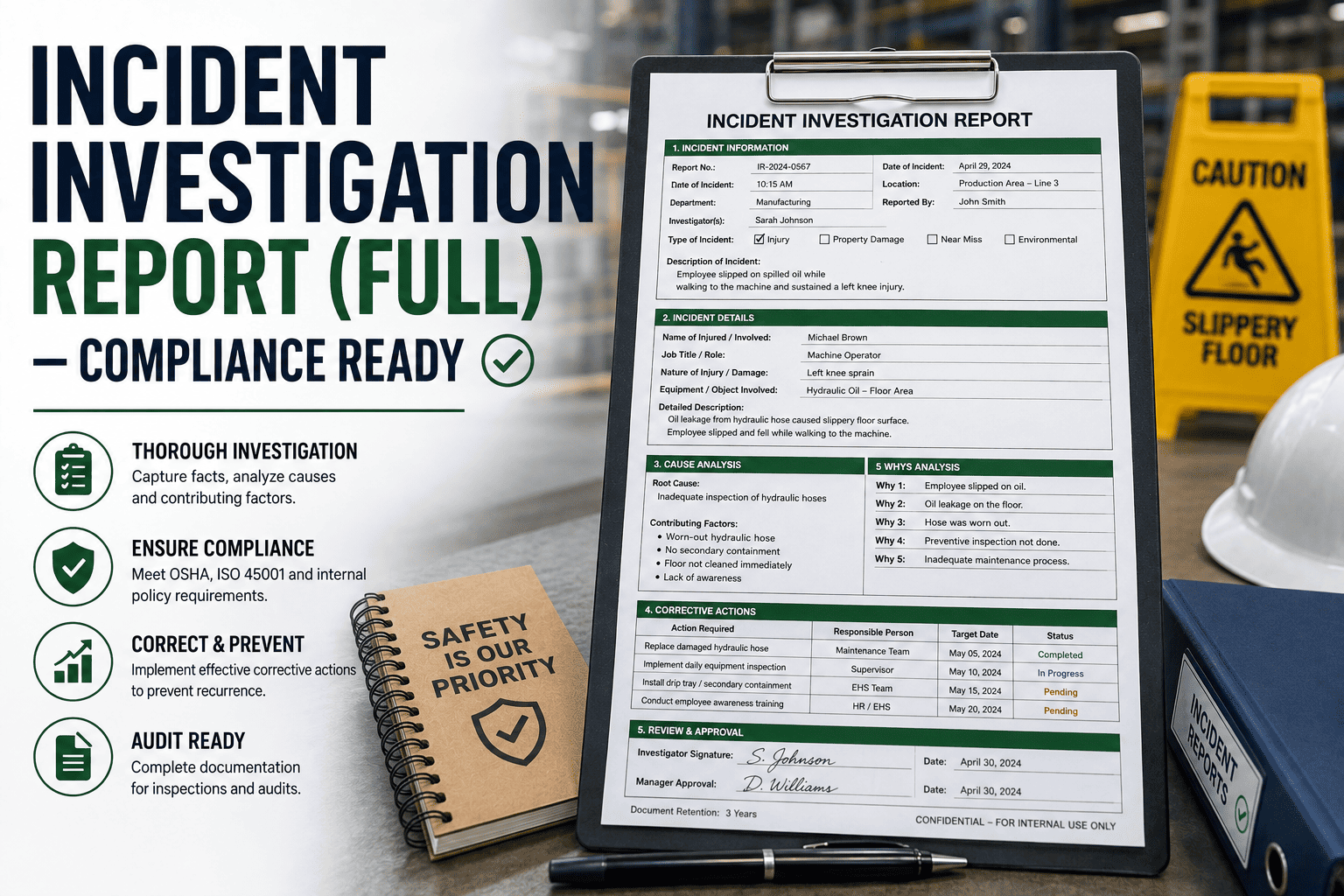
Most incident investigation reports look fine right up until an auditor asks for the corrective action follow-up, the timestamp on the root cause interview, or the photo that was supposed to be attached. The report...
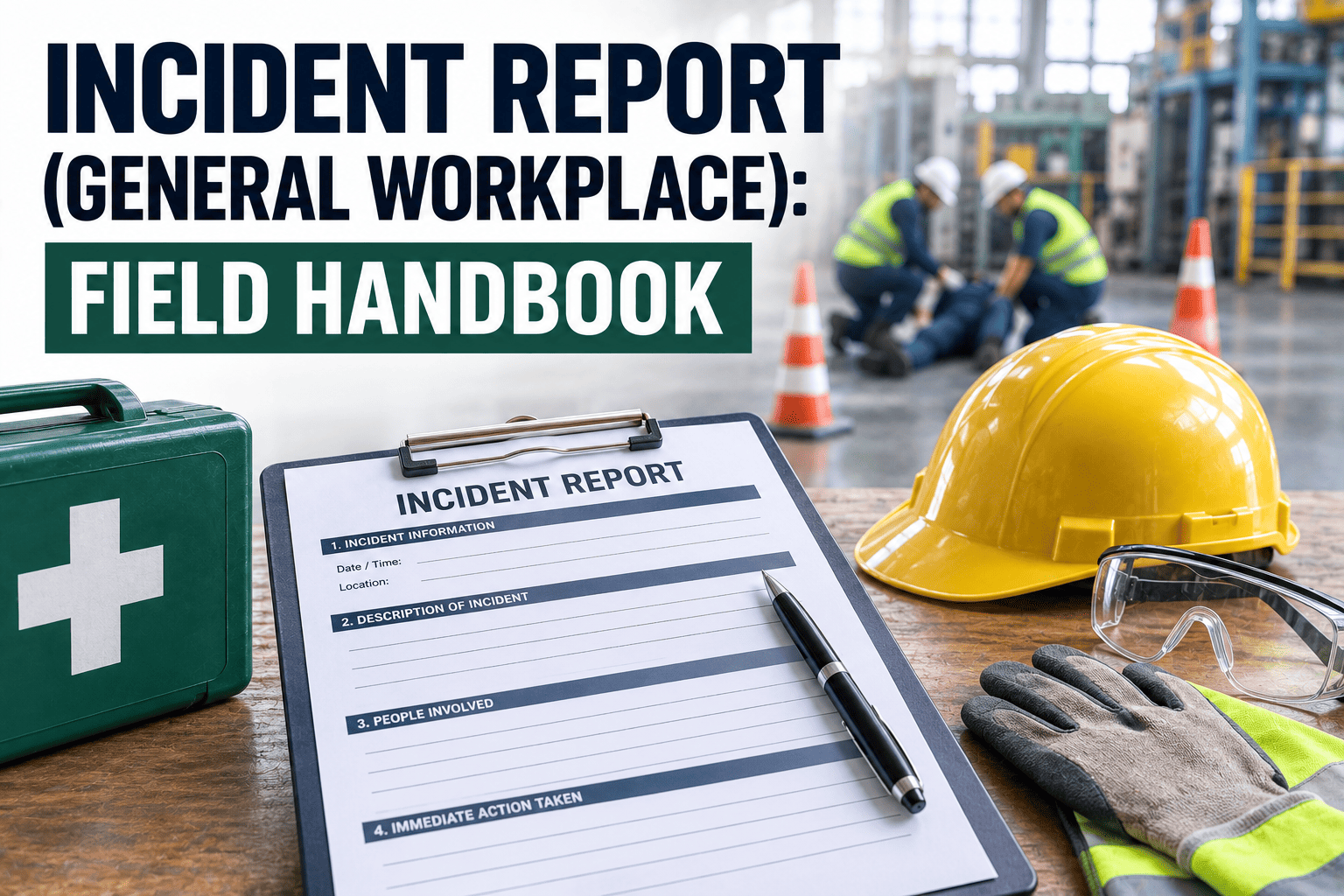
Not every incident report starts with a serious injury. Most start with something smaller — a near miss, a slip that didn't turn into a fall, a piece of equipment that behaved strangely for a second. Whether that...

The first few minutes after something goes wrong decide whether an incident report becomes a useful record or a vague memory reconstructed days later. Incident Report First Response is the discipline of capturing...

A hard hat with a hairline crack, a respirator seal that no longer forms a tight fit, a harness strap frayed just enough to matter — none of these fail loudly. They fail quietly, and usually right when someone...
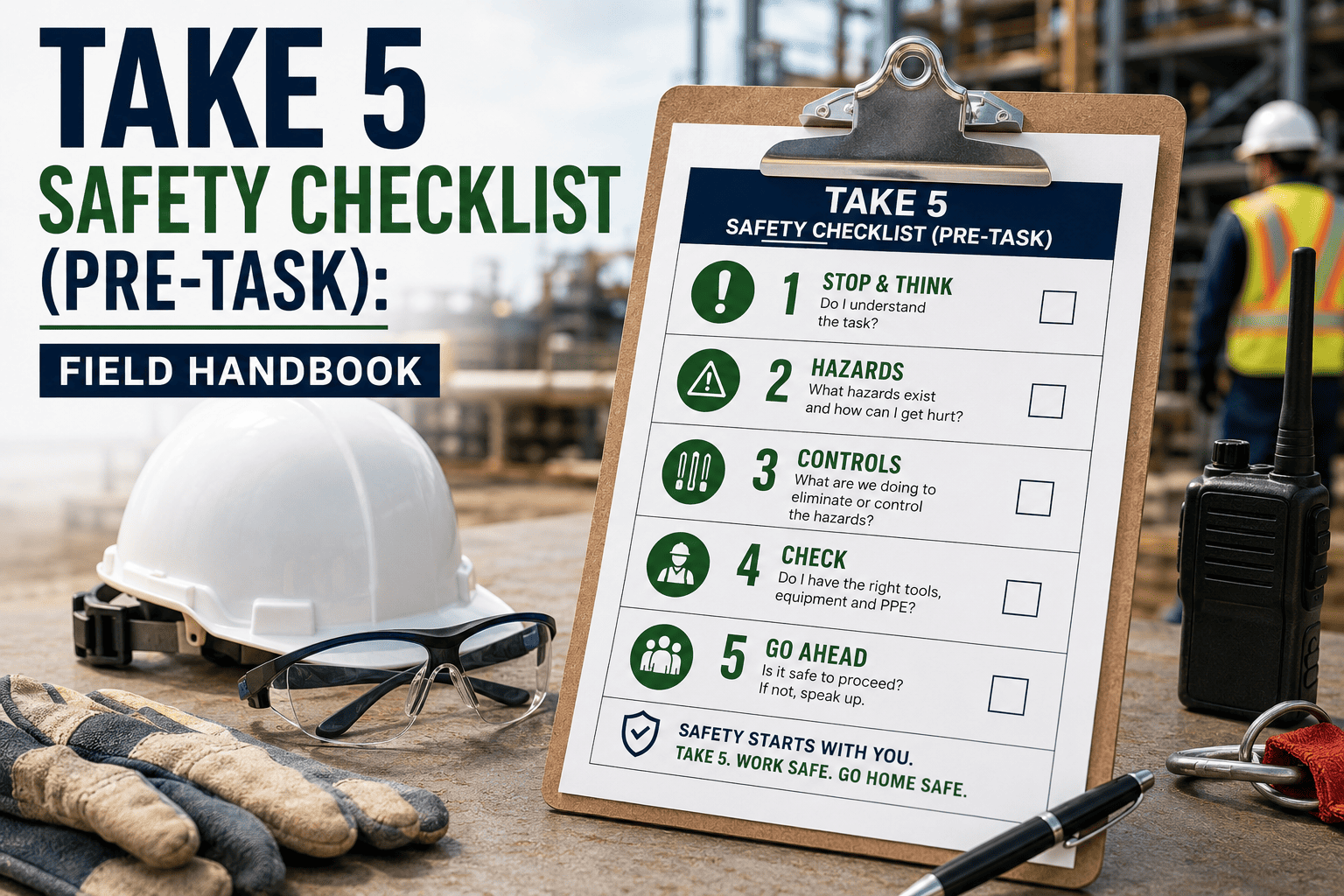
Most incidents don't happen because nobody knew the hazard existed. They happen because nobody paused long enough to notice it before starting the task. A Take 5 Safety Checklist is that pause — five minutes, five...
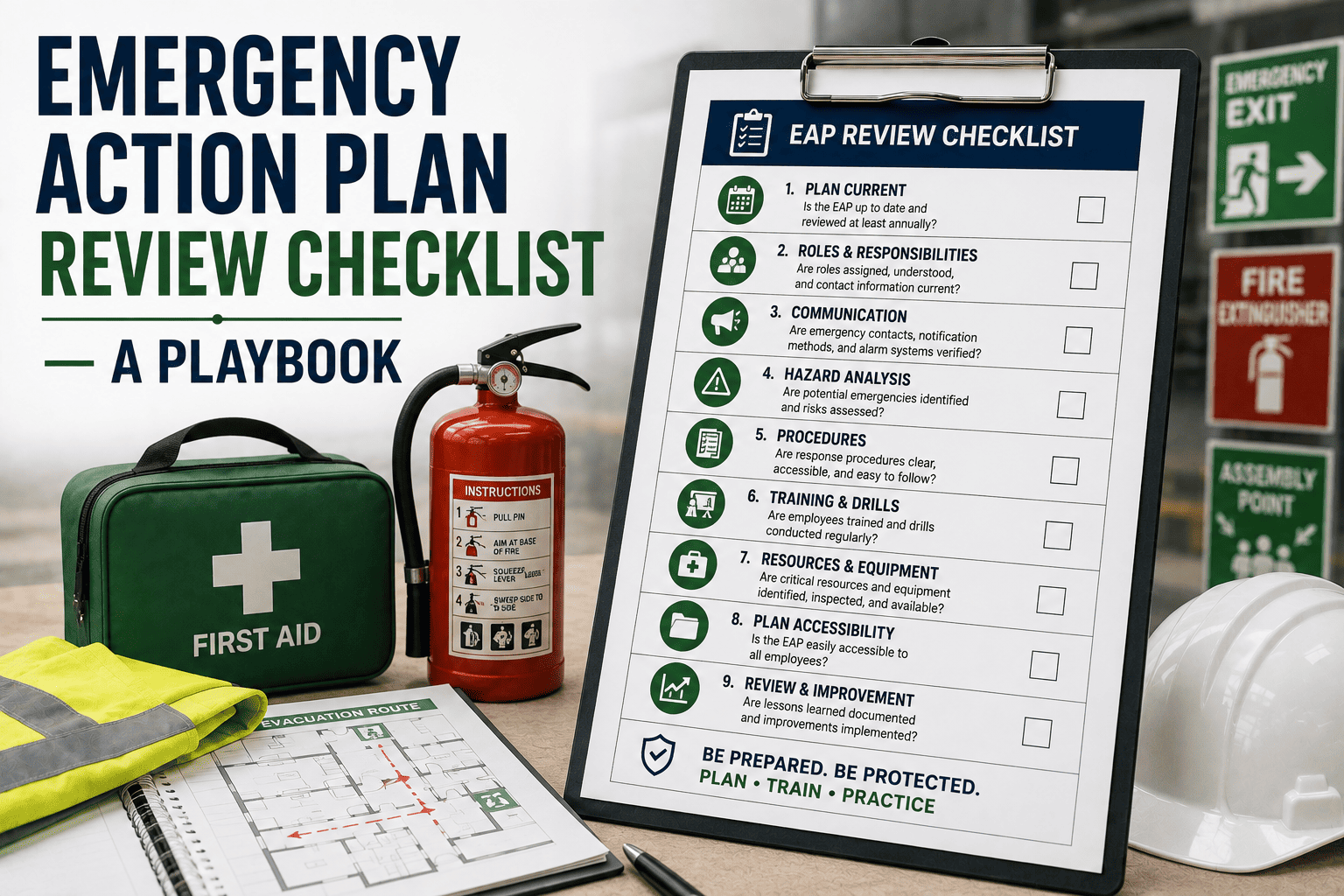
Most Emergency Action Plans don't fail during an actual emergency. They fail months earlier, sitting in a binder nobody has opened since the day it was printed. An Emergency Action Plan Review Checklist is what...

Workers in their first year on the job get hurt at a higher rate than anyone else on the floor. Not because they're careless, but because nobody walked them through the hazards before they were standing next to...
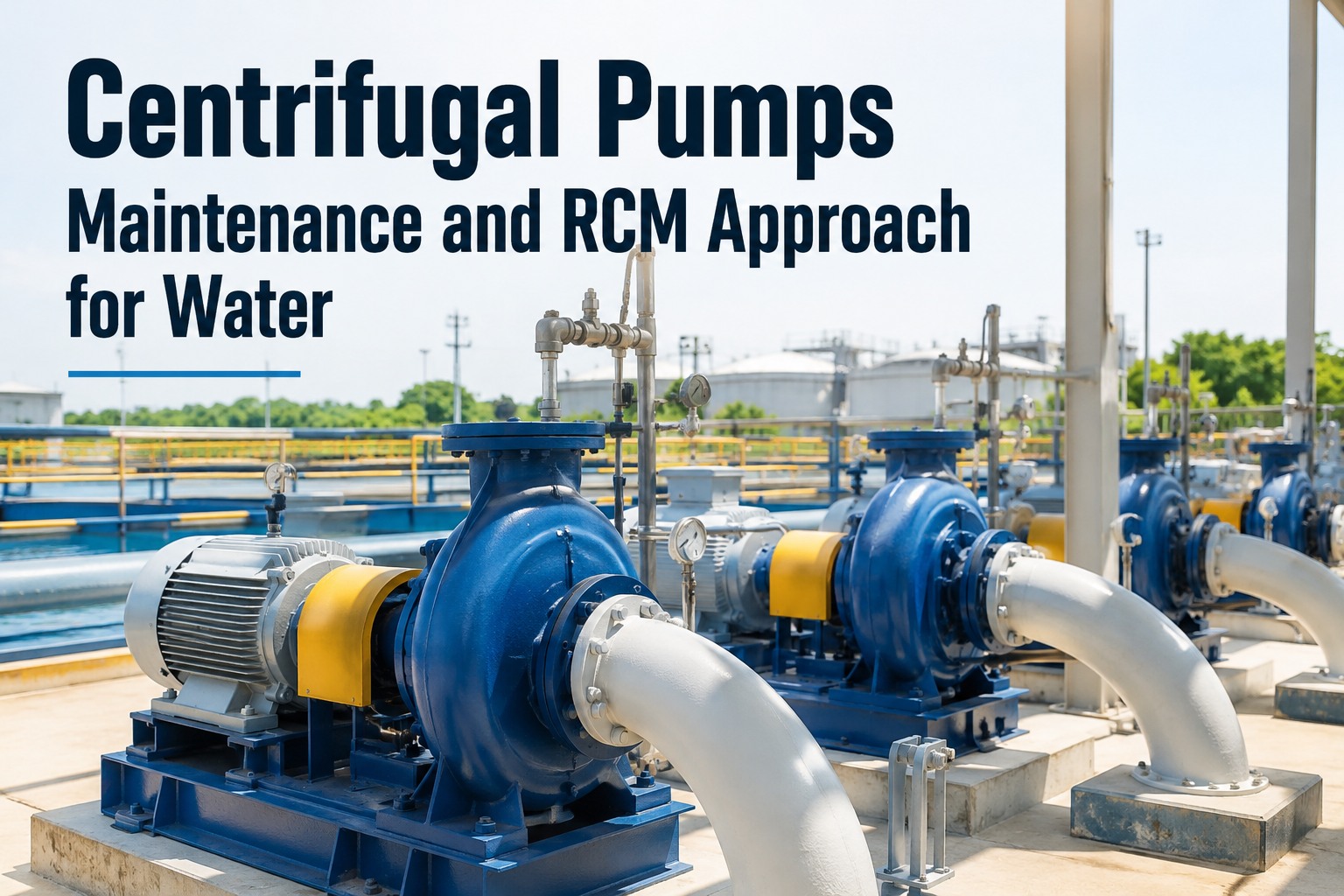
A centrifugal pump does not fail because it is old. It fails because it ran 800 hours a month at 40% of its Best Efficiency Point, or because the suction level dropped and NPSH available slipped 0.4 metres below...

Most electrical safety programs don't fail because nobody checked the panel — they fail because nobody can prove it. An auditor doesn't take a technician's word for it; they want the record. This guide walks...
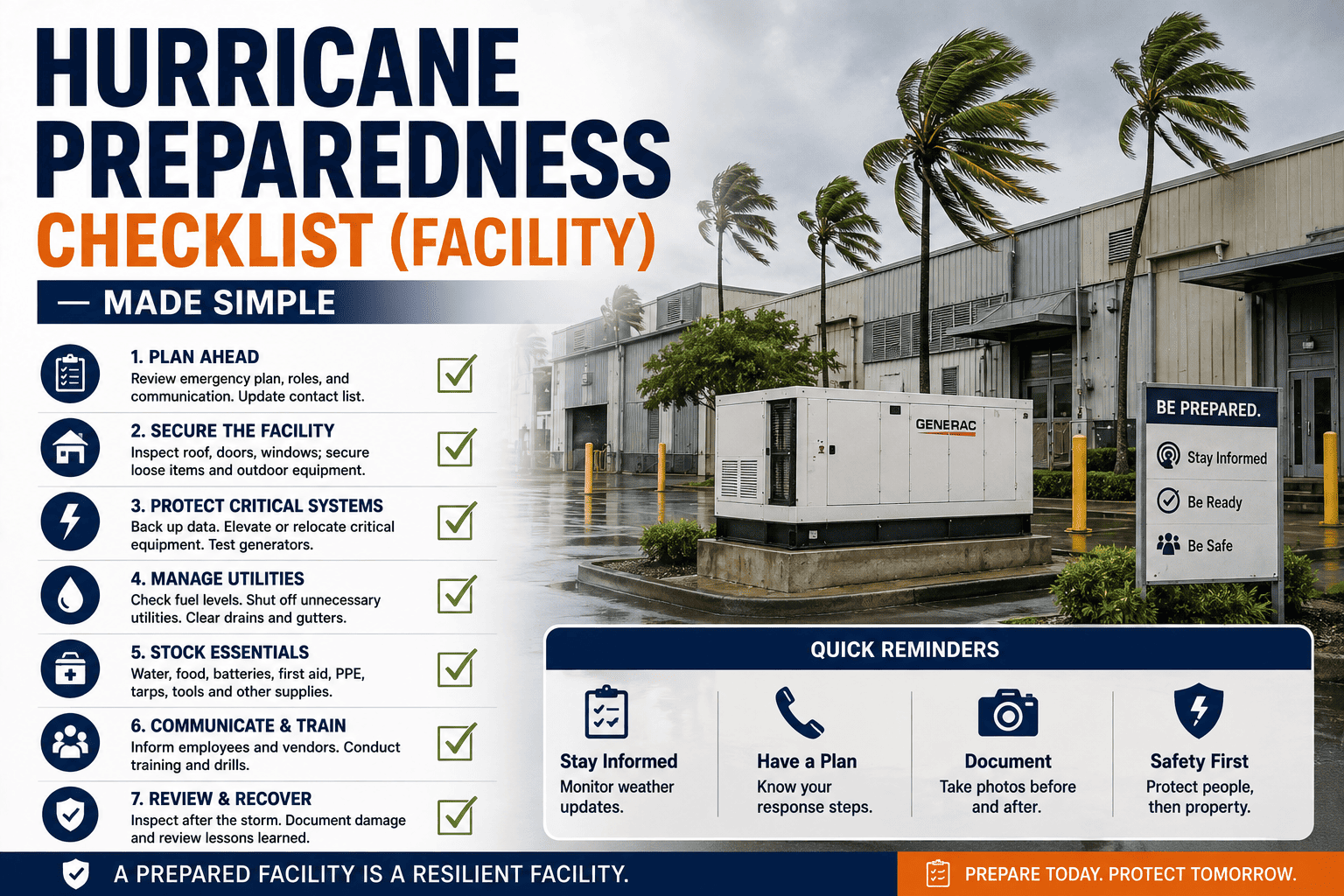
A hurricane gives a facility days of warning and almost no room for improvisation once it arrives. The plants that ride out a storm without major damage aren't the lucky ones — they're the ones that ran through the...
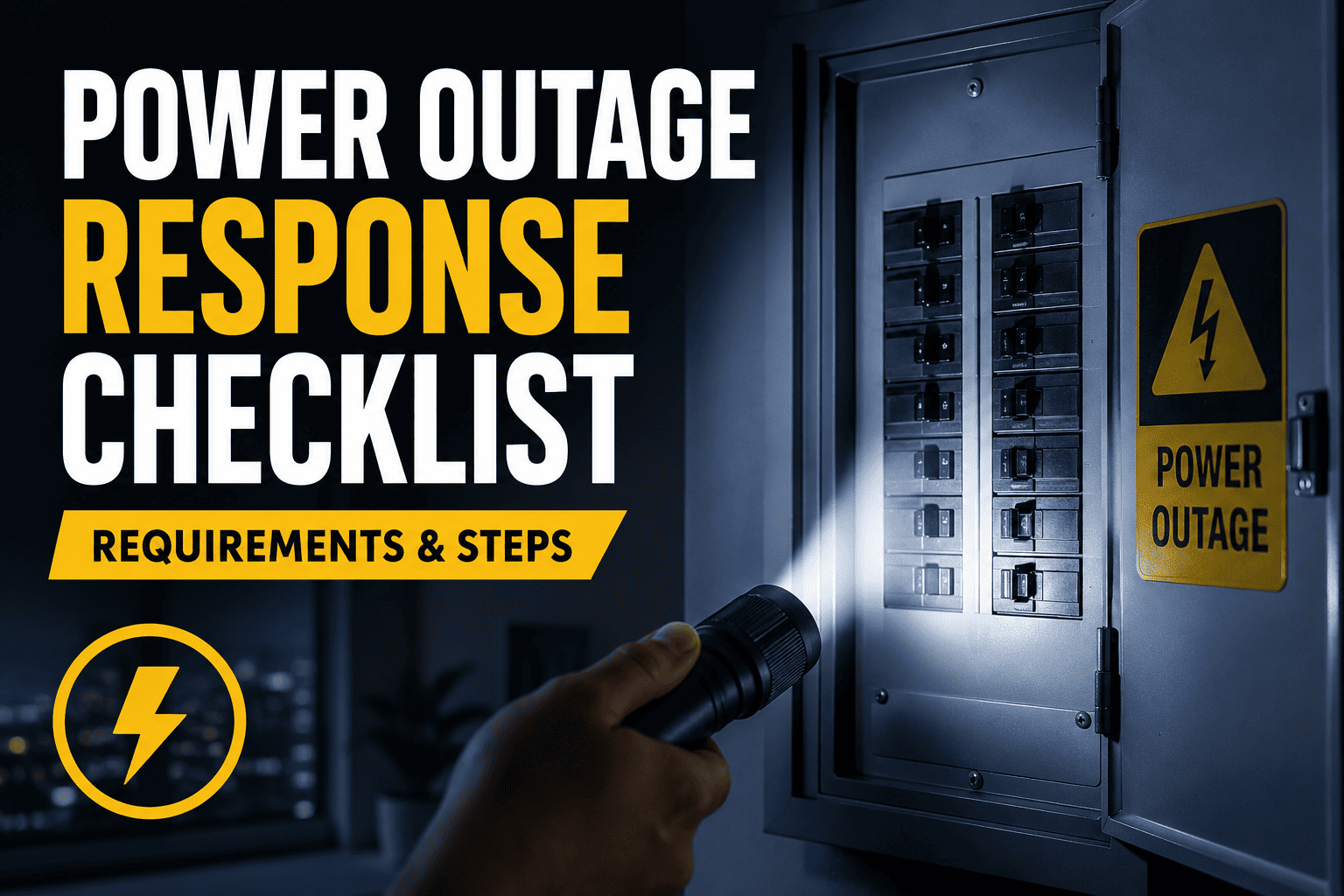
The lights go out and the clock starts running whether anyone's ready or not. What separates a facility that reopens on schedule from one that spends weeks explaining downtime to regulators isn't luck — it's...
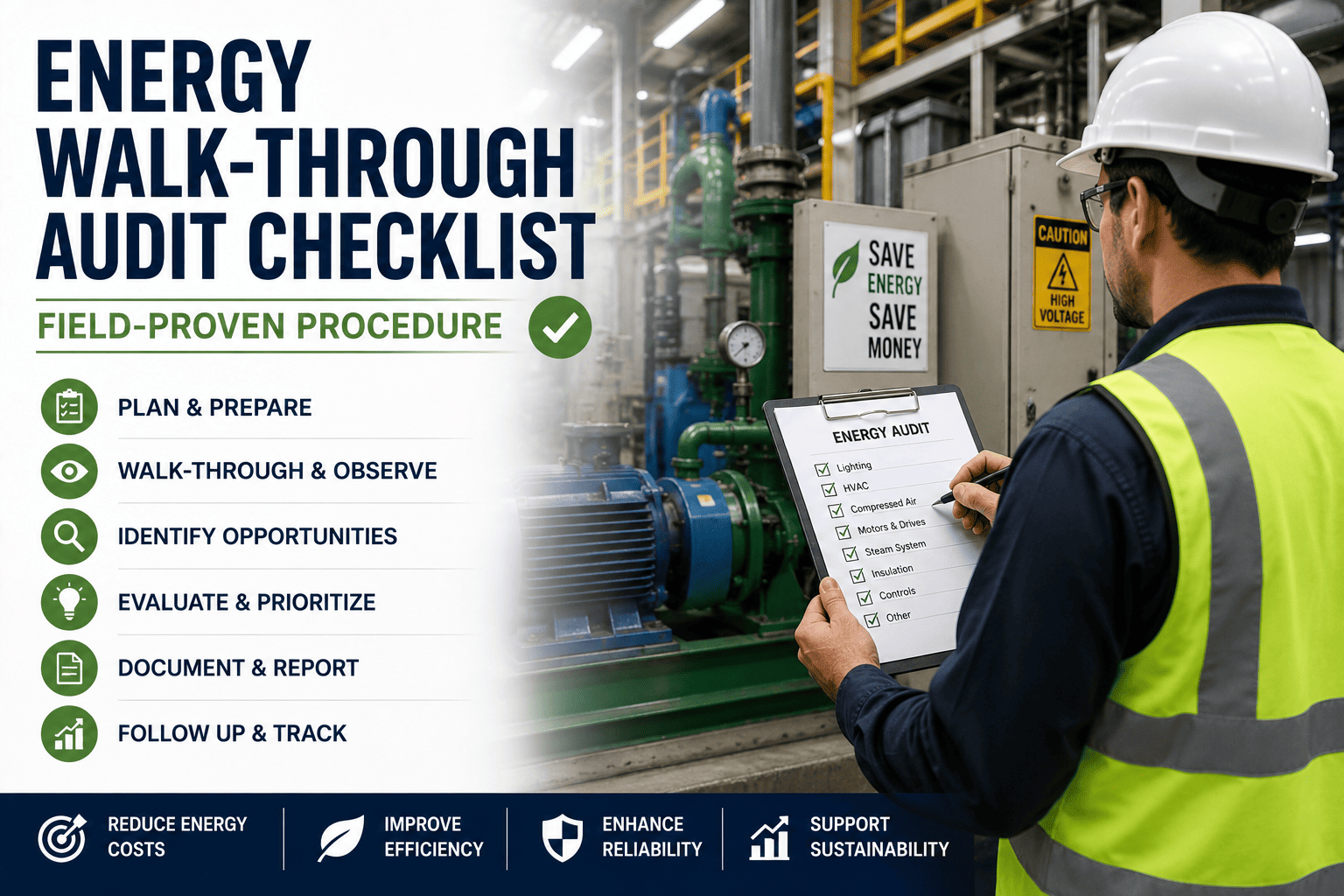
Most energy waste in a facility isn't hiding in some hard-to-reach system — it's sitting in plain sight, in a leak, a stuck damper, or a light that never gets turned off. The energy walk-through audit is how teams...
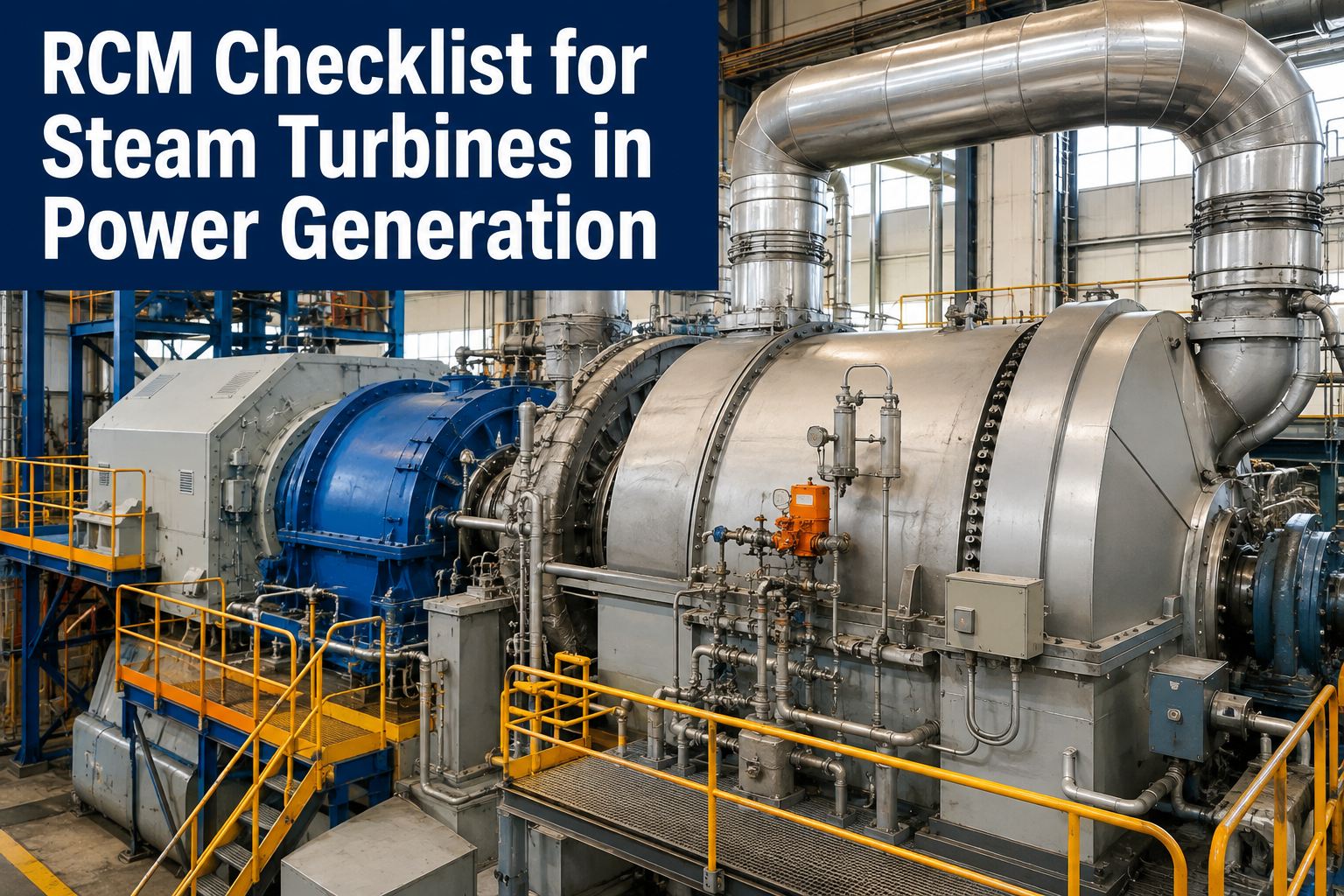
A steam turbine does not fail on a schedule. It fails at a journal bearing that started running 8°F hotter three weeks ago and nobody trended it. At a last-stage blade whose leading-edge erosion crossed the FMEA...
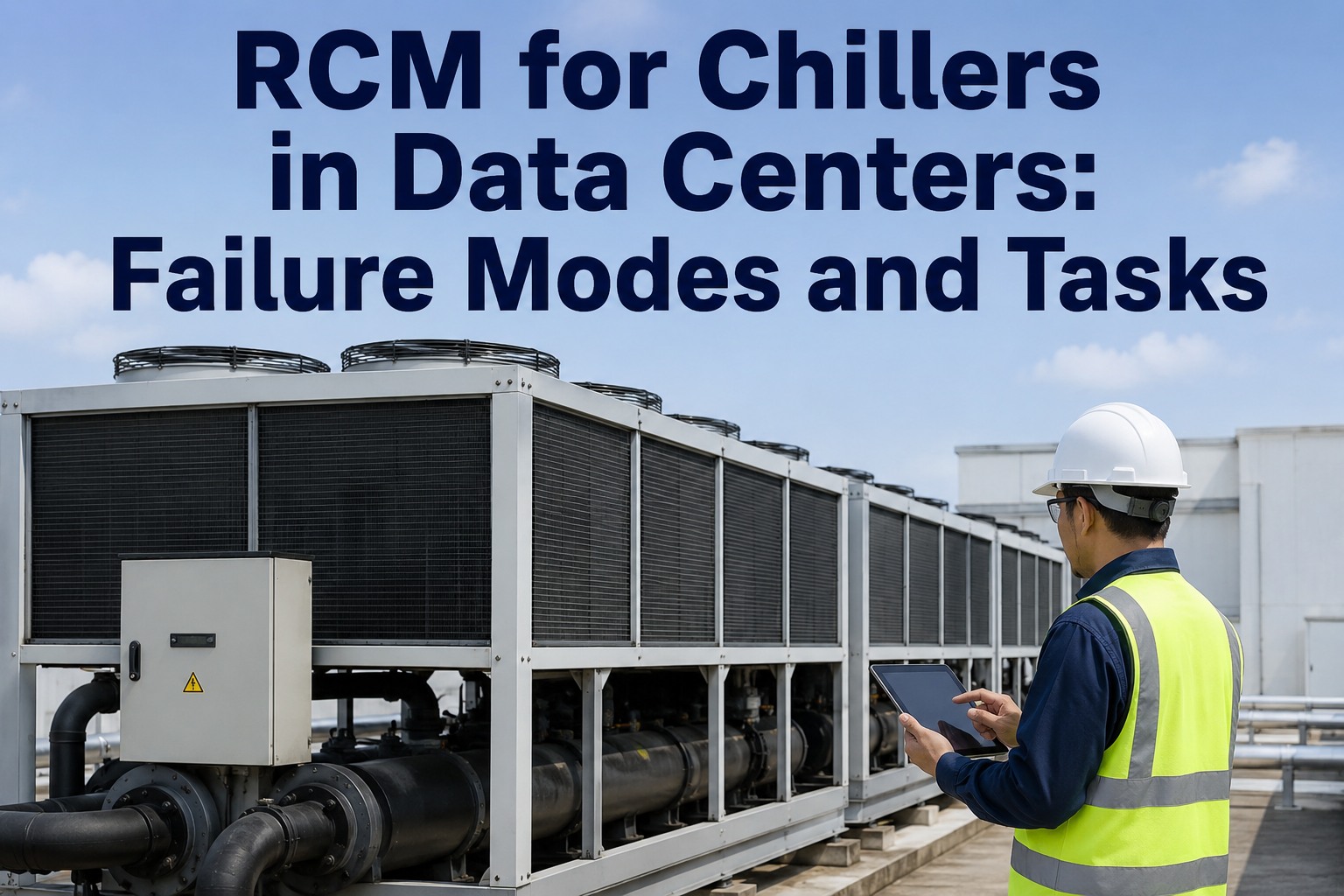
RCM for chillers in data centers is the discipline of matching each chiller failure mode — from refrigerant leaks and compressor bearing wear to condenser fouling and control drift — with the most effective...
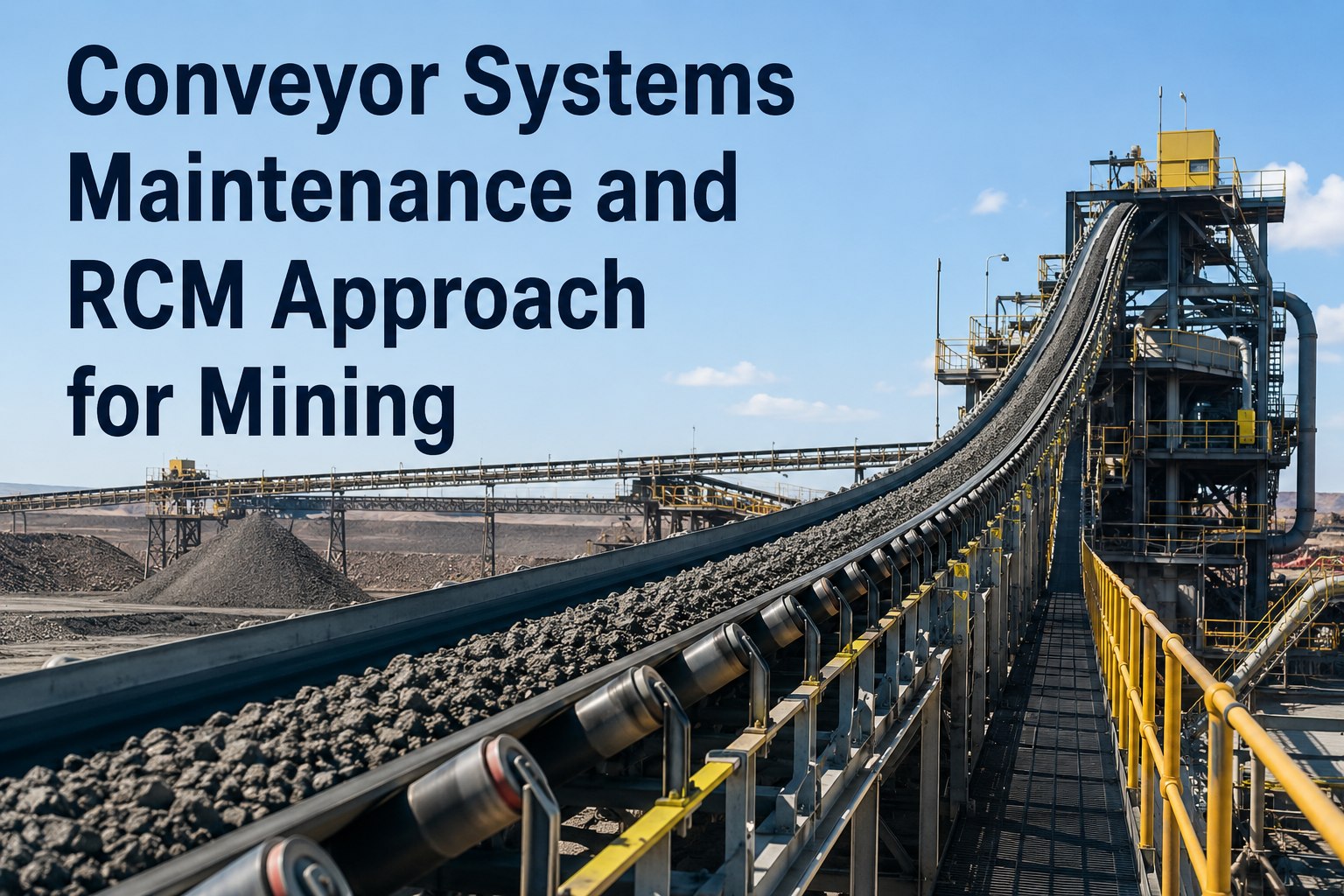
Reliability Centered Maintenance (RCM) for conveyor systems in mining and metals operations is the systematic process of matching each component's failure mode to the most effective maintenance strategy — whether...

The best predictive maintenance approach for switchgear & breakers is a layered one: combine continuous partial-discharge and temperature monitoring with periodic thermography, contact-resistance and timing...

Applying RCM to conveyor systems in manufacturing means analysing each conveyor's failure modes — belts, bearings, motors, rollers and drives — then matching every failure to the most effective maintenance task,...
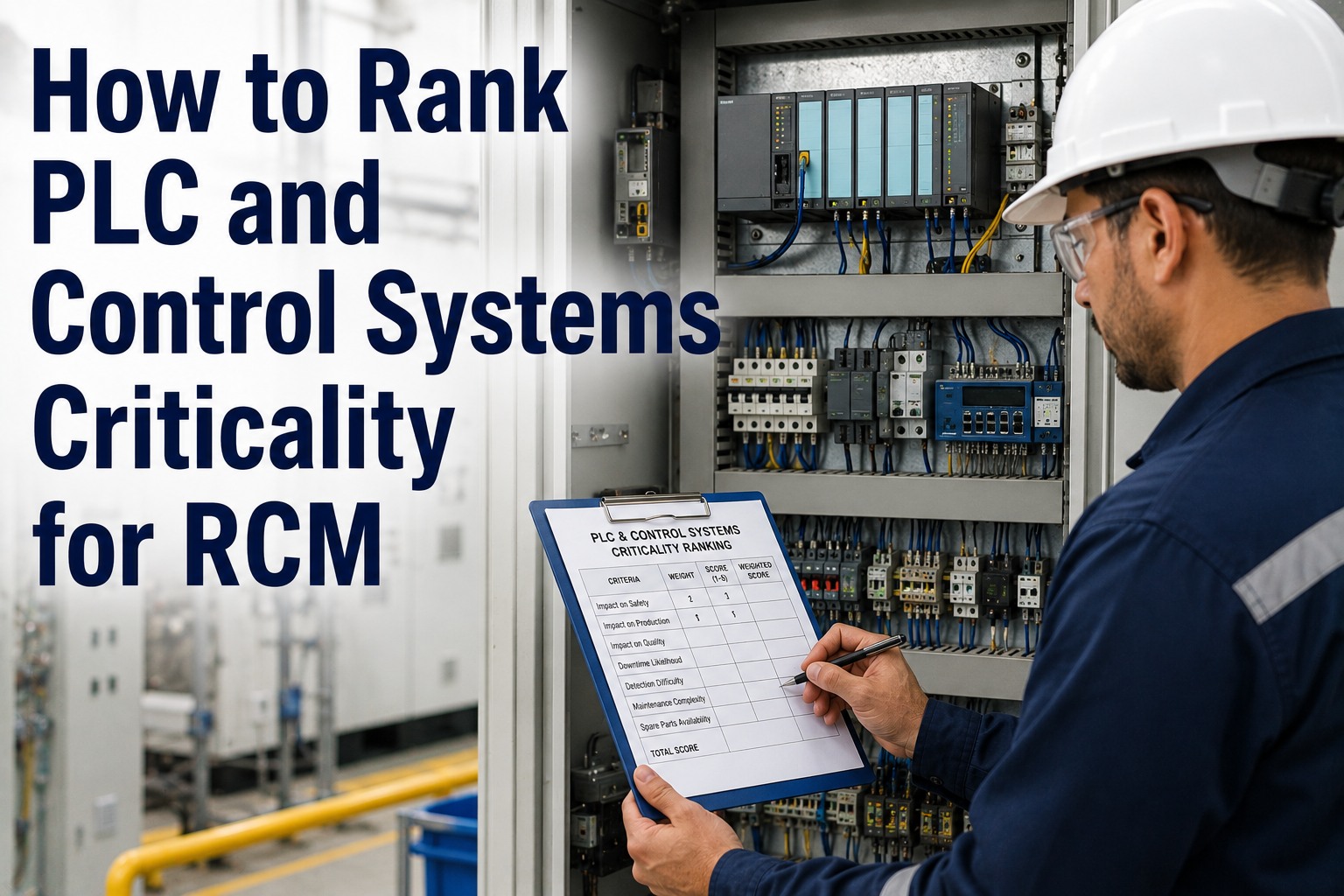
Criticality analysis for PLC & control systems is the process of scoring each controller, I/O rack, and power supply by its consequence of failure — so your maintenance budget goes to the assets that can...
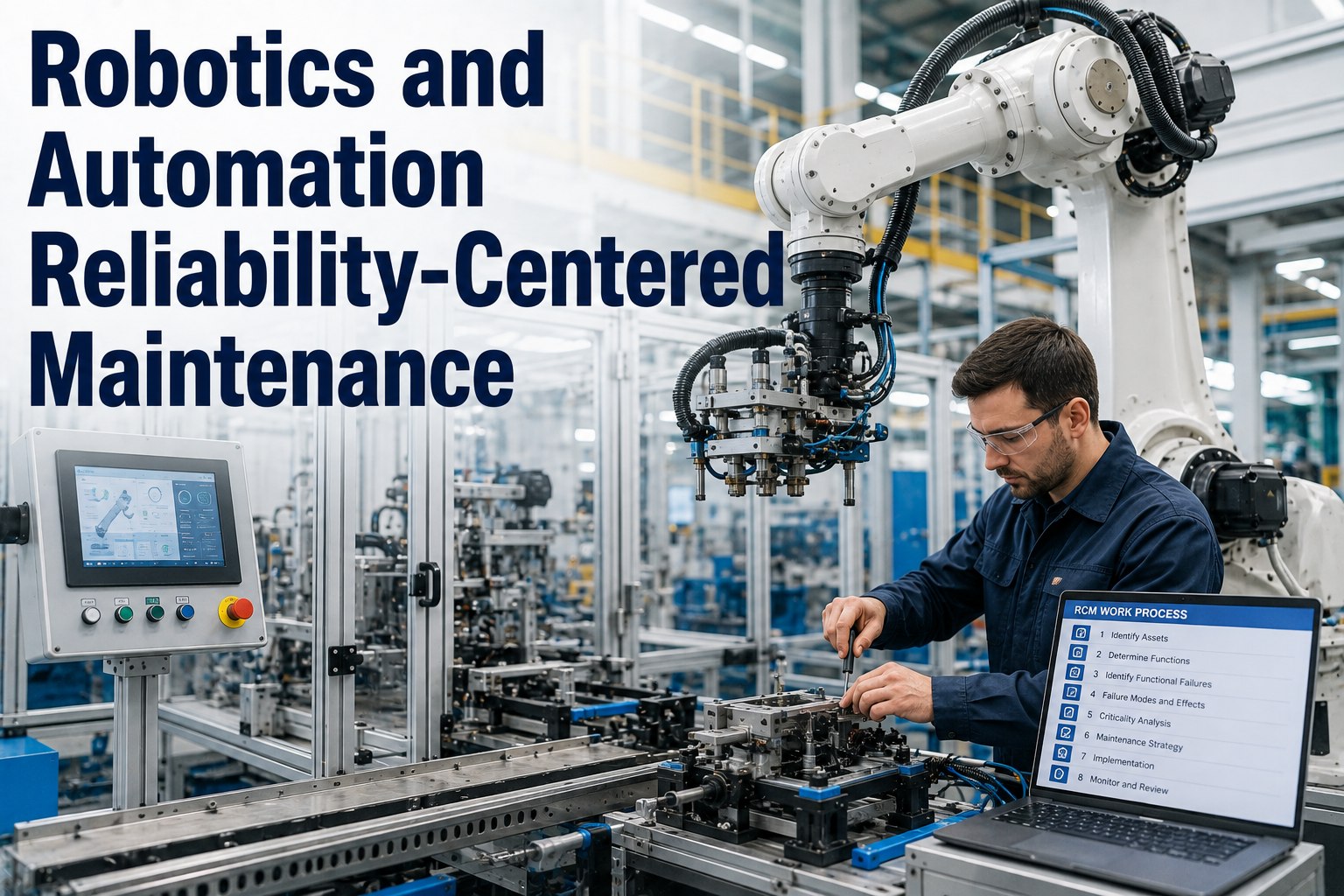
Reliability-Centered Maintenance for robotics and automation in manufacturing is the discipline of matching each robot, PLC, and automated cell to the maintenance strategy that actually prevents its dominant...

Predictive maintenance for piping systems replaces fixed inspection calendars with condition-based signals — you repair a line when wall-thickness data, vibration trends, or corrosion rates tell you to, not when...
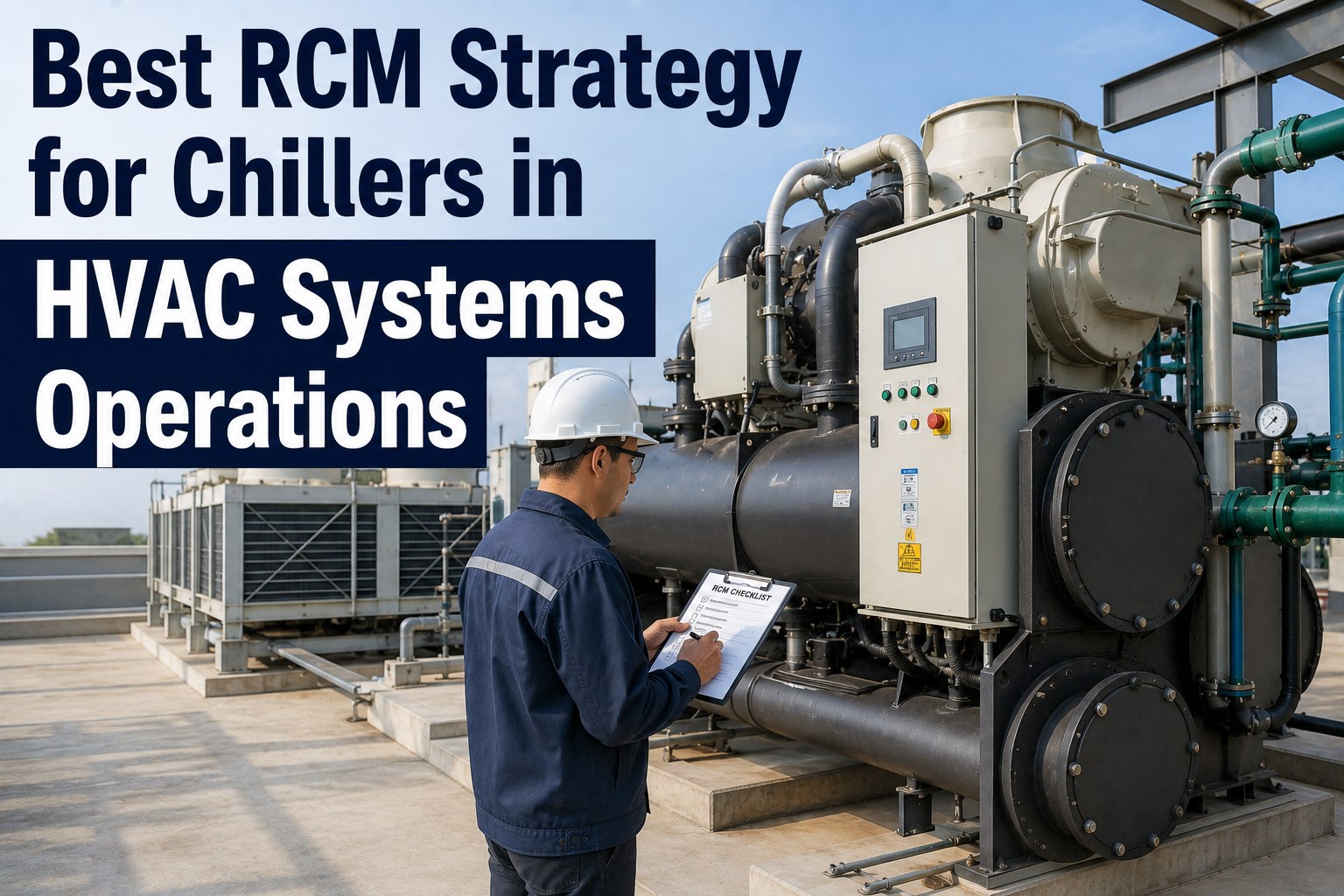
The best RCM strategy for chillers in HVAC & building systems pairs failure-mode-driven task selection with continuous condition monitoring — so compressors, condensers, and cooling towers get the right...
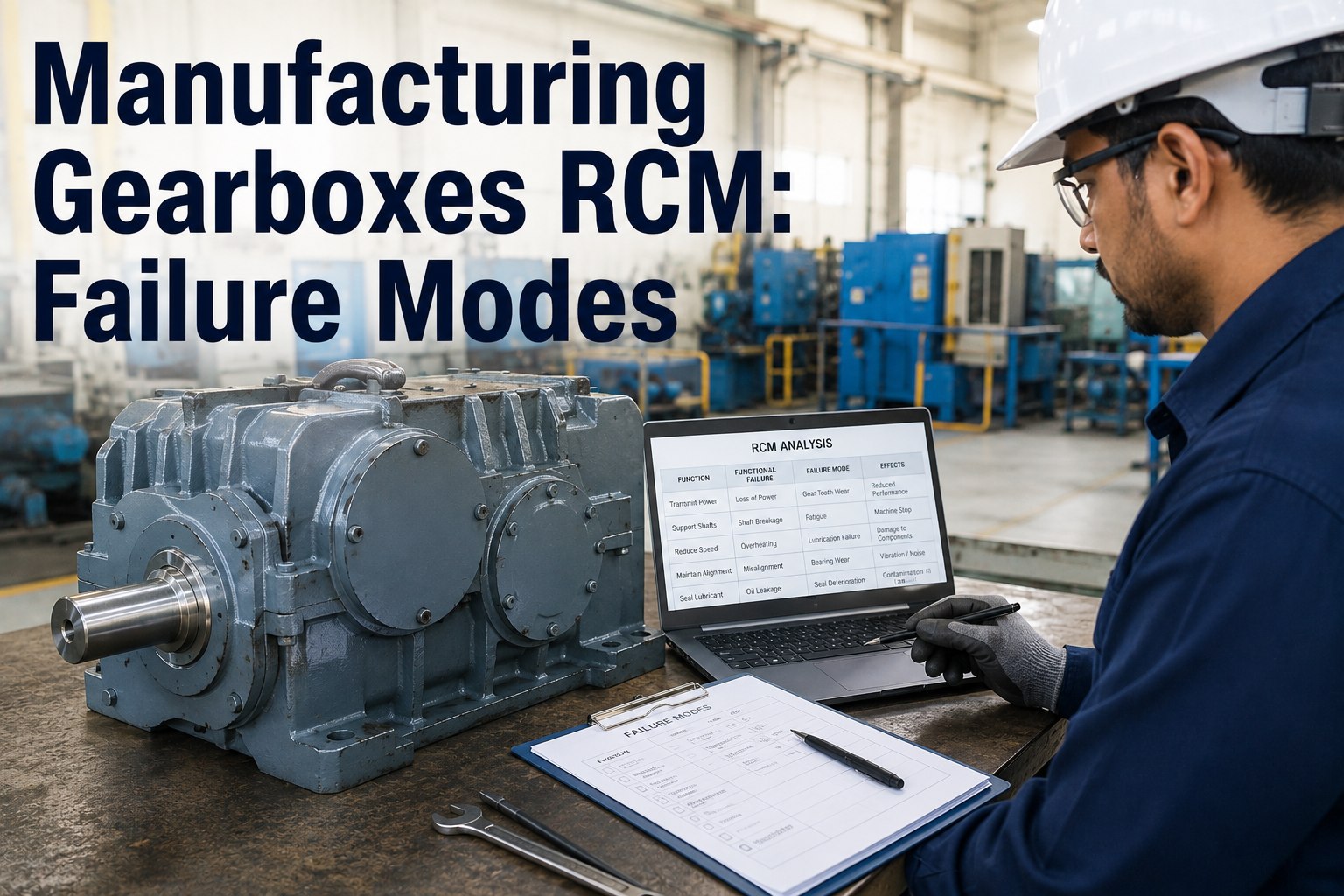
Reliability-Centered Maintenance (RCM) for manufacturing gearboxes is a structured method for identifying dominant failure modes — tooth wear, pitting, scuffing, bearing fatigue, lubrication breakdown — and...
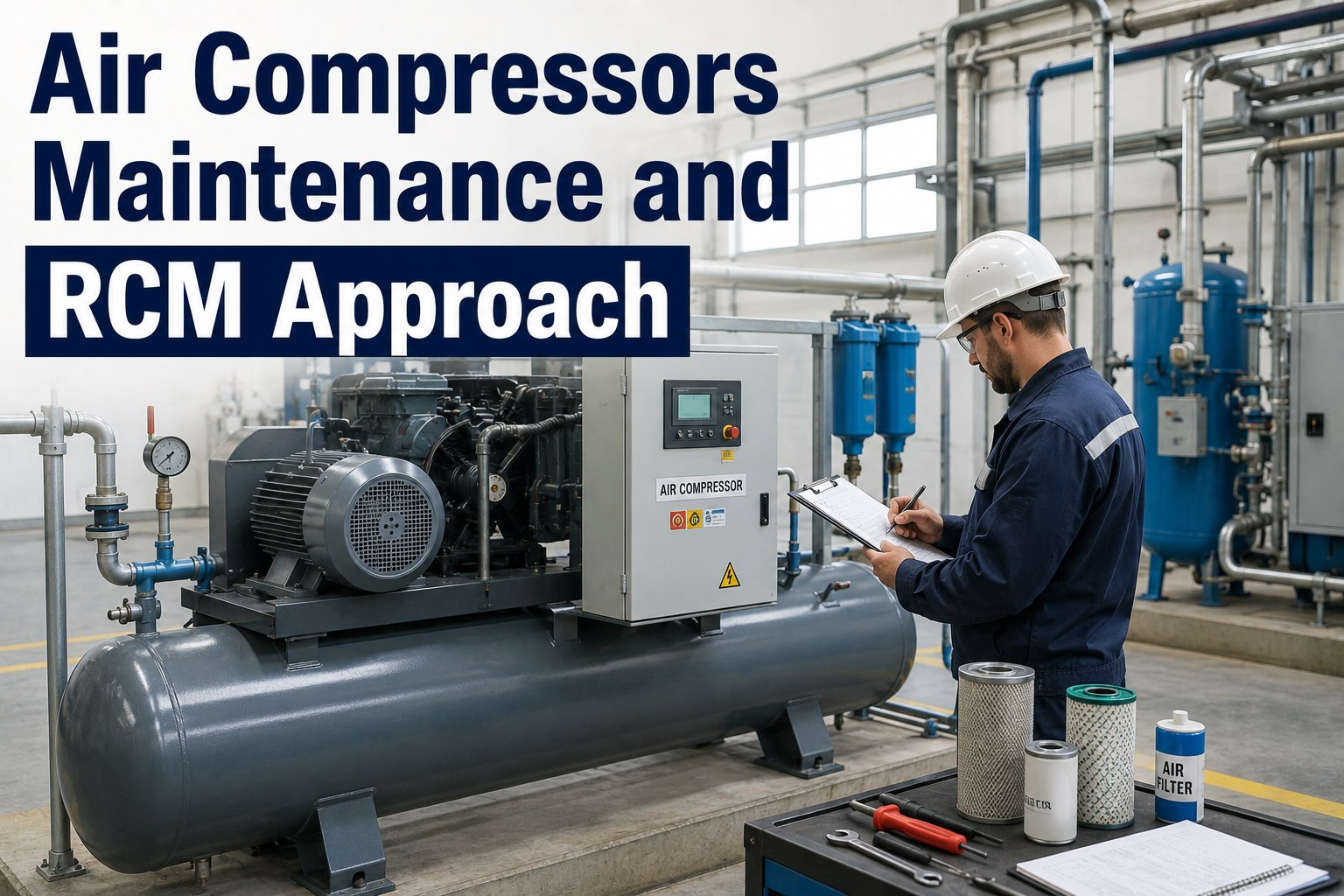
Reliability-Centered Maintenance (RCM) for air compressors in manufacturing is the practice of matching each compressor failure mode to the cheapest effective maintenance task — and it routinely cuts unplanned...

Ask any fleet manager, diesel mechanic, or heavy-equipment operator which engine oil is better — 15W-40 or 10W-30 — and you will get one of the most passionately debated answers in the entire diesel maintenance...

An automotive plant preventive maintenance program template is a standardized, repeatable checklist and schedule that keeps presses, robots, conveyors, paint booths and assembly lines running without surprise...

An aerospace plant housekeeping / 5S checklist is the fastest way to catch small issues before they become shutdown-level failures — and the biggest reason inspections fail is inconsistency across technicians,...
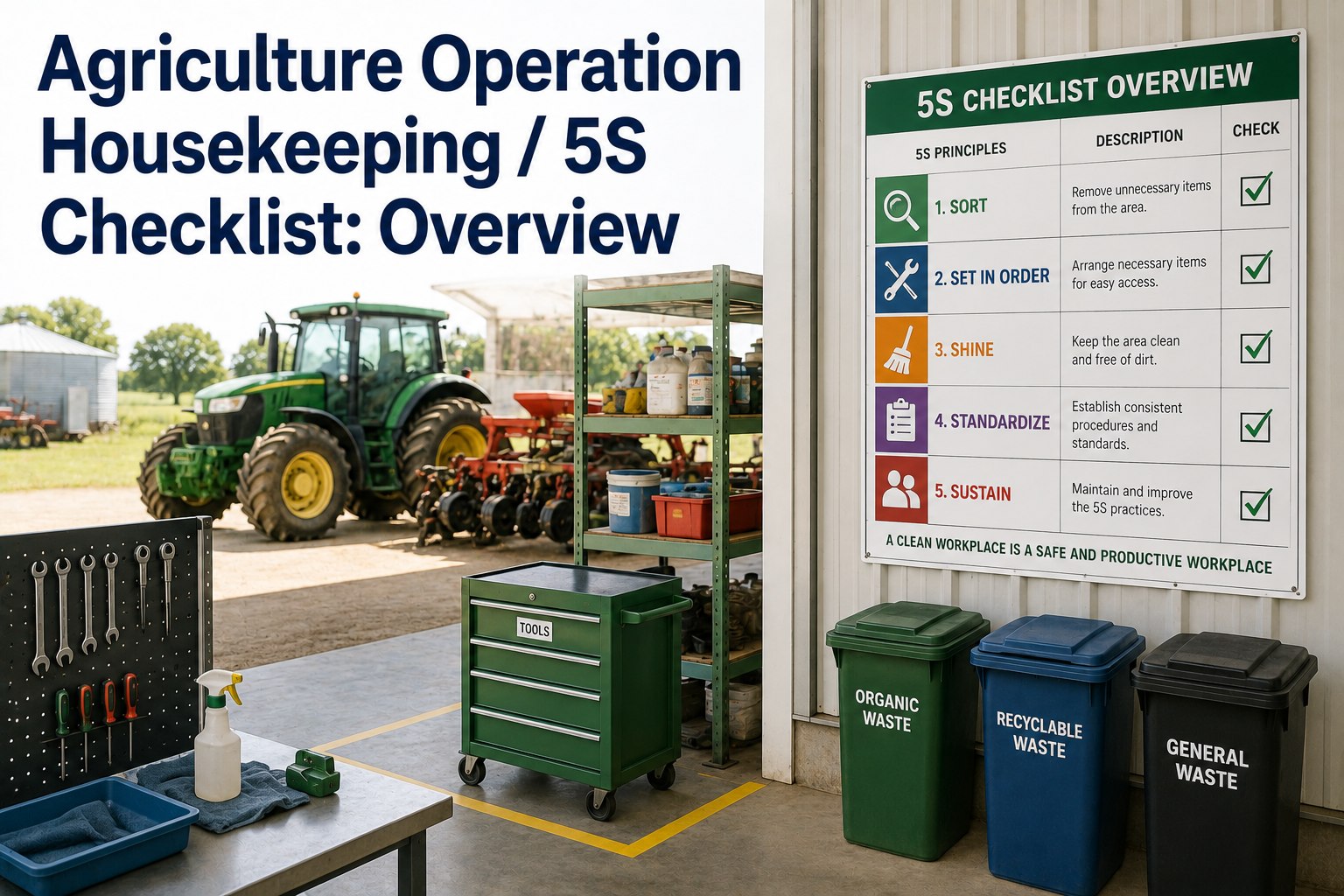
An agriculture operation housekeeping / 5S checklist is a structured, lean-aligned inspection tool that keeps farm workspaces, equipment yards, chemical storage areas and worker facilities clean, organized and...

A HACCP daily monitoring checklist is the frontline food safety system that US restaurant kitchens use to verify critical control points — from cold storage temperatures to allergen cross-contact — every single...

A manufacturing plant safety inspection checklist is the documented, repeatable set of checks — aligned to OSHA 1910 standards — that verifies every machine guard, lockout/tagout point, electrical panel, fire...

An office building preventive maintenance checklist is the structured set of recurring inspections and service tasks — HVAC, electrical, plumbing, life-safety, elevators, and building envelope — that keeps a...

An education campus preventive maintenance program template is the fastest way to turn scattered, calendar-driven upkeep into a standardized, audit-ready system that protects students, staff and budgets. Schools...
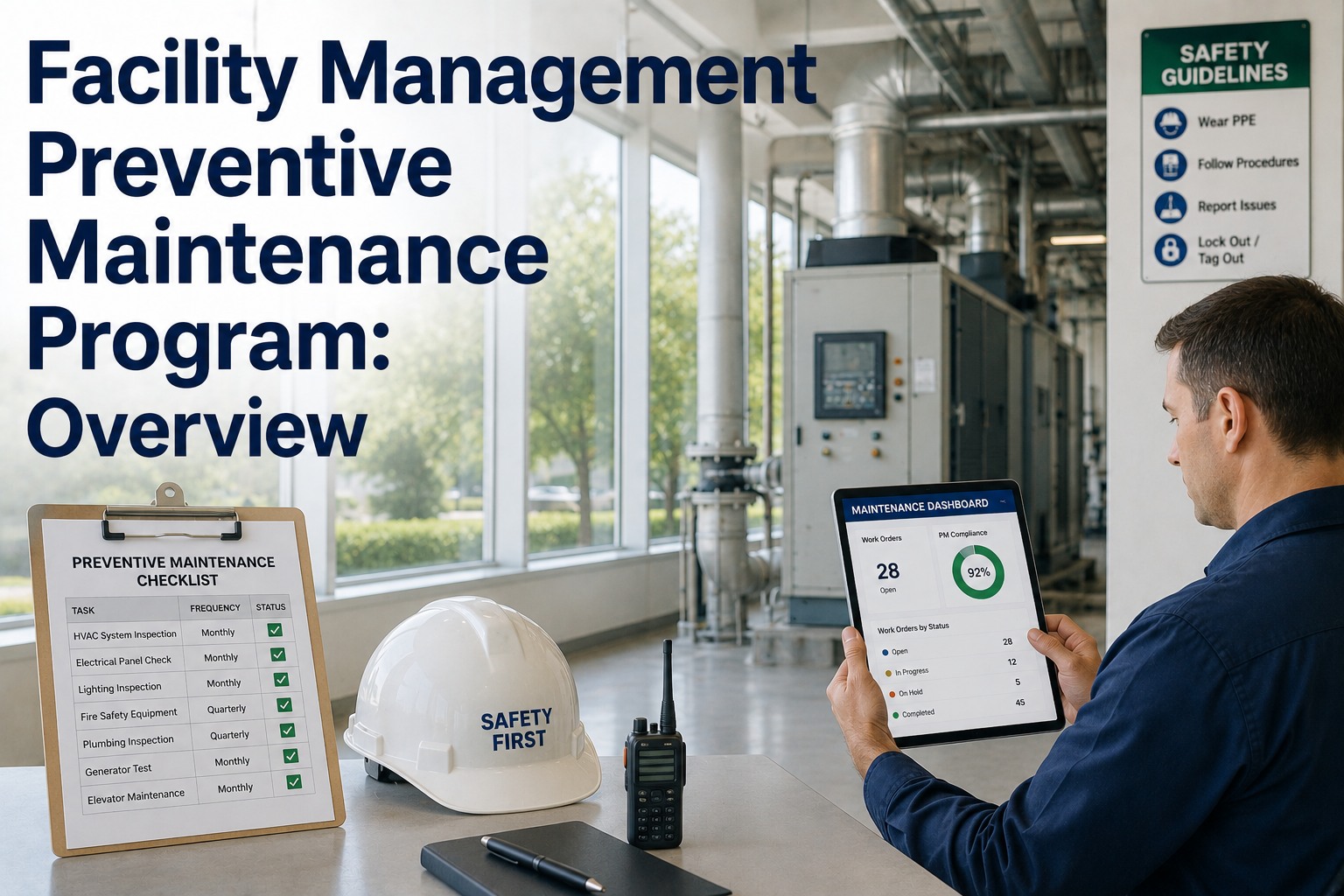
A facility management preventive maintenance program is a structured, repeatable schedule of inspections, servicing and part replacements that keeps building systems — HVAC, electrical, plumbing, fire safety and...

A cement plant preventive maintenance program template is a structured, repeatable checklist that defines every inspection, lubrication, calibration, and safety verification your technicians must complete on each...

A fleet operations PPE compliance checklist is the documented, step-by-step procedure your technicians follow to verify that every piece of personal protective equipment — hard hats, hi-vis vests, gloves, eye...
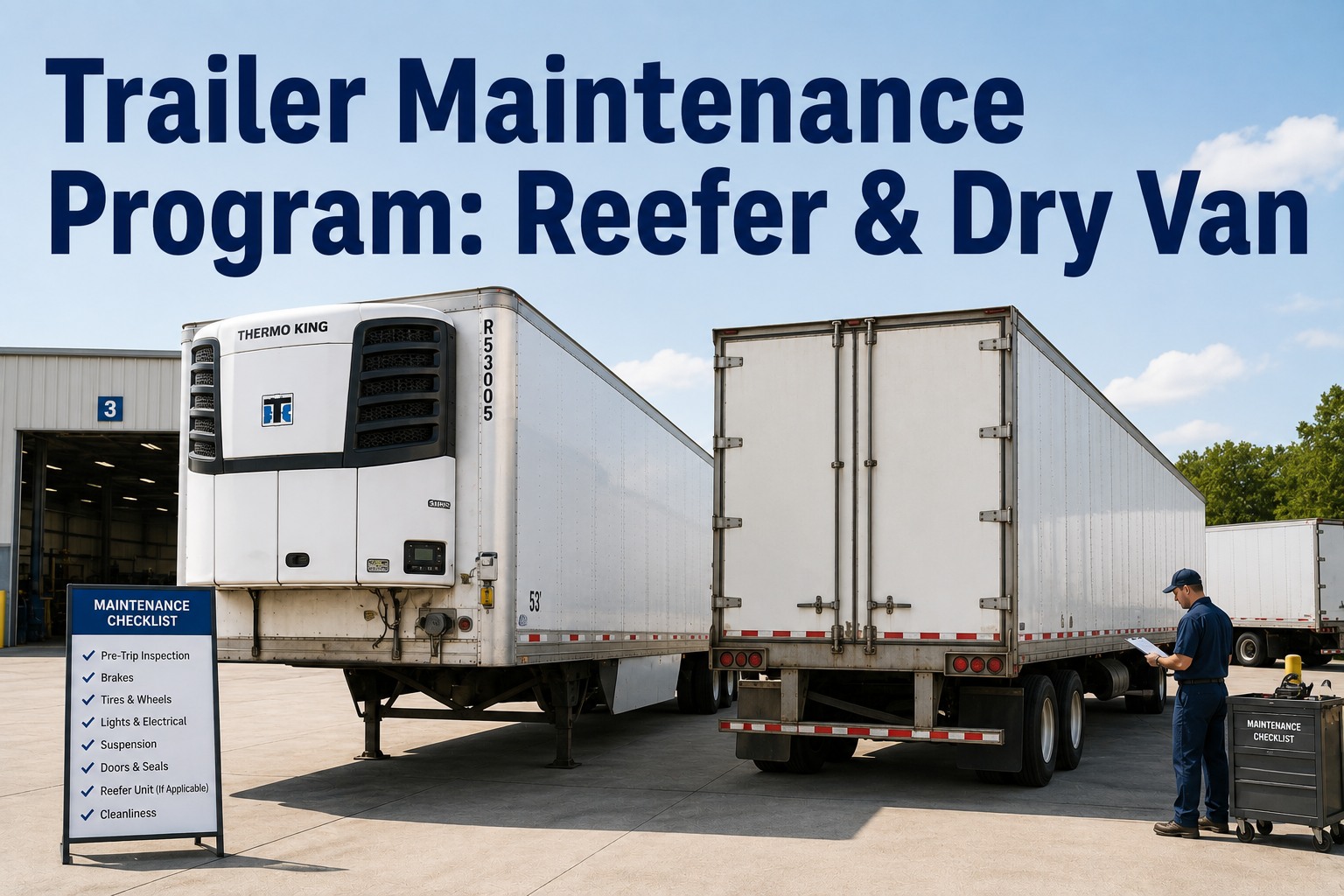
A trailer maintenance program for reefer and dry van fleets is the operational backbone that prevents in-transit failures, protects perishable and high-value cargo, and keeps delivery schedules intact. Trailers are...
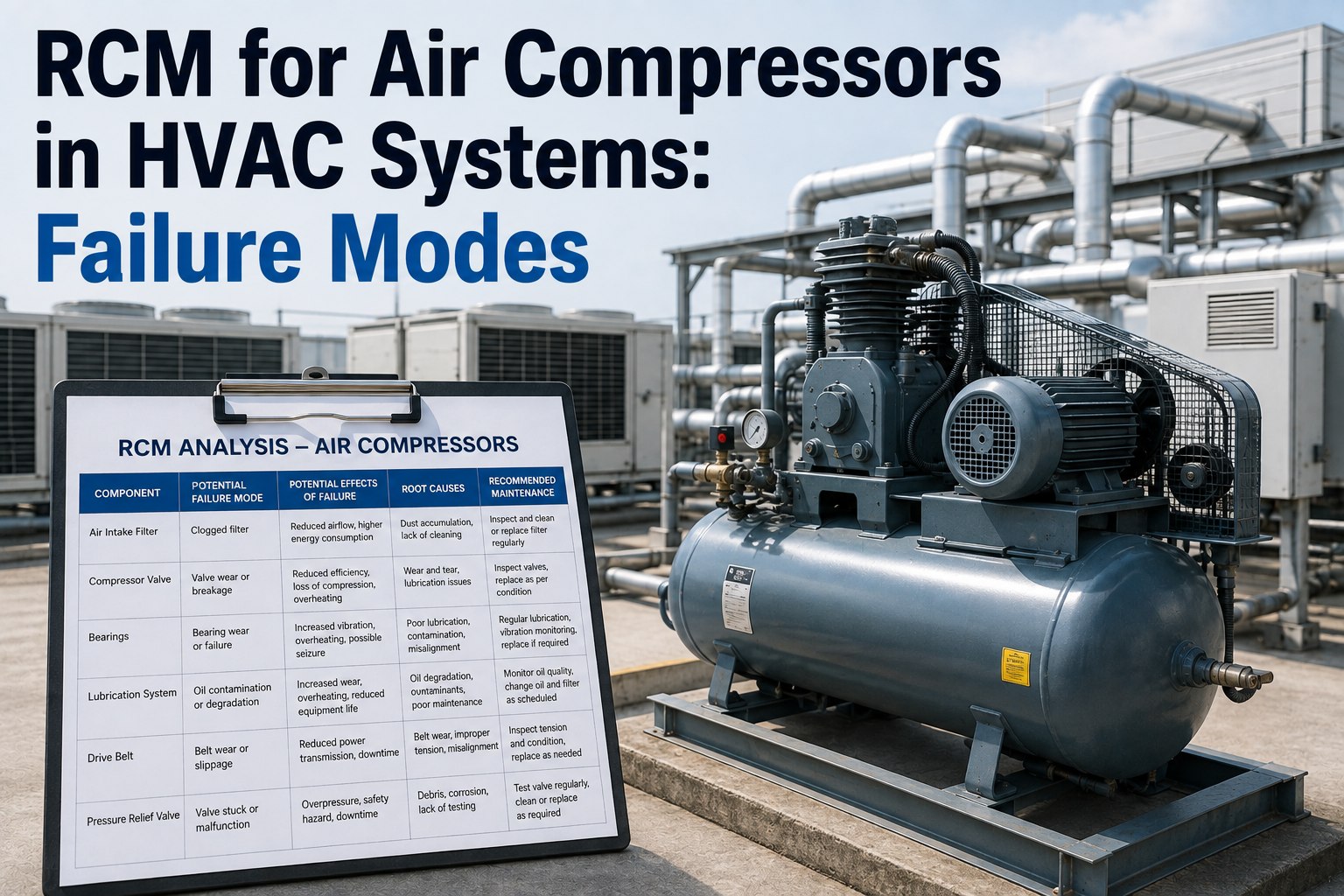
Reliability-Centered Maintenance (RCM) for air compressors in data centers is the systematic process of identifying specific failure modes—such as valve wear, intercooler fouling, and lubrication degradation—and...

Fleet asset lifecycle management is the disciplined practice of tracking each vehicle from acquisition through disposal, and a data-driven vehicle replacement strategy tells you exactly when repairing an aging...
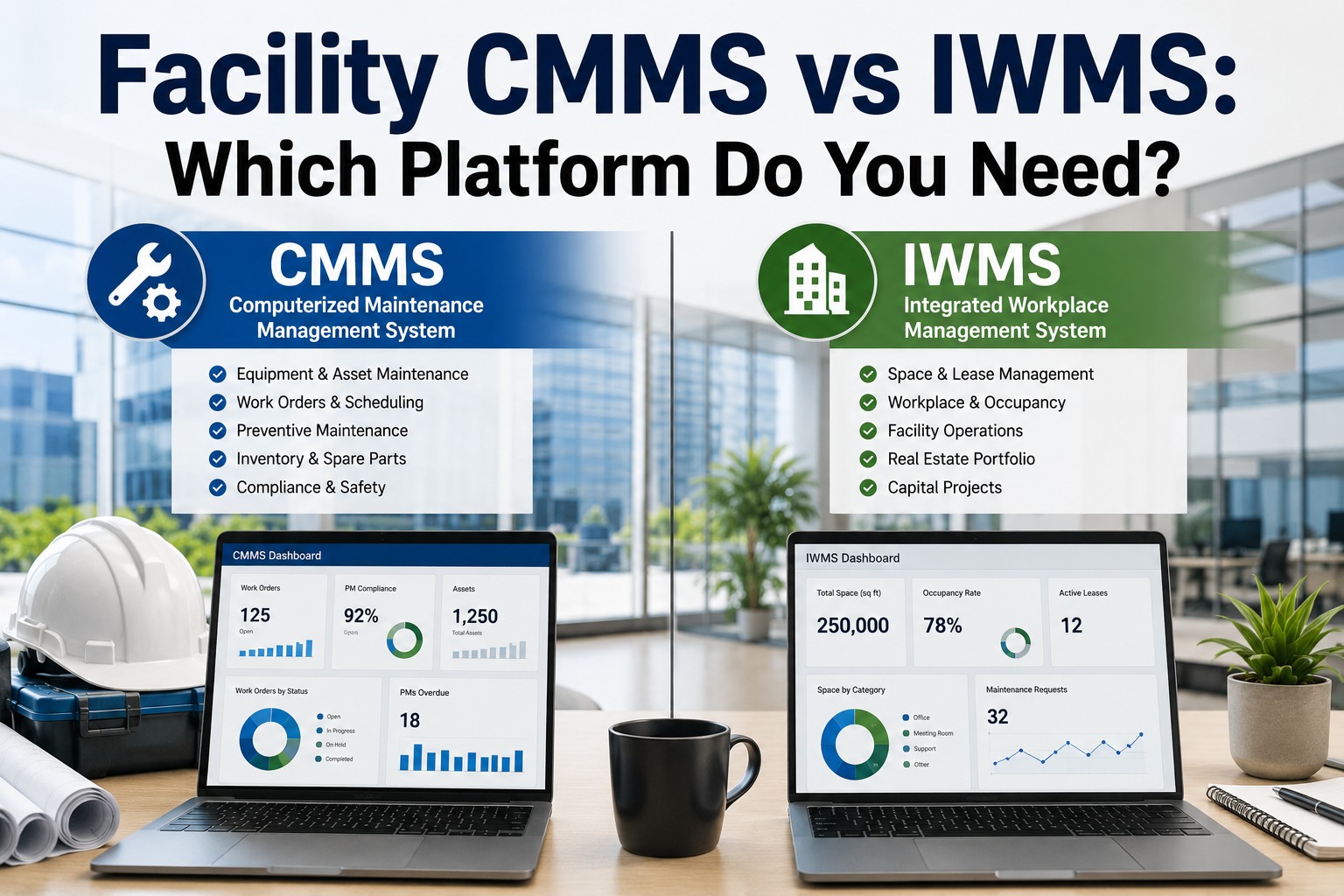
Choosing between a facility CMMS and an IWMS is one of the most consequential technology decisions a facilities leader makes, as the platform choice typically dictates maintenance operations for 10+ years. While...
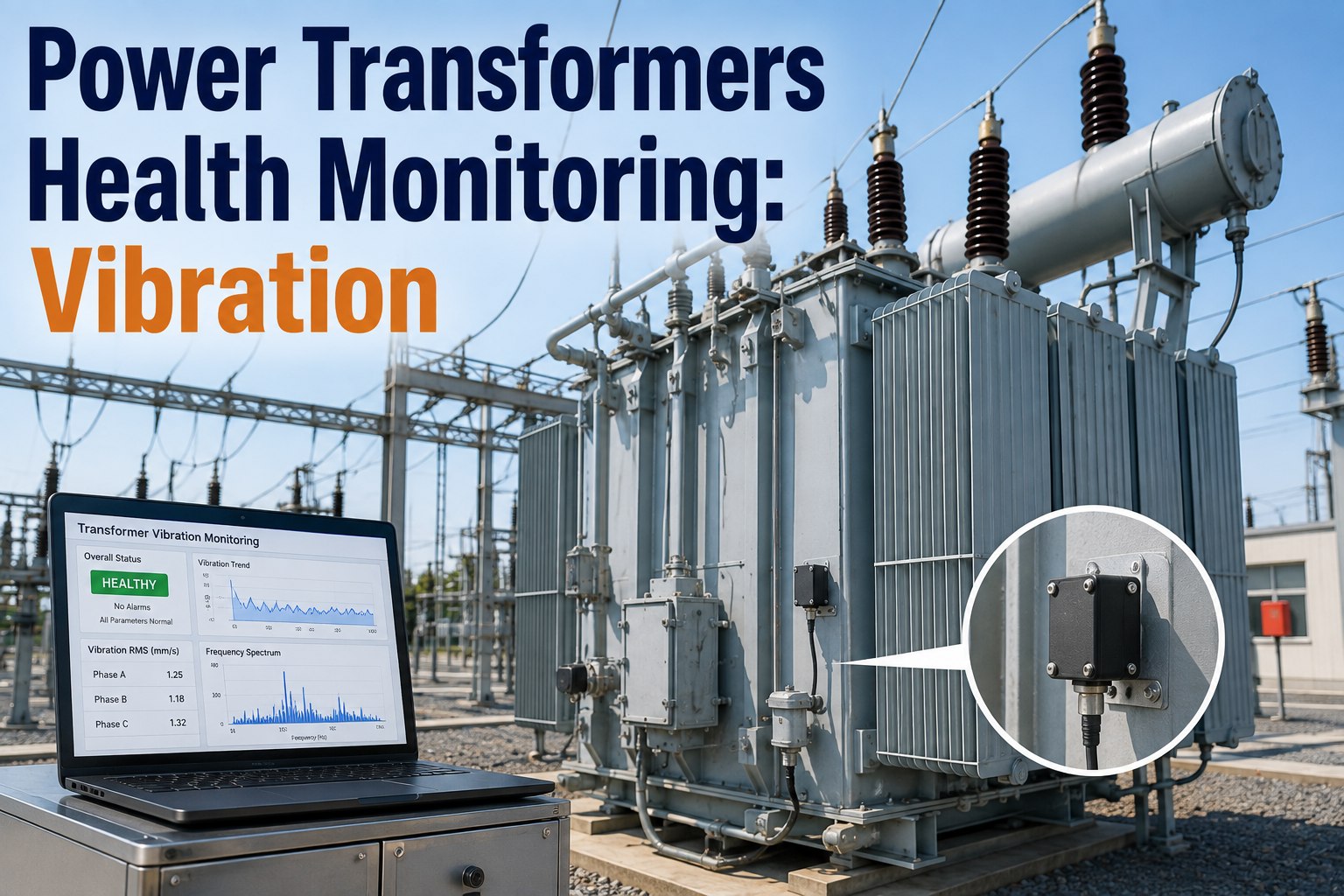
Condition monitoring for power transformers is the practice of continuously tracking mechanical, thermal, and chemical indicators — vibration, temperature, dissolved gases, and partial discharge — to detect...
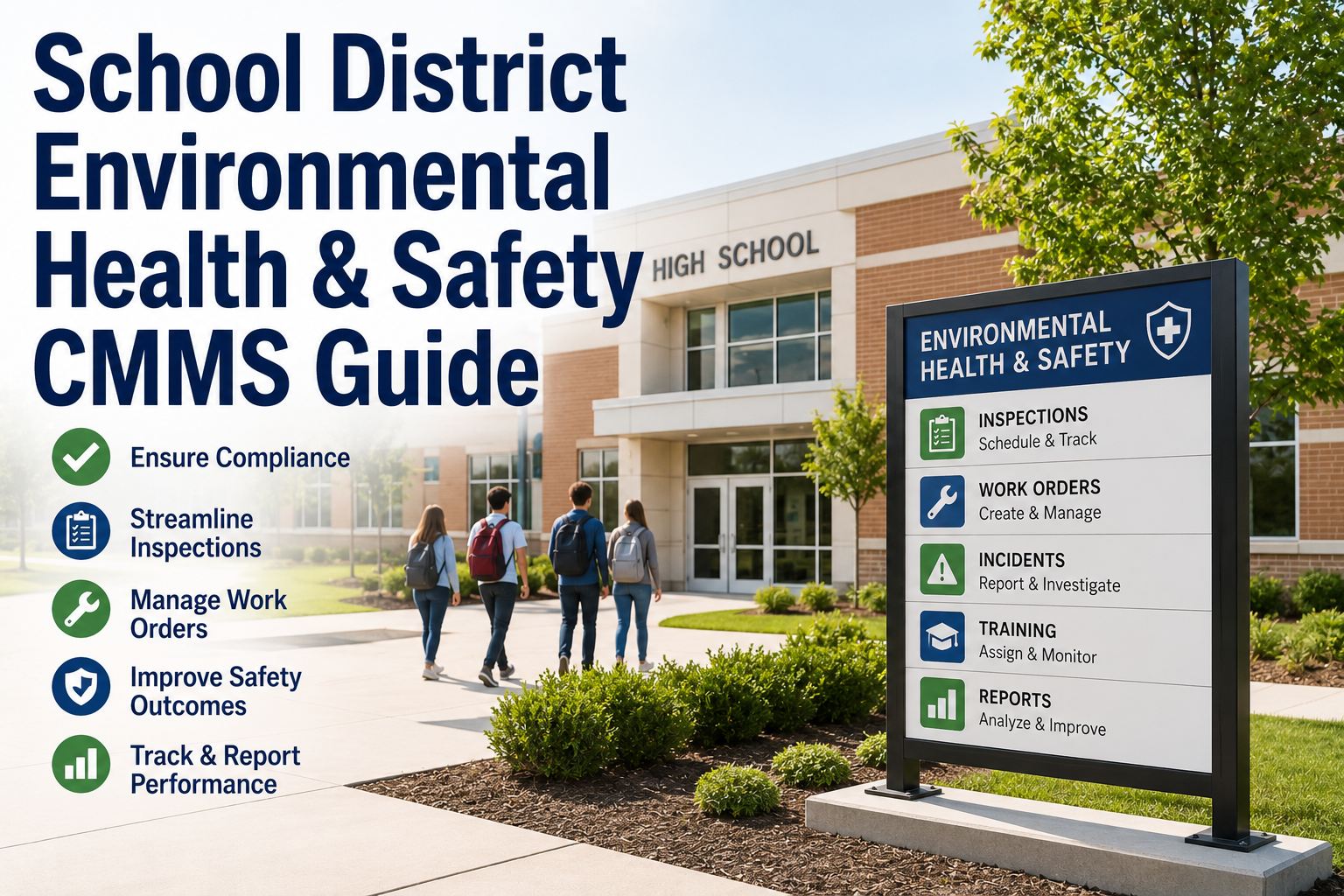
School district environmental health and safety compliance demands rigorous documentation of asbestos management plans, lead paint records, mold response protocols, and indoor air quality monitoring data across...
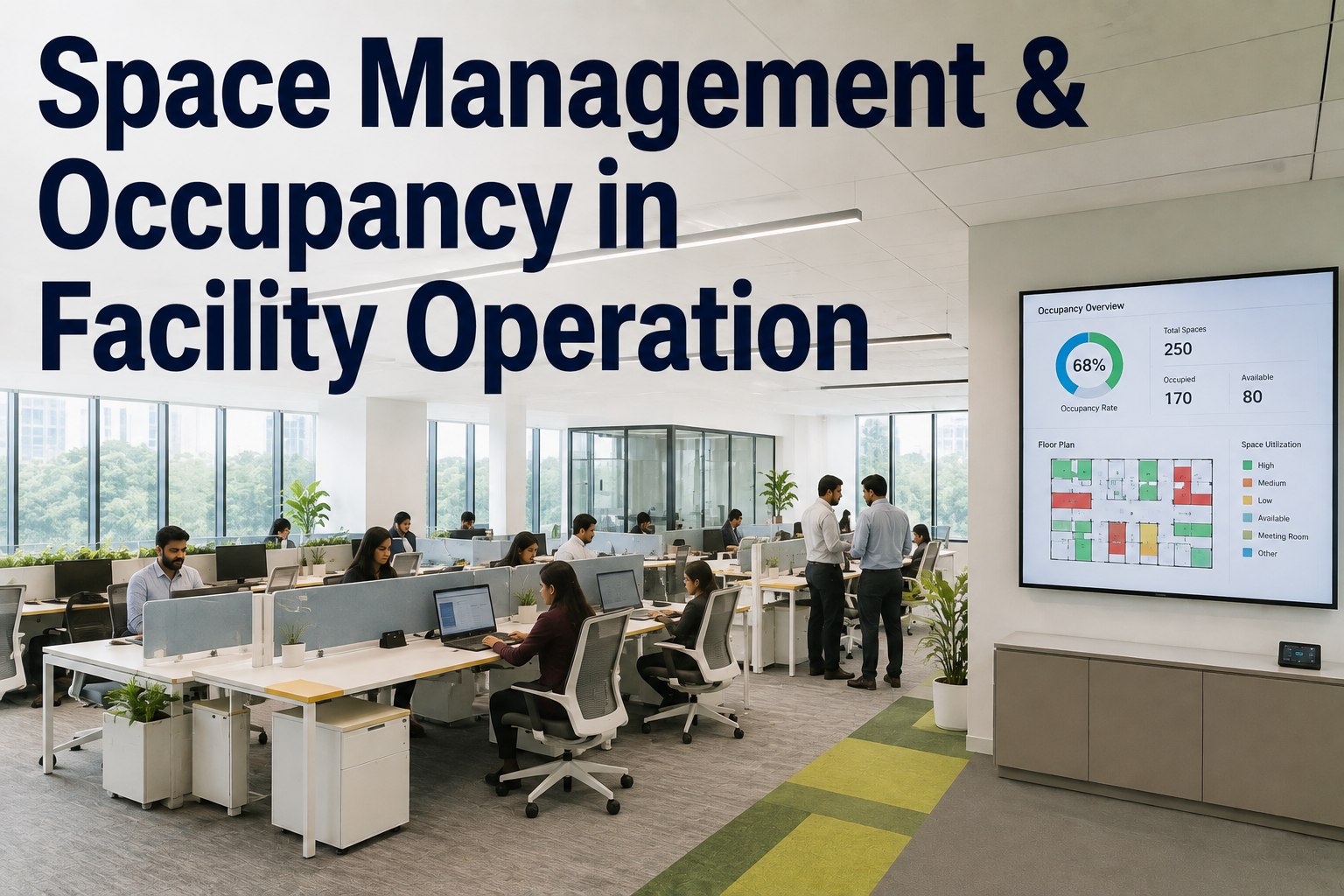
Space management and occupancy data now drive every decision in modern facility operations — from how often a conference room HVAC filter is changed to how much square footage a department is charged back each...
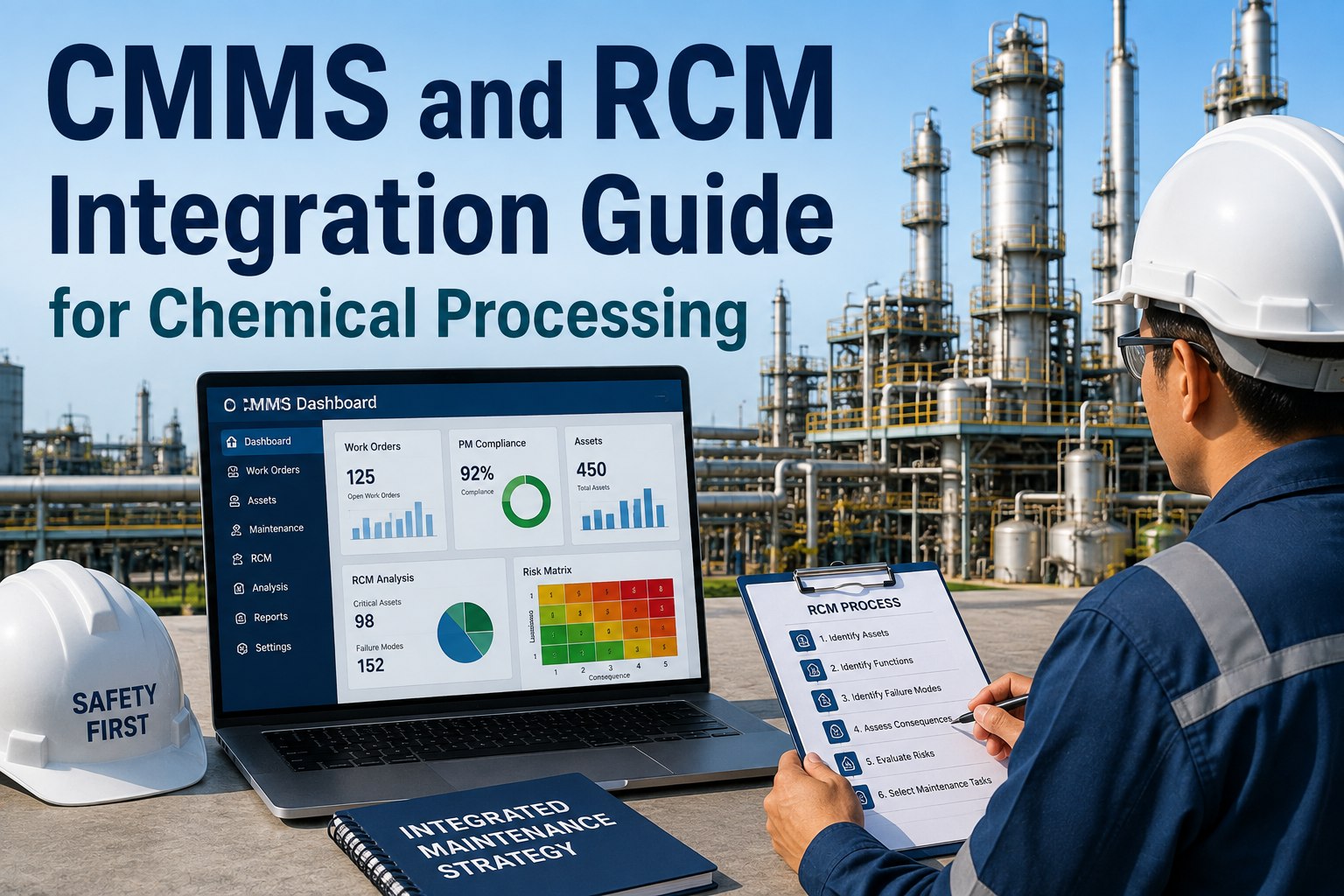
Integrating a CMMS with Reliability-Centered Maintenance (RCM) principles is how modern chemical processing plants shift from reactive firefighting to engineered-out failure modes. For teams managing volatile,...
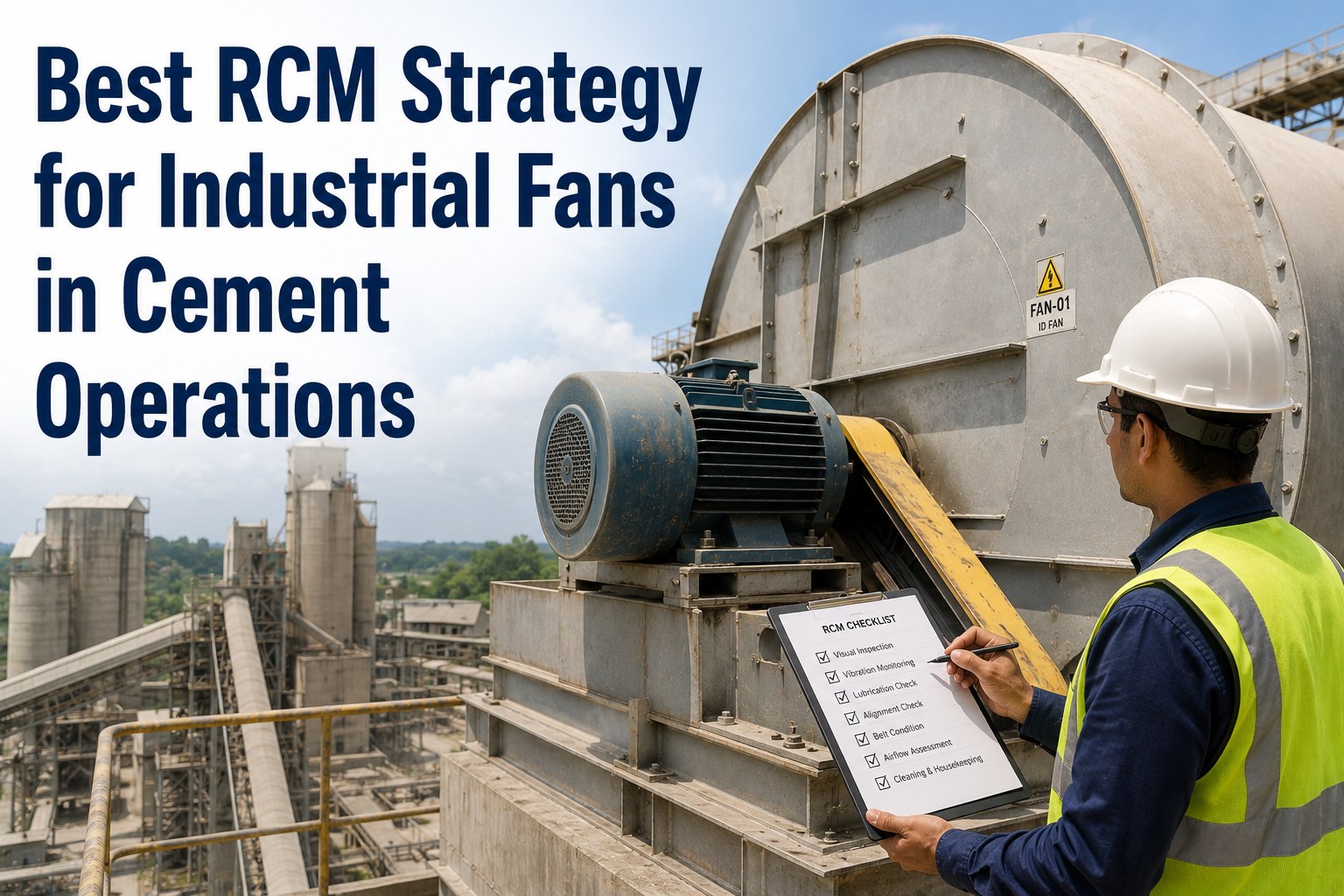
Reliability-Centered Maintenance (RCM) for industrial fans and blowers in cement plants is the most effective framework for preventing catastrophic failures, reducing unplanned downtime, and extending the lifecycle...
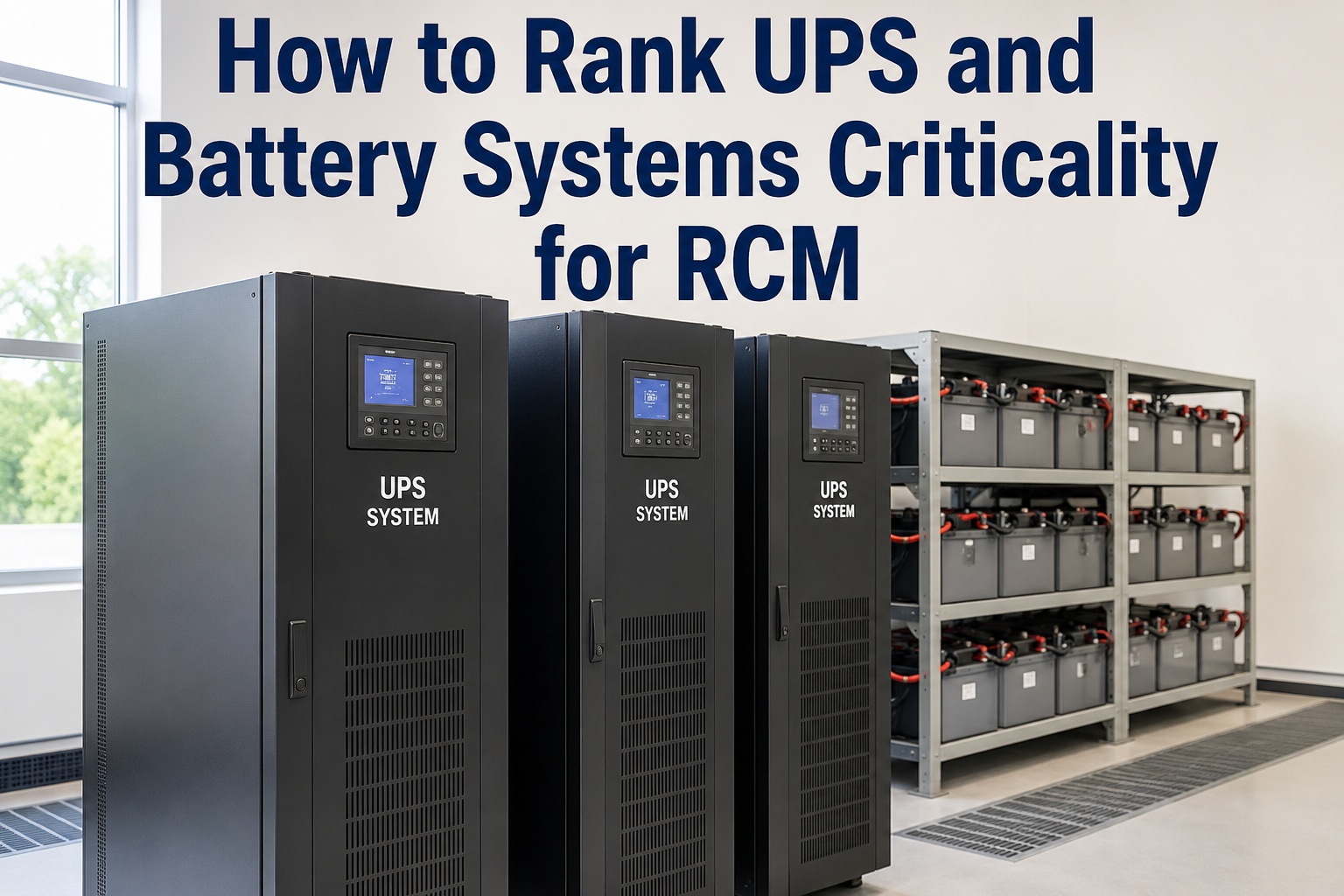
Criticality analysis for UPS and battery systems is the process of scoring your backup power assets by consequence of failure so you can deploy the right maintenance strategy—predictive, preventive, or...

Condition monitoring for valves (control & safety) is the practice of continuously tracking vibration, temperature, acoustic emissions and process variables to detect early fault signals like stiction, leak-by...
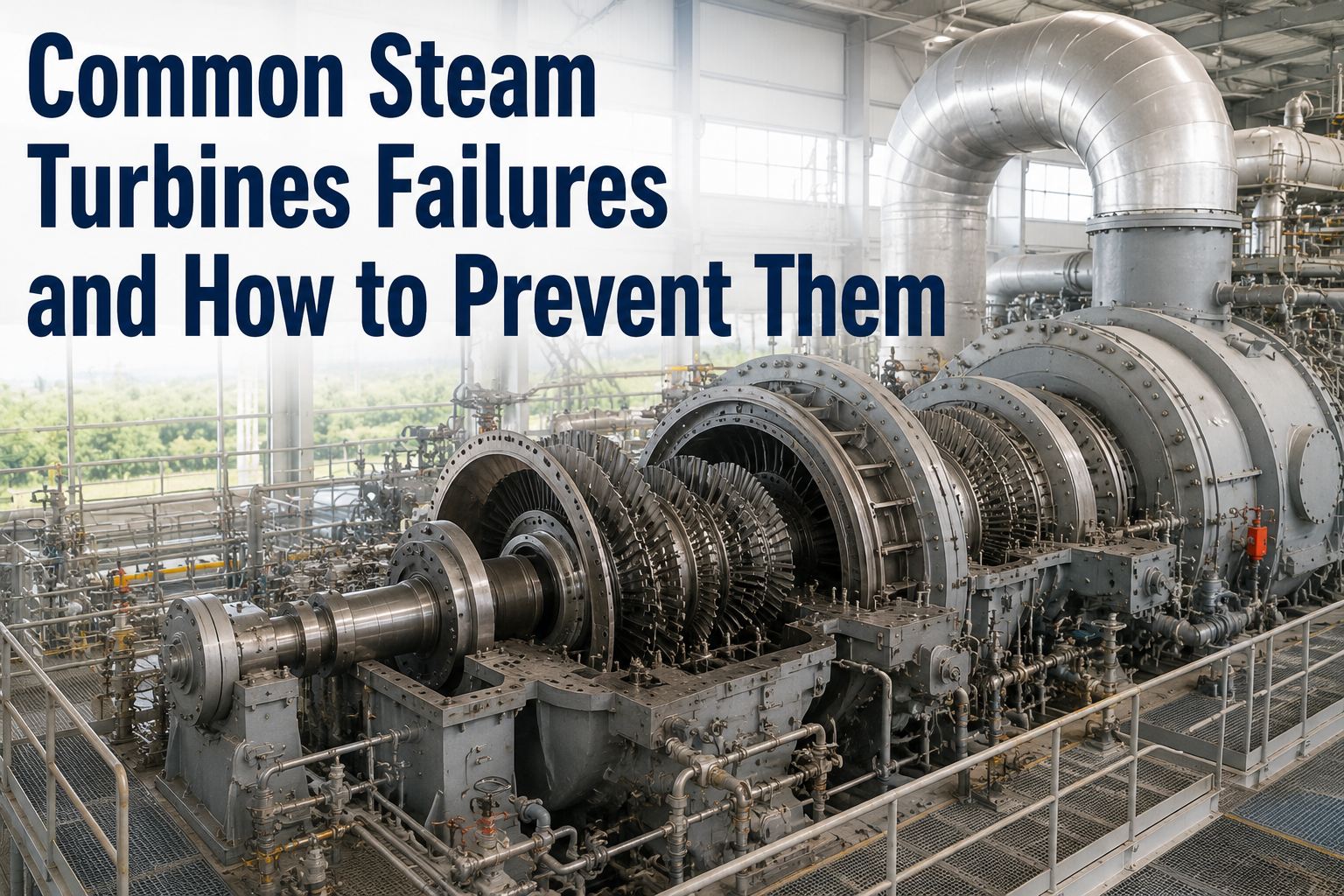
Steam turbines rank among the most critical—and highest-stakes—assets in power generation, petrochemical, and heavy industrial plants, making a thorough understanding of failure modes and effects for steam turbines...
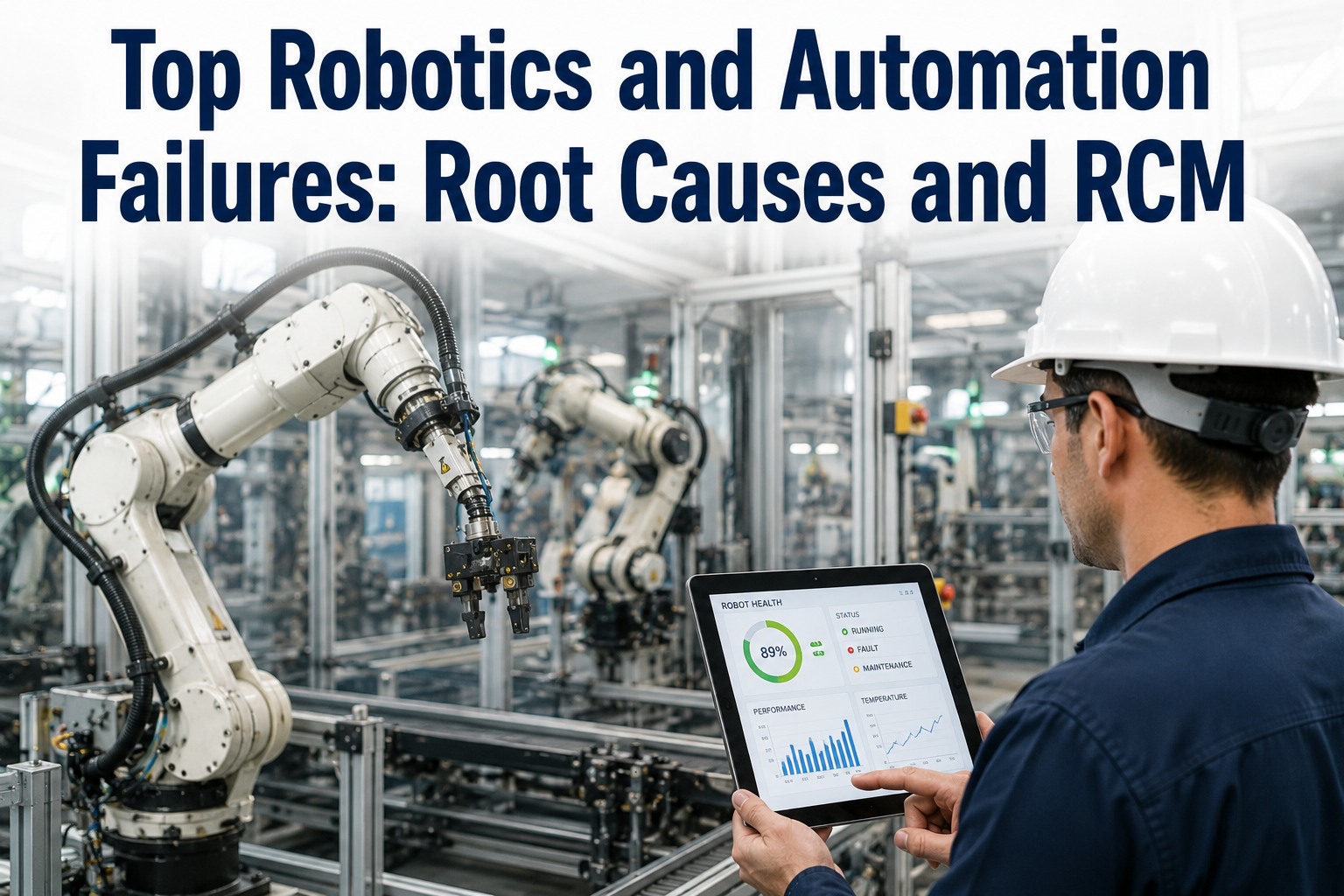
Understanding failure modes and effects for robotics & automation equipment is the single most effective way to reduce unplanned downtime, extend asset life, and protect production throughput. This guide breaks...
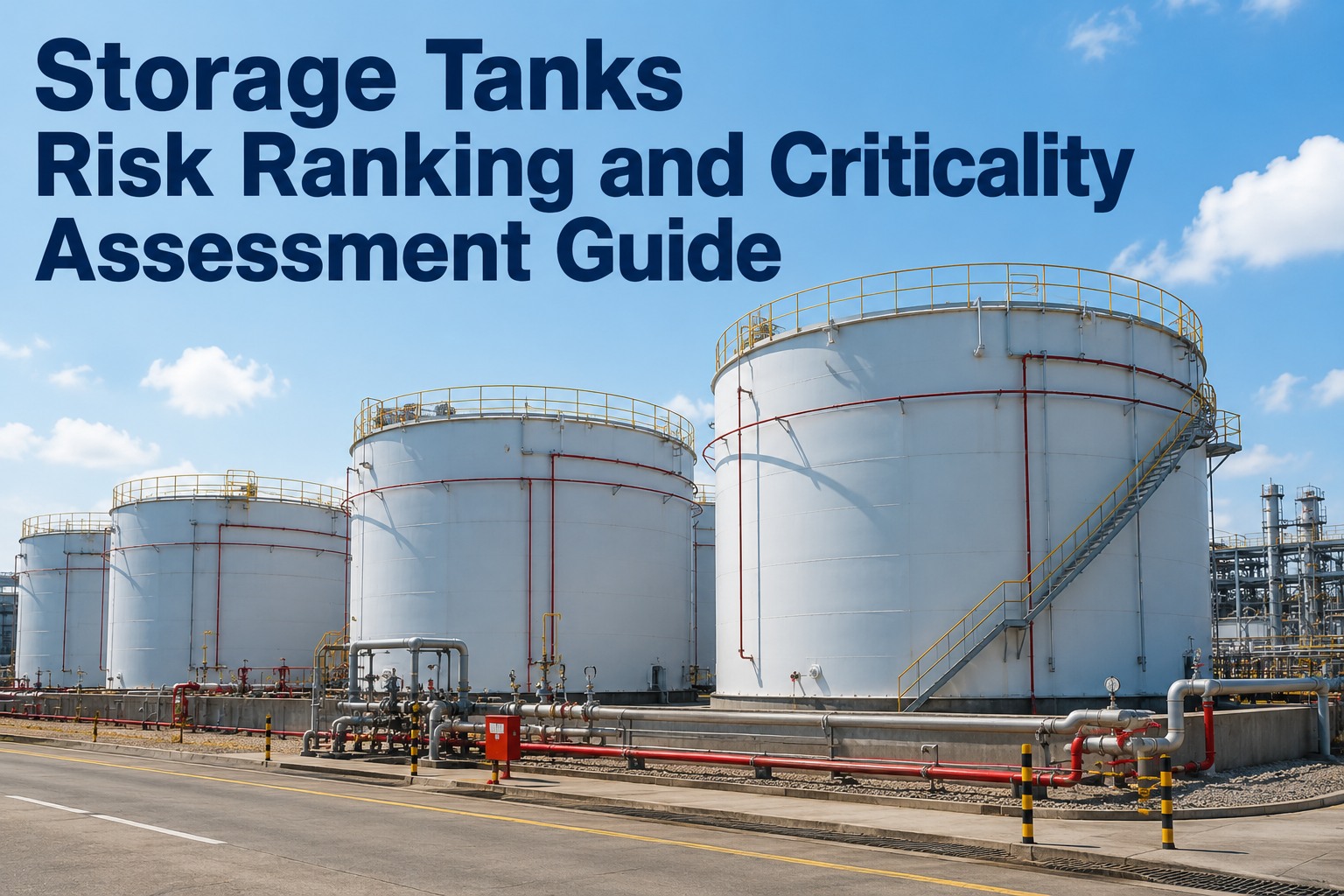
Criticality analysis for storage tanks is the process of ranking each tank by its risk and consequence of failure so maintenance teams can direct limited budgets, inspection intervals, and technician hours toward...
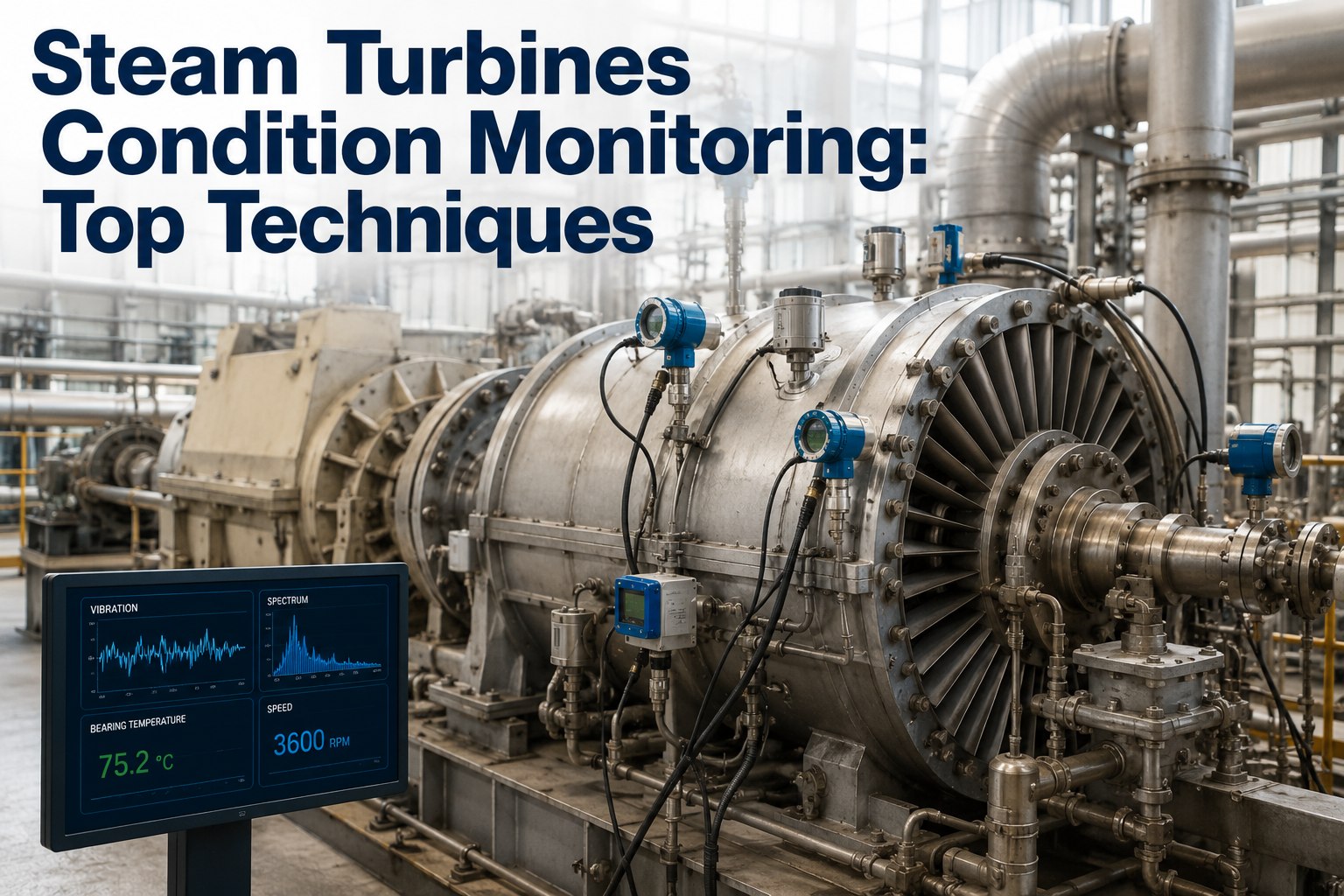
Condition monitoring for steam turbines is the practice of continuously tracking vibration, temperature, oil quality, and performance parameters to detect mechanical faults weeks before they cause catastrophic...
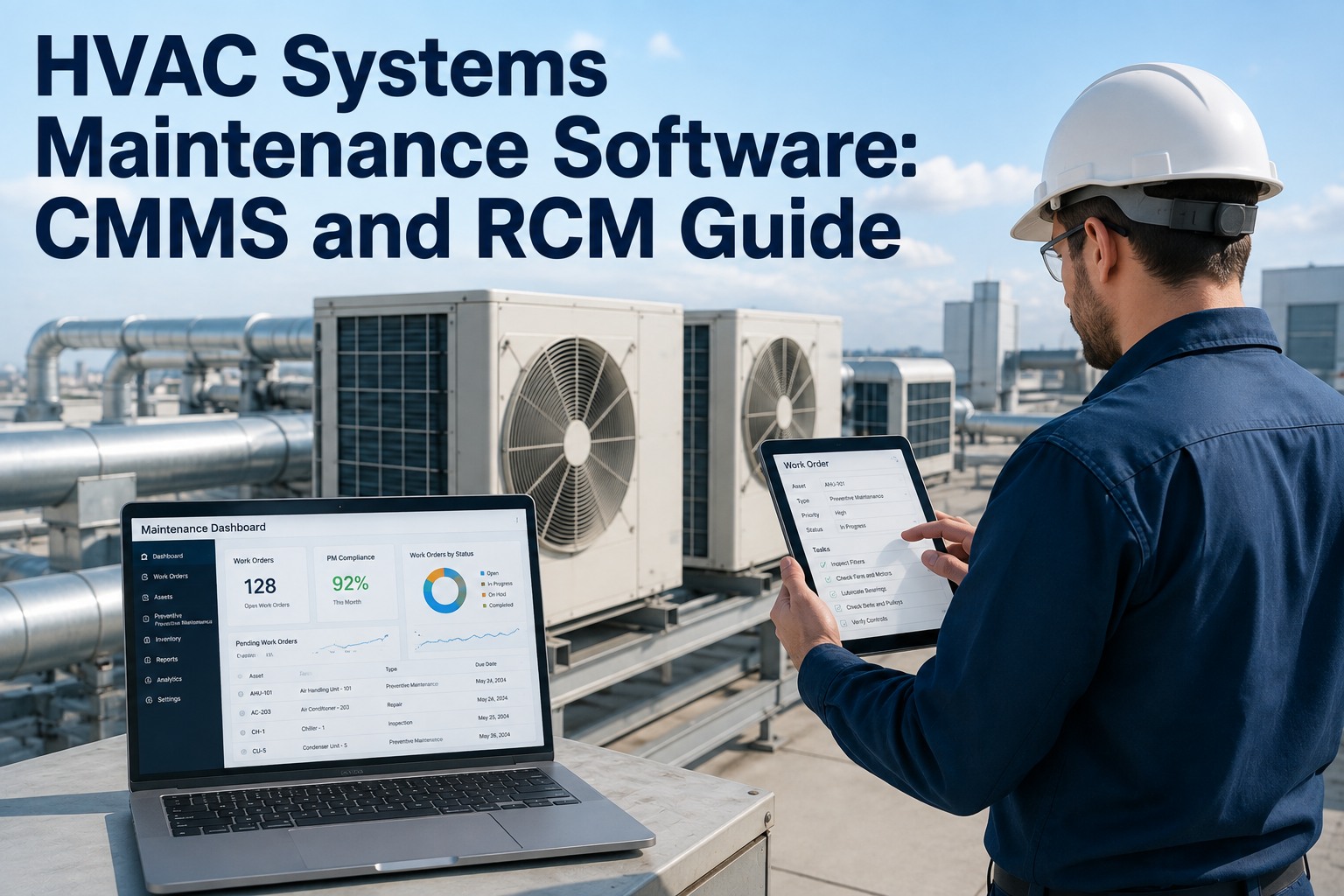
Reliability-centered maintenance combined with CMMS for HVAC and building systems is the proven way to move from reactive firefighting to engineered-out failures — cutting unplanned downtime 30–50% across chillers,...

A warehouse safety checklist is a structured inspection tool used to verify that every piece of equipment, racking system, and operational zone meets OSHA 1910 compliance standards before a hazard can cause an...
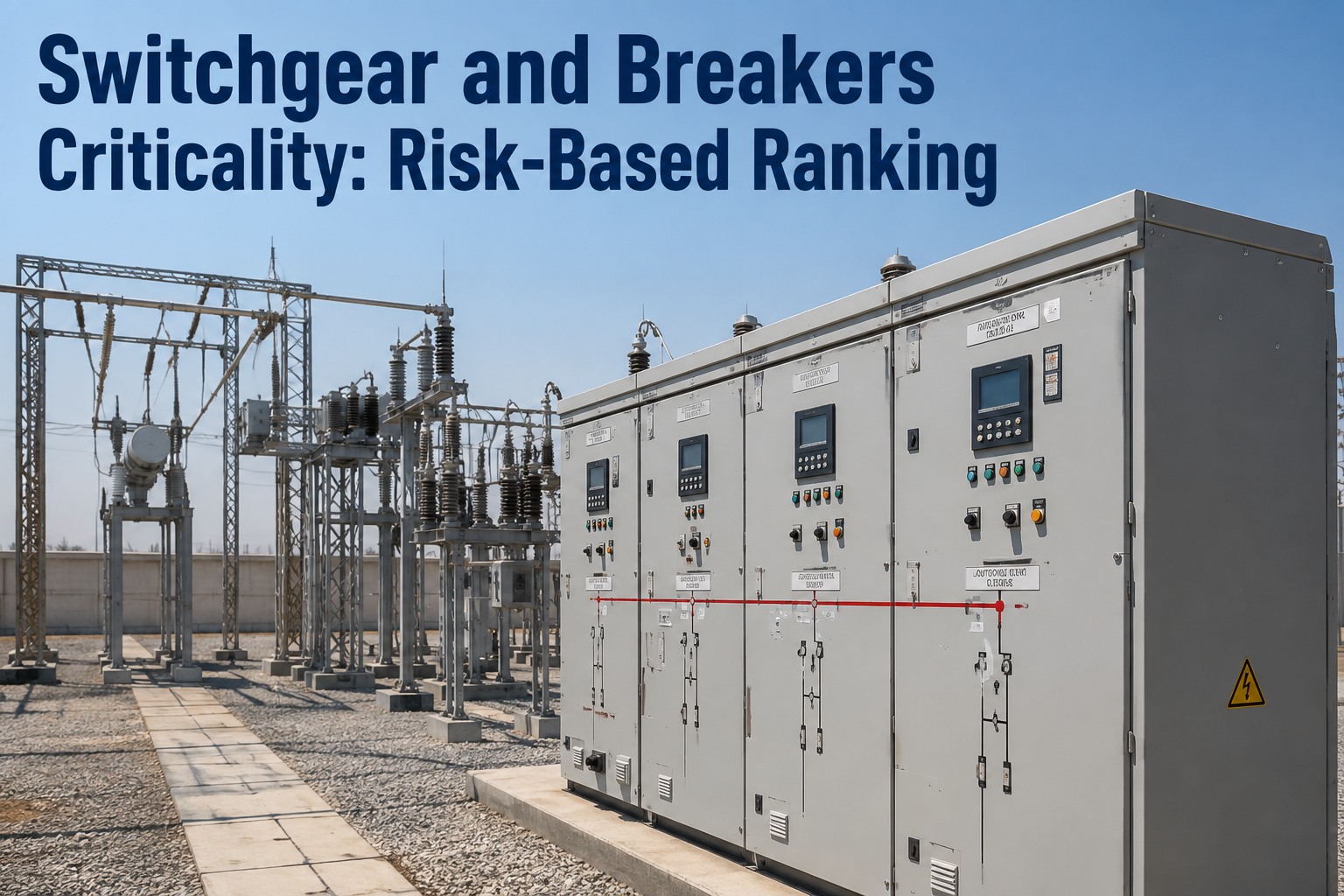
Criticality analysis for switchgear & breakers is the process of ranking electrical assets by consequence and probability of failure so maintenance teams can allocate preventive and predictive resources where...

Confectionery manufacturing maintenance demands a disciplined approach to process heat, sugar handling, and packaging complexity — because a single evaporator failure or enrober breakdown can halt production for...

Restaurant kitchen maintenance is the backbone of profitable food service — a single failed refrigeration unit or missed hood cleaning can trigger health code violations, forced closures, and thousands in lost...
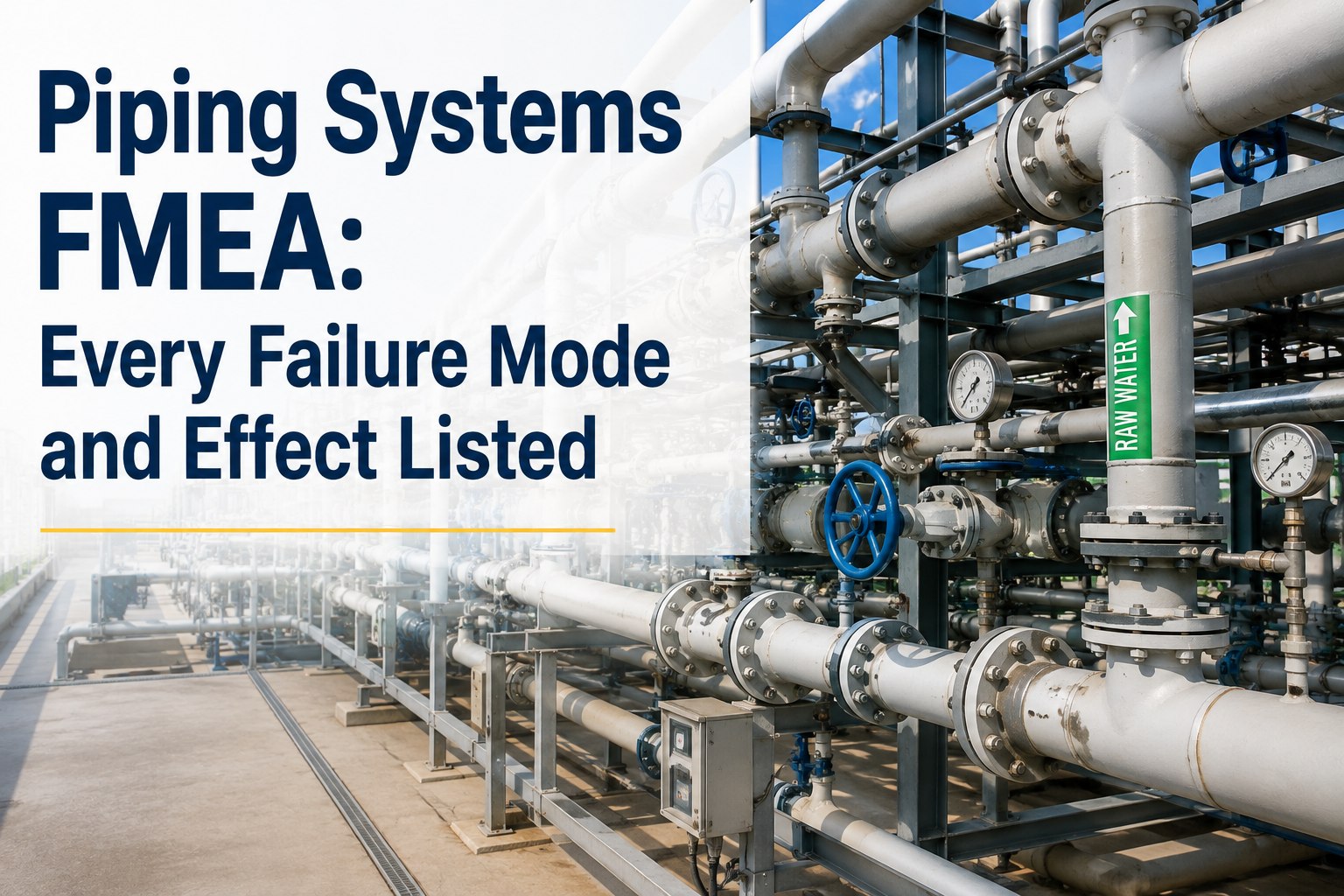
Failure modes and effects for piping systems follow predictable patterns — corrosion under insulation, flow-accelerated corrosion, fatigue at welded joints, and flange leakage account for the majority of unplanned...

Cold-weather fleet maintenance and a rigorous winterization checklist are what separate fleets that run reliably through December, January and February from those that bleed thousands of dollars per cold-start...

Renewable energy asset management with CMMS consolidates solar, wind, and battery storage operations into a single, auditable system of record — replacing scattered spreadsheets, paper logs, and disconnected...
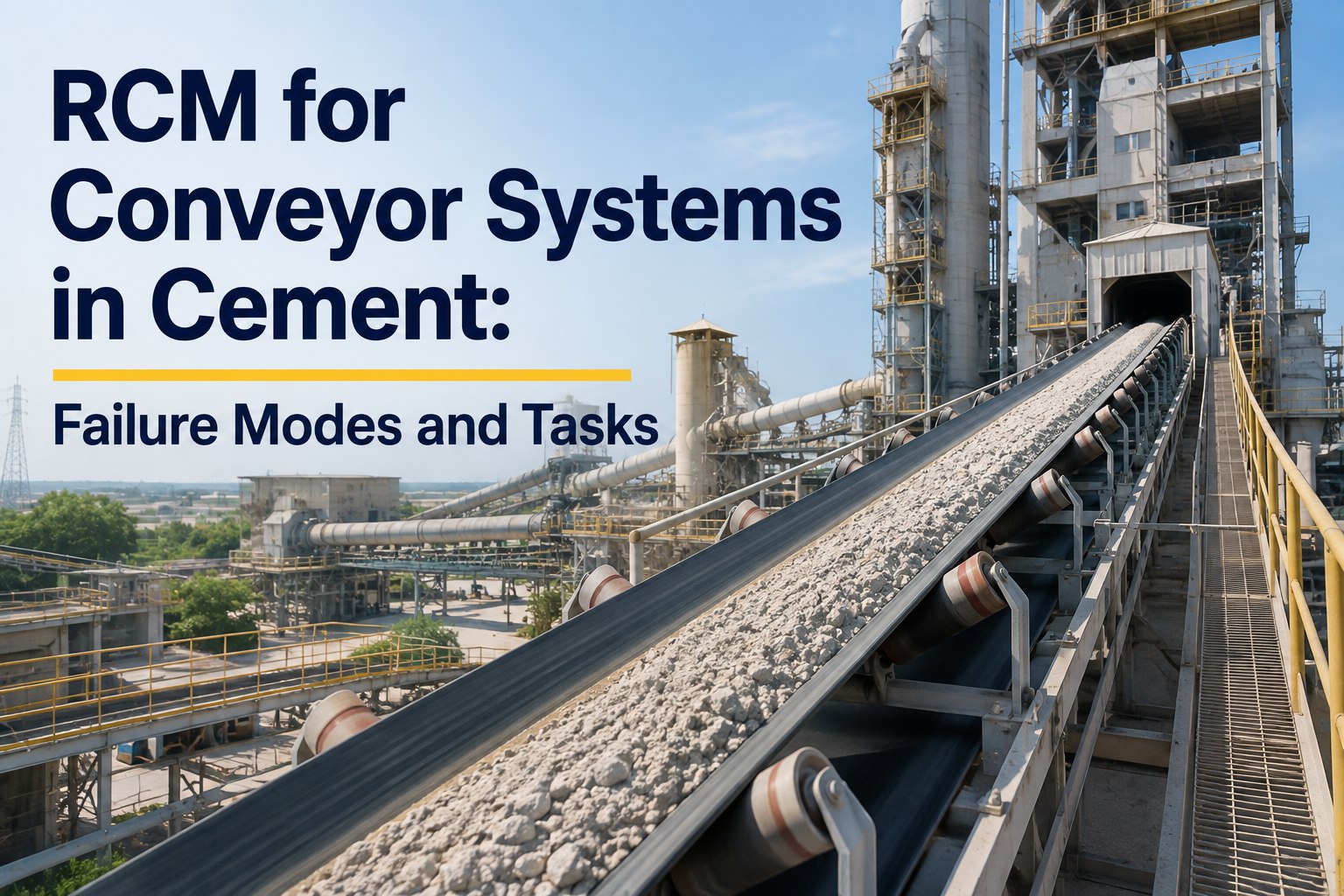
Reliability-Centered Maintenance (RCM) for conveyor systems in cement plants is the systematic process of identifying every critical failure mode—from belt tears and pulley-bearing degradation to motor...

Meat and poultry processing plant maintenance is one of the most demanding operational environments in the food industry — every shift runs under continuous USDA FSIS inspection, where a single undocumented...
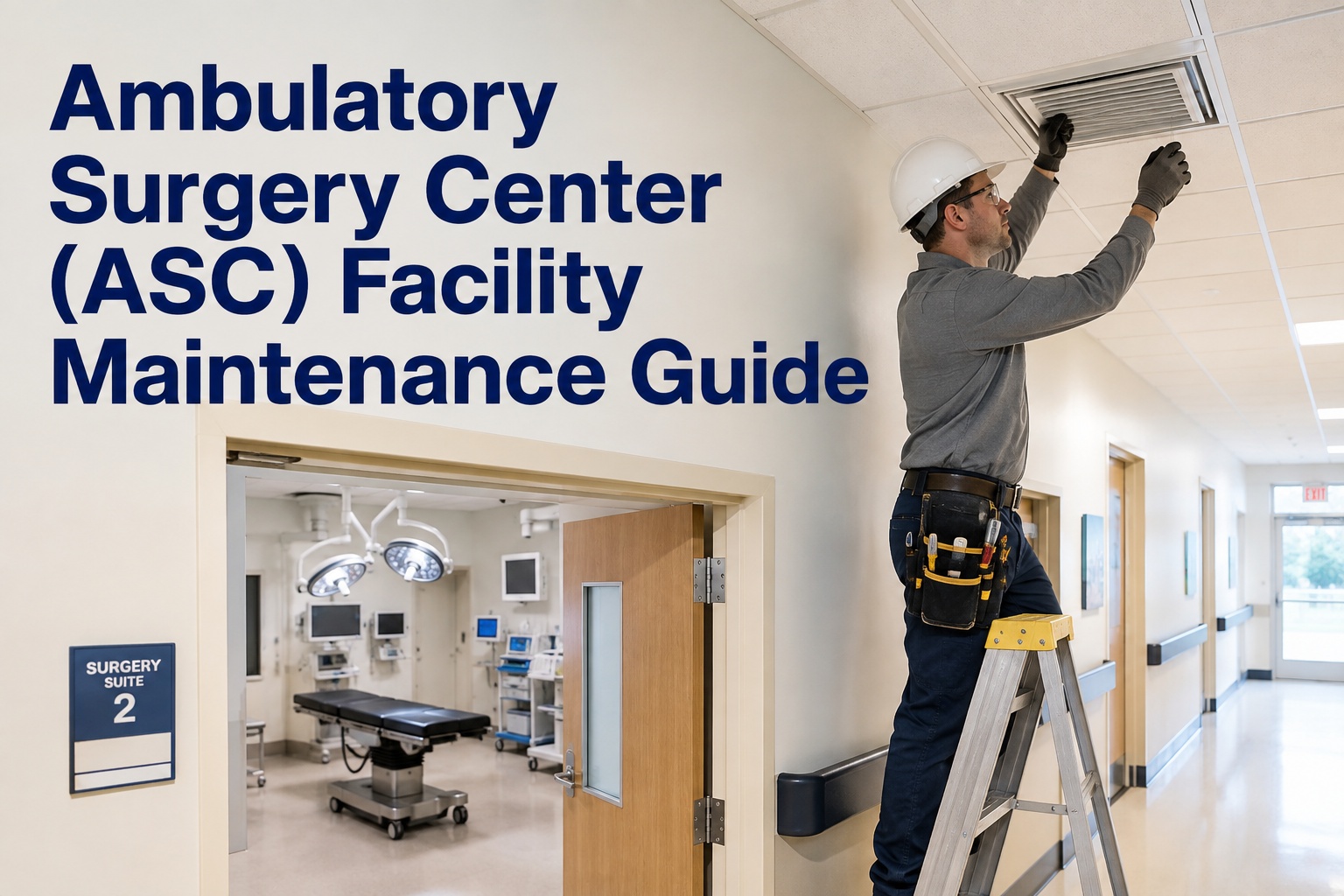
Ambulatory Surgery Center facility maintenance demands the same rigor as a hospital environment, but with a fraction of the overhead and staff. ASCs must comply with CMS Conditions for Coverage under 42 CFR Part...

Food allergen cross-contamination is one of the highest-stakes risks in food manufacturing — a single shared surface, missed gasket, or undocumented changeover can trigger a Class I recall costing $10M or more....

A ship inspection report (SIRE) is the standardized document used to record the physical and operational condition of a vessel's critical assets during scheduled maintenance. When teams rely on memory or...
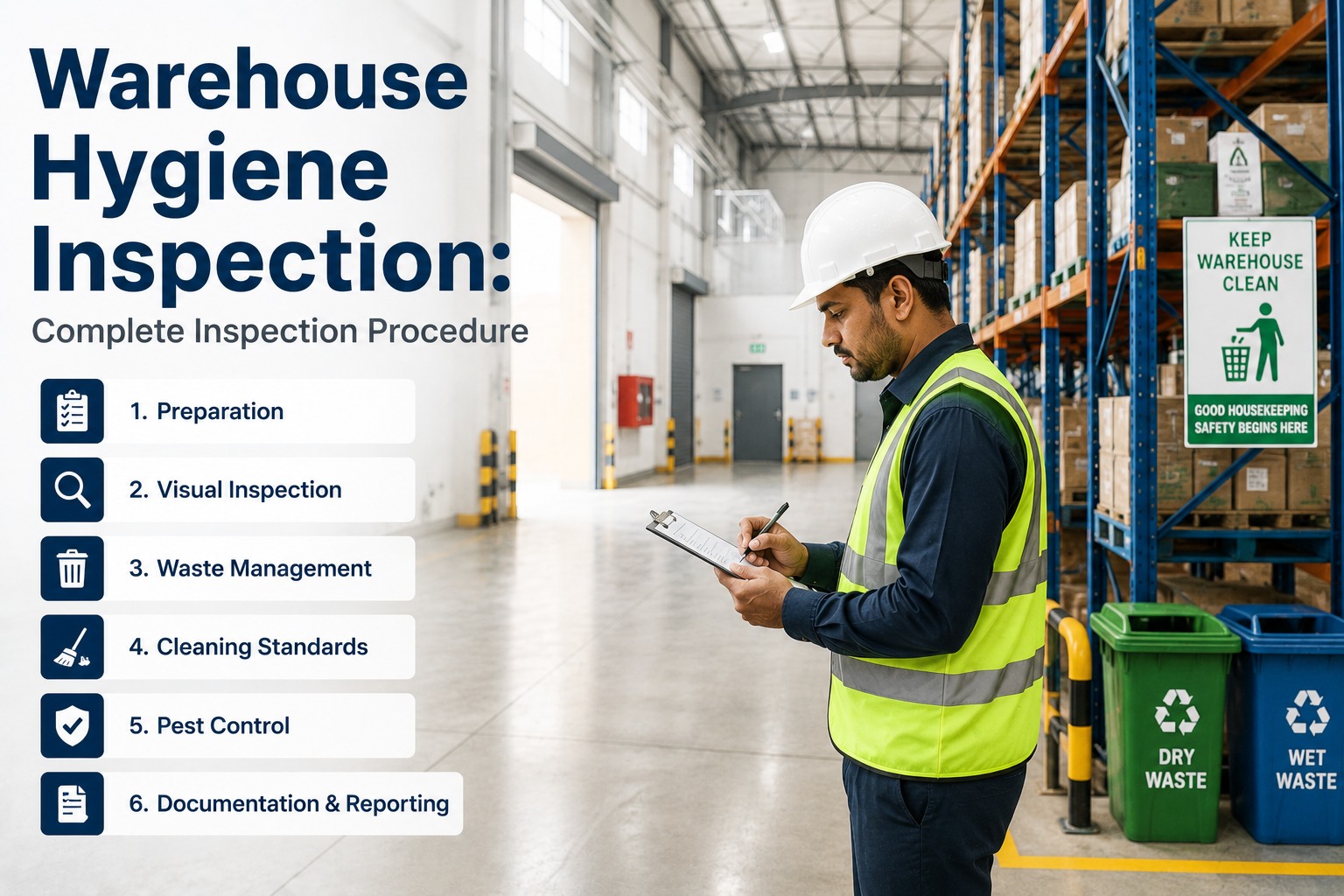
A warehouse hygiene inspection is the fastest, most defensible way to catch small facility and equipment issues before they escalate into regulatory fines, inventory contamination, or shutdown-level safety...
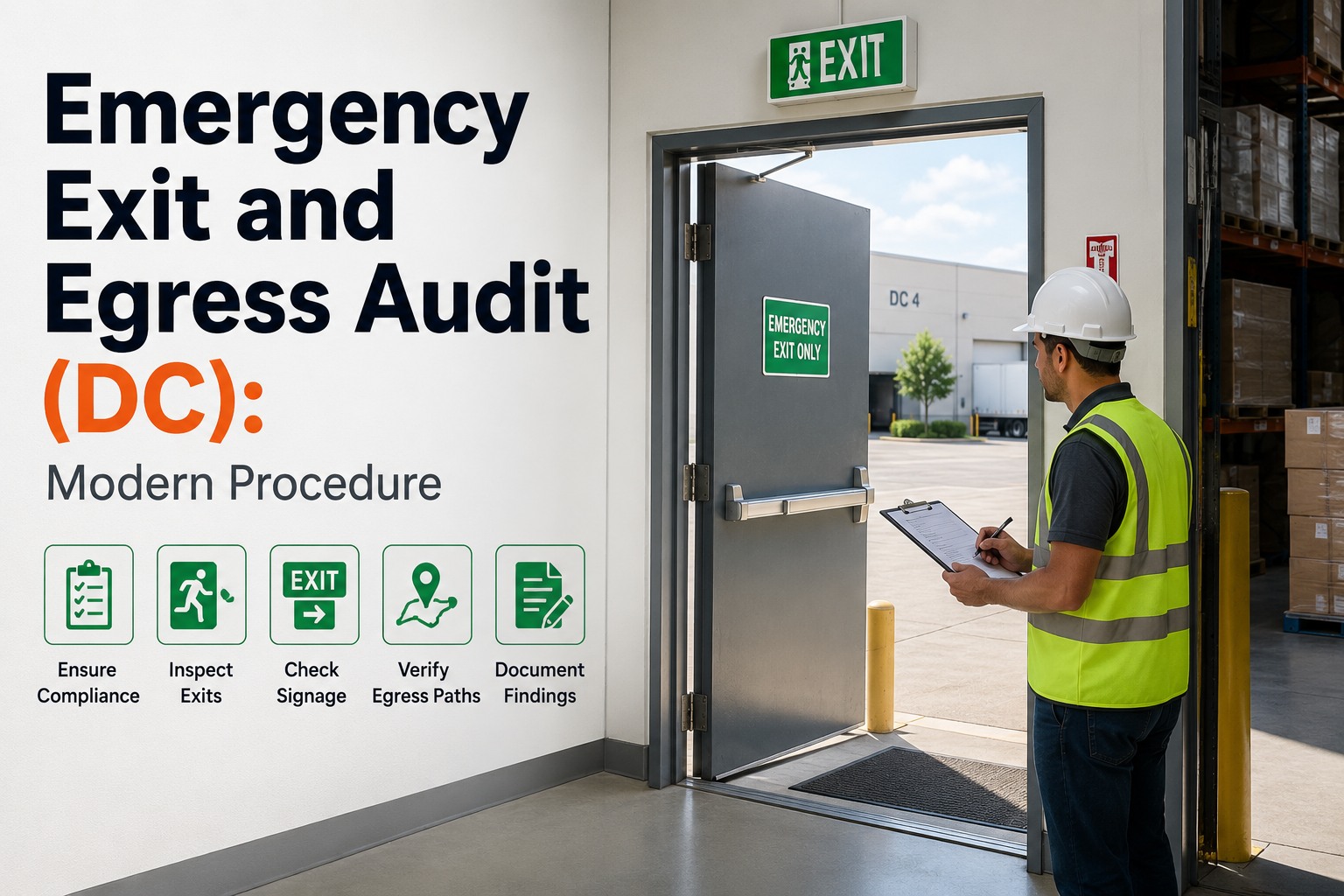
An emergency exit and egress audit is the systematic inspection of every exit route, door, sign, and lighting fixture in a distribution center to verify compliance with OSHA 1910.36 and local fire codes. The...

A boat pre-departure checklist is a structured, per-trip inspection procedure that vessel operators use to verify hull integrity, safety equipment, propulsion systems, crew readiness, and compliance documentation...
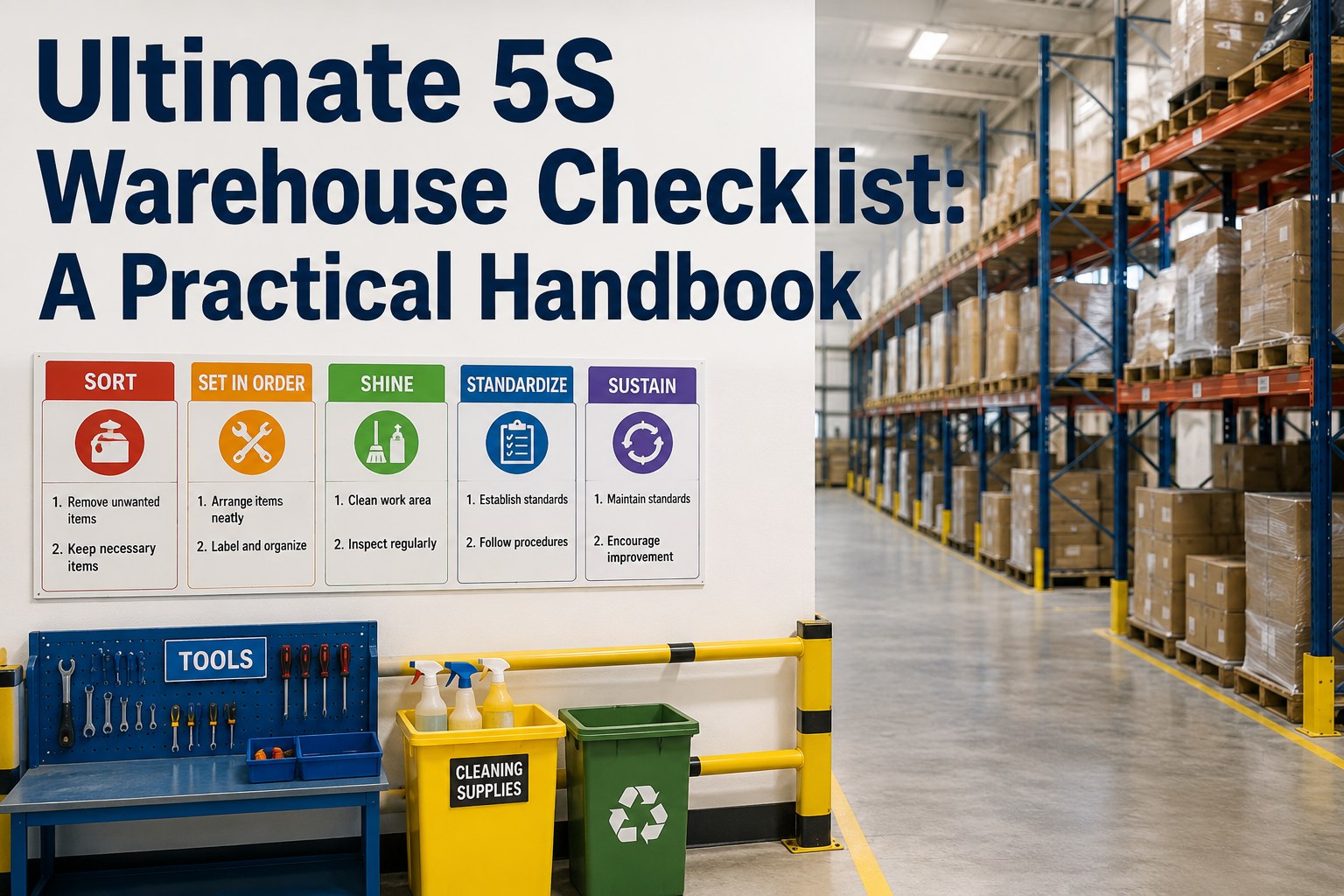
A 5S warehouse checklist is the operational backbone that separates facilities which pass OSHA-aligned audits cleanly from those that scramble the week before an inspector arrives. This practical handbook walks...

A general aviation preflight checklist is the structured, point-by-point inspection procedure that pilots, technicians and fleet operators run before every flight to verify that each asset is airworthy, compliant...

Unplanned downtime is the single most expensive line item on an Oil & Gas P&L that nobody tracks precisely enough. The cost of downtime in oil & gas operations typically ranges from $50,000 to $500,000...

Reliability centered maintenance in textiles is the systematic process of identifying critical asset failure modes—spinning frames, looms, dyeing kettles—and selecting the right maintenance strategy for each to cut...

Reliability centered maintenance in oil & gas is the systematic process of identifying how critical assets fail, selecting the right maintenance strategy for each failure mode, and executing that strategy...

An air handling unit preventive maintenance checklist is the structured set of inspection points, mechanical checks, electrical readings, and safety verifications that keep commercial HVAC equipment running...

A solar farm O&M inspection checklist is the structured set of verification points that operations and maintenance teams use to confirm photovoltaic plants meet NEC 690 compliance, maintain grid reliability,...

A chiller preventive maintenance checklist is the structured procedure reliability teams follow on every inspection visit to verify mechanical integrity, electrical safety, refrigerant charge, lubrication quality...
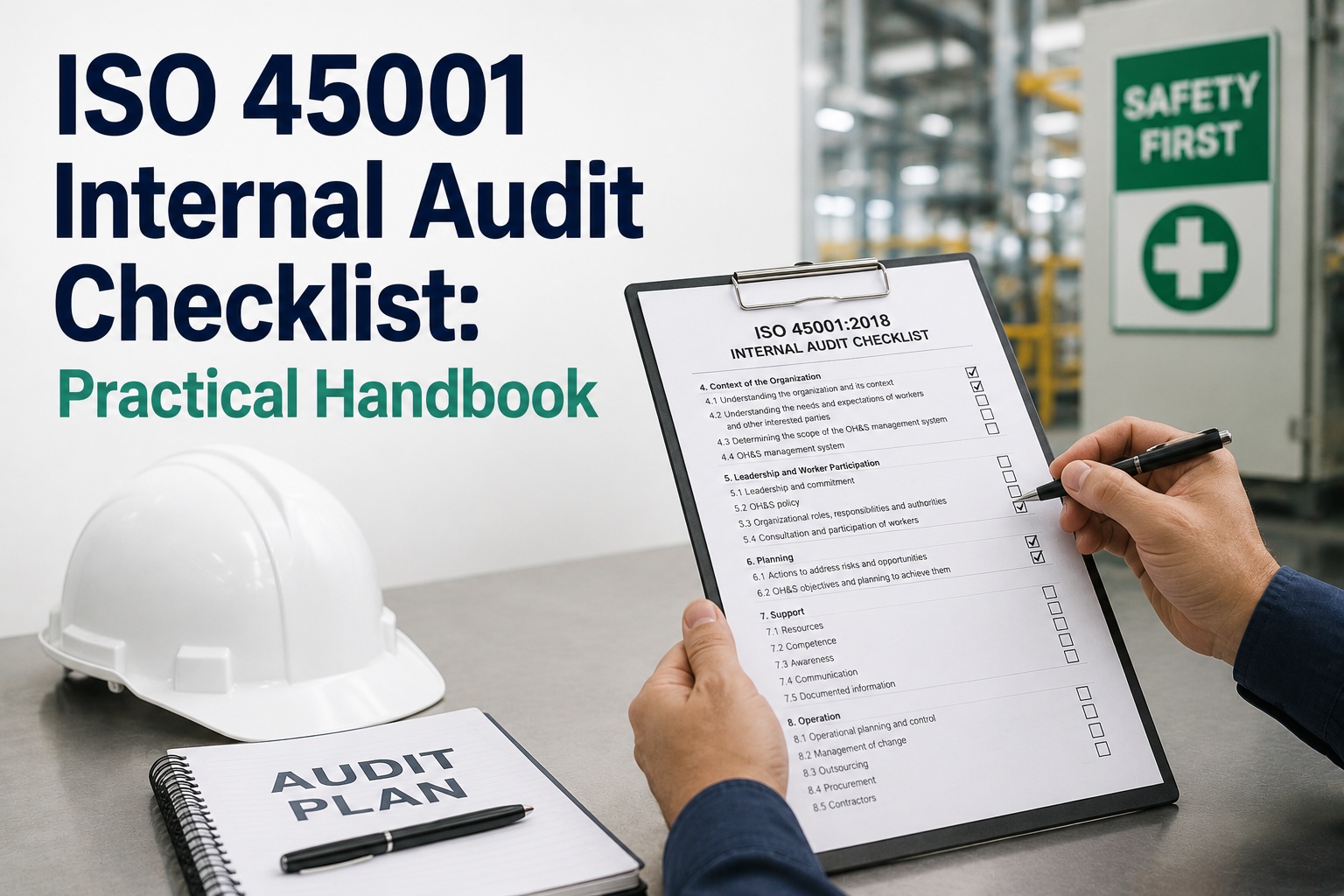
An ISO 45001 internal audit checklist is the structured tool Environment, Health & Safety (EHS) and maintenance reliability teams use to verify that their Occupational Health and Safety Management System...
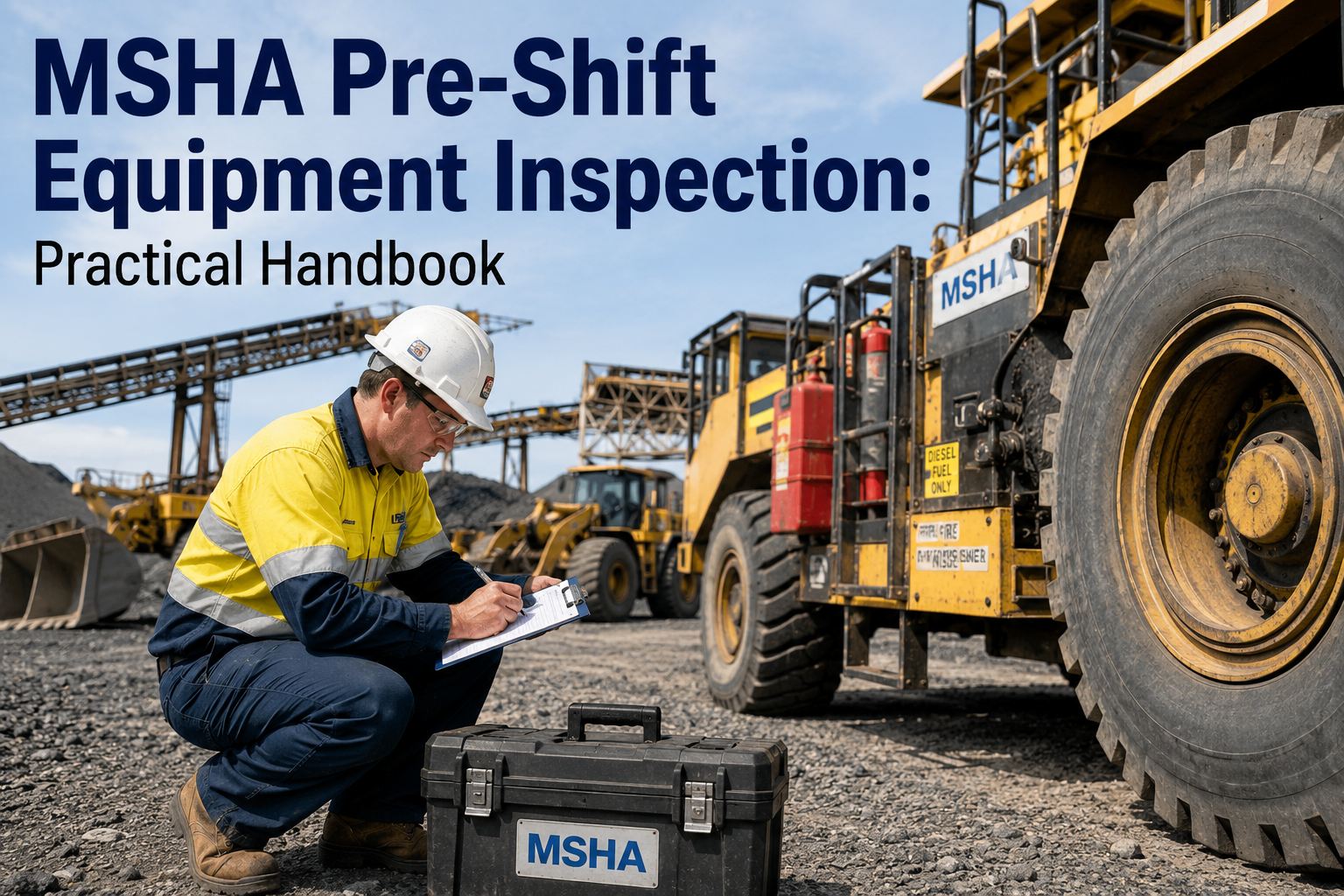
A proper MSHA pre-shift equipment inspection is the fastest way to catch small mechanical issues before they escalate into shutdown-level failures or safety incidents. The biggest reason these inspections fail...
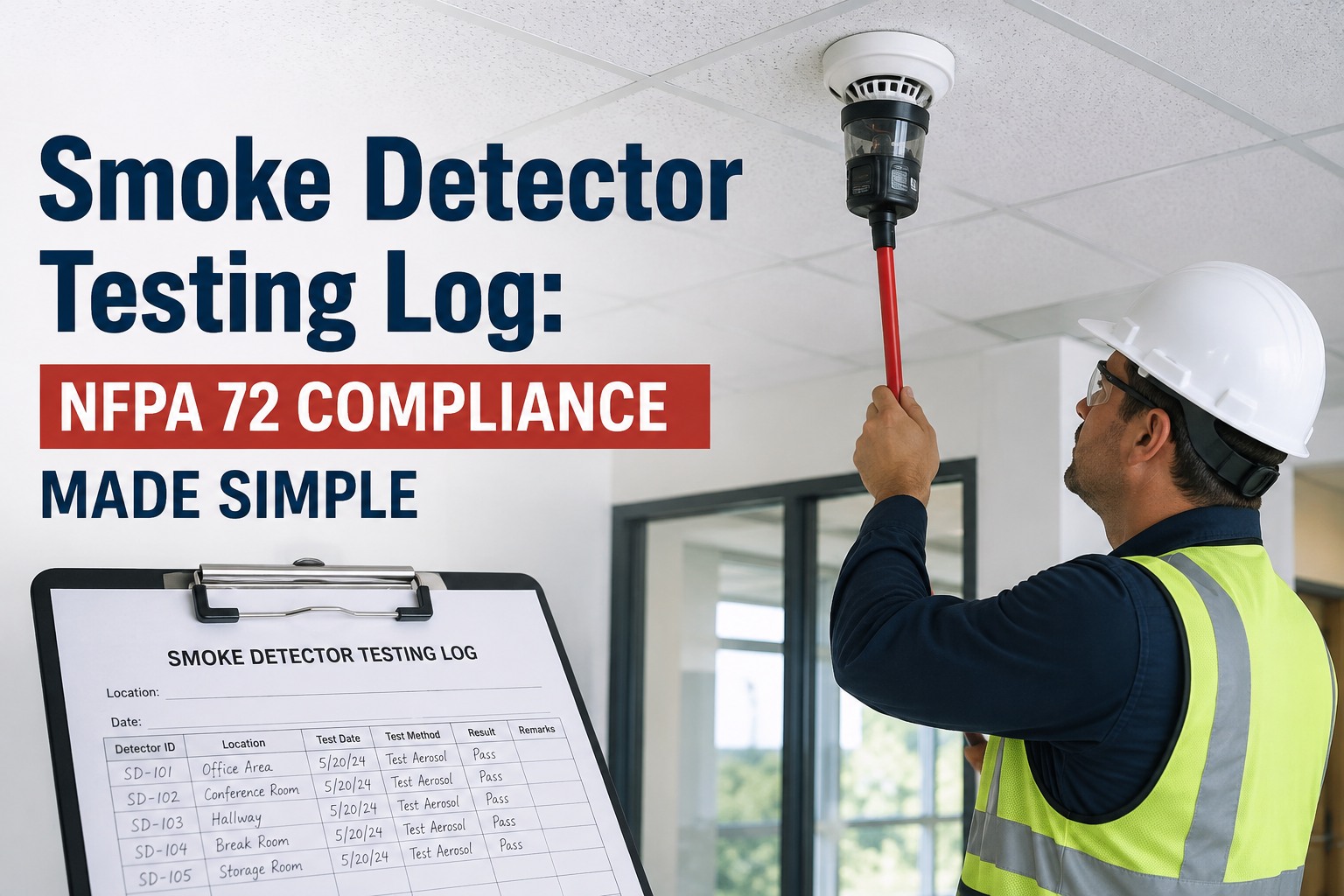
A smoke detector testing log is the documented record that proves every smoke detector in your facility has been inspected, tested, and maintained according to NFPA 72 compliance standards. Fire safety teams rely...

Reliability centered maintenance in manufacturing is the systematic process of identifying how assets fail, selecting the right maintenance strategy for each failure mode, and executing that strategy to eliminate...

A fire extinguisher annual maintenance checklist is the fastest way for facilities and safety teams to catch small inspection defects before they become shutdown-level compliance failures. Under NFPA 10, every...

An electric motor preventive maintenance checklist is the single most effective tool for reducing unplanned downtime, extending asset life, and controlling maintenance costs across industrial facilities. When...

A standardized split system AC preventive maintenance checklist ensures every technician touches the same mechanical, electrical and safety points on every visit — eliminating missed steps that lead to unplanned...
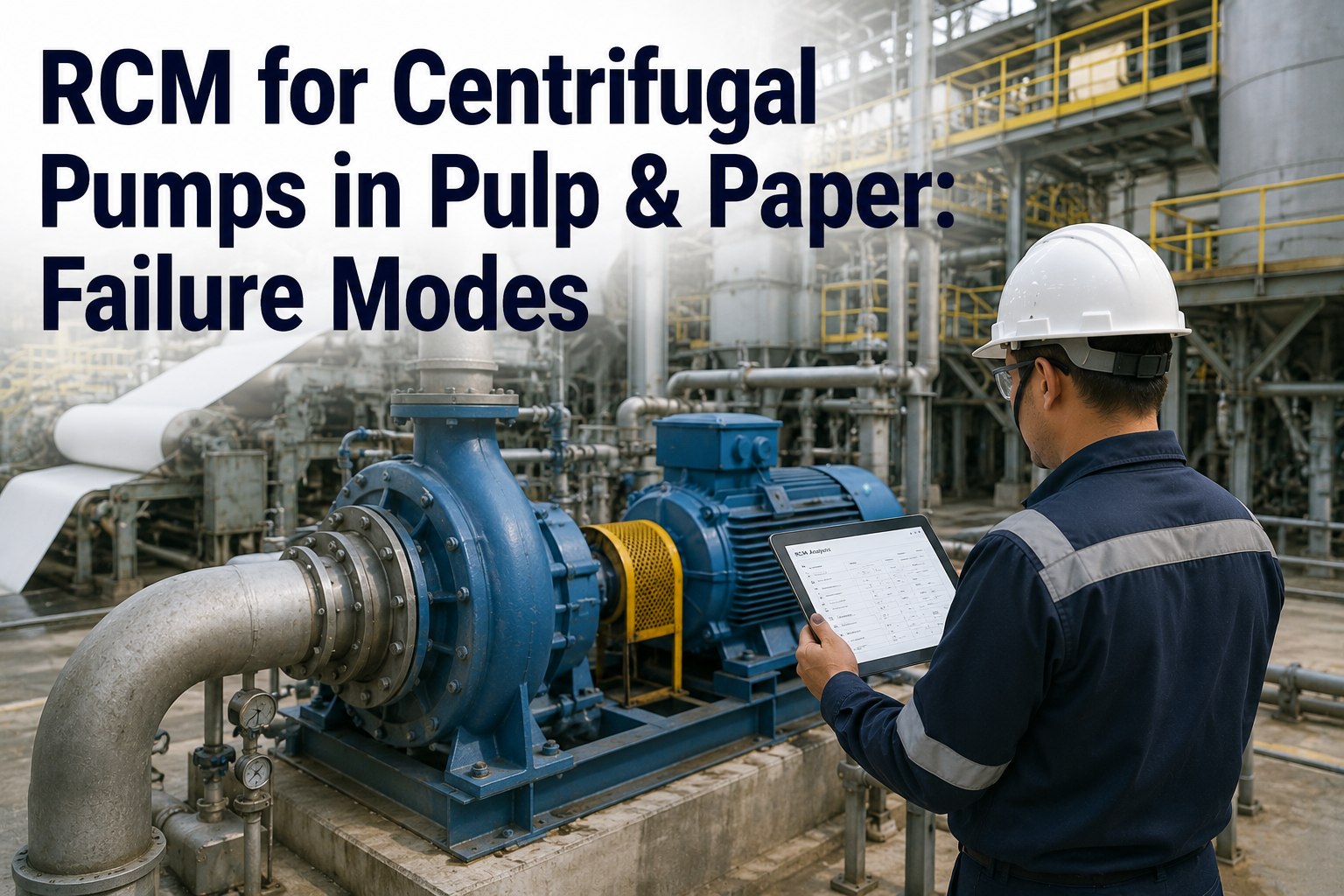
Reliability-Centered Maintenance (RCM) for centrifugal pumps in pulp and paper mills is the systematic process of identifying specific failure modes—like cavitation, seal degradation, and bearing wear—and matching...
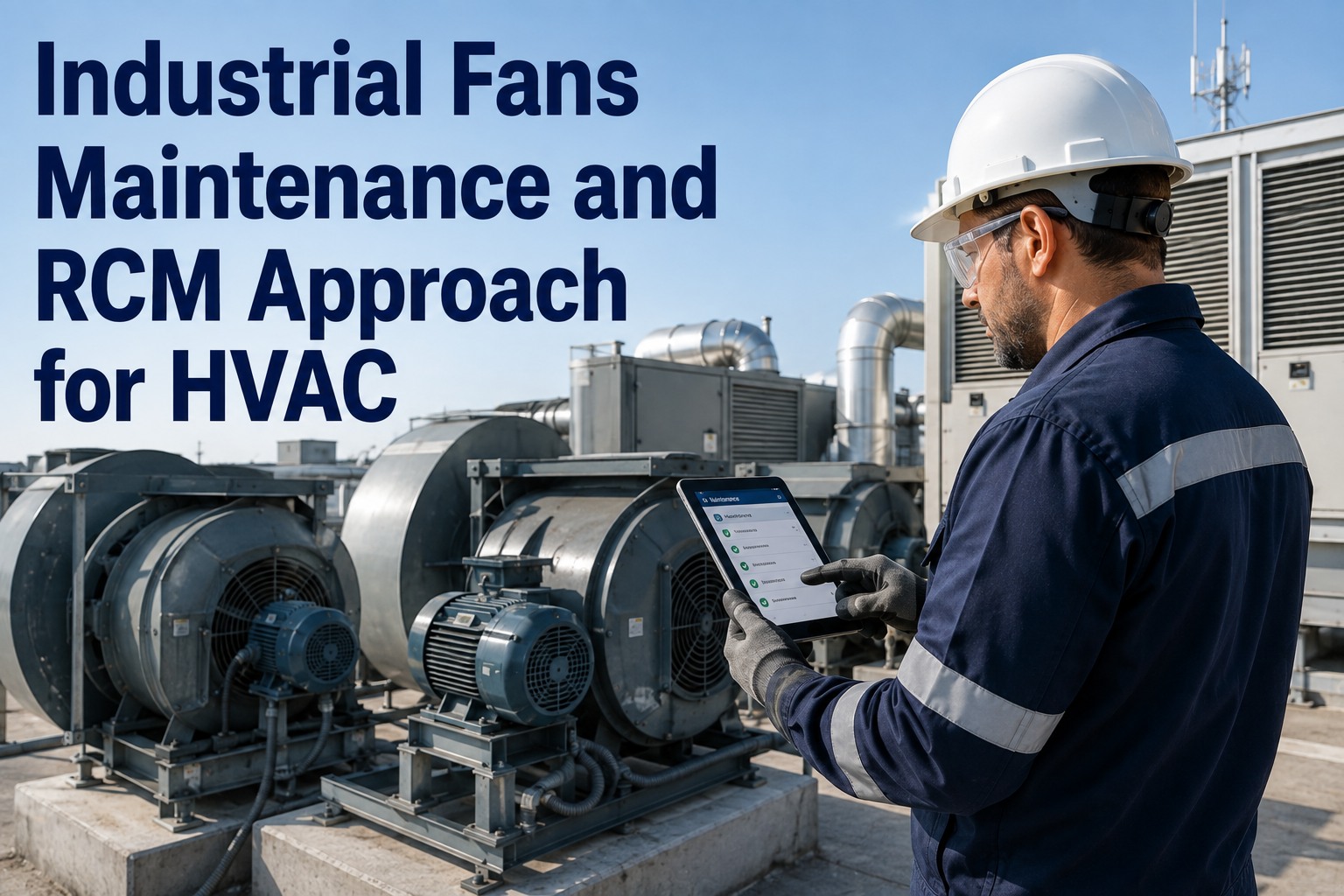
Reliability-Centered Maintenance (RCM) for industrial fans and blowers in HVAC and building systems is the systematic process of identifying failure modes—like bearing degradation, impeller imbalance, and belt...
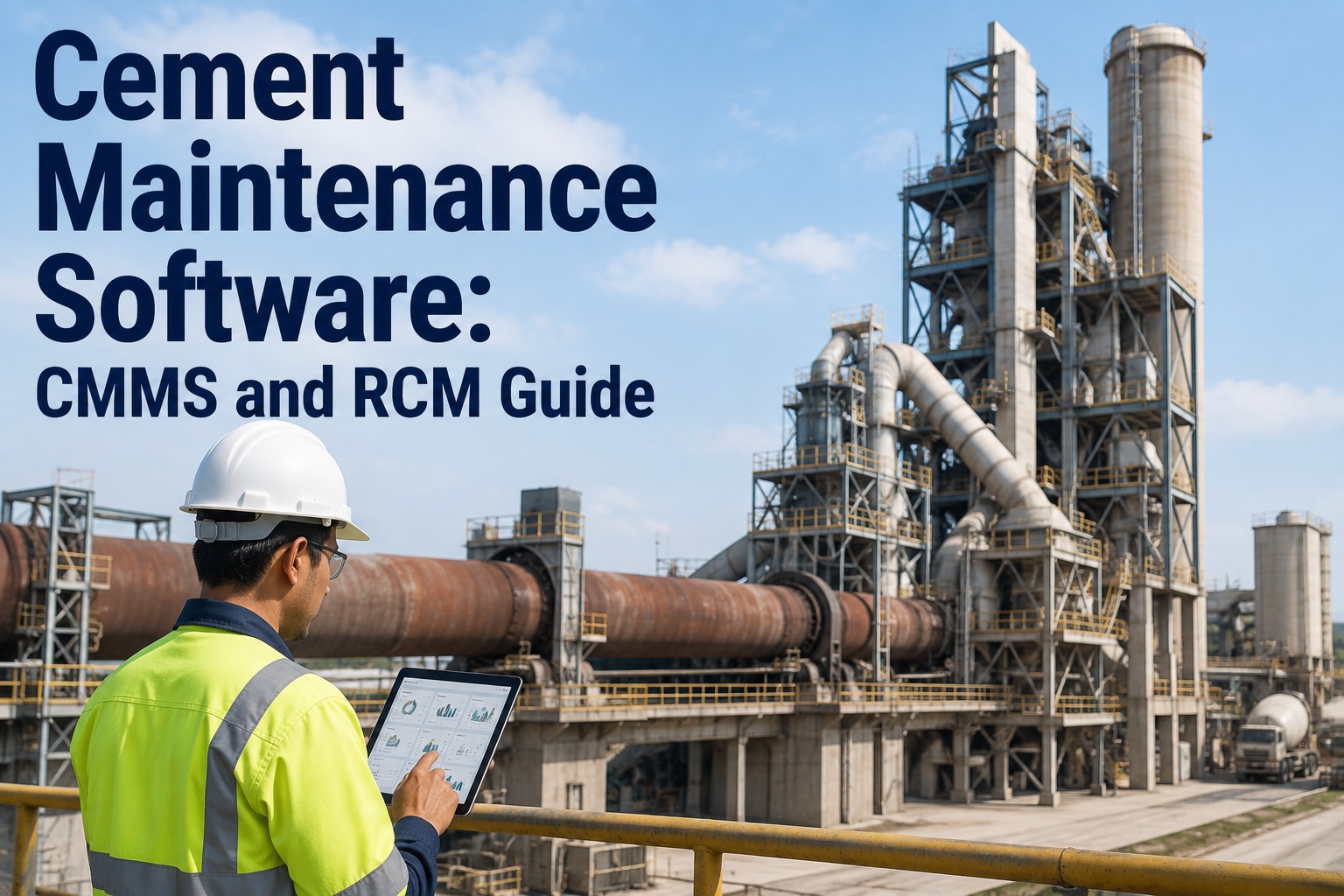
Reliability-Centered Maintenance (RCM) is the difference between a cement maintenance software operation that reacts to breakdowns and one that engineers them out. By integrating a modern CMMS with RCM principles,...
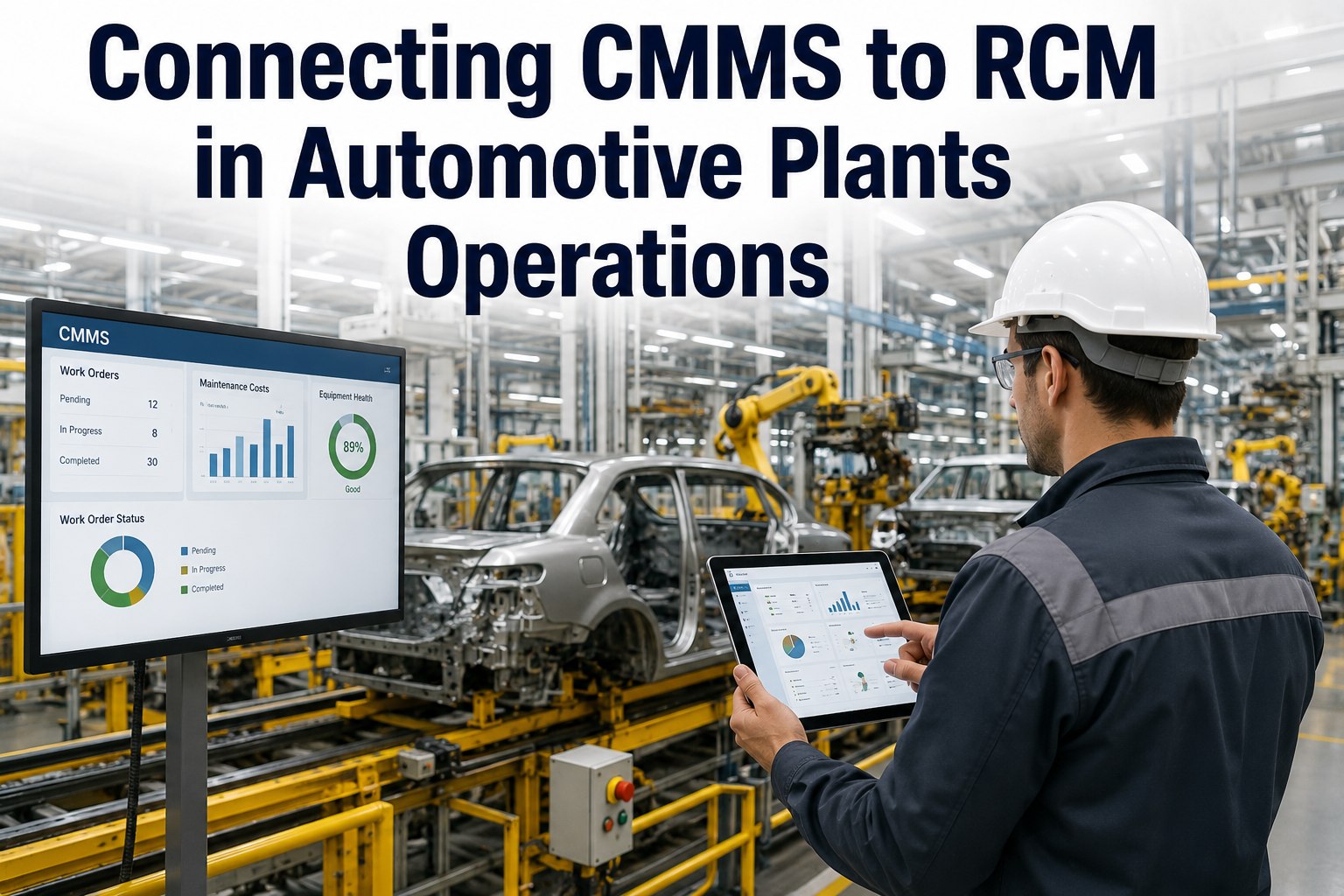
Connecting CMMS to RCM in automotive plants is the fastest way to move from reactive firefighting to a structured, predictive reliability program that keeps high-volume production lines running. When automotive...
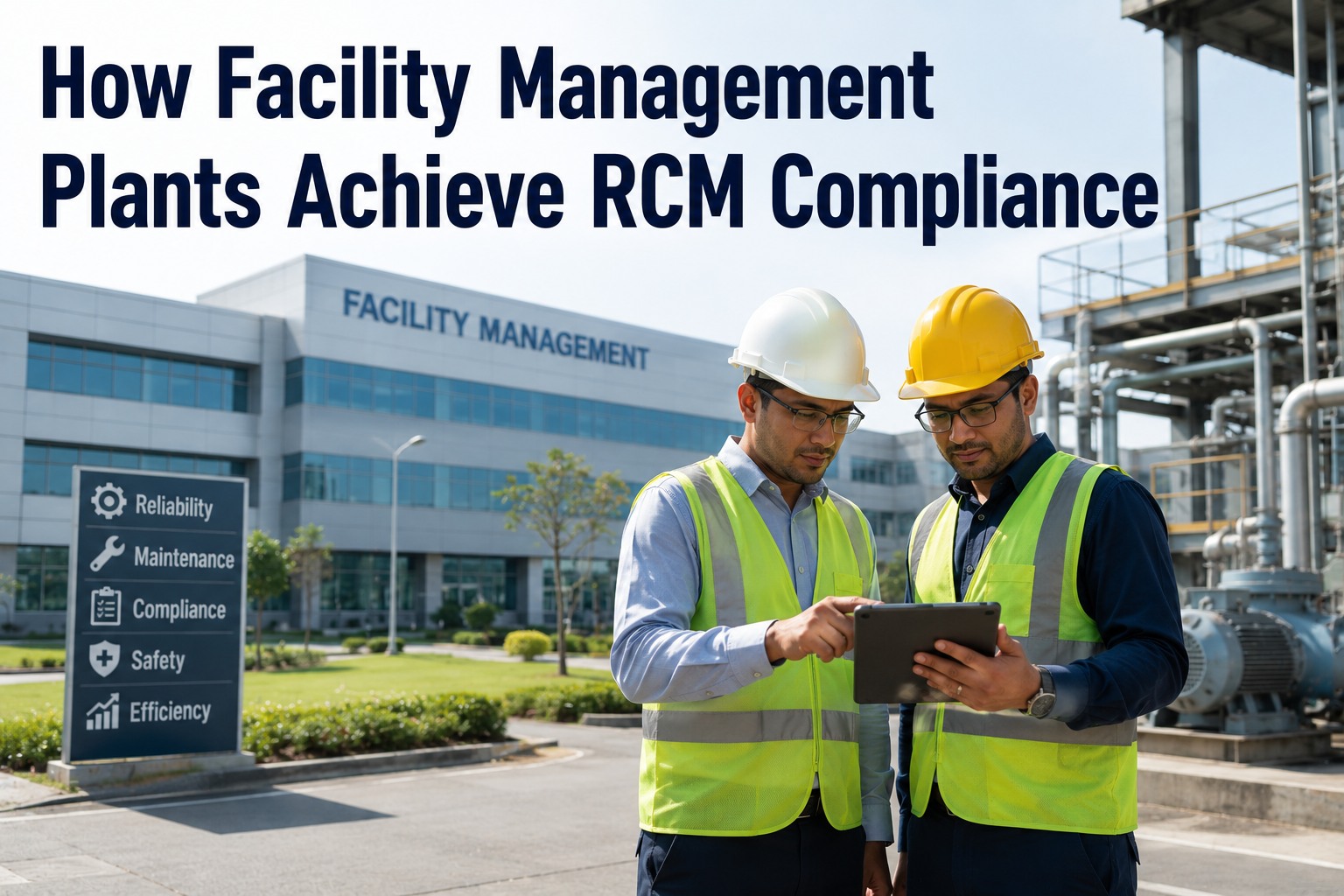
RCM compliance in facility management means aligning every preventive maintenance task, failure mode analysis, and inspection record with internationally recognized standards like SAE JA1011 and ISO 55001. Facility...

Integrating CMMS with Reliability-Centered Maintenance (RCM) for food & beverage operations is the critical difference between a plant that constantly reacts to breakdowns and one that systematically engineers...
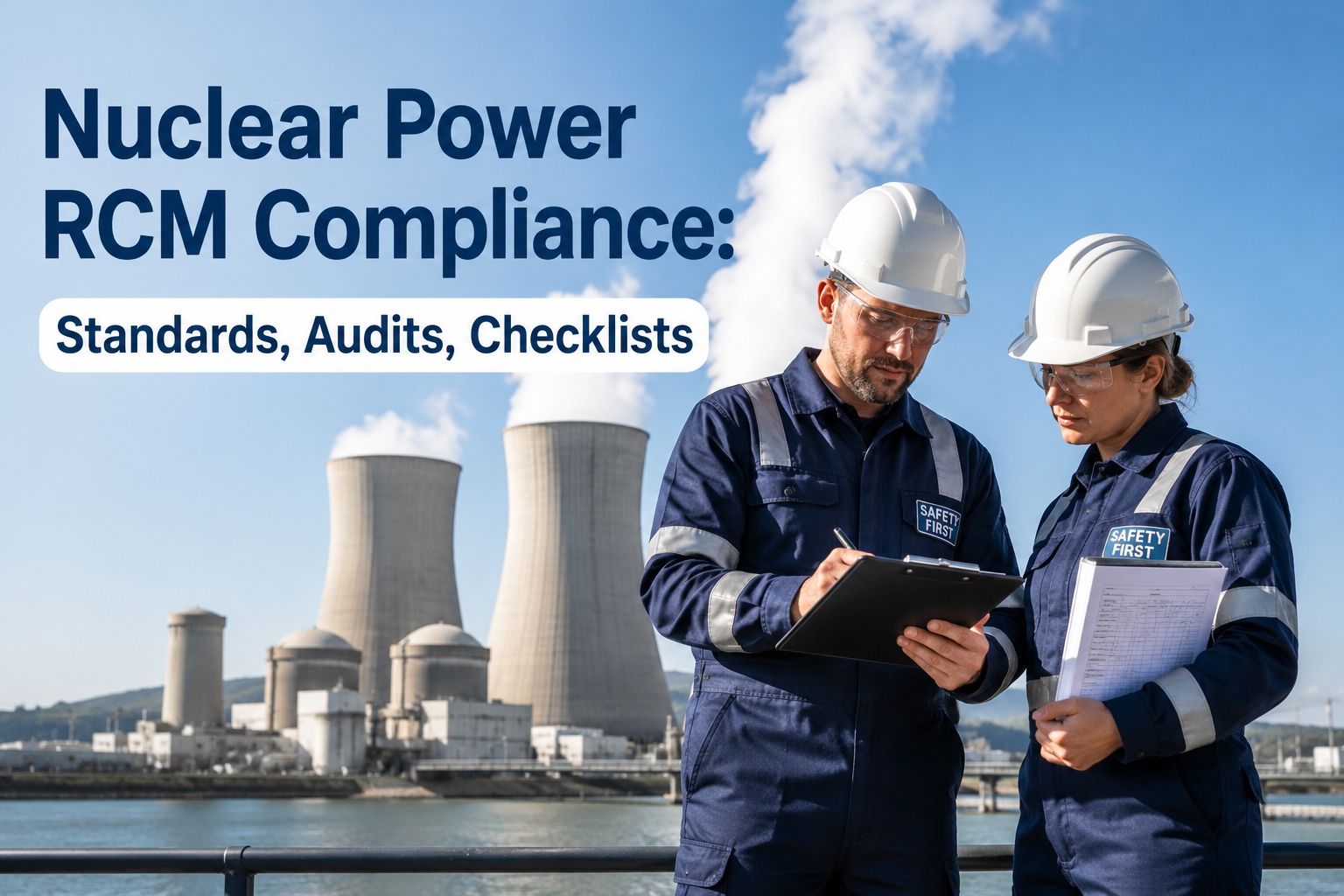
Nuclear power RCM compliance demands rigorous adherence to ISO 55001, SAE JA1011, and industry-specific nuclear power maintenance standards to ensure continuous safe operations. For maintenance and reliability...
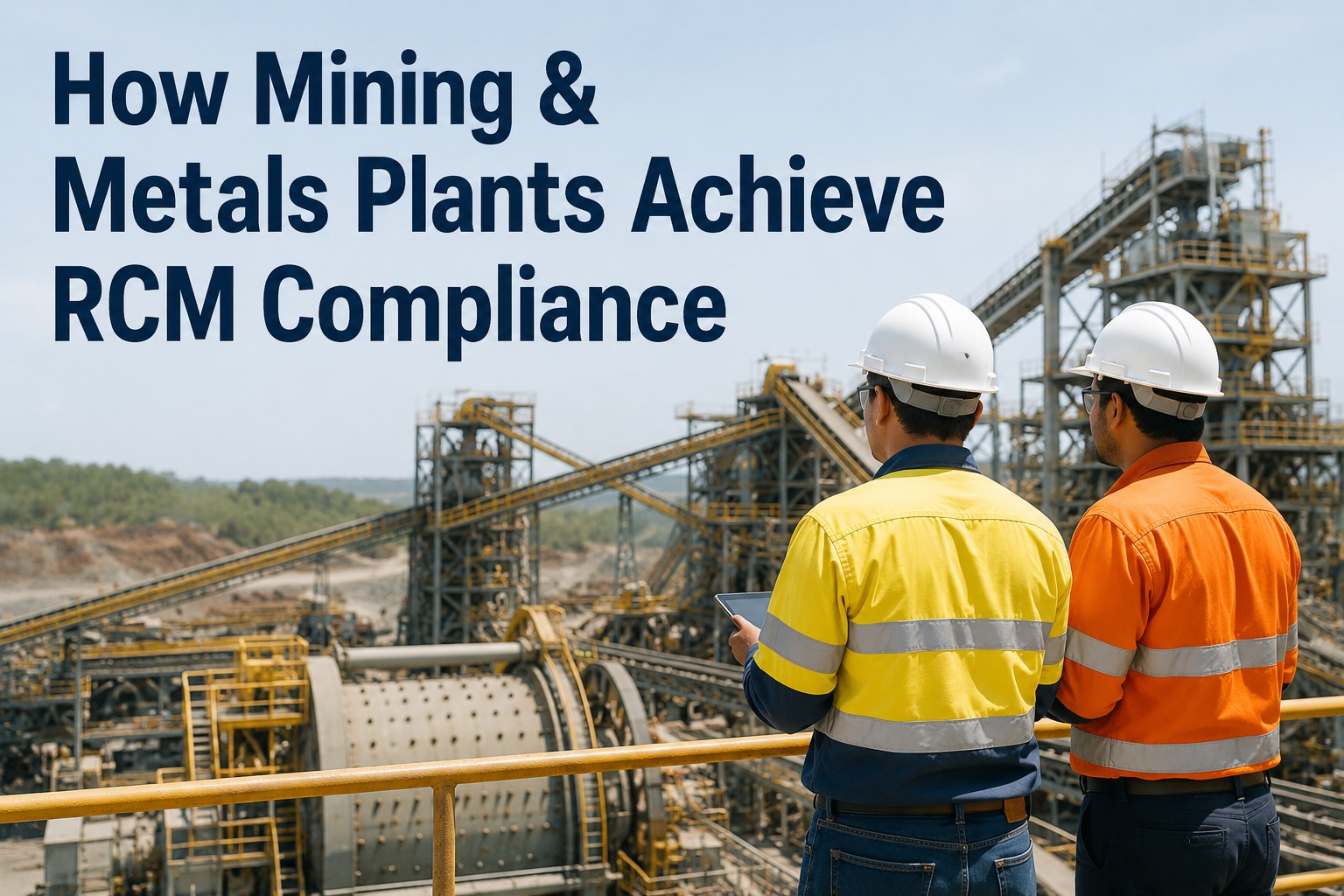
RCM compliance in mining and metals is the structured process of aligning maintenance strategies with ISO 55001, SAE JA1011, and site-specific safety standards to ensure asset reliability and audit readiness....

Reliability-Centered Maintenance (RCM) is only as effective as the system that executes it. For manufacturing plants, CMMS RCM integration bridges the gap between failure-mode analysis and daily work order...
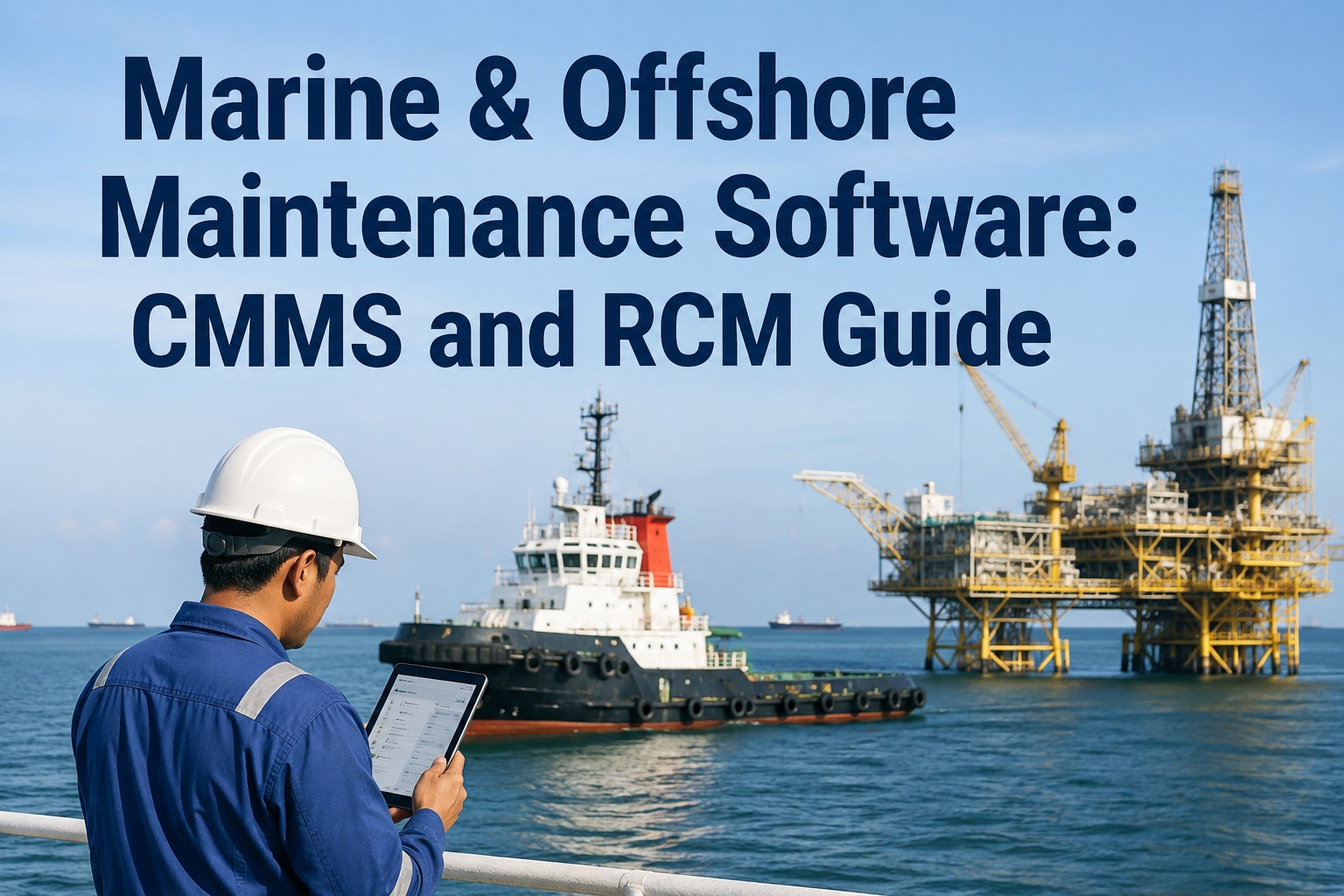
Marine and offshore maintenance software built on a modern CMMS and RCM framework can cut unplanned downtime by 30–50% and extend the life of critical rotating equipment by years. For teams managing vessels, rigs,...
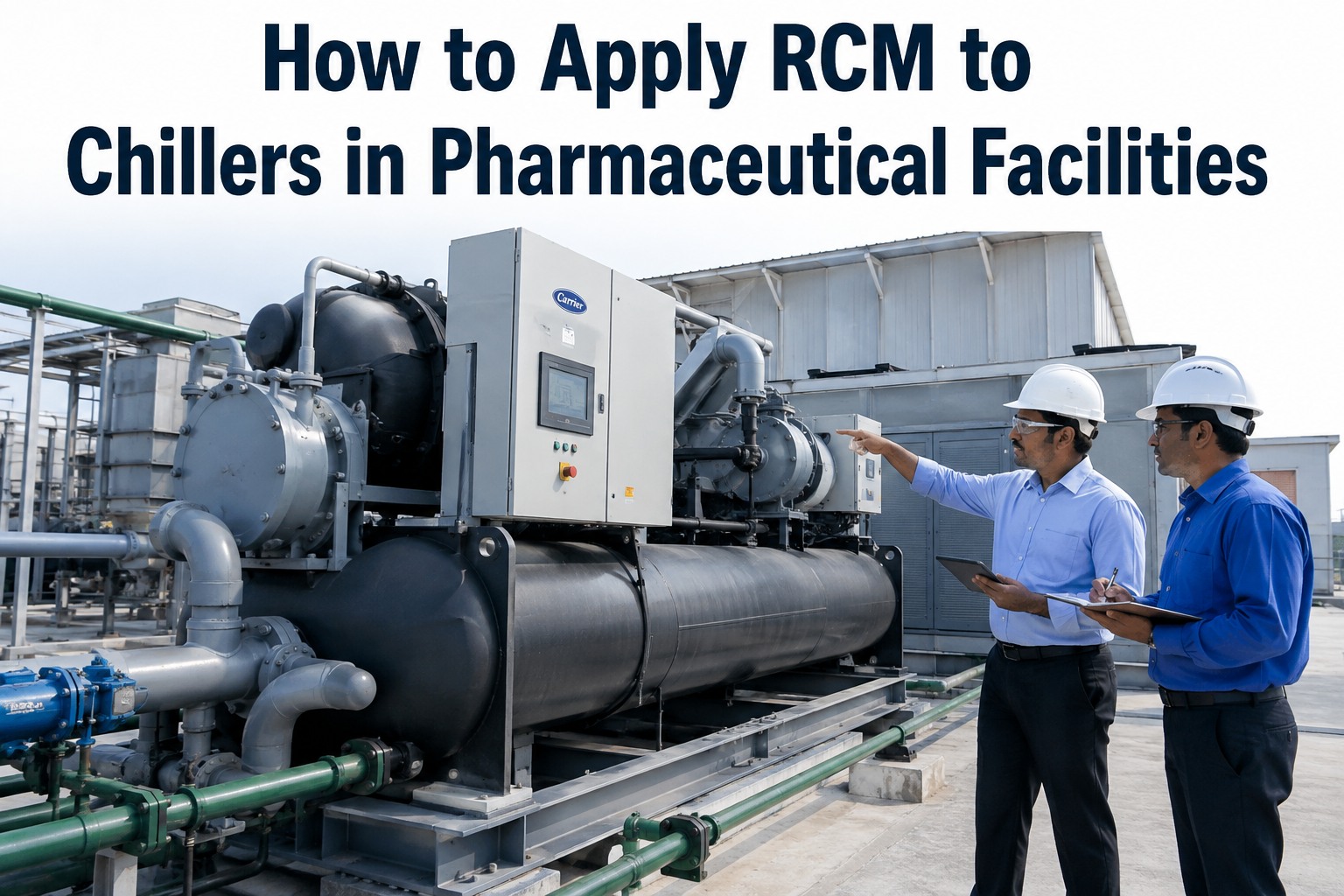
Reliability-Centered Maintenance (RCM) applied to chillers in pharmaceutical facilities is the systematic process of identifying every critical failure mode—from refrigerant leaks to compressor bearing...
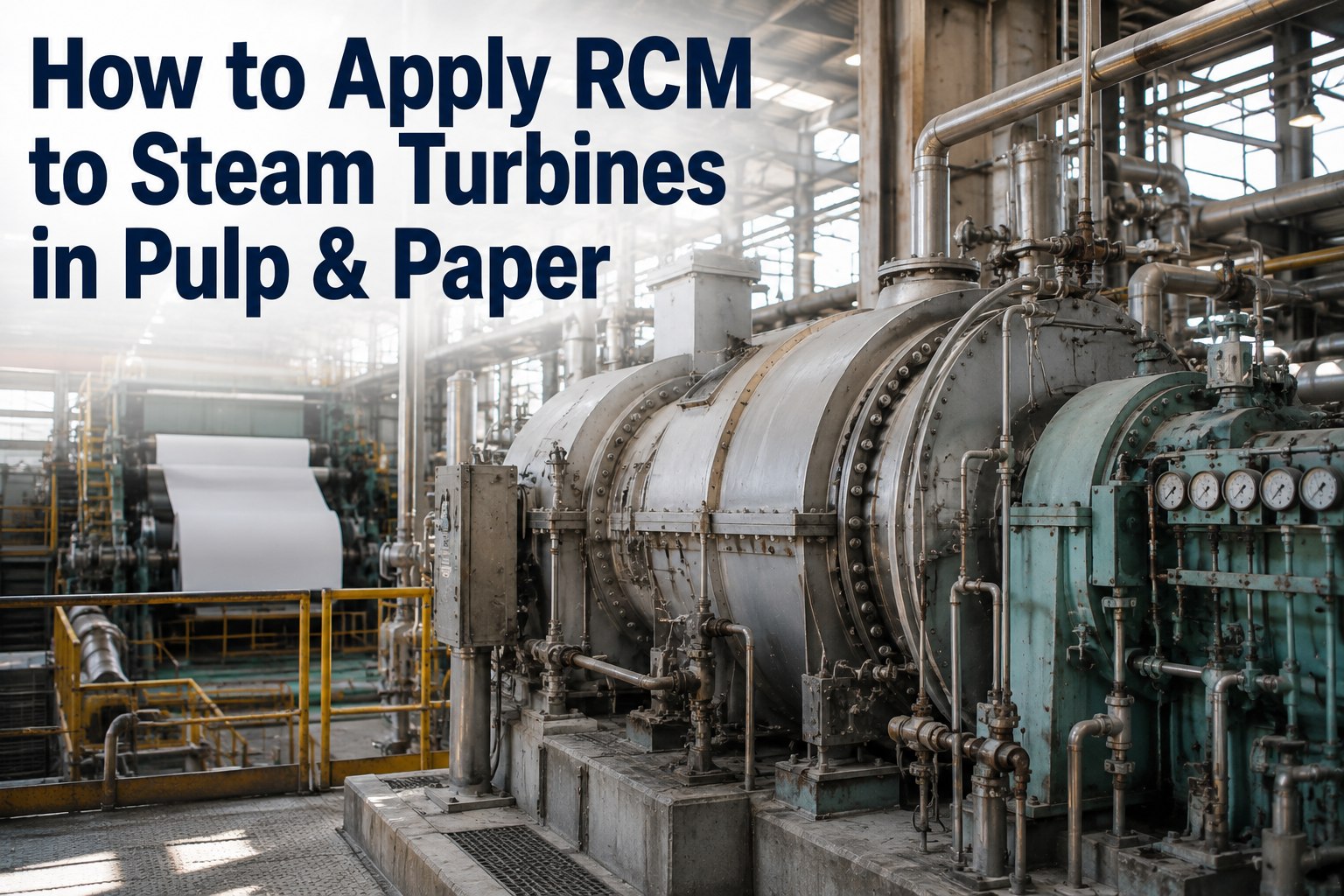
Reliability-Centered Maintenance (RCM) applied to steam turbines in pulp and paper mills is the systematic process of identifying critical failure modes—like blade erosion, rotor bow, and seal degradation—and...
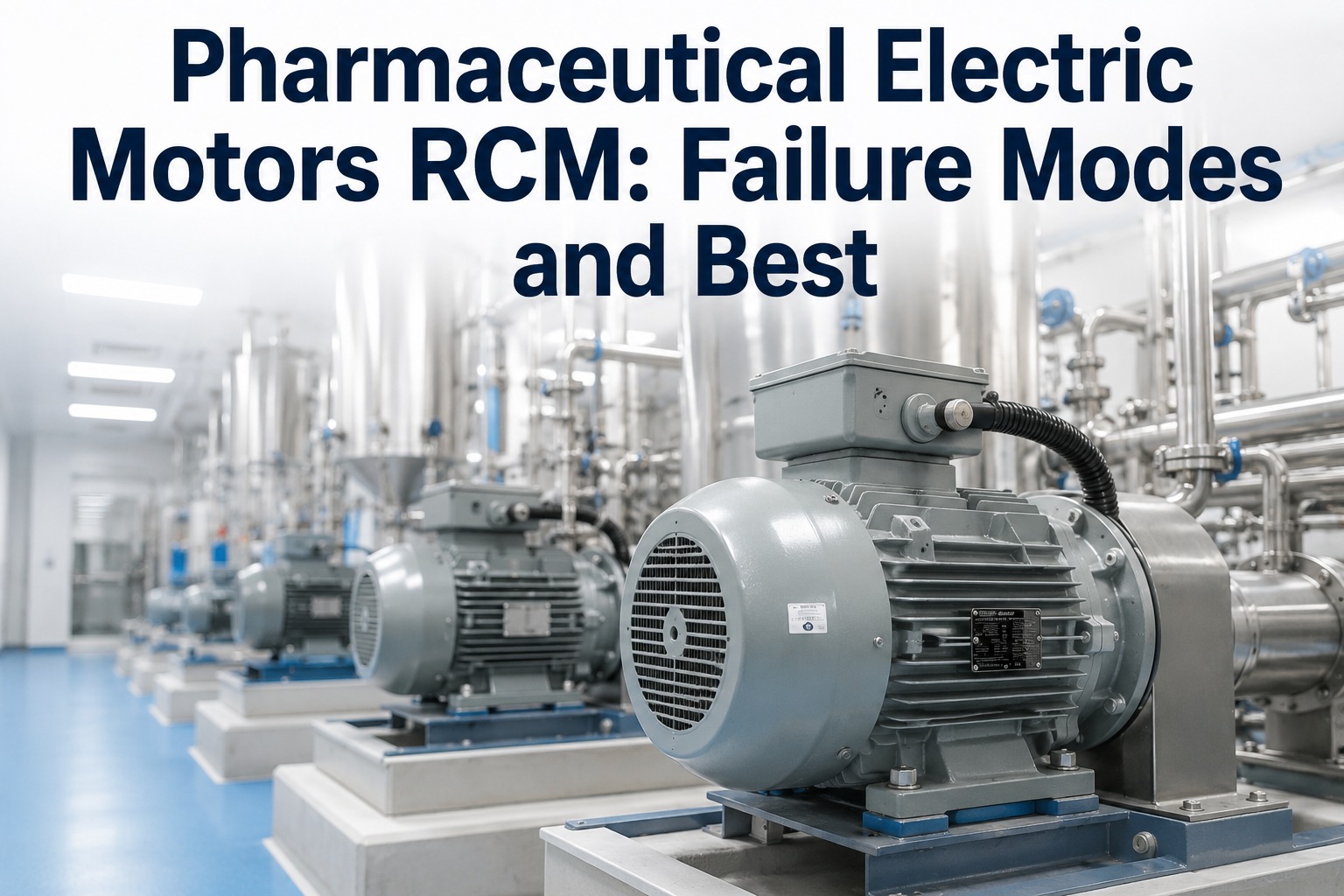
Reliability-Centered Maintenance (RCM) for electric motors in pharmaceutical manufacturing is the systematic framework that prevents catastrophic equipment failure, ensures regulatory compliance, and eliminates...

Reliability-Centered Maintenance (RCM) for electric motors in HVAC & building systems is the systematic process of identifying failure modes, determining their consequences, and selecting the most effective...
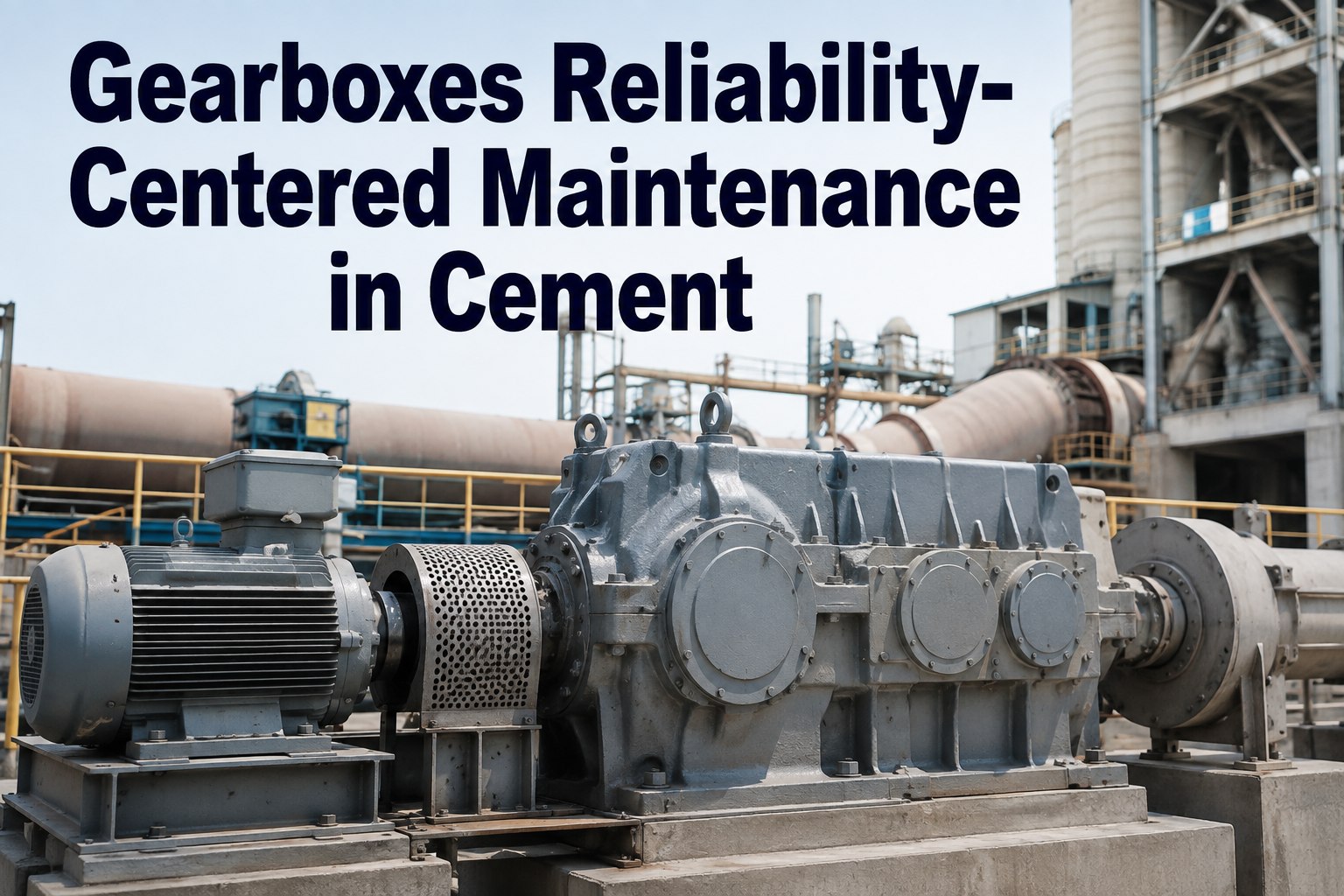
Reliability-centered maintenance for gearboxes in cement plants is the difference between a kiln that runs 330 days a year and one that loses $50,000 every unplanned outage. Cement gearboxes operate under extreme...
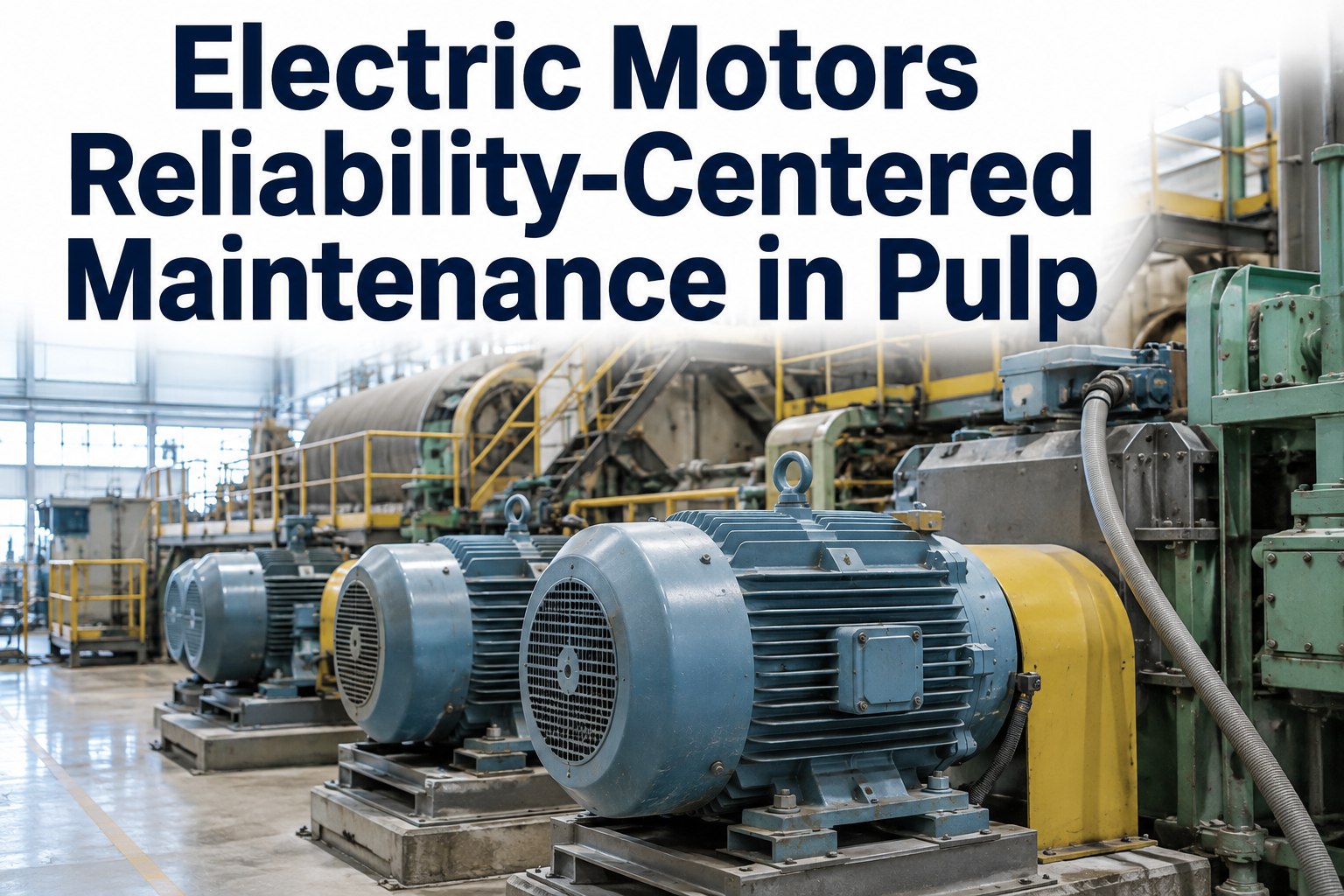
Reliability-centered maintenance for electric motors in pulp & paper mills is the difference between predictable OEE and million-dollar unplanned outages. Electric motors in pulp & paper operations face...

Reliability-Centered Maintenance (RCM) for diesel generators in data centers is the systematic process of identifying critical failure modes—like wet stacking, fuel degradation, and battery depletion—and matching...
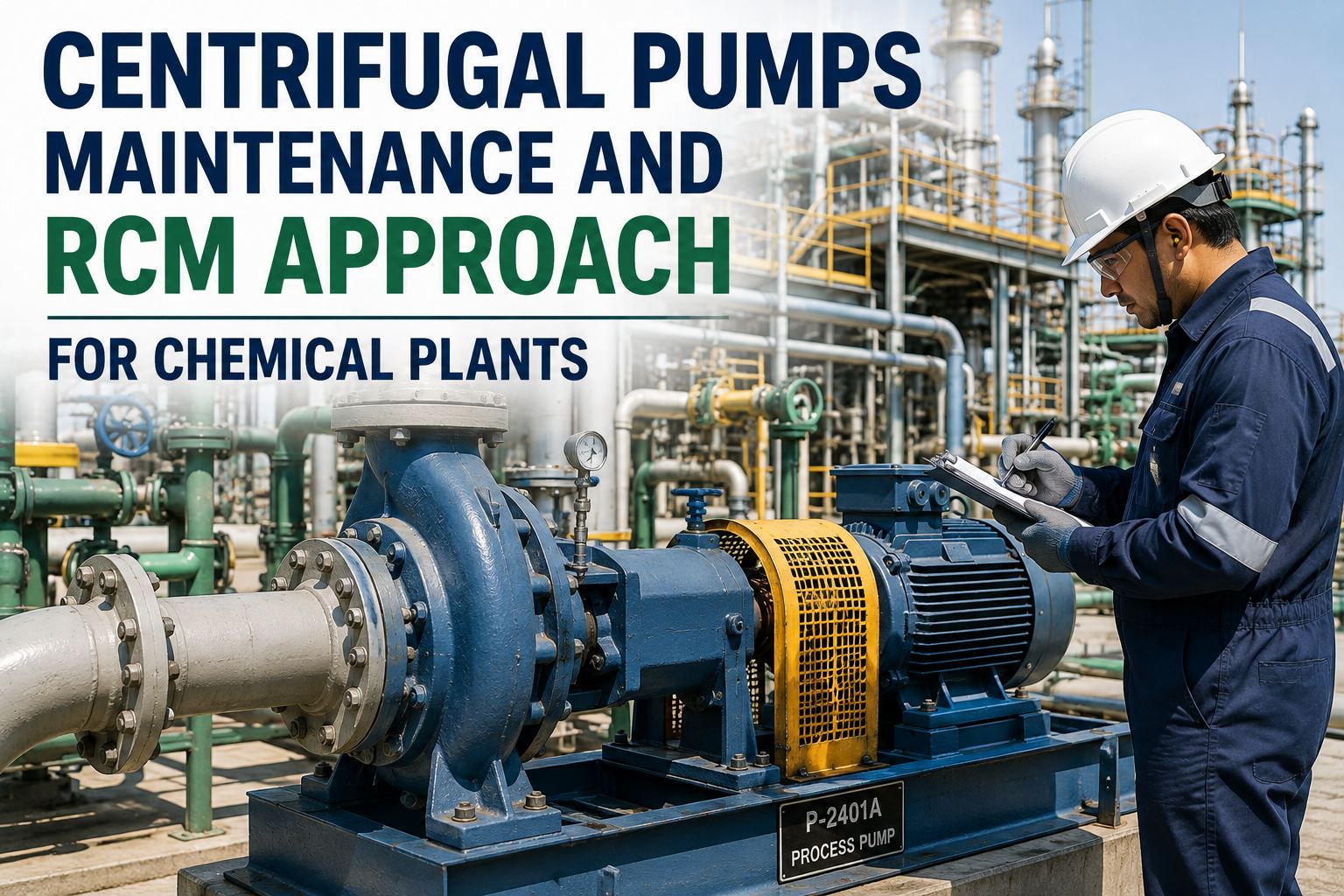
Centrifugal pumps handle the majority of fluid transfer duties in chemical processing plants, making their reliability a direct driver of production throughput, safety, and regulatory compliance. Applying...
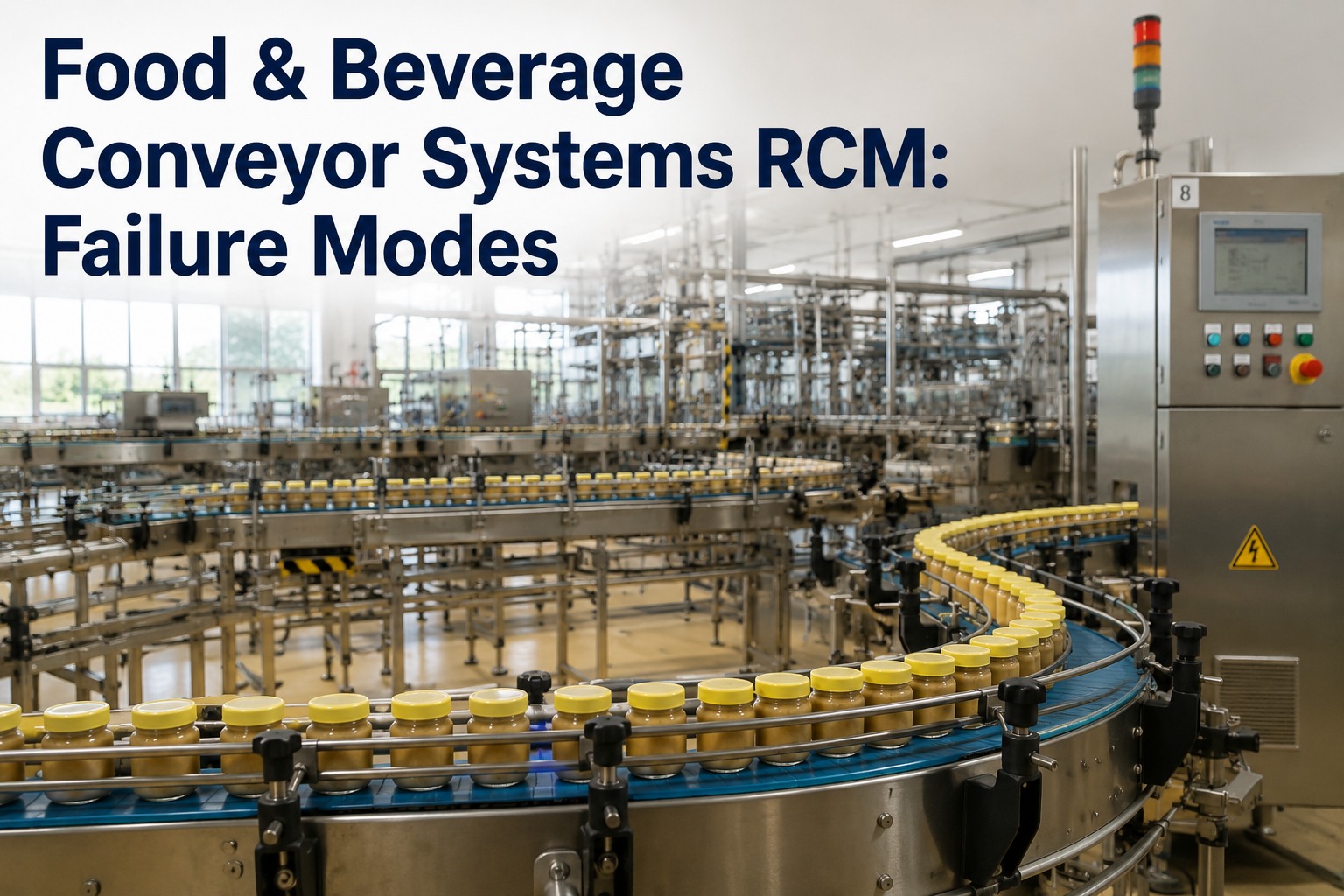
Reliability-Centered Maintenance (RCM) for conveyor systems in the Food & Beverage industry targets the specific failure modes that halt production, compromise hygiene, and trigger regulatory non-compliance. By...
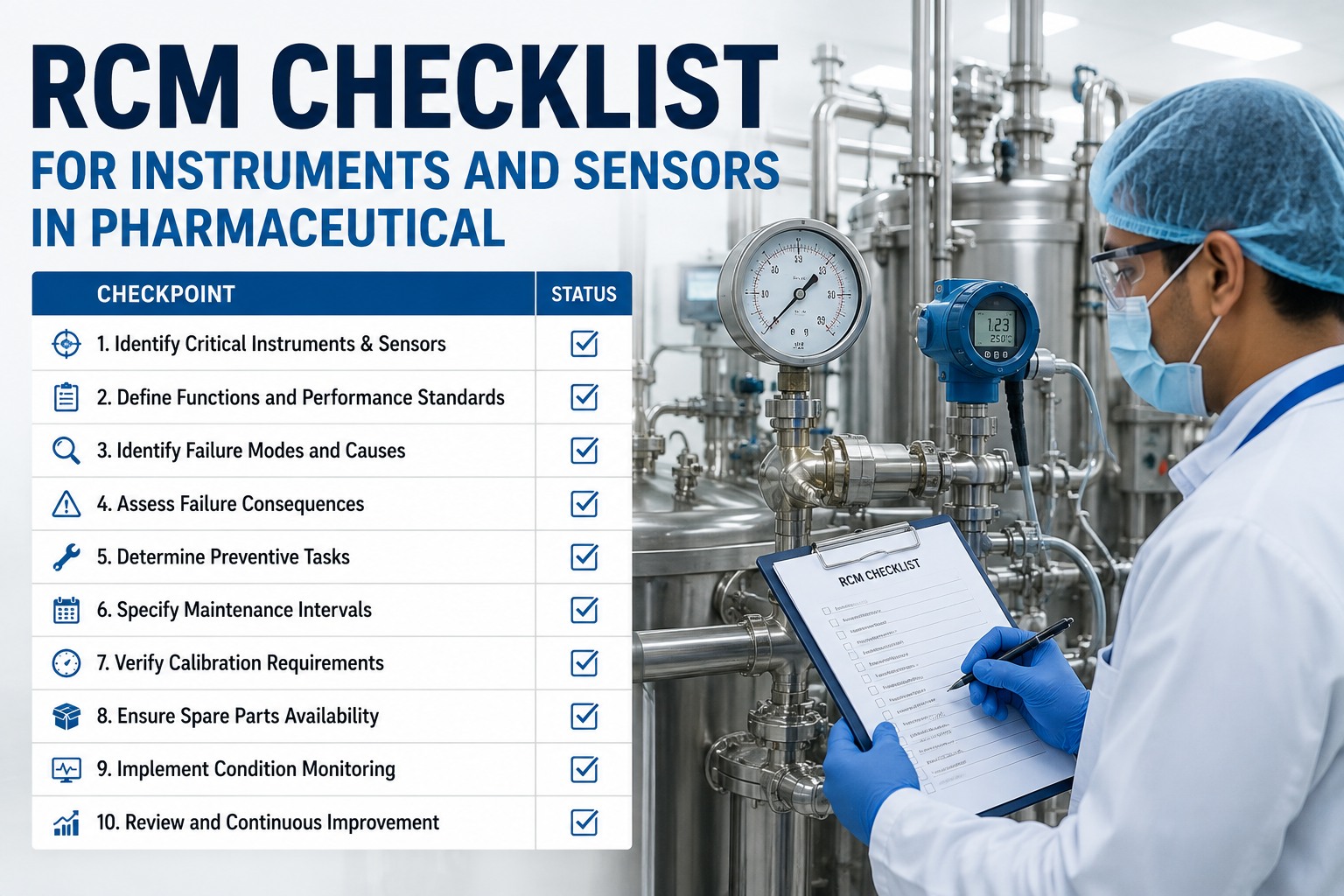
Reliability-centered maintenance (RCM) for instrumentation and sensors in pharmaceutical manufacturing is the systematic process of identifying failure modes—calibration drift, signal degradation, sensor...
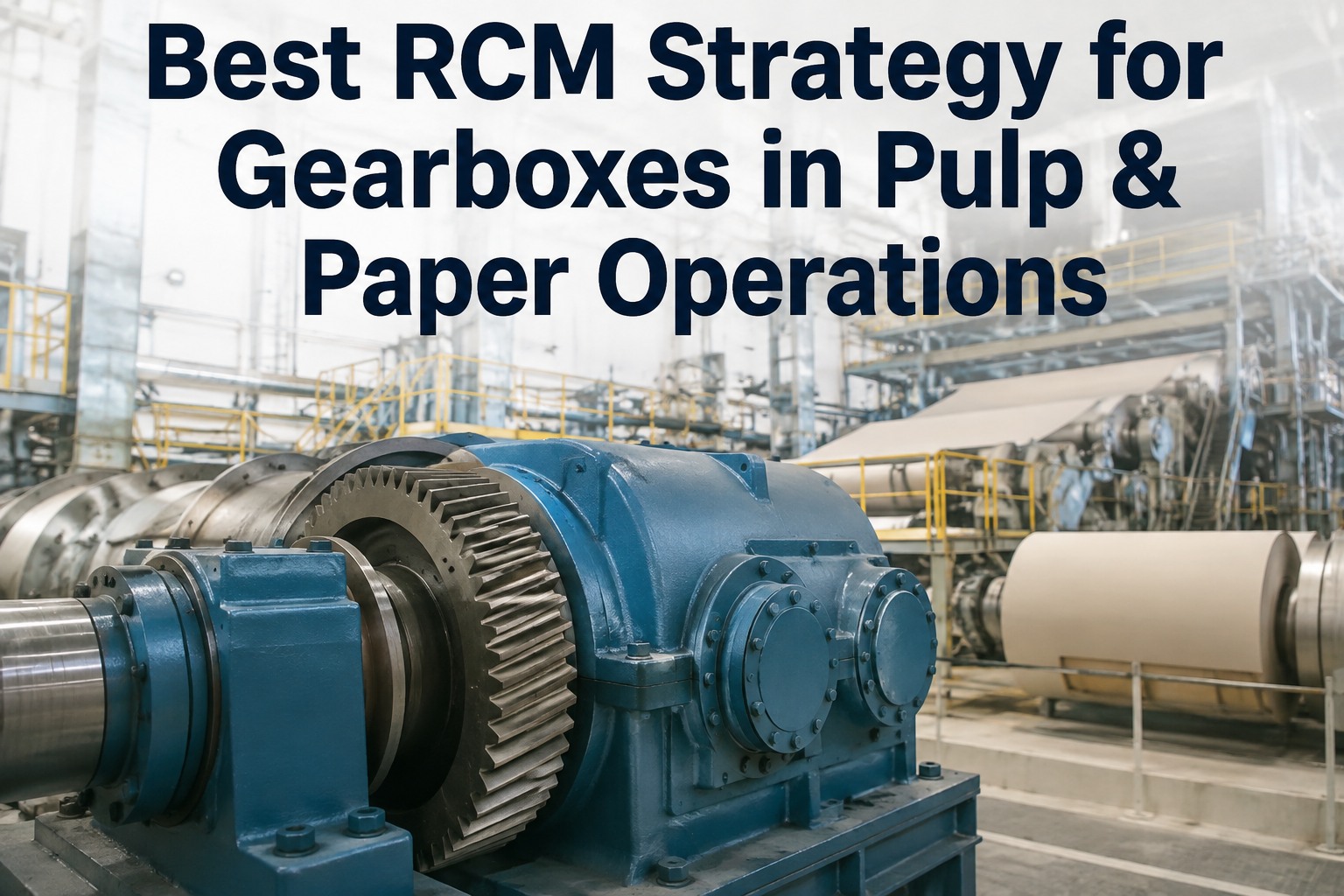
Reliability-Centered Maintenance (RCM) for gearboxes in pulp & paper operations is the systematic process of identifying specific failure modes—like gear tooth pitting, bearing spalling, and lubrication...
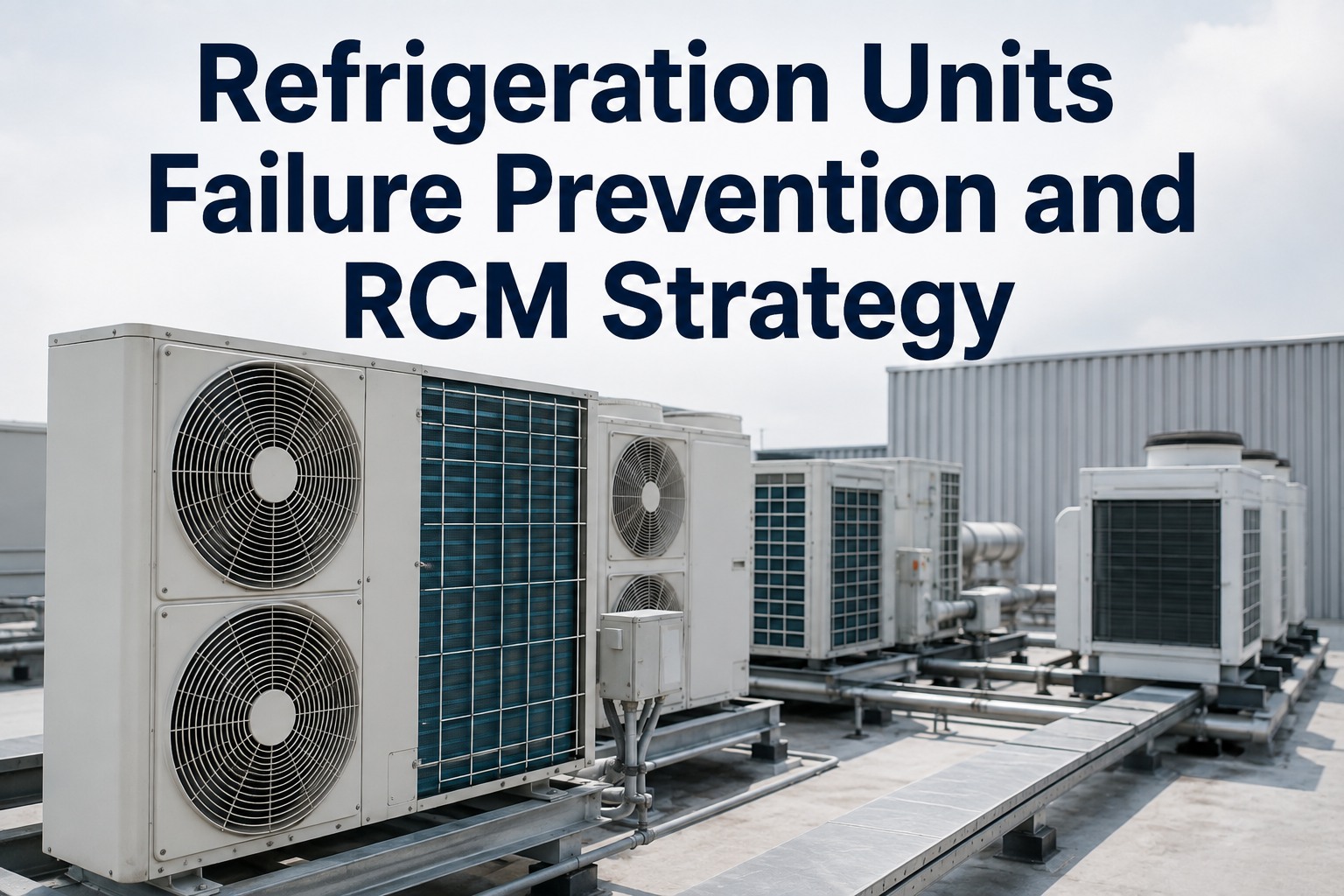
Reliability-Centered Maintenance (RCM) for cooling and refrigeration units in pharmaceutical manufacturing is the systematic process of identifying failure modes—like compressor degradation, refrigerant leaks, and...

Chemical plant shutdown planning is the single highest-stakes maintenance event on a reliability team's calendar — a turnaround can consume 50–80% of an annual maintenance budget in just 3–6 weeks, and every day of...

Food manufacturing refrigeration maintenance is the discipline that keeps compressors, evaporators and condensers running so product stays within FDA-mandated temperature ranges and ammonia systems stay...
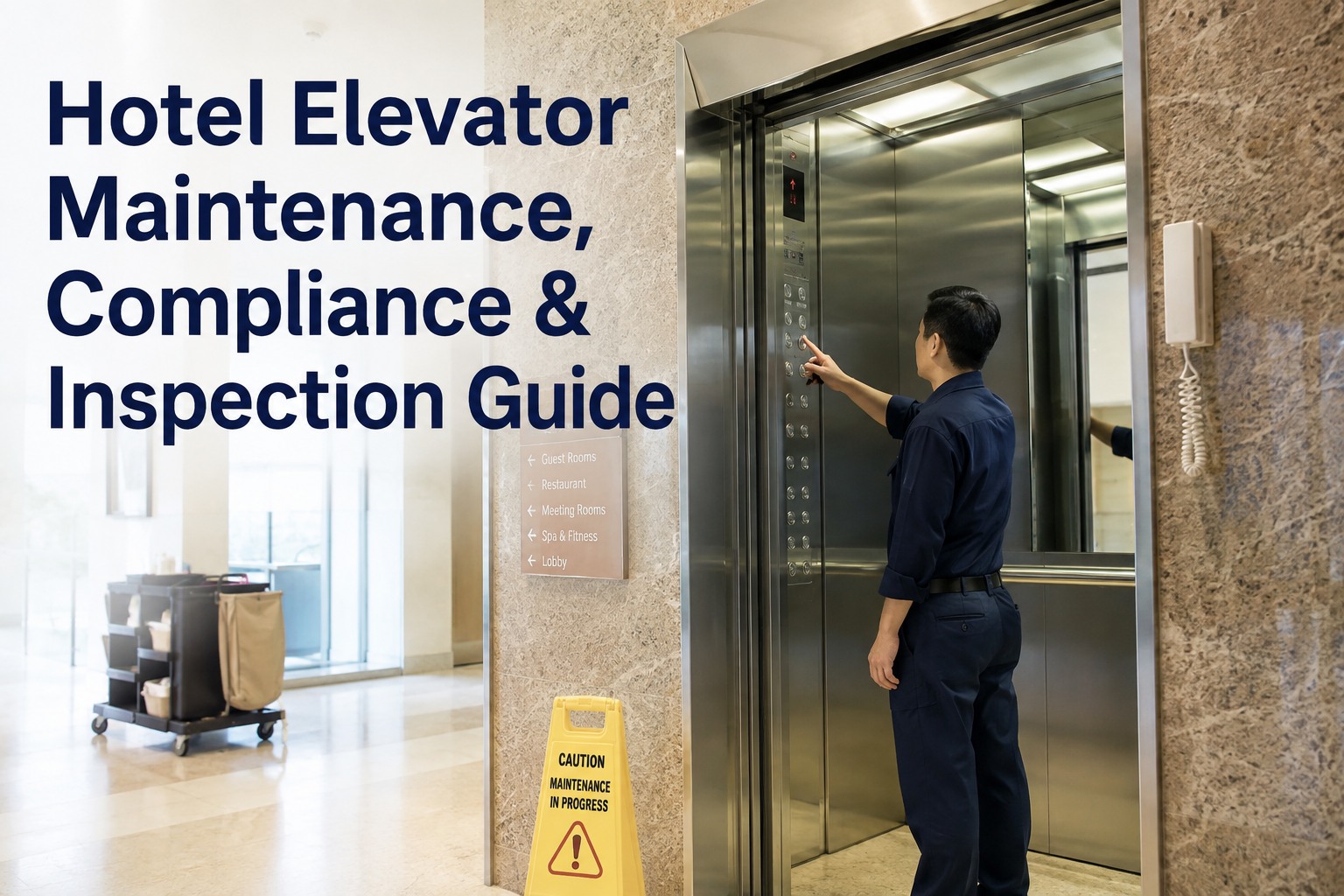
Hotel elevator maintenance is one of the most regulated and high-stakes responsibilities a property engineering team manages — a single compliance lapse can trigger fines, shutdowns, and severe guest-safety risk....
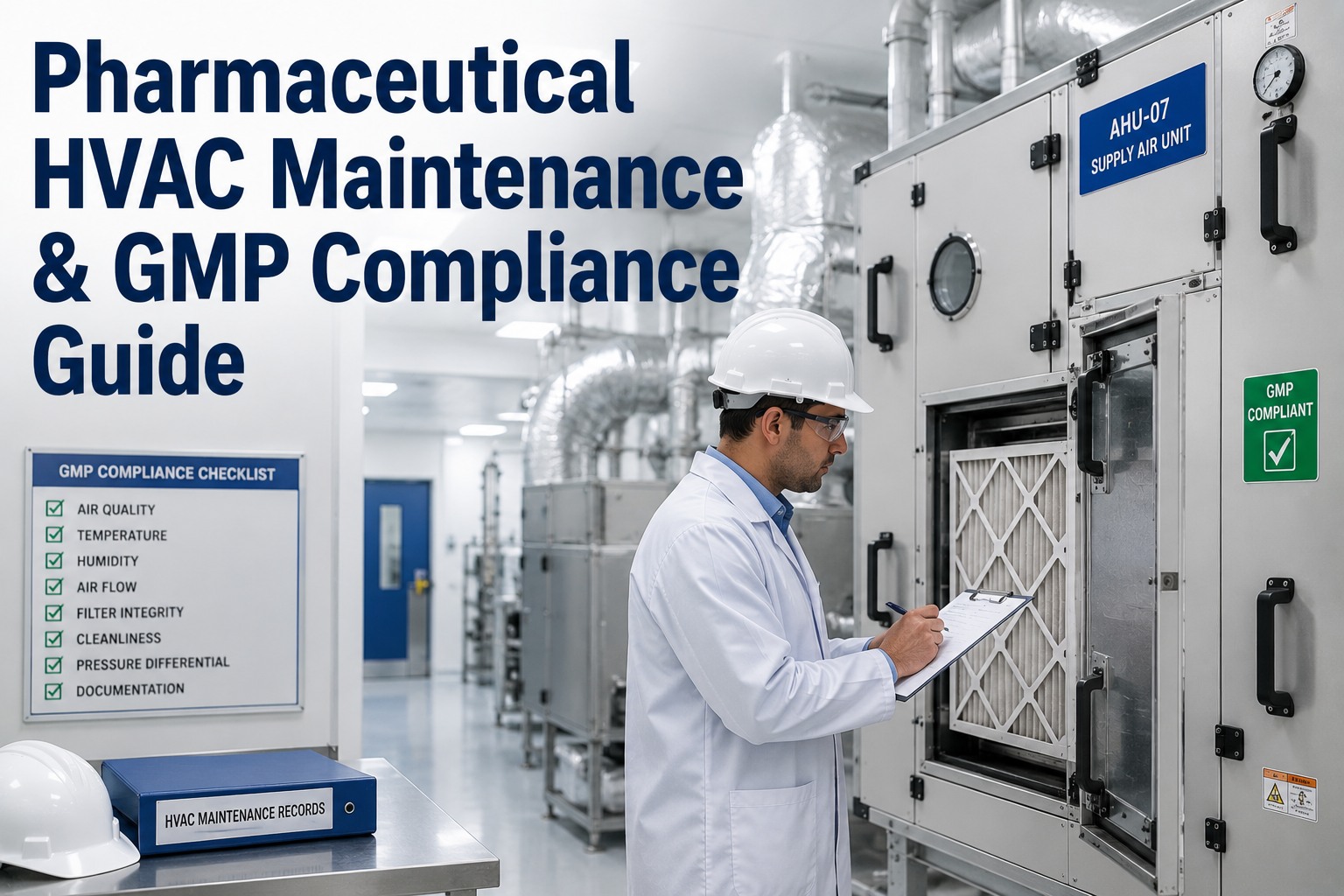
Pharmaceutical HVAC maintenance and GMP compliance go hand in hand — cleanroom classification, pressure cascade management, and rigorous validation all depend on HVAC systems that perform identically every single...

Ground support equipment maintenance is the operational backbone of every airport apron — when a pushback tractor, belt loader, or GPU fails at the gate, turnaround times spike, flight schedules slip, and costs...
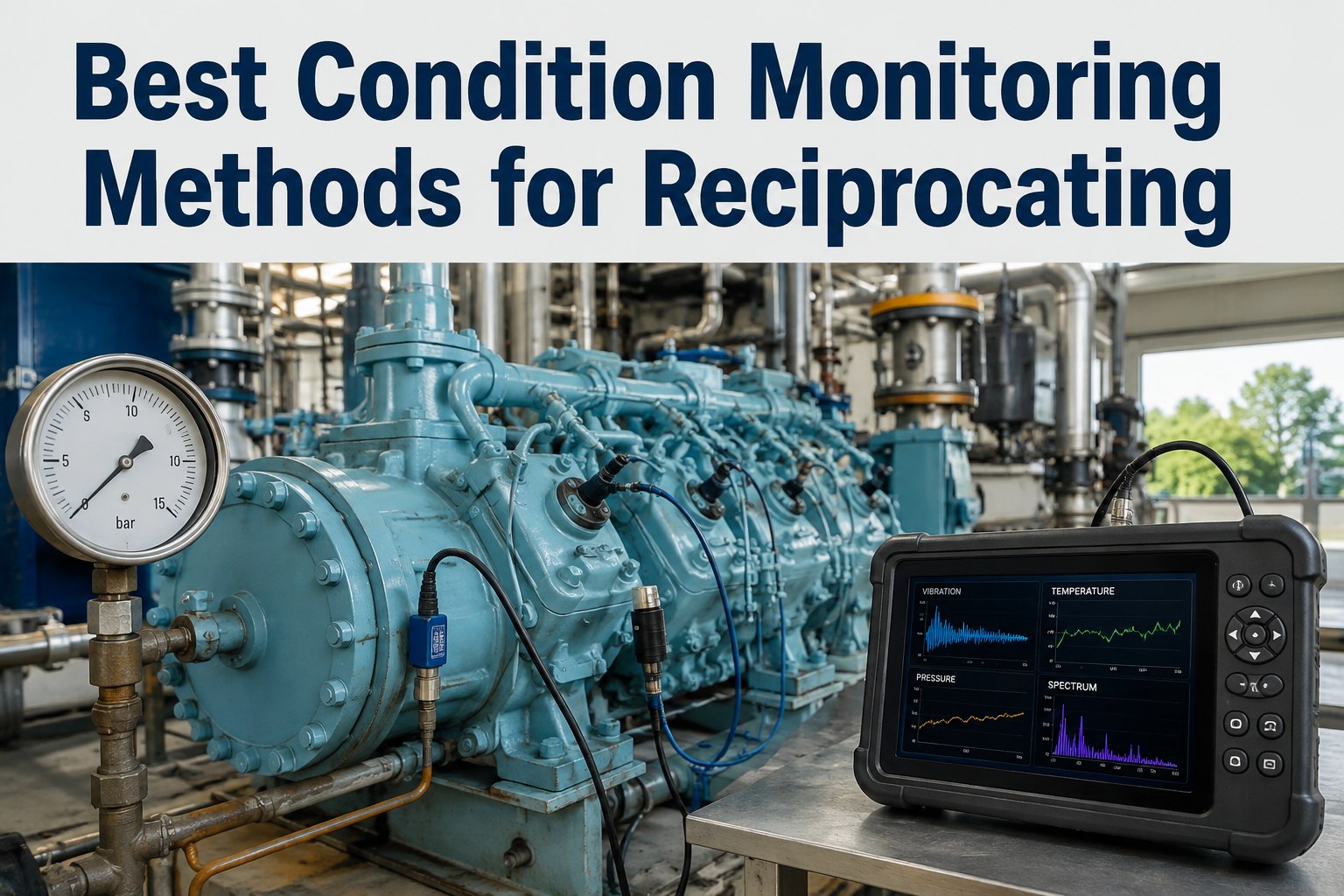
Condition monitoring for reciprocating compressors is the practice of tracking vibration, temperature, and oil degradation to detect mechanical faults weeks before they cause catastrophic failures. Because...

Criticality analysis for power transformers is the systematic process of ranking transformer assets by the consequence of their failure — weighting financial impact, safety, grid stability, and environmental risk —...
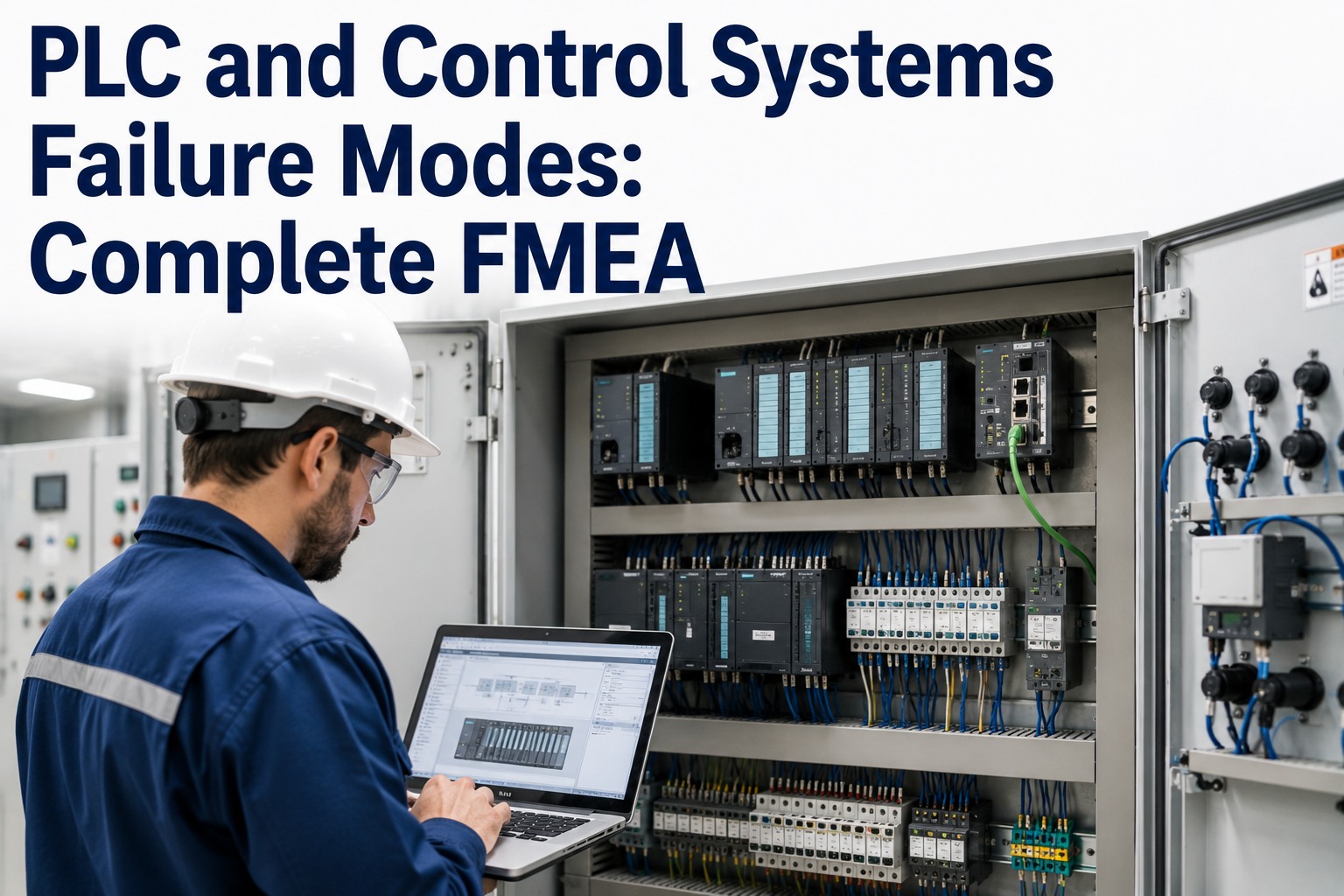
Failure modes and effects for PLC & control systems follow predictable patterns — power supply degradation, I/O module drift, communication bus faults, and environmental corrosion account for over 70% of...

Pressure vessels failure modes and effects analysis is the backbone of any defensible reliability program for pressurized assets — every crack, corrosion path, and relief-valve failure has a detectable root cause...

Criticality analysis for robotics & automation is the systematic process of ranking automated assets by their consequence of failure — weighing production loss, safety risk, and repair cost so maintenance teams...
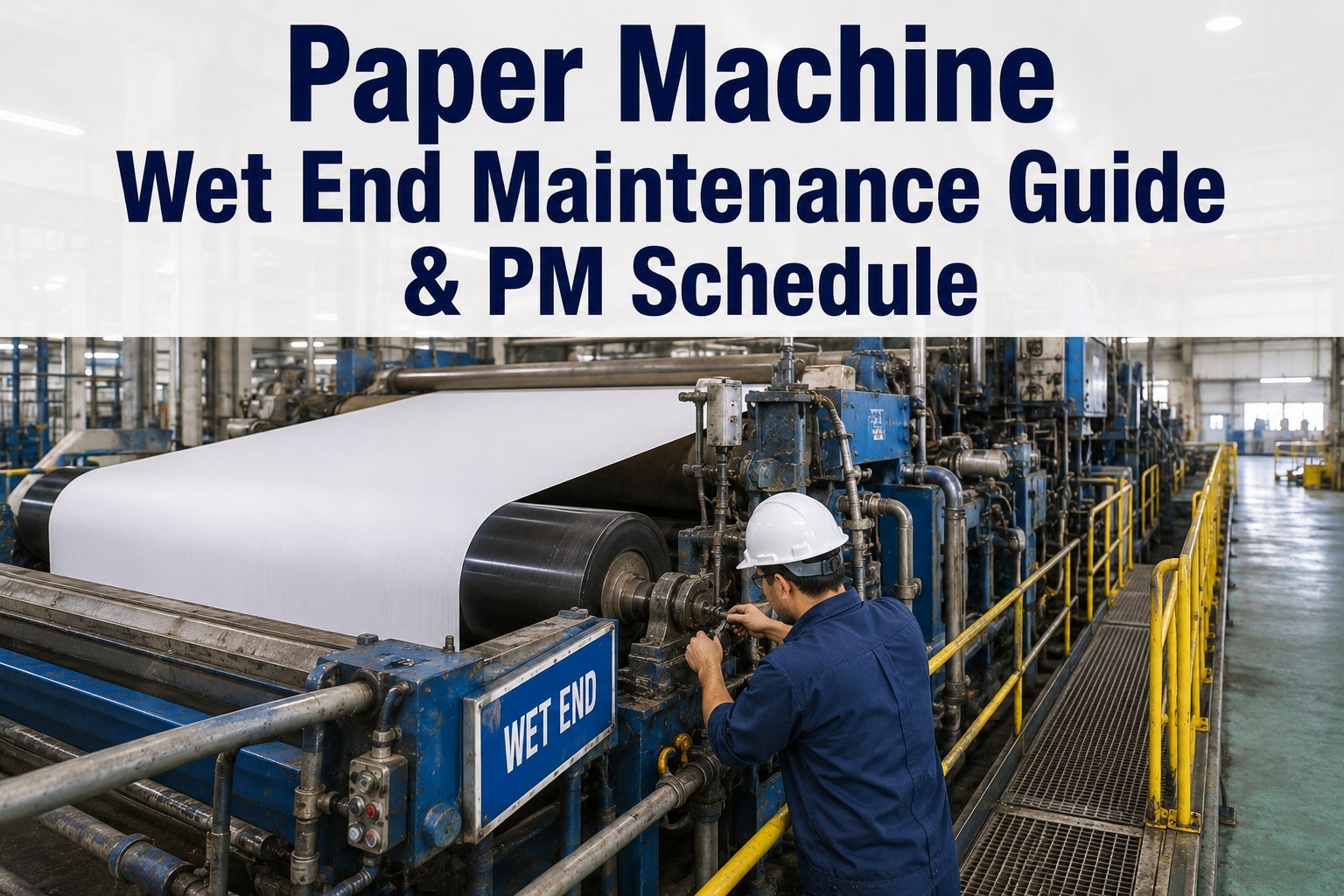
Paper machine wet end maintenance is the single most decisive factor in determining sheet quality, machine speed, and overall paper mill reliability across the forming, press, and stock delivery sections. When...

Cold chain warehouse refrigeration maintenance is the disciplined practice of keeping ammonia and HFC refrigeration systems, blast freezers, cold dock doors and temperature-monitoring infrastructure in compliant,...
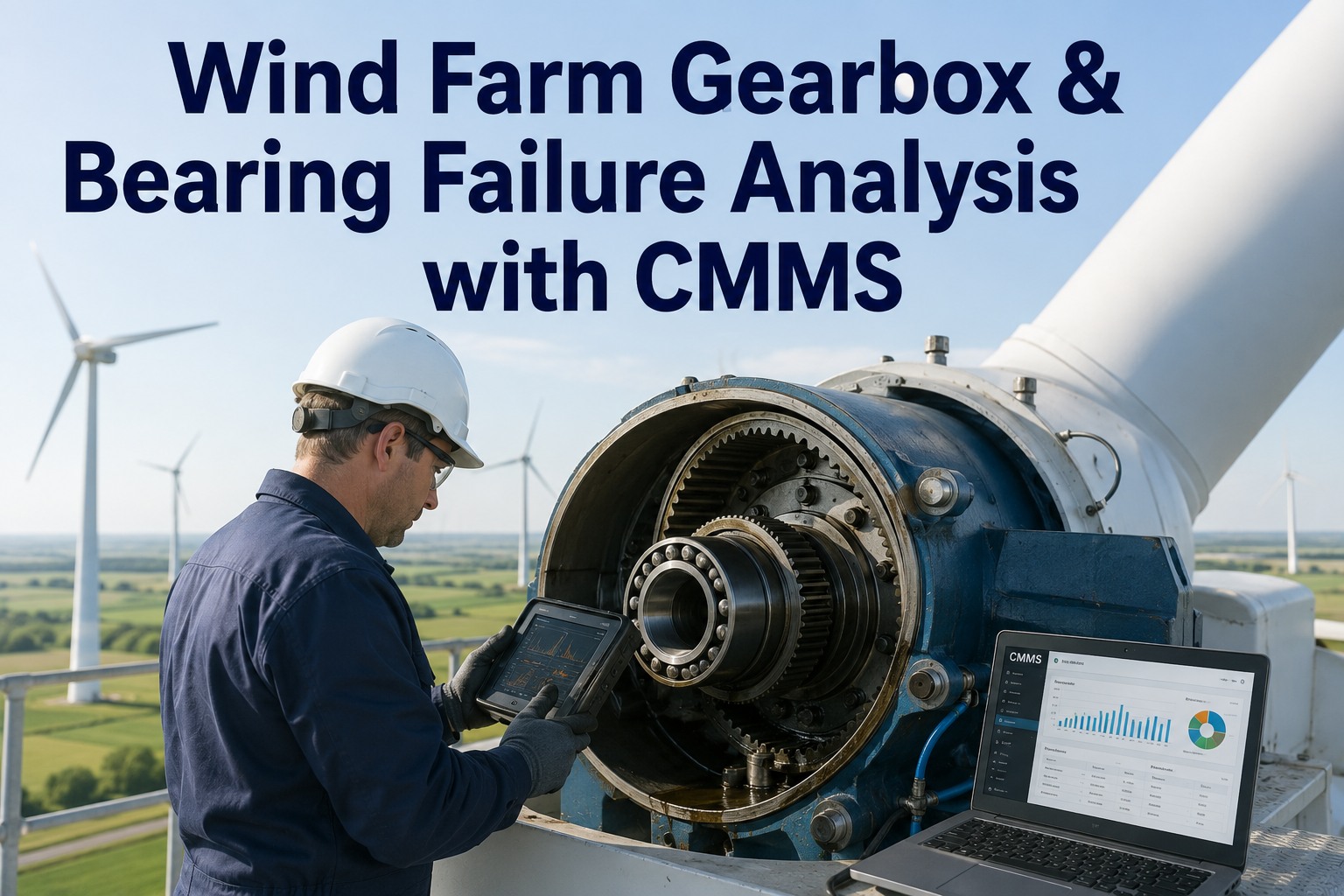
Wind turbine gearbox failure and bearing failure together account for the largest share of unplanned downtime cost in wind farm operations, with a single gearbox replacement routinely exceeding $300K–$500K in...
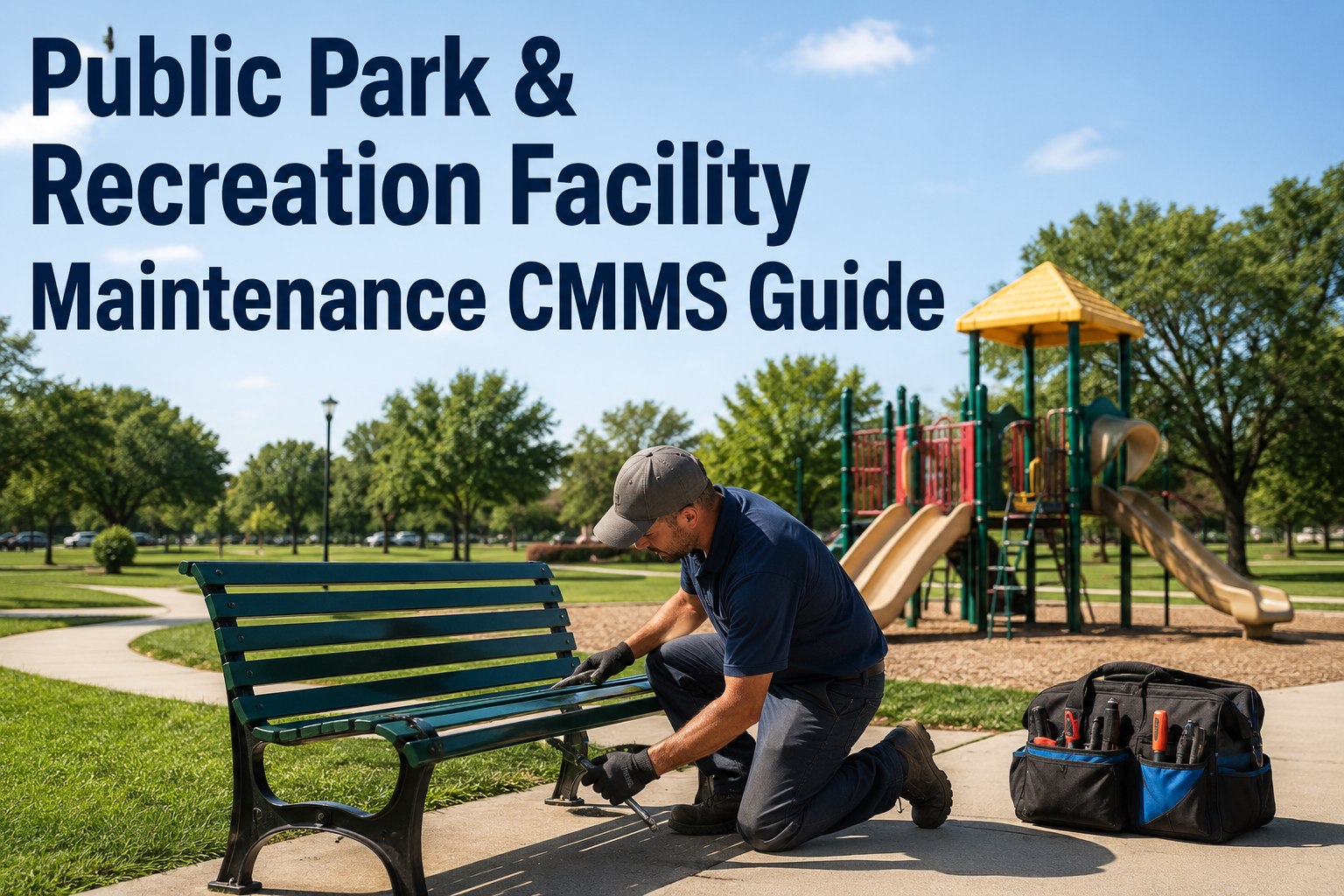
Public park and recreation facility maintenance demands a CMMS that can juggle seasonal workflows, playground CPSI safety inspections, irrigation systems, athletic fields, and restrooms across dozens — sometimes...
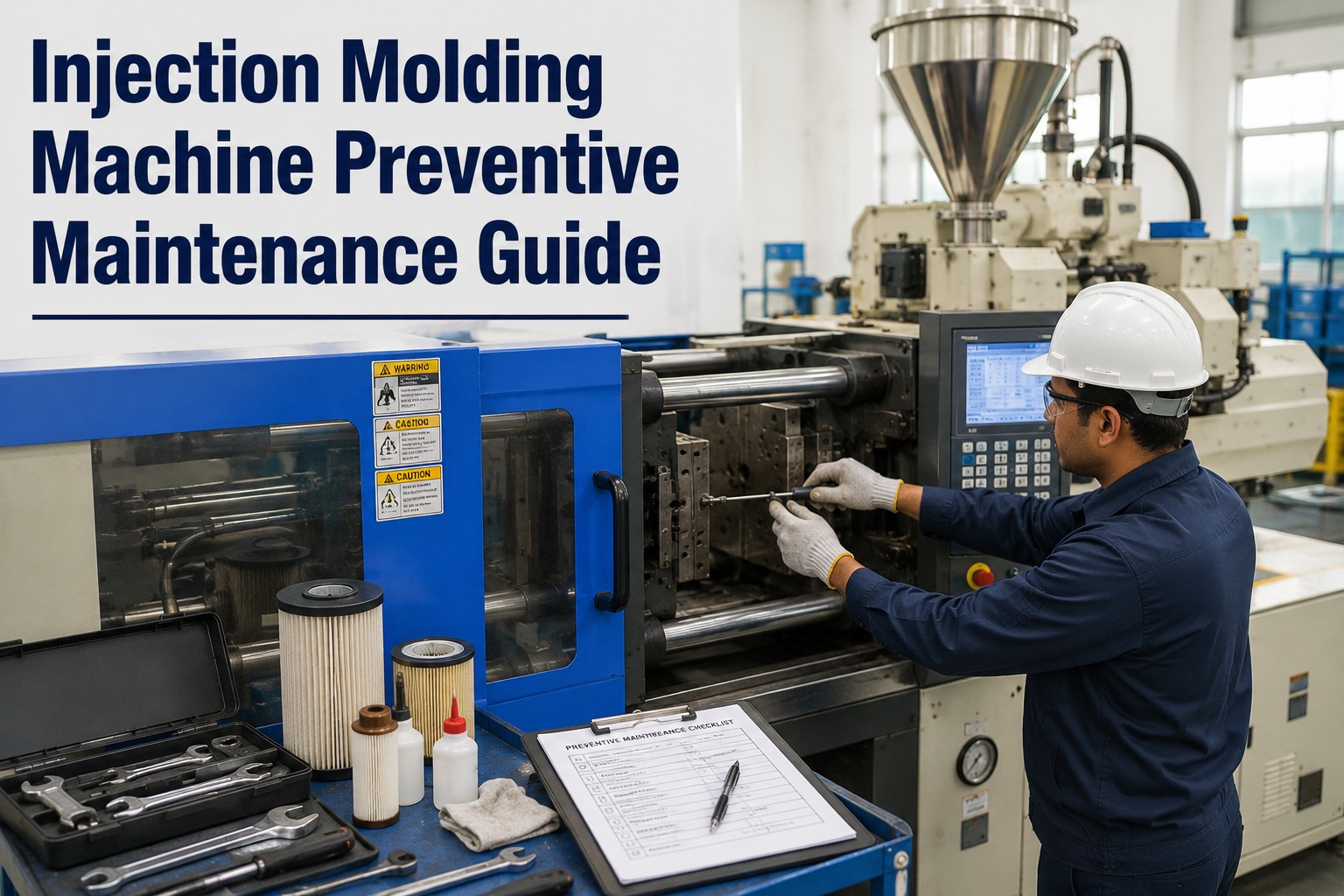
Injection molding machine preventive maintenance is the backbone of part quality, cycle-time consistency, and mold reliability — and it is exactly where high-volume plastic manufacturing operations either hold...
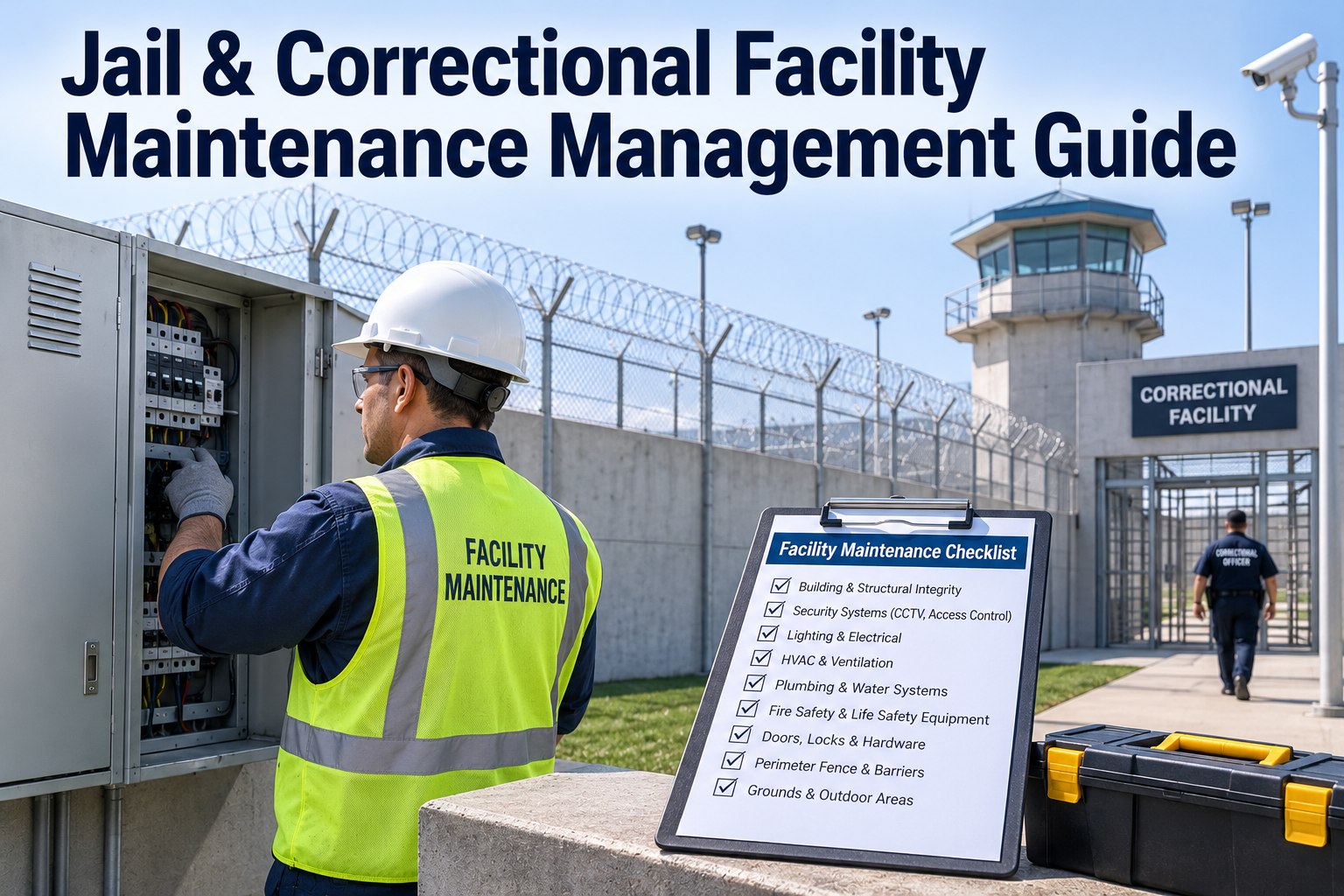
Correctional facility maintenance is a high-stakes discipline where a single failed cell-door interlock, dark perimeter floodlight, or untested emergency generator can trigger a security incident, inmate harm, or a...
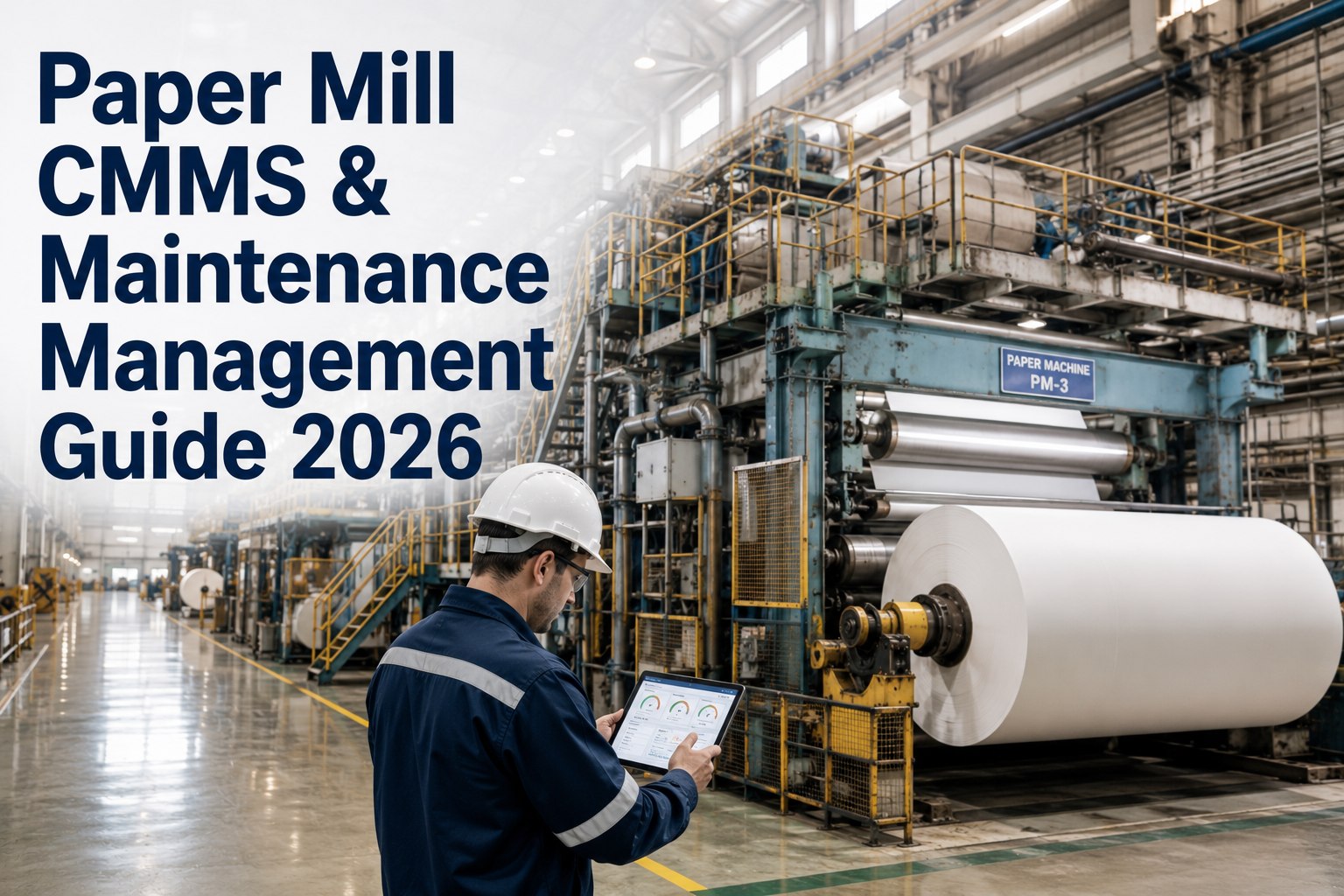
A modern paper mill CMMS is the backbone of any reliable pulp and paper maintenance operation—managing Fourdrinier machine PM schedules, dryer cylinder inspections, and press section maintenance while keeping...

Port terminal maintenance management is the discipline of keeping ship-to-shore cranes, RTG cranes, straddle carriers, and terminal handling equipment available at the 95%+ uptime standards that vessel schedules...

Solar inverter maintenance is the single highest-leverage activity in any PV plant reliability program — inverters account for roughly 50–65% of unplanned solar downtime despite representing less than 10% of capex,...
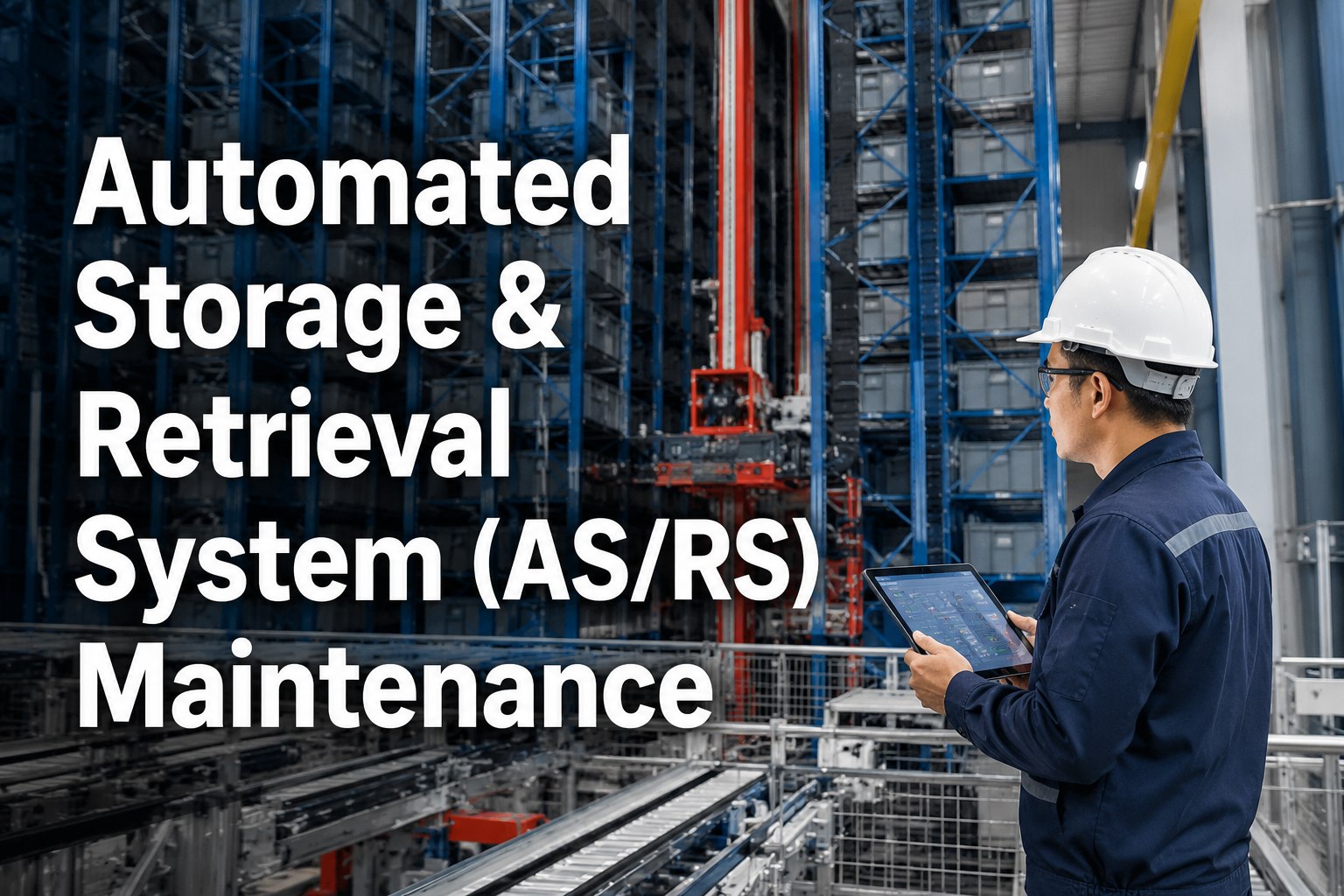
Automated Storage and Retrieval System (AS/RS) maintenance is the systematic process of inspecting, servicing, and repairing the cranes, shuttles, rails, and controls that power automated warehouses. Because an...

Warehouse racking maintenance and pallet rack inspection are not optional housekeeping tasks — they are safety-critical obligations governed by RMI/ANSI MH16.1 standards and enforced by OSHA. A single damaged...
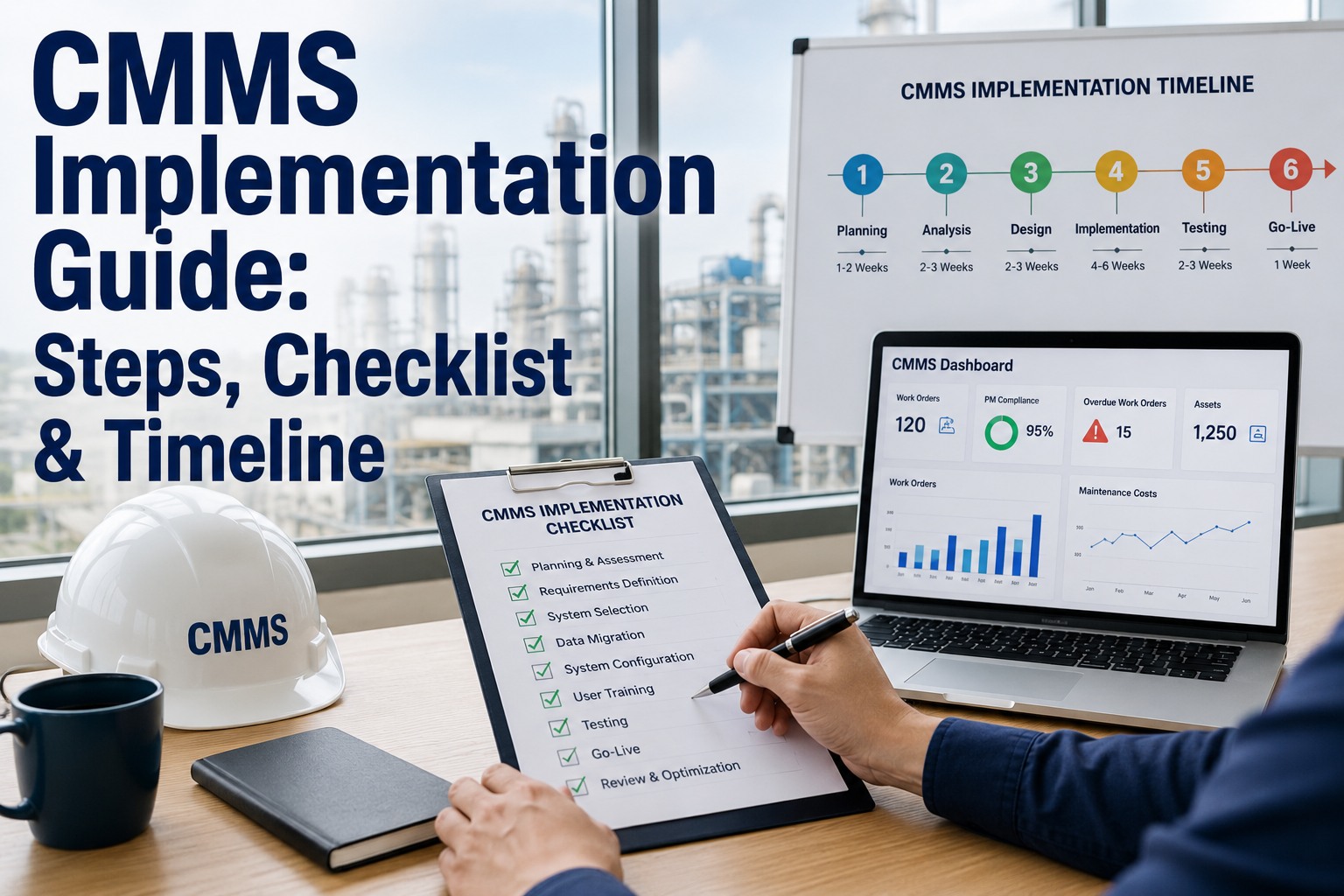
Successful CMMS implementation is the difference between a maintenance platform that transforms your reliability program and expensive shelfware that technicians abandon after go-live. A structured CMMS...
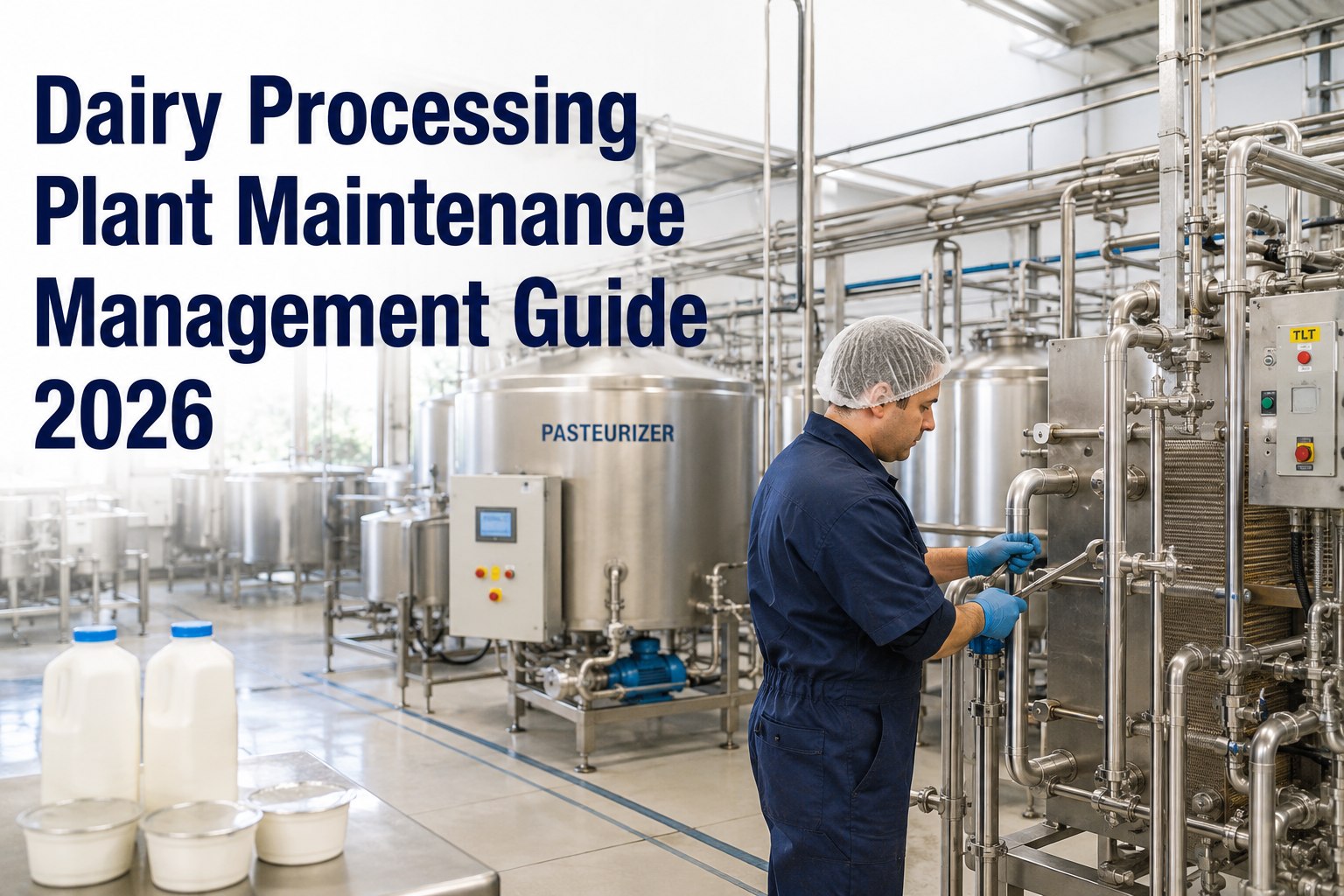
Dairy processing plant maintenance management demands a rare blend of food-safety rigor and heavy wet-side equipment reliability — a single missed pasteurizer PM or CIP cycle can trigger a pathogen event, a product...
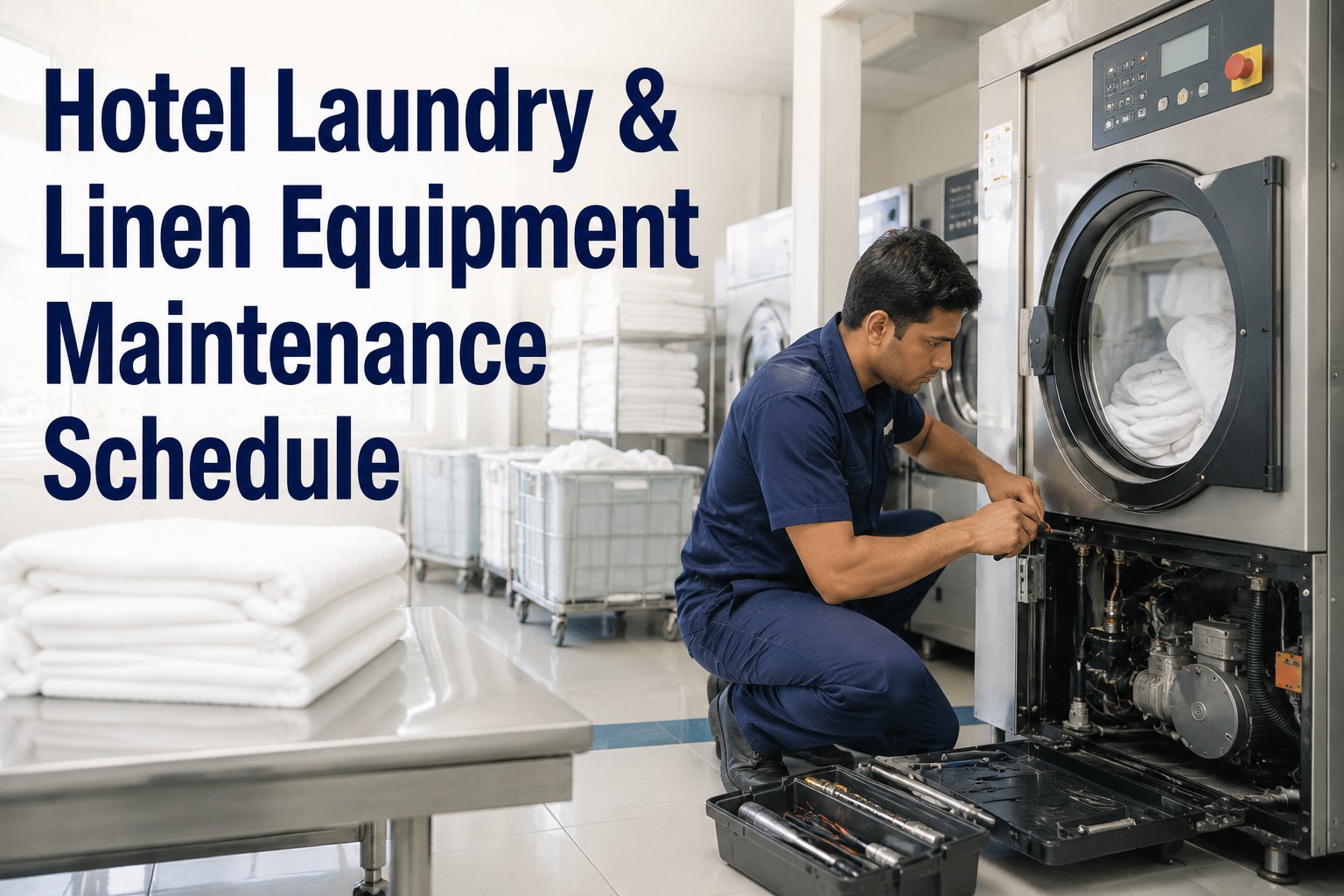
A hotel laundry maintenance schedule is the structured preventive maintenance (PM) plan that keeps commercial washers, dryers, ironers, and water softeners running at full capacity so housekeeping never runs out of...

Forklift maintenance management is the structured discipline of keeping a warehouse forklift fleet reliable, safe, and OSHA-compliant through daily pre-shift inspections, scheduled preventive maintenance (PM), and...
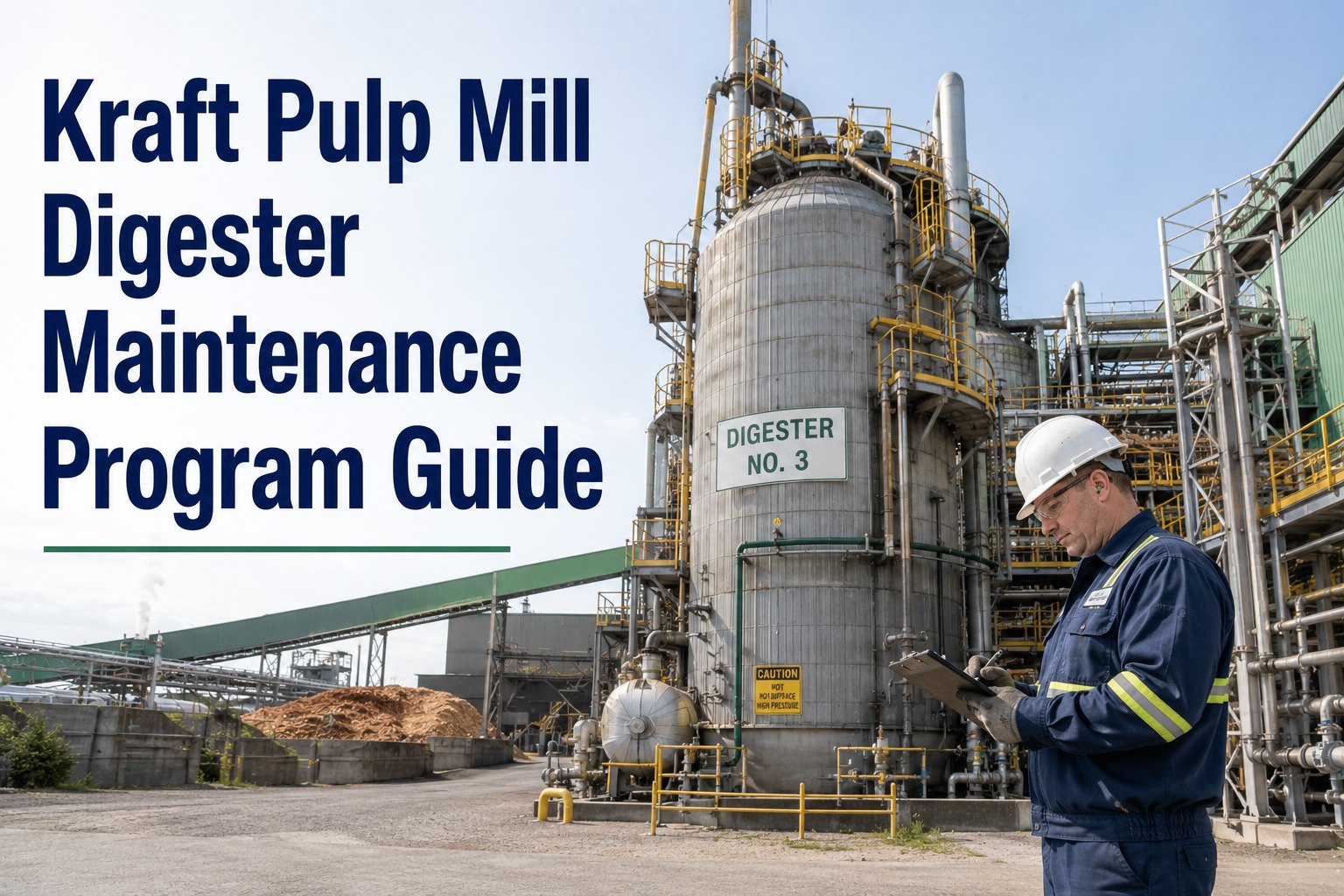
A kraft pulp mill digester maintenance program governs the reliability of the most critical pressure vessel in the pulping line — where a single unplanned blow-valve failure or liquor heater tube leak can idle...

Automotive plant maintenance management in 2026 demands synchronization of robotic welding cells, stamping presses, paint booths, and body-in-white assembly lines at production volumes that leave no room for...
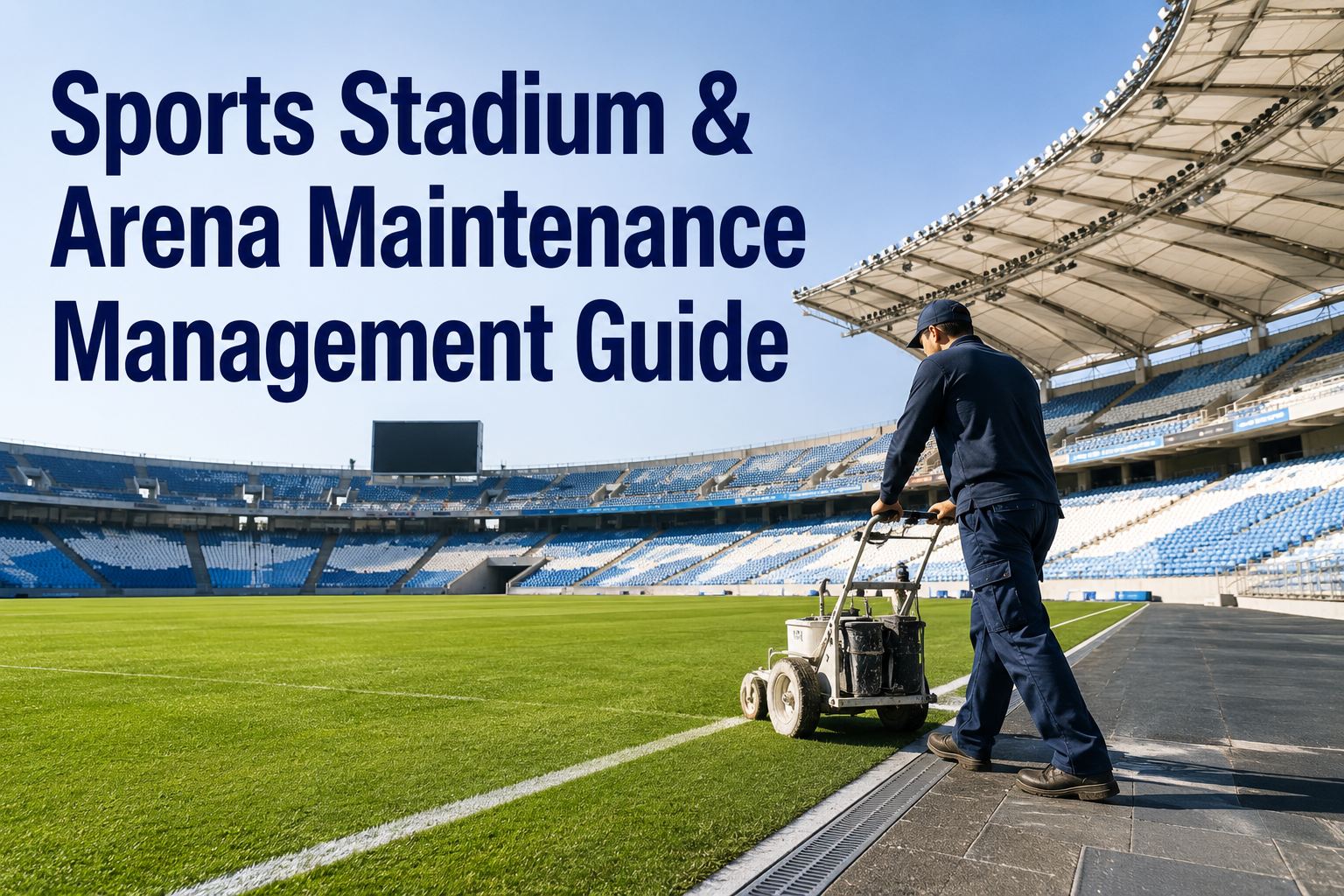
Sports stadium and arena maintenance is fundamentally event-driven — every game day, concert, or tournament stress-tests every system simultaneously, from field/court surfaces and seating to scoreboards, HVAC, and...
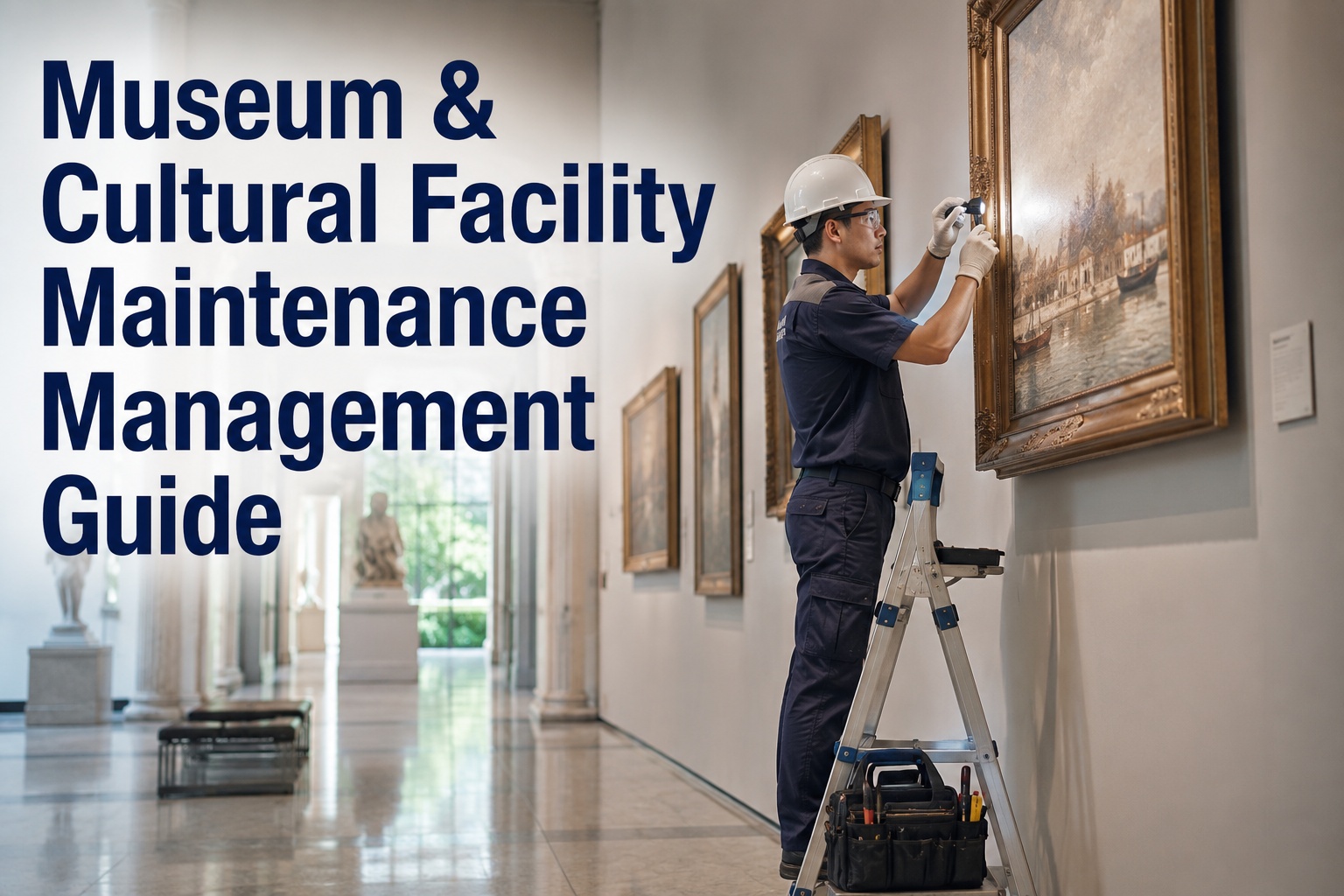
Museum facilities maintenance demands a rare balance: conservation-grade environmental precision for irreplaceable collections and seamless public-facing service for thousands of daily visitors. Cultural facility...
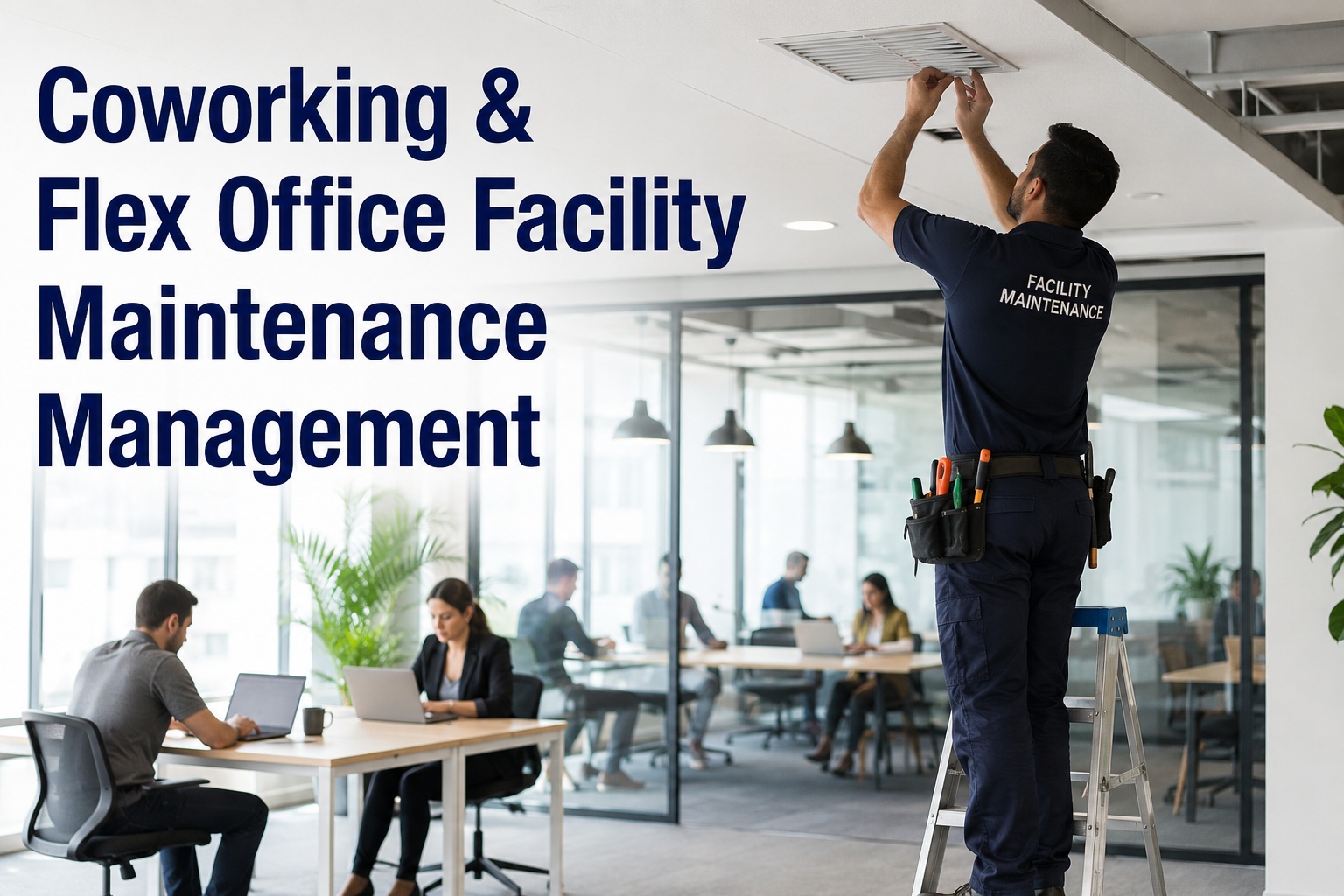
Coworking facility maintenance is the operational backbone of every flex office and shared workspace — yet most operators still juggle spreadsheets, group chat requests and sticky-note work orders while members...
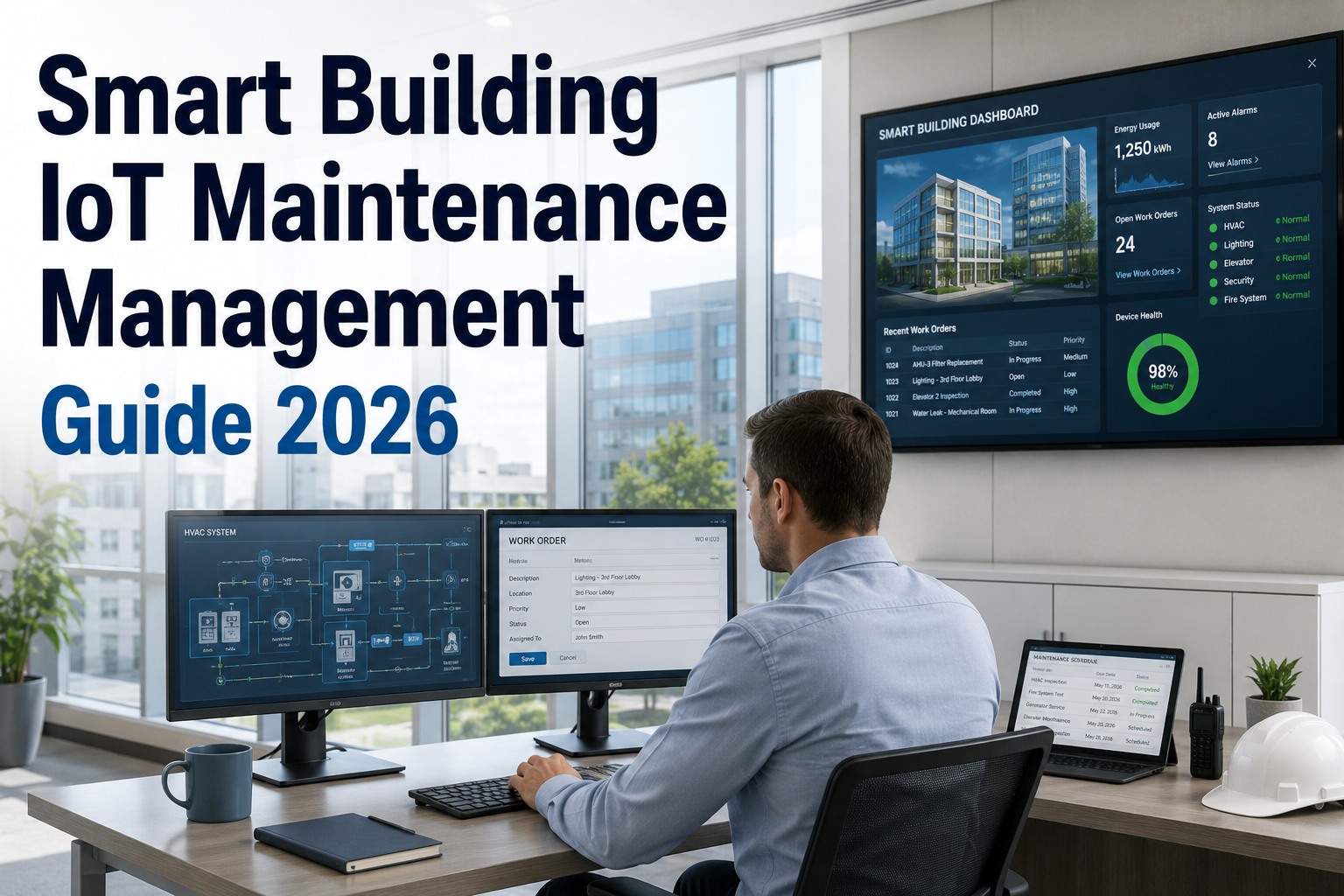
Smart building maintenance has shifted from calendar-based rounds to condition-driven action: IoT sensors on HVAC, electrical and mechanical equipment stream temperature, vibration and energy data that a CMMS turns...
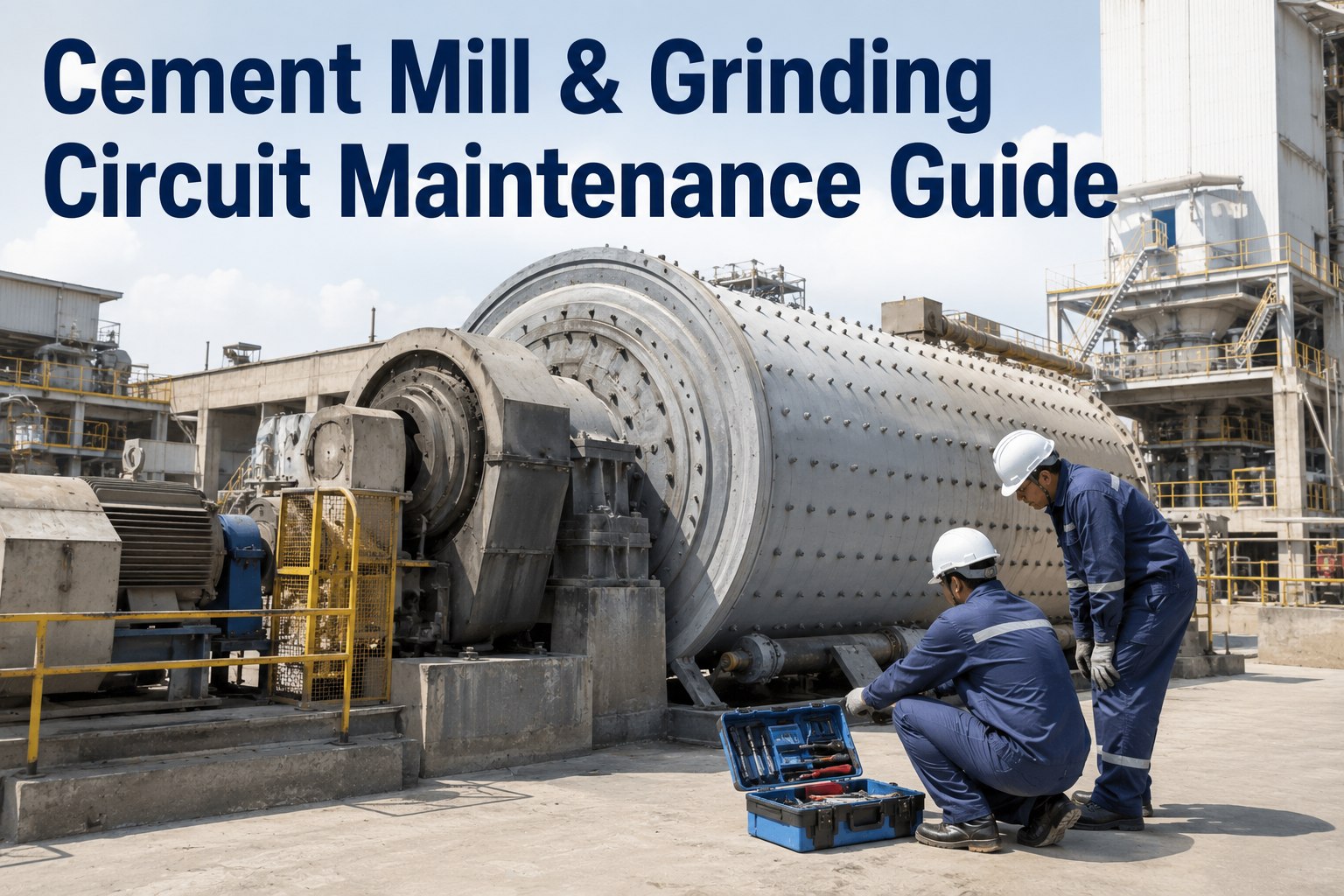
Cement mill maintenance and grinding circuit reliability directly determine a plant's power cost per tonne, product fineness and clinker factor — grinding alone consumes 60–70% of cement plant electricity, so even...
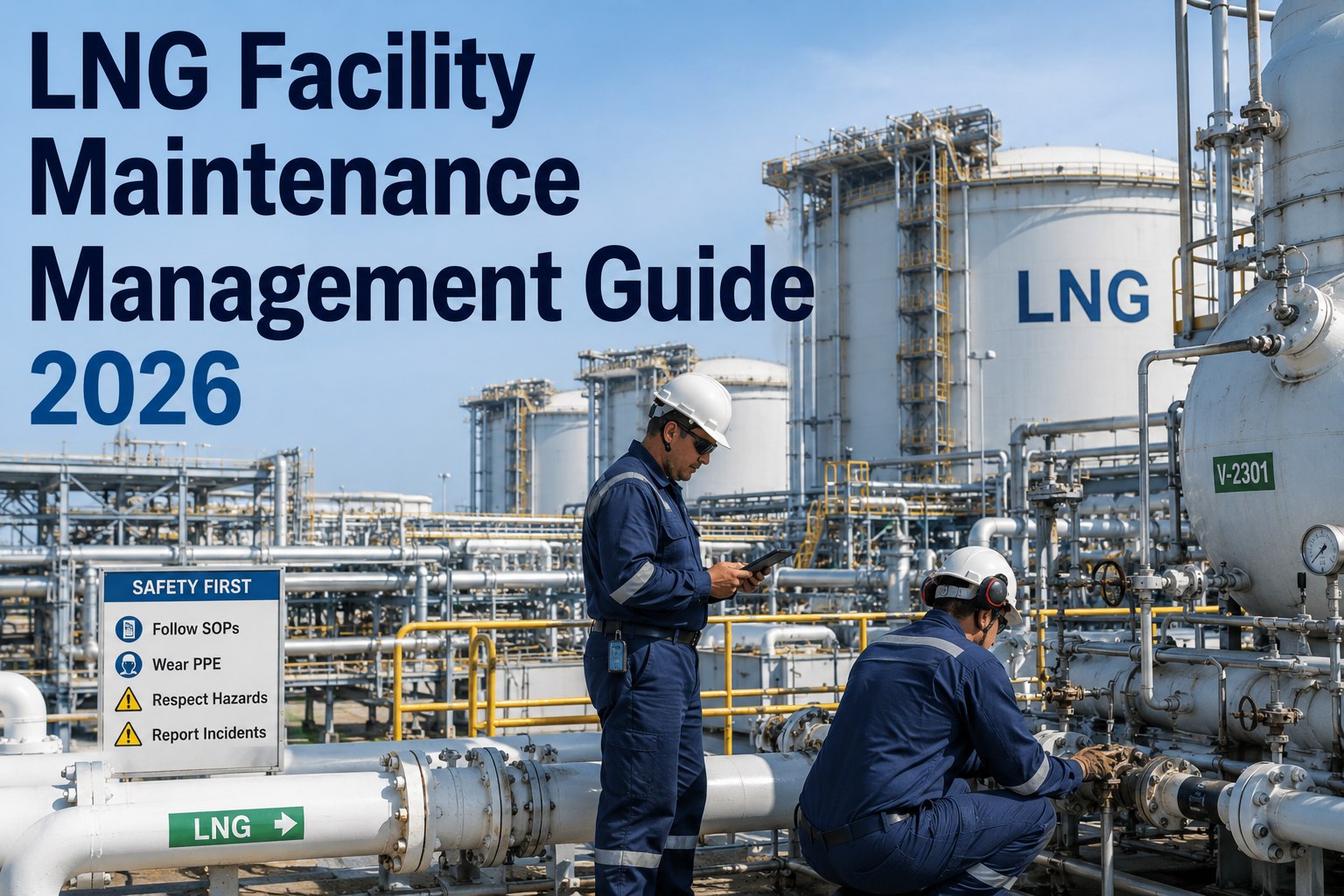
LNG facility maintenance demands a disciplined approach to cryogenic equipment, boil-off gas compressors, loading arms, and vaporizer systems operating at temperatures as low as -162°C under stringent PHMSA and PSM...

Ground support equipment maintenance is the operational backbone of every airport turnaround — when a tug, belt loader, or ground power unit fails at the gate, the ripple effect costs airlines an estimated $50–100...

Aviation MRO spare parts inventory management is the discipline of balancing parts availability against the high cost of holding aircraft spare parts, ensuring FAA compliance and traceability while minimizing...

5W-40 synthetic engine oil has become the go-to viscosity grade for modern diesel and gas fleets, delivering reliable cold-start protection, sustained high-temperature film strength, and extended drain intervals...

Infrastructure asset management for roads and bridges encompasses the systematic processes public agencies use to inventory, assess, and maintain transportation networks across their full lifecycle. Driven by...

Solar farm O&M is where the physics of photovoltaics meets the discipline of maintenance execution — a single string-level fault can silently bleed 3–6% of a site's annual yield, and a fleet of untracked...
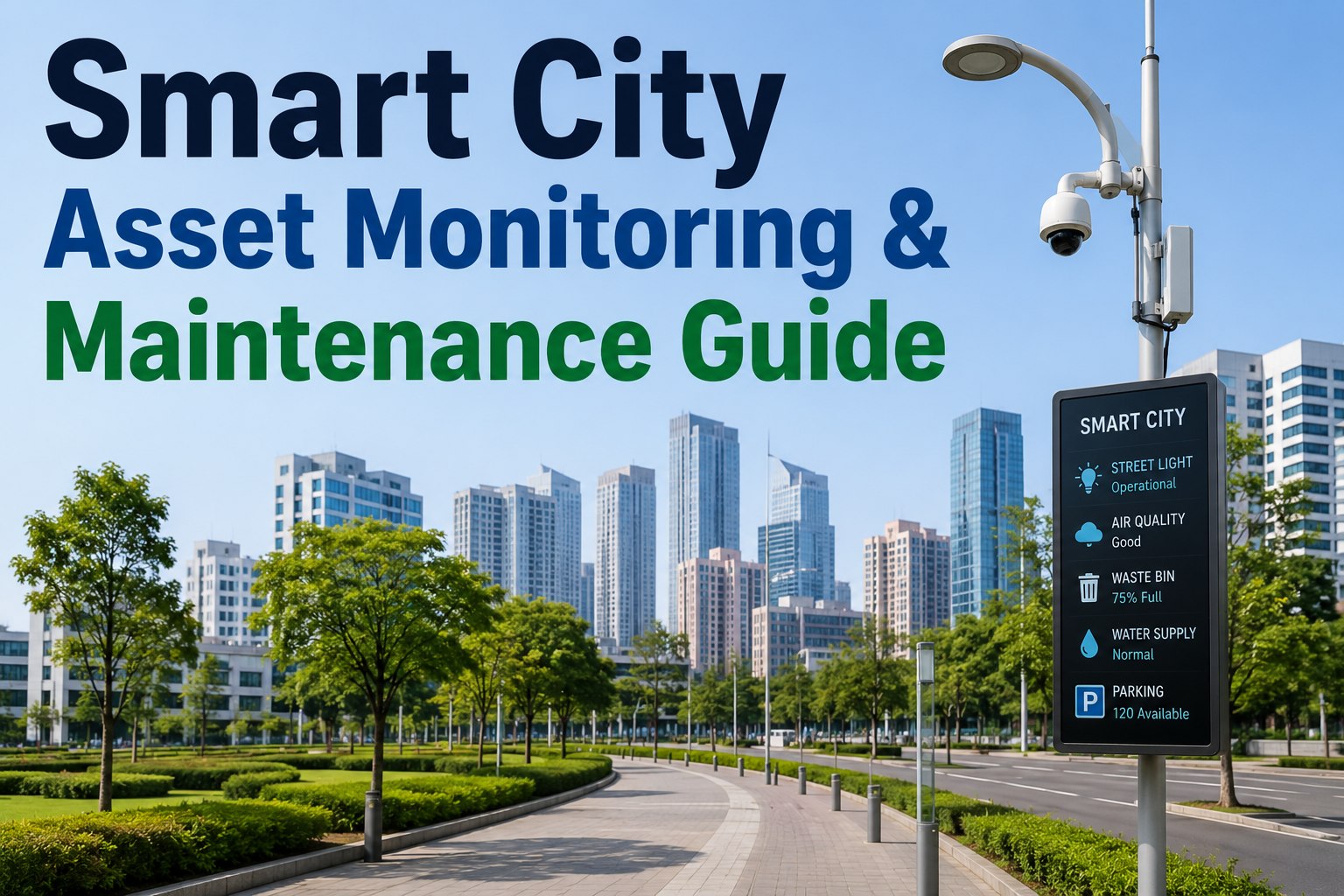
Smart city asset monitoring and maintenance is the discipline that determines whether a municipality's investment in connected infrastructure delivers lasting operational value or becomes a collection of...

Oil and gas rotating equipment — pumps, compressors, turbines and motors — accounts for the majority of unplanned downtime events in upstream and midstream operations, yet most teams still manage these critical...
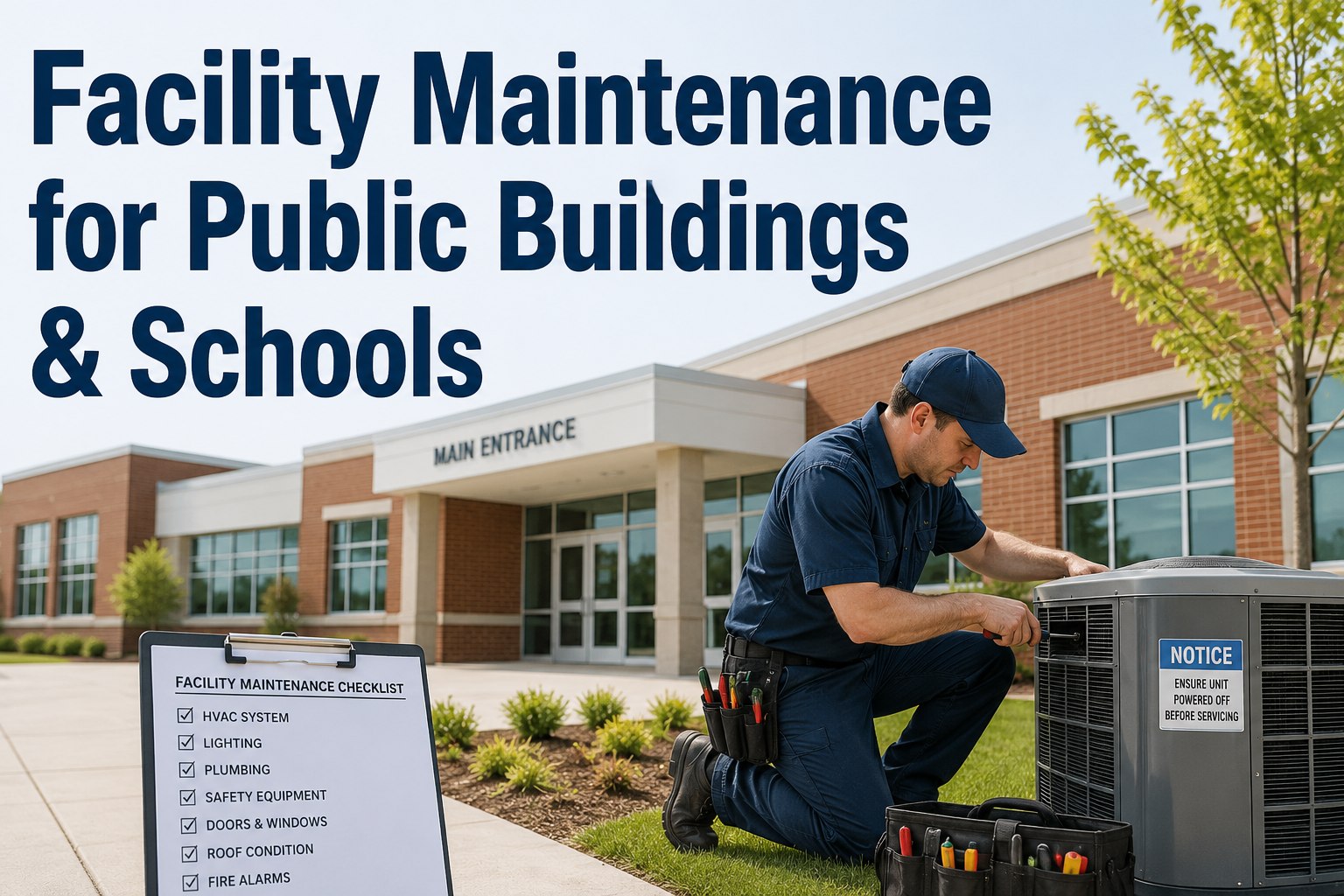
Public building maintenance and school facility maintenance demand a rare balance of life-safety compliance, tight public budgets, and calendar-driven operations. From courthouses and municipal offices to K-12...

Airport baggage handling system maintenance is the throughput-critical discipline that keeps conveyors, explosive detection system (EDS) scanners, and sortation diverters moving bags from check-in to aircraft hold...
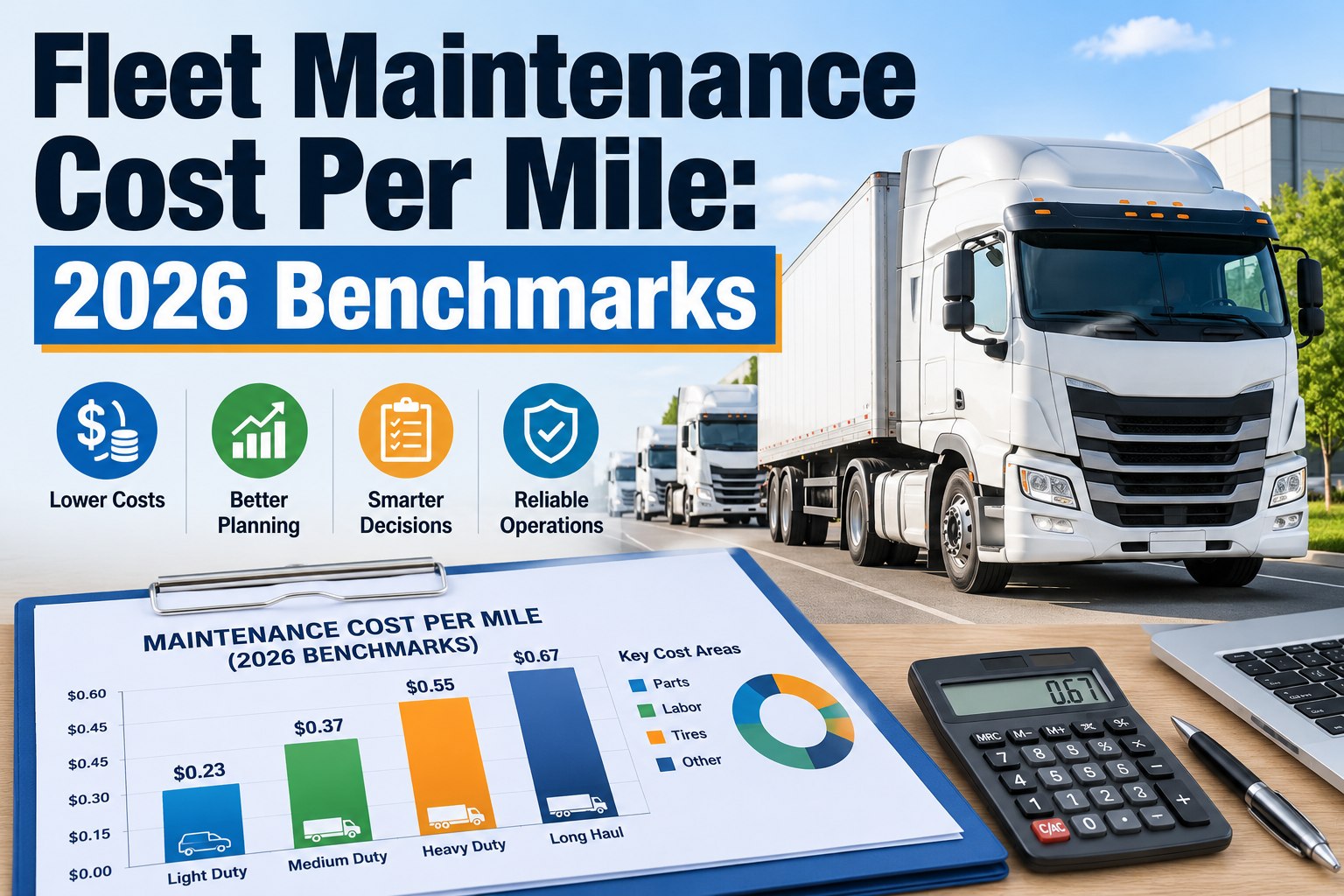
Fleet maintenance cost per mile is the single most revealing KPI in fleet operations — it tells you whether every dollar spent on parts, labor, fuel, and compliance is translating into useful, revenue-generating...

15W-40 diesel engine oil is the most widely used heavy duty engine oil across commercial fleets, valued for its balance of cold-start flow and high-temperature film strength in turbocharged diesel engines. The...
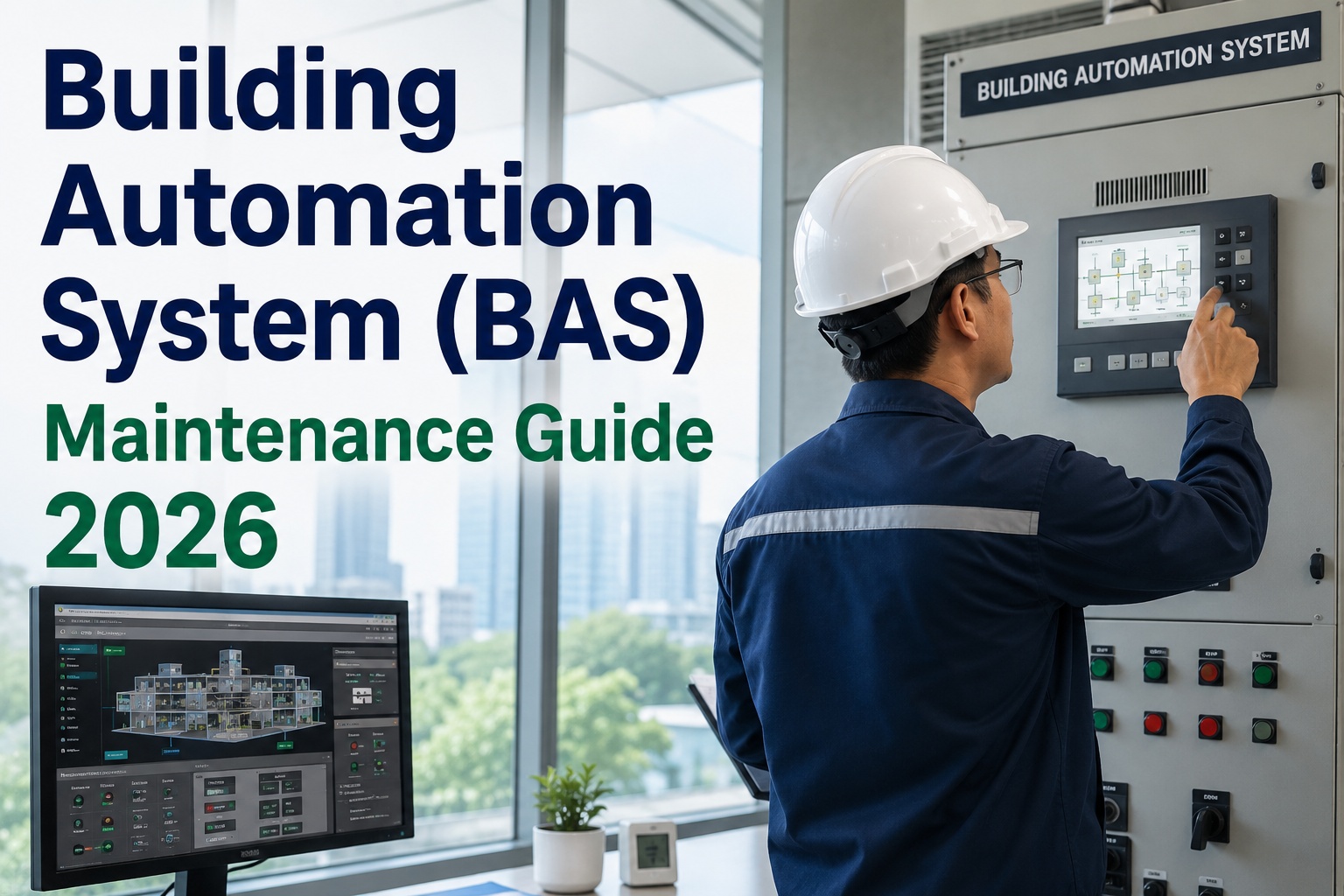
Building automation system maintenance is the discipline that keeps your BAS — DDC controllers, sensors, actuators, and HVAC controls — operating at the efficiency, comfort, and energy performance levels the system...
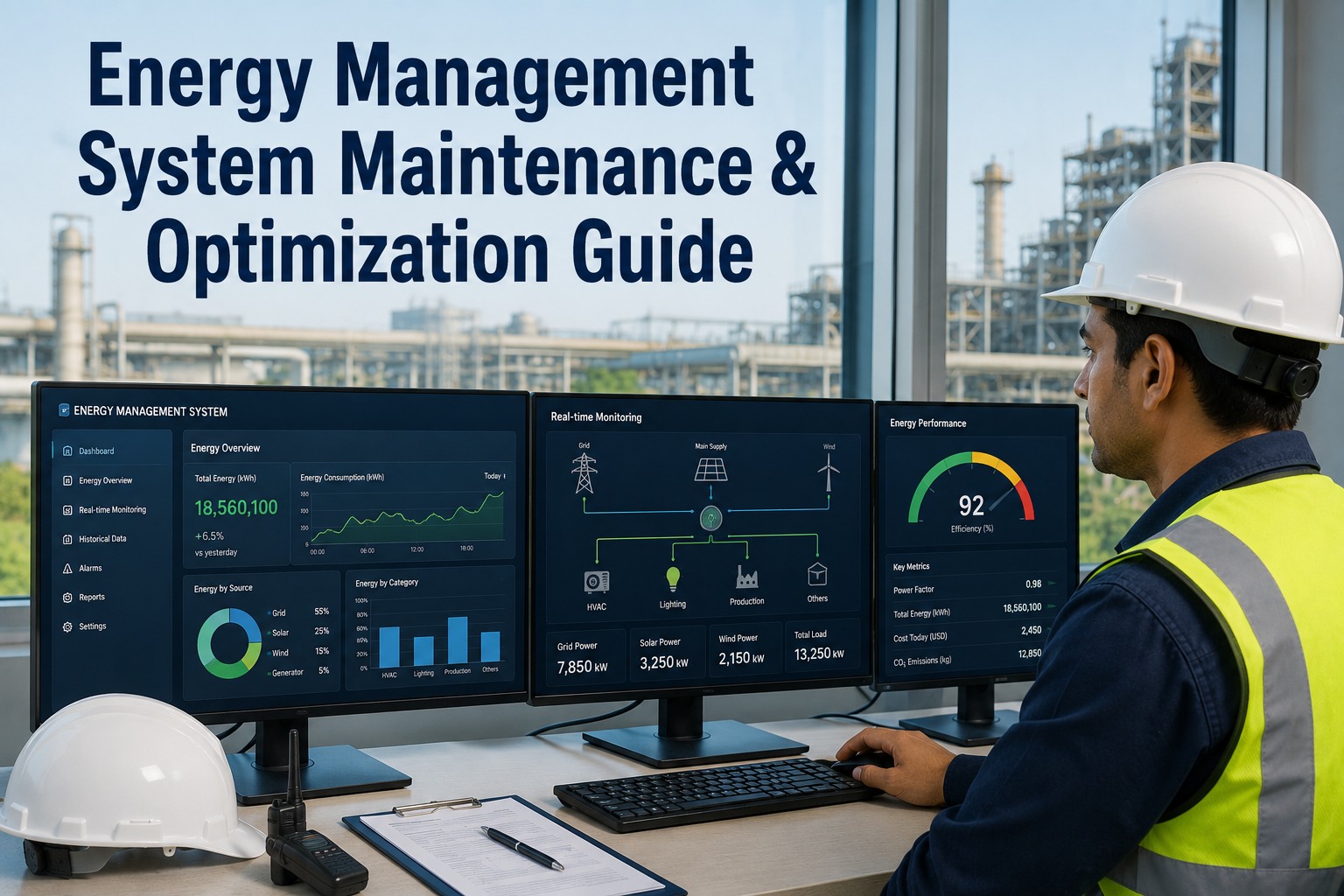
Energy management system maintenance is the disciplined practice of keeping sub-meters, sensors, controllers and analytics dashboards calibrated, connected and reliable so that building energy performance data...
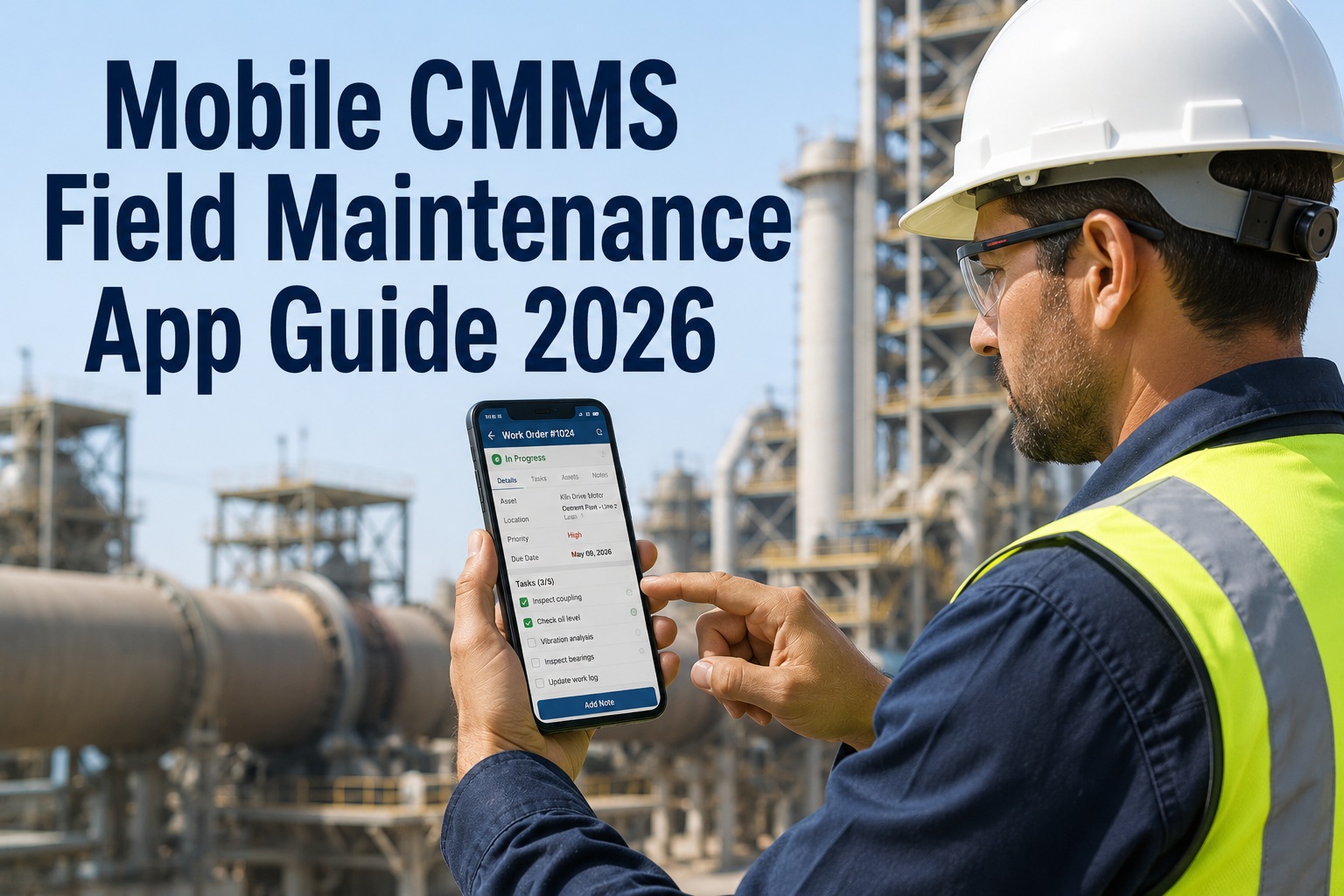
A mobile CMMS field maintenance app puts work orders, asset history, QR-code check-ins, photo documentation, and real-time status updates directly into the hands of frontline technicians — eliminating paper routes,...
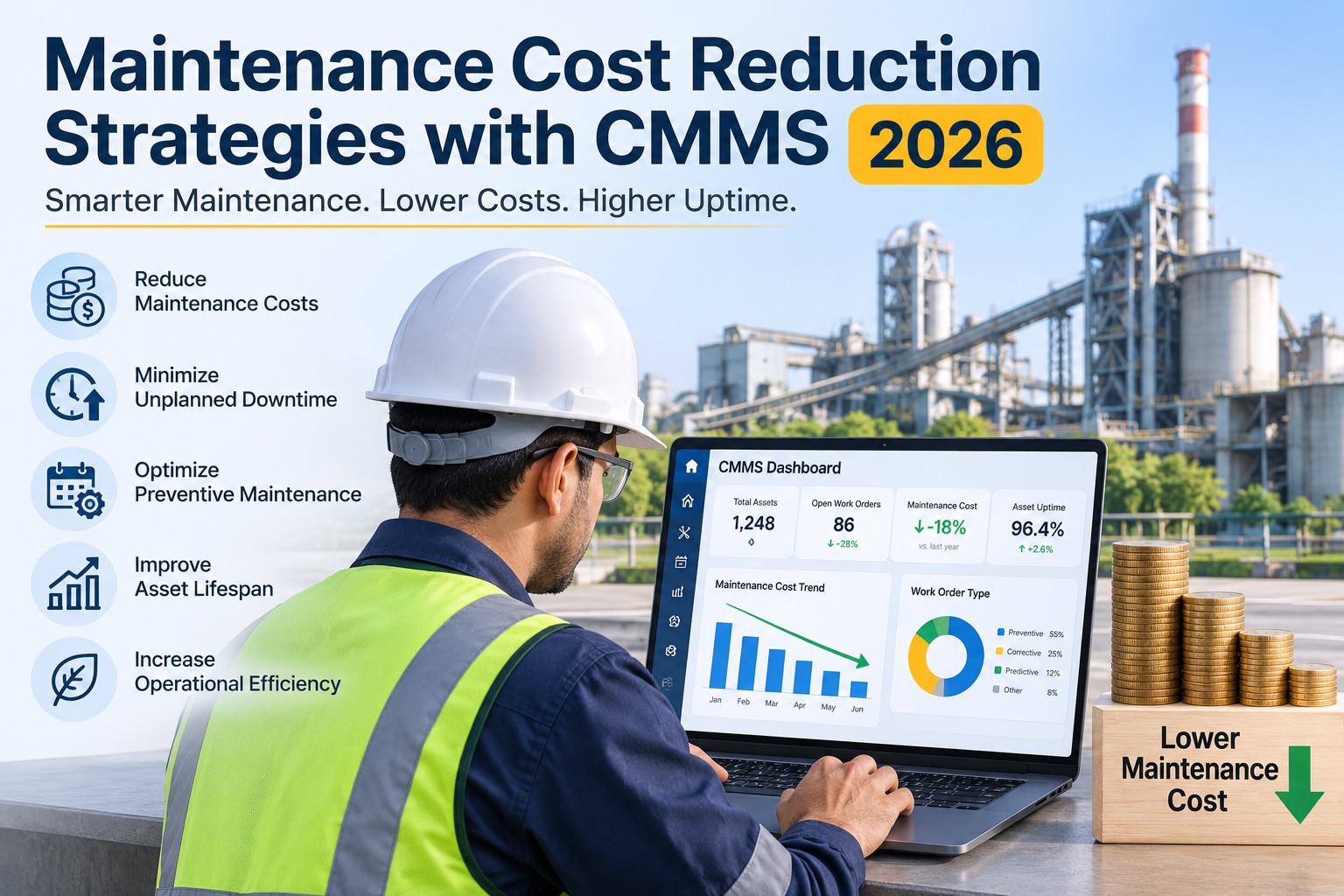
Maintenance cost reduction strategies with CMMS in 2026 combine preventive maintenance optimization, vendor management, and predictive maintenance adoption into a single coordinated cost program. Industrial plants...
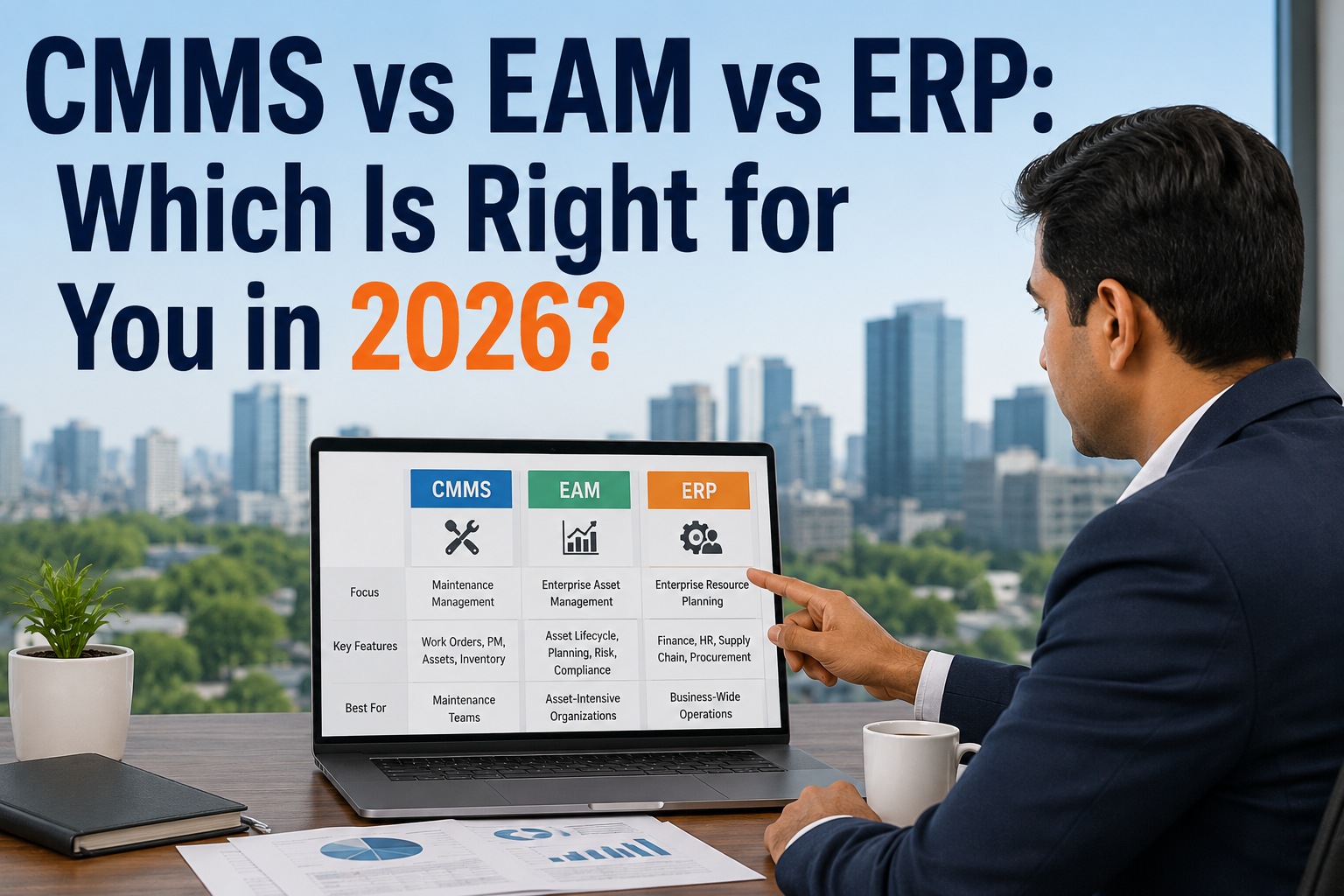
Choosing between CMMS vs EAM vs ERP is one of the most consequential platform decisions maintenance and reliability leaders make — picking the wrong system can cost over $100,000 in wasted licenses and...

A Computerized Maintenance Management System (CMMS) is software that centralizes work orders, preventive maintenance scheduling, asset tracking, inventory control, and maintenance analytics so plant managers can...

Cold storage maintenance and industrial refrigeration maintenance encompass the disciplined upkeep of compressors, condensers, evaporators, and refrigerant systems to prevent catastrophic product loss, ensure...
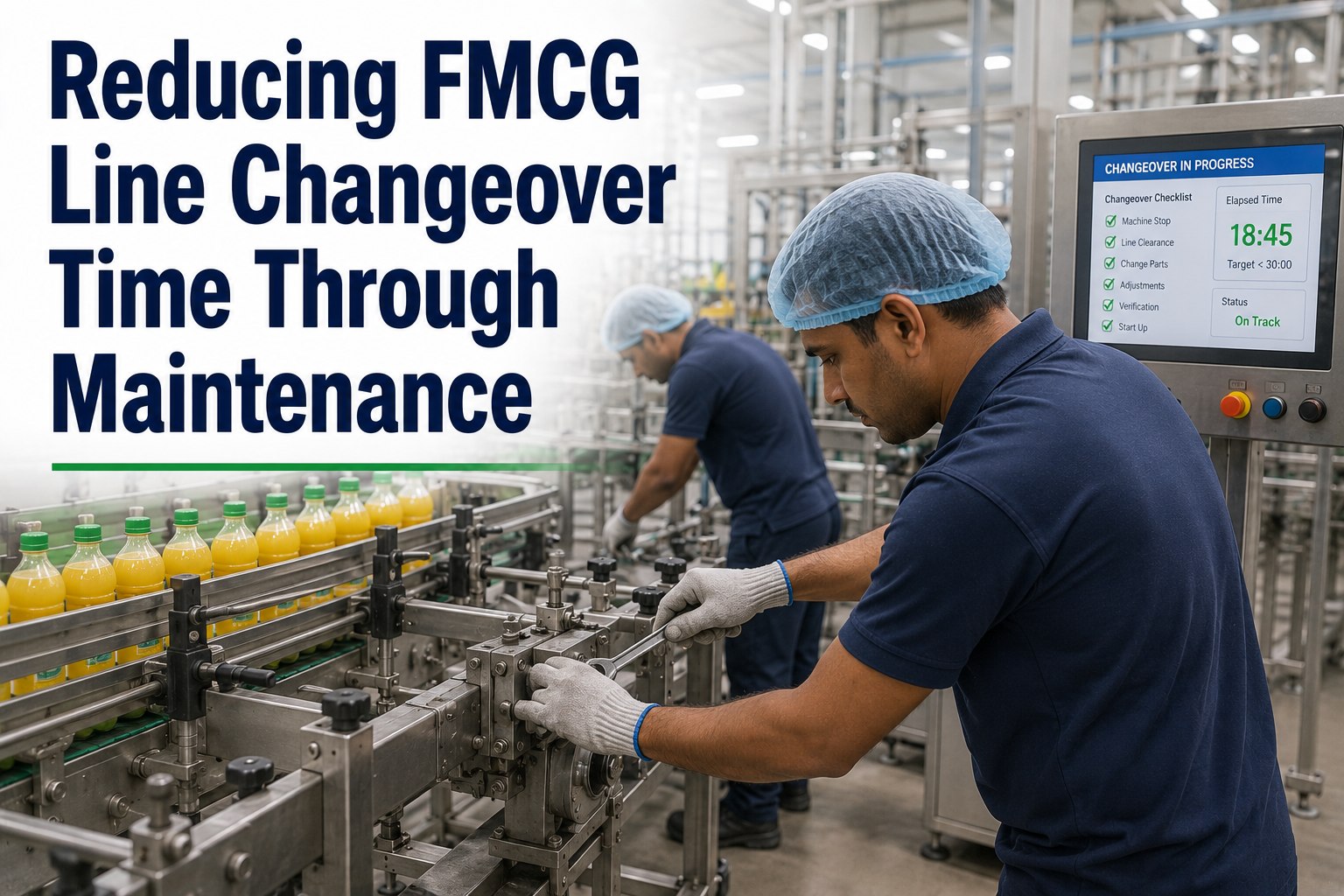
Reducing FMCG line changeover time is one of the highest-leverage operational improvements available to fast-moving consumer goods manufacturers, where every minute of downtime translates directly to lost...

Healthcare HVAC maintenance is the engineered backbone of infection control — the difference between a compliant isolation room and an airborne-transmission event. ASHRAE Standard 170, CDC guidelines, and FGI...
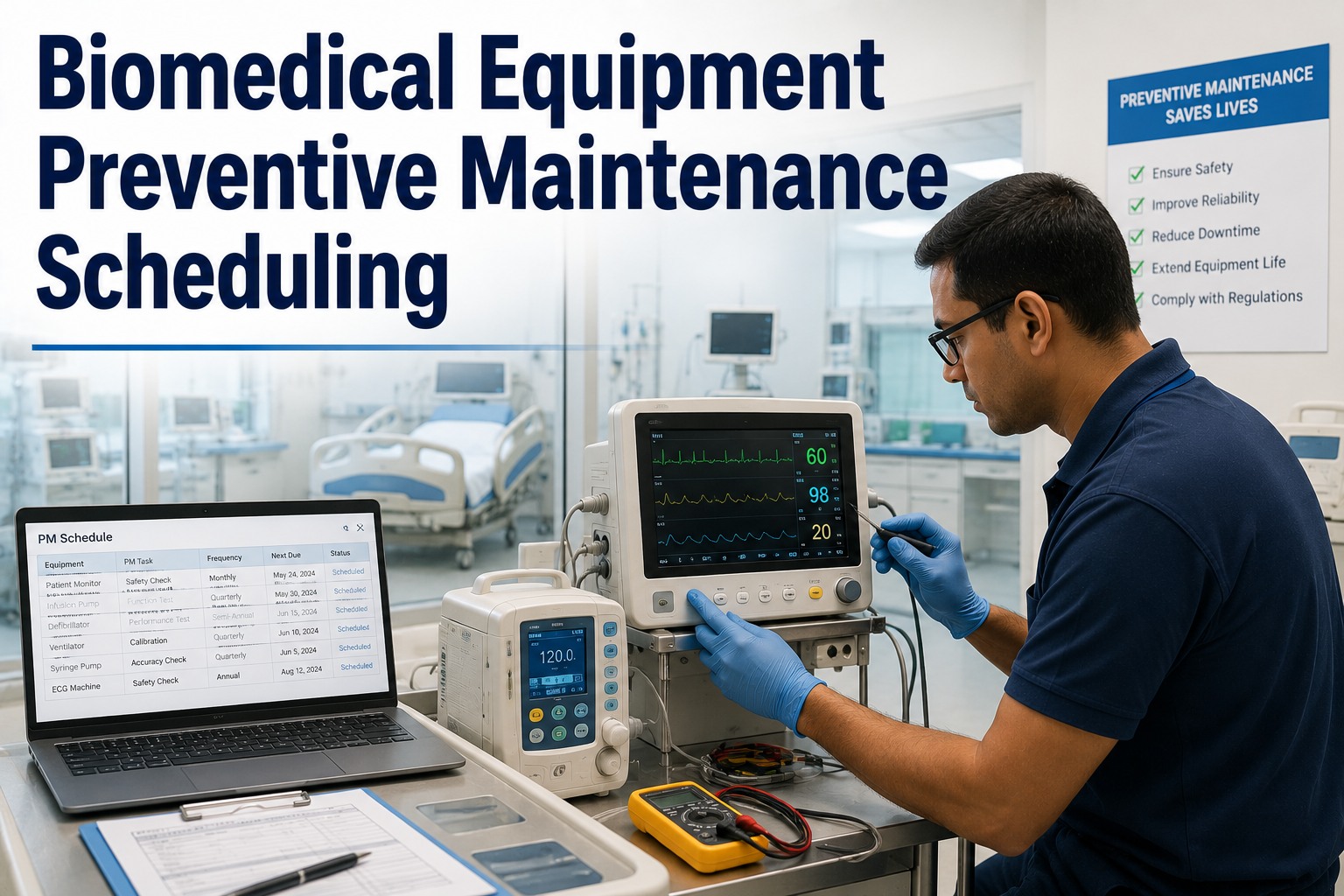
Biomedical equipment preventive maintenance scheduling is the backbone of every hospital clinical engineering program — it ensures that infusion pumps, ventilators, imaging systems and patient monitors stay safe,...

Hospitality asset management across a multi-property hotel group is where portfolio consistency either becomes real — or fragments across property-level autonomy. When a hotel group operates multiple properties...

A hotel kitchen equipment maintenance checklist is the structured set of daily, weekly, and monthly inspection tasks that keeps commercial refrigeration, cooking lines, and ware-washing systems running safely and...

A fleet preventive maintenance schedule keeps every vehicle in service longer, safer, and cheaper — but the right interval depends entirely on vehicle class. Light-duty pickups, medium-duty box trucks, Class 8...

Onshore turbines logged a 97.4% availability rate in 2023 — about two points higher than the offshore fleet — because the maintenance strategy behind each is fundamentally different. Offshore access depends on...
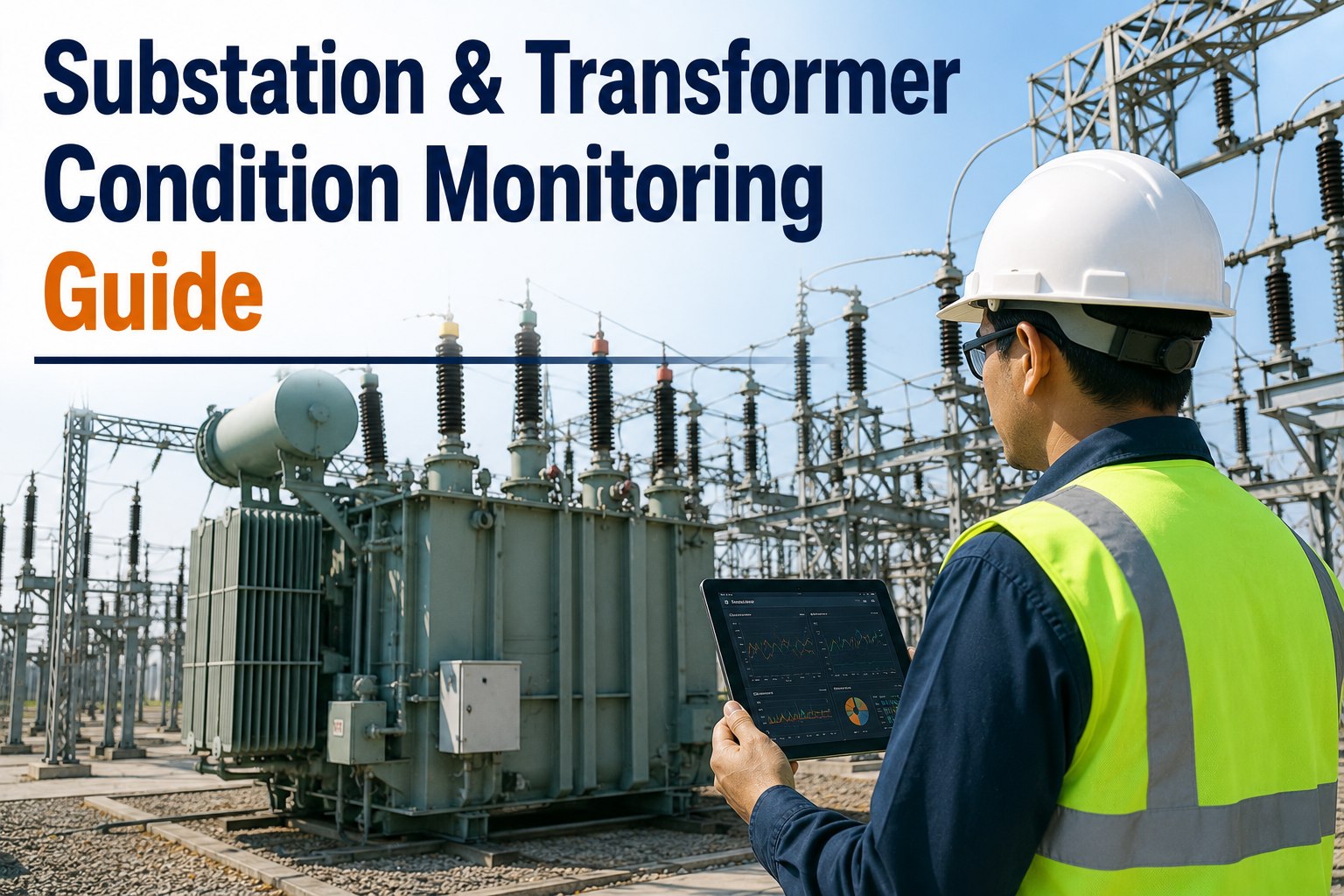
Power transformers are the most expensive single assets on a substation site, with a large 200 MVA unit typically costing $2–4 million and a failure event, including outage penalties, routinely topping $5–10...
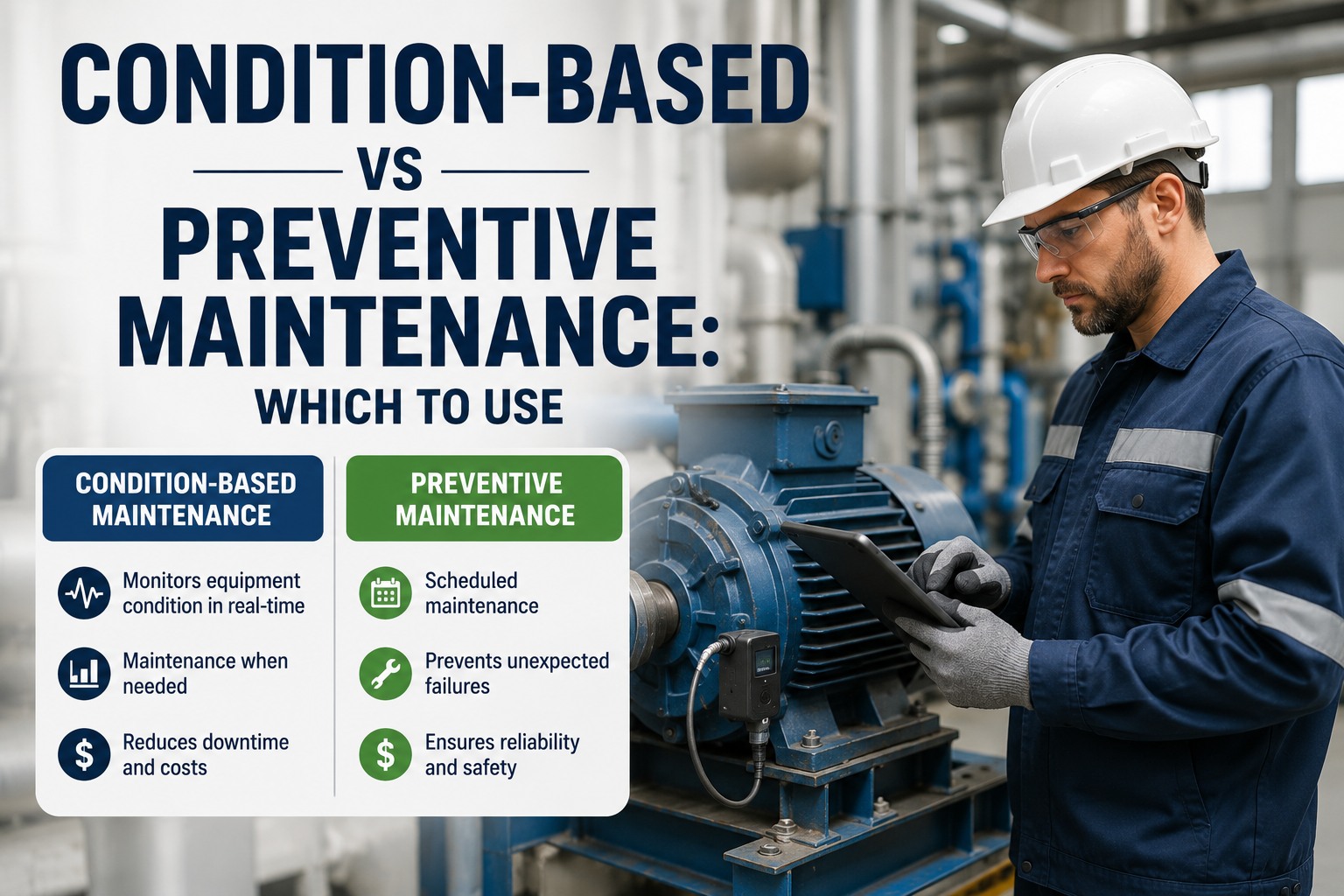
Most manufacturing plants still run a calendar-based preventive maintenance program that changes parts on a fixed schedule whether they need it or not, while a smaller set of critical assets already stream live...
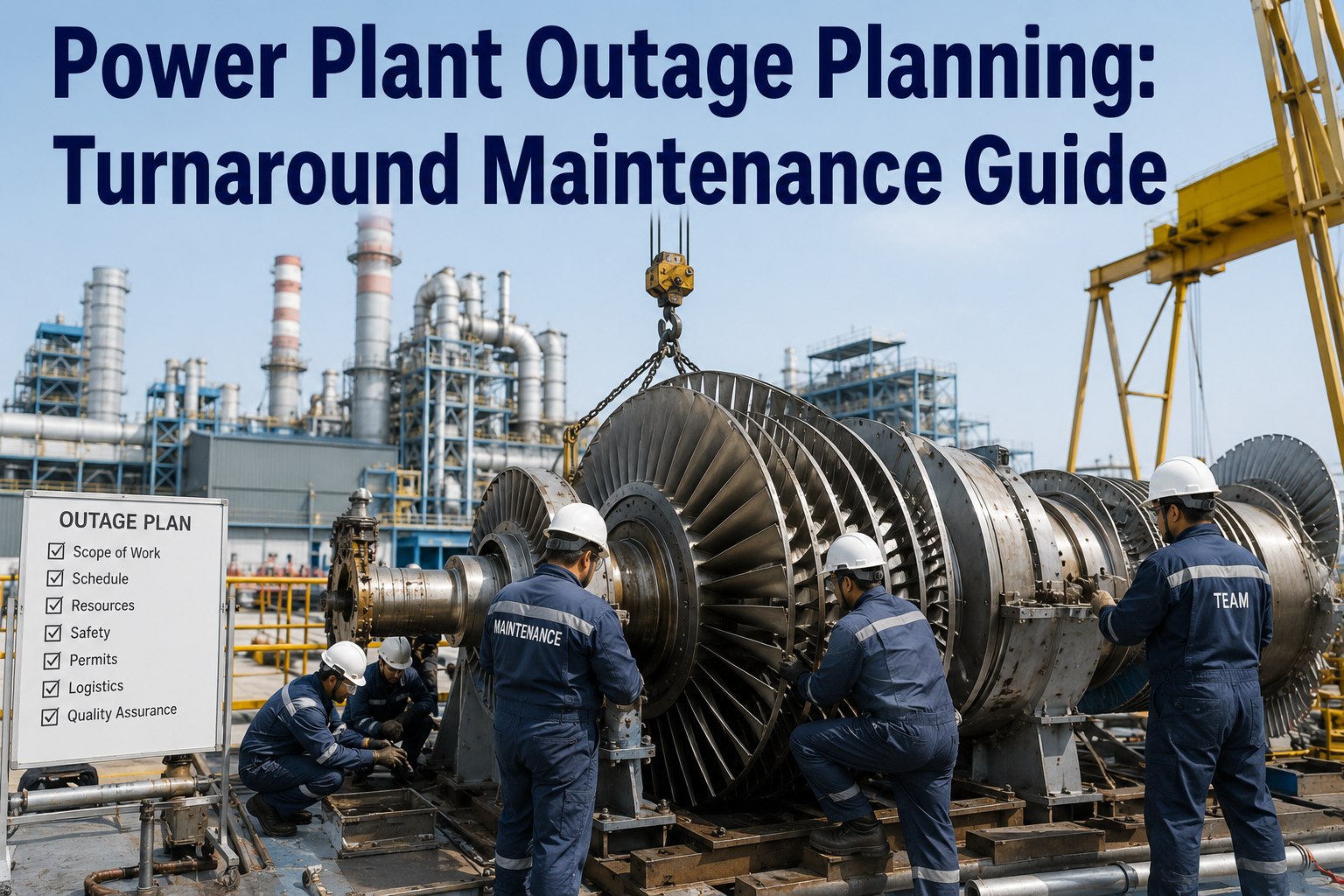
A planned power plant outage is the single largest maintenance event of any generation year — a 21- to 45-day window where refractory, boiler, turbine and balance-of-plant work converge under one critical path....

Grid-scale battery energy storage systems (BESS) are now the backbone of renewable integration, peak shaving, and grid resilience — yet a single neglected thermal sensor or untracked fire-suppression service date...
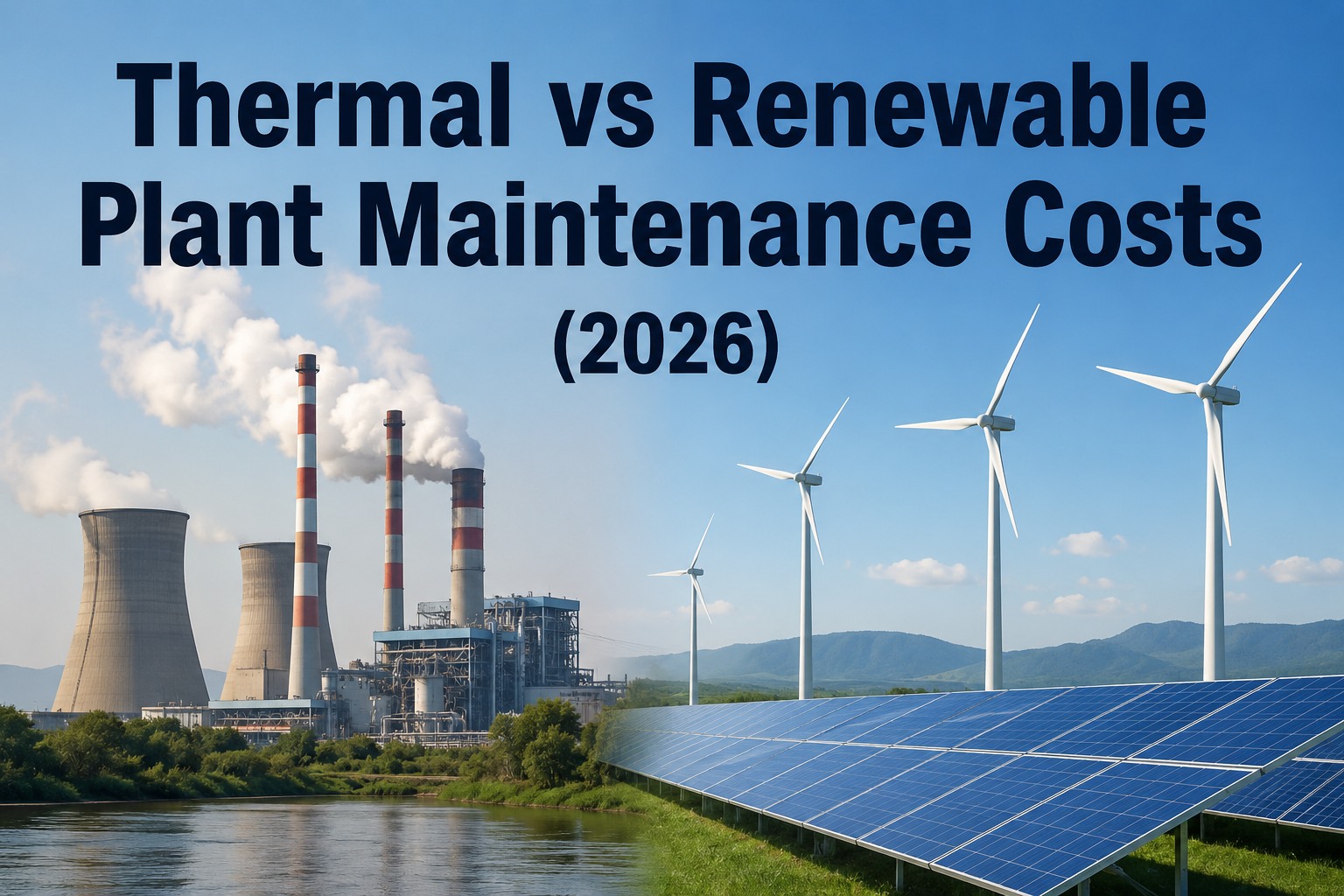
Maintenance economics across power generation assets are diverging fast: a 500 MW coal unit routinely spends $28–42 per MWh on operations and maintenance, while utility-scale solar PV runs $6–11 and onshore wind...

A single forced turbine outage at a 500 MW thermal unit can burn $400K–$1.2M in replacement power and ramp costs per day, yet most of the warning signs — shaft vibration drift, lube-oil degradation, superheat...

Predictive maintenance ROI in manufacturing consistently delivers 40–60% downtime reduction on properly monitored assets, yet many reliability leaders struggle to translate that potential into a defensible PdM...

Spare parts inventory is the silent tax on every maintenance budget: industry benchmarks put MRO carrying cost at 18–30% of average inventory value per year, yet the typical plant still reports 15–25% dead stock...
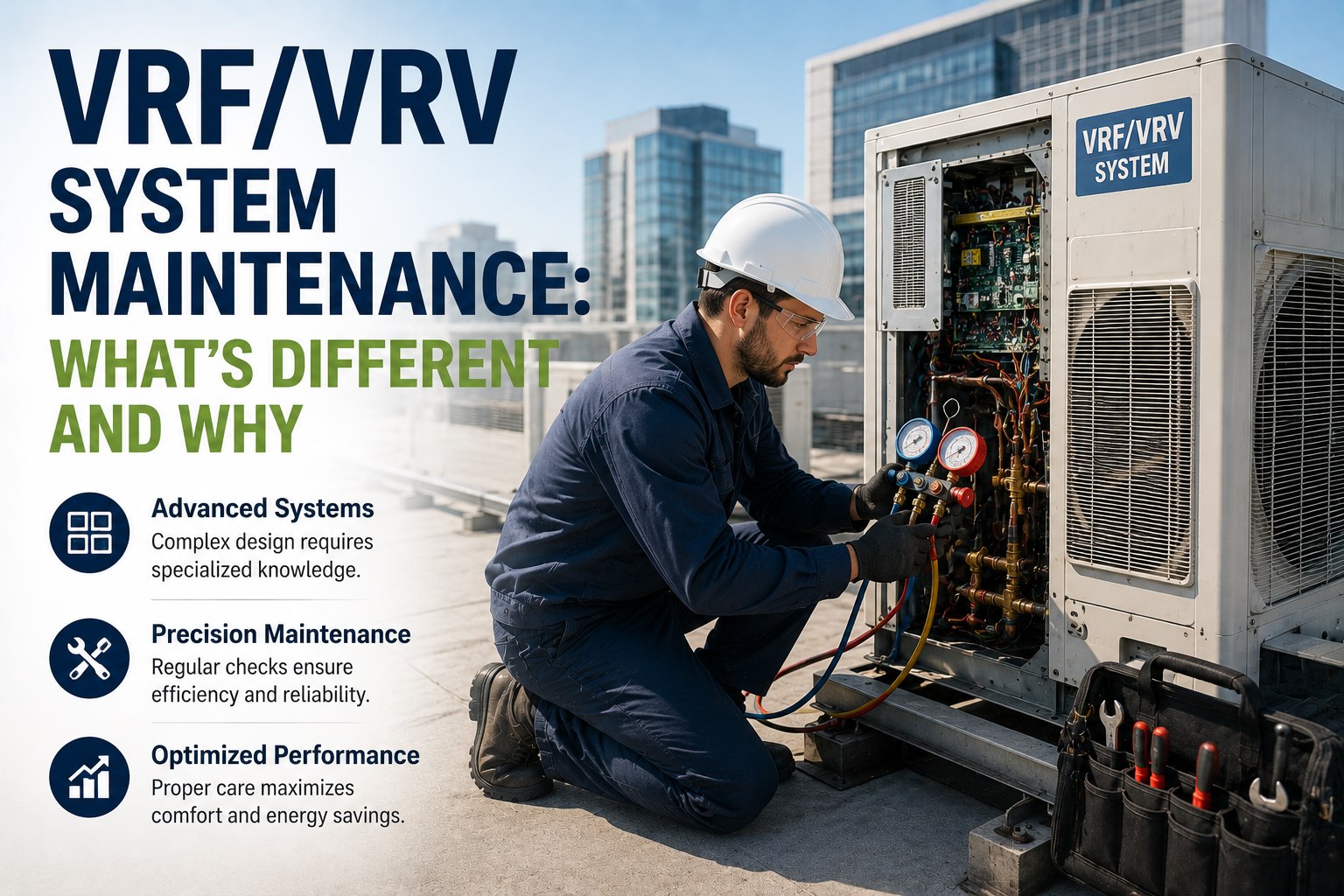
Variable refrigerant flow systems deliver efficient, zoned comfort across large buildings, but their intricate piping networks, embedded controls, and OEM-specific service protocols make VRF and VRV system...
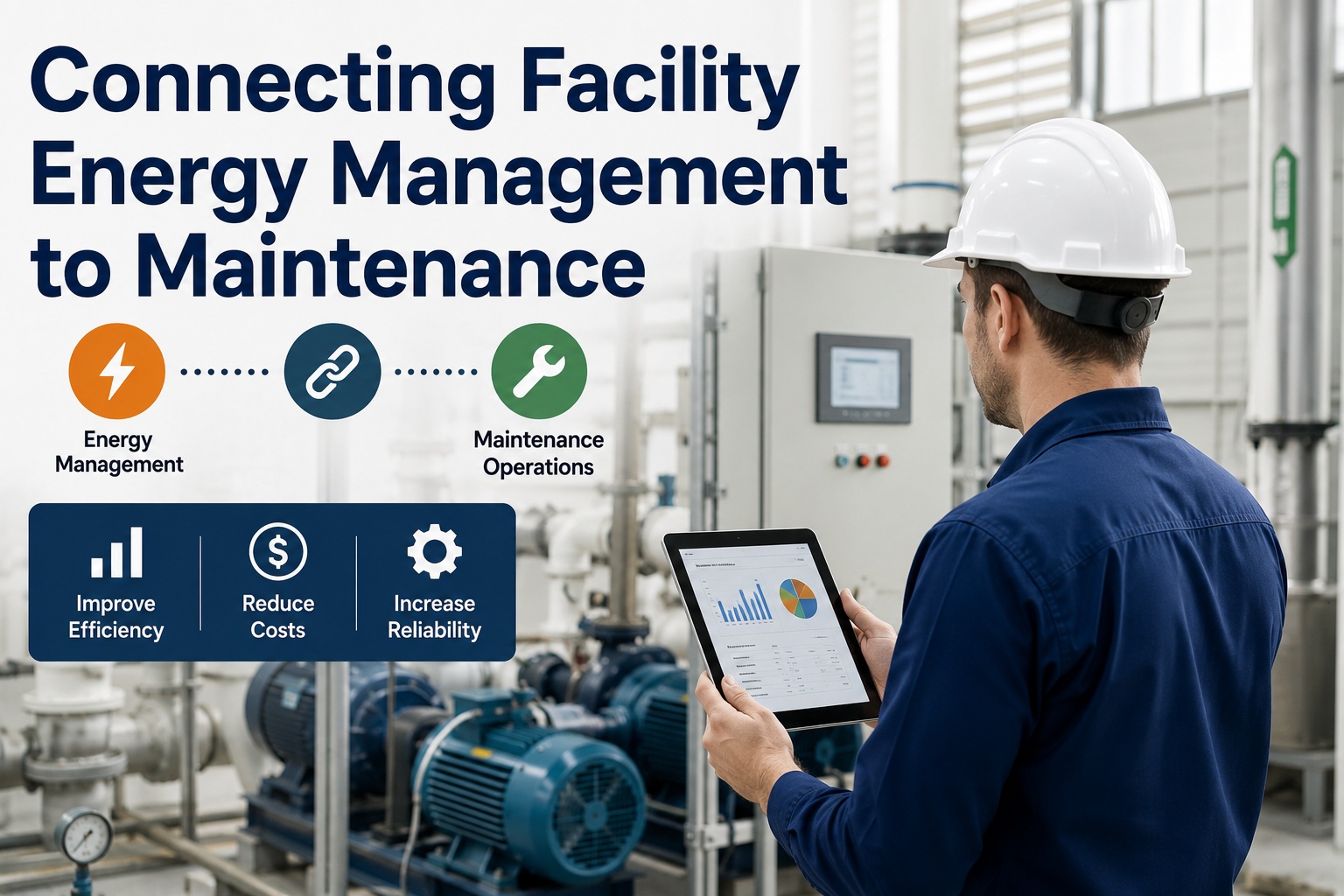
Connecting facility energy management to maintenance is where theoretical energy savings become measurable reductions on your utility bill. Equipment that drifts out of tune — a fouled chiller, a clogged filter, a...

A facility safety inspection program is the operational discipline that keeps building occupants safe, assets compliant, and audit findings to zero — but only when inspections are scheduled, executed, documented,...

Commercial chiller plant optimization is the process of fine-tuning sequencing, preventive maintenance cadence, water treatment, and real-time condition monitoring to drive down HVAC energy consumption while...

An HVAC maintenance contract is only as valuable as the service-level agreements, scope definitions, and performance metrics backing it — yet most facility teams sign boilerplate terms that guarantee vendor...
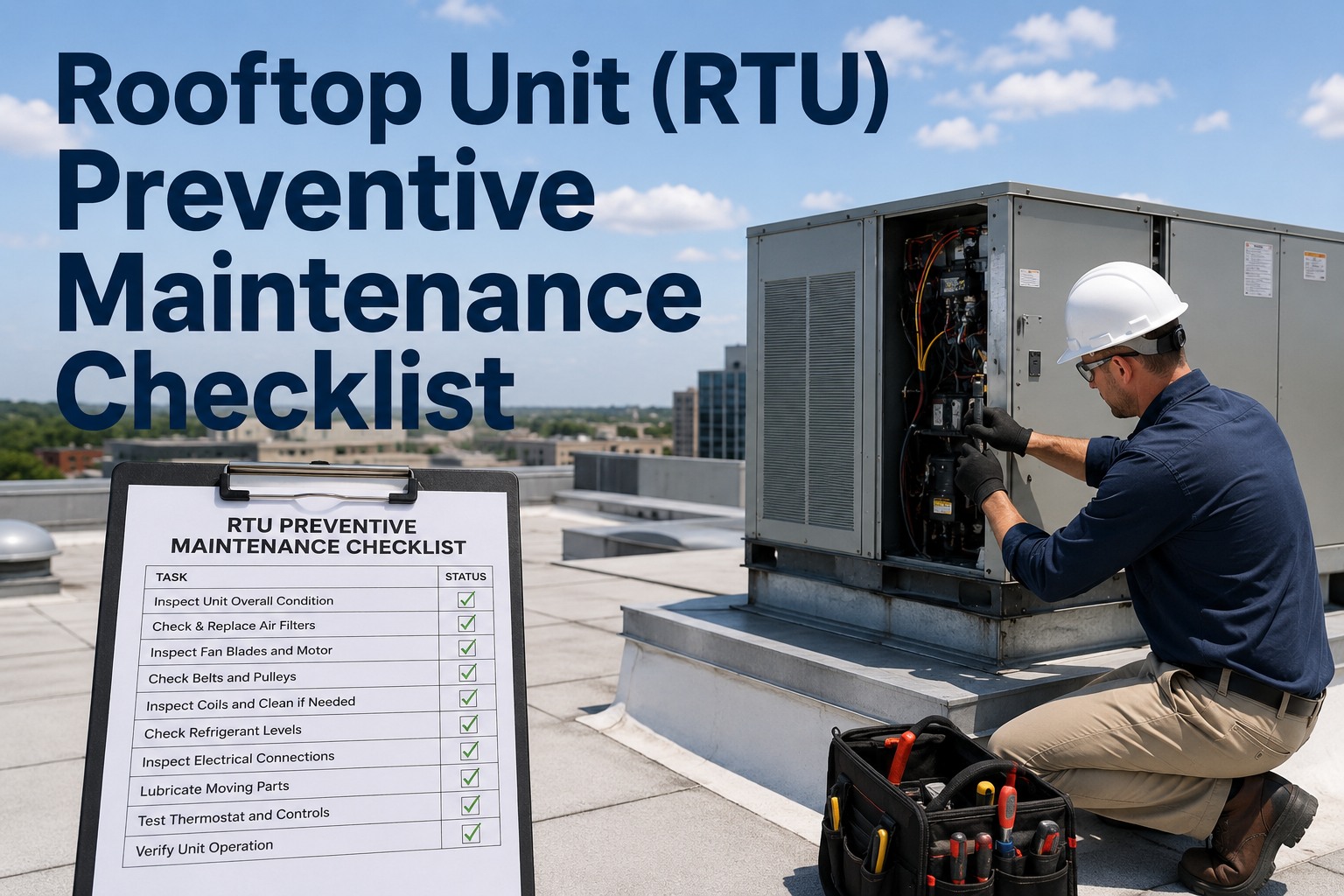
A rooftop unit (RTU) preventive maintenance checklist is the structured set of seasonal inspection, cleaning, and component-replacement tasks required to keep commercial HVAC systems running efficiently, reliably,...

HVAC refrigerant leak detection is no longer just an energy-efficiency concern — under the AIM Act phase-down and tightening EPA Section 608 rules, it is now a mandatory compliance issue carrying federal...

The synthetic vs conventional oil debate for fleets is not about which lubricant is "better" in the lab — it is about which delivers the lowest total cost of ownership across thousands of drain events, labor hours,...

A DOT inspection checklist is the structured list of vehicle inspection points that commercial motor vehicles must pass during roadside and annual inspections enforced by the FMCSA and CVSA. In 2026, roadside...

Fleet telematics systems generate millions of data points every day, but the true ROI is only realized when that vehicle data is converted into proactive maintenance actions. By integrating connected fleet...

Fleet maintenance software is the system of record that keeps every vehicle, trailer, and powered asset in your fleet road-ready, compliant, and cost-controlled — and choosing the right platform in 2026 is a...

Multi-site facility maintenance standardization is the process of harmonizing preventive maintenance schedules, KPIs, and reporting procedures across a distributed portfolio of properties to drive consistent...

Preventive maintenance for commercial real estate is the structured discipline that protects asset value, preserves net operating income, and keeps building systems — HVAC, elevators, fire-life-safety, roofing,...

Roll shop and spare-parts inventory strategy is the single most underestimated lever in rolling-mill uptime — a missing work roll or chock at campaign changeover can idle a finishing stand for 6 to 18 hours, with...
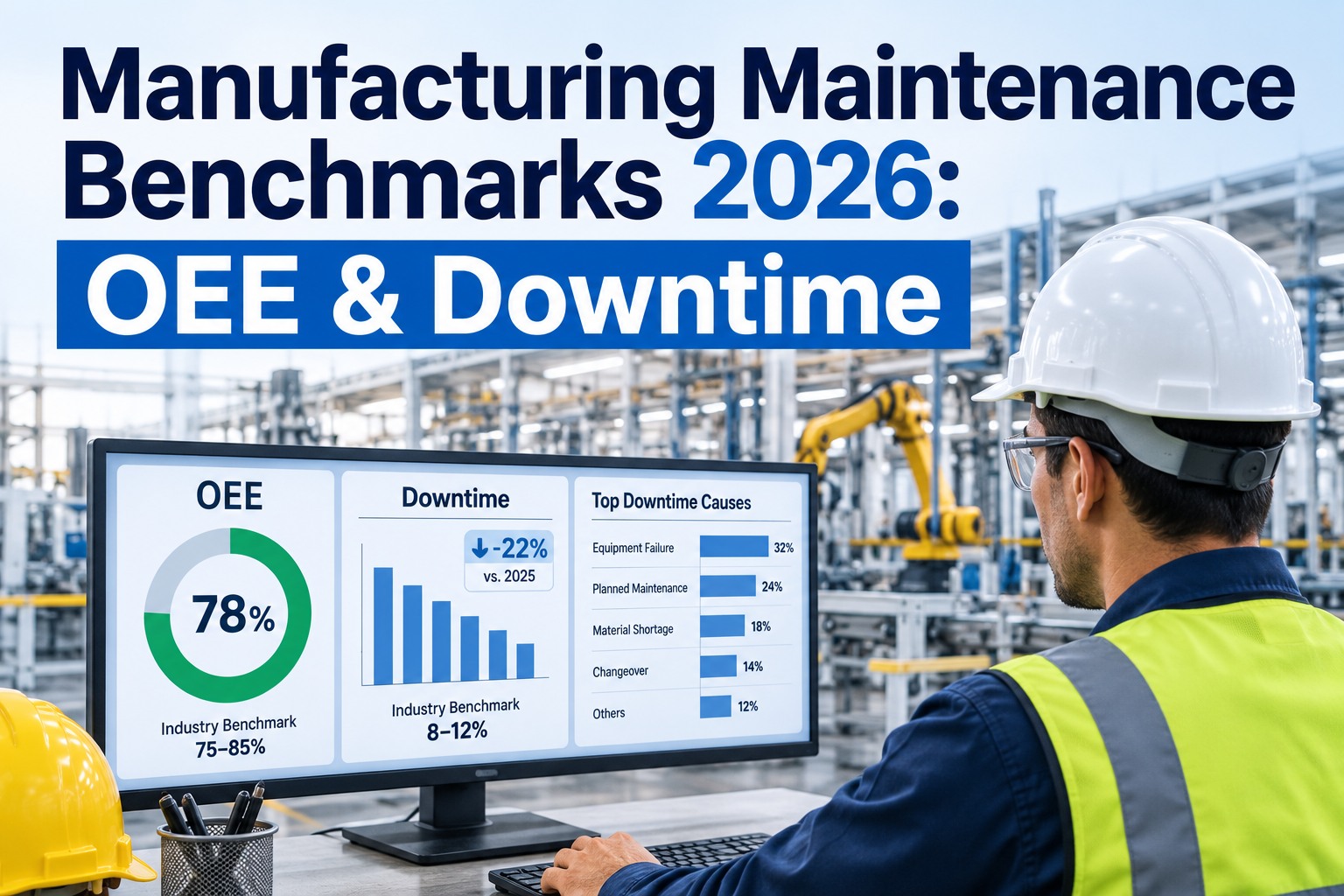
For most plants, the gap between a 45% OEE and a world-class 85% OEE is not a technology problem — it is a measurement problem. Maintenance benchmarks for 2026 show that manufacturers who actively track OEE, MTBF,...
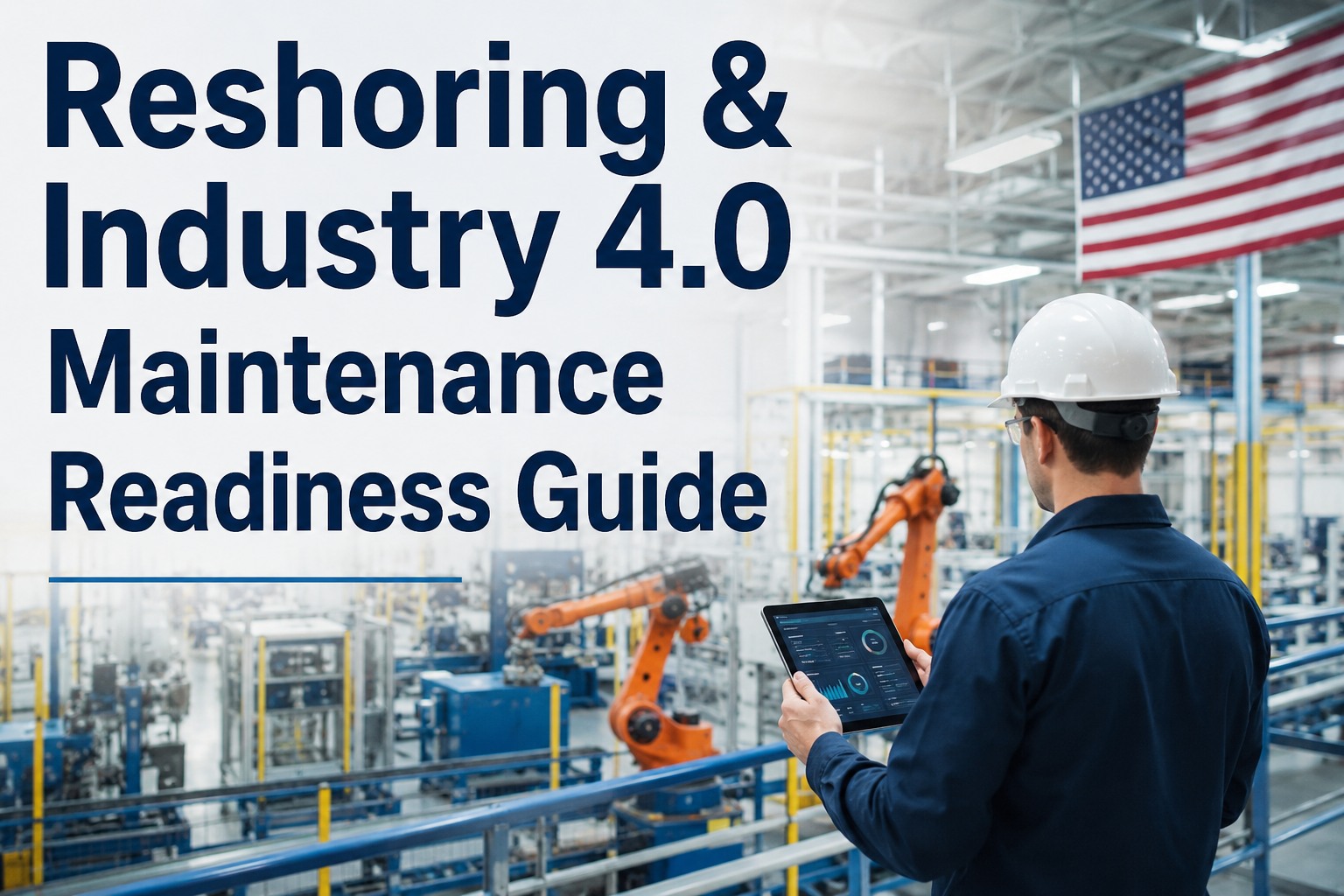
As US manufacturing reshores at a pace not seen in four decades, plant leaders are inheriting assets, workforces and maintenance backlogs that were never built for Industry 4.0 operating models. The gap between a...

Roughly 70% of today's maintenance technicians are over 50, and with each retirement notice a quiet archive of equipment quirks, rebuild shortcuts, and failure signatures leaves the building. When that...

By the time October rolls around, most plant maintenance managers are already bracing for the same ritual: finance sends down a target, maintenance pushes back, and the two sides spend six weeks arguing over...
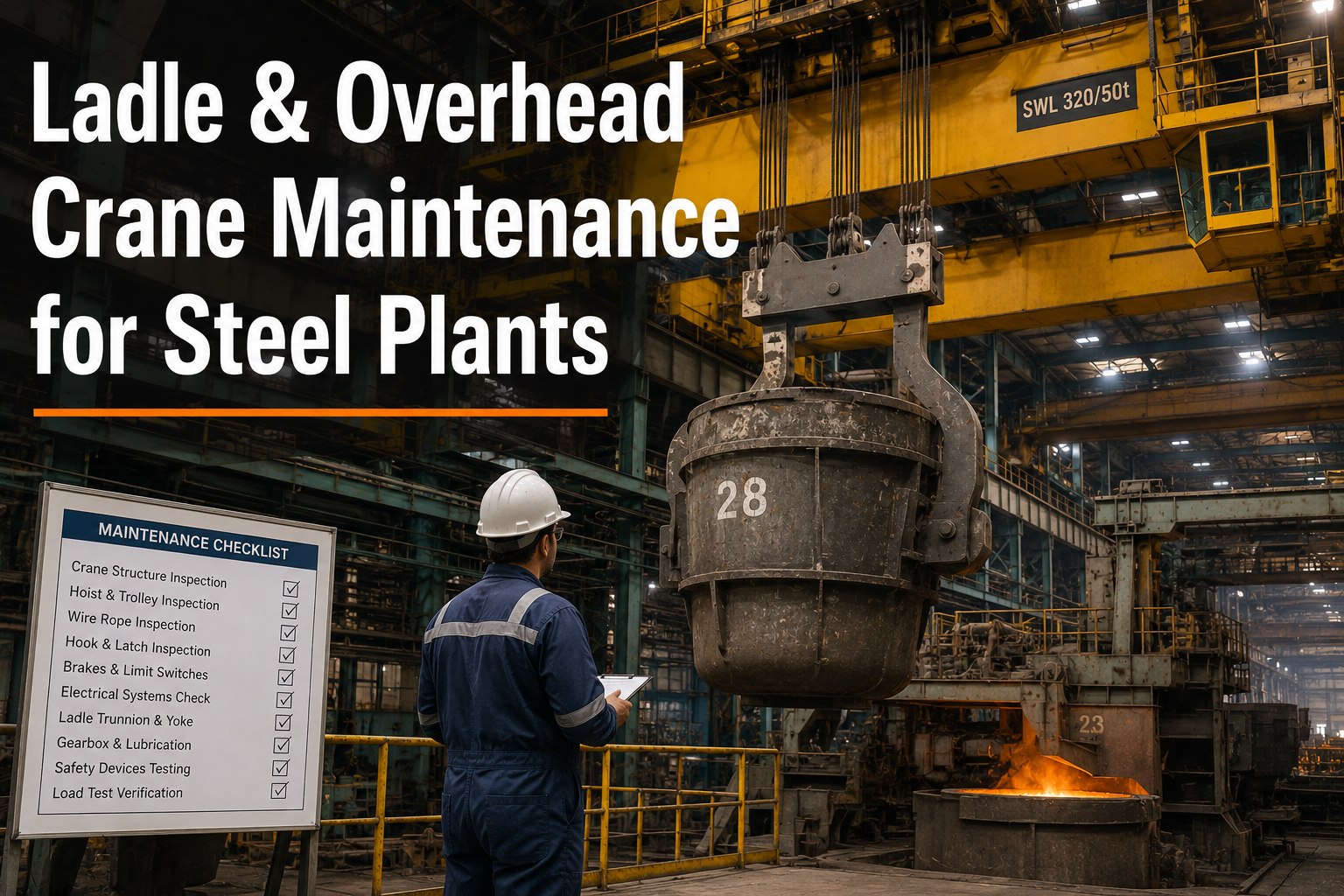
In a steel plant, the ladle crane and overhead charging crane are not just material-handling equipment — they are the single point of failure between a flowing melt shop and a cold, million-dollar outage. Every...

A blast furnace reline is one of the single largest capital events an integrated steel plant will ever face — routinely 90 to 180 days of downtime, $150M to $300M in direct cost, and lost iron production that can...
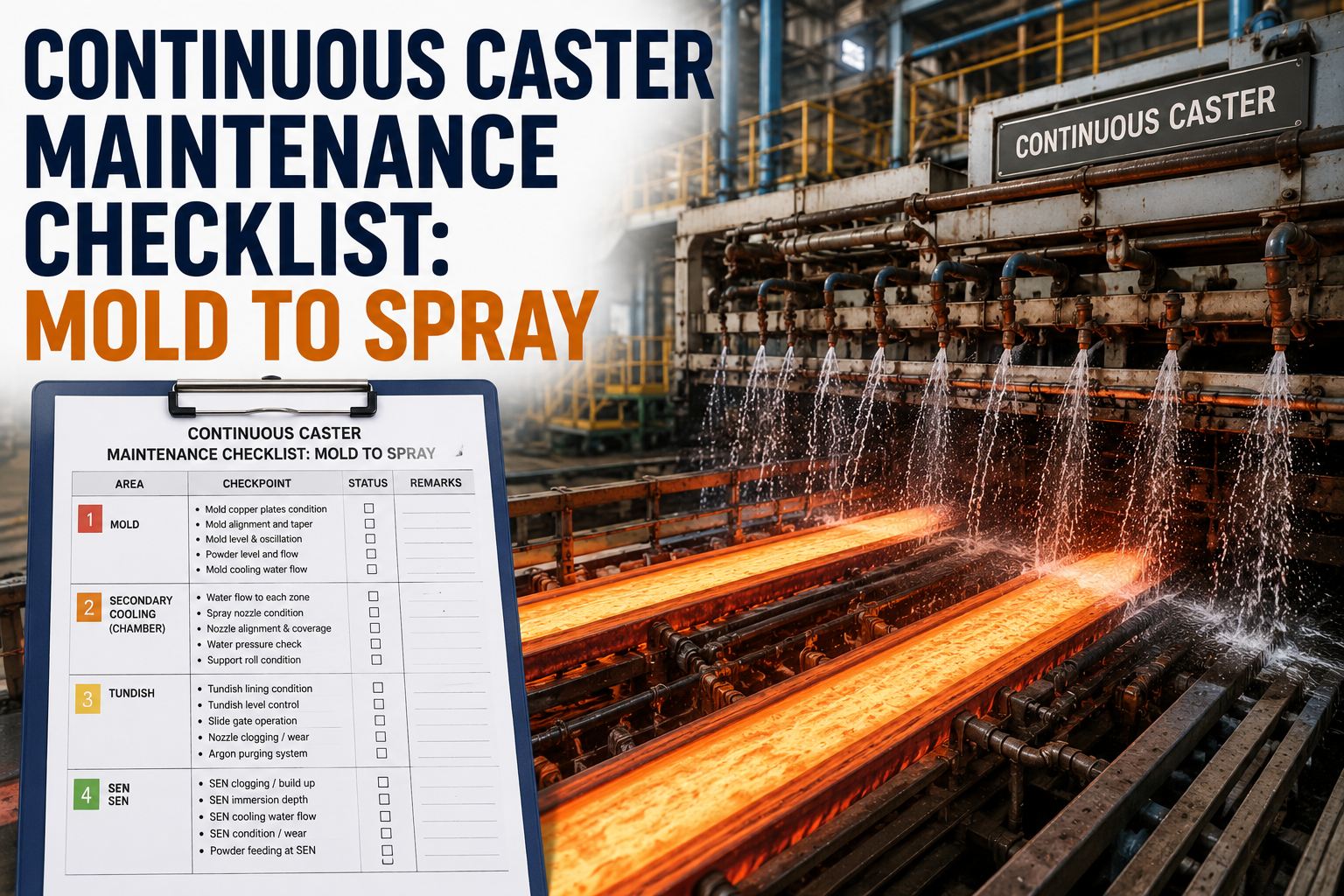
Continuous caster availability is won or lost between the mold and the spray chamber — where copper plate wear, segment roll misalignment, and clogged nozzles quietly convert prime slab into scrap. Steel plants...

On an integrated steel line, every stopped hour quietly burns between $100,000 and $500,000 in lost contribution margin — yet most plants still budget maintenance on last year's spend instead of on the downtime...

The most powerful idea in autonomous maintenance is also the simplest: cleaning is inspection. When an operator wipes down a machine, they touch every surface — and in doing so they find the oil leak, the hairline...

Oxmaint is the food manufacturing maintenance software that links every equipment PM, sanitation cycle, calibration record, and temperature log to the production lot it protected — turning maintenance data into the...
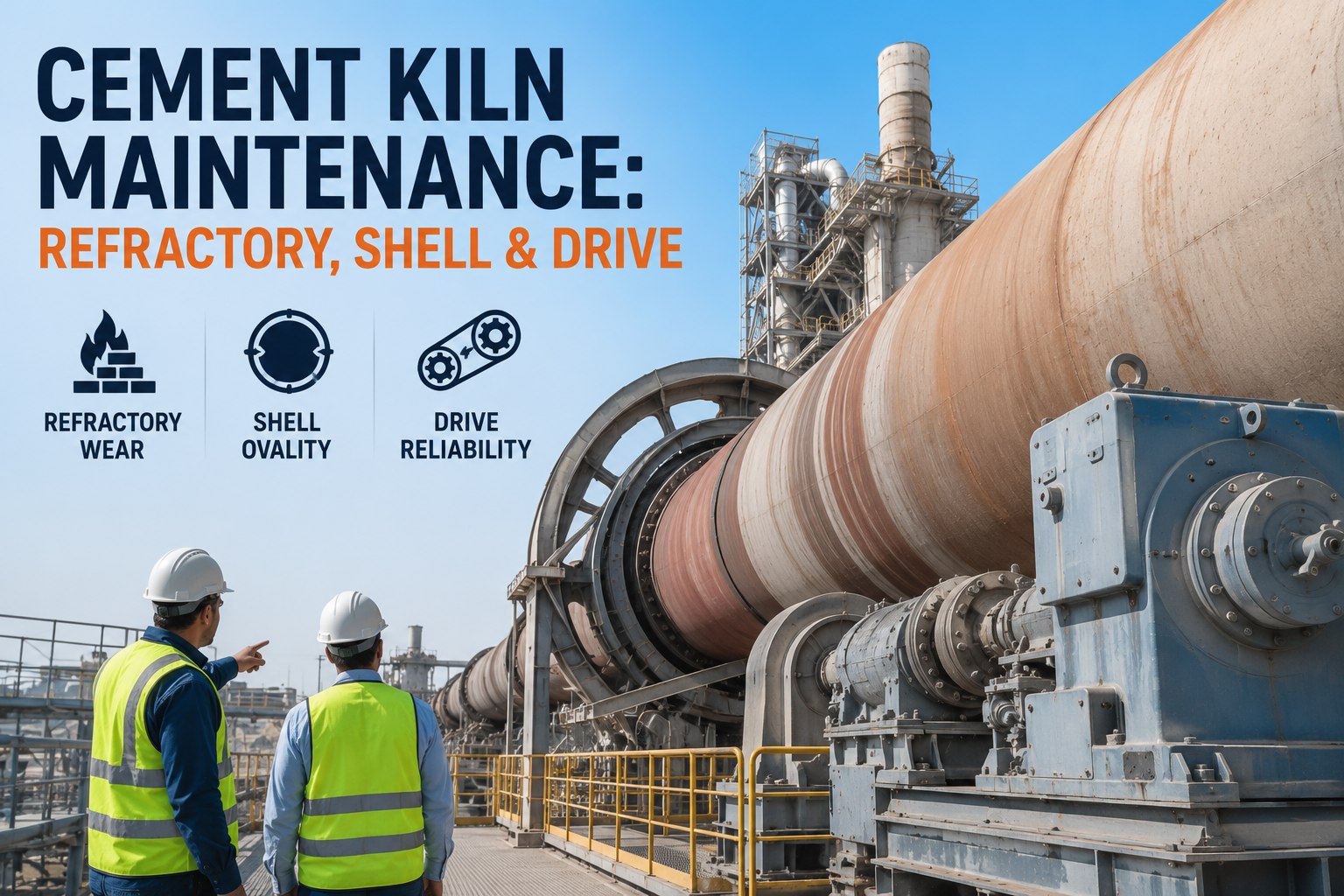
The rotary kiln is the single most valuable, most complex, and most consequential asset in a cement plant. A single hour of unplanned kiln downtime costs a producer somewhere between $20,000 and $85,000 in direct...

Oxmaint is the work order management software that turns a manufacturing maintenance team from reactive firefighters into a planned, measured operation — moving every request through a structured lifecycle from...
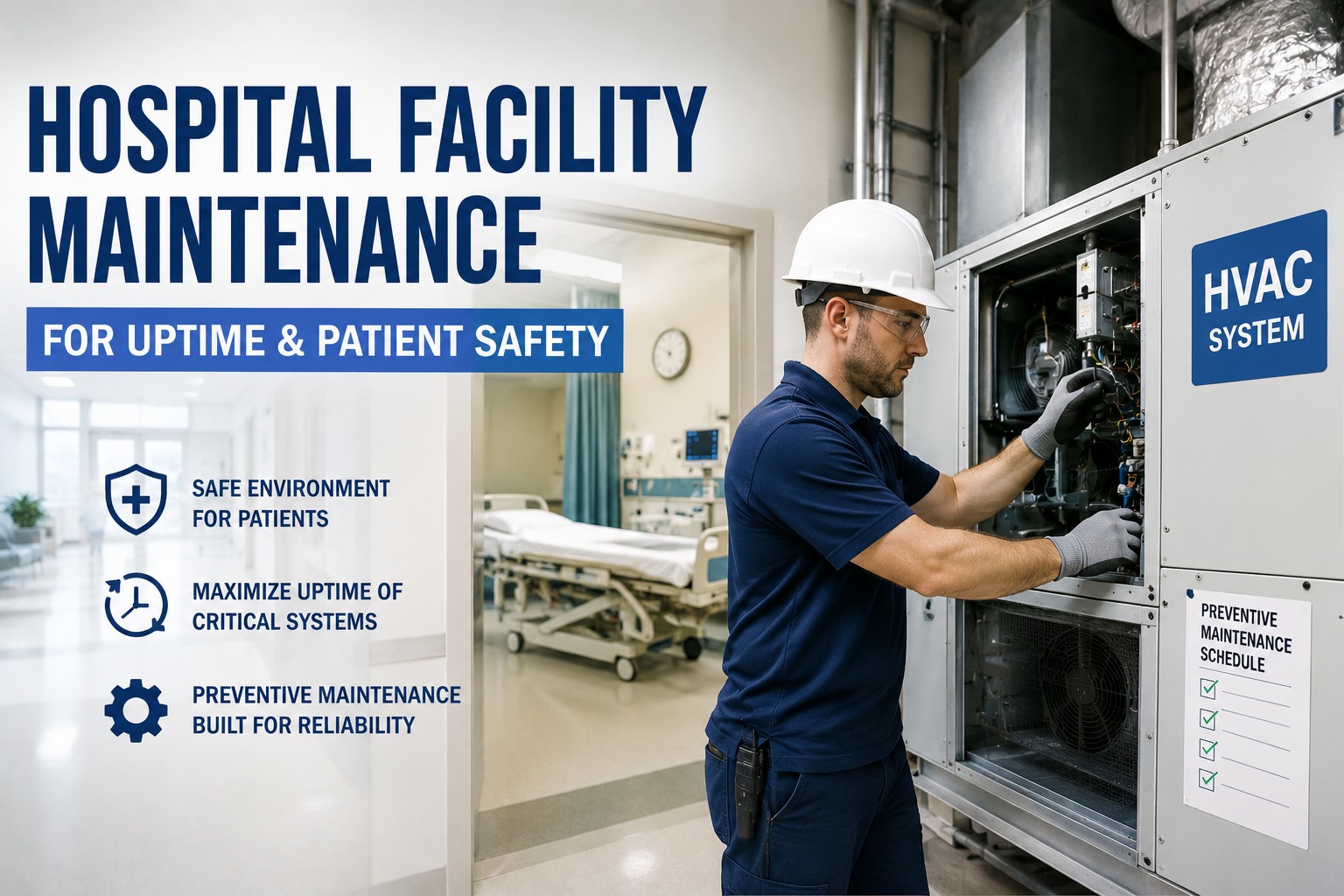
A hospital is the most maintenance-critical building in the industrial or commercial world. When a chiller fails in an office tower, tenants get uncomfortable. When a chiller fails in a hospital surgical suite, the...
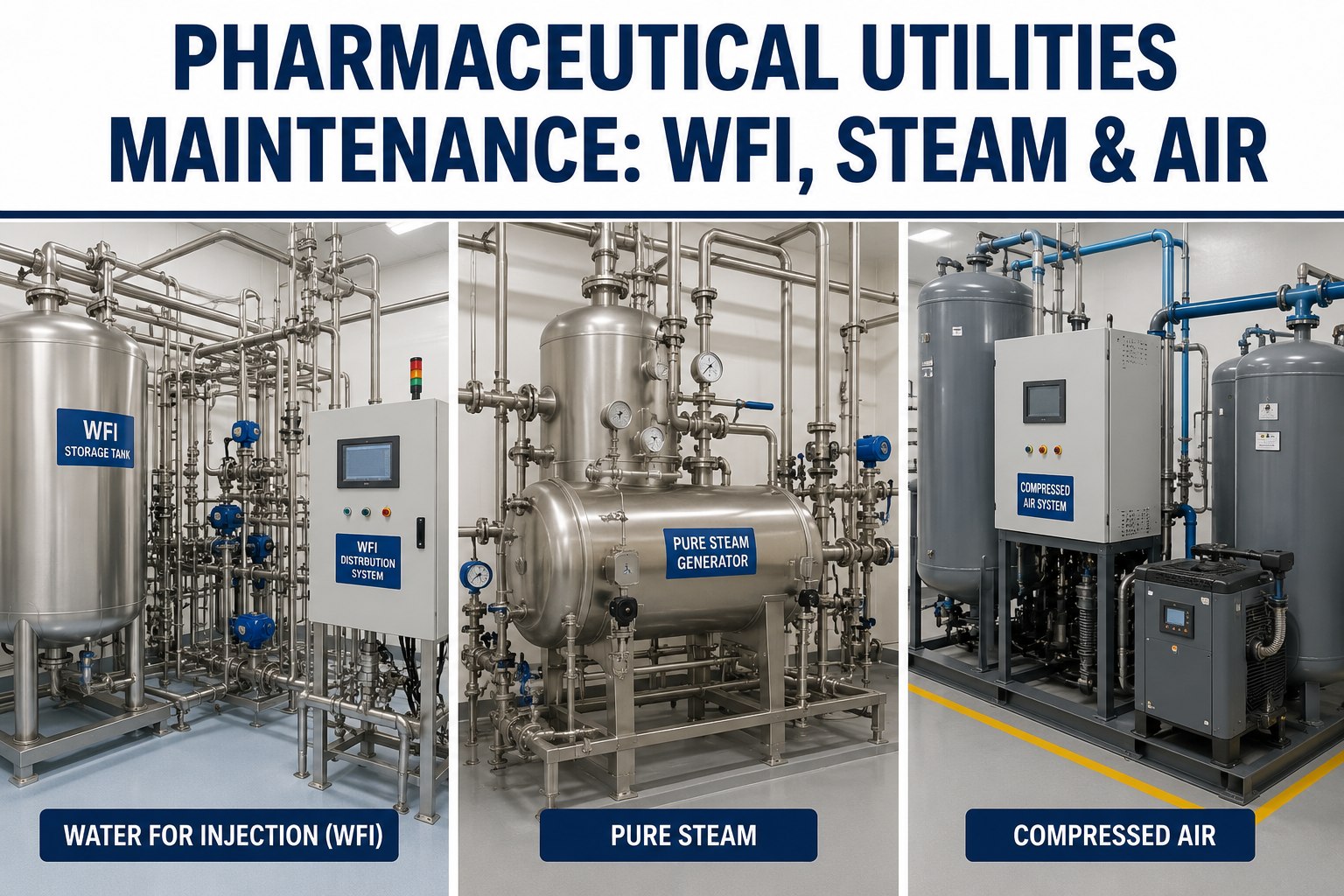
Pure steam is gaseous Water for Injection. Not a utility that happens to touch the product — the same pharmacopoeial-grade water, in vapour phase, condensing onto the surfaces that will hold a sterile drug. Once...
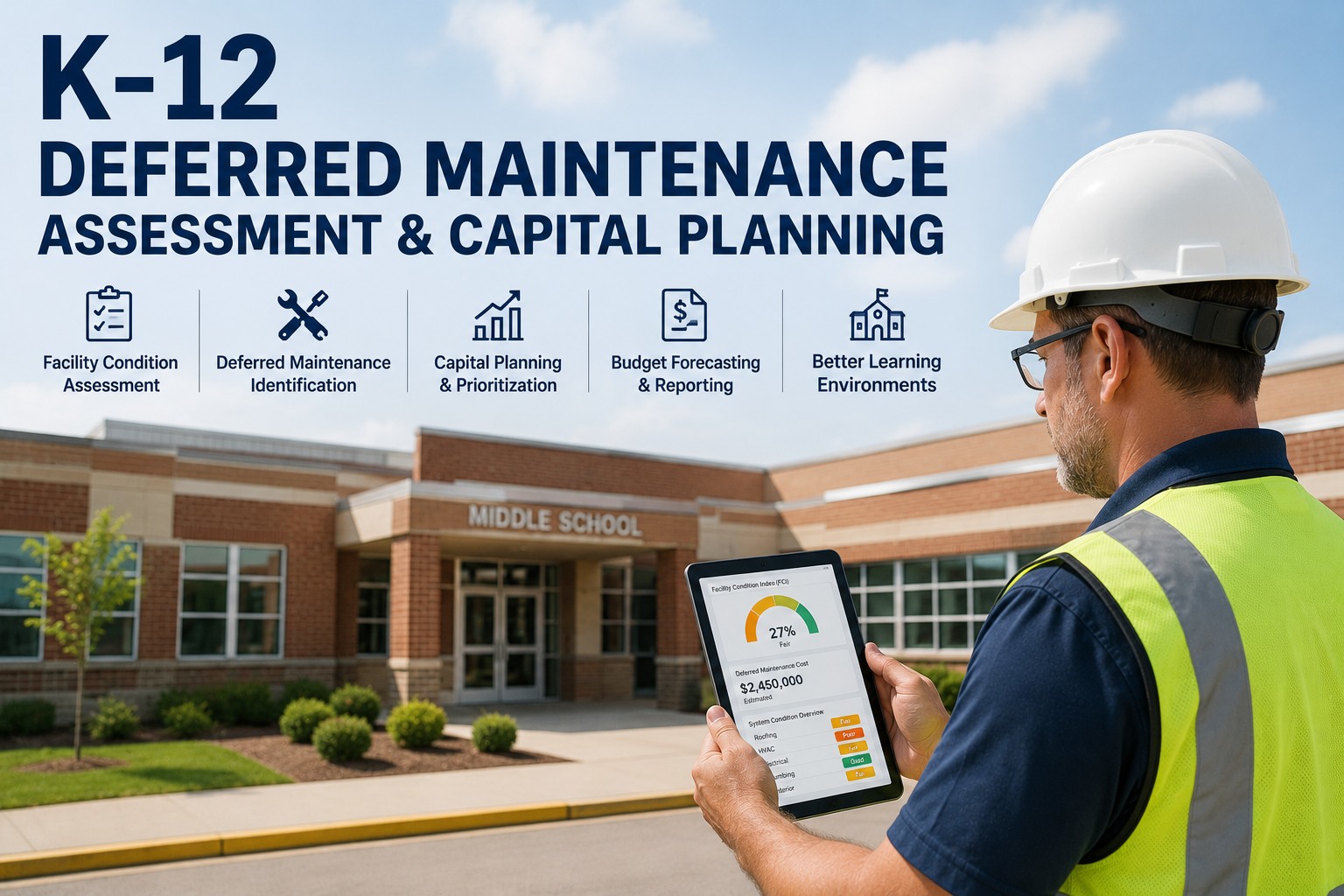
The deferred maintenance backlog across US K-12 school buildings has reached an estimated $85 billion, and the GAO found that 53% of school districts report buildings in fair or poor condition — a strategic crisis...

Continuous manufacturing is the most consequential process transformation the pharmaceutical industry has undertaken since the introduction of automated tablet presses. A batch process that historically took 60 to...

In a beverage plant, water is not a utility that supports production — it is the primary ingredient by volume, the blank slate every soft drink, bottled water, and beer is built on. That reframes the water...
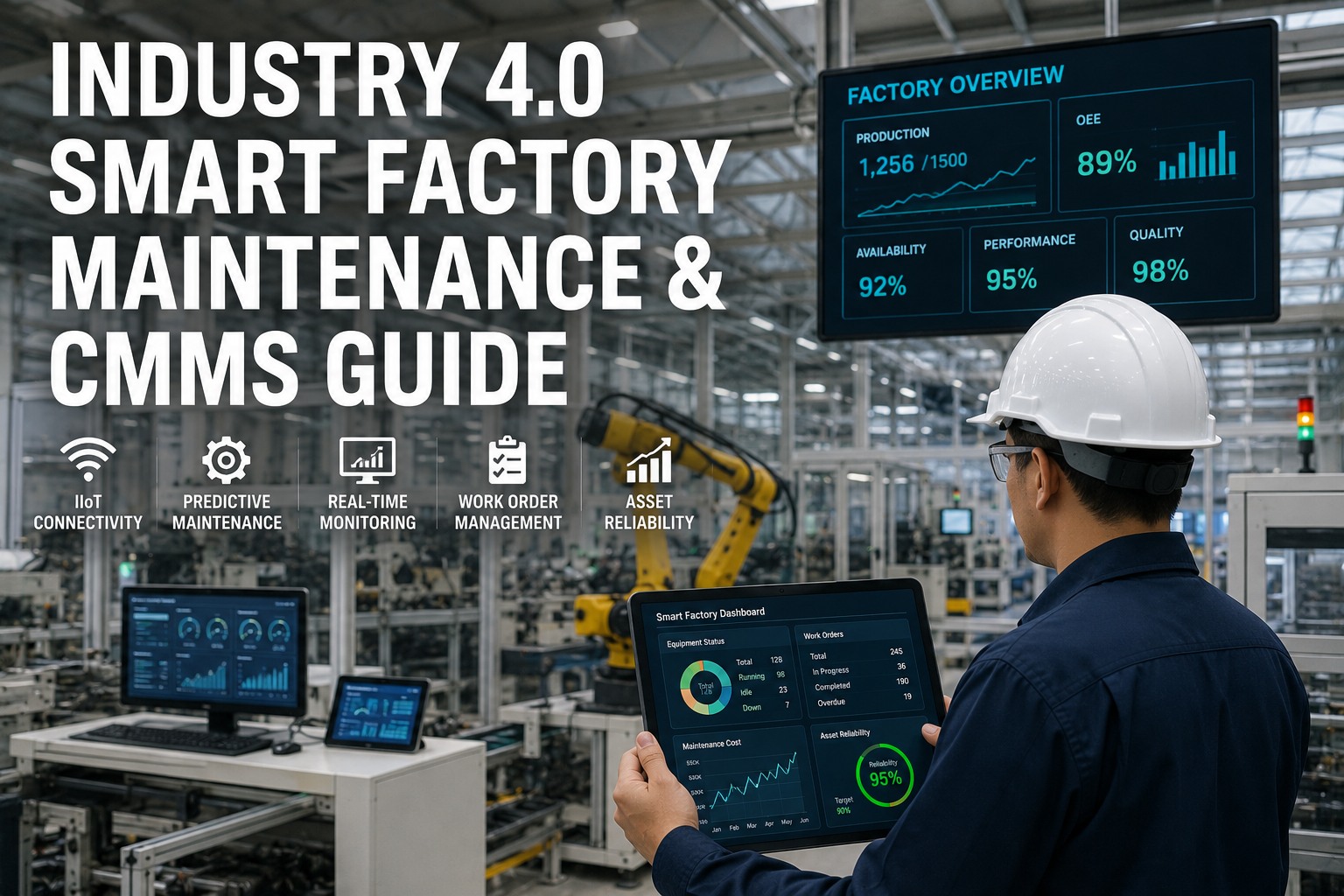
The plant manager who ran a manufacturing site in 2015 and the plant manager who runs one in 2026 are doing structurally different jobs. The 2015 plant manager coordinated preventive maintenance schedules, chased...
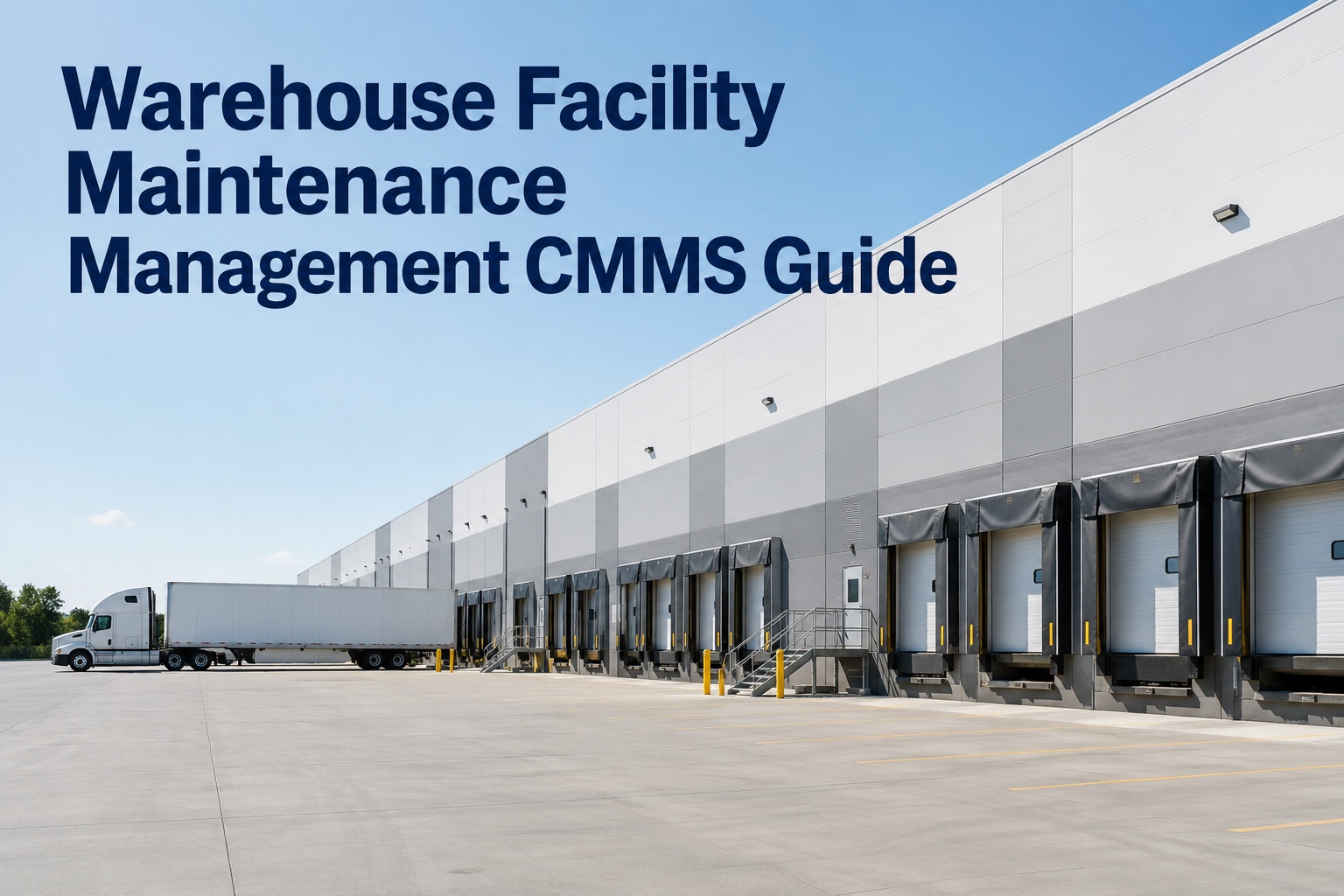
A modern distribution center is a facility whose economics collapse the moment its infrastructure stops moving. A single dock door out of service during peak inbound receiving costs $500 to $2,000 per hour in...

Chiller maintenance is the one programme in a building where cutting corners shows up in the energy bill long before it shows up as a breakdown. A neglected chiller does not stop. It keeps making chilled water,...
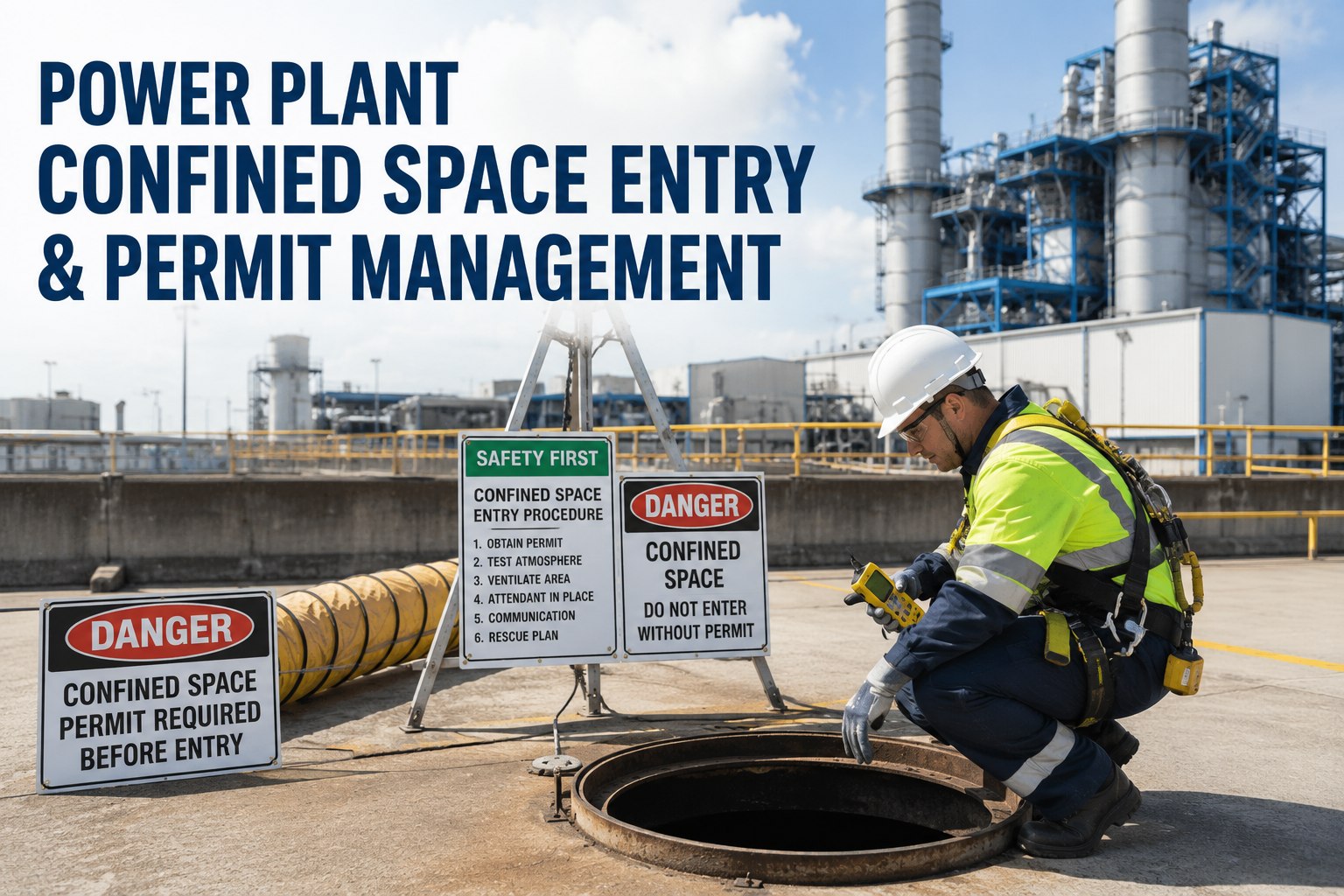
Roughly 90 workers die every year in confined spaces across US industry, and NIOSH data shows a disturbing pattern behind those numbers — more than 60% of the fatalities are would-be rescuers who entered without...

An aircraft hangar is unlike any other facility in industrial maintenance. It has doors weighing hundreds of tons that must open manually if the main power drops. It has a fire suppression system built to drown a...
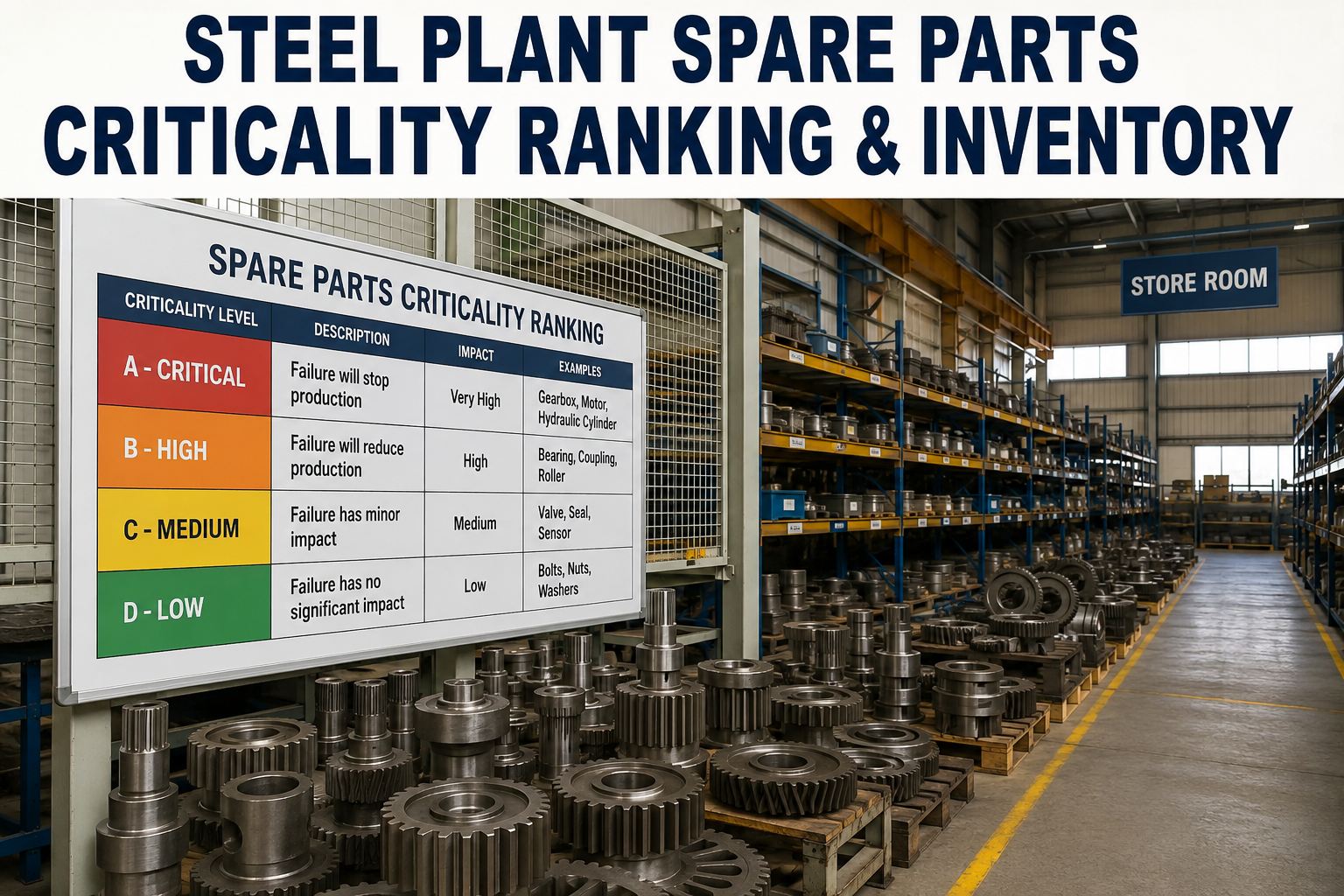
A steel plant storeroom is a paradox. A $180,000 EAF transformer bushing sits on a shelf for eight years without being touched, while a $12 bearing race that stopped a caster last Tuesday is on backorder for six...

A school roof does not leak on a Tuesday morning at 10 AM. It leaks the first Friday after a heavy October rain, drips down into a first-grade classroom, and closes the building for three days while insulation is...
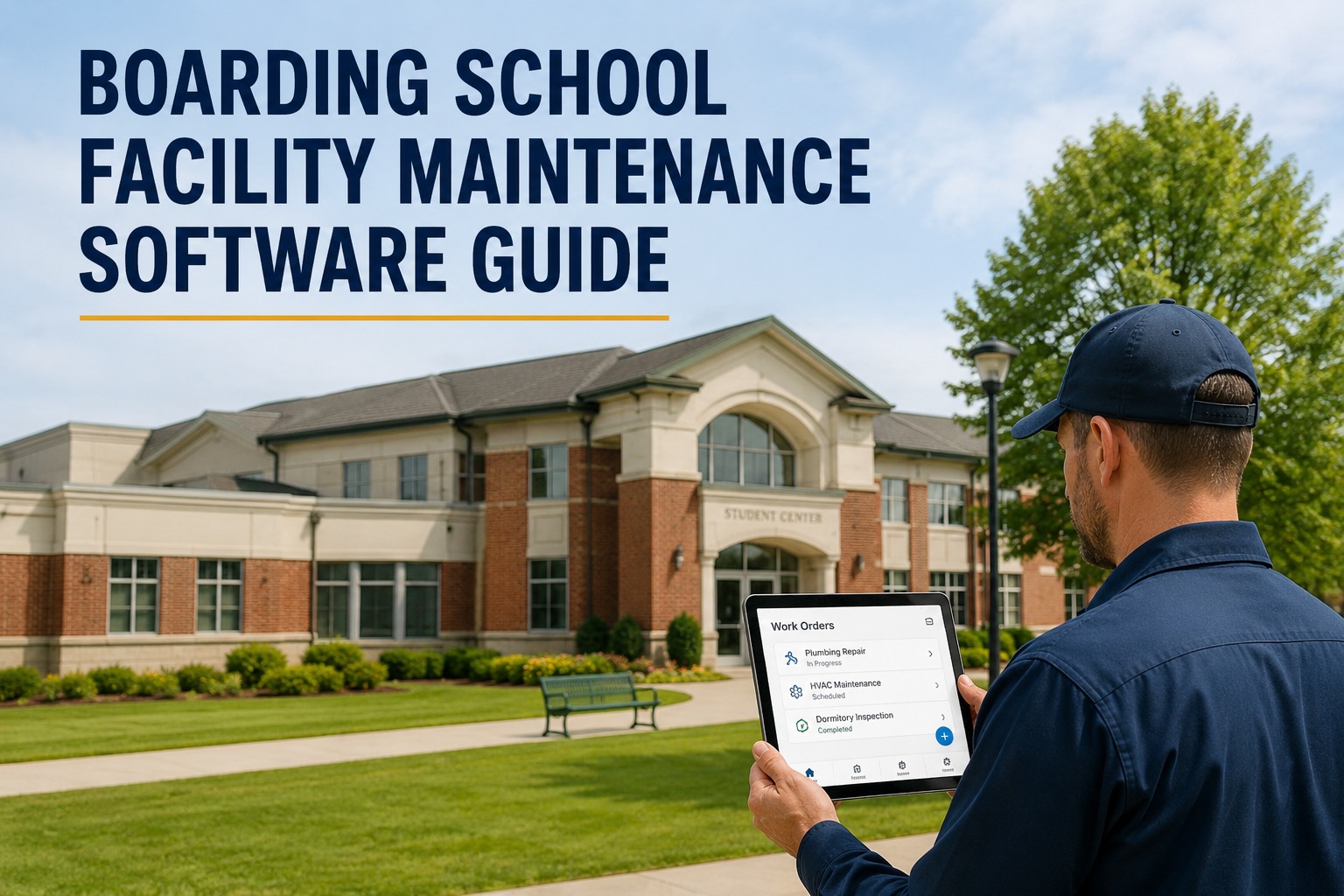
A boarding school is a peculiar and demanding facilities environment: 400 students asleep in dormitories at 2am when the boiler dies, 950 breakfast covers ready at 6:45am in a dining hall whose walk-in freezer must...
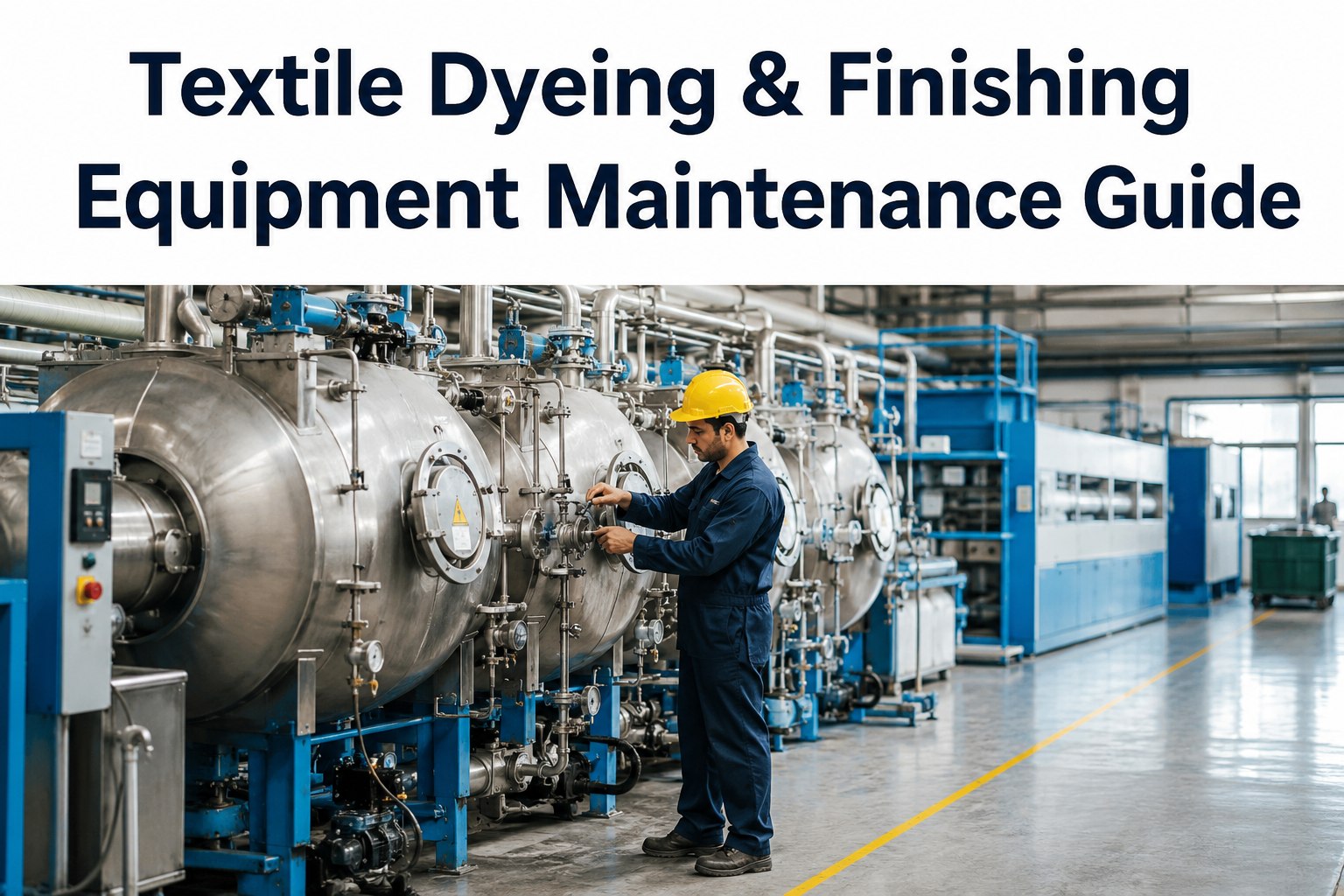
Dyeing and finishing is the last place a mill can ruin fabric that everything upstream has already paid for. By the time a roll reaches the jet dyeing machine, the fibre has been spun and the cloth woven; by the...
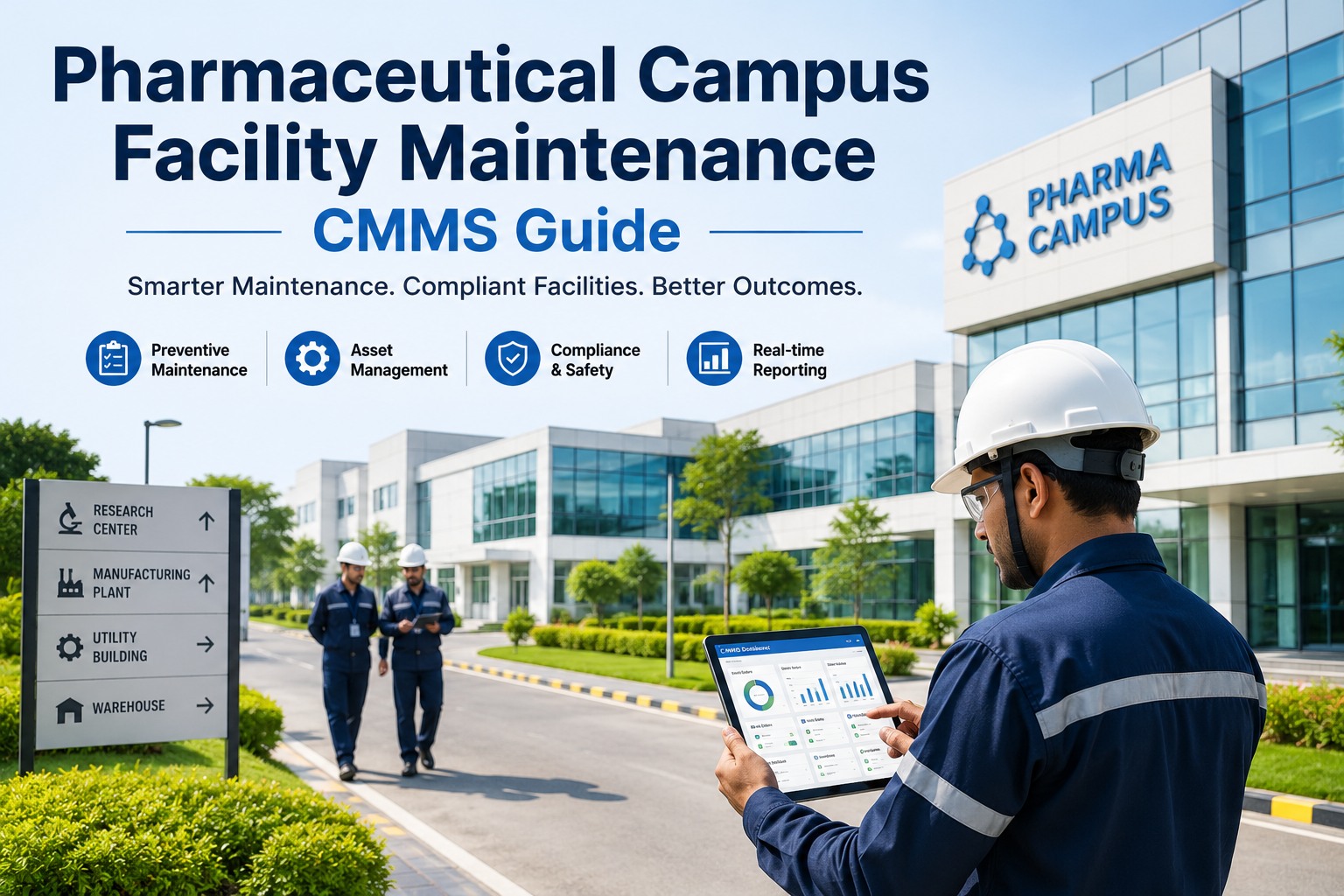
A pharmaceutical campus is not one building. It is often twenty — offices, discovery research labs, cafeterias, warehouses, fitness centers, security posts, parking structures, central utility plants, grounds and...

Compressed air is the only utility a plant manufactures itself, meters almost nowhere, and leaks from every fitting in the building. It is also the fourth utility and the most expensive one to generate — air...

A hotel is one of the very few buildings in a city where guests spend the night while completely unfamiliar with the exit paths, the alarm sounds, or the evacuation stairs — and where they arrive expecting the...

A bioreactor is not really a vessel — it is a sterile boundary that has to hold, unbroken, for the entire length of a batch that may run for weeks and carry a product worth more than the equipment producing it....
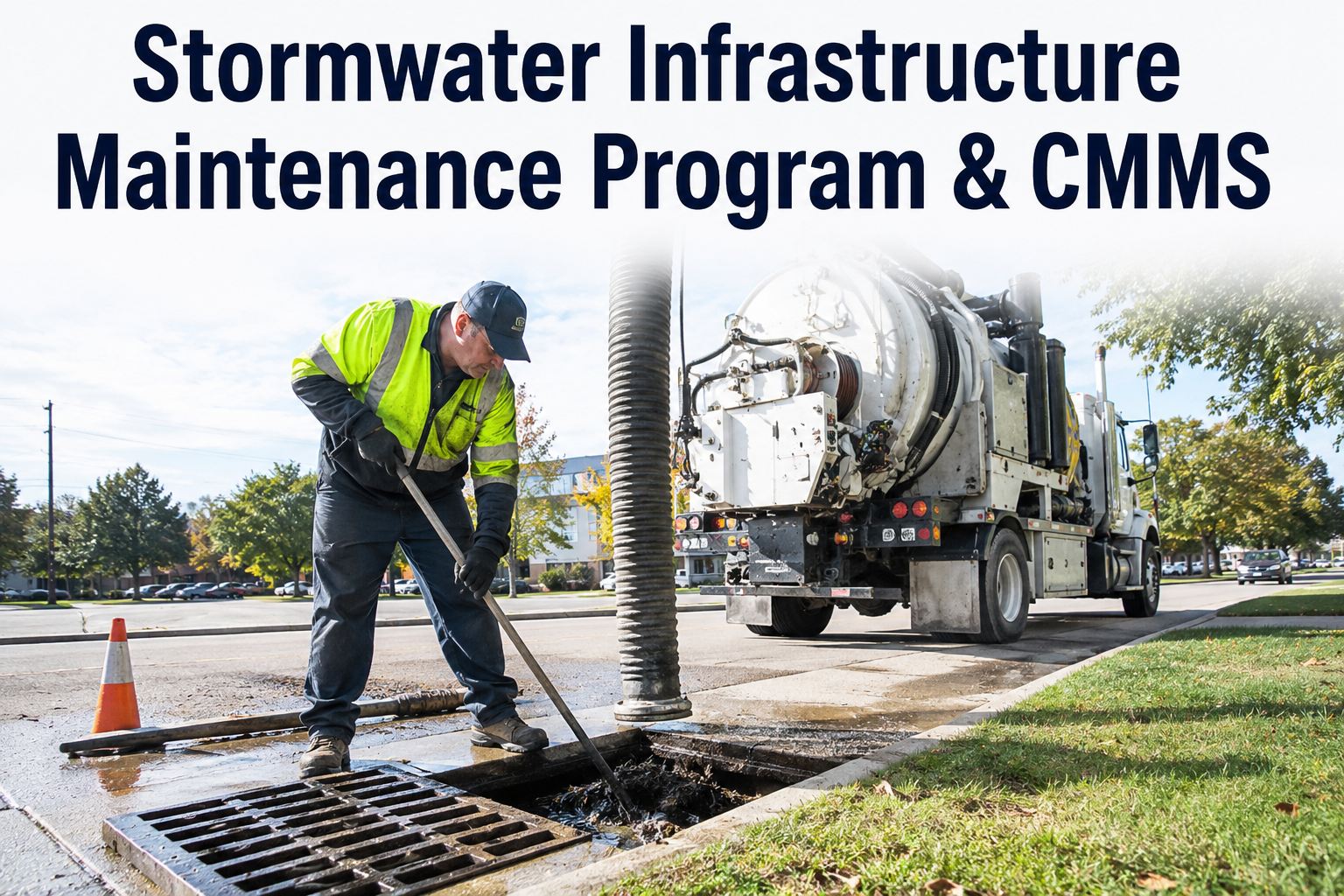
A single clogged catch basin at the corner of Elm and 3rd Street can turn a heavy Tuesday afternoon rain into a $250,000 flooding claim from the property owner whose basement fills with contaminated stormwater....

In almost every industry, a vehicle out of service is a maintenance problem. At a certificated airport, it is a certificate problem. Under 14 CFR §139.319, if a required aircraft rescue and firefighting vehicle...

A single 3-inch spall in the touchdown zone of a Category I runway can generate the FOD that shreds a $30 million CFM engine on the next departure. A hairline crack ignored for one wet season becomes a full-depth...

There is one sentence every steel plant EHS manager needs to internalize before anything else: OSHA treats an undocumented inspection as an inspection that never happened. Your crew can walk every ladle crane...

A steel plant annual shutdown is not a maintenance event — it is a production-critical project, compressed into a 5-21 day window, involving 2,000-8,000 individual work orders, 150-400 personnel working...

A maintenance technician's day is not eight hours of turning wrenches. Work sampling studies across US manufacturing and facilities operations put actual hands-on repair time — "wrench time" — at 25-35% of an...

Every open work order on the manufacturing floor represents one of three states: a production line at risk, a technician's next hour, or both. When those work orders live in radio traffic, whiteboards, and...
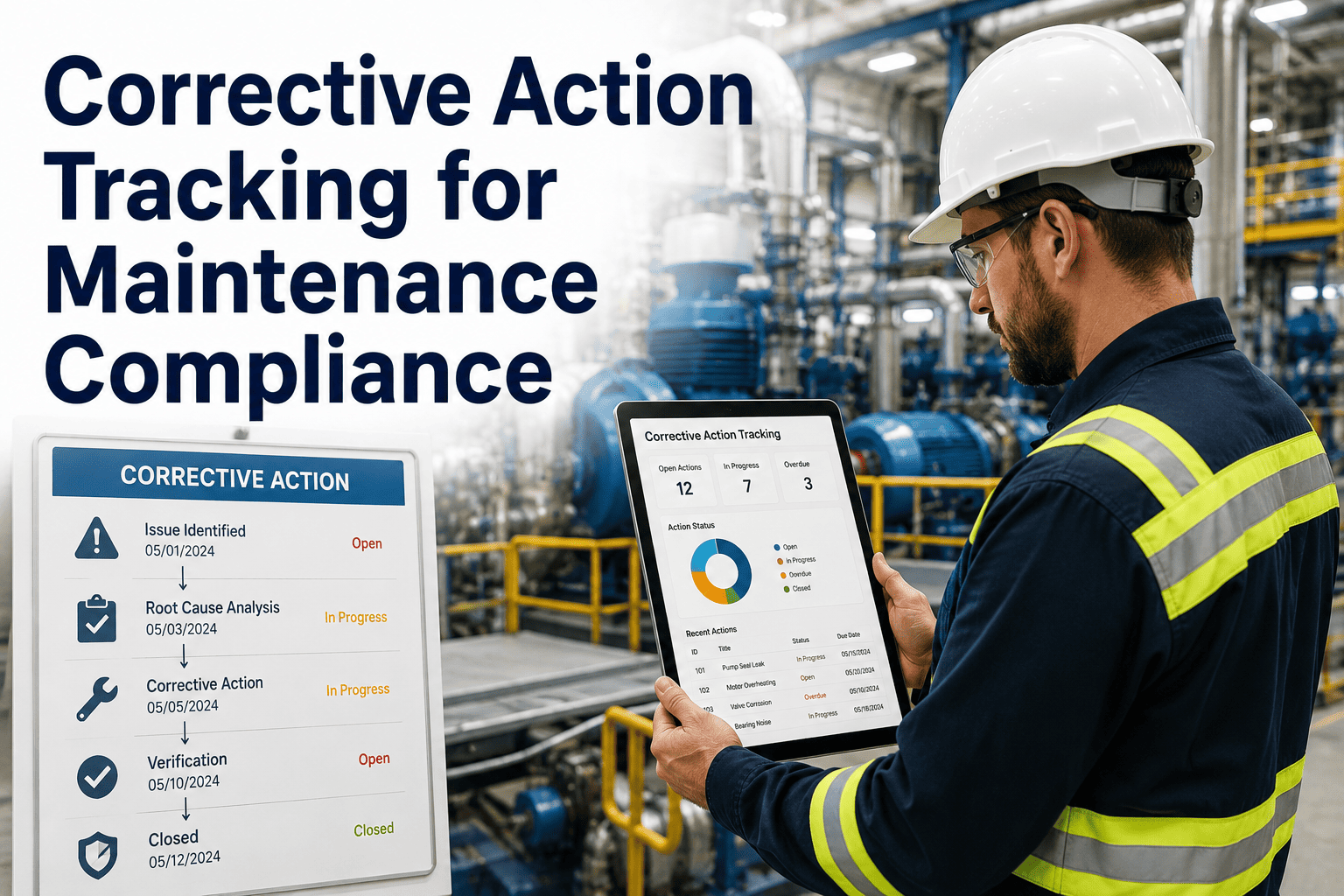
An inspector flags a missing guard on a conveyor. Someone writes "fixed" in a notebook. Six months later the same guard is missing again, because nobody ever confirmed the fix, logged evidence, or checked whether...

Every capital budget meeting has the same moment: someone asks whether to repair the old compressor again or approve a replacement, and the room falls back on gut feeling because nobody has the actual numbers. The...
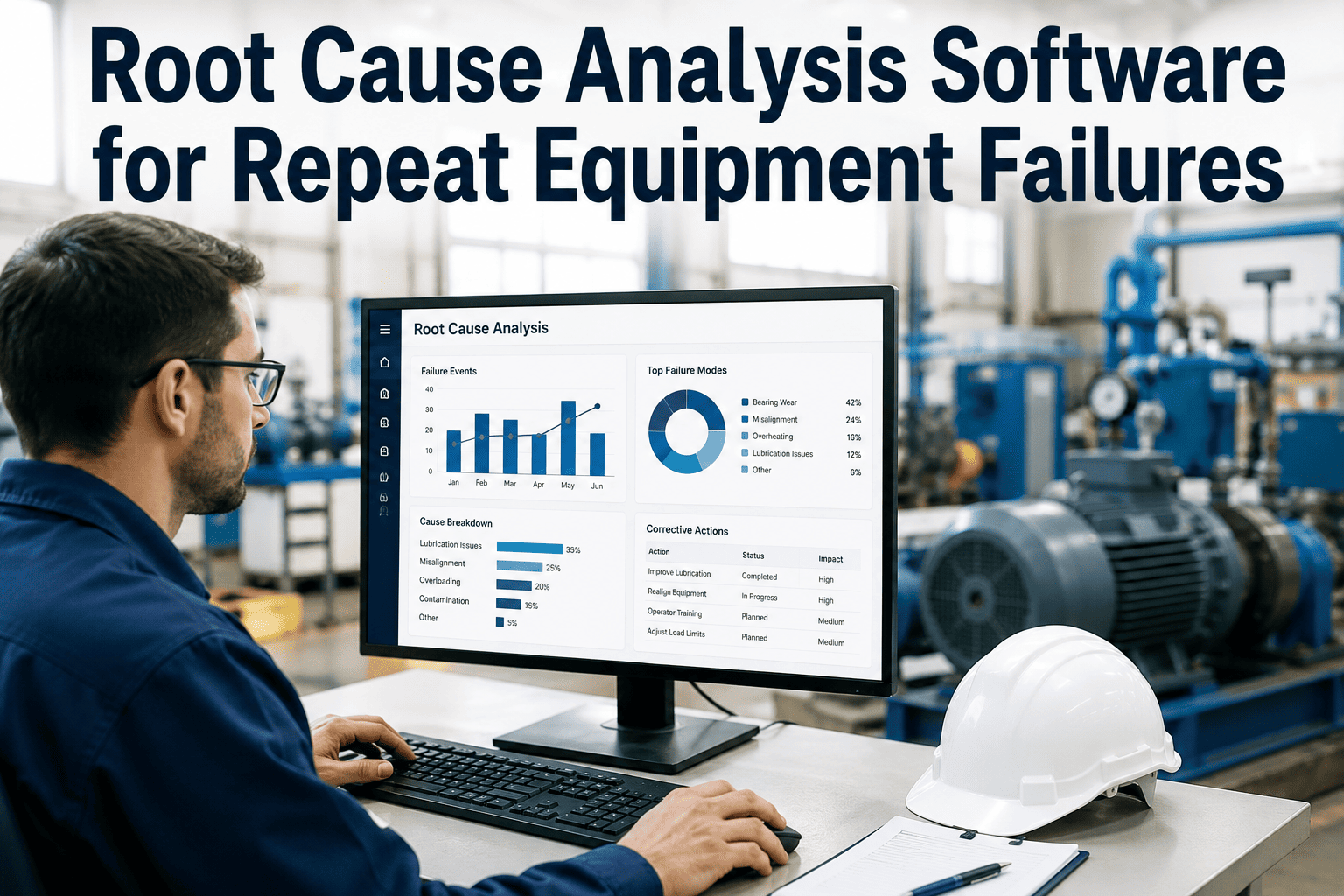
The same pump fails for the fourth time this year. The technician replaces the same bearing, logs the same work order note, and everyone moves on until it happens again in eight weeks. Across industrial maintenance...
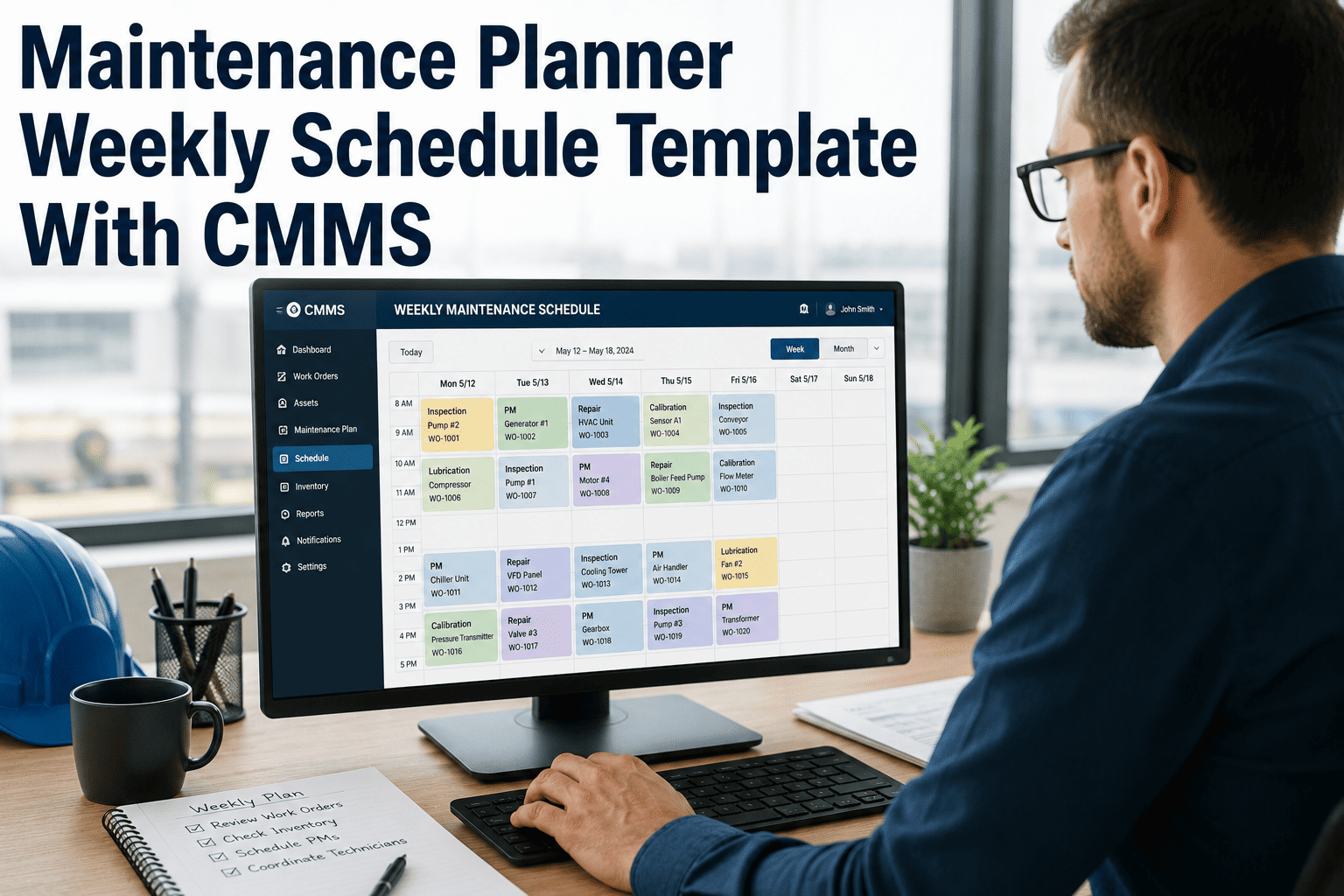
Ask any technician without a real weekly schedule how their day actually goes and you will hear the same story: walk to the parts room, wait for the machine to free up, hunt for the right manual, then finally start...

Every plant manager has lived this moment: production ramps up for peak season, the schedule fills with rush orders, and somewhere on the floor a compressor or a forklift picks exactly that week to fail. It is not...

Most maintenance managers can tell you exactly what their CMMS costs. Very few can tell a CFO exactly what it saves — and that gap is usually what kills the renewal budget or blocks the first purchase entirely. The...
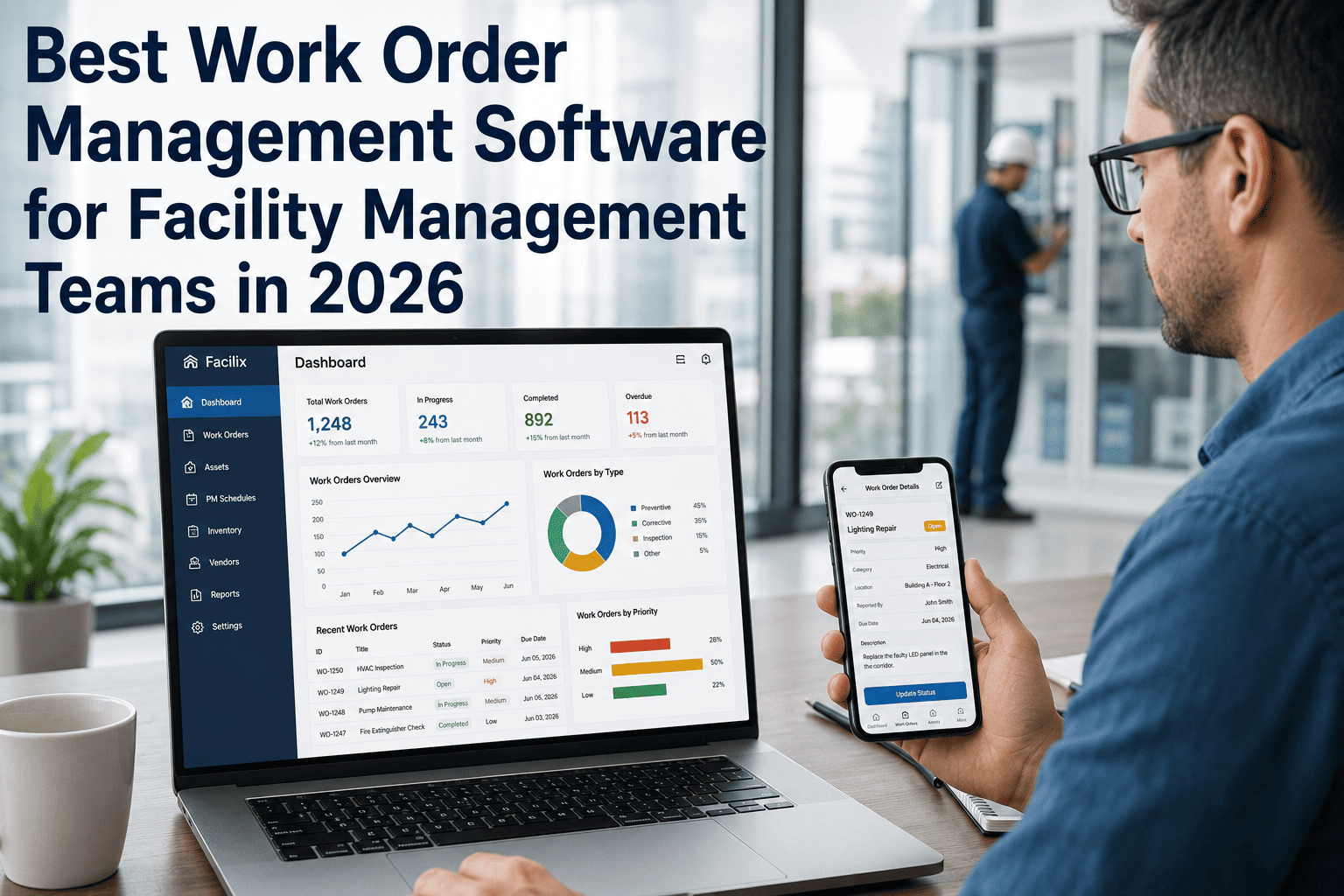
Finding the right work order management software in 2026 means looking past marketing claims and evaluating how a platform actually performs under the daily pressure of facility operations — dispatch speed, mobile...

Manufacturing teams are entering 2026 with a stark reality: the factories that adopted AI predictive maintenance software in 2023–2024 are now operating at 15–20% higher overall equipment effectiveness than those...
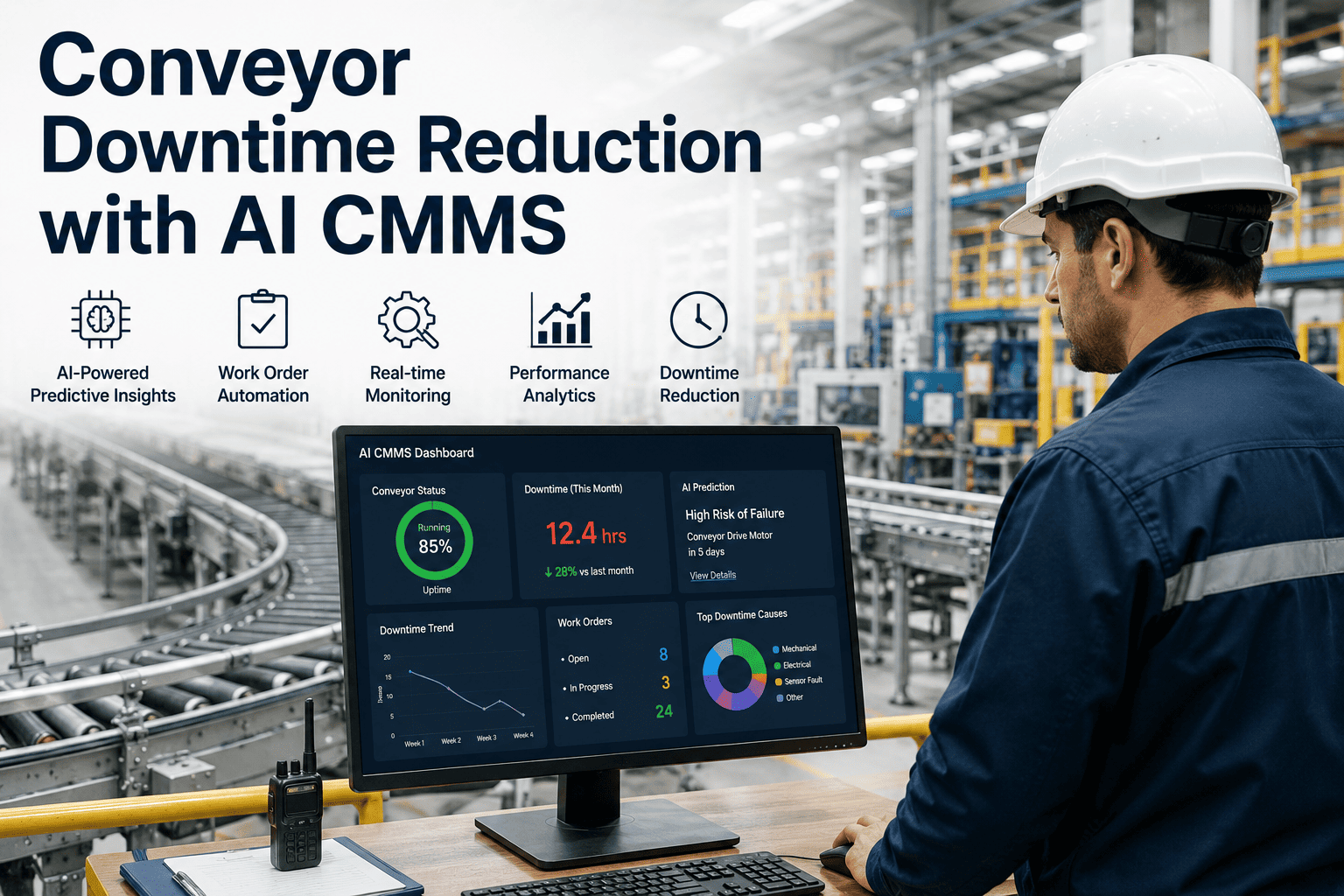
Conveyor systems are the circulatory system of modern manufacturing and distribution facilities, moving everything from raw minerals to finished packages across miles of interconnected belts, rollers, and drives....
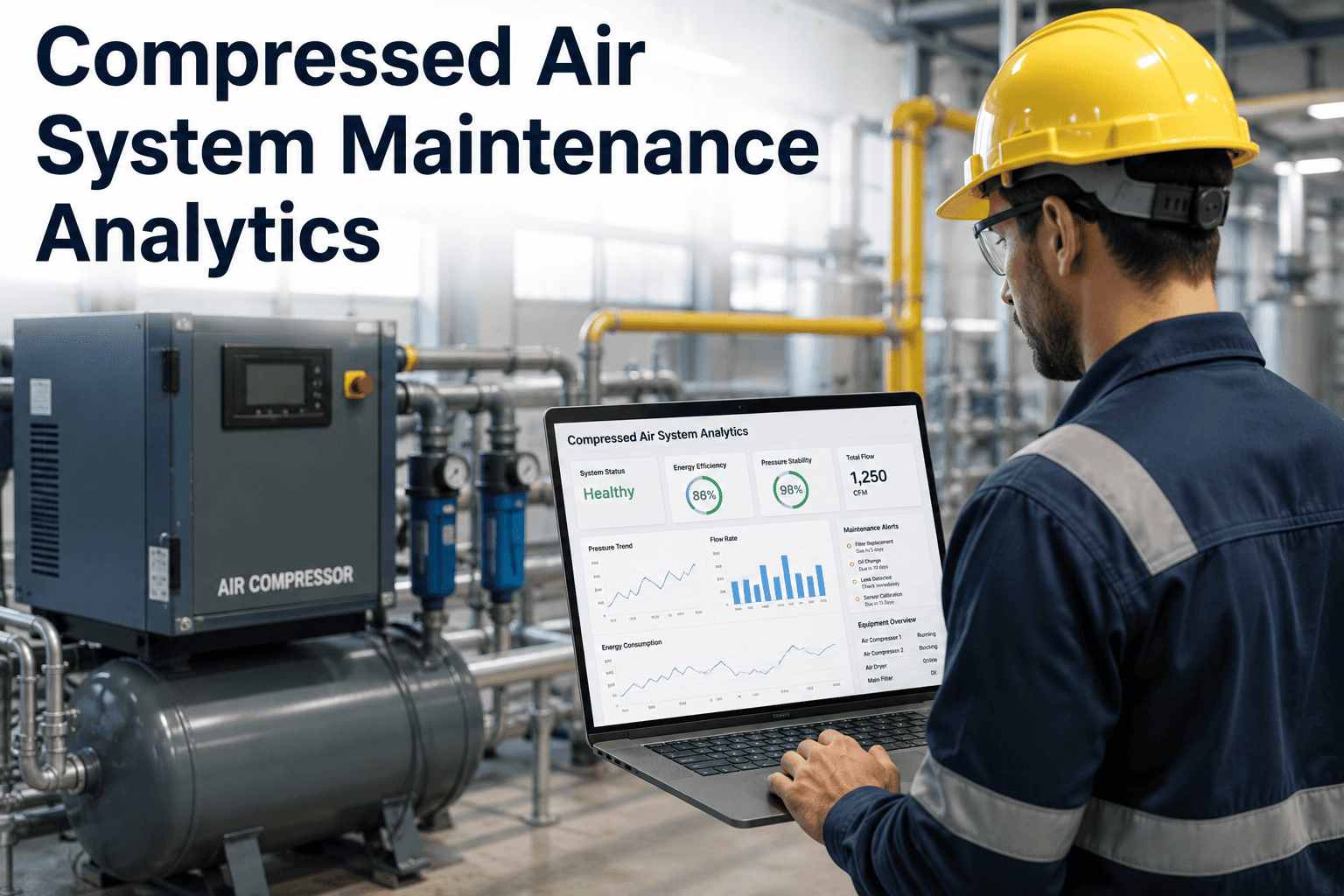
Compressed air systems are among the most expensive utilities on any manufacturing floor — yet they are also the most poorly monitored. Studies consistently show that 20 to 30 percent of compressed air output is...

CNC machines represent the single largest capital investment on most manufacturing shop floors, yet over 60% of facilities still rely on paper logs or spreadsheets to schedule their preventive maintenance. The...

Commercial real estate maintenance leaders are under constant pressure to do more with less — shrinking budgets, growing portfolios, and tenant expectations that treat every delay as a breach of trust. Traditional...

An integrated steel plant carries between $20M and $100M in MRO spare parts inventory. CPCON's 2026 industry analysis indicates 20–40% of that inventory is excess or obsolete, Plant Engineering's 2025 survey shows...
A modern cement plant produces between 3,000 and 10,000 tons of clinker per day, generates $300,000 to $1.5 million in daily revenue, and loses $18,000 to $45,000 for every hour the kiln stops unexpectedly — with...

Every data center maintenance leader who has sat across the table from a SOC 2 or ISO 27001 auditor knows the moment the conversation shifts from policy review to evidence request — and how often the honest answer...

When a baggage carousel stalls during a peak afternoon bank of departures, the airline ground crew restarts it, passengers board a little late, and everyone moves on — until the same carousel stalls again three...

Most drone inspection pitches lead with flight time and camera resolution. The number that actually gets budget approved is different: what does one prevented failure save versus what the program costs to run. A...
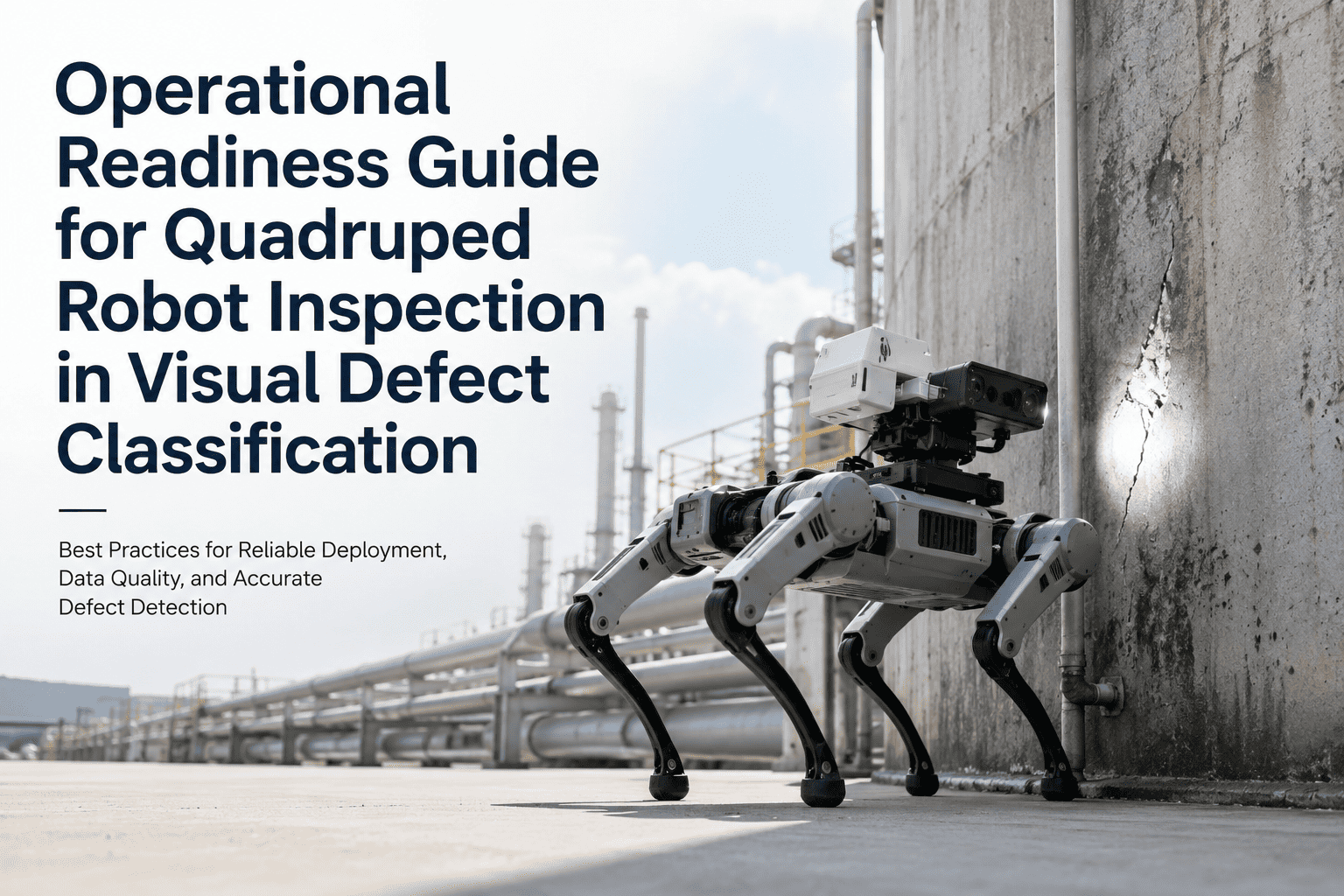
Modern quadruped platforms can be running autonomous patrols within two weeks of arriving on site — but only at facilities that did the readiness work before the robot showed up. The teams that struggle aren't the...

Most plants don't fail at AI maintenance because the model is wrong. They fail because nobody wrote down the sequence: which historian tags to pull first, how much history the model actually needs, who validates...

A digital twin is only as trustworthy as the gap between what it predicts and what actually happens on the floor. Most twins start strong — 70 to 80% accuracy out of the gate — and then either improve with every...
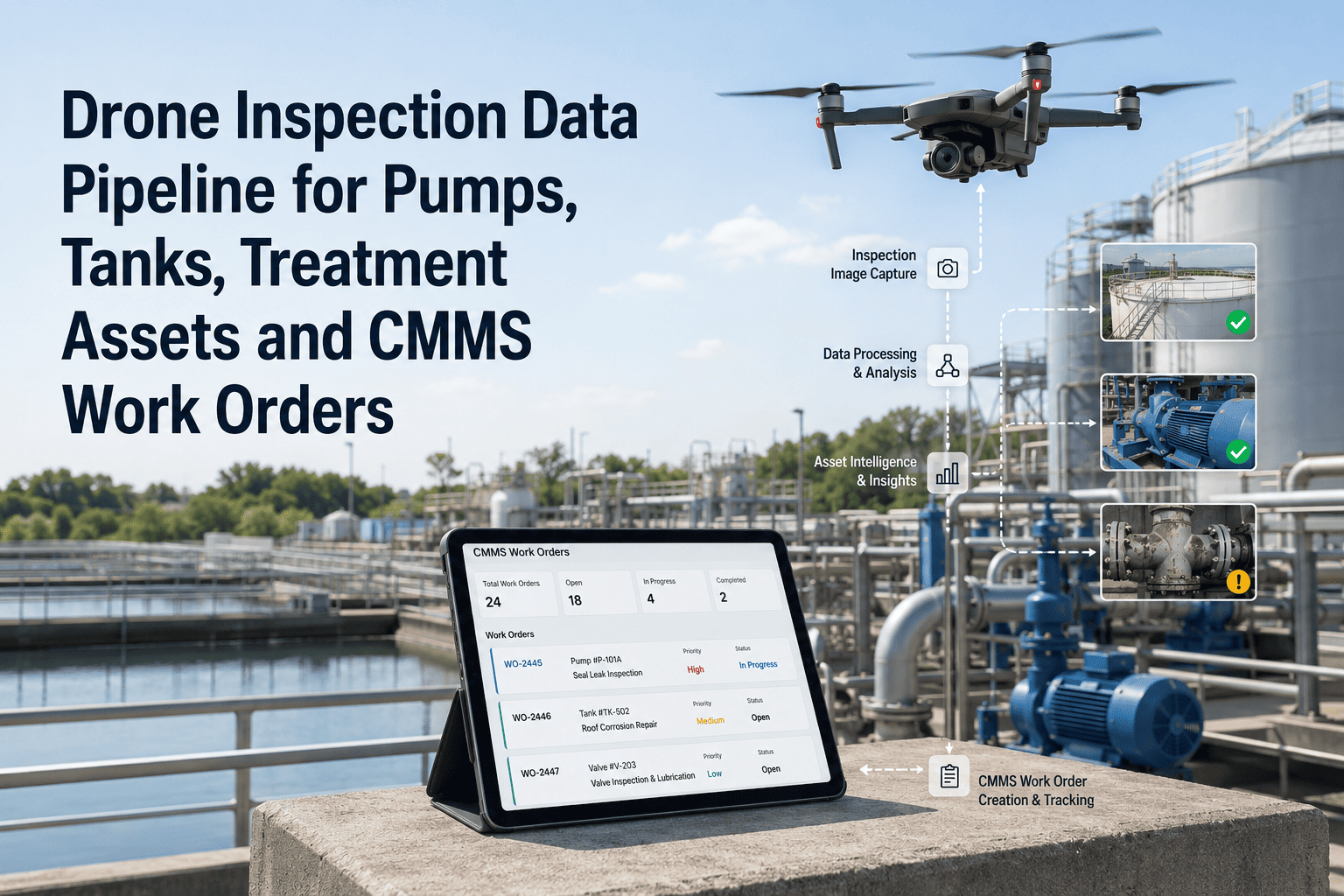
A flare stack inspection used to mean a shutdown, scaffolding, and a crew climbing into heat and toxic gas exposure just to look at a pipe. A storage tank survey meant rope access and days of schedule disruption....

A PLC fault gets logged the moment it happens — timestamped, stored, fully visible in the alarm historian. And in most plants, it sits there unread until a quality excursion forces someone to dig through the log...

Every plant historian — Wonderware, PI System, Ignition, or a SCADA data lake — already holds years of temperature curves, vibration logs, and pressure trends. The problem is almost never the data. It is that the...
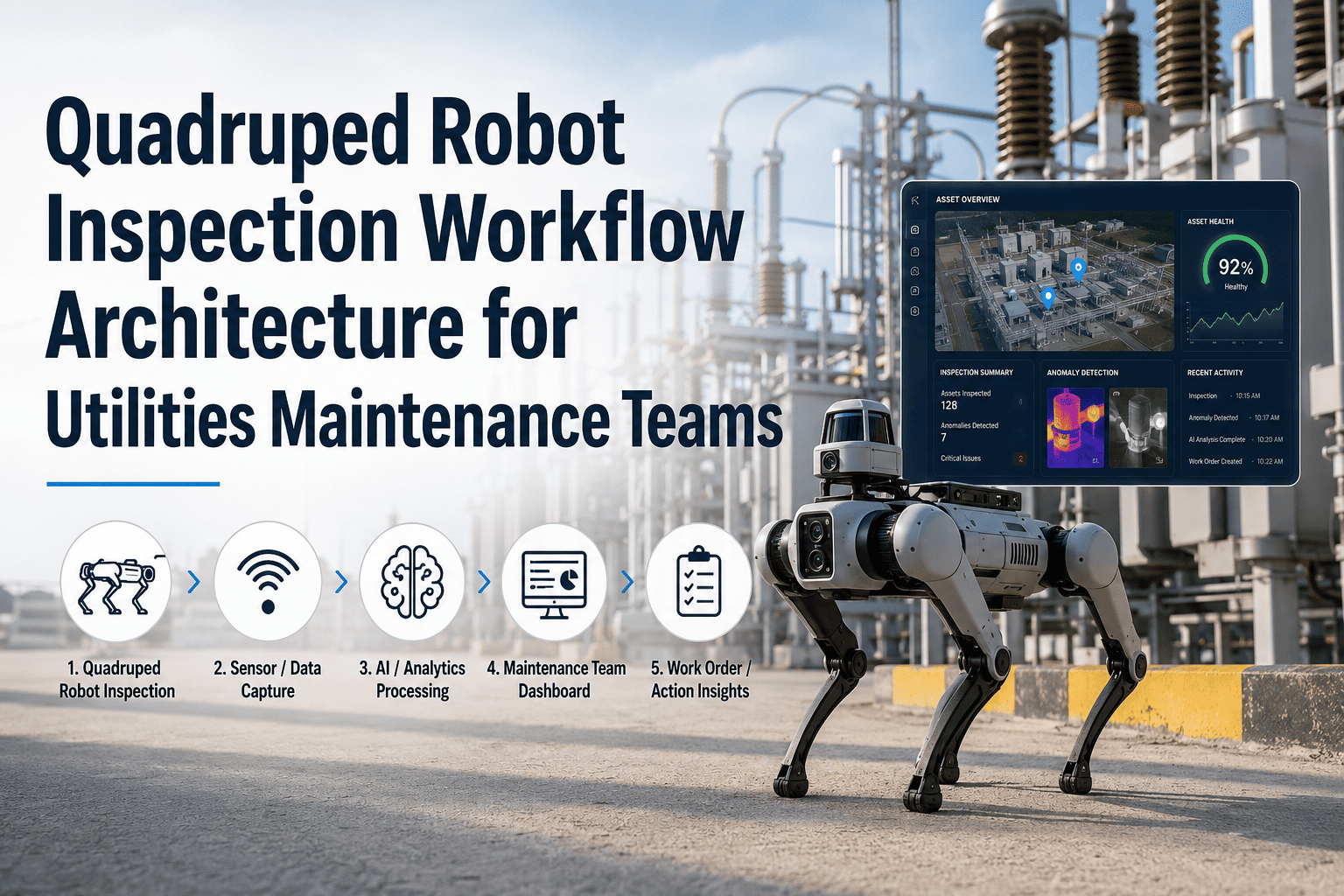
Substations the size of a soccer field, transmission towers spread across hundreds of miles, underground conduits nobody wants to crawl into — utility infrastructure was never designed for easy human inspection....

Pump seal leaks are among the most time-sensitive failure modes in industrial maintenance. When a seal fails, the response window before secondary damage — to bearings, housing, or the driven equipment — is...
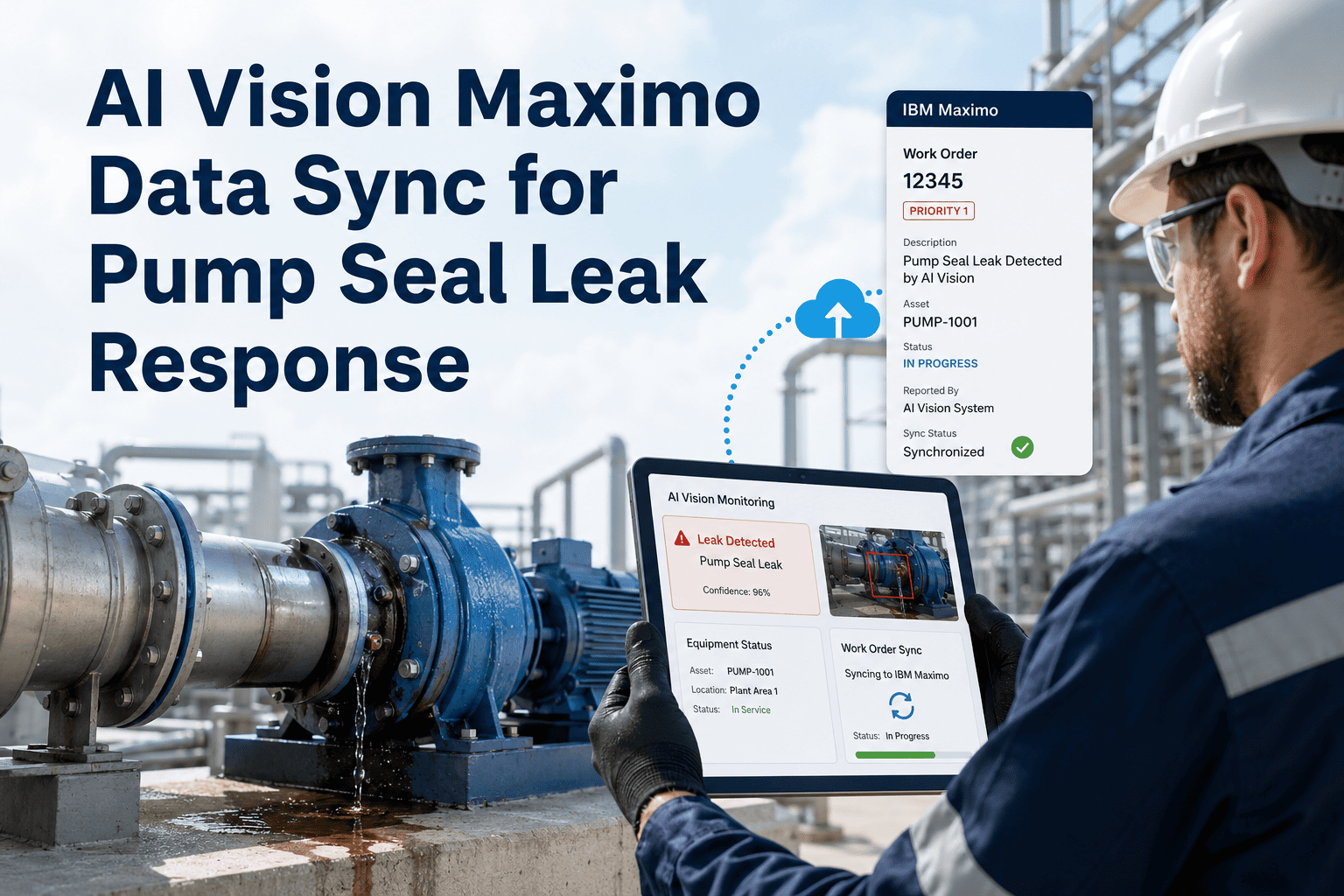
A pump seal rarely fails without warning — it weeps, drips, and stains the baseplate for days before anyone notices on a manual round. By the time a work order gets logged in Maximo, the evidence is gone, the round...
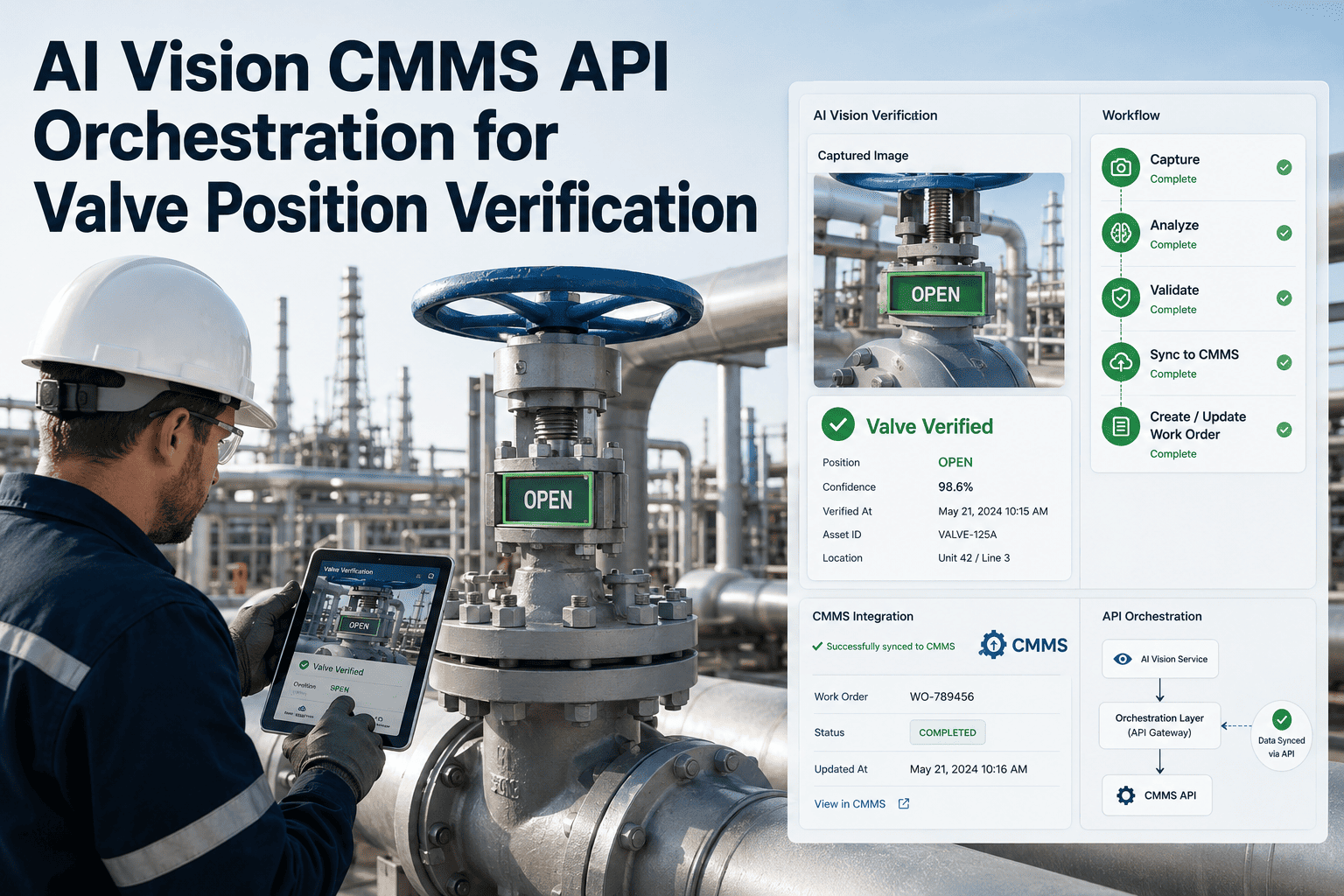
Valve position verification in modern industrial facilities generates data from multiple sources simultaneously — cameras, PLCs, SCADA historians, handheld sensors, and operator logs. Without an orchestration...

PLC systems report valve position as a digital signal — open, closed, partially open — but the signal and the physical reality do not always agree. A valve can report fully closed while visually sitting at 30...

Valve position verification is one of the most critical and least reliable processes in automated plant operations. SCADA systems raise alarms when valve positions deviate from setpoints — but the alarm alone does...

Motor overheating alarms are among the most frequent SCADA events in industrial facilities — yet most teams still treat them as a queue problem, not an evidence problem. When a SCADA alarm fires, a technician is...

When a motor overheating event triggers a maintenance response, the single biggest cause of extended downtime is not the diagnosis — it is waiting for parts. Technicians arrive at the motor, identify the failed...
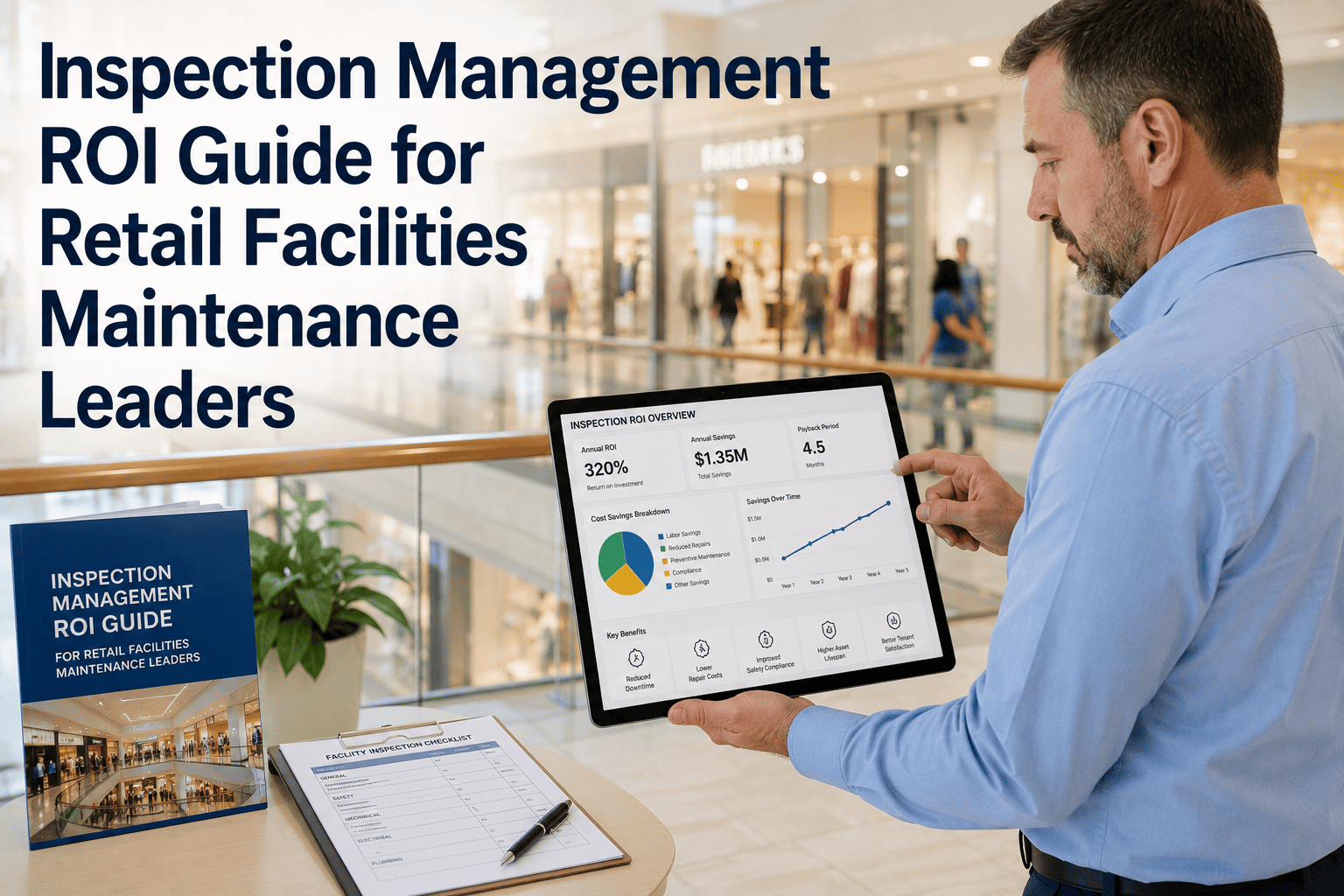
For a retail facilities leader running dozens or hundreds of stores, the audit you fail is almost never a surprise to the inspector — it is a surprise to you. A health inspector finds the refrigeration log gap, a...
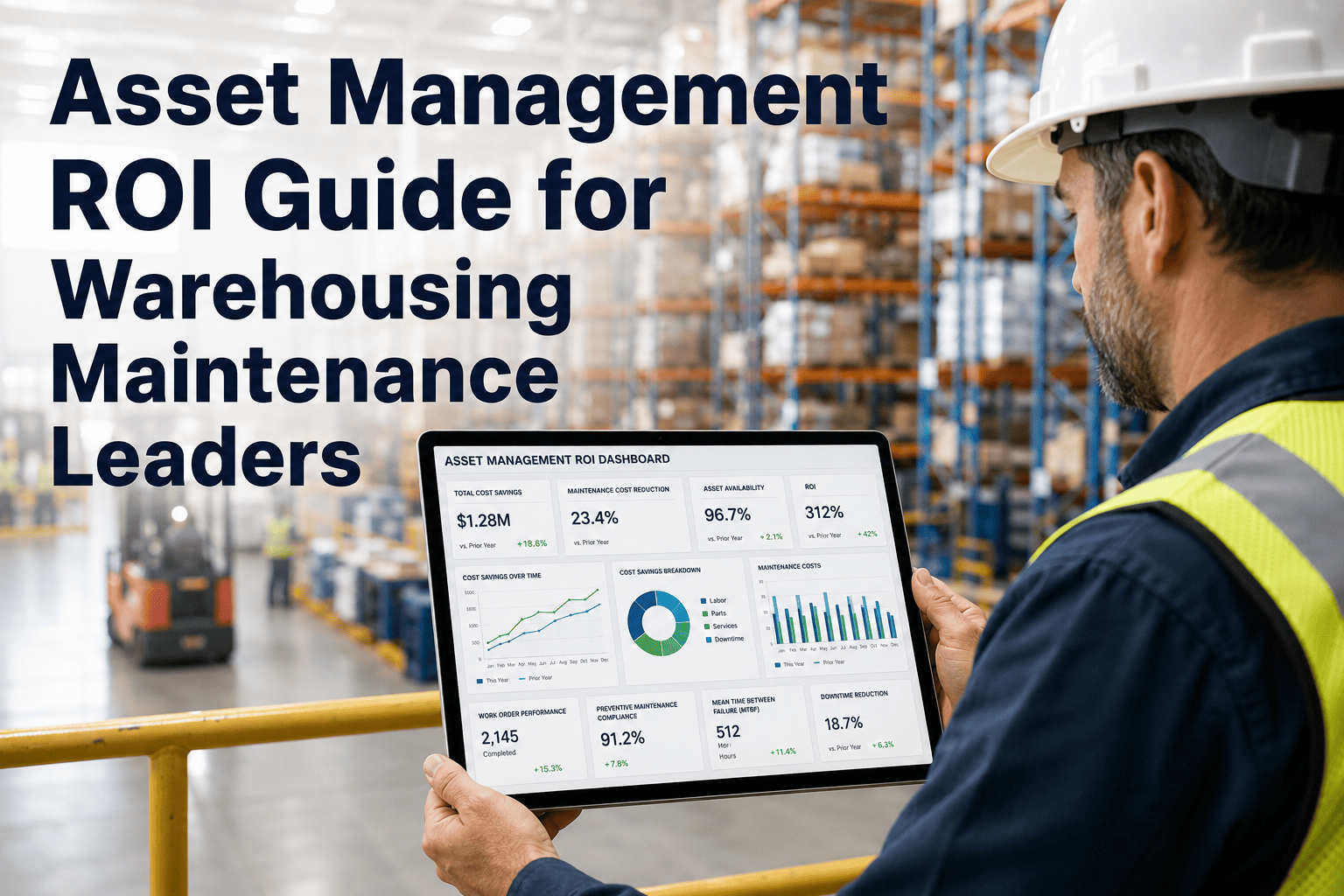
A distribution center runs on its assets — sortation lines, conveyors, forklifts, dock levelers, refrigeration — and at the pace of fulfillment, a single failed bearing can cascade through an entire zone before...

Ask an energy maintenance leader where their technicians' hours actually go, and the answer is uncomfortable: field techs spend only a quarter to a third of a shift turning wrenches. The rest disappears into...
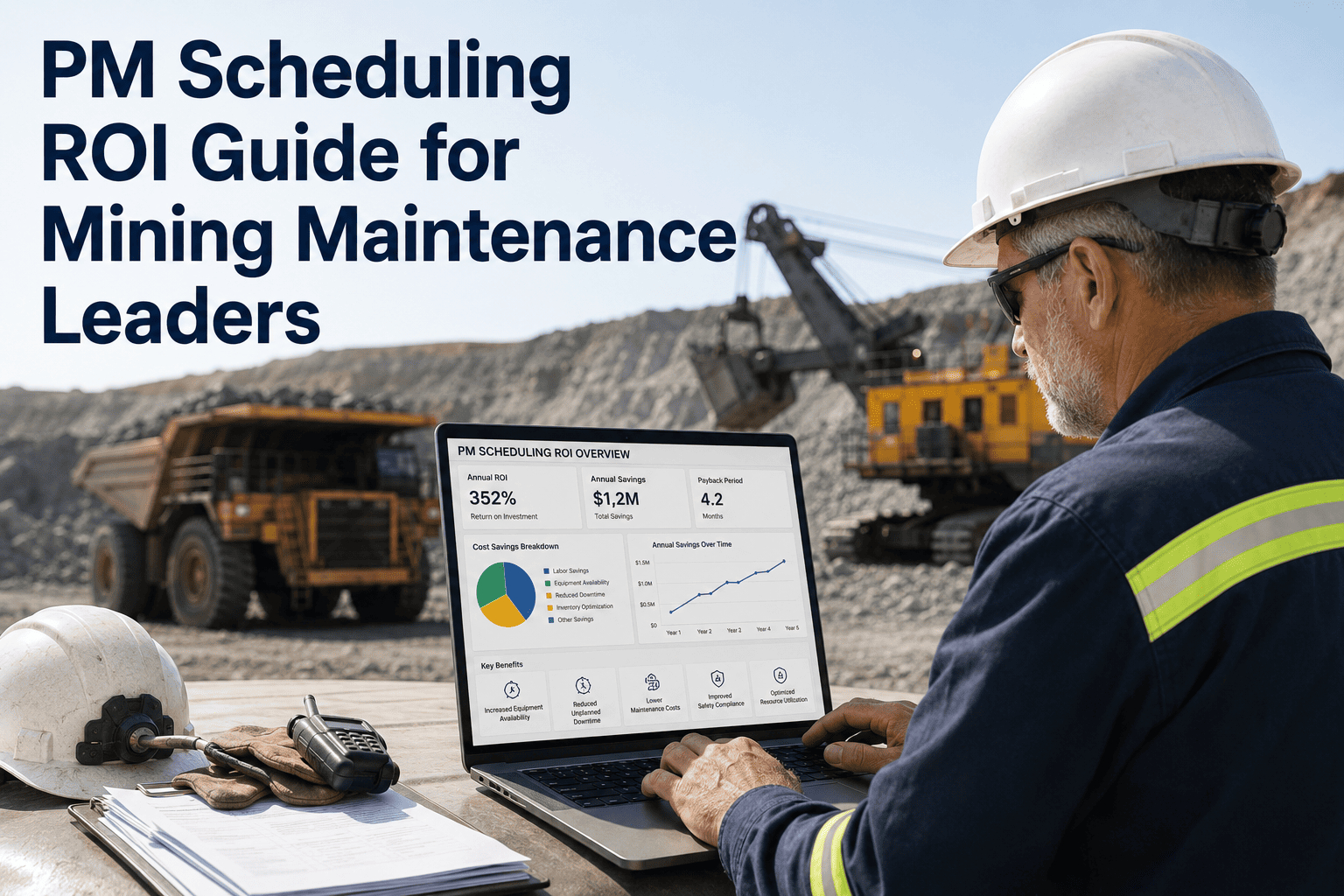
Mining gives you no buffer. When a haul truck, conveyor, or crusher stops, extraction or processing halts in the same instant — high-production assets can bleed around $130,000 an hour, and a single failure...
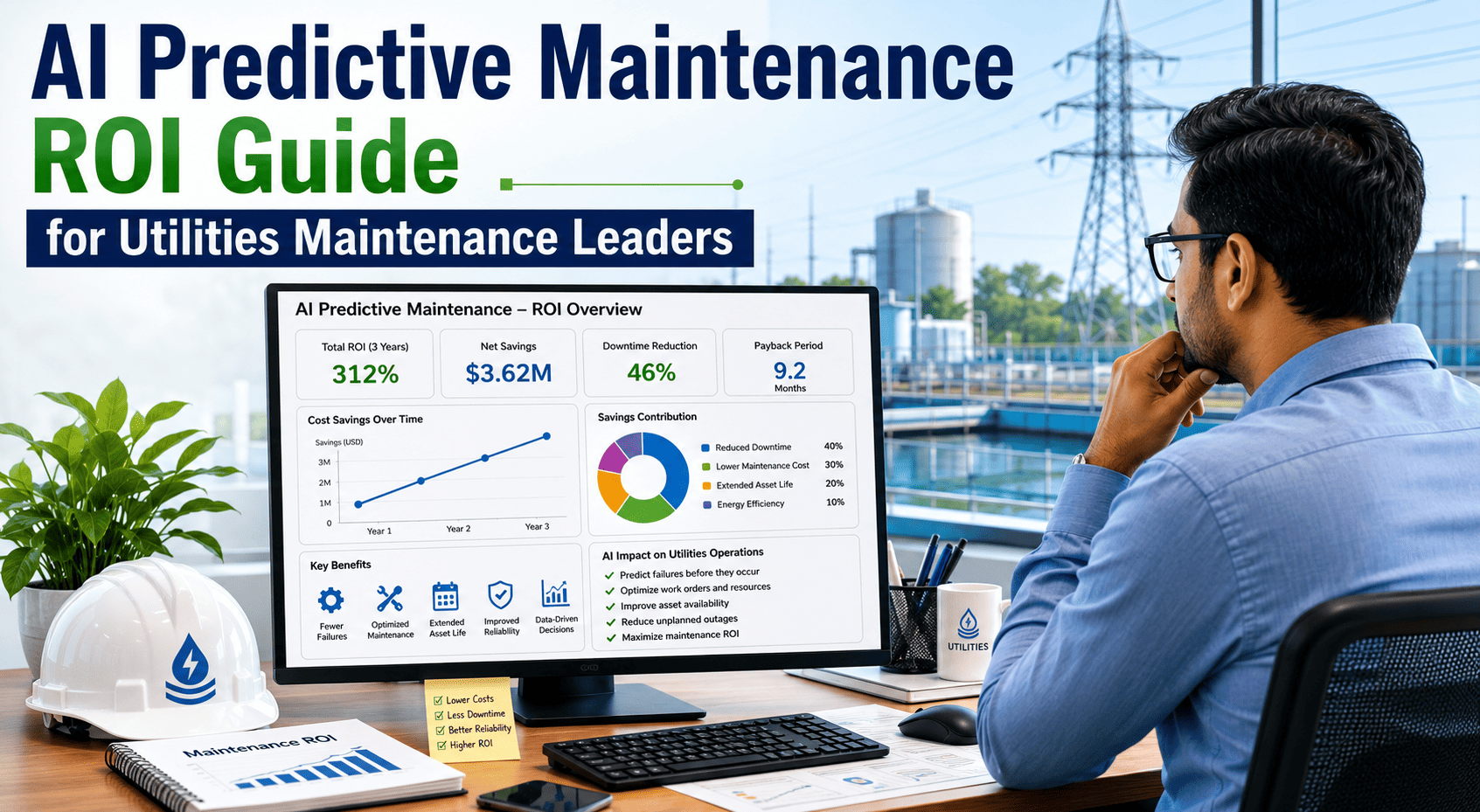
For a utilities maintenance leader, a single failed transformer or pump is never a single repair — it is thousands of customers without power or water, a regulatory penalty for missing a reliability target, and an...

On a construction site, the repair bill is the smallest part of what a breakdown costs. When an excavator goes down, the meter that really runs is the collateral damage — four to eight crew standing idle, a rental...

In a hotel, maintenance labor is both the largest controllable cost in engineering and one of the biggest levers on the guest experience — and technician scheduling is where both are decided. Send the nearest radio...

For a property management maintenance leader, the most expensive maintenance event is rarely the repair — it is the one you cannot prove you handled. A slip-and-fall claim, a failed fire or elevator inspection, an...

For a government maintenance leader, the case for any new system is not made in features — it is made in dollars, downtime avoided, and risk removed, defensible enough to survive a budget hearing and an auditor's...

For most fleet operations, maintenance and finance run as parallel universes. The CMMS knows what was repaired, which part was used, and how many hours it took; the ERP owns the cost centers, the inventory ledger,...

Mobile AI inspection is transforming how field technicians capture, classify, and act on equipment findings — but operational readiness determines whether that transformation reaches the work order queue or stalls...

Edge AI gateways are closing the gap between raw sensor data and maintenance action — but only when the data they produce flows into a structured work order triage system. A gateway that detects a bearing anomaly...
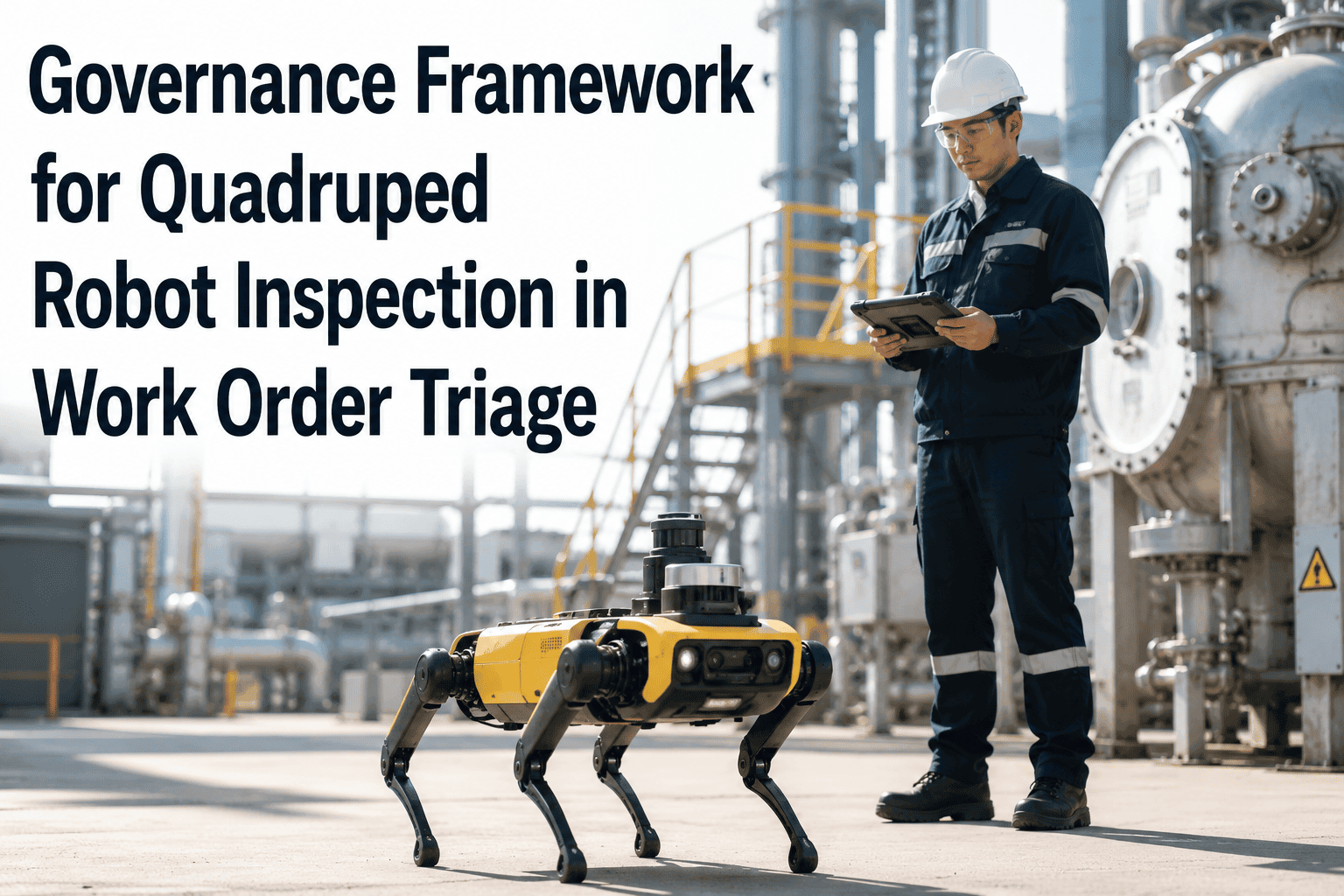
Quadruped robots like Boston Dynamics Spot and ANYmal are being deployed across chemical plants, offshore platforms, and data centers to inspect environments too hazardous for human entry. The robots patrol...

A digital twin that feeds maintenance decisions can cut unplanned downtime by half — but only if there's a direct path from the twin's health predictions to an actual work order in the hands of a technician. Most...

Drone inspections generate some of the richest visual asset data available — precise imagery of rooftops, towers, pipelines, and structures that no ground technician can efficiently reach. But in most programs,...

Process historians store years of sensor trends — but without a maintenance layer interpreting that data, anomalies go unnoticed until a breakdown confirms what the trend line had been showing for weeks. The data...

PLC fault alarms fire hundreds of times per shift in a typical plant — but most of them either get acknowledged and ignored, or trigger a flood of reactive work orders that bury the one alarm that actually matters....
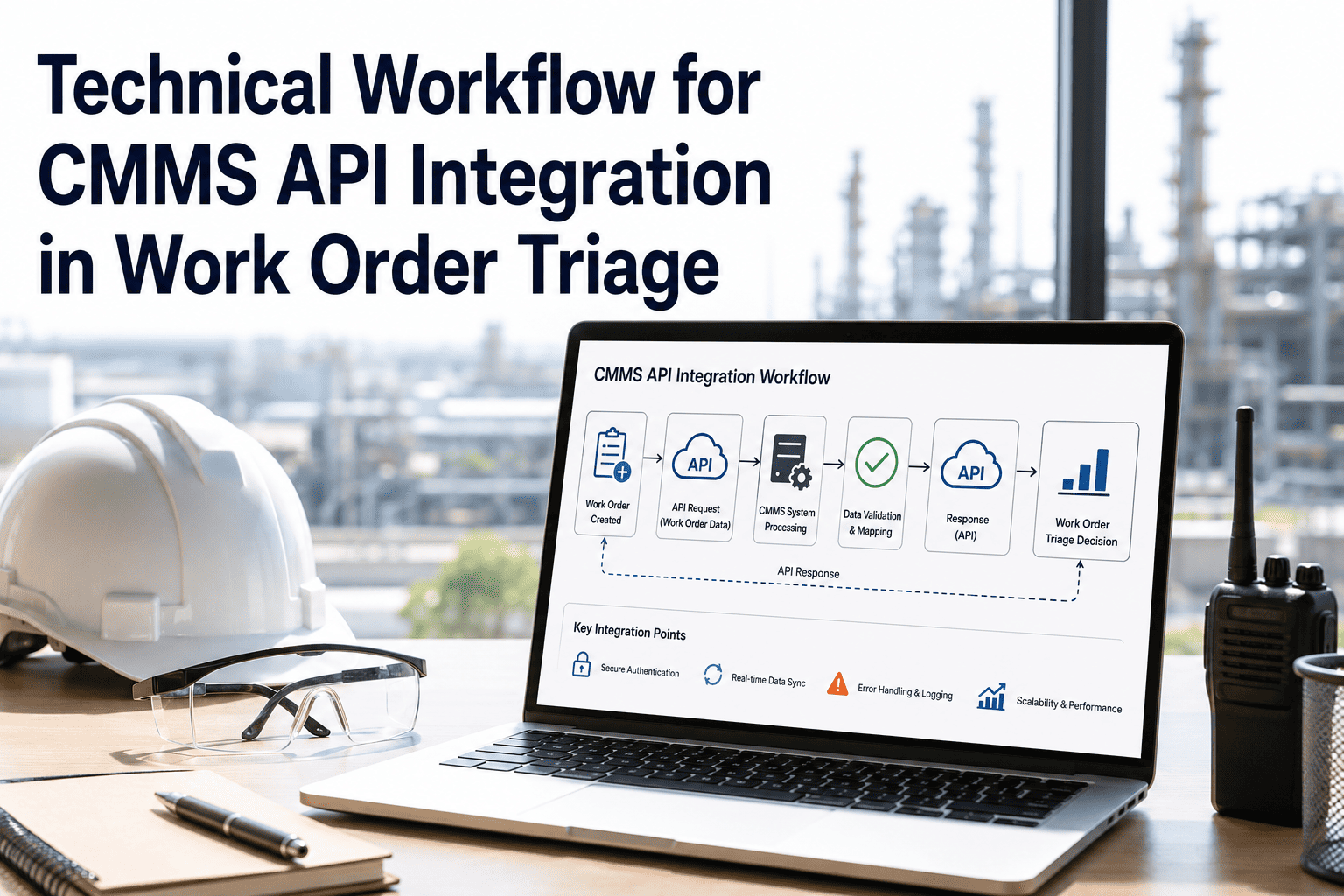
A CMMS that lives in isolation from your ERP, historian, and sensor stack creates duplicate data entry, missed work orders, and reporting blind spots that cost hours every week. The technical workflow for CMMS API...
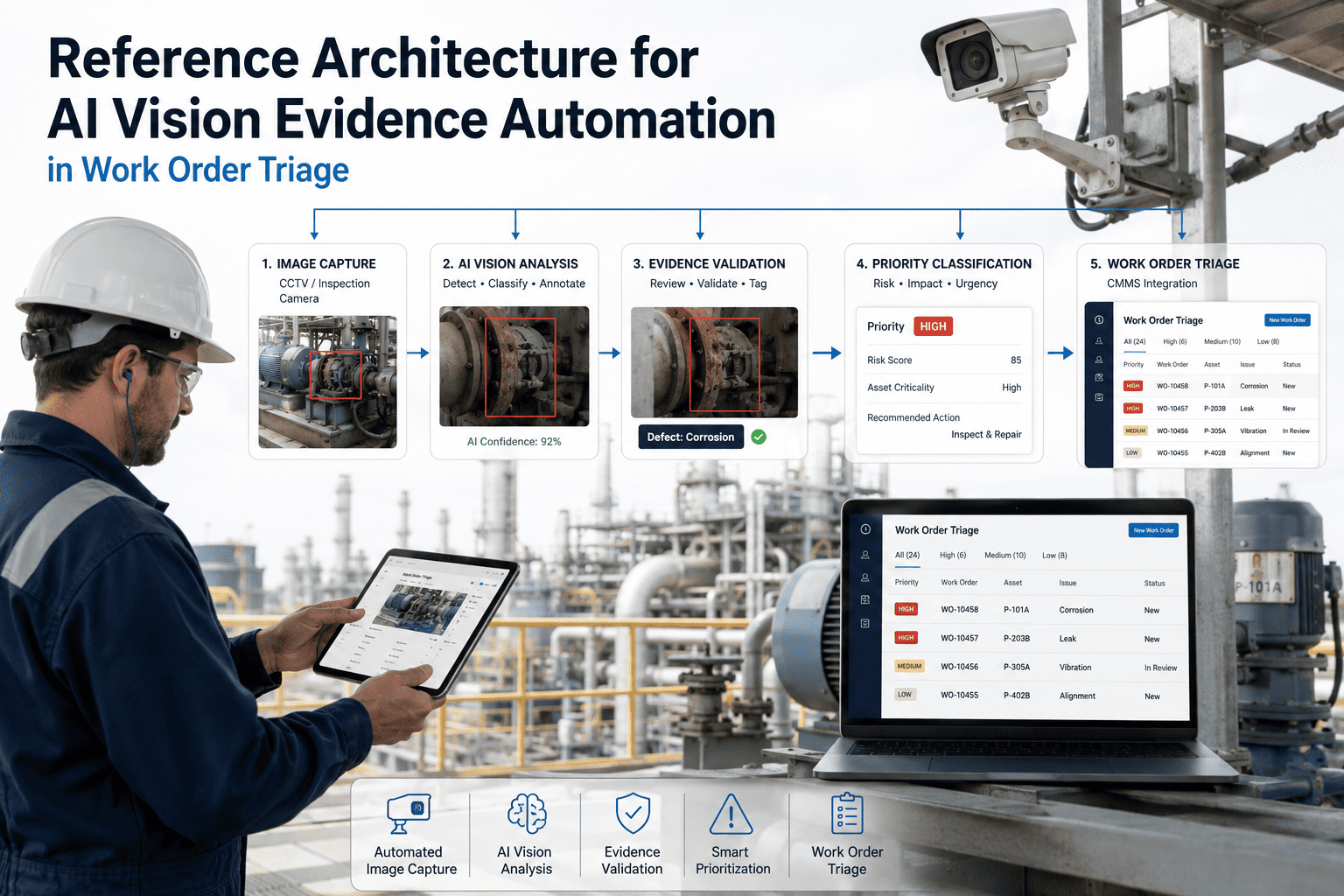
Most maintenance teams lose compliance evidence not because they lack cameras — but because photos taken on phones never make it into the work order. AI vision evidence automation closes that gap by capturing,...
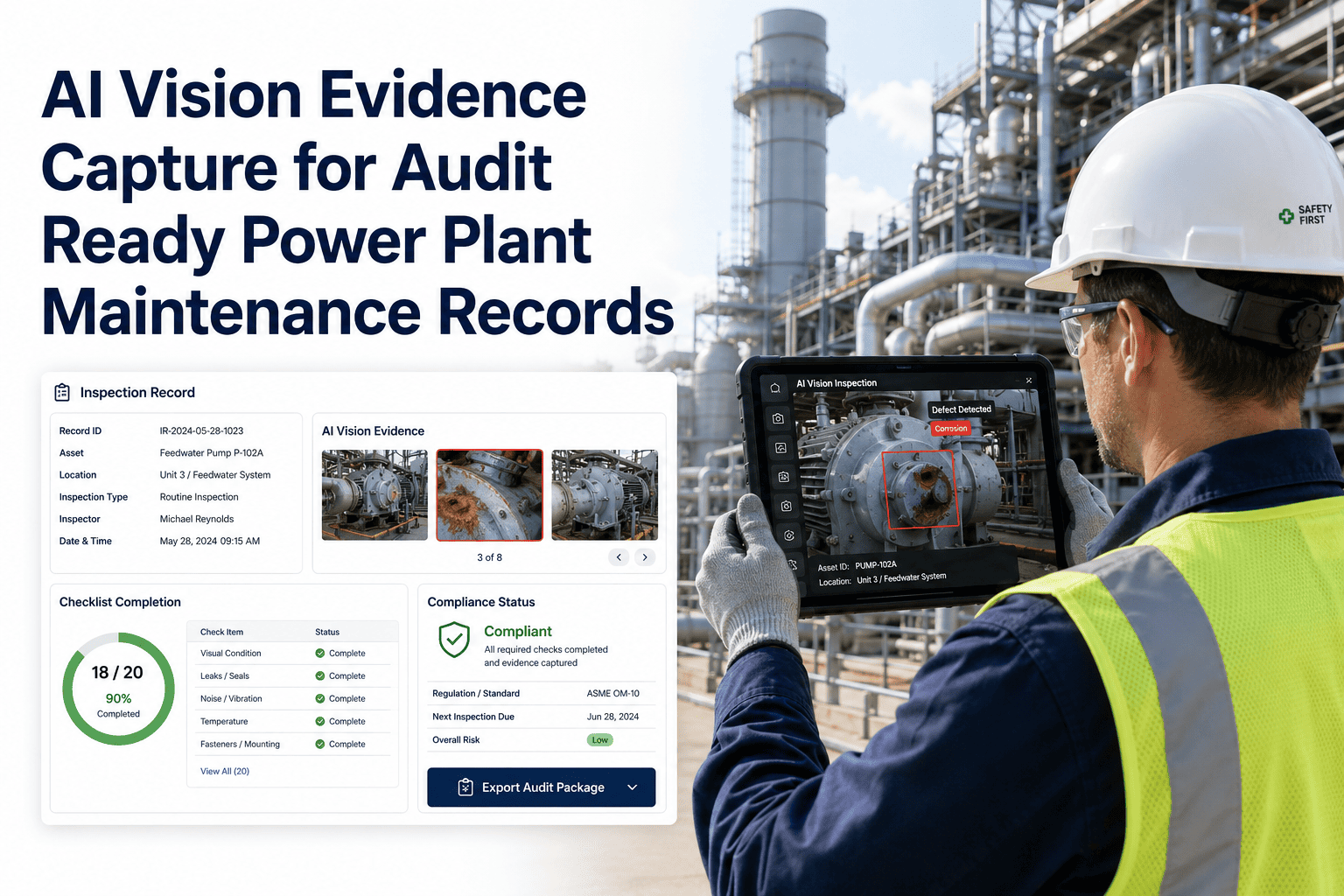
Power plant maintenance teams operate under the most demanding evidence retention requirements in industrial maintenance — NERC CIP compliance, OSHA Process Safety Management, FERC reporting, and insurance...

Cement plant equipment operates in one of the harshest environments in heavy industry — constant vibration, extreme heat, abrasive dust, and relentless mechanical stress that degrades kiln liners, conveyor belts,...

A power plant shift logbook that records "turbine bearing — temperature normal" is valuable only until the next shift discovers the bearing has failed. The written log describes what the operator believed at the...

Every minute between a power plant defect being detected and a maintenance technician being dispatched to address it is a minute of compounding risk. Traditional inspection programs accept a 12–72 hour lag between...

Power plant inspection programs built on human observation alone carry a structural flaw: inspectors can only see what they can safely access, on the shift they're scheduled, with the attention level their fatigue...

Power plant maintenance teams operating gas turbines, steam generators, and high-voltage switchgear face a fundamental inspection problem: the assets most likely to cause catastrophic failure are the hardest to...

Steel plant audits don't fail because maintenance didn't happen — they fail because there's no proof it happened. A visual inspection that never becomes a timestamped, asset-linked evidence record might as well not...

Every steel plant shutdown begins with a planning assumption: that the scope list built six months out actually reflects the real condition of every asset that will be opened up during the outage. In practice, a...

An OEE report that lands on a manager's desk every Monday morning is already a week too late to fix anything, because the rolling mill jam, the caster start-up delay, and the quality reject spike it describes...

A rolling mill bearing can show stress signatures for weeks before it fails, and a furnace refractory lining can spall slowly along a wall for months before a breakout, but if nobody happens to be standing in that...

Hospitality facilities — hotels, resorts, convention centers, and mixed-use properties — run 24 hours a day with guests occupying every floor, mechanical rooms humming below grade, and maintenance windows measured...
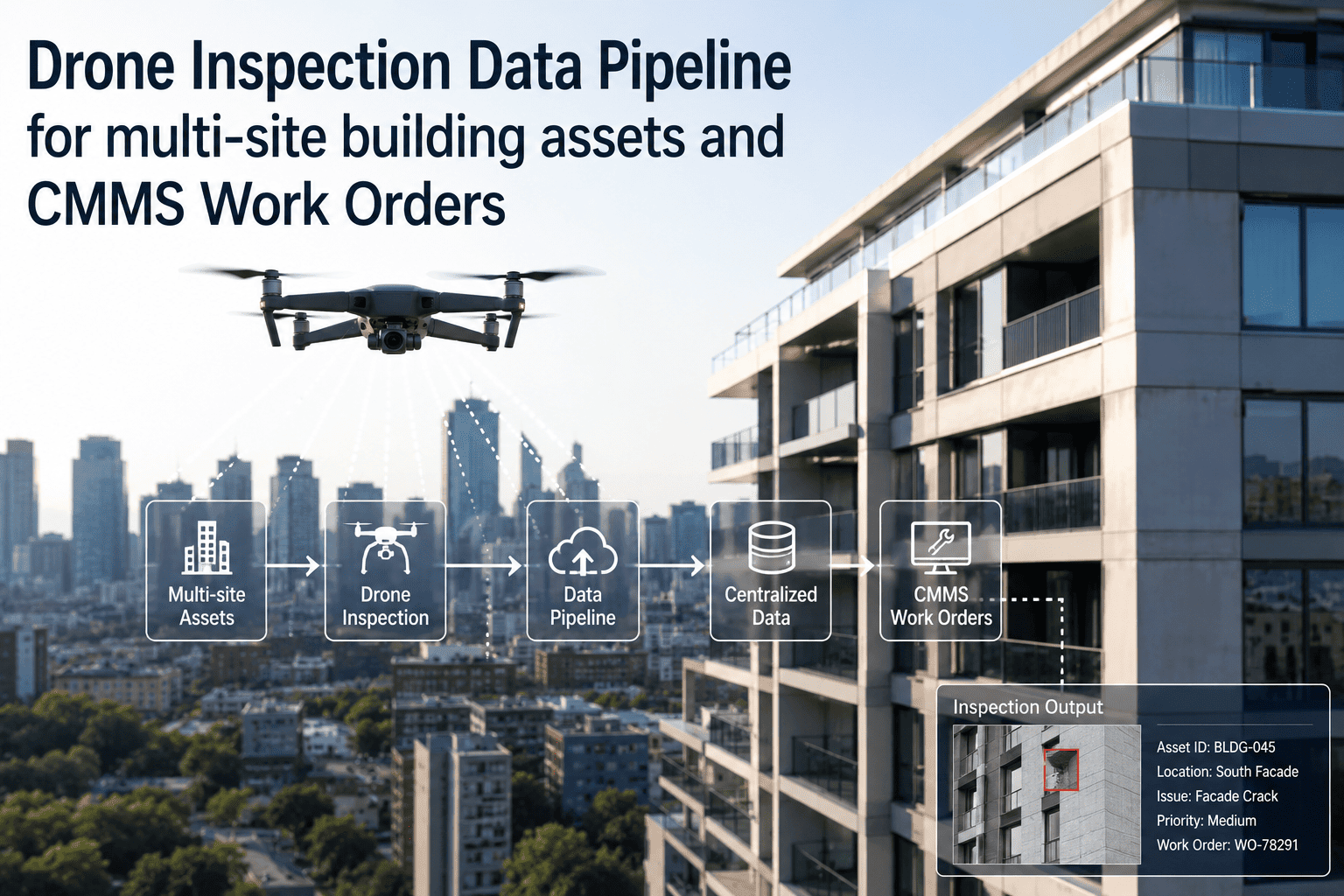
Multi-site facility management teams face a consistent problem when deploying drone inspection programs: the data collected during each flight — thousands of high-resolution images, thermal frames, and LiDAR scans...

Campus facilities directors managing education campuses — universities, colleges, and multi-building institutional campuses — operate dozens of building systems simultaneously: HVAC, electrical, elevators, water...
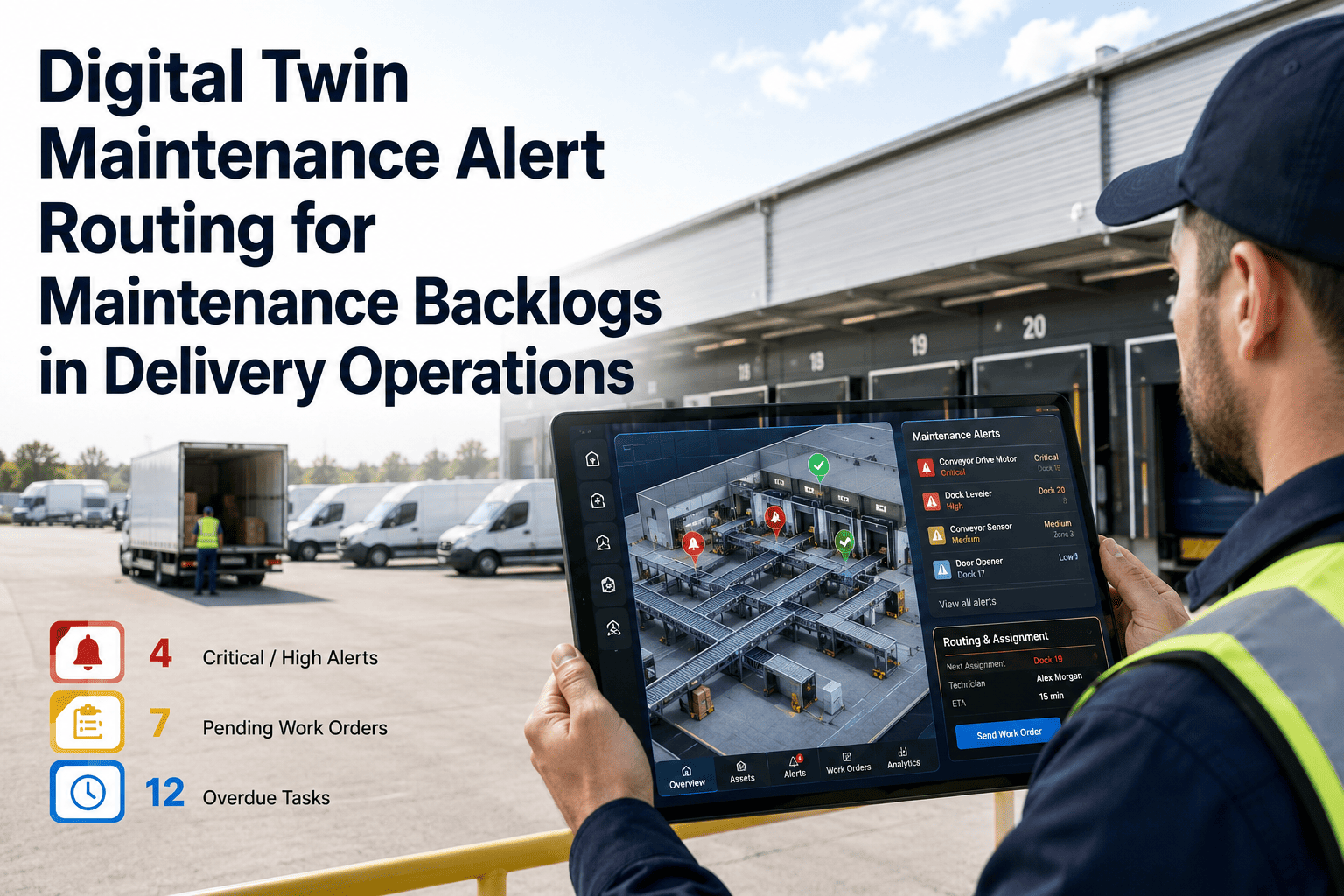
Delivery operations run on asset availability — vehicles, sortation systems, conveyor lines, dock equipment, and loading bays that must perform every shift without exception. Digital twin technology creates live...

Fleet maintenance teams managing vehicle depots operate at the intersection of PLC-controlled systems — wash bays, lifts, fueling stations, charging infrastructure — and mobile assets that return to base with fault...

Cement plants present some of the most demanding inspection challenges in heavy industry — clinker coolers, preheater towers, rotary kilns, and raw mills operate continuously at extreme temperatures with limited...
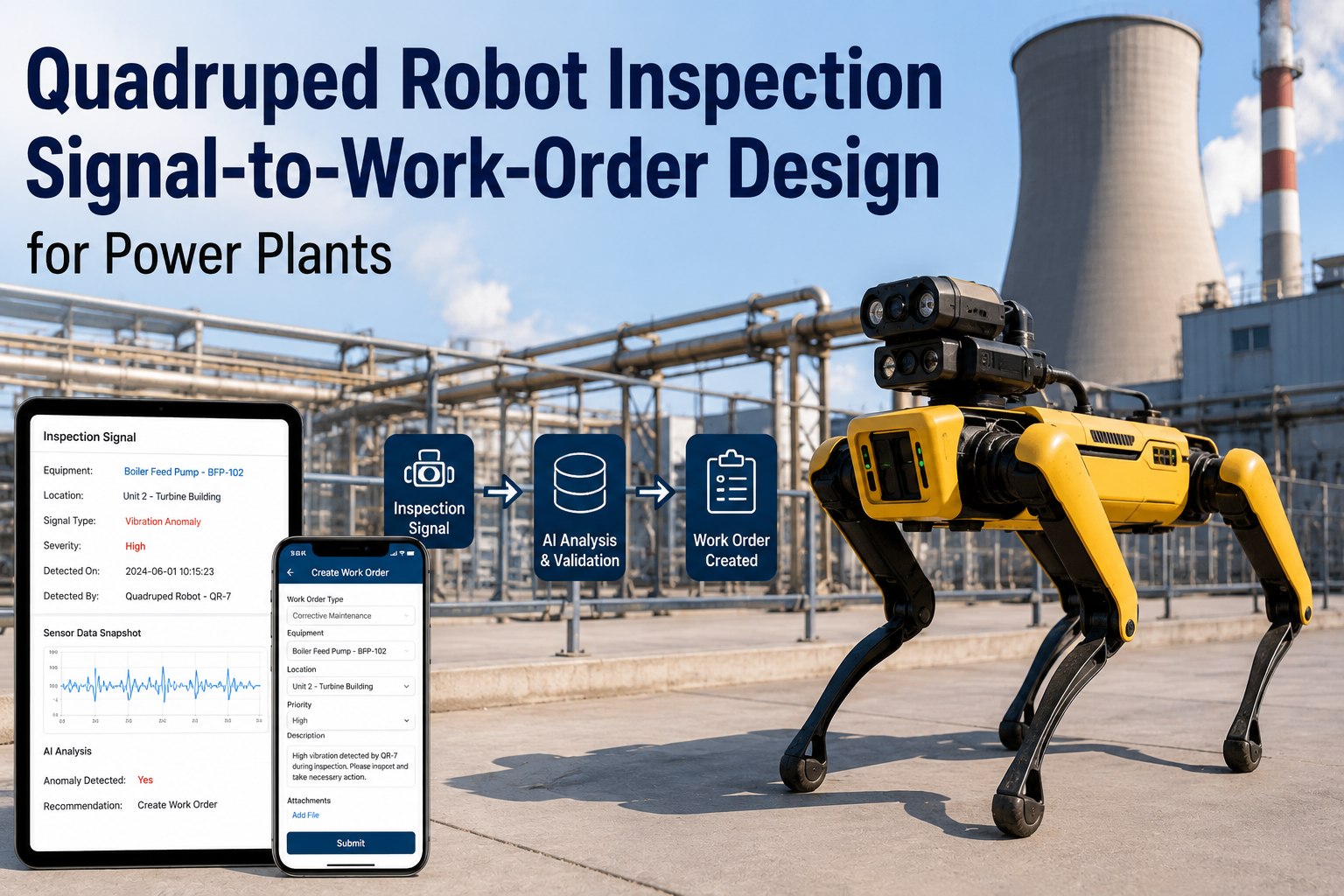
Power plants cannot stop — and neither can their inspection routines. Quadruped robots are now deployed across turbine halls, boiler decks, and transmission substations to conduct autonomous inspections in...

High-temperature production assets — furnaces, kilns, heat exchangers, reactors — generate thousands of sensor readings every minute. Without a structured way to turn that historian data into actionable maintenance...
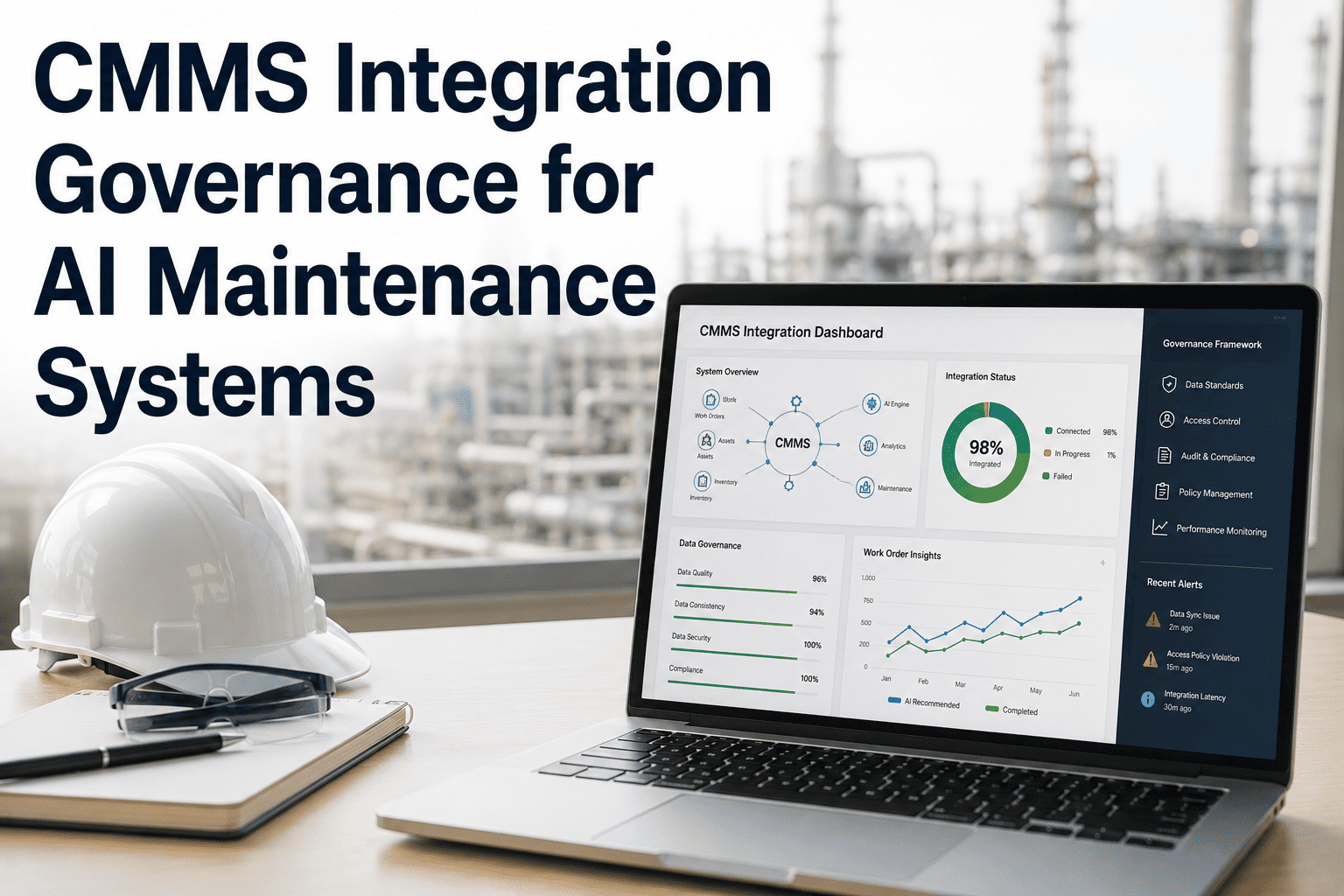
The moment a maintenance team connects an AI prediction engine to its CMMS, a new question appears that nobody assigned an owner to: who decides which AI-generated work order is allowed to fire automatically, which...

Every work order your team closes contains a maintenance recommendation waiting to be discovered — the parts that were replaced, the technician notes that diagnosed the real cause, the gap between repeat visits,...

A failure mode tag is only useful if it is consistent — and across a maintenance team of twenty technicians, the same bearing failure gets logged as "bearing worn," "bearing noise," "bearing replaced," and...

Computer vision defect detection does not output a binary pass/fail signal — it outputs a confidence score between 0 and 1 that tells you how certain the model is that what it detected is a real defect of a...

Every maintenance team has more work orders than technician hours. The question is never whether to prioritize — it is whether you are prioritizing based on actual asset risk or based on whoever raises the loudest...
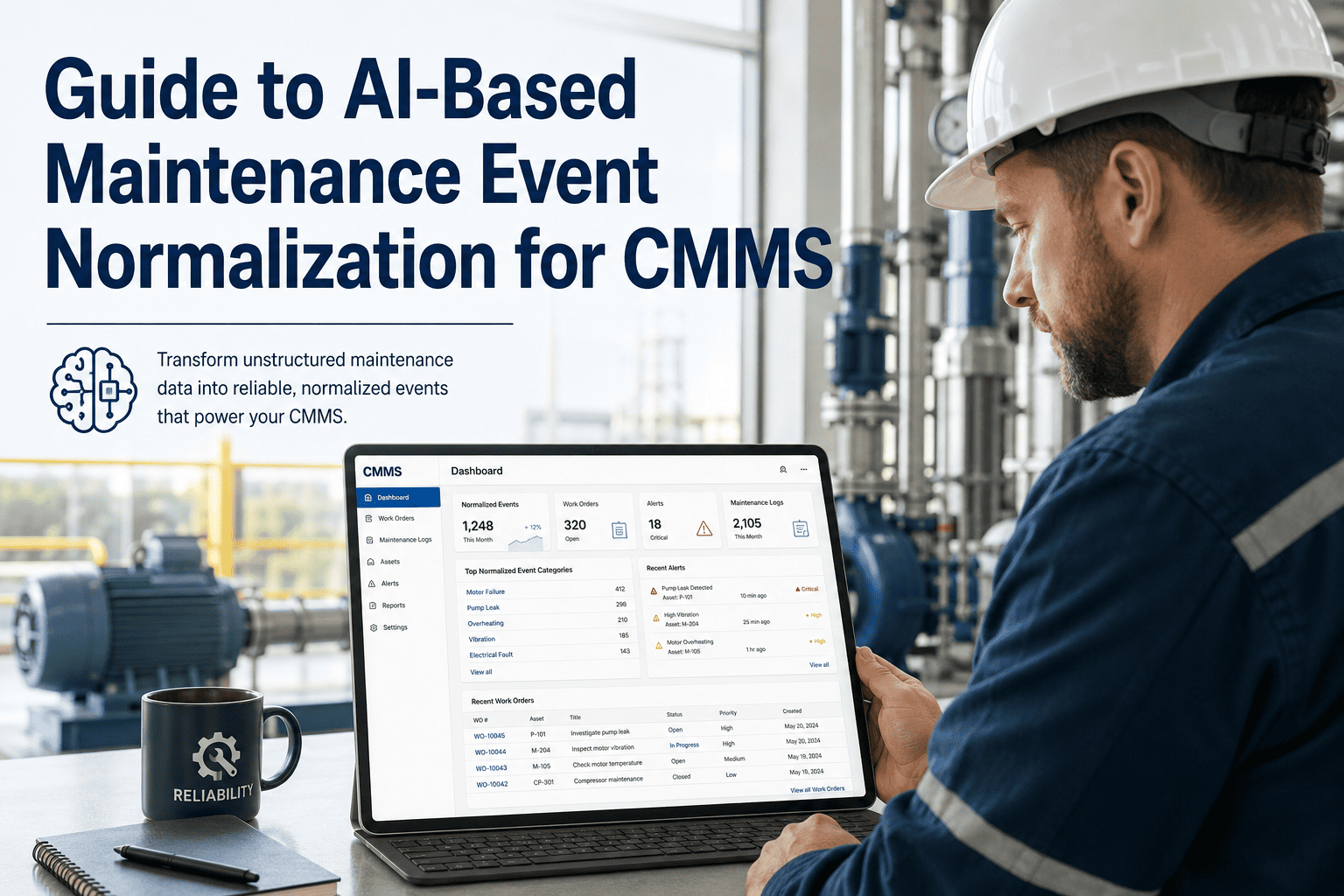
Every maintenance system generates events — alerts from sensors, flags from inspection tools, notifications from building management systems, outputs from ERP modules. The problem is that each source speaks a...
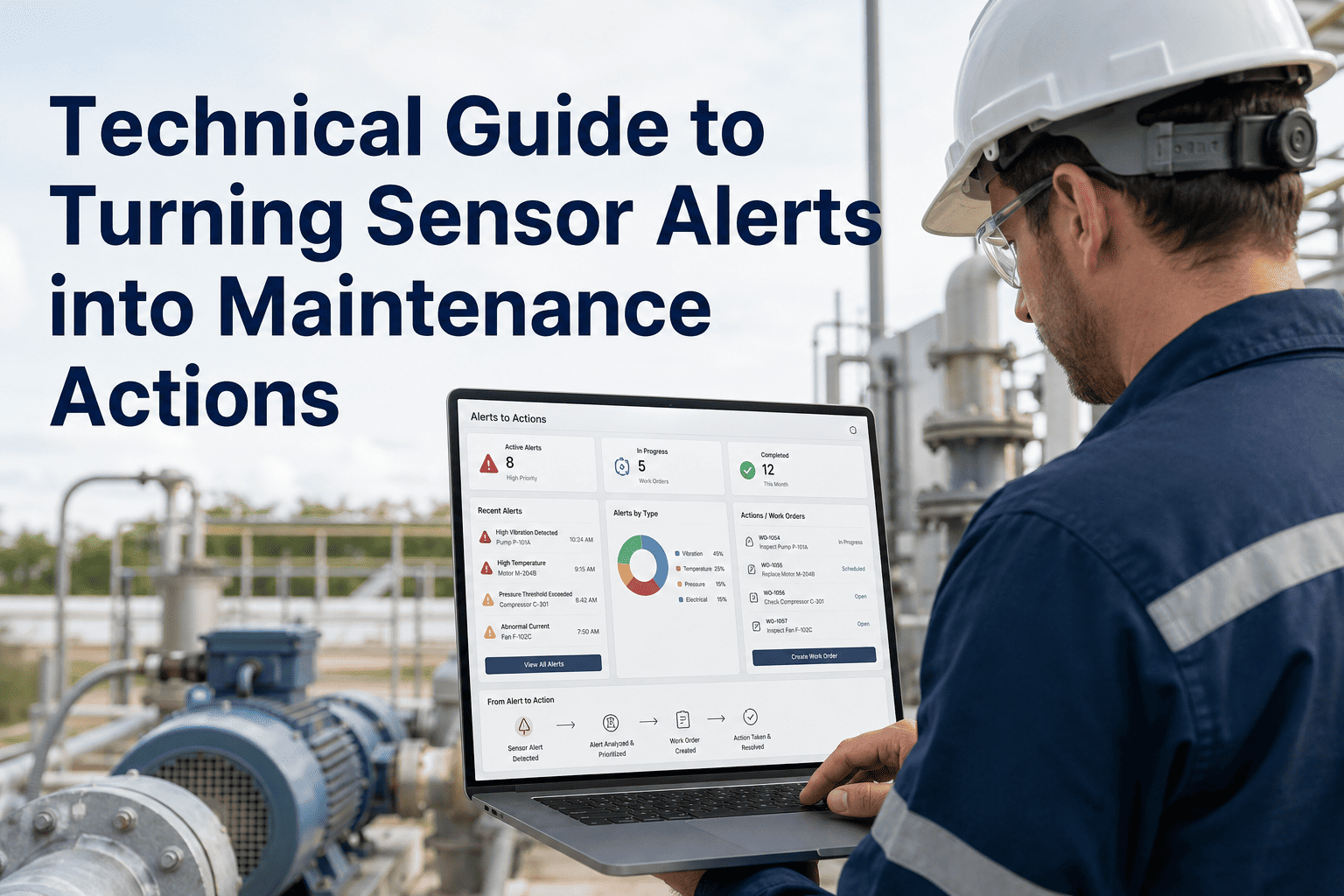
A vibration spike at 2 AM means nothing if nobody reads the alert until the morning standup — and by then the bearing is already failing. The promise of IoT sensor monitoring was always about speed: catch...
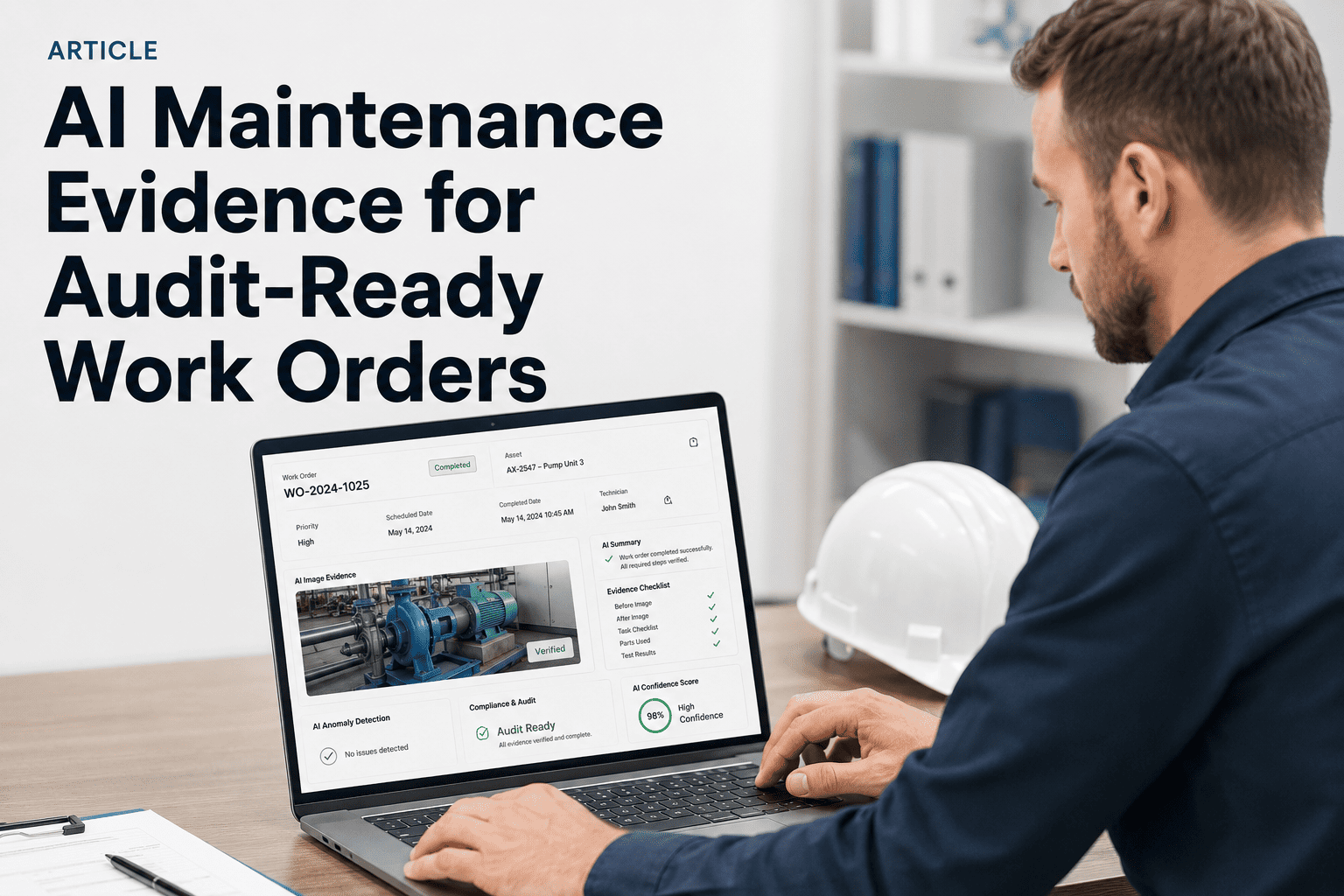
Audit readiness used to mean filing cabinets and spreadsheet printouts — artifacts that auditors tolerated because nothing better existed. Today, the standard has changed. Regulatory bodies, insurance providers,...

Most maintenance teams have already invested in cameras, sensors, or inspection tools — yet defects still slip through untracked, and work orders still get created manually hours after a visual catch. The gap is...

A small longitudinal tear in a conveyor belt rarely shuts down a mine the day it appears — it shuts the mine down three weeks later when nobody logged it and it ran the full length of the belt under load....

Mining operations that run SAP PM for maintenance management face a specific integration challenge when deploying AI vision belt monitoring: the camera detects a tear precursor in milliseconds, but if the resulting...

An AI vision camera that detects a belt defect but cannot reliably identify which asset it belongs to produces an alert with no operational value — the work order cannot be created, the technician does not know...

A conveyor belt tear discovered by a PLC speed differential alarm alone tells you the belt has already failed — it does not tell you where the tear is, how severe it is, or whether the surrounding structure is at...

When an AI vision camera detects a conveyor belt tear precursor, the most critical variable in avoiding unplanned downtime is not the detection itself — it is how fast that detection becomes a dispatched technician...

The most sophisticated AI vision CMMS in the world delivers zero ROI if your technicians do not trust it, use it, or believe it makes their job better. The leading cause of failed AI maintenance deployments is not...

Maintenance transformation programs fail when leadership cannot measure progress and technicians cannot see impact. Without the right adoption metrics, CMMS and AI vision investments become cost centers instead of...

Your maintenance team captures photos of equipment defects — then emails them to a supervisor, who creates a work order manually, which gets lost in a spreadsheet before a technician sees it three days later. This...

Deploying an AI vision CMMS without clean, structured maintenance data is the most common reason enterprise implementations fail — not the technology, and not the budget. OxMaint's implementation team has assessed...

Before signing a CMMS contract, most maintenance teams ask about price, implementation time, and support hours — but the questions that actually determine ROI are about AI vision integration depth. Can the system...

Most plant maintenance budgets bleed money in places no line item ever shows — overtime premiums on emergency callouts, rush freight on parts that should have been pre-staged, and downtime that never gets logged...

Industrial facilities are entering a new era of inspection — one where robots, drones, and autonomous ground vehicles replace humans in the most dangerous, inaccessible, and high-frequency monitoring tasks. A 2024...

Every technician carries a camera to every job — but most maintenance teams never extract value from the thousands of photos their workforce captures each month. AI vision changes that. When a technician...
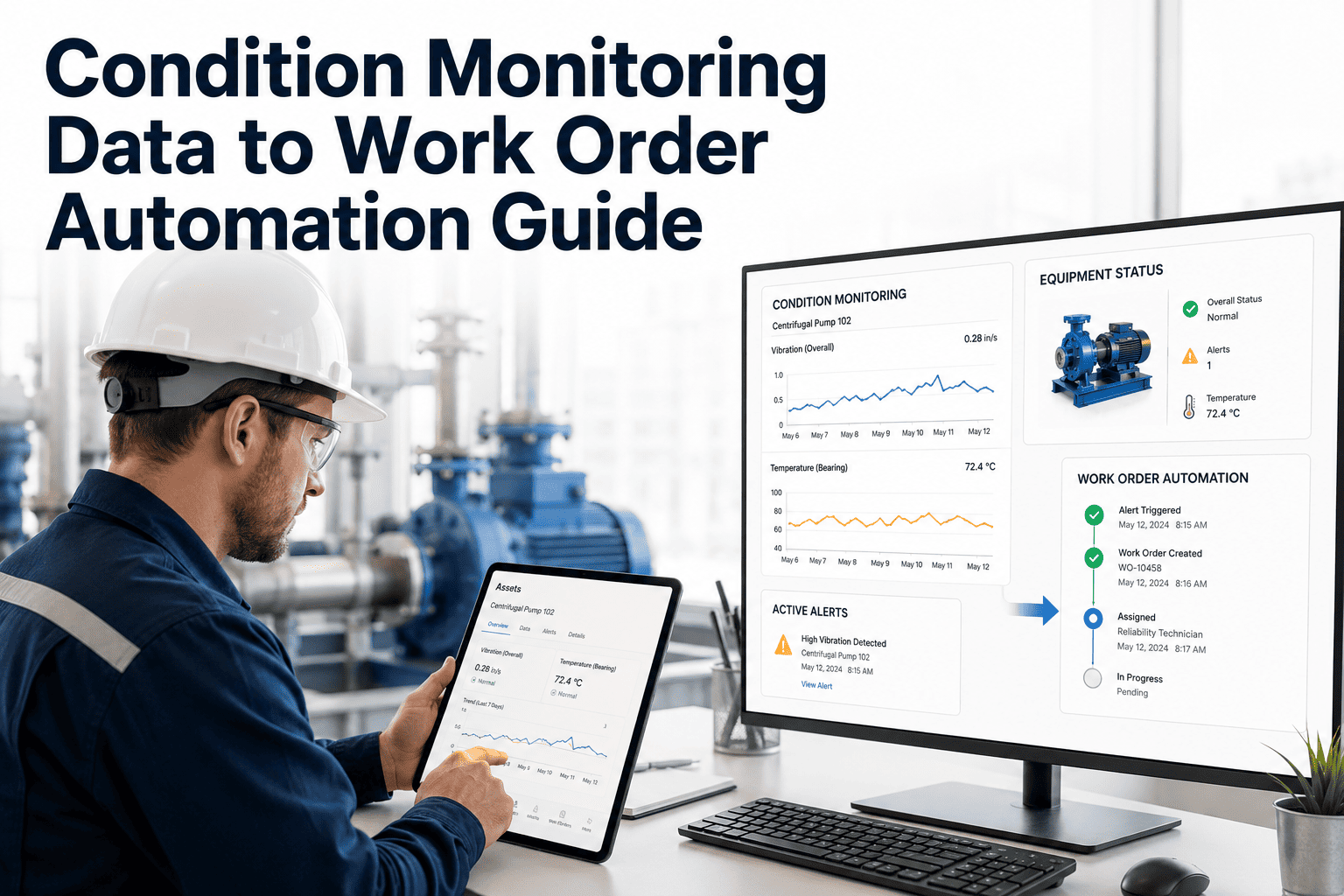
Condition monitoring sensors generate alerts every few seconds. The real challenge is not collecting the data — it is turning that data into a structured, assigned, and actionable work order before the window for...
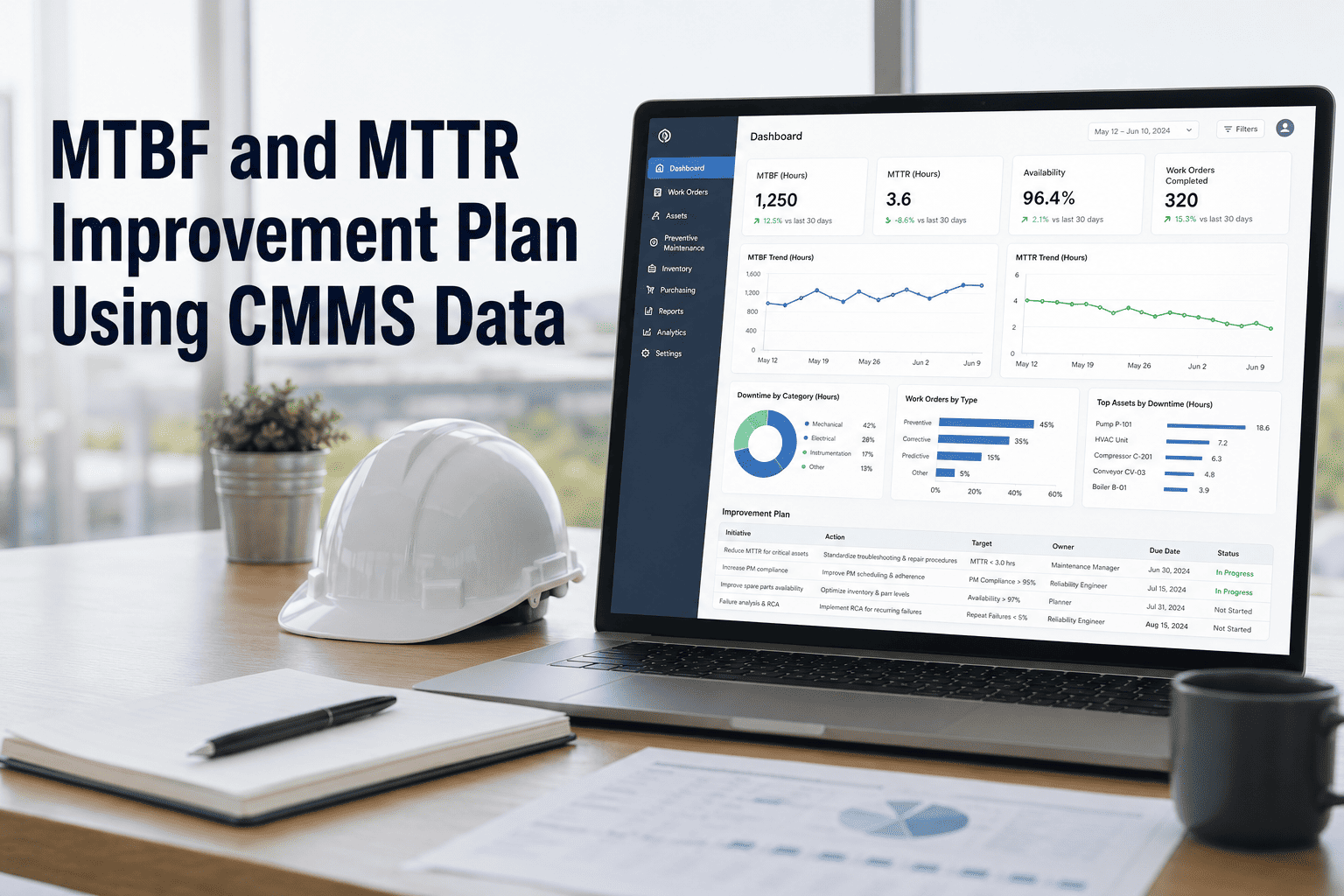
MTBF and MTTR are the two numbers that reveal whether your maintenance program is actually working. Mean Time Between Failures tells you how reliably your assets run. Mean Time To Repair tells you how efficiently...
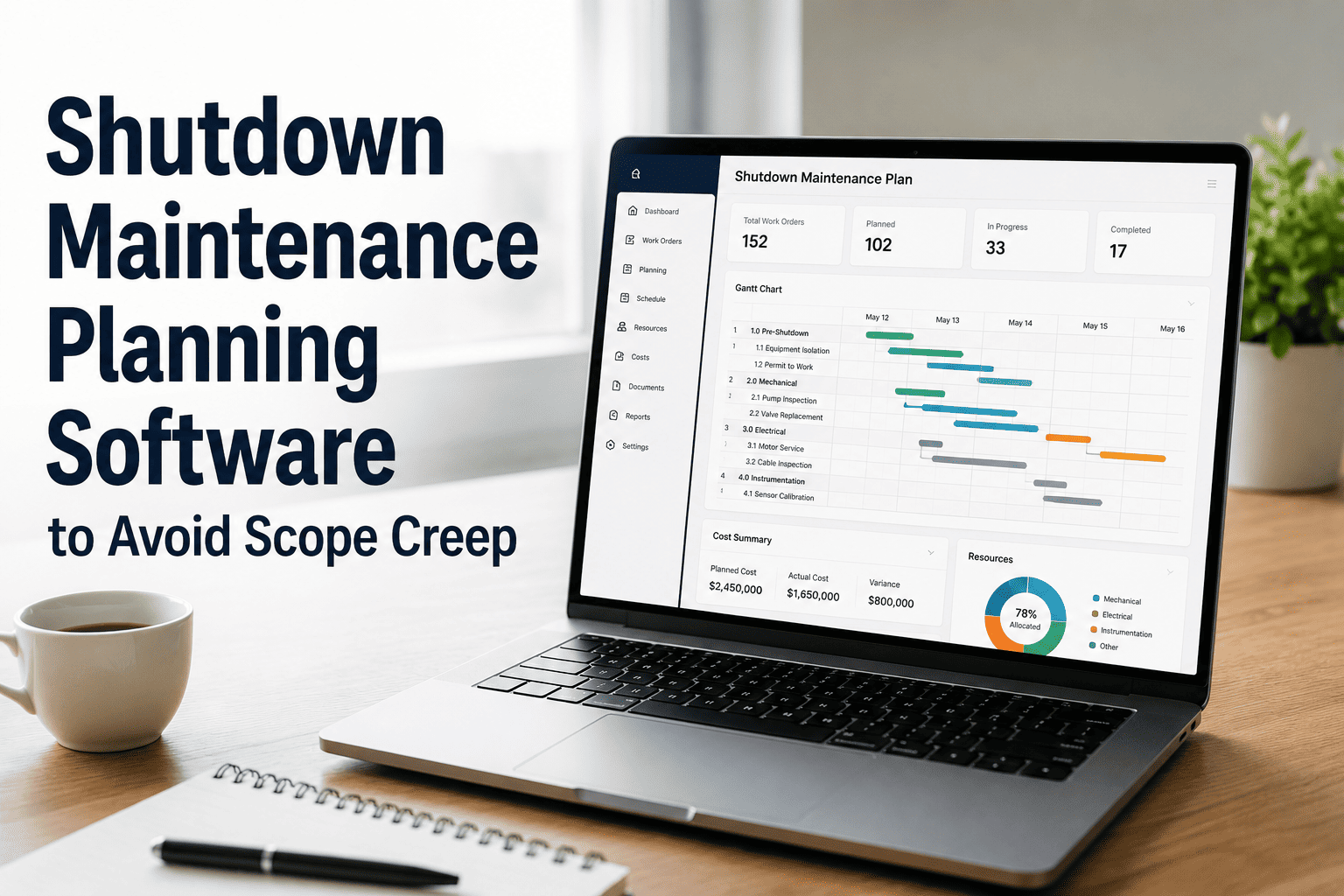
Shutdown scope rarely fails because of one bad decision — it fails one small addition at a time, after the freeze date, when nobody is tracking the cumulative cost of saying yes. OxMaint's maintenance planning...

Most plant maintenance teams are scheduling work the wrong way. They're reacting to breakdowns, following calendar-based PMs, and making judgment calls without data. OEE — Overall Equipment Effectiveness — gives...

Spare parts inventory sits in a constant tension between two expensive failure modes — money frozen in parts that never move, and downtime caused by parts that aren't there when an asset needs them. OxMaint's...

A flow wrapper that misfeeds 200 times a shift isn't actually unpredictable — it's a machine sending warning signals for days before the failures spike, signals that simply aren't being read by anyone. One frozen...

An FDA investigator reviewing a sanitation log doesn't usually care whether the cleaning happened. They care whether the record proves it happened — and paper logs fail that test more often than plants expect:...

A walk-in freezer compressor can start failing at 2 a.m. on a Saturday and nobody finds out until a supervisor opens the door Monday morning to a room full of spoiled product. That gap — the hours or days between...
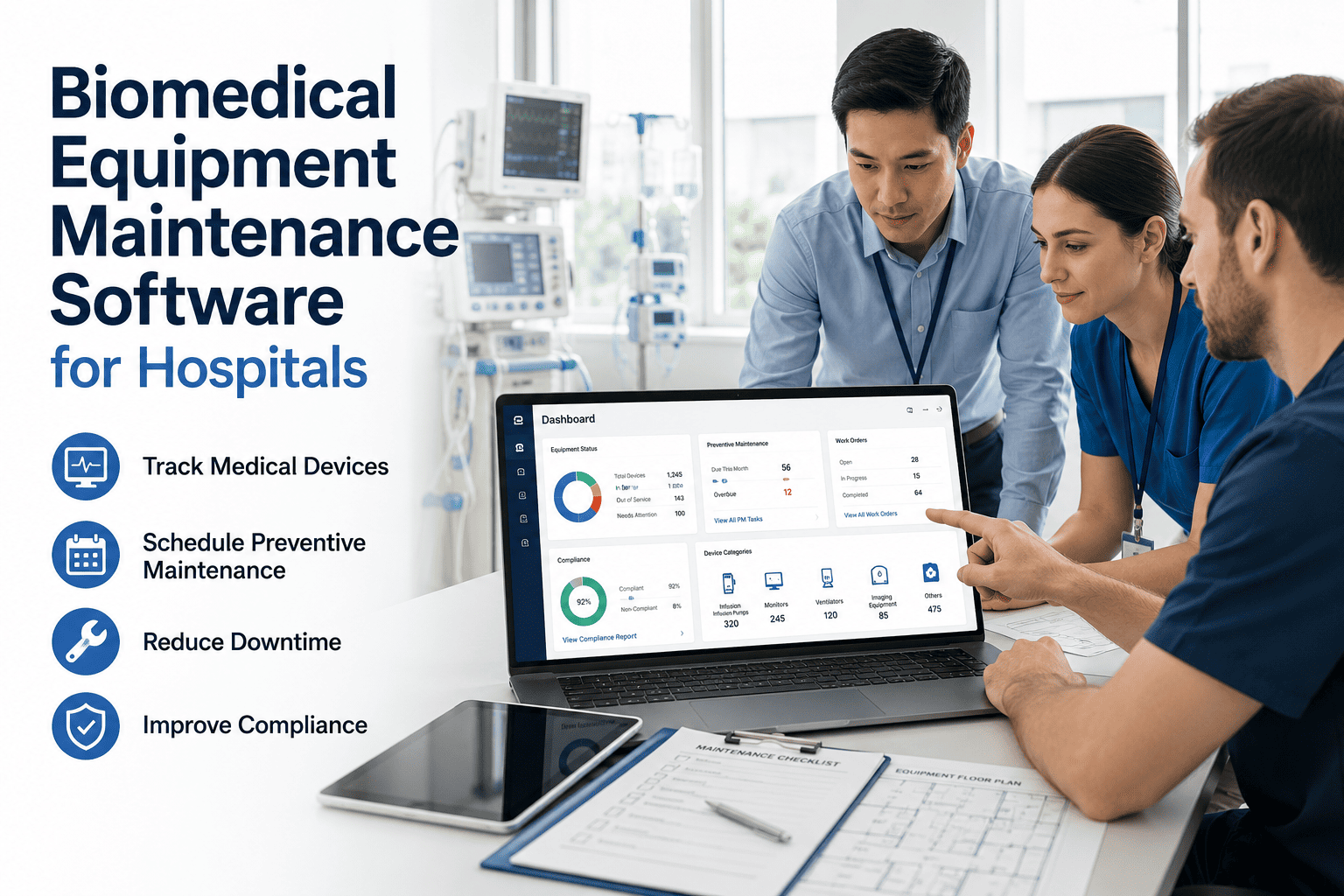
Every hospital has a drawer full of "lost" infusion pumps, wheelchairs, and monitors that aren't actually lost — they're just sitting three floors away from where the system thinks they are, while a nurse spends...
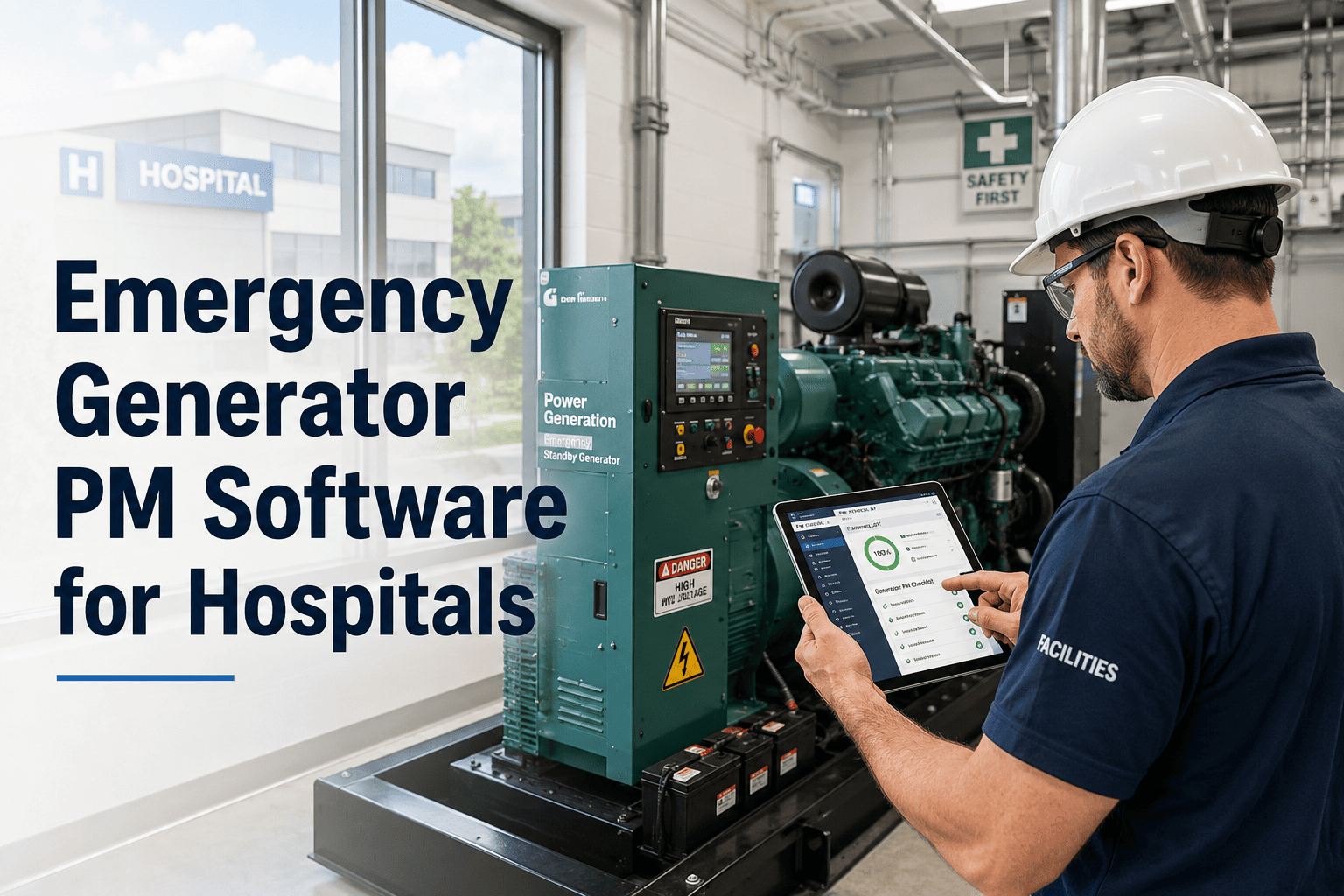
When the grid fails at a hospital, the automatic transfer switch has ten seconds to move ICU ventilators, surgical suites, and neonatal incubators onto generator power — there is no second attempt. Yet the most...

Most food manufacturing plants think they know what downtime costs them. They're wrong — by a factor of five to ten. When a line stops, managers count the repair invoice and move on. They miss the scrapped raw...

Slow work order closure in pharmaceutical manufacturing is not merely an operational inefficiency — it is a GMP compliance event. FDA 21 CFR Part 211 requires that corrective maintenance affecting product quality...
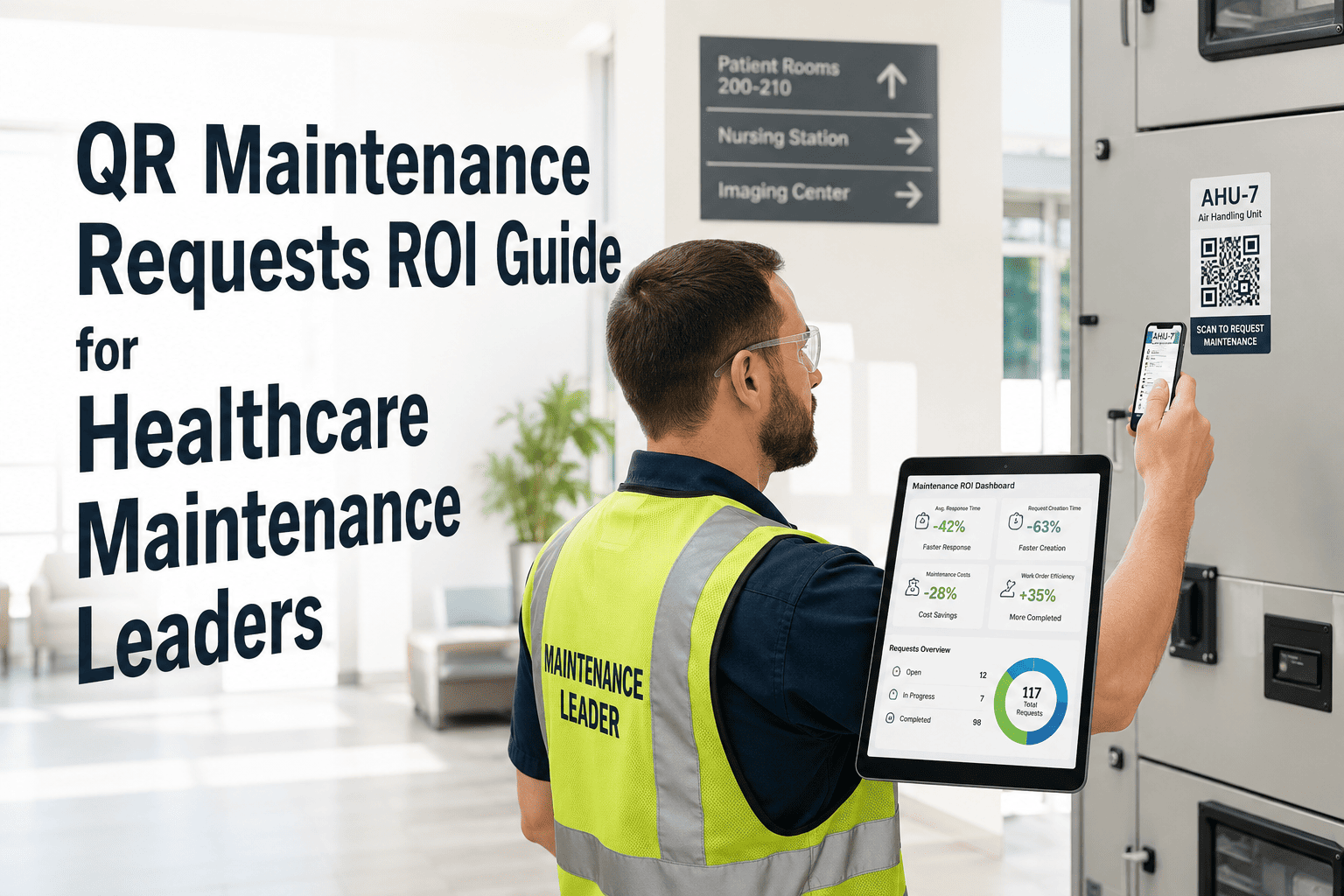
Missed inspections in healthcare facilities are not just an operational inconvenience — they are a patient safety event and a regulatory liability. The Joint Commission cites inadequate preventive maintenance as a...

Manufacturing maintenance leaders face a quantifiable problem: spare parts stockouts cost the average mid-size plant $240,000 per year in unplanned downtime, rush procurement premiums, and production schedule...

The technician shortage in facility management is not a hiring problem — it is an efficiency problem. With the average experienced maintenance technician vacancy taking 68 days to fill and 42% of the existing FM...
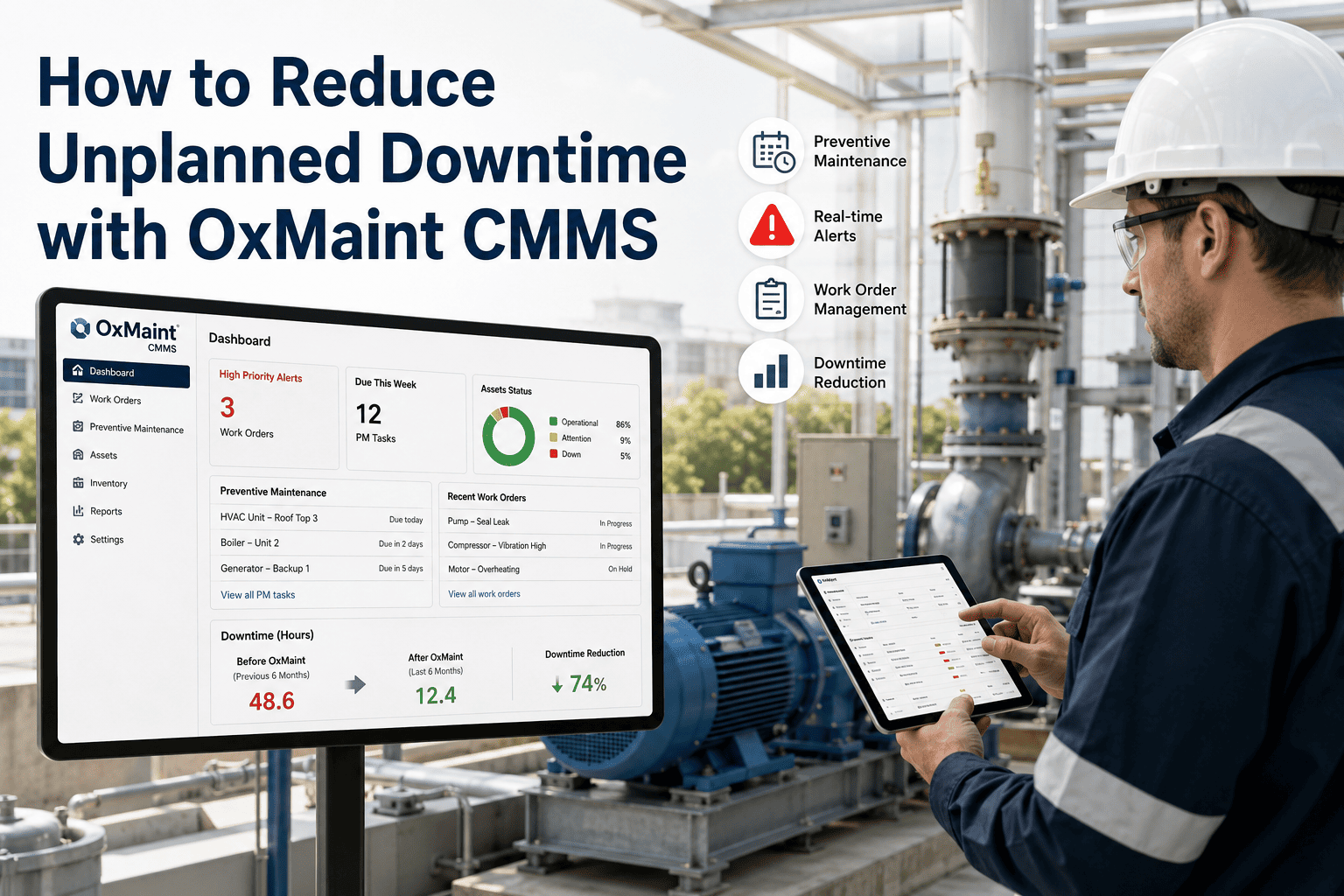
Unplanned downtime in utilities is not random — it is predictable. Every unplanned outage has a maintenance precursor: a missed lubrication interval, a vibration trend that was never analyzed, a thermal anomaly...
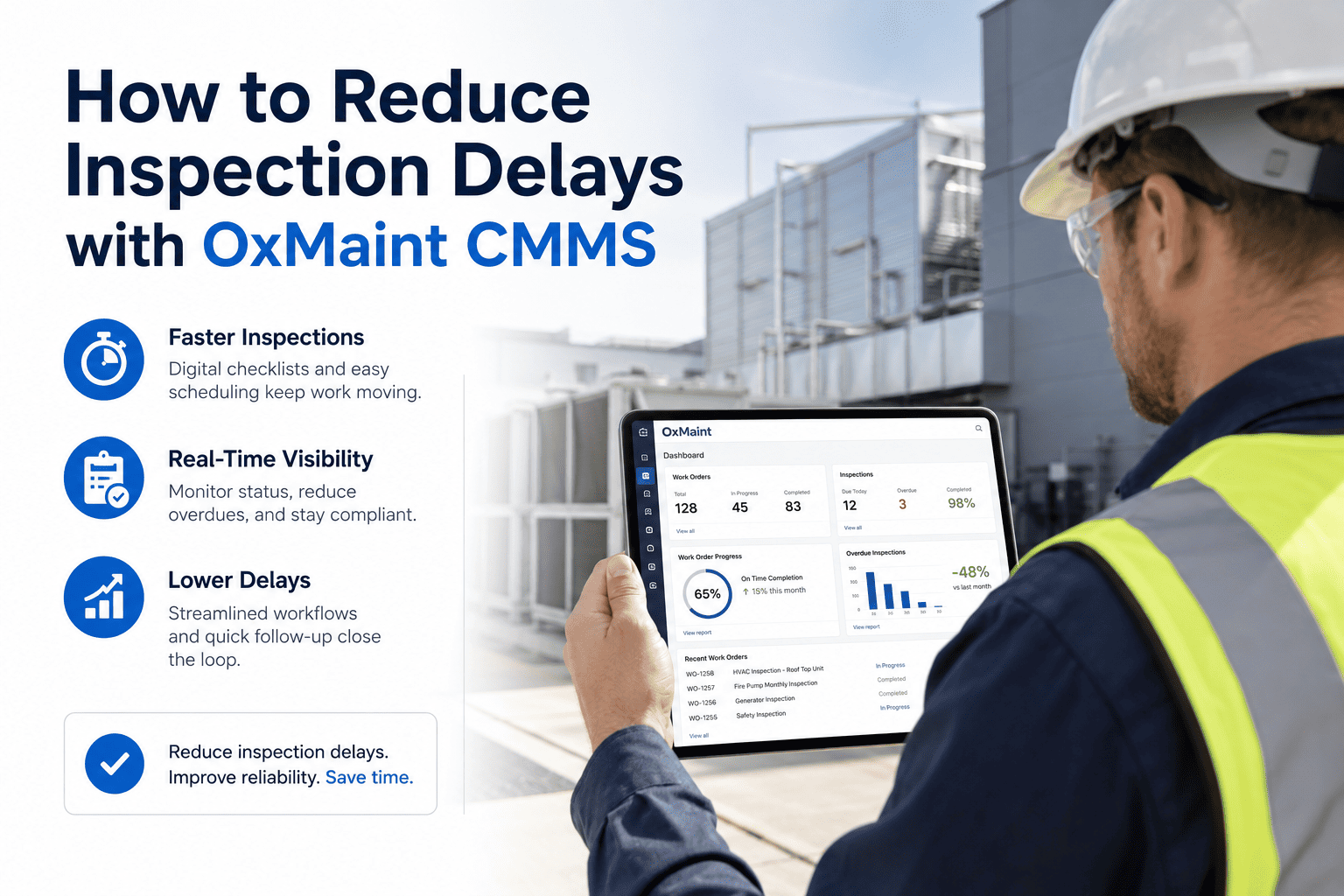
Inspection delays in property management are rarely caused by a lack of effort — they are caused by disconnected systems. When inspection schedules live in one spreadsheet, work orders in another, and ERP data in a...
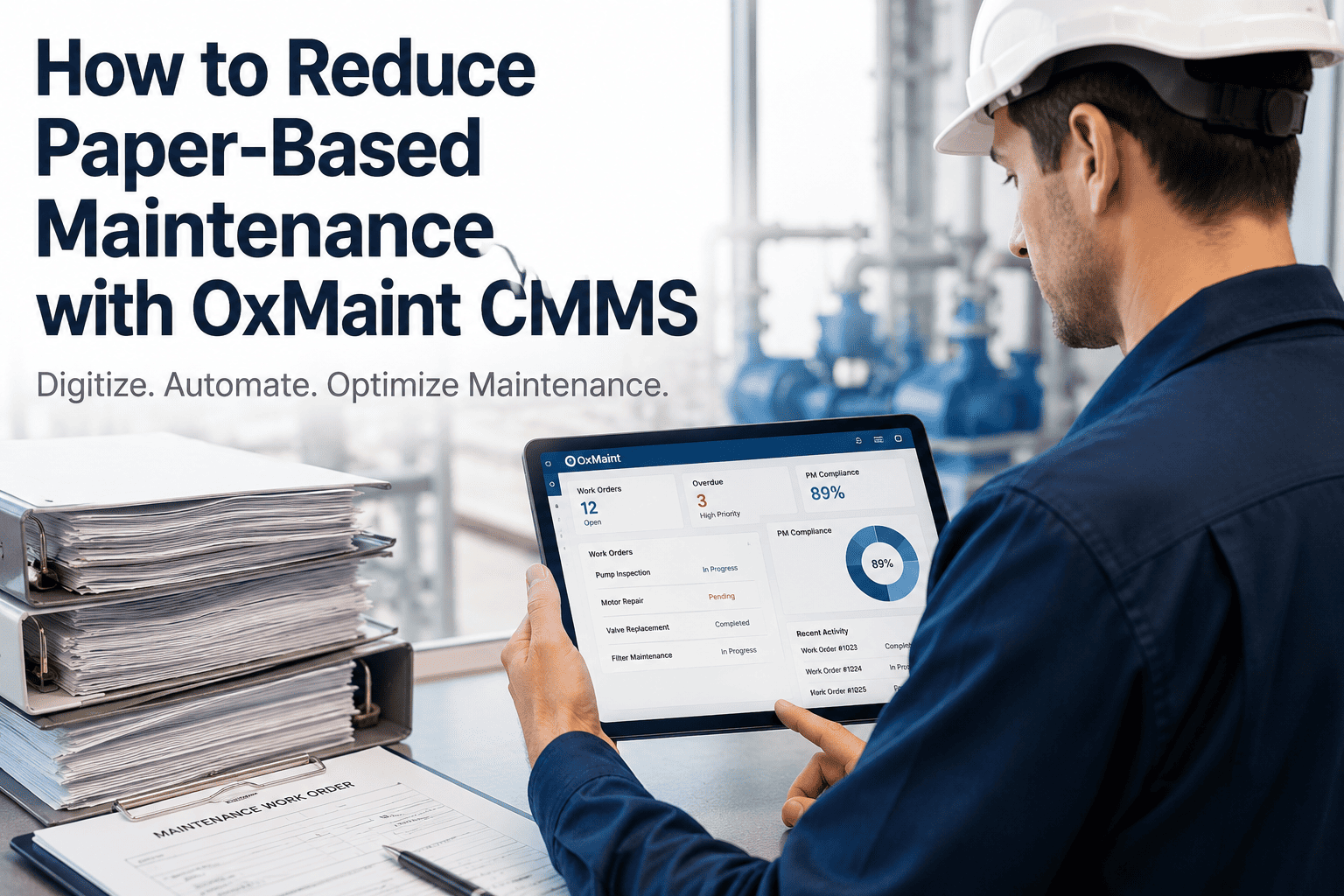
Paper-based maintenance systems are costing hospitality facilities more than they realize — missed work orders, lost inspection records, duplicate data entry, and zero visibility into technician performance. A 2023...

A service team that cannot prove an inspection happened is a team that cannot defend itself when something goes wrong — during an audit, after an incident, or at contract renewal. The gap between maintenance that...

When a 5.2-kilometre overland conveyor in a mining operation carries 4,000 tonnes of ore per hour, a single unplanned belt stoppage costs between $80,000 and $200,000 in lost production — and the most dangerous...
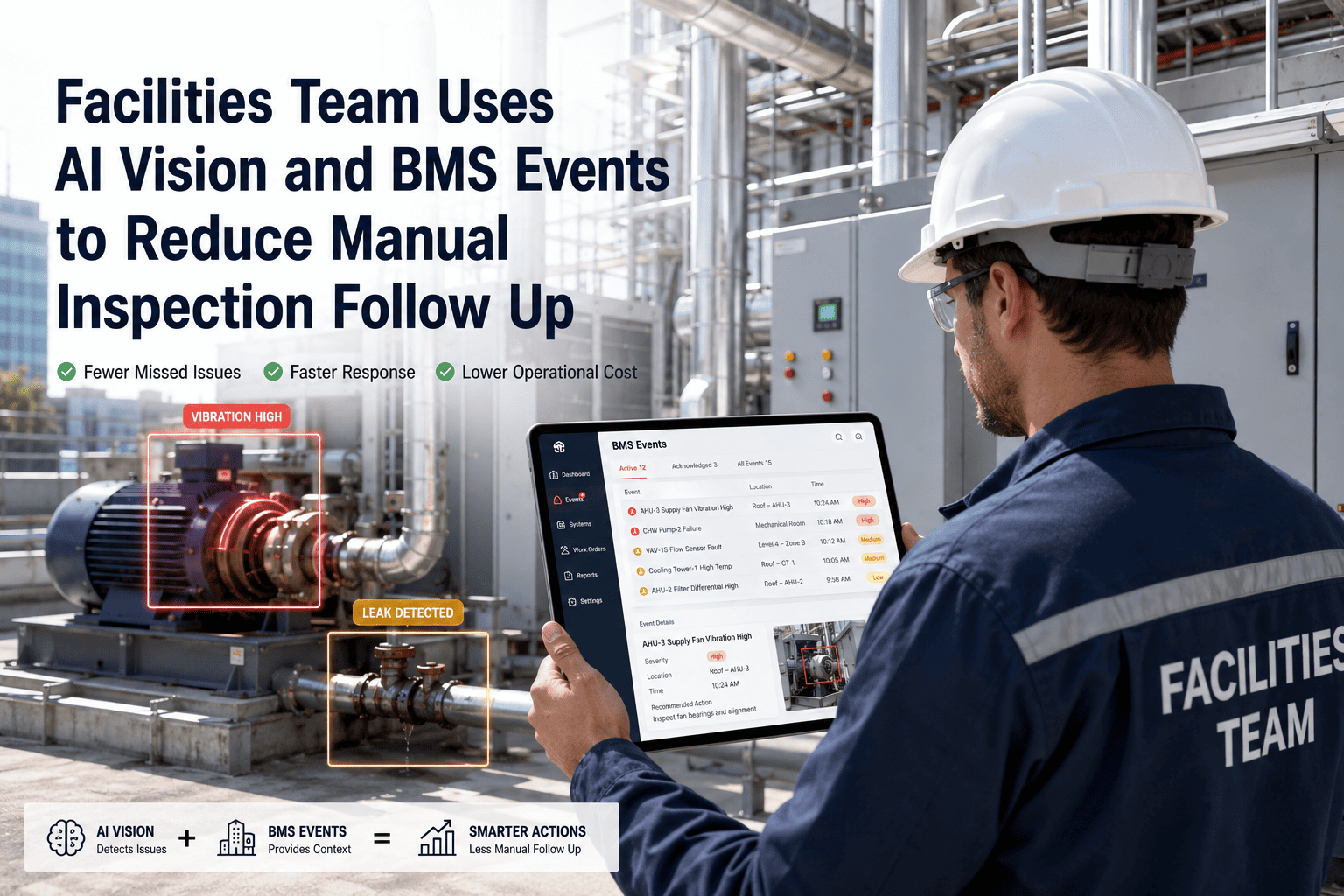
A building management system fires hundreds of fault events every week — HVAC alarms, chiller trip signals, AHU fault codes, and lighting circuit failures — each one theoretically requiring a facilities technician...

Equipment cleaning and housekeeping standards are among the most frequently cited gaps in manufacturing, food processing, pharmaceutical, and healthcare facility audits — not because teams do not clean, but because...
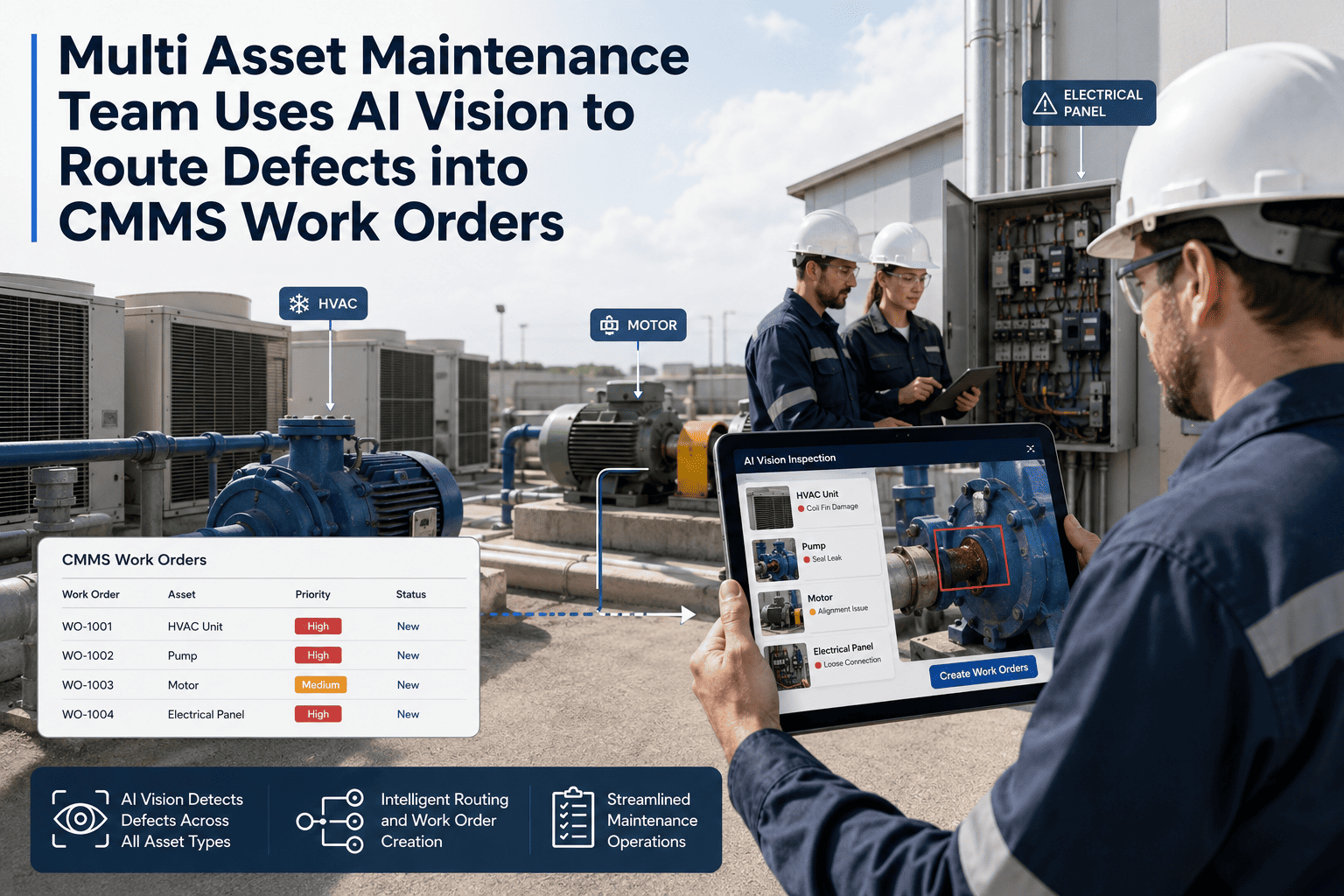
Multi-asset maintenance teams face a coordination problem that gets harder as the asset base grows: defects are discovered across dozens of equipment types and locations, but the path from detection to work order...
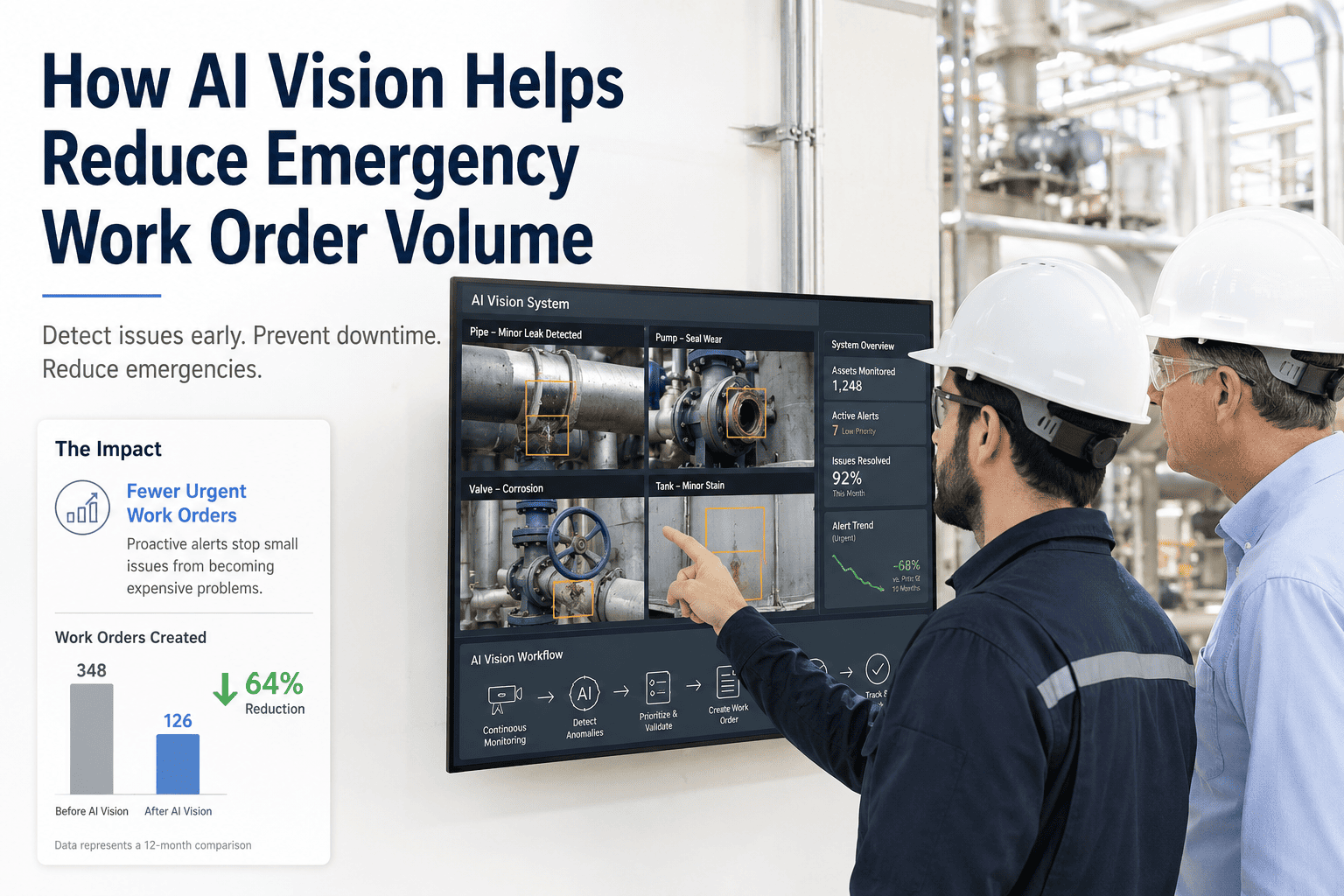
Emergency work orders are the most expensive, disruptive, and avoidable maintenance events in any facility — yet most teams still rely on manual rounds and reactive reporting to catch defects before they escalate....

Predictive maintenance alerts are only as useful as the context behind them. A vibration sensor flagging abnormal bearing readings tells a maintenance planner that something is wrong — but not what the damage looks...

Real-time asset monitoring is no longer a capability reserved for greenfield smart factories. Industrial IoT sensor costs have dropped 80% since 2016, retrofit kits exist for equipment built in the 1980s, and...

The average age of production equipment in North American manufacturing facilities has risen to 27 years — a level not seen since the post-war industrial hangover of the late 1950s. Aging assets do not fail...
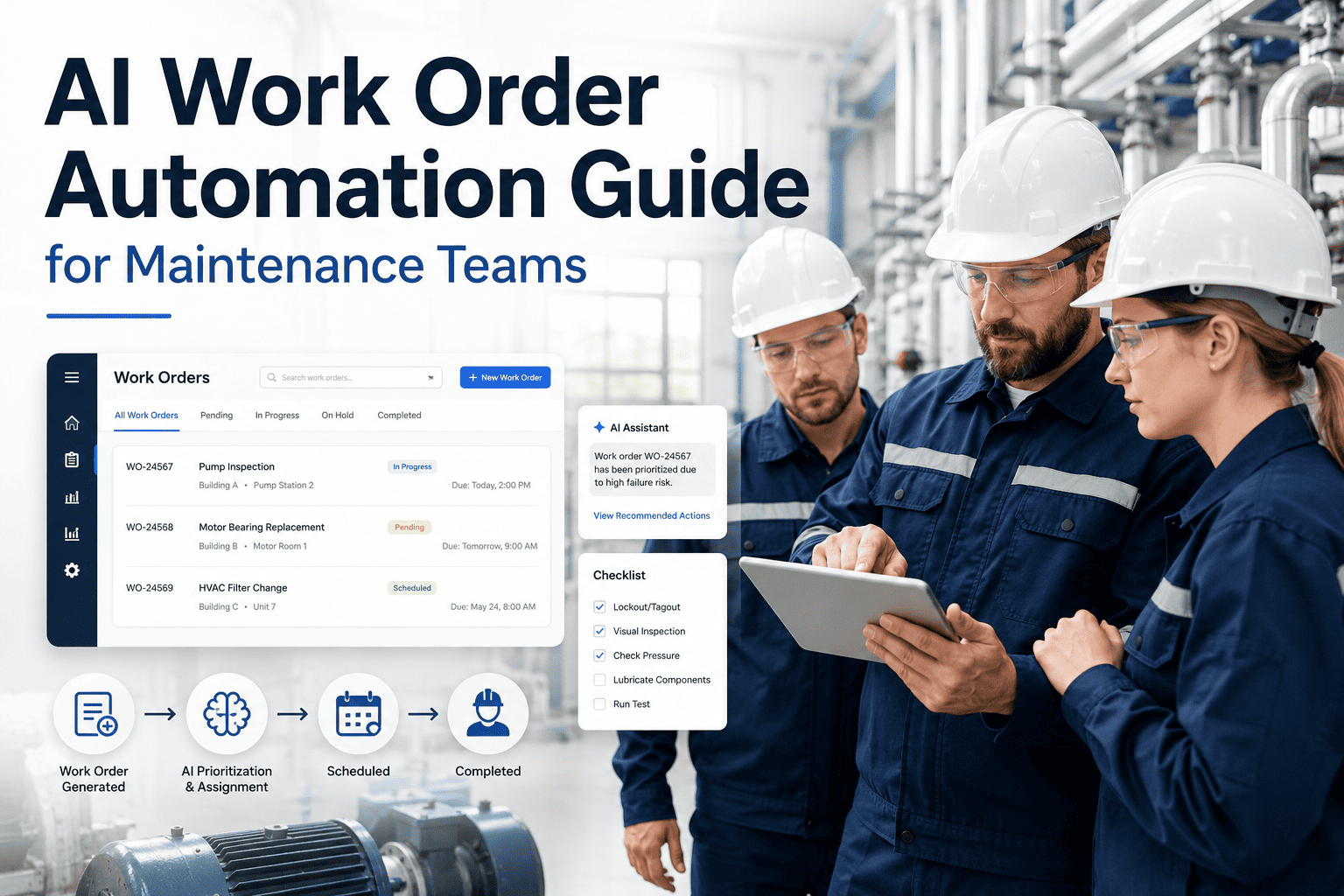
Maintenance teams that still route work orders through email, whiteboards, and radio calls are running a process designed for the 1980s on a plant floor that demands 2020s response times. The gap between work order...

Every hour of unplanned downtime in a manufacturing plant carries a cost that most plant managers know intuitively but struggle to quantify precisely for capital planning conversations. AI predictive maintenance...

A maintenance inspector photographs 847 welds across a chemical plant during a quarterly inspection cycle. Manual review takes 6 days. Fatigue causes a hairline stress-corrosion crack to be rated "acceptable" — it...

SAP Plant Maintenance is the financial and planning backbone of enterprise maintenance — but it was built for planners, not plant-floor technicians. Field teams avoid SAP's interface, planners spend 90 minutes a...

Most maintenance operations run on 4 to 6 disconnected software tools — a CMMS that does not talk to the ERP, IoT sensors that fire alerts no one acts on, and BI dashboards that exclude maintenance data entirely....

Most facility maintenance requests are reported the wrong way — a tenant calls the front desk, a building occupant sends an email, or a vendor leaves a voicemail. Each channel creates a different record format,...
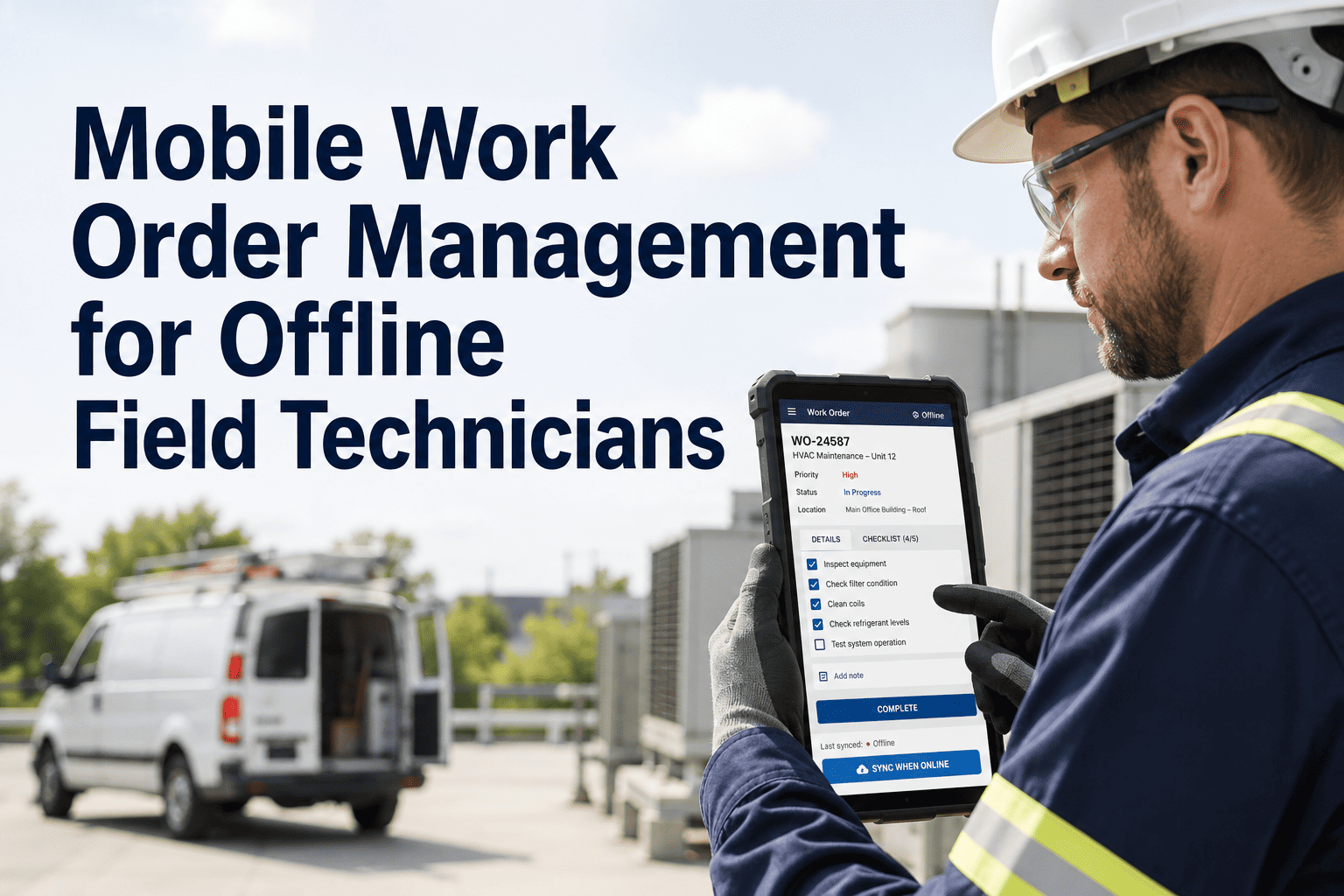
Field maintenance in remote substations, pipeline corridors, water treatment plants, and industrial facilities routinely happens in locations where cellular connectivity is unreliable or completely absent. A...

SCADA systems run the operational spine of utilities — monitoring grid equipment, water treatment processes, pipeline infrastructure, and generation assets in real time. They detect anomalies, log alarms, and give...
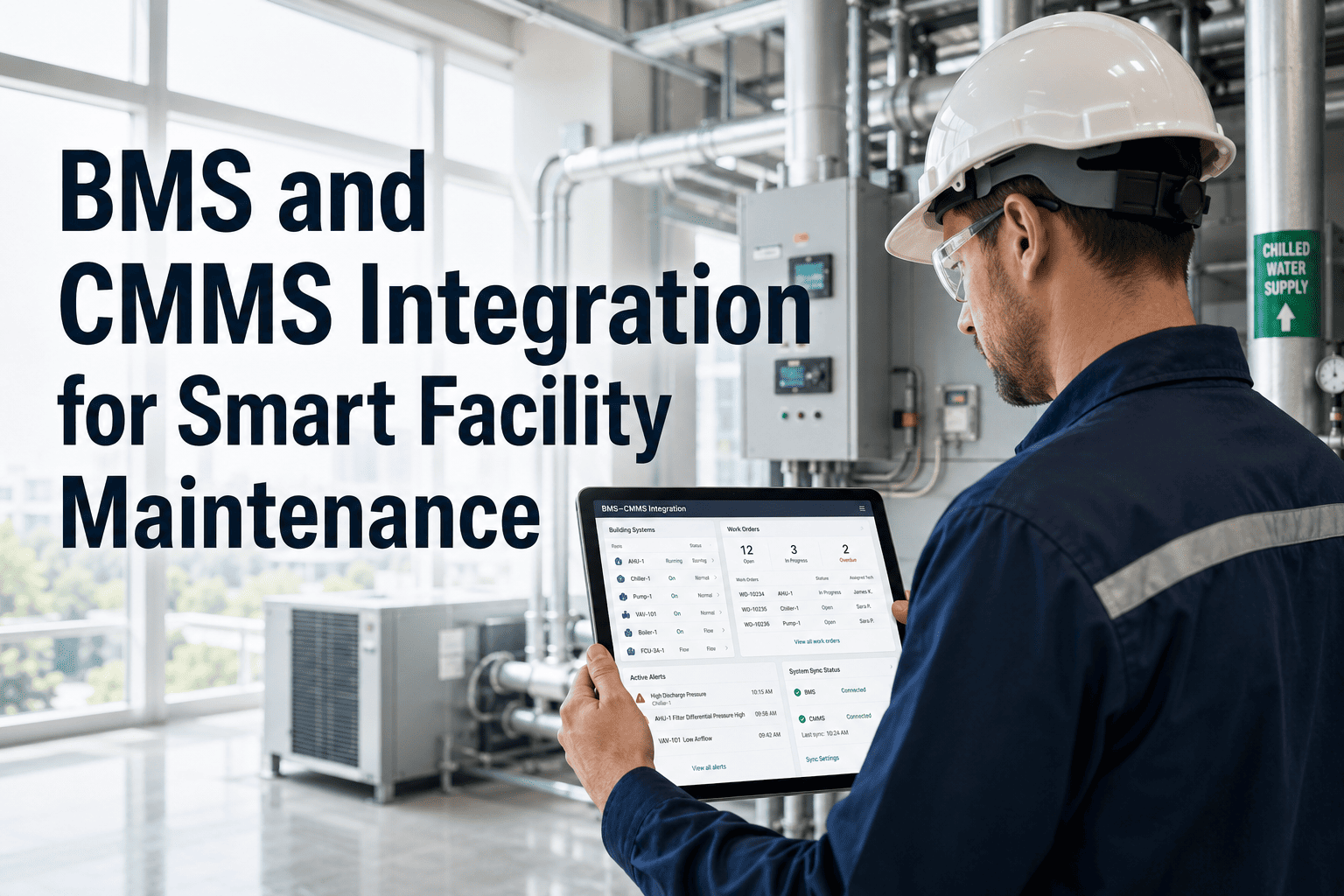
Building management systems monitor HVAC, lighting, access control, fire suppression, and energy meters across every zone of a facility. They generate thousands of alarms, alerts, and status changes every day. But...

IoT sensors generate continuous streams of equipment health data — vibration frequencies, bearing temperatures, motor current draw, pressure differentials, and runtime hours. But raw sensor data sitting in a...

Maintenance execution and financial control have always operated in separate worlds. Maintenance teams track work orders, parts usage, and equipment history inside a CMMS. Finance tracks costs, purchase orders, and...
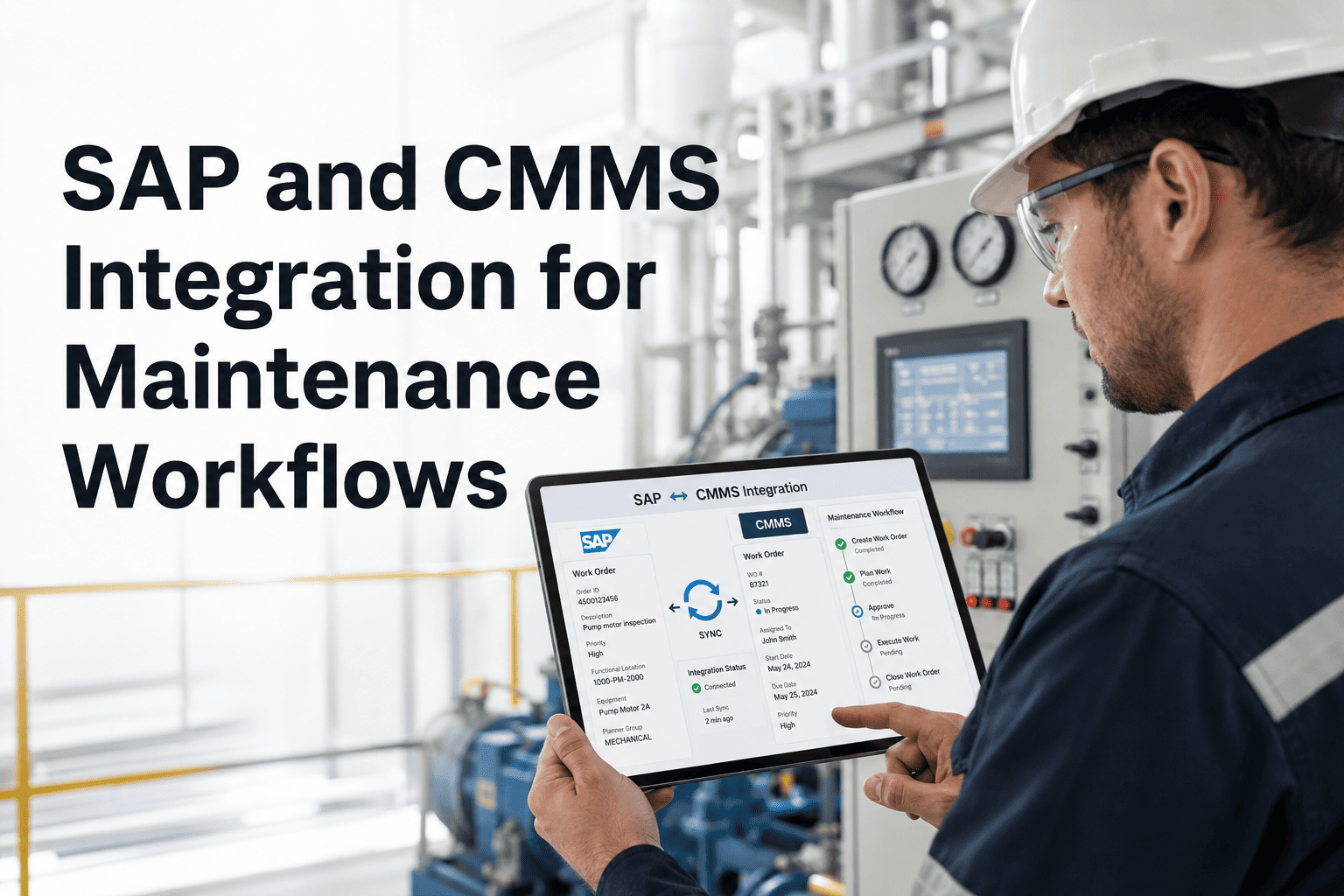
SAP runs the financial spine of most large industrial organizations — purchase orders, asset depreciation, cost center reporting, and vendor management all live there. But SAP was not built to manage the daily...

Most businesses run on data that never talks to itself — maintenance teams log work orders in one system, finance tracks parts spend in another, and IoT sensors fire alerts that no one connects to actual repair...

Data center maintenance teams are managing more assets, more interdependencies, and more regulatory scrutiny than at any previous point — while simultaneously being asked to do more with leaner staffing. Digital...

Retail facilities teams managing HVAC, refrigeration, lighting, and store fit-out maintenance across hundreds of locations face a persistent problem: maintenance costs that are visible in the CMMS but invisible to...

In a busy distribution warehouse, every hour of conveyor, forklift, or sortation system downtime directly translates to delayed shipments, SLA penalties, and overtime labor — costs that often go untracked because...

Energy companies operating wind farms, solar arrays, substations, and gas compression stations across dozens of geographic locations face a maintenance coordination problem that single-site CMMS tools simply...

In mining operations, the distance between a broken conveyor belt and the maintenance office can be measured in kilometers — and every minute of that delay compounds into tons of lost production. OxMaint's QR code...

Construction equipment failures don't send calendar invites. A hydraulic pump on an excavator can lose 30% efficiency over six weeks of micro-contamination before the machine dies mid-pour — and conventional PM...

Utilities teams managing water treatment plants, power distribution networks, and gas infrastructure face a common challenge: equipment failures that sensors saw coming but maintenance teams never acted on....
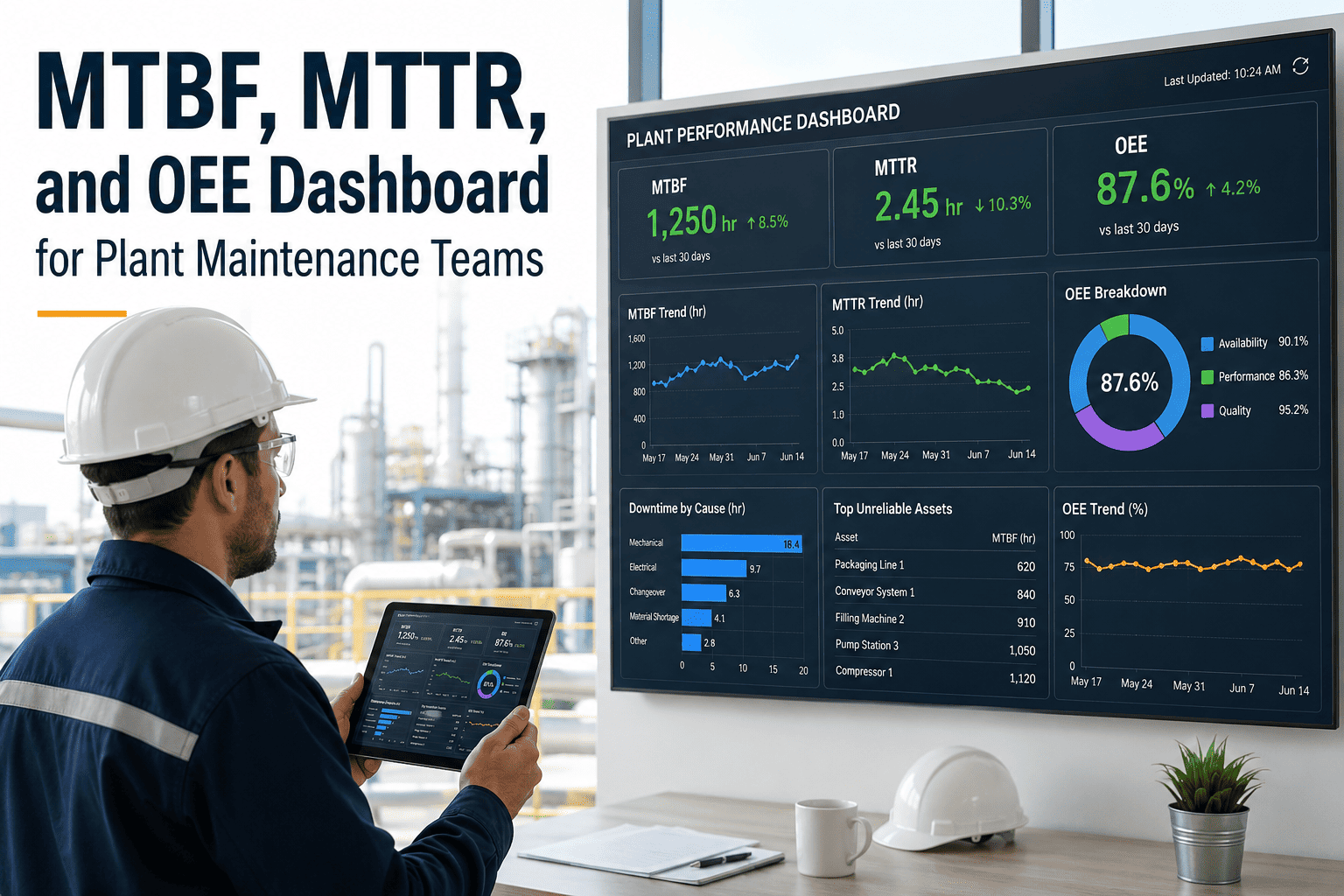
Plant maintenance teams live by three numbers: how long equipment runs before failing, how fast it gets back online, and how effectively it performs when running. MTBF, MTTR, and OEE are not abstract metrics—they...
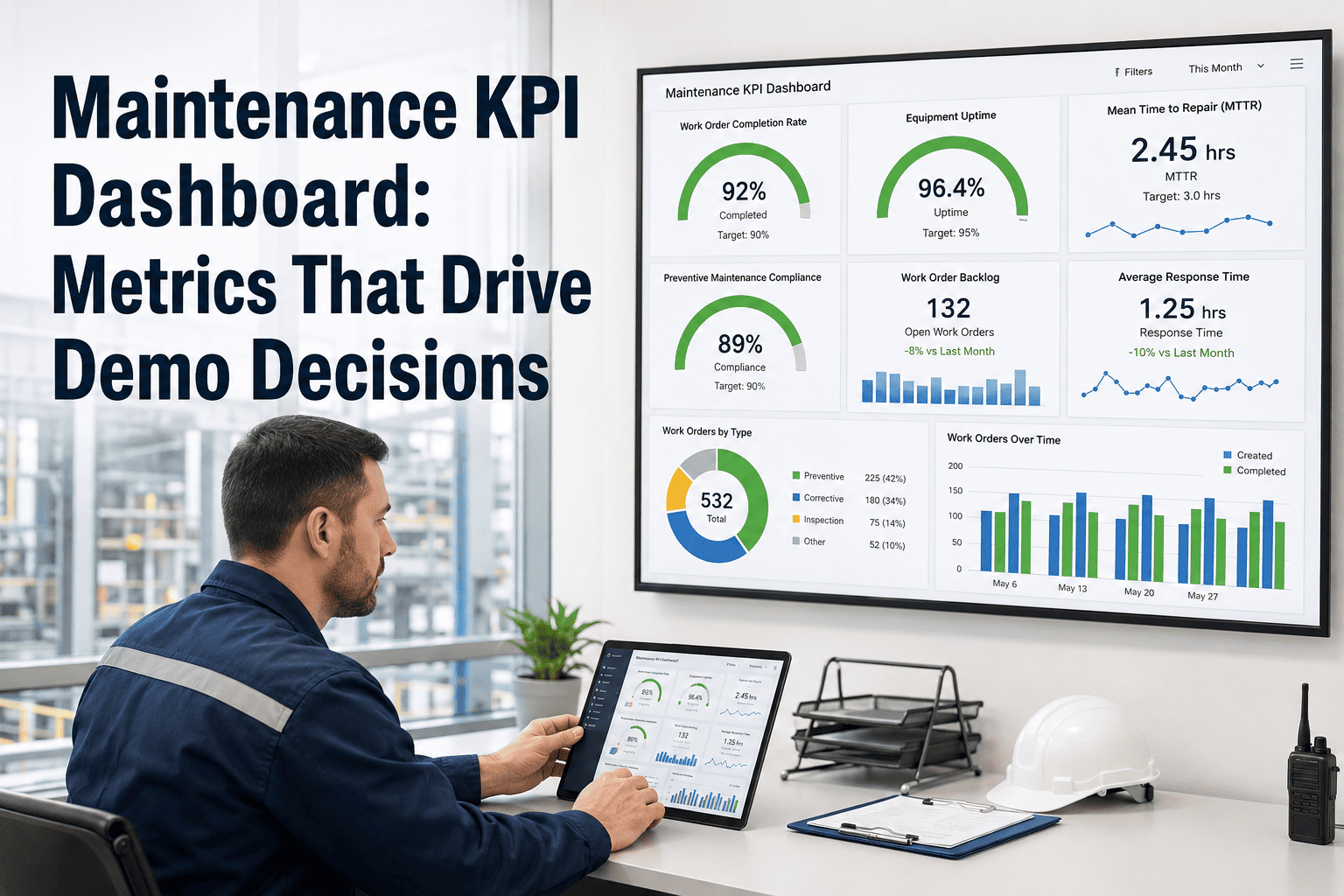
Most maintenance teams collect data. Few turn it into decisions. When work orders pile up without context, when equipment downtime is recorded but never analyzed, and when budgets are justified by gut feeling...

The skilled trades workforce is retiring faster than it is being replaced. In maintenance operations, this creates a specific and urgent problem: the institutional knowledge that experienced technicians carry in...
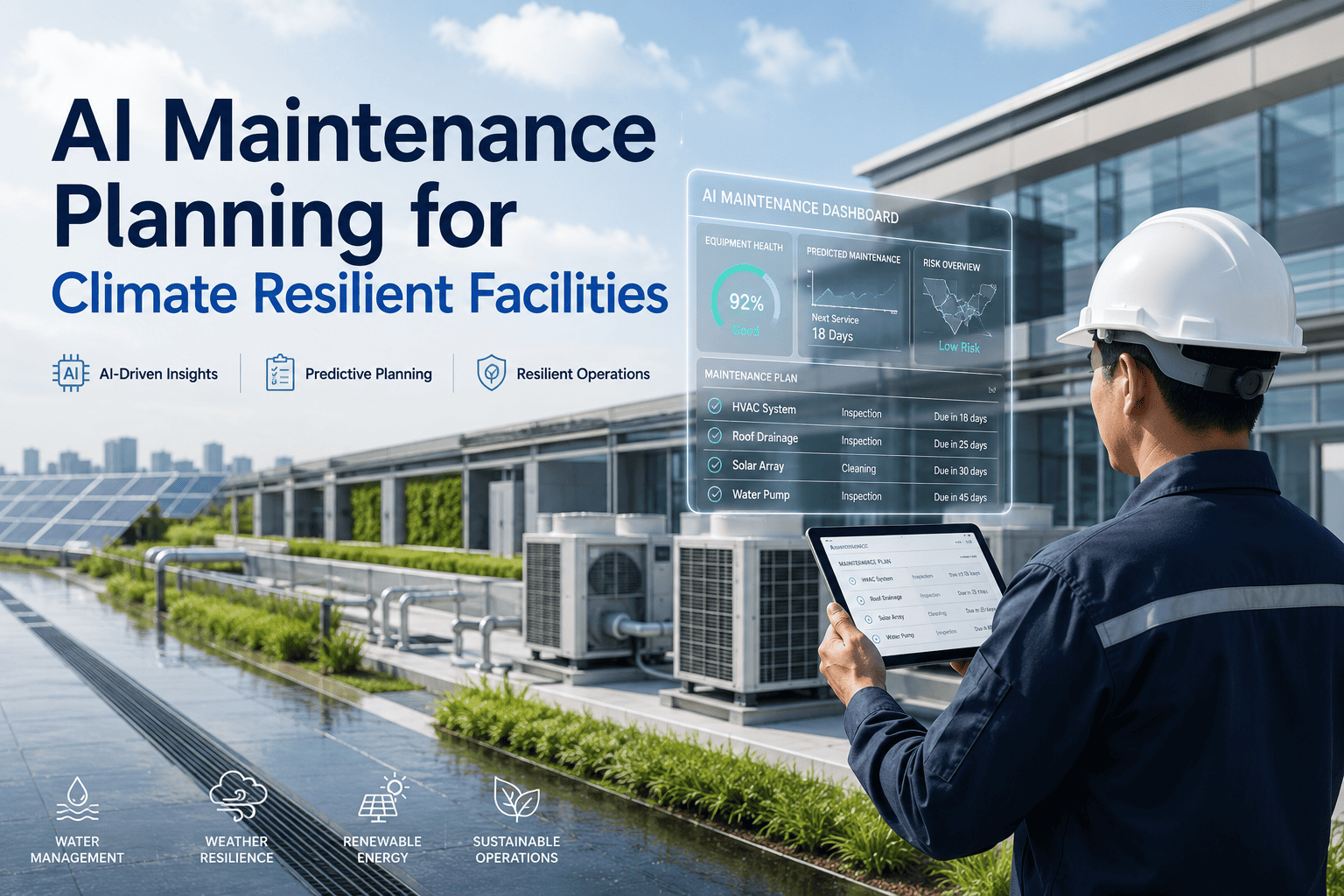
Extreme weather events are no longer exceptional — they are recurring operational realities that facilities teams must plan around. Facilities that were designed for historical climate norms are now exposed to heat...
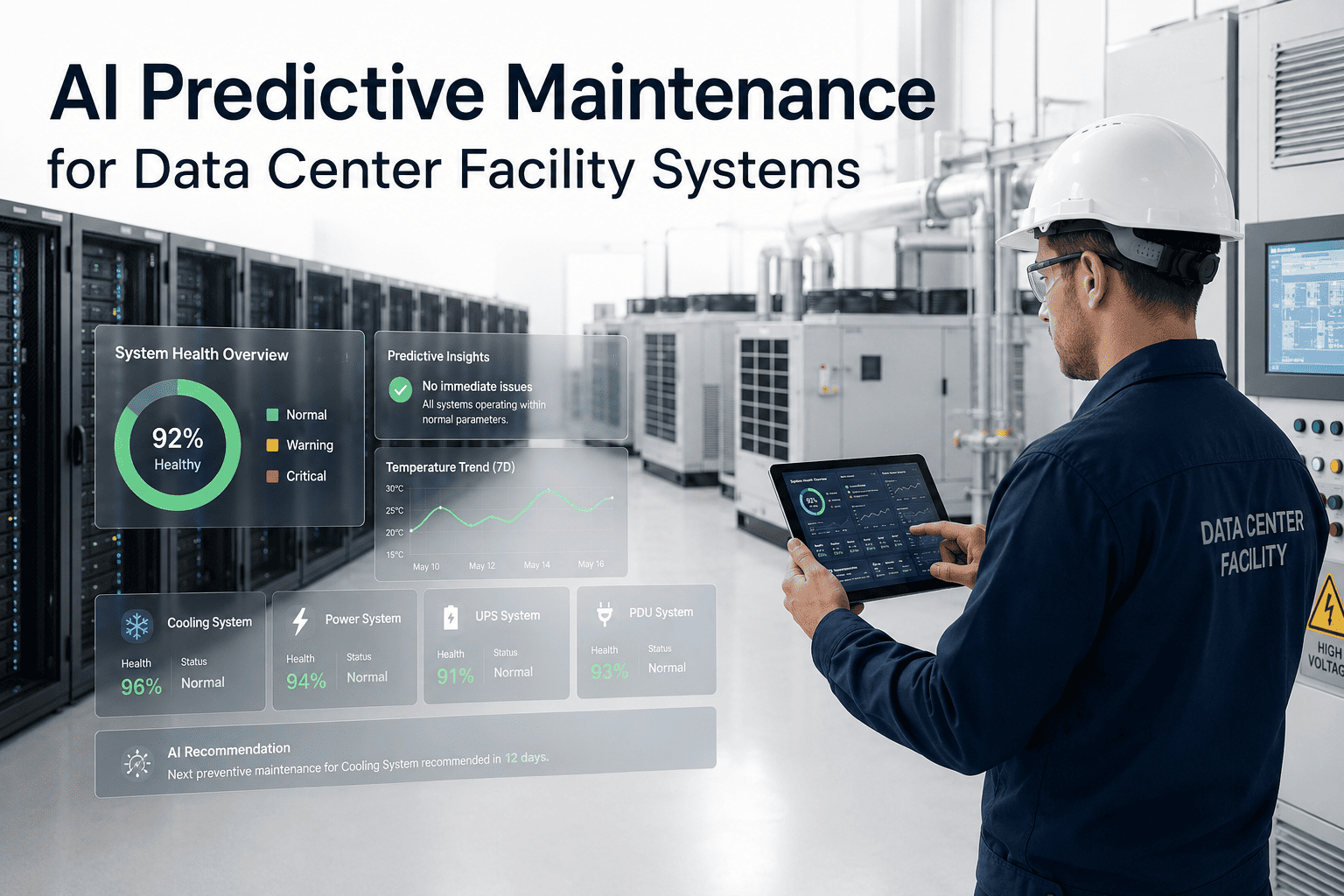
Data centers operate under a single, non-negotiable requirement: uptime. Cooling infrastructure, power delivery systems, and fire suppression equipment are not support functions — they are the direct enablers of...

In pharmaceutical manufacturing, a single utility failure during an active batch can render weeks of production unrecoverable. Cleanroom HVAC, purified water systems, compressed air networks, and HVAC...

Hospital HVAC and power systems are not ordinary infrastructure — they directly sustain patient safety, surgical sterility, and life-support continuity. When a chiller fails during peak summer load or a UPS trips...

A stopped food processing line doesn't just cost production time — it triggers a chain of losses that compounds by the hour. Product in transit spoils. Packaging lines back up. Cold chain integrity breaks down....

Multi-site operations face a maintenance blind spot that single-facility teams rarely encounter: assets fail silently across locations while your team has no visibility until a technician physically arrives — or a...

Every maintenance technician takes photos in the field — of damage, of readings, of failed components, of installed parts. Most of those photos end up as attachments in a work order with no structured data, no...

Most preventive maintenance programs have two expensive failure modes — over-maintaining equipment that doesn't need it yet, and under-maintaining assets that are approaching failure. Both modes waste money, but...

Production leaders make throughput decisions every shift — and most of them are made without visibility into which assets are one failure away from a line stoppage. When maintenance risk lives in a separate system...
Pumps, motors, and compressors rarely fail without warning — but those warnings are easy to miss when your team only checks equipment on a scheduled interval or when something breaks. OxMaint's condition monitoring...

Maintenance teams generate more data than most executives ever see — and most of what gets reported upward is too late, too vague, or too disconnected from production impact to drive real decisions. OxMaint turns...

Repeat failures are the most expensive problem in maintenance — not because individual repairs cost more, but because the same asset breaks down again and again, consuming labor, parts, and production time while...
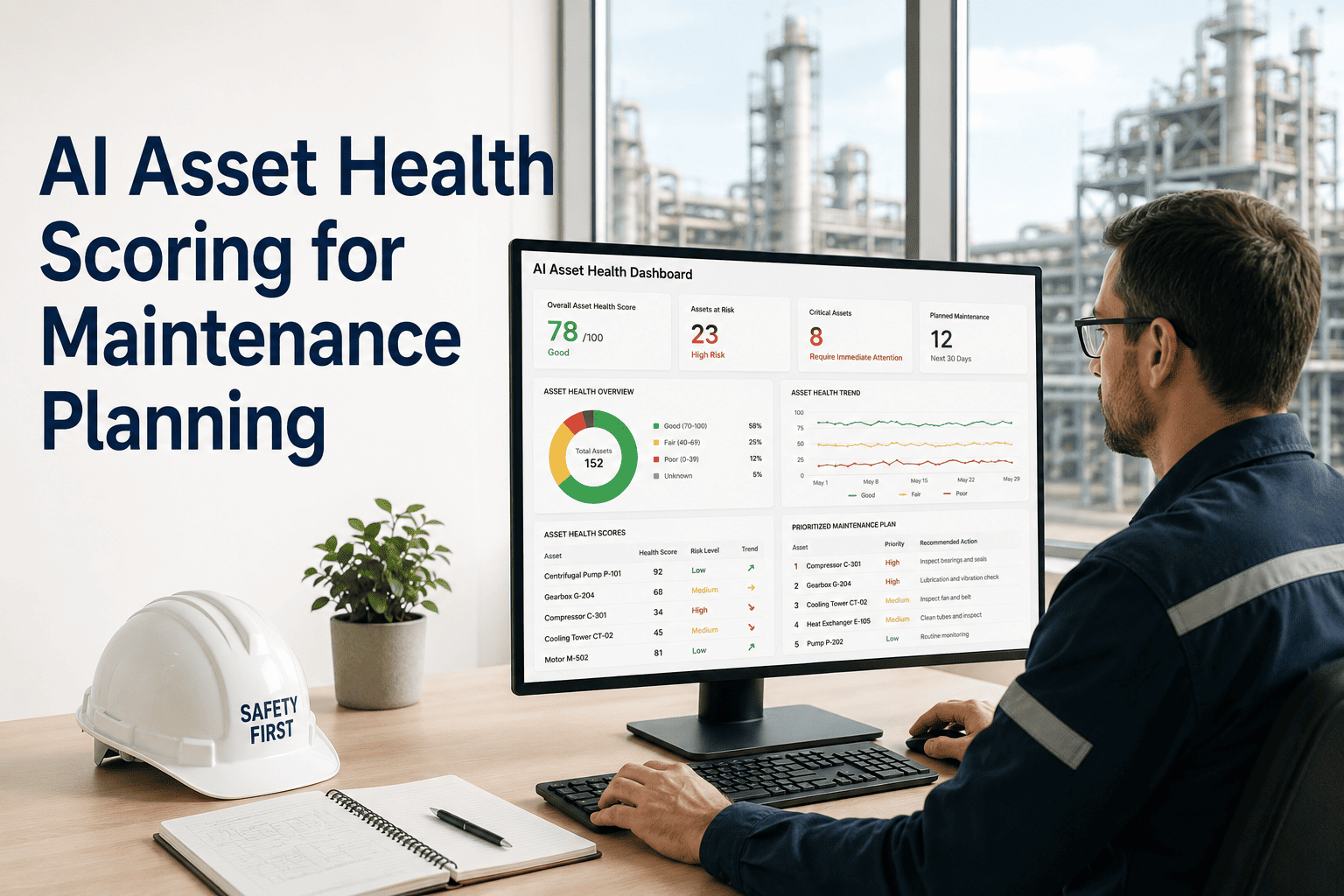
Maintenance planning without asset health data is guesswork. Teams that rely on fixed-interval PM schedules spend money maintaining assets that don't need it while missing early degradation signals on assets that...

Maintenance teams are shrinking. The U.S. Bureau of Labor Statistics reports a 25% projected shortfall in skilled maintenance technicians by 2028, and most facilities are already operating with 15–20% fewer...

The average maintenance department carries a work order backlog equivalent to 3–6 weeks of labor capacity. Without a data-driven prioritization system, critical repairs get buried under routine requests while...

The average maintenance technician spends 28% of their shift hunting for information — digging through paper manuals, calling supervisors, or waiting for engineering input before they can diagnose a fault....
OxMaint helps maintenance teams prevent catastrophic breakdowns on critical equipment before they happen. Across industries, unplanned downtime costs manufacturers an average of $260,000 per hour — yet 82% of...
Manufacturing production lines operate on a single, unforgiving rule: every unplanned stop costs money. A stalled assembly line at a tier-1 auto supplier costs an average of $1.3 million per hour when downstream...

Hospital equipment failure is not a maintenance inconvenience — it is a patient safety event. When a ventilator malfunctions during a critical care procedure, when a sterilizer fails during a high-volume surgical...
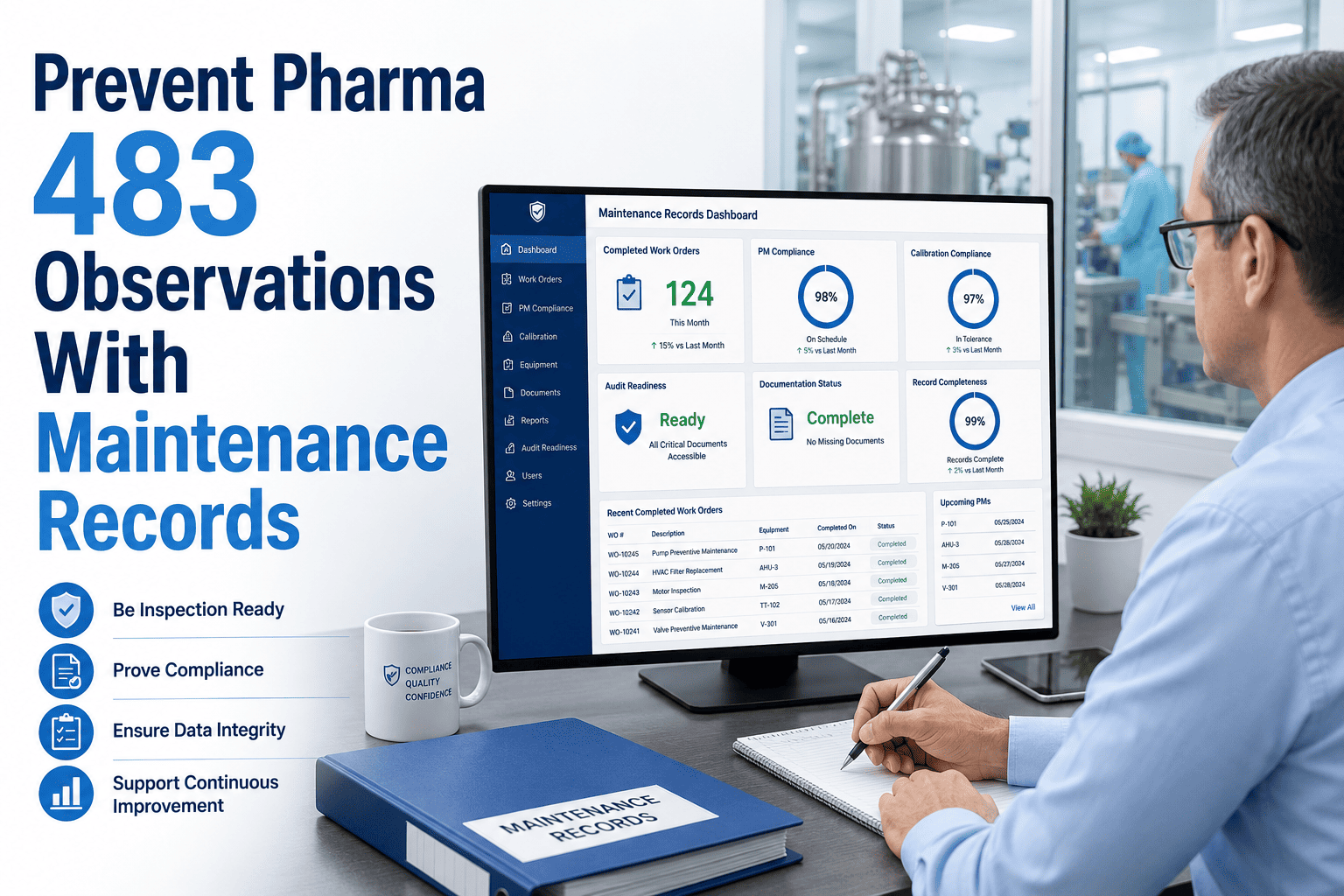
A Form 483 observation related to maintenance records can halt a product line, trigger a warning letter, and launch a consent decree process that takes years and tens of millions of dollars to resolve. The root...
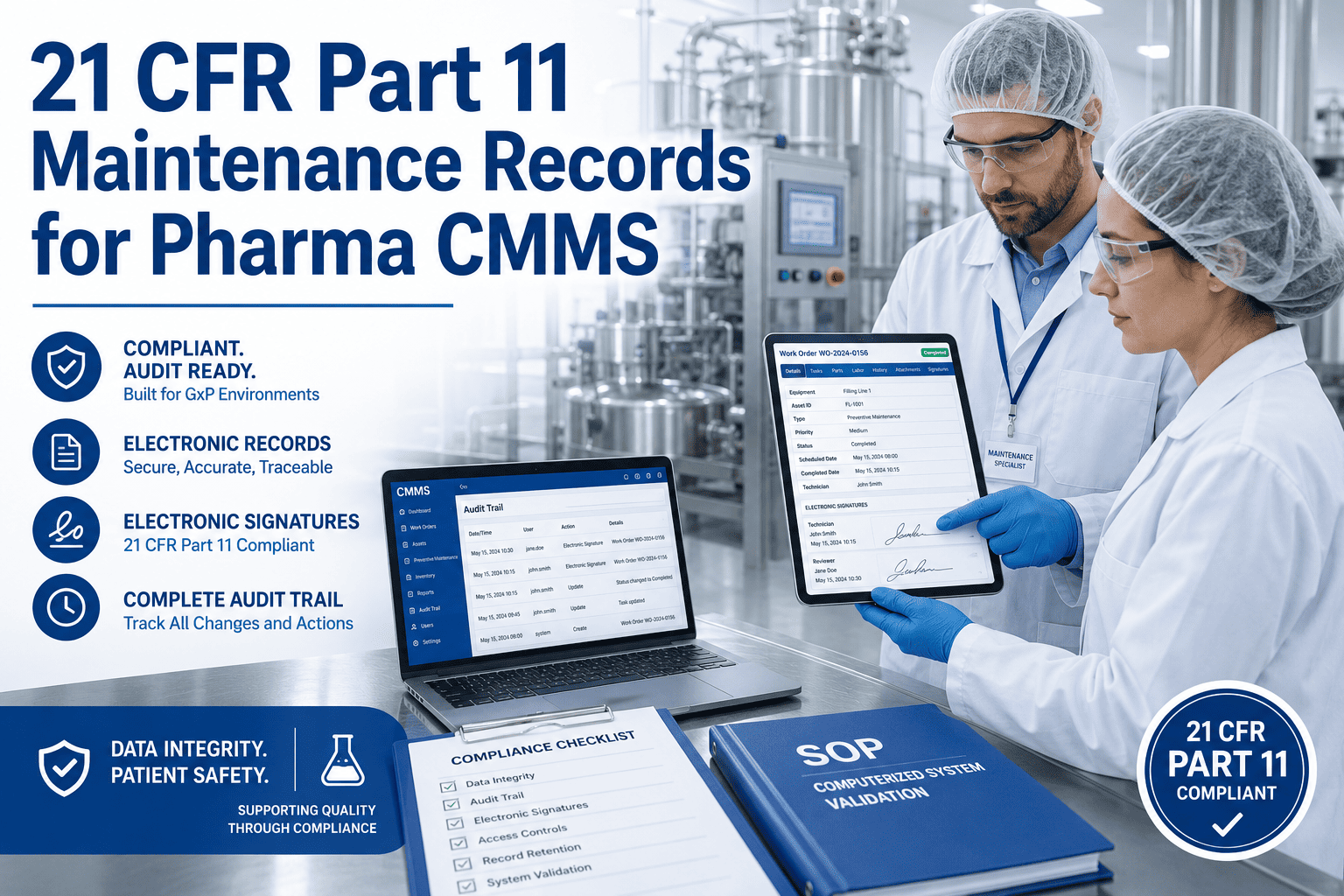
21 CFR Part 11 compliance is not optional for pharmaceutical manufacturers using electronic systems to create, modify, maintain, or transmit maintenance records. Every work order, calibration log, and inspection...

Every minute a technician spends searching for an asset's history, locating the right work order, or waiting for someone to pull equipment records is a minute of maintenance capacity wasted. OxMaint's QR code asset...
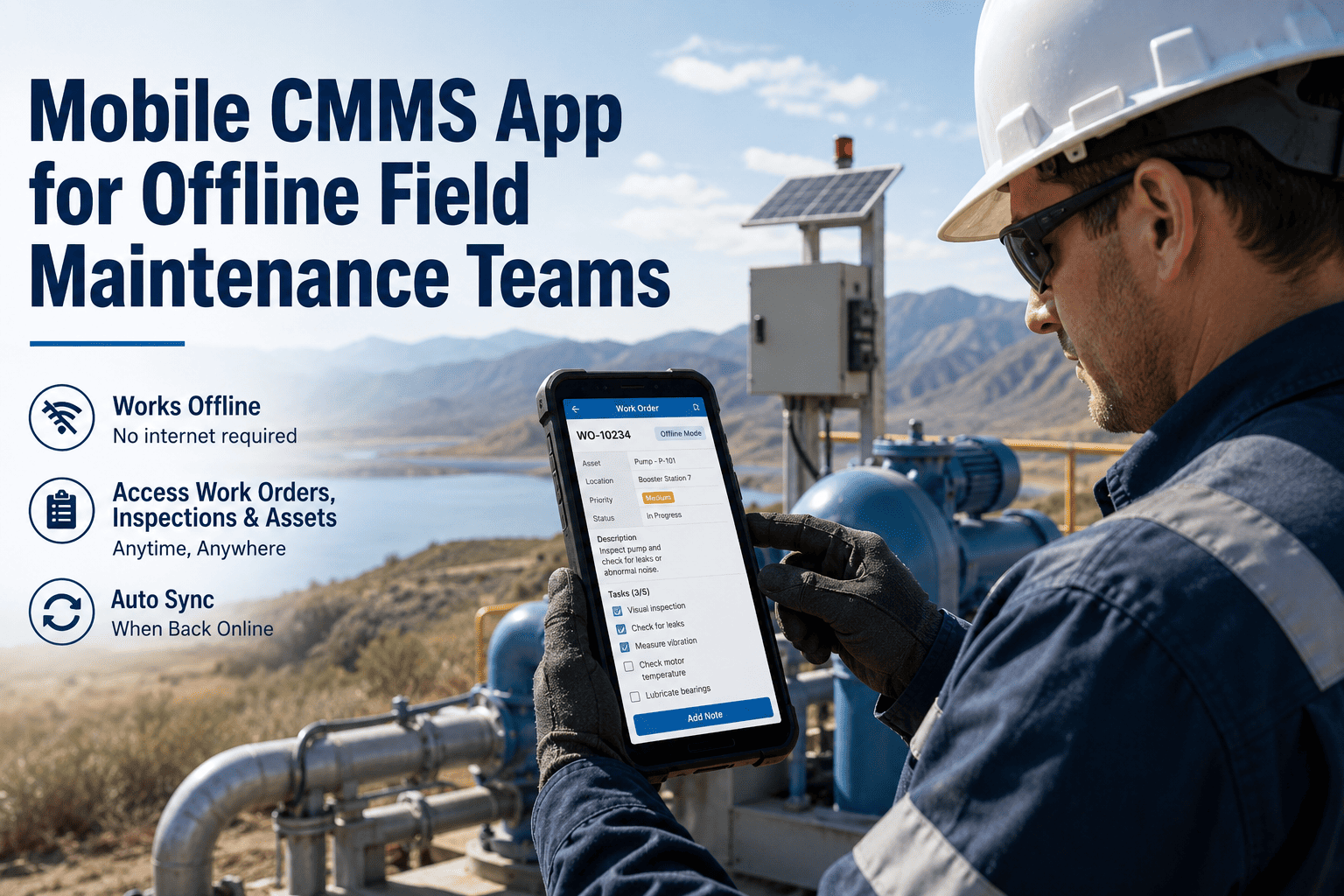
Field technicians spend only 25–35% of their shift on actual wrench-time maintenance. The rest gets consumed by paperwork, walking back to a desktop to log work orders, and searching for asset history —...
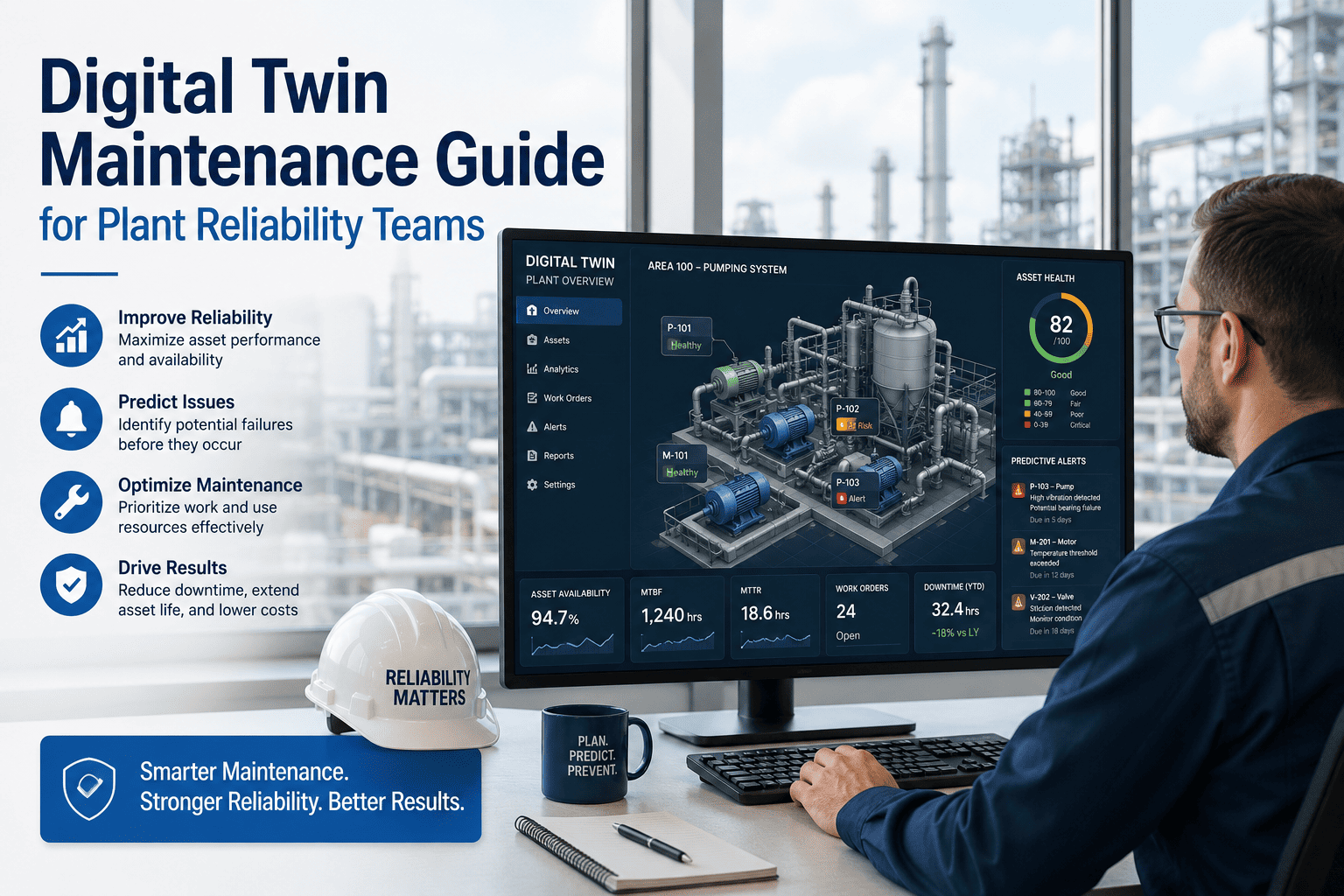
Plant reliability teams face a critical challenge: predicting equipment failures before they happen. Traditional time-based maintenance schedules leave plants reacting to breakdowns rather than preventing them....
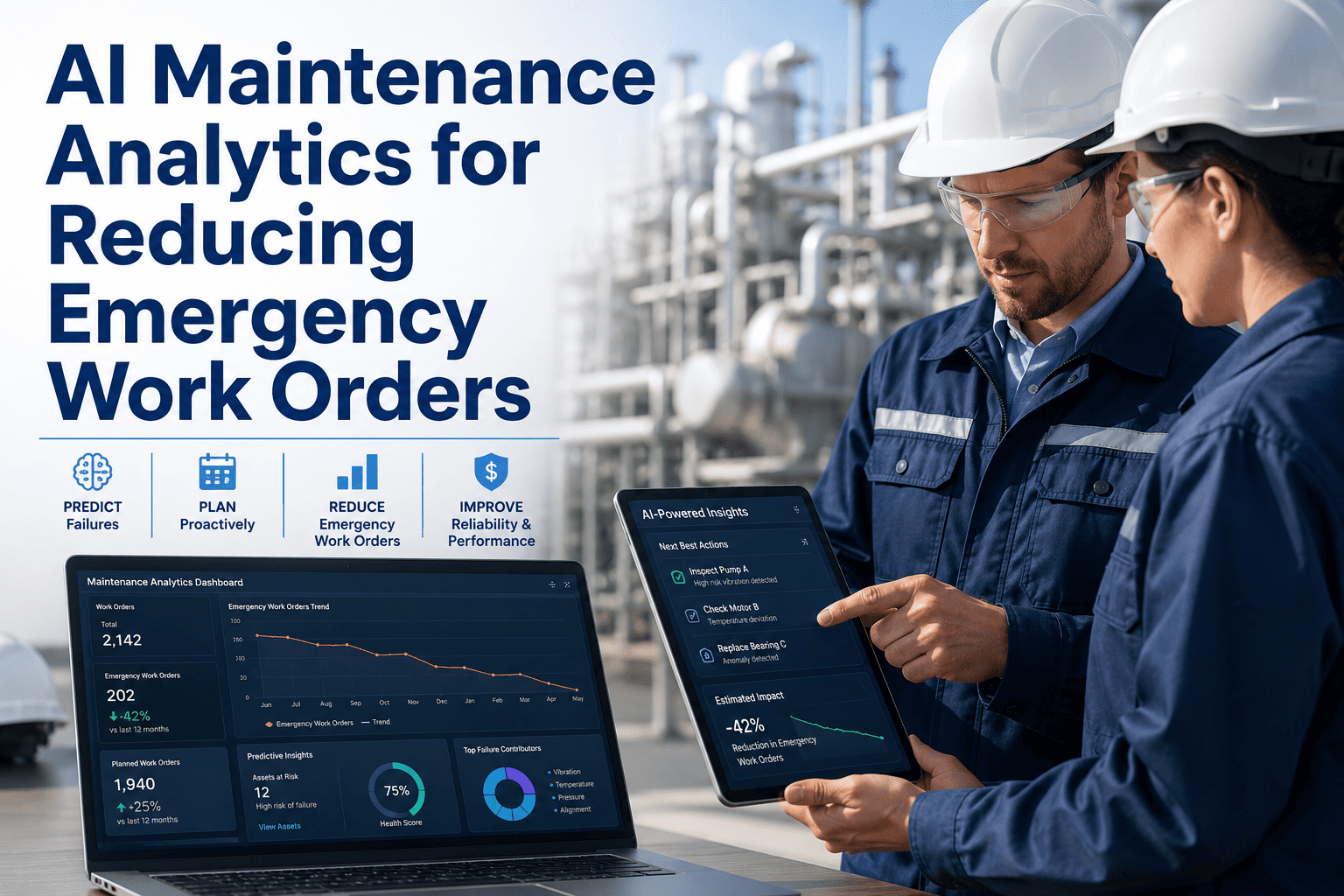
Emergency work orders are the most expensive, disruptive, and preventable category of maintenance activity — yet most facilities still operate with emergency WO rates above 30%, simply because no one is analyzing...
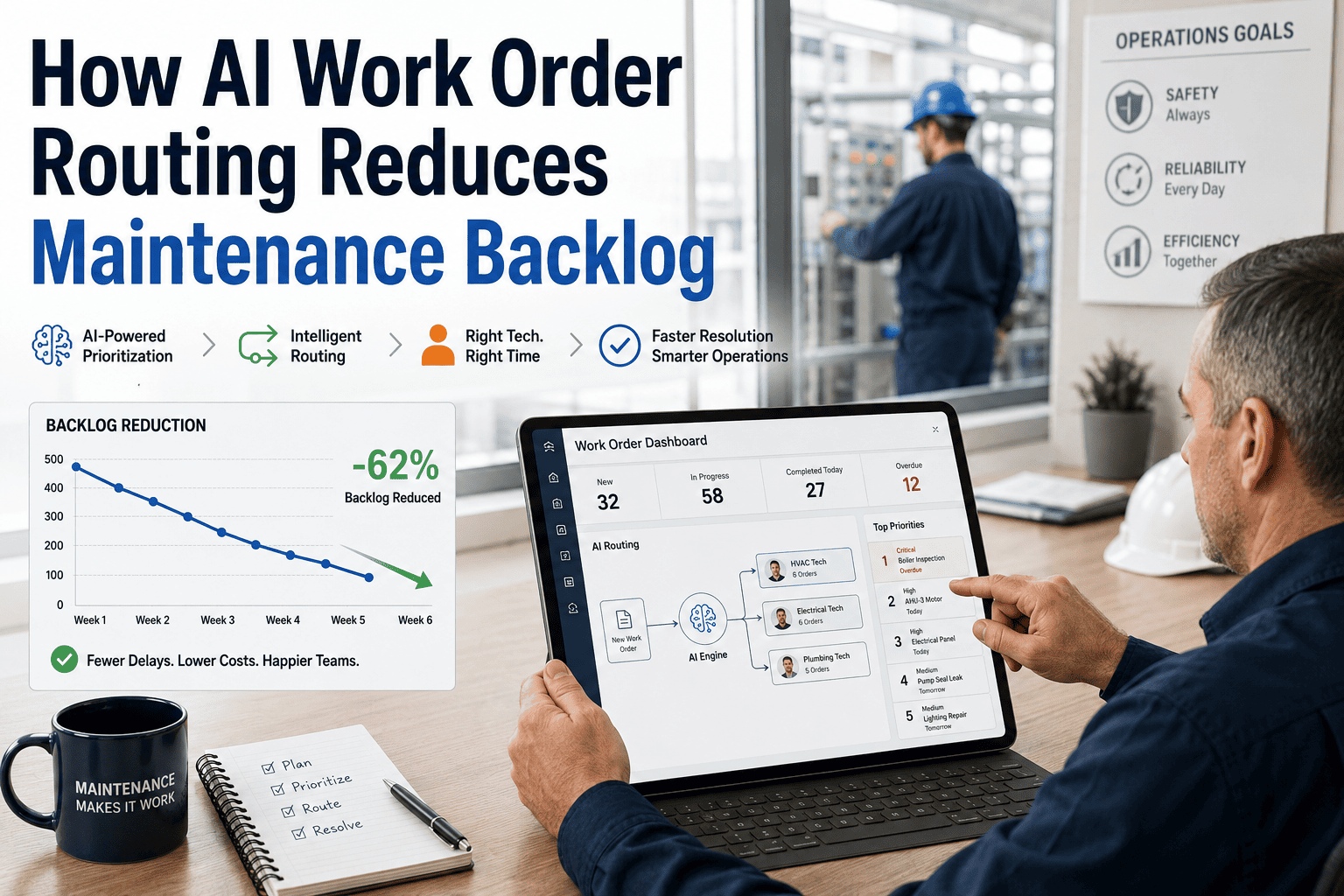
Maintenance backlog is rarely a technician problem — it's an assignment problem. Work orders sit in queues waiting for the right person, the right parts, or someone to notice they've been sitting there for three...
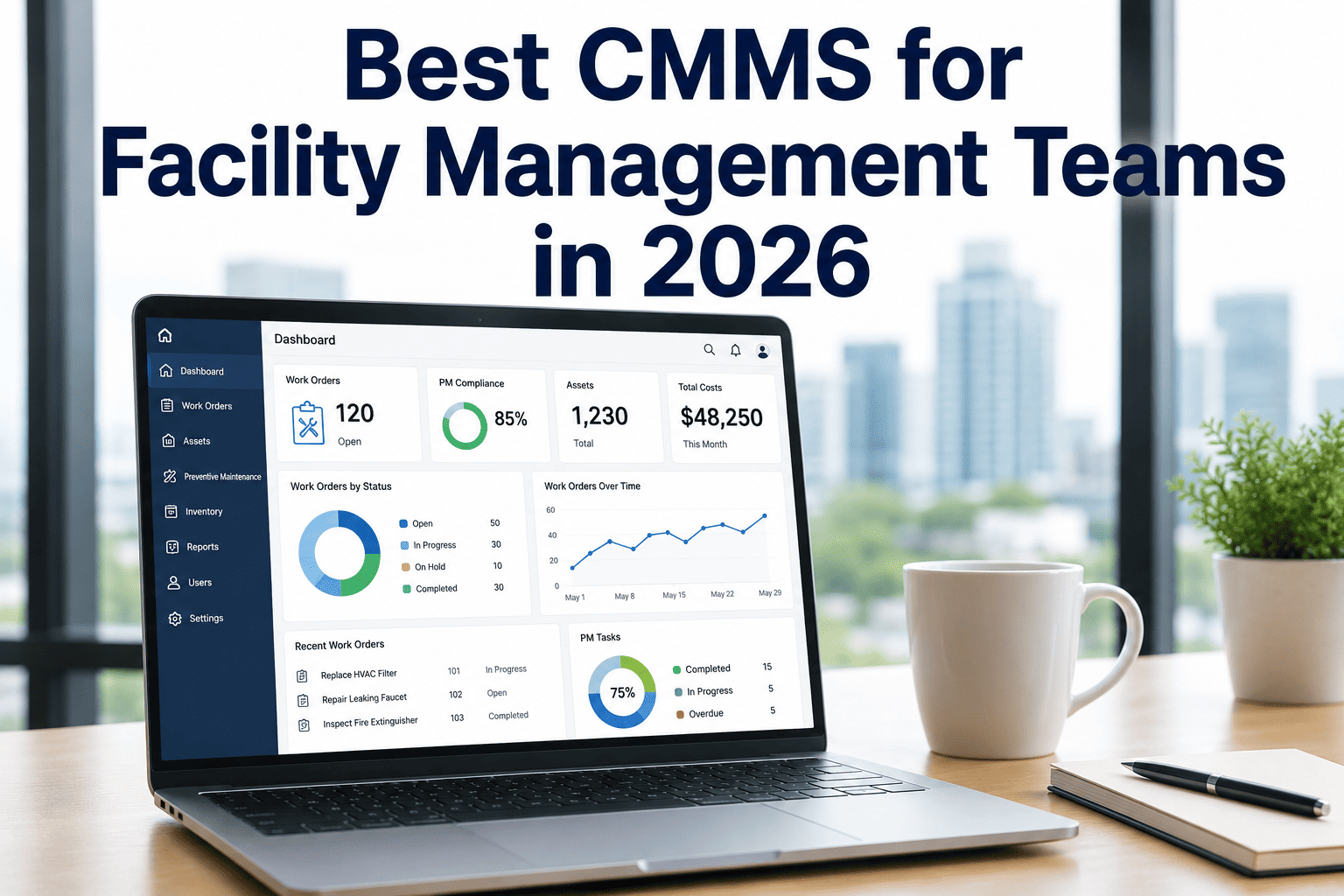
Facility management software has changed more in the last three years than in the previous decade. The CMMS tools that won enterprise contracts in 2020 weren't built for mobile-first technicians, multi-site asset...
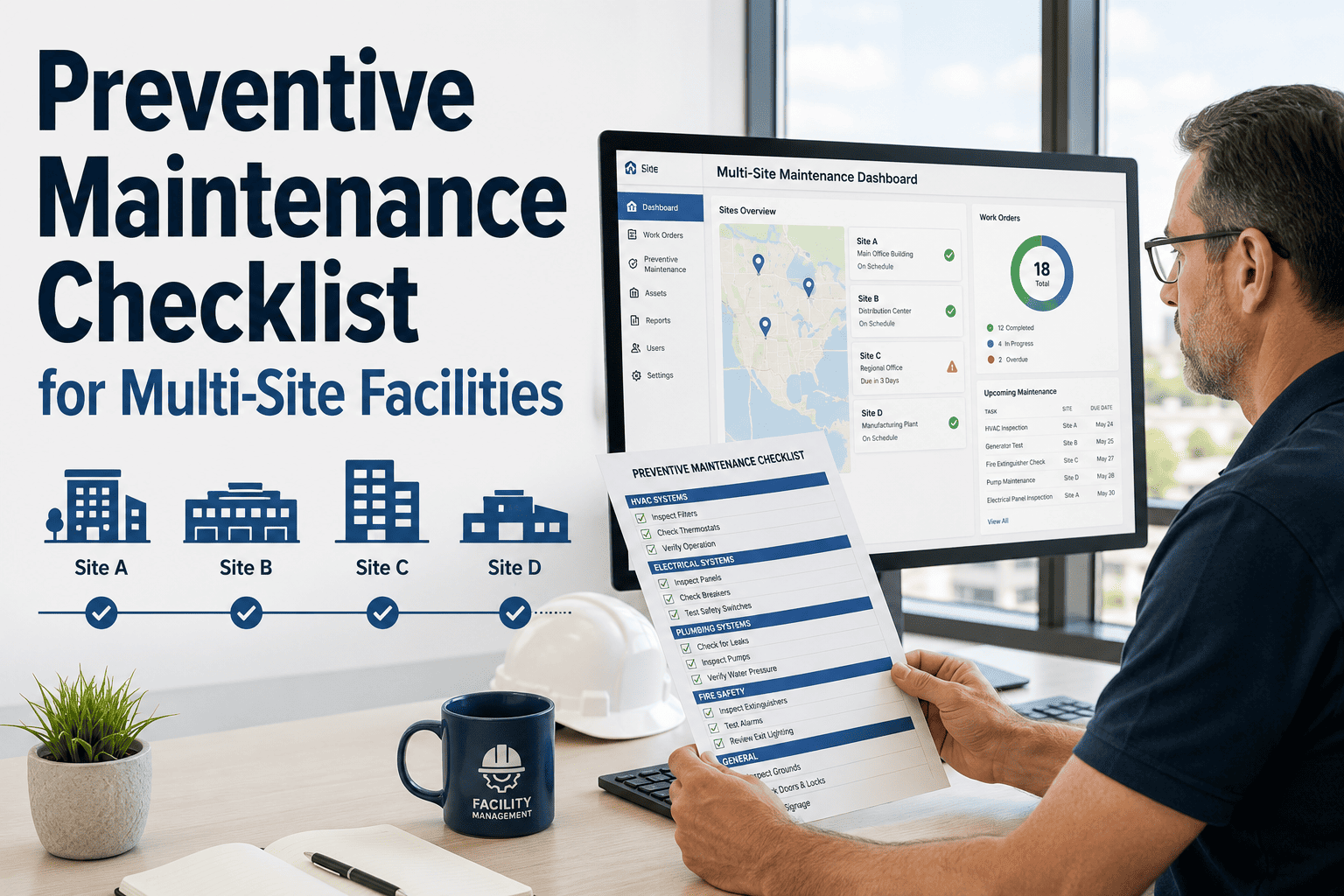
Facilities teams managing multiple buildings face a silent risk: maintenance tasks completed at one site are invisible to teams at another, checklists vary by location, and there's no unified record when an auditor...

Maintenance teams using disconnected systems lose an average of 4.5 hours per technician per week to manual data entry, duplicate record-keeping, and chasing down information that should already be in one place....

Every plant manager knows the feeling — a machine fails, production stops, and no one can explain why it wasn't caught earlier. OxMaint's maintenance KPI dashboard gives you real-time visibility into MTBF, MTTR,...

Critical manufacturing assets — the motors, compressors, pumps, presses, and conveyors that production depends on — fail in predictable patterns that traditional scheduled maintenance cannot detect. AI predictive...

FDA investigators review maintenance records to assess whether pharmaceutical manufacturers control equipment that could affect product quality, safety, and efficacy — and documentation gaps are one of the most...
Choosing the right CMMS in 2026 means more than picking software — it means deciding how your maintenance team will operate for the next several years. OxMaint, MaintainX, and UpKeep are three of the most actively...
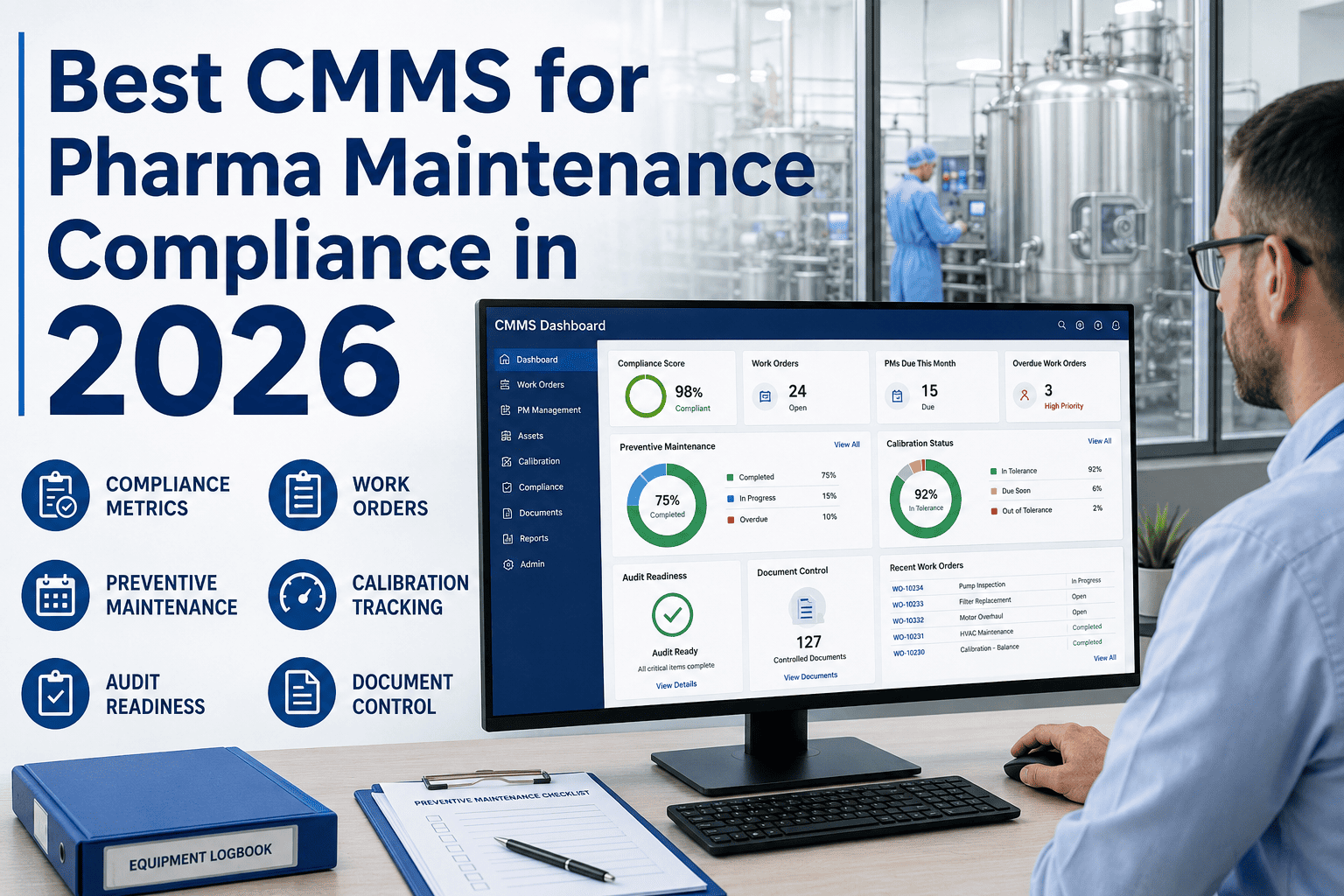
Pharmaceutical manufacturers face a uniquely unforgiving maintenance environment — where a missed calibration record, an undocumented corrective action, or a gap in equipment qualification history can trigger an...

AI-powered CMMS platforms are transforming how manufacturing teams manage maintenance in 2026 — reducing unplanned downtime by up to 47%, automating work order routing, and predicting equipment failures weeks...
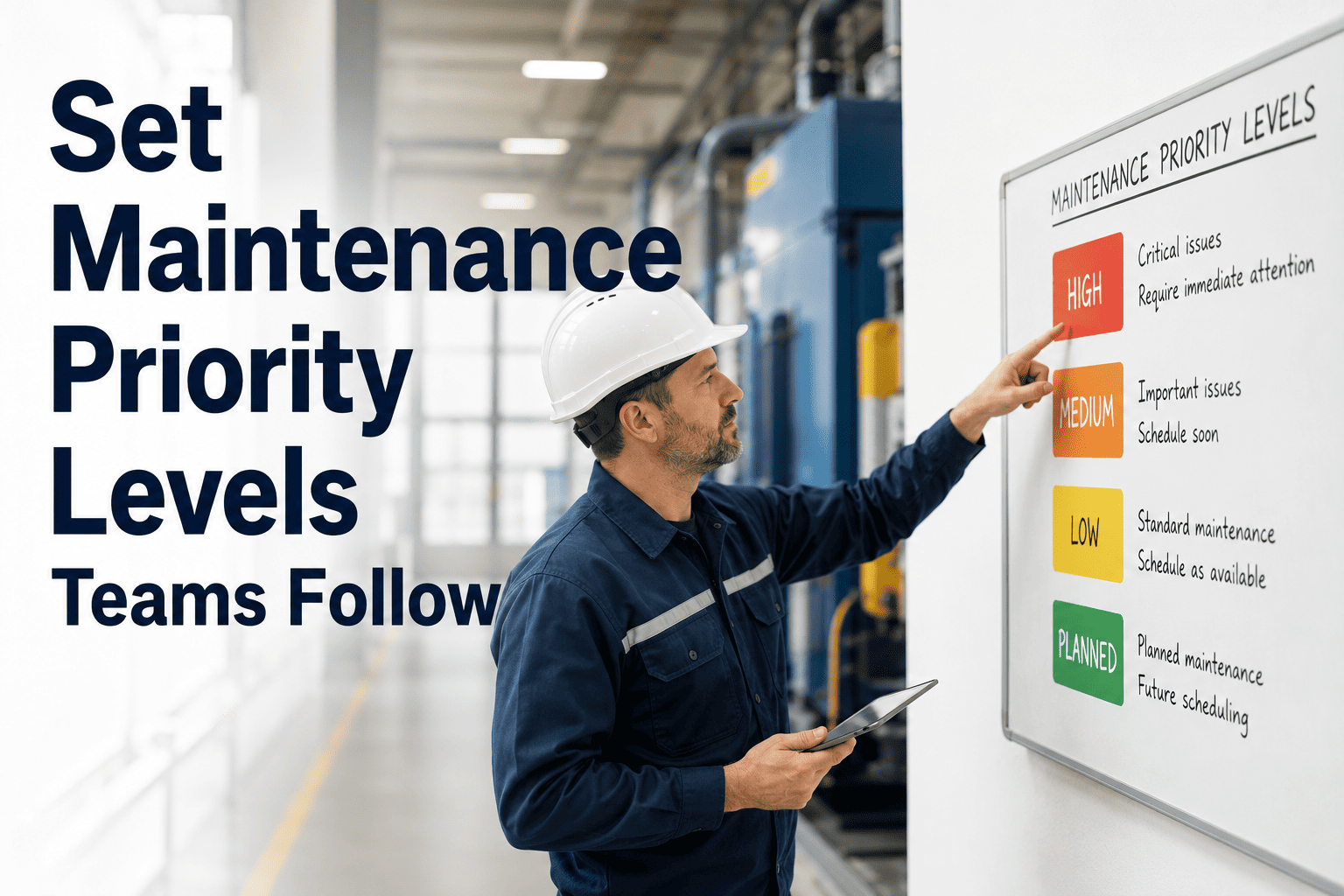
Maintenance teams don't fail because they lack effort — they fail because everything feels urgent at the same time. Without a structured priority framework, the loudest complaint gets the fastest response, critical...
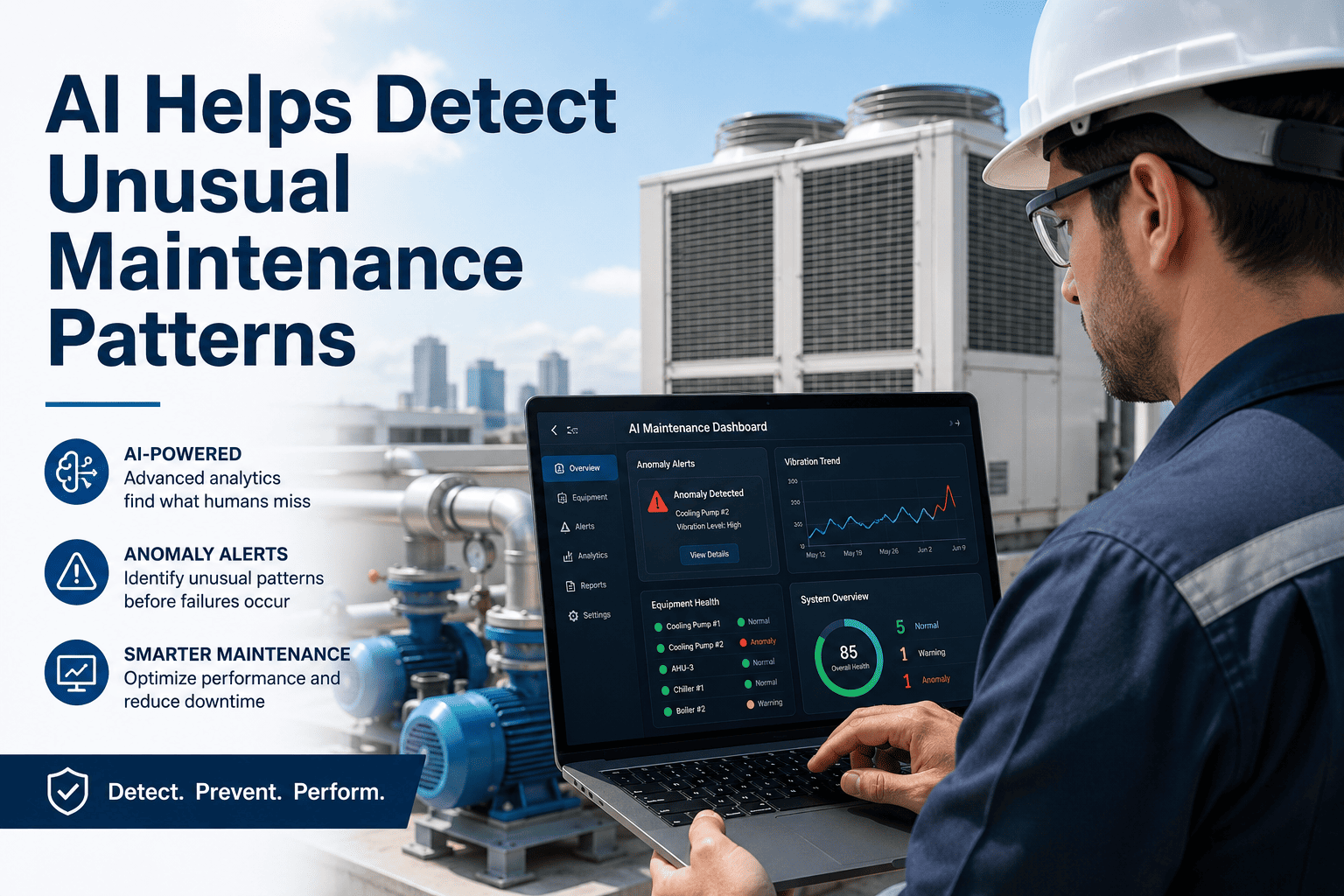
A maintenance manager overseeing 800 assets across two shifts cannot personally spot that a specific pump type has been failing every 47 days, or that emergency work orders on Line 4 always spike after the night...
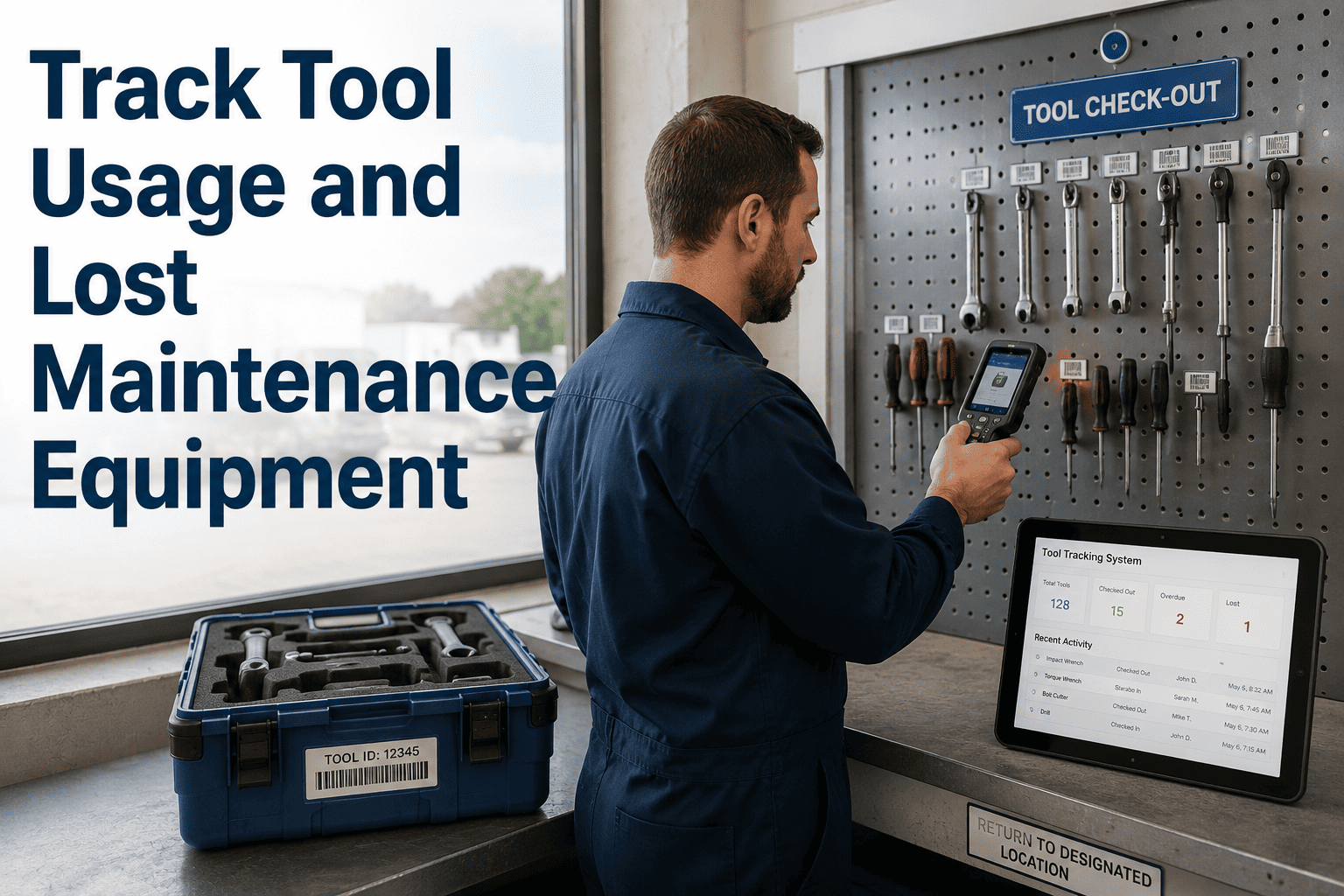
Maintenance teams lose thousands of dollars every year not to equipment failure, but to missing wrenches, untracked specialty tools, and checkout logs that live on paper clipboards. When a technician spends 20...
After-hours maintenance calls are rarely random — they concentrate on a small number of high-risk assets, follow predictable patterns, and are almost always preceded by warning signs that were present during...

Most maintenance monthly meetings are driven by whoever prepared the slides, not by the data. When the review is built on manually compiled reports, the team spends the first 20 minutes debating whether the numbers...

A technician who arrives without the right part doesn't fix anything — they just rearrange the timeline of the failure. First-time fix rate (FTFR) is the single clearest measure of how well a maintenance team...

A technician forty feet up a compressor rack with both hands occupied cannot type a work order update. Voice notes solve this — but only when they are transcribed, summarized, and searchable inside the work order...

Operators see equipment problems hours before maintenance hears about them — but by the time a complaint travels from the shop floor to a work order, critical detail is lost. "Machine is making a noise" is not a...
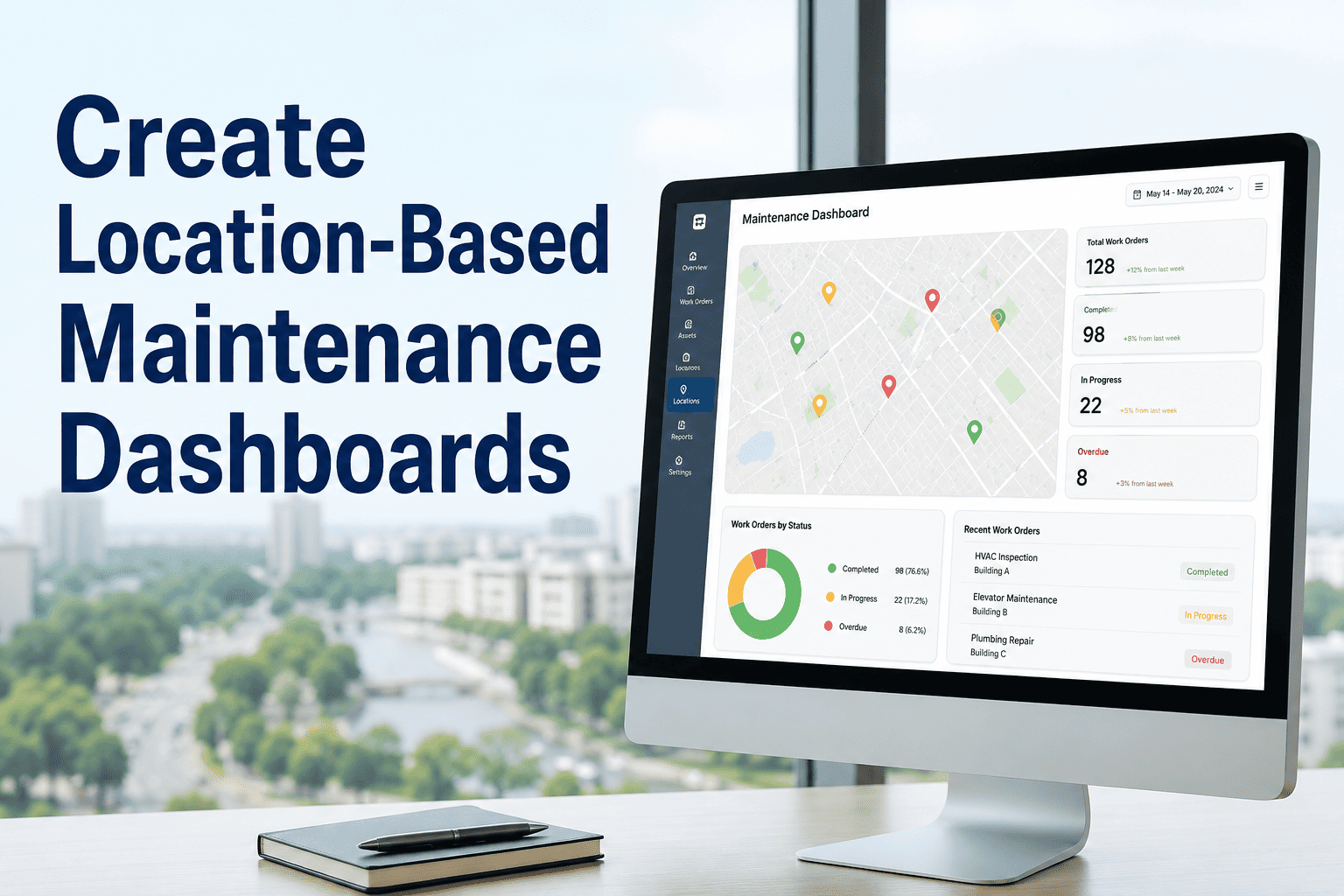
Maintenance teams at multi-site facilities waste an average of 4.2 hours per week manually compiling location-based data from scattered spreadsheets and disconnected systems. A well-structured location-based...

A paper checklist for safety-critical equipment isn't a compliance record — it's a liability. It can be pre-signed, backdated, or lost. OxMaint's digital inspection management module replaces paper with enforced...

Peak production weeks are when maintenance teams get tested hardest — and when failures cost the most. A single unexpected breakdown during a high-output run can wipe out weeks of margin in hours. OxMaint's...
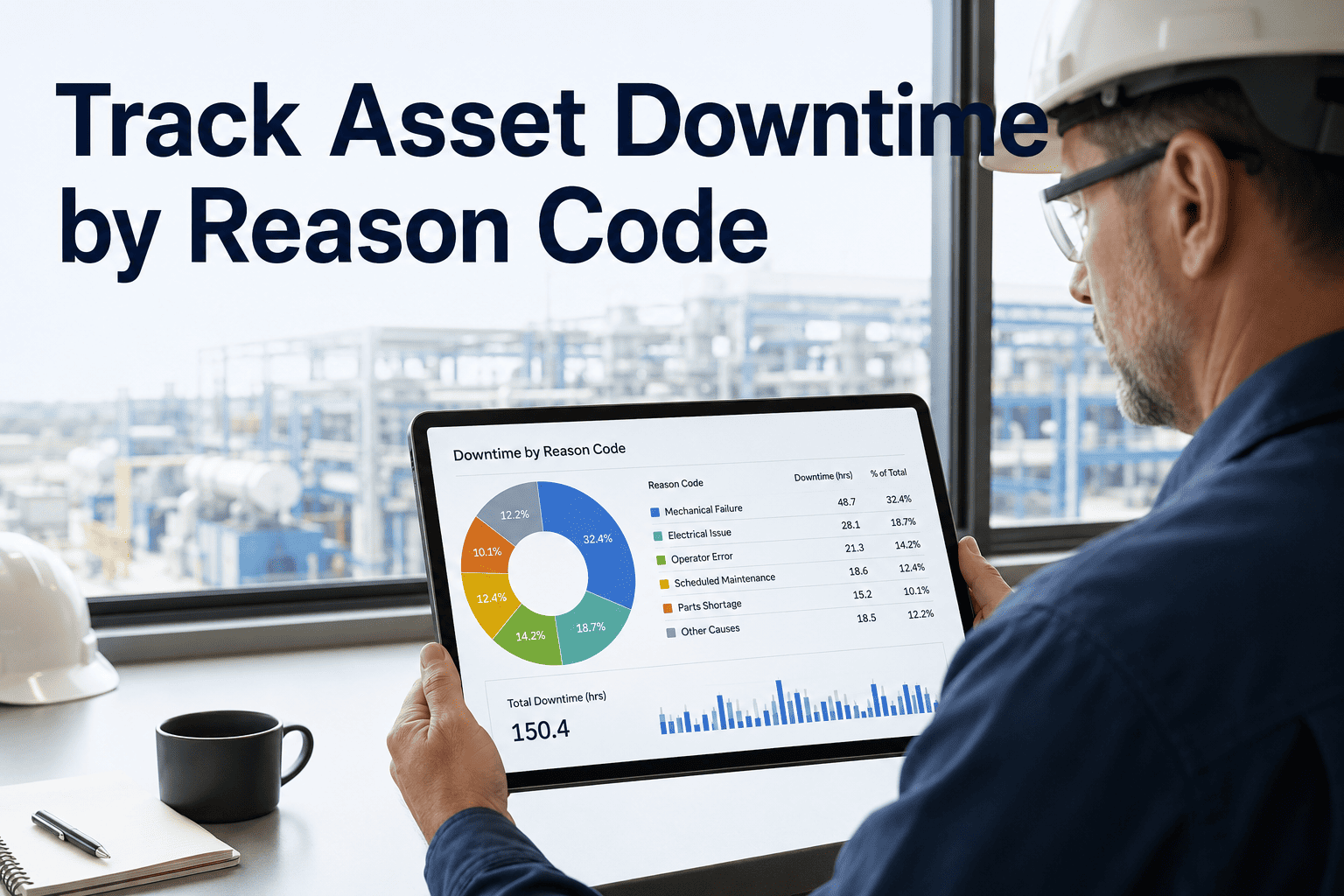
Tracking total downtime hours tells you how bad the problem is. Tracking downtime by reason code tells you exactly where to fix it. OxMaint's downtime tracking module classifies every minute of lost production...
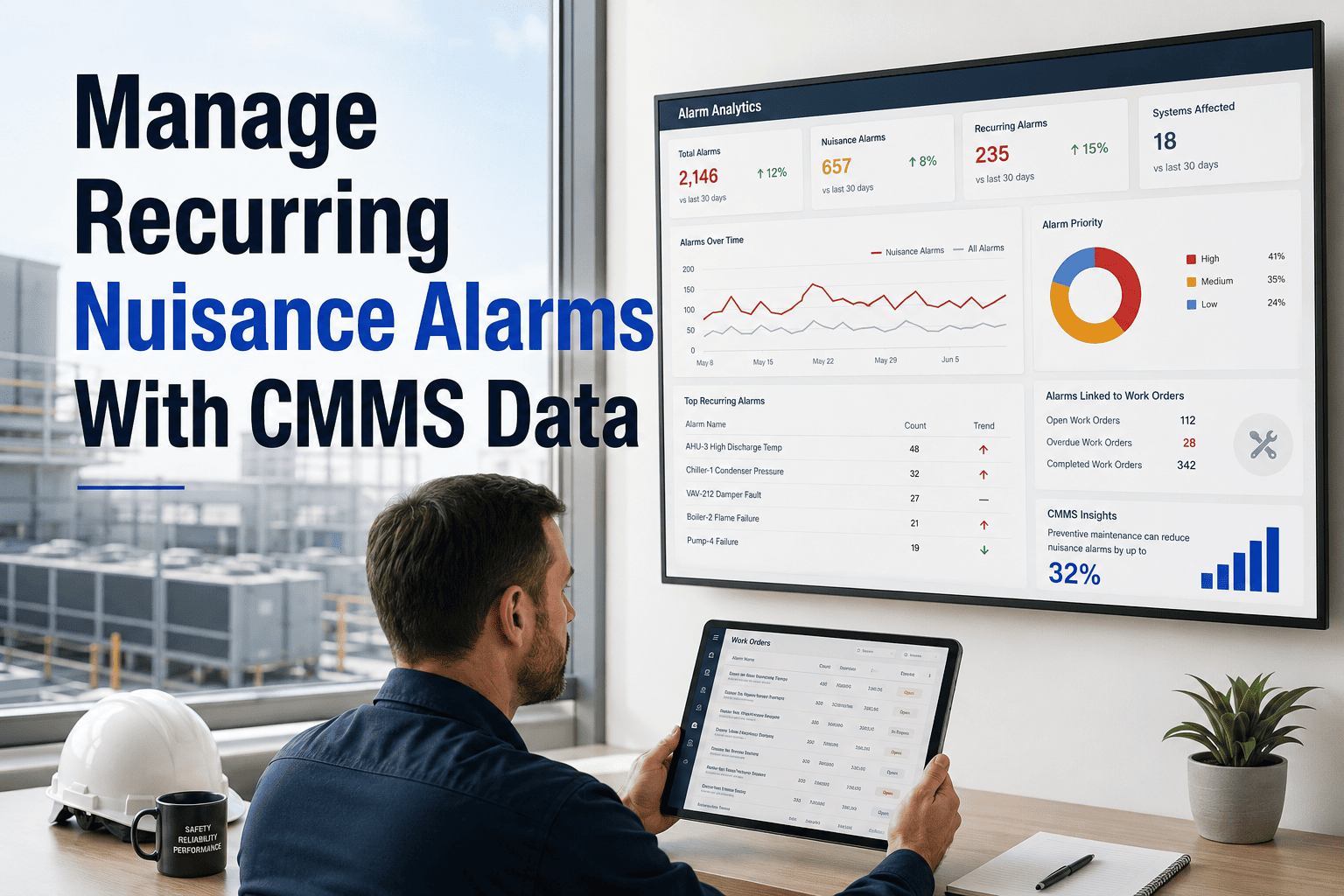
When the same alarm fires 40 times a week without triggering a real response, your team has stopped listening — and that's when a genuinely critical fault gets missed. OxMaint's CMMS alert history lets you identify...
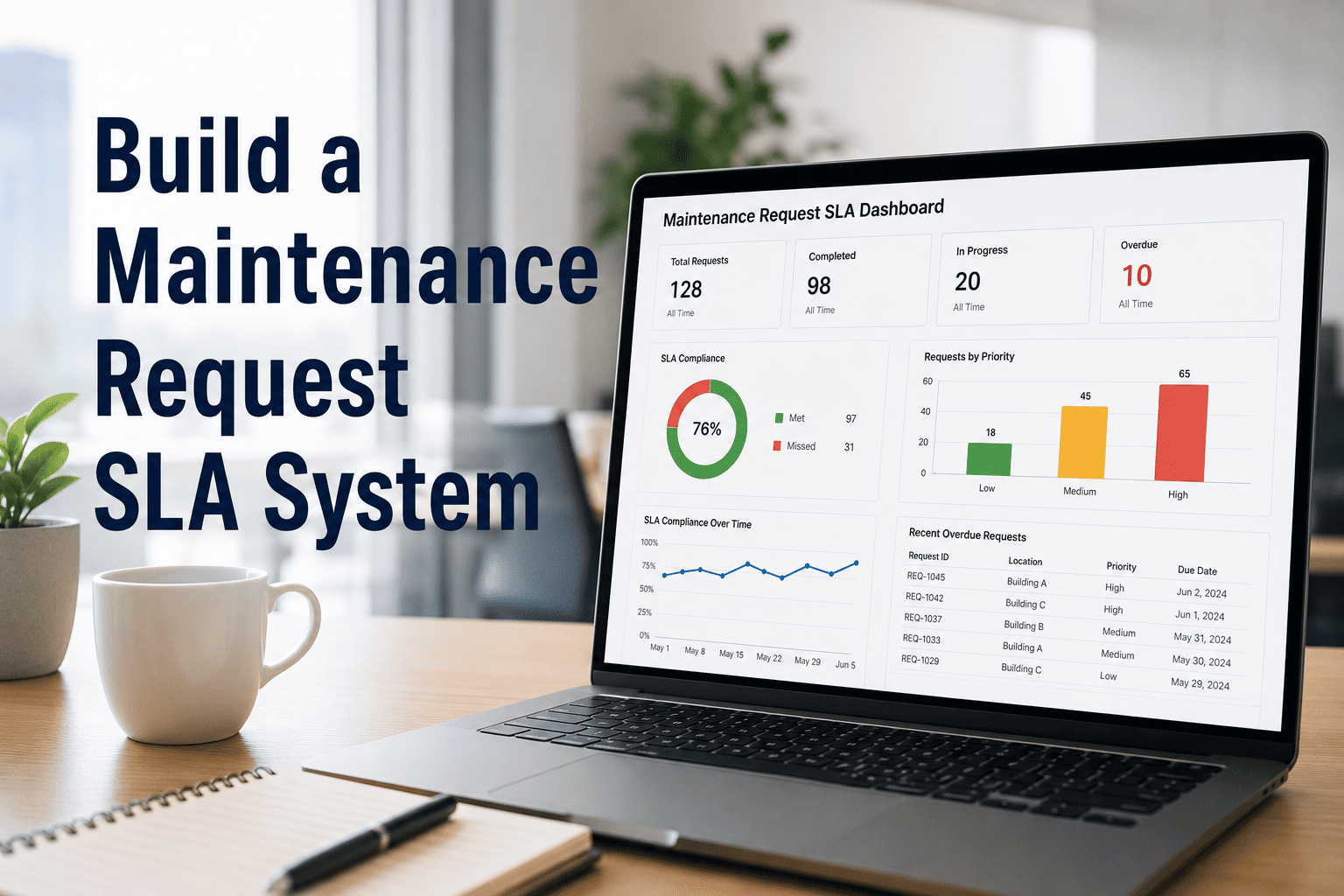
Maintenance requests without SLA targets are just noise — no accountability, no deadlines, no way to measure team performance. OxMaint's SLA tracking module gives maintenance managers the structure to define...

The average industrial facility runs at a 55:45 reactive-to-planned maintenance ratio — meaning more than half of all work is unplanned, unscheduled, and typically 3-5x more expensive than the same repair done...
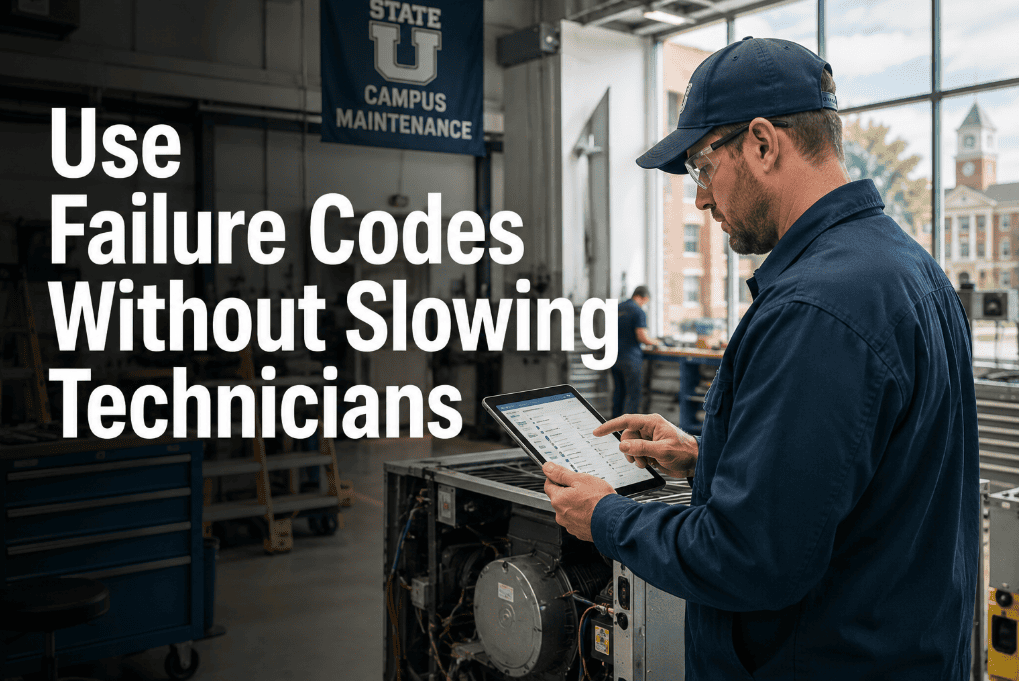
Failure codes are one of the most powerful reliability tools in any CMMS — and one of the most abandoned. 58% of maintenance teams that implement failure codes stop using them within 6 months because technicians...
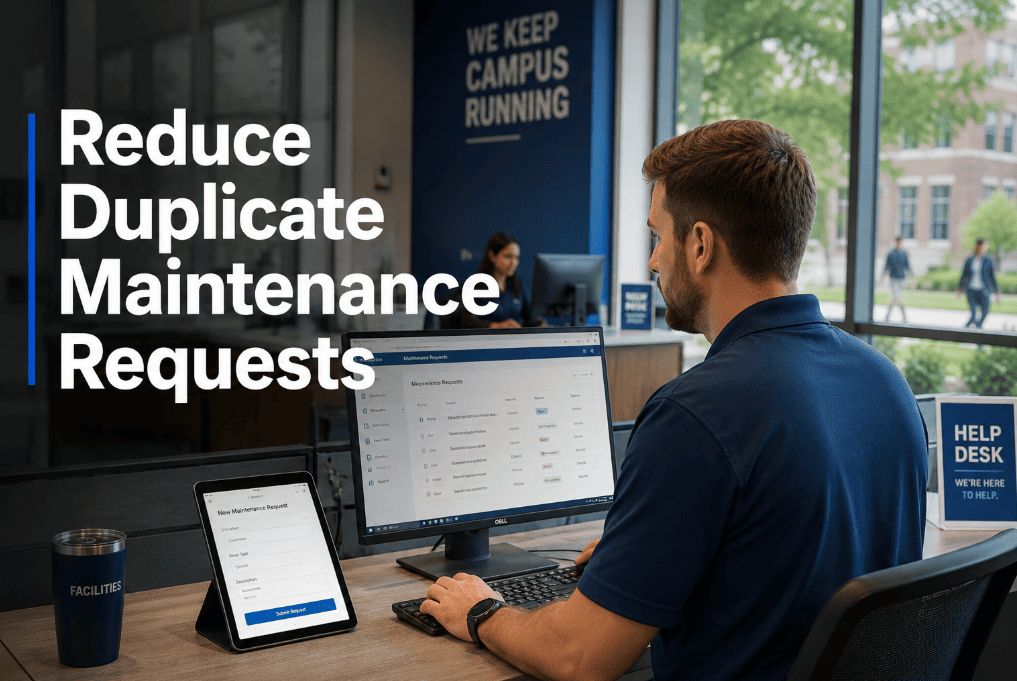
Maintenance teams at mid-size facilities receive an average of 47 duplicate requests per week — the same leaking faucet reported by six different people, the same flickering light submitted three times in one...

Over 60% of maintenance teams using a CMMS cannot answer a simple question: which building system is consuming the most repair budget this year? The reason is not a software limitation — it is a structural one....
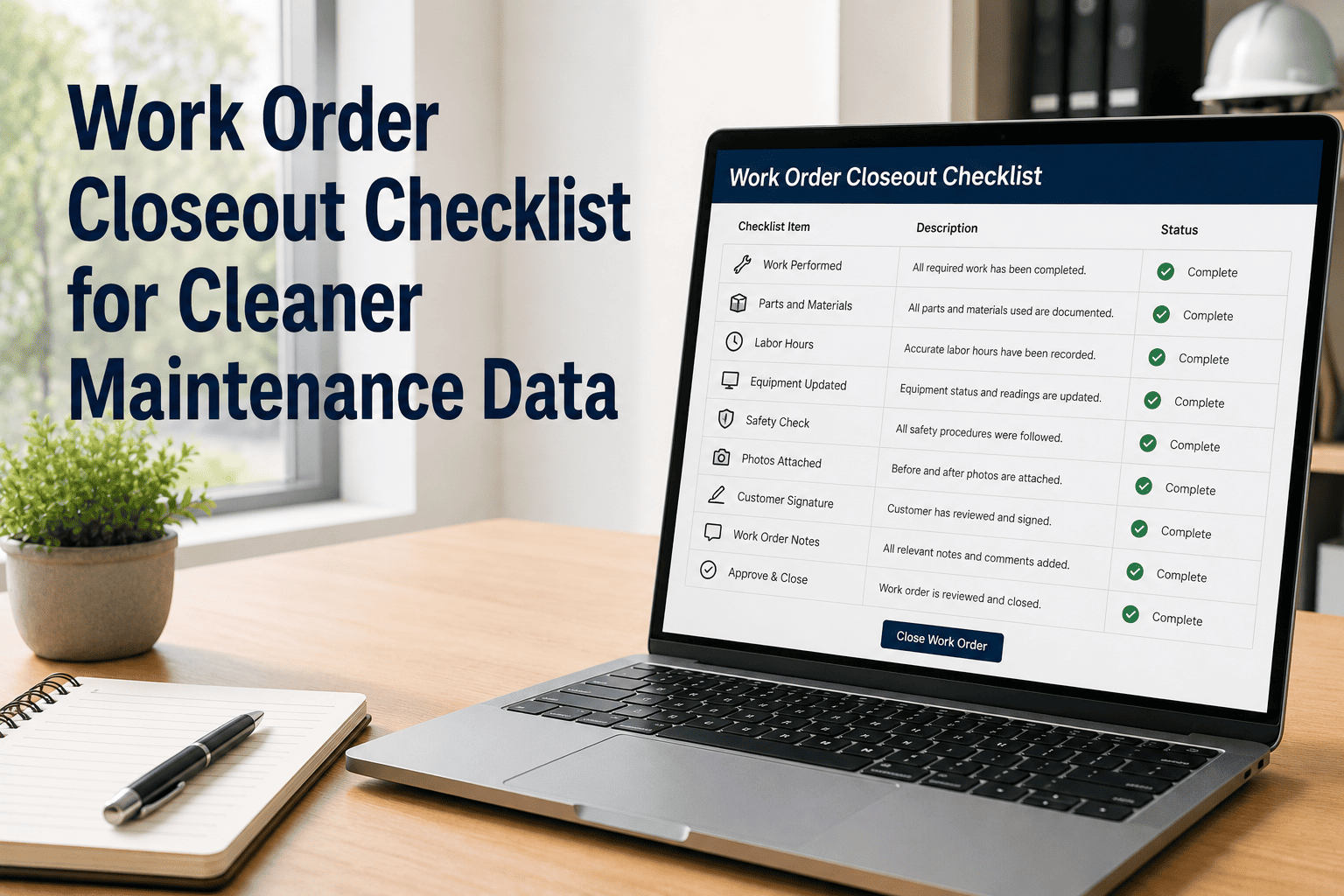
A completed repair is only half the job. What gets captured at closeout — failure codes, labor hours, parts consumed, downtime duration, technician notes, next action flags — determines whether that repair becomes...

When a vendor disputes a repair, a regulator requests audit documentation, or a client questions whether maintenance was performed on schedule, a work order marked "Completed" in a spreadsheet proves nothing. A...

Staff shortages do not pause your equipment's maintenance schedule — but without the right system, they pause your team's ability to execute it. When a PM gets missed during a coverage gap, the cost compounds: the...

When a technician spends two hours driving between facilities and thirty minutes repairing the fault, your records typically show only the repair. The travel time — often 30 to 50 percent of total field labor cost...
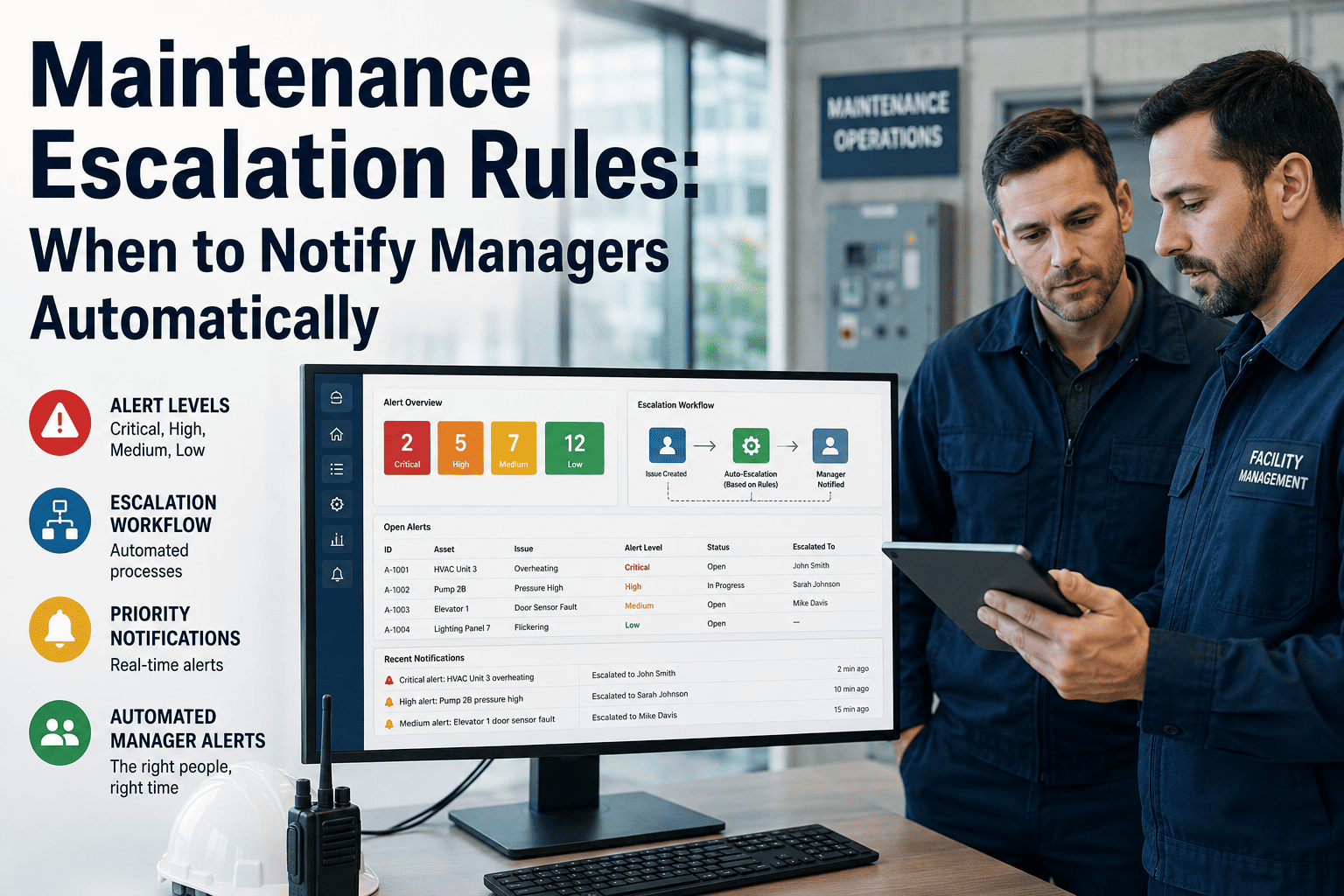
A work order sitting unacknowledged for 48 hours in a high-hazard facility is not just an operational risk — it is a liability. OxMaint's Alerts & Automation engine catches these gaps before they become...
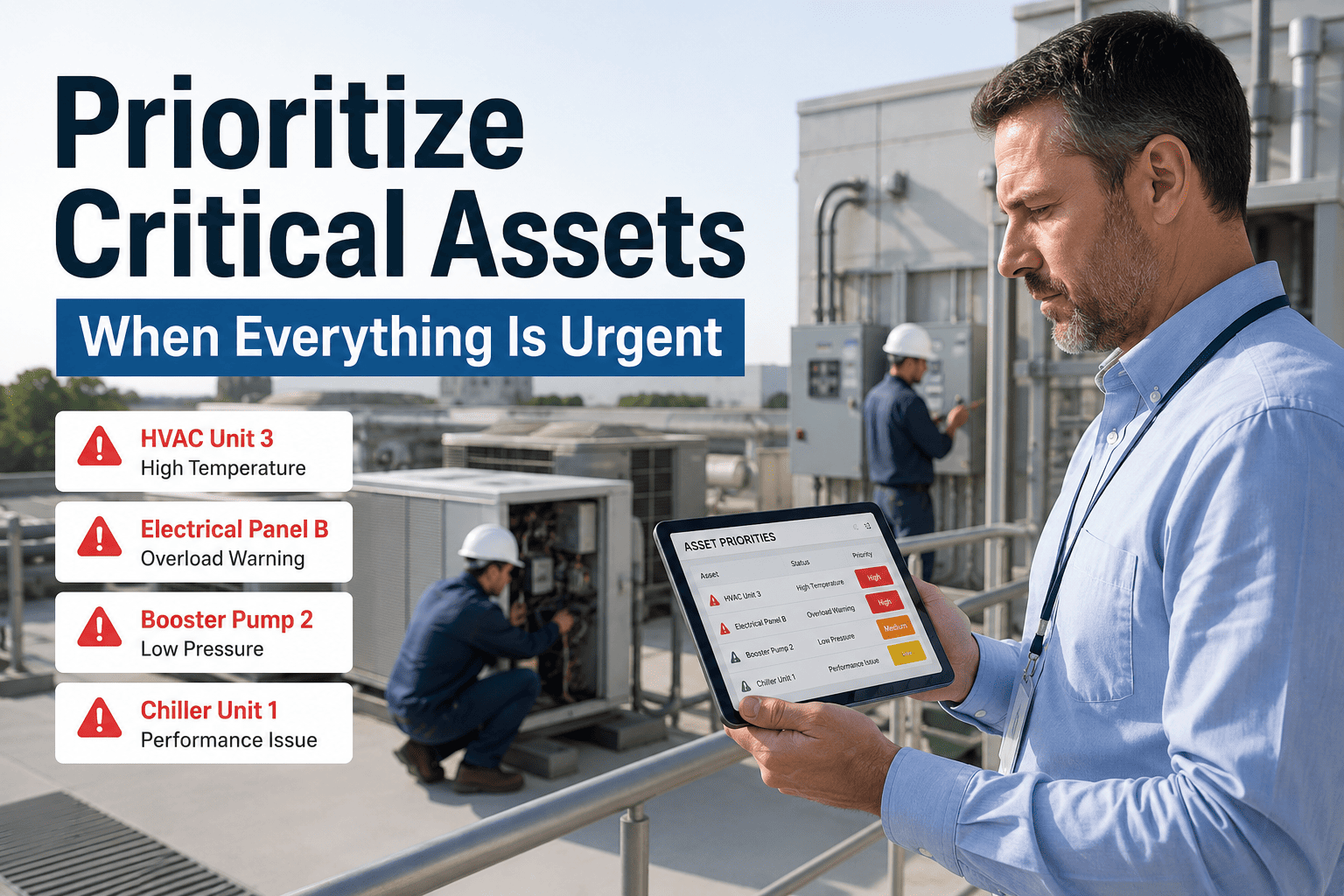
Every maintenance team knows the feeling — three machines down, five work orders overdue, and a supervisor asking which one to fix first. Without a scoring system, priority becomes whoever shouts loudest. OxMaint's...
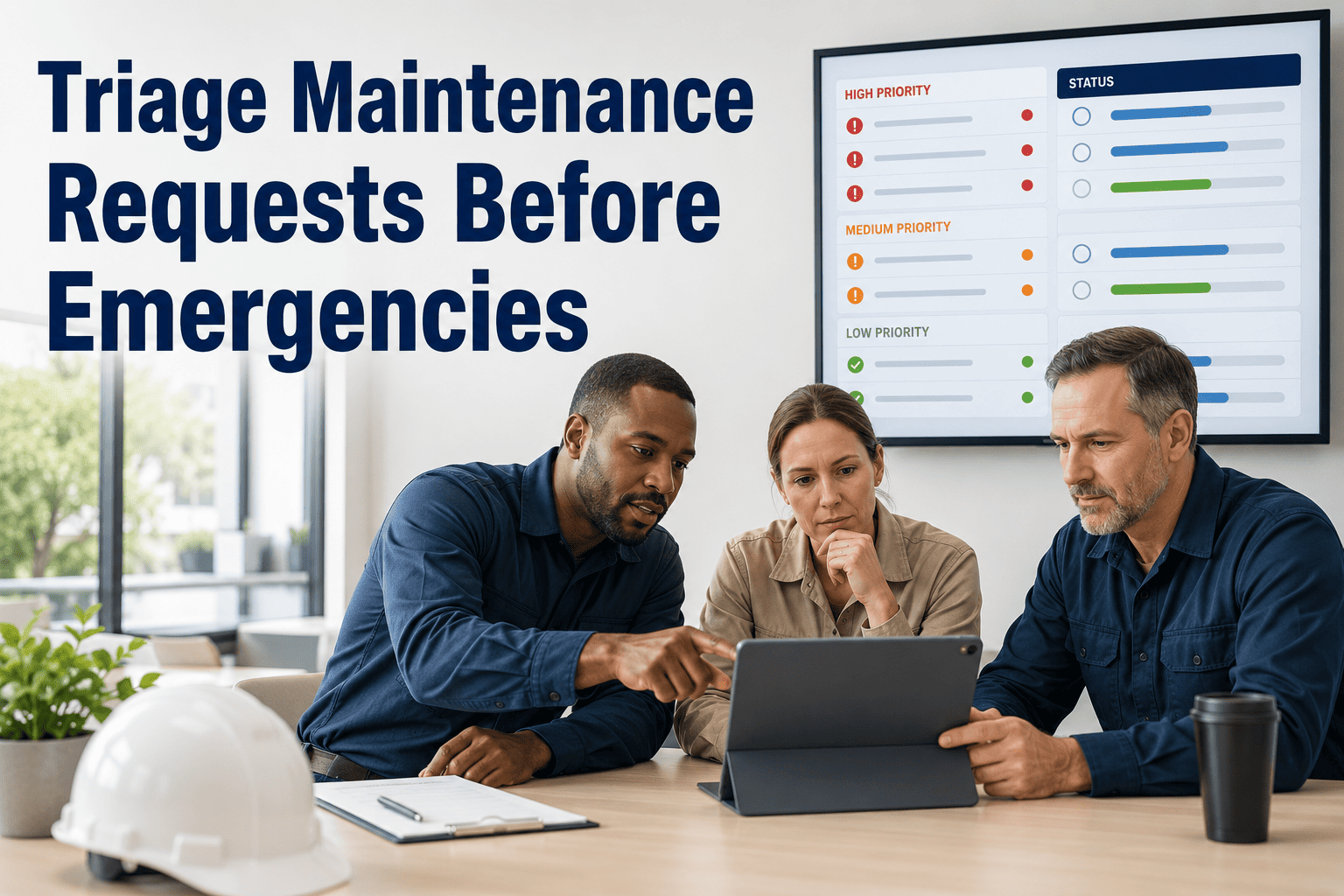
Every emergency repair was once a routine maintenance request that nobody prioritized in time. The cost difference is significant — emergency repairs run 3–9x more than planned work for identical scope. OxMaint's...
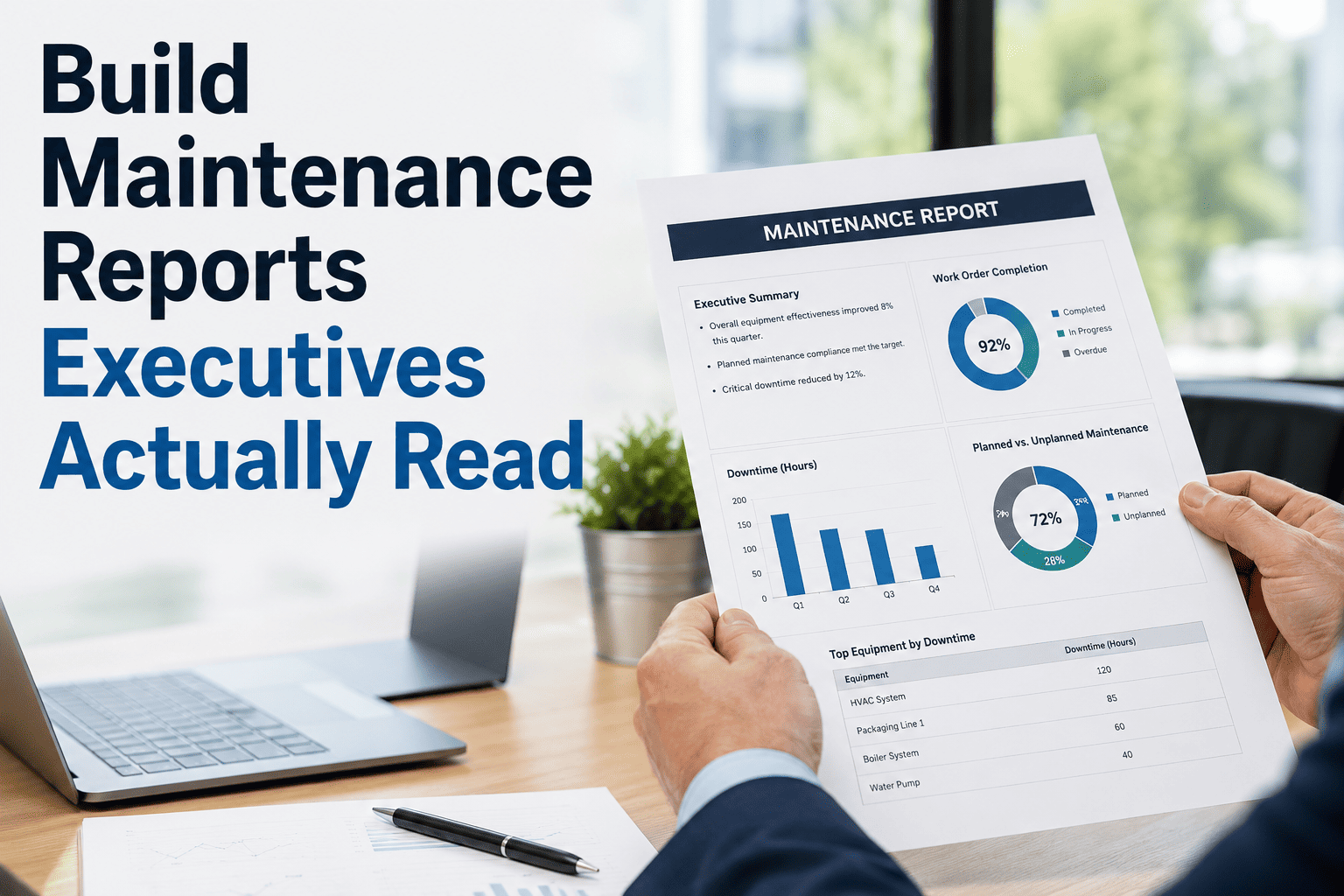
Most maintenance reports are ignored — not because executives don't care about reliability, but because the reports speak the wrong language. Work order counts, PM completion percentages, and backlog numbers mean...
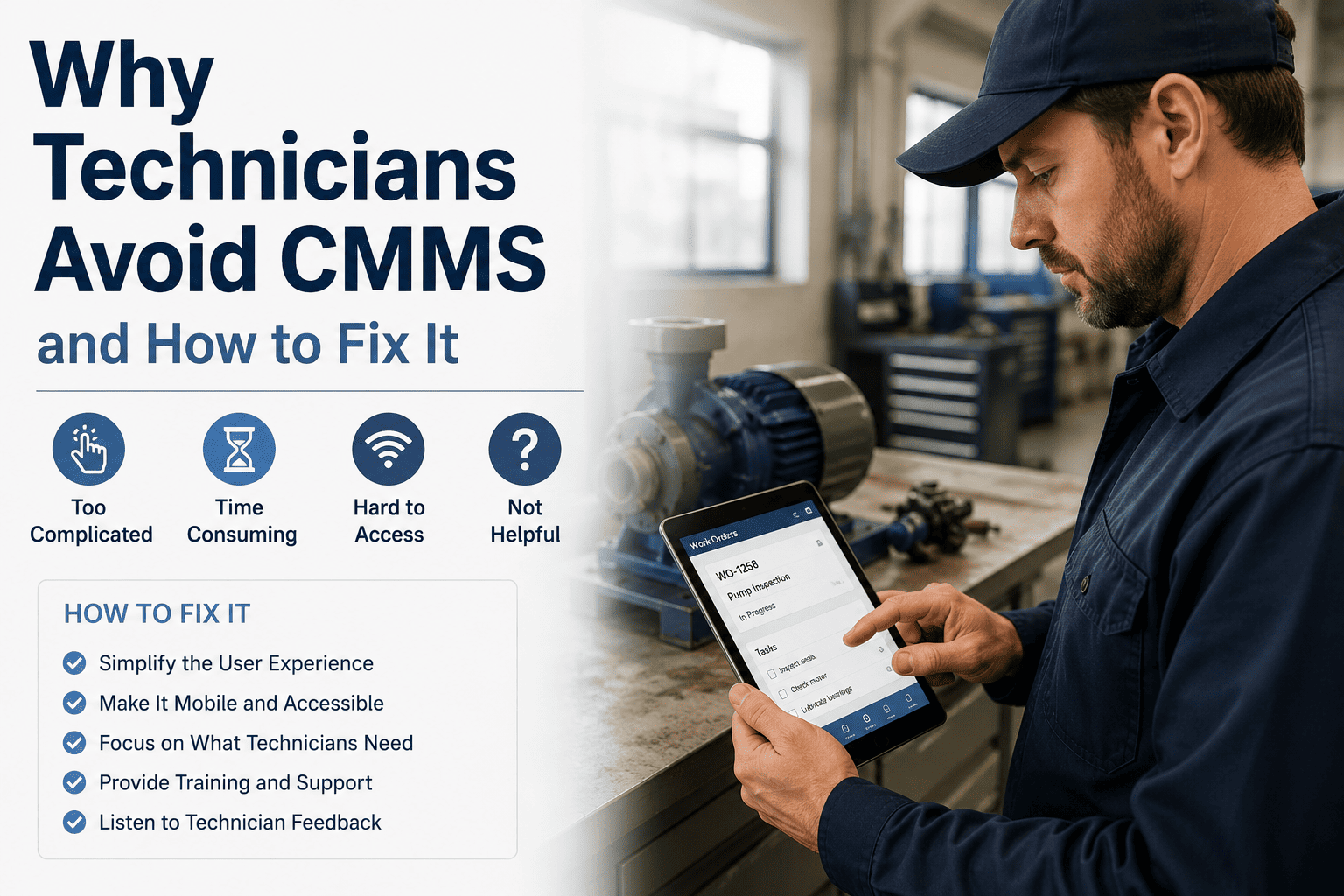
A CMMS that sits unused is worse than no CMMS at all — it creates a false sense of compliance while your actual maintenance data lives in paper logs and group chats. Technician avoidance is the #1 reason CMMS...

Every work order your team closes is a data point — but most maintenance teams never connect those dots. Recurring failures, rising repair costs, and unexplained downtime spikes almost always have a pattern buried...
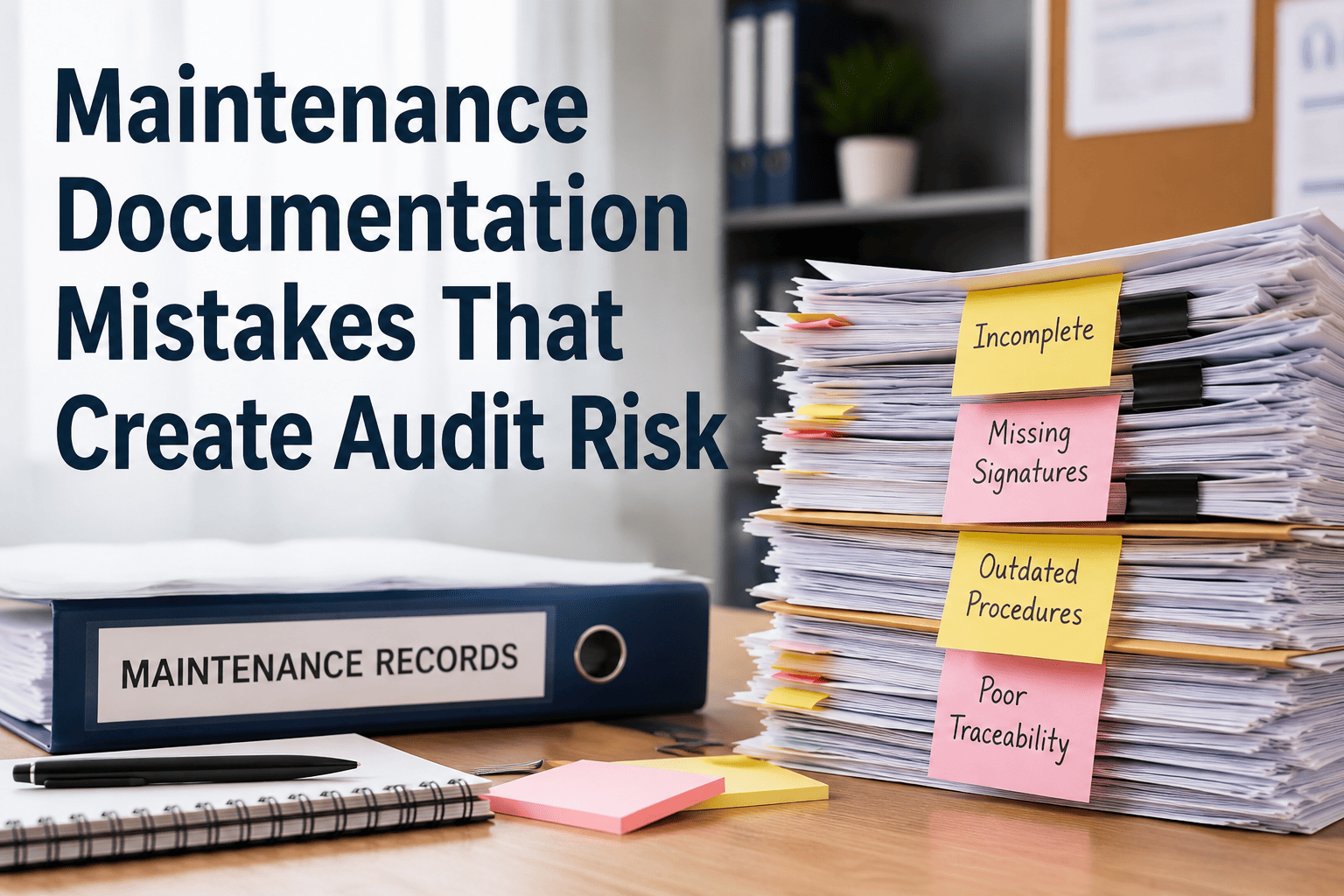
Poor maintenance documentation isn't just an inconvenience — it's a direct liability. Incomplete records, missing signatures, and outdated checklists expose your facility to failed audits, regulatory fines, and...
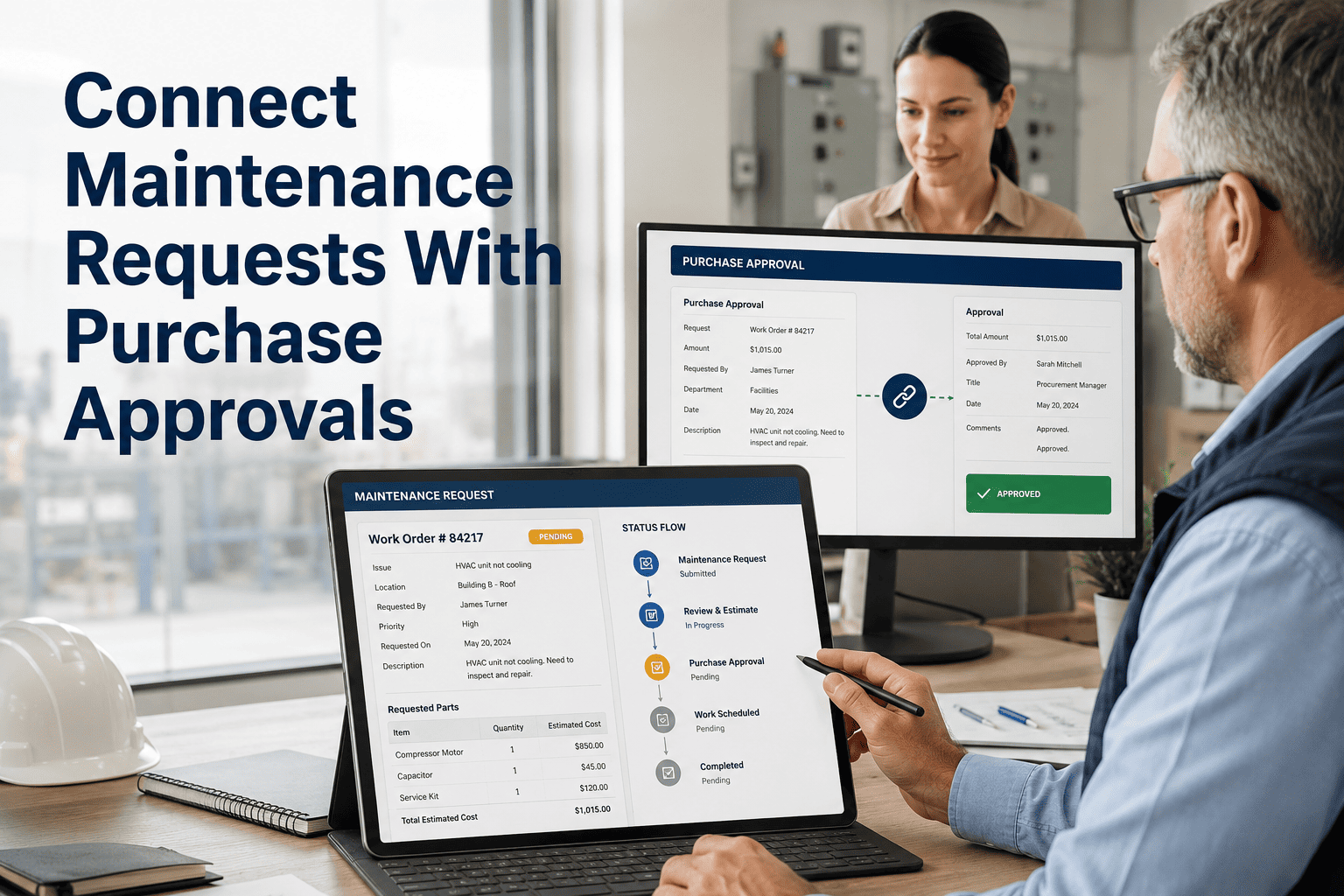
Every maintenance team has experienced the same frustration: a technician identifies a failed part, raises a repair request, and then waits — sometimes days, sometimes weeks — while procurement processes the...
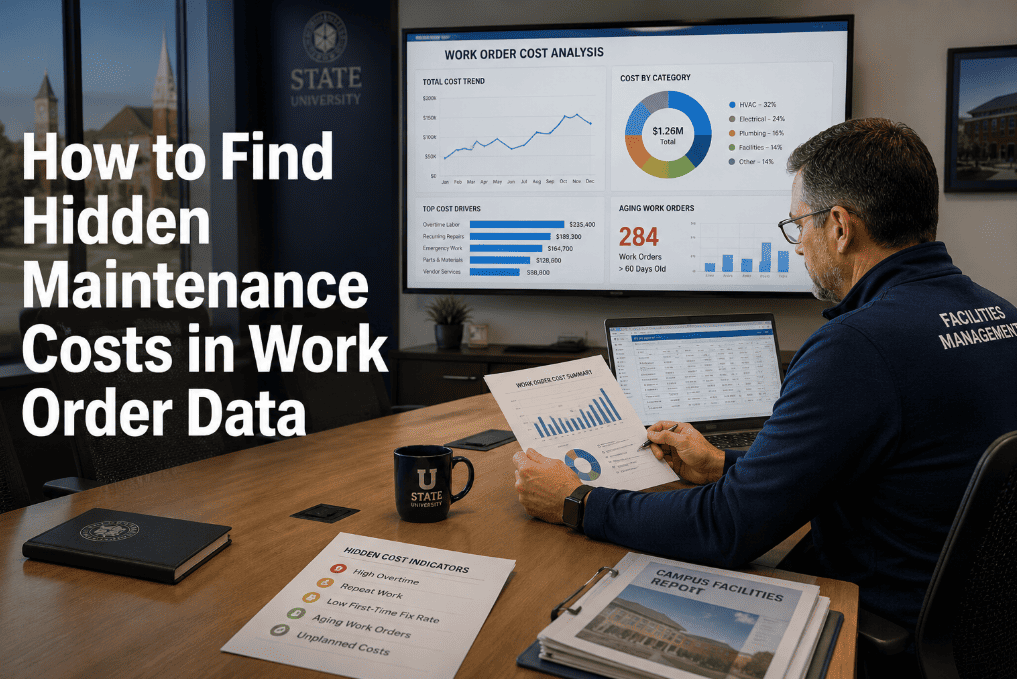
Most maintenance budgets have a serious leak — and it is not in the parts room or the overtime line. It is buried inside work order data that nobody is reading analytically. Labor hours logged to the wrong asset....
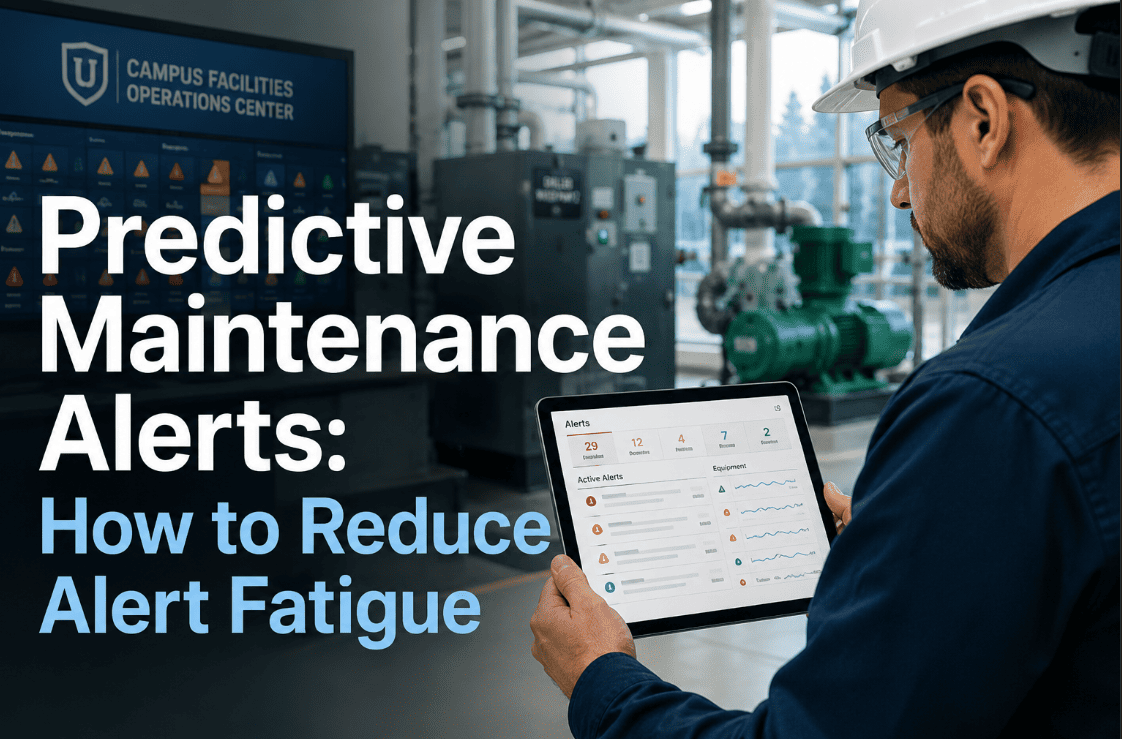
Predictive maintenance promised to eliminate unexpected failures. But for most maintenance teams, it delivered something else first: an inbox flooded with alerts, a dashboard blinking with warnings, and technicians...
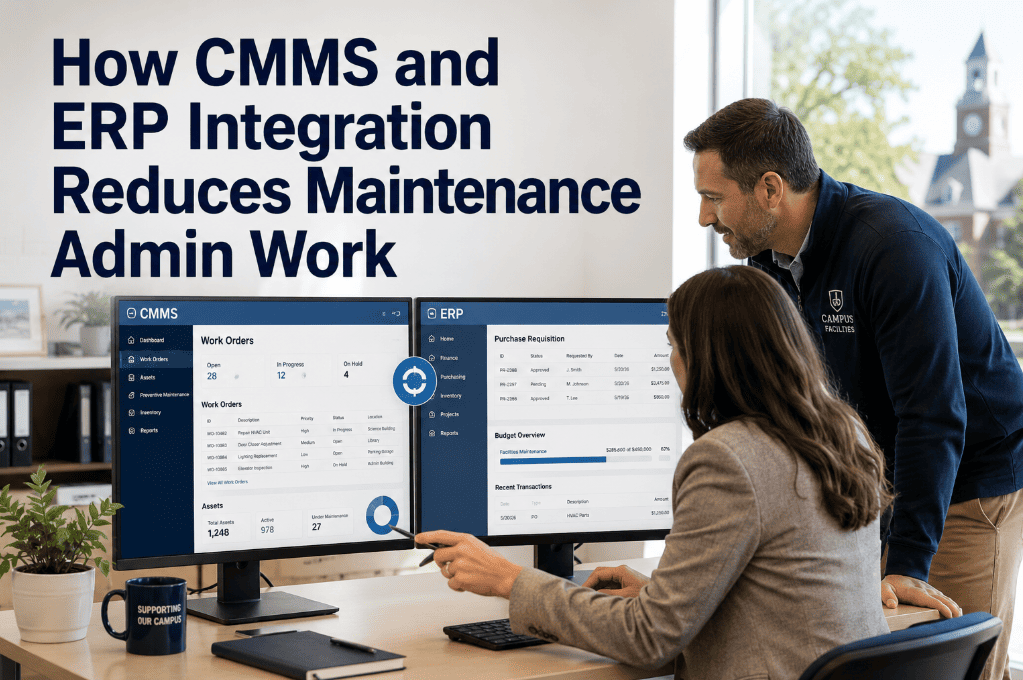
Maintenance teams spend an average of 14.6 hours per week on administrative tasks that add zero value to asset reliability — duplicate data entry between CMMS and ERP, manual purchase requisitions, cost...

Shutdown scope creep is the single most common reason turnarounds run over budget and over schedule. Sign up for Oxmaint to plan shutdown work with defined scope, parts readiness checks, job sequencing, and safety...
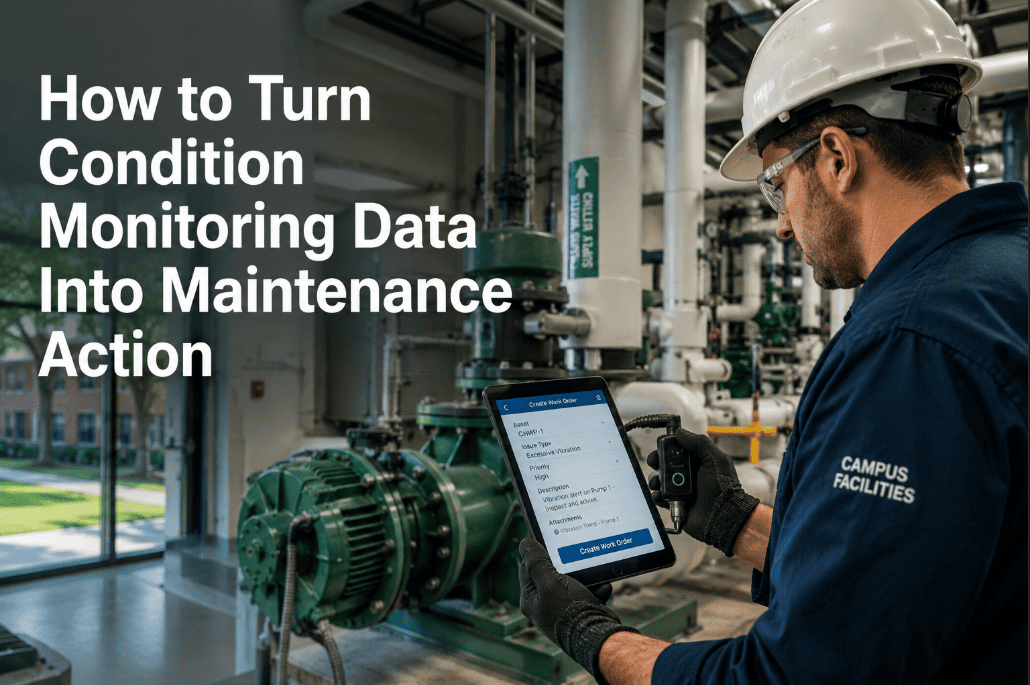
Industrial facilities collect an average of 2.5 million sensor data points per day from vibration monitors, temperature probes, runtime counters, and inspection systems — yet only 11% of that data ever connects to...
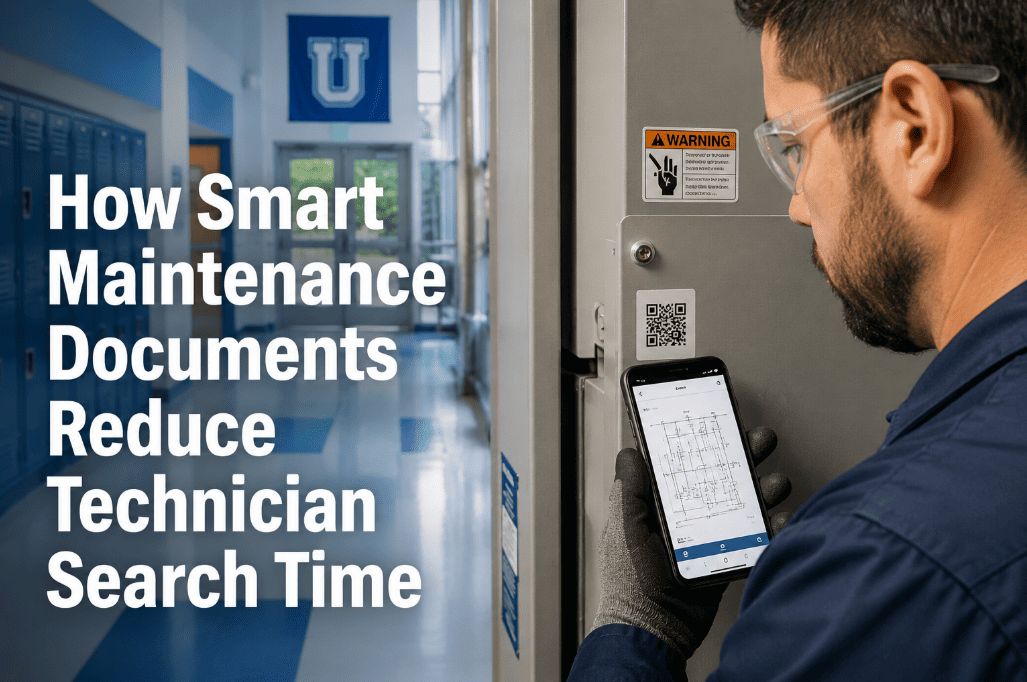
A maintenance technician standing in front of a failed compressor, with a work order open on their phone, spending 22 minutes searching for the correct torque specification in a PDF manual buried somewhere in a...
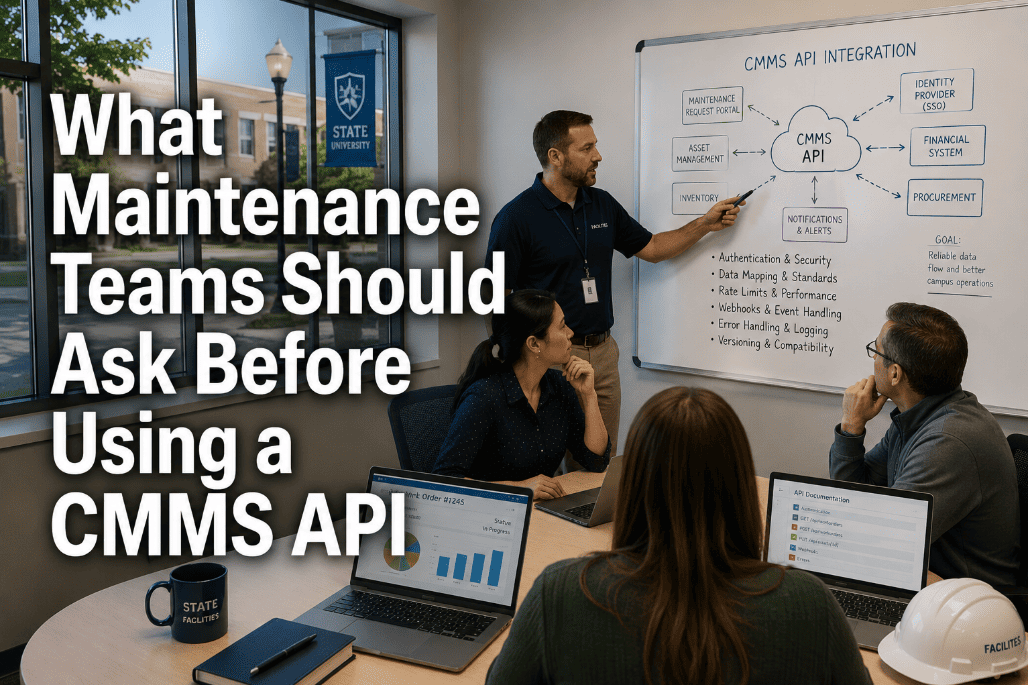
Most maintenance teams encounter the CMMS API question the same way: a business intelligence team wants maintenance data in their analytics platform, a new IoT sensor vendor says their system "connects to your CMMS...

Most maintenance teams prioritize work by urgency of the request — not by the actual production impact of the asset failing. Sign up for Oxmaint to connect OEE losses, asset downtime, and repair history so your...
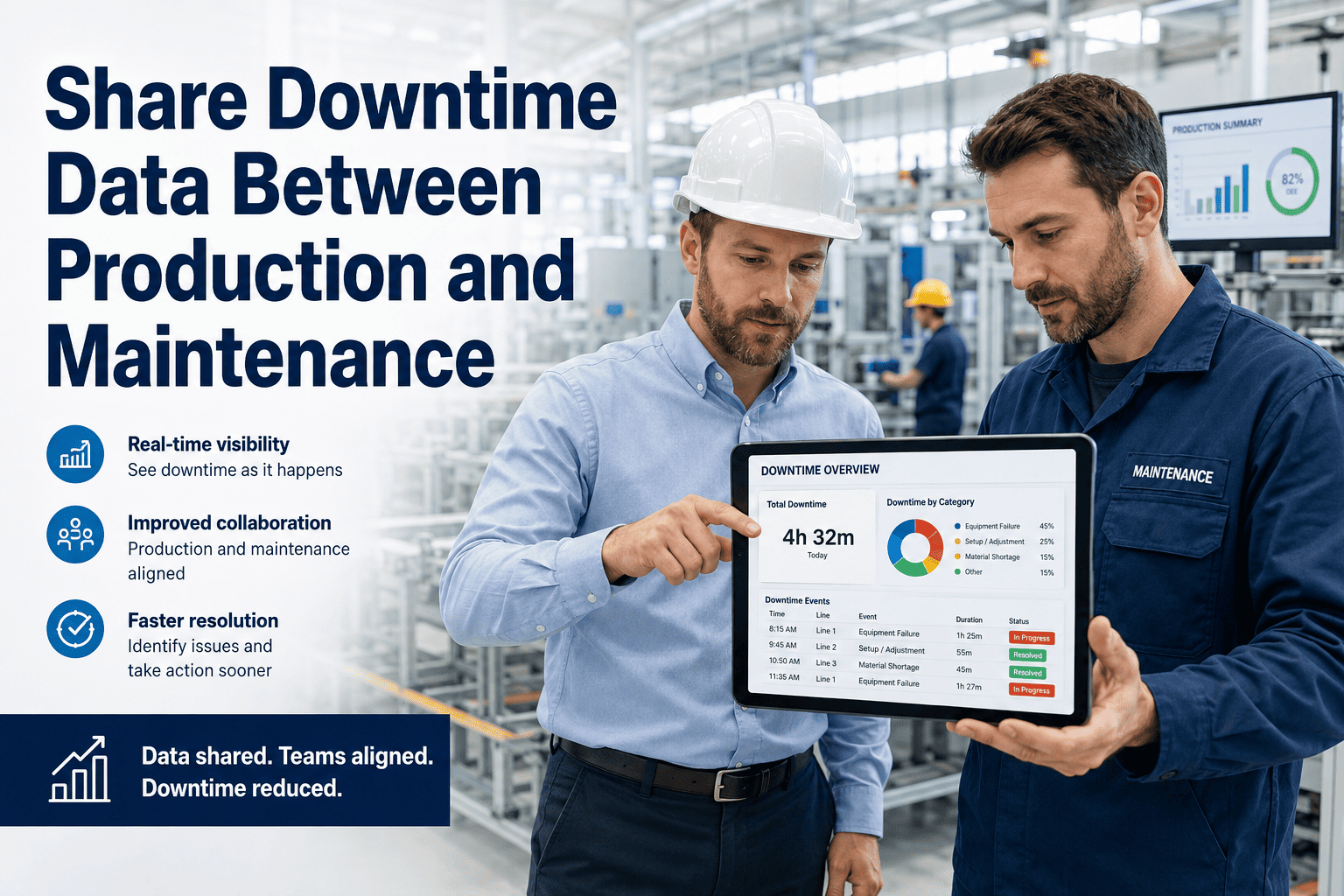
When production teams log a downtime event and maintenance teams log the same event separately in different systems, root cause analysis becomes guesswork. Sign up for Oxmaint to connect downtime events, work...

Every hour a vehicle sits idle waiting for unplanned repair is revenue lost and schedules broken. Sign up for Oxmaint to set mileage-based alerts, log inspections, and track service history so your fleet stays...

Tenant complaints about slow maintenance don't just hurt satisfaction scores — they trigger lease non-renewals. Sign up for Oxmaint to route, prioritize, and close maintenance requests faster with a CMMS built for...
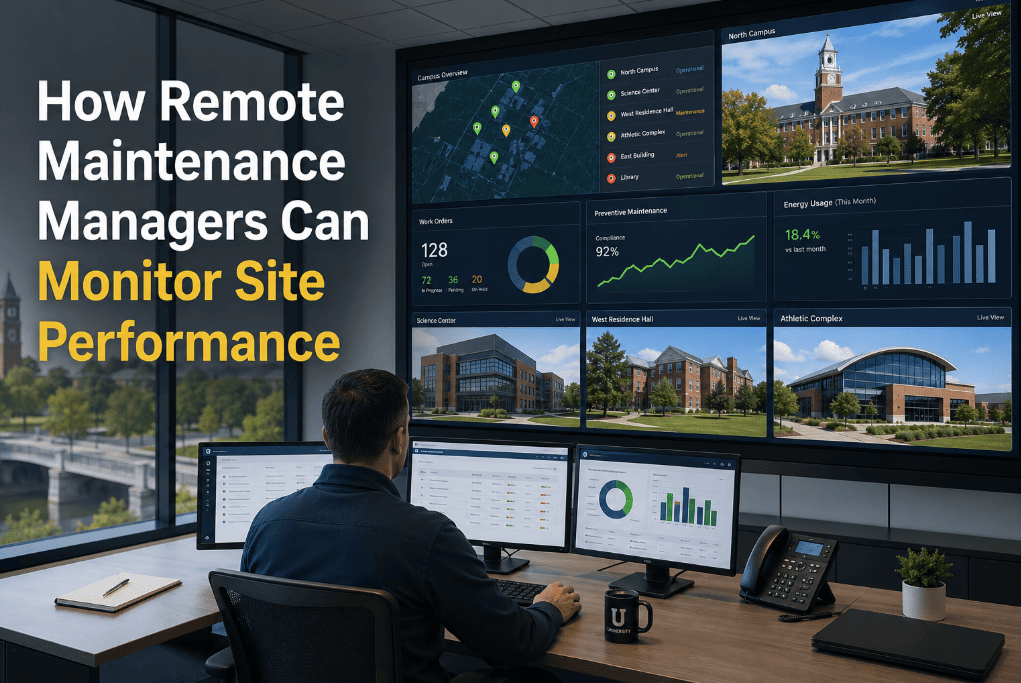
Remote maintenance management is not a pandemic-era workaround — it is the operational model that multi-site organizations, property management groups, distributed manufacturing operations, and enterprise facility...
Paper maintenance logs do not fail dramatically — they fail gradually. A technician skips a field because the form is unclear. A manager cannot find the binder from three months ago during an audit. A contractor...
Recurring work orders are the backbone of every preventive maintenance program — but building them correctly is where most teams fail. The default approach is either too rigid (every asset on a fixed calendar...

A maintenance technician photographing a corroded pipe flange during a routine round is generating evidence. Without AI vision, that photograph is filed in a work order note field where it sits as an unstructured...
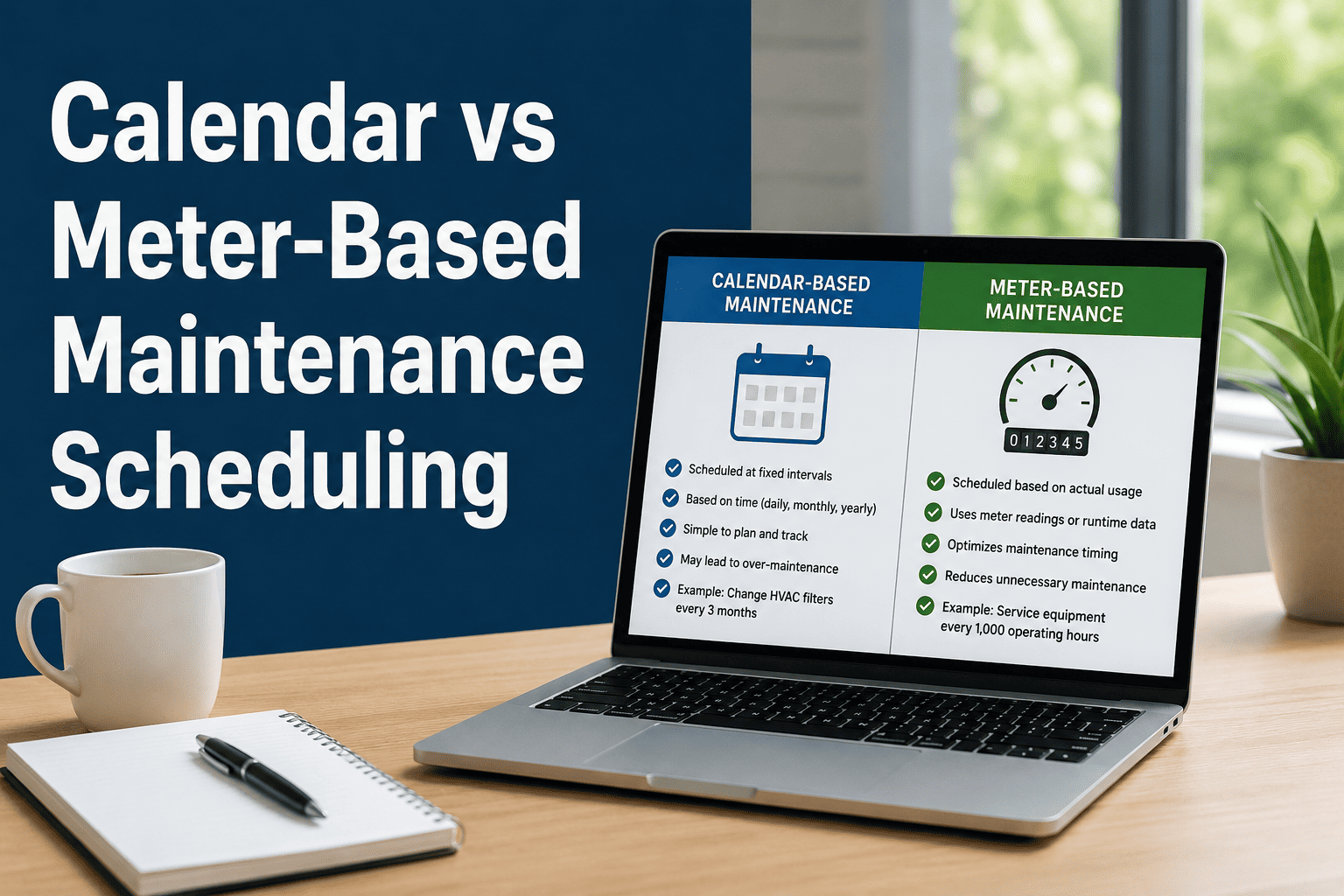
A forklift that runs 800 hours in one month and 200 hours the next is not well served by a monthly PM interval. The forklift that ran 800 hours needed servicing three weeks ago; the one that ran 200 hours still has...

MRO spare parts inventory accounts for 40–50% of the total maintenance budget at most industrial facilities — yet 15–25% of that inventory is obsolete or surplus, sitting on shelves doing nothing. At the same time,...

OSHA conducted 34,696 federal inspections in fiscal year 2024 — a level not seen since 2016 — and maximum penalties for willful or repeat violations reached $165,514 per violation effective January 15, 2025. The...

In a facility with 500 assets, finding the right piece of equipment can take longer than fixing it. A technician dispatched to repair "HVAC Unit — Building A" spends 12 minutes identifying which unit it is,...
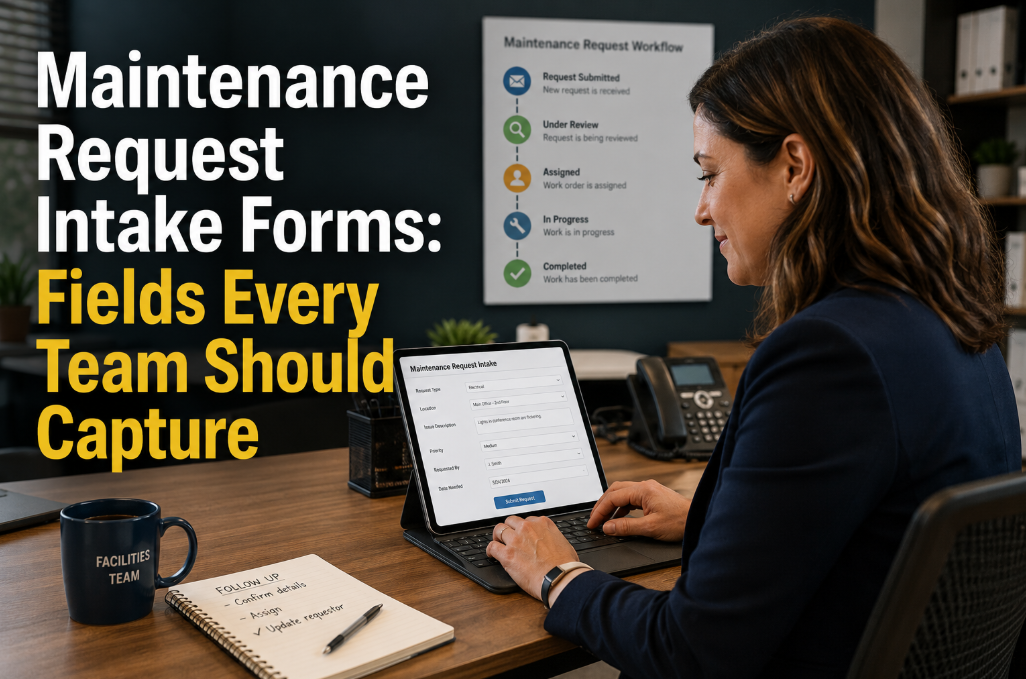
A maintenance request that arrives as "something is broken in building 3" wastes an average of 47 minutes of technician time before any repair begins — 12 minutes identifying the asset, 15 minutes locating the...

A maintenance technician who walks up to an asset, pulls out their phone, scans a QR code, and instantly sees the asset name, location, maintenance history, open work orders, and a pre-filled request form — that...
No-access delays are one of the most frustrating and financially wasteful problems in facility maintenance — and they are far more common than most organizations realize. Industry data from IFMA indicates that 23%...
Equipment breakdowns cost industrial and commercial operations an estimated $50 billion annually in the United States alone, and the single largest controllable variable in that cost equation is not whether...
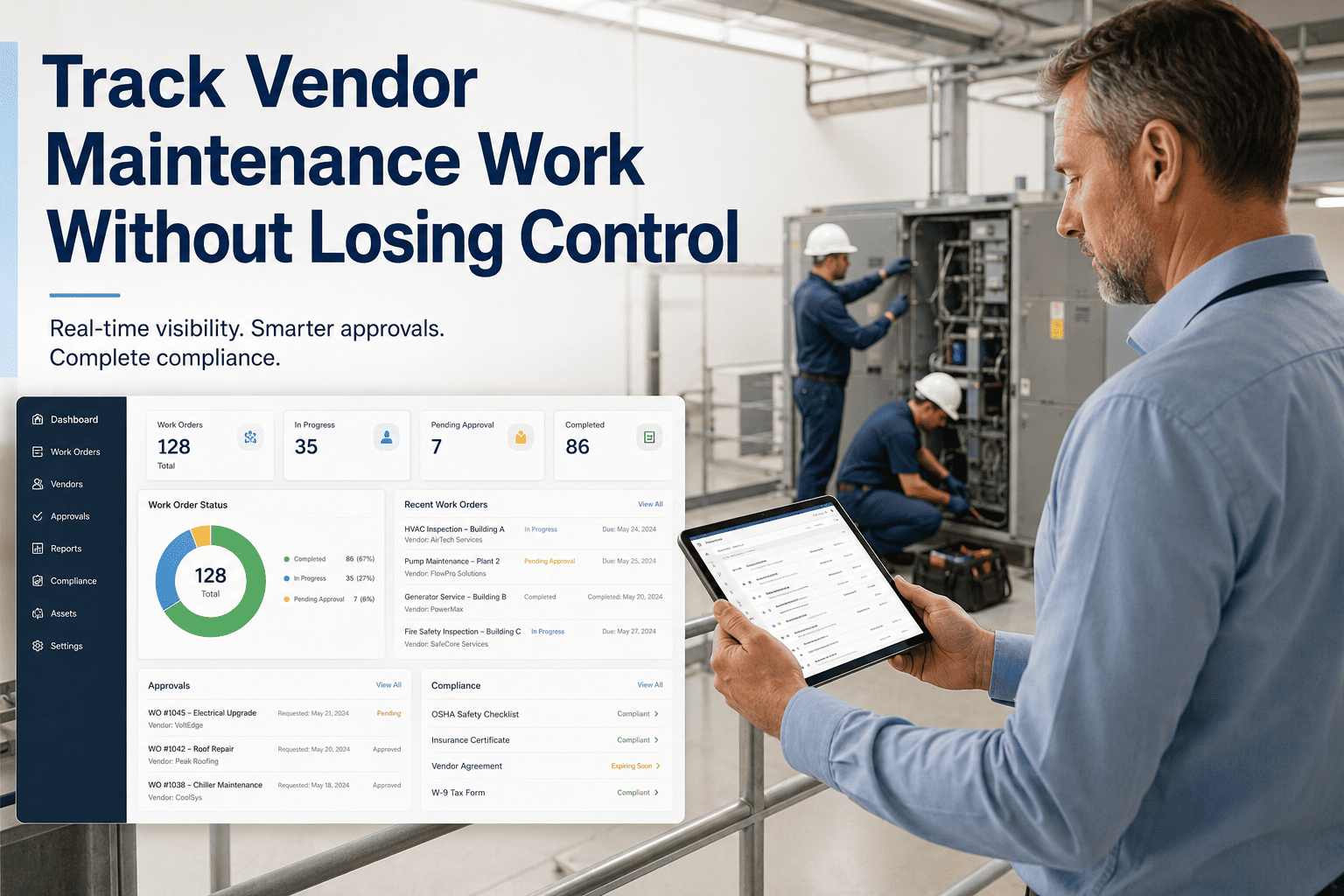
The average facilities organisation outsources 35–55% of its maintenance work to external vendors — HVAC contractors, lift companies, fire suppression specialists, electrical crews, and general maintenance...
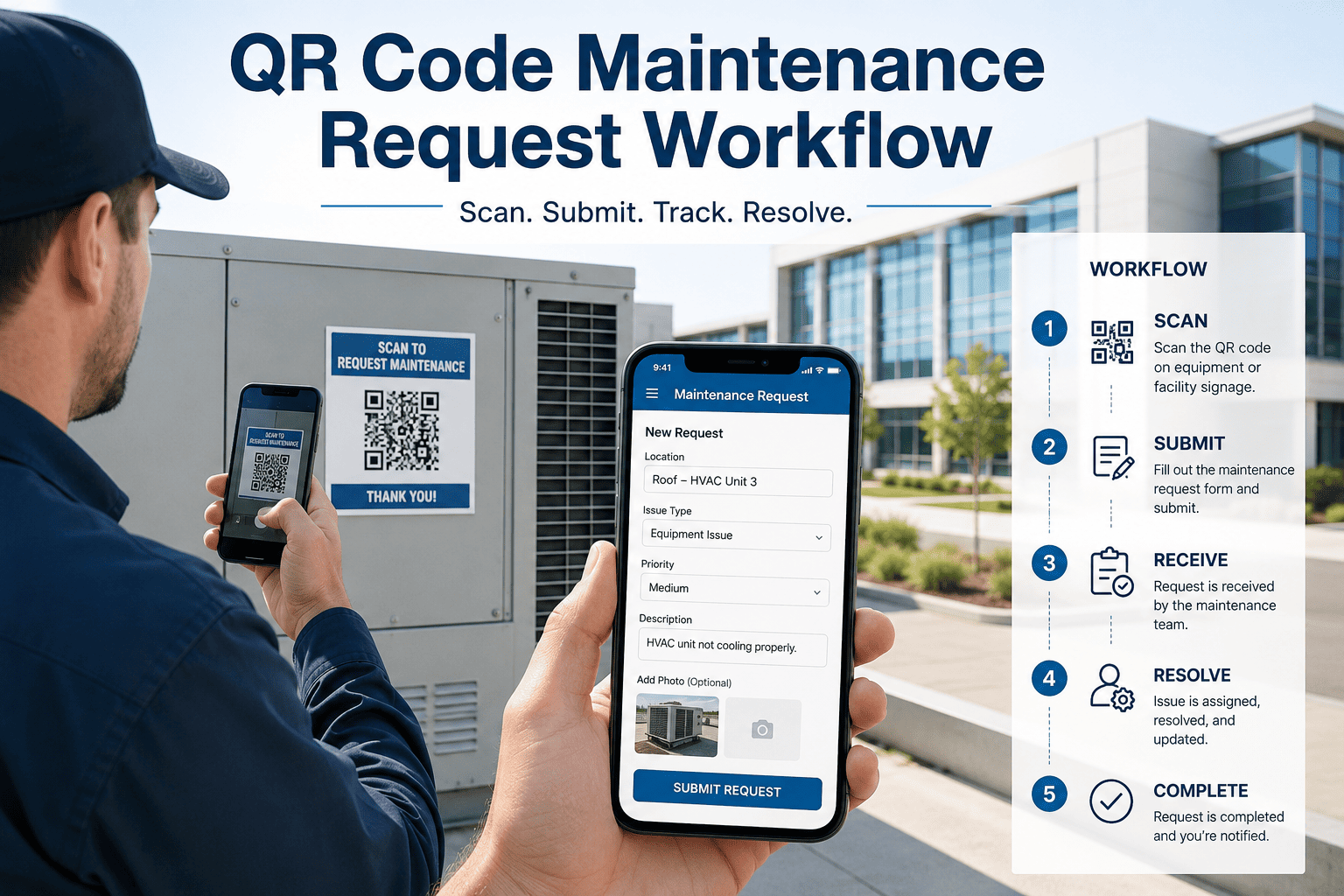
With 2.9 billion QR code users globally and 84% of smartphone users having scanned a QR code at least once, maintenance request reporting is the one workflow in your facility that everyone already knows how to...

Every maintenance manager knows that downtime costs money. Very few know exactly how much — because most organisations only count the visible damage: lost production hours multiplied by a rough per-hour rate. That...

Siemens' 2024 plant survey found facilities average 25 unplanned downtime incidents per month and lose 27 hours per plant to unplanned downtime. Not every one of those incidents starts at shift change — but weak...

When three systems fail simultaneously on a Monday morning — a roof leak over the server room, a jammed loading dock door, and a flickering ballast in the break room — the maintenance team that triages correctly...

Most maintenance inspection checklists don't fail because they were created by careless people — they fail because they were designed by people sitting at a desk who have never stood in front of the machine being...

A technician closes a work order with notes that read: "checked pump. noise. replaced seal. ok now." A maintenance manager reviewing that note four months later — during a failure investigation, a regulatory audit,...
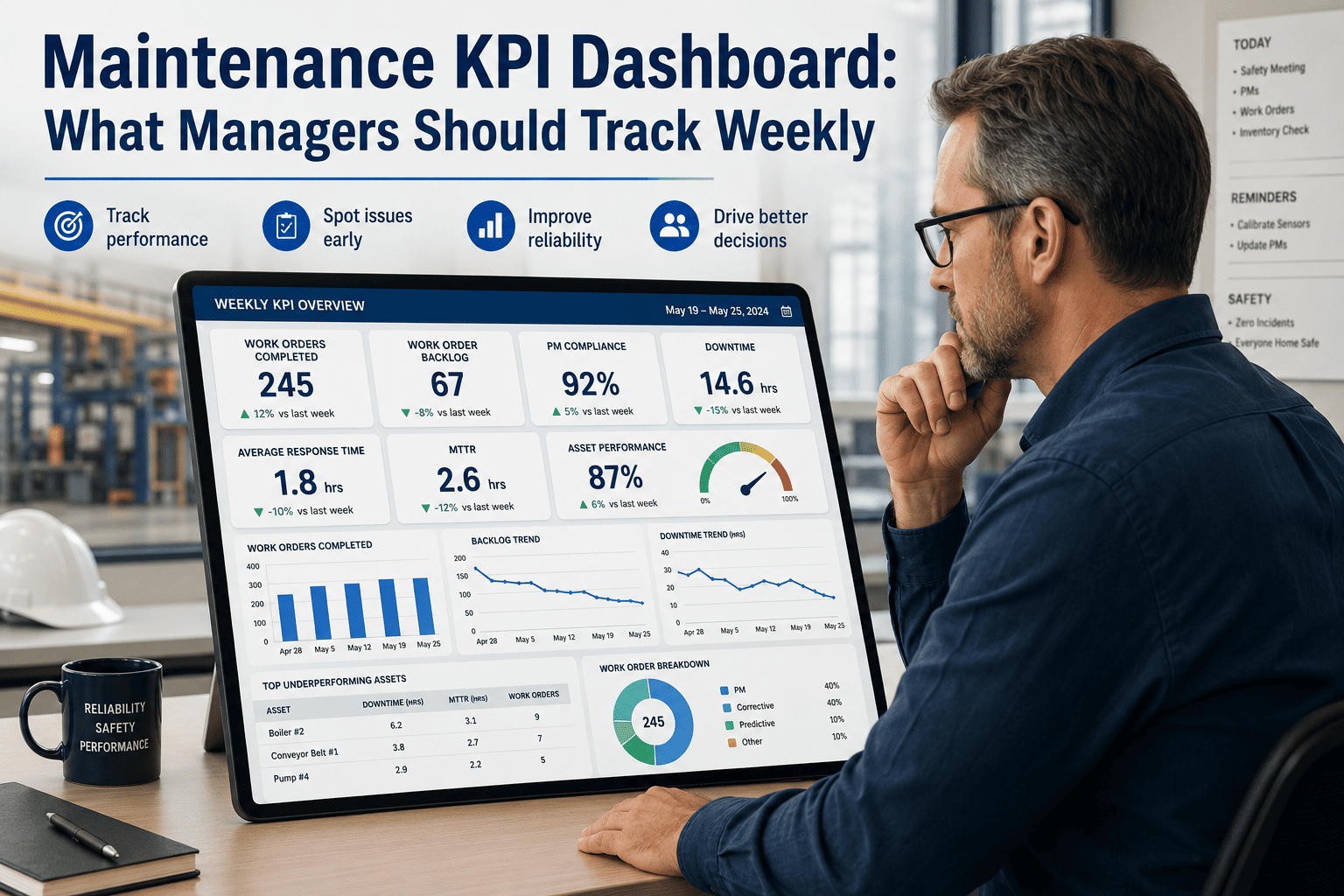
Tracking 15 maintenance KPIs on a spreadsheet you update once a month is not a dashboard — it is an archaeological dig. By the time you surface the data, the problem it reveals has already compounded for four...

When a manufacturer with eight plants compares maintenance performance across its portfolio for the first time, it almost always discovers the same thing: a 20–30 point gap in OEE between its best and worst site —...

When a critical pump fails at 2 AM and the replacement seal is not in stock, the repair does not take 45 minutes — it takes 3 days. The seal costs $18. The downtime costs whatever your production line generates per...

A maintenance technician at a paper mill was handed 14 paper work orders on Monday morning. By Thursday, he had completed 9 — but nobody could tell which 9, which 5 were overdue, or whether the critical PM on Press...

Most maintenance teams start Monday with a list of open work orders, reactive jobs already piling up, and a plan that falls apart by Wednesday. If your technicians are constantly pulled off scheduled work to fight...

Maintenance backlog is not simply a list of undone work — it is a compounding liability. Every deferred job raises the probability of unplanned failure, increases repair complexity, and quietly transfers risk to...
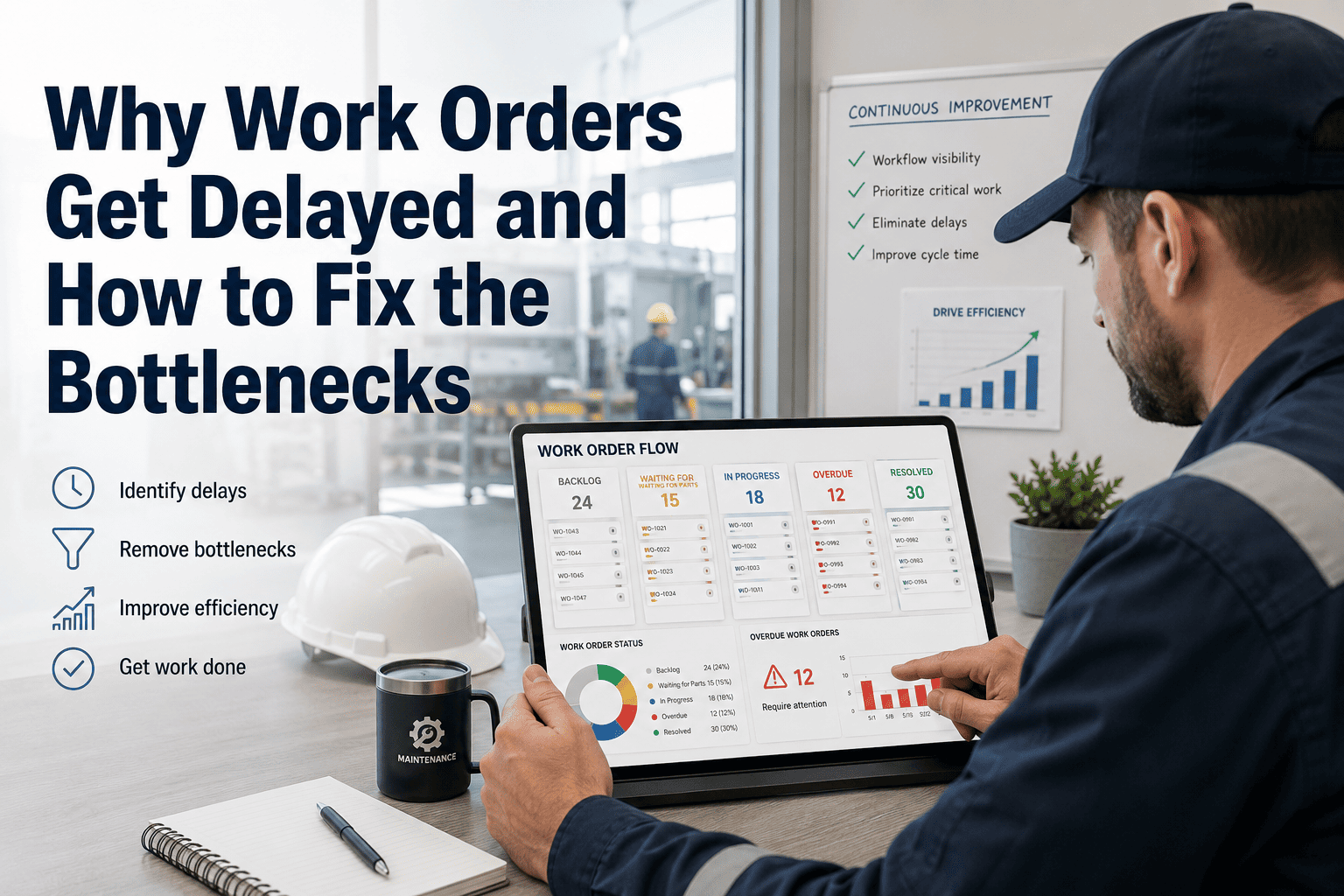
A work order that takes 6 days to close what should take 6 hours is not a technician problem — it is a process problem. Across manufacturing, facilities, and utilities, delayed work orders consistently rank as the...
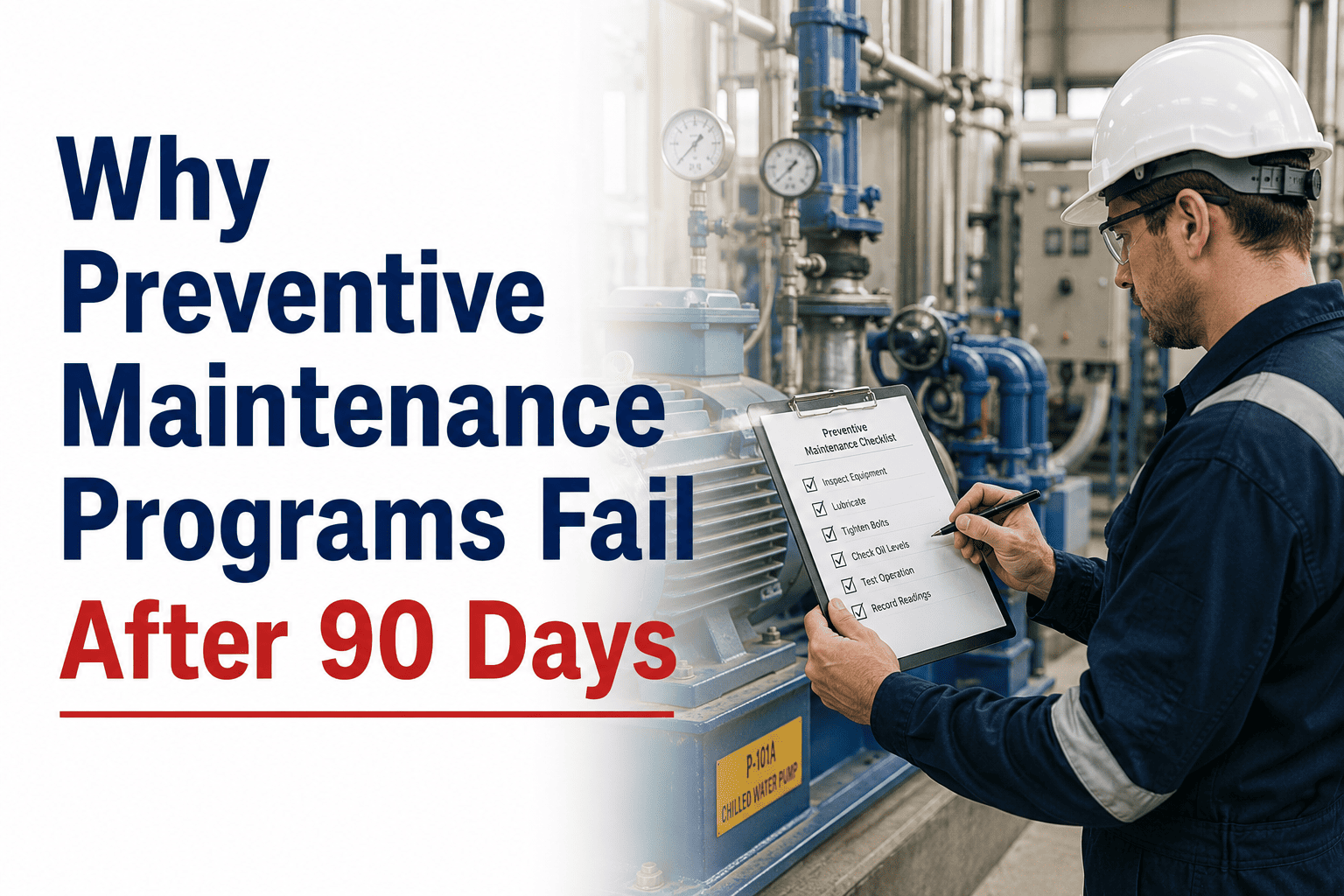
The pattern is remarkably consistent across industries: a maintenance team launches a preventive maintenance program with genuine commitment — schedules are built, checklists are designed, kickoff meetings are...
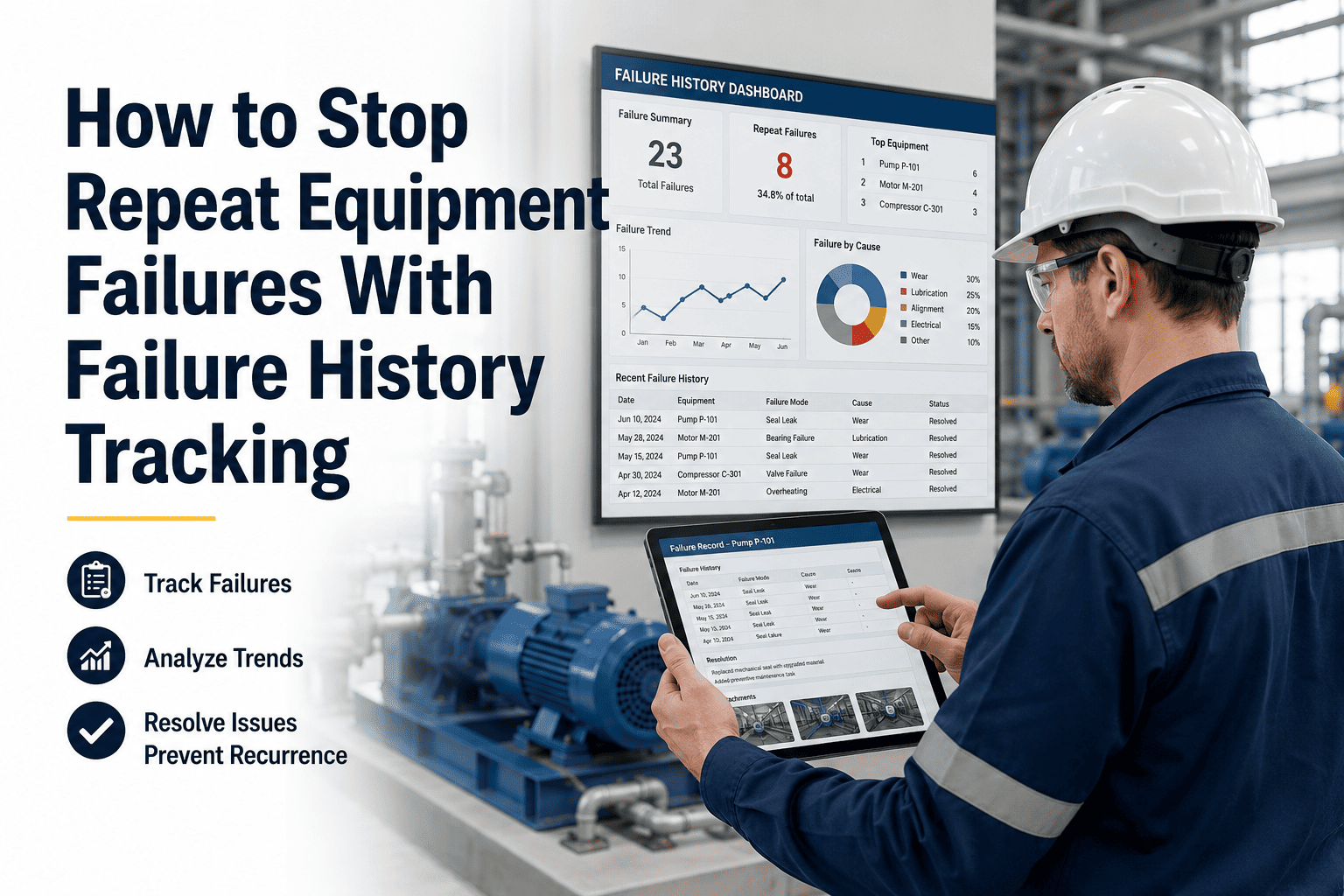
The same pump fails every six weeks. The same conveyor belt trips every third Monday. The same compressor throws the same fault code that maintenance cleared eight months ago. Repeat equipment failures are not bad...

In pharmaceutical manufacturing, maintenance is inseparable from quality. A missed HEPA differential pressure check, an undocumented calibration, or a work order closed without proper sign-off can trigger batch...

Food and beverage manufacturing operates in one of the most demanding maintenance environments in any industry — not because the equipment is unusually complex, but because the consequences of maintenance failure...

Utility infrastructure does not tolerate maintenance failures quietly. When a substation transformer fails without warning in a distribution network, the consequence is not a delayed shipment or a closed conference...

Fleet directors managing 20, 200, or 2,000 vehicles share the same core problem: vehicles generate revenue when they move and cost money when they stop. A truck sitting in a bay waiting for a part that should have...

The average maintenance operation uses 4.7 software tools — CMMS, ERP, BI platforms, IoT sensor networks, building automation systems, and accounting software. Without an API connecting them, each tool is an...

Enterprise maintenance teams do not operate in isolation — they depend on procurement for parts, finance for budgets, and operations for production schedules. Yet 54% of organizations running a CMMS alongside an...

Maintenance teams generate thousands of data points every week — work order completions, asset downtime events, parts consumption, labor hours, PM compliance rates. But 61% of maintenance managers say they cannot...
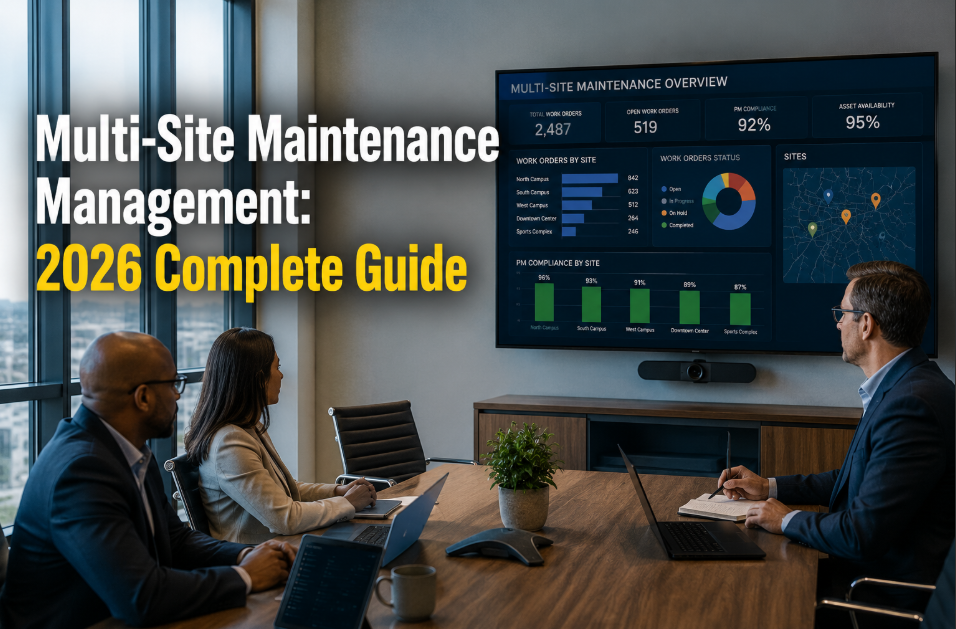
Managing maintenance across a single facility is challenging enough — but when operations span 5, 50, or 500 locations, every inefficiency multiplies. A missed PM at one site becomes 47 missed PMs across a...
Power generation is the industry where maintenance decisions have the broadest consequences — a single turbine failure does not just cost the plant operator money, it removes megawatts from the grid that hospitals,...

Steel manufacturing operates at the extreme edge of industrial maintenance — blast furnaces running continuously for 15-20 year campaigns at 2,300 degrees Fahrenheit, electric arc furnaces cycling through 1,600C...

Cement manufacturing is one of the most asset-intensive and maintenance-demanding industries on the planet. A single cement plant operates rotary kilns at 1,450 degrees Celsius continuously for months, runs raw...
Government and public sector maintenance teams face a unique operational paradox: they manage more diverse asset portfolios than most private sector organizations — water treatment plants, vehicle fleets, parks,...

Distribution centers and logistics operations run on throughput — every minute of conveyor downtime, every stalled sortation system, every failed dock leveler translates directly into missed shipping windows and...

Preventive maintenance scheduling is the single decision that determines whether your operation spends the next 12 months ahead of failures or behind them. Get the scheduling strategy right — the right intervals,...

Work order management is the operational core of every maintenance program — the system that determines whether a repair request becomes a completed job with a full audit trail, or disappears into a phone call, a...

Automotive manufacturing is one of the most maintenance-intensive industries on earth. A single body shop line running 60 jobs per hour across 400+ robots generates maintenance demands that paper systems and...

Cosmetics and personal care manufacturing sits at a unique intersection of consumer expectation, regulatory scrutiny, and production complexity. A single batch contamination event in a personal care facility can...
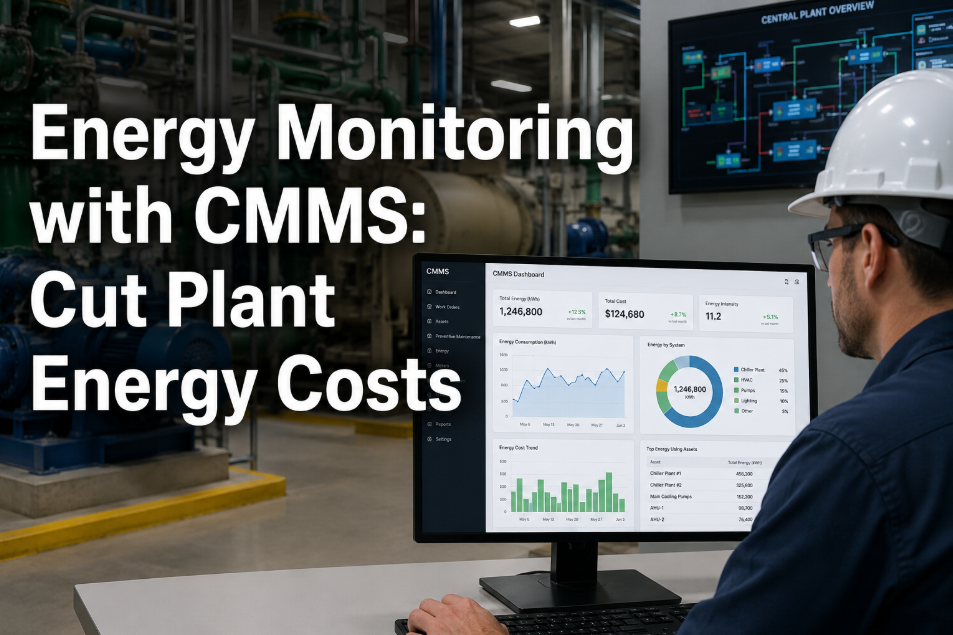
Energy is the second largest operating expense in most industrial facilities — averaging 25-40% of total plant costs — yet fewer than 12% of maintenance teams track energy consumption at the individual asset level....

Environmental, Social, and Governance reporting moved from a voluntary investor relations exercise to a regulatory requirement in 2025 — and maintenance departments are sitting on 60% of the data ESG frameworks...

The average industrial facility spends between $15,000 and $40,000 on a single predictive maintenance sensor deployment — and most of that budget goes to proprietary hardware that locks you into one vendor's...

Industrial plants are generating more operational data than ever before — vibration sensors, thermal cameras, motor current signatures, pressure transducers, and environmental monitors running continuously across...
The CMMS software market is undergoing the most significant transformation in its 40-year history. What began as digital work order logs in the 1980s evolved into multi-site asset management platforms by the 2010s...

Warehouse maintenance is not facility management with higher ceilings — it is a throughput-protection discipline where a single conveyor failure halts 2,000 orders per hour, where a dock leveler malfunction backs...

School and university maintenance is not commercial property management with smaller budgets — it is a public-trust operational discipline where a broken HVAC system means 800 students in a 95-degree classroom,...

Restaurant maintenance is not office building maintenance scaled down — it is a revenue-protection discipline where a broken refrigerator at 5 PM Friday costs thousands in spoiled inventory and lost covers, where a...

Hotel maintenance is not building maintenance with nicer lobbies — it is a guest-facing operational discipline where a broken AC unit in Room 412 at 11 PM becomes a TripAdvisor review by 7 AM, where kitchen...

Property managers overseeing multiple buildings know the pain — tenant requests flooding in through emails and phone calls, vendor invoices with no work verification, and maintenance budgets that feel like...

Hospital maintenance is not facilities management with higher stakes — it is a fundamentally different operational discipline where equipment failures directly endanger patient lives, Joint Commission surveys can...

Manufacturing plants run on uptime. Every unplanned equipment failure on the plant floor costs an average of $260,000 per hour in lost production, emergency labor, and scrapped materials — and the difference...
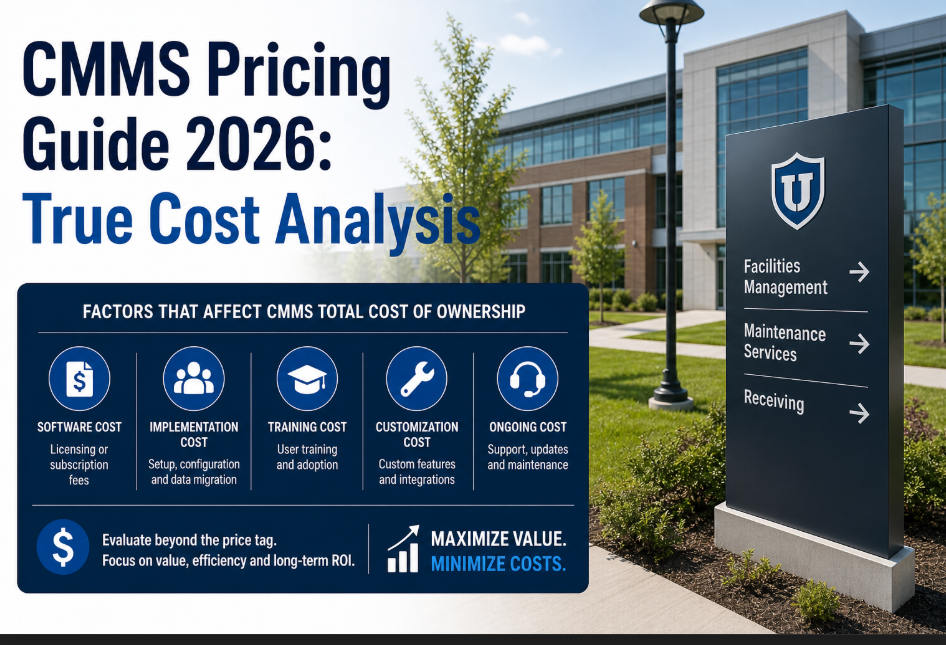
CMMS pricing is one of the most deliberately confusing areas in enterprise software. Vendors advertise per-user monthly rates that look reasonable on paper — until you add implementation fees, training costs,...

The free CMMS question is not really about cost. It is about capability. Every maintenance team searching for a free CMMS is trying to answer one question: "Will this actually work for our operation, or will we hit...

Every maintenance director has sat across from a CFO who looked at the maintenance budget request and asked one question: "What do I get for this?" Without CMMS data behind that answer, the conversation ends in a...

Maintenance teams spend an average of 23% of every repair event waiting for parts. Not diagnosing the fault. Not performing the repair. Waiting — because the right component is not on the shelf, the reorder was not...

Most maintenance teams treat their asset list as a flat spreadsheet — hundreds of equipment records with no structure connecting them to each other, to the systems they belong to, or to the sites they operate in....
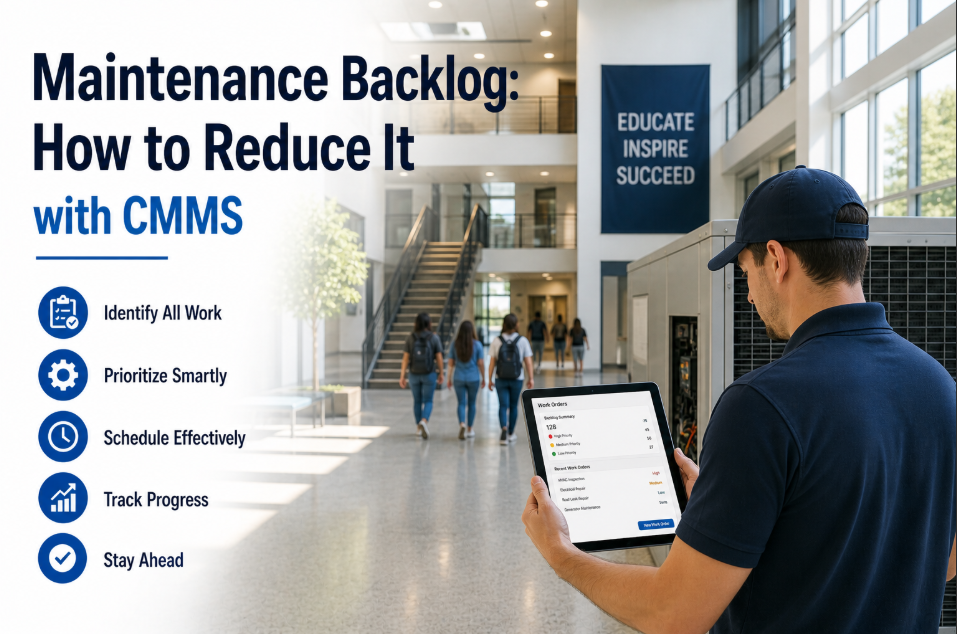
Every maintenance team has a backlog. The dangerous ones are the backlogs nobody is measuring. Work orders sit in a queue for weeks — some critical, some cosmetic, all treated with the same urgency of none. The...

Every operations manager knows downtime hurts. What most don't know is exactly how much — until they sit down and calculate the real number. Not just lost production. Labor still on the clock. Scrap and rework....

Most maintenance teams track equipment failures the same way they tracked them in 1998 — a whiteboard, a spreadsheet, and a gut feeling about which assets are about to fail. That approach cost manufacturers an...
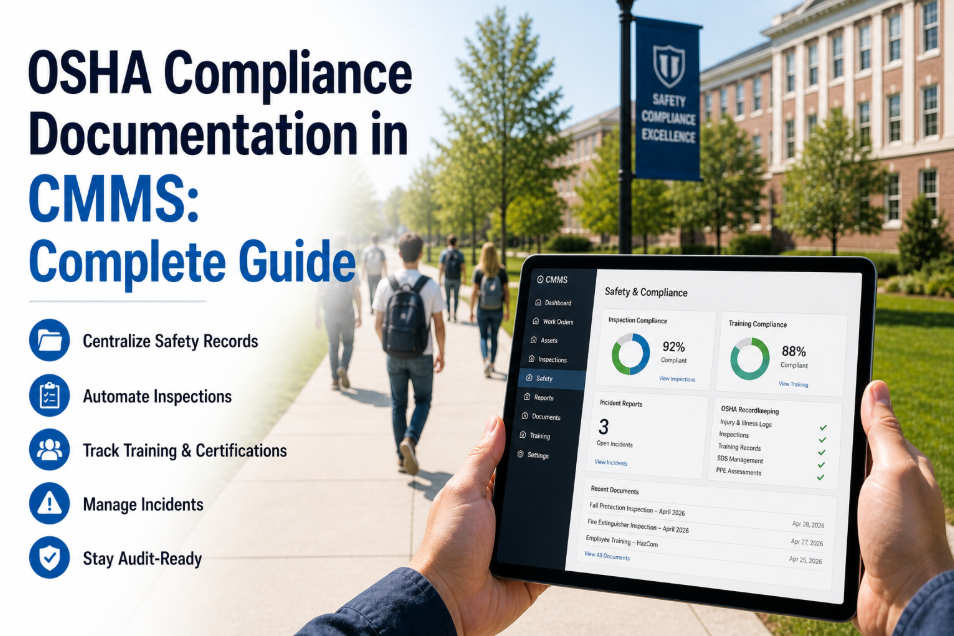
OSHA inspectors do not give credit for good intentions. When an inspector walks onto a facility floor, they request documentation — LOTO procedure records, inspection logs, safety training certificates, equipment...

For most asset management teams, ISO 55001 compliance surfaces twice — once when pursuing certification and again when the auditor arrives. Everything in between is fragmented record-keeping across spreadsheets,...

An FDA investigator arrives at your pharmaceutical facility unannounced. They request the complete maintenance and calibration records for your fill-finish line — every work order, every inspection, every part...

A maintenance technician on a production floor is surrounded by noise — conveyors running, fans at full speed, air compressors cycling. Both hands are on the equipment. Stopping to type a work order update means...
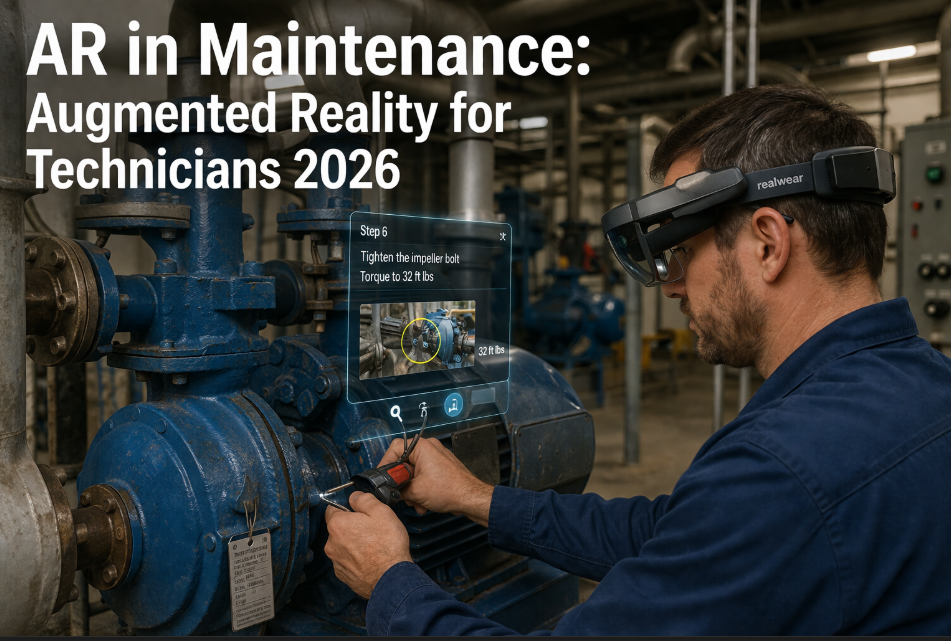
Maintenance technicians lose an average of 47 minutes per repair event searching for documentation, cross-referencing manuals, and waiting for remote expert guidance. In 2026, augmented reality maintenance...

Remote industrial sites, underground facilities, thick-walled mechanical rooms, and rural properties share one operational reality — unreliable or nonexistent internet connectivity. Forty-three percent of...

Desktop CMMS platforms fail in the field because technicians do not carry laptops to the boiler room. Sixty-eight percent of maintenance work orders are still documented on paper or verbally communicated because...

The maintenance skills gap is not a future threat — it is a $50 billion operational crisis unfolding right now across industrial facilities, manufacturing plants, and commercial properties. Seventy-two percent of...

Senior maintenance technicians retire with 20–30 years of equipment knowledge locked in their heads — which pumps cavitate under specific load conditions, which motors overheat in summer months, which valves leak...

Equipment failures in industrial facilities follow predictable patterns — bearings wear gradually, electrical connections degrade over months, pump seals leak progressively — yet 68% of manufacturing plants still...
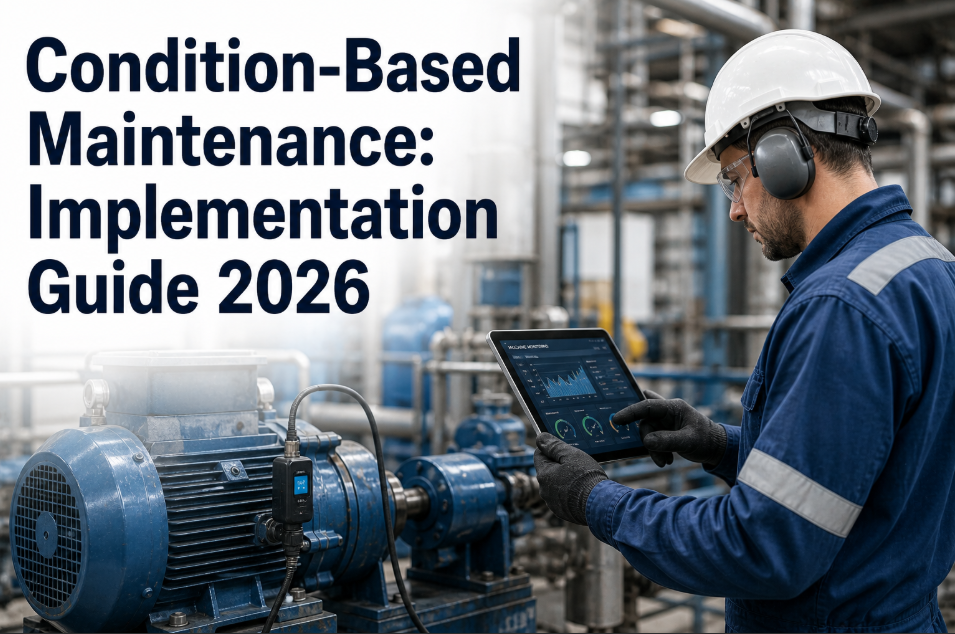
Condition-based maintenance reduces unplanned downtime by 70–85% compared to reactive operations and eliminates 25–35% of unnecessary preventive maintenance tasks triggered by calendar schedules regardless of...

Time-based preventive maintenance catches about 30% of equipment failures before they happen. Condition-based predictive maintenance catches 85–91%. The difference is $120,000 to $480,000 in avoided downtime costs...
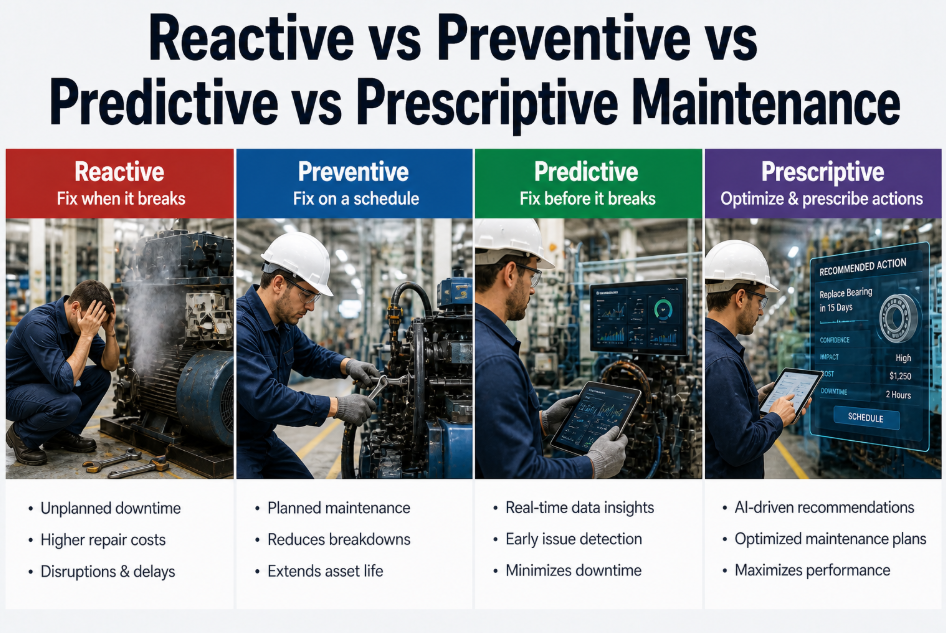
Manufacturing facilities still operating on reactive maintenance spend 4.8 times more per repair event than operations running preventive programs — and 9.3 times more than facilities using predictive analytics. In...

Here is the uncomfortable truth about CMMS implementations: 40–60% of them fail to deliver their projected ROI — not because the software was wrong, but because the rollout was wrong. The technology works. The...
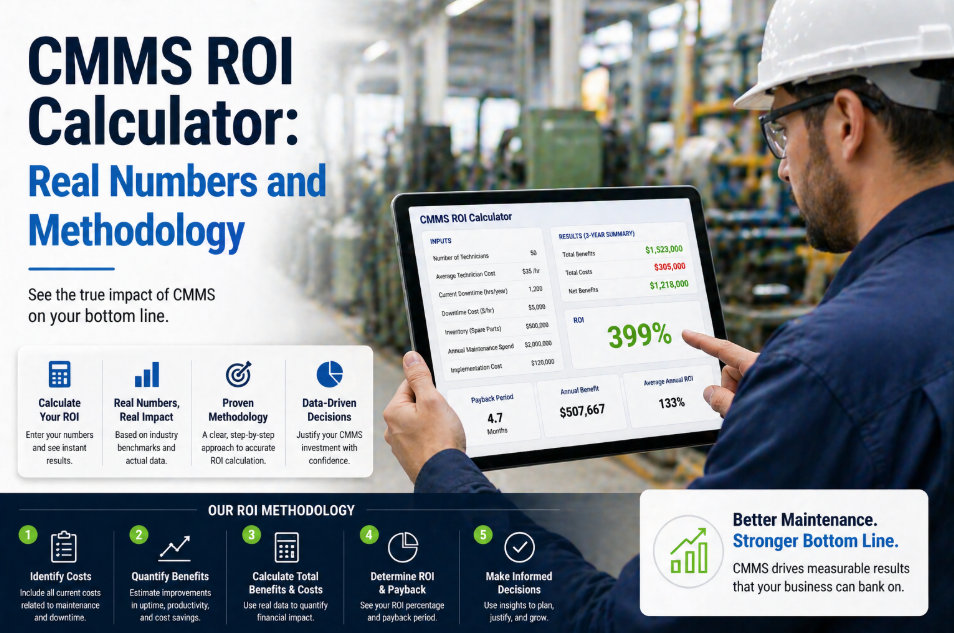
Every maintenance leader knows a CMMS will save money. The problem is proving it — with numbers specific enough to survive a CFO review, a board presentation, or a capital expenditure approval meeting. Generic...

Mid-market manufacturers — companies running 50 to 2,000 employees across one to twelve plants — sit in the most challenging CMMS selection zone in 2026. Too large for small-business tools that cap out at basic...
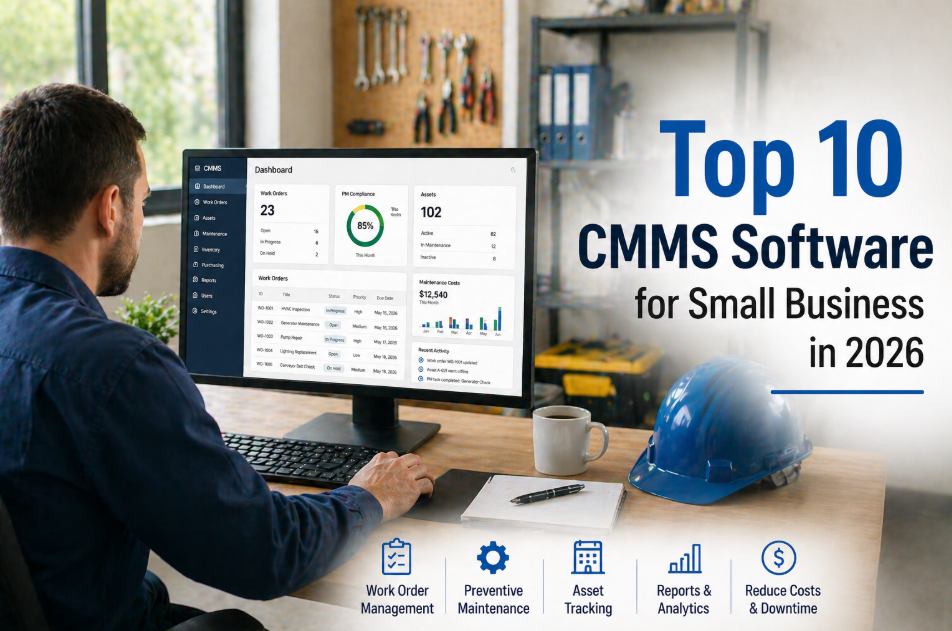
Every year, small businesses lose an average of $12,000 to $45,000 in emergency repairs, missed maintenance, and equipment downtime that a basic CMMS could have prevented. Yet 62% of small businesses with fewer...

Every maintenance team has walked past a corroded pipe, a worn conveyor belt, or a cracked housing — and missed it. Not because they were negligent, but because human visual inspection at scale is inherently...
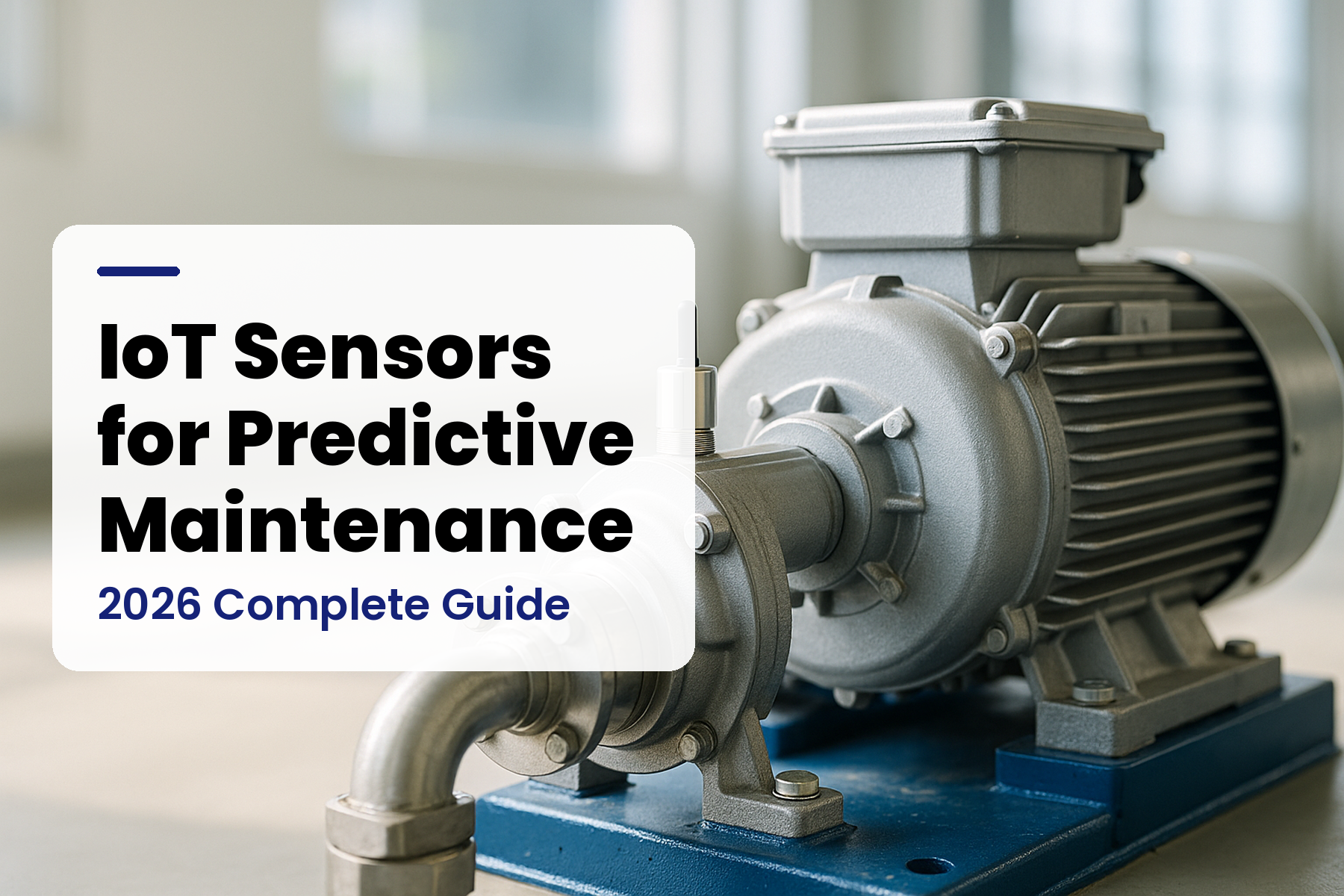
Choosing IoT sensors for predictive maintenance gets messy fast when every asset seems to want a different signal, alerts still land in inboxes, and the failure you care about stays hidden until it is expensive....
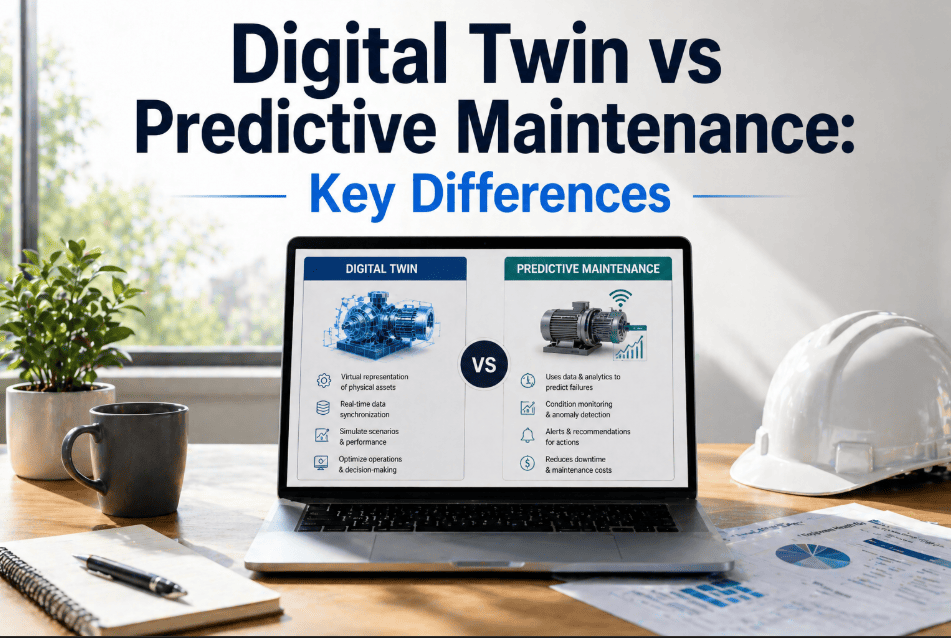
Two terms dominate every Industry 4.0 maintenance conversation in 2026 — Digital Twin and Predictive Maintenance. They are often used interchangeably in vendor marketing, which creates real confusion for plant...
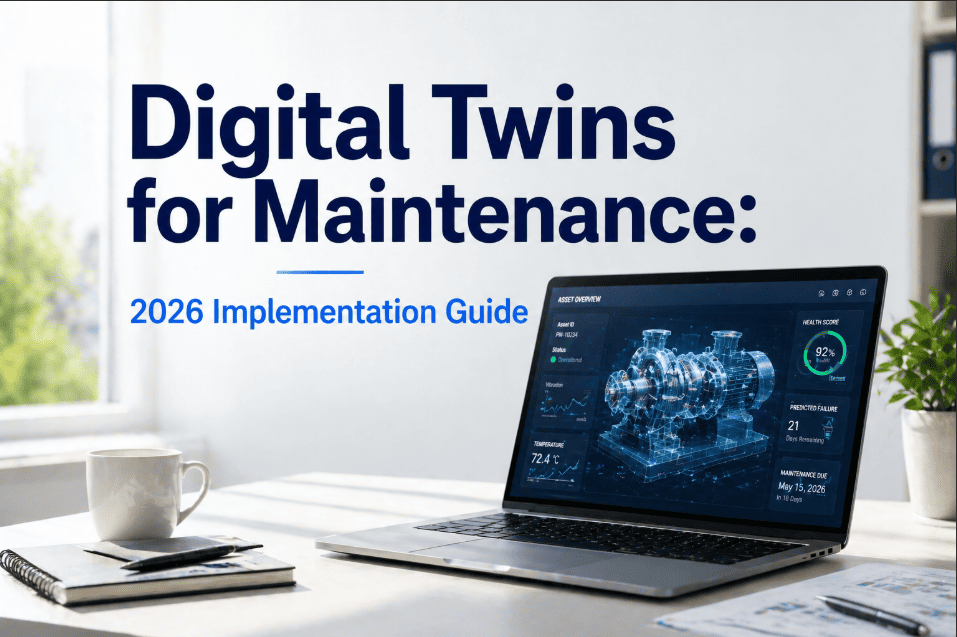
Implementing Digital Twins in 2026 has moved from a "future-tech" experiment to a foundational requirement for high-availability industrial plants. A Digital Twin isn't just a 3D model; it is a live,...

Unplanned downtime costs industrial manufacturers an estimated $50 billion annually across the United States alone. In 2026, AI-powered maintenance systems are cutting that figure in half for early adopters — using...
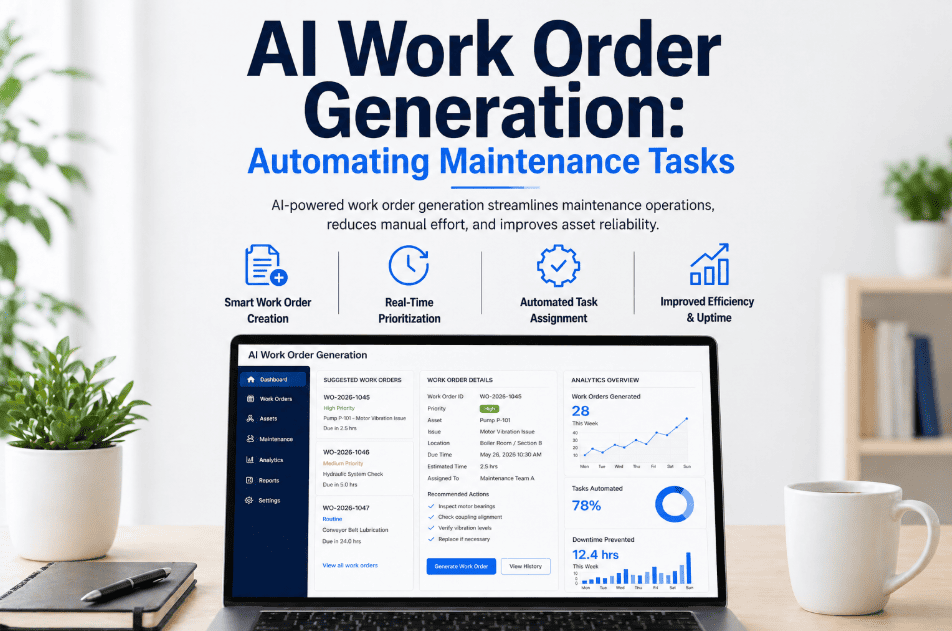
Maintenance administration currently consumes up to 40% of a technician's workday—time spent manually logging faults, searching for equipment manuals, or waiting for work assignments. In 2026, AI Work Order...

The AI predictive maintenance software market is projected to reach $91.04 billion by 2033 — and the landscape in 2026 ranges from pure-play sensor analytics platforms to CMMS-native AI that generates work orders...

The business case for AI predictive maintenance is built on one number: the cost of unplanned downtime that your operation experiences today. Everything else — maintenance cost reduction, equipment lifespan...

Twelve percent of manufacturers have deployed AI-powered predictive maintenance. They report 50% less unplanned downtime, 25% lower maintenance costs, 25% longer equipment lifespan, and 70% fewer catastrophic...

Most "free CMMS" searches end in one of two places: a genuinely free plan with real maintenance capability, or a 14-day trial that vanishes the moment your team starts depending on it. The difference matters...

MaintainX is a credible CMMS — strong real-time messaging, clean mobile UX, and one of the better procedure library workflows in the category. The reasons teams seek alternatives in 2026 cluster around four...
.png)
UpKeep changed the CMMS market when it launched in 2014 — bringing mobile-first work order management to a category that had been desktop-bound for two decades. In 2026, however, the platform's per-user pricing...

eMaint has been a CMMS since 1986. That's 40 years of industrial maintenance experience built into the platform — and it shows in the depth of compliance documentation, audit trail capability, and feature...
Fiix is the rare CMMS that earned its reputation in heavy industrial environments before it became a Rockwell Automation acquisition. The platform is genuinely strong — solid PM scheduling, established North...
The most consistent complaint about MaintainX in user reviews isn't the price or the feature gates — it's the asset hierarchy. MaintainX caps you at two layers: an asset and a sub-asset. That's it. For a...

Limble built its reputation on something rare in B2B software: technicians who actually like using the product. The G2 and Capterra reviews are consistently strong on usability, dashboard clarity, and onboarding...

A 25-technician facilities team in Phoenix budgeted $11,000 for their first-year CMMS deployment. By month four, they were paying $1,375 per month for UpKeep Premium — and discovering that preventive maintenance...
A plant manager at a specialty chemicals facility was asked by her new VP of Operations a simple question: "Where does our maintenance program actually stand — are we reactive, preventive, or something better?" She...

A mid-sized food processing plant in the Midwest ran maintenance out of a filing cabinet until 2023 — work orders on pink carbon-copy forms, PM schedules on a wall whiteboard, asset histories in whatever notebook...

A regional healthcare operator running 14 facilities discovered a $2.4M gap between what their balance sheet said their assets were worth and what an independent condition audit actually revealed. The asset...
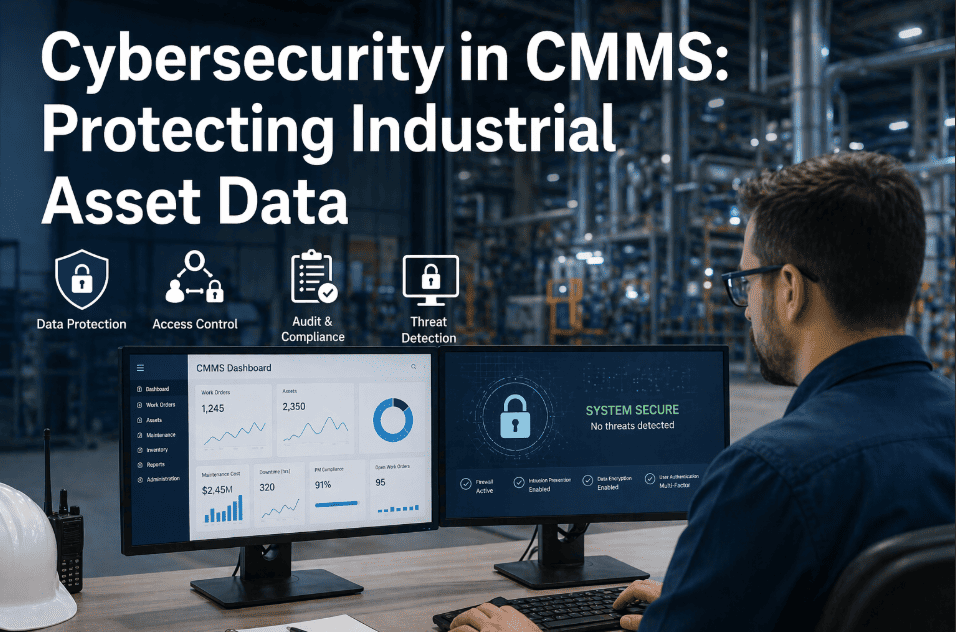
In 2021, attackers breached a water treatment facility in Oldsmar, Florida by exploiting remote access credentials in the plant's control system — and nearly raised sodium hydroxide to dangerous levels before an...
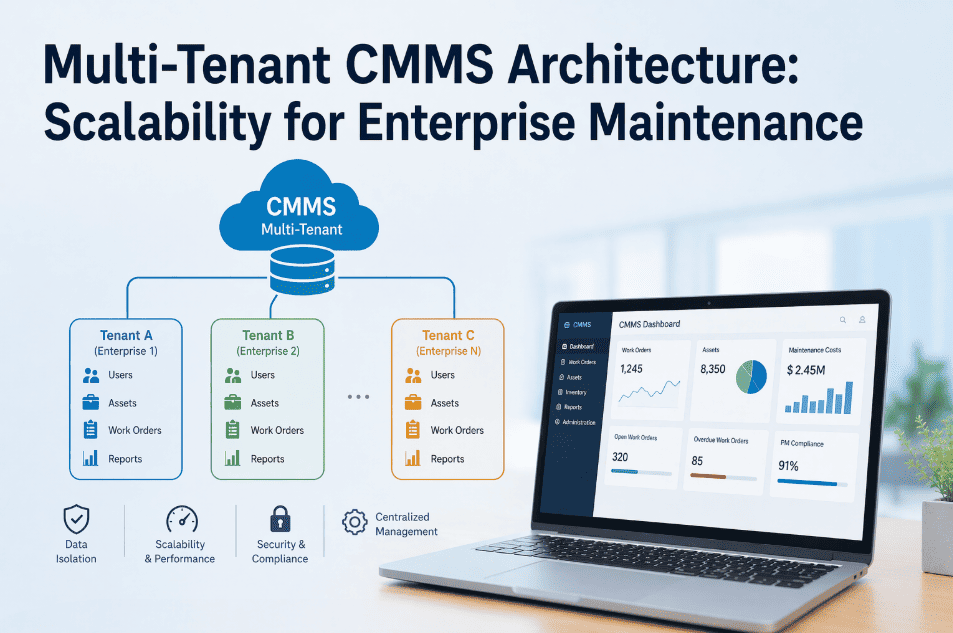
When a regional manufacturer with three plants tries to use a single-site CMMS across all locations, the problems start immediately: asset numbering conflicts between sites, technicians seeing work orders that...
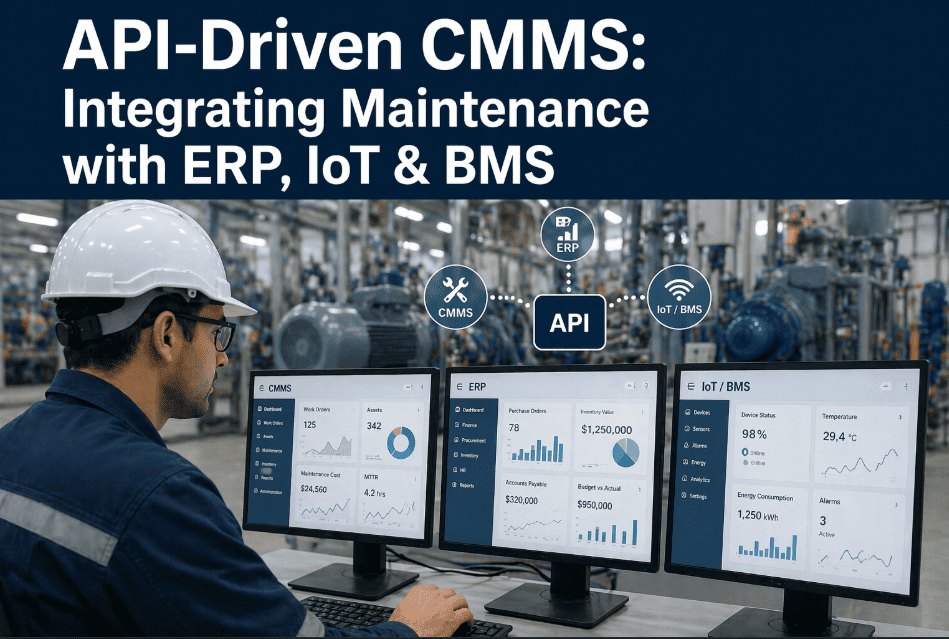
The maintenance department used to be the last place anyone thought about system integration. Work orders lived in spreadsheets, PMs were tracked in notebooks, and the ERP system knew nothing about what happened in...
A pulp and paper mill in Wisconsin had 12 critical paper machine dryer cylinders. Each cylinder had a $180,000 replacement cost and a 6-week lead time for parts. The maintenance team performed monthly vibration...
A Tier 1 automotive supplier in Detroit ran 340 CNC machines across two plants. Their maintenance team of 22 technicians operated on fixed PM schedules — every machine got the same interval regardless of actual...
A petrochemical plant in Houston spent $2.4 million replacing a compressor that failed catastrophically during peak production. Post-failure analysis revealed the bearing degradation pattern had been visible in...

At 11:43 PM, a maintenance technician at a logistics hub in Memphis got a breakdown notification on his phone. Conveyor drive motor on Line 7 had tripped on overtemperature. He was the only tech on shift. He opened...
A maintenance manager at a food and beverage plant in Sacramento got the alert at 2:47 AM: the vibration sensor on Compressor C-14 had exceeded its warning threshold. That's a predictive alert. He knew the...

In 2019, the reliability engineering team at a petrochemical facility in Baytown, Texas employed three full-time planners whose primary job was to look at maintenance backlogs, check equipment histories, review PM...
The maintenance manager at a food processing plant in Minneapolis found out his work order management system was failing in the most direct way possible — by counting. He had a team of 14 technicians. In a given...

Asset-intensive industries don't fail because they lack maintenance staff or budget. They fail because the ratio of assets under management to the quality of the maintenance data governing those assets is...
A maintenance manager at a Pune-based auto components manufacturer was running a paper-based PM system across three plants — 1,400 assets, two shifts, and a compliance audit scheduled for Q2 2024. His plant...

A production manager at a paper mill in Wisconsin was asked to justify her maintenance budget for the third consecutive year in front of the CFO. Her PM programme was costing $1.8M annually. Predictive maintenance...
Every plant director and maintenance manager running SAP, Oracle, or Microsoft Dynamics has heard the argument from their ERP vendor: "You already have a maintenance module — why do you need a separate CMMS?" It...

Spreadsheets built maintenance management before dedicated software existed — and for a 3-person team tracking 12 assets at a single location, Excel remains a functional starting point. But the moment a maintenance...

Every maintenance manager running a tight budget has asked the question at some point: is free CMMS software good enough, or do we need to pay for a proper platform? The honest answer depends entirely on what your...

Field technicians in manufacturing plants, utility sites, and facilities operations don't sit at desks. They work in loud, dusty, high-temperature environments where stopping to find a desktop computer is simply...

Maintenance teams across manufacturing, facilities, and field operations are shifting from spreadsheets and desktop software to cloud-based CMMS platforms — and the business case has never been stronger. Cloud CMMS...

Enterprise maintenance organisations evaluating CMMS platforms in 2026 face a different challenge from smaller operations: the question is not whether a platform can handle the work order volume — it is whether the...

Small businesses running maintenance teams in 2026 face a specific CMMS problem: the platforms built for enterprise operations are too expensive and too complex, while the platforms built for simplicity run out of...

Facility managers in 2026 face a CMMS landscape that has never been more crowded — or more confusing. The right platform for a 40-building university campus is not the right platform for a 3-building corporate...

Choosing a CMMS for a manufacturing operation in 2026 is not a software decision — it is an uptime decision. The wrong platform means PM schedules that miss throughput triggers, asset histories that exist in paper...
In March 2021, St. Carver Regional Medical Center — a 750-bed academic medical center in the Southeast — received a Joint Commission survey finding that no healthcare organization wants: a Pattern finding in the...

A commercial property management company in Chicago was paying a roofing contractor $340 per hour for emergency leak repairs — at least eight times per building per year across their 22-property portfolio. When...

An HOA board in Scottsdale, Arizona spent $340,000 in a single fiscal year on emergency repairs — a pool heater that failed mid-winter and had to be replaced on an emergency basis ($18,400 vs a $4,200 planned...

A property management company in Phoenix inherited a 240-unit apartment complex that had been operating for 11 years without a formal condition assessment. When they commissioned a Facility Condition Assessment as...

A petrochemical plant in Louisiana had 22 maintenance technicians on staff and a $4.2 million annual maintenance budget. What their HR system recorded as qualifications and what their technicians could actually...
.png)
A food processing plant in Wisconsin was carrying $2.4 million in spare parts inventory. When their new maintenance manager ran the first proper ABC/VED analysis in three years, the results were damaging: 34% of...

A water utility in Arizona was replacing pump bearings every 14 months on a fixed calendar schedule — spending $22,000 per replacement cycle whether the bearing needed it or not. After installing vibration sensors...

A maintenance director at a food processing plant in Wisconsin presented her annual budget request with a single line: "maintenance costs increased 18% this year." The finance committee cut her budget. Twelve...

A plant manager at a manufacturing facility in Ohio discovered that 40% of his maintenance team's hours were spent on work that was never formally requested — verbal fixes, hallway conversations turned into...

A VP of Operations at a food manufacturer in Wisconsin walked into a board meeting to request $340,000 for a predictive maintenance platform. The CFO asked one question: "What will we get back and when?" She had no...

A maintenance technician at a paper mill in Georgia was handed a stack of 14 paper work orders on a Monday morning — by Thursday he had completed 9, but nobody knew which 9, which 5 were overdue, or whether the job...

A maintenance supervisor at a food processing plant in Wisconsin spent six months trying to implement a CMMS alone — uploading assets into spreadsheets, chasing OEM manuals that never arrived, and training...

In March 2022, a regional distribution company headquartered in Dallas, Texas made a decision that changed the economics of their 350-vehicle fleet operation. They had been running a hybrid system — paper work...

A regional trucking company in Ohio discovered — during a routine CMMS audit — that they had paid $214,000 in powertrain repairs over 18 months on vehicles that were still under OEM warranty. Nobody had checked....

Commercial building operators spend 35–45% of their total operating budget on MEP systems — HVAC, electrical, plumbing, and fire safety — yet most properties run these systems reactively until something fails. A...

Property managers overseeing 50+ residential or commercial units spend an average of 22 hours per week on maintenance coordination — fielding tenant calls, dispatching vendors, and chasing work order status...
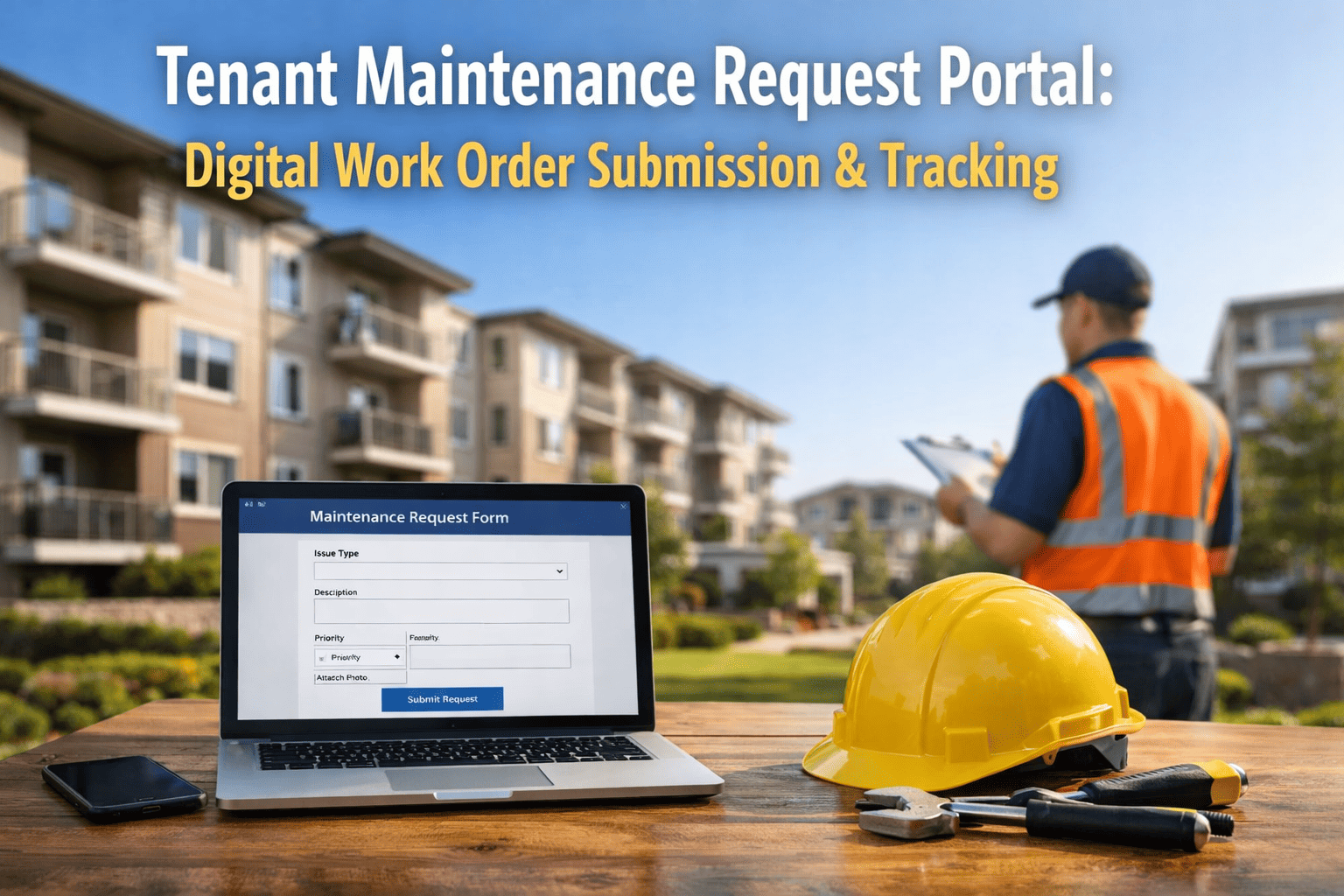
Tenant satisfaction surveys consistently show the same result — maintenance response speed is the single biggest factor in lease renewal decisions. Properties where tenants can submit requests digitally and track...

A mid-size dairy processing plant in the Midwest — running 3 pasteurization lines, 2 filling lines, and a cold storage facility — was averaging 4 food safety incidents per year, each costing between $18,000 and...

Food plants operating without integrated pest control and environmental monitoring in their CMMS are running blind on two of the most audit-sensitive areas in food safety. A single pest finding during a BRC or SQF...

When a food plant fails a GFSI-benchmarked audit — whether FSSC 22000, BRC, or SQF — the root cause is rarely a single dramatic failure. It is almost always incomplete documentation: missing PM records, gaps in...

A single CIP failure in a food or beverage plant does not just mean a dirty tank — it means a potential recall, a failed audit, and production hours lost to emergency re-cleaning. Plants running 3–5 CIP circuits...

A failed HACCP audit does not just trigger a corrective action report — it can suspend production, trigger a product recall, and damage retailer relationships that took years to build. Food manufacturing...

A cold room that drifts 4°C above setpoint overnight does not just risk product quality — it triggers a HACCP deviation, requires a product disposition decision, and generates the kind of documentation trail that...

When the Director of Engineering at a 500-room full-service hotel reviewed their guest satisfaction data, the pattern was clear: 43% of negative reviews mentioned room conditions, slow maintenance response, or...

Managing maintenance across a portfolio of hotels is a fundamentally different challenge from managing a single property. A regional facilities director overseeing 12 properties has no visibility into which...

Energy is typically a hotel's second-largest operating cost after payroll — and most of it is wasted through maintenance neglect rather than operational inefficiency. A chiller running at 15% below rated efficiency...

A hotel pool that fails a health department water quality test does not just close for a day — it generates liability exposure, triggers mandatory reporting, and creates guest-facing incidents that appear on review...

A hotel room pulled from service costs an average of $180 in lost RevPAR per night — and most rooms are pulled for issues that a structured preventive maintenance schedule would have caught weeks earlier. Guest...

Hotel kitchen and laundry equipment is the hardest-working, highest-risk asset category on any property. Commercial ovens running 18-hour service cycles, walk-in coolers maintaining critical food safety...

Hotel maintenance management is no longer just about fixing what breaks — it is about protecting the guest experience before problems ever reach a guest room. For hotel engineering directors and facilities managers...

Tires are the second-largest variable maintenance expense in most commercial fleets after fuel — and the most avoidable. The American Trucking Associations estimates that under-inflation and irregular wear account...
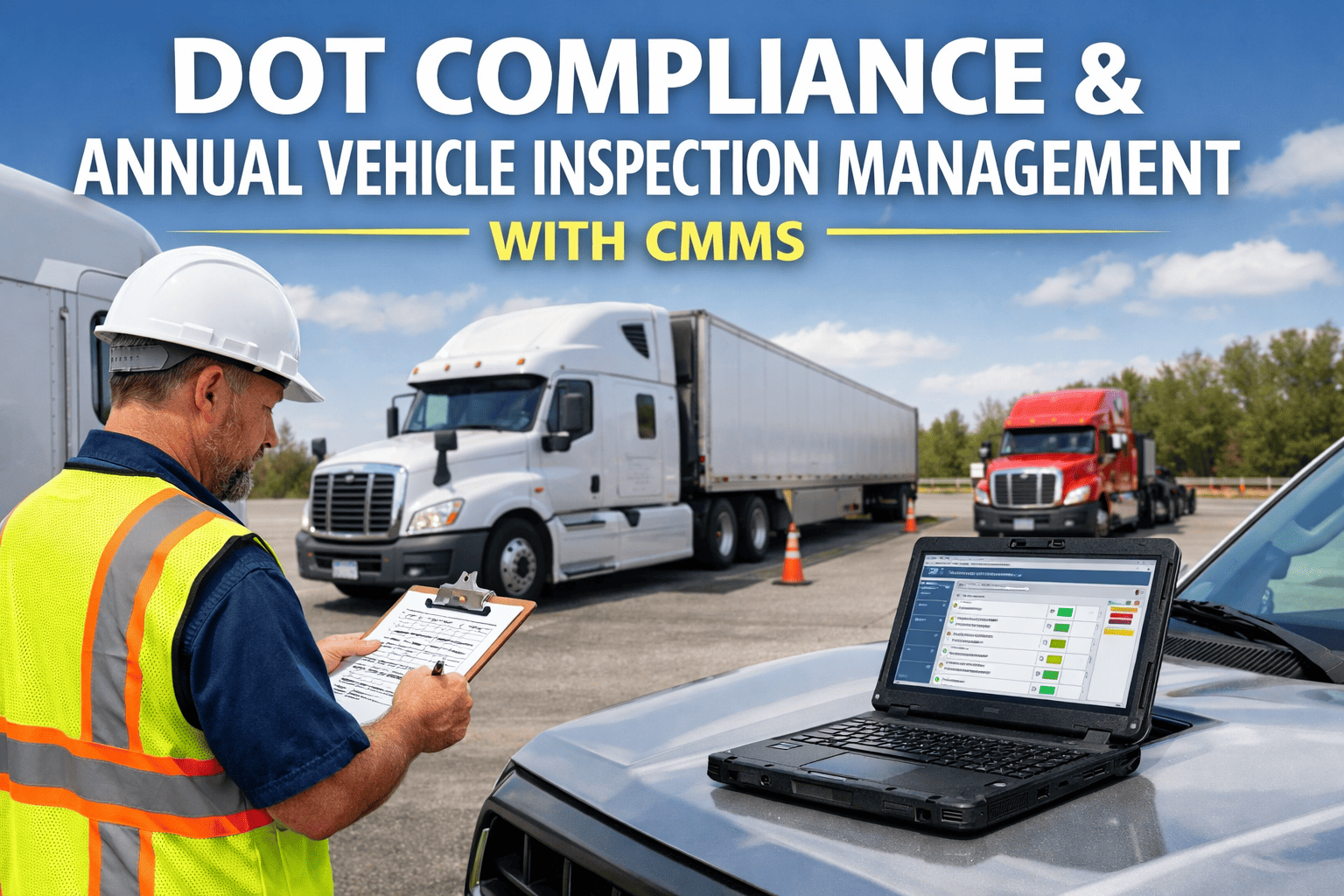
DOT compliance is one of the most consequential — and most paper-intensive — obligations a commercial fleet carries. A single missed annual inspection can result in an out-of-service order that grounds your unit on...

Heavy equipment maintenance in construction and mining operates in conditions that destroy components faster than any on-road fleet — abrasive dust penetrates hydraulic seals, extreme load cycles accelerate...

The Driver Vehicle Inspection Report is one of the most important — and most poorly executed — compliance documents in commercial trucking. Under FMCSA 49 CFR 396.11, every commercial motor vehicle operator must...

Electric vehicle fleet maintenance is not simply a variation of what you already do for diesel — it is a fundamentally different technical discipline with different failure modes, different PM intervals, different...

Fuel is the single largest variable operating cost in any commercial fleet — typically 35 to 40 cents of every dollar spent on fleet operations. Yet most fleet managers have almost no real-time visibility into...

A commercial vehicle preventive maintenance schedule is not a suggestion — for US fleets subject to FHWA and FMCSA oversight, it is a federal requirement and a direct cost-control tool. The American Trucking...

Fleet maintenance management is the operational backbone of every commercial trucking company, municipal fleet, and logistics operation running vehicles on US roads today. A missed oil change becomes a seized...
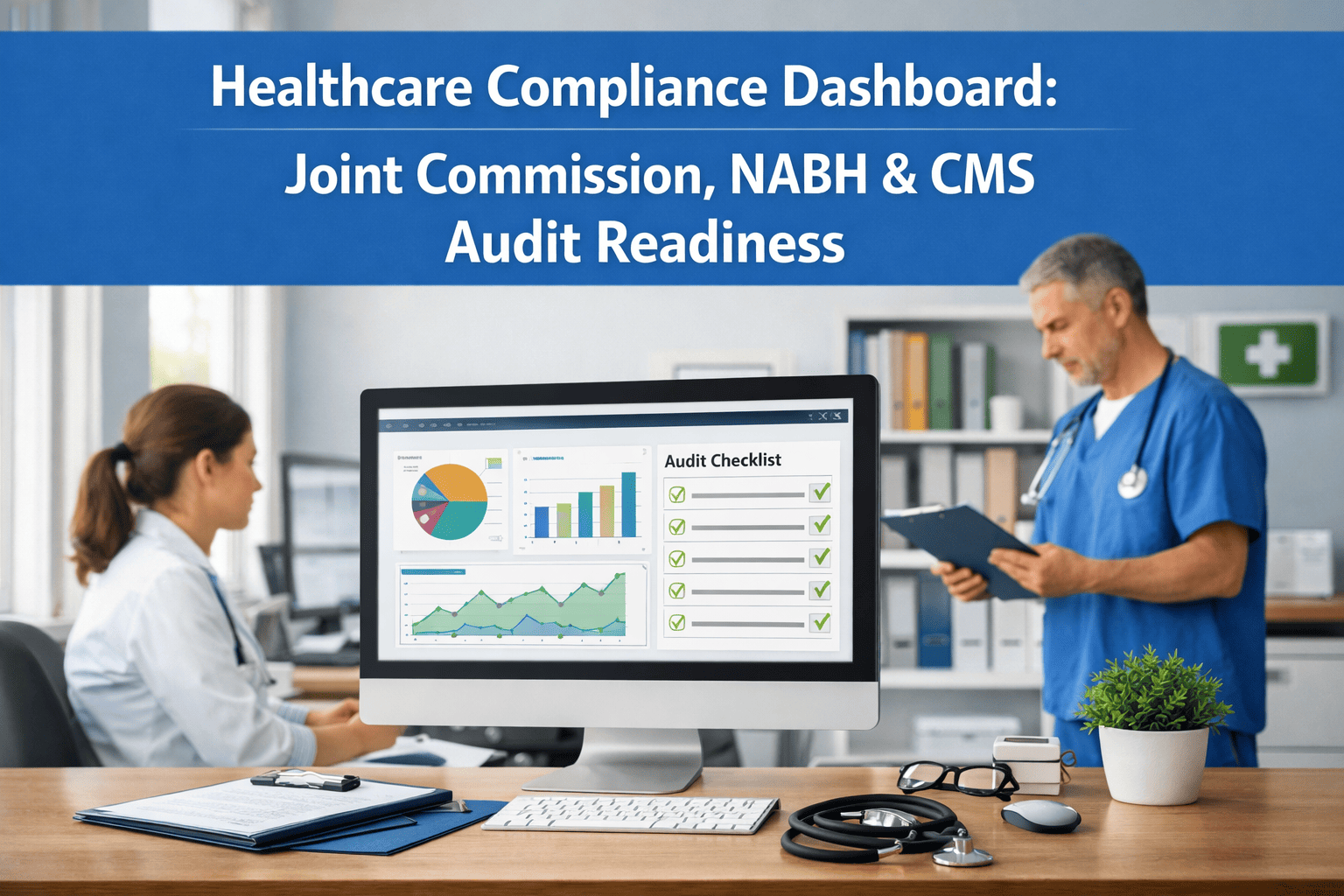
When a Joint Commission surveyor, a CMS auditor, and a state health department inspector visit the same hospital within the same calendar year — which happens in approximately 34% of US hospitals — the compliance...

A single particle count exceedance in an ISO 5 fill zone does not just fail a batch — it triggers a full deviation investigation, re-qualification of the affected zone, and a CAPA that typically consumes 6 to 10...

The Joint Commission's Environment of Care chapter most frequently cited in US hospital surveys is EC.02.03.01 — fire safety system management — and the most common finding is not a malfunctioning fire system, but...

An FDA 483 observation for inadequate equipment qualification records at a US pharmaceutical manufacturer results in an average of $4.2 million in remediation costs — data integrity assessment, consultant fees,...

A single operating theater HVAC failure during a surgical case costs a US hospital an average of $42,000 in case postponement and room decontamination — but the more serious consequence is the 14-day period of...

A CT scanner that misses its quarterly PM cycle is not just a compliance liability — it is a $3.2 million asset running toward an unscheduled failure that averages 4.6 days of clinical downtime and $180,000 in...

A single Joint Commission survey finding in the Environment of Care category — a missed fire door inspection record, an undocumented generator test, a medical equipment PM overdue by 14 days — can trigger a...

A vertical roller mill that trips on hydraulic pressure loss during peak production costs a cement plant between $18,000 and $32,000 per hour in lost grinding capacity — and the average VRM hydraulic failure that...

Unplanned kiln shutdowns cost US cement producers an average of $28,000 per hour in lost clinker output — yet 68% of those shutdowns trace directly to missed preventive maintenance tasks that existed on a paper...

Before Oxmaint, this multi-national FMCG manufacturer was running 12 packaging lines at a portfolio average of 71% OEE. Breakdowns consumed 14% of available production time. Changeovers averaged 52 minutes per SKU...

A technician arrives at a failed filling machine, identifies the failed seal, walks to the parts room, and finds the shelf empty. The repair stalls. An emergency purchase order goes to a spot-market supplier with...
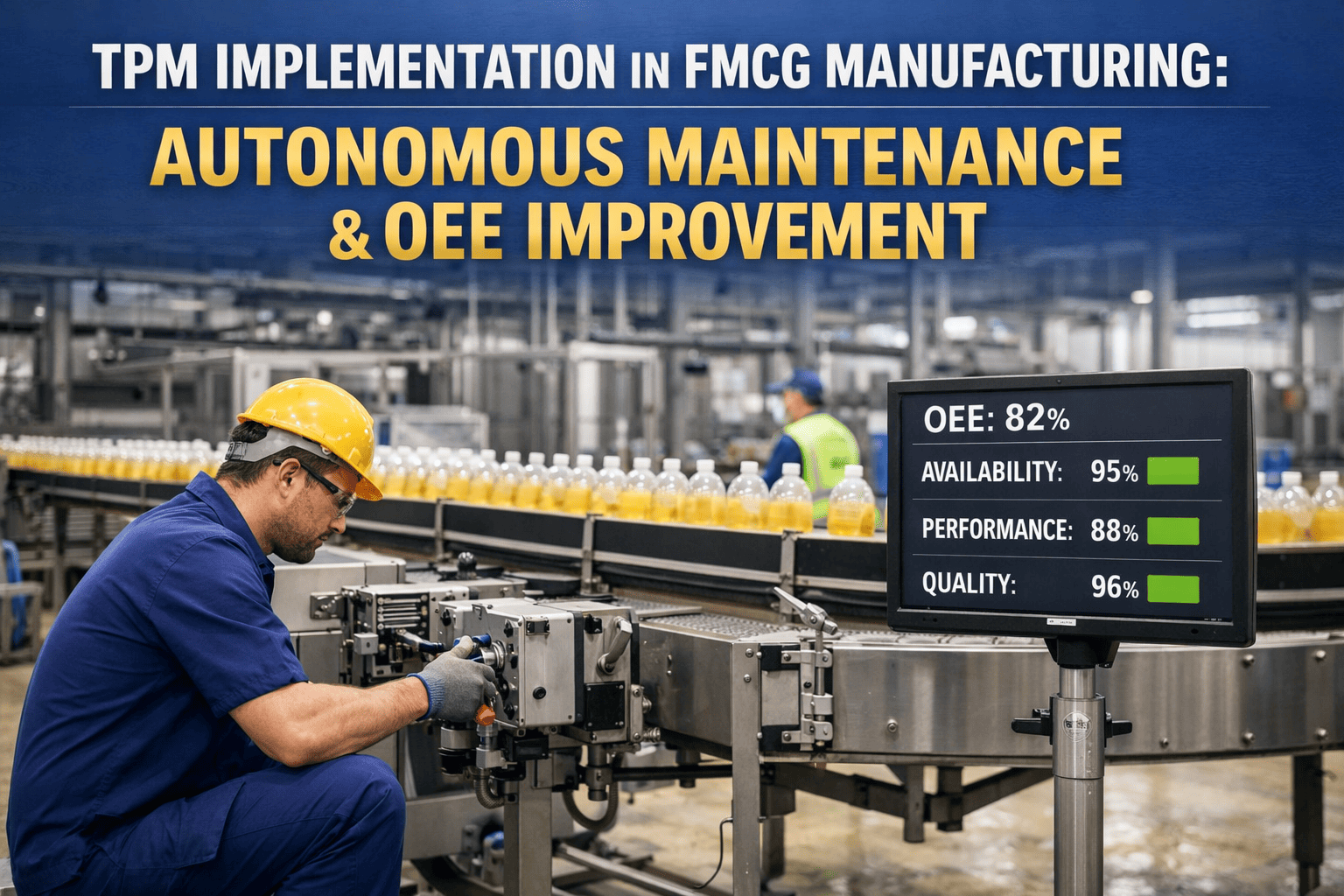
71% of FMCG maintenance professionals claim preventive maintenance as their primary strategy. 58% still spend less than half their time executing it. That execution gap is where OEE collapses. Total Productive...

An anaerobic digester running at 85% biogas yield instead of 95% is costing a wastewater treatment plant or biogas facility between $40,000 and $120,000 in lost energy revenue per year — before counting the...

An anaerobic digester running at 85% biogas yield instead of 95% is costing a wastewater treatment plant or biogas facility between $40,000 and $120,000 in lost energy revenue per year — before counting the...
A packaging line stoppage in FMCG manufacturing doesn't just pause production — it triggers a cascade of downstream consequences that compound every minute the line is down. Form-fill-seal machines, cartoners, case...

Compressed air, steam, chilled water, and electrical power are the invisible backbone of every FMCG production line — and the systems most likely to be overlooked until they cause a site-wide shutdown. A compressed...

A biscuit manufacturer in the UK ran its primary packaging line at 78% OEE for three years — not because of equipment age, but because its four most common failure modes were known, recurring, and never permanently...

A food waste biogas plant in the Netherlands ran its de-packaging unit for 11 months without a scheduled screen inspection — because nobody had written it into the PM programme. When the unit seized, the resulting...

A biomethane injection point into a natural gas grid or a vehicle fuel filling station has a single non-negotiable requirement — the gas quality must meet specification every hour of every day. Methane content...

Biogas plants operate with four simultaneous hazards that are each capable of killing personnel independently — and that frequently co-exist in the same confined space at the same time. Hydrogen sulfide at 1,000...

A biogas CHP engine running on 62% methane biogas with elevated H₂S content ages differently from a natural gas engine — oil acidification is faster, spark plug wear is accelerated, and valve seat recession occurs...
A biogas plant that loses digester temperature by 3°C drops methane yield by up to 15% within 48 hours. A gas handling valve that fails without warning doesn't just interrupt production — in an anaerobic...
Cleaning operations are the most visible service a facility team delivers — and the one tenants notice first when it falls short. A missed restroom check at 10am, a deep clean scheduled but not completed, or a...
Every maintenance failure in a commercial building starts the same way — a request that wasn't logged, a priority that wasn't assigned, or a technician who never received the job. Facilities teams relying on email...

Energy is the single largest controllable operating cost in a commercial building — typically accounting for 30–40% of total facility expenditure, yet most facilities teams manage it reactively, reviewing utility...
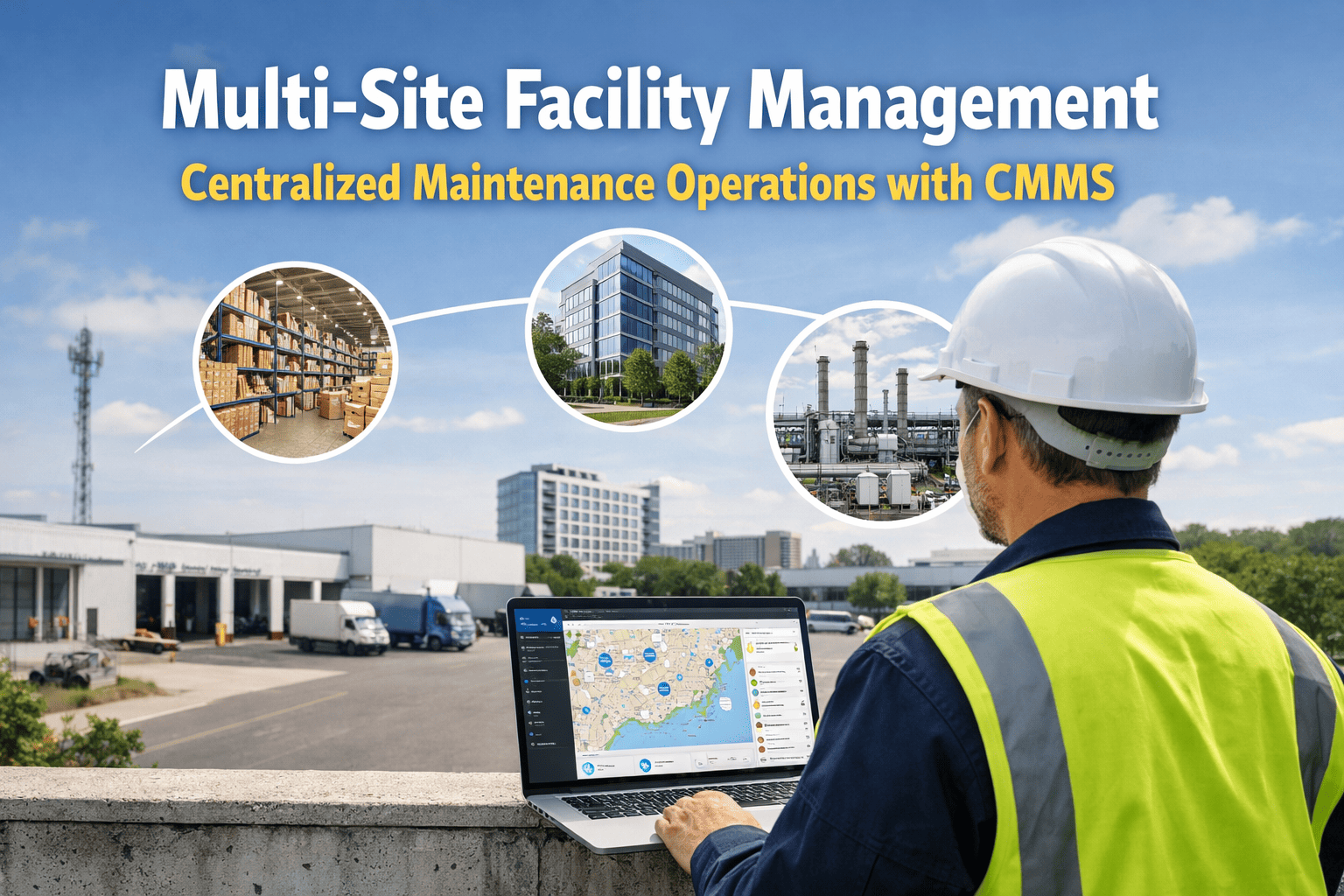
Managing maintenance across five buildings with five separate spreadsheets, five contractor lists, and five compliance calendars doesn't scale — it creates five independent failure points. Facility directors...

An elevator that fails its annual statutory inspection doesn't receive a warning — it receives a closure order, and every tenant on floors above ground level loses access until the violation is resolved. Across...

Fire safety system failures don't send advance warnings — a sprinkler head that hasn't been tested, a fire alarm panel with a silenced fault, or an extinguisher last certified three years ago will perform exactly...

A commercial building HVAC system running without a structured preventive maintenance programme consumes 15–25% more energy than it should, fails 40% earlier than its design life, and generates tenant complaints...
.png)
A commercial building with 200,000 square feet of office space, retail, and parking generates over 1,400 individual maintenance tasks every year — HVAC filter changes, electrical panel inspections, fire suppression...

A regional airport handling 4.2 million passengers annually was losing $820,000 every year to unscheduled GSE failures — pushback tractors stranded at gates, belt loaders pulled mid-turnaround, and GPU units...

Aviation MRO operations face a critical challenge: ensuring the right part is available at the right time without carrying excessive inventory that drains capital. A single AOG (Aircraft On Ground) situation can...

A single missing torque wrench in a hangar bay does not sound like a crisis — until it is found inside a repaired engine nacelle during the next scheduled inspection. Foreign Object Damage (FOD) events cost the...

Aviation maintenance compliance is not a checklist — it is a legally enforceable documentation chain. Every Airworthiness Directive must be tracked against a specific aircraft serial number, every component life...
A maintenance team with 340 open work orders and 14 technicians does not have a staffing problem. It has a process problem. When every work order sits in the same backlog with no structured creation standard, no...

A terminal HVAC failure during a summer peak day doesn't just make passengers uncomfortable — it triggers an airport operations alert, a potential flight delay cascade, and a regulatory notification if the...

A grounded pushback tractor at gate 14 during peak turnaround doesn't just delay one flight — it cascades through the next three rotations and triggers a ground delay programme that costs the airline $85,000 before...

An airworthiness directive non-compliance event at a regional carrier in 2023 grounded 14 aircraft for 72 hours during peak summer season — not because the AD work was not performed, but because it was performed...
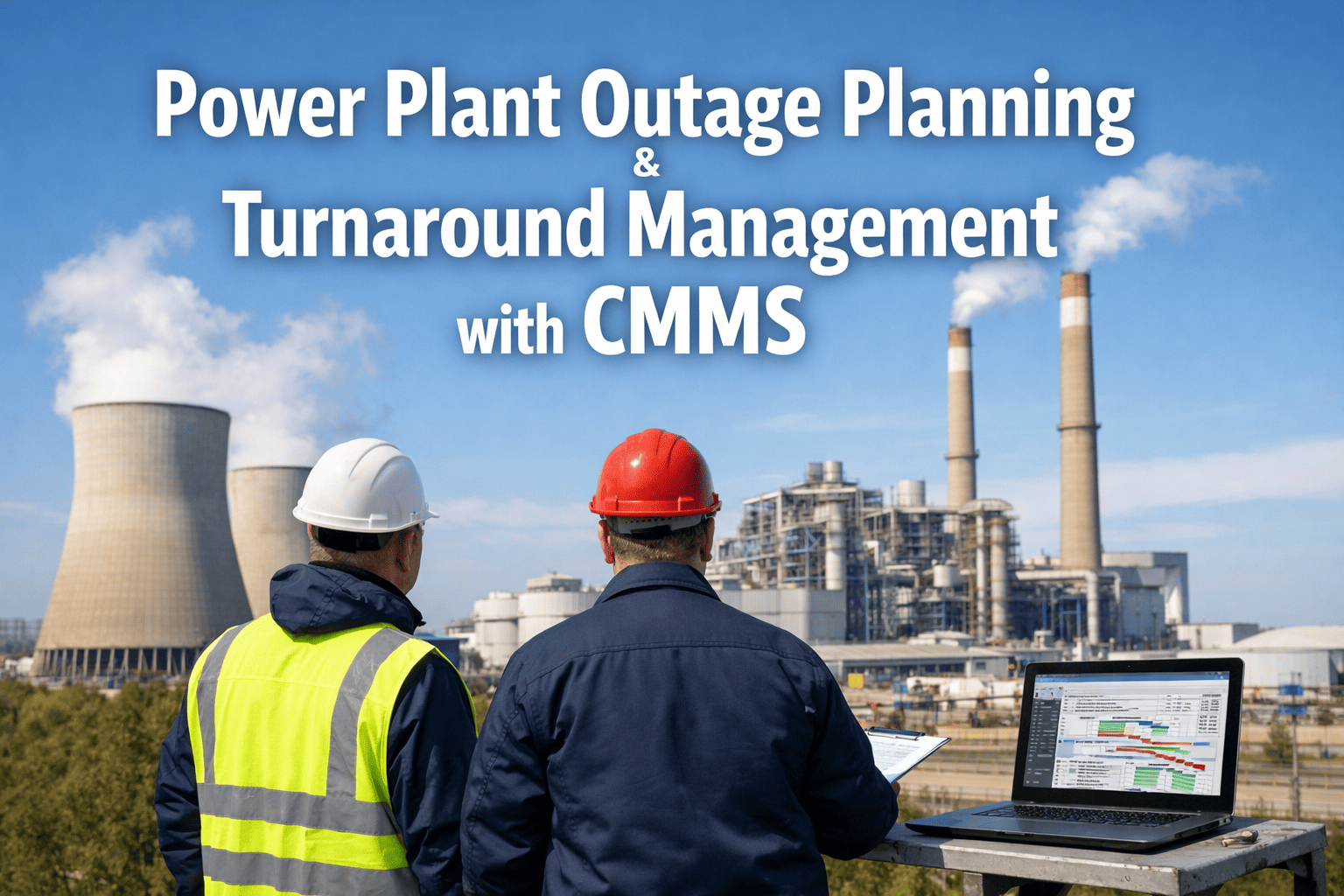
A poorly scoped major outage either strands money on the table — work deferred that costs 3.8× more as an emergency repair — or burns it needlessly on scope that condition data never justified. For a 600 MW coal...

Every megawatt-hour a coal or gas plant generates leaves a regulatory trail — SOx, NOx, particulate matter, CO₂, and mercury readings that must be recorded, validated, and reported to the EPA, EU IED, or equivalent...

A 600 MW coal unit loses $480,000 per hour when an unplanned forced outage takes it off the grid. Steam turbine blade failures, generator stator faults, and boiler tube ruptures are the three leading causes — and...

A single high-voltage circuit breaker failure at a 500 MW power plant during peak generation can trigger a forced unit trip worth $600,000 in lost revenue before the protection sequence completes. A power...

Condenser back-pressure is the single most impactful performance variable in a thermal power plant — a 1 inHg increase in turbine exhaust pressure at a 500 MW unit costs approximately $800,000 in annual output...

Boiler tube failures cause 41% of all thermal power plant forced outages globally — and nearly every one leaves measurable warning signs weeks before it happens. Tube thinning rates visible in UT survey data. Water...

An aircraft is not legally airworthy because it has been maintained — it is legally airworthy because its maintenance has been documented, certified, and demonstrated compliant with every applicable directive,...

At 02:47 on a February morning, a major European hub airport issued a NOTAM closing its primary runway after a series of airfield ground lighting faults were identified during the pre-dawn inspection. Three faults...

A single failed tow tractor on a busy morning turn-around slot does not just delay one aircraft — it creates a ripple across the entire ramp operation. Gate holds, delayed fuel bowser runs, missed push-back...

An unairworthy aircraft sitting on the ground is not just an operational problem — it is a cascading financial and safety event. Every hour of unscheduled AOG (Aircraft on Ground) costs a commercial operator...
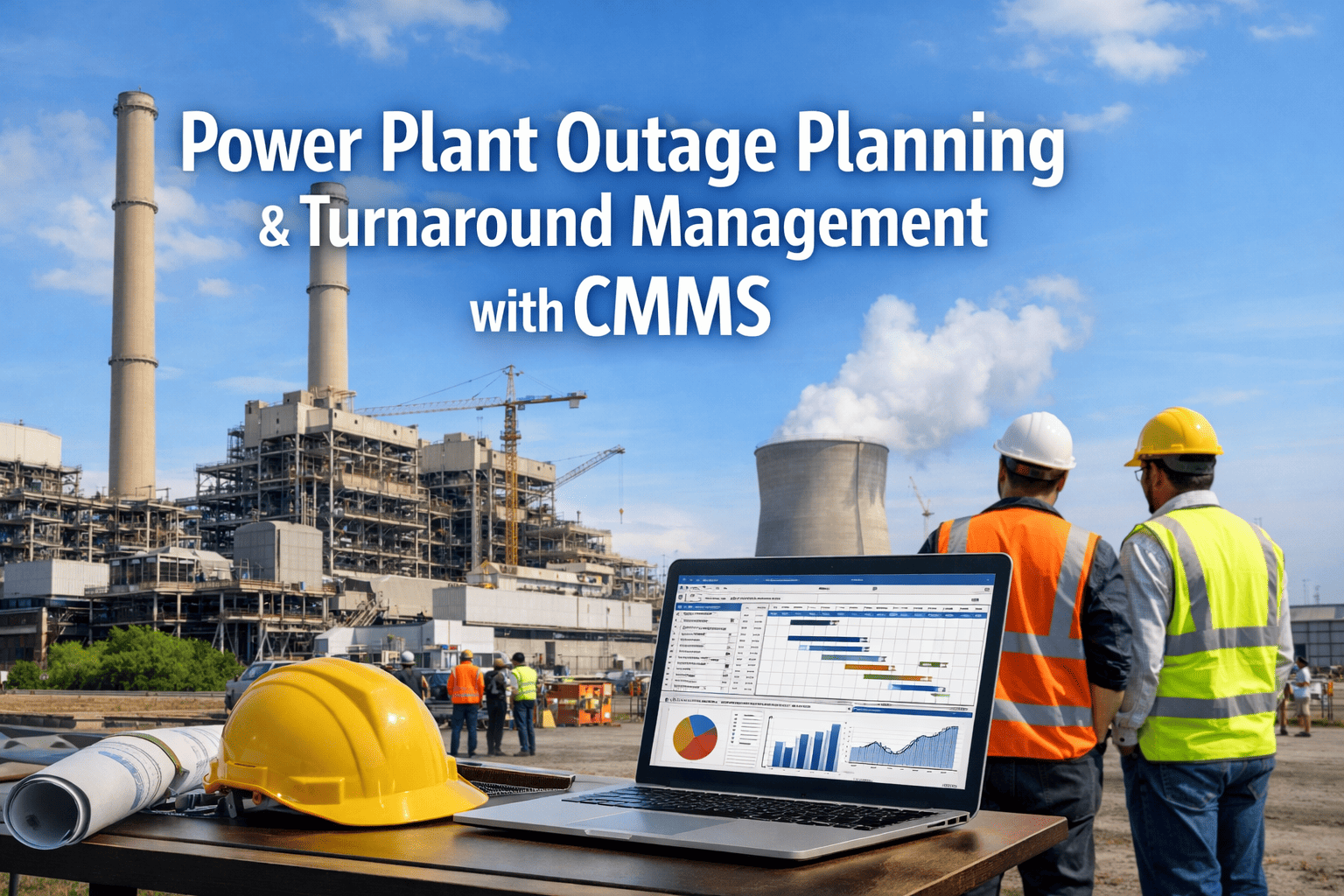
The average hotel spends 6–8% of total revenue on maintenance and repairs. A significant portion of that spend is entirely avoidable — driven by reactive workflows, poor asset visibility, and decisions made...

Every tonne of SOx, NOx, or particulate matter emitted above permit limits carries regulatory fines, forced plant load reductions, and potential licence revocation. The CEMS stack is only as reliable as the...

Electrical switchgear and power transformers are the backbone of every power plant — yet they receive a fraction of the inspection rigour applied to rotating equipment. A single transformer failure costs $1M–$7M in...

A 660 MW thermal power plant in Rajasthan recorded a 4.2% drop in unit heat rate over eight weeks—equivalent to burning an extra 14 tonnes of coal per day—without a single equipment alarm triggering. The root cause...

An industrial boiler running at sub-optimal chemistry or with thinning tube walls is not a maintenance problem — it is a financial liability accruing daily. Plants operating on reactive boiler maintenance spend an...

The largest categories of fossil steam turbine unavailability — LP blade failures, HP and LP bearing problems, generator vibration, and main stop valve faults — share one characteristic: every failure mode produces...
A gas turbine bearing doesn't announce its failure — it degrades through a predictable sequence of thermal, vibrational, and acoustic changes detectable 30 days or more before the trip. Boiler tube weaknesses...

An EPA inspector arrived at a Texas cement plant requesting Title V permit documentation, CEMS calibration records, and quarterly emission reports. The environmental coordinator spent two days assembling records...

Cement plant raw material handling maintenance is uniquely punishing because its failures are invisible until they are catastrophic. The jaw plate that wears past its condemn limit does not vibrate differently or...

Cement manufacturing is the third most energy-intensive industrial process in the world — thermal energy in the kiln system and electrical energy in grinding together account for 60–70% of total production cost per...

When a 5,000 TPD integrated cement plant began tracking its maintenance data systematically for the first time, the first thing it discovered was that 34% of all unplanned downtime was traced to six recurring...

Bag filter failures in cement plants follow a predictable sequence: differential pressure rises as bags blind, pulse jet valves lose response, hoppers fill faster than they discharge — and then the opacity monitor...
A vertical roller mill running with worn roller tyres, misaligned grinding table segments, or a hydraulic accumulator that lost its pre-charge last month is not producing cement at specification — it is producing...

A single rotary kiln shutdown costs $50,000 to $300,000 per hour in lost production, emergency labor, and damaged equipment. Yet most unplanned kiln stops are preceded by weeks of detectable signals — gradual shell...
The cement industry spends more on maintenance per tonne of production than almost any other manufacturing sector. The reason is not budget — it is data infrastructure. A kiln that fails unexpectedly was signalling...

A water treatment plant is not a building with equipment in it. It is a continuously operating public health system where every pump failure, every missed chemical dosing check, and every uncalibrated chlorine...

A single failed aircraft tug during peak operations can cascade into a 45-minute flight delay — and at major hub airports, that delay ripples through the afternoon wave schedule. Ground support equipment failures...

Solar farms and wind turbines share a maintenance challenge no other industrial sector faces at the same scale: assets spread across hundreds of acres or miles of coastline, in environments hostile to both...

The average US transmission line is 40 years old. The average transformer is 38 years old. Between 2022 and 2024, the average customer power outage grew from 5.8 hours to 8.4 hours — a 45% increase in a two-year...

More than 77 million Americans live in HOA and condo communities — and 70% of those associations are underfunded relative to the reserves they need for the repairs already scheduled. The result is predictable:...

When a state surveyor walks into a senior living facility, the first thing they look for is paper — inspection logs, maintenance records, fire drill documentation, corrective action notices. If that paper is...

The average hospital manages more than 35,000 medical devices across 500 equipment categories — every one of them requiring a specific maintenance schedule, a documented calibration record, and a traceable service...
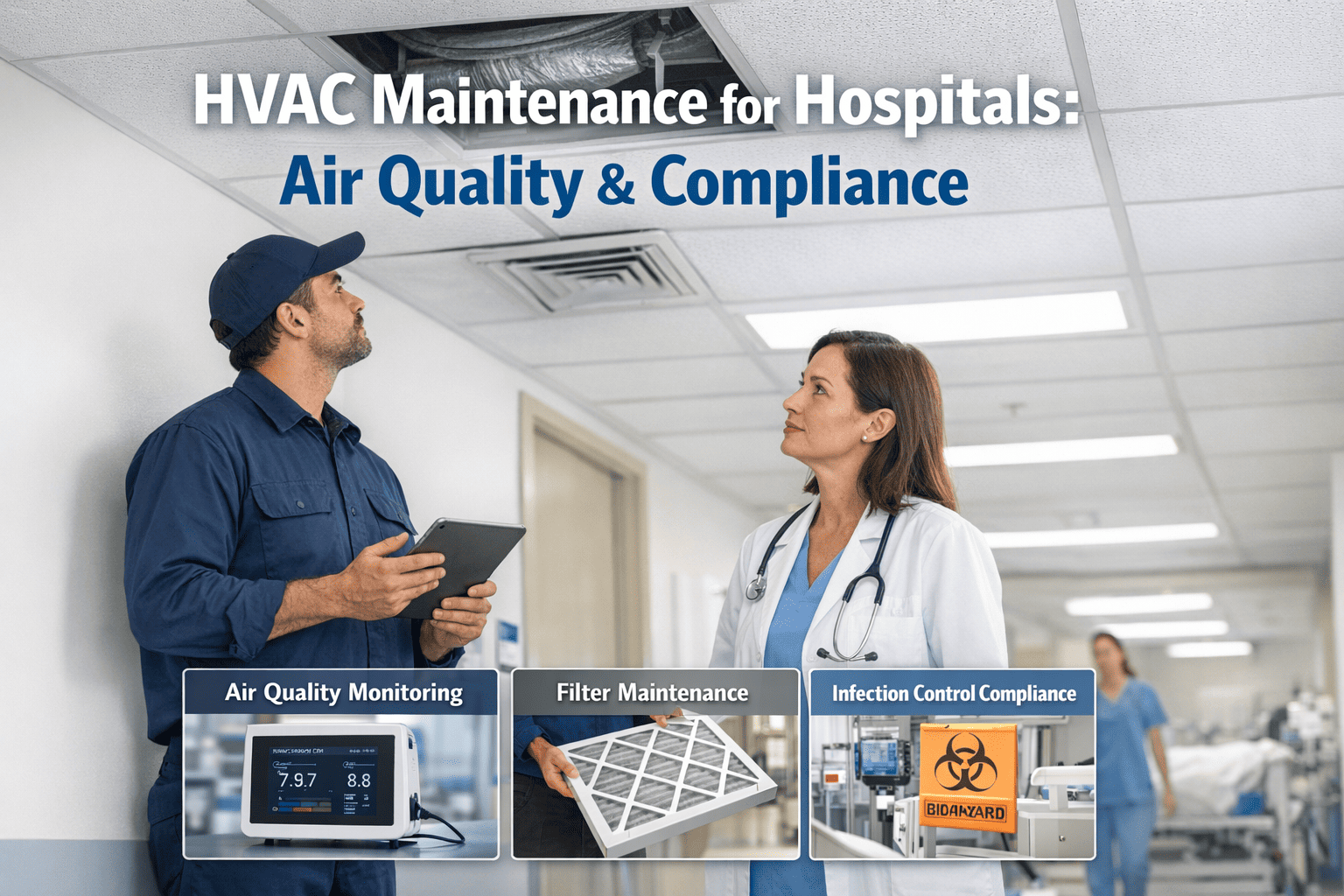
Hospital HVAC systems are not building infrastructure — they are clinical systems. When a rolling mill bearing fails, production stops. When a hospital ventilation system fails, patients die. Oxmaint's...

Every industrial asset has a theoretical design life that assumes it will be maintained correctly throughout its operating history. A centrifugal pump rated for 20 years of service life will deliver that service...

Every industrial facility has equipment that can tell you it is about to fail — the bearing vibration increasing by 2mm/s, the motor drawing 8% more current than baseline, the thermal signature creeping up on a...

Only 24.5% of a typical maintenance technician's shift is spent on actual repair work. The remaining 75.5% — the majority of every paid hour on your maintenance payroll — is consumed by administrative tasks that...

A rotary kiln is the heart of a cement plant — a 70-metre rotating steel cylinder operating at 1,450°C, processing 3,000 tonnes of clinker per day, running continuously for 200 to 300 days before a planned...

Facilities that digitised their maintenance operations in the past five years are not just managing assets better — they are operating with a fundamentally different cost structure. Work orders that once sat in...

The difference between a smart factory and a factory with sensors is not hardware. It is the intelligence layer between the sensor and the maintenance action. A factory that has installed vibration sensors on 200...

Industrial maintenance is typically the second or third largest operating cost in a plant — and in most facilities, 30–40% of that spend is wasted on unnecessary work, emergency repairs that could have been...

A gas turbine at a combined-cycle power plant produces roughly 400 megawatts. When its first-stage compressor blade develops a fatigue crack that goes undetected until it fails, the forced outage lasts 6–10 weeks,...

The industrial maintenance model built on scheduled inspections and time-based service intervals contains a structural blind spot that no amount of process improvement can eliminate: the interval between the last...

The maintenance department that spends its days reacting to breakdowns is not just inefficient — it is structurally disadvantaged against any facility that has moved to AI-driven automation. Plants adopting...

Calendar-based preventive maintenance has a fundamental flaw that most maintenance managers are aware of but cannot easily escape without new infrastructure: it services equipment based on time elapsed, not on...

The manufacturing plant running on a reactive maintenance strategy in 2026 is not making a neutral operational choice. It is paying an invisible tax — on every emergency repair billed at 3–5x planned rate, on every...

The industrial maintenance landscape is shifting faster in 2026 than at any point in the past two decades. Facilities still running paper-based PM logs and reactive repair queues are watching their competitors cut...
Unplanned downtime costs industrial manufacturers an estimated $50 billion annually — not because the equipment failures that cause it are unpreventable, but because the signals that precede them go undetected. A...

A bearing failure on a rolling mill main drive does not happen without warning. In the weeks before the seizure that stops production and triggers a 12-hour emergency repair, the bearing's vibration signature...
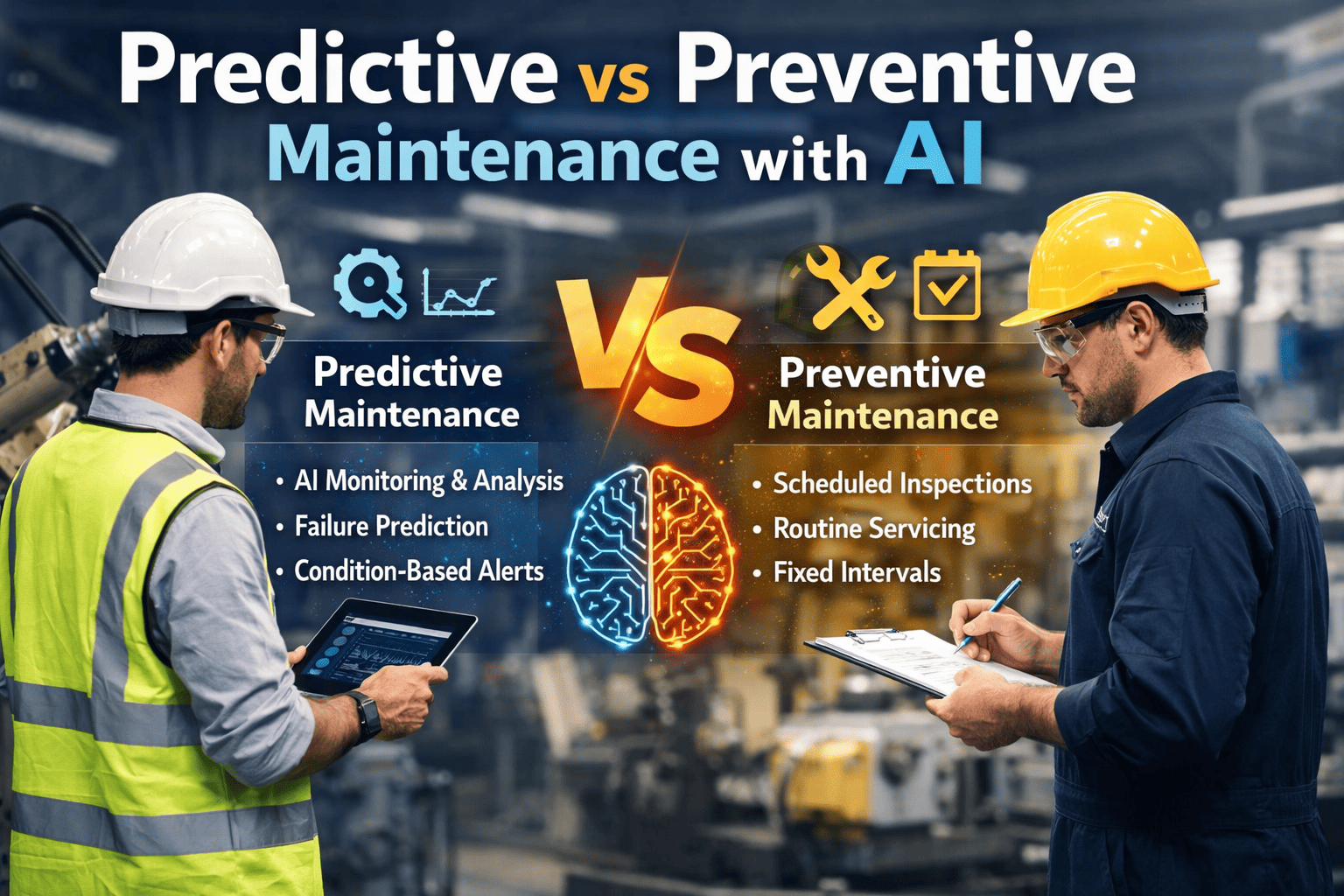
Across industrial floors and production lines, the choice between predictive and preventive maintenance is no longer just a scheduling decision — it is a competitive advantage. Plants still running fixed-interval...

The maintenance department that still runs on reactive strategy in 2026 is not making a cost-neutral choice. It is paying 3–5x more per repair than a planned maintenance programme costs, absorbing 800+ hours of...

A regional freight railroad operating 1,200 miles of track struggled with inspection data trapped in paper forms and disconnected systems. Track inspectors recorded defects on handwritten reports that sat on desks...

Energy costs represent the second-largest operational expense in most government facility budgets — after personnel — and they are uniquely controllable. A typical government office building consumes 25–50 kBtu per...

Government buildings and public facilities carry a maintenance obligation that private facilities do not: accountability to taxpayers, elected officials, and regulatory bodies who expect documented evidence that...

A suburban school district learned the cost of inadequate maintenance documentation when a playground injury lawsuit revealed they couldn't produce inspection records for the equipment involved. The settlement cost...
A state university system managing 14 campuses and over 800 buildings spent $127 million annually on energy—making it their second-largest operating expense after personnel. Energy consumption varied wildly between...

A mid-sized university managing 47 buildings across 280 acres discovered their maintenance team spent more time searching for work orders in email threads than actually completing repairs. Faculty submitted...

Every facility manager who has faced an Authority Having Jurisdiction inspection without complete fire safety records understands the specific anxiety that comes from knowing the records should exist but may not —...

A property management company overseeing 2.3 million square feet of Class A office space discovered they were spending 23% more on building operations than comparable portfolios. Their maintenance approach relied...

A construction company running 50 pieces of heavy equipment — excavators, wheel loaders, motor graders, articulated trucks, tower cranes, and concrete pumps — across 8 active job sites is managing roughly $25–$60...

A regional logistics company operating 156 trucks discovered they were losing $847,000 annually to fuel waste—unauthorized fueling, excessive idling, inefficient routes, and poorly maintained engines burning more...

The average manufacturing plant spends 15–40% of its annual operating budget on maintenance — but only 24.5% of a technician's day involves actual repair work. The rest is absorbed by paperwork, parts hunting, and...
Choosing between OxMaint and UpKeep comes down to one question: does your operation need maintenance software or maintenance intelligence? UpKeep solves the basics well — work orders, PM scheduling, mobile access....

Choosing the right CMMS is essential for small maintenance teams looking to reduce downtime and streamline operations without added complexity. OxMaint, Fiix, and Limble each offer different strengths—OxMaint...
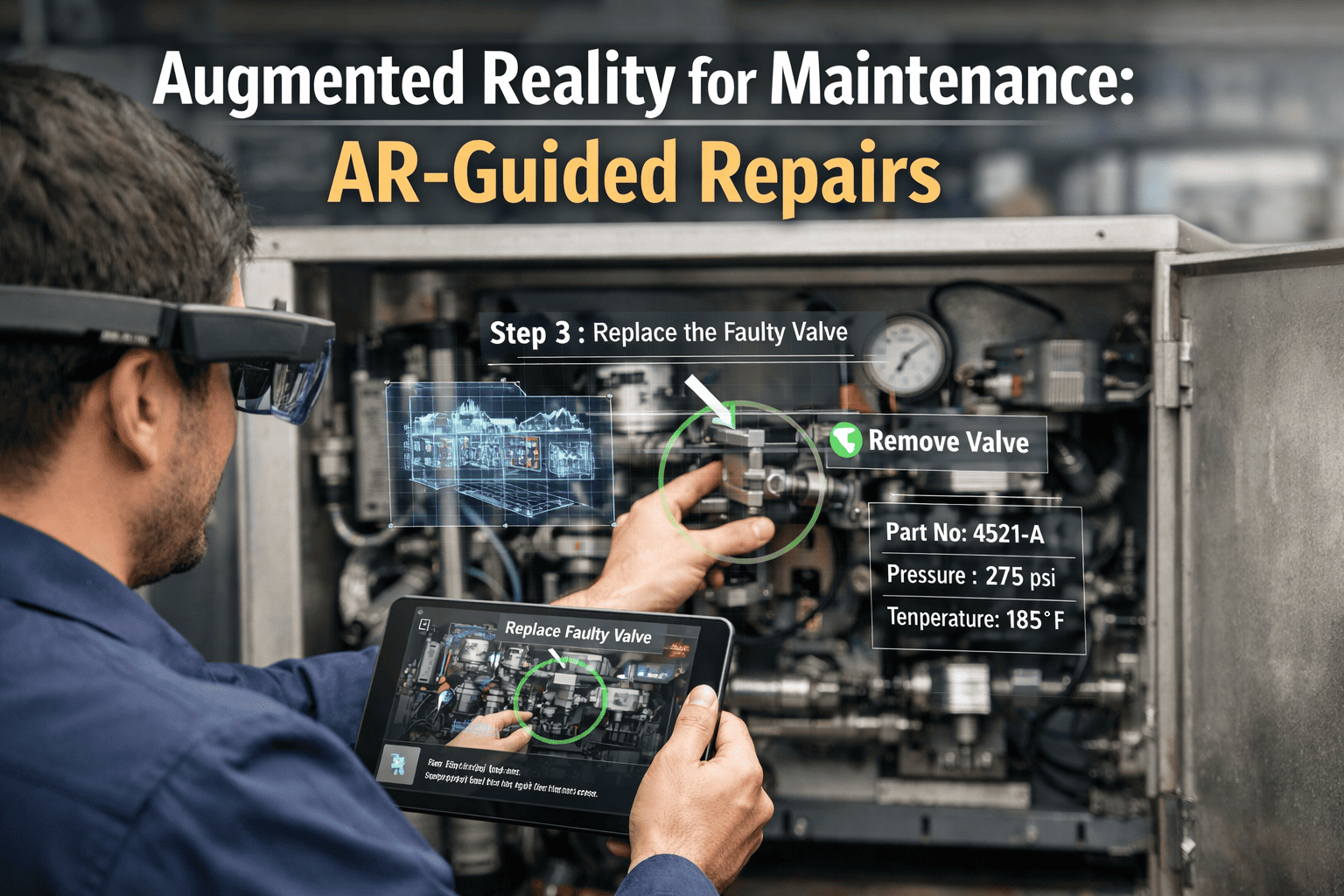
When a critical pump fails at 2AM, your newest technician should not be searching a paper manual under fluorescent lights. AR-guided maintenance overlays step-by-step repair instructions, live sensor data, and...

Finance knows the budget. Maintenance knows the assets. But when CMMS and ERP run as separate systems, neither team has the full picture — purchase orders get duplicated, maintenance costs are reconciled manually...

Digital Twin for Maintenance: Implementation Guide for AI-Driven Asset Performance | Oxmaint.ai.The facility manager stared at 2019 as-built drawings trying to plan a new conveyor installation — only to find two...

Most maintenance teams are sitting on years of valuable data — work orders, failure histories, sensor readings, technician notes — and getting almost nothing actionable out of it. The gap between reactive...
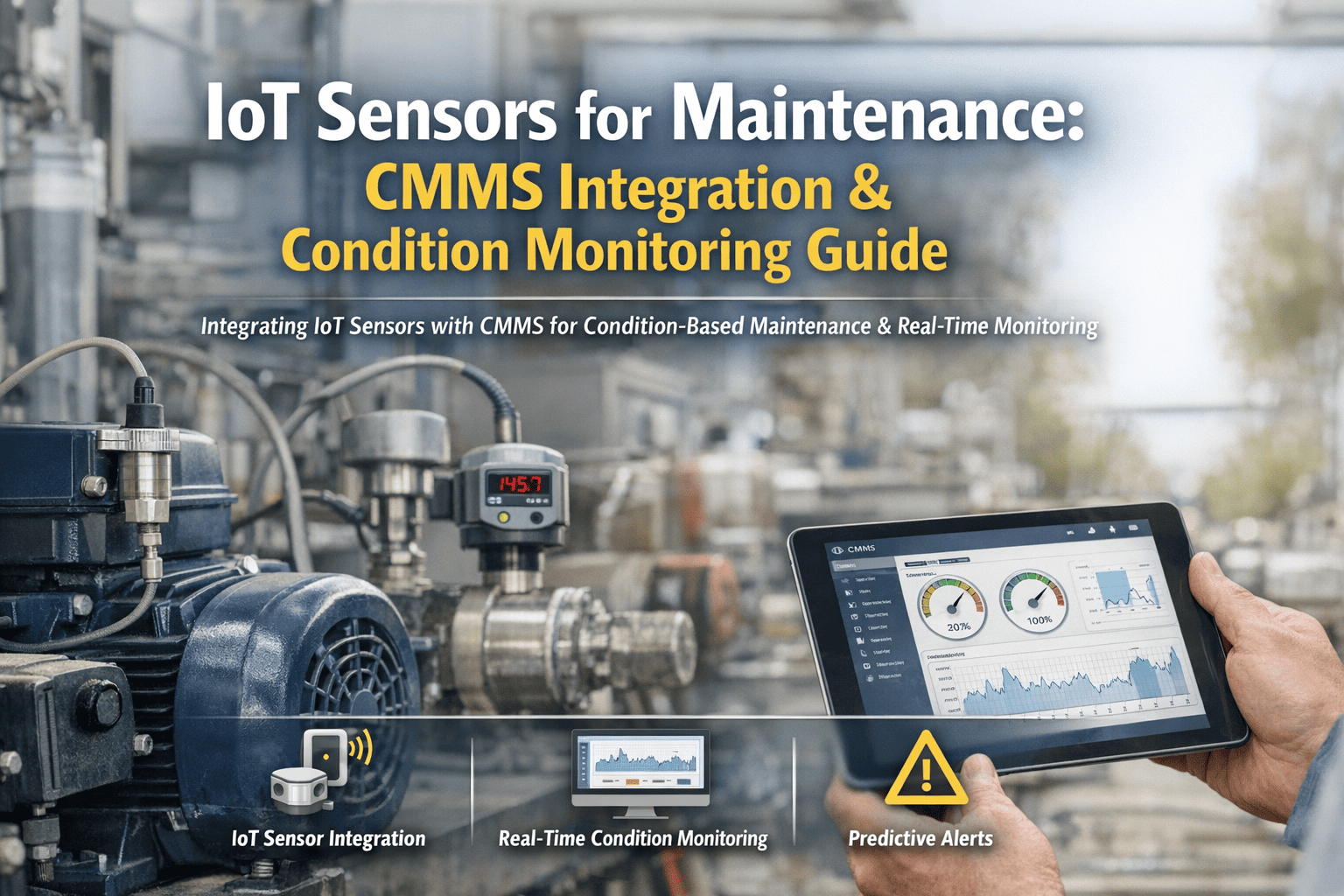
Most maintenance teams do not have a data problem — they have a data-action gap. Your equipment is already generating thousands of signals every hour: temperature rises before a bearing seizes, vibration patterns...
Maintenance is no longer a cost center—it is becoming the competitive edge that separates efficient operations from failing ones. In 2026, AI, IoT, and digital twins are not pilots or roadmap items—they are live in...

Commercial buildings are operational assets where maintenance decisions directly translate into line-item costs — energy bills, contractor invoices, emergency repair premiums, and compliance fines. The difference...

A commercial kitchen is one of the highest-intensity equipment environments in any industry. Fryers, combi ovens, refrigeration units, hood suppression systems, dishwashers, and ice machines operate under...
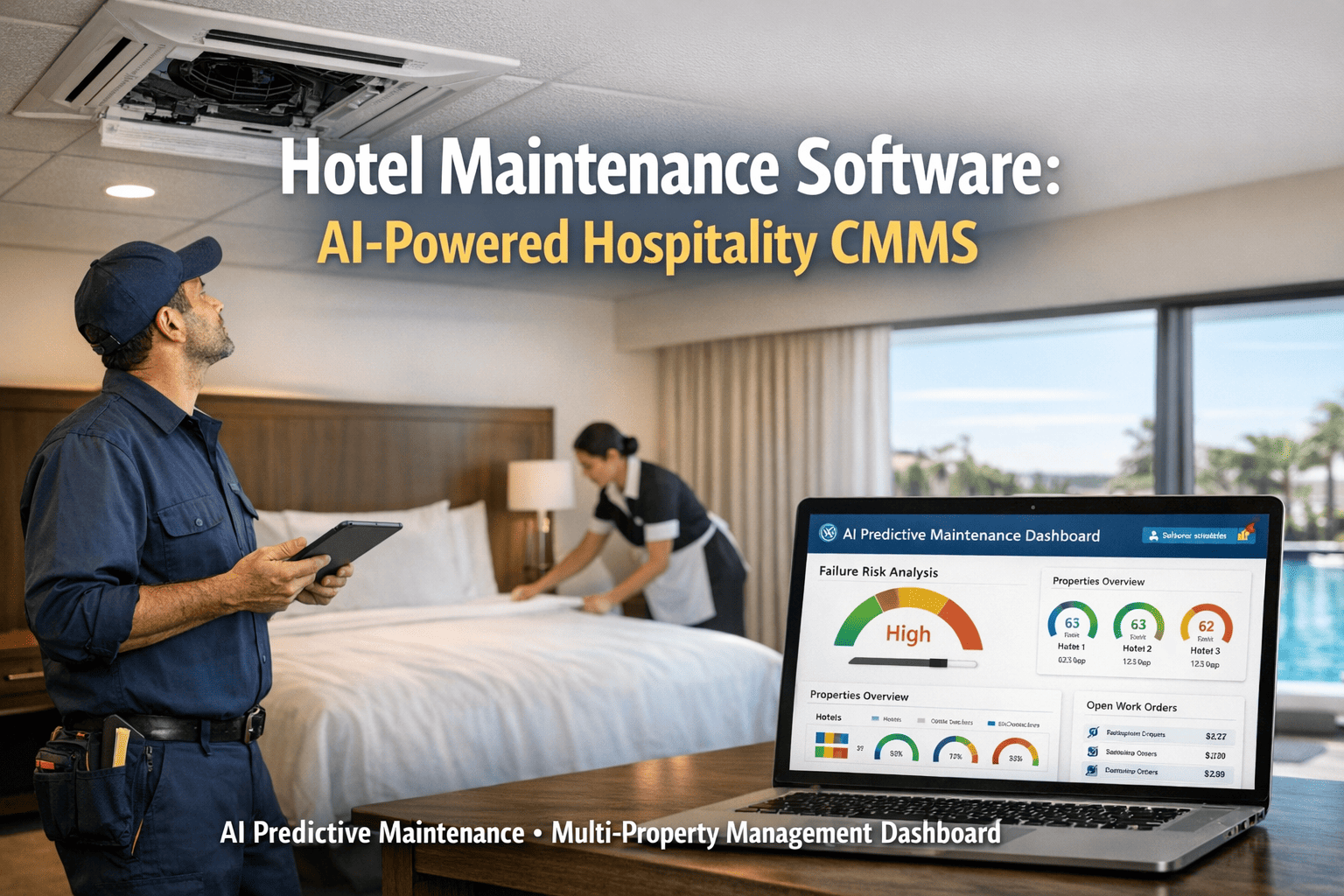
The hospitality industry loses an estimated $1.3 billion annually to unplanned equipment failures — HVAC breakdowns during peak season, elevator outages at full occupancy, kitchen equipment failures mid-service....

Every commercial fleet manager has experienced the same moment: a driver hands in a paper DVIR at shift end, three boxes ticked, signature scrawled in four seconds. By the time maintenance reviews it the following...

Multi-family property maintenance operates on a fundamentally different rhythm from commercial or industrial maintenance. Tenant requests arrive at unpredictable volume from dozens or hundreds of units...

Property maintenance software has proliferated to the point where every platform makes the same promises — faster work orders, happier tenants, lower costs. What differentiates them is the operational specificity...

HVAC systems account for 35–50% of a commercial building's total energy consumption and represent the highest-frequency maintenance category in most facility operations programmes. Yet the majority of commercial...

Building and facility operations run on hundreds of interdependent systems — HVAC units, plumbing networks, electrical infrastructure, elevators, fire suppression, and everything in between. Tracking the...

Commercial fleet operations have historically treated maintenance as a scheduled cost — fixed intervals, blanket replacements, and reactive repairs when breakdowns occur between services. AI-driven predictive...

Running a fleet without centralised maintenance software means managing dozens or hundreds of vehicles through a combination of spreadsheets, paper service records, and manual calendar reminders — a system that...

When a ventilator fails mid-shift or an MRI goes offline before a scheduled procedure, hospitals face consequences that go well beyond equipment repair costs — adverse patient events, cancelled procedures,...
A Joint Commission surveyor walking through your hospital is not looking for perfect equipment — they are looking for documented evidence that your preventive maintenance program is working. The difference between...

Dairy processing equipment operates under microbial contamination pressures that no other food manufacturing category matches. A pasteuriser that misses its holding time by three seconds, a separator that runs with...

A cold storage facility that loses temperature control at 2am on a Sunday loses more than product — it loses compliance documentation, customer trust, and potentially the entire contents of a chamber in the time it...

A filling line that stops mid-shift does not just lose the batches it cannot fill — it risks losing the batches that have already been processed but not yet sealed. Carbonated beverages that sit in an open tank...

Food manufacturing has a harder maintenance compliance problem than almost any other industry. A missed PM on a filler in a steel plant creates a work order. A missed PM on the same filler in a food plant creates a...

Your next food safety audit does not care that the refrigeration log was misplaced, the CCP verification was done on paper and the paper got wet, or the corrective action record from March is in a binder somewhere....

A packaging line running at 85% OEE looks like a success on paper. The 15% loss breaks down differently depending on the plant — some of it is planned changeover, some is speed loss from worn fillers and misfiring...

A cement plant that loses its kiln for 24 unplanned hours does not just lose 24 hours of production — it loses the thermal energy invested in bringing the kiln to operating temperature, the clinker quality from an...

A stopped automotive production line costs between $10,000 and $50,000 per minute depending on the plant throughput and model mix. This is not a theoretical calculation — it is the operational reality that every...

A pharmaceutical manufacturing facility operates under a compliance regime that has no equivalent in any other industry. Every maintenance action taken on production equipment — every calibration, every lubrication...

The factory of 2026 does not wait for equipment to break. It senses degradation weeks in advance, routes a work order to the nearest qualified technician, verifies parts availability before the job starts, and...

Every minute a production line stands idle costs money. The question is never whether downtime is happening — it always is. The question is whether it is happening because an asset failed unexpectedly at the worst...

Most manufacturers know their OEE is lower than it should be. Few know exactly why — because they are calculating it from shift logs, manual counts, and production reports compiled hours after the shift ends. By...

Most CMMS implementations fail not because the software is wrong but because the deployment approach is wrong. The classic failure pattern is predictable: an organisation spends three months configuring every...

The choice between a cloud-based CMMS and an on-premise deployment is one of the first infrastructure decisions a maintenance organisation makes — and one of the most consequential. It affects implementation...

Every unplanned breakdown follows the same pattern in hindsight: the failure was developing for days or weeks before it happened, and the data that would have predicted it was already being generated — bearing...

A maintenance technician in the field has one hand on a pump housing and the other on a wrench. The last thing they need is to walk back to the engineering office to update a work order on a desktop computer. Yet...

Every organisation that operates physical assets — manufacturing plants, utility networks, hospital campuses, fleet operations — faces the same fundamental challenge: how to extract the maximum productive life from...

The difference between a maintenance team that is constantly firefighting and one that consistently meets production targets is not headcount, equipment age, or budget. It is the ratio of planned work to reactive...
Every maintenance team runs on work orders — the structured record that converts a fault report, a PM schedule, or an inspection finding into a dispatched job with a named technician, a defined scope, and a...

Most "free CMMS" searches end in one of two places: a genuinely free plan with real capability, or a 14-day trial that vanishes the moment you need it most. The difference matters enormously if you're a maintenance...

Choosing a CMMS in 2026 is not the same decision it was in 2020. The market has fragmented significantly — there are now more than 200 CMMS platforms available, ranging from free single-technician apps to...

Professionals spend an average of 18 minutes locating a single document—nearly 5 hours per week searching through filing cabinets, email chains, and scattered spreadsheets. Research reveals that 7.5% of all...

Equipment that appears to be running fine can fail catastrophically within hours. The bearing that seemed healthy yesterday develops a fault pattern at 3 AM and seizes by noon—costing $275,000 in emergency repairs...

A large-scale refinery turnaround can exceed $100 million in direct and indirect costs—often equating to an entire facility's annual maintenance budget compressed into just weeks. Yet industry benchmarking reveals...

Many organizations remain stuck at Level 1 or 2 of maintenance maturity—not because they lack resources, but because they lack a framework to assess where they stand and chart a clear path forward. First developed...

In 2016, just 24% of maintenance organizations used mobile CMMS solutions. By 2024, that number exceeded 60%—and 62% of organizations now report using a computerized maintenance management system, up from 49% the...

A technician troubleshooting a VFD fault at 2 AM no longer needs to scroll through 400-page manuals or wait until morning for expert support. AI-powered maintenance chatbots now surface the exact wiring diagram,...

A single minute of unplanned downtime costs manufacturers an average of $22,000, yet traditional condition monitoring catches only 18% of failures before they cause shutdowns. The machine condition monitoring...

Equipment replacement decisions represent some of the most consequential choices maintenance managers face—replace too early and waste remaining useful life, too late and suffer catastrophic failures that cascade...

Machine learning has crossed the tipping point in industrial maintenance. The predictive maintenance market exploded to $10.93 billion in 2024 and is projected to reach $70.73 billion by 2032 at a 26.5% compound...

Industrial facilities generate staggering volumes of data—a single manufacturing plant produces approximately 1 terabyte of operational data daily from sensors, control systems, maintenance logs, and equipment...
Manufacturing facilities operating without Total Productive Maintenance typically achieve Overall Equipment Effectiveness scores between 40-60%, meaning nearly half of their productive capacity disappears into...
The oil and gas industry powers more than 50% of global energy consumption, yet equipment failures across upstream, midstream, and downstream operations drain an estimated $149 million per facility annually from...

Every budget season, maintenance managers face the same challenge: translating operational wins into financial language that CFOs understand. You know your CMMS transformed operations—unplanned downtime dropped...
Every minute of unplanned downtime costs industrial manufacturers an average of $22,000—and 82% of companies have experienced at least one unexpected equipment failure in the past three years. The cruel irony of...

Industrial manufacturing plants generate terabytes of asset performance data daily, yet much of this critical information remains stranded due to the limitations of legacy Wi-Fi and 4G networks. When a high-speed...

Failure Mode and Effects Analysis (FMEA) has been the cornerstone of reliability engineering for decades. But its traditional execution is also its biggest limitation: manual, static spreadsheets relying on human...

Every undetected compliance violation your fleet commits is a hidden liability of fines, grounded vehicles, increased insurance premiums, and damaged reputation. For the average commercial fleet in 2026, manual...

Facility managers and system administrators know that data integrity doesn't fail overnight—it degrades through decentralized spreadsheets, undocumented maintenance actions, and a lack of cryptographic...

Global manufacturing enterprises faced a critical bottleneck in equipment reliability: machine performance data was delayed by an average of 3 weeks due to manual log entries, while unexpected downtime events were...

The industrial skills gap is rapidly widening as veteran technicians retire and equipment becomes increasingly complex. Traditional maintenance training—relying on dense paper manuals and hours of shadowing—can no...
The era of manual data entry and reactive work orders is over. As industrial operations become more complex, traditional Computerized Maintenance Management Systems (CMMS) are struggling to keep pace. Next-Gen CMMS...

The main production line stops at 2:14 PM—a critical conveyor motor has seized. The SCADA system throws an alert, but the damage is already done. Four hours later, with production halted and thousands of dollars...

A global Tier-1 automotive manufacturer faced a critical bottleneck in production efficiency: highly trained maintenance technicians were spending over 40% of their shifts performing basic cleaning, lubrication,...

Maintenance managers know that equipment failures don't just happen randomly—they are the result of missed warning signs, inefficient scheduling, and relying on gut feeling rather than hard facts. A robust...

Industrial maintenance has undergone a fundamental transformation. In 2026, the leading facilities no longer just repair equipment when it breaks — they predict exactly when it will fail. AI-powered predictive...

Facility management is no longer just about fixing what breaks—it's about orchestrating a complex ecosystem of assets, energy use, and human comfort. Traditional operations rely on reactive maintenance and static...

A 15-year-old cement mill gearbox fails on a Tuesday afternoon. The maintenance manager authorizes an emergency rebuild at $185,000. Three weeks later, the plant manager discovers that the same gearbox was...

A maintenance technician walks up to a vibrating gearbox, holds up their phone, and says: "Main drive gearbox on Line 3 has unusual vibration, sounds like bearing noise, getting worse over the last shift." Within...

It is 7:12 AM and a maintenance technician is standing in front of a cooling tower with a leaking seal. He knows exactly what's wrong. He knows the part number. He knows the fix takes 45 minutes. But he can't start...

Traditional maintenance monitoring captures only 15-25% of the parameters that actually determine whether a piece of equipment is about to fail. The remaining 75-85% — the interaction effects between vibration...

A vibration sensor the size of a matchbox, bolted to a motor housing and streaming data every 10 seconds over a wireless mesh network, detected a 0.3 mm/s increase in the 4.7x bearing pass frequency on a cement...

Unplanned downtime costs the average large manufacturing plant $253 million per year — and the per-hour cost has doubled since 2019. Yet only 59% of facilities use a CMMS, and 49% still track maintenance in...

It starts the same way every time. A bearing that has been quietly degrading for six weeks finally seizes at 3 AM on a Saturday. The emergency callout costs $15,000 before sunrise. The unplanned downtime costs...

In pharmaceutical manufacturing, a missed calibration on a tablet press does not just cause downtime — it can invalidate an entire production batch worth $500,000 to $2 million, trigger an FDA 483 observation, and...
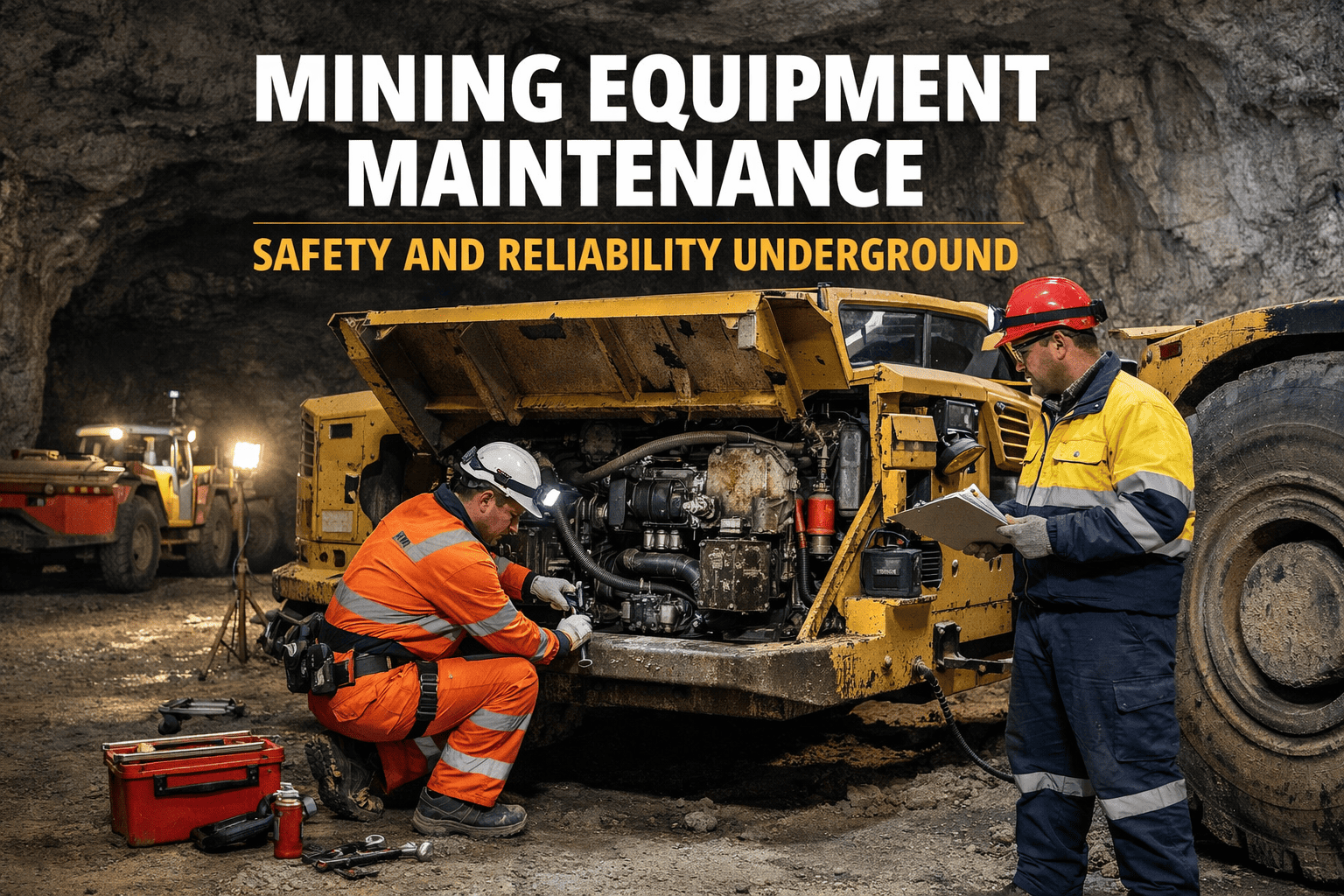
At 1,200 meters below the surface, a continuous miner's cutting head seizes without warning. In the 47 seconds it takes for the operator to hit the emergency stop, the machine has already thrown a drive chain,...

A single excavator breakdown on an active job site does not just stop one machine — it stalls the entire crew, delays concrete pours, pushes subcontractor schedules, and burns through project margins at $500–$1,200...

Your best technician performs another heroic, last-minute repair — replacing burnt-out motor bearings for the third time this quarter. Production is back online, but everyone knows the clock is ticking. This is the...
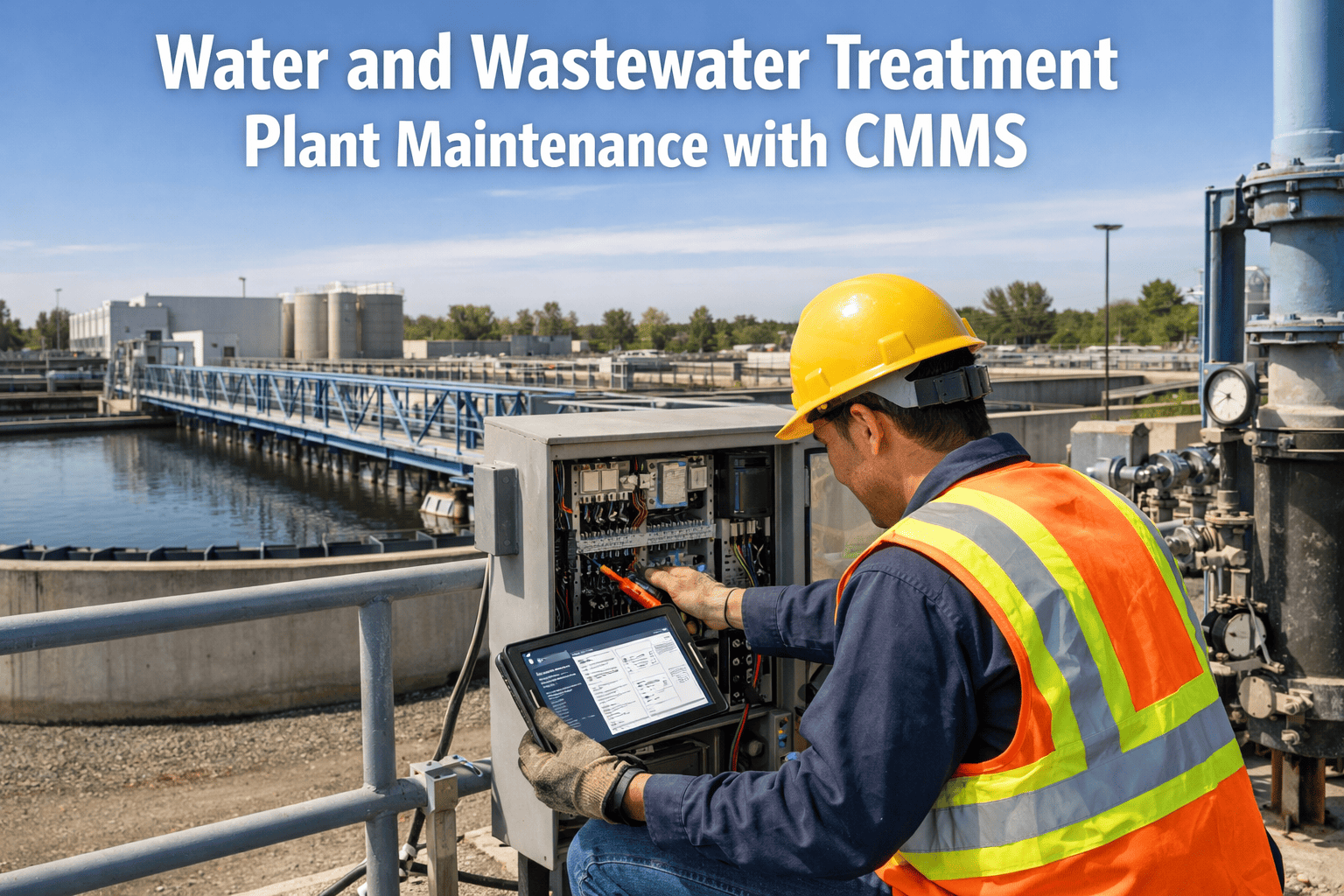
The EPA estimates that 15,000 of America's 16,000 publicly owned treatment works require significant maintenance investment — yet most still operate with paper logbooks, whiteboard schedules, and institutional...

It is 6:15 AM on a Monday when the VP of Operations opens her laptop to prepare for the quarterly board review. She needs one number: the average maintenance cost per asset across all 14 facilities. Three hours...
It is 6:15 AM on a Monday when the VP of Operations opens her laptop to prepare for the quarterly board review. She needs one number: the average maintenance cost per asset across all 14 facilities. Three hours...
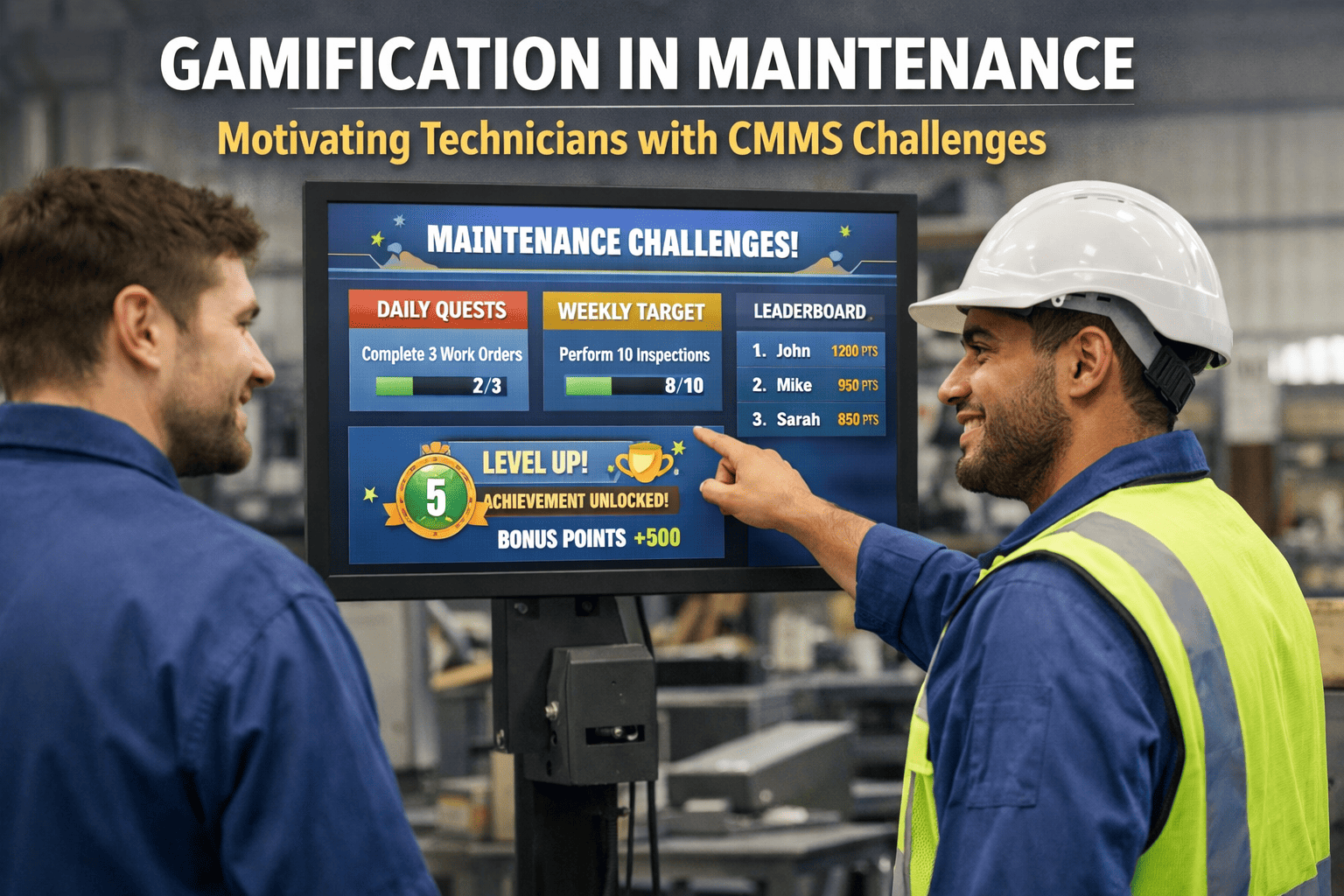
Maintenance technicians complete an average of 8–12 work orders per shift, troubleshoot equipment under pressure, and keep critical assets running — yet 60–70% of organizations still treat maintenance as an...

At 2:43 AM on a January morning, a transformer failure at a regional substation triggers a cascading outage that leaves 47,000 households without power during a polar vortex. Emergency crews scramble — but the...

Every 60 seconds a maintenance request goes unreported, a facility loses an average of $17,000 in hidden downtime costs. Across manufacturing floors, commercial buildings, hospitals, and warehouses worldwide, the...

Nearly 40% of maintenance data goes unrecorded or is entered incorrectly when technicians are forced to work through SAP PM's complex desktop interface — and the downstream impact on inventory accuracy, cost...

The global oil and gas operations and maintenance services market is expanding rapidly, with the AI segment alone projected to grow from $4.28 billion in 2026 to $7.91 billion by 2031 at a 13.03% CAGR — and...

Distribution centers are 24/7 engines of commerce — and when their equipment fails, the entire supply chain feels it within hours. The warehouse automation market grew from $21.42 billion in 2024 to $24.09 billion...

As much as 50% of maintenance costs in industrial operations are pure waste — money spent on activities that add zero value to equipment reliability or production uptime. Approximately 30% of preventive maintenance...

The global cloud CMMS market is projected to reach $2.41 billion by 2030, and over 70% of new CMMS deployments now choose cloud-based architecture — a reversal that accelerated dramatically from 2019 onward. For...

The global industrial sector is responsible for approximately 26% of worldwide CO2 emissions, with manufacturing and construction alone contributing 13%. Maintenance operations sit at the center of this footprint —...

Maintenance in the cement industry represents 15-25% of total manufacturing expenditure — yet 73% of maintenance leaders expect their budgets to either grow or hold steady in 2026, signaling a historic shift from...
The global industrial sector is responsible for approximately 26% of worldwide CO2 emissions, with manufacturing and construction alone contributing 13%. Maintenance operations sit at the center of this footprint —...

By 2030, an estimated 2.1 million manufacturing positions will go unfilled across North America — and cement plants are among the hardest hit. A 2023 Plant Engineering survey found the average age of maintenance...
Cement plants rank among the most energy-intensive industrial operations on the planet, consuming approximately 100 kWh of electrical energy per tonne produced and accounting for nearly 15% of total manufacturing...
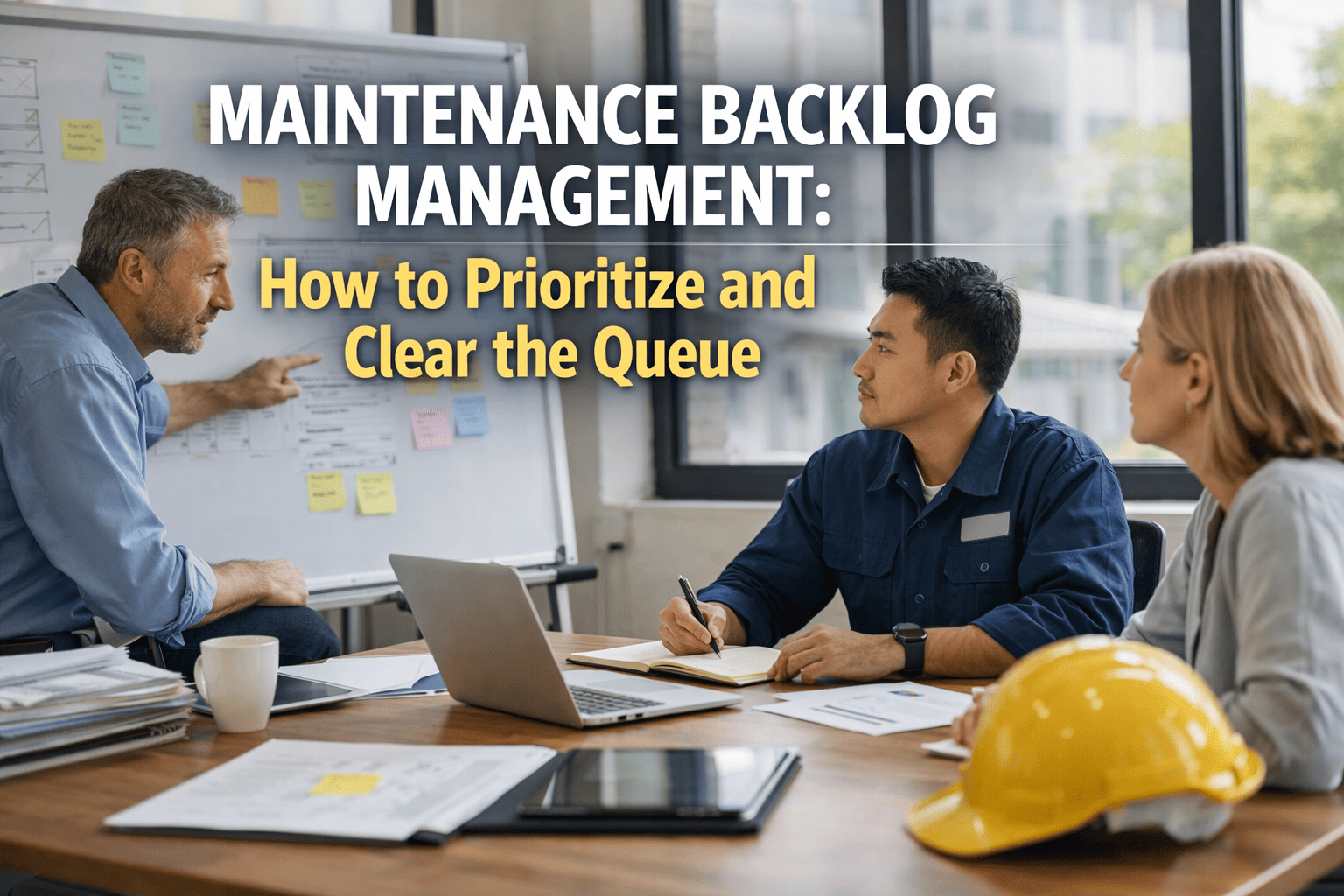
A maintenance planner at a mid-sized cement plant once described their backlog like this: "We have 1,400 open work orders. About 200 of them matter. The rest are duplicates, things that fixed themselves, jobs that...
A maintenance planner at a mid-sized cement plant once described their backlog like this: "We have 1,400 open work orders. About 200 of them matter. The rest are duplicates, things that fixed themselves, jobs that...
One hour of unplanned manufacturing downtime costs an average of $25,000 — and for large-scale industrial operations that figure climbs past $500,000. Yet surveys show only 6% of manufacturers are fully running...
-optimizing-your-maintenance-strategy.png)
Reliability Centered Maintenance was developed for United Airlines in 1978 by Nowlan and Heap after the aviation industry proved that 89% of equipment failures are not age-related — they occur randomly, regardless...

In 2024, a mid-size pharmaceutical plant in New Jersey received a Form 483 with eleven observations. Nine of them referenced maintenance records — or the absence of them. The facility had not failed to maintain its...

Every year, unplanned equipment failures cost industrial operations an estimated $50 billion globally — and the root cause isn't bad luck. It's the absence of structured maintenance planning and scheduling....

Themaintenance profession is entering the most transformative decade in its history. AI systems are detecting bearing failures four weeks before any human inspector could observe a symptom. Digital twins are...

The maintenance profession is entering the most transformative decade in its history. AI systems are detecting bearing failures four weeks before any human inspector could observe a symptom. Digital twins are...

Right now, somewhere in your facility, a machine is degrading. A bearing temperature is climbing 0.3°C per shift. A vibration signature is drifting outside its baseline envelope. A filter is approaching saturation....

The CMMS market hit $1.38 billion in 2024 and is on track to reach $3.55 billion by 2034. That growth means one thing for maintenance managers, plant engineers, and operations directors shopping for software in...

A maintenance technician at a food processing plant performs a routine inspection on a critical refrigeration compressor. He checks the oil level — it looks fine. He listens for unusual sounds — nothing obvious. He...
It's Monday morning. The maintenance supervisor at a 900-employee chemical plant walks into the shop and finds 14 technicians standing around the planning board, waiting to be told what to do. Three are sent to fix...
The maintenance director at a 1,200-employee manufacturing plant stares at a monthly report that tells him nothing useful. Total work orders completed: 847. Parts spend: $312,000. Headcount: 42 technicians. These...
It is budget season. The maintenance manager at a 600-employee manufacturing plant has been asked — again — to justify the $45,000 annual cost of a CMMS platform. She knows the system has transformed her operation:...
It is budget season. The maintenance manager at a 600-employee manufacturing plant has been asked — again — to justify the $45,000 annual cost of a CMMS platform. She knows the system has transformed her operation:...

A forklift operator at a distribution center enters the loading dock without a high-visibility vest. A camera mounted above the bay entrance captures the violation — but it is a standard CCTV camera recording to a...
It is 11:42 PM on a Saturday. The overnight operator at a water treatment plant notices Pump Station 3 drawing 15% more current than normal. He walks to the control room whiteboard, writes "PS3 running hot — check...
It is 2:47 AM on a Tuesday. A critical chiller compressor seizes at a pharmaceutical plant running 24/7 production. The on-call maintenance tech—already 14 hours into a double shift because his replacement called...
It is February 1st—the annual OSHA 300A posting deadline. The safety manager at a 400-employee manufacturing facility has been working nights and weekends for three weeks, manually reconstructing the year's injury...

It is 4:30 PM on a Friday. The HVAC contractor who was supposed to finish the chiller overhaul by end of week has walked off site—leaving a partially disassembled unit and an invoice for 38 hours of labor that...

In March 2025, a 480V main distribution panel at a pharmaceutical packaging plant erupted into an arc flash at 2:17 AM. The blast obliterated the panel, injured a night-shift electrician, and forced a nine-day...

At 2:17 AM on a Tuesday, a Tier III colocation facility lost cooling in its primary server hall. A CRAH unit's variable frequency drive had been throwing intermittent fault codes for three weeks, but with no...

A 120 MW solar farm in the southwest discovers that 18% of its panels have developed micro-cracks invisible to the naked eye — but the last thermographic inspection was seven months ago. A wind farm operator gets...

A commercial delivery truck breaks down on Interstate 80 because a worn serpentine belt—flagged during a manual paper inspection three weeks ago—was never entered into the maintenance log. The result? A $1,200...

At the heart of every successful mine, heavy machinery runs around the clock to hit production targets. Yet many of these remote operations still rely on manual inspections, whiteboard schedules, and paper-based...

It's 2:00 PM on a Thursday. A critical conveyor motor fails on the production line, bringing operations to a halt. The maintenance team scrambles, pulls a spare from inventory, and orders a $4,500 replacement motor...

For facility maintenance teams, every minute a technician spends walking back to the office to check a paper work order, searching for an asset manual, or re-keying handwritten notes into a desktop system is a...

At 4:00 PM on a Friday, a senior technician repairs a complex hydraulic fault on a critical packaging line. When closing the work order, exhausted and rushing to clock out, he types a three-word resolution: "Fixed...

When a reliability engineer asks, "Did we catch the bearing wear on the main extruder?" and the maintenance manager responds, "The lab emailed a report saying iron levels were critical two weeks ago, but it got...
When the plant manager demands to know why maintenance costs spiked by 40% last quarter, the reliability engineer pulls up the CMMS report. The result? A digital wasteland. Half the work orders are assigned to a...

It's 2:00 AM on a Wednesday. A critical cooling pump at your chemical processing plant suddenly seizes. The impellers shatter, the mechanical seal blows, and hazardous fluid floods the containment area. The entire...

Last November, a high-volume manufacturing plant experienced a catastrophic failure of their primary cooling compressor at 2:00 PM on a Tuesday — not because of a sudden lightning strike, but due to a slow,...

Last month, a high-volume food packaging facility experienced a catastrophic drive failure on their primary conveyor line at 11:00 AM. The forensic breakdown analysis revealed that the night shift technician had...

Your sanitation team just signed off on a Clean-in-Place (CIP) cycle for a 5,000-gallon mixing vat. But the temperature sensor was out of calibration by four degrees, and the caustic wash didn't reach the required...

Power plant maintenance directors face an unrelenting reality: a single unplanned gas turbine trip during peak summer demand costs $1.2 million per day in lost generation revenue and replacement power purchases —...
In March 2025, a mid-size chemical processing facility in Ohio received a $1.4 million OSHA citation — not for a single catastrophic incident, but for a pattern of systemic failures in exposure monitoring. Fourteen...

Your maintenance team oversees 1,200 rotating assets, 8 miles of compressed air distribution lines, and 46 critical hydraulic systems. Every day, those assets emit ultrasonic signatures—high-frequency sound waves...

When the plant manager at a Midwest automotive stamping facility reviewed the Q1 2025 downtime report, one number dominated the page: $2.4 million in unplanned failures across 14 hydraulic presses, 22 CNC machining...

A maintenance technician at a 1,200-bed hospital finishes replacing a circulator pump bearing on an air-handling unit at 2:47 AM. He's wearing nitrile gloves coated in grease, standing on a mezzanine with no desk,...

At 6:47 AM on a Tuesday in a Midwest automotive stamping plant, a press operator reached past a displaced barrier guard to clear a misfed blank from a 600-ton progressive die. The light curtain had been bypassed...

When OSHA investigators arrived at a 220-employee food processing plant in March 2025, they requested documentation for 36 months of lockout/tagout inspections, confined space entry permits, PSM mechanical...

It's 7:15 AM on a Monday in a 400-bed regional hospital. The facilities desk phone has been ringing since 6:00 — a leaking ceiling tile in radiology, a jammed automatic door in the emergency department, a broken...

It's 2:00 AM on a Thursday. A packaging line is down because a critical VFD drive failed. The maintenance technician knows there's a replacement somewhere in the storeroom — he saw one last week. But the storeroom...

In January 2025, a Tier-1 automotive stamping plant lost $2.3 million in a single weekend. A 400-ton progressive die press seized mid-stroke when its main crankshaft bearing ran dry — not because nobody ordered...

When your reliability engineer discovers that the €200,000 digital twin platform you licensed last year requires a six-figure renewal, locks your robot data inside a proprietary format, and still cannot connect...

When a warehouse robot's servo motor starts drawing anomalous current at 2 AM, the difference between a $200 scheduled repair and a $45,000 emergency shutdown is measured in milliseconds—not minutes. Sending raw...
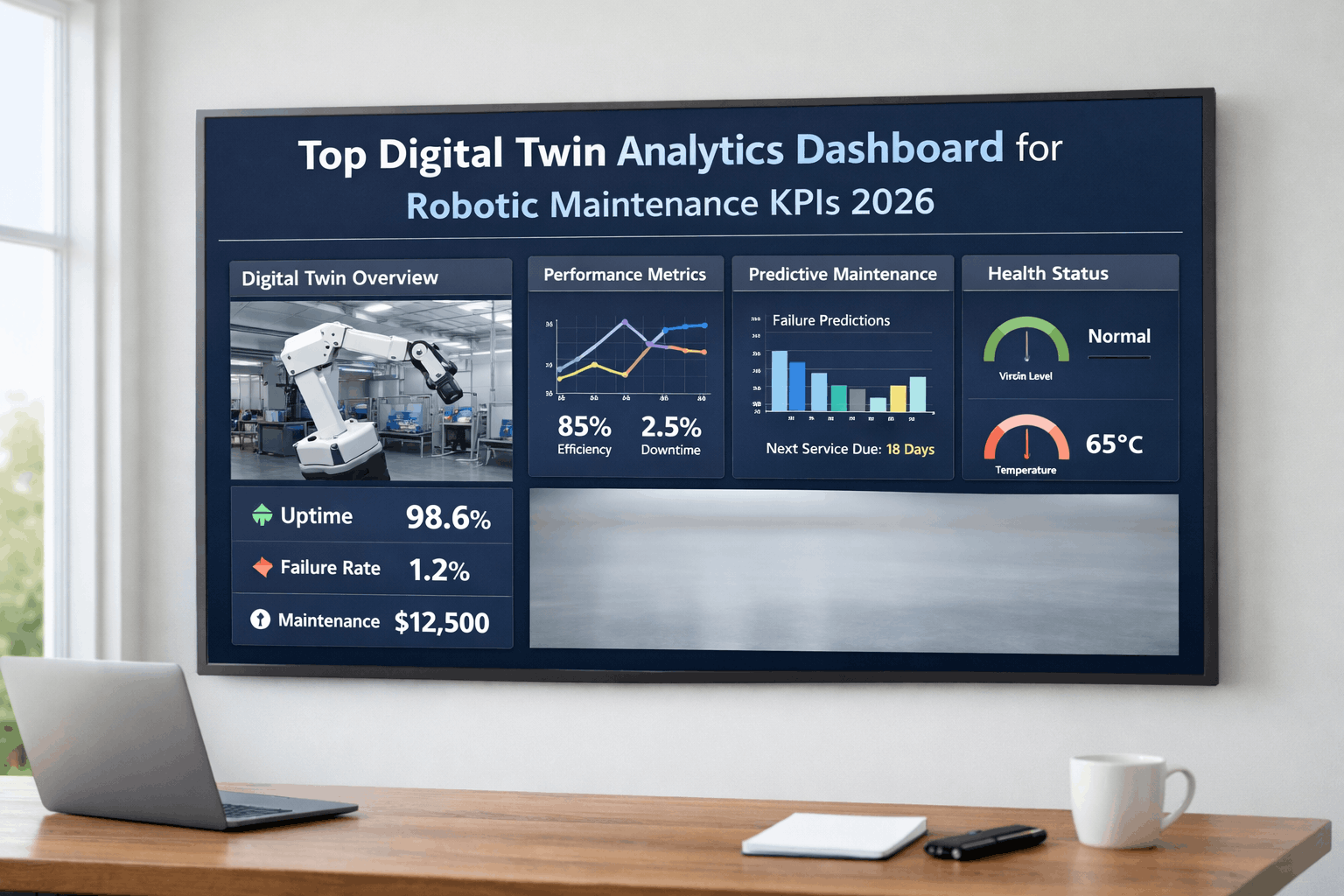
Robotic maintenance has outgrown spreadsheets and static reports. As autonomous robots—quadrupeds, AGVs, AMRs, cobots, and industrial arms—scale across warehouses, factories, refineries, and logistics hubs,...

In late 2025, a Tier-1 automotive parts manufacturer watched $1.7 million vanish in a single week. A critical CNC spindle bearing failed catastrophically on Line 4, shredding three downstream components and halting...

The facility manager stared at the as-built drawings from 2019, trying to plan a new conveyor installation—only to discover the drawings didn't account for two HVAC units relocated last year, a structural column...
When the CFO asks "What's the actual return on all those sensors we installed?" and the maintenance director can only offer vague estimates about "fewer breakdowns"—the investment case collapses. The truth is, most...

When a $400,000 robotic welding arm seizes mid-cycle on a Friday night—destroying a partially assembled chassis, halting the entire production line, and triggering 72 hours of emergency overtime—the real cost isn't...

When a maintenance supervisor asks "Is that compressor showing signs of bearing failure?" and the technician responds "The vibration data says normal, but you can feel the heat from three feet away," the sensor gap...

Every industrial facility contains thousands of maintainable assets — pumps, valves, heat exchangers, structural members, piping runs, cable trays, and vessels — yet the vast majority exist in CMMS databases as...

Industrial leak detection has entered a new era. Legacy methods—manual walkarounds with handheld ultrasonic guns, periodic pressure-drop tests, and reactive responses to visible failures—cannot keep pace with the...

Every industrial facility spends heavily on manual inspections — sending trained technicians into hazardous zones, confined spaces, and elevated structures to visually assess equipment that could be monitored far...

Industrial facilities generate thousands of IoT sensor alerts every day — vibration spikes, temperature anomalies, gas concentration warnings, pressure deviations, and acoustic signatures that could indicate...

Every industrial facility is a living, changing environment — pipes corrode, equipment shifts, new assets are installed, and layouts evolve. Yet most maintenance teams still rely on outdated 2D blueprints and...

Quadruped robots — from Boston Dynamics' Spot to ANYbotics' ANYmal — are transforming industrial inspection across energy plants, mining operations, construction sites, and manufacturing floors. Unlike wheeled or...
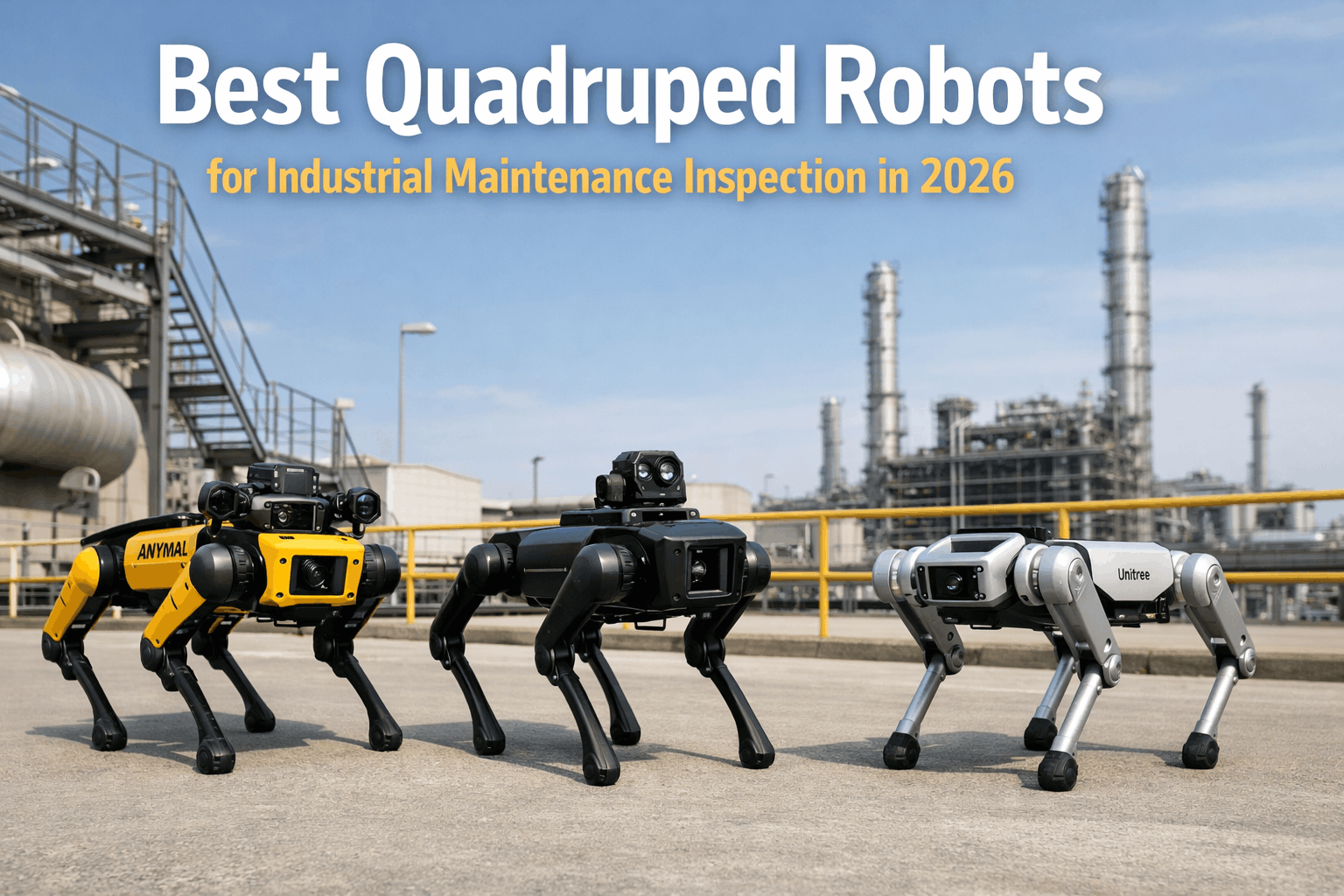
When a Gulf Coast LNG terminal sent a two-person crew into a live compressor hall for a routine thermal walkdown—navigating around 180°F steam lines, 95 dB ambient noise, and H₂S monitors alarming at 8 ppm—the...

Every manufacturing plant runs on compressed air — and every compressed air system is silently bleeding money through leaks you cannot see or hear. The U.S. Department of Energy estimates that leaks waste 20-30% of...

Every manufacturing plant runs on compressed air — and every compressed air system is silently bleeding money through leaks you cannot see or hear. The U.S. Department of Energy estimates that leaks waste 20-30% of...
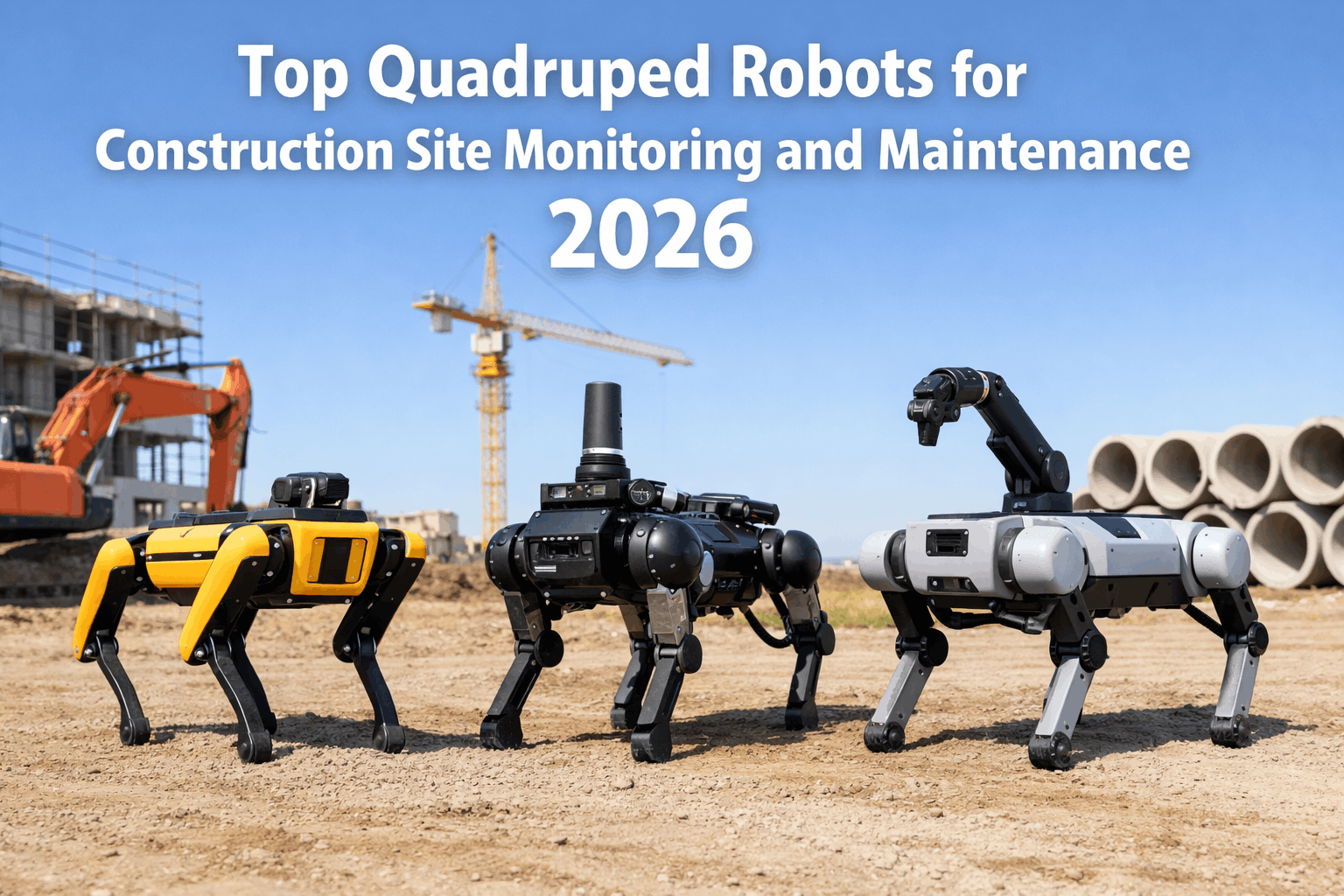
Construction sites are among the most hazardous and logistically complex environments in any industry, accounting for over 1,000 fatalities and 170,000 non-fatal injuries annually in the United States alone. In...

Boston Dynamics Spot has redefined what autonomous plant maintenance looks like in 2026. This quadruped robot navigates stairs, catwalks, and hazardous zones while performing thermal imaging, acoustic sensing, and...
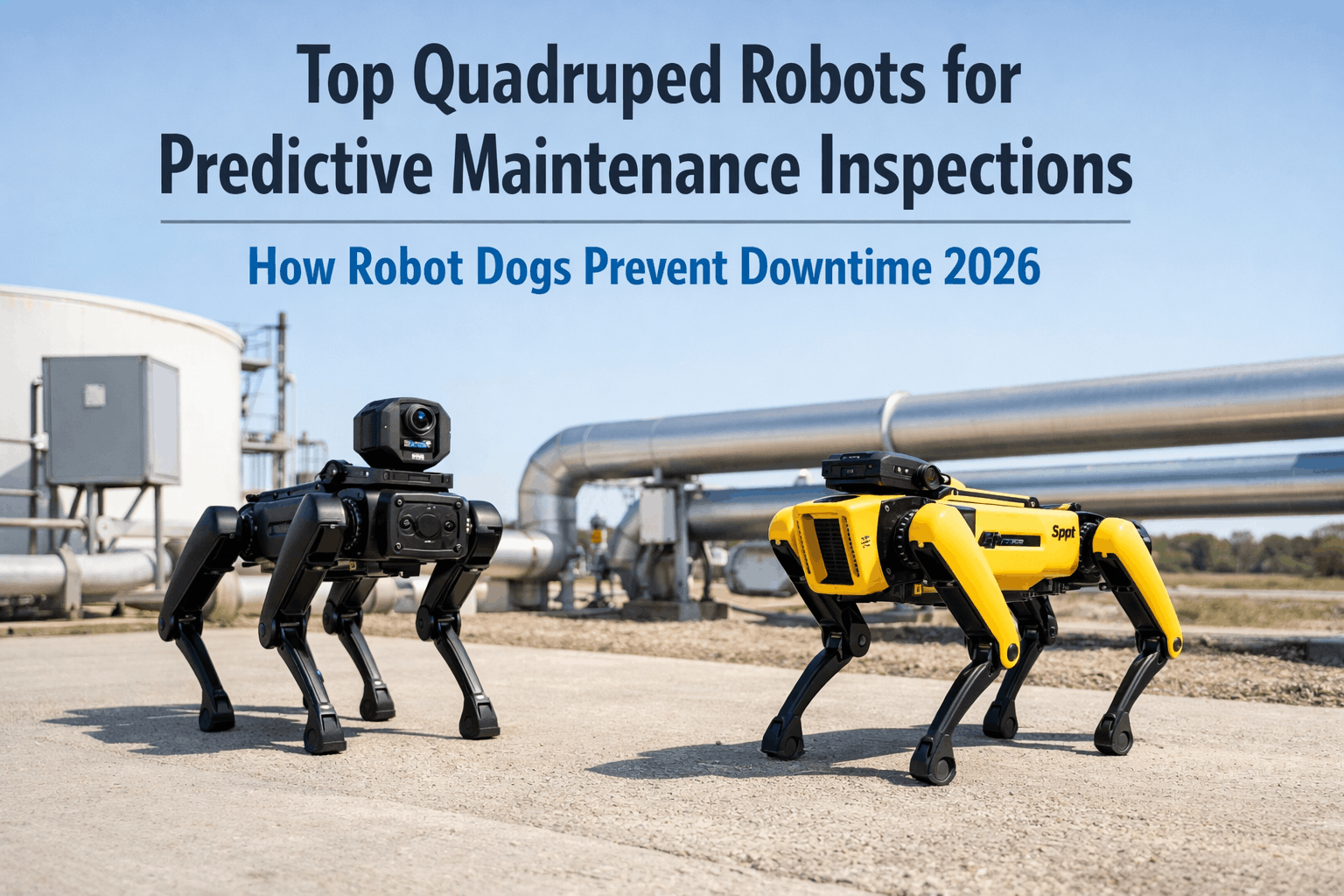
Every modern industrial facility faces one critical challenge: detecting equipment failures before they halt production. As plants grow larger and more complex, traditional inspection methods can't keep pace....

SAP PM/EAM has served manufacturers well for decades, but the maintenance landscape has evolved dramatically. A typical plant spends ₹2-4 crore annually on SAP maintenance licenses alone, yet technicians still use...

Food manufacturing plants face a unique challenge: maintaining 99.5%+ uptime while meeting strict FDA, HACCP, and FSMA compliance requirements. A single conveyor failure during peak production can cost ₹8-12 lakh...

Rail and steel manufacturers face a critical challenge: traditional CMMS systems cannot prevent the catastrophic failures that cost ₹50 lakh per hour in lost production. A typical steel plant using reactive ...

Aging gantry cranes with outdated relay logic, contactor-based motor controls, and manual operation are costing facilities millions in downtime, maintenance, and inefficiency. A typical 20-year-old gantry crane...

Maintenance data security represents a critical foundation for modern industrial operations, protecting sensitive operational information, intellectual property, and compliance documentation from cyber threats and...

CMMS software for small manufacturing represents a game-changing investment that transforms maintenance operations from chaotic reactive approaches into organized, efficient systems that directly impact...
.jpeg)
IoT-enabled maintenance represents a revolutionary transformation in industrial cost management that converts real-time sensor data into substantial financial savings through predictive insights and operational...

Low-cost condition monitoring represents a practical entry point for shop floors seeking to implement predictive maintenance without substantial capital investment. Modern facilities implementing budget-friendly...

Preventive and predictive maintenance represent two fundamental approaches to equipment management that every maintenance beginner must understand to build reliable industrial operations. Organizations starting...

CMMS implementation on a budget represents a strategic approach for small and mid-sized manufacturers to achieve world-class maintenance management without enterprise-level investments. Modern SMEs implementing...

A maintenance checklist for small factories represents the fundamental framework that transforms reactive operations into proactive maintenance excellence. Modern small manufacturing facilities implementing...

Maintenance compliance represents a critical framework for industrial operations that ensures adherence to safety regulations, quality standards, and legal requirements while protecting personnel, assets, and...

The future of predictive maintenance represents a revolutionary transformation in industrial asset management that will fundamentally reshape how organizations approach equipment reliability, operational...

Reducing maintenance backlog with smart scheduling tools represents a revolutionary approach to maintenance management that transforms chaotic work order accumulation into streamlined, predictive operations....

Mobile CMMS for field teams represents a revolutionary shift in maintenance management that empowers technicians to work efficiently from any location while maintaining seamless connectivity to critical asset data...

Maintenance analytics represents the cornerstone of modern industrial operations, transforming raw operational data into strategic insights that drive exceptional asset performance and operational excellence....

Artificial intelligence and machine learning have revolutionized predictive maintenance, transforming how industrial facilities monitor equipment health, predict failures, and optimize maintenance strategies....

Cloud-based CMMS (Computerized Maintenance Management System) represents a revolutionary shift in maintenance technology that empowers organizations to optimize asset management through secure, scalable, and...

Condition monitoring represents a revolutionary approach to industrial maintenance that transforms how organizations detect equipment failures, optimize asset performance, and maximize operational efficiency....

The Internet of Things (IoT) has fundamentally transformed how organizations approach asset management and maintenance operations, creating unprecedented opportunities for predictive maintenance and operational...

Smart maintenance strategies represent a revolutionary approach to industrial asset management that transforms traditional reactive practices into intelligent, data-driven operations for 2025 and beyond. Modern...

Small and mid-sized businesses (SMBs) often view predictive maintenance as a luxury reserved for large enterprises with substantial budgets and dedicated IT teams. However, modern predictive maintenance solutions...

AI and digital twins represent a revolutionary convergence in healthcare technology that transforms patient care through personalized simulations, predictive analytics, and real-time treatment optimization. Modern...

AI-driven maintenance represents a revolutionary evolution in industrial asset management that harnesses machine learning algorithms and artificial intelligence to transform traditional maintenance strategies into...

The Internet of Things (IoT) revolutionizes predictive maintenance by connecting industrial equipment to intelligent networks that enable real-time monitoring, data-driven insights, and proactive asset management...

Building maintenance management in large-scale facilities represents a critical discipline that ensures operational continuity, regulatory compliance, and cost optimization across expansive commercial properties....

Maintenance planning and documentation represents the cornerstone of modern industrial operations, transforming reactive maintenance cultures into proactive systems that deliver exceptional reliability, compliance,...

Condition-based maintenance (CBM) represents a revolutionary approach to industrial asset management that monitors equipment health in real-time to optimize maintenance timing and maximize operational reliability....

Industrial maintenance is experiencing a revolutionary transformation as we move through 2025, driven by emerging technologies, evolving business priorities, and the relentless pursuit of operational excellence....

Maintenance compliance and regulatory requirements represent critical operational necessities that ensure facility safety, environmental protection and legal conformity across diverse industrial sectors. Modern...

Maintenance data analytics represents a transformative approach to industrial asset management that converts operational data into actionable insights for predictive maintenance strategies. Modern manufacturing...

Asset management best practices represent the cornerstone of operational excellence in modern industrial environments, with organizations implementing comprehensive lifecycle management strategies achieving an...

Reliability Centered Maintenance (RCM) represents a systematic decision-making process that organizations use to identify the maintenance requirements of any physical asset in its operating context. Modern...

Total Productive Maintenance (TPM) represents a revolutionary approach to manufacturing excellence that transforms traditional maintenance practices into strategic operational advantages. Modern manufacturing...

Digital transformation represents one of the most significant paradigm shifts affecting industrial maintenance operations, with companies investing an average of $15 million annually in digitalization initiatives...

Maintenance Key Performance Indicators (KPIs) represent the foundational metrics that distinguish operational excellence from reactive maintenance approaches, with organizations tracking comprehensive performance...

The maintenance management landscape has undergone a dramatic transformation over the past century, evolving from simple reactive approaches to sophisticated predictive strategies that revolutionize equipment...

Maintenance cost reduction represents one of the most critical operational challenges facing industrial companies, with inefficient maintenance strategies costing an average of $100,000+ annually per facility....

Manufacturing equipment downtime represents one of the most devastating operational challenges facing production facilities, with unplanned stoppages costing an average of $12.5 lakhs per hour per production line....

Facility management software represents one of the most transformative investments for modern organizations, with comprehensive CMMS systems delivering an average of $45 lakhs in annual operational savings per...

Work order management represents one of the most critical operational challenges facing maintenance teams and service organizations, with inefficient processes costing an average of $12.5 lakhs per organization...

Preventive maintenance represents one of the most critical operational strategies facing modern facilities and industrial operations, with poor maintenance practices costing an average of $47,000 per breakdown per...

CMMS software selection represents one of the most critical technology decisions facing maintenance organizations, with poor system choices costing an average of $125,000 per year in lost productivity per facility....

Fleet management software represents one of the most transformative technologies available to modern transportation operations, with comprehensive systems delivering an average of 30% cost reduction and 40%...

Predictive maintenance software represents one of the most transformative technologies in modern asset management, with companies using traditional reactive maintenance approaches experiencing an average of $12.5...

IoT-enabled predictive maintenance represents one of the most transformative technologies in industrial asset management, with organizations achieving average cost savings of $12.5 lakhs per asset annually through...

CMMS integration represents one of the most critical operational challenges facing maintenance-driven organizations, with disconnected systems costing an average of $12.5 lakhs per year in lost efficiency per...

Maintenance downtime reduction represents one of the most critical operational challenges facing industrial companies, with unplanned downtime costing an average of $12.5 lakhs per incident per facility. Industry...

Fleet management represents one of the most critical operational challenges facing logistics and transportation companies, with inefficient maintenance approaches costing an average of $12.5 lakhs per vehicle...

Asset management inefficiencies represent one of the most critical operational challenges facing modern organizations, with poor practices costing an average of $12.5 lakhs per facility annually in unnecessary...

Compliance management in modern industrial operations represents one of the most critical regulatory challenges facing organizations, with inadequate compliance systems costing companies an average of $15 lakhs per...

Maintenance scheduling optimization represents one of the most critical operational challenges facing industrial companies, with poorly planned maintenance costing an average of $12.3 lakhs per facility annually...

Small business maintenance management represents one of the most critical operational challenges facing growing companies, with unorganized maintenance approaches costing an average of $5,000 per breakdown per...

IoT-driven maintenance strategies represent one of the most transformative operational approaches facing modern industrial companies, with traditional reactive maintenance costing an average of $15,000 per...

CMMS return on investment represents one of the most critical decisions facing maintenance managers, with poorly implemented systems costing an average of $15,000 annually in lost productivity. Industry data...

Work order tracking inefficiencies represent one of the most significant operational challenges facing maintenance organizations, with poor tracking systems costing an average of $12.3 lakhs per facility annually...

Successful CMMS implementation with Oxmaint transforms maintenance operations from paper-based chaos to digital excellence, improving maintenance efficiency by 45-65% while reducing operational costs by 20-30%....

Predictive maintenance represents a revolutionary shift in equipment management strategies, transforming reactive breakdowns into proactive interventions that save companies an average of $12-15 lakhs per machine...

CMMS facility management represents one of the most critical operational challenges facing modern organizations, with inefficient maintenance processes costing an average of $15,000 per facility per year. Industry...

Maintenance cost reduction represents one of the most critical operational challenges facing industrial companies, with inefficient maintenance strategies costing an average of $15.5 lakhs per facility annually....

Asset tracking solutions represent one of the most critical operational challenges facing modern businesses, with poor visibility costing an average of $12.3 lakhs per organization annually in lost productivity and...

Work order automation represents one of the most transformative operational improvements available to modern maintenance organizations, with automated systems reducing processing time by an average of 78% while...

Modern manufacturing demands peak operational efficiency where every minute of downtime translates to significant revenue loss. Oxmaint's comprehensive CMMS platform revolutionizes manufacturing maintenance by...

The Internet of Things (IoT) has fundamentally transformed asset management from reactive monitoring to proactive intelligence. Oxmaint's advanced CMMS platform seamlessly integrates with IoT sensors and devices,...

Preventive maintenance represents the cornerstone of modern asset management, transforming reactive repair cultures into proactive operational excellence. Oxmaint's comprehensive CMMS platform revolutionizes how...

Work order management forms the backbone of any successful maintenance operation. At Oxmaint, we understand that inefficient work order processes can lead to increased downtime, higher costs, and frustrated...

Selecting the right Computerized Maintenance Management System (CMMS) is one of the most critical decisions your business will make for operational efficiency. With countless options available, choosing the perfect...

A Computerized Maintenance Management System (CMMS) represents the digital backbone of modern maintenance operations. Oxmaint's CMMS architecture is built on three fundamental pillars: Data Management Core:...