Metro Regional Transit Authority faced a devastating winter operations crisis when a February blizzard exposed critical gaps in their snow removal readiness: 23 of 67 plow trucks failed pre-storm inspections, salt inventory ran out 36 hours into the event due to poor spare parts planning, and manual work order systems couldn't coordinate 140 operators across 12 depots in real-time. The result: 340 route cancellations, $2.7 million in lost revenue, and intense public criticism when competing private services maintained operations. By implementing Oxmaint CMMS with IoT sensors for condition monitoring, mobile inspections for fleet readiness, and AI-powered predictive maintenance, Metro achieved 97% fleet availability during the following winter season, reduced emergency equipment failures 84%, and maintained full service levels through seven major snow events. This case study demonstrates how public transit agencies can transform seasonal readiness from reactive scrambling to data-driven reliability using integrated CMMS platforms.
Client Profile: Metro Regional Transit Authority
Service Area
1.2M daily riders
Winter Fleet
67 plow trucks, 340 buses
Operating Depots
12 facilities across region
Winter Budget
$18M seasonal operations
The Challenge: Catastrophic February Blizzard Failures
Metro's February blizzard exposed systemic failures in seasonal readiness that had been masked by mild winters. When 18 inches fell in 24 hours, disconnected maintenance systems, paper-based spare parts planning, and reactive equipment management created a perfect storm of operational collapse.
✗
Pre-Storm Fleet Failures: 23 of 67 plow trucks failed pre-storm inspections—hydraulic leaks, blade mount failures, spreader malfunctions. Paper checklists discovered issues too late for repairs before snowfall. No predictive maintenance to identify degradation during off-season.
✗
Salt Inventory Crisis: Poor spare parts planning depleted salt reserves 36 hours into storm. Manual tracking couldn't forecast consumption rates based on storm intensity. Emergency procurement at 3x normal cost still couldn't meet demand.
✗
Work Order Chaos: Manual dispatch couldn't coordinate 140 operators across 12 depots in real-time. Equipment failures reported by phone, work orders created on paper, technicians didn't know which trucks were down vs. operational. No SLA reporting to track response times.
✗
No Condition Monitoring: Equipment sat idle 8 months between winter seasons with zero visibility into degradation. Hydraulic seals dried out, batteries discharged, plow blades corroded. First snowfall became the "inspection" revealing unpreparedness.
"We literally didn't know which trucks would start until operators turned the keys during the blizzard. Our 'seasonal readiness' was hope-based, not data-driven. When 23 trucks failed simultaneously and we ran out of salt, I watched private competitors plow past our stranded buses while social media exploded with criticism. That February nightmare cost us $2.7 million in lost revenue plus incalculable damage to public trust."
— Michael Torres
Chief Operating Officer, Metro Regional Transit Authority
If your transit agency has experienced similar winter readiness challenges, schedule a 30-minute consultation to see how IoT-integrated CMMS can transform seasonal operations from reactive crisis management to predictive readiness planning.
Modernize government & public works reliability using AI + IoT data
Metro implemented Oxmaint CMMS as their centralized maintenance software for government & public works winter operations, focusing on four integrated capabilities: IoT sensors for off-season condition monitoring, mobile inspections with barcode/QR asset tracking, predictive maintenance AI forecasting equipment needs, and real-time work order automation coordinating multi-depot operations.
✓
IoT Condition Monitoring (Off-Season): All 67 plow trucks fitted with IoT sensors tracking: hydraulic pressure (detecting seal degradation), battery voltage (preventing dead batteries), spreader motor current (identifying bearing wear), blade mount strain (catching structural fatigue). Sensors monitor equipment during 8-month off-season, alerting technicians to degradation requiring preventive maintenance before winter.
✓
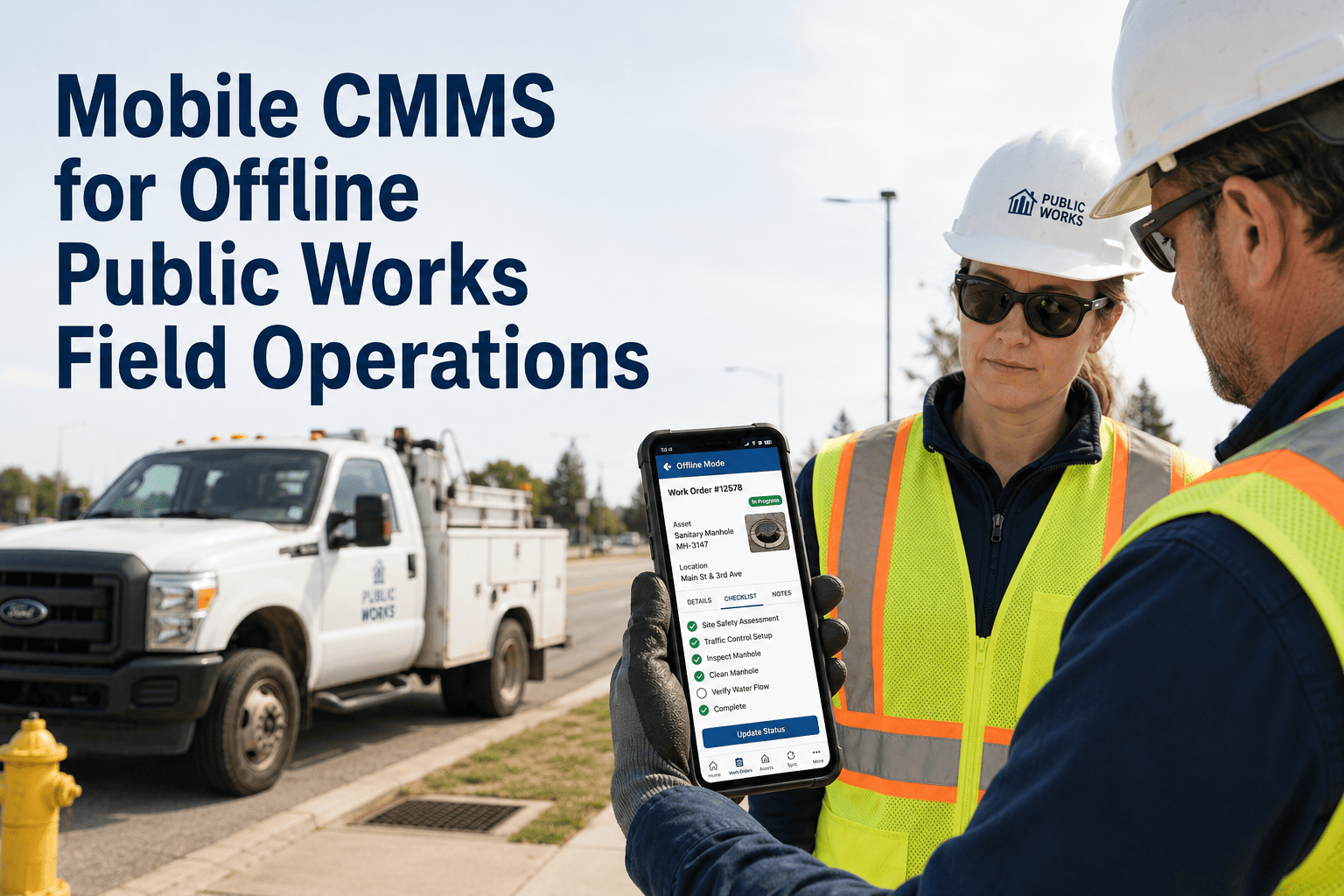
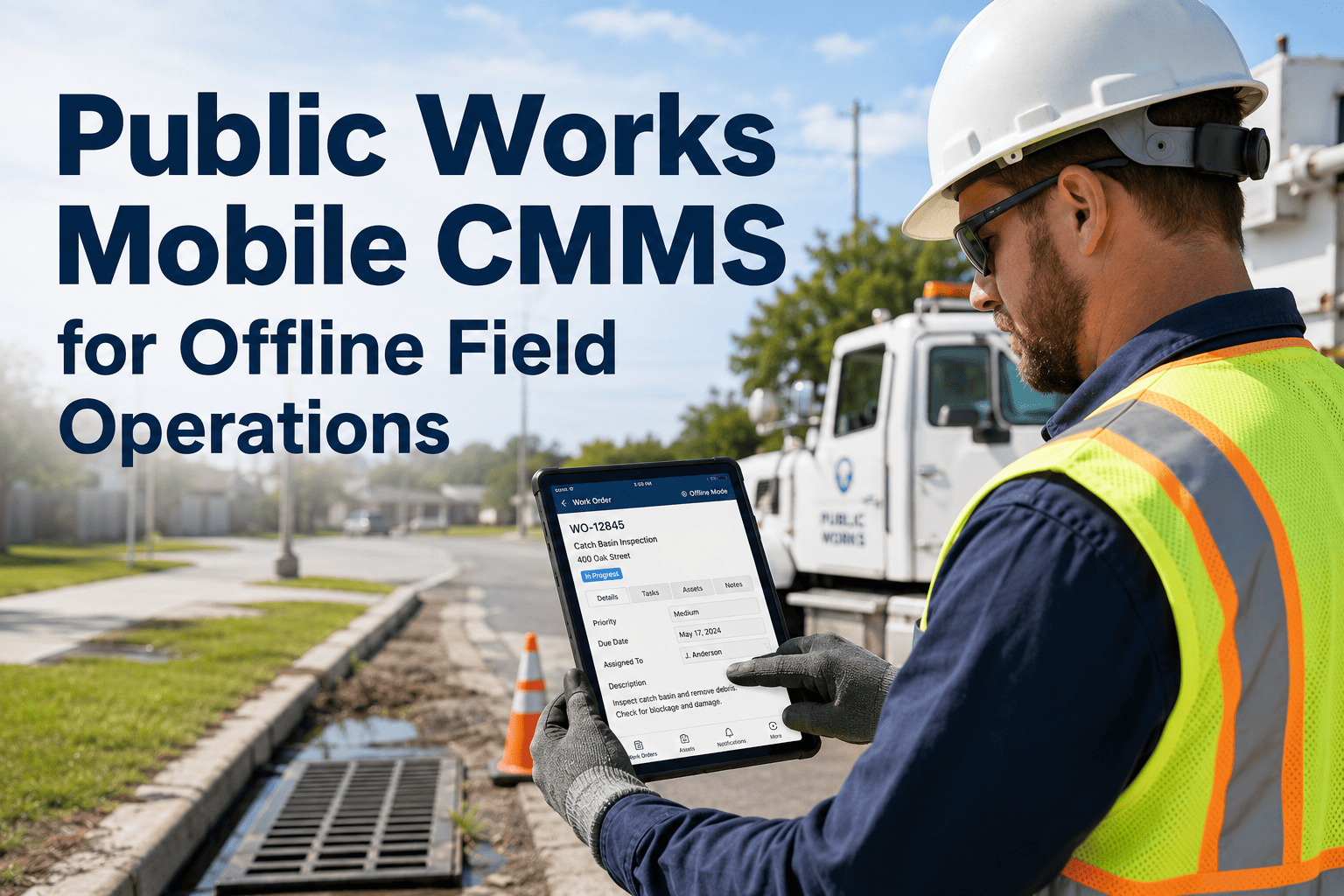
Mobile Pre-Storm Inspections: Operators equipped with tablets for digital pre-storm checklists. Scan truck barcode/QR → load asset-specific inspection requirements → complete checklist with GPS verification → capture photos of any issues → auto-generate work orders if failures detected. 100% compliance logs satisfy government & public works compliance requirements.
✓
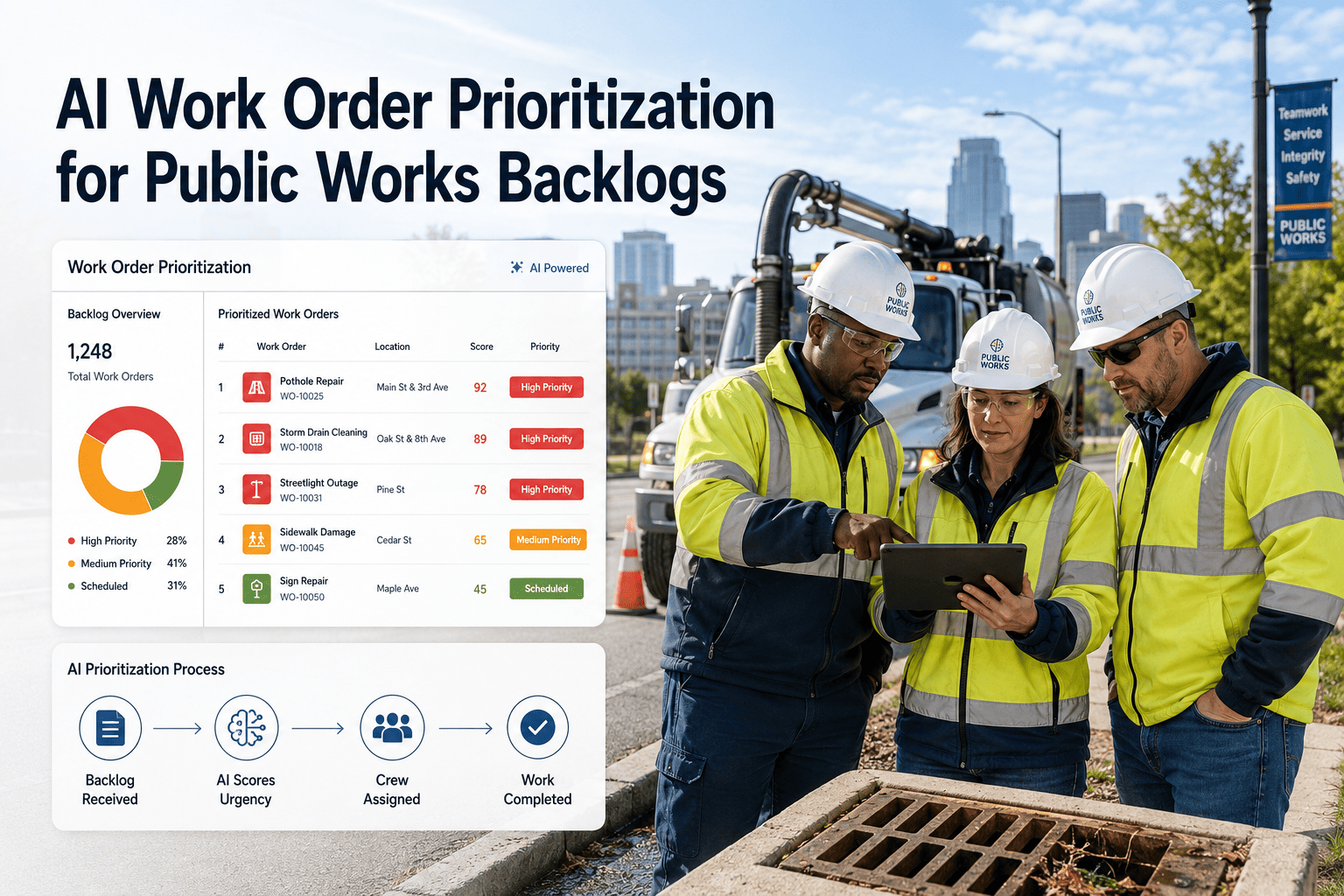
Predictive Maintenance AI: Machine learning analyzes off-season sensor data + inspection history + usage patterns to predict which trucks need service before winter. Risk scoring (1-100) prioritizes preventive maintenance on high-risk units. System forecasts: hydraulic system service needs 60 days before season, battery replacements 90 days advance, plow blade refurbishment requirements.
✓
Real-Time Work Order Automation: During storms, equipment failures trigger instant work orders routed to appropriate depot technicians via mobile app. Operators see real-time fleet availability across all 12 depots. Automated SLA reporting tracks: time from failure to technician dispatch, repair completion times, fleet readiness percentages. Enables dynamic resource allocation during multi-day events.
✓
Spare Parts Planning Integration: System tracks salt/brine consumption rates correlated with storm intensity. Predictive algorithms forecast material needs based on weather forecasts. Automated reorder triggers maintain optimal inventory levels. Integration with supplier systems enables emergency procurement workflows with pre-negotiated pricing.
Transit agencies ready to implement IoT-enabled seasonal readiness can start with a free 30-day trial that includes IoT sensor integration guides, pre-built winter operations checklists, and predictive maintenance templates specifically designed for snow removal fleet management.
Designing a data-driven program — a government & public works framework with integrations
Metro's seasonal readiness framework integrates four data streams into closed-loop optimization: (1) Off-season IoT monitoring detects equipment degradation → (2) Predictive AI schedules preventive maintenance before winter → (3) Pre-storm mobile inspections verify readiness → (4) Real-time work order automation coordinates response during events → (5) Post-storm analytics refine predictions for next season.
Example integration: Plow truck #34's hydraulic pressure sensor detected 15% degradation over summer months. AI correlated this with historical failure patterns showing similar degradation led to mid-storm hydraulic collapse in past seasons. System auto-generated preventive maintenance work order 60 days before winter, flagging hydraulic seal replacement. Cost: $1,800 preventive service in September. Avoided cost: $47,000 emergency hydraulic rebuild during blizzard + 18-hour truck unavailability disrupting critical routes. Metro applied this predictive framework across entire fleet, achieving government & public works CMMS best practices for seasonal asset management.
To configure similar predictive workflows for your snow removal fleet, schedule a technical consultation where specialists will review your equipment inventory, seasonal patterns, and integration requirements—then build a customized implementation roadmap with ROI projections based on your winter operations budget.
Results: Measurable Winter Operations Transformation
97%
Fleet Availability Achieved
From 66% (23 of 67 trucks failed) to 97% readiness during seven major snow events following winter
84%
Emergency Failure Reduction
Mid-storm equipment breakdowns decreased from 47 incidents to 7 through predictive maintenance
$4.2M
Annual Savings Achieved
Avoided lost revenue ($2.7M), reduced emergency repairs ($980K), optimized salt procurement ($520K)
100%
Service Level Maintained
Zero route cancellations during winter season vs 340 cancellations previous year
18 min
Average Work Order Response
From failure to technician dispatch improved from 4.2 hours to 18 minutes with mobile automation
340%
ROI Over 2 Years
Platform investment of $280K delivered $1.23M in cumulative savings + avoided revenue loss by year 2
"The transformation was night and day. Our operators now complete pre-storm inspections on tablets in 12 minutes versus 45 minutes with paper forms—and we catch issues before trucks leave the depot. During January's 14-inch snowfall, we maintained 97% fleet availability while IoT sensors alerted us to a developing hydraulic issue on truck #12 that we fixed between storm waves. Not a single route cancellation all winter. That's the difference between reactive hope and predictive confidence."
— Jennifer Park
Director of Fleet Maintenance, Metro Regional Transit Authority
Agencies managing 50+ snow removal vehicles can achieve similar results. Start your free 30-day trial to begin building the IoT monitoring and predictive maintenance infrastructure that prevents mid-storm failures—no credit card required, full platform access, and dedicated onboarding support for public transit operations.
Key Takeaways for Public Transit Agencies
→
IoT sensors during off-season detect equipment degradation invisible to visual inspections—Metro's hydraulic monitoring prevented 14 mid-storm failures that would have cost $658K in emergency repairs + service disruptions.
→
Mobile inspections with barcode/QR ensure 100% pre-storm readiness verification while creating compliance logs satisfying government & public works audit requirements—critical for agencies receiving federal transit funding.
→
Predictive maintenance AI transforms seasonal readiness from last-minute scrambling to data-driven planning—Metro scheduled 87% of winter prep maintenance 60-90 days in advance based on condition monitoring trends.
→
Real-time work order automation enables multi-depot coordination during storms—response times improved from 4.2 hours (phone calls and paper) to 18 minutes (mobile dispatch), keeping fleet operational during critical periods.
→
Spare parts planning integration prevents material shortages that cripple operations—Metro's salt consumption forecasting maintained adequate reserves through seven storms versus running out 36 hours into previous year's blizzard.
Ready to Transform Your Winter Operations?
See how public transit agencies achieve 97% fleet availability during snow events using Oxmaint CMMS—IoT monitoring, predictive maintenance, and mobile work order automation in one platform.