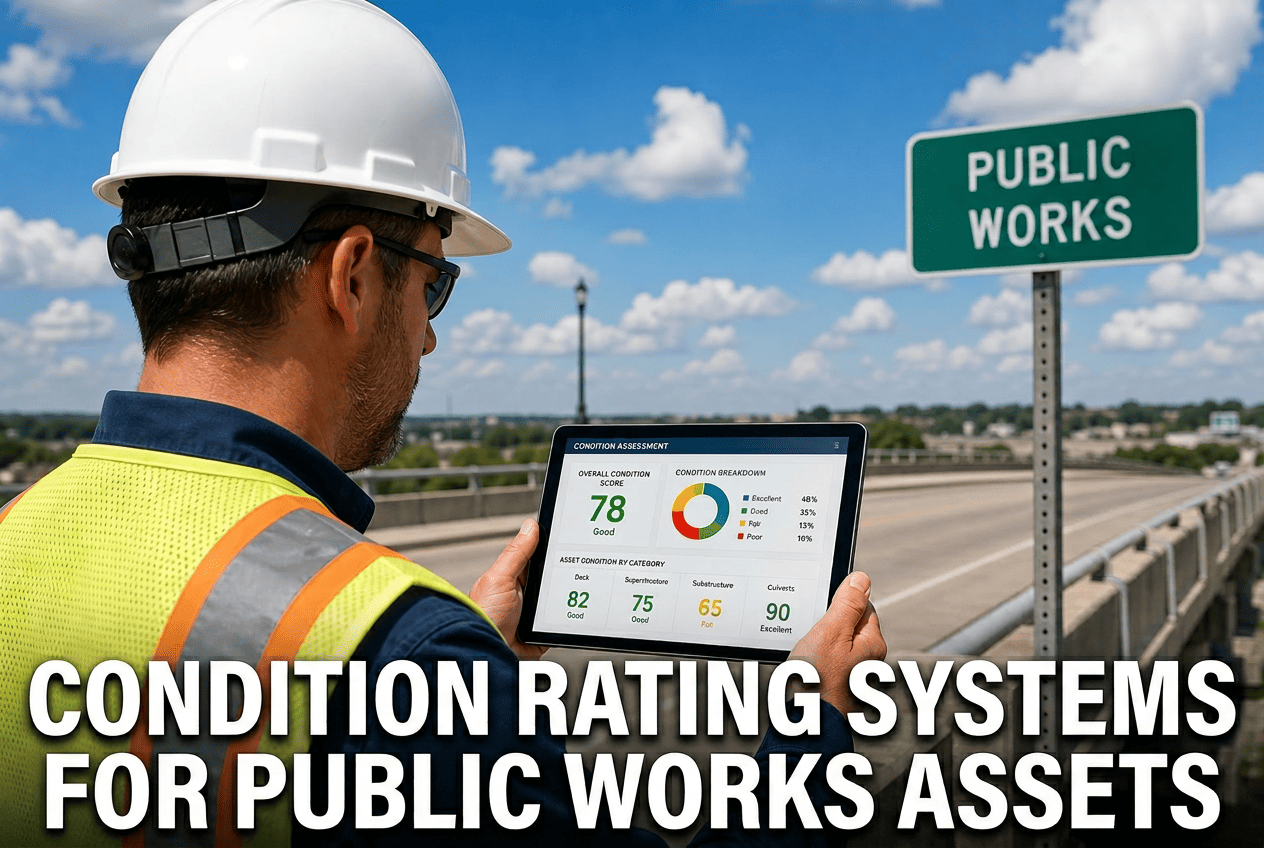
A County Sanitation Department managing 840 miles of service roads and 47 bridges within landfill properties faced an EPA audit crisis: no documented inspections for 34 bridges, missing load certifications, and zero preventive maintenance logs. The audit threatened $380,000 in penalties when inspectors identified deteriorating infrastructure creating vehicle damage and safety hazards. Root cause: treating roads and bridges as "invisible infrastructure" while focusing exclusively on vehicle fleet compliance—no work order automation, no mobile inspections, no compliance logs. Sanitation Departments operating waste facilities manage critical infrastructure requiring systematic lifecycle management and audit-ready documentation.
Sanitation Departments managing landfills, transfer stations, and MRFs operate substantial infrastructure: access roads handling 50-200 daily heavy vehicle passes, bridges crossing drainage channels, internal haul roads, and perimeter security roads. Yet most treat this as secondary to vehicle fleets—a costly oversight when EPA, OSHA, and DOT regulations mandate systematic inspection, maintenance, and documentation.
The compliance challenge spans: environmental permits (EPA requires stormwater management including road condition monitoring), workplace safety (OSHA mandates hazard-free surfaces), and operational liability (inadequate bridge load ratings create legal exposure). Without work order automation and compliance logs, Departments face audit failures and accelerated asset degradation.
Reimagine government & public works reliability via digital work orders
Paper-based infrastructure management fails on multiple levels: inspectors create records that disappear into filing cabinets, maintenance requests sit in email for weeks, and auditors asking for compliance documentation trigger reconstruction scrambles. Digital work order automation transforms chaos into systematic lifecycle management.
Digital work orders create closed-loop optimization: mobile inspections feed condition data → predictive analytics forecast degradation → work orders auto-generate → maintenance updates records → new inspections validate interventions. This transforms reactive crisis management into proactive stewardship. Start a free 30-day trial with infrastructure templates and compliance reporting for government & public works CMMS best practices.
Making audits painless — a government & public works operating model with automation
EPA audits focus on infrastructure compliance at waste facilities: stormwater plans require road inspections (preventing sediment runoff), hazardous facilities need bridge load ratings (emergency access), landfill permits mandate haul road maintenance (dust/erosion control). Manual systems fail because documentation exists only in scattered files—if at all.
Scheduled Inspections: System auto-schedules bridge inspections on regulatory cycles. Mobile app sends notifications 30 days before due, escalates overdue to supervisors, tracks completion with GPS verification.
Condition-Based Work Orders: Inspections identify defects → auto-generate work orders with priority scoring → route to crews → track materials → require completion photos. Complete audit trail from detection to resolution.
Energy Management: Poor roads increase vehicle fuel consumption 8-15%. Condition monitoring correlates road quality with fleet efficiency—prioritizing maintenance on routes showing highest energy management waste.
One-Click Audits: When regulators request documentation, export reports showing: bridge compliance percentages, maintenance frequencies, corrective actions, safety interventions. Transform 3-week scramble into 4-hour export.
This solves the $380K penalty scenario: instead of EPA discovering 34 undocumented bridges, present comprehensive records showing systematic management. Audit becomes routine validation versus crisis. Schedule a consultation to configure workflows meeting local and federal mandates.
Before & After: Automated Infrastructure Management
| Process | Legacy Manual | Digital Automation | Impact |
|---|---|---|---|
| Bridge Inspections | Paper, 0% tracked | Mobile, 100% GPS-verified | Audit violations eliminated |
| Work Orders | 3-4 weeks to repair | 5 days average | 78% faster response |
| Audit Prep | 3 weeks compiling | 4 hours export | 95% time reduction |
| Vehicle Costs | 28% increase | 12% reduction | $340K annual savings |
| Downtime | 47 incidents/year | 7 incidents | 85% reduction |
| Penalties | $380K EPA violations | $0 (full compliance) | 100% avoidance |
Well-maintained roads reduce vehicle costs, extend tire life, decrease fuel consumption, minimize downtime. The Department facing $380K penalties now operates with 100% compliance, $340K annual savings, and audit documentation accessible in hours. Start a free trial to build the digital infrastructure management system regulators expect.