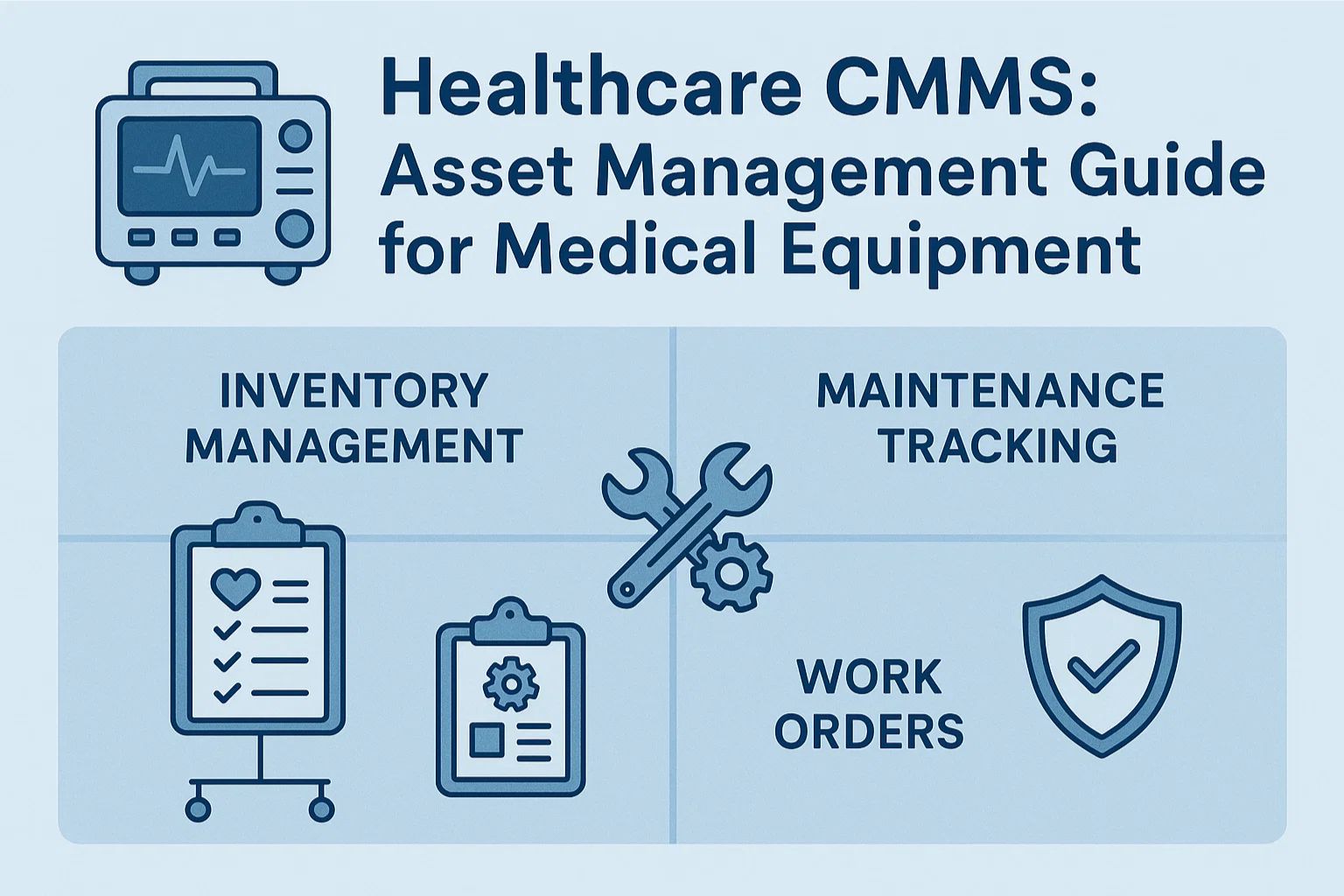
Healthcare CMMS (Computerized Maintenance Management Systems) are revolutionizing medical equipment asset management, helping hospitals and healthcare facilities reduce maintenance costs by 25-40% while ensuring 99.9% equipment availability and regulatory compliance. This comprehensive guide explores how healthcare organizations can leverage CMMS technology for effective medical device tracking, preventive maintenance scheduling, FDA compliance, and clinical engineering excellence. From biomedical equipment management to cost reduction strategies, discover proven practices that enhance patient safety, optimize equipment lifecycles, and streamline healthcare maintenance operations.
Understanding Healthcare CMMS and Medical Equipment Management
Healthcare CMMS represents a specialized approach to asset management designed specifically for medical environments where equipment reliability directly impacts patient safety and care quality. Unlike general-purpose maintenance systems, healthcare CMMS solutions address unique requirements including medical device regulations, clinical engineering workflows, biomedical equipment tracking, and healthcare compliance standards.
Medical equipment asset management encompasses the complete lifecycle of healthcare devices, from acquisition and installation to maintenance, calibration, and disposal. Effective asset management ensures optimal equipment performance, regulatory compliance, cost control, and patient safety through systematic tracking, maintenance scheduling, and performance monitoring.
Core Components of Healthcare CMMS
Medical Device Tracking and Inventory Management
Comprehensive medical device tracking provides real-time visibility into equipment location, status, maintenance history, and utilization patterns. Healthcare CMMS solutions enable barcode scanning, RFID tracking, and mobile access for instant equipment identification and status updates. This capability reduces equipment search time by 60-80% and improves asset utilization rates significantly.
Preventive Maintenance Scheduling
Preventive maintenance for medical equipment follows manufacturer recommendations, regulatory requirements, and clinical best practices. Healthcare CMMS automates maintenance scheduling based on time intervals, usage hours, or procedure counts, ensuring timely servicing while minimizing disruption to patient care. Effective preventive maintenance reduces equipment failures by 70-85% and extends device lifecycles.
Regulatory Compliance Management
Healthcare facilities must comply with FDA regulations, Joint Commission standards, CMS requirements, and state health department rules. Healthcare CMMS provides automated compliance tracking, audit trail documentation, regulatory reporting, and alert systems that ensure continuous adherence to healthcare standards and regulations.
Clinical Engineering Integration
Clinical engineering departments rely on CMMS for medical device management, safety testing, calibration scheduling, and performance monitoring. Integration with clinical workflows ensures seamless coordination between biomedical technicians, nursing staff, and equipment vendors while maintaining comprehensive documentation.
Benefits of Healthcare CMMS Implementation
Enhanced Patient Safety
Reliable medical equipment is critical for patient safety and clinical outcomes. Healthcare CMMS ensures equipment availability when needed, reduces device-related incidents by 50-70%, and maintains optimal performance through proactive maintenance. Systematic equipment management prevents unexpected failures that could compromise patient care.
Cost Reduction and ROI
Healthcare CMMS typically reduces maintenance costs by 25-40% through optimized preventive maintenance, extended equipment lifecycles, improved inventory management, and reduced emergency repairs. Organizations achieve ROI of 300-600% within 18-24 months through decreased downtime, lower repair costs, and improved equipment utilization.
Regulatory Compliance Assurance
Automated compliance tracking ensures healthcare facilities meet all regulatory requirements without manual effort. Healthcare CMMS provides audit-ready documentation, regulatory reporting, and compliance alerts that reduce inspection preparation time by 70-85% and minimize compliance risks.
Operational Efficiency
Streamlined workflows, automated scheduling, mobile access, and integrated systems improve operational efficiency across healthcare maintenance operations. Staff productivity increases by 30-50% through reduced administrative tasks, optimized work orders, and improved communication between departments.
Key Features of Healthcare CMMS Solutions
Medical Device Database
Comprehensive medical device databases include equipment specifications, manufacturer information, service manuals, warranty details, regulatory classifications, and maintenance requirements. This centralized information repository supports informed decision-making and efficient maintenance operations.
Work Order Management
Healthcare-specific work order management includes priority levels based on patient impact, clinical urgency, and safety considerations. Mobile work orders enable real-time updates, photo documentation, and instant communication between clinical staff and biomedical technicians.
Asset Lifecycle Management
Complete asset lifecycle tracking from procurement to disposal includes cost tracking, performance monitoring, utilization analysis, and replacement planning. This comprehensive approach optimizes capital equipment investments and supports strategic planning for medical device acquisitions.
Integration Capabilities
Healthcare CMMS integrates with hospital information systems (HIS), electronic health records (EHR), enterprise resource planning (ERP), and vendor management systems. This integration eliminates data silos and provides comprehensive visibility across healthcare operations.
Implementation Best Practices for Healthcare CMMS
Planning and Preparation
Successful healthcare CMMS implementation requires thorough planning including equipment inventory audits, workflow analysis, staff training programs, and change management strategies. Organizations should allocate 3-6 months for comprehensive implementation with phased rollouts to minimize disruption.
Data Migration and Setup
Accurate data migration includes equipment records, maintenance history, vendor information, and regulatory documentation. Clean, complete data ensures optimal system performance and enables effective reporting and analysis from day one.
Staff Training and Adoption
Comprehensive training programs for clinical engineering staff, biomedical technicians, nursing personnel, and administrative users ensure successful adoption. Hands-on training, user manuals, and ongoing support facilitate smooth transitions and maximize system benefits.
Continuous Improvement
Regular system optimization includes performance monitoring, user feedback collection, process refinement, and feature updates. Continuous improvement ensures healthcare CMMS evolves with changing needs and maintains optimal performance over time.
Advanced Technologies in Healthcare CMMS
Internet of Things (IoT) Integration
IoT sensors and smart medical devices provide real-time monitoring of equipment performance, utilization, and condition. This technology enables predictive maintenance, remote monitoring, and automated data collection that enhances maintenance efficiency and equipment reliability.
Artificial Intelligence and Predictive Analytics
AI-powered analytics analyze equipment performance patterns, failure modes, and maintenance history to predict potential issues before they occur. Predictive maintenance reduces unplanned downtime by 35-50% and optimizes maintenance scheduling based on actual equipment condition.
Mobile and Cloud Technologies
Cloud-based healthcare CMMS provides scalability, accessibility, and automatic updates while reducing IT infrastructure requirements. Mobile applications enable real-time access to equipment information, work orders, and maintenance procedures from any location within healthcare facilities.
Blockchain for Asset Tracking
Blockchain technology provides immutable records of equipment history, maintenance activities, and regulatory compliance. This technology enhances data security, audit trails, and supply chain transparency for medical device management.
Frequently Asked Questions (FAQs)
What is Healthcare CMMS and how does it differ from general CMMS?
Healthcare CMMS is specialized maintenance management software designed for medical environments, addressing unique requirements like FDA compliance, patient safety protocols, clinical engineering workflows, and medical device regulations. Unlike general CMMS, healthcare solutions include medical device classifications, regulatory tracking, clinical integration, and healthcare-specific reporting capabilities.
How does Healthcare CMMS improve patient safety?
Healthcare CMMS improves patient safety by ensuring medical equipment reliability through preventive maintenance, reducing device-related incidents by 50-70%, providing real-time equipment status, maintaining calibration schedules, and enabling rapid response to equipment issues. Systematic maintenance prevents unexpected failures that could compromise patient care.
What are the key compliance requirements for medical equipment management?
Key compliance requirements include FDA medical device regulations, Joint Commission standards, CMS conditions of participation, state health department rules, manufacturer guidelines, and international standards like IEC 62353. Healthcare CMMS automates compliance tracking, documentation, and reporting to ensure continuous adherence to all applicable regulations.
How much can Healthcare CMMS reduce maintenance costs?
Healthcare CMMS typically reduces maintenance costs by 25-40% through optimized preventive maintenance schedules, extended equipment lifecycles, improved inventory management, reduced emergency repairs, and better vendor management. Organizations often achieve ROI of 300-600% within 18-24 months of implementation.
What features should I look for in Healthcare CMMS software?
Essential features include medical device tracking, regulatory compliance management, preventive maintenance scheduling, work order management, asset lifecycle tracking, mobile accessibility, integration capabilities, reporting and analytics, vendor management, and clinical engineering workflows. Look for healthcare-specific functionalities and proven compliance capabilities.
How long does Healthcare CMMS implementation take?
Healthcare CMMS implementation typically takes 3-6 months for comprehensive deployment, depending on facility size, equipment volume, and complexity. Phased implementations start with critical equipment and expand gradually. Success factors include thorough planning, staff training, data migration, and change management support.
Can Healthcare CMMS integrate with existing hospital systems?
Modern Healthcare CMMS solutions offer extensive integration capabilities with hospital information systems (HIS), electronic health records (EHR), enterprise resource planning (ERP), financial systems, and vendor platforms. Integration eliminates data silos and provides comprehensive visibility across healthcare operations.
What is the role of clinical engineering in Healthcare CMMS?
Clinical engineering departments use Healthcare CMMS for medical device management, safety testing, calibration scheduling, performance monitoring, regulatory compliance, and lifecycle planning. The system supports biomedical technicians with work order management, maintenance documentation, and equipment performance analysis.
How does Healthcare CMMS support regulatory audits?
Healthcare CMMS provides audit-ready documentation including maintenance records, compliance tracking, calibration certificates, safety testing results, and regulatory reports. Automated documentation reduces audit preparation time by 70-85% and ensures comprehensive compliance evidence is readily available.
What are the benefits of mobile Healthcare CMMS?
Mobile Healthcare CMMS enables real-time access to equipment information, work orders, and maintenance procedures from smartphones and tablets. Benefits include improved productivity, faster response times, real-time updates, photo documentation, barcode scanning, and enhanced communication between clinical staff and biomedical technicians.
How does predictive maintenance work in healthcare settings?
Predictive maintenance in healthcare uses IoT sensors, equipment monitoring, and data analytics to predict potential equipment failures before they occur. This approach analyzes performance patterns, usage data, and environmental factors to optimize maintenance timing, reduce unplanned downtime by 35-50%, and prevent equipment-related patient care disruptions.
What training is required for Healthcare CMMS users?
Training requirements vary by user role, including clinical engineering staff, biomedical technicians, nursing personnel, and administrative users. Comprehensive training covers system navigation, work order management, equipment tracking, compliance procedures, and reporting. Ongoing training ensures users stay current with system updates and best practices.
How can Healthcare CMMS reduce equipment downtime?
Healthcare CMMS reduces equipment downtime through preventive maintenance scheduling, predictive analytics, faster repair response, improved spare parts management, vendor coordination, and proactive monitoring. Organizations typically achieve 60-80% reduction in unplanned downtime and improve equipment availability to 99.9% or higher.
What is the cost of Healthcare CMMS implementation?
Healthcare CMMS costs vary based on facility size, user count, and feature requirements. Cloud-based solutions typically range from $50-200 per user monthly, while on-premise systems require higher upfront investment. Total cost of ownership includes software licensing, implementation services, training, and ongoing support. Most organizations achieve positive ROI within 12-24 months.
How does Healthcare CMMS support equipment lifecycle management?
Healthcare CMMS supports complete equipment lifecycle management from procurement through disposal, including acquisition tracking, installation documentation, maintenance history, performance monitoring, cost analysis, utilization tracking, and replacement planning. This comprehensive approach optimizes capital equipment investments and supports strategic planning for medical device acquisitions.
Implementing Healthcare CMMS transforms medical equipment asset management, delivering measurable improvements in patient safety, operational efficiency, regulatory compliance, and cost control. By following proven best practices and leveraging advanced technologies, healthcare organizations can achieve excellence in medical device management while ensuring optimal patient care outcomes and regulatory adherence.
Ready to streamline healthcare maintenance?
Transform your hospital's asset reliability and compliance with a smart CMMS solution.