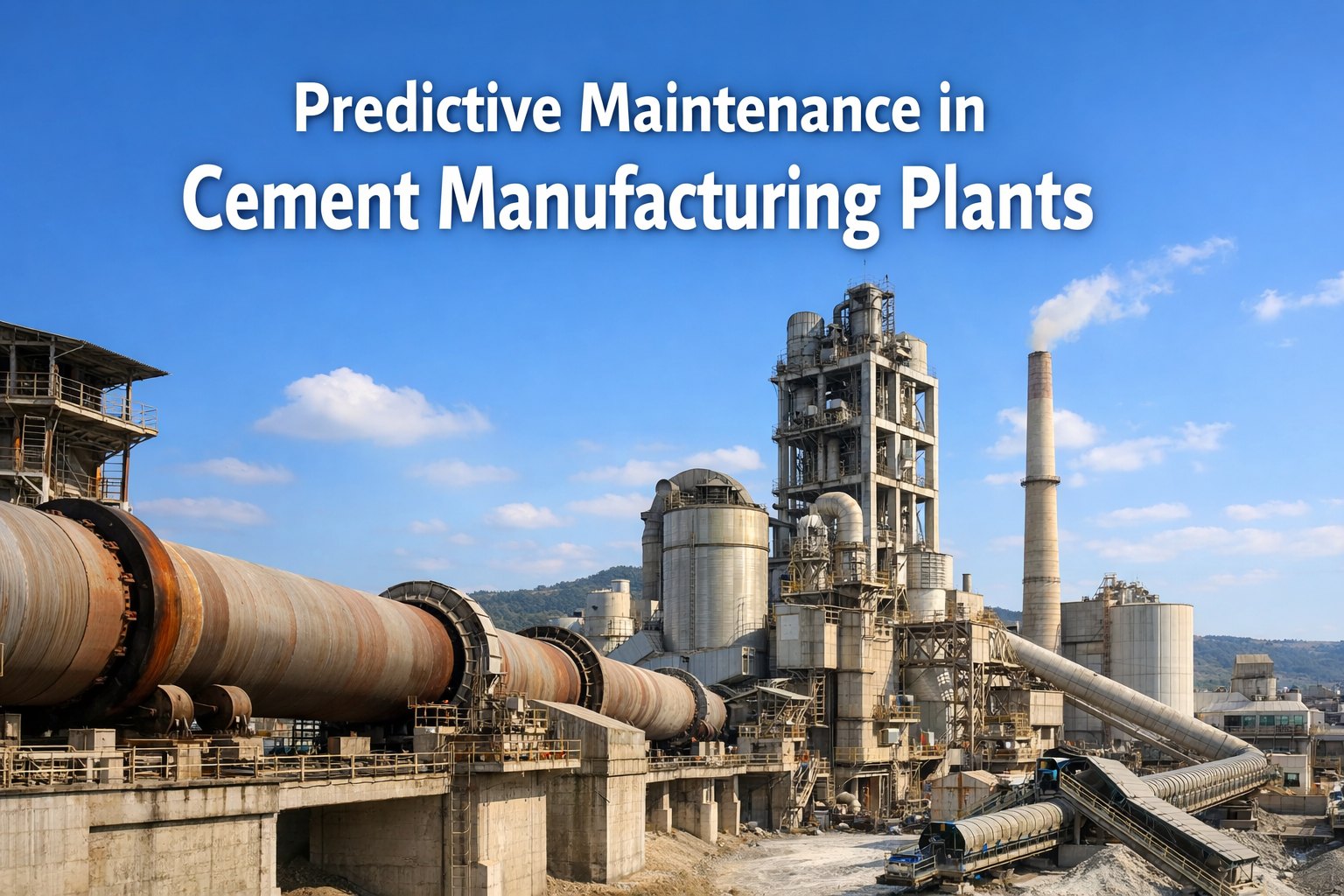
Steel plants lose millions annually due to unexpected equipment failures and quality defects that slip through manual inspections. A single blast furnace breakdown can cost ₹50 lakh per hour in lost production, while rail rejections from surface defects result in material waste exceeding ₹100 crore annually across major plants. Traditional preventive maintenance schedules and human visual inspections—even by experienced operators—miss critical early warning signs. The solution? AI-enabled predictive maintenance combined with vision-based quality control systems that analyze millions of data points in real-time, predict failures 7-15 days in advance with 90%+ accuracy, and detect microscopic defects invisible to the human eye. Leading steel manufacturers are achieving 70% downtime reduction, 85% quality improvement, and over ₹600 crore in combined annual savings. Here's how this technology works and why it's becoming essential for competitive steel production.
AI-Enabled Predictive Maintenance & Vision-Based Quality Control for Steel Plants
How Advanced AI and Computer Vision Are Revolutionizing Steel Manufacturing Reliability and Quality
The Steel Manufacturing Challenge
Modern steel plants face two critical challenges that directly impact profitability:
Unpredictable Equipment Failures
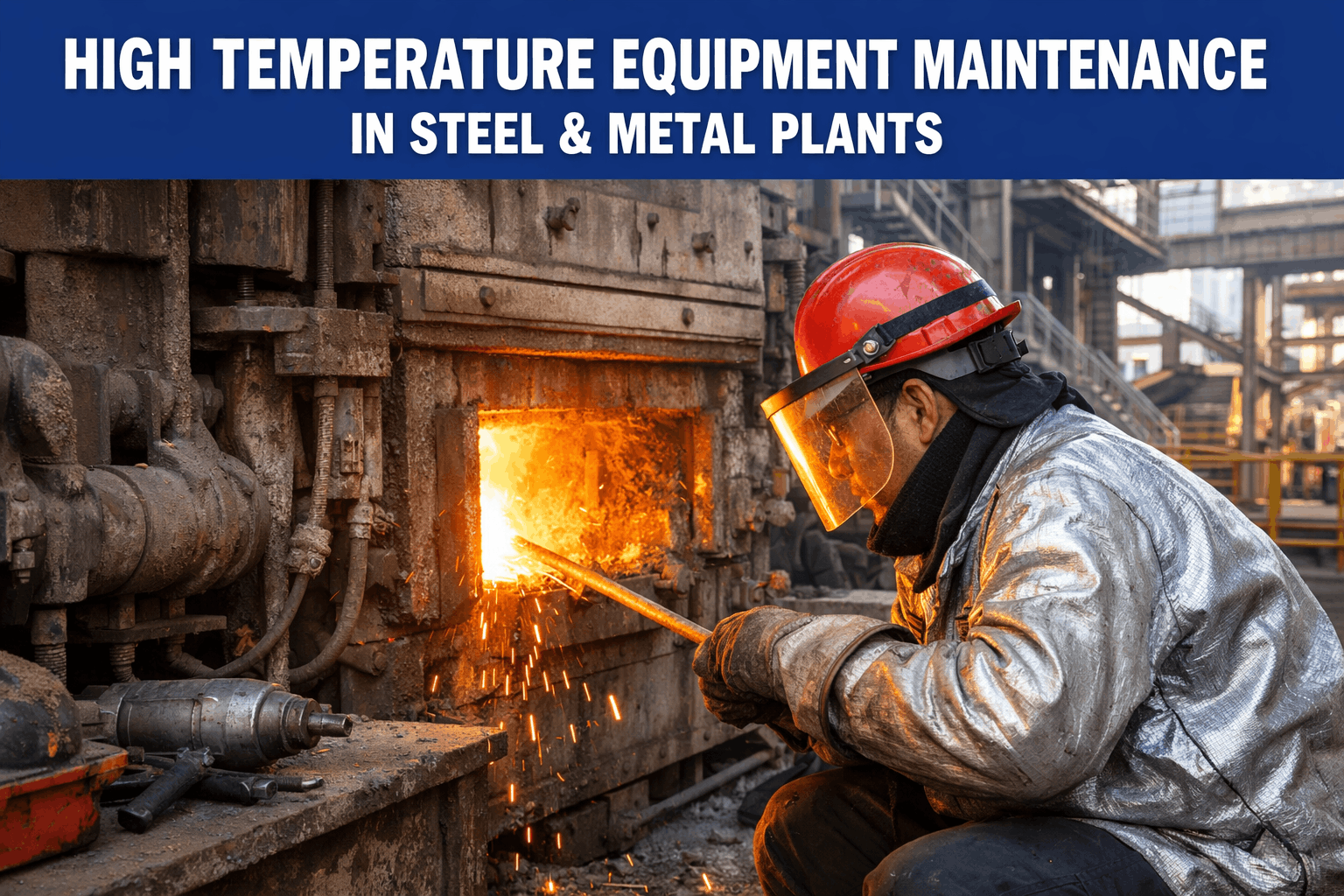
Critical assets like blast furnaces, rolling mills, continuous casters, and cranes operate under extreme conditions—temperatures exceeding 1,500°C, heavy loads, and 24/7 cycles. Traditional preventive maintenance based on fixed schedules either over-maintains equipment (wasting resources) or misses early failure indicators.
Quality Control Limitations
Manual visual inspection of rails, sheets, and billets relies on human operators who can miss microscopic cracks, surface irregularities, and dimensional variations. Even experienced inspectors catch only 60-70% of defects, leading to customer returns, rework costs, and brand damage.
AI-Enabled Predictive Maintenance
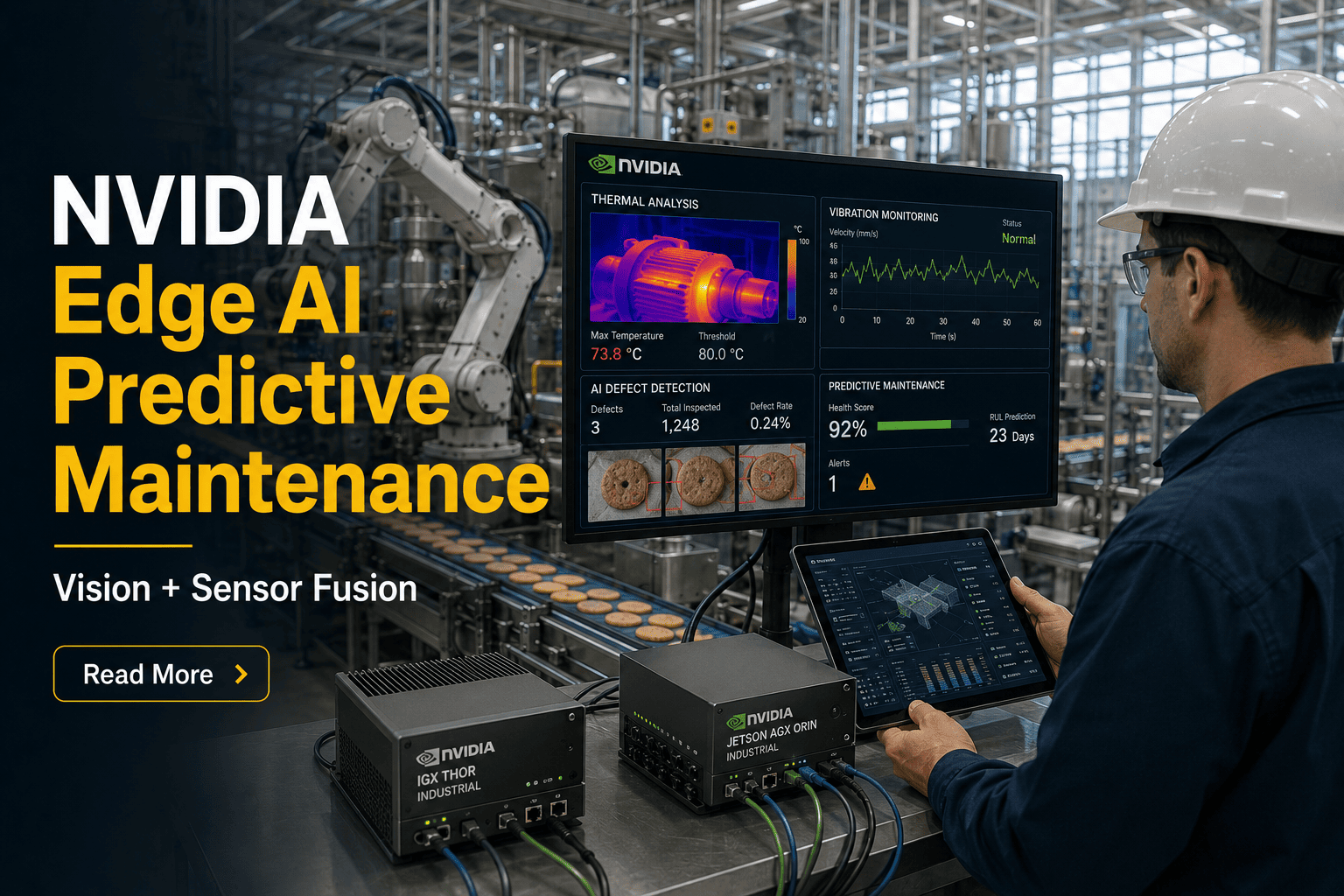
Advanced machine learning algorithms analyze real-time sensor data to predict equipment failures before they occur, enabling proactive maintenance scheduling.
How It Works
Data Collection
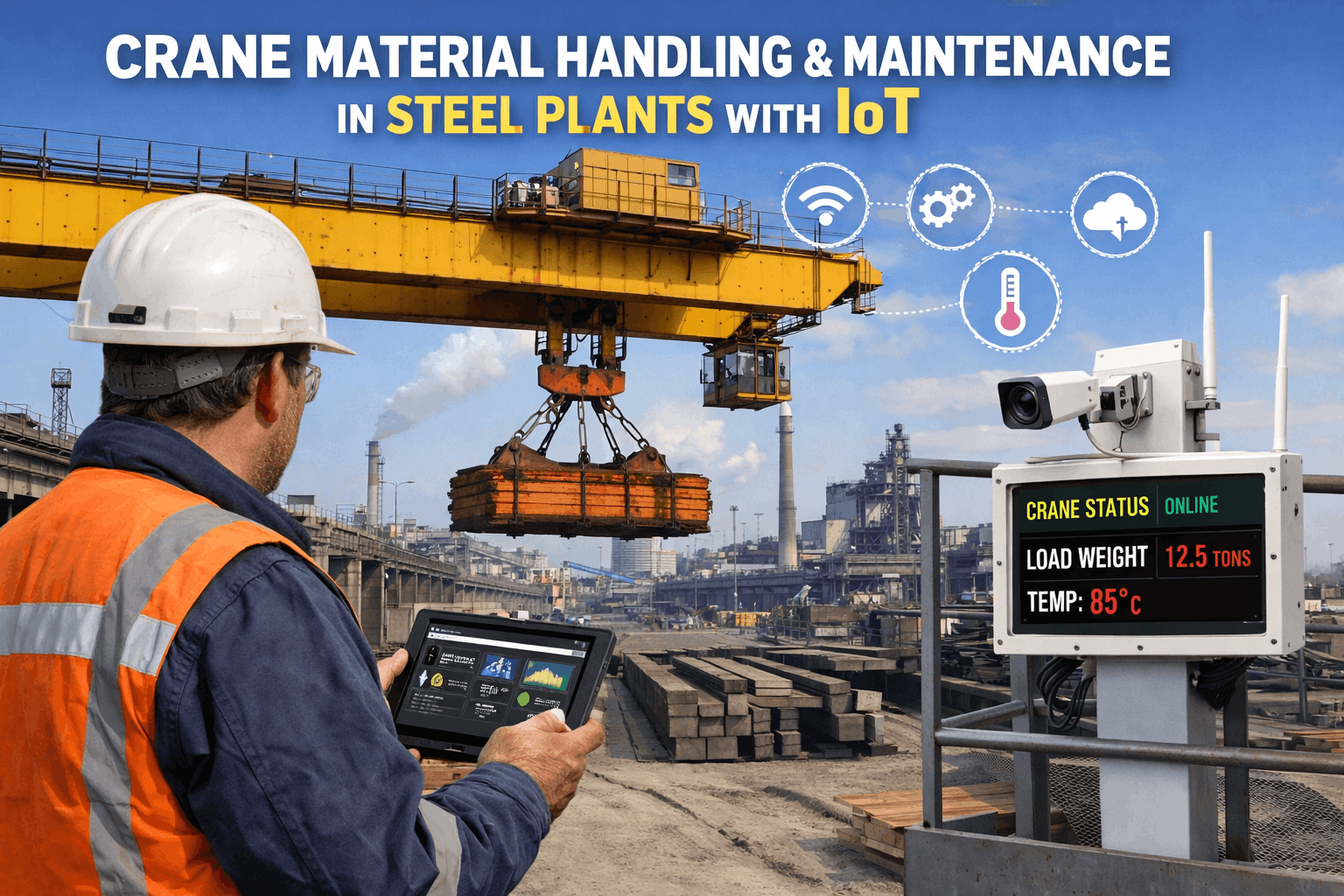
IoT sensors continuously monitor vibration, temperature, pressure, load, oil quality, power consumption, and acoustic signatures across critical assets. Data collected every 1-5 seconds (17,280+ readings per day per sensor).
Edge AI Processing
AI models run on edge computing devices at the equipment level, analyzing data in real-time without cloud latency. Models trained on 5+ years of historical failure data and normal operating patterns.
Anomaly Detection
Machine learning algorithms detect subtle deviations from normal operating patterns—bearing vibration spikes, temperature creep, pressure irregularities—that indicate impending failure.
Failure Prediction
AI models predict specific failure modes (bearing wear, belt misalignment, hydraulic leaks, motor degradation) with 7-15 day advance warning and 90-95% accuracy.
Automated Alerts & Work Orders
System automatically generates maintenance work orders with failure probability, recommended actions, required parts, and optimal scheduling window to minimize production impact.
Critical Equipment Monitored
Blast Furnaces
- Refractory lining degradation
- Hot blast stove efficiency
- Burden distribution
- Cooling system health
Rolling Mills
- Roll bearing vibration
- Gear box temperature
- Hydraulic system pressure
- Motor current signature
Continuous Casters
- Mold oscillation patterns
- Cooling water flow rates
- Segment alignment
- Withdrawal force trends
Electric Arc Furnaces
- Electrode consumption rate
- Refractory wear patterns
- Power consumption efficiency
- Tap-to-tap cycle time
Overhead Cranes
- Wire rope condition
- Hoist motor bearing health
- Brake system integrity
- Trolley wheel alignment
Compressors & Pumps
- Bearing temperature rise
- Vibration amplitude changes
- Seal leakage indicators
- Performance degradation
Ready to Implement AI Predictive Maintenance?
See how OXmaint's edge AI platform integrates with your existing PLCs and SCADA systems to deliver real-time failure predictions and automated maintenance scheduling.
Vision-Based Quality Control
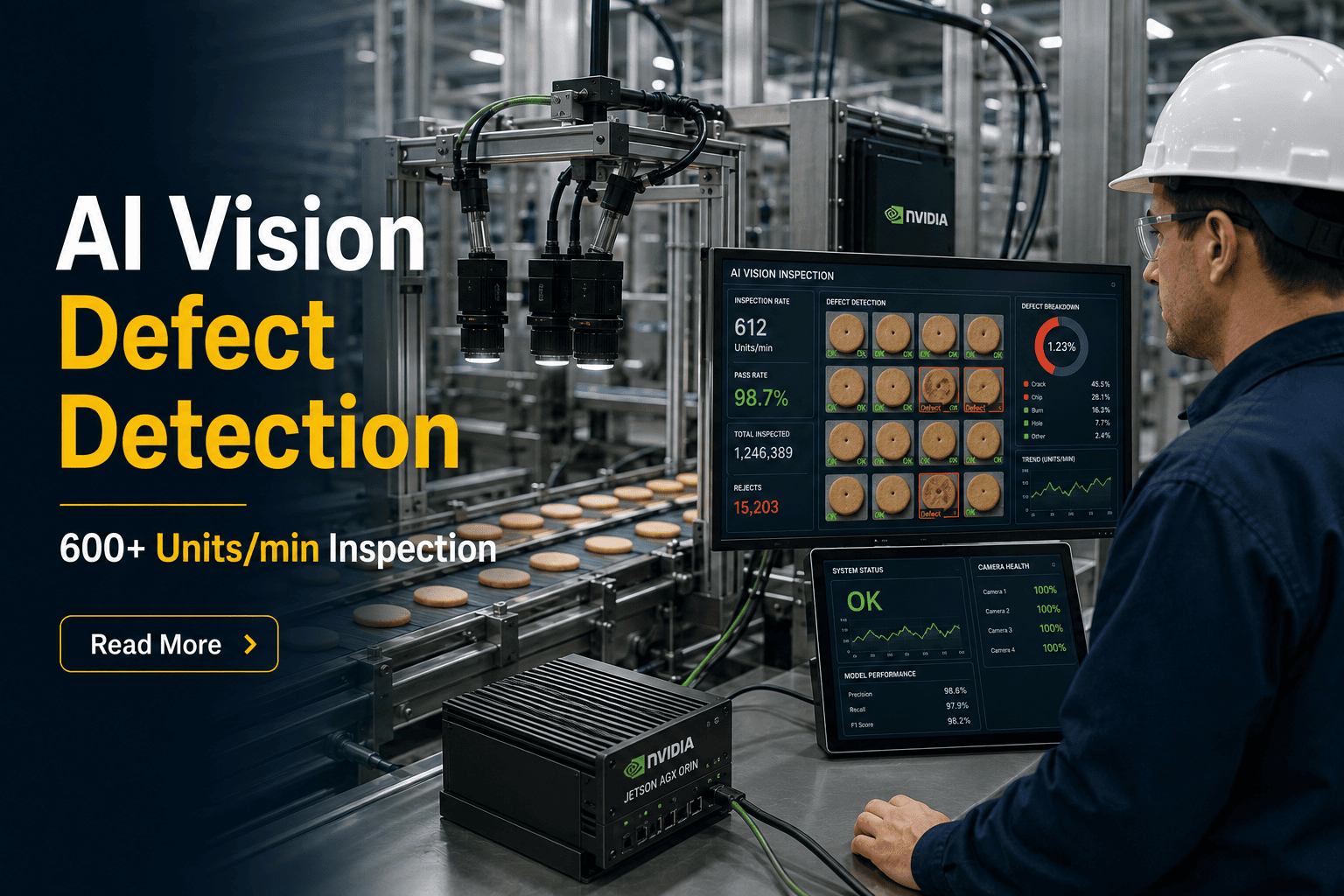
High-speed cameras combined with deep learning models inspect 100% of production at line speed, detecting defects invisible to human inspectors with 99.5%+ accuracy.
How Vision AI Works
High-Resolution Imaging
Industrial cameras (8K-12K resolution) capture images at 200+ frames per second as rails, sheets, or billets move through production at 10-15 m/s. Multi-angle cameras ensure complete surface coverage.
Deep Learning Analysis
Convolutional neural networks (CNNs) trained on millions of defect images instantly analyze each frame, detecting surface cracks, seams, scabs, scale marks, dimensional variations, and color anomalies.
Real-Time Classification
AI categorizes defects by type, severity, and location within 50 milliseconds per image. System processes 4,000-5,000 images per minute, inspecting 100% of production.
Automated Decision Making
Based on defect severity rules, system automatically triggers reject mechanisms, alerts operators, logs defect data for trend analysis, and marks precise defect locations for rework.
Defect Types Detected
Surface Defects
- Cracks: Longitudinal, transverse, star cracks (0.1mm+ width)
- Seams: Surface discontinuities from rolling process
- Scabs: Raised metal patches from casting issues
- Pits: Surface depressions from scale or corrosion
- Scratches: Mechanical damage during handling
- Roll Marks: Imprints from damaged rolling mill rolls
Dimensional Defects
- Gauge Variation: Thickness outside tolerance (±0.1mm)
- Width Issues: Edge waviness, width variations
- Straightness: Camber, bow, twist deviations
- Profile Errors: Non-uniform cross-sections
- Edge Cracks: Splits along product edges
- End Defects: Damaged rail/sheet ends
Color & Coating Defects
- Scale Marks: Oxide scale residue patterns
- Color Variations: Uneven surface appearance
- Coating Defects: Galvanizing issues, bare spots
- Rust/Corrosion: Early oxidation indicators
- Staining: Chemical or water stains
- Inclusions: Non-metallic particles on surface
Steel Plant Applications
Rail Production
Inspection Speed: 15 m/s (54 km/h)
Detection Accuracy: 99.7% for cracks >0.1mm
ROI Impact: ₹100+ Cr annual savings from reduced rejections
Hot/Cold Rolling Mills
Inspection Speed: 10 m/s for sheets/coils
Detection Accuracy: 99.5% for surface defects
ROI Impact: 85% reduction in customer returns
Billet/Bloom Inspection
Inspection Speed: 200+ billets per hour
Detection Accuracy: 99.8% for surface cracks
ROI Impact: Prevent defects propagating to finished goods
Continuous Casting
Inspection Speed: Real-time during casting
Detection Accuracy: 98%+ for breakout prediction
ROI Impact: ₹5 Cr savings from prevented breakouts
Integrated AI System: Predictive Maintenance + Vision QC
Maximum value comes from integrating both technologies into a unified AI platform:
Closed-Loop Quality-Maintenance Feedback
Vision system detects quality defects (surface marks, gauge variations) and correlates them with equipment health data from predictive maintenance sensors. If surface defects increase, system automatically triggers inspection of rolling mill rolls, casting mold condition, or furnace refractory.
Unified Analytics Dashboard
Single interface showing equipment health scores, failure predictions, quality metrics, defect trends, and production efficiency (OEE). AI identifies correlations between maintenance activities and quality outcomes.
Automated Process Optimization
AI continuously adjusts equipment parameters (roll pressure, casting speed, furnace temperature) based on real-time quality feedback and predicted equipment health to maximize output while maintaining quality standards.
Predictive Quality Alerts
System predicts when quality issues will occur based on equipment degradation patterns. For example, AI predicts roll surface damage 3-5 days before it causes product defects, allowing scheduled roll changes during planned downtime.
ROI & Business Impact
Steel plants implementing integrated AI predictive maintenance and vision quality control achieve transformational results:
Maintenance Savings
Quality Improvements
Operational Efficiency
Calculate Your Plant's AI ROI
Get customized ROI analysis showing potential savings from AI predictive maintenance and vision quality control based on your production capacity, current downtime, and rejection rates.
Implementation Considerations
Successful deployment of AI maintenance and vision systems requires careful planning:
Technical Requirements
- Sensor Infrastructure: IoT sensors on critical assets (vibration, temp, pressure) with 1-5 second sampling rates
- Network Connectivity: Industrial Ethernet or wireless for real-time data transmission (latency <100ms)
- Edge Computing: On-site servers for AI model execution without cloud dependency
- Camera Systems: Industrial 8K+ cameras with specialized lighting for vision applications
- PLC Integration: API connections to existing PLCs, SCADA, and MES systems
- Data Storage: Local time-series database for 5+ years sensor history
Data Requirements
- Historical Data: 3-5 years of failure history, maintenance logs, and quality records
- Training Data: 10,000+ labeled defect images per defect category
- Asset Hierarchy: Complete equipment taxonomy with relationships and criticality
- Baseline Metrics: Current MTBF, MTTR, OEE, rejection rates for ROI tracking
- Product Specifications: Quality standards and tolerance ranges for each product
Implementation Timeline
- Phase 1 (4-6 weeks): Site assessment, sensor planning, data collection
- Phase 2 (6-8 weeks): Hardware installation, network setup, system integration
- Phase 3 (4-6 weeks): AI model training, validation, calibration
- Phase 4 (2-4 weeks): Pilot deployment on critical assets/production line
- Phase 5 (4-6 weeks): Plant-wide rollout, user training, optimization
- Total: 5-7 months from contract to full production deployment
Change Management
- Executive Sponsorship: Plant leadership commitment to AI-driven transformation
- Operator Training: 3-5 day programs on system usage and alert interpretation
- Process Integration: Update maintenance workflows and quality procedures
- KPI Alignment: Tie performance metrics to AI system recommendations
- Continuous Improvement: Monthly model retraining as new data accumulates
Technology Partners & Platforms
Leading steel manufacturers implement these AI solutions:
OXmaint AI Platform
Specialization: Edge AI for heavy industry predictive maintenance
- Pre-trained models for steel equipment (blast furnaces, mills, casters)
- Seamless PLC/SCADA integration with 500+ industrial protocols
- On-premise deployment for data security and low latency
- 90-95% prediction accuracy with 7-15 day advance warning
- Mobile-first interface for technicians and supervisors
- Proven at 50+ steel plants across India, MENA, Southeast Asia
Vision AI Solutions
Specialization: High-speed defect detection for steel production
- Cognex, Keyence, Teledyne DALSA industrial camera systems
- Custom deep learning models trained on steel-specific defects
- 200+ FPS inspection at line speeds up to 15 m/s
- Multi-spectral imaging (visible, IR, laser) for comprehensive detection
- Integration with reject mechanisms and quality management systems
- Real-time defect mapping and traceability
Ready to transform your steel plant with AI? Chat with our AI specialists — Get answers about implementation, ROI, and technical requirements.
Key Takeaways
- 70% downtime reduction through AI predictive maintenance with 90%+ accuracy
- 85% quality improvement via vision-based defect detection at 99.5% accuracy
- ₹600-750 Cr annual savings for typical 2.5M ton capacity steel plants
- 3-5 month payback with 7,200%+ three-year ROI
- Edge AI processing enables real-time predictions without cloud latency
- 100% production inspection vs. 5-10% sampling with manual methods
- Integrated systems create closed-loop quality-maintenance feedback
- 5-7 month implementation from assessment to full production deployment
- Rail rejection rates drop from 7% to <1% with vision AI
- Catastrophic failures prevented saving ₹8-15 Cr per incident
Implement AI for Your Steel Plant
Join leading steel manufacturers leveraging AI predictive maintenance and vision quality control to maximize uptime, improve quality, and boost profitability. See the technology in action with a personalized demo for your operations.