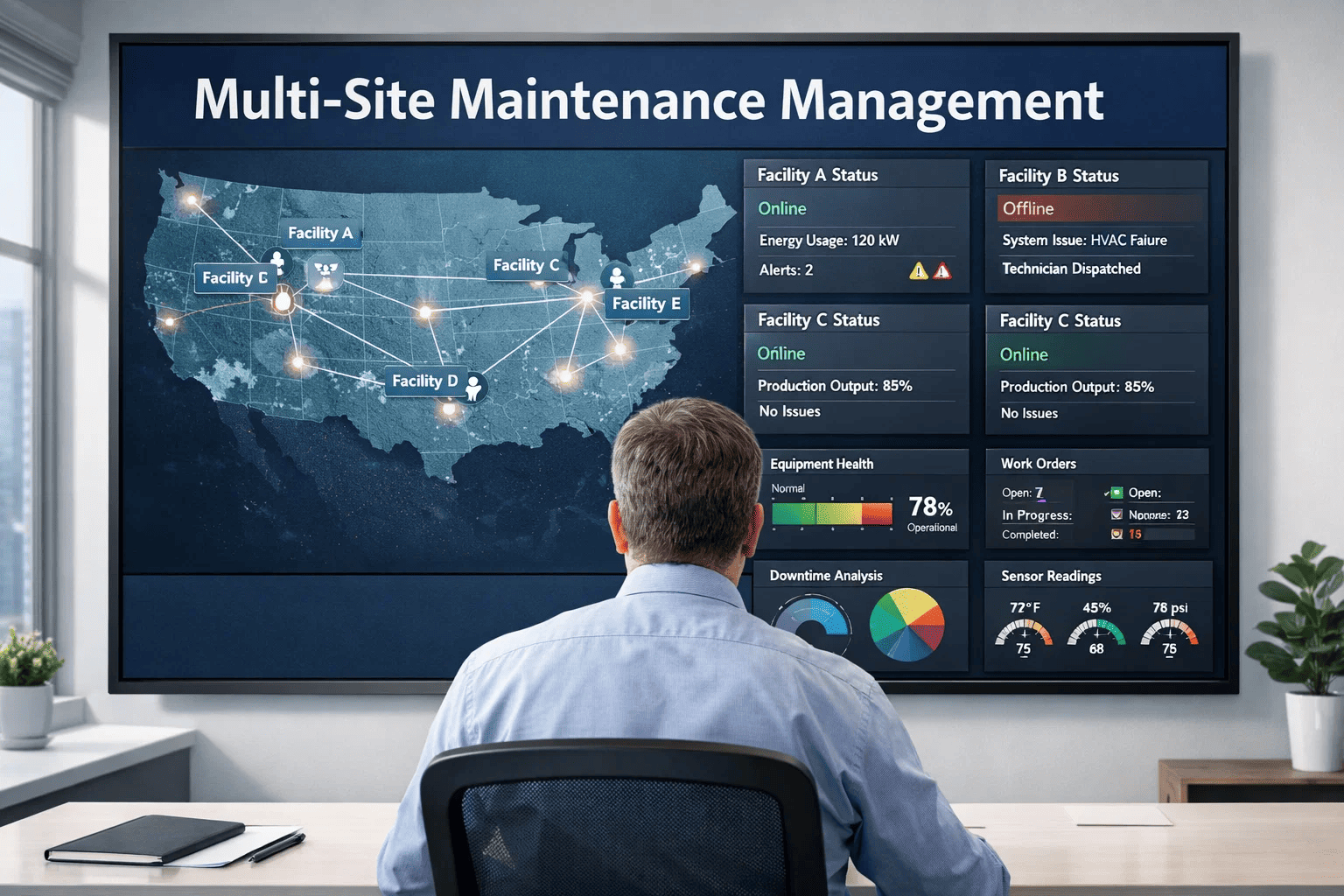
Your regional director calls at 6:15 AM with a problem that's been brewing for months: "Three of our downtown properties used different HVAC contractors last quarter—one charged $847 for the same compressor repair that cost $2,340 at the flagship hotel, and nobody caught it until I reviewed consolidated invoices." You dig into the vendor records across your 23-property portfolio and discover the deeper issue—14 different plumbing vendors, inconsistent service level agreements, zero performance tracking, and $1.2 million in annual maintenance spend with no centralized visibility. Without unified vendor management and data governance across properties, your multi-property chain operates as 23 separate businesses, hemorrhaging money through pricing inconsistencies, duplicate contracts, and untracked vendor performance.
This vendor chaos scenario plays out across American hospitality portfolios as regional and national chains struggle to maintain operational consistency while managing dozens of local service providers. The average multi-property hospitality group loses 18-25% of potential vendor savings through fragmented procurement, inconsistent contract terms, and lack of performance benchmarking across locations. Centralized vendor management with proper data governance recovers $45,000-$120,000 annually per property through standardized pricing, performance accountability, and consolidated purchasing power.
Hotel groups implementing strategic vendor management platforms with hospitality CMMS integration achieve 30-42% reductions in third-party maintenance costs while improving vendor response times by 55-70% compared to properties managing vendors independently. The transformation requires centralized vendor databases, standardized performance metrics, mobile inspection integration, and audit trail documentation that creates accountability across every property and every service call.
Ready to unify vendor management across your property portfolio and stop losing $45,000+ per location annually?
Your competitors are already consolidating vendor data, benchmarking performance, and negotiating enterprise-wide contracts. Every month without centralized vendor governance is another month of paying premium prices for inconsistent service quality.
Strengthen Hospitality Response Time Using Mobile Inspections
Effective vendor management for multi-property chains begins with real-time visibility into service delivery—knowing exactly when vendors arrive, what work they perform, and how their performance compares across your portfolio. Mobile inspection platforms transform vendor accountability from monthly invoice reviews into real-time performance monitoring that catches service gaps before they impact guest experience or inflate costs.
Traditional vendor oversight relies on property managers manually tracking service calls through spreadsheets, phone logs, and paper work orders—creating information silos that prevent portfolio-wide analysis. Mobile-enabled vendor management captures arrival times, work documentation, photo verification, and guest impact metrics automatically, enabling regional teams to identify top performers and problematic vendors within days rather than quarters.
Vendor Performance Tracking Framework
Without Mobile Inspections
- Vendor arrival times unverified
- Work quality assessed after complaints
- Pricing inconsistencies discovered quarterly
- No cross-property performance data
- Invoice disputes lack documentation
With Mobile Inspections
- GPS-verified check-in/check-out times
- Photo documentation of completed work
- Real-time price benchmarking alerts
- Portfolio-wide vendor rankings
- Audit-ready service records
Data Governance Architecture for Multi-Property Operations
Centralized data governance transforms vendor management from reactive cost control into strategic asset optimization. The architecture must balance corporate standardization with property-level flexibility—establishing enterprise-wide vendor databases, pricing benchmarks, and performance thresholds while allowing regional managers to address local market conditions and emergency situations.
Effective data governance for multi-property vendor management requires four foundational layers: master vendor database with standardized categorization, contract repository with automated renewal tracking, performance analytics with cross-property benchmarking, and compliance documentation with audit trail preservation. Properties implementing comprehensive data governance achieve 25-35% improvements in vendor negotiating power through consolidated spending visibility.
| Governance Layer | Key Components | Business Impact | Implementation Timeline |
|---|---|---|---|
| Master Vendor Database | Standardized profiles, insurance tracking, certification verification | 35% reduction in duplicate vendors | 4-6 weeks |
| Contract Repository | SLA documentation, pricing matrices, renewal alerts | $28,000 average savings per renegotiation | 6-8 weeks |
| Performance Analytics | Response times, fix rates, cost benchmarks | 45% faster vendor issue resolution | 8-12 weeks |
| Compliance Documentation | Audit trails, safety records, licensing verification | 92% audit pass rate improvement | 4-6 weeks |
| Risk Scoring Engine | Financial stability, performance trends, compliance history | 67% reduction in vendor-related incidents | 10-14 weeks |
Unified vendor categories, service codes, and pricing structures across all properties enabling accurate benchmarking and consolidated reporting.
Real-time dashboards showing vendor spend, performance metrics, and contract status across the entire portfolio from a single interface.
Automated performance tracking with SLA breach alerts, escalation workflows, and vendor scorecards driving continuous improvement.
Complete audit trails documenting every vendor interaction, approval, and payment with automated compliance verification.
Cutting Downtime with Foresight — A Hospitality Lifecycle with KPIs
Proactive vendor management extends beyond cost control to become a strategic driver of asset reliability and guest satisfaction. By integrating vendor performance data with preventive maintenance schedules and IoT sensor alerts, multi-property chains can predict service needs, pre-position vendor resources, and resolve issues before they impact operations—transforming vendor relationships from reactive service calls to strategic partnerships.
The hospitality asset lifecycle approach treats vendor management as an integral component of equipment reliability rather than a separate procurement function. Properties aligning vendor selection with asset criticality, establishing performance-based contracts, and implementing predictive service scheduling achieve 40-55% reductions in equipment downtime while improving vendor relationship quality.
Asset Assessment
Inventory equipment criticality, identify vendor requirements, establish service level expectations by asset category
Vendor Qualification
Evaluate capabilities against requirements, verify insurance and certifications, negotiate performance-based contracts
Preventive Integration
Align vendor schedules with PM calendars, establish IoT alert routing, configure automatic work order generation
Performance Monitoring
Track KPIs in real-time, benchmark across properties, identify improvement opportunities and performance gaps
Continuous Optimization
Quarterly business reviews, contract renegotiations based on data, vendor consolidation or expansion decisions
Emergency vendor arrival for critical equipment failures
Benchmark for preferred vendor status qualification
Maximum acceptable deviation from portfolio benchmarks
Required completion rate for audit-ready records
Multi-Site Rollout Strategy and Change Management
Successful vendor management transformation across multi-property portfolios requires systematic rollout strategies that balance corporate standardization with property-level adoption realities. Pilot programs at representative properties, phased regional expansions, and comprehensive change management ensure sustainable implementation rather than temporary compliance followed by regression to fragmented practices.
The rollout architecture must address technology deployment, process standardization, and organizational alignment simultaneously. Properties focusing exclusively on software implementation without addressing procurement workflows and vendor communication protocols achieve only 35-45% of potential benefits compared to 75-85% for comprehensive transformation programs.
Deploy master vendor database at 2-3 pilot properties, establish data governance standards, configure mobile inspection workflows, train property managers on barcode/QR scanning protocols
Roll out to full region based on pilot learnings, implement cross-property benchmarking, begin vendor consolidation negotiations, establish regional vendor scorecards
Enterprise-wide deployment, consolidated contract negotiations, automated compliance monitoring, executive dashboards with portfolio-wide vendor analytics
Quarterly vendor reviews, continuous improvement initiatives, predictive analytics integration, strategic vendor partnership development
Critical Success Factors for Multi-Site Rollouts
- Executive sponsorship with clear accountability for vendor management transformation outcomes
- Dedicated project management resources for 18-24 month implementation timeline
- Property manager involvement in vendor selection and performance criteria development
- Standardized training programs with certification requirements for all procurement staff
- Change management communication addressing "what's in it for me" at property level
- Quick wins identification showing immediate savings within first 90 days
Common Implementation Pitfalls to Avoid
- Underestimating data migration complexity from legacy property management systems
- Forcing vendor consolidation before establishing performance baselines
- Ignoring regional market differences in vendor availability and pricing
- Deploying technology without updating procurement approval workflows
- Measuring only cost savings while ignoring service quality and response time metrics
Conclusion
Vendor management transformation for multi-property hospitality chains represents one of the highest-ROI opportunities in operational excellence, with properly governed vendor programs recovering $45,000-$120,000 annually per property through consolidated pricing, performance accountability, and eliminated redundancies. Organizations implementing comprehensive vendor data governance with mobile inspection integration achieve 30-42% reductions in third-party maintenance costs while dramatically improving service consistency and audit readiness across their portfolios.
Understanding vendor management architecture reveals that sustainable results require more than contract consolidation—they demand integrated data governance frameworks connecting vendor databases, performance analytics, compliance documentation, and mobile verification systems into unified platforms that create accountability at every service touchpoint. The technology investment typically represents only 15-20% of total transformation effort, with process standardization and change management comprising the critical success factors.
The 2025 hospitality environment rewards portfolio operators who leverage consolidated vendor data as strategic assets while penalizing those allowing property-level fragmentation to persist. Success requires balancing corporate standardization with regional flexibility, implementing comprehensive data governance architectures, and sustaining transformation momentum through systematic rollout strategies and continuous optimization programs.
Ready to transform fragmented vendor chaos into strategic procurement advantage across your entire property portfolio?
That $2,340 compressor repair at your flagship while another property paid $847 for identical work isn't an anomaly—it's happening across hundreds of service calls every month. Centralized vendor governance would have flagged that pricing discrepancy instantly and armed your team with data for immediate vendor accountability. Stop the bleeding before your next invoice cycle.