Your executive housekeeper bursts into Monday's operations meeting with news that turns your stomach: "Guest in Villa 12 slipped on a wet bathroom floor and fractured her wrist—our incident report shows the exhaust fan failed three weeks ago, humidity stayed above 80%, and nobody flagged the slip hazard." You pull the maintenance history and discover worse—the fan repair request sat in a paper logbook, never converted to a work order, while housekeeping continued marking the room "guest-ready" without any risk assessment protocol. Now you're facing a $175,000 liability claim, a viral social media post, and the terrifying realization that your housekeeping workflows have zero integration with maintenance systems, creating invisible safety gaps across 340 guest rooms.
This preventable tragedy unfolds across American resorts as housekeeping and maintenance teams operate in parallel silos, each unaware of conditions the other discovers daily. The average resort experiences 23-31 safety incidents annually that housekeeping staff observed days or weeks earlier but lacked systematic channels to escalate. Integrated housekeeping-CMMS workflows with embedded risk assessment reduce safety incidents by 67-78% while improving room turnaround efficiency by 25-35%.
Resorts implementing strategic housekeeping-maintenance integration with hospitality CMMS platforms achieve 45-60% reductions in liability exposure while improving guest satisfaction scores by 18-24% compared to properties operating disconnected departmental systems. The transformation requires smart scheduling algorithms, barcode/QR inspection workflows, AI-powered risk scoring, and compliance documentation that creates accountability from room inspection through maintenance resolution.
Ready to connect housekeeping observations to maintenance action and eliminate the safety gaps costing you $175,000+ per incident?
Your housekeeping team inspects every room daily—they're your first line of defense against slip hazards, electrical risks, and equipment failures. But without CMMS integration, their observations vanish into paper logs while guests encounter dangers your staff already spotted.
Boost Hospitality Safety with Smart Scheduling
Effective housekeeping-CMMS integration begins with intelligent scheduling systems that coordinate room inspections, maintenance windows, and guest arrivals into unified workflows. Smart scheduling eliminates the operational conflicts where housekeeping marks rooms complete while maintenance issues remain unresolved—the exact scenario that creates guest safety incidents and satisfaction failures.
Traditional housekeeping scheduling operates on static room lists and time-based rotations, completely disconnected from equipment condition, maintenance status, and risk profiles. AI-powered smart scheduling dynamically prioritizes rooms based on open work orders, IoT sensor alerts, risk assessment scores, and VIP guest requirements—ensuring housekeeping staff arrive equipped with maintenance context and safety awareness for every room they enter.
Room Risk Assessment Matrix
Active safety hazard, room blocked until resolved. Immediate maintenance dispatch required.
Potential guest impact within 24 hours. Priority scheduling, supervisor verification required.
Monitored condition, scheduled maintenance. Standard housekeeping with condition documentation.
Normal operations, routine inspection protocols. Preventive maintenance on schedule.
Faster Room Turnaround
Smart scheduling eliminates back-and-forth between housekeeping and maintenance by sequencing activities optimally
Fewer Safety Incidents
Risk-aware scheduling ensures hazards are addressed before rooms return to guest-ready status
SLA Compliance Rate
Automated priority sequencing ensures high-risk items receive attention within defined timeframes
Closing the Loop on Maintenance — A Hospitality Blueprint with Checklists
The critical gap in most resort operations isn't identifying problems—it's ensuring observations trigger action and action confirms resolution. Closed-loop maintenance workflows connect housekeeping discovery through work order creation, technician dispatch, repair completion, and quality verification back to housekeeping confirmation. Without this complete cycle, issues fall through cracks that eventually injure guests or destroy reviews.
Digital checklists with barcode/QR integration transform housekeeping inspections from subjective assessments into standardized data collection that automatically generates maintenance requests when conditions exceed thresholds. Every scanned fixture, photographed deficiency, and logged observation feeds the CMMS system, creating audit-ready documentation and ensuring zero issues disappear into forgotten paper forms.
Housekeeping scans room QR code, completes digital inspection checklist, photographs any deficiencies
AI analytics evaluate severity, assign risk score, determine maintenance priority and SLA timeline
CMMS auto-generates work order, assigns qualified technician, sends mobile notification with details
Technician completes repair, documents work with photos, logs parts used, closes work order
Housekeeping confirms resolution during next inspection, room status updates automatically
| Inspection Category | Risk Triggers | Auto-Generated Action | SLA Timeline |
|---|---|---|---|
| Bathroom Safety | Wet floors, loose fixtures, mold presence | Critical work order + room block | 2 hours |
| Electrical Systems | Sparking outlets, exposed wiring, non-functional | Emergency dispatch + guest relocation | 1 hour |
| HVAC Performance | Temperature variance >5°F, unusual noise, odor | Priority work order + guest notification | 4 hours |
| Furniture Condition | Structural damage, sharp edges, instability | Standard work order + replacement evaluation | 24 hours |
| Plumbing Function | Leaks, low pressure, drainage issues | Priority work order + water damage check | 4 hours |
Risk Scoring and Predictive Maintenance Integration
Advanced housekeeping-CMMS integration extends beyond reactive issue reporting to include predictive risk scoring that identifies rooms trending toward problems before incidents occur. By combining housekeeping observation data with IoT sensor readings, equipment age profiles, and historical failure patterns, AI analytics assign dynamic risk scores that prioritize both housekeeping attention and preventive maintenance scheduling.
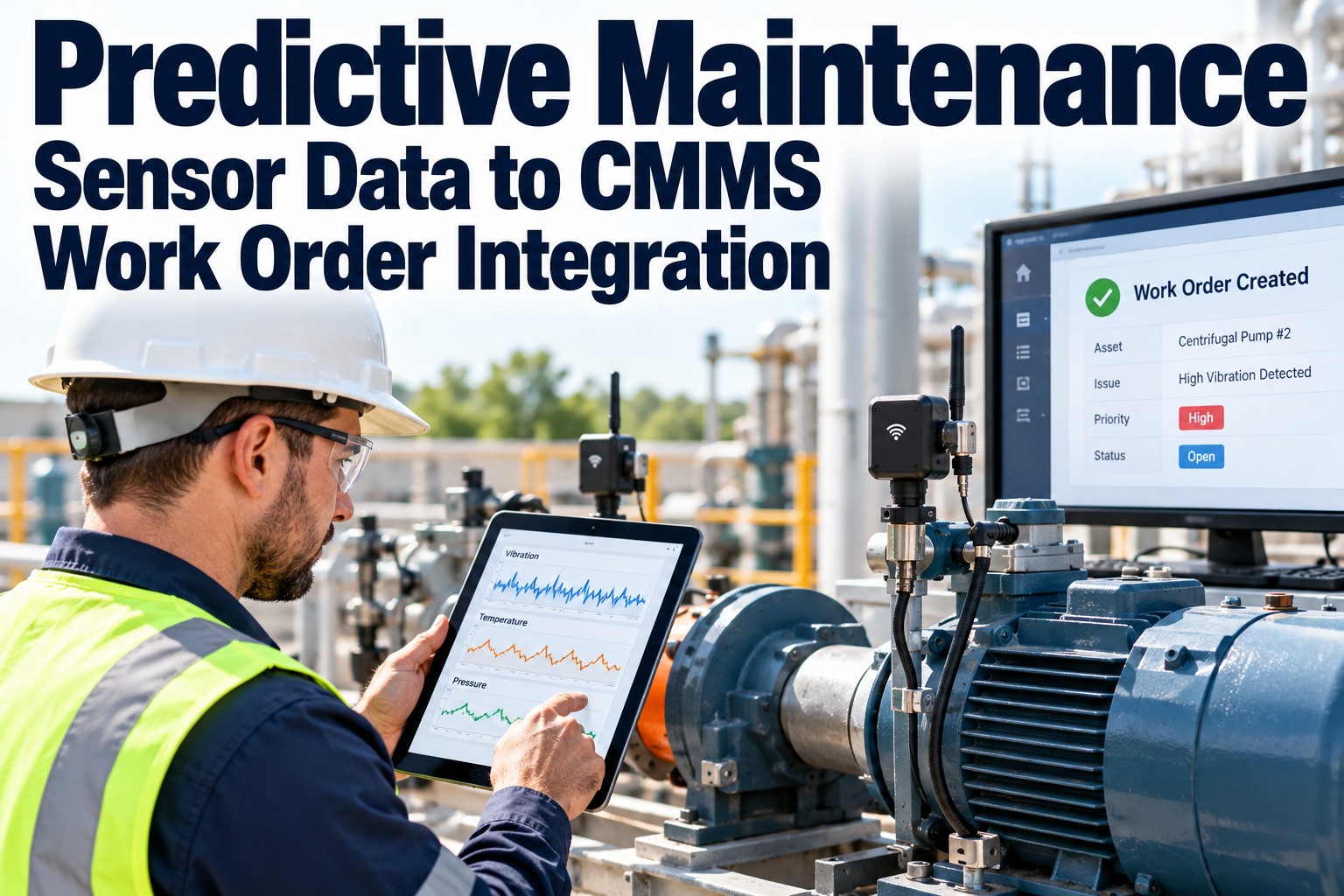
Condition monitoring through IoT sensors provides continuous data streams that housekeeping observations alone cannot capture—humidity levels indicating ventilation problems, temperature patterns suggesting HVAC degradation, and vibration signatures predicting appliance failures. The integration of human observation with sensor intelligence creates comprehensive risk visibility that prevents 70-85% of equipment-related guest complaints.
Resort Risk Dashboard Overview
Real-time risk visibility across all guest rooms and common areas
Humidity Sensors
Bathroom and closet monitoring detecting mold risk conditions before visible growth occurs. Triggers ventilation work orders at 65% sustained humidity.
Smoke/CO Detectors
Battery level and functionality monitoring ensuring life safety devices remain operational. Auto-schedules replacement before low-battery alerts disturb guests.
Water Leak Sensors
Under-sink and toilet base detection identifying leaks within minutes rather than days. Prevents 85% of water damage incidents through early intervention.
Door/Window Contacts
Security and energy monitoring ensuring proper closure. Identifies maintenance needs for locks, hinges, and weather sealing before guest complaints.
Compliance Documentation and Audit Readiness
Integrated housekeeping-CMMS workflows create comprehensive compliance documentation that transforms audit preparation from weeks of records assembly into instant report generation. Every inspection, every work order, every resolution—automatically logged with timestamps, photos, and responsible party identification—creates the audit trail that protects resorts from liability exposure and regulatory penalties.
Digital compliance logs capture the complete chain of custody from hazard identification through remediation, demonstrating due diligence that paper-based systems cannot provide. When that slip-and-fall lawsuit arrives, your documentation shows exactly when the condition was identified, what actions were taken, and how quickly resolution occurred—evidence that often determines case outcomes.
Complete history of every room inspection with checklist results, photos, and condition assessments. Searchable by room, date, inspector, or issue type.
Full lifecycle tracking from creation through completion including technician notes, parts used, time spent, and before/after photos.
Timestamped record of hazard identification, escalation actions, guest communications, and resolution verification.
Staff qualification records including safety training completion, equipment certifications, and refresher course tracking.
Audit-Ready Documentation Checklist
- Daily room inspection completion rates with exception reporting
- Hazard identification to resolution time tracking by category
- Work order completion rates and SLA compliance percentages
- Safety incident trends with root cause analysis documentation
- Staff training records with certification expiration alerts
- Equipment maintenance history with manufacturer compliance verification
- Guest complaint correlation with maintenance response timing
Conclusion
Housekeeping-CMMS integration with embedded risk assessment represents the most significant opportunity for resort safety improvement and liability reduction, transforming the daily observations of frontline staff into systematic hazard prevention that protects guests and profitability. Organizations implementing comprehensive integration achieve 67-78% reductions in safety incidents while improving room turnaround efficiency by 25-35% through smart scheduling, digital checklists, and closed-loop maintenance workflows.
Understanding integrated workflow architecture reveals that sustainable results require more than connecting two software systems—they demand redesigned processes that leverage housekeeping observations, IoT condition monitoring, AI risk scoring, and automated work order generation into unified safety management. The technology investment typically represents only 20-25% of total transformation effort, with process redesign and staff training comprising the critical success factors.
The 2025 hospitality environment rewards resorts that leverage integrated workflows to deliver consistent safety while penalizing those allowing departmental silos to create invisible hazards. Success requires balancing proven integration technologies delivering immediate risk reduction with emerging AI capabilities positioning for predictive safety management that prevents incidents before conditions develop.
Ready to transform housekeeping observations into instant maintenance action and eliminate the safety gaps that lead to $175,000 liability claims?
That exhaust fan in Villa 12 that failed three weeks before the guest injury? Your housekeeping staff probably noticed the humidity. They just had no way to escalate it. With integrated workflows, that observation becomes a work order in 30 seconds, a technician dispatch in 5 minutes, and a resolved hazard before any guest ever encounters it.