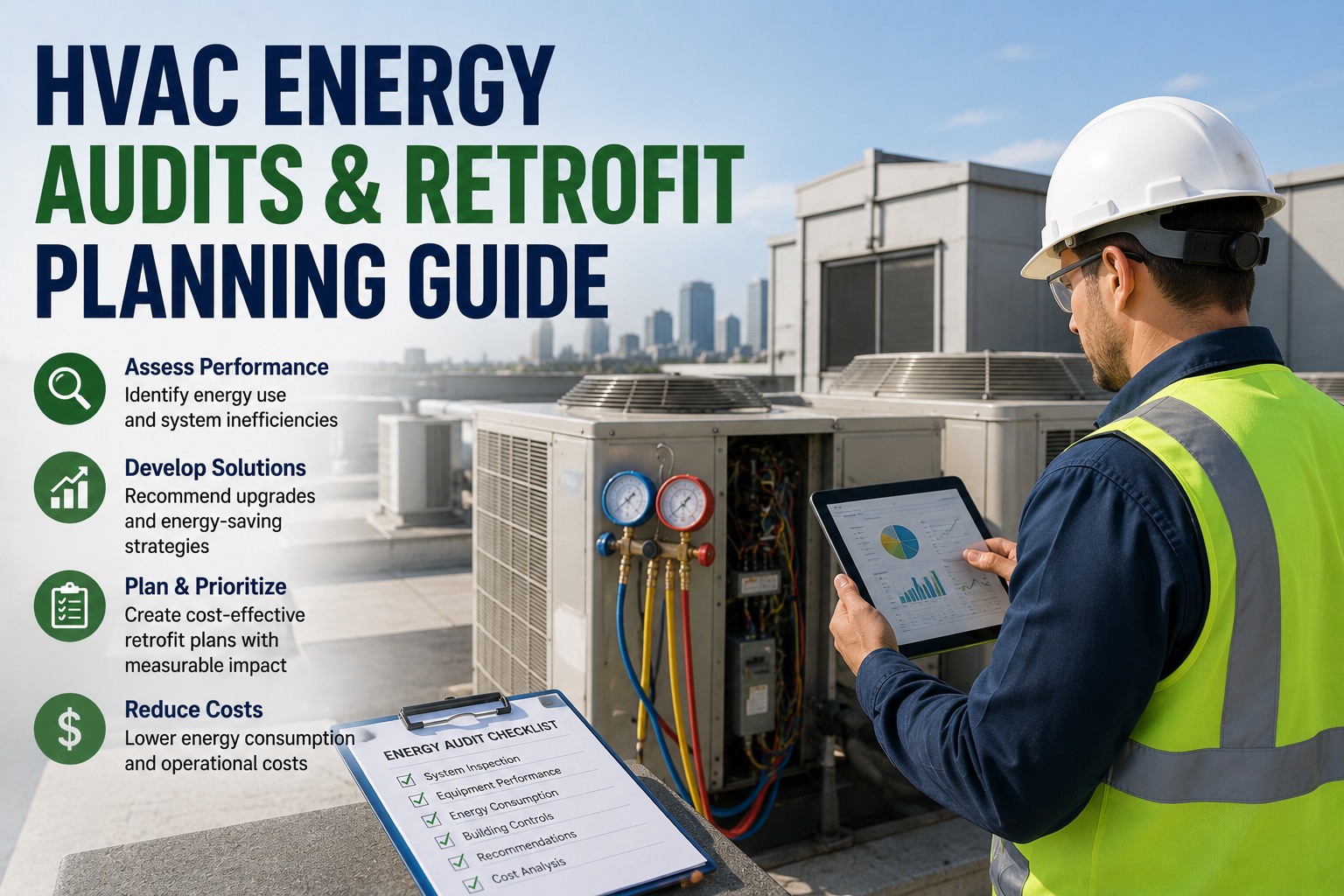
An HVAC energy audit is the systematic process of inspecting, measuring and analyzing heating, ventilation and air-conditioning systems to identify energy waste, quantify savings opportunities and prioritize building retrofit HVAC improvements. For facility and maintenance teams, an HVAC efficiency audit does more than generate a report—it exposes the exact equipment, control sequences and operating schedules where HVAC energy optimization can cut consumption by 15–30 %. The challenge is not finding waste; it is executing the retrofits and continuous maintenance needed to capture and sustain those savings. OxMaint turns audit findings into tracked work orders, retrofit projects and preventive schedules so nothing falls through the cracks—start your Start Free Trial to see the workflow in action.
HVAC ENERGY AUDIT GUIDE
How much HVAC energy is leaking out of your building right now?
Most facilities lose 20–30 % of conditioned air to undiagnosed equipment drift, dirty coils and uncalibrated controls. A structured HVAC energy assessment finds that waste—and a disciplined retrofit plan captures it for good.
HVAC AUDIT METHODOLOGY
What a complete HVAC energy audit covers
A rigorous HVAC efficiency audit follows ASHRAE Level 1–3 protocols, moving from benchmarking to detailed field measurement. Here is what each scope delivers and where the savings typically hide.
Benchmark & Screen
Review utility data, nameplate equipment, setpoints and operating schedules. Identifies low-cost/no-cost fixes—coil cleaning, filter changes, schedule overrides—worth 5–10 % HVAC energy savings with zero capital.
Measure & Model
Data-logger spot measurements, end-use breakdowns and simple payback calcs for each Energy Conservation Measure (ECM). Targets the 15–20 % mid-range savings from VFD retrofits, economizer repair and control re-commissioning.
Verify & Finance
Full M&V-grade monitoring, calibrated simulation and life-cycle cost analysis for capital retrofits like chiller replacement or geothermal conversion. Gives CFOs the confidence to fund $100K–$2M HVAC upgrade planning projects.
WHERE THE WASTE IS
Top energy-waste findings in an HVAC audit
Across hundreds of commercial and industrial HVAC energy assessments, the same findings drive the majority of avoidable cost. Ranking them by payback helps retrofits compete for capital.
| Finding | Typical Energy Impact | Estimated Payback | Maintenance Action Required |
|---|---|---|---|
| Dirty evaporator / condenser coils | 5–15 % compressor energy | 3–9 months | Scheduled coil cleaning PM |
| Stuck or failed economizer dampers | 10–25 % cooling energy | 6–12 months | Quarterly damper / actuator inspection |
| Drift in PID control loops | 3–8 % total HVAC energy | 3–6 months | Annual controls re-commissioning |
| Constant-volume fans on VAV systems | 20–50 % fan energy | 1–3 years | VFD retrofit + static-pressure tuning |
| Leaking ductwork & unsealed cabinet | 10–30 % conditioned air loss | 1–2 years | Duct sealing + cabinet gasket PM |
| Oversized or short-cycling equipment | 8–15 % heating/cooling energy | 3–7 years | Right-sizing + staging controls upgrade |
HVAC RETROFIT PLANNING
How to phase HVAC retrofits alongside ongoing maintenance
The biggest savings come from phasing retrofits so no-cost fixes fund mid-range upgrades, which then justify capital projects. A 6-month rollout keeps operations stable and payback transparent.
Audit & Baseline M&V
Complete the HVAC energy audit, install sub-metering on top loads and lock in baseline kWh/thm data. Log every finding as a tagged asset record in OxMaint so each ECM is traceable to a specific unit.
No-Cost / Low-Cost ECMs
Execute coil cleaning, filter upgrades, schedule optimization and setpoint resets as PM work orders. Typical 5–10 % HVAC energy reduction with payback under 12 months—capital that funds the next phase.
Mid-Range Retrofits
Install VFDs, repair economizers, re-commission controls and seal ductwork. Tie each retrofit project to preventive maintenance triggers in OxMaint so the savings persist instead of drifting back.
Capital Projects & Verification
Execute chiller/boiler replacement or geothermal conversion. Run measurement-and-verification reports, compare actual savings to audit projections and lock in sustained HVAC energy optimization.
SAVINGS MATH
HVAC energy savings formula & worked example
Quantifying retrofit payback does not require complex software. Use this standard savings formula to rank ECMs and defend budgets.
ANNUAL ENERGY SAVINGS ($/yr)
kWbaseline × Hours × $/kWh × % Reduction − ECM O&M Cost = Net Annual Savings
Worked Example
A 180-asset commercial facility spends $42K/yr on HVAC energy. A Level 2 audit identifies VFD retrofits on five air handlers (45 kW combined load, 4,200 run-hours, $0.12/kWh) with a projected 35 % fan-energy reduction and $6.5K installed cost.
45 kW × 4,200 h × $0.12 × 0.35 = $7,938/yr gross savings
Net payback: $6,500 ÷ $7,938 ≈ 9.8 months — then pure savings every year after.
HOW OXMAINT HELPS
Turn HVAC audit findings into sustained savings with OxMaint
An HVAC energy audit is only valuable if findings convert to action. OxMaint closes the loop between assessment, retrofit execution and long-term maintenance—so savings show up on the utility bill and stay there.
Retrofit Project Tracking
Convert every audit ECM into a tracked work order with assigned owner, budget, deadline and M&V checkpoint. Eliminates spreadsheet sprawl and ensures 100 % of audit recommendations are executed or formally deferred.
Measurement & Verification
Log pre- and post-retrofit energy data against each asset. OxMaint analytics surface drift the moment savings begin to erode, cutting unplanned energy-waste reoccurrence by 30–50 %.
ECM Implementation Workflow
AI-driven preventive maintenance schedules automatically trigger coil cleaning, filter changes and control re-commissioning at the intervals your audit prescribes. Keeps savings from drifting back to baseline.
CMMS Integration for Continuous Savings
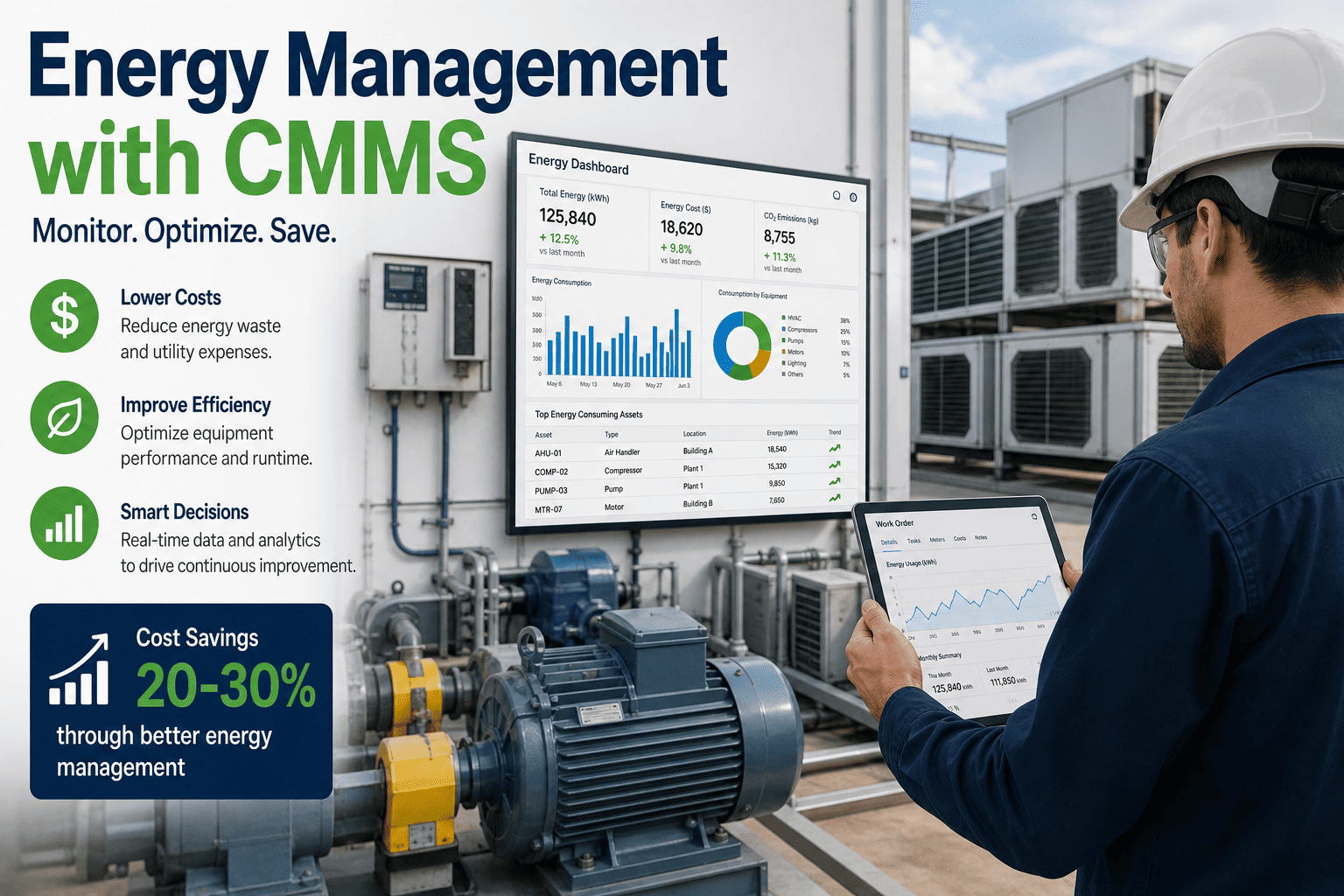
Link energy meters, BMS data and asset histories in one platform. OxMaint predictive analytics flag efficiency degradation before it becomes a utility-bill surprise, extending equipment life and protecting audit ROI.
READY TO CAPTURE YOUR SAVINGS?
See OxMaint on your assets — book a 30-min demo
Discover how facility teams use OxMaint to execute HVAC retrofits, track M&V and keep energy savings compounding year over year.
FREQUENTLY ASKED QUESTIONS
HVAC energy audit & retrofit planning FAQs
How often should an HVAC energy audit be performed?
A Level 1 walk-through audit should be conducted annually, while a full Level 2 survey is recommended every 3–5 years or after major equipment changes. Annual audits catch drift early—coils foul, dampers stick and controls drift—so small fixes do not become $10K energy bills. OxMaint lets you schedule recurring audit PMs so no cycle is missed.
What is the typical payback for an HVAC retrofit?
No-cost ECMs like scheduling and setpoint resets pay back in 3–9 months. Mid-range retrofits—VFDs, economizer repairs, duct sealing—typically pay back in 1–3 years. Capital projects like chiller replacement run 3–7 years but deliver 20+ years of compounded savings. Book a Demo to see how OxMaint tracks each project's actual payback against projections.
What is the difference between an HVAC energy audit and an HVAC efficiency audit?
The terms are largely interchangeable, though "energy audit" usually follows ASHRAE's three-level framework and focuses on whole-building consumption, while "efficiency audit" may emphasize equipment-level performance and operating practices. Both identify the same waste sources and drive the same retrofit decisions.
Can a CMMS help sustain HVAC energy savings after a retrofit?
Yes—this is where most savings leak away. A CMMS like OxMaint locks in the preventive tasks an audit prescribes (coil cleaning, filter changes, controls re-commissioning), tracks M&V data against each asset and flags efficiency drift before it hits the utility bill. Without that discipline, retrofits typically lose 10–20 % of projected savings within two years.
How much does an HVAC energy audit cost?
A Level 1 walk-through costs $2K–$8K for a mid-sized commercial building. A Level 2 survey runs $8K–$25K depending on square footage and system complexity. Level 3 investment-grade audits can exceed $50K but are typically funded by the capital project they justify. Most audits pay for themselves within the first year of implemented ECMs. Start Free Trial to manage the entire follow-through workflow.
START SAVING TODAY
Stop losing energy to untracked HVAC waste
Join the facility teams using OxMaint to execute retrofits, sustain savings and prove ROI with real data.
Free 14-day trial · No credit card