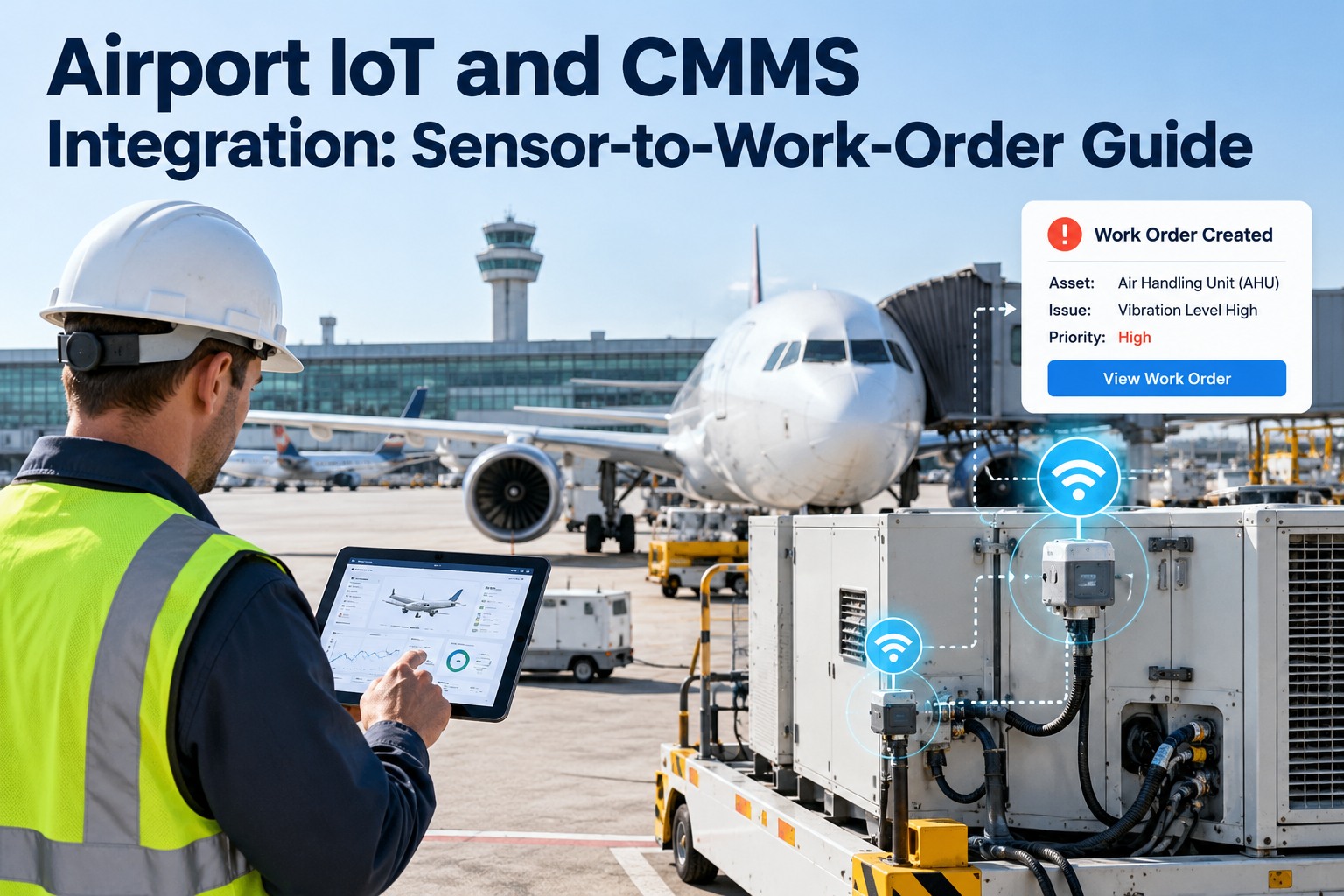
An airport can have thousands of sensors measuring vibration, temperature, current, pressure, runtime and cycles across baggage conveyors, ground power units, boarding bridges, HVAC plant and lighting. The data is there. The problem is that data a
Oxmaint CMMS for Aviation & Airport Management
The AI-powered maintenance management software built for airports & ground handling
Oxmaint helps international hubs, regional airports and ground handling operators run work orders, preventive maintenance and Part 139 self-inspections across passenger boarding bridges, baggage handling, ground support equipment, airfield lighting, ARFF vehicles and fuel farms — from one platform.
- PM triggered by PBB cycles, GSE hours or Part 139 intervals
- Airfield lighting & BHS faults auto-generate WOs in real time
- Predictive alerts on GSE engines, chillers & CCRs from existing sensors
Oxmaint CMMS · Airport Dashboard
4,218
Assets Tracked
486
Active WOs
100%
Part 139 Compliance
99.4%
Airside Availability
Oxmaint Activity Feed
Streaming
Part 139 self-inspection · RWY 27L
Morning check complete · No FOD · Signed 06:12
PM WO created · PBB Bay 12
Cycle trigger 8,000 movements · Lube service tonight
Predictive alert · GPU-14 alternator
Vibration anomaly · WO staged · Parts reserved
AGL fault · TWY B centreline 24
Auto WO · Airside team dispatched
BHS · AGL · SAP PM all synced
Why Airports Choose Oxmaint
A CMMS built for airside availability and Part 139 audit day
PBB counters, GSE hour meters, Part 139 routes, BHS faults and AGL circuits — one asset register, one audit trail.
Airport-Native Assets
PBBs, BHS, GSE, lighting and ARFF with the right meters and checklists built in.
Built for Part 139 Routines
Daily, weekly and monthly self-inspections — every entry signed and time-stamped.
GSE Fleet PM
Belt loaders, tugs and GPUs run as an hour-based fleet with mobile job cards.
BHS & AGL Integration
Live fault feeds from BHS PLCs and lighting controllers auto-create work orders.
Passenger Boarding Bridges & Terminal Facility
PBBs, escalators and terminal HVAC on a real-duty PM schedule
Every boarding bridge is a tracked asset — movement-count meter, PCA and 400Hz GPU sub-assets — with PM triggered on actual movements, not calendar dates. The same register carries escalators, elevators, AHUs, chillers and generators, each with a QR label, PM schedule and full work order history.
PBB Movement-Count PM
Rotunda, drive column & canopy PM
PCA & 400Hz GPU
Filter, belt & converter PM per bay
Escalators & Elevators
Step chains, brakes & door interlocks
Terminal HVAC & Chillers
AHUs, coils, filters & cooling towers
Terminal 2 · Live
62 PBBsPBB Bay 12 · Wide-body
PM Due8,140 of 10,000 movements · Lube WO tonight
PCA Unit · Bay 08
HealthyFilter dP nominal · Discharge temp stable
Escalator E-14 · Concourse B
Step Chain PM1,240 hrs · Chain tension check due
AHU-04 · Departures Level
Filter WOFilter dP high · Change WO scheduled 22:00
Every PBB & terminal asset in one CMMS
Ground Support Equipment (GSE)
GSE managed like a fleet, PM'd on operating hours
Every GSE unit — belt loaders, pushback tractors, tow tugs, GPUs, air start units, water and lavatory carts — gets its own asset record, hour-based PM schedule, parts kit and mobile job card. Hours come from onboard meters or telematics, so oil, filter, hydraulic and brake PM trigger on actual duty instead of a calendar.
Pushbacks & Tow Tractors
Engine hours, hydraulics & brake PM
Belt Loaders & Container Kit
Belt tension, roller & deck PM
GPUs & Air Start Units
Alternator, breaker & converter PM
Water & Lavatory Trucks
Pump, hose & sanitation checks
GSE Fleet Board
380 UnitsPushback PB-24 · Wide-body
PM Due790 of 1,000 hrs · Full service kit reserved
Belt Loader BL-38
Healthy2,140 hrs · Belt tension nominal
GPU-14 · 90 kVA
PredictiveAlternator vibration anomaly · WO staged
Tow Tractor TT-07
Brake PM240 hrs · Brake pad wear inspection due
Every GSE unit on hour-based PM · No paper log
Baggage Handling & Airfield Lighting
BHS conveyors and AGL fixtures — fault feeds become work orders in real time
Every BHS motor, drive, conveyor section, tilt tray and EDS scanner is a tracked asset — fault codes flow in from the PLCs over OPC-UA and become work orders automatically, with asset, code and location populated. Airfield lighting works the same way: runway edge lights, PAPIs, centreline fixtures and CCRs raise a WO the moment they fail.
BHS Downtime Tracking
Fault code, location & duration per stop
EDS & Screening PM
Calibration & conveyor belt PM
AGL Fault-to-WO
Runway, taxi & approach lighting
CCR & Series Circuit PM
Regulator load, isolation, transformer
Airside & BHS Board
Live FaultsBHS Sorter S-04 · T2
Fault WOTilt tray 12 misalignment · Tech dispatched
EDS Screener EDS-06
Cal DueMonthly cal WO scheduled · QA on shift
TWY B Centreline Light 24
FaultAuto WO from AGL system · Airside dispatched
CCR-08 · RWY 27L Edge Series
HealthyLoad nominal · Insulation OK
Every fault becomes a WO with audit trail
Predictive Maintenance
Predictive alerts from your existing sensors
Oxmaint plugs into the vibration, temperature, current and pressure sensors already on your GSE telematics, chillers, PBB drives and BHS conveyors — no new hardware to buy. A healthy signature is learned per asset in the first weeks, and when a signal drifts Oxmaint raises a work order with parts reserved, technician assigned and the failure hypothesis attached.
Uses Existing Sensors
Telematics, PLC & historian feeds
Per-Asset Baseline AI
Healthy signature learnt in 2-4 weeks
Auto Work Orders
Parts reserved · Tech assigned · Hypothesis
Asset Health Scoring
Live health score per critical asset
Predictive Watchlist
Auto-WO OnGPU-14 · Alternator
WO CreatedVibration up 26% · Bearing kit reserved
Chiller T2-CH-02
WO CreatedCompressor amps trending · Oil sample WO
BHS Sorter Drive D-14
InvestigateVibration signature drift · Gearbox WO
93% prediction accuracy · Sharper with every closed WO
AI Vision Inspection
AI Vision replaces routine ramp walks with 24/7 visual checks
AI Vision connects to your existing apron and airside cameras and scans for maintenance triggers — fuel and hydraulic spills, damaged PBB canopies, FOD along the taxiway edge, unsecured GSE and faded markings. Anything above your confidence threshold becomes a work order with the still image, timestamp and video clip attached.
Fuel & Fluid Spill Detection
Ramp spills, hydraulic under GSE
FOD Detection
Taxi edge & ramp position monitoring
Ramp PPE Compliance
High-vis, ear defenders, wands
GSE Position & PBB Damage
Unsecured units, canopy bumper
AI Vision Findings
48 CamerasRamp Position 08
Fuel sheen detected · 95% confidence
TWY B Edge Cam
FOD object detected · Sweeper dispatched
PBB Bay 12 · Canopy Cam
Canopy bumper scuff · Inspection needed
Ramp Position 04
High-vis & wands compliant
NVIDIA edge inference · On-premise · 99.2% accuracy
Mobile CMMS & QR Workflow
Mobile app + QR — one scan for history, PM status & Part 139 records
Every asset across airfield and terminal gets a QR label — PBBs, GSE, escalators, BHS motors, AGL fixtures, ARFF vehicles and AHUs. Scan it to see open WOs, health score, last inspection and isolation procedure, then create a work order or log a Part 139 entry in one tap. Offline-first, so perimeter rounds sync when signal returns.
Scan-to-Asset Lookup
History, PM and inspection on one scan
Part 139 Self-Inspection
Signed entries from the vehicle
Offline-First Mobile
BHS basement, perimeter, ramp
LOTO & Airside Permits
Hot work, driving, work-at-height
QR Scan Result
Just ScannedPBB Bay 12 · Wide-body Jet Bridge
Location: T2 Concourse B · ID: PBB-B12
Lube PM tonight
8,140 movements
1 open WO
Recent Activity
WO-4218 · Canopy bumper inspection · Open
Insp-9411 · Weekly PBB check · Passed 3d ago
WO-4104 · Drive column lube · Closed 30d ago
New WO
Inspect
LOTO
Complete Oxmaint CMMS Platform
Every airport maintenance & compliance workflow — on one platform
Beyond work orders and PM — inspections, GSE fleet, downtime tracking, spare parts, permits, Part 139 records, analytics and ERP integration.
Work Order Management
Create, assign and close WOs across PBBs, BHS, GSE and airside. Predictive alerts, AI Vision findings and BHS/AGL faults all auto-generate WOs with parts and procedure attached.
Part 139 Self-Inspection
Daily, weekly and monthly workflows for movement areas, marking, lighting and ARFF — geo-tagged entries, digital sign-off and one-click audit export.
GSE Fleet Management
Every GSE unit as its own asset with hour-based PM, telematics, parts kit and mobile job card. Multi-station rollouts share one PM template library.
BHS Downtime Tracking
Every BHS stop captured with fault code, zone and duration, rolling up into MTBF, MTTR and sorter availability per terminal, shift or airline.
Parts & Inventory
PBB drive components, AGL fixtures, CCR spares, GSE engine kits and BHS drives — auto-reserved on WO creation, PO drafted at reorder point.
Safety & Airside Permits
Digital permit-to-work, LOTO, hot work and airside driving built into every job, with photo evidence and audit-ready records.
Analytics & Reporting
Live dashboards for MTBF, MTTR, PM compliance, PBB and sorter availability, GSE breakdown rate and Part 139 status — with multi-airport rollups.
SAP, BHS & AGL Integration
Bi-directional sync with SAP PM, MM, EAM and FI, plus read-only feeds from BHS PLCs, AGL monitoring and GSE telematics via OPC-UA and Modbus.
Latest Posts
Read More
Airport Collaborative Decision Making (A-CDM) works because everyone shares one picture of each turnaround: when the aircraft will be ready, when the stand will be free and when pushback is expected. But that picture has a blind spot. A passenger

Read More
An audit finding is rarely the real problem. The problem is what happens next: the finding sits in an email thread, the root cause is guessed rather than proven, the corrective action has no owner, and nobody checks whether the fix worked until th
Read More
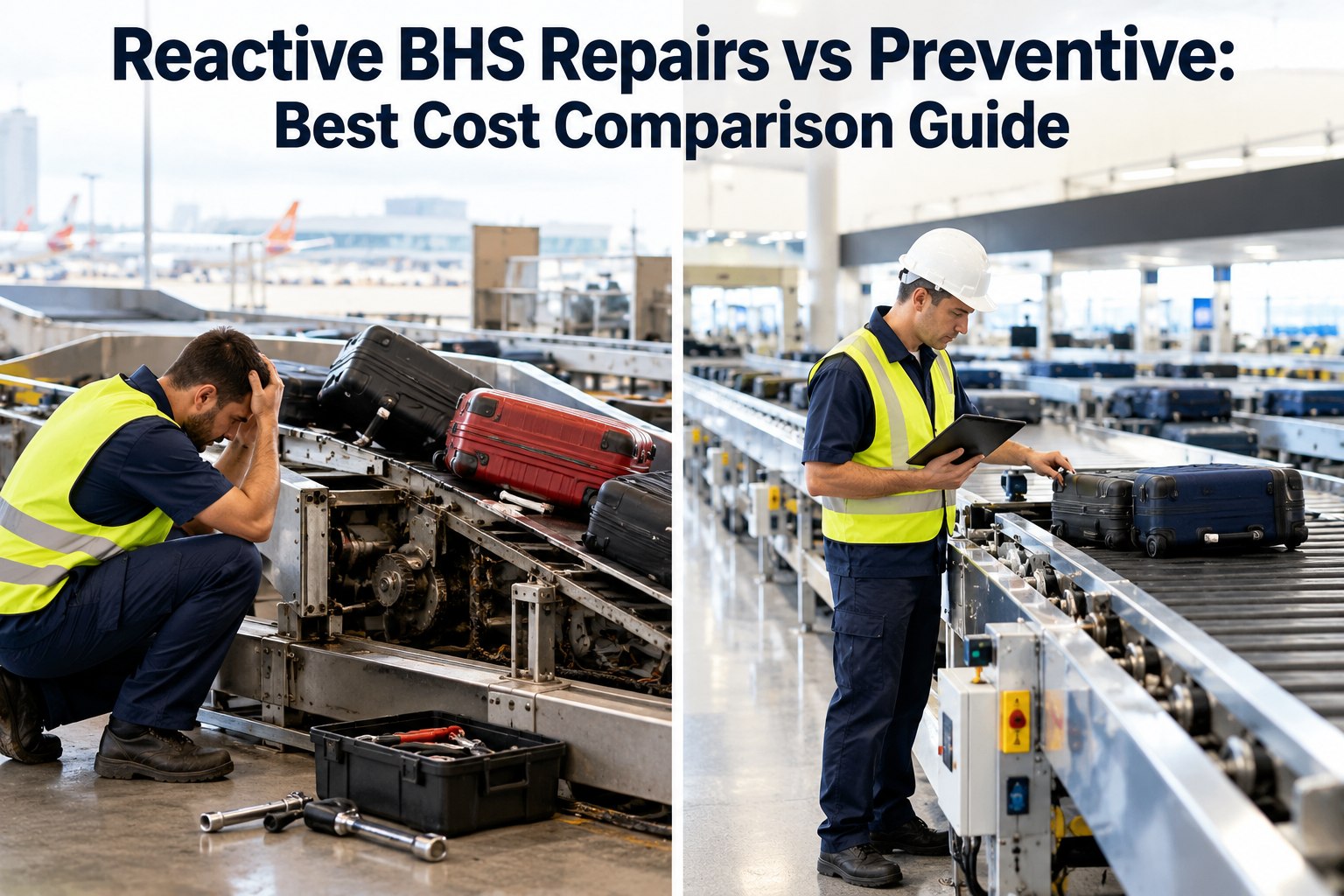
When a baggage handling system (BHS) conveyor stops at 05:40 on a Monday, the repair invoice is the smallest part of what it costs. There is the call-out, the overtime, the rush-ordered spare, the bags being hand-carried to the aircraft, the airli
Read More
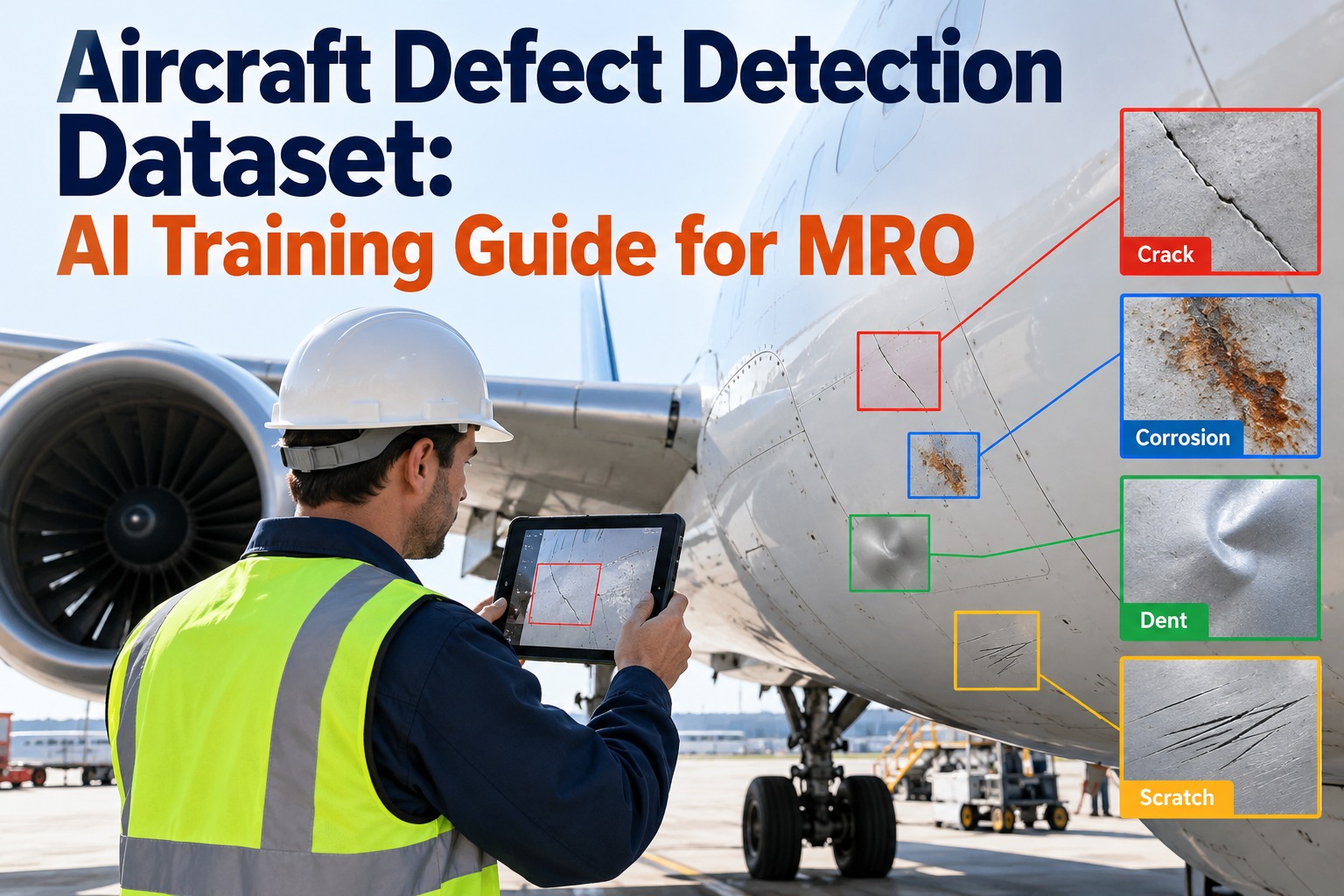
An AI model that finds cracks, corrosion and dents is only as good as the examples it learned from. A dataset built from a few hundred loosely labelled photos teaches a model to spot shadows, stickers and clean-looking panels, not damage. MRO team
Read More
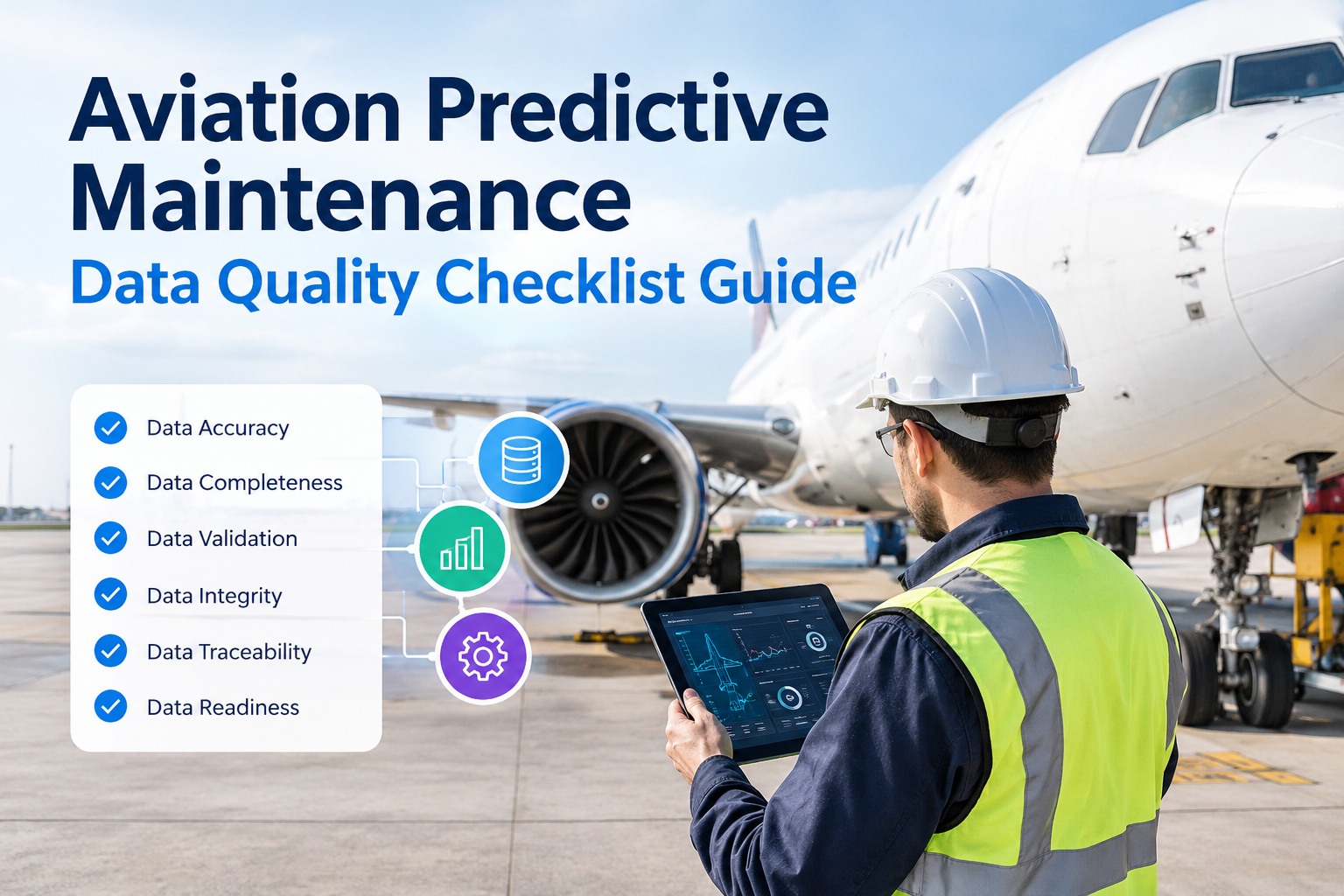
Predictive maintenance promises early warning: a vibration trend that flags a failing bearing weeks before it fails, or a temperature pattern that points to a developing fault. But a prediction can only be as good as the data behind it. If sensor
Read More
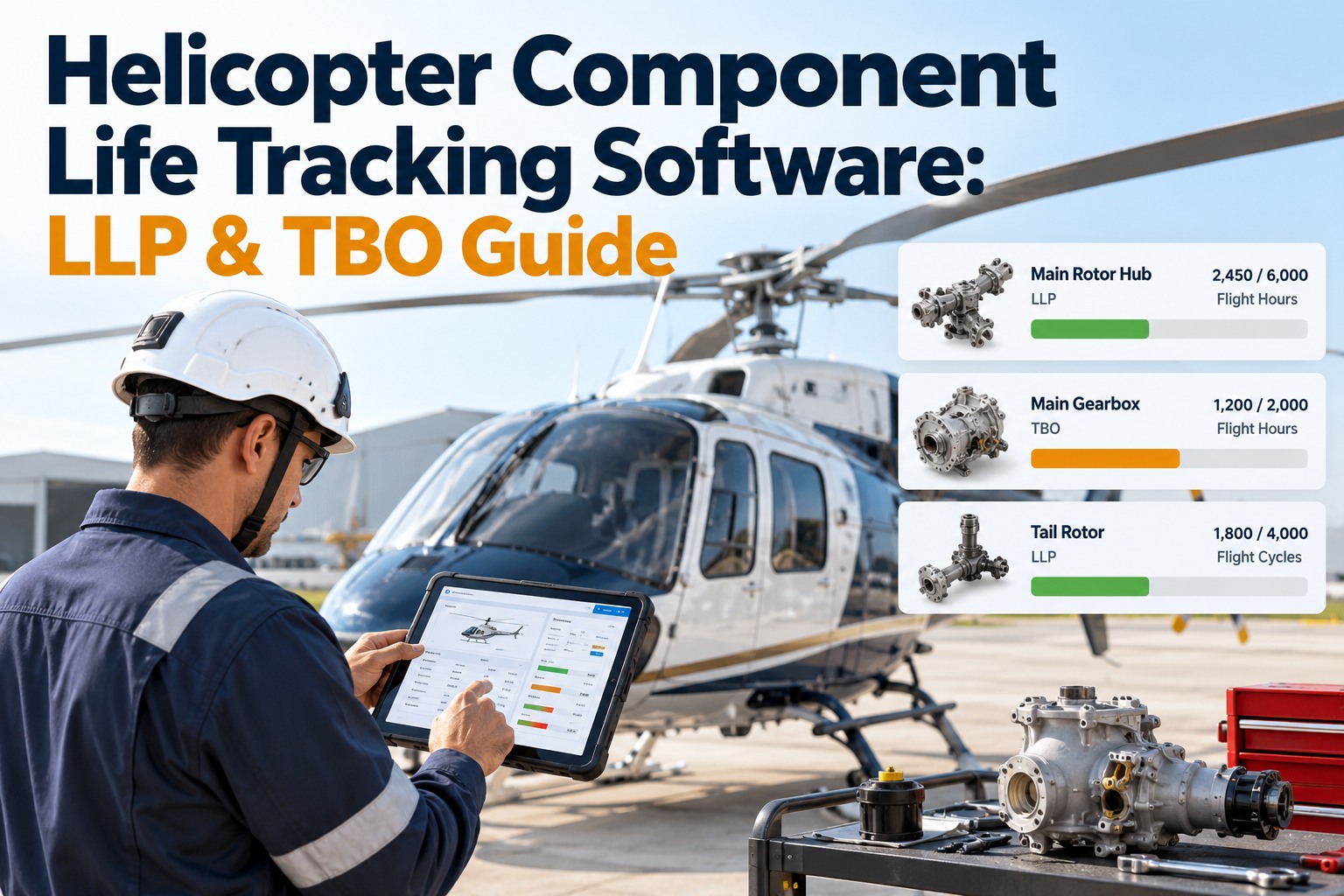
Every helicopter is a collection of parts that are quietly running out of life. Main rotor blades, hubs, masts, tail rotor components, gearbox parts and swashplate hardware all carry limits measured in flight hours, cycles, landings or calendar ti

Read More
A hairline crack under a fastener head is about the width of a human hair. A pocket of corrosion can sit behind a lap joint for months with nothing visible on the surface. A micro-dent from a ground-vehicle bump can be missed in hangar lighting at

Read More
Finding defects on an aircraft skin by eye is slow, inconsistent and exhausting a technician walking a fuselage looking for hairline cracks, pitting corrosion or a faint lightning-strike burn, across thousands of square feet, under time pres
Read More
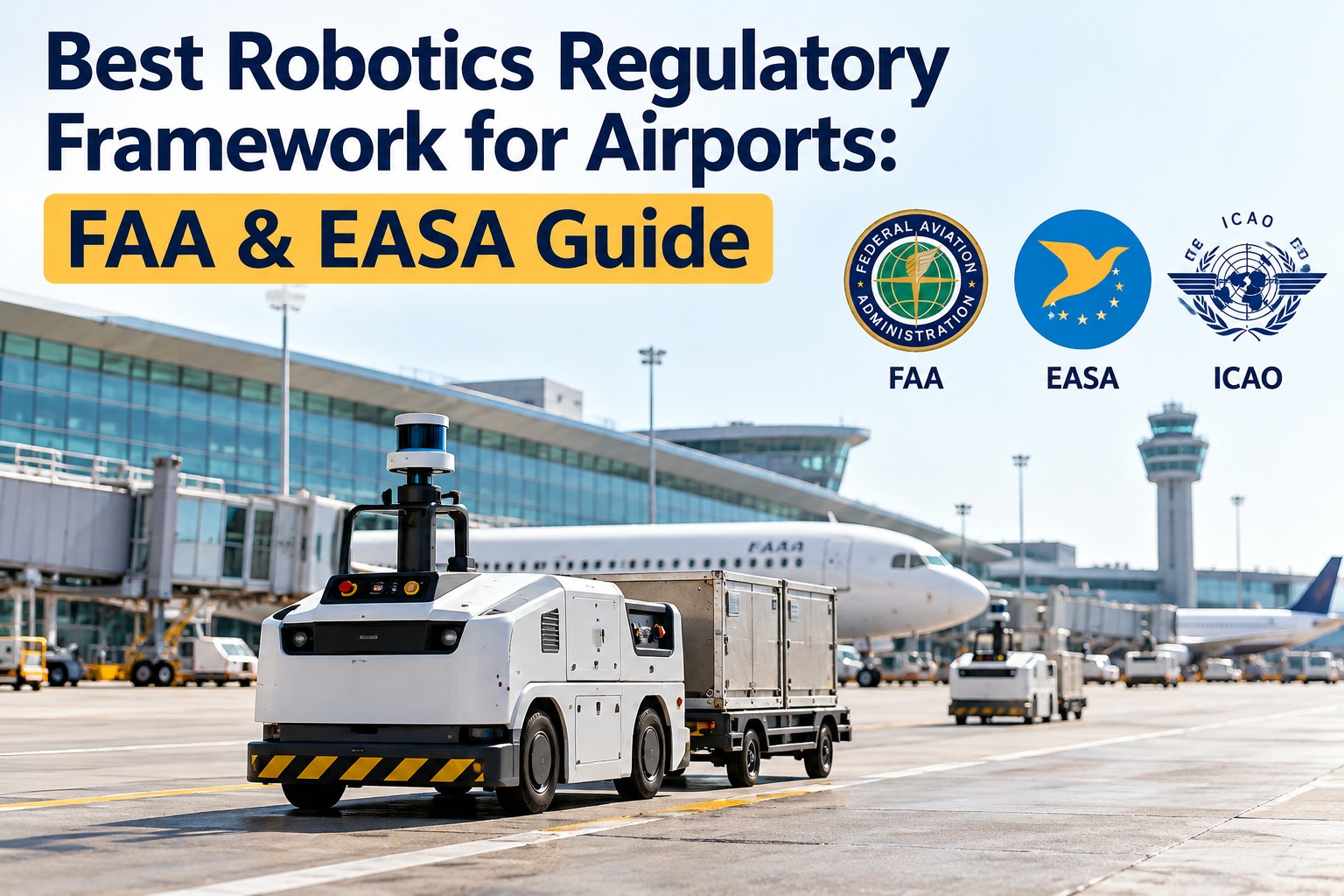
An inspection robot on the airside doesn't get a single stamp of approval — it has to fit a web of authority guidance, early coordination and documented risk assessment before it rolls near a movement area. Get the framework right and deployment i

Read More
A terminal never closes, and every system in it — the air that keeps thousands comfortable the power that runs the screens and security lanes, the elevators and escalators moving the crowd — has to keep working through the peak bank and the
Read More
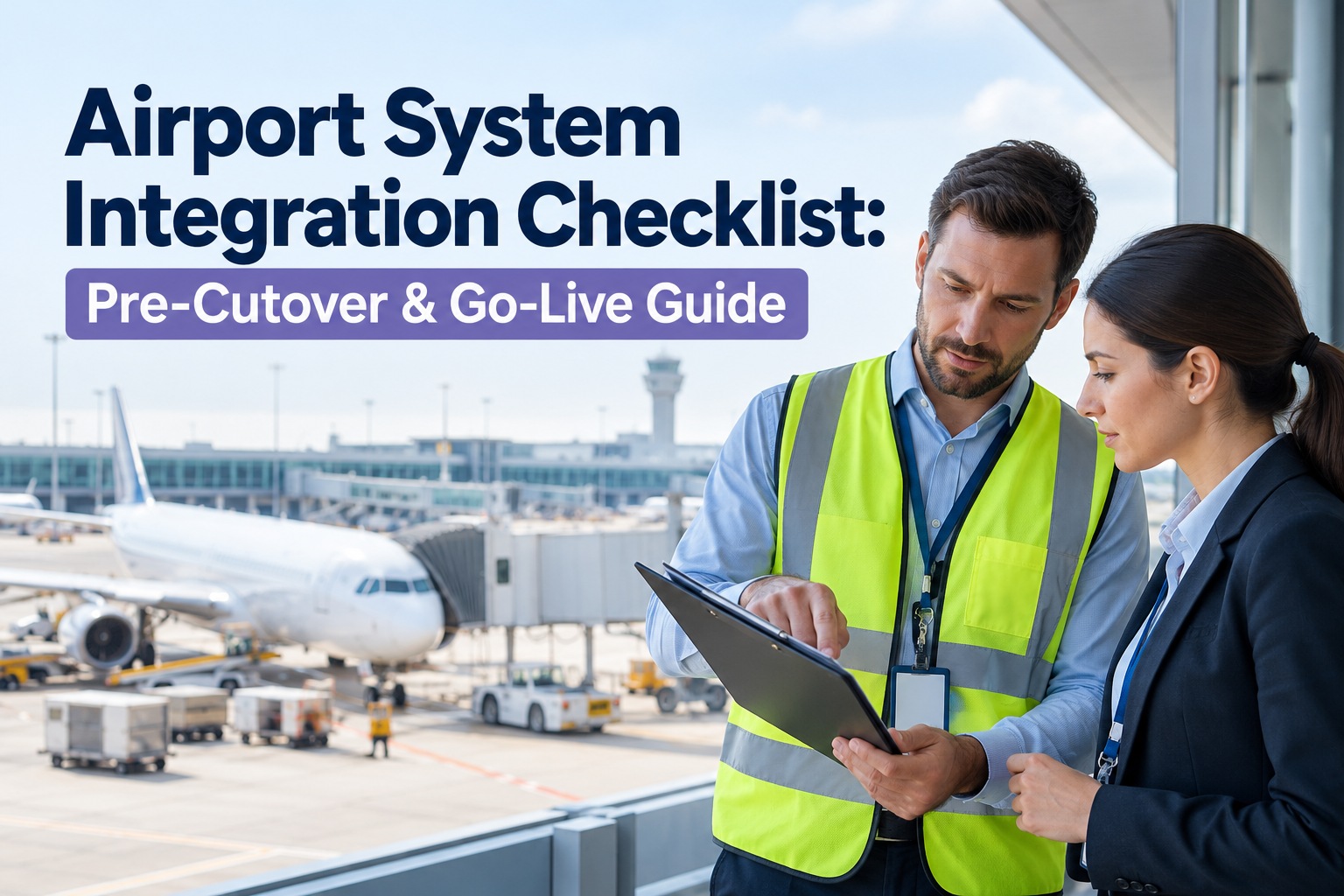
An airport never gets a quiet weekend to switch systems over. When a new maintenance platform, operational system or interface goes live, it goes live into a facility that's still running flights, still moving bags, still screening passengers — wi

Read More
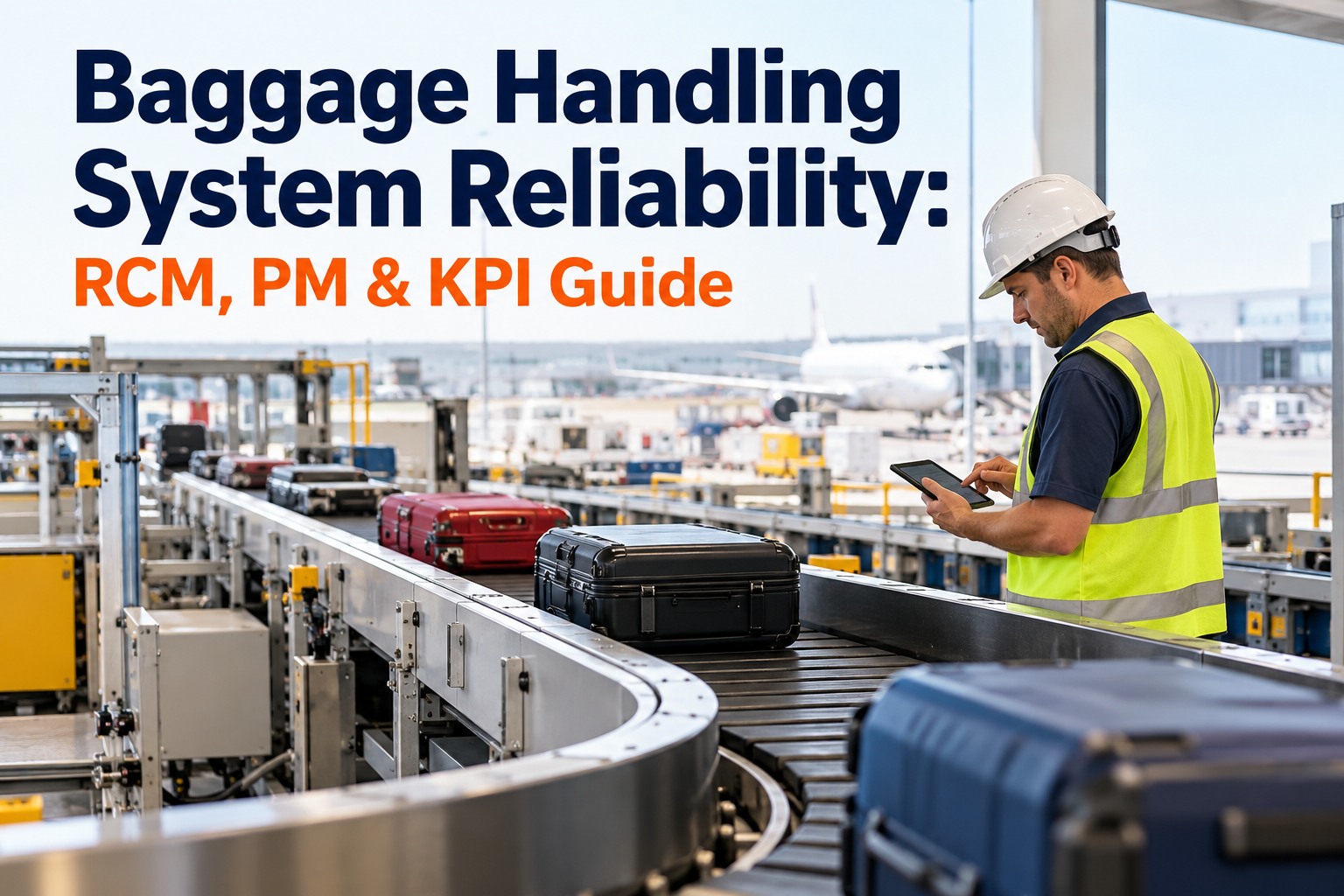
A baggage handling system is a single long machine made of hundreds of conveyors, and when one belt stalls in a sortation loop the jam can back up an entire pier during a peak bank. The failures that cause it almost never arrive without warning —
Read More
A baggage handling system is a kilometres-long machine with a single job: get every bag to the right place before its flight closes. When one diverter sticks or one scanner goes offline, bags back up, a sortation loop stalls, and within minutes th
Read More
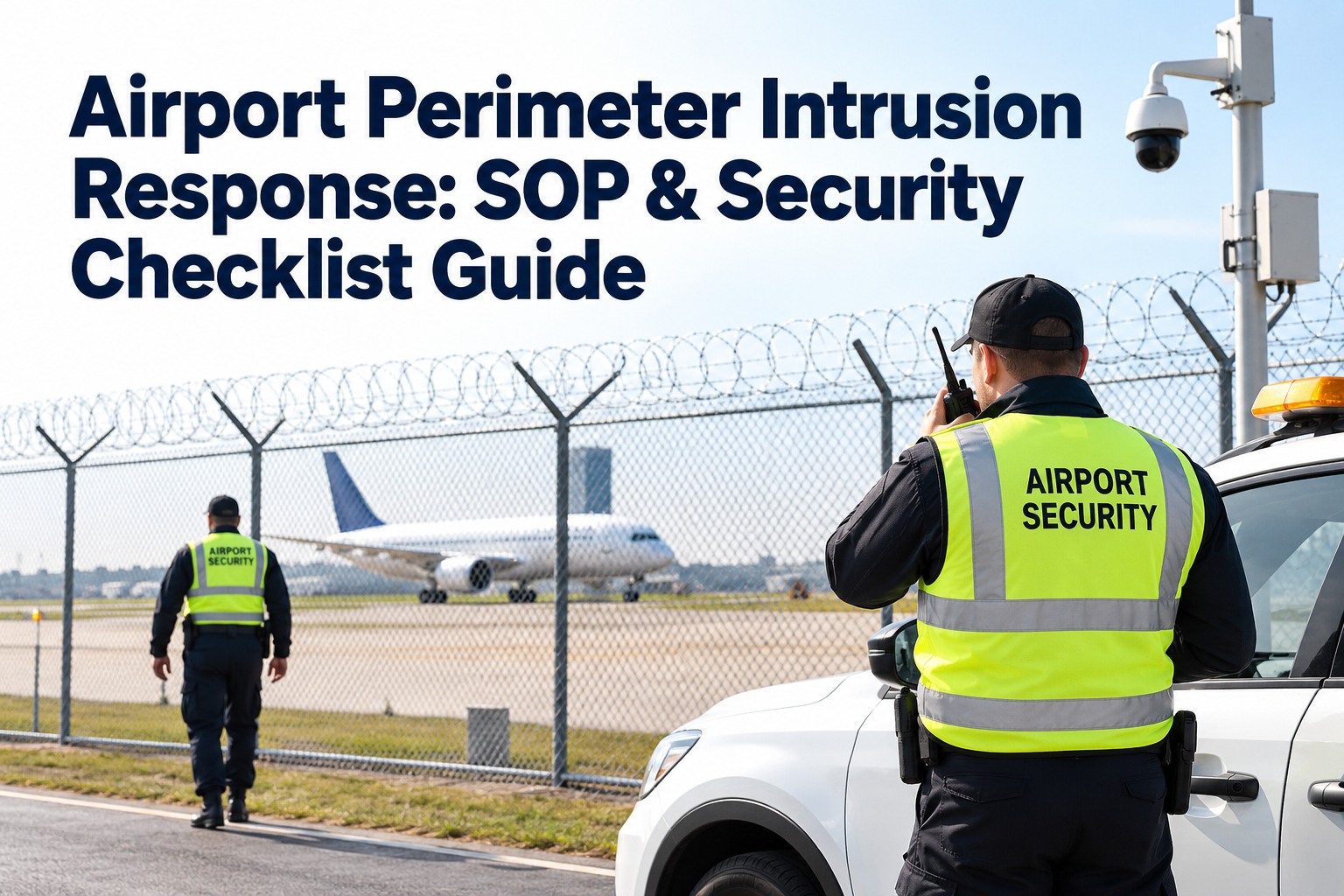
A fence sensor trips at the far end of the airfield at 2 a.m. — and the next ninety seconds decide whether it becomes a logged non-event or a security incident on the air operations area. Without a standard response procedure, the operator hesitat

Read More
A baggage belt drifts a few millimetres a day. Nobody notices — until the edge is frayed, a guard is rubbed shiny, and a bag wedges at a merge in the middle of a bank. Belt misalignment is the slow failure that turns into a sudden one, and the fix
Read More
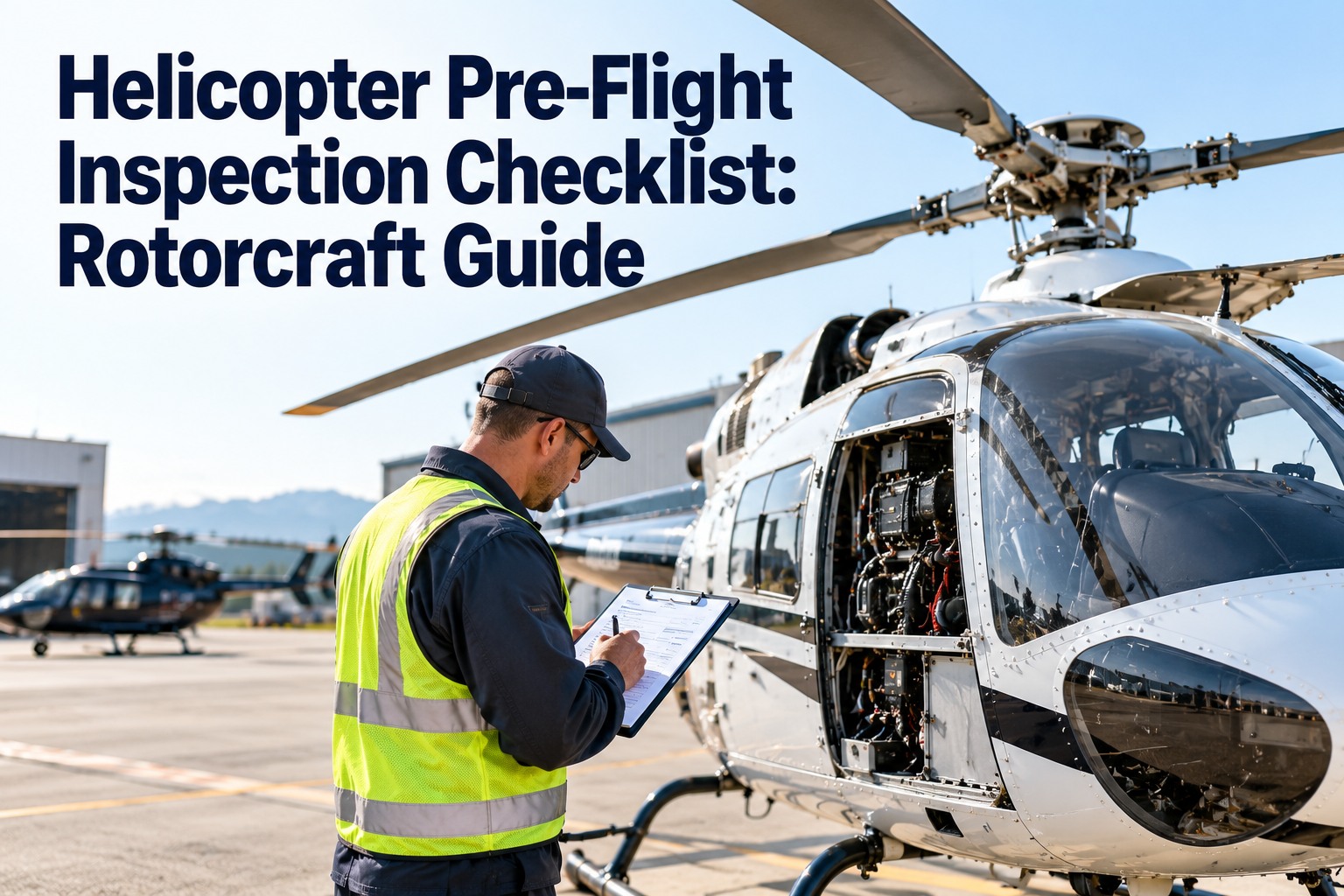
A helicopter pre-flight is the pilot's last chance to catch something before the skids leave the ground — a nicked rotor blade, a weeping hydraulic servo, a loose pitch link, a fuel cap not seated. Rotorcraft are unforgiving of the item you skippe
Read More
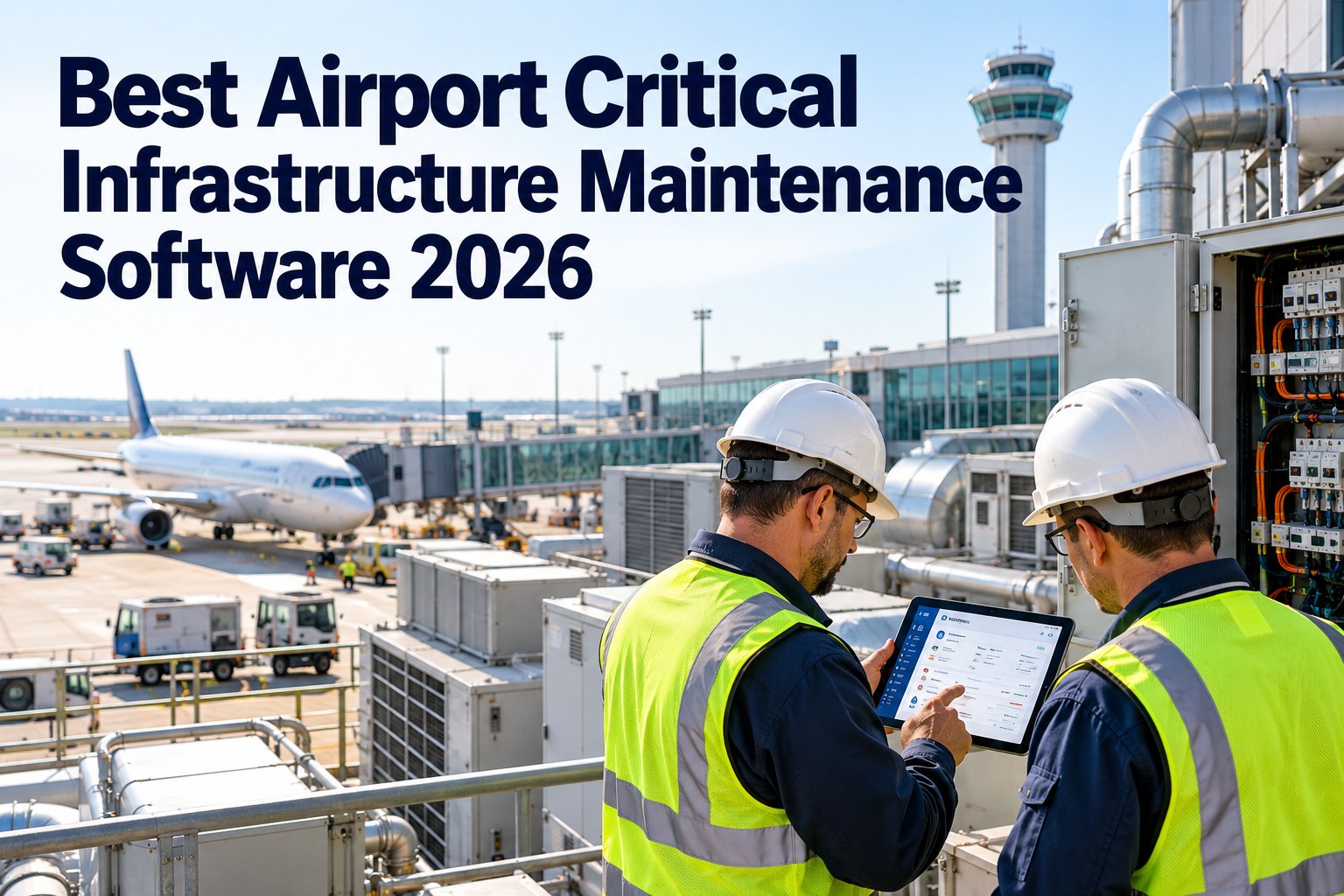
A chiller trips in the server room, a standby generator fails its transfer when the grid blinks, an escalator locks up at the busiest gate. None of these are facilities nuisances — each one can stop passengers, ground crews or flights, and the dif
Read More
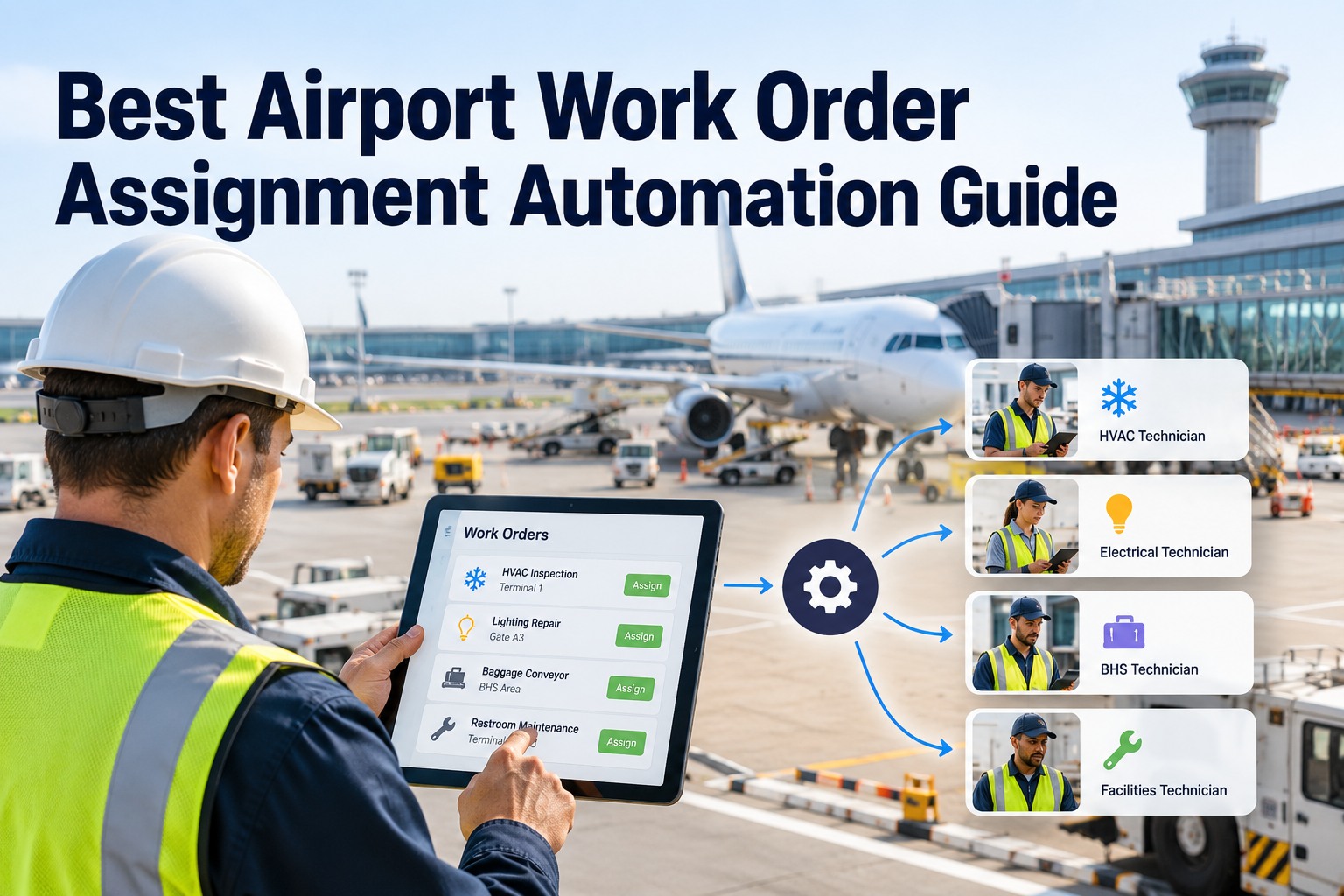
It's 6 a.m. and three jobs hit the queue at once — a jet bridge fault at Gate 14, a flooded terminal restroom, and a de-icing rig that won't start out on the ramp. One dispatcher with a whiteboard has to decide who goes where, who's badged for the
Read More
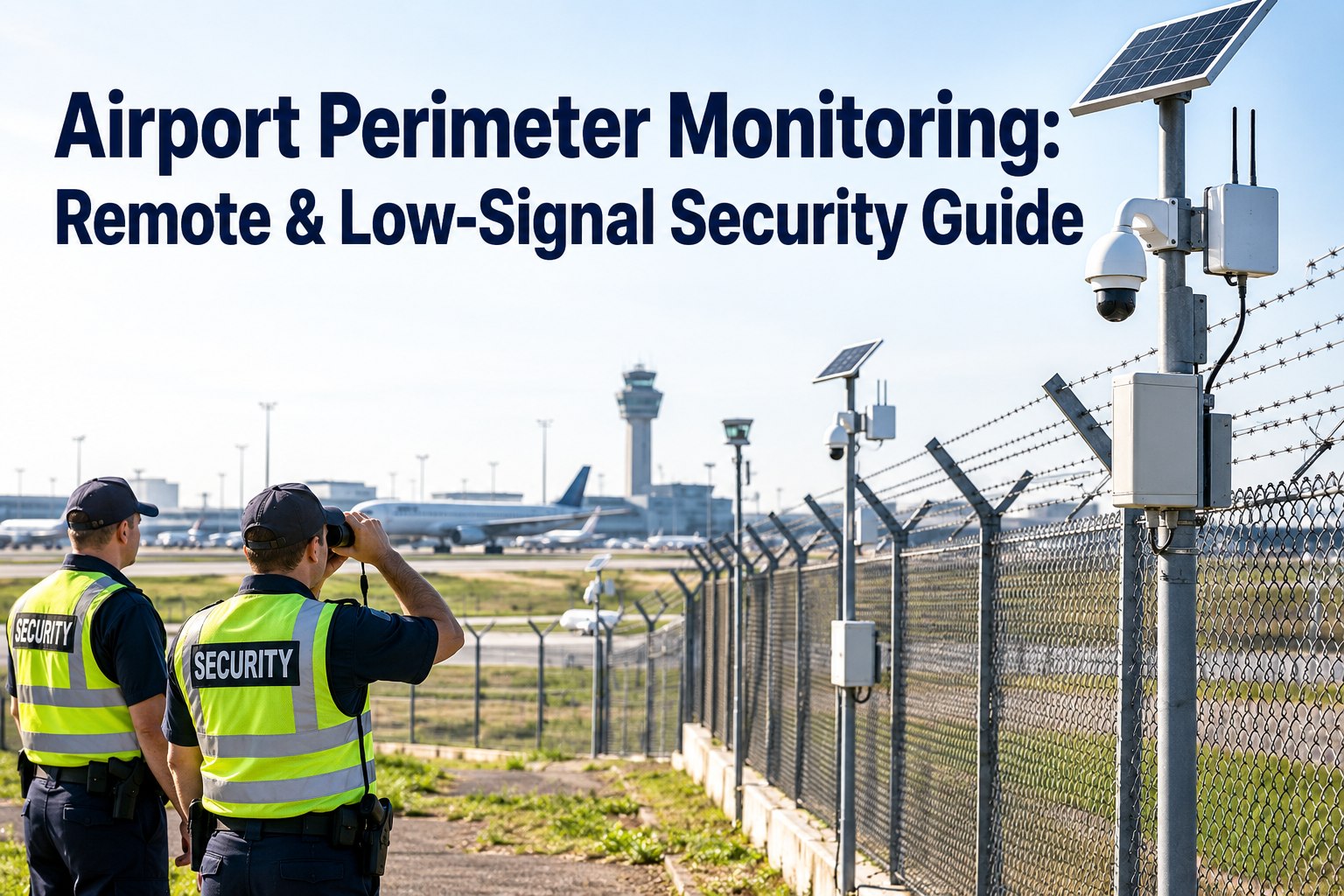
A sensor on the far fence goes quiet at 2 a.m. — no cell tower, no mains power, and a cut i the fence nobody sees until the morning walk. Those dark stretches aren't dark because sensors are missing, but because the signal and power give out
Read More
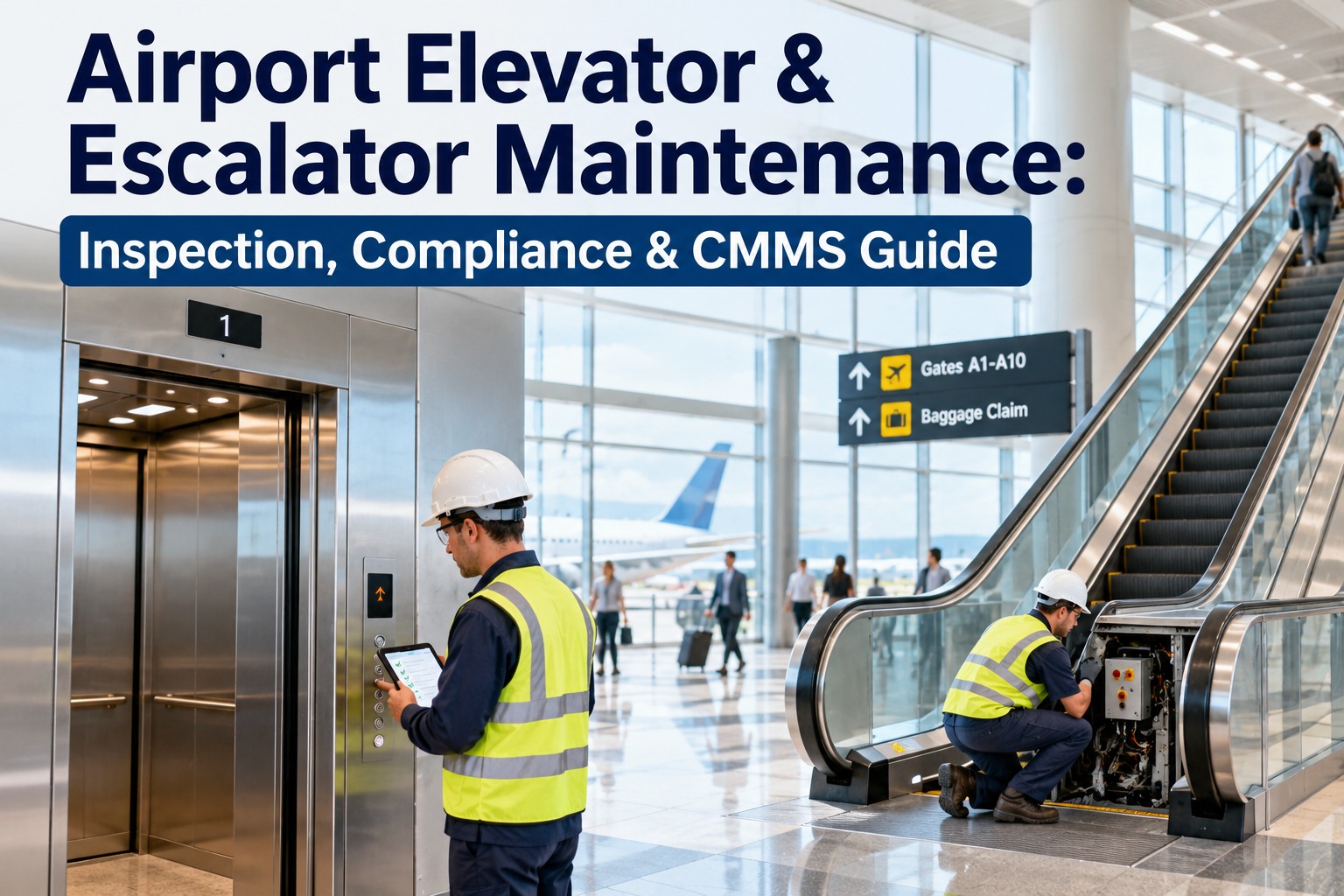
In an airport, a stopped escalator is a queue and a stopped elevator is a barrier. Travelers with luggage, families with strollers and passengers who rely on step-free access depend on vertical transportation working every hour of the day. Yet res

Read More
When a baggage handling system (BHS) slows down at peak hour, the cause is often small and hidden: a bearing running rough on a conveyor drive, a motor with a lubrication problem, a gearbox that has been getting louder for weeks. BHS equipment run
Read More
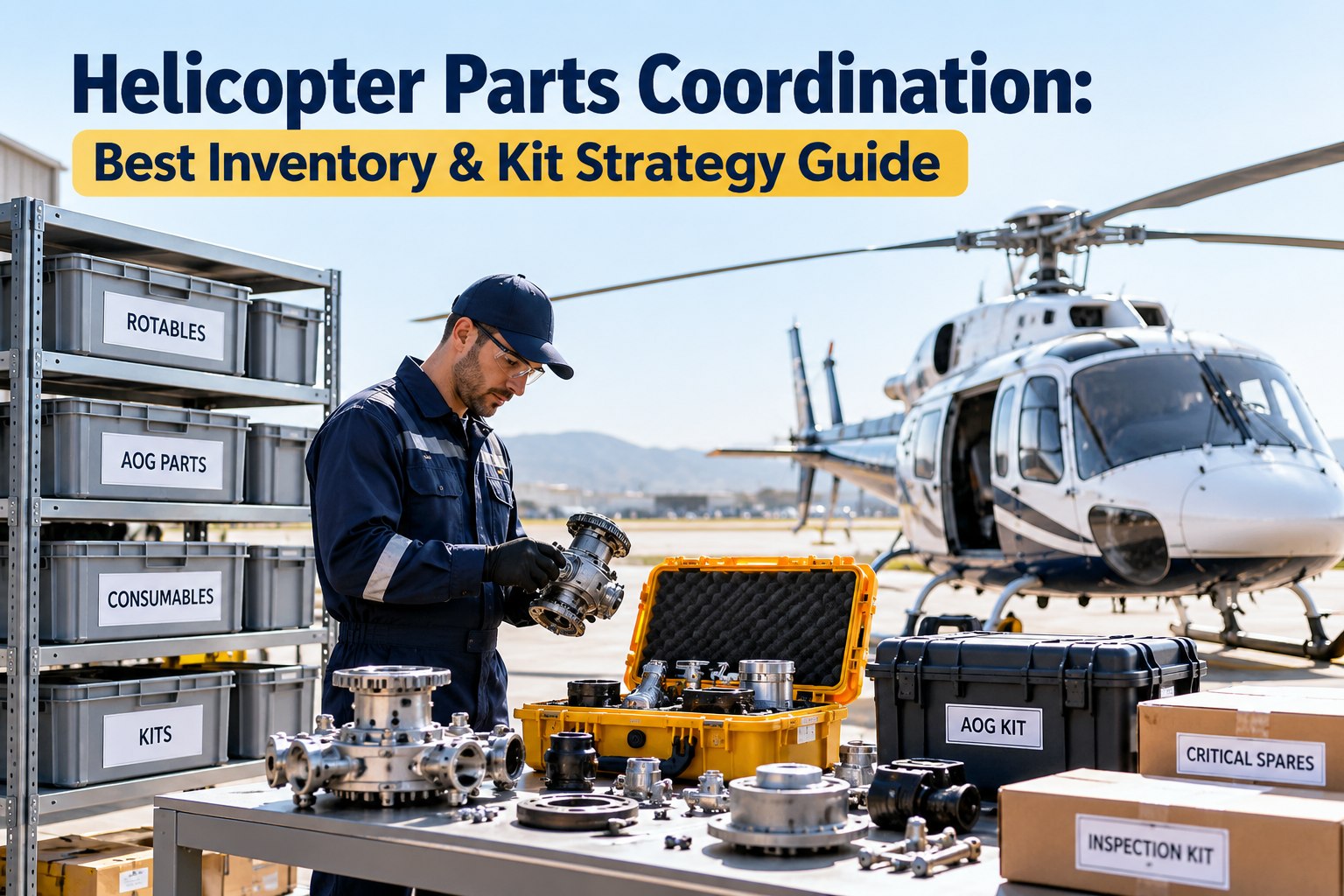
A helicopter can be fully airworthy except for one missing seal kit, one rotable still waiting on a core return, or one part whose paperwork can't be found. For rotorcraft operators, parts coordination is where schedule, safety and cost meet — and

Read More
A wireless sensor that dies quietly is worse than no sensor: the asset it watched is now unmonitored, and nobody knows. Across an airport with hundreds of battery-powered sensors on baggage systems, pumps, HVAC and airside equipment, battery life

Read More
Sensors are cheap now. What airports struggle with is everything after the sensor: getting data from airside and terminal assets into one platform, turning an alert into a work order, and proving what the program is worth. This 2026 buyer guide br
Read More
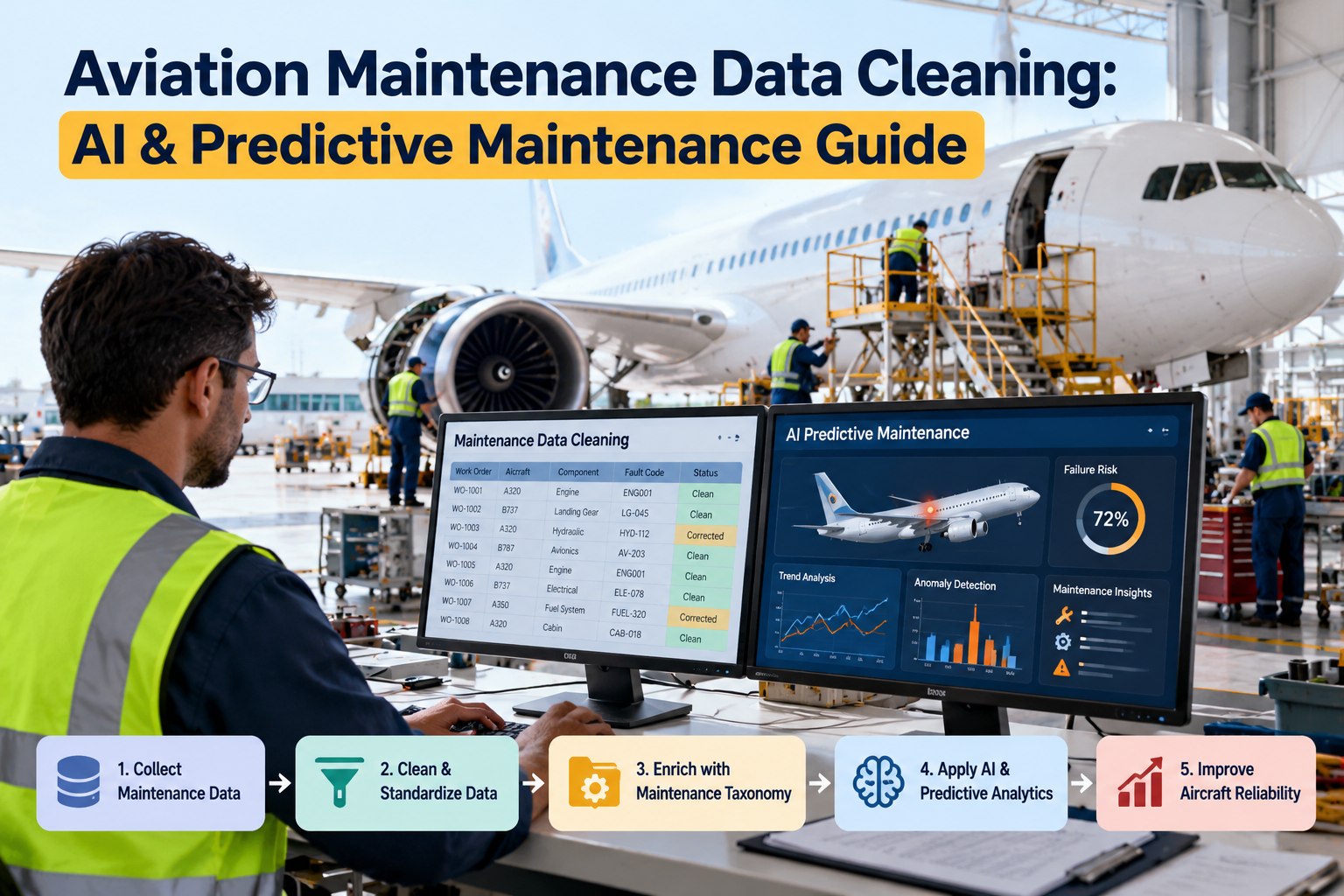
Predictive maintenance models are only as good as the records behind them. In aviation, those records are often free-text write-ups, mismatched ATA chapters, duplicate entries and fault codes that mean different things in different systems. This g
Read More
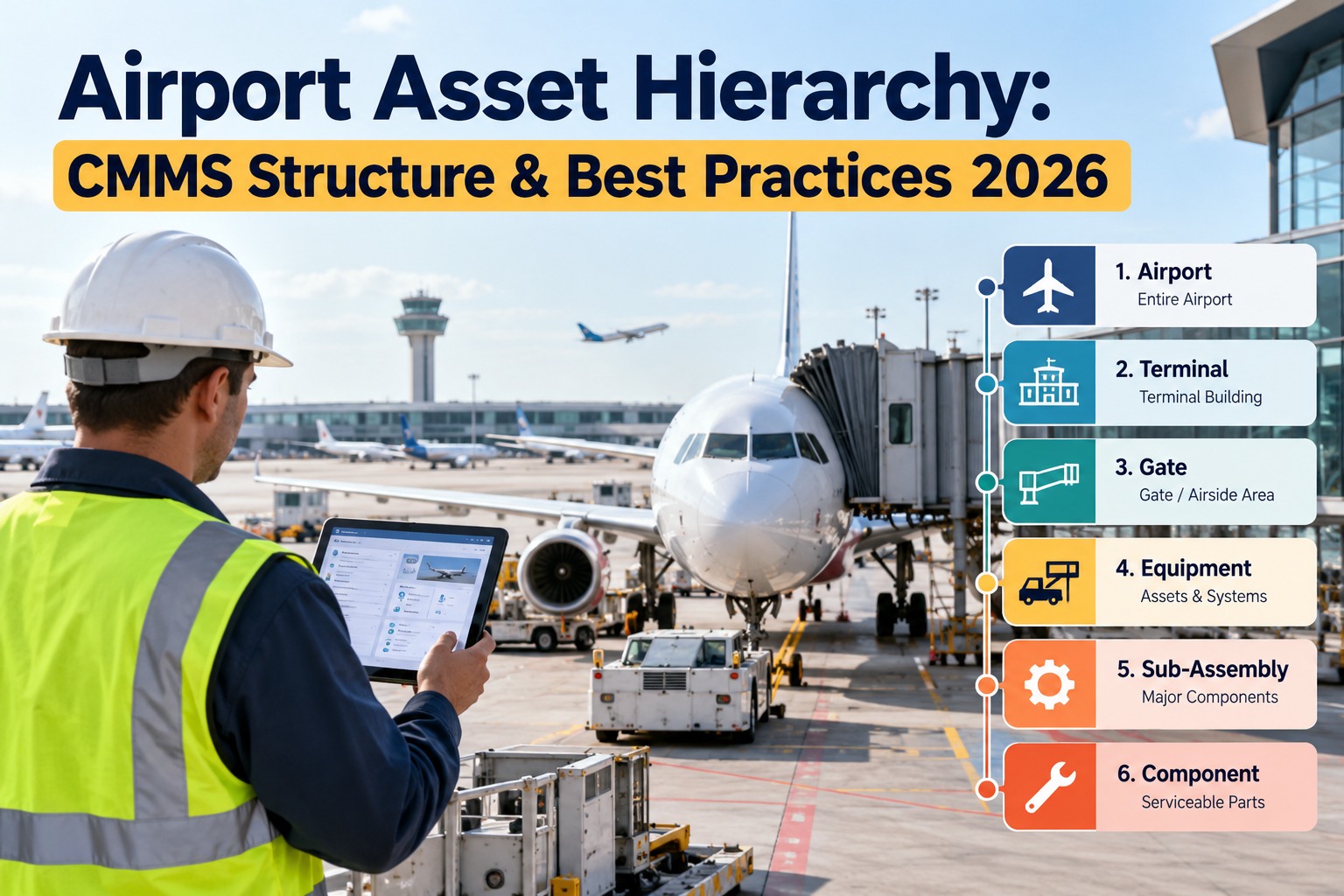
An airport runs on thousands of assets that depend on each other: a baggage carousel needs its drive motor, a jet bridge needs power and conditioned air, and a single airfield lighting circuit feeds hundreds of lights. If your CMMS holds them as a
Read More
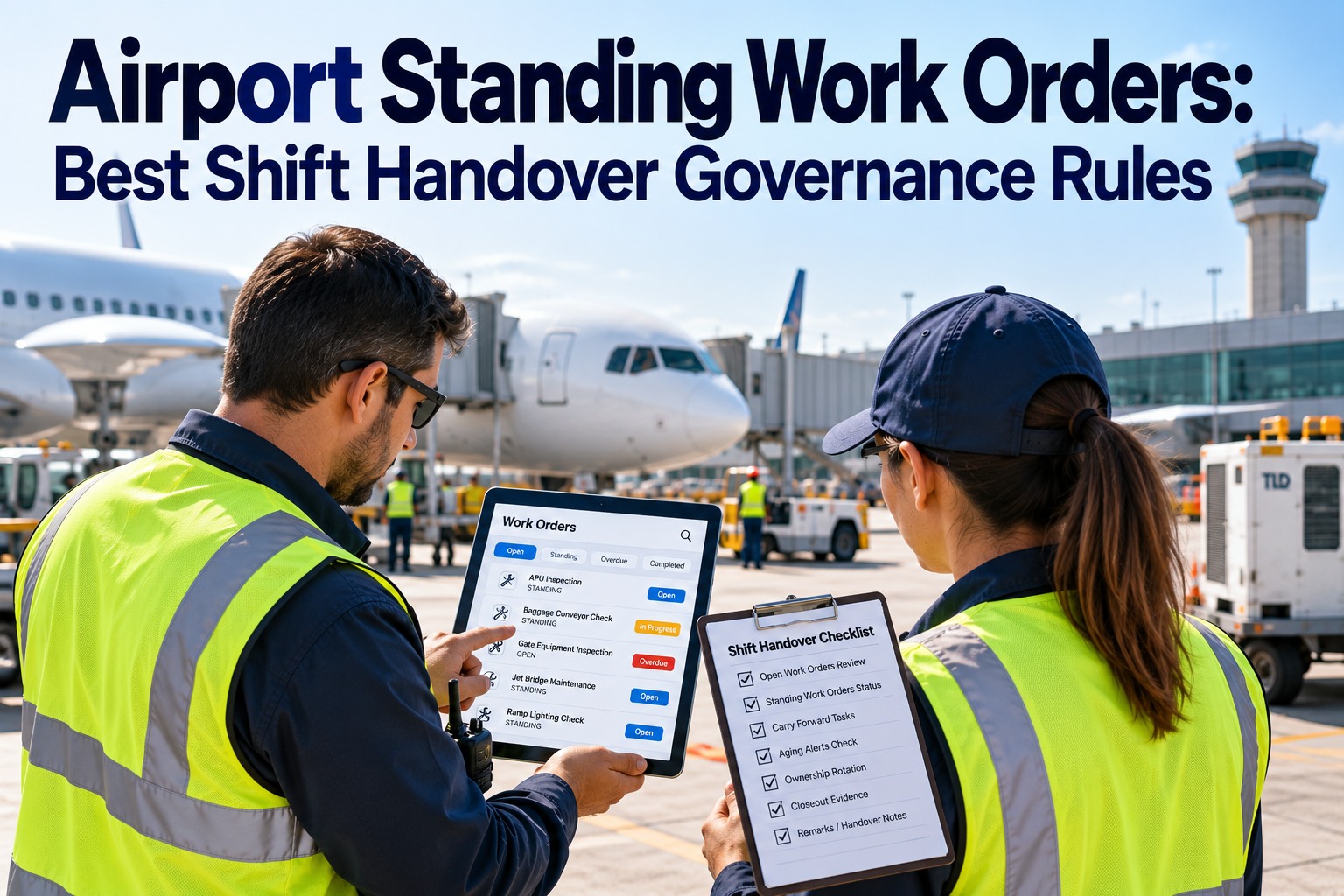
At an airport, work never stops and neither do the open work orders — they cross every shift change. The night crew logs a jet-bridge fault; by morning nobody owns it, by afternoon it's buried under newer tickets, and three weeks later it surfaces
Read More
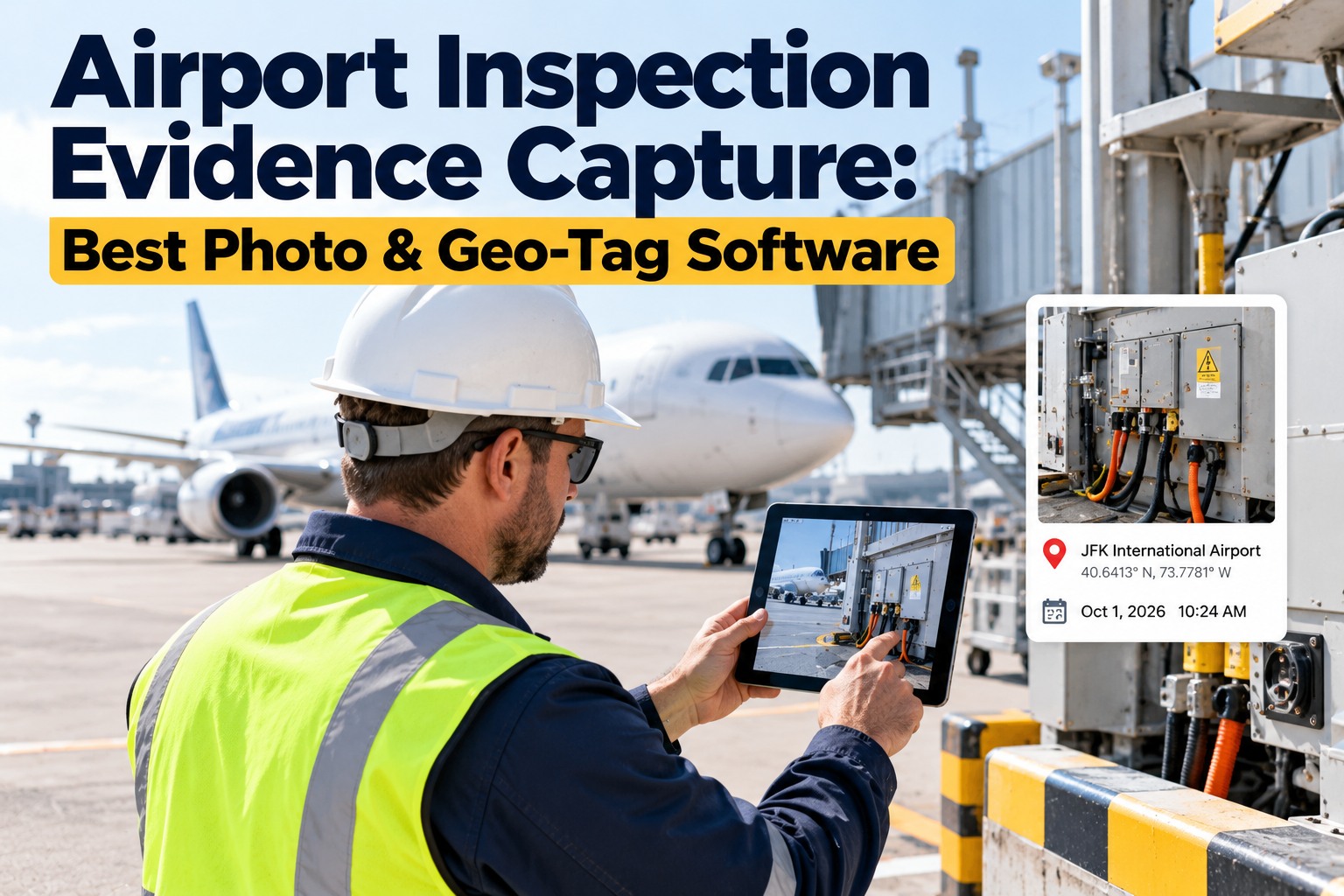
A regulator pulls a self-inspection record from six months ago and asks: who inspected this surface, exactly where were they standing, when did they actually observe it, and can you prove the defect was fixed? If the answer is a smudged paper log,

Read More
The airfield electrical vault is the one room where a single fault can go dark across an entire runway. Constant current regulators drive the series lighting circuits, isolation transformers keep each fixture's loop closed, and the whole system ru
Read More
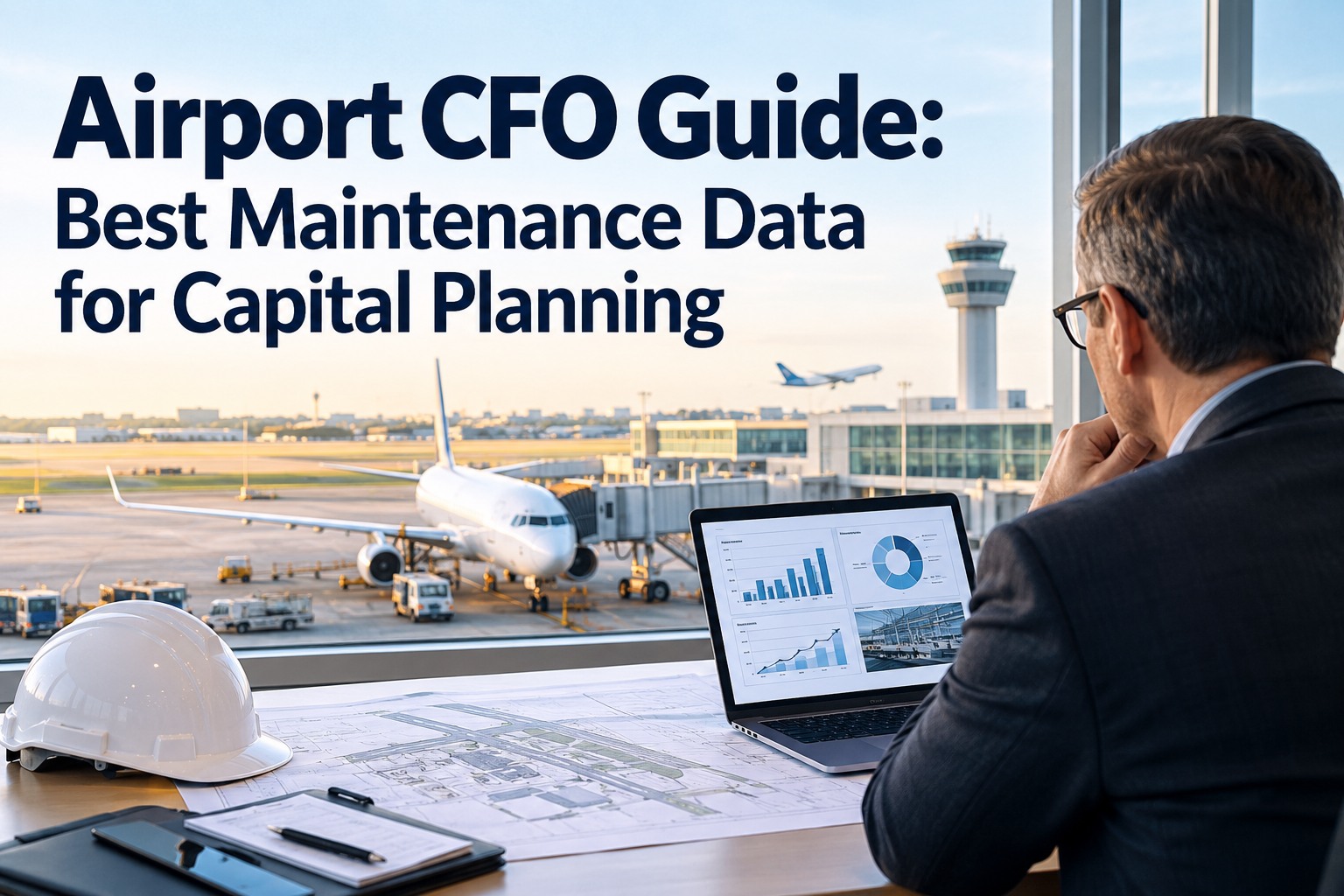
Every airport capital request eventually lands on the CFO's desk as a number without a story: the facilities team wants millions for a jet bridge fleet, a baggage system, a runway apron — and the case for it rests on judgment, urgency, and whoever
Read More
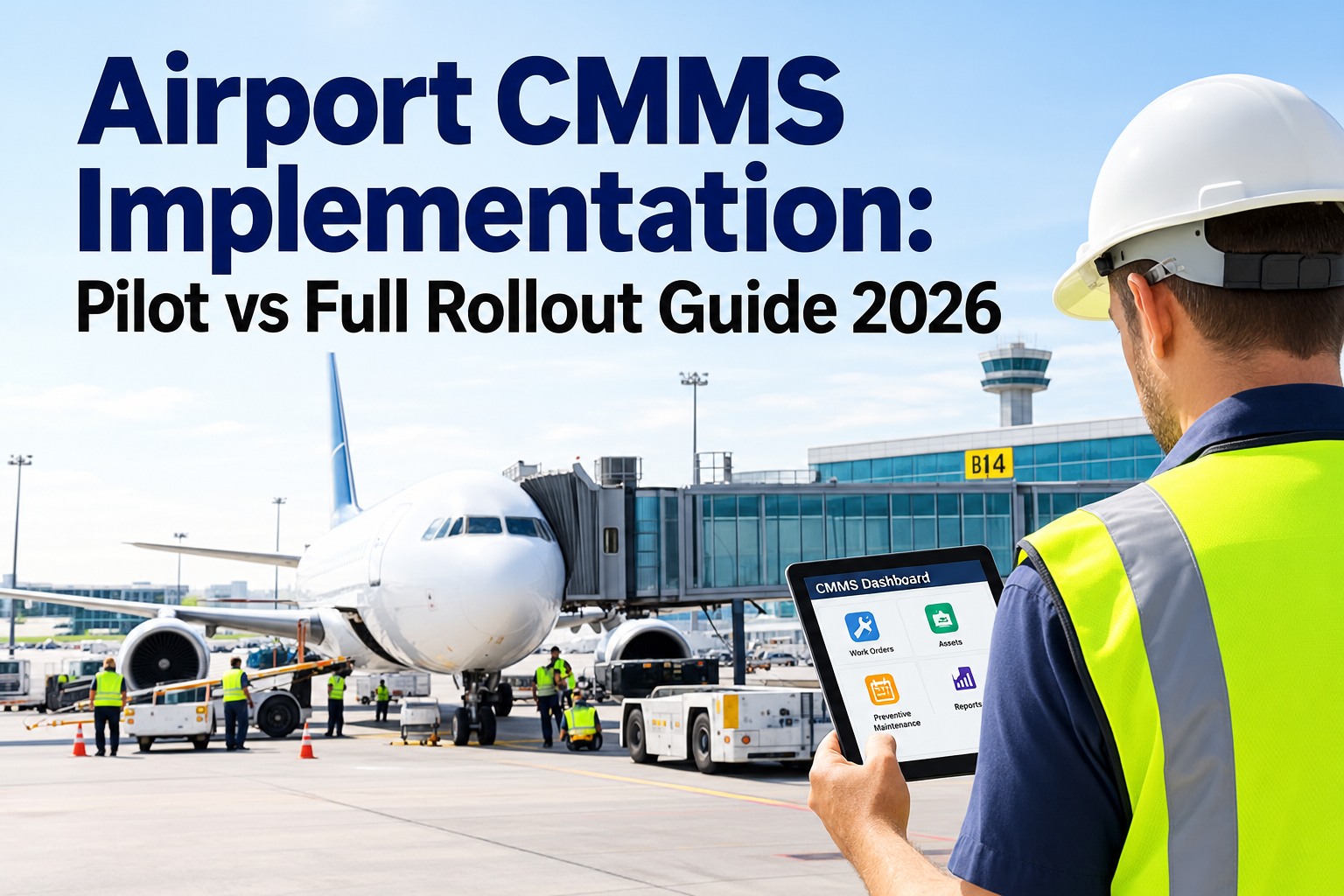
Bringing a CMMS into an airport is not a software install — it's an operational change across terminals, airfield, baggage, HVAC and dozens of contractors, and most failed rollouts fail before anyone logs in. The choice that shapes everything is p
Read More
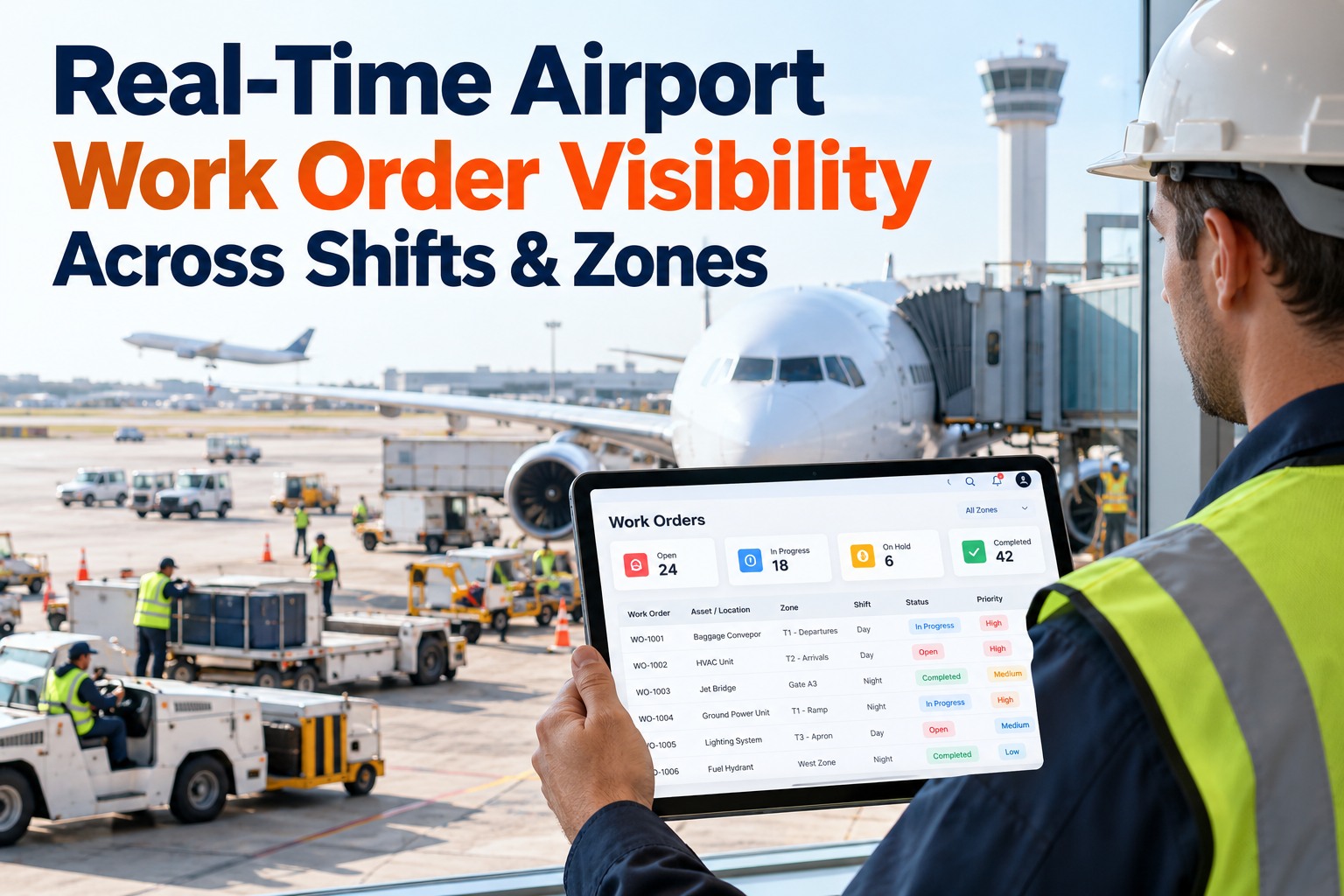
At an airport, maintenance never stops and no one person can see all of it. A jet bridge fault in Terminal 2 gets logged by the day shift, half-fixed while a part's on order, and handed to a night crew who never hear about it — because the status
Read More
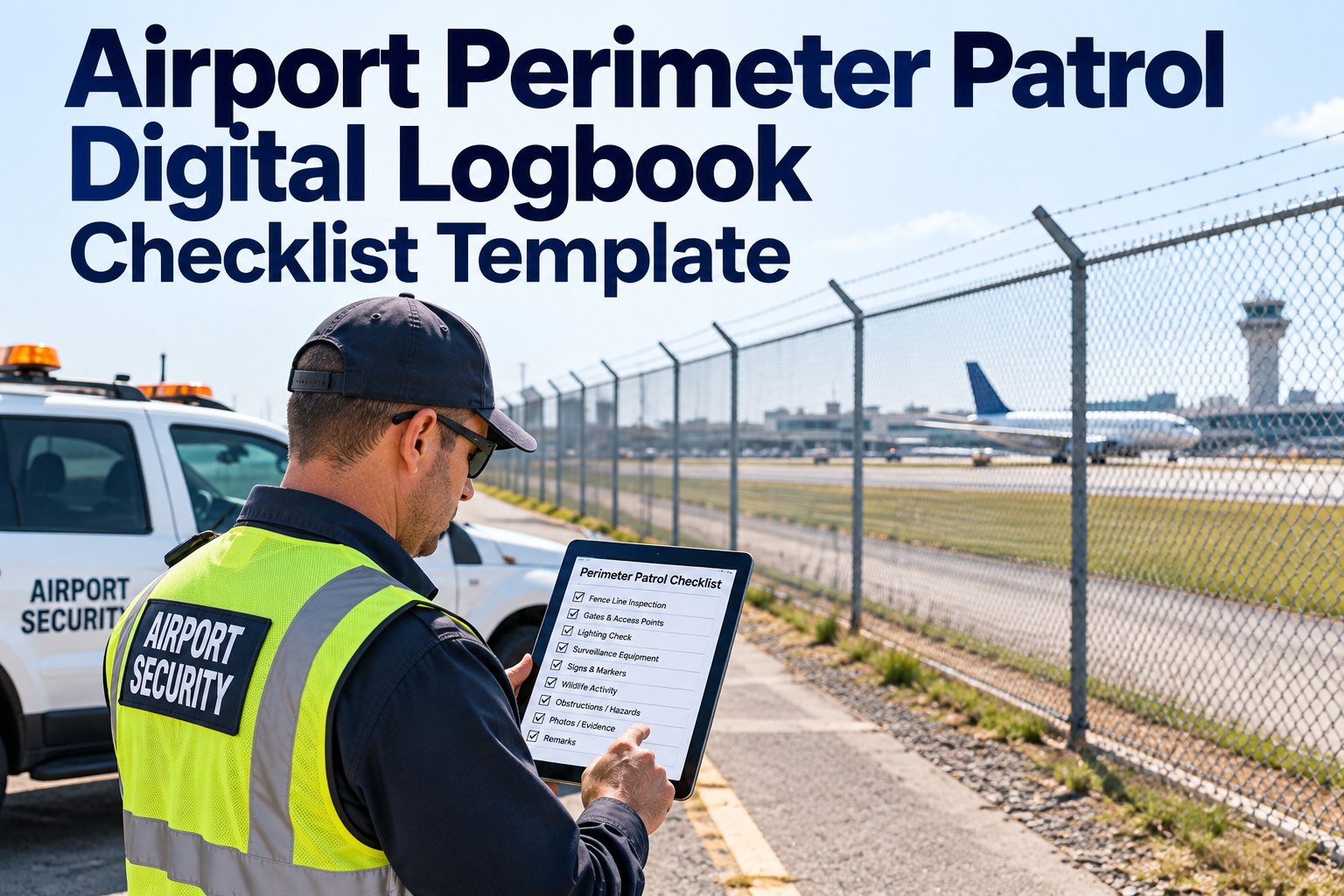
A perimeter patrol only counts if you can prove it happened. A paper logbook can't prove an officer actually reached the north fence line at 02:14, can't flag that the cut fabric found on Tuesday is still open on Friday, and can't be produced in s
Read More
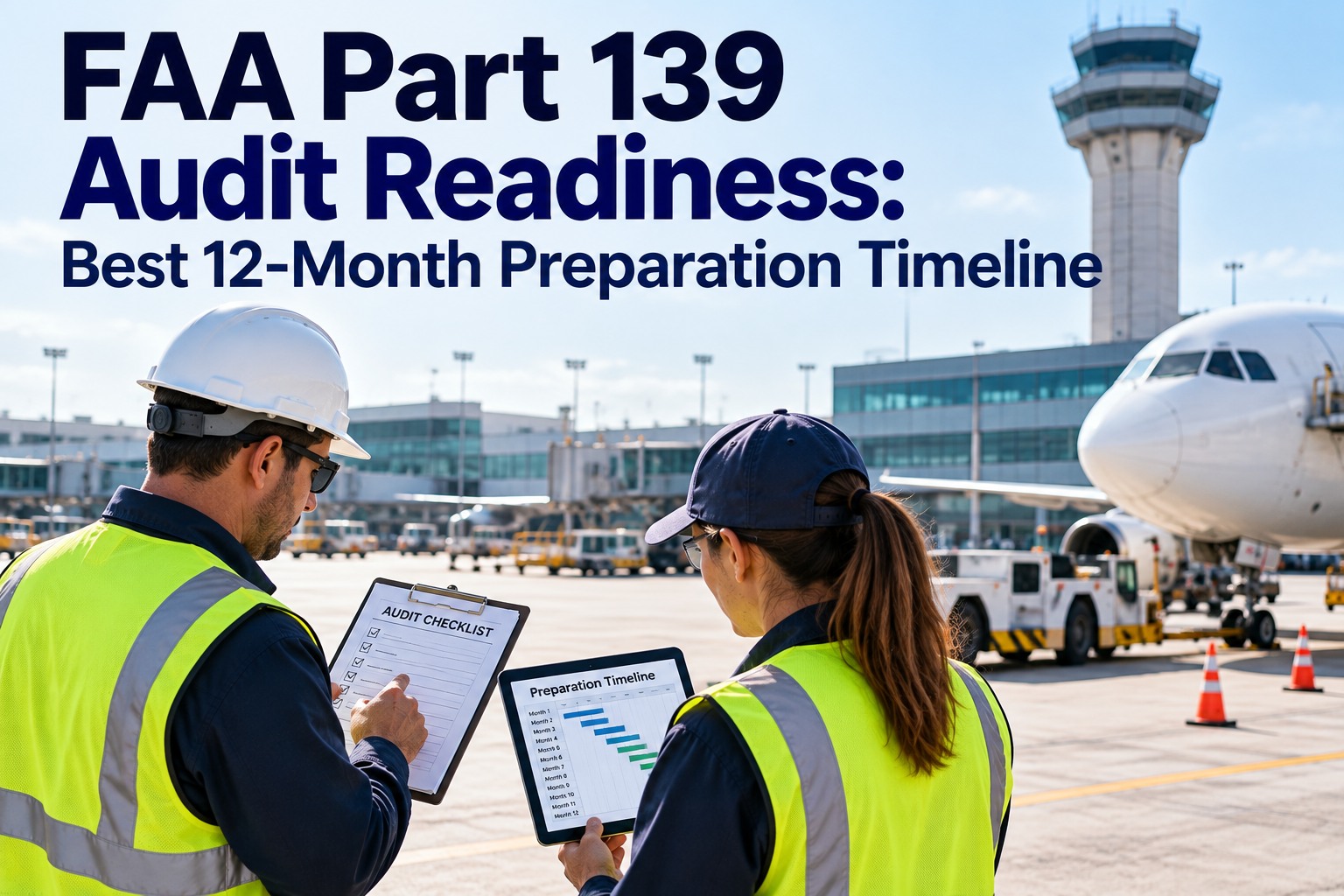
An FAA Part 139 inspection isn't a test you cram for the week before — it's a verdict on twelve months of records you either kept or didn't. When the inspector arrives, they ask for self-inspection logs, ARFF training files, wildlife assessments,

Read More
A wide-body sits on the ramp burning six figures an hour while a technician hunts for the one work card that proves the last task was signed off. The task was done — the paper just isn't. That's the real cost of manual work orders in aviation MRO:
Read More
An airport is not one facility — it's a dense grid of thousands of assets spread across the airfield, the terminal, and the ramp, each with its own failure clock. A runway edge light, a jet bridge hydraulic seal, a baggage conveyor bearing, and a

Read More
An engineer chasing an intermittent fault has to open five systems: the QAR download, the engine health monitor, the IoT condition feed, the inspection reports and the work-order history — then correlate them by hand, hoping the timestamps line up
Read More
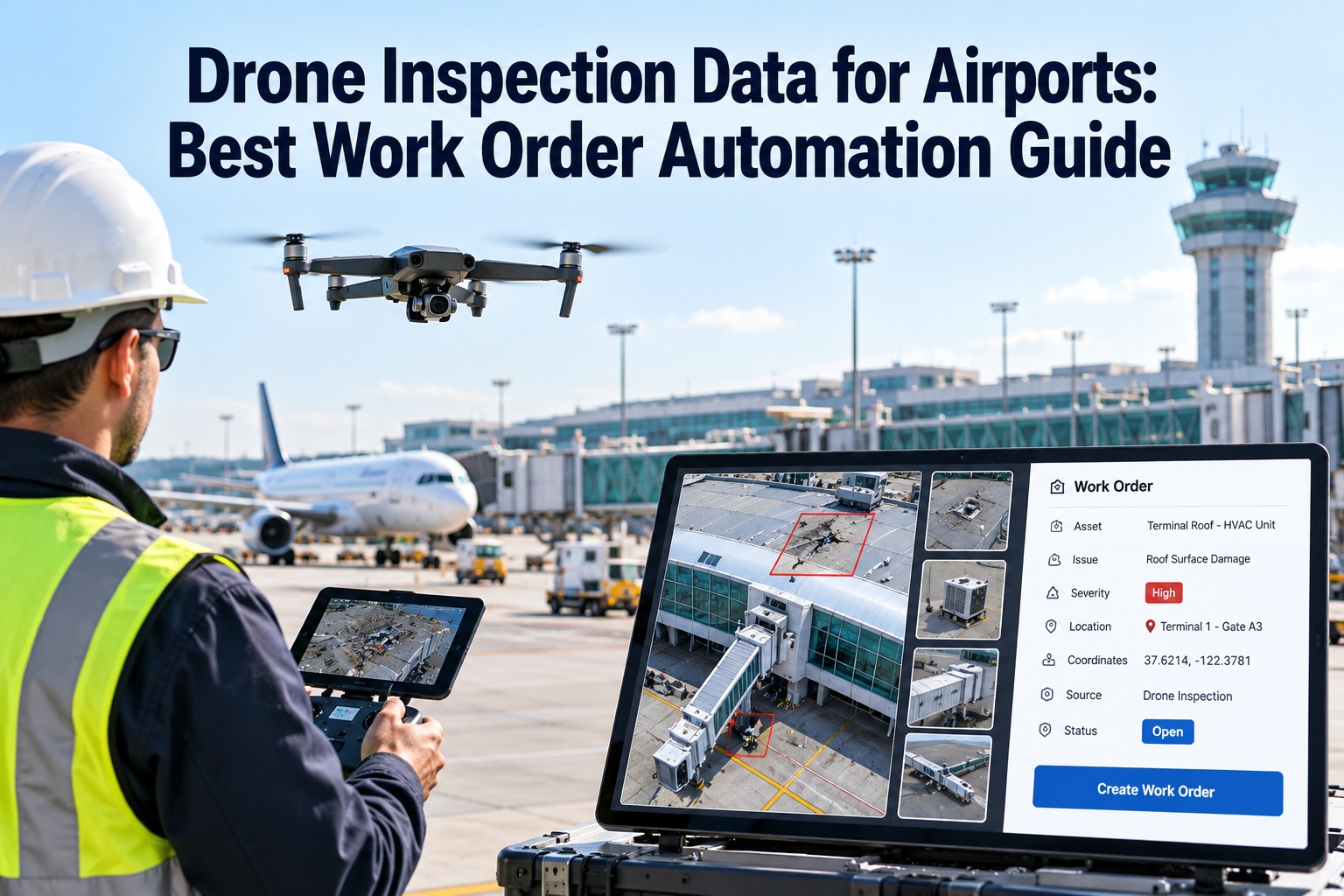
A drone can survey a runway, a terminal roof or a perimeter fence in a fraction of the time a ground crew takes — and come back with hundreds of geotagged defect images. Then most airports hit the wall: that data lands in a folder, someone eyeball
Read More
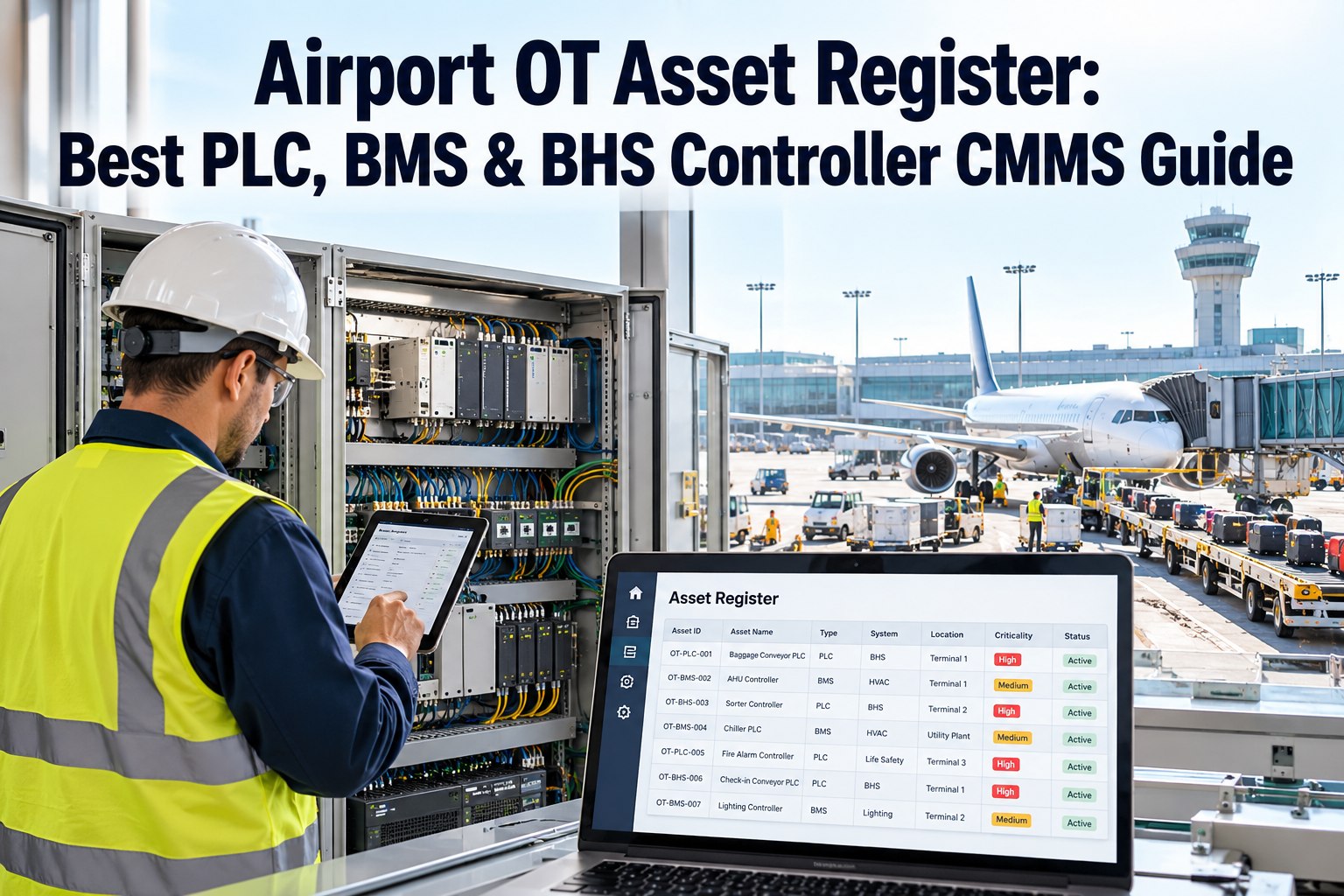
The PLC running the baggage sortation loop, the BMS controller managing terminal HVAC, the panel driving the jet bridge — every one is a computer, and most airports can't say what firmware they run, whether they're patched, or who owns them. That

Read More
When winter hits, an airport's Snow and Ice Control Plan stops being a binder and becomes an operational contract — every plow pass, every runway condition assessment, every contaminant reading has to happen on schedule and be recorded. FAA AC 150
Read More
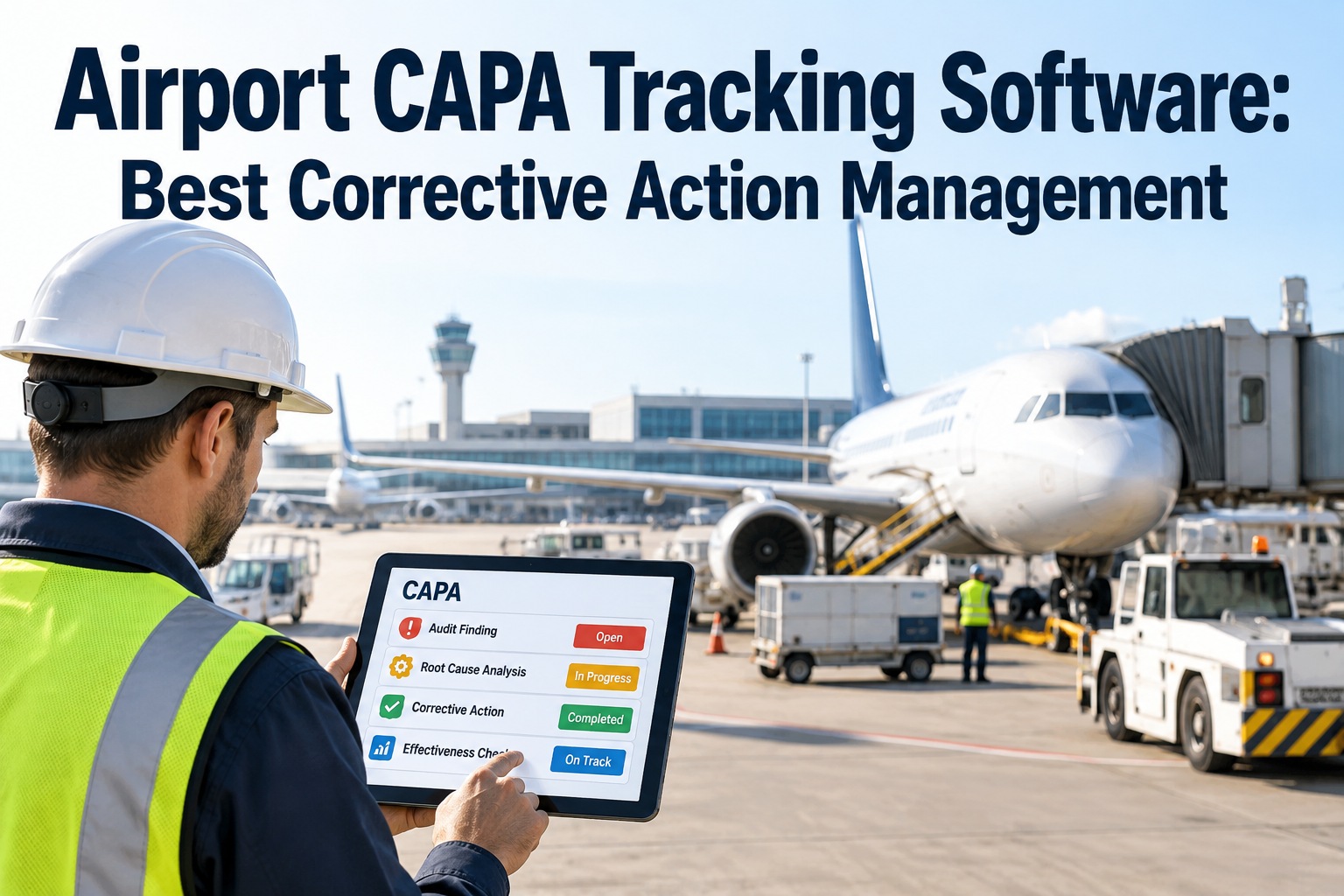
An airport audit rarely fails because a finding was missed — it fails because the finding was never closed properly. A corrective action gets logged in a spreadsheet, someone fixes the immediate problem, the row is marked "done," and no one ever c
Read More
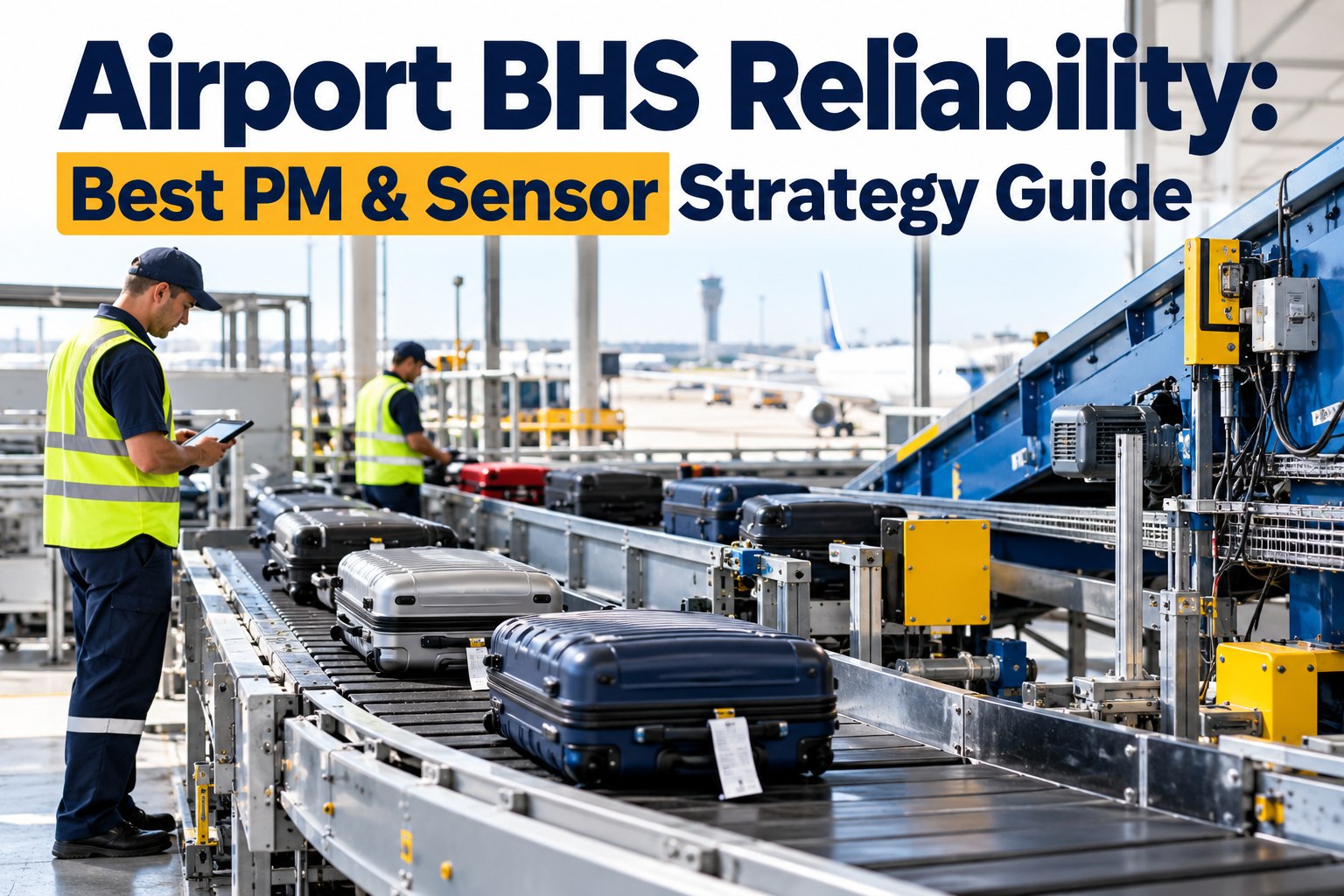
A conveyor motor draws a little more current every week, a gearbox runs a few degrees hotter, a belt drifts off track — and none of it shows up until a jam backs up an outbound bank and bags start missing their flights. That's the gap between a sc
Read More
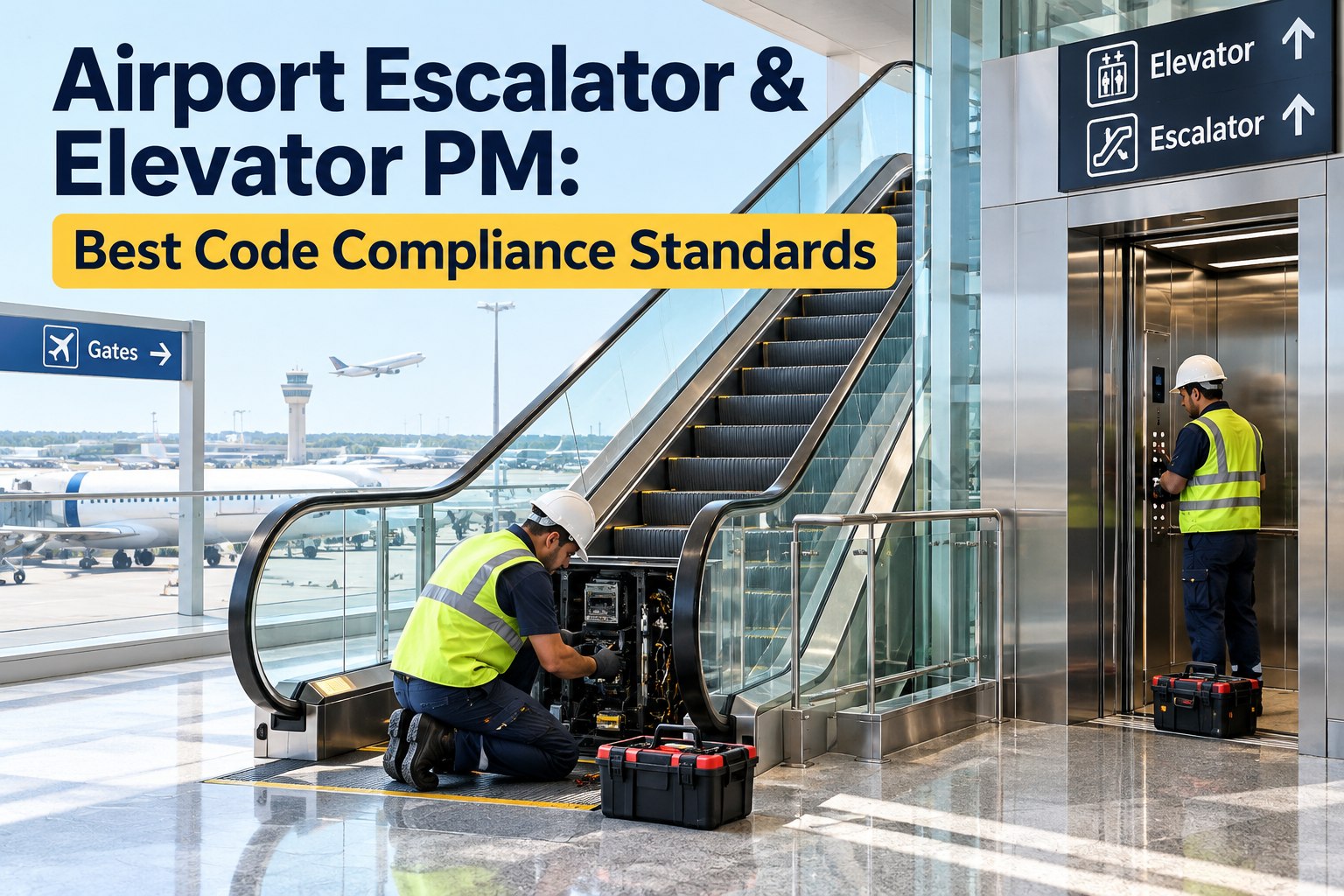
A stopped escalator at a connection gate isn't a maintenance ticket — it's a bottleneck of rolling bags, a missed connection, and a passenger who now has to find the elevator. Airport vertical transport runs on unforgiving codes and even less forg
Read More
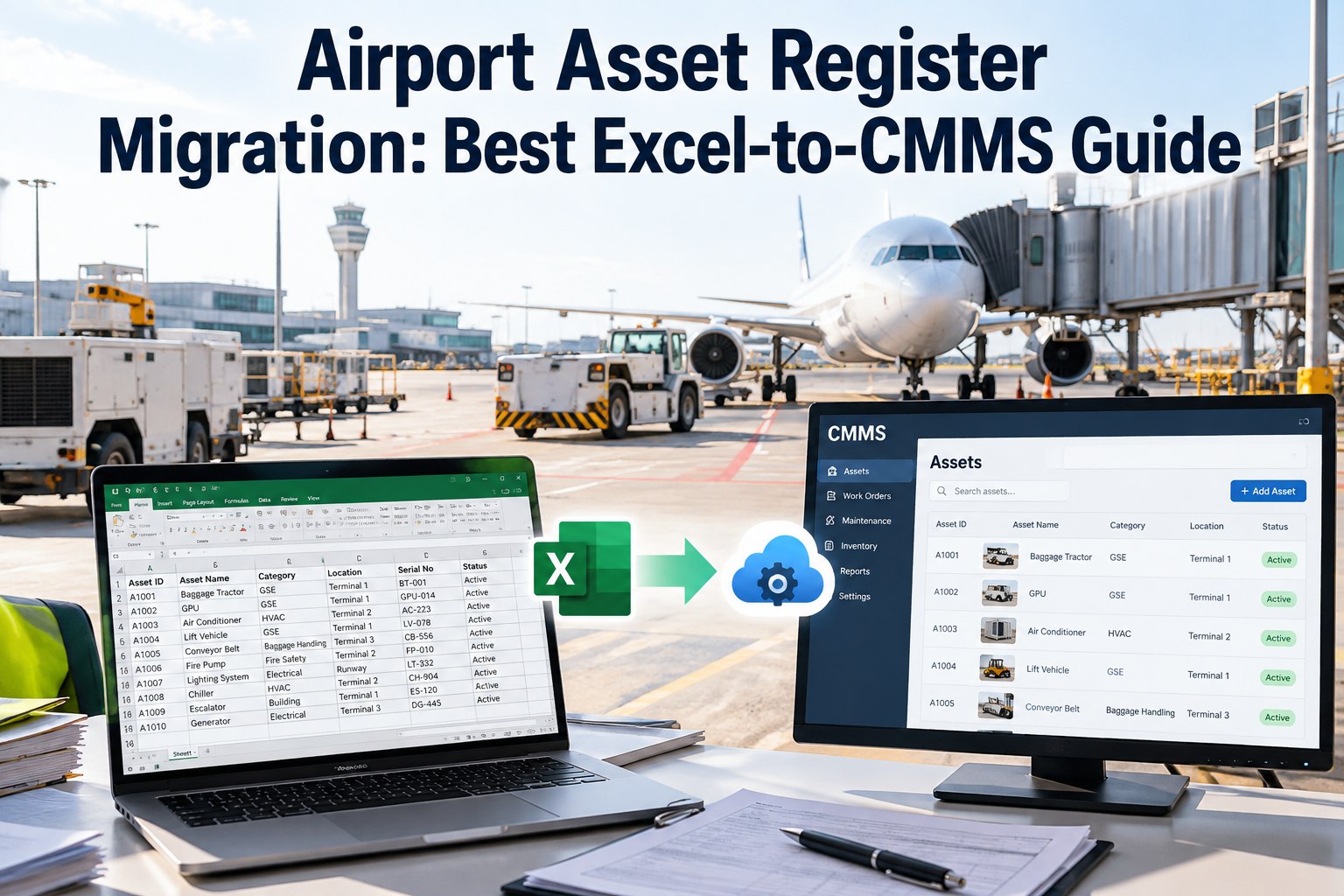
Your airport runs on a spreadsheet nobody fully trusts: the same jet bridge listed twice, a baggage belt that was scrapped in 2019, half the GSE with no serial number. Moving that into a CMMS by copy-paste just carries the mess forward — and burie
Read More
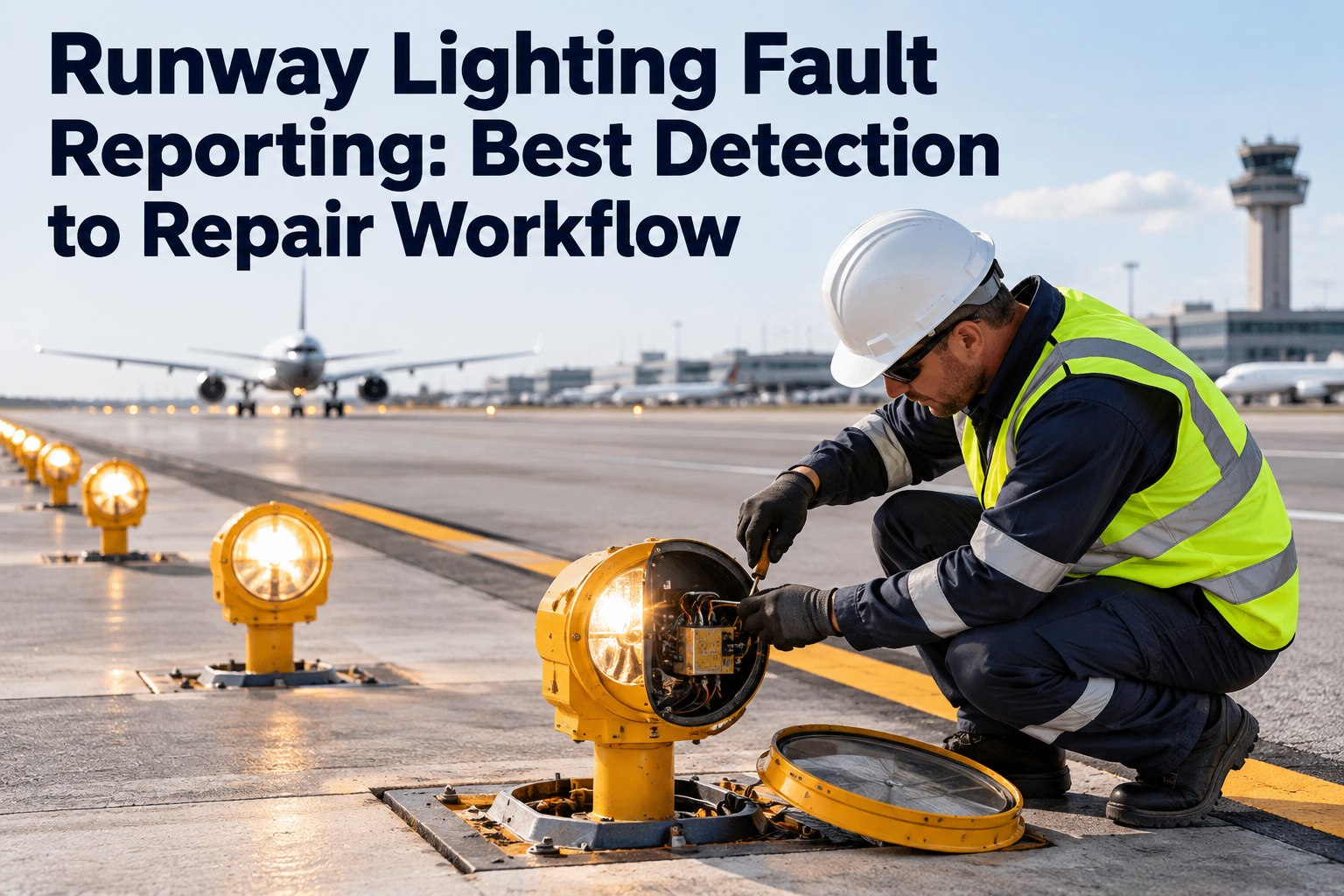
A centerline light goes dark at 2 a.m. — who logs it, who classifies it, and how long before a technician is dispatched and the fault is closed out? If the answer lives in a radio call and a paper logbook, the clock is already working against you.

Read More
Your airfield went LED to stop relamping every 1,000 hours but now drivers fail early, a warranty claim just bounced for missing records, and no one can say which circuit goes dark next. What's missing isn't a better fixture; it's a system t
Read More
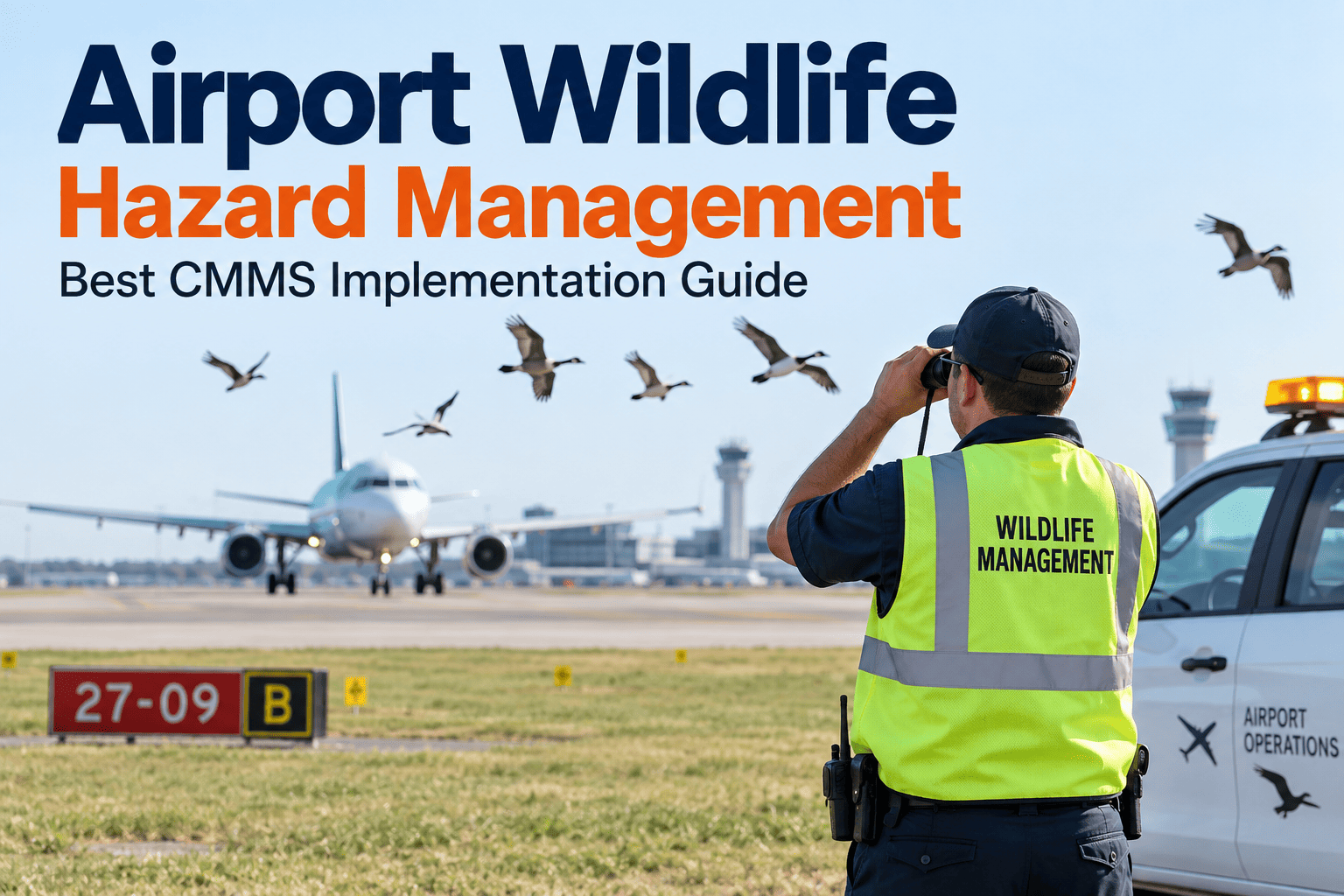
A wildlife strike happens in two seconds. The reporting chain that follows takes weeks, involves a mandatory federal form, a species identification (often via feather remains sent to a lab), a damage assessment, and an entry in a permanent databas

Read More
An airport terminal is one of the hardest buildings on earth to keep comfortable. A gate area can jump from 20 people to 180 in half an hour as a flight boards, glass facades pour in solar heat, jet exhaust drifts through jetways, and not a single
Read More
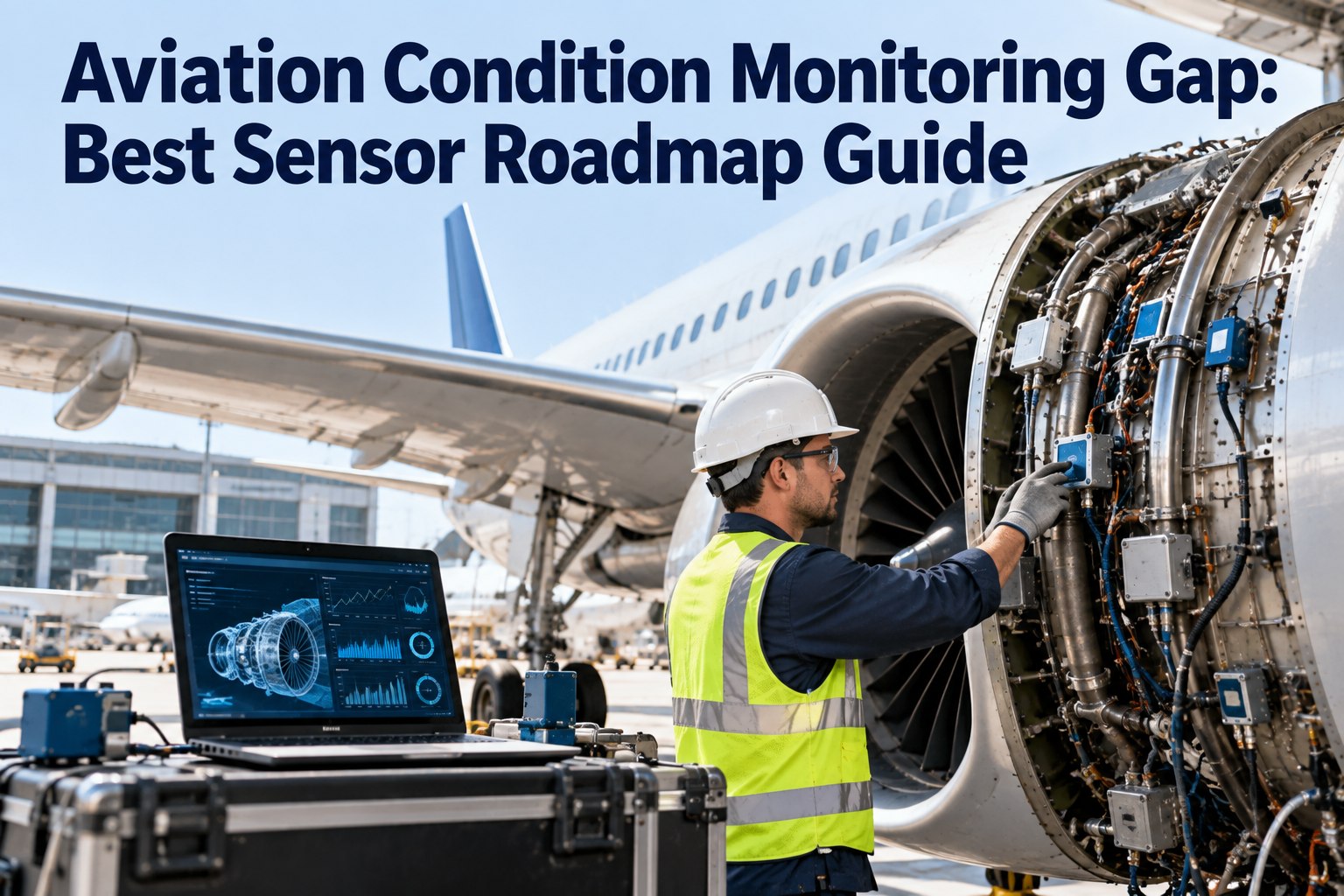
Your MRO base has hundreds of assets — auxiliary power units, hydraulic carts, ground power units, hangar doors, paint-booth extractors, nitrogen carts — and only a fraction wear a sensor. The rest run to failure or to a fixed calendar interval, a

Read More
When an Airport Carbon Accreditation verifier sits down with your submission, they don't want a headline number — they want the trail behind it: which meter, which fuel delivery, which F-gas top-up, and whether the figures reconcile. That evidence

Read More
Two depots report 96% availability. One is genuinely outperforming; the other just defines "available" more generously. Same KPI, same number, opposite reality — and nobody at HQ can tell which is which, because the definition underneath the numbe

Read More
An airport is a small city with three water problems. Potable water on one system serving terminals, hangars and catering. Wastewater on a second system draining every restroom, kitchen and hangar sink. Stormwater on a third system carrying runoff
Read More
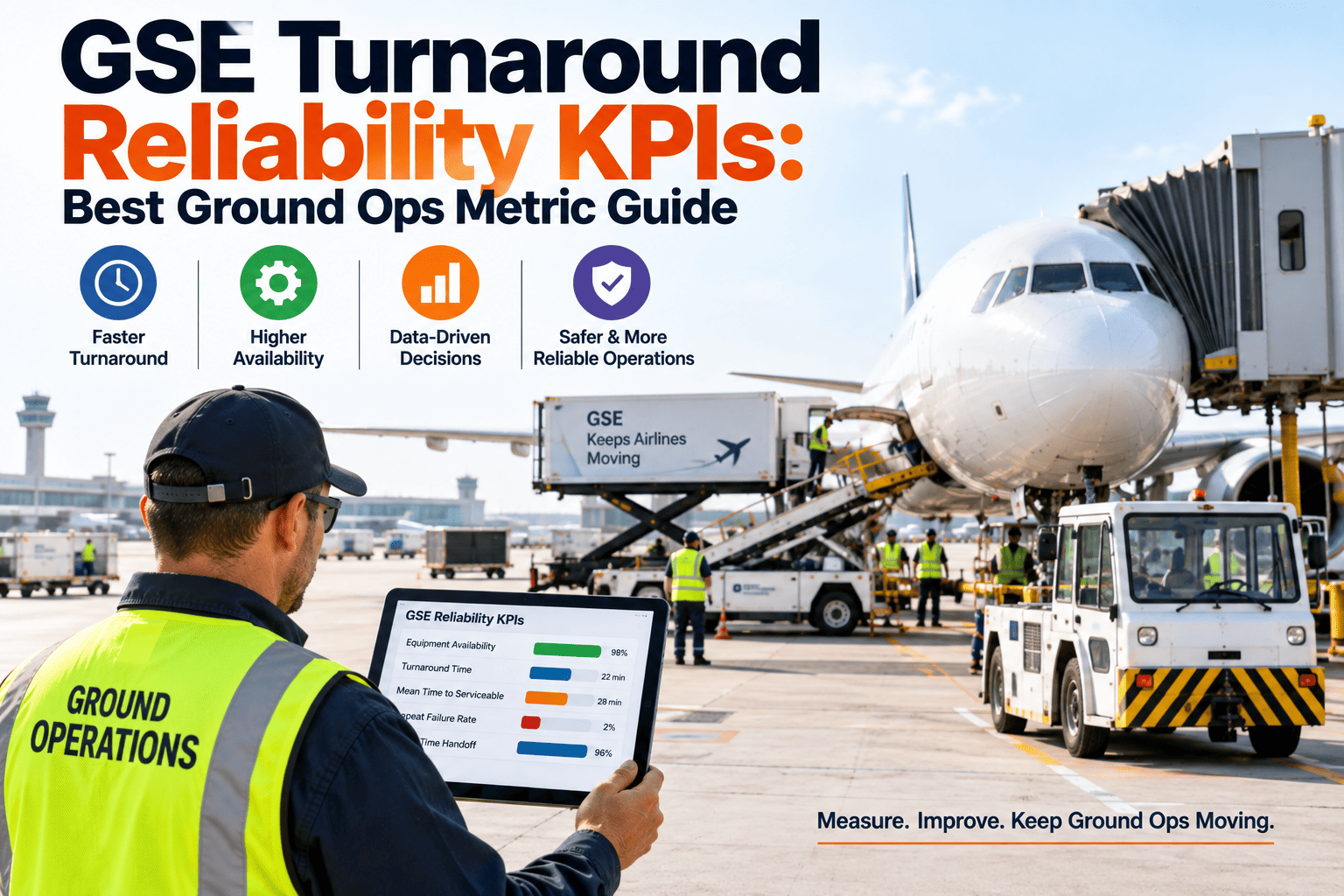
Ground ops lives and dies on the turnaround, and the turnaround lives and dies on GSE that's actually ready when the aircraft arrives. Yet most ramp teams measure GSE the way they measure weather — anecdotally. "The belt loader's been playing up."

Read More
An airport de-icing operation runs seven months in preparation and five months in survival mode. Every truck must be ready before the first freeze, every fluid batch traceable to the tail number it was sprayed on, every holdover time defensible if
Read More
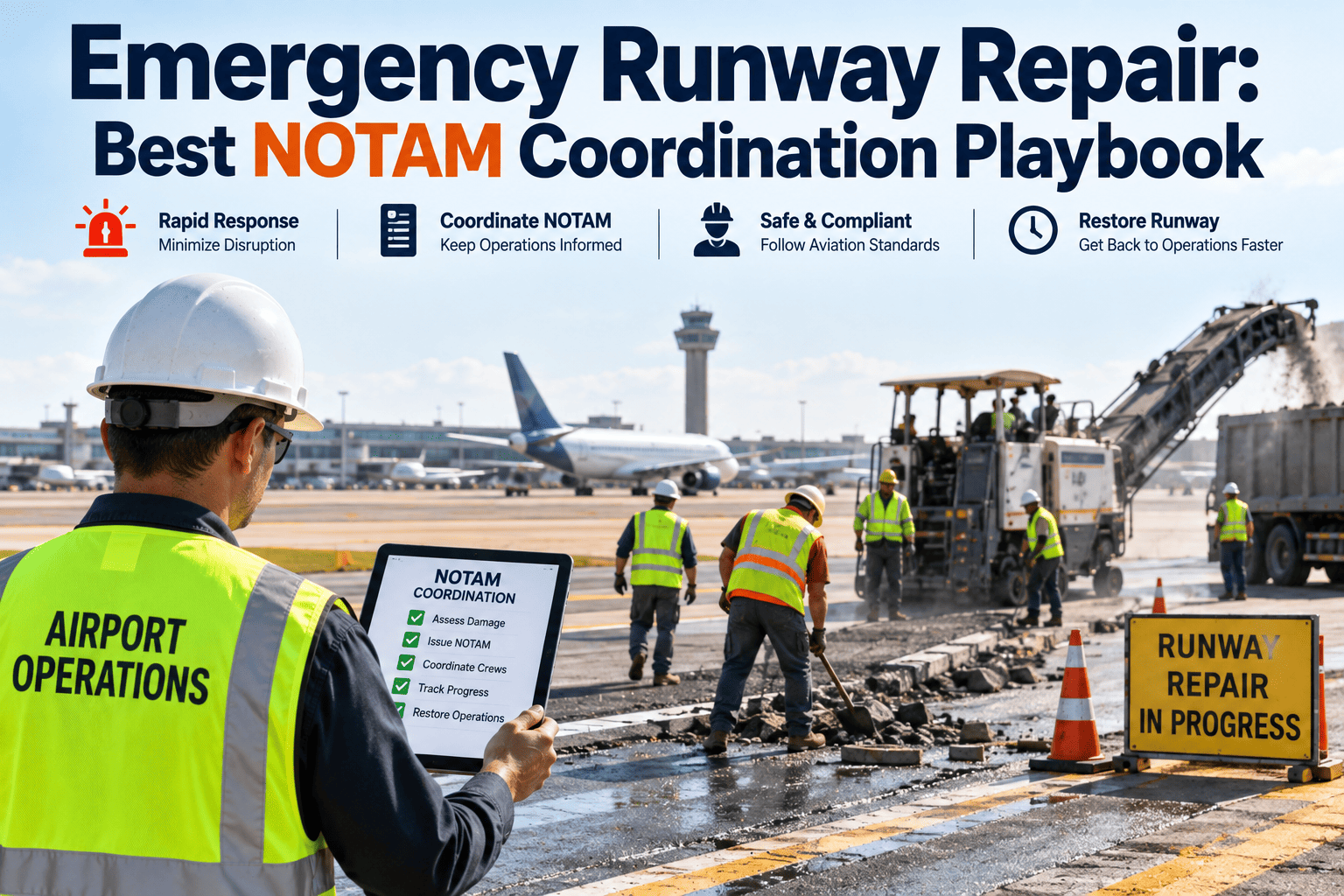
A runway edge light fails mid-rotation. A cable fault trips a circuit under an active runway. The clock starts immediately — an aircraft movement area with a defect isn't a maintenance ticket you get to next shift, it's an operational restriction

Read More
Airports don't get to postpone fire life safety compliance — the AHJ inspector walks the terminal, the ARFF station, the fuel farm, the parking structures and the hangars, and every water-based fire protection system between them has to have curre

Read More
A mixed-fleet MRO doesn't have one records problem — it has two, and they disagree on the shape of the answer. EASA Part 145 wants organisational approval, quality-system evidence and CRS entries tied to certifying staff numbers. FAA 14 CFR Part 4

Read More
Every fleet has chronic offenders — the ATA chapters that keep showing up in th tech log, the LRUs that come back to the workshop with No Fault Found stamped on them again and again, the tail with a snag pattern no one has stitched together
Read More
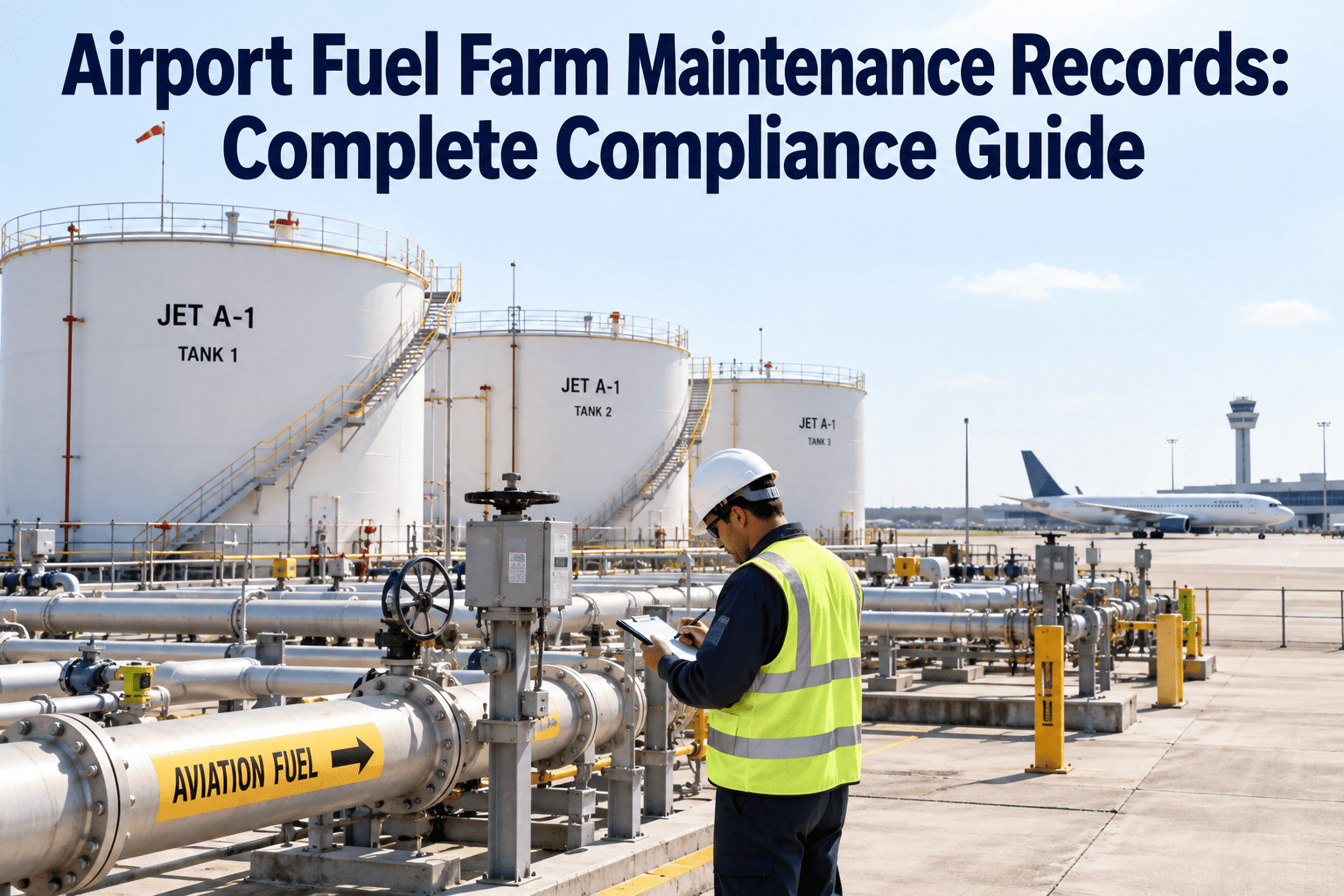
An airport fuel farm rarely fails on a valve — it fails on a record. When an EPA inspector or a fuel-quality auditor arrives, the question isn't whether the filter was changed. It's whether the change was logged with differential pressure, batch n

Read More
Airfield electrical assets CCRs, series cables, L-830 isolation transformers, LED and legacy halogen fixtures — don't fail on a schedule; they fail on a curve. Repair them once too often and the next unplanned outage costs more than the replacemen
Read More
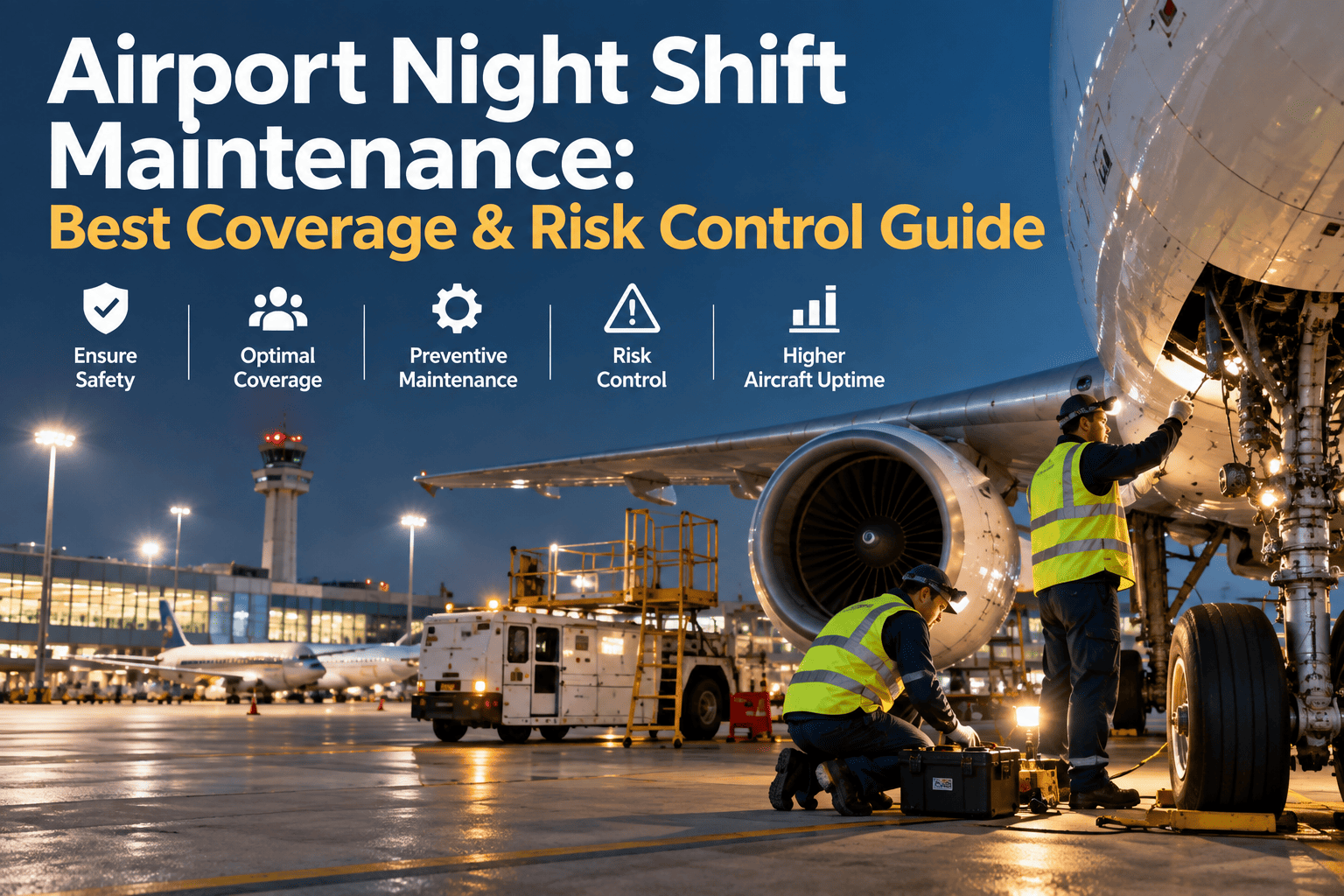
Night shift at an airport is where reliability programs quietly break. Skeleton crews, closed runways, cold-and-dark WIP, and a handover clock that runs at 06:00 whether the work is closed or not. This guide covers the coverage rules, PM windowing
Read More
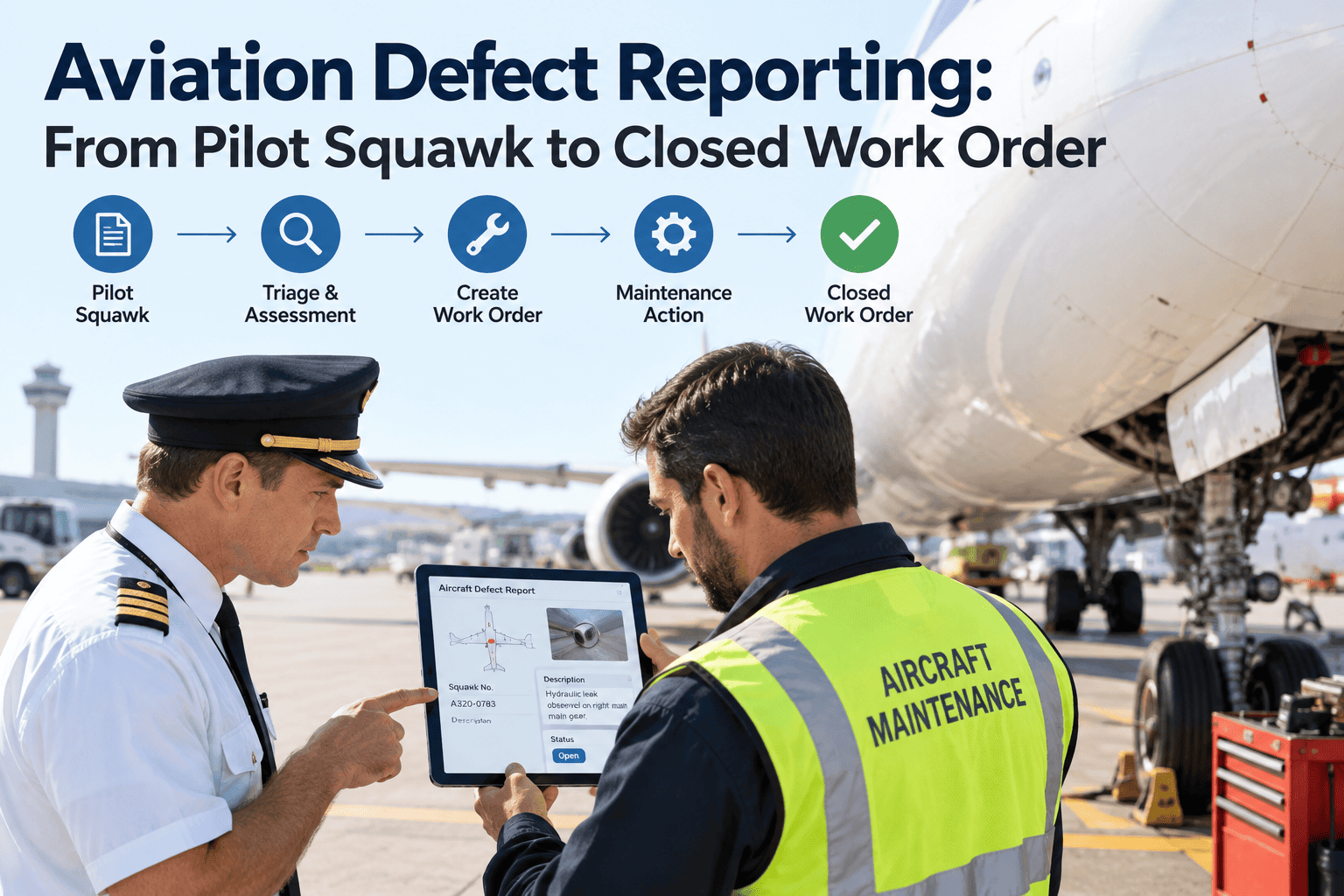
Every pilot squawk is the moment an aircraft's dispatch clock starts ticking. OxMaint AI-powered CMMS / Maintenance Management Software catches it at the tech-log entry and carries it through MEL / CDL triage, category-timed rectification and a si
Read More
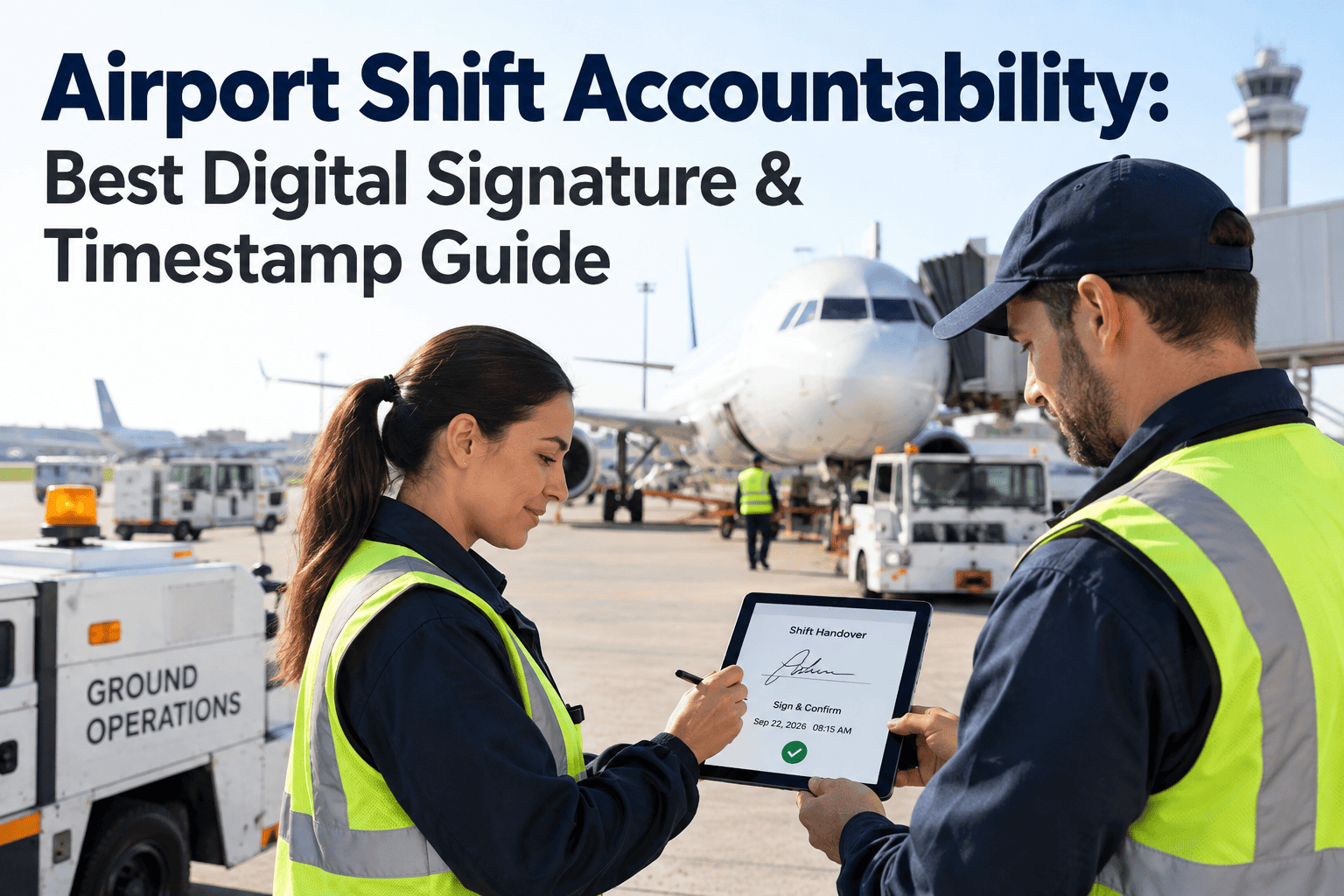
An airport shift changeover is the single riskiest moment in ground operations. In the four minutes it takes a departing supervisor to say "you're up," a fuel leak inspection may not get logged, a runway FOD check may lose its owner, and a gate di
Read More
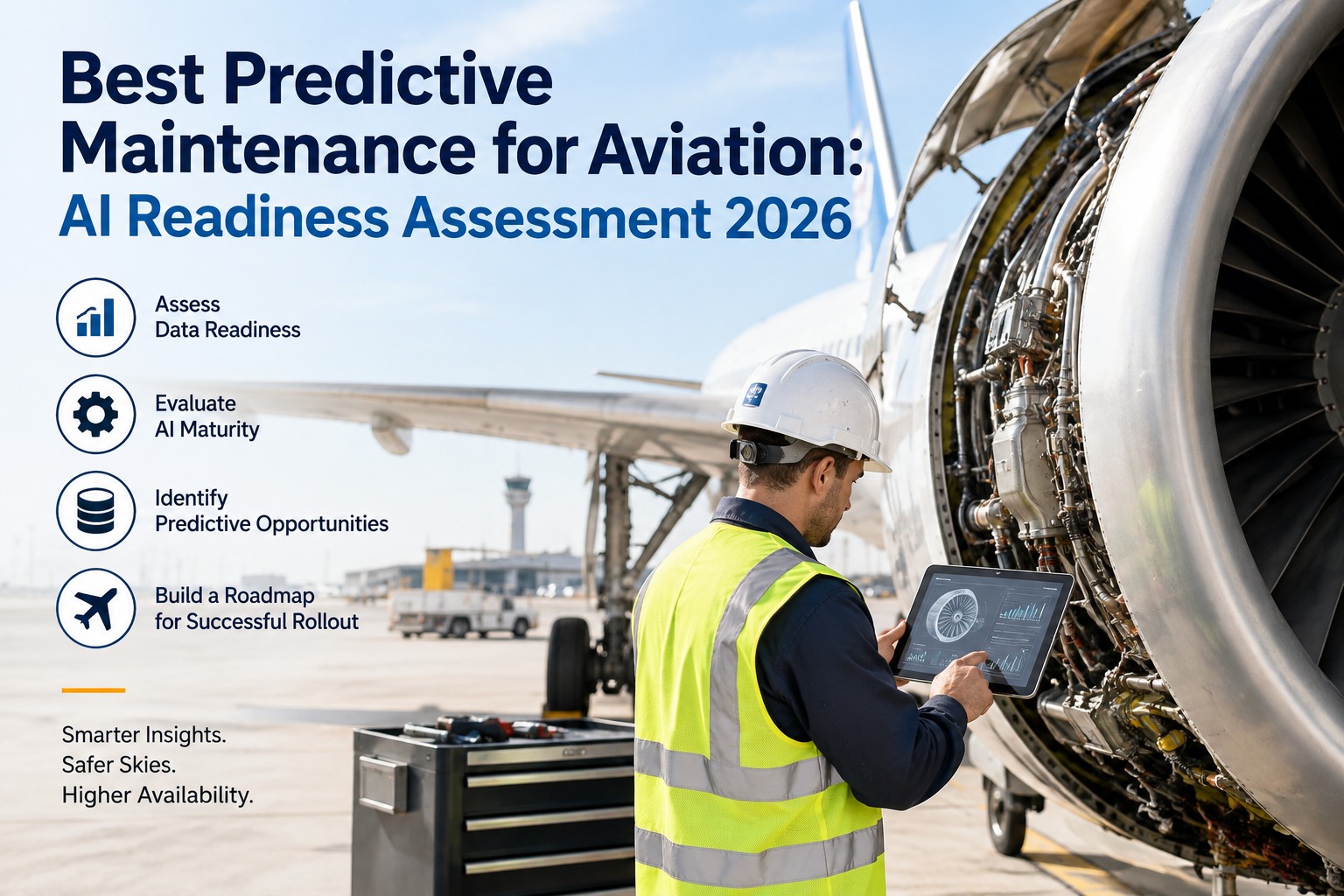
Most failed aviation predictive maintenance programs don't fail because the AI model was bad — they fail because nobody checked whether the plant's data could support a model in the first place. Sensors get purchased, a vendor gets engaged, a pilo

Read More
A single jet bridge can handle 200–400 docking cycles daily, accelerating structural fatigue, wheel carriage wear and seal degradation. Missing load tests or overdue inspections can sideline a bridge and cost $12,000–$25,000 per gate per day. A ti
Read More
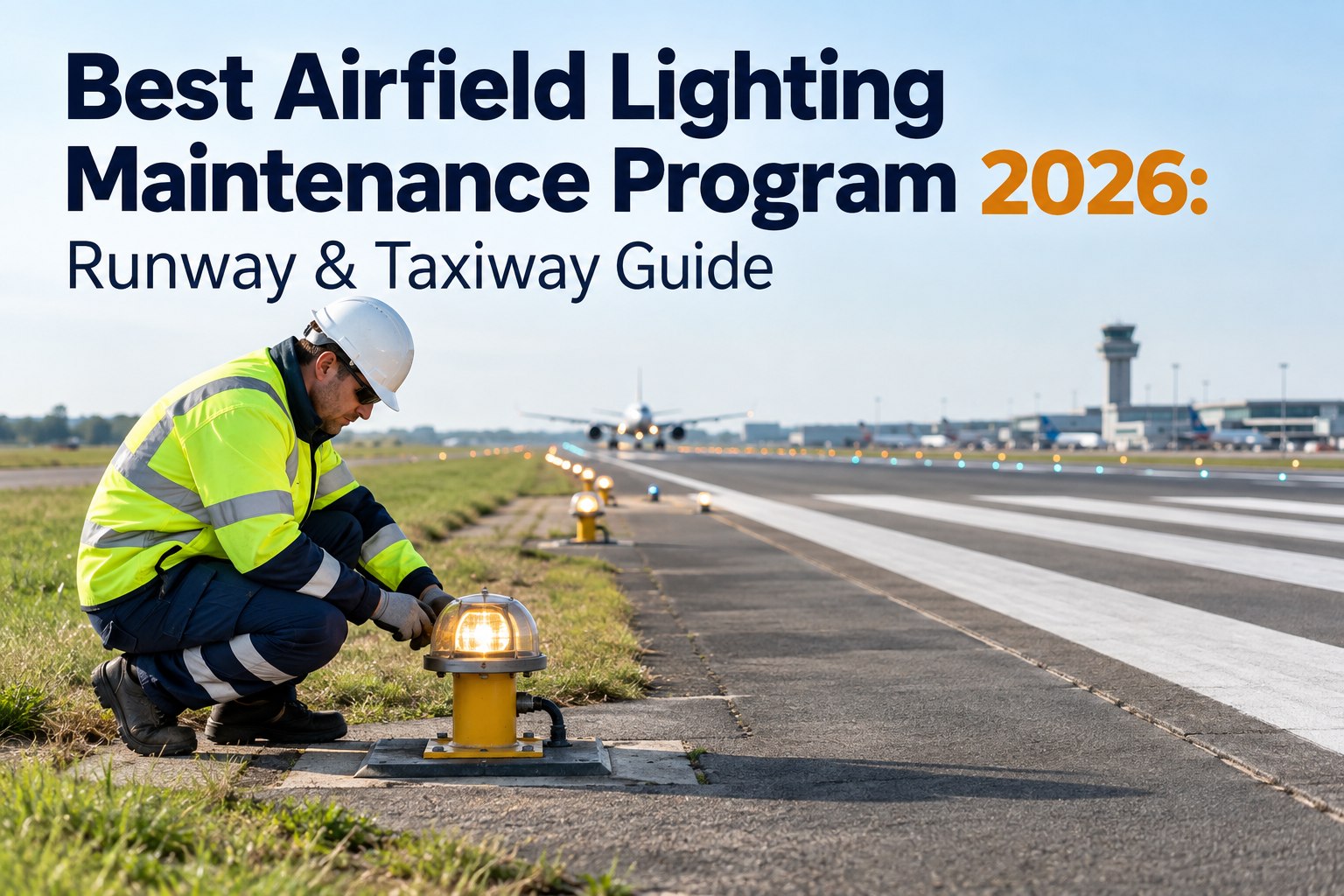
Airfield lighting isn't wired like the rest of the airport. A terminal's parallel circuits let one fixture fail without touching its neighbors — a runway's series circuit puts every edge light on a loop through a single constant current regulator,
Read More
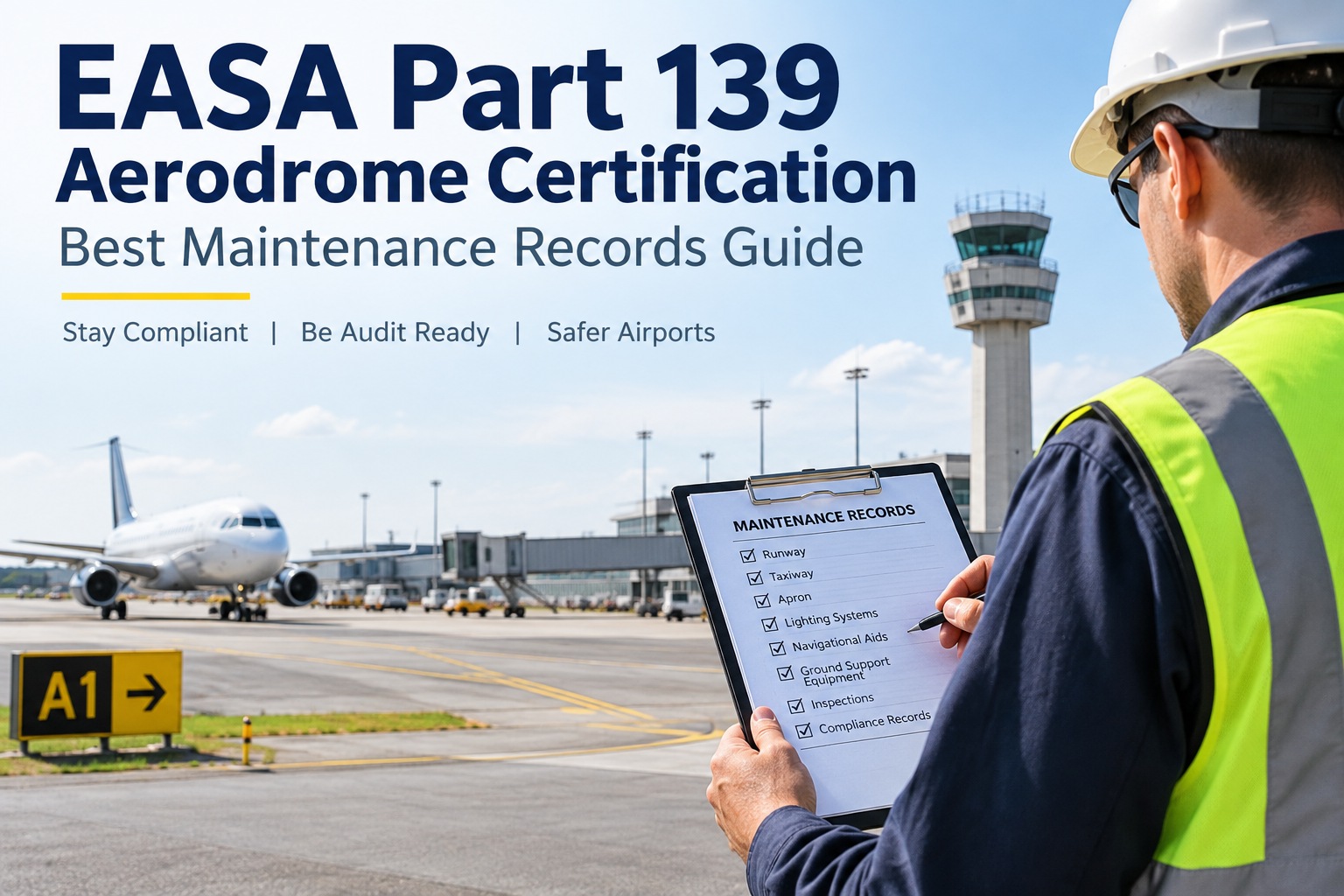
A surveillance visit doesn't fail because the work wasn't done — it fails because the evidence that it was done couldn't be produced fast enough, in the right form, tied to the right subpart. Commission Regulation (EU) No 139/2014 — the regulation
Read More
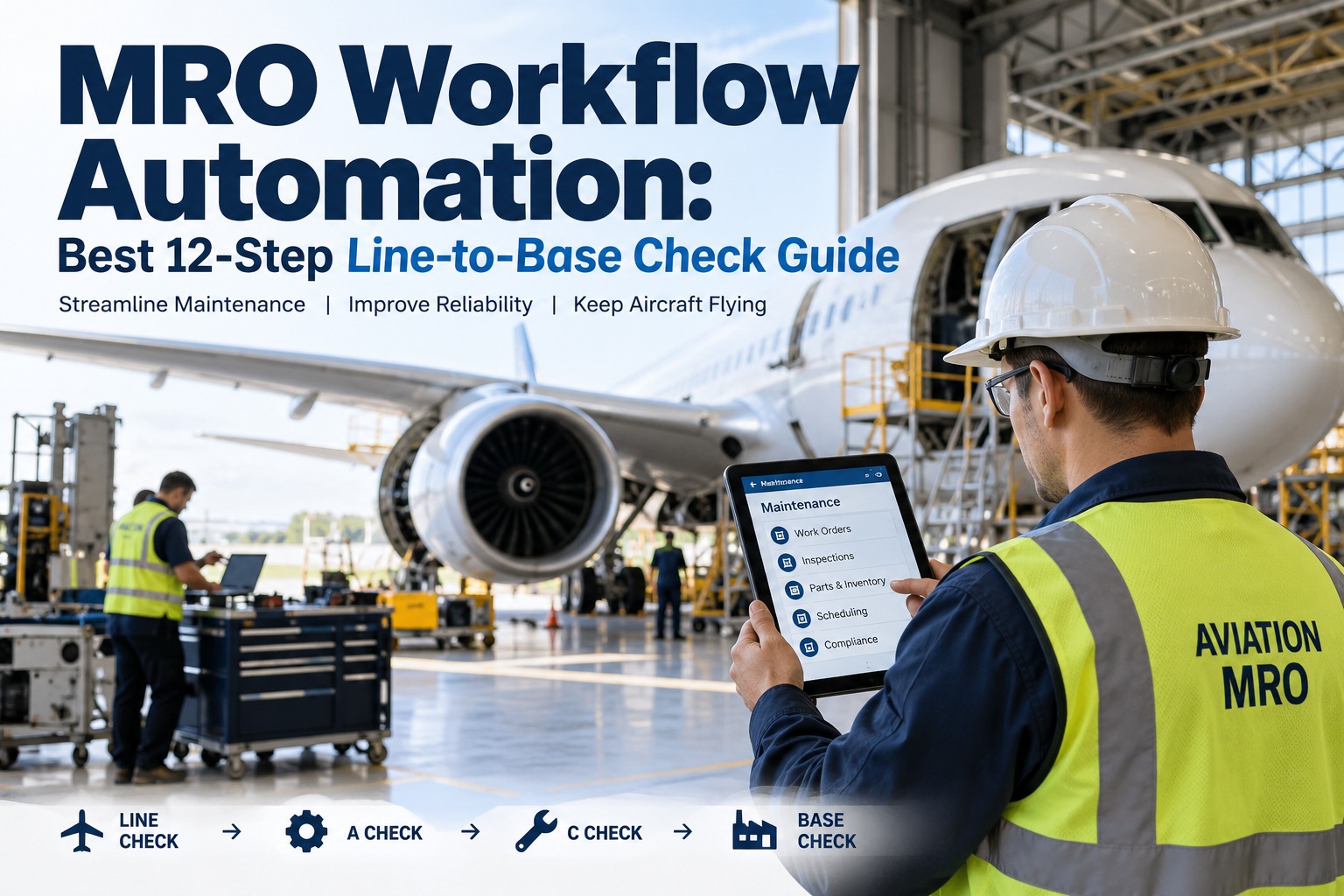
68% of MRO delays trace back to paperwork bottlenecks, not wrench time and the mechanism is almost always the same: a defect gets logged on paper during a transit check, re-keyed into a different system for the A-check package, then re-entered aga

Read More
Every part on a certificated aircraft falls into one of three categories, and getting that classification wrong is where audits go sideways. A rotable that's tracked like a consumable loses its individual life record. A life-limited part wit
Read More
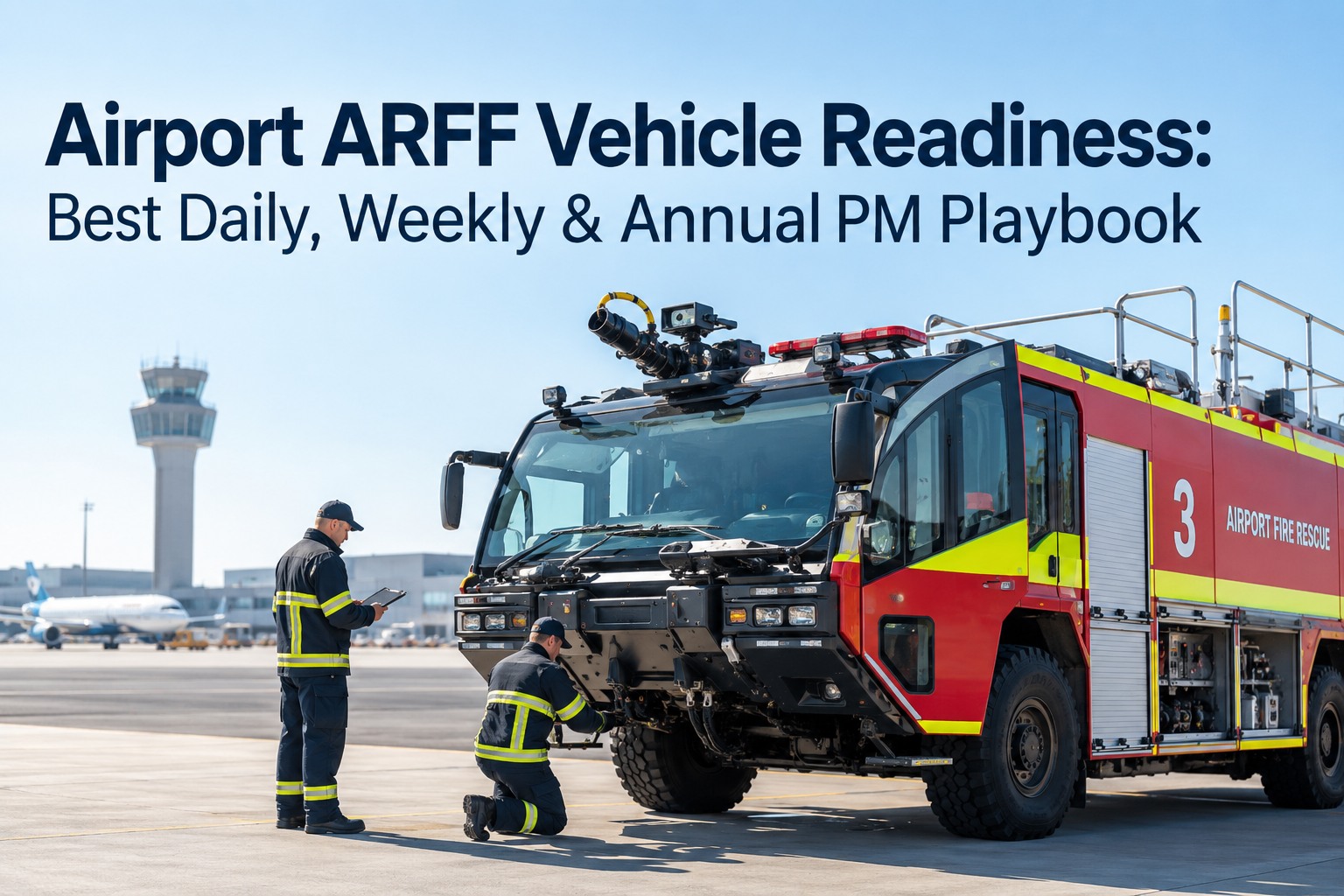
Part 139 inspectors don't ask whether your ARFF fleet can respond in three minutes to the midpoint of the farthest runway — they ask you to prove it happened, with drill data tied to the specific vehicle. Documentation gaps consistently rank among
Read More
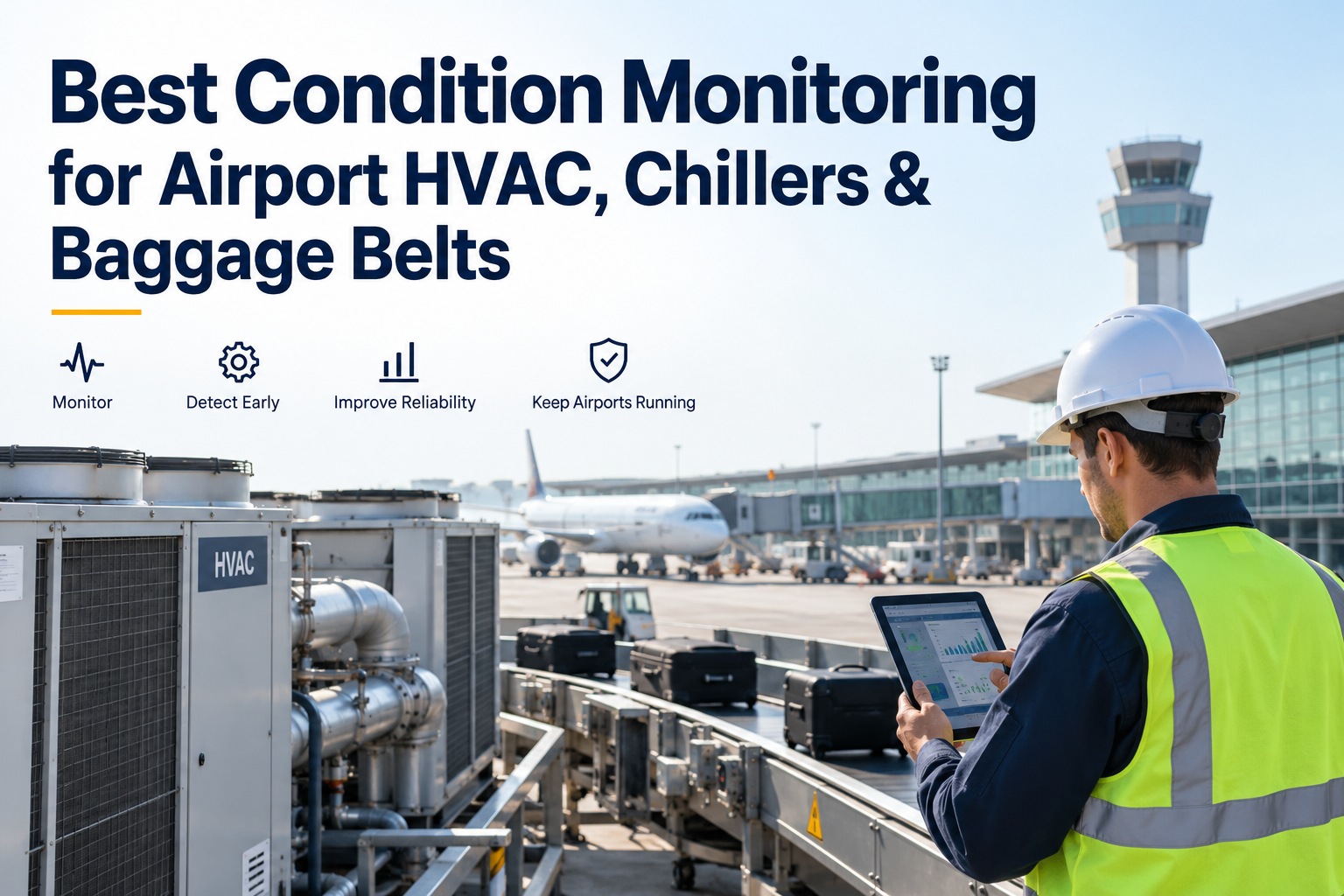
Most airport MEP and baggage-handling teams already know their fixed-interval PM calendar is a compromise — a chiller bearing might be fine for six more months or two weeks away from failure, and a walkdown every 30 or 90 days can't tell the diffe

Read More
The SPCC threshold catches more airports than most facility managers expect any site with more than 1,320 gallons of aboveground oil storage, more than 660 gallons in a single container, or over 42,000 gallons underground falls under 40 CFR Part 1
Read More
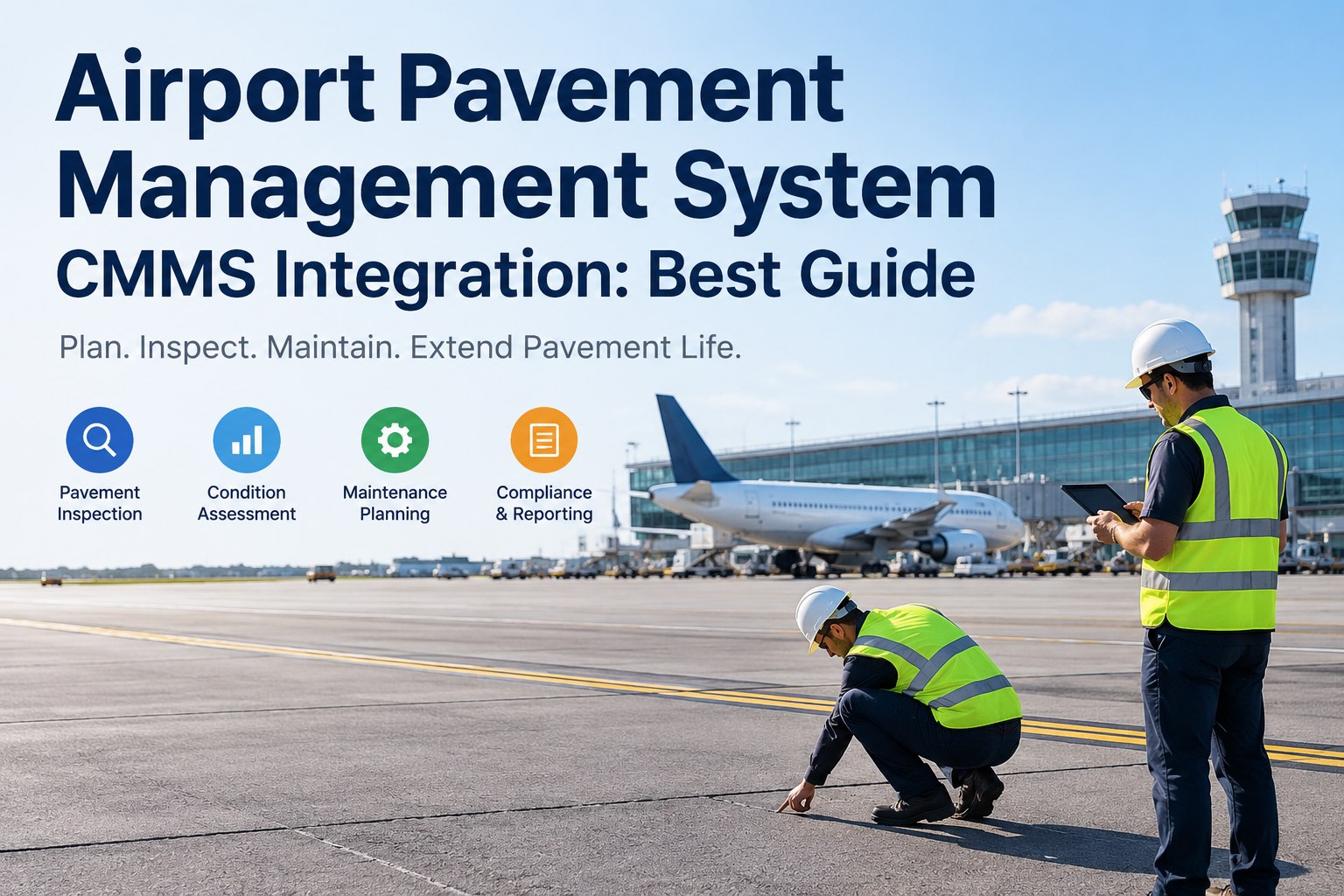
Airport pavement management has one of the best-documented condition-assessment methods of any asset class an airport owns — a PCI survey following ASTM D5340 gives every runway, taxiway and apron section a number from 0 to 100, repeated on a set
Read More
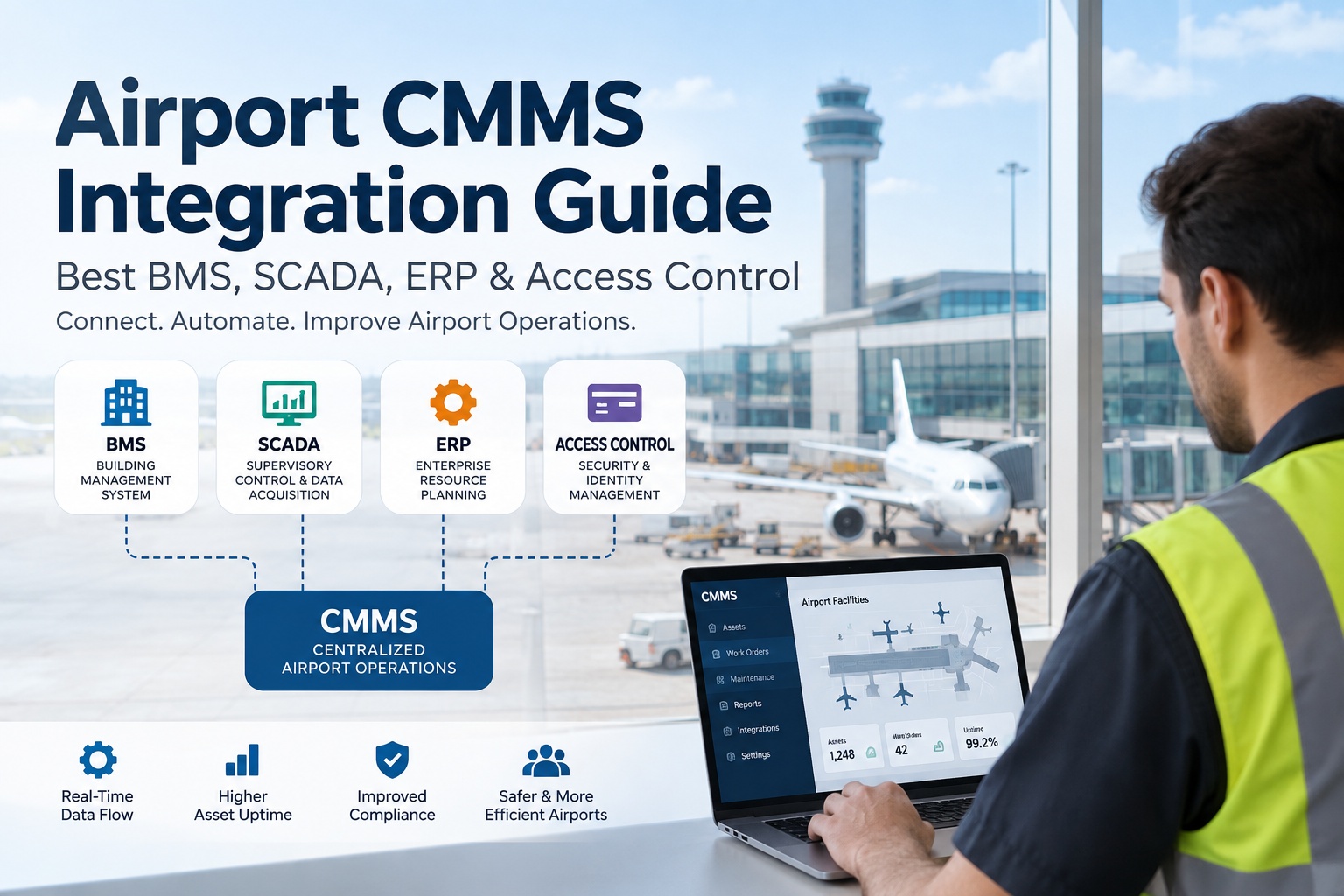
Every airport maintenance team eventually hits the same wall: the BMS knows a chiller tripped, the SCADA system knows a baggage belt jammed, the ERP knows whether the replacement part is even in stock, and the access control system knows which con
Read More
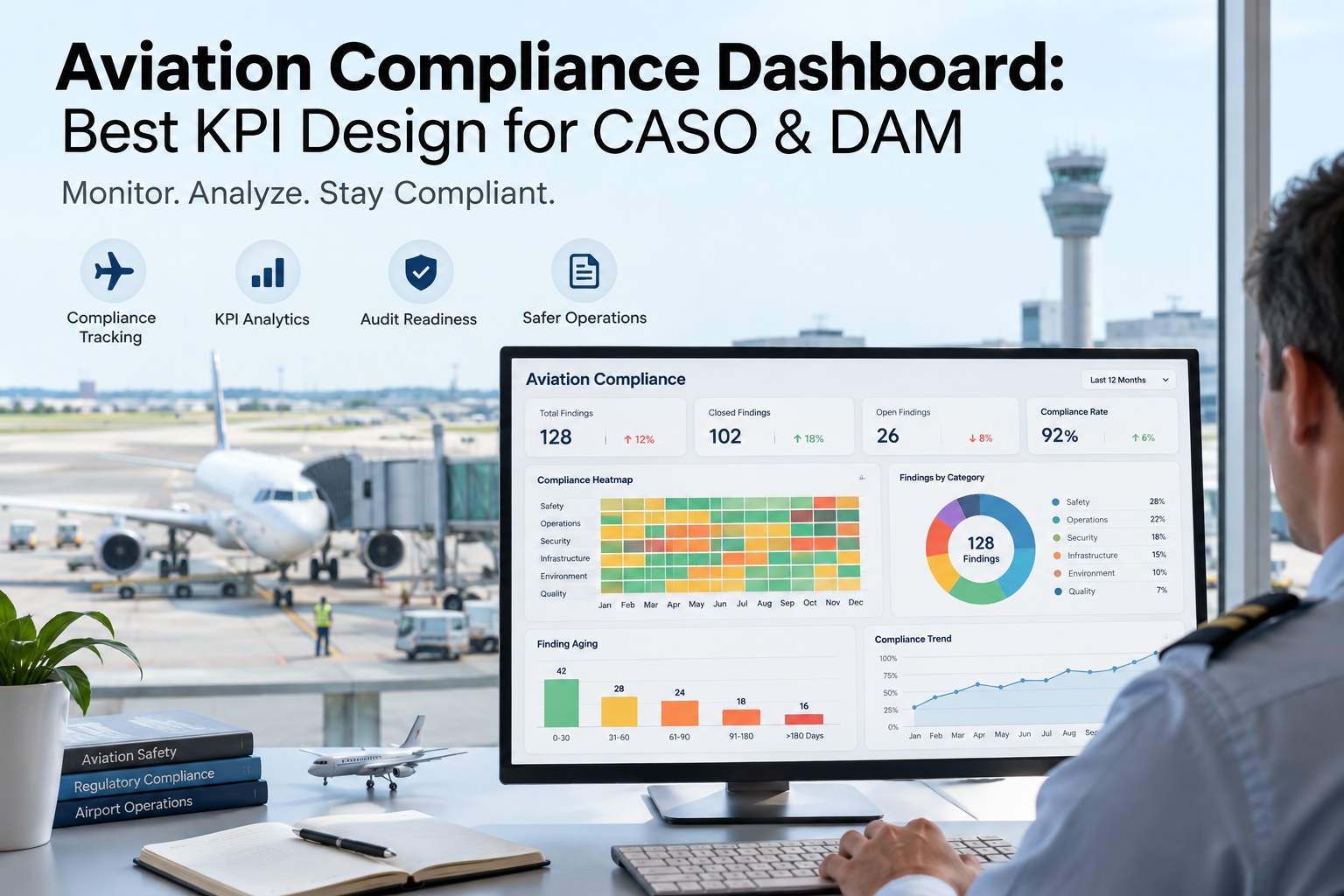
Whether your title is Compliance & Air Safety Officer or Duty/Designated Airport Manager, the job comes down to the same question every regulator eventually asks: show me your open findings, how long they've been open, and what you've done abo
Read More
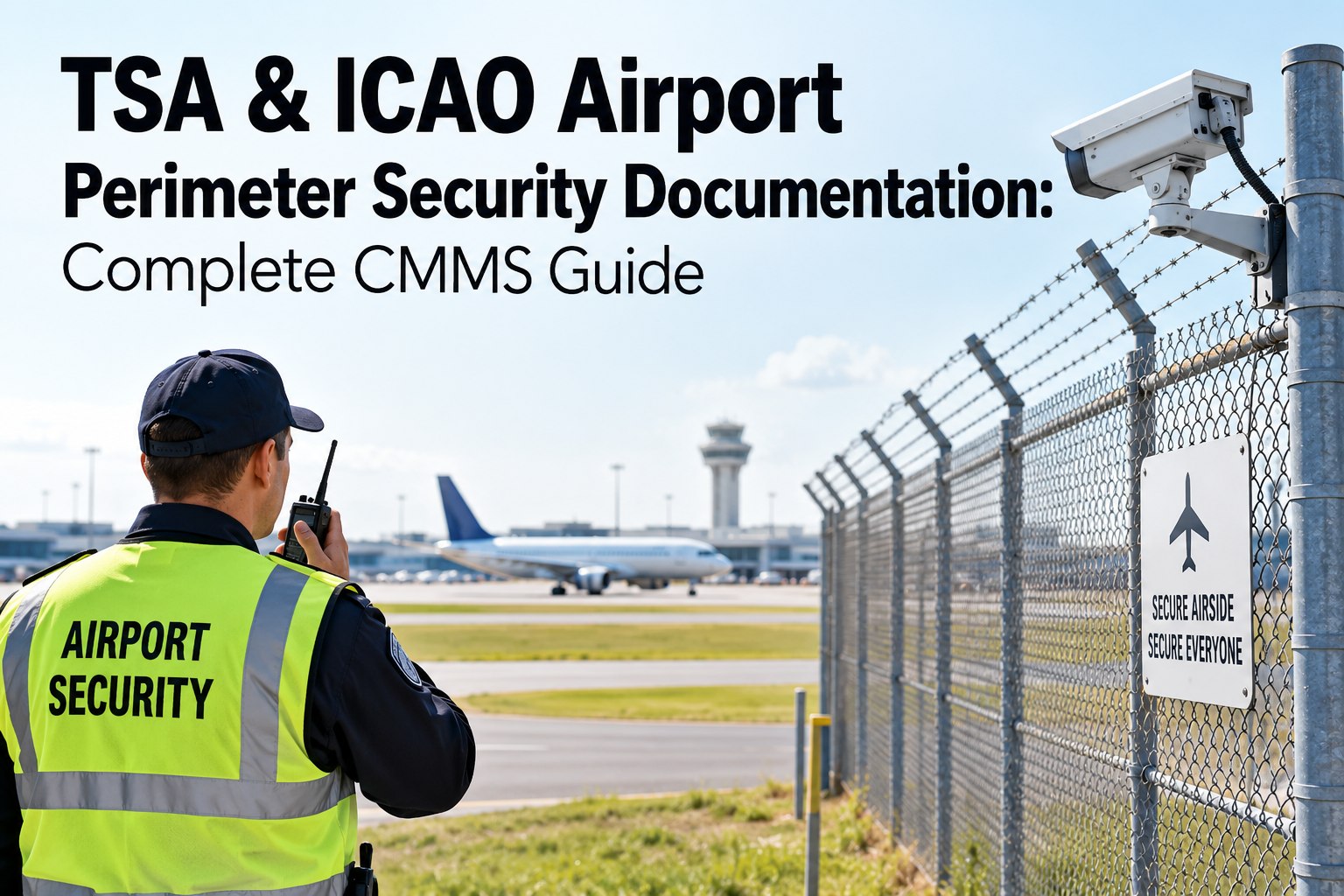
TSA 49 CFR Part 1542 doesn't accept a verbal assurance that your perimeter fence was checked last Tuesday — it requires airports to maintain a documented Airport Security Program with inspection records an inspector can actually pull. Civil penalt
Read More
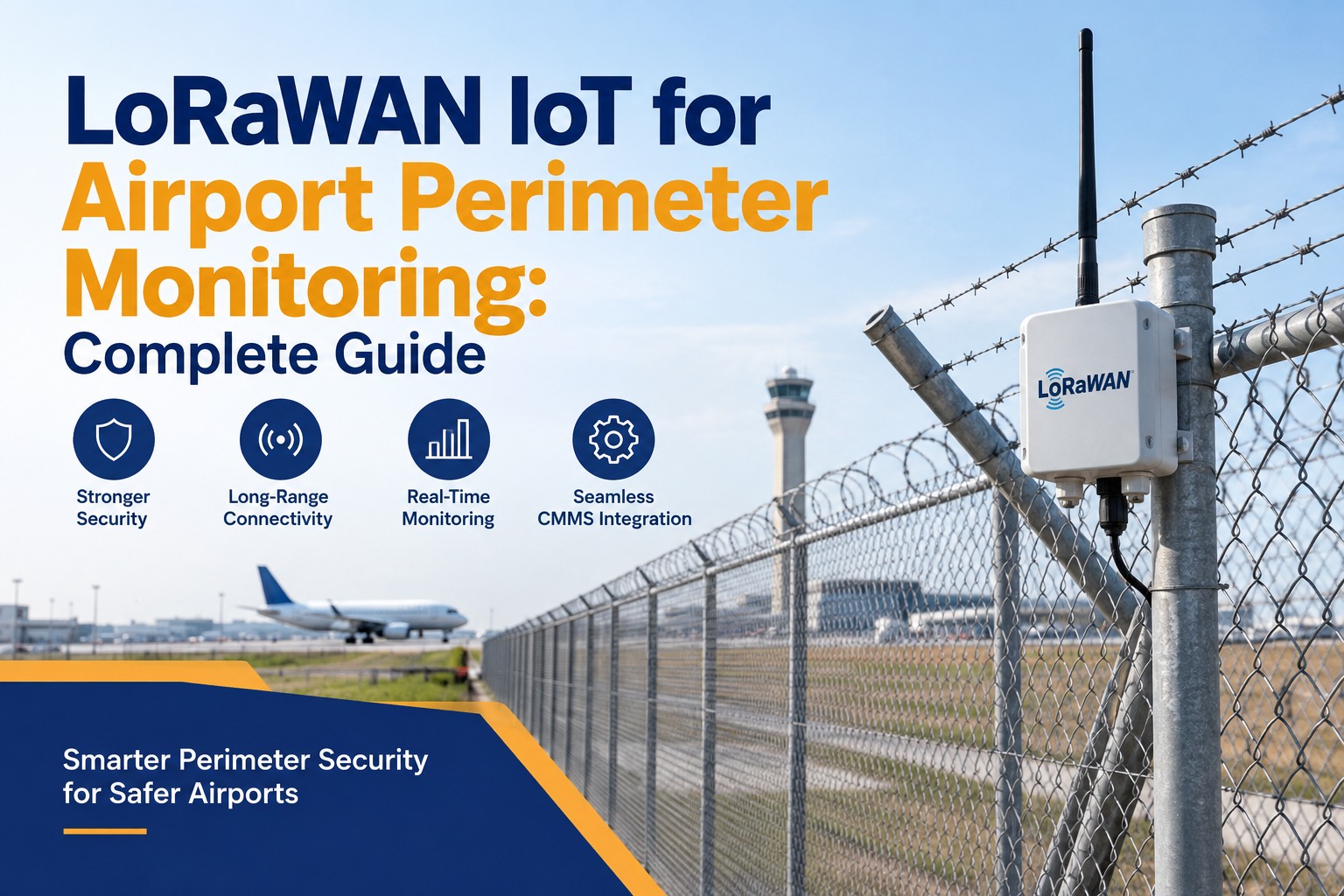
An airport perimeter is 20–40 km of fence, gates and remote airside points where power & cellular don't reach. LoRaWAN changes the arithmetic: one sub-GHz gateway covers the whole fence line, sensors run 5–10 years on a single battery, and eve
Read More
Every aviation MRO leader has been asked the question: "What's our reliability?" And every one of them has answered with a shrug, a spreadsheet, or a metric borrowed from another department. The problem isn't that MROs don't have data — it's that

Read More
An airport digital twin is the industry's most-hyped 2026 investment — a virtual replica of runways, terminals, jet bridges, baggage systems and airside vehicles, running in parallel with the real thing. The problem: a twin without live CMMS data
Read More
Every airport maintenance director inherits a backlog. Two thousand open work orders, some tagged P1, most not tagged at all, oldest one from 14 months ago, and no one still on the team remembers what it was for. Research shows airports running a

Read More
At 06:00, the night maintenance supervisor at a mid-hub airport hands a scuffed A4 logbook to the day shift lead. Three open defects on the runway lighting circuit are noted in shorthand; a jet-bridge fault is a sticky note; a contractor arrival a
Read More
An airport perimeter is a 20–40 km fence line packed with fiber-optic cable, radar heads, thermal cameras, buried seismic sensors and access gates — hundreds of physical assets, each one a maintenance job waiting to happen. When a sensor drifts, a

Read More
When finance asks what maintenance spent on a specific asset last quarter, there are only two possible answers: a number pulled instantly from a system that tracks every part against every work order, or a promise to "get back to you" after someon
Read More
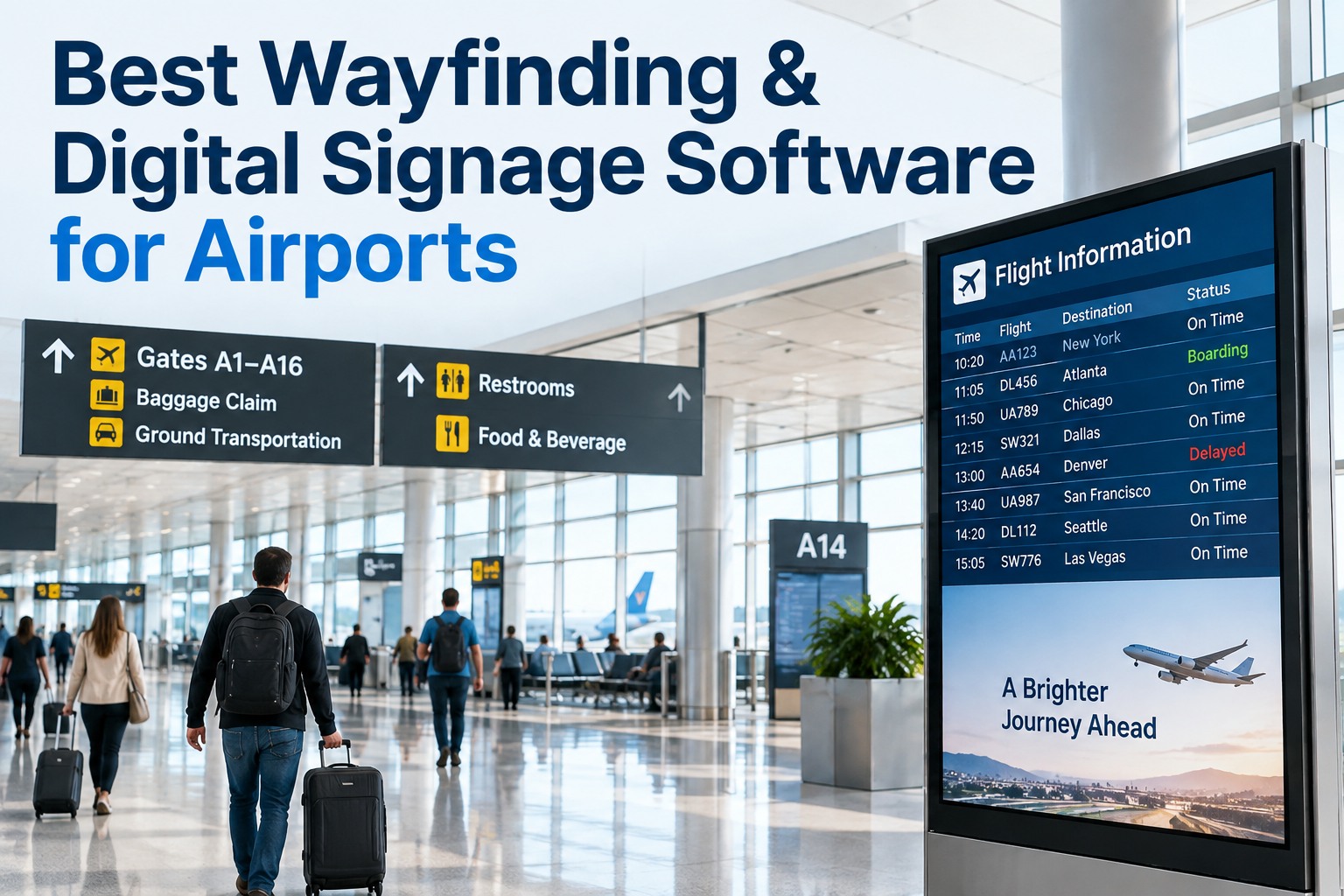
A gate change flashes on the app three minutes before boarding closes, and the FIDS board above the gate still shows the old flight number. The passenger looks up, then down at their phone, then starts walking the wrong way. Multiply that moment b

Read More
A voice alarm system that fails during an actual emergency isn't found out during the emergency — it's found out three months earlier at a weekly test that got skipped, or a standby amplifier that never actually kicked in during a fault simulation
Read More
Ground vehicles idle at gates, APUs run continuously, de-icing fluid drifts across the apron — and somewhere on the airport's compliance calendar, an air quality report is due that's supposed to account for all of it using last quarter's estimates
Read More
Every airport maintenance program has a slide that says "94% work order completion rate" — and that number is almost always meaningless, because it counts a work order as "complete" the moment a technician clicks a button, regardless of whether th
Read More
A jet bridge fails, the flight sits 40 minutes past pushback, and by Monday morning three different numbers are floating around for what that delay actually cost — one from ops, one from finance, one from the airline's invoice. None of them agree,
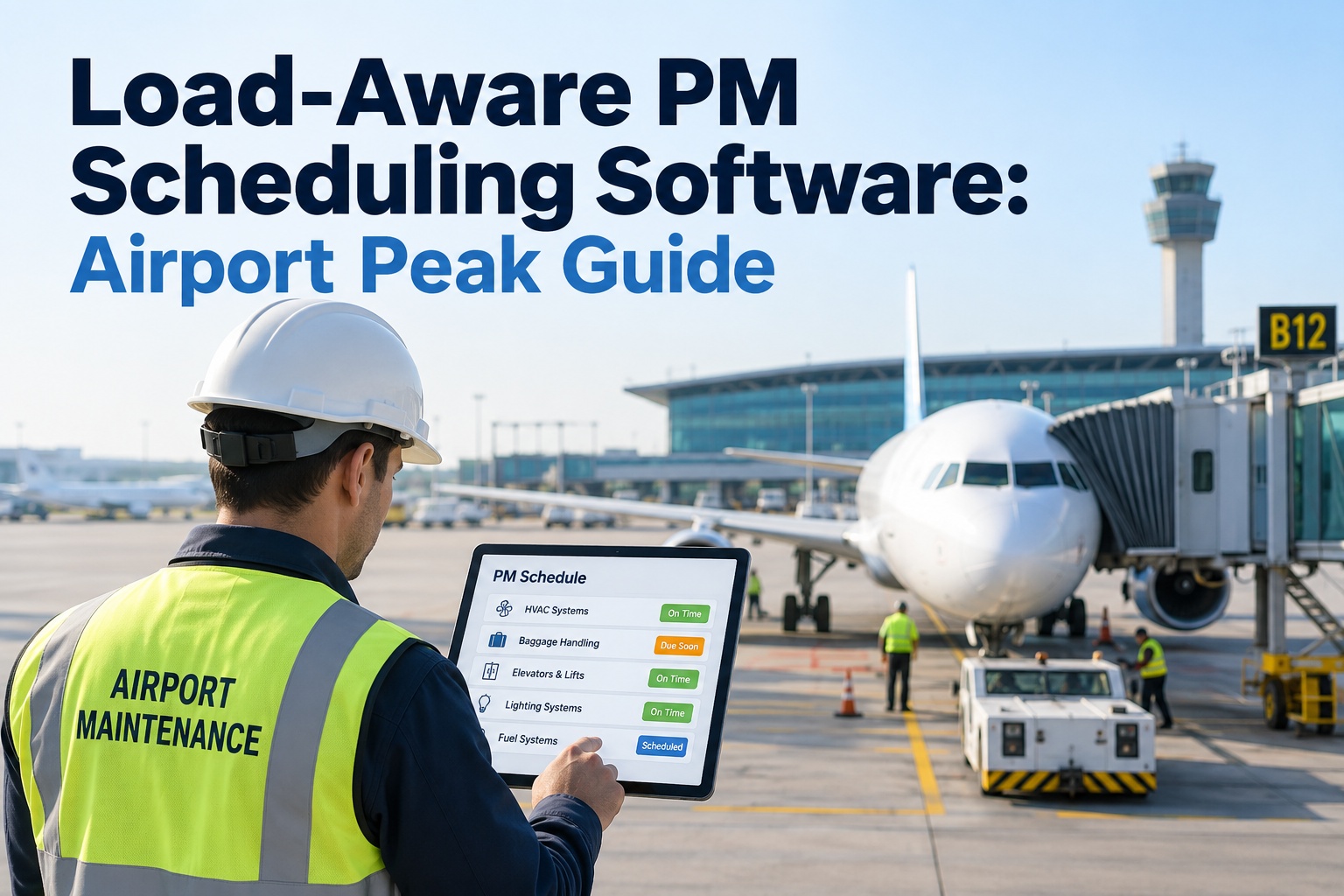
Read More
It's 5 PM on a Friday, three widebodies are on approach, and the jet bridge at Gate C14 just went into scheduled preventive maintenance — because the calendar said so, not because anyone checked what the terminal actually looked like today. This i
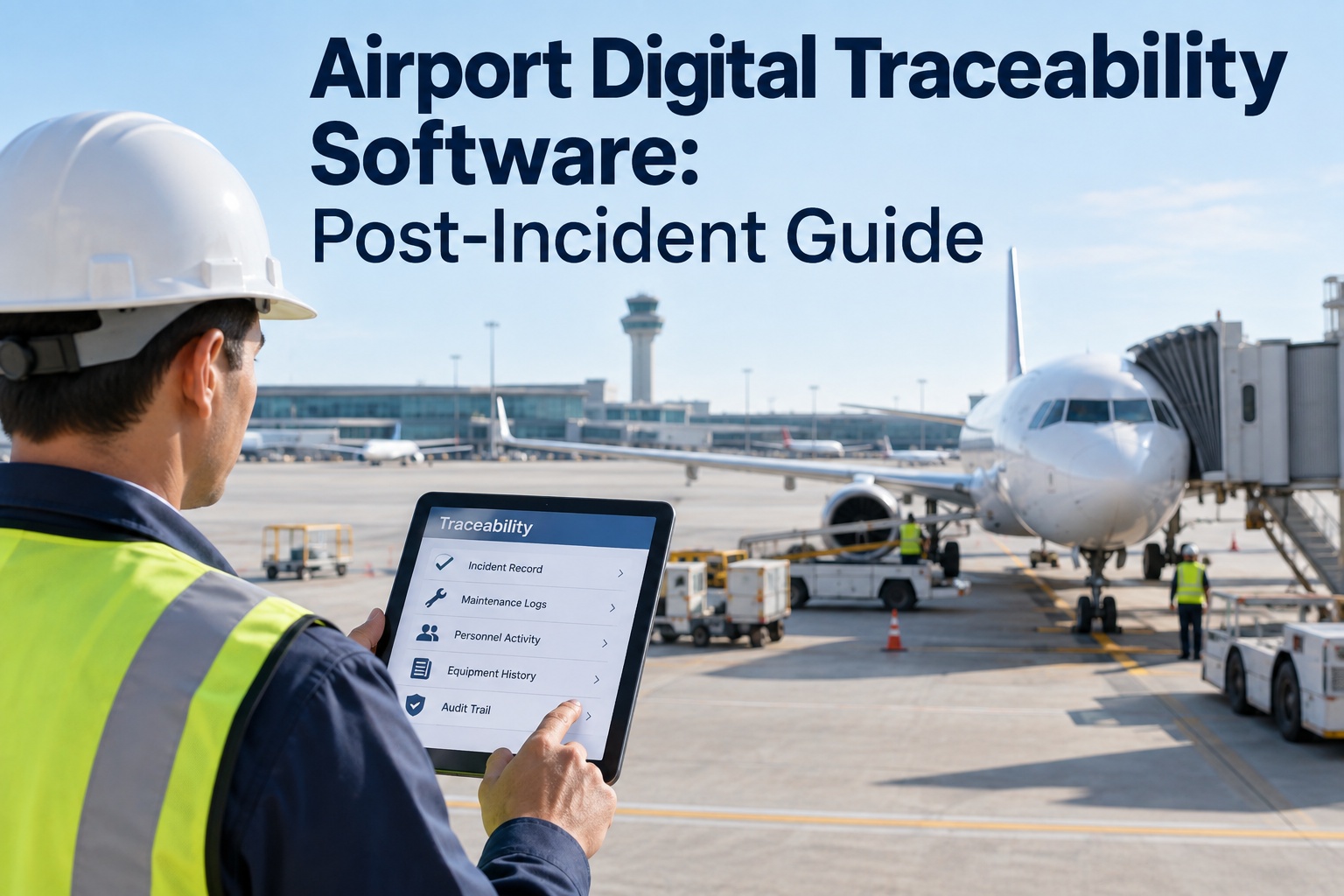
Read More
An FAA inspector walks into your maintenance office two days after an incident and asks a simple question: show me the repair history, the technician certifications, and the parts used on this asset for the last twelve months. If that answer lives
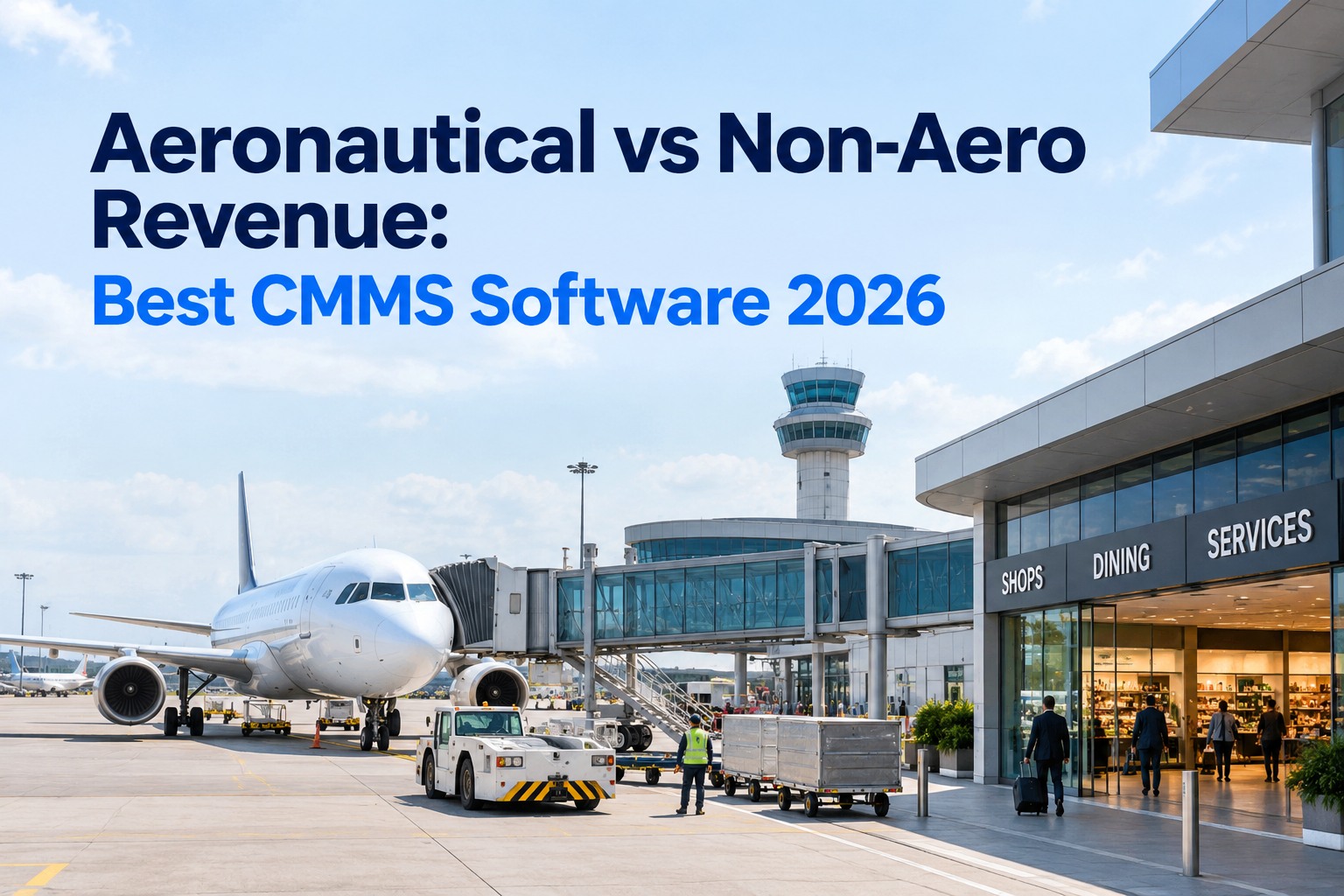
Read More
An airport runs two businesses under one roof. One bills airlines for using the runway, gates, and airspace — aeronautical revenue, still the larger share but shrinking as a percentage. The other sells parking, retail, food, and advertising to pas

Read More
Most of the world's big airports are stuck. They run maintenance on CMMS platforms bought fifteen or twenty years ago — systems built before mobile, before IoT sensors, before AI could read a vibration trace and predict a bearing failure. Ripping
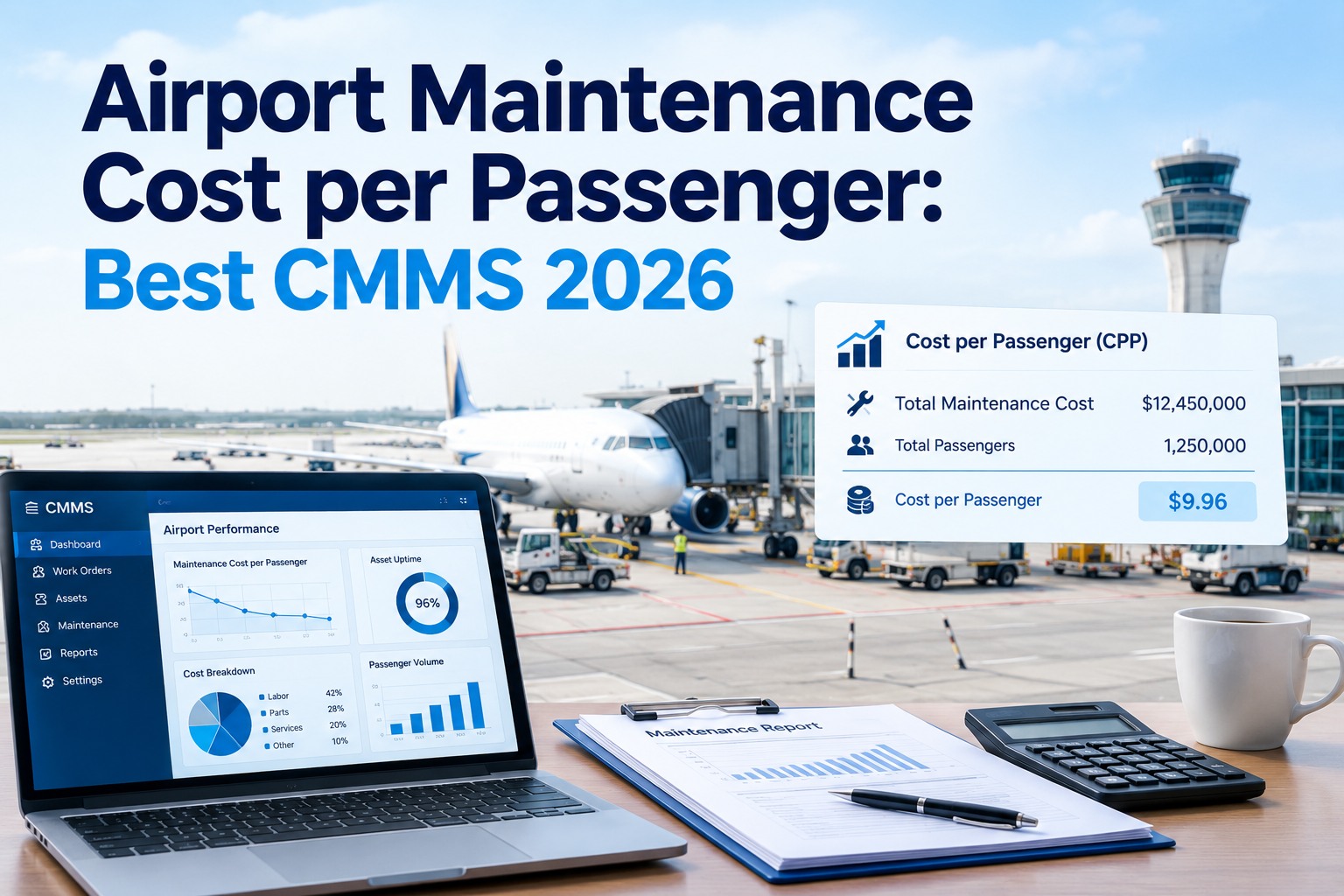
Read More
Cost per passenger (CPP) is the one maintenance metric an airport CFO, a board, and a benchmarking body all understand at a glance — total maintenance spend divided by passengers handled. It's also the metric most airports quote and can't defend.
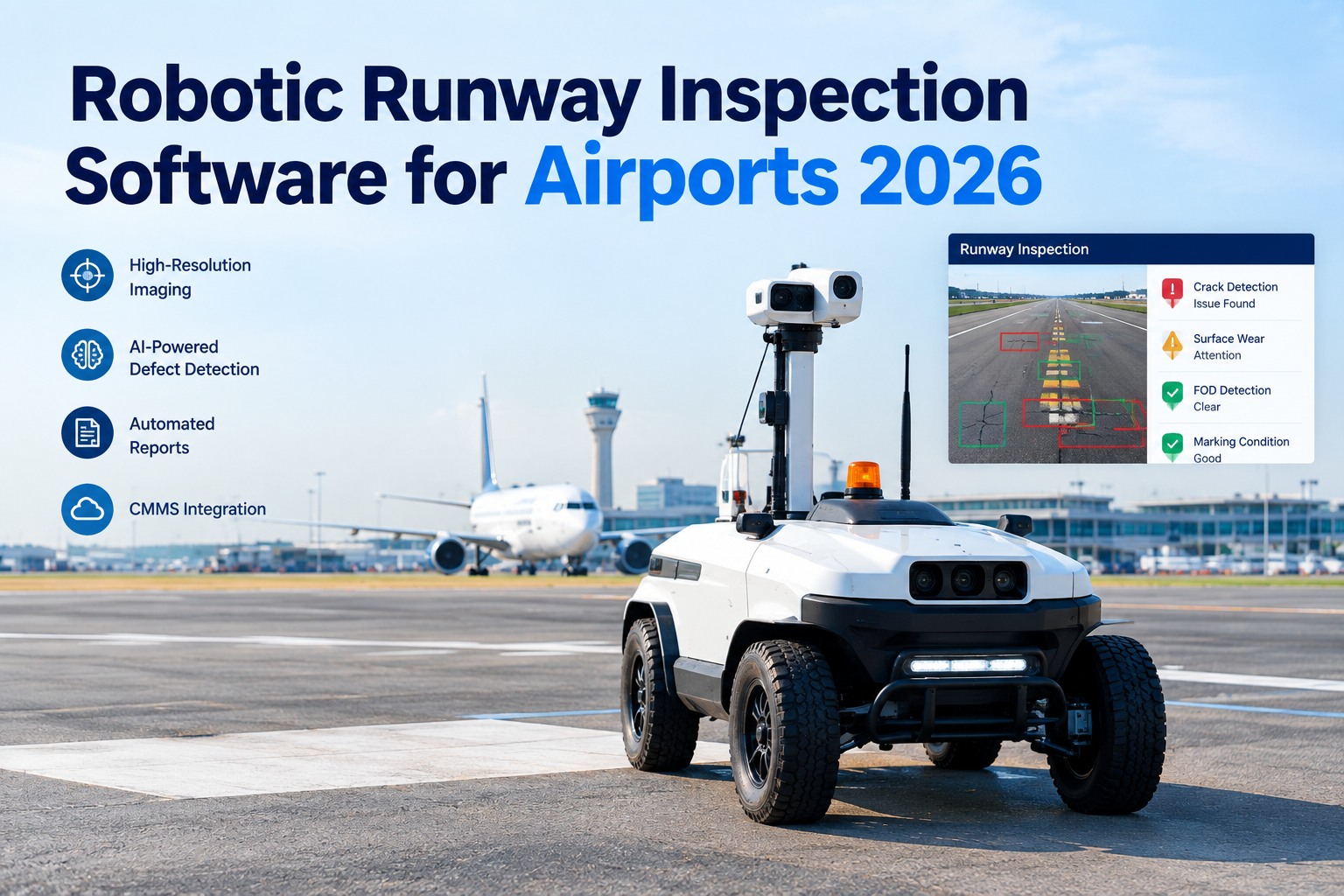
Read More
A single undetected bolt on a runway can destroy a jet engine in milliseconds — and foreign object debris costs the aviation industry billions every year. That is why airports are moving from twice-daily FOD walks to autonomous rovers that scan a

Read More
In 2023, thousands of aircraft engine parts entered the global fleet with forged certificates from a distributor that turned out to be selling paperwork as much as hardware. The AOG Technics scandal was the wake-up call the industry had been putti

Read More
Airport parking is one of the highest-margin revenue lines a hub operates — and one of the most fragile, because every dollar of it passes through a piece of equipment that can fail. A stuck exit gate, a dead payment terminal, an ANPR camera that
Read More
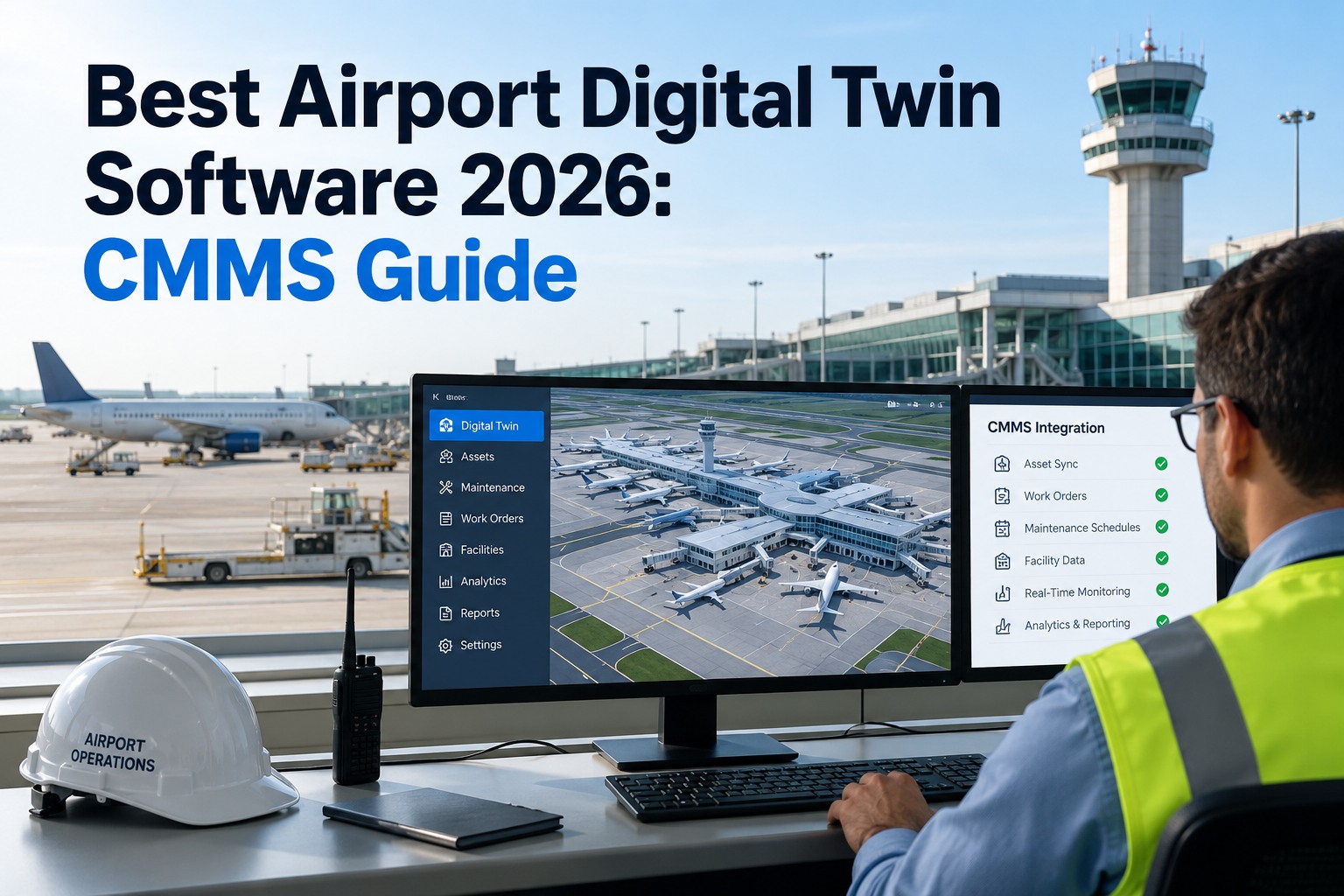
"Digital twin" is the most oversold phrase in airport technology — and underneath the hype sits a real, unglamorous truth: a twin is only as good as the maintenance data feeding it, and most airport asset registers are quietly wrong. The register
Read More
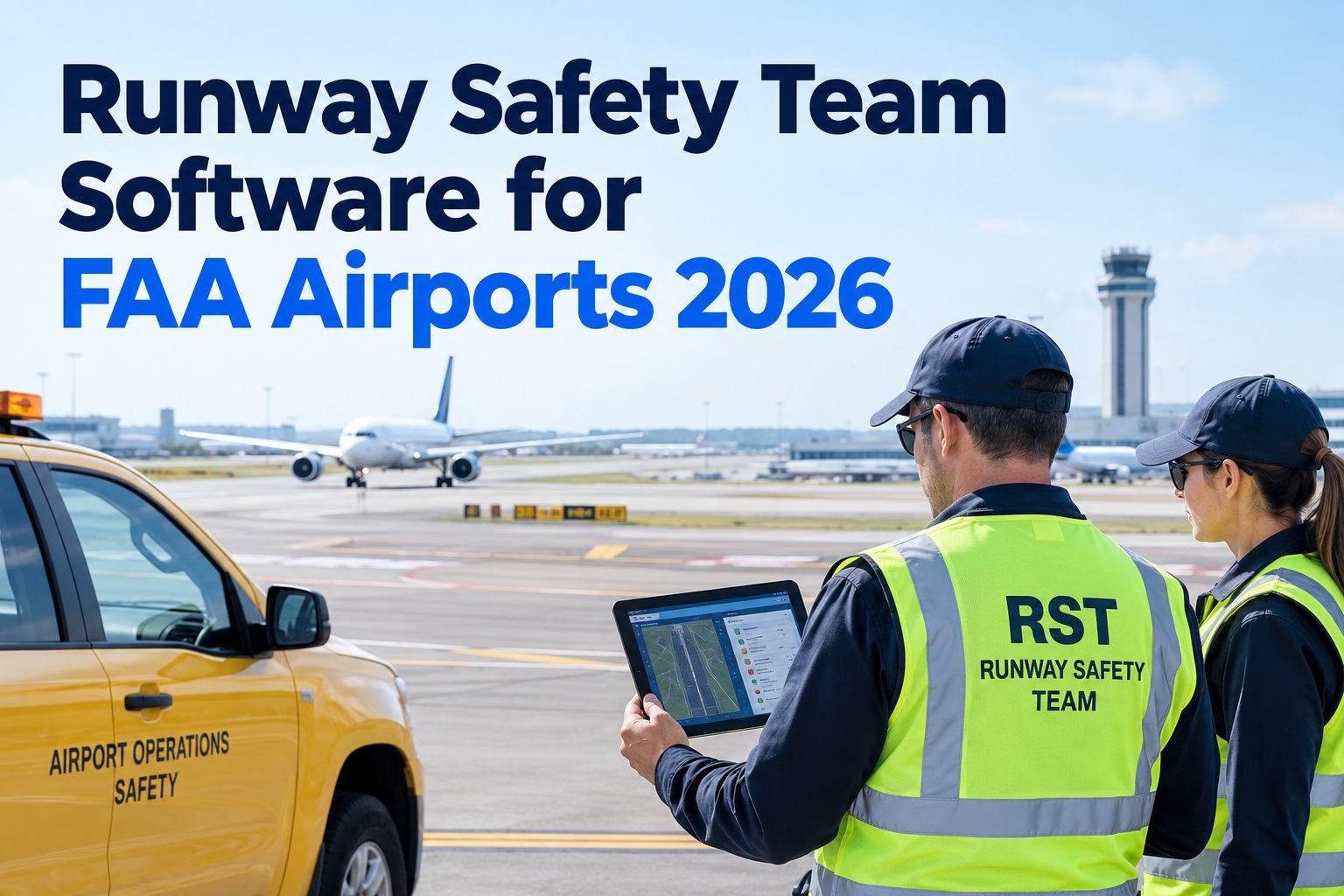
A Runway Safety Team is only as strong as the action items it actually closes. The meeting is the easy part — what moves the incursion numbers is the disciplined loop behind it: hazards reported, actions assigned with owners and dates, closure ver
Read More
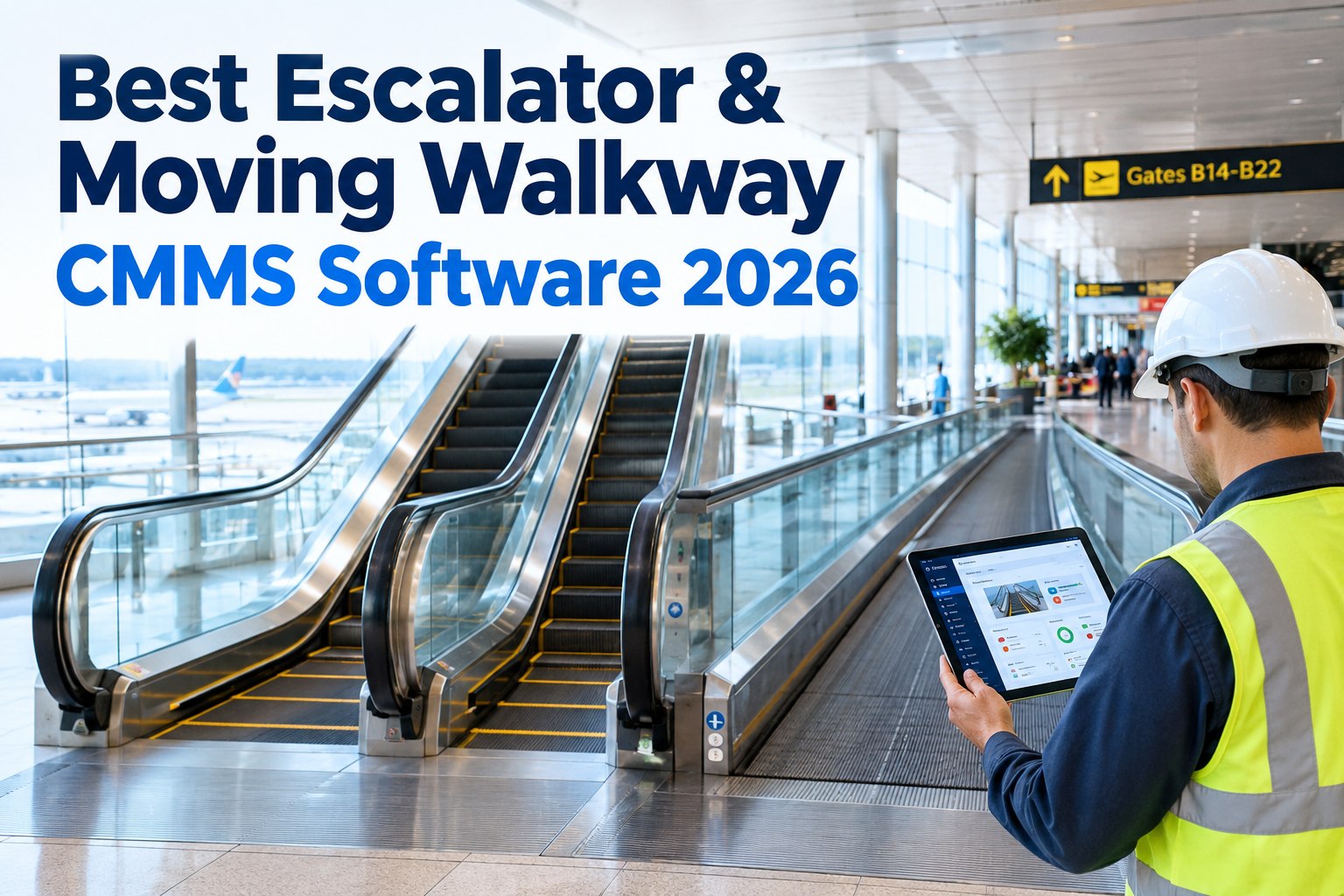
Ask an airport facilities director how many escalators they run and you'll get an exact number. Ask how many were running yesterday at 3 p.m. and the answer goes vague. That gap is the whole problem. Most teams still find out a unit stopped the wa

Read More
Most airport technology programs don't fail — they stall. A drone flies a demo, a vibration sensor lights a dashboard, an AR headset wows a conference room, and then none of it changes what a technician does on Monday. That's pilot purgatory, and
Read More
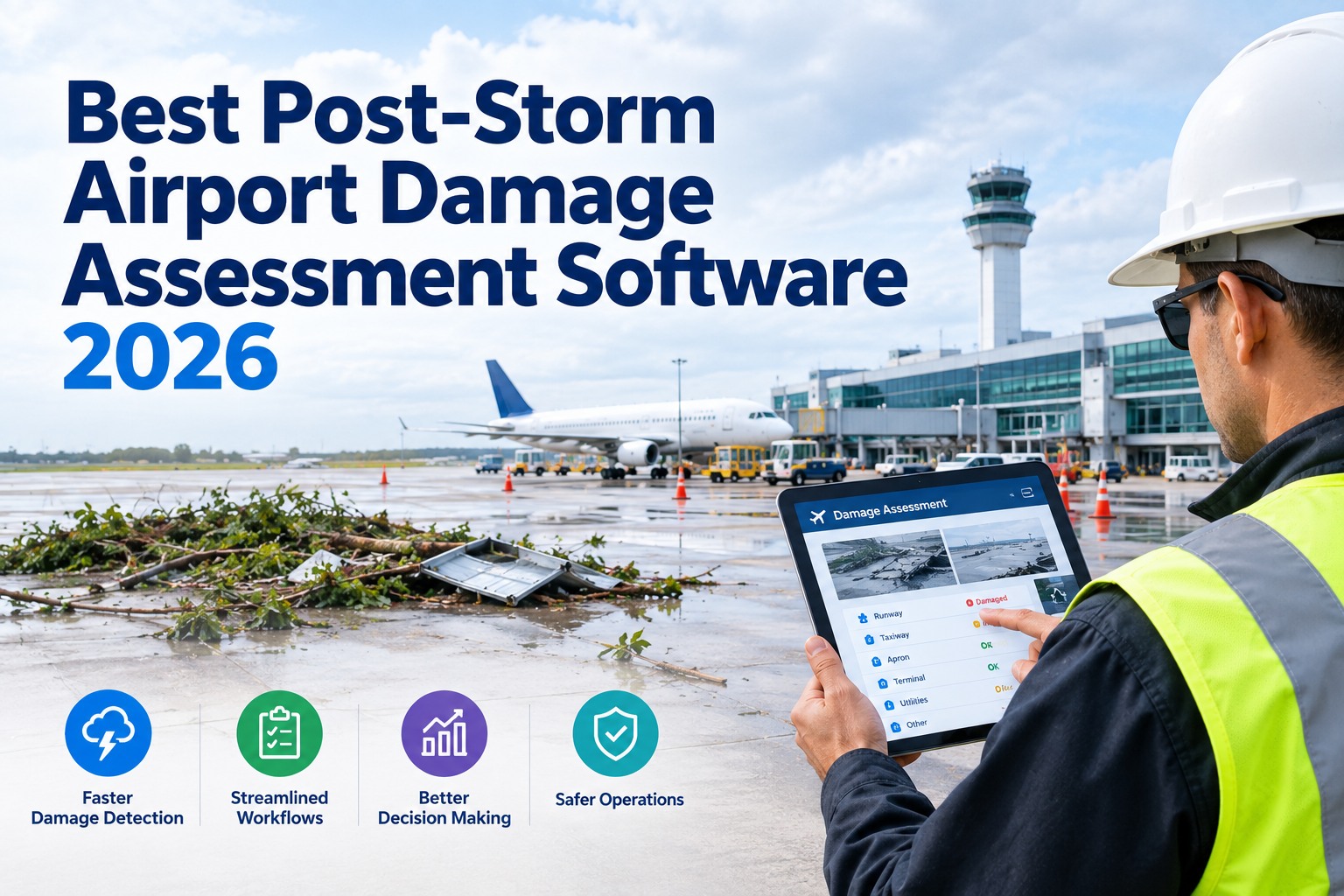
When a storm clears, the clock starts on two races at once: reopening the airfield safely, and building a damage record solid enough to survive an insurance adjuster and a FEMA reviewer. The airports that win both races don't have more crews — the
Read More
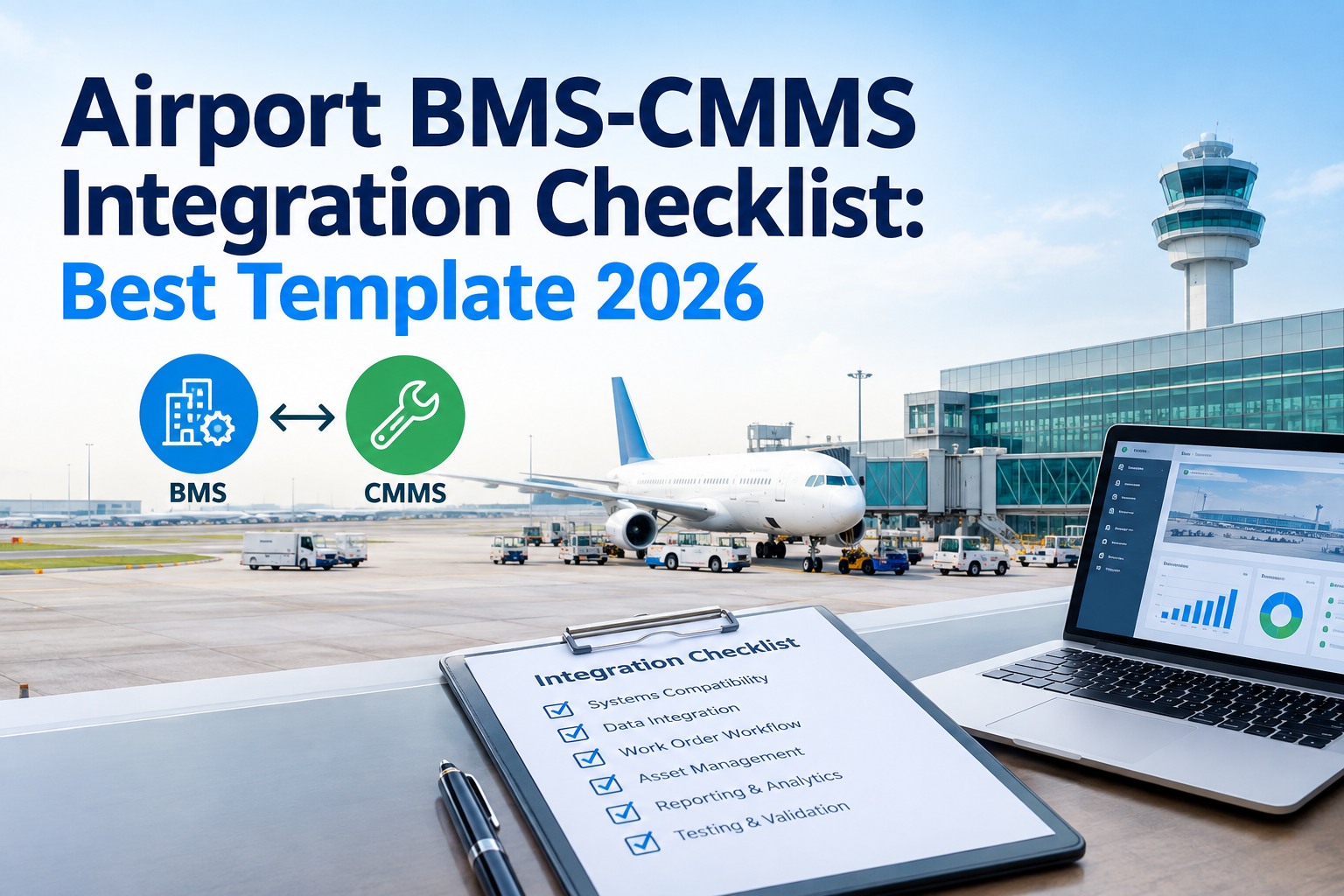
A BMS-CMMS integration works only when it's planned as a program, not a wiring job — and an airport is where a rushed integration quietly breaks the building automation the terminal already depends on. This guide is a free 2026 airport BMS-CMMS in
Read More
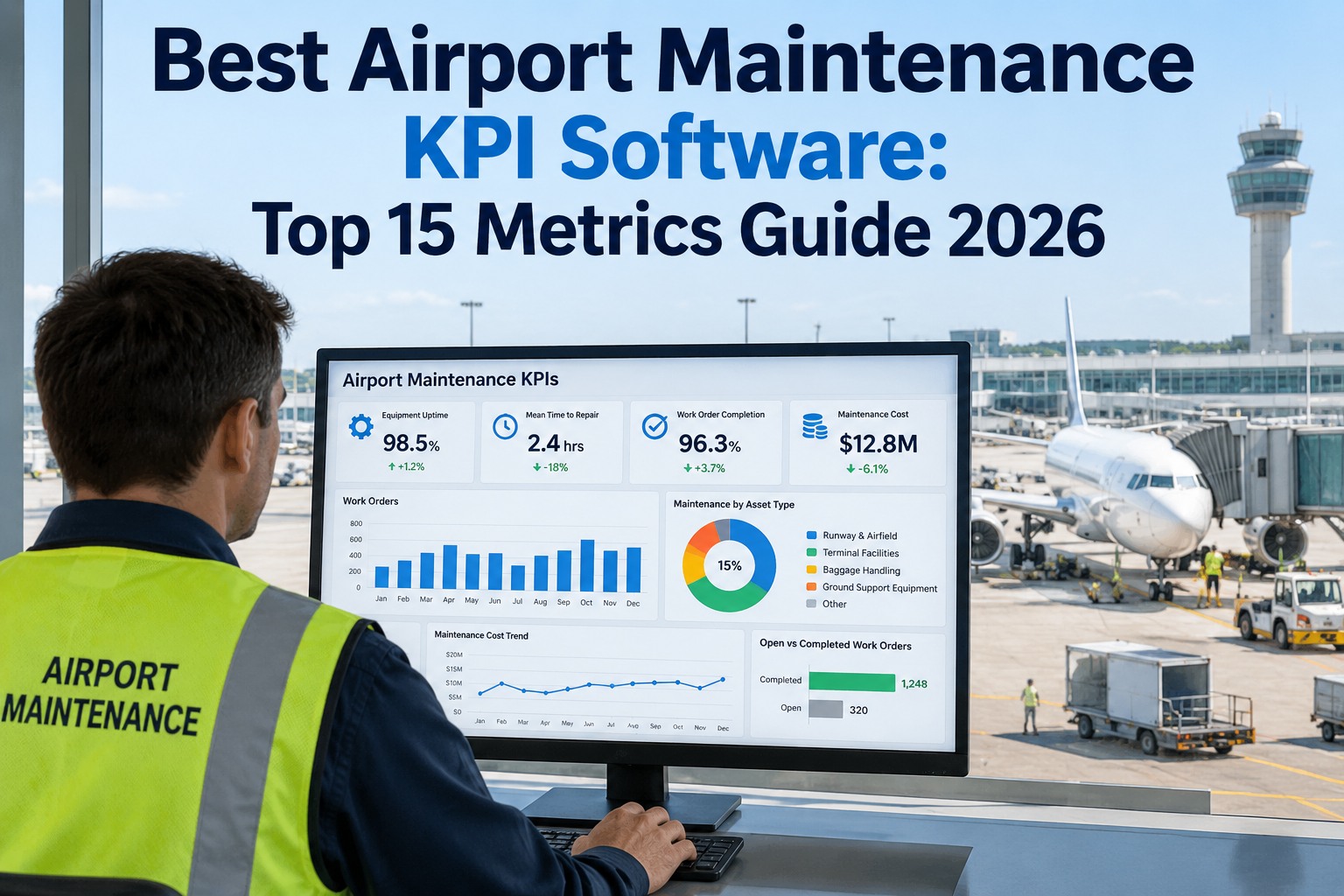
A maintenance KPI only earns its place when it changes how the operation runs. Most airport dashboards are the opposite — dozens of numbers nobody acts on, refreshed monthly, disconnected from the work happening on the ramp. The fix isn't more met

Read More
An airport digital twin is a spectacular thing to demo — a live 3D model of terminals, runways, jet bridges, and baggage systems, pulsing with real-time sensor data. It's also where a lot of expensive programs quietly stall, because a twin that pr
Read More
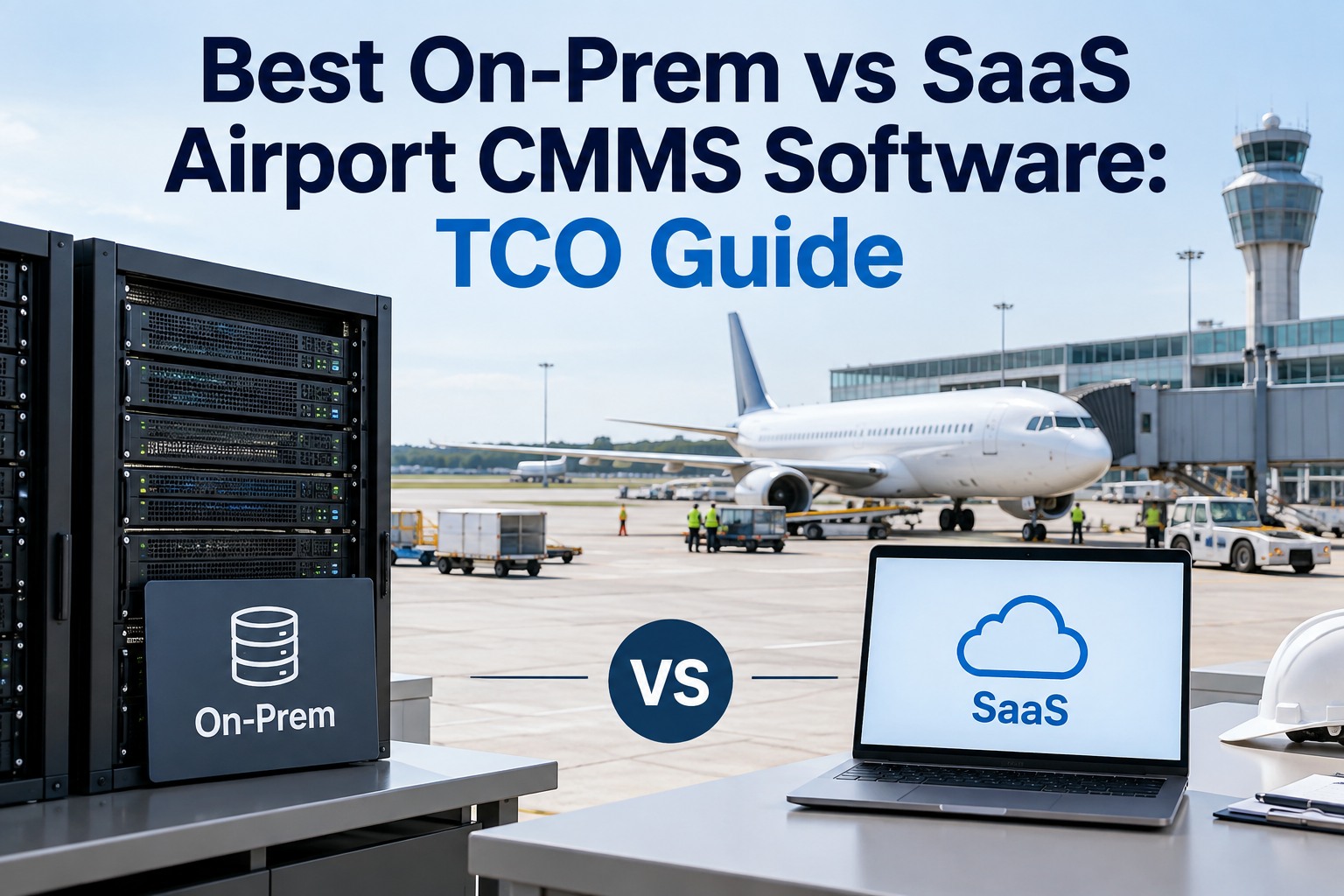
For an airport CIO, the on-prem vs SaaS CMMS decision isn't a preference — it's a five-year commitment that either holds up in a budget defence or falls apart under one question from the CFO. The two models look close on the sticker price and dive

Read More
An airport Shared Operating Picture (SOP) is the single, live view that lets every department operations, airlines, ground handlers, security, and maintenance — work from the same facts at the same time. The airports that outperform on OTP and ASQ
Read More
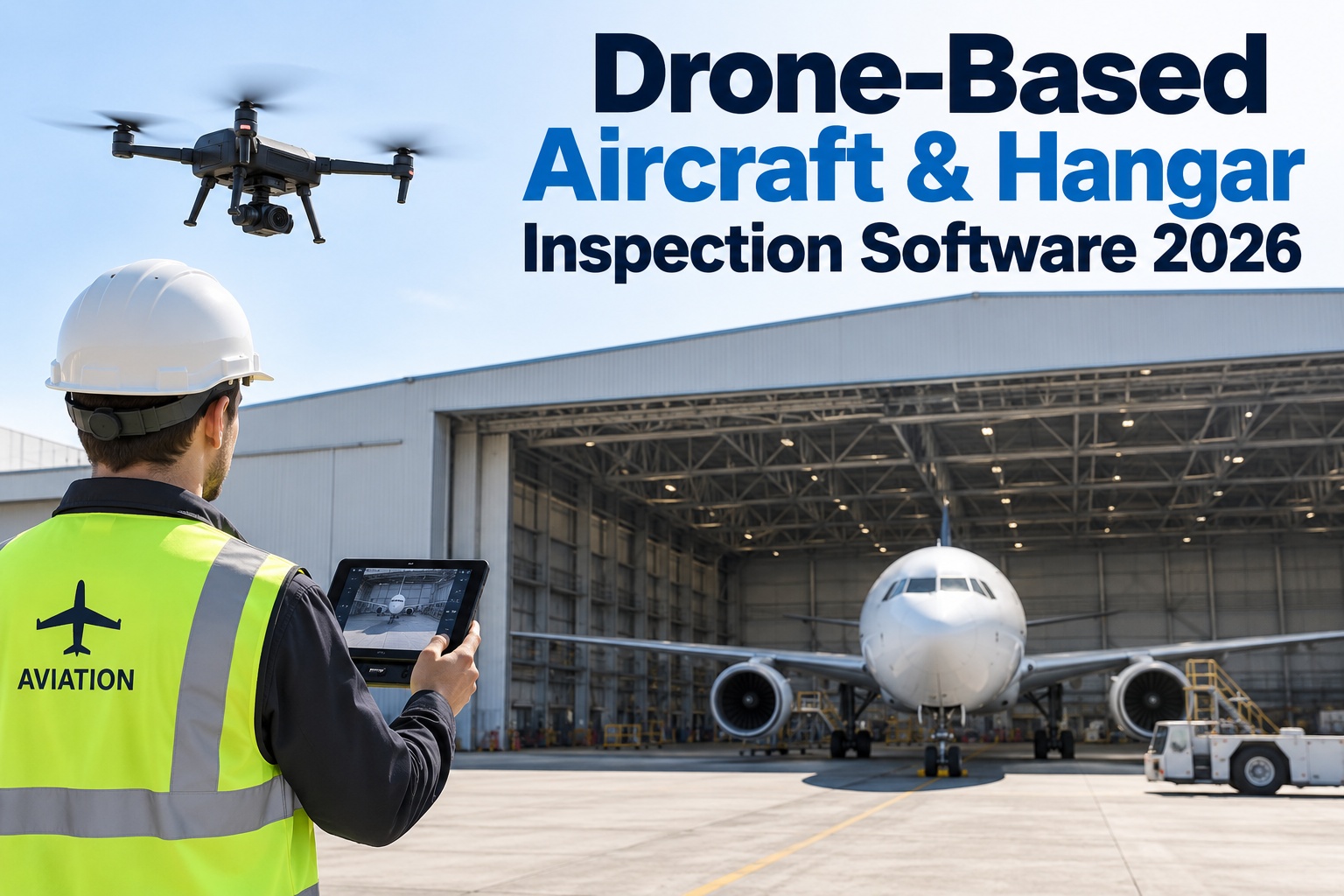
Manual aircraft and hangar inspections miss real defects — every recent study puts the gap in double digits — and they do it slowly, from ladders and scaffolds, under turnaround pressure. Drones changed the capture side: a narrow-body exterior tha

Read More
The airport duty manager is the single point where the whole operation converges. Airlines, ground handlers, security, maintenance, and the operations center all flow through one person who has to hold full situational awareness, coordinate every
Read More
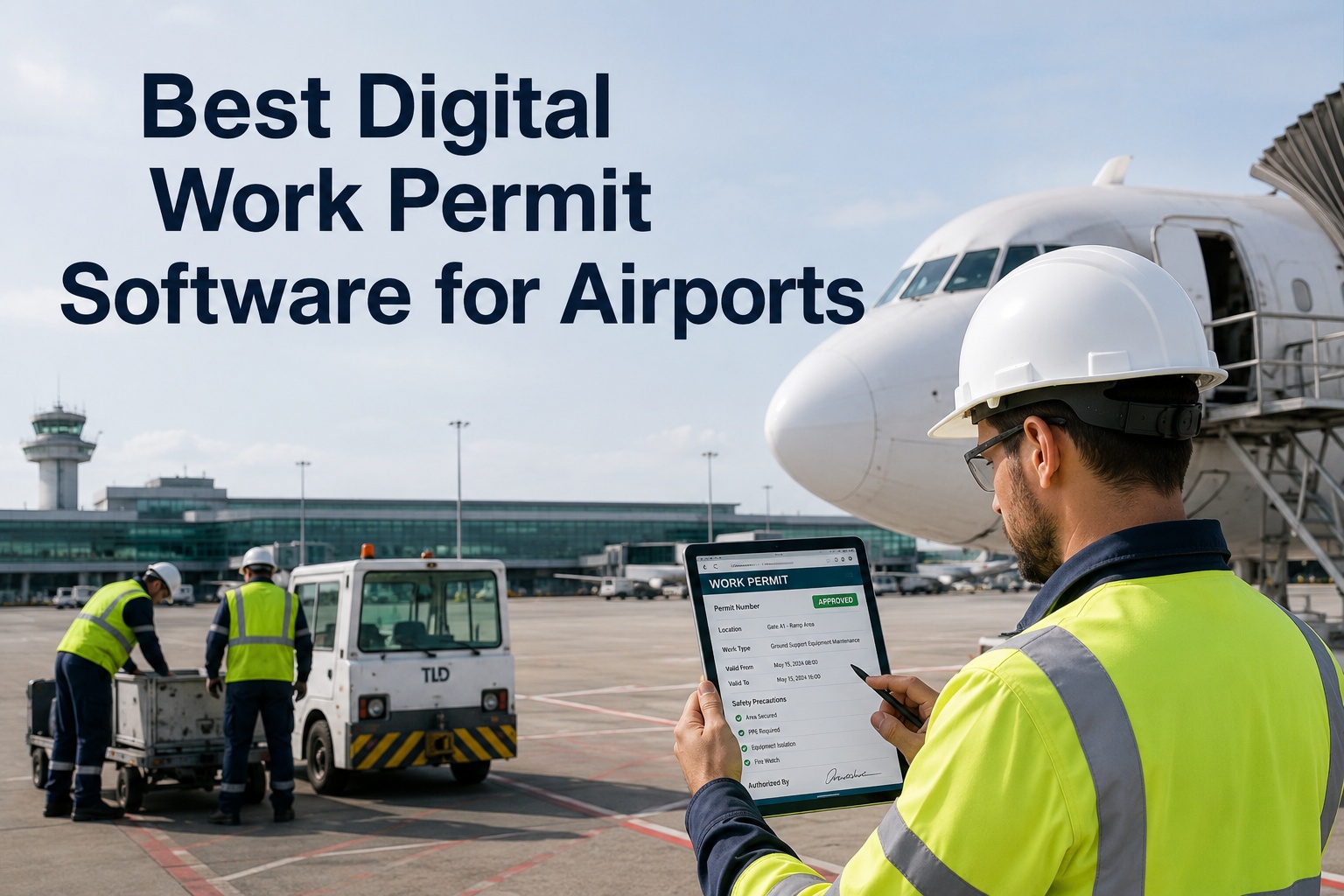
A hot-work permit that lives on a clipboard in the maintenance office is only as reliable as whoever remembers where the clipboard is, whether the fire watch actually signed it, and whether the gas test underneath it is still valid three hours lat
Read More
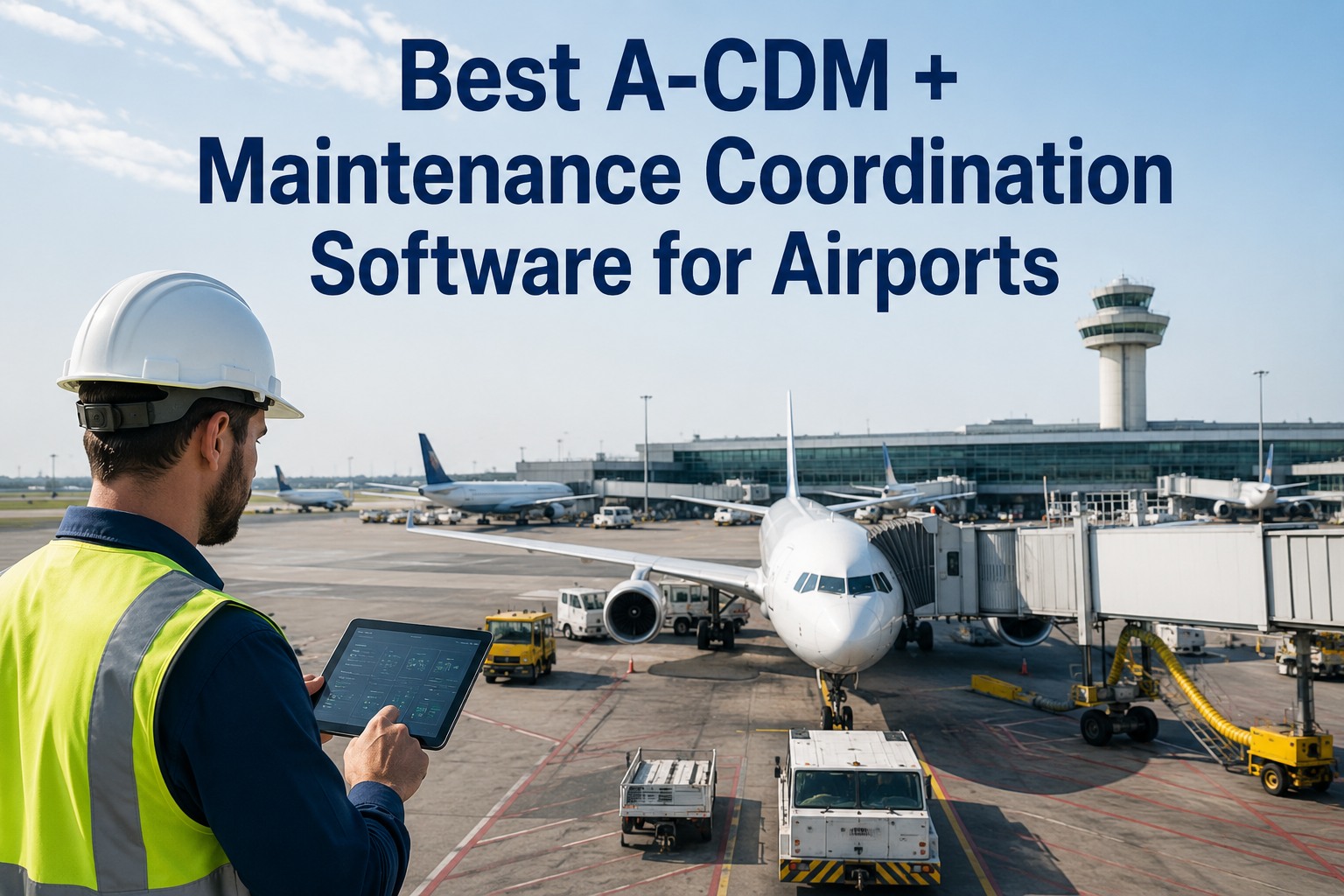
A-CDM works on the promise that every partner at the airport — airport authority, airline, ground handler, ATC, and network manager — is seeing the same 16-milestone view of every flight in real time. That works beautifully when the gate is ready,

Read More
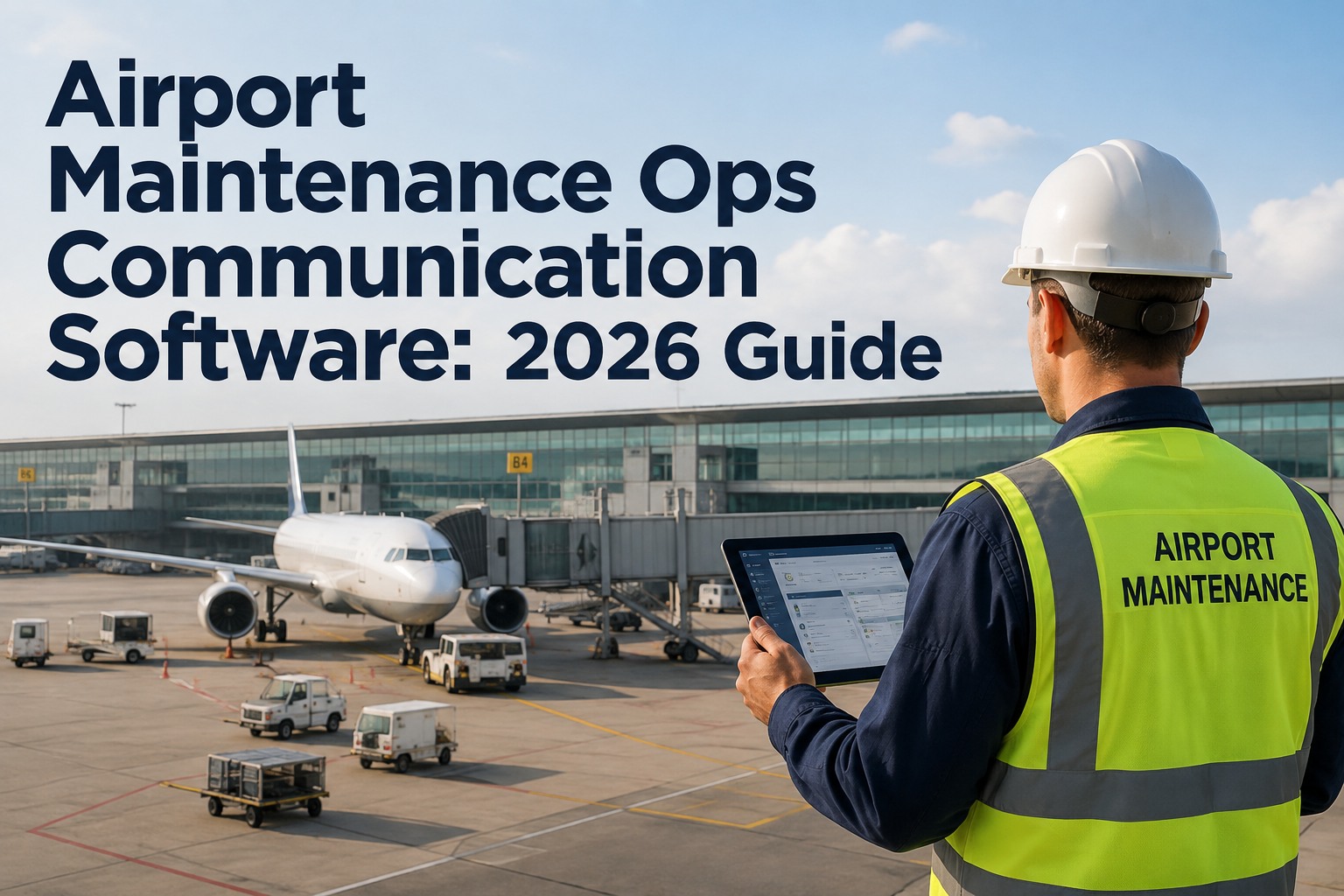
A fault the day shift saw at 9 a.m. and mentioned over the radio — but never logged is invisible to the night shift by 9 p.m. That's how airport reliability quietly leaks: not in dramatic failures, but in the handoff between shifts, where a
Read More
Shift changeovers take less than 5% of total operating time in a 24/7 airport but contribute to 40% of all operational incidents — and the FAA's Human Factors "Dirty Dozen" places poor communication at #1 on the list of maintenance error precursor

Read More
An airport's maintenance coverage often rests on a single sentence nobody wants to say out loud: "only Dave knows the baggage system." When Dave is on shift, the operation runs. When Dave is on vacation, out sick, or retires with twenty years of u
Read More
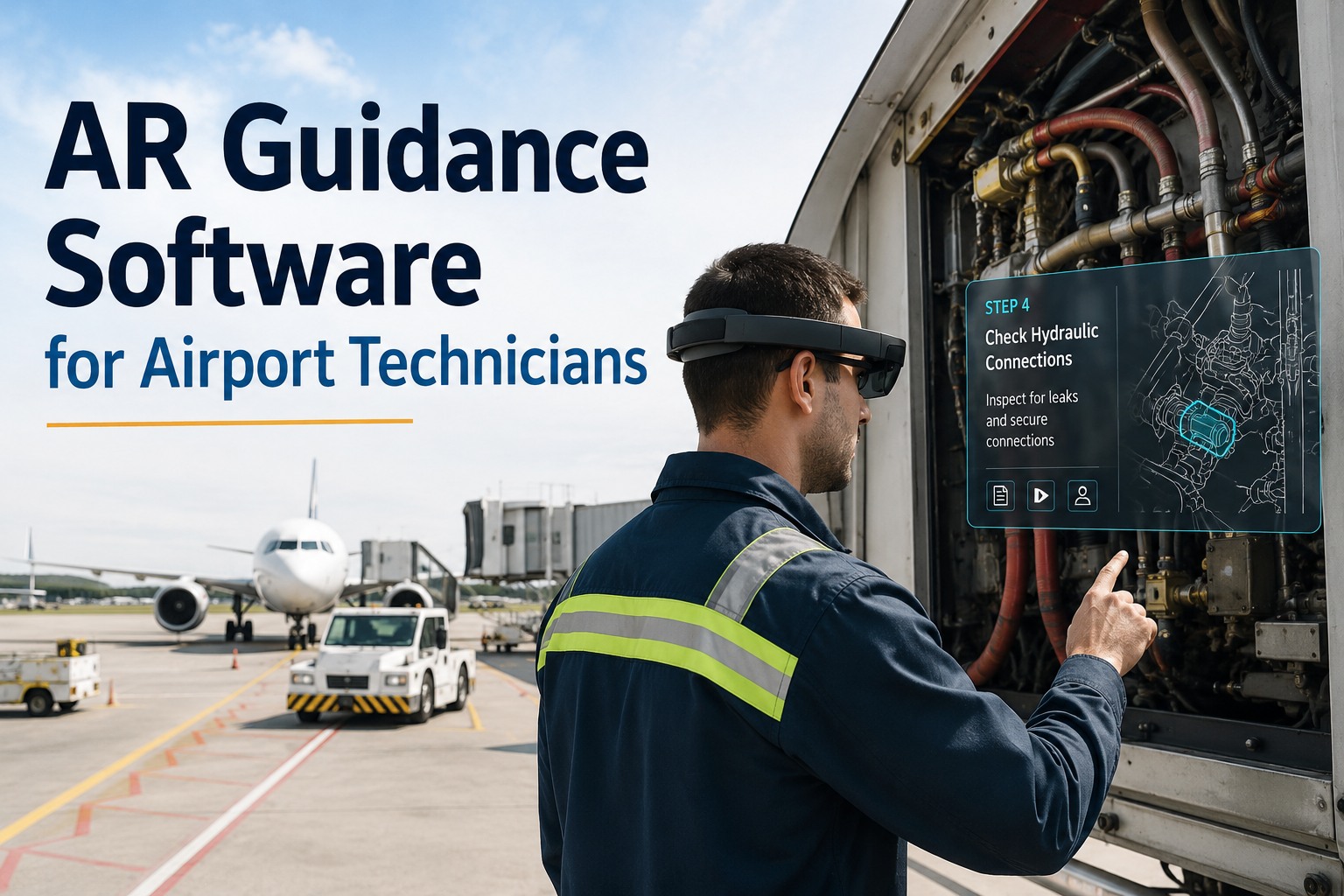
AR guidance for airport technicians has been oversold and under-delivered for years mostly by vendors demoing HoloLens headsets on scripted stage scenarios that never survive contact with a jet bridge in December. But the honest reality is t

Read More
Thermography turns the invisible into a work order infrared imaging picks up delaminations, adhesive disbonds, honeycomb water ingress, and Barely Visible Impact Damage (BVID) on composite structures that a visual inspection walks straight past, a
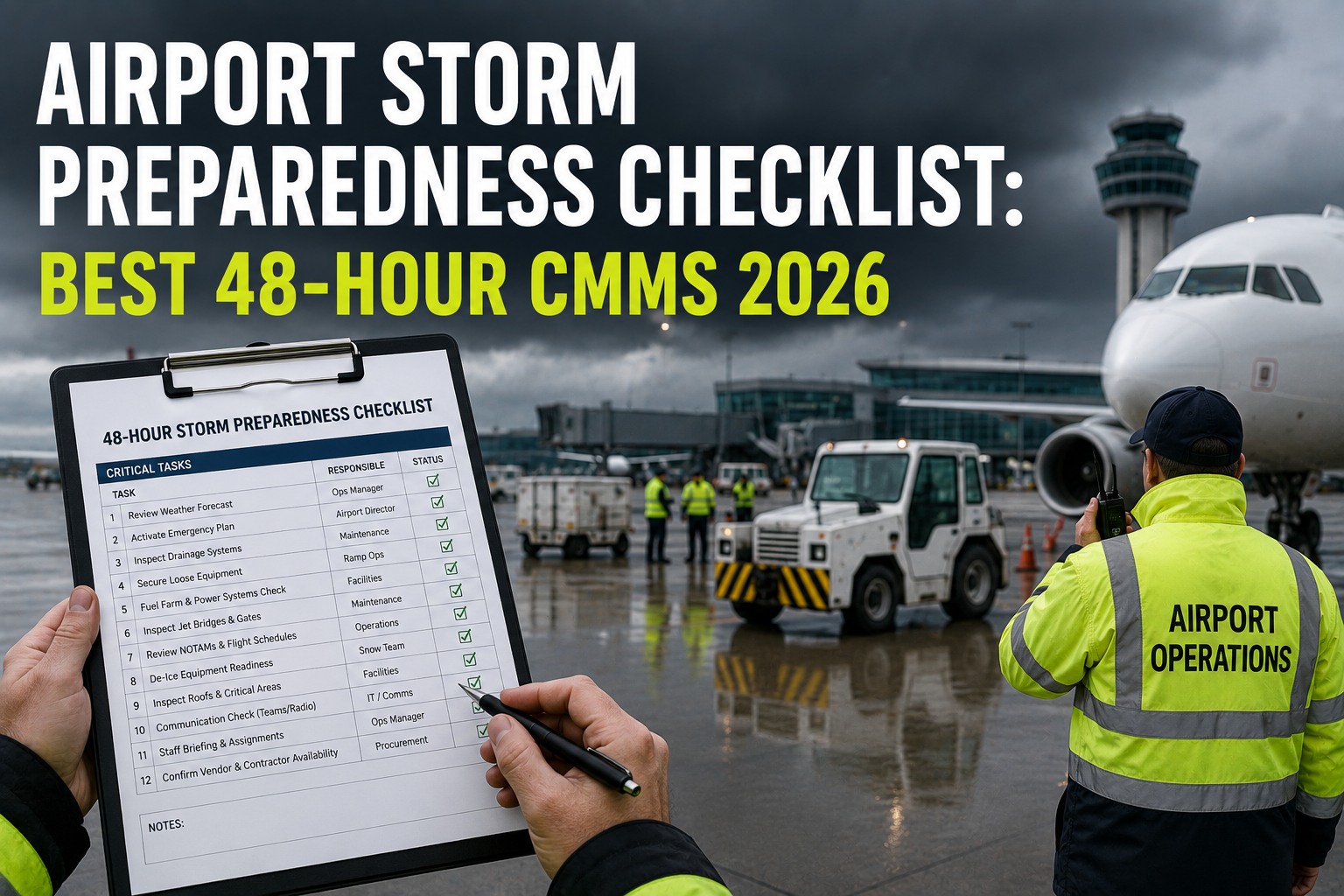
Read More
When a storm is 48 hours out, an airport doesn't have a knowledge problem — it has an execution problem. Everyone knows the drains need clearing, the generators need testing, and the loose equipment needs securing. What breaks down is proving ever
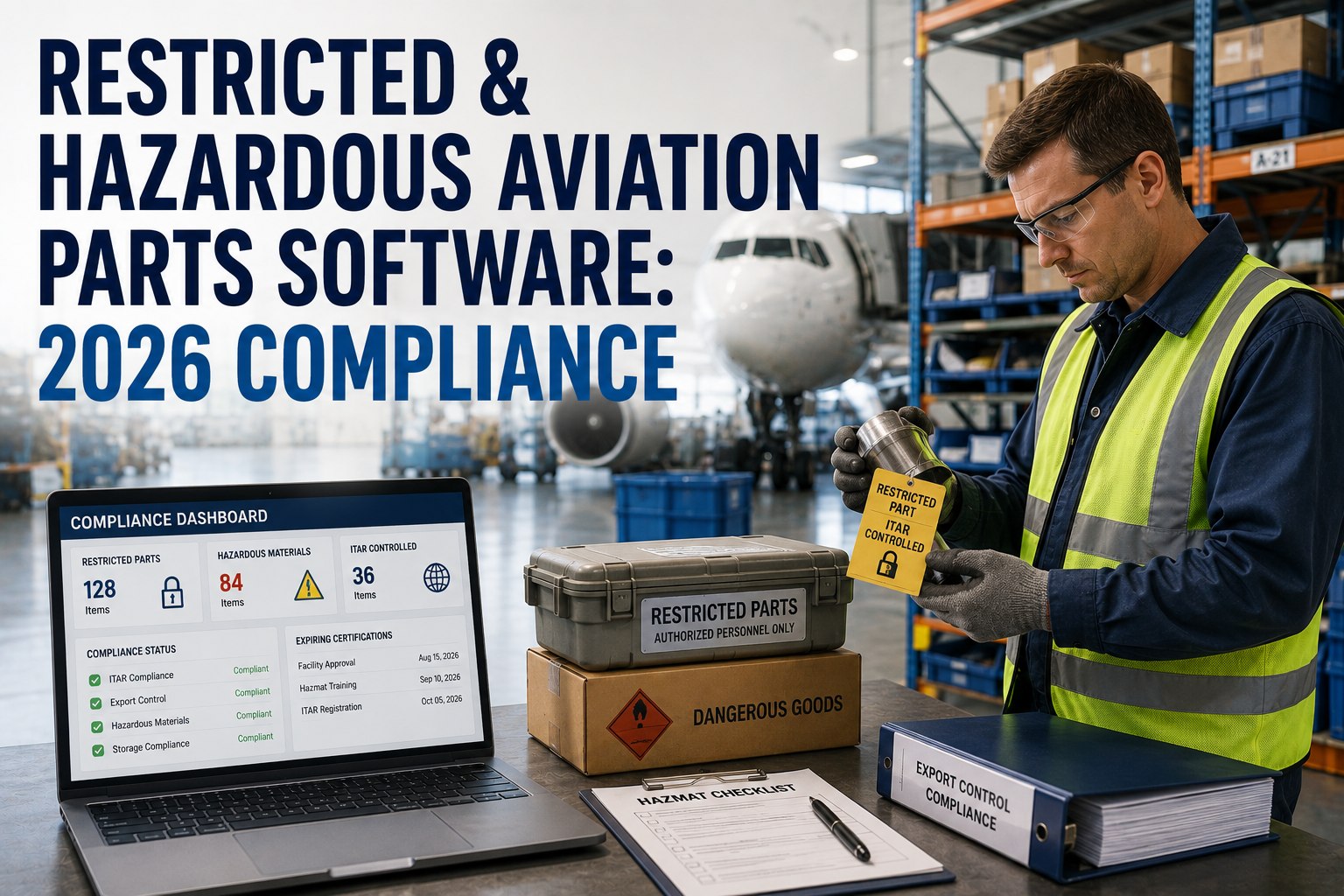
Read More
Restricted and hazardous aviation parts sit at the intersection of three overlapping compliance regimes — export control (ITAR + EAR), dangerous goods transport (IATA DGR + 49 CFR), and airport-side restricted-part accountability — and getting any
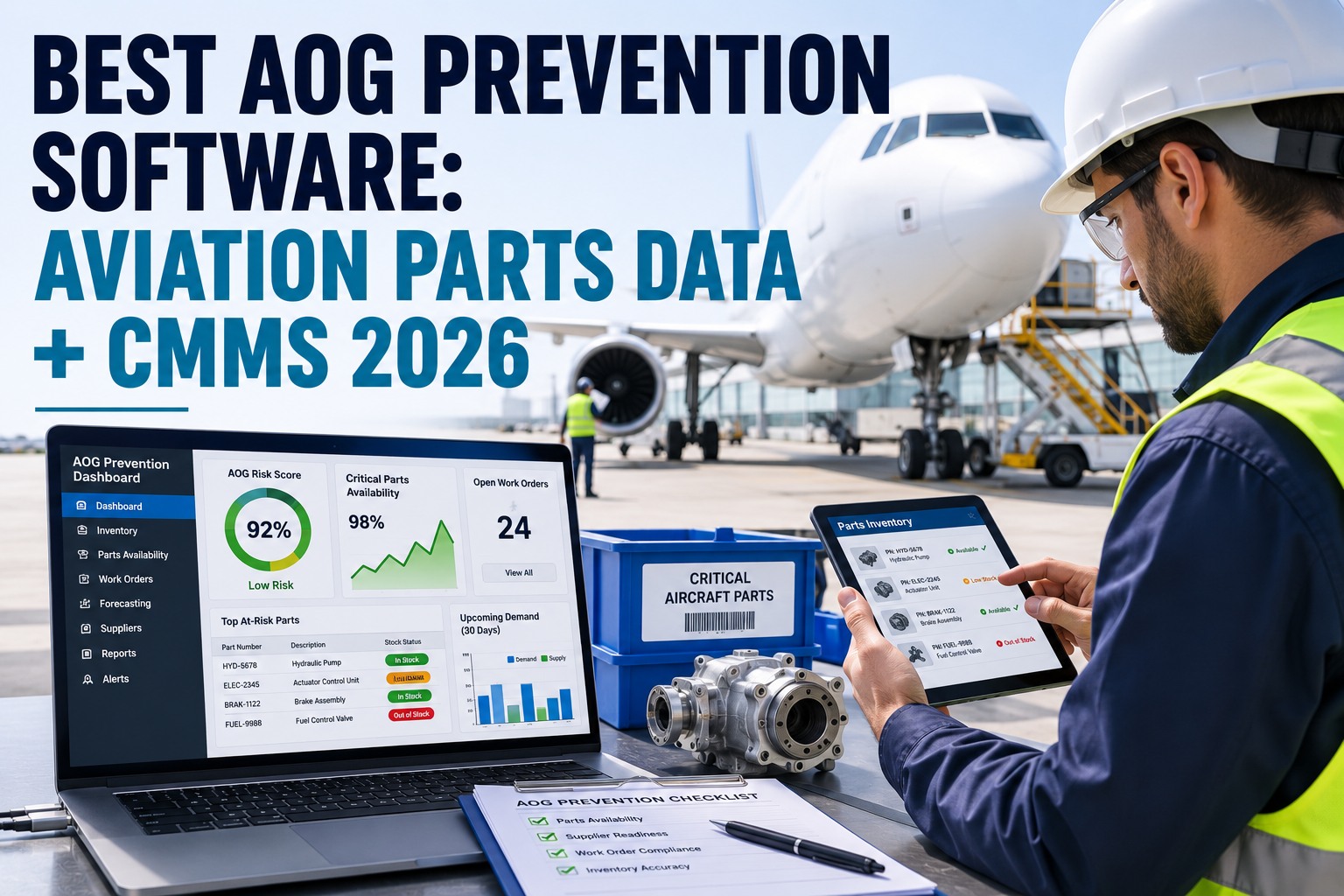
Read More
Most AOG events aren't bad luck — they're a data problem wearing a supply-chain costume. When an aircraft is grounded waiting on a part, the cost runs $10,000 to $150,000 an hour, yet 73% of AOG events involve parts that were entirely foreseeable
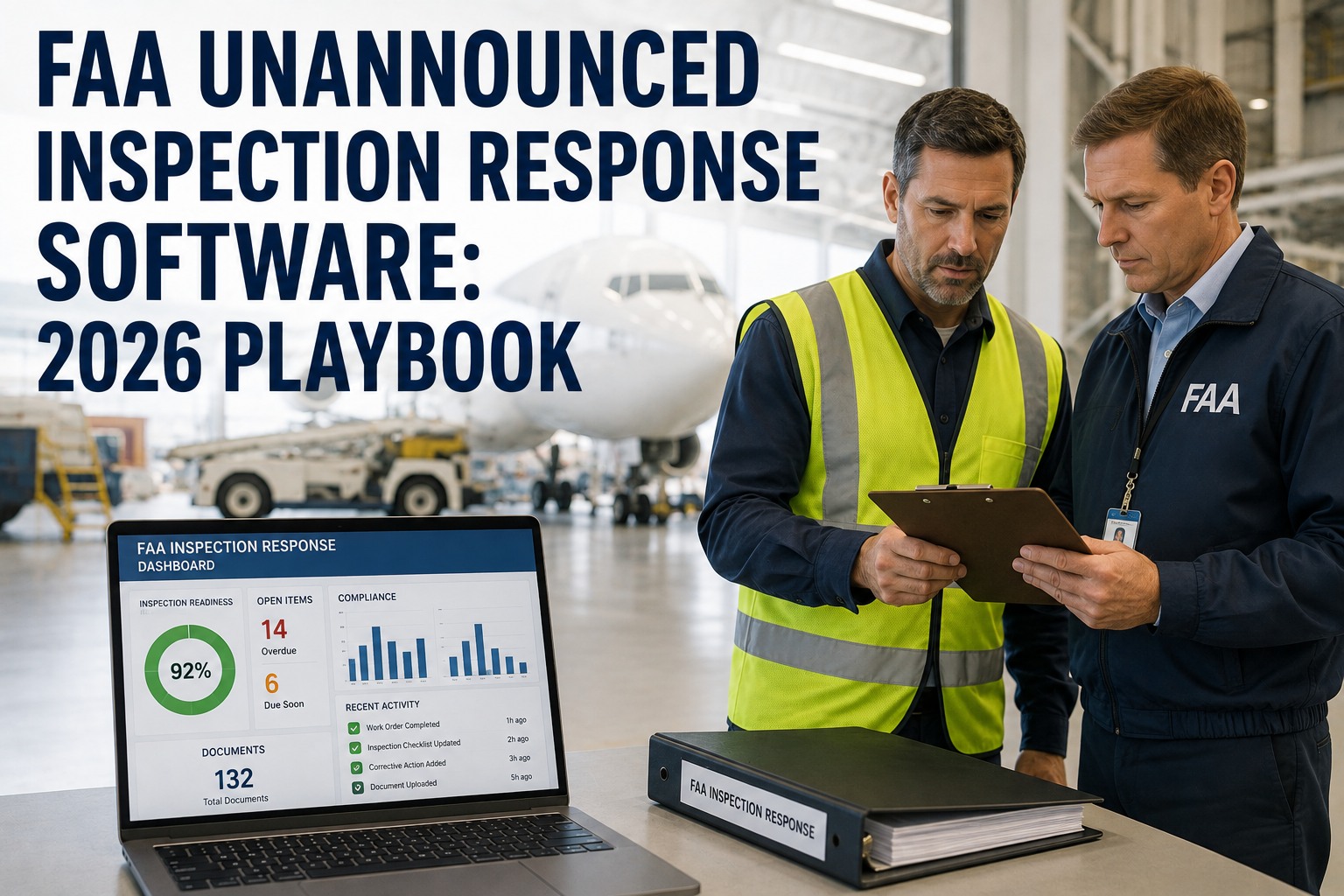
Read More
FAA unannounced inspections are the moment airport compliance stops being a documentation exercise and becomes a stopwatch at 520+ Part 139 certificated airports across the U.S., ~35 FAA Airport Certification Safety Inspectors can arrive on any da
Read More
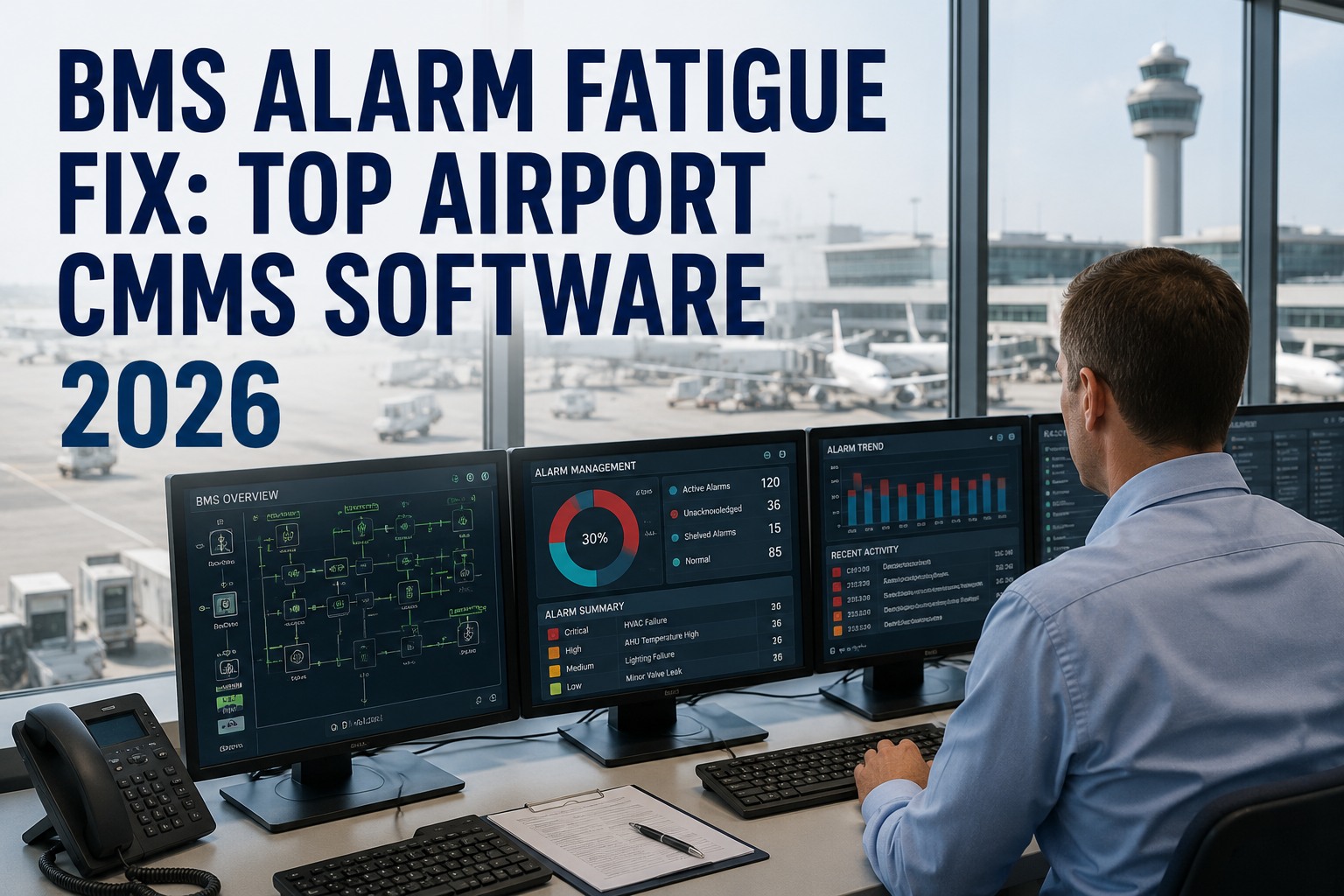
When an airport operator is acknowledging 40 building-management-system alarms an hour and 95% of them are known nuisance conditions, something predictable happens: they stop investigating. They clear alarms reflexively, because reading each one w
Read More
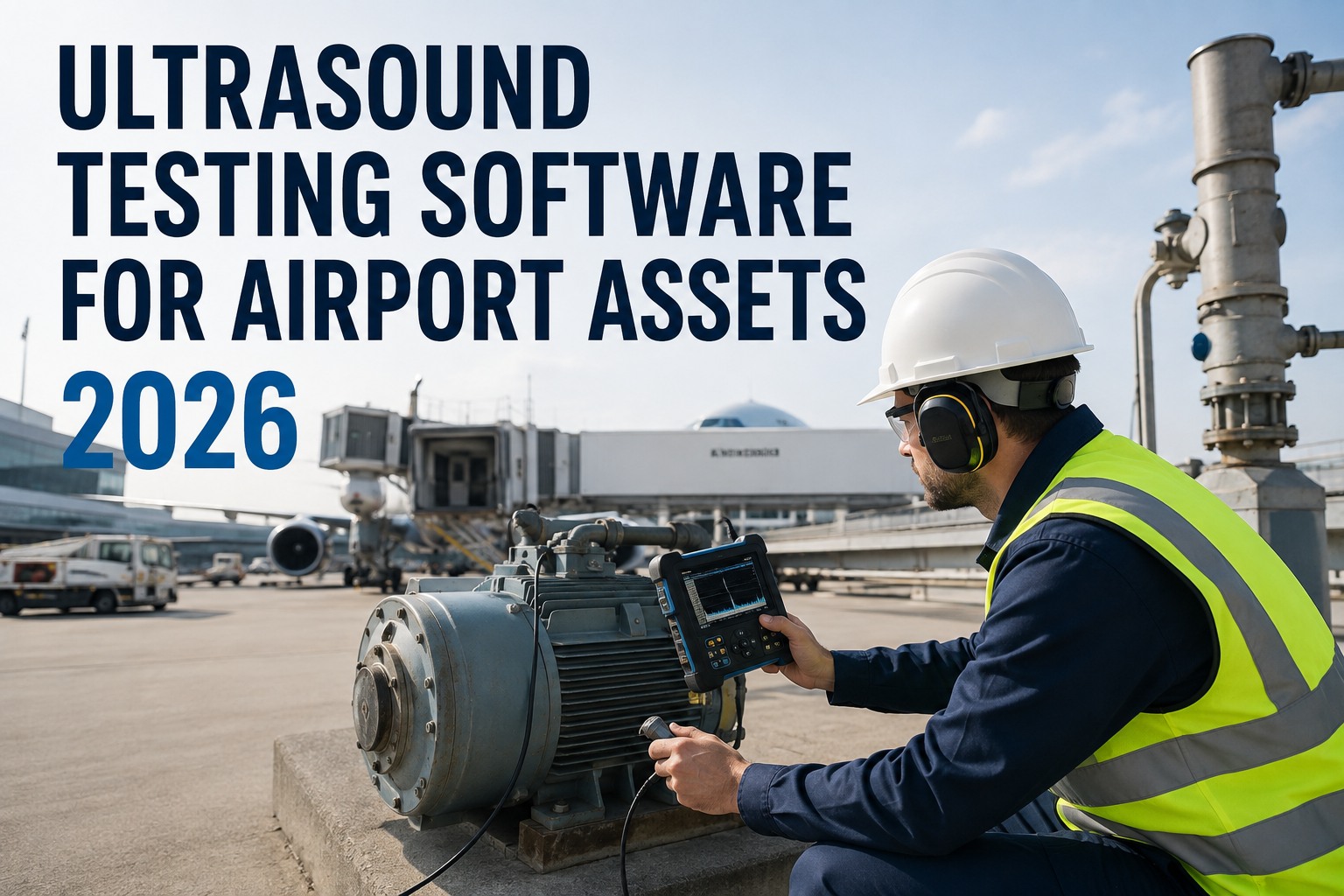
Airport ultrasound testing is where predictive maintenance stops being a dashboard and starts being an operational habit — but only when the readings actually trigger structured work.Airborne and structure-borne ultrasound at 20–100 kHz catches co
Read More
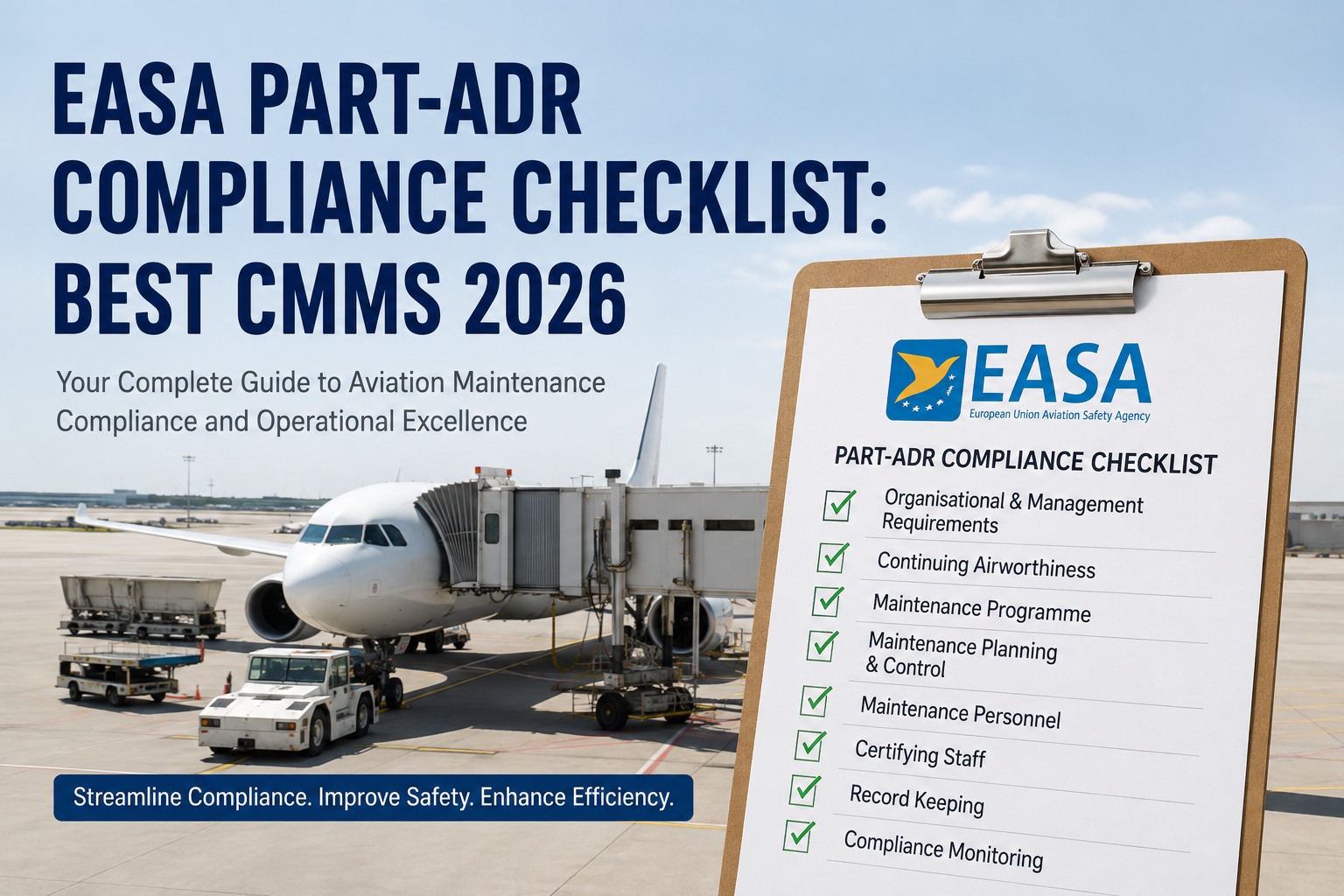
EASA Part-ADR compliance turned from a national patchwork into a single EU regime when Regulation (EU) No 139/2014 entered force in February 2014 and every European aerodrome open to public use has had to demonstrate continuing compliance across t
Read More
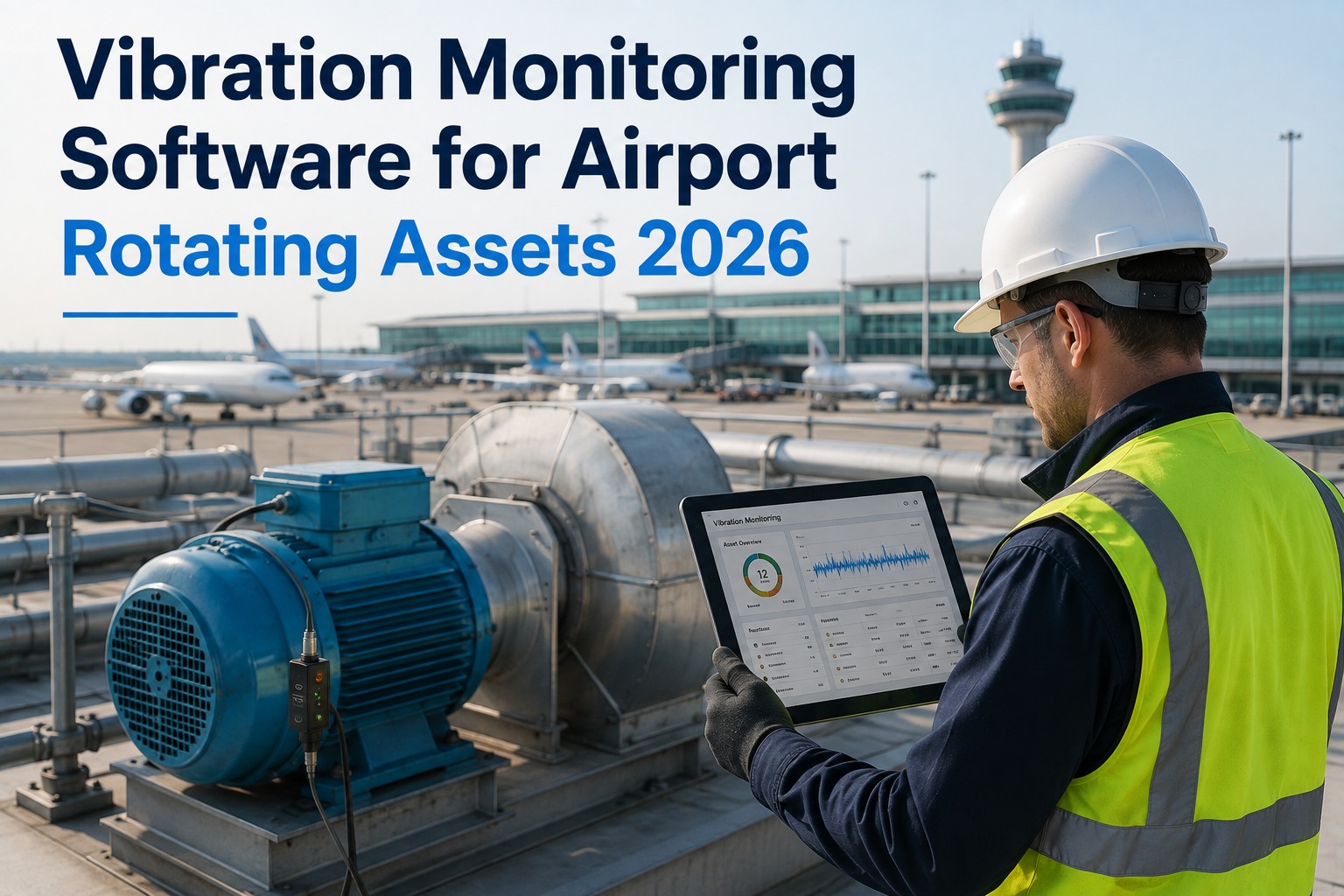
Every rotating machine at an airport is broadcasting its own health, continuously, in a language most maintenance programs never learn to read: vibration. A chiller compressor, a chilled-water pump, an AHU fan, a baggage conveyor motor, an escalat
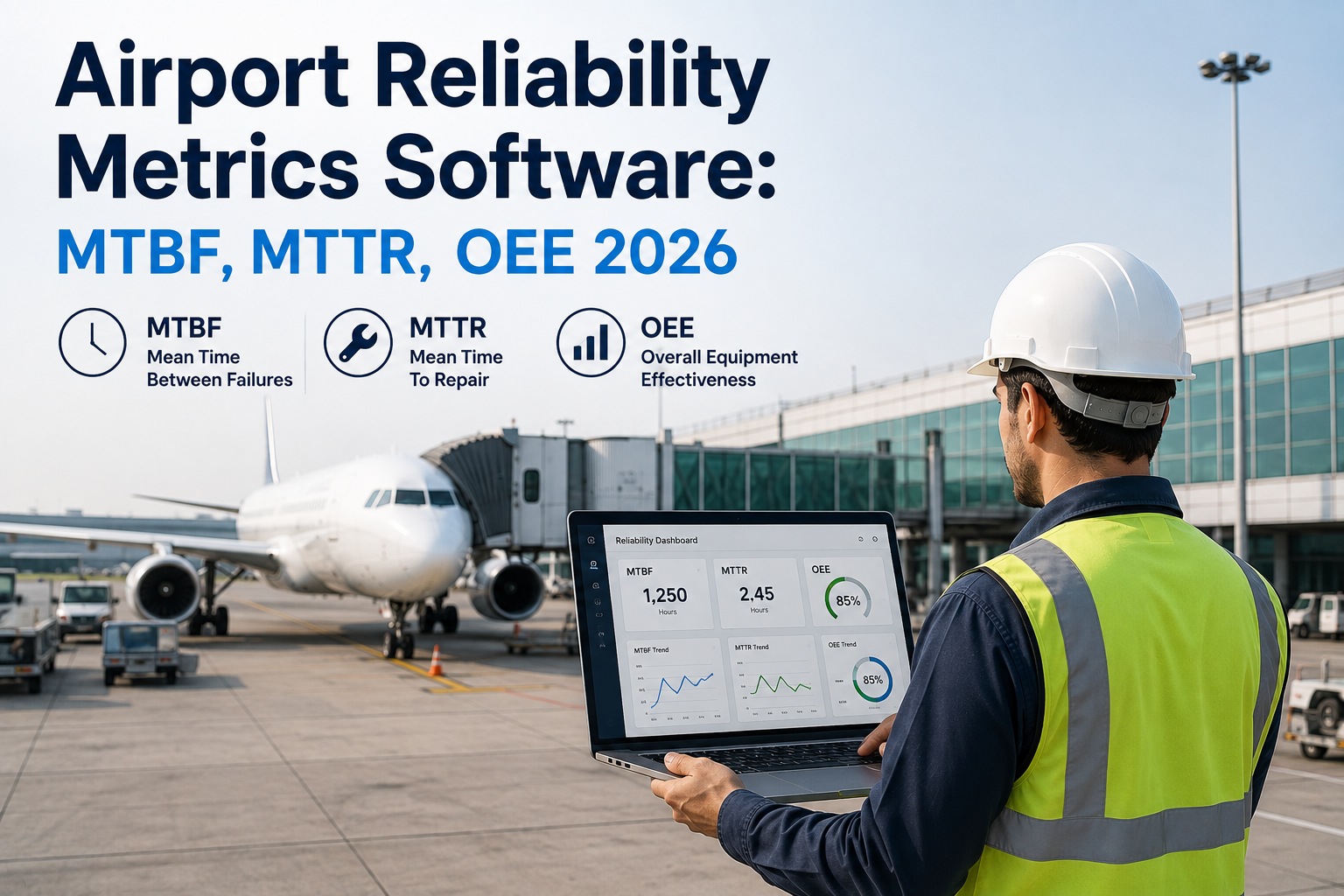
Read More
Airport reliability metrics software has to do something a generic manufacturing dashboard can't — track MTBF, MTTR, and OEE against asset classes where a three-hour baggage-belt repair costs $12,000 in airline SLA violations, a jet-bridge outage
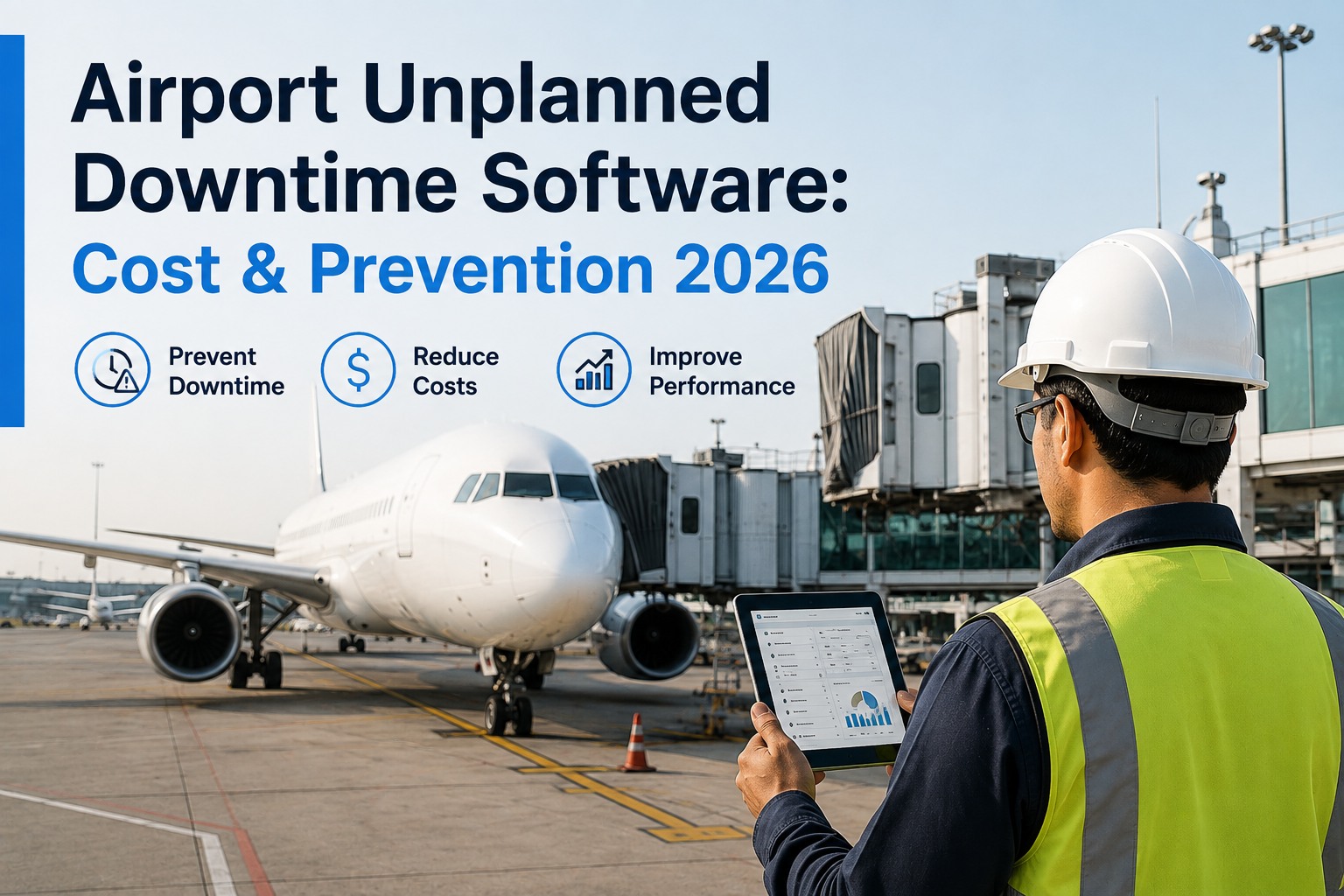
Read More
When a baggage system motor seizes during a peak bank, or a jet bridge hydraulic system fails mid-boarding, the cost isn't one repair bill — it's a cascade. Airline studies put the average cost of an aircraft delay at about $101 per minute, and a
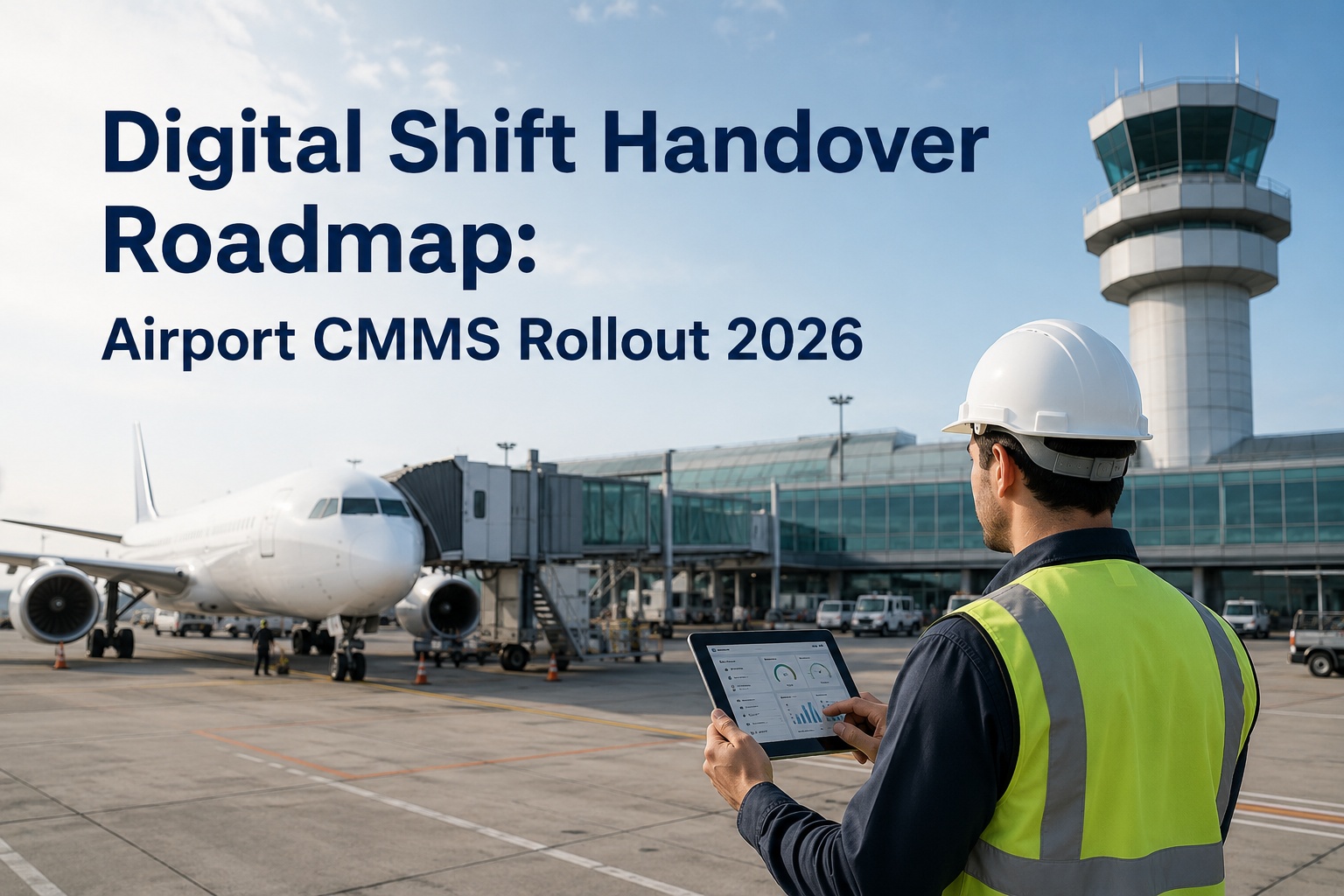
Read More
Digital shift handover rollout is what separates airports publishing a monthly KPI scorecard from airports actually operating on one — and the difference isn't the CMMS, it's the rollout playbook. Aviation research consistently shows that errors a
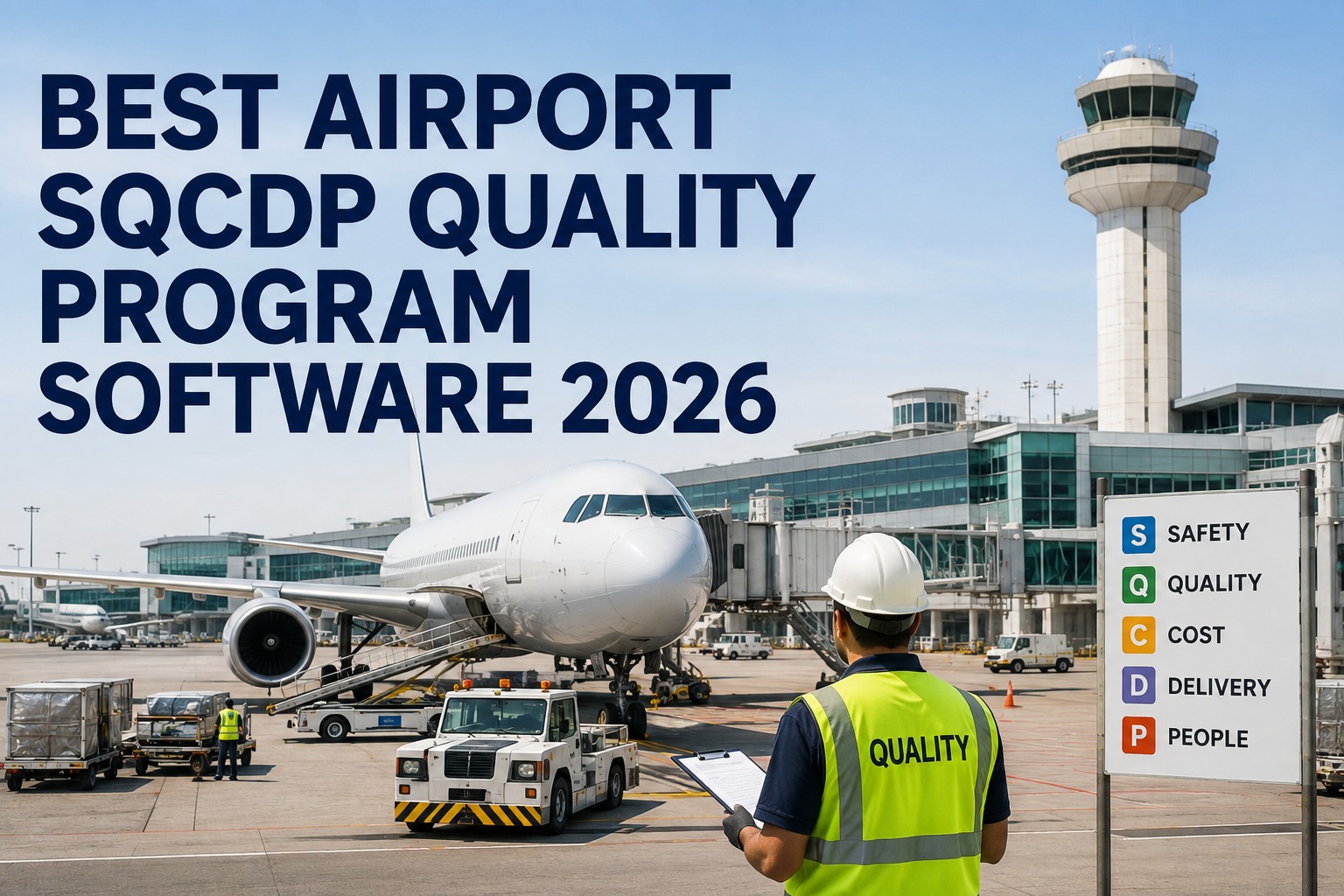
Read More
Walk into a high-performing airport maintenance operation at shift start and you'll find the team standing at a board, not sitting at desks. In five minutes they move through Safety, Quality, Cost, Delivery, and People — green or red on each, a de
Read More
An airport landside PM checklist covers everything between the public road and the terminal fence curbside canopies, arrivals/departures lanes, parking structures, ANPR cameras, drainage, roadway lighting, bollards, and pedestrian crossings — and
Read More
Most airport RCM programs don't fail because the method is wrong — they fail because the airport tried to do all of it at once. A team sets out to run a full seven-question analysis on every asset in the register, spends nine months in workshops p

Read More
Computer vision ramp software has moved from pilot to production at the world's largest airports Changi's iFerret 2.0, Schiphol's autonomous FOD trials, and Munich's 2027 detection-robot target are all built on the same three pillars: real-time

Read More
Electrical failures don't announce themselves with an alarm — they radiate heat. A loose bus-bar connection running 40°C above ambient, a corroded breaker terminal climbing toward ignition, an overloaded conductor whose insulation is degrading m
Read More
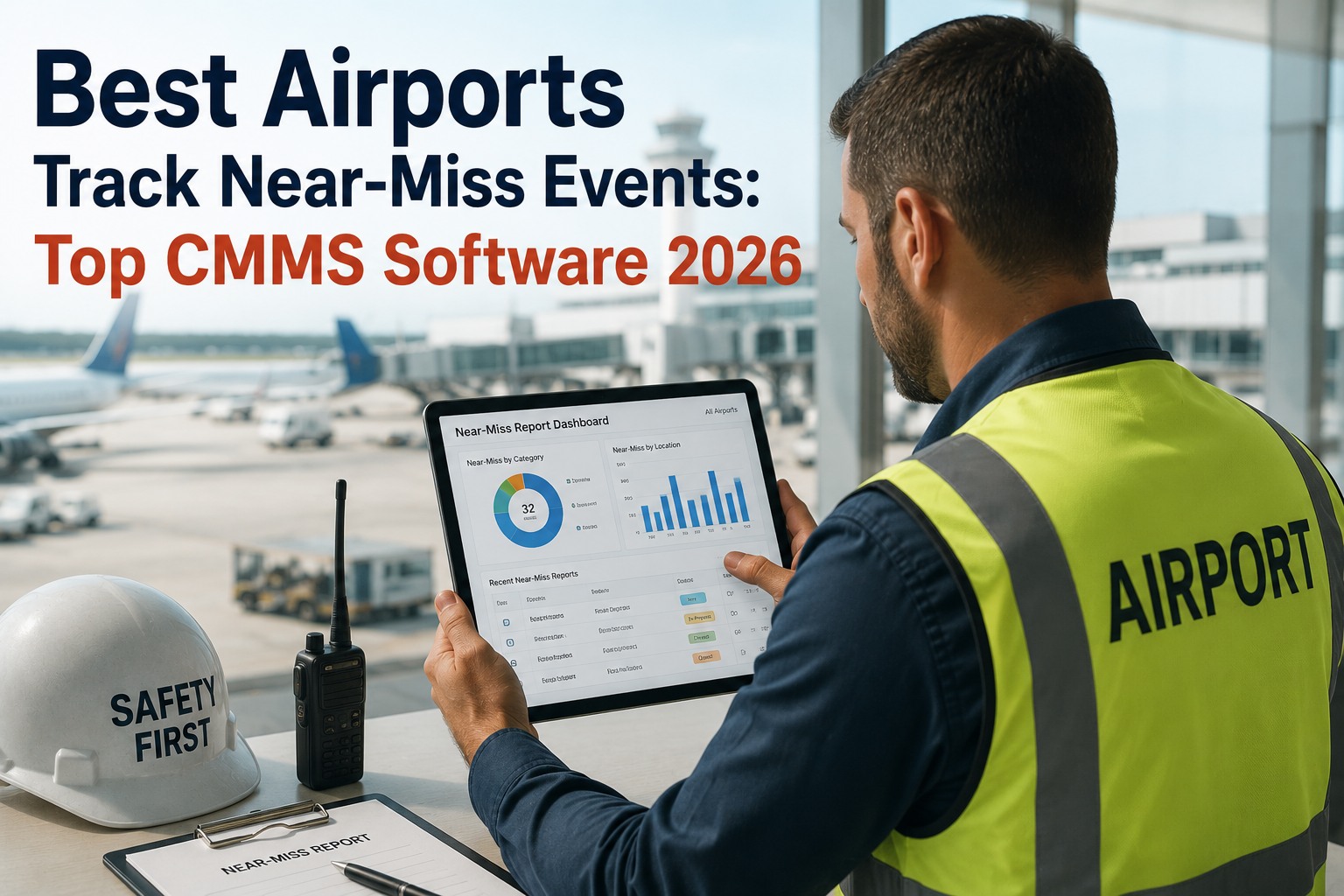
Best airports track near-miss events with the same rigor as failures, because in aviation the ratio holds for every serious incident there are roughly 29 minor events and 300 near-misses feeding it, and the FAA recorded over 1,600 runway incursion

Read More
India is building airports faster than almost anywhere on earth — moving from roughly 220 operational airports toward a target near 300 by 2040, with greenfield mega-hubs like Noida (Jewar), Navi Mumbai, Dholera, and Bhogapuram coming online. And
Read More
Sustainable aviation fuel is usually framed as a supply problem — not enough feedstock, refineries, or investment. But for the airport engineering team, SAF is something else entirely: a measurement-and-maintenance problem. However much SAF arrive
Read More
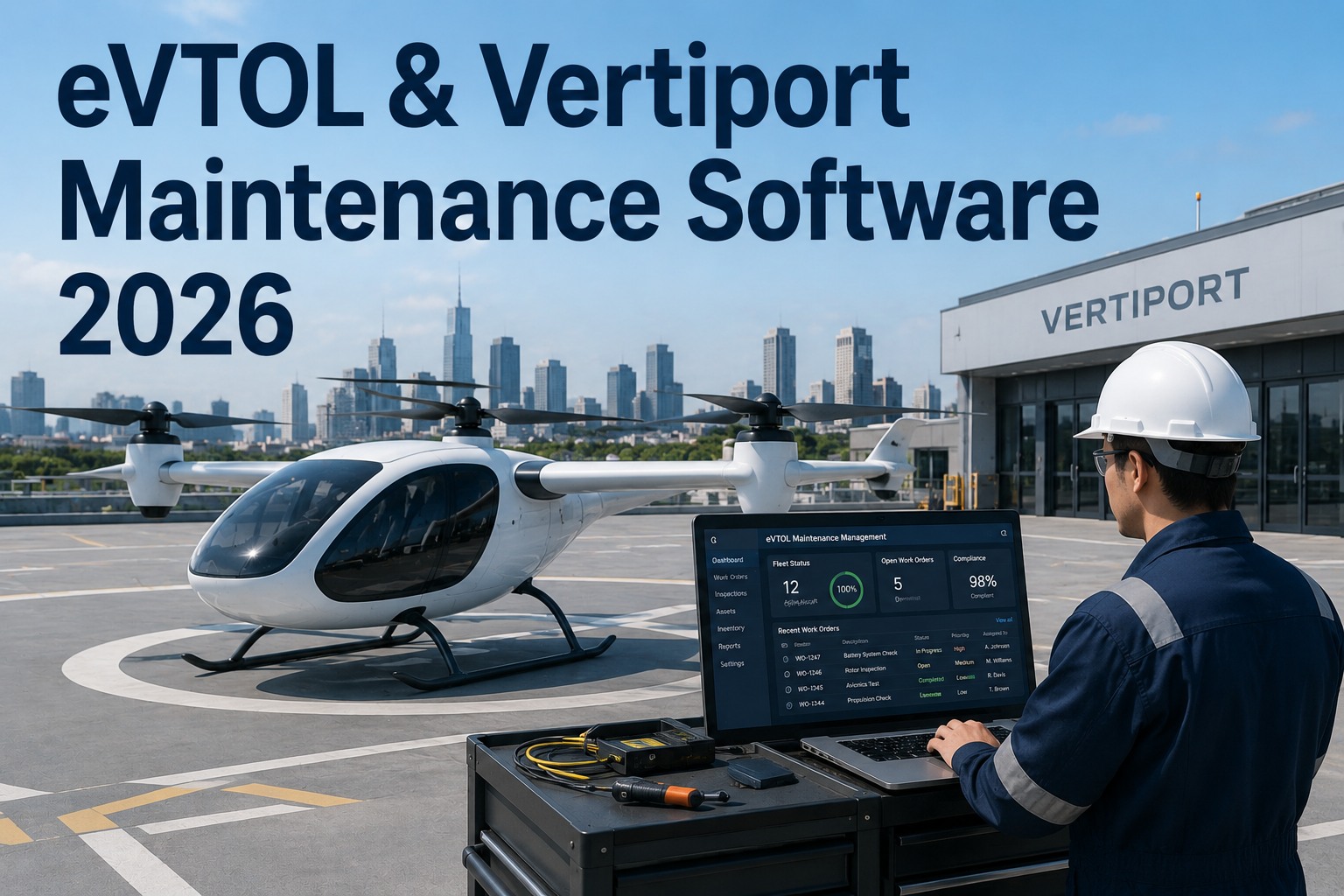
The air taxi gets the headlines, but advanced air mobility actually starts on the ground — with charging, vertiports, and the maintenance systems that keep an electric aircraft turning around in minutes instead of hours. And here's the uncomfortab
Read More
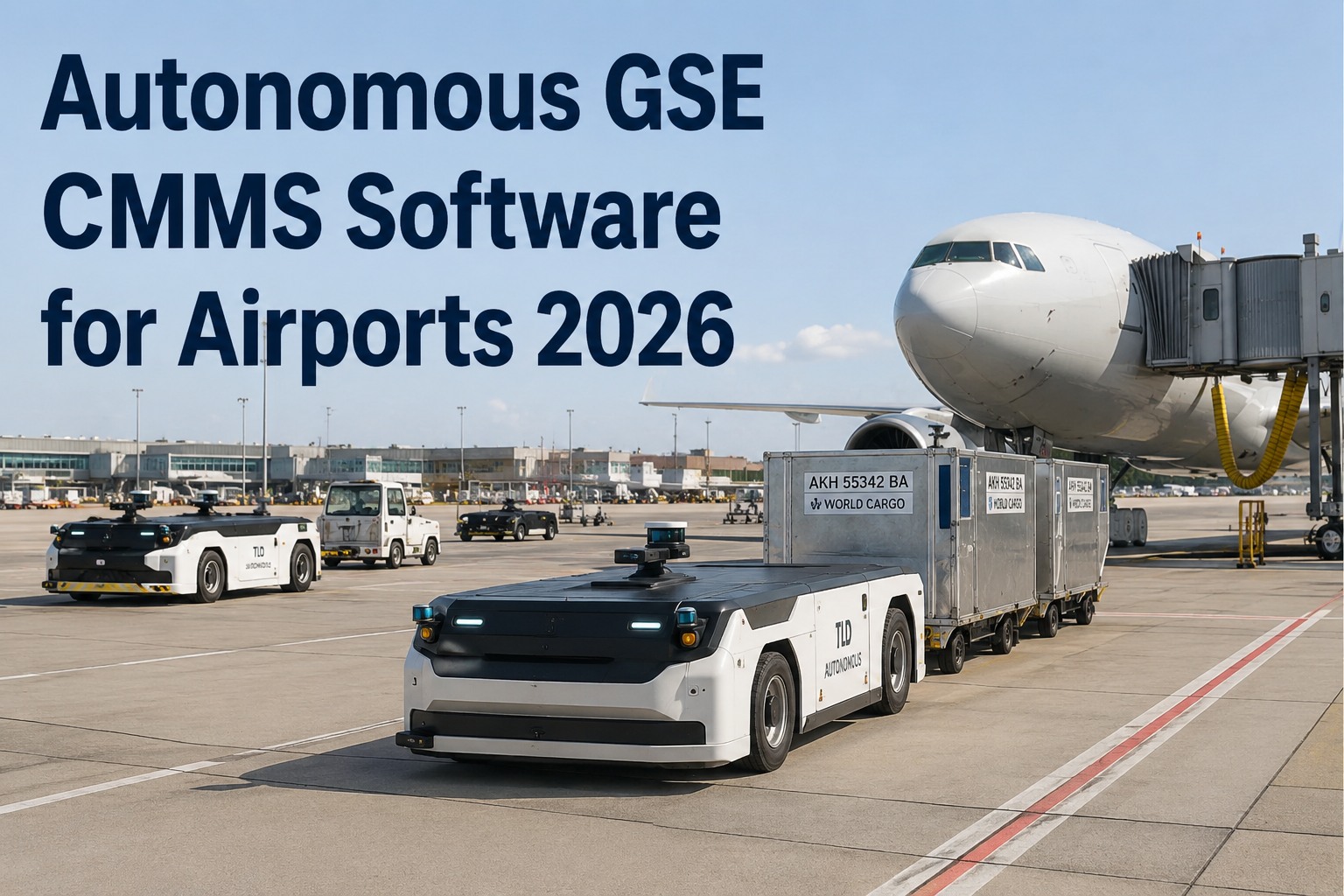
Autonomous ground support equipment is where airport ramp operations are actually reinventing themselves. The market has grown from $4.8B in 2025 to a projected $11.6B by 2034 at a 10.3% CAGR, and the operational logic is unambiguous: a single nar
Read More
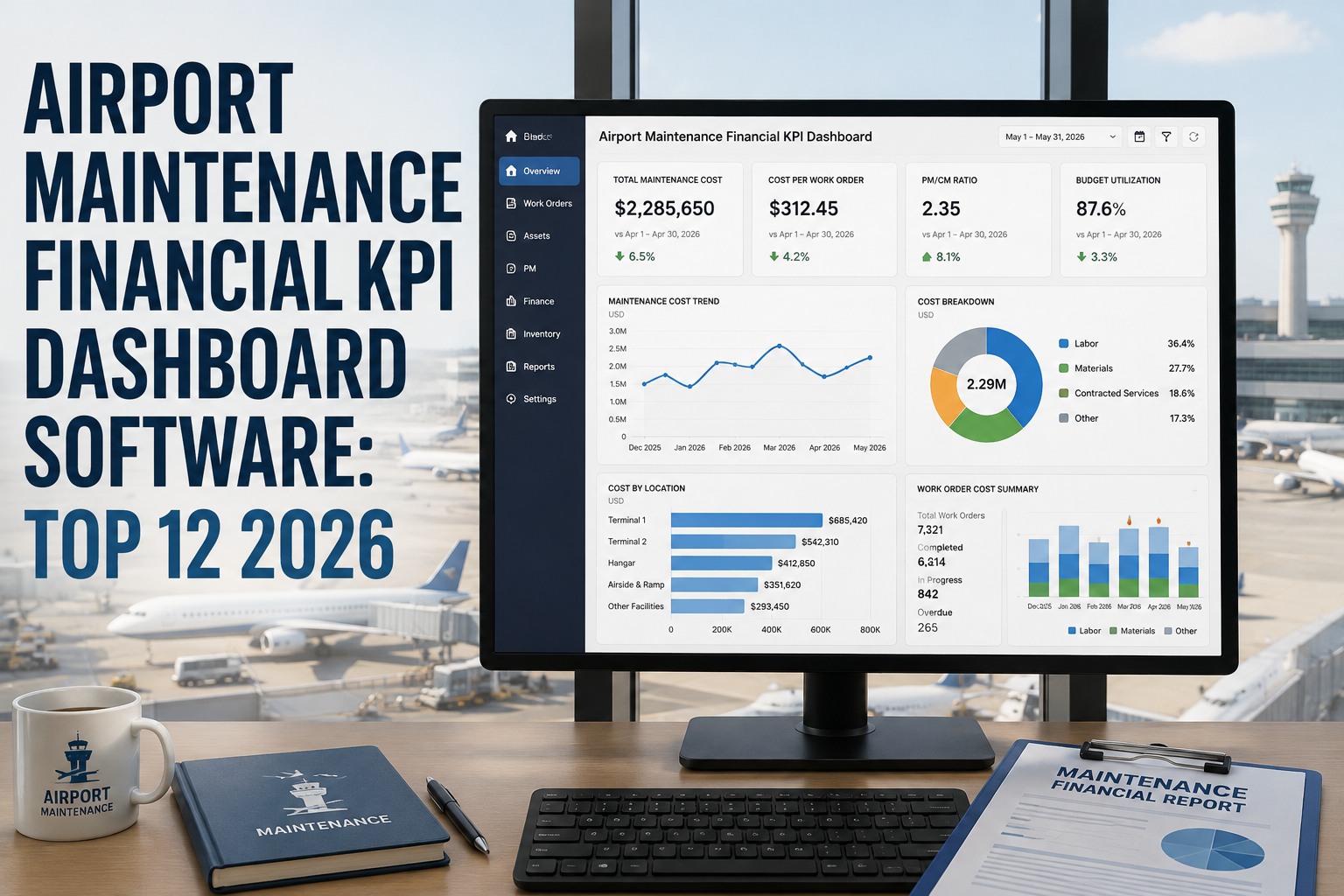
Airport maintenance budgets are where finance and engineering usually stop agreeing — finance sees a $37,377-per-violation-per-day FAA regulatory ceiling and a $3.1B annual aging-fleet cost overhang, engineering sees deferred PMs cascading into em

Read More
Somewhere in your airport right now, a technician is about to order a replacement part for an asset that's still under warranty — and nobody will catch it until the audit, three weeks after the claim window closed. It's the quietest way an airport
Read More
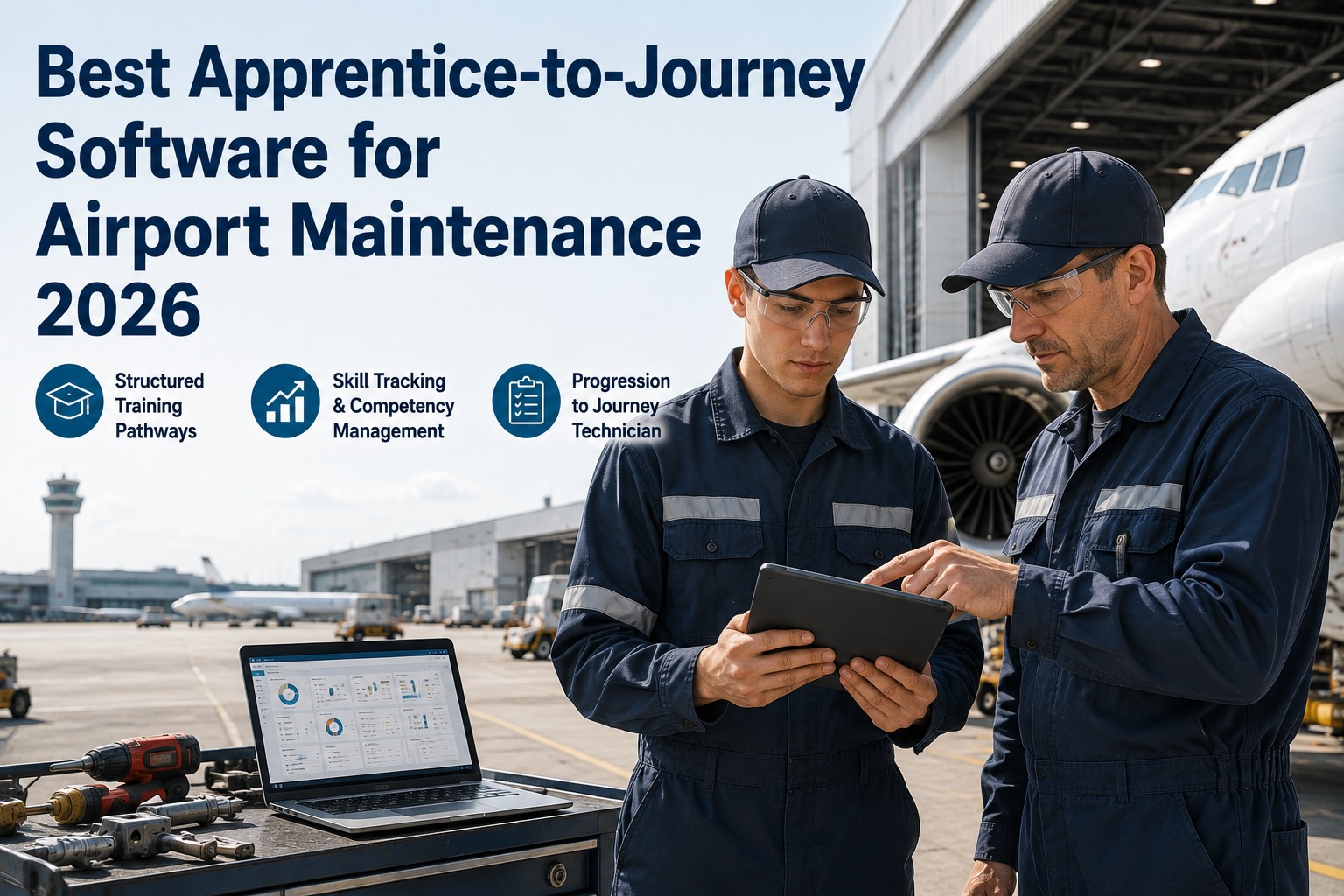
An airport can hire an apprentice on Monday and have no reliable way to answer the only question that matters by Friday: how close is this person to being trusted alone on a live jet bridge, a runway lighting fault, or a terminal HVAC failure at 2
Read More
Airport maintenance is running headlong into the biggest workforce squeeze in aviation history — Boeing projects 728,000 new AMTs needed globally through 2044, 40% of the current workforce is over 60, and every technician who walks costs the airpo
Read More
Every airport maintenance program is one retirement notice away from a capability it can no longer perform. When a 40-year-old aviation technician retires, roughly 60% are already over 60 in the current workforce — the airport doesn't just lose a
Read More
The repair-refurbish-replace decision is the highest-leverage capital allocation choice an airport engineering team makes — and it's the one most often made from gut feel because the underlying data lives in three different systems, none of which

Read More
Corrosion Under Insulation is the single most under-detected damage mechanism in industrial asset integrity. The insulation that keeps a pipe efficient is exactly what makes it impossible to inspect visually — moisture penetrates the jacketing, ge
Read More
The 2025 ASCE Infrastructure Report Card gave U.S. aviation a D+ — the same grade it held four years earlier despite significant IIJA funding — and identified a $114 billion aviation funding gap over the next decade. Airports Council International

Read More
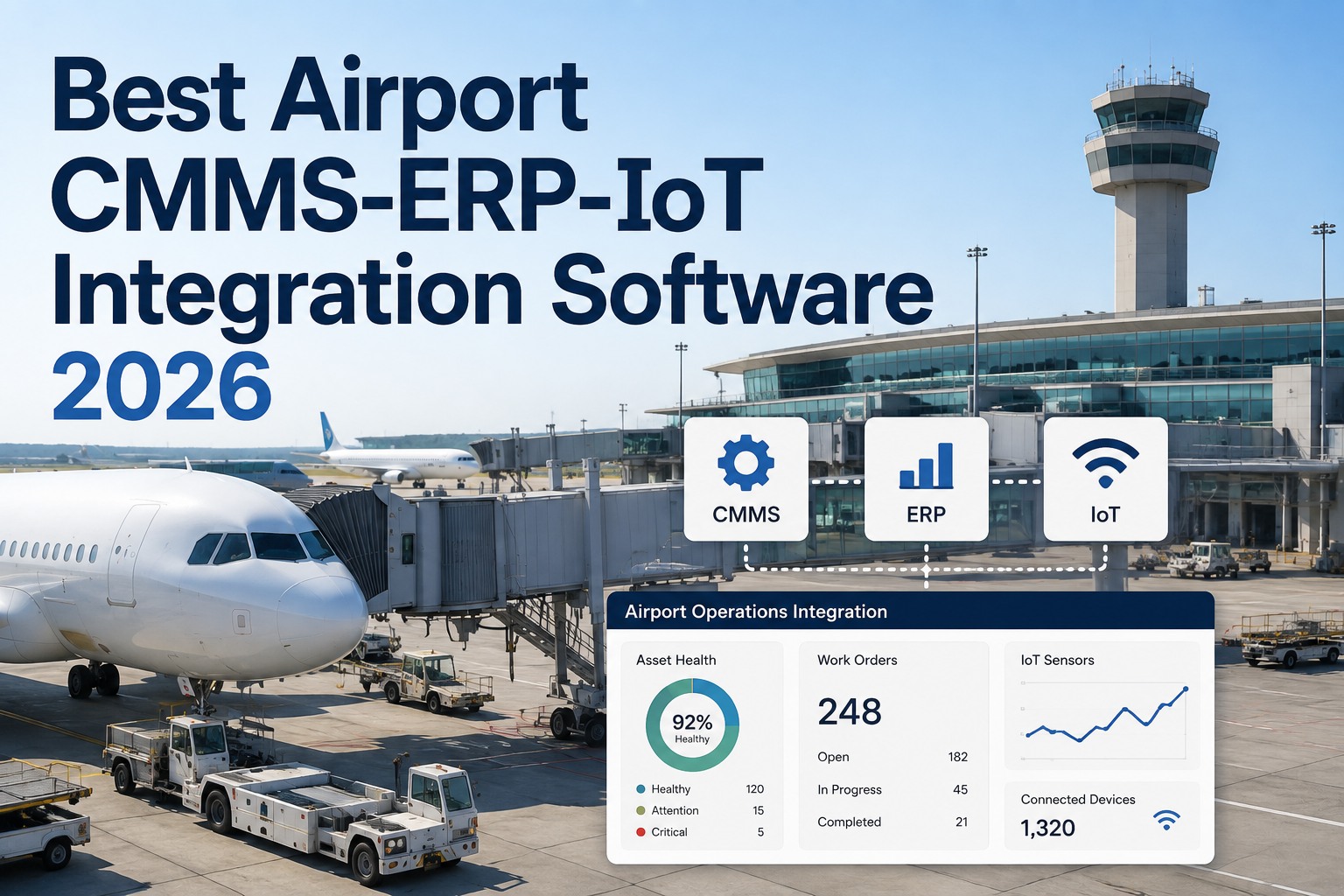
Hub airports run maintenance operations at a scale most industries never reach — 24/7/365 uptime, thousands of assets across airfield lighting, jet bridges, ARFF vehicles, terminal HVAC, baggage handling, and ground support equipment, and financia
Read More
An airport is not one system running maintenance — it's dozens of systems running in parallel, and the ones that talk to each other cleanly are the ones that pay back. On any given morning a hub airport has HVAC consuming 40–50% of total energy lo
Read More
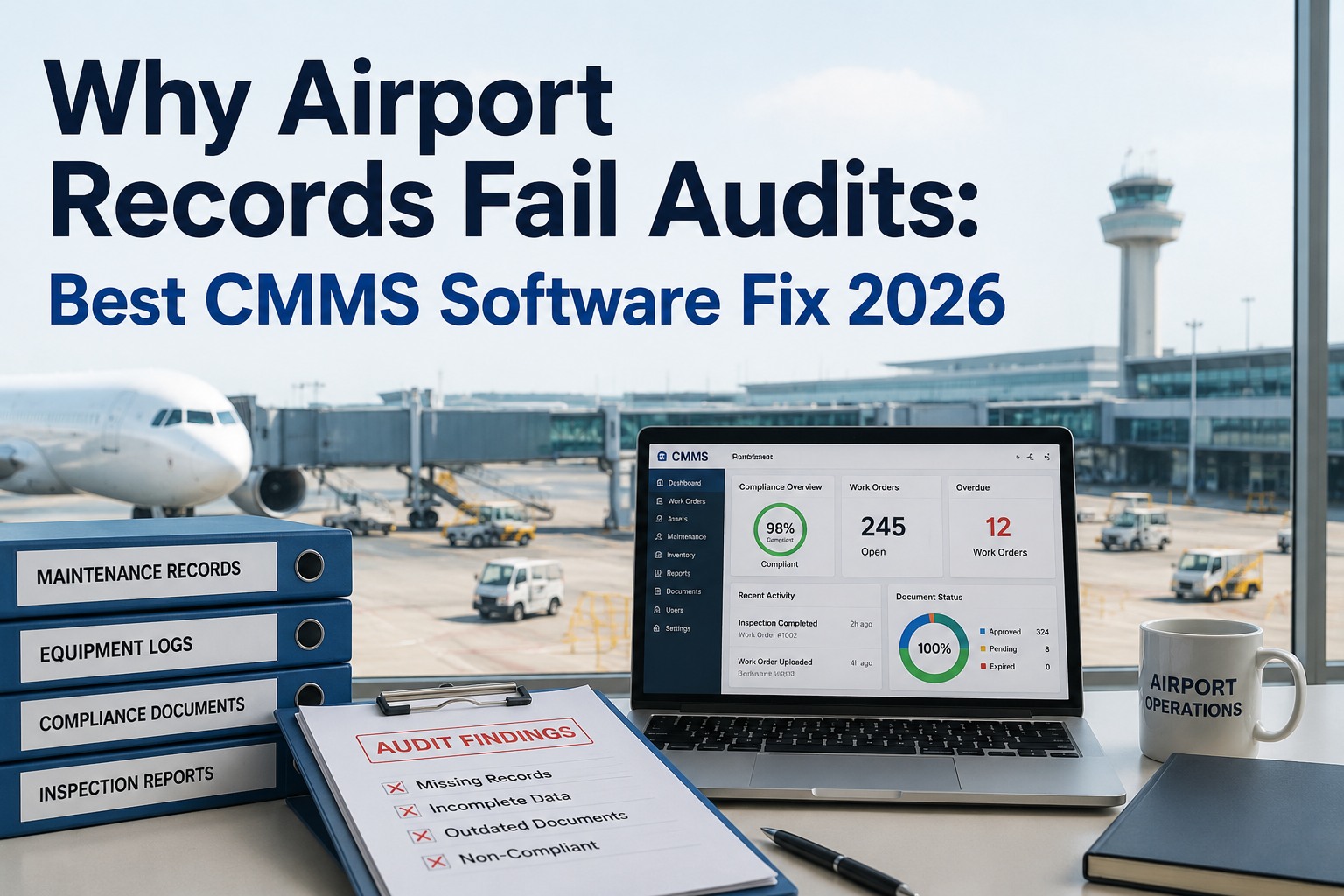
"We have records — somewhere." That single sentence, spoken to an FAA inspector standing in the ops office, is the moment an audit shifts from a routine surveillance visit into a documentation finding. It is not a maintenance failure. It is a reco
Read More
Every FAA Part 139 airport in the United States carries the same operational reality: an inspector can arrive tomorrow and ask to see 12 to 24 months of records covering self-inspections, training, NOTAMs, ARFF drills, fueling audits, and wildlife
Read More
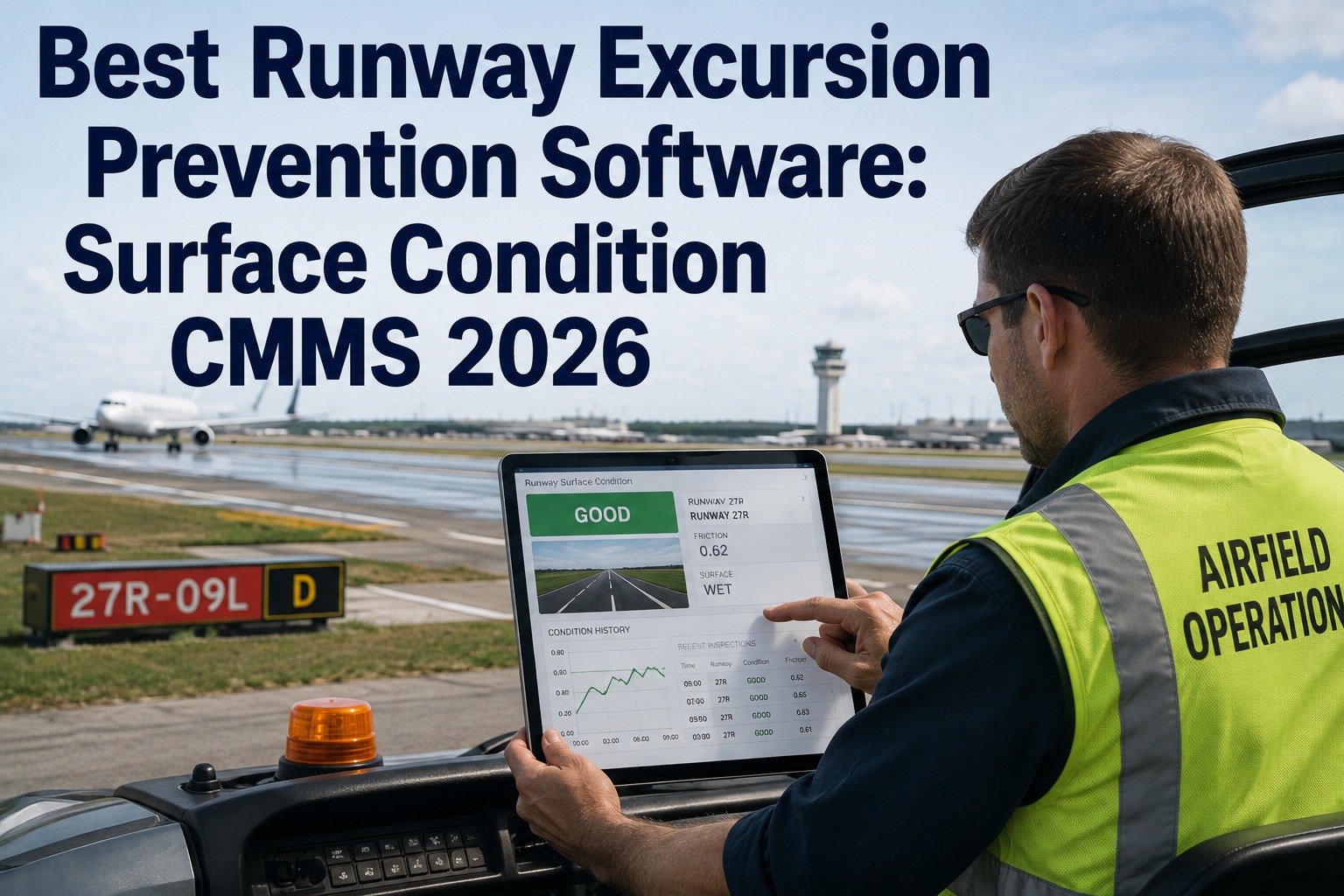
Runway excursions account for nearly a quarter of all runway safety accidents worldwide, according to IATA — and every single one of them traces back to a chain of decisions made on the ground before the wheels ever touched the pavement. The airpo
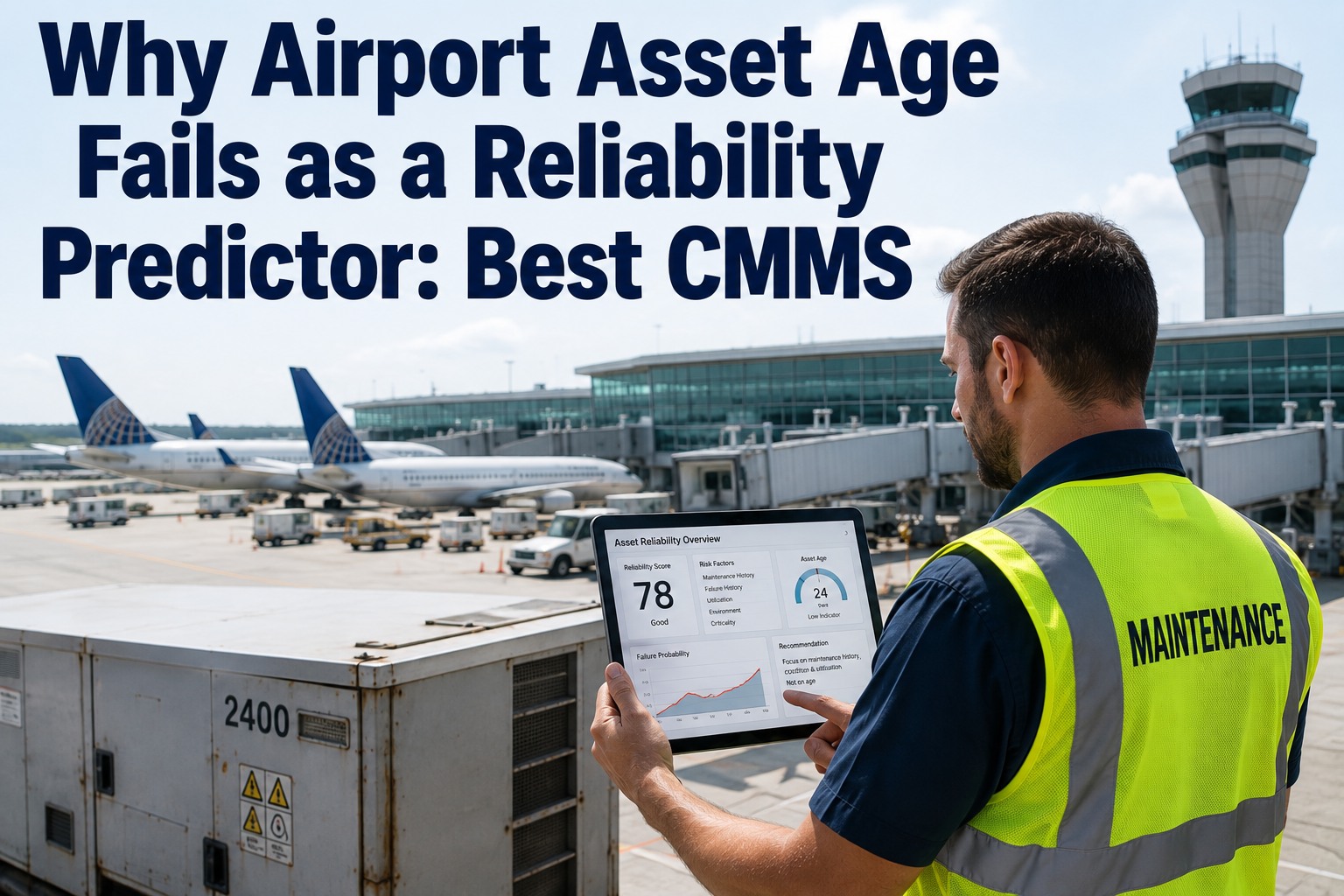
Read More
In 1978, F. Stanley Nowlan and Howard F. Heap published research they had done for United Airlines under Department of Defense sponsorship. The finding — verified across thousands of aircraft components — reshaped every serious maintenance program
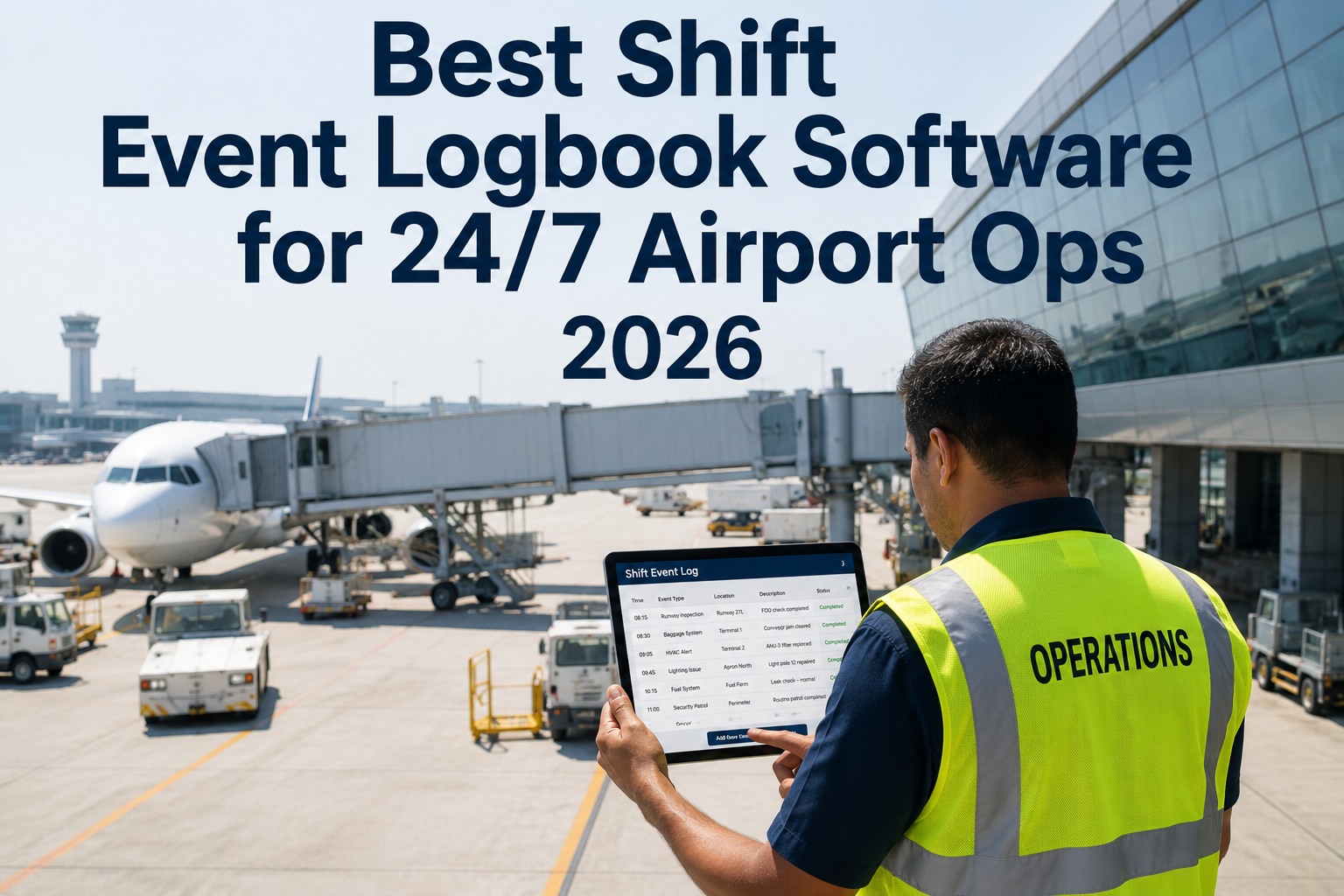
Read More
The Buncefield investigation surfaced a hard truth about industrial logbooks that airport operations should have absorbed a decade ago: paper logbooks capture the plant status at end of shift, not the events that happened during it. When inve
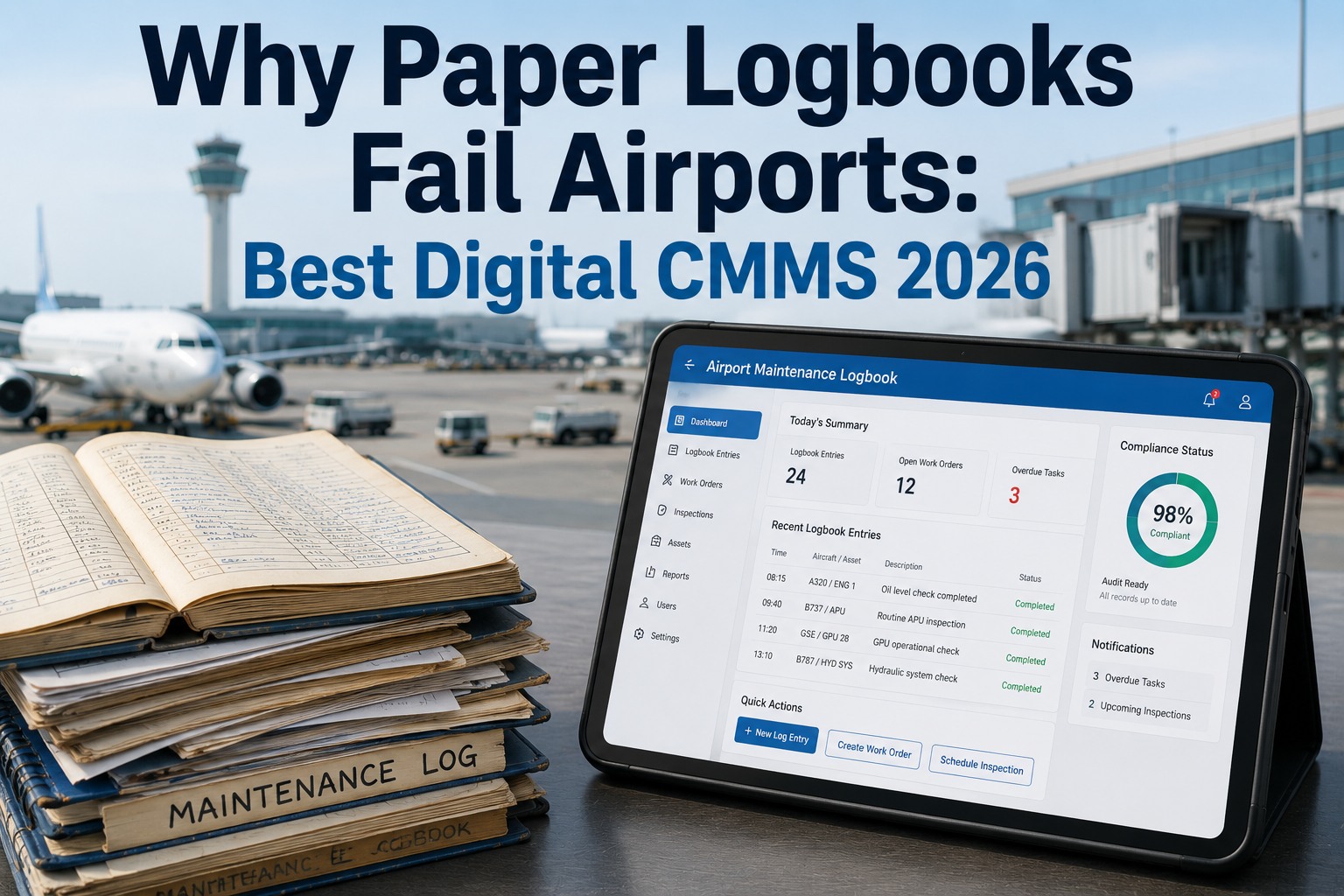
Read More
Shift changeovers account for less than 5% of total operational time. They also contribute to 40% of all plant incidents — a finding from Yokogawa research consistently confirmed in aviation maintenance data. In parallel, the FAA's Human Factors "
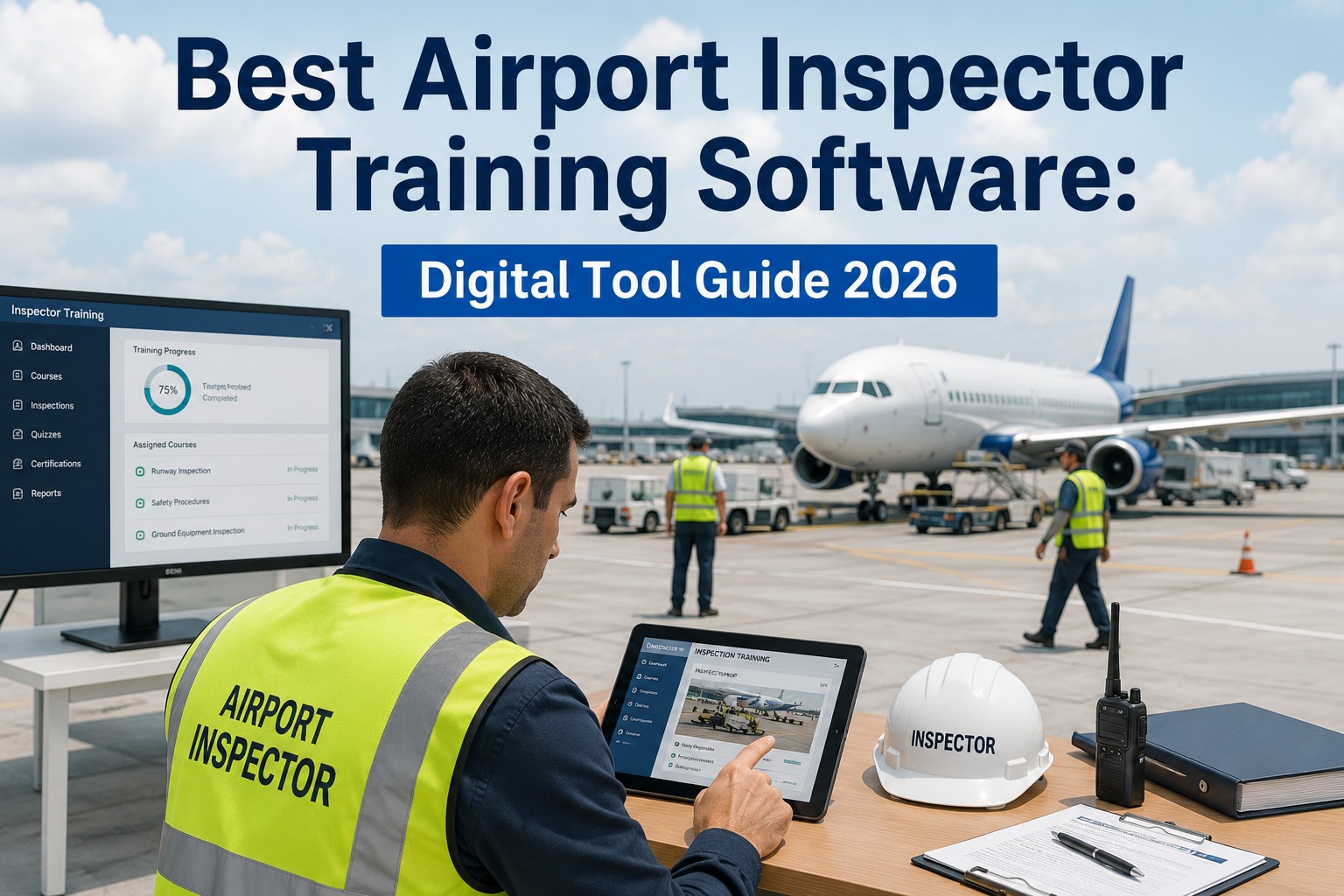
Read More
The single most-cited FAA Part 139 documentation gap is not the inspection record itself. It is the training record behind the inspector who signed it. 14 CFR §139.327 explicitly requires that self-inspection personnel receive initial training plu

Read More
Every airport post-incident review eventually walks back through the handover log. A jet bridge that failed at 03:14, a runway light out at Runway 27L that a taxiing flight crew reported, a baggage sorter alarm that ran through three shifts before
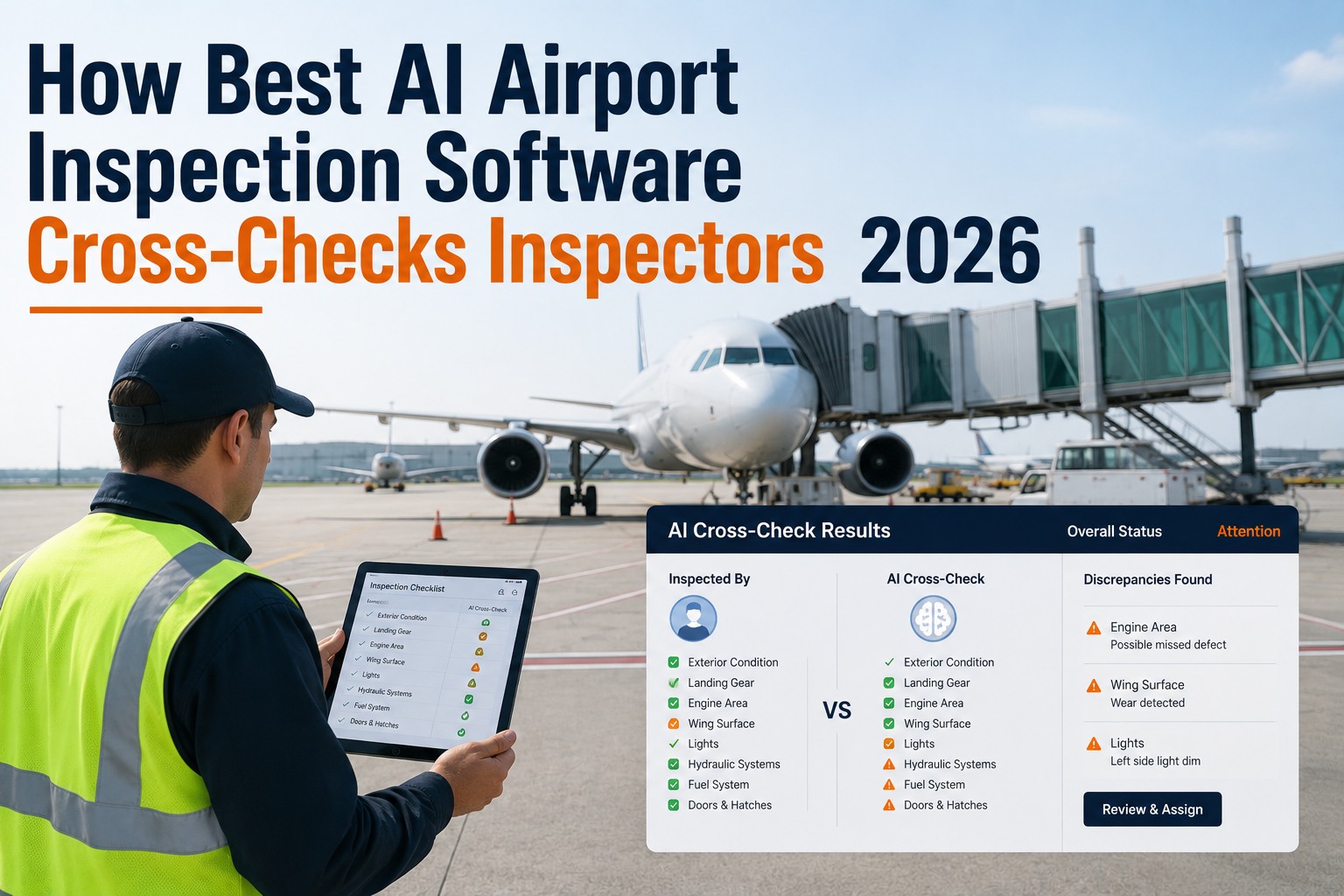
Read More
An experienced airfield inspector on hour six of a runway walk misses roughly a quarter of the defects they would catch on hour one. It is not incompetence; it is human physiology. Inspector accuracy degrades 15–25% after two hours of continuous v

Read More
The typical airside inspector's hands are already occupied. One holds a torch or a radio. The other holds a FOD grabber, a signage tool, or the door handle of the ops vehicle. Gloves are on, PPE is on, jet noise is between 100 and 140 dB depending
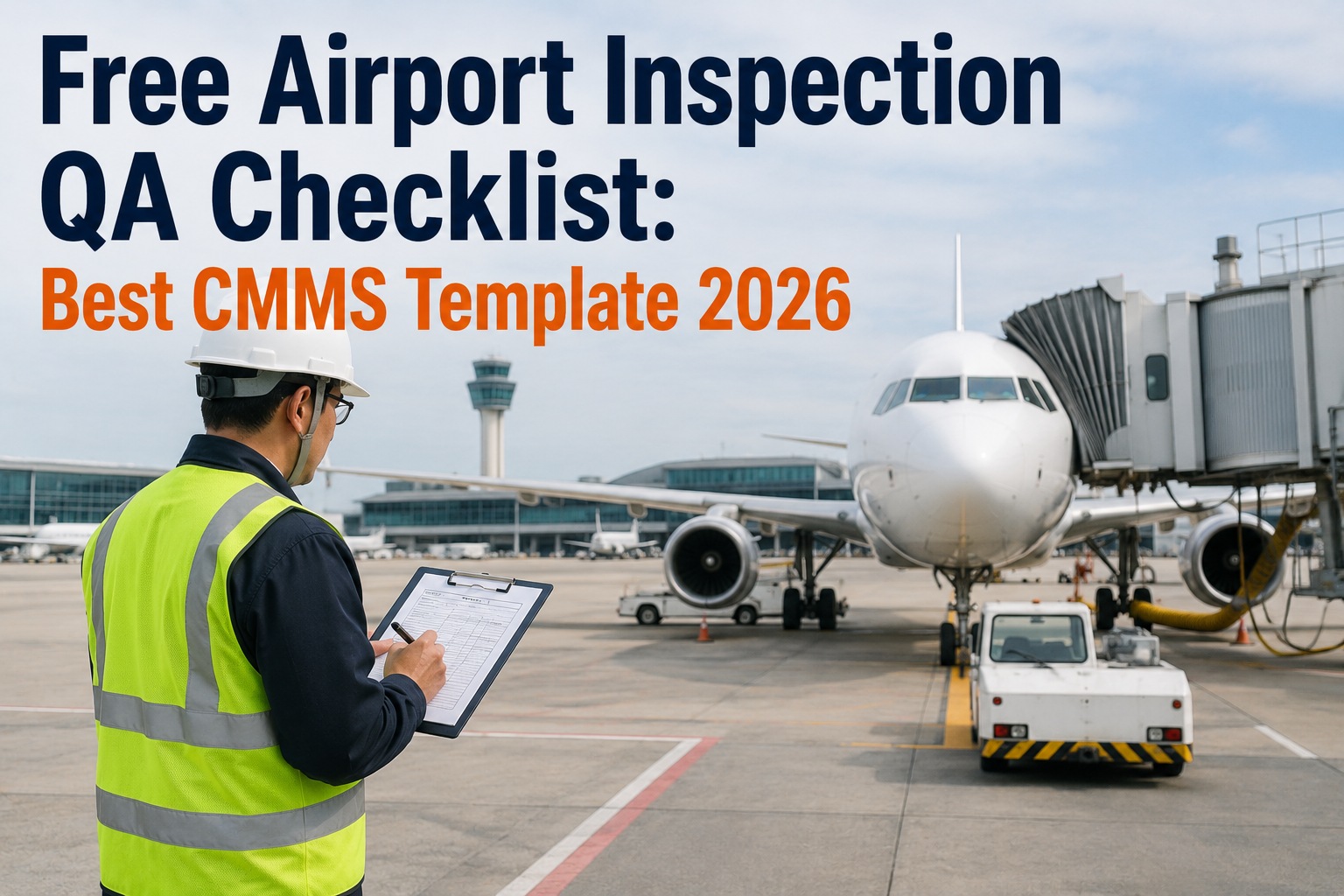
Read More
The FAA has approximately 520 US airports certificated under 14 CFR Part 139, and every one of them owes the same daily record — a documented self-inspection covering the six operational zones defined in AC 150/5200-18C, with each finding routed t
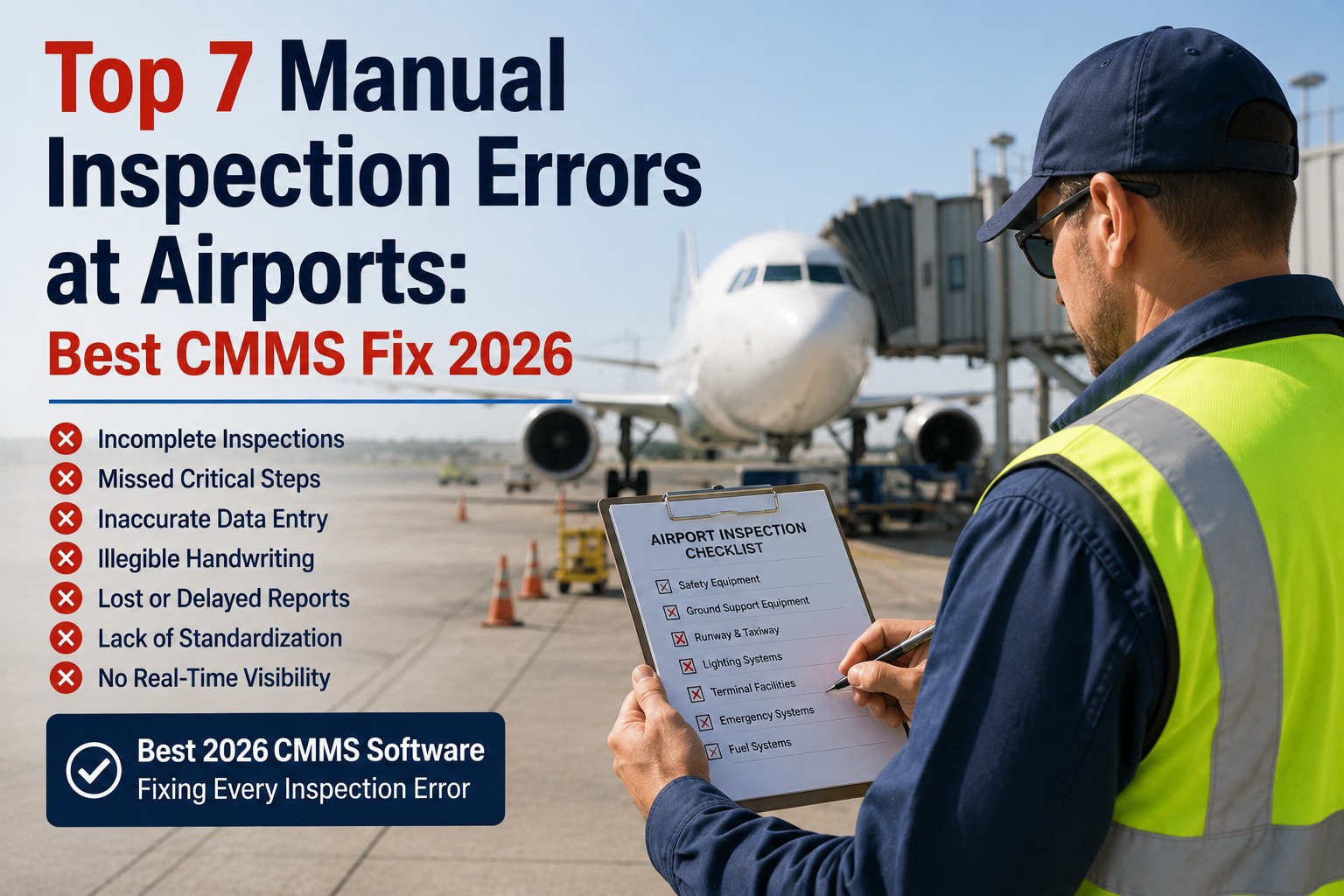
Read More
The FAA's 35 Airport Certification Safety Inspectors do not find new mistakes in the field — they find the same six or seven, over and over, at airport after airport. An unsigned Part 139 self-inspection form. A pavement deficiency closed verbally
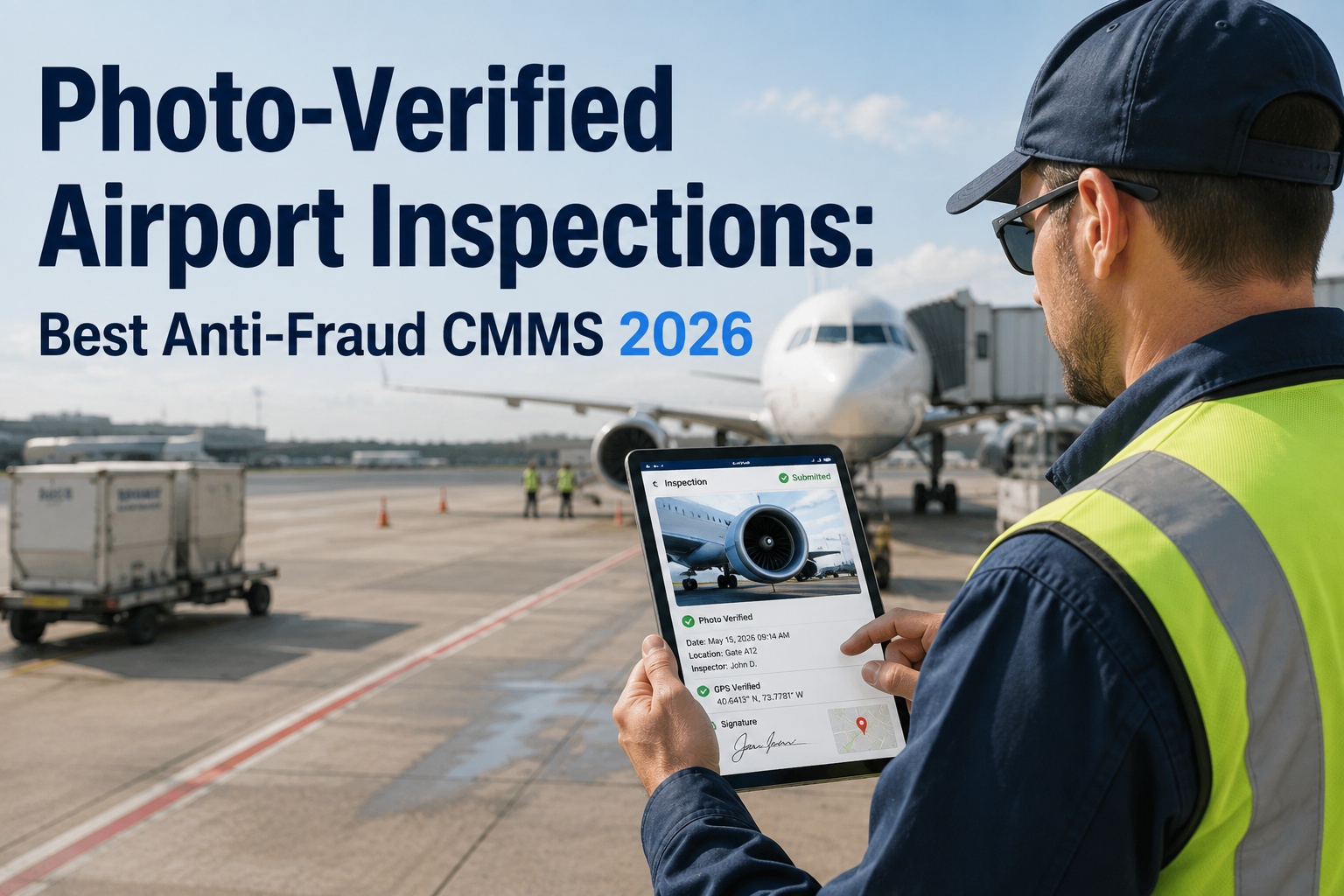
Read More
Inspector sign-off fraud — the industry calls it "pencil-whipping" — is the airport safety failure that never announces itself. A ramp inspector who clocks a completed FOD walk without leaving the vehicle. A lighting technician who signs off six a

Read More
Aircraft spare parts inventory management is where AOG events are either prevented or accepted: a single aircraft-on-ground incident can cost an airline $150,000–$250,000 in lost revenue, recovery logistics and passenger compensation, while the pa
Read More
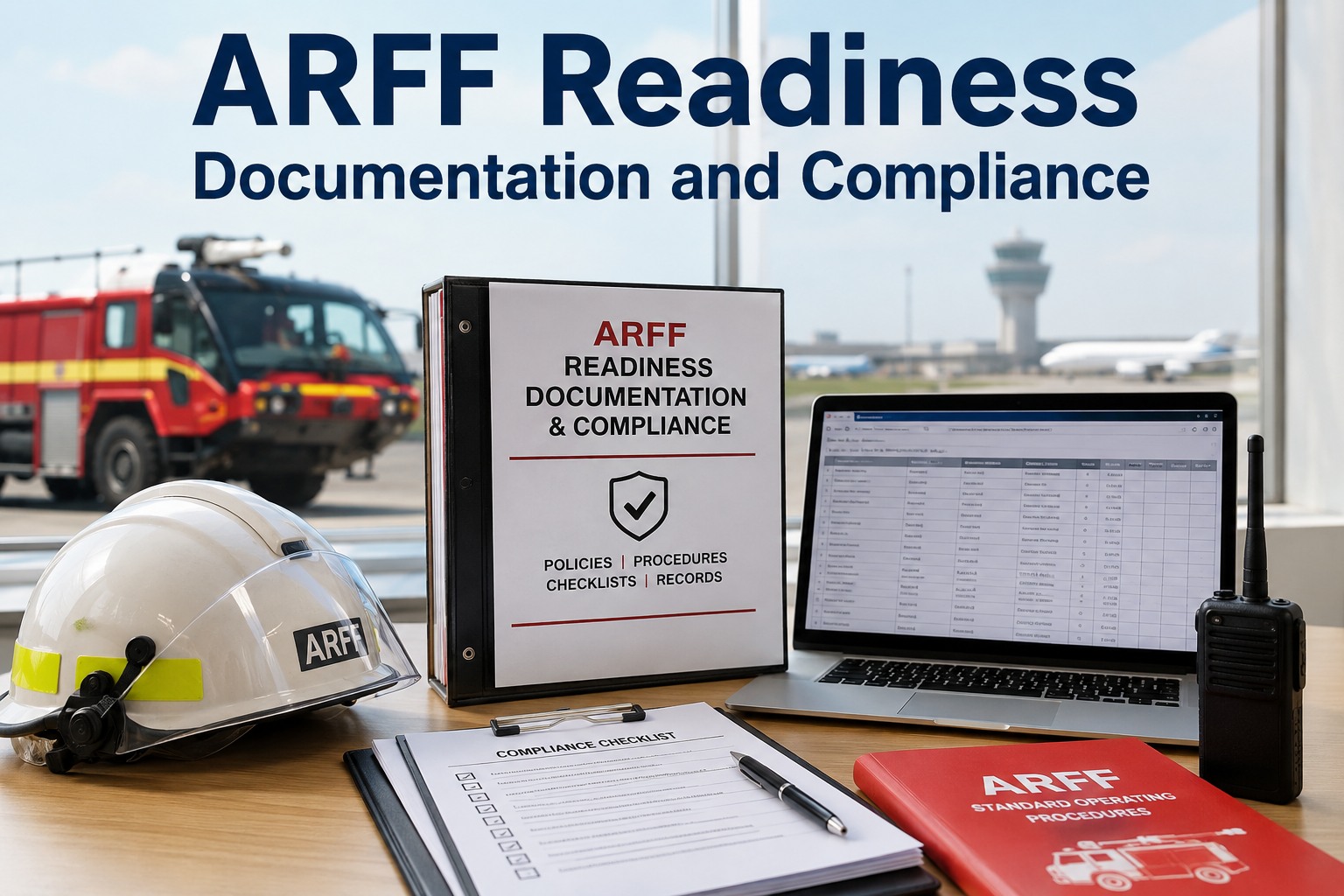
ARFF readiness documentation is the first thing FAA inspectors request during a Part 139 airport certification inspection — vehicle PM logs, agent inventory records, pump test results, and drill evidence. Gaps in aircraft rescue firefighting compl
Read More
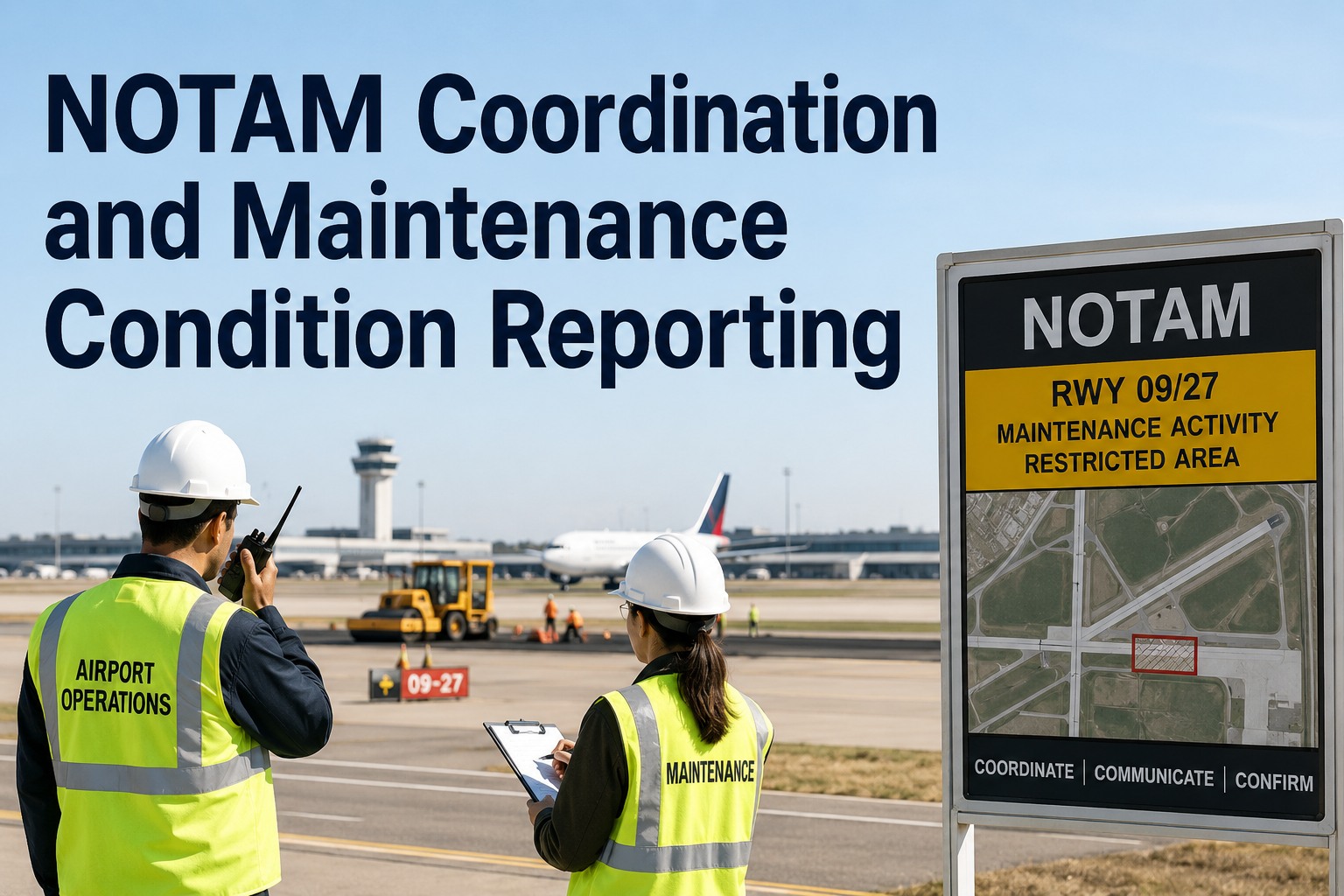
NOTAM coordination and maintenance condition reporting is the process of turning an airfield maintenance finding — a failed runway light, a closed taxiway, a contaminated surface — into a Notice to Airmen that reaches pilots before they need it, o

Read More
MRO warehouse management is the discipline that decides whether parts availability stays high and lean or collapses into low availability and bloated inventory — and in aviation, where an AOG (aircraft on ground) can cost $10,000 to $150,000 per h
Read More
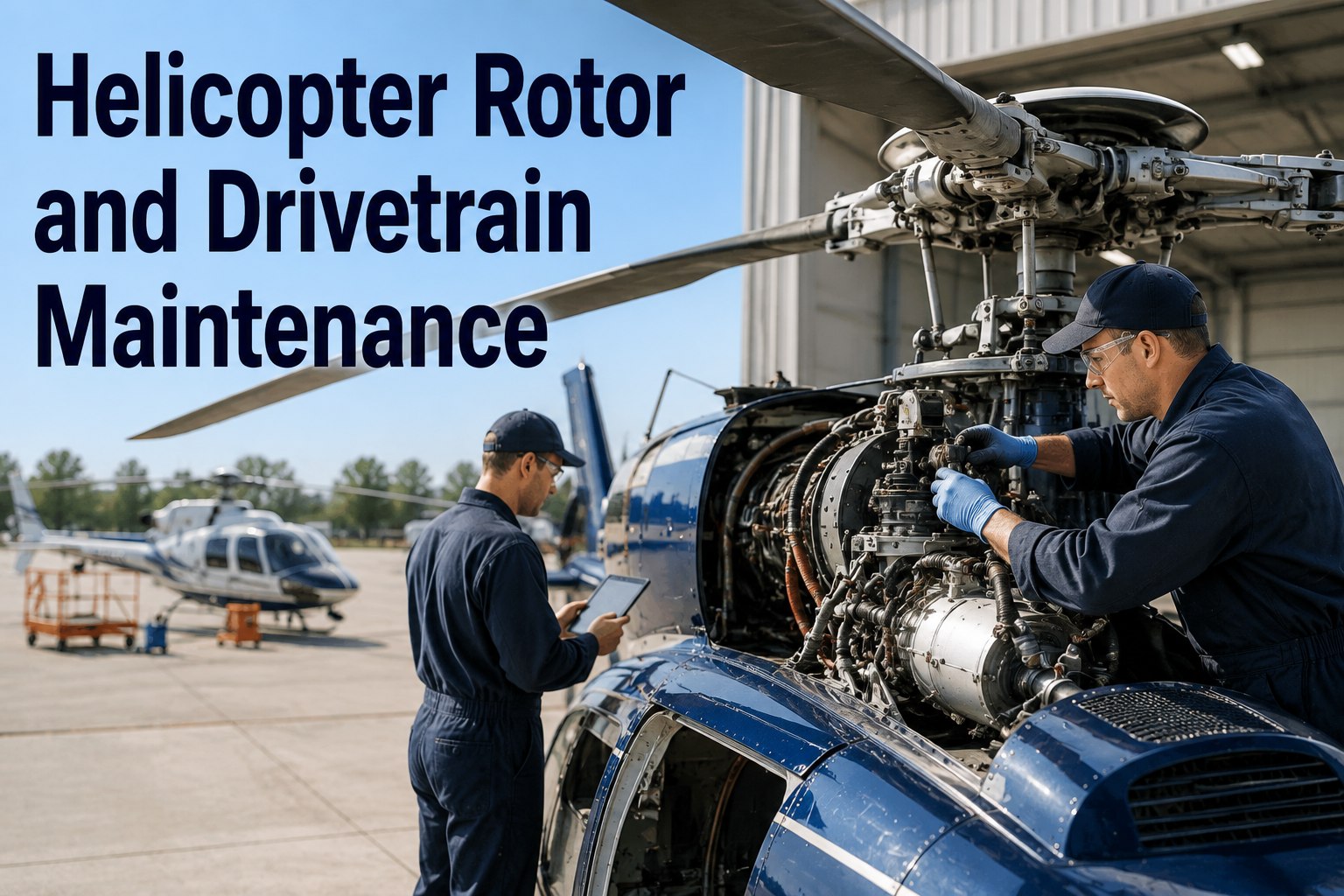
Helicopter rotor and drivetrain maintenance is the single most consequential reliability discipline in rotorcraft operations, because the main rotor, tail rotor, transmission and gearboxes have no redundancy — a single missed chip indication or wo
Read More
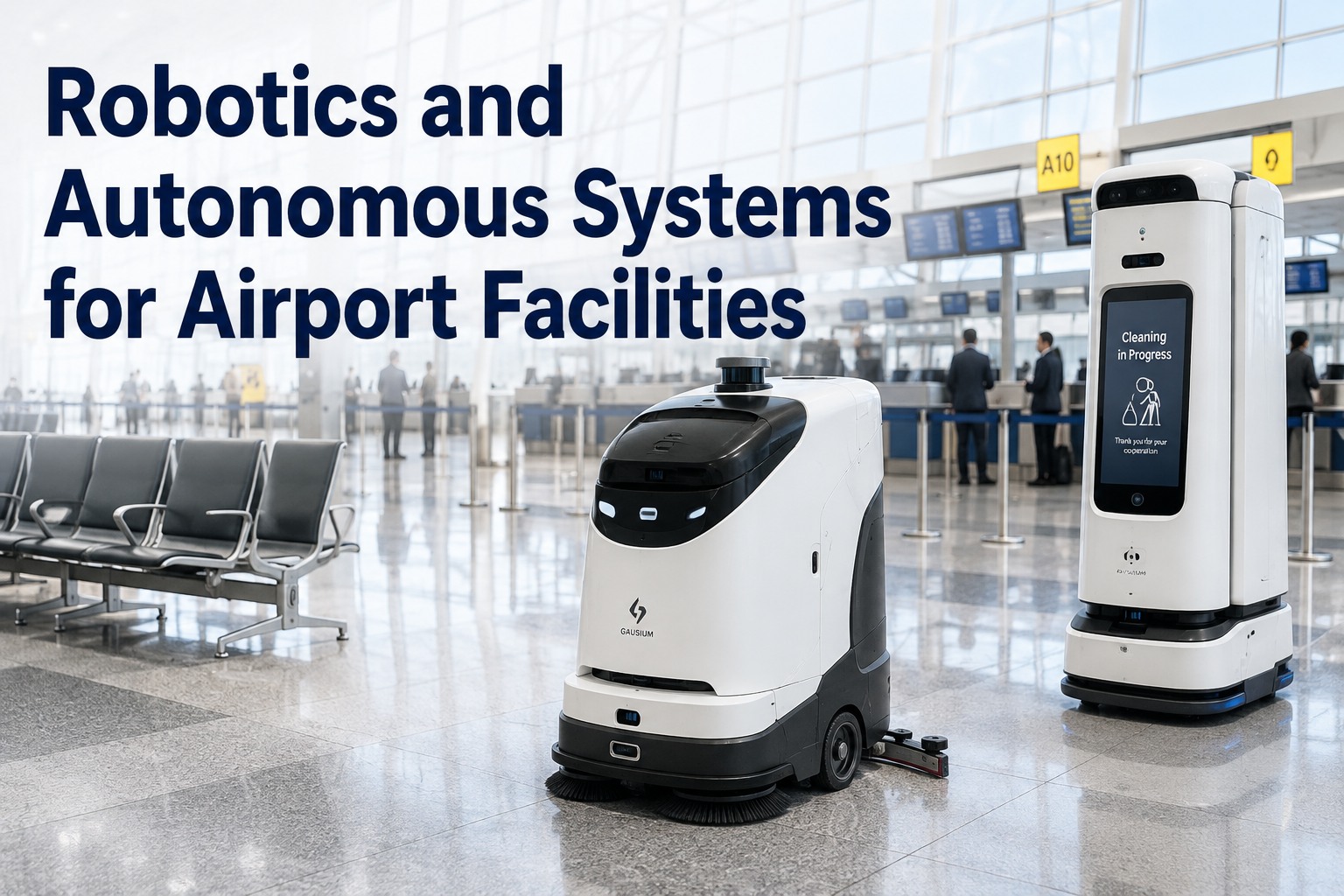
Airport facility robotics — autonomous cleaning, floor scrubbing, security patrol, and restroom monitoring — are moving from pilots to full fleet deployment across terminals worldwide. This guide explains how digital transformation leads can adopt
Read More
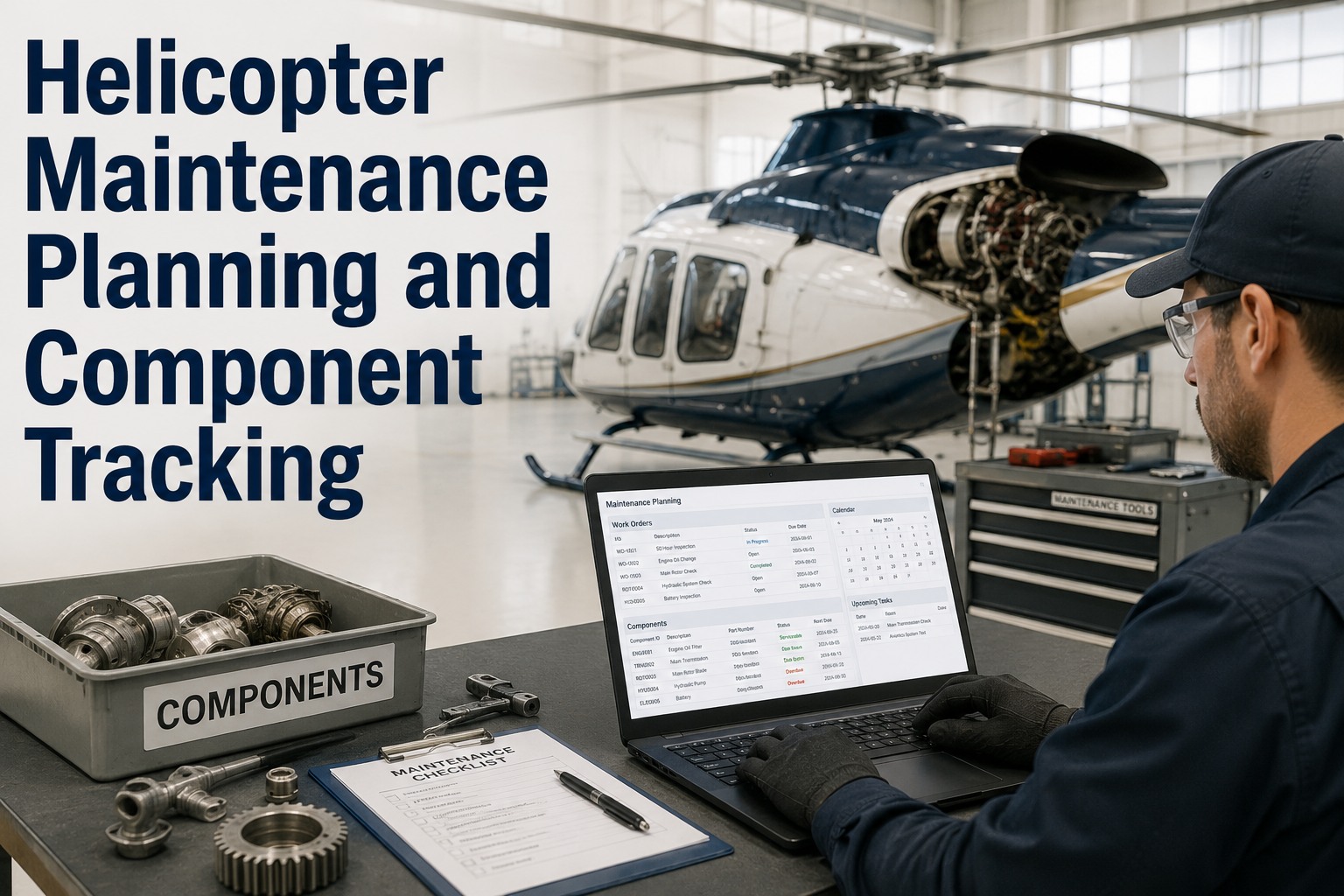
Helicopter maintenance planning is the discipline of keeping every life-limited component, inspection cycle and airworthiness directive aligned so no part ever flies past its limit — and it is measurably more demanding per flight hour than fixed-w

Read More
Min-max stocking of critical spares in aviation MRO is the discipline of setting a minimum reorder point and a maximum stock ceiling for high-value aircraft parts so a component is available the moment a check or AOG event demands it — without fre

Read More
Continuing airworthiness management (CAMO) compliance is the discipline that keeps every aircraft legally airworthy by tying each maintenance action, record and directive to an approved, auditable system. Under EASA Part-CAMO and Part-M, an operat
Read More
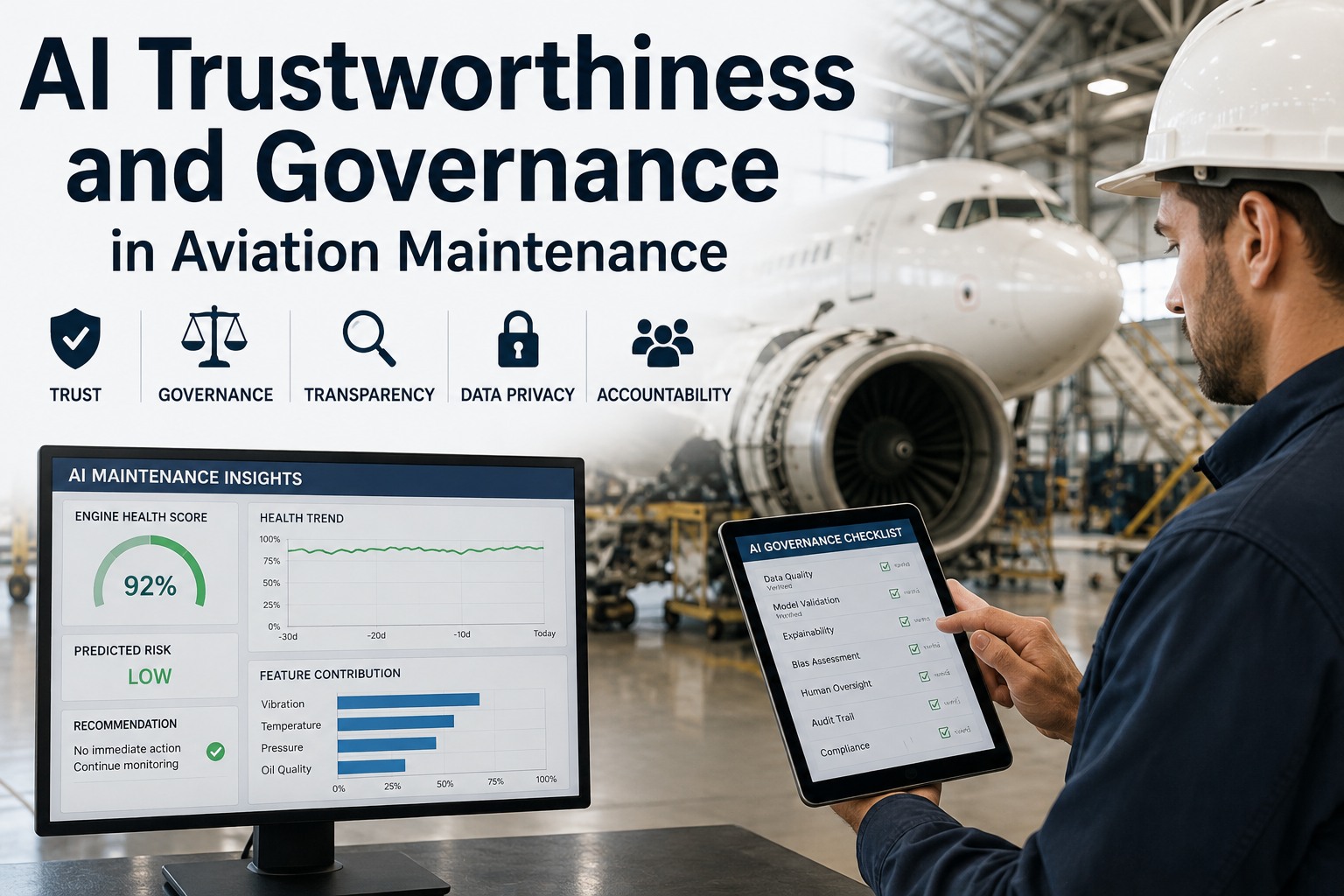
AI trustworthiness and governance in aviation maintenance is the discipline of ensuring that machine-learning systems used in MRO and airworthiness decisions remain accurate, explainable, accountable, and firmly under human authority — because an
Read More
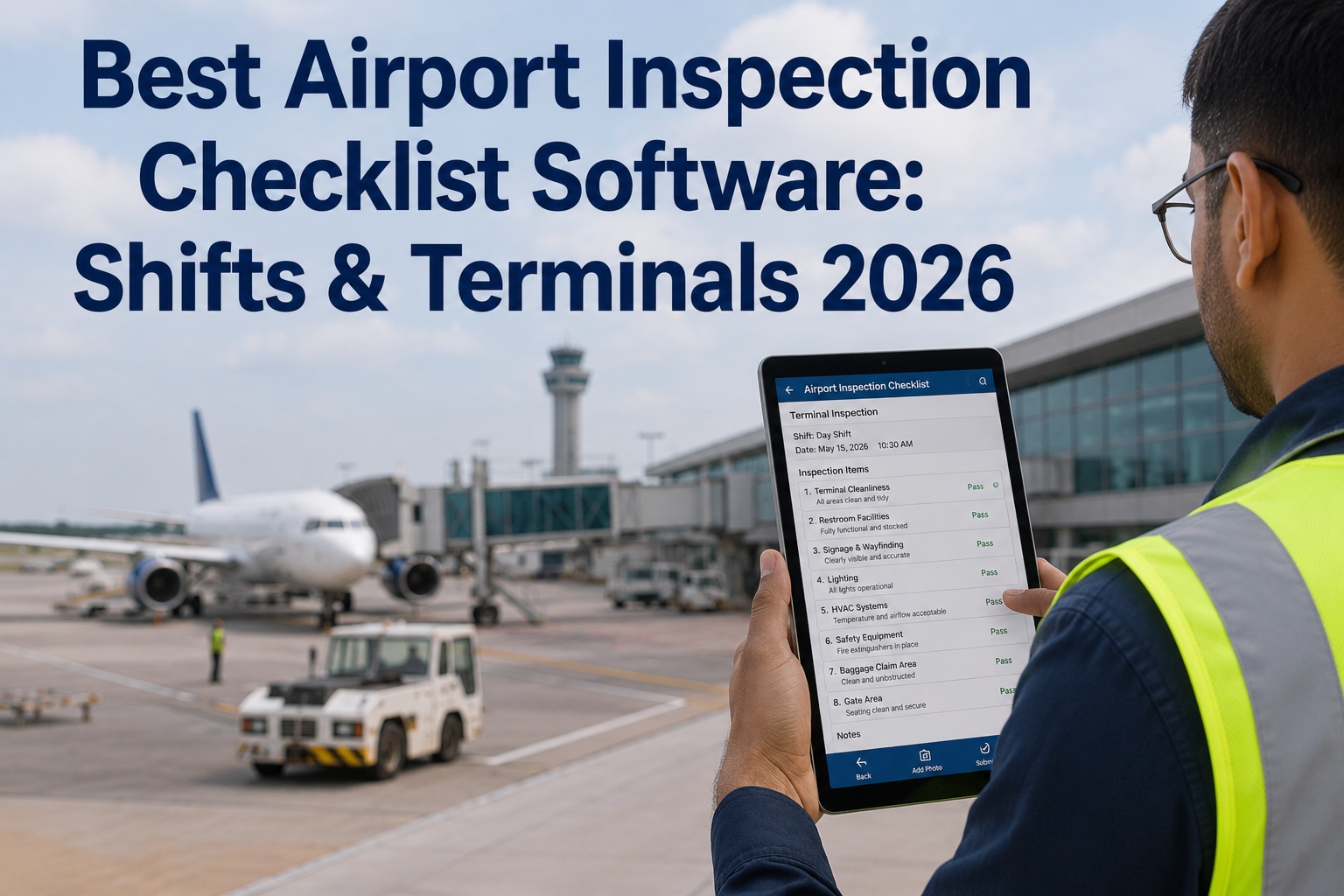
The paper checklist has one fundamental design flaw that no amount of process improvement can fix: it is a static instrument used inconsistently by a rotating cast of inspectors across three or more shifts, across two or more terminals, against an
Read More
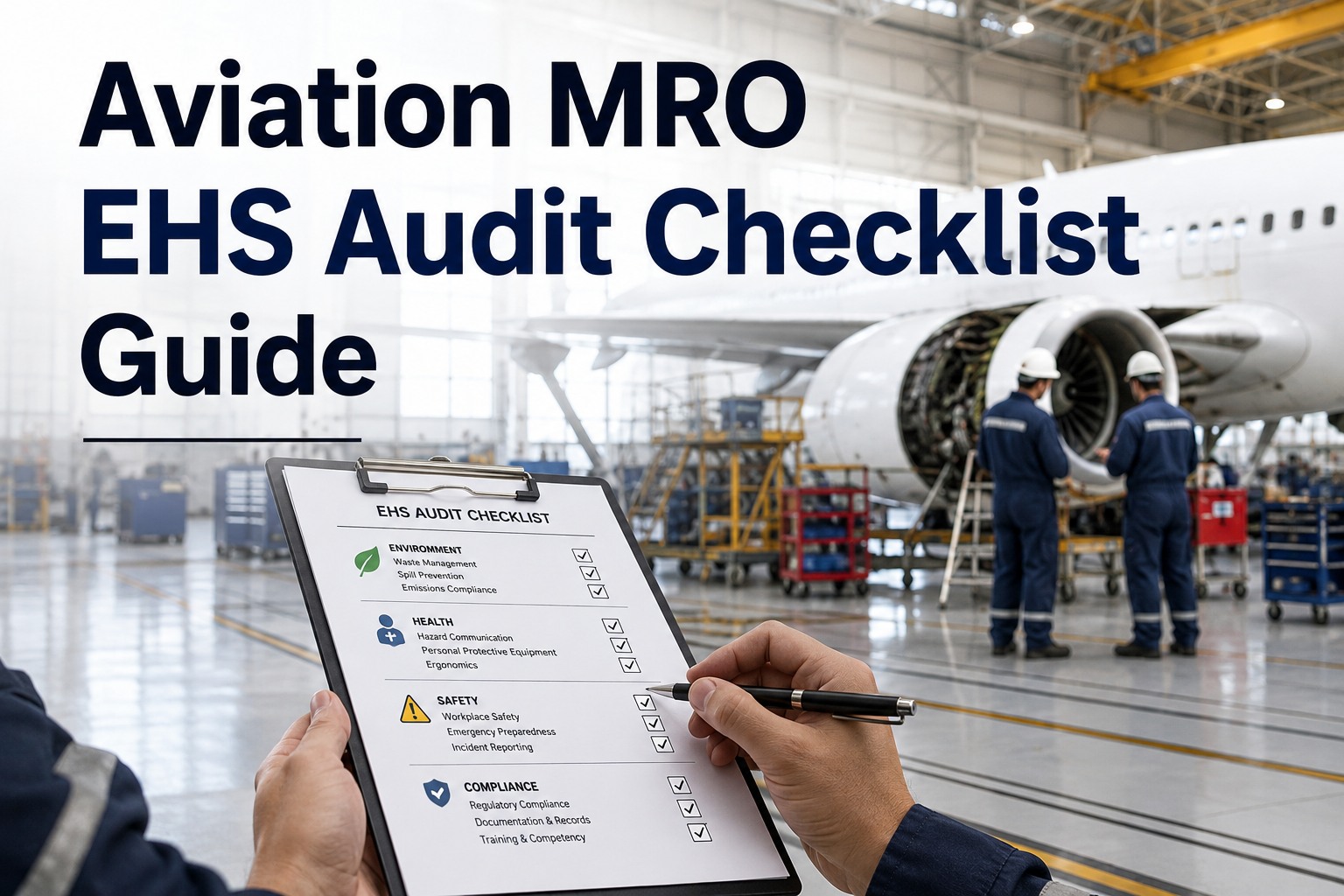
Aviation MRO is one of the most safety-consequential work environments in industry. A single hangar can contain a dozen simultaneous hazard exposures on any given shift: technicians torqueing engine components 40 feet above the hangar floor on win
Read More
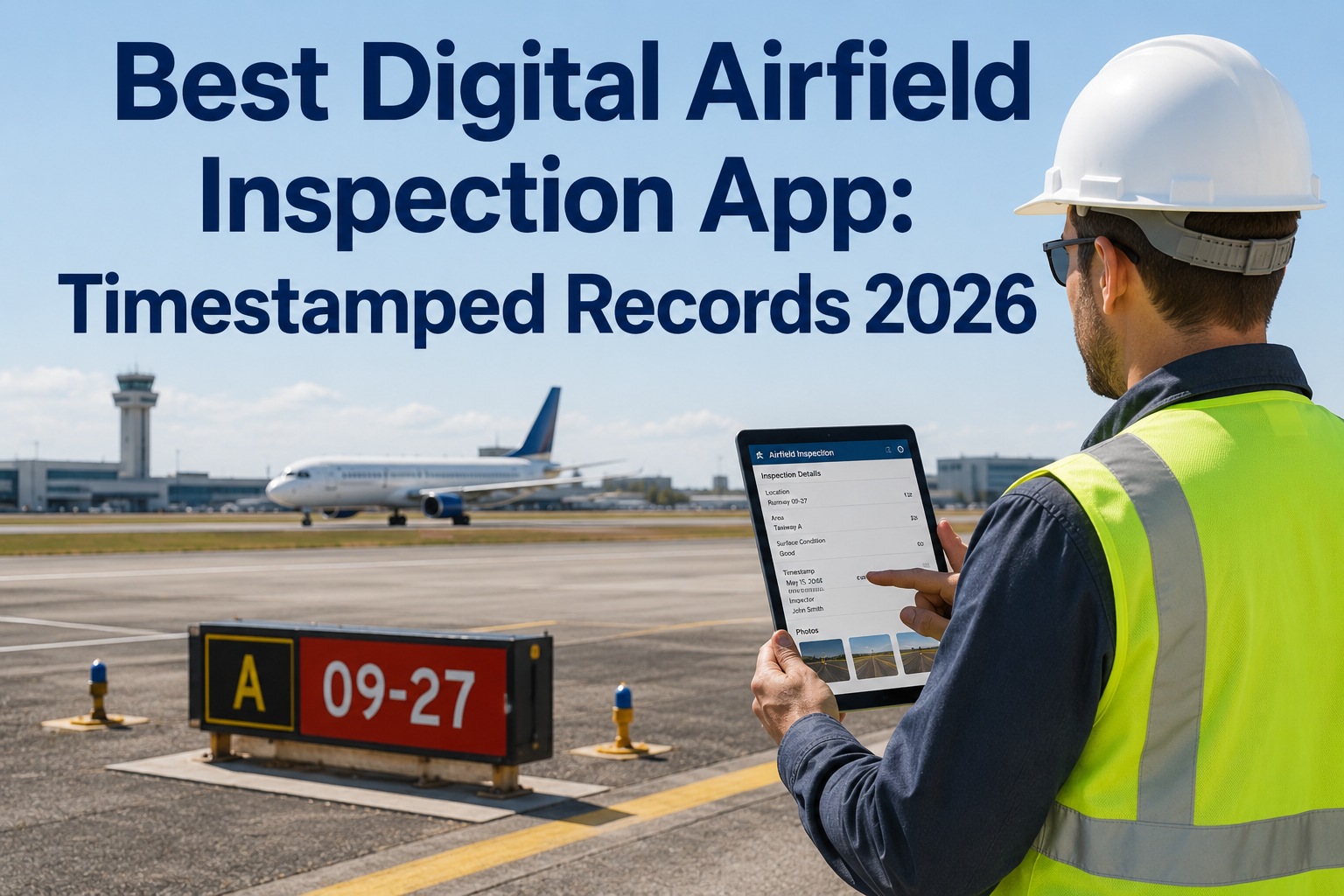
The clipboard is the single most common inspection instrument at airports globally — and the single largest source of every documentation deficiency the FAA cites under §139.327 and §139.301. A digital airfield inspection app is not a nice-to-ha
Read More
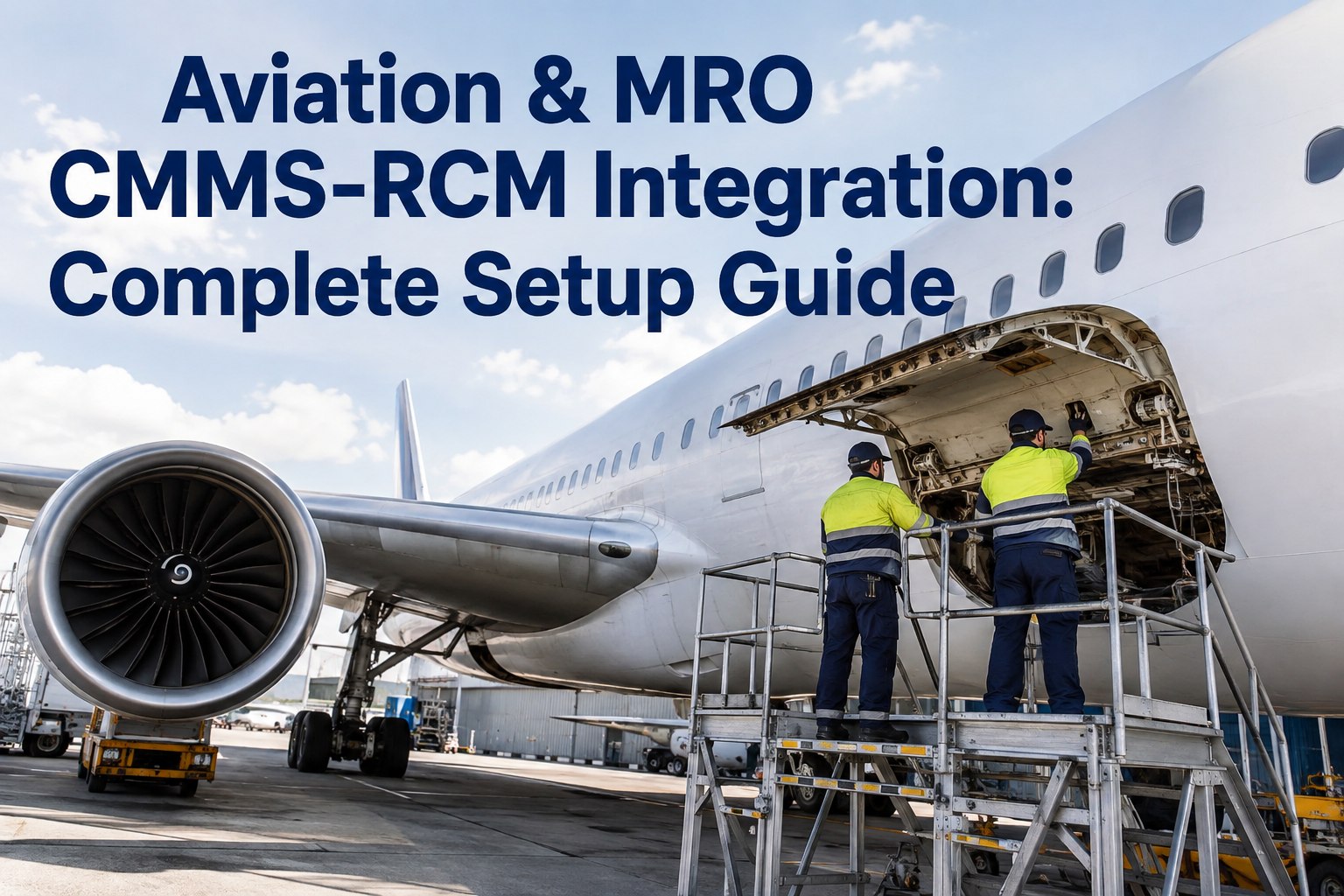
Reliability-Centered Maintenance was invented by the aviation industry — literally. The methodology that every serious manufacturing, energy, and heavy-equipment reliability program uses today traces directly back to United Airlines' MSG-1 and MSG
Read More
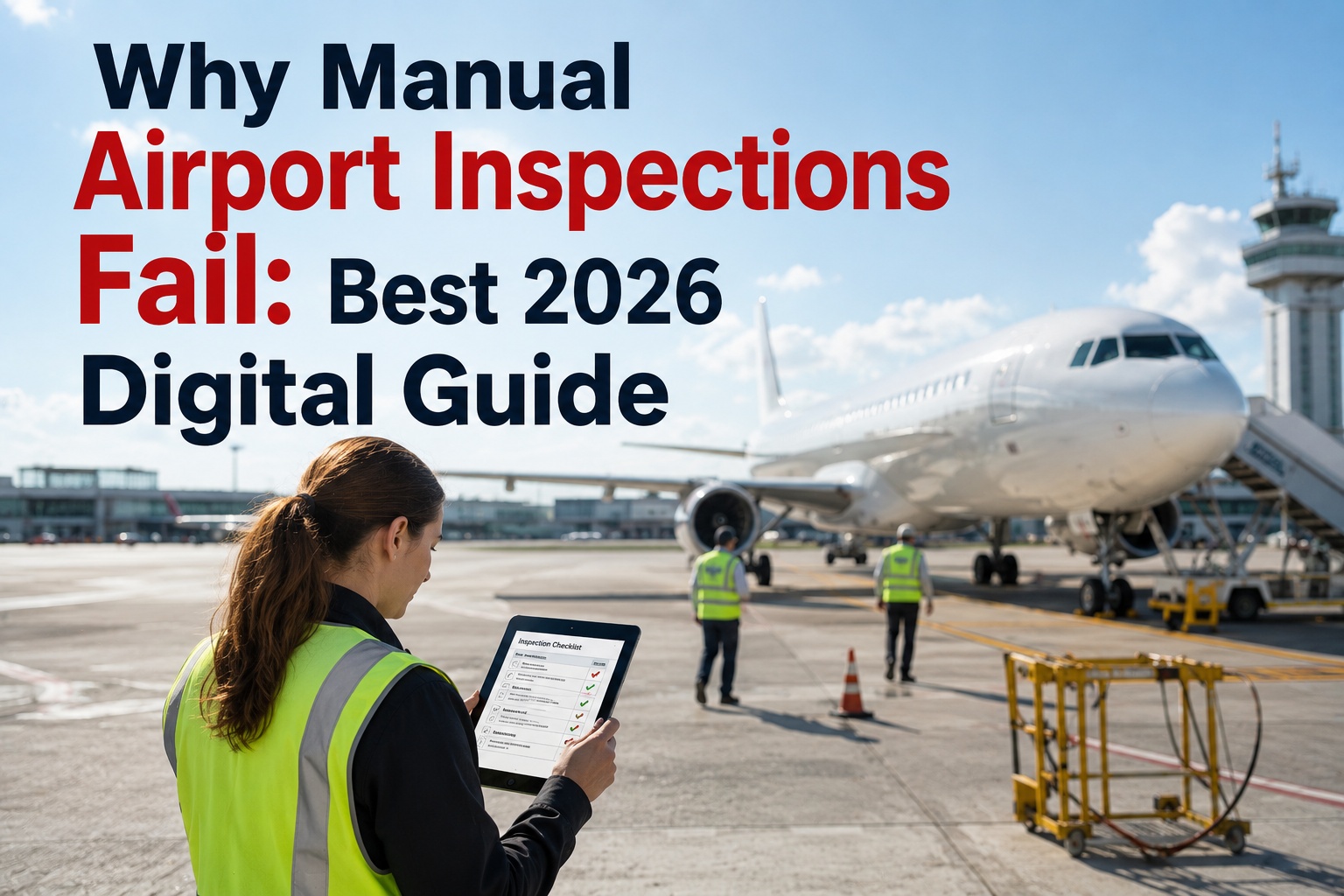
Every airport self-inspection is a bet against the next incident. When manual inspections systematically miss 12 to 18% of airfield defects, that miss rate becomes the raw material for tomorrow's runway incursion, FOD event, pavement failure, or A
Read More
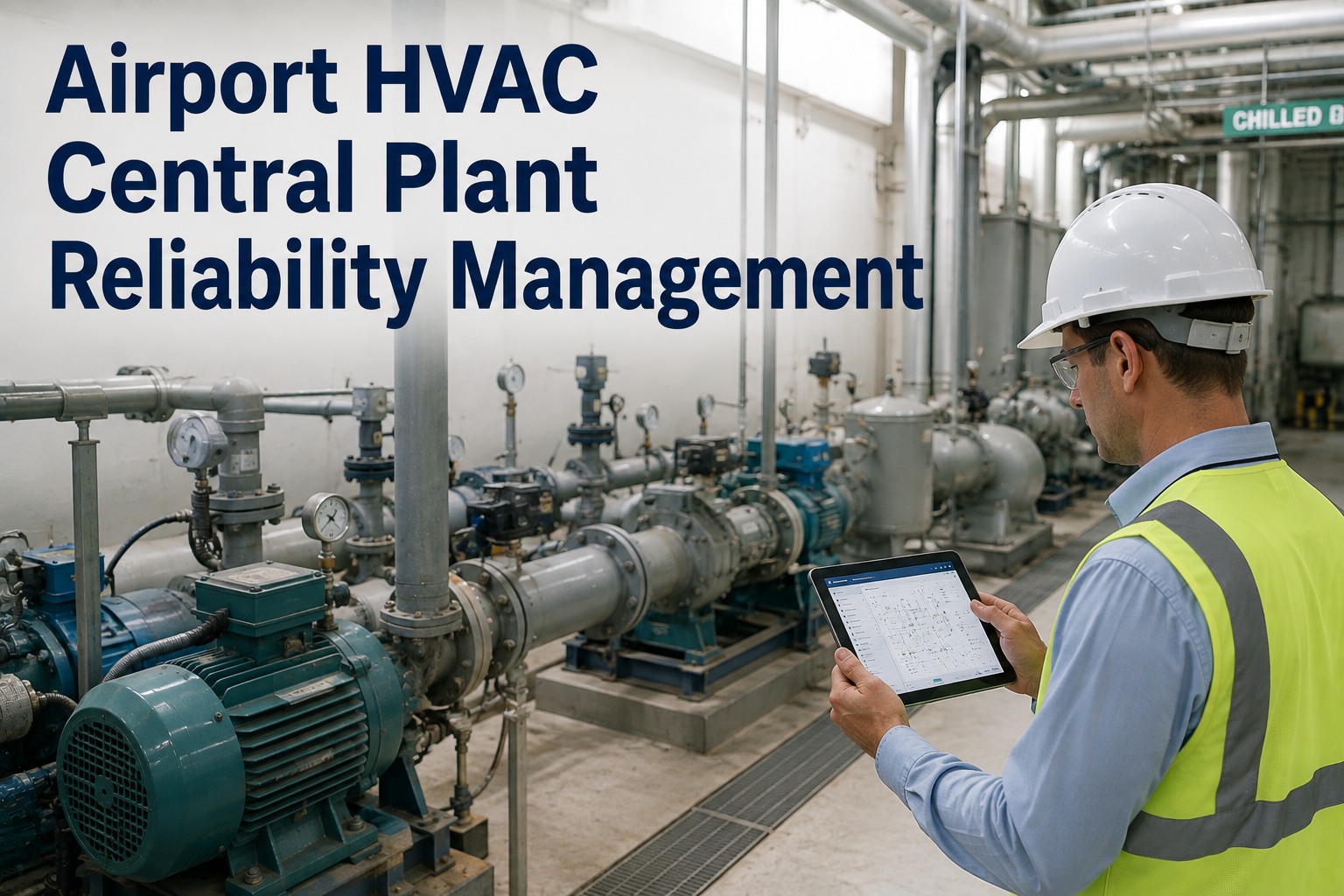
Airport HVAC central plant reliability management is the discipline of keeping chillers, boilers, cooling towers and air-handling systems running continuously so terminals stay comfortable 24/7 — and it matters because the central plant is typical
Read More
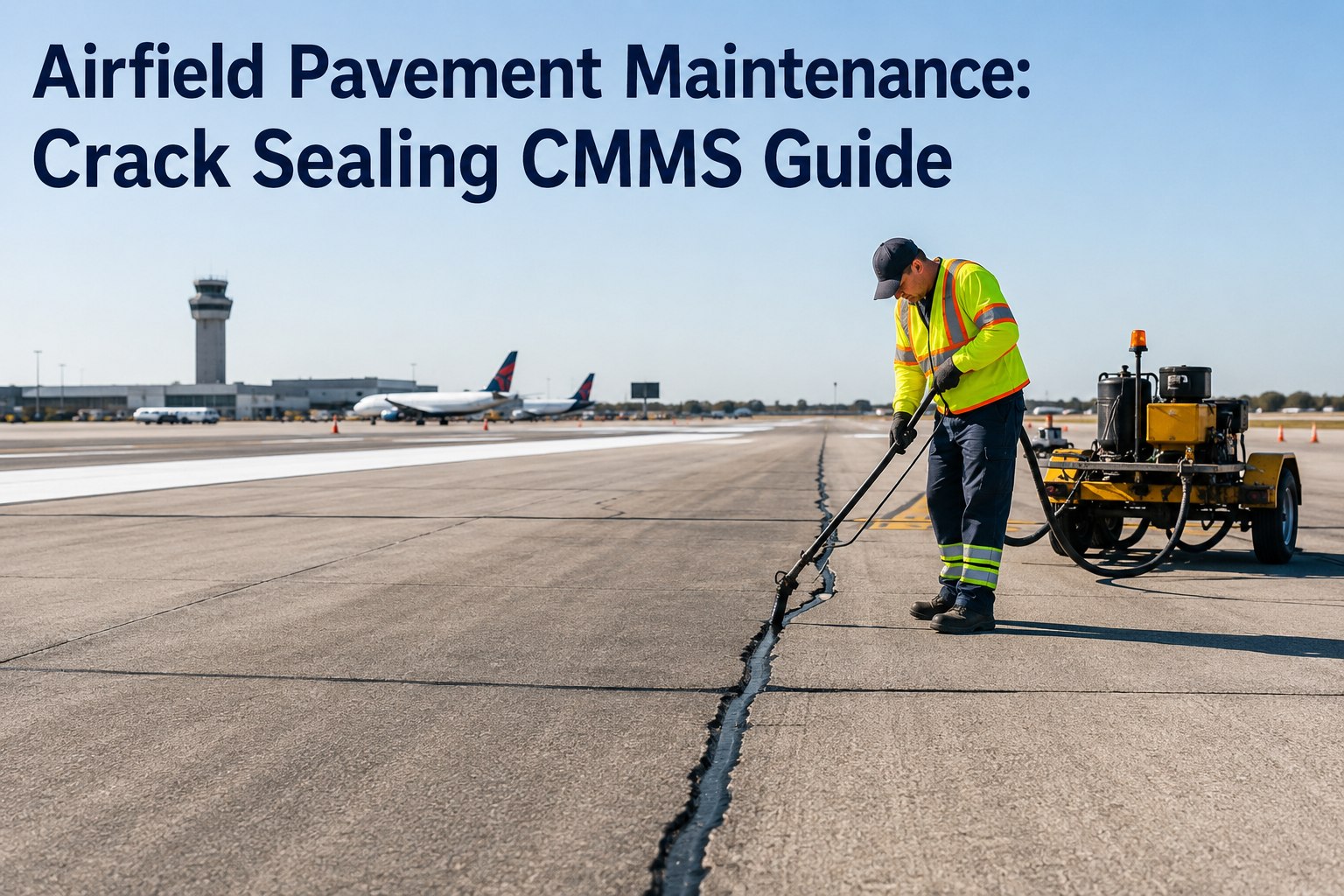
Airfield pavement maintenance — encompassing crack sealing, joint repair, spall mitigation, and FOD prevention — is the single most cost-effective strategy for extending the service life of runways and taxiways without triggering full-depth recons
Read More
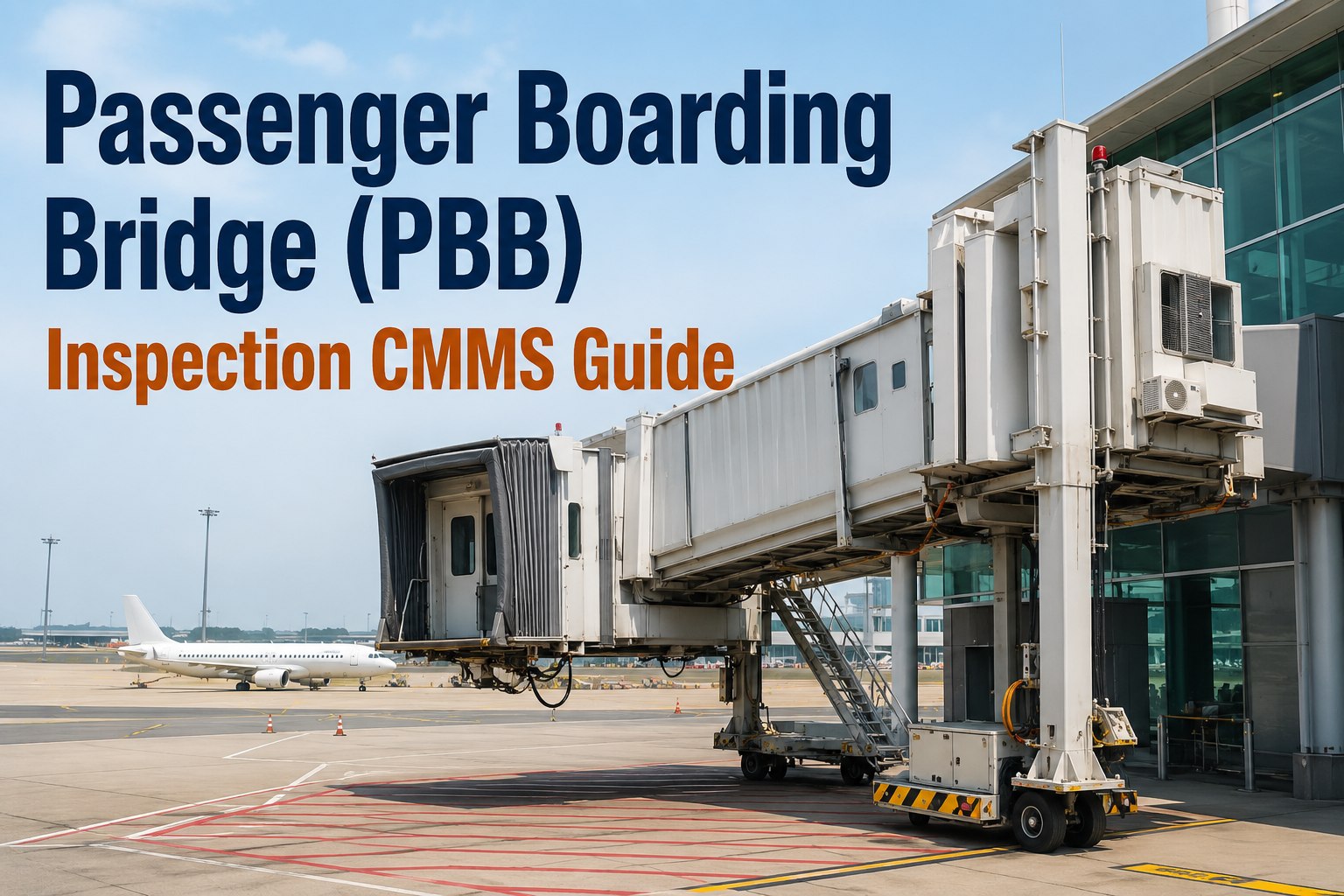
Passenger boarding bridge inspection is the backbone of safe, compliant, and available gate operations at every commercial airport — and a well-structured PBB CMMS guide helps maintenance teams move from reactive repairs to audit-ready preventive
Read More
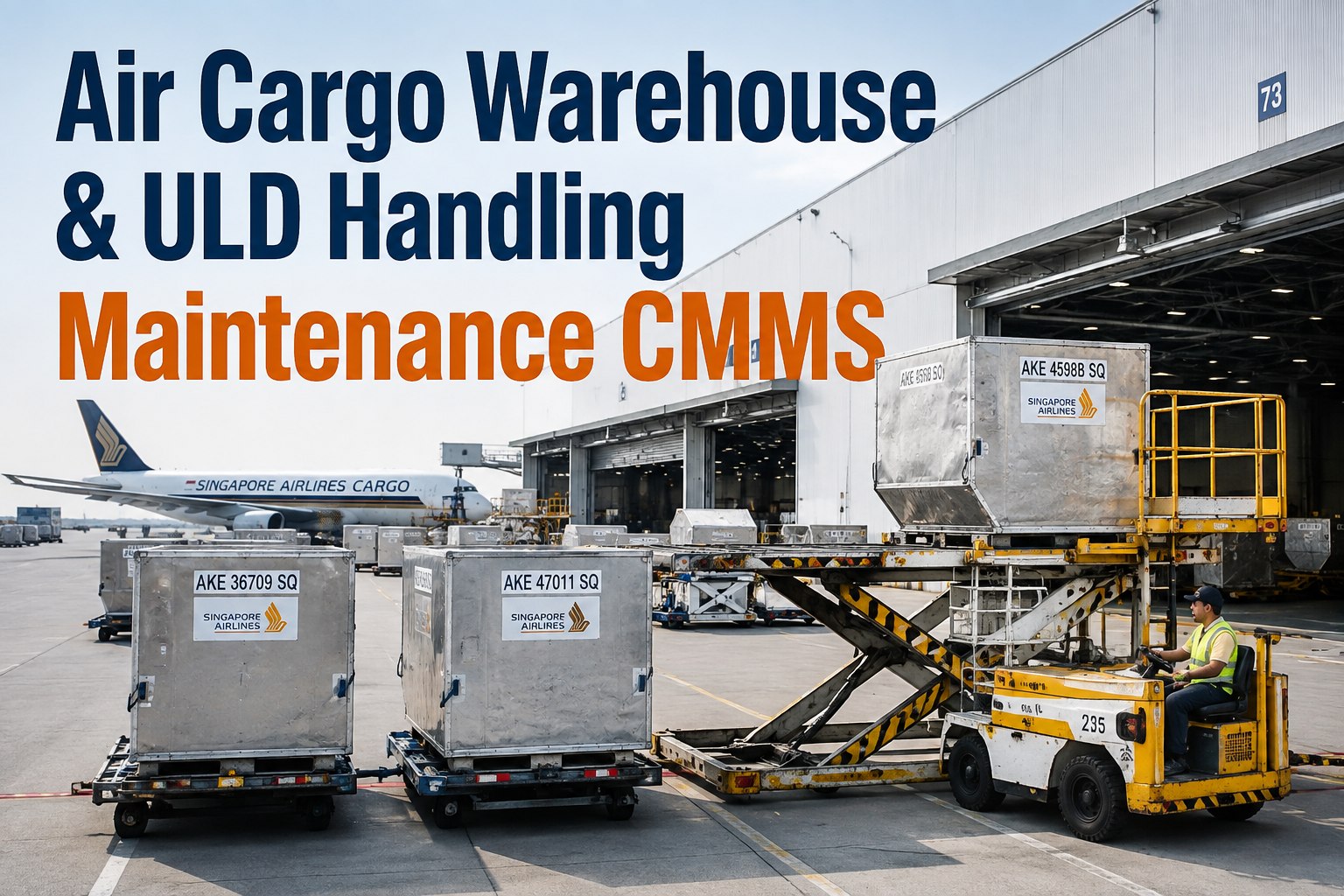
Air cargo warehouse maintenance is the backbone of on-time freight handling — when ULD handling equipment, cargo conveyor systems, and cold storage units fail, the cascade of delays hits airline schedules and shipper commitments within minutes. Th

Read More
An airport digital transformation roadmap gives operations leaders a structured path to replace paper logs, siloed spreadsheets and reactive maintenance with integrated, data-driven workflows — without disrupting 24/7 flight schedules. Most airpor

Read More
Getting started with aircraft predictive maintenance no longer demands a seven-figure, fleet-wide program — most operators already own the hardest ingredient: years of ACMS, FOQA and maintenance-log data sitting unused. A practical aviation predic

Read More
3D scanning aircraft inspection is replacing photographs and manual measurements with permanent, millimetre-accurate digital records of airframe condition — and when those scans feed a digital twin, every dent, blend-out and repair becomes traceab

Read More
MRO benchmarking is the practice of comparing your maintenance, repair and overhaul performance against industry standards so you can see whether your operation is genuinely competitive or just busy. Internal metrics like turnaround time, cost per
Read More
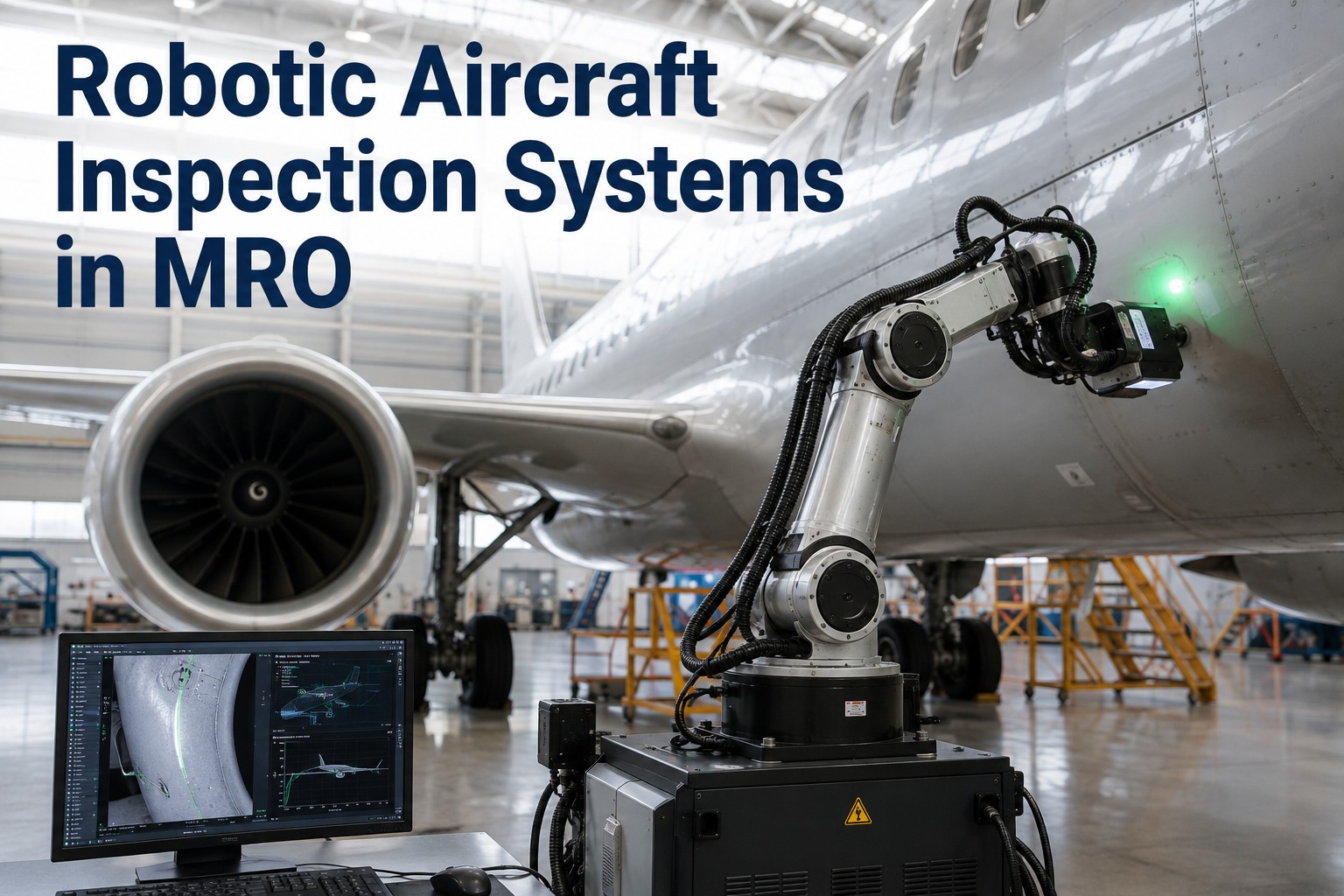
Robotic aircraft inspection systems — crawlers, robotic arms, and mobile scanning robots — are transforming MRO by delivering repeatable, high-coverage inspections that humans simply can't match for consistency. These automated aircraft inspection

Read More
Predicting component remaining useful life in aviation means estimating how many flight hours, cycles or calendar days a part can safely deliver before failure risk rises — so you replace it at the optimal point, not too early and never too late.

Read More
Airport IoT sensors transform boarding bridges, baggage handlers, HVAC plants and airfield lighting from siloed equipment into a live data layer that flags failures weeks before they strand passengers. An effective airport IoT monitoring network t
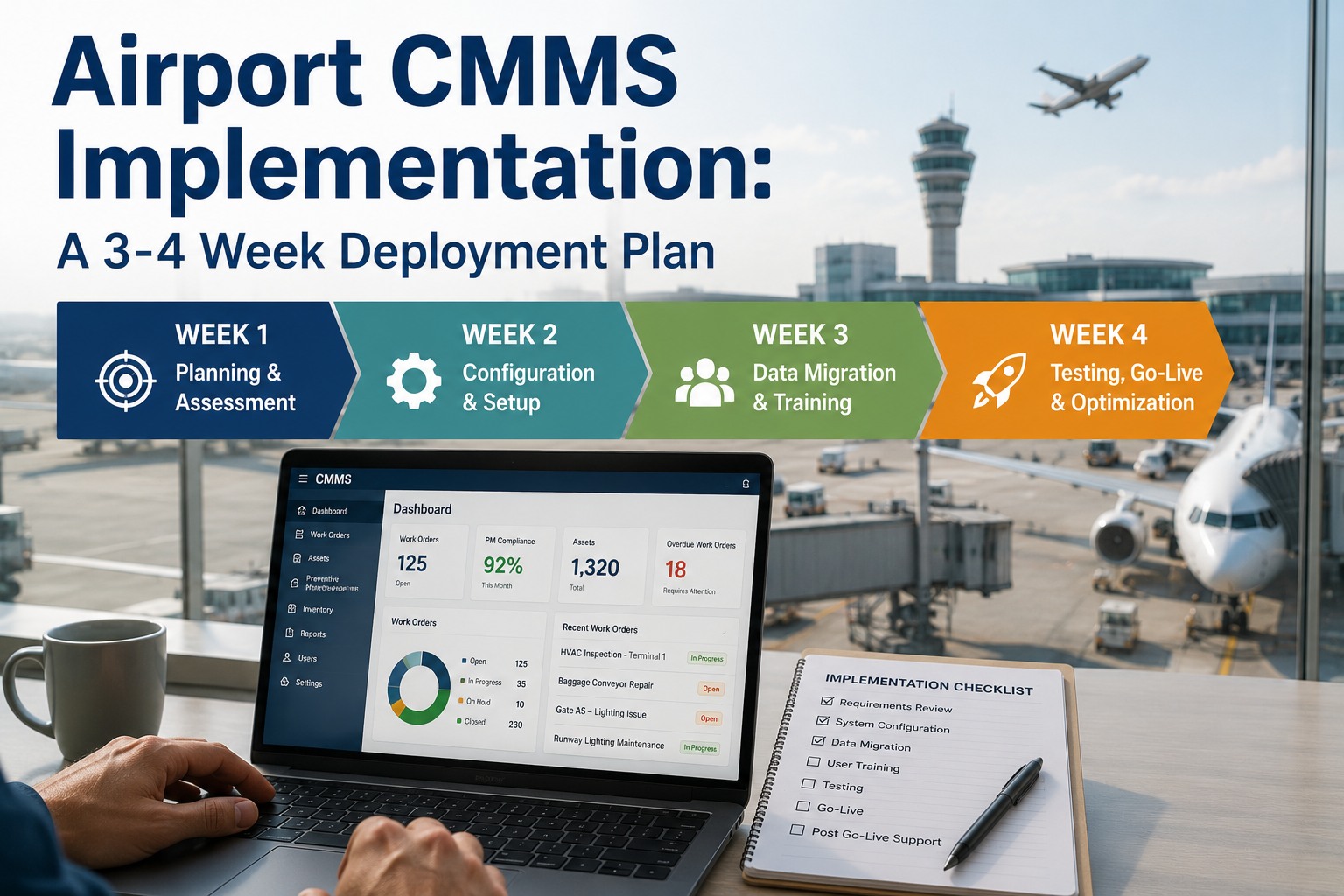
Read More
Airport CMMS implementation does not have to be a 12-month project that drains IT budgets and frustrates maintenance crews. Modern SaaS deployments now go live in three to four weeks, migrating airports from scattered spreadsheets and paper work o

Read More
An airport asset hierarchy built by criticality tier is the structural backbone of every reliable CMMS function — from preventive maintenance scheduling to capital planning and audit readiness. When airports classify assets into safety-critical, o

Read More
Airport overnight maintenance windows are the most valuable — and most frequently squandered — operational asset on the airfield. Major runway, taxiway, and gate repairs must fit inside a 4-hour overnight gap rather than a standard 8-hour shift, m
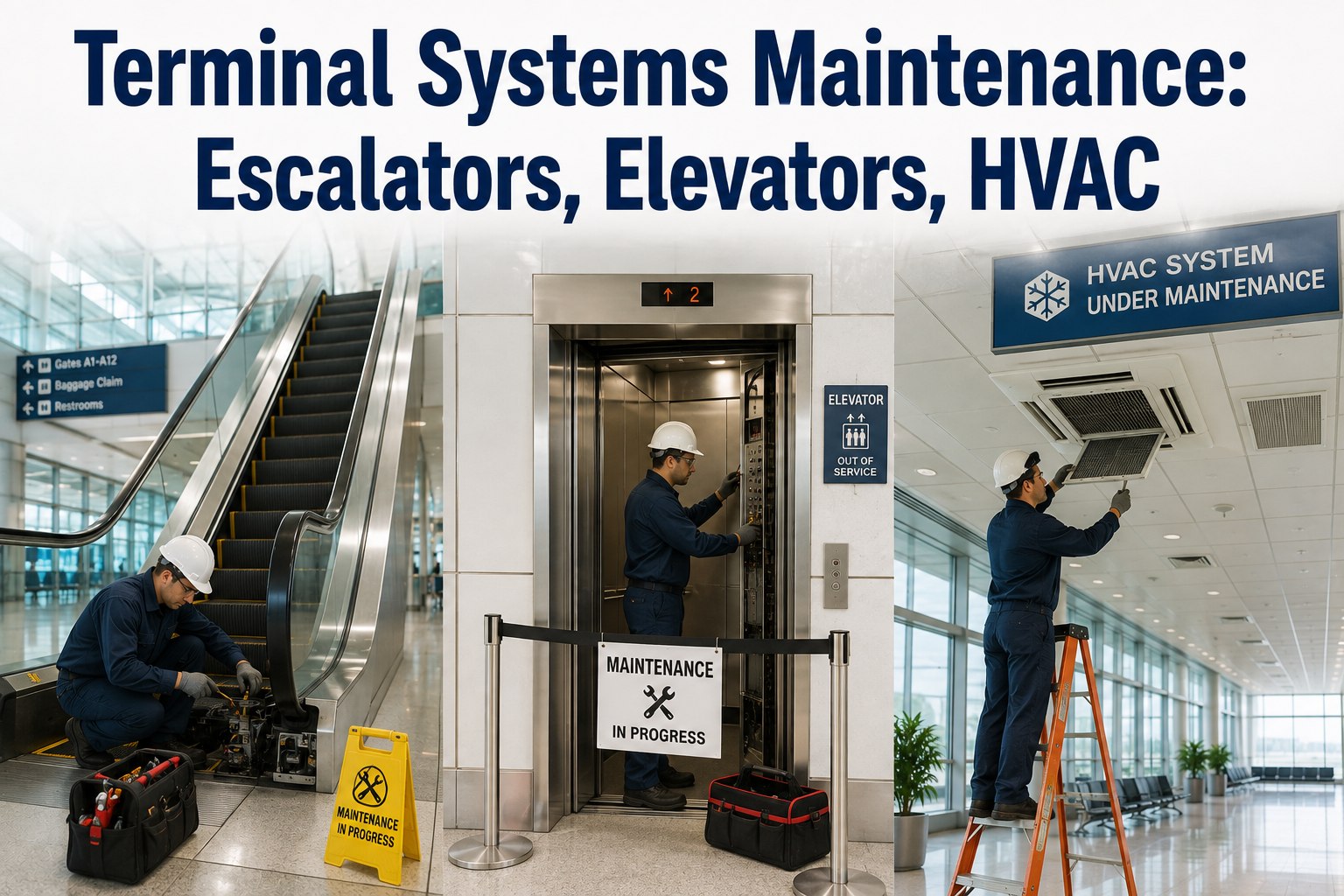
Read More
Terminal systems maintenance covers the preventive, predictive, and reactive upkeep of escalators, elevators, and HVAC central plant that keep passenger terminals operational. In airports and transit hubs, these mechanical systems are what passeng
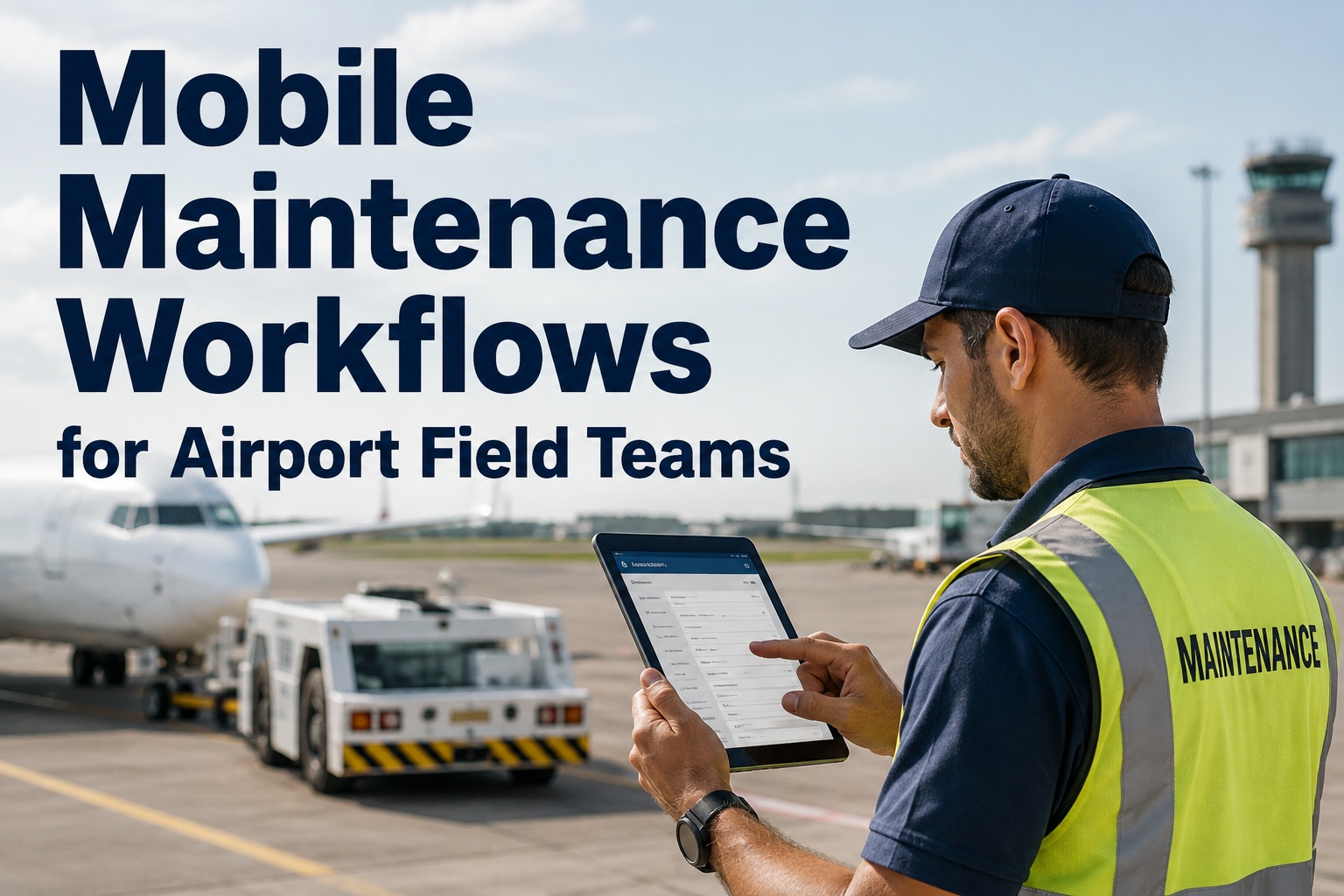
Read More
Airport mobile maintenance is no longer optional for field teams working on ramps, taxiways, and runways — it is the operational backbone that separates a CMMS reflecting real-time reality from one stuck capturing yesterday's intent. Airfield main

Read More
Airport energy and sustainability programs now hinge on maintenance data as much as renewable installations, because HVAC plant, baggage conveyors, and electric ground support equipment collectively drive 60–80% of a terminal's controllable kilowa
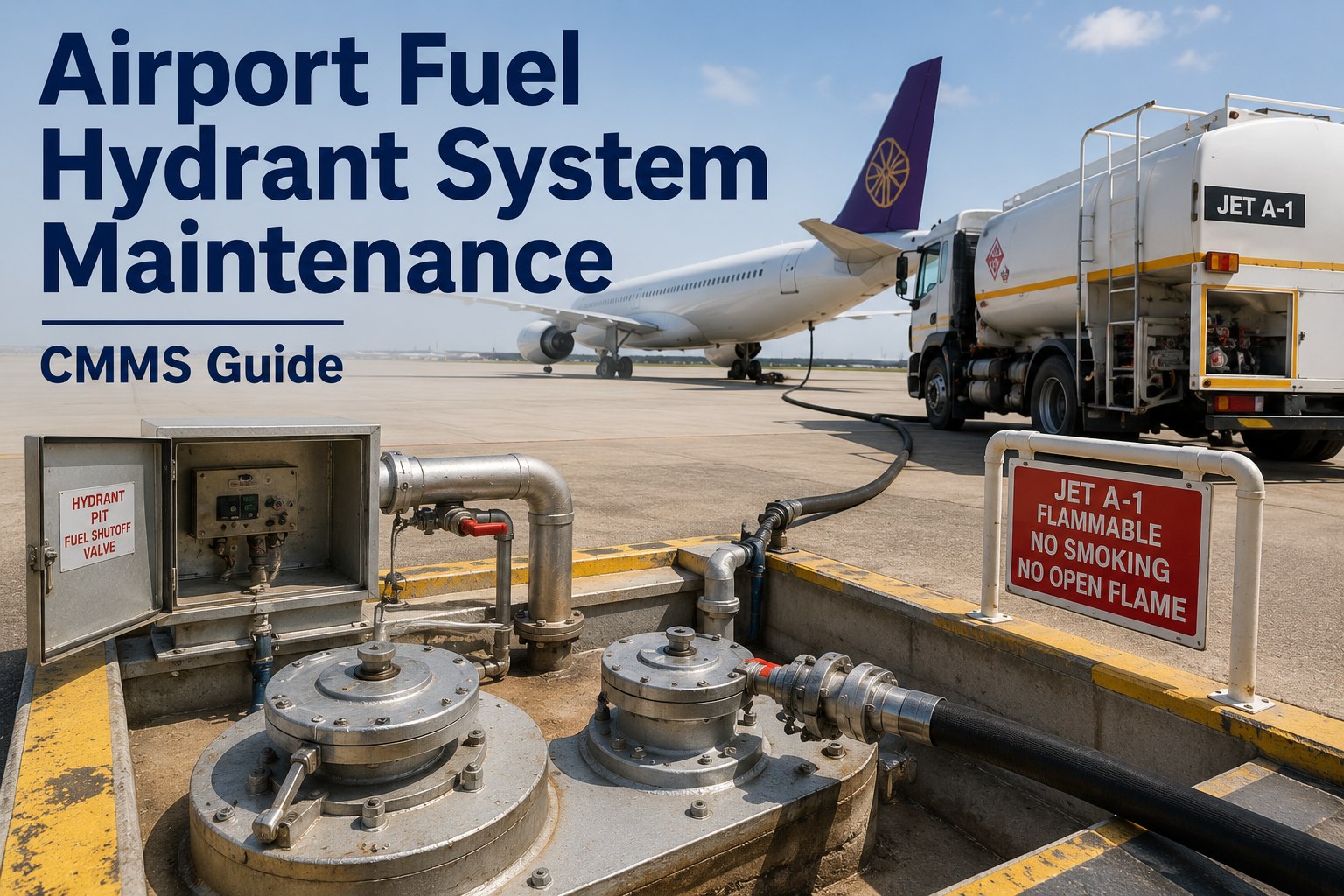
Read More
Airport fuel hydrant system maintenance demands a rare combination of safety rigor, environmental compliance, and operational uptime — a single unmonitored pit valve or unchecked pipeline leak can ground flights, trigger EPA SPCC violations, and c
Read More
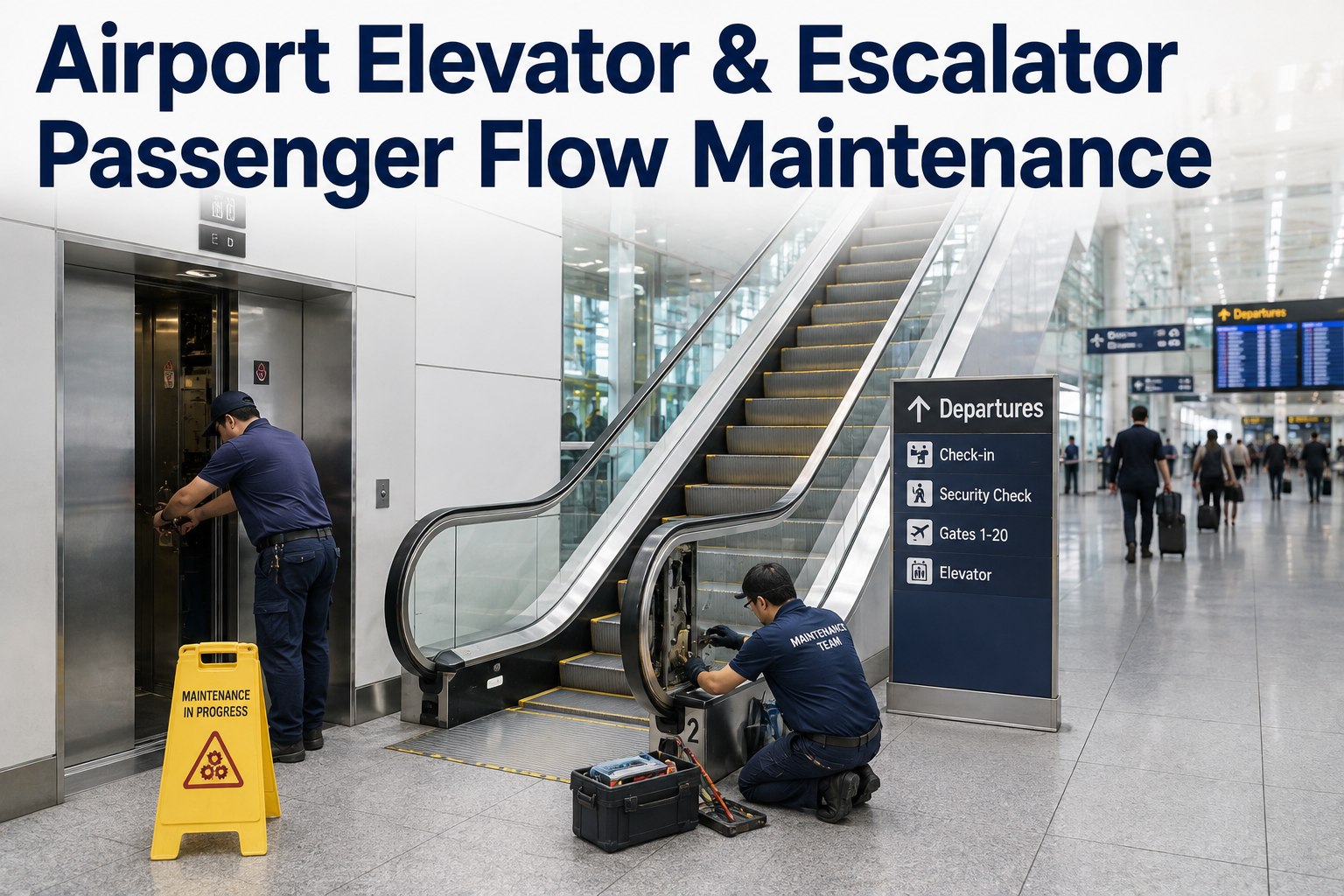
Airport elevator and escalator maintenance is the backbone of uninterrupted passenger flow, terminal throughput, and compliance in modern aviation hubs. When a single escalator stops during peak boarding hours, it disrupts thousands of travelers,

Read More
Airport terminal HVAC systems operate under some of the most demanding load profiles in commercial facilities management — running 24/7, absorbing massive passenger-surge occupancy swings, and complying with strict indoor air quality (IAQ) codes.
Read More
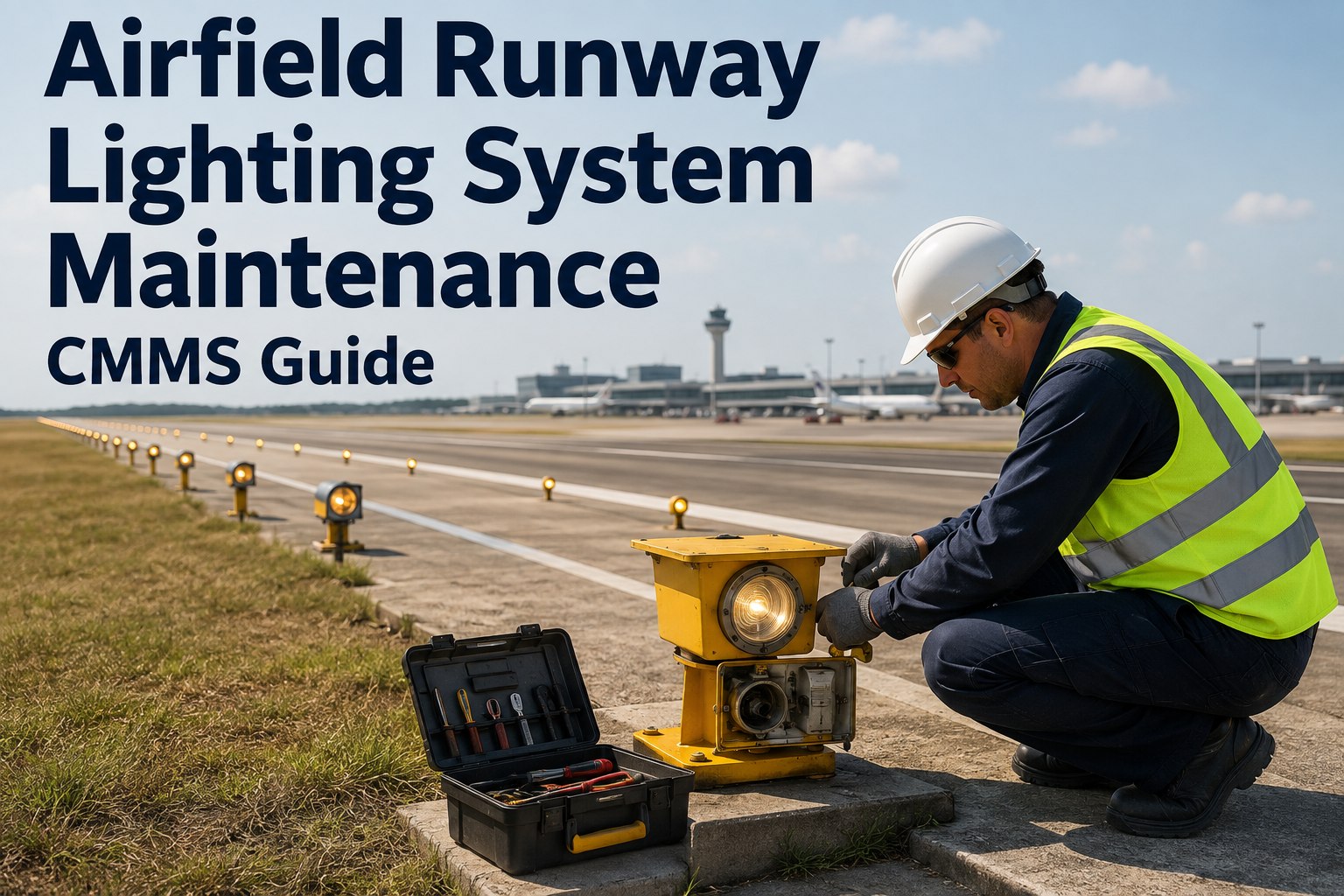
Airfield runway lighting system maintenance is the safety-critical backbone of low-visibility airport operations, where a single failed edge or approach light can trigger immediate arrival rate cuts and cascading flight delays. This CMMS runway li
Read More
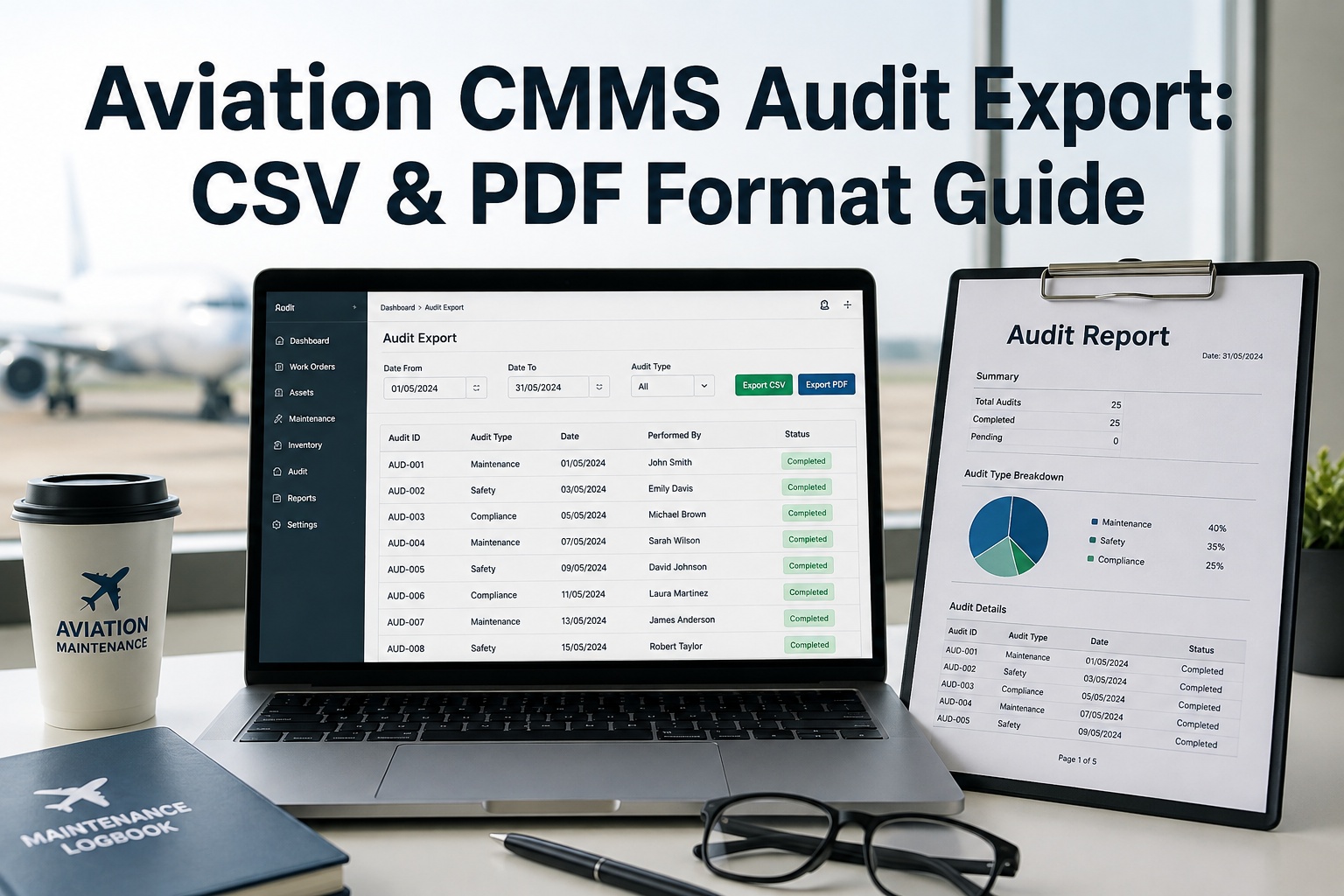
Aviation CMMS audit export capabilities determine whether a regulatory inspector accepts your maintenance records in minutes — or sends your team back to reconstruct weeks of work order history from scattered spreadsheets. A well-structured CSV or
Read More
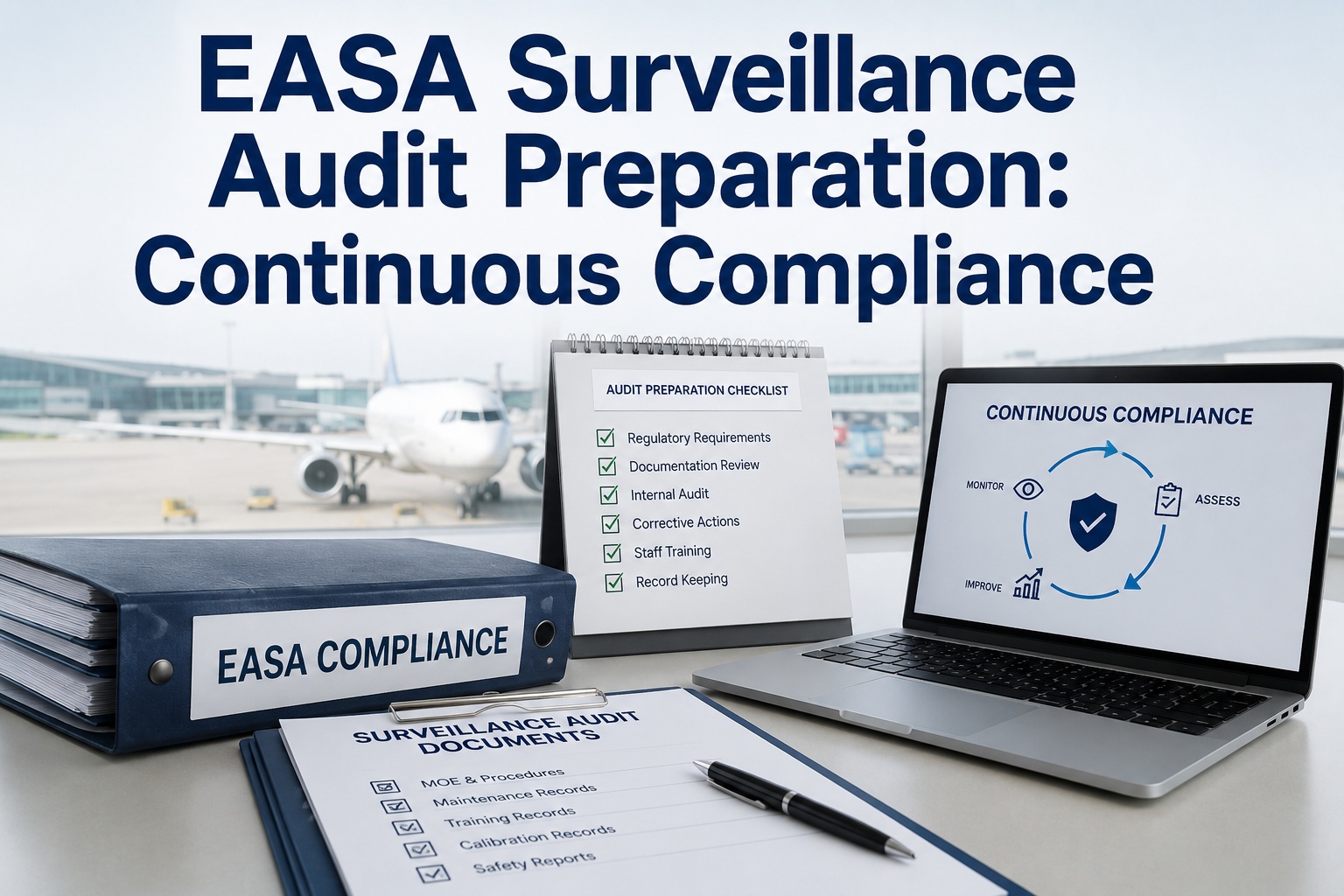
EASA surveillance audit preparation is the process of proving continuous compliance with European Union Aviation Safety Agency regulations between full renewal audits — and for most CAMO and Part 145 organizations, it is where paper-based maintena
Read More
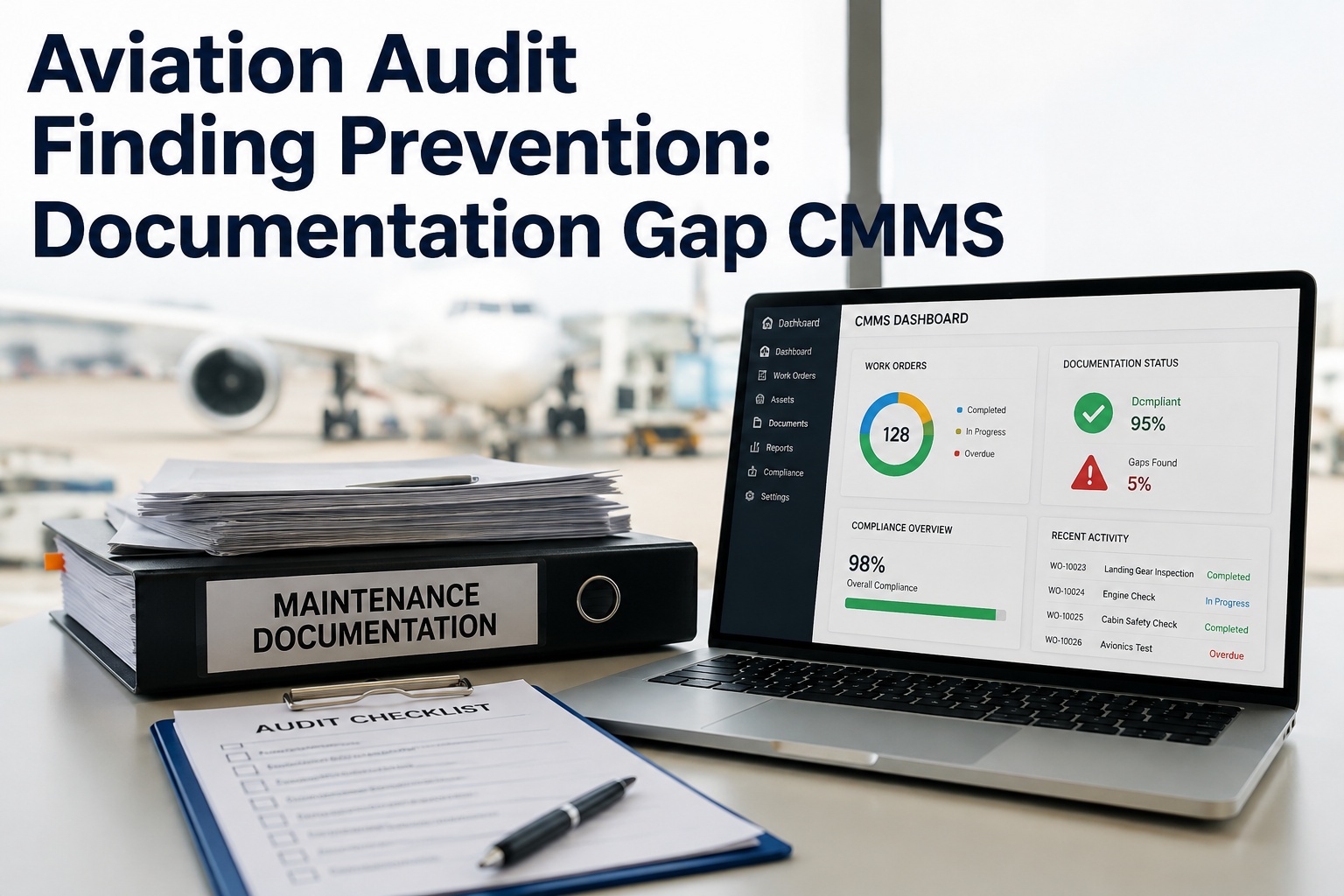
Aviation audit finding prevention starts with closing documentation gaps before auditors find them — and most gaps are preventable when a CMMS enforces signoff completeness, signature capture, and verification workflows in real time. Missing signa

Read More
Aviation insurance audits increasingly hinge on the quality of your maintenance documentation, not just the condition of your aircraft. Underwriters assessing machinery breakdown, hull, and liability coverage now expect CMMS-backed evidence of pre
Read More
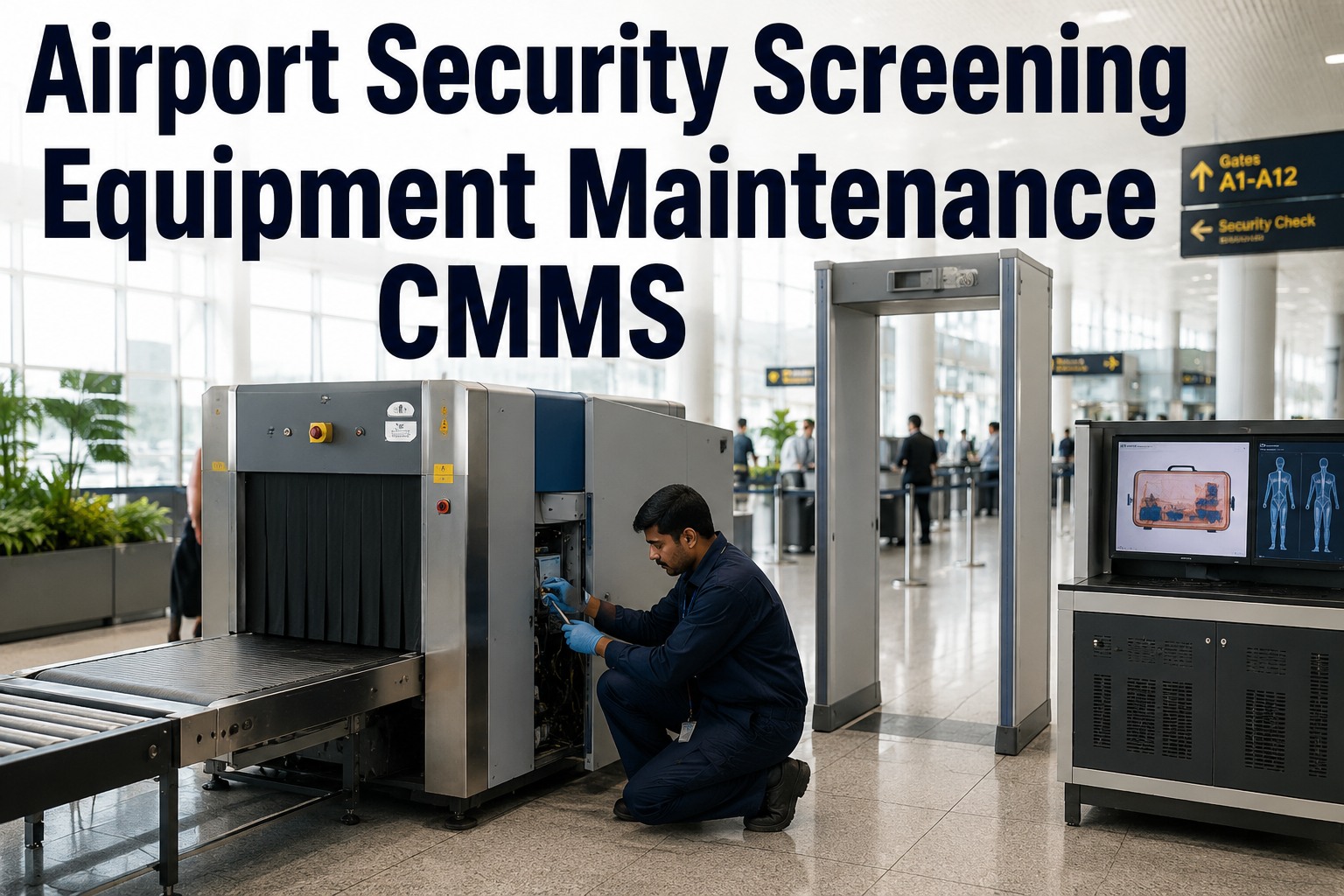
Airport security screening equipment maintenance demands strict TSA availability targets, precise calibration tracking, and zero-tolerance uptime reporting — and a modern CMMS is the system that holds it all together. From CT scanners and X-ray ma
Read More
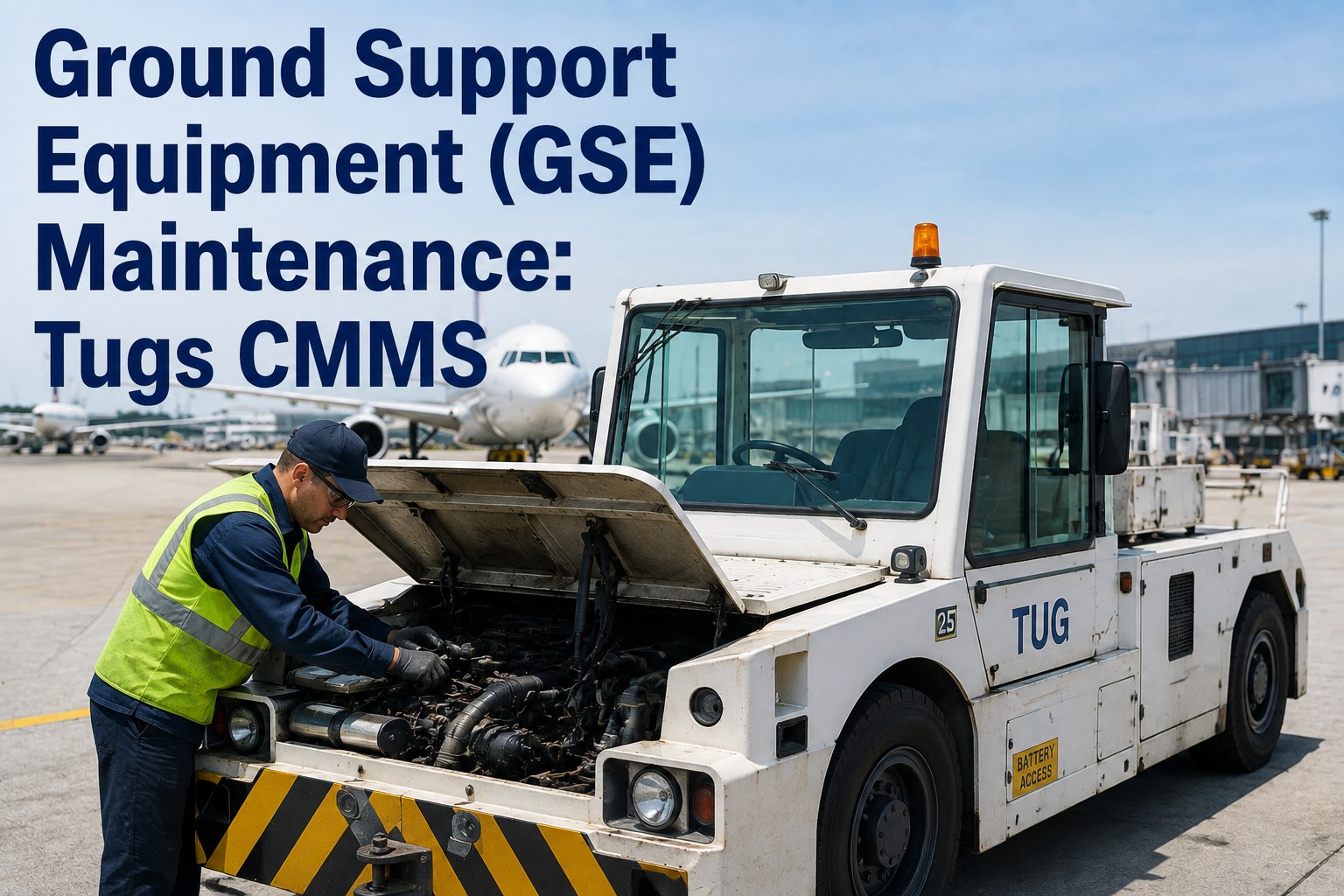
Ground support equipment maintenance is the backbone of every efficient airport ramp — when pushback tugs, belt loaders, GPUs and de-icers go down, flights don't leave on time. This GSE maintenance guide for 2026 walks through preventive maintenan
Read More
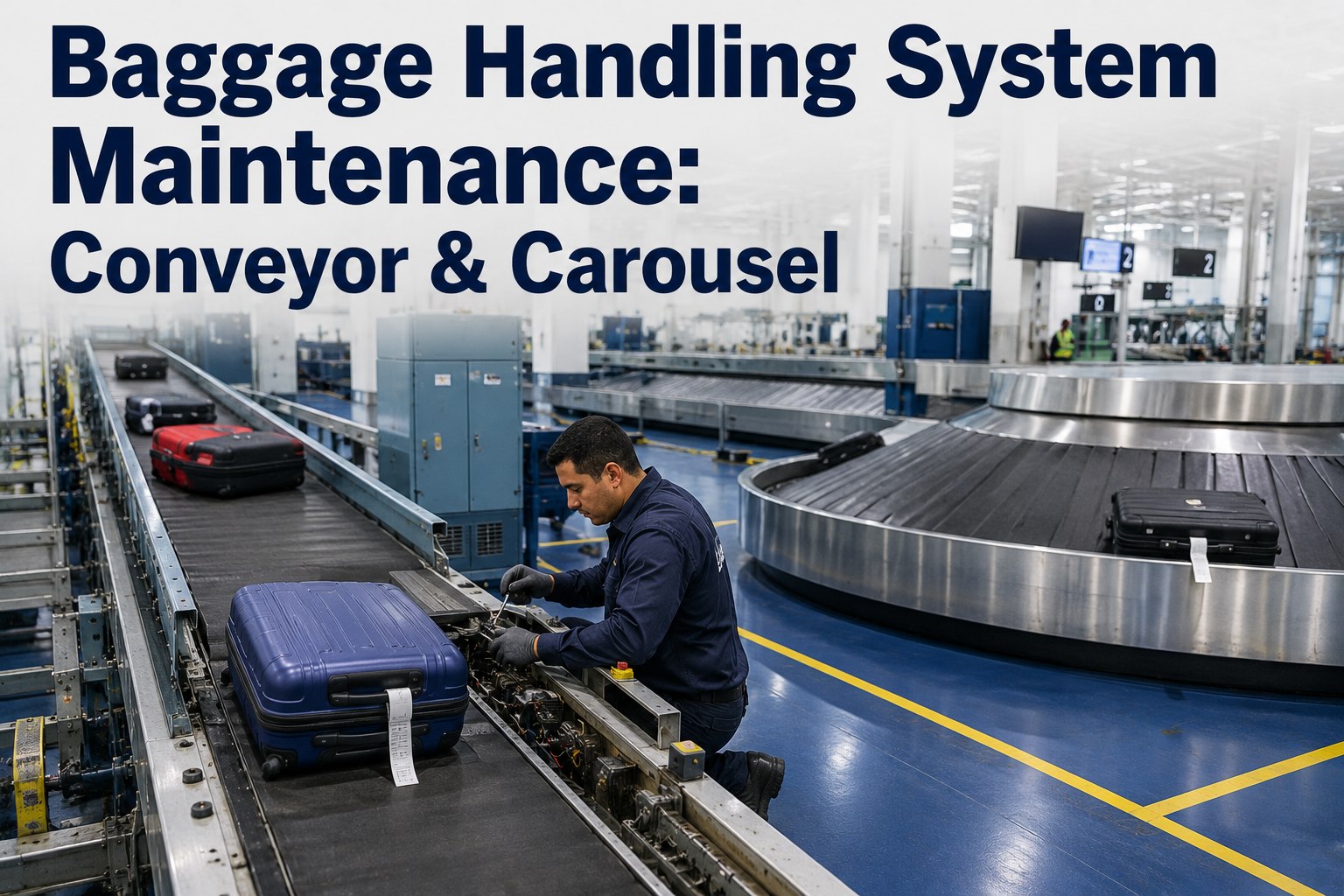
Baggage handling system maintenance is the discipline of keeping conveyors, sortation diverters, and carousels running at or above 99% availability — because even a 10-minute BHS stoppage can cascade into delayed flights, missed connections, and t
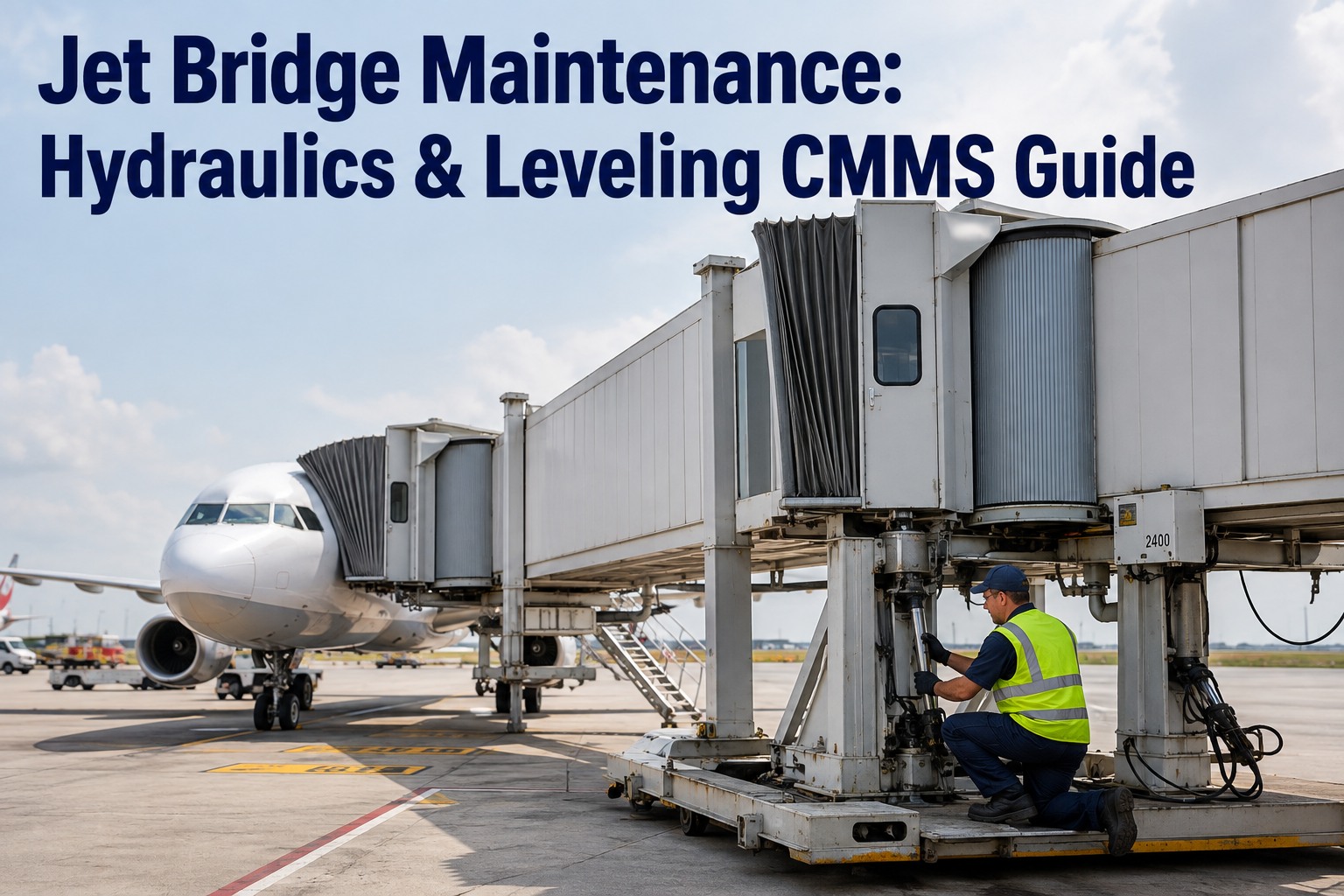
Read More
Jet bridge maintenance is the backbone of on-time gate operations — a single hydraulic leak or misaligned auto-leveling sensor can cascade into delayed departures, stranded passengers, and six-figure airline penalties within minutes. This jet brid
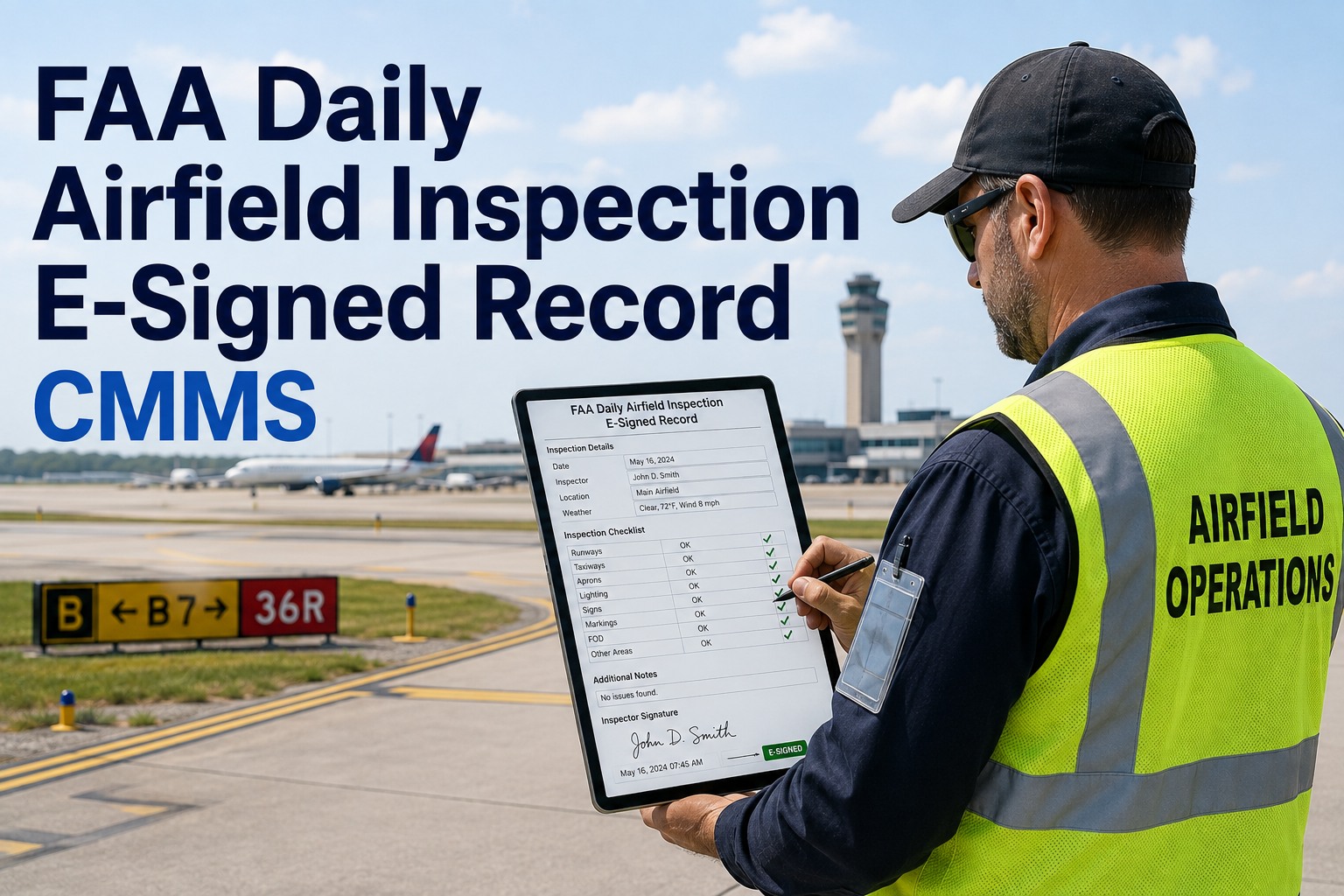
Read More
Daily airfield inspection records are the single most-cited documentation gap in FAA Part 139 inspections, and paper logs remain the top source of findings at certified airports across the United States. A CMMS with e-signed, timestamped inspectio
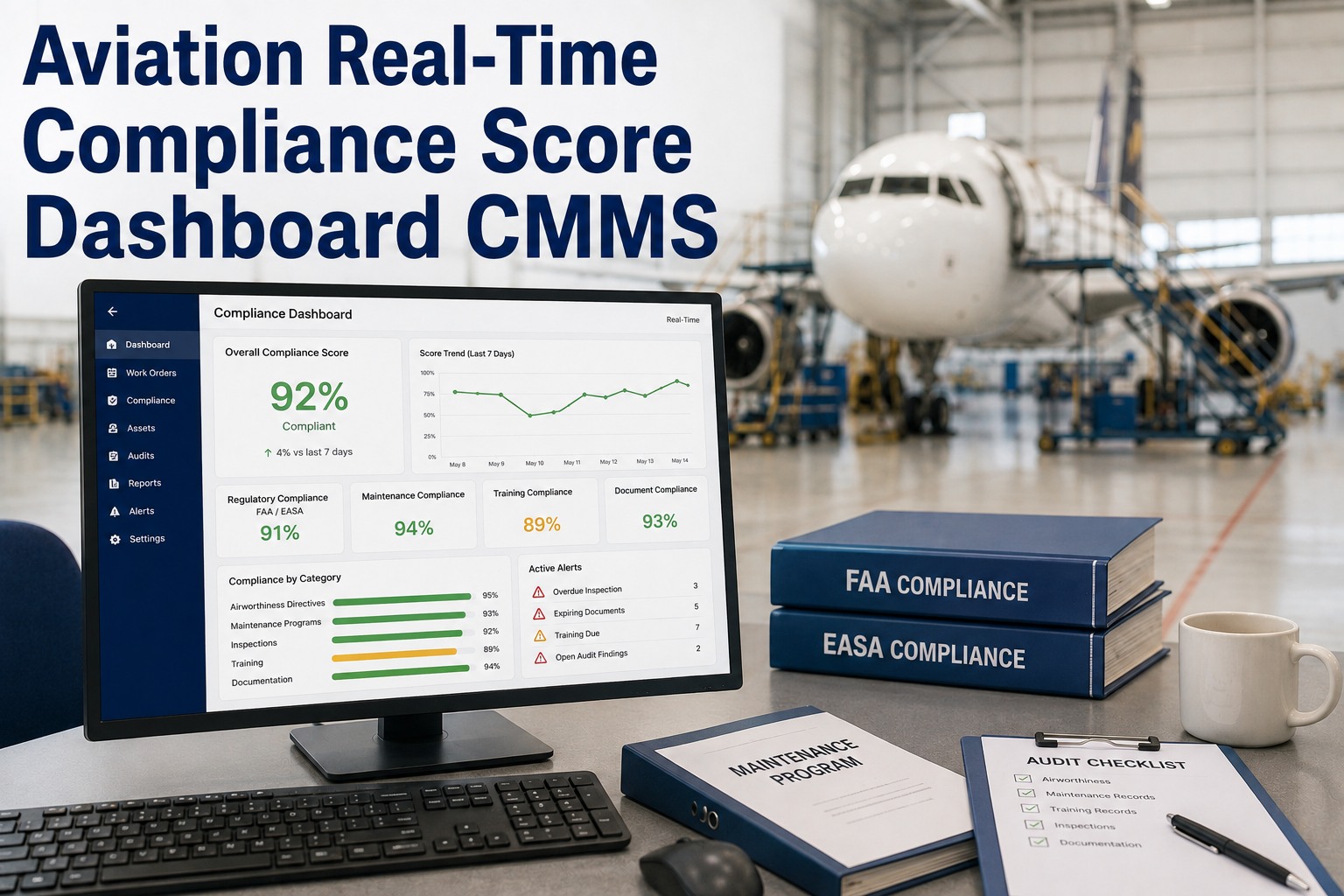
Read More
An aviation real-time compliance score dashboard in a CMMS transforms audit readiness from a quarterly scramble into a live, leadership-grade signal — the kind operations teams monitor as closely as OEE. For Part 139-certified airports, a complian
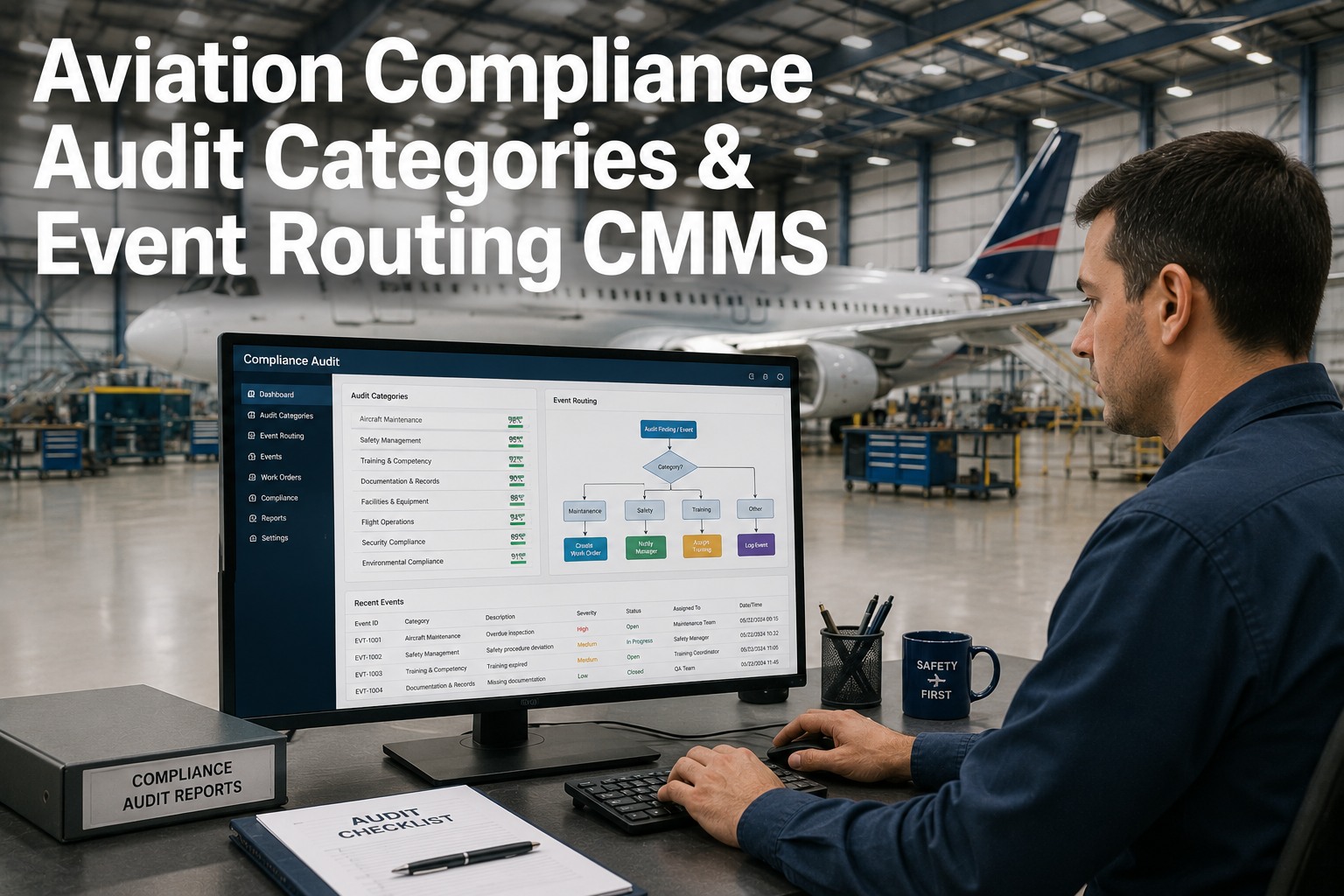
Read More
Aviation compliance audit categories and event routing in a CMMS determine whether a critical Airworthiness Directive finding reaches the right engineer in 4 minutes or 4 days. This guide covers P1, P2, and P3 compliance event classification — fro
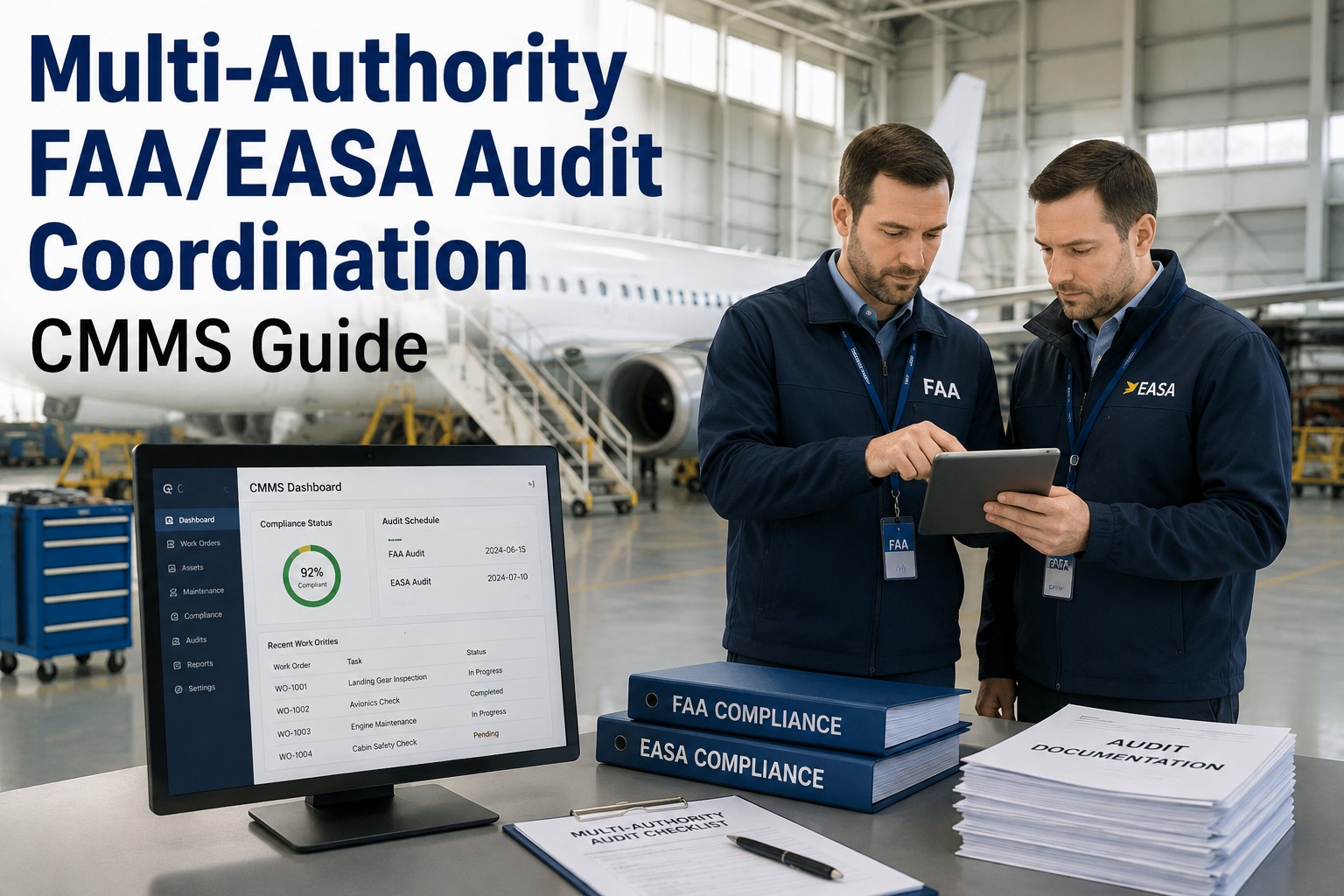
Read More
Multi-authority audit coordination under FAA, EASA, and CAA oversight is the single most resource-draining challenge for airline maintenance and reliability teams operating across jurisdictions. A purpose-built CMMS for multi-authority aviation co
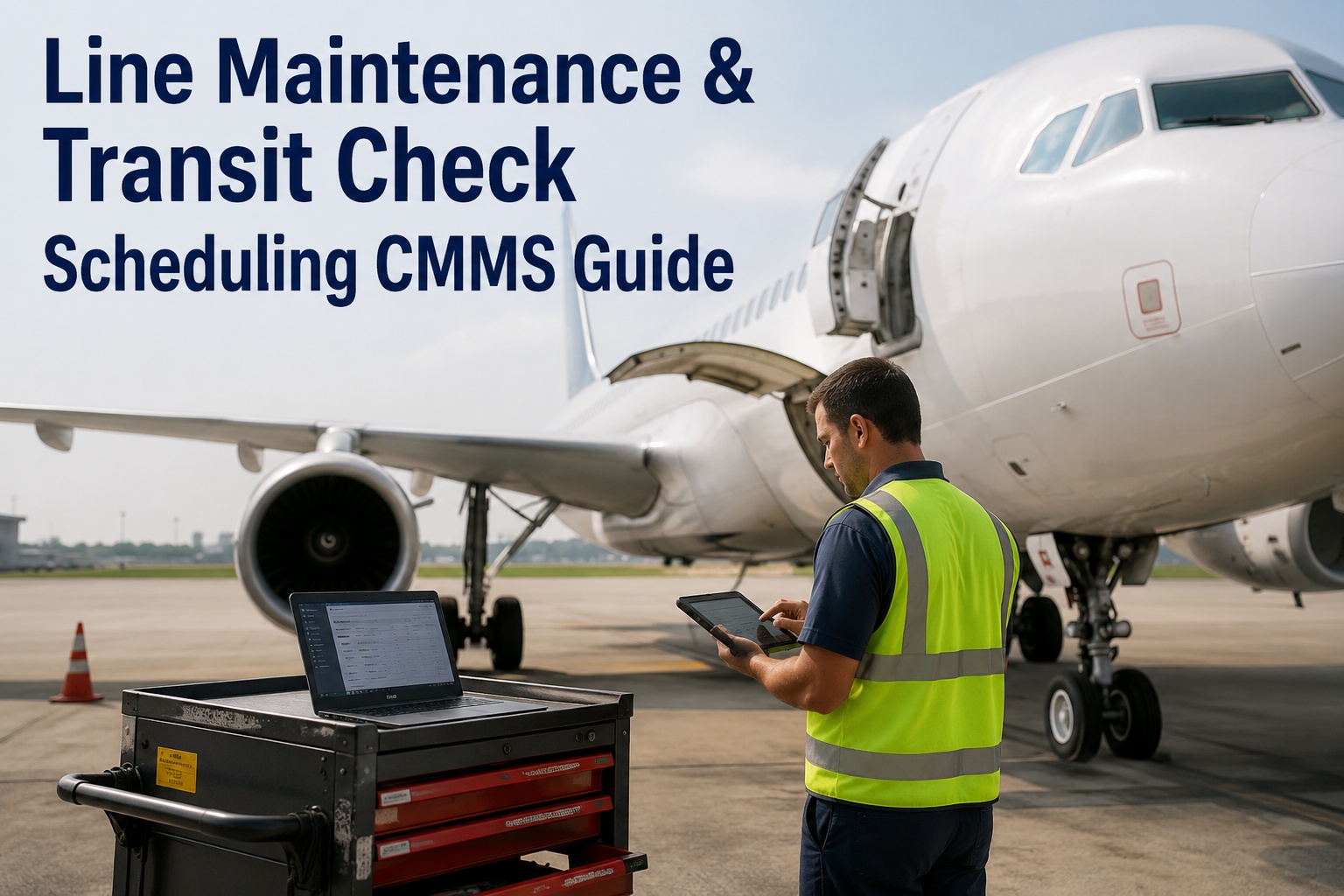
Read More
Line maintenance scheduling is the discipline of organising transit checks, daily inspections, and pre-flight tasks so they fit within tight aircraft turnaround windows — often 30 to 90 minutes — at main bases and outstations alike. This guide cov
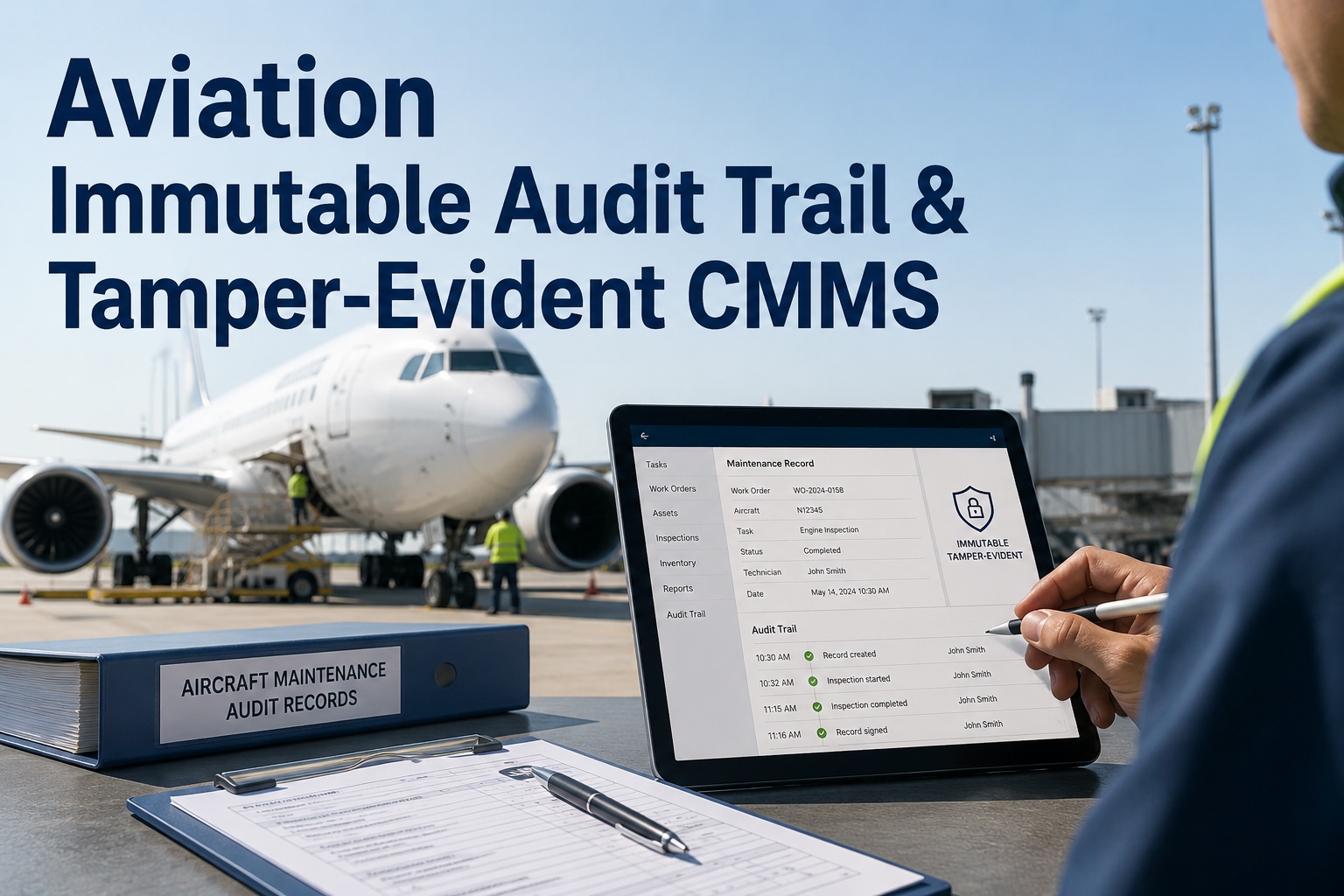
Read More
An aviation immutable audit trail is the cryptographic backbone that separates a defensible, tamper-evident CMMS from a digital paper system with better fonts. For airlines and MROs, maintaining immutable records ensures that every maintenance act
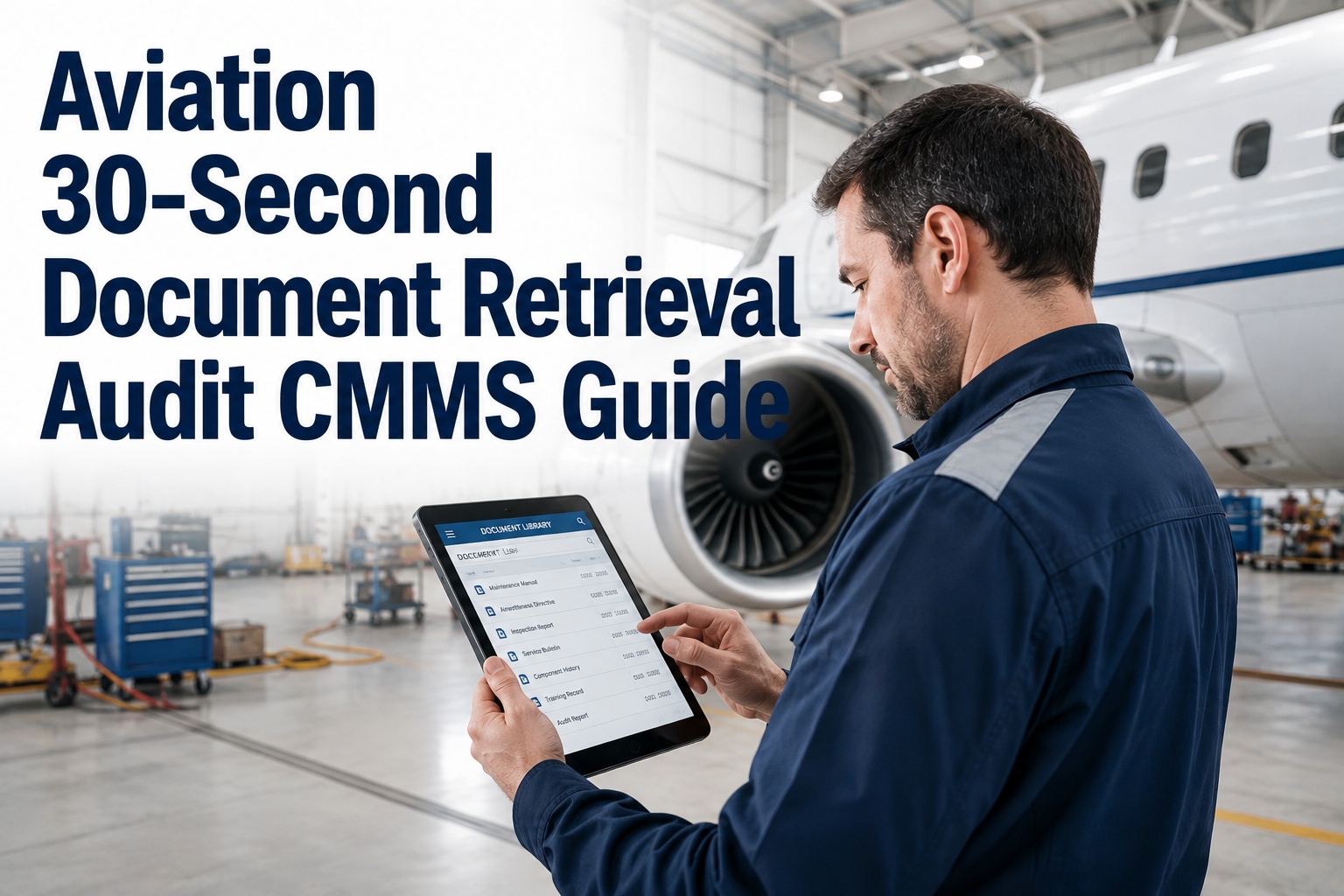
Read More
Aviation document retrieval has become a critical benchmark for audit readiness, with regulators increasingly expecting maintenance teams to produce compliance evidence in under 30 seconds rather than hours. This 30-second retrieval CMMS guide exp
Read More
FAA unannounced inspections arrive without warning, and your maintenance operation must produce compliant, time-stamped documentation in seconds — not weeks. This 2026 guide to FAA unannounced inspection readiness shows aviation maintenance teams
Read More
Aviation audit readiness in 2026 means being able to answer any FAA, EASA, or ICAO inspector question in minutes — not after a frantic week of pulling paper logs. This guide shows how airlines, MROs, and airports use CMMS audit readiness automatio

Read More
Aviation predictive maintenance succeeds only when teams follow a sequenced implementation roadmap — from sensor deployment and AI threshold configuration to that critical first CMMS-triggered predictive work order. Airlines, MROs, and airport ope

Read More
Airport computer vision AI camera inspection integrated with a modern CMMS is reshaping how maintenance and reliability teams monitor conveyor belts, baggage-handling systems, and airfield pavements in 2026. By replacing slow, error-prone manual w
Read More
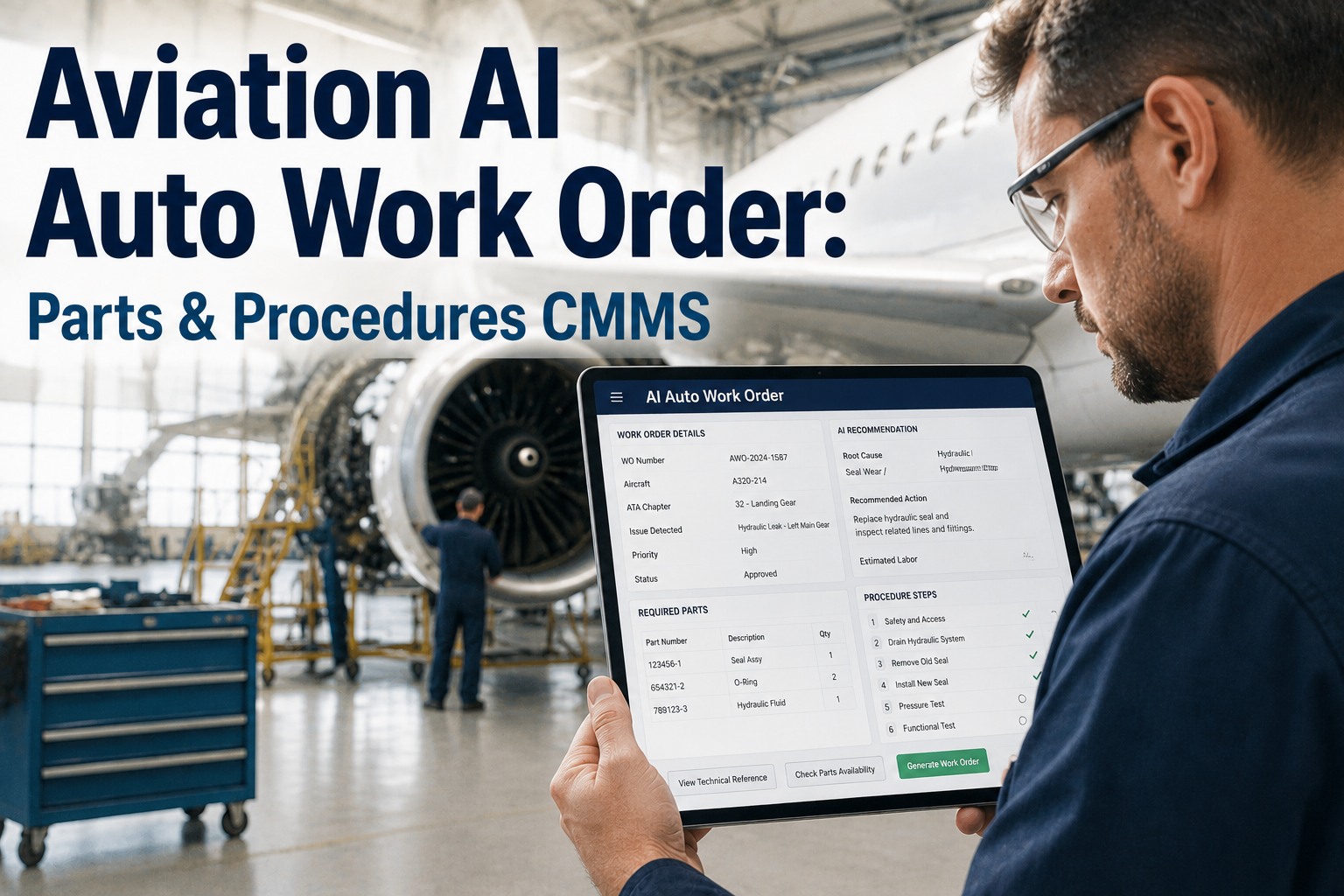
An aviation AI work order system transforms predictive maintenance alerts into ready-to-execute work orders — complete with required parts, step-by-step repair procedures and technician assignments — closing the gap between fault detection and tar
Read More
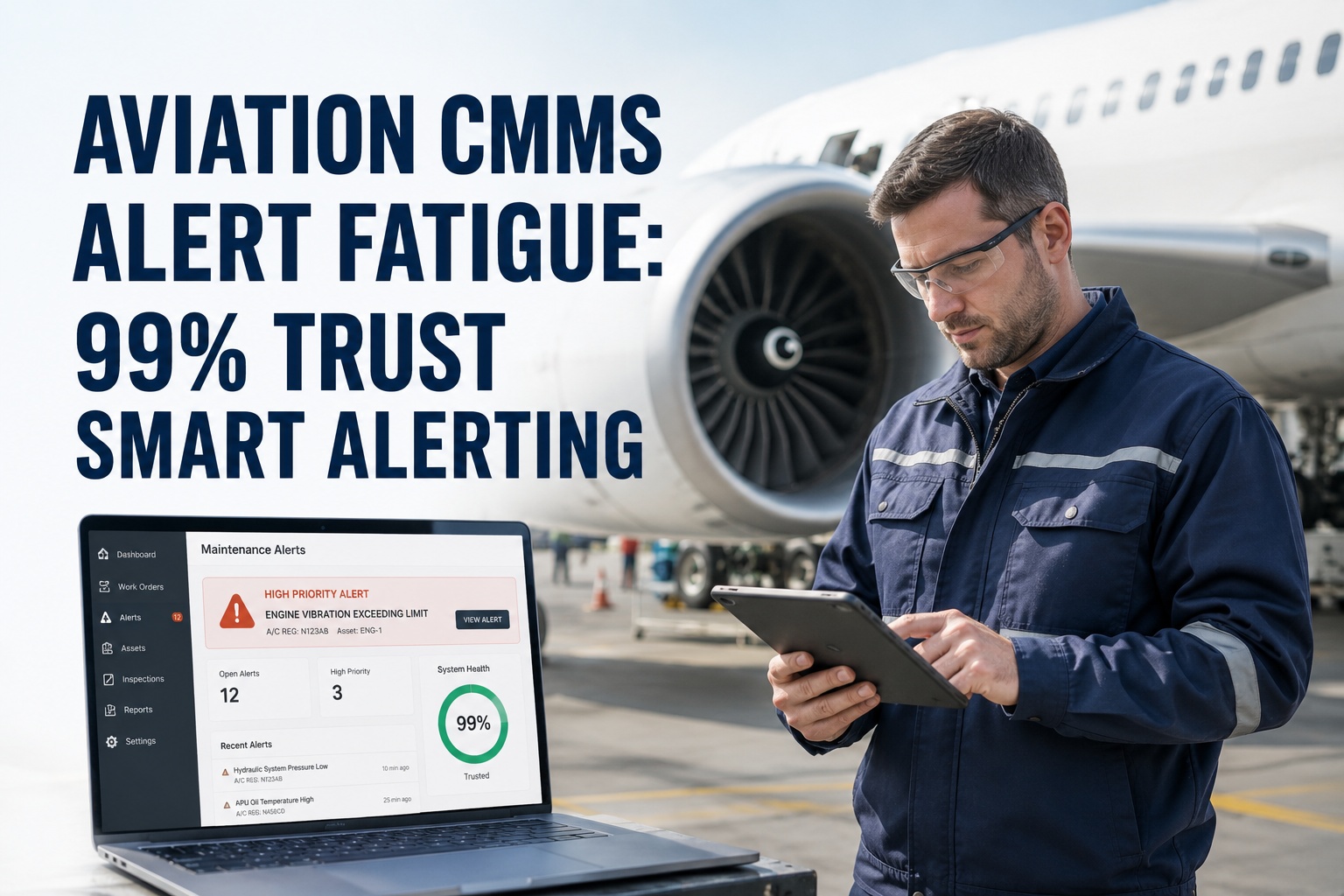
Aviation alert fatigue is the silent killer of predictive maintenance programs — when technicians are buried under false-positive alerts, even genuine failure warnings get ignored, and a 20% false-positive rate can destroy trust in an entire CMMS

Read More
Aircraft component failure prediction that gives maintenance teams 48 hours or more of advance warning is the threshold where predictive maintenance transforms from a pilot project into measurable dispatch reliability at airline scale. By fusing A
Read More
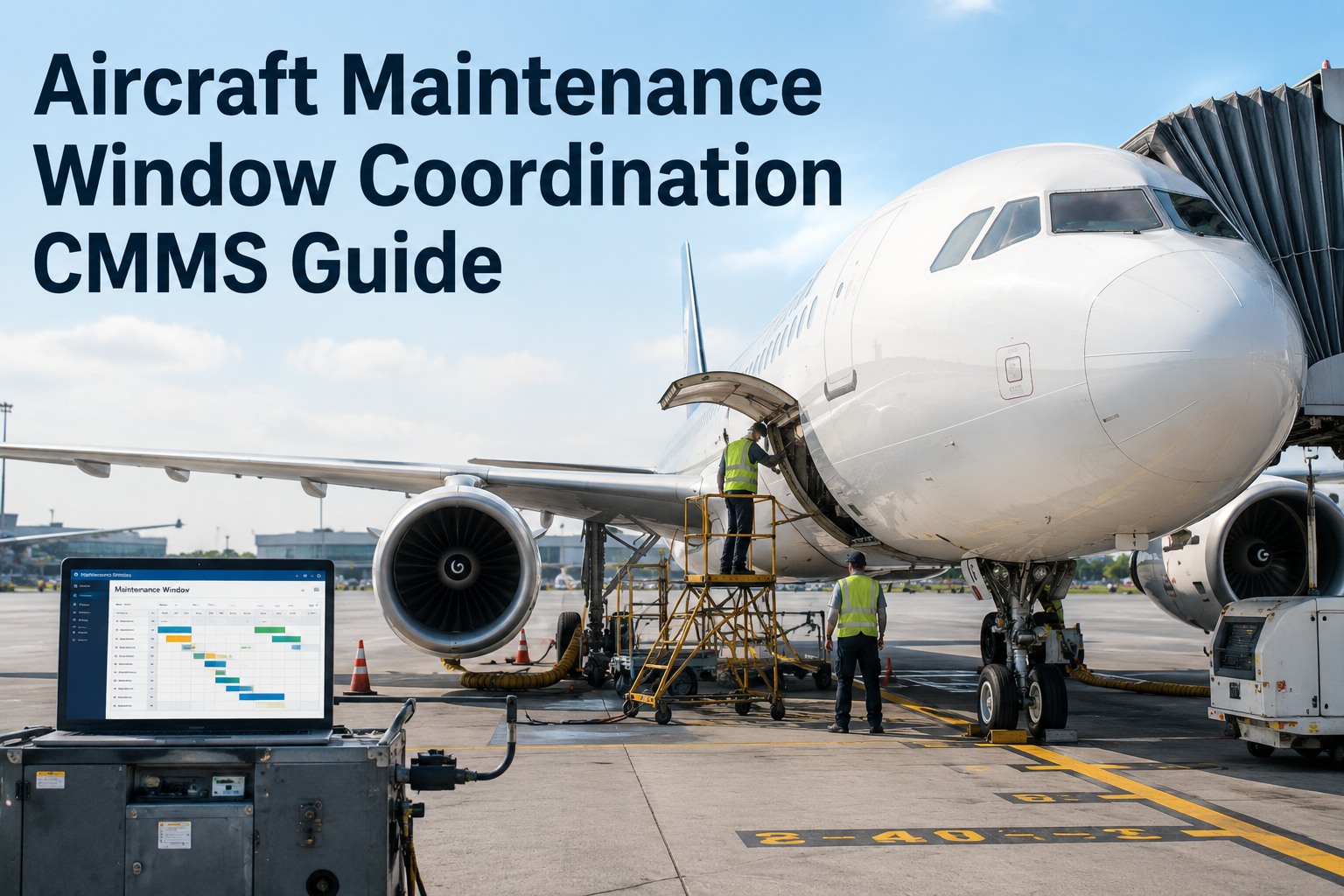
An aircraft maintenance window is the narrow, negotiated block of ground time during which maintenance teams must inspect, repair, and release an aircraft back to operations — and coordinating that window efficiently is what separates an on-time d
Read More
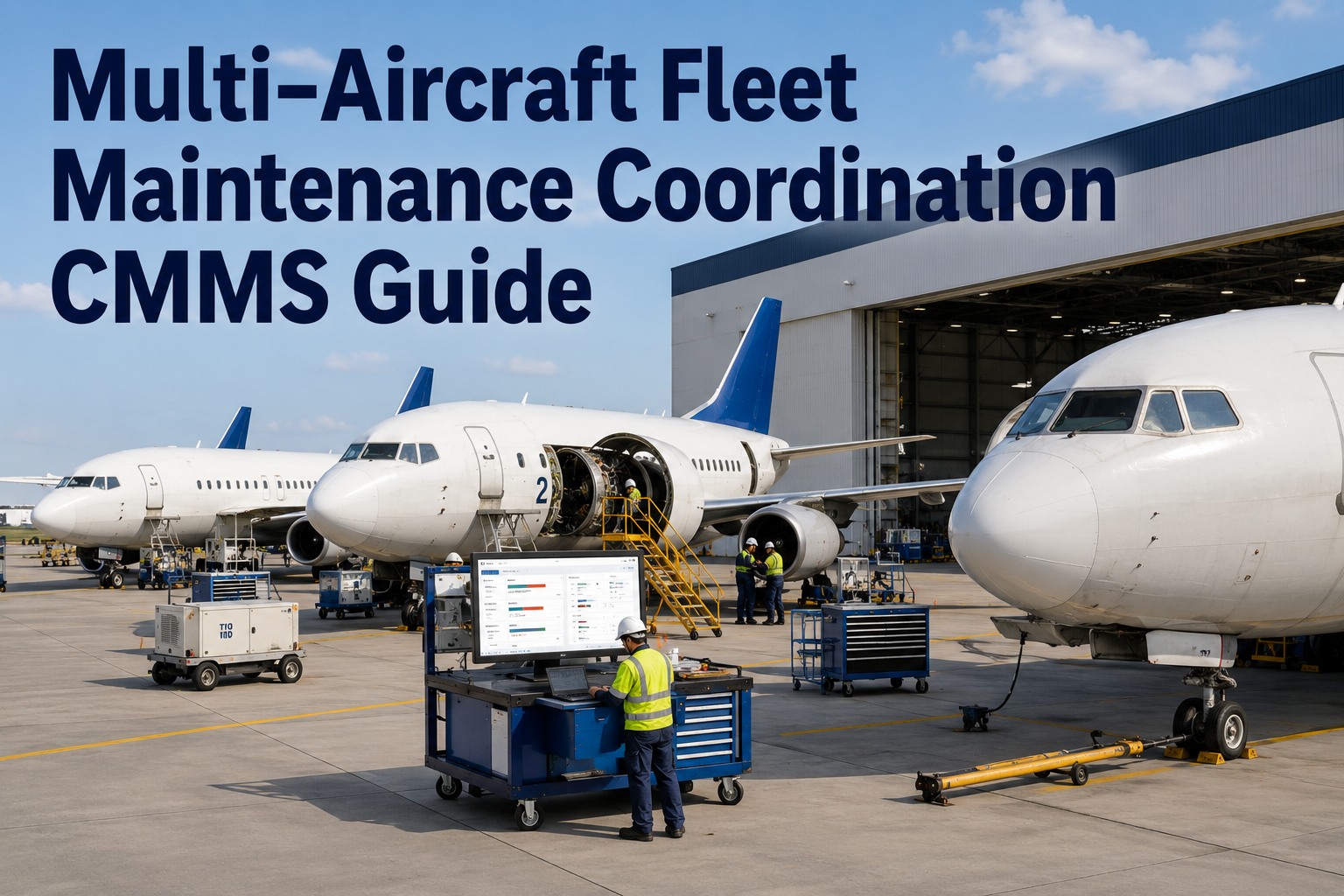
Multi-aircraft fleet maintenance coordination is the process of synchronizing scheduled and unscheduled maintenance across multiple tail numbers while managing shared crews, hangar bays, and spare parts inventories. When aviation maintenance plann

Read More
Aviation spare parts lead time scheduling determines whether a maintenance plan holds or slips — when a critical rotable or consumable is not on the shelf when the hangar door opens, the entire task, aircraft release and route schedule can cascade

Read More
Aviation MRO contractor scheduling coordination determines whether specialist vendors arrive, clear security, and complete work packages on time — or whether grounded aircraft wait days for a missing certification signature. This guide to aviation
Read More
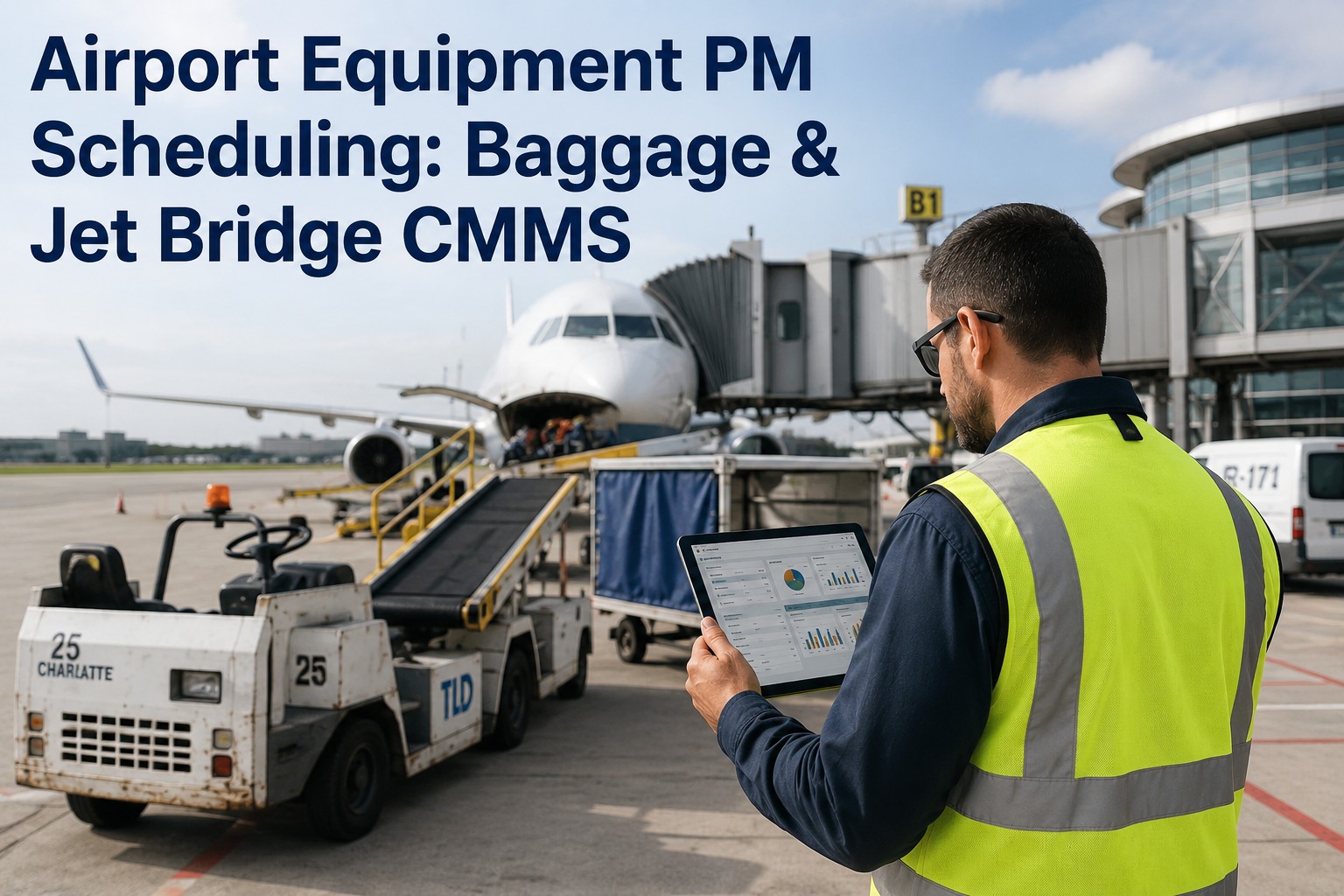
Airport equipment PM scheduling is the backbone of terminal uptime — coordinating preventive maintenance windows for baggage handling systems, jet bridges, elevators, escalators and HVAC so passenger flow is never disrupted. This 2026 guide covers

Read More
Aviation maintenance manpower allocation is where MRO operations either hit their turn-around schedules or spend the next morning explaining why they didn't. This CMMS resource allocation guide for 2026 breaks down how maintenance and reliability

Read More
Airport seasonal maintenance scheduling is the backbone of safe, on-time operations — and a CMMS built for aviation is what keeps winter deicing, summer HVAC peak demand, and spring pavement programs on track without missing capacity. A typical mi

Read More
ETOPS maintenance CMMS discipline is what separates airlines that confidently dispatch twin-engine aircraft on 180-minute diversion routes from those that ground flights over a single lapsed task. Extended-range twin-engine operations demand prote
Read More
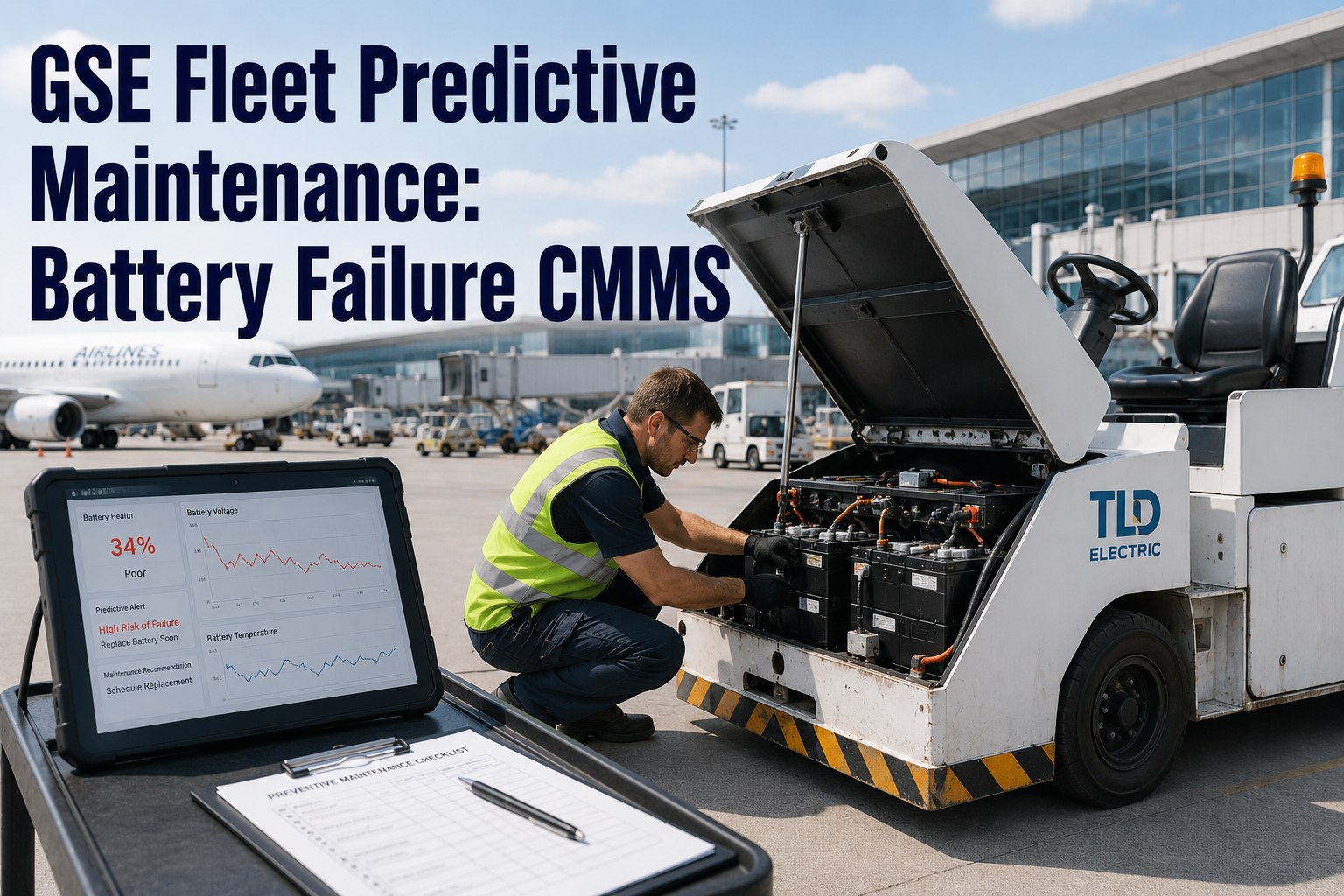
Ground support equipment fleets are increasingly battery-driven, and battery failures now account for a disproportionate share of ramp delays across major airports. This GSE fleet predictive maintenance guide for 2026 covers how a battery failure
Read More
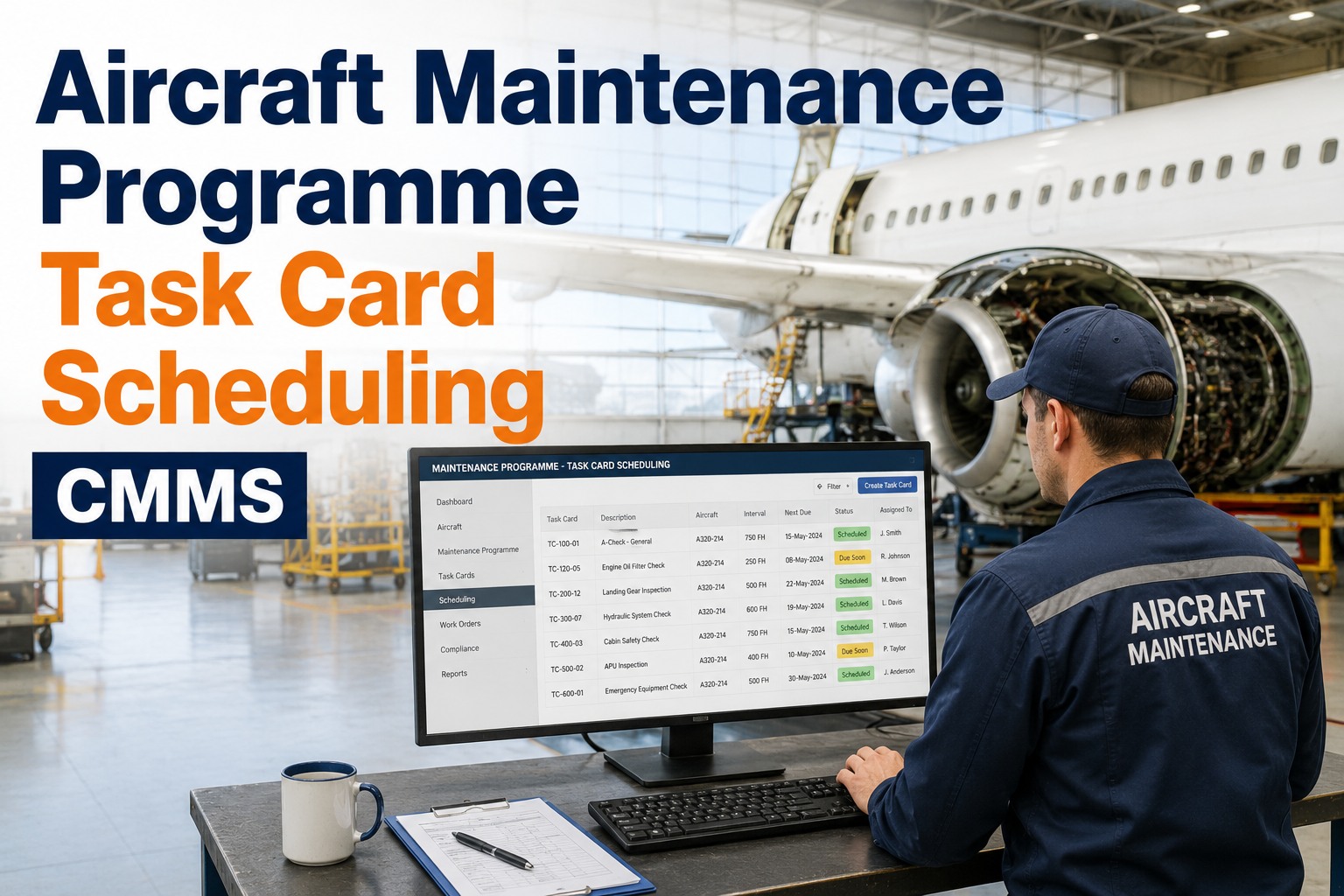
An aircraft maintenance programme (AMP) task card scheduling CMMS transforms how aviation maintenance teams generate, track, and execute interval-based scheduled tasks across every tail in their fleet. When AMP task cards are structured correctly
Read More
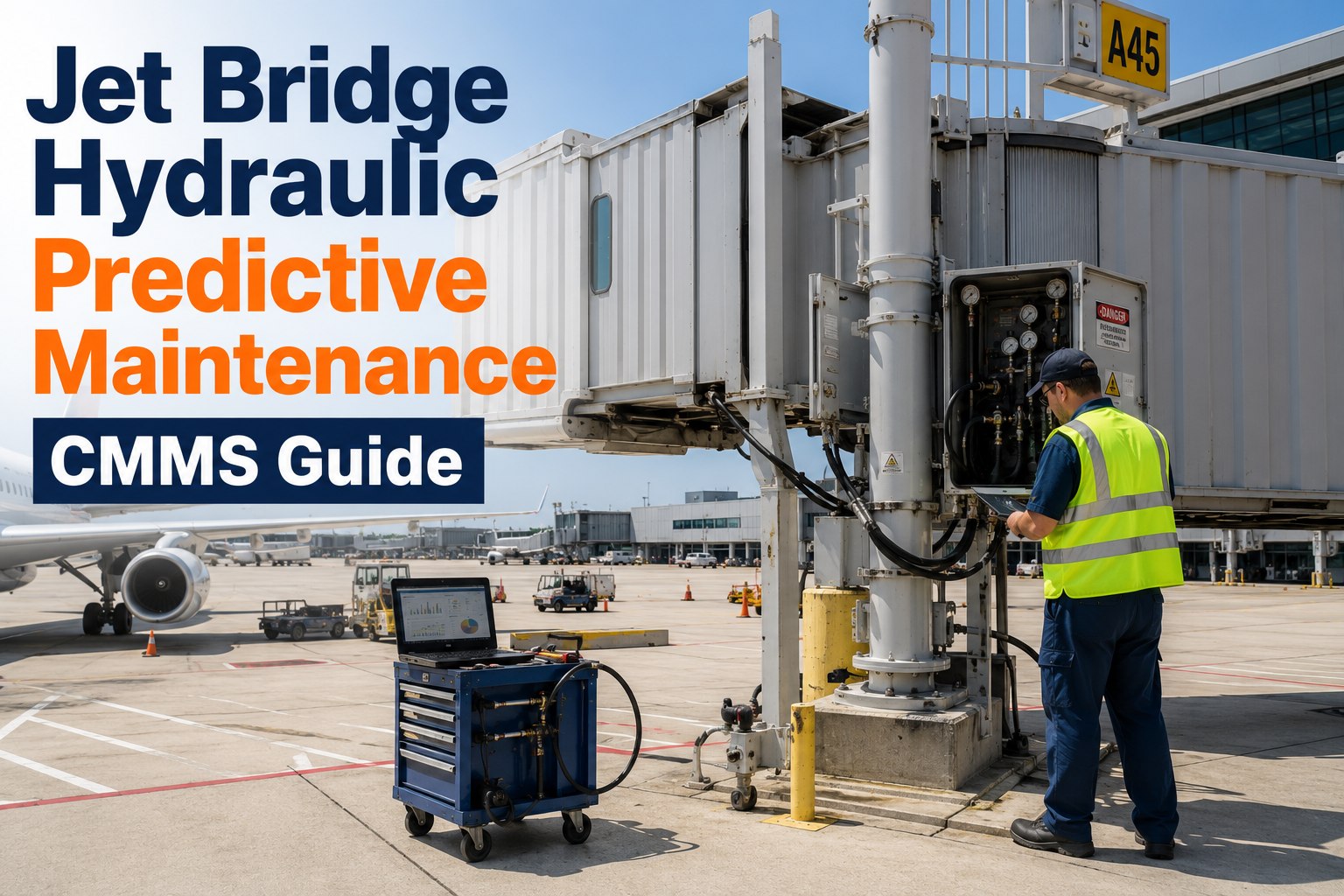
JLJet bridge predictive maintenance is the single most effective way to prevent costly boarding delays, passenger injuries, and cascading gate disruptions at modern airports. This jet bridge hydraulics CMMS guide for 2026 walks maintenance and rel

Read More
An airport equipment health score compresses complex condition data into a single actionable number, and remaining useful life (RUL) turns that score into a clear maintenance decision. This CMMS equipment health guide for 2026 covers scoring logic

Read More
Baggage handling system predictive maintenance is the practice of using sensor data, motor current signature analysis, and AI-driven CMMS alerts to detect conveyor motor degradation and sortation diverter failures before they disrupt airport opera

Read More
Airport HVAC chiller predictive maintenance is the difference between a comfortable July concourse and a 2,000-passenger evacuation caused by a single compressor failure. This guide covers how airport facilities teams use CMMS-based chiller AI ale
Read More
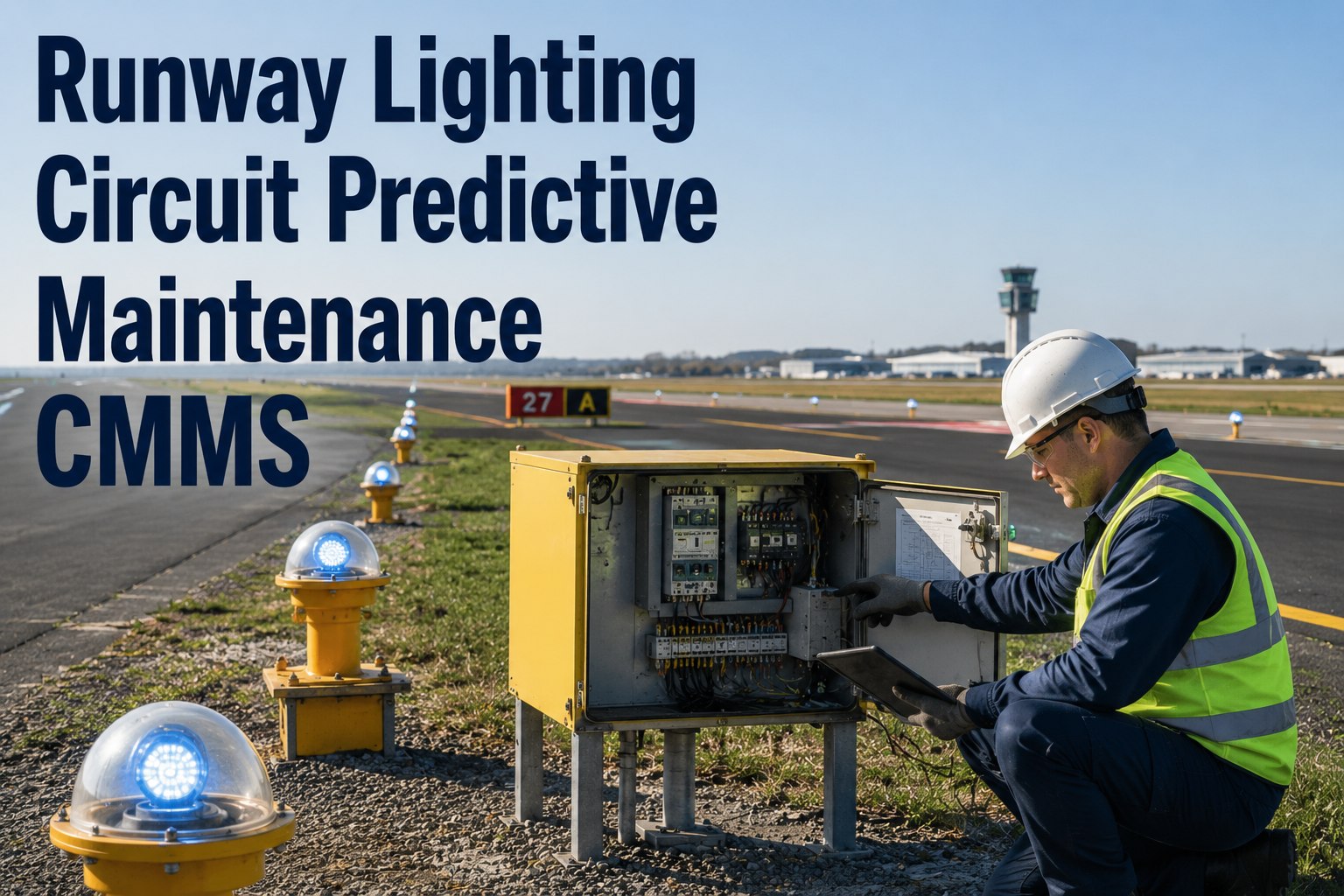
Runway lighting circuit failures are safety-critical events — a single failed CCR (constant current regulator) loop can trigger a NOTAM, reduce arrival rates by 20–40%, and force air traffic into single-runway or visual-only operations. Runway lig
Read More
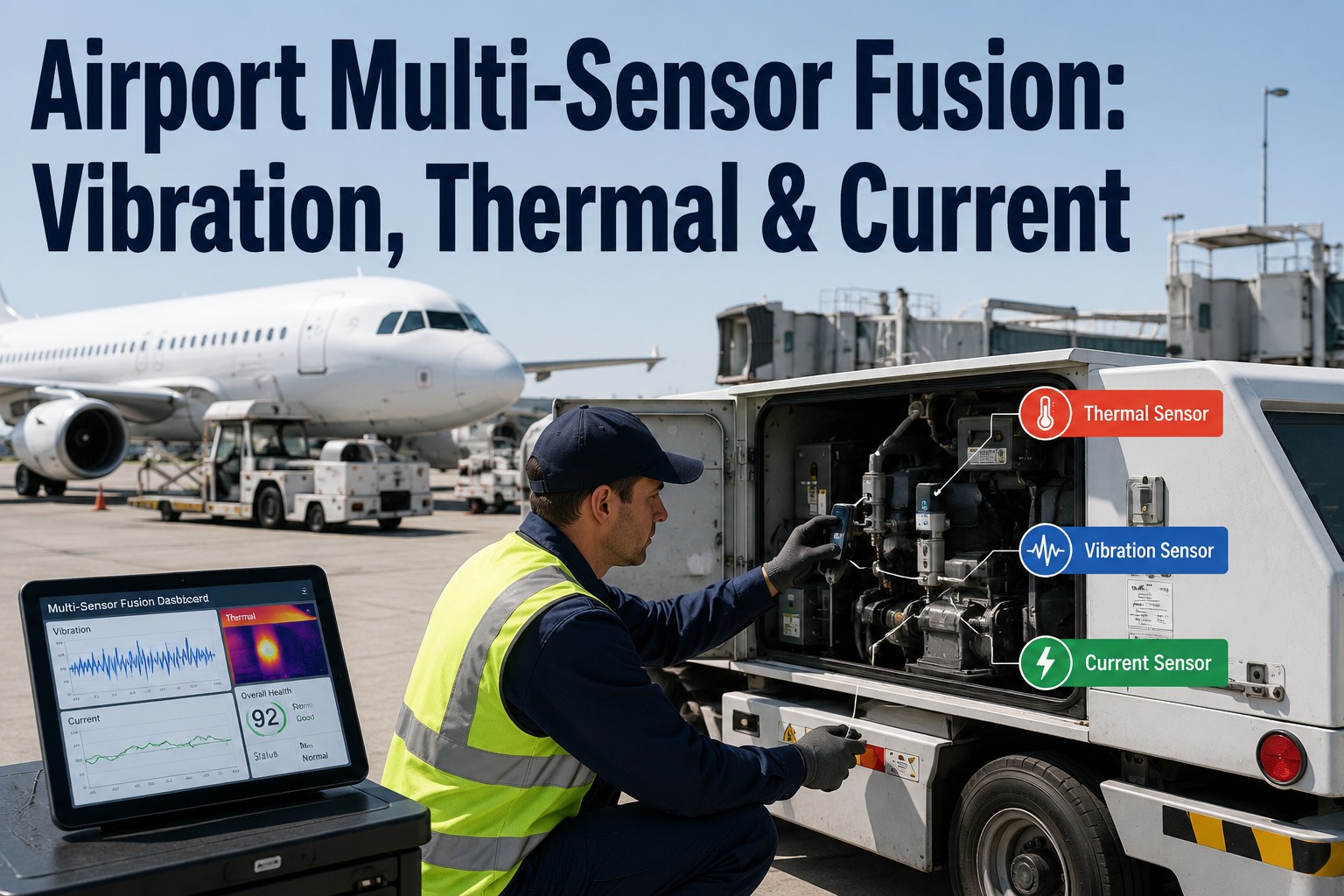
Multi-sensor fusion in airport maintenance—combining vibration, thermal, and current draw data into a single CMMS-driven health score—catches cascading equipment failures that any one sensor would miss, cutting unplanned downtime on critical asset

Read More
Aviation predictive maintenance has moved from PowerPoint slides to production floors in 2026, with engine trend monitoring, aircraft health management, and airport IoT now delivering measurable, repeatable savings. This guide covers how airlines,
Read More
FAA, EASA, and CASA regulatory frameworks each impose distinct maintenance documentation, certification, and audit requirements on airlines and MROs — and an aviation CMMS must adapt to all three without duplicating work orders, task cards, or ass
Read More
Engine maintenance, repair and overhaul operates under the strictest traceability requirements in aviation — every fan blade, turbine disc, and borescope frame must map to a serial number, a cycle count, and an FAA Form 8130-3. A single undocument
Read More
Internal quality audits are what separate MROs that pass their FAA, EASA, and CAA surveillance inspections on the first attempt from those scrambling to assemble paperwork under a 72-hour clock. Most maintenance organizations still treat internal
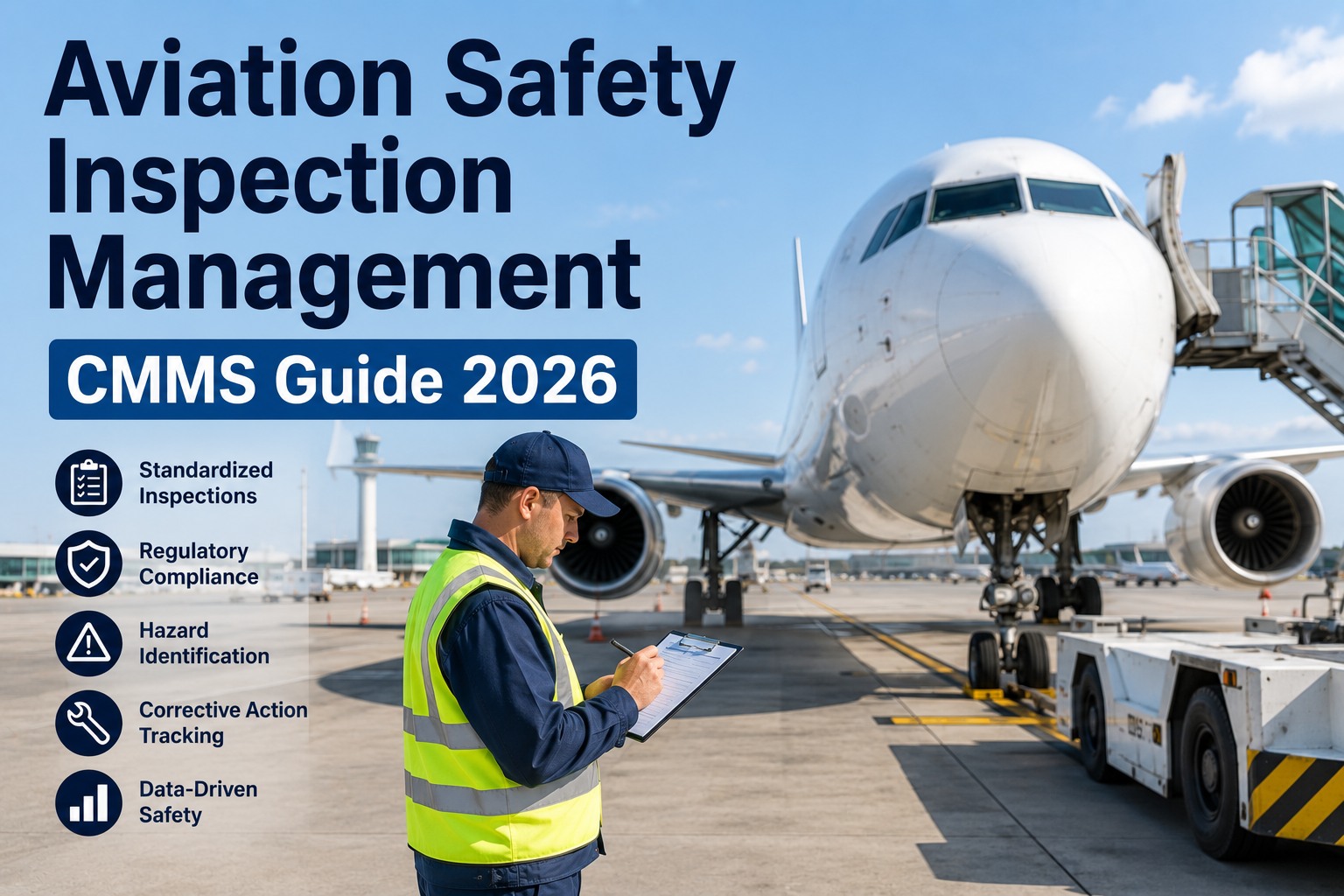
Read More
Aviation safety inspections are where compliance either lives on paper or lives on the ramp — and a paper-based program typically fails its next FAA Part 139 audit. This 2026 guide shows how a CMMS purpose-built for aviation turns daily airfield s
Read More
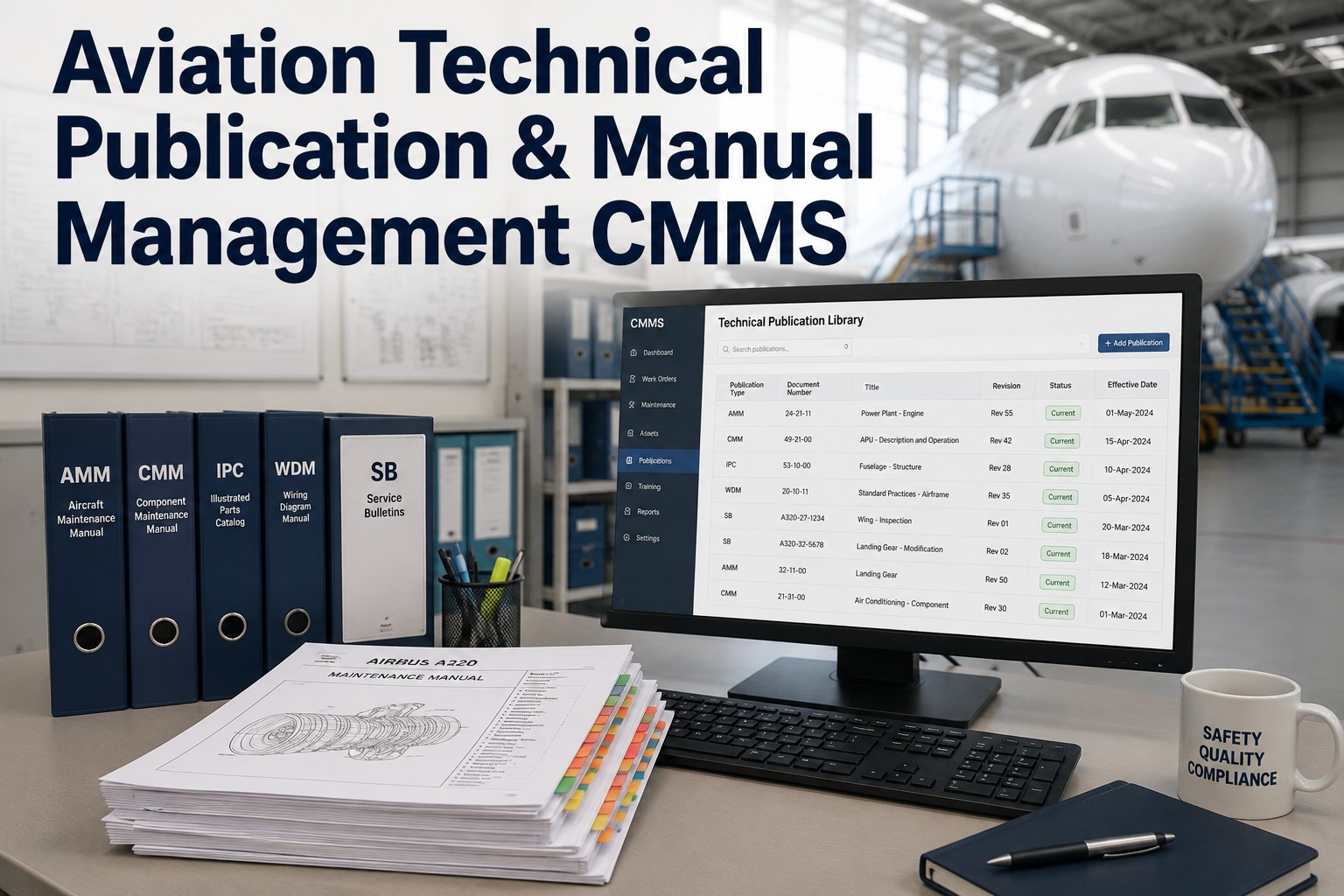
Aviation technical publication management is the backbone of every airworthy maintenance action — when an Aircraft Maintenance Manual (AMM), Structural Repair Manual (SRM), or Illustrated Parts Catalog (IPC) is out of date, audit findings follow w
Read More
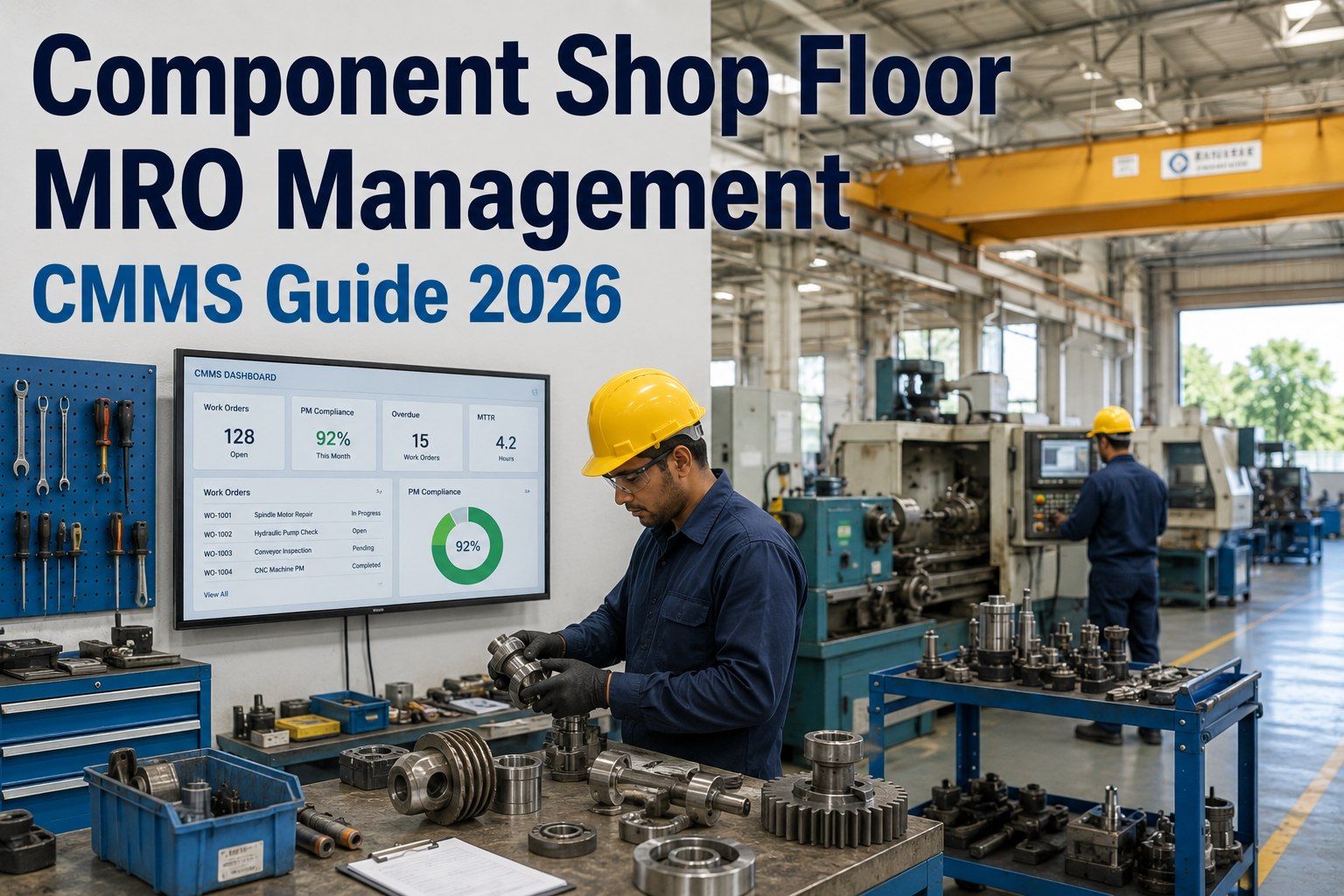
Component shops typically generate 35–45% of an aviation MRO's gross margin despite representing less than a quarter of its floor space, which makes shop-floor discipline the single highest-leverage operational lever most facilities overlook. The
Read More
For aviation MRO providers, turnaround time is the single metric that airlines use to decide whether to send their next aircraft to your hangar or a competitor's. Every day shaved off a C-check or base maintenance event translates directly into re
Read More
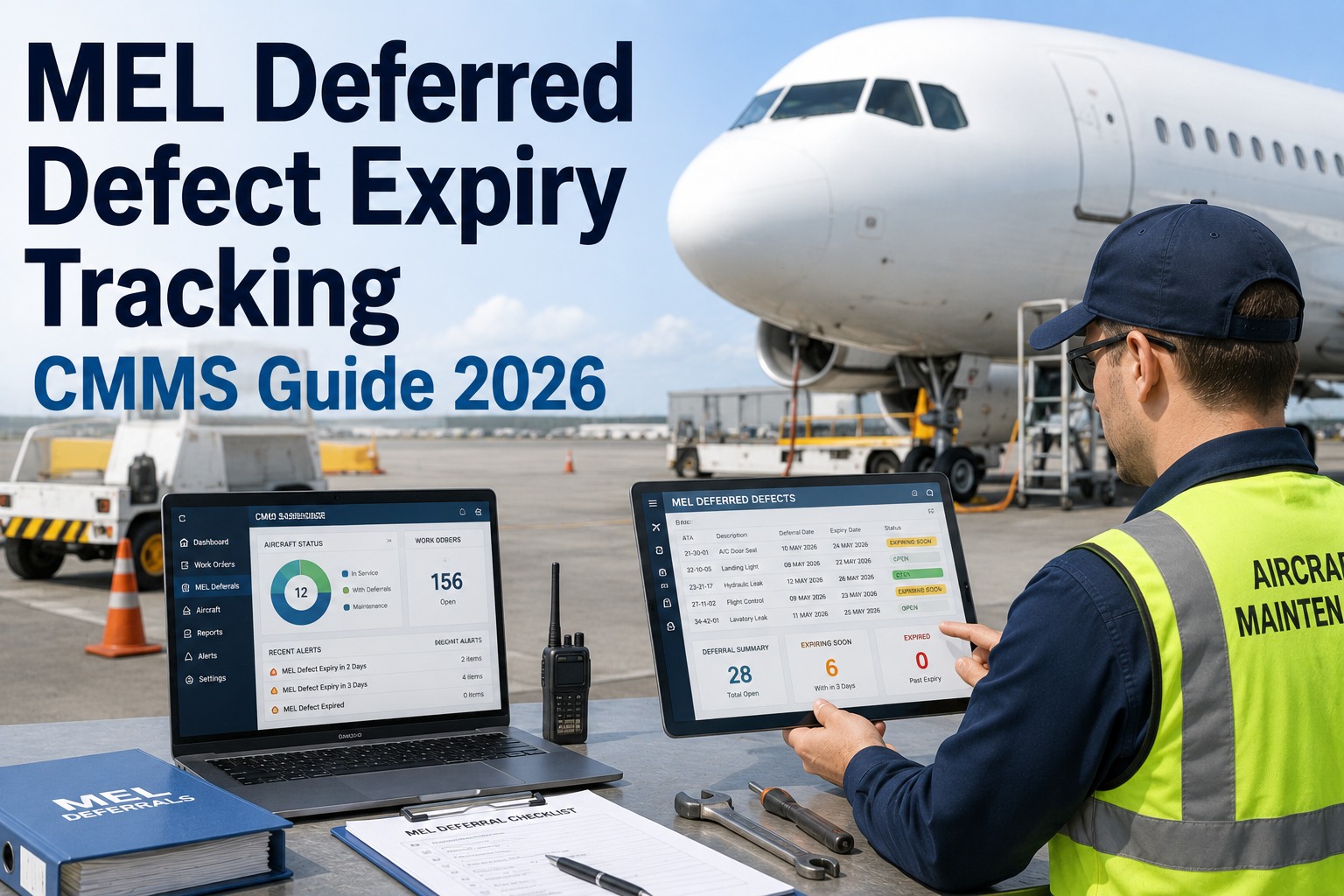
Deferred MEL items are a controlled dispatch tool, not a parking lot for problems — and every minute a deferral timer ticks down, an AOG event edges closer. Operators that let MEL and CDL items expire routinely lose 8–14 hours of schedule recovery
Read More
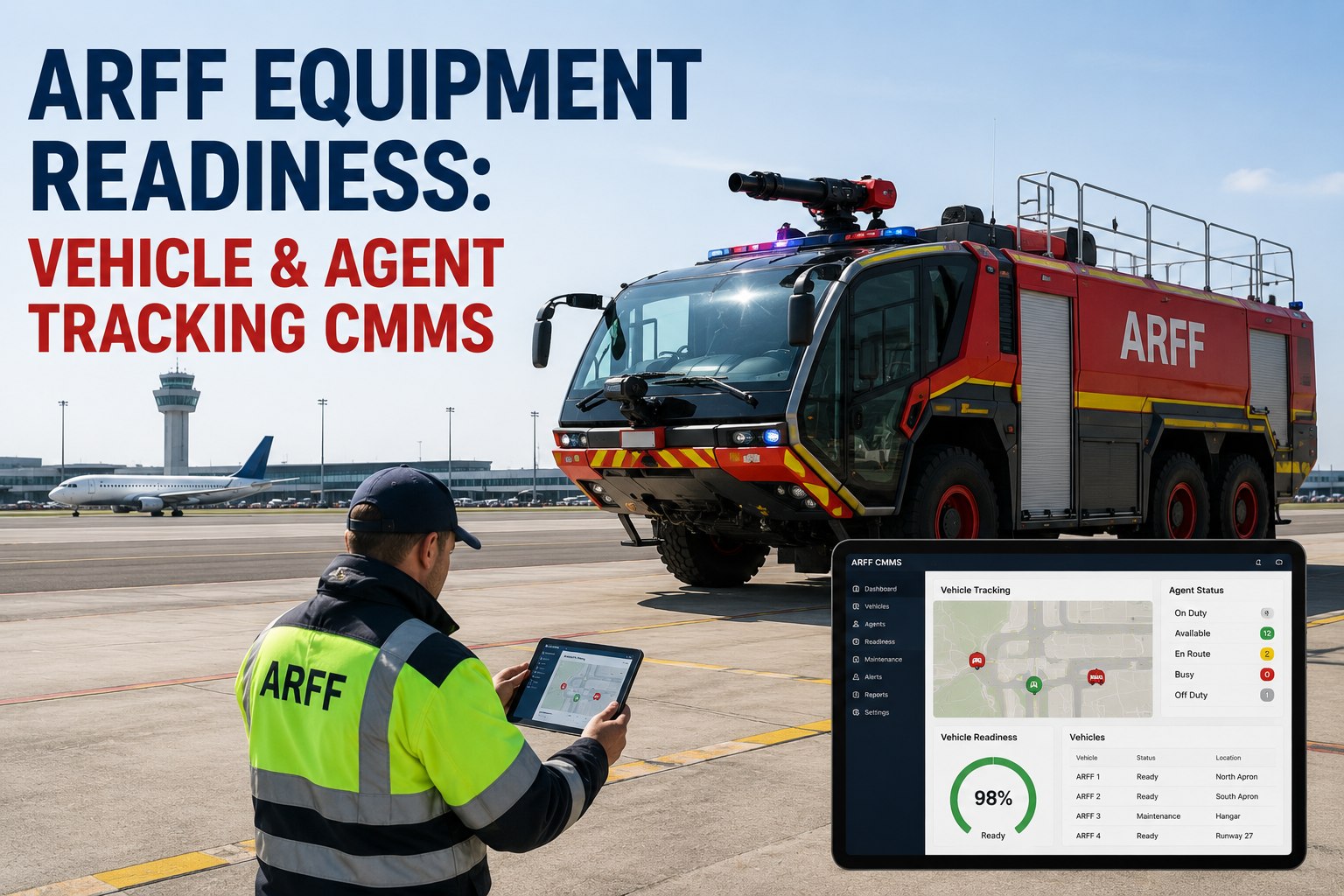
ARFF readiness is one of the few airport operational domains where a single equipment failure can close a runway, trigger a NOTAM, and cost carriers millions in diversions within an hour. For operations directors governed by 14 CFR §139.315, the q
Read More
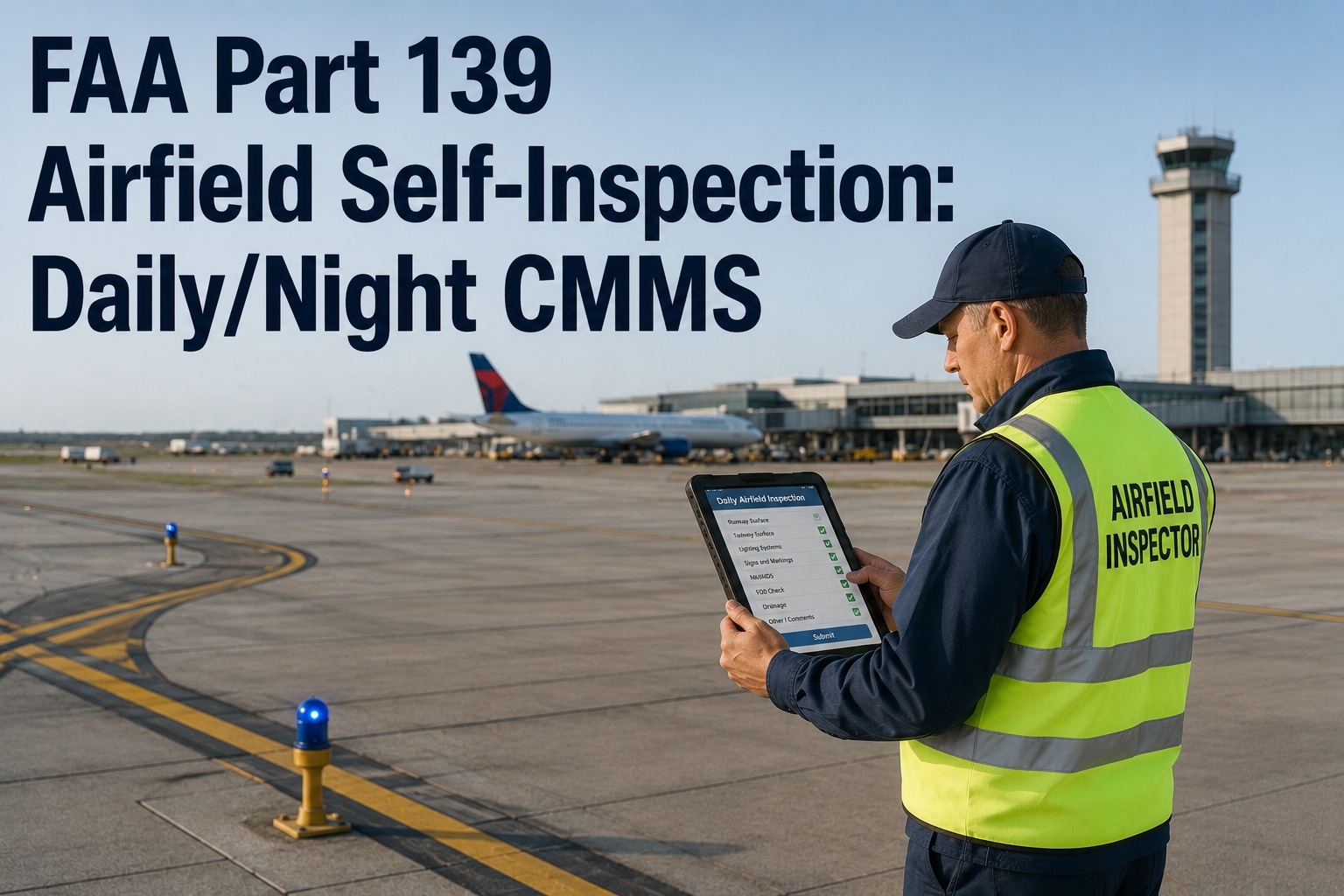
FAA Part 139 self-inspections are the operational backbone of every certified airfield — a missed pavement crack, an unlit edge light, or a rubber buildup past the friction threshold can ground operations, trigger a NOTAM, or worse, surface during
Read More
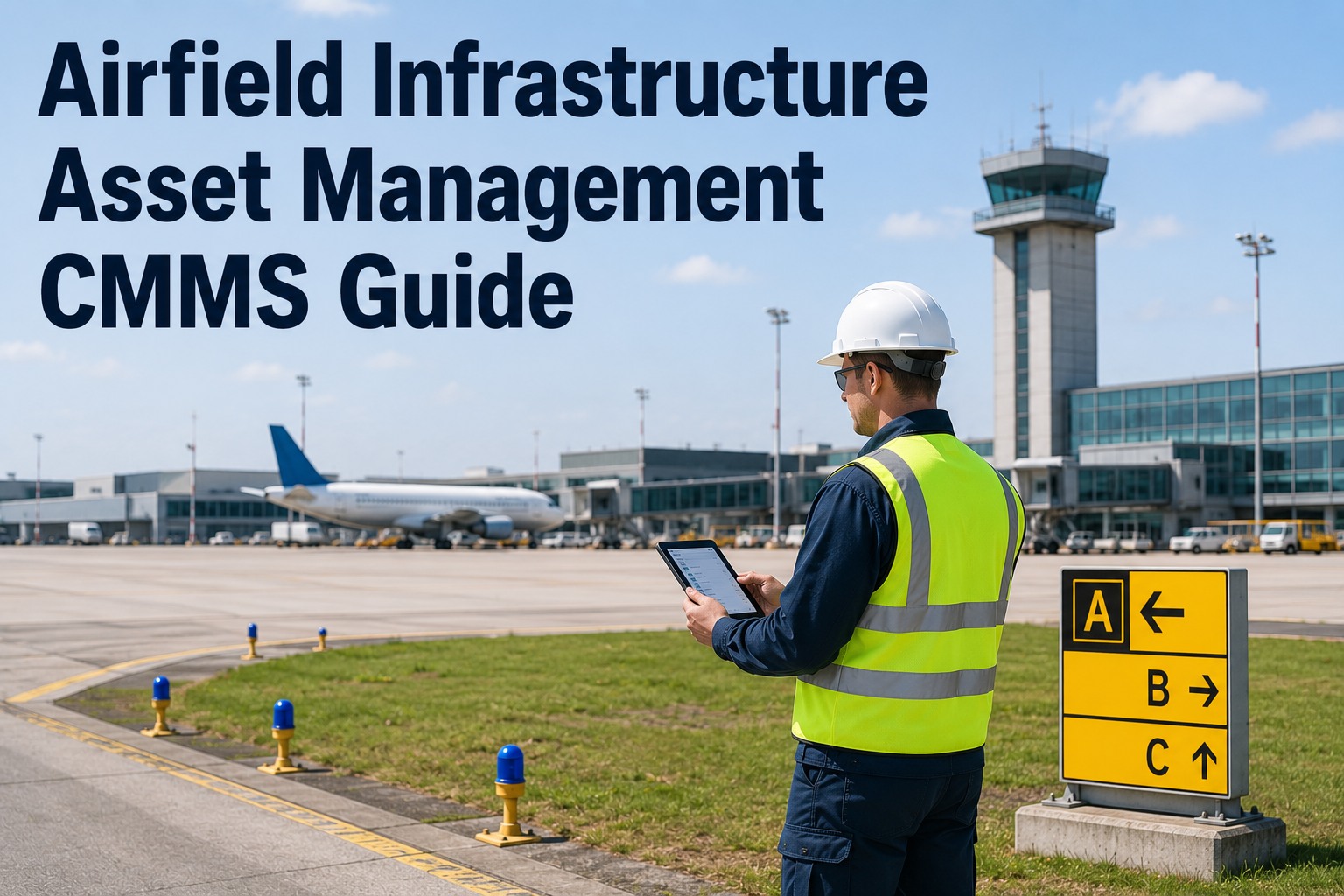
Airfield infrastructure asset management is the disciplined practice of tracking runways, taxiways, aprons, lighting circuits, drainage systems, and NAVAID-adjacent safety areas as individual capital assets within a CMMS — so airports can shift fr
Read More
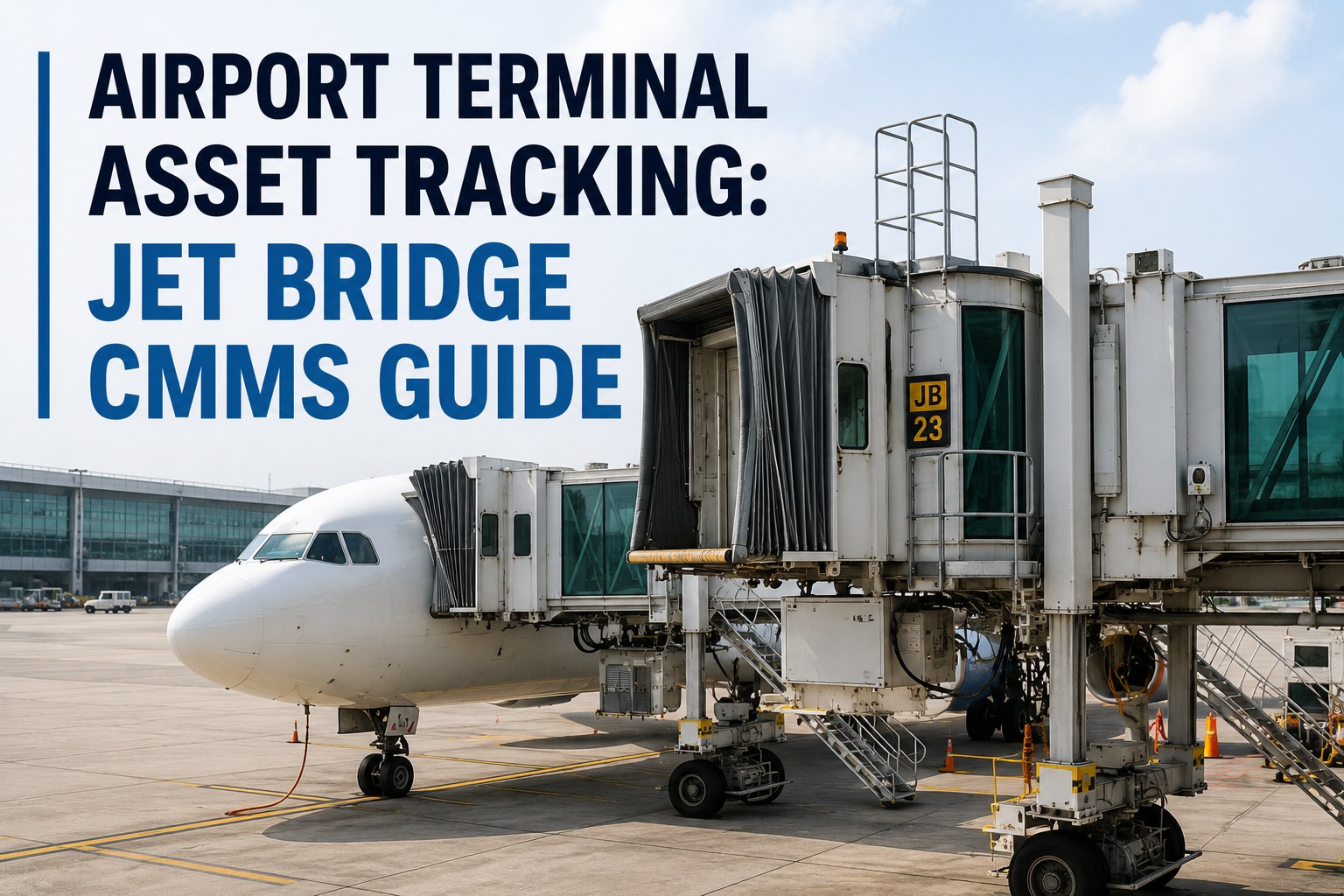
Airport terminal asset tracking is the backbone of uninterrupted passenger experience — every jet bridge, escalator, baggage belt and HVAC unit must function flawlessly under 24/7 demand. This terminal asset guide for 2026 walks aviation facilitie
Read More
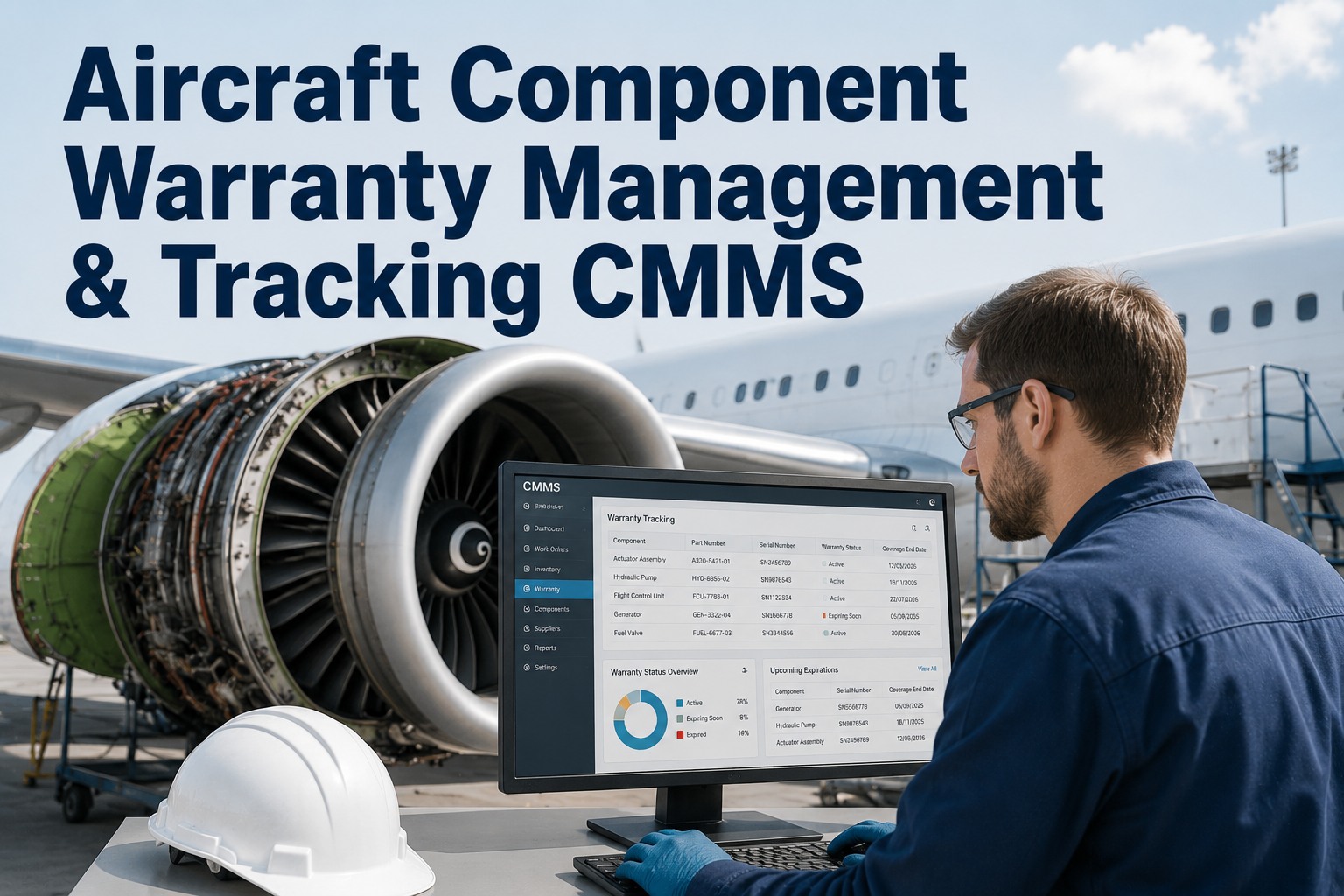
Aircraft component warranty management is one of the most overlooked revenue recovery opportunities in aviation maintenance, with airlines and MROs routinely leaving 5–10% of their annual maintenance budget on the table due to expired OEM claims a
Read More
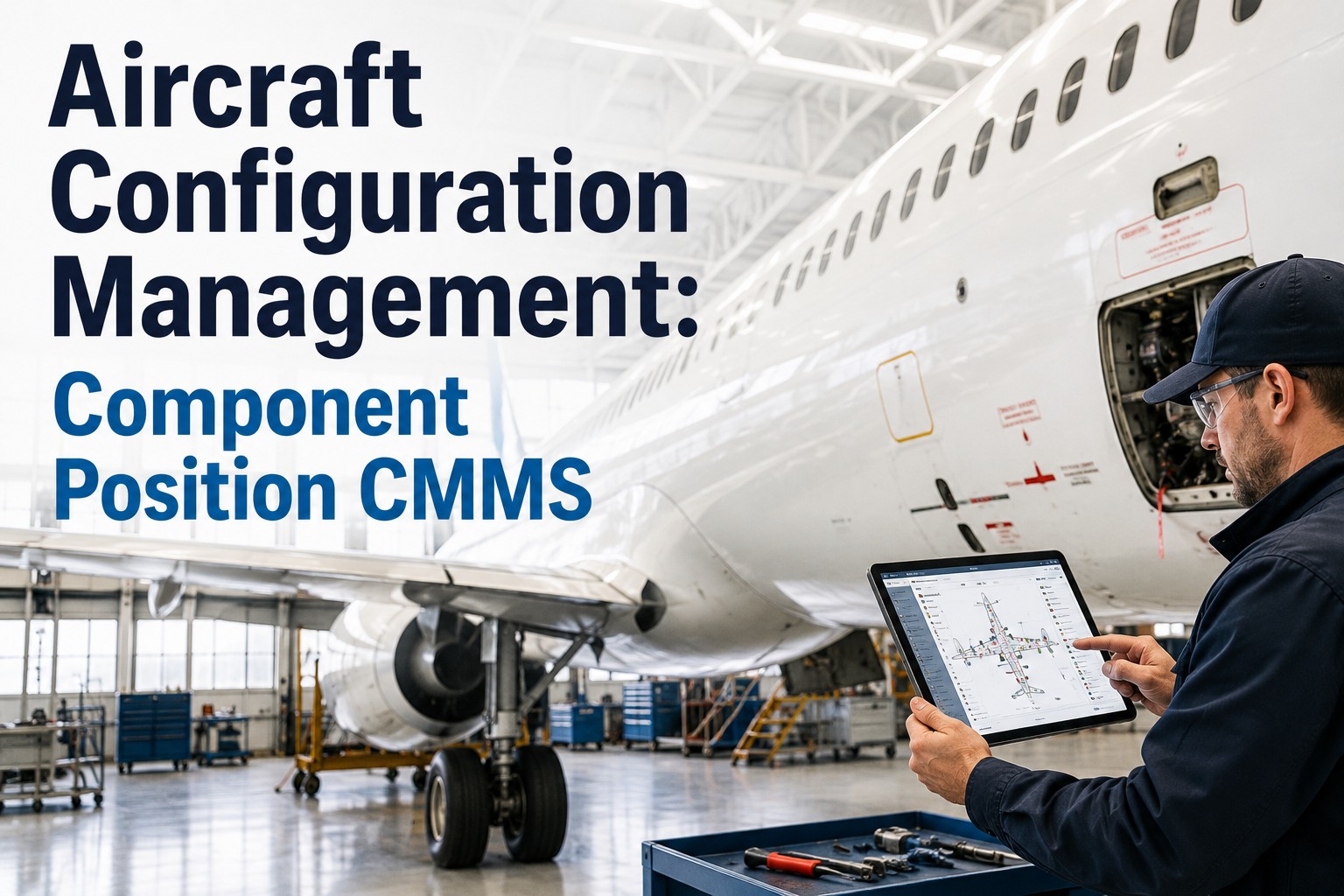
Aircraft configuration management — knowing exactly which serial-numbered component occupies which position on which tail at any moment — is the backbone of continued airworthiness, lease compliance, and insurance traceability. This CMMS aircraft

Read More
Deciding whether to repair, replace, exchange, or retire an aircraft component at its end of life is the single most consequential economic choice a reliability team makes — a single misjudged landing gear actuator or engine module can swing lifec

Read More
Aircraft fleet total cost of ownership (TCO) analysis aggregates every expense across an aircraft's operational life — acquisition, maintenance, fuel burn, engine reserves, and residual value — into a single, defensible figure that drives fleet st

Read More
An aviation digital twin is a live, virtual replica of a physical asset — an engine, an airframe, a ground-support vehicle or an entire terminal system — that continuously ingests sensor and operational data so reliability teams can simulate failu
Read More
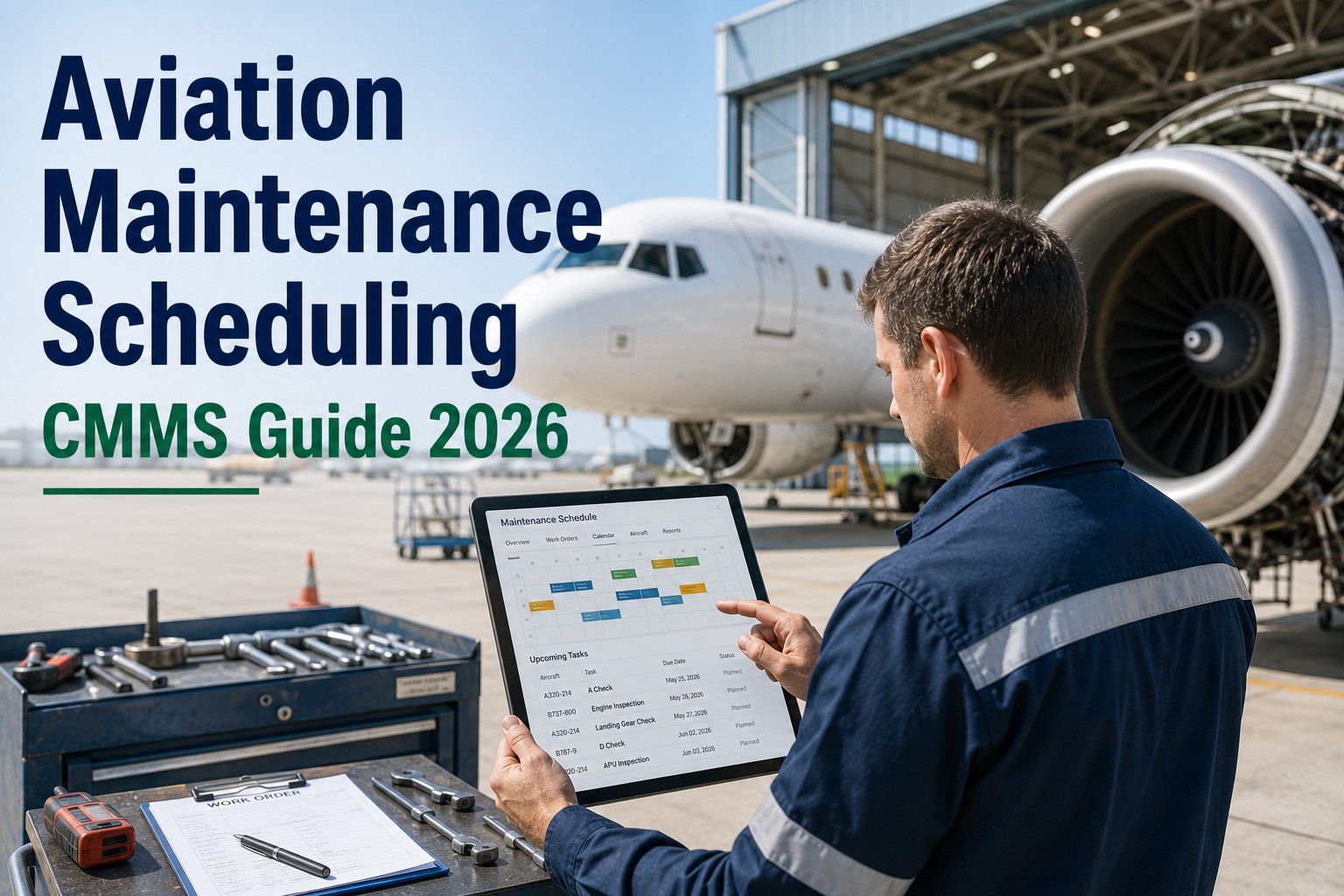
Aviation maintenance scheduling is where hangar productivity is either created or lost — and airlines with mature scheduling routinely beat industry turnaround time (TAT) by 20–30%. This 2026 guide to aviation maintenance scheduling in a CMMS cove

Read More
Aircraft maintenance due forecast planning is the disciplined practice of projecting when each tail, engine, APU, and component will cross its next inspection threshold — by flight hours, cycles, calendar days, or condition-monitoring limits — and
Read More
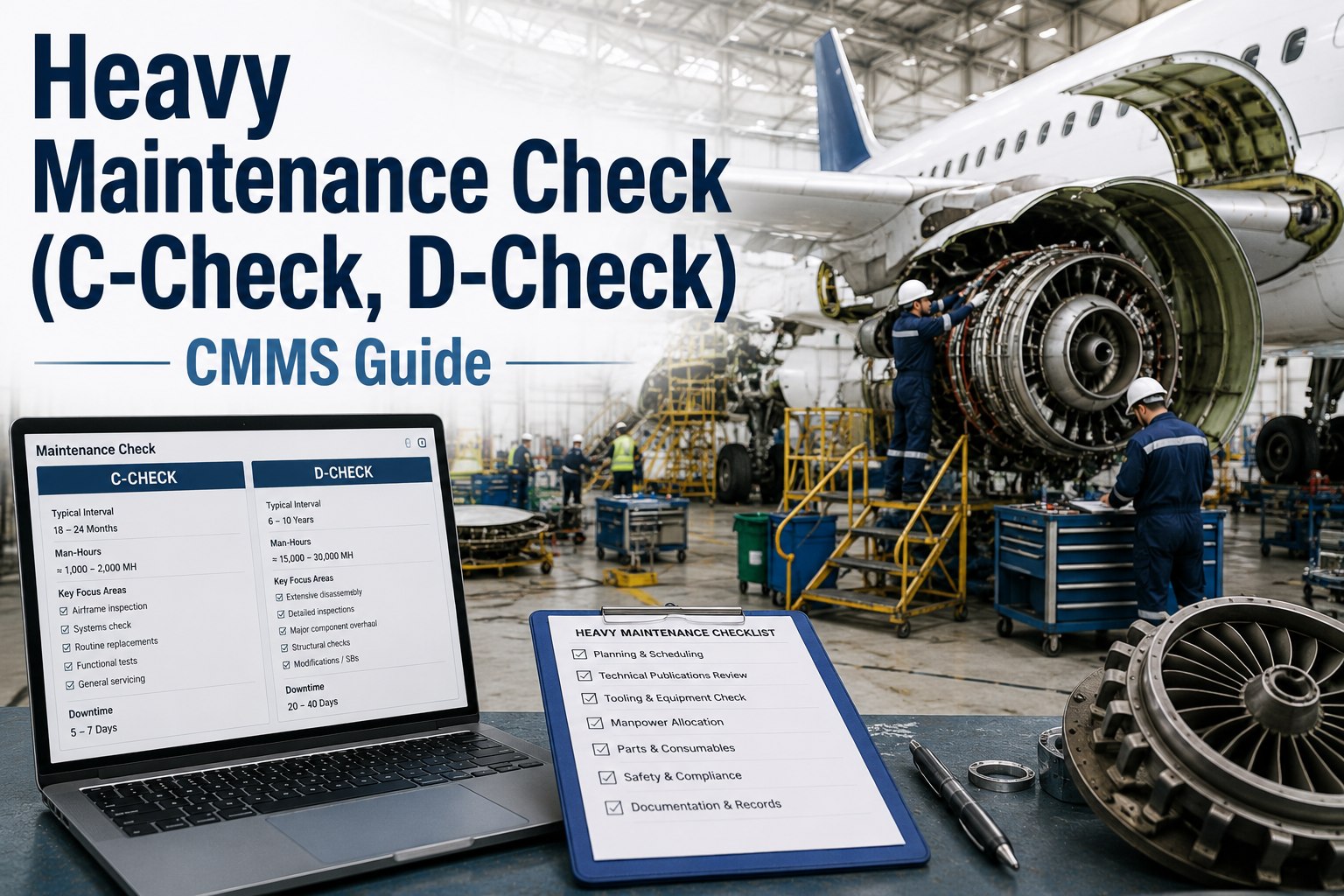
Heavy maintenance checks — C-checks every 18–24 months and D-checks every 6–10 years — are the largest, most complex scheduled events in commercial aviation, grounding an aircraft for 10 days to 6 weeks and consuming 20,000–50,000 labor hours per
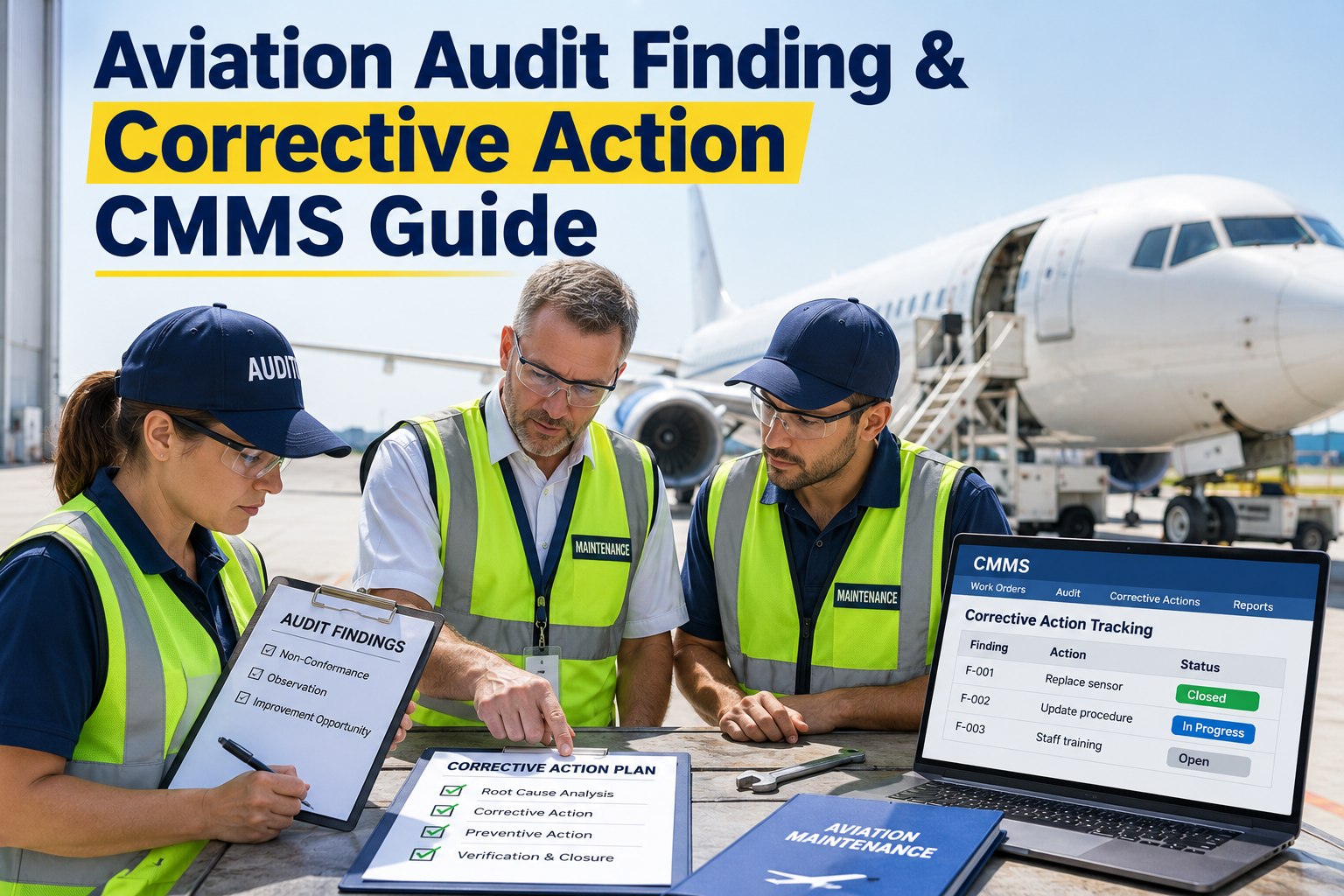
Read More
An aviation audit finding that is not properly closed becomes the opening item in the next regulatory audit. This guide to aviation audit finding and corrective action CMMS covers finding classification, root cause linkage, and preventive action t
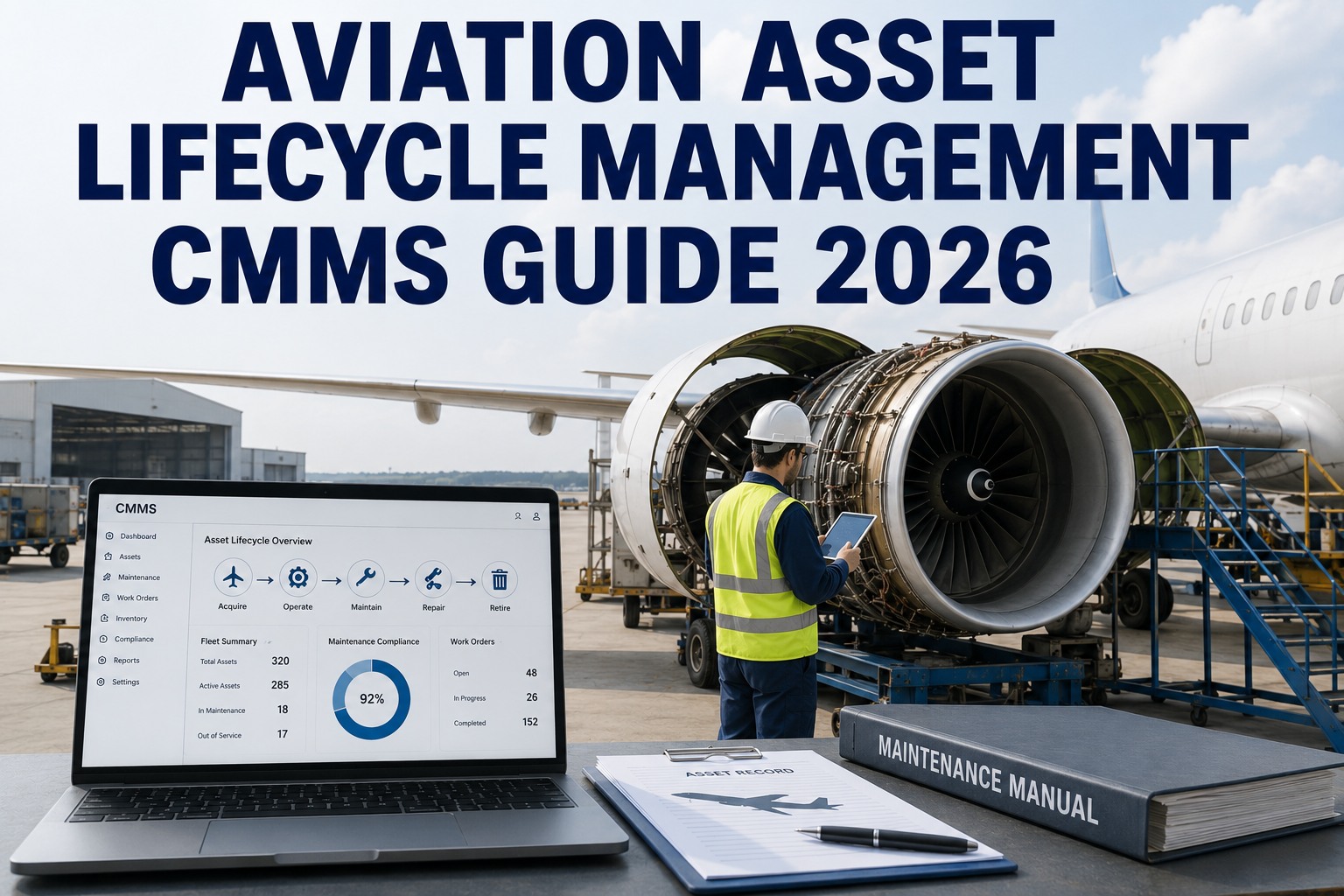
Read More
Aviation asset lifecycle management is the discipline that determines whether a $50M aircraft generates margin or drains it from the day of delivery to retirement. For airlines, MROs, and lessors, an asset lifecycle CMMS for aviation is where ever

Read More
Life-limited parts (LLPs), soft-time components, and time-between-overhaul (TBO) intervals represent the highest-stakes tracking challenge in aviation maintenance — exceeding a life limit by even one flight cycle can trigger a grounding event, reg

Read More
Airline fleet CapEx forecasting shapes the largest financial decisions a carrier makes — and when the maintenance data feeding those forecasts is fragmented across spreadsheets, PDF task cards and legacy MRO systems, the result is millions in mist

Read More
Ground support equipment fleet lifecycle management is the discipline of tracking every tug, belt loader, de-icer, pushback, and GPU unit from acquisition through daily operation, preventive maintenance, mid-life overhaul, and retirement — and a p

Read More
An aircraft engine is the single most expensive rotating asset an airline or lessor manages — a single widebody engine can cost $25–$45 million, and the timing of its shop visit decides millions in cash flow, lease compliance and fleet availabilit

Read More
Unapproved parts in aviation maintenance are not a paperwork problem — they are an airworthiness threat that can ground aircraft, trigger FAA enforcement, and end operator certificates. This unapproved parts prevention and traceability CMMS guide
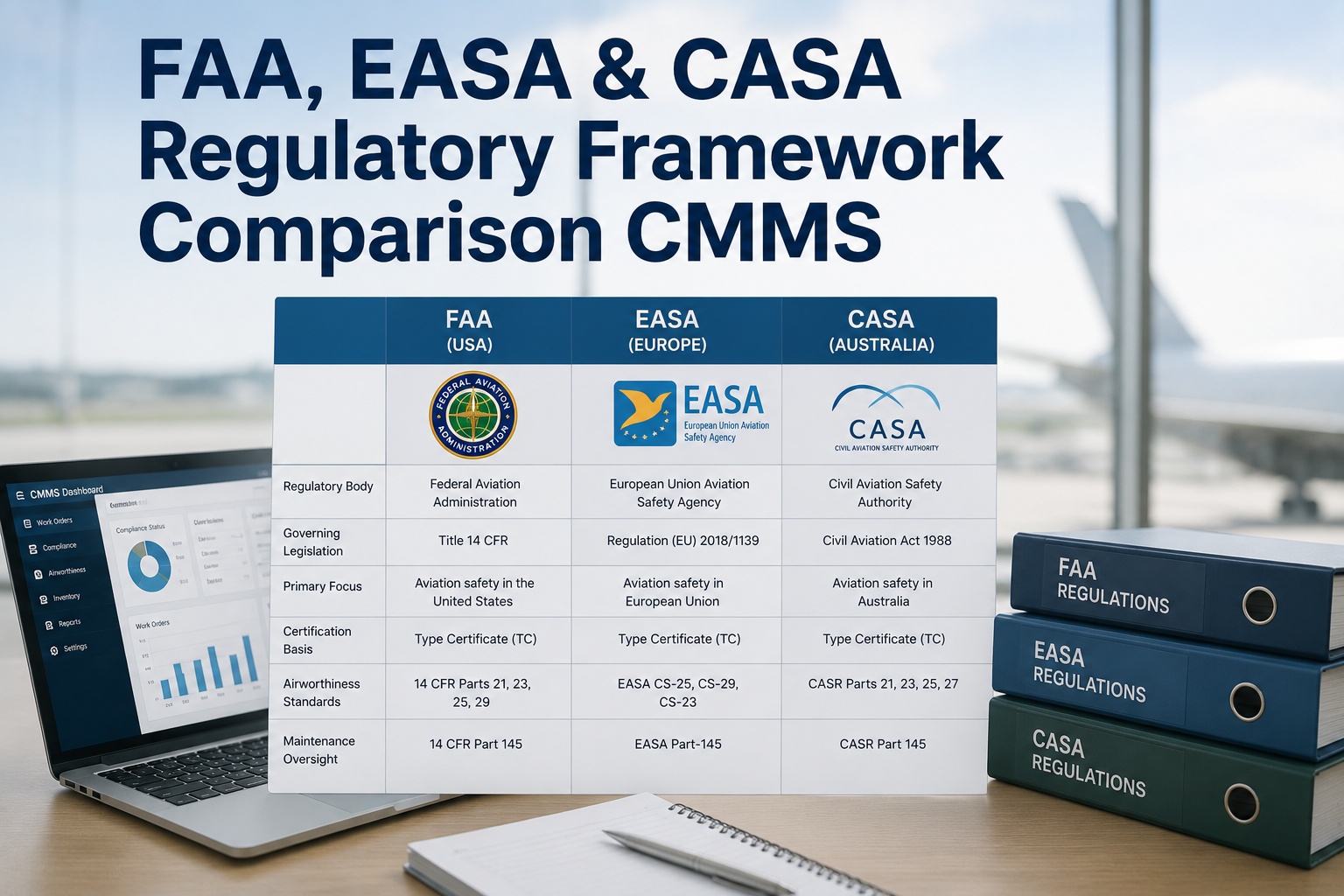
Read More
FAA and EASA Part 145 audit preparation is the difference between a routine two-day inspection and a certificate suspension — and in 2026, auditors expect compliant maintenance records in seconds, not folders assembled over weeks. This guide to Pa
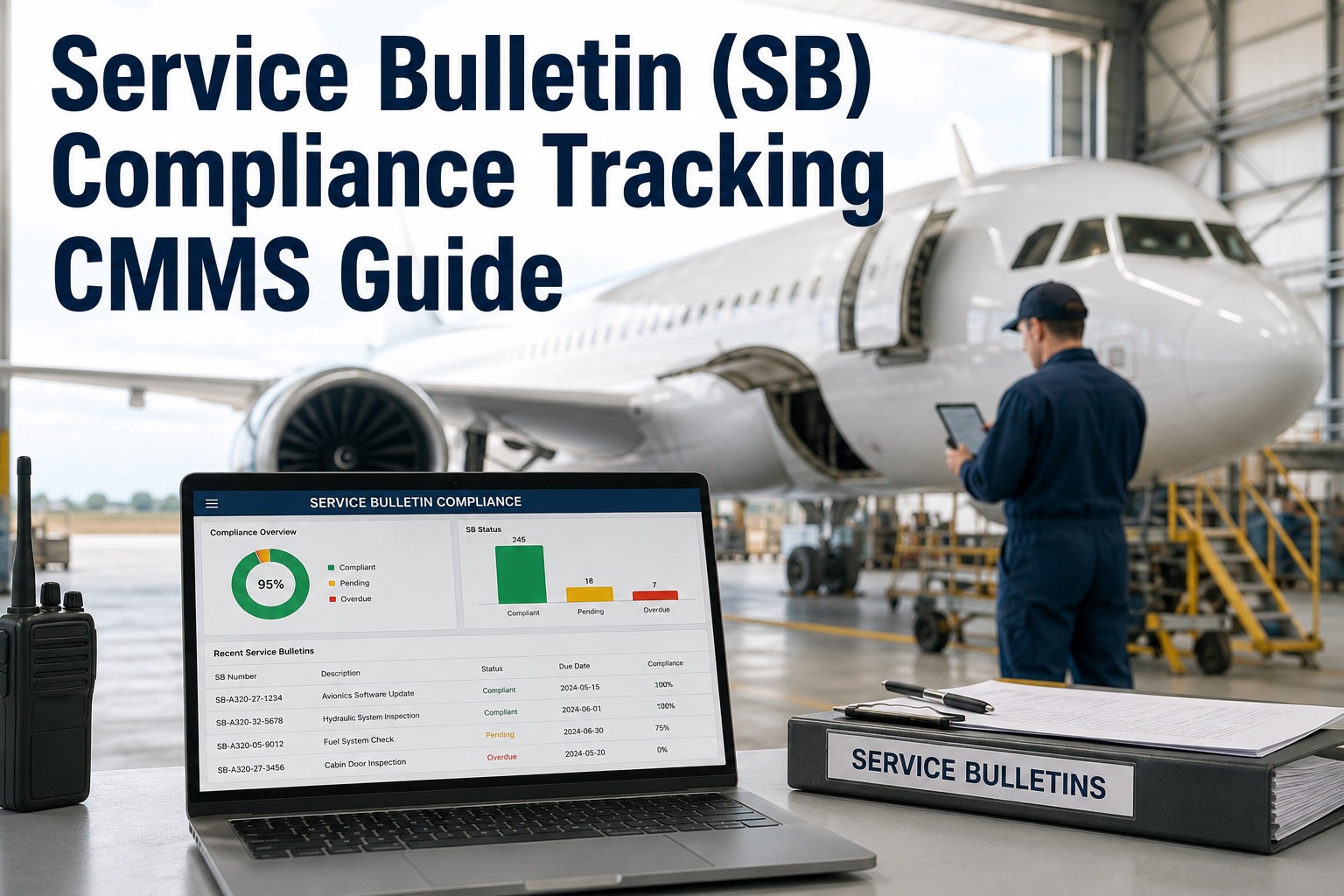
Read More
Service bulletin tracking is the backbone of aviation continuing airworthiness — but most teams still manage SB compliance in spreadsheets that obscure fleet-wide applicability and risk overdue mandatory actions. An AI-powered CMMS like OxMaint tr
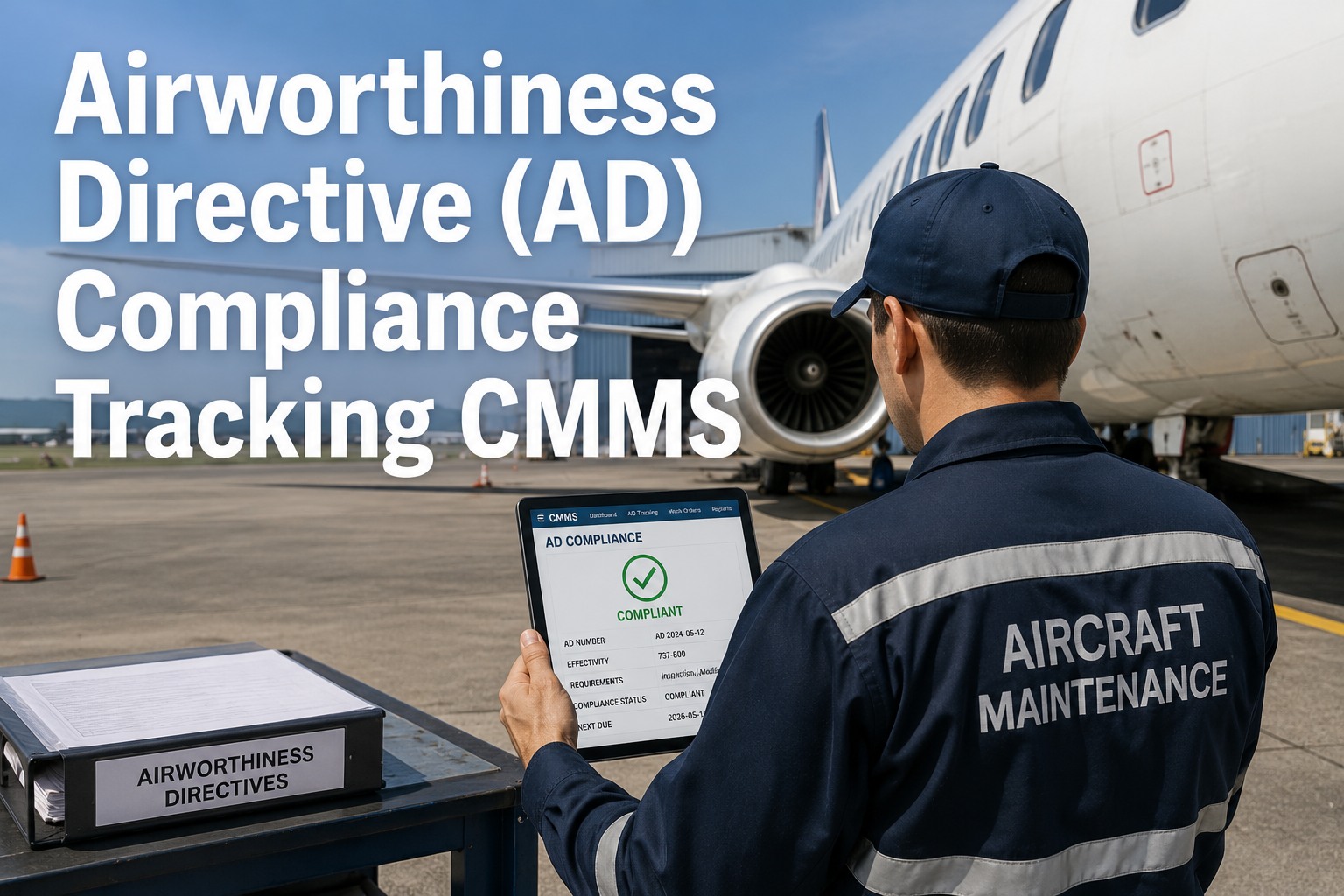
Read More
Airworthiness directive tracking is the non-negotiable backbone of any Part 145 or Part-M certified operation — miss a single AD deadline and you risk grounding an aircraft, facing regulatory enforcement, and jeopardizing your certificate. This gu
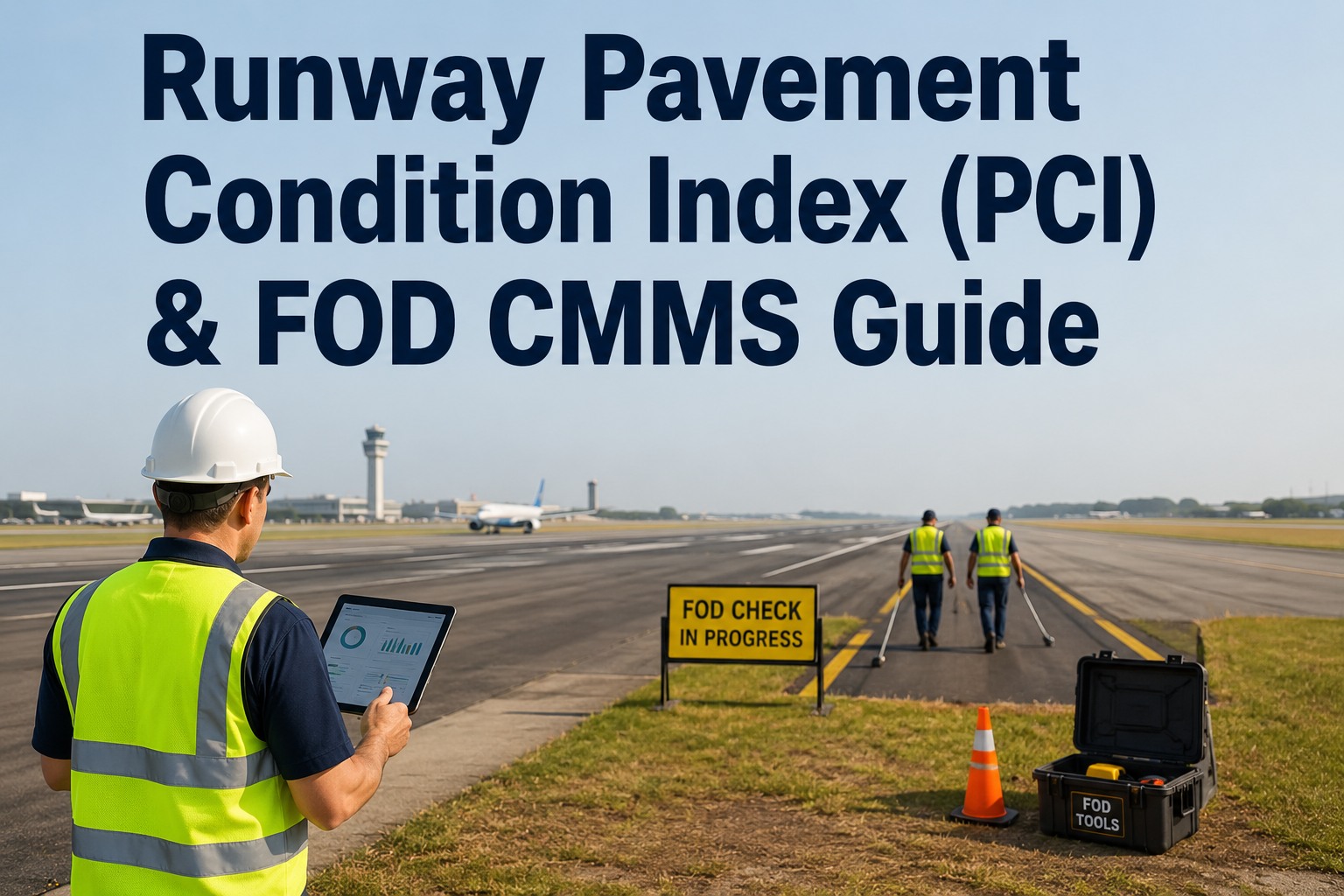
Read More
Runway pavement is the single most expensive asset on an airfield, and its Condition Index (PCI) is the leading indicator that tells you whether the next 12 months will be routine or catastrophic. A 10-point PCI drop typically doubles spalling vol

Read More
Runway edge lights and PAPI units are the two most inspection-intensive visual aid systems on any airfield, and a single uncorrected outage can trigger a NOTAM that strips a runway of instrument approach minima or, in busy towered environments, ha
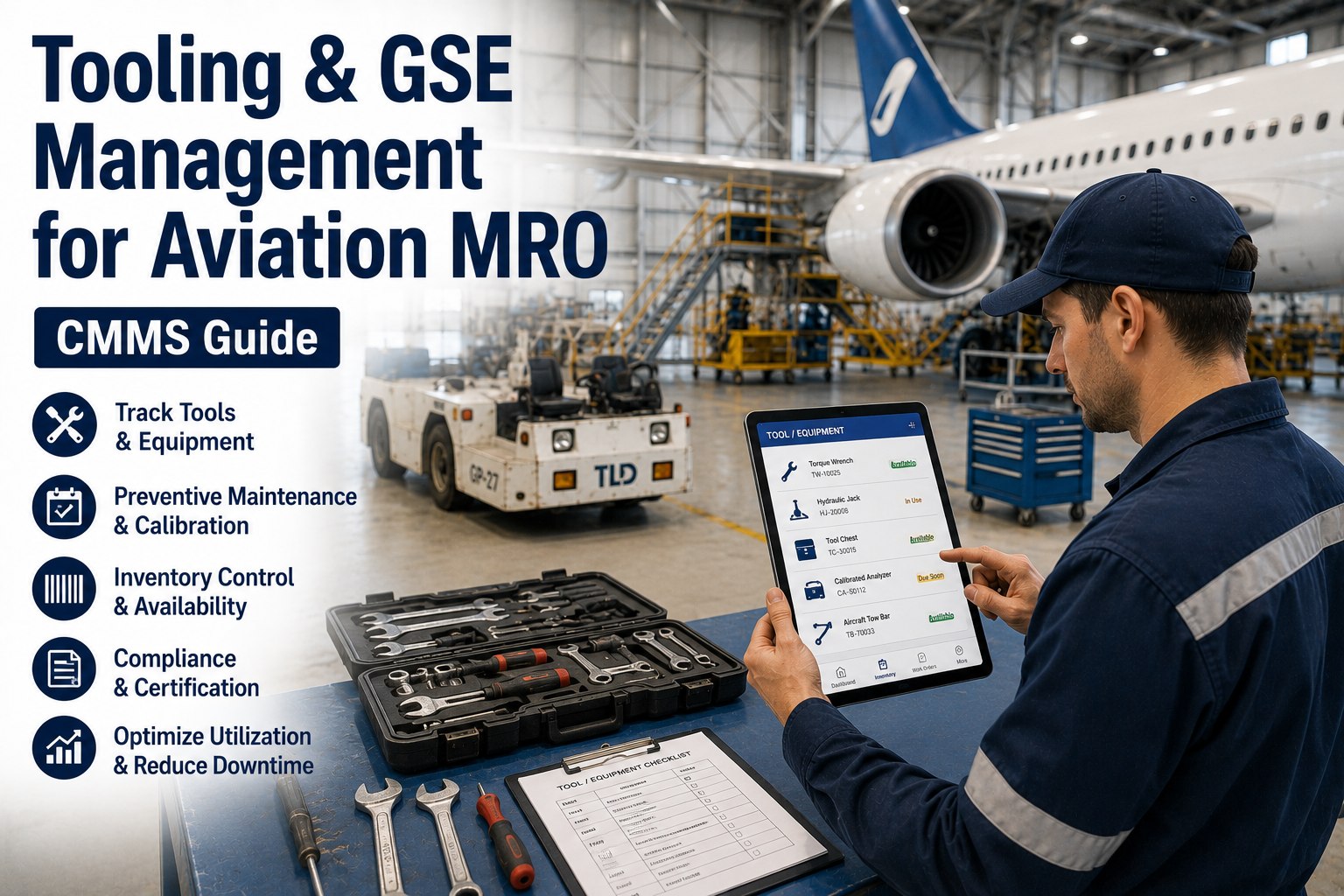
Read More
Missing or expired tooling grounds aircraft as fast as missing parts — yet most MRO facilities cannot tell you, at this moment, where every calibrated torque wrench, hydraulic jack, and NDI test block actually lives. A single overdue calibration o
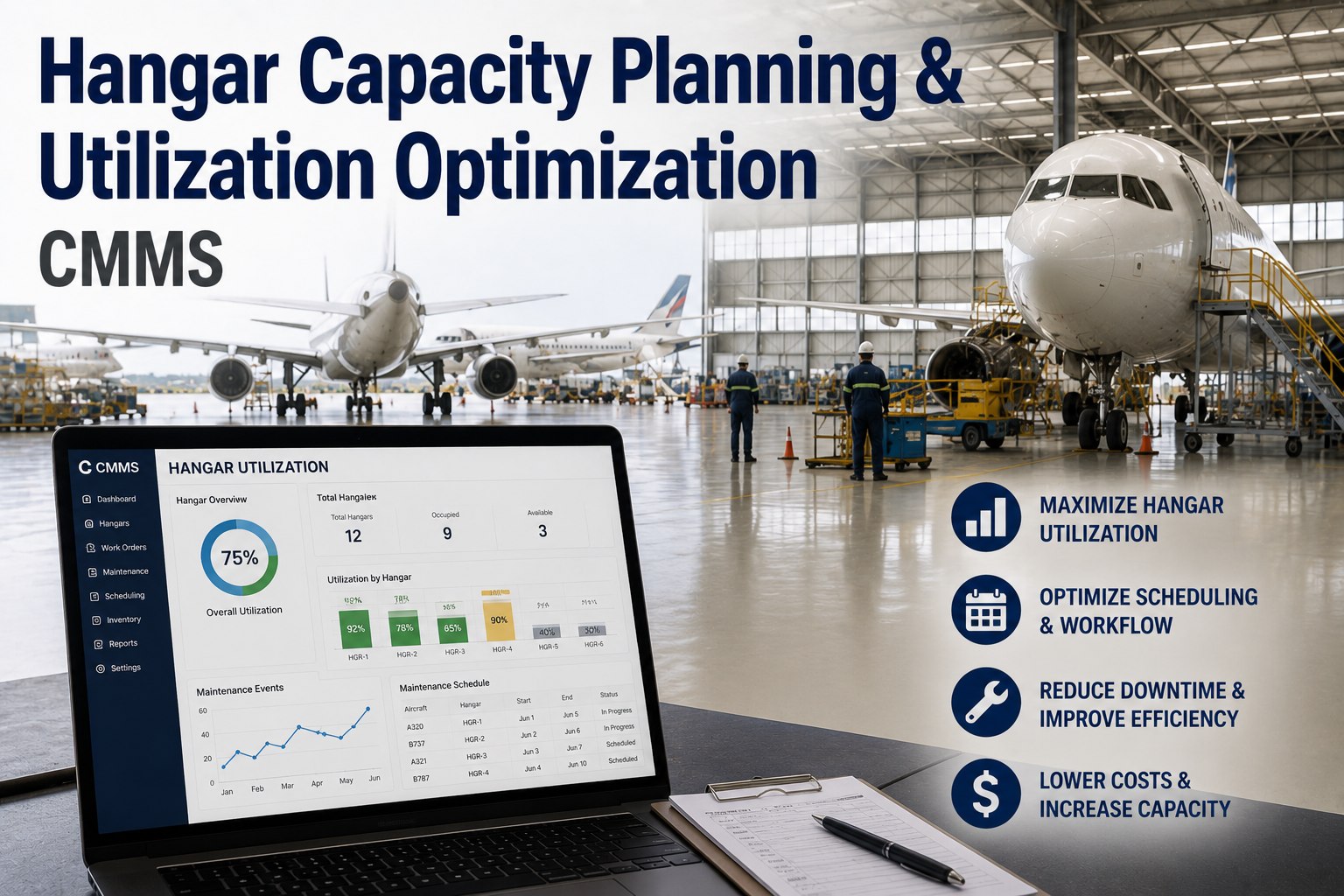
Read More
Hangar capacity is the most expensive square meter in any MRO operation — often 3–5× the cost per footprint of a standard workshop — yet most facilities quietly run at 60–75% utilization when 85% or more is structurally achievable. The gap is rare

Read More
Shift handover is the single most underestimated risk window in aviation MRO — industry audits show 15–30% of preventable hangar errors originate in the gap between outgoing and incoming crews, where open task cards, partially torqued fasteners an
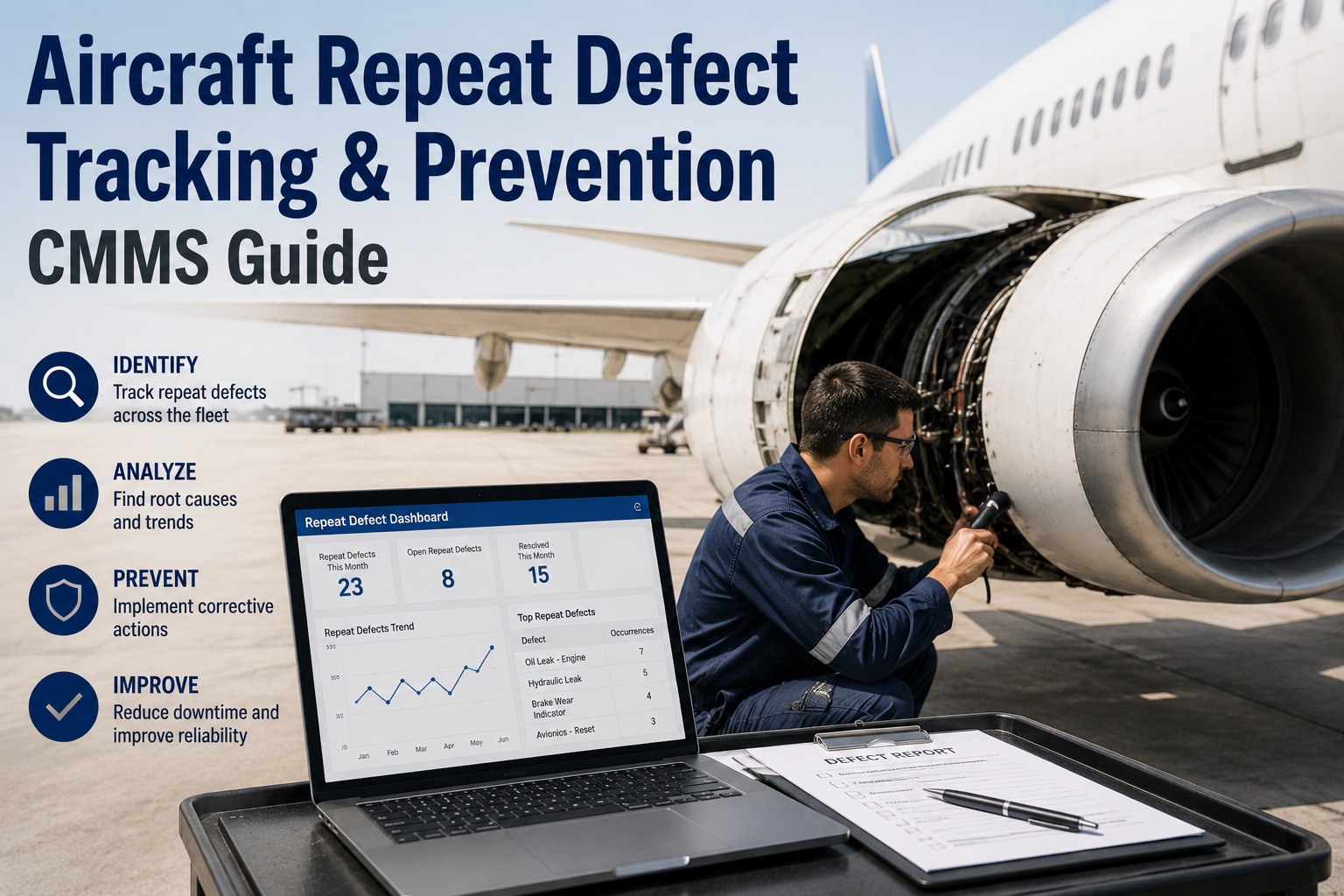
Read More
Repeat defects are the silent tax on every aviation maintenance operation — the same snag written up flight after flight, each entry burning another 2–6 engineer-hours while the underlying cause stays hidden in disconnected logbooks. Industry stud
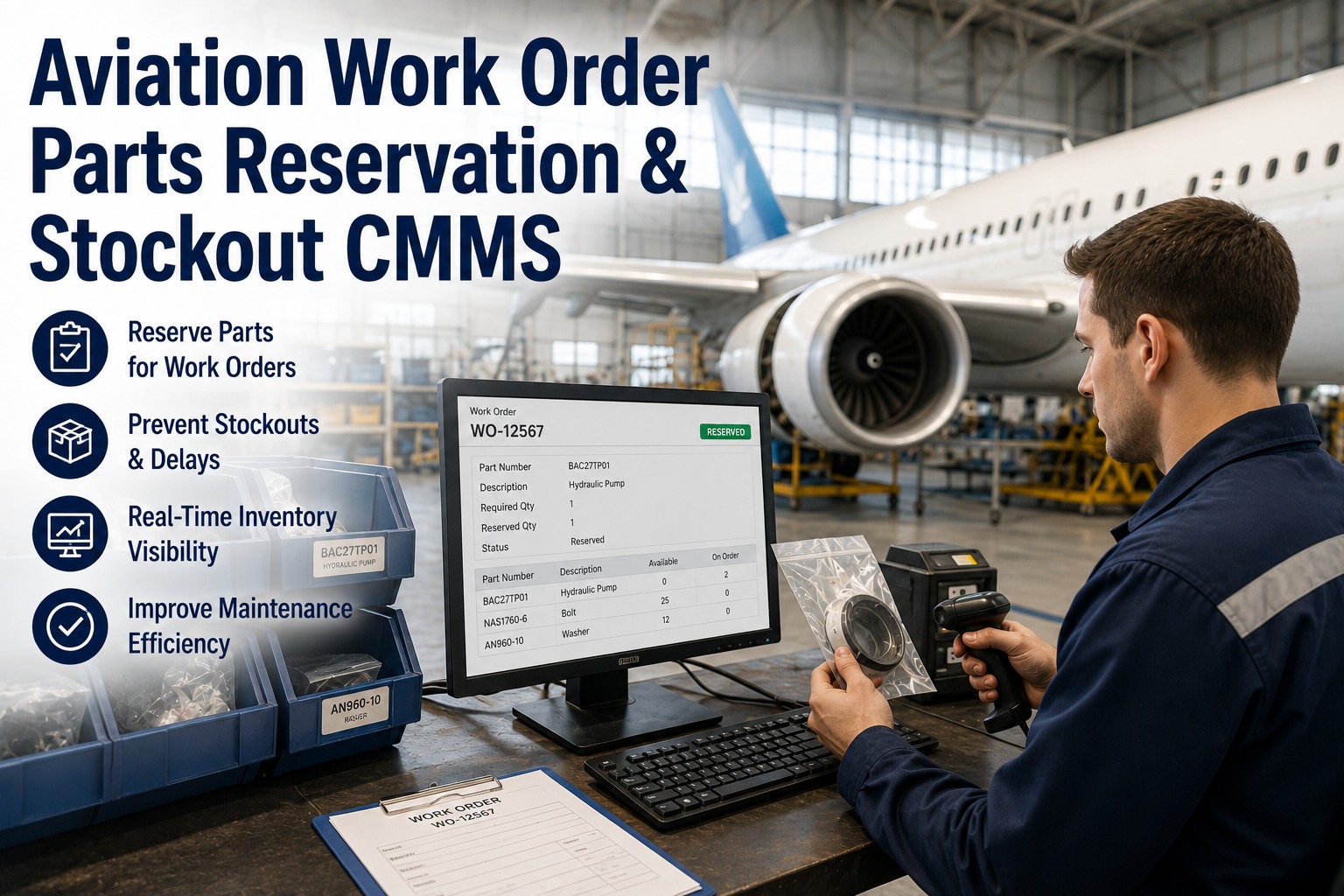
Read More
Parts stockouts at aviation MRO facilities rarely arrive unannounced — the signals show up in the CMMS days before the hangar floor feels them. A work order raised on Monday for a landing-gear overhaul usually reveals by Tuesday whether the seals,
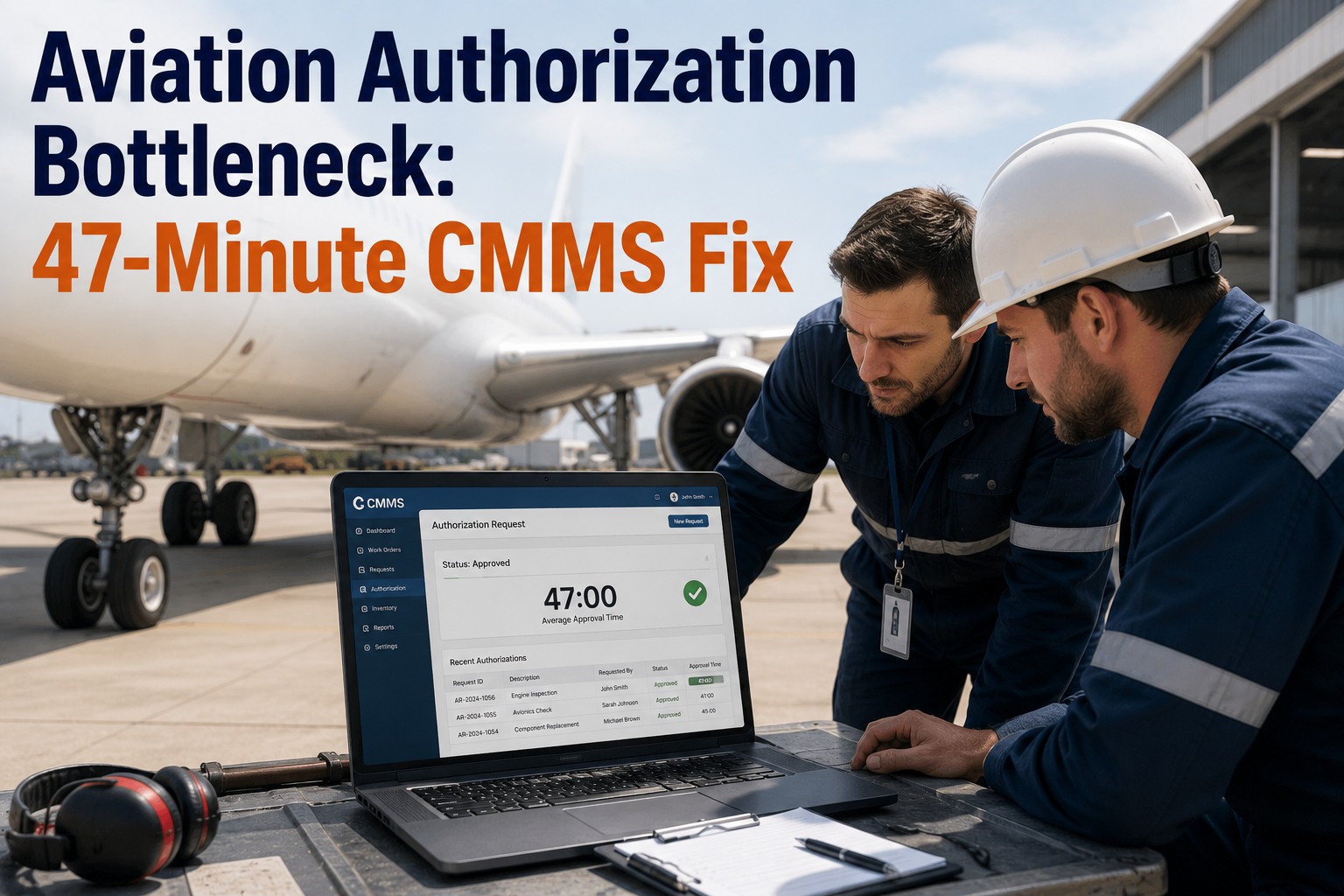
Read More
Across paper-based aviation maintenance shops, the single most underestimated source of labor waste is the authorization bottleneck — the cumulative minutes technicians spend idle while waiting for an inspector to physically sign off on a work ord
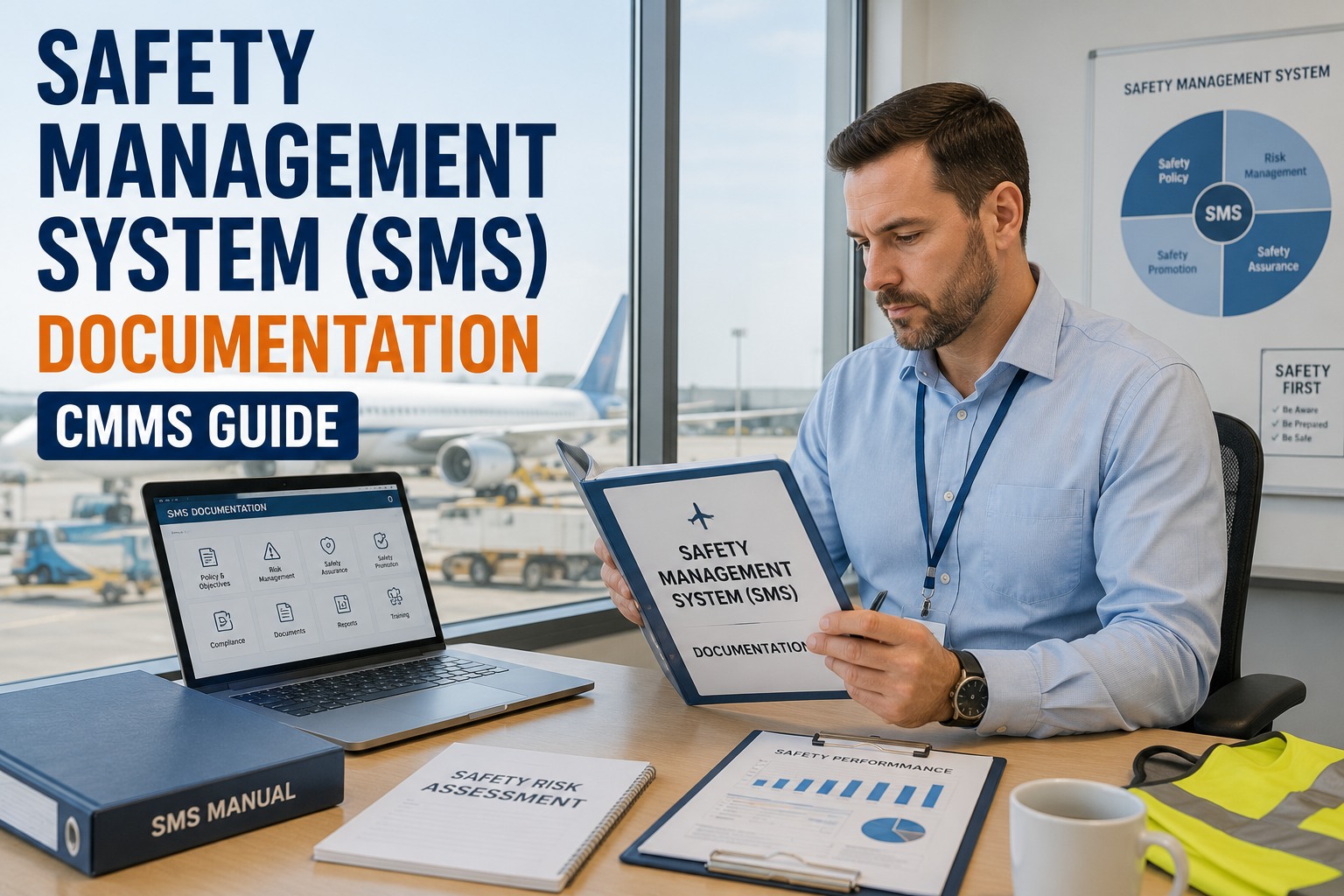
Read More
Safety Management System (SMS) documentation in aviation is where regulators can either see a working safety culture or a paper program — and Just Culture requires the records to prove intent. This guide covers hazard reporting workflows, risk ass

Read More
Aviation technician certification tracking is the process of monitoring license validity, type ratings, category authorizations, and medical currency to ensure only qualified personnel sign off on aircraft maintenance. A robust certification CMMS

Read More
IOSA audit compliance demands rigorous, traceable record-keeping across more than 900 ISARP standards, and fragmented maintenance logs are the leading cause of audit deficiencies for airlines worldwide. An IOSA CMMS guide must address how biennial
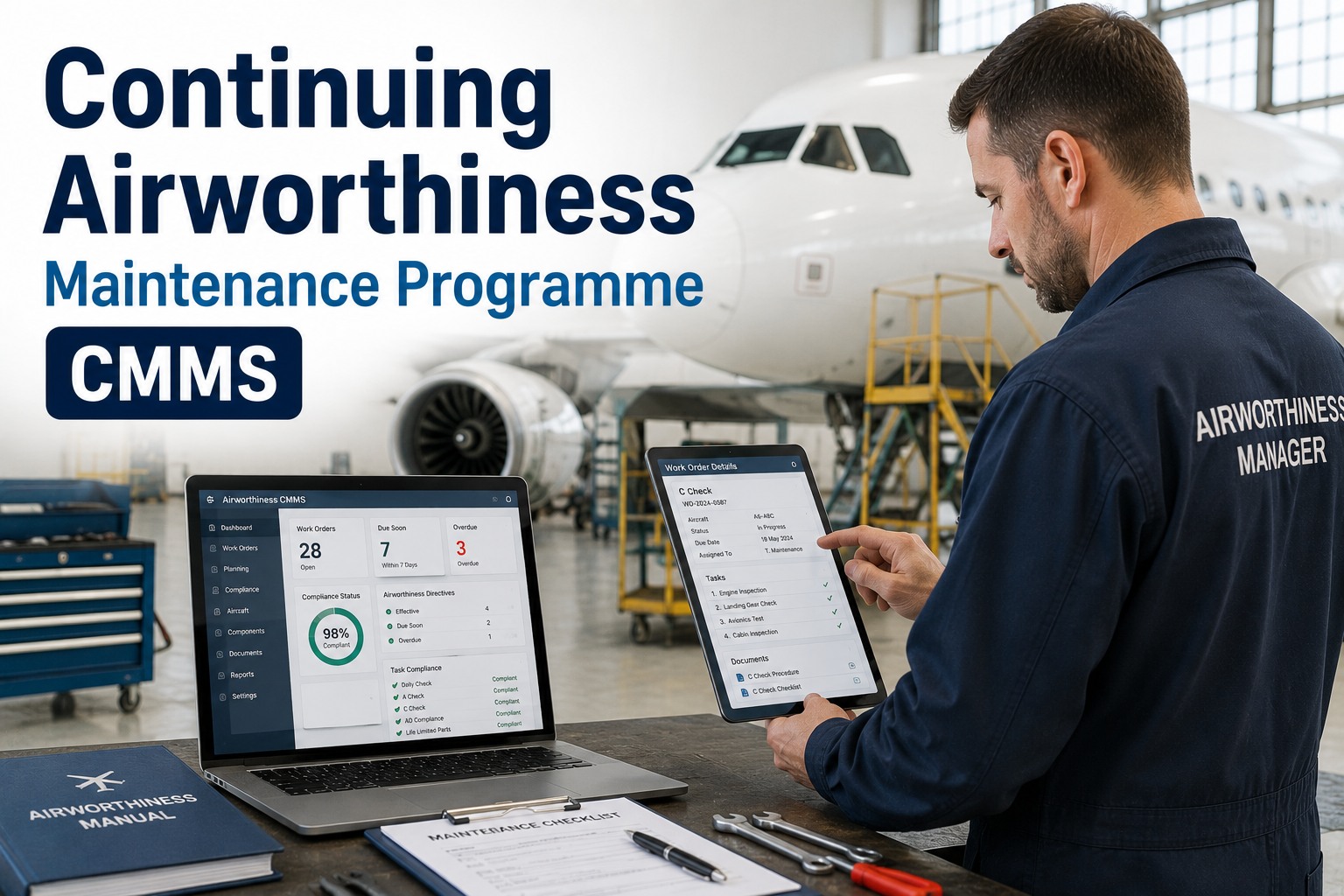
Read More
A continuing airworthiness maintenance programme (CAMP) is the master document that drives every scheduled task on an aircraft — and its integrity is the first thing regulators scrutinize during an audit. For CAMO organizations, keeping the AMP in

Read More
Aviation quality assurance lives or dies on traceability — every maintenance action, tool calibration, and spare part installation must be documented, auditable, and instantly retrievable when regulators arrive. An aviation quality assurance CMMS
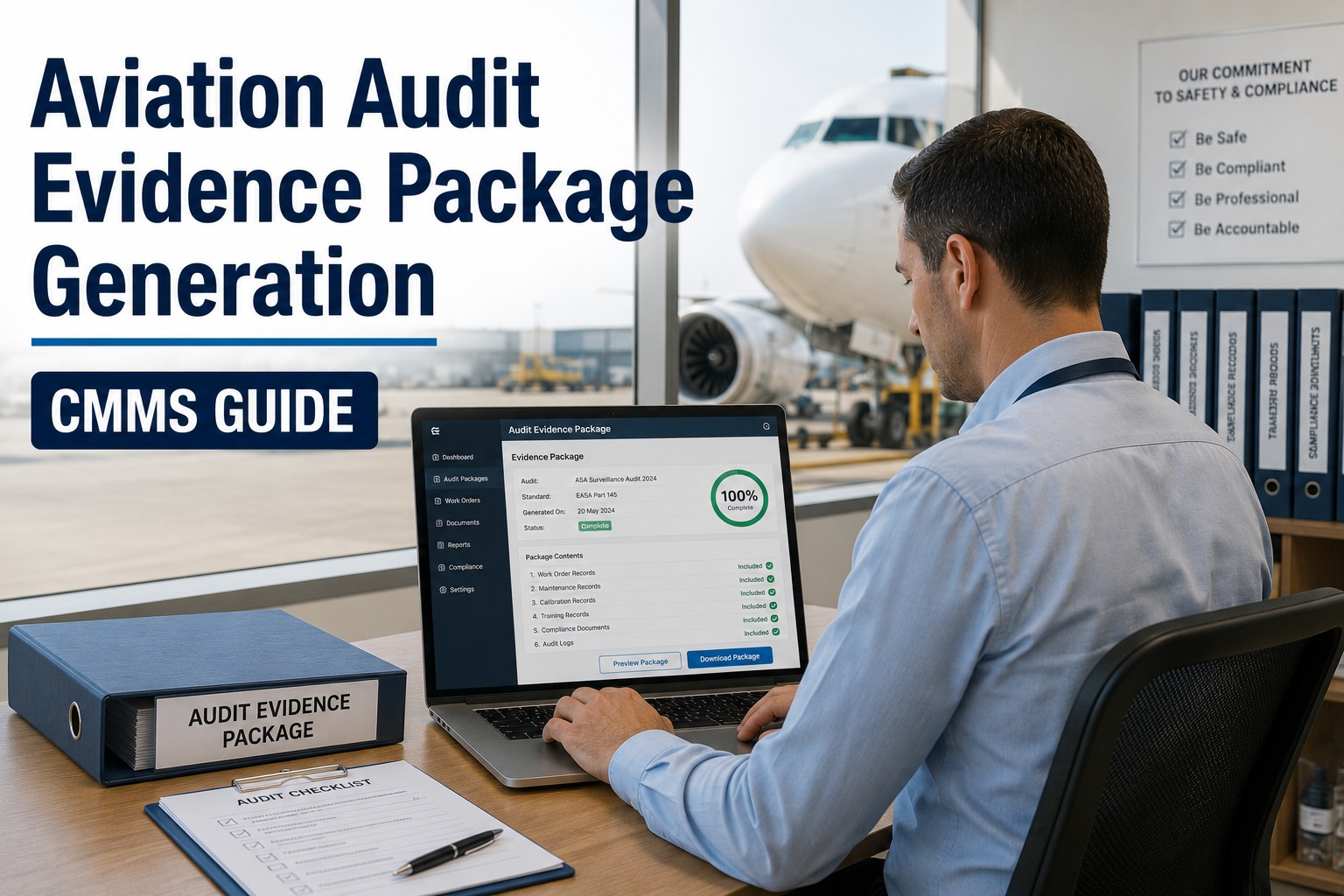
Read More
Aviation audit evidence package generation with a modern CMMS turns a multi-day scramble into a 30-minute export. Maintenance and reliability teams use OxMaint to bundle AD records, component histories, and tech log extracts into authority-ready p

Read More
Digital signatures have quietly become the single biggest unlock in aviation MRO — FAA Order 8900.1, EASA Part-145.C.50, and CASA Part 42 accept cryptographic, identity-bound e-signatures for Certificate of Release to Service (CRS) and certifying
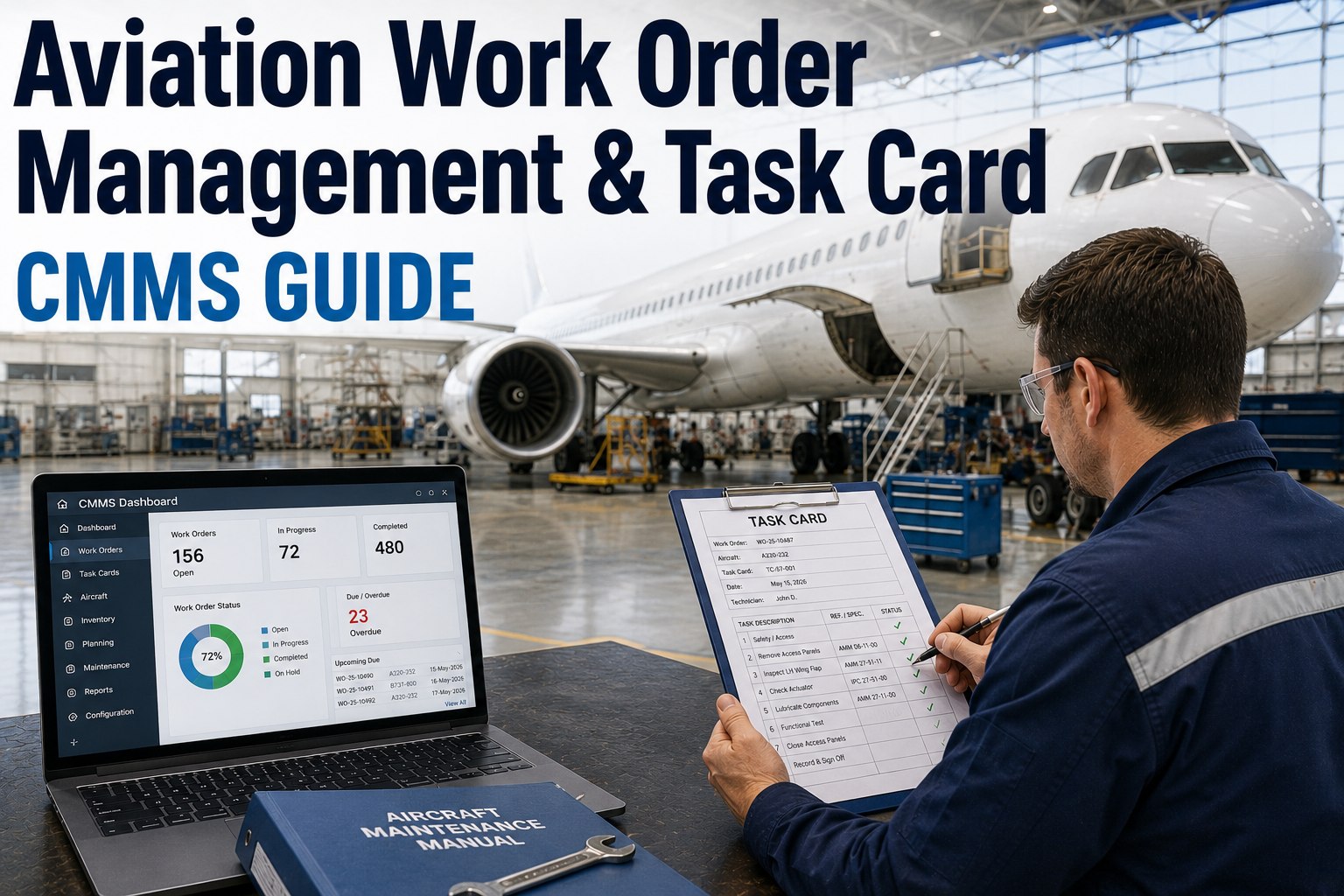
Read More
Aviation work order management is the operational backbone of every MRO hangar — the structure that turns a maintenance requirement into a signed-off, audit-ready, compliant record. A modern task card CMMS for aviation links each work order line d
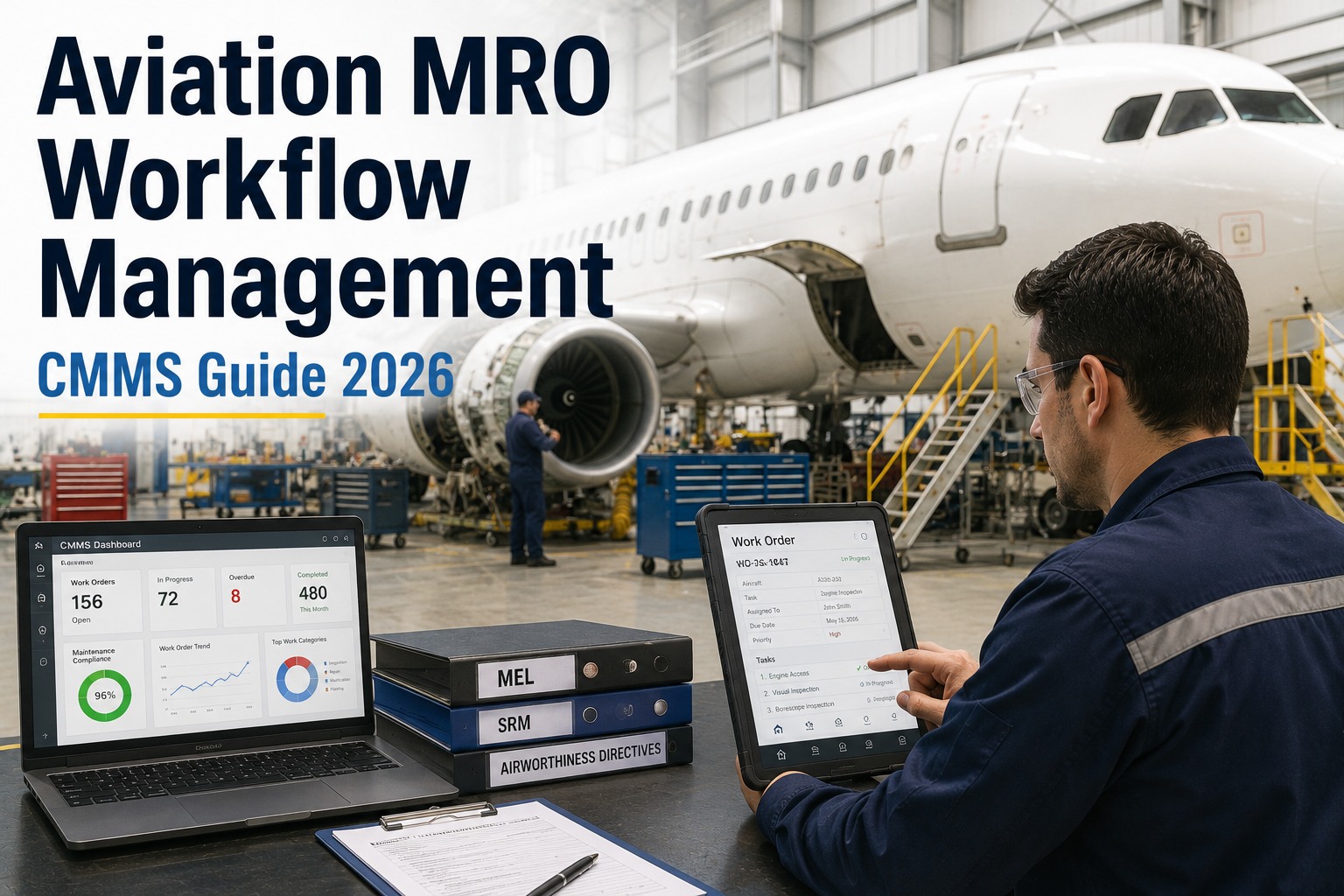
Read More
MRO workflow management is where hangar productivity is either preserved or quietly lost — industry benchmarking shows that poorly designed CMMS workflows consume 20–40% of technician time in wait states, hunting for parts, chasing sign-offs, or r
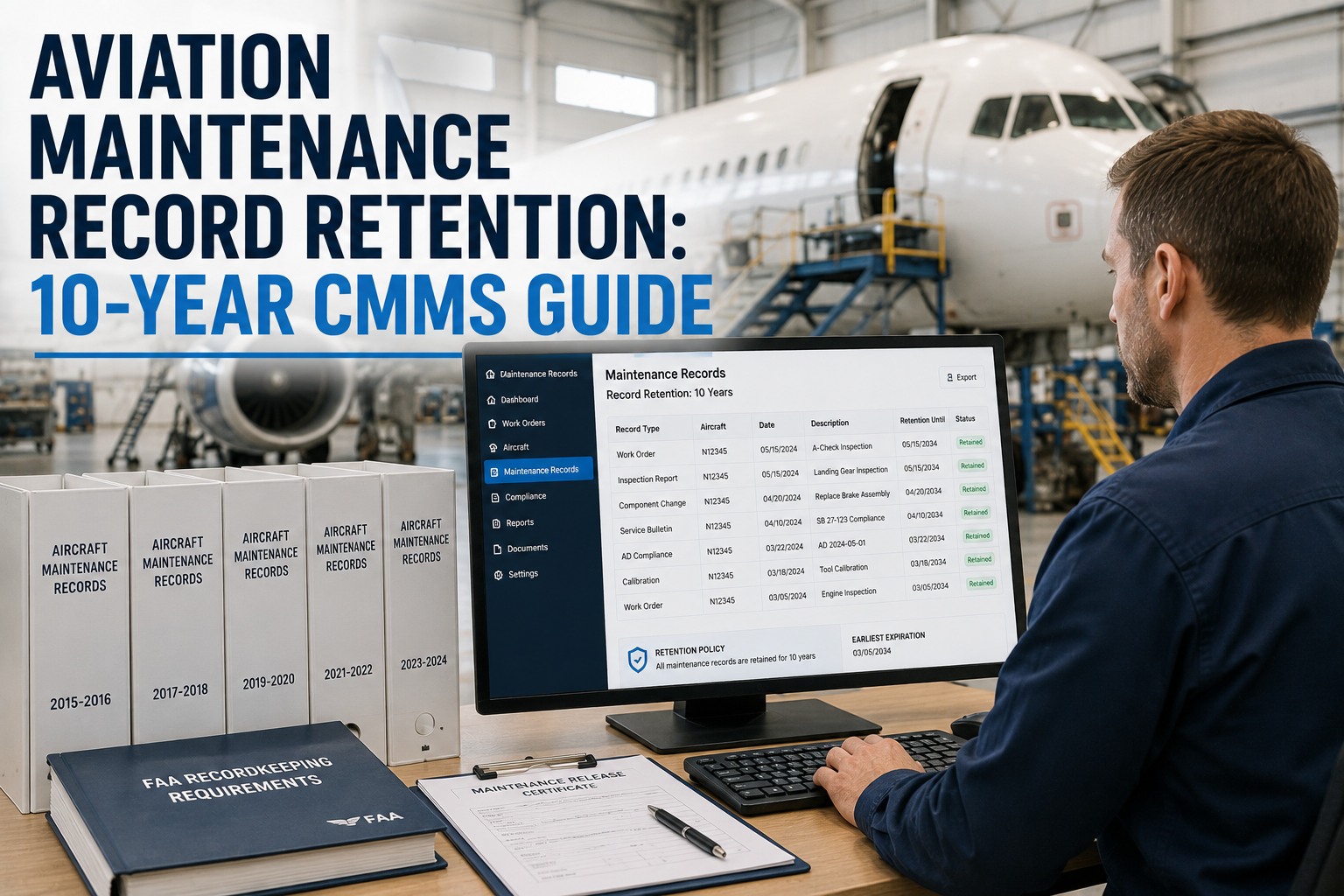
Read More
Aviation maintenance records aren't just paperwork — they're the legal spine of every aircraft's airworthiness, and losing them can ground a fleet overnight. FAA 14 CFR Part 91.417 and EASA Part-M.402 mandate that operators preserve maintenance re
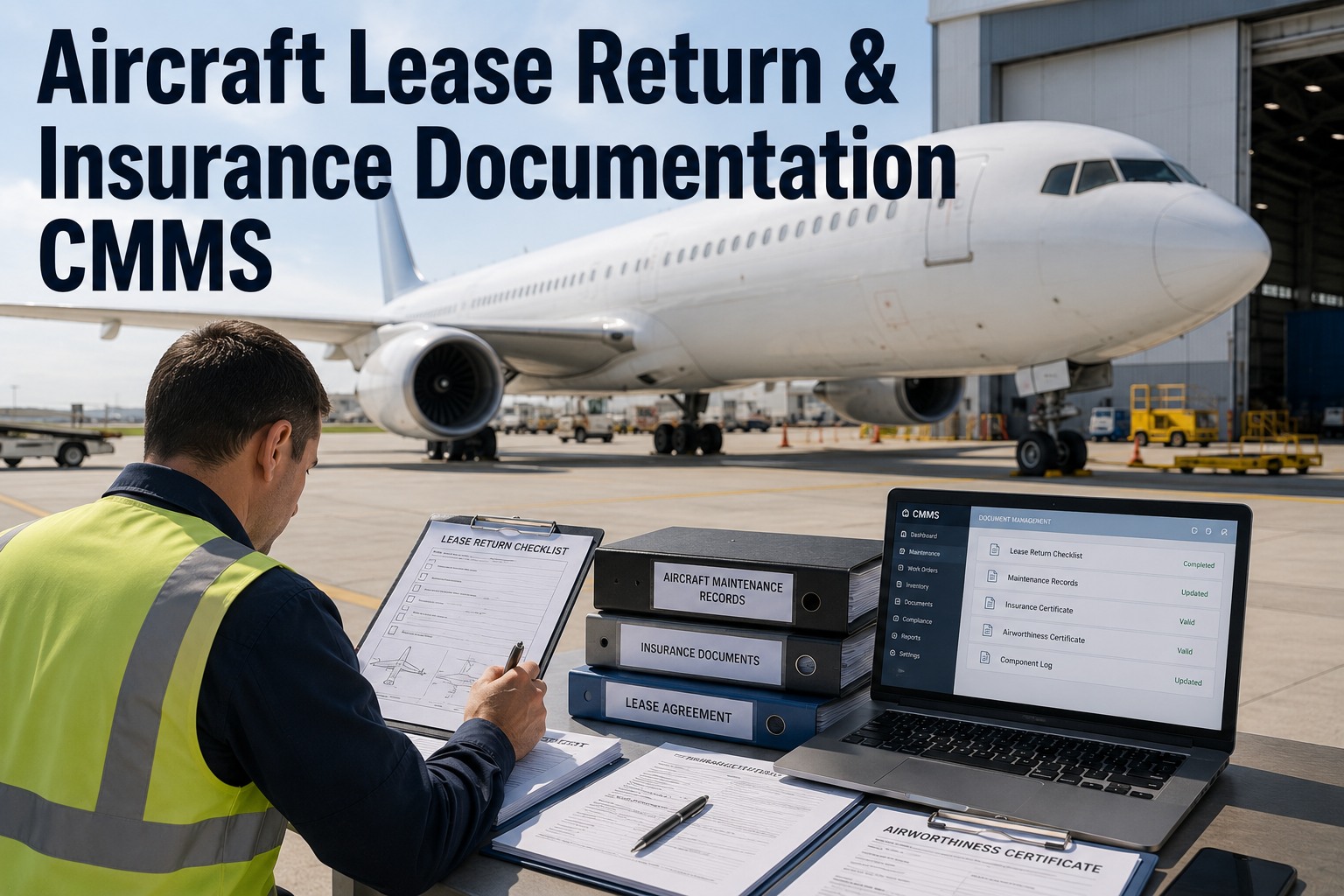
Read More
Aircraft lease returns and insurance audits rarely fail on the airframe — they fail on paper. A single missing back-to-birth trace, an unresolved Airworthiness Directive signature, or a 12-hour gap in the hours-and-cycles reconciliation can push r

Read More
Most airlines and MRO providers still run maintenance operations on legacy on-premise systems installed a decade or more ago — yet cloud-native CMMS platforms have now reached full feature parity while cutting IT overhead by 40–60% and compressing
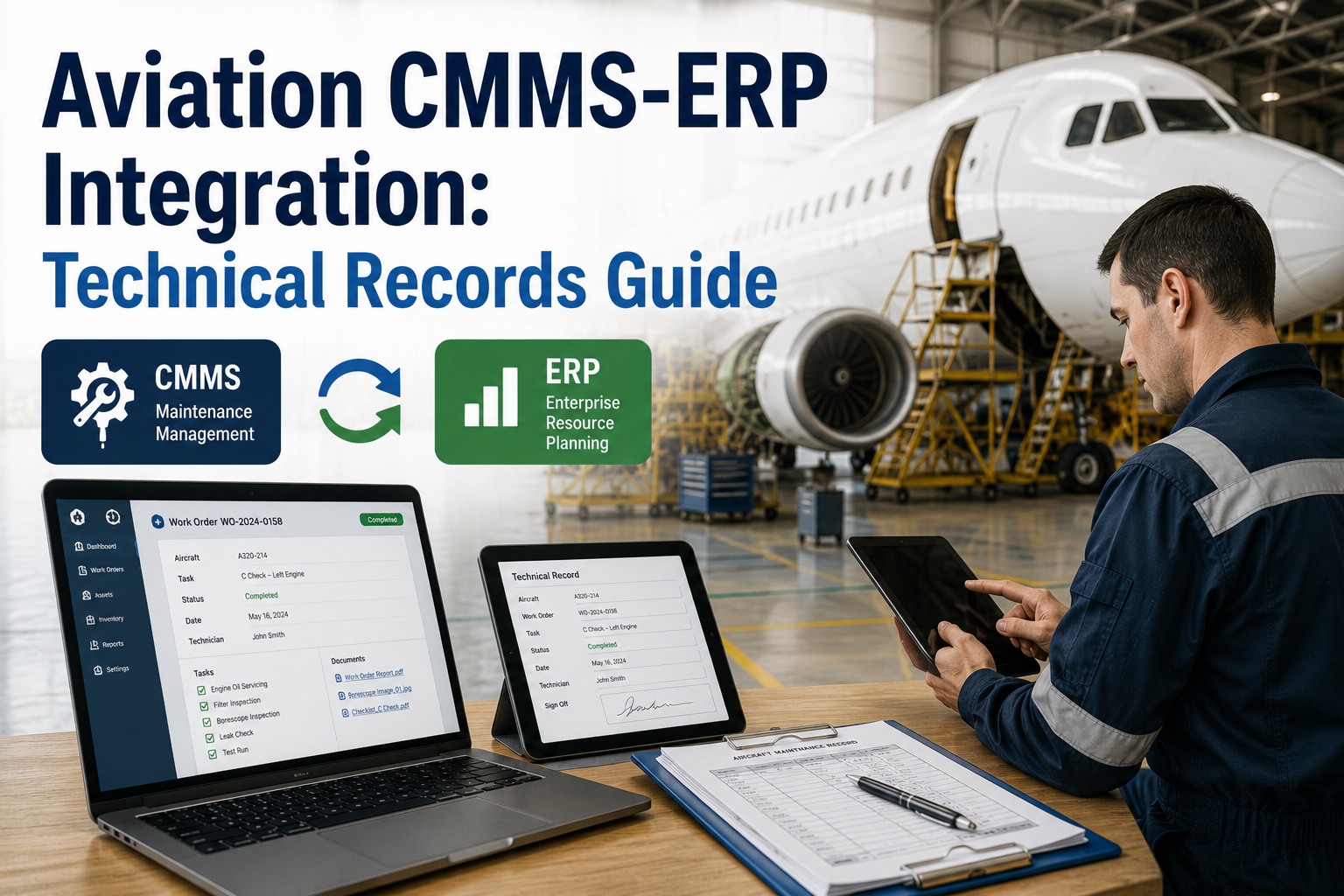
Read More
Aviation CMMS-ERP integration is the technical bridge that determines whether your maintenance, finance, and procurement teams operate from a single source of truth or constantly reconcile conflicting spreadsheets. When technical records systems,
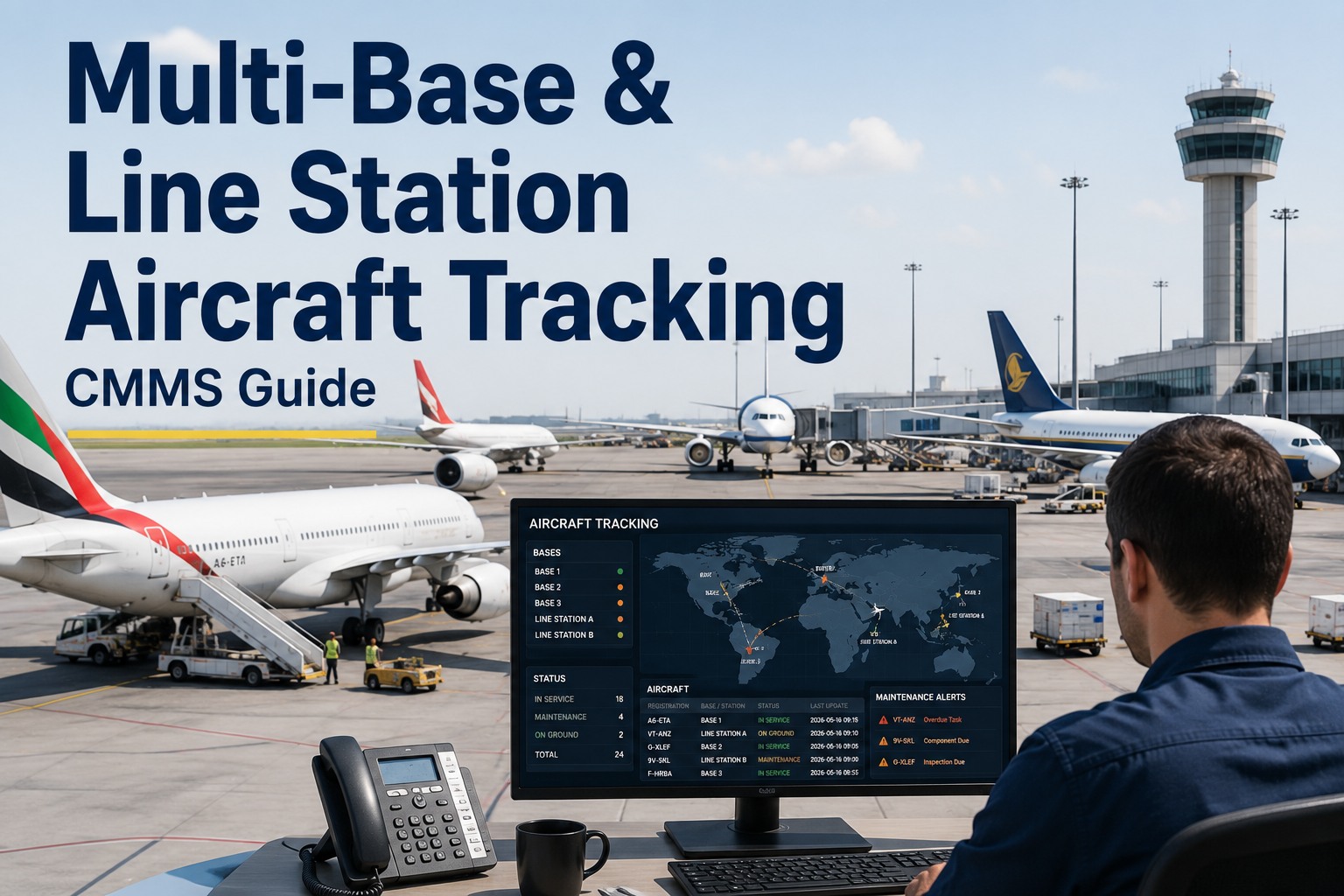
Read More
Multi-base and line station operations generate some of the most complex data challenges in aviation maintenance: the same airframe rotating through different technicians, different Part-145 procedures, and different national authority rules, all

Read More
For line maintenance crews working turnarounds at the gate, every minute spent walking back to a workstation to print task cards or re-key defect notes is a minute of AOG risk. A mobile work card app puts authorized procedures, illustrated parts c
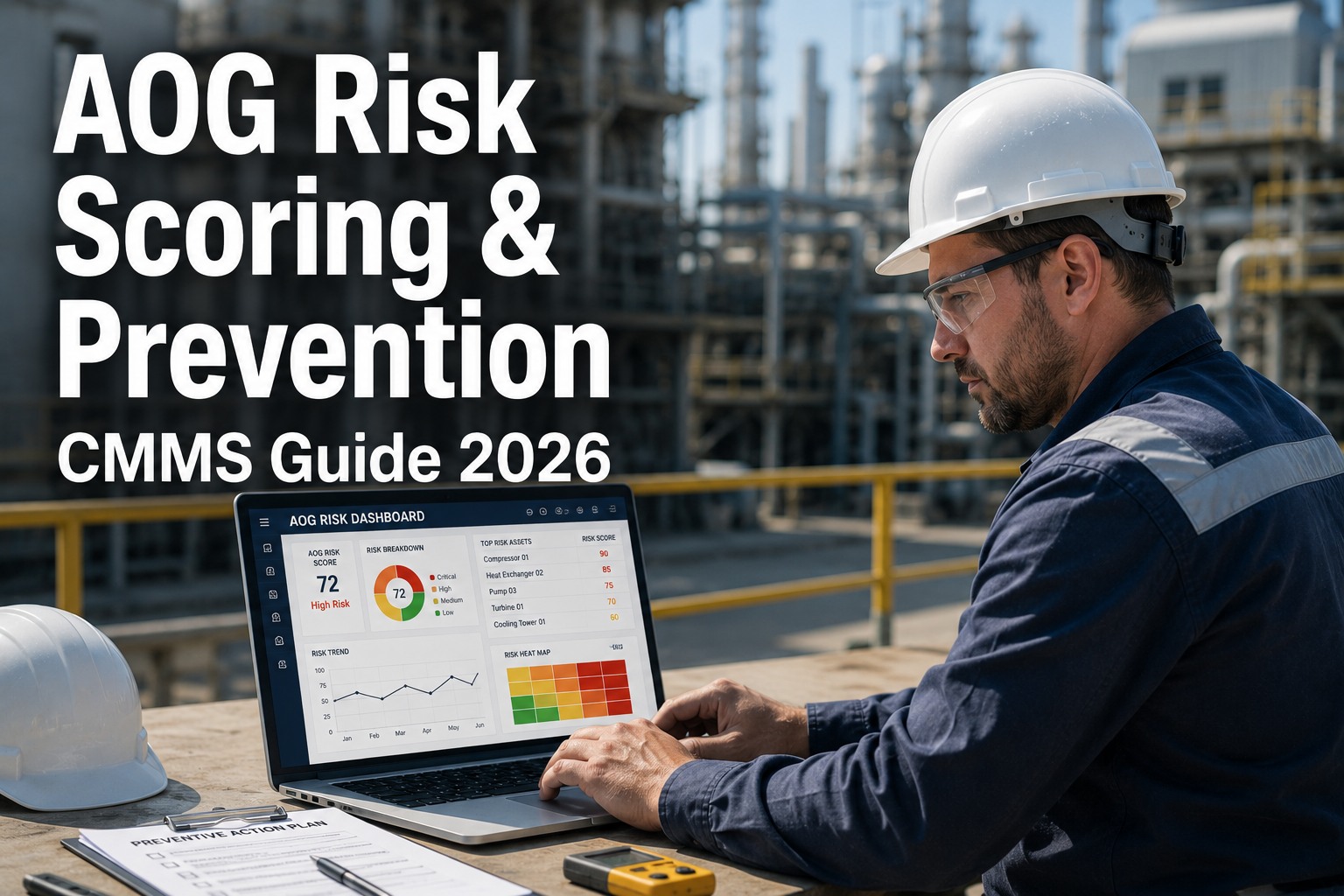
Read More
An AOG event isn't a single failure — it's a chain of un-scored risks (life-limit collisions, aging deferred defects, stock-out probabilities) that converged on the same dispatch window. This guide walks maintenance leaders through a CMMS-based ri
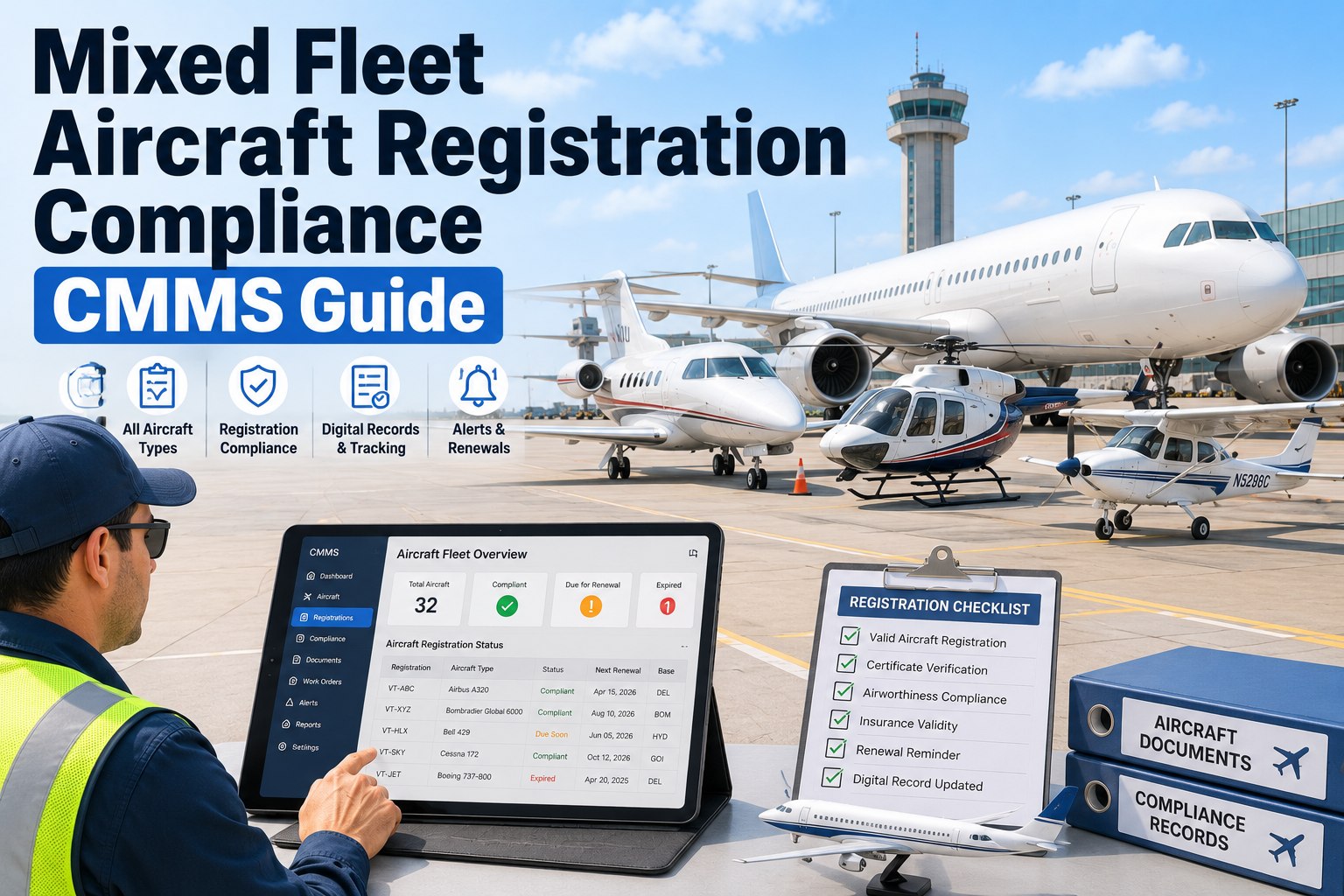
Read More
Operating a mixed fleet — where FAA-registered A320s, EASA-registered Q400s and CASA-registered PC-12s share the same hangar floor — means one maintenance system must apply the right airworthiness directive to the right tail every time, or an airc

Read More
Fleet airworthiness isn't a status report you read at the end of the shift — it's a live signal that decides whether tail N748AX launches on the 06:00 departure or rolls into the hangar as an AOG. For continuing airworthiness managers and CAMO tea
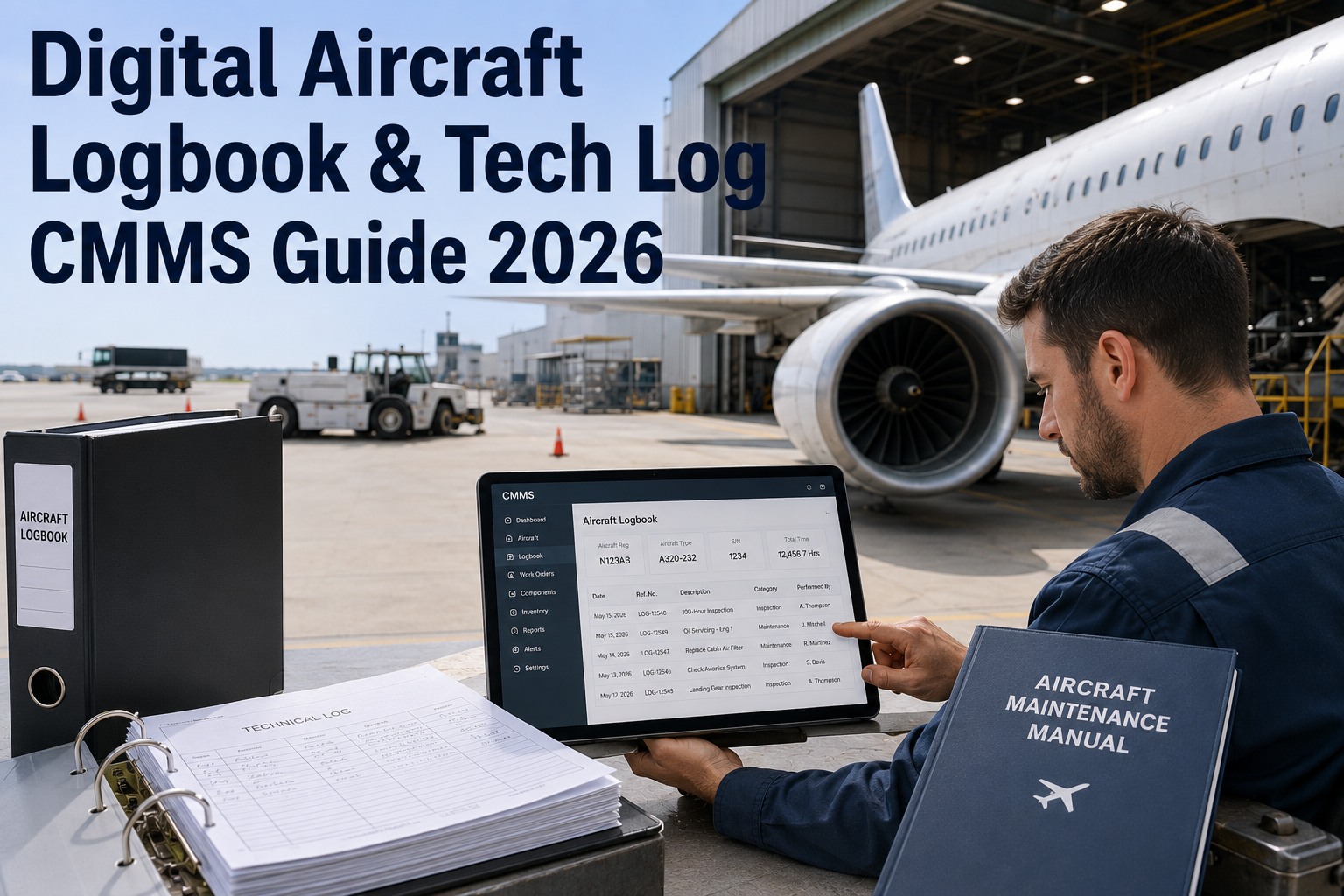
Read More
Paper aircraft tech logs quietly cost operators millions every year in delayed dispatch, lost records and audit findings — yet most fleets still rely on carbon pages that get mislaid between line stations and archive rooms. A digital aircraft logb
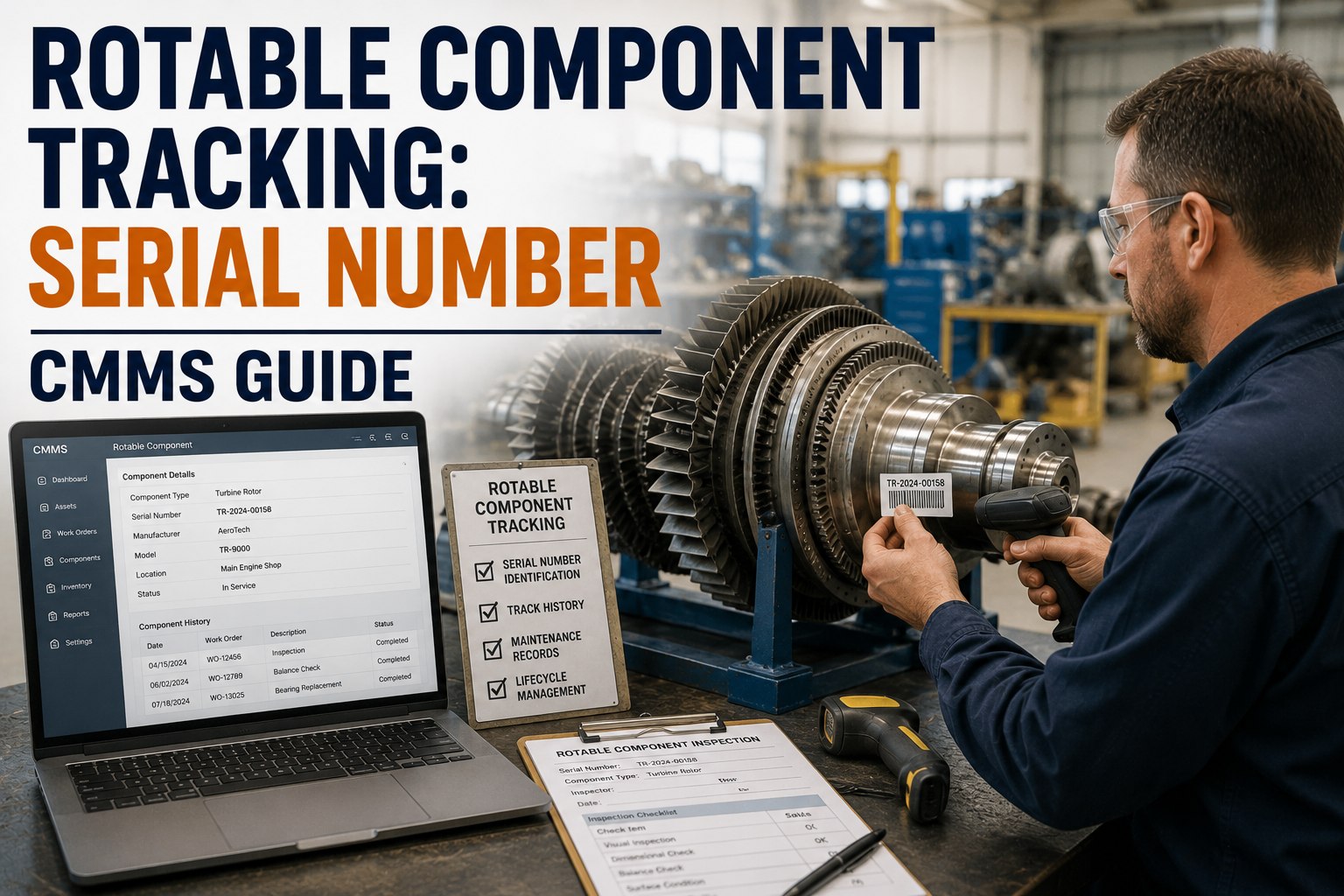
Read More
Rotable component tracking by serial number is the single point where airworthiness audits either pass cleanly or unravel completely — one missing removal record, one undocumented cycle, and the aircraft stays on the ground until traceability is r
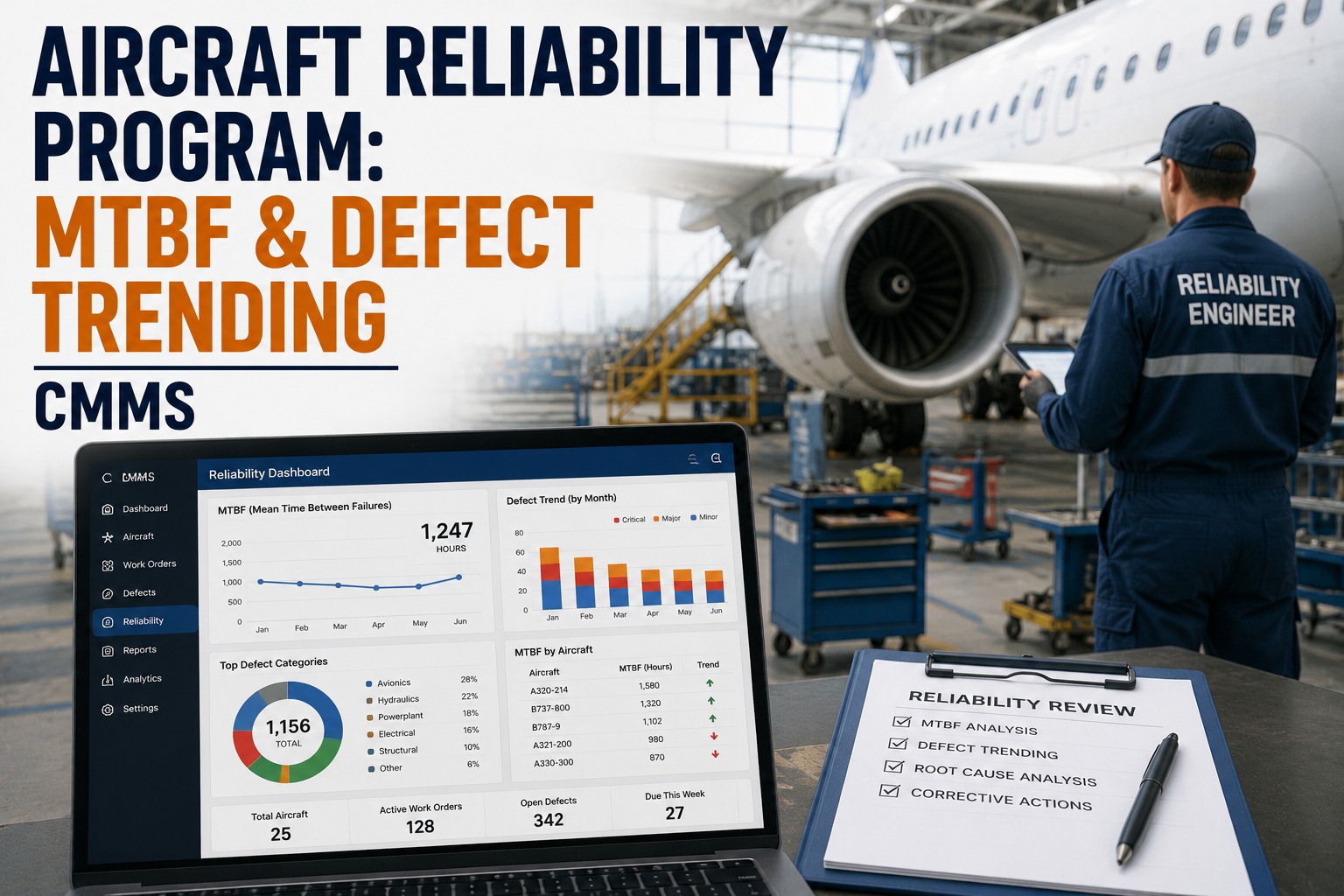
Read More
An aircraft reliability program is where airlines catch systemic component issues before they become fleet-wide AOG problems. This guide covers reliability program design in CMMS for aviation, including MTBF tracking by component and position, def
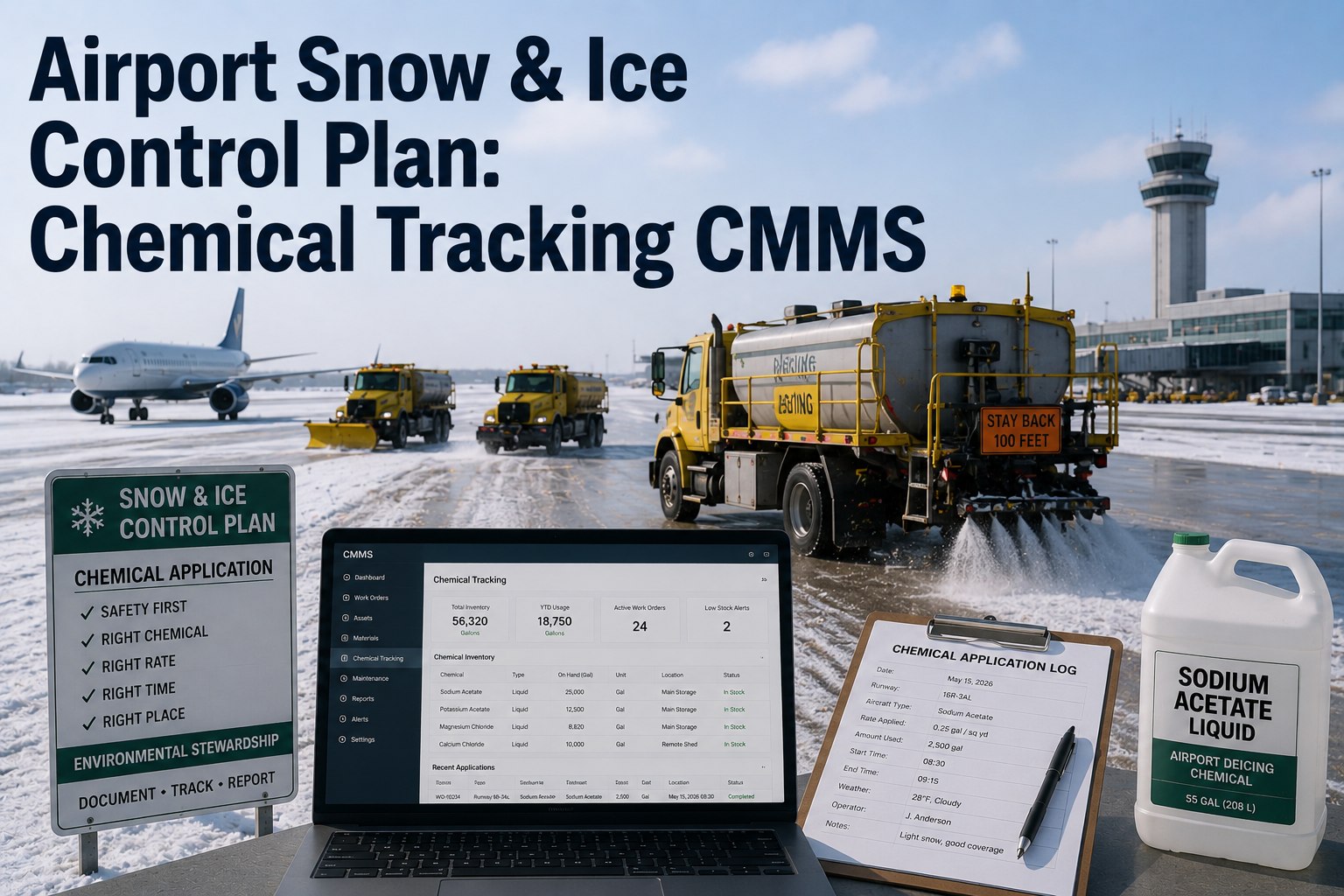
Read More
For airports operating under FAA Part 139.313, a snow and ice control plan (SICP) is the operational and legal backbone of winter readiness. Every gallon of potassium acetate applied, every runway friction test logged, and every plow truck prevent
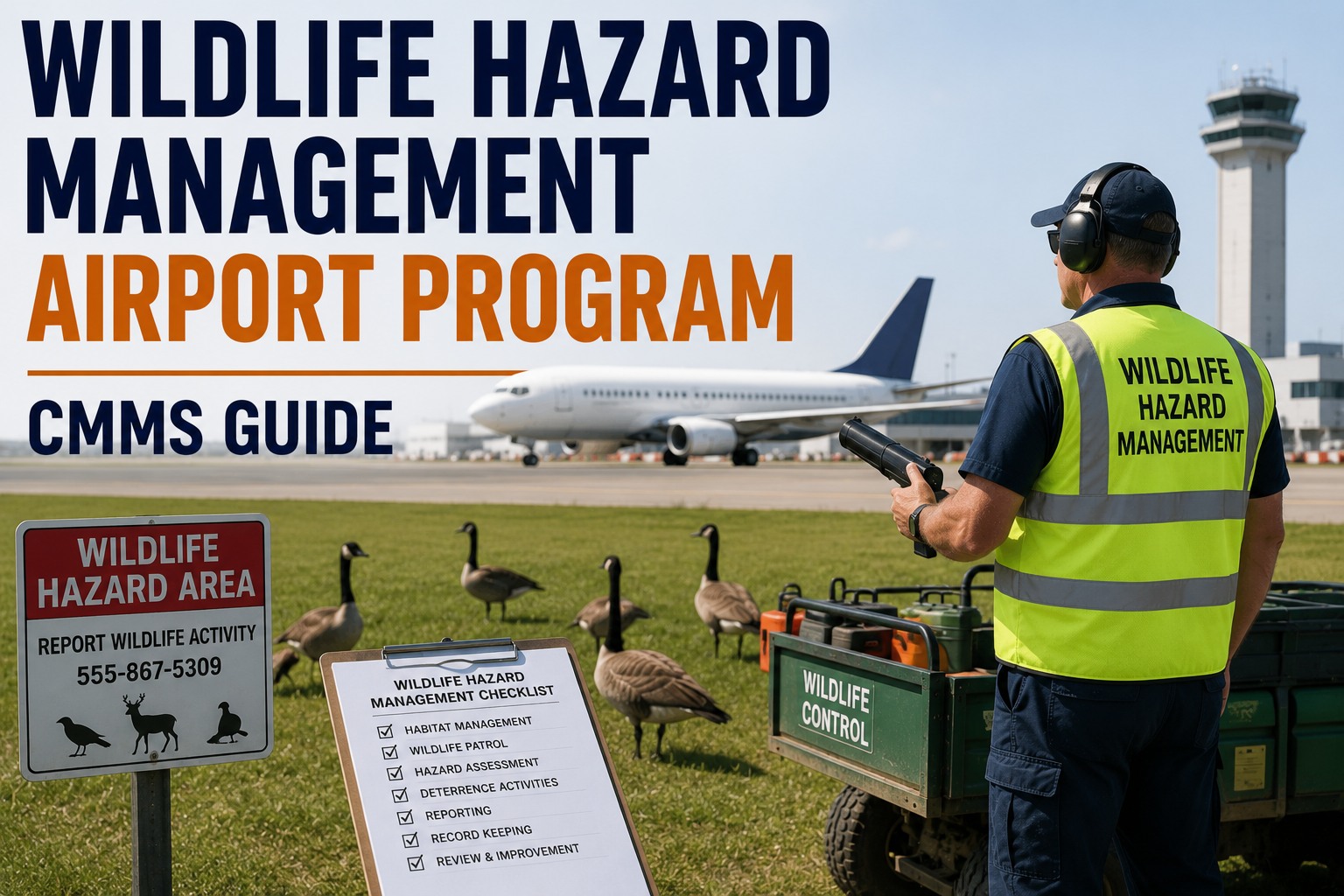
Read More
Wildlife strikes cost the global aviation industry over $1 billion annually, with a single serious bird strike on a widebody engine routinely exceeding $5 million in engine damage, AOG time, and passenger disruption. For airport operations and mai
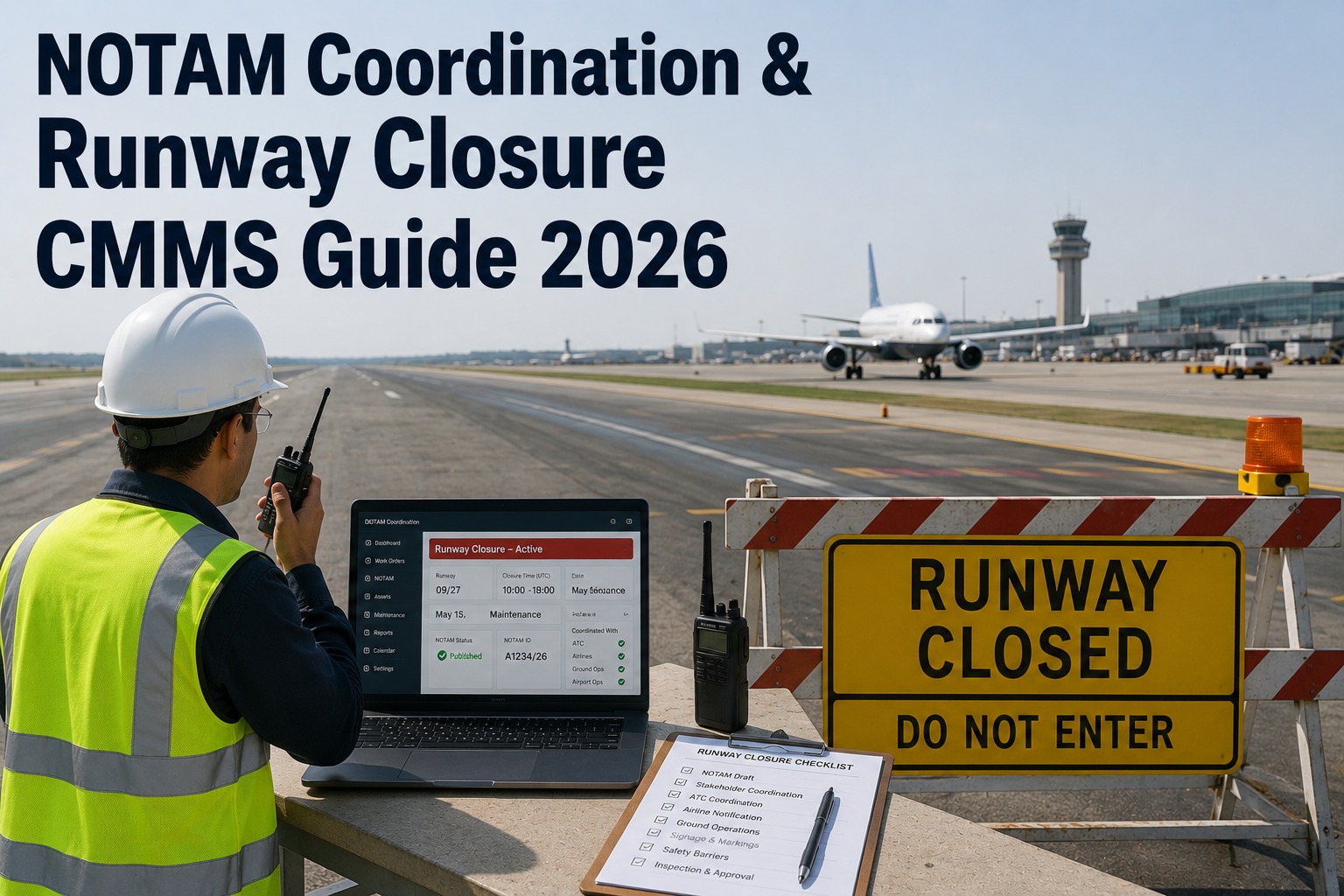
Read More
Runway maintenance that is not properly coordinated with NOTAMs is one of the fastest ways an airport creates a runway incursion, a disabled-equipment event, or a missed flight-information gap that costs six figures to investigate. A CMMS that lin
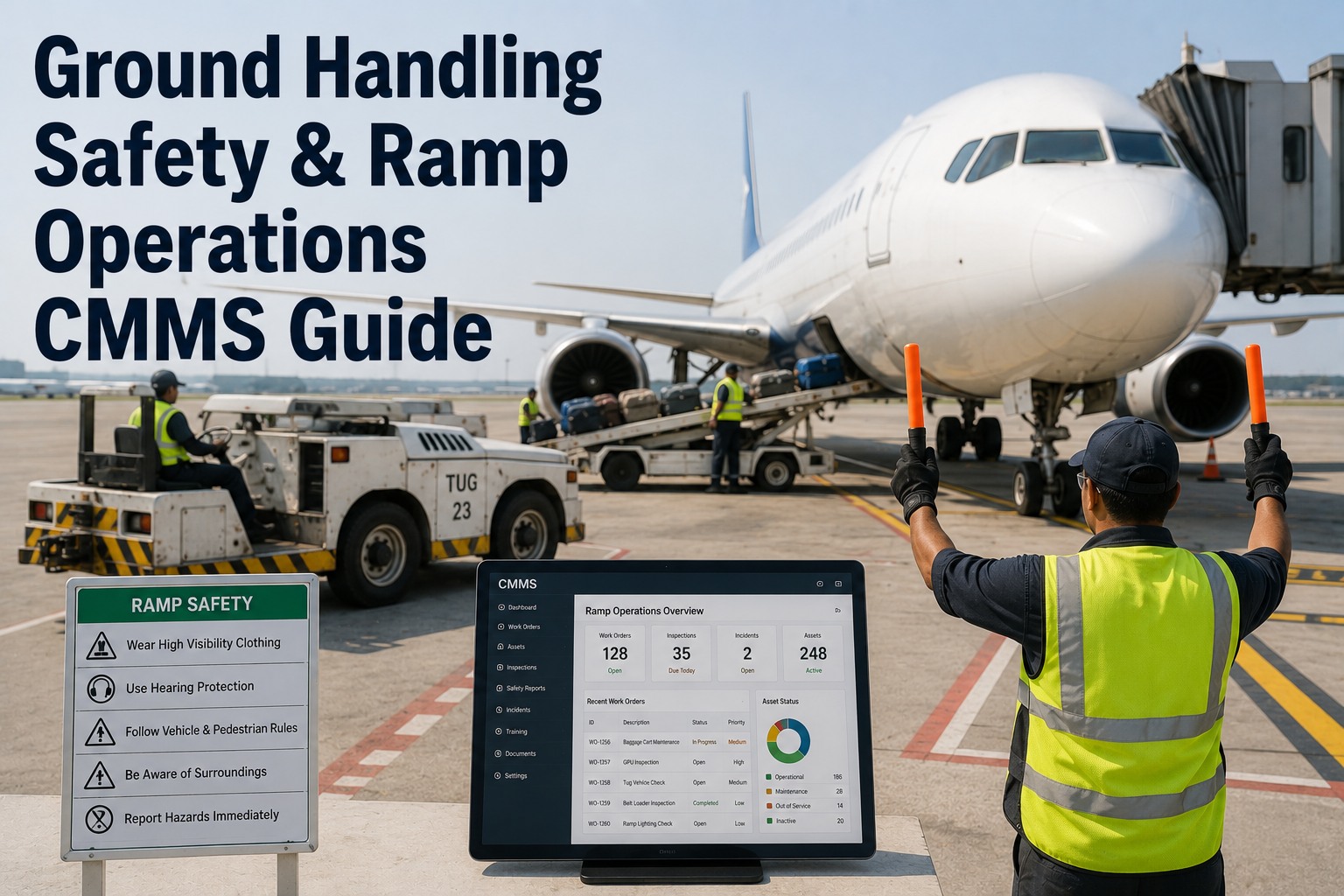
Read More
Ground handling causes more damage to aircraft than any other operational activity on the apron — and most of those incidents trace back to ramp equipment condition, undocumented inspections, or procedural gaps. A disciplined Computerized Maintena
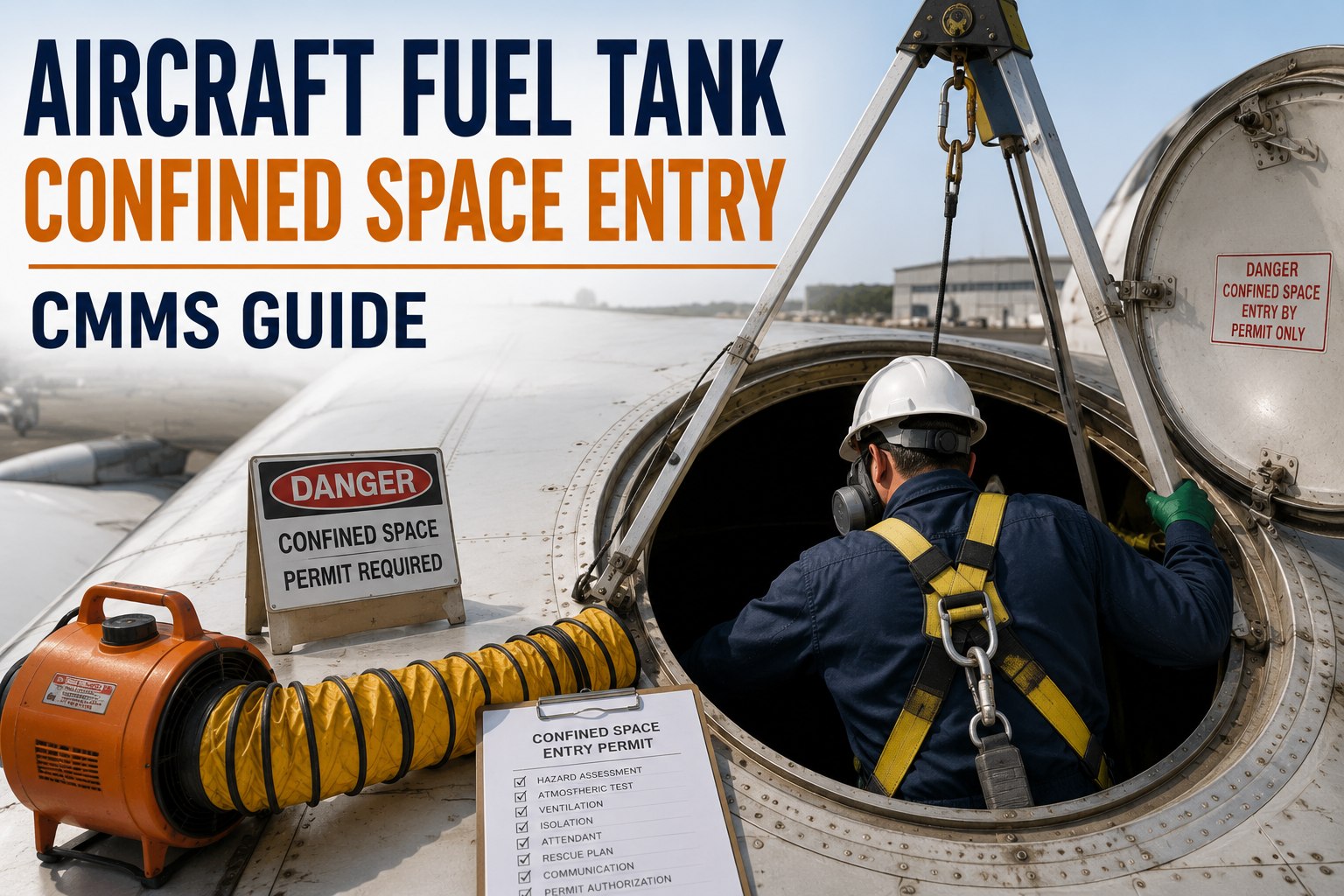
Read More
Aircraft fuel tank confined space entry remains the single most hazardous routine task in aviation MRO, with the U.S. Chemical Safety Board linking the majority of fuel-tank fatalities to skipped atmospheric monitoring and absent standby personnel
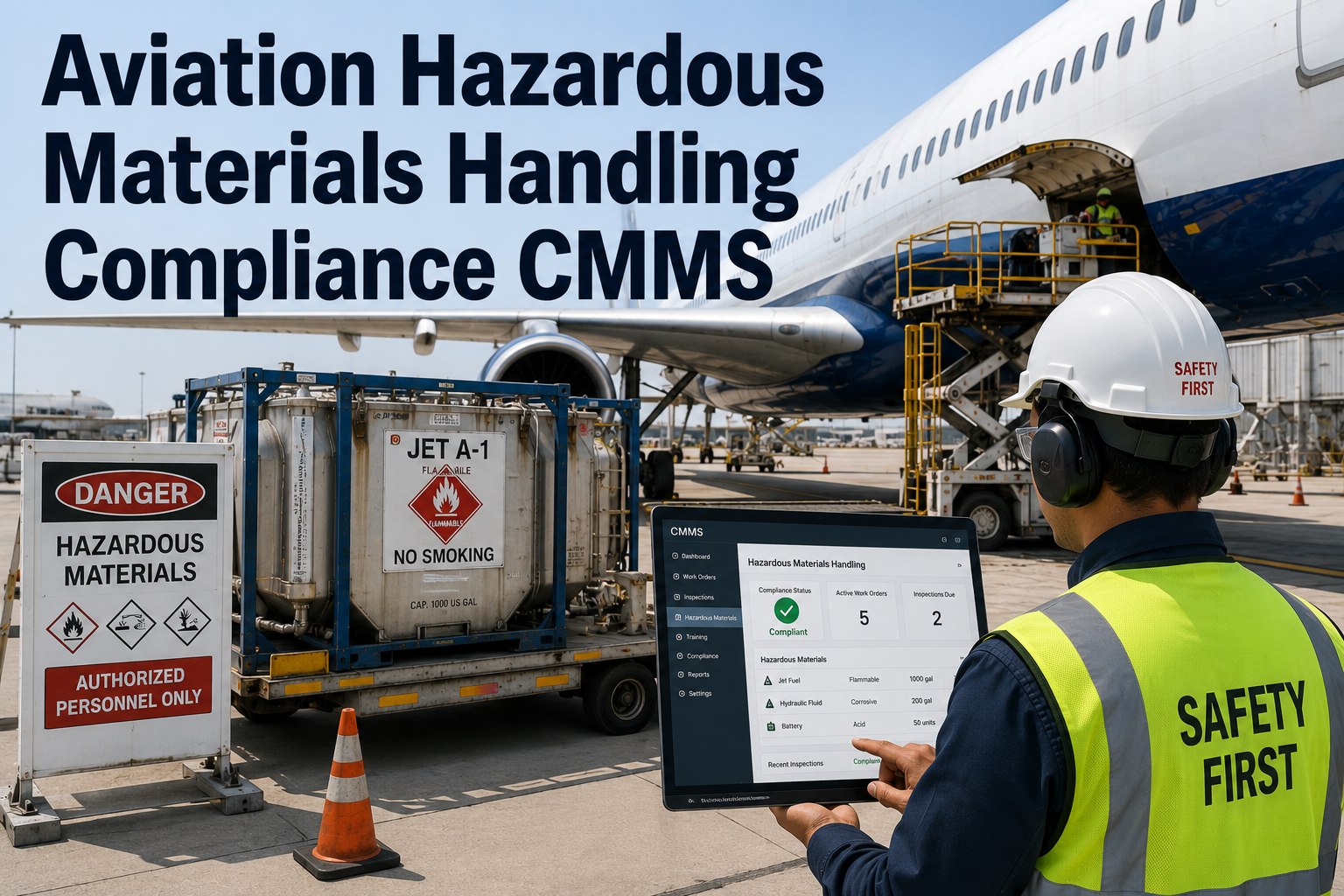
Read More
Aviation maintenance teams handle dozens of regulated substances every shift — from Jet A fuel and skydrol hydraulic fluid to methyl ethyl ketone, chromic acid, and lithium-ion shipper batteries — and a single misclassified drum can trigger DOT fi

Read More
Working at height remains one of the most underestimated risk categories in aviation MRO, where technicians access aircraft tails, wing upper surfaces, engine pylons and hangar steelwork on a near-daily basis. Despite OSHA and EASA-aligned require
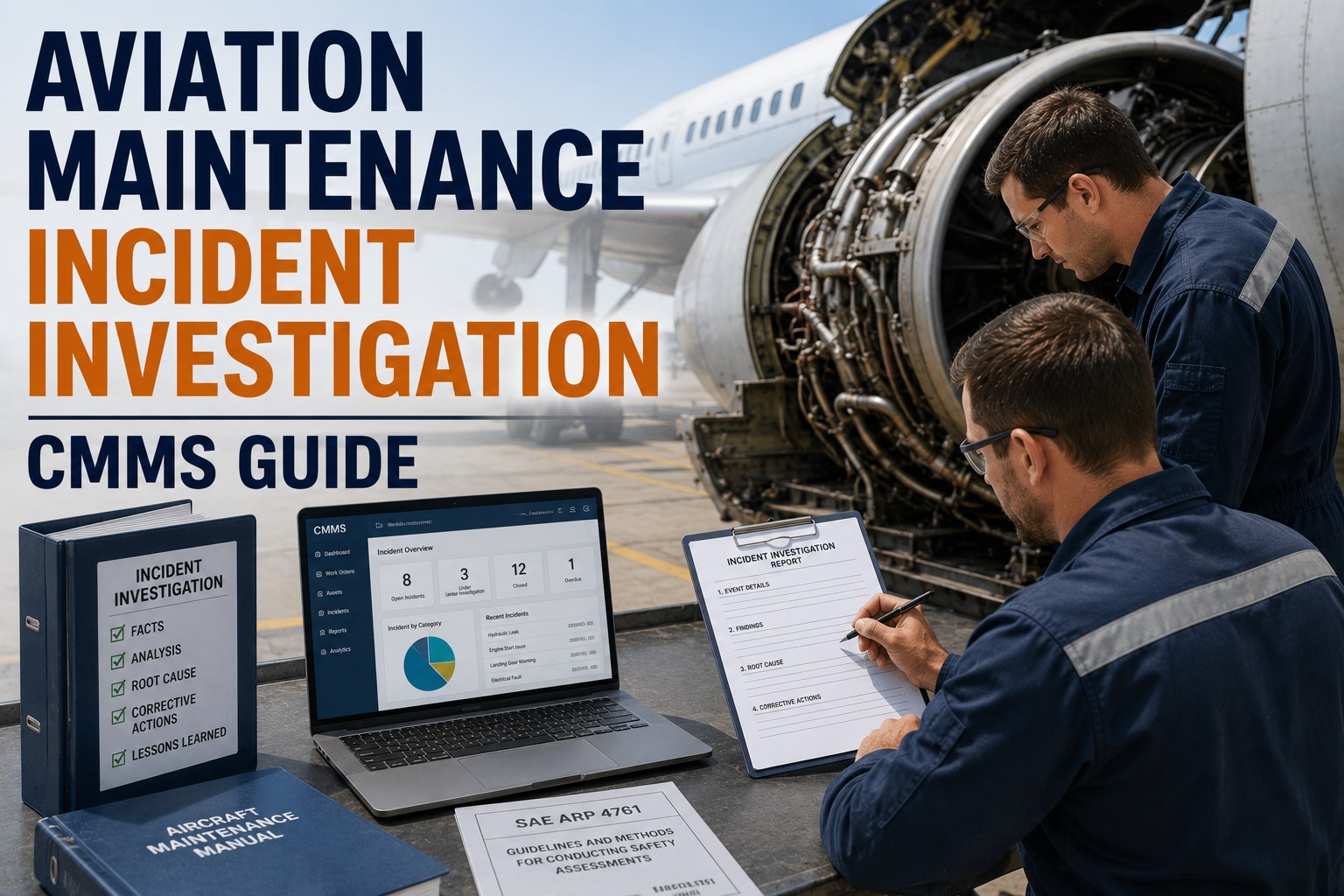
Read More
Aviation maintenance incidents that go under-investigated don't just repeat — they escalate. A missed tooling imprint on a brake assembly today becomes a runway excursion next quarter, and by the time the third recurrence lands on a principal main

Read More
Aviation electrical safety failures rarely come from one catastrophic component — they come from broken bonding leads, skipped resistance checks, and ground cables clamped to painted tie-downs. A single missed continuity verification during refuel
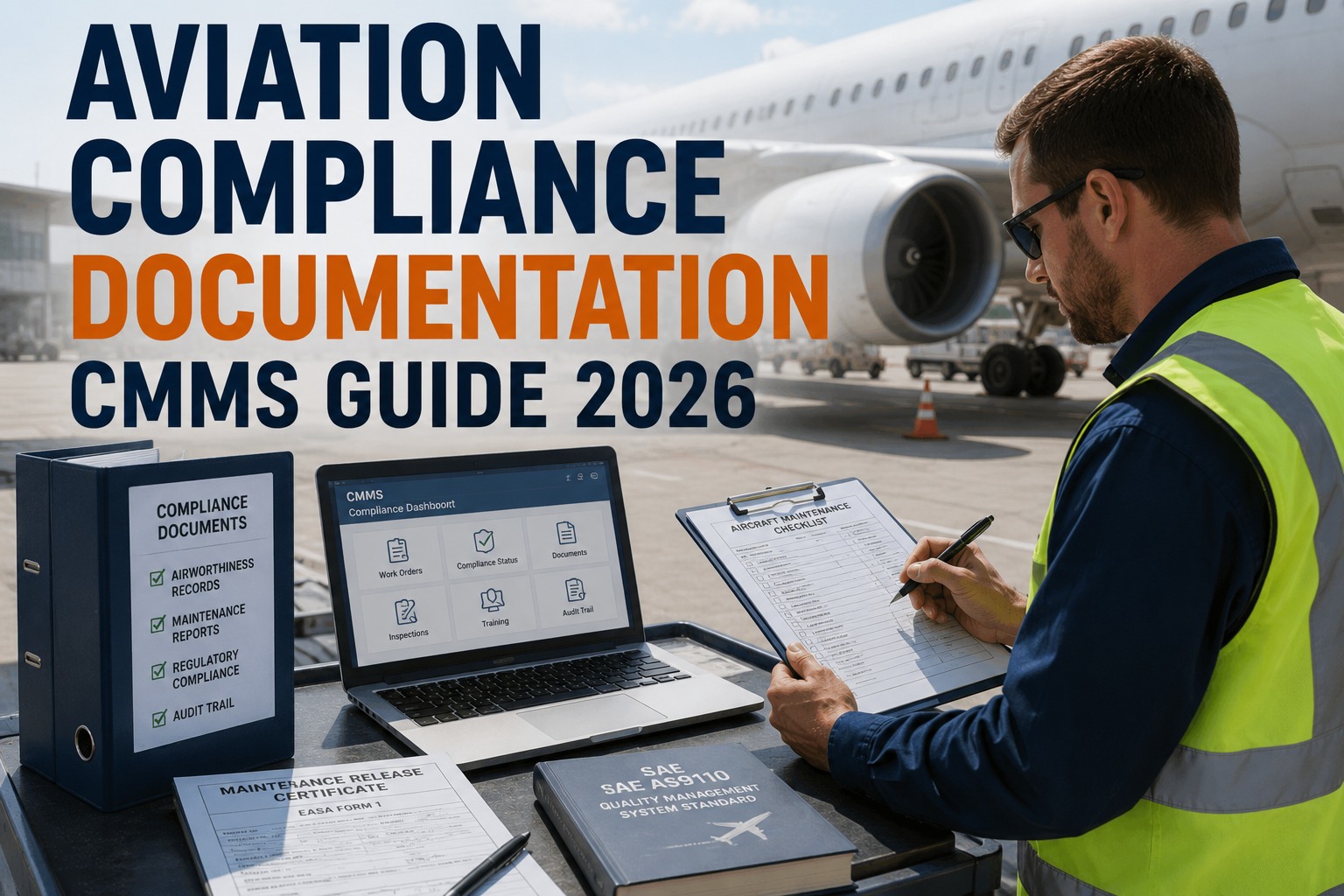
Read More
Aviation compliance documentation is where regulators judge your entire operation — a single missing sign-off can trigger enforcement, and one broken audit trail can cost a Part 145 station its approval overnight. In 2026, FAA, EASA, and CAA inspe

Read More
A turbine disc is not just a part — it is a document trail with a metal core. From the moment it leaves the OEM with its birth certificate, every hour it flies, every engine it is fitted to, and every shop it passes through must be recorded in an
Read More
Two aircraft can log the same 500 flight hours and be in completely different states of wear. One flew long-haul: 250 takeoffs and landings. The other flew short regional hops: 1,000 cycles. The engines have the same hours, but the second aircraft
Read More
An aircraft can be grounded by a single number. Miss one recurring airworthiness directive by one flight cycle, and the moment that gap is discovered — usually at a ramp check or an FAA Part 121 audit — the tail is grounded on the spot. The math t
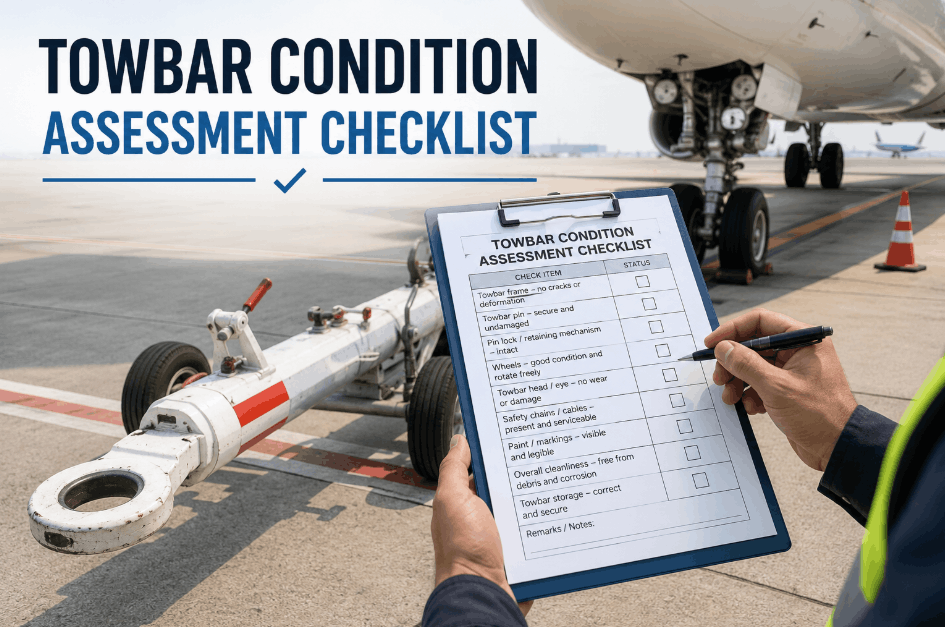
Read More
A towbar condition assessment checklist confirms that every coupling pin, shear pin, and tow head used to push back or reposition an aircraft is verified for wear before it's connected to a nose gear. A worn coupling or a damaged shear pin can fai

Read More
A ramp safety review checklist walks a ground operations team through vehicle routes, equipment positioning, and operator behavior before the apron fills with moving GSE during a peak bank. Most ramp incidents traced through industry damage report
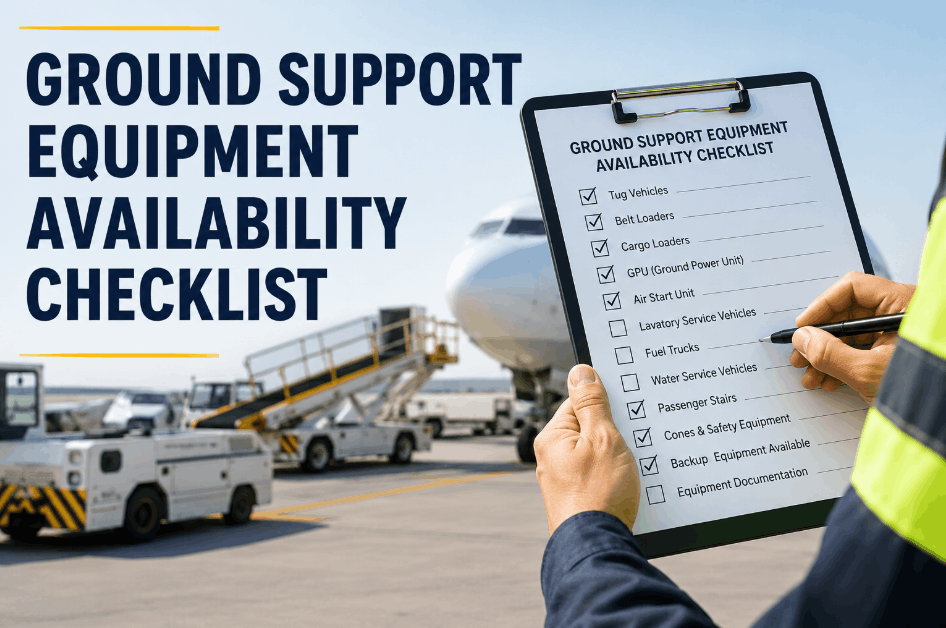
Read More
A ground support equipment availability checklist confirms that every tug, belt loader, GPU, and air start unit a ramp depends on is accounted for, serviceable, and ready before the next aircraft turn. A single GSE breakdown during a peak bank can
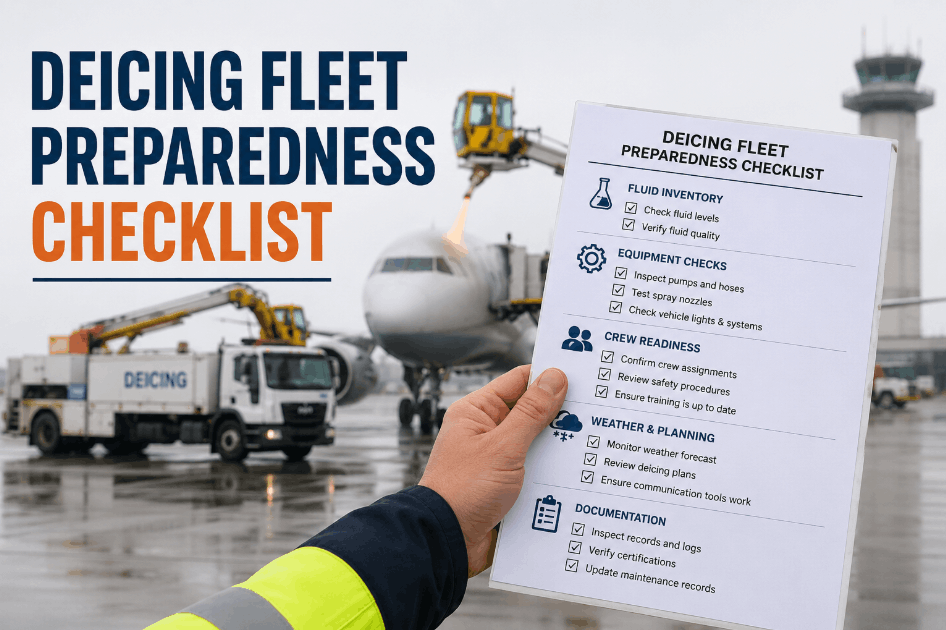
Read More
A deicing fleet preparedness checklist confirms that every truck, fluid tank, pump, and spray nozzle in the winter fleet is ready before the first freezing rain or snow event grounds operations. Hub airports can run thousands of deicing cycles acr
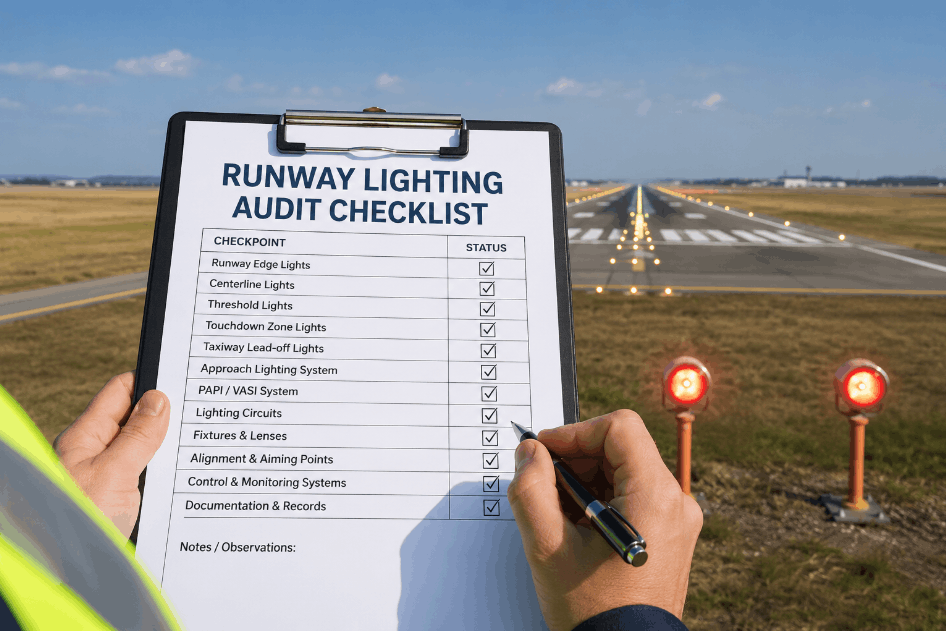
Read More
A runway lighting audit checklist reviews circuit continuity, fixture condition, alignment, and control system response for every lighting category on the airfield — approach, threshold, edge, centerline, touchdown zone, taxiway, and stop bar — so
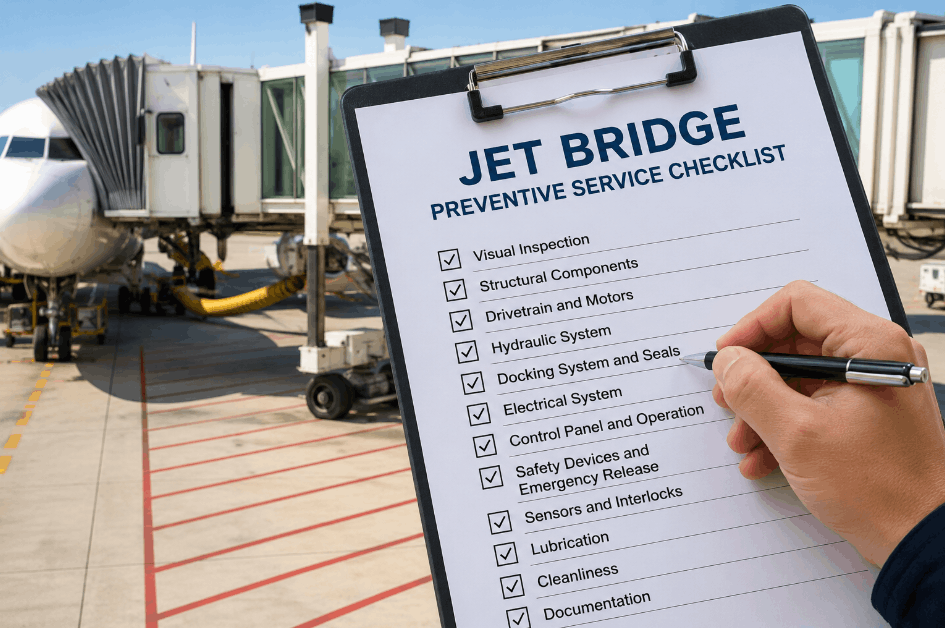
Read More
A jet bridge preventive service checklist covers drivetrain condition, dock sensor calibration, emergency release function, and cab integrity — the mechanical systems that determine whether boarding access is available when a gate calls for it. Je
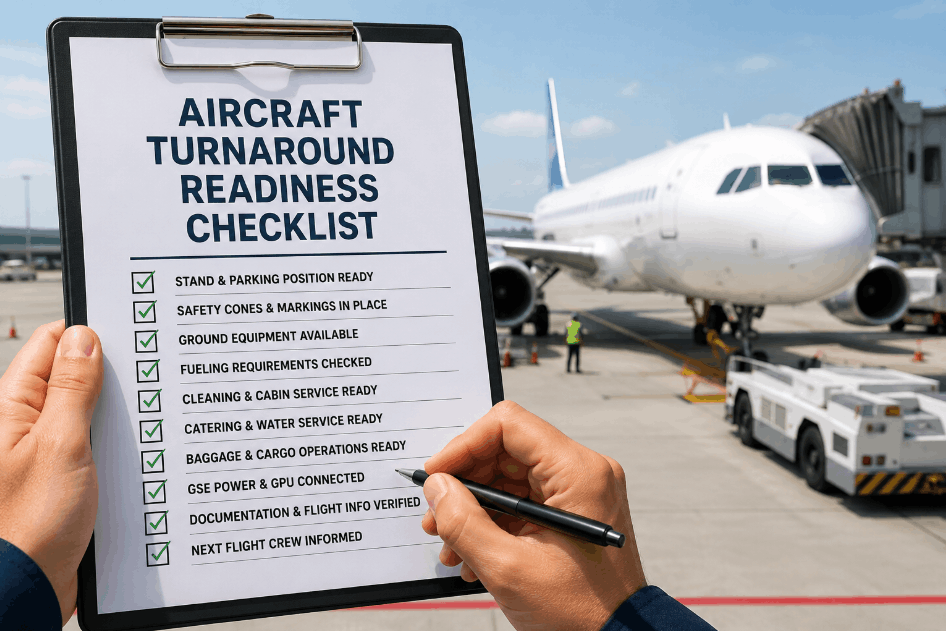
Read More
An aircraft turnaround readiness checklist confirms that every stand service, ground support resource, and ramp position is prepared before an arriving aircraft docks, so the next movement sequence starts without delay or safety exposure. Turnarou

Read More
A fuel truck inspection checklist for airport fleets confirms hose condition, meter accuracy, brake function, and bonding equipment integrity before a fueling vehicle enters ramp service — because a defect caught in the yard costs far less than on

Read More
Refueling delays at busy hub airports rarely come from fuel supply problems — they come from truck routing that hasn't been optimized for the apron layout, dispatch decisions made on habit rather than real-time stand sequencing, and service block

Read More
Gate readiness at busy terminals rarely fails because jet bridges break down without warning — it fails because pre-arrival checks are inconsistent, dock release is slow, and no one has a live view of which bridges are cleared and which are stil
Read More
Ramp safety compliance at regional airports rarely fails because staff lack awareness of the rules — it fails because observation routines are inconsistent, corrective actions take too long to close, and there is no systematic way to track whether
Read More
Departure performance at busy airports rarely collapses because of a single catastrophic failure — it erodes through accumulated pushback delays that compound across a peak-hour block until the entire departure sequence is off-rhythm. CRAC units,
Read More
A ground handling company operating a 140-unit ramp equipment fleet — baggage tractors, belt loaders, pushback tugs, and ground power units — was losing turnaround time to equipment that kept breaking down in the same way, week after week. Outage

Read More
A regional airport operator running five facilities had no shared way to answer a simple question: how many assets does the group actually have, and which ones need attention this week. Each airport tracked equipment in its own spreadsheet, under

Read More
A regional airline's line maintenance station supporting a 34-aircraft narrowbody fleet had reached a service readiness ceiling. Job cards were piling up faster than technicians could close them, shift handovers were losing task context between cr

Read More
A Part 145 repair station's quality assurance department was walking into every FAA and EASA audit cycle with the same problem: paper signoff trails that were hard to retrieve, corrective actions that took weeks to close, and documentation gaps th

Read More
Gate turnaround performance is one of the most operationally visible metrics in aviation ground operations — and one of the most difficult to improve without a structured bottleneck detection framework. Small delays in boarding handoffs, service s
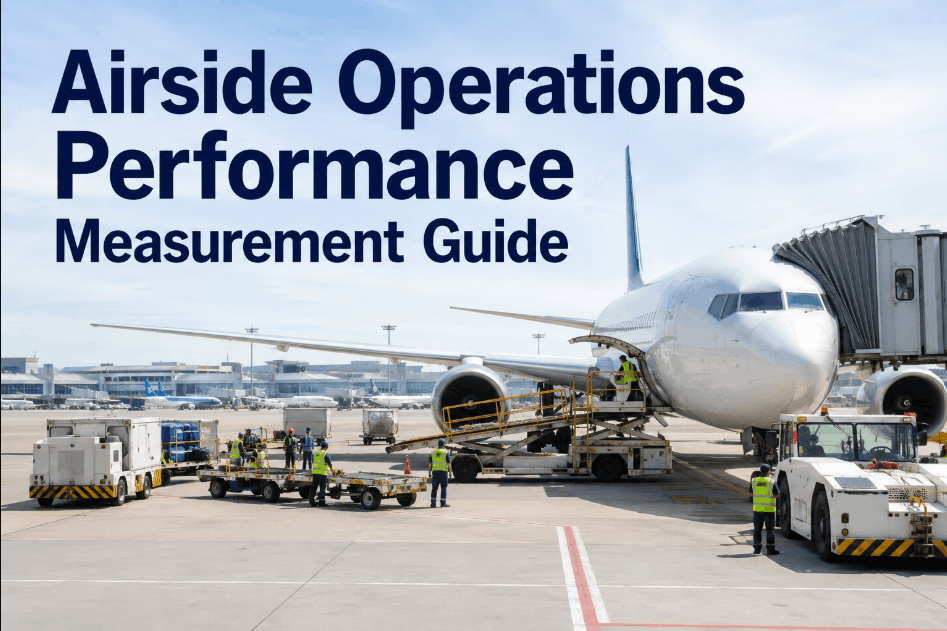
Read More
Airside operations performance measurement separates airports that run on schedule from those that absorb delays shift after shift. Response time, service flow, and movement coordination across active ramp and apron areas generate measurable data
Read More
Gate turnaround performance is one of the most operationally visible metrics in aviation ground operations — and one of the most difficult to improve without a structured bottleneck detection framework. Small delays in boarding handoffs, service s

Read More
Aircraft chock placement is the most basic wheel restraint requirement in ground safety — yet compliance gaps on active stands remain one of the most frequently cited ramp safety findings across aviation ground operations. Every parked aircraft mu

Read More
Hangar operations carry significant energy overhead — lighting systems running across wide-span structures, HVAC loads responding to weather variation, and ground support equipment consuming utility capacity across multiple shifts. Without a struc

Read More
Fleet managers operating mixed-asset fleets face a recurring challenge: when multiple vehicles or units show signs of deterioration simultaneously, there is no structured method for deciding which reliability action to take first. Without a

Read More
Cargo operators running tight maintenance cycles rarely overspend on parts from a single large purchase gone wrong — they overspend incrementally, through expedited shipping fees on parts that should have already been on the shelf, emergency order

Read More
MRO turnaround delays rarely trace back to a single missed task — they accumulate from sequencing gaps that each look minor in isolation. A refuel team that arrives before the baggage offload clears the stand, a cabin reset crew waiting on a part

Read More
Regional airports operate on departure margins measured in minutes, and fleet-related delays compound fast. A single baggage tractor pulled from service without a confirmed replacement ripples into delayed pushbacks, late gate releases, and downst
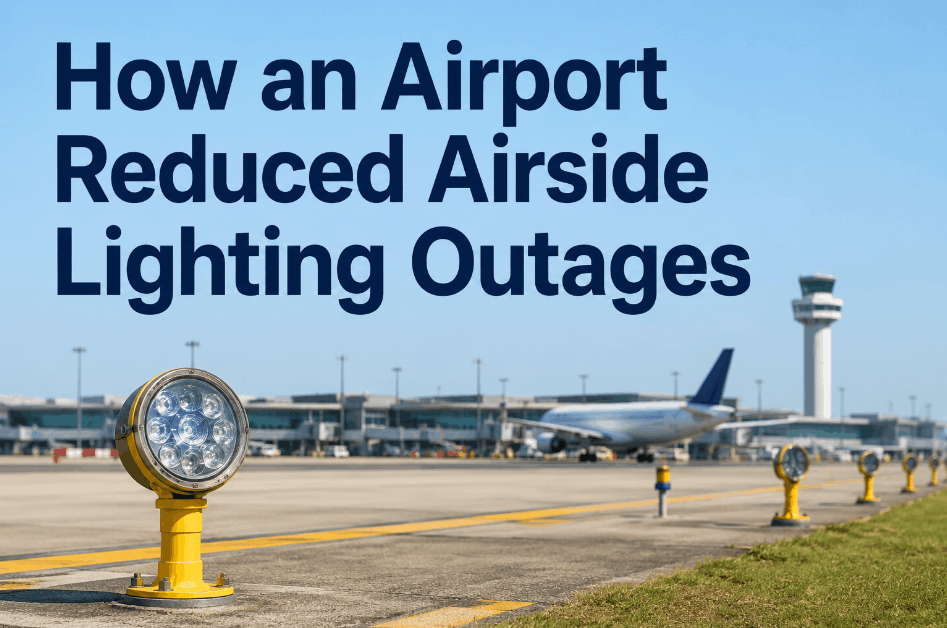
Read More
Airside lighting failures at airports don't typically announce themselves — they accumulate. A taxiway edge light that flickers without triggering a formal report, a PAPI unit whose circuit shows marginal continuity on a check that was never fully

Read More
Terminal equipment lifecycle cost evaluation breaks down when repair spend is tracked separately from replacement timing and service value — leaving capital planners to argue from incomplete data when a baggage carousel or boarding bridge reaches
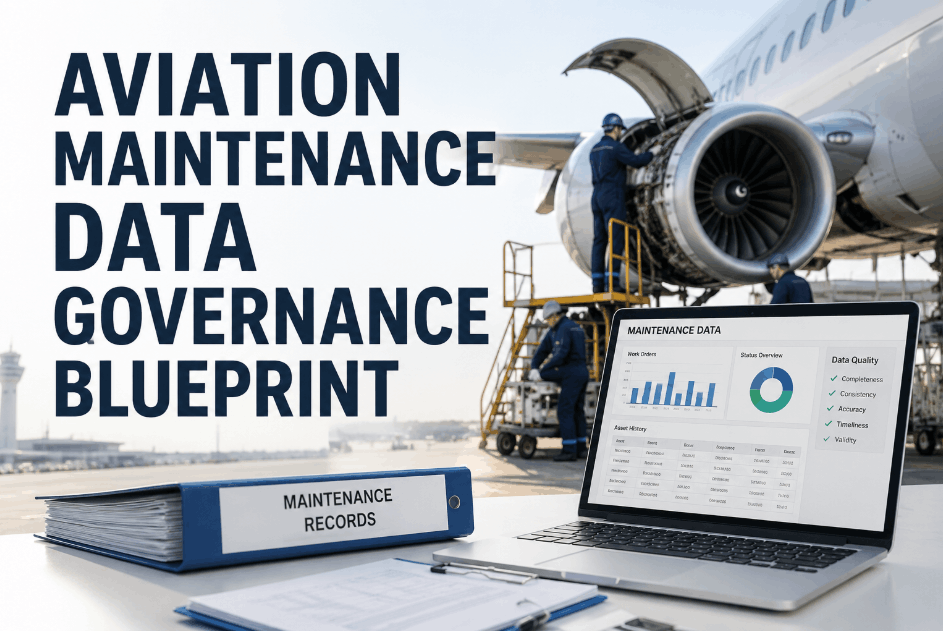
Read More
Aviation maintenance data governance fails silently — asset records accumulate duplicate entries, failure codes get applied inconsistently across technicians, and work history becomes too fragmented to support reliable planning or audit defense. B

Read More
Ground handling workforce capacity planning breaks down when schedulers build rosters from last year's headcount rather than this season's demand. Flight schedule changes, seasonal traffic spikes, and task-mix shifts create overtime pressure and s

Read More
Airport asset criticality assessment fails when budgets get spread evenly across equipment that carries vastly different operational risk. Without a structured consequence ranking model, maintenance planners treat a baggage conveyor motor and a ru

Read More
Ramp safety observation programs are only as effective as the corrective action system built behind them. Ground operations teams that collect hazard observations consistently but lack a structured process for tracking corrective closure, identify

Read More
Fuel truck dispatch efficiency across airport aprons is a ground support variable that shapes turnaround performance at every gate — but it rarely receives the structured operational oversight applied to aircraft maintenance or passenger handling.

Read More
Deicing equipment readiness during winter peaks is one of the highest-consequence ground support challenges in seasonal airport operations — and one of the least forgiving when gaps appear. When fluid stocks run short, heater units fail inspection

Read More
Aircraft lavatory service response is one of the most time-sensitive cabin servicing tasks during aircraft turnaround — and one of the most frequently deprioritized until it directly disrupts departure sequencing. Ground handling crews managing hi
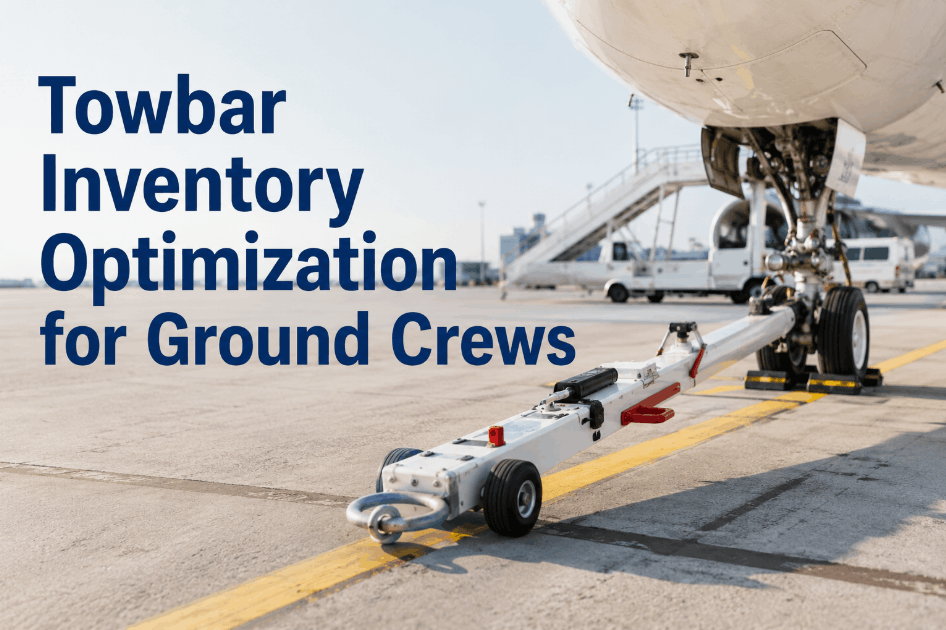
Read More
A missing towbar at the wrong moment turns a routine pushback into a delayed departure and a frustrated ground crew searching the ramp for spare equipment. Ground operations teams using Sign U
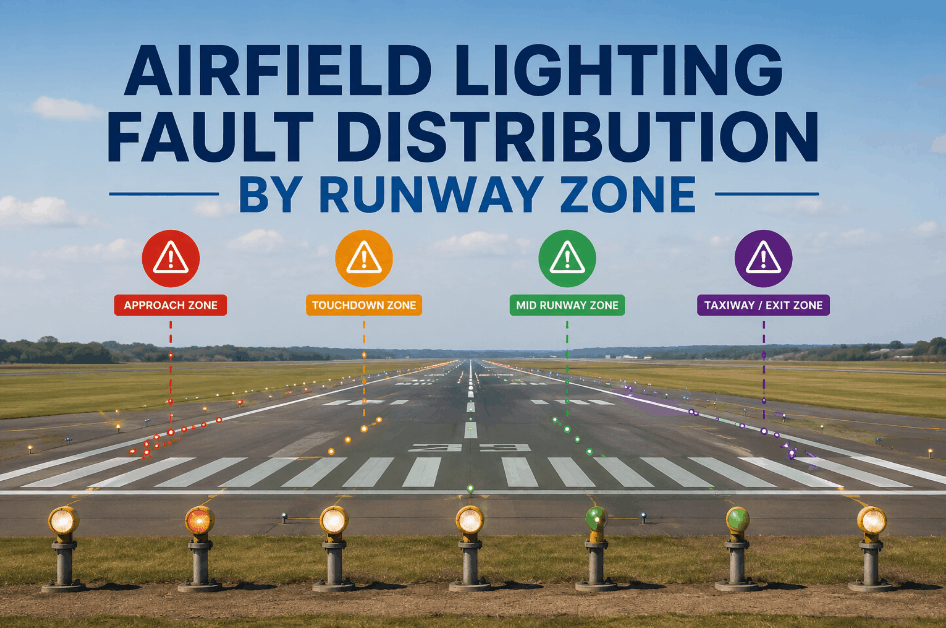
Read More
Airfield lighting faults rarely fail all at once — they cluster quietly in specific runway zones long before an outage becomes visible during a low-light approach. Airport maintenance teams using

Read More
Jet bridge downtime rarely announces itself with a dramatic failure — it shows up as a slightly slower docking cycle, a delayed boarding handoff, or a gate that quietly falls behind schedule. Gate operations teams using
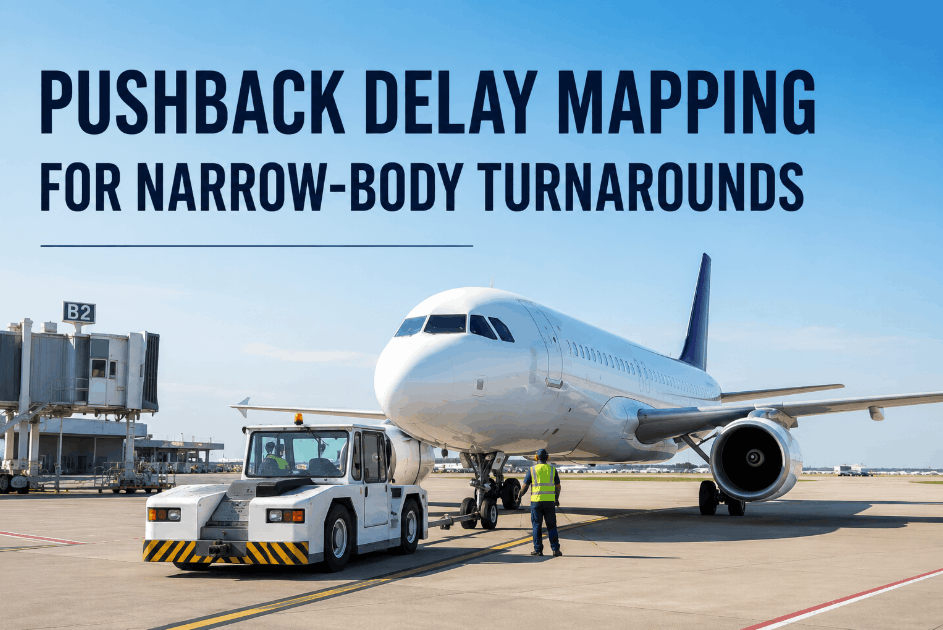
Read More
Pushback delay is one of the hardest turnaround metrics to manage because it hides inside several smaller handoffs at once. Tug staging, stand release timing, and departure slot coordination each add small amounts of friction that compound by the
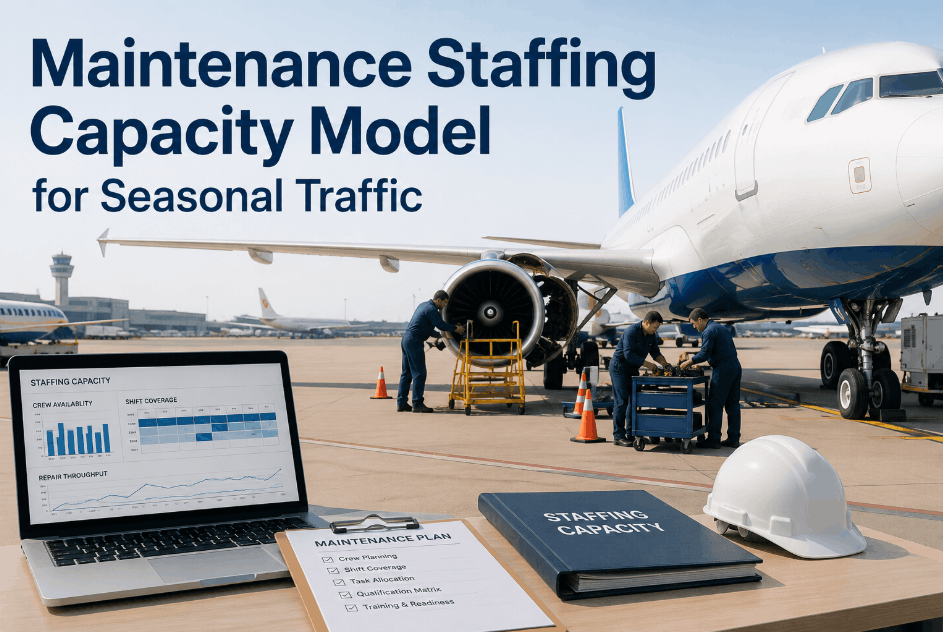
Read More
Maintenance staffing capacity planning is the operational discipline that keeps airport facility teams from entering peak seasonal traffic periods under-resourced or over-extended. When crew availability, shift coverage gaps, and repair throughput
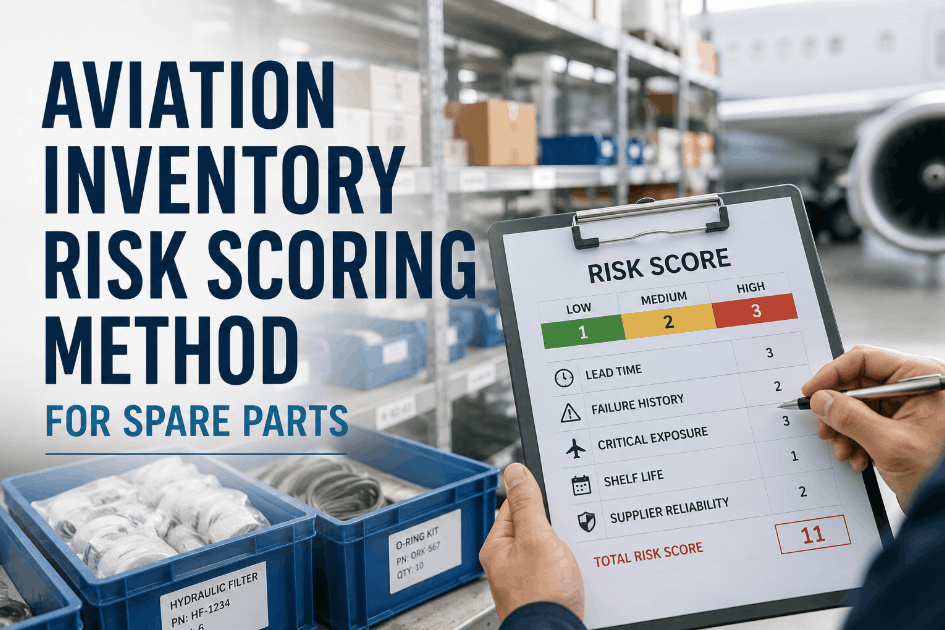
Read More
Aviation inventory risk scoring is the operational discipline that moves spare parts management from bin-level intuition to data-driven stocking decisions that account for lead time exposure, failure history, shelf life constraints, and the servic

Read More
Runway lighting lifecycle cost comparison is the operational discipline that allows airport engineering and maintenance teams to move beyond reactive lamp replacement toward structured investment decisions that account for overhaul timing, utility

Read More
Airport asset prioritization is the operational discipline that separates capital committees making evidence-based renewal decisions from those reacting to the loudest project request in the room. When risk scores, condition trends, and service im
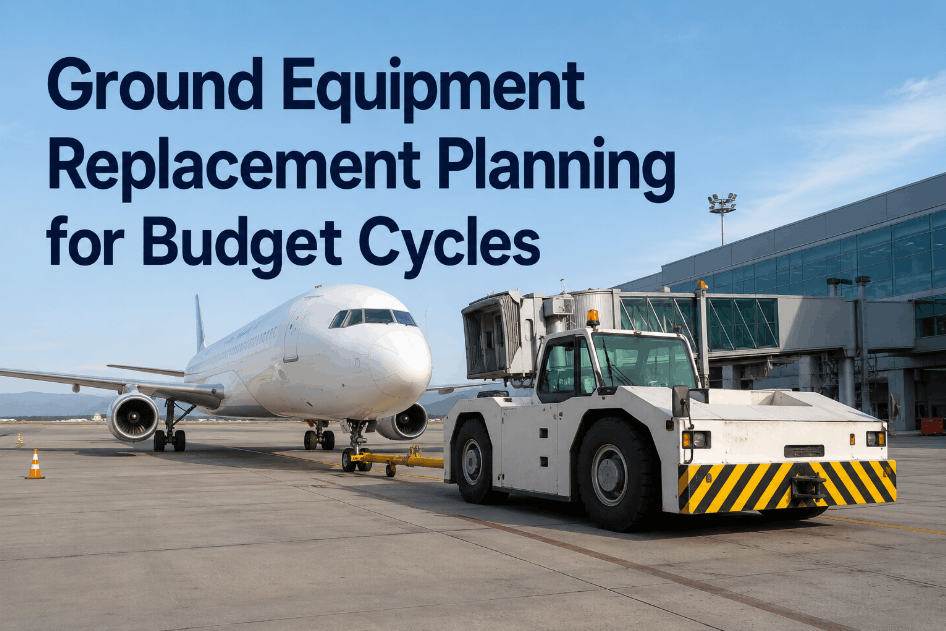
Read More
Ground equipment replacement planning aligned to budget cycles requires more than tracking asset age. Service life data, depreciation schedules, renewal trigger signals, and condition trend evidence must converge into a spending forecast that capi
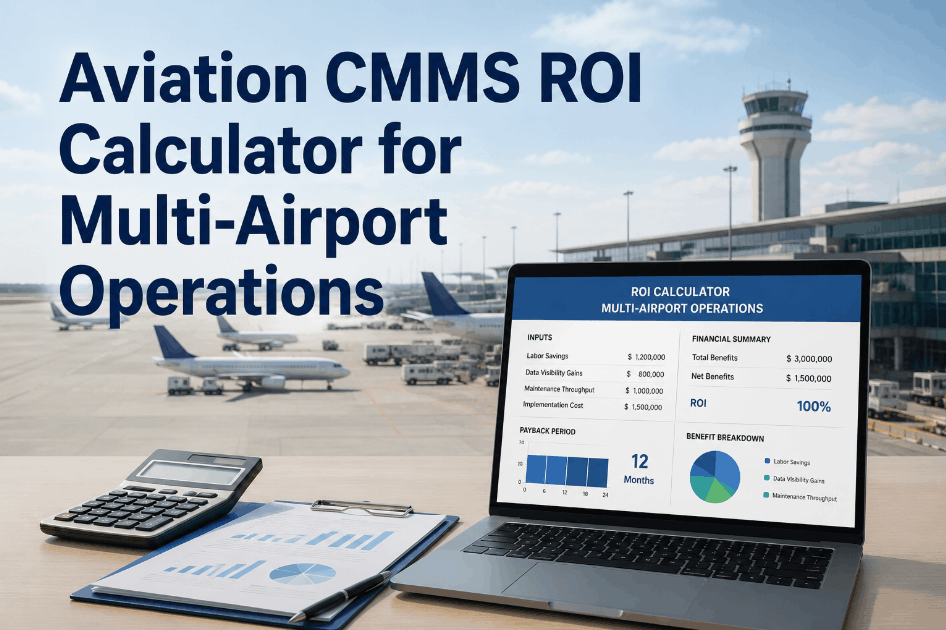
Read More
Aviation CMMS ROI across multi-airport operations is rarely captured in a single metric. Labor savings, data visibility gains, and maintenance throughput improvements each contribute to system payback — but only when the CMMS is purpose-built for

Read More
Aircraft maintenance cost modeling for regional operators requires more than summarizing past repair invoices. Labor expense, parts expense, and downtime expense interact across asset classes and fleet ages in ways that paper records and legacy sp
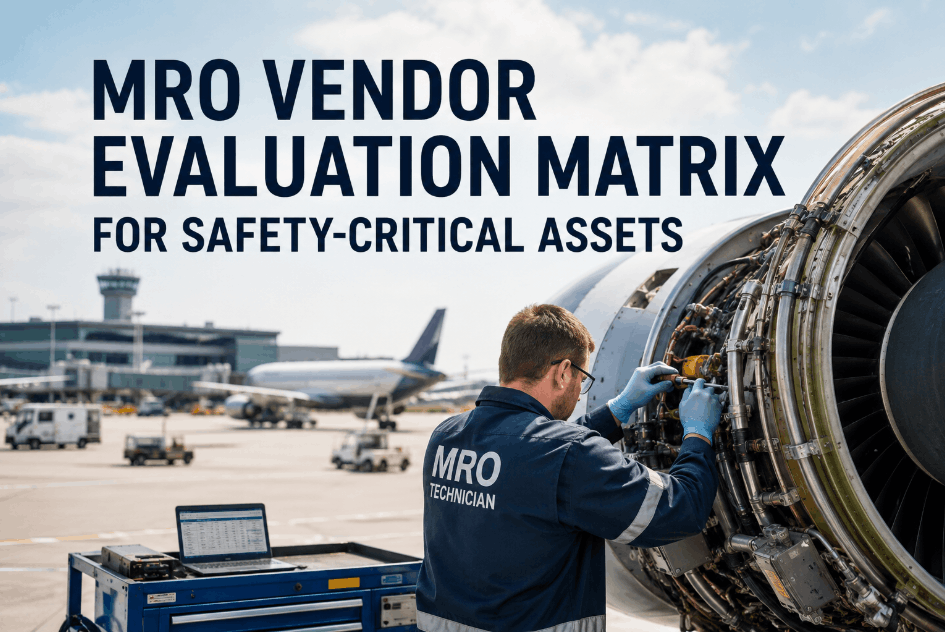
Read More
MRO vendor evaluation for safety-critical assets demands a structured approach that goes beyond price comparison. Response speed, documentation quality, corrective action discipline, and signoff trail completeness determine whether a vendor relati

Read More
Aviation consumables — from O-rings and seals to fasteners, lubricants, and cleaning agents — move through MRO operations at rates that rarely match procurement assumptions. When issue rate data goes unreviewed, shelf life tracking lags, and wareh
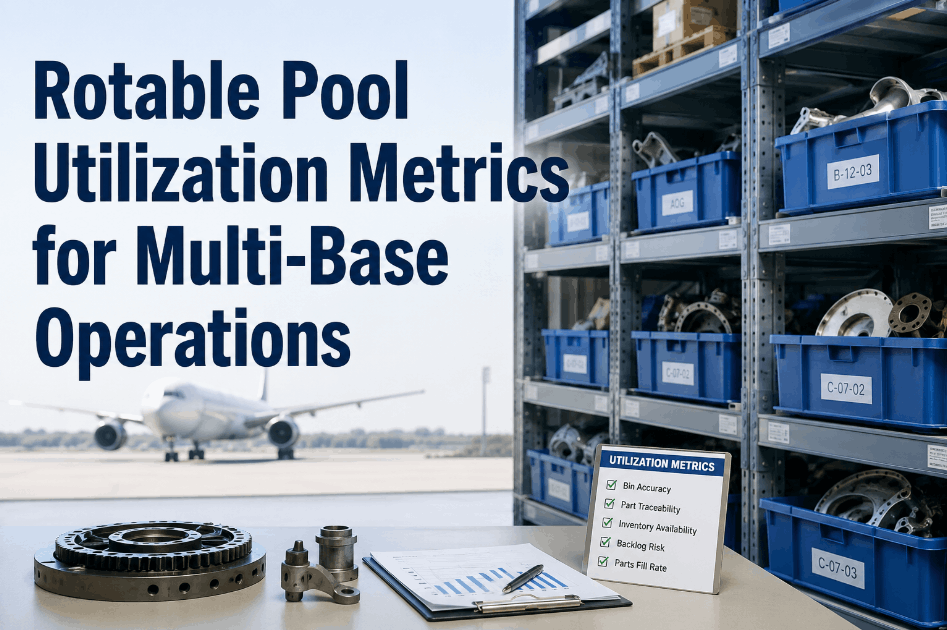
Read More
Rotable pool utilization is where multi-base aviation operations either hold service continuity or lose it. When repairable spares circulate across distributed bases without structured tracking, pool depth problems go invisible until the wrong ite

Read More
Aviation asset lifecycle planning is one of the most capital-intensive decisions in fleet and ground operations management — not because teams lack data, but because age profiles, overhaul intervals, and upgrade path signals are tracked in disconn

Read More
Spare parts stock review is one of the most consistently deferred planning disciplines in aviation and facility maintenance — not because teams don't understand inventory risk, but because minimum stock levels, reorder points, and bin accuracy are

Read More
AOG parts escalation is where inventory gaps become grounded aircraft. When a critical component is missing at the wrong moment, the cost isn't just expediting fees — it's aircraft-on-ground time, cascading schedule delays, and maintenance team cr

Read More
Critical spares reorder point modeling is the technical foundation of fleet support readiness — and the most frequently misconfigured element in aviation inventory management. A reorder point set against nominal lead time without safety stock for

Read More
Aviation spare parts demand forecasting is one of the most consequential disciplines in MRO inventory management — and one of the most difficult to execute without structured data. Inaccurate part usage projections produce two equally damaging out
Read More
Overtime pressure in airport maintenance crews does not start the moment someone is asked to stay late — it builds weeks earlier through backlog accumulation, crew availability gaps, and labor balancing failures that go undetected until capacity l

Read More
Wrench time benchmarking for aircraft service crews is how maintenance managers move from feeling that their teams are productive to proving it — when active repair time, job-card flow, and response metrics are tracked against shift targets, the m

Read More
Technician shift balance in line maintenance teams is what separates operations that run smoothly through shift changes from those that accumulate backlogs by mid-week — when crew availability gaps, uneven task allocation, and undocumented handove

Read More
Skills mix planning in regional MRO departments is the discipline that prevents a well-staffed team from being the wrong team — when qualification matrix data, repair throughput metrics, and team utilization rates are analyzed together, the gap be

Read More
Aviation maintenance workforce productivity in 2026 is no longer measured by headcount or shift hours alone — it is measured by wrench time ratios, task allocation efficiency, and the gap between qualified technician availability and actual deploy

Read More
Pushback coordination failures at tightly timed airports don't announce themselves — they accumulate in the gap between dispatch handoff and confirmed pushback clearance, one minute at a time. When schedule adherence metrics are tracked manually a

Read More
Ramp service operations collapse under pressure when peak demand days expose hidden bottlenecks that normal rotations mask entirely. Baggage offload sequencing, crew synchronization gaps, and service pacing mismatches accumulate delay minutes that

Read More
Departure readiness failures during peak rotations rarely trace to a single missed task — they trace to sequencing conflicts where catering, cabin reset, and cleaning crews compete for the same aircraft at the same time. When sequencing benchmarks

Read More
Gate hold time in short-haul network operations is a systemic performance problem — boarding friction, service sequencing gaps, and crew coordination misalignment each add minutes to a turnaround budget that short-haul rotation schedules have no c

Read More
Aircraft turnaround delay at busy airport hubs is a compound operational problem — gate hold time extends from servicing flow misalignment, baggage offload sequencing gaps and handoff delays each add to a variance total that schedule recovery cann

Read More
Drainage and surface water risk in runway zones is a compound operational hazard — pooling zones reduce friction margins, runoff path obstructions concentrate water at pavement edges, and drainage channel deterioration accelerates the surface dama

Read More
Pavement condition scoring in airside environments requires more than visual inspection — crack progression, surface friction loss, and repair urgency all interact to create risk windows that widen without a structured scoring and documentation sy
Read More
Taxiway sign visibility during night flight operations is not a lighting amenity — it is a safety-critical navigation system that flight crews depend on for every surface movement between runway and gate after dark. A sign that passes a daytime vi
Read More
Runway marking degradation during seasonal traffic transitions is one of the most predictable and consistently undermanaged compliance risks in airfield operations. Threshold markings, centreline paint, and touchdown zone indicators that met the m
Read More
Airfield lighting reliability at international hubs operates under a compliance and safety standard that leaves no margin for reactive maintenance. A failed approach light, an undetected runway edge light outage, or a taxiway centreline circuit in

Read More
Pushback tractor readiness on night ramp shifts is one of the most consistently underestimated contributors to departure delay in ground support operations. When a tug is unavailable at stand at the scheduled pushback window, the cascade begins —

Read More
Ground power unit service interruptions during peak travel windows create a failure cascade that ground handling teams rarely see coming until it is too late. A GPU fault during a busy morning departure bank doesn't just delay one aircraft — it fo
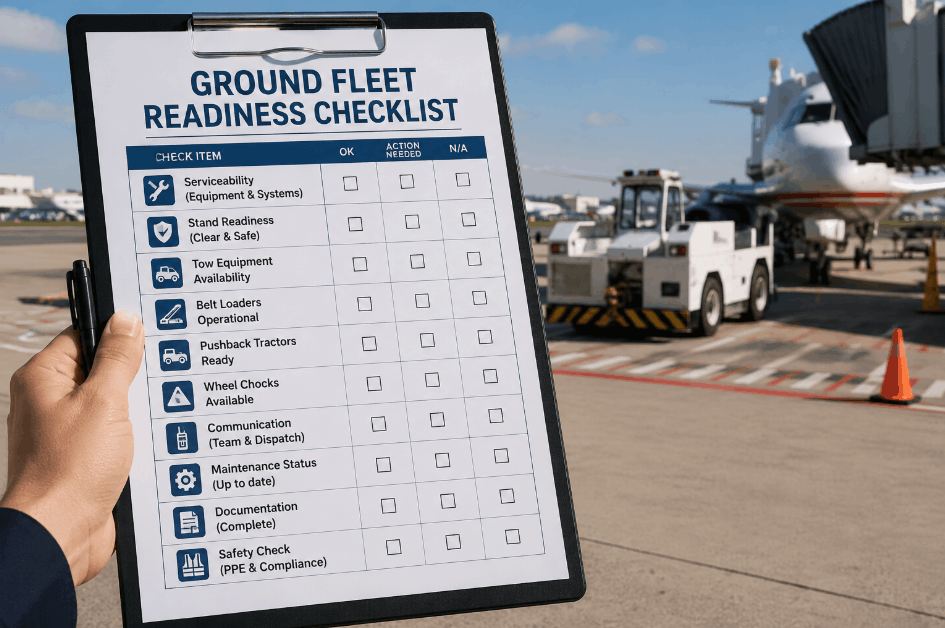
Read More
Ground support equipment failures during peak ramp periods create cascading departure delays, stand conflicts, and airside safety exposure that cannot be recovered within the same operational hour. A pushback tractor that fails at the gate, a belt
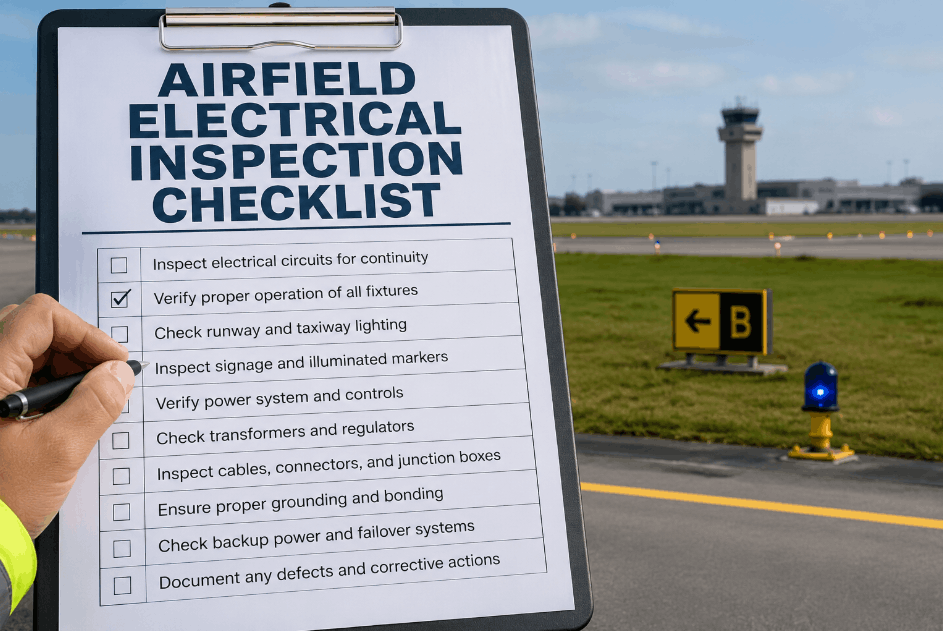
Read More
Airfield electrical systems operate under conditions that expose every circuit, fixture, and control panel to weather extremes, vibration, aircraft wake turbulence, and continuous load cycling that no standard commercial installation faces. A sing

Read More
Belt loader breakdowns at high-throughput terminals don't just delay a single aircraft — they compress the entire baggage handling sequence during the periods when queuing pressure is already at its highest. When a belt loader goes down mid-turn a
Read More
Baggage tractor availability is one of the most measurable levers hub ground handling managers have to improve stand turnaround performance. When tractor fleets fall below serviceability thresholds during peak bank periods, the consequences chain
Read More
Regional airports operate under tighter resource constraints than major hubs, making ground support equipment failure trends a direct threat to on-time performance. When a tug fleet goes down during a busy morning bank, the knock-on effect — delay

Read More
Quality and inspection managers running paper-based aircraft inspection programs carry an invisible cost: findings recorded on task cards that never reach the asset record, RII signoffs that can't be retrieved during audits, and compliance gaps th

Read More
Powerplant engineers managing auxiliary power unit health across a fleet know the cost of a missed EGT margin trend — an unscheduled APU shop visit that grounds an aircraft and burns a maintenance budget.

Read More
Landing gear program managers carry one of the most consequential maintenance tracking responsibilities in aviation. Every cycle count, every life-limited part interval, every overhaul threshold, and every exchange-pool swap carries direct airwort

Read More
Avionics engineers and shop managers operate in one of the most documentation-intensive disciplines in aviation maintenance. Every LRU swap, every BITE fault correlation, every software part-number change, and every calibration interval carries di

Read More
Airframe heavy maintenance demands precision that paper-based processes and disconnected spreadsheets simply cannot deliver. When your shop is managing fuselage skin repairs, wing structural findings, and composite damage alongside SRM compliance,

Read More
Component shops running rotables, LRUs, and serialized avionics parts carry a maintenance burden that generic work order software was never designed to handle. Every unit on tag has a serial number, a repair history, a warranty window, and a poten

Read More
Engine shop managers running CFM56, V2500, GEnx, and PW1100 fleets face a precision problem that generic CMMS platforms were never built to solve. Every shop visit demands traceable workscope control from induction to release — and without purpose

Read More
Base maintenance events — C-checks, D-checks, and structural heavy checks — are the most capital-intensive, schedule-sensitive operations in aviation MRO. A single day of TAT overrun can cost an airline six figures in AOG penalties and slot displa

Read More
For a Technical Records Manager, an untracked Airworthiness Directive is not an administrative oversight—it is a federal violation.How OxMaint eliminates the risk of manual AD tracking across every tail number in your fleet. FAA 14 CFR Part 39, EA
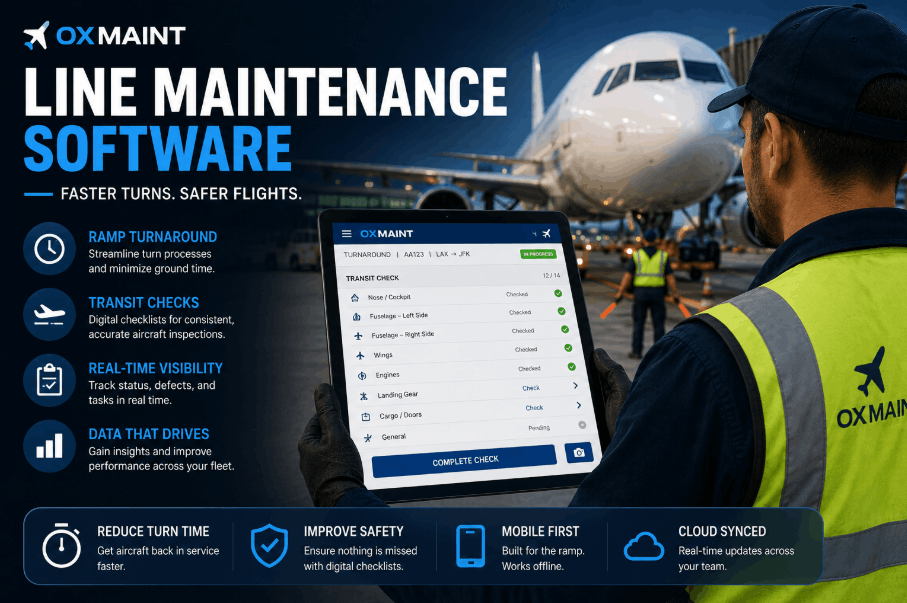
Read More
In aviation, every minute on the ramp counts. Line maintenance managers running transit checks, daily checks, and weekly inspections across multiple line stations know the pressure of tight turnaround windows — where a missed defect, a delayed MEL

Read More
Aviation maintenance mobile apps are reshaping how line maintenance supervisors and AMT leads operate on the ramp, in the hangar, and across remote stations where Wi-Fi coverage is unreliable and paper work cards slow every job down. OxMaint deliv

Read More
Aviation maintenance leaders operating without a real-time KPI dashboard are navigating a fleet blindfolded. When dispatch reliability dips, MTBUR degrades, or AOG hours spike, the difference between a two-hour recovery and a 48-hour operational c

Read More
Aviation maintenance organizations are at an inflection point. Aging paper-based logbooks, manual work cards, and disconnected hangar workflows are no longer acceptable when regulators, passengers, and airline economics demand zero-defect executio

Read More
Aviation IT leaders know the pain: a technician closes a work order in the MRO system, but the part cost never makes it to SAP. A procurement team raises a purchase order in Oracle, but the CMMS still shows stock as zero. This disconnect between E

Read More
Managing a mixed aircraft fleet — narrowbody jets, widebody long-haul aircraft, turboprops, and rotary-wing assets — on disconnected spreadsheets or siloed legacy systems is an operational liability that no Fleet Director can afford in 2026. Aircr

Read More
Continuing airworthiness is no longer a back-office function. Under EASA Part-M, Part-CAMO, and the equivalent FAR Part 91/121/135 frameworks, the CAMO is legally accountable for the airworthiness of every aircraft on its register — from AMP rev

Read More
Dispatch reliability is the number every airline CFO watches. A single percentage point of dispatch reliability across a 100-aircraft Part 121 fleet translates into millions of dollars in passenger compensation, crew rotation costs, and aircraft

Read More
Every commercial aircraft generates terabytes of operational data per month — ACARS streams, FDM exceedances, oil-debris monitors, vibration sensors, engine performance trends, ECAM messages — yet most operators still discover component failures

Read More
Legacy on-premise MRO systems were designed for a world where aviation maintenance happened in one hangar, on one campus, with one IT team patching one server. That world is gone. Today airlines run line maintenance at outstations, base maintena

Read More
A Part 145 repair station does not just need a CMMS — it needs a production system. Work packages move through induction, disassembly, inspection, repair, reassembly, test and certification. Stamps must be tied to authorized signatories. Capabil

Read More
Every commercial aircraft is governed by hundreds of airworthiness directives, recurring service bulletins, life-limited part intervals, and inspection tasks that must be tracked to the flight hour, cycle and calendar day. Miss one interval — ev

Read More
Commercial aviation runs on margins that disappear the moment an aircraft stops flying. A single AOG event on a narrowbody costs $10,000 to $20,000 per hour in lost revenue, with widebody international routes hitting $40,000 to $80,000 per hour

Read More
Aviation maintenance is one of the most compliance-intensive, safety-critical asset management disciplines on the planet. A single missed inspection or deferred work order doesn't just cost money — it grounds aircraft, triggers regulatory audits,

Read More
Aviation asset failures do not happen without warning — they happen without detection. Every baggage conveyor bearing that seizes mid-shift, every jet bridge drive motor that fails at gate, and every AGL circuit that trips during an approach had a

Read More
Aviation safety is not a product of good intentions — it is the product of documented, repeatable inspection processes executed on time, every time. From runway edge lighting and jet bridges to baggage conveyors, HVAC systems, and ground support v

Read More
Airport operators across the USA, UK, UAE, and Australia are sitting on decades of maintenance records, asset logs, and sensor data — yet most still run on spreadsheets, reactive repair calls, and paper-based inspection rounds. When a jet bridge f

Read More
An aircraft on the ground is not just idle — it is losing money at a rate most operators calculate in thousands of dollars per hour. Aircraft maintenance delays are the single largest controllable driver of fleet unavailability, and most of them a

Read More
Airport maintenance scheduling is not just a calendar exercise — it is a precision coordination problem. Every maintenance task has to fit around aircraft movements, passenger flows, gate assignments, noise curfews, and regulatory inspection windo

Read More
Aviation maintenance managers are buried in data — work orders, inspection records, parts requests, asset histories — but most still cannot answer the question their VP of Operations asks on Monday morning: "Are we ahead of failures or behind them

Read More
Every airport operations director has lived through it — a baggage conveyor jams at peak hour, a jet bridge hydraulic fails mid-boarding, or a runway light cluster goes dark during an instrument approach. The equipment did not break without warnin

Read More
Aviation ground support equipment (GSE) is the backbone of every airport ramp operation — and one of the most neglected maintenance domains in airport asset management. Baggage loaders, aircraft tow tractors, fuel trucks, passenger boarding stairs

Read More
Airport safety audits are not scheduled events that operations teams can prepare for in isolation — they are continuous regulatory assessments that can materialize with minimal advance notice. FAA Part 139 compliance inspections, TSA security audi

Read More
Aviation compliance documentation is the single most scrutinized element of every FAA Part 139 inspection, ICAO safety audit, and TSA security directive review — and the single most common cause of regulatory findings. The problem is not that airp

Read More
Airport maintenance response time is one of the most directly measurable indicators of operational readiness — and one of the most consistently underperformed metrics in aviation facilities management. When a jet bridge jams at gate B12, a baggage
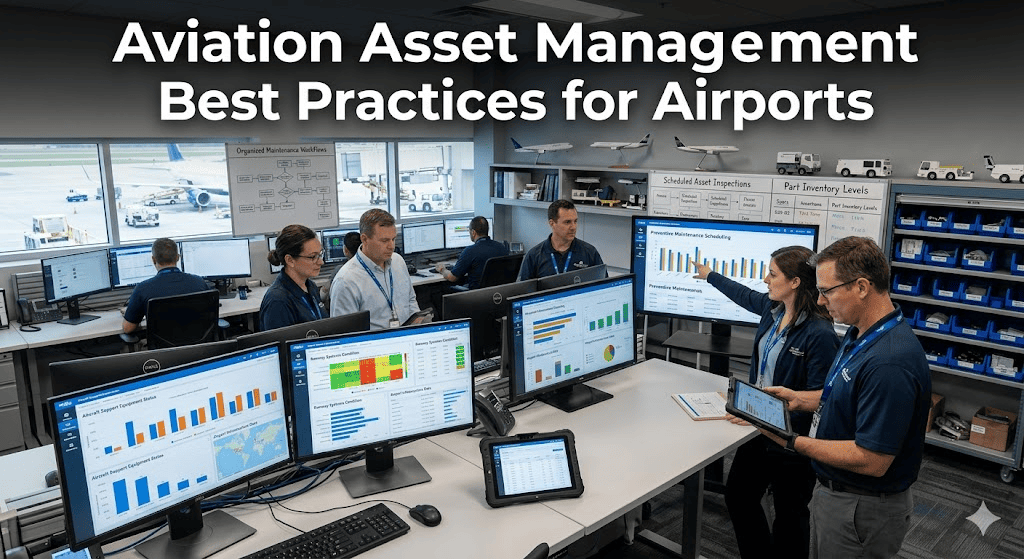
Read More
Aviation asset management is no longer a back-office overhead — it is a direct operational and financial lever for every airport. With global passenger traffic projected to reach 7.8 billion by 2036 and airports managing aging infrastructure under

Read More
Airport maintenance work orders sit at the centre of every operational outcome — fast turnarounds, regulatory compliance, technician productivity, and finance accountability. When work orders are paper-based, radio-dispatched, or trapped in discon
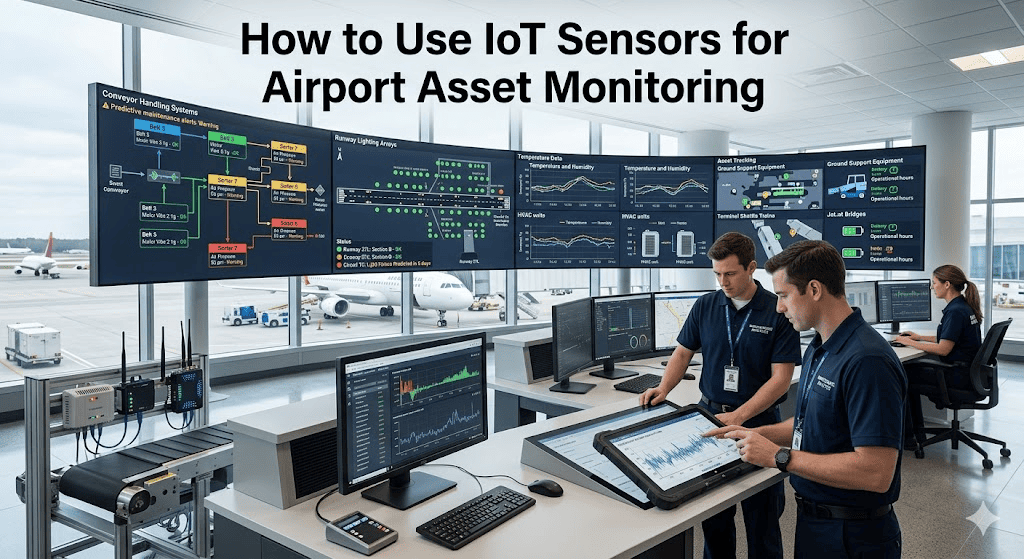
Read More
Modern airports operate fifty thousand or more individual assets — baggage handling conveyors cycling fifteen thousand bags per hour, HVAC plants conditioning hundreds of thousands of square feet, jet bridges performing three hundred docking opera

Read More
Runway lighting is the most regulated and most operationally consequential lighting system in any airport — a single failed approach light or misaligned PAPI can close a runway, trigger diversions, and translate into airline penalty exposure measu
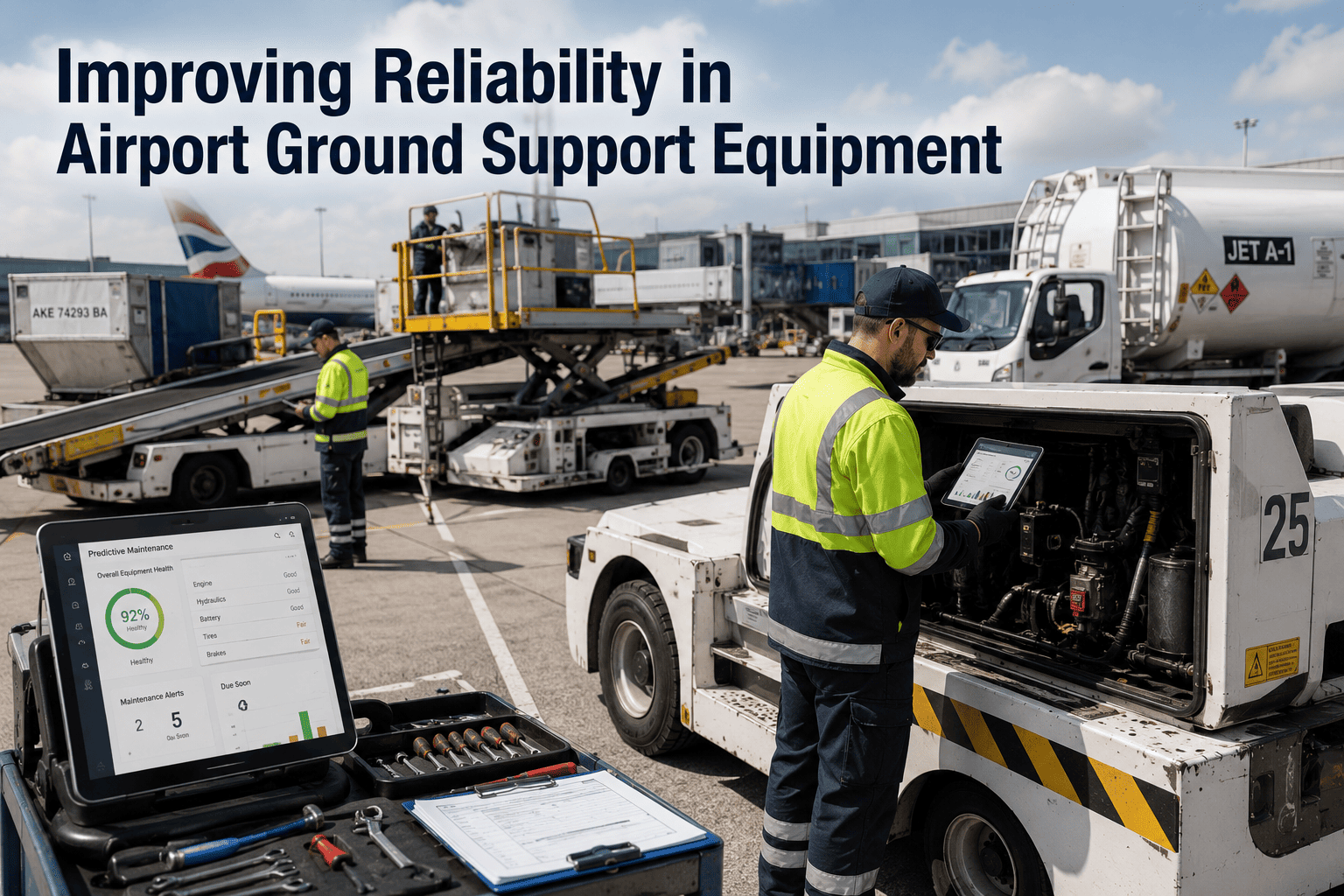
Read More
Airport ground support equipment reliability is not a maintenance metric — it is a turnaround economics problem disguised as one. When a baggage tug, belt loader, or ground power unit fails on the ramp during a peak push, the cost is never just th

Read More
Aviation maintenance teams across the USA, UK, Canada, UAE, Germany, and Australia operate inside one of the most punishing inventory environments in industry — every grounded aircraft burns ten to fifty thousand dollars per hour, every emergency
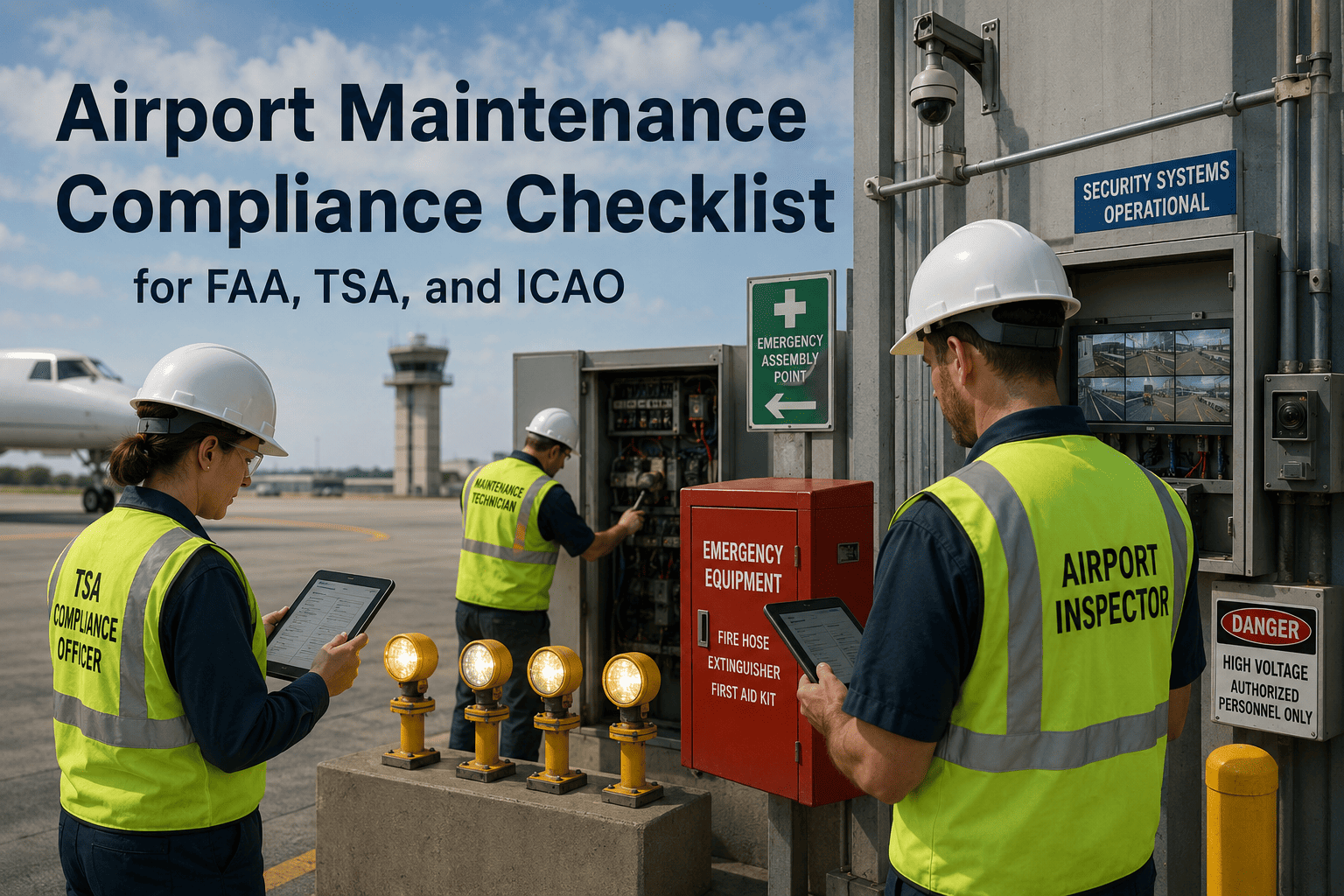
Read More
Airport maintenance compliance is not optional — and the cost of getting it wrong scales fast. FAA Part 139 violations can carry civil penalties exceeding USD 30,000 per occurrence, EASA findings can ground entire operations, and an ICAO Univers
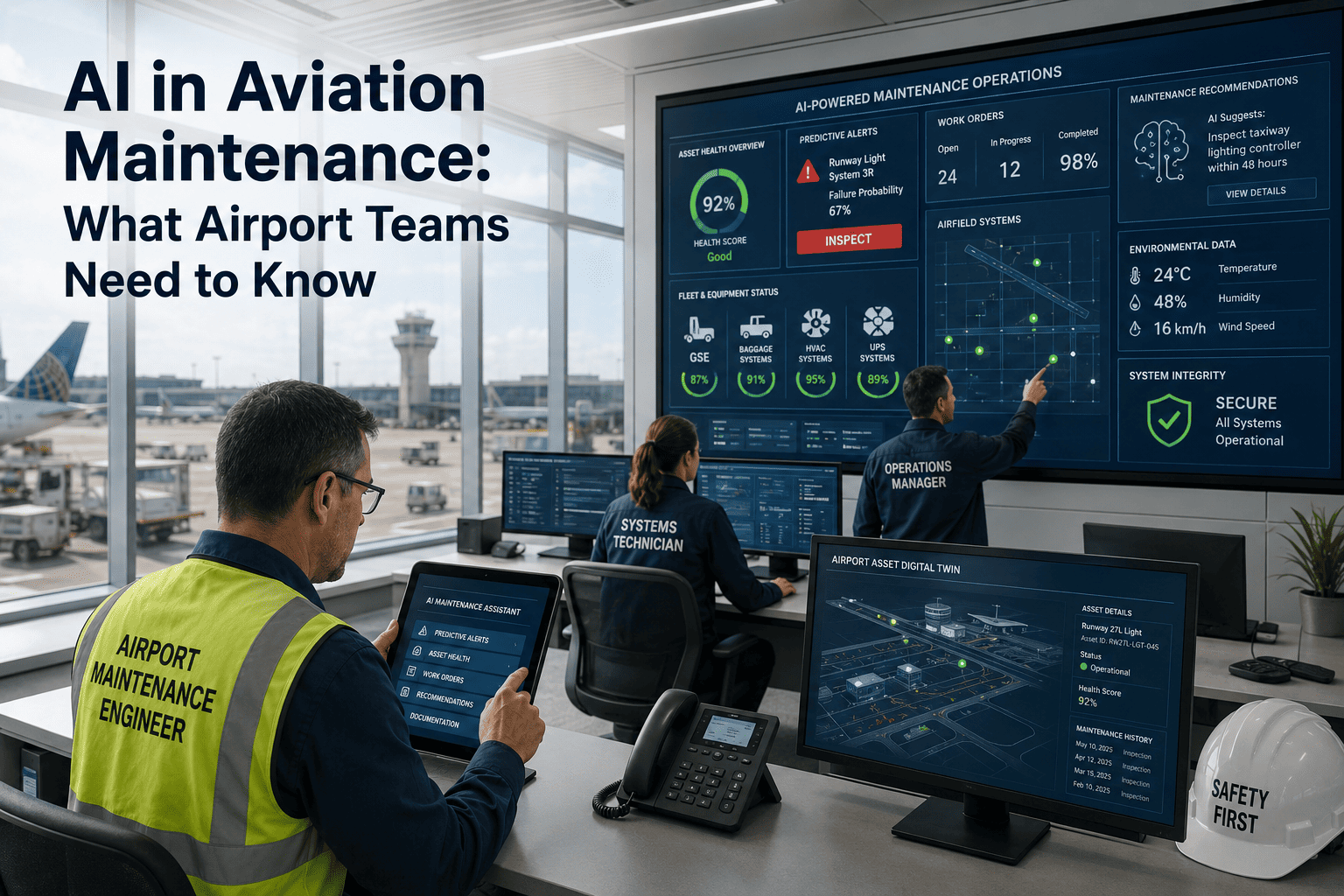
Read More
Artificial intelligence is no longer a future concept in aviation maintenance — it is operational reality at the world's leading airports and MRO operations. AI models trained on years of failure data now predict bleed valve degradation, baggage

Read More
Critical airport assets — runway lighting, jet bridges, baggage handling, fuel systems, fire detection, ILS, escalators, and HVAC — share a single defining trait: when one fails, an entire flight schedule can fail with it. A robust maintenance c

Read More
Maintenance is one of the largest controllable cost lines on an airport P&L — typically 8 to 15% of total operating expense at major international hubs, and even higher at regional airports running aging infrastructure. Yet most of that spen

Read More
Aviation is the most uptime-sensitive industry on the planet. A single grounded aircraft costs an airline between USD 10,000 and USD 150,000 per hour depending on type, route, and crew positioning — and a 24-hour airfield closure for a runway li

Read More
Modern airports operate as complex industrial cities — runway lighting, baggage handling systems, jet bridges, escalators, HVAC, security checkpoints, fuel depots, and de-icing infrastructure all running 18 to 24 hours a day, every day. The cost
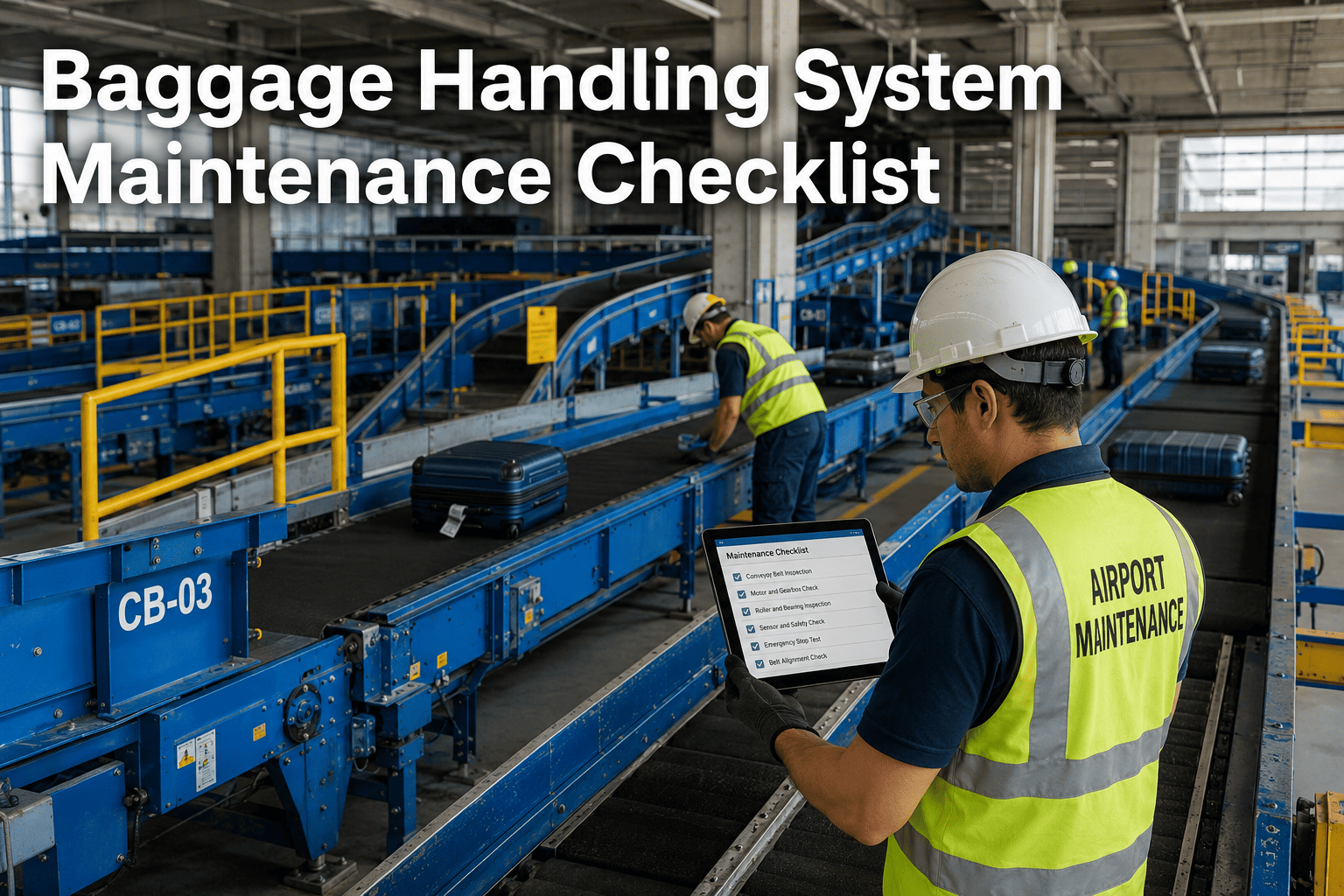
Read More
A baggage handling system (BHS) is the most operationally exposed mechanical asset in any airport terminal. Miles of conveyor, hundreds of motors, sortation diverters, scanners, weighing scales, and carousels — all running near-continuously, all e
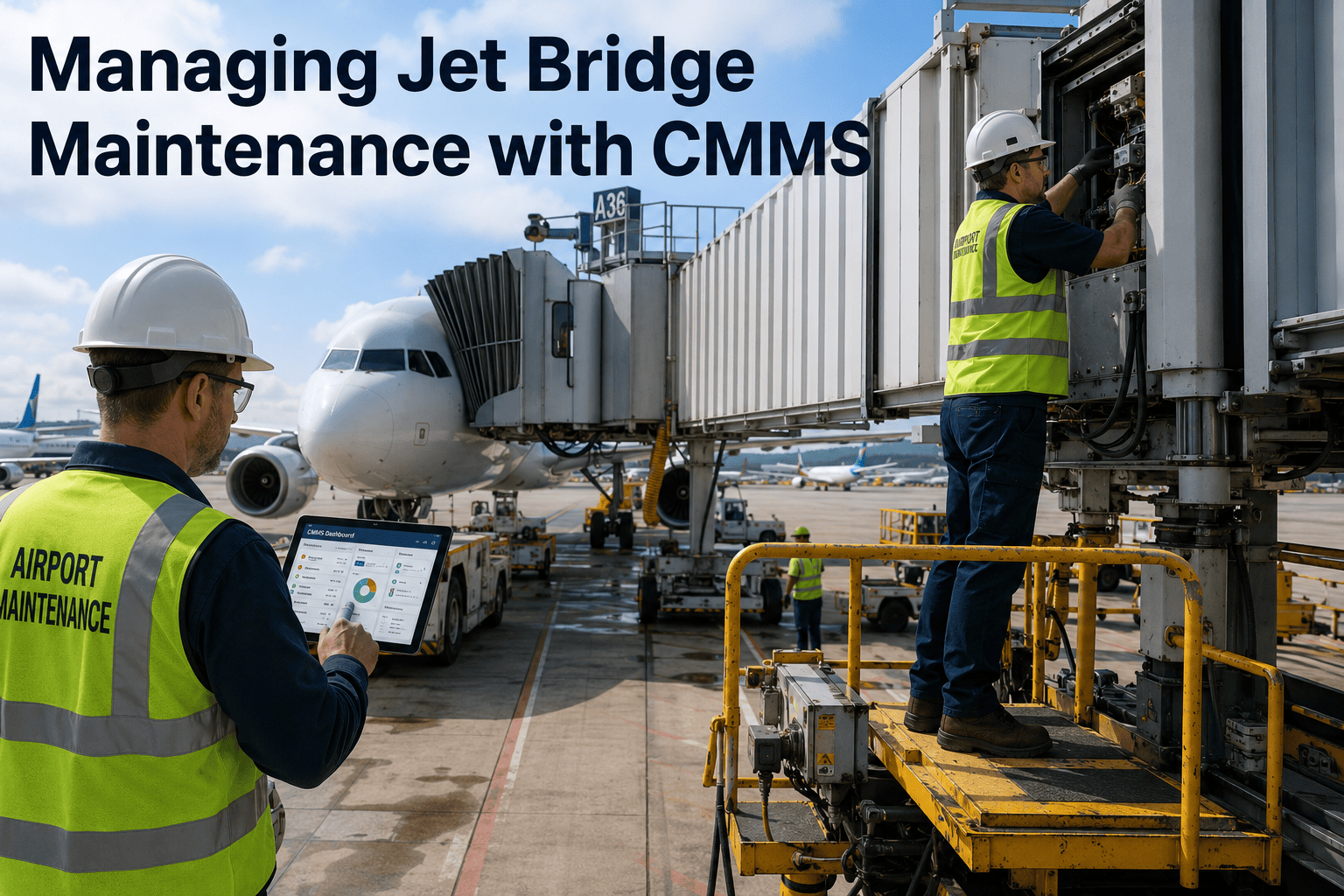
Read More
A jet bridge that fails to dock is an airline's worst gate-side surprise. Aircraft delay costs average roughly $100 per minute at U.S. airports, and a single passenger boarding bridge (PBB) outage cascades fast — gate reassignments, missed connect

Read More
Airport HVAC systems are unlike any other commercial cooling and ventilation environment. They run 24/7, condition millions of cubic feet of terminal space, handle wild swings in occupancy as flights cycle through, and operate in geographies rangi
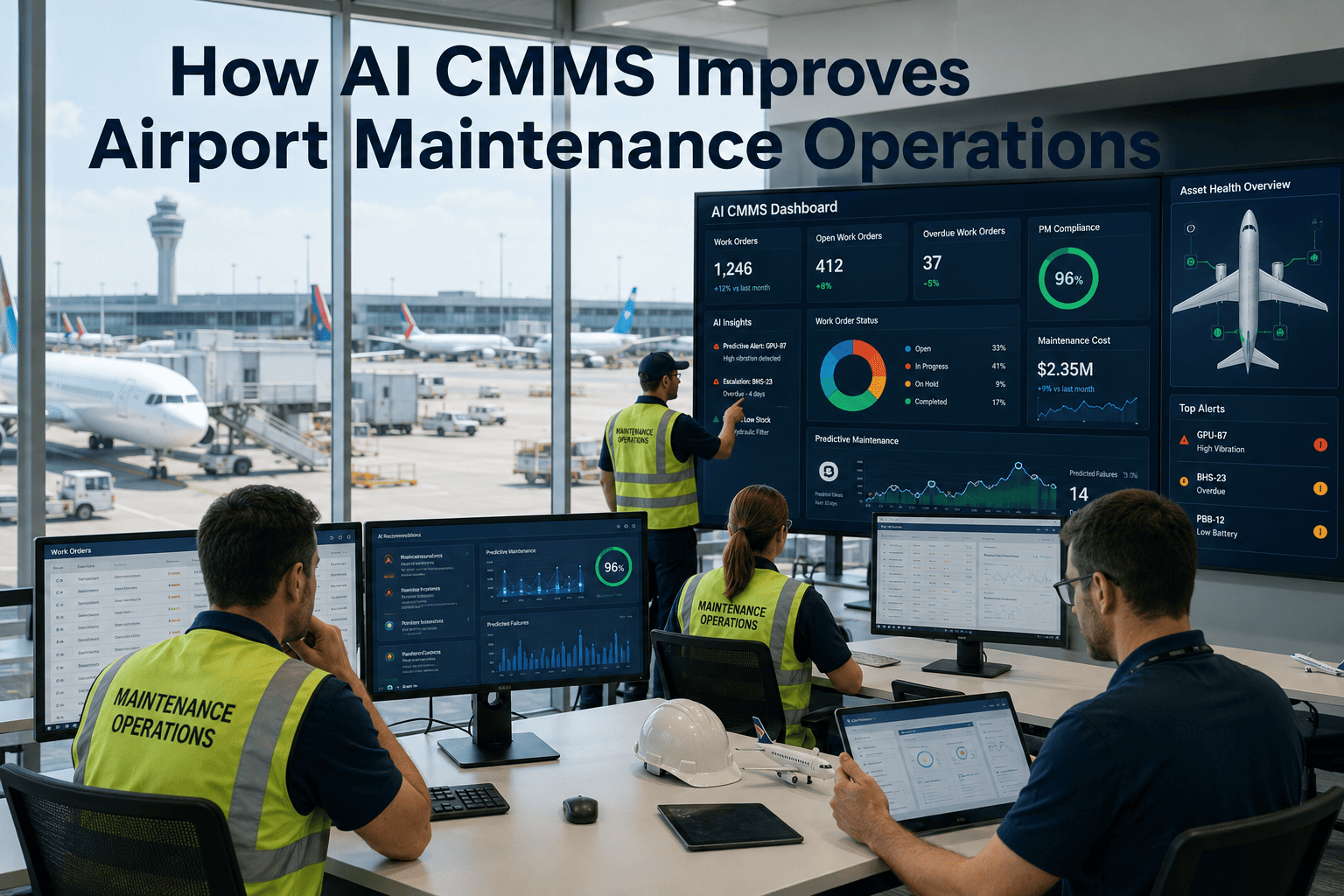
Read More
Modern airports operate as complex industrial cities — runway lighting, baggage handling systems, jet bridges, escalators, HVAC, security checkpoints, fuel depots, and de-icing infrastructure all running 18 to 24 hours a day, every day. The cost

Read More
Airport landside infrastructure carries a deceptively heavy compliance burden. Every access road pothole that becomes a trip hazard, every curbside bollard with faded retroreflective tape, every drainage inlet blocked by leaf debris before a storm

Read More
An airport hangar is one of the most hazardous industrial environments in aviation — it combines aircraft fuel handling, overhead crane operations, high-voltage electrical systems, confined space work, hot work near flammable materials, and high-b

Read More
Airport concession and retail spaces operate under one of the most demanding compliance environments in commercial food service — health department inspections, airport authority tenant audits, fire marshal oversight, and FOG (fats, oils, grease)

Read More
A single substation failure at a major airport doesn't just cut power to a terminal wing — it cascades into runway lighting outages, ILS navigation aid failures, jetbridge lockouts, security screening shutdowns, and baggage system halts. Industry

Read More
Every runway crack that goes unrecorded is a liability waiting to surface at the worst possible moment. Across the U.S. airport network, the FAA mandates a minimum of one detailed pavement inspection per year and monthly drive-by checks — yet faci

Read More
A major West Coast international hub airport managing 824 ground support vehicles — diesel-powered baggage tugs, pushback tractors, belt loaders, and aircraft service trucks — spent $4.8 million annually on diesel fuel, $1.2 million on exhaust emi

Read More
A mid-sized regional airport in the southeastern United States operates five food service tenants across two terminals — three quick-service restaurants, one sit-down cafe, and one grab-and-go kiosk. In December 2023, the local health department c

Read More
At a mid-sized North American hub airport, gate maintenance coordination between the airport authority and three airline tenants followed a color-coded spreadsheet that the operations supervisor updated manually and emailed twice per day. When a h
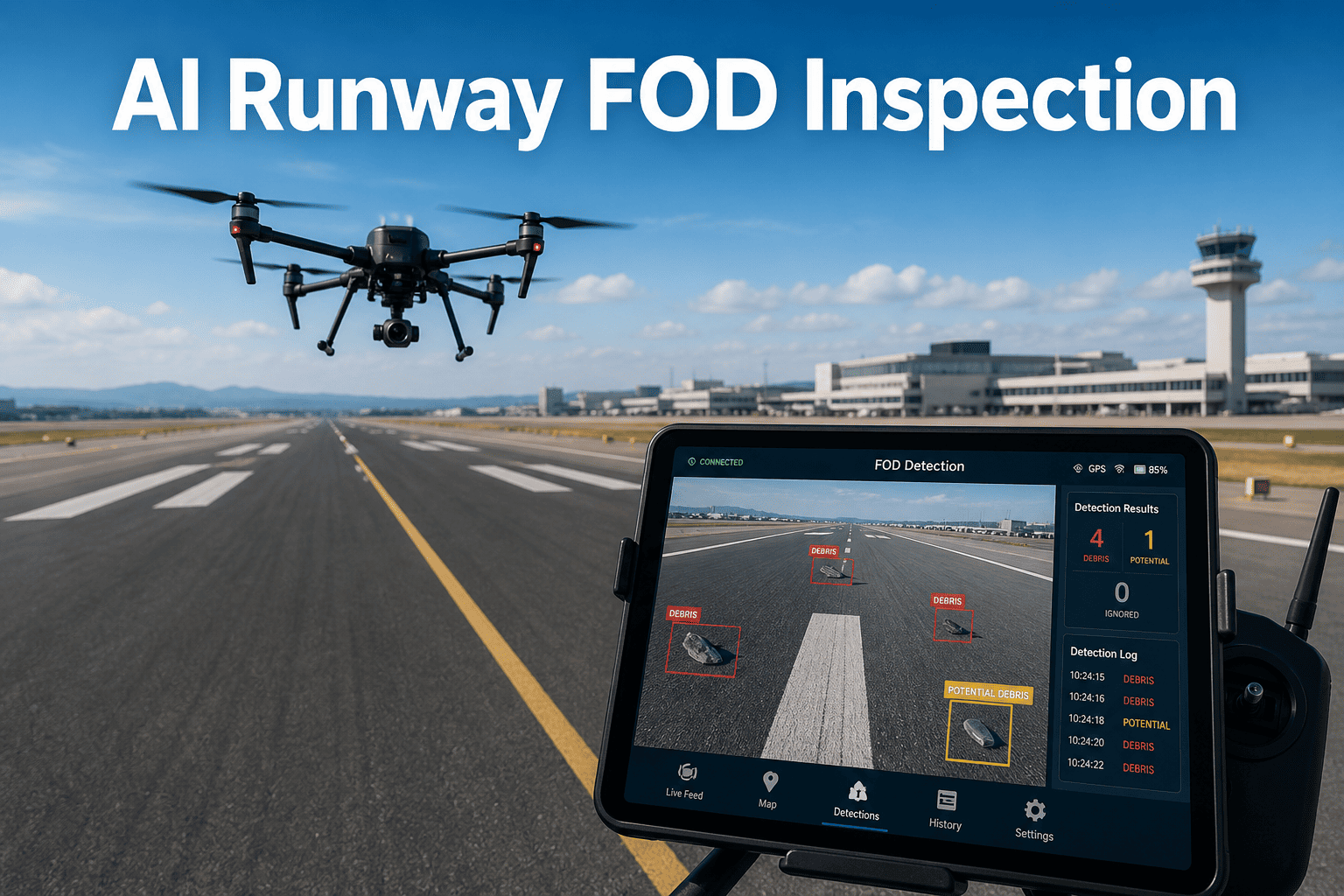
Read More
At a major US international airport, ground crews drive a manual FOD sweep across 13,000 feet of runway every six hours — five vehicles, ten inspectors, twelve total runway closures per day. In 2024, that airport missed a half-inch metal bracket l
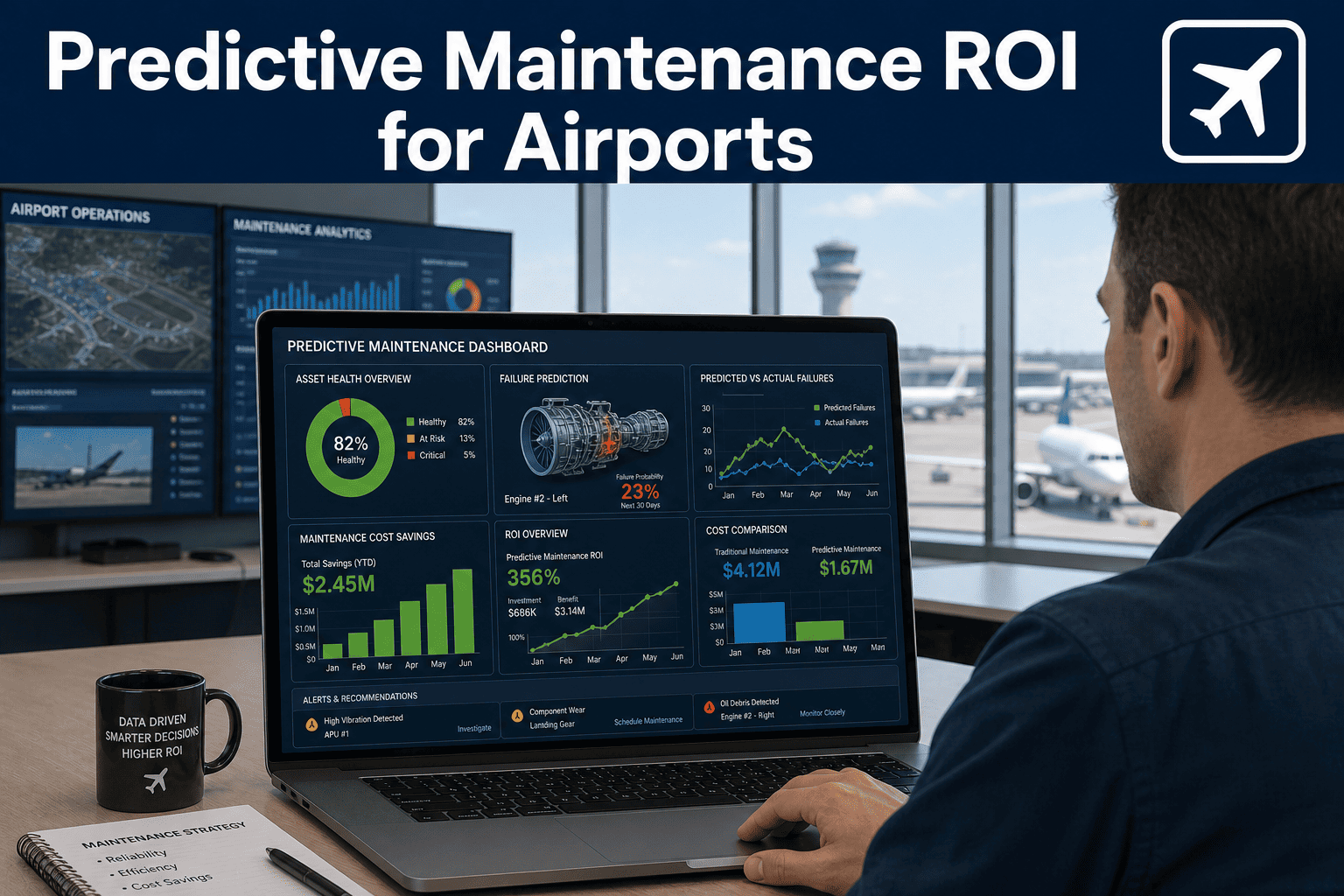
Read More
Predictive maintenance sounds expensive until you calculate what it prevents: a baggage handling motor failure that costs $18,000 in airline penalties per hour, an HVAC compressor seizure that forces terminal evacuation during peak travel, or a je

Read More
Airport ground support equipment electrification isn't just an emissions goal—it's a $4.2 billion global transition reshaping how airports maintain fleets, manage charging infrastructure, and track battery health across hundreds of electric tugs,
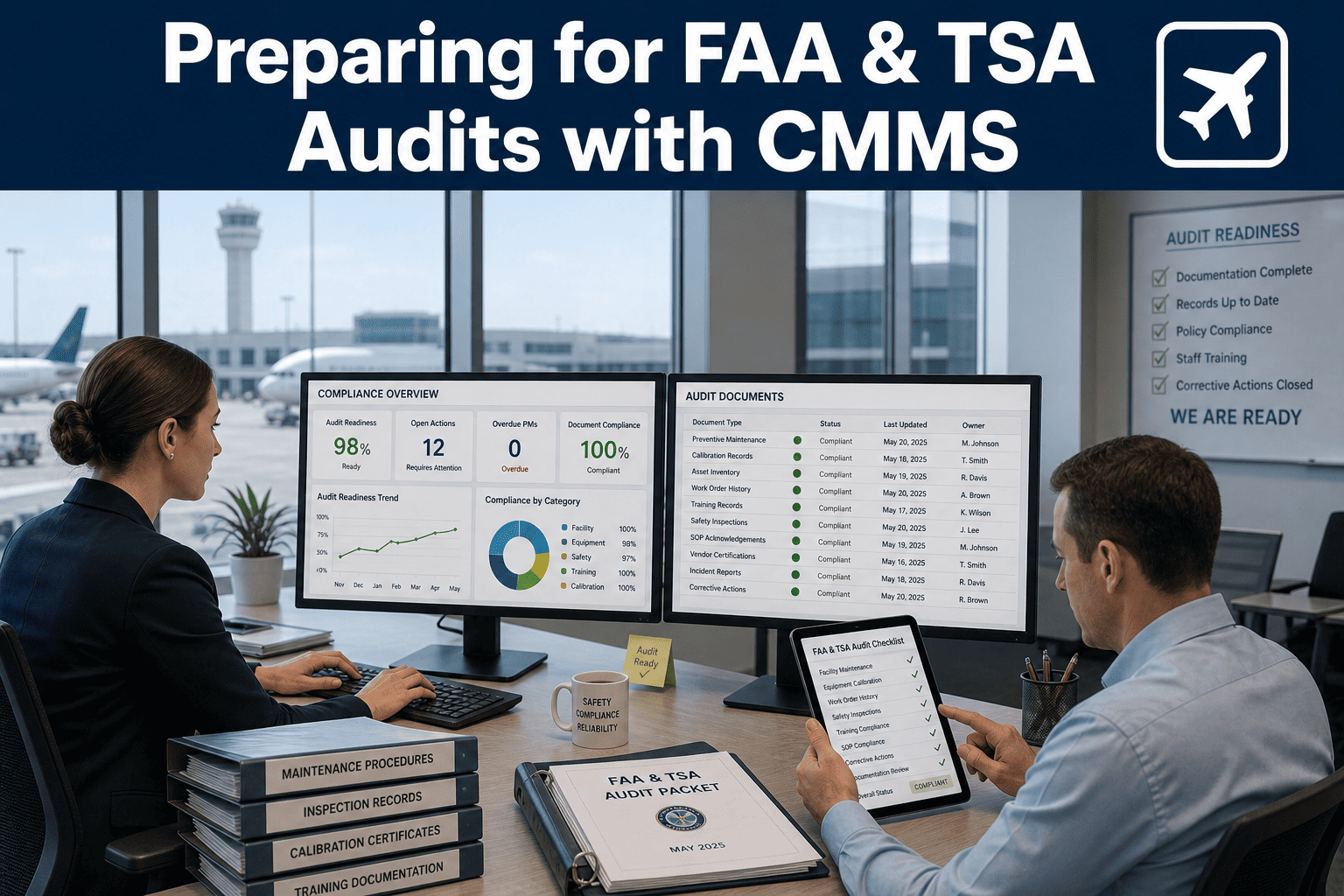
Read More
An FAA or TSA audit notice gives you 30 days to produce maintenance records, inspection logs, training certifications, and corrective action histories that prove your airport has been operating in continuous compliance. Most facilities scramble to
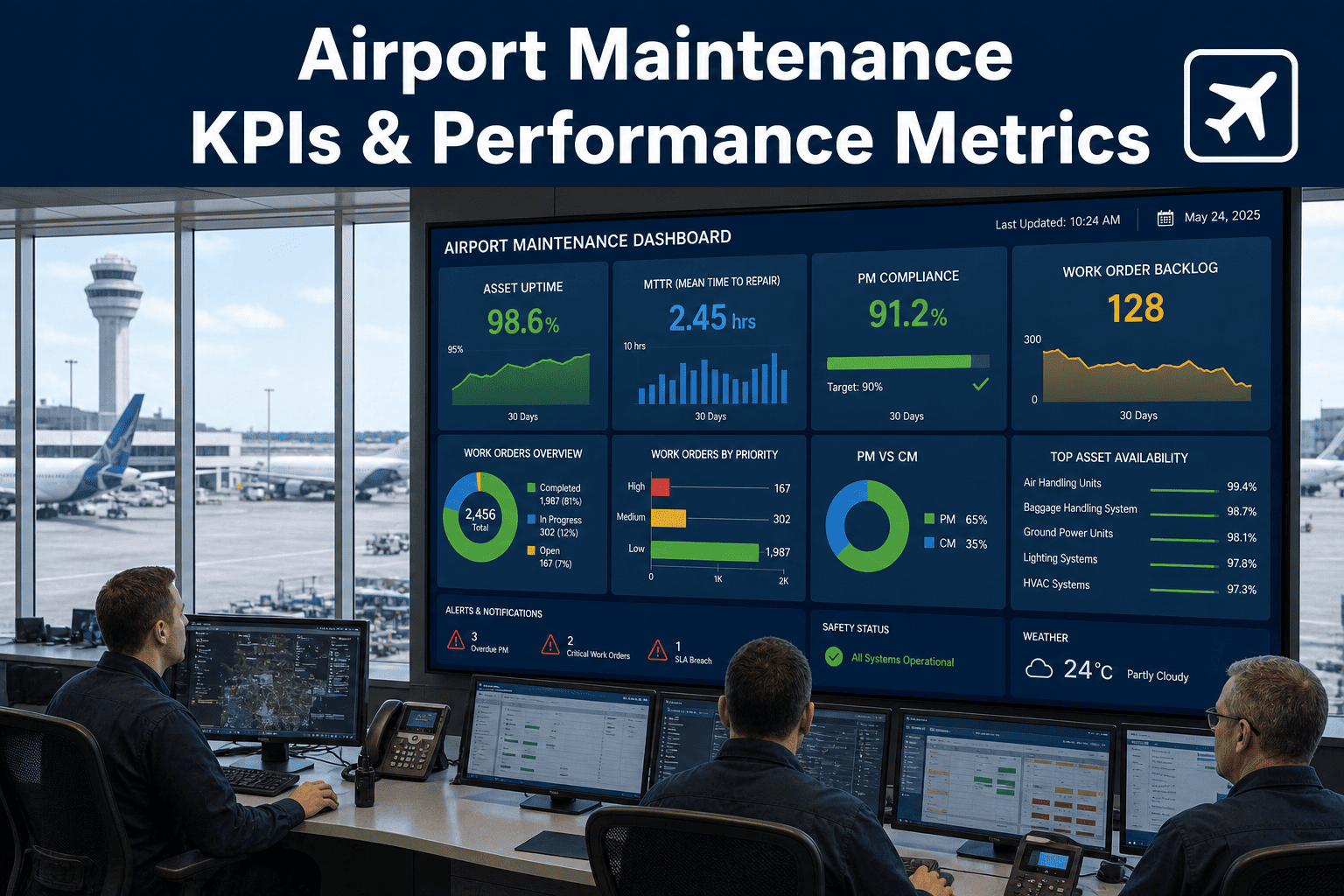
Read More
An airport maintenance operation generates thousands of work orders, hundreds of asset failures, and millions in operating costs every year—but without the right KPIs tracked in a CMMS, none of that data turns into actionable intelligence. Facilit
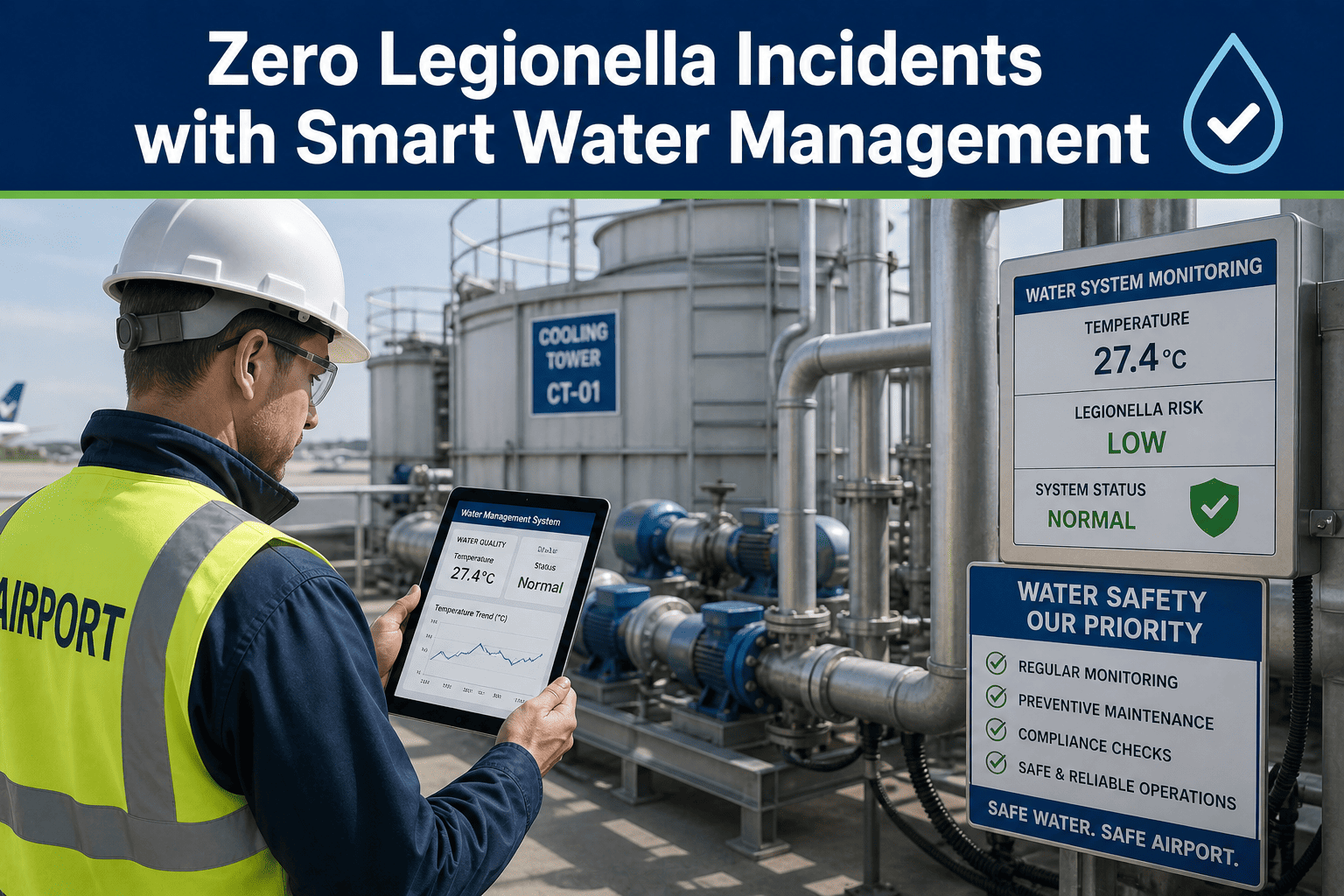
Read More
A single Legionella outbreak at an airport can shut down terminals, trigger health department investigations, and expose the facility to lawsuits exceeding $10 million. One international airport eliminated this risk entirely by achieving zero Legi

Read More
When winter storms ground flights and close runways, every minute of downtime costs an airport an average of $12,000 in lost revenue. A single snowplow breakdown during a blizzard can cascade into hours of delays, passenger backlogs, and regulator
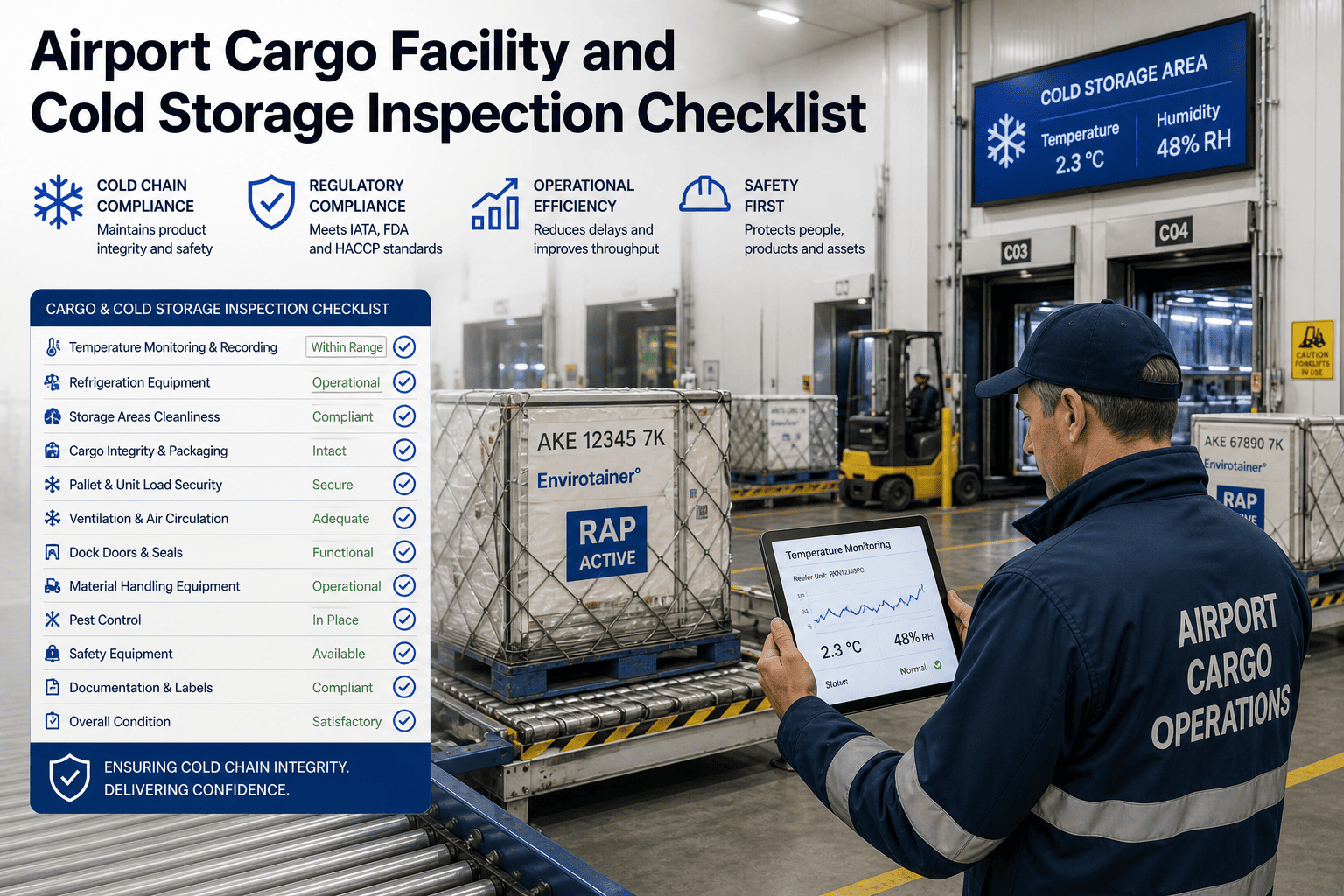
Read More
Airport cargo and cold storage facilities operate under a compliance burden that most facility managers underestimate until their first failed audit. A single temperature excursion on a pharmaceutical shipment can void a $200,00
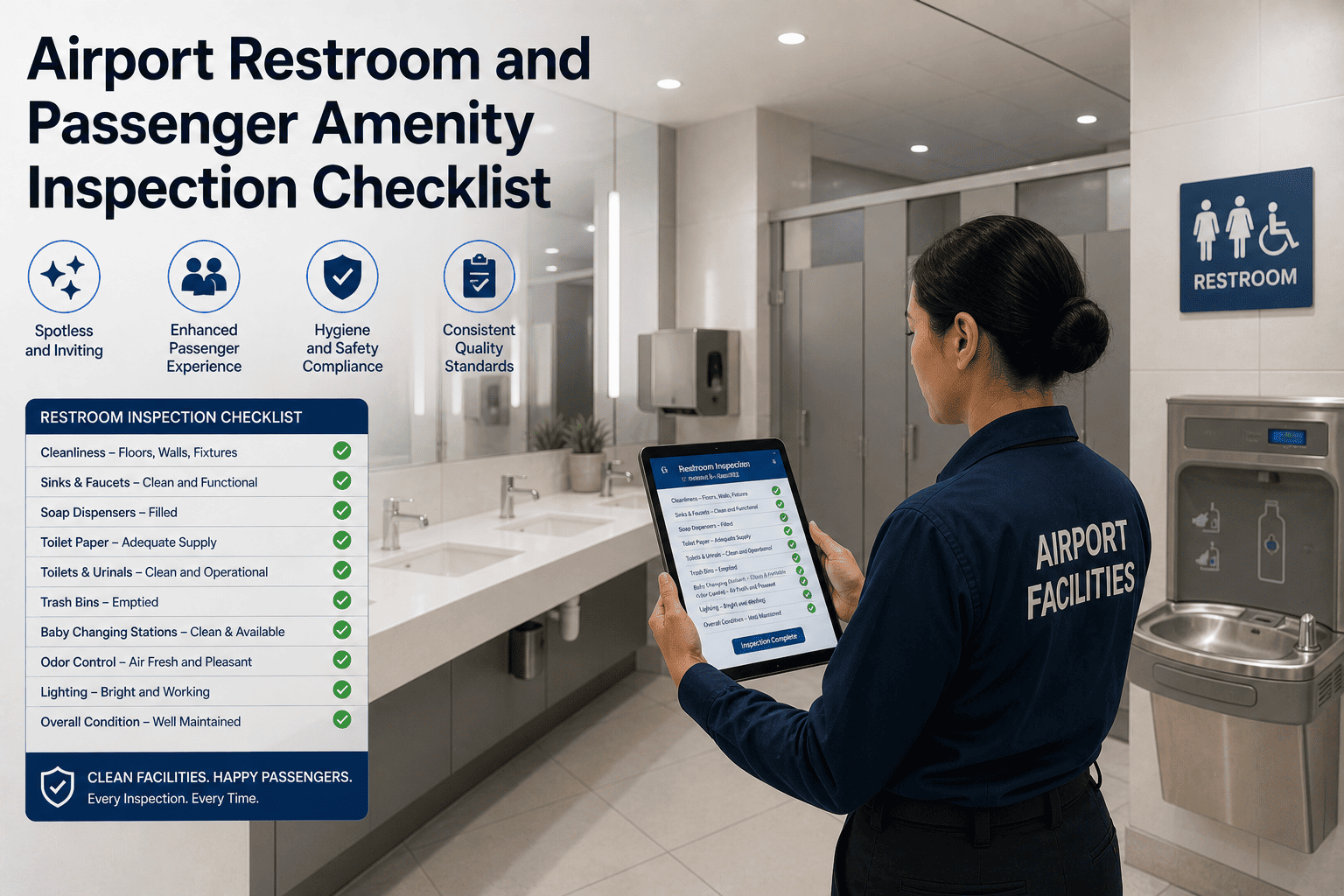
Read More
Passenger experience begins the moment someone walks through the terminal door — and restroom condition is consistently the number-one facility factor cited in airport satisfaction surveys. According to the Airports Council Inte
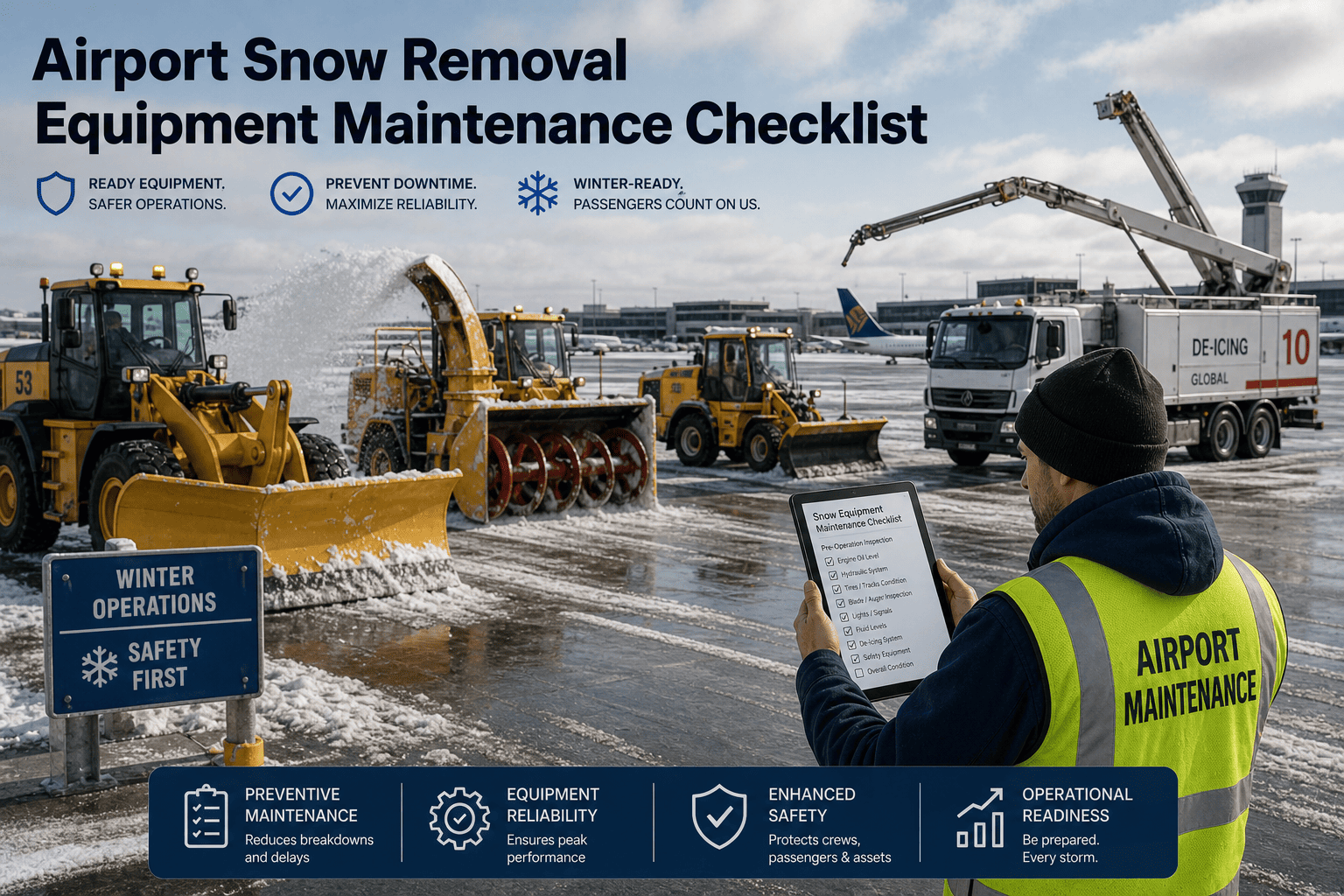
Read More
Airport snow removal is one of the highest-stakes maintenance operations in civil aviation. A single equipment failure during an active snowstorm can trigger runway closures, ground delays, and safety violations that cost airpor
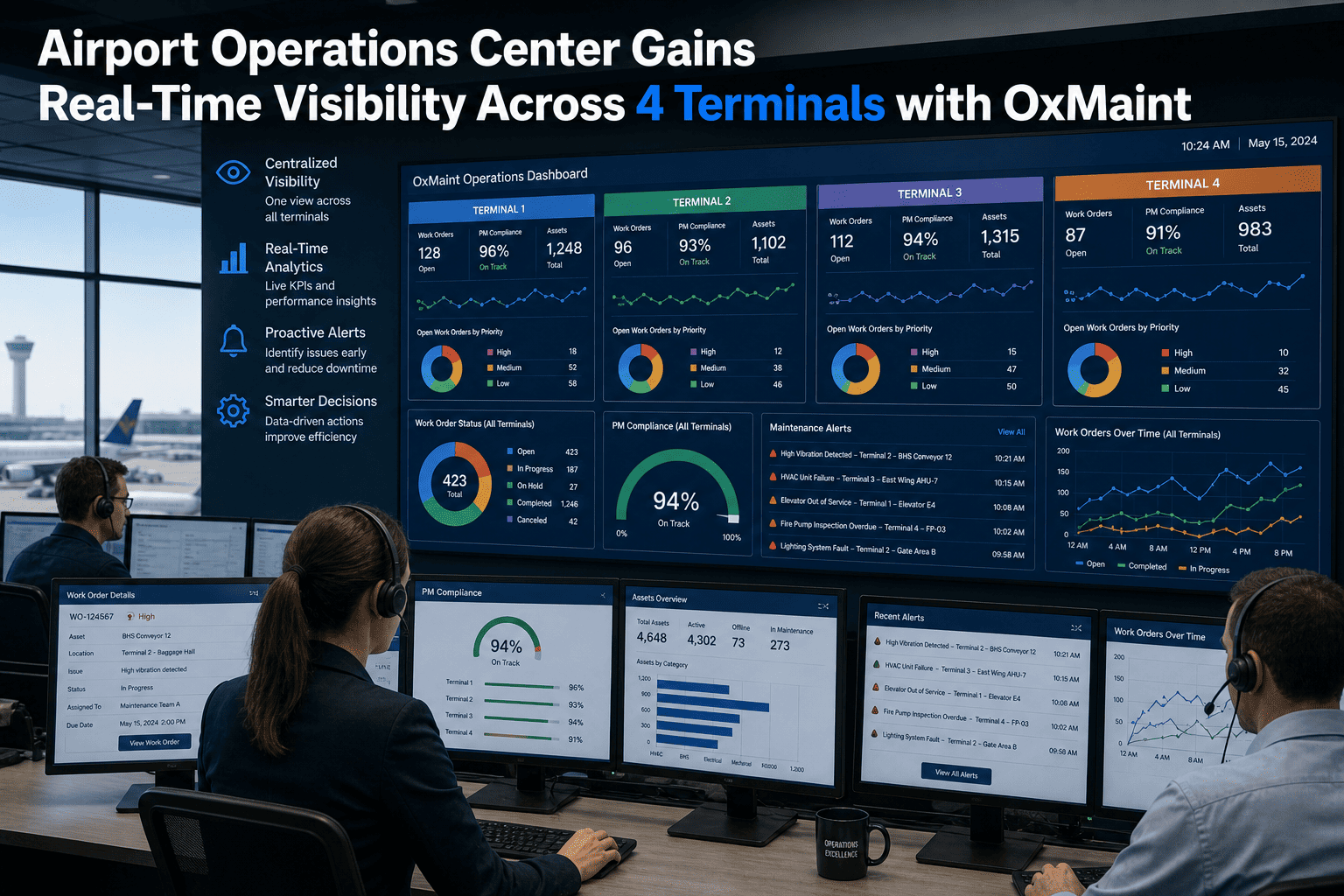
Read More
Running maintenance across four airport terminals is not a coordination challenge — it is an information architecture challenge. When each terminal operates as its own data silo, the operations center is always working from a delayed, incomplete p
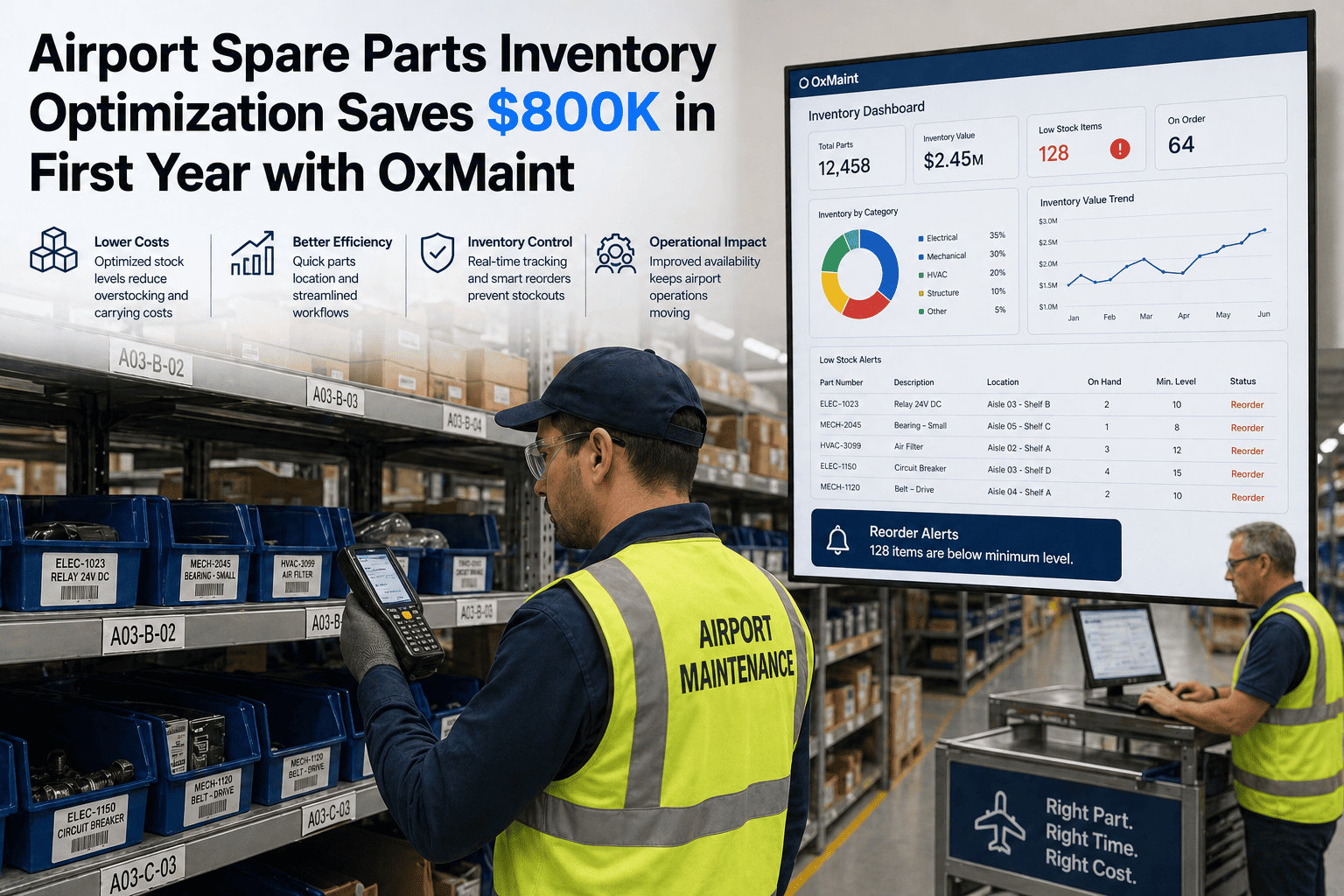
Read More
Spare parts inventory is one of the most under-managed cost centers in airport maintenance operations. Overstock ties up capital. Stockouts turn a two-hour planned repair into a 48-hour grounding event when a critical part has to be emergency-sour
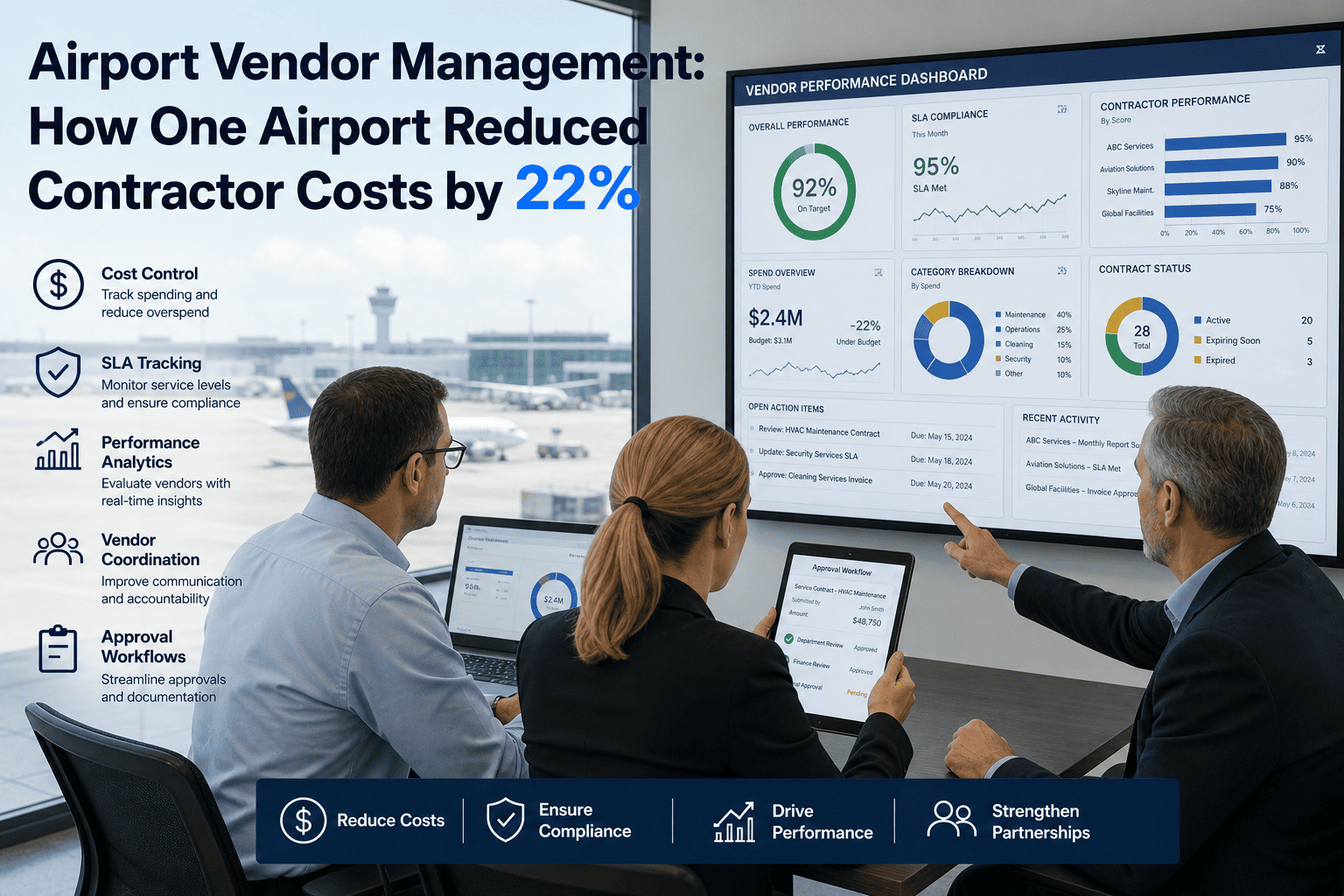
Read More
Airport maintenance budgets are under pressure from every direction — rising labor costs, aging terminal infrastructure, and regulatory compliance demands that never shrink. One category where airports consistently overpay is contractor management
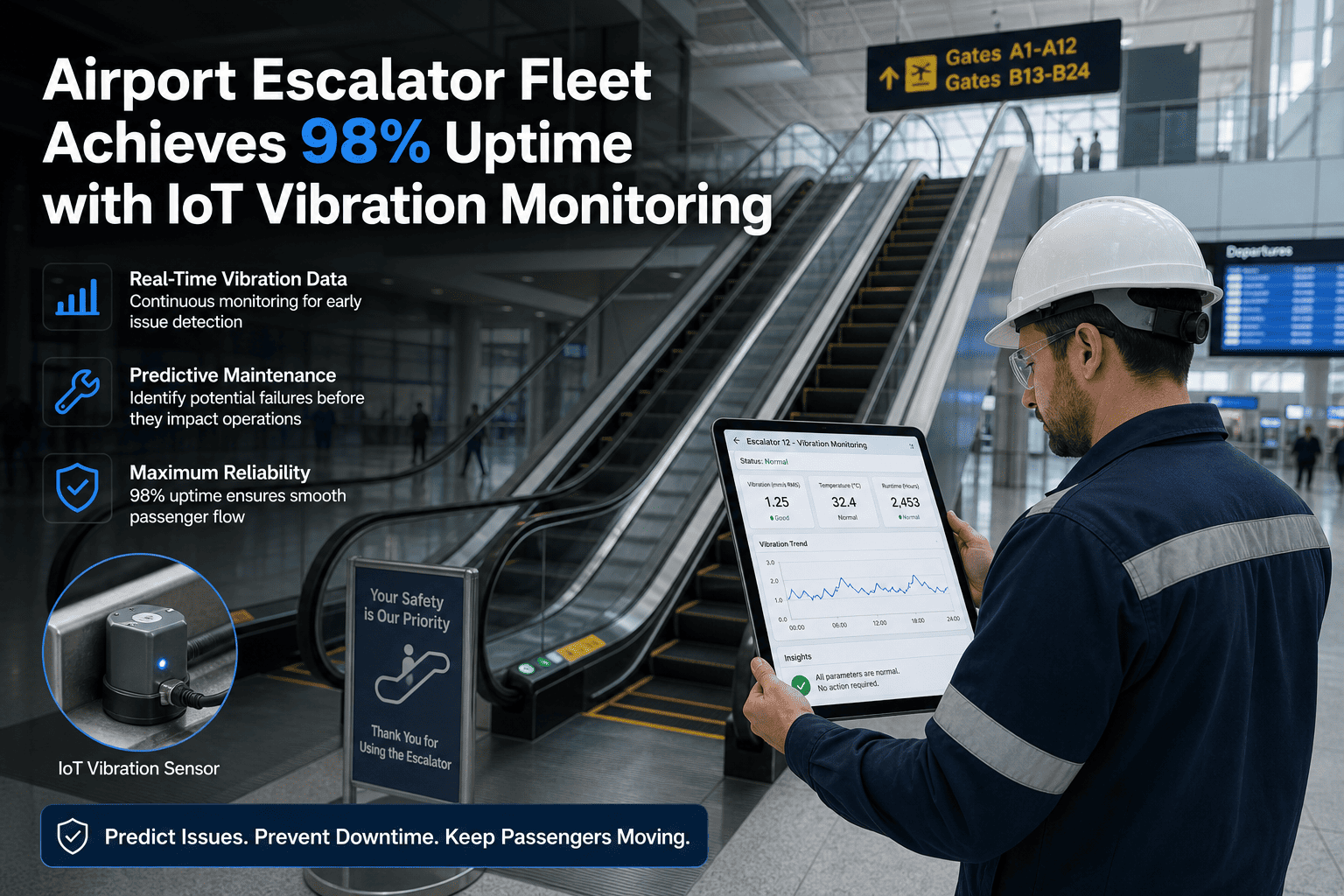
Read More
Escalators and moving walkways are not background infrastructure — they are part of the passenger experience. When one goes down during peak hours, passengers notice, airlines notice, and airport operations metrics reflect it. The traditional appr

Read More
Aviation fuel is the single most hazardous material on the airport campus — and it flows through a system that spans buried pipelines, surface hydrant pits, filtration equipment, storage tanks, and fueling vehicles, all operating simultaneously du
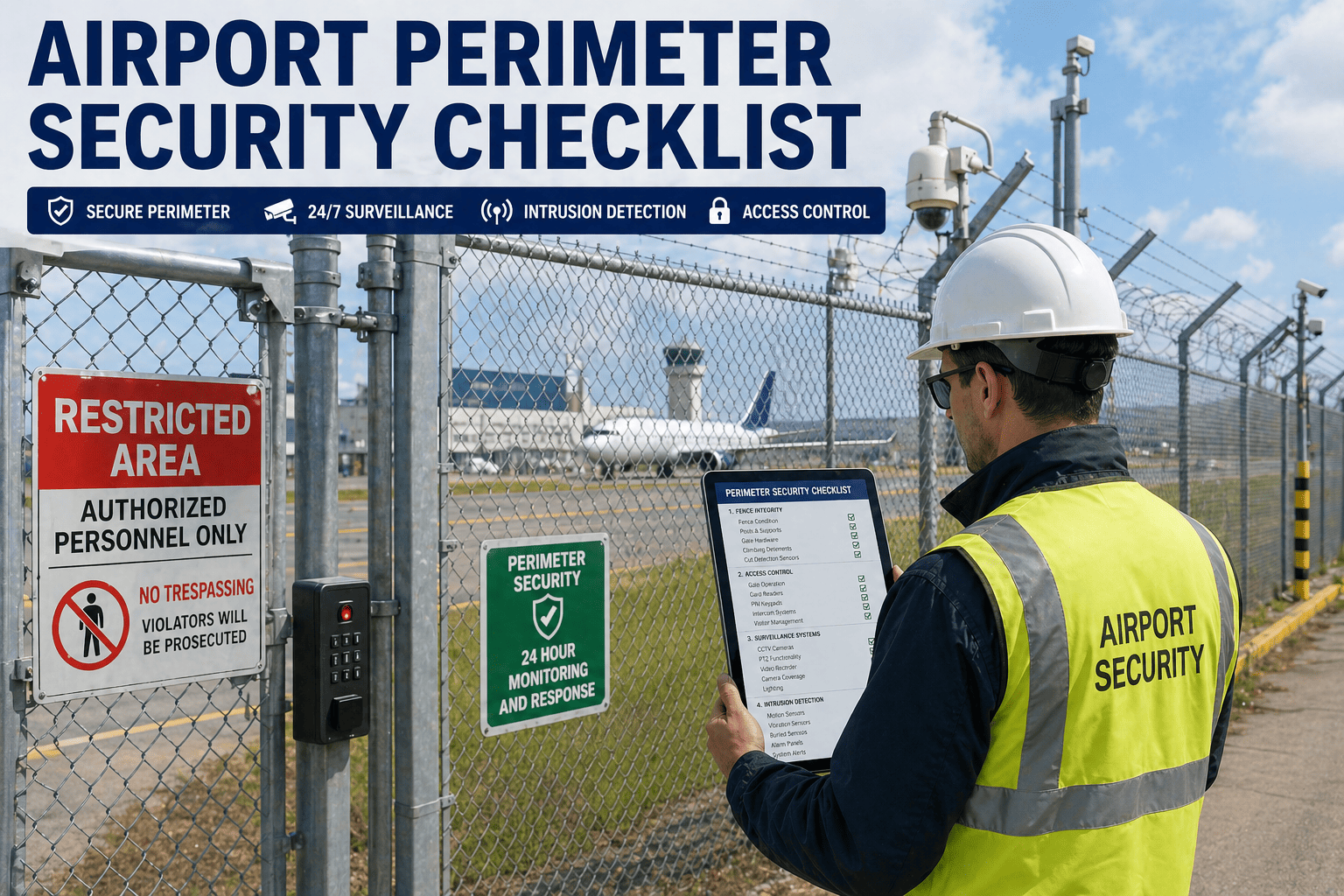
Read More
Airport perimeter security is not an IT problem — it is a physical infrastructure maintenance problem. A CCTV camera with a dirty lens, a fence post shifted 3 inches by vehicle impact, or an access gate sensor that fails intermittently can create

Read More
Airport parking generates 20-40% of non-aeronautical revenue at most commercial airports — yet it is frequently the most neglected infrastructure category in the maintenance program. A parking structure with failed lighting, broken gate arms, offl
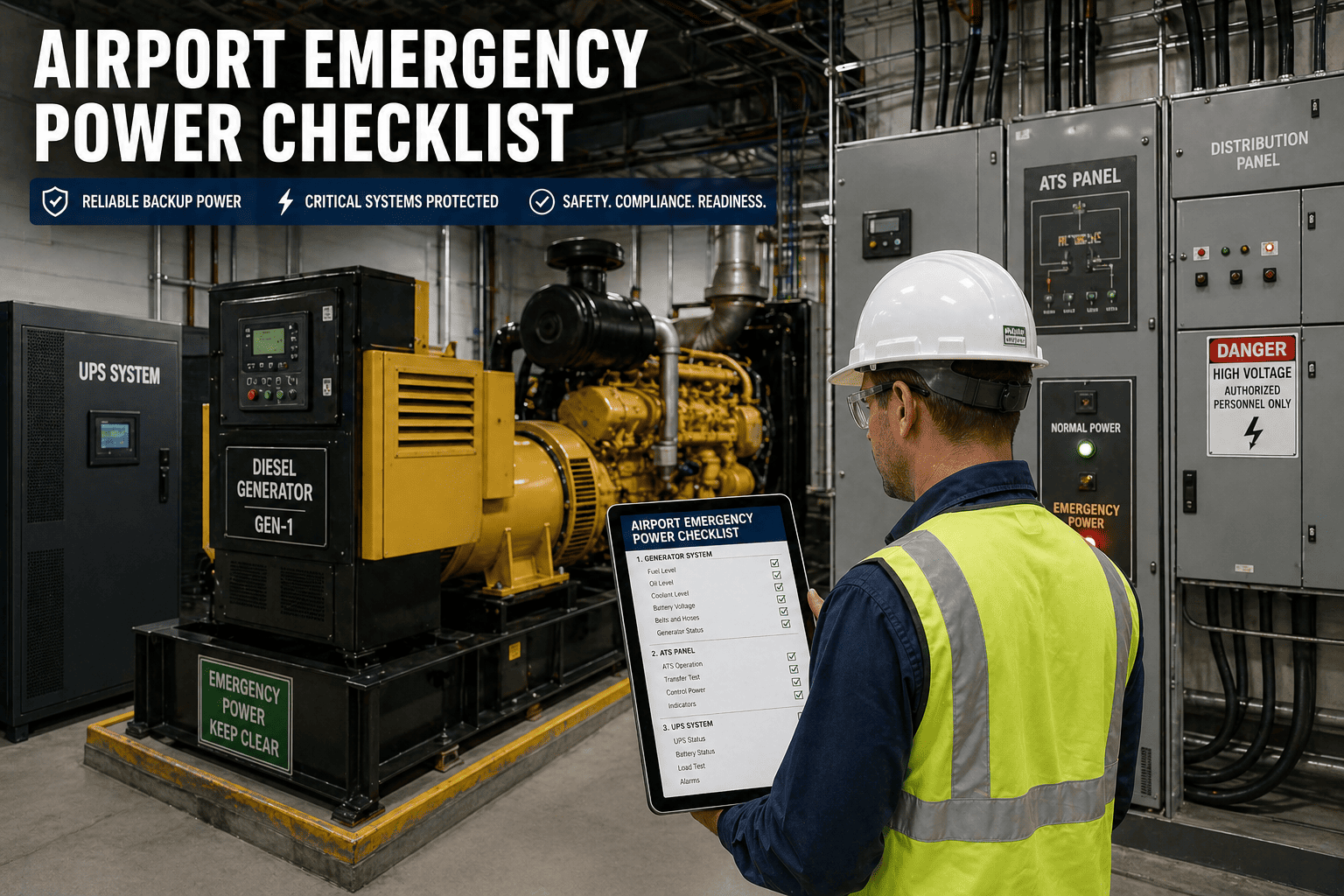
Read More
An airport that loses power does not just go dark — it loses runway lighting, navigation aids, baggage handling, security screening, and passenger information systems simultaneously. FAA Part 139 requires certificated airports to maintain emergenc
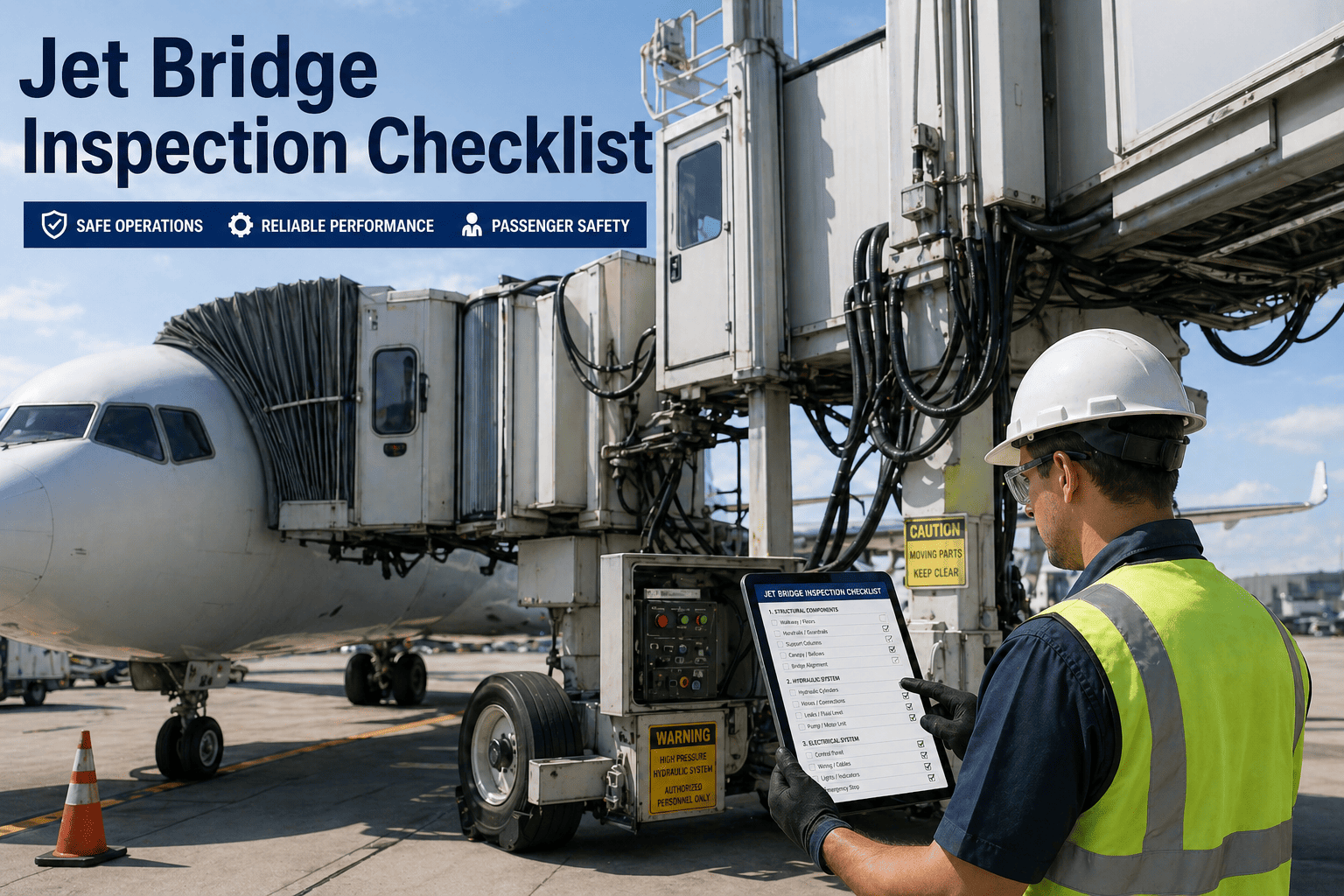
Read More
A single jet bridge failure during peak operations does not just delay one flight — it cascades across the gate schedule, forces remote stand operations, and creates passenger experience failures that no airline forgets at contract renewal. Passen
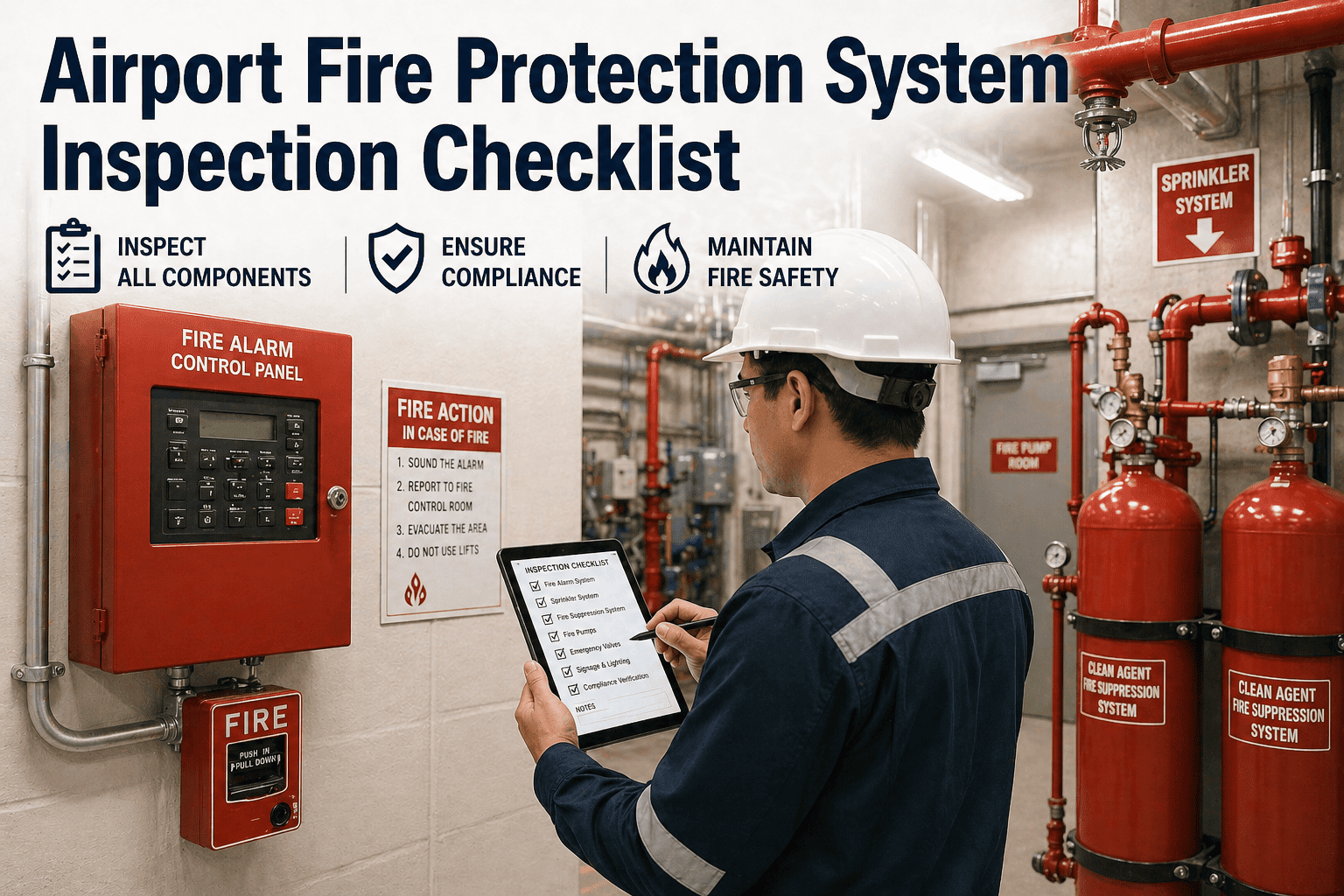
Read More
Airport fire incidents are rare — but when they happen without a functioning protection system in place, the consequences are catastrophic. What separates a contained incident from a runway closure, federal investigation, or mass casualty event is
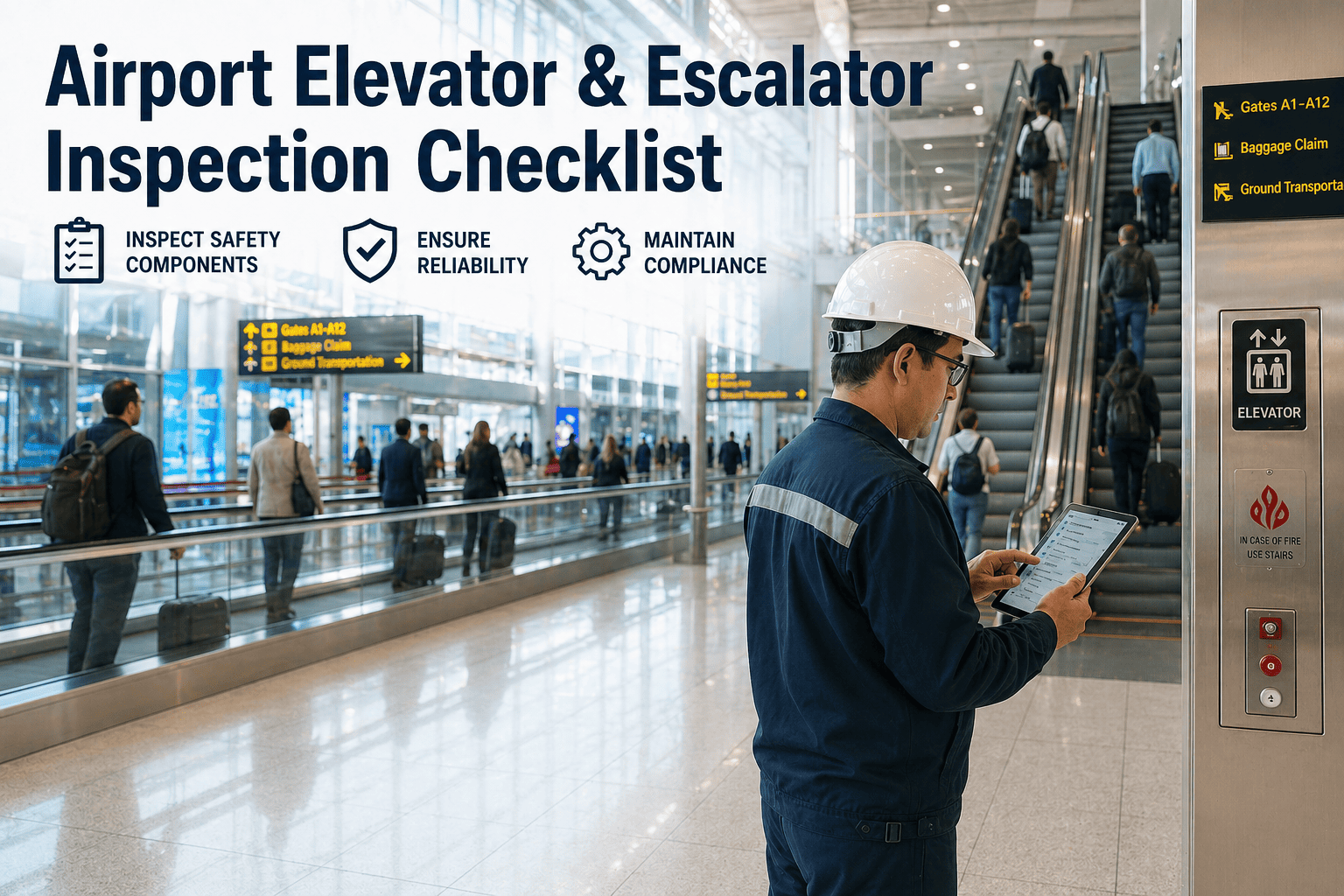
Read More
Elevator and escalator failures in airport terminals create passenger safety risks, ADA compliance violations, and operational bottlenecks that ripple across check-in, security, and boarding gates — yet 62% of airport facilities still track vertic
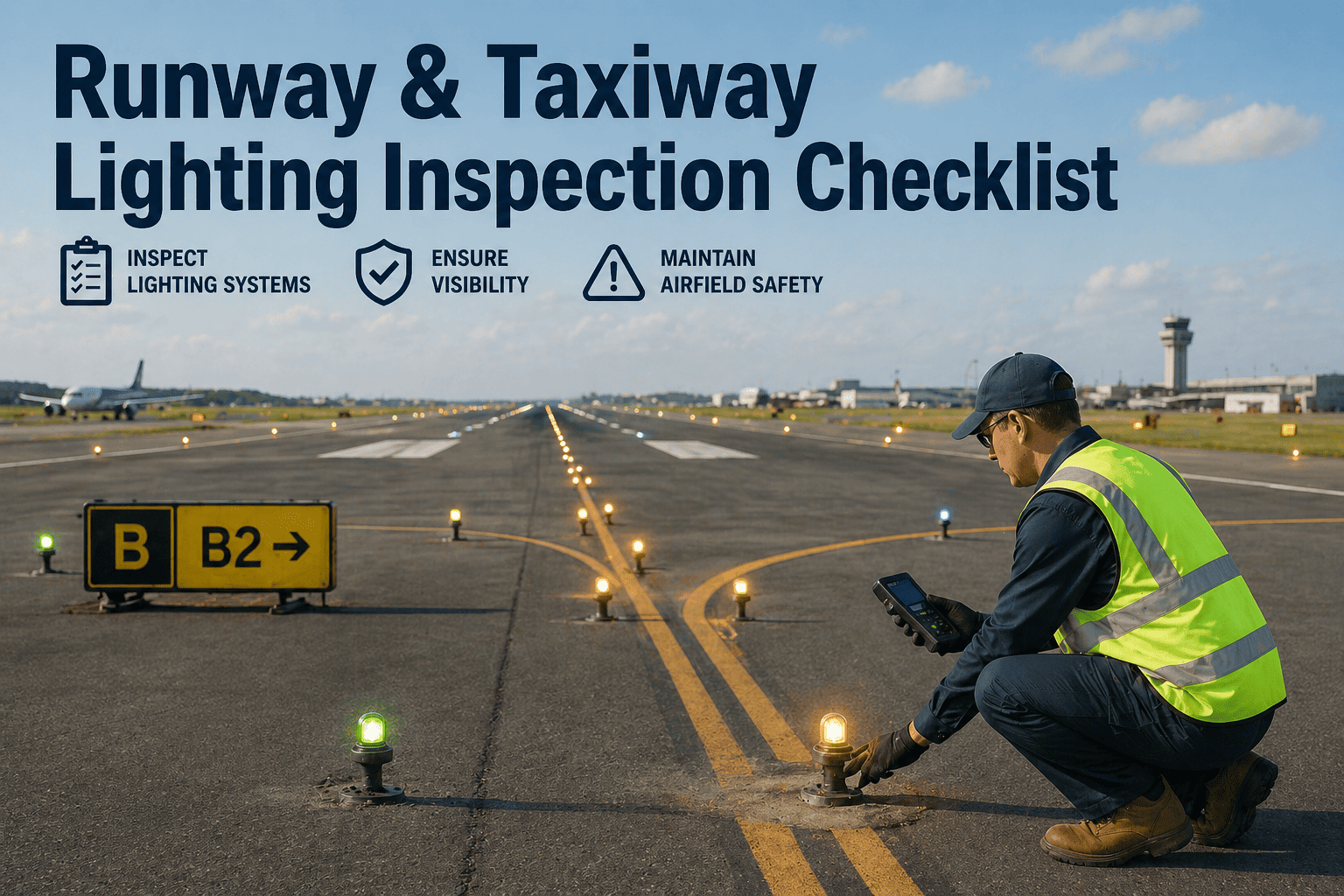
Read More
Airfield lighting failures account for 34% of runway incursion incidents during low-visibility operations — yet most airport maintenance teams still track lighting inspections using paper checklists and spreadsheets that cannot predict bulb failur
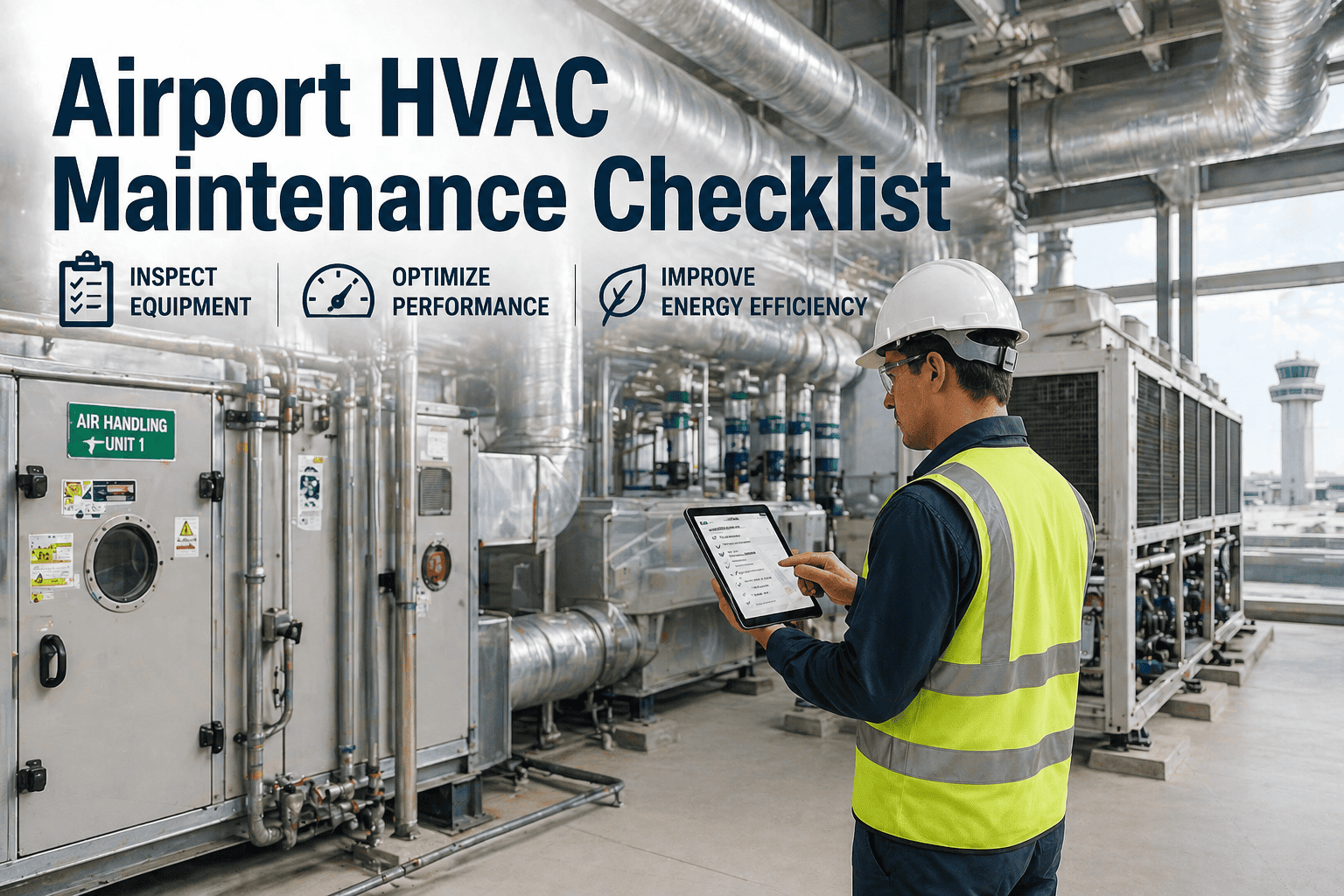
Read More
Most airport facility managers can tell you the BTU capacity of their terminal HVAC system — but very few can tell you what percentage of that capacity is actually reaching the gate holdrooms versus being lost to clogged filters, degraded coil sur
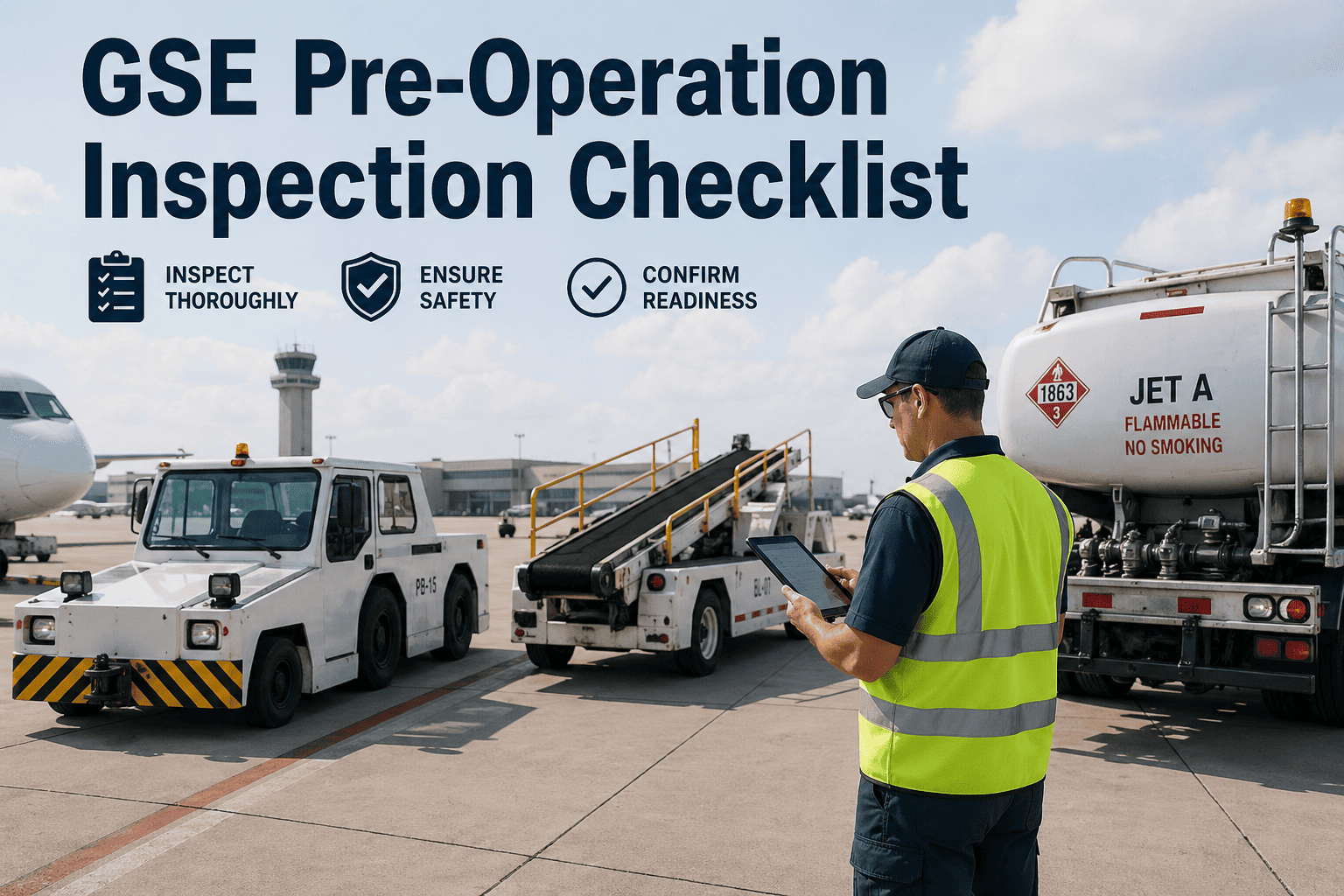
Read More
Every airport operations manager knows that a single missed inspection point on ground support equipment can cascade into a ramp safety incident, flight delay, or regulatory violation — but most GSE inspection checklists still live on paper clipbo
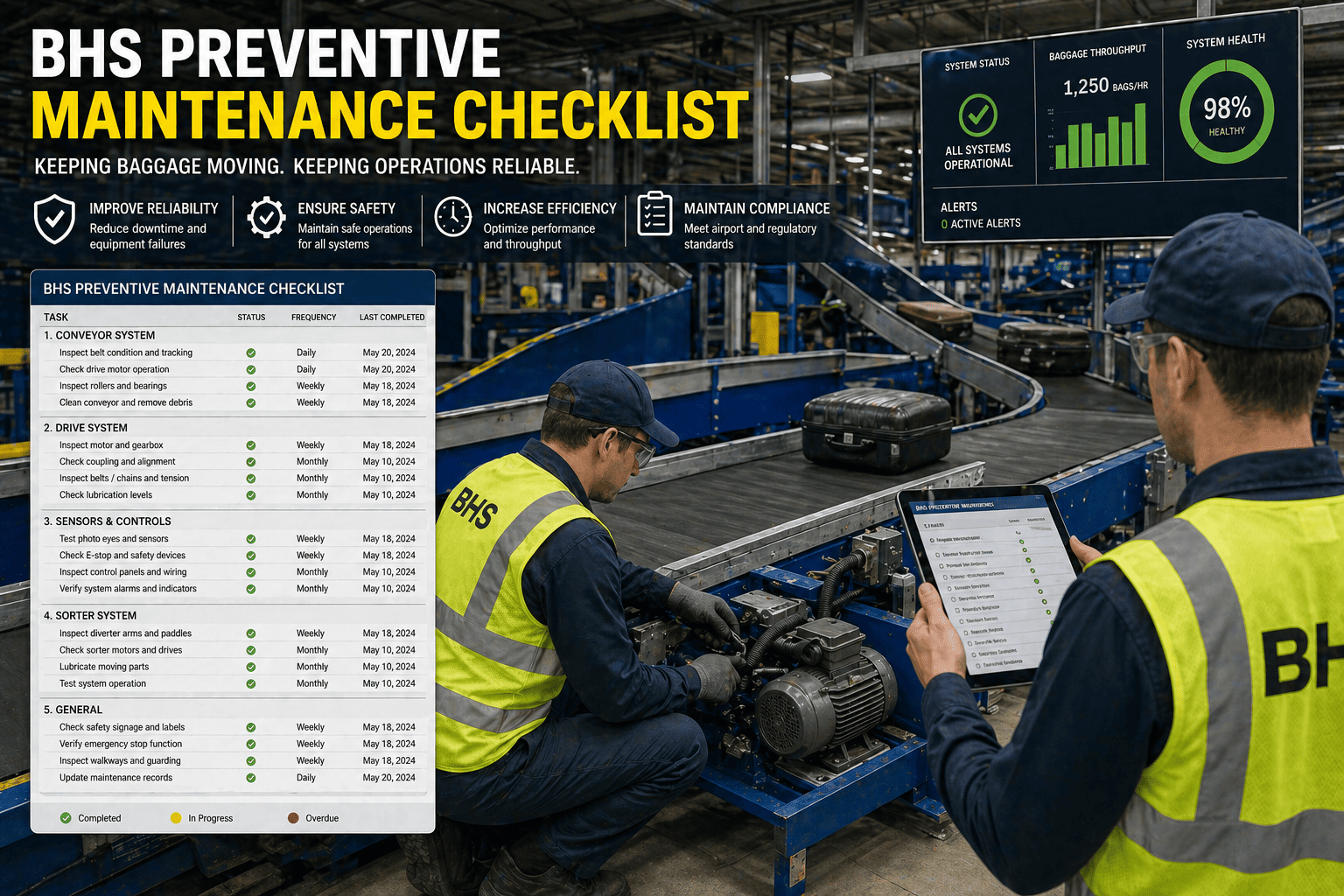
Read More
A 7,000-asset baggage handling system runs 18 hours a day at a Cat-1 international airport — and a single jammed photoelectric sensor on a transfer conveyor can stall an entire pier within 90 seconds. When that happens during a peak departure bank

Read More
At a Cat 9 international airport, the ARFF crew chief signs off on a daily readiness check at 06:30. By 14:00, an aircraft makes a precautionary landing with a hot brake event — and the lead truck has 3 minutes to reach the runway centerline at 50

Read More
FAA Part 139.327 is unforgiving in a specific way. The airport must conduct a complete self-inspection daily, before the first air carrier operation, and must document every finding with corrective action tracked to closure. There is no partial cr

Read More
At 04:42 on a Tuesday in late August, an international hub airport in the United States closed its primary 11,200-foot runway for a scheduled pavement inspection. By 04:58 — sixteen minutes later — the runway was open again. A two-person UAS crew,

Read More
When the Director of Sustainability at a 1.8 million-square-foot airport terminal opened the year-end utility report, the picture was hard to ignore. Energy spend had climbed 14% in three years, water consumption was tracking 22% above sector benc

Read More
An airport parking deck collects revenue from one thing — a vehicle entering, parking, and exiting through working equipment. When a PARCS gate fails to read a transponder at 7:14 AM and a frustrated driver backs up traffic for 90 seconds, two car

Read More
For 547 consecutive nights, every edge, centreline, and approach fixture on the airport's two parallel 10,500-foot runways came up at sunset and held photometric output above the 70% FAA minimum until first light. No NOTAMs. No reactive call-outs

Read More
An ARFF station at a Class I Part 139 airport had three trucks rated Index B, a fully manned crew across two shifts, an Airport Emergency Plan reviewed annually, and a binder full of training certifications. They also had an FAA inspector who had

Read More
A dedicated cargo terminal at a major North American airport handles roughly 280 metric tons of pharmaceutical and high-value perishable freight every week — biologics, vaccines, oncology shipments, and clinical trial materials, much of it valued
.png)
Read More
An airport group in the Midwest operating 8 facilities — two hubs, three mid-sized regional airports, and three secondary fields — had eight different maintenance philosophies, eight separate spreadsheet systems, eight inventories, and zero portfo
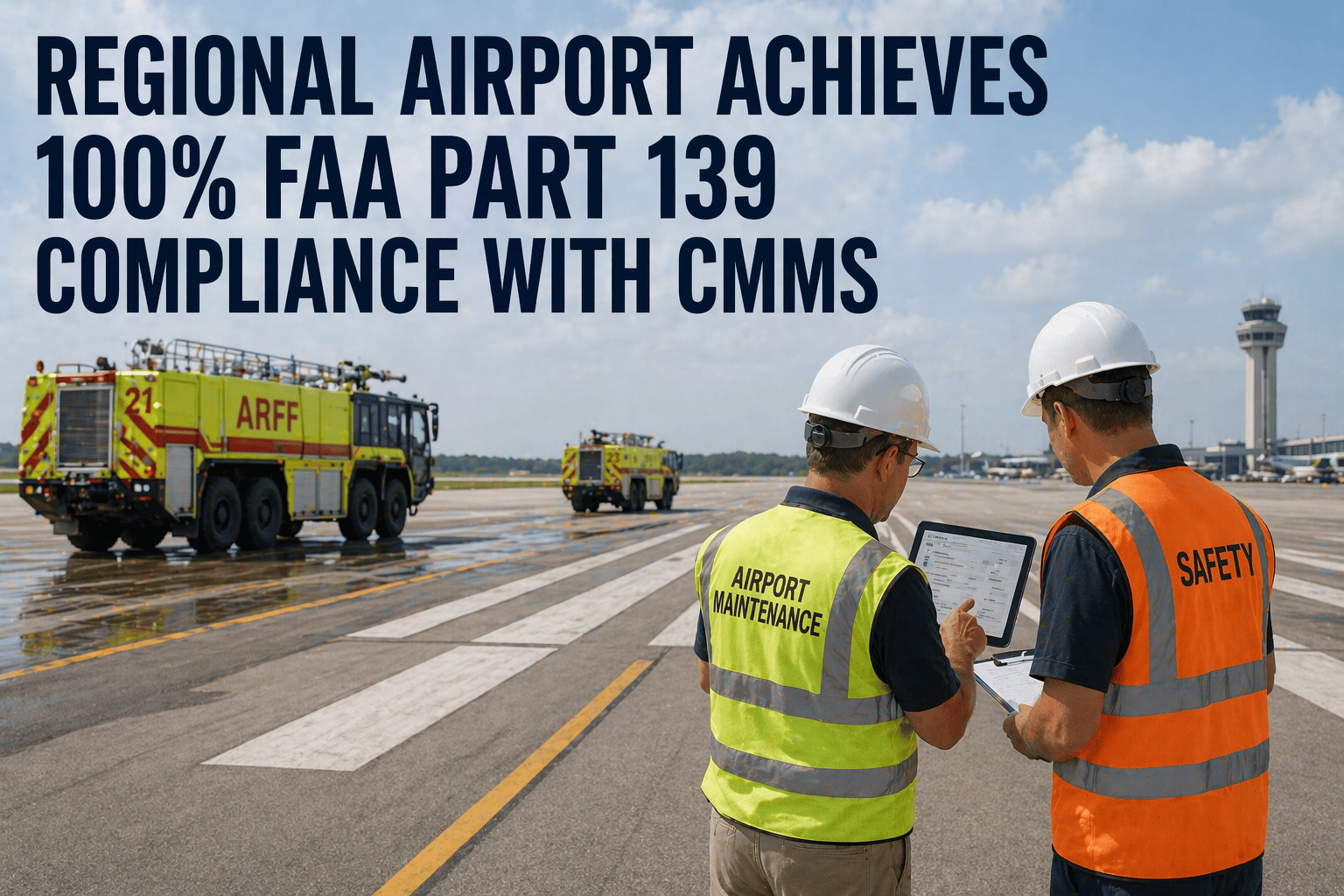
Read More
FAA Part 139 certification is the operating licence for every commercial airport in the United States — lose it, and the airport closes to scheduled airline service. The certification requires documented compliance across 34 reg
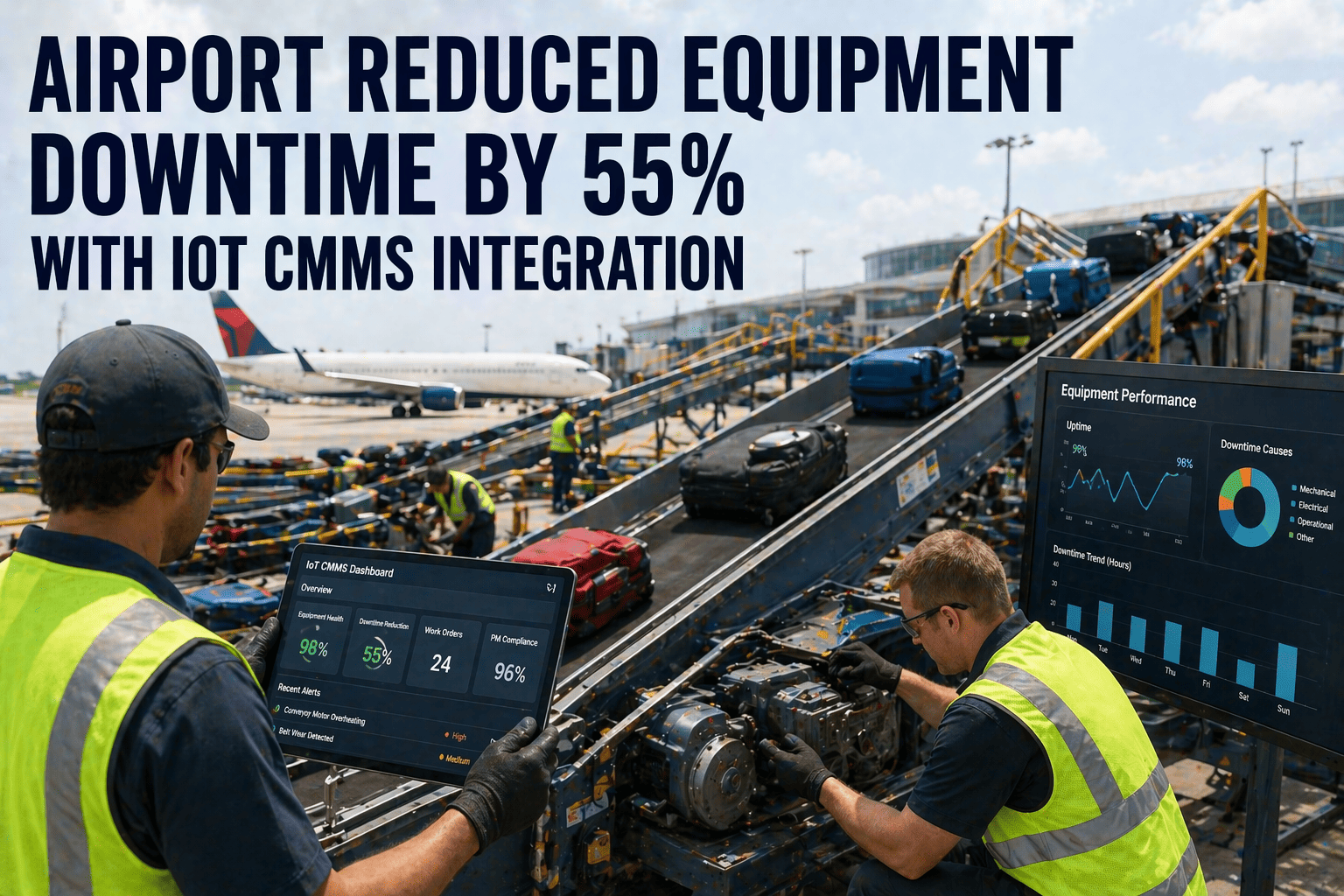
Read More
This case study documents how an international airport processing 38 million passengers annually reduced equipment downtime by 55% within 14 months of deploying OxMaint CMMS integrated with 2,400+ IoT sensors across baggage hand
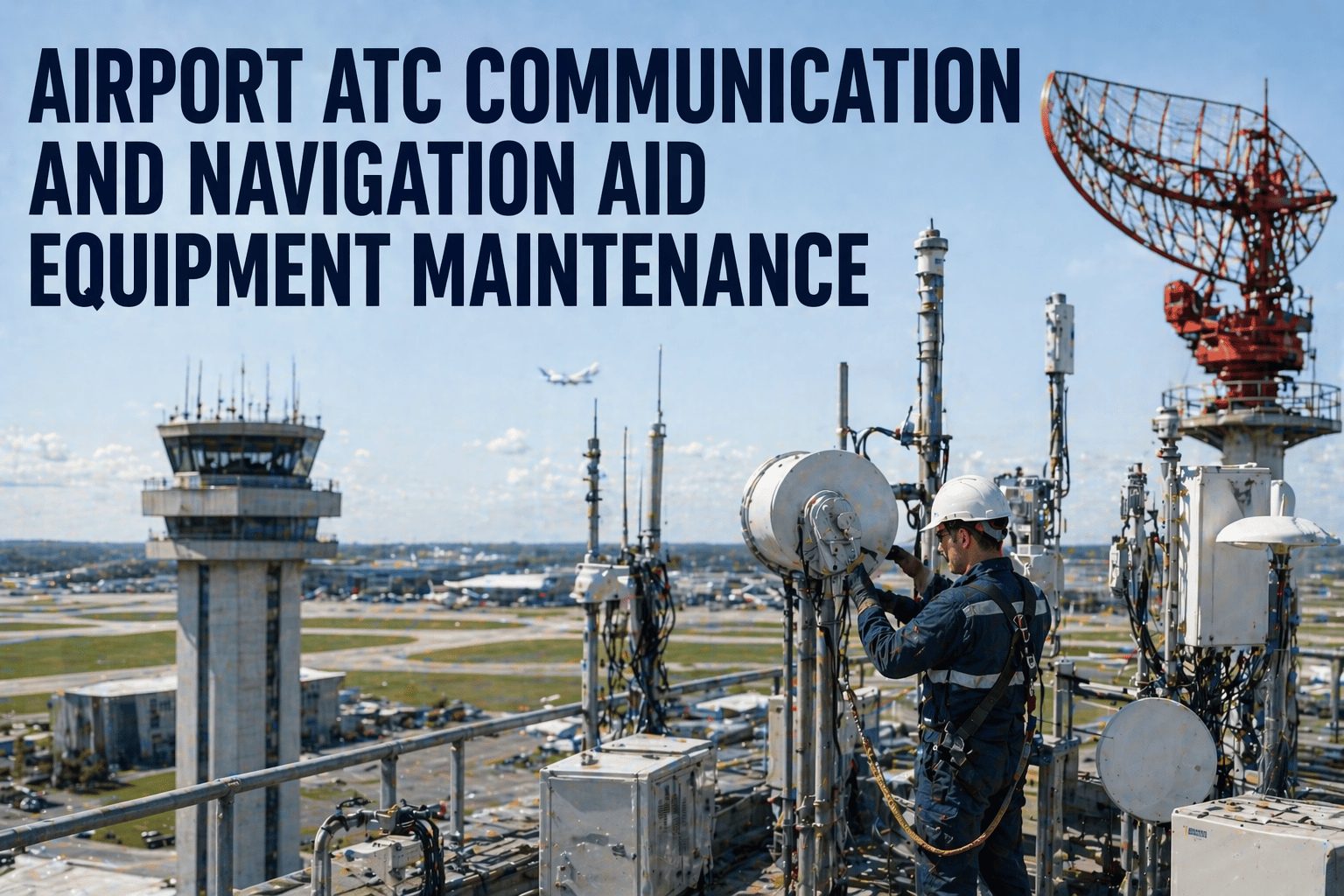
Read More
Air Traffic Control communication and navigation aid equipment operates at a reliability standard no other airport system approaches — 99.9% availability is the baseline, and any unscheduled outage triggers an immediate NOTAM th
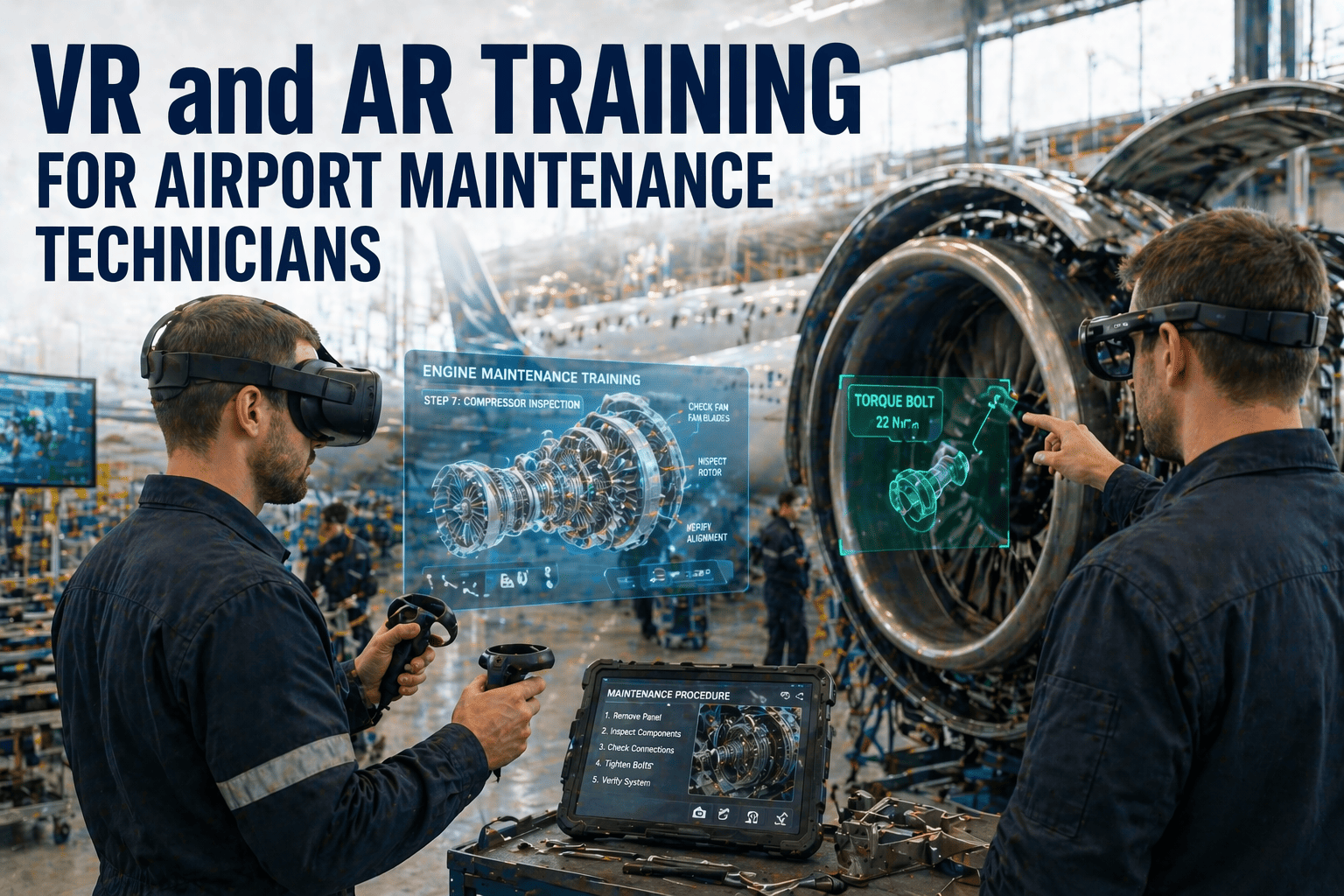
Read More
Traditional classroom-based airport maintenance training costs an average of $2,400 per technician per course, requires pulling staff from operations for 3-5 days, and delivers knowledge retention rates of only 20% after 30 days
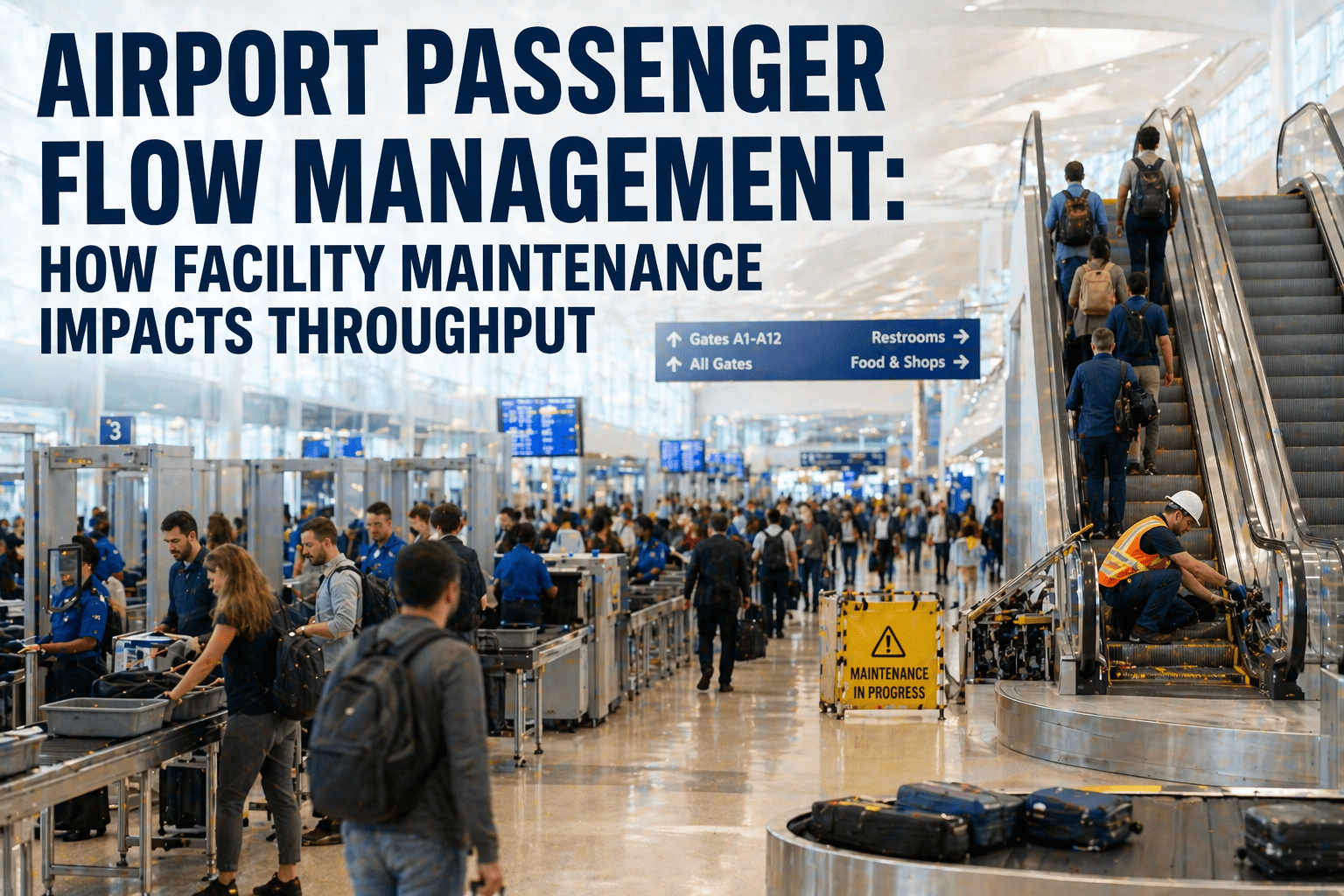
Read More
One failed escalator at a major airport checkpoint does not just inconvenience passengers — it creates a 12-minute average queue extension that cascades through the terminal, reducing retail dwell time by 18% and generating an e
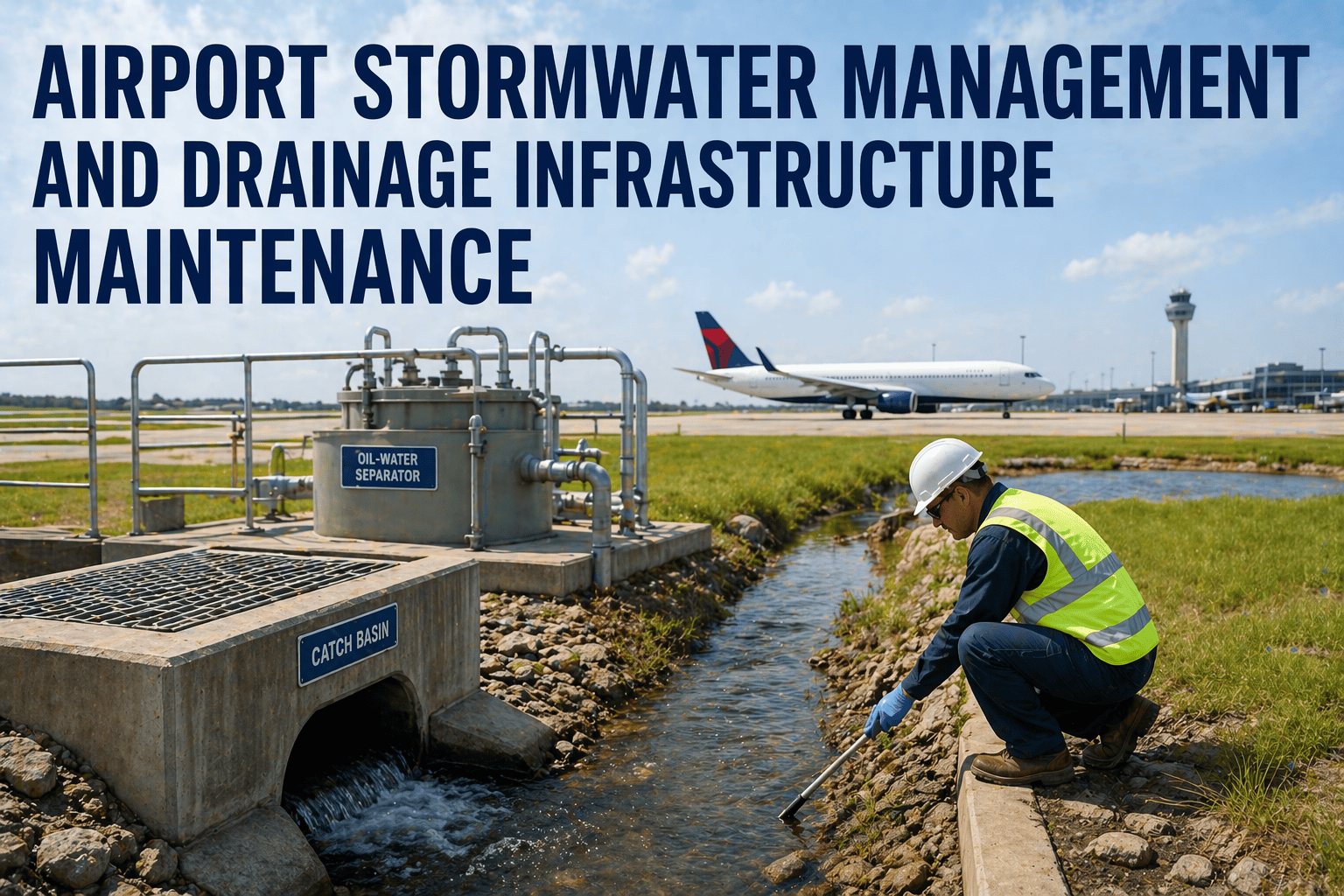
Read More
Airport stormwater systems process an average of 2.8 million gallons of contaminated runoff per storm event at major hub airports — runoff loaded with jet fuel residues, glycol-based deicing fluid, heavy metals from brake dust,

Read More
A passenger boarding bridge motor fails at 6am on a Monday during peak departures. The OEM replacement part: 14-day lead time. The delay cost: $100.76 per minute of aircraft block time. Multiply that across a fleet of boarding bridges, baggage con
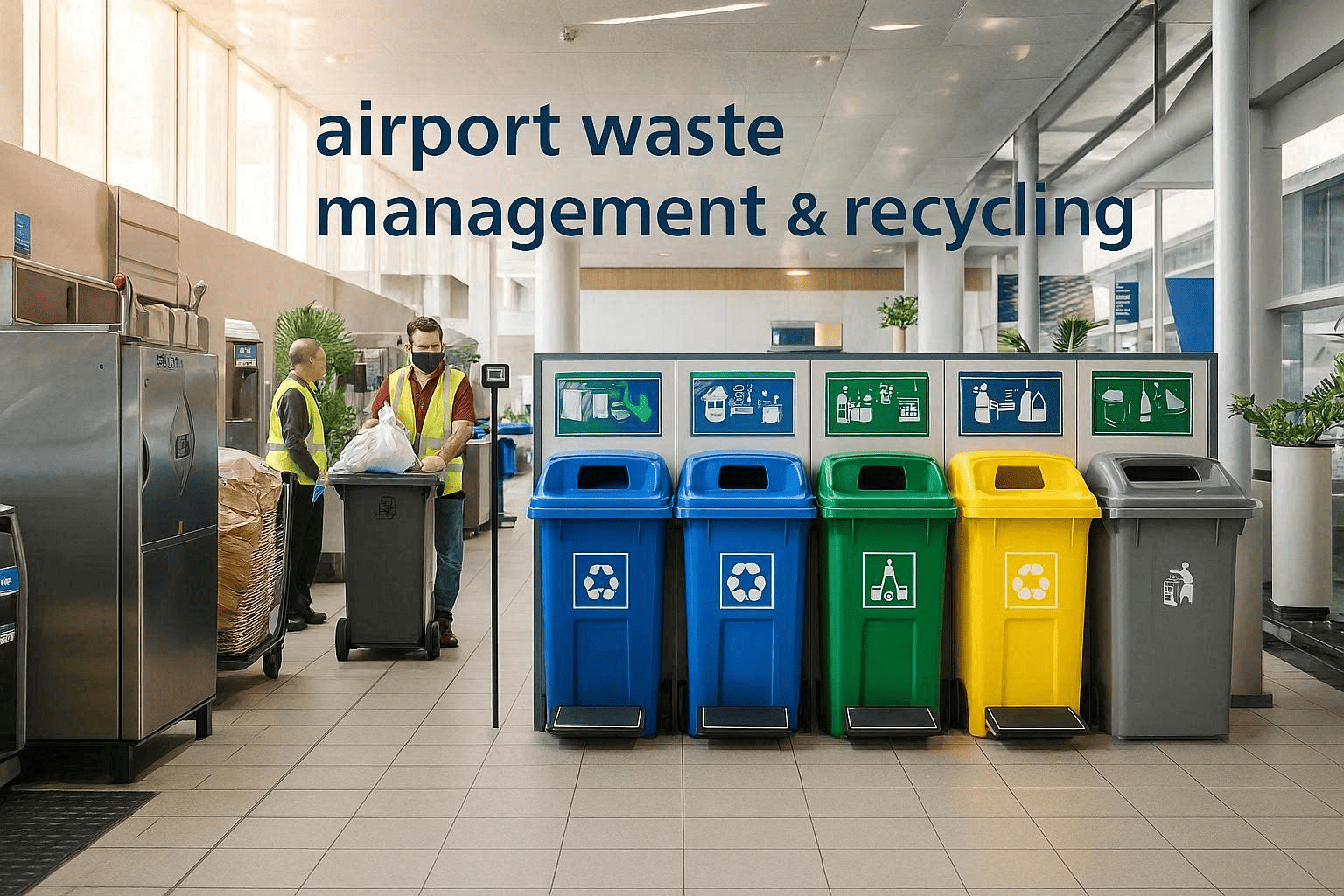
Read More
A major US airport generates the municipal waste equivalent of a city of 500,000 people — compressed into terminals, jetways, and tarmacs. US airports collectively produce approximately 425,000 tonnes of waste annually, and with global passenger v

Read More
ICAO Annex 14 is the international standard that defines what every certified aerodrome must maintain, inspect, and document to keep aircraft safe. For airport maintenance teams, it's not just a regulatory reference — it's a living framework of ob
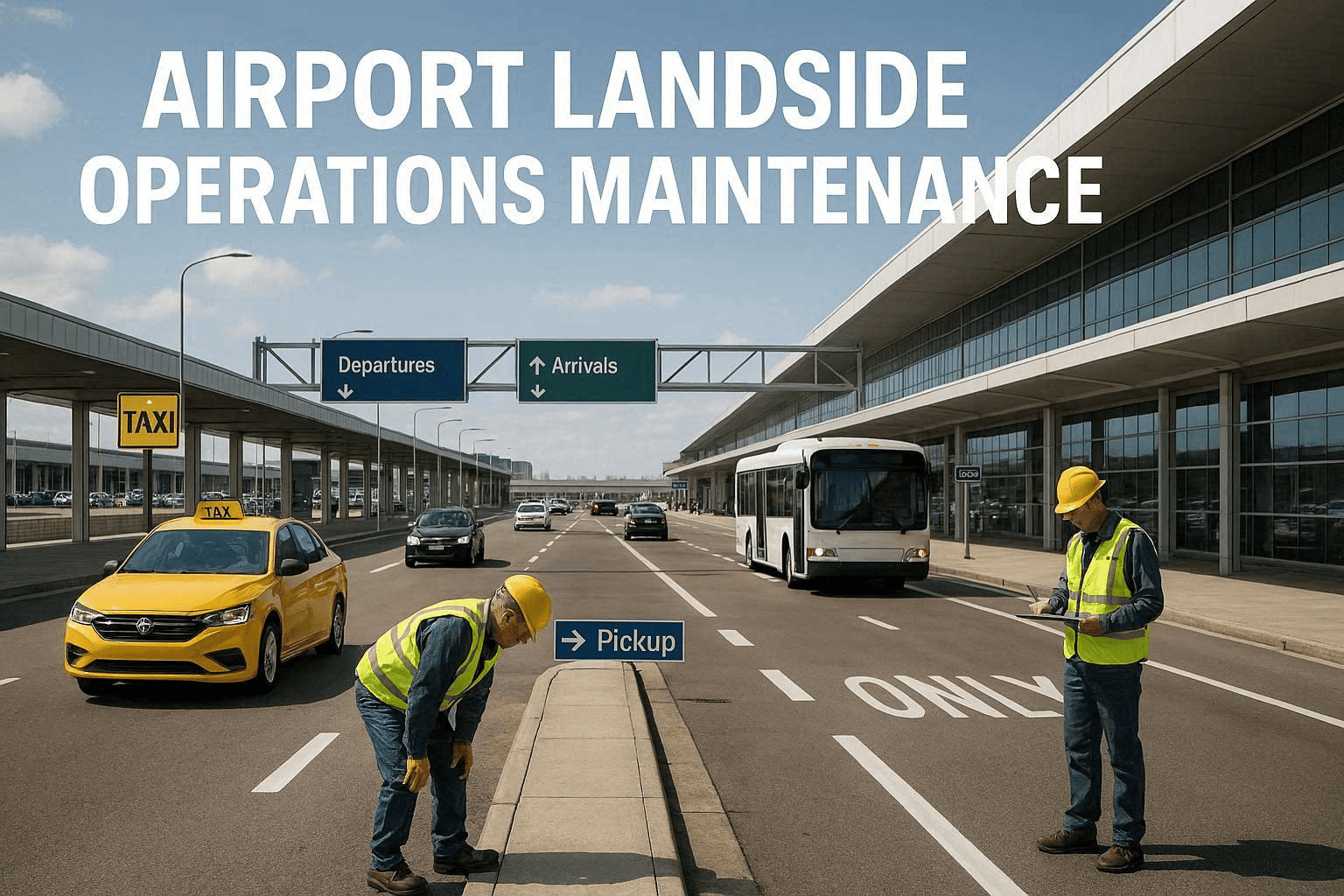
Read More
Landside is the first impression passengers form of your airport — and the last. Roads, curbside drop-off zones, bus bays, car parks, and ground transport hubs take a beating from vehicle loads, weather exposure, and continuous 24/7 throughput tha
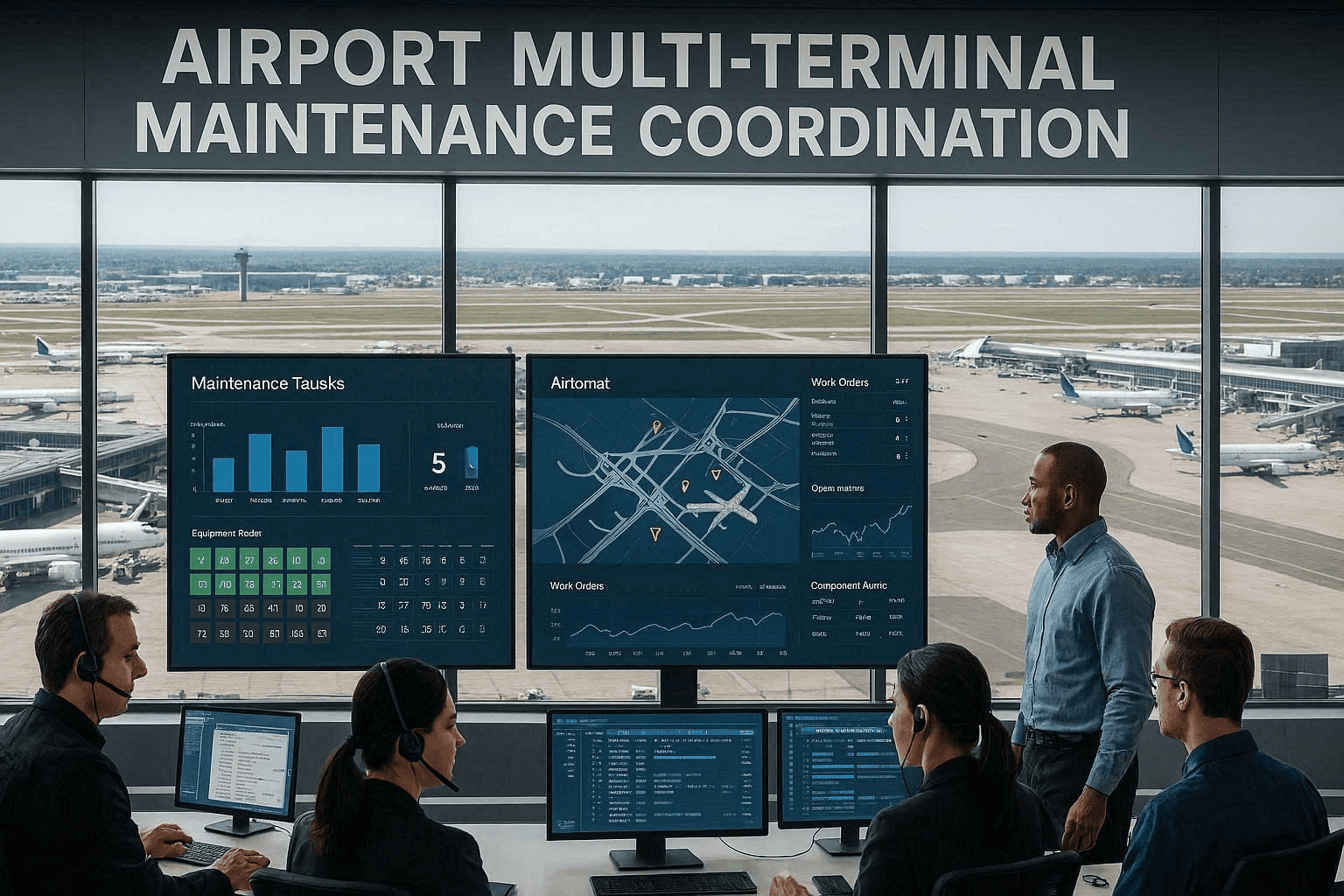
Read More
Managing maintenance across a single terminal is complex enough. Multiply that across multiple concourses, satellite buildings, and inter-terminal connectors operating simultaneously under 24/7 aviation pressure — and fragmented maintenance system
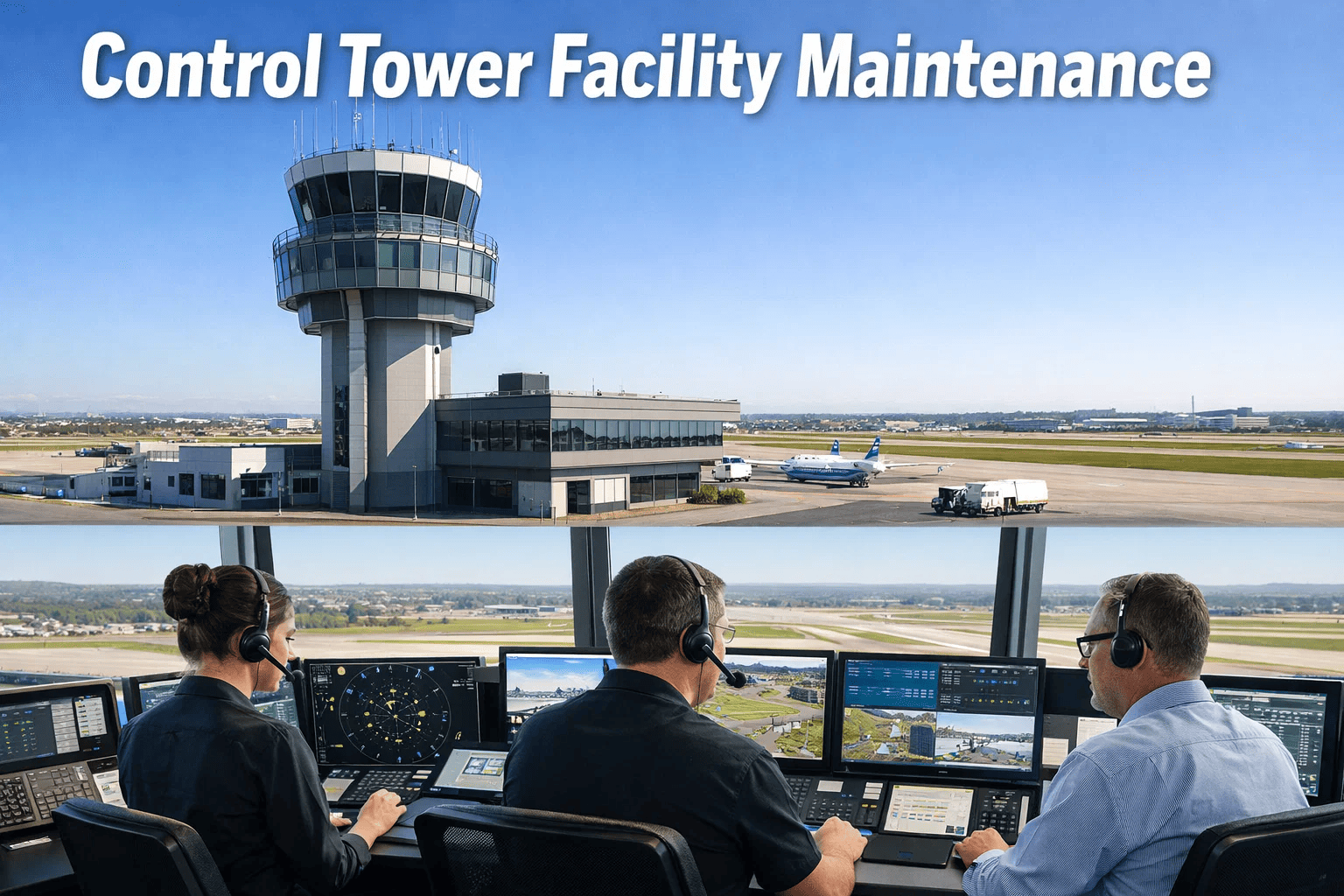
Read More
Airport control towers and airfield operations facilities operate under one non-negotiable constraint: 24/7 availability with zero tolerance for service interruption. The HVAC system that cools the ATC equipment room, the UPS that keeps radar and
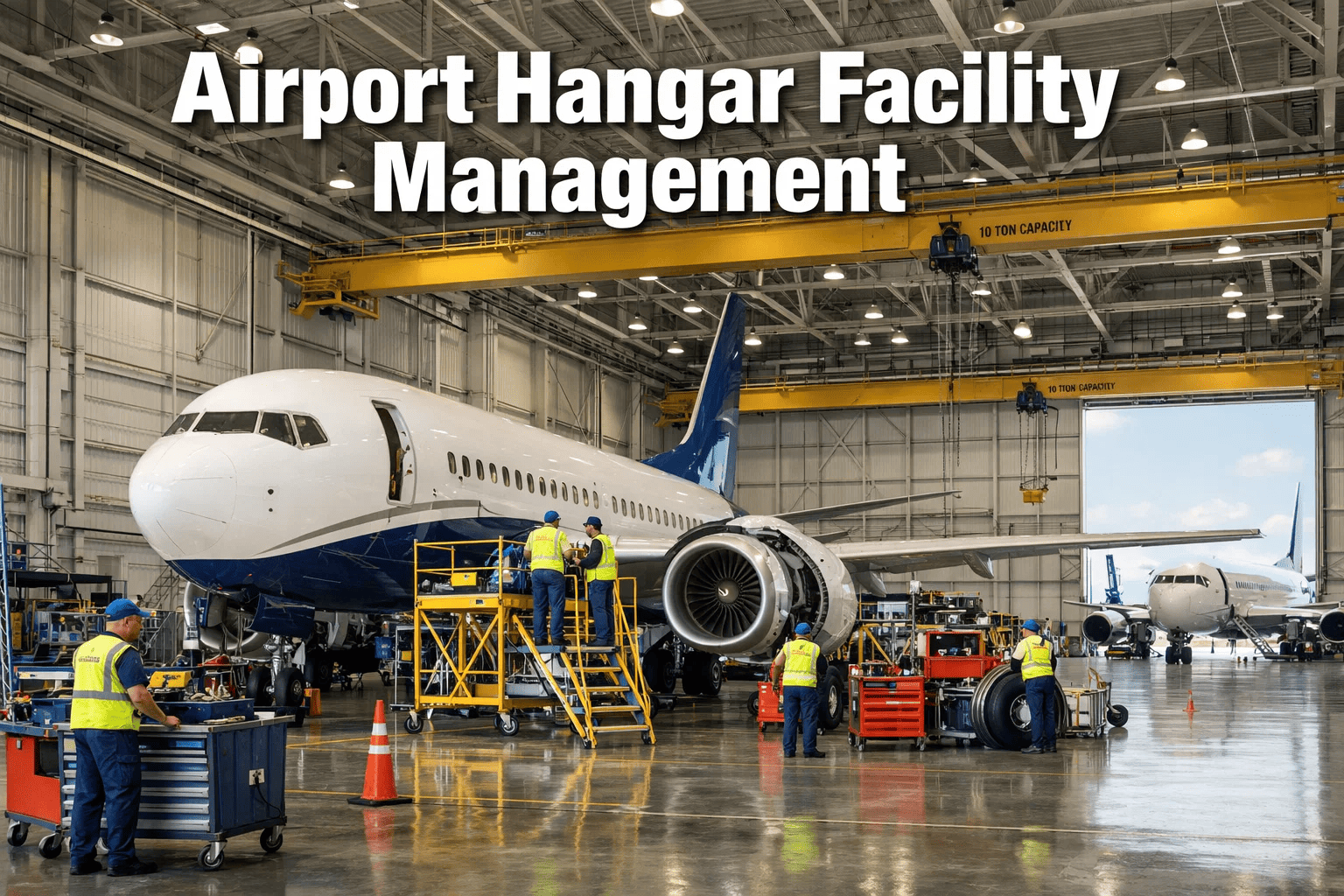
Read More
Airport hangar facilities are among the most maintenance-intensive environments in aviation — combining heavy industrial equipment, aircraft maintenance operations, high fire suppression requirements, and OSHA and FAA safety obligations in a singl

Read More
Airport facility inspection has historically been labour-intensive, inconsistent, and dangerously reliant on human attention over long walkthrough shifts. A runway surface crack missed during a visual inspection at 4am — or a FOD item on a taxiway

Read More
Airport accessibility compliance is not a checkbox exercise — it is a daily operational responsibility that covers hundreds of physical assets across every terminal, gate, restroom, parking facility, and ground transportation zone. The Americans w

Read More
Airport electrical infrastructure is the silent backbone of every terminal, runway, and control system — and when it fails, the ripple effect shuts down gates, delays hundreds of flights, and triggers regulatory investigations. High-voltage substa

Read More
A flight information display going dark in Terminal C during the morning bank is not a minor inconvenience — it is a cascade event. Gate assignment confusion, missed connections, and airline operations disruptions follow within minutes. Airport IT

Read More
Airport infrastructure makes decisions that cost hundreds of millions of dollars — and most of those decisions are made without reliable data. When a runway resurfacing project competes with a terminal HVAC overhaul and a PBB replacement program f

Read More
A single unplanned runway closure during a winter storm costs a major hub airport between $150,000 and $400,000 per hour in diverted flights, airline penalties, and ground operation overruns. The equipment that prevents that closure — snowplows, d

Read More
Airport vendor ecosystems are among the most operationally complex environments on earth. At any given moment, a single terminal may have airline ground handlers, retail concessionaires, government security contractors, cleaning services, catering

Read More
Most airport HVAC failures do not announce themselves — they accumulate quietly across thousands of data points that no human operator can track simultaneously. A terminal zone running 2°F above setpoint for six days costs more in energy overspend

Read More
At Incheon International Airport, self-driving baggage tugs now complete 70% of apron tug operations without a human driver — navigating autonomously between aircraft, sorting areas, and gates while OxMaint-class maintenance platforms monitor thei
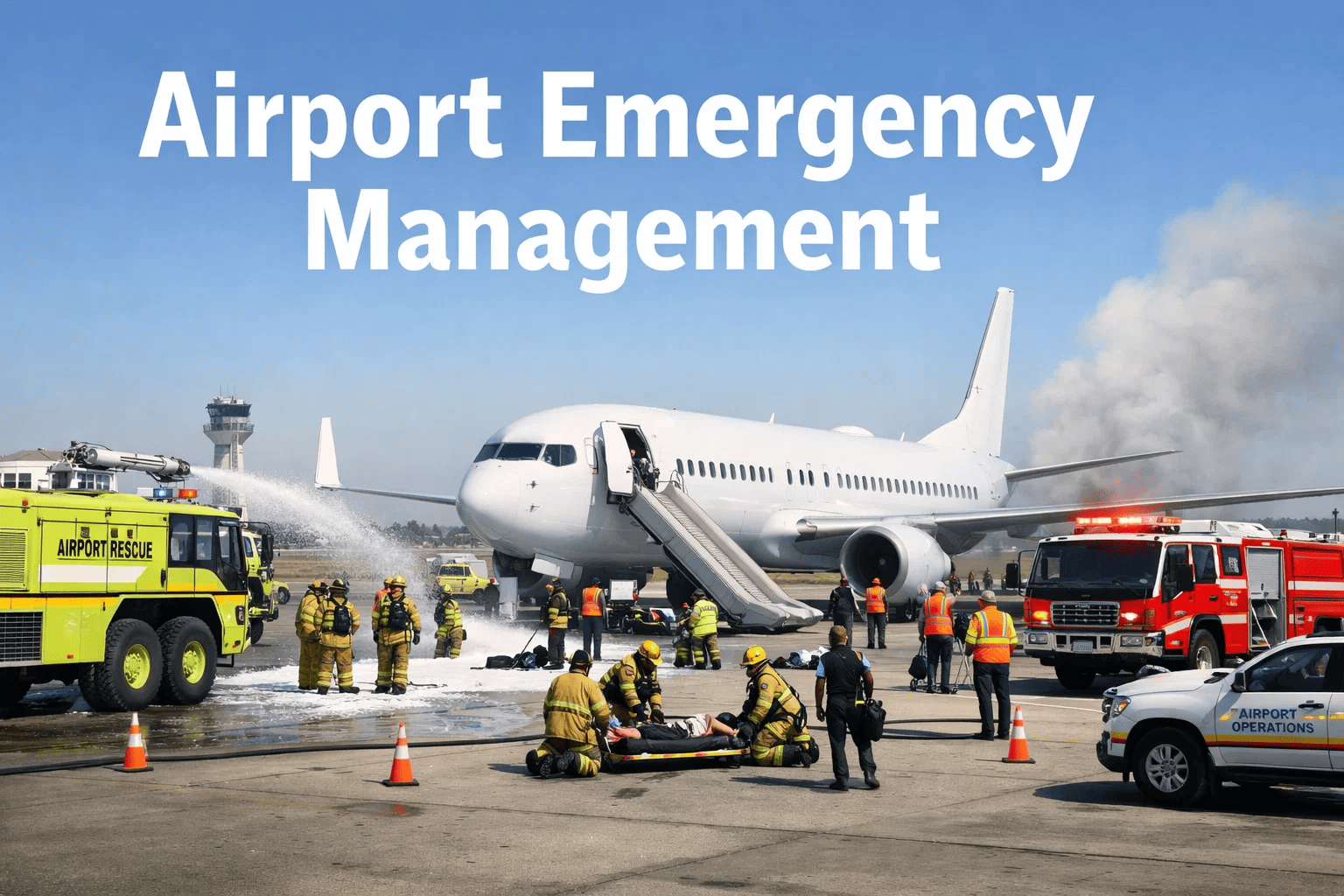
Read More
At 02:14 on a Tuesday morning, a fuel spill in the fuel farm of a major international airport activated the Airport Emergency Plan. The operations center had 4 minutes to coordinate ARFF response, evacuate the area, notify ground handlers, isolate

Read More
The aviation sector accounts for roughly 2.5% of global CO2 emissions — but airports themselves, independent of the aircraft they serve, contribute significantly through energy-intensive terminals, ground support equipment fleets, and diesel-power
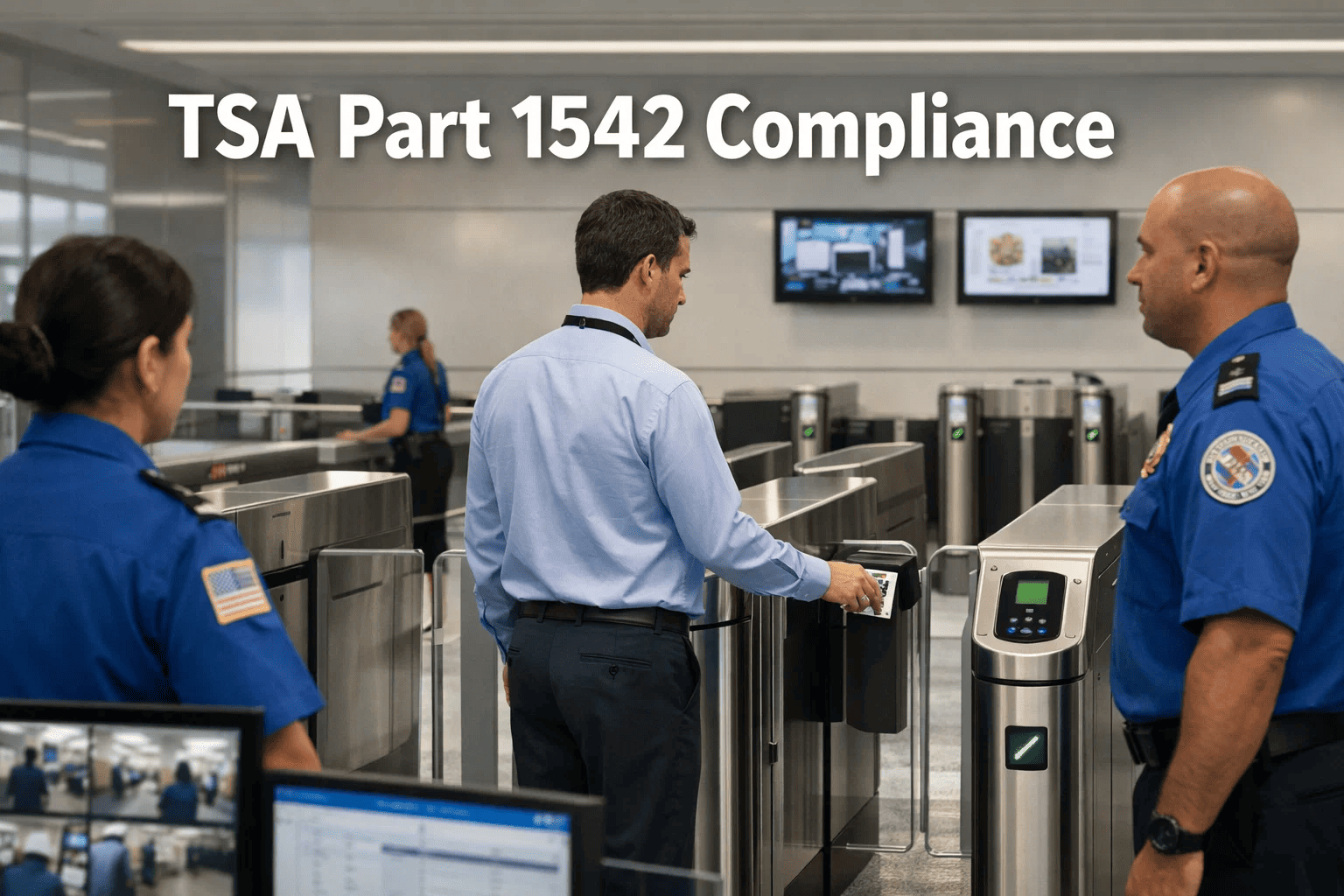
Read More
TSA Part 1542 does not give airport security coordinators the luxury of a soft audit. Inspectors arrive with a checklist that reaches into access control logs, badge credentialing records, perimeter inspection documentation, and employee vetting —

Read More
Ground handling is where airline schedules live or die. A catering truck that arrives 4 minutes late, a tug with a hydraulic fault, a ground power unit that fails on pushback — none of these are random. They are all symptoms of maintenance systems

Read More
A major international airport operates more than 10,000 individual assets — from jet bridges and baggage handling conveyors to airfield lighting circuits, HVAC systems, people movers, water infrastructure, security equipment, and terminal building
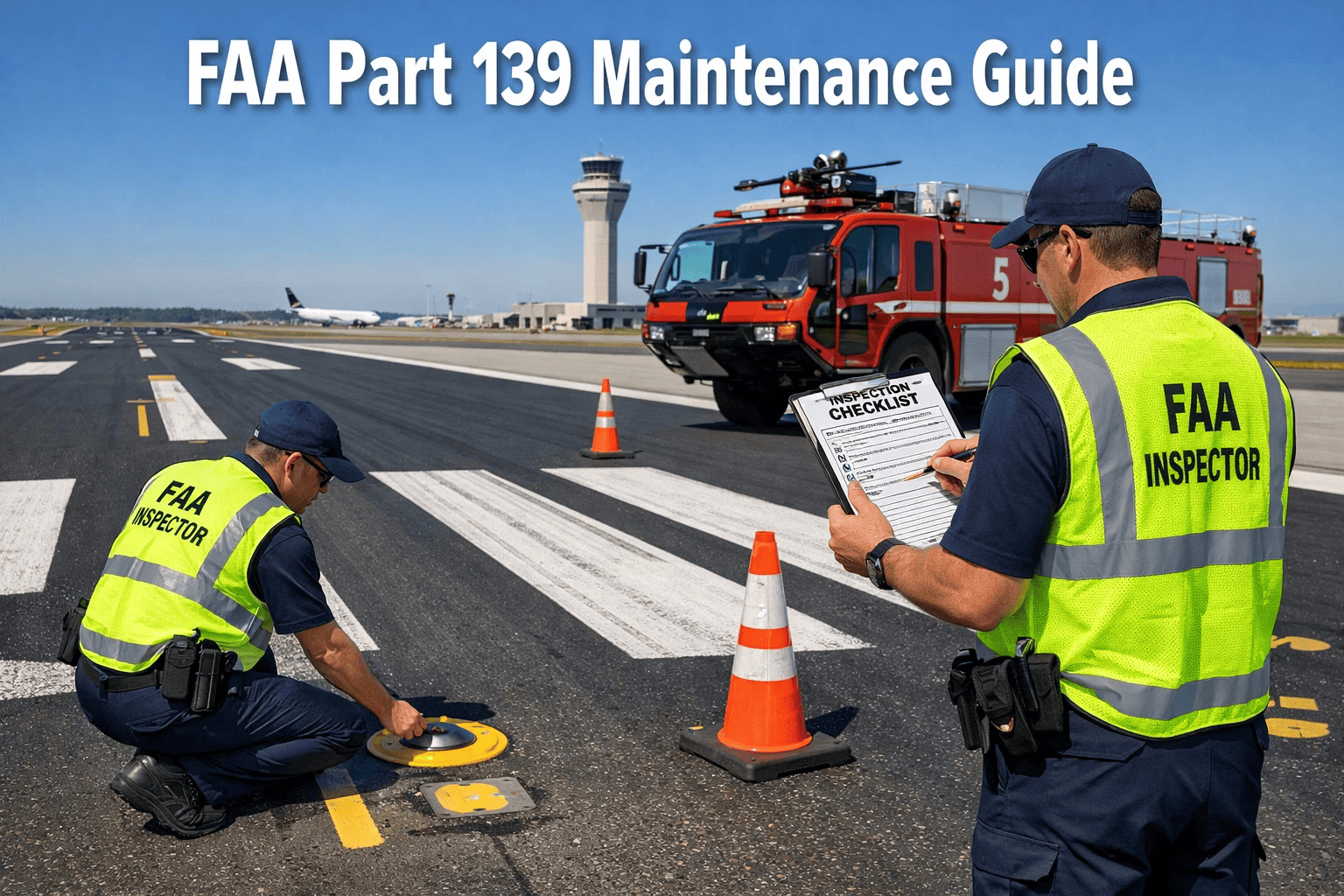
Read More
FAA Part 139 certification is not a one-time achievement — it is a continuous operating license that an airport can lose at any point if maintenance documentation, self-inspection records, or ARFF readiness cannot be demonstrated on demand. A sing

Read More
An automated people mover (APM) system failure during peak travel hours does not merely inconvenience passengers — it creates cascading gate-hold delays, misconnection chains, and passenger welfare incidents that can cost an airport authority $200

Read More
Aviation maintenance records are among the most legally consequential documents in any industry — a missing or altered entry on an aircraft component trace can ground a fleet, trigger an FAA enforcement action, or expose an airline to unlimited li

Read More
Airport noise is the single most contentious environmental issue between aviation operators and the communities surrounding them — and the gap between what airports measure, what they report, and what regulators and residents actually trust is oft

Read More
When grid power fails at an airport, the backup generator and UPS systems are not a safety net — they are the airport. ILS and NAVAID systems, air traffic control communications, baggage screening, security doors, emergency lighting, and passenger

Read More
An airport HVAC technician walking the north pier with a paper work order, a radio to call the control centre for asset history, and a pen to record findings is not a productivity problem — it is an information architecture problem. When asset dat

Read More
Airport concession and retail spaces operate under conditions no ordinary shopping centre faces — passenger volumes that spike and crash unpredictably, 24-hour operating cycles, food safety regulations layered on top of airport authority requireme
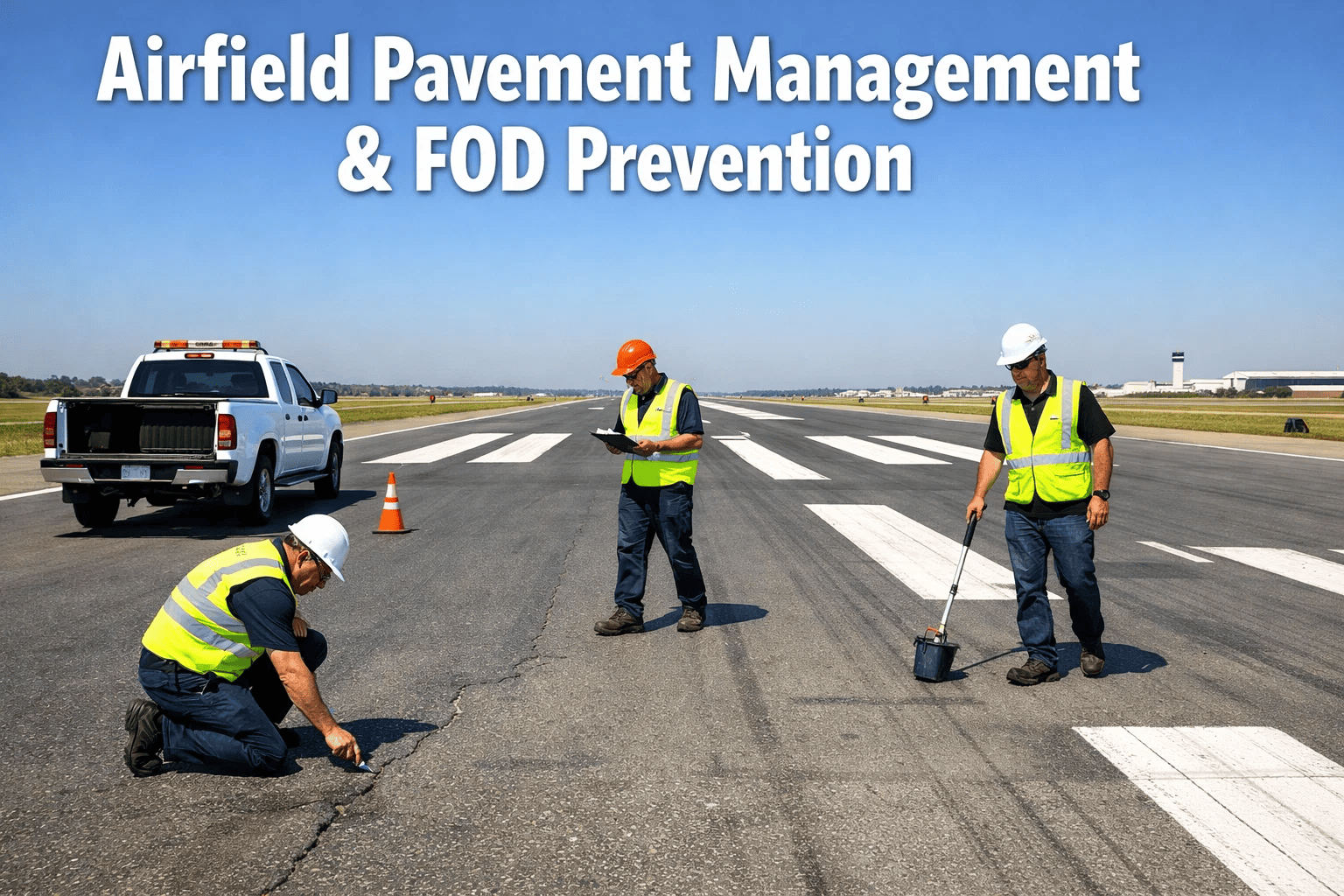
Read More
A single Foreign Object Debris incident on an active runway can ground a fleet, close an airfield for hours, and trigger an FAA investigation — yet at most airports, FOD walkdowns are still tracked on paper clipboards and pavement condition survey

Read More
Airport water systems serve tens of thousands of passengers daily across terminals, hangars, lounges, and food courts — and a single unplanned failure in that infrastructure can trigger regulatory shutdowns, health emergencies, or cascading disrup

Read More
By 2033, one in five aviation maintenance technician roles could remain unfilled. That is the projection from McKinsey's analysis of the MRO labor pipeline — and it describes a structural shortage, not a cyclical dip. Airlines are parking aircraft

Read More
An airport perimeter is among the most regulated boundaries on earth. Under 49 CFR Part 1542, every commercial service airport must maintain an active Airport Security Program — and that program requires continuous maintenance of fencing, access c

Read More
A passenger who cannot find their gate is a passenger who is stressed, distracted, and not spending money at your retail outlets. Research shows that 67% of airport passengers rely on signage for navigation — and airports can lose nearly $700 mill

Read More
A major international airport loses measurable non-aeronautical revenue every day its restrooms are below standard. Research from Airport Council International shows restroom cleanliness accounts for more than 50% of the total terminal cleanliness

Read More
Airports are among the most connectivity-demanding environments on earth — thousands of sensors, dozens of autonomous systems, and a workforce that cannot afford a dropped signal mid-operation. Traditional Wi-Fi cannot deliver the sub-millisecond

Read More
Aviation cybersecurity has never been more critical — with cyberattacks on airports increasing 600% between 2024 and 2025, every connected system in your facility represents both operational efficiency and potential vulnerability. From IoT sensors

Read More
Airport infrastructure failures are not random — they follow patterns that become visible only when you connect sensor data, maintenance history, and operational context into a unified model that can simulate what happens next. Digital twin techno

Read More
A single chiller trip during a July afternoon peak does not just raise the terminal temperature — it cascades. Gate areas hit 29°C within 40 minutes. Passenger complaints spike. Ground crews slow down. Flight turnarounds stretch. And the emergency
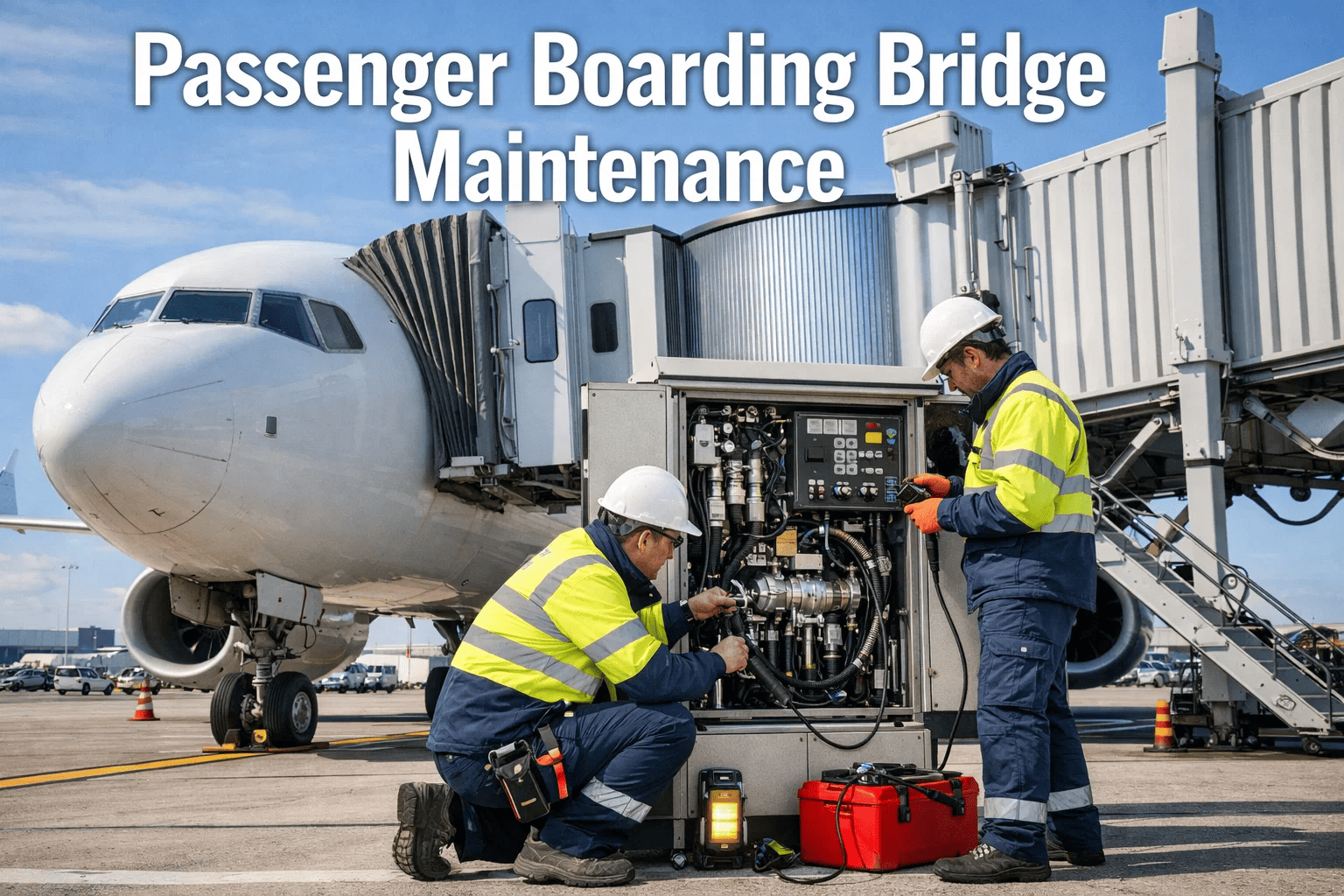
Read More
A stuck boarding bridge at Gate B14 does not just inconvenience 180 passengers — it cascades across the entire terminal. The aircraft misses its departure slot. The inbound flight waiting for that gate circles or diverts. The connecting passengers

Read More
Airports consume as much energy as small cities — terminal HVAC alone accounts for 50–70% of building energy use, airfield lighting runs 24/7, and ground support equipment burns through diesel at industrial scale. Yet most airport facility teams s
Read More
Airport maintenance budgets do not shrink on their own — they grow, predictably and relentlessly, driven by aging infrastructure, expanding terminal footprints, new technology deployments, and regulatory requirements that only increase in scope. T

Read More
Airport parking is not a passive infrastructure asset — it is the single largest non-aeronautical revenue source for most commercial airports, and every square foot of it depends on equipment that must function without interruption. A malfunctioni

Read More
When an escalator stops in the middle of a peak departure wave at a major terminal, the result is not a minor inconvenience — it is an instant bottleneck that cascades through gate areas, security queues, and connecting passenger flows within minu

Read More
A single failed runway edge light is a maintenance task. A pattern of failed runway edge lights that disrupts pilot visual guidance continuity is an FAA compliance violation — one that can trigger NOTAMs, restrict instrument approach minimums, and

Read More
An ARFF vehicle that fails to start during an active runway emergency is not a maintenance issue — it is a potential mass casualty event. Aircraft Rescue and Fire Fighting vehicles operate under a uniquely unforgiving readiness standard: they must

Read More
Airport fire protection failures do not announce themselves in advance. A foam system with corroded nozzles, a suppressed fire alarm that never reset, or a dry-pipe sprinkler zone that lost pressure overnight — these silent failures wait for the w

Read More
Airports managing winter operations face a triple compliance challenge: EPA Airport Deicing Effluent Guidelines require collecting 60% of aircraft deicing fluid, NPDES stormwater permits demand continuous monitoring, and glycol-laden runoff can tr

Read More
Airport security infrastructure operates under a paradox most passengers never see: every biometric gate, CT scanner, X-ray machine, and access control panel protecting the terminal operates on calibration cycles measured in hours, not months. A f

Read More
Airport fuel farms do not fail in dramatic explosions — they fail in slow, invisible leaks, missed filter changes, undocumented inspections, and SPCC plans that were last reviewed when the current facility manager was still in school. When a hydra

Read More
Managing a ground support equipment (GSE) fleet at a modern airport is no longer a purely logistical challenge — it is a strategic operations function that directly determines aircraft turnaround speed, airline customer satisfaction, and environme
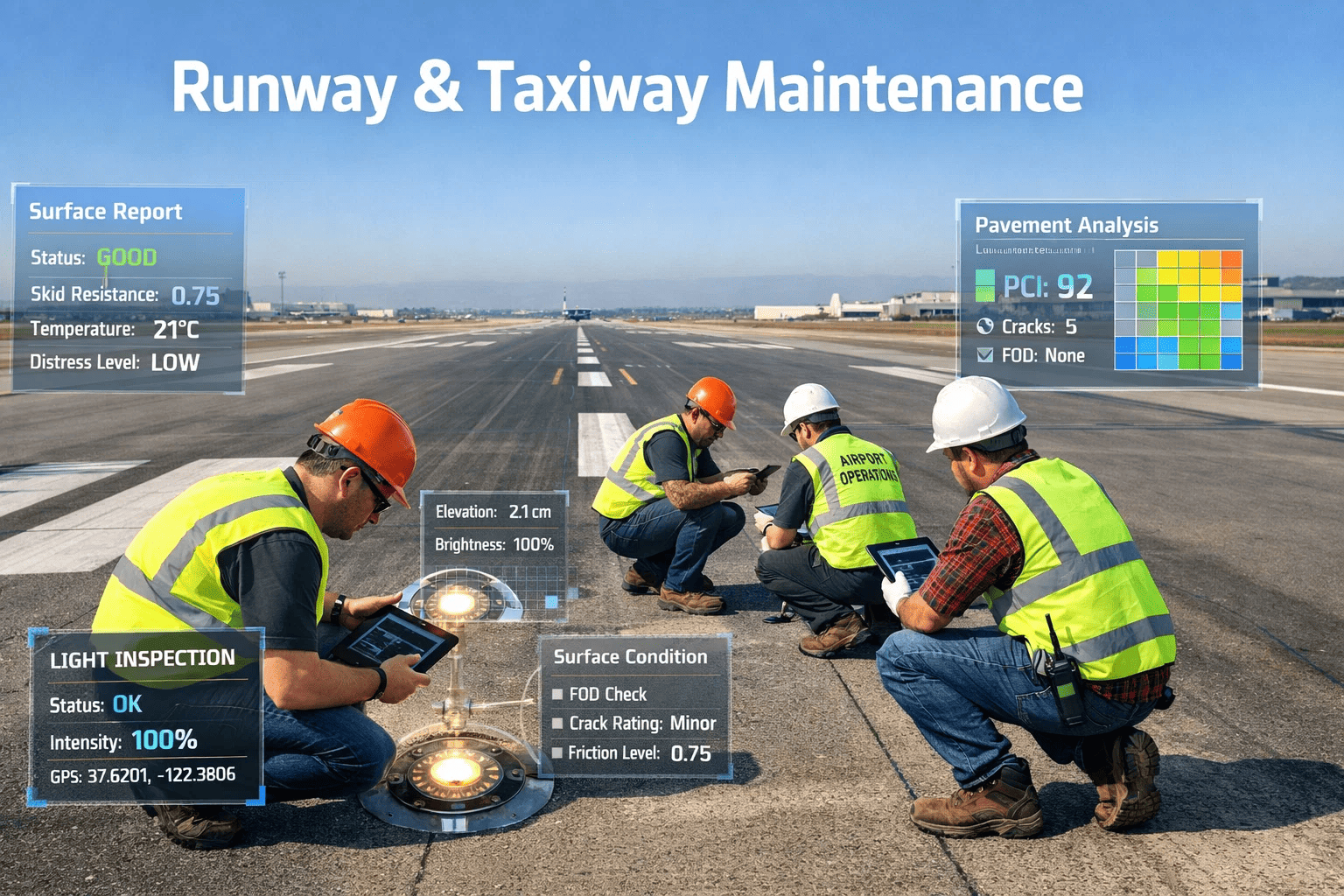
Read More
Runway and taxiway maintenance is not just about keeping pavement smooth and markings visible — it is the operational backbone of airport safety, regulatory compliance, and flight schedule reliability. Under FAA Part 139, certificated airports mus
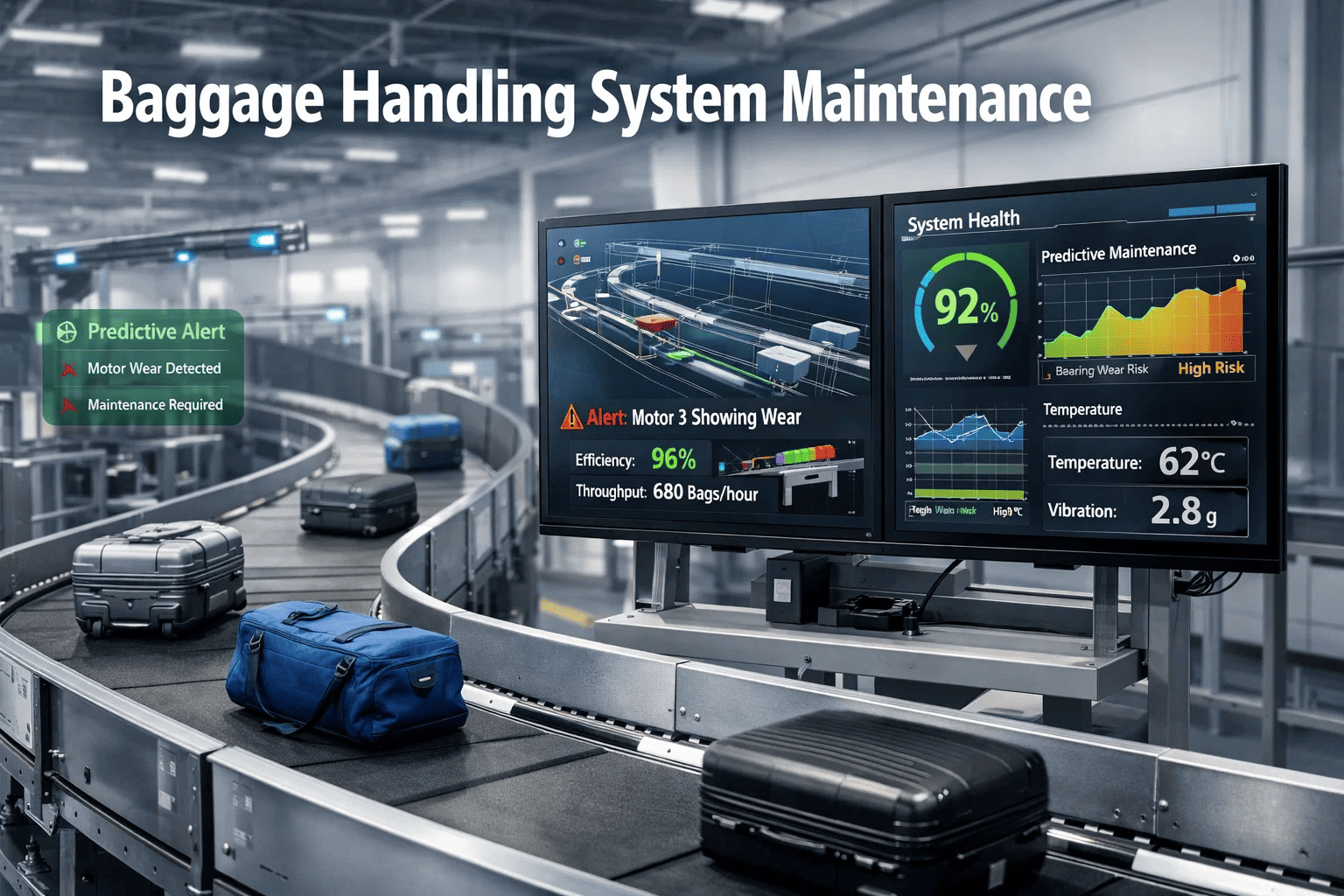
Read More
Baggage handling systems move over 5 billion pieces of luggage annually across the world's airports, and a single conveyor jam or sorter failure can cascade into hundreds of missed connections, delayed flights, and millions in operational losses w

Read More
Airports are among the most operationally demanding environments on earth. A single unplanned equipment failure — a baggage conveyor that jams during a peak departure bank, a gate bridge that stalls mid-boarding, runway lighting that flickers duri

Read More
Aviation is experiencing its most significant technological transformation in decades. In 2026, airports worldwide are no longer static infrastructure hubs—they are evolving into intelligent, interconnected ecosystems powered by artificial intelli

Read More
Airports are among the most operationally complex facilities on earth — millions of square feet, thousands of moving parts, and zero tolerance for downtime. The way airports maintain and operate these facilities is changing faster than most manage

Read More
Airports don't fail all at once — they fail one conveyor belt, one jet bridge hydraulic, one HVAC unit at a time. And every one of those failures happens in front of passengers, in front of cameras, and on a clock that starts the moment a flight i
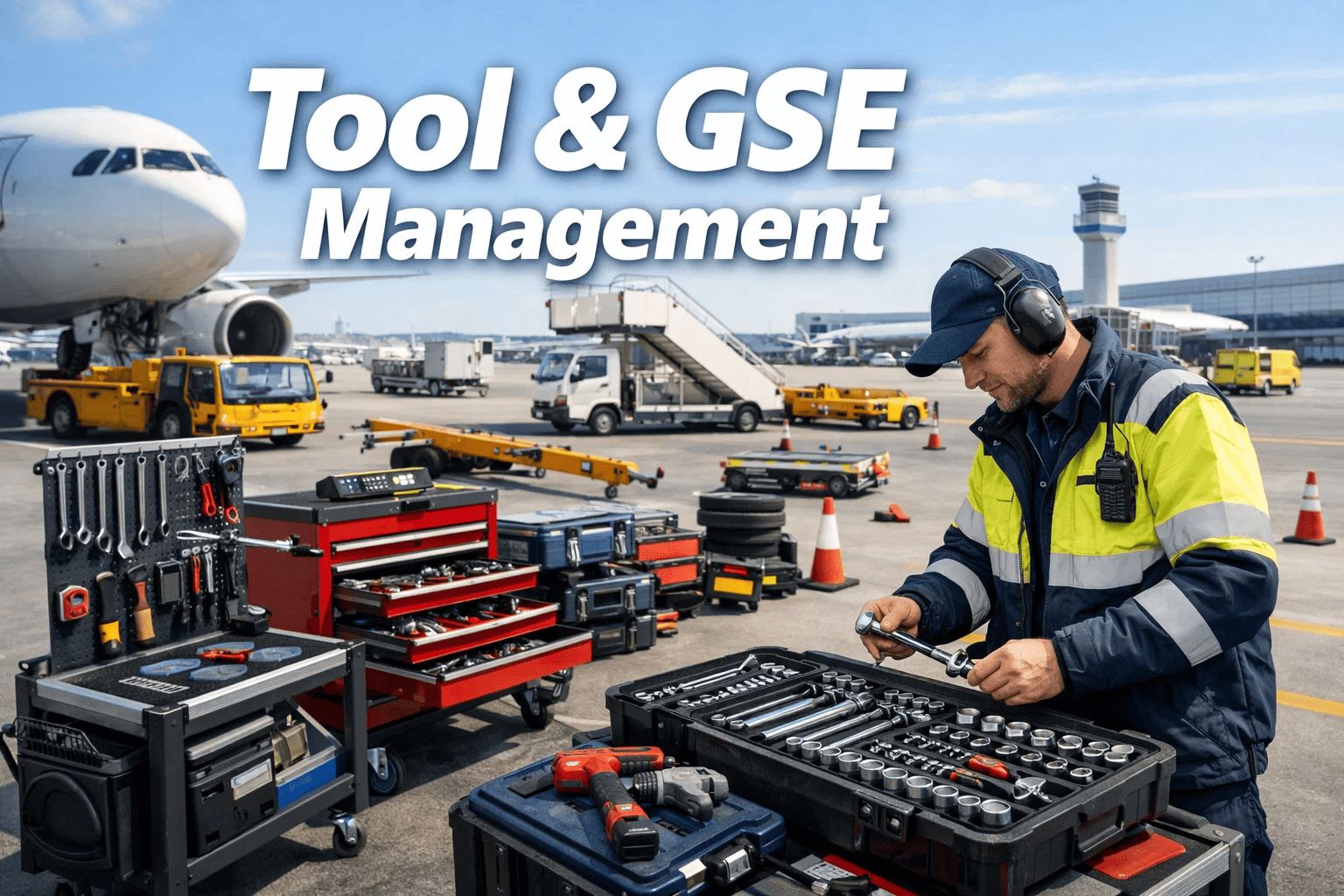
Read More
A torque wrench used past its calibration date. A ground power unit that missed its 250-hour service. A precision tool signed out three weeks ago by a technician who has since changed shifts. In aviation maintenance, each of these is not an inconv

Read More
Aviation components fail. But when they fail under warranty, every dollar of recovery depends on whether your team caught it, logged it, and filed it in time. Most MRO operations lose 30–40% of recoverable warranty value simply because claims are

Read More
MRO operations running on gut feel and lagging reports are flying blind. The gap between top-quartile and bottom-quartile performers is not talent — it is instrumentation. Organizations tracking the right 25 KPIs reduce unplanned downtime by up to

Read More
Aircraft component pooling transforms how airlines and MRO operators manage expensive rotable assets—from landing gear assemblies to avionics units—by sharing inventory across fleets instead of stockpiling duplicates at every base. A single APU (A

Read More
Most MRO facilities are flying blind on capacity — they know the hangar is full, but they cannot tell you which bay will open Thursday, which team has 40% slack next week, or whether accepting that next AOG recovery will blow the schedule for thre

Read More
Most aviation maintenance teams evaluate software by comparing license fees. That is the wrong number. The true Total Cost of Ownership (TCO) of aviation maintenance software—spanning implementation, training, integration, compliance, and downtime

Read More
Line maintenance is where airline on-time performance is won or lost. Every aircraft that sits at a gate with an open defect, a delayed transit check, or a technician hunting for a part burns revenue at a rate most operators underestimate.

Read More
Unplanned equipment failures do not begin on the shop floor — they begin in the storeroom. When the right spare part is not available at the right time, every minute of downtime compounds into lost production, emergency

Read More
Every aircraft component degrades on its own timeline — not yours. Condition-Based Maintenance replaces fixed schedules with real evidence: vibration signatures, oil particulate counts, EGT margins, and performance trends that tell you exactly whe

Read More
Aviation supply chains are under the most severe sustained pressure in the industry's modern history. A joint IATA and Oliver Wyman report estimates that supply chain bottlenecks will cost the airline industry more than $11 billion in 2025 alone —

Read More
A D-Check is not just the most expensive maintenance event in commercial aviation — it is a stress test for your entire operation. Hundreds of tasks, dozens of trades, OEM hold items, concession requests, unplanned findings, shifting parts ETAs, a

Read More
An aircraft on ground costs between $10,000 and $150,000 per hour — and the most preventable cause is not a complex technical failure. It is a missing part. Aviation inventory management is the operational discipline that stands between your maint

Read More
Aircraft turnaround time is the most unforgiving metric in commercial aviation — invisible when operations run well, catastrophic when they do not. Unscheduled maintenance events account for more than 60 percent of delay minutes industrywide, and

Read More
Aviation maintenance has no tolerance for administrative failure. A work order sitting unsigned in a paper pile, a task card mis-sequenced on a clipboard, or an authorization stuck in a physical routing queue — none of these stay paperwork problem

Read More
MRO facilities run on precision — aircraft airworthiness, regulatory deadlines, and safety-critical sign-offs leave no room for workforce gaps. Yet most maintenance operations still schedule technicians the same way they did twenty years ago: spre

Read More
The global aviation maintenance industry is heading into a talent emergency unlike anything it has faced before. Boeing's Pilot and Technician Outlook projects demand for over 650,000 new aviation maintenance technicians by 2042—yet fewer than 3%

Read More
Aviation maintenance has always been a race against time. When an aircraft goes technical at a remote station—a secondary hub in Southeast Asia, a cargo terminal in the American Midwest, or an outstation with a single licensed engineer—the outcome
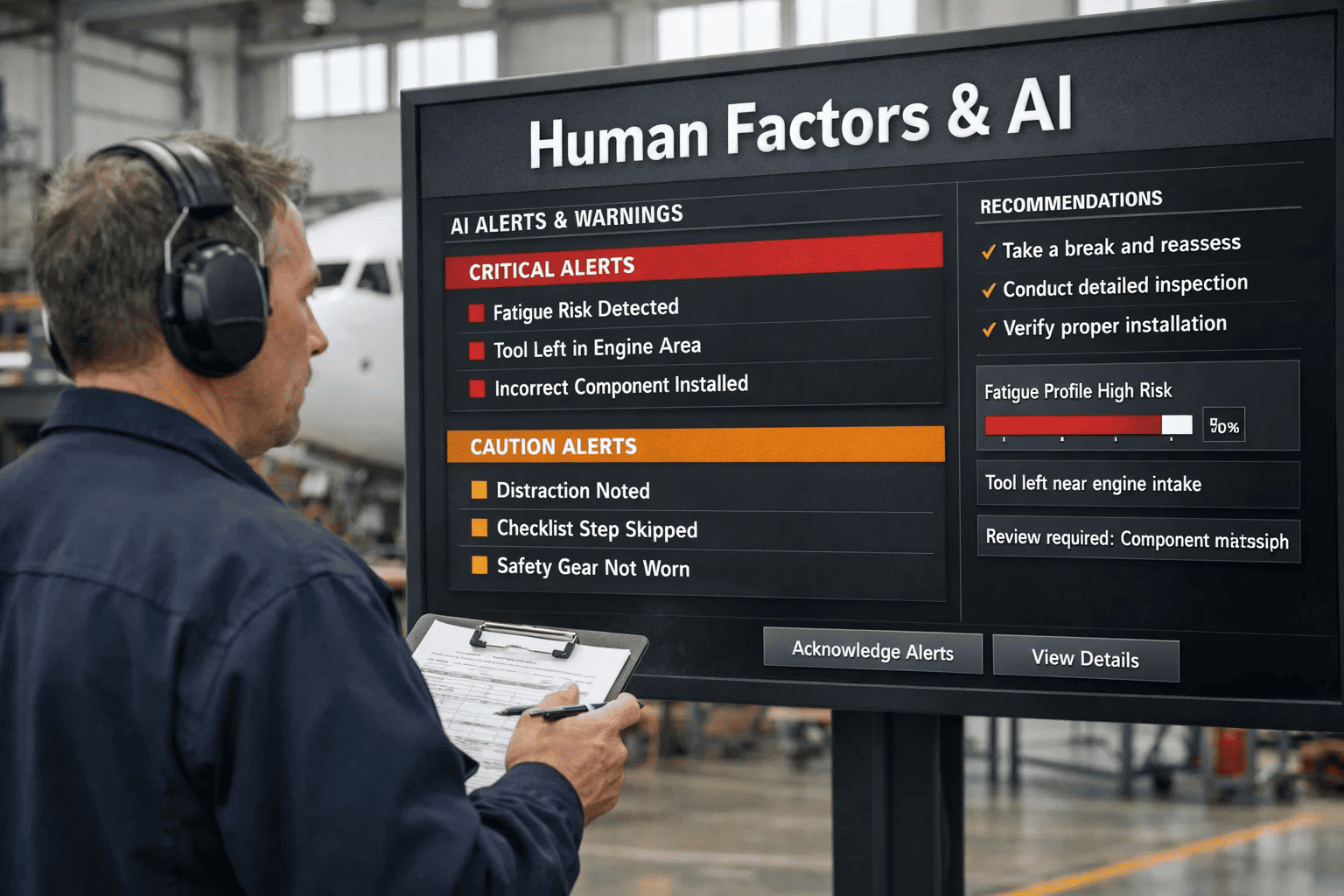
Read More
Aviation maintenance has always been a discipline where human judgment sits at the center of every safety-critical decision. The rapid integration of AI-driven diagnostics, predictive maintenance alerts, and automated work order prioritization is

Read More
Aviation maintenance technicians carry an extraordinary cognitive load on every shift — diagnosing faults under time pressure, executing multi-step procedures from memory, and signing their name to work that keeps aircraft airworthy. The quality o

Read More
The aviation maintenance industry is approaching a knowledge cliff that no hiring campaign can fully resolve. Across MRO facilities, regional carriers, and airline maintenance departments globally, a generation of master technicians carrying 25 to

Read More
Aviation maintenance is the final checkpoint before every aircraft takes flight — and the technicians certified to run those checks are leaving the workforce faster than the industry is creating replacements. Boeing's 2024 Pilot and Technician Out

Read More
Aviation maintenance is one of the most precision-critical disciplines in any industry — a single miswired circuit or overlooked torque spec can cascade into catastrophic failure at 35,000 feet. Yet most MRO organisations still train their technic

Read More
The aviation maintenance industry is facing a workforce reckoning that no hiring budget alone can solve. The FAA projects demand for 190,000 new certified mechanics by 2037 — yet training pipelines, steep certification timelines, and a historic re

Read More
Every aircraft in the sky carries thousands of components, and a growing number cannot be verified as genuine at the point of installation. Counterfeit aviation parts are not a fringe concern — the FAA has linked suspect unapproved parts to over 1

Read More
Aviation's journey to net zero runs directly through the maintenance hangar. While airframe manufacturers accelerate certification of next-generation aircraft on sustainable fuels, the immediate challenge belongs to the MRO sector: maintaining tod

Read More
Aviation maintenance programs have never been more consequential — or more data-rich. MSG-3, the Maintenance Steering Group methodology adopted by every major aircraft manufacturer, airline, and airworthiness authority worldwide, defines which mai

Read More
Aviation maintenance has never operated inside a single regulatory border. An aircraft serviced in Singapore flies into Frankfurt, is inspected in Dubai, and has its engines overhauled in Johannesburg. That cross-border reality

Read More
Regulatory inspections do not give advance notice. An unannounced FAA, OSHA, or Part 145 audit means your maintenance documentation must be complete, traceable, and retrievable within minutes — not assembled from scattered spreadsheets and paper l

Read More
Aviation maintenance compliance is evolving faster than most organizations can adapt. In 2026, digital signatures are no longer a technology experiment — they are the clear regulatory preference across FAA, EASA, CASA, and GCAA jurisdictions. Orga

Read More
Aviation maintenance compliance has entered its most demanding regulatory era. The FAA, EASA, ICAO, and CAAC have each issued substantive rule changes effective in 2026 — covering digital recordkeeping mandates, revised SMS requirements, expanded

Read More
Aviation maintenance has always been a discipline where human judgment sits at the center of every safety-critical decision. The rapid integration of AI-driven diagnostics, predictive maintenance alerts, and automated work order prioritization is

Read More
Across Europe, aviation regulators are no longer asking whether AI will play a role in maintenance operations — they are defining exactly how it must. The European Union Aviation Safety Agency (EASA) has published a dedicated

Read More
Aviation MRO systems have never been more connected — or more exposed. In 2026, a single ransomware strike on a digital maintenance platform can ground an entire fleet within hours, delay airworthiness release, and trigger cascading regulatory vio

Read More
A Boeing 737 contains over 3,600 individual maintenance tasks per C-check — and the technician performing them carries a torque wrench in one hand, a tablet in the other, and a paper manual tucked under their arm. Wearable techn

Read More
An airline operations director once described her maintenance IT stack as "seventeen systems that each believe they are the source of truth — and none of them agree." Her CMMS held work order history. Her ERP controlled parts in

Read More
Walk into any progressive MRO hangar today and you'll spot the shift immediately — technicians moving between aircraft with tablets instead of clipboards, signing off tasks with a thumbprint instead of hunting for a certifying en

Read More
The average aviation MRO organization runs between 8 and 14 discrete software systems — a CMMS for work orders, an ERP for finance and procurement, an MRO platform for technical records, a parts management system, a crew certifi

Read More
An engine trend deviation appears at cruise altitude over the North Atlantic. Within 11 seconds, ACARS transmits the anomaly to the airline's operations center. Within 4 minutes, the MRO station at the destination airport has a

Read More
A narrow-body aircraft lands after a transatlantic flight. Before the jet bridge connects, 5G signals have already transmitted 2.4 gigabytes of sensor data to the MRO station — engine temperature trends, hydraulic pressure logs,

Read More
The decision your IT and operations teams are debating right now — cloud CMMS versus on-premise — will shape your MRO cost structure, compliance posture, and technician productivity for the next decade. In 2026, that decision ca

Read More
In 2023, a falsified maintenance record on a regional turboprop led to a $47 million grounding investigation — and zero criminal convictions, because there was no tamper-proof audit chain. Aviation maintenance records are the mo

Read More
Every aircraft in commercial service generates over 1 terabyte of sensor data per flight — yet most of it goes unanalyzed. The gap between data collected and insights acted upon is exactly where unplanned failures, costly AOG

Read More
Seaplane and float aircraft operate in one of aviation's most corrosive environments — salt water, brackish harbors, and freshwater lakes all attack aluminum hulls, rivets, and step joints below the waterline every single d

Read More
Aircraft electrical systems contain over 150 miles of wiring per airframe — and a single undetected hotspot can cascade into a catastrophic fault. Thermal imaging robots are changing how MRO facilities identify overheating conne

Read More
Seaplane and float aircraft operate in one of aviation's most corrosive environments — salt water, brackish harbors, and freshwater lakes all attack aluminum hulls, rivets, and step joints below the waterline every single d

Read More
Aviation fleets are entering a new maintenance era — one where every component, every flight cycle, and every inspection feeds a living virtual model that predicts failure before it happens. Digital twins are no longer aerospace

Read More
Aircraft structural weld integrity is non-negotiable — a single undetected defect in a load-bearing repair can cascade into catastrophic failure. Traditional manual NDT methods miss up to 23% of subsurface flaws

Read More
A jet engine producing 70,000 pounds of thrust is one of the most complex machines ever built by human hands — and it stays airworthy only because someone, somewhere, planned a maintenance visit months in advance. Across the glo

Read More
Aviation maintenance never sleeps. A single grounded aircraft costs carriers between $10,000 and $150,000 per hour in lost revenue, and the majority of those groundings trace back not to catastrophic failures—but to preventable paperwork gaps, mis

Read More
Every engine sitting in a shop queue is costing someone money. Whether it's an airline chartering replacement aircraft, a freight operator missing delivery windows, or a defense contractor failing readiness benchmarks — engine r

Read More
Aviation maintenance teams don't get second chances. A missing O-ring, an untracked rotable, a stockout discovered at 2 AM before a morning departure — these are the moments that separate airlines and MRO providers that thrive f

Read More
Every hour an aircraft spends on the ground instead of in the air is revenue that never returns. Across global aviation, ground time accumulates into billions of dollars in lost productivity each year — not because of bad w

Read More
Inside a busy MRO hangar, a mechanic waits 40 minutes for a hydraulic actuator that is sitting 200 meters away in the parts cage. That wait is not a scheduling failure — it is a logistics failure. Multiply it across 60 technicia

Read More
Aviation maintenance is physically brutal. Technicians spend hours with arms raised overhead, crouched under fuselages, or contorting inside engine bays — tasks that cause musculoskeletal injuries at rates 3x higher

Read More
The $96 billion aviation MRO industry is mid-transformation. A grounded narrowbody costs $150,000 per day — and waiting weeks for a part is no longer

Read More
By 2026, the aircraft maintenance hangar is no longer just a building — it is a living, data-driven ecosystem. Autonomous inspection drones circle fuselages at 3 a.m. Collaborative robots torque fasteners to micrometer precision.

Read More
In 2023, Delta Air Lines TechOps became the first major U.S. commercial carrier to receive FAA Part 145 approval for autonomous drone-based aircraft inspection — cutting per-aircraft inspection time from over six hours to under fifteen minutes, el

Read More
Aircraft repainting represents 6 to 9 percent of total heavy maintenance spend at large MRO facilities, and the process has remained largely unchanged for decades — manual spray crews, 40 to 60 percent overspray waste rates, and hangar bay occupan

Read More
Aviation maintenance represents 15 to 20 percent of total airline operating costs — and the majority of that figure is not fixed, it is preventable. Airlines, MRO operators, and airport ground service teams running AI-driven maintenance platforms

Read More
Aircraft maintenance inspections consume roughly 27 percent of total MRO labor hours — yet most of that time is not spent fixing aircraft, it is spent physically accessing them. Ladder setup, scaffold erection, borescope repositioning, and the slo

Read More
Aircraft maintenance inspections consume roughly 27 percent of total MRO labor hours — yet most of that time is not spent fixing aircraft, it is spent physically accessing them. Ladder setup, scaffold erection, borescope repositioning, and the slo

Read More
Turbine blades operating at inlet temperatures exceeding 1,700°C and rotational speeds above 12,000 RPM accumulate damage through failure modes that conventional inspection schedules simply cannot catch in time. Leading-edge erosion develops in mi

Read More
Aviation MRO operations are built on precision — yet the supply chain powering them often runs on anything but. Across fleets of fifty aircraft or five hundred, maintenance planners deal with the same fundamental tension: holding enough critical s

Read More
Aviation maintenance logs are one of the most data-rich and chronically underutilized assets in the entire MRO ecosystem. Every squawk entry, every discrepancy note, every technician observation written between a turnaround — all of it holds patte

Read More
Aircraft systems don't fail without warning — they degrade. Every hydraulic assembly, avionics bus, engine stage, and landing gear actuator emits measurable performance deviations days or weeks before a fault surfaces on the flight deck. Commercia

Read More
Every aircraft component carries a hidden number — the hours, cycles, and stress events standing between its current condition and its next failure. For decades, aviation maintenance teams have been guessing that number using calendar schedules, h

Read More
Aviation maintenance has always been built on precision — but precision grounded in gut feel, calendar cycles, and tribal knowledge is no longer enough. In 2026, the MRO operations pulling ahead are not the ones with the most technicians or the bi

Read More
Aviation is one of the most data-rich industries on the planet — and one of the most secretive. Airlines generate billions of sensor readings, maintenance logs, and component failure records every single day. Yet most of this data sits locked in s
.png)
Read More
Artificial intelligence is no longer a horizon concept in aviation maintenance — it is operational today, measurable this quarter, and delivering real competitive separation for the MRO operations that have committed to it. Organisations integrati

Read More
Every commercial aircraft engine generates over 5,000 data parameters per flight—exhaust gas temperature, vibration signatures, oil consumption rates, fuel flow differentials, and dozens of other signals that collectively paint a precise picture o

Read More
Aviation maintenance teams carry an impossible burden: diagnosing complex multi-system faults under time pressure, with access to documentation libraries that would fill a small library. A single Boeing 737-800 has over 40,000 pages of maintenance

Read More
Aviation maintenance is crossing a threshold in 2026 that was unimaginable a decade ago. A single Aircraft on Ground event costs operators between $10,000 and $150,000 per hour — yet over 60% of AOG events are caused by failures that predictive AI

Read More
A single undetected sensor failure in an airport ground power unit can ground a narrow-body jet for four hours. Multiply that by a dozen gates, and the ripple effect costs airlines hundreds of thousands of dollars before breakfas

Read More
Every unscheduled aircraft grounding costs airlines between $10,000 and $150,000 per hour in lost revenue, crew disruption, and passenger compensation. Now imagine predicting that failure 21 to 42 days before it happens—and sched
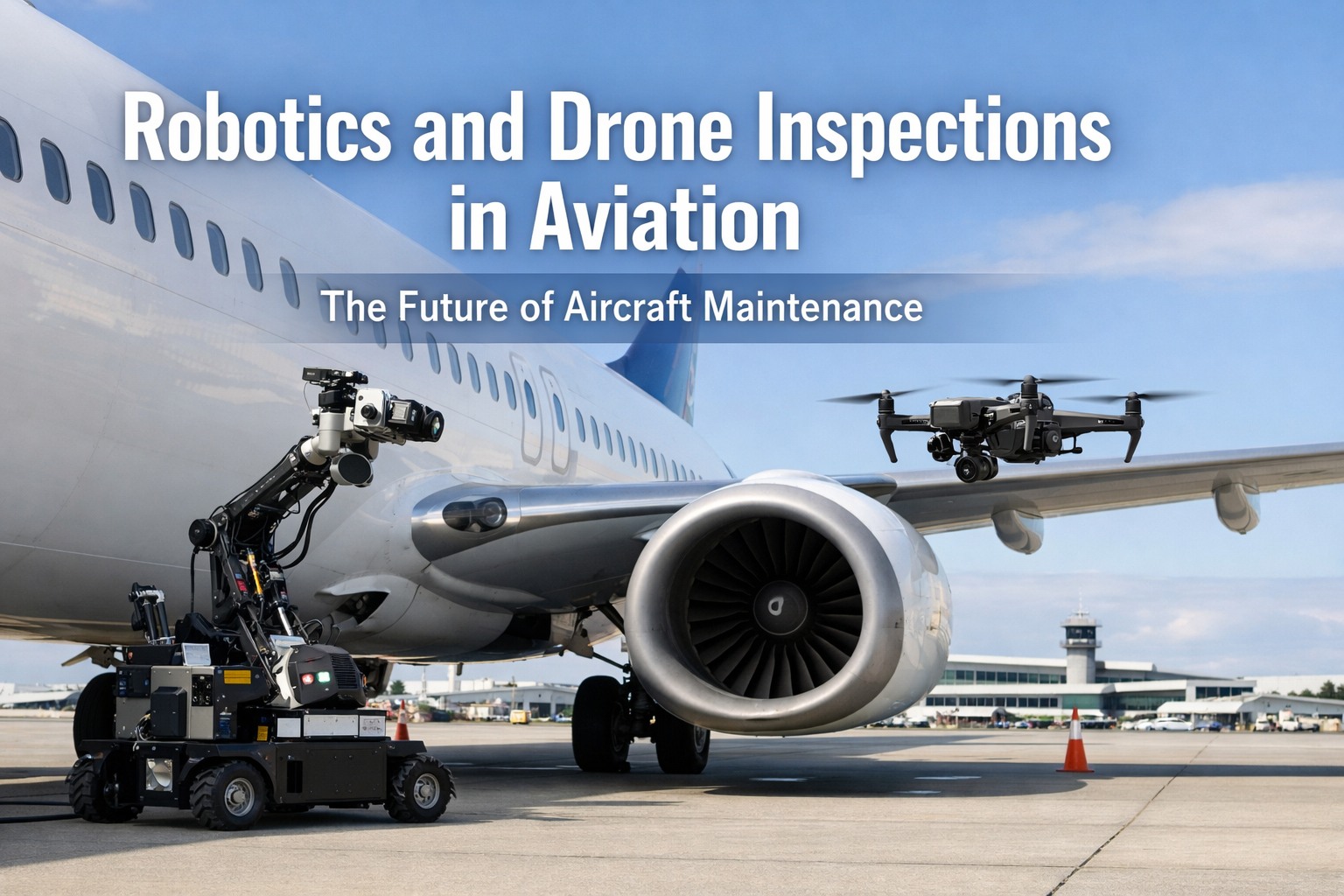
Read More
For decades, aircraft inspection has meant a technician on scaffolding with a flashlight—scanning thousands of square feet of fuselage at heights of 20 meters, for hours on end. That era is ending. Drones now photograph entire na

Read More
A Boeing 787 Dreamliner generates 500GB of data per flight. Thousands of sensors streaming vibration, temperature, pressure, and oil quality data every second—data that can predict failures weeks before they happen. Yet most avia

Read More
A single hairline crack on a turbine blade. A patch of corrosion hiding beneath a wing panel. A dent so subtle that three veteran inspectors walked right past it. In aviation, the margin between safe and catastrophic is measured
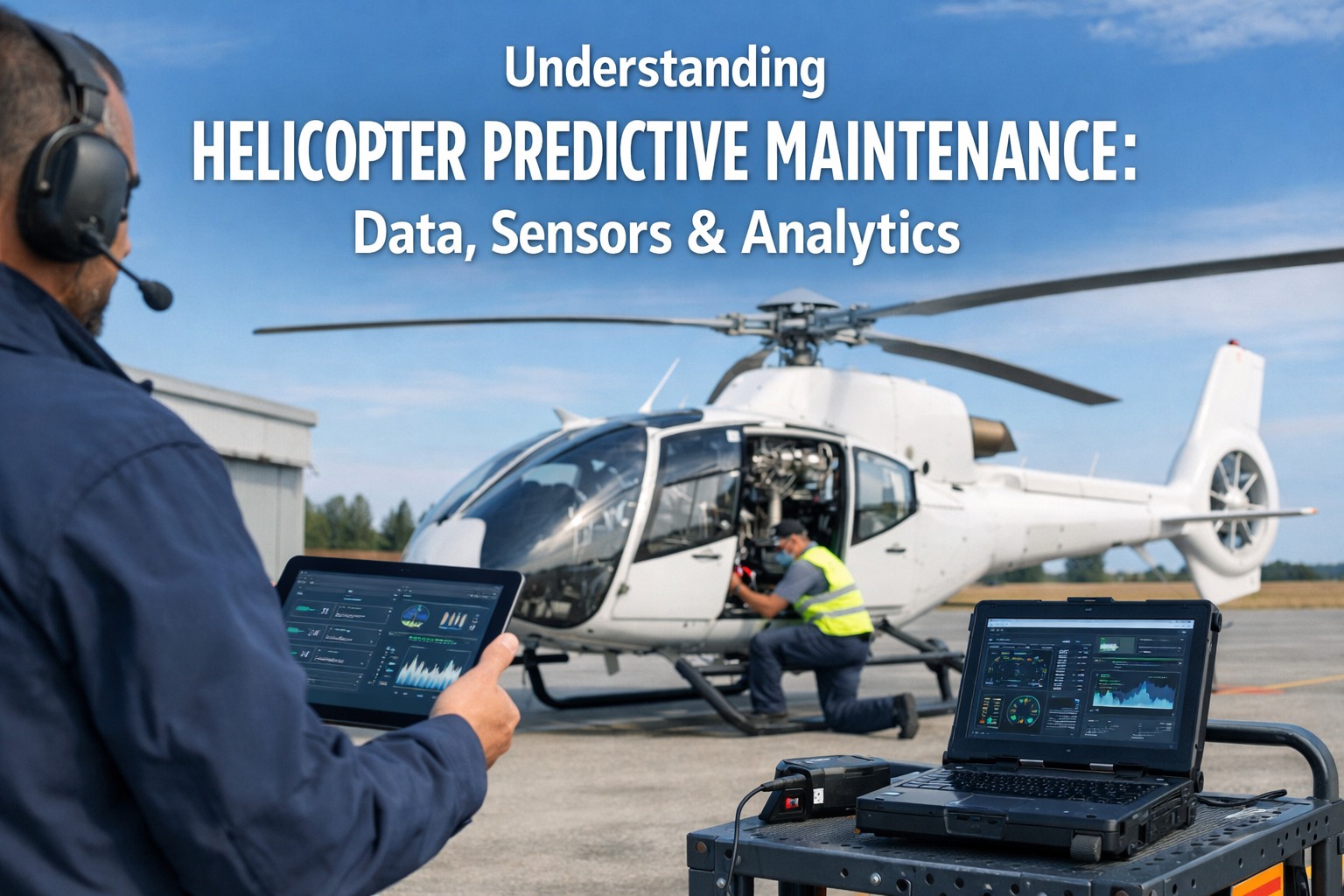
Read More
Helicopter operators using predictive maintenance report up to 30% reduction in maintenance costs and 45% improvement in fleet availability. Health and Usage Monitoring Systems (HUMS) now detect drivetrain anomalies weeks before
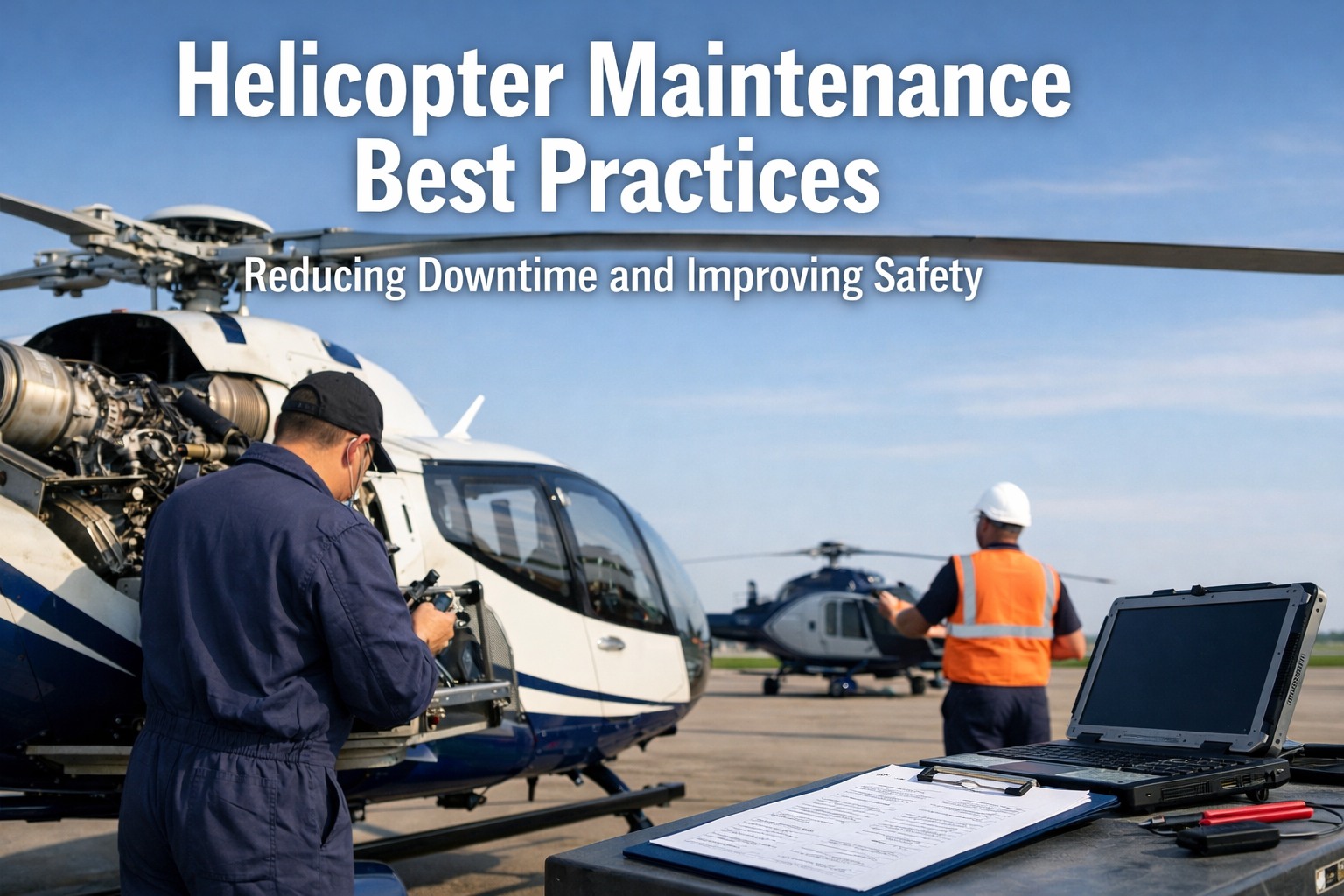
Read More
Helicopters operate in a class of their own—hovering over offshore rigs at 3 AM, threading through mountain canyons for search and rescue, racing against the clock in emergency medical evacuations. Every flight depends on thousan

Read More
Airports never close. Runways, taxiways, terminals, baggage systems, HVAC plants, jet bridges, and ground support equipment operate 24/7/365 under relentless passenger loads, regulatory pressure, and zero tolerance for failure. T
Read More
A single Aircraft on Ground event costs airlines between $10,000 and $150,000 per hour. A baggage conveyor failure during peak hours cascades into dozens of delayed flights within minutes. An HVAC shutdown in a crowded terminal a

Read More
Airports process over 37 million flight departures annually across runways, taxiways, and apron surfaces that must meet exacting safety standards every single day. A single piece of Foreign Object Debris (FOD) on a runway can des
Read More
Airlines using digital twin technology are saving an average of $2.67 million per wide-body aircraft annually on maintenance costs alone. Predictive simulations are identifying 93.6% of impending failures at least 21 days before
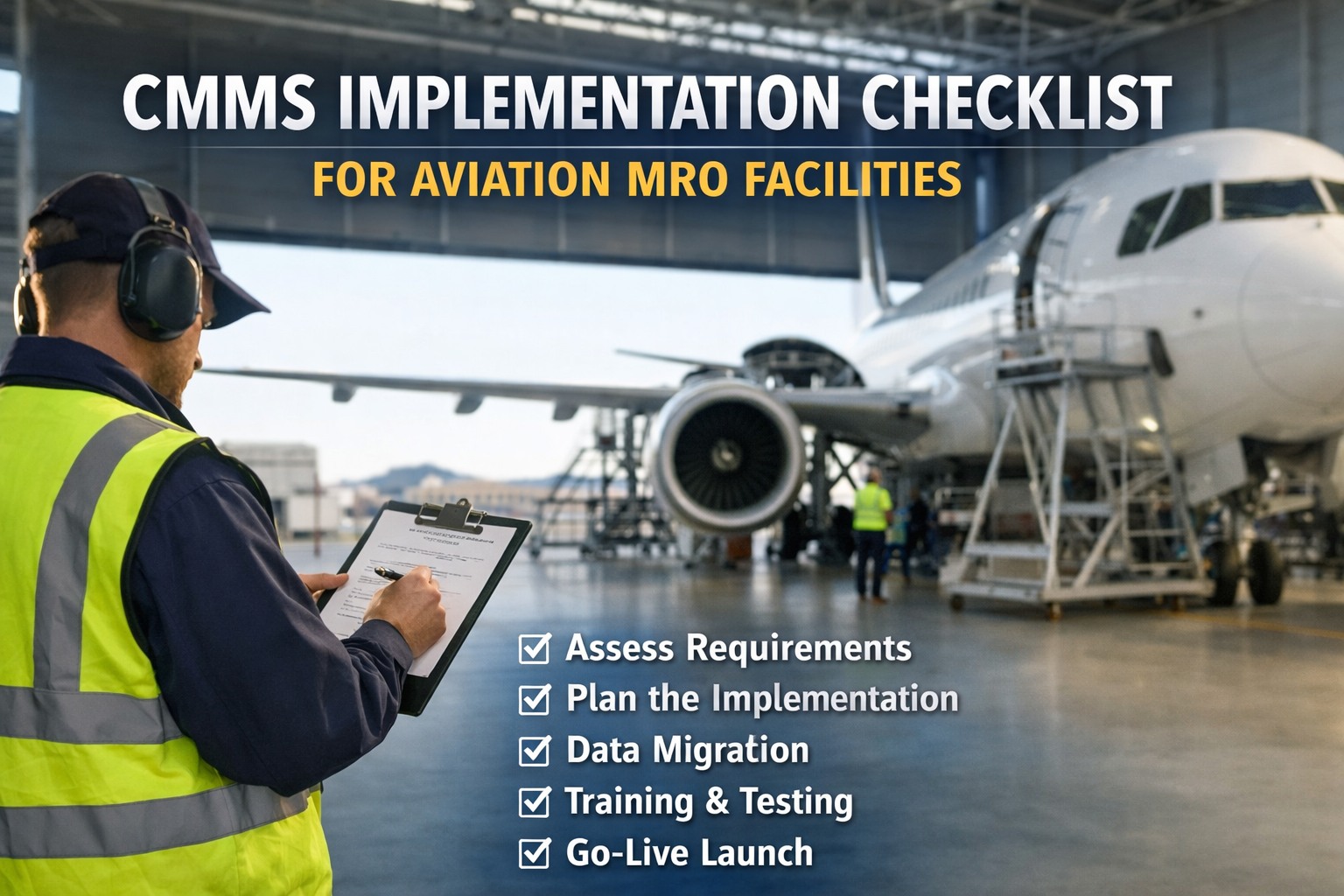
Read More
Up to 80% of CMMS implementations fail—not because the software is wrong, but because the rollout was rushed, the data was dirty, or the team was never properly onboarded. In aviation MRO, where a missed work order can ground an

Read More
A single hairline crack on a turbine blade. A patch of corrosion hiding beneath a wing panel. A dent so subtle that three veteran inspectors walked right past it. In aviation, the margin between safe and catastrophic is measured
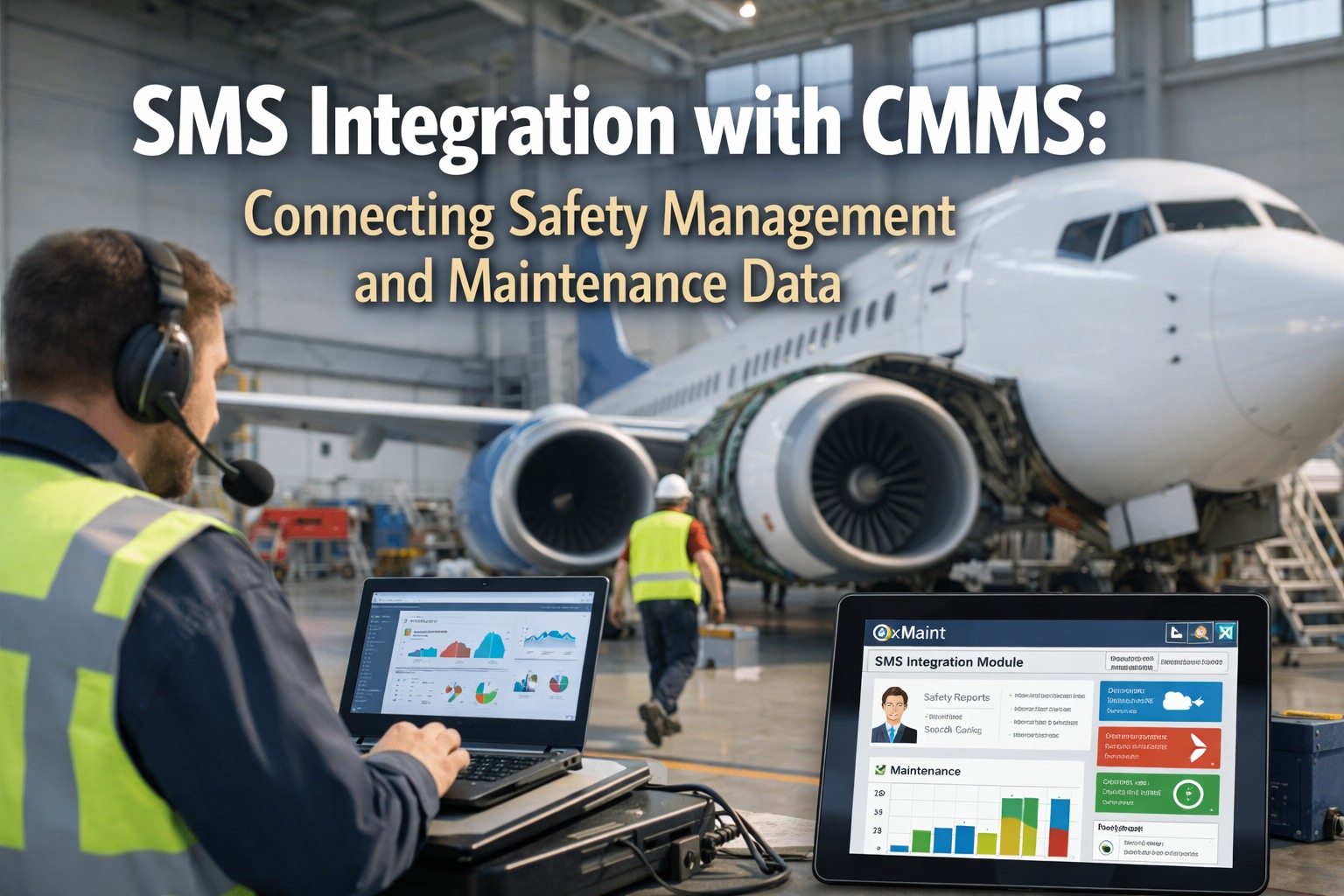
Read More
Your maintenance team closes 200 work orders a month. Your safety team files 15 hazard reports a quarter. Neither team sees the other's data. When a hydraulic pump fails for the third time in six months, the CMMS logs it as a rec
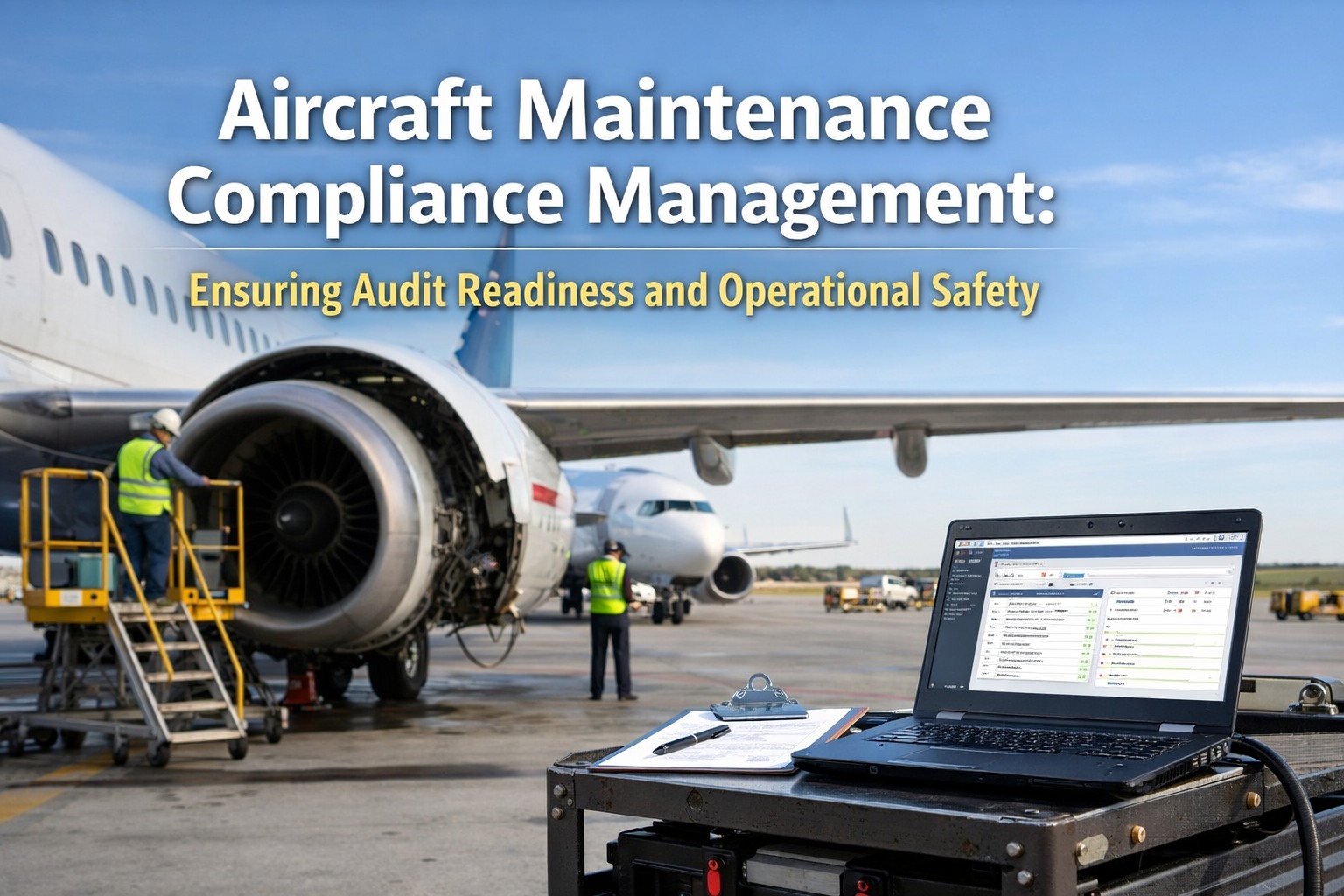
Read More
On January 5, 2024, a door plug blew out of an Alaska Airlines 737 MAX 9 mid-flight. The NTSB investigation traced the failure to missing bolts—and the FAA's subsequent audit uncovered 97 instances of noncompliance at Boeing's production facility,
Read More
At 2:14 AM, a baggage handling conveyor jams in Terminal B. The overnight technician radios the control room. The control room checks a whiteboard. Nobody can find the last inspection report. By the time a work order gets written on paper, approve

Read More
A single missed crack on a turbine blade. A patch of corrosion hidden under a wing panel. A dent so subtle that three veteran inspectors walked right past it. In aviation, the margin between safe and catastrophic is measured in millimeters—and hum
Read More
Aviation maintenance still runs on paper — and it's costing the industry billions. While aircraft themselves have become marvels of digital engineering, the teams maintaining them are often stuck with paper task cards, disconnect

Read More
Aircraft maintenance has always been a race against time and uncertainty. But what if your maintenance team could see failures coming weeks before they happen? Predictive maintenance powered by AI, IoT sensors, and advanced data

Read More
In April 2020, the FAA released formal policy allowing video links and remote technology for conformity inspections, airworthiness approvals, and production oversight. What began as a pandemic response has become a permanent shif

Read More
In November 2025, Airbus grounded 6,000 A320-family aircraft overnight after a single software vulnerability was traced back to a JetBlue flight incident weeks earlier. The fix took two hours per plane. The chaos lasted days. Air

Read More
In 2024, scheduled commercial aviation recorded 95 accidents and 296 fatalities—a sharp increase from 66 accidents and 72 fatalities the year before. ICAO's 2025 Safety Report calls it a stark reminder that rising flight volumes

Read More
The global MRO market hit $84.2 billion in 2025 and is racing toward $134.7 billion by 2034. Behind that growth is a seismic shift: AI systems that predict failures weeks in advance, drones that inspect a widebody in under an hou

Read More
Foreign Object Debris costs the aviation industry up to $13 billion annually—and a single undetected bolt on a runway can destroy a jet engine in milliseconds. Drone-based inspection systems equipped with AI vision, thermal imagi

Read More
A single missed crack on a turbine blade can ground a $40 million engine. Robotic borescope systems now navigate jet engine internals—turbine stages, combustion chambers, compressor sections—capturing HD imagery of blade erosion,

Read More
By 2026, the airport robots market will surpass $1.98 billion — with autonomous cleaners, delivery bots, and security patrols navigating terminals 24/7. Behind nearly every one of these machines is ROS 2

Read More
A security robot with a dead battery at 2 AM doesn't patrol the perimeter. It sits in a hallway, blind and useless, while the fence line it was supposed to monitor stays unwatched. Airports deploying autonomous patrol robots—K5 units, Secom X2s, A

Read More
Airport robotics is no longer a pilot program. The global airport robots market hit $1.7 billion in 2025 and is racing toward $3.67 billion by 2030 at a 16.8% CAGR. But here's what the market reports don't tell you: airports deploying robotic clea

Read More
A single poorly scarfed ply on a Boeing 787 fuselage panel can compromise bond strength by up to 40%, turning a routine repair into a structural airworthiness risk. With over 50% of modern widebody airframes built from carbon fib

Read More
Your next FAA certification inspection could be announced tomorrow. When the inspector asks to see 12 months of self-inspection records, training documentation for every airside employee, and corrective action logs for every disc

Read More
Your airport has 156 operational assets spread across terminals, utilities, and ground ops. Right now, the data about those assets lives in five different systems, three spreadsheets, and someone's memory. When Terminal C's power

Read More
A single faulty switchgear connection at one of the world's busiest airports caused an 11-hour blackout, cancelled 1,200 flights, stranded 30,000 passengers, and cost one airline an estimated $50 million. The fir

Read More
A contaminated runway you cannot see is a runway you cannot trust. Every year, runway excursions account for 21% of all serious commercial aviation accidents — and poor surface conditions are a leading trigger. O

Read More
International airports deployed $1.98 billion in robotic systems during 2026—autonomous cleaning fleets, UV-C disinfection units, baggage transport robots, and passenger assistance androids operating 24/7 across terminals. Yet 43

Read More
Airport terminals witness 2.9 billion passenger journeys annually—each touching security trays carrying 18x more pathogens than restroom surfaces, walking across floors exposed to 24/7 foot traffic, and using restroom facilities

Read More
Manual borescope inspections take 5+ hours per engine, miss defects under fatigue, and ground aircraft that should be flying. Robotic inspection systems are cutting that time by up to 90% while catching significantly more findings under controlled

Read More
Right now, somewhere on your airfield, a baggage tug is idling with no load. A belt loader is parked at Gate 14 while a crew at Gate 27 is radioing around trying to find one. A pushback tractor just hit 3,000 engine hours with no

Read More
Your maintenance team closes a work order in the CMMS. Your finance team reconciles the cost in the ERP three days later. Your procurement team reorders parts from a spreadsheet nobody trusts. Sound familiar? When your airport's

Read More
Deploying 100+ IoT sensors across terminals, runways, and parking structures should not take months of manual configuration. OXmaint's scalable IoT provisioning lets your IT team bulk-onboard devices, push consis

Read More
In 2024, 95 commercial aviation accidents occurred worldwide—a 43.9% jump from the year before—with fatalities surging from 72 to 296. ICAO's accident rate rose to 2.56 per million departures as global traffic hit 37 million flights. Behind those

Read More
Maintenance costs consume 15–18% of every airline's total operating expenses. A single Aircraft-on-Ground event bleeds $10,000–$150,000 per hour. The global aviation asset management market hit $213.77 billion in 2025 and is accelerating toward

Read More
An Aircraft-on-Ground event costs airlines $10,000 to $150,000 per hour. Maintenance-related disruptions drain major carriers $100–$200 million annually. Yet one-third of small-fleet operators still manage maintenance with spreadsheets. The aviati

Read More
Every minute a work order sits unwritten, your airport bleeds money, misses compliance windows, and pushes passengers through half-maintained facilities. Oxmaint's AI-powered work order automation turns sensor alerts into fully l

Read More
A single miscommunication during a shift change once caused a Continental Express aircraft to crash, killing all 14 onboard—because an outgoing maintenance crew failed to log missing fasteners. In airport operations where thousan

Read More
Every day, airport maintenance crews service escalators carrying thousands of passengers, repair high-voltage electrical panels powering terminal operations, maintain baggage handling conveyors processing millions of bags, and wo

Read More
Every airport is a financial ecosystem worth billions—runways, terminals, baggage systems, HVAC networks, power grids, and ground support equipment all depreciating at different rates, funded through different budgets, and mainta

Read More
Airports are among the most complex operational environments on the planet — running 24/7, managing thousands of critical assets, and serving millions of passengers who expect everything to work flawlessly. Yet many airport maint

Read More
Every day, millions of passengers breathe terminal air contaminated with CO₂, PM2.5, VOCs, and airborne pathogens — and most airports have zero visibility into what's actually circulating through their HVAC systems. With post-pan

Read More
A single IoT gateway failure at your airport doesn't just drop a sensor—it blinds an entire zone of your maintenance network. Missed alerts, lost telemetry, and delayed work orders cascade into safety risks and compliance gaps. O

Read More
Your airport maintains equipment on fixed schedules—whether it needs it or not. That means you're either servicing healthy assets too early or discovering failures too late. OXmaint's AI-powered condition-based maintenance platfo

Read More
Your airport sits on thousands of acres of infrastructure—runways, terminals, baggage systems, HVAC networks, utility grids—all aging at different rates, maintained by different teams, tracked in different systems. Without a unif

Read More
Running an airport with disconnected systems is like trying to land planes without radar. When your CMMS, ERP, BMS, and IoT platforms can't talk to each other, maintenance teams waste hours on manual data entry, critical alerts g

Read More
A single elevator outage at a busy airport terminal doesn't just inconvenience travelers—it creates an ADA compliance violation, blocks wheelchair users and elderly passengers, and triggers cascading congestion across every level

Read More
Is your airport still operating blind to energy waste costing millions annually? Airport terminals consume up to 180 million kWh per year—with HVAC systems alone eating 80% of that energy. Without real-time analy

Read More
Every minute of equipment downtime at your airport cascades into delayed flights, frustrated passengers, and operational chaos. Yet most maintenance teams still troubleshoot blind — dispatching technicians without knowing what's

Read More
Your airport has hundreds of cameras — but how many threats are actually being caught? When control rooms are overloaded with feeds, manual monitoring leads to missed incidents, delayed responses, and critical blind spots across

Read More
Is your airport still relying on paper checklists and manual inspection logs? Every missed inspection creates compliance gaps, safety risks, and potential regulatory fines that can cost millions. OXmaint's digital inspection mana

Read More
Is your airport struggling to coordinate maintenance teams across terminals, airside operations, and ground support equipment? When technicians don't know their assignments, supervisors can't track progress, and permissions are a

Read More
Is your airport still tracking maintenance schedules on spreadsheets and paper calendars? Every missed inspection risks regulatory fines, equipment failures, and operational disruptions that can cascade across your entire facilit

Read More
What if your airport equipment could alert you days before a baggage carousel fails or a passenger boarding bridge malfunctions? OxMaint's AI-powered predictive maintenance transforms IoT sensor data from airside, terminal, and

Read More
When auditors arrive, can you instantly produce a complete maintenance history for any piece of airport equipment? For most airports, the answer involves hours of searching through filing cabinets, chasing down technicians, and

Read More
A single camera going offline at a security checkpoint creates a blind spot that could go unnoticed for hours—or until an incident occurs. With large airports operating 1,000+ cameras across terminals, runways, and perimeters, m

Read More
Every minute an aircraft sits at the gate costs airlines approximately $100 in delay expenses. With over 35,000 passenger boarding bridges operating worldwide, even minor jetway malfunctions cascade into flight d

Read More
When a major U.S. West Coast hub introduced rigorous equipment audits, 44% of all ground support equipment failed inspection —not due to mechanical issues, but documentation gaps. In aviation, a missing maintenance record doesn't

Read More
Modern airports manage over 80,000 assets across thousands of acres—yet most still rely on disconnected systems and manual processes that cost millions in inefficiency. Digital twin technology creates a living virtual replica of
Read More
Every minute an aircraft sits grounded costs airlines between $10,000 and $150,000. When ground support equipment fails, baggage systems stall, or passenger boarding bridges malfunction, the ripple effects cascade across terminals, delay schedules

Read More
Airports never sleep, and neither do the thousands of assets keeping them running—from baggage conveyors and escalators to HVAC systems and runway lighting. When equipment fails unexpectedly, the ripple effects hit passengers, airlines, and your b
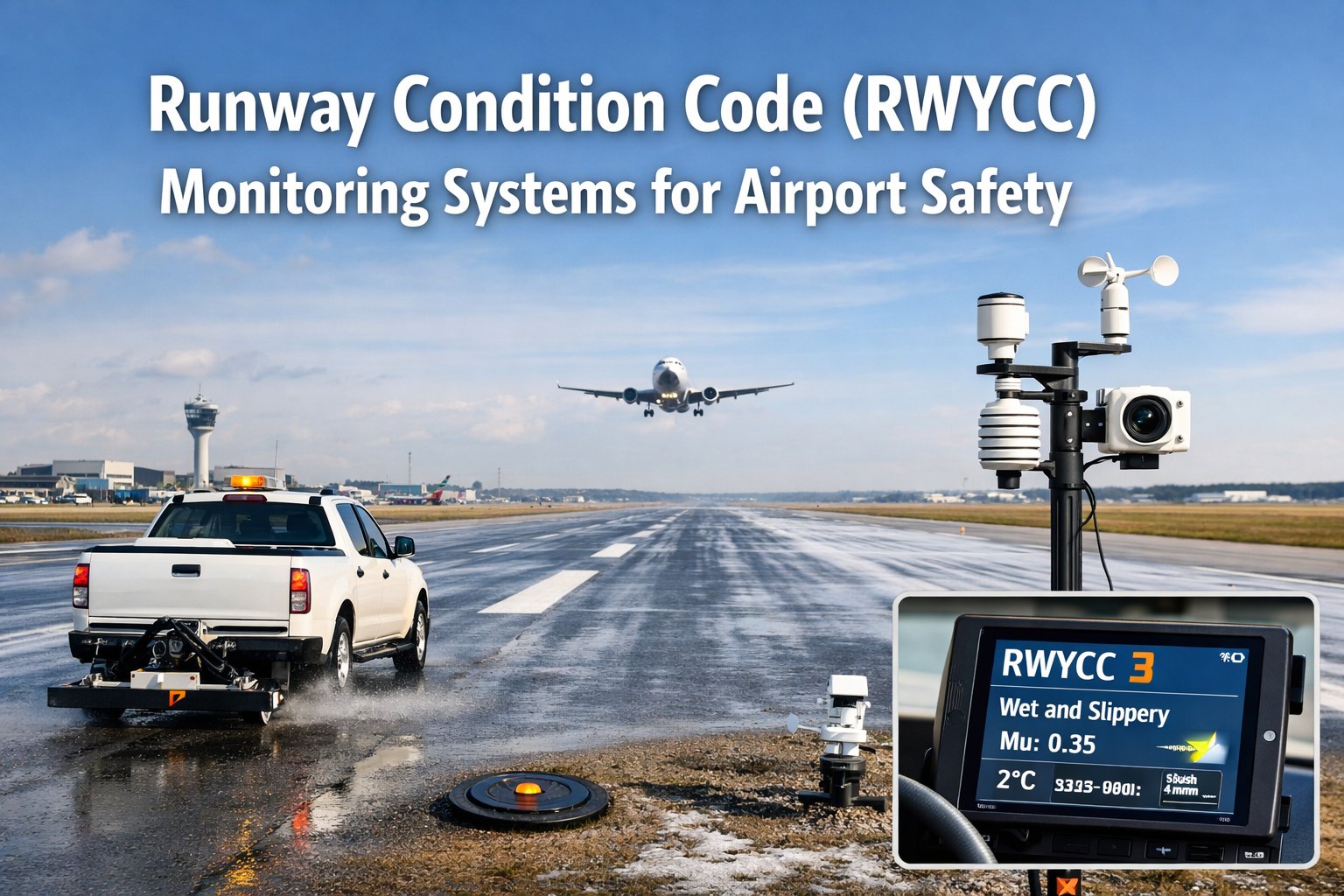
Read More
Every year, runway excursions account for 21% of all aviation accidents worldwide—with contaminated surface conditions among the leading causes. The ICAO Global Reporting Format now mandates standardized runway condition assessme

Read More
Howdo you justify a predictive maintenance investment when competing for capital against terminal expansions, runway projects, and passenger experience upgrades? The answer lies in building a bulletproof financial case. Research
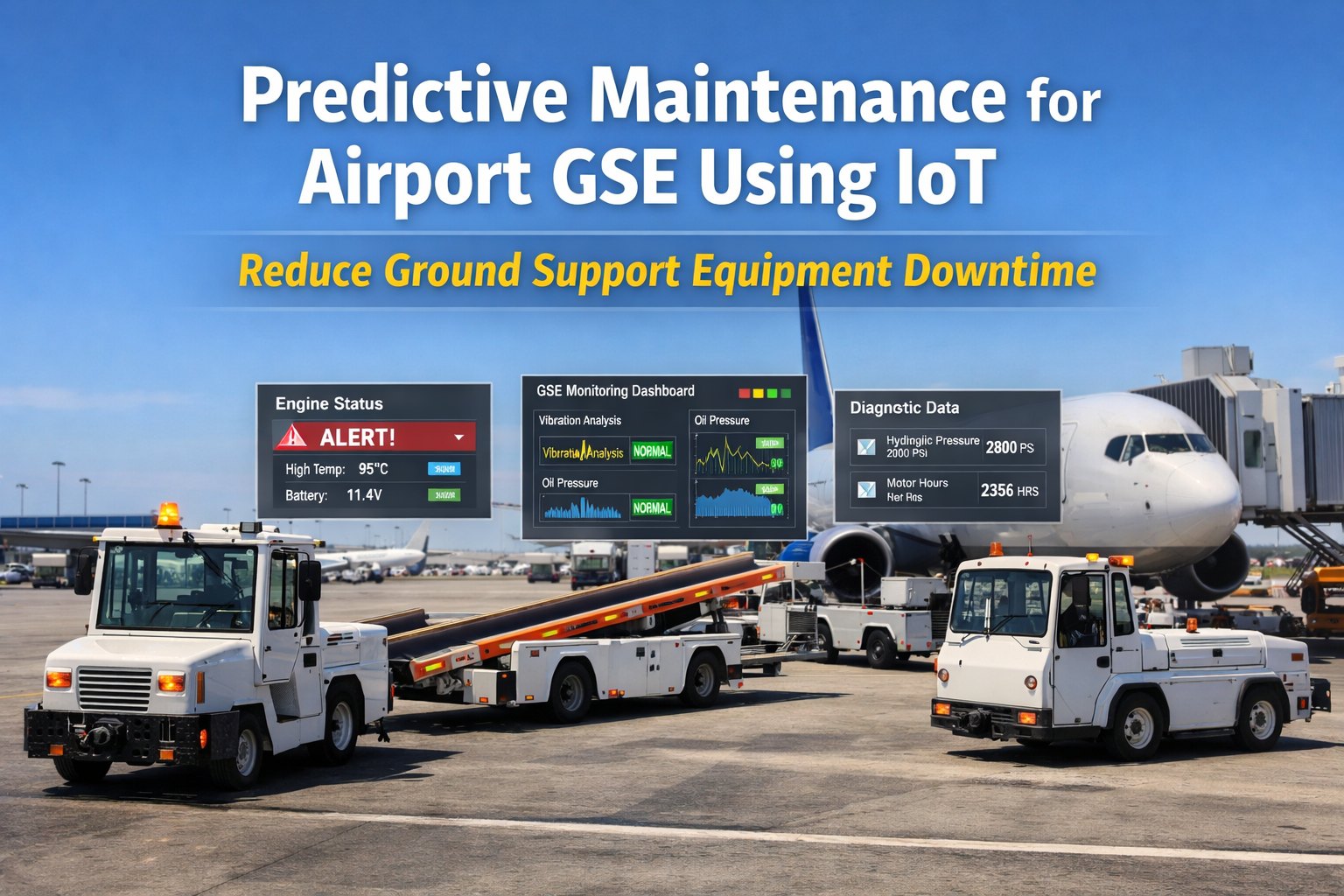
Read More
Everyminute an aircraft sits at the gate costs airlines $100 or more—and GSE inefficiencies are the second leading cause of preventable flight delays after ATC issues. When a pushback tractor stalls or a belt loader breaks mid-tu

Read More
Airports consume up to 180 million kWh annually, with electrical systems powering everything from terminal HVAC to runway lighting. Poor power factor silently drains your budget through utility penalties that can exceed $100,000

Read More
Every year, airports handle billions of bags through complex conveyor networks spanning miles of belts, motors, and sortation systems. When a single motor fails or a belt snaps, the ripple effect cascades through the entire terminal—delayed flight

Read More
Ground support equipment has a way of disappearing right when you need it most—and every minute spent tracking down a missing tug or belt loader adds to turnaround delays. As airports handle growing traffic and tighter schedules, real-time asset v

Read More
Airport operations run 24/7, yet 82% of facilities still experience costly unplanned equipment failures each year. With the predictive maintenance market projected to grow from $10.6B to $47.8B by 2029, smart airports are embracing IoT condition m

Read More
Your airport spans thousands of acres, yet your IoT sensors keep dropping offline. Wi-Fi coverage ends at terminal walls, cellular costs spiral with thousands of devices, and by the time sensor data reaches the cloud for processing, the maintenanc

Read More
When a single HVAC failure turns your terminal into a sauna, passenger complaints surge, staff productivity plummets, and energy costs spiral beyond budget. With HVAC systems consuming 40-80% of terminal energy and airports spending over $180 per

Read More
Securing an airport perimeter spanning 15-30 kilometers presents a monumental challenge—traditional wired systems demand extensive infrastructure, constant power, and frequent maintenance while leaving dangerous blind spots in remote airside zones

Read More
A single runway lighting failure cost one international airport $10 million in losses—286 flights cancelled, 21,720 passengers stranded, operations halted for nearly ten hours. Your incandescent lamps have a 1,000-hour lifespan. Your LED fixtures

Read More
A single bolt left on a runway costs the aviation industry $4 billion annually. One inch of undetected ice causes a 10-minute delay that cascades through global flight networks. Your manual inspections catch 23% of debris—automated IoT sensors cat

Read More
Securing airport perimeters spanning 20-30 kilometers with traditional WiFi? Your sensors are dead before the threat reaches the fence. WiFi's 100-meter range means you'd need hundreds of access points, each requiring power infrastructure that's n

Read More
Your IoT maintenance program is generating data—but can you prove it's generating value? With 95% of predictive maintenance adopters reporting positive ROI and 27% achieving full payback within one year, the potential is clear. The challenge is de

Read More
A single conveyor failure can cascade into thousands of delayed bags, frustrated passengers, and airline penalties that hit your budget hard. With baggage mishandling costing the aviation industry $5 billion in 2024 alone, reactive maintenance is

Read More
Airport maintenance teams face an impossible challenge—managing thousands of critical assets across terminals, runways, and support systems while operating in the dark. Without real-time visibility into equipment health, you're trapped in reactive

Read More
Airport maintenance operations have never been more demanding—with global MRO spending exceeding $100 billion in 2024 and AOG events costing the industry $30 billion annually, maintenance directors face relentless pressure to do more with less. Di

Read More
Cold weather airports face the ultimate test in aviation maintenance—where temperatures plunge below -40°C, de-icing chemicals become less effective, and equipment failures can ground entire fleets within hours. With the global airport snow remova

Read More
When passengers step into a 5-star rated airport, they expect perfection—spotless terminals, whisper-quiet boarding bridges, ambient lighting that sets the right mood, and lounges that rival luxury hotels. What they don't see is the immense operat

Read More
A single jet bridge failure at a busy international hub doesn't just inconvenience passengers—it triggers a cascade of delayed flights, emergency repairs costing 3-5x normal rates, and potential safety incidents. With airports processing millions

Read More
Every time a technician finishes a jet bridge repair, someone has to enter the work order into SAP. Then again into the CMMS. Then reconcile both systems at month-end. Across a busy international airport processing 500+ maintenance activities dail

Read More
Global cargo airports are the backbone of international trade—where 127 million metric tonnes of freight flow annually, cold chain integrity determines pharmaceutical viability, and e-commerce fulfillment centers operate around the clock. With the

Read More
International hub airports are the crossroads of global aviation—where 50+ airlines converge, customs and immigration infrastructure operates 24/7, and maintenance teams coordinate across time zones and regulatory frameworks. With over 92 million

Read More
When 100+ million passengers flow through a single mega-hub airport annually, every maintenance transaction counts. These aviation giants process thousands of work orders daily across multiple terminals, manage spare parts inventories worth millio

Read More
Modern international airports are breaking records worldwide, with major hubs serving 40-50+ million passengers annually—growth rates of 15-20% are now common. As aviation demand surges globally, high-traffic airports operate 250,000+ flights annu
Read More
Modern airports handle millions of passengers annually across massive terminal spaces—making them among the most complex facilities to maintain. Behind every on-time departure lies an invisible army of maintenance teams managing kilometers of bagg

Read More
Your maintenance team uses one system. Finance uses another. Procurement runs on a third. When leadership asks for a complete picture of maintenance costs, everyone scrambles—pulling data from spreadsheets, cross-referencing databases, and hoping

Read More
At 6:47 AM, a baggage handling system malfunction triggers a cascade of delays across Terminal 3. By 8:15 AM, 23 flights are behind schedule, passenger complaints flood customer service and your operations team is scrambling to understand what h

Read More
Here's a frustrating reality: your maintenance team works hard every day, but you can't prove it with numbers. When leadership asks "How efficient are we?"—you're stuck guessing. When equipment fails repeatedly—you don't have data showing the patt

Read More
Your jet bridges are available 92% of the time. Your baggage handling system runs at 78% of its designed speed. And 96% of processed bags reach their destination without issues. Multiply those numbers together and you get 69%—that's your Overall E

Read More
Every airport faces the same challenge: aging maintenance systems that worked fine a decade ago now struggle to keep pace with modern demands. Paper work orders get lost between shifts. Critical equipment data sits trapped in spreadsheets nobody u

Read More
Your FAA Part 139 inspection is scheduled for next month. Your operations team has been running daily self-inspections for the past year—hundreds of paper checklists stuffed into filing cabinets, handwritten notes that are difficult to decipher, a

Read More
A single broken jet bridge at Gate 47 delays 340 passengers for 90 minutes. Meanwhile, three baggage conveyor motors show early warning signs that nobody notices. Two HVAC units in Terminal B run 18% less efficiently than spec, draining $12,000 mo

Read More
It's 6:47 AM. The night shift supervisor is rushing through a handover while the morning team waits with coffee cups in hand. A runway inspection note from 2 AM gets mentioned verbally but never written down. Three hours later, a maintenance crew

Read More
Every airport operates as a city within a city. Thousands of assets—from runway lighting systems and baggage carousels to ground power units and terminal HVAC—work in concert to move millions of passengers safely each year. Yet most airports still
Read More
A baggage carousel motor starts drawing 12% more power than usual. Three weeks later, it fails during the morning rush—stranding 2,400 bags and cascading delays across 47 flights. The repair costs $80,000. But the real damage? Passenger complaints

Read More
Every minute of airport downtime translates to real dollars lost. Industry research shows ground delays can cost airports between $100 and €166 per minute—and that's before factoring in passenger compensation, missed slots, and reputational damage

Read More
At 2:34 AM, sensors on Baggage Carousel 7 detect a 0.3mm increase in motor vibration amplitude. The pattern matches bearing degradation signatures the AI has seen thousands of times before. Predicted failure: 18 days. The system

Read More
At 6:47 AM, an AI system detects an anomaly in weather patterns 200 miles away. It calculates the storm will reach the airport in 93 minutes, affecting 47 scheduled flights. Before any human notices, the system has already reass

Read More
Every morning at 5:47 AM, your operations team faces the same impossible puzzle: 127 scheduled arrivals, 134 departures, 23 gates, 18 baggage carousels, and a maintenance crew that's already stretched thin. One delayed inbound flight cascades into

Read More
Your newest ground crew member just arrived for their first shift at the ramp. They've watched the safety videos and signed the compliance forms. But when an A320 pulls into Gate 12 with a 35-minute turnaround window, do they know the 23-step sequ

Read More
The inspector arrived at 7:42 AM on a Tuesday—unannounced. Within fifteen minutes, she requested runway inspection logs from the past 90 days, ARFF vehicle maintenance records, security badge audit trails, and wildlife strike documentation. Your o

Read More
Your airport handled 127,000 operations last year. FAA regulations now require you to implement a Safety Management System by 2025. Paper-based hazard logs miss 40% of incidents. Manual audits take 80 hours monthly. Compliance penalties reach $97,

Read More
27,000 ramp incidents occur annually—one per 1,000 departures. These incidents cost airlines $8-10 billion yearly. The root cause? Poor maintenance tracking. Paper-based inspections miss critical safety checks. Repairs happen late or not at all.

Read More
Your airport runs on 12 disconnected systems. Flight ops uses one platform, ground handling another, maintenance a third. Security data sits in separate silos. When a gate change happens, five people make five manual updates—and passengers still s

Read More
27,000 ramp incidents happen globally every year—one per 1,000 departures. Aircraft ground damage costs exceed $8 billion annually and climbing. Turnaround delays cascade into millions in lost revenue. The problem isn't the people—it's the systems

Read More
Real-time visibility into every airport operation isn't a luxury—it's survival. With 78% of airports deploying automation by 2025 and passenger traffic hitting 9.9 billion, manual coordination is obsolete. A digital operations platform integrates

Read More
With 9.4 billion passengers and 215 airports at capacity, equipment failures aren't just costly—they shut down operations. Manual maintenance management can't keep pace. A single FAA compliance violation costs $500,000. OXmaint's maintenance manag
Total Posts:
Aviation & Airport Use Cases
How airports & ground handling operators run their maintenance on Oxmaint
International hubs, regional Part 139 airports and ground handling contractors — different asset mix, same workflows. Here are four typical deployments.
Use Case 01
International Hub Full CMMS
Full-airport CMMS rollout at a 4-terminal international hub
The Problem
A 4-terminal hub with 62 PBBs ran PM in three spreadsheets per terminal, WOs on paper dockets and Part 139 checks in a separate log — audit prep ate weeks every cycle.
What Oxmaint Delivered
Full deployment across 4 terminals and airside — QR-labelled assets, PBB cycle-based PM, BHS fault integration and Part 139 workflows, with mobile rollout to every technician.
One register
4 terminals + airside
Cycle-based
PBB PM on real movements
Mobile
Techs & self-inspectors
Oxmaint Modules Used
Airport Asset Registry
Every PBB, escalator, AHU, chiller, BHS motor and airfield fixture QR-labelled in one multi-terminal hierarchy.
PBB Cycle-Based PM
Rotunda, drive column, canopy and PCA PM triggered on movement counts pulled from the PBB controllers.
Part 139 Self-Inspection
Self-inspection routes on the mobile app with geo-tagged entries, digital sign-off and one-click FAA audit export.
Mobile App Rollout
156 technicians and self-inspectors receiving WOs, running Part 139 checks and closing jobs from the app.
Use Case 02
GSE Fleet Ground Handling
Multi-station GSE fleet management for a ground handling operator
The Problem
A contractor ran 380 GSE units across 12 stations on calendar-day PM regardless of use — busy units failed unexpectedly, quiet ones were over-serviced, and SLA reporting was manual.
What Oxmaint Delivered
Every GSE unit became an asset with its hour meter feeding PM triggers, one template library gave all 12 stations the same standards, and per-airline SLA reports pulled straight from the CMMS.
380
GSE units onboarded
Hour-based
PM on real duty
12 stations
One PM standard
Oxmaint Modules Used
GSE Fleet Registry
Every belt loader, pushback, GPU and tow tractor as its own asset with hour meter and spare-parts kit.
Hour-Based PM
Oil changes, hydraulic filters, brake checks and belt tensioning triggered on onboard hour meters via telematics.
Multi-Station PM Templates
One template library across 12 stations — same PM checklist and pass/fail criteria per GSE class everywhere.
Airline SLA Reporting
Per-airline SLA reports in a click — GSE availability, on-time turn rate and breakdown counts per contract.
Use Case 03
Regional Airport Part 139
Digitising Part 139 self-inspection & ARFF PM at a regional Part 139 airport
The Problem
A regional Part 139 airport ran self-inspections on paper clipboards, ARFF PM on a wall calendar and lighting faults in a notebook — a previous audit raised findings on missing signatures.
What Oxmaint Delivered
Self-inspection routes moved to the mobile app with geo-tagged entries and digital sign-off. ARFF vehicles became tracked assets, lighting faults auto-generated WOs, and the record pulls in one export.
Geo-tagged
Every inspection entry
E-signed
No missing signatures
One export
Audit record on demand
Oxmaint Modules Used
Part 139 Self-Inspection
Daily, weekly and monthly routes on the mobile app with geo-tagged entries and sign-off per checkpoint.
ARFF Vehicle PM
Every ARFF vehicle as its own asset with weekly readiness checks, foam system PM and digital service history.
Airfield Lighting Fault WOs
AGL faults auto-generated WOs the moment a fixture failed, with location and series circuit already populated.
One-Click Audit Export
Inspections, WOs, PM records and ARFF history pulled into a single filtered export for the audit period.
Use Case 04
BHS Predictive & Downtime
Baggage handling predictive maintenance across a 3-terminal BHS network
The Problem
A 3-terminal BHS network with over 640 conveyor drives kept losing sorter time to gearbox and drive-motor failures — fault codes sat on the SCADA with nobody watching current or vibration.
What Oxmaint Delivered
The predictive engine subscribed to existing current and vibration feeds over OPC-UA, PLC fault codes became WOs in real time, and every stop logged as a coded downtime entry feeding availability reports.
Predictive
Instead of run-to-fail
640+
Drives monitored
Coded
Every stop event logged
Oxmaint Modules Used
BHS Sensor Integration
OPC-UA connectors ingested existing current, vibration and fault feeds — no new hardware on 640+ drives.
Predictive Maintenance
AI learned healthy signatures per drive and gearbox — drift raised WOs with parts and hypothesis attached before failure.
Downtime & Sorter Availability
Every stop captured with fault code, zone and duration — sorter availability per terminal, shift and airline.
BHS Health Scoring
Live per-drive health scores gave the reliability engineer a visual dashboard of where to intervene next.
Oxmaint Integrations for Aviation
Reads your BHS & AGL · Talks to GSE telematics · Posts to your ERP
Oxmaint plugs directly into the systems your airport already runs — BHS PLCs, AGL monitoring, PBB controllers, GSE telematics providers, airport historians, SAP PM/MM/EAM/FI and IBM Maximo. Bi-directional, real-time, no double entry.
Explore All Integrations


Aviation CMMS FAQ
Common questions from airport maintenance & ground handling managers
Full platform — work orders, PM, predictive, GSE fleet, Part 139, BHS downtime, parts, permits, analytics and SAP in one CMMS. It covers airport infrastructure and ground equipment; aircraft maintenance sits in Part 145 MRO software.
Yes. The registry supports any hierarchy — airport › terminal › concourse › asset. PBBs, GPUs, BHS motors, GSE, AGL fixtures, ARFF vehicles, escalators and chillers each get a PM schedule, parts list and WO history.
Yes. Daily, weekly and monthly routes run on the mobile app with geo-tagged entries and sign-off per checkpoint. Failed checkpoints auto-generate WOs, with one-click audit export. ICAO Annex 14 and CAA/EASA work the same way — Oxmaint holds the record, the compliance determination stays with your regulator.
Yes. Every GSE unit — belt loaders, pushback tugs, tow tractors, GPUs, water and lavatory carts — becomes its own asset with hour-based PM from onboard meters or telematics. One template library gives every station the same standards, and per-airline SLA reports pull straight from the CMMS.
Yes. It subscribes to your existing BHS current and vibration feeds, GSE telematics, chiller amps and PBB drive temperatures via OPC-UA or Modbus — no new hardware. Healthy baselines are learned in two to four weeks, then drift raises a WO with parts reserved and failure hypothesis attached.
Yes. Real-time bi-directional sync with SAP PM, MM, EAM and FI, plus IBM Maximo. Read-only feeds from BHS PLCs, AGL monitoring, PBB controllers and GSE telematics pull fault codes, cycle counters and hour meters — with WOs and costs posting to the right terminal automatically.
Run your airport maintenance and Part 139 compliance on Oxmaint
See how Oxmaint tracks your PBBs, BHS, GSE fleet, airfield lighting, ARFF and fuel farm — with cycle- and hour-based PM, Part 139 self-inspection workflows, predictive maintenance from your existing sensors and mobile QR workflows.