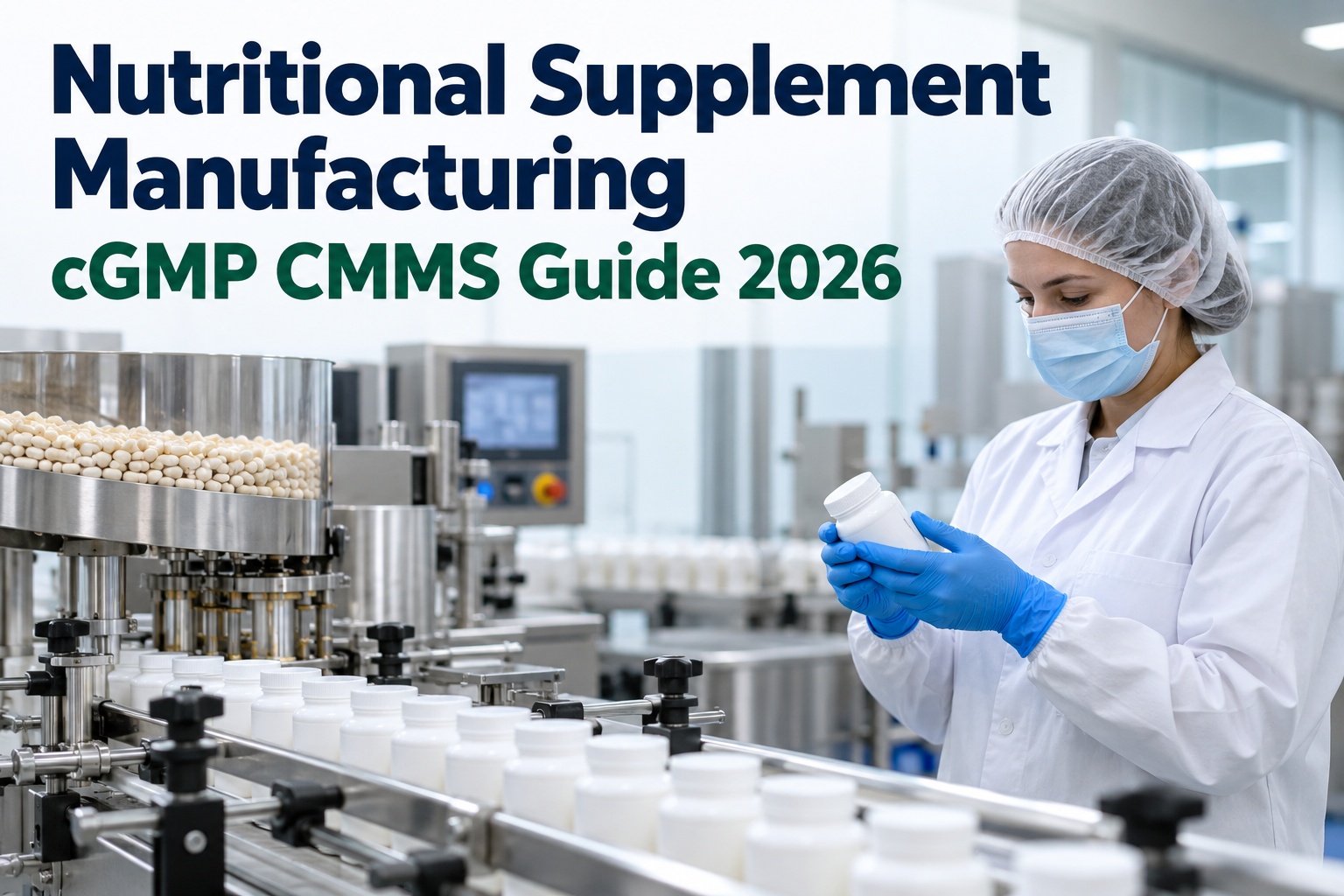
Dietary supplement manufacturing runs under 21 CFR Part 111 — the FDA's current Good Manufacturing Practice rule that turns "we made a supplement" into "we can prove this lot was made under control, met specification, and is backed by defensible r
Oxmaint CMMS for Food & Beverage Manufacturing
The AI-powered maintenance management software built for food & beverage plants
A purpose-built CMMS for beverage, dairy, brewery, bakery, meat, frozen and packaged-food plants — work orders, preventive maintenance, sanitation and calibration across every filler, pasteurizer, CIP skid, freezer and packaging line, audit-ready in one platform.
- PM triggered by batches, CIP cycles, bottles/packs produced or runtime
- Calibration & sanitation workflows built for FSMA, BRC & SQF audits
- Predictive alerts on refrigeration, boilers & utilities auto-create WOs
Oxmaint CMMS · F&B Plant Dashboard
1,864
Assets Tracked
312
Active WOs
100%
Calibration Compliance
93%
Line Availability
Oxmaint Activity Feed
Streaming
Calibration WO · Metal Detector MD-04
Monthly check due · QA notified · Test pieces reserved
CIP cycle logged · Filler Line 3
Cycle 04 complete · Post-CIP swab WO created
Predictive alert · Ammonia Comp 02
Discharge temp climbing · Oil sample WO staged
AI Vision · Water pooling near Mixer M-08
94% confidence · Sanitation WO · Photos attached
PLCs · MES · SAP PM all synced
Why F&B Plants Choose Oxmaint
A CMMS built for availability, sanitation and audit-day peace of mind
Configured for the meters, workflows and records F&B plants actually need — so audit prep becomes a two-hour report, not a two-week scramble.
Sanitation-Ready Workflows
CIP, sanitation and allergen changeovers in the same CMMS as PM.
Calibration for CCPs
Metal detectors, checkweighers and probes with pass/fail history.
Audit-Ready Records
FSMA, BRC, SQF and FSSAI audits pull straight from Oxmaint.
Refrigeration Predictive
Ammonia and CO2 compressor health from your existing sensors.
Filling & Packaging Lines
Every packaging line asset PM'd by real duty
Fillers, cappers, seamers, labelers, case packers and palletizers each carry their own PM schedule, parts list and stop history, with PM triggering off the cycles, bottles or packs actually run. Downtime is coded at the source — filler head faults, capper torque errors, labeler jams — and rolls up into line, shift and root-cause analytics.
Filler & Capper PM
Cycles & bottles filled per head
Labeler & Coder PM
Print head & roller wear tracking
Case Packer & Palletizer
Cases packed & layers stacked
Downtime at the Source
Fault code & duration per machine
Filling Line 3 · Live
8 StationsRotary Filler · 32 Head
Valve PM4.2M of 5M bottles · Seat kit reserved
Capper · Torque Verification
On ScheduleCalibration WO tonight · Torque gauge reserved
Line 3 · Shift Availability
92.6%36 min unplanned · Labeler jam top contributor
Palletizer · PM Due
Layer Belt18,200 layers · Belt inspection scheduled
Every stop coded · Every PM tied to production duty
Process Equipment
Pasteurizers, mixers, cookers and freezers — batch-count PM out of the box
Every pasteurizer, homogenizer, mixer, kettle, oven and blast freezer is tracked with its own meter — batches processed, operating hours or thermal cycles — so hygienic gasket, seal and heat-exchanger PM matches real usage. Gasket replacements, valve inspections, PHE pressure tests and agitator seal PM all run with food-grade parts and pass/fail criteria attached.
Pasteurizer & PHE PM
Batch-based gasket & pressure test PM
Homogenizer & Mixer PM
Valve, seal & impeller inspections
Ovens, Kettles & Cookers
Burner nozzle wear & belt tracking
Freezers & Blast Chillers
Coil defrost cycles & door seal PM
Process Equipment Board
Plant-WideHTST Pasteurizer · PHE
Gasket PM810 of 1,000 batches · Gasket kit reserved
Homogenizer H-02
HealthyLast valve inspection clean · 5,200 hrs
Batch Cooker BC-05
Seal PMAgitator seal at 720 batches · WO in queue
Blast Freezer BF-01
On ScheduleDoor seal PM next cycle · Defrost logs clean
Every hygienic seal & gasket on a real-duty schedule
Sanitation, Calibration & Compliance
CIP logs, allergen changeovers and CCP calibration — one CMMS carries the whole audit trail
Every CIP cycle is logged against the right line and skid, every allergen changeover runs as a signed-off procedure, and every metal detector, checkweigher and probe sits on a strict calibration schedule. Cycle counters auto-trigger post-CIP swab WOs, calibration WOs pull the correct test pieces and acceptance criteria, and a failed calibration auto-opens a corrective WO before that CCP goes back into service.
CIP Cycle Logging
Every cycle recorded against line & skid
Allergen Changeover WOs
Signed-off sequence per product change
CCP Calibration Schedule
Metal detectors, checkweighers, probes
Audit-Ready Records
FSMA, BRC, SQF, FSSAI pull from Oxmaint
Compliance Log · Today
LiveMetal Detector MD-04
Cal PassedFe/NFe/SS test pieces all detected · Signed 08:42
Checkweigher CW-02
Cal Due TodayCertified weight set reserved · QA on shift
Filler Line 3 · CIP Cycle 04
LoggedCycle complete · Post-CIP swab WO created
Mixer M-08 · Allergen Changeover
In ProgressNut › Nut-free · 6 of 9 steps signed
Full audit trail per asset · No paper log books
Refrigeration, Utilities & Predictive
Predictive maintenance on refrigeration, boilers & utilities
In an F&B plant, refrigeration reliability is cold chain integrity. The predictive engine plugs into the discharge temperature, suction pressure, compressor amp and vibration sensors already on your ammonia and CO2 systems, boilers and chillers via OPC-UA or Modbus — no new hardware. When a signal drifts from its learned baseline, a work order is generated with parts pre-reserved and the failure hypothesis attached.
NH3 & CO2 Refrigeration
Screw comp, condenser & evap PM
Steam Boiler PM
Feedwater, blowdown & burner PM
Compressed Air & Chillers
Runtime, filter dP & oil analysis
Auto WO on Anomaly
Parts reserved · Tech assigned · Hypothesis
Predictive Watchlist
Auto-WO OnAmmonia Comp 02 · Screw
WO CreatedDischarge temp rising · Oil sample WO
Steam Boiler B-01
InvestigateFeedwater conductivity trending · Chem sample WO
Glycol Chiller GC-04
MonitorCompressor amps slightly elevated
Cold chain protected · Sharper with every closed WO
AI Vision Inspection
AI Vision replaces routine hygienic walkdowns with 24/7 checks
AI Vision connects to your existing plant cameras and scans for what sanitation rounds look for: water pooling near mixers, product spills at transfer points, condensation on overhead runs, damaged wall panels and PPE compliance in hygienic zones. Anything above your confidence threshold becomes a maintenance or sanitation work order with still image, timestamp and video clip attached.
Water & Product Pooling
Under machines, at transfer points
Condensation on Overhead
Pipes, ductwork & ceiling zones
Hygienic PPE Compliance
Hair nets, beard covers, gloves
Guard & Structure Damage
Wall panels, floor coving, guards
AI Vision Findings
26 CamerasMixing Room · M-08 Cam
Water pooling · 94% confidence
Filling Line 3 · Overhead
Condensation drip · Pipe insulation
Hygienic Zone · Entry Cam
Hair net & gloves compliant
Packaging Hall · Cell 04
Floor coving damage · 88% confidence
NVIDIA edge inference · On-premise · 99.2% accuracy
Mobile CMMS & QR Workflow
Mobile app + QR — one scan for history, calibration & sanitation records
Every asset gets a QR label — fillers, pasteurizers, mixers, CIP skids, metal detectors, compressors and boilers. One scan shows open WOs, health score, last calibration, last sanitation WO, food-grade parts and the correct isolation procedure, then one tap creates a WO or logs an inspection. Offline-first, so wet zones and freezer rooms sync back later, every action time-stamped.
Scan-to-Asset Lookup
History, calibration & sanitation records
Digital Sign-Off
Every action time-stamped for audit
Offline-First Mobile
Wet zones, freezer rooms, no signal
LOTO & Permit Workflow
Ammonia isolation, hot work, confined space
QR Scan Result
Just ScannedMetal Detector MD-04
Location: Line 3 outfeed · ID: MD-L3-04
Last cal passed
Next cal today
1 open WO
Recent Activity
Cal-8419 · Monthly test piece check · Passed 30d ago
Insp-4712 · Reject bin check · Passed today
WO-6218 · Sensitivity adjustment · Closed
New WO
Cal Check
LOTO
Complete Oxmaint CMMS Platform
Every maintenance & compliance workflow your F&B plant needs — on one platform
Beyond work orders and PM — inspections, calibration, sanitation, spare parts, permits, compliance records, analytics and ERP integration.
Work Order Management
Create, assign and close WOs across lines, process equipment and utilities. Predictive alerts, AI Vision findings and PM triggers all auto-generate WOs with parts and procedure attached.
CCP Calibration Management
Metal detectors, checkweighers, X-ray inspectors and probes on strict schedules — test piece lists, acceptance criteria and pass/fail records per asset.
Sanitation & CIP Tracking
Every CIP cycle logged against the correct line and skid, post-CIP swab WOs auto-generated, and allergen changeovers enforced as signed-off multi-step WOs.
Downtime & Line Availability
Every stop captured with reason code and duration, rolling up into MTBF, MTTR and OEE availability per line, shift or product family.
Food-Grade Parts & Inventory
Sanitary gaskets, hygienic seals, food-safe lubricants, filler valves and mesh belts — auto-reserved on WO creation, PO drafted at reorder point.
Safety & Permits
Digital permit-to-work, LOTO, ammonia isolation and confined-space workflows built into every job, with photo evidence and audit-ready records.
Analytics & Reporting
Live dashboards for MTBF, MTTR, PM compliance, line availability, calibration status and cost per case — with multi-plant rollups.
SAP, MES & PLC Integration
Bi-directional sync with SAP PM, MM, EAM and FI, plus read-only feeds from MES platforms, CIP skid controllers and PLCs via OPC-UA and Modbus.
Latest Posts
Read More
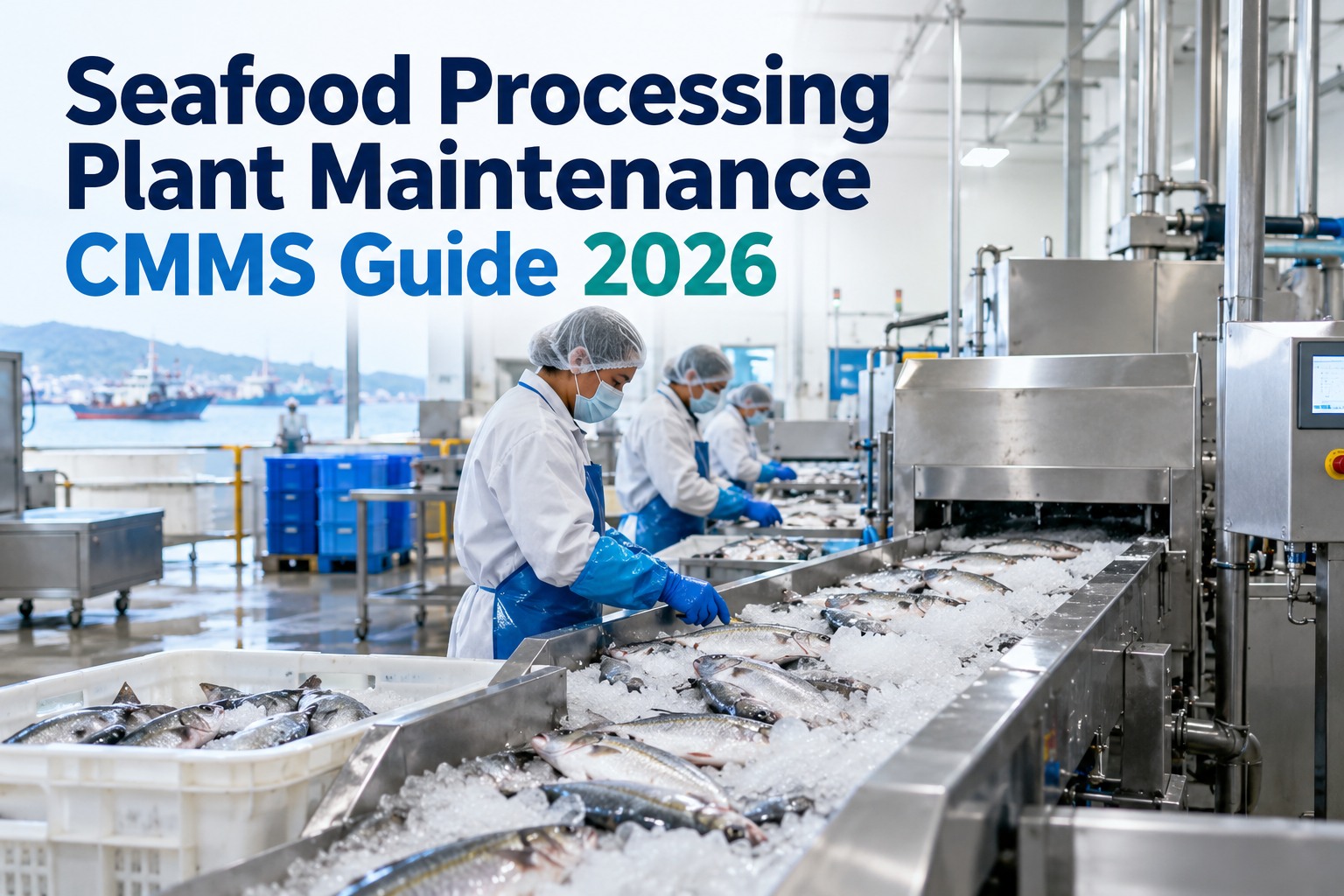
Seafood processing runs on two clocks at once: a fast-perishing product that punishes any lapse in the cold chain, and a harsh, wet, salt-laden wash-down environment that punishes the equipment keeping that chain intact. Add FDA seafood HACCP on t

Read More
Pet food manufacturing sits in an unusual place: it runs the same extruders, dryers, and coaters as human food production and is held to human-grade food-safety expectations under FSMA — but it does it on some of the most mechanically punishing eq
Read More
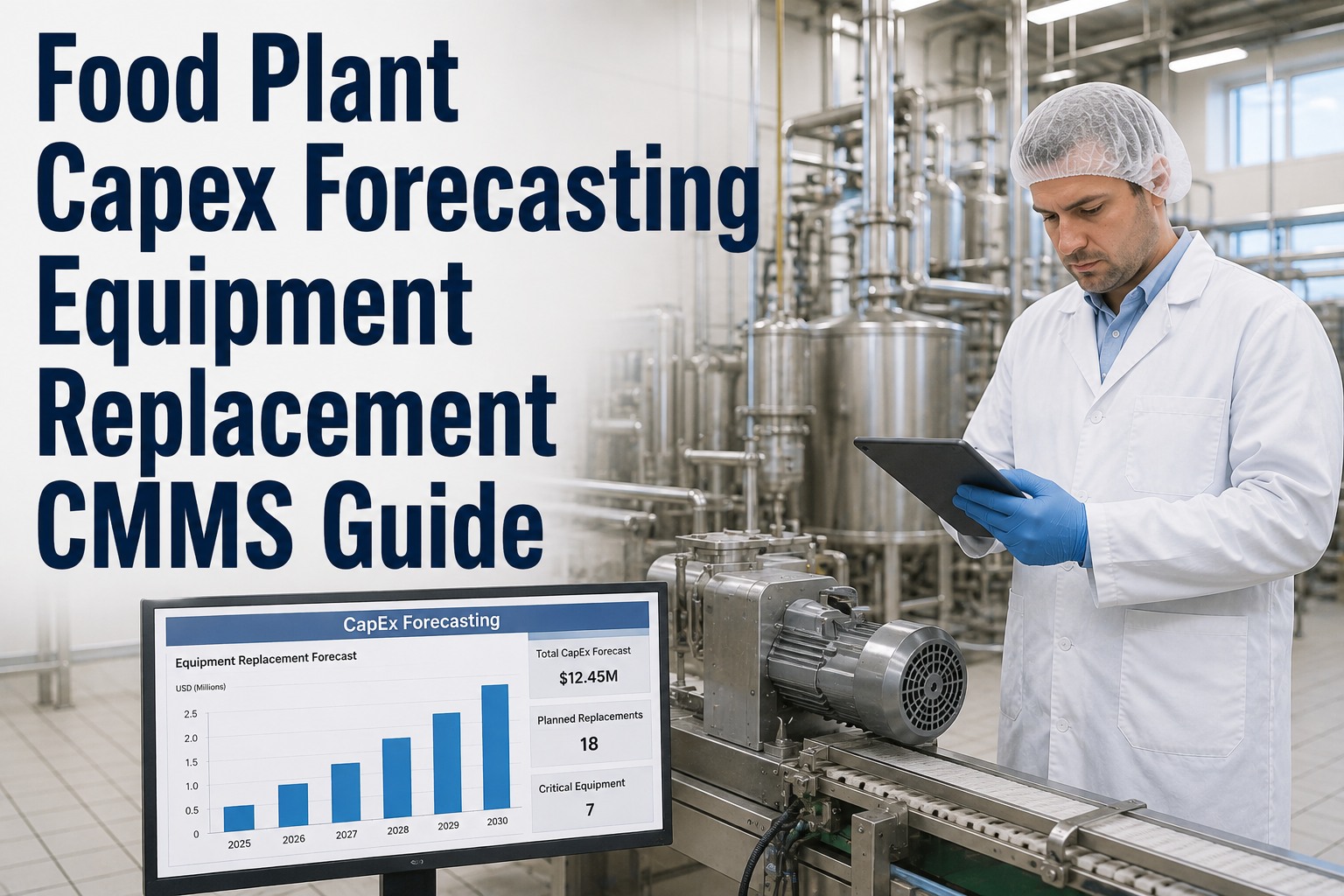
Food plant CapEx approval is where reliability teams and finance teams either align on defensible numbers or fight the same budget battle every October. The pattern is universal: reliability knows the chiller is failing, finance sees a $180K reque
Read More
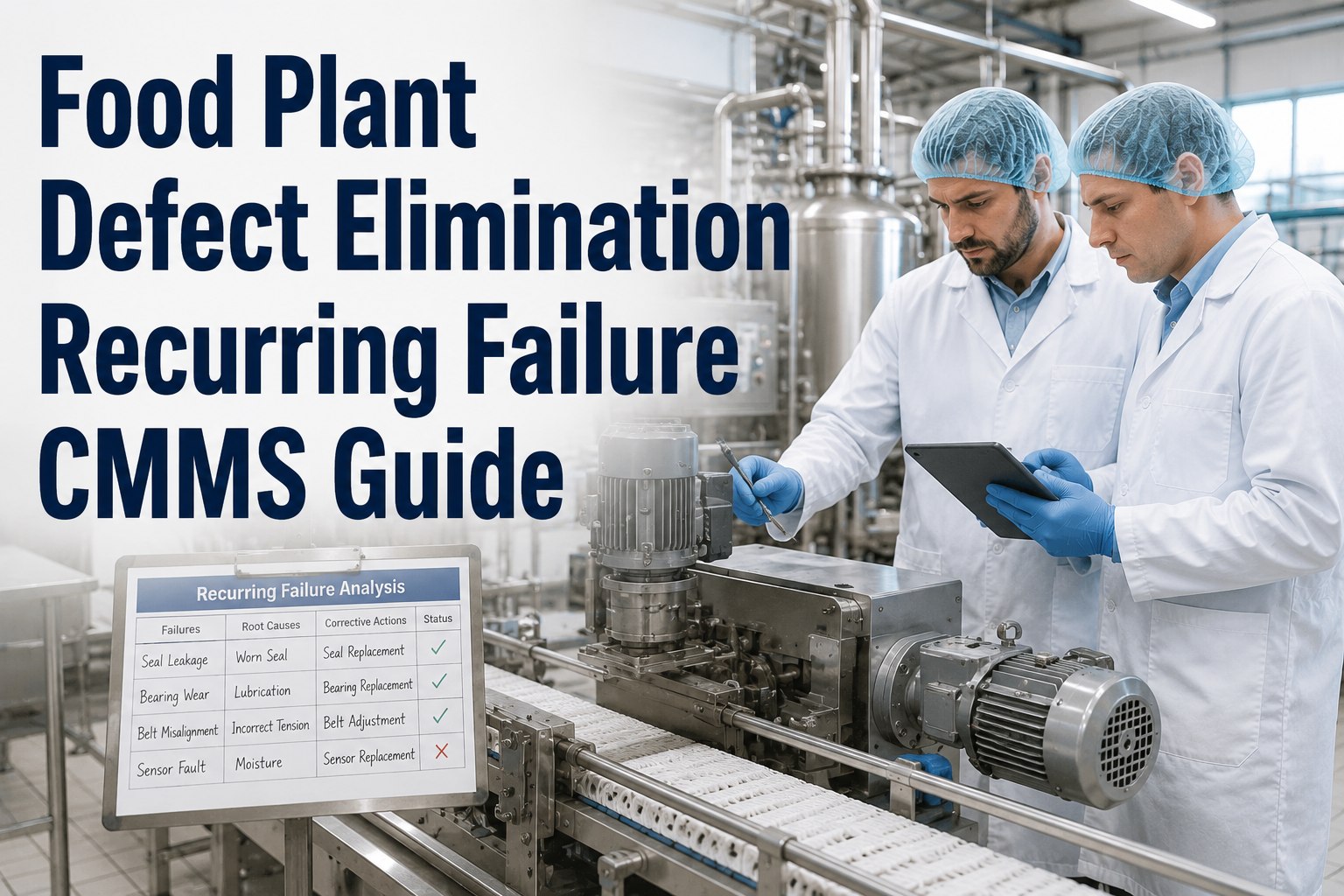
Somewhere in every food plant is a machine that fails the same way every few weeks. The filler that jams, the conveyor bearing that seizes, the seal that weeps — the crew knows the fix cold, swaps the part, and the line runs again until next time.
Read More
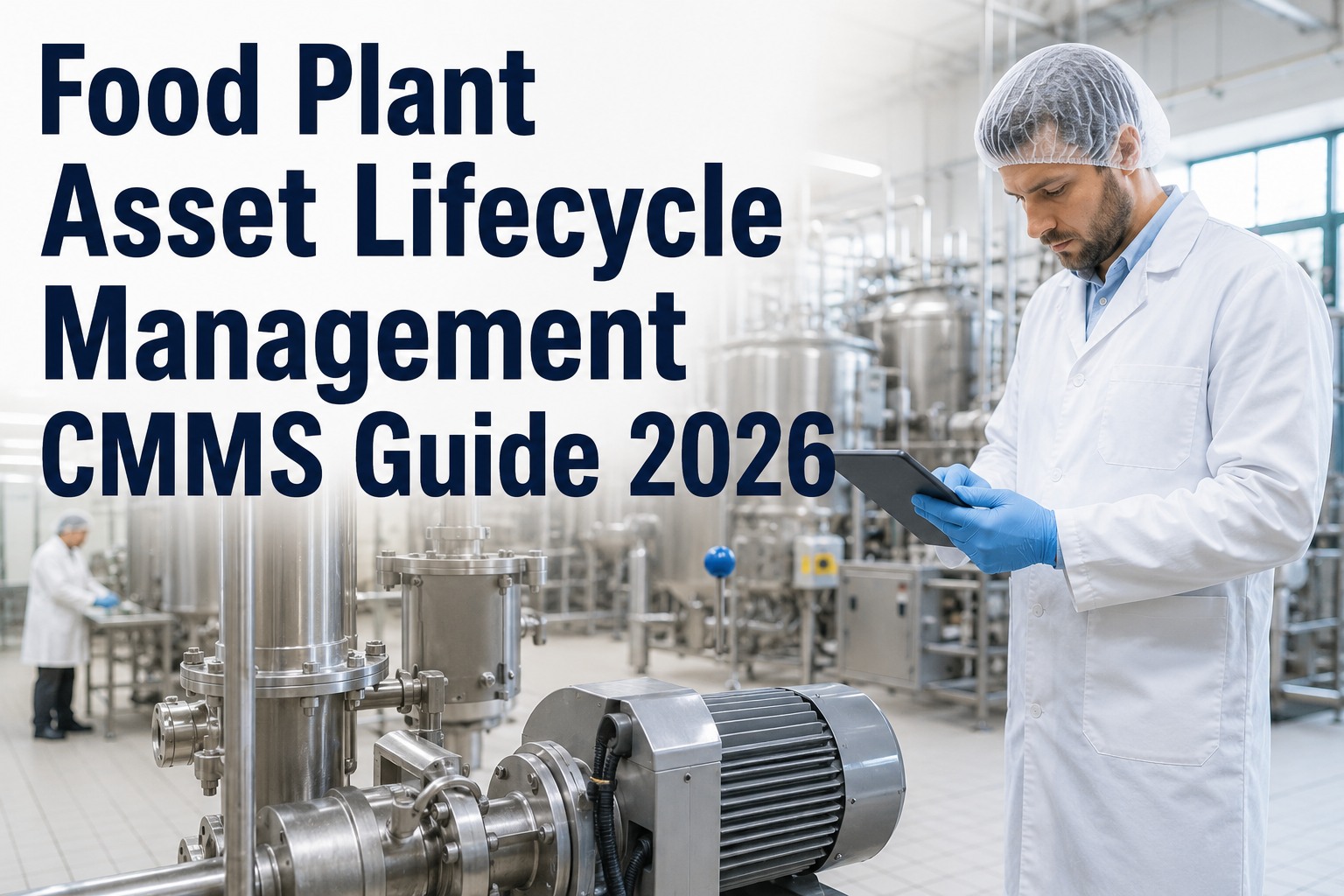
A food plant's equipment inventory is not a line item on the balance sheet — it's a 15-30 year lifecycle where acquisition cost is only 10-25% of what the asset actually costs the business, and where every replace-or-repair decision carries food-s
Read More
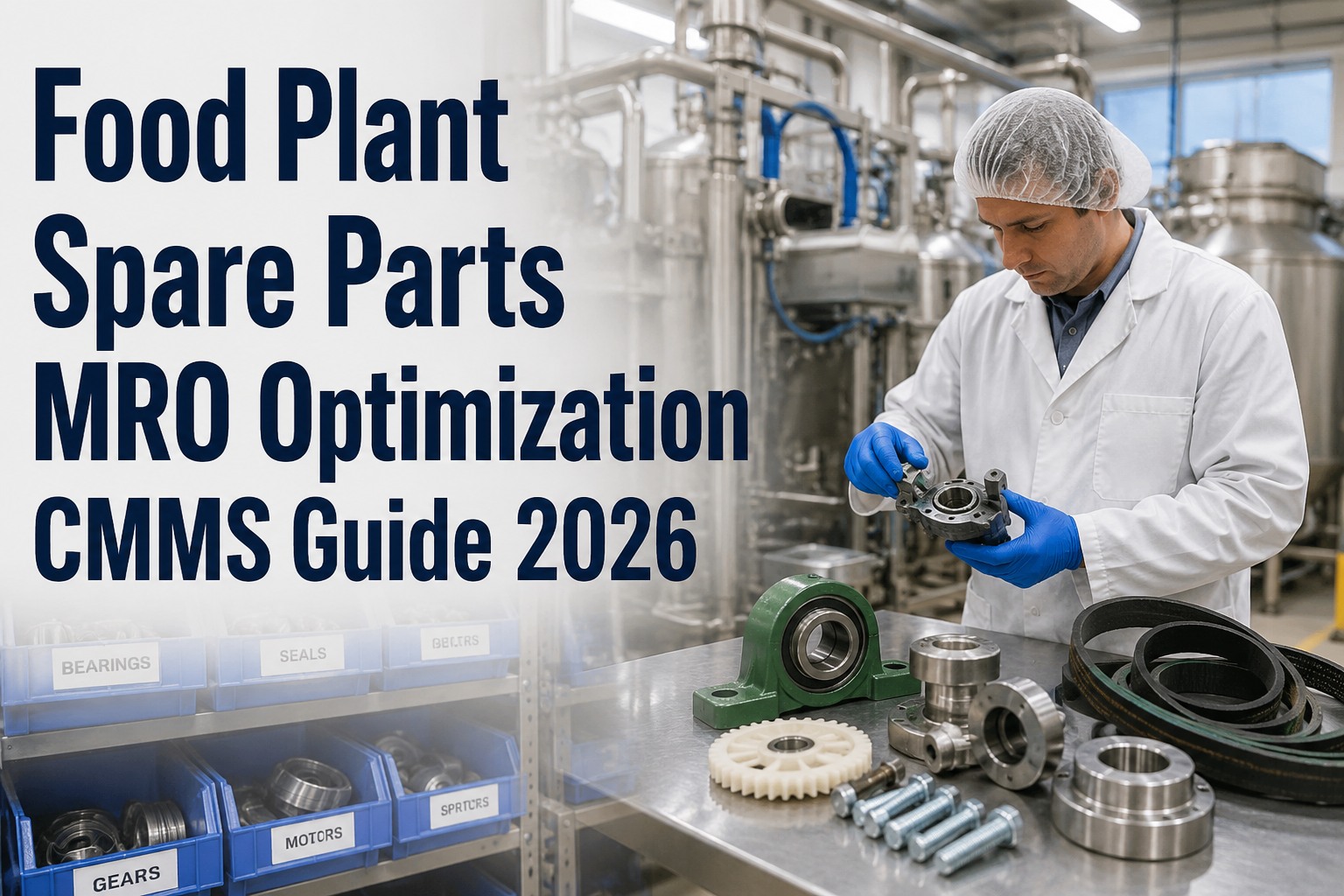
Food plant MRO optimization sits at an intersection most other manufacturing verticals never touch: every spare part is both an inventory-economics decision and a food-safety decision. An unrated bearing grease pulled from the general MRO shelf du
Read More
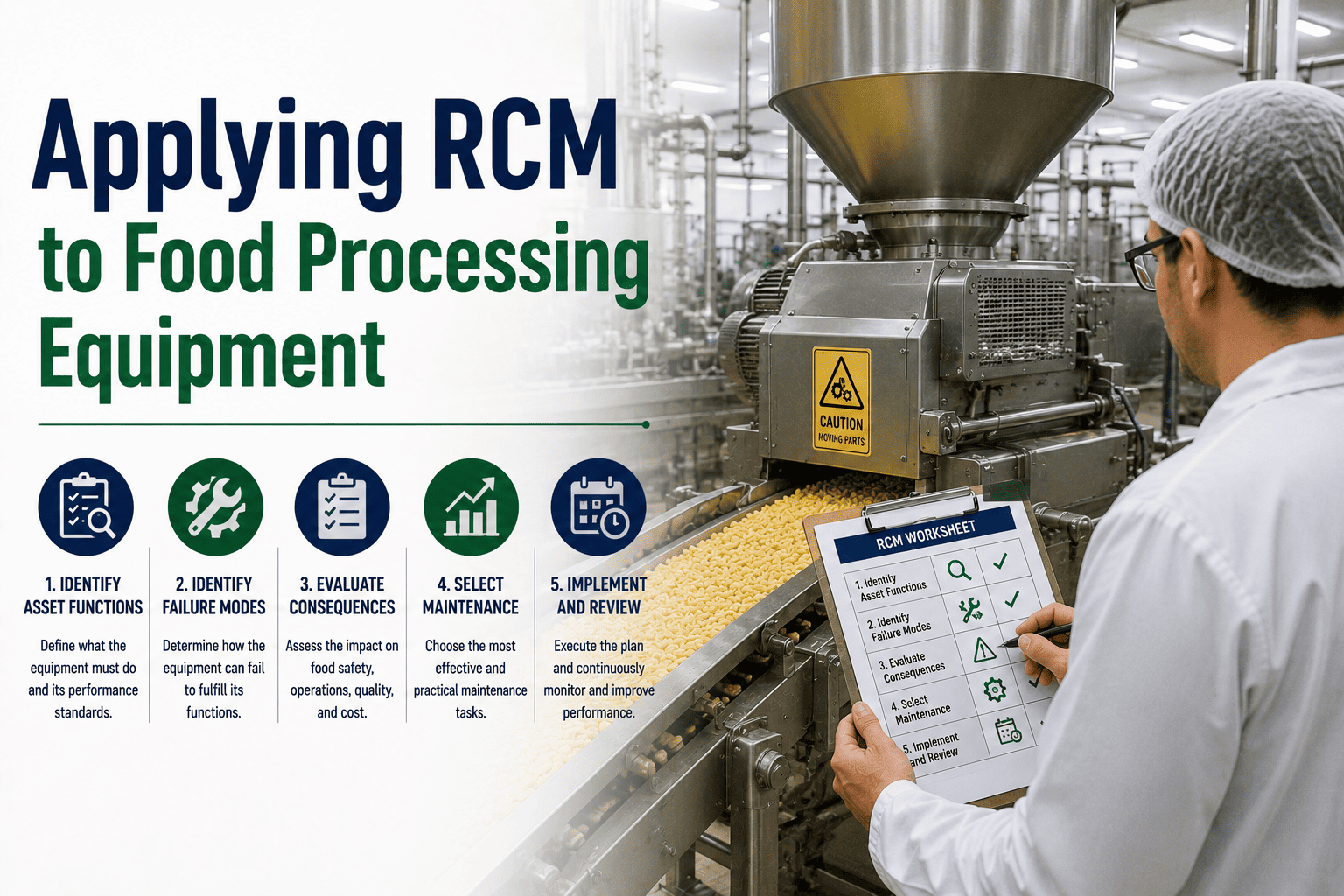
A filler gets a monthly PM because that's what the OEM manual says, on a schedule nobody has questioned in years. Half the tasks catch nothing. The one failure mode that actually shuts the line down isn't on the list at all. That's a PM program bu
Read More
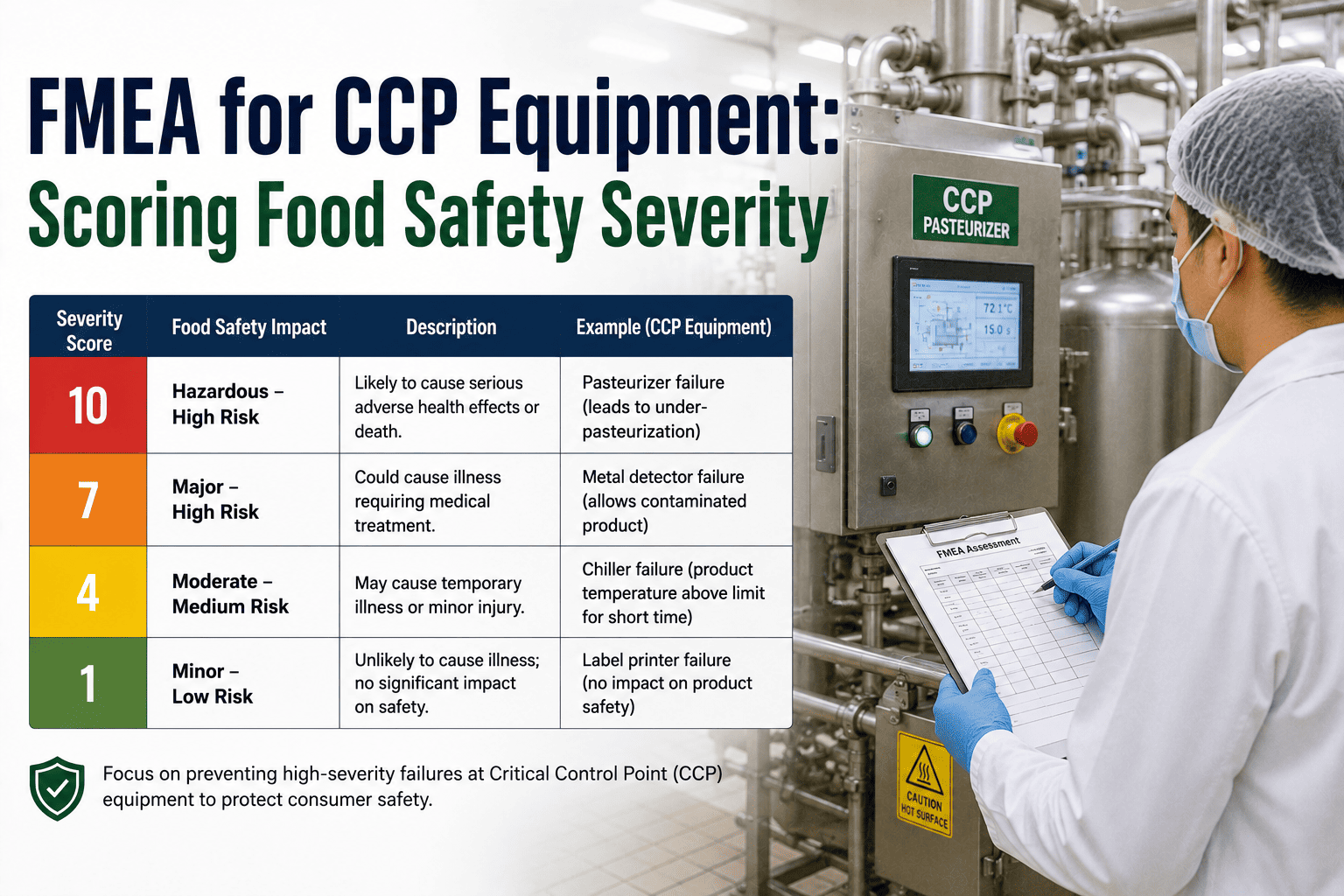
A standard FMEA scores a bearing failure by cost and downtime. On a CCP asset, the same bearing failure can mean metal fragments reaching product — and a severity score built for reliability alone will never catch that difference.

Read More
A standard vibration sensor mounted in a sanitation zone lasts about as long as it takes for the first hot caustic wash-down to find its way past the housing. Then the plant is back to listening for bearing noise by ear, on a rotating fleet that n

Read More
Ask a maintenance manager how reliable the sanitation line is and you'll usually get a feeling, not a number. Ask the same question about a filler, a packaging line, and a refrigeration compressor, and the feeling changes for each — but nobody wro
Read More
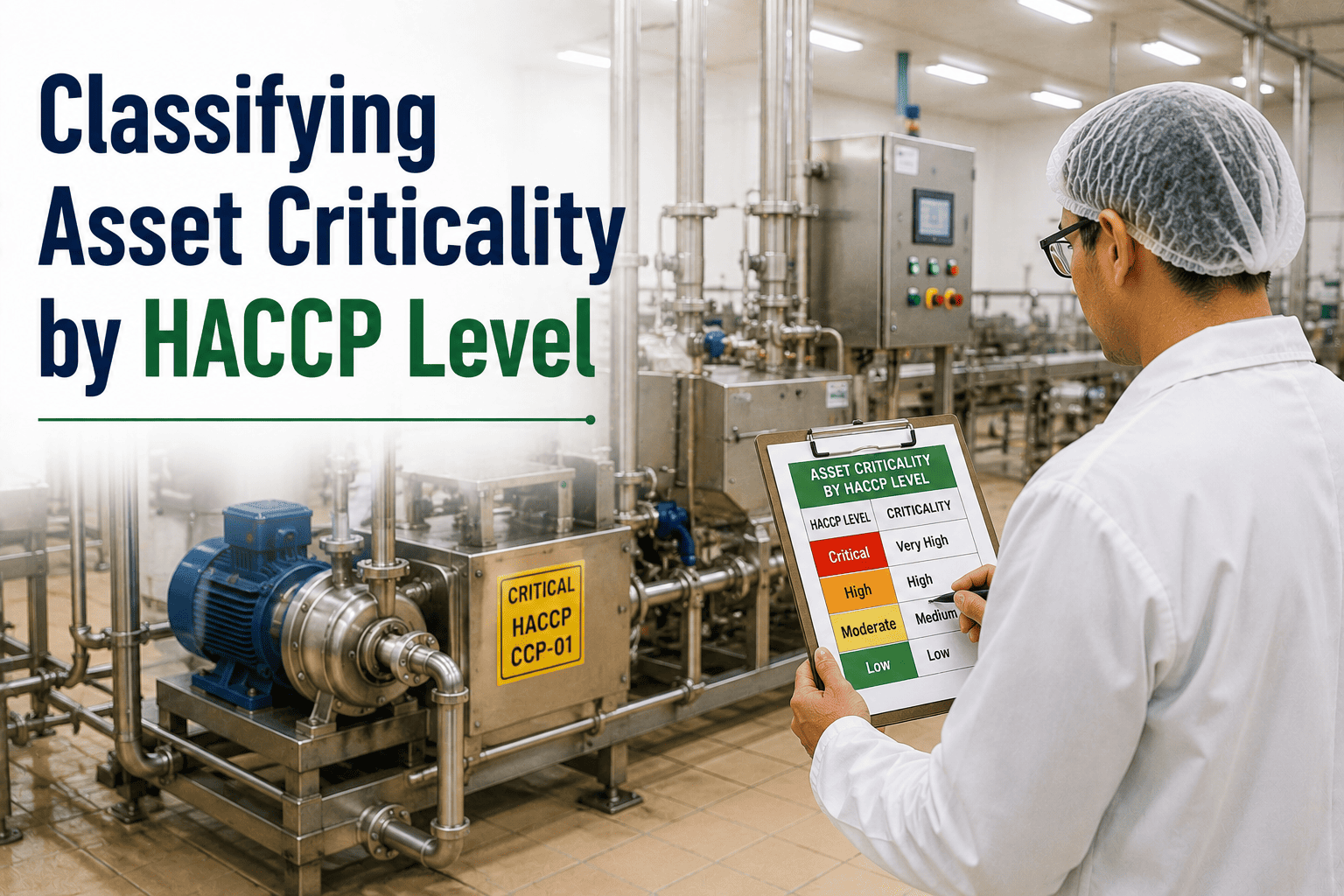
Two conveyors break down the same week. One sits outside a CCP and waits a shift for a technician. The other feeds directly into a critical control point, and the same wait becomes a food safety event. Most plants run both through the identical wo
.png)
Read More
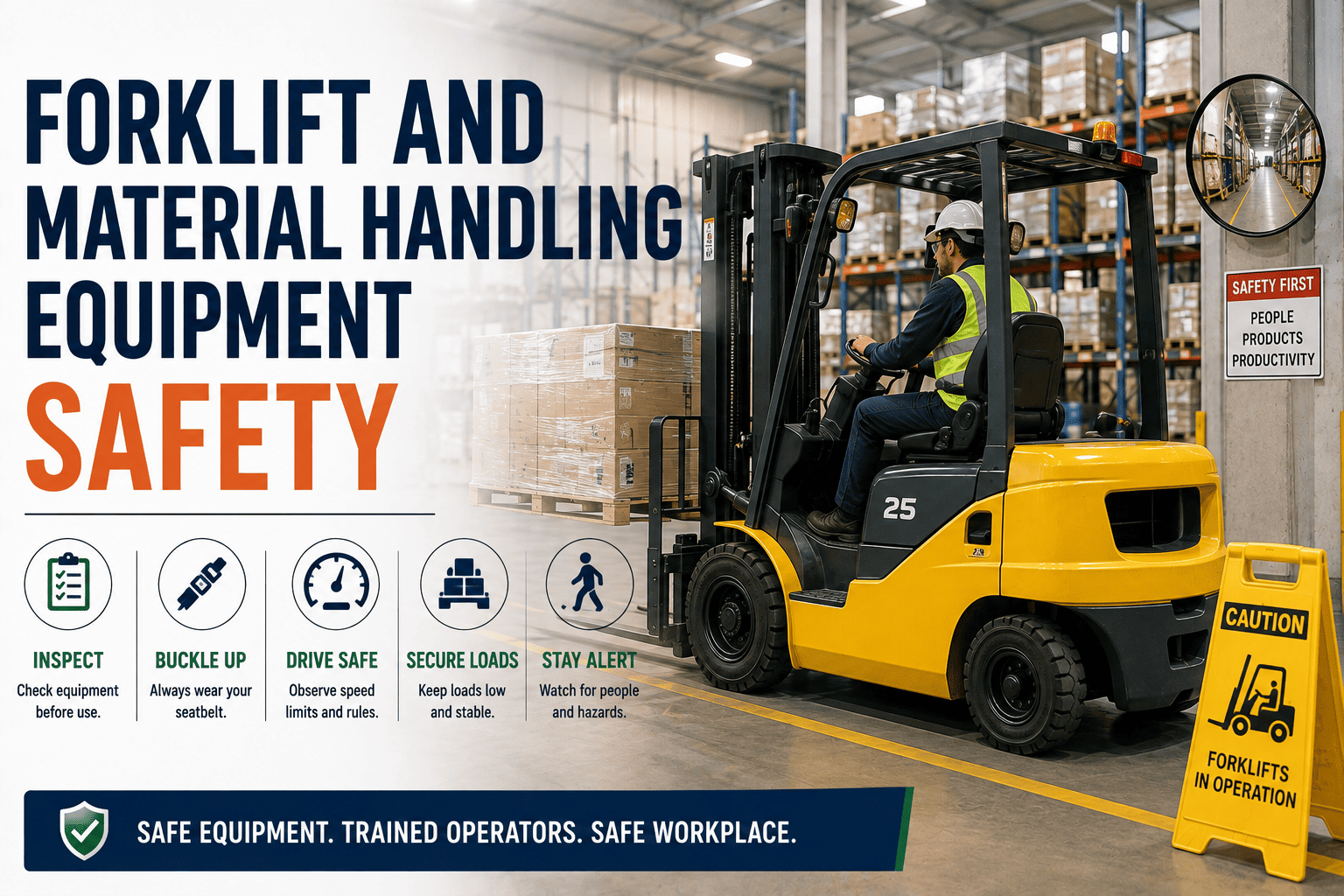
A drum of sanitizer sits one shelf above a food-grade lubricant. A cleaning chemical gets decanted into an unlabeled spray bottle for a quick job. An SDS binder in the corner hasn't been opened since the last audit. None of it looks urgent — until
Read More
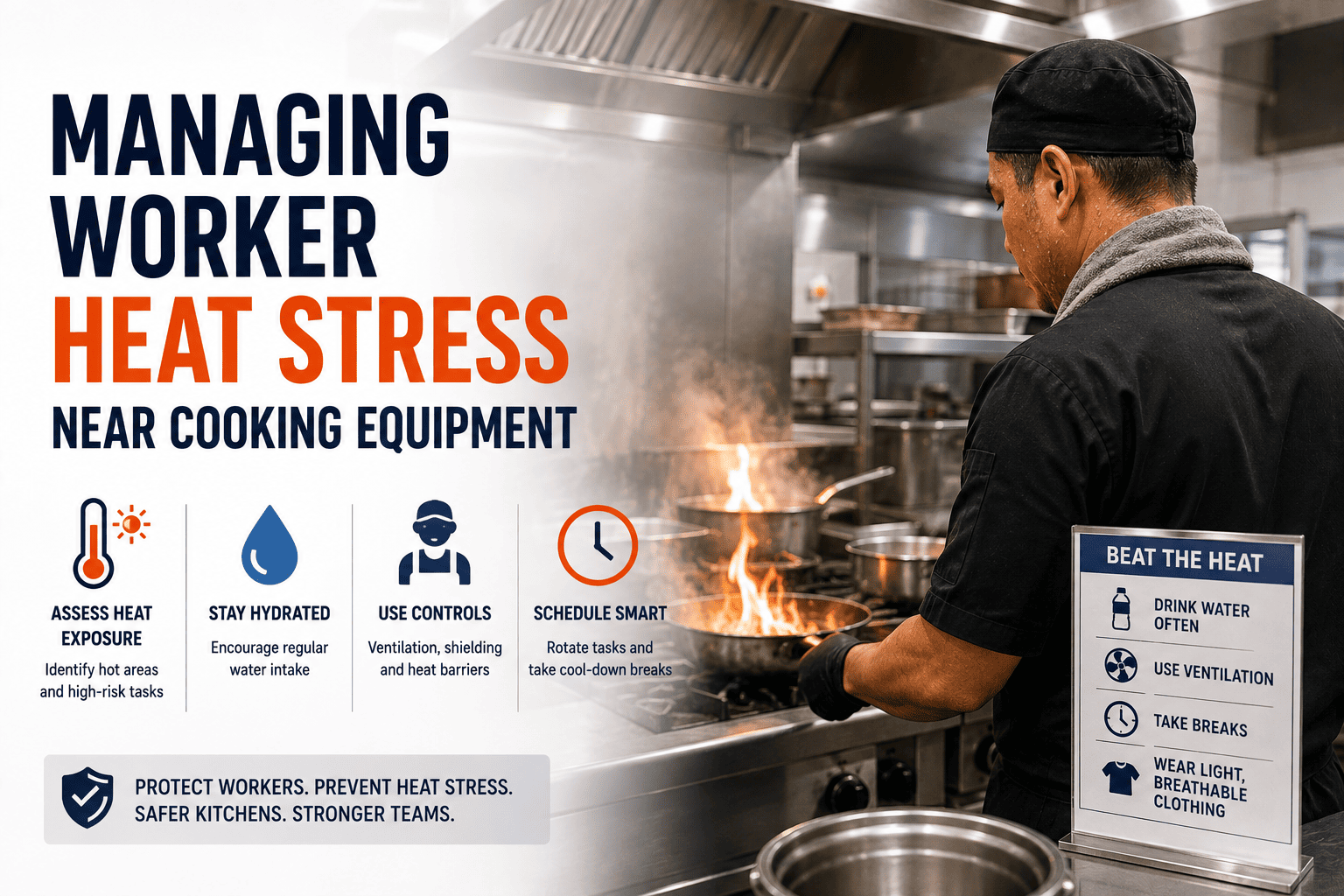
A propane forklift passes its morning check on a clipboard nobody really read. An operator's certification lapsed eight months ago and no one flagged it. A pedestrian aisle painted three years ago has faded past the point anyone notices it. None o
Read More
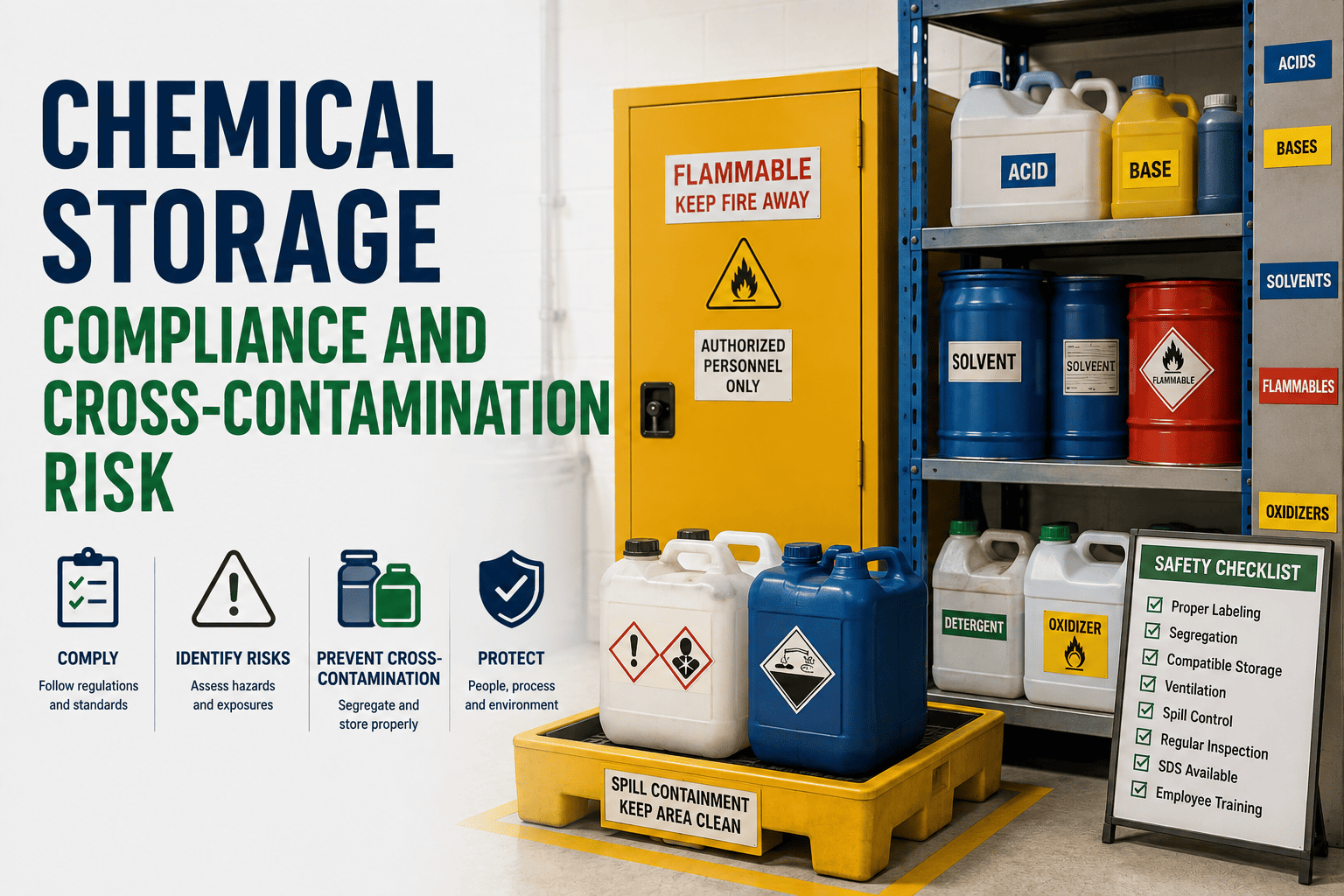
Commercial kitchens and food canneries sit on OSHA's own list of high-risk indoor heat locations, right alongside foundries and glass plants — and enforcement activity around cooking and processing areas is climbing in 2026.
Read More
One unlabeled drum is all it takes — a food-grade lubricant stored next to an industrial one, or a sanitizer sitting too close to an allergen cleaner, and a routine audit turns into a recall conversation.
Read More
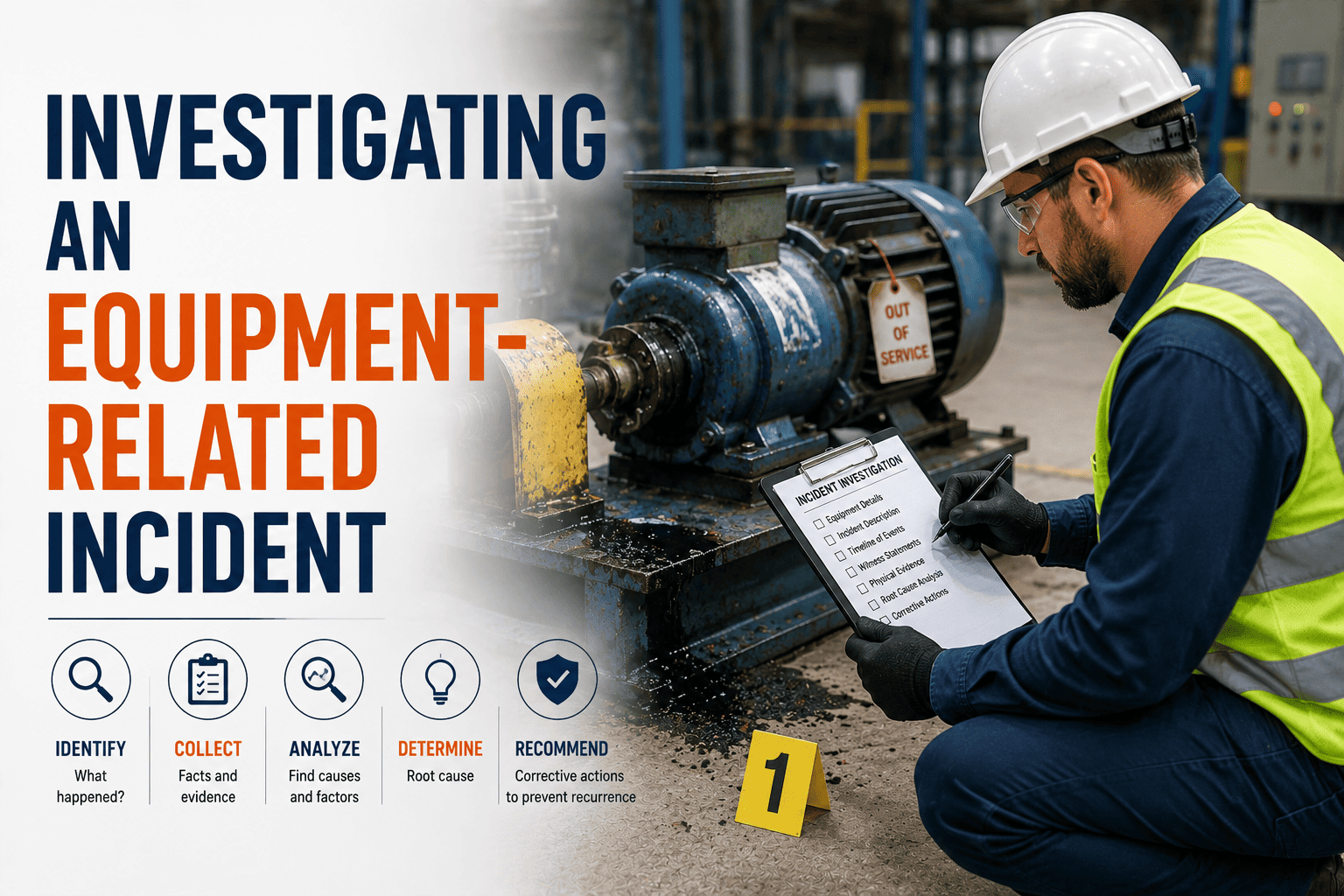
A machine guard fails, a technician gets caught, and the line stops for the day. What happens in the next 48 hours decides whether that failure comes back in six months or gets shut down for good.

Read More
A ladder wobbles but nobody falls. A guard is left off for one shift and nothing happens. Most plants let that moment pass unreported — and lose the one warning that came free.
Read More
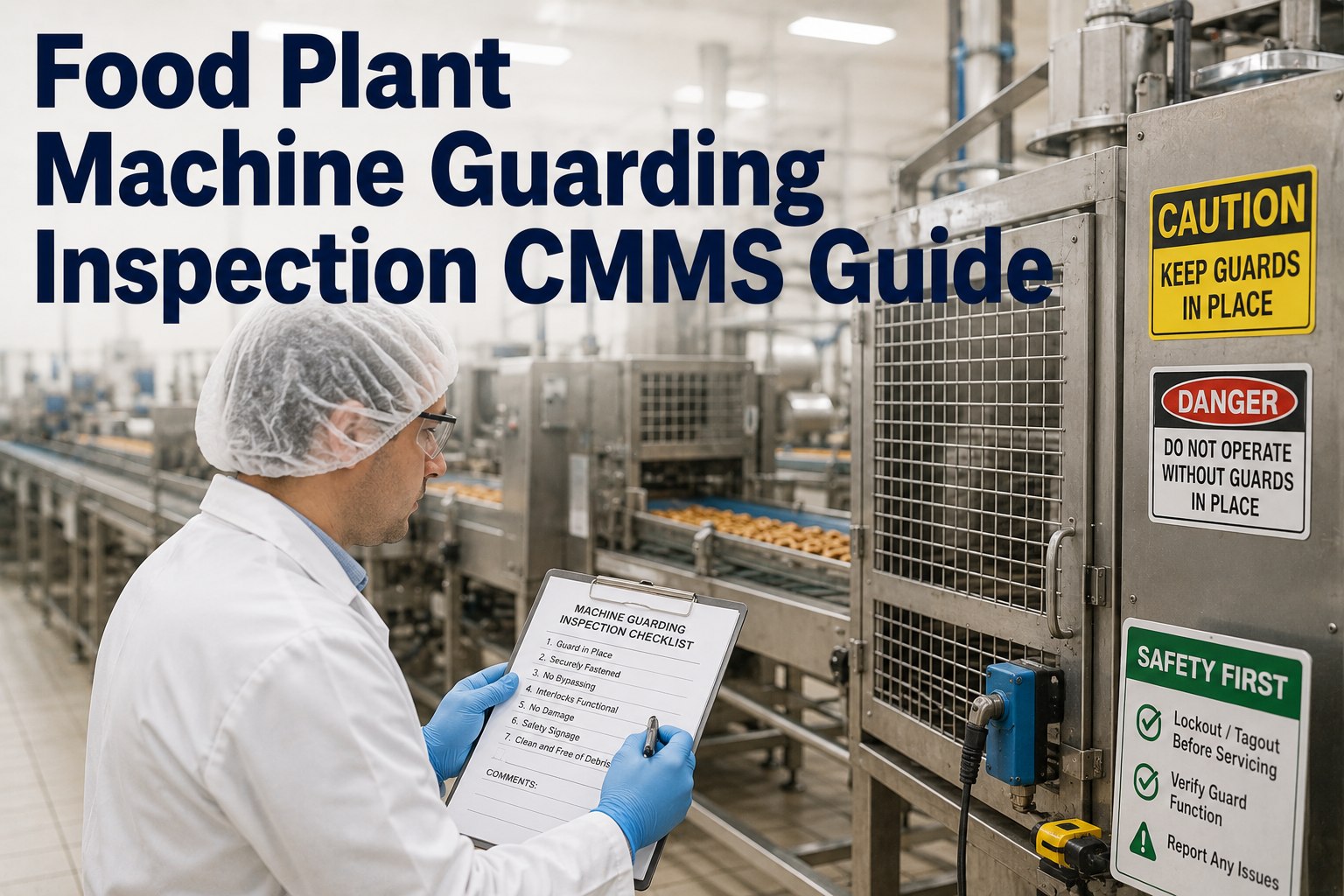
Machine guarding sits at or near the top of OSHA's most-cited violation list year after year — and on a food processing floor, every finding on that list is a pinch point, nip point, or blade that can take a finger, a hand, or worse in the second
Read More
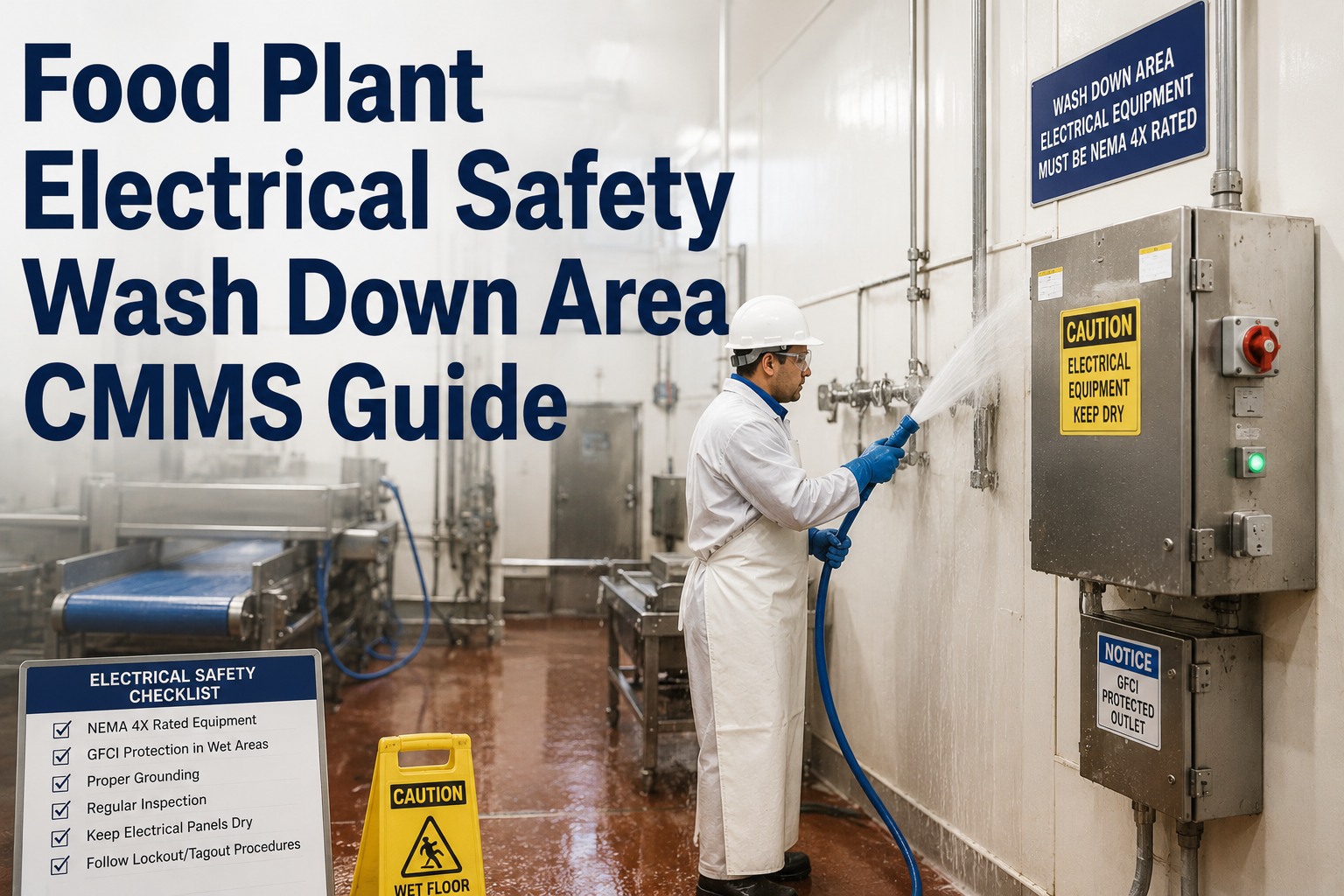
Wash-down zones are where food plants combine three of the most hostile conditions for electrical infrastructure into one operating environment — direct hose-directed water at pressures of 65+ GPM from 10 feet, aggressive caustic and acidic sanita
Read More
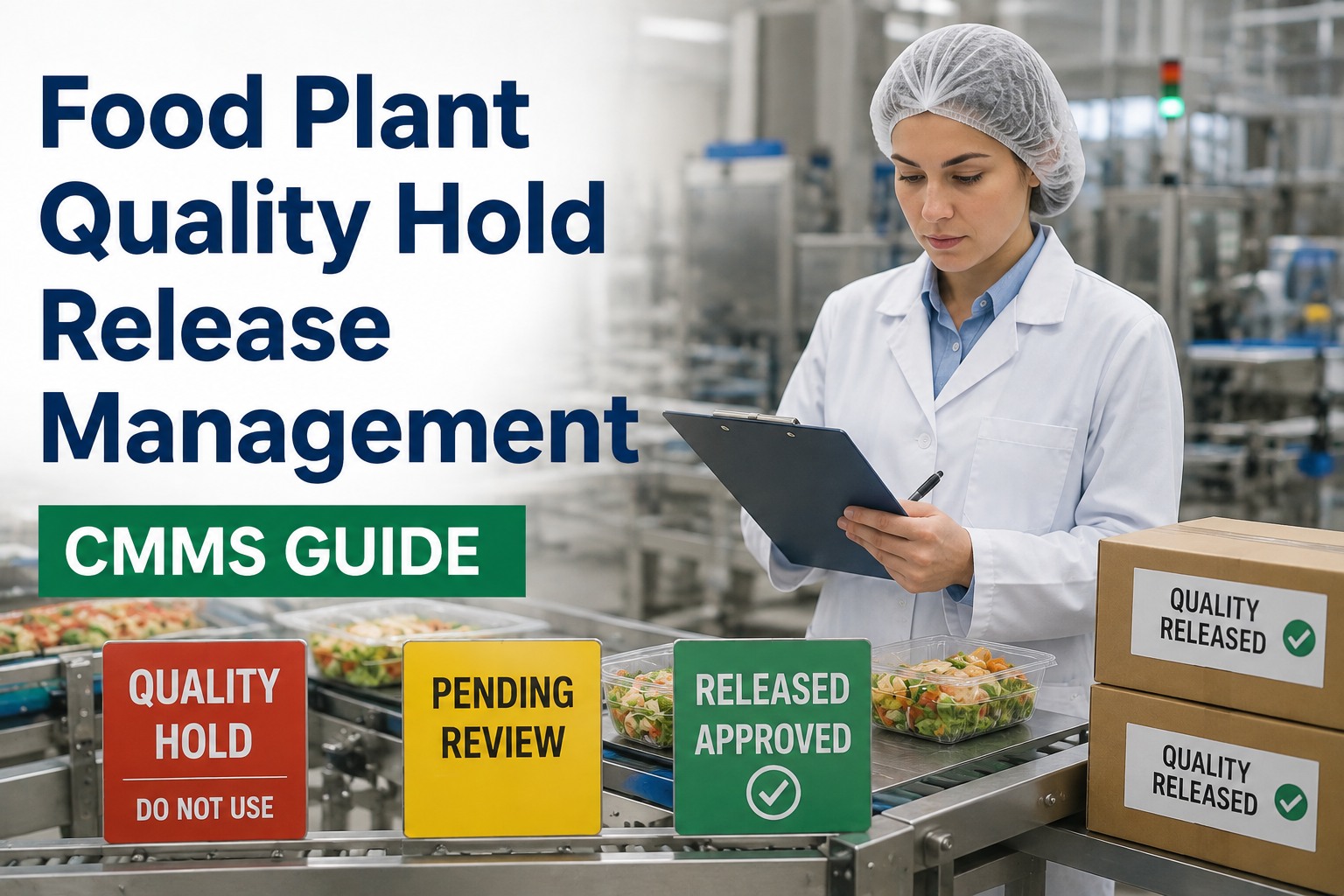
A quality hold triggered by a maintenance event is the critical junction where food plant hold discipline either holds firm — or product ships before it should. In food manufacturing, equipment downtime correlates to quality holds more often than

Read More
Statistical process control (SPC) in a food plant is most powerful when its signals trigger maintenance investigation — not just quality holds. When a CMMS integrates directly with control chart CCP (Critical Control Point) monitoring, process dri
Read More
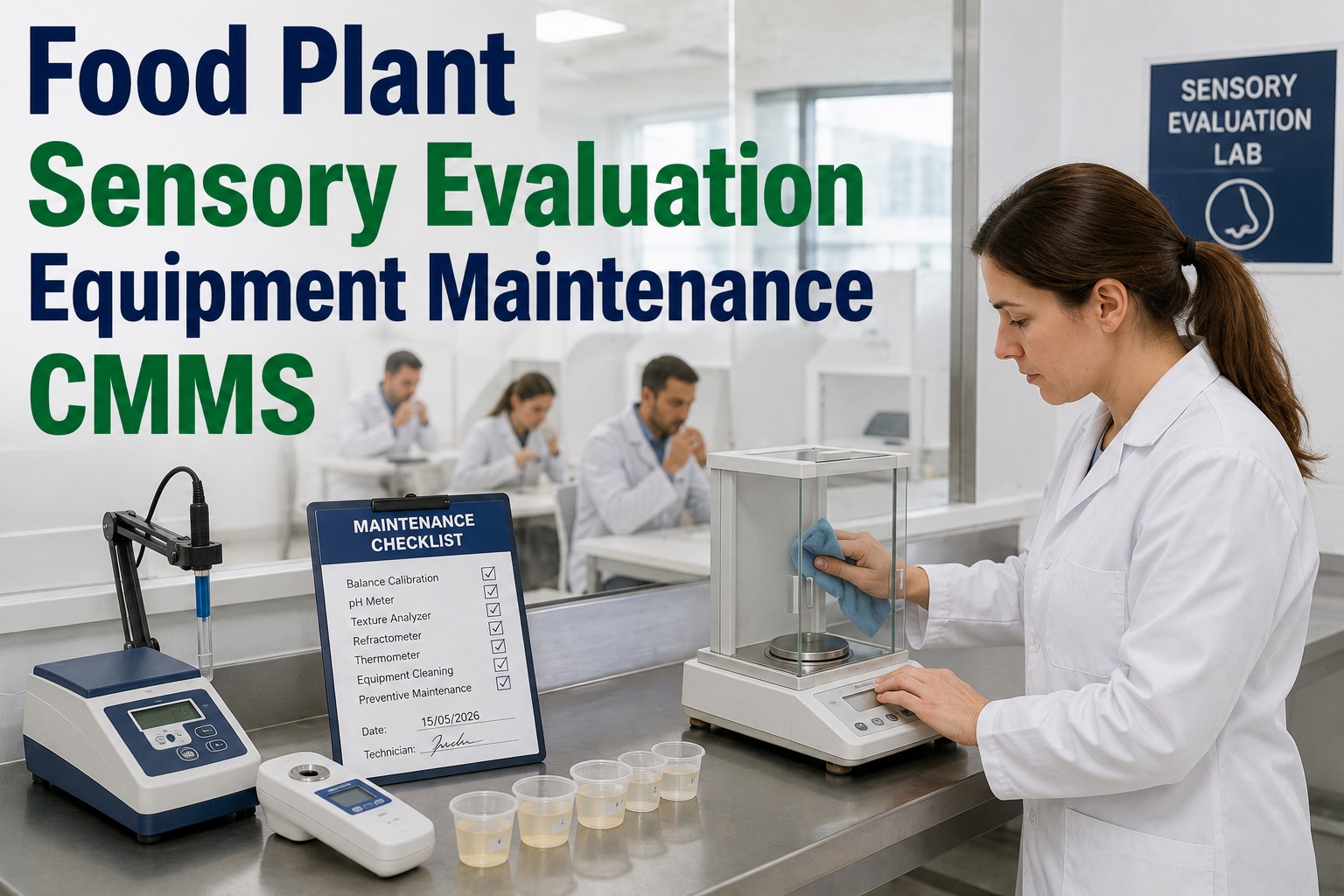
Maintaining the sensory evaluation room in a food plant requires strict environmental control, precise equipment calibration, and rigorous documentation to ensure tasting accuracy and panel consistency. A sensory evaluation equipment maintenance g
Read More
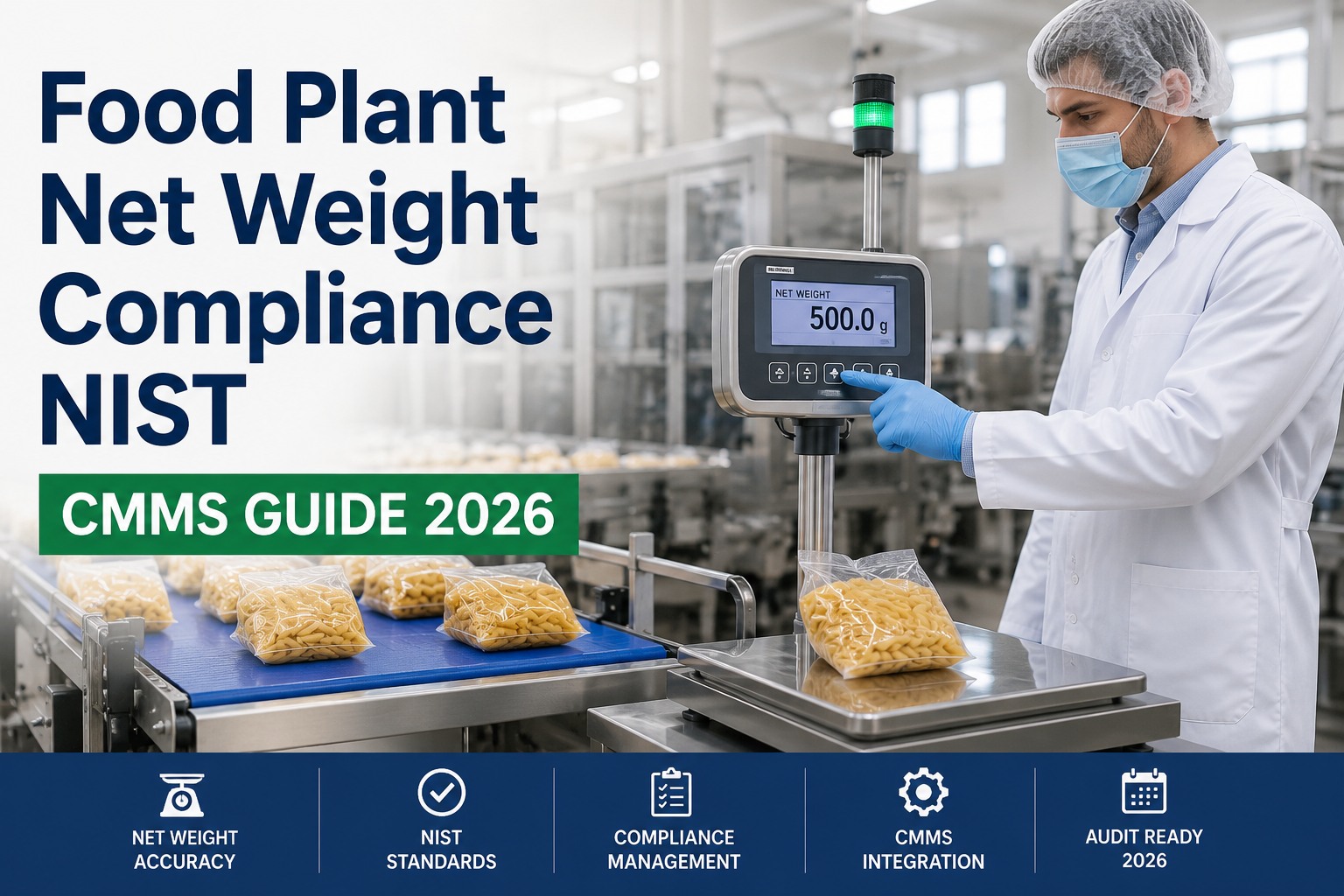
Net weight compliance under NIST Handbook 133 is the state weights-and-measures standard that governs how food packaging plants verify declared contents — and non-compliance triggers penalties, product recalls, and lost retail contracts. This guid
Read More
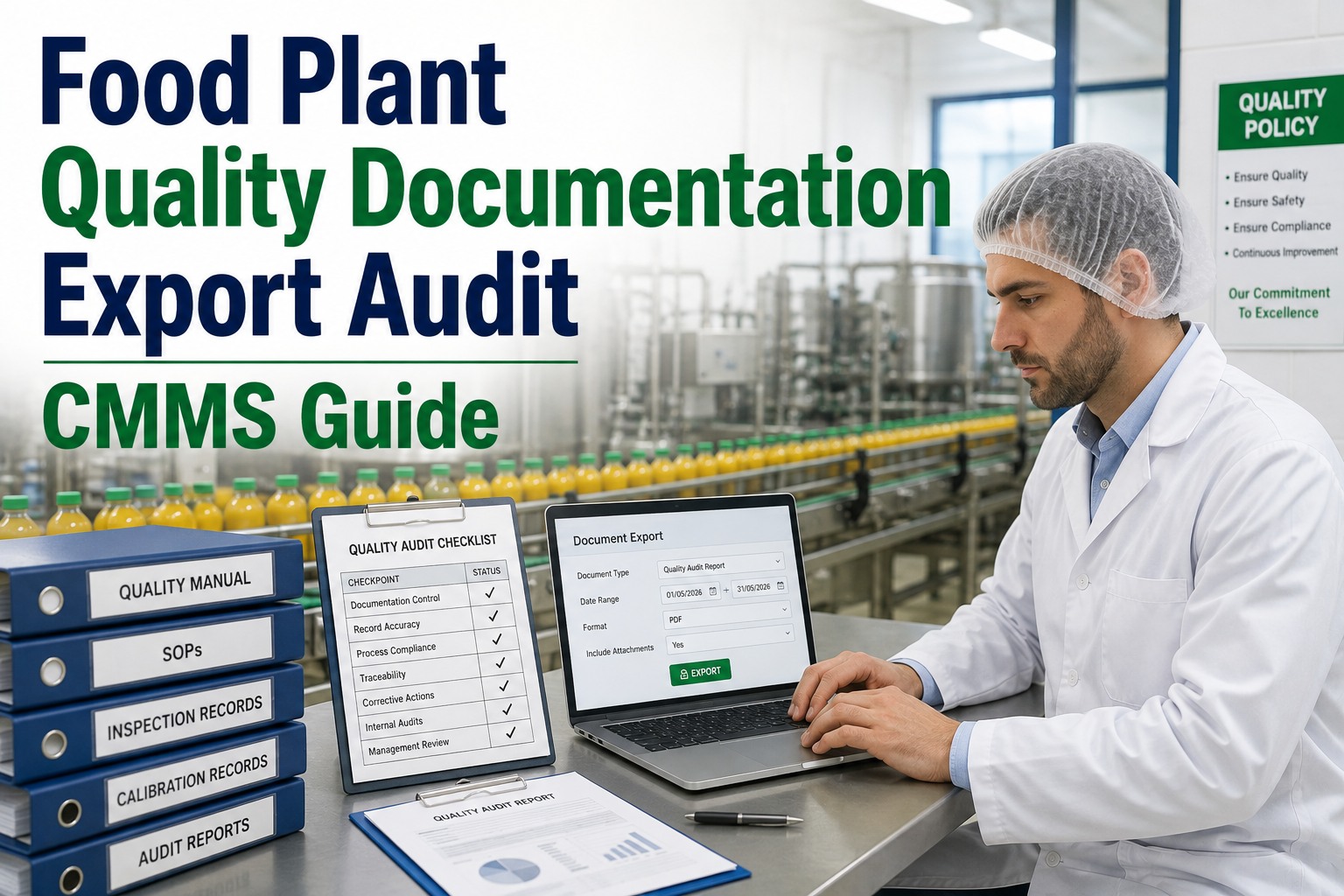
Food plant quality documentation export capabilities are what separate a smooth, same-day audit from a week of panicked binder-building. When an SQF or BRC auditor requests CIP validation records, PM histories, or calibration logs for a specific l
Read More
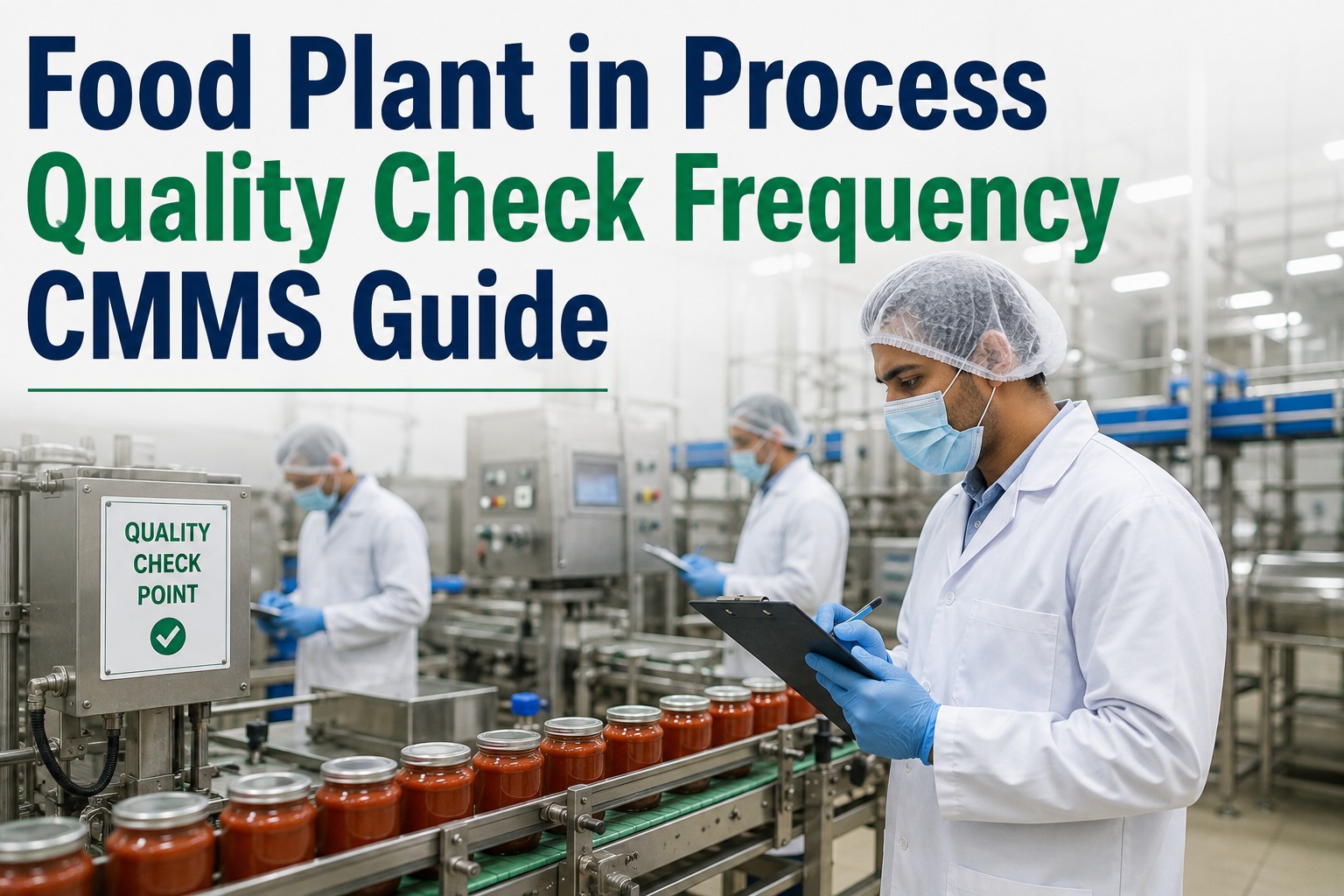
Setting in-process quality check frequency by product risk category is the single most effective lever a food plant can pull to balance safety, compliance and labor efficiency — and this in-process guide walks through exactly how to align hourly v

Read More
A retail customer second-party audit from Costco, Walmart, or Kroger can make or break a multi-million-dollar supply contract, yet most food plants scramble for documentation in the final 72 hours. This customer audit preparation guide breaks down
Read More
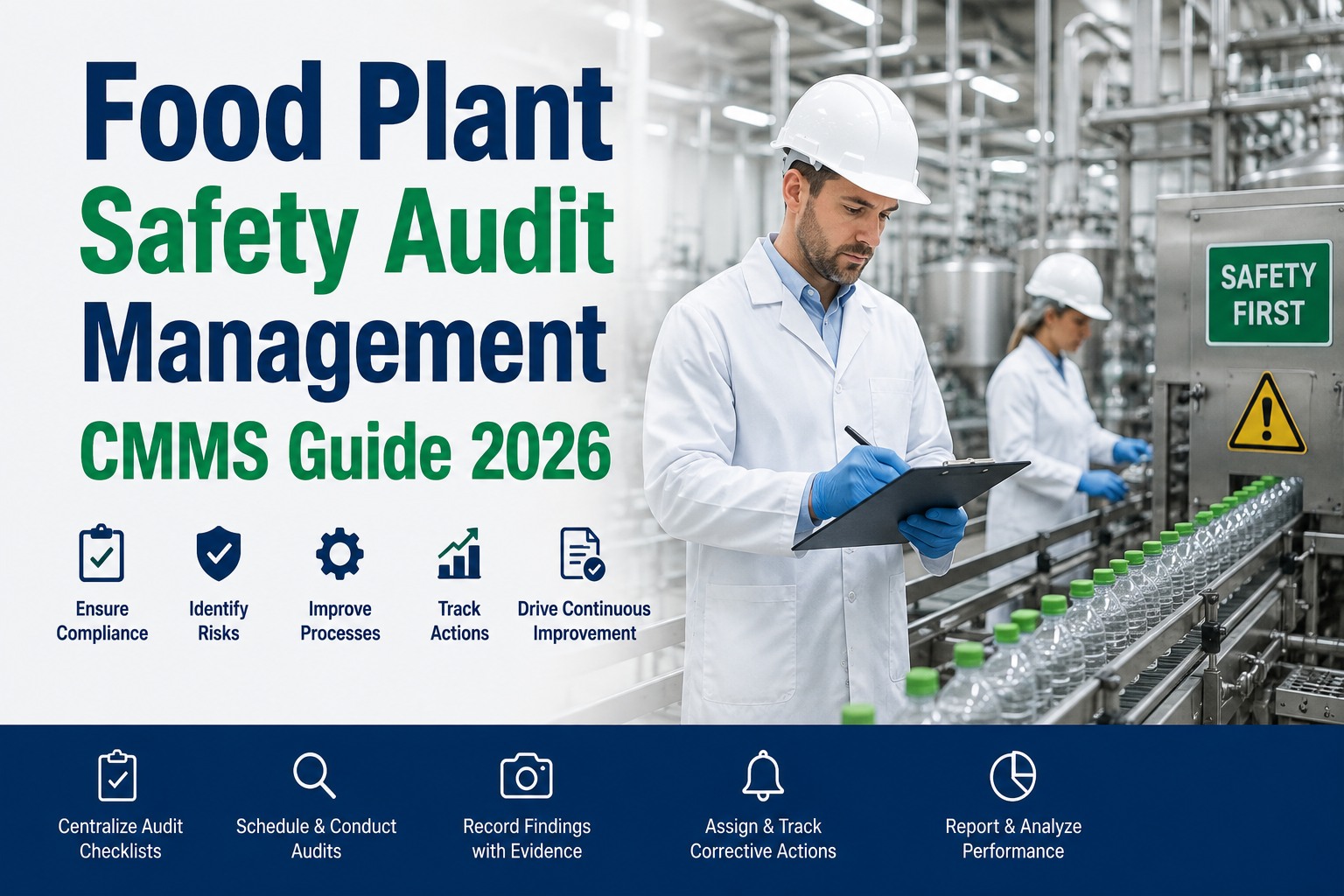
Food plant safety audit management across every regulatory body — OSHA, FDA, USDA, EPA and state fire marshals — is a coordinated operational discipline, not a scramble per audit cycle. This 2026 CMMS guide shows how maintenance and reliability te
Read More
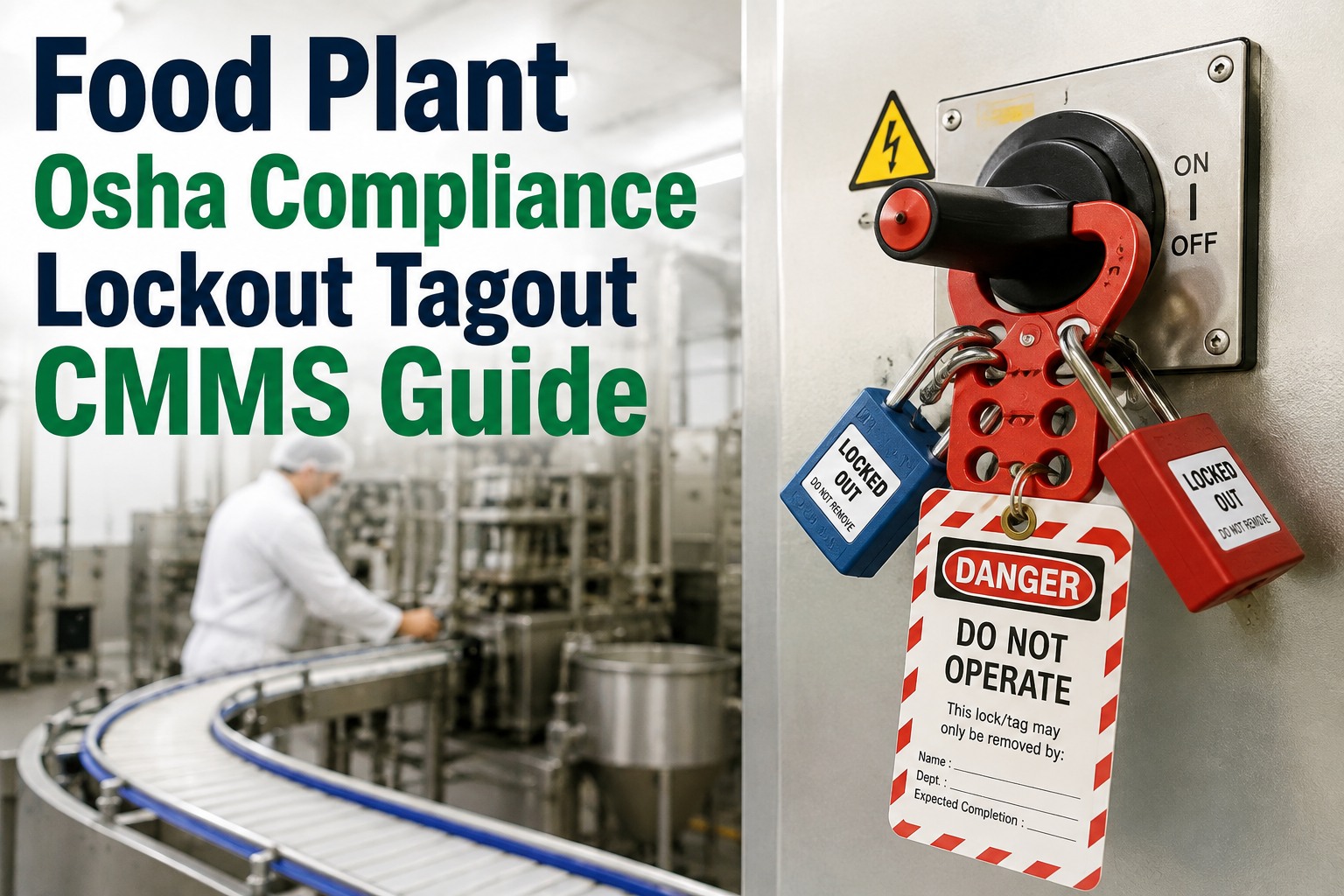
OSHA compliance in food plants converges hardest where sanitation crews and maintenance technicians share the same equipment, the same windows, and the same chemical hazards. A single overlooked lockout step during a washdown can trigger a catastr
Read More
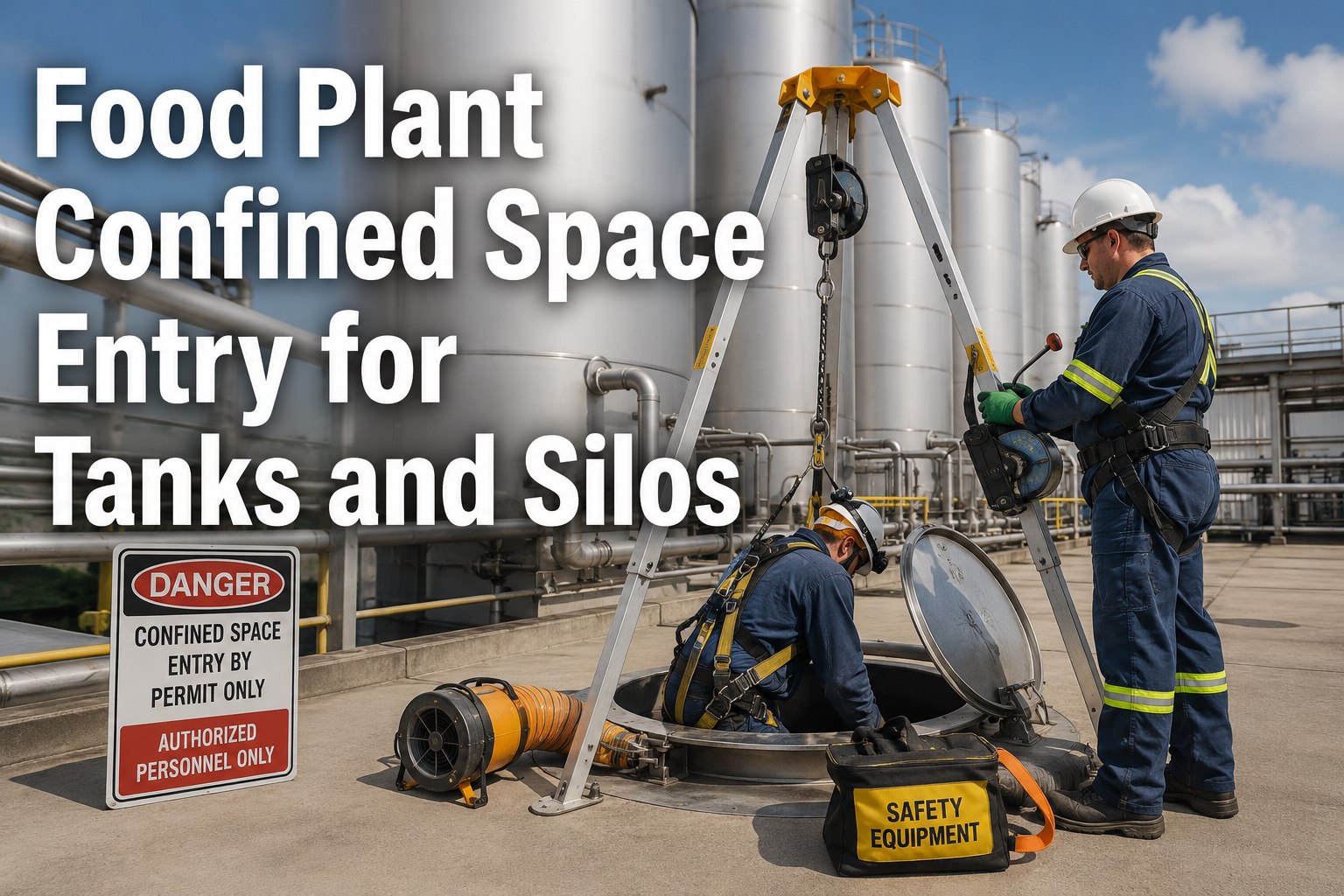
Confined space entry for tanks and silos is among the highest-consequence maintenance work in any food plant, combining atmospheric hazards, engulfment risk, and complex rescue scenarios into a single high-stakes operation. OSHA 29 CFR 1910.146 ma

Read More
AI vision defect detection in food plants is now catching defects before a human inspector would — and when that camera-detected alert triggers a work order inside your CMMS, quality response drops from hours to seconds. This guide to AI vision fo
Read More
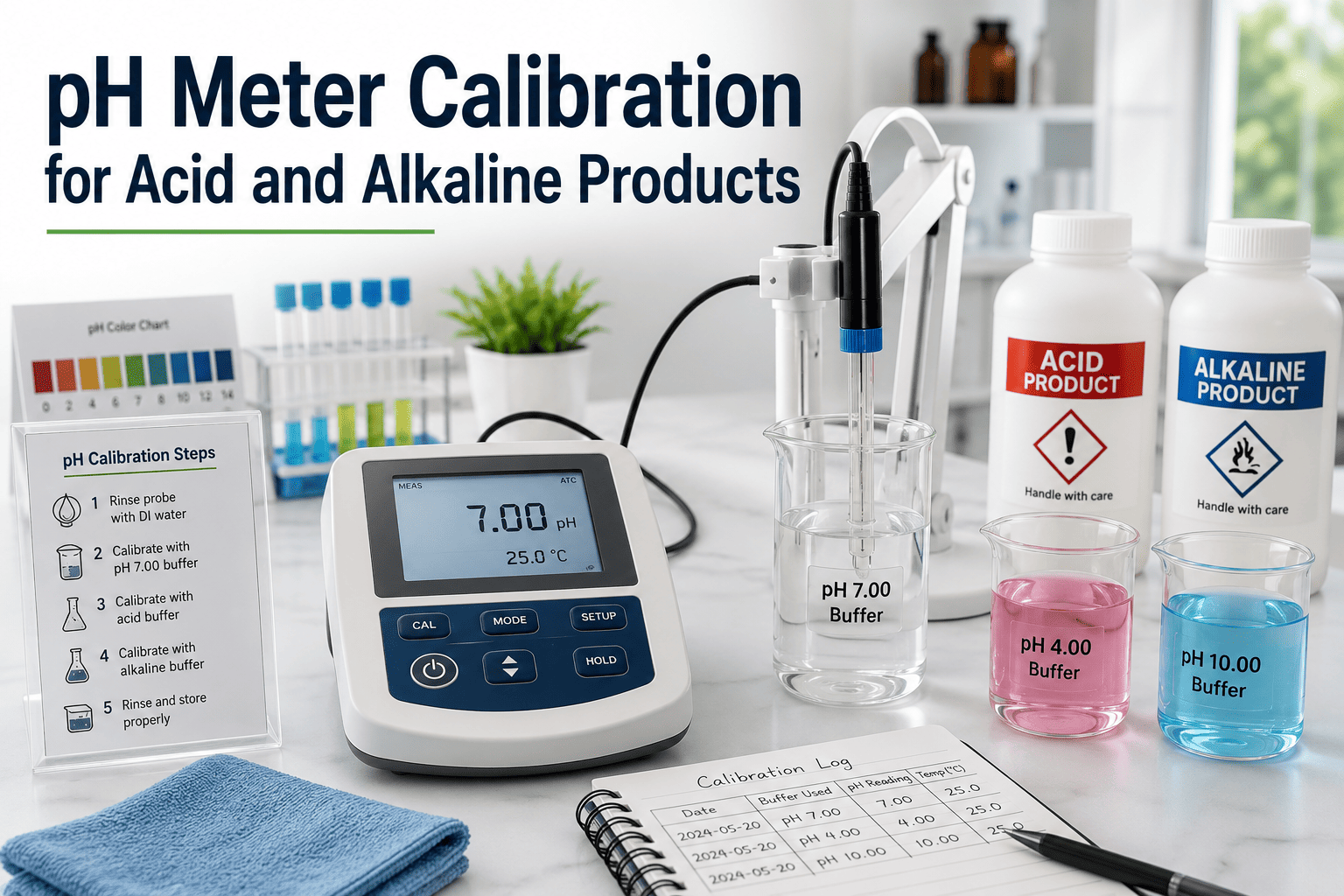
Food plant pH meter calibration is a critical control point function that separates safe, in-spec product from costly recalls, shelf-life failures, and regulatory non-conformance on both the acid and alkaline sides of your operation. This pH meter
Read More
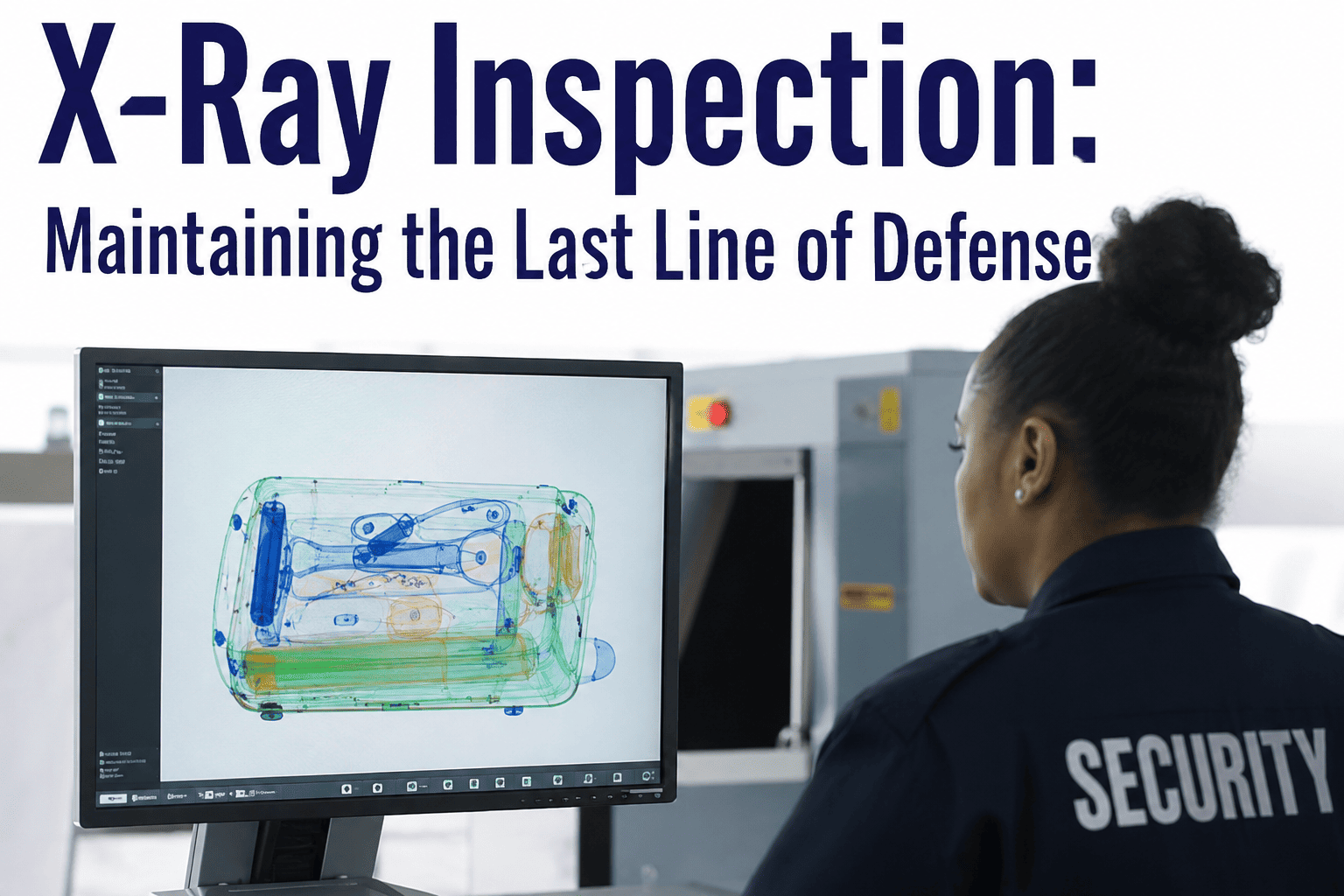
X-ray inspection systems are the last line of defense against foreign material contamination in food manufacturing, catching metal, glass, bone, and dense plastics before products reach consumers. When a food plant xray system fails to detect a co
Read More
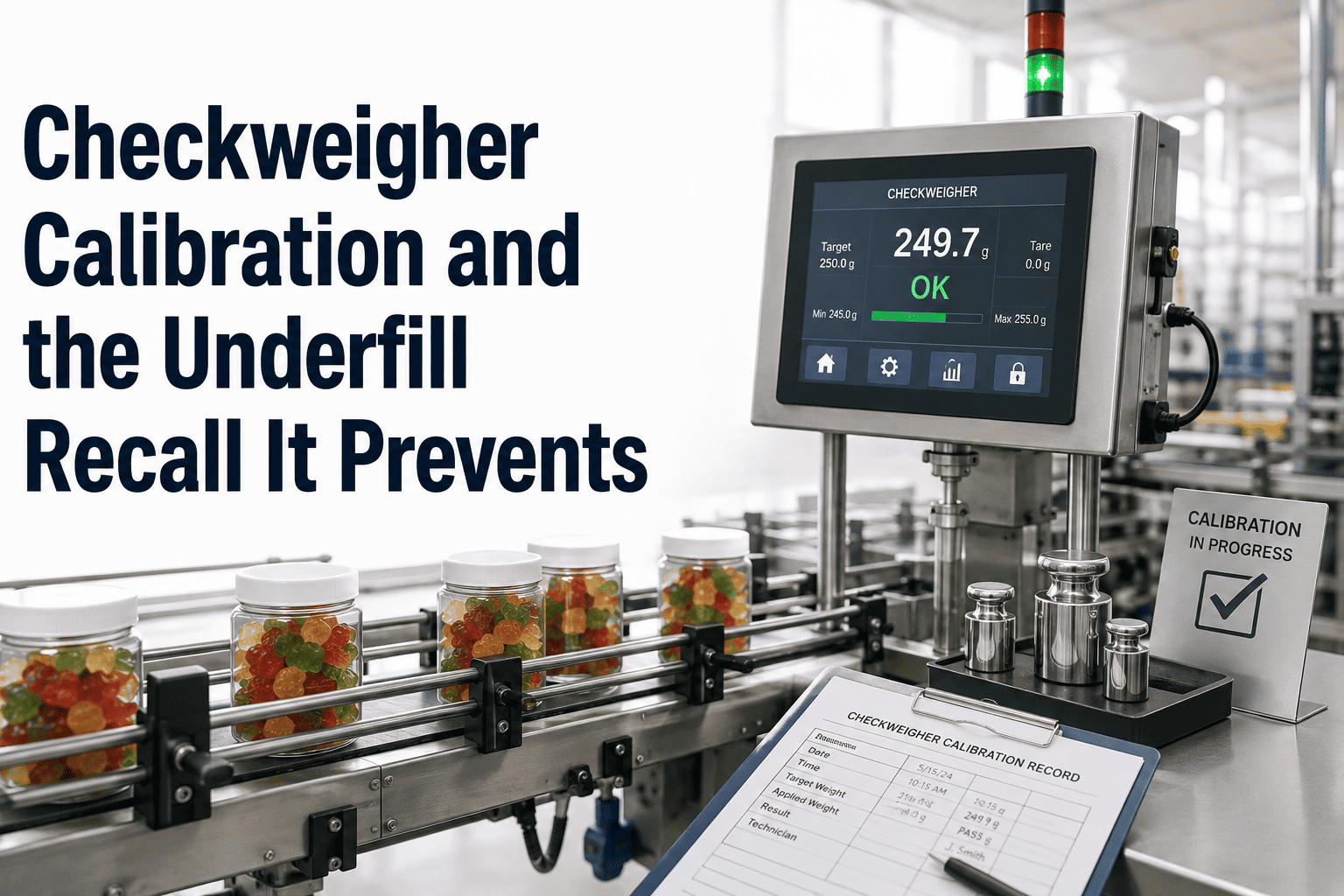
Checkweigher calibration failure is one of the top documented sources of underfill and overfill recalls in food production, and a disciplined verification workflow is what prevents both. This food plant checkweigher calibration guide covers calibr
Read More
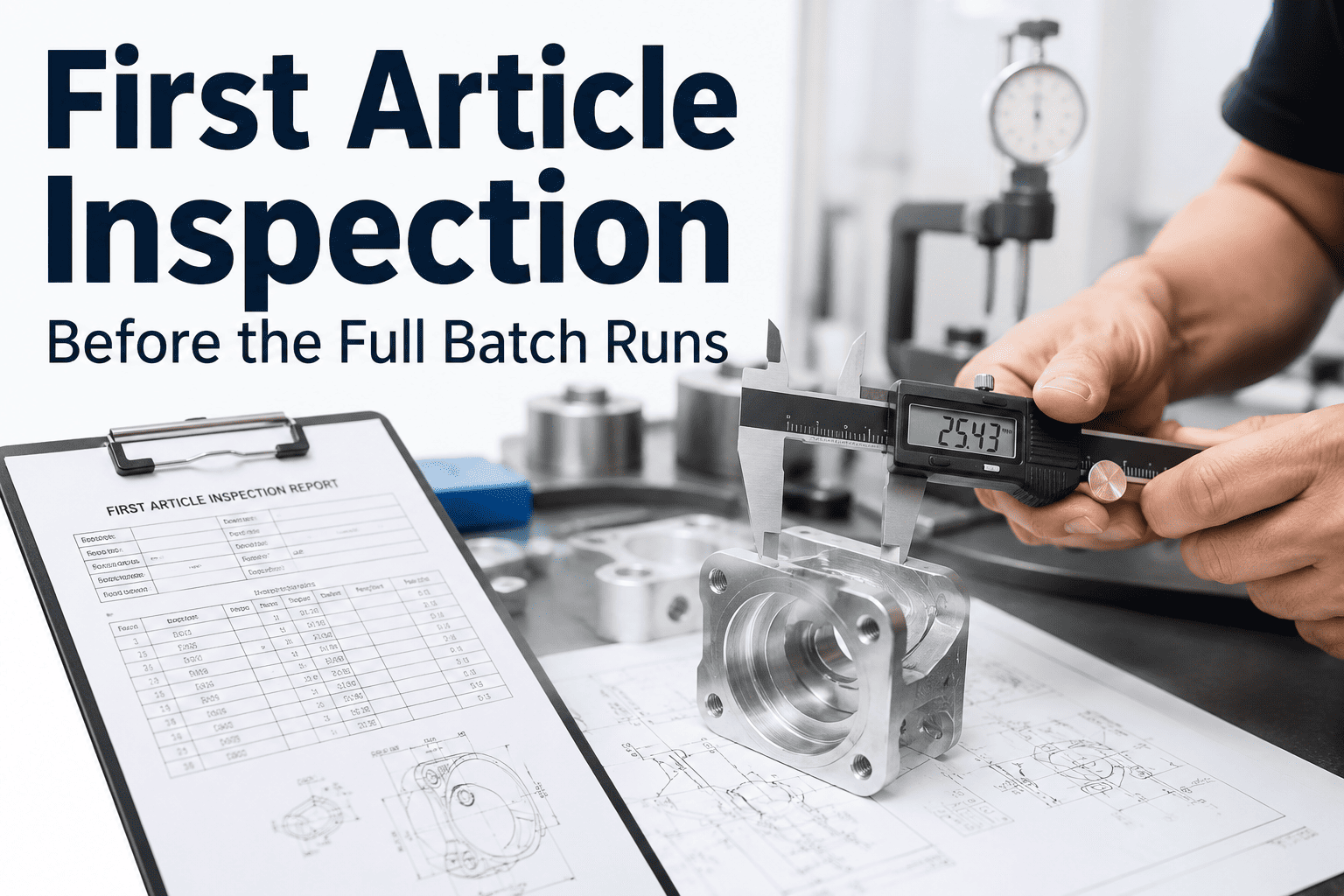
First article inspection before the full batch runs is one of the highest-leverage quality gates on any food and beverage line, catching fill-weight deviations, misapplied labels, and allergen errors before they become multi-thousand-dollar recall

Read More
Linking equipment condition to quality events is the critical bridge between maintenance reliability and food safety outcomes — when a critical control point fails, the speed and accuracy of that linkage determines whether you catch a deviation in

Read More
Food plant quality inspection and maintenance management are converging in 2026 because both functions depend on the same asset, calibration, and condition data — yet most plants still run them in disconnected spreadsheets and paper logs. This CMM

Read More
Predicting cooling capacity loss before it becomes a deviation is where cold storage compressor predictive maintenance either delivers real value or stays theoretical. By leveraging run-time trend analysis, sensor-based compressor performance moni

Read More
Cold storage emergency backup power readiness is the single variable that determines whether a facility rides through a utility outage or loses a six-figure product load to temperature excursion. When the grid fails, a 10,000-square-foot freezer r
Read More
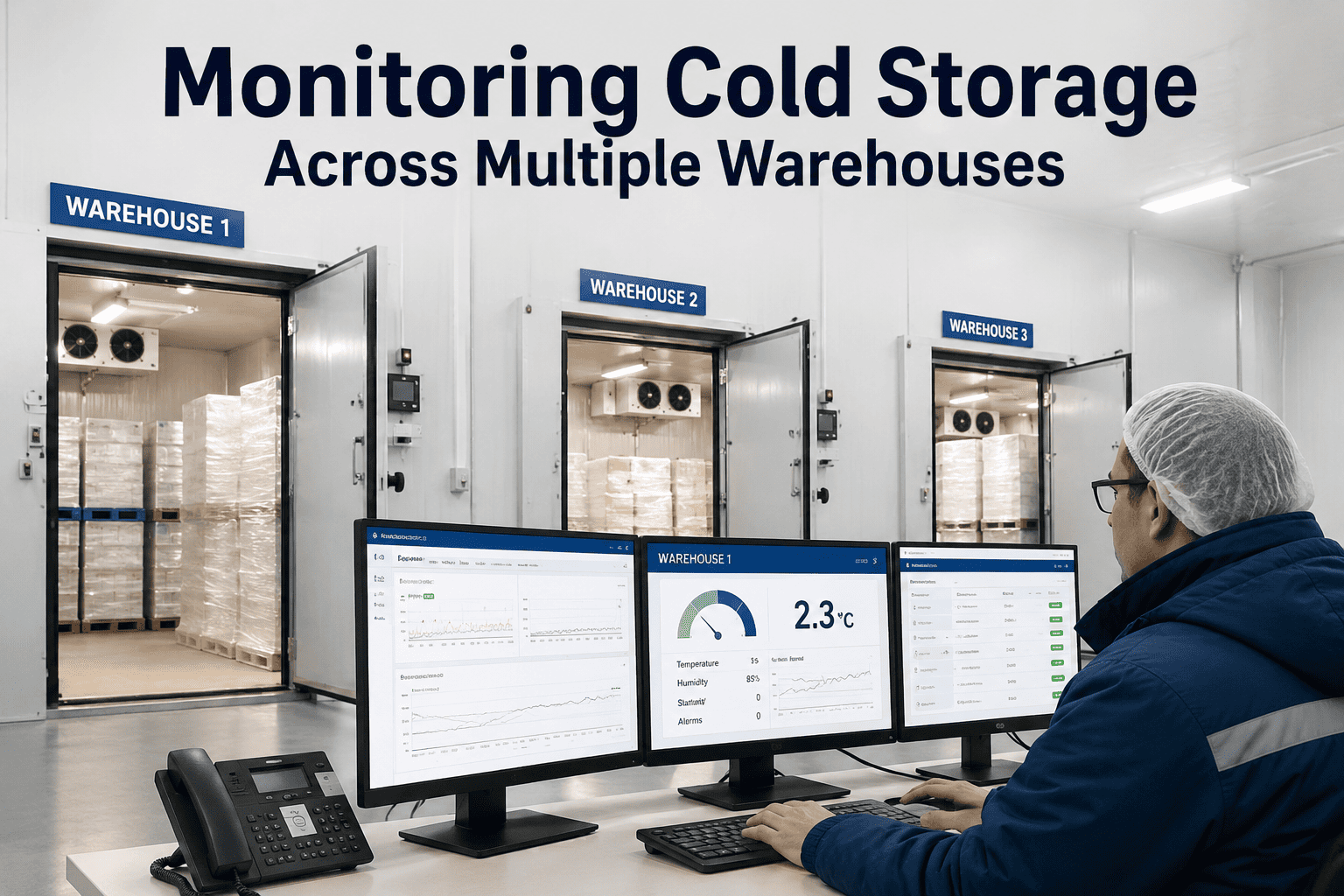
Monitoring cold storage across multiple warehouses demands a centralized temperature dashboard and portfolio-wide exception reporting to prevent cold chain breaches before product is lost. This multi-site guide for 2026 covers the CMMS architectur

Read More
Chocolate and confectionery production runs on a chain of temperature-sensitive, hygienically-critical equipment where a 0.5°C drift on a tempering unit can turn an entire eight-hour shift into fat-bloomed rework — and a missed allergen changeover

Read More
Edible oil processing runs on continuous, high-temperature process equipment where a single deodorizer trip or filling-line jam can put an entire day's output at risk — of yield loss, of quality rejection, or of a food-safety hold. Refineries oper
Read More
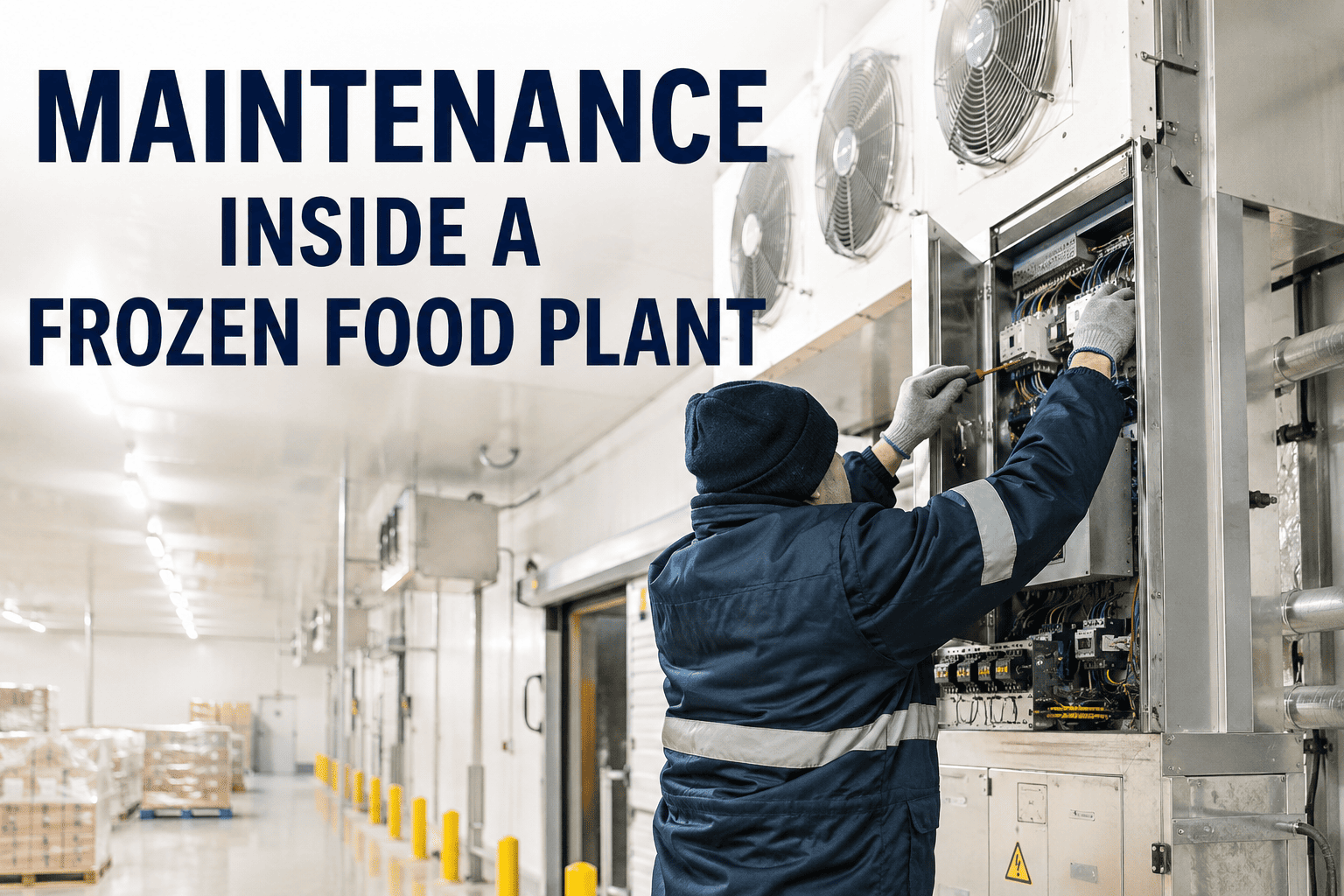
Frozen food manufacturing runs two operations at once: a processing line that turns raw product into a finished pack, and a refrigeration system that is never allowed to fail. A single IQF tunnel, spiral freezer, or blast cell losing airflow for e
Read More
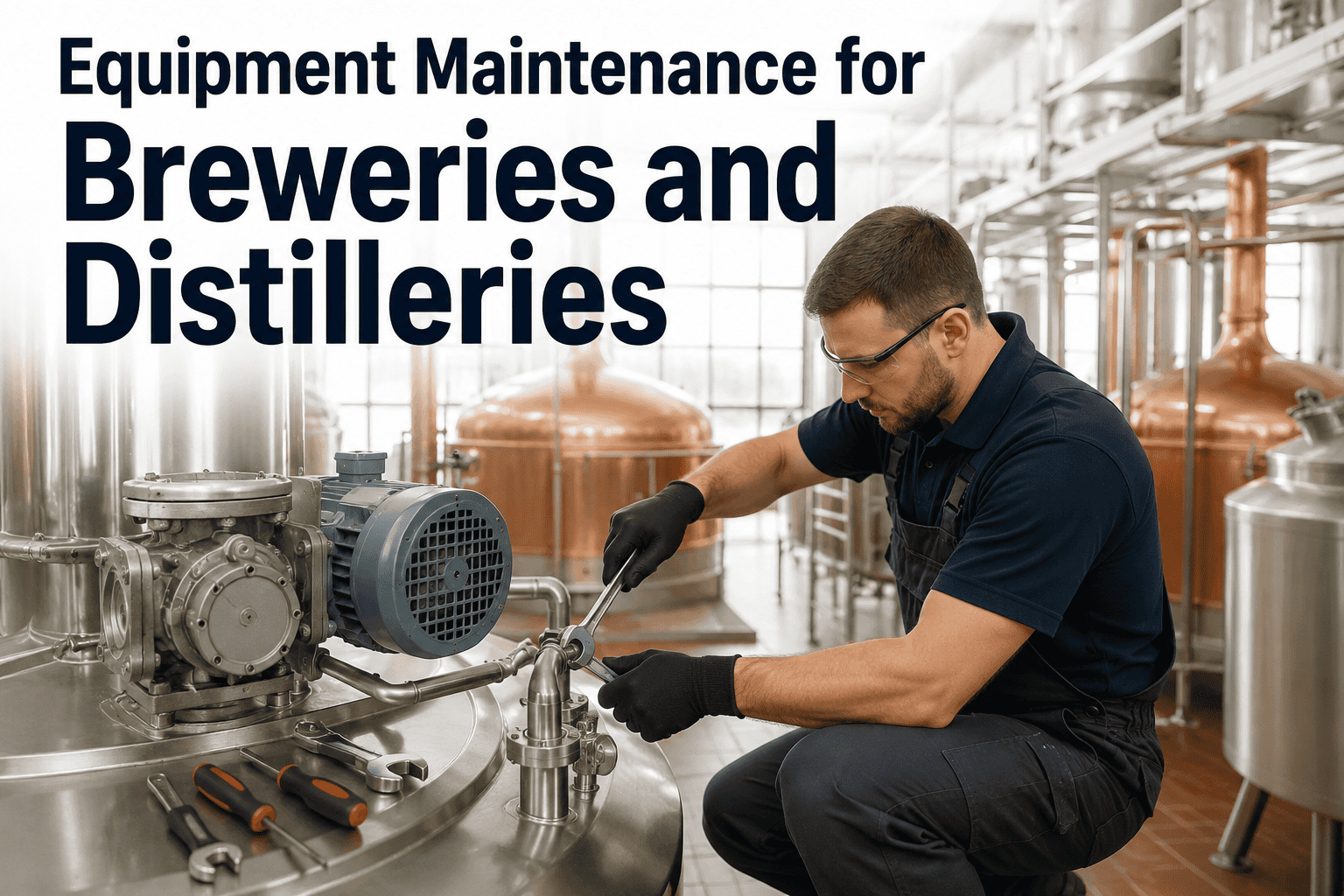
Breweries and distilleries run two very different processes under one roof — the biology of fermentation on one side, the thermal precision of distillation on the other — and a single missed maintenance task in either area can spoil a batch that t
Read More
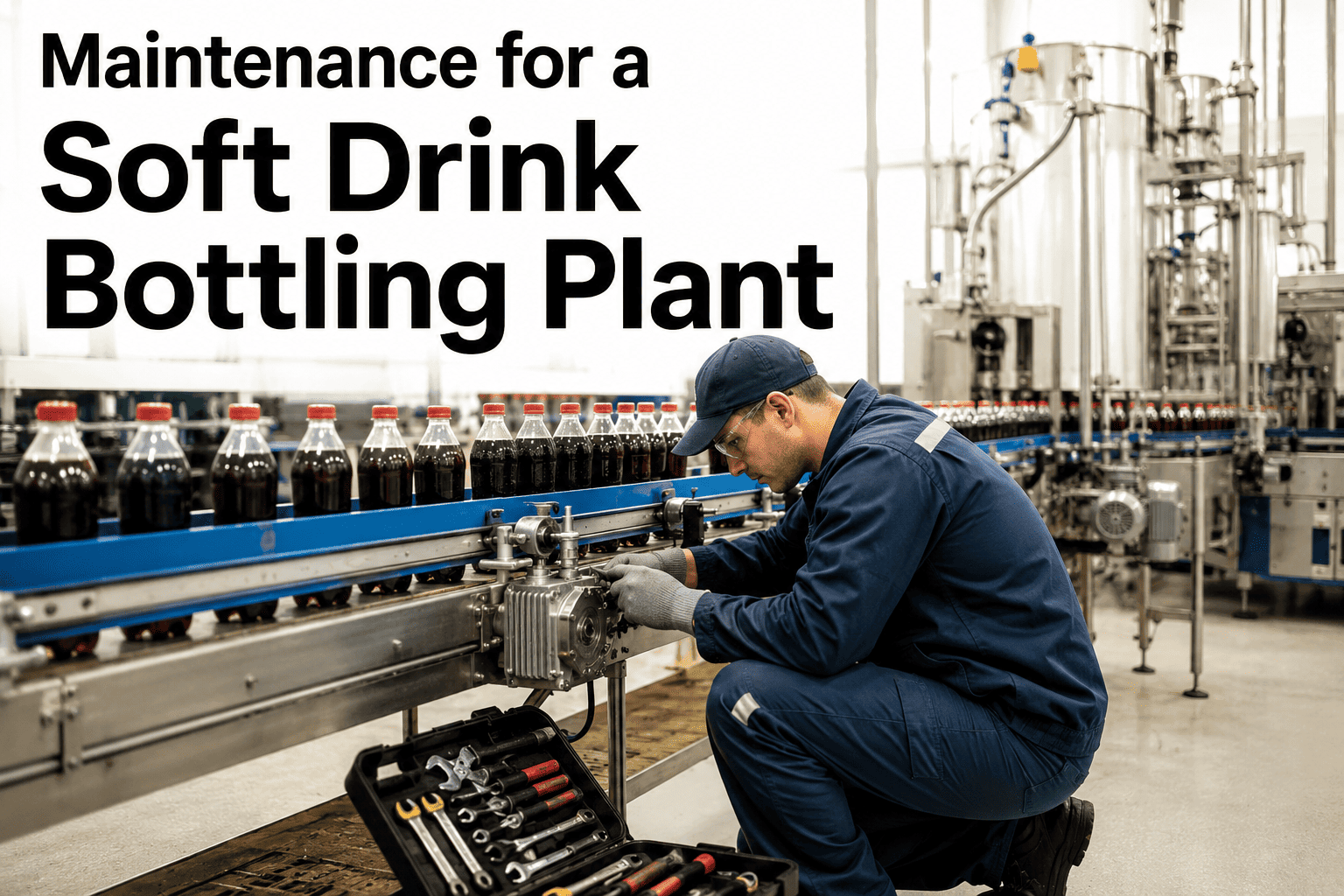
A soft drink line running at 1,200 bottles a minute has almost no room for error — a worn filler valve, a drifting carbonator, or a capper torque head out of spec can turn a shift into a quality hold before anyone notices. Most bottling plants are

Read More
A bakery or snack line only looks like one machine from the plant floor, but it behaves like five machines chained together — a mixer holding hydration and gluten development targets, a former or extruder shaping product to spec, a tunnel oven cyc
Read More
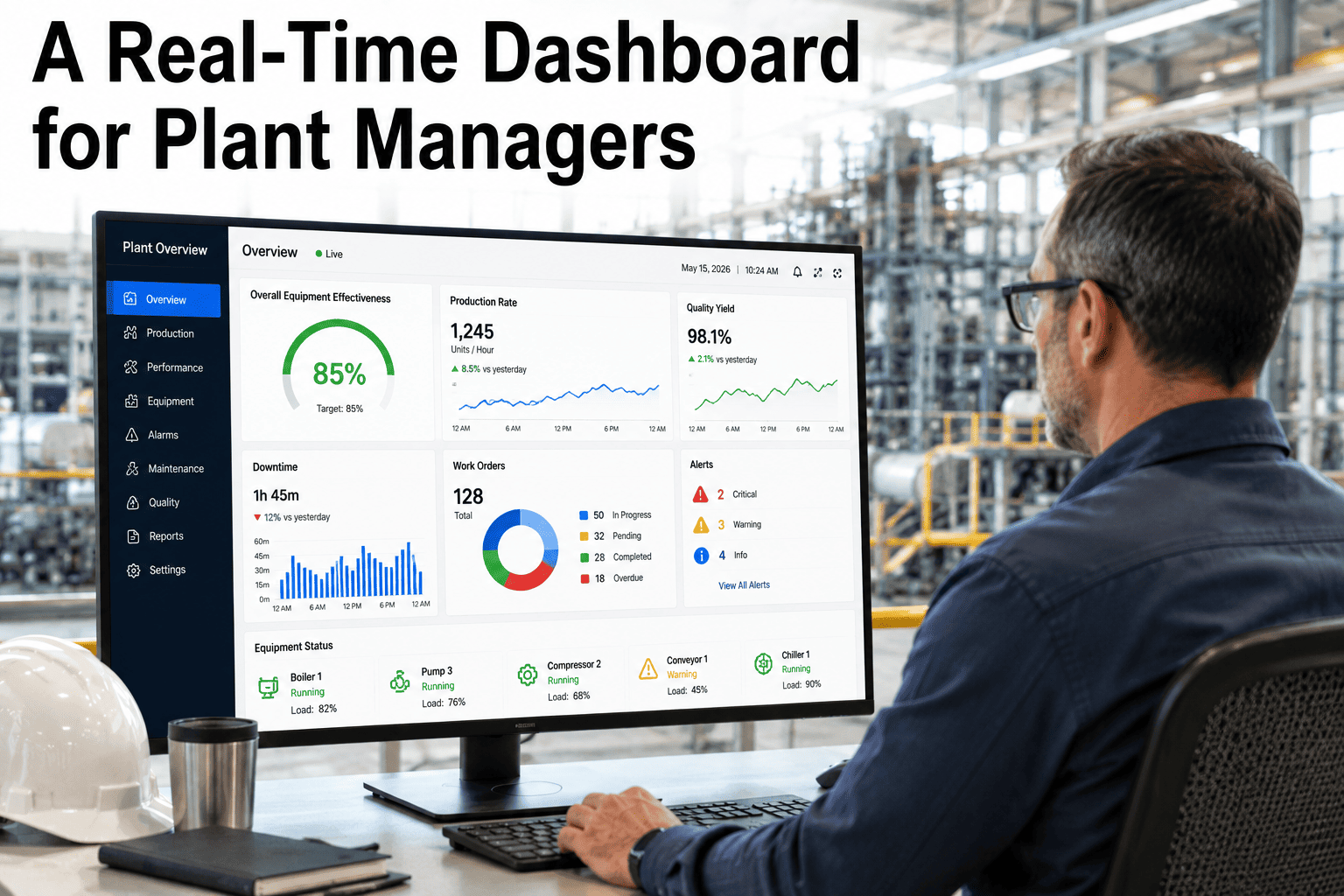
A real-time plant dashboard collapses dozens of disconnected data streams into a single operating picture that a plant manager can act on within minutes — not the next morning. For a mid-sized food plant running 150+ assets across two or three shi
Read More
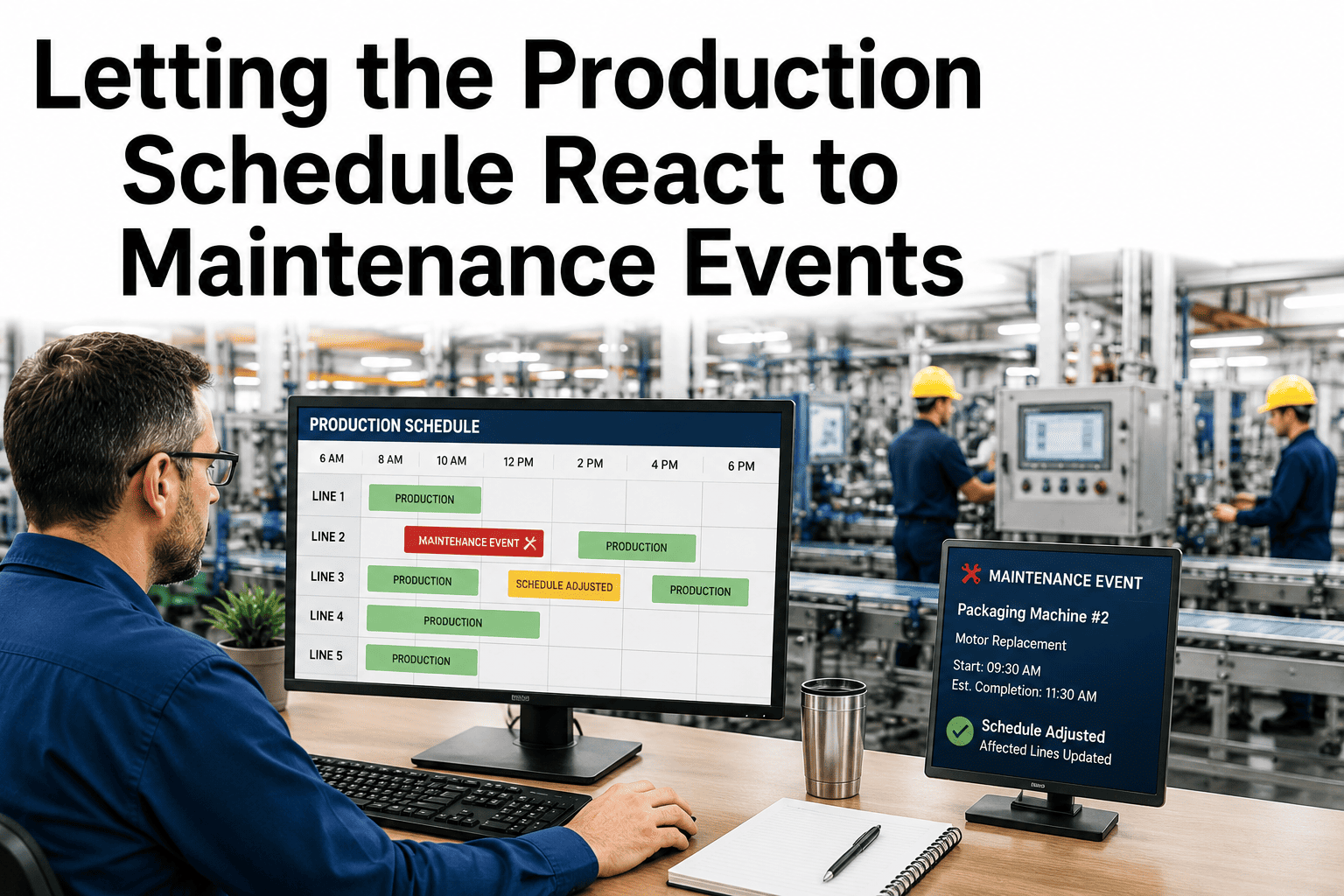
When a filler head drops out at 02:14 on a frozen-entraps line, the difference between a 38-minute recovery and a 4-hour scramble is whether the production schedule can hear the maintenance event the moment it is raised. In most food plants, the C
Read More
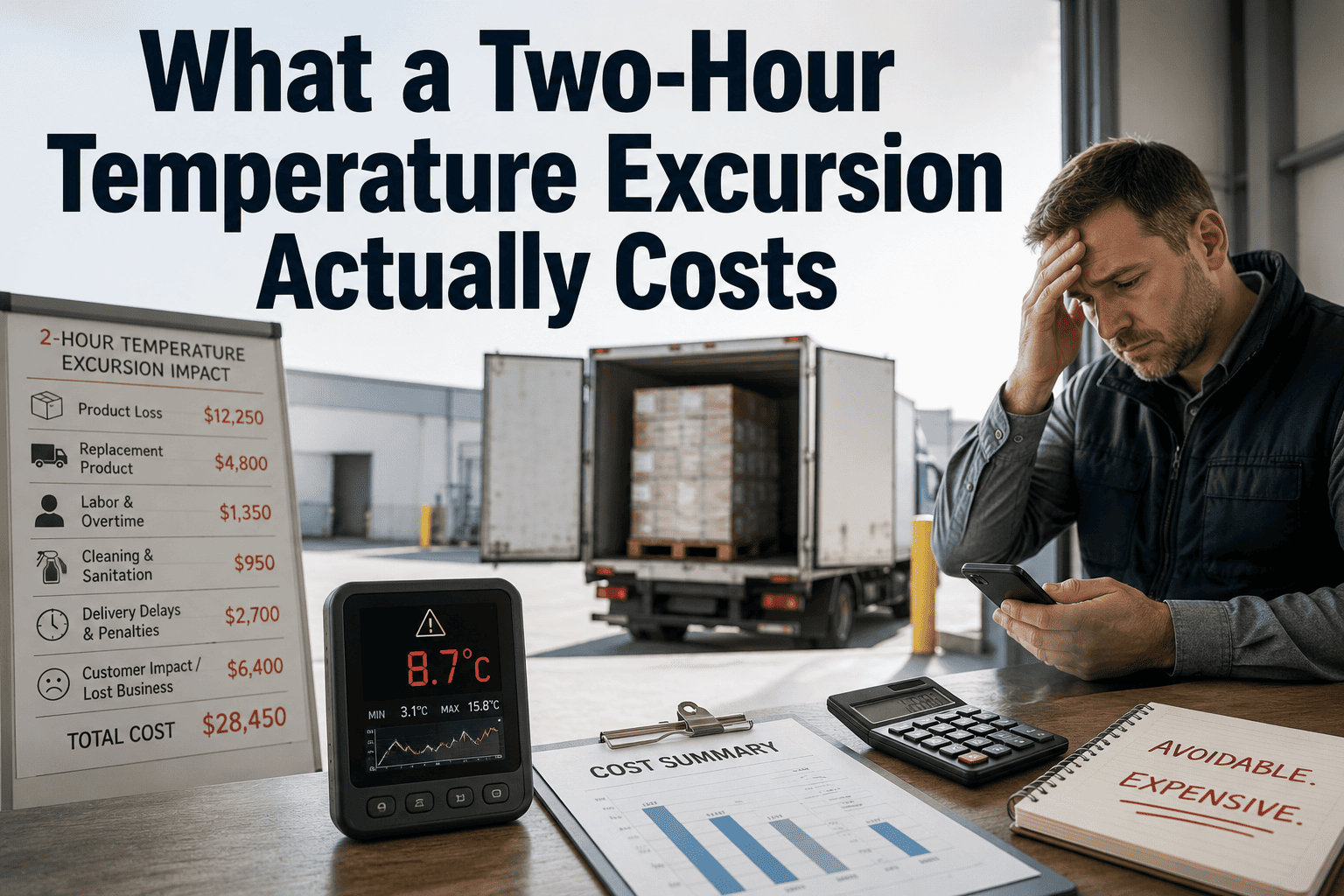
A two-hour temperature excursion on a fully loaded trailer of finished frozen product can quietly erase six figures from a food plant's quarterly margin — and the loss rarely shows up as a single line item. Product condemnation, disposition labor,
Read More
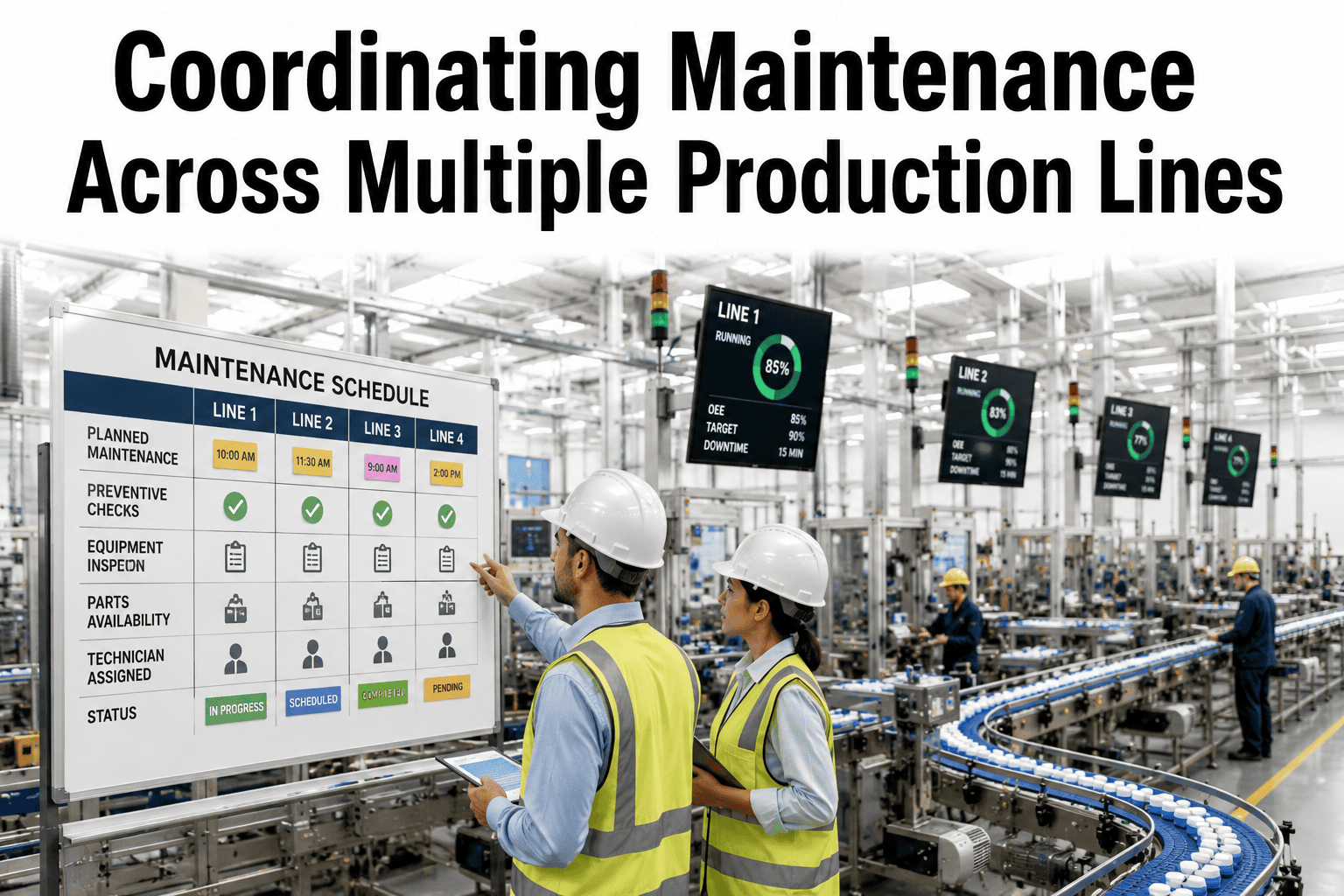
Coordinating maintenance across multiple food-production lines is where lean maintenance teams either hold the plant together or get torn apart by competing emergencies. When four processing lines share the same three technicians, a single unplann

Read More
Daily preventive maintenance in a food plant is the unglamorous work that keeps recalls, breakdowns, and audit failures from happening. The pre-op inspection, refrigeration pressure check, and CIP verification are the small consistent tasks that,
Read More
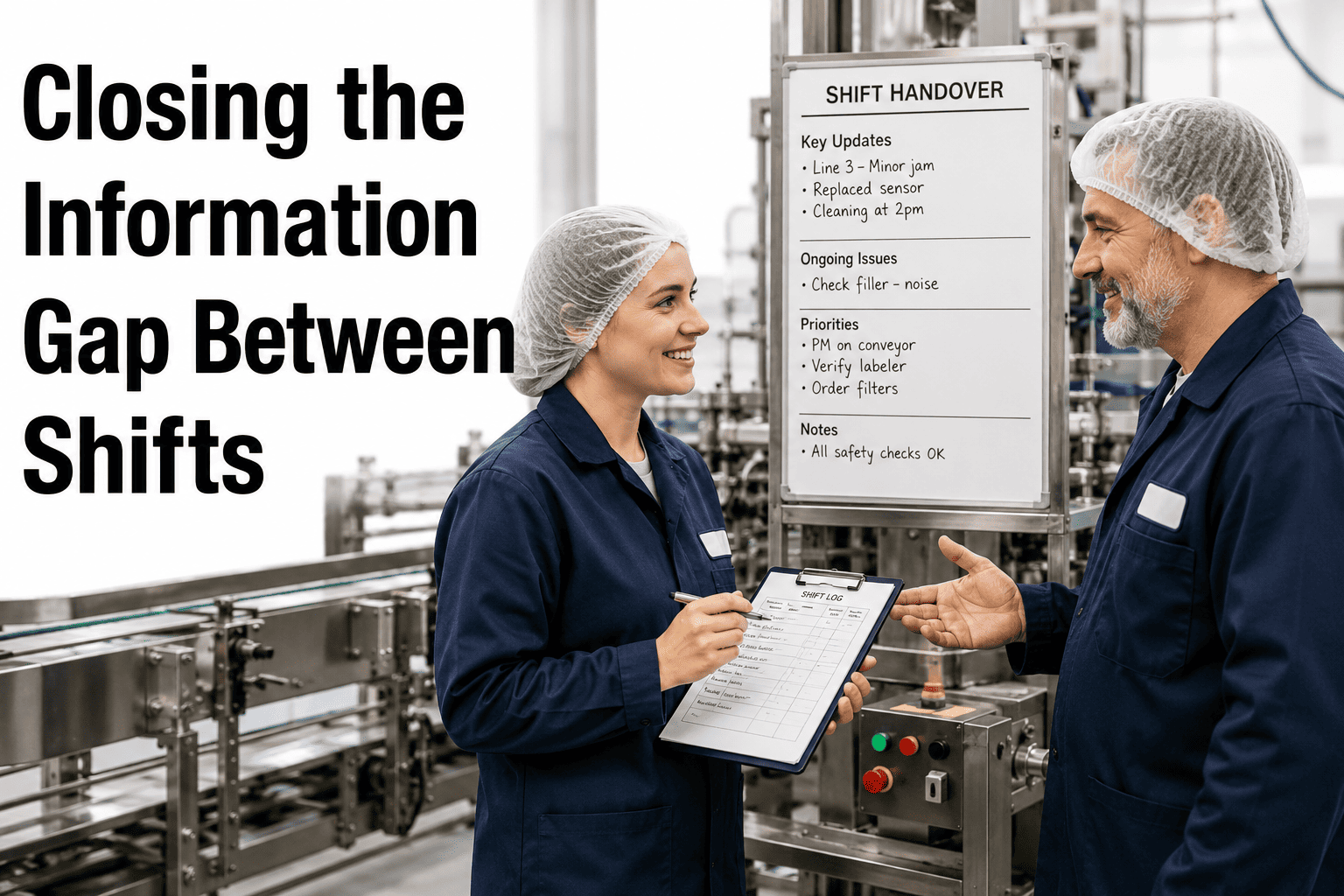
In a 24/7 food plant, the most expensive failures rarely start during a shift — they start in the silence between shifts, when a leaking valve, an abnormal vibration reading, or a half-finished repair gets lost in translation. Research from mainte
Read More
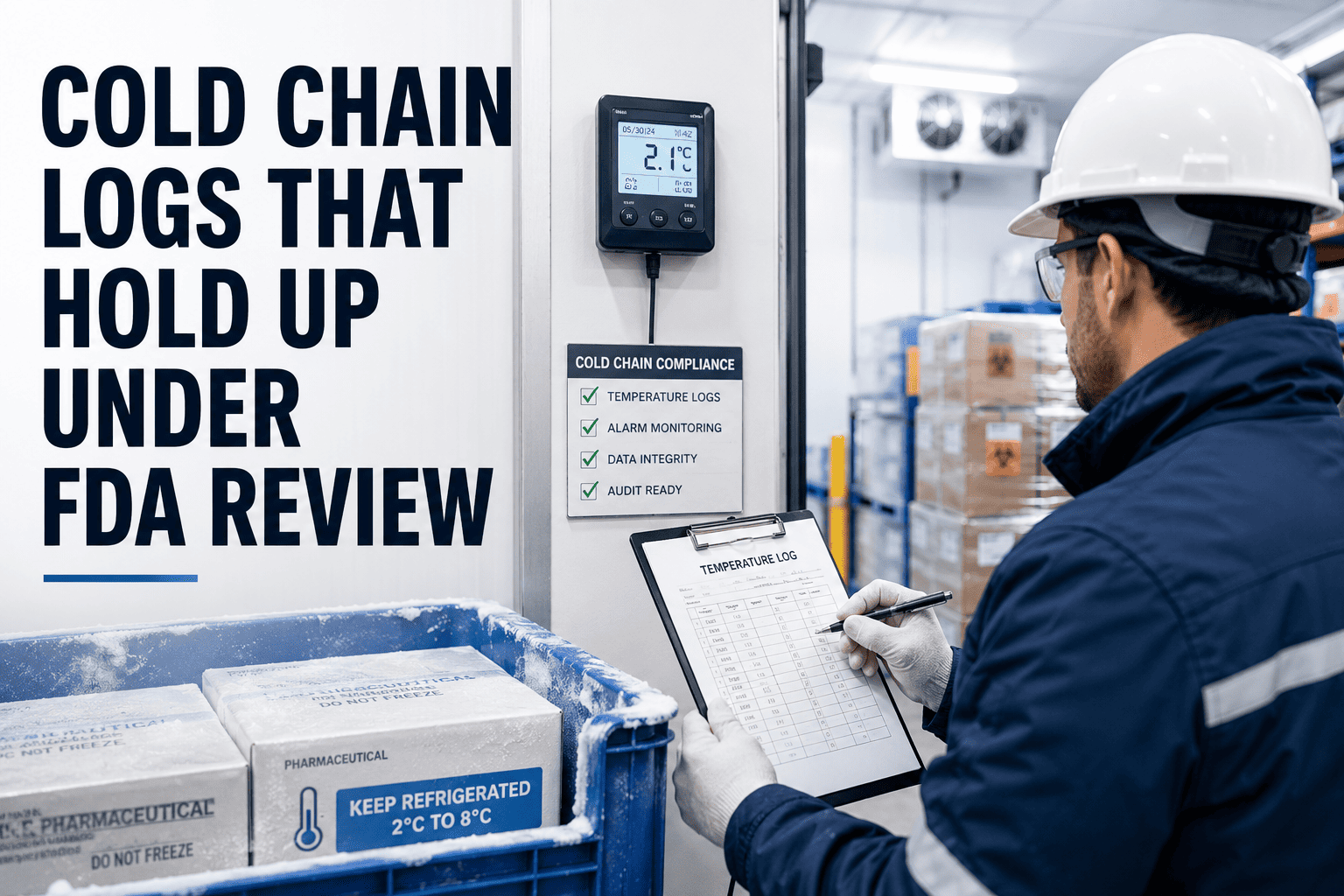
When FDA investigators request 12 months of cold chain records, the difference between a clean close-out and a Form 483 often comes down to whether your temperature logs are continuous, time-stamped, and reviewable within 24 hours. Paper charts an

Read More
Defrost cycle timing is one of the most under-tuned variables in cold storage operations — a frozen food warehouse running fixed 30-minute defrosts four times a day can waste 8–12% of its annual refrigeration energy on cycles that were never neede

Read More
Wireless IoT sensors have made comprehensive cold storage monitoring affordable at almost any facility scale, but the deployment approach determines whether the data actually drives decisions or simply fills a dashboard nobody opens. A 2026-grade

Read More
EPA Section 608 isn't a guideline — it's an enforceable rule that applies to every cold storage facility running HCFC-22, R-404A, R-410A or any regulated refrigerant above the 50-pound charge threshold. A single unaddressed leak on a 1,200 lb ammo
Read More
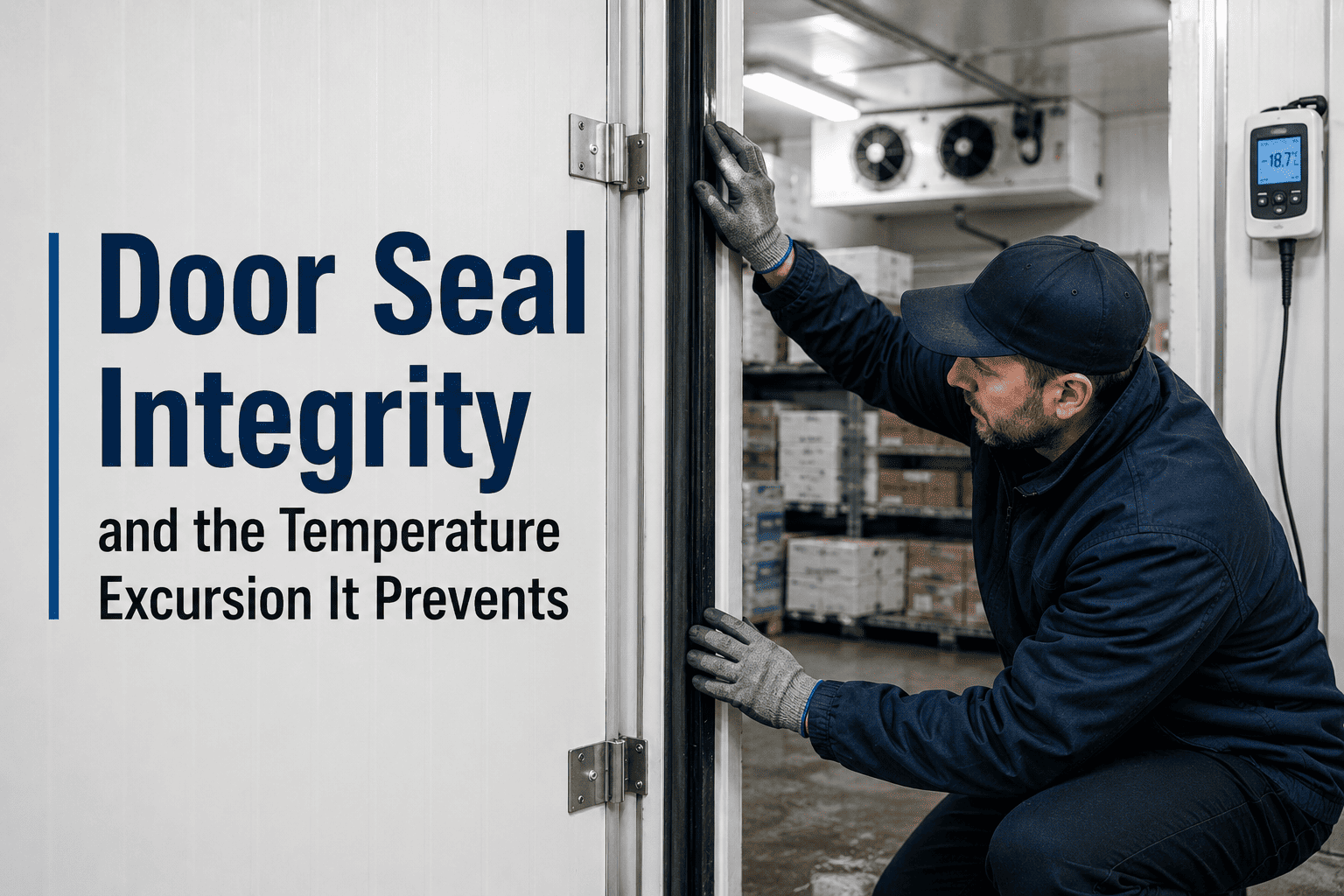
A single cracked or compressed gasket on a cold storage door can bleed thousands of dollars in wasted refrigeration energy per year — and the worst part is that the loss is silent. Temperature excursions triggered by compromised door seals remain
Read More
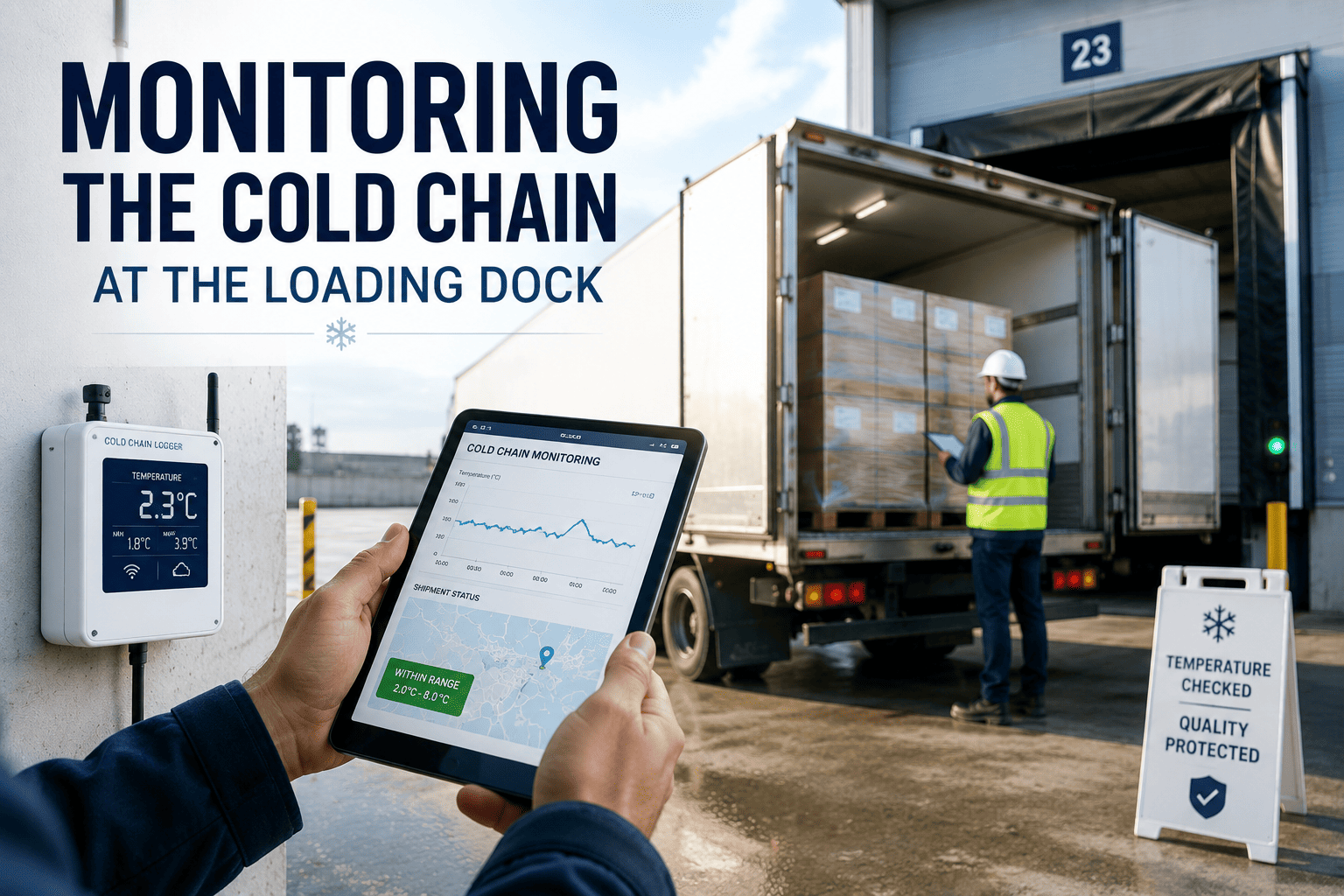
Most cold-chain failures aren't traced to a faulty reefer unit — they're traced to the twelve minutes a pallet sits on a loading dock between cold storage and trailer. Dock temperature excursions during load-out are documented recall-risk events u
Read More
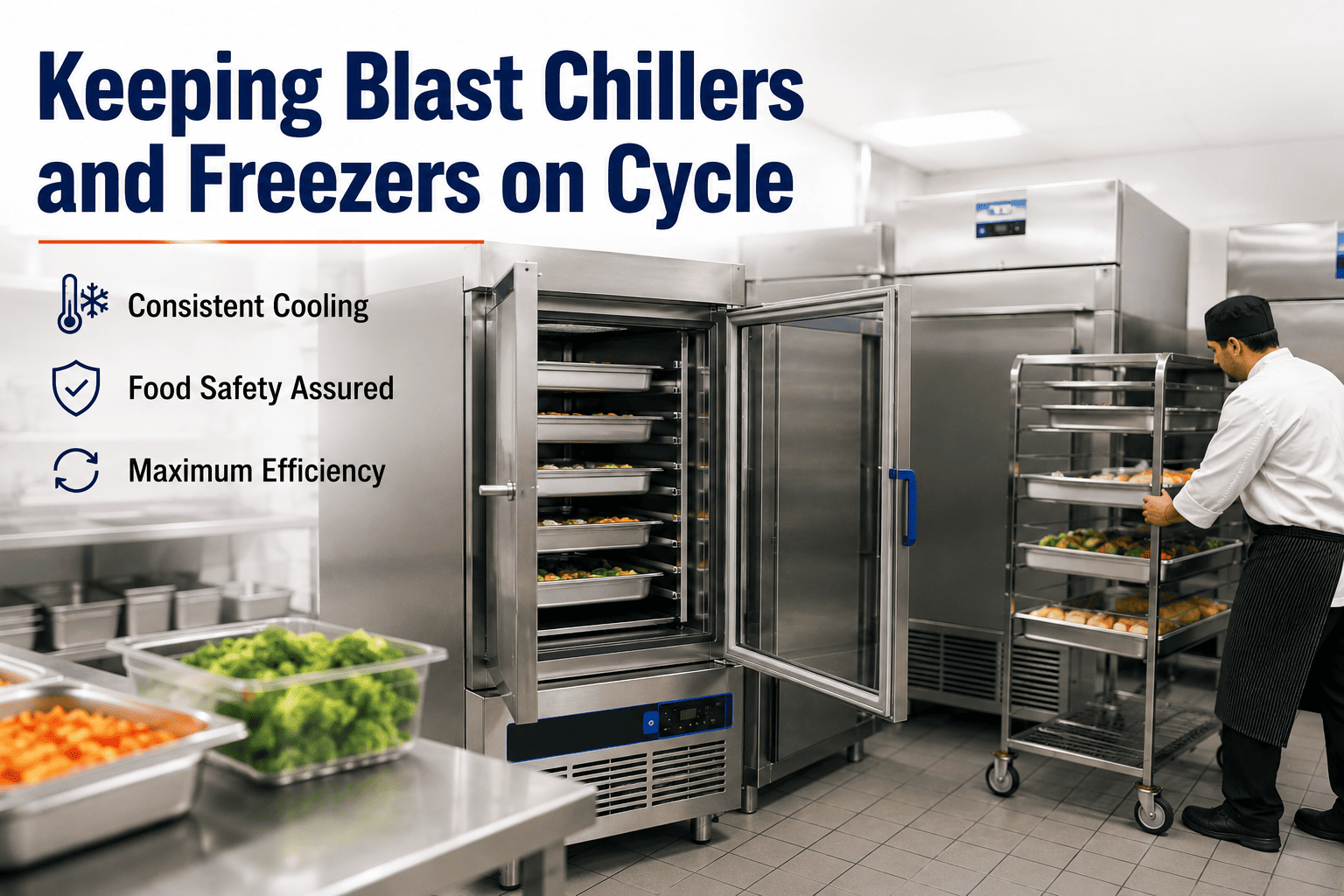
Blast chillers and freezers carry the heaviest thermal duty in any food plant — pulling product core temperature from 70°C down to 3°C in under 90 minutes is non-negotiable for HACCP compliance, and even a single missed cycle can compromise an ent
Read More
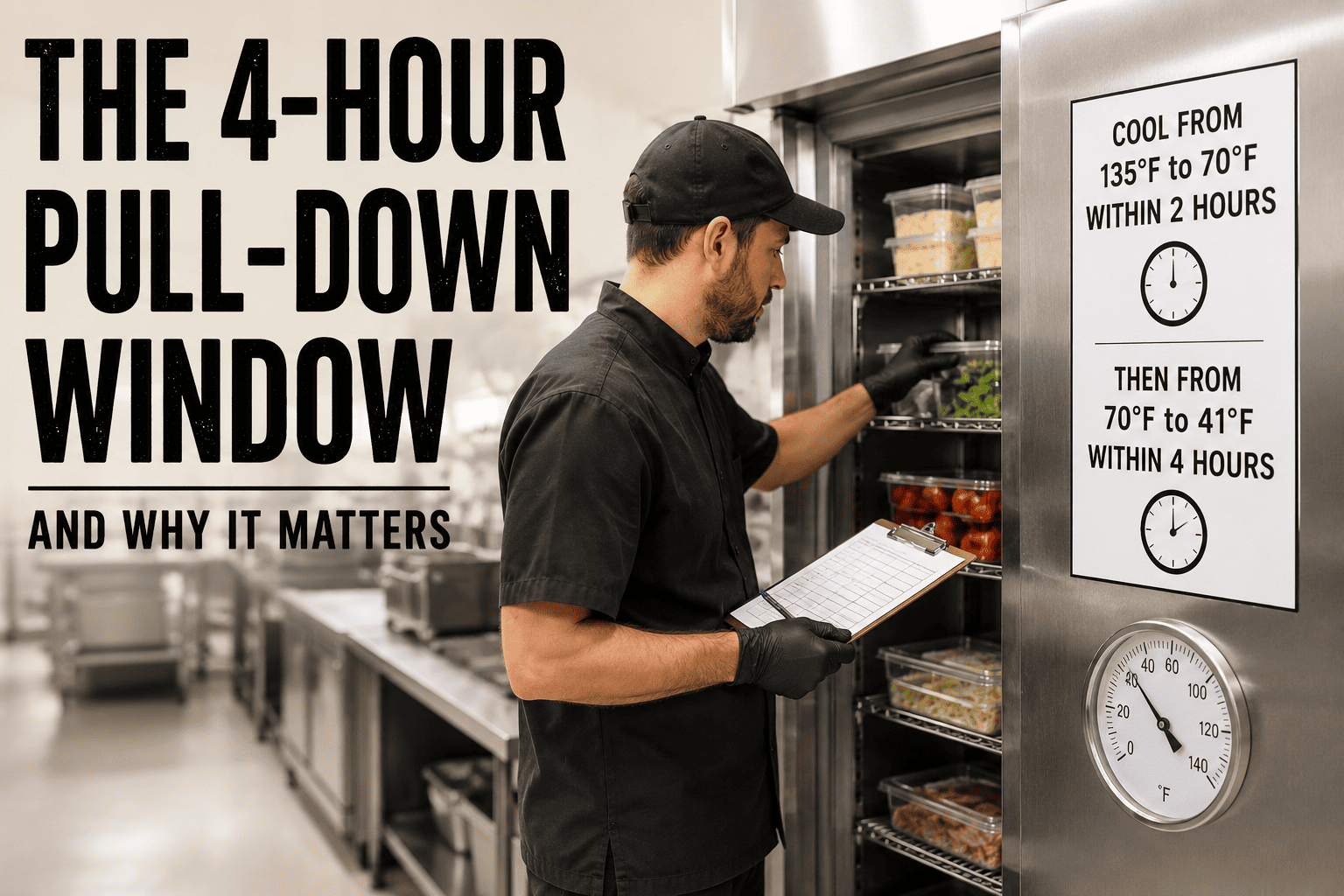
When blast-freezers and refrigerated holding cells drift even a fraction of a degree outside spec, the financial and food-safety exposure compounds by the hour — a single missed 4-hour pull-down window can trigger pathogen multiplication, product

Read More
In cold storage operations, the difference between a minor intervention and a full-blown product loss often comes down to minutes — specifically, the minutes between a system drifting off-spec and the moment a deviation alert finally triggers. A 2
Read More
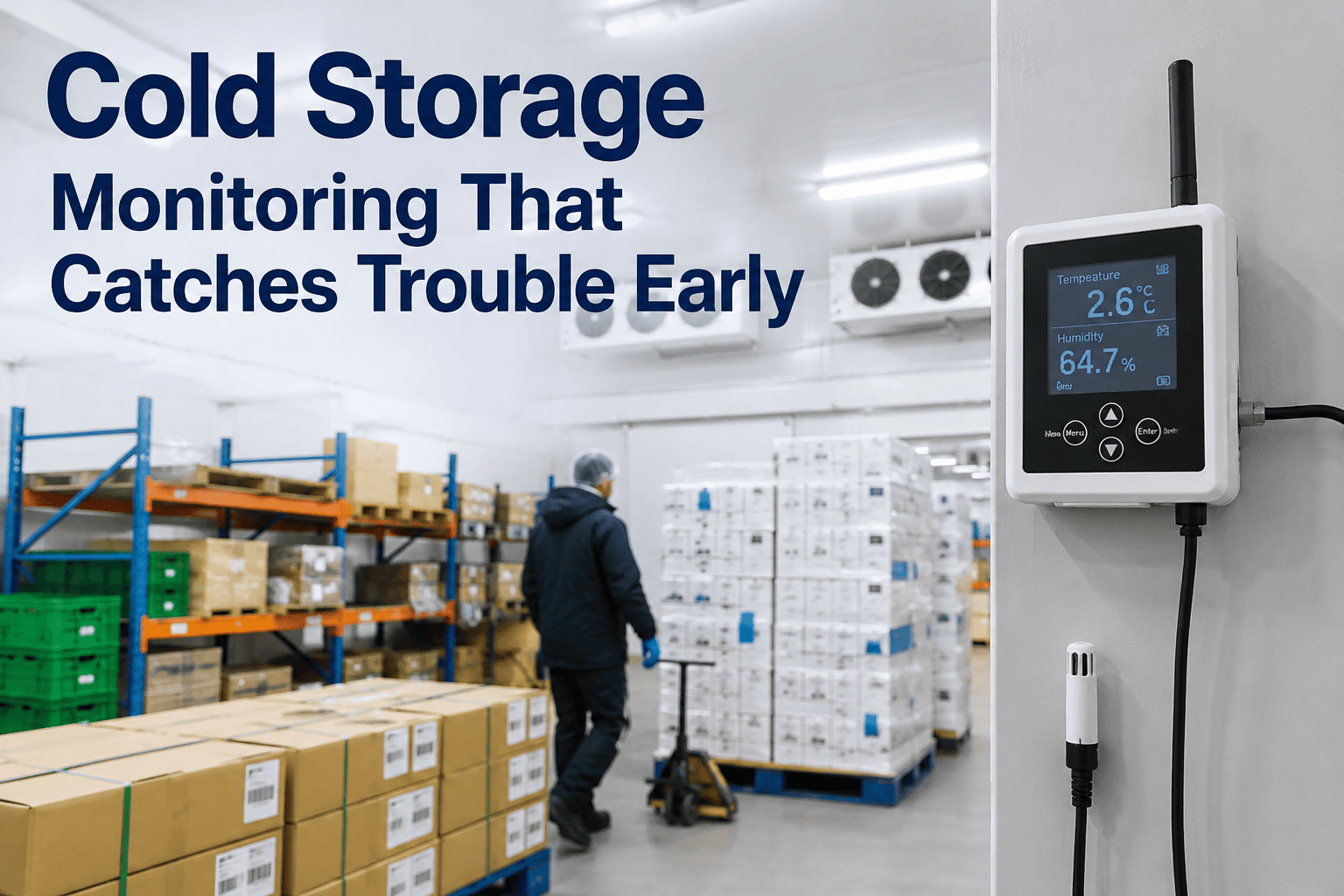
Cold chain operators who catch refrigeration trouble in its first 30 minutes save the load; those who find it an hour later write off the pallet. Cold storage monitoring that catches trouble early is the discipline of instrumenting compressor perf

Read More
When a food plant chases uptime on every asset equally, maintenance effort gets diluted across machines that have no real bearing on the line's hourly output — while the one constraint that actually sets throughput quietly degrades. The economic l
Read More
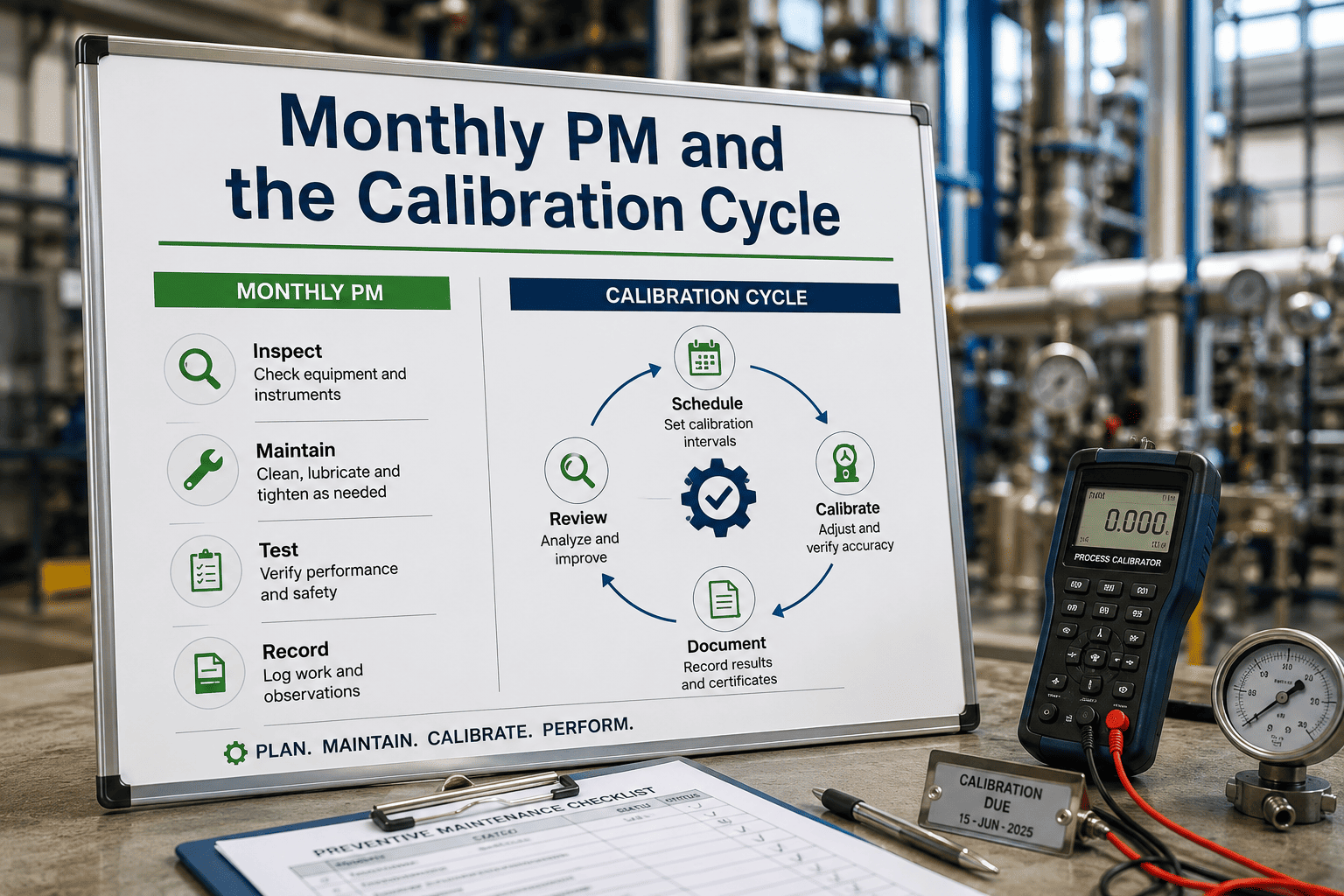
Monthly preventive maintenance is where a food plant's calibration discipline either holds together or quietly drifts — and in an HACCP-regulated environment, drift is the same thing as nonconformance. Across thermometers, pressure transmitters, f
Read More
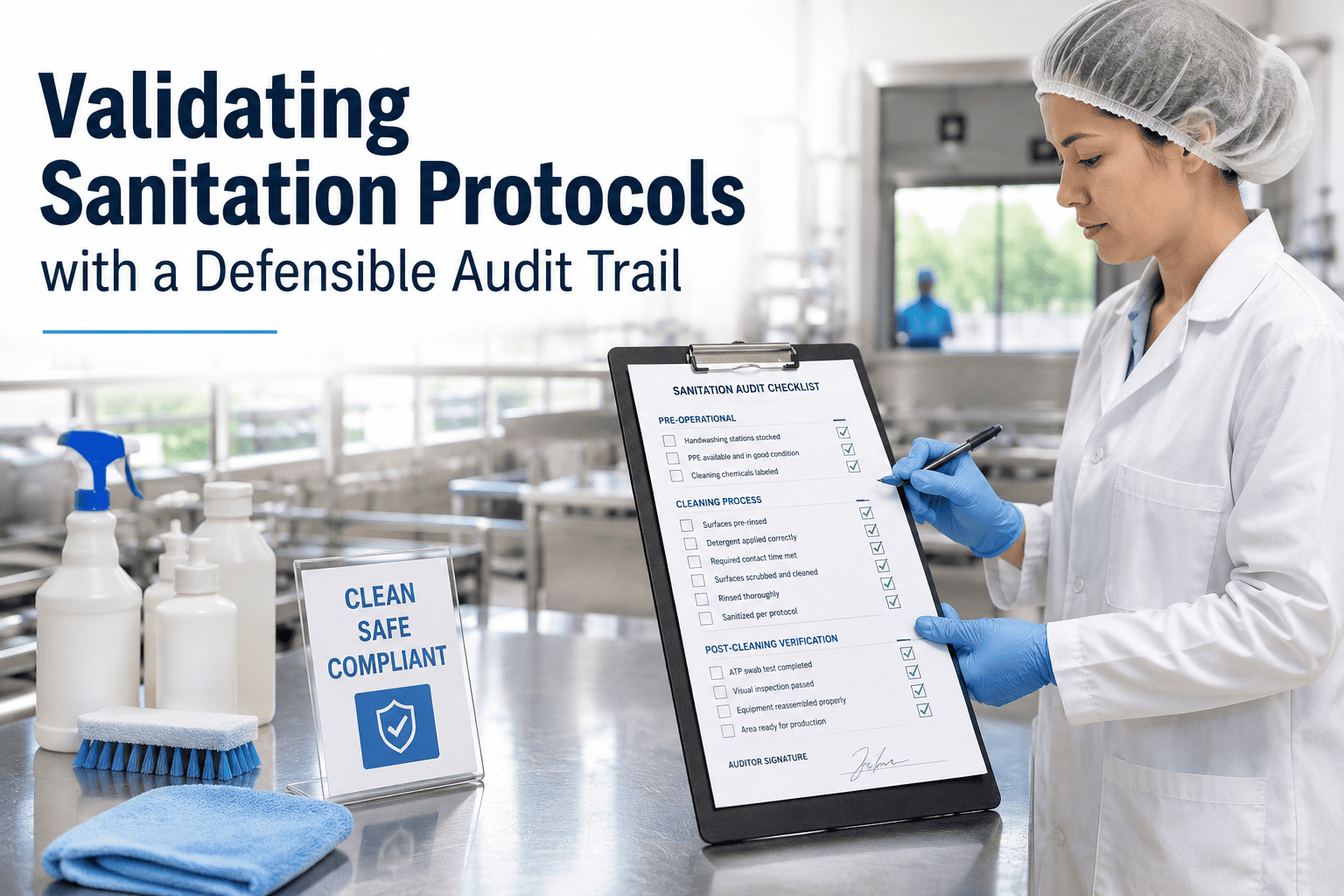
Sanitation validation is the line between a plant that walks through a surprise FDA inspection in three hours and one that burns a week pulling paper records from a binder. A defensible audit trail means every wash cycle, every CIP sensor reading,
Read More
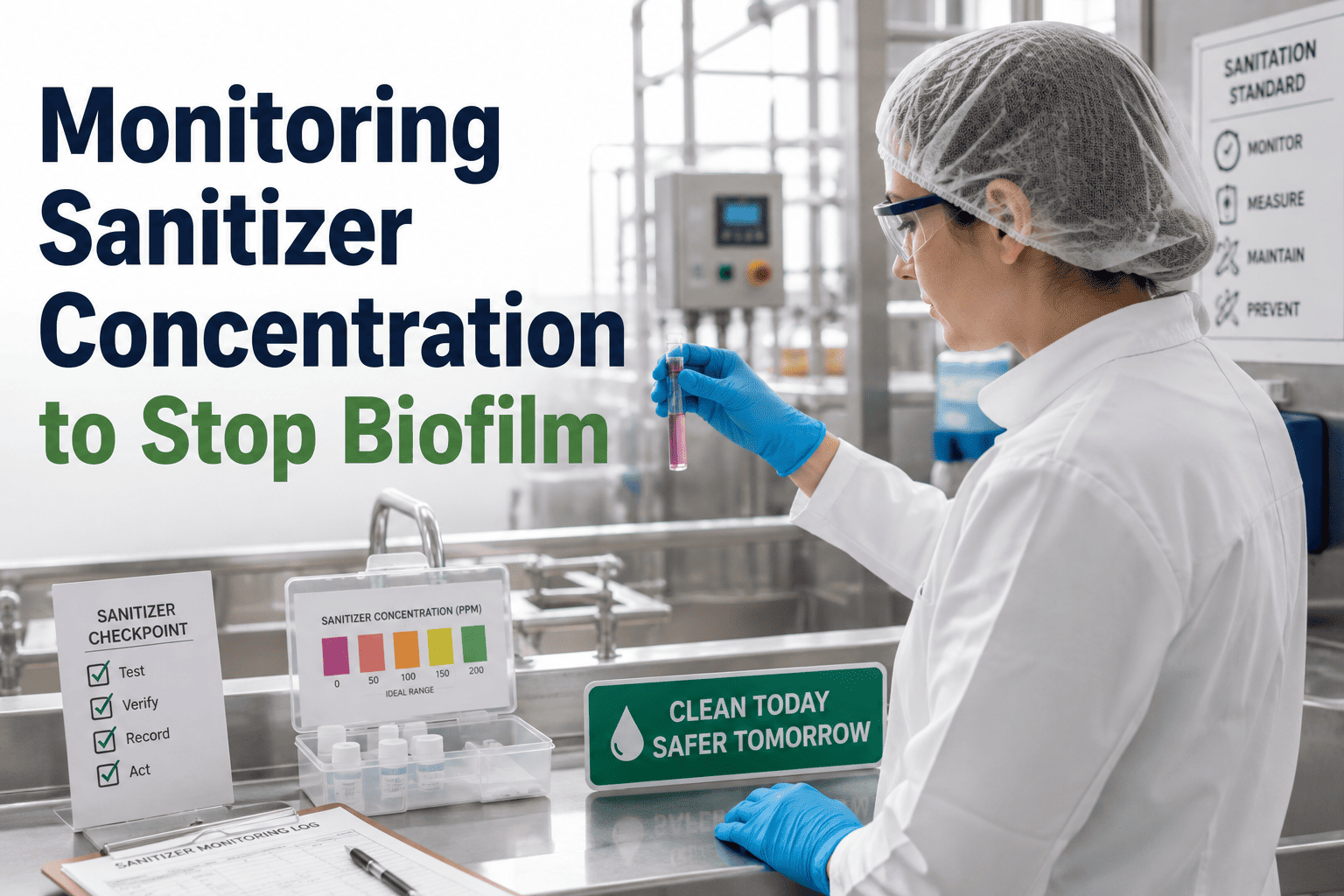
Sanitizer concentration drift is the single most common reason biofilm regrows inside a supposedly clean food plant — a quat delivery that lands 20 ppm below spec, a chlorine loop with a dosing pump that has slipped out of calibration, or peraceti
Read More
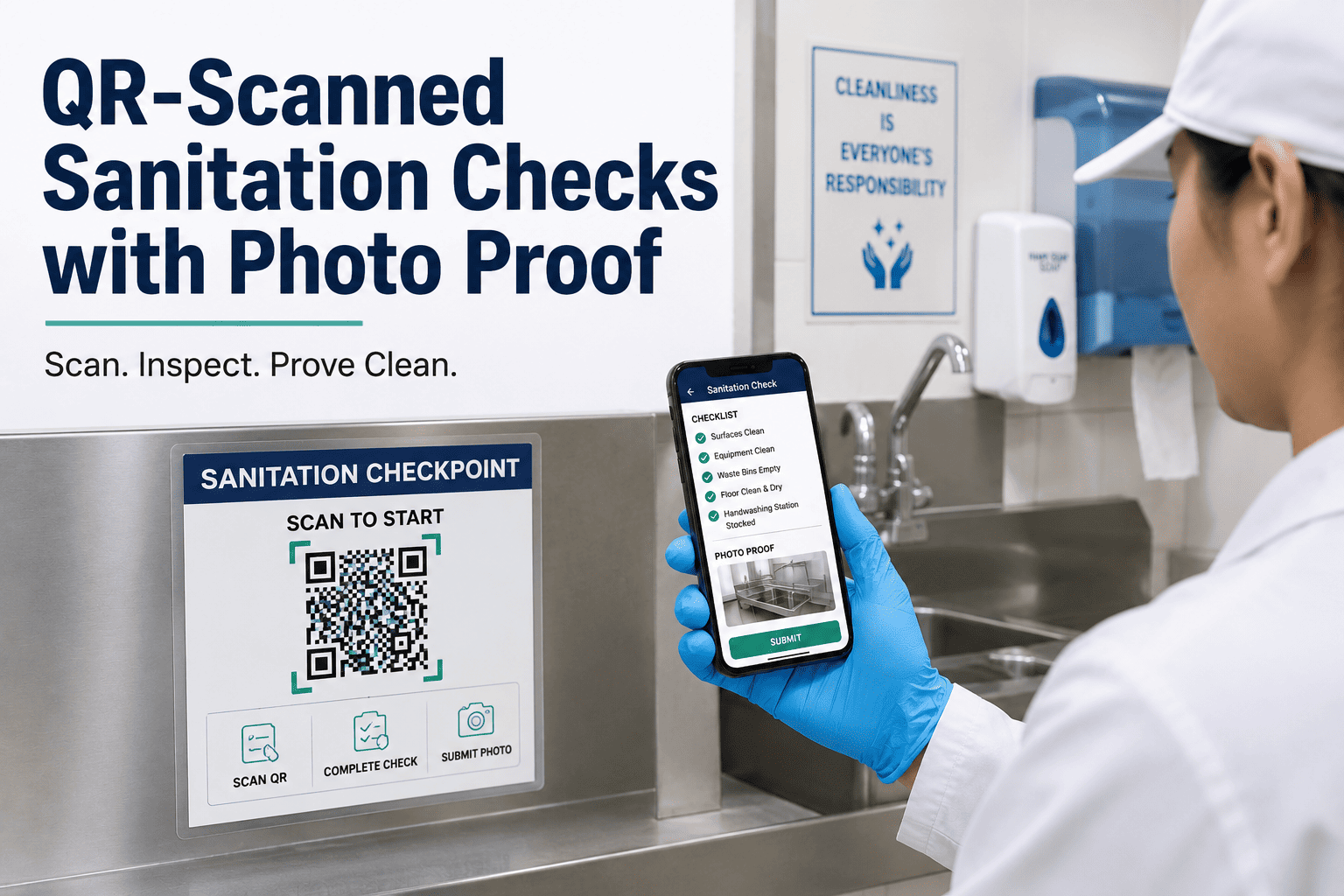
Food plants lose an average of 8–12 production hours per week to unverifiable sanitation sign-offs, with paper CILs accounting for nearly 40% of audit rework during FDA and SQF reviews. QR-scanned sanitation checks with mandatory photo proof colla
Read More
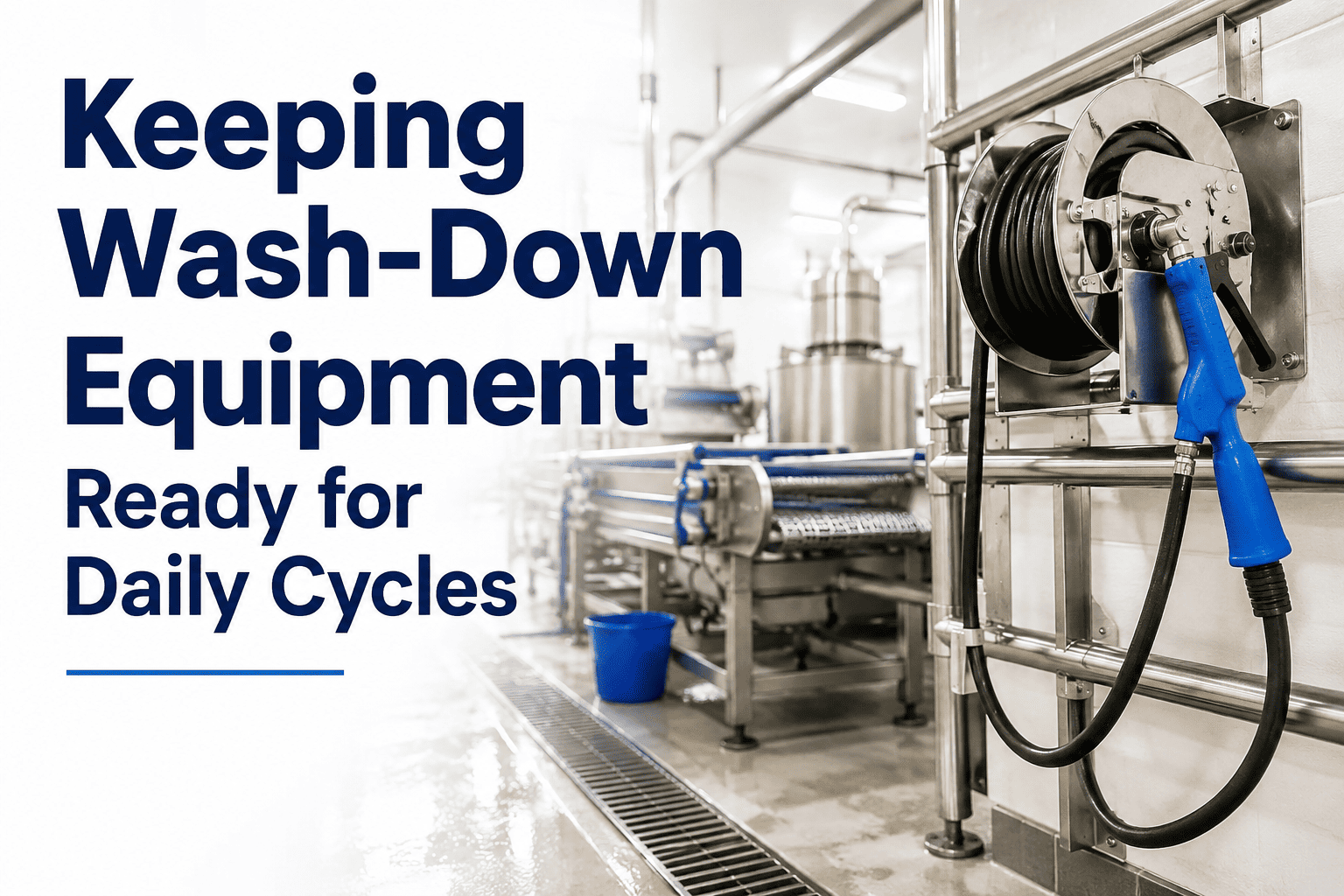
Daily sanitation cycles don't fail because crews cut corners — they fail because the equipment they depend on wasn't maintained before the shift started. In food plants running two or three production cycles a day, wash-down gear takes more abuse
Read More
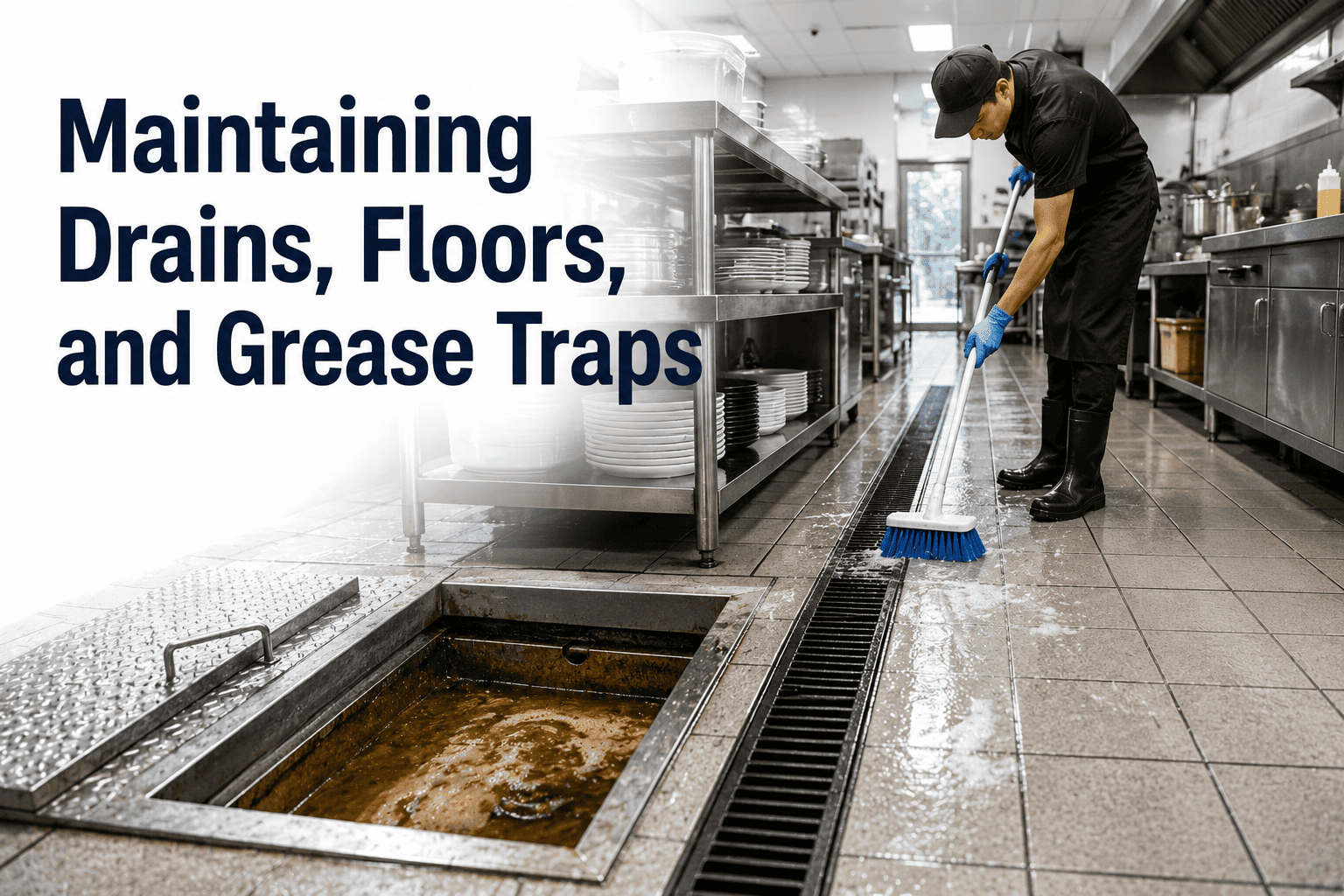
Drains, floors, and grease traps quietly carry the sanitation load of every food plant — and when they fail, environmental monitoring swabs turn positive, Listeria takes hold in harborage sites, and pest pressure follows within days. A 2024 indust

Read More
Nobody schedules a two-hour changeover on purpose. It happens because half the crew is fetching gaskets, the CIP cycle is running to its worst-case timer, and the allergen sign-off is waiting for a supervisor two lines away. SMED does not add spee
Read More
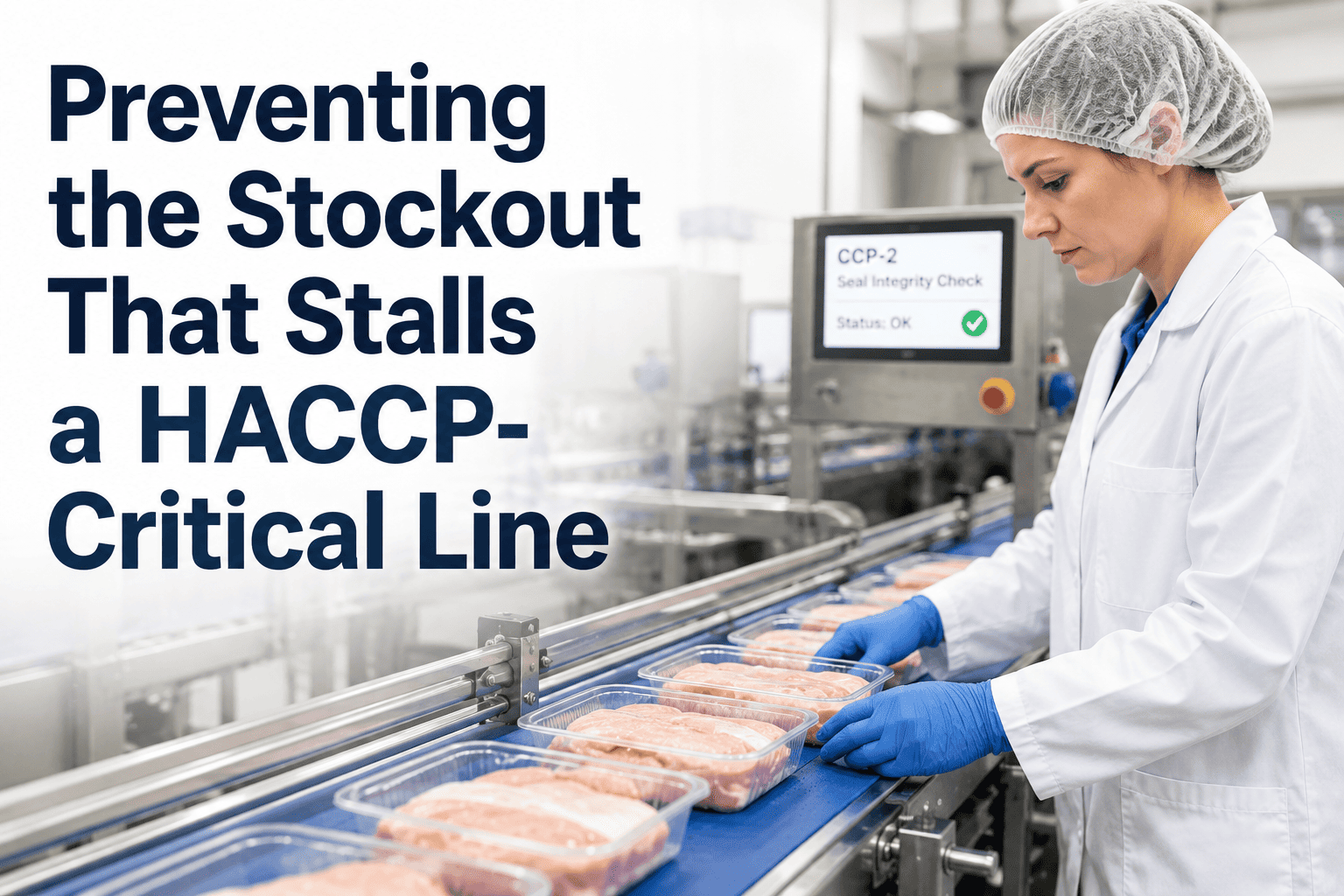
The stockout that hurts is not the one on a spare bolt in the storeroom. It is the food-grade seal, the sanitary gasket, or the specialty motor sitting on a 12-week backorder while a HACCP-critical line runs cold. In food plants, 15% of stockouts
Read More
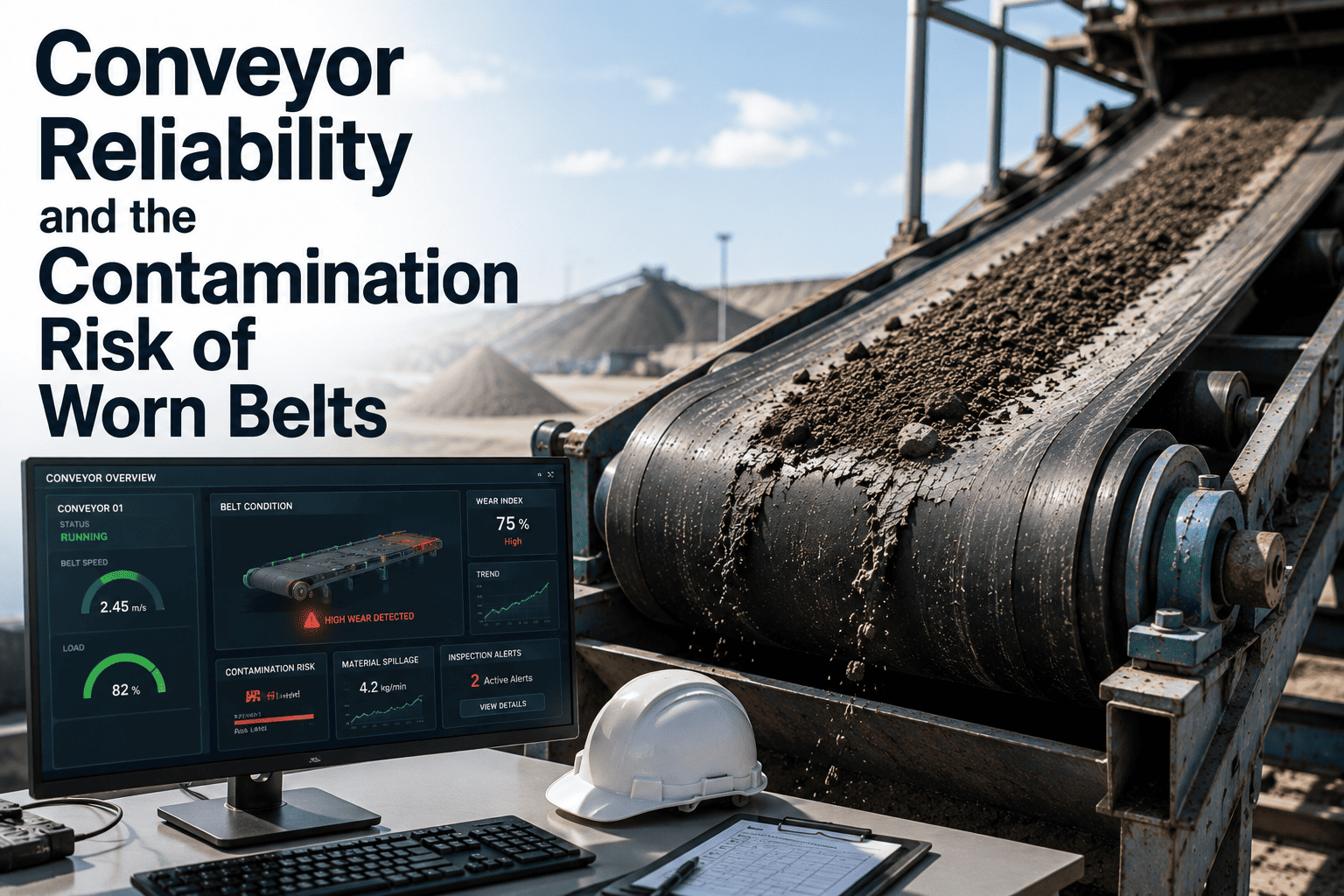
Every conveyor belt in a food plant carries two jobs at once, moving product and staying clean enough to touch it safely. When a belt frays, mistracks, or loosens at the splice, it stops doing the second job long before anyone notices the first. F
Read More
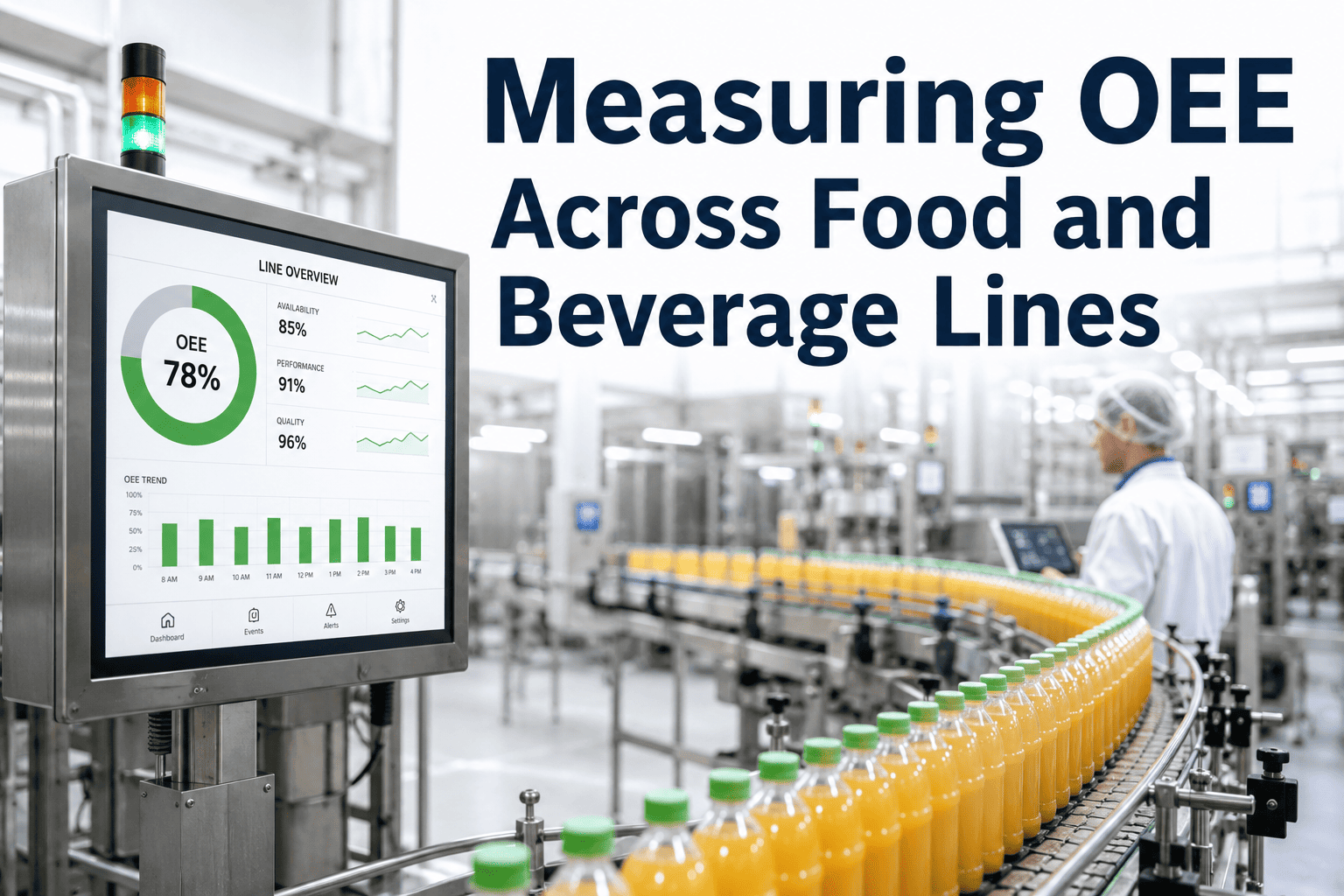
Most food and beverage plants measure OEE wrong before they ever calculate it. A shift report that says "78% uptime" is not OEE, it is one input buried inside three that actually matter: Availability, Performance, and Quality. Get the calculation
Read More
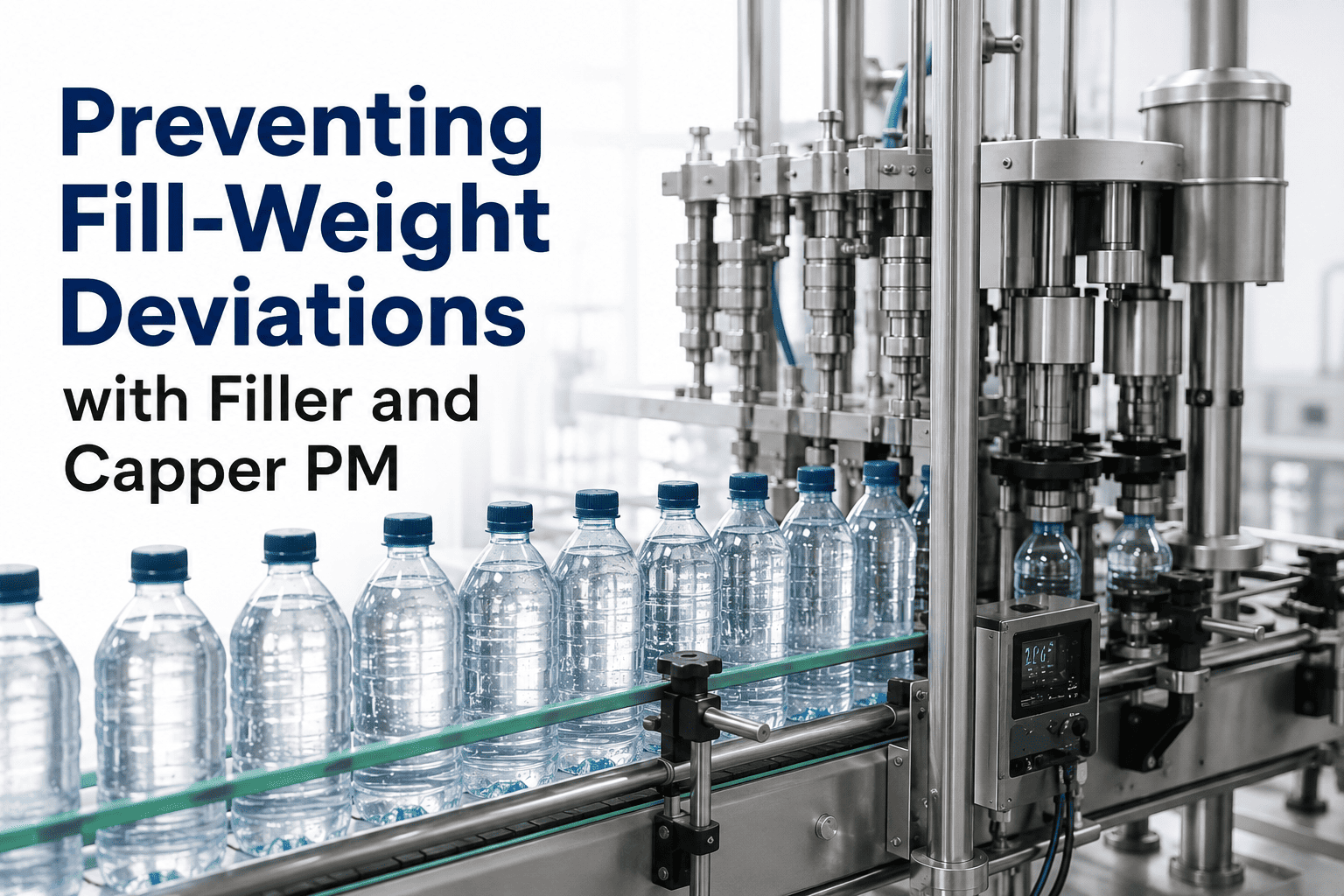
A packaging line rarely announces its problems, it just quietly drifts. A load cell loses calibration by fractions of a gram, a capper chuck wears half a millimetre, and neither shows up until a pallet of product fails a spot check or a customer c
Read More
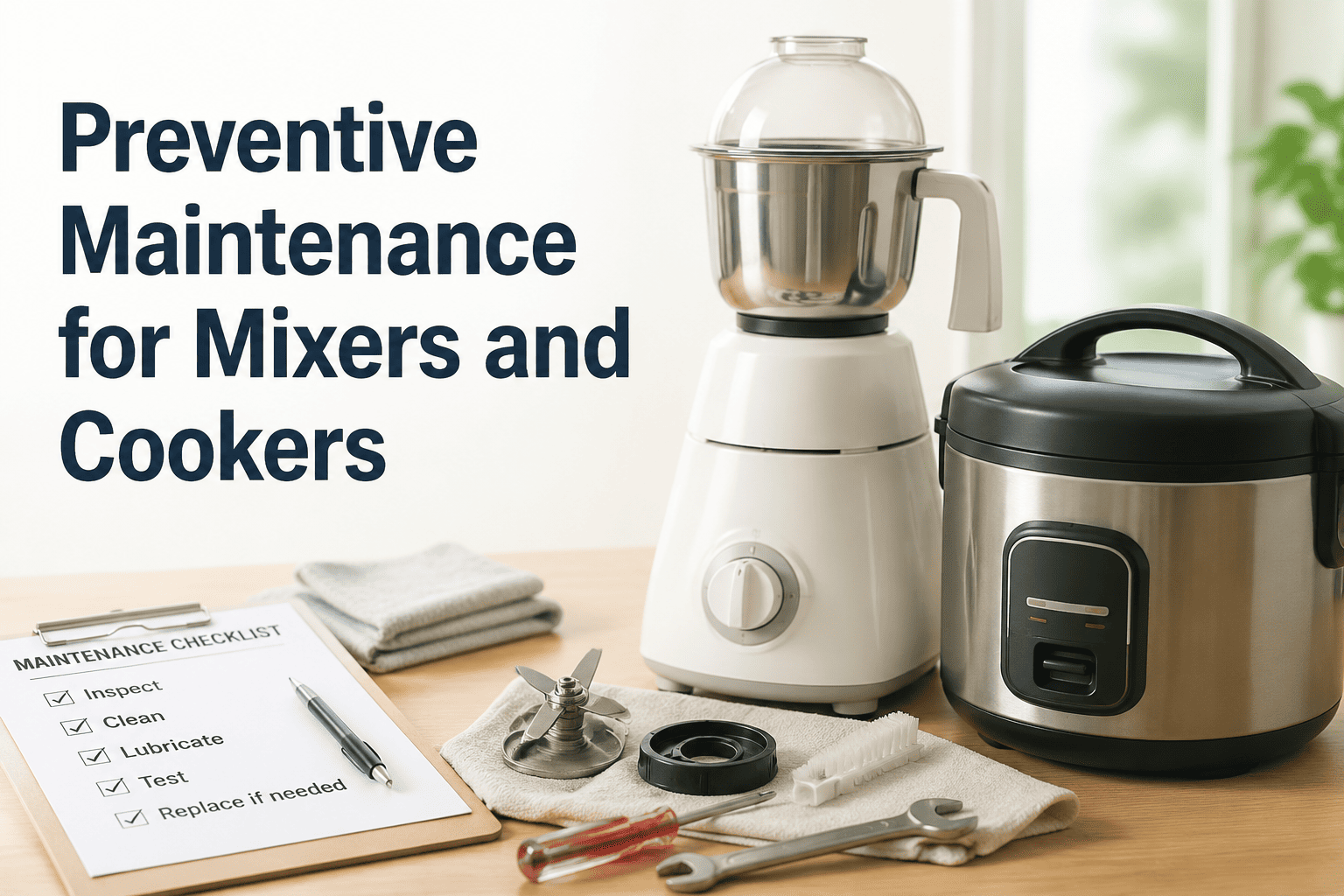
A mixer or cooker failure mid-batch does not just stop one machine, it stops the entire line, risks product contamination, and turns a routine service task into a regulatory incident. Agitator seals weep long before they fail outright, heating ele
Read More
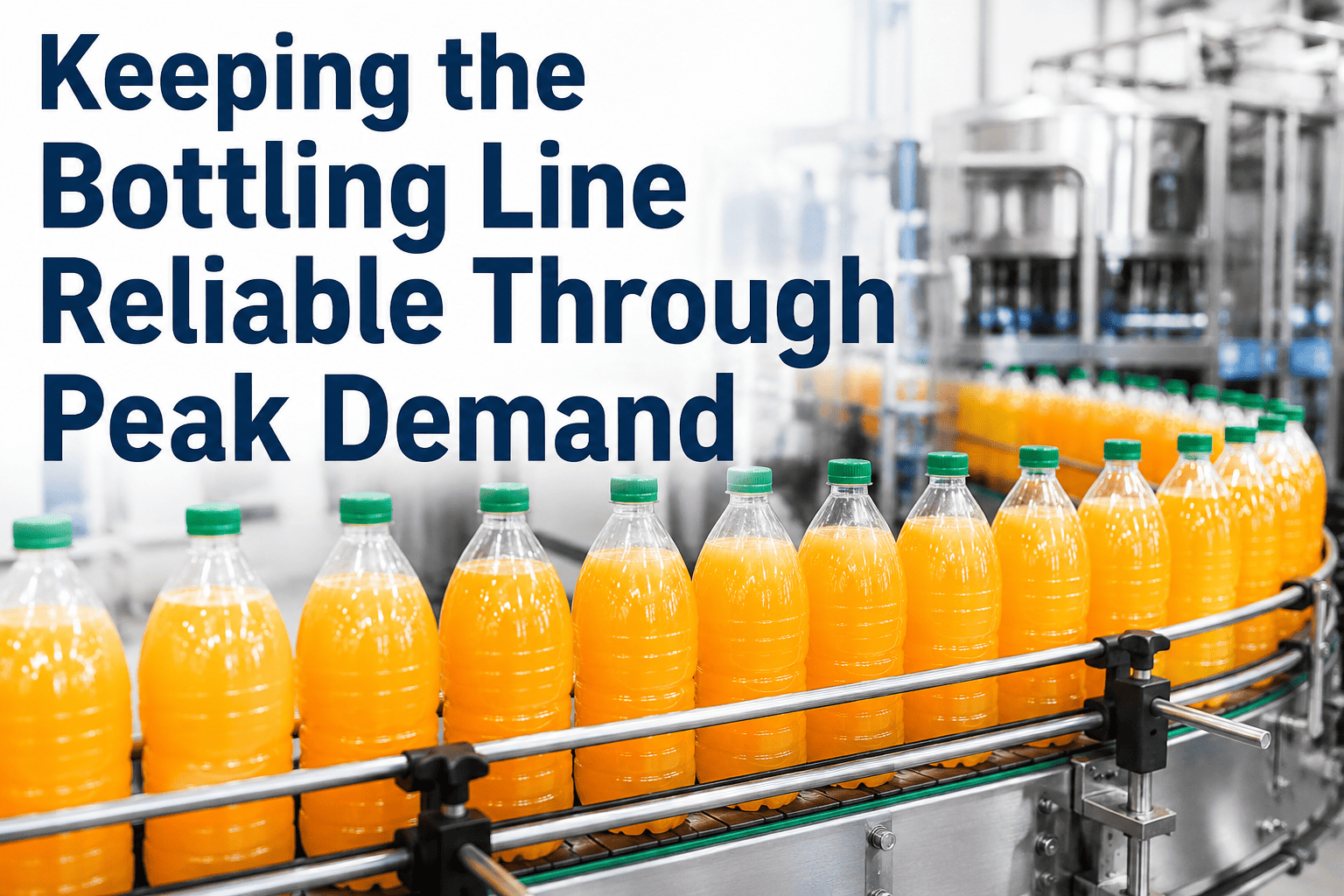
A 1,100-bottles-per-minute carbonated soft drink line in Georgia lost 48 minutes on a Thursday evening because a single capper head drifted 4 in-lb below torque spec. The filler upstream kept running for six seconds before backing up; the labeler

Read More
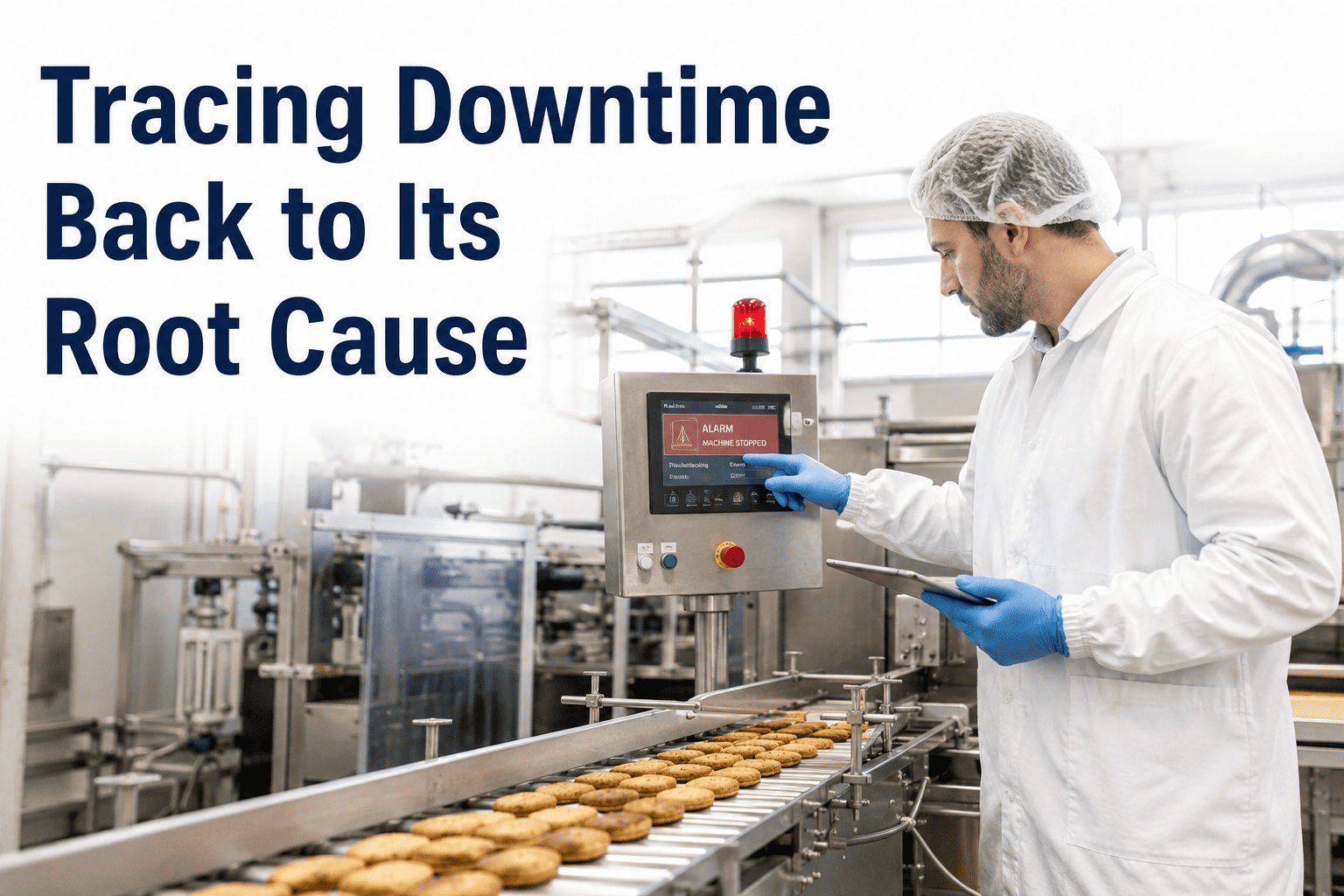
A cereal packaging line in Ontario logged 47 "brief pauses" during a single Wednesday shift — none of them long enough for the operator to enter a downtime code, all of them clustered on the same case packer flap folder. By the end of the week the
Read More
A 340,000 square foot snack manufacturing plant in Ohio logged eleven unplanned stops on its extrusion line in a single month, and every single one was written up as "motor fault" and closed within the hour. Nobody asked why the same motor kept fa
Read More
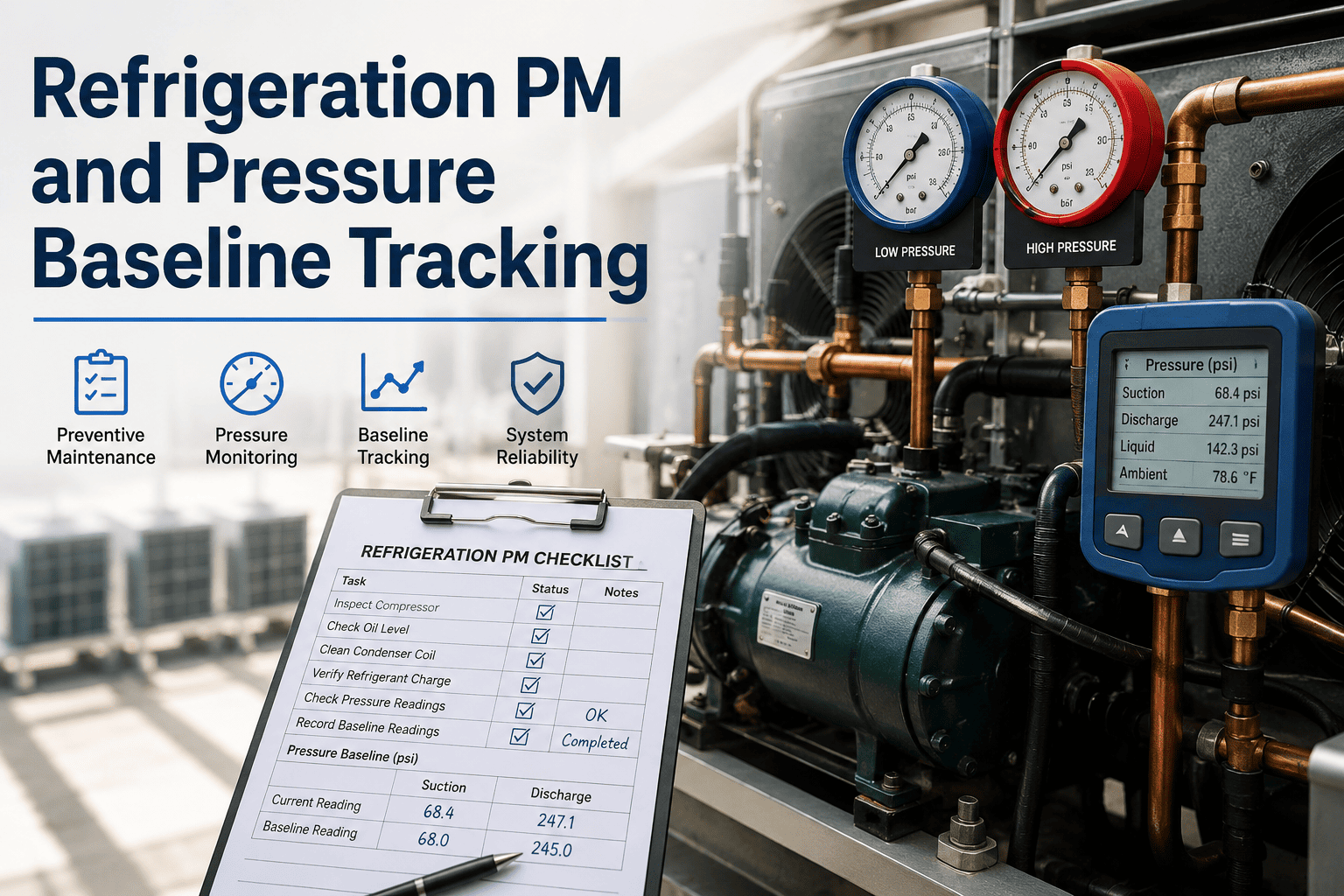
A freezer compressor in a Nebraska protein plant tripped on high discharge pressure at 2 a.m. on a Saturday, and the on-call tech found the condenser fan belt had been slipping for weeks. Nobody had logged a pressure reading in eleven days because

Read More
Inside a walk-in freezer running at minus twenty, a technician's gloved thumb can't unlock the tablet screen, and the plant wifi signal dies somewhere around the cooler door. The six-minute PM checklist that should have closed in the app turns int
Read More
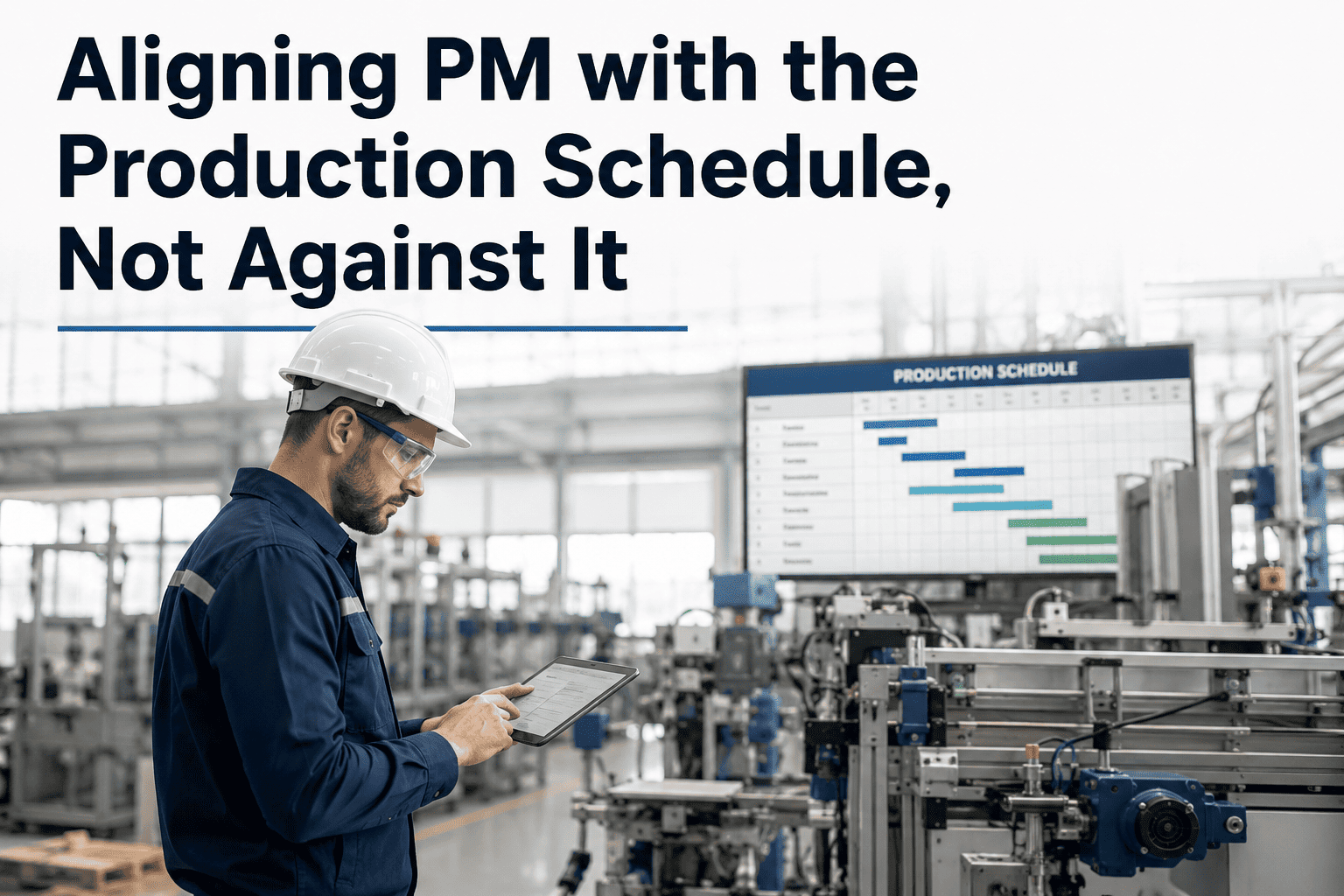
A frozen-vegetable plant in Wisconsin had a PM on a blancher pump due the same Thursday the line was running a customer-audit production block, so the work order sat in the queue for eleven more days until the next scheduled changeover. On day nin

Read More
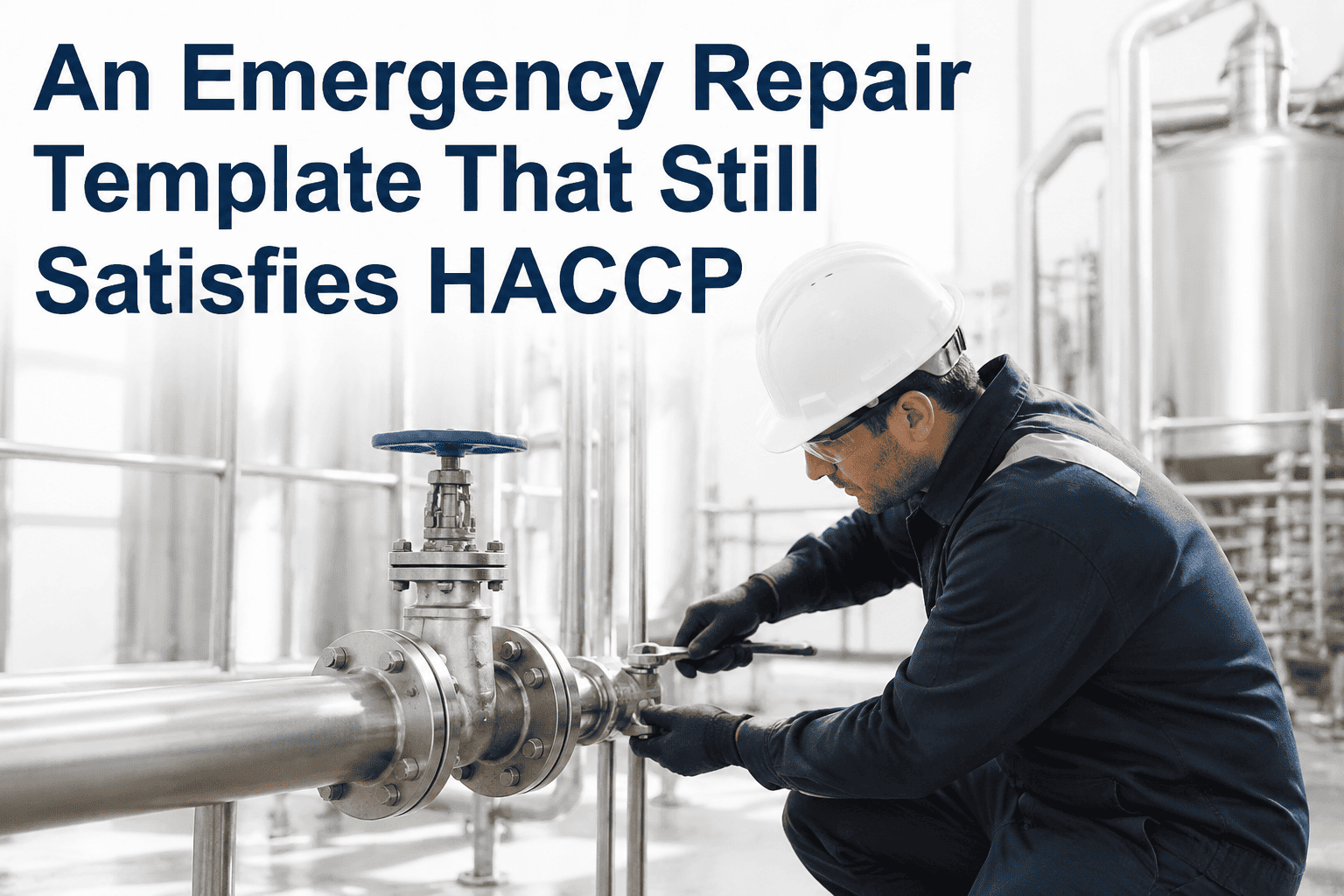
A food plant running at 60% OEE loses roughly 9.6 hours of every 24, and industry research consistently finds that 74% of that downtime is preventable — not with new capital equipment, but with a maintenance discipline that catches root causes ins
Read More
It is 3:17 AM. A drive bearing on the filling line has just failed, product is banked up, and the line supervisor is pinging maintenance every ninety seconds. The technician who fixes it in twelve minutes is a hero. The technician who fixes it in
Read More
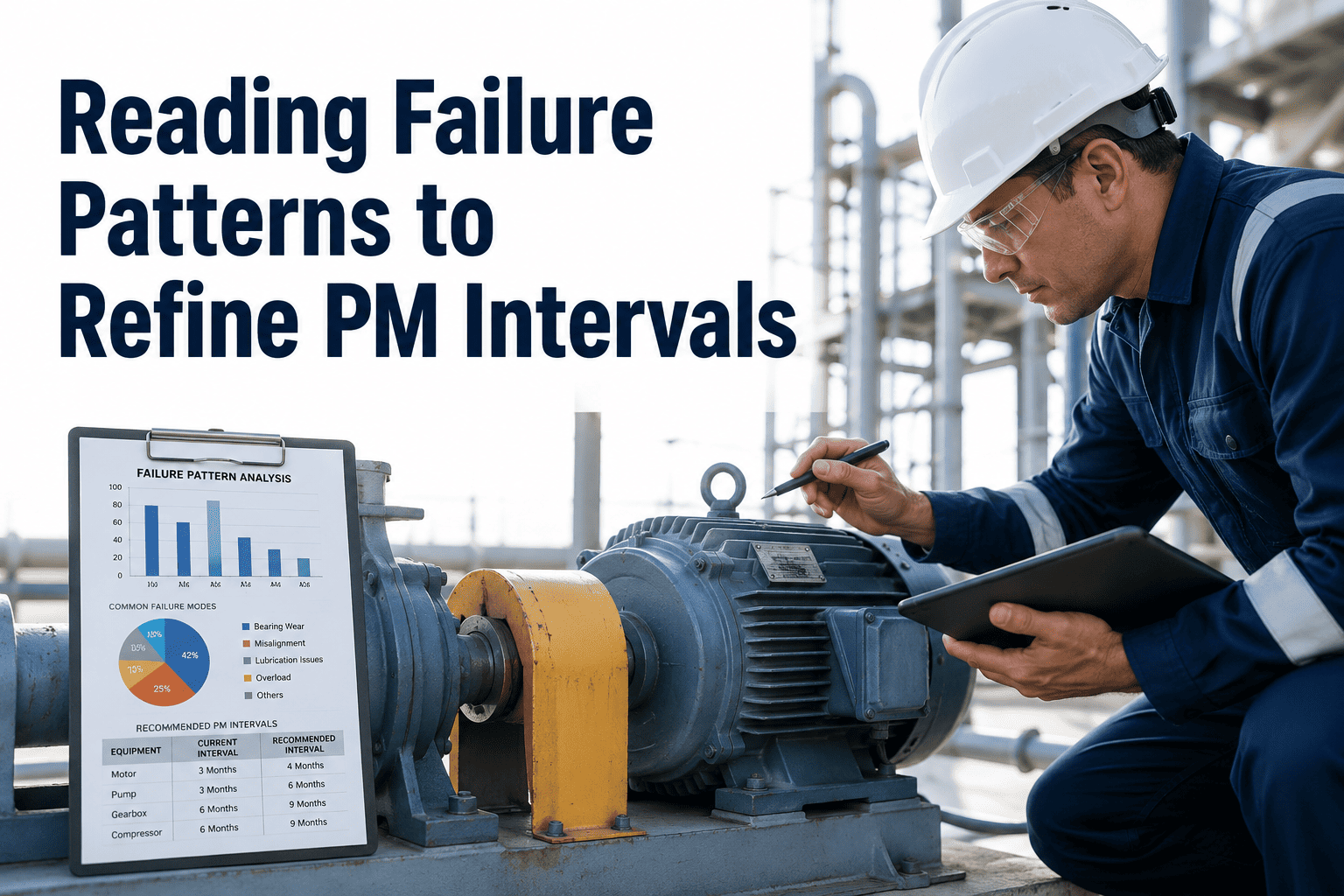
Every food processing plant develops its own private catalog of failures — a bearing that seizes at 2,100 hours instead of the OEM's 4,000, a food-grade seal that hardens after 90 days of caustic CIP washdown instead of the specified 180, a convey
Read More
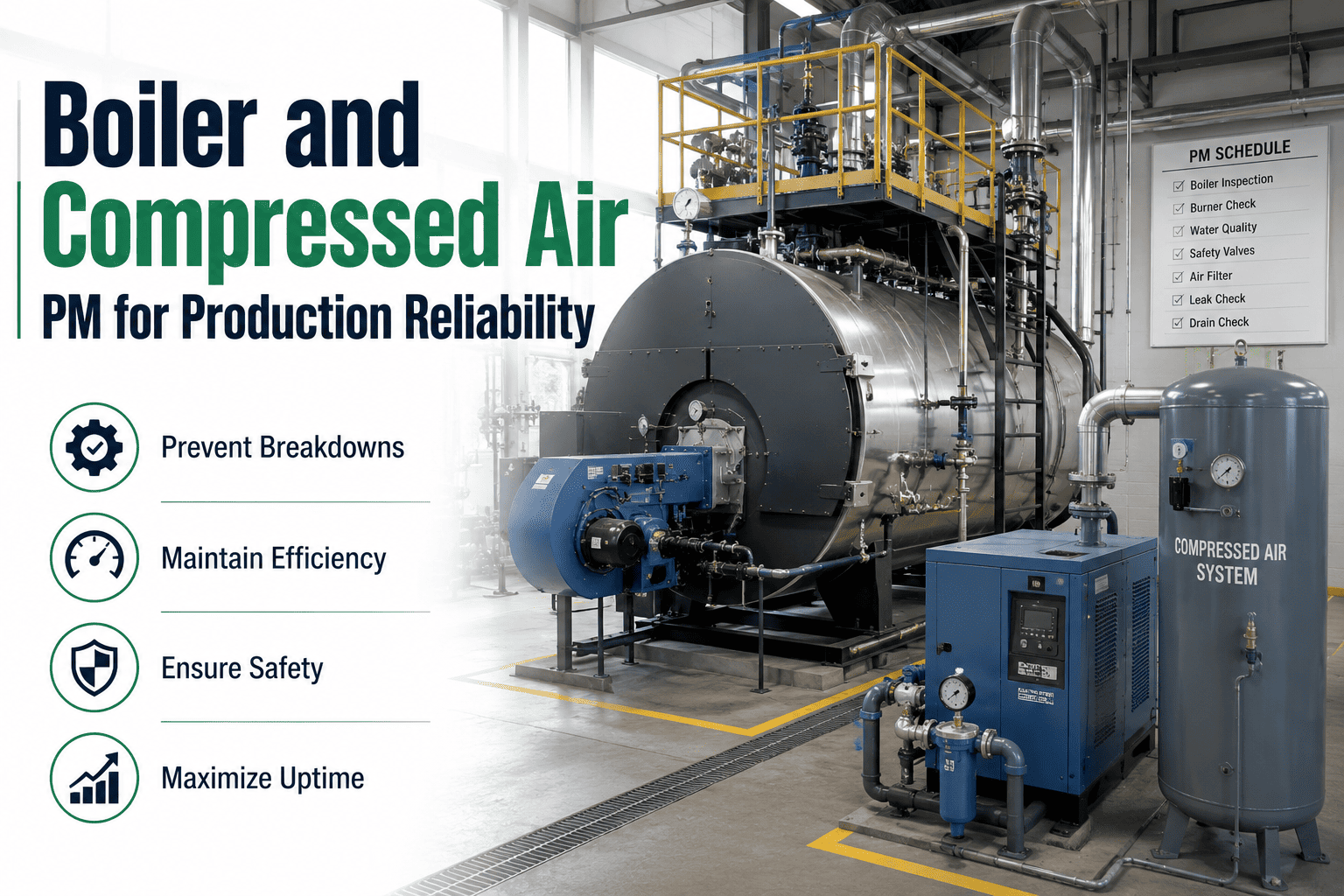
Two utilities keep a food plant running and neither one shows up on a maintenance whiteboard until it fails: the boiler that makes steam for cooking, CIP, and sanitation, and the compressed air network that drives every pneumatic valve, filler, an

Read More
A sanitary weld looks fine from the outside and still fails an audit from the inside. Underneath a smooth cap, a single crevice, pit, or misaligned bore can trap product residue that no CIP cycle ever reaches, and that gap is invisible until a bor
Read More
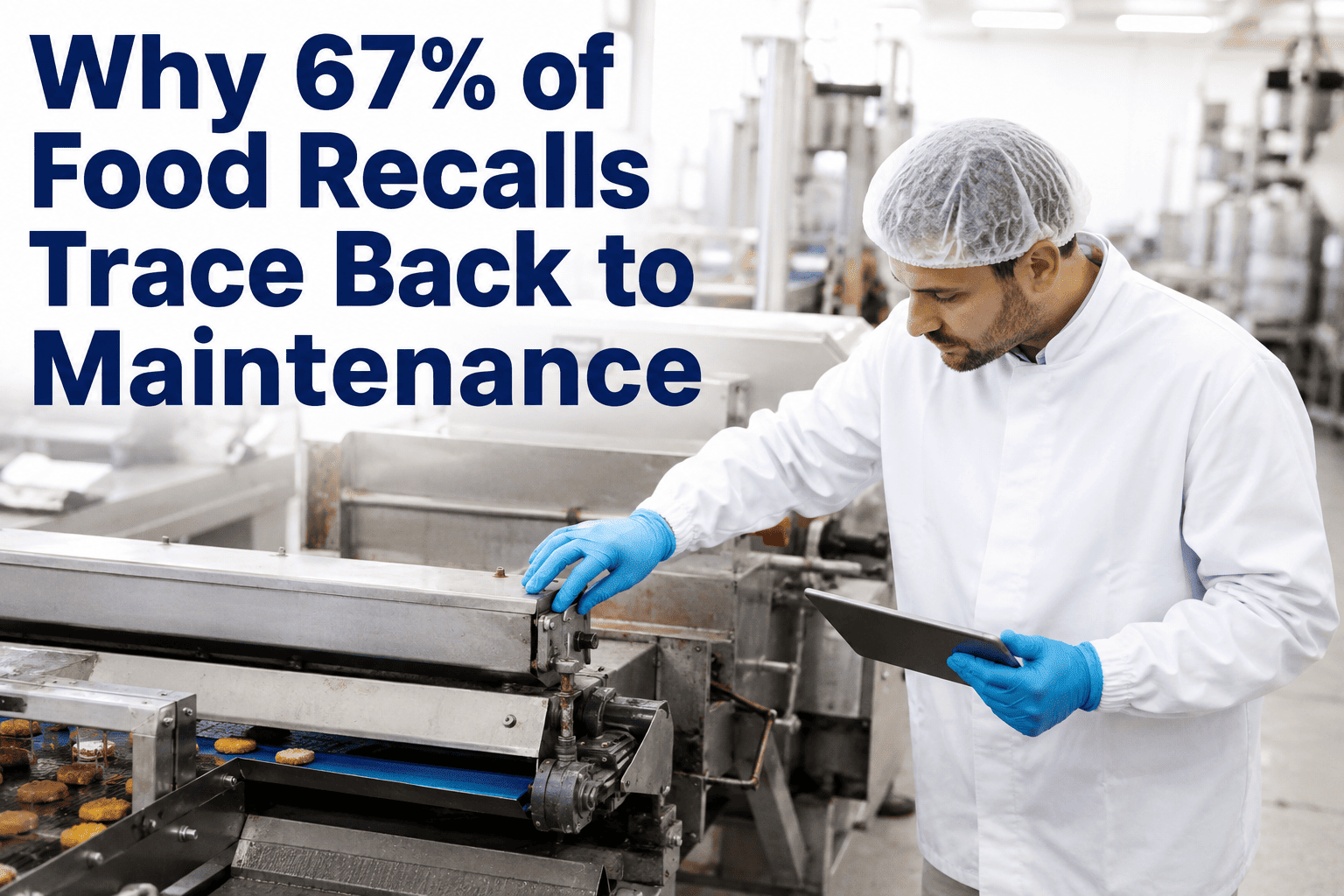
When a food product recall makes headlines, investigators rarely start with the recipe or the supplier — they start with the equipment. A worn conveyor bearing sheds metal fragments into the product stream. A drifted pasteurizer sensor lets a batc
Read More
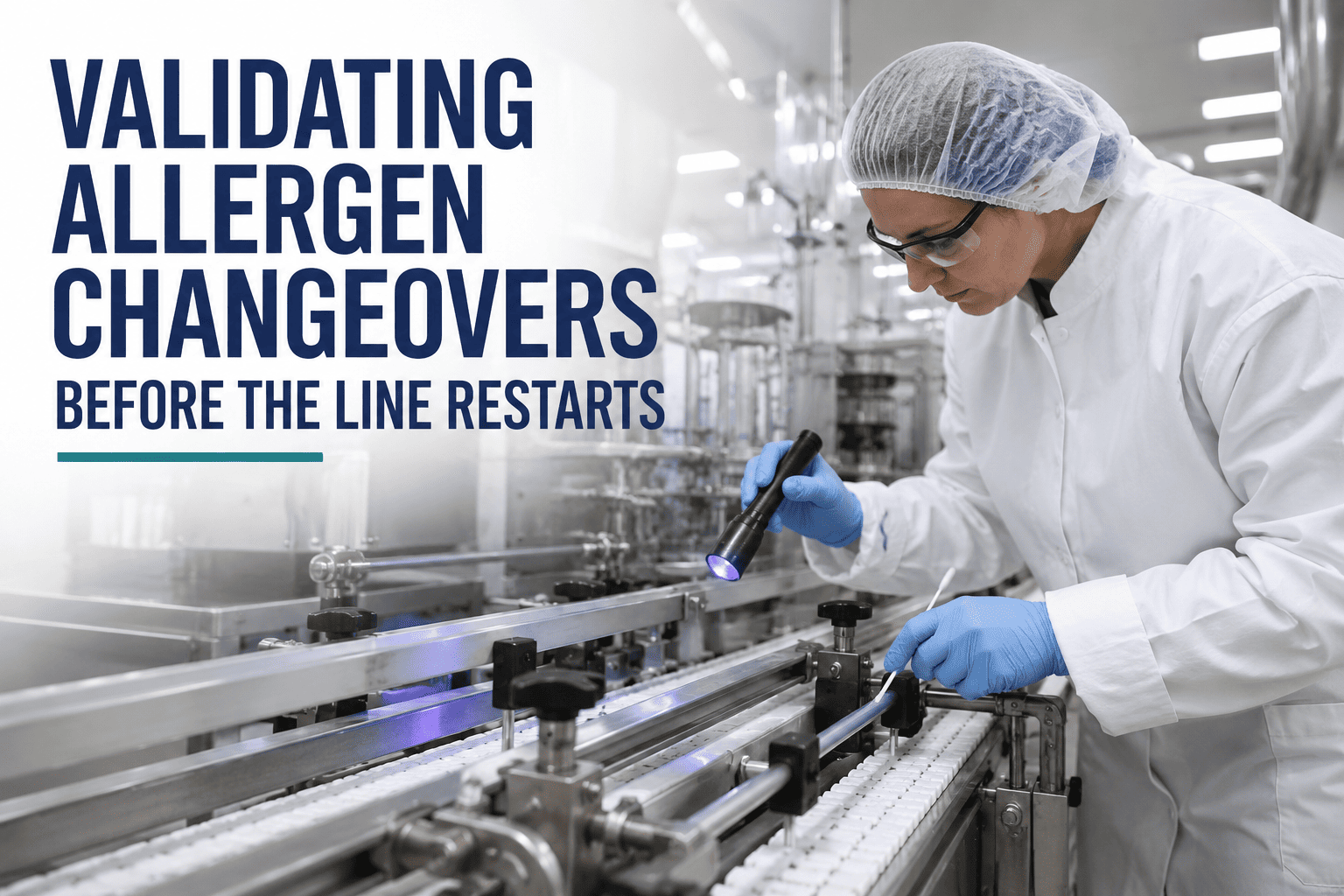
A single skipped step in an allergen changeover — one bolt left off a disassembly checklist, one swab point never re-tested — is the difference between a routine production run and a Class I recall that shuts a line down for weeks. Undeclared alle

Read More
For food manufacturers operating under FDA jurisdiction, 21 CFR Part 11 isn't a suggestion — it's the legal framework governing every electronic record and signature tied to production, quality, and the maintenance systems that keep assets running
Read More
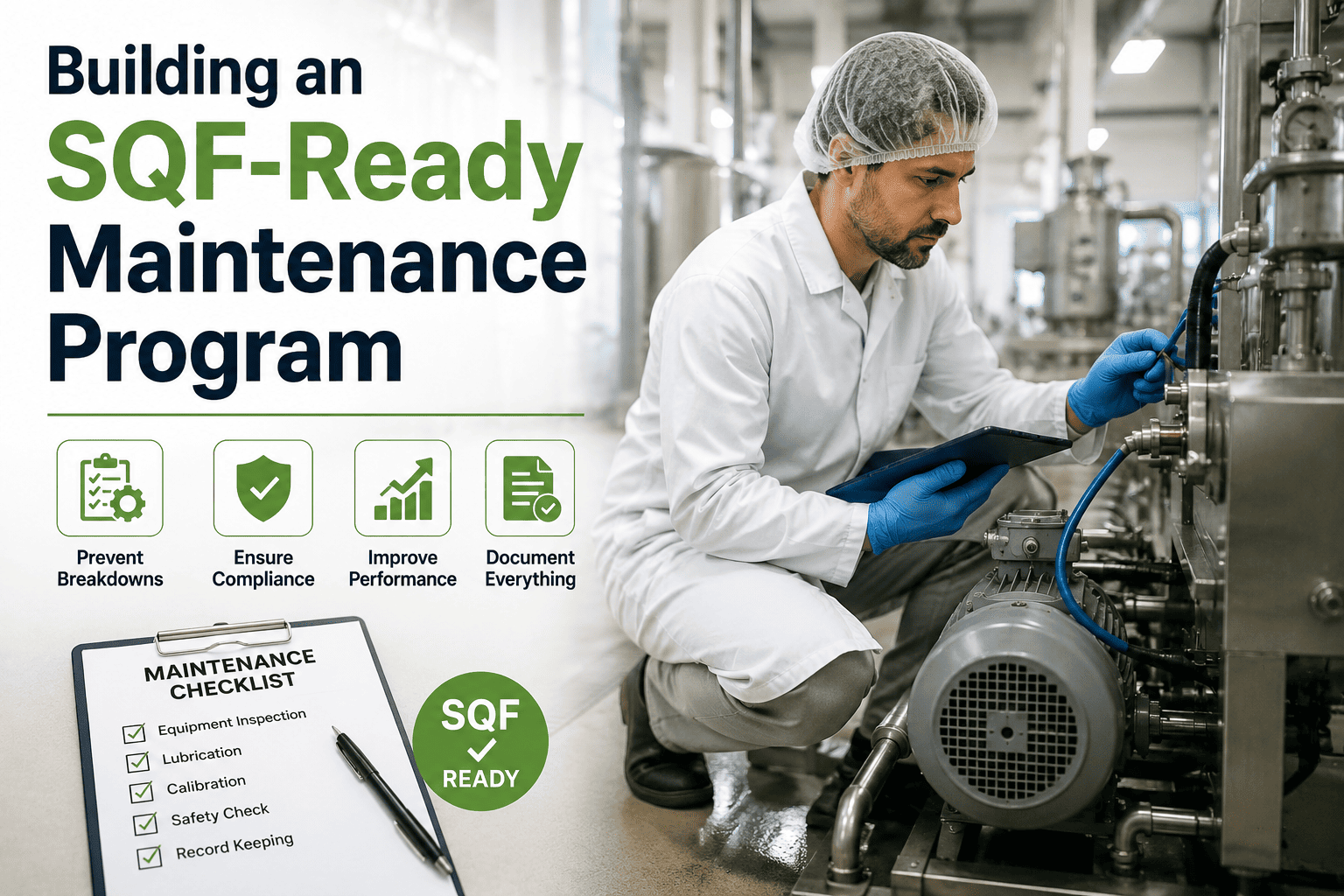
A food manufacturing plant in Ohio walked into its SQF recertification audit with three straight years of completed preventive maintenance behind it — and still walked out with a major non-conformance. The equipment was fine. The failure was that
Read More
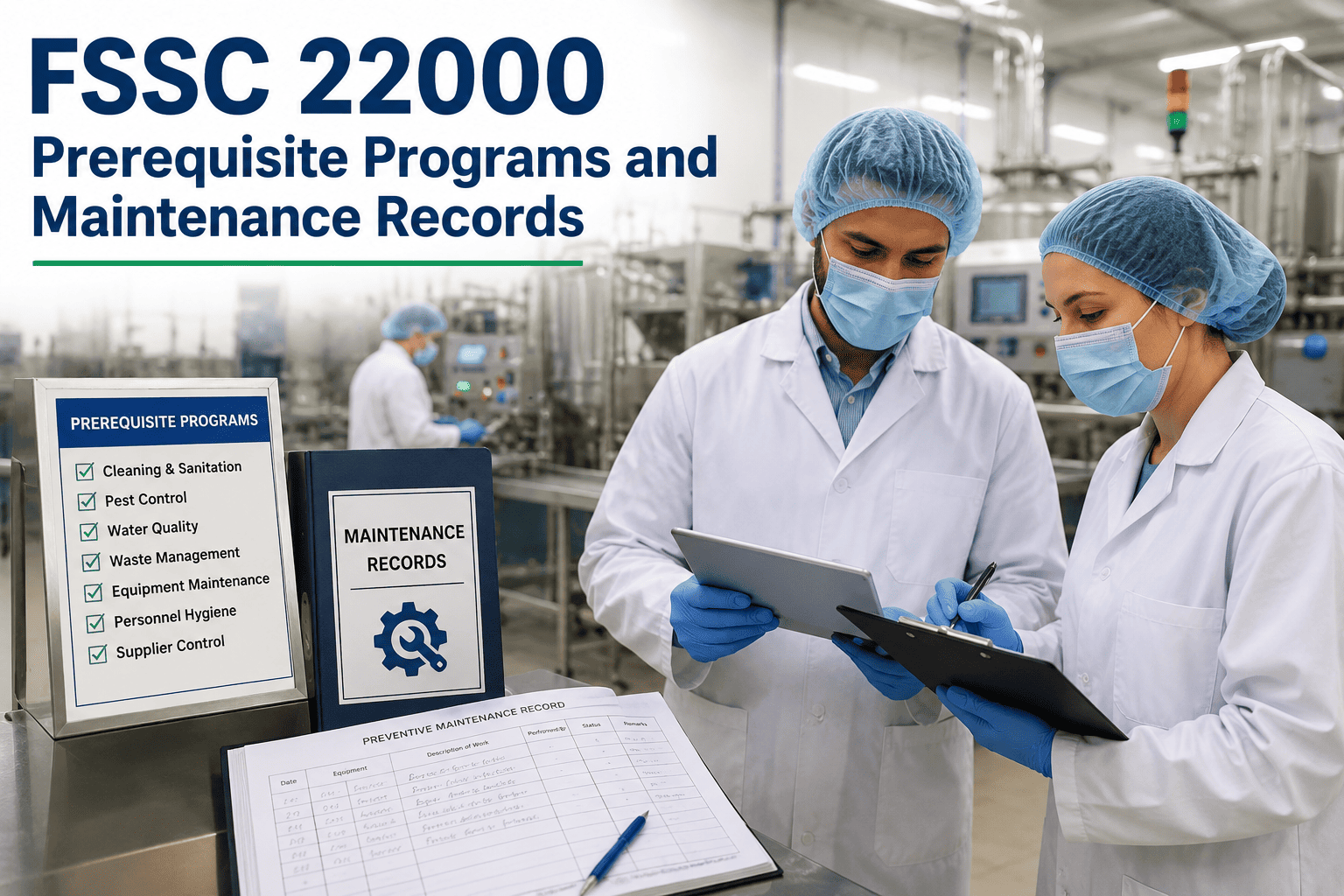
A snack food manufacturer in Germany lost a $2.4 million retailer contract for ninety days after failing its FSSC 22000 surveillance audit. The equipment itself was fine — fourteen packaging line components had actually been serviced on time. What
Read More
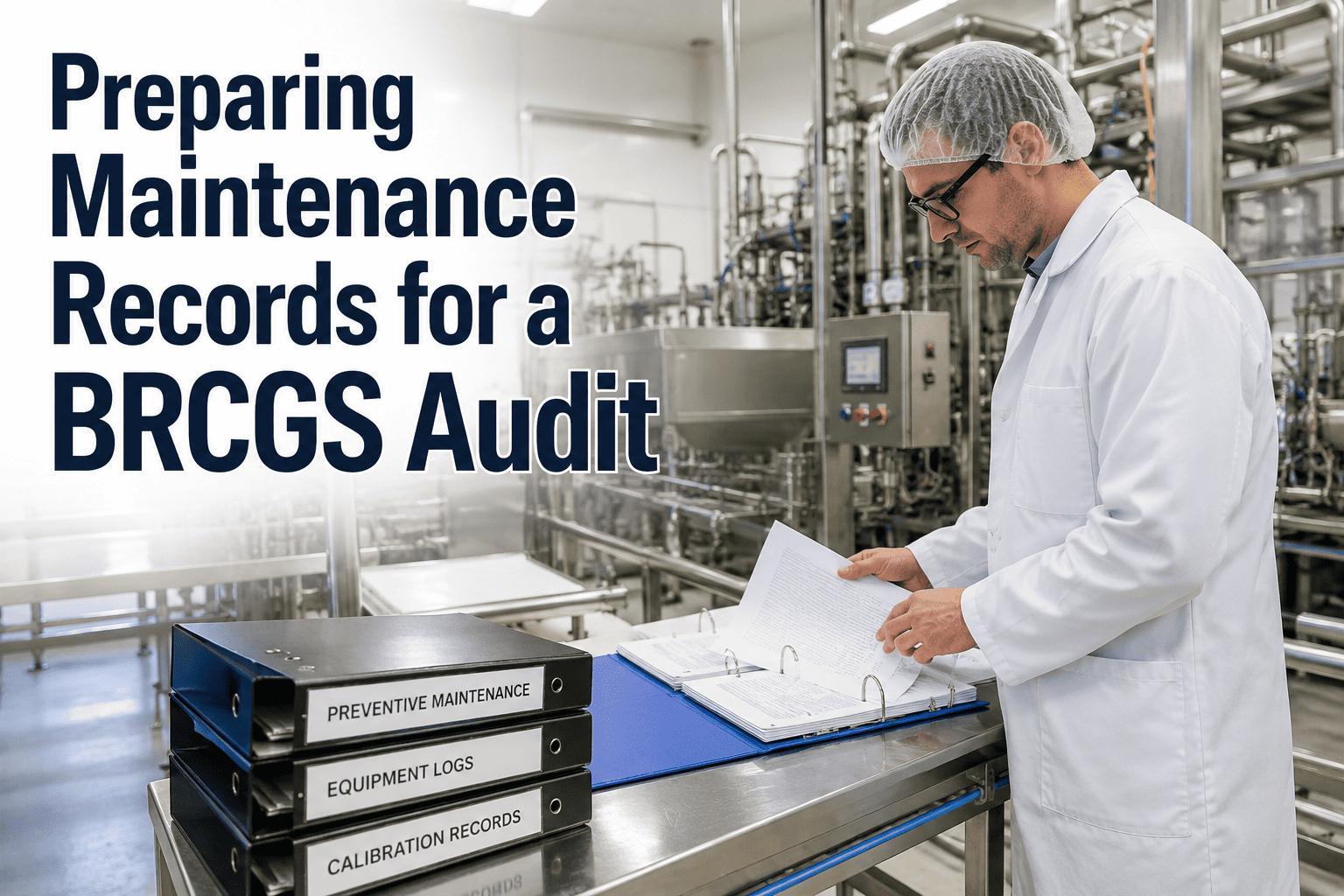
Your BRCGS auditor doesn't start on the production floor. They start with a login screen or a filing cabinet, asking to see your planned maintenance schedule, your calibration certificates, and your last five post-repair sanitation sign-offs. More
Read More
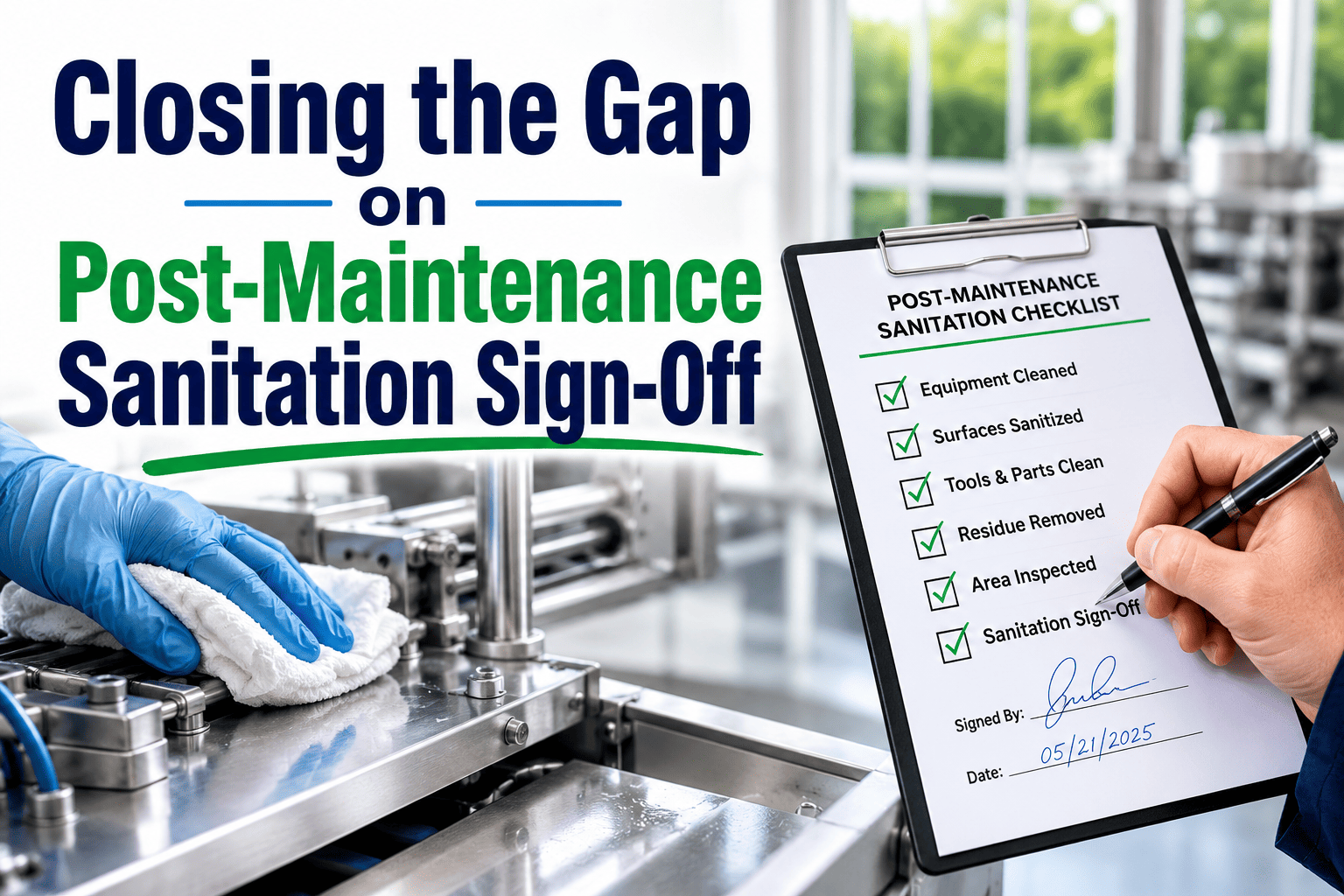
Every food manufacturing facility runs maintenance on food-contact equipment — but the equipment often goes back into production without a verified sanitation step between the wrench work and the first product run. This gap is one of the most cite
Read More
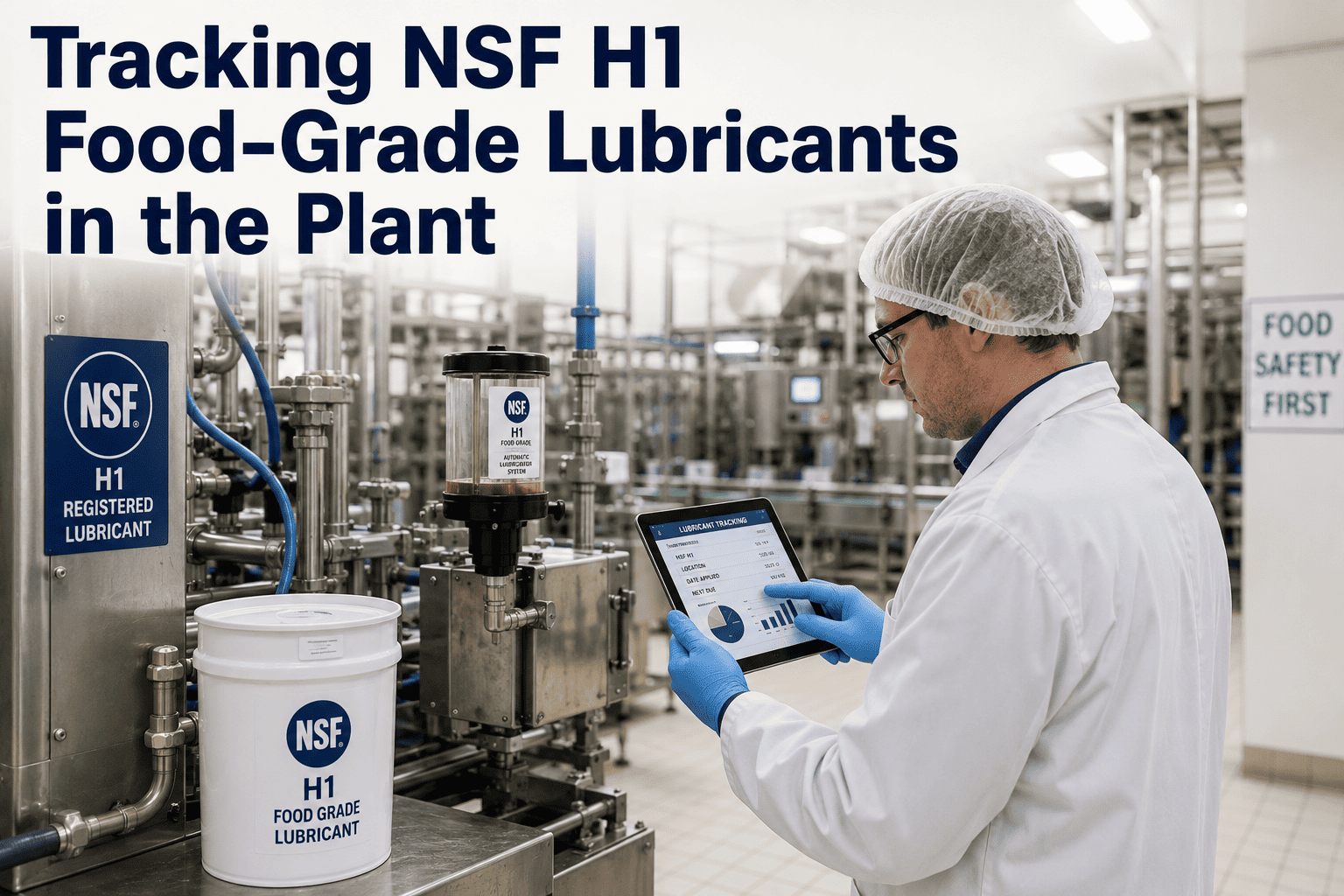
Every food plant runs thousands of lubrication points across bearings, chains, gearboxes, and conveyors, and a single wrong drum picked off the shelf can turn a routine PM task into a recall. NSF built the H1, H2, H3, and 3H categories to draw a h
Read More
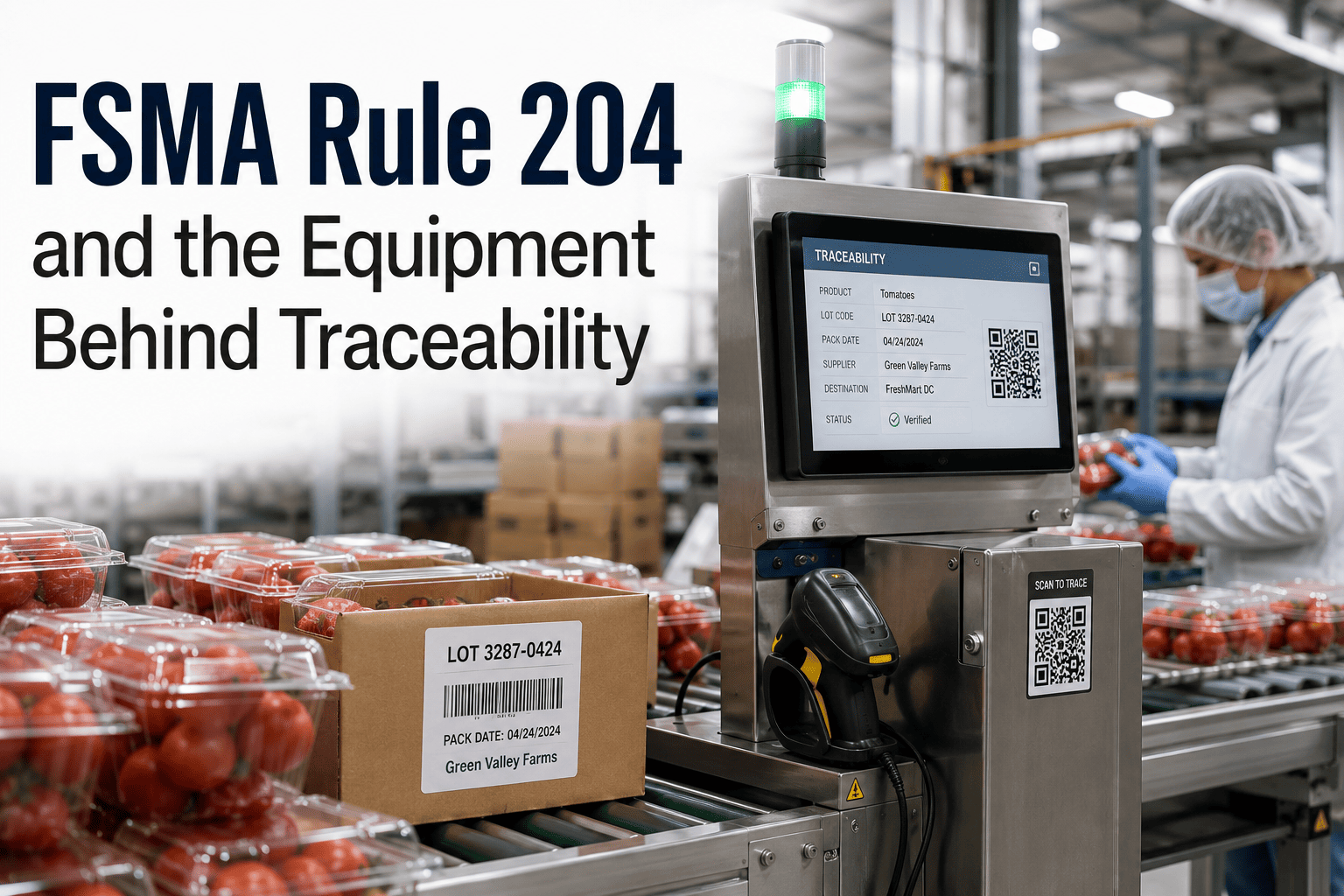
Every lot code, barcode, and date stamp your line prints starts on a machine, not in a spreadsheet. FSMA Rule 204 requires food manufacturers to capture Key Data Elements at every Critical Tracking Event, and that data is only as trustworthy as th

Read More
Every asset on a food production floor sits in one of four risk zones, and that single classification decision determines the material spec, the cleaning frequency, and the maintenance interval assigned to it. Get the zone wrong and a conveyor bea
Read More
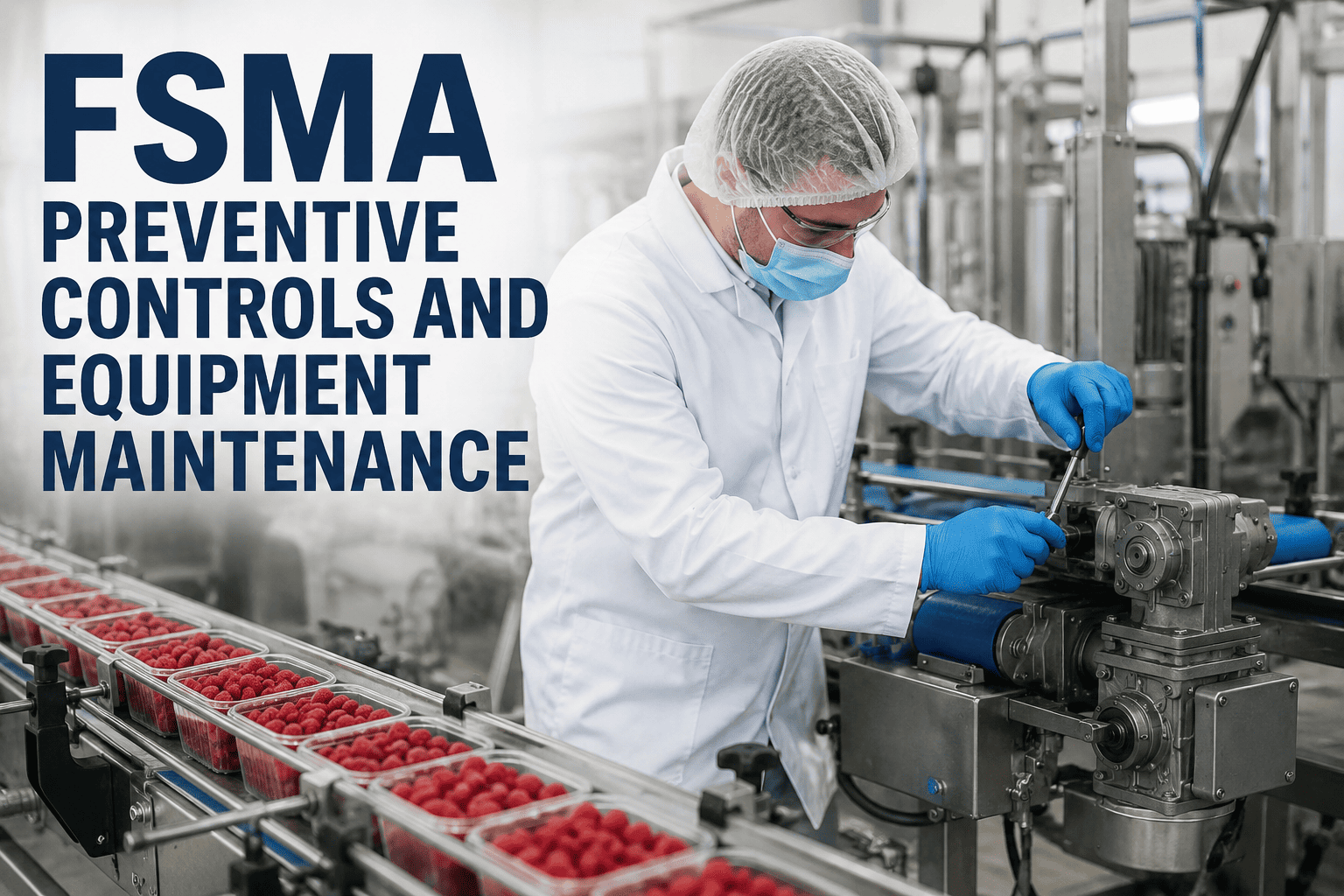
Under FSMA's Preventive Controls rule, equipment maintenance is not a background operations task — it sits inside 21 CFR Part 117 as a named requirement alongside monitoring, corrective actions, and verification. When a chiller drifts outside its

Read More
Sanitary equipment design is the foundation of every food safety program — and the area where most facilities discover compliance gaps only after an FDA inspector or a third-party auditor identifies them. Equipment that cannot be fully cleaned, fu
Read More
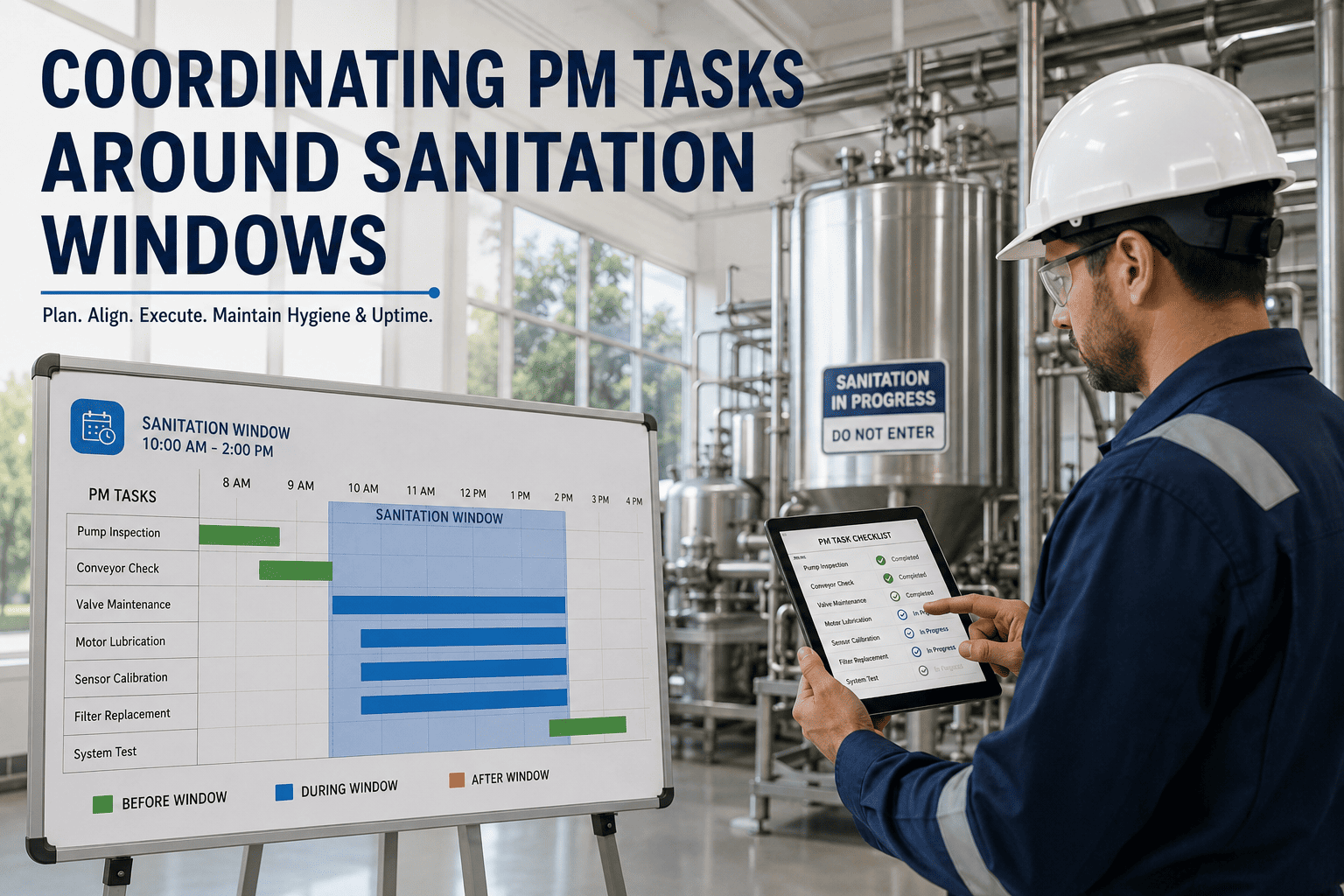
Every food plant preventive maintenance calendar eventually collides with the sanitation schedule, and when that happens, PM tasks get pushed, postponed, or quietly skipped because the equipment was never actually free for the technician. A pump i

Read More
A CCP deviation is the moment a HACCP plan is truly tested — not when it is written, but when a temperature probe drifts below kill temperature or a metal detector runs at reduced sensitivity during a live production run. FDA and USDA regulations
Read More
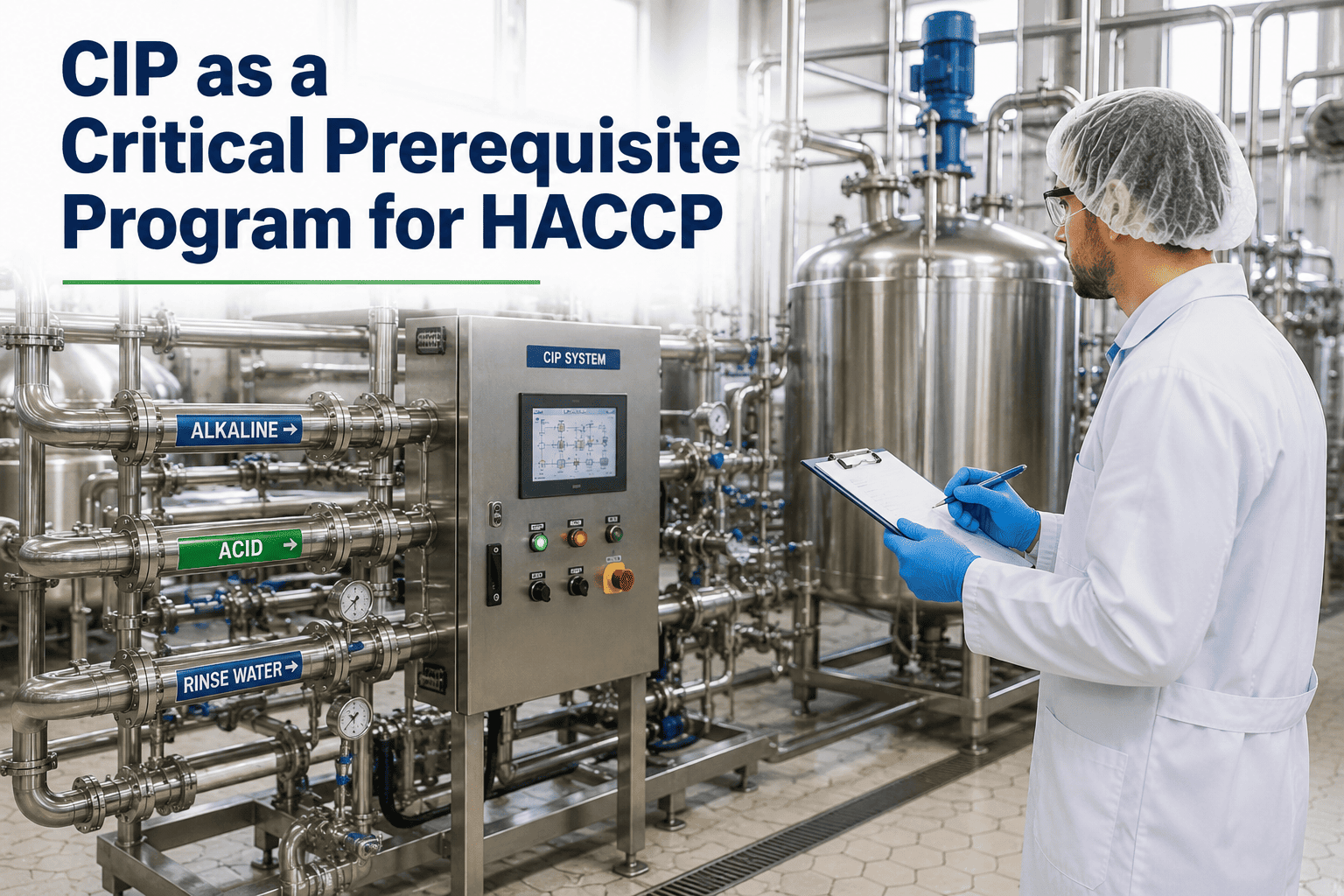
A Clean-in-Place system does not just wash your tanks and pipelines — it is one of the most heavily audited prerequisite programs inside your HACCP plan, and when a cycle runs short on temperature, chemical concentration, or contact time, that is
Read More
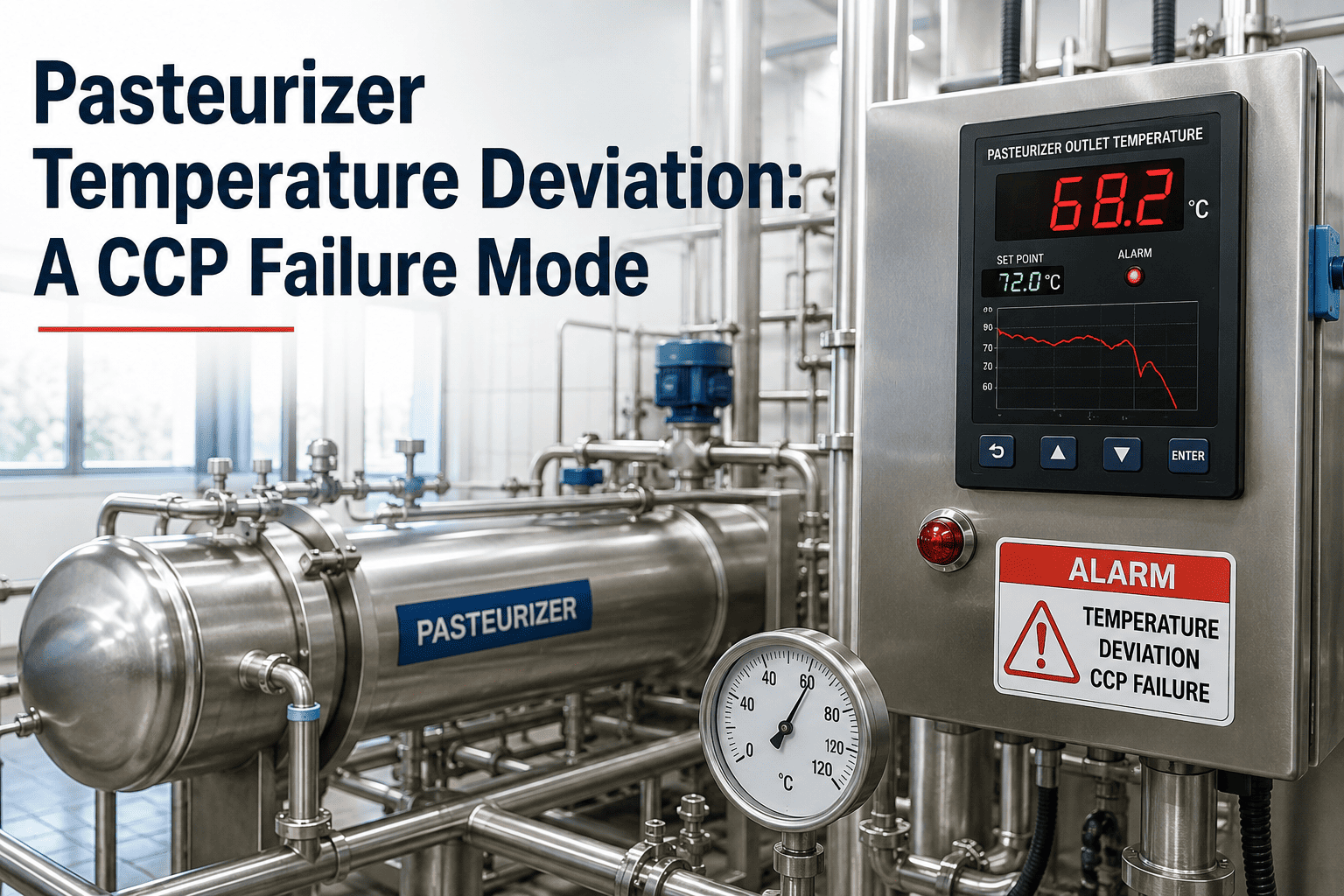
A pasteurizer running at 160.4°F instead of the required 161°F for fifteen seconds looks fine on the control room screen, but under HACCP rules it is not a warning — it is a critical limit deviation, and the batch behind it must be treated as unsa
Read More
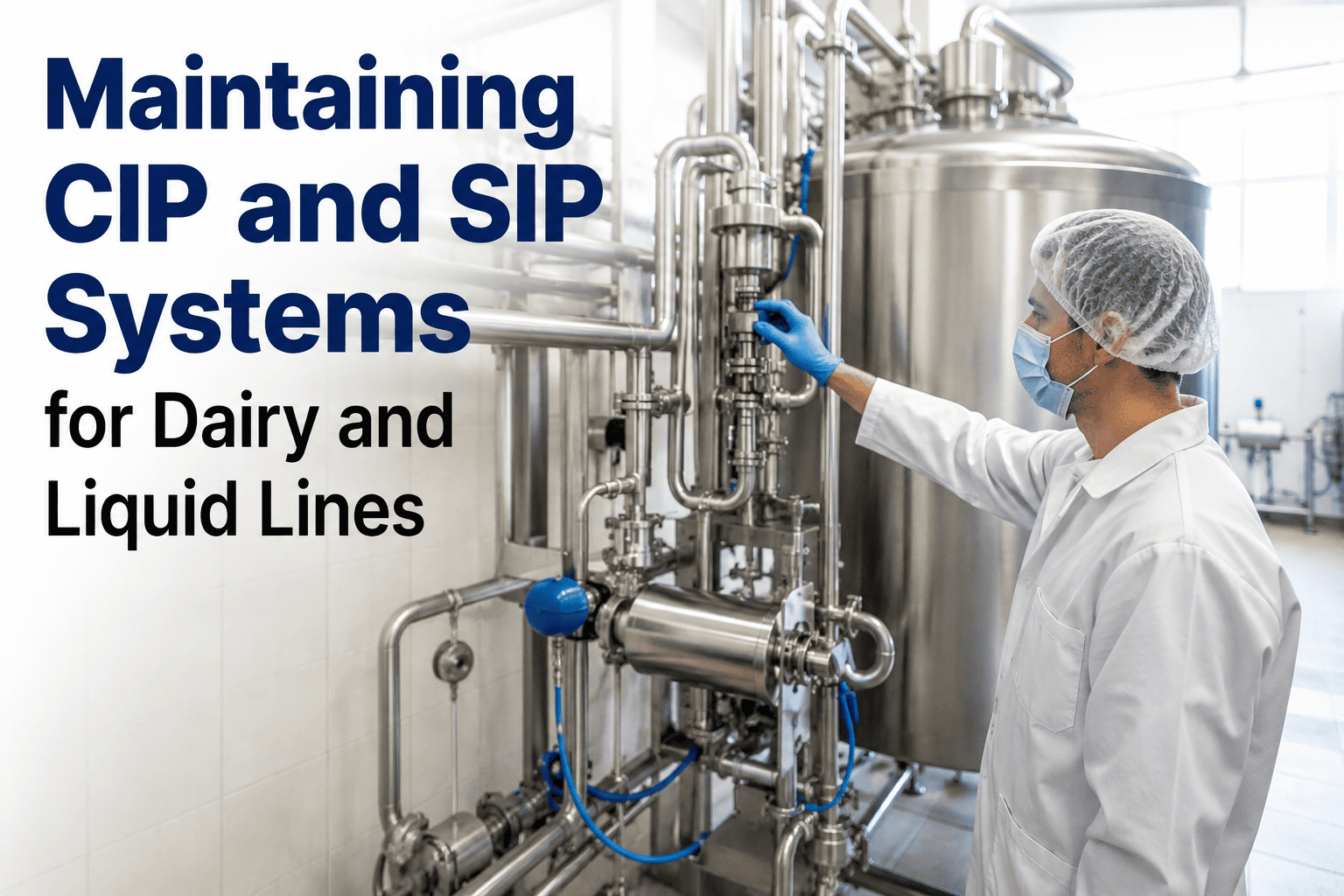
Clean-in-Place (CIP) and Sterilize-in-Place (SIP) systems keep dairy and liquid processing lines sanitary without ever opening a pipe or tank for manual scrubbing. A cycle can finish on schedule and print a clean report while still leaving biofilm

Read More
Sanitation and maintenance have always been run as two separate departments in most food plants — one keeps the CIP pumps and spray balls running, the other verifies the equipment is actually clean. That separation is exactly where audit findings

Read More
Metal detectors show up as the designated Critical Control Point on the overwhelming majority of packaged food HACCP plans, and auditors know exactly where to look first. A missed sensitivity check, a test piece that does not match the product on

Read More
A HACCP plan is only as strong as the equipment that enforces it, and most food plants discover this the hard way — during a recall, not an audit. Auditors no longer stop at whether your Critical Control Points are documented; they check whether t

Read More
A pasteurizer running two degrees under its validated setpoint, a metal detector drifting out of sensitivity, a CIP cycle logging a temperature that never actually reached the pipe wall — none of these look like emergencies on the plant floor, but
Read More
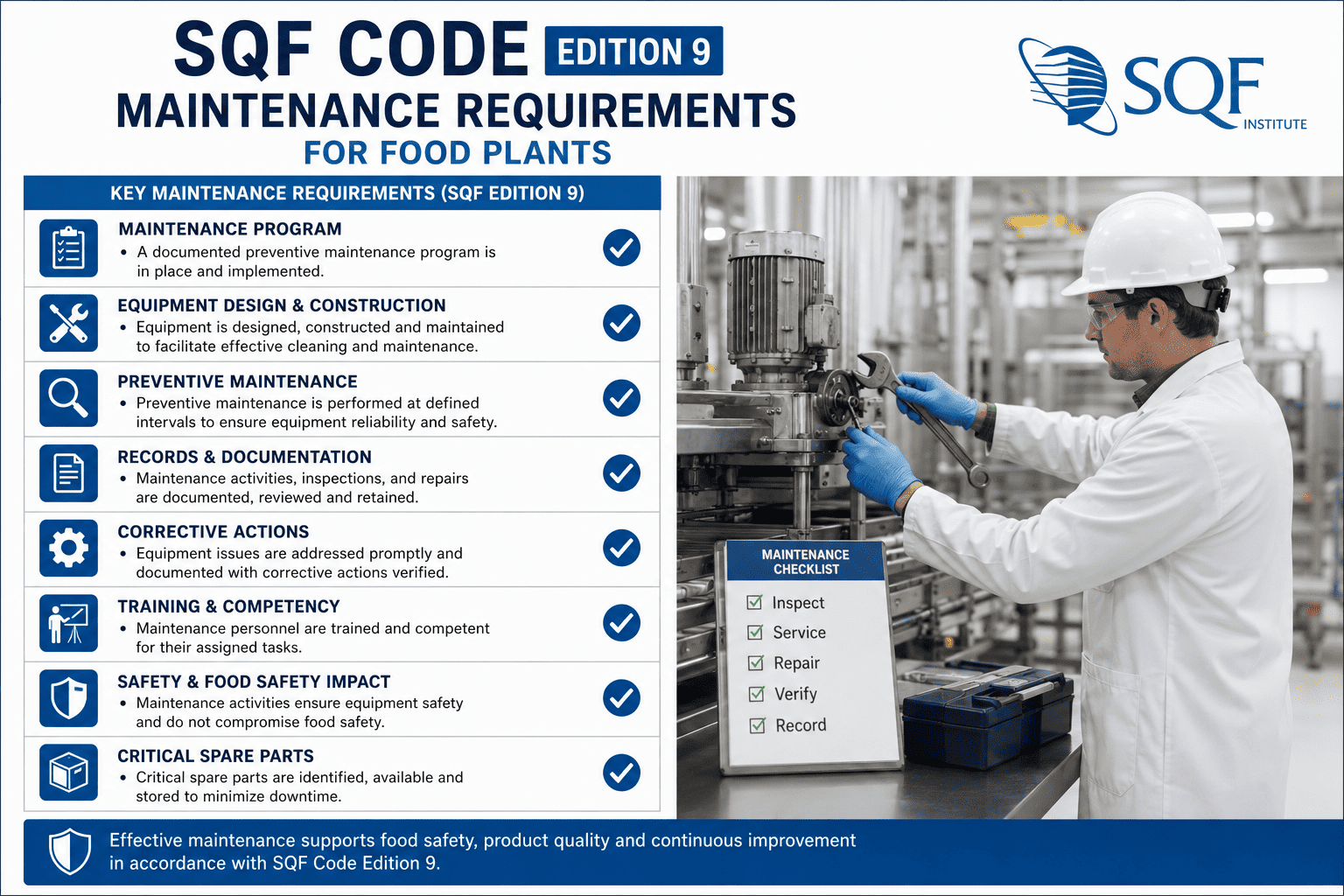
SQF Edition 9 maintenance requirements tightened how food plants must plan, document, and verify equipment upkeep — covering everything from hygienic equipment design to calibration records and contractor work history. Plants still relying on pape
Read More
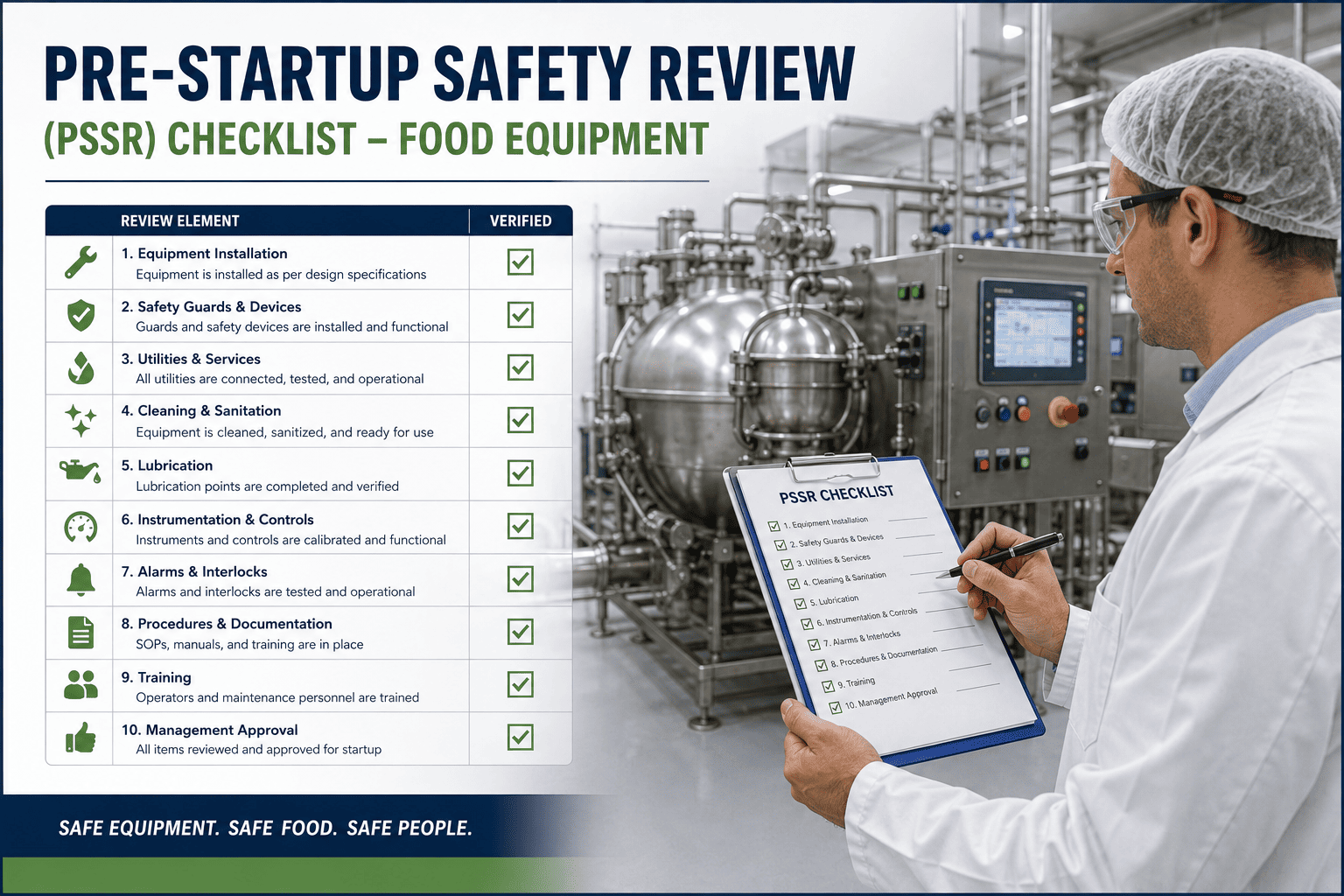
A PSSR checklist for food manufacturing is the structured safety review conducted before any new, modified, or repaired equipment enters production service. Under OSHA's Process Safety Management (PSM) standard (29 CFR 1910.119), a Pre-Startup Saf
Read More
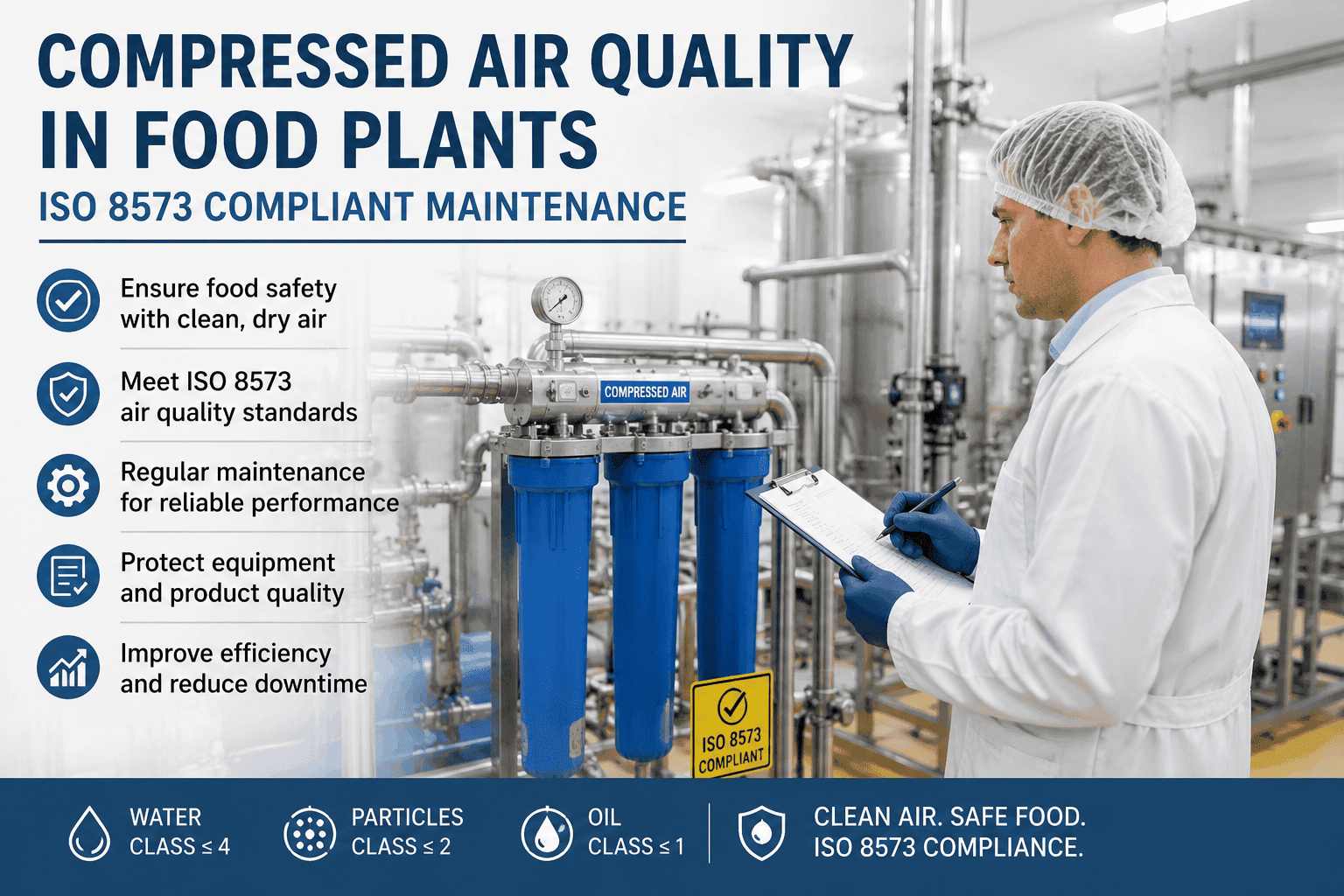
Compressed air quality ISO 8573 compliance is one of the most overlooked food safety requirements in production facilities — yet compressed air contacts food directly in filling, packaging, blowing, and conveying operations. A single contaminated
Read More
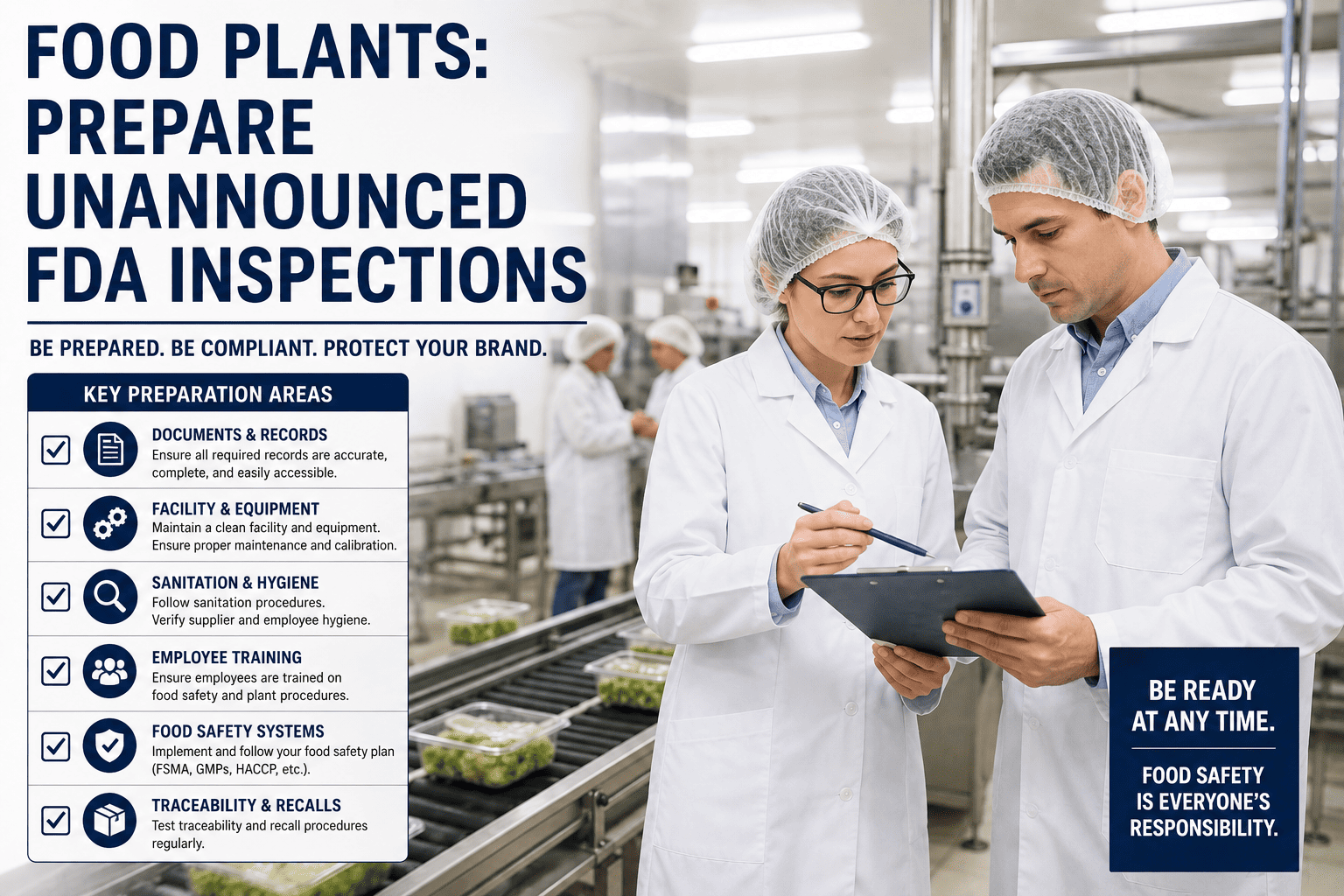
Food plant FDA inspection preparation is no longer a periodic project — it's a permanent operational posture. The FDA conducts approximately 12,000 domestic inspections per year, the vast majority unannounced, and food facilities that fail to main
Read More
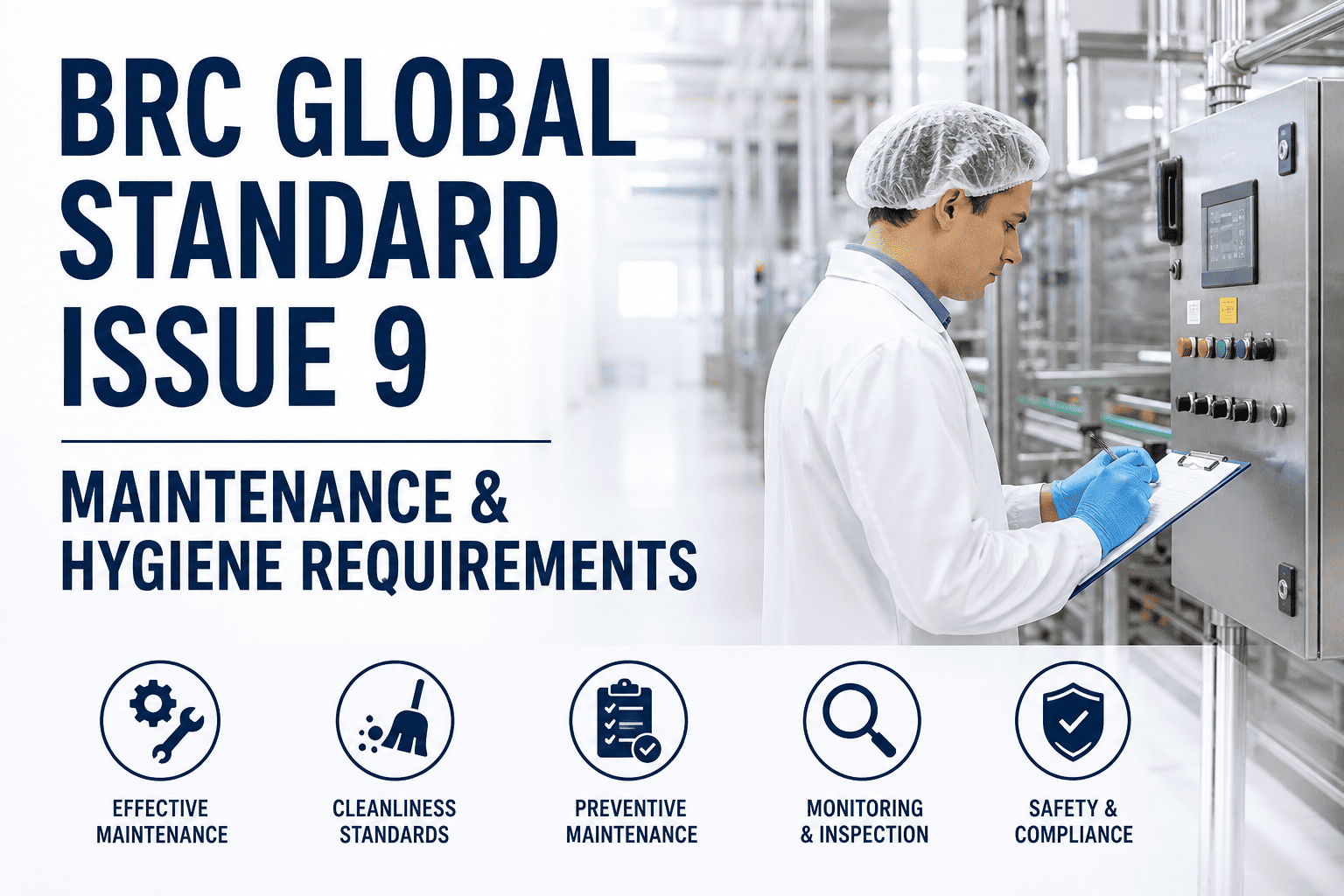
BRC Issue 9 maintenance requirements changed what auditors expect from food plants — calibration records, lubricant control, post-repair hygiene verification, and traceable work order history are no longer "nice to have," they're clause-level requ
Read More
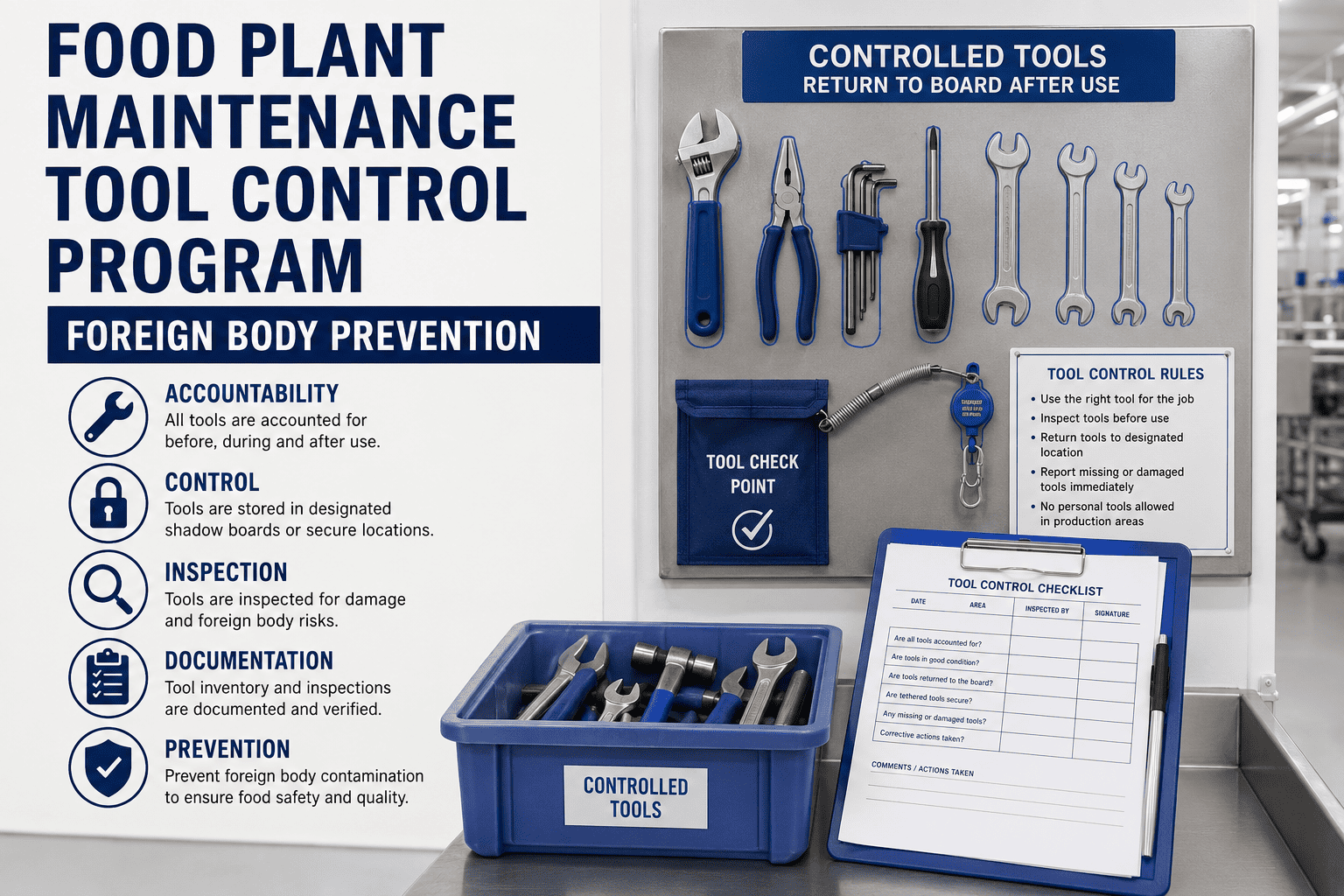
A food plant maintenance tool control program is the structured process for tracking every tool, fastener, and small part that enters a production area during repair work — and confirming all of it leaves again before the line restarts. It's one o
Read More
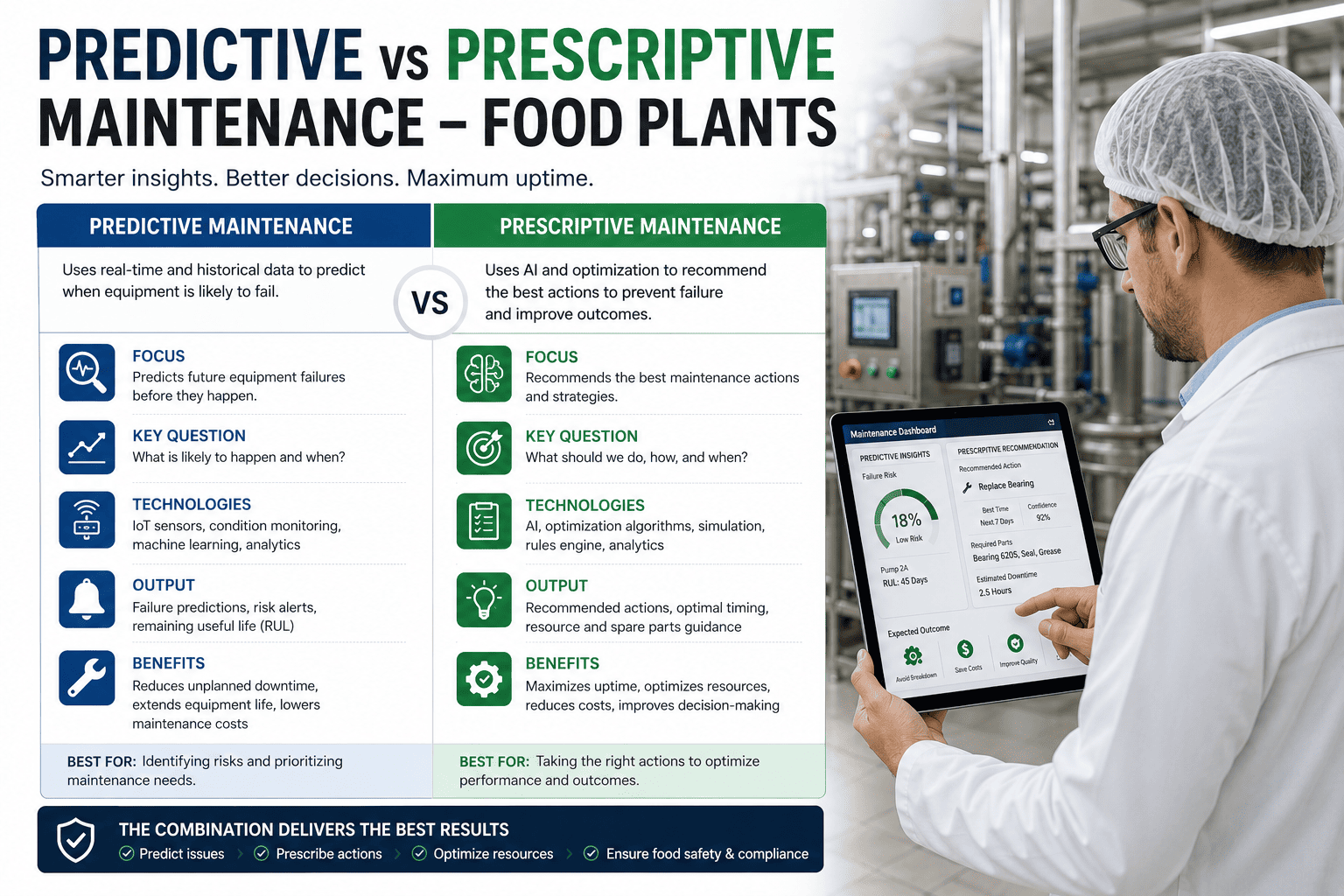
Predictive vs prescriptive maintenance is a question more food plant managers are asking as AI-driven CMMS platforms mature past simple alerting. Predictive maintenance tells you a failure is coming; prescriptive maintenance tells you exactly what
Read More
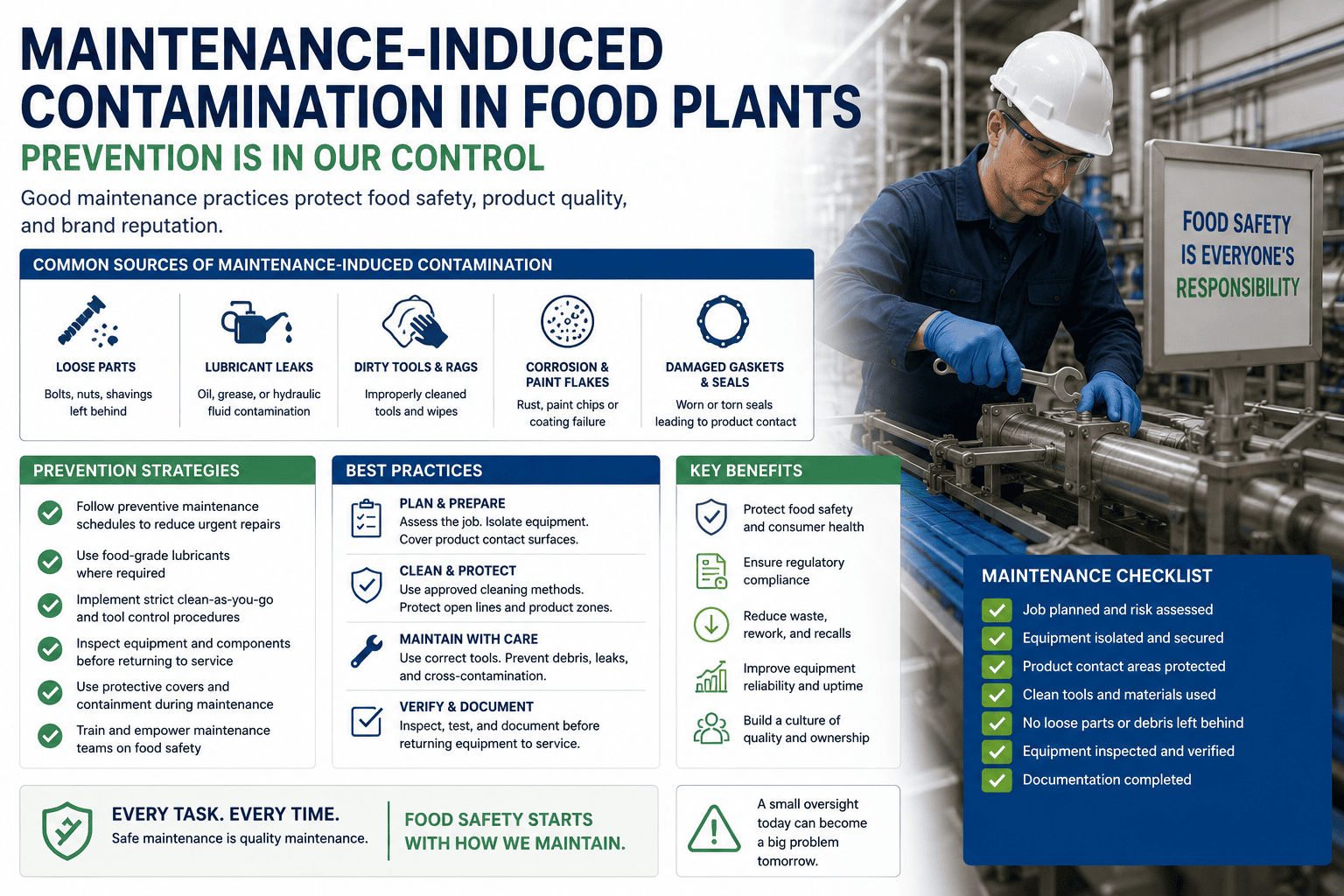
Maintenance-induced contamination in food plants happens when a repair, lubrication task, or PM activity itself becomes the contamination source — metal shavings from a weld, grease on a conveyor, a dropped bolt near open product. It's one of the
Read More
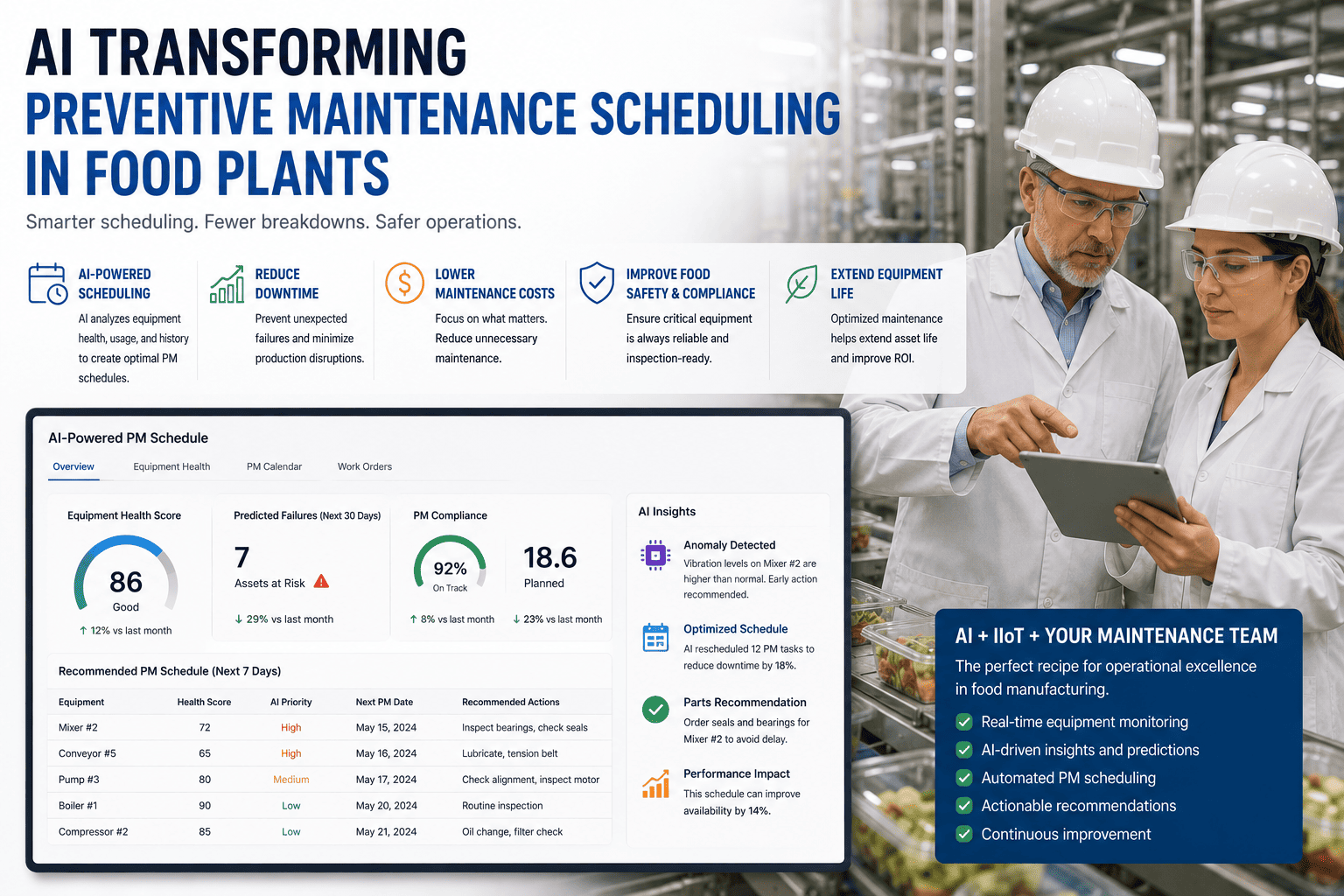
AI preventive maintenance scheduling in food plants is rapidly replacing the calendar-based PM programs that have governed food manufacturing equipment care for decades — and the performance gap between facilities that have made the switch and tho
Read More
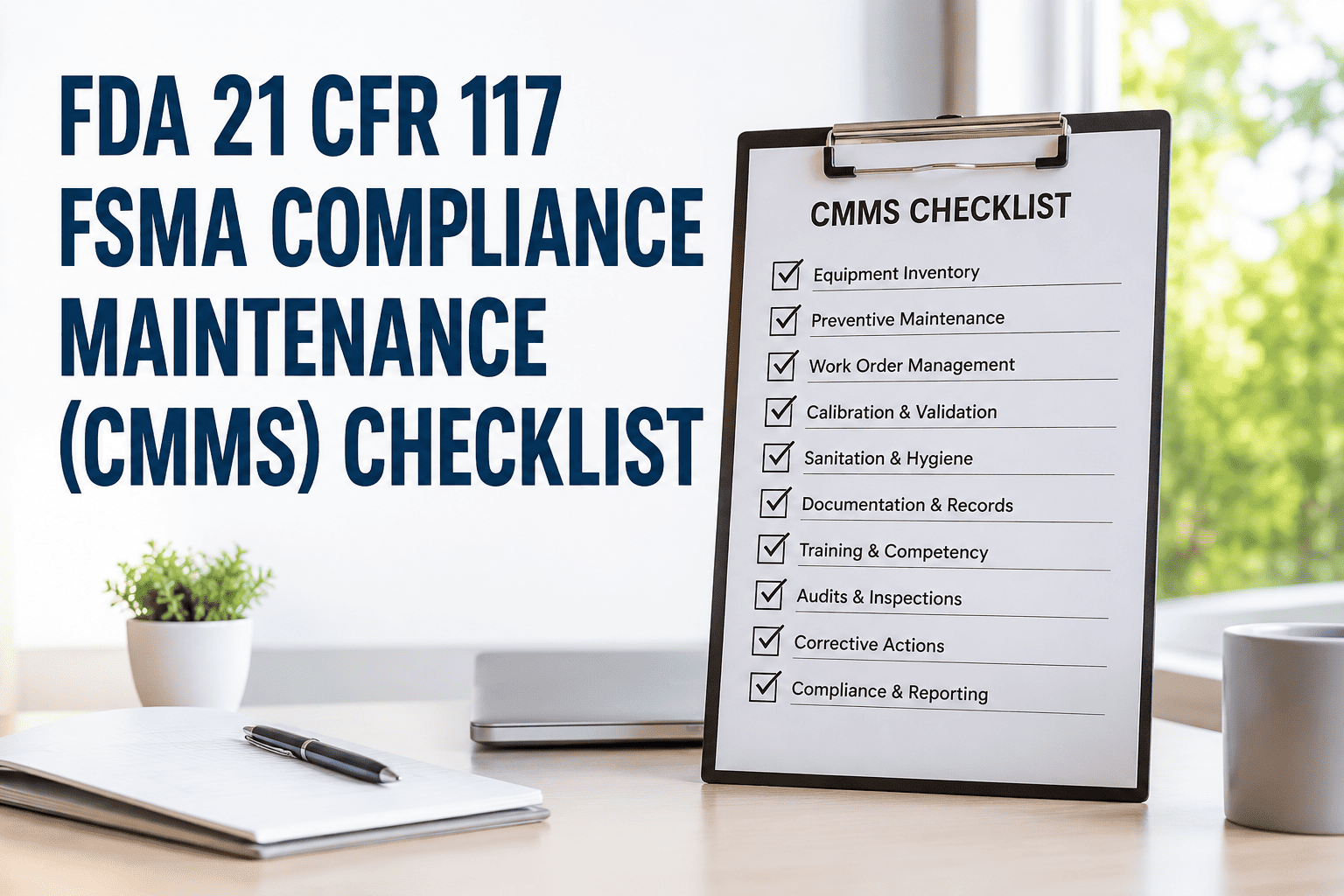
FSMA 21 CFR Part 117 maintenance compliance with a CMMS isn't optional for food manufacturers — it's the difference between walking out of an FDA inspection clean and receiving a Form 483 observation that triggers a warning letter, a recall, or a

Read More
Maintenance backlog management in food plants is one of the most underestimated drivers of compliance failure, line downtime, and reactive cost spirals — yet most food facility managers don't have a reliable system to measure it, let alone reduce
Read More
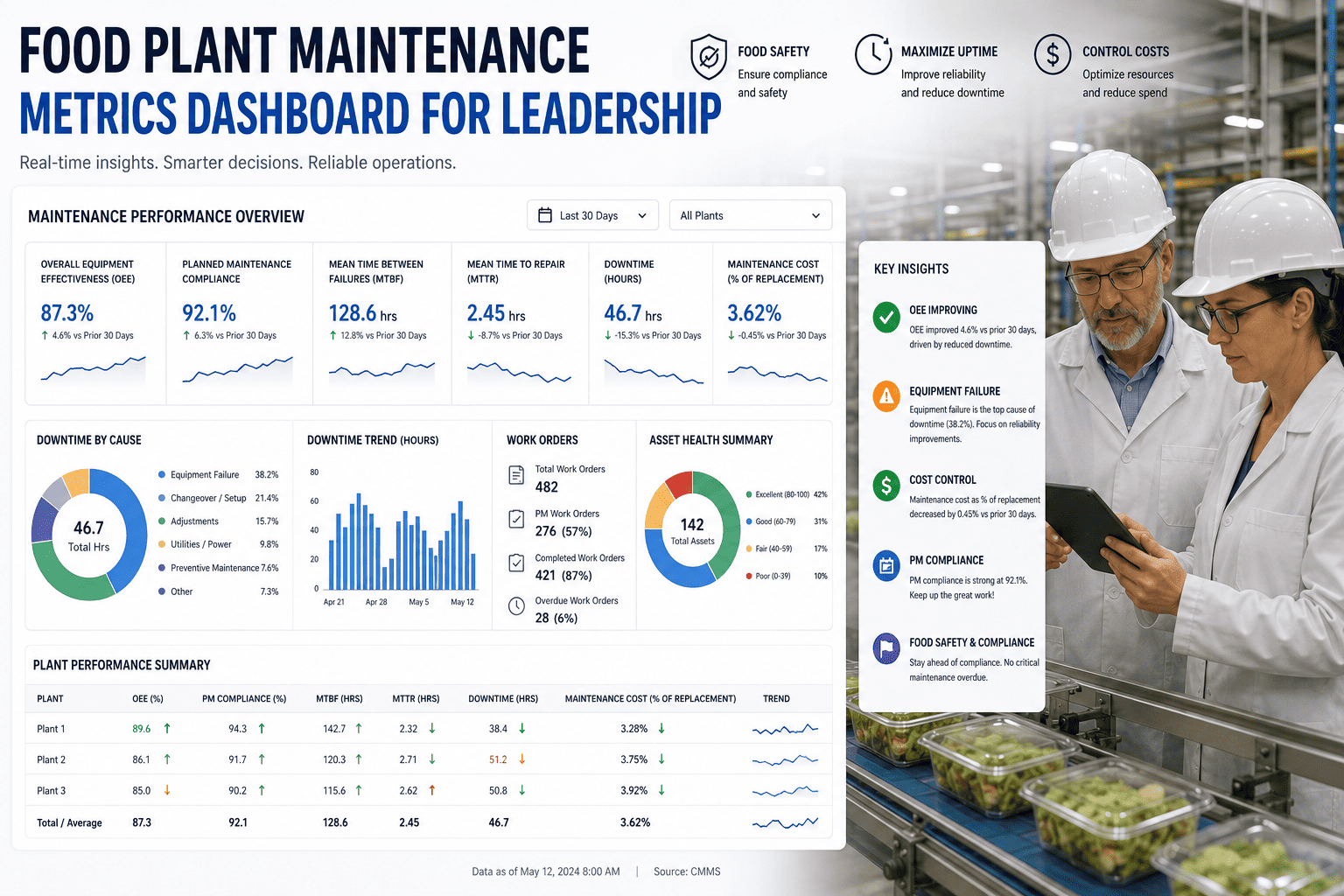
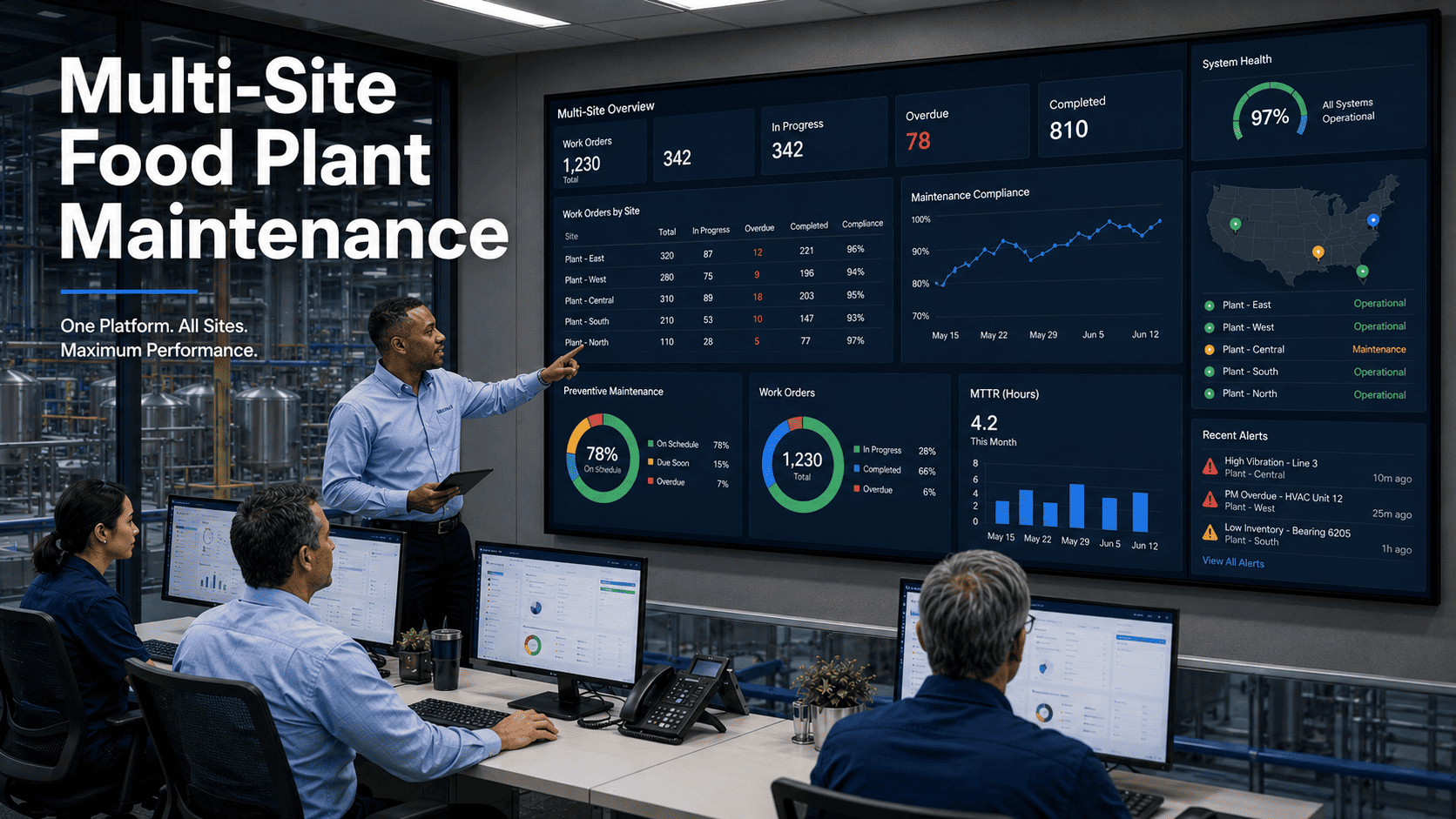
A food plant maintenance metrics dashboard gives leadership teams real-time visibility into the KPIs that determine whether your facility is running profitably, safely, and in compliance — or quietly accumulating risk that will surface as a line s
Read More
Multi-site food manufacturing maintenance without a centralized CMMS means every plant runs its own system, its own standards, and its own version of "compliant" — until an auditor or a line failure exposes the gaps across all of them at once.

Read More
Maintenance involvement during food plant equipment commissioning isn't optional — it's the difference between a smooth startup and a costly equipment failure six months into production.
Read More
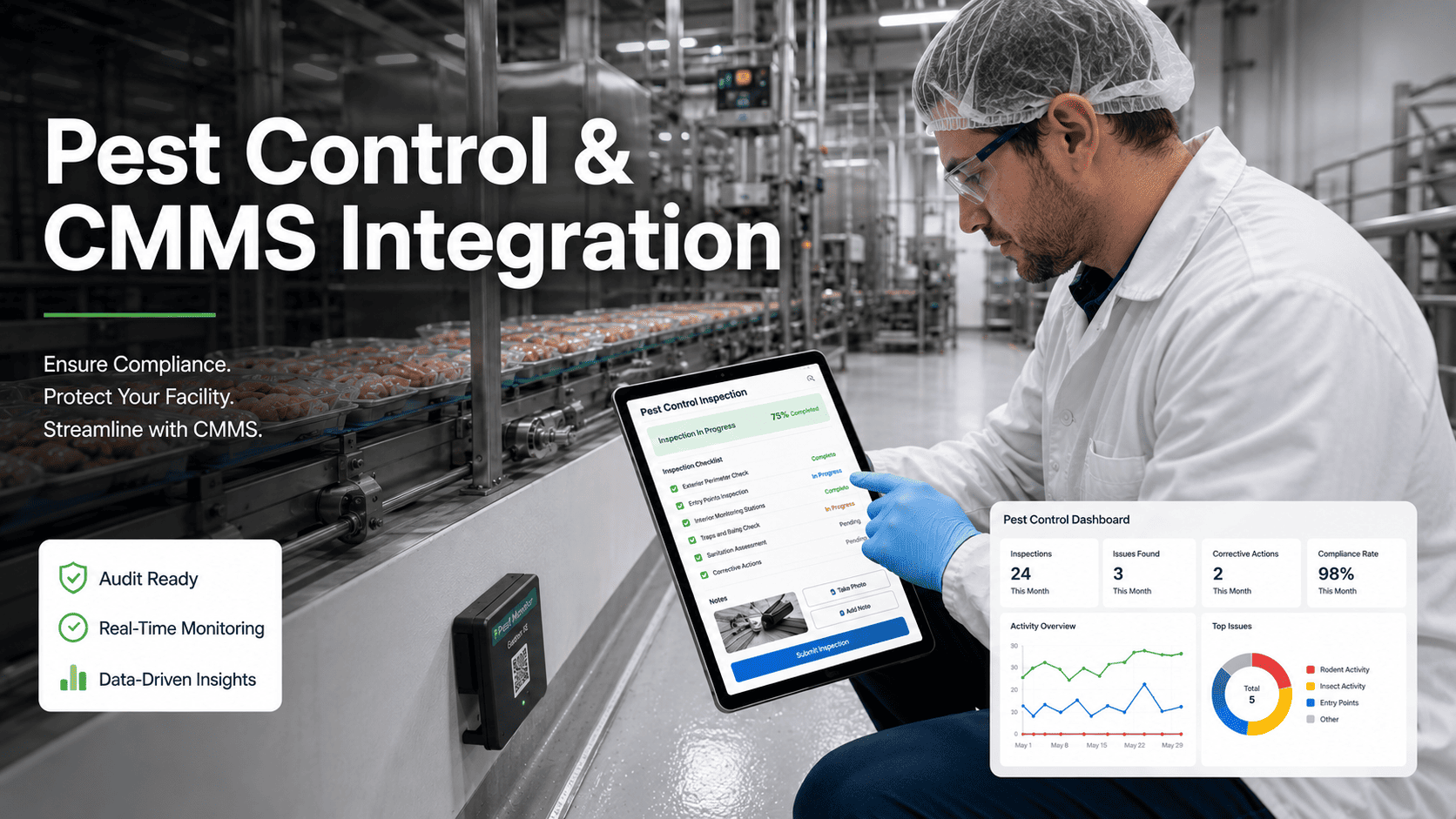
Pest control in food manufacturing is a maintenance function — and every IPM activity that isn't tracked in your CMMS is a compliance gap waiting to become an audit finding or a recall trigger.

Read More
Building a business case for CMMS investment in food manufacturing is less about software features and more about translating downtime, recall risk, and compliance failures into numbers your CFO will approve.

Read More
Food manufacturing maintenance teams are among the most process-disciplined workforces in industry — yet CMMS mobile adoption in food plants consistently trails every other industrial sector. The gap is not technology. It is human, operational, an

Read More
Maintenance technician onboarding in a food plant is not the same as onboarding a technician anywhere else — and treating it like a generic industrial orientation is one of the most expensive mistakes a food manufacturing facility can make. A new
Read More
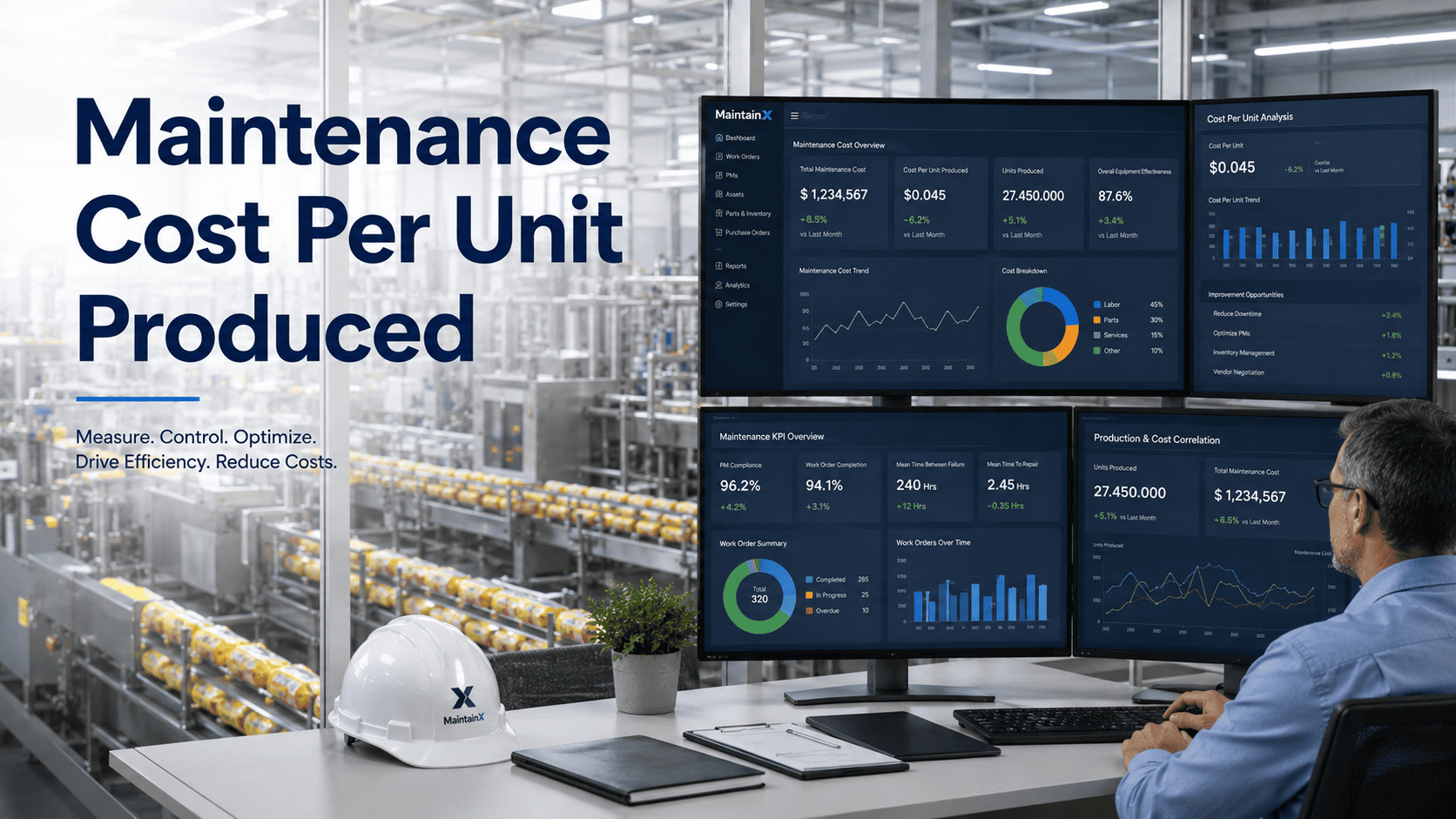
Maintenance cost per unit produced is the KPI that connects your maintenance budget directly to the P&L — and in food manufacturing, where the industry average sits at 60–65% OEE against a world-class 85%, the gap between those two numbers is

Read More
Water efficiency in food plants extends far beyond CIP cycles — yet most maintenance programs treat pipe integrity, valve performance, and utility systems as secondary priorities until a leak becomes a flood. The result: food manufacturers consume

Read More
Carbon footprint reporting in food plants is increasingly non-negotiable — with CSRD in Europe, SEC climate disclosure rules in the US, and Scope 3 pressure cascading down supply chains, maintenance teams are now directly accountable for emissions

Read More
Equipment warranty tracking in food plants is one of the most overlooked cost recovery opportunities in maintenance — the average facility loses $18,000–$42,000 annually in expired or misclaimed warranties on processing equipment alone. When a bel

Read More
Maintenance SOPs for FDA inspections are the single most scrutinized set of documents in a food plant audit — and the documents most maintenance teams are least prepared to produce on demand. An FDA investigator asking to see your maintenance SOP
Read More
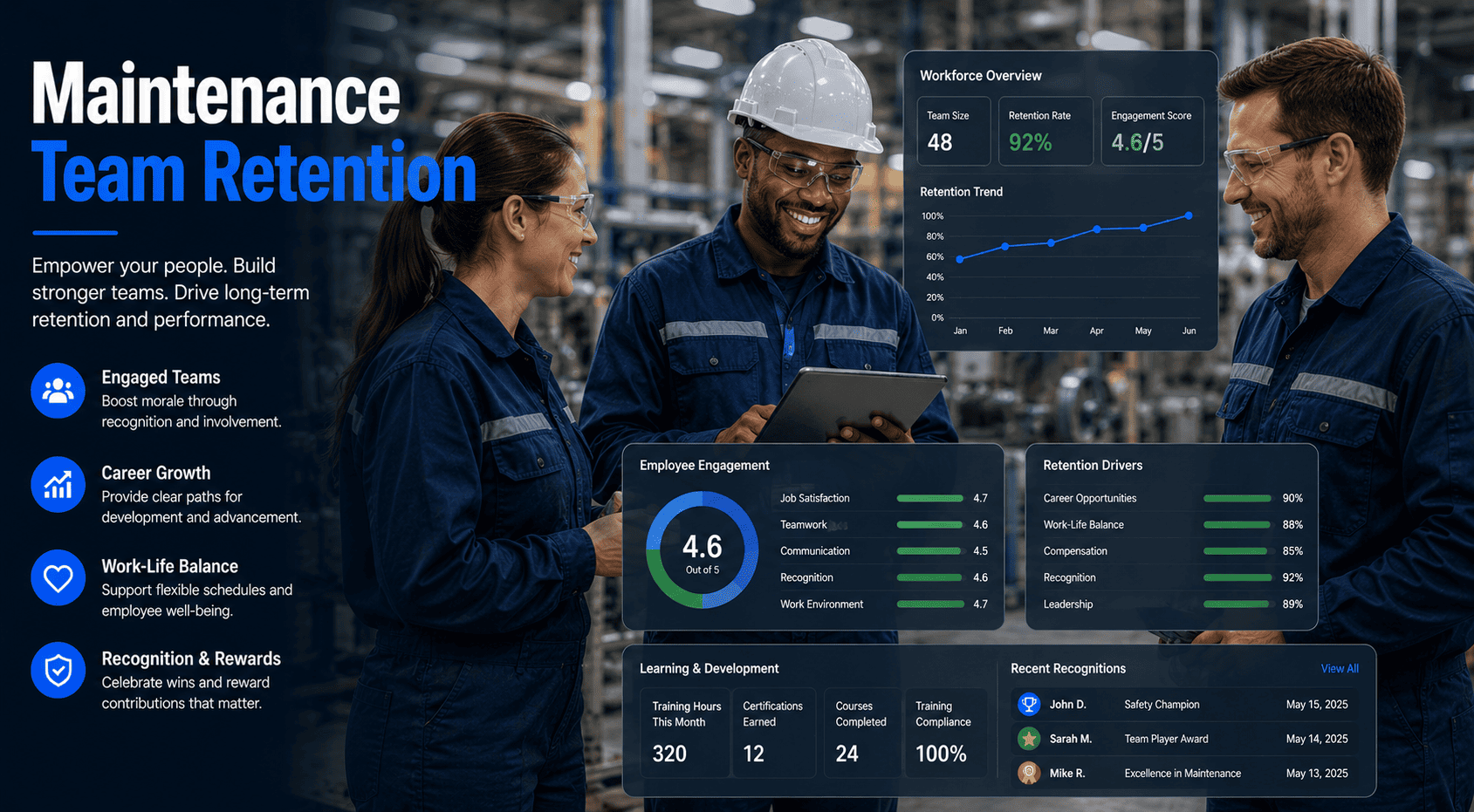
Maintenance technician retention in food manufacturing has become one of the most expensive workforce problems operations leaders manage — and most of the cost never shows up on the turnover report. Every experienced technician who leaves takes 3–

Read More
Food plant shutdown and turnaround maintenance is one of the most operationally complex events a maintenance team manages — a narrow window where every hour of unplanned delay costs production throughput, extended contractor hours, and compressed

Read More
If your food plant still tracks maintenance with paper work orders, whiteboards, and spreadsheets, you've already outgrown the system — you just haven't felt the full cost yet. Paper-based maintenance in food manufacturing isn't a preference, it's
Read More
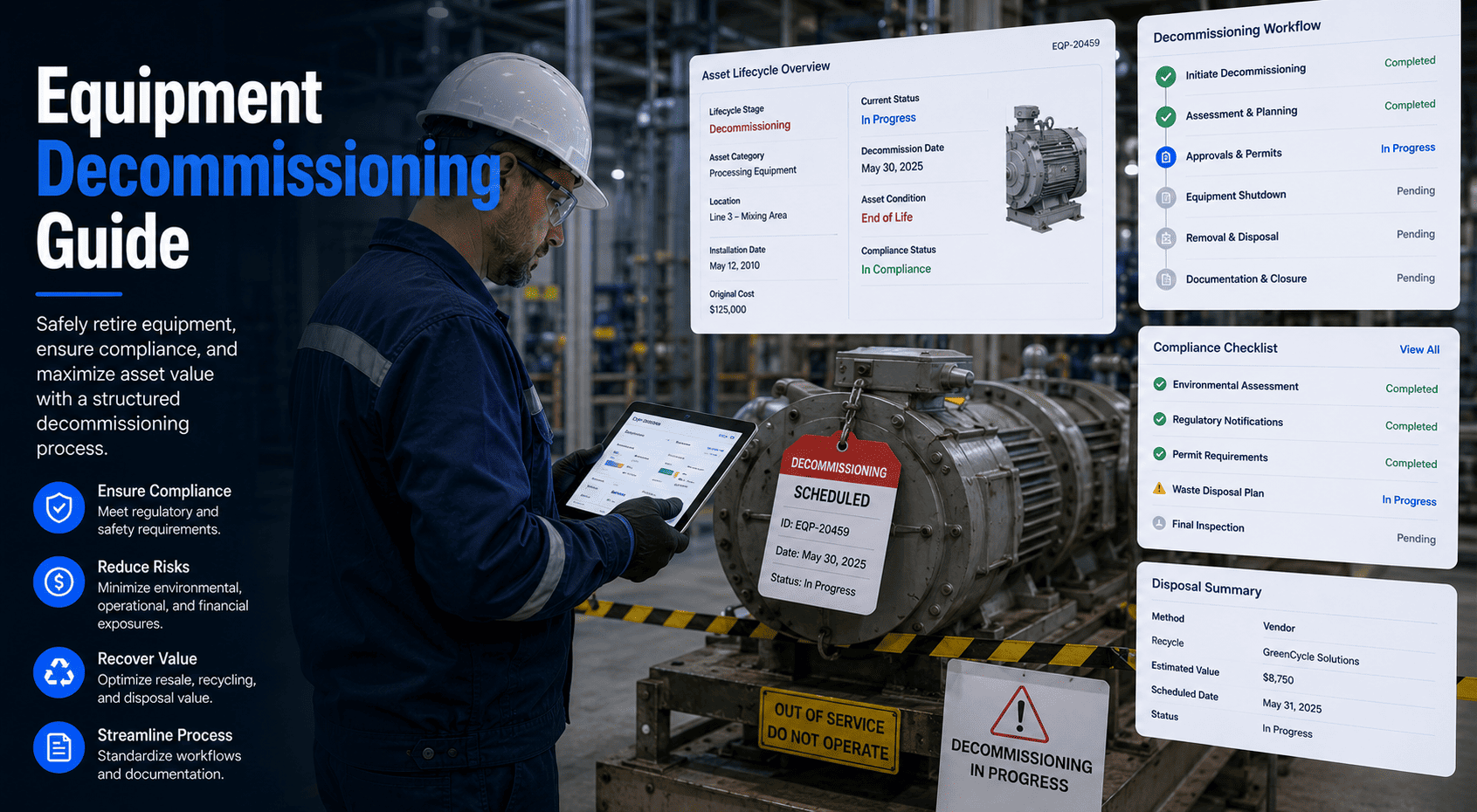
Food plant equipment decommissioning is one of the most compliance-heavy, liability-dense decisions a maintenance or operations manager makes — and most facilities still handle it with spreadsheets, paper logs, and gut feel. This guide covers ever
Read More
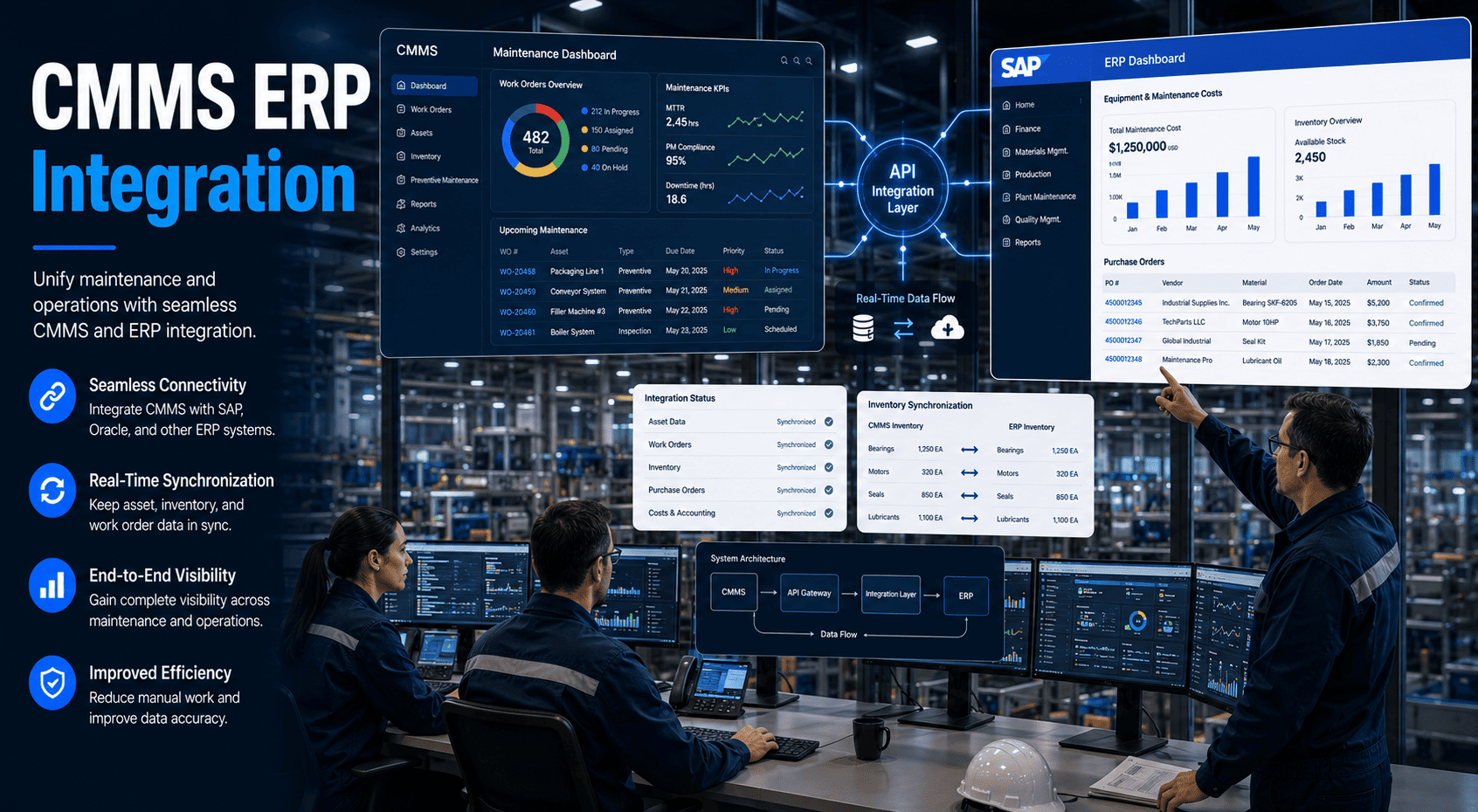
When a food plant's CMMS and ERP system do not talk to each other, the same data gets entered twice — once by maintenance, once by procurement or finance — and the two records never match. CMMS ERP integration for food manufacturing plants elimina

Read More
Seasonal production surges are the highest-risk period in any food manufacturing plant's calendar. When a facility runs at 130% capacity for eight weeks straight — whether it's harvest season, holiday demand, or contract fulfillment — equipment th

Read More
A food plant maintenance org chart without clearly defined roles costs more than equipment failures — it costs decision speed, compliance discipline, and the institutional knowledge that keeps production running when a senior technician retires. F

Read More
Night shift maintenance in food manufacturing plants is the industry's most under-managed operational risk. While day teams run with full management oversight, CMMS access, and parts availability, night crews often operate with skeleton staffing

Read More
Food plant maintenance budgeting is where operational survival and financial strategy collide — and most food manufacturers are losing on both fronts. The average per-hour cost of unplanned downtime in manufacturing is $169,889 (ABB/Sapio Resear

Read More
A conveyor drive motor in a ready-meal line shows a thermal spike at 3:14 AM. In a traditional food plant, that signal sits in a monitoring dashboard until a technician logs in at 6:00 AM, reviews the alert, creates a work order, checks parts avai

Read More
The maintenance technician standing in front of a filling line at 2am has one problem: the machine is down, and the information he needs — repair history, parts location, torque specs, escalation contact — is on a desktop computer in the maintenan

Read More
Total Productive Maintenance is the most ambitious maintenance transformation a food plant can undertake — and the most commonly abandoned. Not because TPM does not work, but because most rollouts treat it as a training programme rather than an op

Read More
A food plant can have a world-class PM schedule and still bleed money — if the right spare part is not in stock when a critical line goes down. Spare parts strategy in food manufacturing is not a procurement exercise; it is a reliability engineeri

Read More
In a food manufacturing plant, every unexpected equipment failure carries a double cost: the direct repair bill and the far more expensive downstream effect — contaminated product, missed shipments, compliance holds, and the creeping damage to cus

Read More
Most food plant CMMS implementations fail slowly and visibly: the system is live on paper, but technicians are still printing work orders, quality is still maintaining separate inspection binders, and the PM compliance rate reported in the CMMS is

Read More
Selecting a CMMS for a food manufacturing facility is not the same as selecting maintenance software for a warehouse or a commercial building. Food plant CMMS decisions carry regulatory weight: the wrong system creates audit gaps, the wrong workfl

Read More
A miscalibrated thermometer in a pasteurization line does not just produce incorrect temperature readings — it creates an undocumented HACCP deviation that can trigger a Class I recall, an FDA warning letter, and a production shutdown that costs m
Read More
A miscalibrated thermometer in a pasteurization line does not just produce incorrect temperature readings — it creates an undocumented HACCP deviation that can trigger a Class I recall, an FDA warning letter, and a production shutdown that costs m

Read More
Every dollar invested in a food plant capital project is at risk until commissioning and validation are complete. FAT failures, IQ gaps, and missing OQ/PQ records have derailed FDA and USDA audits at facilities that spent millions on new lines — o

Read More
The average food and beverage plant spends $0.07–$0.12 per pound of product on energy. For a mid-size facility running 500,000 lbs per day, that is $12–22 million annually in energy costs — and most plant managers cannot tell you within 15% how th

Read More
A single ammonia release at a refrigerated food plant in the Midwest sent 14 workers to hospital, triggered a full OSHA 1910.119 inspection, and shut down production for 23 days. The root cause: a pressure relief valve that had never been added to

Read More
Listeria monocytogenes lives in drains. That is not an exaggeration — it is the consensus finding of over two decades of food plant environmental monitoring programmes across dairy, ready-to-eat meat, produce, and bakery facilities. Drains that ar

Read More
Food manufacturing facilities operate under relentless regulatory scrutiny, and lighting is far more than a visibility issue — it is a contamination control system. GFSI-benchmarked schemes including BRCGS Food Safety Issue 9, SQF Edition 9, FSSC

Read More
Food manufacturing facilities operate under some of the strictest structural integrity requirements in any industry — where a compromised roof membrane, a cracked dock seal, or a failed parapet flashing is not just a building defect but a direct f

Read More
Food manufacturing facilities operating under GFSI-benchmarked schemes — SQF, BRCGS, FSSC 22000 — are required to demonstrate that HVAC systems actively protect hygienic zones through measurable pressure differentials, documented filter maintenanc

Read More
Food manufacturing facilities face a silent compliance risk that most CMMS programs overlook: lubricant management. A single unlabeled grease gun, a misapplied H2 lubricant near a processing line, or a missing NSF H1 certification on a bearing gre

Read More
Food plants run on movement — pallets of raw ingredients arriving at dock doors, finished goods staged for distribution, ingredients flowing between processing lines. Powered industrial trucks (PITs) — forklifts, pallet jacks, reach trucks, order

Read More
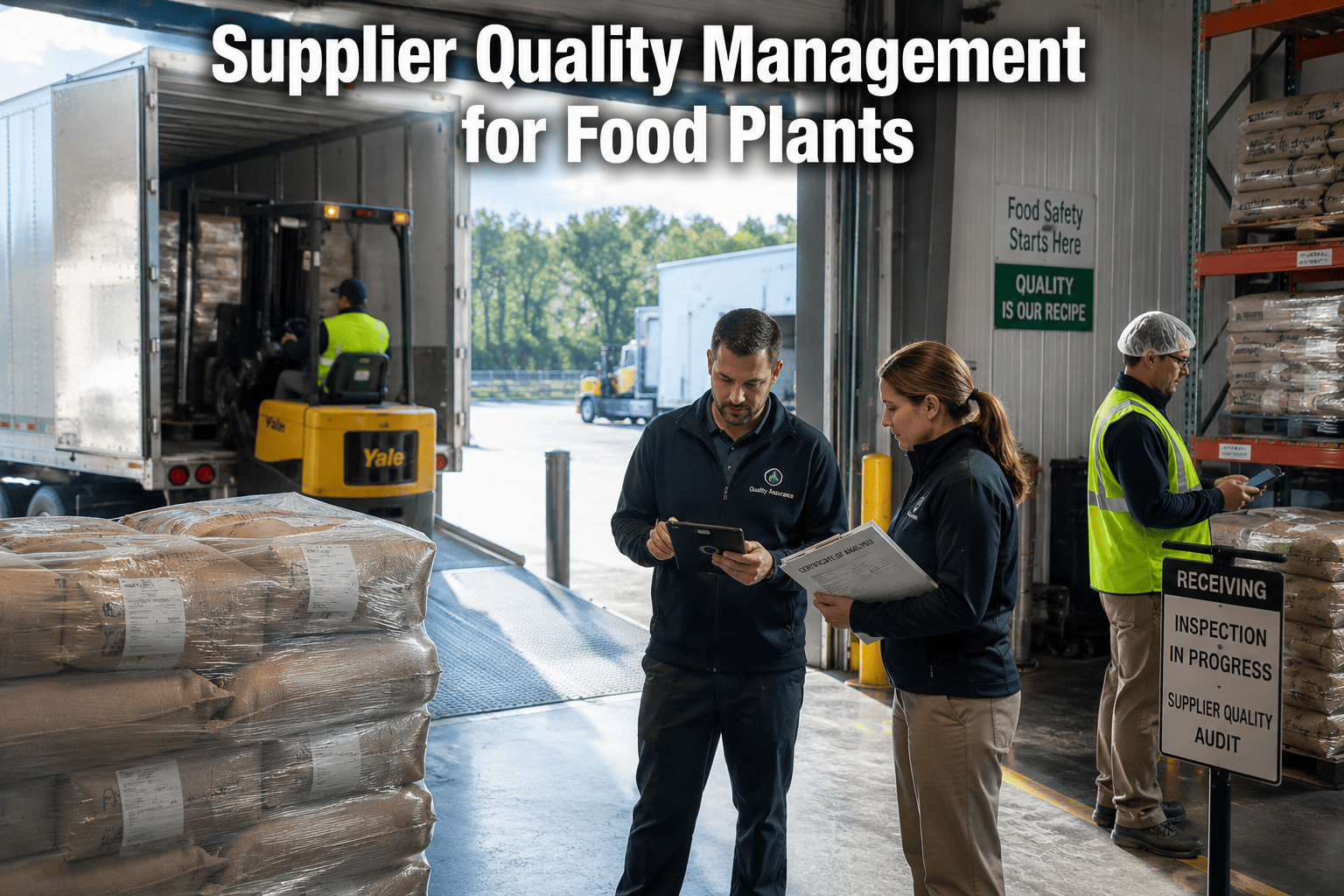
Every contractor who walks through your food plant gate with a wrench, a welder, or a pressure vessel represents a risk your CMMS either controls or ignores. External contractors are responsible for a disproportionate share of serious industrial a
Read More
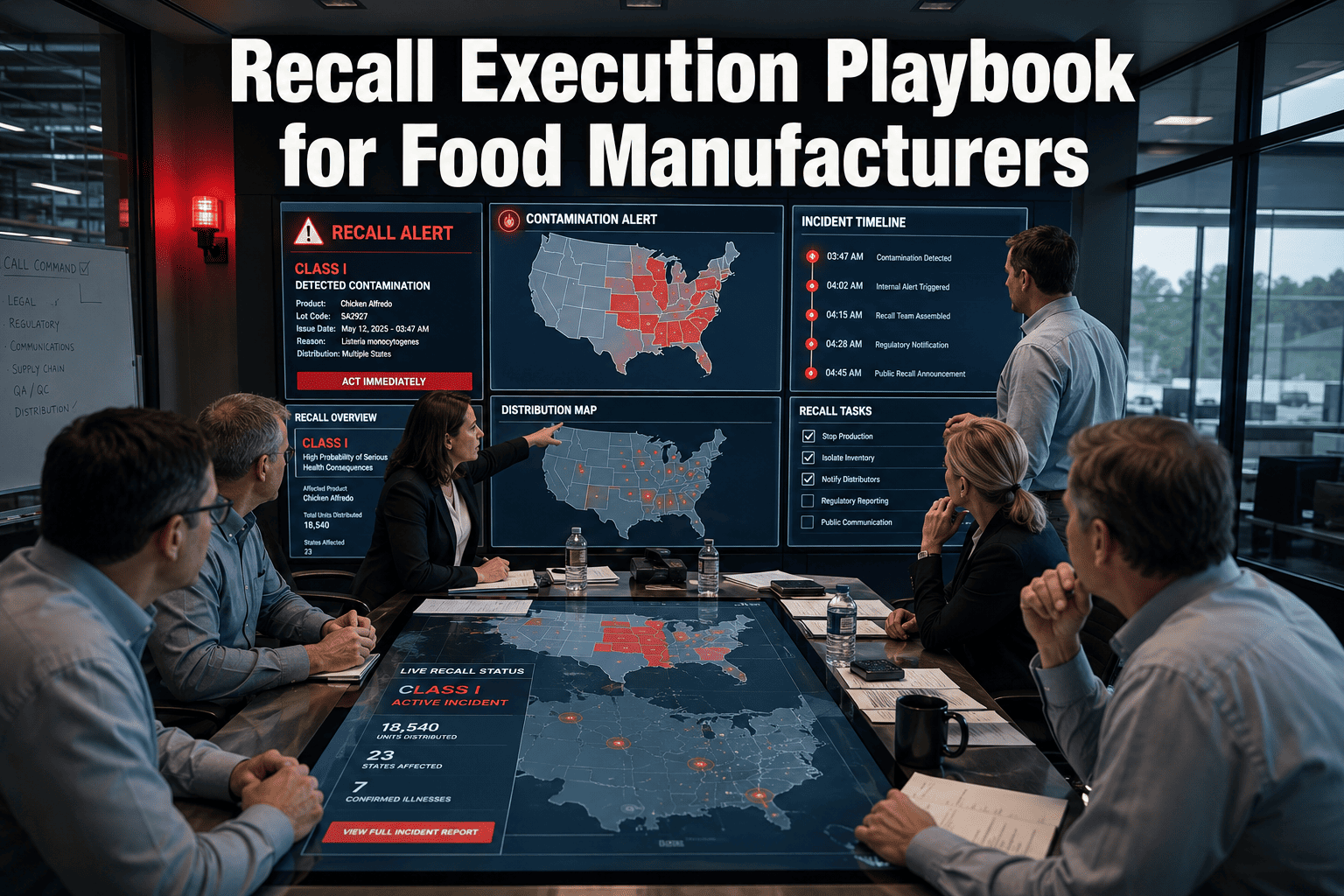
Food recalls are not just operational crises — they are legal, financial, and reputational events. Under FDA and USDA regulations, Class I recalls demand response within 24 hours. Without a structured CMMS backbone, most food manufacturers discove
Read More
When a food recall hits, every hour of delayed response multiplies liability. Class I recalls — those involving serious health hazards — demand execution within 24 hours. Yet most food manufacturers discover mid-crisis that their traceability reco
Read More
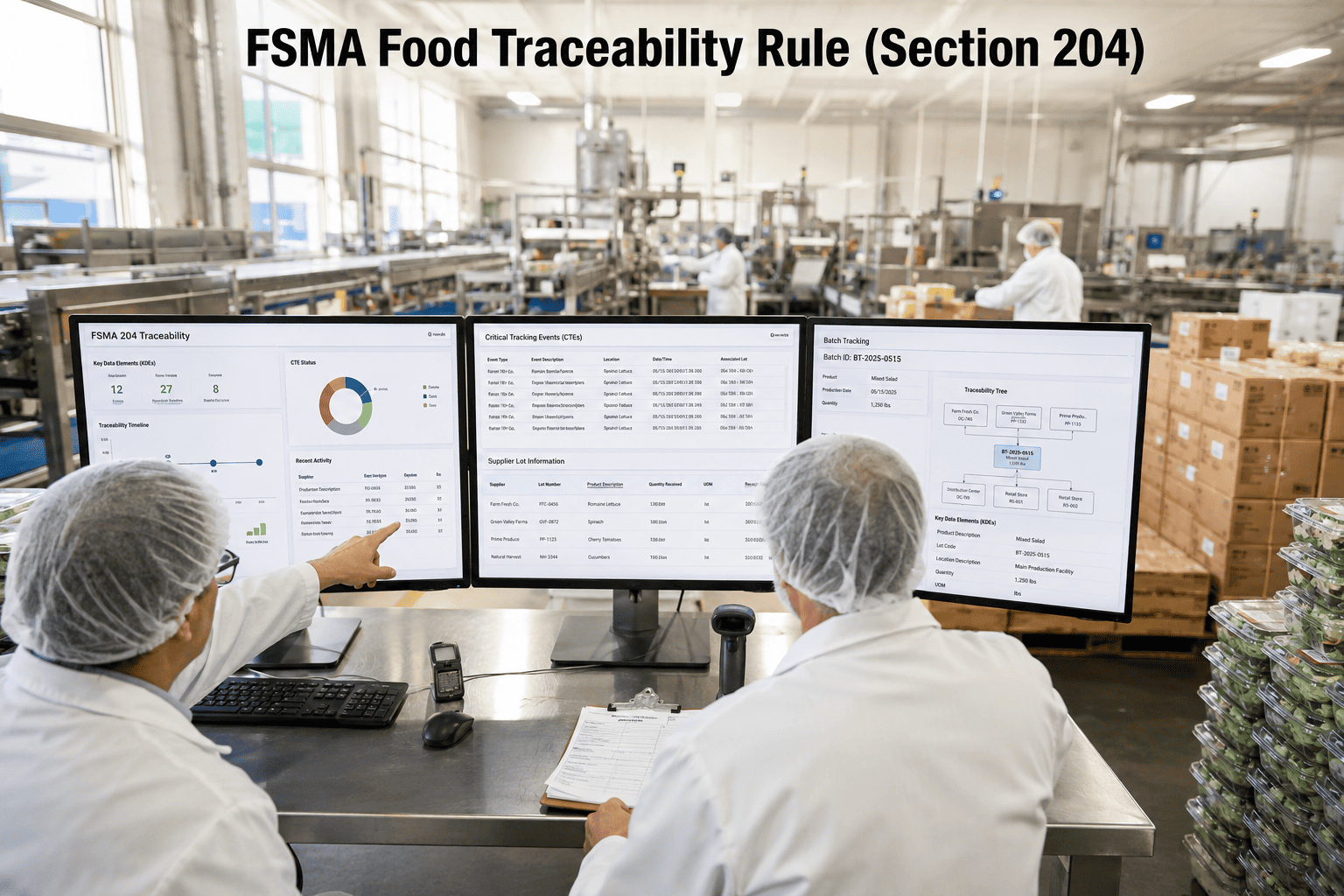
Food manufacturers operating under FDA oversight face a compliance deadline that cannot be ignored — FSMA Section 204, the Food Traceability Rule, mandates electronic lot-level recordkeeping across the entire supply chain for foods on the Food Tra

Read More
The average Class I food recall in the United States costs the manufacturer $10 million in direct costs — product destruction, logistics, customer notification, and regulatory response. That figure does not include the brand damage that can cut ca

Read More
Refrigeration accounts for 40 to 60 percent of total energy spend at a typical ice cream manufacturing facility — and most of that cost runs invisibly. Compressors cycling harder than they should because a condenser coil hasn't been cleaned in six

Read More
Running a spice manufacturing operation means living with one of the most complex allergen risk profiles in the food industry — sesame, mustard, celery, sulphites, nuts, and gluten-bearing spice blends all potentially running on the same equipment

Read More
A food recall is not just a financial disaster — it is a brand-ending event that takes years to recover from, if recovery happens at all. For a mid-size canned food manufacturer running 4 production lines across vegetables, soups, and ready-to-eat

Read More
A specialty coffee roastery in the Pacific Northwest had been quietly losing money for years — not in a dramatic way, but in the slow, grinding way that adds up to real numbers by year-end. Their main 240kg drum roaster would drop a batch maybe on

Read More
Maintaining USDA Organic and Non-GMO Project Verified certification simultaneously is one of the highest evidence burdens in food manufacturing. Every input, every contact surface, every cleaning chemical, every lubricant, every spare part, and ev
Read More
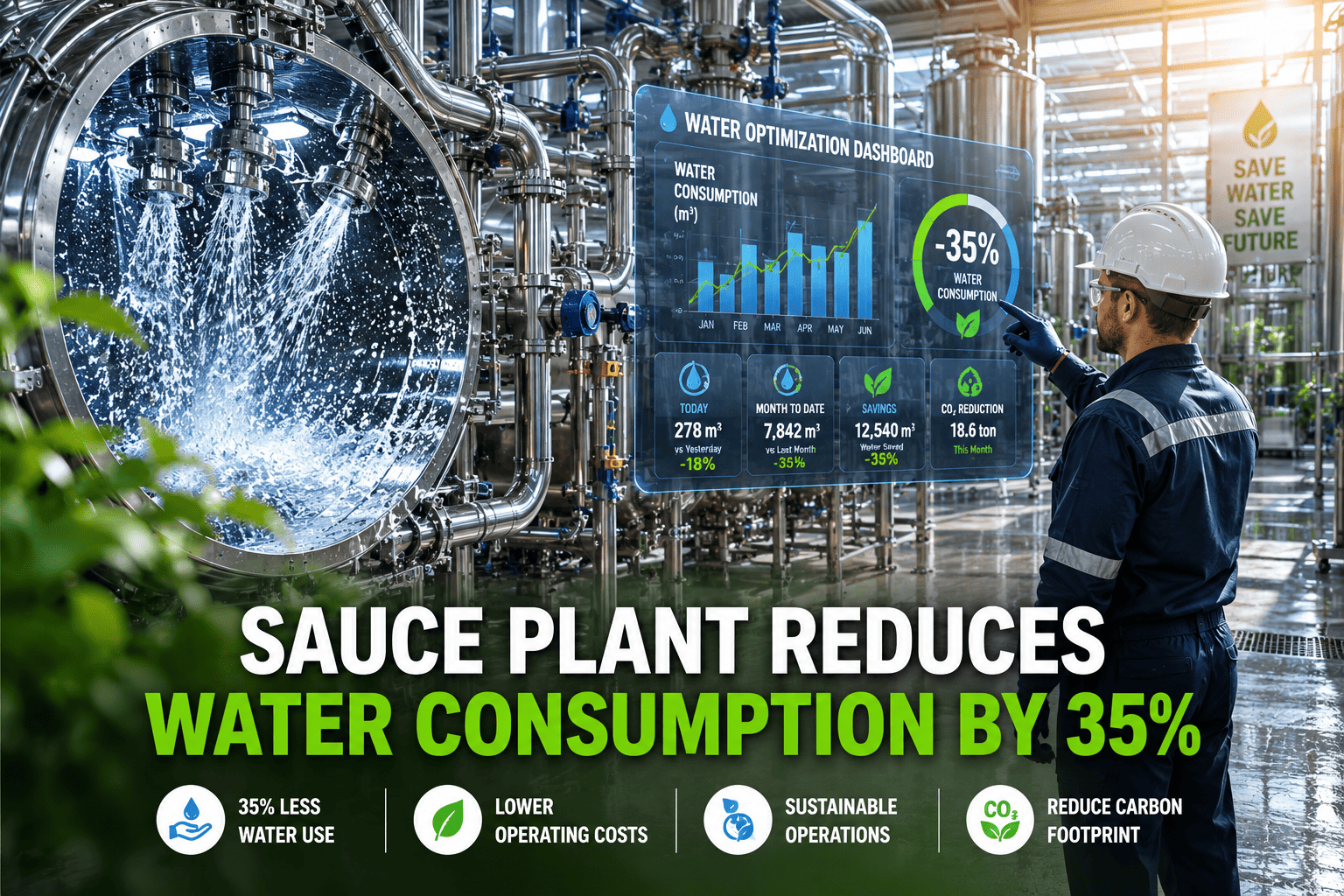
Sauce and condiment manufacturing is one of the most water-intensive food categories — a single ketchup or barbecue sauce plant can run 220-340 Clean-in-Place cycles per week across batch tanks, fillers, homogenizers, viscous-product transfer line

Read More
Frozen pizza manufacturing is a changeover-intensive business — a single plant might run 40+ SKU transitions per week across crust types, sauce profiles, cheese blends, topping combinations, and allergen-bearing variants. For a Midwest US producer
Read More
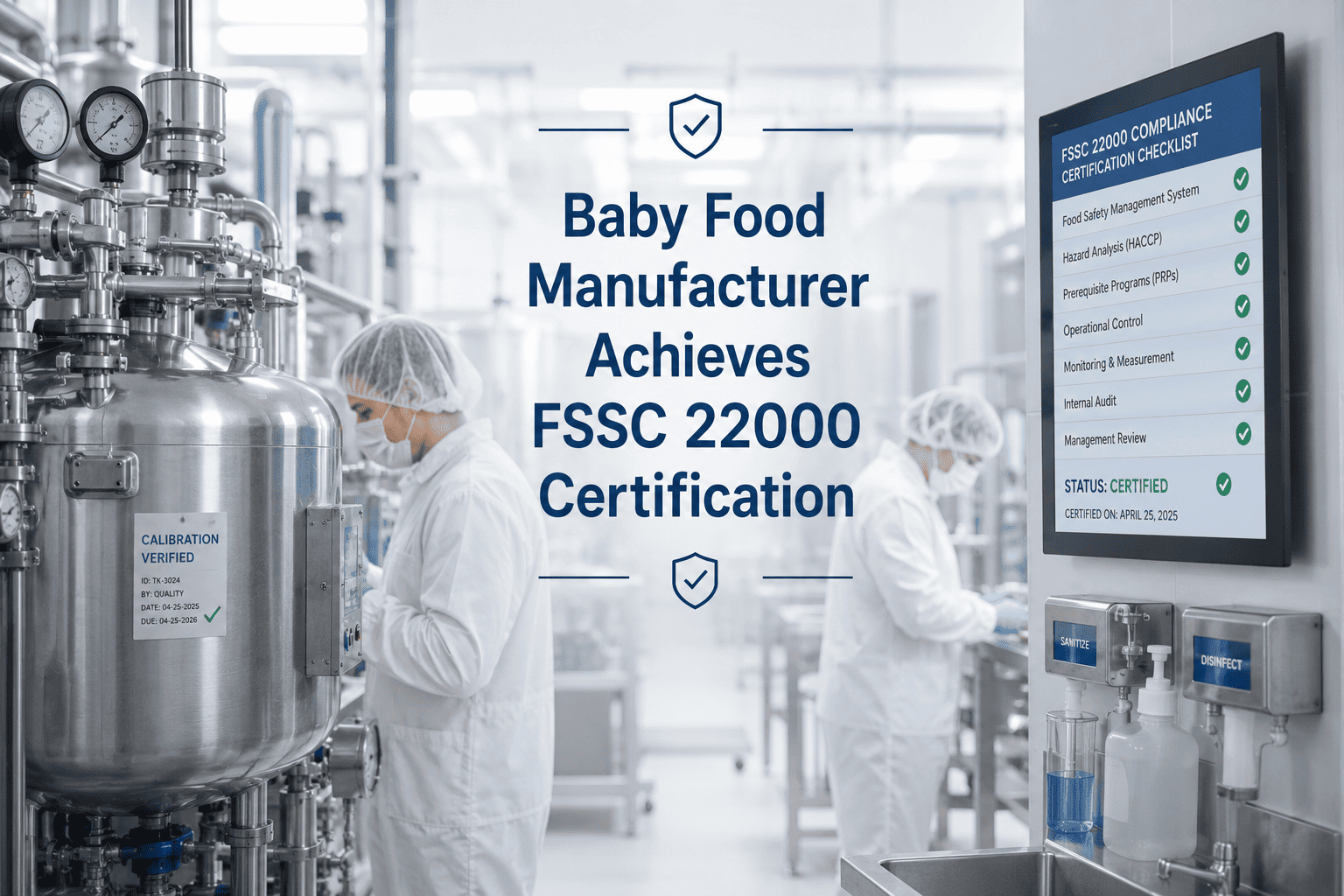
FSSC 22000 certification is the global benchmark for food safety management — accepted by every major retailer, infant nutrition regulator, and export market that handles baby food and infant formula. For a 110-million-unit-annual baby food manufa

Read More
A mid-size North American pet food manufacturer producing 280 million pounds of extruded kibble and coated treats annually was bleeding revenue to unplanned downtime — extruder barrel failures, dryer belt slips, vacuum coating drum imbalances, and

Read More
A single positive Listeria result in a ready-to-eat food facility does not mean contamination happened yesterday. It means harborage has been building — in floor drains, conveyor frame welds, condensate drip points, and hollow rollers — for weeks

Read More
Twin-screw extruders running 20 hours a day. High-moisture texturization lines that must hit 65–80% moisture content within ±2% or the batch fails. Freezing tunnels cycling through -35°C every shift. And a maintenance program that, at most alt-mea

Read More
A 483 observation for a nutraceutical facility does not usually begin with a contaminated batch. It begins with a maintenance work order that was never generated, a preventive maintenance interval that drifted by six weeks, and a blender bearing t

Read More
Infant formula manufacturing sits at the apex of food safety regulation — a sector where a single Cronobacter sakazakii contamination event triggers a Class I recall, a congressional inquiry, and permanent brand damage, as the 2022 Abbott Sturgis
Read More
Infant formula manufacturing sits at the apex of food safety regulation — a sector where a single Cronobacter sakazakii contamination event triggers a Class I recall, a congressional inquiry, and permanent brand damage, as the 2022 Abbott Sturgis

Read More
The global animal feed processing equipment market hit $12.8 billion in 2024 and is growing at 3.8% CAGR — driven by rising livestock production and the accelerating shift from mash to pelleted feed across poultry, swine, ruminant, and aquaculture

Read More
A single unplanned extruder failure costs a mid-size pet food facility an average of $47,000 per incident — lost production, emergency parts, food safety holds, and the labor hours spent scrambling to restart a line that was never properly maintai

Read More
US organic food sales hit $65.4 billion in 2024 — growing at 5.2%, more than double the overall food market's 2.5% rate. The NOP now oversees 45,000+ certified organic farms and processors, and the Strengthening Organic Enforcement rule implemente

Read More
The global kosher food market exceeds $24 billion annually — and halal food demand spans 1.8 billion Muslim consumers across 57 countries. Yet the plants chasing these markets consistently underestimate how granular the documentation requirements

Read More
IFS Food Version 8 became mandatory for all certified food manufacturers in January 2024 — and it changed the audit scoring system in ways that catch unprepared plants off guard. The standard now contains 10 Knock-Out requirements: fail any sing

Read More
Food plants pursuing FSSC 22000 certification face a compliance structure that most auditors describe as deliberately layered — ISO 22000:2018 forms the management system backbone, ISO/TS 22002-1 defines the sector-specific prerequisite programs c
Read More
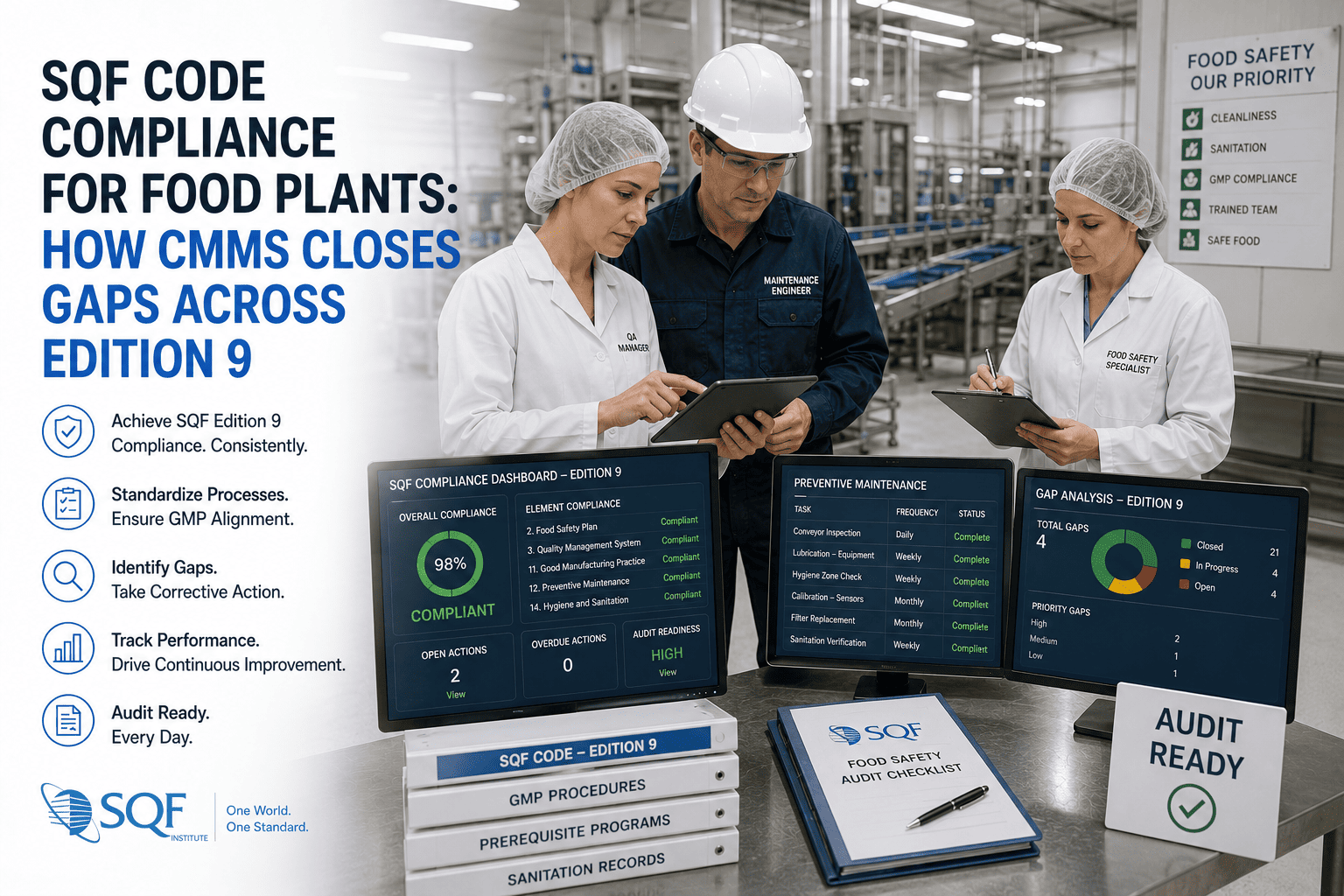
Food manufacturers chasing SQF Edition 9 certification are discovering the same uncomfortable truth: the standard does not reward good maintenance programs — it rewards documented ones. A technician who has been servicing your filling lines flawle

Read More
Food manufacturers face a brutal reality during BRCGS audits: a single missing preventive maintenance record, one overdue calibration, or an untracked corrective action can flip a Grade A into a Grade B overnight. The stakes are not just certifica

Read More
Food manufacturing generates some of the highest-strength industrial wastewater in any sector — high BOD, suspended solids, fats, oils, and grease loads that can overwhelm a municipal treatment plant and trigger surcharge fees, permit violations,

Read More
Ammonia refrigeration is the backbone of cold chain integrity in food manufacturing — but it is also one of the most heavily regulated, high-consequence systems a plant manager will ever operate. A single compliance gap can trigger OSHA citations

Read More
Compressed air is the invisible ingredient in food manufacturing — and the most overlooked contamination vector on the plant floor. It contacts product directly during filling, portioning, conveying, and packaging, yet most facilities apply the sa

Read More
Dairy plants depend on steam more than almost any other food category. Pasteurization, CIP cycles, evaporator heating, sterilization of fillers, jacketed kettles for cultured products, drying tower utilities — every one of them runs off the boiler
Read More
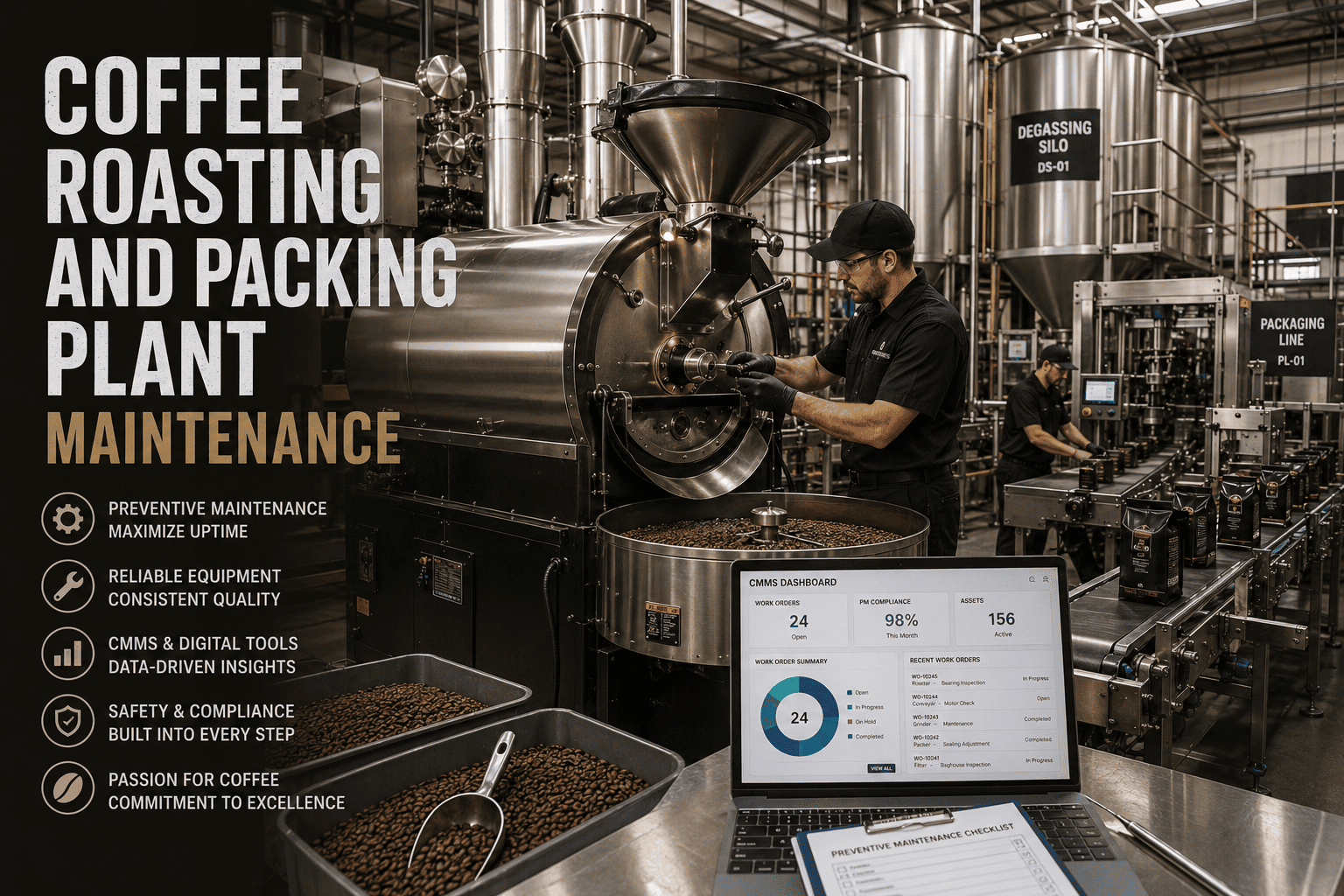
Coffee roasting plants run a process chain that few other food categories share: green bean intake, drum or fluid-bed roasting at 200°C to 230°C, afterburner emission control at 650°C to 816°C, degassing silos, grinding lines, and packing operatio
Read More
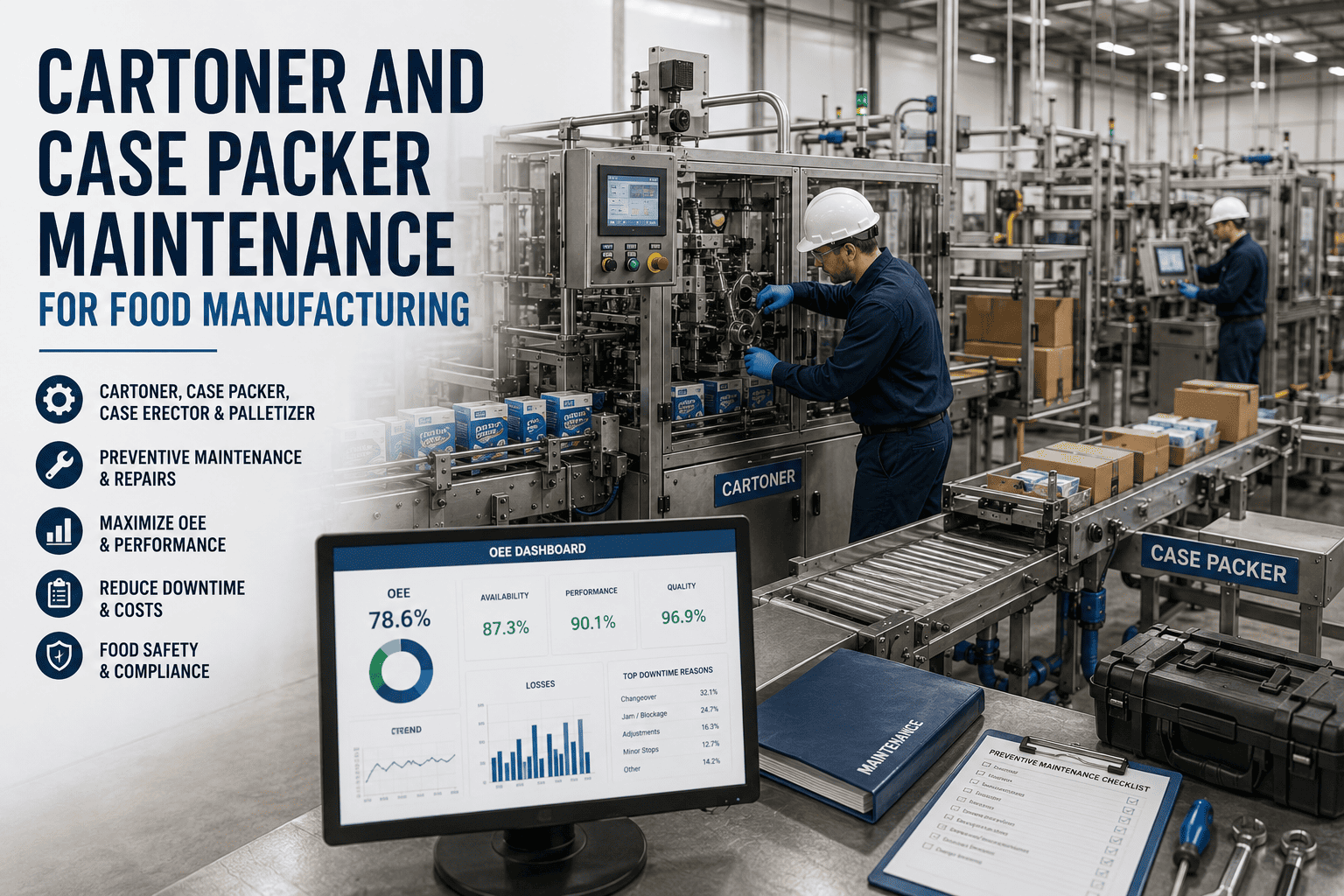
The end-of-line stretch — cartoners, case packers, case erectors, and palletizers — quietly determines whether a food plant ships on time or pays penalties for missed pallets. A single carton glue head failure, a misaligned case flap tucker, or a

Read More
Form-fill-seal machines are the backbone of food packaging — both VFFS lines forming pouches vertically for snacks, coffee, frozen foods, and powders, and HFFS lines forming pillow and stand-up pouches horizontally for cheese slices, ready meals,

Read More
Across modern food manufacturing plants, checkweighers sit at one of the most regulated control points on the line, verifying that every package leaving the facility meets the net contents declared on the label. Under NIST Handbook 44 and Handbook

Read More
Metal detectors and X-ray inspection systems are usually the last Critical Control Point in a food plant — the final filter between foreign material that survived upstream and the finished package shipped to a retailer. HACCP, BRCGS, SQF, and FSMA
Read More
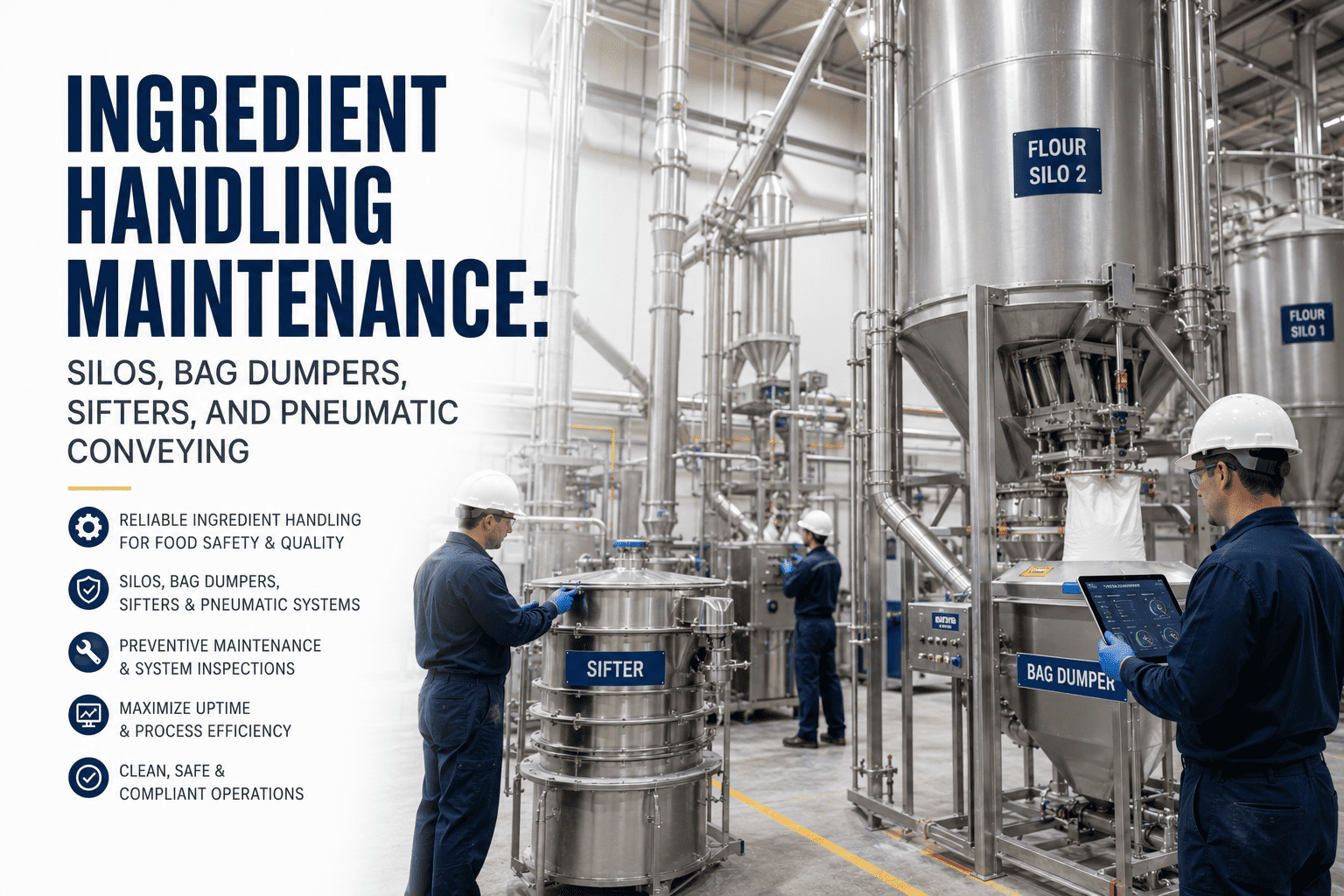
Ingredient handling is the part of a food plant where regulatory exposure, dust hazard, allergen risk, and downtime cost all converge. Silos store thousands of tonnes of flour, sugar, starch, or specialty powders. Bag dumpers move every minor ingr

Read More
Combustible dust is the single largest under-managed hazard in food manufacturing. Flour, sugar, starch, cocoa, milk powder, dried egg, soy protein — every food plant handling these in bulk carries a deflagration risk that has produced documented
Read More
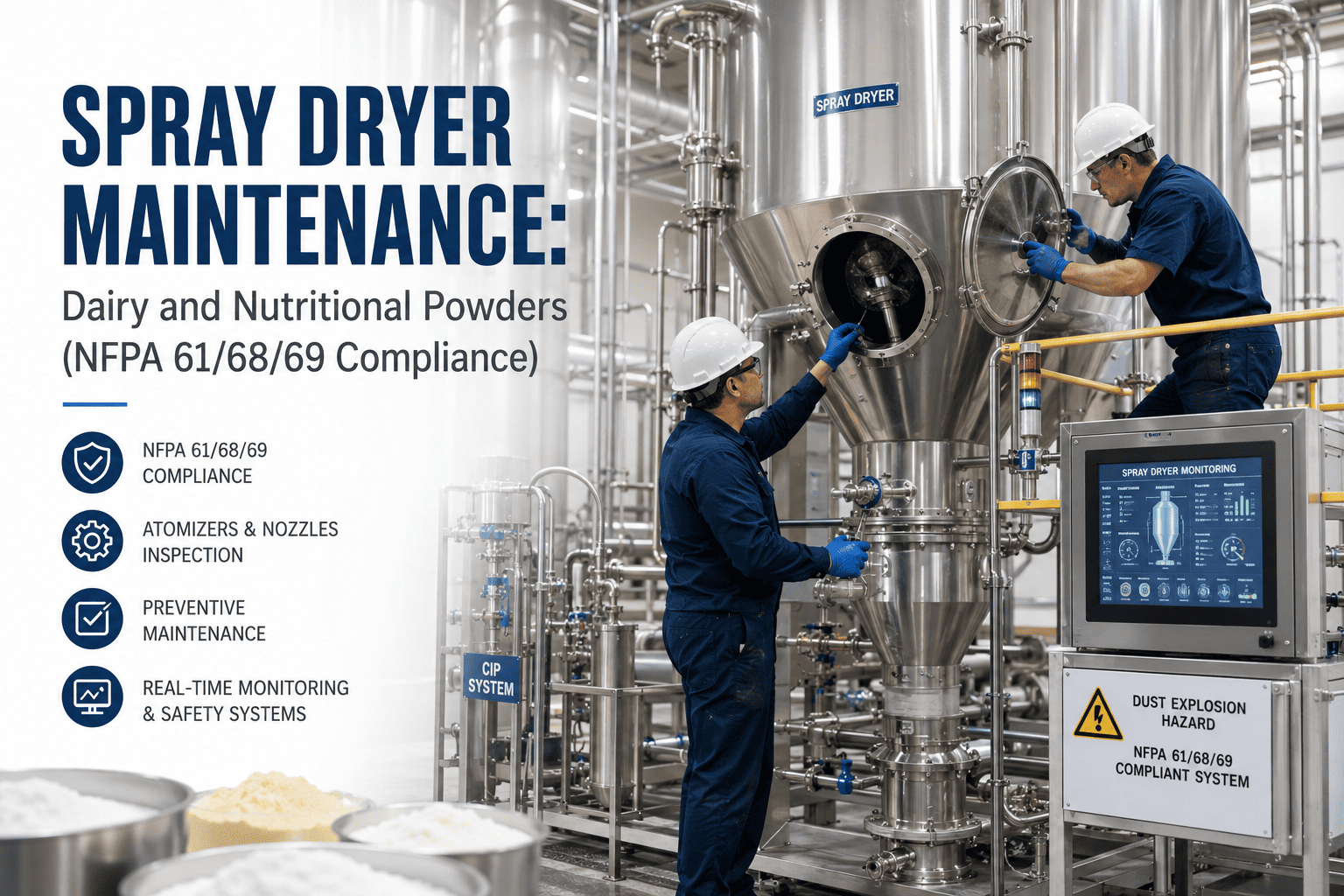
Spray dryers are among the highest-hazard pieces of equipment in any food plant. They concentrate finely divided, combustible powder inside a heated chamber with the ignition energy already on hand — the conditions a Dust Hazard Analysis (DHA) cla
Read More
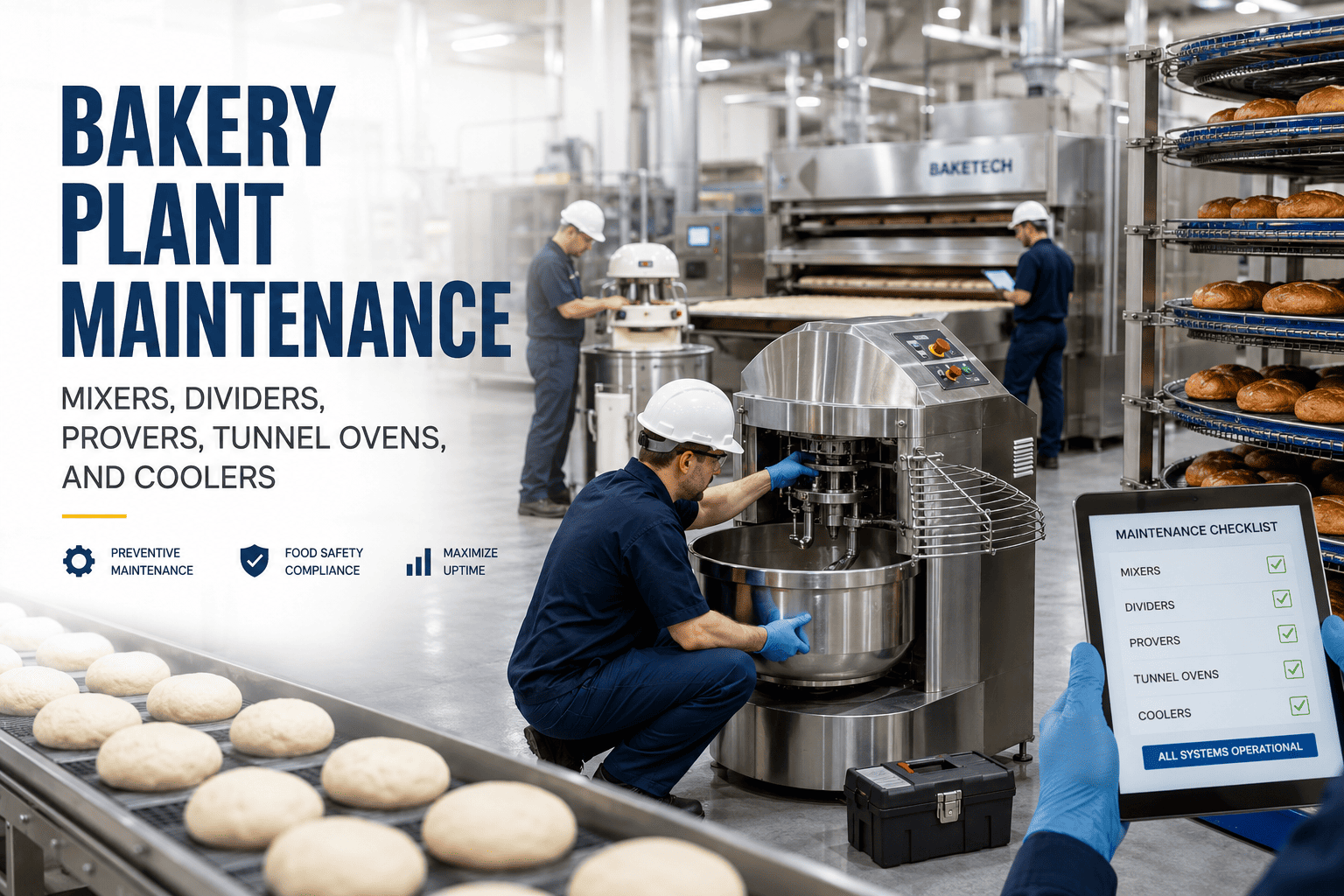
Commercial bakeries run some of the most failure-prone production lines in food manufacturing — and almost all of those failures are predictable. Heat cycling in deck and tunnel ovens degrades door gaskets, heating elements, and combustion systems

Read More
Modern Bottled Water Plant operations demand maintenance programs that are as disciplined as the production processes they support. Equipment failures in food and beverage manufacturing do not just create downtime — they create regulatory exposure

Read More
Modern Juice & HPP operations demand maintenance programs that are as disciplined as the production processes they support. Equipment failures in food and beverage manufacturing do not just create downtime — they create regulatory exposure, pr

Read More
Modern CSD Plant operations demand maintenance programs that are as disciplined as the production processes they support. Equipment failures in food and beverage manufacturing do not just create downtime — they create regulatory exposure, product

Read More
Modern Distillery operations demand maintenance programs that are as disciplined as the production processes they support. Equipment failures in food and beverage manufacturing do not just create downtime — they create regulatory exposure, product

Read More
Modern Winery & Cellar operations demand maintenance programs that are as disciplined as the production processes they support. Equipment failures in food and beverage manufacturing do not just create downtime — they create regulatory exposure

Read More
The U.S. beer industry generated $129.3 billion in retail revenue in 2024, yet the craft segment continues to close at a rate of roughly 4% annually — and the primary operational differentiator between thriving breweries and those that close is ma

Read More
Aseptic processing and packaging represents the highest-precision maintenance environment in food manufacturing. A single sterilization-in-place failure, a compromised sterile air filter, or a valve seat defect that creates a non-sterile product p

Read More
Retort systems are the most critically regulated pieces of equipment in any low-acid canned food operation. Under 21 CFR Part 113, every retort must be operated in exact conformance with a scheduled process validated by a process authority — and e
Read More
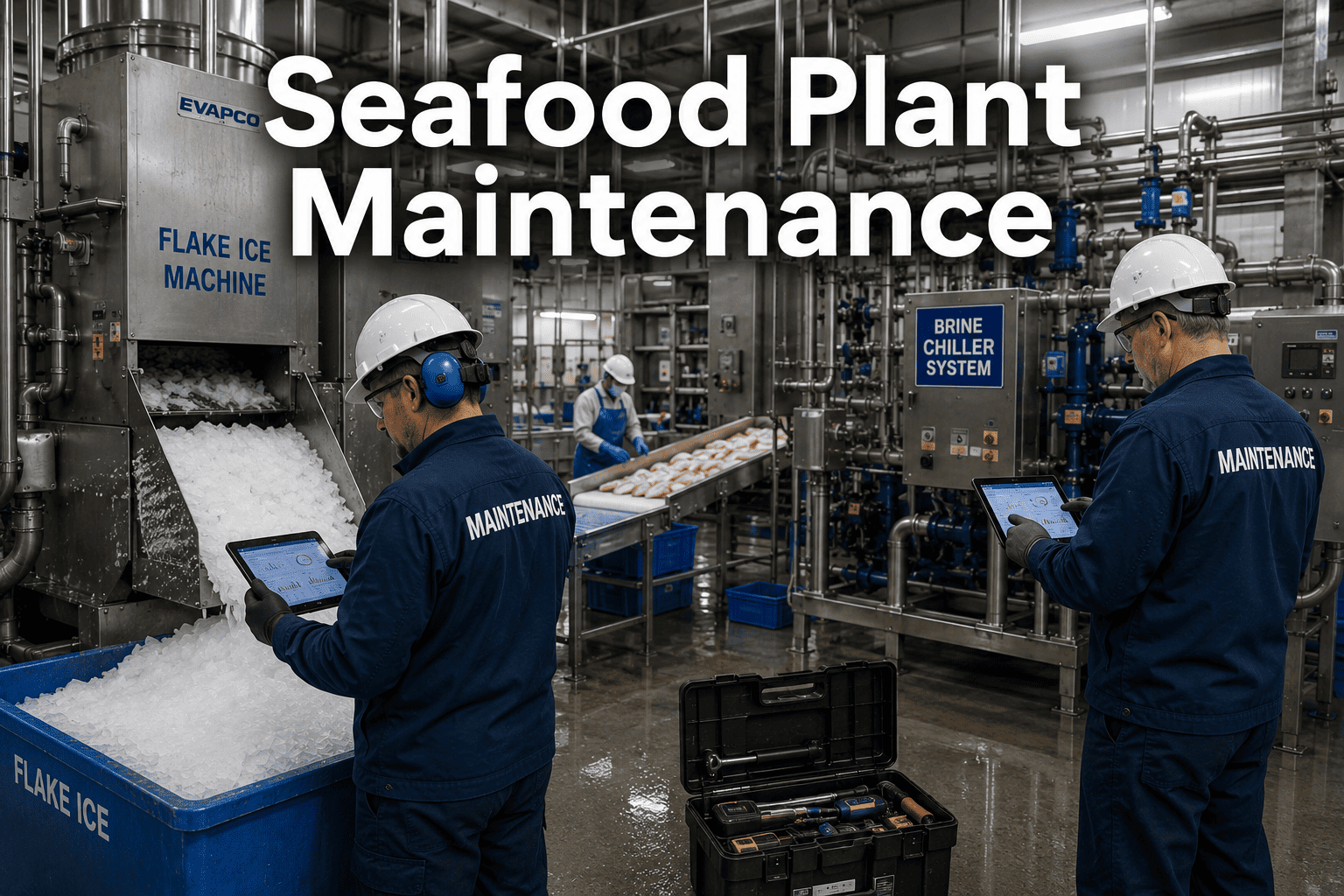
Seafood processing plants operate in an environment where Listeria monocytogenes is not an abstract risk — it is a persistent operational reality. The same cold, wet, hard-to-reach surfaces that preserve seafood quality create the exact conditions

Read More
A poultry processing plant running 140 birds per minute has a mechanical failure tolerance measured in seconds. When a live hang shackle seizes, a picker finger drum jams, or an eviscerator fails mid-run, the line stops — and every minute of unpla

Read More
FSIS inspection personnel conducted 8.1 million food safety procedures across more than 7,100 federally regulated establishments in a single year — and in 2023 alone, 65 recalls totaling over 4 million pounds of meat and poultry products were issu

Read More
Food-grade lubrication is one of the most compliance-critical and most commonly mismanaged maintenance activities in food manufacturing. A single application of the wrong lubricant to a food-contact bearing — or an undocumented over-lubrication ev
Read More
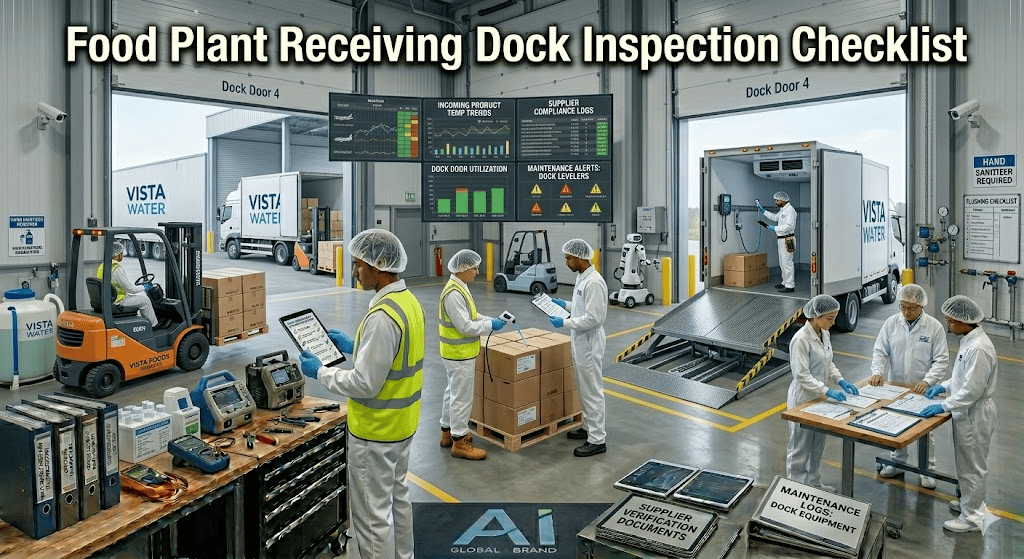
The receiving dock is where food safety is won or lost before a single ingredient touches your production line. Every rejected delivery accepted, every temperature deviation overlooked, and every dock door left unsealed is a preventable contaminat

Read More
Legionella pneumophila doesn't announce itself until people are hospitalised. In a food manufacturing facility, the water systems that support production — cooling towers, hot water circuits, process water lines, and CIP water supplies — create ex

Read More
A commercial kitchen with a failed walk-in cooler at 11 PM, a fryer that trips the breaker mid-service, or a dishwasher that stops sanitising is not just an operational problem — it is a health department shutdown risk, a food safety liability, an

Read More
Dairy processing equipment failures don't just shut down production lines — they trigger FDA recalls, destroy batch yields, and expose facilities to regulatory action under 21 CFR Part 117. A failed pasteurizer seal or a missed CIP cycle doesn't g

Read More
Brewery equipment failures do not just interrupt production — they compromise batch integrity, contaminate fermentation vessels, and in worst cases trigger product recalls that damage brand reputation built over years. Deferred CIP maintenance is

Read More
Bakery equipment operates under conditions that accelerate wear faster than almost any other food manufacturing environment — heat cycling in deck and tunnel ovens degrades seals and heating elements within months, flour and sugar residue accumula

Read More
A food plant electrical system failure during a production shift costs between $50,000 and $200,000 per hour in lost throughput — but the higher risk is invisible: an arc flash event on an improperly labeled panel during a routine maintenance task

Read More
SQF Code Edition 9 requires not just that maintenance is performed — it requires that maintenance is documented, scheduled, traceable, and available for auditor review within minutes. An SQF auditor who asks to see preventive maintenance records f

Read More
Ammonia refrigeration systems are the most energy-efficient refrigeration technology in food processing, cold storage, and distribution — and they carry a federally regulated Process Safety Management obligation the moment the system contains 10,0

Read More
A single rodent sighting on a food plant production floor can trigger an FDA 483 observation, a customer audit finding, or a product recall — and the evidence trail that auditors examine is not the sighting itself but the documented pest managemen

Read More
A food processing plant discharging wastewater with BOD levels above permit limits faces immediate regulatory action — fines starting at $25,000 per day, potential plant shutdown, and reputational damage that follows every future permit renewal. Y

Read More
Food manufacturing facilities using compressed air for direct product contact, pneumatic control systems, or packaging operations face a critical challenge: contaminated air can introduce particles, moisture, oil aerosols, and microbial growth dir

Read More
Food manufacturing plants face fire risks unlike most other industrial environments — combustible flour, sugar, and spice dust can ignite from a single spark, cooking oils burn at extreme temperatures, and continuous production schedules leave lit

Read More
The FDA Food Safety Modernization Act (FSMA) Preventive Controls for Human Food rule requires food manufacturers to maintain a documented Food Safety Plan — and the record-keeping burden is substantial. During an FDA inspection, investigators will
Read More
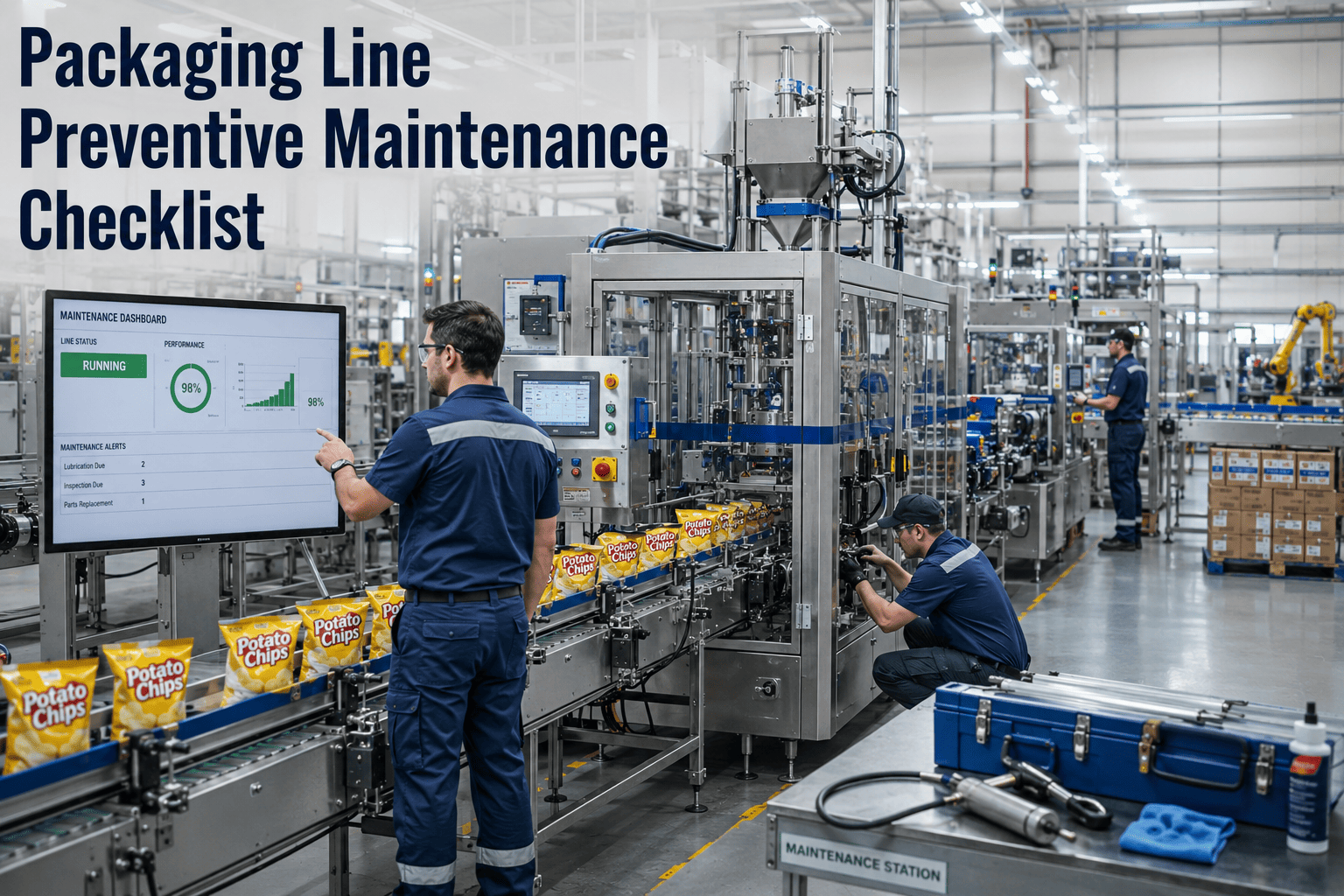
Packaging lines in food and beverage facilities are the final frontier between production and the customer — and they fail at the worst moments. A single filler breakdown during a peak production run can cost $15,000–$40,000 per hour in lost outpu

Read More
Food manufacturing facilities depend on reliable steam for cooking, sterilization, cleaning, and heating — yet boiler systems are among the most under-inspected assets in the plant. A failed safety valve, contaminated steam supply, or untreated fe
Read More
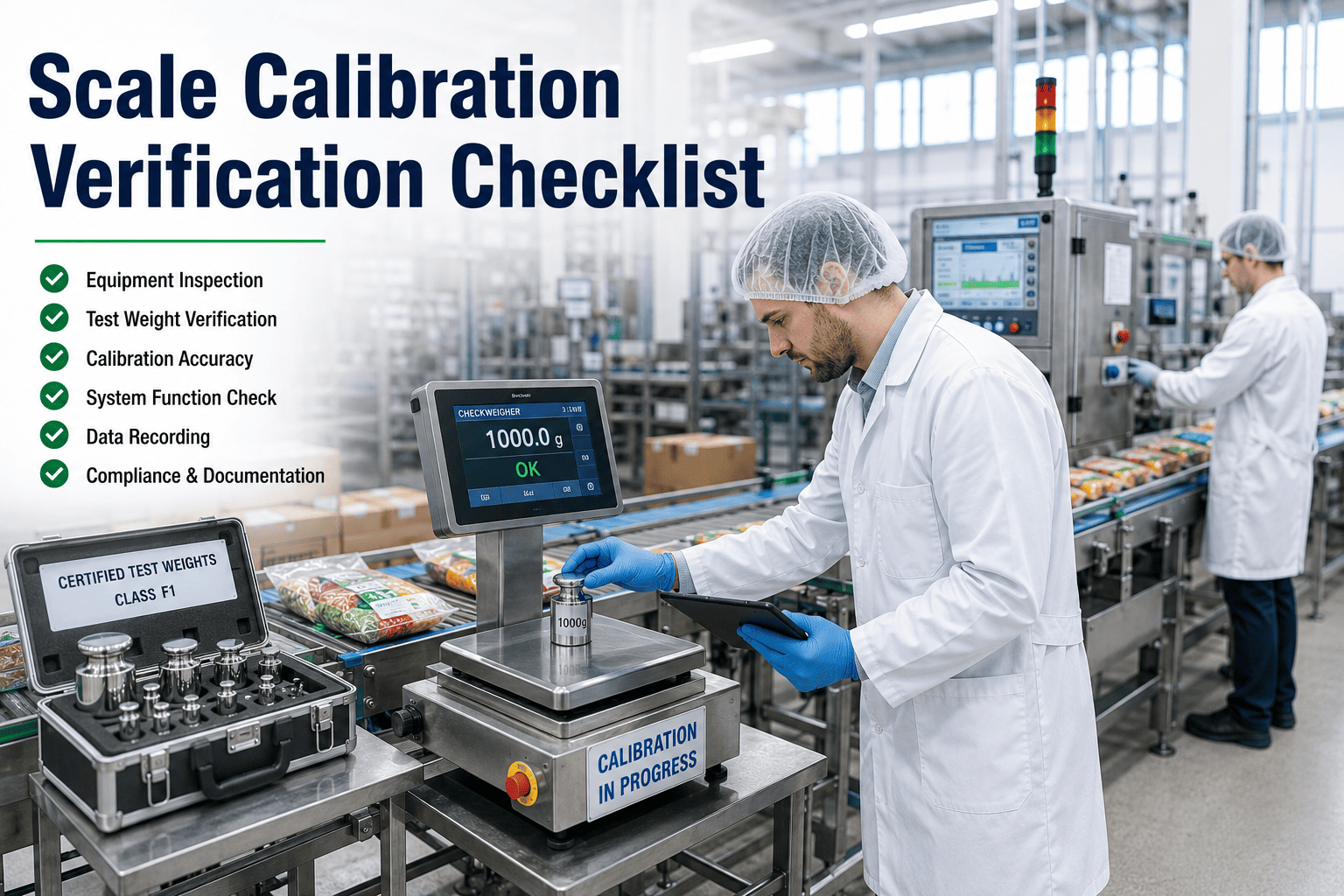
A frozen food manufacturer in Ontario was fined $140,000 after a regulatory inspection found that 23% of packaged product over a six-week period had been shipped underweight — outside the declared net content on the label. The checkweigher had bee

Read More
A confectionery plant in Germany produced 14 tonnes of product over three shifts before realizing the metal detector had been running without a verified test piece check since the start of the week — the test piece record showed three consecutive

Read More
In 2022, a UK biscuit manufacturer issued a Class I recall on 47 product lines after an allergen changeover from a peanut-containing run to a nut-free line was signed off as complete — but three pieces of changeover cleaning documentation were mis
Read More
In 2022, a UK biscuit manufacturer issued a Class I recall on 47 product lines after an allergen changeover from a peanut-containing run to a nut-free line was signed off as complete — but three pieces of changeover cleaning documentation were mis

Read More
A snack food plant in Tennessee received a customer complaint about black rubber particles in a finished product lot. Three weeks of investigation traced the contamination to a deteriorating conveyor belt that had passed visual inspection every da

Read More
A meat processing plant in Alberta lost 18 tonnes of product when a walk-in freezer compressor failed silently over a weekend — the temperature alarm had been disabled to stop false alerts from a faulty sensor nobody had scheduled to replace. The

Read More
A dairy plant in Wisconsin failed its third-party audit because CIP cycle logs were incomplete — the cleaning system ran, but nobody could prove chemical concentration was verified at the right temperature for the required contact time. The FDA Fo

Read More
A winery's inventory isn't just product — it's time. A barrel of premium Cabernet Sauvignon aging in a climate-controlled cave represents three to five years of growing, harvesting, fermenting, and waiting. When the HVAC system
Read More
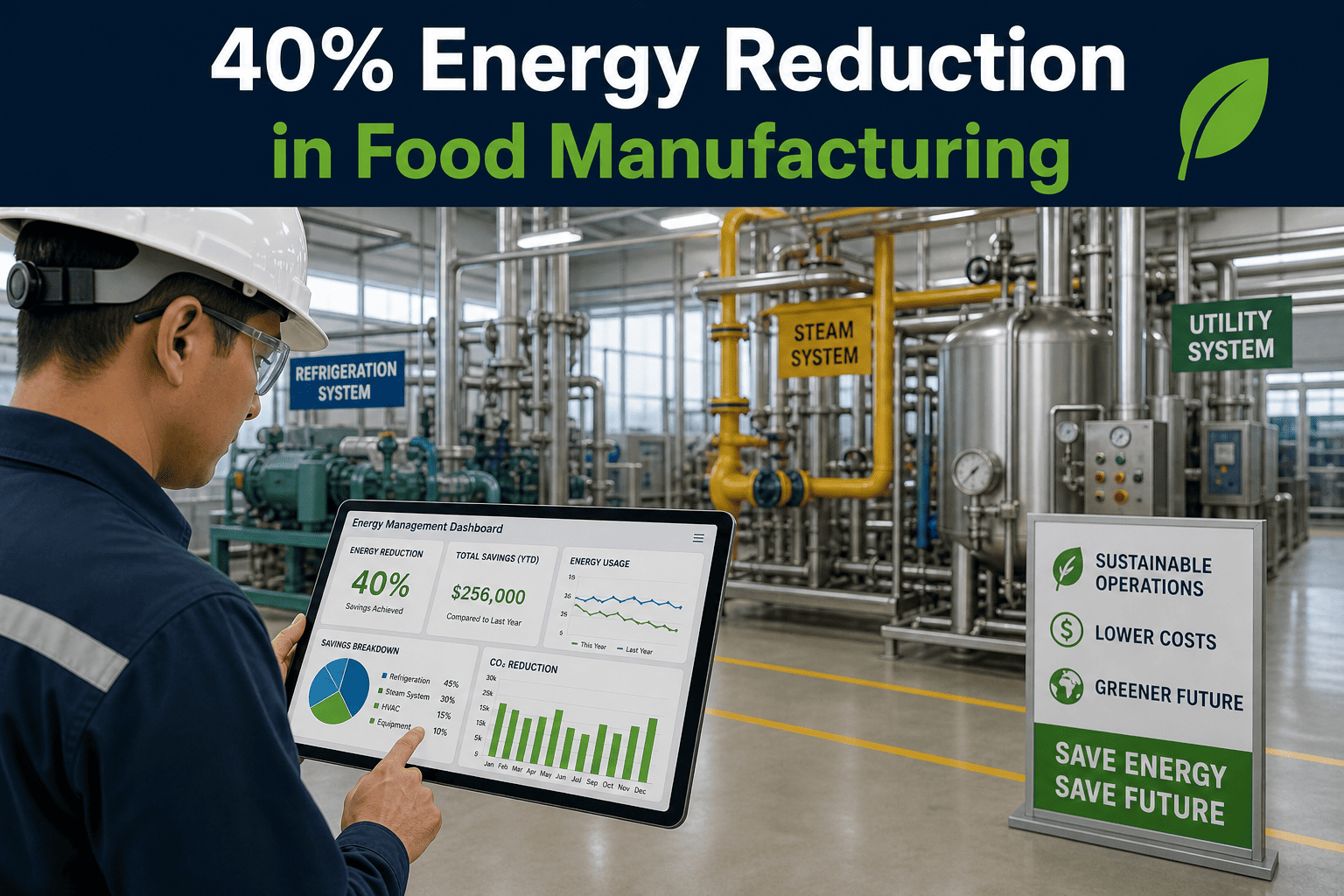
Energy is the second-largest operating cost in most food manufacturing facilities — and in most plants, 20 to 35 percent of that spend is being wasted through inefficient refrigeration cycles, unmanaged steam losses, and compres
Read More
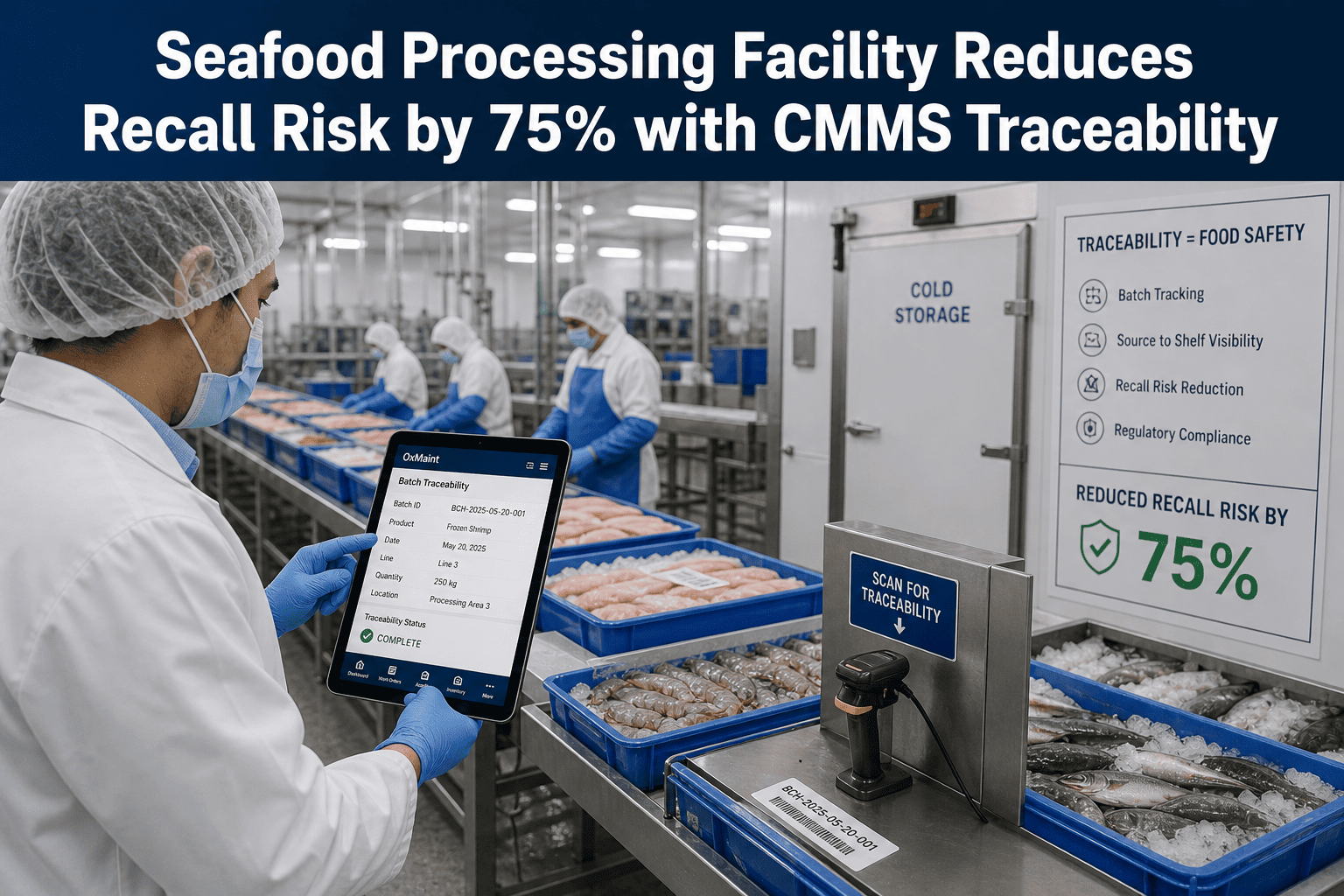
A seafood recall doesn't just cost money — it costs the trust that took years to build with retail buyers, food service distributors, and regulatory agencies. The average cost of a Class I food recall in the seafood industry now

Read More
Most confectionery plants don't fail BRC audits because of bad intentions — they fail because maintenance records are scattered, calibration logs are incomplete, and allergen changeover documentation is buried in paper binders n
Read More
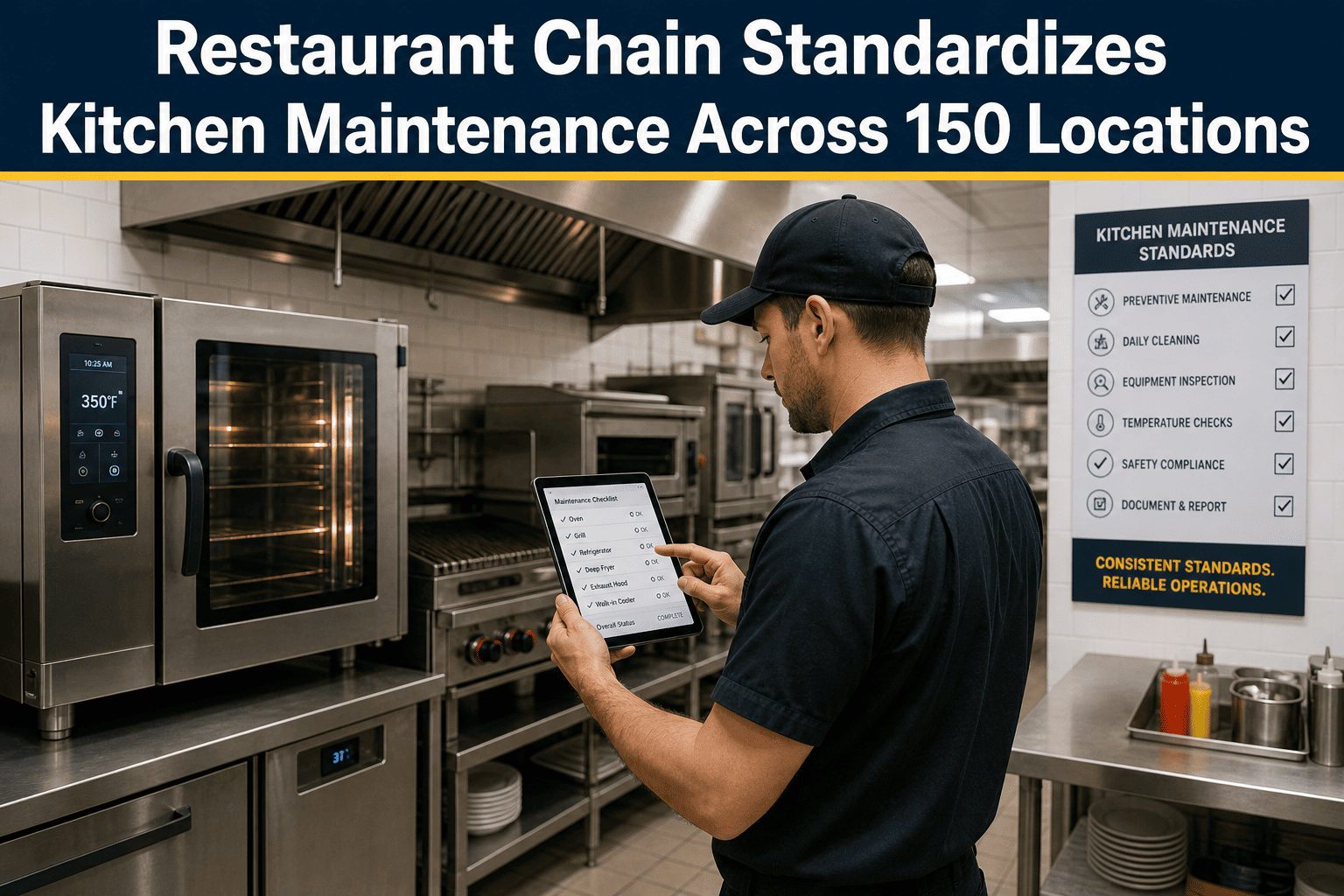
A regional restaurant chain operating 150 locations across seven states faced a persistent challenge that undermined profitability and guest satisfaction: kitchen equipment failures were unpredictable, maintenance practices varied wildly by locati

Read More
A mid-sized food manufacturing facility in the Midwest faced mounting pressure to modernize sanitation without disrupting production schedules or compromising food safety standards. Manual cleaning protocols were consuming 18% of total labor hours
Read More
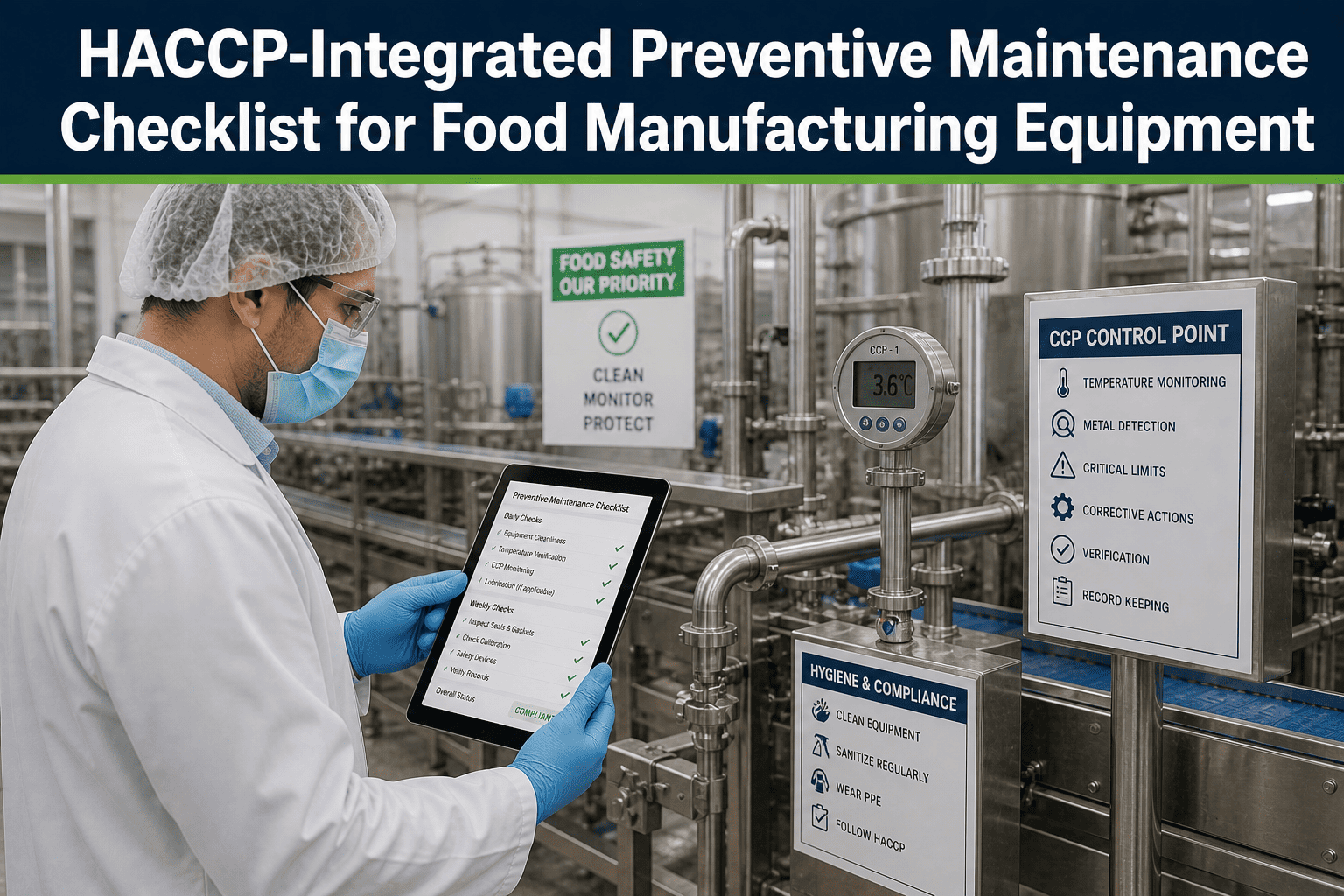
A HACCP plan is only as effective as the equipment that executes it. Your critical control points — metal detection, temperature control, pH monitoring, weight verification — are monitored by instruments and machines that degrad
Read More
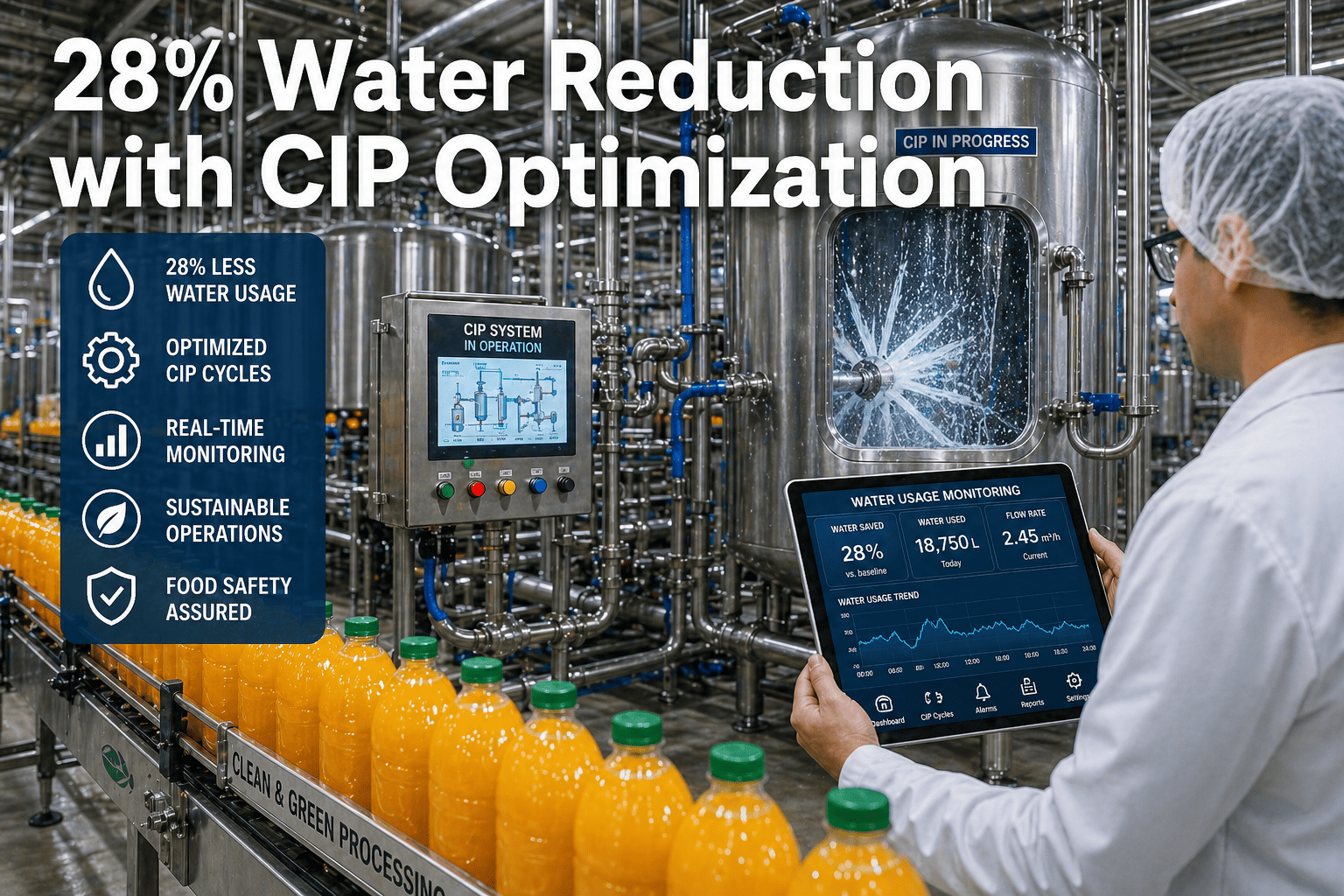
In juice processing, Clean-In-Place (CIP) systems are non-negotiable — but how they're run makes an enormous difference to operating costs, water consumption, and environmental footprint. When a mid-sized juice processing plant b
Read More
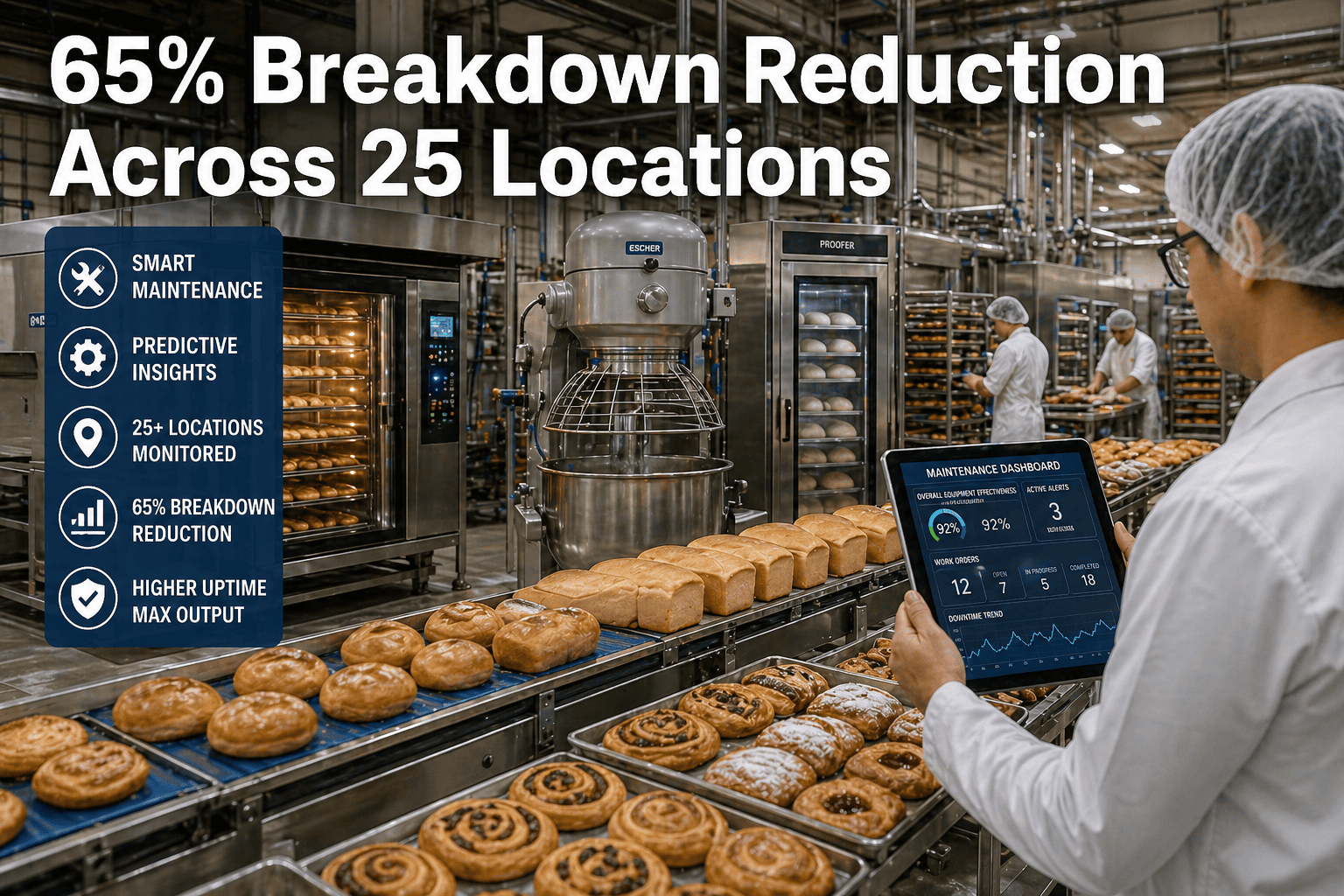
When a bakery oven goes down mid-shift, you don't just lose production — you lose that batch, that delivery window, and sometimes that customer. For a multi-location bakery chain, this wasn't an occasional setback. It was costing
Read More
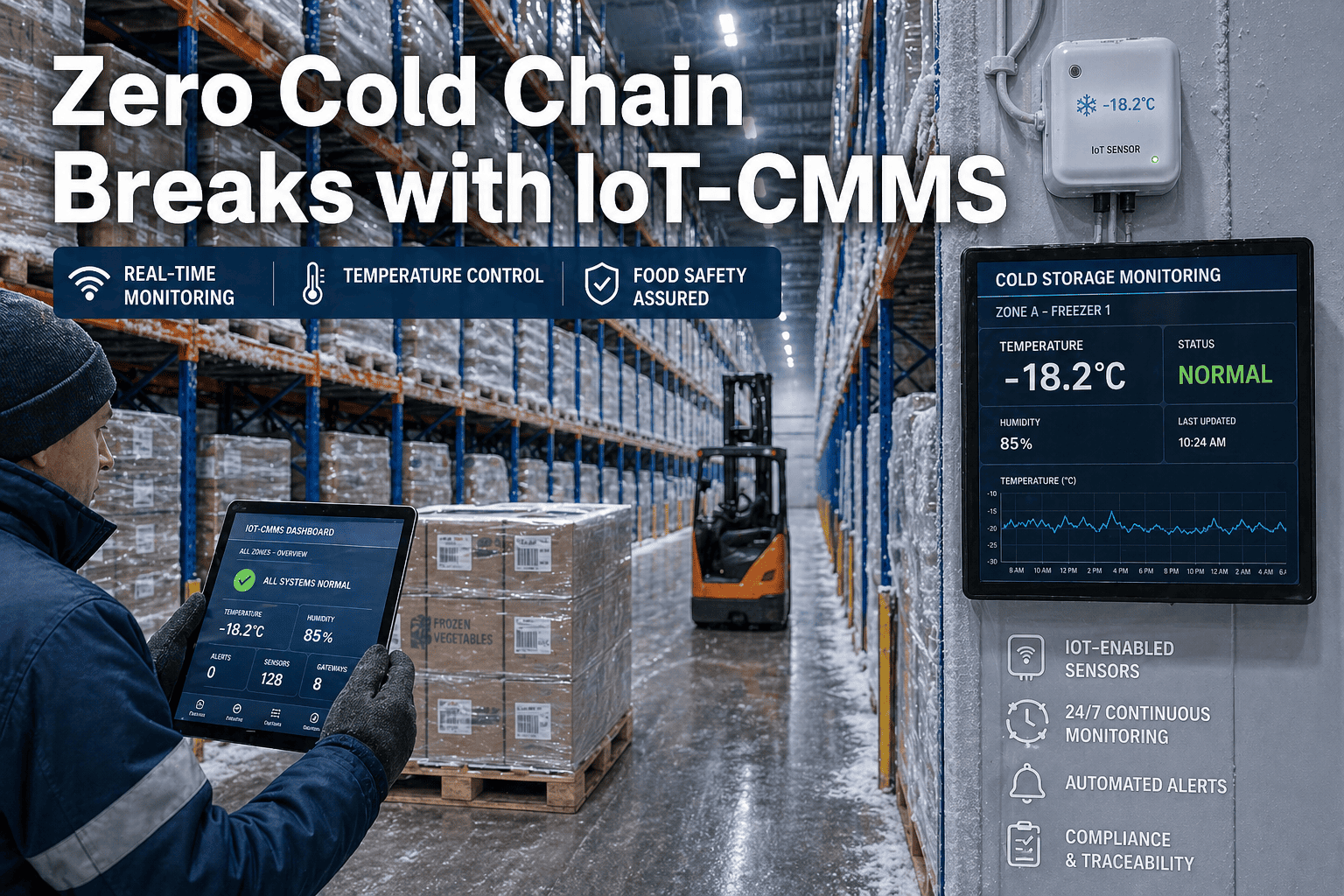
Most cold chain failures don't announce themselves — they accumulate quietly across shifts, equipment cycles, and inspection gaps until a compressor trips at 2 AM and $800,000 in perishable inventory is at risk. The food distribu
Read More
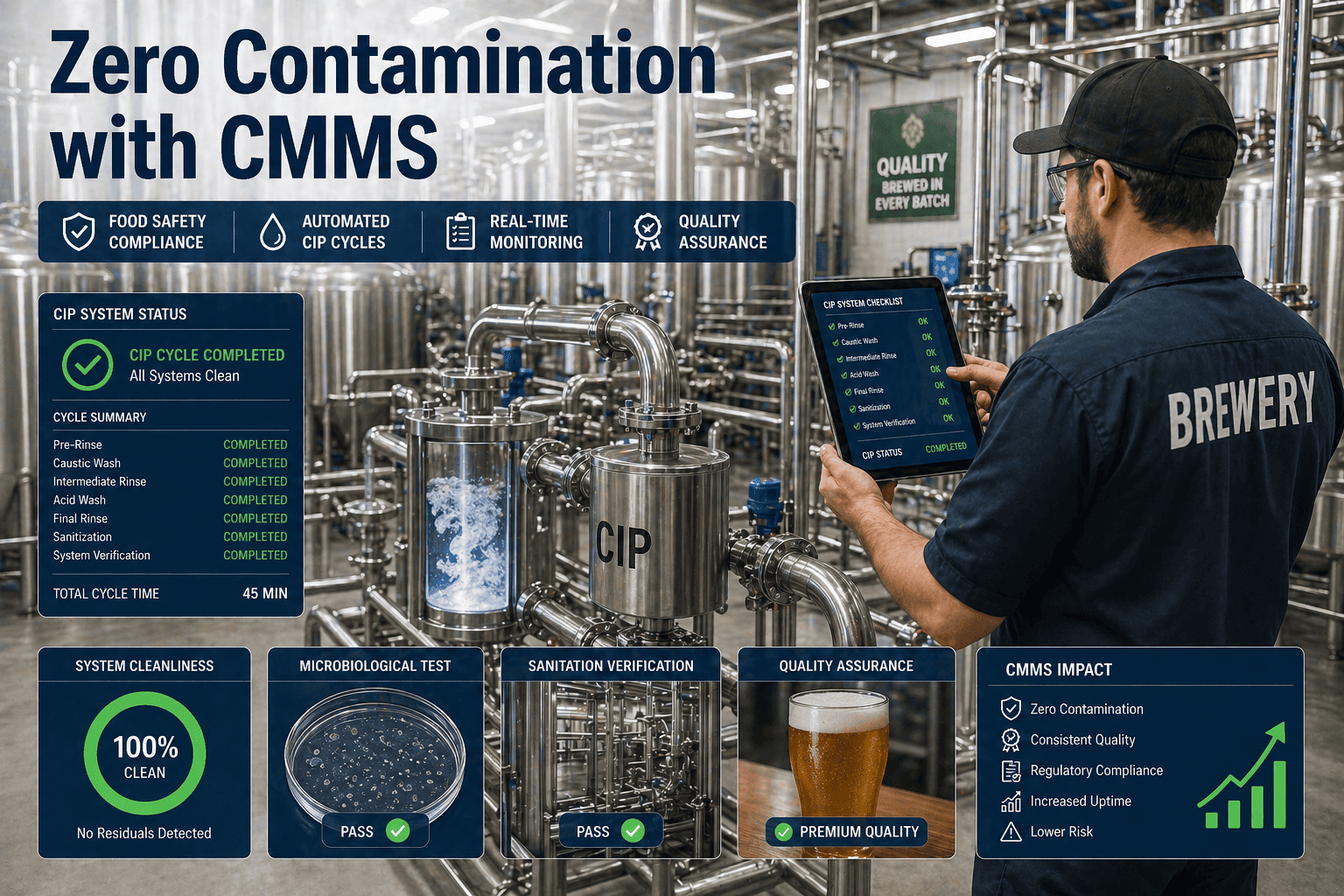
A single contamination event at a craft brewery can trigger a full product recall, FDA investigation, and permanent damage to a brand built over years of patient craft. In the craft beer industry, where trust is the product as much as the beer its
Read More
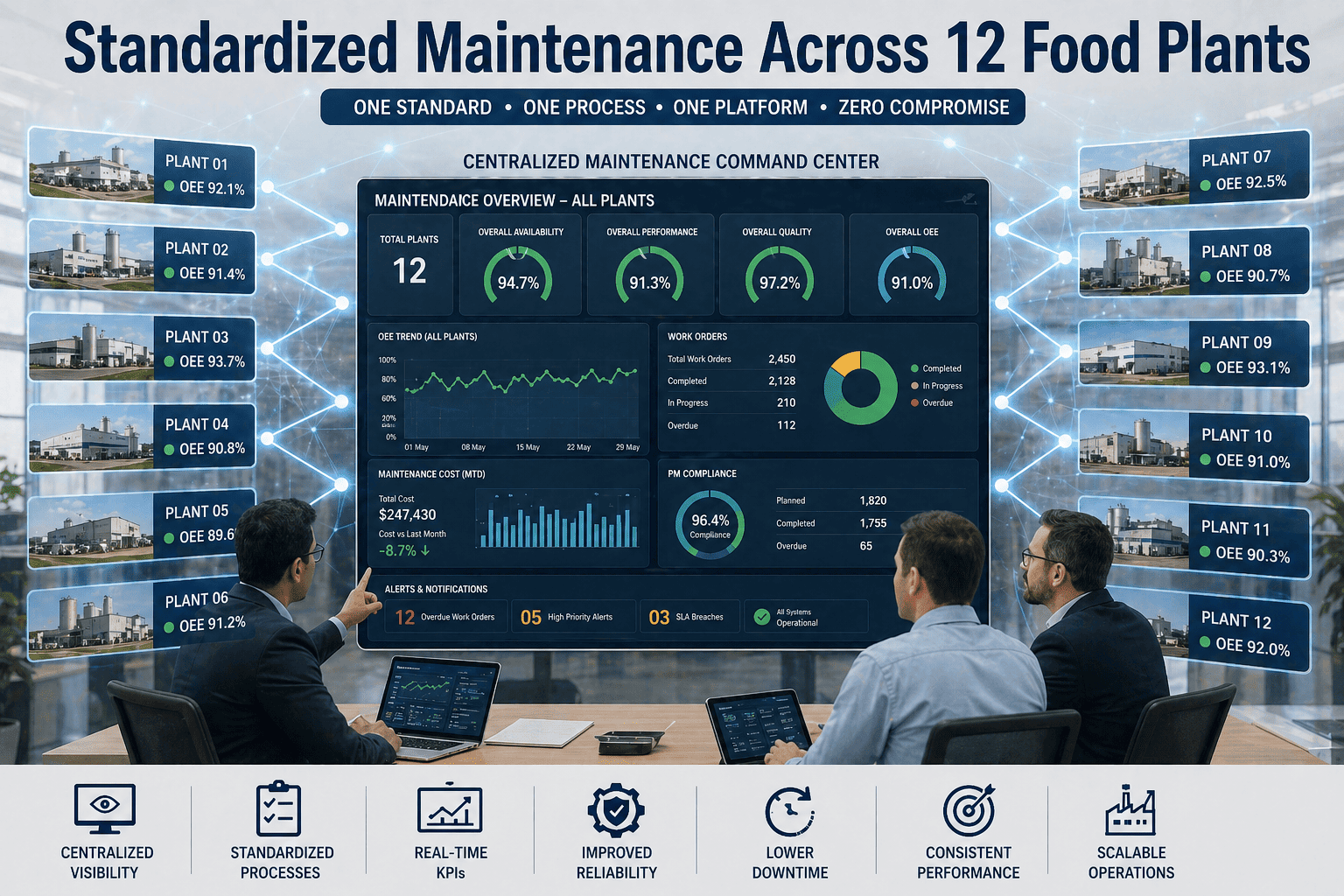
Running maintenance across 12 food manufacturing facilities without a shared system is like managing 12 separate businesses — each with its own spreadsheets, PM calendars, and spare parts logic. The result is predictable: compliance gaps, cost var
Read More
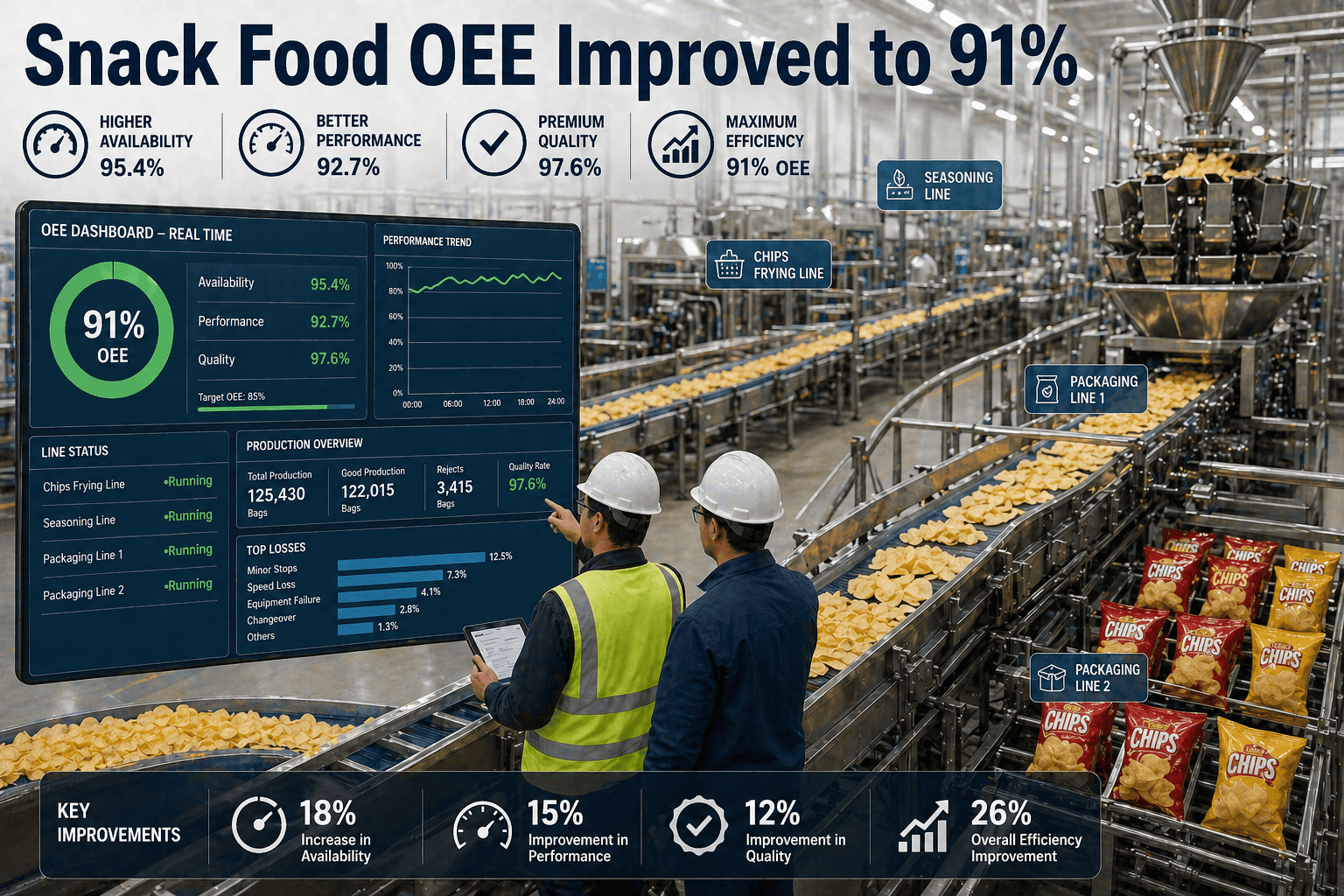
A snack food plant running at 68% OEE looks productive on the surface — until you do the math. Every 10-point OEE gap is equivalent to a full production line sitting idle. At an average unplanned downtime cost of $30,000 per hour, a 68% OEE in a m
Read More
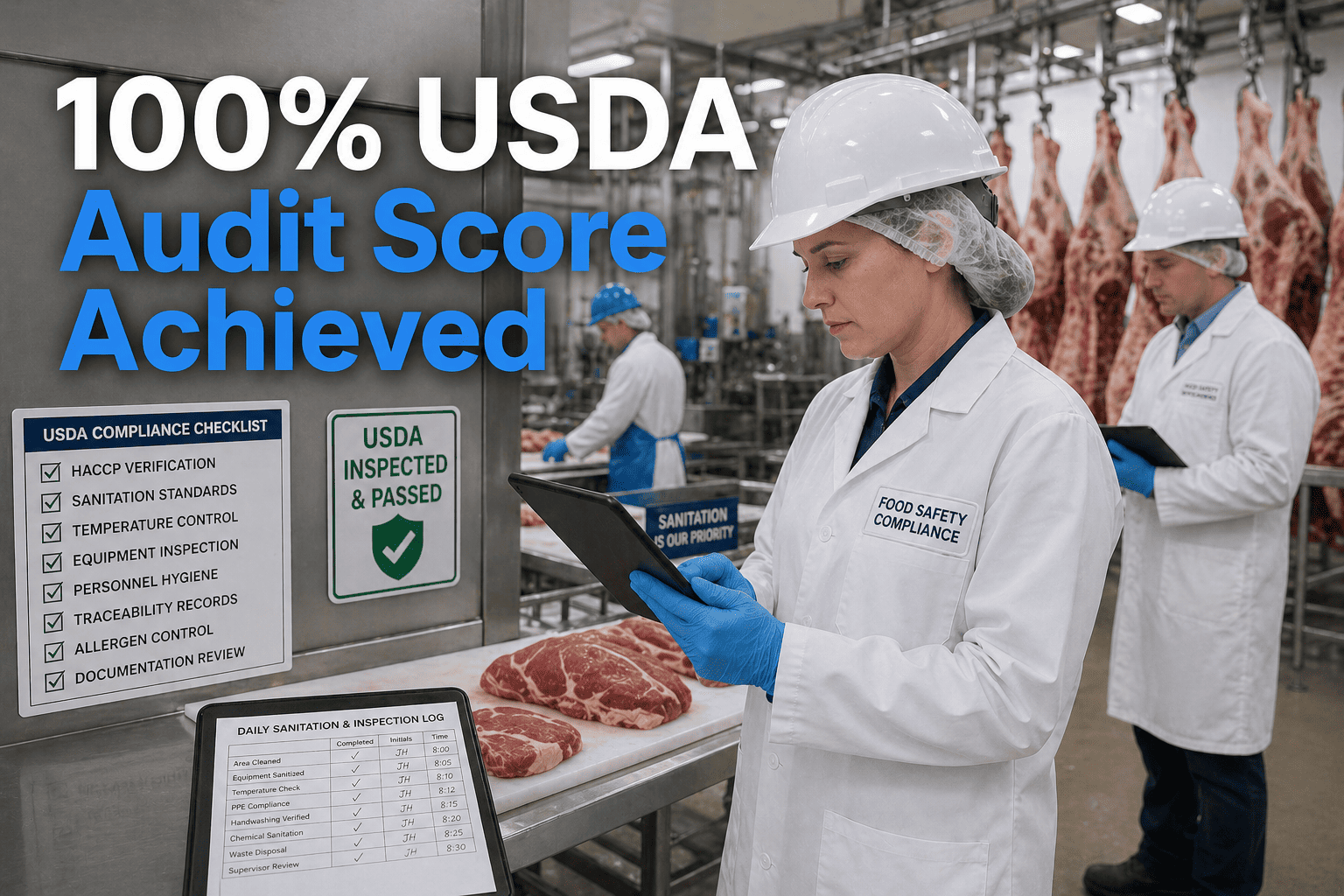
A federally-inspected meat processing plant in Iowa walked into its annual USDA FSIS audit in March 2025 and walked out with a 100% score, zero Noncompliance Records (NRs), and a written commendation referenced in the establishment file. Three yea

Read More
A 220,000 sq ft dairy processing facility in Wisconsin was running on a maintenance philosophy that almost every dairy plant in North America still uses — fix it after it breaks, schedule PMs by calendar, and hope the HTST pasteurizer holds togeth
Read More
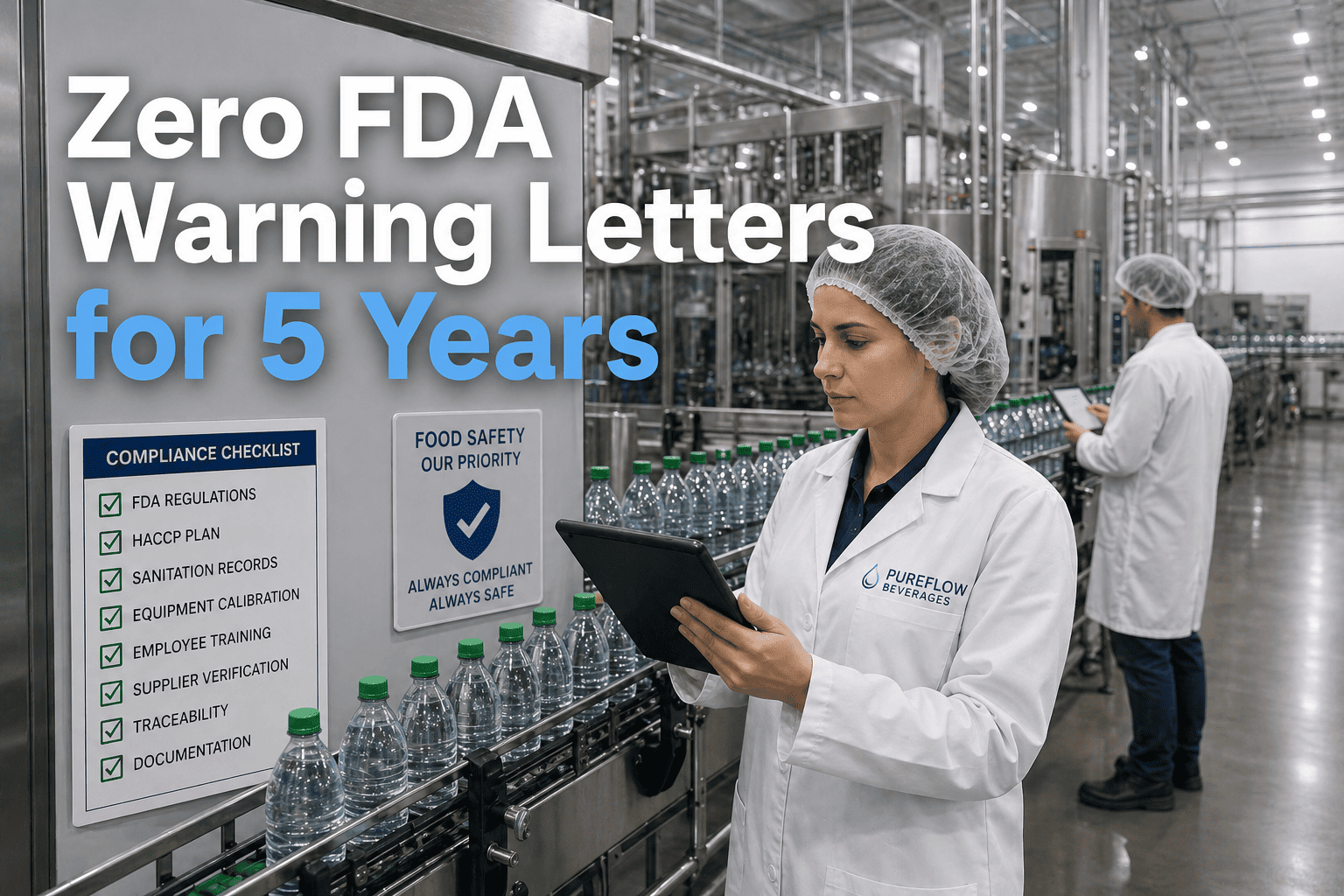
The bottling plant runs three high-speed lines in upstate New York, filling roughly 142 million units of carbonated soft drinks, flavoured waters, and ready-to-drink teas annually. Five years ago, the plant received a Form 483 with seven observati
Read More
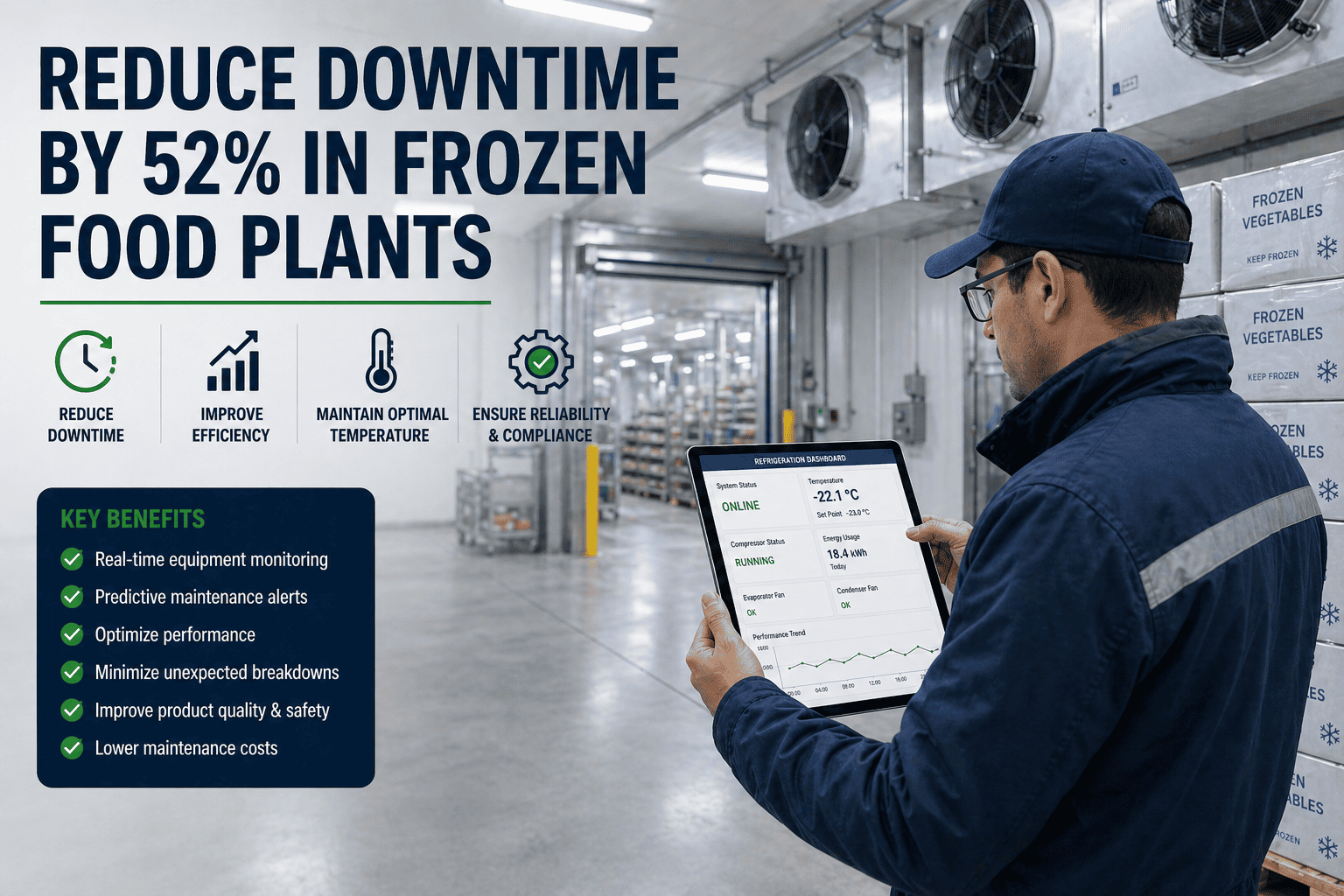
The plant runs three shifts across 340,000 square feet on the outskirts of Indianapolis, freezing roughly 84,000 pounds of breaded protein, vegetable mixes, and ready-meal components per shift. In the eighteen months before they replaced their pap
Read More
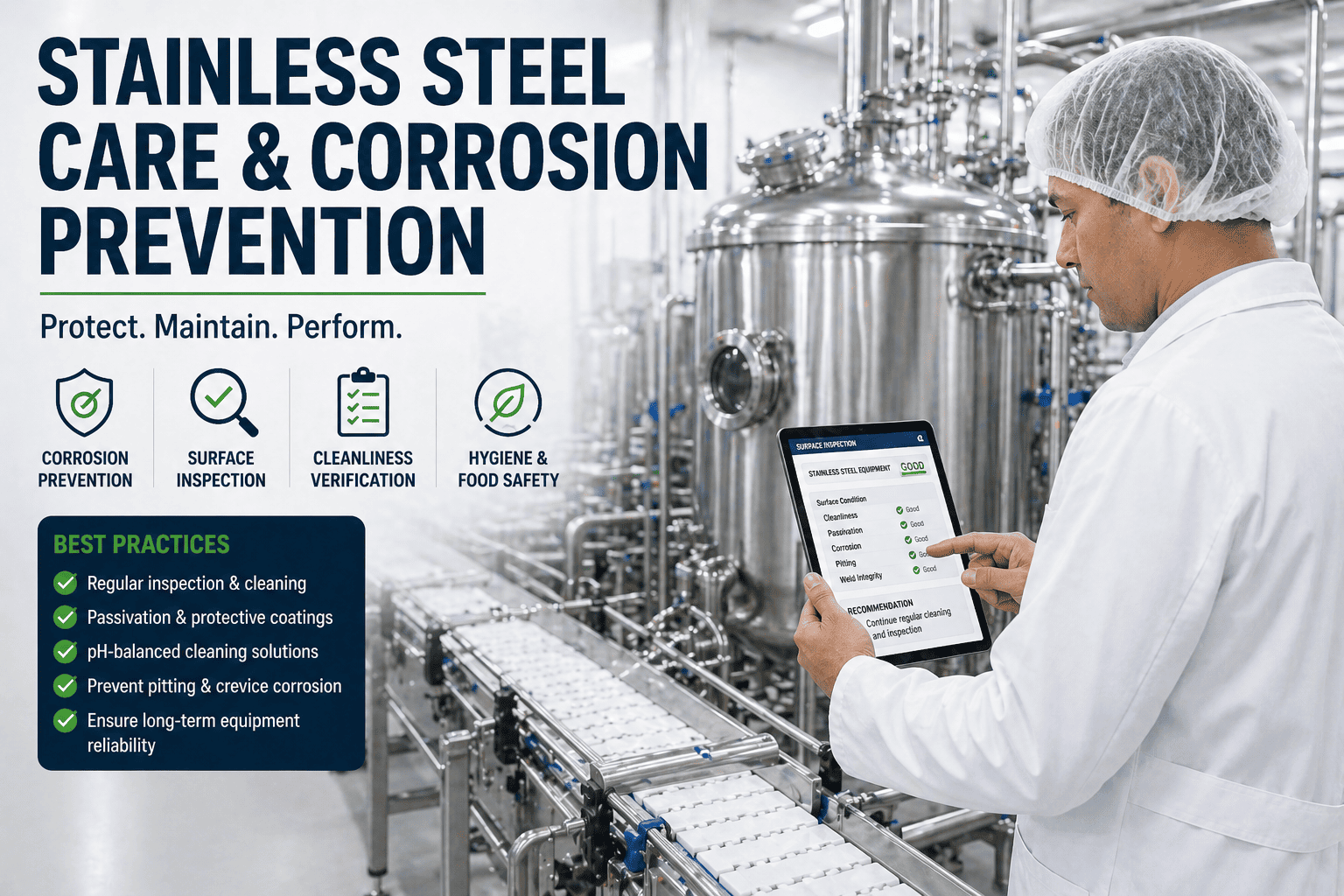
A 220,000 square foot meat processing line in Iowa pulled apart a CIP supply manifold during a Tuesday inspection and found a faint orange film coating the inside of three 316L tees. Class I rouging — the wipeable kind — but the operator had passe

Read More
Equipment breakdowns during peak dinner service account for nearly one in three unplanned restaurant closures — and most of them were preventable. A walk-in cooler that loses a condenser fan at 7 PM on a Friday isn't bad luck: it's six weeks of sk

Read More
A nitrogen generator supplying MAP packaging lines at 99.5% purity that drifts to 97% over three months doesn't announce its failure — it quietly extends packaging headspace oxygen levels past the threshold where aerobic spoilage begins, shortenin

Read More
A continuous fryer running 16 hours a day at 180°C doesn't fail on schedule—it fails when heat exchanger fouling goes undetected for six weeks, when chain tension drifts past tolerance without a single PM check, or when oil turnover intervals slip
Read More
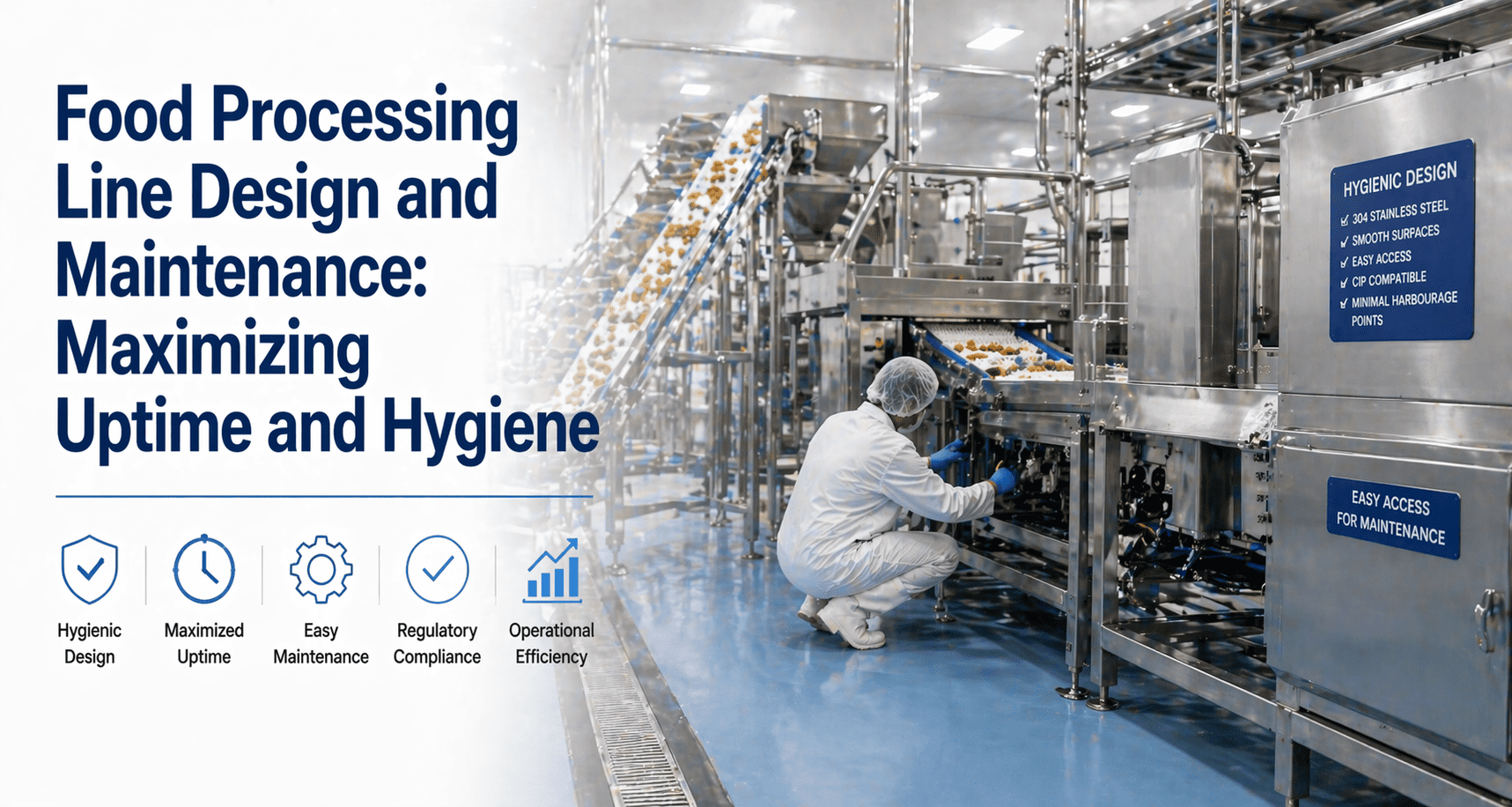
The most expensive maintenance problem in food manufacturing is not equipment failure — it is equipment that was designed in a way that makes maintenance slow, sanitation incomplete, and contamination inevitable. Studies show that 70% of a food pr
Read More
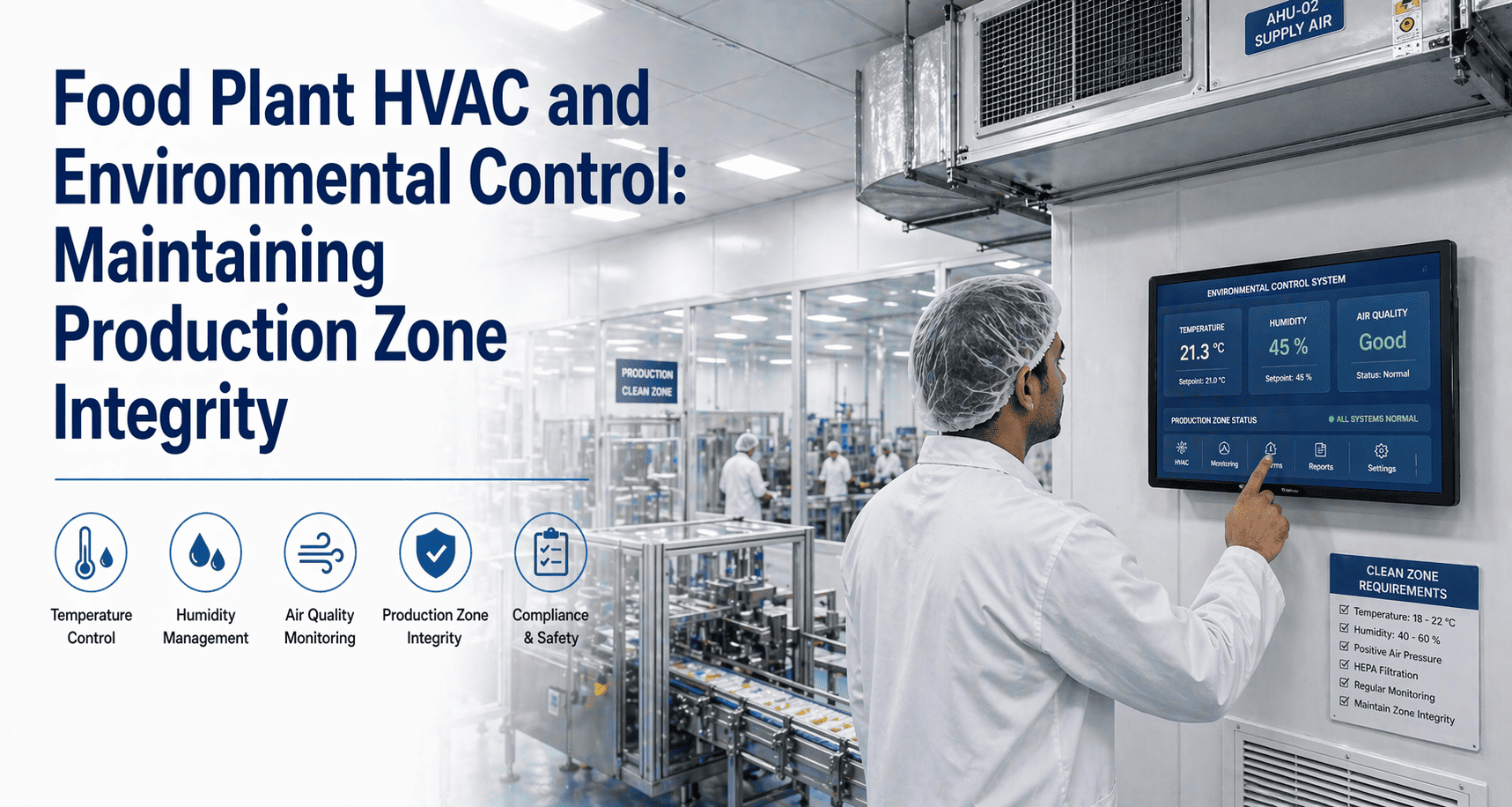
A 2-degree temperature deviation in a cold fill zone can render an entire production batch unsafe for consumption — and most food plants do not detect the deviation until product sampling reveals the damage hours later. HVAC and environmental cont
Read More
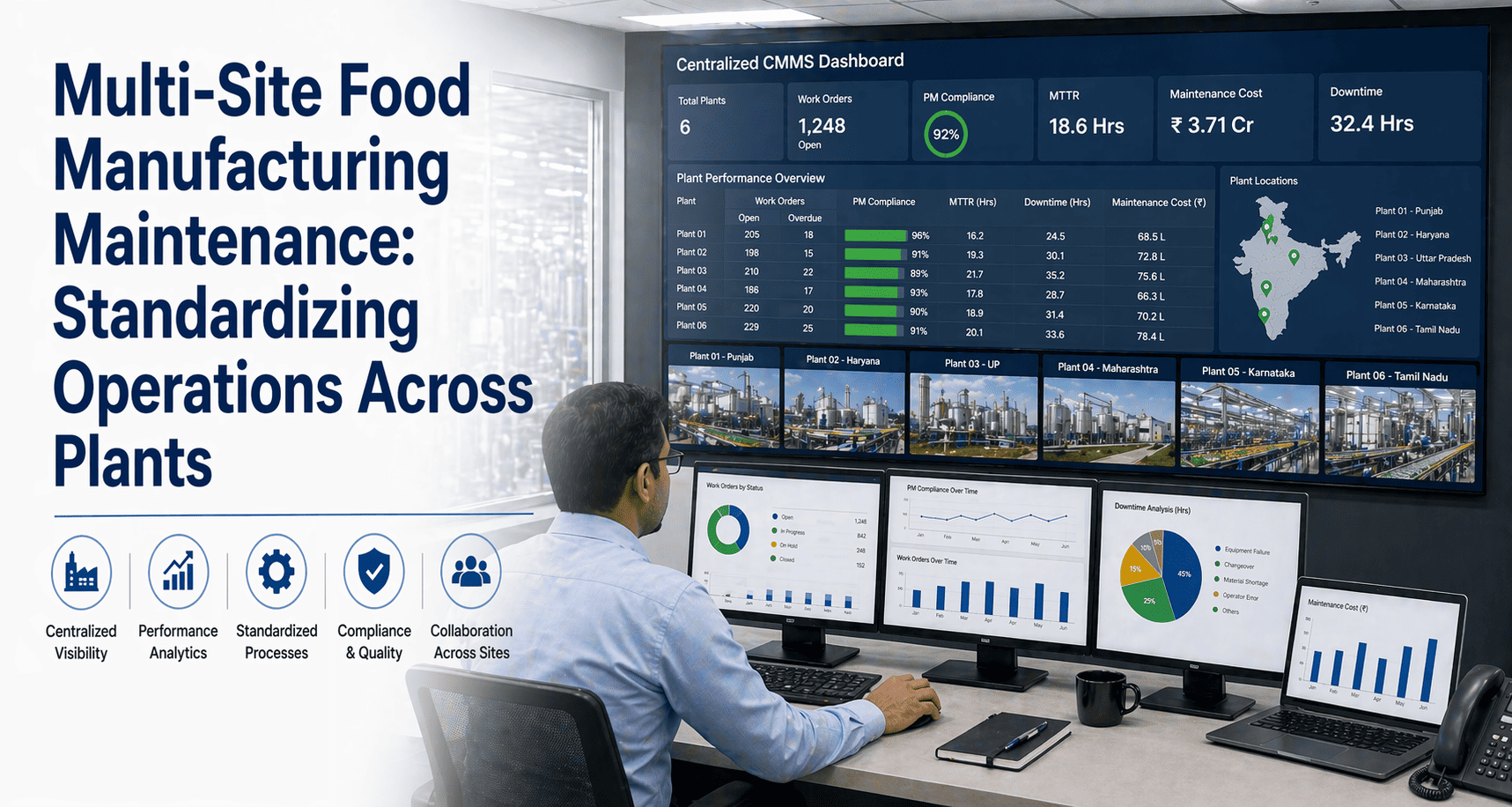
A food manufacturer running five plants with five different maintenance processes is not running a maintenance program — they are running five separate experiments, none of which can be compared, benchmarked, or scaled. The data confirms this: mul

Read More
A single untrained technician replacing a gasket on a food-contact surface with a non-food-grade material can trigger a recall that costs your company $10 million and a customer relationship that took a decade to build. The maintenance skills gap

Read More
Food plants that track maintenance KPIs systematically reduce unplanned downtime by 35-45% within the first year — yet 62% of food manufacturers still rely on spreadsheets or paper logs that are outdated before the shift ends. The gap between know
Read More
Water is the most-used ingredient in your food plant — and the one that most often fails an audit silently. One cooling tower with a dormant Legionella colony, one RO membrane that lost its 0.2-micron integrity, one dead-leg in a steam-condensate
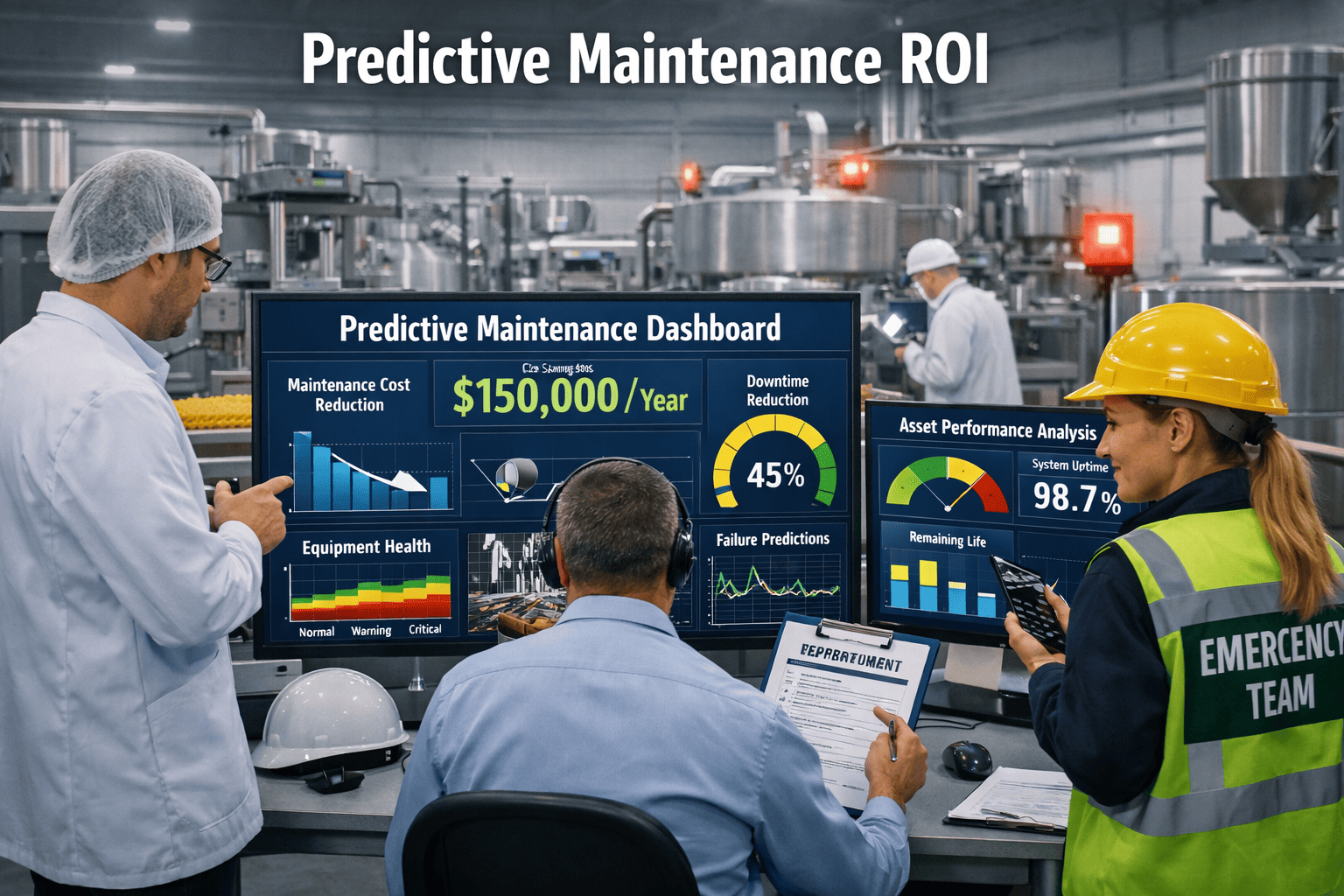
Read More
A VP of Operations at a mid-sized food plant in Wisconsin walked into a capex meeting to request $340,000 for predictive maintenance. The CFO asked one question — "what do we get back, and when?" — and the project was tabled for eight months. She

Read More
The recall call comes at 2:47 AM. A Listeria positive on environmental swabs. Production kept running while your team was sleeping because the last sanitation verification was "pending" — and nobody knows which 14 hours of product is implicated. W
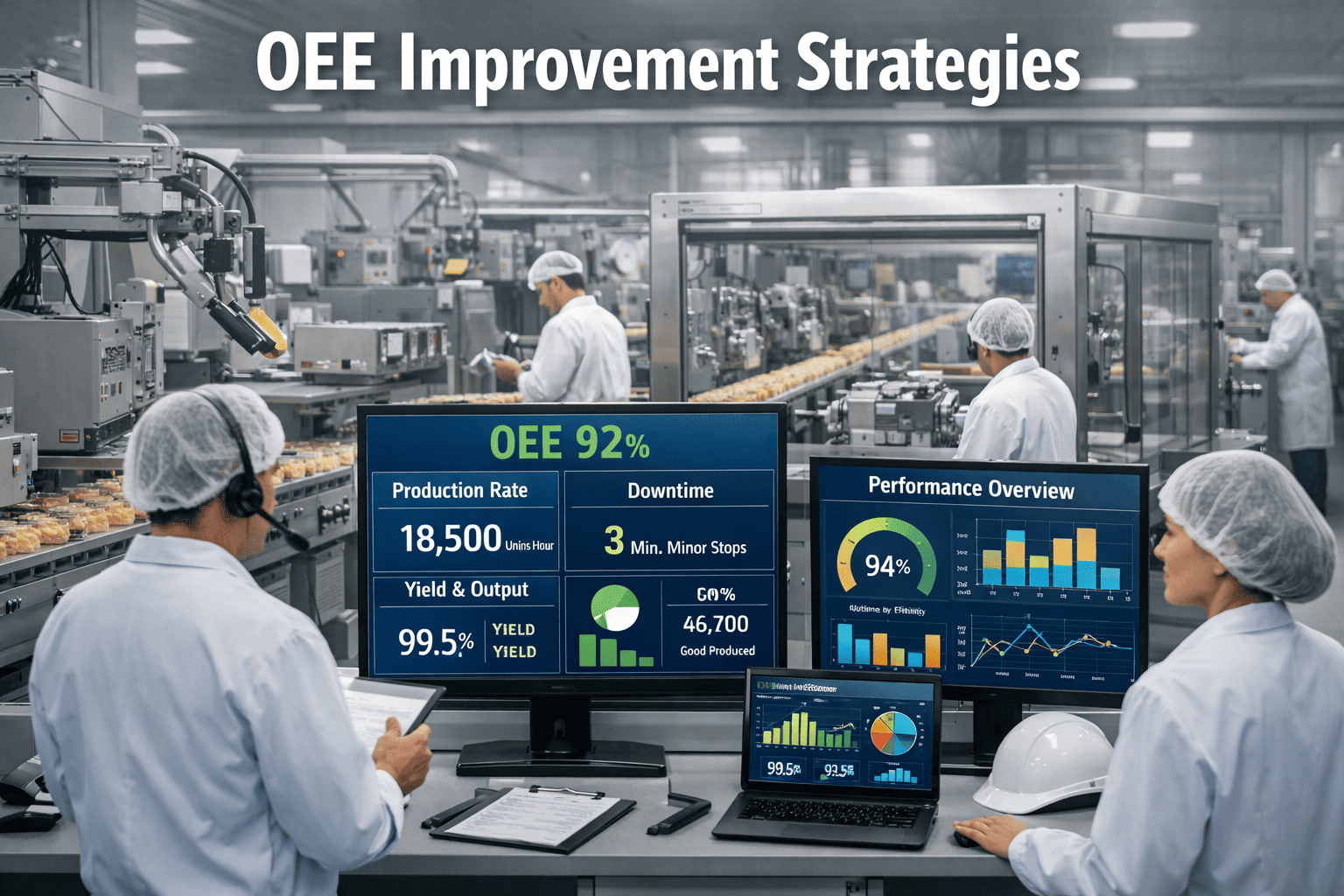
Read More
A food line running at 62% OEE feels normal until you realise every 10-point gain is equivalent to buying another packaging line without spending a dollar on steel. The industry average sits between 55% and 65%, world-class is 82–85%, and the diff
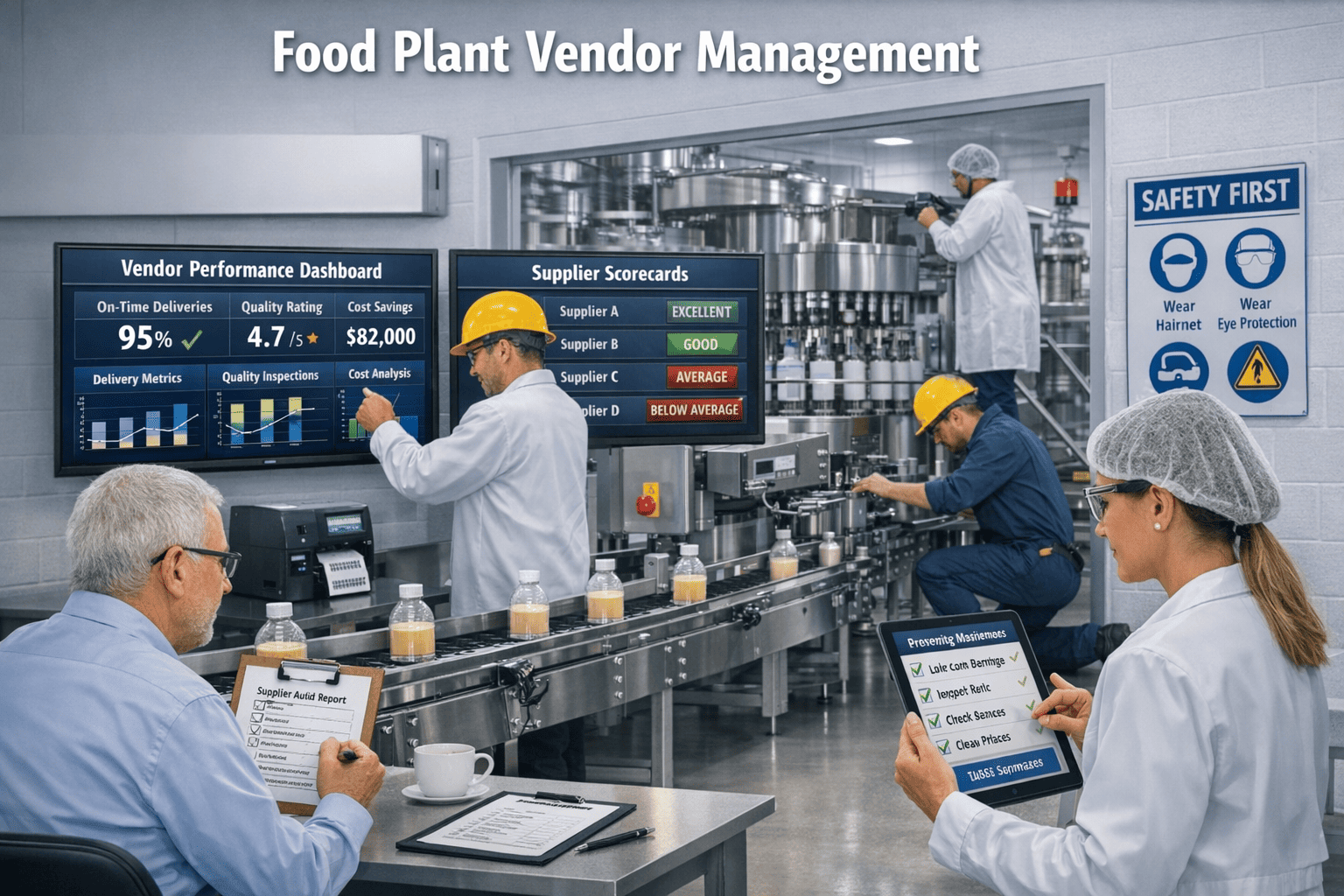
Read More
A food plant vendor who swaps in a non-food-grade gasket during a midnight pump repair can trigger a recall that costs more than a year of that contractor's total spend. The question is never whether outside hands will touch your CCP-critical equi

Read More
A food processing plant with 400 assets cannot afford to apply the same maintenance strategy to every piece of equipment — treating a critical pasteuriser the same as a non-critical conveyor guard motor wastes resources on low-r

Read More
A food plant running SCADA, MES, ERP, and CMMS as four separate islands of data is a plant where a compressor vibration alert stays on a SCADA screen while the maintenance team checks a whiteboard, production planning adjusts schedules in a spread

Read More
A food contact surface that looks clean to the naked eye can still harbour 10,000 CFU per square centimetre in micro-crevices invisible without magnification. The difference between equipment that can be cleaned and equipment th

Read More
A single 4-hour temperature excursion in a cold storage facility can destroy $180,000 worth of perishable inventory — and if nobody was monitoring, the loss is discovered only when product arrives at the customer discoloured, of

Read More
A food manufacturing asset that costs $350,000 to purchase will cost your operation between $700,000 and $1.4 million over its full lifecycle — and the gap between those two numbers is determined entirely by how you manage procu

Read More
Fire in a food plant does not start with an alarm — it starts with deferred maintenance. A grease-laden kitchen hood exhaust duct that has not been cleaned on schedule. A dust collector pulse jet system with blocked valves. A co
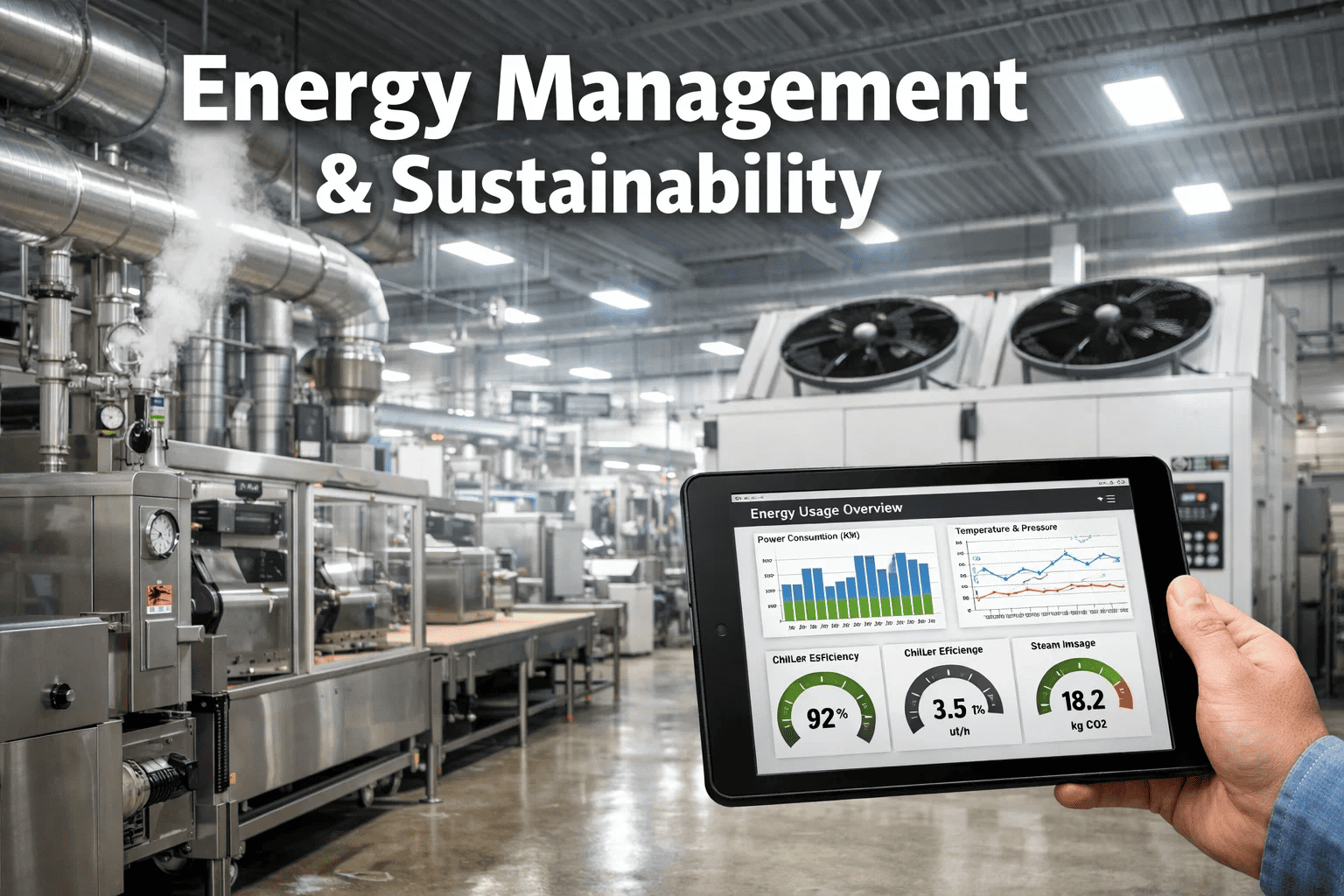
Read More
Energy is the second-largest controllable cost in food and beverage manufacturing — behind raw materials but ahead of labour, packaging, and maintenance combined. The average food plant spends between $1.2M and $4.8M annually on

Read More
Foreign object contamination is the food safety risk that no amount of ingredient testing can catch — it happens inside your production environment, on your equipment, during your process. A metal fragment from a worn mixer blad
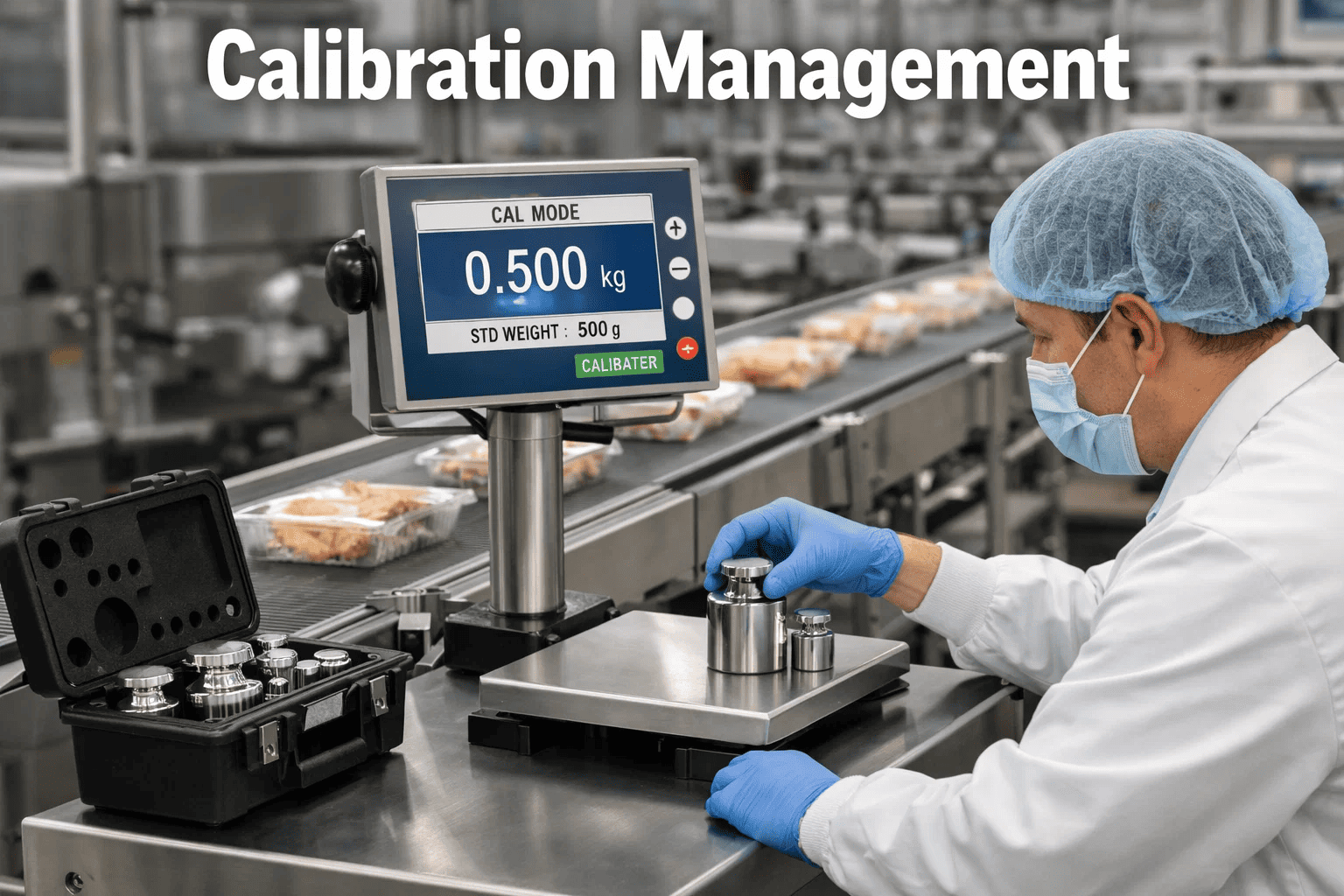
Read More
Every packaged food product that leaves your plant carries an implicit weight promise to the consumer and a legal obligation to the regulator. When a checkweigher drifts 1.5% over its calibration tolerance, the consequences spli
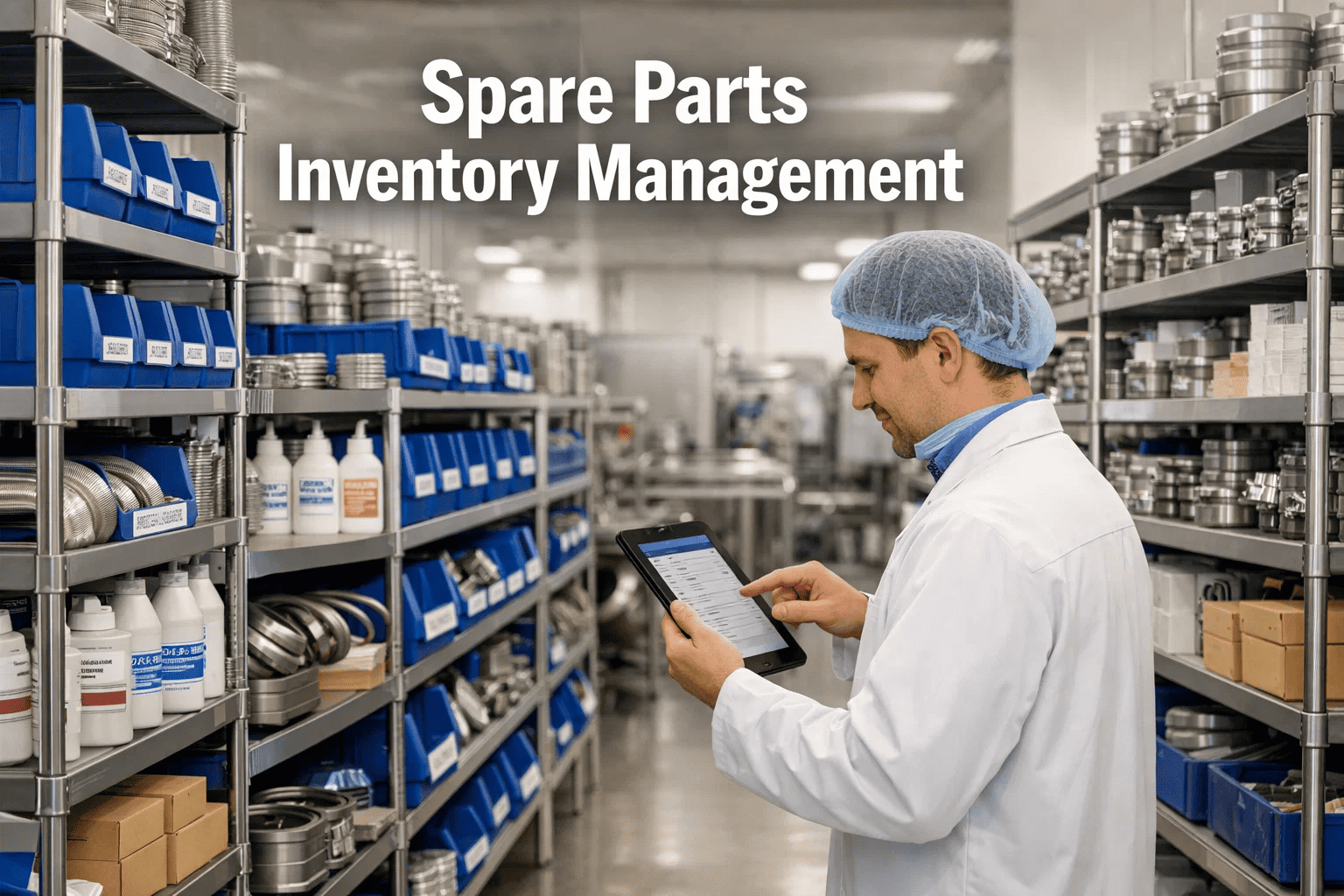
Read More
A single missing gasket on a filler line. A worn bearing on a conveyor drive. A corroded solenoid valve on a CIP skid. In food manufacturing, the difference between a 20-minute parts swap and an 8-hour production shutdown is rar
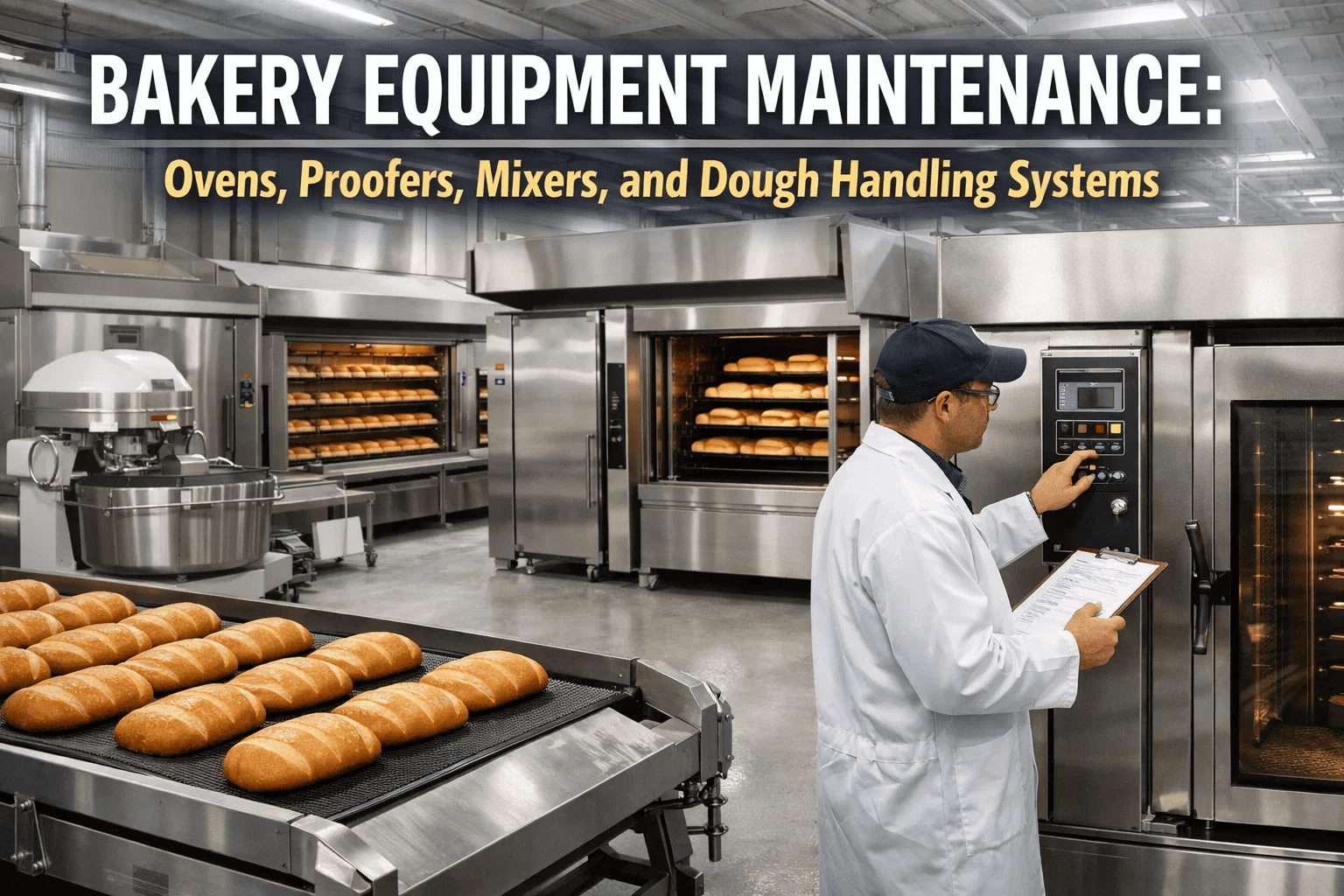
Read More
A commercial bakery in Texas running three 24-hour production shifts lost 11 hours of output in a single week — not from a major equipment failure, but from four separate small failures that each took 2 to 3 hours to resolve. A deck oven burner mi

Read More
A fresh produce distributor in California lost 14 tonnes of leafy greens in a single weekend when a blast chiller compressor developed a bearing fault that went undetected for 72 hours. The temperature excursion was slow — half a degree per hour —
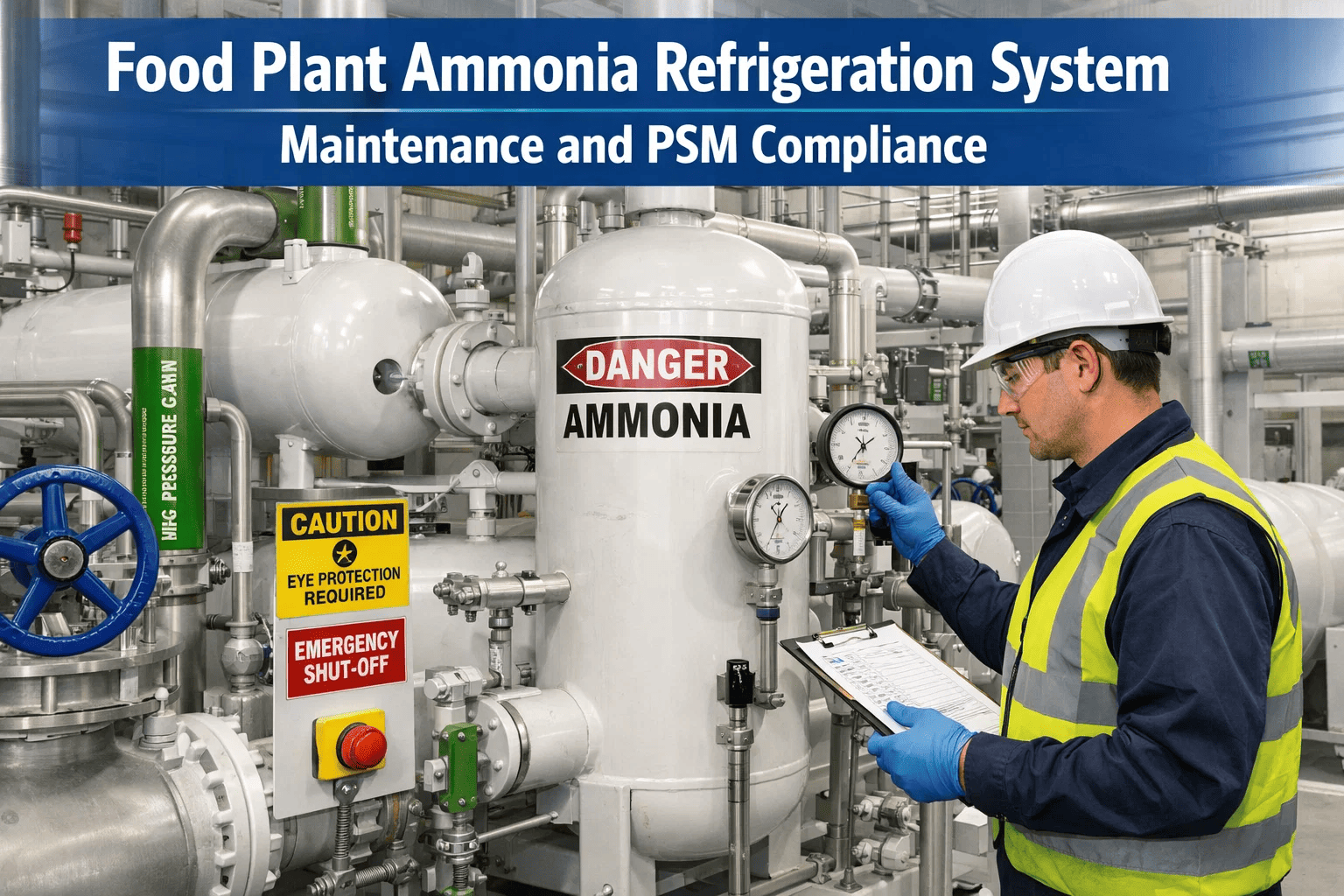
Read More
A poultry processing facility in Georgia had 180,000 pounds of anhydrous ammonia in its refrigeration system — legally requiring a full Process Safety Management programme under OSHA 29 CFR 1910.119. Their mechanical integrity inspection records w

Read More
A food manufacturing plant in Minnesota had 14 maintenance technicians, 3,400 assets, and a paper-based work order system that averaged 37 minutes per technician per shift in administrative overhead alone. When a critical conveyor bearing failed i
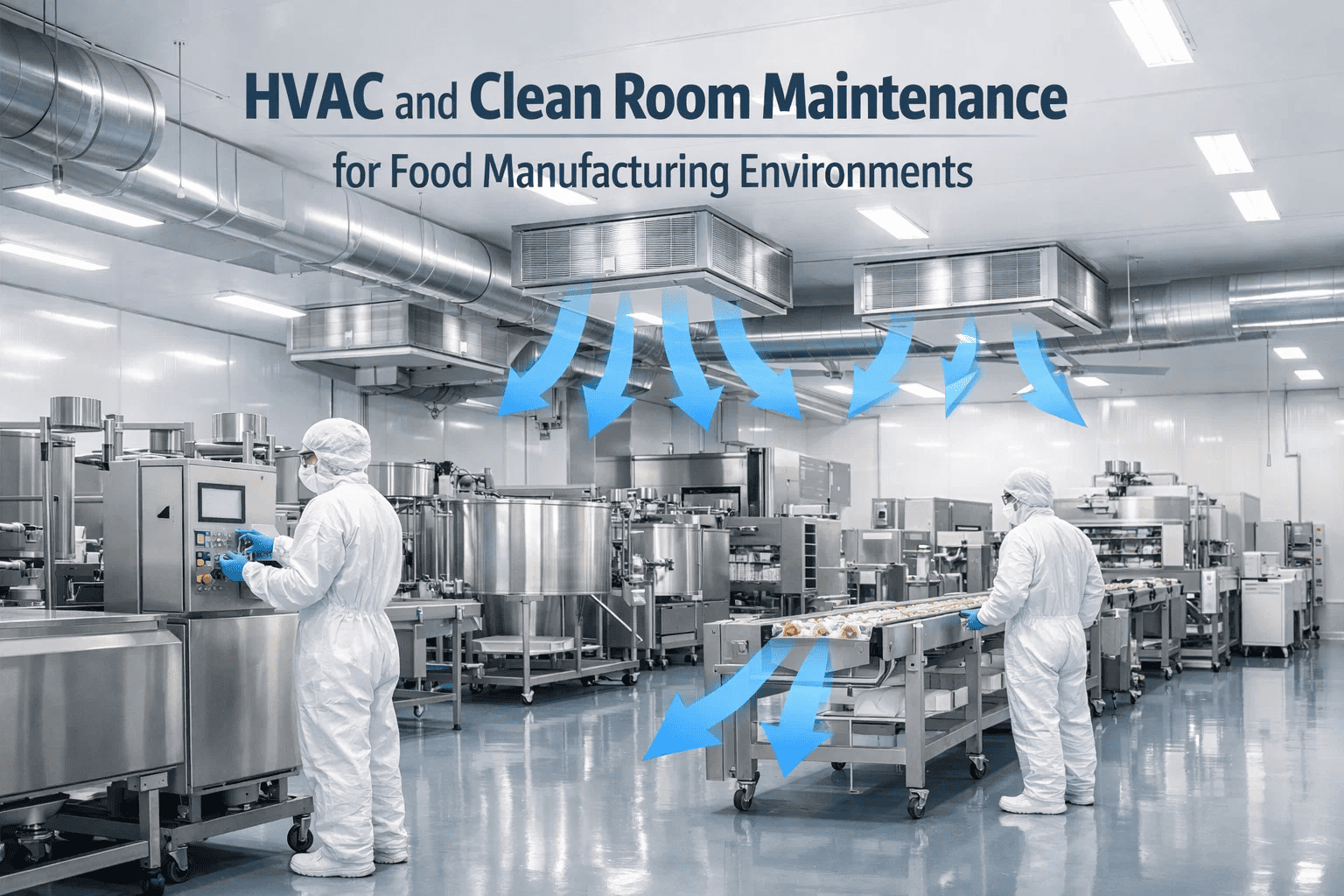
Read More
A food processing facility in Wisconsin failed a surprise FDA audit — not because of a recipe issue or contamination event, but because HVAC maintenance records were incomplete. Three HEPA filters in the packaging clean room had exceeded their rep

Read More
When a contaminated food product reaches consumers, the immediate question from regulators, retailers, and the public is identical: where did this ingredient come from, which batches were affected, and how fast can you pull it from shelves? For fo

Read More
Food plant electrical failures are not maintenance inconveniences — they are food safety events. A single arc flash in a wet processing area, a tripped GFCI that halts a production line mid-cycle, or an IP69K-rated motor failure in a washdown zone

Read More
Meat and poultry processing facilities operate under the most demanding regulatory environment in food manufacturing. Every production shift takes place under continuous USDA FSIS inspection, with documented sanitation, equipment maintenance, and

Read More
Dairy processing facilities operate at an intersection of extreme precision and extreme consequence: a pasteurizer failing to hold 72°C for 15 seconds is not a production inconvenience — it is a public health event. A separator running out of bala
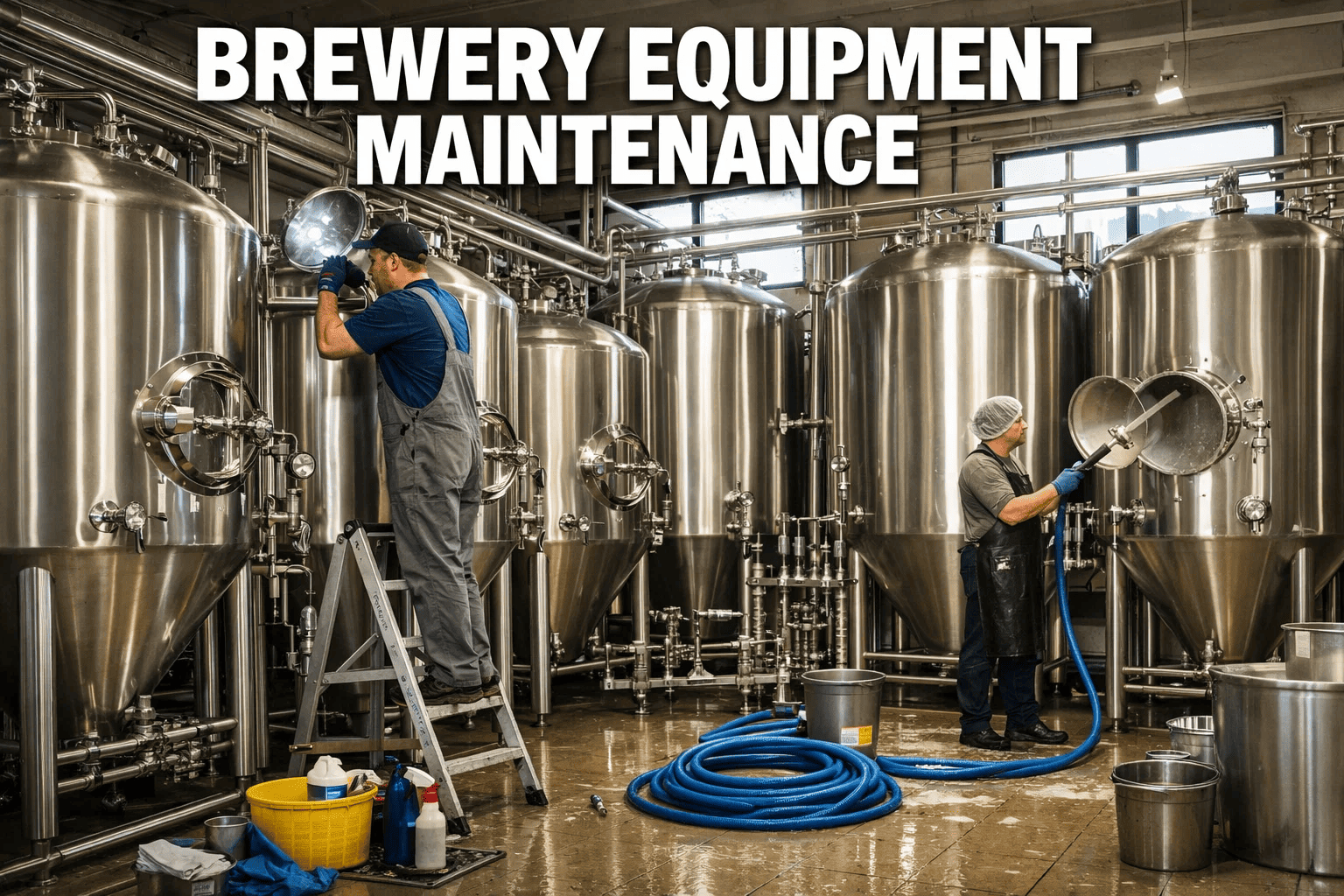
Read More
Brewery equipment failures do not just interrupt production — they compromise batch integrity, contaminate fermentation vessels, and in worst cases, trigger product recalls that damage brand reputation built over years. For head brewers, operation

Read More
A single pest sighting during a third-party food safety audit can trigger an immediate suspension of certification. A rodent entry point found during a surprise regulatory inspection can generate a mandatory recall, a facility shutdown order, and
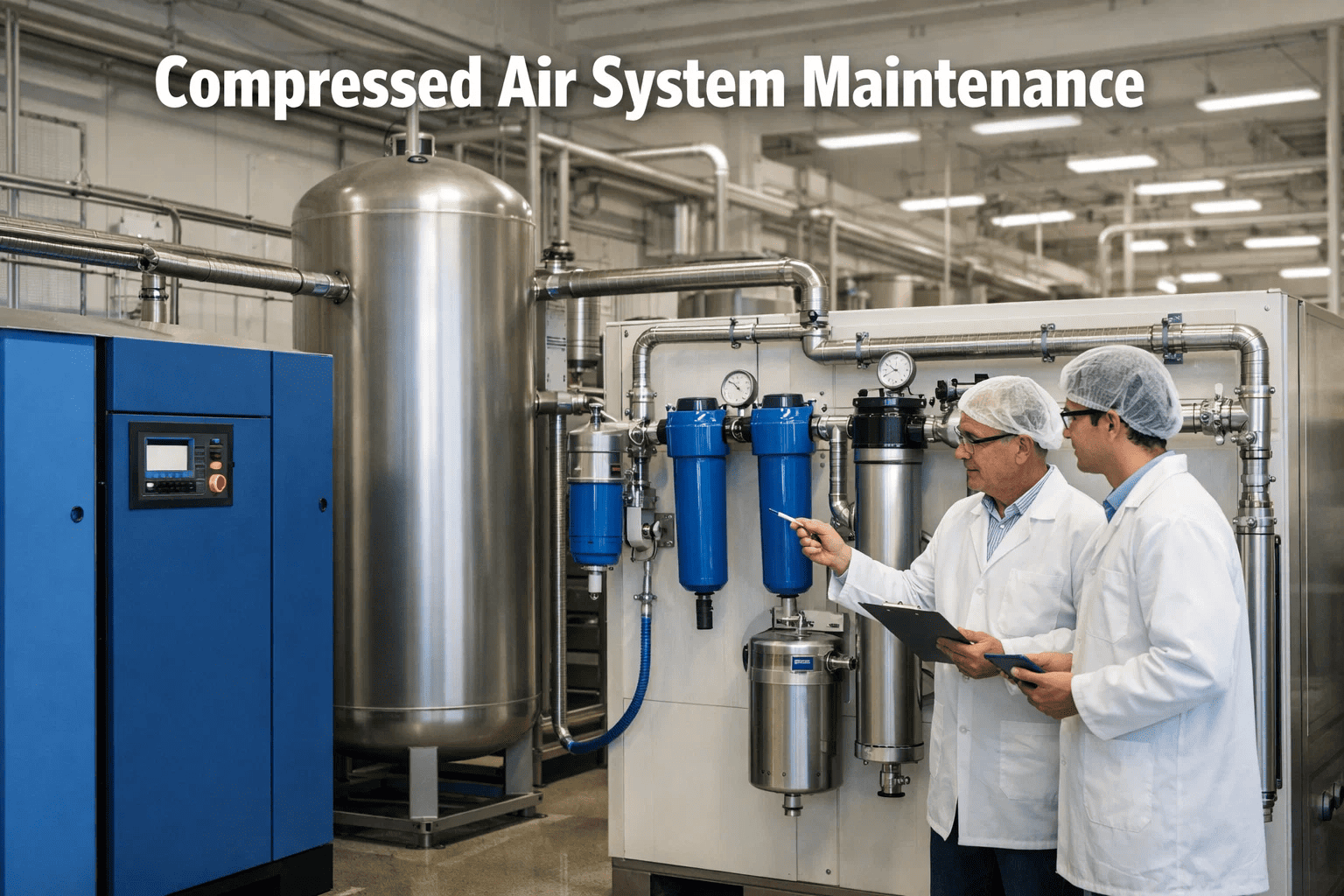
Read More
Compressed air is the fourth utility in food manufacturing — after electricity, water, and gas — and it is the one most frequently mismanaged from a safety, contamination, and maintenance perspective. In bakeries, beverage plants, dairy facilities

Read More
Food processing plants are generating more operational data than ever before — from IoT sensors on filling lines and CIP systems to SCADA telemetry on refrigeration compressors and conveyor drives. But data alone does not prevent failures or optim
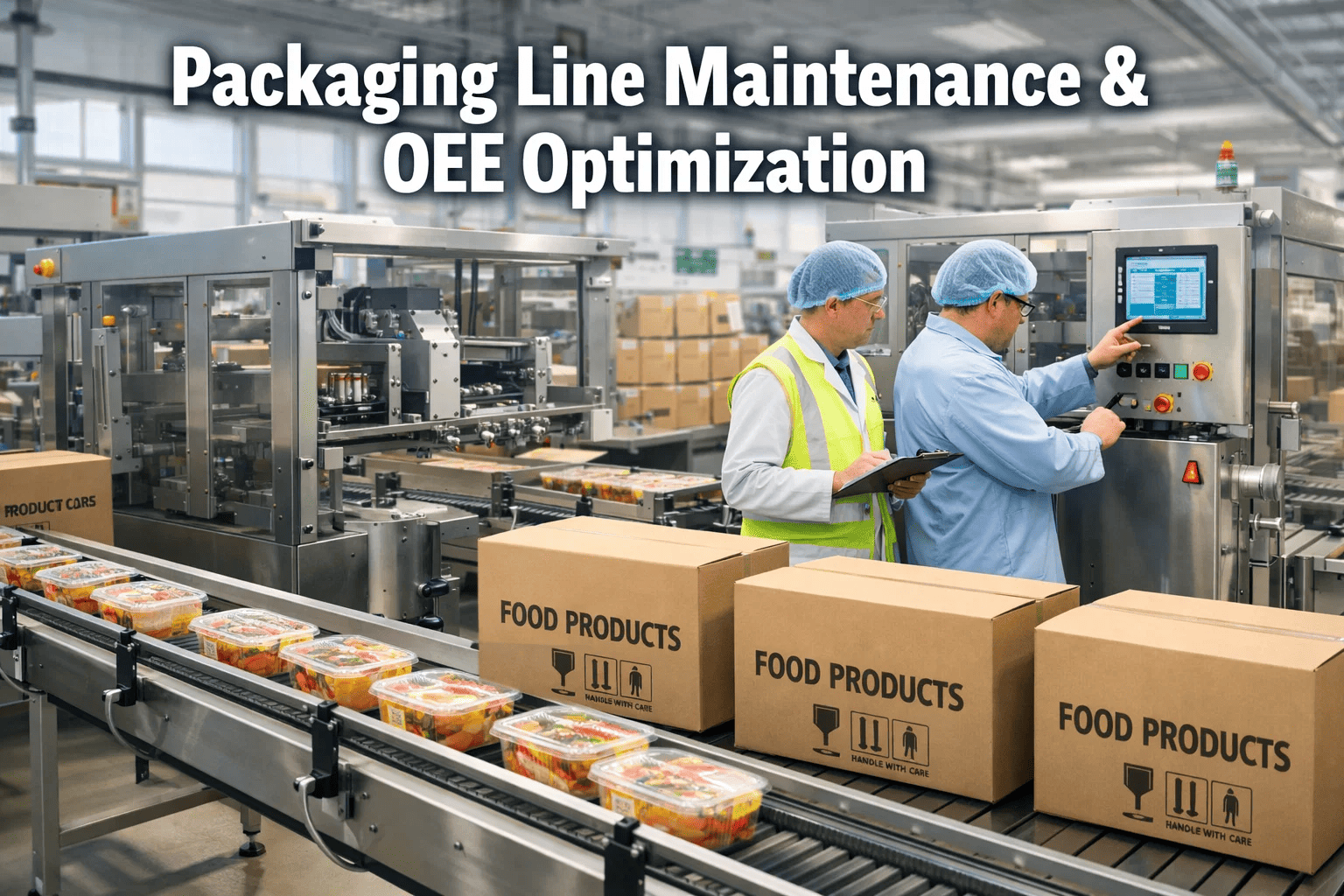
Read More
Packaging line downtime does not announce itself in advance. A misfiring carton sealer, a labeling unit drifting out of registration, or a film feed jam on a flow wrapper — each one stops output, compresses production windows, and forces maintenan

Read More
Boiler and steam system failures in food and beverage plants are not just maintenance problems — they are production emergencies. A single boiler outage can halt pasteurization, sterilization, and CIP operations simultaneously, ex

Read More
A food conveyor belt is not just a transport mechanism. It is a food-contact surface, a hygiene interface, and a critical production asset simultaneously. When a conveyor belt tears, a bearing seizes, or a drive motor fails mid-shift, the downtime

Read More
Sanitation in a food plant is not a shift-end activity. It is a continuous process that runs in parallel with production — and in food safety terms, it is the single most consequential operational practice a plant manager oversees. A missed cleani

Read More
Water is both the most consumed input and the most regulated output in food processing. A dairy plant uses up to 10 liters of water per liter of milk processed. A meat processing facility generates wastewater with BOD levels 10 to 40 times stronge
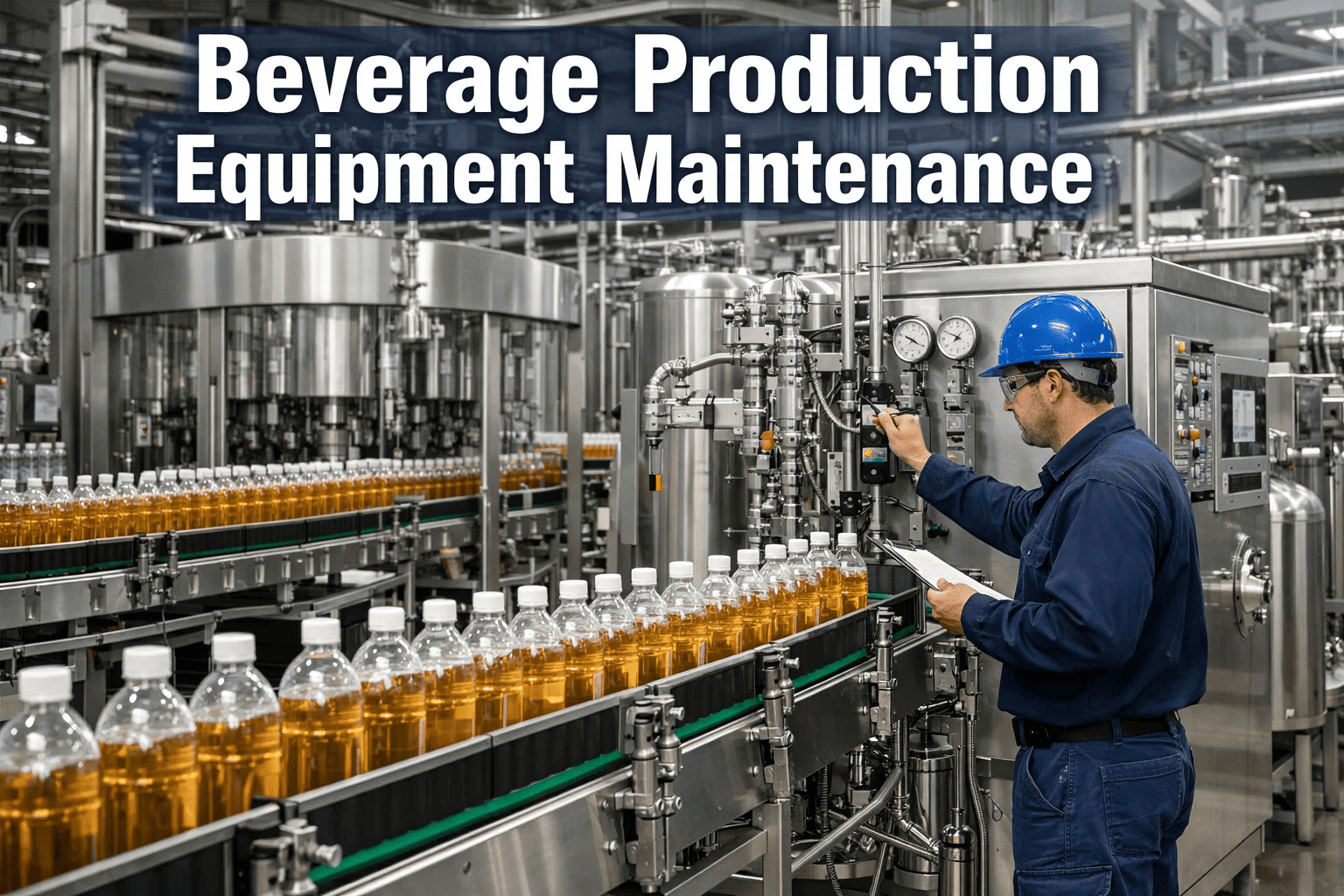
Read More
A beverage production line is only as reliable as its least-maintained piece of equipment. From the filler that must maintain microbial integrity on every cycle to the pasteurizer whose temperature profile is a food safety critical control point,

Read More
Food safety certification audits do not fail because of a single catastrophic event. They fail because of documentation gaps — missing calibration records, incomplete PM logs, corrective actions closed on paper but absent from any traceable system
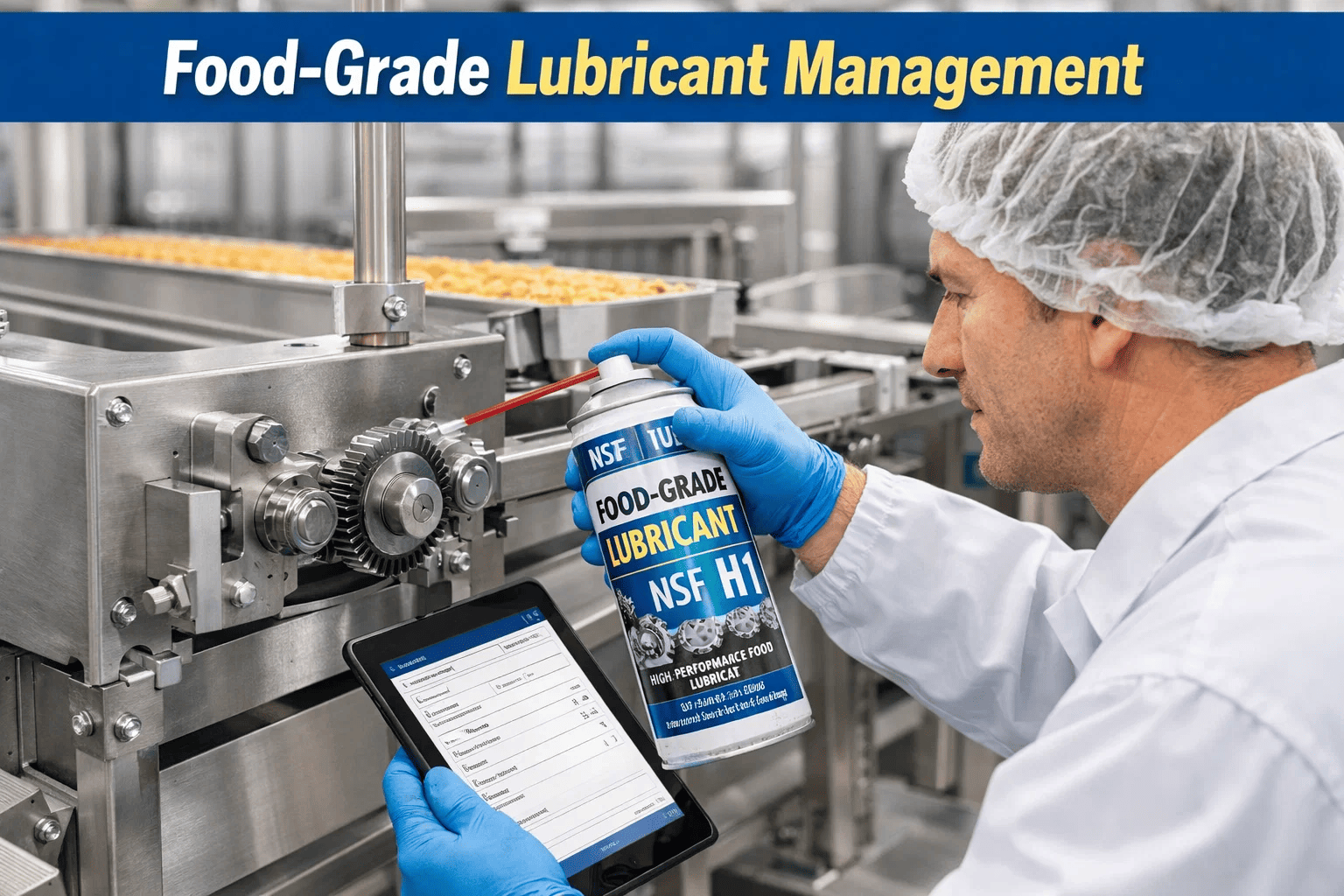
Read More
Every food processing facility operates under an unspoken certainty: lubricant contact with product isn't a question of if, but when. Chains drip. Seals fail. Bearing housings weep grease into product zones. The difference between a contained inci

Read More
Unplanned equipment failure costs food and beverage manufacturers an average of $532,000 per hour of downtime — and in high-throughput production environments, that number climbs higher every minute the line sits idle. The good news: facilities th

Read More
Every 4 minutes, a food plant somewhere shuts down a production line — not because equipment failed, but because a human worker could not keep pace with the repetitive, physically punishing demands of modern food manufacturing. The U.S. food indus

Read More
A walk-in cooler compressor failed at 2:14 AM on a Friday in a 40,000 sq ft food distribution center. Nobody noticed until the morning shift arrived at 6:00 AM — by then, the internal temperature had climbed from 2 degrees Celsius to 11 degrees. T

Read More
A dairy processor in the Midwest ran 14 CIP cycles per day across 6 production lines — each cycle requiring validated temperature, chemical concentration, flow rate, and contact time parameters. Shift 3 operators noticed the caustic return tempera

Read More
A pasteurizer's temperature sensor drifted 2.3 degrees below the critical limit at 2:47 AM on a Thursday — 14 minutes before the shift supervisor's next scheduled manual check. In those 14 minutes, 1,800 liters of dairy product passed through the

Read More
A quality manager at a ready-to-eat salad facility spent 23 hours reconstructing monitoring records after an FDA inspector requested documentation for the previous quarter's sanitation controls. The paper logs existed — scattered across three bind

Read More
When a major confectionery manufacturer in Illinois recalled 28,000 units of a "peanut-free" chocolate bar after a consumer with severe peanut allergy was hospitalized, the investigation revealed a pattern the quality team had missed: the contamin

Read More
Condition monitoring techniques transform industrial maintenance from reactive firefighting into precision asset management — but selecting the wrong monitoring method for your equipment type wastes capital on sensors that deliv

Read More
Food manufacturing facilities operate under constant scrutiny — every production shift begins and ends with the condition of equipment, surfaces, and processing zones. A structured food plant sanitation pre-operational in

Read More
Food safety compliance is not just a regulatory checkbox — it is the operational backbone that keeps food manufacturing facilities producing, auditing, and certifying without interruption. For maintenance teams managing equipment across facilities

Read More
Food and beverage plant maintenance management in 2026 is no longer a back-office function — it is a frontline competitive advantage. For plant managers, facility directors, and operations leaders overseeing food manufacturing sites across the US,

Read More
AI-powered predictive maintenance is fundamentally changing how food and beverage manufacturers protect their production lines — detecting equipment failure signals 2 to 8 weeks before a breakdown occurs, preserving product quality, maintaining HA

Read More
Choosing the right CMMS software for food and beverage manufacturing is one of the most consequential technology decisions a food plant maintenance manager will make in 2026. With FSMA enforcement intensifying,

Read More
Grain and dry ingredient handling equipment is the backbone of dry processing operations — and it's also among the most hazardous and maintenance-intensive infrastructure in any food or feed facility. Pneumatic conveyors, bucket e

Read More
Loading docks and receiving areas in food manufacturing and processing facilities are among the highest-risk zones for contamination, cold chain failure, and regulatory non-compliance. A lapse in dock leveler function, a co

Read More
In high-volume beverage manufacturing, carbonation and syrup delivery systems directly determine product consistency, fill accuracy, and regulatory compliance. A single calibration drift in a Brix controller or a CO₂ pressure var

Read More
A structured dairy processing equipment maintenance checklist is the most reliable way to ensure your plant meets PMO (Pasteurized Milk Ordinance) and 3-A Sanitary Standards while reducing unplanned downtime across pasteuri

Read More
Food plant HVAC maintenance is one of the most overlooked — and highest-risk — operational disciplines in food manufacturing. A poorly maintained air handling system is not just an energy drain; it is a direct threat to product safety

Read More
AI predicts equipment failures in food manufacturing before they happen — and for operations leaders managing high-value production lines, this shift from reactive to predictive maintenance is one of the most impactful technology

Read More
Emergency equipment in food manufacturing facilities is the last line of defense between a routine incident and a life-altering injury, regulatory shutdown, or catastrophic production loss. Emergency showers, eyewash stations, fir
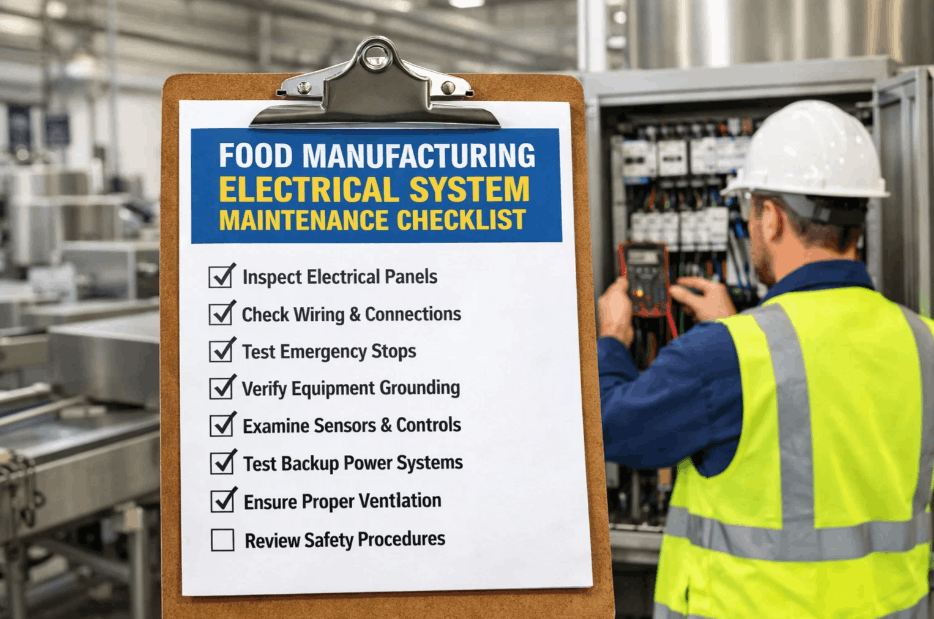
Read More
Food manufacturing facilities operate in some of the harshest electrical environments in industrial settings — high humidity, washdown pressure, temperature extremes, corrosive cleaning agents, and continuous production cyc

Read More
Root cause analysis in food manufacturing is the difference between fixing a problem once and fixing it forever. When a filling machine jams, a conveyor belt slips, or a packaging seal fails repeatedly, reactive maintenance only
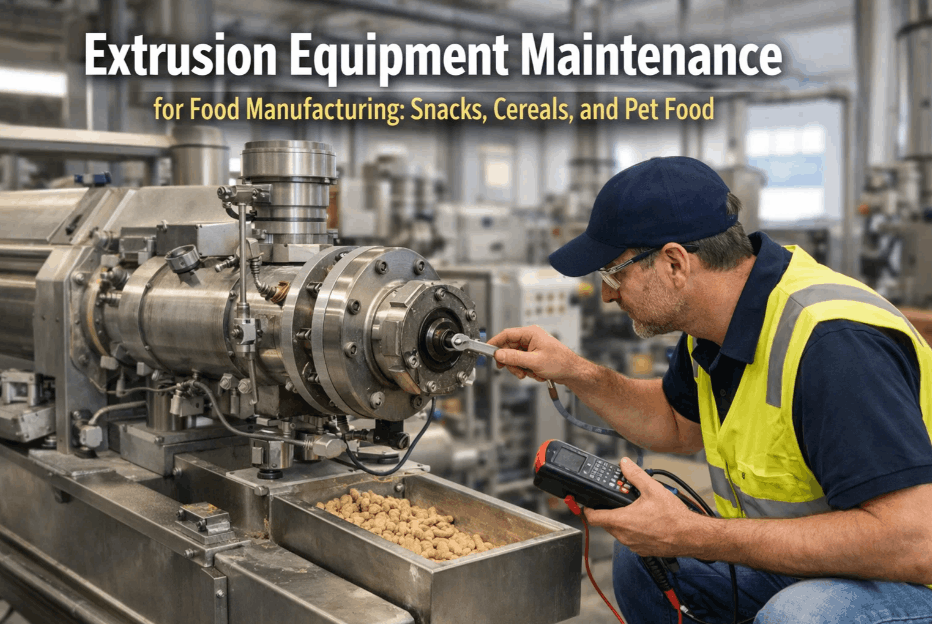
Read More
Food extrusion equipment maintenance is one of the most technically demanding disciplines in food manufacturing — and one of the most consequential. For snack, cereal, and pet food production lines, a single extruder failure can

Read More
Packaging line maintenance in food manufacturing is the discipline that separates facilities running at peak throughput from those hemorrhaging hours to unplanned downtime and costly changeovers. For packaging engineers managing
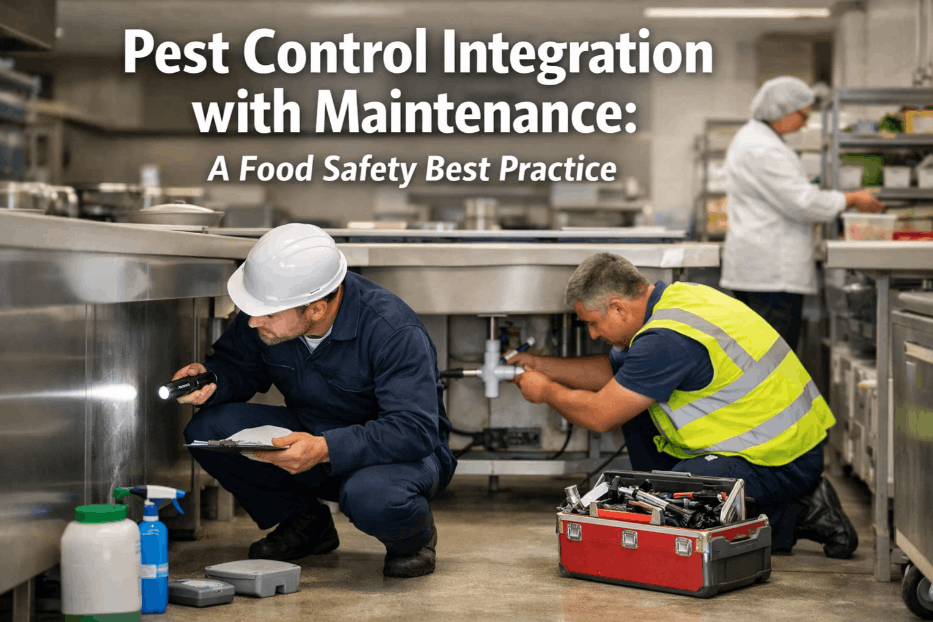
Read More
In food manufacturing, pest control and facility maintenance are rarely managed as a unified system — yet the structural gaps, equipment failures, and documentation blind spots that invite pest activity are almost always maintenan

Read More
Boiler and steam system maintenance in food manufacturing facilities is a mission-critical discipline that intersects regulatory compliance, production uptime, and food safety assurance. Plant engineers managing steam generation

Read More
Boiler and steam systems are the backbone of thermal processing, sterilization, CIP heating, and cook-and-chill operations in every food manufacturing plant. A single boiler failure or steam quality deviation can halt production,

Read More
In food manufacturing, the accuracy of weighing and dosing equipment isn't just a quality concern — it's a regulatory obligation. Scales, checkweighers, volumetric dosers, and gravimetric feeders that drift out of tolerance can tr

Read More
Food processing facilities generate some of the most complex and nutrient-heavy wastewater streams in industrial operations — high in BOD, fats, oils, grease, suspended solids, and variable pH loads that challenge every sta

Read More
Wastewater treatment maintenance in food processing is one of the most demanding — and most regulated — responsibilities in industrial facility management. Every production shift generates high-strength effluent loaded with fats,

Read More
Vendor-managed maintenance for food plants is no longer an optional efficiency upgrade — it is a strategic imperative for procurement directors and plant managers navigating rising equipment complexity, tighter compliance mandates, an

Read More
Water treatment system maintenance in food processing plants is one of the most compliance-critical and operationally sensitive disciplines in modern food manufacturing. Every liter of water that contacts raw ingredients, processe

Read More
Conveyor belt maintenance in food manufacturing is one of the most critical — and most overlooked — pillars of plant uptime, food safety compliance, and operational efficiency. Whether you are managing modular plastic belts on a p

Read More
In food processing facilities, heat exchangers are mission-critical assets — responsible for pasteurization, sterilization, cooling, and thermal recovery across every stage of production. When these systems fail or fall out of spe
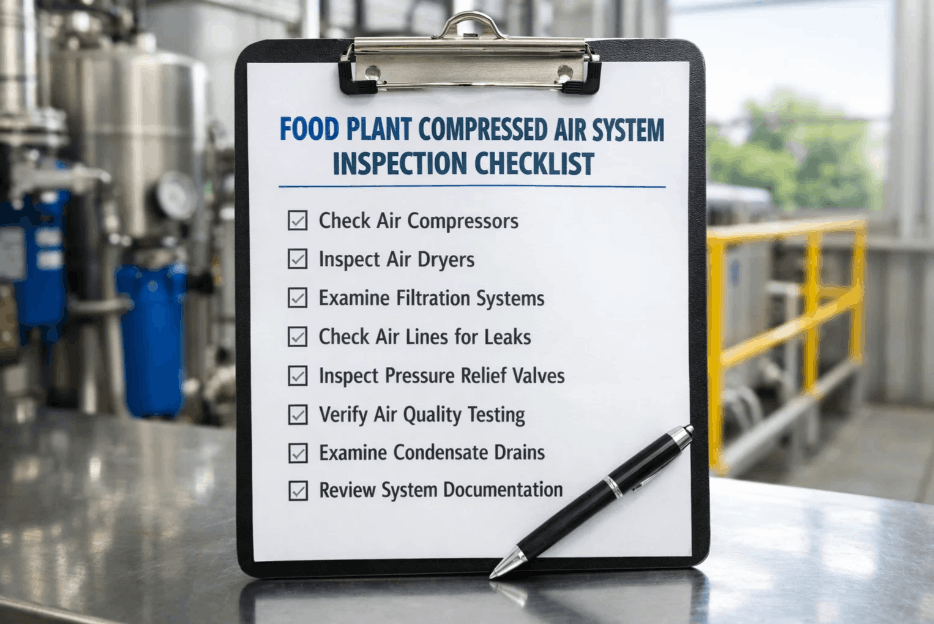
Read More
Food manufacturing facilities depend on compressed air as a critical utility — powering pneumatic conveyors, packaging lines, blow-off nozzles, and food-contact instrumentation. Yet compressed air is also one of the most overlooke

Read More
Pump failures in food and beverage processing don't just cause downtime — they can trigger product contamination, unplanned sanitation shutdowns, and costly line changeovers that ripple across every downstream operation. W

Read More
Food manufacturing maintenance budgeting is no longer a line item estimated by gut feel — it is a structured financial discipline that directly determines plant reliability, regulatory standing, and competitive cost position acros

Read More
Food manufacturing plant layout is one of the most consequential decisions a facility engineer or operations director will make. When equipment placement, aisle widths, utility routing, and sanitation zone demarcation are designed

Read More
Food safety failures cost the industry billions every year — and the most dangerous ones happen too fast for the human eye to catch. AI vision cameras for food safety are rewriting the rules of quality control on

Read More
Food manufacturing facilities operate in one of the most unforgiving production environments in industry. When a critical piece of equipment fails — a filler, a conveyor drive, a sealer, or a pump — and the right spare part is not

Read More
Global food safety regulations are evolving faster than most compliance teams can track. For QA directors and regulatory affairs managers overseeing food export operations — whether you're shipping to the United States, the Europe
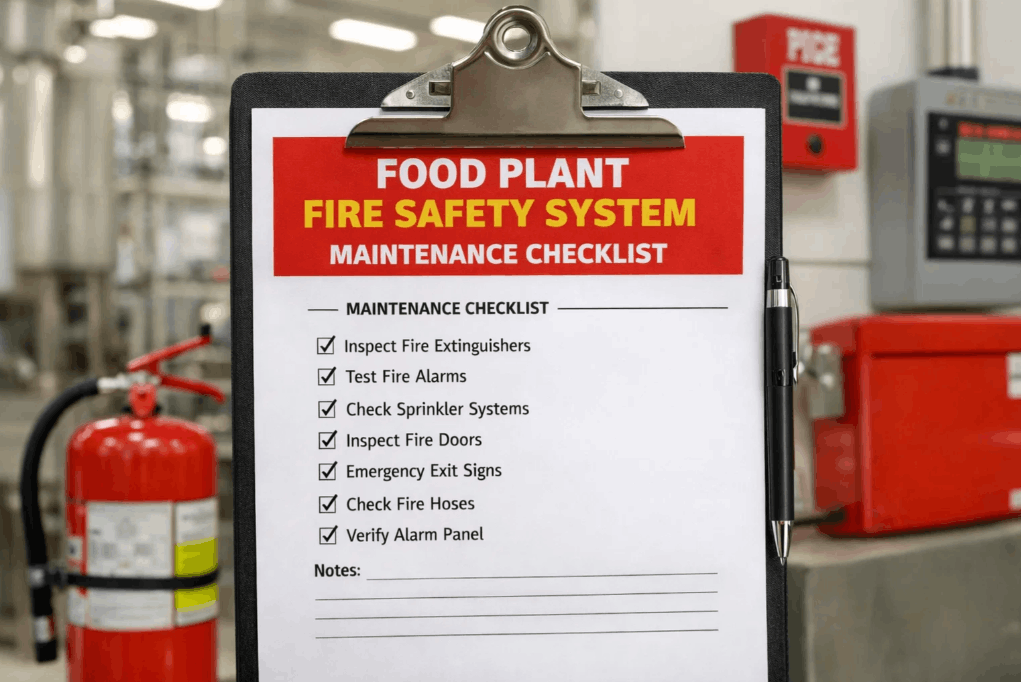
Read More
Fire safety system failures in food manufacturing facilities carry consequences far beyond regulatory citations — a compromised sprinkler head, a blocked fire door, or an uninspected hood suppression canister can mean the

Read More
Energy costs represent one of the largest controllable expenses in food manufacturing — yet most facilities leave 20 to 35 percent of that spend on the table every year. The culprit is not outdated equipment alone; it is deferred

Read More
Compressed air is often called the "fourth utility" in food manufacturing — right alongside electricity, gas, and water. Yet unlike those utilities, compressed air quality in food plants receives far less structured maintenance at

Read More
Passing a BRCGS audit is not a matter of luck — it is the direct result of systematic preparation, documented evidence, and a culture of food safety embedded at every level of the manufacturing site. Quality and compliance teams
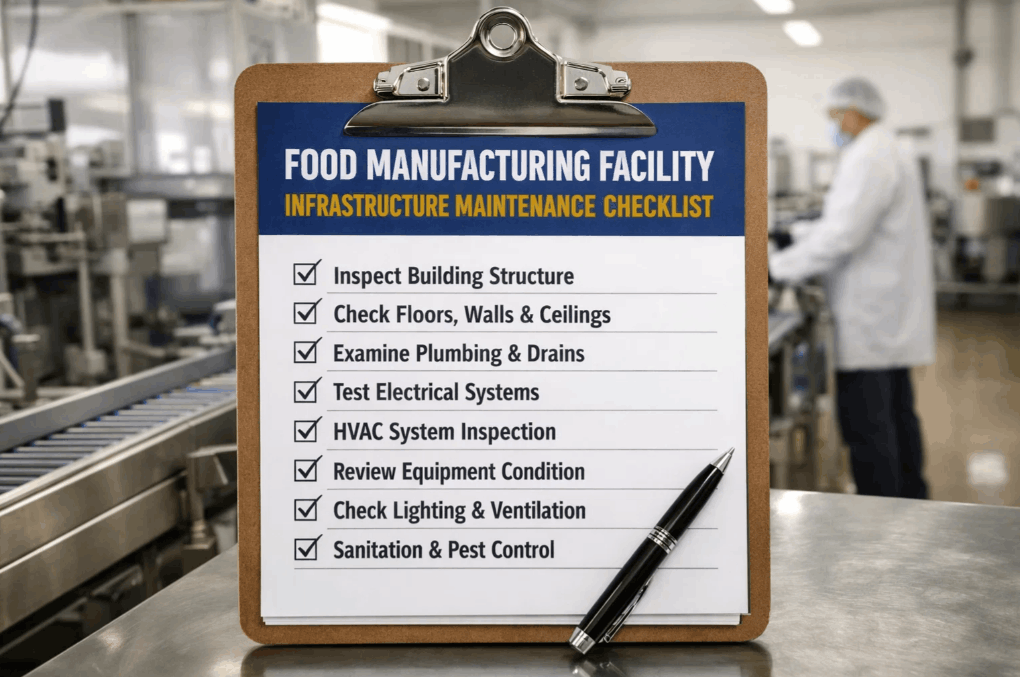
Read More
Food manufacturing facility infrastructure is the physical foundation of your GMP compliance program. Cracked floor coatings, deteriorating wall panels, blocked floor drains, inadequate lighting at inspection points, and ro

Read More
Frozen food processing equipment maintenance is one of the most operationally demanding disciplines in modern food manufacturing. Whether you manage an IQF tunnel in Ontario, a spiral freezer line in Birmingham, a blast freezer f

Read More
Snack food manufacturing equipment maintenance is the operational backbone of every profitable snack plant. From continuous fryers and oil filtration systems to seasoning tumblers and VFFS packaging machines, every line in a snack

Read More
IoT sensors in food manufacturing are no longer a competitive advantage — they are a baseline operational requirement. Plant engineers managing temperature-sensitive production lines, humidity-controlled storage environments, and
Read More
BRC Global Standard compliance is one of the most demanding certification frameworks in food manufacturing — and maintenance documentation sits at its core. For Quality Assurance Directors navigating BRCGS audits, a gap in mainte
-procedure-checklist.png)
Read More
Lockout/tagout failures are among the most cited OSHA violations in food manufacturing — and the consequences extend far beyond citations. A single inadequately isolated energy source during sanitation or maintenance puts

Read More
A rigorous pest control inspection program is not a reactive measure — it is a proactive, documented system that protects your food manufacturing facility from regulatory action, product contamination, and GFSI audit failures. Und

Read More
Maintenance training in food manufacturing is one of the most overlooked levers for operational excellence — and one of the most consequential. When a technician misses a lubrication step on a filler line or misreads a conveyor te

Read More
OSHA compliance for food manufacturing maintenance is one of the most high-stakes responsibilities an EHS manager carries. When lockout/tagout procedures, confined space programs, and machine guarding controls are not consistently

Read More
Food manufacturing cybersecurity has moved from a niche IT concern to a board-level operational priority. As production lines become increasingly connected — integrating SCADA systems, PLCs, IoT sensors, and cloud-based CMMS platf

Read More
Unplanned equipment downtime is the single most expensive operational failure in food manufacturing — and it is almost entirely preventable. Plant and operations managers across the food and beverage industry are now turning to

Read More
Packaging line failures in food manufacturing don't send advance warnings. A worn form-fill-seal jaw, a misfiring labeler, or an uncalibrated shrink tunnel quietly erodes fill accuracy, label compliance, and throughput — long befo

Read More
Food manufacturing facilities pursuing SQF (Safe Quality Food) certification face rigorous audits that evaluate every layer of their food safety management system — from documented programs and equipment calibration to management
-in-food-manufacturing-implementation-guide.png)
Read More
Total Productive Maintenance (TPM) in food manufacturing is no longer optional — it is a competitive necessity. As production lines in the UK, Canada, Germany, and across the UAE face intensifying pressure on uptime, food safety

Read More
Food safety certification is one of the most consequential compliance decisions a manufacturing facility makes. Whether you operate a dairy processing plant in Ontario, a ready-meal facility in Birmingham, a bakery production lin
-what-food-manufacturers-must-do-now.png)
Read More
The FDA Food Traceability Rule under FSMA Section 204 is the most significant regulatory shift in food supply chain management in decades. Effective January 20, 2026, the rule mandates that food manufacturers, pr

Read More
Good Manufacturing Practices (GMP) compliance in food manufacturing is not optional — it is the regulatory baseline that separates facilities that operate from those that get shut down. Under 21 CFR Parts 110 and 117, the FDA's C
-checklist.png)
Read More
A documented Sanitation Standard Operating Procedure (SSOP) is not optional in food manufacturing — it is the foundational requirement that separates compliant facilities from those at risk of FDA action, product recalls, and cust

Read More
Allergen changeover failures are among the most consequential food safety breakdowns a plant can experience — triggering recalls, regulatory action, and direct consumer harm. For QA and sanitation teams, a structured, step-

Read More
Food plant electrical system maintenance is no longer a reactive discipline — it is a precision-driven operational strategy that determines uptime, workforce safety, and regulatory compliance across every production shift. For fac

Read More
Condition-based maintenance in food manufacturing is reshaping how reliability engineers think about equipment uptime, cost control, and food safety. Instead of replacing parts on a fixed schedule, CBM food plant

Read More
Food processing facilities operate under a dual mandate that few other industries face: maximize uptime while meeting the strictest hygiene standards in manufacturing. Preventive maintenance scheduling for food processing equipmen

Read More
Choosing the right CMMS for food manufacturing is one of the highest-impact decisions a plant director or IT leader will make in 2026. With food safety regulations tightening, audit expectations rising, and mainte

Read More
Filling and capping machine reliability is the backbone of beverage plant productivity — unplanned downtime on a rotary filler or a torque-drifting capper translates directly into product loss, compromised seals, and failed quality audits. Beverag
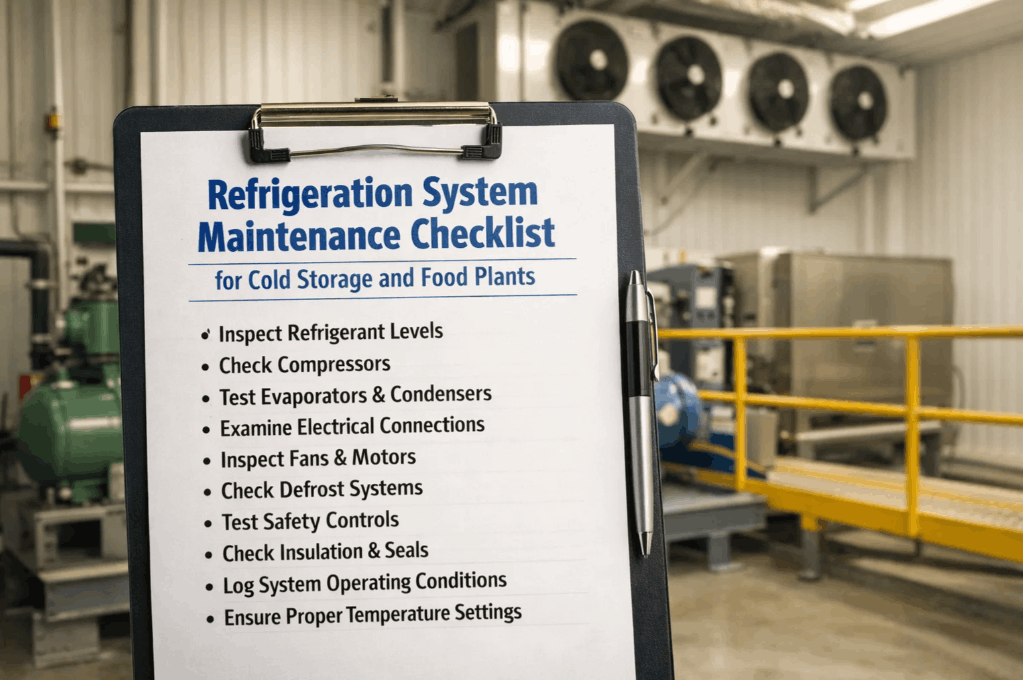
Read More
Industrial refrigeration systems in food plants and cold storage facilities operate under extreme demands — continuous duty cycles, temperature-critical loads, and zero tolerance for unplanned downtime. A compressor failure
-system-maintenance-best-practices-for-food-and-beverage.png)
Read More
CIP system maintenance is the backbone of safe, efficient food and beverage production. When a clean-in-place system underperforms — whether from a worn pump seal, a partially blocked spray device, or a miscalibrated chemical dosi

Read More
Calibration management in food manufacturing is the operational backbone of product safety, regulatory compliance, and quality assurance. Every scale, thermometer, pH meter, and metal detector on your production floor must perform within defined t

Read More
Sanitation management in food plants is no longer a checklist exercise — it is a precision-driven compliance system that directly determines audit outcomes, product safety, and regulatory standing. For sanitation supervisors managing CIP systems,

Read More
Overall Equipment Effectiveness (OEE) is the gold standard metric for measuring manufacturing productivity — and in food production, where margins are tight and compliance demands are constant, OEE optimization separates high-performing operations

Read More
Allergen control in food manufacturing is one of the most critical — and legally consequential — responsibilities a food safety manager carries. With the FDA's FSMA Final Rule on Preventive Controls for Human Food and global equivalents tightening

Read More
Work order management in food manufacturing plants is the backbone of every reliable maintenance operation — yet most facilities still rely on paper logs, spreadsheets, and radio calls that slow down response times and create compliance blind spot

Read More
Cold chain equipment maintenance is the backbone of food safety and operational continuity in any food processing or distribution facility. Refrigeration systems — chillers, compressors, walk-in coolers, and blast chillers — operate under relentle
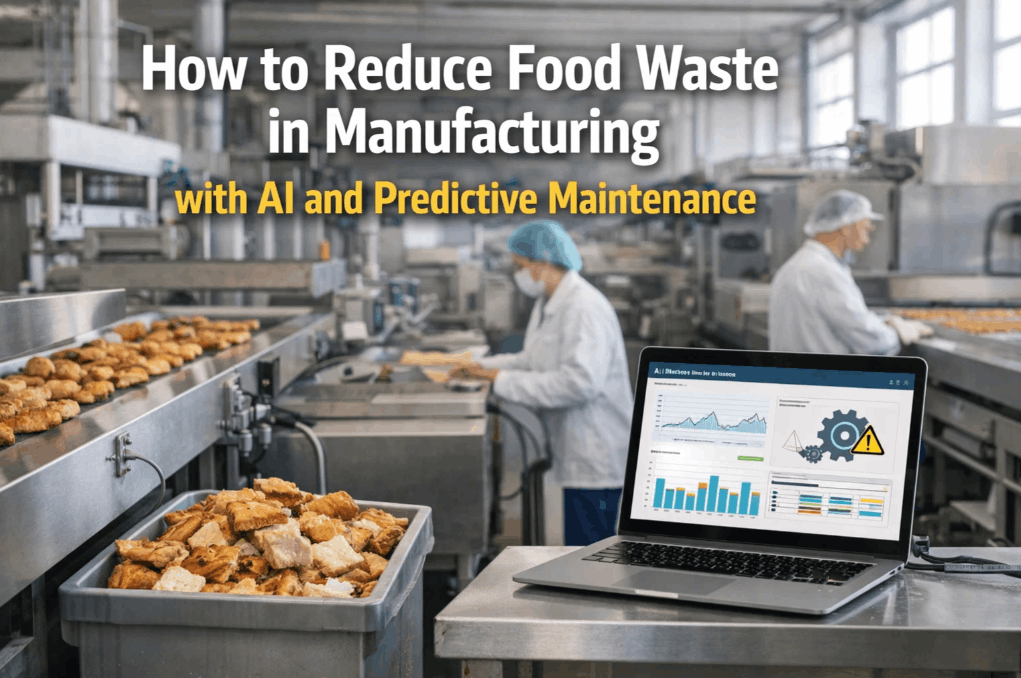
Read More
Food manufacturing plants lose billions of dollars annually to preventable waste — spoiled batches, ingredient losses from equipment failures, and inefficient production runs that generate excess byproducts. Reducing food waste in manufact

Read More
Food Safety Modernization Act compliance is no longer optional — it is the baseline standard every food manufacturer must meet to operate legally in the United States. As FDA enforcement intensifies in 2026 and the FSMA Section 204 traceability ru

Read More
Metal detector and X-ray inspection equipment are the last line of defense against foreign object contamination in food production — and their effectiveness depends entirely on how rigorously they are maintained. A sensitivity dri

Read More
Commercial ovens are the production engine of every bakery and food processing operation — and their failure doesn't announce itself in advance. Inconsistent bake temperatures, uneven belt wear, and miscalibrated burners silently erode product qua
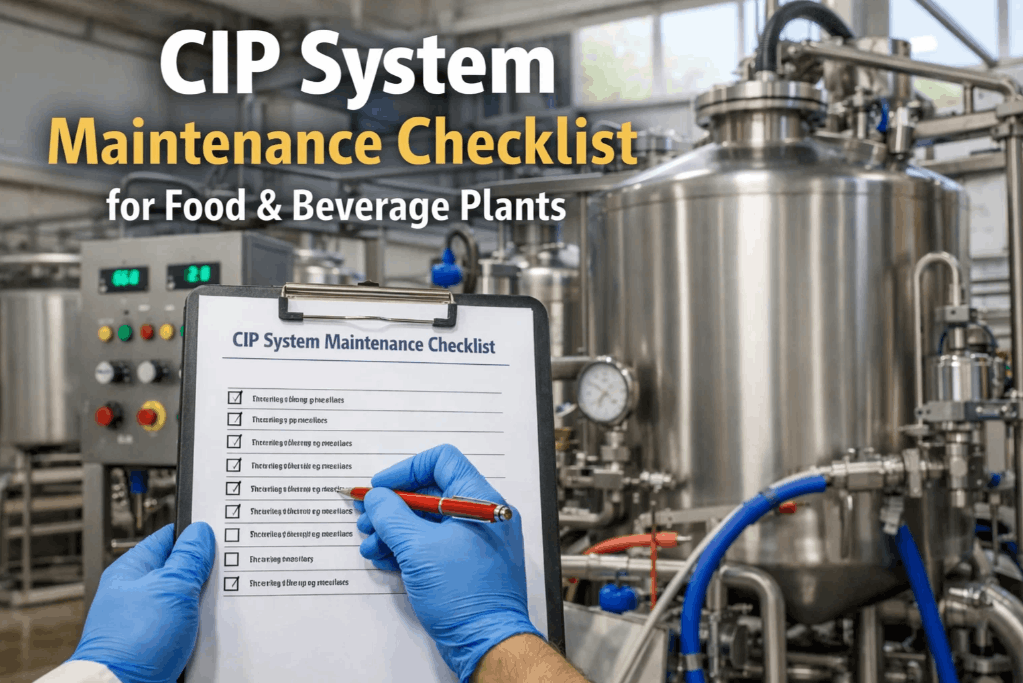
Read More
Clean-in-Place (CIP) systems are the circulatory system of food and beverage manufacturing — they clean product-contact surfaces automatically, without disassembly, and their performance directly determines whether your facility meets FDA, FSMA, S

Read More
Food manufacturing operations run on two parallel systems that rarely speak to each other: the Enterprise Resource Planning (ERP) platform managing production schedules, inventory, procurement, and financials, and the Comp

Read More
Meat processing equipment maintenance is not a discretionary operational activity — it is the structural backbone of USDA compliance, food safety assurance, and production continuity in any facility handling raw or processed meat products. Grinder

Read More
Smart automation in food processing is revolutionizing the way manufacturers operate — from precision mixing and ingredient dosing to high-speed robotic packaging lines. As global demand for food products rises alongside pressure to cut costs, ens

Read More
SQF certification maintenance is one of the most demanding ongoing responsibilities in food manufacturing — and one of the most consequential. A single audit gap, a missing corrective action record, or an undocumented equipment inspection can cost

Read More
Beverage production facilities operate some of the most mechanically demanding environments in the food and manufacturing sector. From high-speed filling lines running thousands of containers per hour to precision carbonation systems maintaining e

Read More
Every batch of bread, pastry, or confection that leaves a commercial bakery depends on equipment that is not just operational but optimally maintained. In a production environment where a single malfunctioning oven can halt an entire shift, where

Read More
The global food industry loses an estimated $1.2 trillion worth of food every year to spoilage, overproduction, and poor inventory decisions. For food manufacturers, distributors, and retailers, the margin for error is razor-thin

Read More
Food and beverage manufacturing operates under pressures that few other industries can match — razor-thin margins, strict regulatory oversight, perishable raw materials, and zero tolerance for contamination or unplanned downtime. In this environme

Read More
Industrial mixers and blenders are the backbone of food manufacturing lines — but without a structured maintenance program, even premium equipment fails ahead of schedule, drives unplanned downtime, and creates contamination risks that put product

Read More
Every food processing facility faces a critical window before production begins — the pre-operational inspection phase. Whether you're running a meat processing line, a dairy filling operation, or a packaged goods facility, a structured pre-op ins

Read More
Dairy processing facilities operate under a dual mandate that few other food manufacturing environments face: maintain equipment to the exacting sanitary standards required for human food safety while simultaneously achieving the operational uptim

Read More
Meat and poultry processing facilities operate under one of the most rigorous regulatory oversight frameworks in American industry. The United States Department of Agriculture's Food Safety and Inspection Service maintains a continuous, on-site in
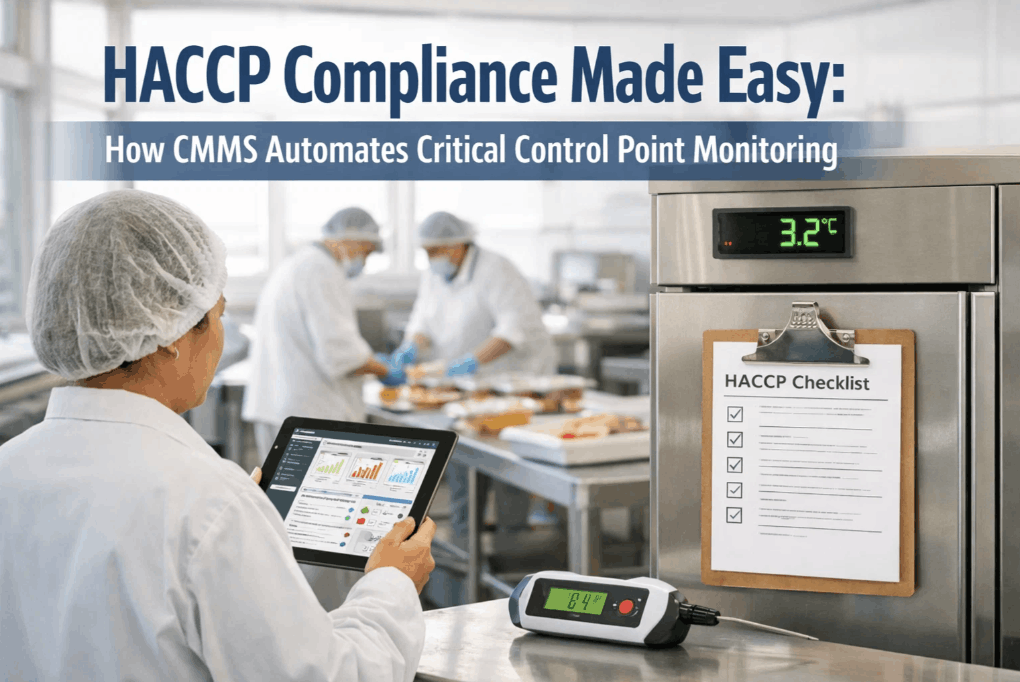
Read More
Food safety failures don't announce themselves. A temperature excursion in a blast chiller, an unchecked pH deviation in a fermentation tank, a missed sanitation verification on a packaging line — each of these represents a critical

Read More
Food manufacturing facilities today face an unprecedented convergence of pressures: tighter regulatory scrutiny, escalating consumer expectations for safety and consistency, and the relentless economic burden of product waste. Traditional quality

Read More
Maintaining Prerequisite Programs (PRPs) is the operational backbone of any effective HACCP system. These foundational controls — covering everything from facility sanitation and pest management to calibration schedules and supplier verification —
Read More
Food manufacturing facilities operate under relentless pressure — tight production schedules, strict regulatory demands, and zero tolerance for equipment failure. A single unplanned breakdown can halt an entire production line, spoil perishable in

Read More
A meat processing plant in the Midwest learned this the hard way. On a Tuesday night, their primary blast freezer compressor failed after running undetected with elevated head pressure for three weeks. The result: 18 hours of downtime, $34,000 in

Read More
Most food plant maintenance managers believe they have real-time visibility. Their CMMS dashboard says "live." Their vendor says "real-time." But when a compressor alert fires 40 minutes after degradation began, when a closed wor
Read More
Most food manufacturing plants are running three, four, or five disconnected systems — a CMMS that handles work orders, a separate spreadsheet tracking calibration records, a paper binder for sanitation logs, an ERP with asset purchase history, an

Read More
A poultry processing plant in Arkansas had invested $180,000 in a maintenance management system six years ago. On paper, it was a sophisticated platform — asset hierarchies, PM schedules, work order workflows, and KPI dashboards. In practice, the

Read More
Most food plant operations leaders believe they are closer to AI-ready than they actually are. The gap between perceived readiness and actual readiness is where predictive maintenance investments fail — not because the technology does not work, bu

Read More
A 600-employee frozen foods manufacturer in Minnesota had been running IBM Maximo for nine years. Their maintenance database held 47,000 historical work orders. Their PM schedules were dialed in. Their team knew the system. And then their reliabil

Read More
If your maintenance dashboard takes more than 3 seconds to load, it is not a UI problem. It is a data architecture problem — and in food manufacturing, slow data means decisions made on stale information, which means equipment failures that could

Read More
It's 6:47 AM. Your maintenance manager opens the dashboard to check overnight work orders before the morning shift meeting. The screen shows a spinning indicator and the words "Retrieving data" It's been doing this for four minute

Read More
A 14-plant snack food enterprise operating across five states experienced the same conveyor gearbox failure at three separate facilities within eight months — each one treated as an isolated incident, each one costing between $180,000 and $340,000

Read More
Food recalls cost the U.S. food industry an estimated $1.92 billion in direct recall expenses in 2024 alone — based on 422 recall events at an average of $10 million per event, according to Loftware's analysis of FDA Enforcement Report data. That

Read More
A snack food manufacturer in Georgia was running 47 scheduled PM tasks every week across two production lines — all assigned by calendar, all treated with equal urgency, and all consuming the same fixed maintenance crew regardless of what the equi

Read More
A mid-size protein processor in Iowa had invested $2.1 million in sensors, PLCs, and data logging systems across four facilities over three years. Every production line generated thousands of readings per hour. Yet when the VP of Operations asked

Read More
A frozen food manufacturer in the American Midwest was losing $45,000 every month to unplanned conveyor failures. Bearings seized without warning. Motors burned out during peak production runs. Gearboxes failed catastrophically,

Read More
Unplanned downtime costs food manufacturers an estimated $50 billion annually across the industry — yet fewer than one-third of maintenance teams have fully implemented AI solutions to prevent it. The gap is not a lack of technol
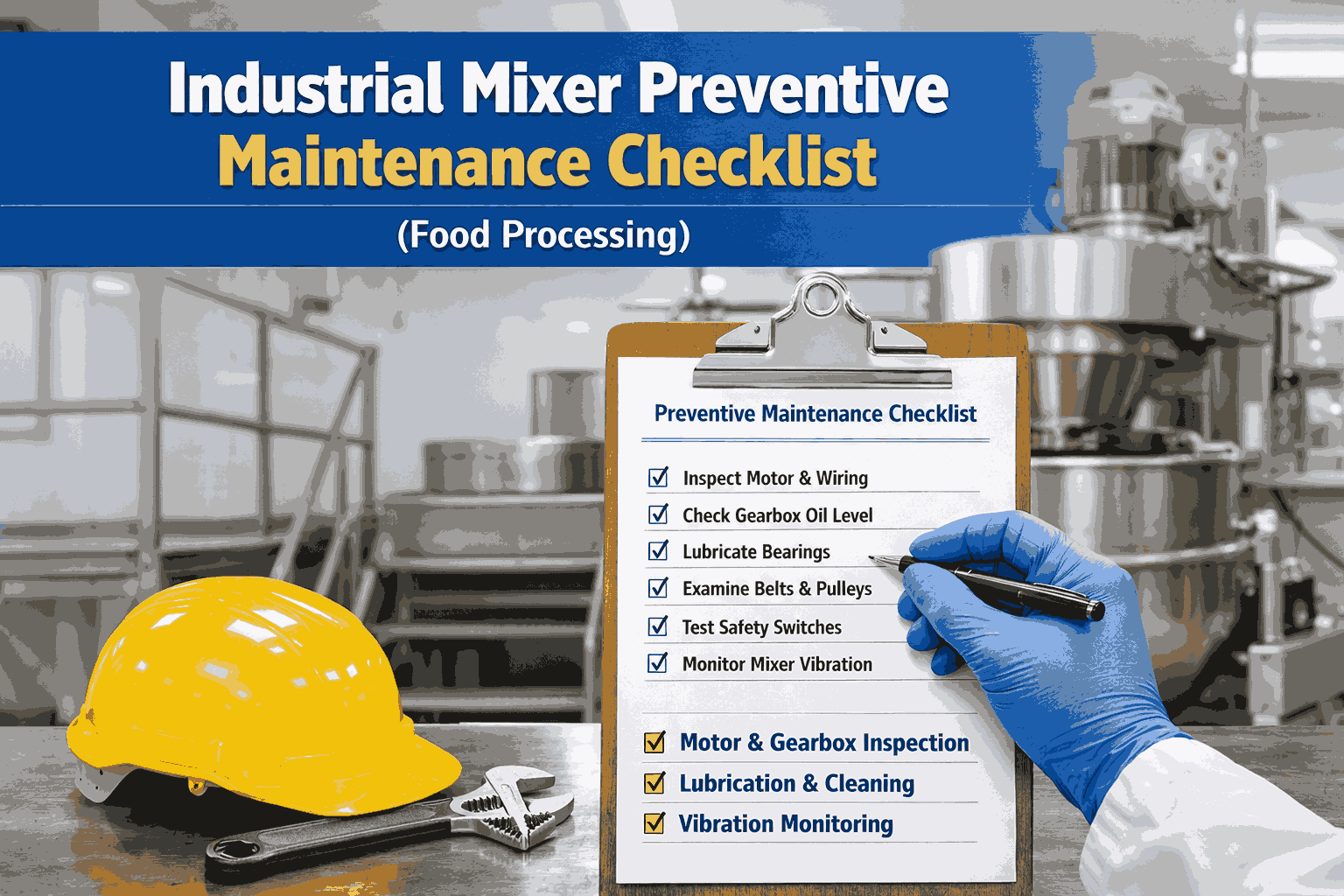
Read More
A bakery-scale food processor in Pennsylvania ignored a subtle grinding noise from their 500-gallon ribbon mixer for two shifts. On the third shift, the main gearbox bearing seized — bending the agitator shaft, contaminating 1,800 lbs of product w
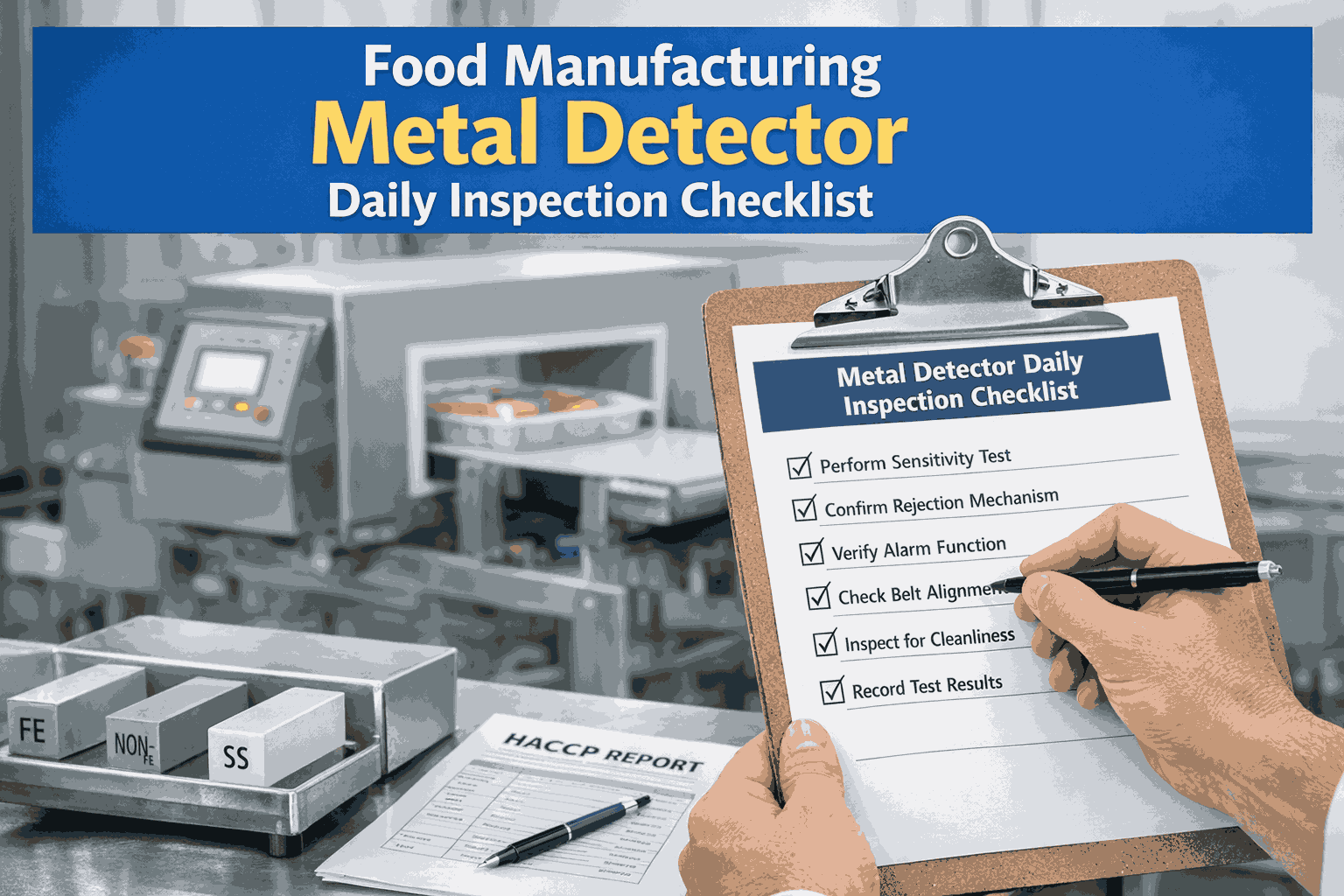
Read More
A frozen ready-meal plant in Georgia was producing 18,000 units per shift when a routine BRC audit uncovered something alarming — their metal detector's reject mechanism had been silently failing for an estimated four days. The air-blast ejector w
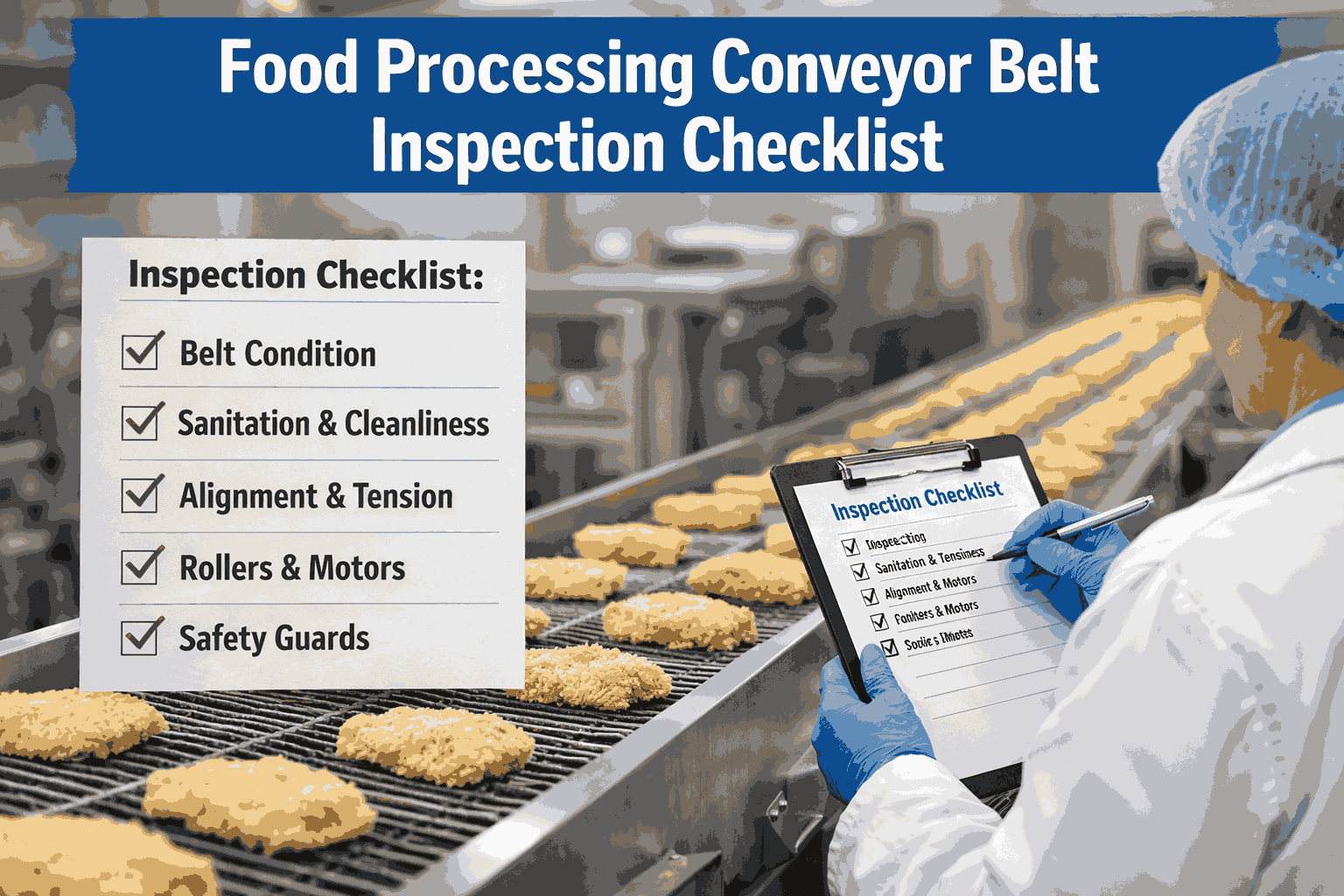
Read More
A poultry processing plant in Georgia lost an entire third-shift production run — 22,000 lbs of finished product — when a worn conveyor belt shed a 4-inch strip of material into the packaging line at 2 AM. The belt had shown visible edge fraying f
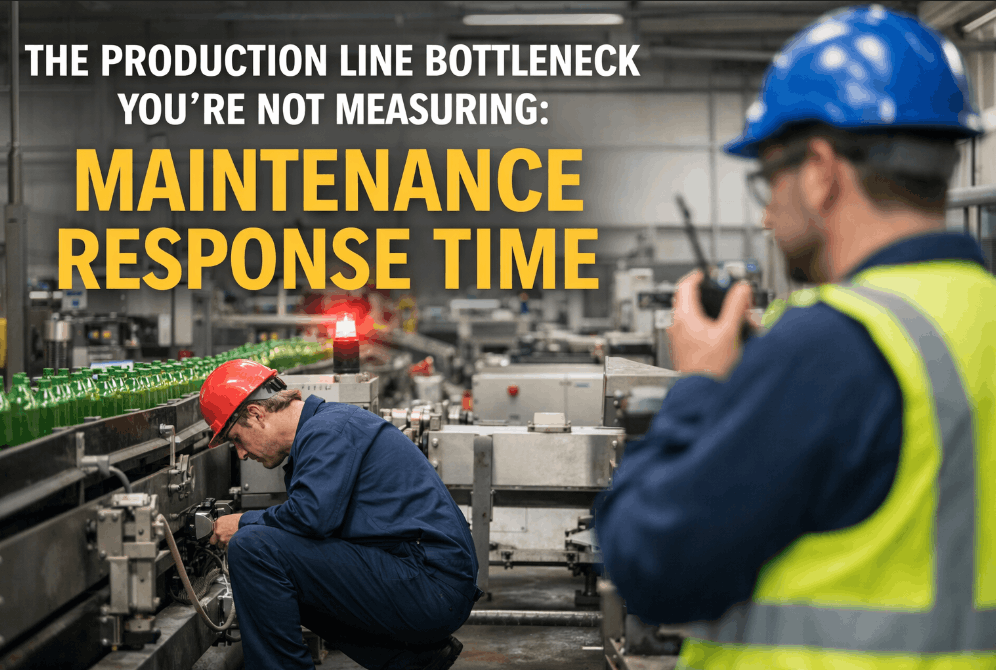
Read More
When your production line stops, the clock starts ticking — and most food plants are losing far more time than they realize before a technician even touches the machine. The breakdown itself is rarely the biggest problem. It is everything that hap

Read More
A frozen meals manufacturer in Georgia ran 340 assets across three production lines — but when their main spiral freezer compressor failed during peak holiday production, the plant lost 19 hours and $570,000 in scrapped product. The compressor was
Read More
A beverage blending facility in Texas ran four 5,000-litre planetary mixers around the clock producing protein supplement powder. During a quarterly audit, engineers discovered that one mixer's gearbox had been running 18°C above its normal operat
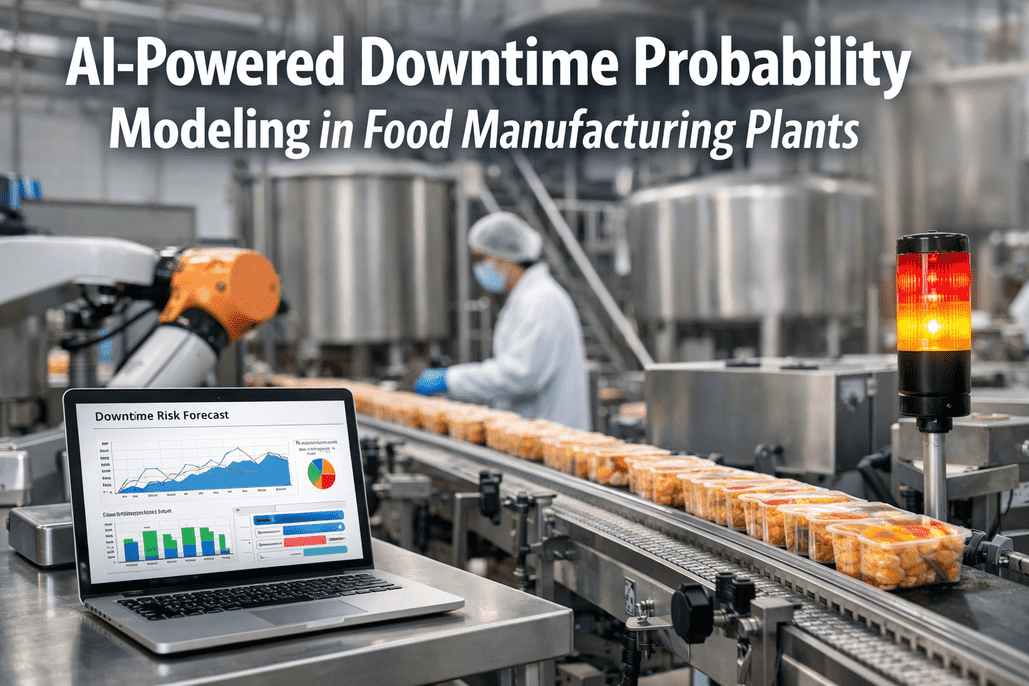
Read More
A bakery production group in Georgia ran three high-speed packaging lines around the clock. Their maintenance team tracked equipment issues on spreadsheets and replaced parts on fixed schedules. In November 2024, a case sealer bearing failed durin
.png)
Read More
A mid-sized dairy processing facility in Illinois experienced a complete CIP system failure during peak production season when inadequate preventive maintenance led to catastrophic pump seal failure. The incident contaminated three production tank

Read More
Food manufacturing enterprises running reactive or purely scheduled maintenance programs are leaving millions of dollars on the table every year. McKinsey research confirms that AI-powered predictive maintenance can decrease machine downtime by 30
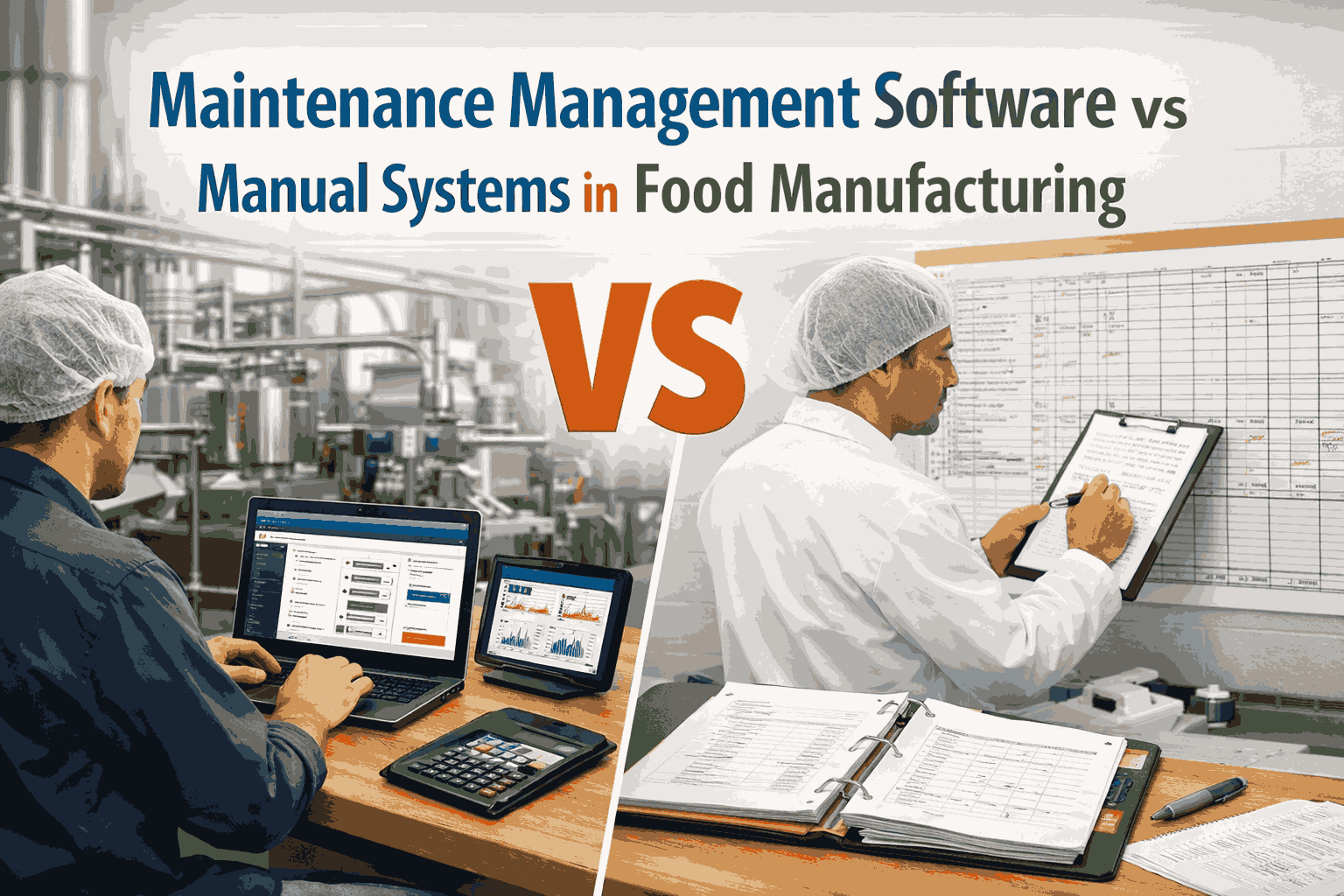
Read More
Food manufacturers operating across multiple facilities face a persistent and costly challenge: when every plant runs its own maintenance procedures, compliance gaps widen, audit failures multiply, and equipment reliability becomes geography-depen
Read More
Food manufacturers operating across multiple facilities face a persistent and costly challenge: when every plant runs its own maintenance procedures, compliance gaps widen, audit failures multiply, and equipment reliability becomes geography-depen

Read More
In food manufacturing, a single unplanned equipment failure does not just halt one machine — it freezes the entire production line, spoils in-progress product, risks compliance violations, and costs anywhere from $50,000 to $300,000 per hour in di

Read More
A mid-sized frozen food plant in Ohio was spending $2.4 million annually on maintenance—yet nearly 60% of that budget went to emergency repairs. Conveyor breakdowns during peak season cost the plant $35,000 per hour in lost production. After audit

Read More
A mid-size frozen food manufacturer in Ohio lost $4.2 million in a single week—not from a fire, not from a flood, but from a metal fragment that broke off an unmaintained conveyor blade and ended up in 38,000 units of packaged chi

Read More
A bakery plant running three packaging lines tracked only basic uptime hours for two years—and still suffered 23 unplanned shutdowns annually. When the maintenance manager started measuring MTBF and MTTR alongside preventive maintenance compliance

Read More
A mid-sized frozen meals facility was spending $340,000 annually on time-based preventive maintenance—replacing parts on schedule whether they needed it or not. Despite this investment, unplanned breakdowns still accounted for 28% of all productio

Read More
A global snack manufacturer operating 12 plants across three countries discovered that their Chicago facility resolved conveyor breakdowns in 45 minutes—while the same failure in their São Paulo plant took over 6 hours. The difference wasn't talen

Read More
Food manufacturing maintenance is undergoing a fundamental identity shift — from a reactive cost center that fixes broken equipment to a strategic control tower that drives production reliability, regulatory compliance, and

Read More
Most food plant managers believe their maintenance operation is "pretty solid." They have a PM schedule, a CMMS, and a team that responds to breakdowns. But when you apply a structured maturity framework, the same plant often scores at Level 2 out

Read More
Incomplete maintenance documentation in food manufacturing is no longer just an operational oversight — it is a direct regulatory liability that can trigger FDA Form 483 citations, forced recalls, facility shutdowns, and pe

Read More
Every plant director reaches the same crossroads: the board approves a capital budget, and two competing proposals land on the desk — one for new automation hardware, one for predictive intelligence software. Both promise efficiency. Both claim RO

Read More
A snack manufacturer in Texas spent $4.7 million automating their production lines over three years—PLCs on every motor, SCADA across the floor, automated packaging from end to end. Yet they were still averaging 23 hours of unplanned downtime per

Read More
Food manufacturers who invested in asset intelligence in 2024 are already reporting 8–12% OEE gains, 40% less unplanned downtime, and 35% revenue growth — while plants still running on spreadsheets and gut-feel maintenance are losing ground every

Read More
AI-powered predictive maintenance is transforming how food manufacturers prevent contamination — catching equipment failures weeks before they reach the product line. With FDA recalls rising 27.6% in early 2024 and unplanned downtime costing up to

Read More
In food manufacturing, spreadsheet maintenance presents hidden and significant costs that impact operations far beyond the initial investment in software. While spreadsheets appear cost-effective, the real price comes in the form of labor, errors,
Read More
Food manufacturing is running out of the people who keep it running. As of 2024, there were 74,000 open jobs in food manufacturing specifically — and 622,000 across all of manufacturing. The hardest positions to fill are maintenance technicians, Q

Read More
In dairy processing, CIP operations consume 10 to 20 percent of total production time. In food plants broadly, a CIP cycle failure that forces a re-clean can cost between $30,000 and $50,000 per hour in lost production alone — before counting chem

Read More
A snack food manufacturer in Pennsylvania spent $2.3 million upgrading their packaging lines with IoT sensors, a cloud-connected SCADA system, and a new MES platform over an 18-month digital transformation program. By every executive metric — dash

Read More
In November 2024, a mid-sized ready-meal manufacturer in Ohio passed their BRC audit with a Grade A — clipboards full of temperature logs, three binders of corrective action records, and a QA team that had spent the previous two weeks pulling pape

Read More
A frozen pizza manufacturer in Ohio dismissed a subtle vibration change in their main packaging line conveyor motor for three weeks. The shift operators noted it in their logbook as "slight hum, still running fine." No work order was created. On a

Read More
In 2024, the U.S. food industry recorded over 3,200 recall events — the second-highest annual total in six years. Behind many of those recalls sat a problem nobody talked about publicly: disconnected maintenance data. When a CIP system fails, a ga

Read More
A frozen meals manufacturer invested $1.4 million in a digital twin platform to model their four production lines—expecting real-time process optimization and predictive failure alerts. Eighteen months later, the twin was little more than an expen

Read More
Your utility bill isn't lying — but it isn't telling you the whole truth either. The real story is buried in your maintenance logs: degraded seals, over-pressurized compressors, refrigeration units cycling longer than they should, and motors runni

Read More
Private equity is pouring capital into food manufacturing — but most of the plants being acquired are operationally fragile. Reactive maintenance, paper-based records, aging equipment, and zero predictive capability are hidden inside the financial

Read More
Most food manufacturing plants still measure maintenance the old way — wrench counts, work order backlogs, and mean time between failures. But these metrics tell you how busy your team is, not how much money you're protecting or generating. A sing

Read More
If you're running food manufacturing operations across multiple plants and still piecing together maintenance data from spreadsheets, emails, and plant-level reports — this page is written for you.

Read More
A multi-line dairy operation in the Midwest was averaging 14 hours of unplanned downtime per month—most of it traced to compressor failures and conveyor motor burnouts that no one saw coming. At peak throughput, each hour offline cost the plant ov

Read More
A mid-sized frozen food manufacturer in Ohio cut energy consumption by 31% and reduced product waste by 2.8 tons per month after replacing reactive maintenance routines with a smart, sensor-driven maintenance platform. Their aging equipment had be

Read More
A frozen poultry processing facility in Georgia was losing over $180,000 per quarter to product spoilage caused by undetected refrigeration failures. Compressor degradation went unnoticed for weeks under their calendar-based maintenance schedule—b

Read More
A major dairy facility in Finland created a digital twin of its entire production line and within one production quarter, identified three pasteurizer anomalies invisible to traditional monitoring, prevented two CCP temperature excursions, and cut

Read More
Most food plant maintenance managers believe they have real-time visibility. Their CMMS dashboard says "live." Their vendor says "real-time." But when a compressor alert fires 40 minutes after degradation began, when a closed wor

Read More
Dairy processing plants run some of the most equipment-intensive operations in the food industry. Pasteurizers, homogenizers, compressors, CIP systems, filling machines, and cold-storage units must run continuously under strict hygiene and tempera
Read More
A Midwest meat processing facility discovered a pattern they had missed for years. A conveyor motor on their packaging line had failed three times in 18 months — always during peak production week. Each breakdown stopped processing for nearly four

Read More
Food manufacturing plants run on margins of 3–7% — margins that disappear in a single unplanned equipment failure. The average food processing facility loses 326 hours of production annually to unplanned downtime, at a cost of ₹8–

Read More
At 1,200 bottles per minute, a bottling line is one of the most unforgiving environments in all of manufacturing. A worn filler valve, a misaligned capper, a conveyor bearing running two degrees hotter than yesterday — none of t
Read More
The FDA inspector doesn't call ahead. They arrive, ask for your records, and within hours your entire compliance posture is either an asset or a liability. Most food manufacturers spend weeks scrambling to assemble documentation

Read More
Your ERP already manages your finances, procurement, and HR. So why do food plants that rely on it for maintenance keep experiencing the same problems — missed PMs, no real-time work order visibility, technicians hunting for equipment history, and

Read More
A refrigeration compressor doesn't fail without warning. It vibrates slightly differently. It draws more current. Its discharge temperature creeps up by two degrees. In a food plant, every one of those signals is a window — a ch

Read More
A failing bearing doesn't announce itself. It hums slightly differently, vibrates a fraction more than baseline, runs a degree or two warmer. For a food plant running 24/7, that silence before failure is the most dangerous sound

Read More
Most food plant managers know downtime is expensive. What they don't know is that the number on the maintenance report captures only a fraction of what was actually lost. Research shows food and beverage manufacturers can lose between $4,0
Read More
Poor maintenance scheduling is responsible for 13% of all unplanned downtime in food plants — not random equipment failure, not operator error, but a broken scheduling system. In 2026, the best food factories don't wait for machines to fail or rel

Read More
The global CMMS market is valued at $1.04 trillion and growing at 9% annually — because food manufacturers finally understand that reactive maintenance and paper logs are not just inefficient, they are existential risks. In 2026

Read More
A single lost work order in a food plant doesn't just slow down one technician—it breaks the chain between a broken seal, a missed CIP cycle, and an FDA audit finding. Food manufacturers still running on paper and whiteboards are leaving money on

Read More
Supply chain disruptions are no longer a crisis — they are the baseline. In 2025, 76% of global shippers experienced disruptions, a quarter of them 20 or more times. Geopolitical instability, extreme weather, tariff wars, labor

Read More
There are 622,000 unfilled manufacturing jobs in the U.S. right now. By 2030, Deloitte projects 2.1 million of those positions will remain vacant permanently. Food processing plants — already operating 24/7 with razor-thin ma

Read More
Every hour a food production line sits idle costs your plant between $36,000 and $500,000—and the worst part? Most breakdowns give you warning signs days or weeks before failure. AI-powered predictive maintenance is changing how food manufacturers
.png)
Read More
Every year, food manufacturers face unannounced FDA inspections. The ones who pass aren't necessarily the cleanest facilities — they're the best documented. In FY2024, the FDA issued over 3,000 Form 483s, with more than 60% t

Read More
In 2026, a large snack manufacturing plant in Ohio noticed a troubling pattern: production volumes were rising, but profitability was falling. After a digital audit, the root cause became clear — outdated systems and disconnected equipment were sl

Read More
Food and beverage production operates under zero-defect tolerance. A single contaminated batch can trigger recalls affecting millions of units. Manual quality inspection—still the standard at most facilities—creates systematic vulnerabilities. Hum

Read More
A snack food plant in Georgia was running what they thought was a 74% OEE — good enough, their operations manager said. Their competitor down the road was running 81%. When they finally installed a real-time KPI dashboard and look
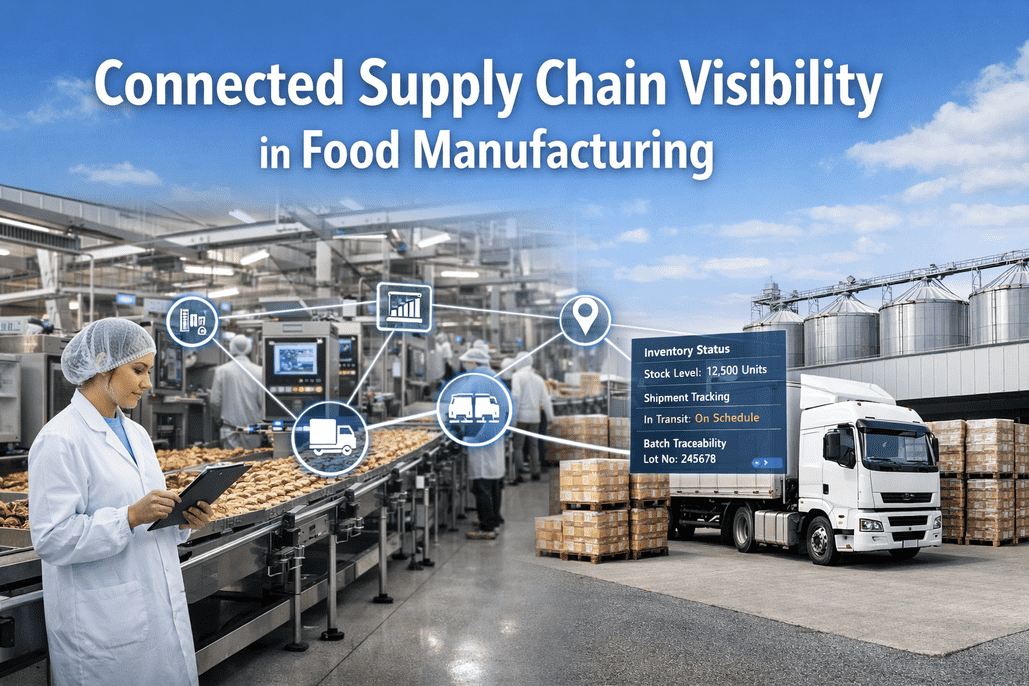
Read More
A mid-sized dairy processor in Wisconsin ran out of a critical packaging material on a Tuesday morning — not because their supplier failed to ship, but because no one in their facility had visibility into how fast the line was consuming it. The pu

Read More
A frozen meals plant in Minnesota ran two maintenance shifts with six technicians and a whiteboard. Tasks were written in marker, crossed out by hand, and shift handovers happened verbally in a noisy hallway. When a compressor seal failure develop

Read More
In June 2021, JBS Foods—the world's largest meat producer—shut down all US beef processing plants after a ransomware attack. The facilities that process nearly 20% of America's meat supply went dark. Production stopped. Distribution f

Read More
A baked goods plant in Ohio ran three shifts a day, six days a week. No one noticed the oven conveyor belt motor was drawing 18% above its baseline current — until it seized mid-production on a Friday afternoon. 4,200 kg of in-process product scra
Read More
Sustainability has shifted from corporate social responsibility talking points to core operational strategy. One-third of shoppers prioritize environmental impact in purchasing decisions. Regulatory frameworks are tightening. Supply chain partners

Read More
Cloud-based maintenance management isn't a technology trend—it's an operational imperative. Unlike legacy on-premise systems that trap your data behind server walls and require expensive IT infrastructure, cloud CMMS platforms deliver instant acce

Read More
A bakery processing 120,000 pounds of product weekly was spending $680,000 annually on maintenance—58% of which came from emergency repairs and unplanned downtime. Their maintenance team operated reactively, addressing equipment failures as they o

Read More
When a beverage manufacturer's production line went down for three hours because a critical pump failure wasn't detected until it completely seized, the facility lost 18,000 units of product and $47,000 in revenue. The equipment had been showing e

Read More
When a mid-sized dairy processing facility in Wisconsin discovered their pasteurization equipment was consuming 30% more energy than design specifications and experiencing unplanned downtime every 11 days on average, their maintenance costs had ba

Read More
When a commercial bakery's conveyor oven failed mid-shift due to a worn bearing that hadn't been inspected in six months, it cost them $12,000 in lost production, scrapped inventory, and emergency repairs. The failure wasn't dramatic—just a gradua

Read More
A single cobot installed at Napco Brands' coffee packaging line now packs 180,000 cups per day across 18 to 20 hours of operation — hitting full ROI in under a year, freeing eight workers for higher-value work, and allowing the company to win new

Read More
A mid-size dairy processor in Minnesota replaced their paper-based line inspection process with an AI-powered vision system in 2023. Within the first production quarter, it flagged 1,200 packaging defects their manual QC team

Read More
A ready-to-eat deli meat plant in Pennsylvania passed its SQF audit in March. By August of the same year, Listeria monocytogenes had colonized a floor drain near the slicing line — a Zone 3 site that was swabbed only once per quarter. By the time

Read More
In a poultry processing facility in Georgia, a team of engineers spent three months diagnosing recurring contamination spikes in a chiller line. The root cause turned out to be a 14-minute window each shift where a sensor blind spot allowed water

Read More
A single missing bearing brought an entire dairy processing line to a standstill for 11 hours — not because the part was unavailable, but because no one knew where it was. This scenario plays out in food manufacturing plants every week: the right

Read More
A meat processing plant in Texas ran its conveyor system through a full production shift before anyone noticed the grinding noise from the drive gearbox. The bearing had been running dry for six days—the scheduled lubrication task was marked compl

Read More
A mid-sized dairy processor in Ohio ran on paper work orders, manual temperature logs, and a spreadsheet-based inventory system for over a decade. When rising input costs squeezed margins and a surprise FDA audit flagged two corrective action gaps

Read More
When a mid-size beverage bottling plant in Texas faced its second consecutive FDA 483 observation for incomplete sanitation records, plant leadership knew paper-based compliance tracking was no longer sustainable. With 240,000 bottles filled daily

Read More
A food processing facility in Iowa discovered their CIP systems were delivering inconsistent sanitization results—not from a formulation problem, but because water pressure fluctuations from an unmaintained booster pump were reducing rinse effecti

Read More
A bakery in Ohio producing both peanut butter cookies and nut-free snack bars on the same production line ran a full cleaning cycle between runs—exactly as their SOP required. But the conveyor belt tensioner bolt, a non-obvious allergen trap, was

Read More
In February 2026, a frozen meatball manufacturer in New York recalled over 9,400 pounds of product after metal fragments were found in their ready-to-eat line. The metal detector on the packaging line had been operational — but its last documented

Read More
A meat processing plant in the Midwest failed its SQF audit not because of contaminated product—but because an inspector found gnaw marks near a drainage grate with zero corresponding pest activity log entries for that zone. The exterminator had v

Read More
A food processing facility in Iowa discovered their CIP systems were delivering inconsistent sanitization results—not from a formulation problem, but because water pressure fluctuations from an unmaintained booster pump were reducing rinse effecti

Read More
A snack food manufacturer reduced packaging line downtime by 34% after implementing structured preventive maintenance checklists that caught equipment wear before it caused unplanned stops. Previously, maintenance was reactive—technicians rushed t

Read More
A frozen pizza manufacturer lost $340,000 in production and had to destroy 18,000 pounds of product when a blast freezer compressor failed unexpectedly on a Friday evening. The post-failure analysis revealed the warning signs had been present for

Read More
A dairy processing facility in Wisconsin achieved zero pathogen detections for 18 consecutive months after implementing a digital sanitation inspection workflow that replaced paper-based checklists with real-time verification and photographic evid

Read More
A frozen pizza manufacturer replaced their main production line oven after just 8 years—half its expected 15-year lifespan. The $1.2 million replacement wasn't caused by a single catastrophic failure, but by accumulated damage from deferred mainte

Read More
When a major frozen food processing plant in Wisconsin experienced their third unplanned refrigeration failure in six months—losing $340,000 in spoiled product and emergency repairs—leadership knew their reactive maintenance approach was failing.

Read More
A frozen food distribution center running 24/7 operations discovered their compressor failure during an overnight shift when no maintenance staff were on site. By the time technicians arrived, temperatures in the 40,000 sq ft freezer had risen 18°
Read More
A frozen pizza manufacturer in Illinois lost $890,000 in a single quarter from conveyor-related downtime—belt failures, motor burnouts, and guide rail damage that shut down production lines an average of 12 times per month. Manual inspec
.png)
Read More
A snack manufacturer producing both peanut and peanut-free products on shared lines relied on visual inspection and ATP swabs to verify allergen cleaning. Despite following SSOP procedures, a trace peanut protein incident resulted in a Class I rec

Read More
Midwest Frozen Foods operated three high-speed packaging lines producing 2.4 million units weekly for major grocery retailers. Unplanned downtime averaged 47 hours monthly—costing $1.2 million annually in lost production, spoiled product, and over

Read More
A ready-to-eat salad producer in California struggled with inconsistent sanitation verification—manual ATP swabbing missed contaminated areas that later caused a Listeria recall costing $3.8 million. After deploying robotic sanitation ve

Read More
A poultry processing plant in Arkansas deployed NVIDIA AI vision systems on their evisceration line—and within the first week, the cameras detected a subtle pattern: contamination rates spiked 340% whenever a specific ev

Read More
A meat processing facility in Nebraska spent $180,000 on maintenance-related production delays in a single year—primarily because technicians couldn't locate equipment, maintenance documentation referenced outdated layouts, and sanitatio

Read More
A beverage manufacturer in Georgia reduced CIP cycle times by 23% and prevented $1.2 million in annual product losses after implementing a digital twin of their filling line. The virtual model predicted exactly when heat exchangers would reach fou

Read More
A cold storage facility received 847 temperature alerts last month—most were sensor glitches, brief door openings, or defrost cycles that self-corrected. But buried in that noise was one genuine compressor failure that went unaddressed for 6 hours

Read More
A major cheese manufacturing facility in Wisconsin deployed a Boston Dynamics Spot robot for overnight hygiene inspections—and within three months, the quadruped identified 23 equipment issues that human walkthroughs had missed, including a refrig

Read More
A meat processing facility deployed a ROS 2-based mobile robot for automated sanitation verification—the robot navigates the facility after cleaning, captures thermal and visual images of food-contact surfaces, and flags areas that need re-cleanin

Read More
A craft brewery in Colorado expanded production with automated keg handling and tank cleaning robots—then watched contamination rates spike 40% within six months. Investigation revealed the robots themselves had become contamination vectors: yeast

Read More
A large dairy processing facility in Wisconsin operates three robotic palletizing systems and two automated case packers around the clock—168 hours per week without pause. When one palletizer's servo motor failed at 11 PM on a Friday, the plant lo

Read More
A frozen food distributor's sortation robots averaged 847 picks per hour—until bearing failures started cascading across the fleet. Three robots went down in one week, throughput dropped 40%, and manual labor costs spiked while orders backed up. T

Read More
A beverage distributor's palletizing robot failed mid-shift on Friday afternoon, stranding 18,000 cases of product that required weekend overtime to manually restack—costing $47,000 in labor alone. The failure traced to a $340 gripper actuator t

Read More
A dairy processing plant in Wisconsin faced a Listeria-positive environmental sample that halted production for 72 hours while they traced the contamination source. Investigation revealed their manual CIP protocol had been shortened by 8 minutes

Read More
A craft brewery in Colorado discovered a labeling defect three days after 12,000 cases shipped to distributors. The error—incorrect allergen information on 8% of bottles—triggered a voluntary recall costing $340,000 in direct expenses an

Read More
A major frozen food distributor in the Midwest lost $1.9 million in inventory when their automated cold storage robotic system failed during a holiday weekend. The robotic pickers, operating continuously at -18°F, experienced lubrication crystal

Read More
A leading snack foods manufacturer in Pennsylvania was losing $47,000 per hour when their delta robot palletizer experienced gripper failures mid-shift. The culprit? Inadequate lubrication schedules and missing sanitation documentation that failed

Read More
A semiconductor fabrication plant in Arizona deployed three autonomous inspection robots running ROS 2 to patrol their cleanroom perimeter. Within 90 days, the robots detected 47 thermal anomalies in HVAC equipment before failures occurred—prevent

Read More
During a surprise third-party audit at a poultry processor, the auditor asked to see pre-operational sanitation records from 23 days earlier. The QA supervisor retrieved the paper logbook—water-stained pages, one entry with an illegible signature,

Read More
A frozen vegetable processor in California watched their refrigeration compressor fail catastrophically at 2 AM on a Saturday—destroying $340,000 worth of product before anyone discovered the problem. Post-failure analysis revealed the compresso

Read More
When a refrigeration compressor failed at a dairy processing plant, the maintenance manager calculated repair costs at $12,400—parts, labor, and the service call. But the CFO's analysis told a different story: 847,000 pounds of milk products held

Read More
A poultry processing facility in Georgia faced a devastating recall after Listeria contamination was traced to biofilm buildup inside a slicing machine's hollow conveyor rollers. The equipment had passed daily sanitation insp

Read More
A snack food manufacturer ran their flagship packaging line at 67% OEE for three years, assuming that was simply "how the equipment performed." When a new operations manager analyzed the data, she discovered that 18% of capacity was lost to unplan

Read More
A frozen food manufacturer in Ohio watched their packaging line fail three times in one month—each breakdown costing $45,000 in spoiled product and missed shipments. The failures seemed random until maintenance data revealed a pattern: a

Read More
An FDA inspector arrived unannounced at a cheese manufacturer on a Tuesday morning requesting their Food Safety Plan, hazard analysis, monitoring records for the past 90 days, and corrective action documentation. The quality manager spent four hou

Read More
A frozen vegetable processor calculated their true cost of downtime at $847 per minute—not just lost production, but spoiled product in the pipeline, overtime to catch up, expedited shipping to meet customer commitments, and the ripple effects o

Read More
A regional dairy processor discovered their equipment was failing 40% more often than industry benchmarks—but they only learned this after losing $180,000 in spoiled product during a single refrigeration failure. The problem wasn't the equipment

Read More
A bakery producing 200,000 loaves daily watched their spiral mixer seize during peak production—the bearing had been failing for weeks, but without monitoring, nobody knew until smoke poured from the motor housing. The emergency repair took 18 hou

Read More
A meat processing facility received an FDA Warning Letter citing 17 violations—inadequate hazard analysis, missing monitoring records, undocumented corrective actions, and failure to verify preventive controls. The facility had been operating for

Read More
A frozen food manufacturer was losing $45,000 monthly to unplanned conveyor failures—bearings seized without warning, motors burned out during peak production, and gearboxes failed catastrophically requiring week-long rebuilds. Their maintenance t

Read More
During an unannounced FDA inspection, a seafood processor was asked to produce temperature monitoring records for a specific CCP from 47 days earlier. The quality manager spent three hours searching through filing cabinets, found water-damaged log

Read More
An FDA inspector reviewing a poultry processing plant asked to see their Sanitation Standard Operating Procedures—the plant manager produced a dusty binder that hadn't been updated in four years. The pre-operational sanitation logs showed the same

Read More
A dairy processor in Wisconsin discovered their CIP system had been underperforming for months—spray balls were clogged, pump seals were leaking, and chemical concentrations had drifted from specifications. The result: a Listeria-positive environm

Read More
A frozen pizza manufacturer in Indiana lost 42,000 pounds of product when their blast freezer failed during a weekend shift—the compressor had been showing warning signs for weeks, but without systematic inspection records, nobody connected the do

Read More
Choosing the wrong CMMS costs food manufacturers more than subscription fees—it costs compliance gaps, missed maintenance windows, and audit failures that can shut down production lines. With dozens of maintenance software options claiming food in

Read More
An FDA inspector arrives at your food manufacturing facility requesting your Food Safety Plan, hazard analysis documentation, and evidence that preventive controls are being monitored as required. For facilities without organized compliance system

Read More
A commercial bakery in Texas was rejecting 12% of finished products at manual inspection stations—missing misshapen loaves, detecting color inconsistencies too late, and struggling to keep pace with 800 units per minute on their high-speed lines.

Read More
A regional dairy processing facility in Ohio was losing $18,000 weekly to unplanned equipment failures—frozen evaporators, worn conveyor bearings, and clogged CIP lines that nobody saw coming. Their maintenance team was reactive, scrambling from o

Read More
A Minnesota frozen food manufacturer tracked an unsettling pattern through Q3 2024: their primary tunnel freezer experienced seven unplanned stoppages totaling 43 hours of lost production worth $516,000. Each failure appeared random—a failed con

Read More
In September 2024, a frozen meals manufacturer outside Nashville discovered that a single malfunctioning steam trap on their retort line had been venting live steam continuously for 47 days. The maintenance team only noticed when the monthly uti

Read More
A meat processing facility in Iowa discovered they were spending $47,000 monthly on electricity—$14,200 of which disappeared into equipment running during non-production hours, refrigeration units cycling inefficiently, and compressed air leaks

Read More
In September 2024, a Wisconsin cheese manufacturer completed a transformation that seemed impossible eighteen months earlier. Their maintenance team—accustomed to clipboards, paper logs, and reactive firefighting—now manages 147 pieces of produc

Read More
On a Wednesday morning in March, a frozen dessert production line in Columbus, Ohio ground to a halt when a glycol chiller compressor seized without warning. The maintenance team had replaced the same unit just nine months earlier, but no one co

Read More
An FDA inspector at a Pennsylvania dairy processor requested sanitation verification records from the previous 90 days. The facility QA manager spent 47 minutes searching through filing cabinets, binders, and loose papers — while the inspector wai

Read More
A bakery in Wisconsin discovered metal particles in their compressed air system during a routine FDA inspection—particles that had been depositing on product contact surfaces for weeks. The contamination traced back to an aging compressor with f

Read More
A multistate seafood distributor discovered temperature excursions affecting 47 pallets of premium product—not during delivery, but three days later when aggregating data from disconnected monitoring systems across six facilities. The delayed de

Read More
On a Thursday morning in March, a poultry processing facility in Savannah, Georgia discovered that Walk-In Cooler Unit 3 had drifted to 48 degrees Fahrenheit overnight, well above the critical 40-degree threshold. By the time operators caught it,

Read More
A mid-sized food processing plant in Wisconsin lost $284,000 worth of product when their main process boiler experienced a sudden tube failure during a critical production run. The boiler had been operating for 11 months since its last inspectio

Read More
A Wisconsin dairy processing plant replaced their primary pasteurizer in June 2024 after 14 years of operation—three years before the manufacturer's rated lifespan and $470,000 sooner than capital planning anticipated. The premature failure wasn

Read More
Last Friday at 3:17 AM, a refrigeration compressor at a Pennsylvania dairy facility lost refrigerant pressure. The walk-in cooler temperature climbed from 38°F to 54°F over six hours. By the morning shift sta

Read More
Last Wednesday at 11:23 AM, a major snack food manufacturer in Ohio watched $94,000 worth of premium potato chips turn to waste when their continuous fryer's heating element failed without warning. The cul

Read More
The plant manager's phone rang at 2:47 AM on a Saturday. The overnight security guard reported water pooling on the warehouse floor outside Cold Room 3—a 4,000 square-foot freezer holding $380,000 in finished

Read More
The morning shift baker opened the retarder-proofer at 4:00 AM expecting 400 perfectly proofed baguette trays ready for the oven. Instead, every tray held flat, dense dough that hadn't risen overnight. The h

Read More
A commercial bakery in Louisville, Kentucky, lost an entire overnight production run—4,200 pounds of artisan sourdough valued at $31,000—when their 340-quart spiral mixer seized at 2:15 AM on a Monday morning. The gearbox had been running with deg

Read More
A regional food distributor in Texas transformed their cold storage operation after implementing structured maintenance workflows for their 47,000 square foot cold room complex. Previously, maintenance tasks were assigned verbally, completion wasn

Read More
A dairy processor in Wisconsin faced a $2.3 million FDA enforcement action when inspectors discovered their compressed air system—used for pneumatic packaging equipment and product contact applications—had no documented maintenance records, no oil

Read More
A craft brewery in Oregon lost an entire batch of premium lager—$89,000 in product—when their compressed air system couldn't maintain pressure during a critical carbonation run. The main compressor had been struggling for weeks, system pressure gr

Read More
A frozen dessert manufacturer in Georgia lost $520,000 in product when their primary refrigeration compressor overheated and shut down on thermal protection during a summer production surge. The compressor had been running progressively hotter for

Read More
A snack food manufacturer in Texas avoided a $280,000 production disaster when a routine compressor inspection revealed metal particles in the oil sample—the first sign of bearing deterioration that would have caused catastrophic failure within we

Read More
A craft brewery in Colorado discovered their main air compressor couldn't maintain pressure during a critical bottling run when system pressure dropped from 110 PSI to 67 PSI over three hours. The gradual decline went unnoticed until bottle cappin

Read More
A frozen pizza manufacturer in Ohio lost $340,000 in product when their main refrigeration compressor shut down on thermal overload during a July heat wave. The compressor had been running hot for weeks—discharge temperatures climbing from 185°F t

Read More
A dairy processing plant in Wisconsin was spending $180,000 annually on emergency compressor repairs—almost double their planned maintenance budget. The refrigeration compressors that kept their cold storage a

Read More
The FDA inspector walked the production floor methodically, stopping at the incline conveyor feeding the packaging line. She pointed to a small grease spot near the belt edge and asked a simple question: "Ca

Read More
A potato chip packaging facility in Idaho experienced a catastrophic conveyor failure when a seized idler roller caused the belt to jump track, spilling 2,800 pounds of finished product across the packaging floor. The roller had been deteriorating

Read More
A cereal manufacturing plant in Michigan lost $187,000 in a single incident when a 400-foot main transfer conveyor belt catastrophically failed during peak production. The belt had been tracking progressively off-center for 11 days, grinding again

Read More
A snack food manufacturer in Texas was replacing conveyor belts every 8 months—far below the expected 18-month lifespan. When a new maintenance manager implemented systematic conveyor inspection with documen

Read More
The morning shift at a bakery packaging facility started normally until a seized roller on the product conveyor shredded the belt—stopping three packaging lines simultaneously. The maintenance team found cata

Read More
A bakery production line in Pennsylvania lost 14 hours of production when a conveyor belt tracking problem escalated from minor edge wear to complete belt failure during a weekend shift. The belt had been drifting toward one side for three weeks,

Read More
A beverage bottling plant in Georgia was running their conveyor maintenance the same way they had for fifteen years—handwritten logs, verbal pass-downs between shifts, and work orders scribbled on clipboards t

Read More
The USDA inspector asked a simple question: "Show me the maintenance records for that case sealer for the last six months." The plant manager knew the work had been done—technicians had replaced the tape head

Read More
A frozen food packaging facility in Wisconsin discovered their horizontal seal bars were producing inconsistent seals only after customer complaints about leaking packages surfaced three weeks into distribution. Investigation revealed a heating el

Read More
A frozen food manufacturer in Minnesota was experiencing 280 misfeeds per shift on their primary flow wrapper—each one requiring operator intervention, wasting film and product, and stopping the line for 30-90

Read More
The quality manager at a cereal packaging facility couldn't understand why seal failures kept appearing after the cartoner passed its morning inspection. The checklist showed green across every item—carton fe

Read More
A snack food packaging line in Ohio experienced a cascade of seal failures during a night shift, producing 4,200 packages with weak or incomplete seals before quality sampling detected the problem. The root cause: a single heating element in the h

Read More
A snack food manufacturer in Ohio was losing 340 packages per shift to misfeeds—film jams, registration errors, and seal failures that required operator intervention and produced scrap. Production managers ass

Read More
The packaging supervisor at a snack food facility knew something was wrong with the cartoner, but couldn't prove it. Changeovers that used to take 45 minutes now stretched past two hours. The machine ran, but r

Read More
An FDA inspector arrived unannounced at a juice bottling facility in Florida, requesting maintenance records for filling line equipment dating back 18 months. The maintenance manager spent four hours retrieving documents from filing cabinets, spre

Read More
A dairy processing facility in Minnesota shipped 18,000 bottles over a four-day period with fill levels ranging from 12% under to 6% over specification. The root cause traced to a capacitive level sensor that had drifted gradually out of calibrati

Read More
A beverage bottling facility in Texas experienced 47 line stoppages in a single week, each averaging 8-12 minutes of lost production. Operators spent more time clearing jams than running product. The maintenance team investigated and found the roo

Read More
An FDA auditor requested filling line maintenance records during an unannounced inspection at a dairy processing facility in Wisconsin. The maintenance manager produced a collection of documents from multiple sources: handwritten notes from operat

Read More
A juice bottling facility in California discovered that 12,000 bottles shipped over a three-day period contained fill volumes ranging from 15% under to 8% over the labeled amount. The root cause traced to a level sensor that had drifted out of cal

Read More
A beverage bottling facility in Georgia experienced 47 line stoppages in a single week, each requiring operator intervention to clear jammed containers. Production efficiency dropped to 62%, overtime costs escalated, and the operations manager fac

Read More
The filling line supervisor at a juice bottling plant spent the first hour of every shift hunting for information. Which filler heads were due for seal replacement? Who worked on the capper last week when it s

Read More
An FDA inspector arrived unannounced at a cheese manufacturing facility in Wisconsin requesting CIP system maintenance records for the previous twelve months. The maintenance supervisor retrieved records from three different locations: handwritten

Read More
A mid-sized dairy processing facility in Wisconsin discovered their CIP system had been under-dosing caustic solution by 23% for eleven weeks. The conductivity sensor that monitored chemical concentration had

Read More
The sanitation manager at a yogurt production facility couldn't understand why their pathogen swabs kept coming back positive. The CIP system showed green lights across the board—cycle times met, temperatures r

Read More
A food safety auditor reviewing documentation at a dairy processor in Pennsylvania asked to see CIP system inspection records for the past year. The maintenance manager produced a folder of handwritten notes, some legible and some not, with incons

Read More
A craft brewery in Colorado discovered during a routine quality check that their flagship IPA had an unusual chemical taste. Investigation traced the problem to their CIP system, where a failed conductivity probe had allowed rinse water contaminat

Read More
A yogurt manufacturing facility in Minnesota discovered during a routine pre-operational inspection that product residue remained visible inside a fermentation tank after the CIP cycle had completed and the system indicated "clean." Investigation

Read More
A dairy processing facility in Wisconsin discovered during an FDA inspection that their CIP system maintenance records could not be reconciled with their asset inventory. The inspector asked for maintenance history on a specific CIP skid, but the

Read More
A frozen pizza manufacturer in Ohio received a warning letter from FDA following a routine inspection. The findings were not dramatic: a pasteurizer with an expired calibration certificate, incomplete documentation of CIP system repairs, and a met

Read More
A regional brewery in Oregon scheduled their annual shutdown for the traditional slow period in January. The maintenance manager had four weeks of work planned, covering everything from fermenter inspections to packaging line overhauls. What shoul

Read More
The maintenance supervisor at a dairy processing facility found out at 2 AM that their main homogenizer had seized. The bearing failed—a $180 part that should have been in inventory. But nobody knew it wa

Read More
A cheese processing facility in Vermont lost 18 hours of production when a critical pump seal failed at 2:00 AM on a Saturday. The maintenance technician knew exactly what part was needed, had replaced similar seals dozens of times, and could comp

Read More
A poultry processing plant in Arkansas operated with 14 maintenance technicians across three shifts, yet the maintenance manager had no visibility into how labor was being used. After implementing structured maintenance team management

Read More
A frozen food processor in Wisconsin faced an FDA inspection that should have been routine. When inspectors requested the maintenance SOP for their pasteurizer CIP system, the maintenance manager knew the document existed. It had been updated eigh

Read More
A beverage bottling plant in Georgia held monthly maintenance review meetings where the manager presented a 47-slide PowerPoint compiled from five different spreadsheets, the CMMS, and manual data collection from supervisors. By the time the data

Read More
A snack food manufacturer in Ohio operated their maintenance program in isolation for years. Work orders lived in the CMMS. Parts costs appeared in the ERP system weeks later after manual reconciliation. Equipment sensor data scrolled across HMI s

Read More
A dairy processing facility in Minnesota received 72 hours notice of a surprise FDA inspection following a competitor's recall in the same region. The quality manager knew their food safety program was solid, but when inspectors began requesting m

Read More
A meat processing facility in Nebraska ran their preventive maintenance program the same way for eight years: maintenance technicians received a printed list of PMs due that week and completed what they could between breakdowns. The result was pre

Read More
A frozen food manufacturer in Wisconsin tracked their maintenance response times for six months and discovered something troubling: the average time from equipment failure to work order creation was 47 minutes, but the average time from work order

Read More
When a bakery in Pennsylvania discovered their metal detector had allowed contaminated product to ship for three consecutive days, the quality manager assembled an investigation team. Their initial finding: a loose cable connection caused intermit

Read More
A snack food manufacturer in Texas watched their primary production line metal detector fail a verification test at 2:15 PM on a Thursday. Investigation revealed that sensitivity had been drifting for 11 days, gradually declining until it could no
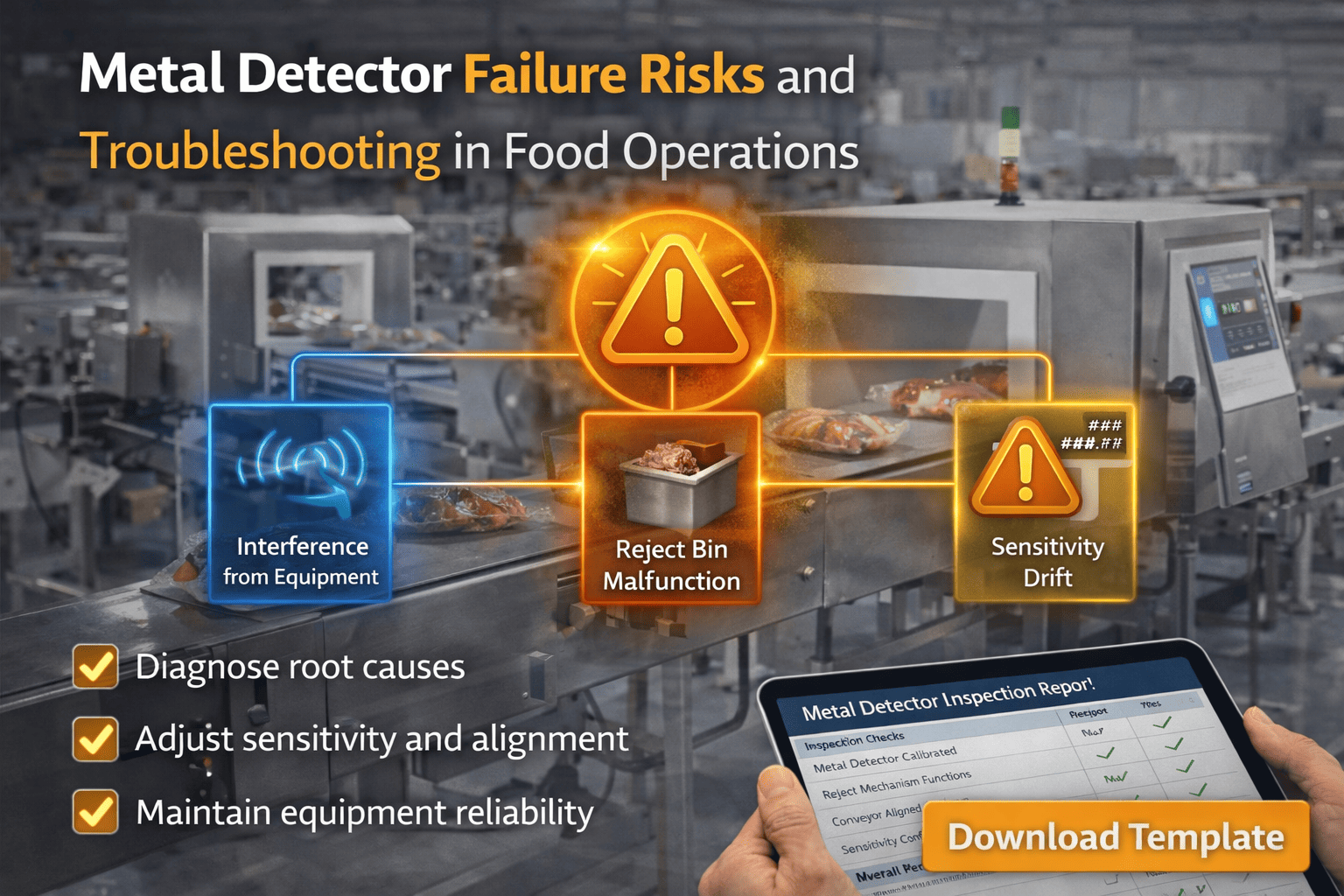
Read More
At 6:23 AM on a Wednesday in February, a frozen pizza manufacturer in Ohio discovered their primary production line metal detector had been passing product without actually scanning for contamination. The failure went undetected for nearly four ho

Read More
The quality manager at a frozen pizza facility was confident their metal detection program was bulletproof. Three detectors on the packaging line, hourly checks documented, reject bins monitored. Then a reta

Read More
A maintenance supervisor discovered their worst nightmare during a routine Monday morning walk-through: an elevator had been stuck between floors for nearly 20 minutes with four students inside. The emergency alarm wasn't working. The phone line w

Read More
Labeling machine failure root cause analysis transformed a struggling California beverage bottler from industry laggard to benchmark performer in just eight months. The facility had accepted a 4.1% label defect rate as normal, generating 847,000 r

Read More
A snack food manufacturer was running their labeling lines at 98% uptime—industry-leading performance by any measure. Then a timing belt failed on their primary labeler during a major promotional campaign. The failure itself took only 3 hours to r

Read More
Labeling machine common failures silently erode packaging line profitability at an alarming rate. A Midwest snack food manufacturer discovered last quarter that label placement errors and applicator jams had generated 847,000 units of rework over

Read More
During an FDA inspection at a frozen food facility in Georgia last November, the investigator asked a simple question: show me your labeling machine inspection records for the past 90 days. The maintenance manager opened three filing cabinets, pro

Read More
A craft beverage company was fielding complaints about crooked labels—not many, but enough to notice. The production team checked the labeler daily, watching it run and confirming labels looked straight. Eve

Read More
A dairy processing facility in Wisconsin discovered their HTST pasteurizer was developing a heat exchanger fouling problem at 3:47 PM on a Tuesday. Not through a catastrophic failure that halted production, contaminated 12,000 gallons of milk, and

Read More
Pasteurizer common failures cost the North American dairy industry an estimated $340 million annually in product losses, emergency repairs, regulatory penalties, and brand damage. A single under-pasteurization event at a Michigan facility last yea

Read More
A pasteurizer inspection report template documented the critical evidence that saved a Wisconsin dairy from a $2.3 million recall when FDA investigators questioned their thermal process validation last March. The facility had maintained continuous

Read More
Last March, a snack food manufacturer in Ohio watched their 500-gallon ribbon blender seize during a critical production run. The gearbox had been making subtle grinding sounds for six weeks. Operators noted increased vibration three weeks prior.

Read More
Predictive maintenance for industrial mixers saved a Georgia dairy processor $847,000 last year by detecting a gearbox bearing defect 47 days before catastrophic failure would have contaminated 200,000 pounds of yogurt base. Traditional time-based

Read More
The quality manager at a snack seasoning facility watched $23,000 worth of product get scrapped in a single shift. The industrial ribbon mixer had been producing inconsistent blends for three days before an

Read More
A juice processing facility experienced its third flow diversion device failure in four months. Each time, the maintenance team replaced the worn valve seats, documented the repair, and returned the pasteurizer to service. The third failure occurr

Read More
A regional dairy processor thought their pasteurizer was running perfectly. Production logs showed proper temperatures, timers functioned normally, and the divert system tested fine during monthly checks. The

Read More
The production manager at a snack food facility couldn't understand why their industrial ribbon mixer kept producing inconsistent batches. Seasoning distribution varied wildly—some chips were bland, others

Read More
An industrial mixer inspection checklist prevented a $420,000 recall at a California sauce manufacturer last October when a routine seal check caught microscopic metal shavings before they contaminated 12,000 gallons of marinara. Your mixing equip

Read More
The brewery's centrifugal transfer pump failed for the fourth time in six months. Each time, the maintenance team replaced the mechanical seal, documented "seal failure" as the cause, and returned the pump to

Read More
At 2:17 AM on a Saturday, a yogurt processing plant in Minnesota lost their main product transfer pump. The seal had been weeping for eleven days. The bearing temperature had climbed 22°F over three weeks. T

Read More
Last Wednesday at 3:12 AM, a dairy processing plant lost $89,000 when a transfer pump seized—not because the pump failed, but because nobody noticed the warning signs developing over 18 days. Your process pumps gener

Read More
A food processing plant in Ohio ran the same centrifugal transfer pump for 847 days without a single documented inspection. When the pump failed catastrophically during peak production, spraying 2,400 gallons of tomato concentrate across the facil

Read More
At 3:22 AM on a Tuesday, a dairy processing plant in Wisconsin lost 12,000 gallons of raw milk—$48,000 worth of product—because a transfer pump seized without warning. The bearing had been degrading for 19 days. The seal showed wear patterns visib

Read More
A bakery in Pennsylvania replaced the same air compressor motor three times in 14 months. Each time, the maintenance team diagnosed "motor failure," ordered a replacement, and moved on. Total cost: $23,400 in motors, plus $67,000 in downtime acros

Read More
Last year, a cereal manufacturer in Michigan installed a $127 vibration sensor on their main air compressor. Three months later, that sensor detected a 0.02 mm bearing defect—invisible to human senses, undetectable by manual inspection, and 47 day

Read More
At 3:47 AM on a Tuesday, a frozen pizza plant in Illinois heard the sound every maintenance manager dreads—silence where their air compressor should be humming. The 75 HP rotary screw unit had seized. Within 90 minutes, three packaging lines went

Read More
Three weeks ago, an FDA inspector walked into a dairy processing plant in Minnesota and asked a simple question: "Show me your air compressor inspection records from the last six months." The maintenance manager had the records—somewhere. Forty-fi

Read More
Last month, a beverage bottling plant in Wisconsin lost 14 hours of production—not because of a major breakdown, but because nobody checked the air compressor inspection checklist items that week. The culprit? A clogged coalescing

Read More
Last Tuesday at 2:47 AM, a food plant in Ohio lost $127,000. The cause? A low-water cutoff that hadn't been tested in 11 weeks. Your boiler ran 2,847 hours last quarter—every startup cycle generating data about tube stress, water chemistry, and co

Read More
Your CIP system completed 847 cleaning cycles last month. Every cycle generated thousands of data points—flow rates, temperatures, chemical concentrations, pressure readings, cycle times. That data told a story about pump wear, valve degradation,

Read More
A collapsed tube bundle in a heat exchanger blocked CIP flow by 80%—and it took weeks to find. The maintenance team checked pumps, valves, and spray balls multiple times before finally tracing the root cause. Meanwhile, production schedules slippe

Read More
A quality manager at a Vermont dairy plant watched auditors swab seven surfaces. All seven came back positive for Listeria monocytogenes—a resident strain linked to illnesses in 2021 and 2022. The cleaning equipment looked fine. The CIP cycles ran

Read More
When FDA inspectors arrive at your facility, they don't ask if your CIP system works—they ask you to prove it. A confectionery manufacturer in Ohio learned this lesson after a $340,000 recall traced back to a 47-minute documentation gap between pr

Read More
Every minute your confectionery line sits idle for cleaning costs you $500 to $833 in lost production. Every week, you're watching $15,000 to $40,000 evaporate during CIP cycles that might be running longer than necessary, using more water than re

Read More
At 600 bottles per minute, your labeling and vision systems have less than 0.1 seconds to apply, inspect, and verify every single label. When these systems fail, the consequences cascade instantly—mislabeled products reaching retailers at $0.10-$0

Read More
Your spiral mixer has been making that sound for three weeks now. A slight vibration that wasn't there before. A hum that changes pitch under heavy dough loads. You've been ignoring it because the mixer still works. But here's what the vibration d

Read More
When the FDA inspector walked into a Nebraska bakery in February 2025, the visit lasted three days. The fine lasted much longer: $576,439 across nineteen violations. Sixteen were classified as serious. Two were willful. The common thread running t

Read More
When FDA inspectors knock on your door, you have exactly 24 hours to produce complete traceability records. For sauce and condiment manufacturers juggling dozens of ingredient suppliers, multiple production lines, and distribution across thousands

Read More
In 2024, food recalls reached a five-year high with 154 contamination-related incidents filed with federal regulators. The Boar's Head listeria outbreak alone resulted in 10 deaths and forced the permanent closure of their Jarratt, Virginia facili

Read More
A single mislabeled package of ground beef containing undeclared soy protein. That's all it took to trigger a 143,416-pound recall in 2025, costing one processor an estimated $10 million in direct costs alone. The label looked perfect to human eye

Read More
Your yogurt line runs 18 hours a day, filling 240 cups per minute. At 3:15 PM, the vision system flags a label mismatch: strawberry labels are being applied to blueberry cups. By the time an operator responds, 847 mislabeled units have passed insp

Read More
The smokehouse alarm triggers at 3:47 AM. Internal temperatures are dropping in a batch of 2,400 pounds of deli ham that's been cooking for six hours. Your maintenance team has 73 minutes before the product crosses the critical USDA threshold wher

Read More
The steam gauge reads zero. The wort kettle sits cold. Twelve hundred gallons of mash wait in limbo while your maintenance team scrambles to diagnose why the boiler that worked flawlessly yesterday now refuses to fire. Every minute of delay pushes

Read More
At 2:14 AM on a Wednesday, the mash tun mixer at a 15-barrel craft brewery in Oregon began emitting a subtle high-frequency hum that no one heard. By Thursday afternoon, the bearing had seized. By Friday morning, the brewery had cancelled three ac

Read More
At 2:47 AM on a Tuesday morning, the refrigeration compressor at a Wisconsin dairy processing facility failed silently. No alarm sounded. No notification reached the night supervisor's phone. By the time the morning shift discovered the problem, i

Read More
The moment a sanitation supervisor at a regional bakery in Utah received that FDA Form 483, everything changed. Three critical observations cited inadequate hazard analysis for ready-to-eat bread products, missing allergen cross-contact controls,

Read More
Last month, a Wisconsin dairy cooperative lost $127,000 in 47 minutes. Their 250-HP homogenizer bearing seized during peak yogurt production. The bearing cost $890. The real invoice included 8,400 liters of contaminated product,

Read More
If you're running a frozen food packaging operation and your OEE hovers around 55-65%, you're not alone—but you're also leaving significant money on the table. Industry benchmarks show that top-quartile food manufacturers achieve 78% OEE, while "b

Read More
Last quarter, a confectionery plant in Ohio lost $340,000 in product recalls because their CIP cycle failed to properly sanitize a chocolate enrobing line. The problem wasn't the cleaning chemicals or the equipment—it was a

Read More
What if your next FDA inspection took 4 hours instead of 4 days to prepare for? What if your maintenance team had clear, written response times for every piece of equipment—and actually hit them? This is what happens when bakerie

Read More
Last Tuesday, a quality manager at a regional condiment plant watched FDA inspectors pull up unannounced. Within 90 minutes, they'd requested sanitation logs from 47 different cleaning cycles—spanning three production lines and t

Read More
A plant manager at a Wisconsin dairy cooperative received a call at 2:47 AM. The aseptic filler had seized mid-run, and 84,000 gallons of organic milk were now racing against a biological clock. By sunrise, they'd dumped $340,000

Read More
It's 4 AM and your tunnel oven dropped 40°F mid-production. Three thousand loaves are now scrap. The vendor's emergency line goes to voicemail. When someone arrives six hours later, they discover a failed heating element—the same one "inspected" l

Read More
Dairy plants operate on unforgiving timelines. Raw milk has a 72-hour processing window. Pasteurized product must be filled, sealed, and cold-chained within hours. Critical fillers—aseptic, gable-top, bottle, and pouch systems—are the final gateke

Read More
The chocolate tempering line just went down. Your refrigeration compressor is running hot, and the batch of caramel centers you started three hours ago is now a $12,000 loss sitting in a holding tank that's warming by the minute. T

Read More
Your new sanitation technician finishes their first allergen changeover unsupervised—and three days later, a customer complaint triggers an internal investigation revealing milk protein residue on the slicer blade that processed turkey breast dest

Read More
Your production director interrupts the Monday executive meeting with alarming news: "The tunnel oven went down Saturday at 2:47 AM—we lost 14,200 loaves, missed three retail delivery windows, and the emergency repair bill is $47,000." You scan th

Read More
Your head brewer storms into the production meeting with alarming news: "The mash tun agitator seized during last night's batch—we lost 15 barrels of premium IPA and the gearbox needs complete replacement." You review the maintenance logs and disc

Read More
Your plant manager bursts into the morning production meeting with devastating news: "The main ammonia compressor failed at 2 AM—we've lost 47,000 pounds of frozen product worth $892,000, and the FDA inspector arrives tomorrow for our scheduled au

Read More
Your head brewer rushes into the Monday morning production meeting with devastating news: "The glycol chiller failed over the weekend—we lost 12 fermentation batches worth $186,000 when tank temperatures spiked to 78°F overnight. Nobody knew until

Read More
Your environmental compliance manager rushes into the emergency operations meeting with devastating news: "The wastewater treatment system failed overnight—we're discharging effluent at 12,000 mg/L BOD when our permit allows only 300 mg/L. The EPA

Read More
The retort alarm sounds at 6:47 AM—temperature deviation in vessel #3 during the cook cycle for your signature BBQ sauce. Eighteen pallets of product sit in thermal processing limbo: too far along to restart, potentially unsafe to release. Your qu

Read More
The FDA inspector stands in your production area, tablet in hand, asking for maintenance records on the spiral mixer behind her. Your maintenance manager is somewhere in the back office, searching through filing cabinets for paper work orders from

Read More
Commercial bakery packaging lines present a unique optimization opportunity: equipment degradation manifests as increased energy consumption before it causes visible performance issues. Motors with bearing wear draw more curr

Read More
Thermal processing equipment represents the highest-risk, highest-consequence asset category in dairy manufacturing. When HTST pasteurizers, UHT systems, or regenerative heat exchangers fail unexpectedly, the impact extend

Read More
Maria had been quality manager at Greenfield Dairy for eleven years when the call came. A mother in Phoenix was on her way to the emergency room. Her seven-year-old had eaten a cup of their vanilla yogurt and gone in

Read More
It's 2 PM on a Friday before a holiday weekend. Your flagship IPA is flying off shelves, distributors are calling for more cases, and the packaging line just stopped. The filler's rotary valve seized—a $400 part that nobody
Total Posts:
Food & Beverage Use Cases
How F&B manufacturers run their maintenance operation on Oxmaint
Bottling, dairy, frozen and bakery plants — different assets, same workflows. Here are four typical deployments.
Use Case 01
Beverage Bottling Full CMMS
Full-plant CMMS rollout at a high-speed beverage bottling operation
The Problem
A four-line bottling plant ran PM in spreadsheets, WOs on paper dockets and sanitation records in a separate binder. PM compliance sat at 55%, audit prep took a full team a week, and preventable filler and capper stops kept climbing.
What Oxmaint Delivered
Full deployment across all four lines in 48 days — QR-tagged asset registry, packs-produced PM, mobile rollout for 96 technicians and sanitors, CIP logging and digital calibration schedules.
42%
Less unplanned downtime
97%
PM compliance
2 hrs
Audit prep time
Oxmaint Modules Used
Line & Asset Registry
Every filler, capper, labeler and palletizer QR-labelled in one multi-line hierarchy, replacing per-line binders.
Packs-Produced PM
Filler valve, capper torque and labeler roller PM triggered on bottles-produced counters pulled from line PLCs.
CIP & Sanitation Tracking
Every CIP cycle logged against its line with post-CIP swab WOs auto-generated — binders became searchable records.
Mobile App Rollout
96 technicians and sanitors receiving WOs, capturing photos and signing off sanitation checks across every shift.
Use Case 02
Dairy CIP + Calibration
CIP tracking & CCP calibration compliance at a multi-product dairy processor
The Problem
A multi-product dairy plant kept sanitation records on paper and calibration logs in Excel per QA lead. Two consecutive audits raised non-conformances on missing metal detector signatures and inconsistent CIP cycle logs.
What Oxmaint Delivered
Every metal detector, checkweigher and probe became an asset with a fixed calibration schedule, test piece list and pass/fail history. CIP-cycle counters auto-logged to each line and triggered post-CIP swab WOs.
100%
Calibration compliance
Zero
Audit non-conformances
28 days
Compliance go-live
Oxmaint Modules Used
CCP Calibration Management
Metal detectors, checkweighers and probes on monthly schedules with test piece checklists and a signed audit trail.
CIP Cycle Logging
Cycle counters pulled from skid controllers, logging every cycle to the right line with swab WOs for QA sign-off.
Audit-Ready Reporting
One-click export of calibration and CIP records per asset or audit period, replacing weeks of paper log review.
Digital Sign-Off
Every calibration and sanitation task carries a time-stamped signature from the technician who completed it.
Use Case 03
Frozen Food Refrigeration
Ammonia refrigeration predictive maintenance protecting a frozen-food cold chain
The Problem
A frozen-ready-meals plant ran a central ammonia system feeding blast freezers, cold storage and process chillers. One compressor trip could put a shift's finished goods at risk, yet sensor data sat unwatched against baselines.
What Oxmaint Delivered
The predictive engine subscribed to discharge temperature, suction pressure, oil pressure and compressor amps via OPC-UA, learned healthy baselines per compressor, and raised WOs with oil sample kits and seal parts pre-reserved.
Zero
Cold chain breaches
3
NH3 compressors covered
5 weeks
Sensor go-live
Oxmaint Modules Used
Sensor Integration
OPC-UA connectors ingested existing temperature, pressure and amp sensors on the ammonia compressors — no new hardware.
Predictive Maintenance
Healthy baselines learned per compressor — drift raised WOs with parts and failure hypothesis before a trip.
Ammonia LOTO Workflow
Every ammonia WO carried the correct isolation procedure, permit-to-work and photo evidence steps.
Cold Chain Health Scoring
Live per-compressor health scores made cold chain integrity a proactive number, not a reactive alarm.
Use Case 04
Bakery Allergen Changeover
Digitising allergen changeover & sanitation across a multi-line commercial bakery
The Problem
A commercial bakery ran multiple lines sharing mixers, dividers and ovens — some with nut-containing formulations. Allergen changeover procedures sat on laminated cards, steps got missed, and QA couldn't prove every changeover for the audit period.
What Oxmaint Delivered
Allergen changeovers became structured WOs — one per shared asset, per direction — with each step requiring digital sign-off and photo evidence, giving QA a searchable audit trail for every product transition.
100%
Changeover step compliance
Zero
Paper changeover cards
Full
Audit trail per asset
Oxmaint Modules Used
Allergen Changeover WOs
Every changeover a structured WO with the correct multi-step sequence per shared asset and direction.
Digital Sign-Off Per Step
Each step required a signature and photo before the next could open — no skipped steps, no retrospective ticks.
Audit-Ready Records
A searchable trail per shared asset — QA could prove every changeover step in the audit period in minutes.
Mobile Sign-Off in the Bakery
Crews signed off changeover steps on mobile — offline in the mixing room, photo capture at the point of work.
Oxmaint Integrations for F&B
Reads your PLCs · Talks to your MES · Posts to your SAP
Rockwell, Siemens and Mitsubishi PLCs via OPC-UA, CIP skid controllers, MES platforms, plant historians, SAP and IBM Maximo — bi-directional, real-time, no double entry.
Explore All Integrations


F&B CMMS FAQ
Common questions from F&B maintenance & quality managers
Full platform — work orders, PM, predictive, CCP calibration, CIP and sanitation logging, allergen changeovers, spare parts, permits, downtime, analytics and SAP integration in one CMMS. It serves beverage, dairy, brewery, bakery, meat, frozen and packaged-food operations.
Yes. The registry supports any hierarchy — plant › line › station › machine › sub-assembly. Fillers, cappers, palletizers, pasteurizers, mixers, cookers, ovens, freezers, CIP skids, metal detectors and refrigeration compressors each become a tracked asset with PM schedule, calibration schedule, WO history and parts list.
Yes. Pasteurizers, mixers and cookers trigger on batches processed; fillers, cappers and labelers on bottles, cans or packs produced; CIP-cycle counters trigger post-CIP swab WOs; and cleaning PM fires on product changeover signals. Meters pull directly from your PLCs, MES or historian.
Yes. Every metal detector, checkweigher, X-ray inspector and temperature probe gets its own calibration schedule, test piece checklist and acceptance criteria. Calibration WOs capture pass/fail results and require a digital signature, and any failure auto-generates a corrective WO before the CCP returns to service — giving audit-ready records for FSMA, BRC, SQF and FSSAI.
Yes. It subscribes to existing discharge temperature, suction pressure, oil pressure and compressor amp sensors on ammonia and CO2 systems, plus boilers, air compressors and glycol chillers, via OPC-UA, Modbus or your historian — no new hardware. Healthy baselines are learned per compressor, and drift raises a WO with parts reserved and failure hypothesis attached.
Yes. Real-time bi-directional sync with SAP PM, MM, EAM and FI, plus IBM Maximo. Read-only feeds from MES platforms, CIP skid controllers and Rockwell, Siemens and Mitsubishi PLCs via OPC-UA and Modbus pull batch counts, cycle counters and downtime signals — with WOs and costs posting to the right line automatically.
Run your F&B plant maintenance and compliance on Oxmaint
See how Oxmaint tracks your fillers, pasteurizers, CIP skids and packaging lines — with batch-based PM, CCP calibration schedules, predictive maintenance and audit-ready records.