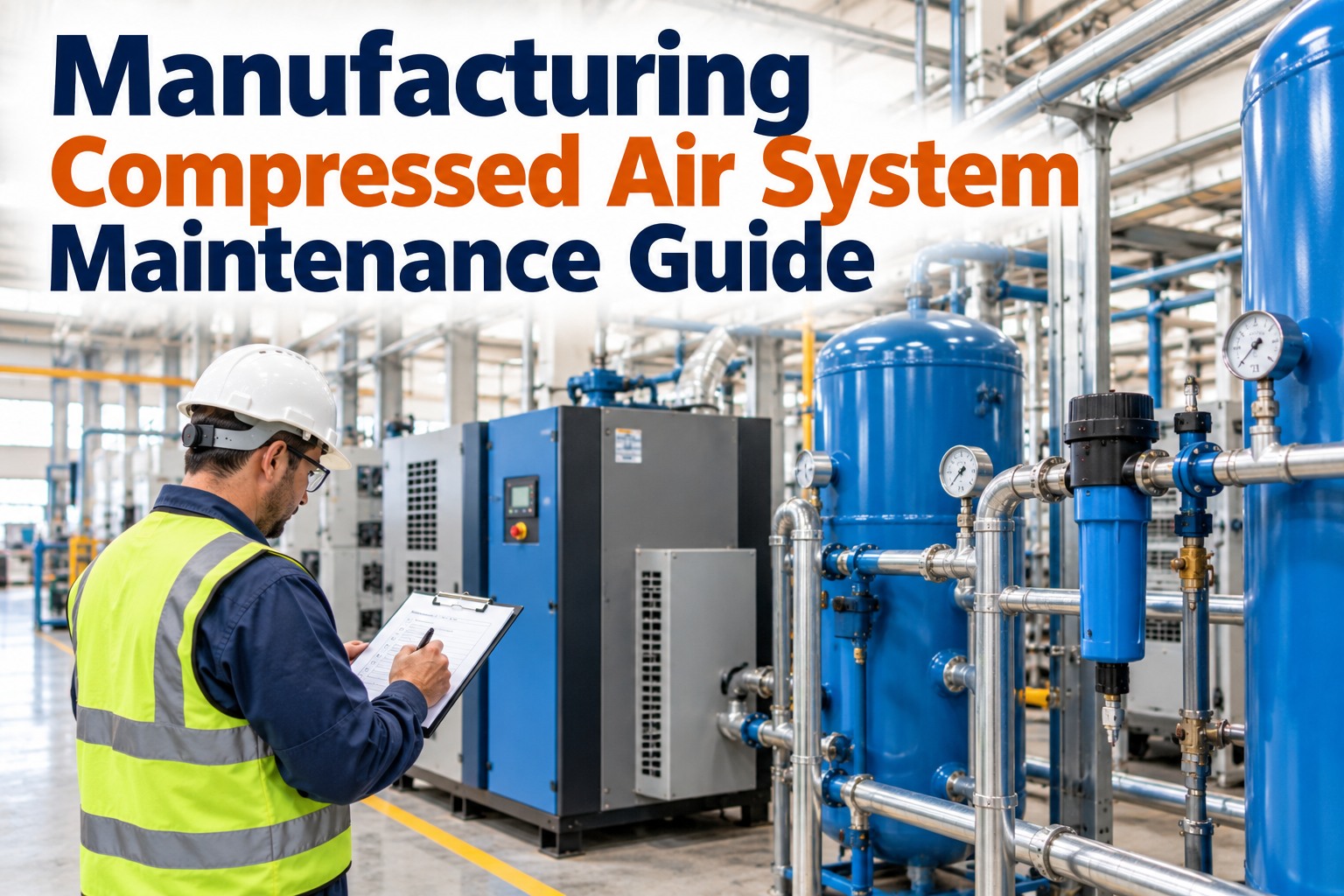
Compressed air is easy to take for granted: a compressor runs somewhere, and tools, cylinders and valves just work. Then pressure sags on the far line, a dryer stops keeping up, a compressor trips on high temperature, and a hiss behind a machine t
Oxmaint CMMS for Manufacturing Plants
The AI-powered maintenance management software built for manufacturing plants
A purpose-built CMMS for automotive, packaging, electronics, plastics and discrete manufacturers — work orders, cycle-based preventive maintenance, predictive maintenance from your existing sensors, OEE availability tracking and SAP costing on one platform. Every line, CNC, robot cell, press, moulder and utility skid in one asset register.
- PM triggered by machine cycles, parts produced or runtime hours
- Predictive alerts from servo & motor sensors auto-create work orders
- Downtime & OEE availability tracked out of every work order
Oxmaint CMMS · Manufacturing Dashboard
3,842
Assets Tracked
512
Active WOs
92%
Line Availability
98%
PM Compliance
Oxmaint Activity Feed
Streaming
Predictive alert · Robot Cell 07 wrist joint
Torque anomaly flagged · WO auto-created · Tech assigned
PM WO created · Stamping Press #3 die change
Cycle trigger 42,000 strokes · Parts reserved
AI Vision · Coolant leak under VMC-08
96% confidence · Inspection WO · Photos attached
QR scan · Line 2 conveyor inspection complete
Checklist signed · Photos synced · No defects
PLCs · MES · SAP PM all synced
Why Manufacturers Choose Oxmaint
A CMMS built around OEE availability, not calendar PM
Configured for the meters, workflows and asset hierarchies discrete manufacturers actually run on — structured PM without weeks of setup.
Cycle-Native Meters
PM triggers on cycles, parts produced and runtime, straight from your PLCs.
Sensor-Ready Predictive
Plugs into existing servo, vibration and temperature sensors — no new hardware.
OEE-Ready Analytics
Every WO captures downtime reason and duration, so OEE availability flows out automatically.
SAP & MES Integration
Bi-directional SAP sync, plus read-only feeds from your MES.
Production & Assembly Lines
Every line, station and machine a maintenance asset, with downtime tracked at the source
The registry mirrors your production floor — lines broken into stations, workcells, machines and sub-assemblies, each owning its PM schedule, WO history, parts list and downtime record. When Line 2 stops, the reason and duration are captured against the exact machine, rolling up into MTBF, MTTR and PM compliance per line and shift — so reliability programmes target the real bottlenecks.
Line › Station › Machine
Multi-level asset hierarchy per plant
Downtime at the Source
Reason & duration on every stop event
MTBF, MTTR & Availability
Per line, per shift, per product family
Bad Actor Identification
Top downtime contributors flagged monthly
Line 2 Assembly · Live
12 StationsStation 05 · Robot Cell
Predictive AlertWrist joint torque anomaly · WO created
Station 08 · Torque Fastener
PM DueCalibration at 42,000 cycles · Scheduled tonight
Line 2 · Shift Availability
94.2%18 min unplanned downtime · 3 stops logged
Top Bad Actor · 30 days
St. 11 Feeder6 stops · 84 min lost · Reliability WO opened
Every stop captured · Every reason coded · No paper logs
CNC, Robots, Presses & Moulders
Precision machinery managed by spindle hours, robot cycles, stamping strokes and shots
Every CNC machining centre, robot, stamping press, injection moulder and welding cell is a tracked asset with its own meter set — spindle hours, strokes, shots and tool changes — so PM triggers off actual duty, not calendar dates. Tool life, spindle bearing PM, rail lubrication, robot gearbox greasing and press die maintenance all run as scheduled tasks with parts, procedures and pass/fail criteria attached.
Spindle-Hour PM
CNC bearings, lube & calibration
Robot Cycle Tracking
Joint greasing & battery replacement
Press Stroke PM
Die maintenance, brake & clutch checks
Moulder Shot PM
Screw wear, mould change & heater bands
Machine & Robot Register
LiveVMC-08 · Machining Centre
PM Due2,490 of 3,000 spindle hrs · Bearing PM in queue
Press #3 · 400T Mechanical
Die PM42,180 strokes · Die change WO staged
Robot Cell 07 · Welding
PredictiveWrist joint torque anomaly · Investigation WO
Moulder IMM-12 · 220T
Healthy148k of 250k shots · Screw wear nominal
Every machine's meters & history in one place
Utilities, MHE & Facilities
Compressed air, chillers, HVAC, forklifts and AGVs — everything that keeps the plant running
Utilities and material handling don't make product — but when they fail, the plant stops. Every compressor, chiller, cooling tower, HVAC unit, forklift and AGV gets its own asset record, PM schedule and predictive alerts, with air PM on running hours and filter dP, HVAC on coil intervals, and MHE on operating hours from telematics — all in the same CMMS production maintenance uses.
Compressed Air & Chillers
Runtime, filter dP & oil analysis
HVAC & Controlled Environments
Filter, coil & belt PM per unit
Forklift & AGV Fleet
Hour-based PM & battery lifecycle
Water & Effluent Utilities
DI, chilled water, coolant & wastewater
Utilities & MHE Board
Plant-WideCompressor #2 · 250 kW
PredictiveDischarge temp rising · Oil sample WO
AHU-04 · Cleanroom Zone
PM DueFilter dP high · Change WO scheduled tonight
Forklift Fleet · 24 trucks
3 Due500-hour service · Parts kits reserved
Chiller CH-01 · 400 TR
HealthyApproach nominal · Compressor amps in band
Utilities & MHE in the same CMMS as production
Predictive Maintenance
Predictive maintenance from your existing sensors
The predictive engine plugs into the servo current, vibration, temperature and pressure sensors you already have via OPC-UA, Modbus, PLCs or historian — no new hardware — and learns a healthy signature per motor, drive, gearbox and compressor. When a signal drifts, it auto-generates a work order with parts reserved, technician assigned and the failure hypothesis attached, and every closed WO feeds the model back.
Uses Existing Sensors
Servo current, vibration, temp, pressure
Per-Machine Baseline AI
Learns healthy signature over 2-4 weeks
Auto Work Orders
Parts reserved · Tech assigned · Hypothesis
Asset Health Scoring
Live health score per critical machine
Predictive Watchlist
Auto-WO OnRobot 07 · Wrist Servo
WO CreatedTorque signature drift · Gearbox WO staged
Line 4 Conveyor Motor
WO CreatedVibration up 24% · Bearing kit reserved
Air Compressor #2
InvestigateDischarge temp rising · Oil sample WO
94% prediction accuracy · Sharper with every closed WO
AI Vision Inspection
AI Vision replaces routine floor walks with 24/7 automated visual checks
AI Vision connects to your existing plant cameras and scans for what maintenance and EHS rounds look for — coolant, oil and hydraulic leaks under machines, swarf buildup on CNC beds, conveyor belt tracking, blocked exits, open guards and PPE compliance. Any finding above your confidence threshold auto-generates a work order with still image, timestamp and video clip attached.
Fluid Leak Detection
Coolant, oil & hydraulic under machines
Guard & Safety Compliance
Open guards, blocked E-stops, exit paths
PPE Compliance
Safety glasses, gloves, ear defenders
Conveyor & Belt Tracking
Misalignment, spillage, damaged belts
AI Vision Findings
32 CamerasMachining Cell · VMC-08
Coolant leak · 96% confidence
Assembly Line 3 · Aisle
Exit route obstructed · EHS notified
Conveyor CV-14 · Zone B
Belt tracking off centre · 91% confidence
Press Shop · Cell 04
PPE compliant · Guards in place
NVIDIA edge inference · On-premise · 99.2% accuracy
Mobile CMMS & QR Workflow
Mobile app + QR — one scan for history, one tap to log the job
Every asset on the floor gets a QR label — CNCs, robots, presses, moulders, conveyors, MCC panels, compressors and forklifts. One scan shows full history, open WOs, health score, spare parts and LOTO procedure; one tap creates a work order or raises an issue with the asset already linked. Offline-first, so high-EMI areas and dead spots keep working and sync back on Wi-Fi.
Scan-to-Asset Lookup
History, health, WOs & parts in 2 seconds
Operator Issue Reporting
Flag stops from the line in seconds
Offline-First Mobile
Syncs automatically when in range
LOTO & Permit Workflow
Machine isolation & hot work permits
QR Scan Result
Just ScannedVMC-08 · Vertical Machining Centre
Location: Machining Bay 3 · ID: VMC-3-08
Coolant leak WO
2,490 spindle hrs
2 open WOs
Recent Work Order Activity
WO-9218 · Coolant leak investigation · Open
Insp-3411 · Way lube check · Passed 2 days ago
WO-9104 · Spindle bearing greasing · Closed
New WO
Inspect
LOTO
Complete Oxmaint CMMS Platform
Every maintenance workflow your plant needs — on one platform
Beyond work orders and PM — inspections, downtime tracking, spare parts, permits, calibration, analytics and ERP integration.
Work Order Management
Create, assign and close WOs across lines, machines and utilities. Predictive alerts, AI Vision findings and PM triggers all auto-generate WOs with parts and procedure attached.
Inspection & Calibration
Digital checklists per machine type — CNCs, robots, torque tools, gauges — with photo capture, pass/fail logic and corrective WOs on any failure.
Downtime & OEE Availability
Every stop captured with reason code and duration against the exact machine, rolling up into MTBF, MTTR and OEE availability per line or shift.
Shift Logbook
AI-generated summaries of completed work, open issues, top downtime contributors and follow-ups — replacing whiteboards and verbal briefings.
Parts & Inventory
Bearings, seals, belts, sensors, servo drives, PLC cards and tooling — auto-reserved on WO creation, PO drafted at reorder point.
Safety & Permits
Digital permit-to-work, LOTO, hot work and confined-space workflows built into every job, with photo evidence and audit-ready records.
Analytics & Reporting
Live dashboards for MTBF, MTTR, PM compliance, backlog, OEE availability and cost per unit — with multi-plant rollups.
SAP, MES & PLC Integration
Bi-directional sync with SAP PM, MM, EAM and FI, plus read-only feeds from MES platforms and PLCs via OPC-UA and Modbus.
Latest Posts

Read More
The motor control center sits quietly in its room until a bucket trips, a connection overheats, or a contactor fails and a line goes down. MCC problems build slowly: a loose termination, dust on the buses, a warm bucket nobody measured. Because th

Read More
A bearing takes ten minutes to replace and ninety to reach. The gearbox sits behind a guard rail, the lubrication point faces the wall, and the hoist can't get a lift over the top of the machine. Layout decisions made years ago quietly set how lon
Read More
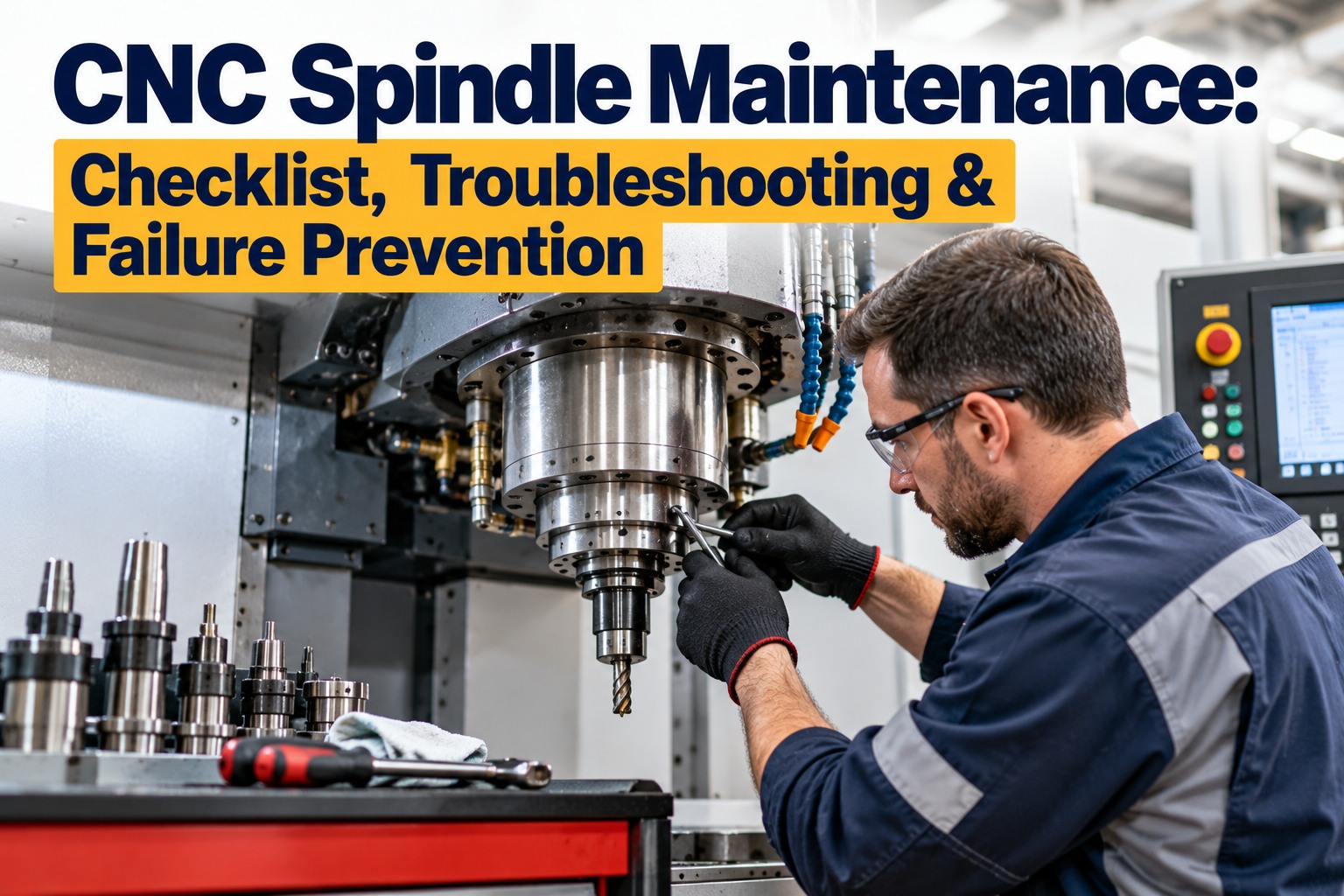
The spindle is the most expensive part of a CNC machine to lose, and it rarely fails without warning. Surface finish gets a little worse, the housing runs warmer than last month, a faint noise appears at one speed. Each sign is small, easy to expl

Read More
Two technicians, same task, two different ways of doing it. One follows the latest procedure, the other works from a laminated sheet that was replaced two revisions ago, and a third relies on what an experienced colleague once showed them. When pr

Read More
The belt drifts to one side, then an edge starts to fray, then the line stops mid-shift. Afterwards everyone agrees there were signs: a squeal last week, a bit of spillage, a motor running warm. The signs were seen but never turned into a job. Tro

Read More
The audit is Monday, and the proof is in six binders, three inboxes and one retired technician's memory. That's not a maintenance problem — it's a documentation problem, and it's the one that fails audits.

Read More
In SAP Plant Maintenance, a notification is where a problem is first reported and a maintenance order is where it finally gets done. The gap between the two is where most plants lose time: notifications pile up unconverted, planners re-key d

Read More
A lock on a disconnect means nothing without a documented procedure, a verified zero-energy check, a signed name on the tag and a record the OSHA inspector can find in under two minutes. Clipboards lose all four. LOTO software holds them automatic

Read More
An industrial HVAC system fails on a Monday morning twenty days after it started telling you it was going to. The chiller approach temperature crept up two degrees. The AHU fan drew another half-amp. Cooling-tower sump pH drifted. Condition monito

Read More
A production fixture doesn't fail dramatically — it drifts. A locating pin wears 0.05mm. A toggle clamp spring loses tension. A bushing opens up another half-thou. First the part passes QC with a wider margin, then it starts rejecting, then nobody
Read More
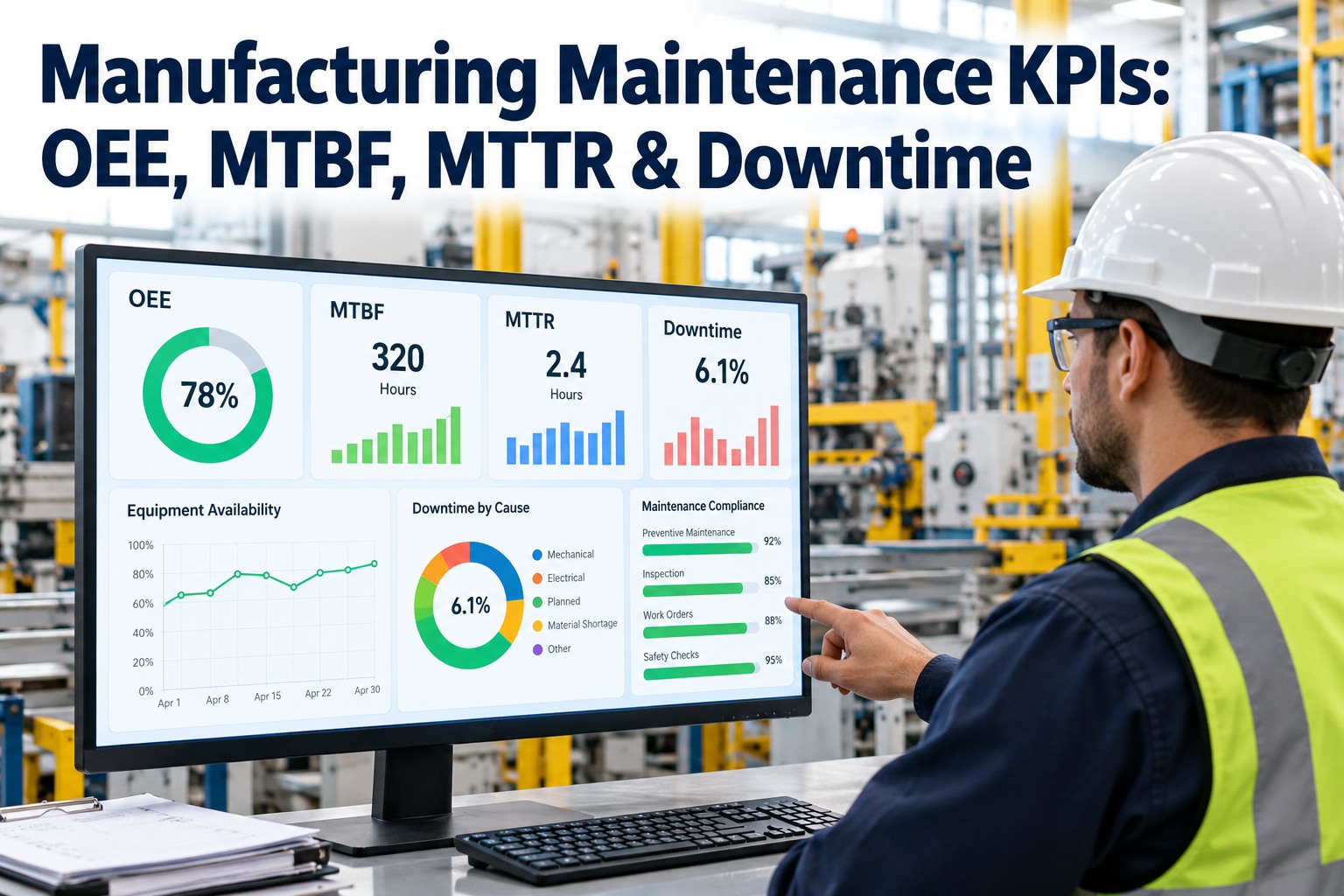
You can't improve what you don't measure — and most plants still measure the wrong thing. They count hours worked and jobs closed, not whether equipment is actually getting more reliable.

Read More
A maintenance team is usually paid for 2,080 hours a year and books maybe 700 of those as wrench time. The other 1,380 go to looking for parts, waiting for permits, chasing drawings and walking to the job. If you don't benchmark it, you can't fix

Read More
A bearing starts giving warning 7-28 days before it fails — in the vibration spectrum, not on the walkdown. A quarterly handheld route walks past most of that window.

Read More
A defect found at 9 a.m. should not have to wait until the next shift to be fixed yet on paper, that is exactly what happens. The inspection catches the problem, the note sits in a binder, and no one escalates it until it fails for real.

Read More
A human weld inspector can catch most porosity and cracks on a visual pass, but holds that quality for maybe 90 minutes before fatigue, lighting and shift pressure start costing calls. AI weld defect detection doesn't tire, doesn't blink, and clas

Read More
A cooling water system does one job — carry heat away from the process and reject it to the air — and it does that job quietly right up until the water turns against the metal it flows through. Scale insulates the surfaces meant to transfer heat,

Read More
Roughly 70% of manufacturing predictive maintenance pilots never scale beyond the first dozen assets. Not because the technology fails — because the pilot was never designed to prove anything. No scope boundary, no baseline, no success metric, no

Read More
A die change looks like a production task — pull one die, set the next, run the job. But it is also the only moment the tooling is out of the press and in your hands. Miss that window and the next time you see the die is when it cracks mid-run, or

Read More
A cutting edge doesn't fail all at once — it wears slowly, predictably, and then falls off a cliff. Run a tool past that point and you scrap the part, gouge the finish, and risk the spindle. Catch the wear as it ramps and you change the edge on yo

Read More
Half the sensors on a typical manufacturing plant are on the wrong assets, and the other half are being ignored. A bearing on a critical pump runs blind while a vibration sensor sits on a conveyor nobody worries about. This checklist walks the cov

Read More
When a conveyor belt slips, the drive pulley keeps turning but the belt lags behind it and the friction that should move the load turns into heat instead. Left alone, slippage glazes the pulley, burns the belt cover, overloads the motor, and

Read More
A belt edge wandering a few millimetres toward the frame, a splice starting to separate, carryback building on the return side — on a once-a-shift walk-around, all of it grows unseen between rounds. An AI-vision camera watches every second and tur

Read More
An auditor doesn't watch you do the work — they read the record that says you did. So a perfectly executed inspection with a missing signature, an obsolete procedure, or a date nobody can vouch for counts, in an audit, as work that never happened.

Read More
An auditor asks who signed off a critical PM, on what procedure version, and when and the answer is a smudged paper log that could have been backdated, filed under a binder lost in the last office move. Paper and spreadsheets can't prove who did w

Read More
A generator rarely fails cheaply — a shorted rotor turn, a loose stator wedge, a hydrogen seal leak or a bearing starved of oil can take a unit offline for weeks and a repair into seven figures. Most of it is catchable on a disciplined inspection

Read More
An inspector finds a defect. What happens in the next ten minutes decides everything whether it's one scrapped part or a thousand already boxed and on a truck. Too often the answer depends on who found it and how busy they were: a quiet fix

Read More
A robot cell has one arm, but a dozen reasons to stop — and more often than the motor or the mechanics, it's the servo drive that quits first. The drive is the box nobody watches: it runs hot in a sealed cabinet, its capacitors age quietly for yea
Read More
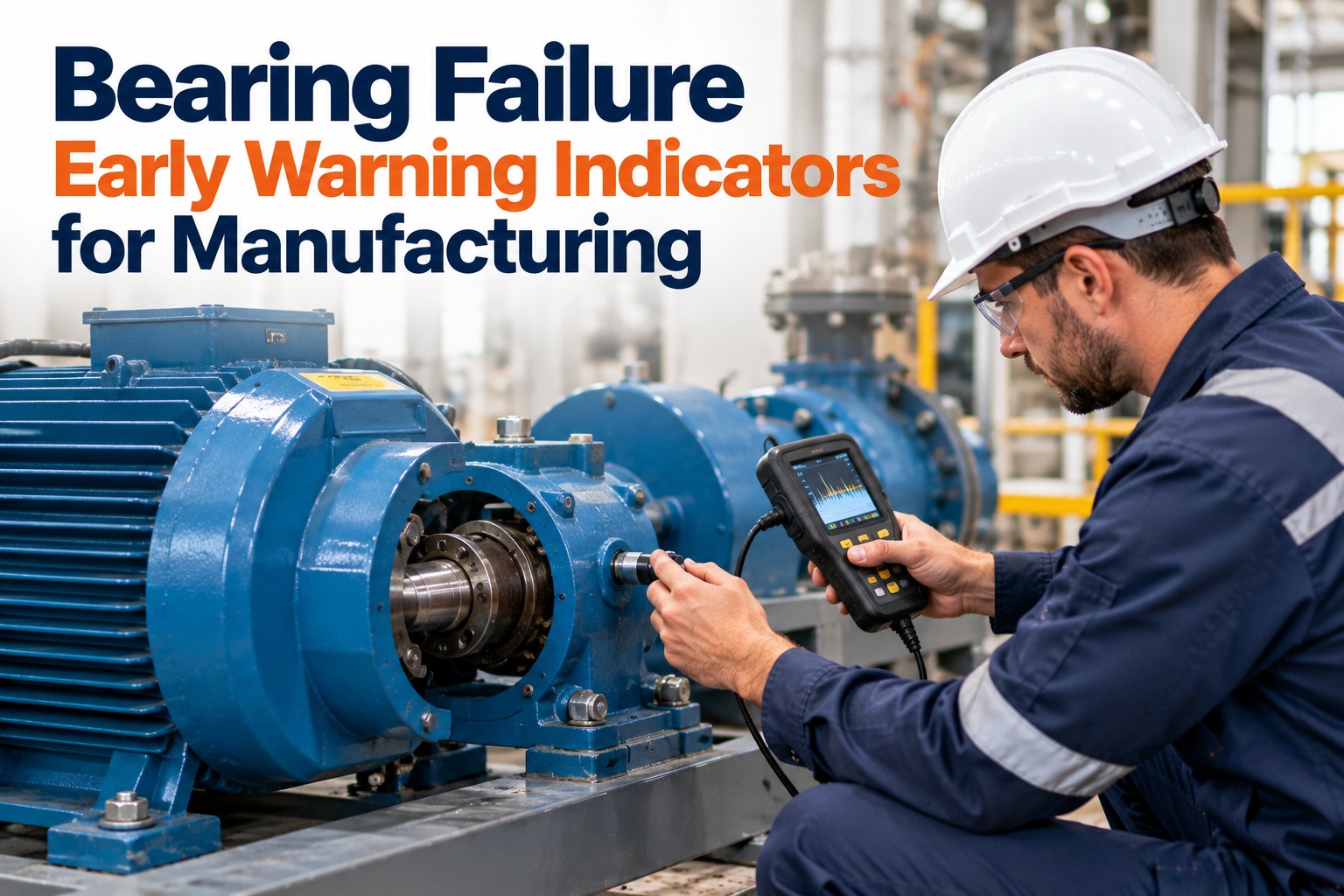
A bearing almost never fails without warning — it fails after weeks of signals nobody was listening for. Sub-surface fatigue starts far above the range a human ear or a basic sensor can catch, climbs through defect frequencies only a vibration ana
Read More
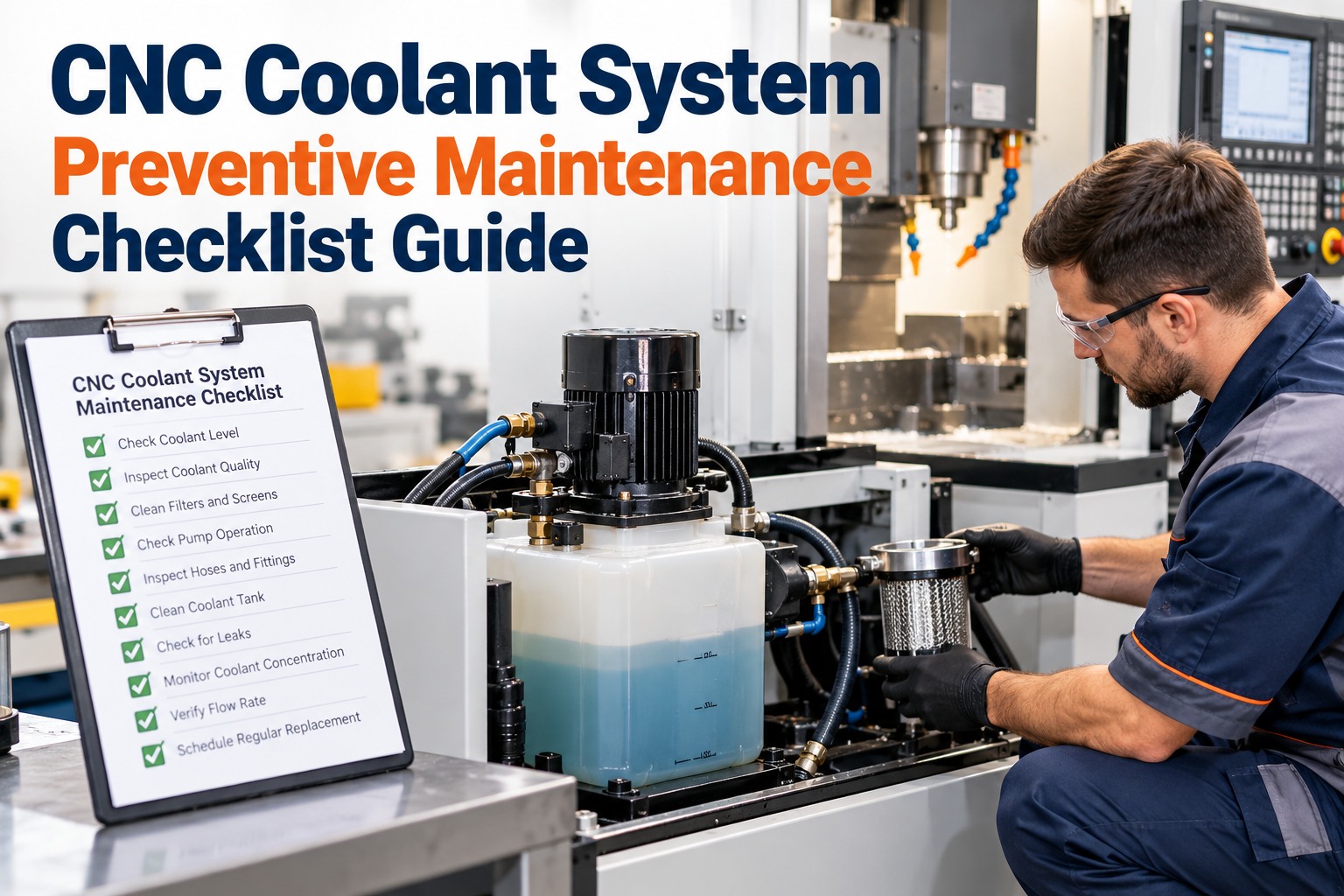
Coolant is the cheapest fluid in the shop and the one most likely to wreck a week. Let it drift out of concentration and tools wear fast; let tramp oil sit and it turns rancid over a weekend, stinks out the bay and raises skin complaints; let the

Read More
A maintenance budget that only shows a total tells you nothing about which assets are quietly draining it. One line item hides the chiller that costs twice what it should, the conveyor creeping toward replacement, and the transformer running clean
Read More
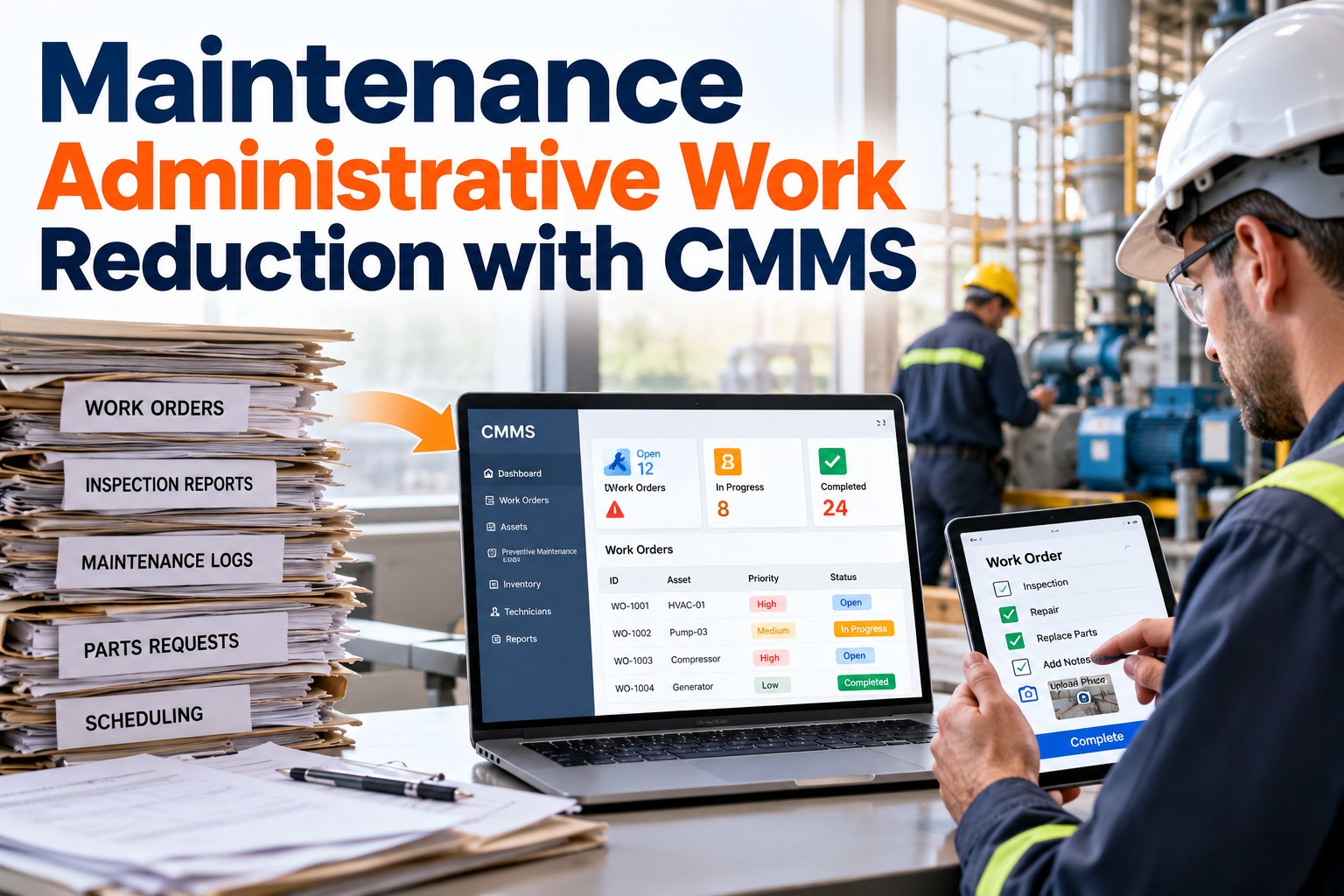
The most expensive thing a skilled technician does all day is paperwork. Writing up work orders by hand, walking back to the office to log a job, hunting the stockroom for a part, digging equipment history out of a binder — on a typical shift more

Read More
A bearing sits on the shelf for three years, then two fail in a month. A gearbox nobody ordered in a decade strands a line for six weeks because its lead time is longer than anyone remembered. MRO demand doesn't behave like production demand — it'

Read More
A quality check flags a worn guide rail. A line inspection catches a guard working loose. A QC audit logs a drifting torque reading. Every one is a problem found — and in too many plants, found is where it stops: the defect gets a note, the note g

Read More
A line stops. In the seconds it takes a supervisor to walk over, the plant is already bleeding money and for an automotive assembly line, each of those minutes can run into the thousands. Downtime is the most expensive word on a factory floor, and

Read More
Hands full of a tablet and a manual, an expert a flight away, the fix waiting on travel AR smart glasses end that. Work instructions float on the machine, the remote expert sees what the technician sees and draws on it, and the repair logs i
Read More
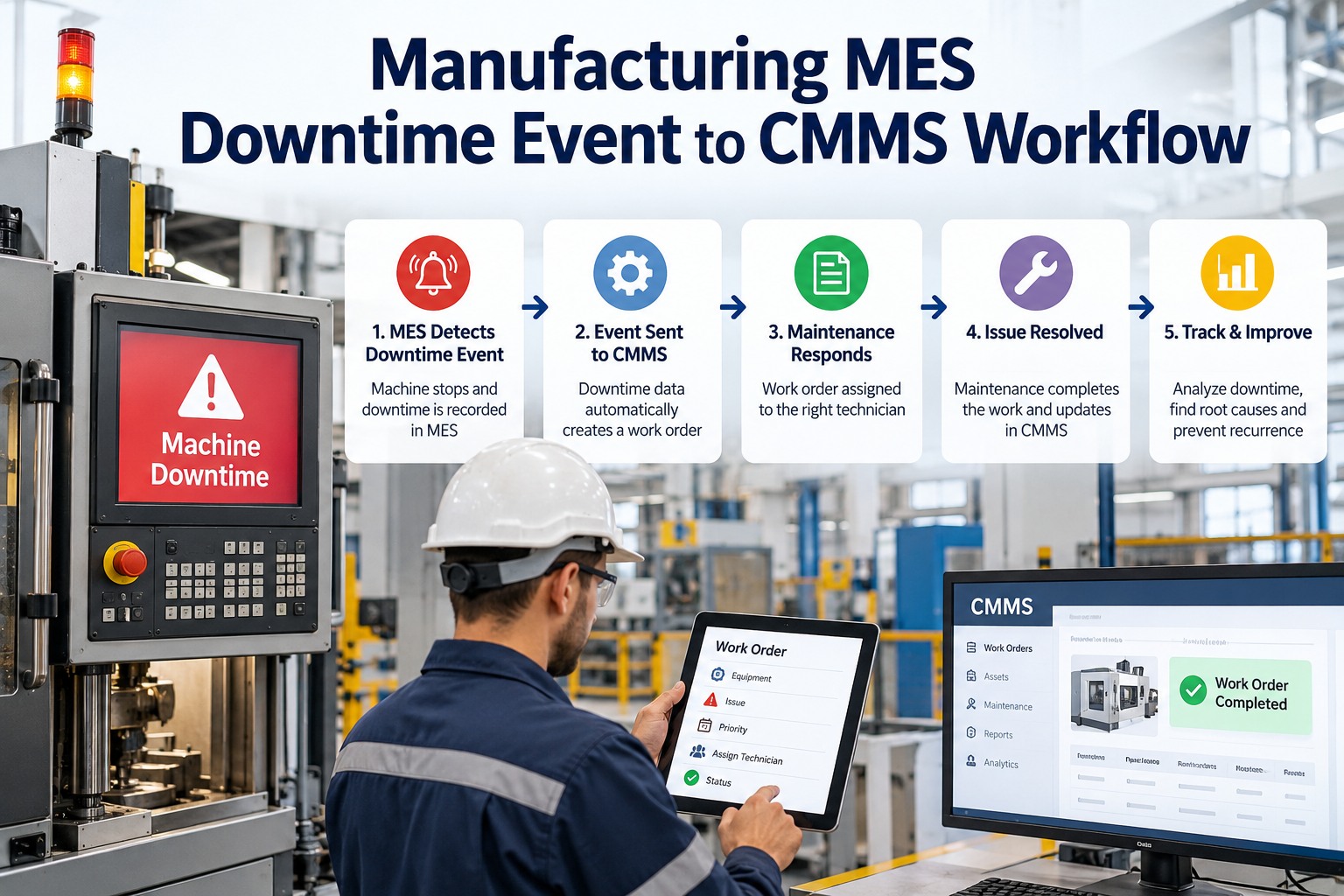
The MES knows the moment a machine stops. It records the time, the line and often a reason code. But a stopped machine does not repair itself, and the data sitting in the MES does not reach the technician who can fix it. In many plants, an operato

Read More
A technician spots a missing guard on a conveyor tail pulley and mentions it at the end of the shift. The supervisor nods. Nothing is written down, nothing is assigned, and three weeks later someone else reaches in to clear a jam. Most serious inc
Read More
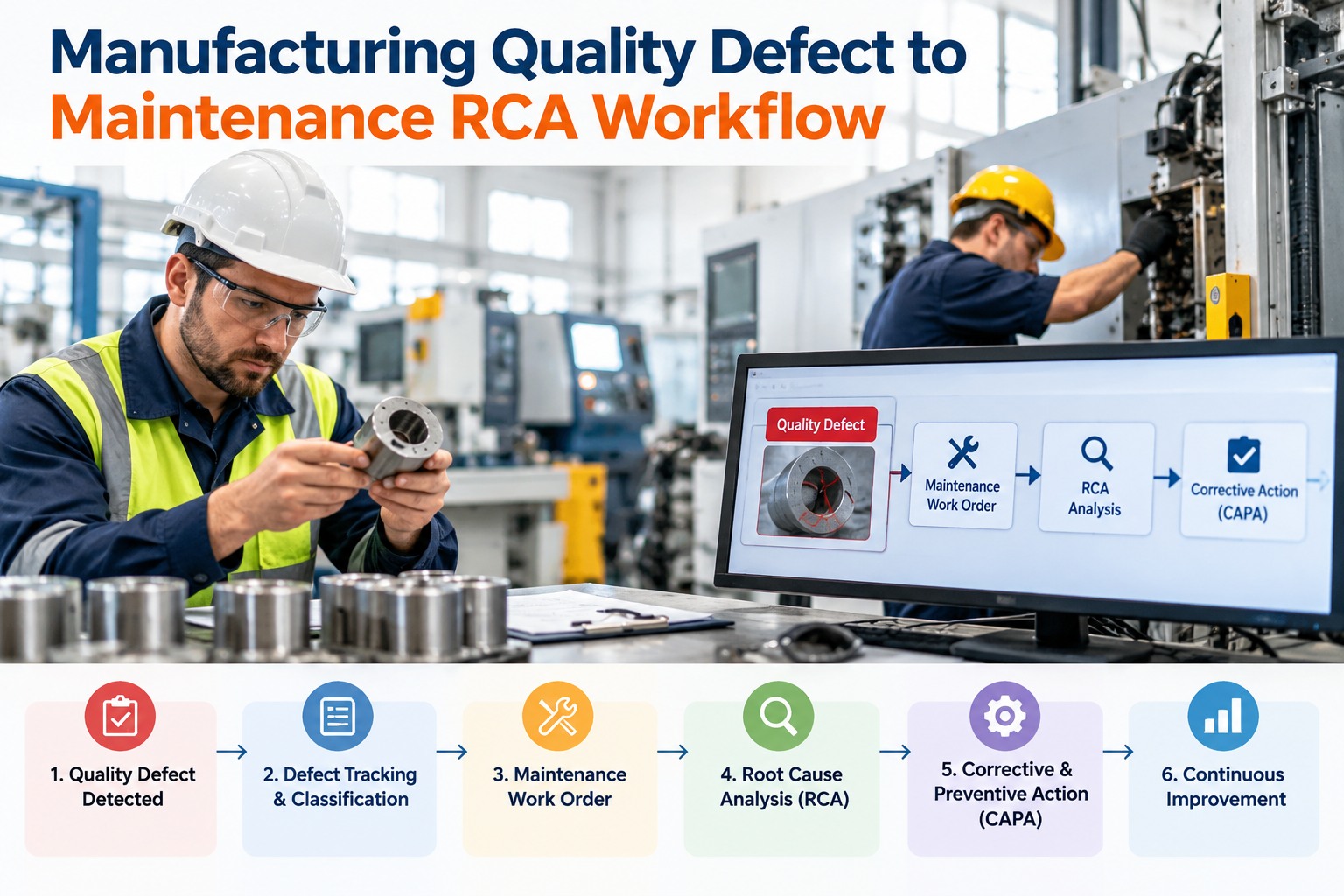
Quality finds a defect and scraps the batch. Maintenance resets the machine and restarts the line. Two weeks later, the same defect is back, because nobody connected the scrap to the worn component that caused it. In most plants, quality and mai

Read More
A temperature sensor drifts a little each month. Nobody notices, because the screen still shows a sensible number. Then a batch fails, an alarm trips for no reason, or an auditor asks when that sensor was last checked and the answer is "we think l

Read More
A PLC fails at 2 a.m. The replacement is on the shelf, but the program inside the dead one was last backed up two years ago, and three engineers have changed it since without telling anyone. Now the line is down while someone tries to rebuild logi

Read More
The alarm sounds, the spindle stops, and the operator's first instinct is to reset and run again. That is the most expensive button on a CNC machine. A crash can bend a spindle, damage a ballscrew, shift a fixture or knock the machine out of geome

Read More
A conveyor belt is only as strong as its weakest point, and that point is almost always the splice. When it fails, it usually fails without warning: a few lifted fingers on a Monday, a torn joint on Friday, and an entire line stopped while a crew
Read More
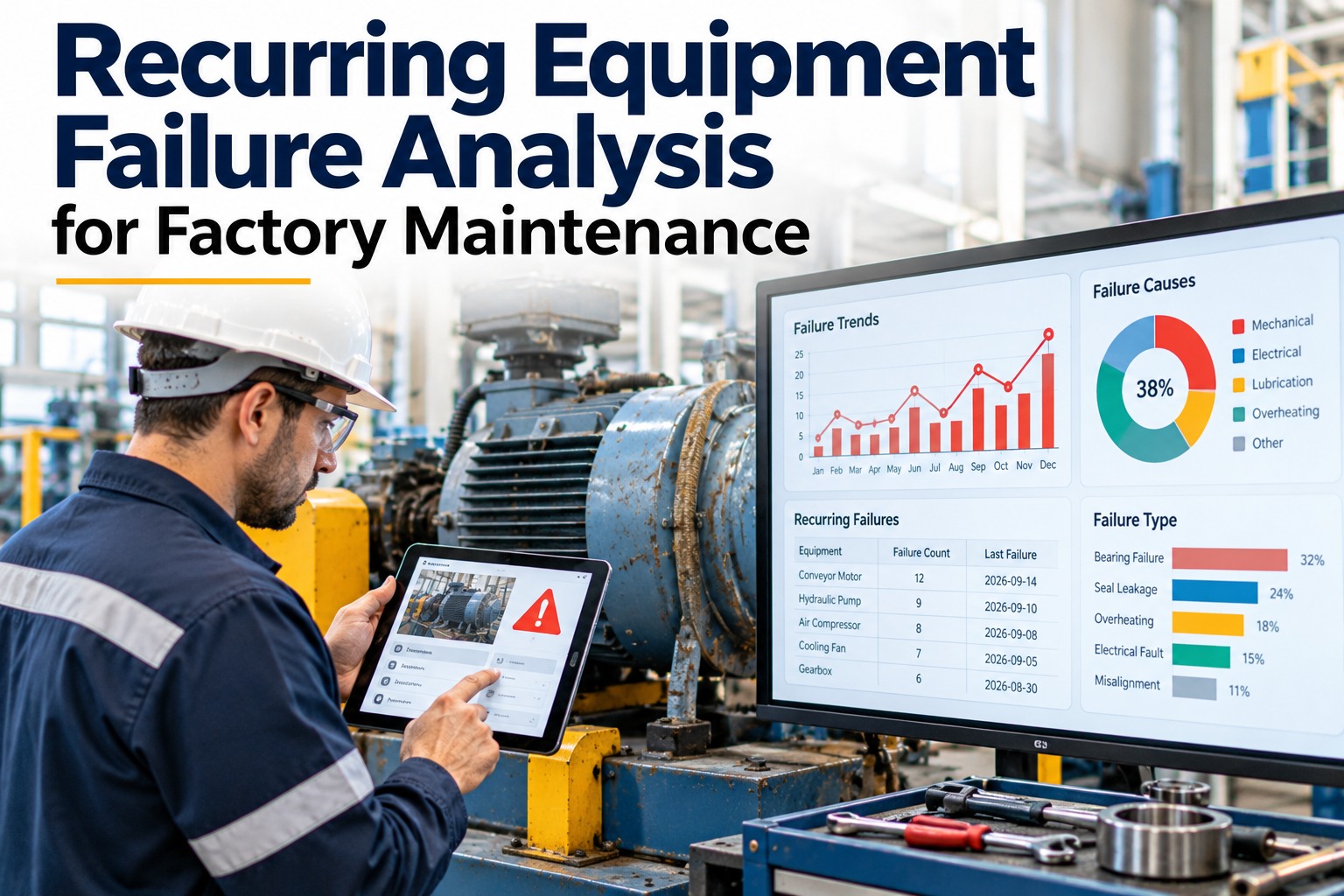
The conveyor drive stops at 6 a.m. again. Maintenance swaps the bearing, the line restarts, everyone moves on. Three weeks later, the same drive stops for the same reason. Sound familiar? Recurring failures are the most expensive kind because the

Read More
A technician puts on AR smart glasses to follow a repair guide hands-free, and the screen stays blank, the Wi-Fi drops, or the headset dies halfway through the job. The line stays down, and the expert you were counting on cannot see what the techn

Read More
A weld that looks fine on the line can become a warranty claim, a recall or a safety incident months later. Traditional weld inspection depends on tired eyes, sampling and paper forms, so some defects slip through and the records are hard to find

Read More
In most plants, quality and maintenance live in separate worlds. The inspection station catches a scratched part and rejects it; the maintenance team fixes machines when they break. But that scratched part is trying to tell you something — a worn

Read More
The difference between a plant that runs planned and one that firefights is often a single 30-minute meeting. Without a disciplined weekly planning meeting, next week's schedule is whatever lands in the inbox Monday morning — reactive, unprepared,

Read More
A loose electrical connection doesn't announce itself. It runs a few degrees warmer than its neighbors for weeks — invisible to the eye, silent on every gauge — until the day it arcs, trips a line, or starts a fire. Infrared thermography is how yo

Read More
Fire protection is the equipment you hope never runs — which is exactly why it gets neglected. A sprinkler head blocked by new racking, an extinguisher with a lapsed tag, a fire pump that hasn't been churn-tested, an exit light with a dead batte

Read More
Your team finds the failing bearing when it's already screaming — the alarm was buzzing on an HMI three shifts ago, but nothing turned it into a work order, so the line went down anyway. That's the gap on most floors: the condition data exists, bu

Read More
Every restart after a planned stop is a gamble on memory: did someone remove all the locks, test the e-stops, check the lubrication, ramp it slowly? Skip one step and you get a jam, a scrapped first batch, or a safety incident on the first cycle.

Read More
When you run one plant, you can walk the floor. When you run six, you're flying blind on five of them. The maintenance manager at each site knows their own backlog, their own overdue PMs, their own bad actors — but the person accountable for all o

Read More
A vibration sensor sees a bearing starting to fail at 2 a.m. — but the alert lands in an inbox nobody reads until morning, and by then the line is down. The sensor did its job; the handoff didn't.

Read More
Two departments, one machine, opposite incentives. Production is measured on output and doesn't want the line stopped. Maintenance is measured on reliability and needs the line stopped to do its job. Left uncoordinated, this tension resolves the w

Read More
The same alarm fires for the third time this shift. An operator acknowledges it, the line keeps running, and nobody writes down why — until the day it isn't a nuisance and the machine goes down for real. Recurring alarms aren't noise to be silence

Read More
Bearing failure is one of the most predictable failures in a plant, and one of the most inconsistently checked. One technician greases on schedule and listens for noise; another checks vibration but skips the visual; a third does neither because t

Read More
The compressor room is the quietest disaster in most manufacturing plants. A 200 hp screw compressor consumes on the order of $180,000 in electricity per year, and when valve wear, bearing degradation or discharge-temperature drift creeps in, that
Read More
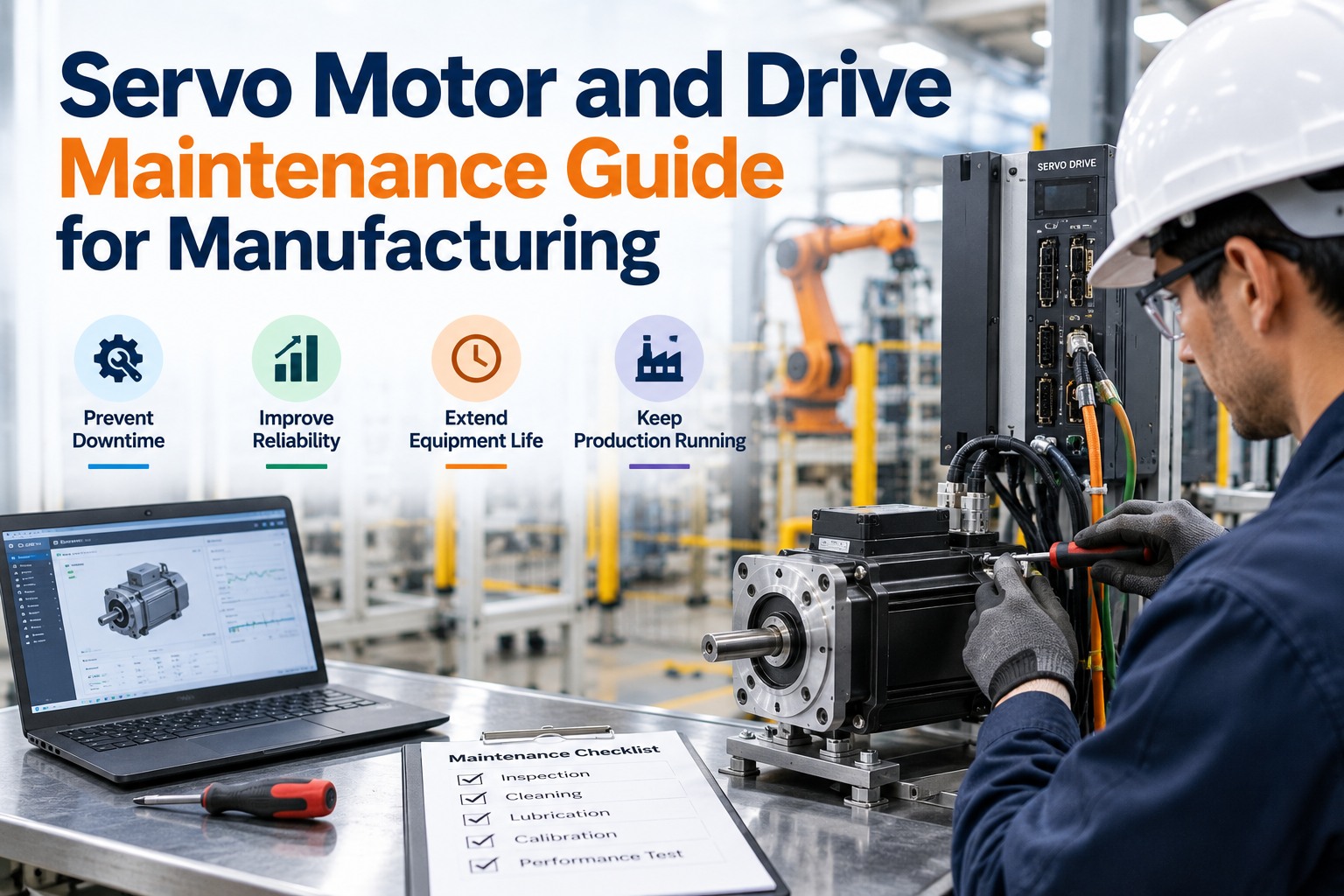
A servo motor doesn't fail like an induction motor. The "muscles" — bearings and windings — usually outlast the electronics and feedback loop that run them. The failure signatures live in high-frequency current, encoder jitter, PWM-induced shaft v

Read More
A camera on a production line usually earns its keep one way — catching defective parts before they ship. But the same frames that spot a scratch on a body panel also see the tool wearing, the nozzle drifting, the fixture losing alignment. When AI

Read More
Planners lose 4–6 hours every week re-keying PdM alerts that never reach Maximo or SAP. That lost time is often the difference between catching a failure early and running emergency overtime. It's Monday morning: the planner opens Maximo to a week

Read More
MRO spare parts eat 40–50% of the total maintenance budget at most industrial facilities, and yet 23% of unplanned downtime events trace directly back to an unavailable spare part, according to Plant Engineering's 2025 Maintenance Survey. The frus

Read More
A Factory Acceptance Test binder is usually thick, thorough, and the last time anyone looks at it. Equipment passes FAT at the vendor's shop, passes SAT once it's installed on site, and then the punch list, the test records, and the vendor documen
Read More
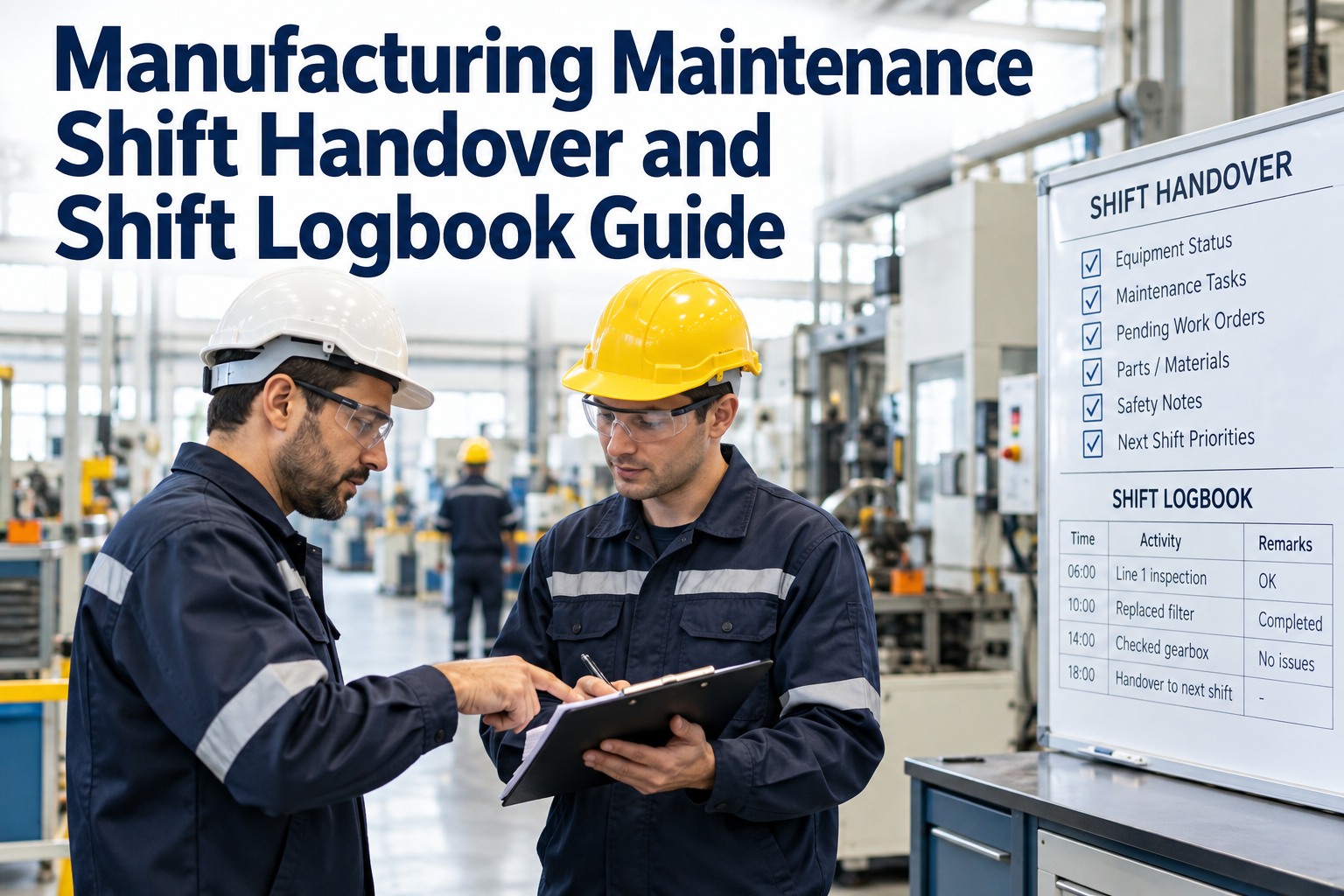
Every plant that runs shifts has the same quiet failure point: the outgoing technician knows exactly which machine was running rough, which repair is half-finished, which work order got raised but never closed — and none of that reliably makes it

Read More
Most plants don't have a maintenance execution problem — they have a planning problem wearing an execution costume. A technician stands at a machine, work order in hand, and the part isn't in stock, or the job wasn't scoped, or someone else alread

Read More
Every piece of manufacturing equipment has a story — when it was installed, what's been done to it, what broke and when, who fixed it, and how critical it actually is if it goes down. Most plants have fragments of that story scattered across a spr
Read More
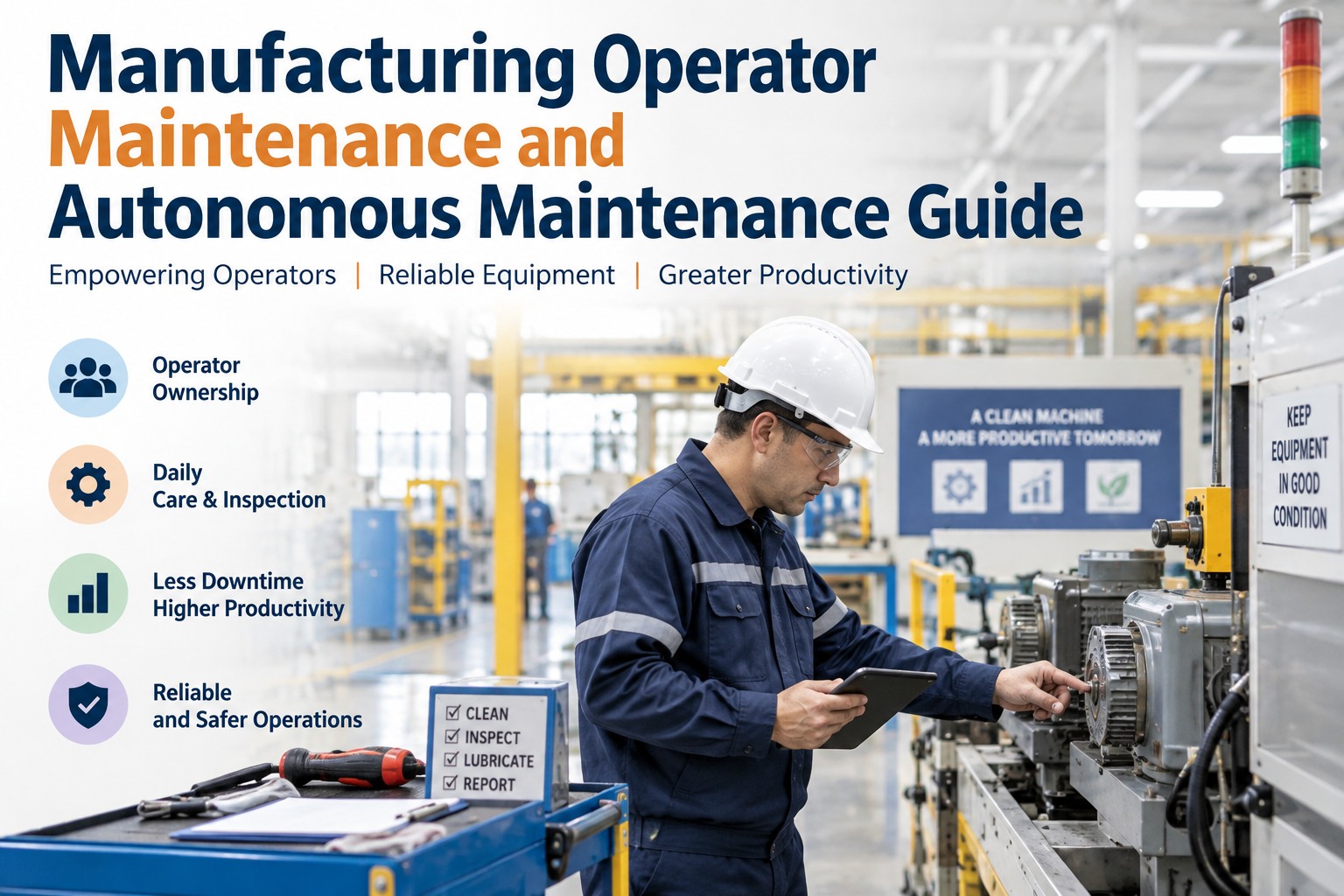
Operator-led equipment care isn't a nice-to-have add-on to a maintenance program it's one of TPM's eight pillars for a reason. Studies on autonomous maintenance programs consistently find that 40–60% of equipment breakdowns are preventable through

Read More
A heat treat furnace running two degrees off spec doesn't set off an alarm it just quietly produces parts that fail a hardness test three days later, after they've already moved downstream. Heat treatment is one of the few manufacturing processes
Read More
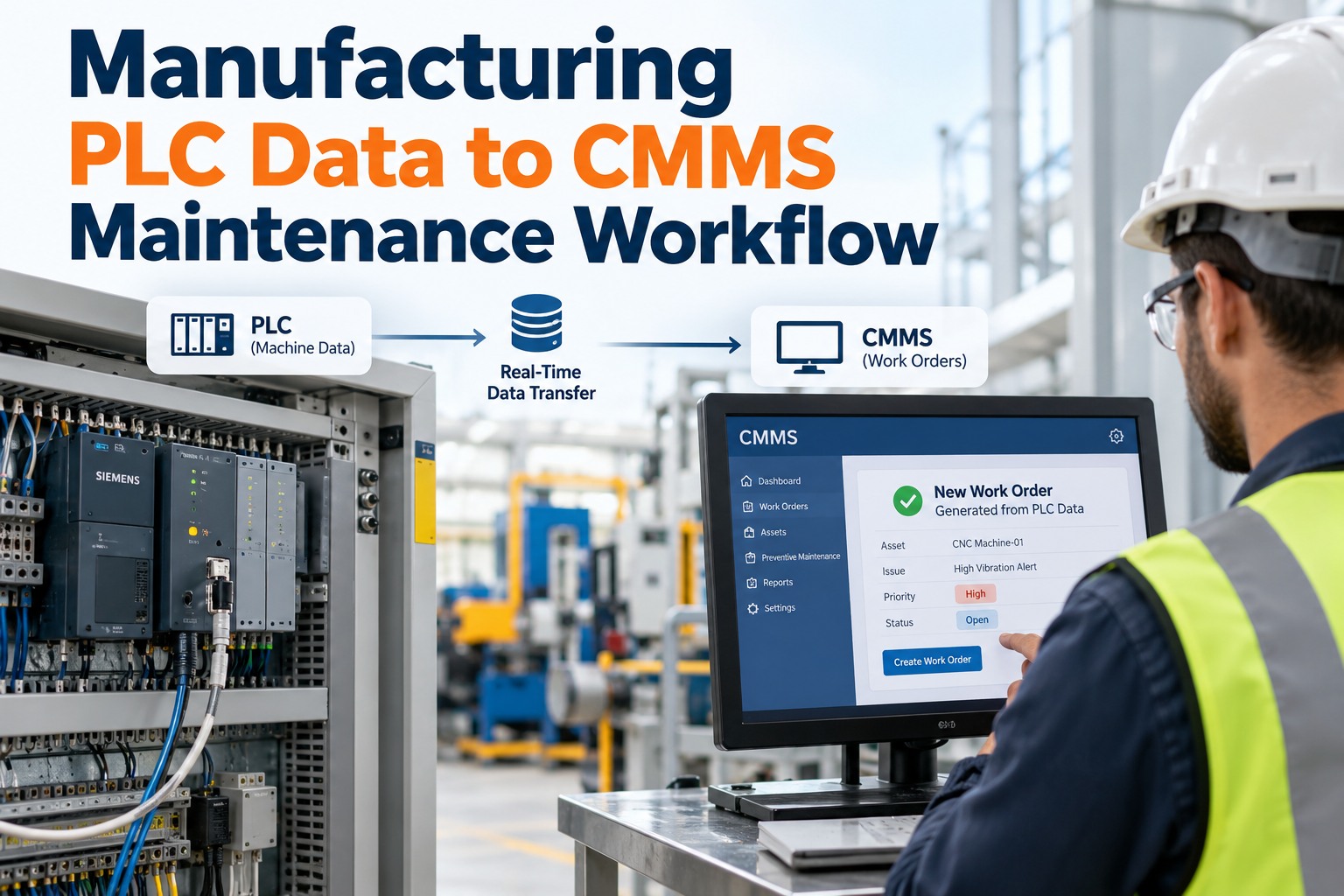
Manufacturers lose an estimated $50 billion a year in the United States to unplanned downtime — and most of that damage is preventable with data the plant is already generating. A PLC registers a torque overload fault, a temperature tag crosses th

Read More
Sixty percent of wastewater discharge non-compliance incidents trace back to inadequate maintenance intervals, not equipment that was fundamentally unfit for the job — and the average violation runs around $37,500, before counting the cost of the
Read More
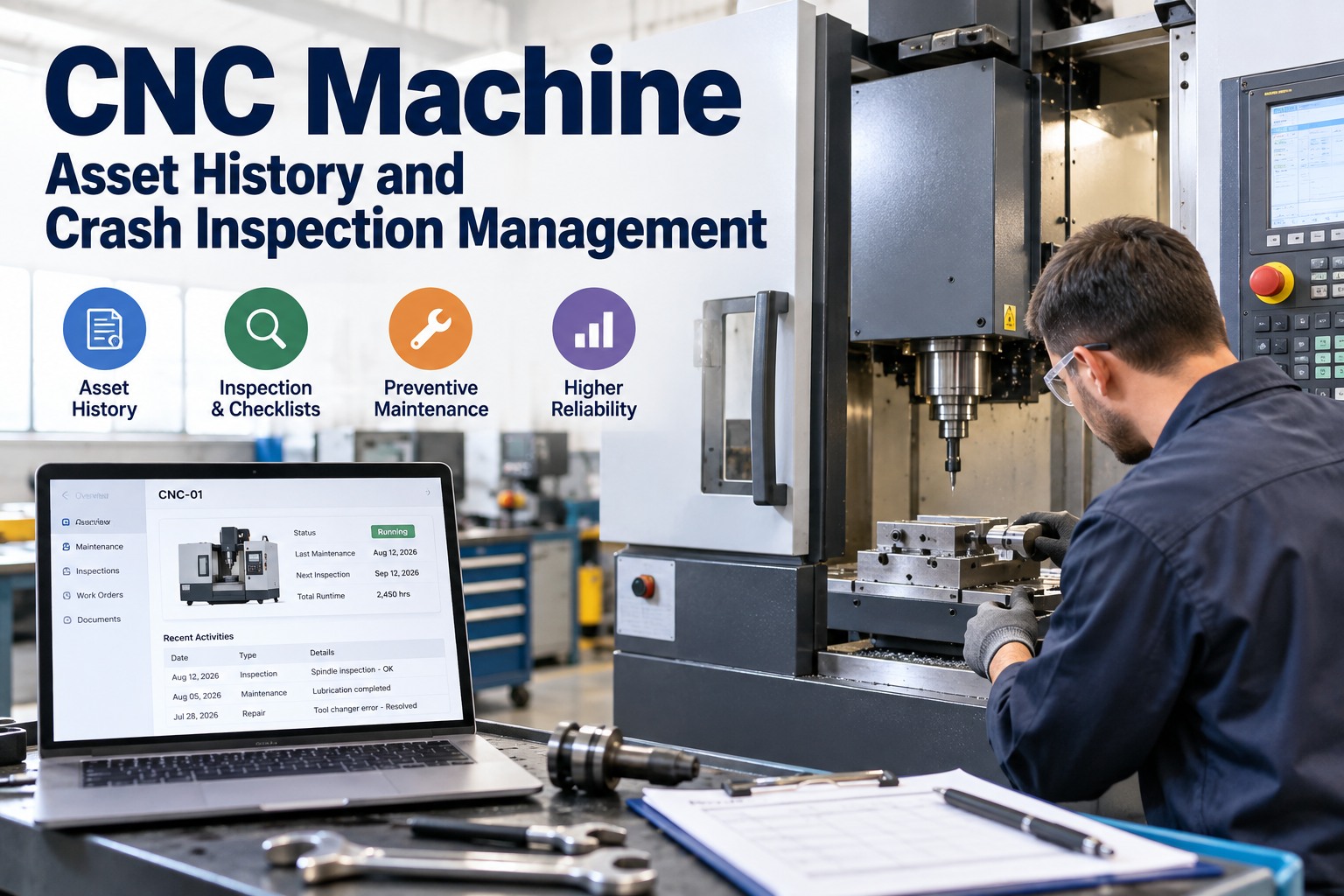
A CNC crash is loud, fast, and over in seconds — a tool plunges into a fixture, a collision alarm fires, and the operator resets the machine and gets back to running parts. What doesn't happen nearly as often is the inspection that should follow:

Read More
A vibration sensor on a motor is only worth installing if the number it produces actually reaches someone who can act on it. Most manufacturing plants that "have predictive maintenance" really have a sensor feed nobody checks daily, a dashboard th
Read More
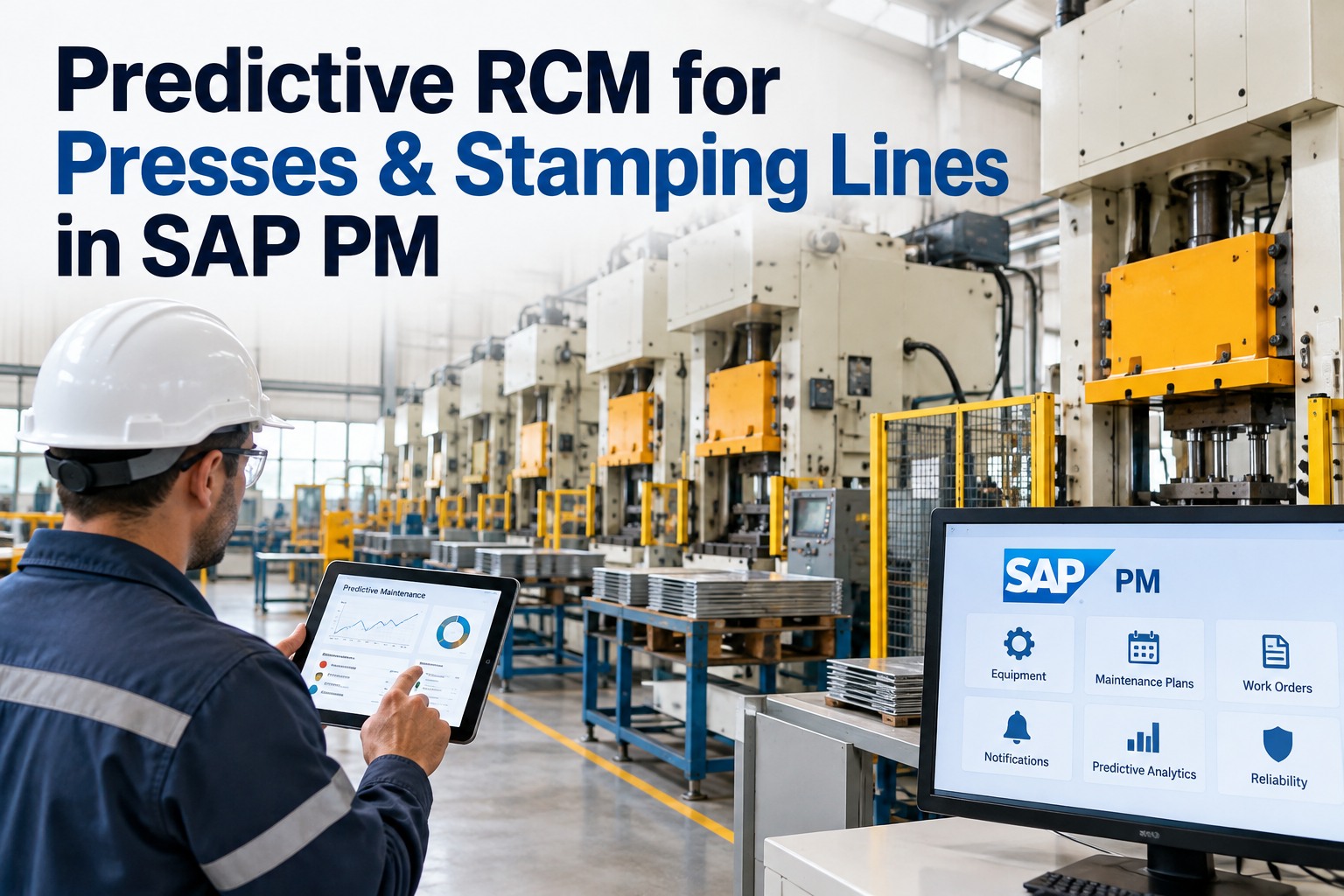
Nobody rips out SAP PM. It's the system of record — the place work orders, notifications, functional locations and cost postings live, and the place finance and audit trust. The problem isn't SAP PM; it's what SAP PM was never built to do: watch a
Read More
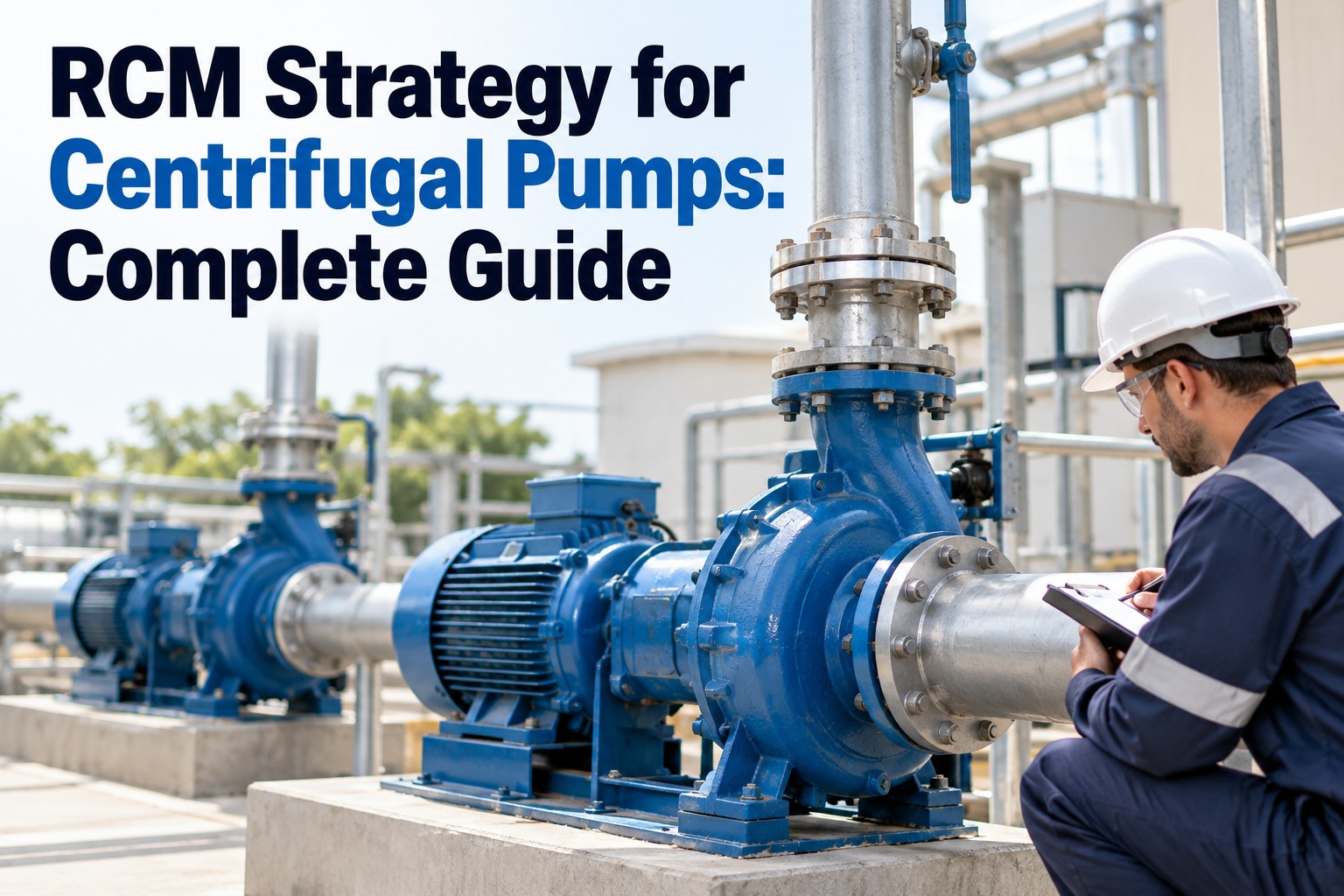
Centrifugal pumps are the most common rotating equipment in any plant — and their failures are remarkably predictable. Across industry reliability data, bearing failures cause roughly 45% and mechanical seals another 30% of all centrifugal pump br
Read More
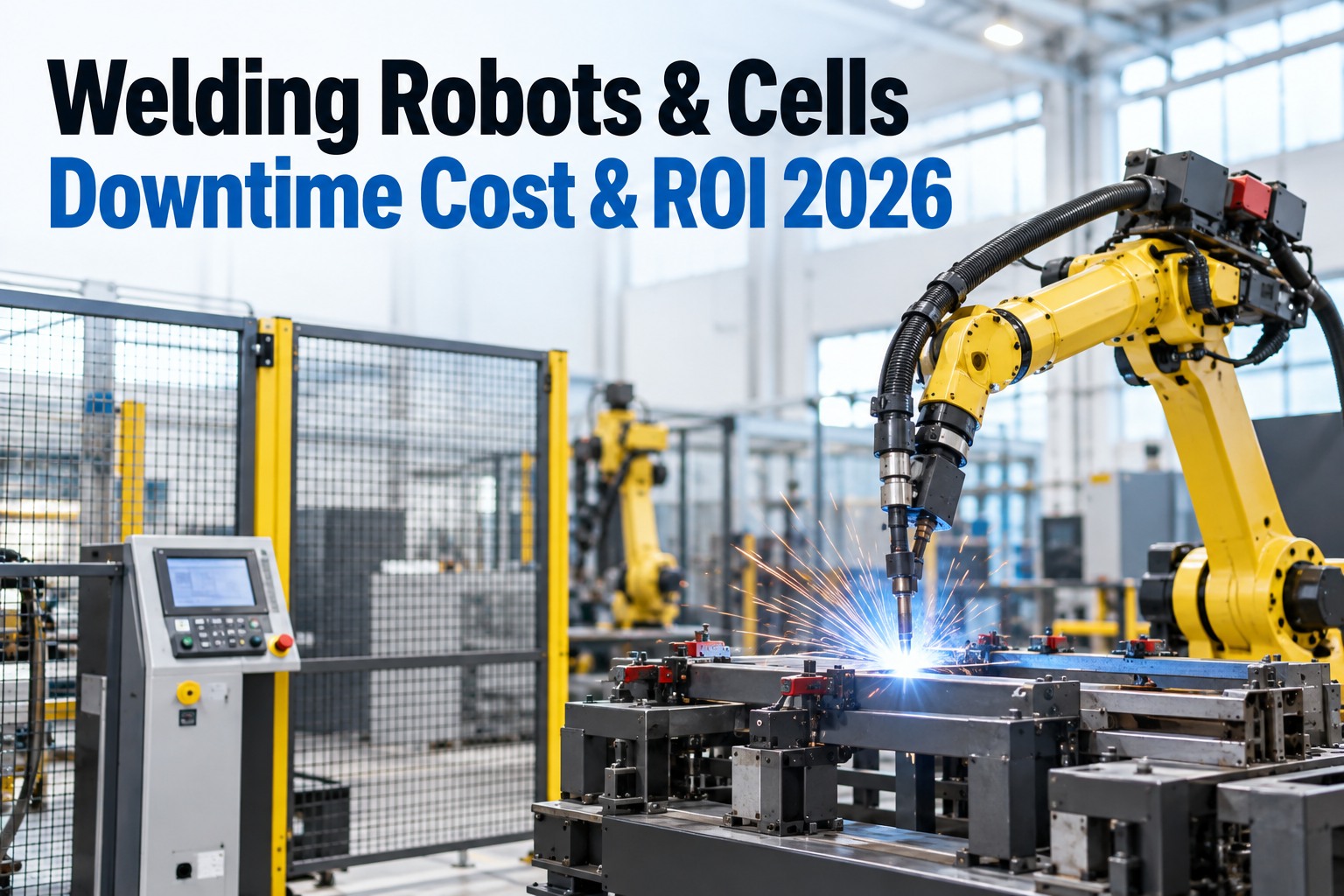
A welding cell doesn't fail quietly. When a robot faults mid-cycle, the whole line behind it stops — and the cost isn't just the idle robot, it's the starved downstream stations, the scrapped in-process welds, the missed takt, and the overtime to
Read More
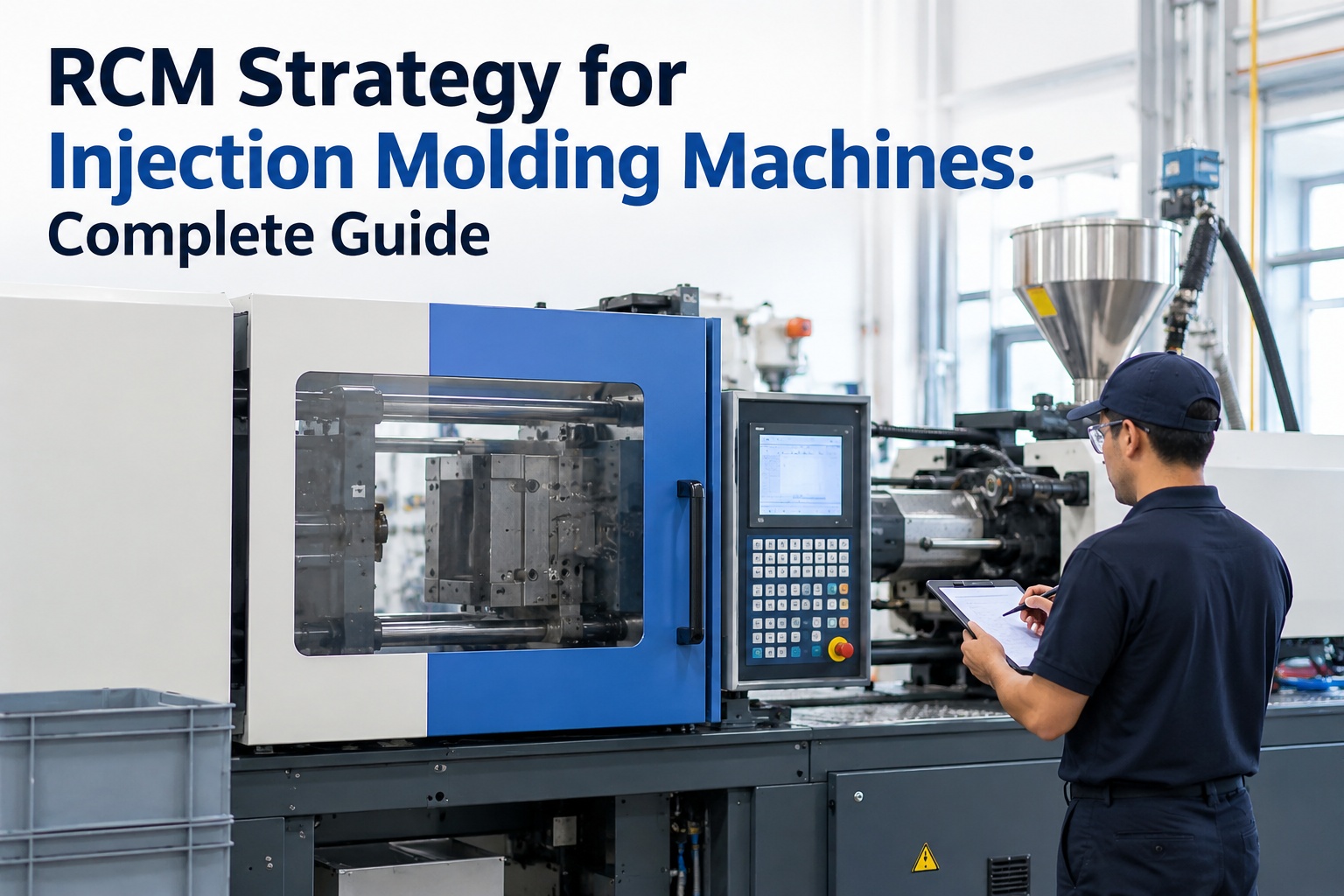
Reliability-centered maintenance asks one deceptively simple question of every injection molding machine: not "how do we service this?" but "what does each part need to keep doing, and what happens when it stops?" On an IMM — where a single barrel

Read More
A gearbox rarely dies suddenly. It sends warnings for weeks — the oil darkens, a bearing runs a few degrees hot, a sideband climbs on the vibration spectrum — and then one afternoon a tooth fractures and a $50K rebuild and a line stoppage land on

Read More
An aging asset isn't just an old one — it's one whose failure behavior, spare-parts risk, and cost curve have all quietly changed, while the maintenance plan around it usually hasn't. Most plants run critical equipment well past its design life, a

Read More
SAP S/4HANA already knows your CNC machines exist — the equipment master, the functional locations, the PM work order flow are all there. What it doesn't do out of the box is tell you which spindle is going to fail in three weeks. That gap between

Read More
A power transformer almost never fails without warning — it fails without anyone watching the warning. Dissolved gases climb, partial discharge activity rises in a bushing, a hot-spot creeps up in the windings, and the fault is writt

Read More
Most air-compressor PM programs are built on a false assumption: that failures are age-related, so a fixed calendar interval will catch them. They aren't. The foundational RCM research found only a minority of failure modes follow an age pattern —
Read More
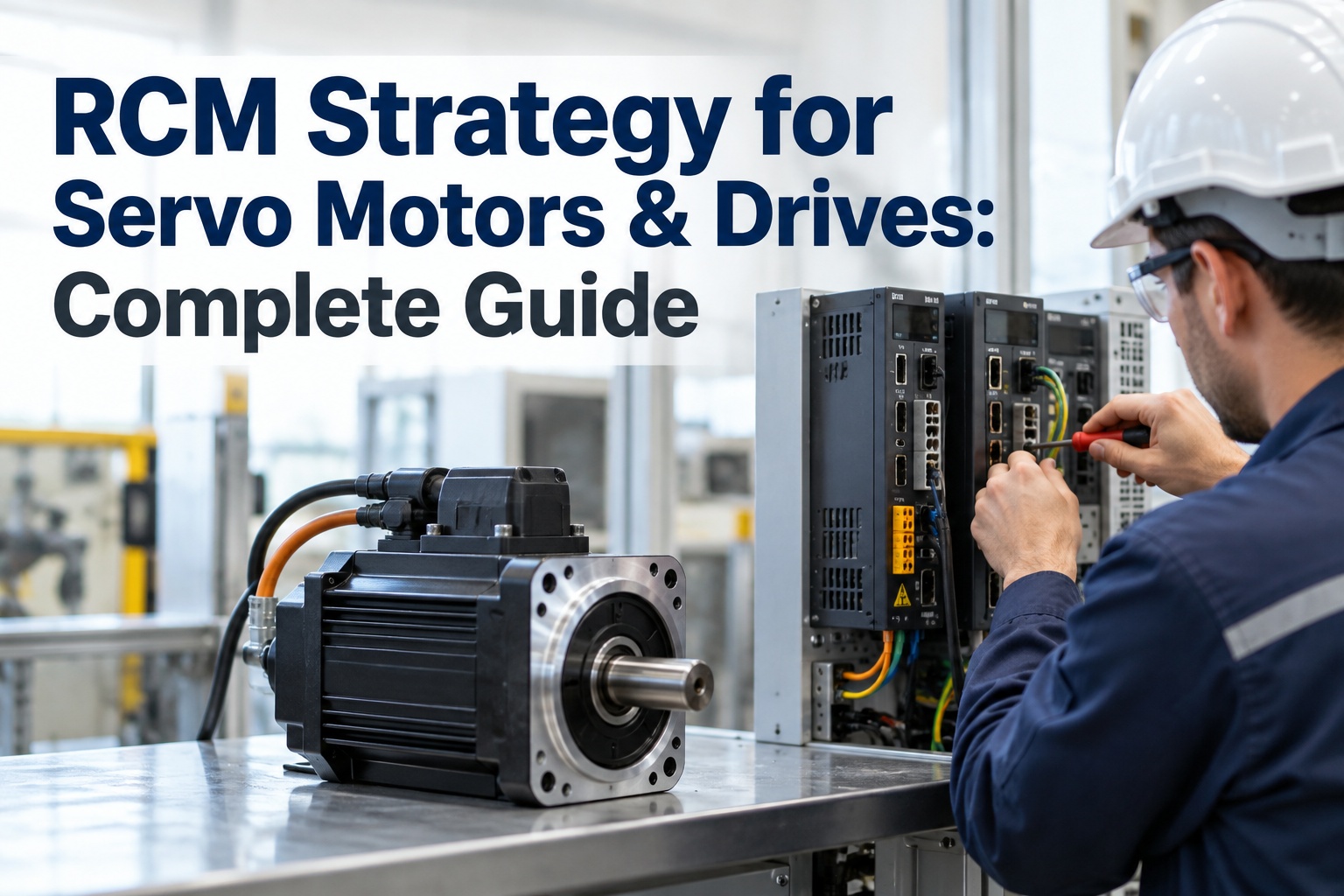
A servo axis rarely fails loudly — it drifts. Following error creeps up, a bearing whispers, an encoder count slips, and one day a positioning fault stops the line mid-cycle. An RCM strategy for servo motors and drives is what converts that slow d

Read More
A maintenance technician spends a surprising share of every job not fixing anything they're walking back to a terminal, putting a tool down to swipe a tablet, or waiting on a phone call to reach the one engineer who's seen this fault before. Weara
Read More
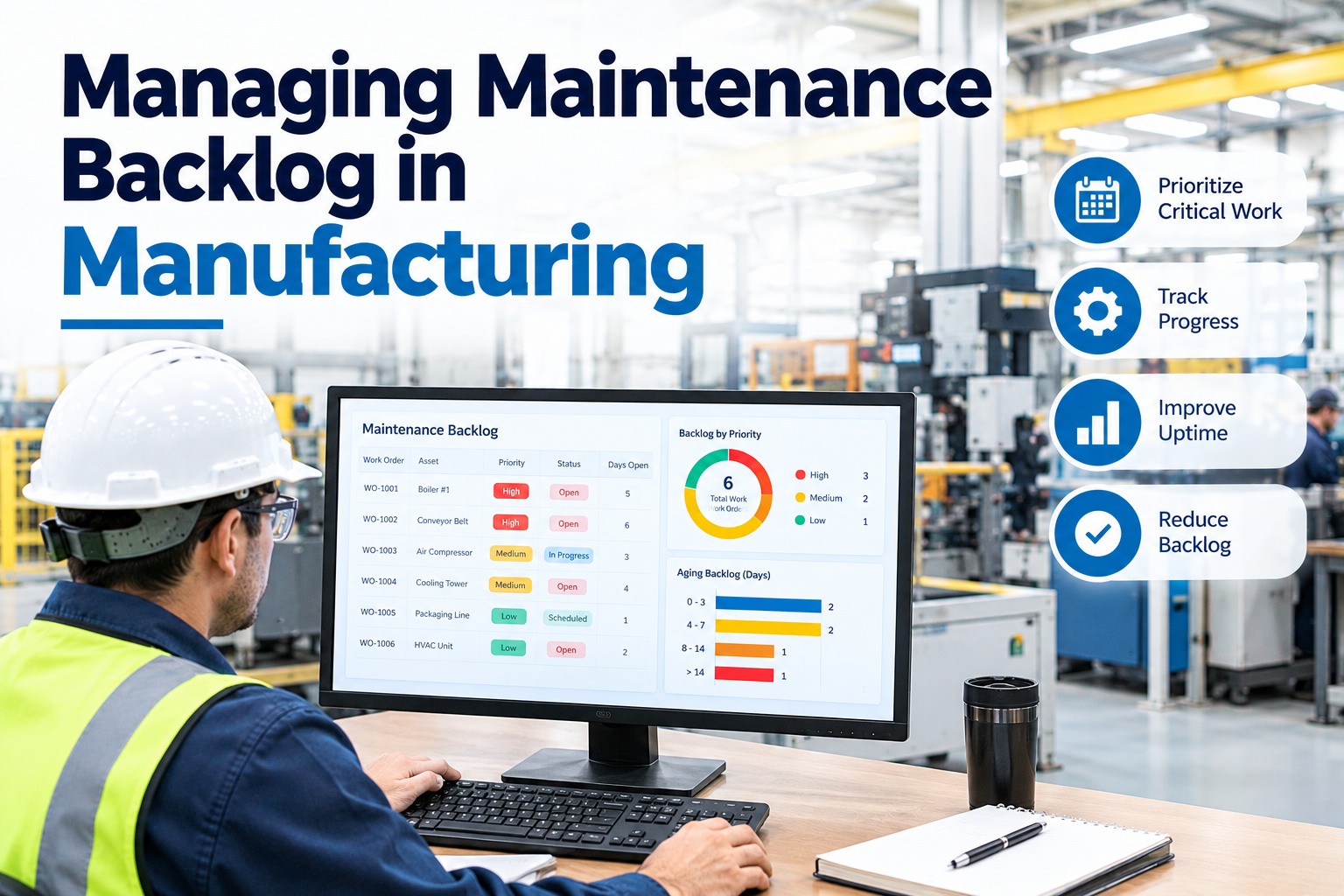
A maintenance backlog is a planning instrument when sized right, and a graveyard when it isn't. This guide covers the SMRP-aligned health thresholds, six-category work-order buckets, aging analysis, four-tier priority framework, weekly planning ca

Read More
Lockout/tagout is the standard that kills when it fails — a machine cycles with someone inside it, and the hazard was invisible until that second. It's also the reason OSHA writes so many citations in manufacturing: 1910.147 ranked #4 on OSHA's To

Read More
A machine safety risk assessment is a legal requirement in most jurisdictions — and it's where most safety programs quietly fail. Not because the hazards are hidden, but because the assessment lives in a spreadsheet nobody has opened since the las
Read More
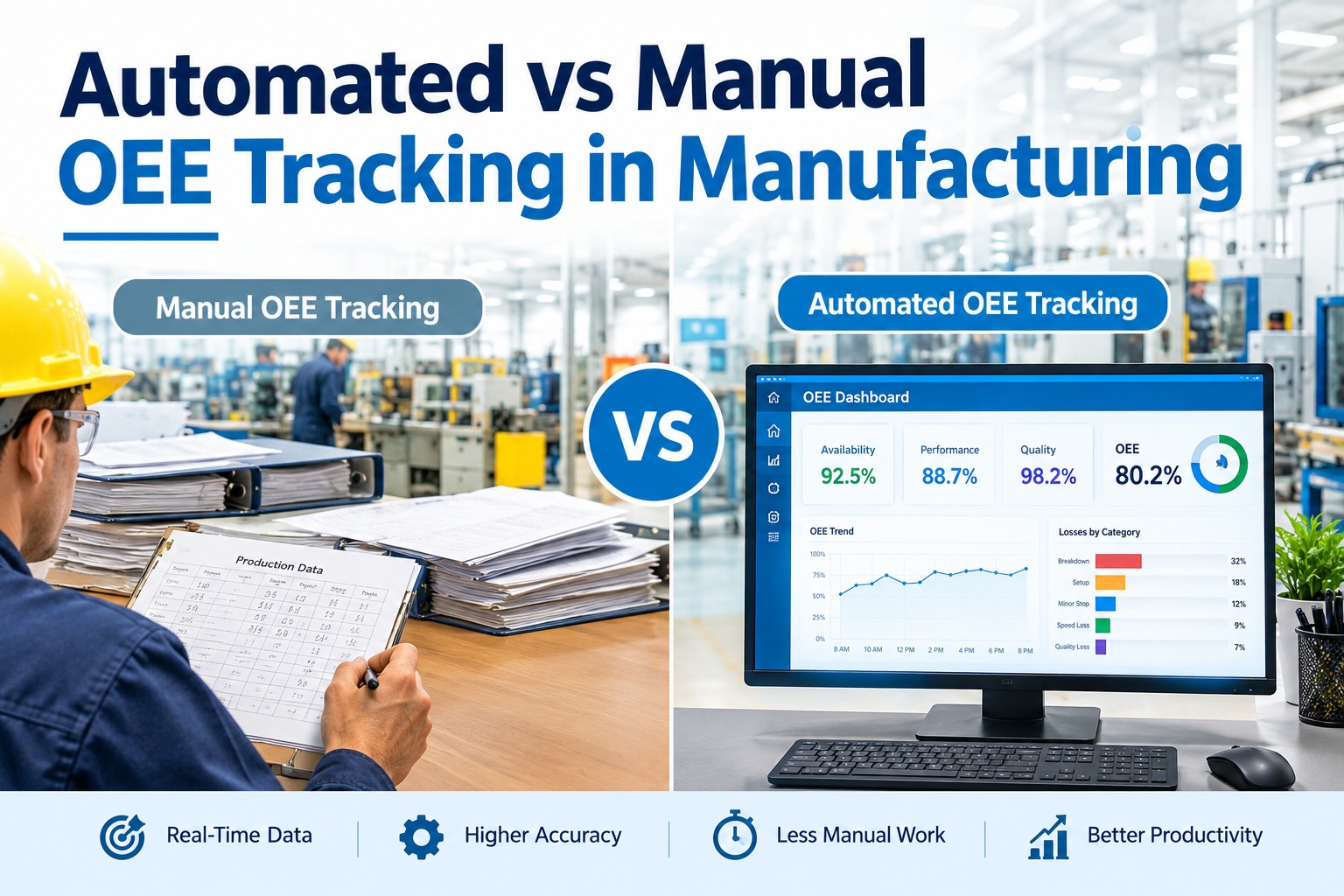
Manual OEE tracking lags reality by shifts, hides the losses operators didn't remember to log, and turns the number that should drive daily decisions into a lagging report nobody trusts. This guide compares manual and automated OEE tracking across

Read More
The moment an attack crosses from your business network into the plant floor, every instinct your IT incident response plan trained into your team becomes wrong. IT's first move is to isolate and shut down the infected machine. On the plant floor,
Read More
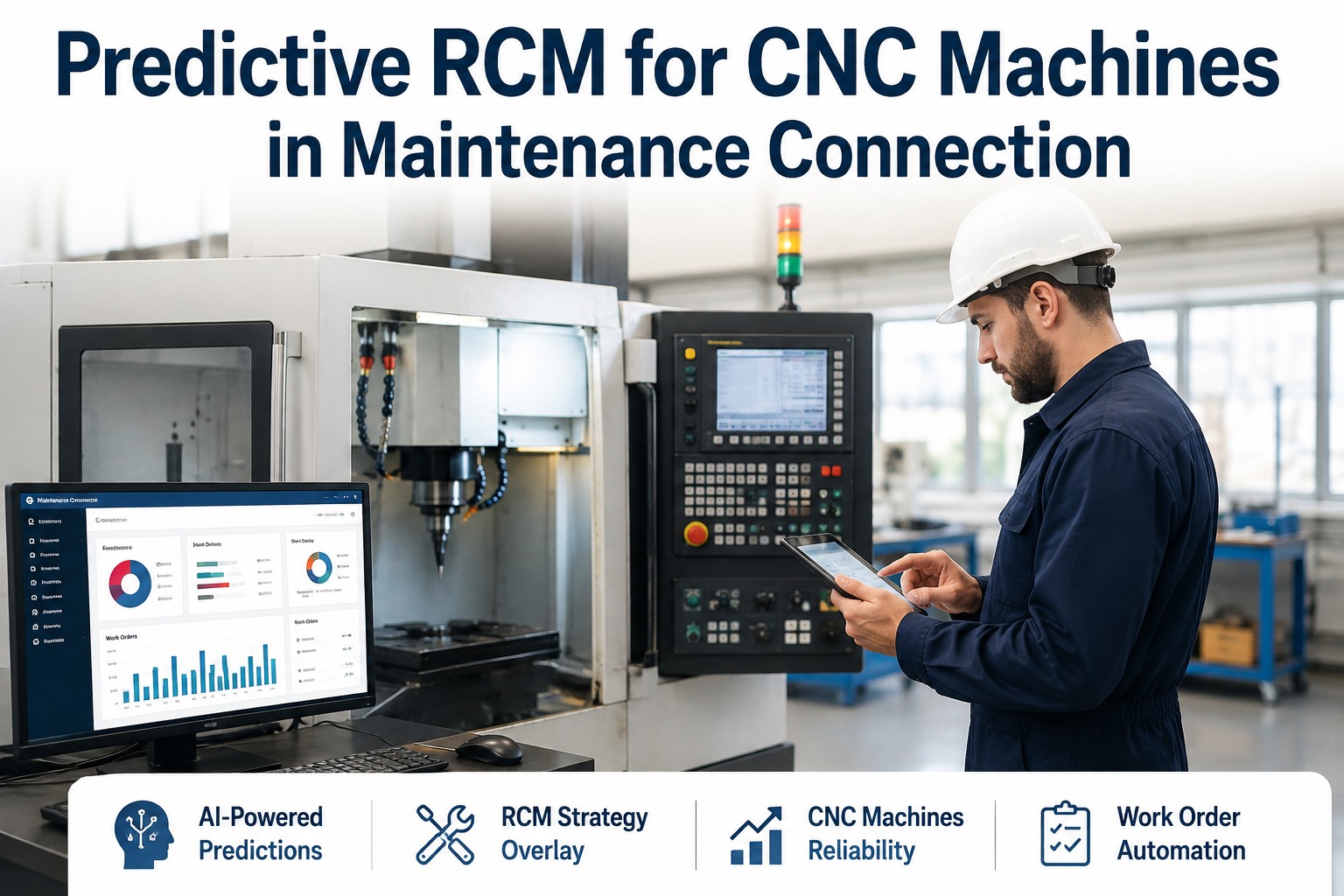
Maintenance Connection has been an Accruent flagship since the acquisition — a solid multi-site CMMS handling asset master data, work orders, PM scheduling, inventory, and multi-plant governance across thousands of manufacturers. What it isn't, an

Read More
Packaging and filling lines are the final — and most fragile — link in a manufacturing plant. Fillers, cappers, labelers, case packers, and palletizers running 400–1,200 units per minute in serial dependency mean a single station stall shuts the w
Read More
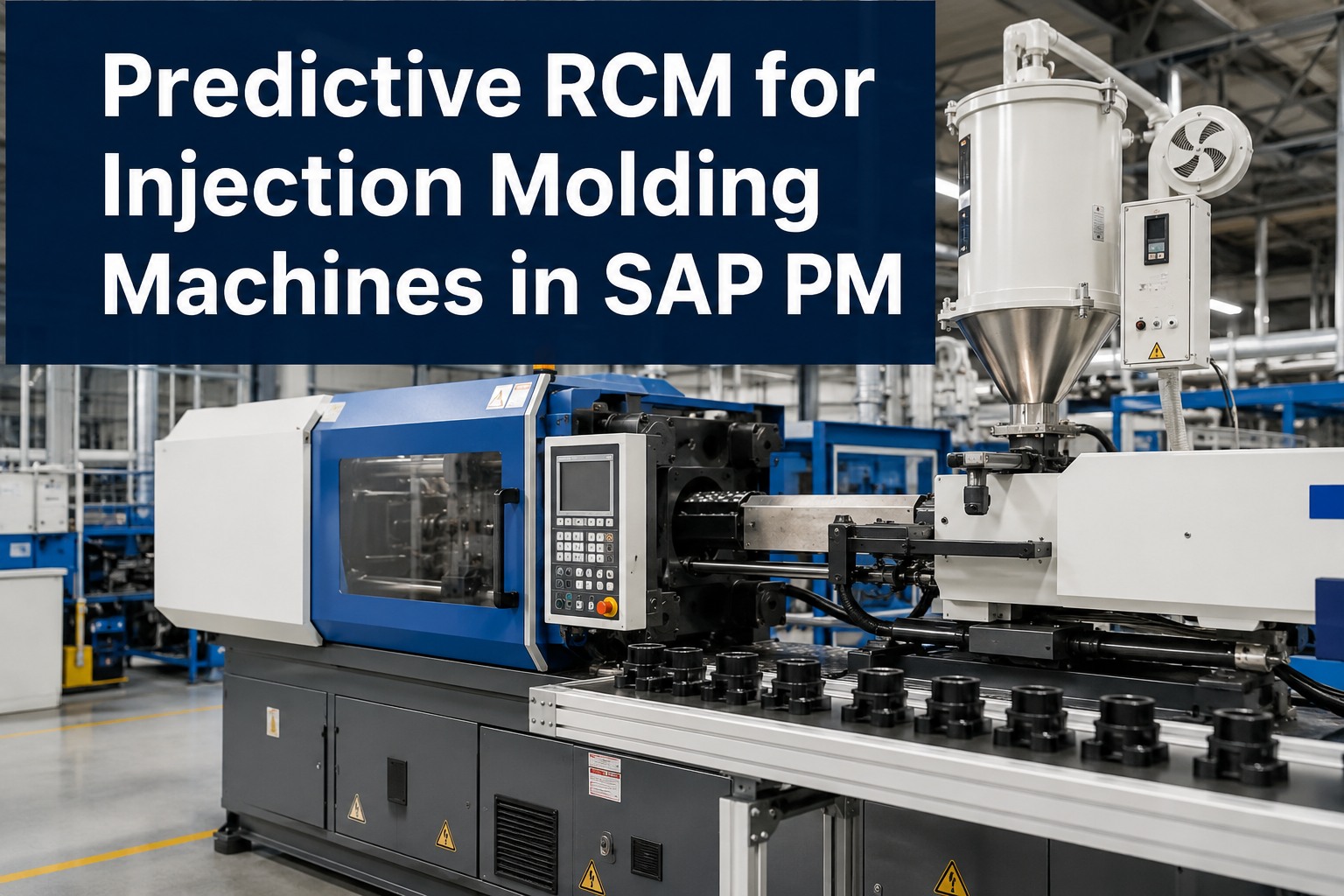
Injection molding machines are a control-theory problem stacked on a hydraulics problem stacked on a thermal-cycling problem — 20,000 PSI hydraulic pressures, hundreds-of-degrees heater bands, abrasive glass-filled resins wearing screws and barrel

Read More
Furnaces and heat-treat lines punish a badly targeted maintenance program in a way few assets do — because they fail two completely different ways. There's the visible structural failure, where refractory erodes until a hot spot burns through the

Read More
A 500-ton centrifugal chiller costs $200K-$500K installed, carries a 16-26 week replacement lead time, and consumes 40-60% of a commercial building's total energy — yet most facilities still run it on quarterly manual inspections and wait for the

Read More
A robotic welding cell rarely fails all at once — it fails a reject weld at a time. Long before a cell actually stops, a contaminated liner, a drifting drive-roll pressure, or an enlarging contact-tip bore is already degrading weld quality, so scr
Read More
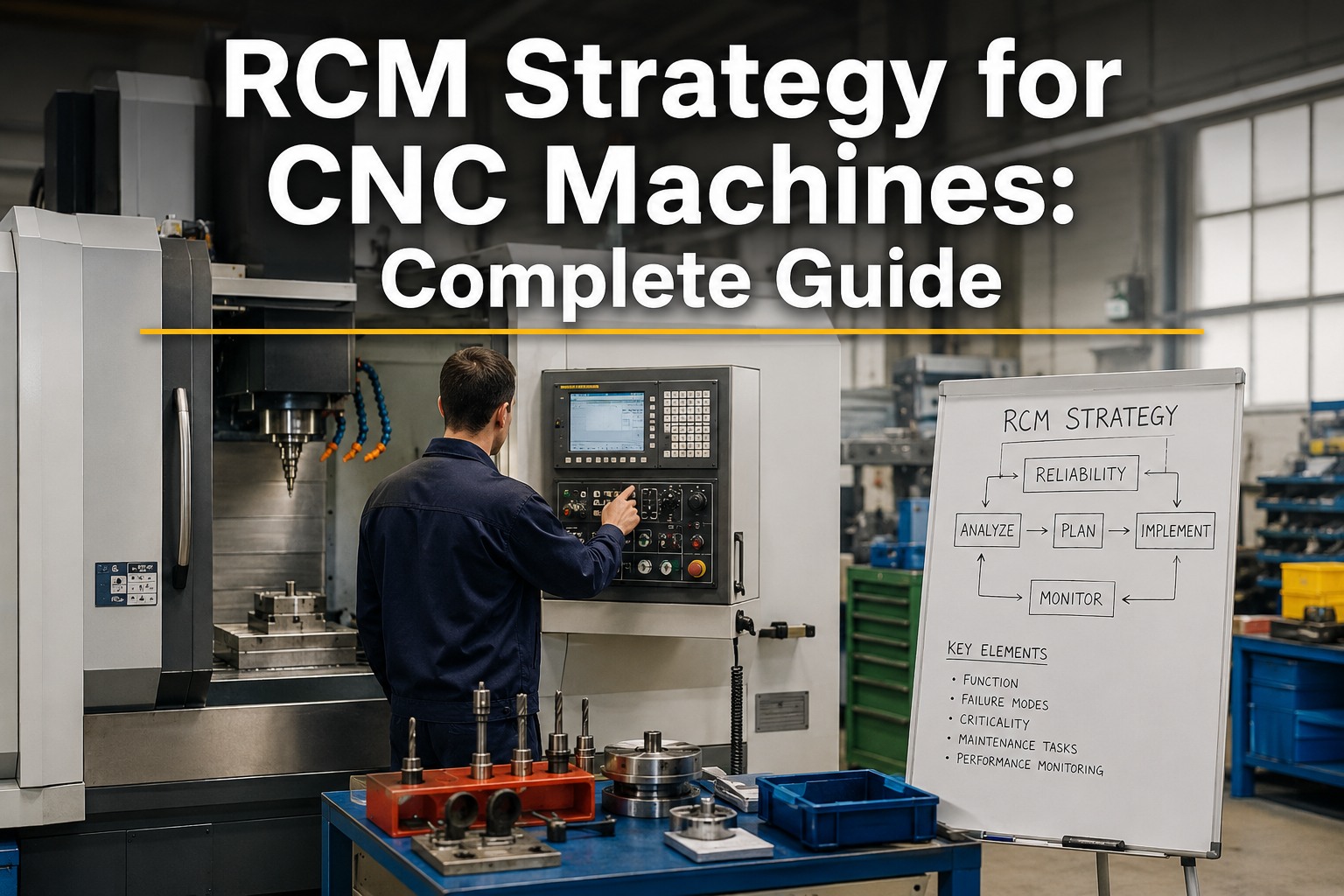
CNC machines fail in patterns that RCM was built to attack. Field-data FMECA studies of CNC turning centers consistently identify the same critical subsystems — spindle, linear axis, turret, hydraulic and lubrication circuits — with the spindle be

Read More
A furnace can fail two completely different ways, and only one of them looks like a breakdown. There's the obvious failure — refractory that erodes until a hot spot burns through the shell, a heating element that opens, a burner that won't light —

Read More
MTBF, MTTR, and OEE are the three reliability KPIs that sort a plant running at 60% capacity from one operating at world-class 85% a 25-point gap that Seiichi Nakajima's original TPM benchmarks (90% Availability × 95% Performance × 99.9% Quality)
Read More
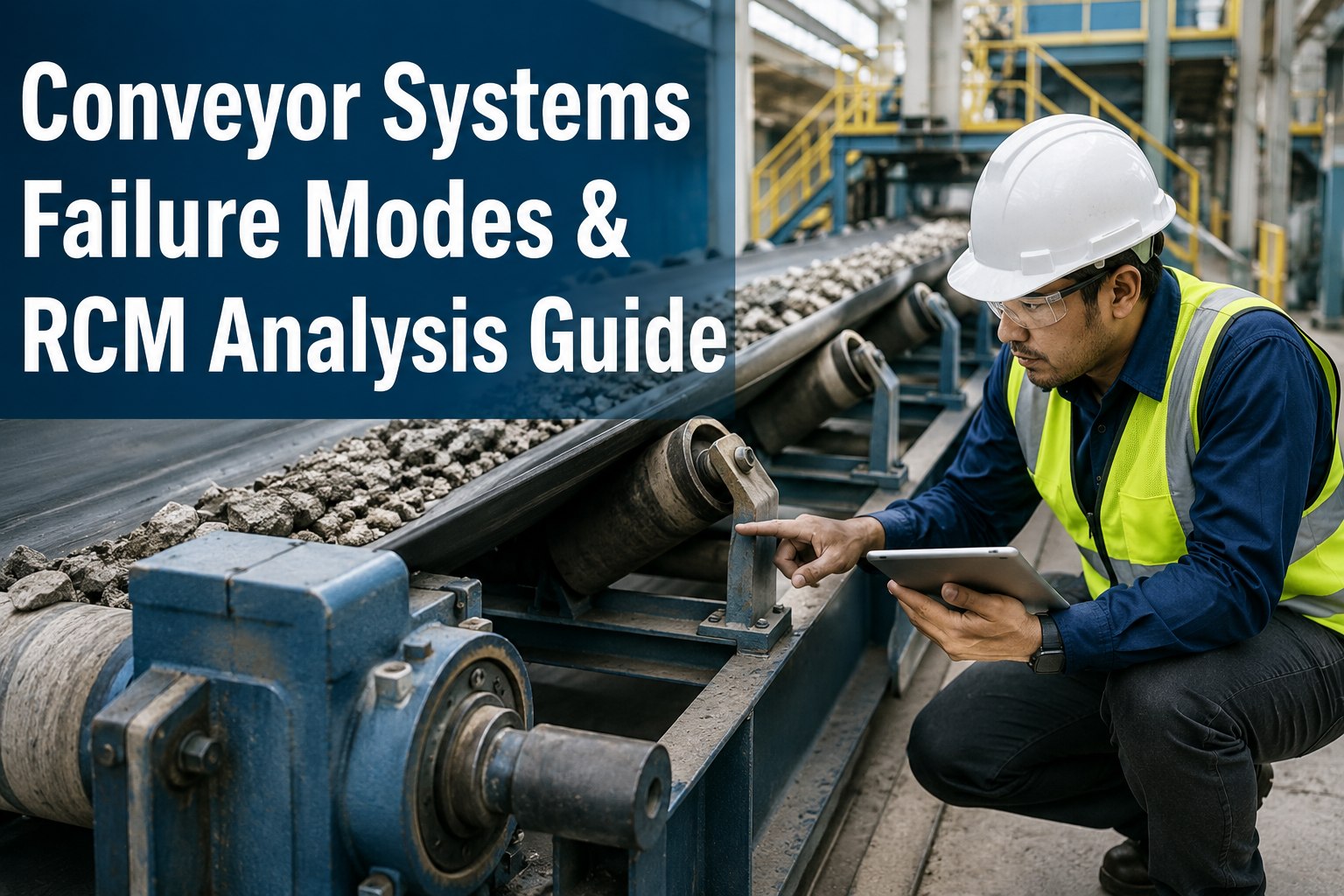
Conveyor systems FMEA and RCM analysis is where reliability engineering earns its keep a single belt conveyor carries 20+ distinct failure modes across five subsystems (belt, splice, idler, drive, structural), and one seized idler bearing dr
Read More
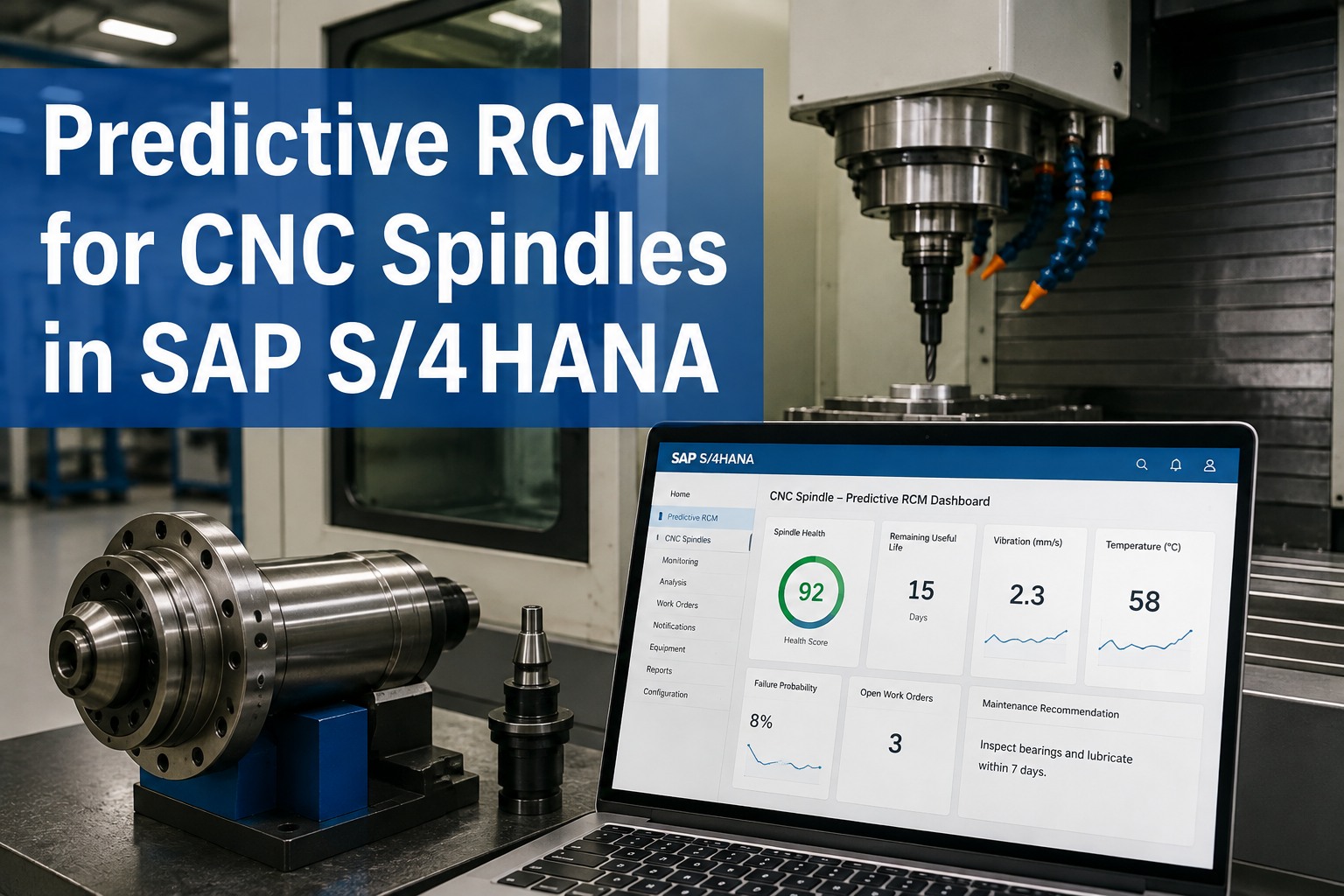
CNC spindles are the highest-value rotating assembly on every machine tool — $30,000 to $150,000 per replacement, spindle speeds swinging from 5,000 to 30,000 RPM under variable cutting loads, and directly upstream of every scrap, dimensional-drif

Read More
Cooling towers and chillers fail three ways at once, and that's what makes them perfect case for Reliability-Centered Maintenance. There's the reliability failure — a fan bearing that seizes and throws blades through the tower casing i
Read More
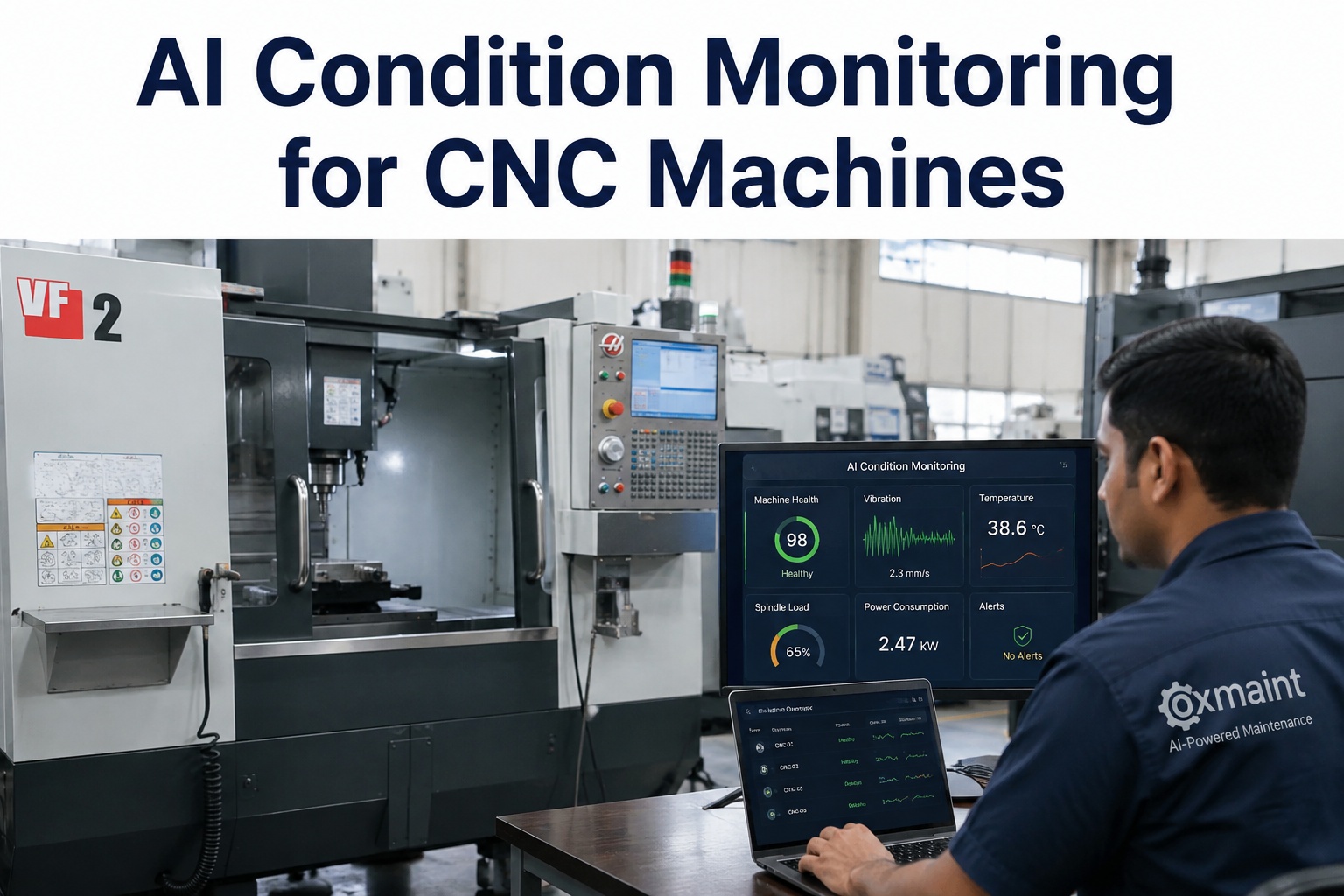
AI condition monitoring for CNC machines lives at a scale where a minor bearing defect on a spindle turning 15,000–30,000 RPM can escalate from detectable vibration to catastrophic seizure in under 200 operating hours and an emergency spindle rebu

Read More
A power transformer is usually the single most expensive asset in the substation — and when it fails without warning, it doesn't just stop; it can take the whole distribution segment down with it and take months to replace. Switchgear carries a qu
Read More
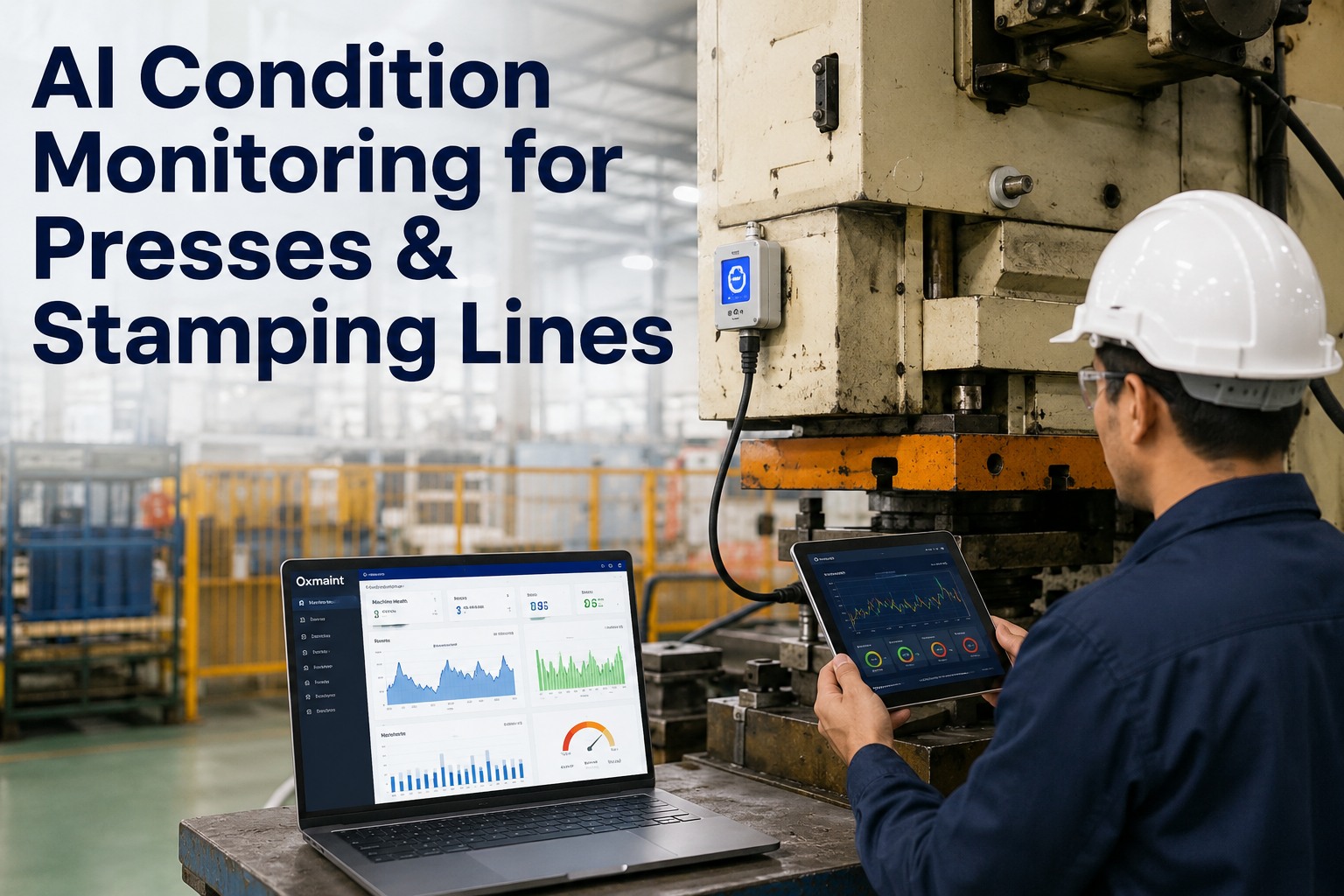
AI condition monitoring for presses and stamping lines runs on four independent signal channels tonnage signature, vibration signature, acoustic signature, and thermal signature each catching a different failure mode long before the press trips or
Read More
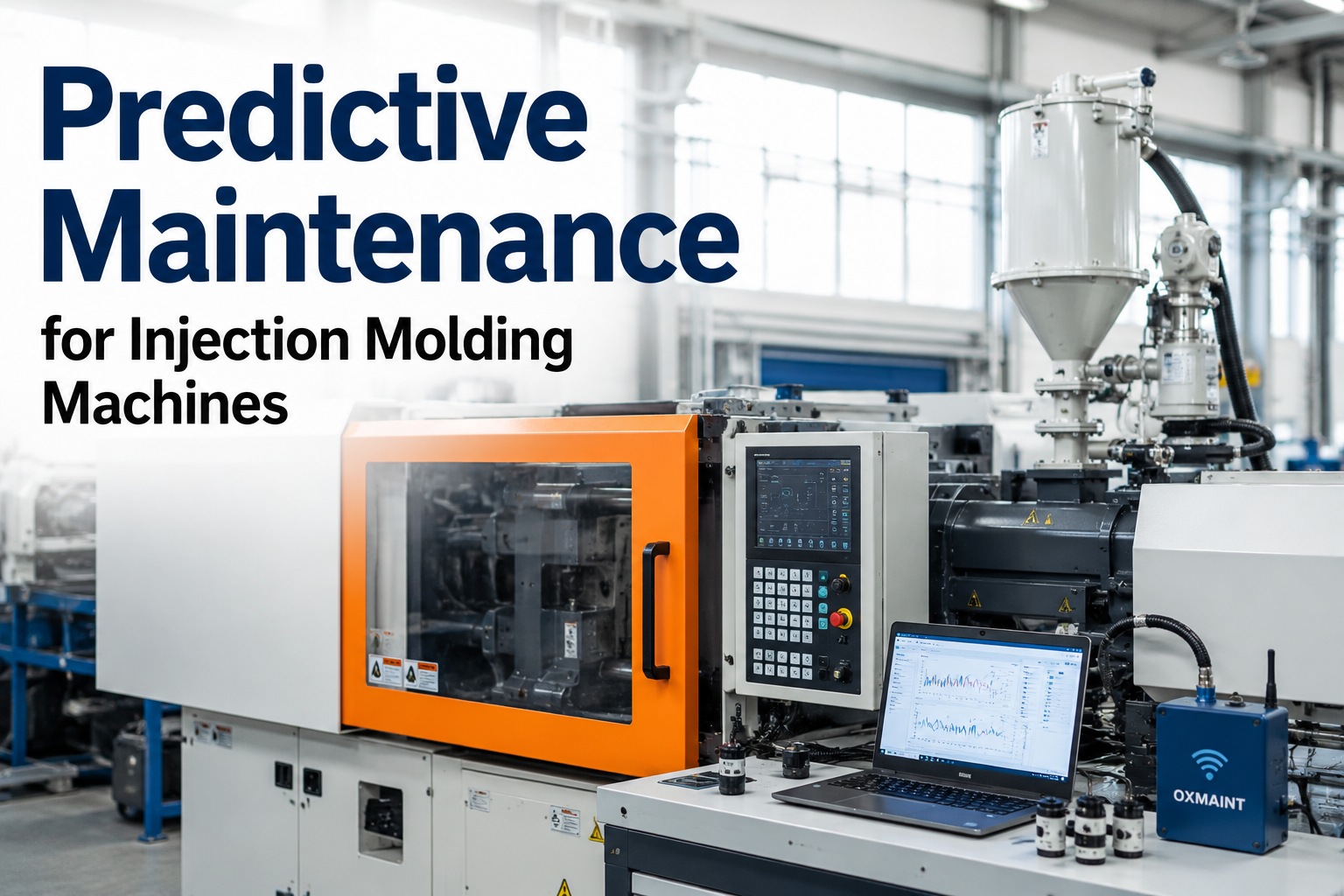
Predictive maintenance for injection molding machines is what turns an unscheduled hydraulic pump failure — the kind that sends metal contaminants through the whole hydraulic loop and costs days of flush plus a new set of valves and actuators into
Read More
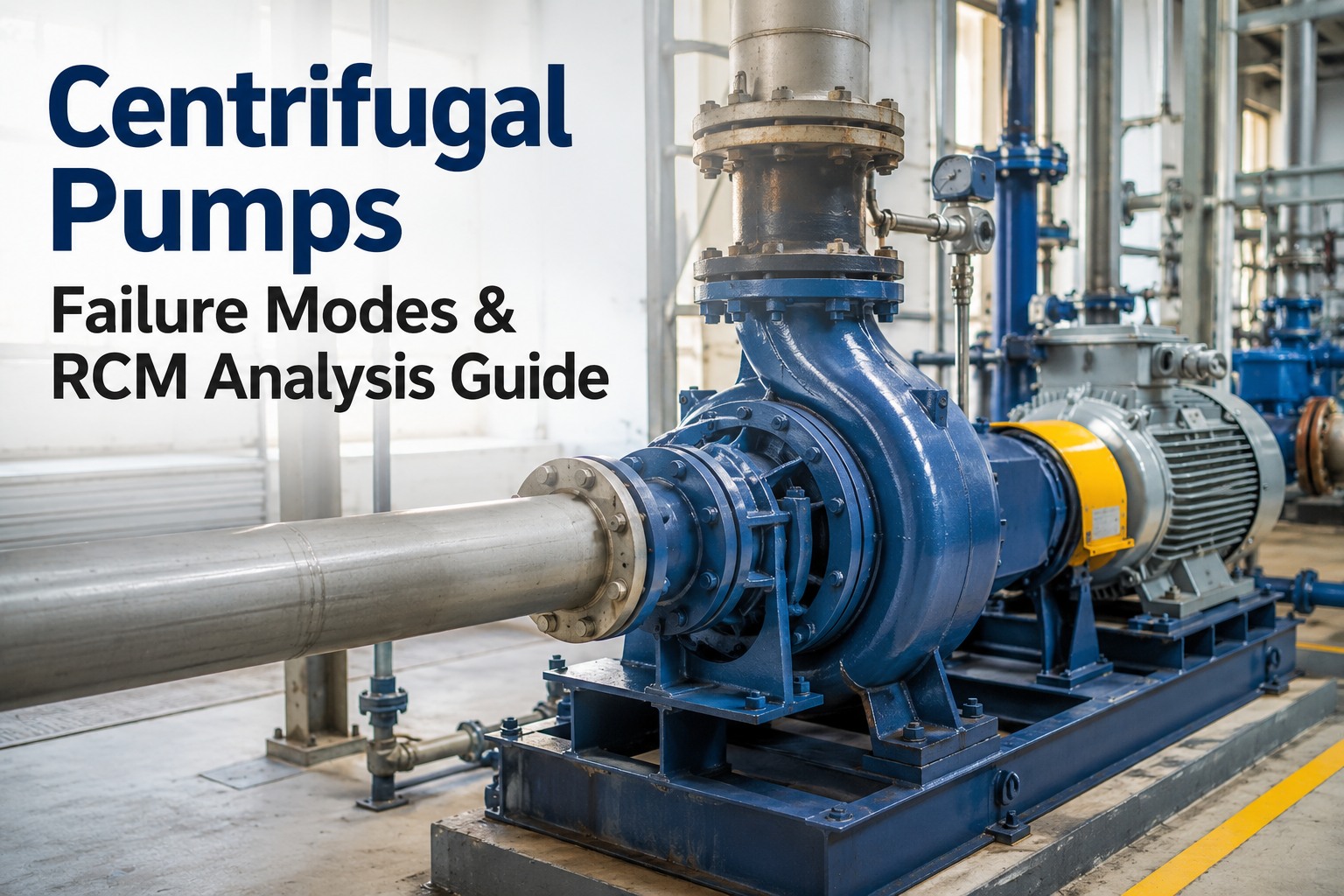
Ask a plant why its centrifugal pumps keep failing and most will point at the mechanical seal — it accounts for roughly 69% of pump breakdowns, after all. But that number is a trap. The seal is usually the victim, not the culprit: misalignment, be
Read More
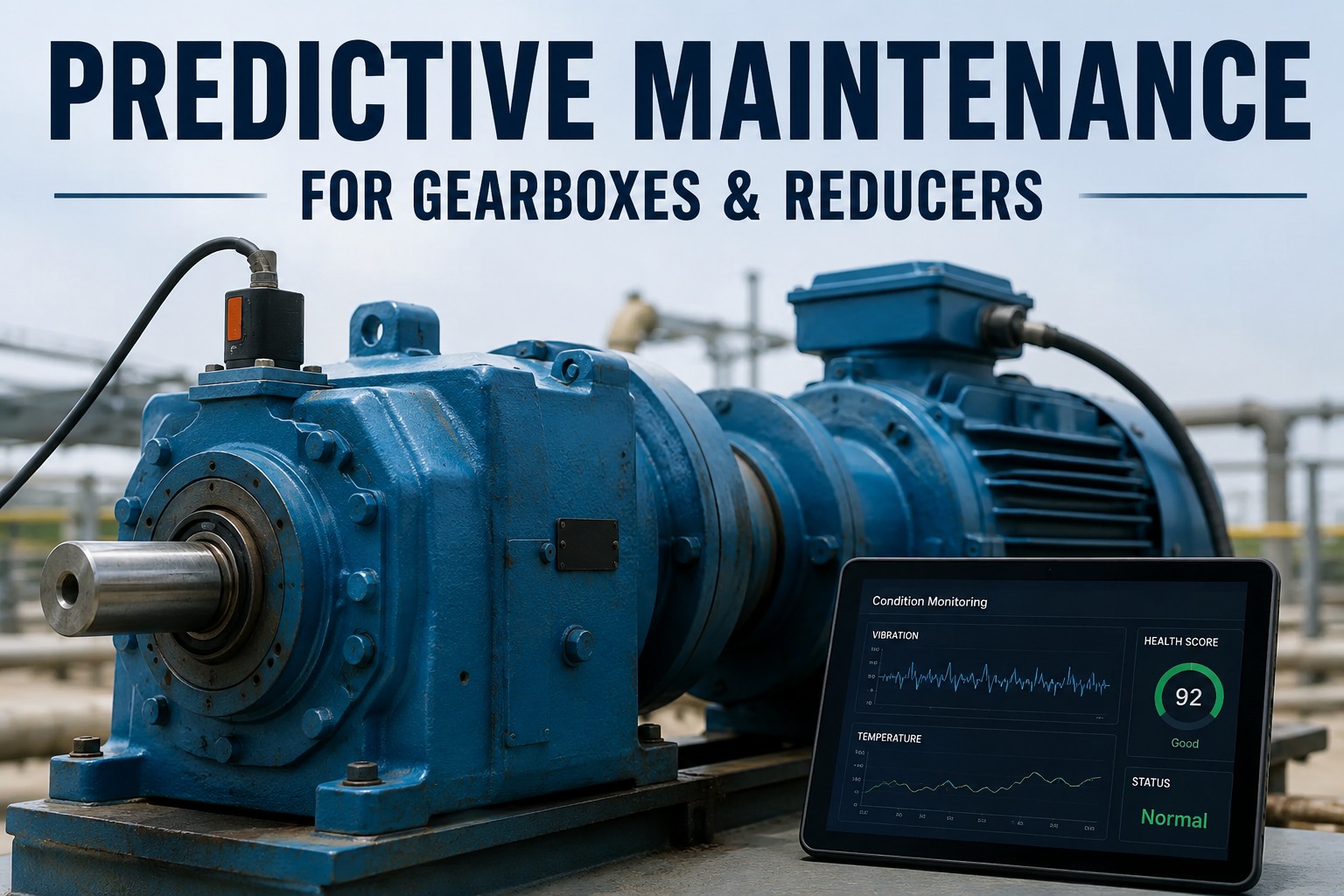
A gearbox rarely dies without warning — it broadcasts its decline for weeks across three separate channels, and most maintenance programs are only listening to one, or none. Gear-tooth pitting elevates specific vibration frequencies weeks before a
Read More
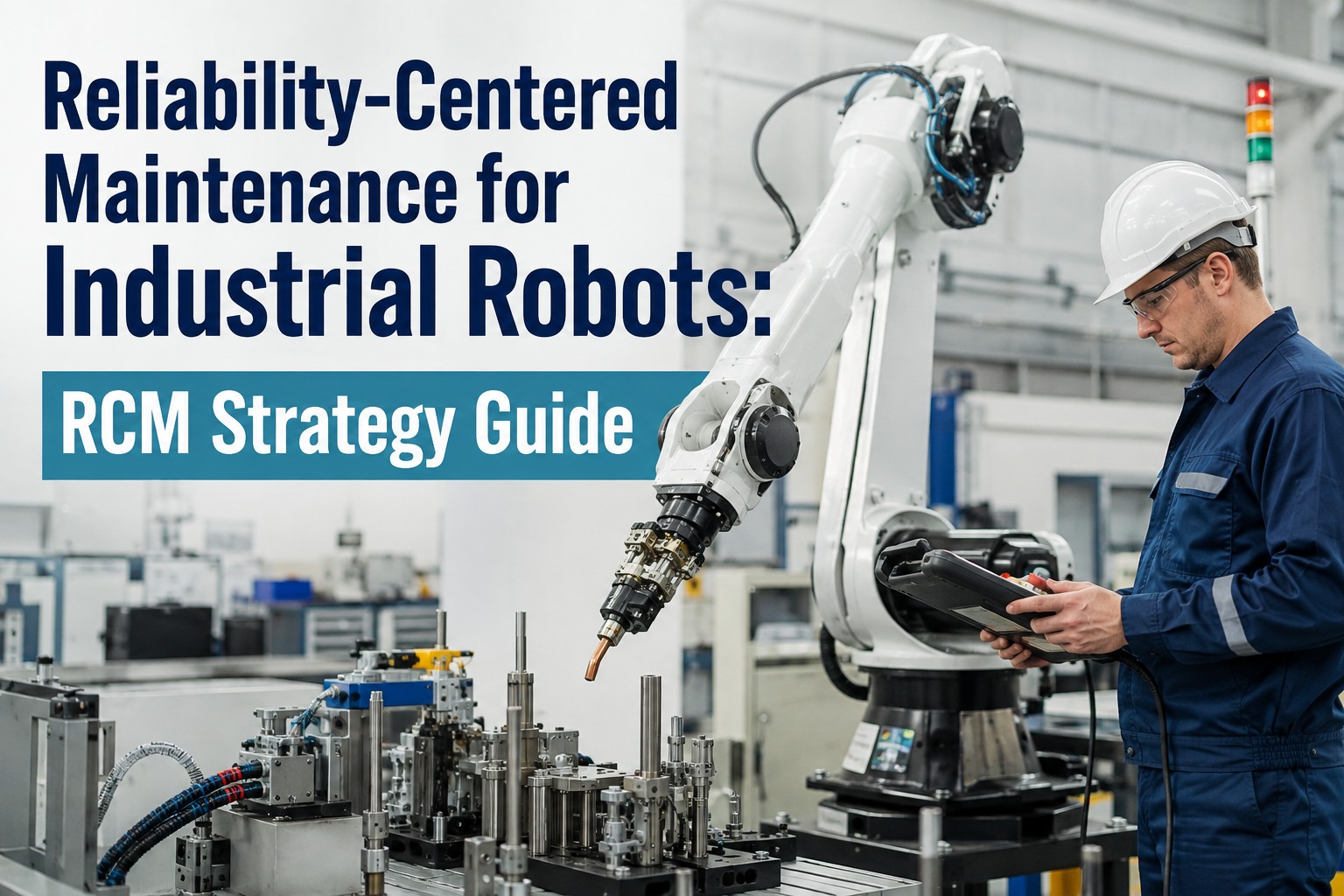
An RCM strategy for industrial robots is what turns a $250,000 six-axis welding cell from a maintenance line item into a reliability engineer's dashboard — with every servo, harmonic reducer, cable dress-pack, and end-effector mapped to a failure

Read More
A mixer almost never fails at the impeller — it fails at the seal, weeks after the first sign nobody logged. A mechanical seal starts weeping, a gearbox runs a few degrees warm, a bearing picks up a faint harmonic, and the escalation is silent unt
Read More
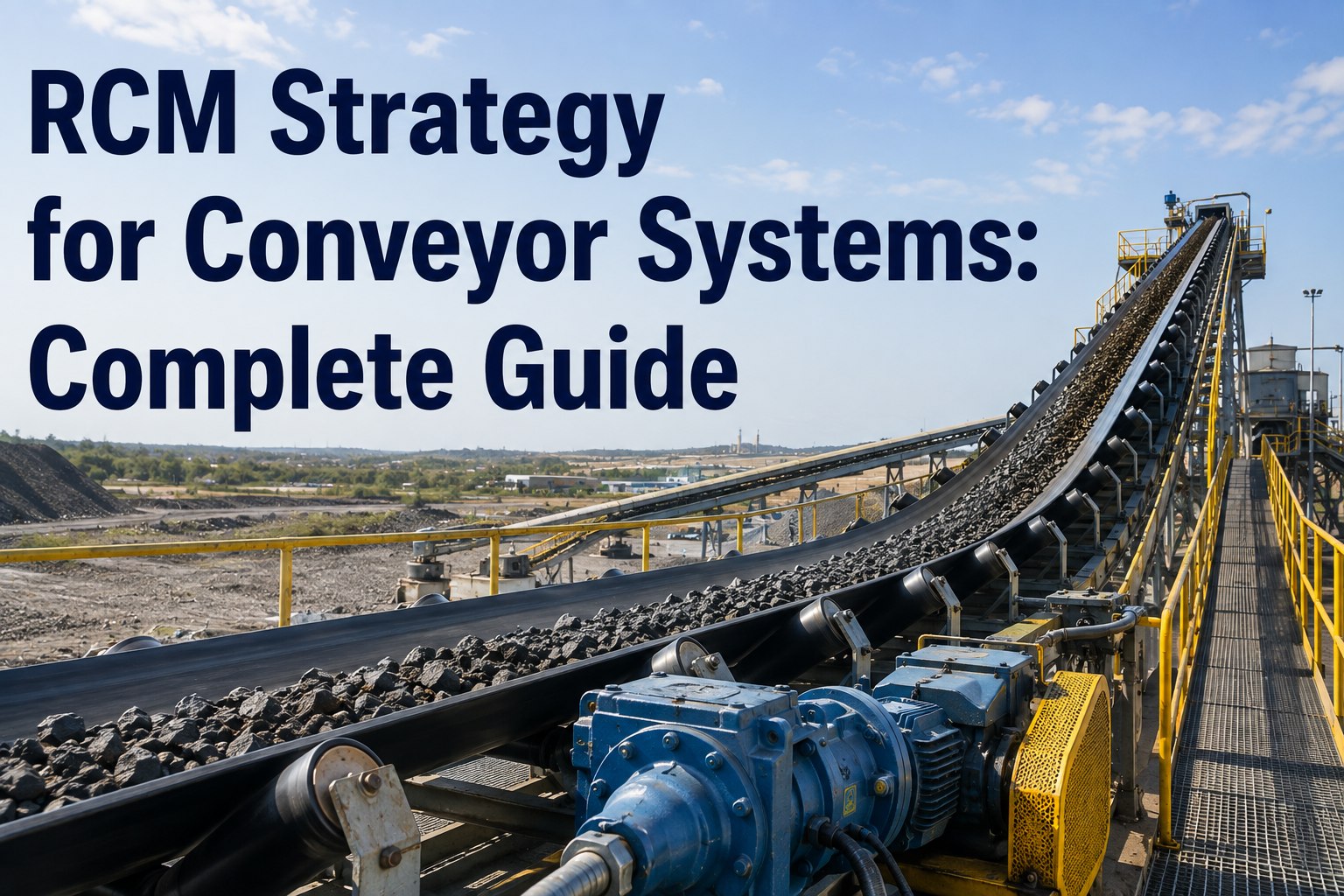
Conveyor systems are the circulatory system of manufacturing, distribution, and mining operations — and when they stop, the entire process stops with them. Aberdeen Group data pegs average unplanned downtime at $260,000 per hour across industries,
Read More
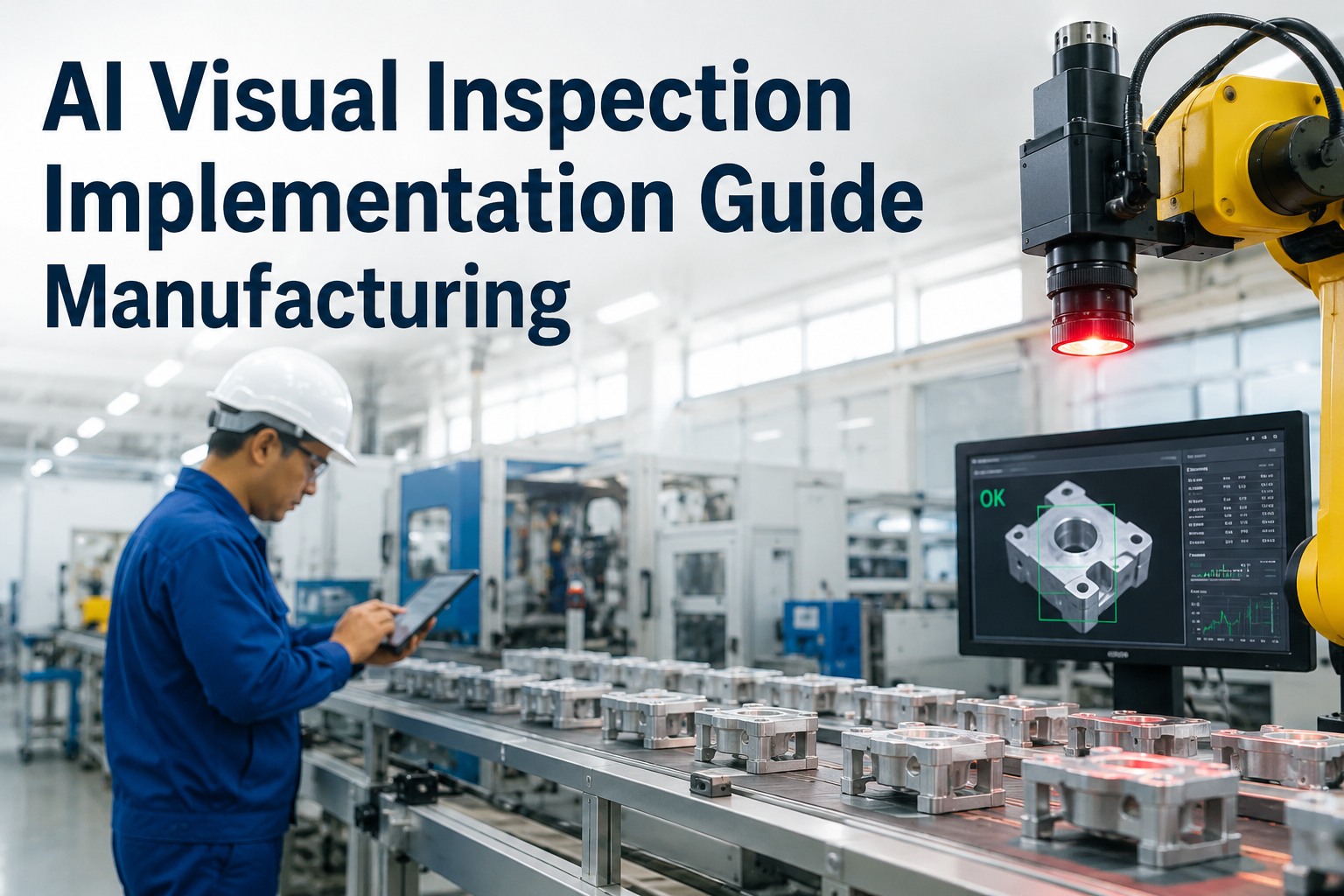
AI visual inspection uses cameras, controlled lighting and deep learning models to catch surface defects, assembly errors and contamination at line speed — often spotting flaws that human inspectors miss after hours of fatigue. A practical AI visu
Read More
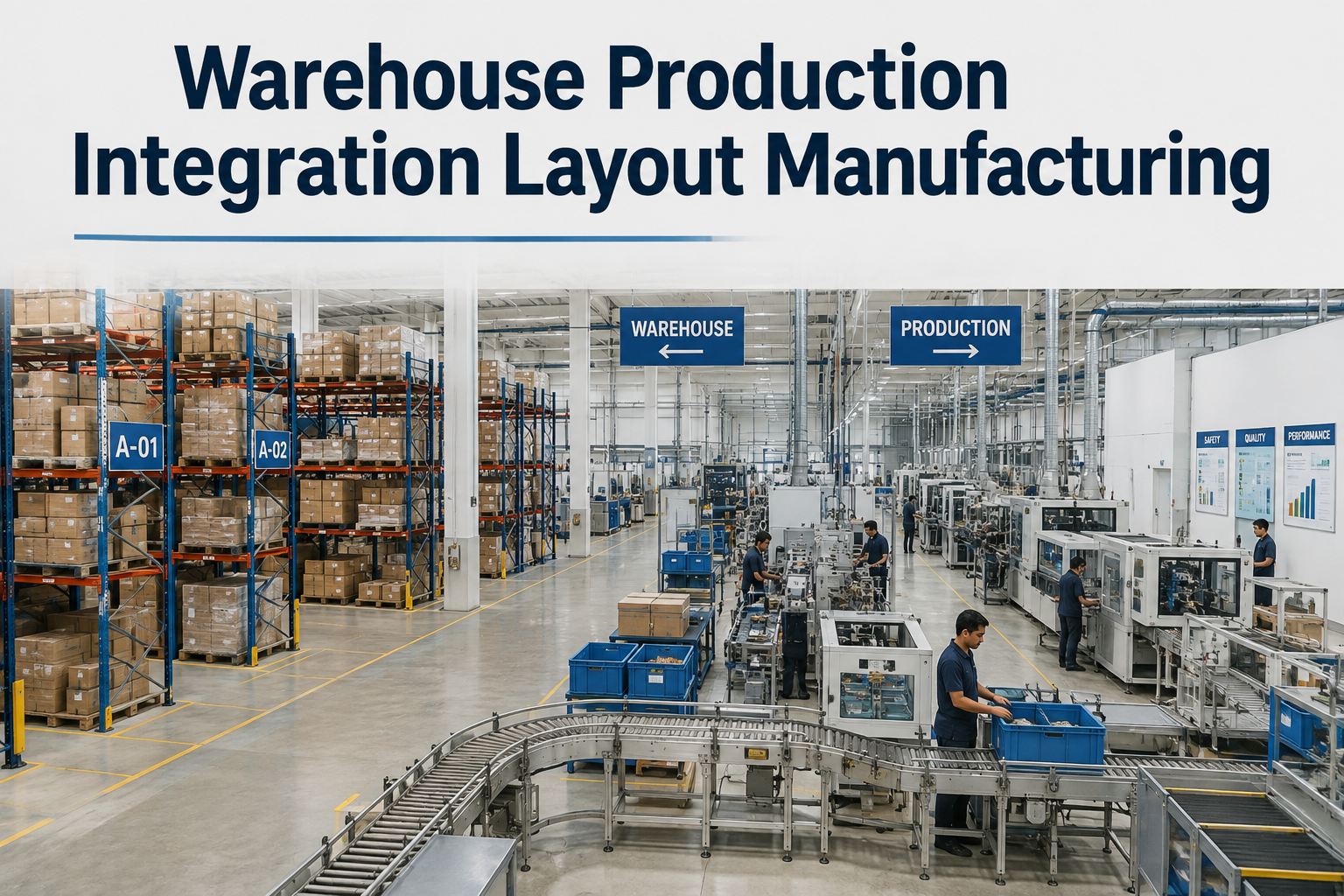
Warehouse production integration is the practice of connecting material storage, replenishment, and production flow so parts arrive at the point of use exactly when the line needs them — and it is one of the highest-ROI fixes a manufacturing plant

Read More
The ROI of AI quality inspection in manufacturing typically lands between 200% and 400% in the first year — but only when the business case captures every benefit stream and honest cost. Most quality managers underestimate the return because they
Read More
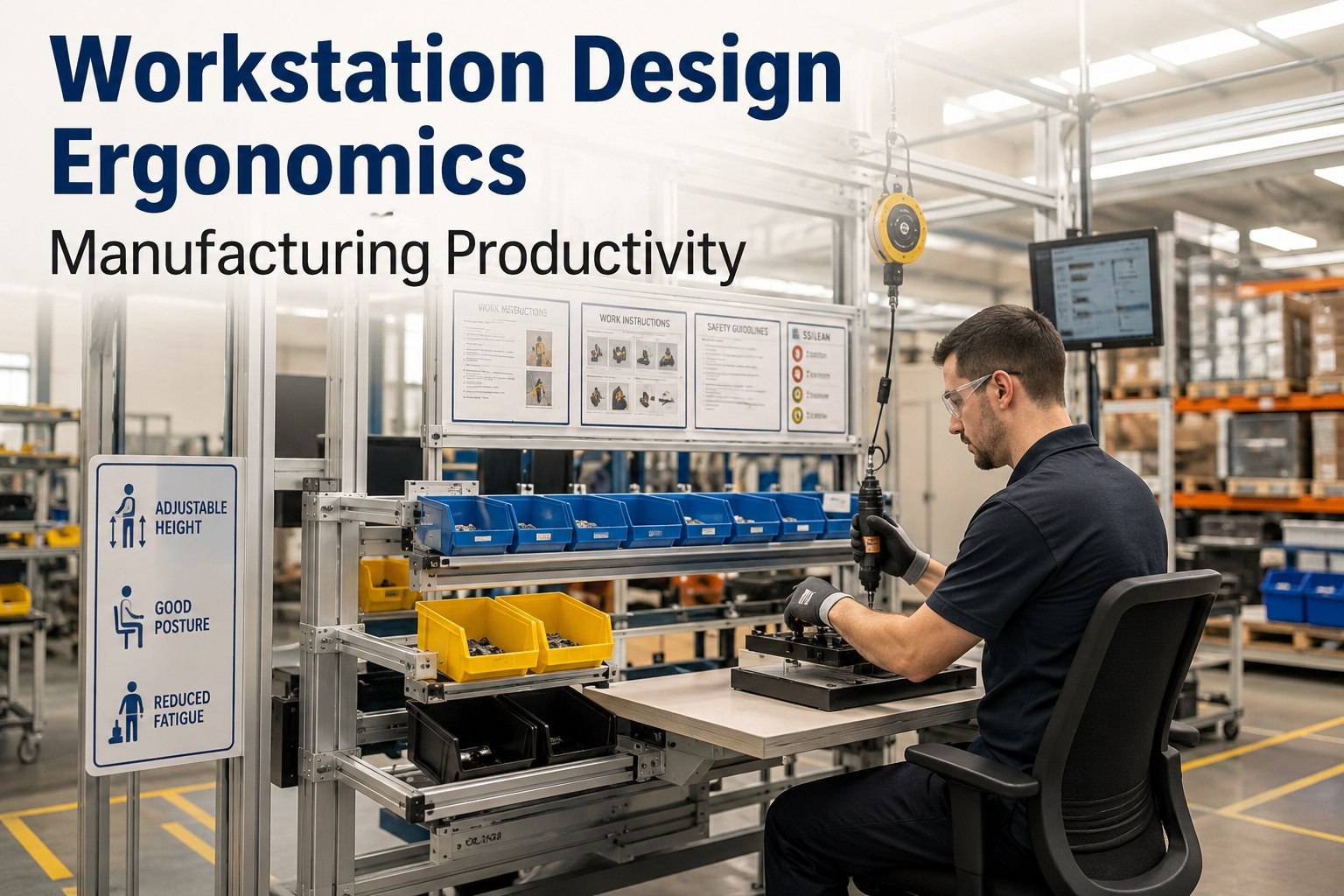
Workstation design and ergonomics directly determine how fast operators work, how often they get hurt, and how much your plant spends on injuries and lost output — yet most manufacturing facilities only address ergonomics after an incident forces
Read More
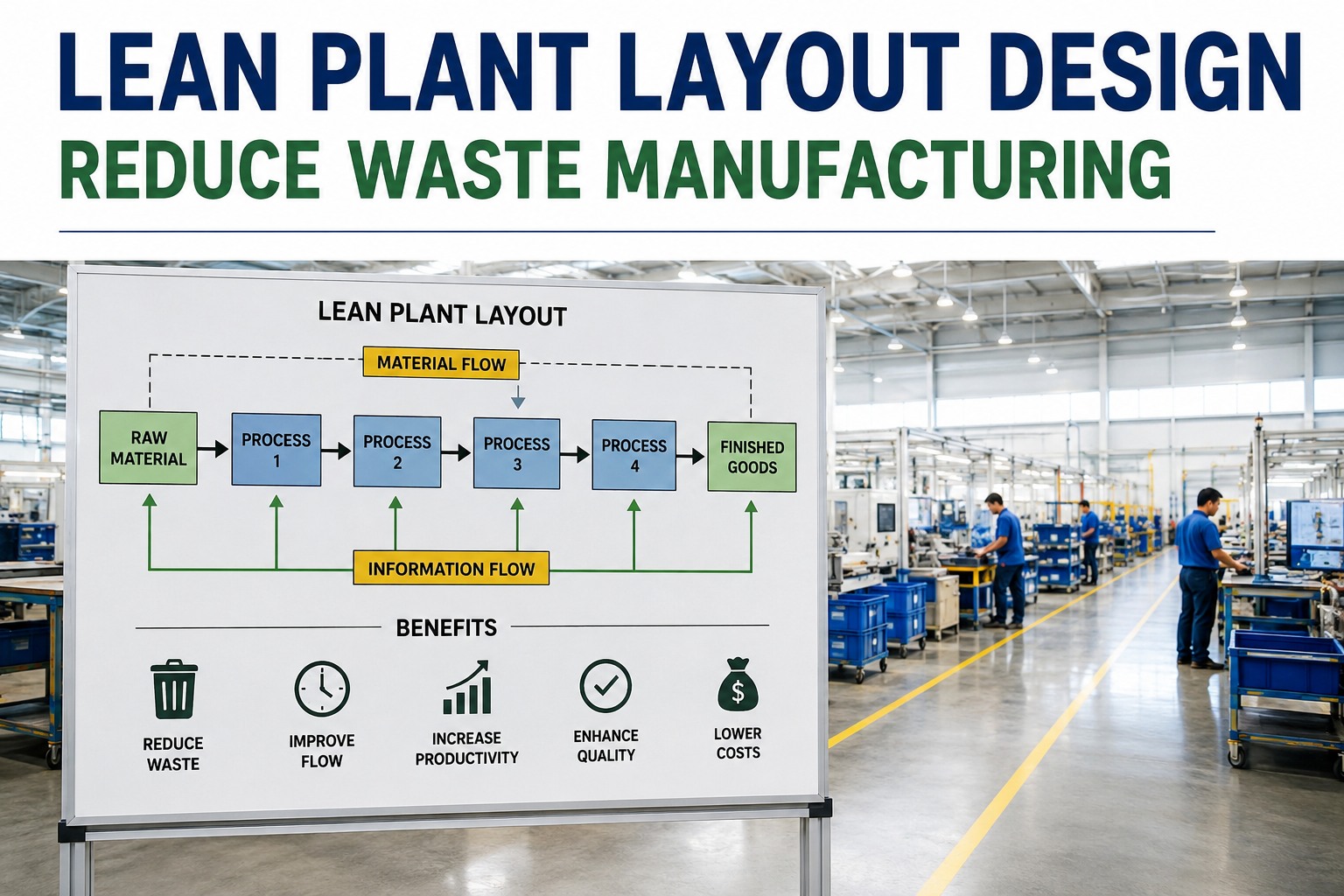
A lean plant layout removes the seven wastes of manufacturing — transport, inventory, motion, waiting, overproduction, overprocessing and defects — at the design stage, before they get baked into concrete, pipe racks and conveyor lines. Plants tha

Read More
Statistical process control (SPC) is the discipline of using control charts and process capability data to catch process drift before it turns into scrap, rework, or customer complaints. In manufacturing, SPC turns quality from an after-the-fact i
Read More
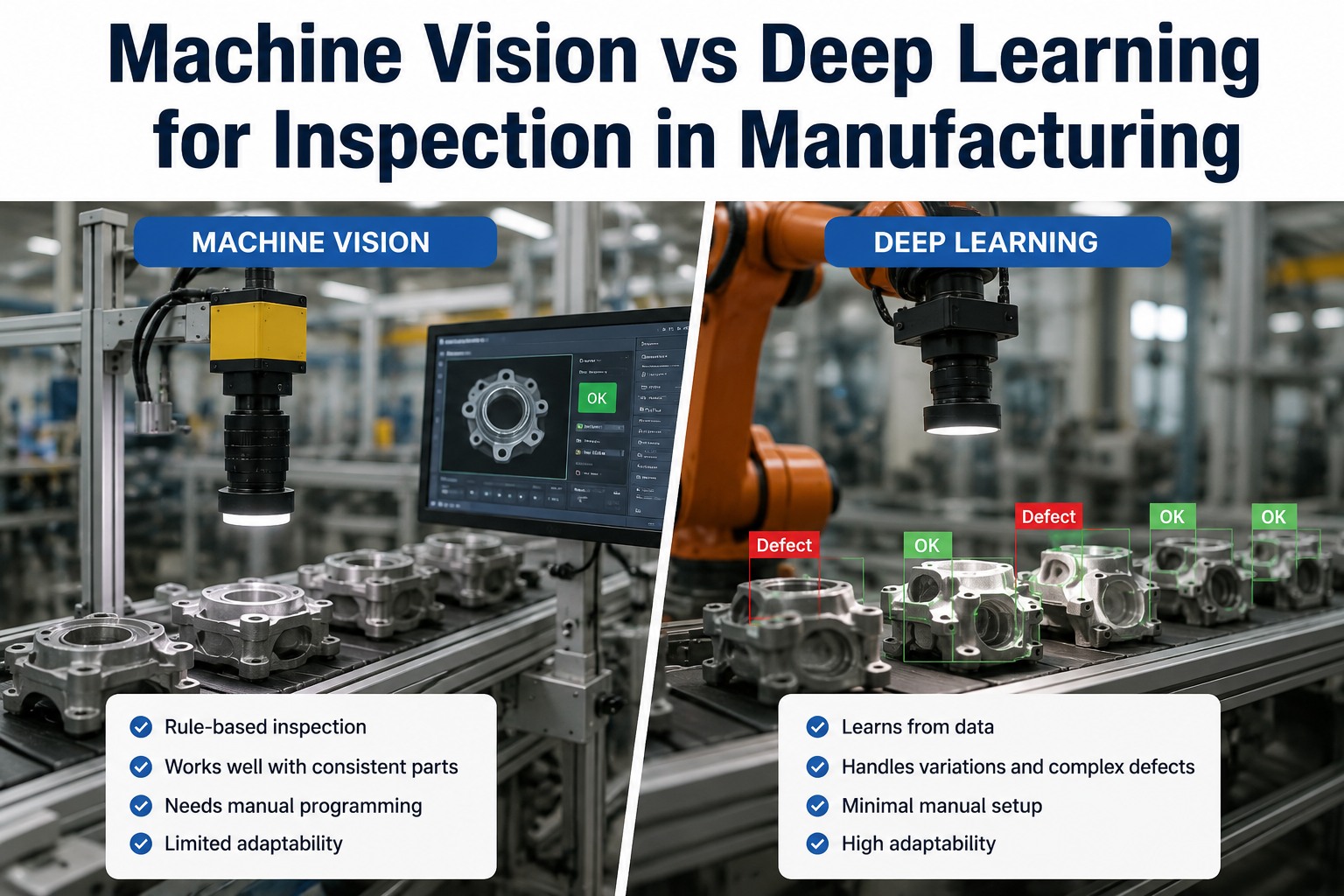
Choosing between machine vision vs deep learning for inspection comes down to one question: is your defect predictable enough to describe with rules, or variable enough that it needs to be learned? Rule-based machine vision excels at high-speed, d

Read More
Manual vs automated quality inspection is one of the most consequential decisions a manufacturing plant makes — manual visual inspection typically catches only 60–80% of defects on a good day, while automated quality inspection with AI vision cons

Read More
A creeping vibration on a critical bearing is broadcast into open air every second of every shift. In most plants it dies there — captured by a sensor, logged to a historian, and forgotten. In a plant with a working predictive maintenance pipeline
Read More
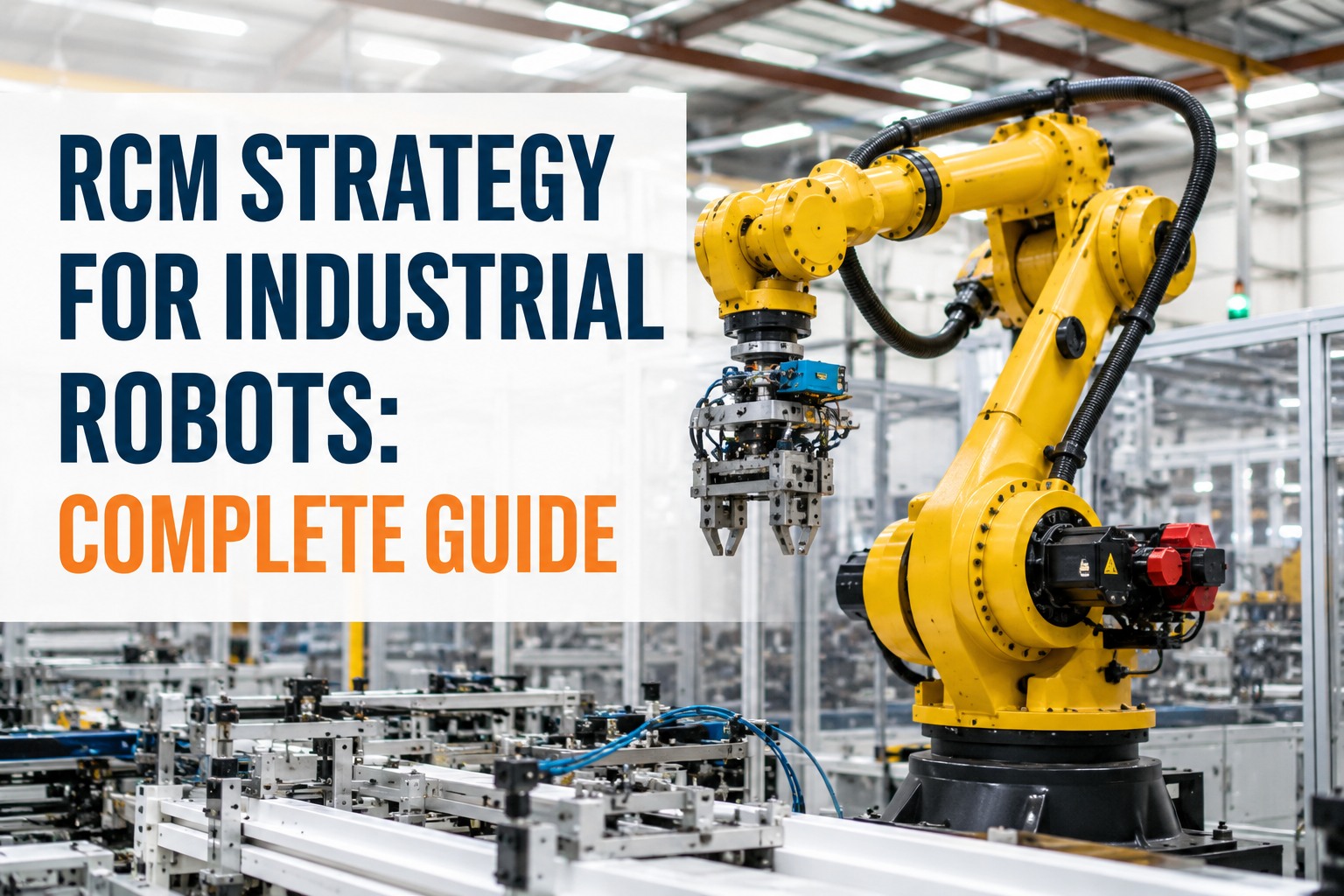
There are over 4.66 million industrial robots installed globally, according to the International Federation of Robotics — and a single articulated arm on an automotive body-in-white line executes 300,000+ weld cycles per year. Each robot contains

Read More
Servo motors don't fail the way standard induction motors fail. In a conventional AC motor, mechanical wear on the bearings and windings is usually the first thing to break — the "muscles" go before anything else. Servos flip that pattern. Because
Read More
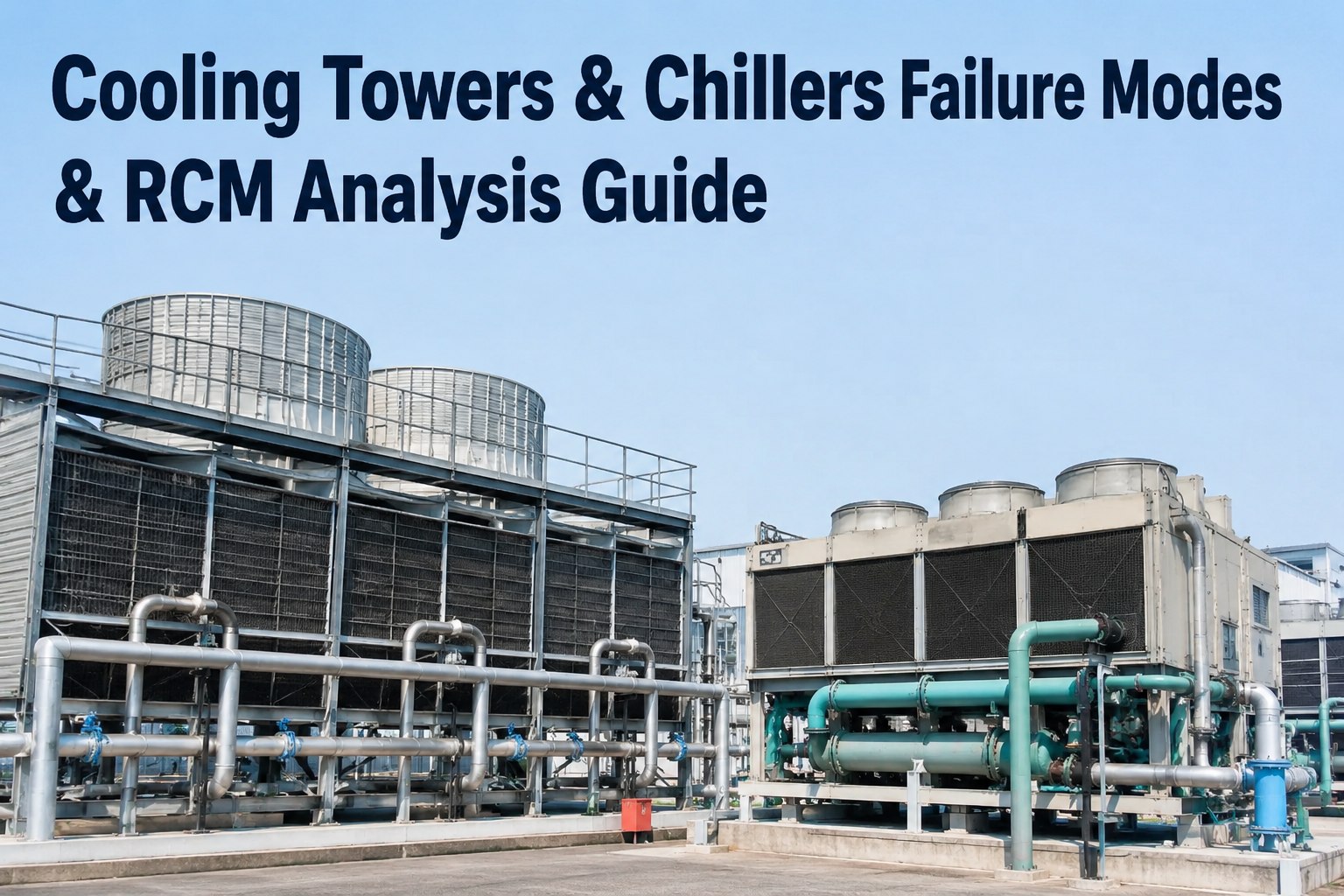
The cooling tower and the chiller are the two most expensive and consequential assets in most industrial and commercial HVAC systems, they operate as a coupled loop, and they fail in patterns that have been mapped in exhaustive detail across ASHRA

Read More
Chillers and cooling towers sit at the top of the industrial asset criticality list — a 500-ton centrifugal chiller runs $200,000 to $500,000 installed with a 16-to-26-week replacement lead time, consumes 40% to 60% of a building's total energy, a
Read More
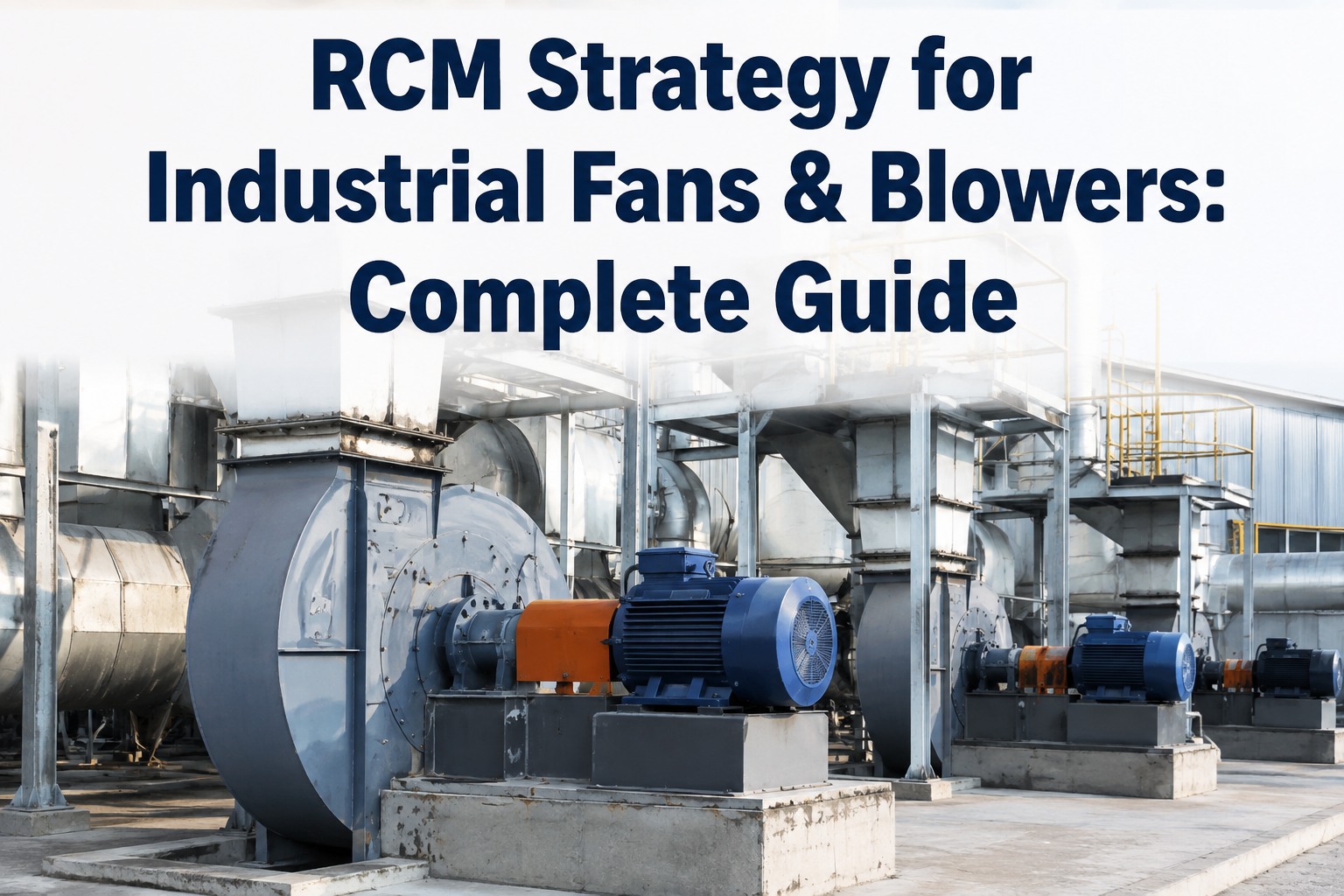
An industrial fan rarely dies without warning — it drifts. A bearing that carries a faint high-frequency signature today becomes a seized shaft and a stopped extraction line in six weeks, and most plants only notice once the noise is audible from
Read More
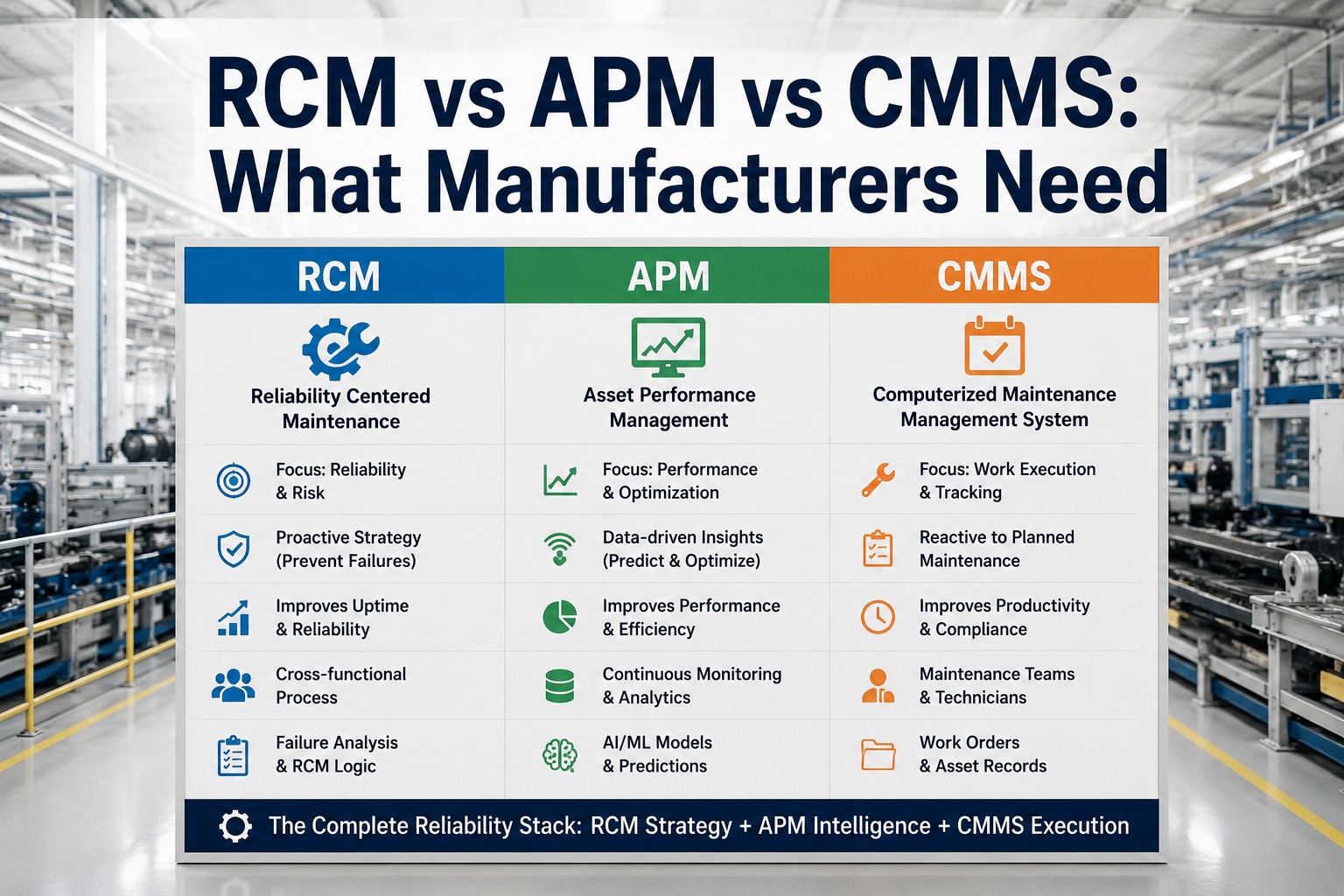
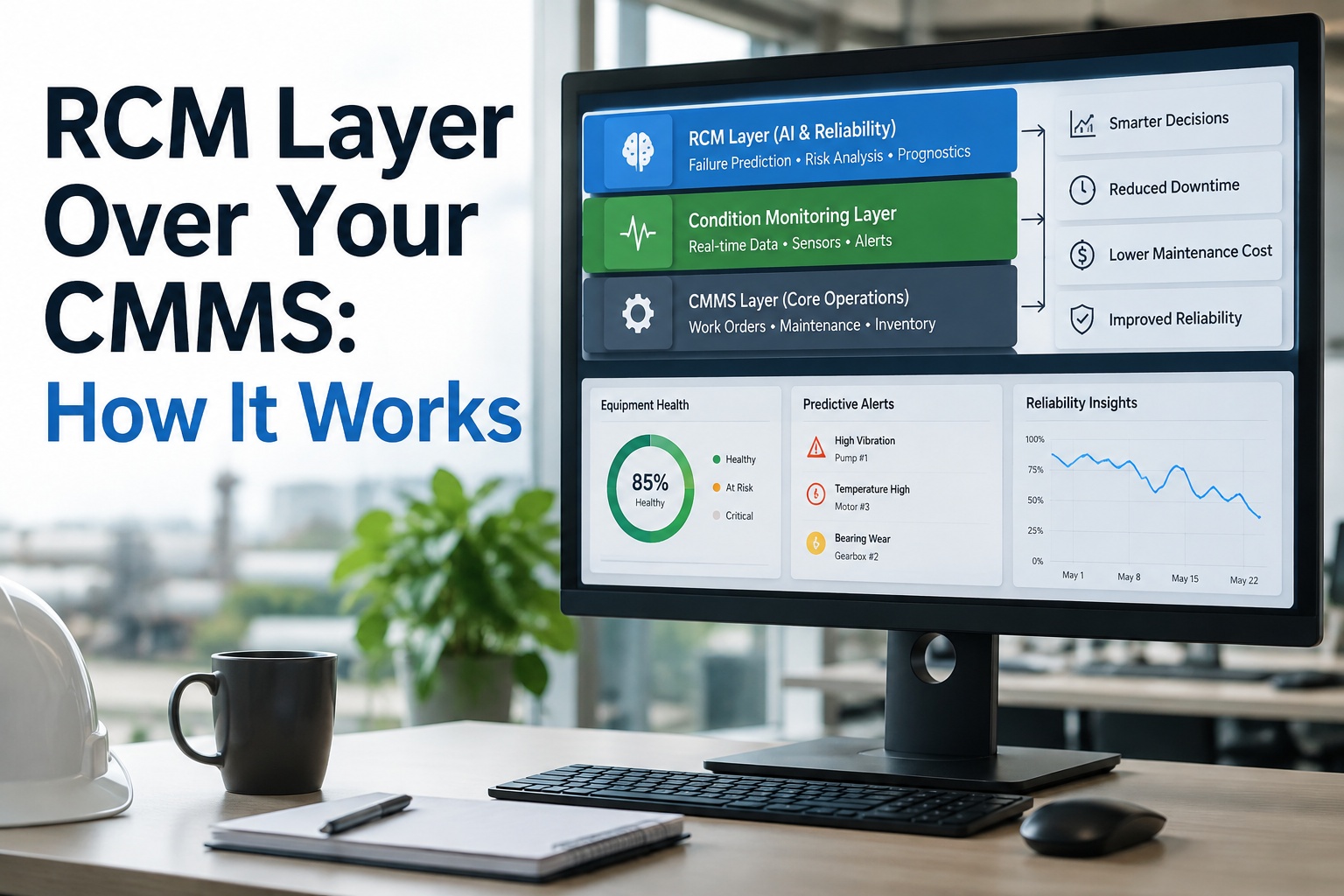
Ask ten reliability leaders what the difference is between RCM, APM, and CMMS and you'll get eleven answers. The three acronyms have overlapped in vendor marketing for so long that they've become interchangeable in conversation — which is exactly
Read More
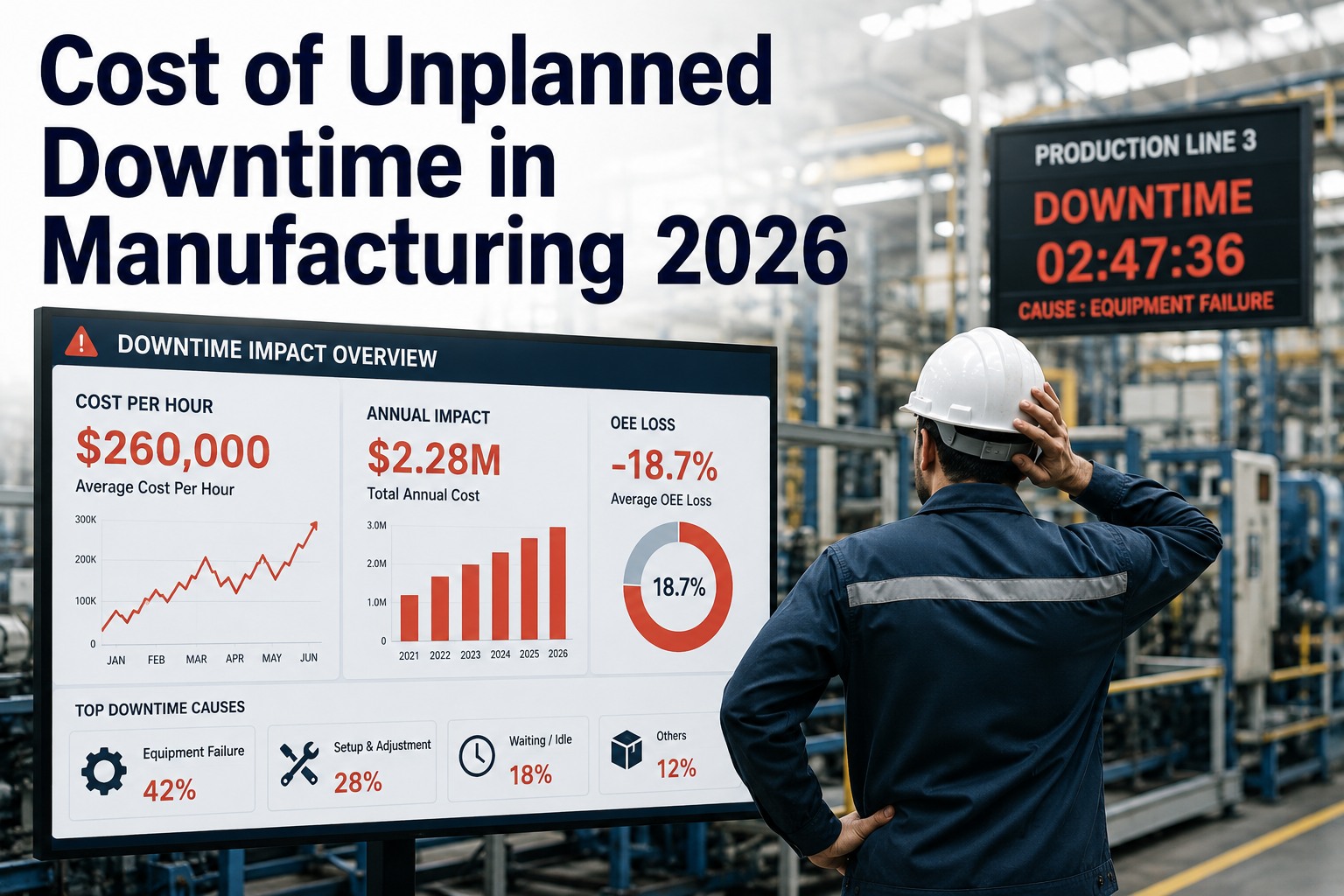
Every manufacturer knows unplanned downtime hurts. Fewer than 25% know precisely what it costs their plant per hour — and that gap in precision is itself expensive, because you cannot systematically reduce a cost you have not actually measured. Th
Read More
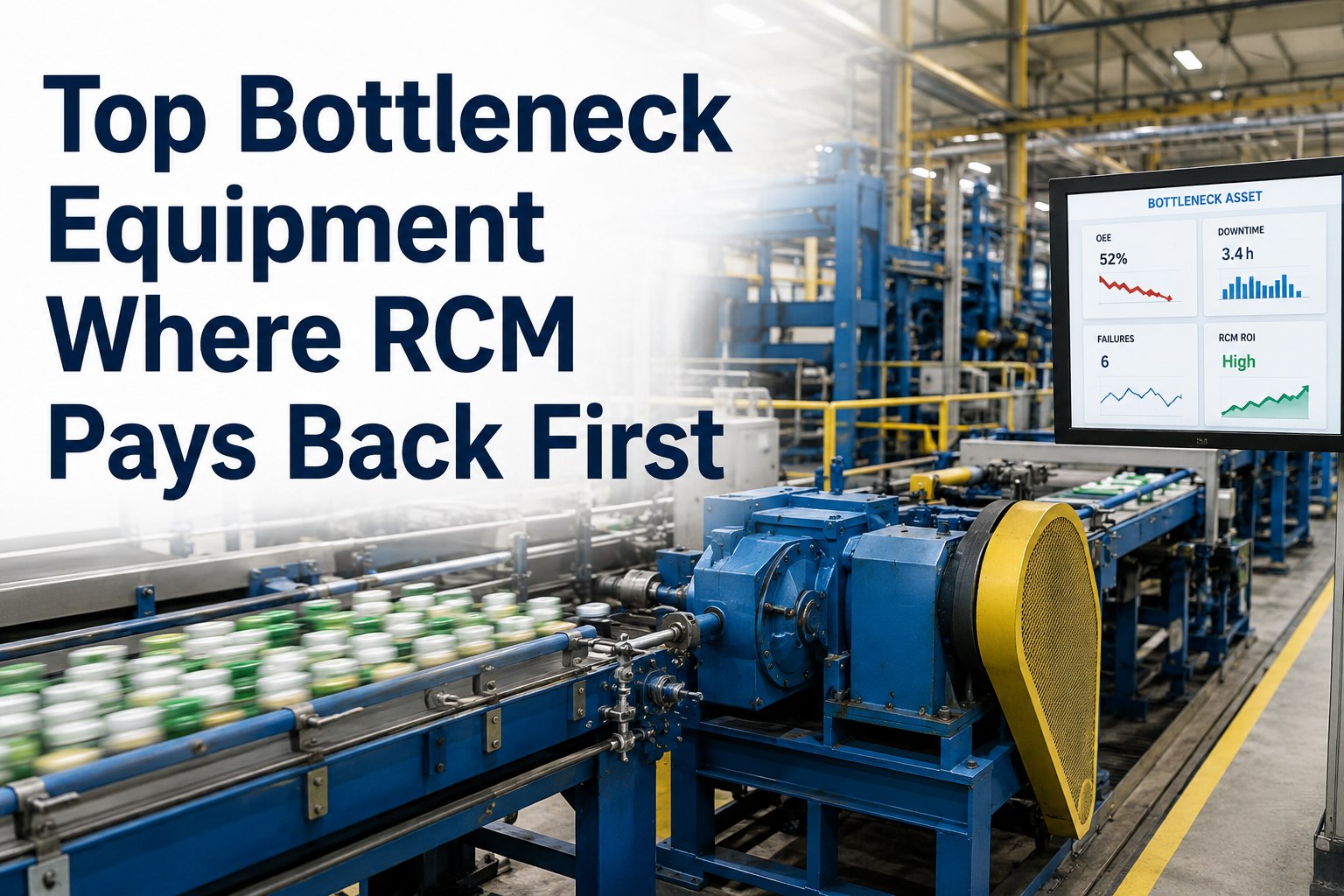
Every manufacturing plant has one asset that governs its throughput — the constraint. Eliyahu Goldratt made this uncomfortably clear in 1984: a plant's output is not the sum of its assets, it's the capacity of its slowest one. Every minute the bot
Read More
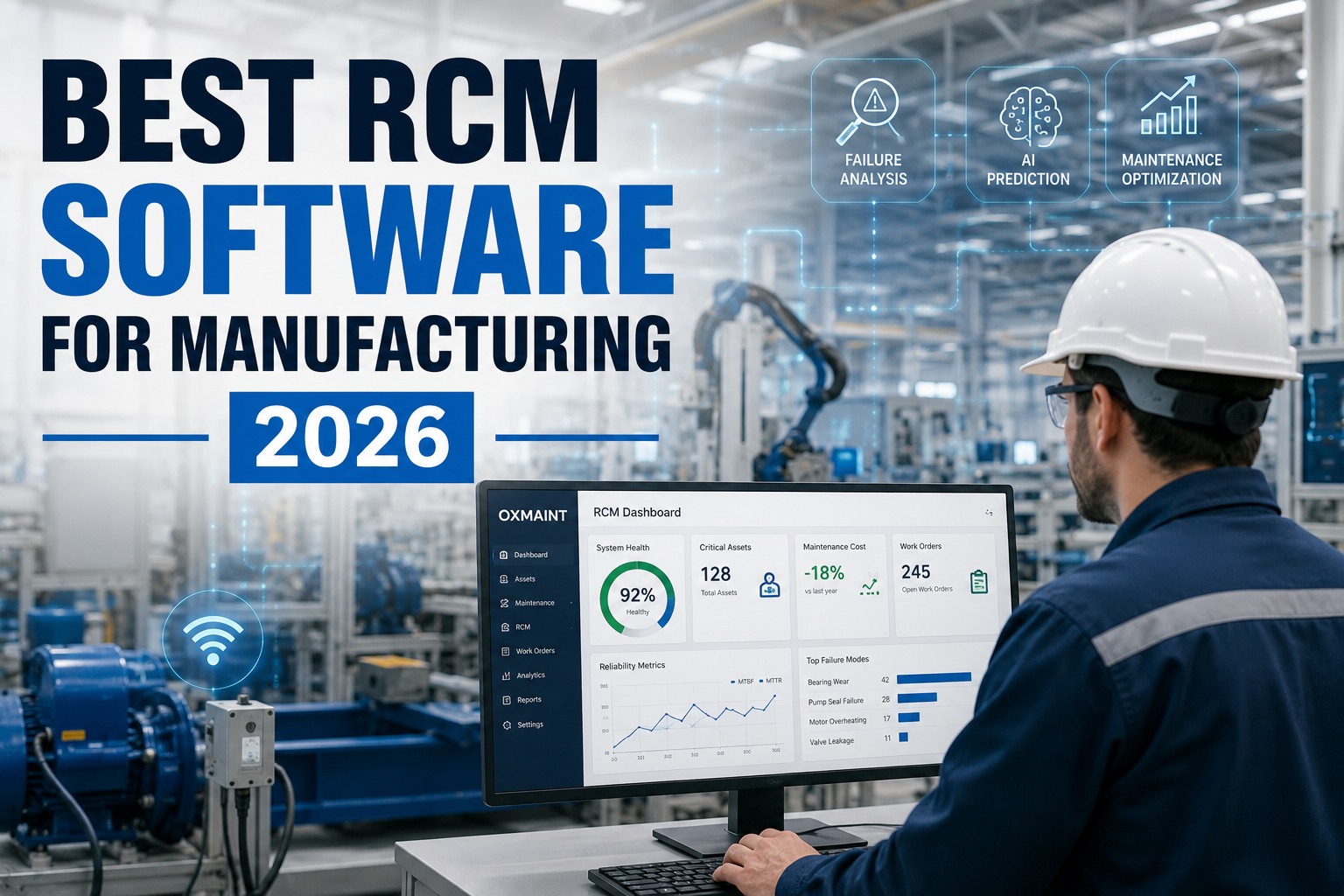
Every mid-to-large manufacturer already has a system of record — SAP PM, IBM Maximo, Infor EAM, Oracle EAM — and the last thing the reliability team needs is to rip it out. That's not just a political fight; it's a five-year, seven-figure project
Read More
Reliability-Centered Maintenance is the most rigorous framework ever built for answering a single manufacturing question: for each failure mode in each operating context, what is the most effective thing to do — and is doing something more effecti

Read More
Reliability-Centered Maintenance was born in 1978 as a series of workshops. A cross-functional team sat in a conference room for weeks, worked through the seven RCM questions for each critical asset, filled out FMEA worksheets, and emerged with a
Read More
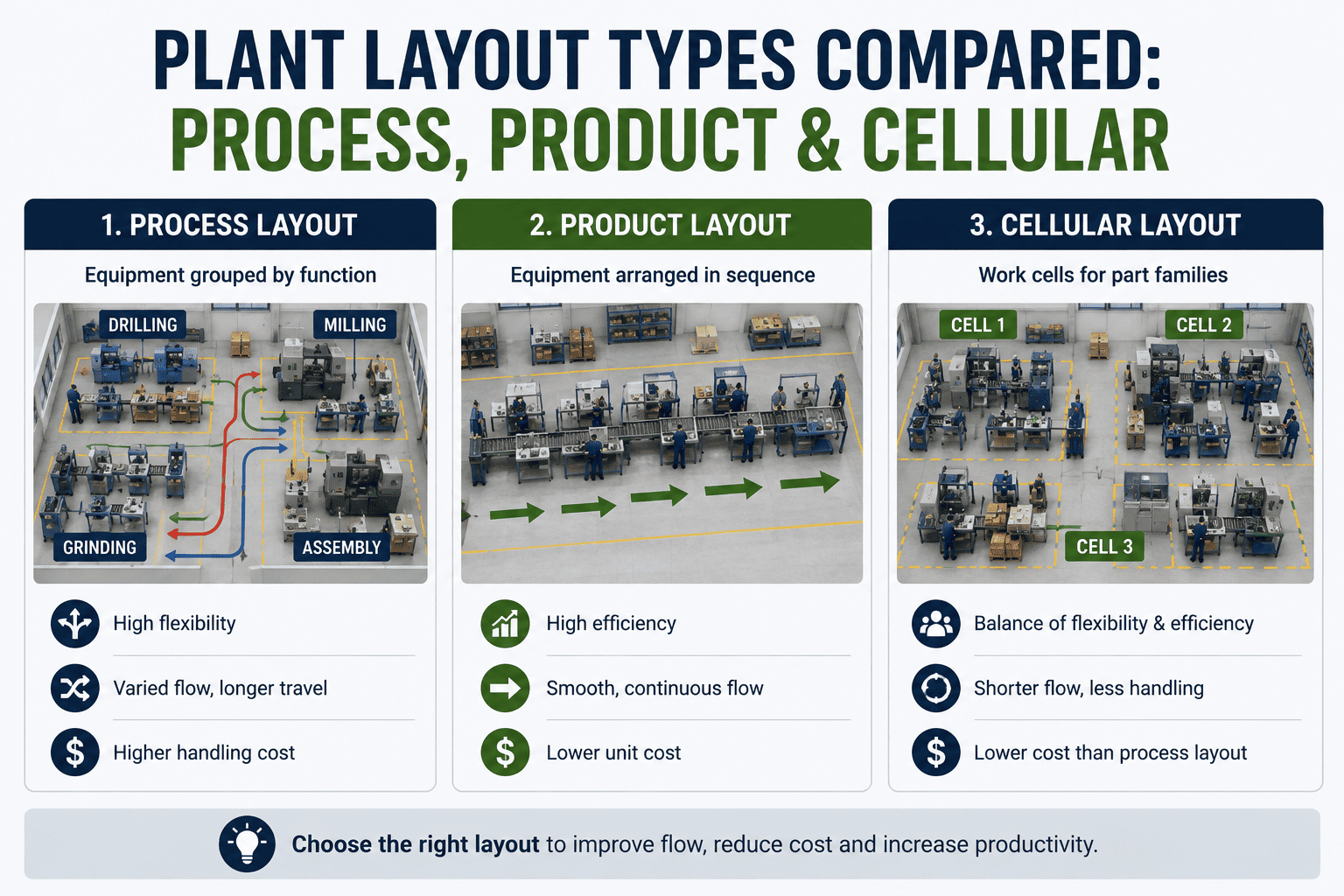
Choosing between process, product, and cellular layout is one of the highest-impact decisions a manufacturing plant makes — the right plant layout type determines material flow, work-in-process inventory, flexibility, and unit cost for decades. Pr

Read More
A spaghetti diagram is the simplest, fastest way to expose material handling waste hiding in your manufacturing plant — and it shocks almost every team that draws one honestly. By tracing the actual path of materials, tools, and operators on a flo

Read More
Material flow optimization is the process of analyzing, redesigning, and continuously improving how parts and raw materials move through a manufacturing plant — and most facilities leak 15–25% of their labor time to inefficient routes, bottlenecke

Read More
Preventive maintenance checklist templates give maintenance teams a repeatable, asset-specific starting point for inspections, lubrication, calibrations, and component replacements — eliminating the guesswork that turns routine PM into unplanned b

Read More
Electrical panel maintenance is the single most under-scheduled preventive task on the plant floor — yet loose connections and thermal runaway account for a disproportionate share of unplanned manufacturing downtime. This guide walks maintenance a

Read More
A world-class lubrication program can double bearing life, cut unplanned downtime by up to 40%, and eliminate the single most common cause of premature machine failure in manufacturing plants. Industrial lubrication is not just about applying oil

Read More
Compressed air is the most expensive utility in most manufacturing plants — yet up to 30% of it leaks straight to atmosphere without ever doing useful work. A structured pneumatic system maintenance program combines ultrasonic air leak detection,

Read More
Hydraulic system preventive maintenance is the difference between a press that runs 8,000 hours a year and one that seizes at 2 AM, halting an entire production line. In manufacturing, over 70% of hydraulic failures trace back to fluid contaminati

Read More
Preventive maintenance optimization is the process of right-sizing PM intervals, tasks, and frequencies so that equipment receives exactly the maintenance it needs—no more, no less. Industry studies show that up to 30% of scheduled maintenance is

Read More
Critical asset identification is the process of ranking equipment by the severity of its failure impact on production, safety, and cost — so maintenance teams can focus preventive maintenance where it matters most. Not every pump, motor, or convey
Read More
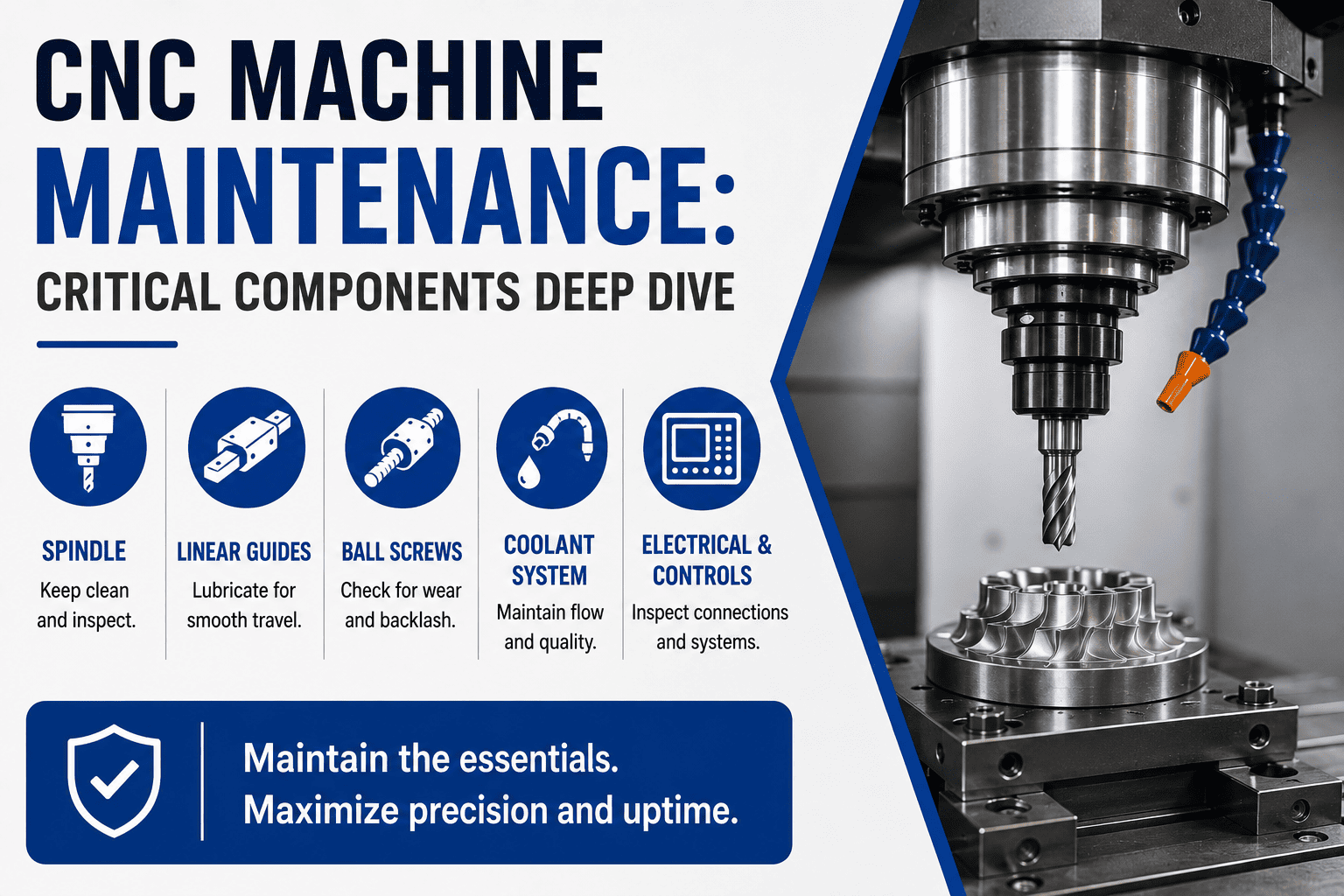
A modern CNC machining center has more than 20 distinct maintenance touchpoints — miss even a handful, and the machine ages prematurely, loses positioning accuracy, and eventually crashes. This CNC machine maintenance deep dive goes beyond the bas
Read More
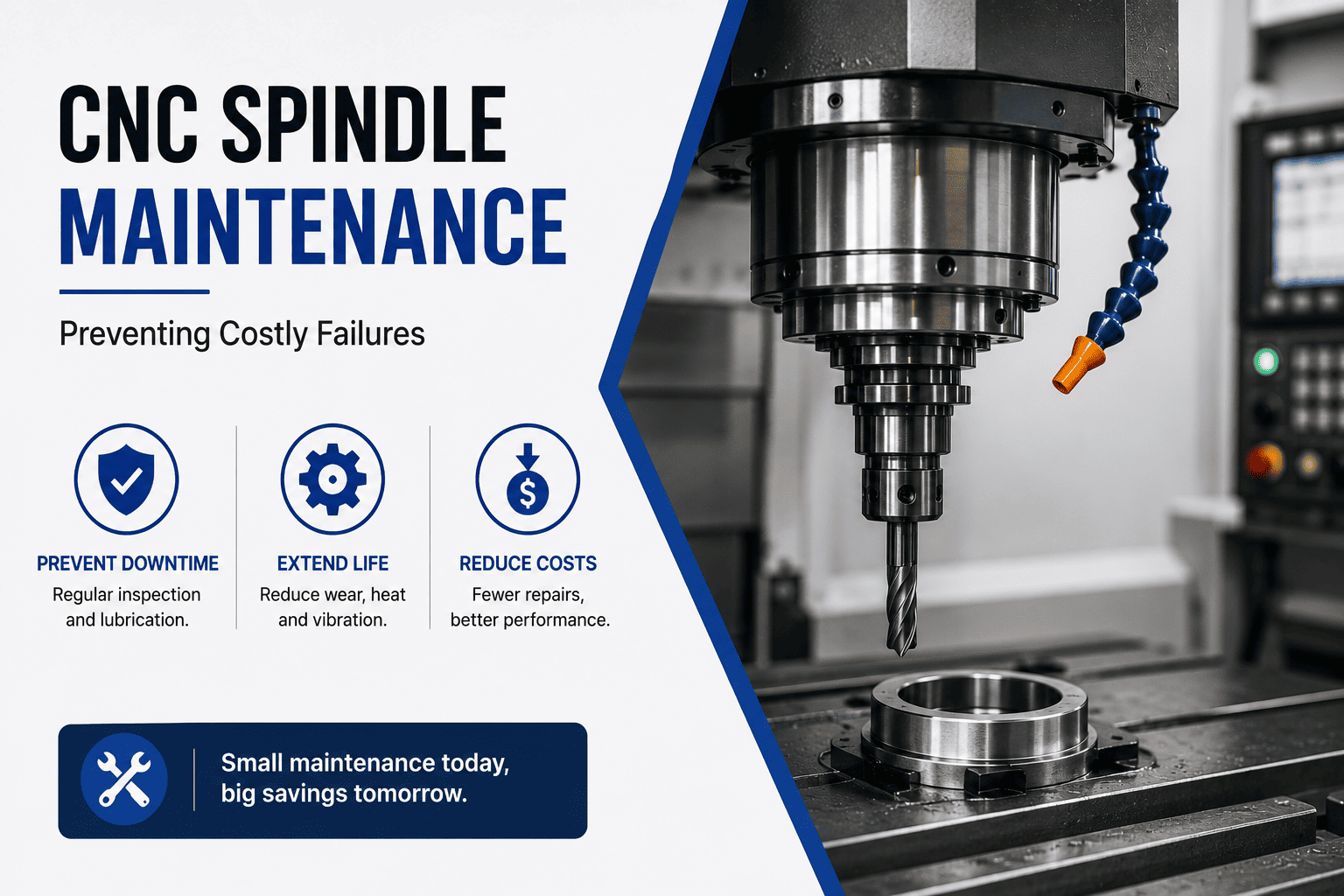
CNC spindle maintenance is the single highest-leverage reliability practice on any machining floor, because the spindle is the most expensive component to replace — a single failure can cost $15,000 to $40,000 in parts, labor, and lost production.

Read More
Building a preventive maintenance program from scratch is the single highest-ROI step a manufacturing plant can take to cut unplanned downtime, extend asset life, and stabilize maintenance costs — yet most teams stall because the sequence feels ov

Read More
Failure mode and effects analysis (FMEA) is a proactive, systematic method for identifying every way a piece of manufacturing equipment or process can fail—and ranking the impact of those failures before they cause costly unplanned downtime. In a

Read More
Poor shift handover maintenance practices cause 15–30% of preventable downtime in manufacturing plants, because critical equipment status, half-finished repairs and emerging fault signals routinely vanish in the gap between outgoing and incoming c

Read More
Bottleneck equipment governs the maximum throughput of any manufacturing line, meaning a single unexpected failure on that constraint machine effectively stops the entire plant's output. Applying the theory of constraints to maintenance strategy d

Read More
Mean time between failures (MTBF) is the clearest reliability signal a manufacturing plant can track — it tells you, in hard numbers, how long your critical assets run before breaking down. To improve MTBF, maintenance and reliability teams need d
Read More
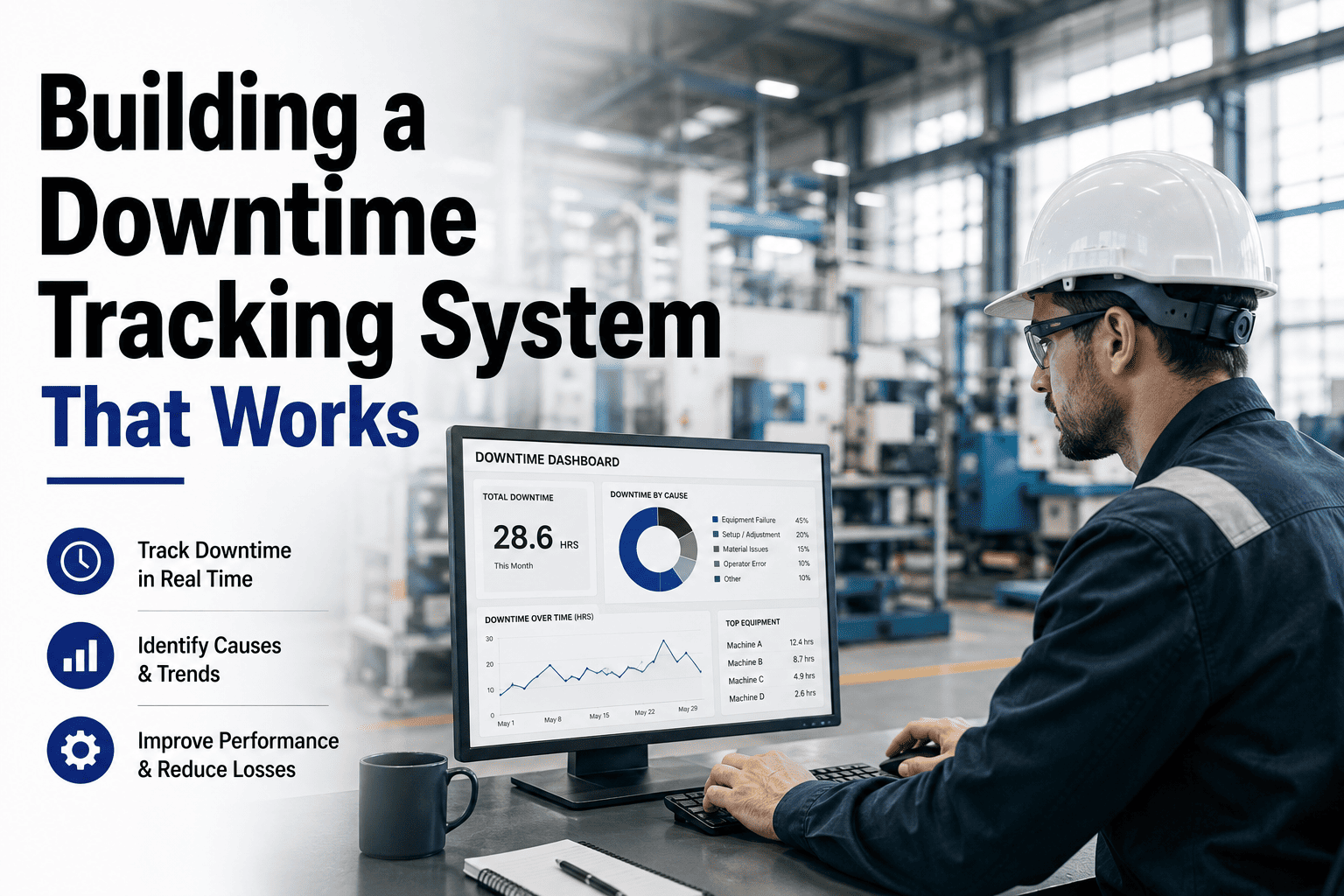
A downtime tracking system captures the exact start time, end time, and root cause of every production stoppage so your maintenance and reliability teams can replace guesswork with data. Manufacturing plants that log downtime events with disciplin
Read More
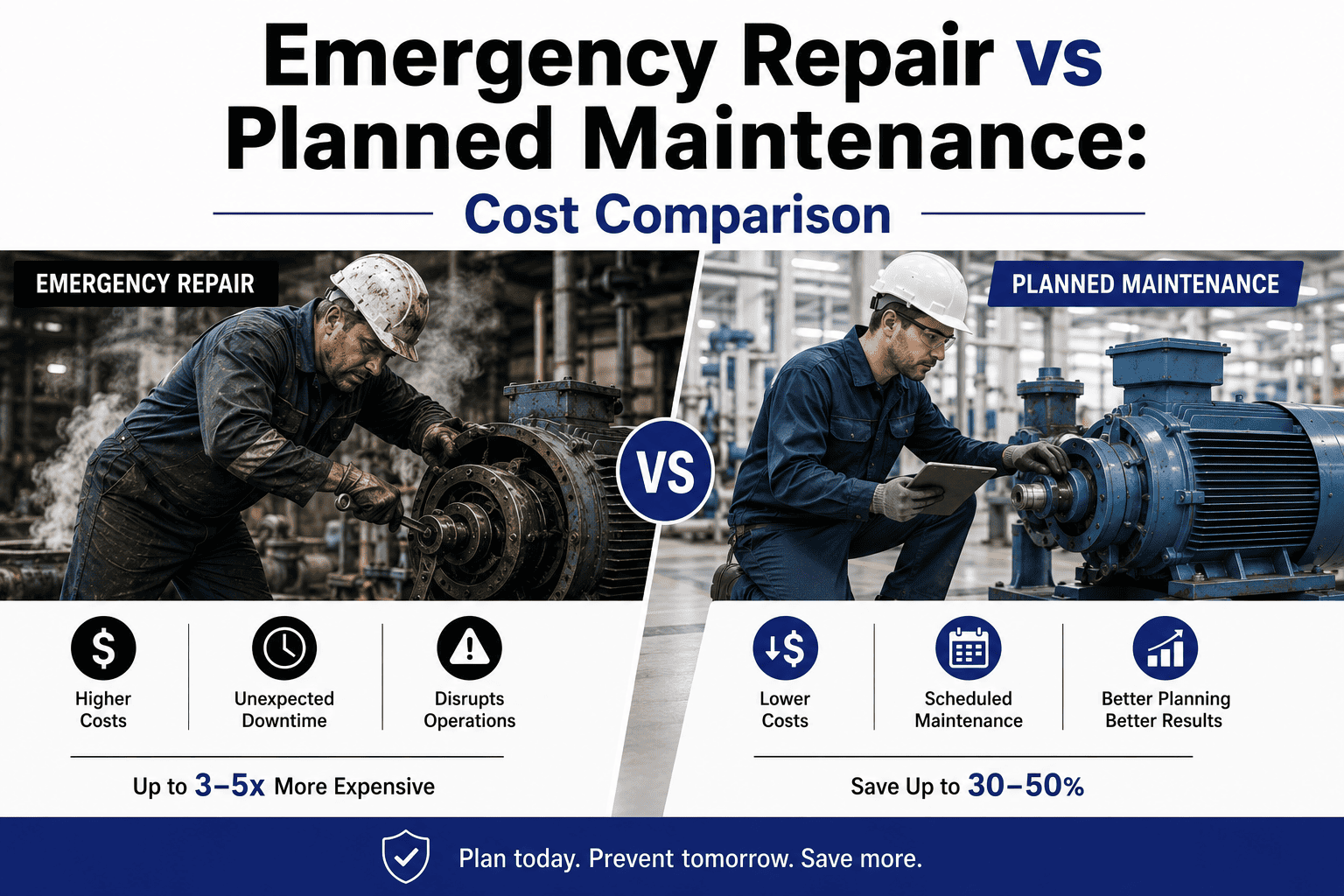
Emergency repair cost typically runs 3 to 9 times higher than planned maintenance for the identical job, making the emergency repair vs planned maintenance comparison one of the most consequential financial decisions a plant manager faces. That mu
Read More
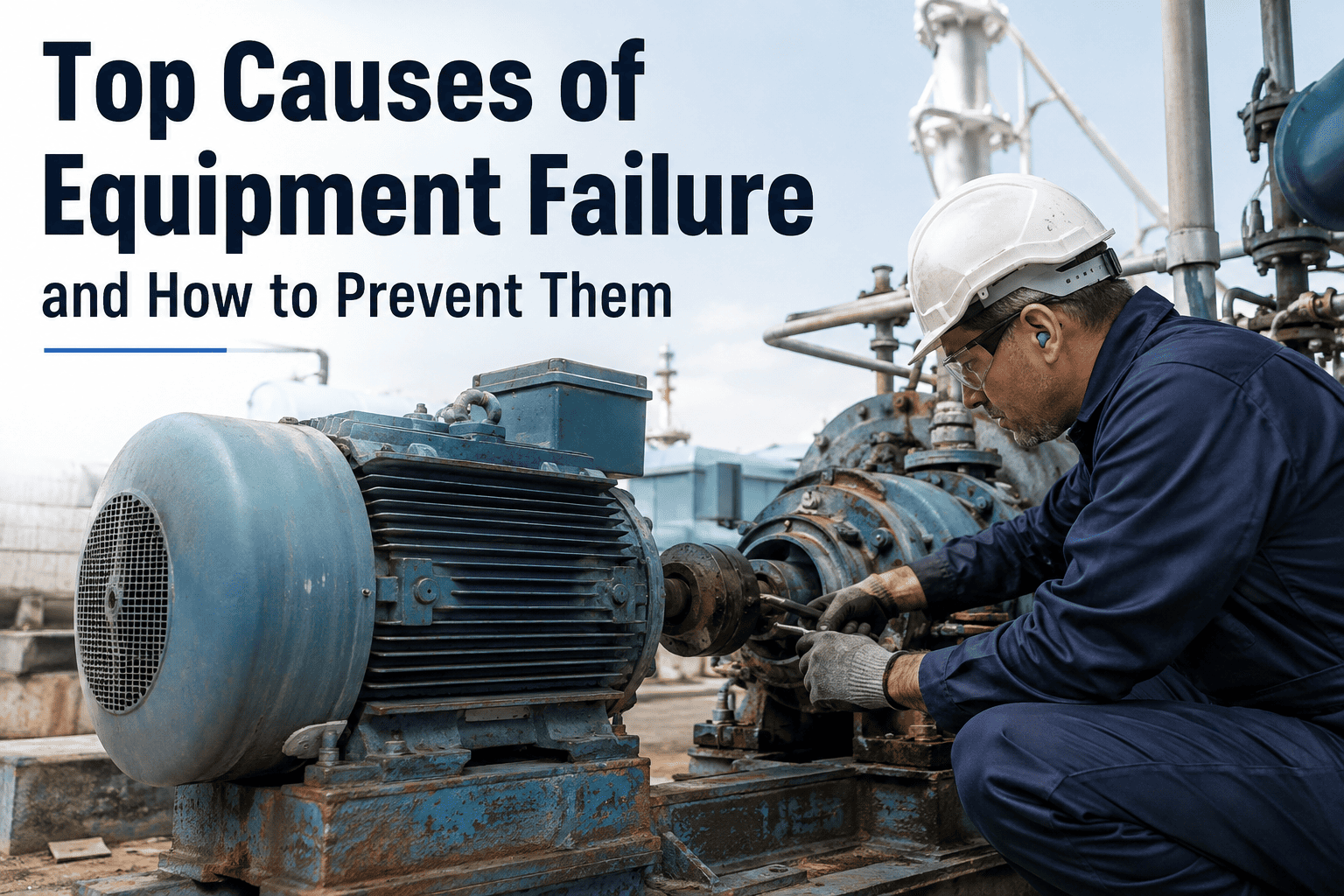
The top causes of equipment failure in manufacturing plants rarely change year over year — aging assets, lubrication errors, contamination, misalignment, and missed inspections account for the vast majority of unplanned downtime. When reliability
Read More
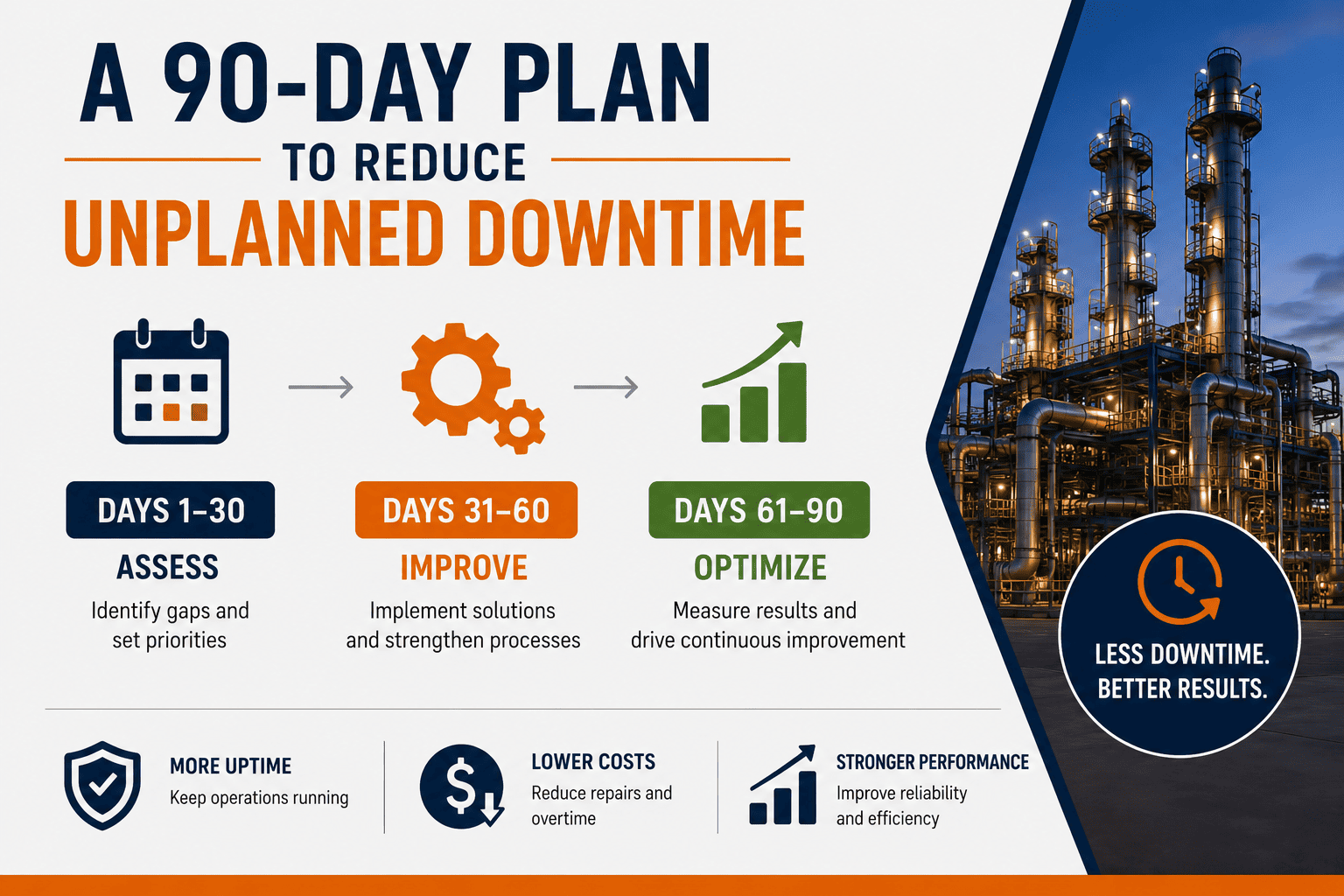
Unplanned downtime costs manufacturers an estimated $50 billion annually, with a single hour of stopped production reaching $260,000 in heavy industries. A practical 90-day plan to reduce unplanned downtime can knock 20–40% off your top-loss asset
Read More
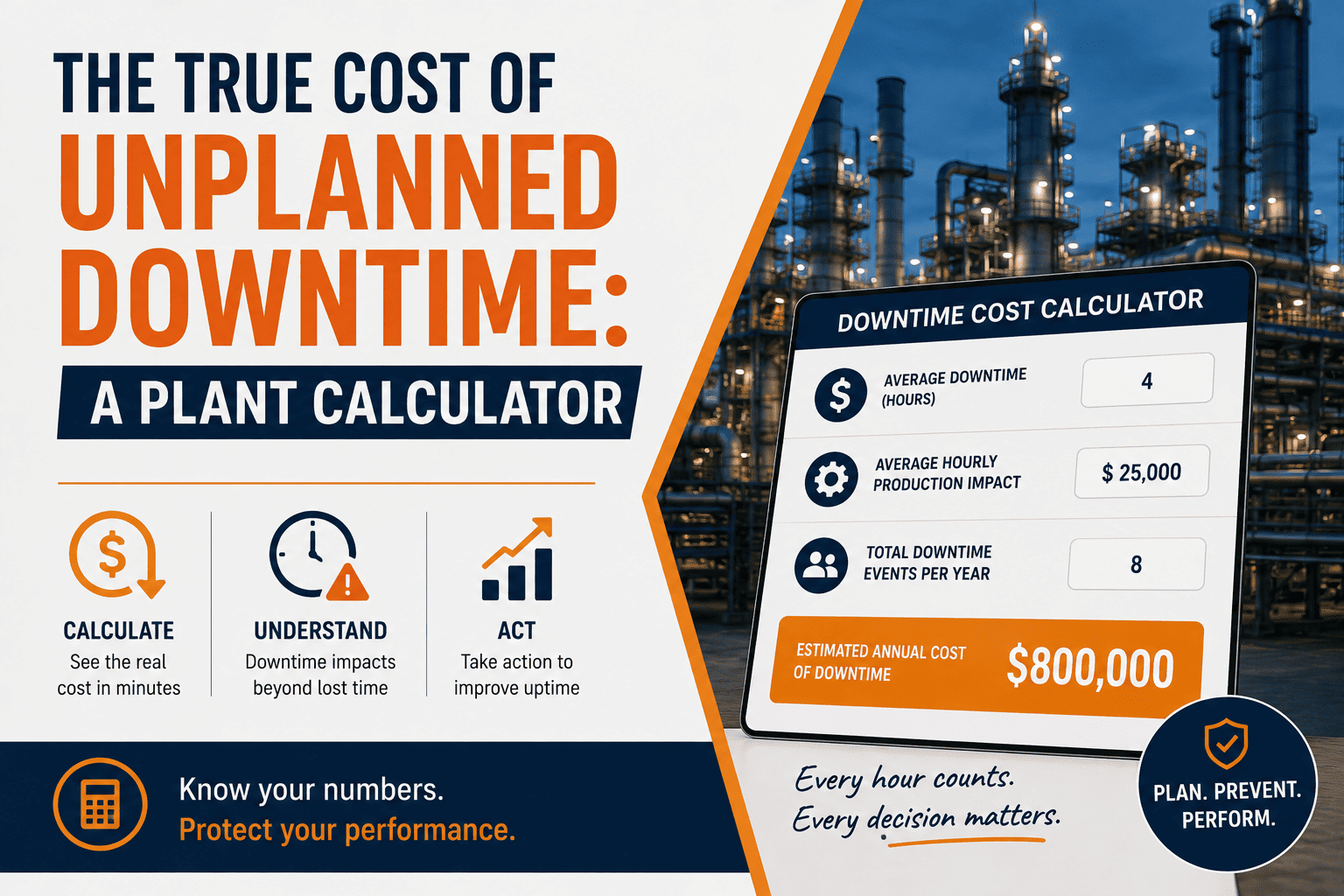
The true cost of downtime in manufacturing extends far beyond a broken machine — most plants undercount it by 3 to 5 times because they only track the idle asset, ignoring the cascading losses in margin, scrap, idle labor, and expedite fees that f
Read More
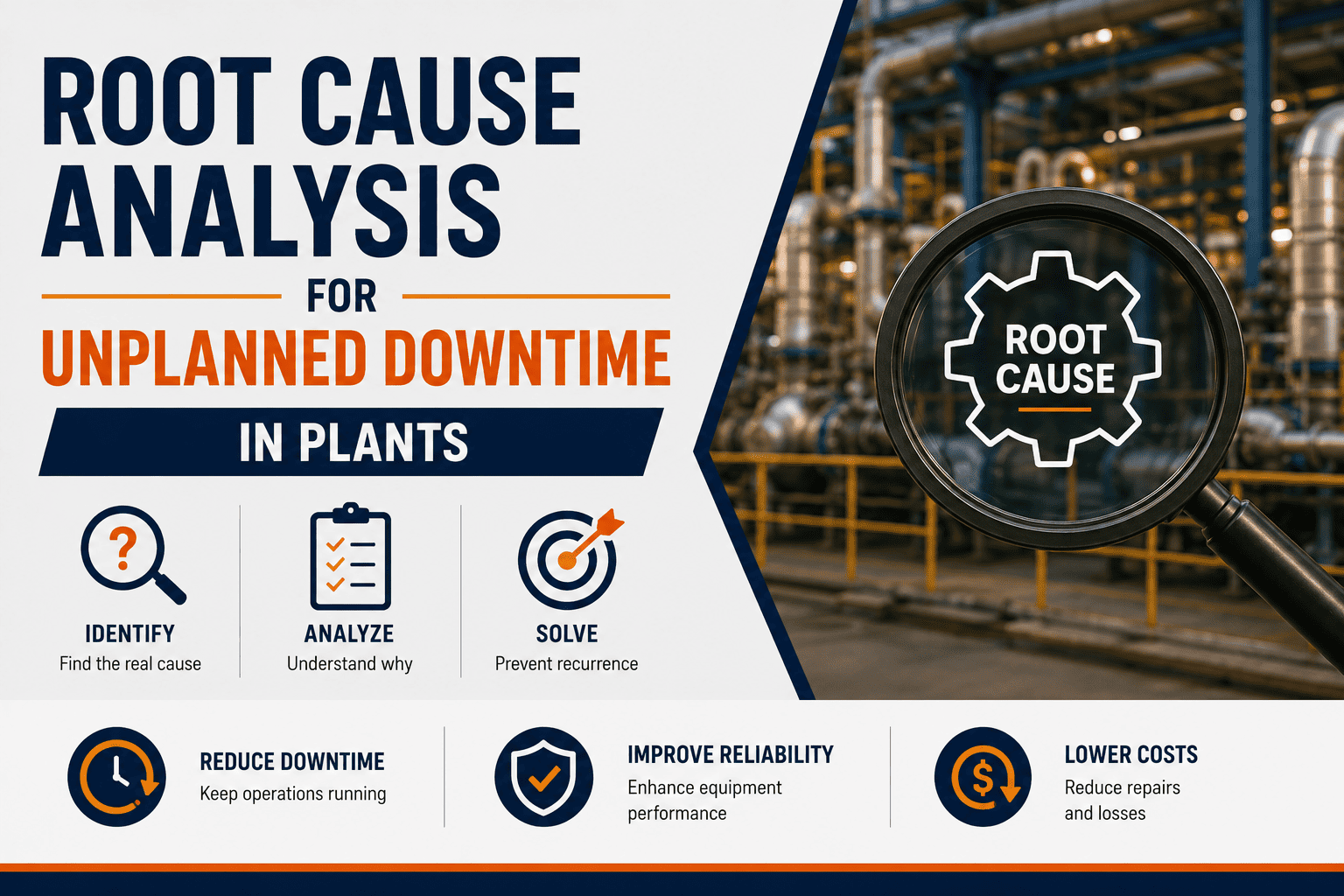
Unplanned downtime root cause analysis is the difference between a plant that fixes the same equipment failure three times a quarter and one that eliminates it permanently. When a critical asset goes down, the immediate repair is only the first st

Read More
Industrial ovens and furnaces are among the most energy-intensive assets in manufacturing, making a rigorous industrial oven maintenance manufacturing strategy essential for controlling costs and ensuring product quality. This guide covers everyth

Read More
Steam turbine maintenance for manufacturing plants demands rigorous adherence to OEM intervals, API standards, and precision mechanical checks — a single missed bearing inspection or delayed governor overhaul can trigger catastrophic overspeed fai
Read More
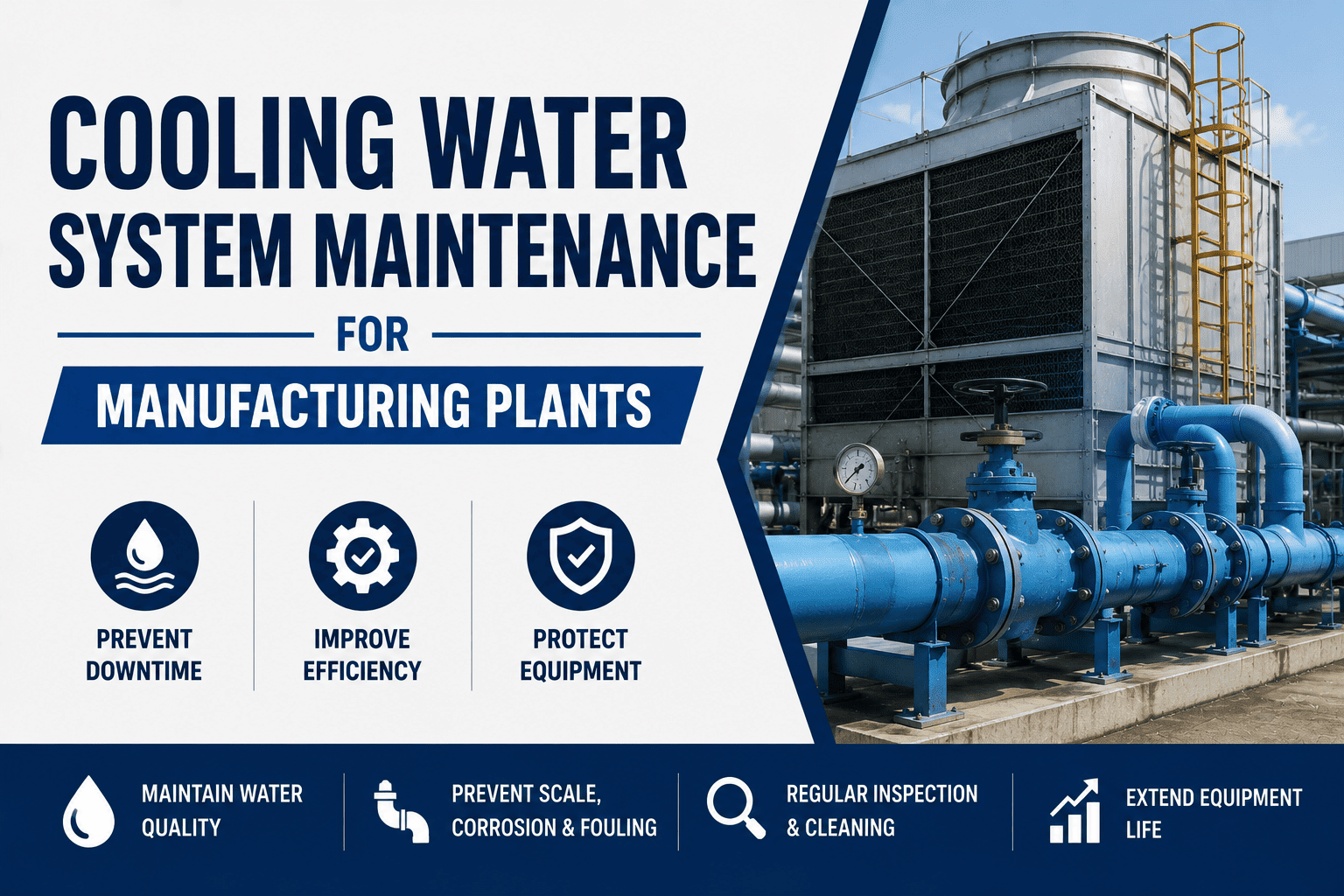
Cooling water system maintenance for manufacturing plants is the difference between a stable, energy-efficient process and a slow, costly decline into scale buildup, biofilm, corrosion and microbiologically influenced corrosion (MIC) — the four fa
Read More
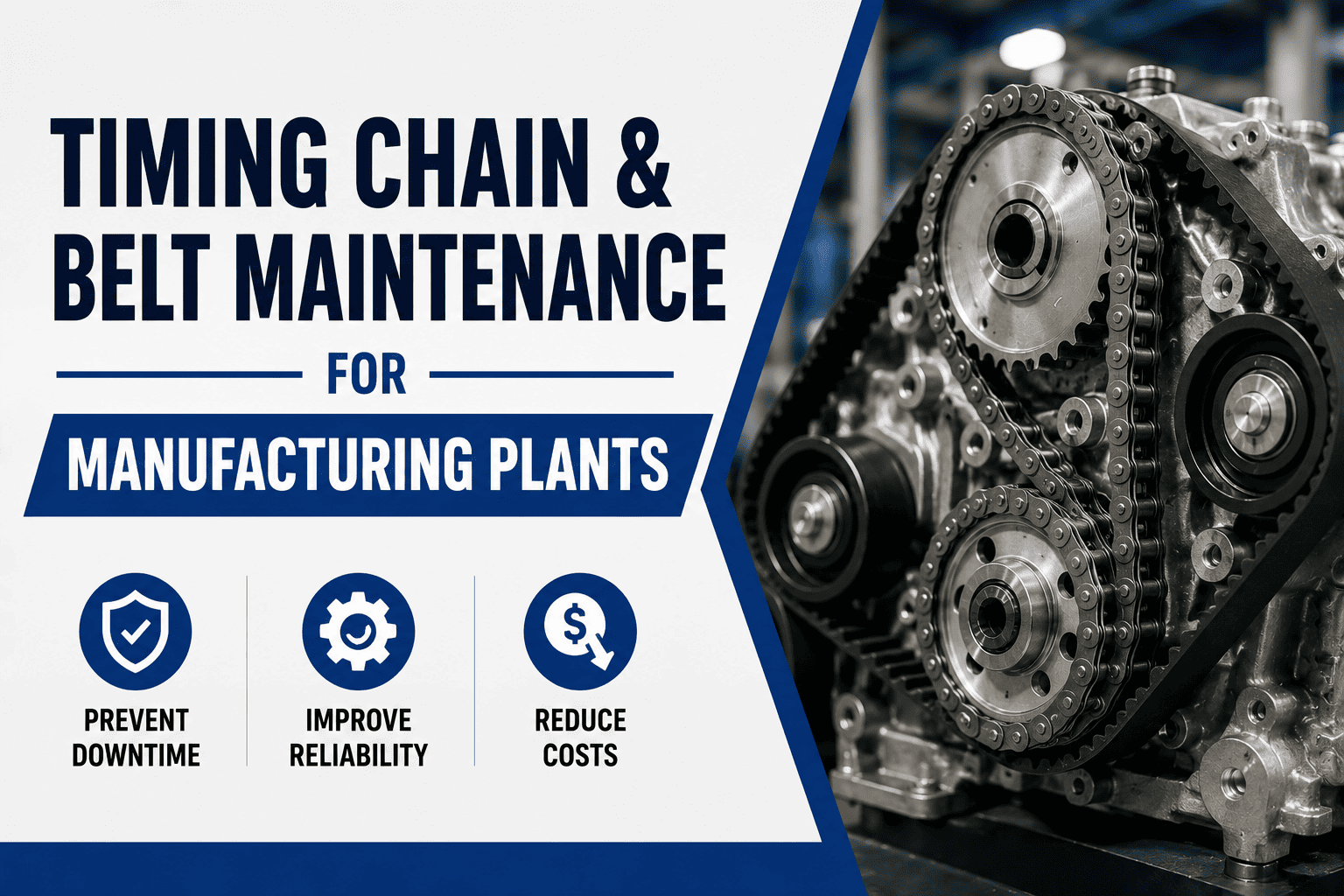
Timing chain and belt maintenance in manufacturing plants is the difference between a synchronized, high-OEE production line and a cascading unplanned downtime event that costs $12,000 or more per hour. Timing drives synchronize motion in packagin

Read More
Pressure vessel maintenance in manufacturing plants is the single most compliance-driven discipline in asset reliability — miss an API 510 inspection interval or a relief valve test and you face regulatory fines, unplanned shutdowns, and catastrop
Read More
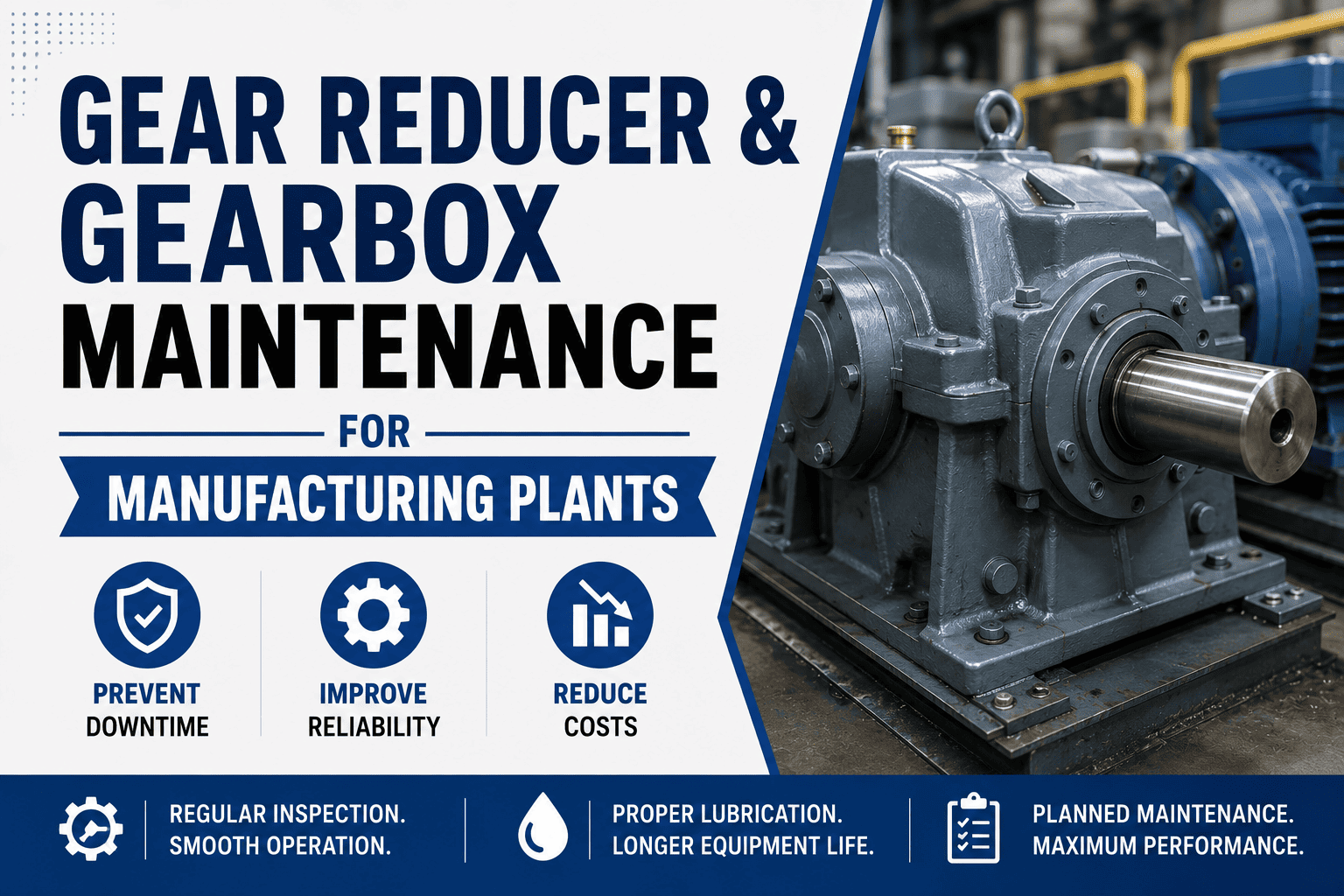
Gear reducer maintenance in manufacturing plants is the difference between a gearbox that runs 60,000+ hours and one that fails at 15,000 — yet most facilities still treat gearboxes as fit-and-forget components until vibration, leakage, or catastr

Read More
Switchgear and circuit breakers are the silent guardians of your manufacturing plant's electrical infrastructure — until they fail to trip during a fault, and the consequences become catastrophic. Effective switchgear maintenance for manufacturing

Read More
Flexible coupling maintenance in manufacturing plants is the difference between a drive train that runs 8,000 hours uninterrupted and one that seizes, leaks grease, and cascades into an unplanned outage. This flexible coupling maintenance guide co

Read More
Chiller condenser and evaporator maintenance in manufacturing plants directly determines whether your process cooling runs at peak efficiency or bleles thousands of dollars in excess energy every month. A fouled condenser tube bundle raising appro
Read More
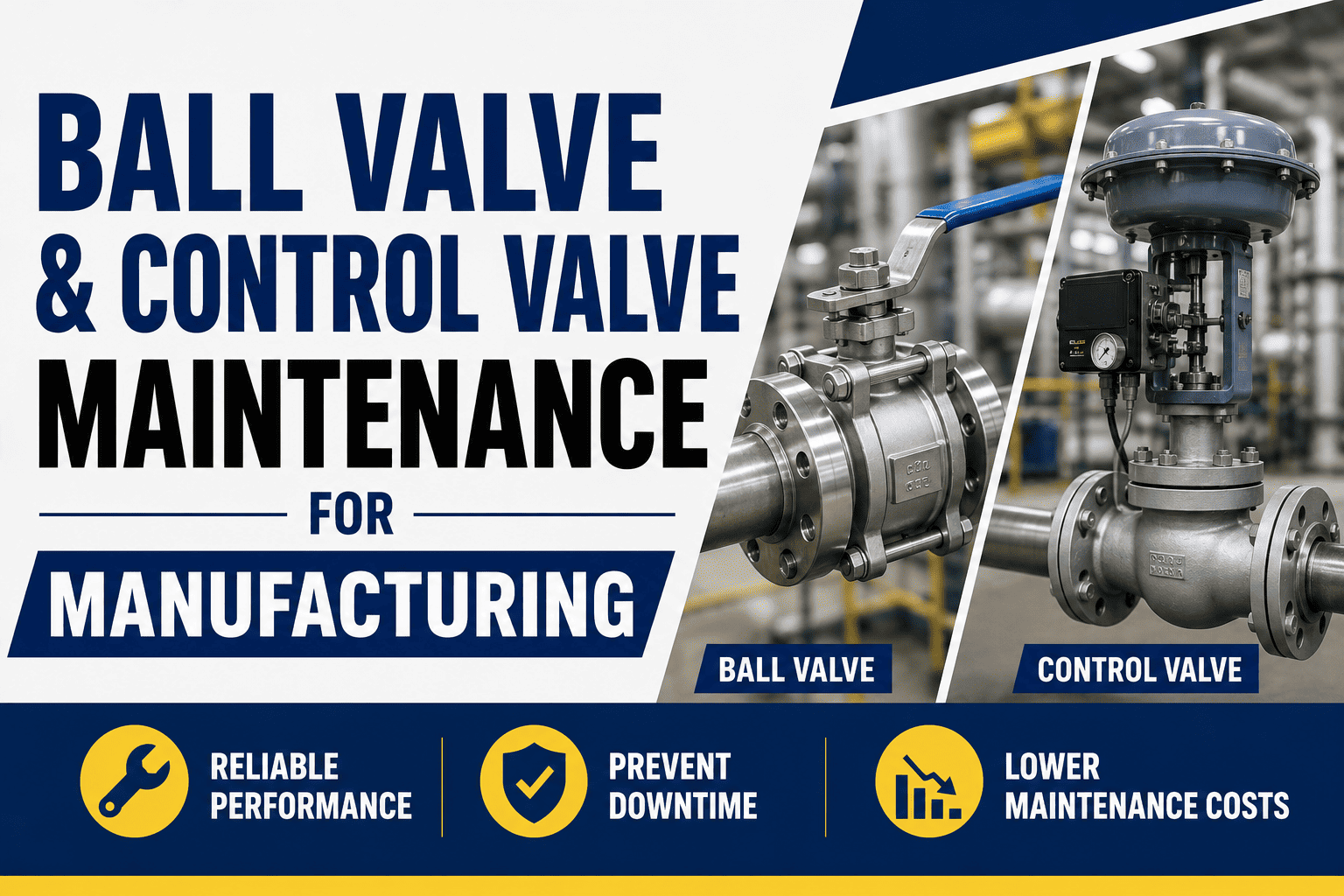
Ball valve and control valve maintenance in manufacturing plants is the difference between steady throughput and unplanned shutdowns that cost $12,000–$50,000 per hour in lost production. This guide covers everything from packing gland inspection

Read More
Plate heat exchanger maintenance for manufacturing plants centers on four disciplines — gasket integrity, plate cleanliness, pressure-drop monitoring, and pressure testing — because even a 0.5 mm scale layer can cut heat transfer by 10–15 percent

Read More
Motor control center maintenance is the single most impactful reliability task a manufacturing plant can perform to prevent arc flash incidents, cascading production outages, and unplanned downtime. A well-structured MCC PM schedule—covering therm

Read More
Industrial agitators and mixers are the unseen workhorses of process manufacturing, and their unexpected failures can halt an entire production train in minutes. Effective agitator maintenance for manufacturing plants requires a disciplined approa

Read More
VFD maintenance in manufacturing plants is the systematic inspection, cleaning, and testing of variable frequency drives — cooling fans, DC bus capacitors, input/output terminals, firmware, and harmonics — to prevent the nuisance trips and prematu

Read More
Centrifugal pump maintenance is the single highest-leverage reliability discipline in manufacturing, because centrifugal pumps move the water, chemicals, slurries and coolants that keep your entire plant running — and mechanical seal failure is th
Read More
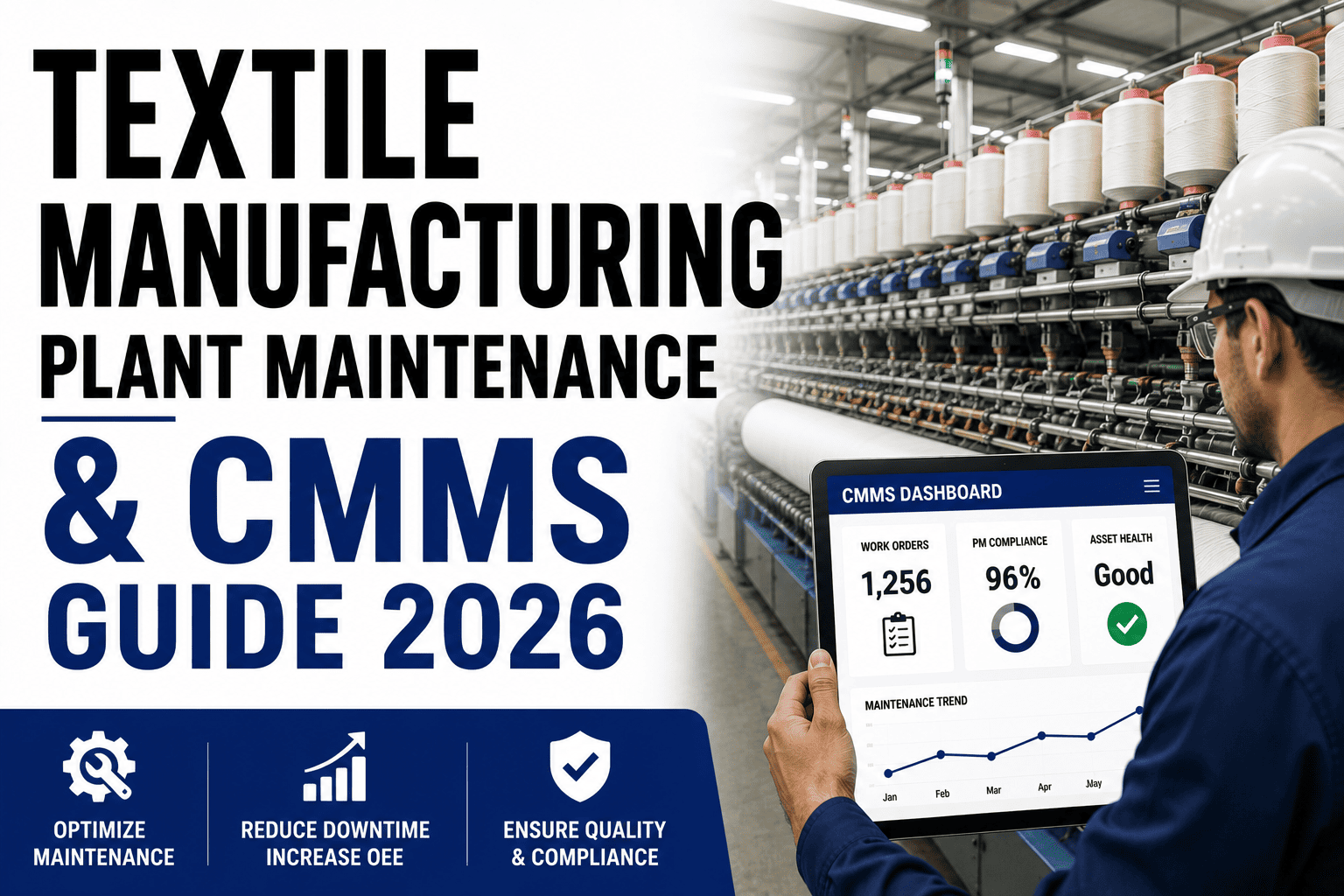
Textile manufacturing maintenance demands a disciplined approach to preventive care for spinning frames, weaving looms, knitting machines, dyeing equipment and humidification systems that operate around the clock in lint-heavy, high-humidity envir

Read More
Beverage manufacturing maintenance demands a rare balance: high-speed filling, capping and packaging lines must run at 85–95% OEE while meeting rigorous 3-A sanitary standards, FDA and SQF audit requirements. A purpose-built beverage plant CMMS ce

Read More
Mining plant maintenance demands a disciplined approach to keeping crushers, mills, conveyors, and flotation cells running in remote, 24/7 environments where equipment failure can cost tens of thousands of dollars per hour. This 2026 guide to mini
Read More
Chemical manufacturing plant maintenance carries stakes that no other industry faces: a missed preventive task on a pressure vessel or relief valve can trigger a catastrophic release, OSHA citation, or worse. This guide shows how a purpose-built c
Read More
Glass manufacturing plant maintenance hinges on one relentless reality: a float glass furnace runs at 1,500°C for 15–20 years without a cold shutdown, and a single unplanned refractory failure or tin bath contamination event can cost $50,000–$200,
Read More
Rubber manufacturing plants operate at the intersection of high-temperature mixing, calendering, extrusion, and vulcanization — environments where equipment failure can halt production within minutes. A dedicated rubber plant CMMS is essential for
Read More
FMCG manufacturing maintenance is the discipline of keeping high-speed filling, packaging, and palletizing lines running at peak OEE — and in fast-moving consumer goods, every 30-second stoppage can cost thousands in lost throughput and scrap. Thi

Read More
Aerospace manufacturing plants operate under AS9100 Rev D, where maintenance records are scrutinized as heavily as the flight-critical parts they produce. An aerospace plant CMMS aligns equipment qualification, tooling calibration, CNC traceabilit

Read More
Semiconductor fab maintenance is the most demanding reliability discipline in manufacturing — governing ISO Class 3–5 cleanrooms, sub-nanometer lithography tolerances, and 24/7/365 production schedules where a single unplanned tool failure can cos

Read More
Metal fabrication maintenance in 2026 demands a unified approach to managing diverse equipment fleets — from CNC machining centers and laser cutters to press brakes and welding stations — each with distinct preventive maintenance (PM) requirements

Read More
Plastics manufacturing maintenance is the difference between a plant running 90% OEE and one hemorrhaging margin through scrap, cycle-time drift, and unplanned downtime. Whether you run injection molding, extrusion, or blow molding operations, tig

Read More
Electronics manufacturing plant maintenance demands precision far beyond standard equipment upkeep — it requires ESD program compliance, SMT machine maintenance discipline, reflow oven calibration accuracy, and cleanroom HVAC reliability to protec

Read More
Pharmaceutical manufacturing maintenance operates under GMP rules that no other industry faces — every work order, calibration, and cleanroom intervention needs a fully documented, audit-ready trail. A GMP-compliant CMMS for pharma manufacturing p

Read More
Food processing plant maintenance demands far more than keeping machines running — it directly governs food safety, audit readiness, and line OEE under strict FSMA, SQF, and BRCGS scrutiny. This food processing maintenance guide covers how a purpo

Read More
Automotive manufacturing maintenance in 2026 demands precision, speed, and unbreakable compliance — every minute of unplanned downtime on a robotic welding cell or stamping press can cost a car plant $20,000 or more. This guide to automotive plant

Read More
AR headset manufacturing maintenance has crossed the price-to-value threshold in 2026, with devices like HoloLens, Vuzix, and RealWear becoming field-ready tools for plant reliability teams. This augmented reality maintenance guide covers how manu

Read More
Smart factory maintenance ROI in 2026 is measured by the dollars saved through downtime avoidance, labor productivity gains, energy reduction, and quality improvements — not by the number of sensors you deploy. Manufacturing leaders who want CFO a

Read More
The digital thread for manufacturing maintenance asset data connects every record of an asset's lifecycle — from CAD models and OEM specifications through commissioning, preventive maintenance, repairs, and retirement — into one continuous, querya

Read More
Exoskeleton manufacturing maintenance is no longer experimental — plants across automotive, aerospace and heavy industry now deploy wearable technology to cut musculoskeletal injuries by 30–60% and extend technician endurance during overhead and h

Read More
Autonomous inspection with AI vision is transforming manufacturing plants by replacing slow, inconsistent manual checks with always-on cameras that detect surface defects, weld flaws, seal failures, and dimensional deviations in milliseconds. Mode
Read More
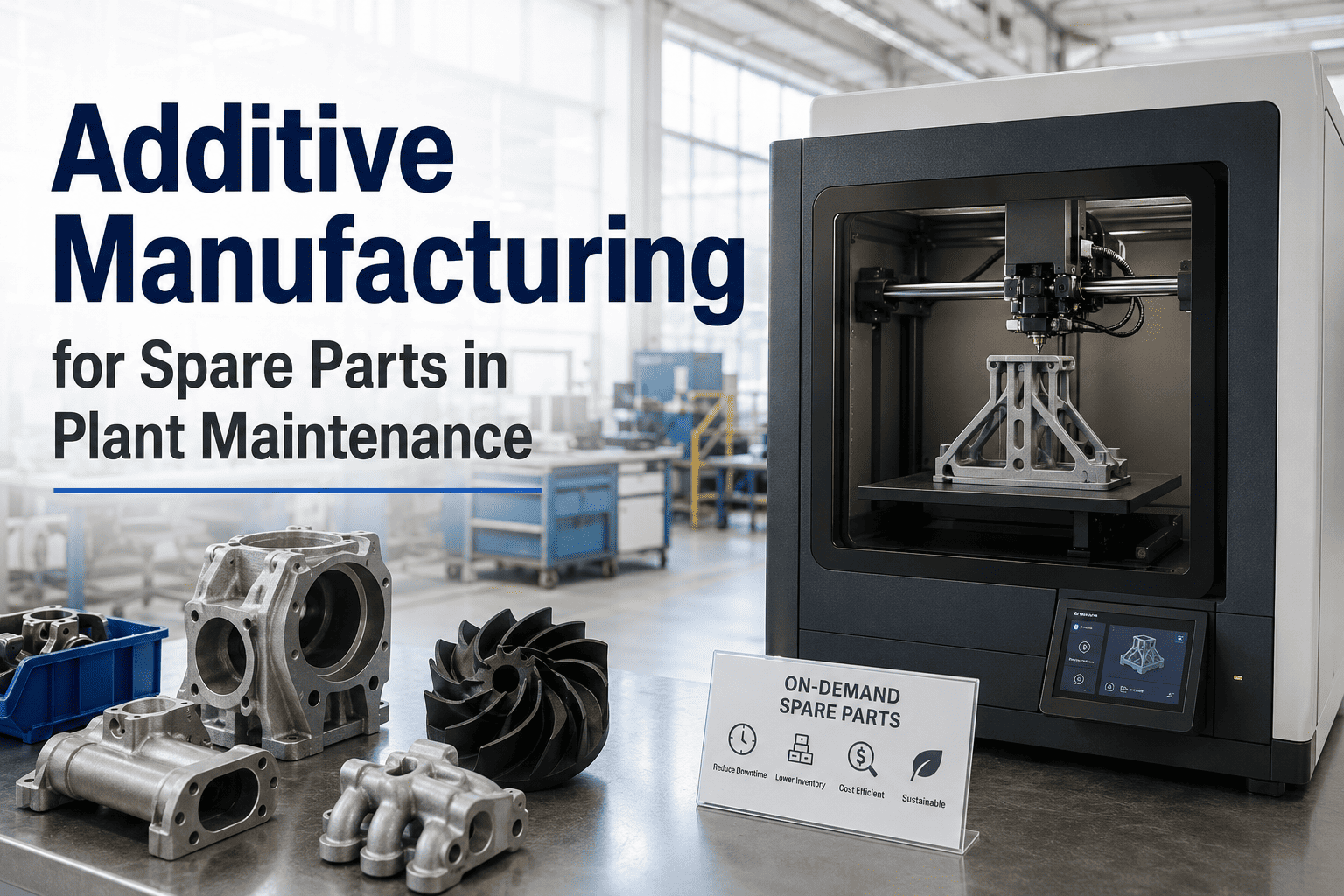
Additive manufacturing for spare parts is reshaping how plant maintenance teams conquer the long tail of unavailable, obsolete and long-lead-time components. By using 3D printing for maintenance spare parts, manufacturers can shift from stocking p

Read More
Manufacturing execution system maintenance integration connects your MES and CMMS so production events, downtime reasons, and OEE data flow automatically into your maintenance workflow — eliminating the silo where operators log breakdowns in one s

Read More
Robotic inspection for manufacturing plant maintenance has shifted from pilot novelty to production-grade necessity in 2026, with ground drones, aerial drones, and mobile crawlers now handling the most dangerous and repetitive rounds inside plants

Read More
A process digital twin for manufacturing maintenance is a live, physics-based virtual replica of your production line that ingests real-time sensor data so reliability teams can simulate equipment behavior, test preventive maintenance changes, and

Read More
Maintenance teams directly influence 15–30% of a manufacturing plant's total carbon footprint through motor efficiency, compressed air leak management, steam trap programs, and refrigerant recovery. Carbon footprint reduction in manufacturing thro
Read More
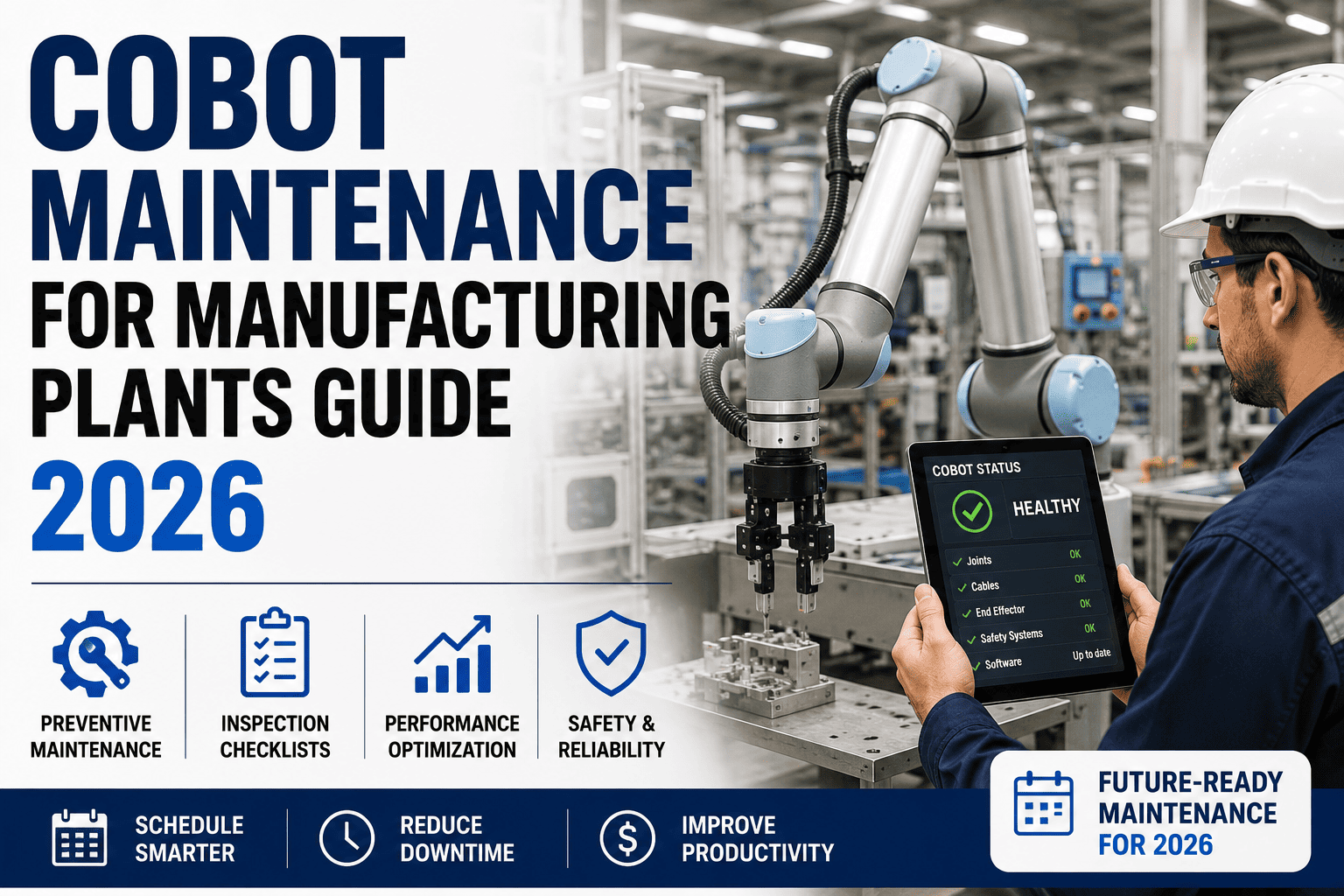
Cobot maintenance for manufacturing plants is no longer optional as collaborative robots move from lab demos to line workhorses running 16–20 hour shifts. A structured cobot PM program covering joint lubrication, force-torque sensor calibration, s

Read More
Generative AI for manufacturing maintenance is reshaping how reliability teams draft work orders, diagnose failures, write preventive maintenance procedures, and query CMMS data — faster than any technology since the CMMS itself. By 2026, an AI ma

Read More
Industrial wireless network maintenance has become the backbone of modern manufacturing reliability — and Wi-Fi 6 for plants is the first wireless standard genuinely built for the density, roaming and Quality-of-Service demands of IIoT sensors, AG

Read More
Corrosion monitoring sensors for manufacturing plants provide real-time wall-thickness and corrosion-rate data that integrates directly with a CMMS to trigger predictive maintenance before catastrophic asset failure occurs. By deploying IoT corros

Read More
Scaling IIoT from pilot to full plant in manufacturing maintenance is where most programs stall — nearly 70% of industrial IoT pilots never reach plant-wide deployment, and the reasons are rarely about the sensors themselves. An IIoT pilot to scal

Read More
IIoT deployment cost in manufacturing typically ranges from $50 to $300 per connected asset, with most plants achieving a full ROI within 12 to 18 months. The challenge isn't sensor pricing — hardware is cheaper than ever — but the integration, pl

Read More
IIoT cybersecurity for manufacturing is no longer optional — every connected sensor, PLC, and edge gateway expands the attack surface of your plant floor, and IEC 62443 has become the global benchmark for defending operational technology environme
Read More
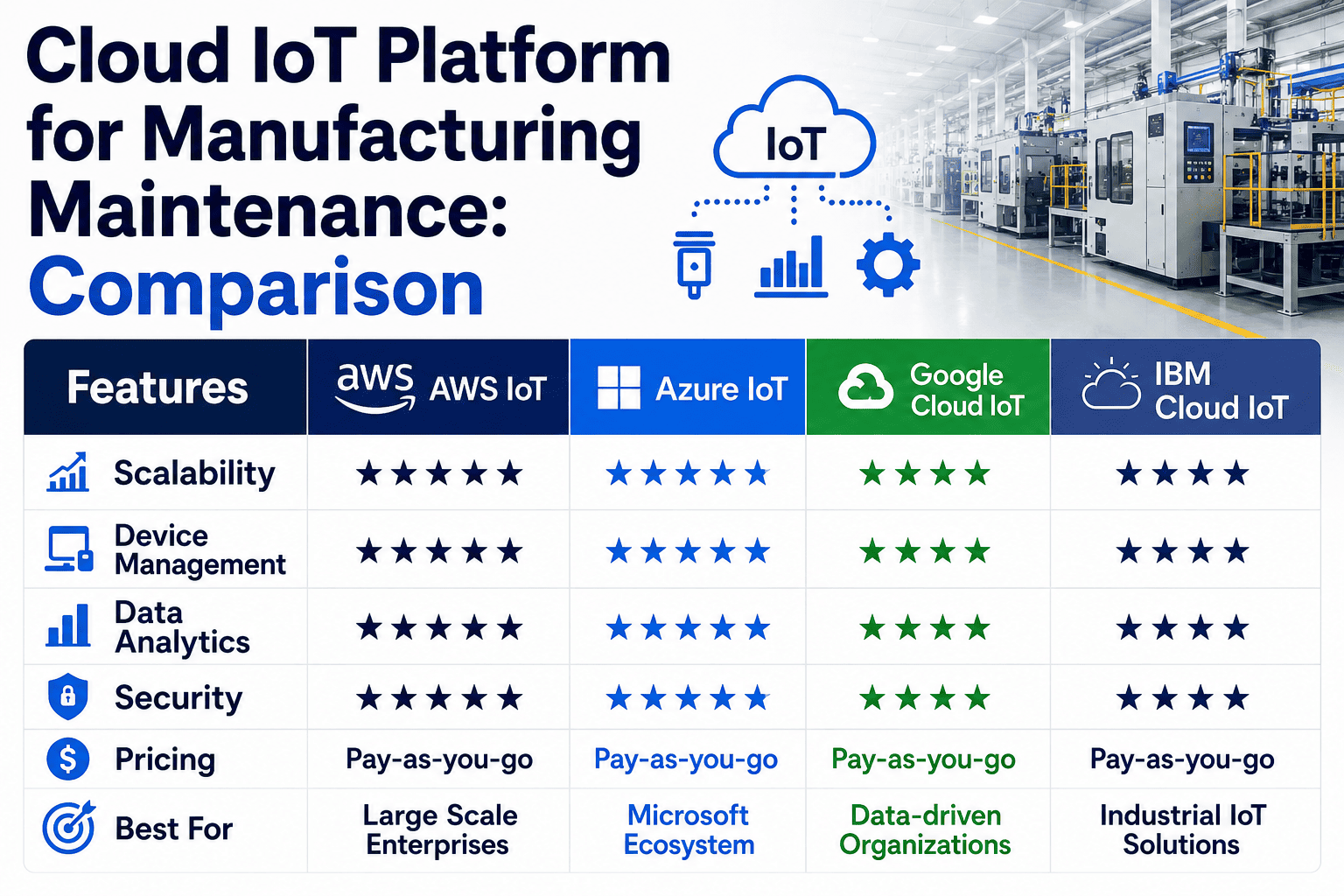
Choosing the right cloud IoT platform for manufacturing maintenance is a 5-to-10-year decision that directly dictates your ability to predict equipment failures, calculate OEE, and reduce unplanned downtime. This guide compares leading manufacturi
Read More
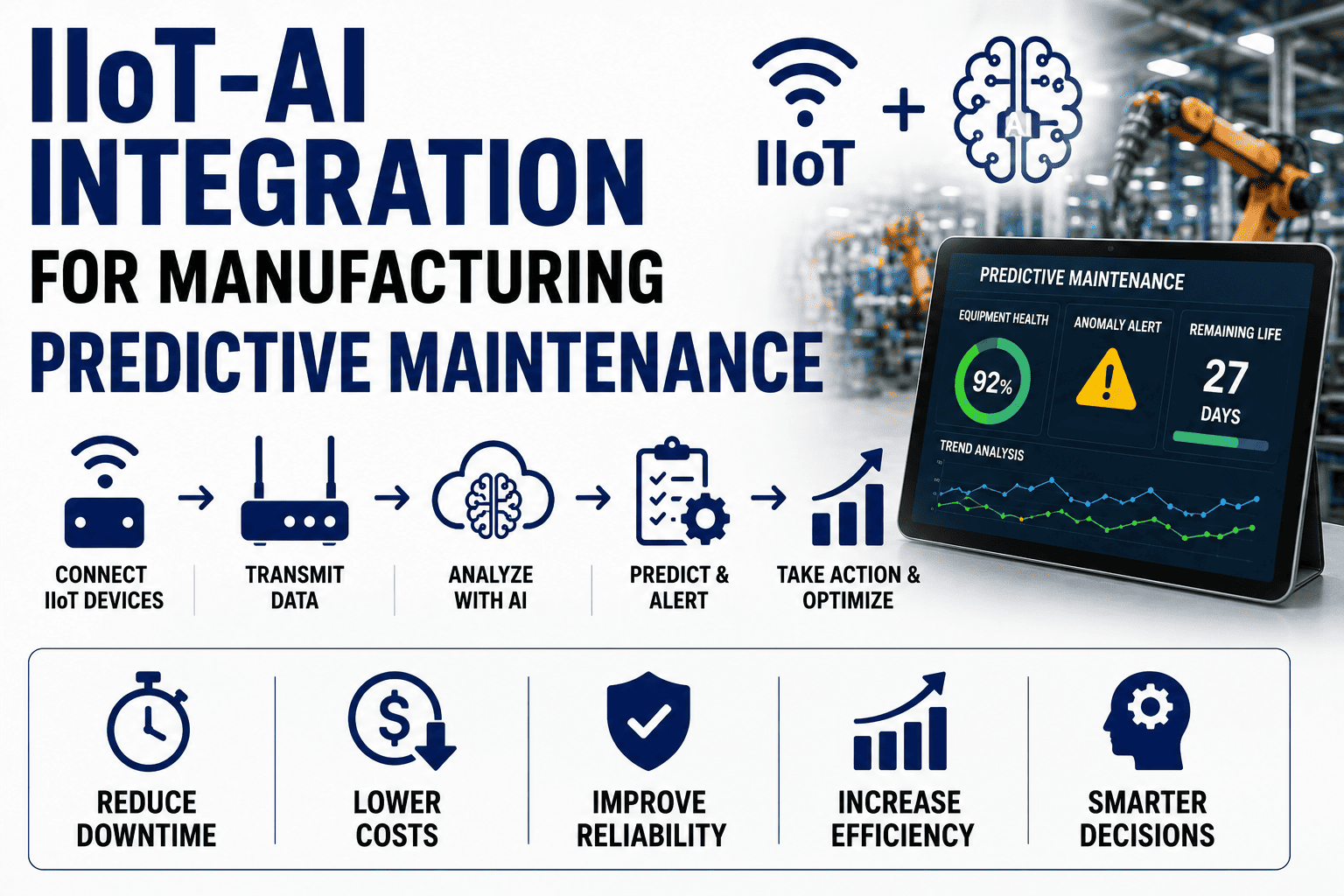
Integrating IIoT sensor data with AI models transforms manufacturing predictive maintenance from simple threshold alerts into true failure prediction, cutting unplanned downtime by up to 50% and reducing maintenance costs by 25-30%. This IIoT AI i
Read More
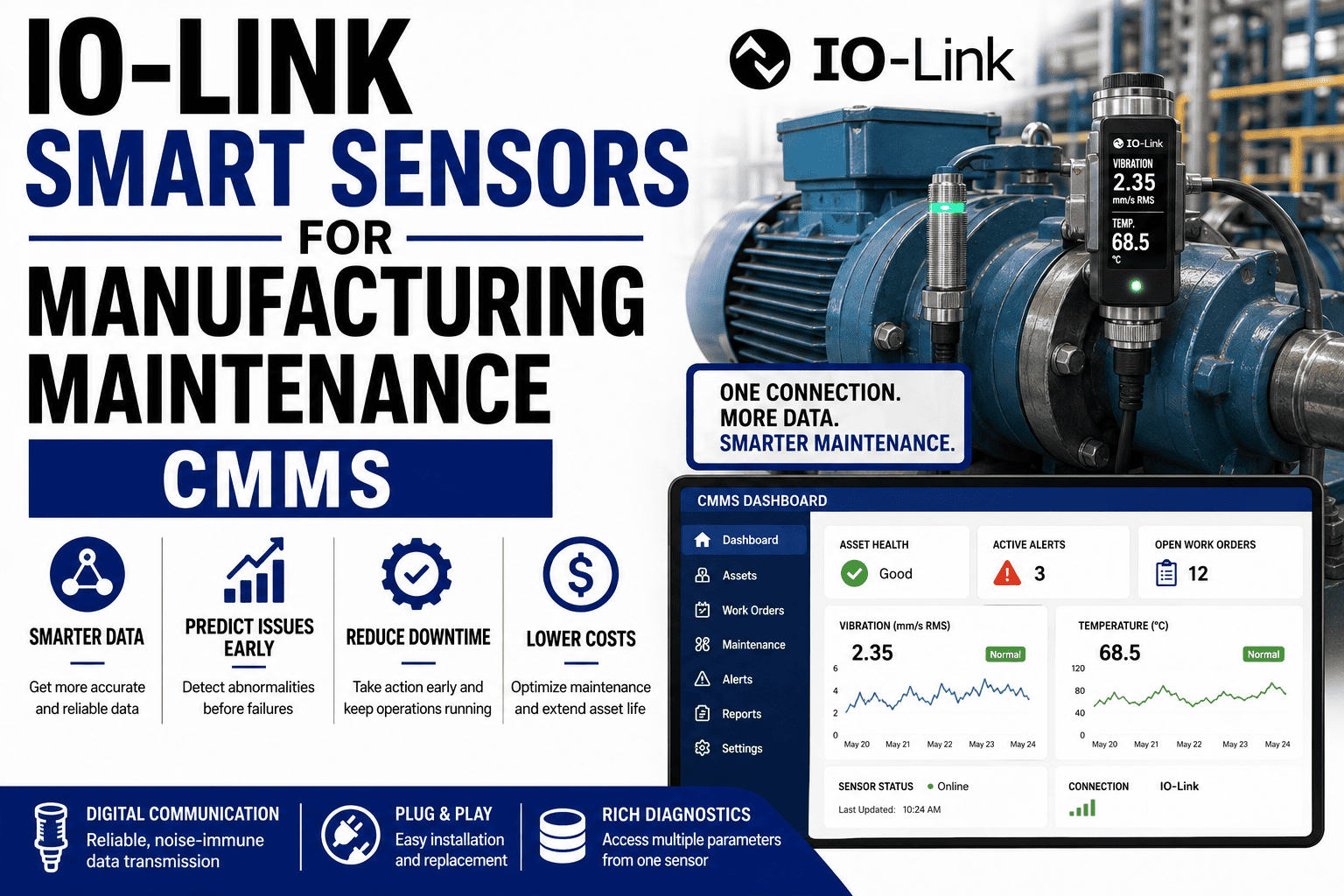
IO-Link smart sensors for manufacturing maintenance transform ordinary field devices into intelligent data sources without requiring you to rip out existing wiring, making them the fastest pathway to condition-based monitoring in brownfield plants
Read More
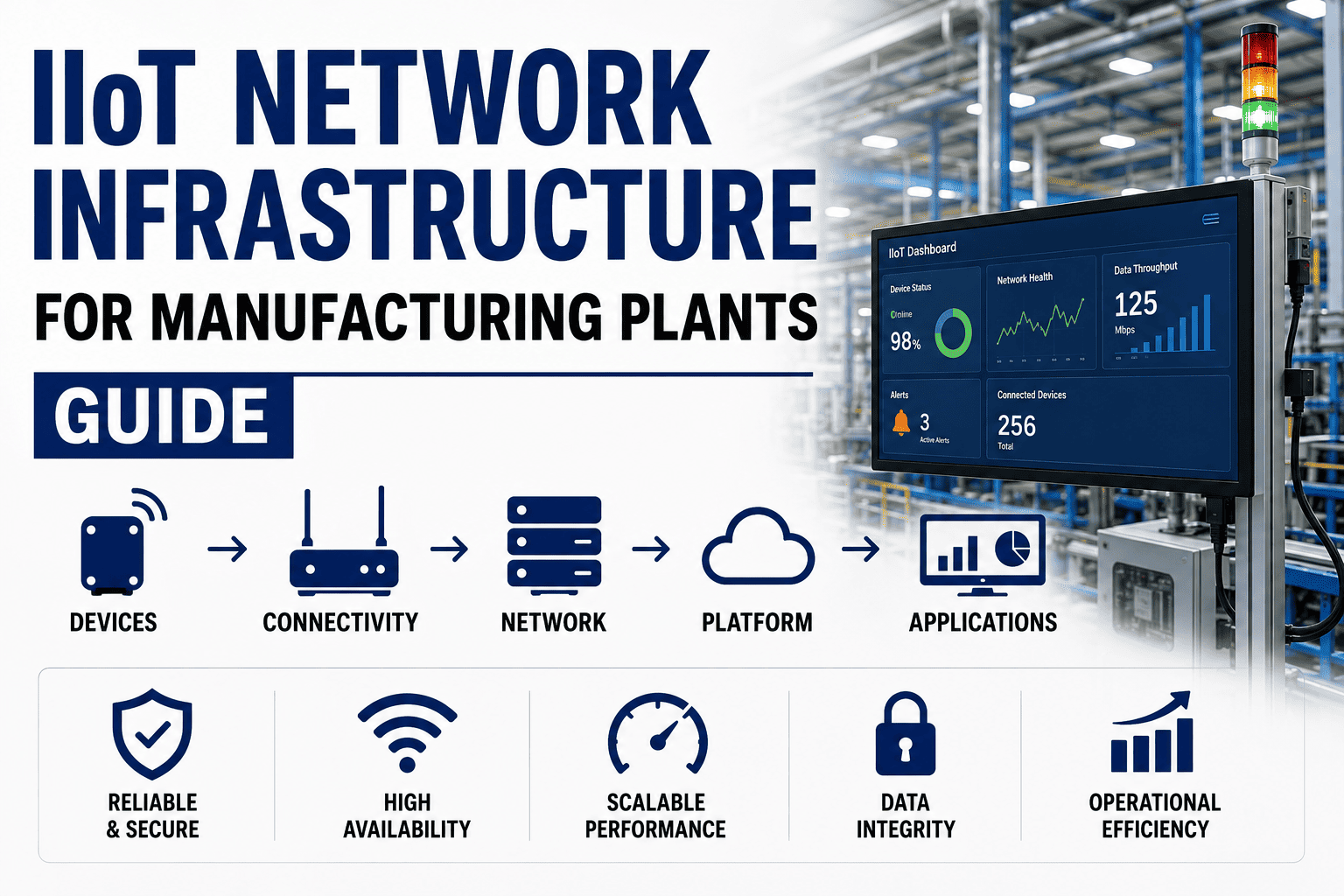
IIoT network infrastructure for manufacturing plants is the backbone that determines whether your predictive maintenance program scales to thousands of sensors or collapses at fifty. A well-designed manufacturing IIoT network connects industrial E
Read More
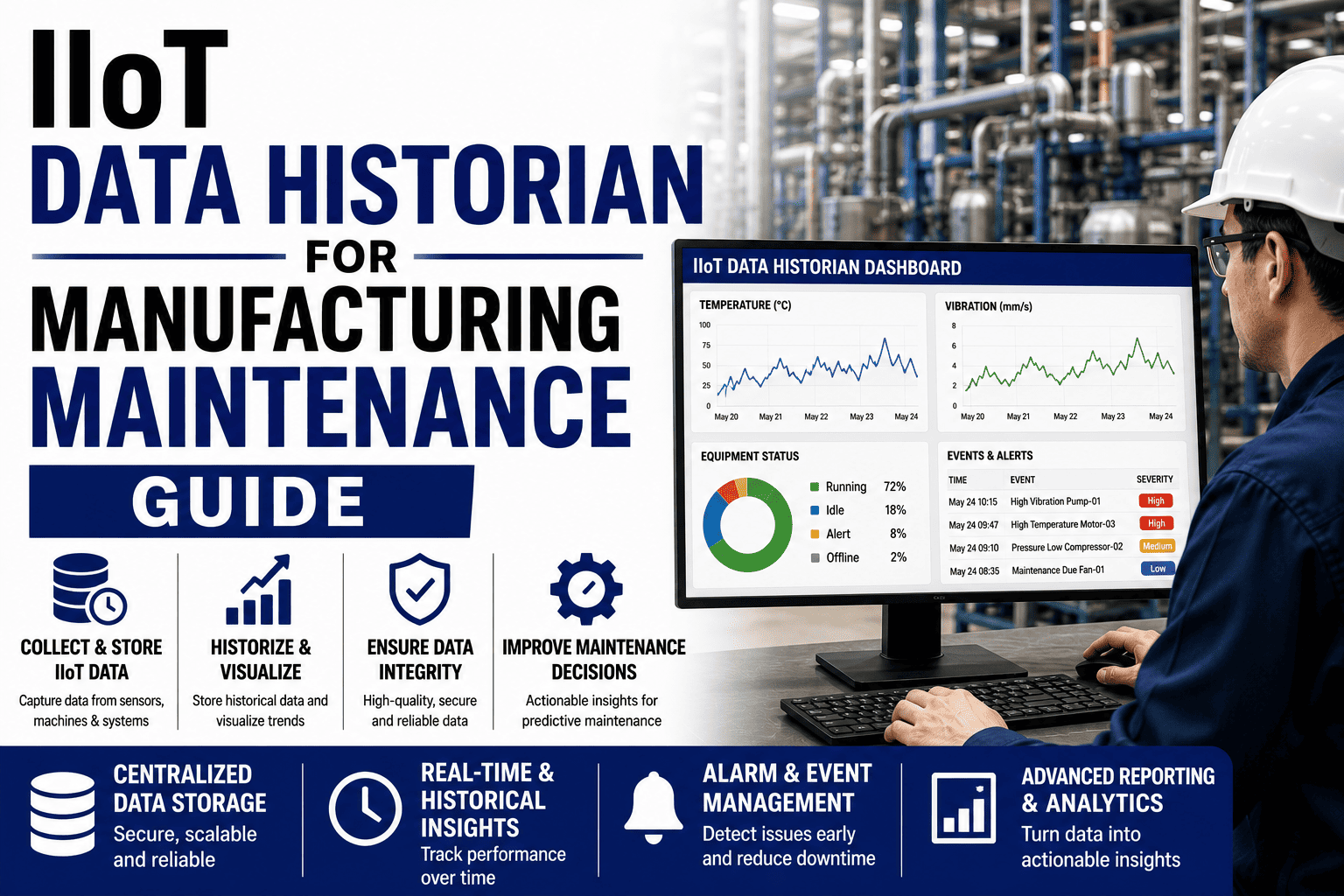
An industrial data historian is the time-series backbone of every modern maintenance program — the single source of truth where sensor readings, vibration waveforms, motor currents and flow rates are captured at millisecond resolution and stored f

Read More
MQTT protocol has become the de facto messaging standard for manufacturing maintenance IIoT deployments because it is lightweight, bandwidth-efficient, and firewall-friendly — making it ideal for connecting thousands of sensors, PLCs, and assets t

Read More
Combined vibration and temperature IIoT sensors let manufacturing plants blanket hundreds of rotating assets with continuous condition monitoring for a fraction of what a single route-based analyst cost five years ago. A multi-parameter sensor man

Read More
An IIoT readiness assessment for manufacturing plants is the structured evaluation of your network infrastructure, data architecture, cybersecurity baseline, CMMS integration capability, and workforce skills before you deploy a single industrial s
Read More
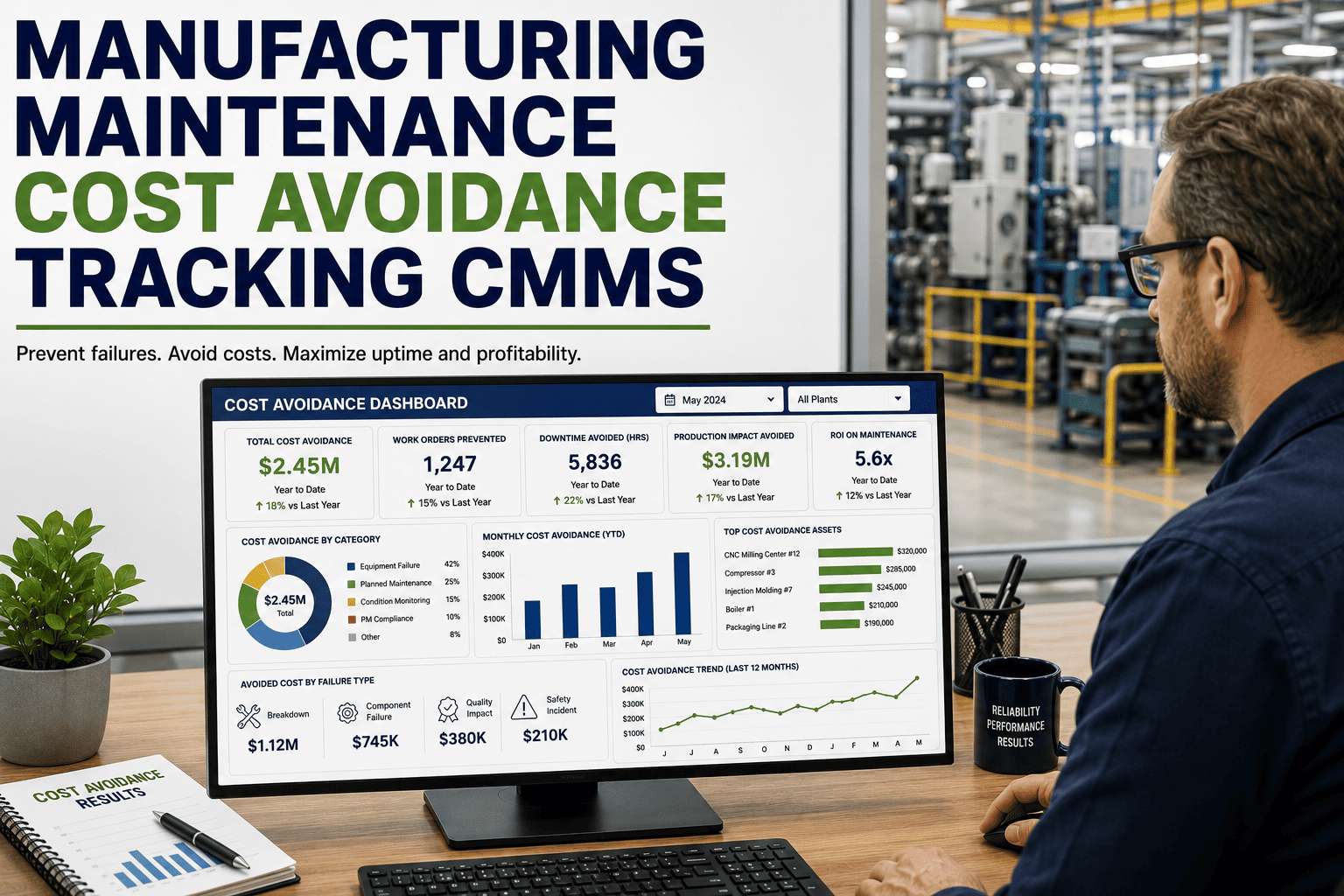
Maintenance cost avoidance in manufacturing is the measurable financial value your reliability team creates when a preventive task, predictive alert, or work-order intervention stops a failure before it triggers unplanned downtime, scrap, or emerg

Read More
Manufacturing energy monitoring CMMS integration connects real-time power-meter data to work-order, preventive-maintenance and asset-tracking workflows so that energy waste triggers maintenance action — not just a dashboard alert. Plants that link

Read More
A manufacturing maintenance scorecard translates daily work orders, PM compliance and wrench-time data into the language your CFO and plant director actually act on — cost, output, safety and compliance. Executive maintenance reporting fails when
Read More
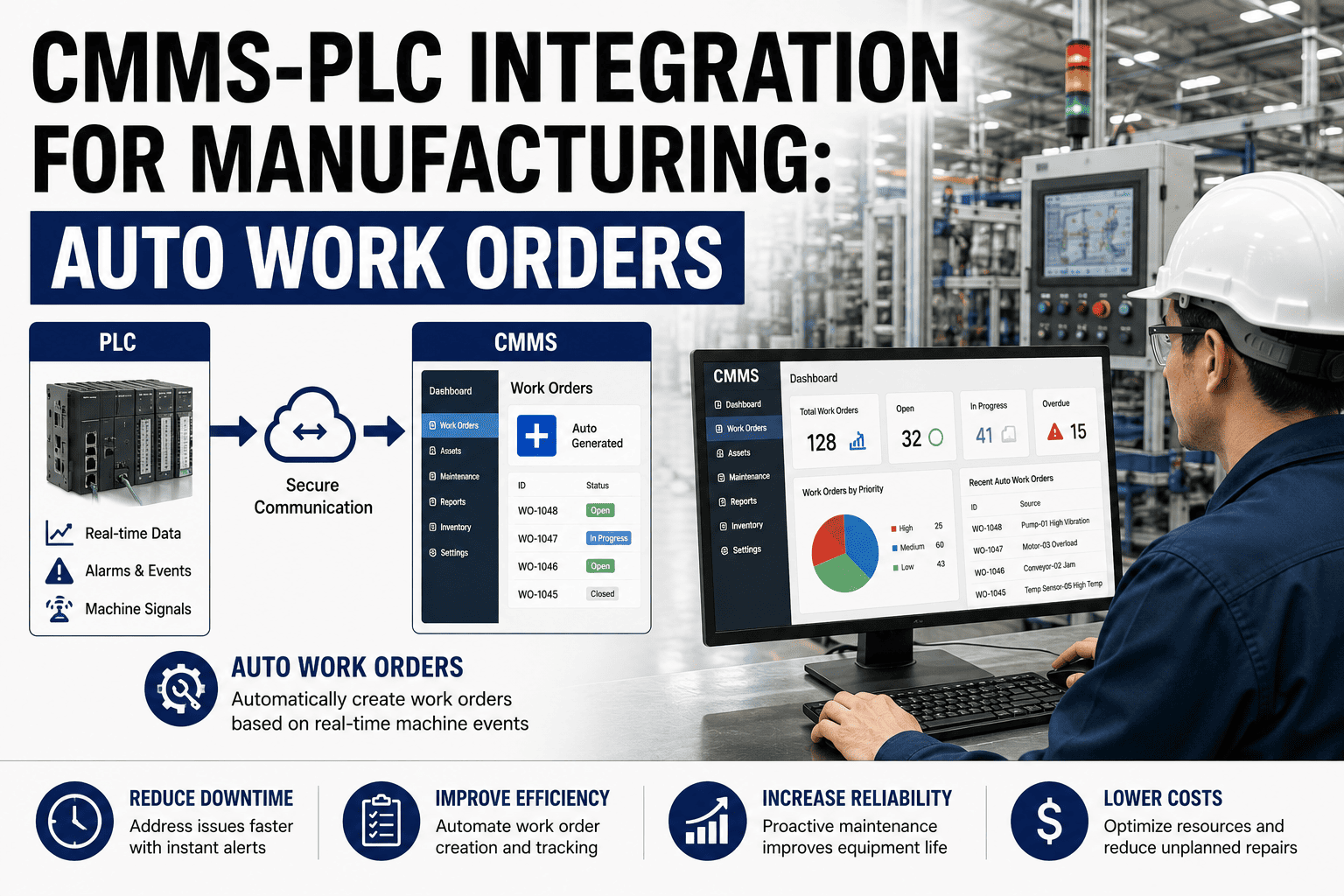
CMMS PLC integration turns machine faults into automatic work orders the instant a PLC alarm fires — no operator key-in, no delay, no missed events. For manufacturing plants running dozens of programmable logic controllers across extrusion lines,
Read More
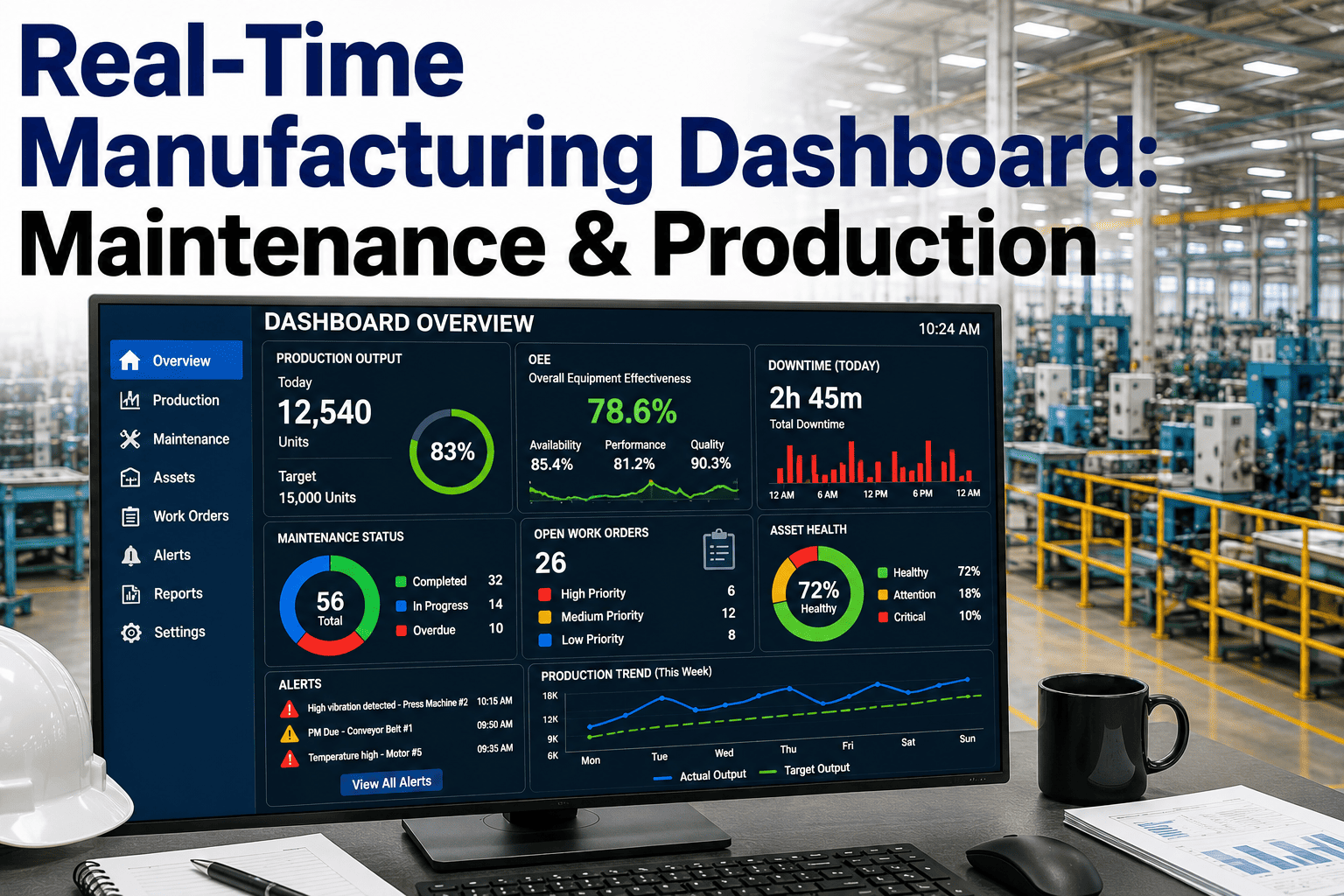
A real-time manufacturing dashboard collapses the gap between production output and equipment health by streaming CMMS work-order data, MES throughput signals, and IIoT sensor feeds into one live view that both teams trust. Instead of arguing over

Read More
Lean maintenance for manufacturing plants takes the eight wastes of lean production — overproduction, waiting, transportation, defects, motion, inventory, over-processing, and unused talent — and applies them directly to maintenance work, where mo

Read More
Manufacturing maintenance budget planning for 2026 demands a shift away from simply adding a percentage to last year's spend — it requires zero-based methodology, precise capex vs opex splits, and verifiable CMMS cost data for every line item. Bui

Read More
Maintenance trend analysis in manufacturing is the practice of tracking reliability metrics—like failure frequency, MTBF, and cost-per-asset—over time to spot slow degradation and seasonal patterns before they cause unplanned downtime. For plant m
Read More
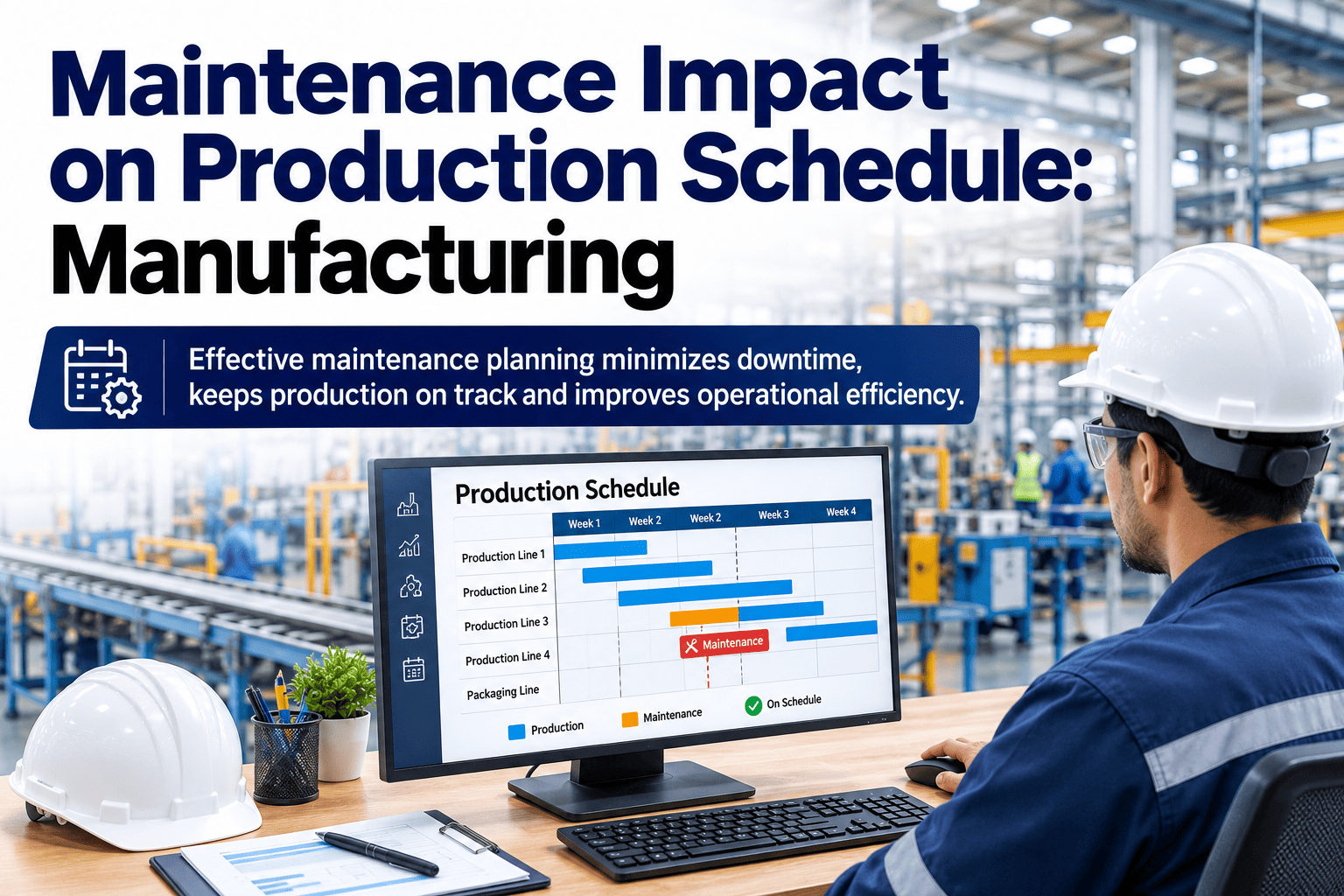
Maintenance impact on production schedule is one of the most contested metrics in manufacturing: when unplanned downtime or overlapping preventive maintenance windows disrupt the master production plan, the cost cascades from lost throughput to ov

Read More
Maintenance cost per unit produced is the ratio that translates everything your reliability team does into a language the CFO and plant controller already speak: dollars of maintenance spend divided by units of physical output. For manufacturing p

Read More
CMMS ERP integration for manufacturing maintenance is where most IT projects overspend — often 2–3× the original budget — because scope, data ownership, and field-mapping rules are never clearly defined before the first connector is built. A well-
Read More
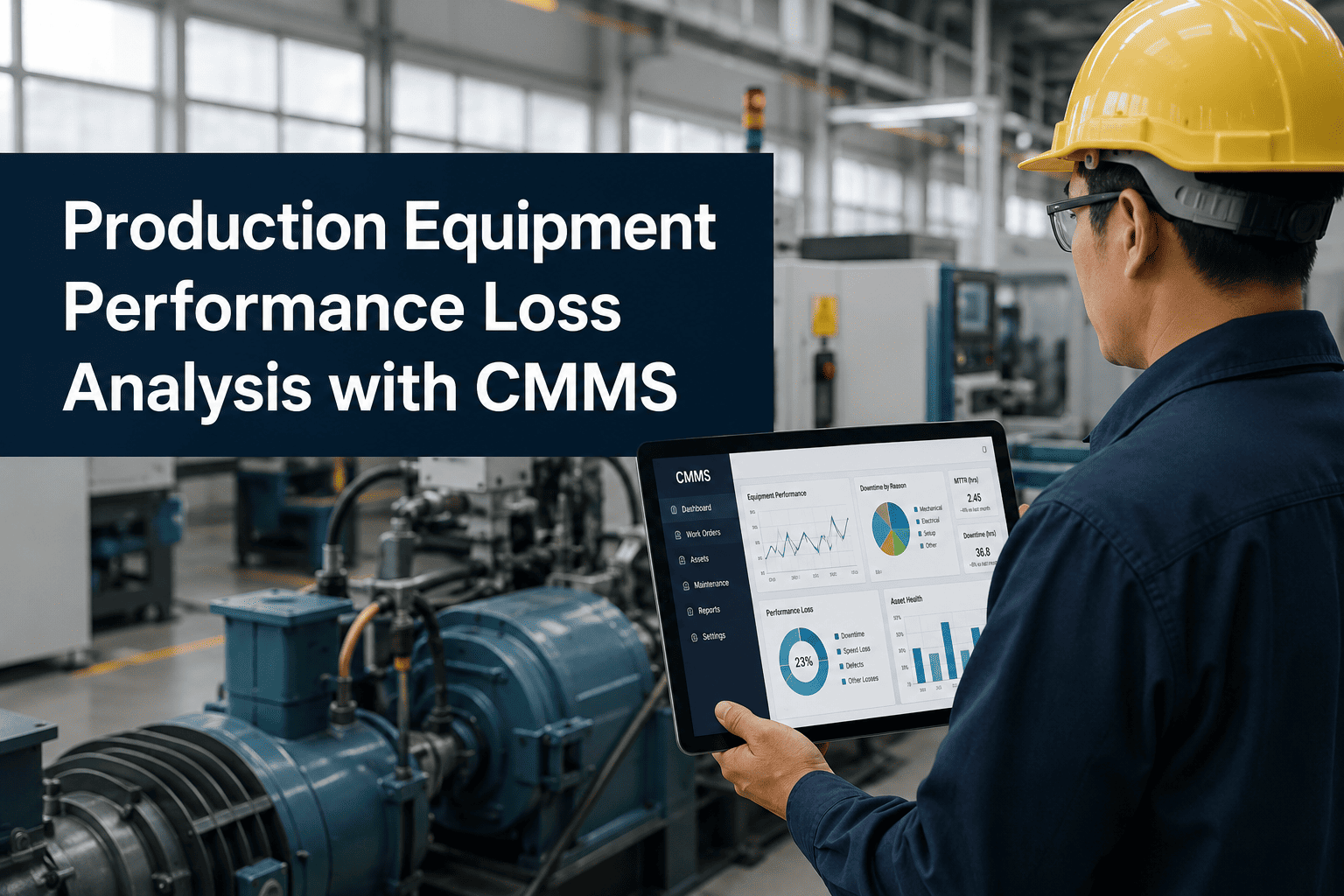
Production equipment performance loss analysis is the systematic process of identifying, measuring, and eliminating the hidden capacity drains that slow down manufacturing assets. While most plants track overall equipment effectiveness (OEE), the

Read More
Manufacturing maintenance data governance is the discipline of defining who owns, validates, and standardizes every asset record, failure code, and work-order entry inside your CMMS — because without it, reliability analytics deliver noise instead
Read More
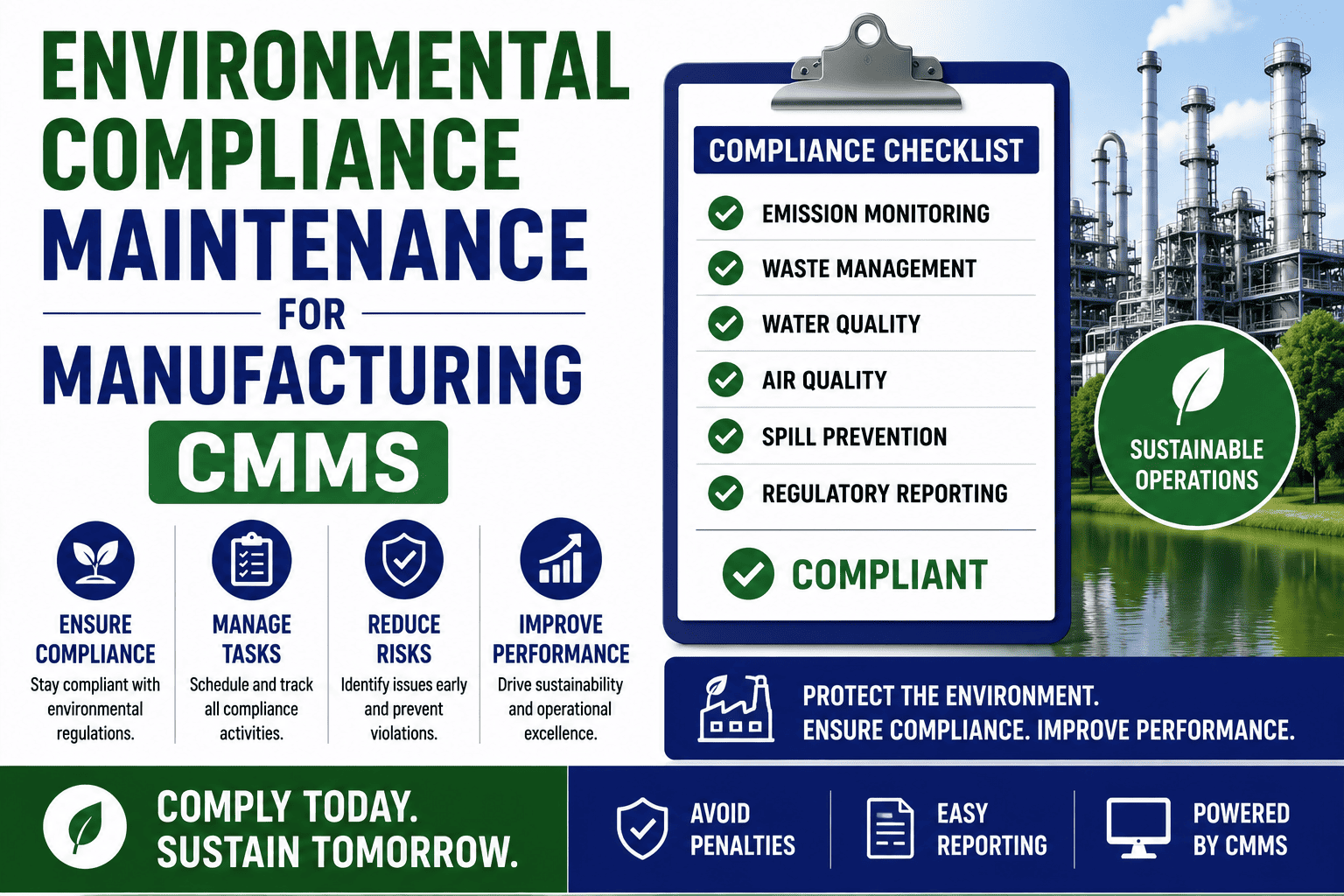
Environmental compliance maintenance for manufacturing plants encompasses the EPA-regulated PM tasks, inspection schedules, and recordkeeping workflows that keep air emissions, wastewater discharge, refrigerant management, and spill prevention equ

Read More
AR remote assistance for manufacturing maintenance lets a floor technician share a live, hands-free video feed with a senior expert anywhere in the world, collapsing mean-time-to-repair (MTTR) by 30–50% on complex or unfamiliar equipment failures.

Read More
Lockout/tagout violations have ranked among OSHA's top-ten most-cited standards for over a decade, and the root cause is almost always outdated paper binders that vanish, fade, or never get updated when equipment changes. LOTO procedure manufactur
Read More
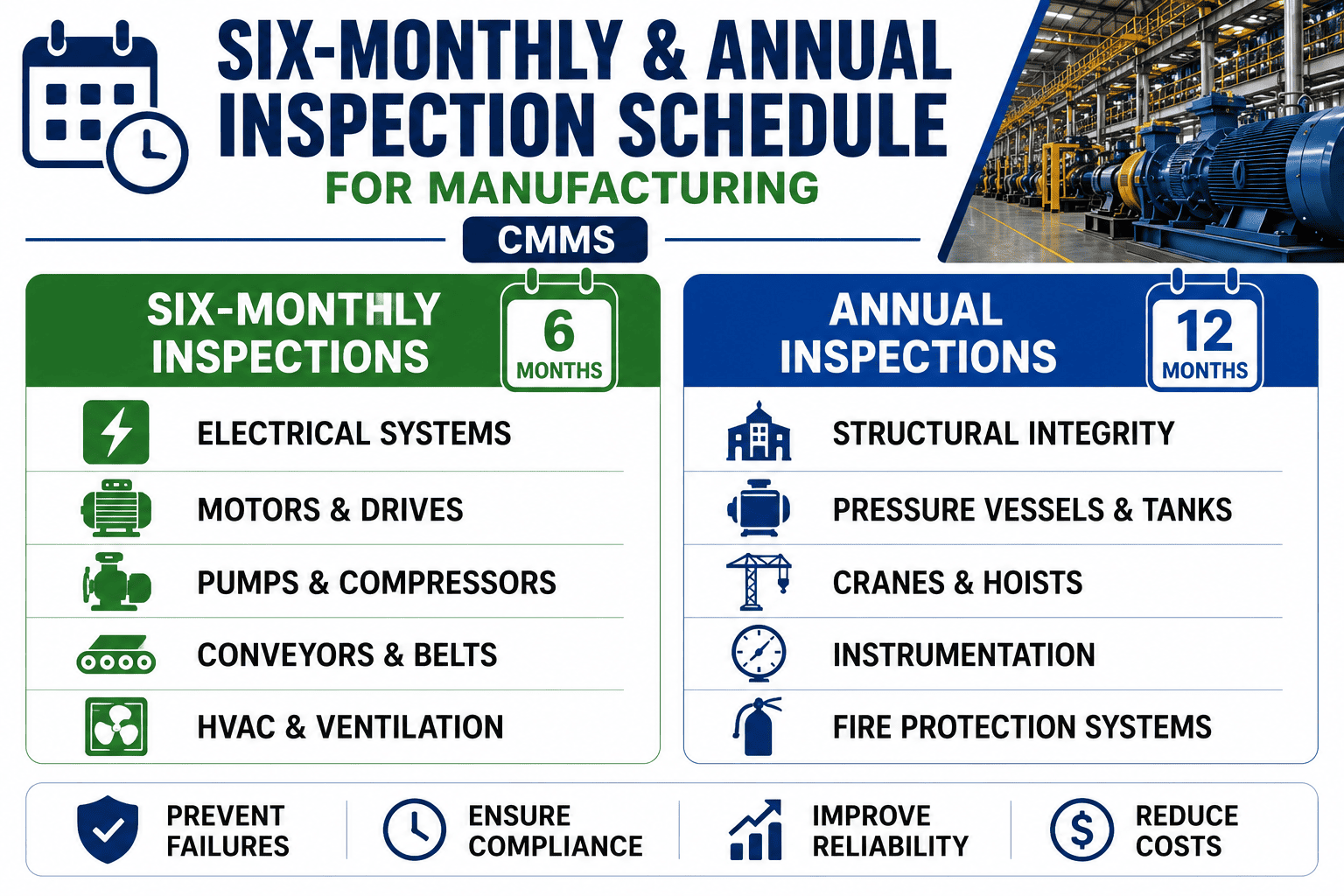
A six-monthly and annual inspection schedule for manufacturing is the structured backbone of plant reliability — the checkpoint where hidden defects, safety hazards, and efficiency losses are caught before they become costly failures. Building an
Read More
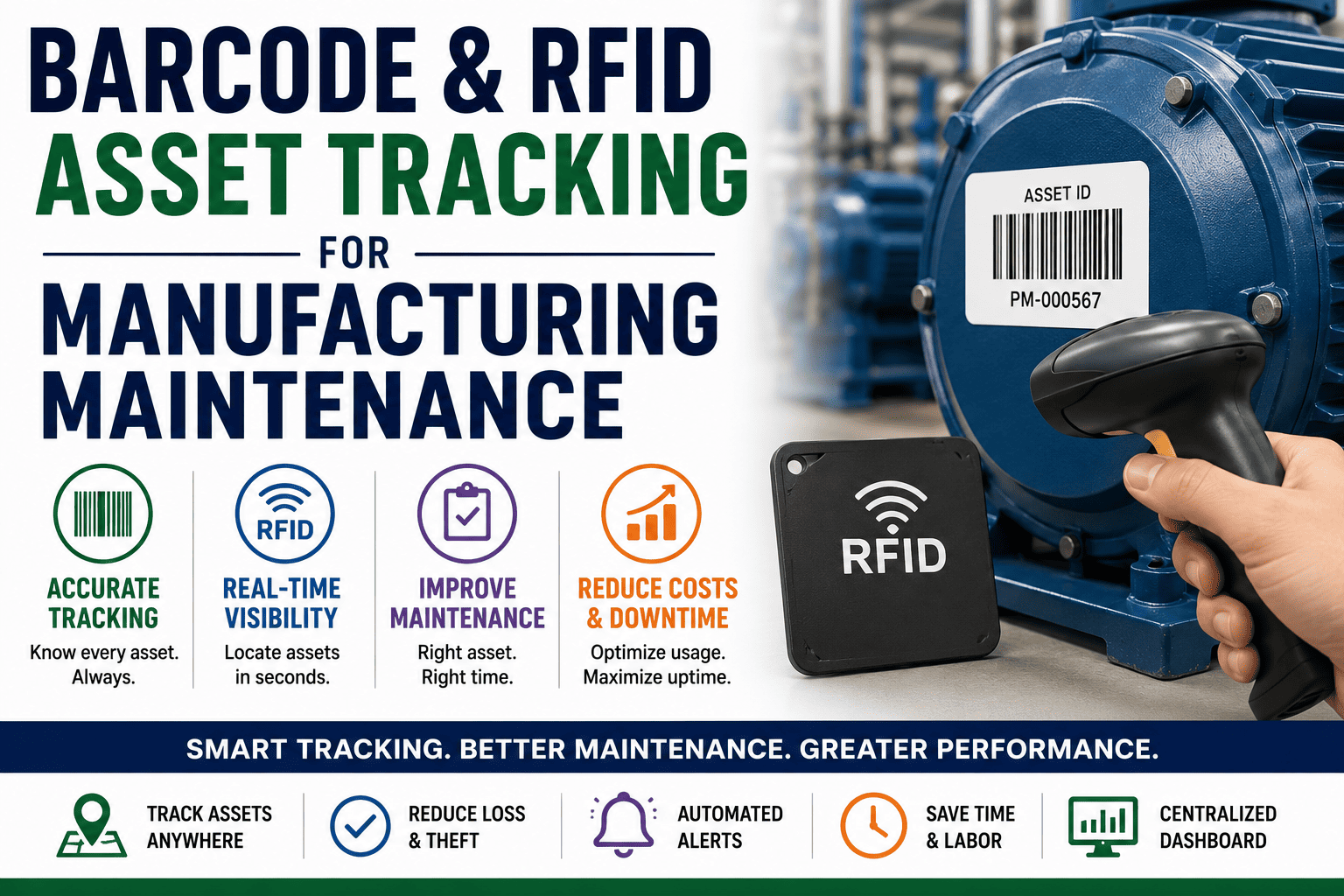
Barcode and RFID asset tracking for manufacturing maintenance eliminates the single largest source of CMMS data corruption: technicians logging hours and parts against the wrong machine. In plants managing thousands of near-identical pumps, motors
Read More
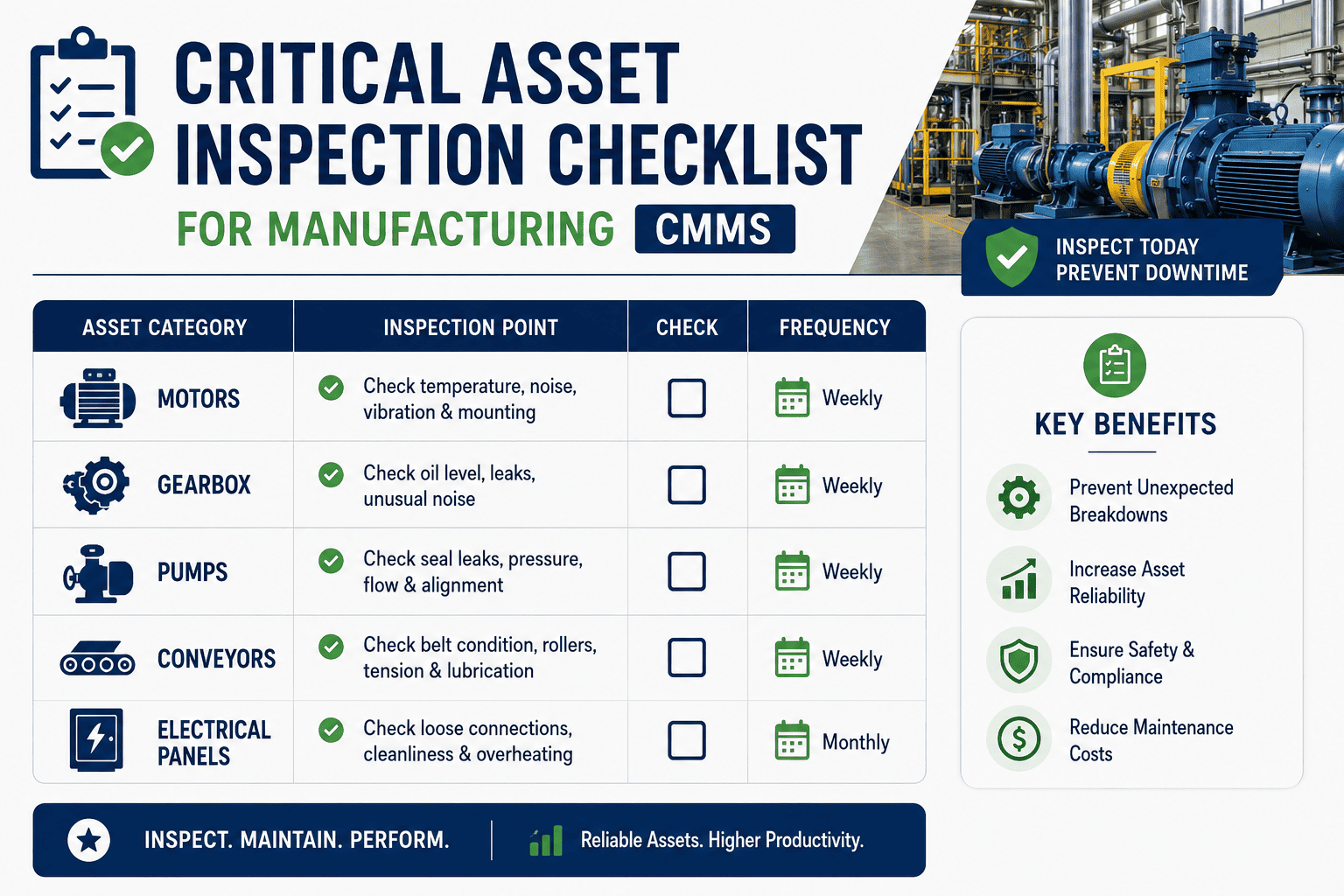
A critical asset inspection checklist for manufacturing is a structured, equipment-specific set of inspection points, acceptance criteria, and measurement captures tied directly to asset criticality—designed to catch failures before they escalate
Read More
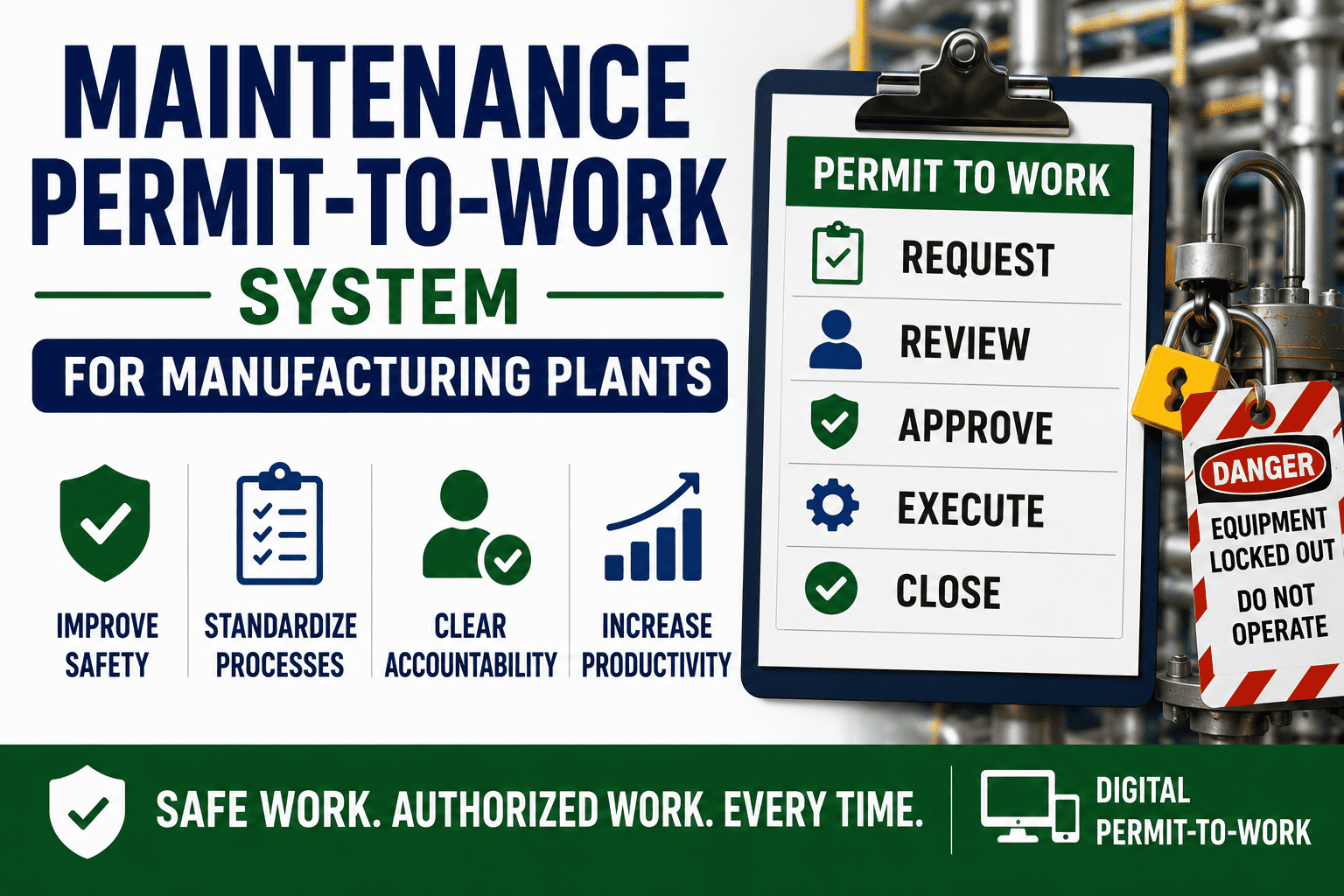
A permit-to-work system for manufacturing plants is the formal, documented authorization process that controls high-risk maintenance activities — hot work, confined-space entry, energized systems, working at height — so that no hazardous task begi
Read More
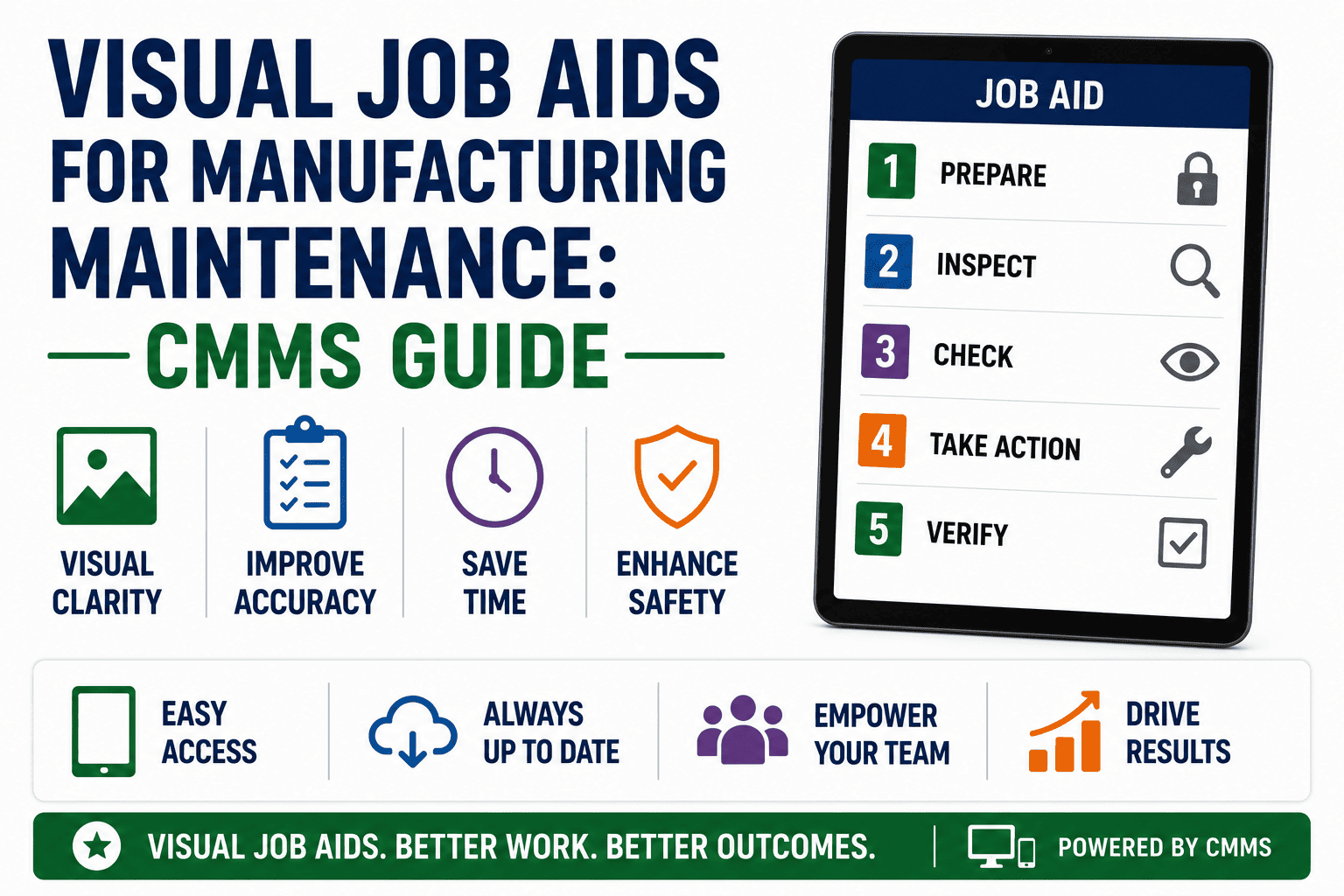
Visual job aids for manufacturing maintenance — photo-based instructions, exploded diagrams, torque maps and short video clips embedded directly in work orders — help technicians complete tasks faster and with 70% fewer errors than text-only SOPs.
Read More
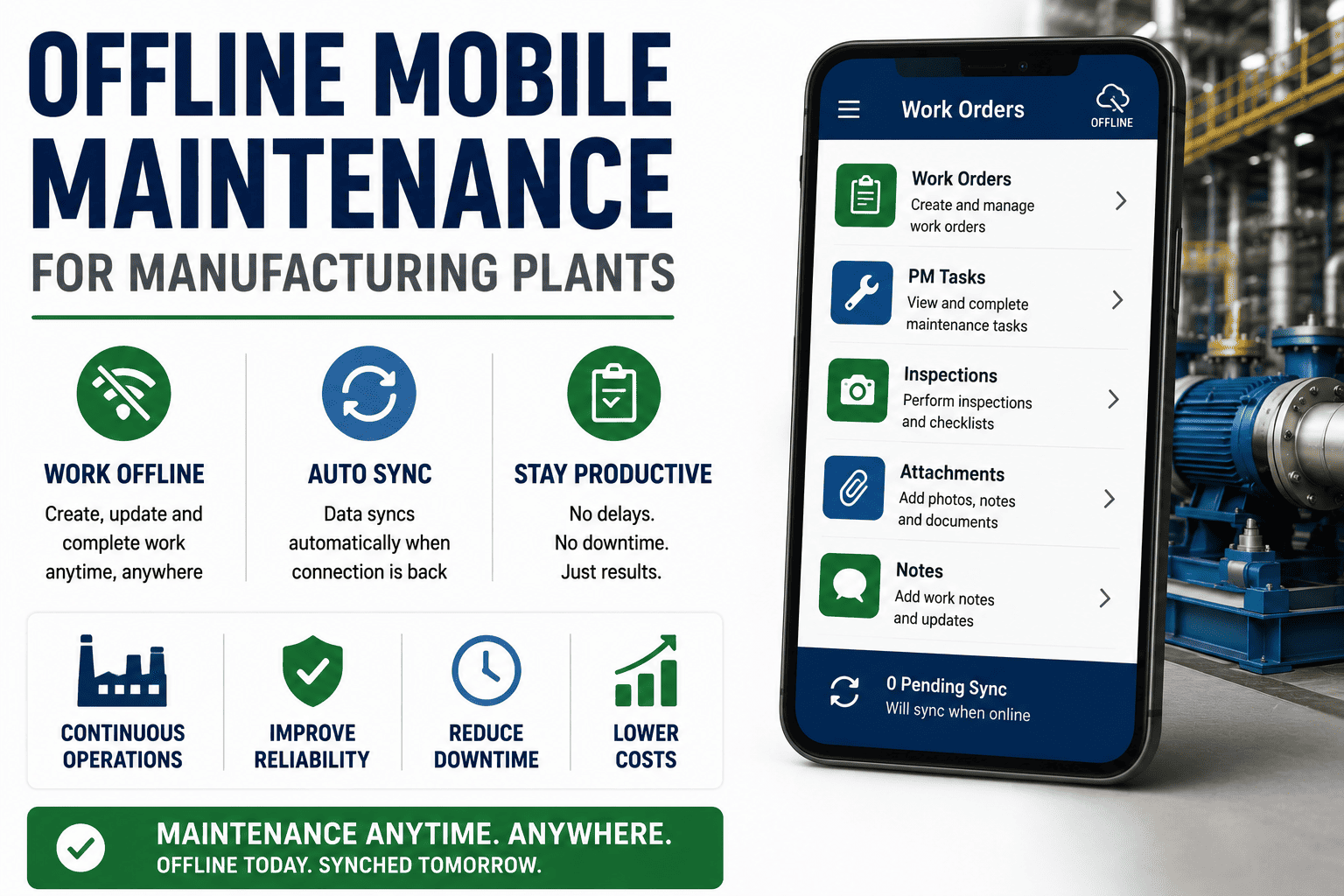
Offline mobile maintenance for manufacturing plants is the difference between a technician who closes a work order at the machine and one who wastes 20 minutes walking back to a desktop terminal. A mobile offline maintenance strategy stores work o
Read More
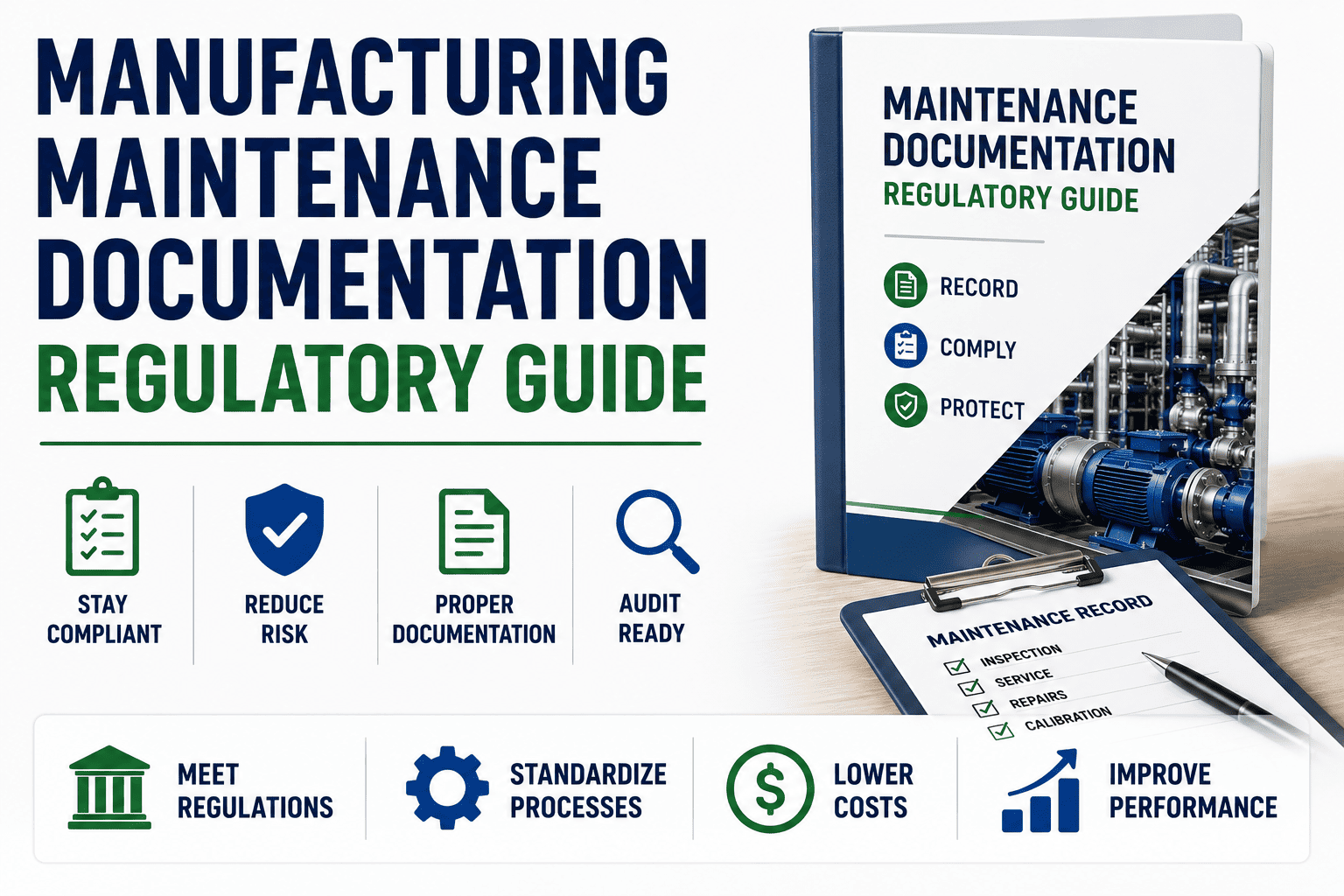
Regulatory audits in manufacturing maintenance no longer reward effort — they reward evidence. FDA, OSHA, EPA, and ISO auditors all want the same thing: a defensible chain of records showing that every asset was inspected, serviced, and signed off
Read More
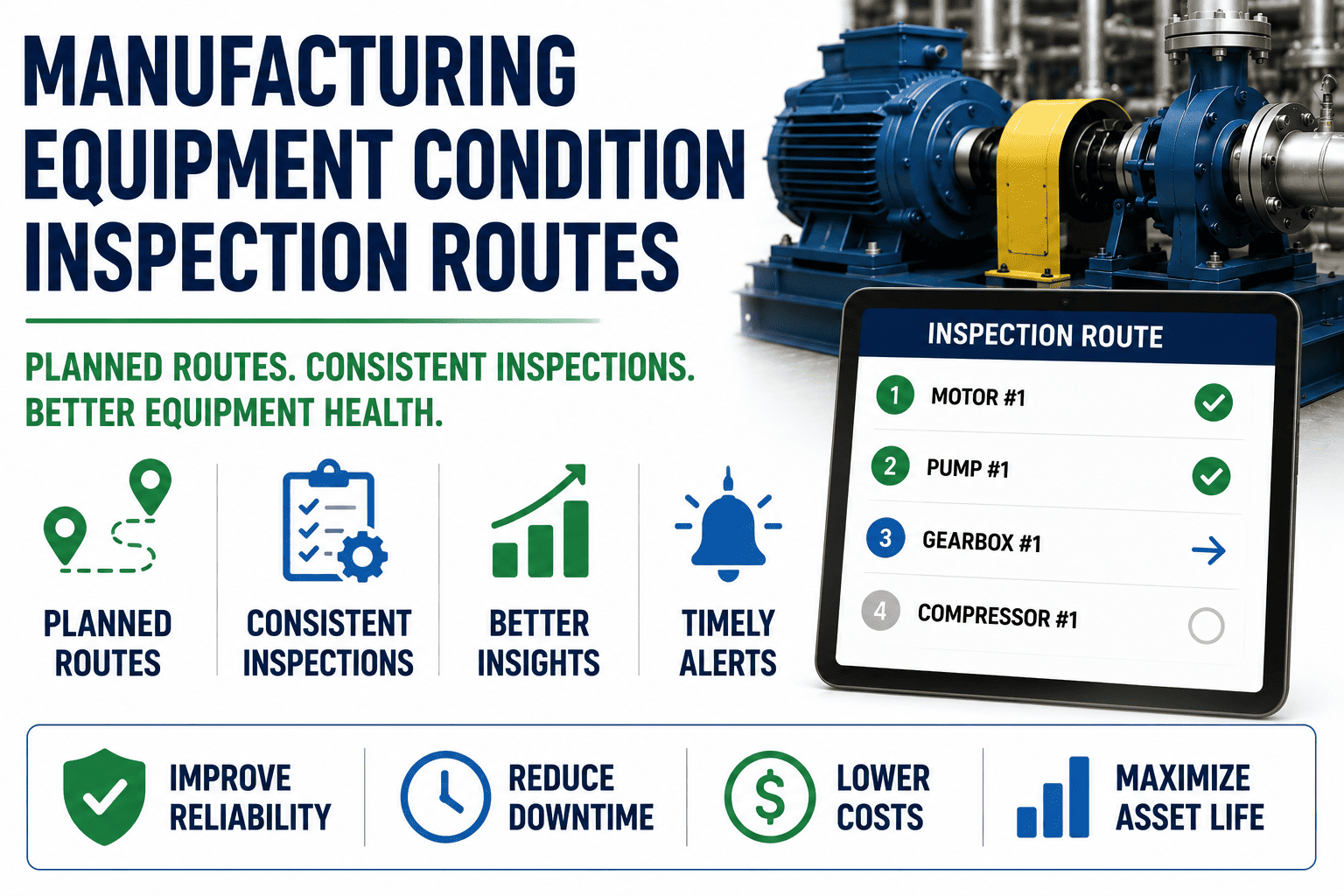
Condition inspection routes remain the single highest-return predictive maintenance activity any manufacturing plant can run — a disciplined operator walkdown routinely catches bearing noise, oil leaks, and thermal anomalies weeks before SCADA ala
Read More
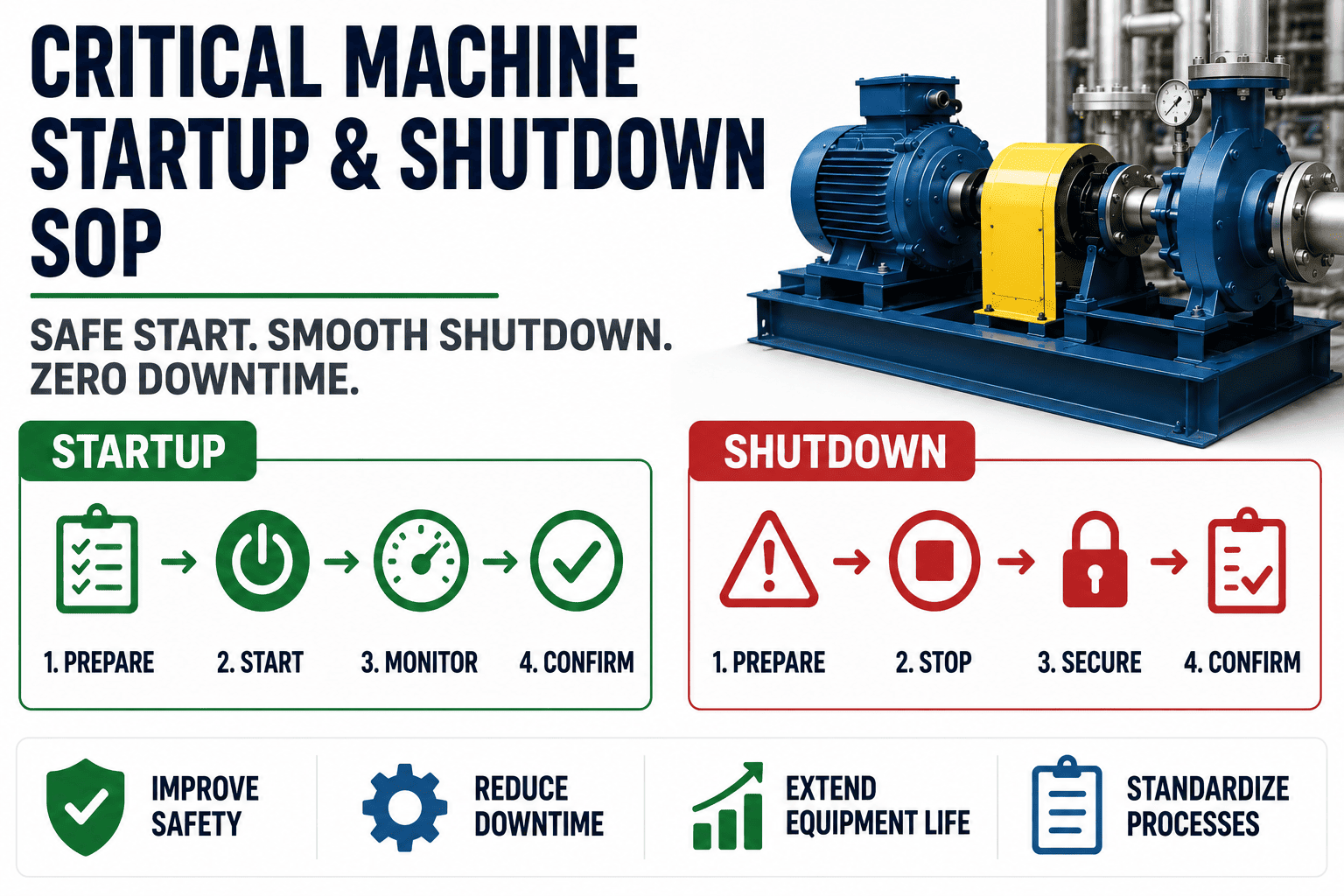
Startup and shutdown sequences are the most dangerous minutes in any machine's operating cycle — industry loss data consistently attributes 60–70% of unscheduled downtime to events that occur during transitions rather than steady-state running, ye
Read More
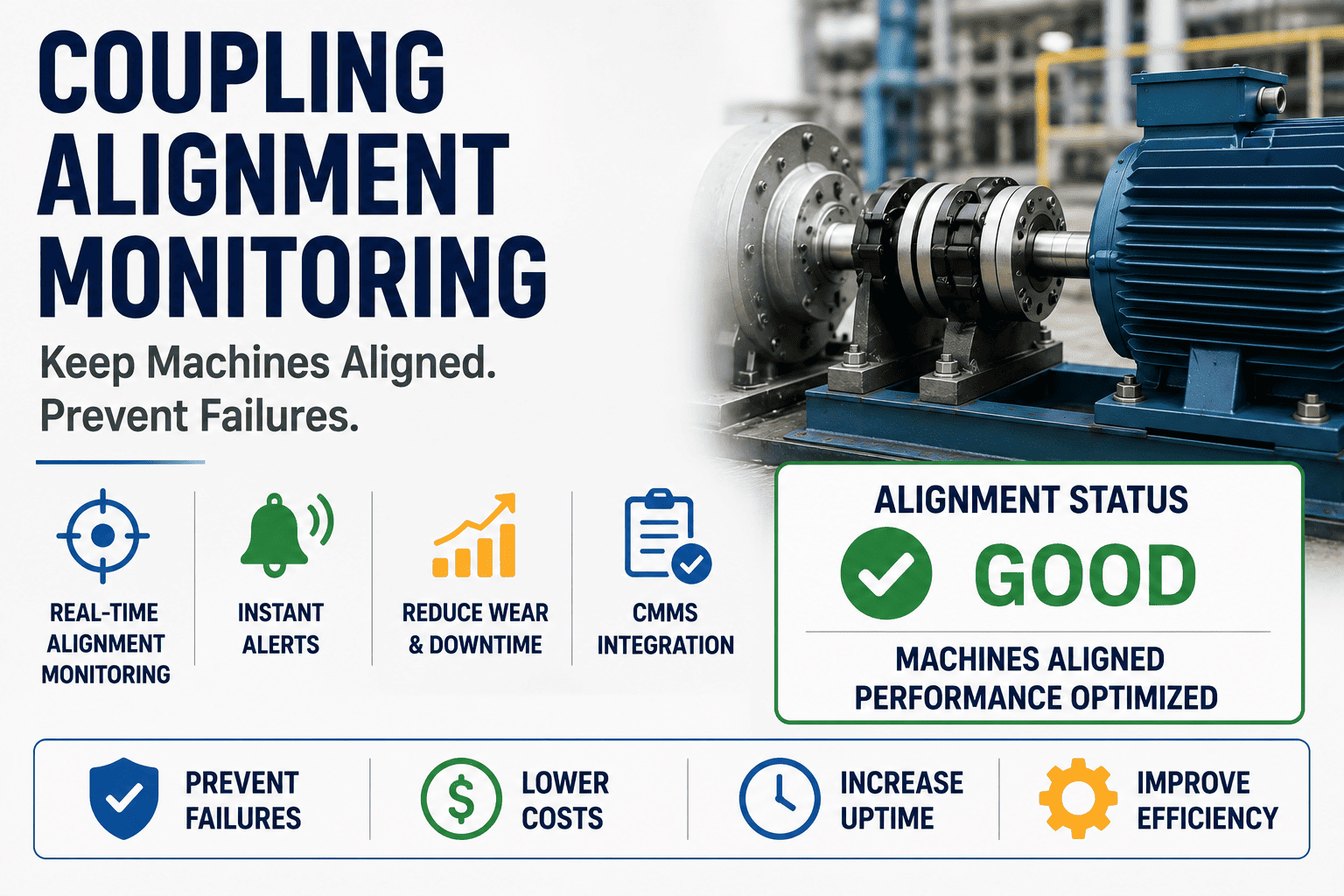
Coupling alignment is one of those quiet maintenance disciplines that separates a reliable plant from a reactive one — when shafts drift beyond a few thousandths of an inch, vibration climbs, bearings overheat, and seals begin to weep long before

Read More
Manufacturing plants lose an estimated $50 billion annually to downtime tied to procedural gaps — yet 70% of standard operating procedures still live in binders or scattered PDFs that technicians ignore on the floor. AI-assisted digital SOP creati
Read More
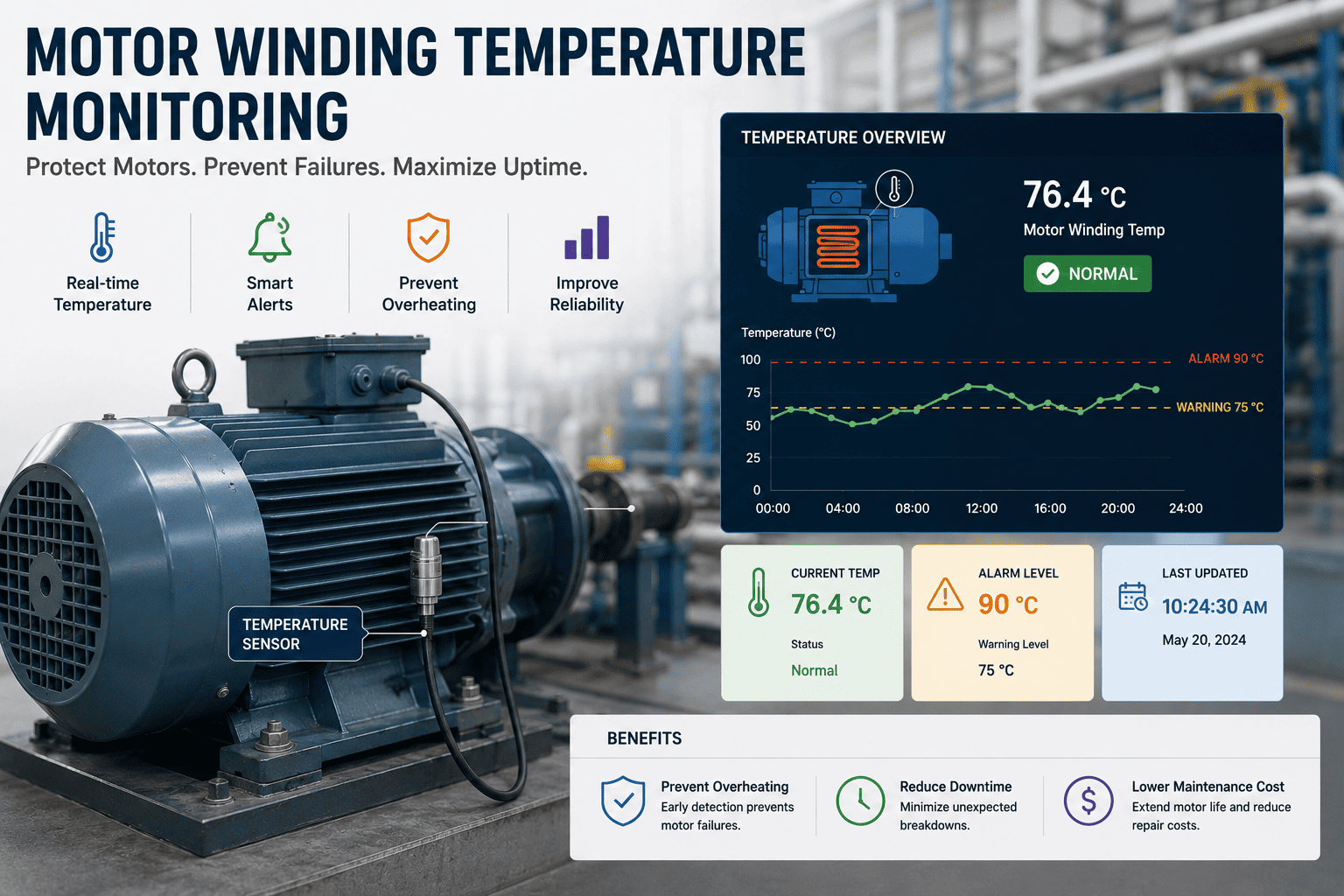
Motor winding temperature is the single most reliable predictor of motor life — the industry-accepted rule is that every 10°C rise above the insulation class rating halves expected winding life. For a manufacturing plant running dozens or hundreds
Read More
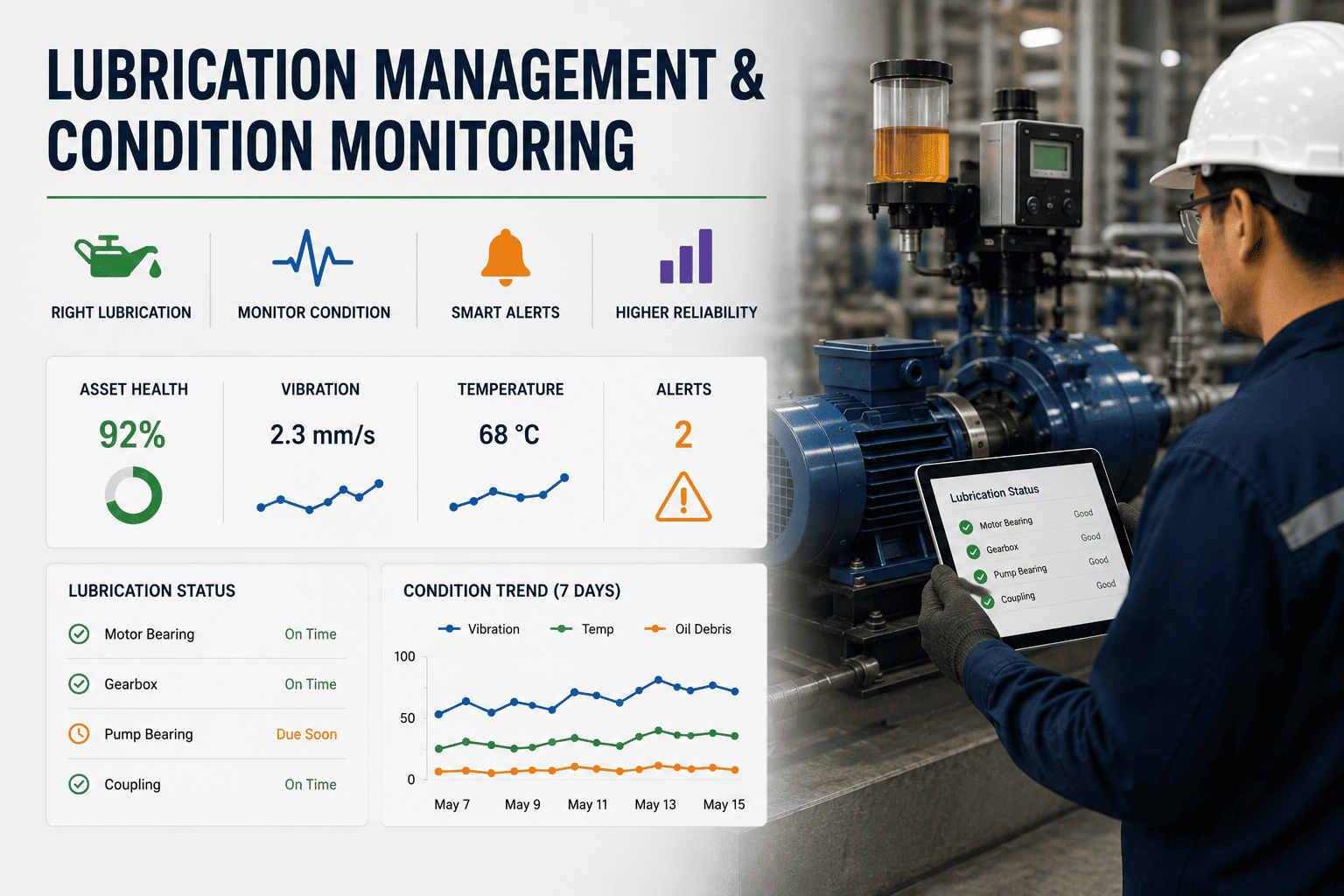
Lubrication is the single most controllable variable in equipment reliability — yet most manufacturing plants spend less than 3% of their maintenance budget on it and absorb the fallout in unplanned downtime, premature bearing failures, and energy
Read More
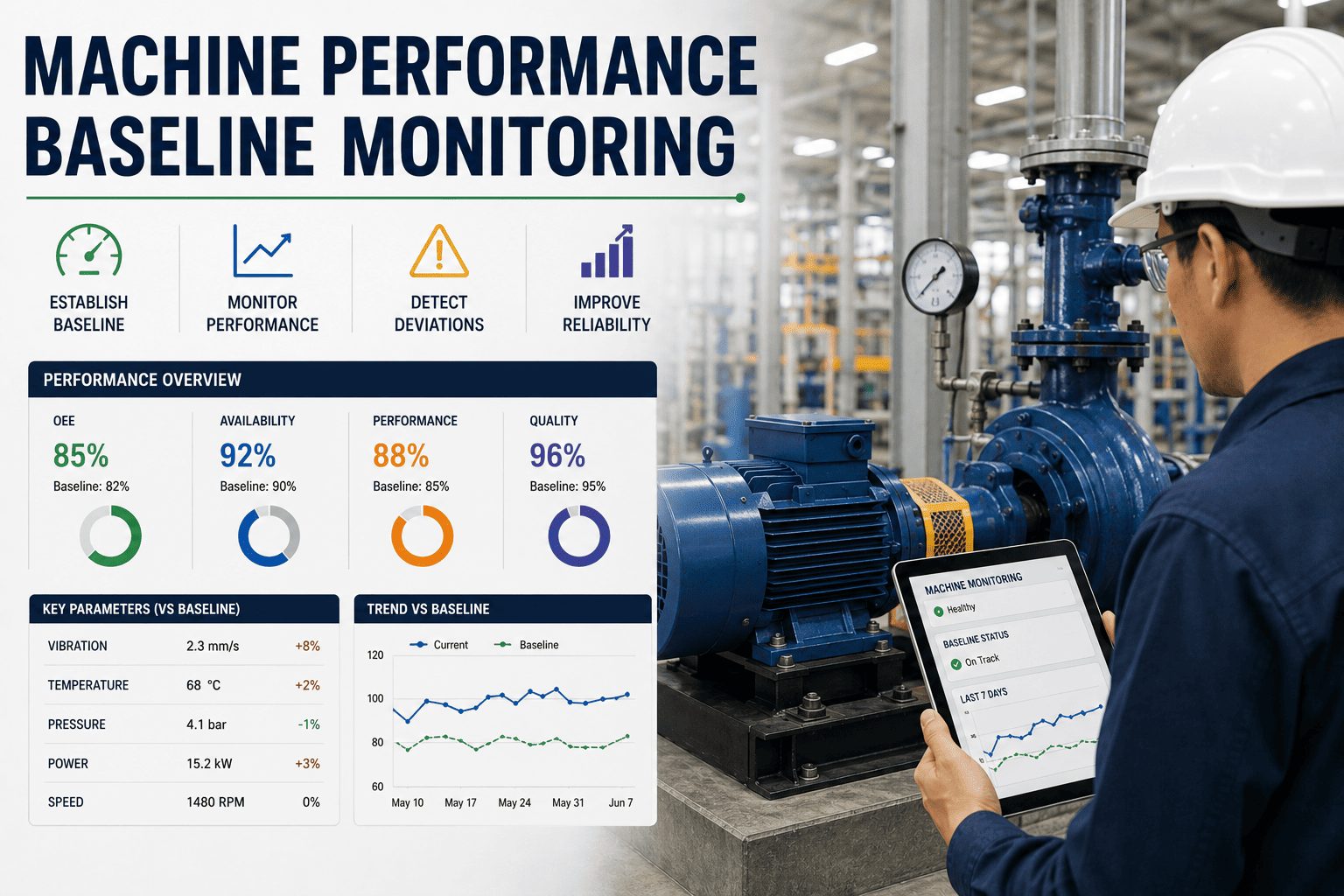
Most maintenance teams can tell you when a machine failed, but almost none can tell you what its healthy signature looked like the day before. A machine performance baseline is that missing reference point — a captured fingerprint of vibration, te
Read More
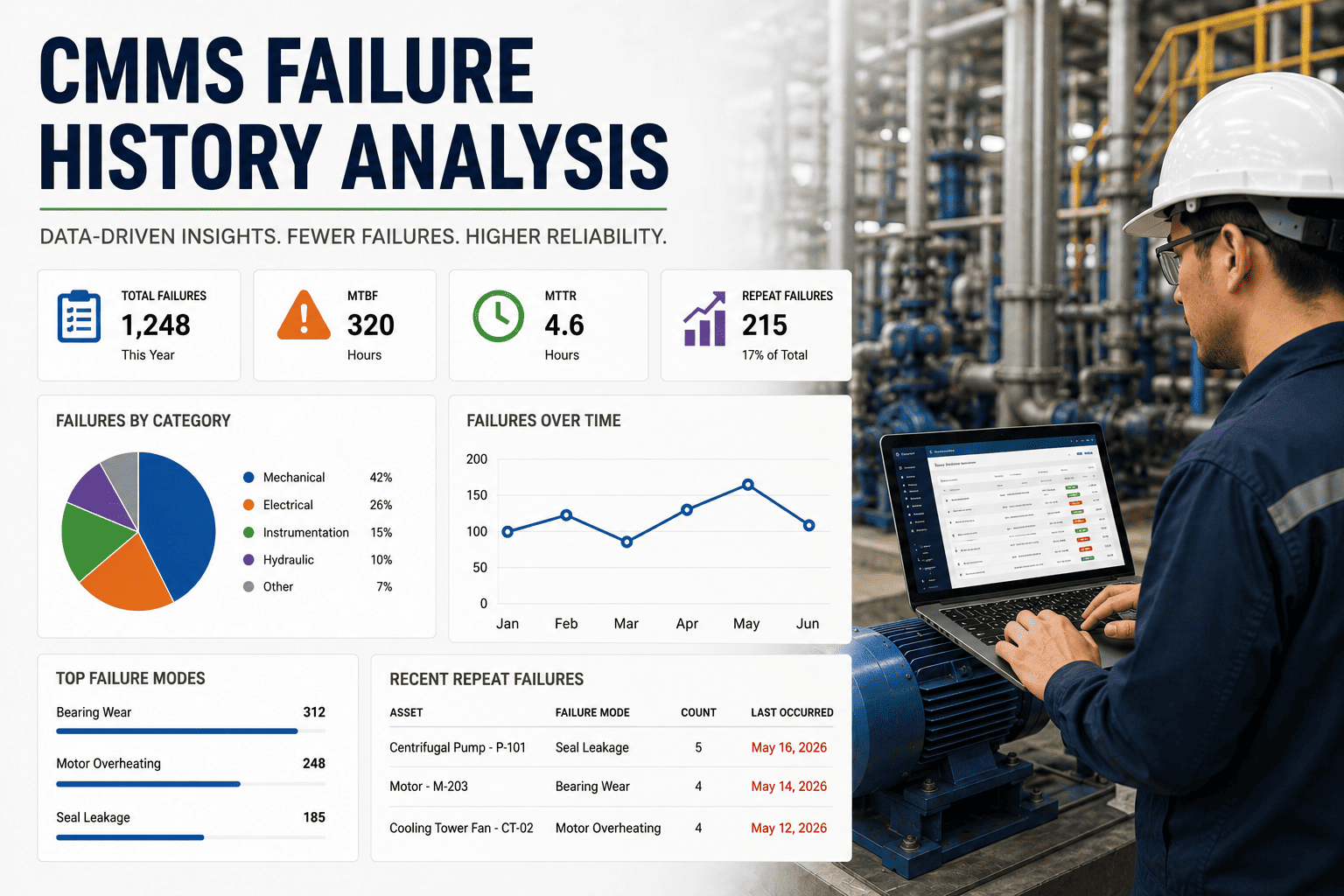
Most manufacturing plants log five to seven years of work-order history inside their CMMS and never query it for strategic insight. That archive is the single richest source of reliability intelligence on site: it tells you which assets keep faili
Read More
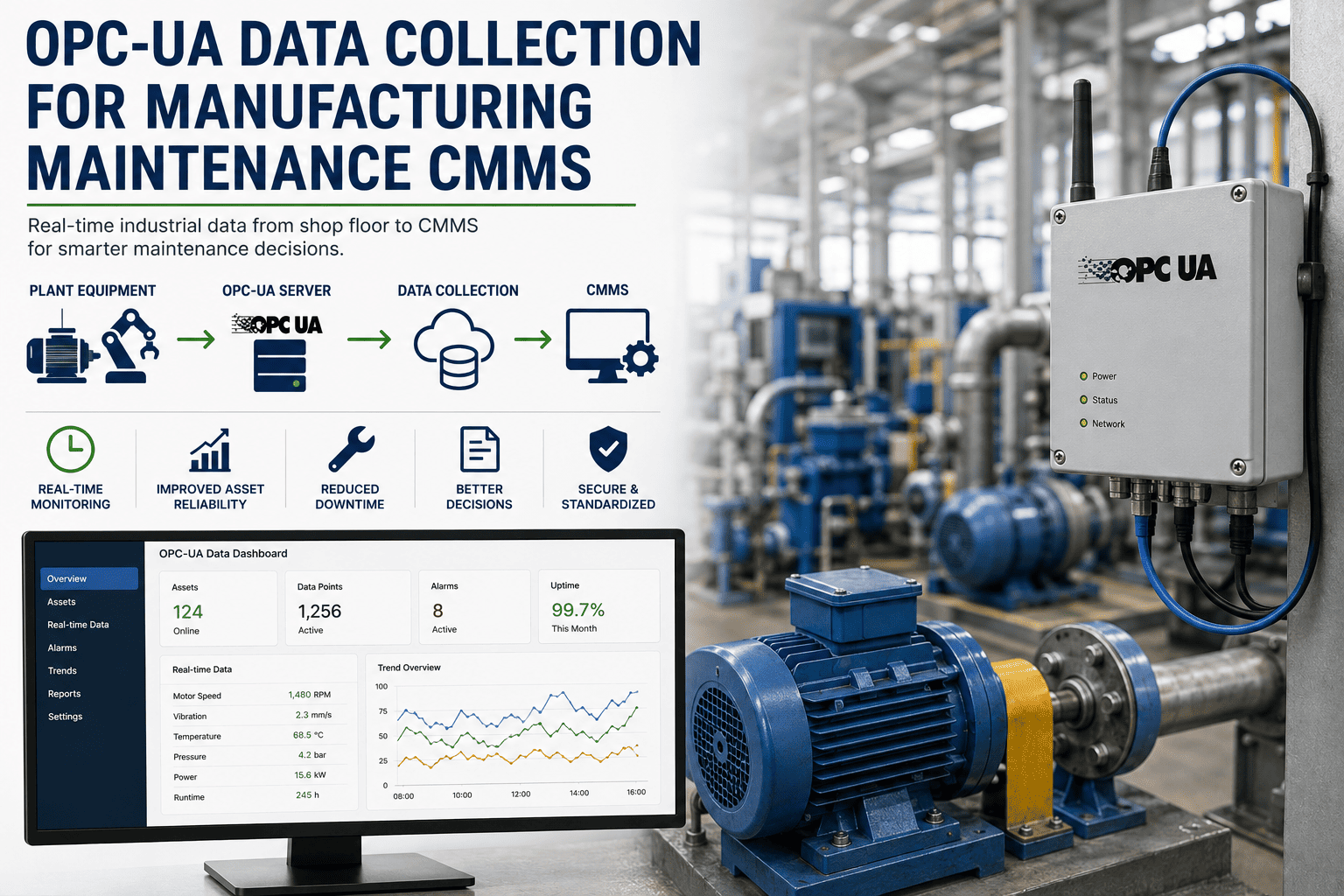
OPC-UA has quietly become the lingua franca of the factory floor — a single, vendor-neutral standard that exposes PLC and SCADA data in a secure, model-based way your CMMS can actually consume. The hard part is no longer physical connectivity; it
Read More
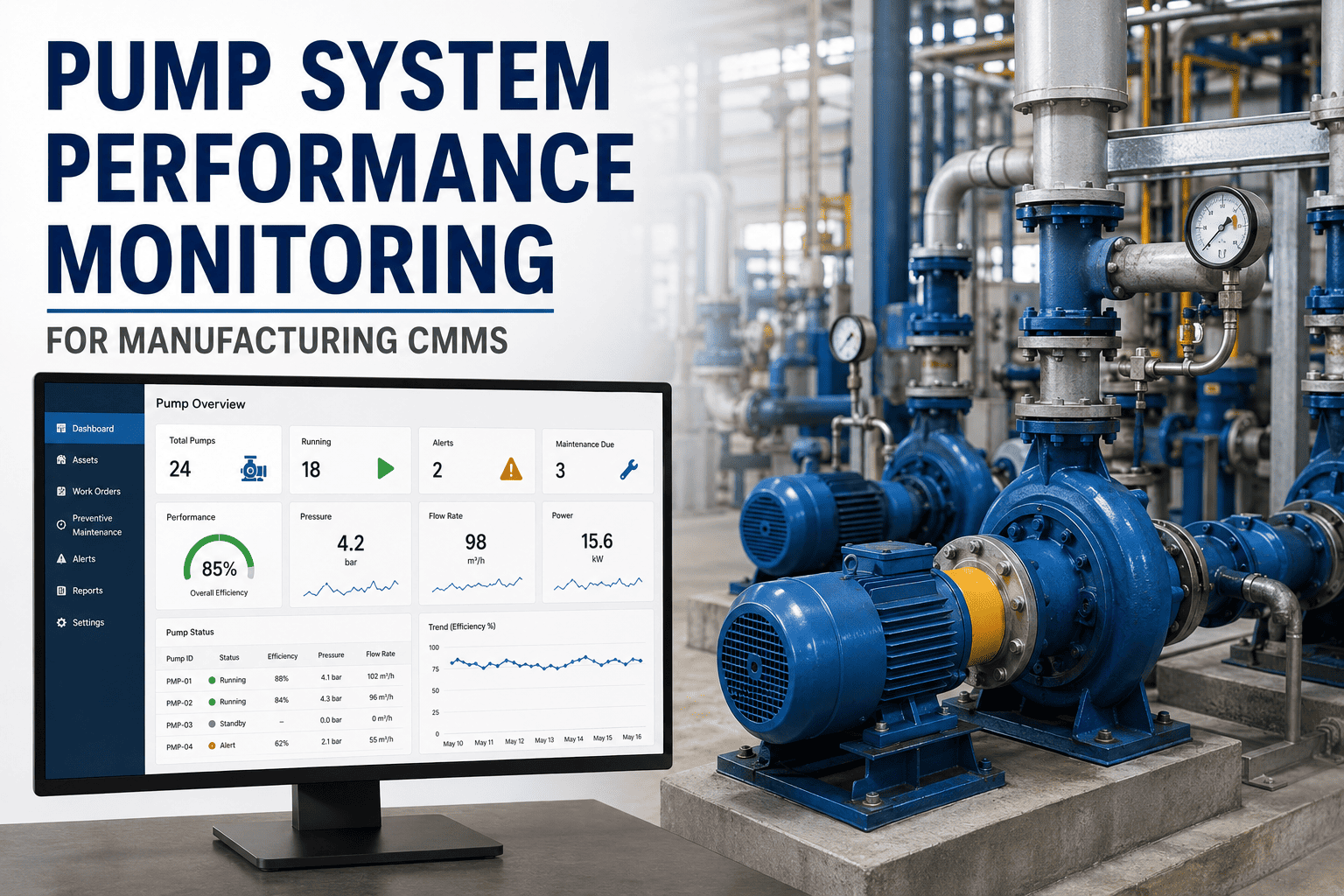
Pump performance rarely fails overnight; it erodes by fractions of a percent each week until a 5% efficiency drop quietly consumes thousands of dollars in wasted energy across a single year. For a 180-asset manufacturing plant running mid-size cen
Read More
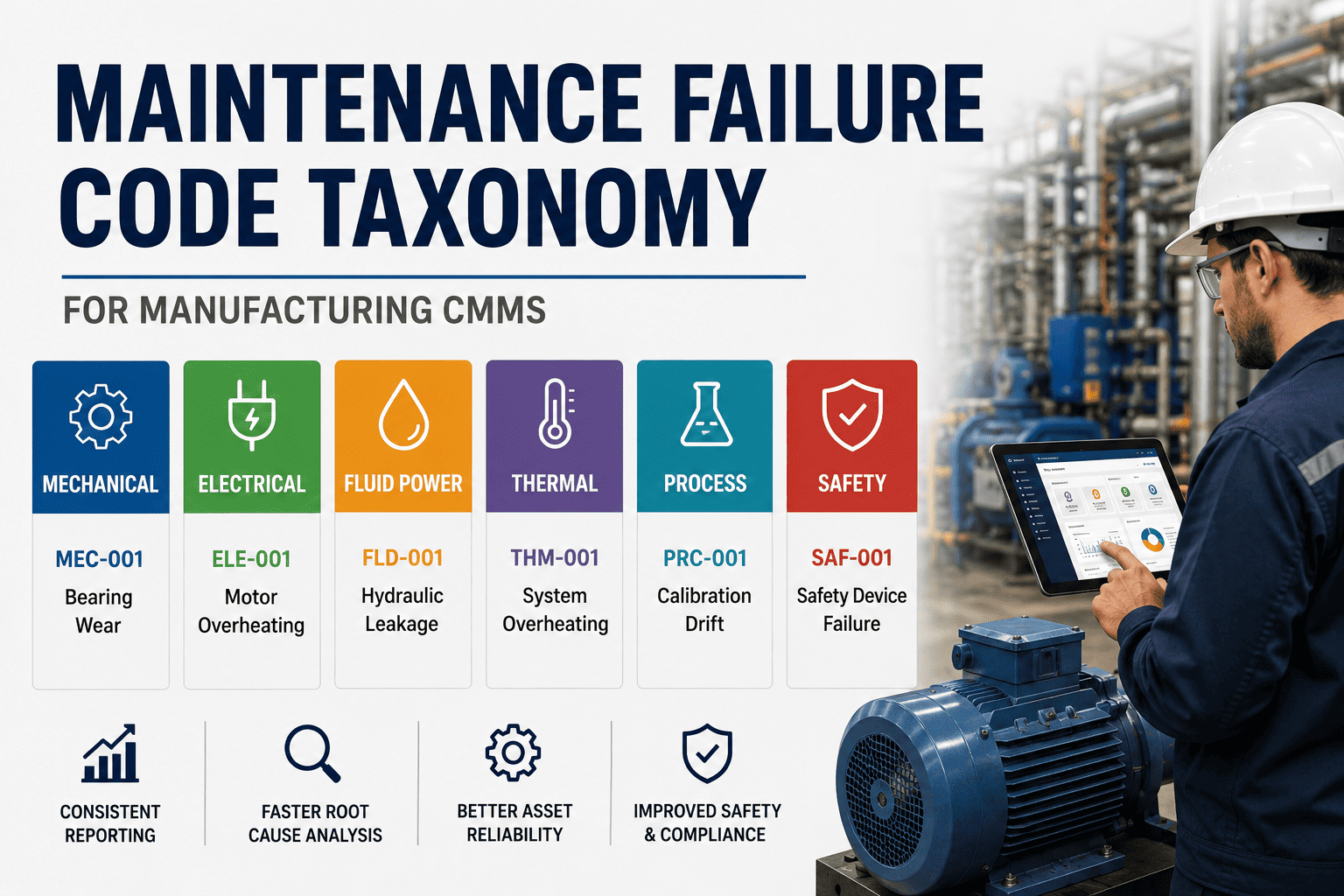
A failure code taxonomy is the quiet backbone of every mature CMMS — it's what turns five years of "pump broke — fixed it" work orders into failure modes you can actually trend, budget against, and design out. This guide walks plant reliability le
Read More
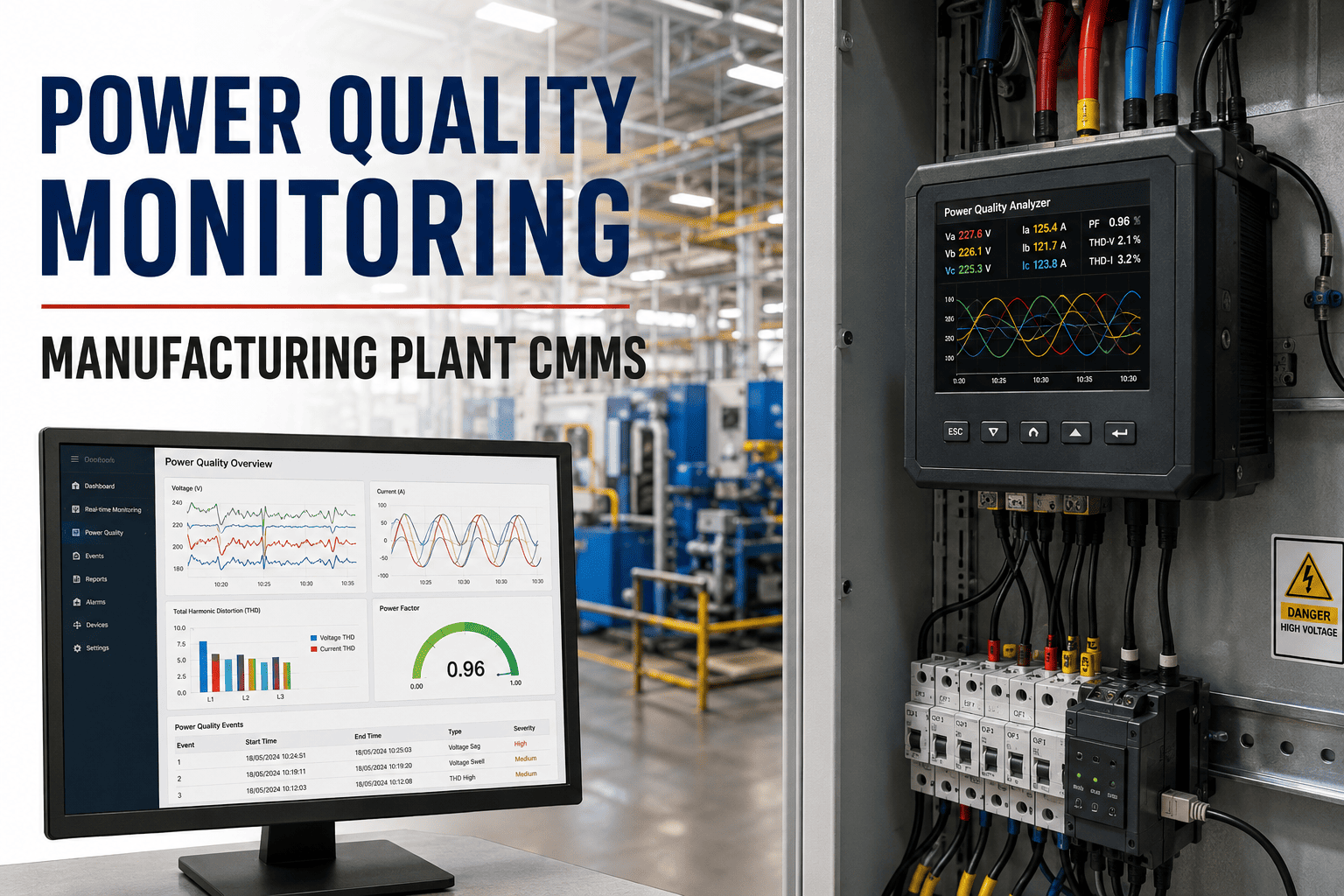
Power quality problems — voltage sags, harmonic distortion, transients, and phase imbalance — are behind a large share of the "unexplained" VFD trips, motor rewinds, and breaker nuisance operations that maintenance teams chase every quarter. Most

Read More
Wireless vibration sensors have collapsed the cost of continuous condition monitoring from $1,200 per point to under $150, but a poorly executed deployment turns that advantage into shelf-ware. According to a 2023 McKinsey study, 70% of industrial
Read More
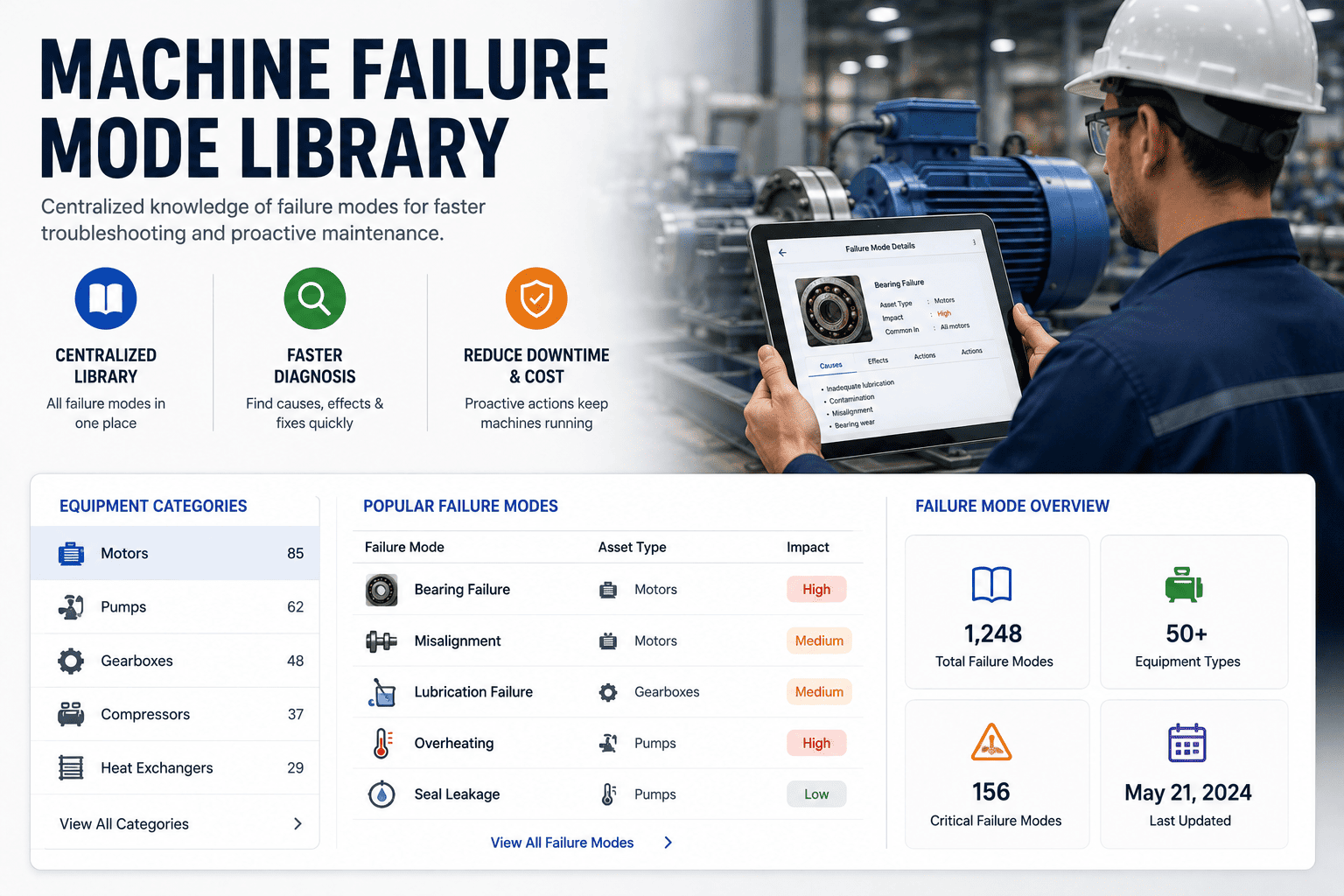
Building a machine failure mode library is the single highest-leverage data project a maintenance team can run inside a CMMS — it converts every closed work order from a free-text note into structured reliability intelligence that feeds RCM, PM op

Read More
Route-based infrared inspection is the single highest-leverage predictive maintenance technique available to most manufacturing plants — a well-designed IR route catches roughly 80% of electrical and mechanical defects weeks before they escalate i

Read More
Vibration signatures hide the earliest whispers of machine failure — a bearing's inner race defect, a coupling's angular misalignment, or a structural resonance can surface in the frequency domain weeks before amplitude triggers a maintenance alar
Read More
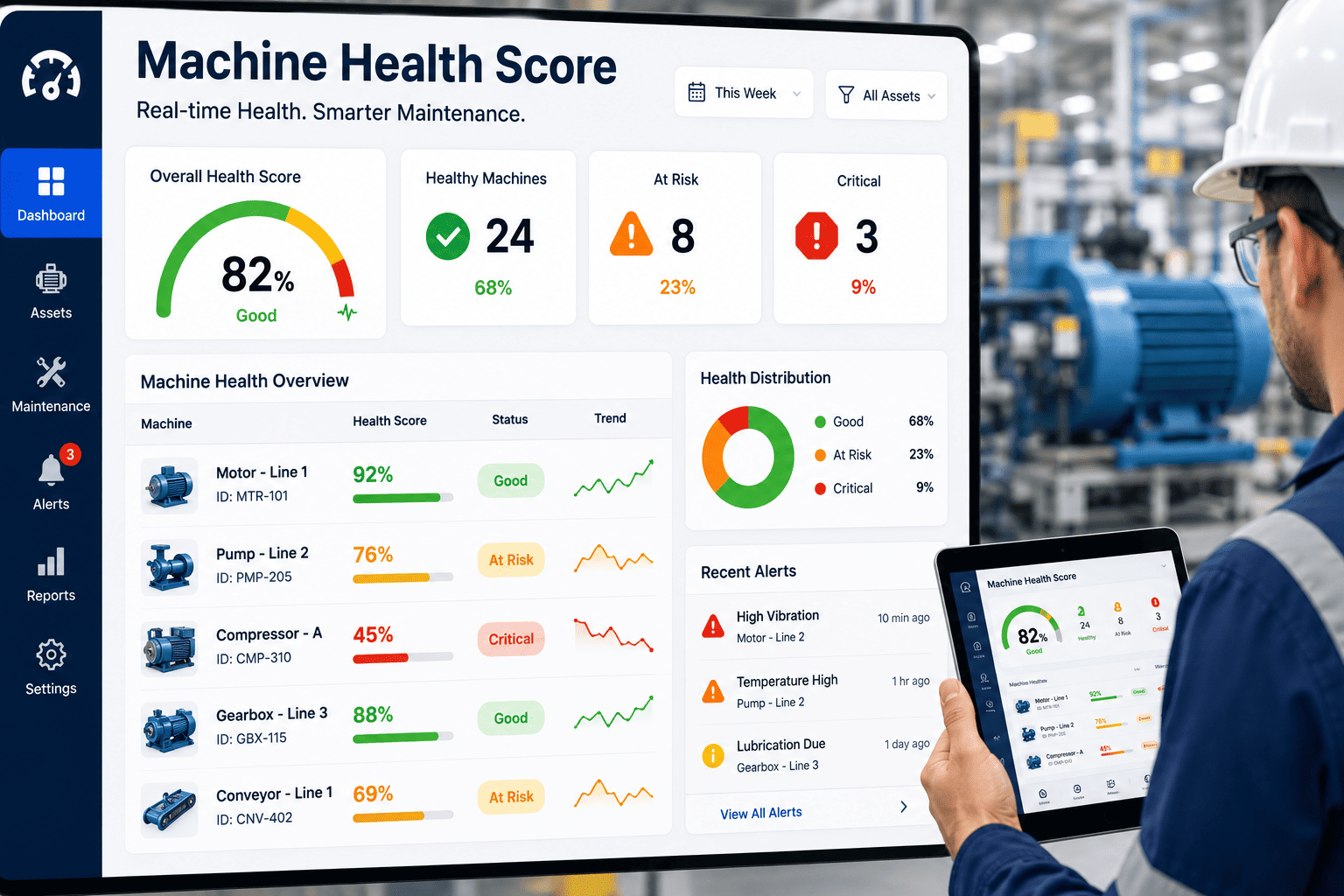
A machine health score compresses vibration, temperature, oil analysis, and process data into a single number a supervisor can act on — typically a 0–100 index that ranks every asset by risk. The problem in most plants is that condition-monitoring

Read More
Heat exchanger fouling is one of the most underestimated revenue leaks in manufacturing plants, silently eroding 10-25% of heat transfer efficiency while energy bills climb and production schedules slip. By the time an operator notices a 15% drop
Read More
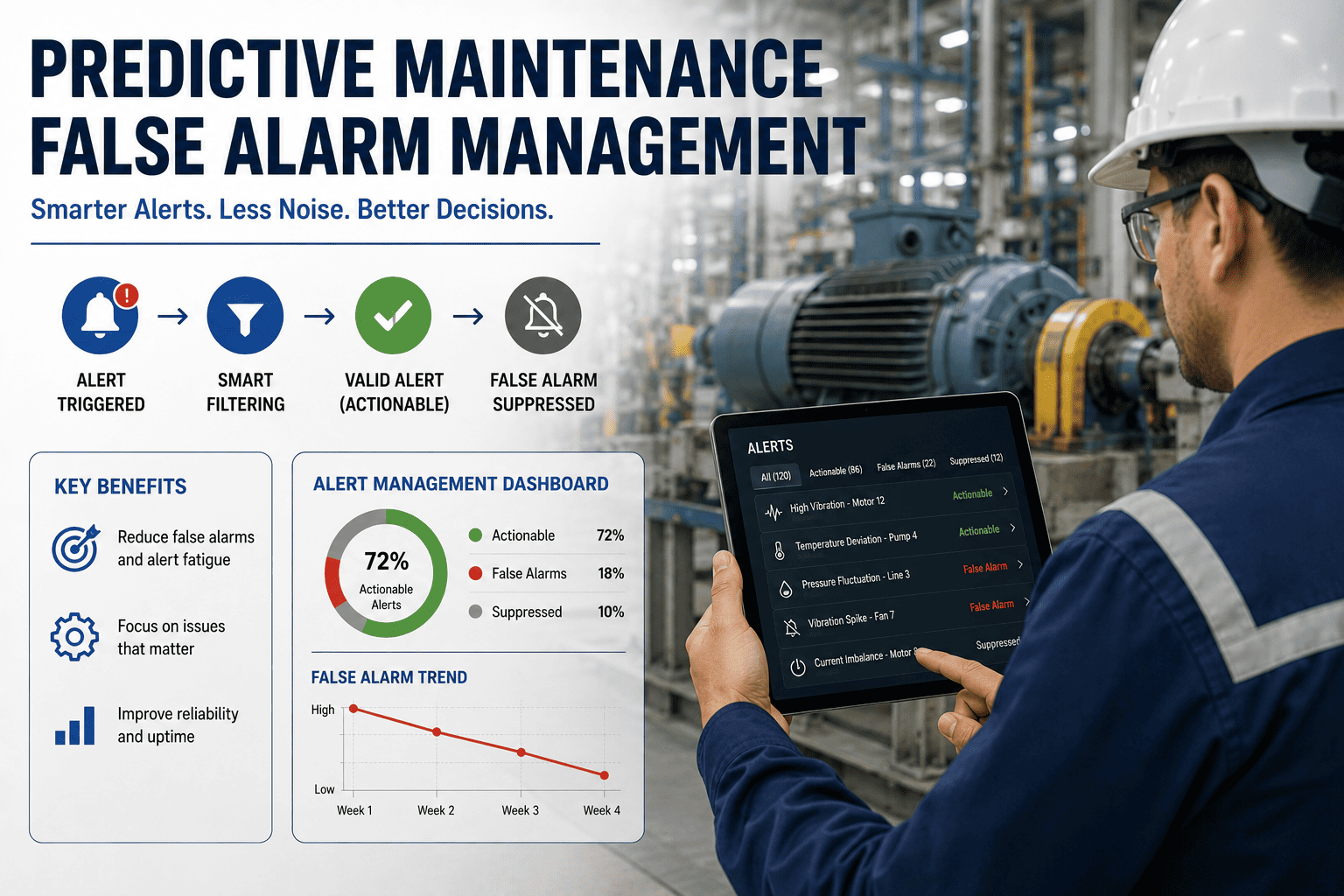
Predictive maintenance promises to catch failures before they happen — but when 30 to 50 percent of the alerts your vibration, oil-analysis and thermal sensors fire off turn out to be false positives, the program quietly turns against itself. Tech

Read More
Private 5G is moving from pilot decks to plant floors in 2026, and maintenance teams are the early winners. With deterministic sub-10ms latency and reliable mobility at 80 km/h, 5G unlocks use cases Wi-Fi 6 physically cannot sustain — mobile CMMS
Read More
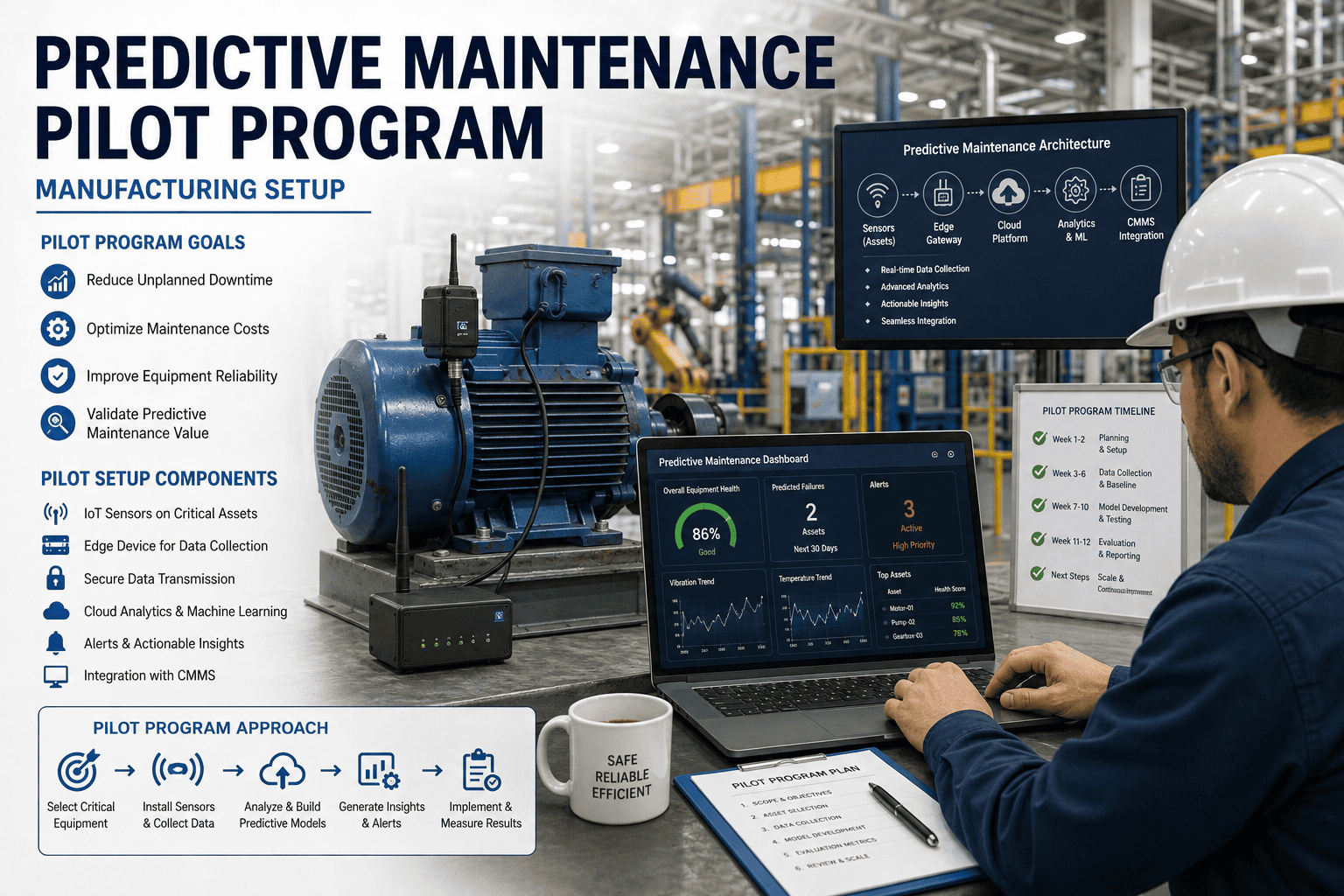
Most predictive maintenance pilots collapse before the 12-week mark — and the cause is almost never the sensor stack or the analytics layer. It is pilot design: the wrong asset chosen for the trial, no clean baseline captured before sensors went l

Read More
Cooling towers are the silent workhorses of manufacturing, regulating process temperature across everything from injection molding to chemical distillation — and when one fails unexpectedly, the cascade hits chillers, compressors, and production y
Read More
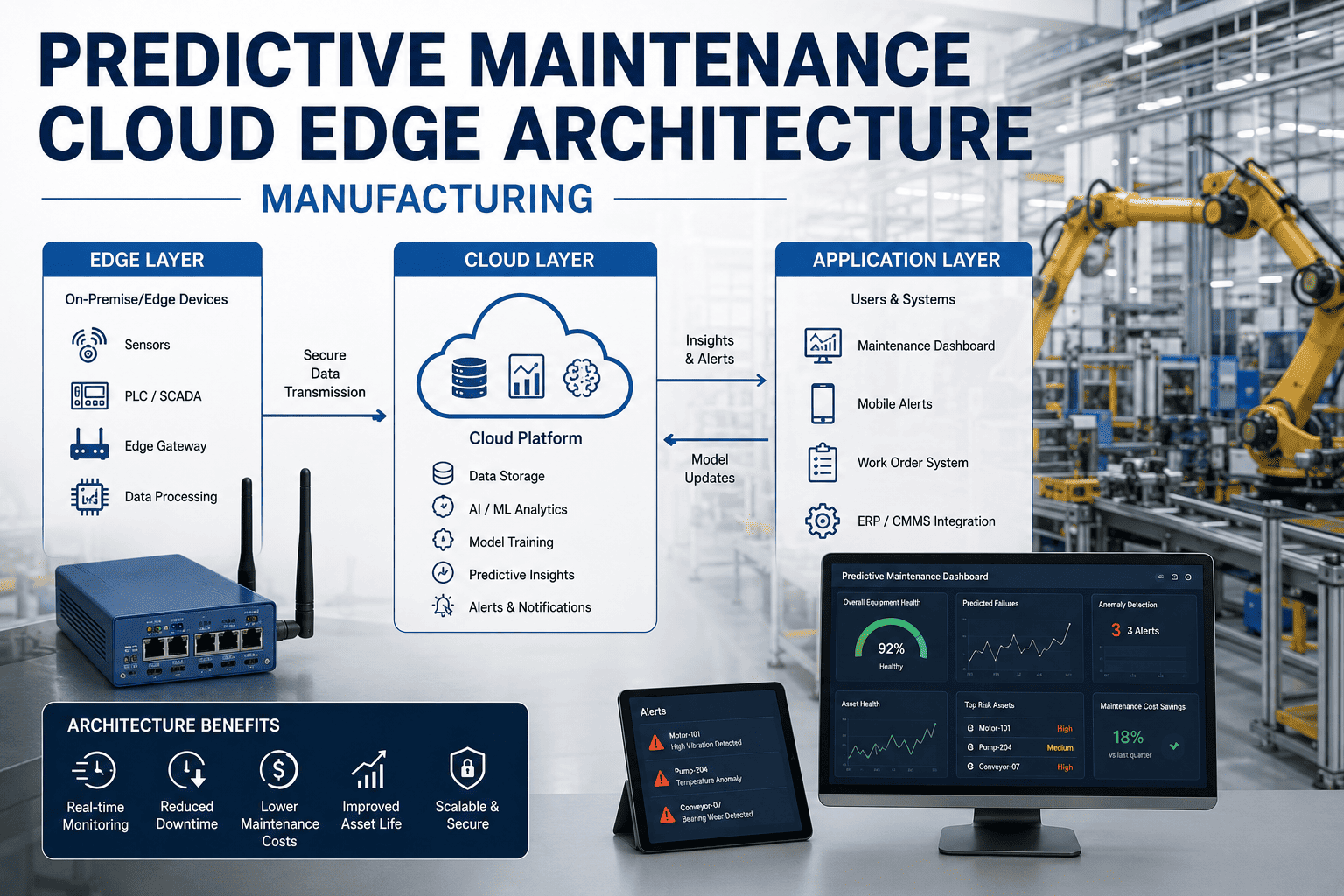
Choosing between cloud and edge architecture for predictive maintenance is the single most consequential infrastructure decision a plant will make this decade — get it wrong and you either drown in bandwidth costs or miss the millisecond window th
Read More
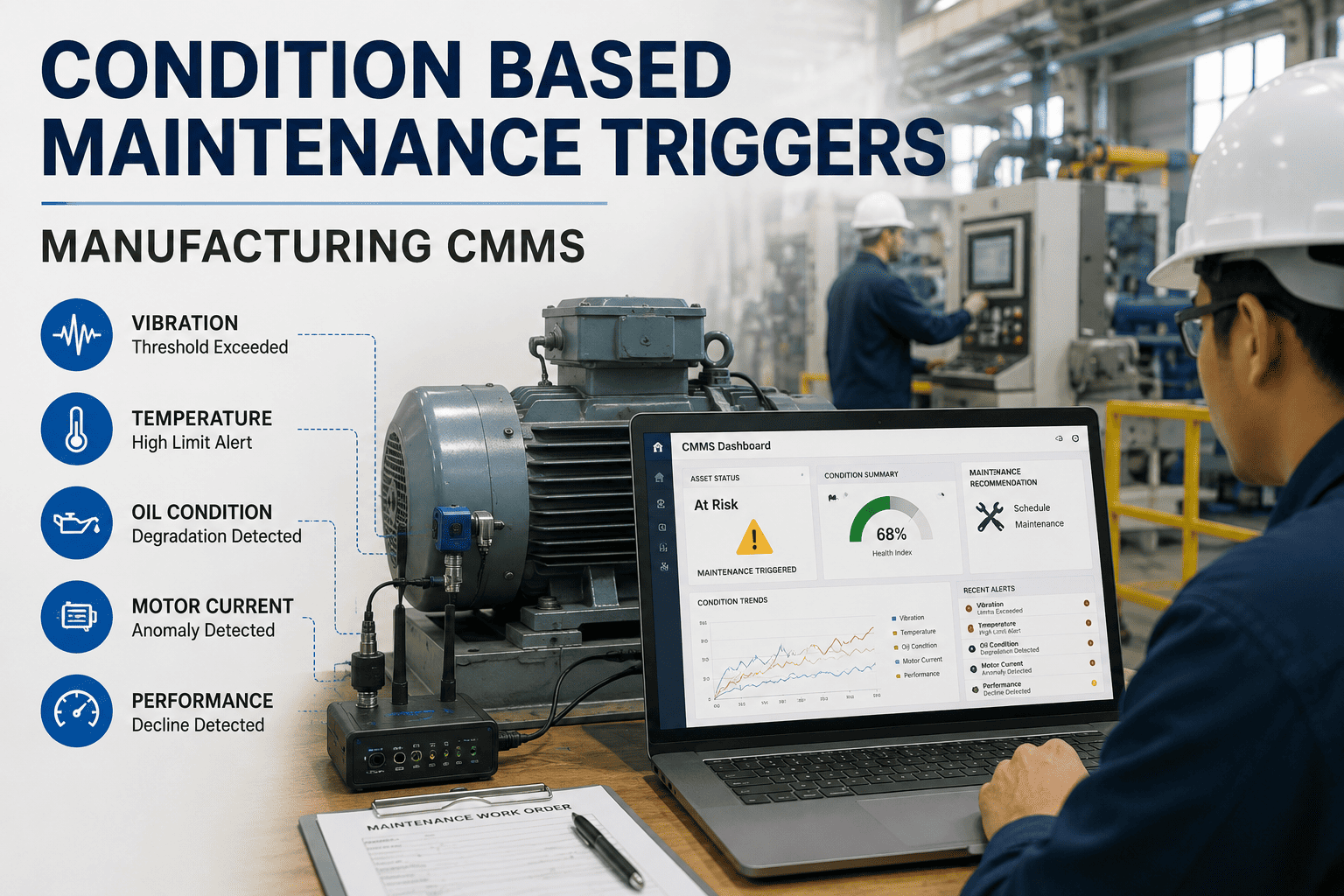
Condition-based maintenance only delivers ROI when the CMMS translates sensor alerts into the right work order — not a flood of tickets operators learn to ignore. On a typical 200-asset plant, poorly tuned CBM triggers generate 300-plus nuisance a
Read More
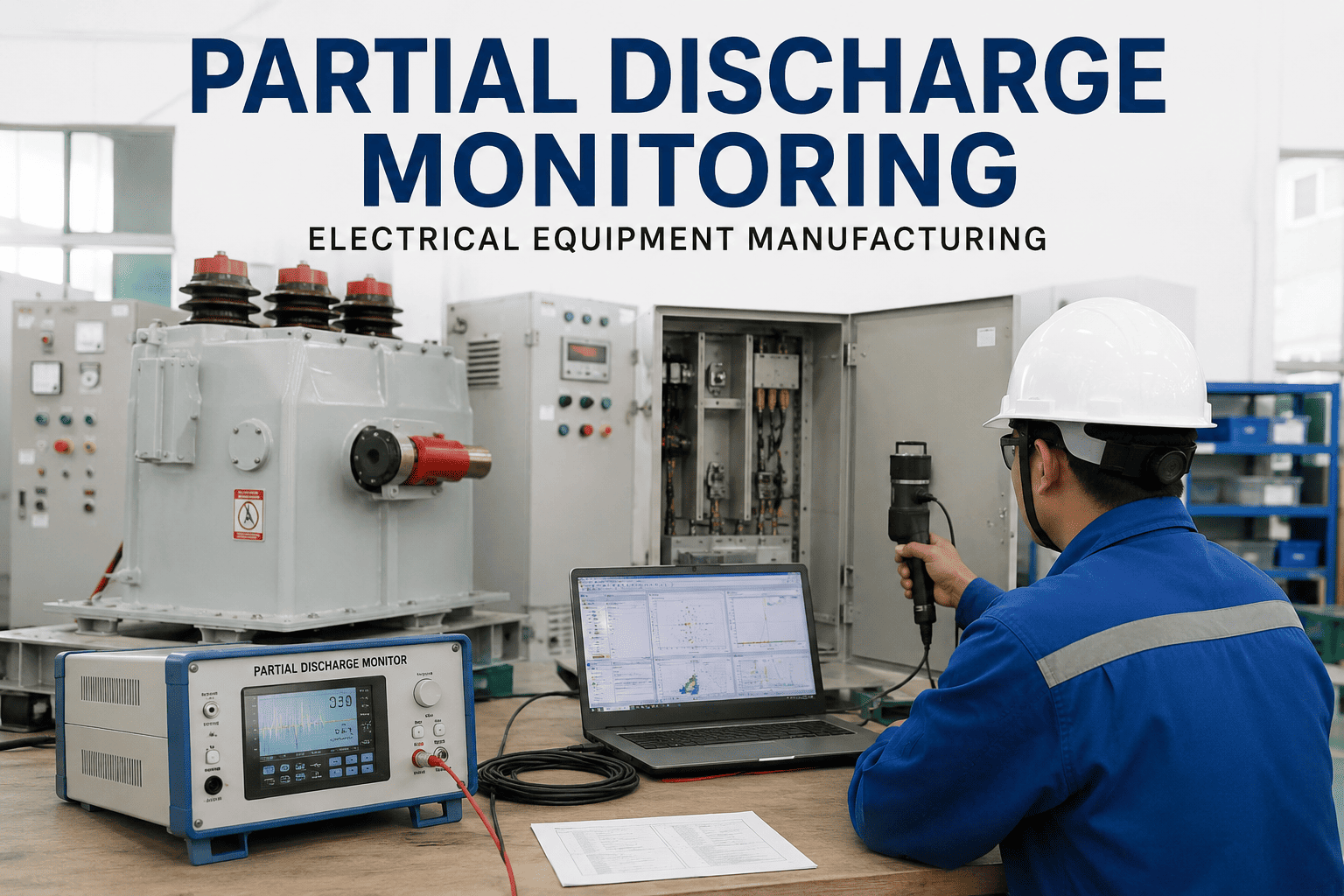
Partial discharge is the silent killer of manufacturing electrical systems — a 6.6 kV motor stator, a 15 kV switchgear busbar, or a medium-voltage cable splice can degrade for 6 to 18 months before an arc-flash event abruptly halts a production li
Read More
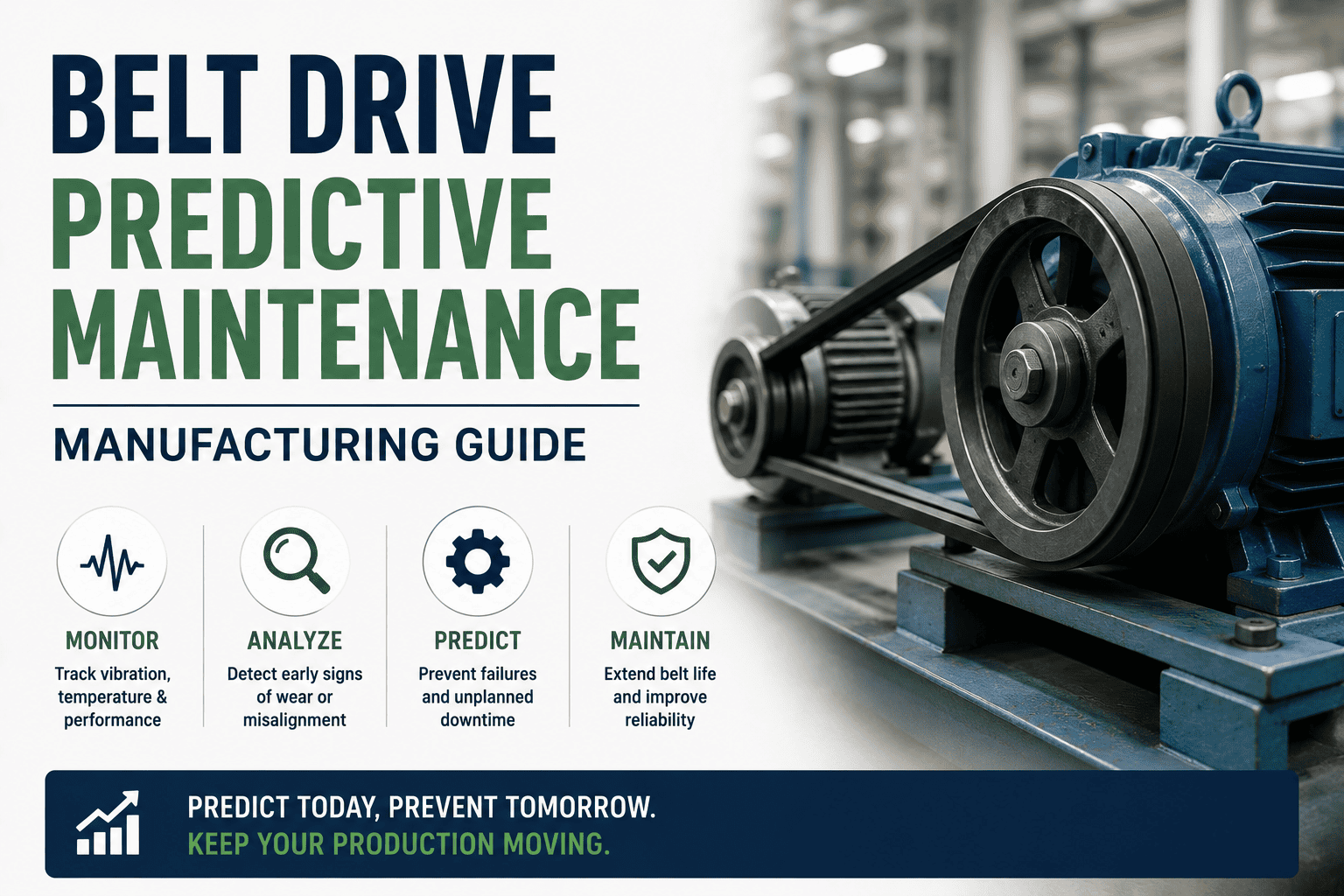
Belt drives are the quiet workhorses of manufacturing plants — and quietly, they account for 15 to 25 percent of unplanned rotating-equipment stoppages. A single stretched V-belt on a critical blower can cascade into a full line shutdown in under

Read More
Industrial fans and blowers are the quiet workhorses of manufacturing — running 24/7 in dust collectors, boiler combustion air systems, kiln exhaust, drying lines and process ventilation, yet they rarely get attention until a failure shuts the lin

Read More
Hydraulic oil contamination drives 70–80% of hydraulic system failures in manufacturing plants, and the cost of ignoring it shows up as blown seals, scored cylinder rods, and stalled production lines long before a CMMS work order is ever generated
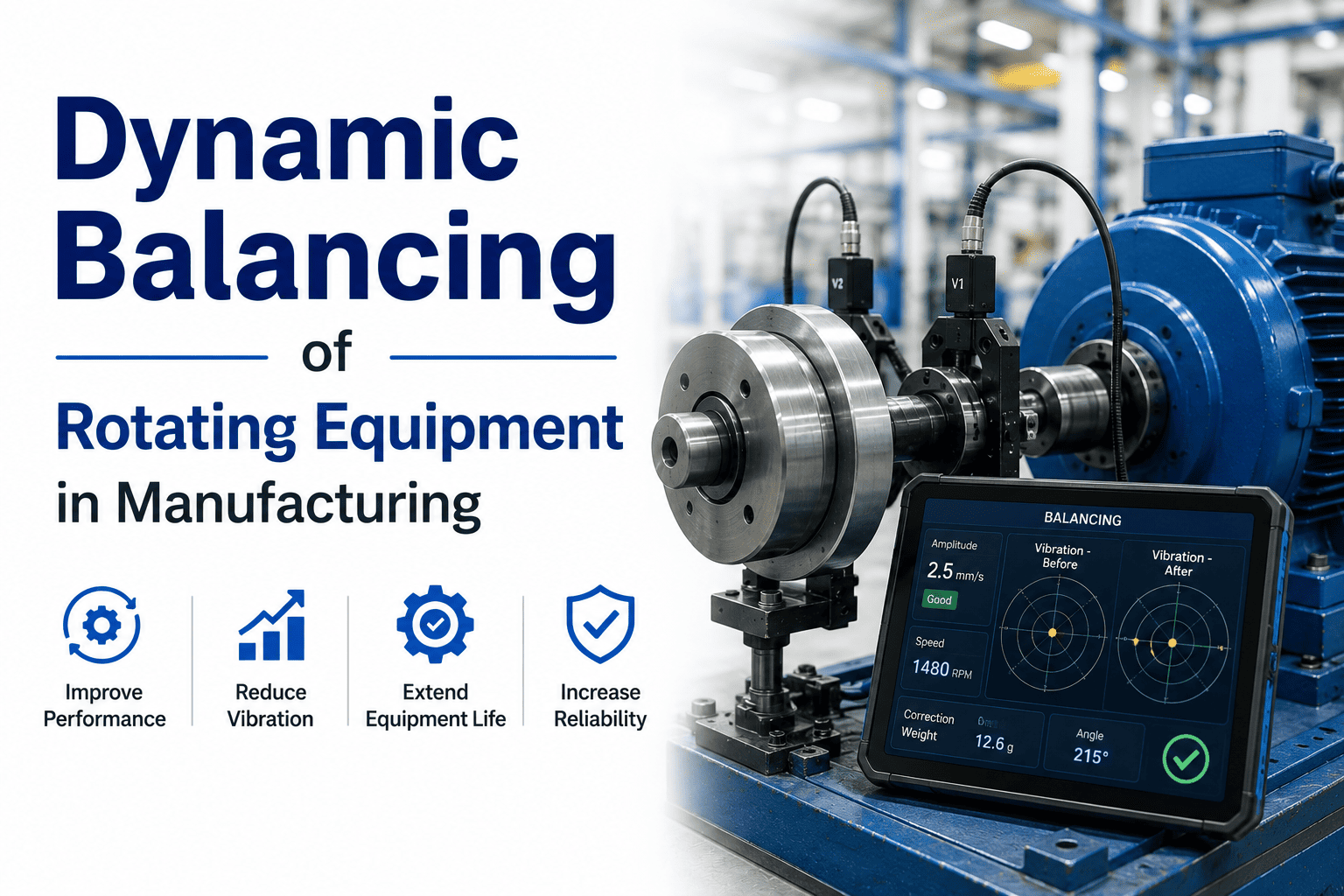
Read More
Dynamic imbalance drives roughly 40% of all vibration-related failures in manufacturing rotating equipment, making it the single most preventable cause of premature bearing, seal, and coupling wear on the plant floor. Left unresolved, even a small
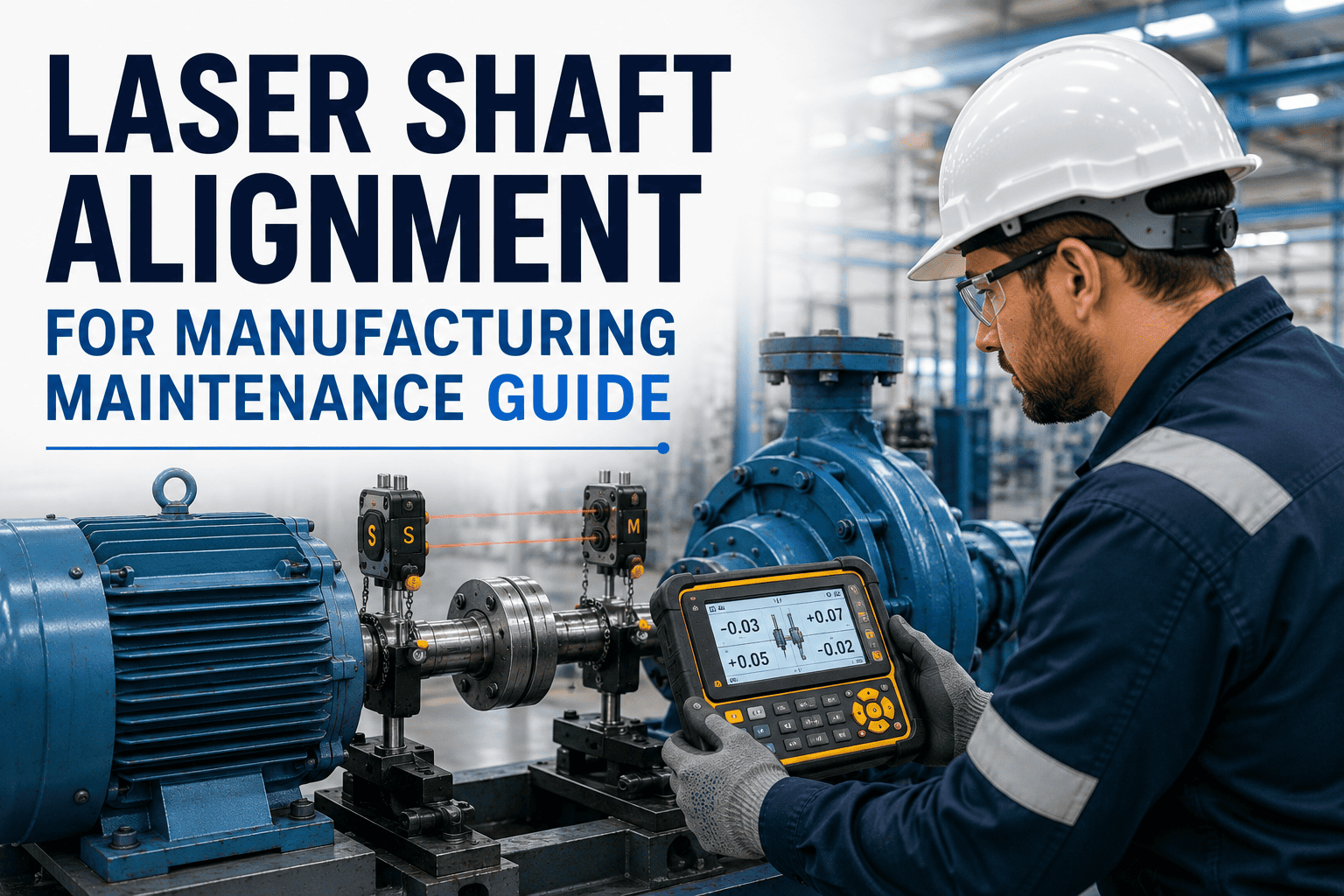
Read More
Poor shaft alignment accounts for up to 50% of rotating equipment failures in manufacturing plants — and the dial-indicator or straightedge methods that most crews still rely on are only accurate to within a few thousandths, rarely repeatable, and
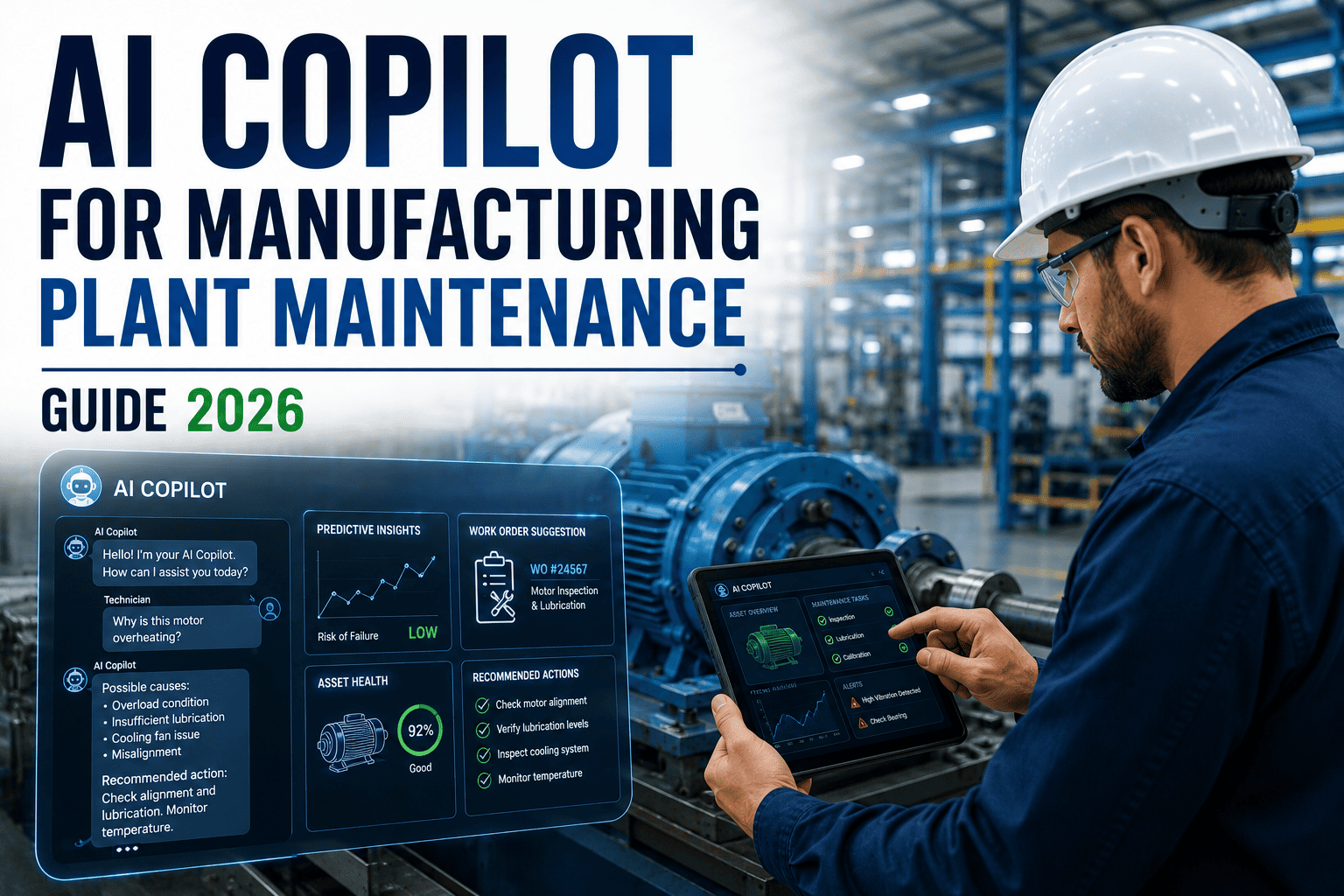
Read More
AI copilots have quietly become the most consequential maintenance hire of 2026 — not a replacement for technicians, but a second pair of eyes that reads vibration spectra, scans CMMS history, and drafts the work order before a wrench is lifted. P

Read More
Manufacturing downtime now averages $260,000 per hour across heavy industry, and the gap between best-in-class plants (85% OEE) and the median (60%) is almost entirely a predictive-maintenance gap. Modern machine learning failure-prediction system

Read More
Motor insulation resistance testing remains the single most cost-effective predictive maintenance tool available to a manufacturing plant, yet most facilities run it reactively or not at all. For a typical plant with 3,000+ installed motors, a $1,

Read More
Acoustic emission testing is one of the few condition-monitoring techniques that hears damage forming inside a component before that damage becomes visible to vibration analysis or thermal imaging. For a manufacturing plant running hundreds of pum
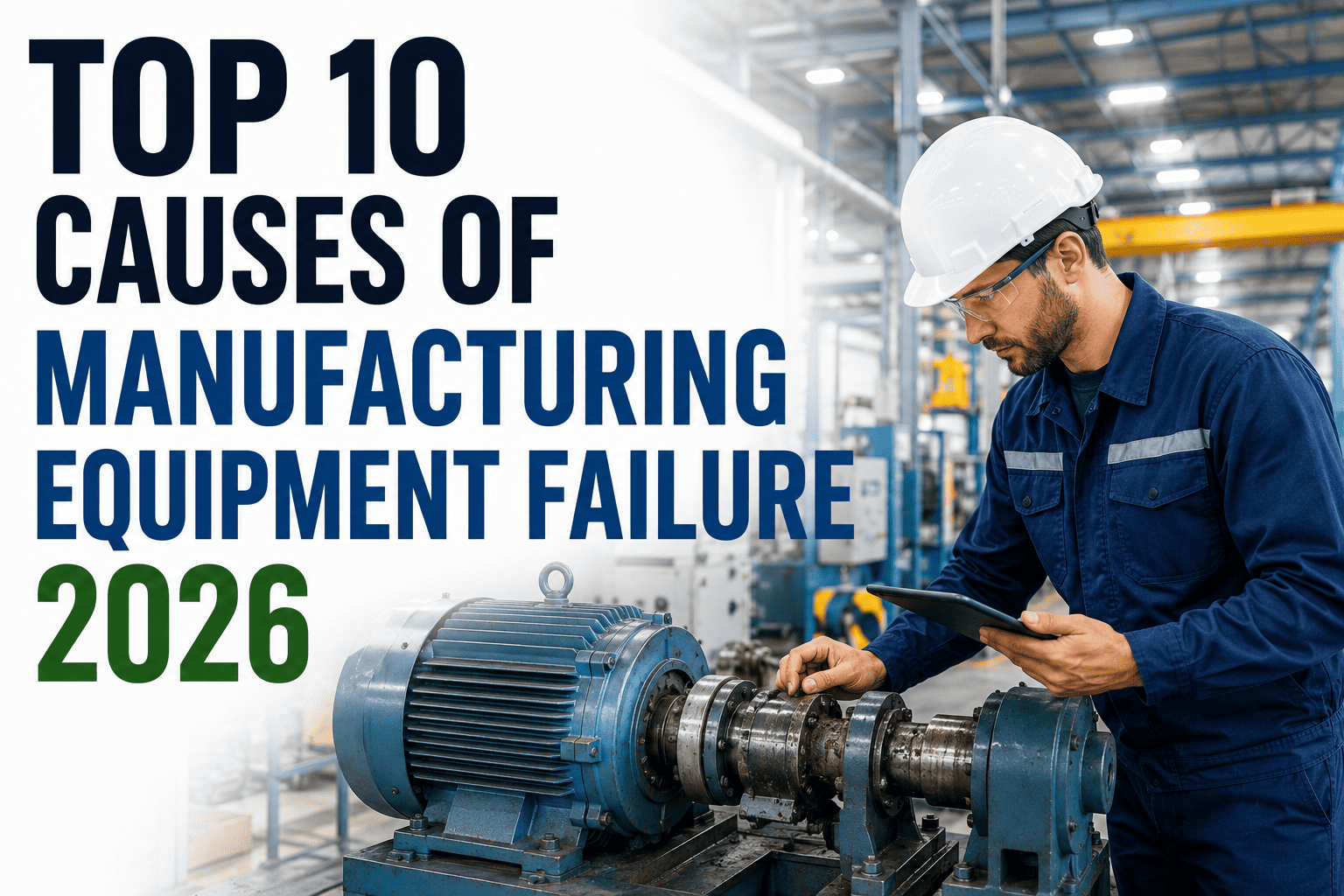
Read More
Unplanned downtime costs industrial manufacturers an estimated $50 billion every year, and roughly eight in ten stoppages trace back to the same handful of equipment failure causes. From lubrication breakdown and bearing wear to contamination, mis

Read More
Night-shift breakdowns hit different. When a conveyor seizes at 2:47 a.m. on a Tuesday, the maintenance supervisor is asleep, the storeroom is dark, and the only technician on site is covering three production lines. Industry reliability data cons
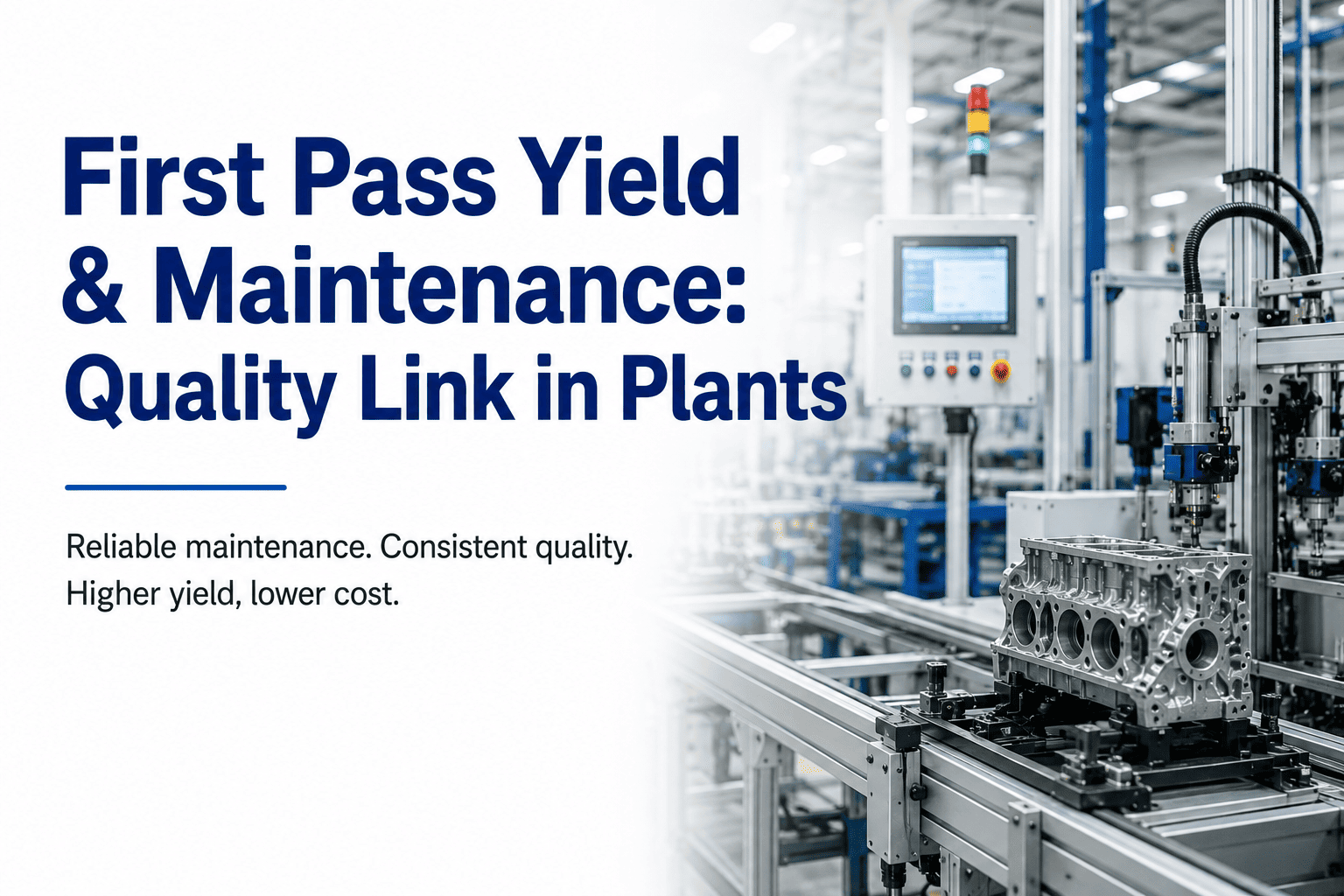
Read More
First pass yield is the single most honest number on a plant floor — it tells you how many units passed every inspection the first time, with no rework, no scrap, and no second chances. Yet most quality teams chase defect reduction through process
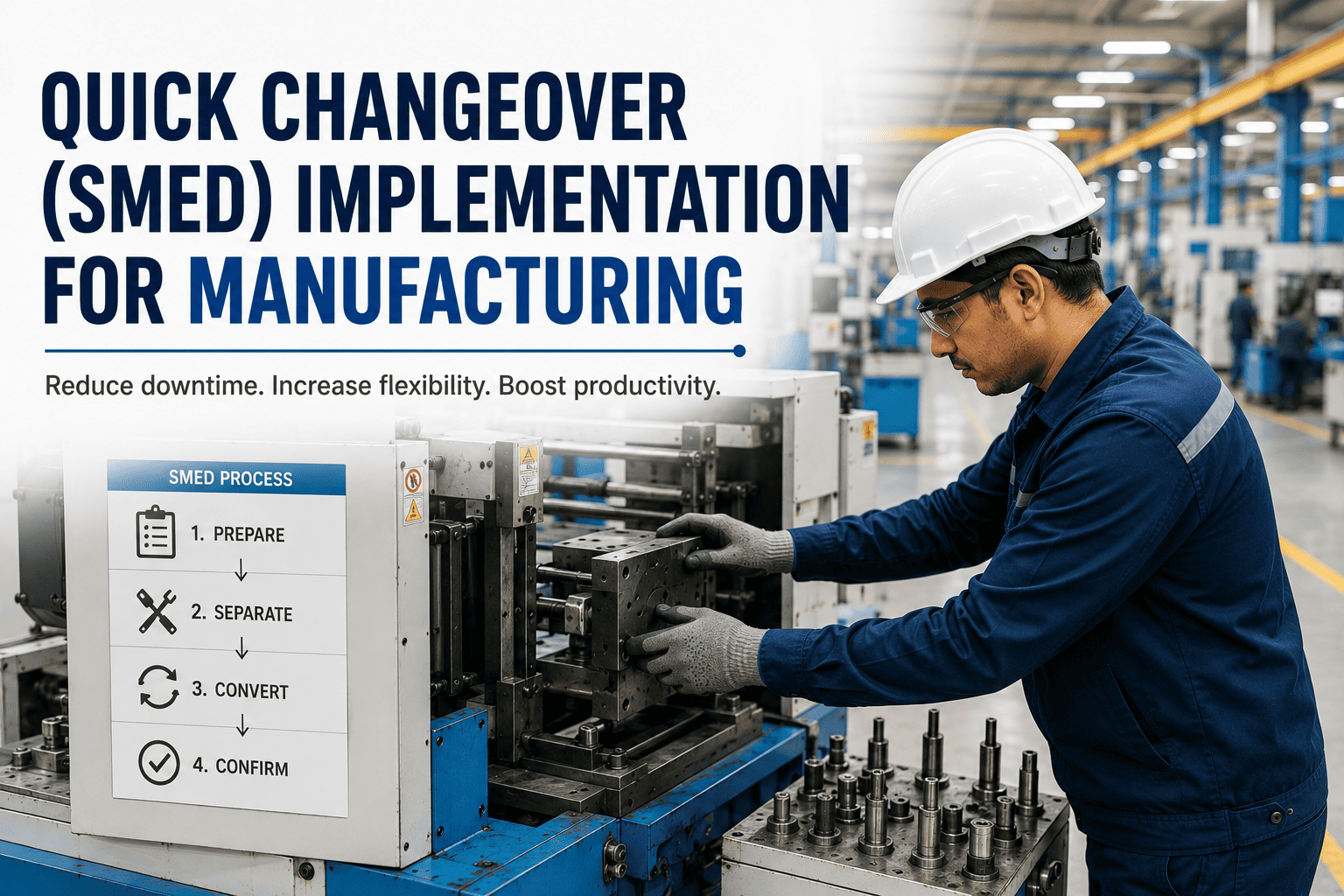
Read More
Single-Minute Exchange of Die, or SMED, is the single fastest way most manufacturing plants can unlock 20–40% more press capacity without buying a new line — yet most still treat changeover as a fixed cost rather than a controllable variable. Done

Read More
OEE reports that no one acts on are worse than no reports at all — they consume engineer hours, mask real losses behind averages, and train leadership to ignore the very metric meant to drive improvement. Plants that close the loop, by contrast, t
Read More
Equipment reliability improvement is the discipline that separates plants running at 85% OEE from those stuck in the 50s — it's a repeating loop of failure analysis, redesign, PM adjustment, and precision maintenance, not a one-time project. Top-p

Read More
Total Productive Maintenance promises a lot — double-digit OEE gains, 30–50% fewer breakdowns, operators who own their equipment. But nearly every TPM program that stalls does so at the same place: Step 1, Initial Cleaning, Inspection, and Lubrica

Read More
Schedule compliance is the single most reliable leading indicator of maintenance maturity in a manufacturing plant — measure it honestly and you can predict equipment availability, overtime spend, and downtime risk months in advance. Plants that h
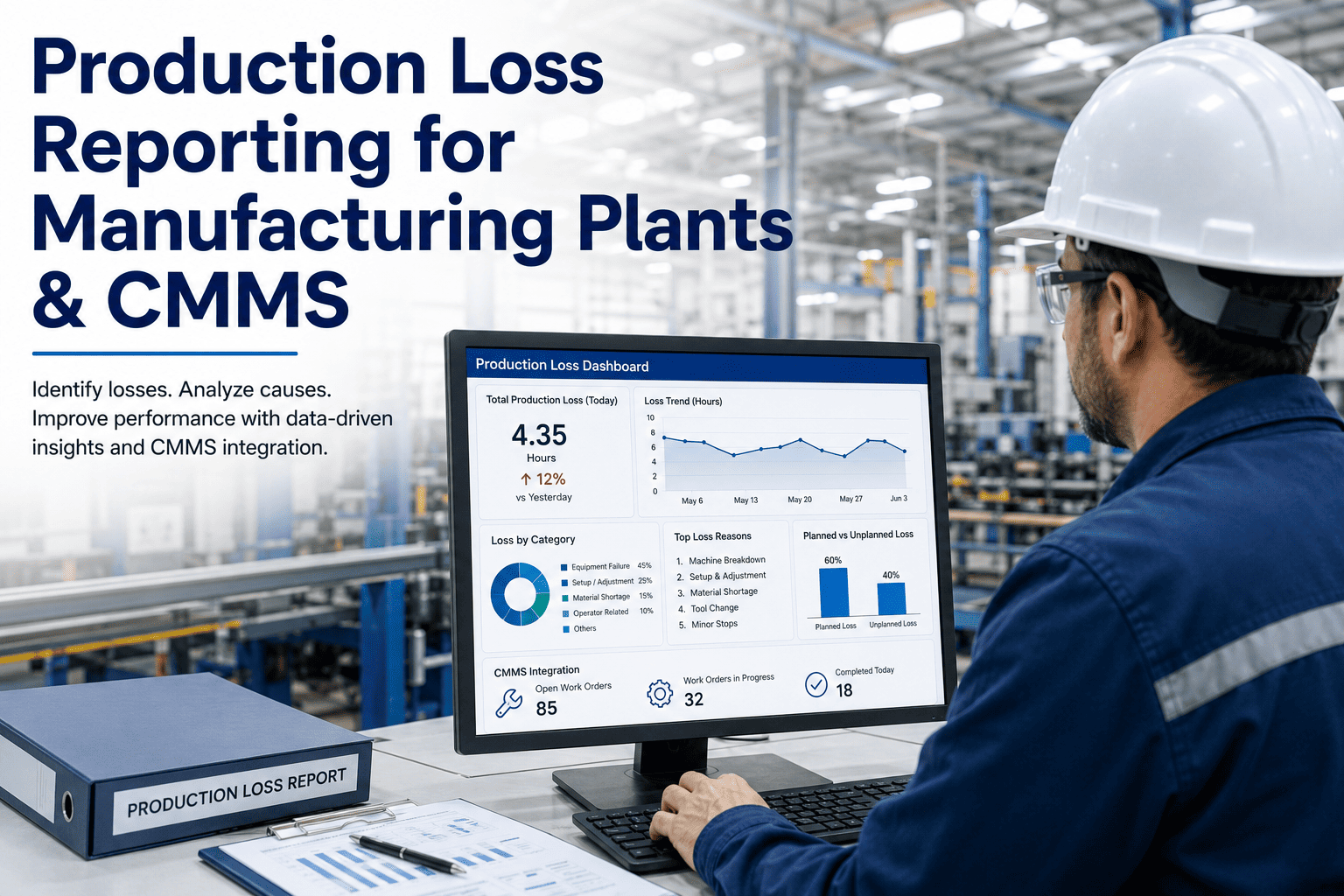
Read More
Production loss reporting is the discipline that converts every minute of stalled output into structured, analyzable data your improvement teams can actually act on. In most discrete and process plants, unplanned downtime accounts for 5–20% of ava
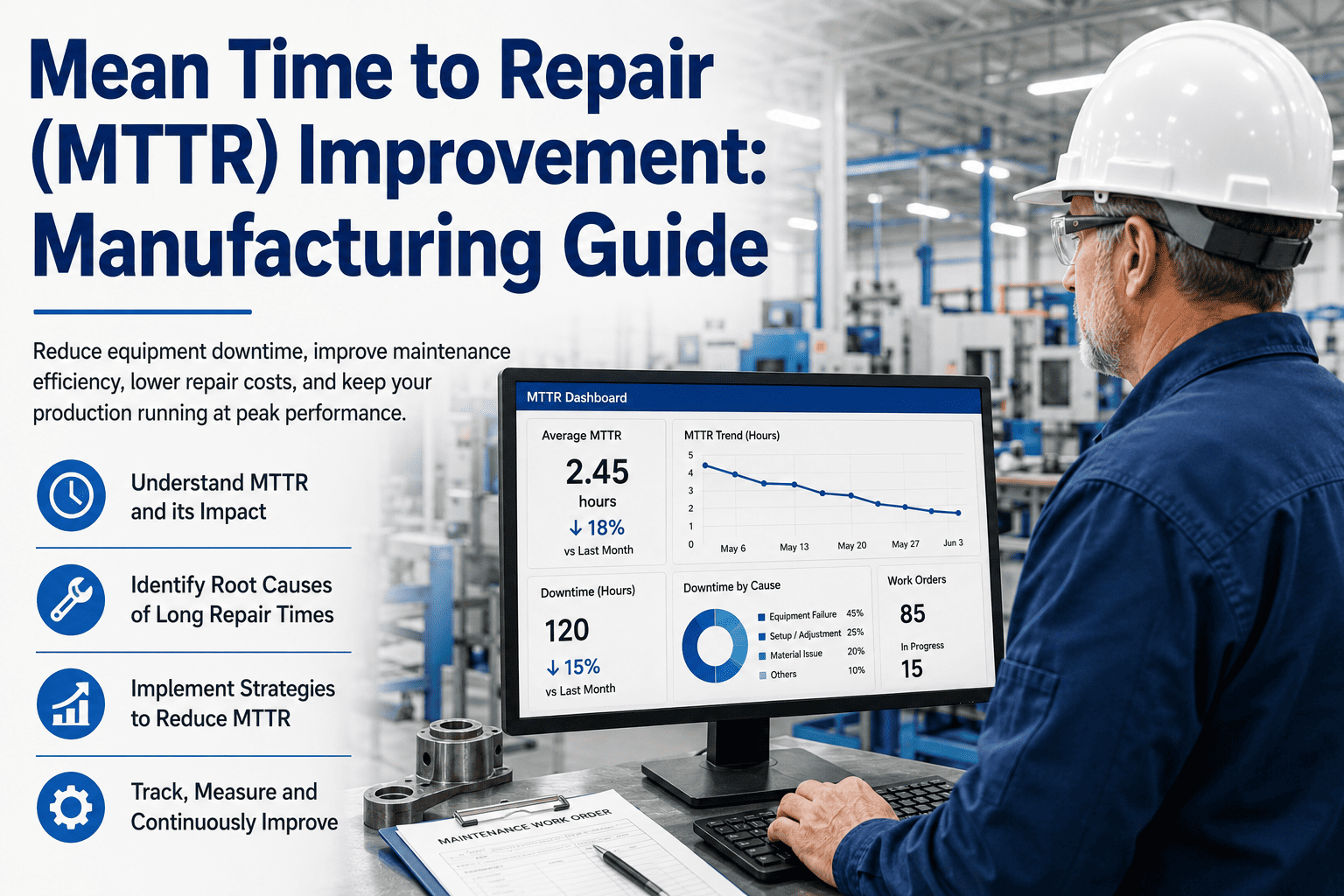
Read More
Mean Time to Repair is the single most reliable indicator of how fast your plant bounces back from an unplanned failure — and for most discrete manufacturers it sits between four and six hours, roughly double what top-quartile performers achieve.

Read More
Overall Equipment Effectiveness is the one number most plants track religiously and set carelessly — managers copy the famous 85% "world-class" benchmark onto every line regardless of industry, asset age, or product mix, then wonder why operators
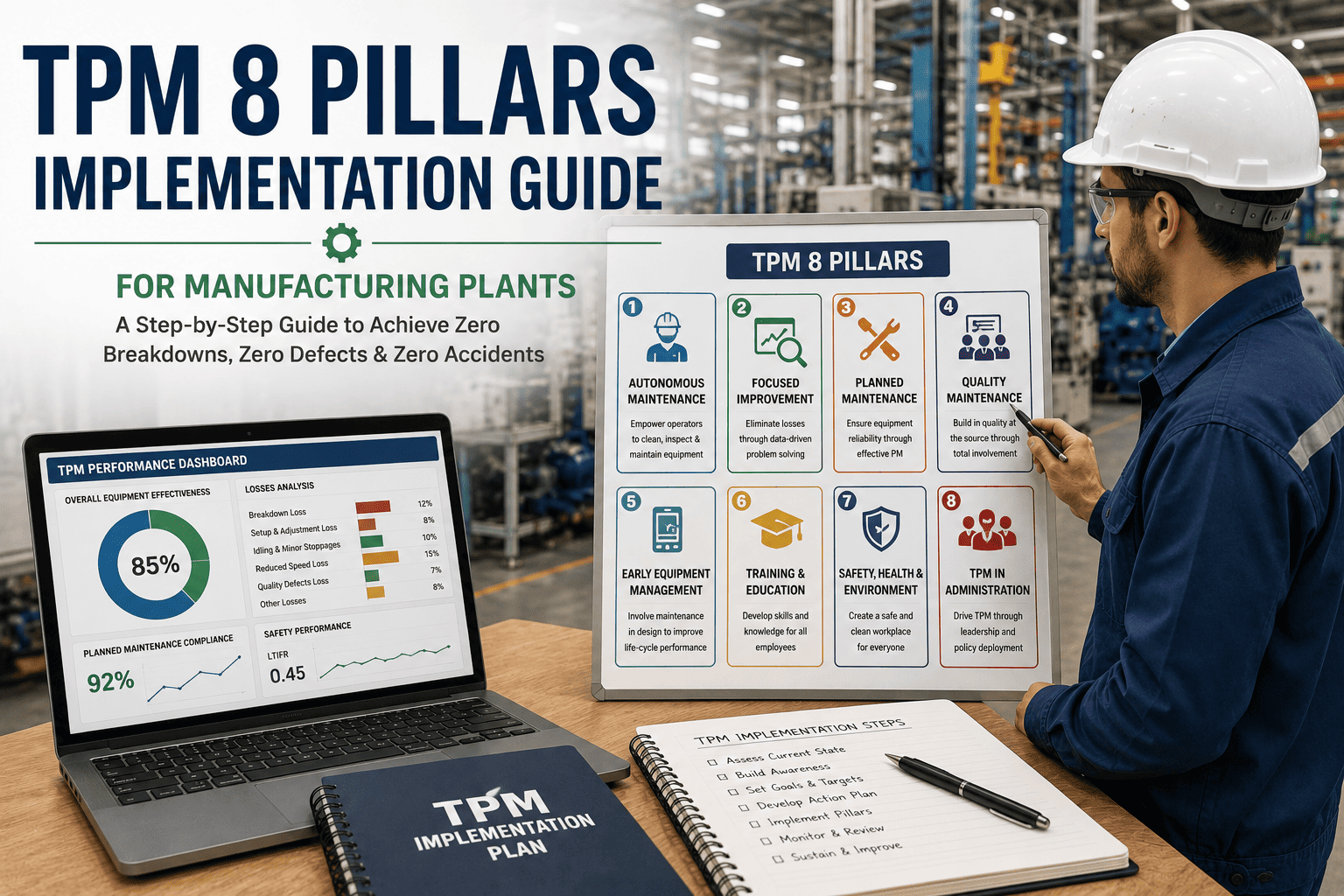
Read More
Total Productive Maintenance shifts the maintenance burden from a reactive repair crew to every operator on the floor, turning eight disciplined pillars into a single engine for asset availability. Plants that implement TPM correctly routinely pus

Read More
Most manufacturing plants still rely on monthly OEE roll-ups that arrive two weeks after the losses have already compounded — by the time you see a 12% dip in availability, the defective batch, the missed shipment, and the overtime cost are alread
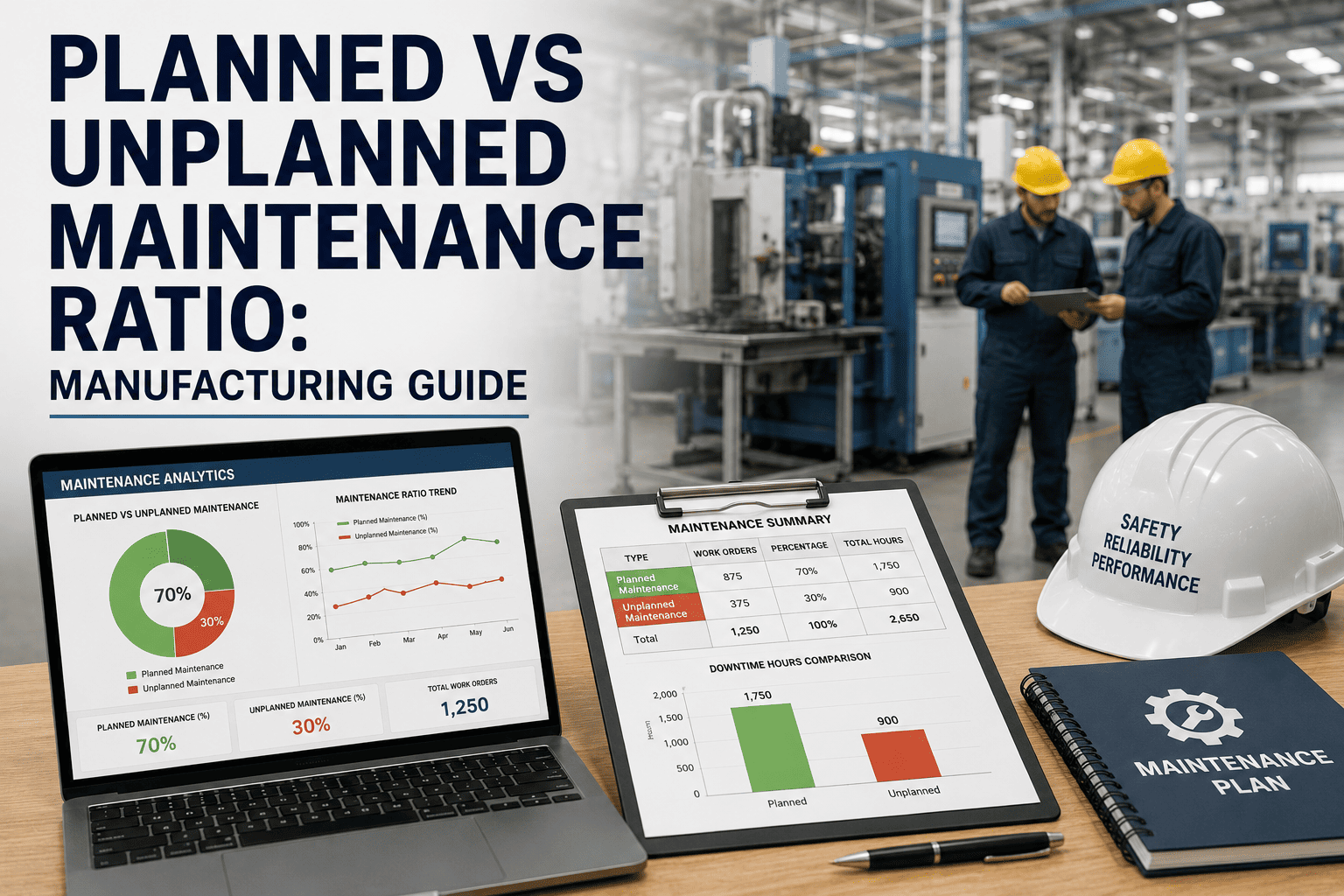
Read More
The planned-to-unplanned maintenance ratio is the single most revealing leading indicator of plant reliability — world-class facilities sustain 80:20 while firefighting plants languish near 30:70. Yet most maintenance managers measure it incorrect

Read More
Most manufacturers lose 20–40% of installed capacity to invisible waste — micro-stops under two minutes, speed losses of 3–8%, and quality write-offs that never reach a downtime report. An OEE loss tree makes that hidden factory visible by structu
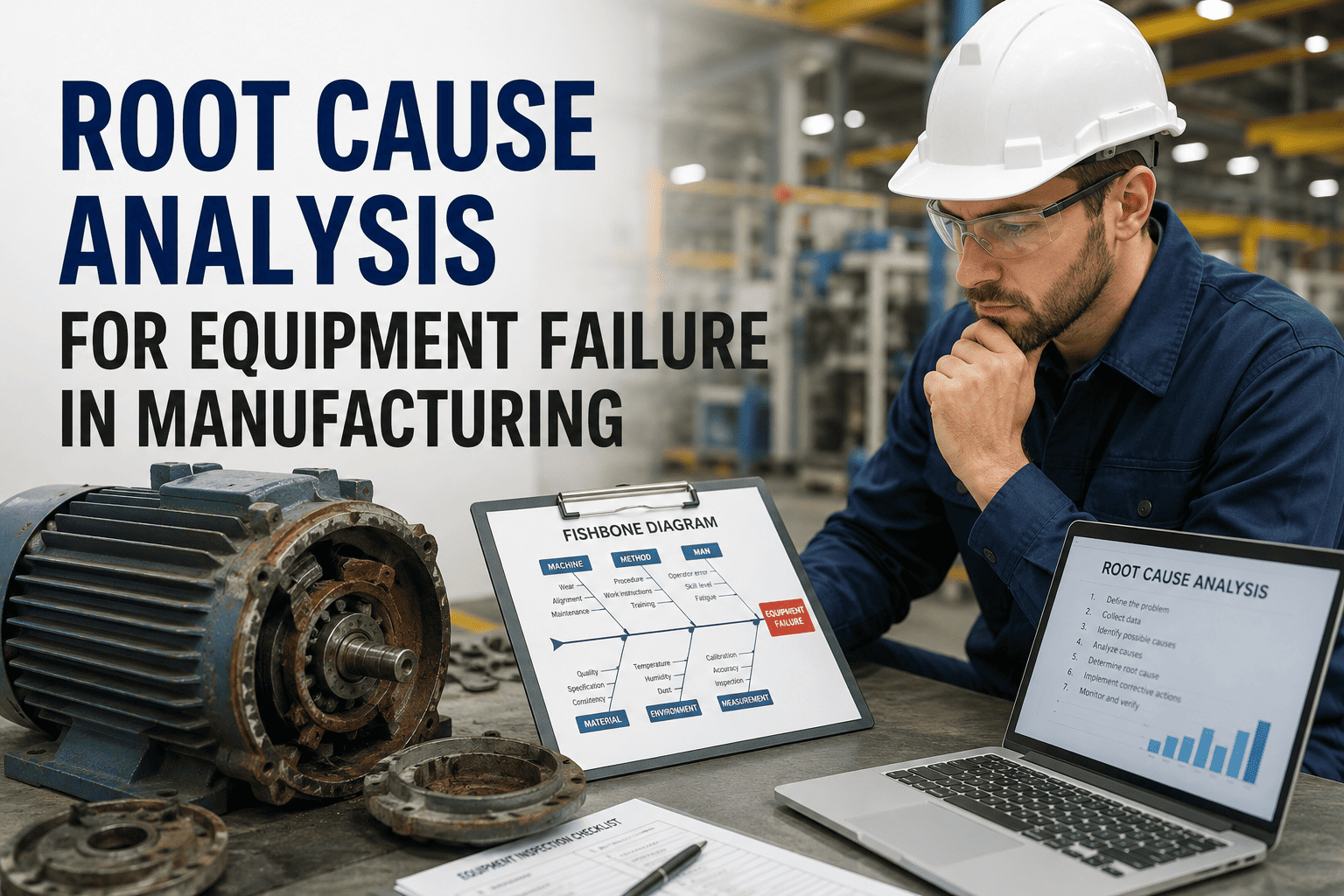
Read More
Repeat equipment failures cost manufacturing plants 2–5× more than one-time breakdowns because the same root cause keeps regenerating downtime, spare parts, and operator fatigue. Structured root cause analysis (RCA) — 5 Whys, fishbone diagrams, fa

Read More
A 14-day CMMS free trial is the single most underused lever in manufacturing software procurement — most plant teams spend 90 minutes in a vendor demo and sign a three-year contract without ever running a single preventive maintenance work order a
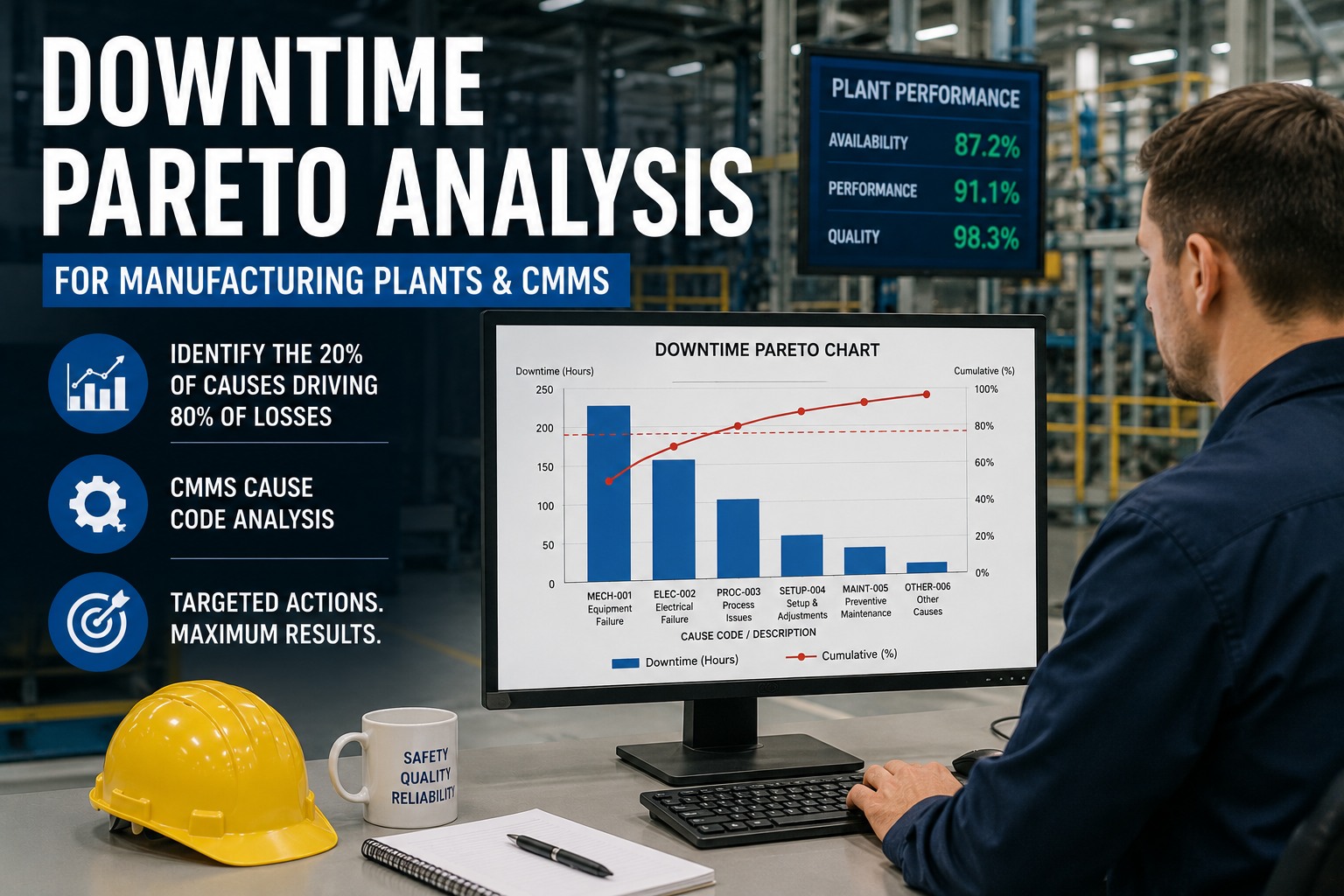
Read More
Eighty percent of your downtime comes from twenty percent of your causes — but most plants cannot say which twenty percent. That gap is the whole problem. Vilfredo Pareto noticed in 1906 that a fifth of Italians owned four-fifths of the land, and
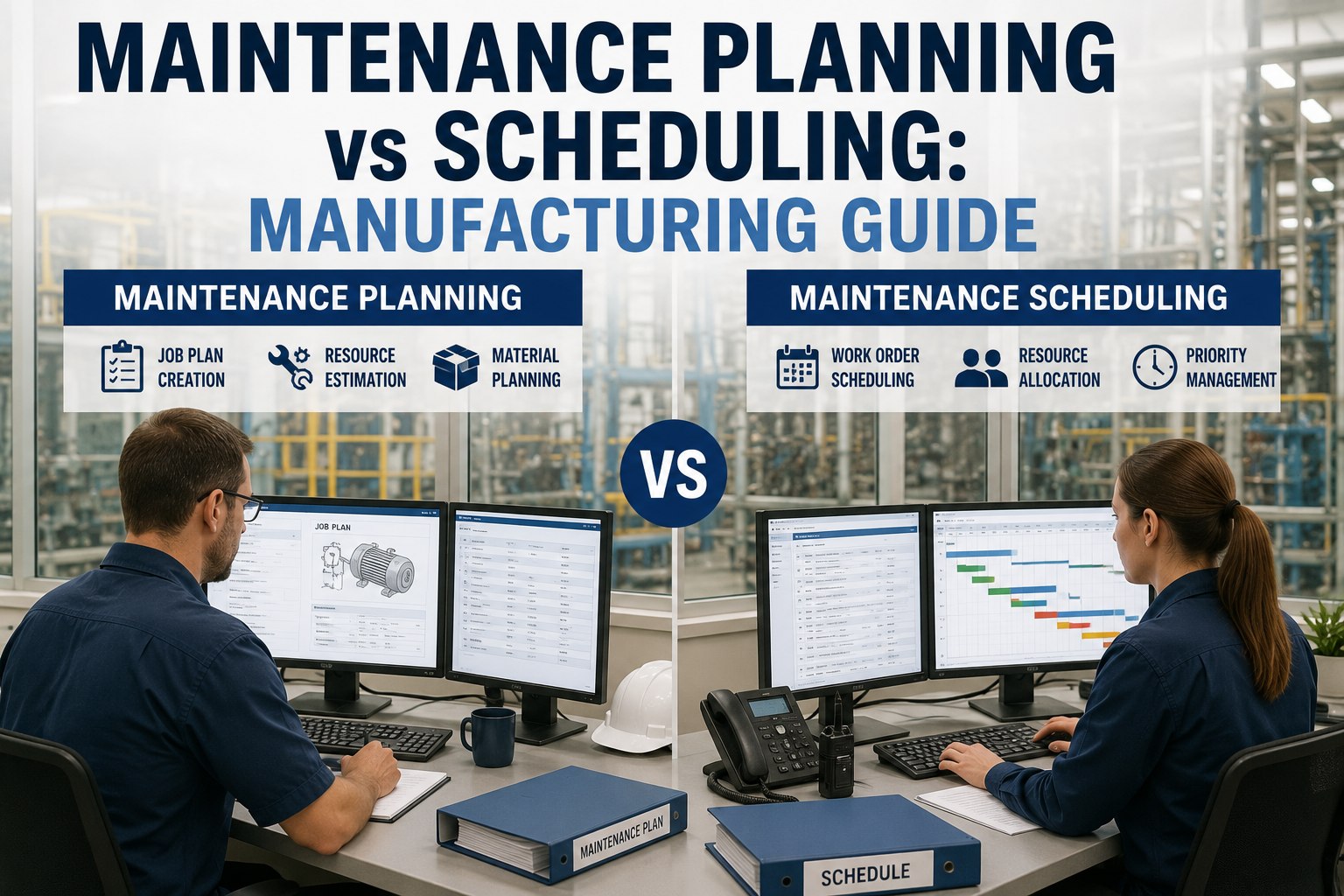
Read More
Planning and scheduling are not the same maintenance function, and confusing them is why so many plants run jam-packed schedules yet still miss their compliance targets. The distinction is clean once you see it: planning answers what needs doing,

Read More
Manufacturing maintenance is going through the same structural shift that IT went through fifteen years ago. Where plants once employed every maintenance planner, every technician, every reliability engineer directly and bought every IIoT sensor a

Read More
Oxmaint is the manufacturing maintenance software that turns energy intensity from a utility line-item into an operational KPI — linking every compressed air leak, motor bearing degradation, steam trap failure, and HVAC coil cleaning to a work ord

Read More
A maintenance event is an emissions event. When a motor loses alignment, a compressor develops leaks, or a chiller fouls its tubes, the asset does not just cost more to run — it burns more energy to do the same work, and that extra energy is extra

Read More
Every manufacturing plant runs a hidden second workforce — the maintenance contractors who show up for shutdown turnarounds, specialized OEM service calls, calibration campaigns, NDT surveys, roofing work, HVAC changeouts, and every scope the inte

Read More
Choosing the best CMMS software for a manufacturing plant in 2026 comes down to a handful of factors that matter far more than a feature checklist: mobile experience on the plant floor, how well predictive maintenance integrates with real sensor d

Read More
Manufacturing's maintenance workforce is aging faster than most plants can replace it, and the real cost is not headcount — it is the decades of tribal knowledge that leave the building when a senior technician retires without a formal handover. A

Read More
Manufacturing plants are increasingly turning to AR and VR to train maintenance technicians faster, using virtual equipment simulation and remote expert guidance to close the skills gap without pulling machines offline for practice. But AR/VR trai

Read More
A plant maintenance shutdown is one of the highest-risk periods in any manufacturing operation, and a rushed shutdown safety procedure is where most serious incidents happen. Getting isolation management, energy lockout verification, hot work cont
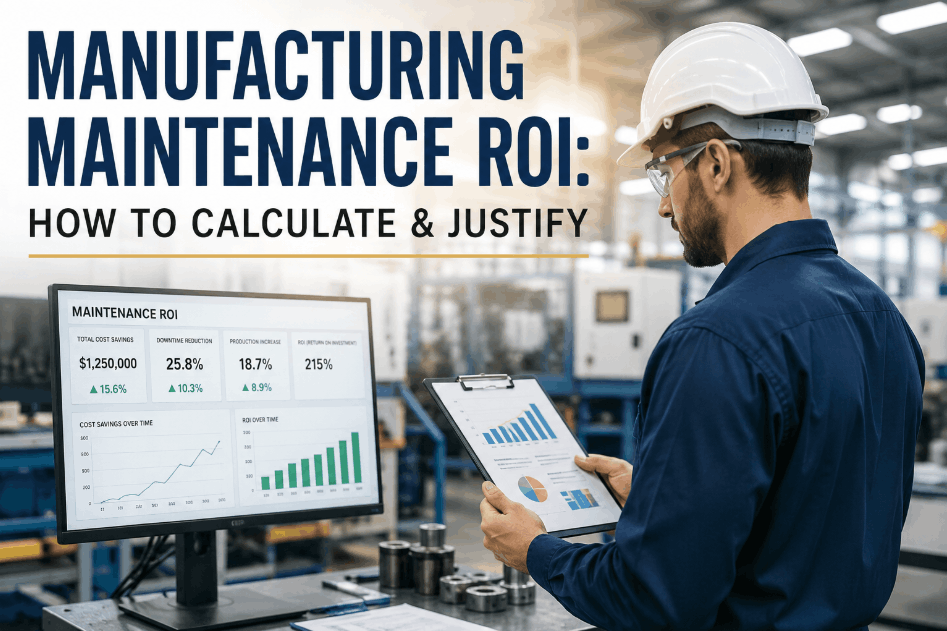
Read More
Justifying a maintenance investment to plant leadership means translating wrench time and parts spend into numbers finance actually cares about — downtime avoided, payback period, and labor efficiency gained.

Read More
ISO 45001 compliance is only as strong as the maintenance data behind it — hazard identification, LOTO records, and inspection trails all have to be traceable, not just documented on paper. Si

Read More
Getting preventive maintenance intervals right is one of the hardest calibration problems in manufacturing reliability. Set them too tight and technicians waste hours on PM tasks assets don't need yet; set them too loose and unplanned failures cre
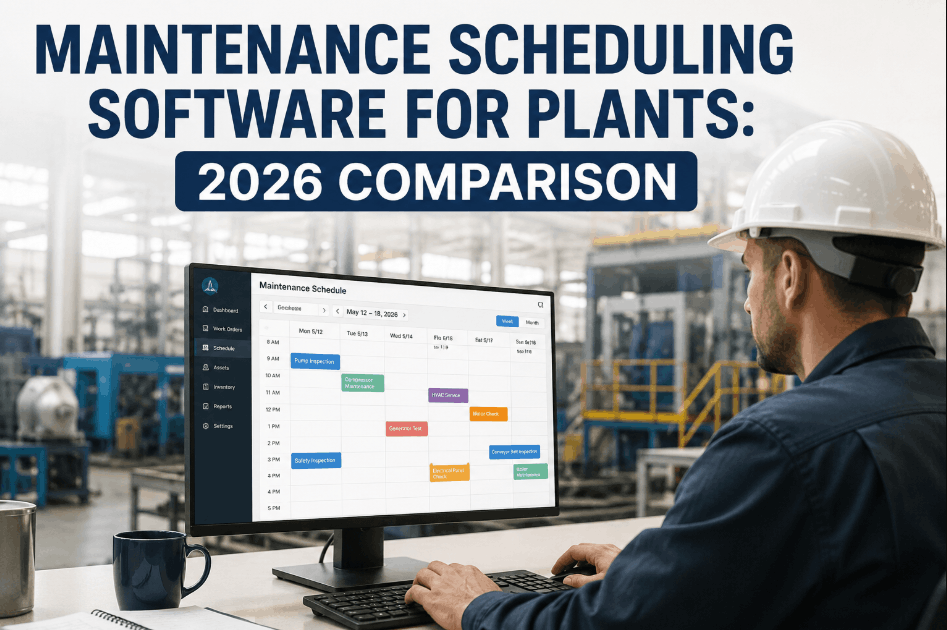
Read More
Choosing maintenance scheduling software for a manufacturing plant comes down to how well it handles mobile dispatch, multi-craft routing, and shutdown sequencing under real production pressure.
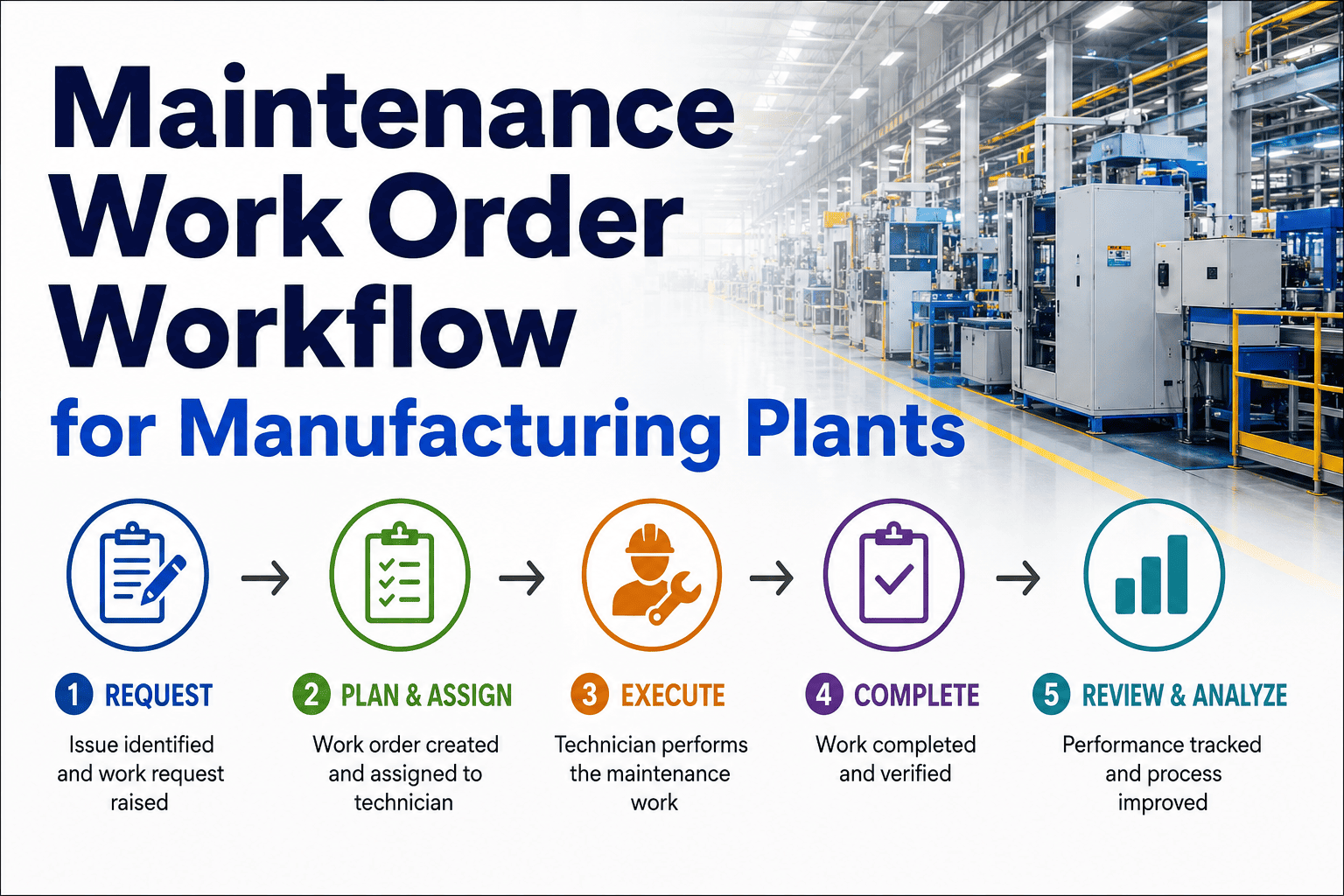
Read More
A weak work order workflow is one of the fastest ways for a manufacturing plant to lose control of maintenance operations — requests get lost, priorities get confused, and technicians arrive at jobs without the parts or information they need. Desi

Read More
Every reliable maintenance program starts with a clean equipment asset register — a structured record of every machine, its location, its history, and its criticality. Without one, PM scheduling, work order routing, and spare parts planning all br

Read More
A preventive maintenance program is the single biggest lever a manufacturing plant has to cut unplanned downtime, extend asset life, and reduce reactive repair costs. Yet many plants struggle to move from a paper-based or ad-hoc PM approach to a s

Read More
Manufacturing plant leaders can't improve what they don't measure. Tracking the right maintenance KPIs — MTBF, MTTR, OEE, PM compliance, wrench time, and cost as a percentage of replacement asset value — turns maintenance from a reactive cost cent

Read More
Predictive quality models for automotive components can identify defect risks before parts reach assembly — but only if the validation process proves those models actually work in production conditions. Too many automotive teams deploy models trai

Read More
Reliability teams do not fail because they lack sensor data — they fail because that data arrives without the asset context, maintenance history, and operational metadata needed to interpret it. An industrial IoT data lake that stores vibration re

Read More
Factory leaders deploying an industrial copilot for maintenance operations face a trap: the technology arrives before the data, governance, and task ownership structures needed to make it useful. An AI assistant that recommends actions based on in
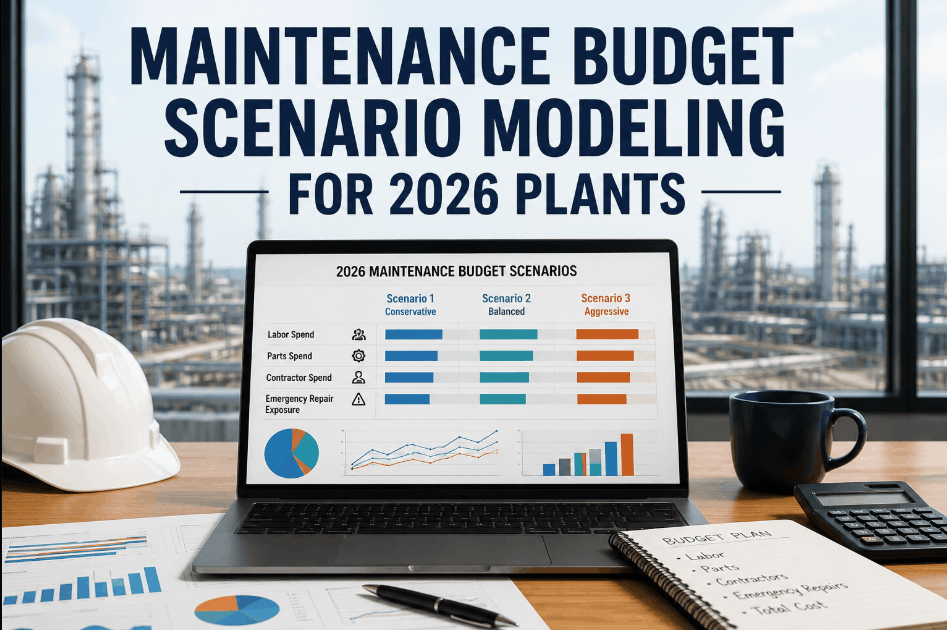
Read More
Plant maintenance budgets for 2026 cannot be built on last year's spreadsheets. When labor cost, parts consumption, contractor spend, and emergency repair exposure are tracked across disconnected systems, finance teams and plant managers end up ne

Read More
Production stoppages rarely feel expensive in the moment — they feel like temporary disruptions. The cost calculation that follows tells a different story. Lost output, labor idle time, scrap generated during an uncontrolled stop, and extended res

Read More
Injection molding defects rarely announce themselves before a production run begins — they appear as rejects, rework, and scrap after tooling has already cycled. Quality mesh simulation changes the timing of that discovery by running mold flow, co
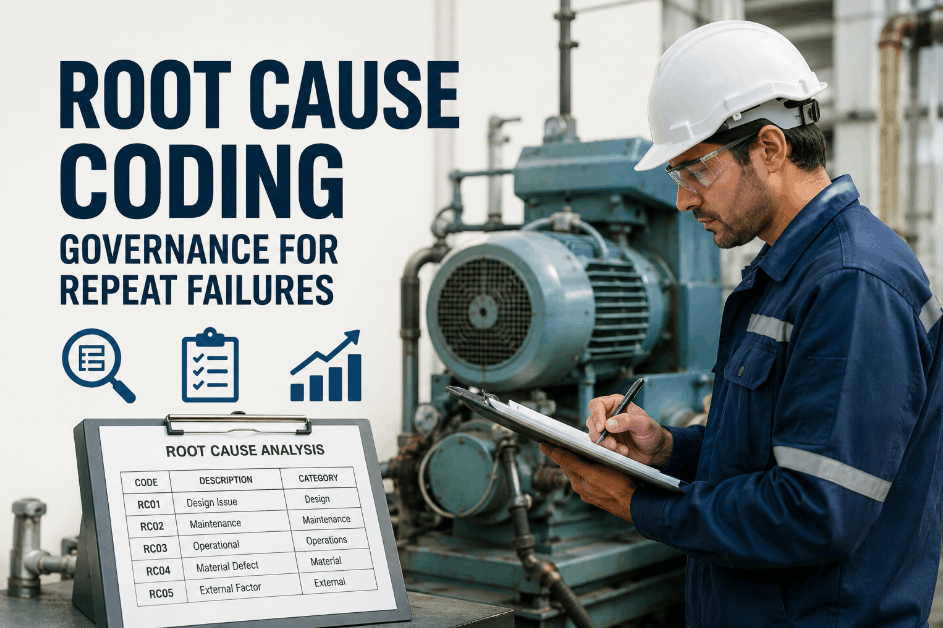
Read More
Repeat failures in maintenance operations are rarely mysteries — they are classification problems. When technicians apply different root cause codes to the same failure mode, trend analysis produces noise instead of signal, and the corrective acti

Read More
Skill gaps in multi-craft maintenance teams are rarely visible until a shift starts short-handed and the wrong technician is dispatched to the wrong asset. A maintenance skill matrix changes that — it maps each technician's verified capabilities a

Read More
Furnace energy drift in heat treatment cells rarely announces itself with an alarm — it compounds quietly across shifts, soak cycles, and fuel cycles until throughput drops and scrap climbs. Maintenance teams that
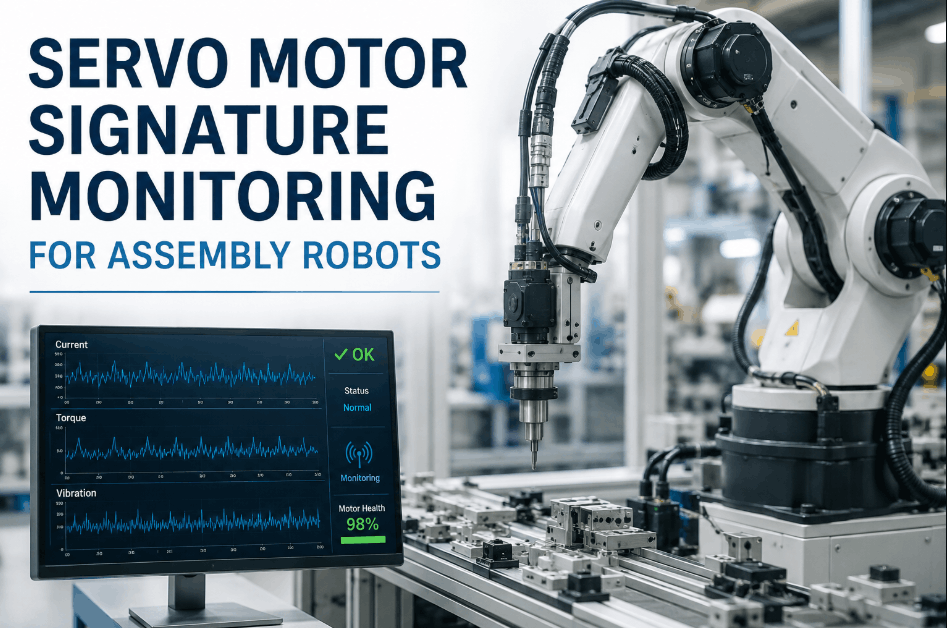
Read More
Servo motor signature monitoring for assembly robots closes the gap between scheduled maintenance intervals and actual drive health — a gap that conventional PM calendars cannot see. Teams that Sig

Read More
Conveyor systems tend to get attention only when material flow turns choppy — by which point a load spike, a misalignment, or a wear zone has usually been building for weeks. Digital twin mapping changes that by mirroring real conveyor behavior fr

Read More
Maintenance planners spend a surprising share of their day just deciding what to work on next — sorting open alerts, backlog items, and planned tasks by gut feel instead of a consistent ranking. An AI copilot built into the CMMS removes that manua
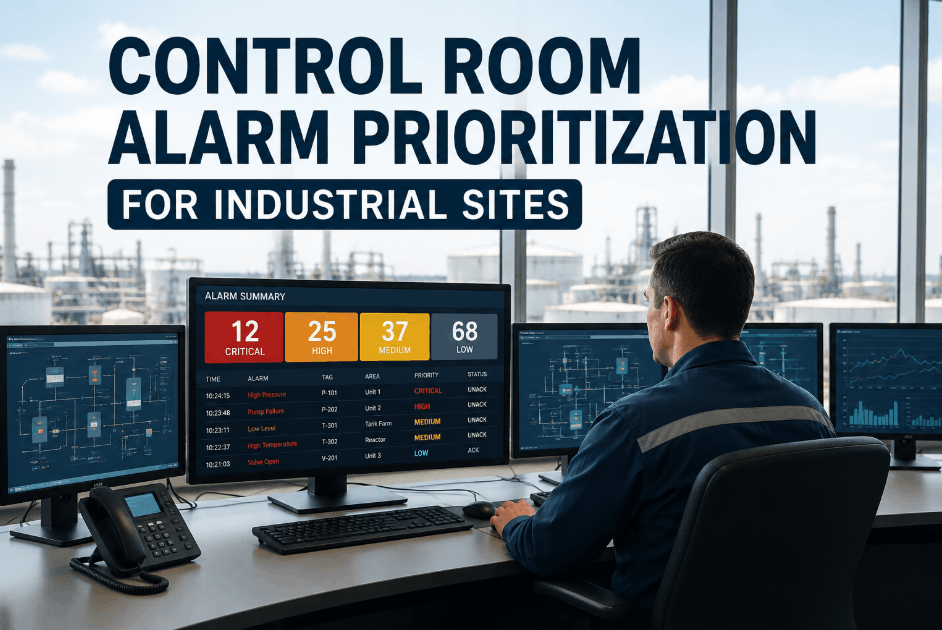
Read More
A control room that receives hundreds of alarms a shift cannot treat every signal as equally urgent — yet most alarm systems do exactly that, presenting every trip, deviation, and sensor flag with the same visual weight. Control room alarm priorit

Read More
Bearing failures rarely begin with the bearing itself — most start with a lubrication program that runs on a fixed calendar instead of actual asset condition. Contamination ingress, inconsistent run hours, and unlogged failure history quietly erod

Read More
An infrared survey is only as useful as the conditions it was conducted under — and most missed hotspots are not missed because the camera failed to detect them, but because the survey ran under partial load, skipped a panel that was difficult to

Read More
A shift reporting dashboard only earns its place in an OEE review when it connects production losses, downtime notes, and recovery actions in a single view — not when it displays throughput numbers that leave the review team asking why the shift f

Read More
Servo drive faults in robotics applications are rarely random — current spikes, torque anomalies, and vibration signatures repeat in recognizable patterns across joints, axes, and robot cells. Sign Up Free to s

Read More
Conveyor networks move material at every stage of production — and when a speed change, load spike, or unexpected failure hits a live line, the cost lands immediately. Sign Up Free to connect your conveyor asse
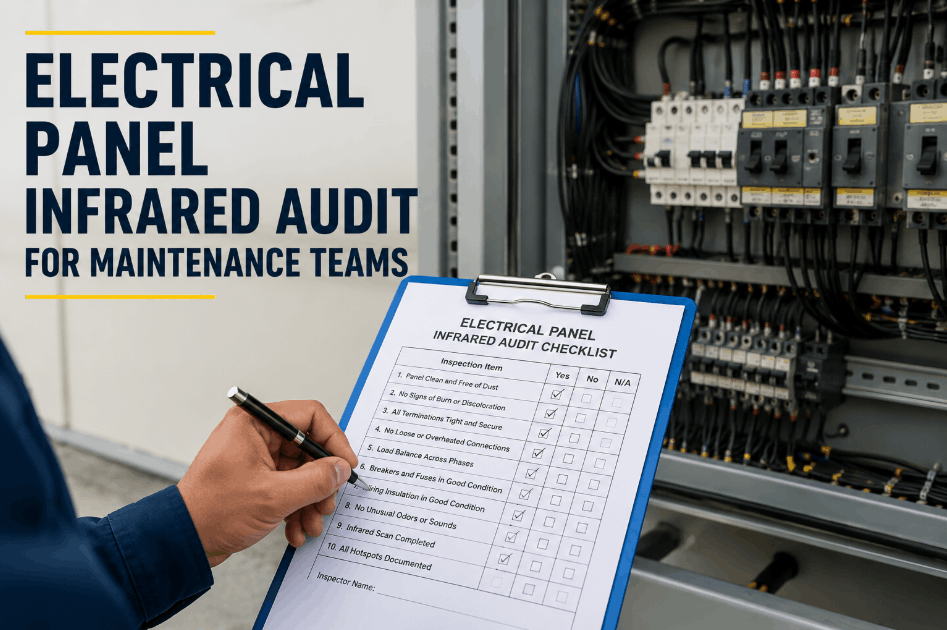
Read More
Electrical panel failures that interrupt production are rarely sudden — they are the end result of thermal conditions that were detectable weeks or months before the failure, but never identified because infrared inspection was not part of the mai

Read More
Furnace startup failures in production environments rarely happen without warning — they happen when warning signs are not checked before the burner is lit. Unverified interlock states, uncalibrated sensors, or blocked airflow paths at startup cre

Read More
Conveyor safety failures at shift startup are among the most preventable causes of operator injury and unplanned line downtime in manufacturing — not because maintenance teams ignore conveyors, but because pre-shift checks are performed informally

Read More
Reliability review meetings that happen without structure produce alignment but not accountability — teams leave with a shared understanding of what went wrong but no documented commitment to what changes before the next meeting. When KPI trends a
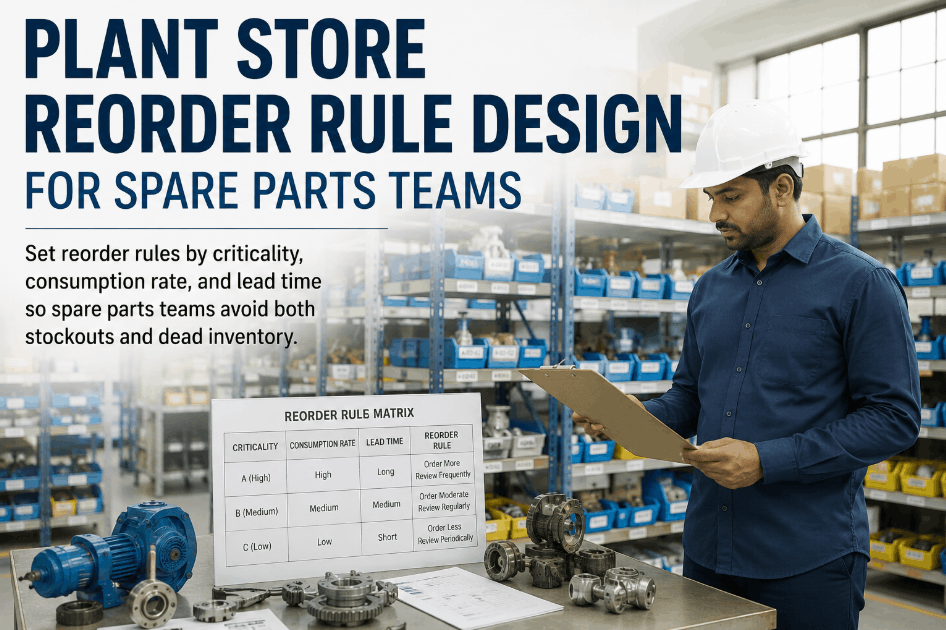
Read More
A plant storeroom can hold thousands of parts and still fail a technician at the exact moment a critical pump goes down — not because the part was never stocked, but because the reorder rule behind it was set once, years ago, and never adjusted to

Read More
A heat treatment furnace running a few percent off its combustion or temperature-uniformity setpoint rarely trips an alarm, yet it quietly burns more gas per cycle and produces parts with wider hardness variation than the process specification all

Read More
Packaging lines generate alerts constantly — a motor running hot on Line 3, a vibration spike on a case sealer, a pressure dip on a filler. When every alert carries the same visual weight, maintenance response teams triage by whichever notificatio

Read More
Triage tells a response team which alert matters most. Routing decides who actually receives it — and on a multi-line packaging operation running three shifts, that second step is where response lag and repeat disturbances quietly build up.

Read More
Reliability teams building industrial IoT data lakes in 2025 and 2026 consistently encounter the same design failure: sensor signal volumes that arrive without the maintenance context, asset timestamps, and failure event linkage that make machine

Read More
Factory leaders deploying industrial AI copilots in 2025 and 2026 face a consistent pattern of failed rollouts: data quality gaps that produce unreliable recommendations, unclear task ownership that leaves technicians and supervisors uncertain whi
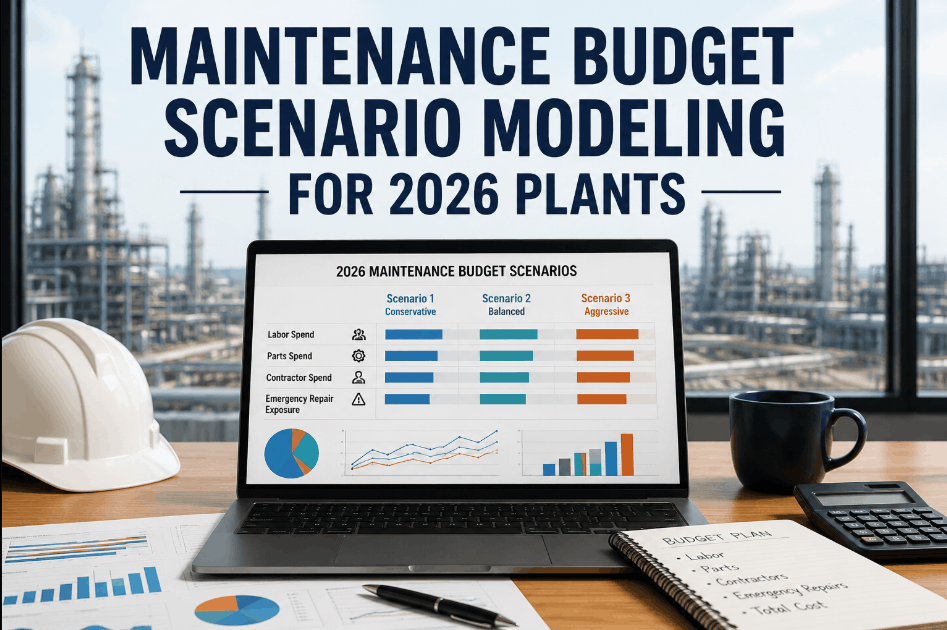
Read More
Plant finance teams heading into 2026 face a familiar problem: maintenance budgets built on last year's spend patterns, not forward-looking scenario models that account for labor rate shifts, parts inflation, contractor dependency, and emergency r

Read More
Automotive quality teams deploying predictive quality models face a validation challenge that technical teams consistently underestimate: a model that performs well on training data can still generate false alarms at rates that cause production te
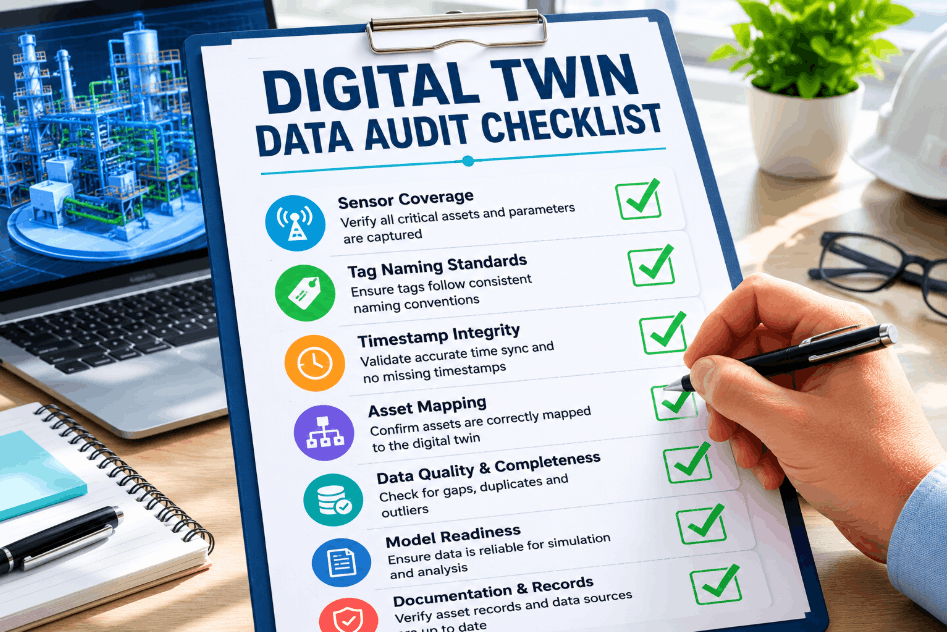
Read More
A digital twin used for simulation work before its underlying data has been audited produces outputs that look authoritative but reflect asset states that no longer exist. Sensor gaps leave entire subsystems unrepresented in the model, inconsisten
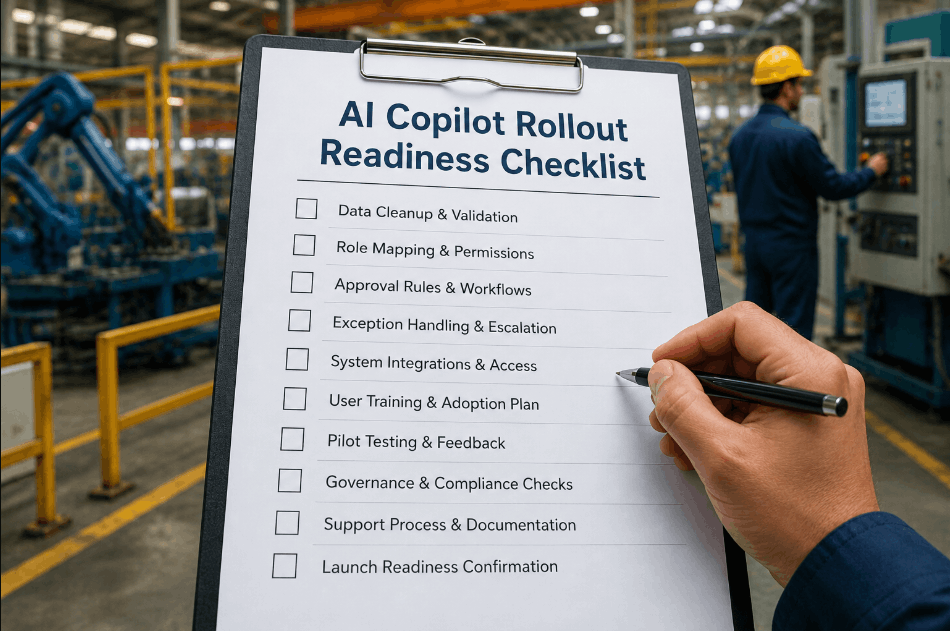
Read More
Deploying an AI copilot on the maintenance floor without structured readiness checks introduces more risk than the tool is designed to eliminate. Incomplete asset records produce hallucinated recommendations, undefined role permissions expose appr

Read More
A mid-size industrial manufacturing facility managing spare parts inventory for 240+ production assets had reached an inventory control breaking point. Plant stores held an estimated $310,000 in slow-moving and duplicate parts that had not been co

Read More
A specialty metals processor operating a heat treatment cell across two production shifts was absorbing energy waste and product quality inconsistencies that had no paper trail and no structured resolution path. Furnace soak cycles were running on

Read More
A high-volume packaging operation running three continuous shifts across two production lines was absorbing preventable downtime at a rate that was eroding output targets and straining OEM delivery commitments. Technicians were receiving maintenan

Read More
A mid-size process manufacturing plant operating across two production shifts was experiencing a critical but invisible problem: measurement data collected from inspection routes was inconsistent, audit evidence was incomplete, and calibration rec

Read More
A thermal imaging program on electrical panels exposes hotspots, loose connections, and phase imbalance long before they cause an outage — problems that are invisible to a routine visual inspection. Heat is one of the earliest and most reliable wa
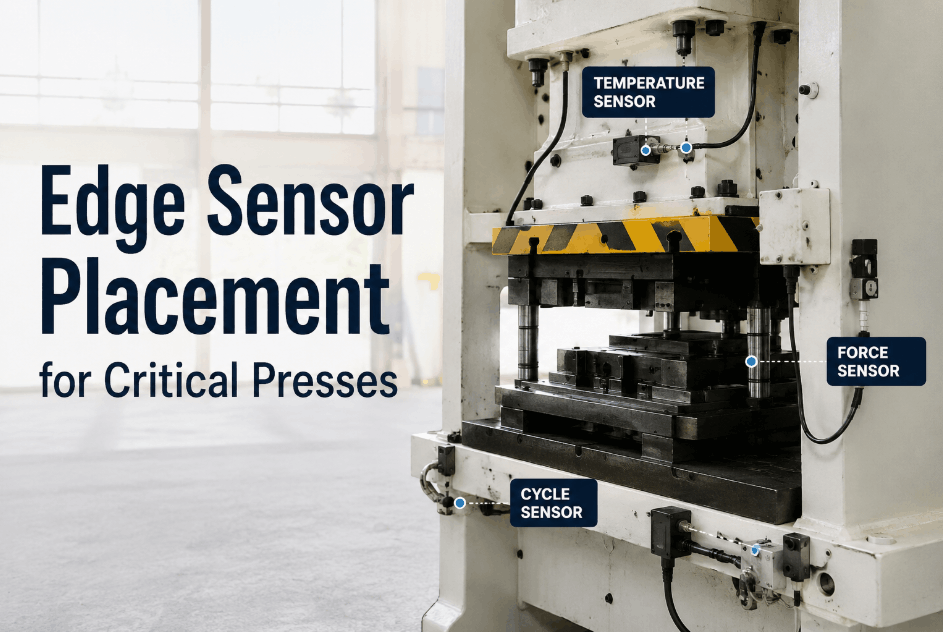
Read More
Edge sensor placement on critical presses determines whether temperature, force, and cycle data reveal a developing fault early — or arrive too late to prevent a line stoppage. A sensor mounted in the wrong spot on a stamping press or hydraulic pr

Read More
Spare parts dead-stock quietly drains plant stores of cash and shelf space — slow movers, duplicate catalog entries, and leftover parts for retired assets sit on the shelf long after they stopped earning their keep. Most maintenance teams can name
Read More
Production stoppage cost is rarely just the repair bill — lost output, labor idle time, scrap, and restart delays usually add up to far more than the line item maintenance shows on paper. Operations heads who only track repair cost are working fro
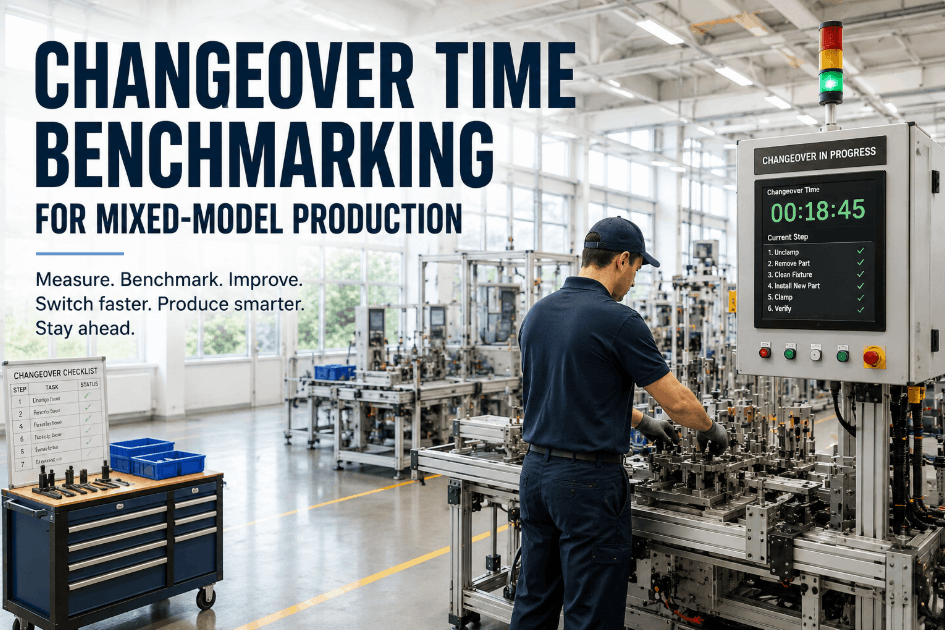
Read More
Changeover time is one of the most controllable variables in mixed-model production — yet most facilities have no structured benchmark to measure it against. When setup steps are not sequenced, crew assignments are undocumented, and product family

Read More
Surface finishing cells produce defects that are often invisible until they reach inspection or the customer — coating inconsistencies, handling marks, and tooling noise that develop progressively across a production run. Maintenance teams using

Read More
End-of-line palletizer jams are among the most disruptive stoppages in packaging operations — not because they are hard to fix, but because they are rarely forecasted. Jam events compound when carton size variation, conveyor speed inconsistency, a

Read More
OEE is widely reported in manufacturing — but rarely broken down in a way that shift leaders can act on during the run. When availability loss, performance loss, and quality loss are aggregated into a single score without tracing where output disa

Read More
Line supervisors walking unstructured inspection routes miss the same abnormal conditions every shift — not because they are inattentive, but because the highest-risk check points are buried at the end of habitual paths that developed around conve

Read More
Compressed air systems are among the highest energy consumers in industrial facilities — and undetected leaks silently drain between 20 and 40 percent of total compressed air output before any operator notices pressure loss. Ultrasonic leak rankin

Read More
Paint shop control systems accumulate alarm configurations over years of process changes, line modifications, and workaround patches — until operators face hundreds of nuisance messages for every genuine fault. PLC alarm cleanup is the discipline
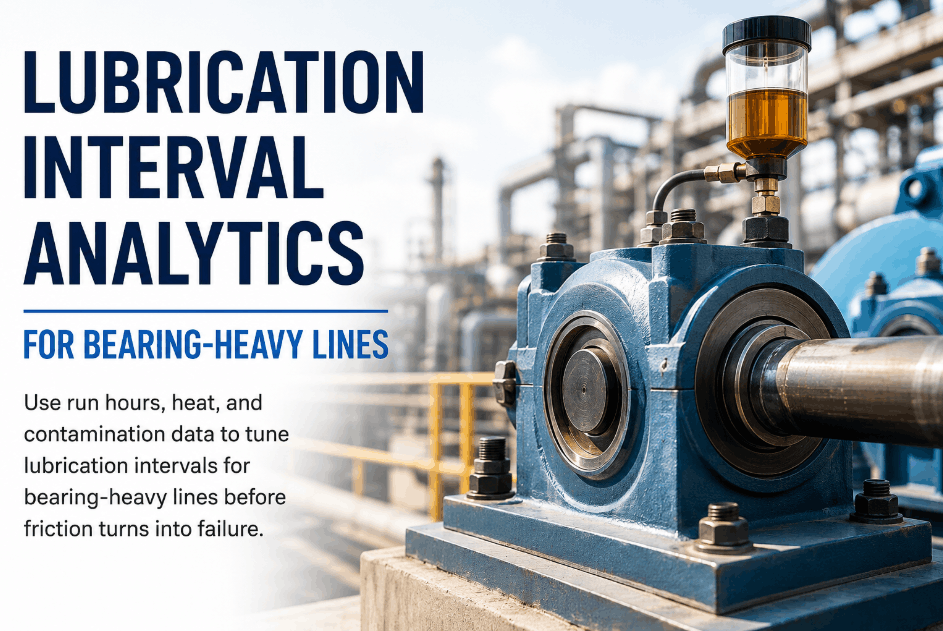
Read More
Bearing failures on production lines almost always announce themselves in advance — through heat signatures, contamination indicators, and rising friction patterns that precede seizure by days or weeks. Lubrication interval analytics is the discip

Read More
Bottle filling lines generate a steady stream of fill-level readings, sensor data, and defect counts — but when that data lives in separate quality logs disconnected from maintenance records, rework and scrap decisions only get made after the prob

Read More
Conveyor systems rarely fail without warning — load spikes, gradual misalignment, and wear on rollers and bearings all leave a trail in sensor data long before material flow gets choppy, but only if that data is captured continuously and tied to a

Read More
Maintenance planners juggle a constant mix of incoming alerts, aging backlog items, and scheduled preventive tasks — and when every item competes for attention with no shared ranking logic, planners end up sorting work manually instead of dispatch

Read More
Servo drives rarely fail without leaving a trail in their current, torque, and vibration signatures — but in assembly cells running multiple axes per station, that signal volume is far more than any manual review can keep up with, so wear is usual

Read More
The handover between shifts is often where critical information quietly disappears — a flagged conveyor noise, a part shortage, a half-finished repair — passed along verbally or scribbled in a notebook that the next crew may never open. An assembl

Read More
Energy waste in a food processing plant rarely shows up as one obvious leak — it accumulates across dozens of small inefficiencies in boilers, chillers, compressors, and the sequencing between them. A food and beverage manufacturer running continu
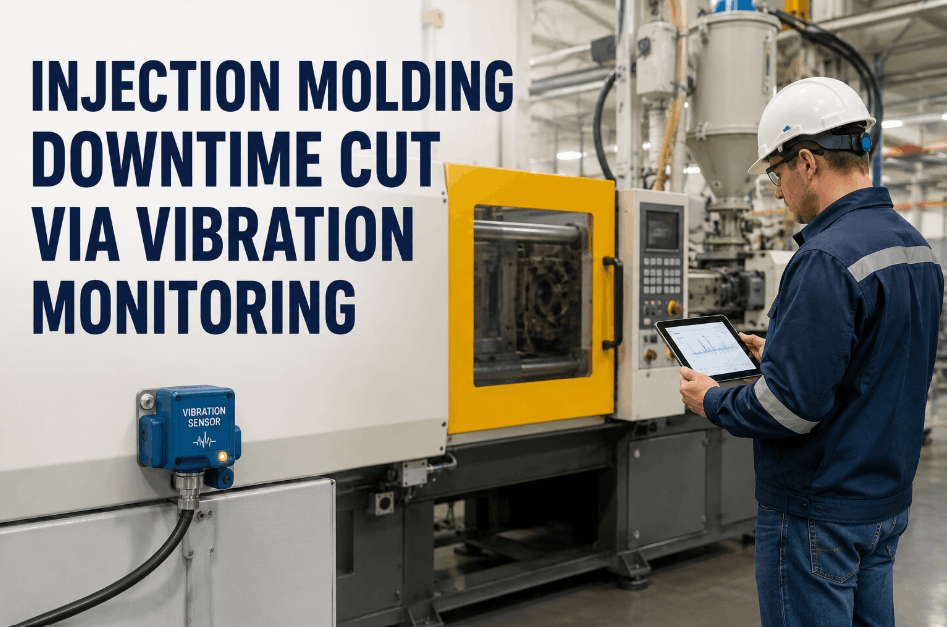
Read More
A stalled injection molding press doesn't just stop one machine — it stops the cycle that everything downstream depends on. An injection-molding plant running multiple high-cycle presses kept losing production time to bearing failures that were on

Read More
Spare parts availability is the hidden constraint behind most maintenance delays in multi-site manufacturing — a technician can be skilled, a work order can be urgent, but if the part isn't on the shelf, the job waits. A manufacturer operating six

Read More
Smart factory cybersecurity failures rarely originate in corporate IT — they enter through the operational technology layer, where maintenance systems, controller interfaces, and remote access tools sit on networks that were designed for availabil

Read More
Maintenance schedulers operating without a structured capacity planning model make the same mistake repeatedly: they commit crews to work order loads that exceed available labor hours, underestimate task durations for complex jobs, and fail to ant

Read More
A digital twin data model that cannot maintain alignment between simulation outputs, live telemetry feeds, and maintenance history records is not a digital twin — it is a disconnected collection of data sources that each tell a different story abo
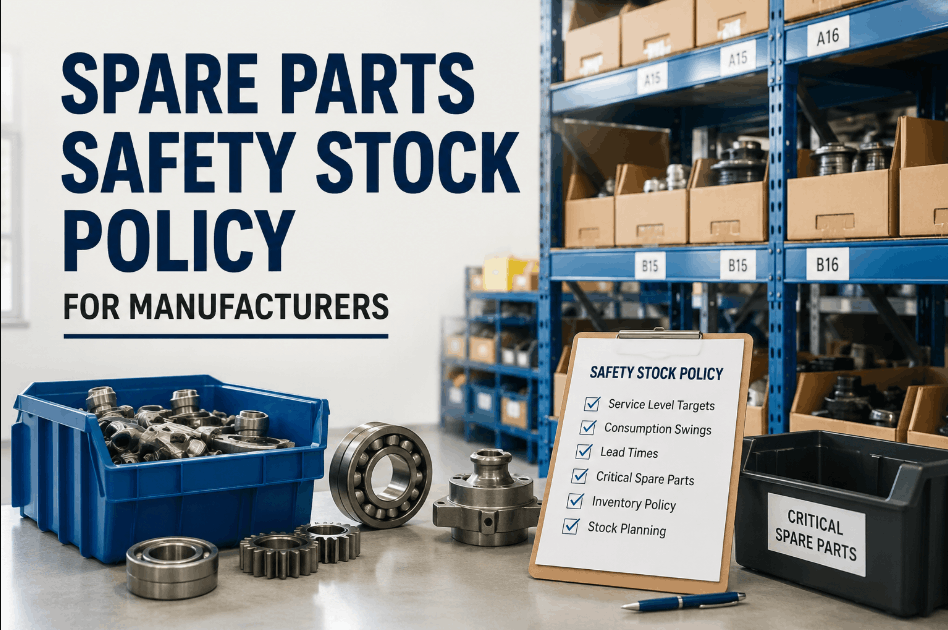
Read More
Spare parts safety stock policy failures cost manufacturers far more than the price of a missed replenishment. When stock levels are set by gut feel rather than service-level targets, consumption variability, and supplier lead times, critical asse

Read More
Overall Equipment Effectiveness gaps on packaging lines are rarely caused by a single visible failure — they accumulate from a combination of recurring micro-stoppages, unquantified changeover losses, and equipment performance drift that is too gr

Read More
Asset reliability in heavy industrial environments depends on decisions made well before a failure occurs — maintenance timing, load management, inspection frequency, and component replacement cycles that collectively determine whether equipment p

Read More
Equipment failure rates in food processing facilities carry consequences that extend well beyond repair costs — line stoppages in a regulated production environment mean batch losses, sanitation resets, and potential compliance exposure that can t

Read More
Maintenance cost control is one of the most persistent operational challenges facing automotive suppliers — and one of the hardest to close when workflows are fragmented, work orders are paper-based, and asset history is locked in spreadsheets. A

Read More
Autonomous inspection routing for shop floors is the practice of generating and updating inspection paths dynamically based on risk zone classifications, asset access constraints, and alarm history — so inspection coverage follows actual hazard di

Read More
Energy waste correlation for utility equipment is the analytical process of matching excess energy consumption to specific utility assets by comparing load factor, runtime patterns, and poor sequencing decisions in non-value-added equipment — so f

Read More
Maintenance backlog burn-down forecasting is the discipline of projecting how quickly an existing work order queue will clear by analyzing intake rate, closure speed, and blocked task volume — so planners can identify whether the backlog is shrink

Read More
A production bottleneck maintenance link analysis is the systematic process of matching line stoppages, queued work orders, and recurring constraints to specific maintenance events — so plant operations teams stop treating throughput losses as iso

Read More
Sensor drift is a silent data quality problem in instrumented manufacturing lines. When sensors measuring temperature, pressure, flow, or position shift gradually from their calibrated reference, the process data they feed — control systems, quali

Read More
Pump seal failures are among the most preventable sources of unplanned downtime in process and manufacturing plants — yet they remain one of the most common. Mechanical seal degradation follows a predictable pattern: pressure change, early leakage

Read More
Asset criticality scores set at commissioning rarely stay accurate as equipment ages. As machines accumulate run hours, maintenance history, and operational load, their failure consequence profiles change — often becoming more severe than the orig

Read More
Utilities performance benchmarking across multi-line plants is one of the fastest ways to expose hidden energy waste and reduce operational cost without major capital investment. When energy consumption is tracked by line, shift, and product famil

Read More
A predictive quality deployment framework for plants is the repeatable structure that packages sensor data collection, statistical thresholds, escalation rules, and response ownership into one rollout playbook — instead of leaving each production

Read More
A reliability benchmarking method for multi-site plants is the normalized comparison framework that adjusts for equipment mix, shift patterns, and output volume before ranking plants on uptime or failure rate — so a high-volume three-shift facilit

Read More
Maintenance KPI storyboards give supervisors a single management view that highlights backlog, response lag, and uptime drift at a glance, instead of forcing them to dig through scattered spreadsheets and disconnected reports. Most supervisors onl

Read More
A factory copilot is only as trustworthy as the knowledge base behind it — without source control, a clear update cadence, and visible answer confidence, operators stop trusting the guidance and fall back on manual lookups. Oxmaint's AI Assistant

Read More
Digital twin scenario planning lets maintenance teams test maintenance windows, capacity changes, and failure events against a live model of asset health before any change reaches the actual plant floor. Without this capability, scheduling decisio

Read More
Predictive quality drift detection uses live sensor data to catch small process shifts before they turn into scrap, rework, or customer complaints. Most plants only discover quality drift after a batch fails inspection — by then the variation has

Read More
Comparing a 15-line multi-site operation against a single-line shop on the same reliability scale produces meaningless numbers — uptime percentage alone doesn't account for asset count, crew size, or shift complexity. Reliability benchmarking by p

Read More
A plastic injection or extrusion line can run a perfect cycle and still produce out-of-spec parts if the process cooling water isn't stable. Temperature swing beyond tolerance, slow chiller response time, and poor load recovery after a demand spik

Read More
A maintenance shift handover is supposed to transfer context — what broke, what's open, what to watch. Most handovers transfer almost none of it: a verbal summary at the gate, a half-filled logbook, an assumption that the incoming crew will "figur

Read More
Fan and blower vibration in fabrication areas rarely fails without warning — it drifts. A bearing that starts with a faint high-frequency signature today becomes a seized shaft and a stopped extraction line in six weeks, and most fabrication shops

Read More
Spare parts governance erodes quietly — a critical item gets reordered late because no one flagged it as critical, a shelf-stable part expires unnoticed in a bin, and an obsolete component keeps showing up in stock counts months after the asset it

Read More
Predictive quality deployment fails for a predictable reason — teams validate the model and skip the release plumbing around it. Sensor fit is assumed instead of confirmed, label quality is checked once and never revisited, model thresholds are le

Read More
Overall Equipment Effectiveness is the metric that exposes what daily production reports hide — the slow cycles, the minor stops nobody logs, the changeovers that quietly eat into run time. A smart factory running multiple production lines knew it

Read More
Unplanned downtime rarely comes from one dramatic failure — it builds from bearings that wear past their service window unnoticed, vibration trends that go unread, and work orders that get written only after a machine has already stopped. A discre

Read More
Building a maintenance ROI model is hard for plant managers because labor cost, downtime cost, energy cost, and defect cost usually live in four different systems, and none of them agree on what a single work order actually cost the plant. Without

Read More
An industrial AI governance framework breaks down the same way every time: a vision model flags a defect, a predictive model schedules a work order, and nobody can say afterward who validated the detection or whether a human reviewed it before act
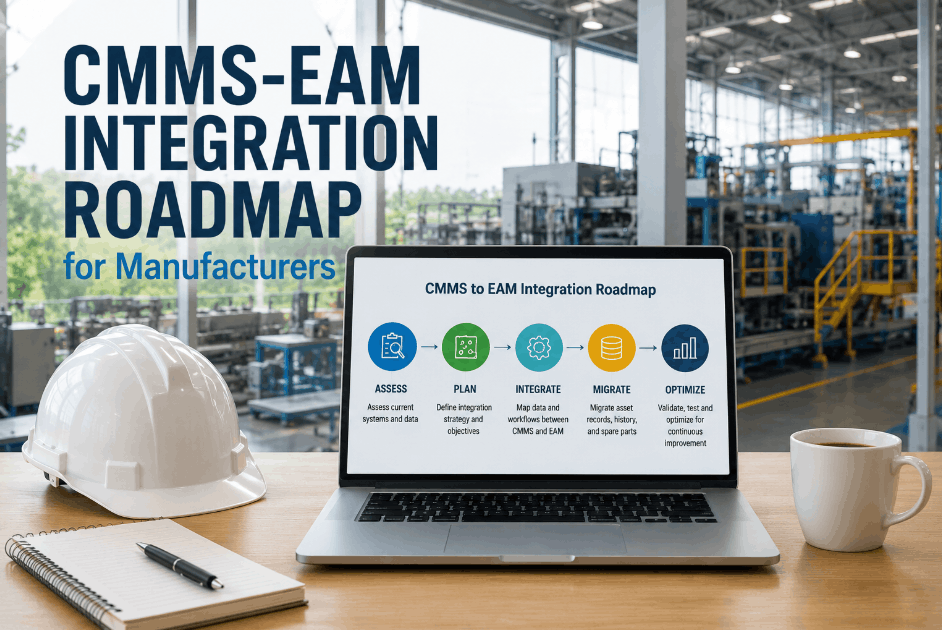
Read More
A CMMS-to-EAM integration roadmap fails most often at the data layer — asset IDs get duplicated during migration, work order history gets stranded in the old system, and spare-parts logic falls out of sync between maintenance and the ERP. For manu

Read More
Manufacturing ESG reporting usually stalls at the maintenance department, not because the data doesn't exist but because it lives in scattered PM logs, paper inspection sheets, and disconnected spreadsheets instead of a reporting-ready format. Ene

Read More
Compressed air is one of the most expensive utilities in a plant, and most leaks never get fixed in the order that actually saves the most money — they get fixed in the order someone happens to notice them. Leak prioritization ranks every known le

Read More
When the same asset breaks down month after month, most teams keep closing the work order and moving on, treating each event as a separate incident instead of a repeating pattern. A root cause graph links those repeat breakdowns together — connect

Read More
A maintenance desk that relies on free-text requests — "pump making noise," "AC not cooling," "line down" — spends more time sorting tickets than dispatching technicians, and urgent jobs sit buried under routine ones in a shared inbox. Natural-lan
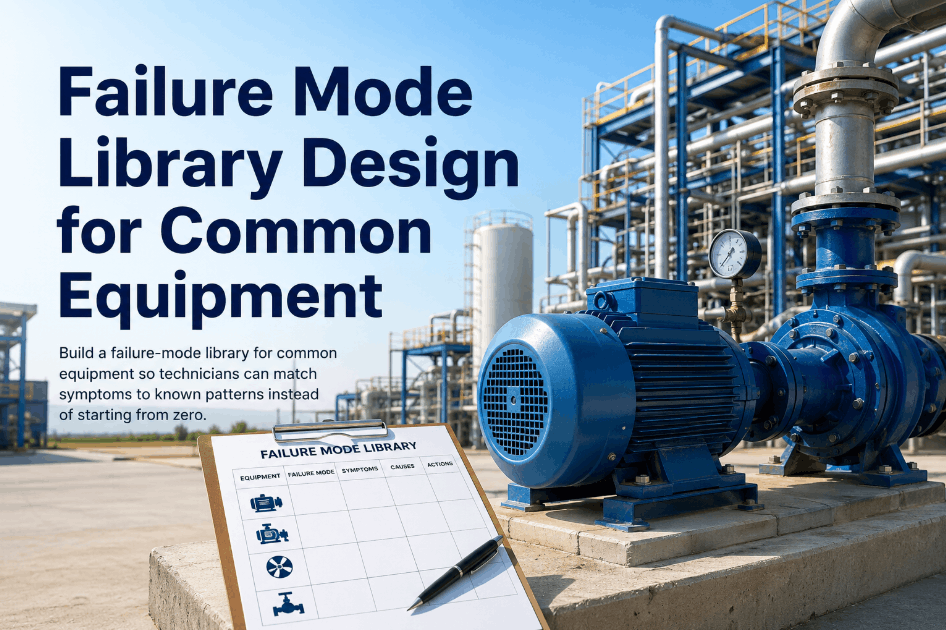
Read More
Most technicians still diagnose breakdowns from memory, swapping parts until something works because there is no shared record of what has failed before and why. A failure mode library fixes this by cataloging known symptom-cause-fix patterns for
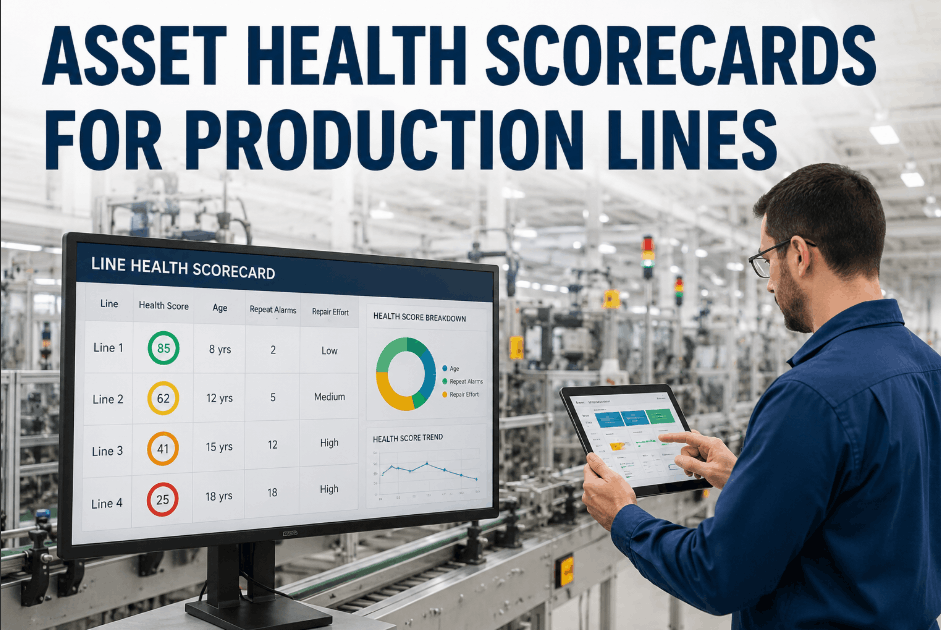
Read More
Production line planners make equipment prioritization decisions every day — which assets get scheduled maintenance attention this week, which can be deferred, which need accelerated inspection. Without a structured health score for each asset, th

Read More
Plant support systems — fans, pumps, compressors, HVAC units — are the infrastructure that keeps production environments operational. They also account for a disproportionate share of facility energy consumption, and their inefficiencies accumulat

Read More
Spare parts forecasting fails when demand is treated as a single distribution. A bearing consumed once every three years on a critical drive behaves nothing like a filter replaced monthly across fifty machines — yet most inventory planning models

Read More
Machine vision systems generate reject signals at speed — but the data behind each rejection is only useful if quality teams can break it down by defect family, inspection station, and shift. Without structured reject analysis, a spike in rejectio

Read More
Lubrication route optimization is one of the highest-leverage, lowest-cost reliability improvements available to maintenance teams managing rotating assets. When lubrication rounds are planned by habit rather than by asset criticality, travel dist

Read More
Conveyor idler failure is rarely sudden — it builds through bearing wear, belt misalignment, and friction heat for weeks before a stoppage or, in worse cases, a fire. Most plants only catch a failing idler after the belt is already mistracking or

Read More
OEE loss on packaging lines is rarely one problem — it is dozens of micro-problems that aggregate into a throughput drag that looks chronic but is actually addressable. When teams treat OEE as a single metric rather than a cluster of distinct loss

Read More
Thermal imaging patrols for rotating equipment fail when hotspot findings have nowhere to land — no asset record, no severity baseline, no work order pathway. Most reliability teams capture infrared images during route-based inspections, flag temp

Read More
Digital twin drift in assembly plants is a silent confidence problem: the simulation looks current, but the model's picture of the line diverged from reality weeks ago. When simulated output stops matching live sensor readings and change-history r

Read More
AI copilot adoption in maintenance teams fails not because the technology is wrong — but because operator trust, task acceptance rates, and override behaviors are never measured. Most facilities deploy a digital assistant, watch technicians bypass

Read More
Maintenance budget variance analysis is how maintenance managers determine whether spending deviations from plan represent unavoidable operational reality or controllable cost discipline failures — yet most facilities lack the work order cost stru

Read More
Warehouse picking accuracy is one of the most direct measures of how well a maintenance storeroom supports technician execution — yet most facilities track it inconsistently, if at all. Every part retrieval error generates a ripple of delays: inco

Read More
Failure pattern correlation is the discipline that turns disconnected asset breakdown records into actionable reliability intelligence — yet most maintenance organizations manage failure data in silos that make cross-asset pattern recognition stru
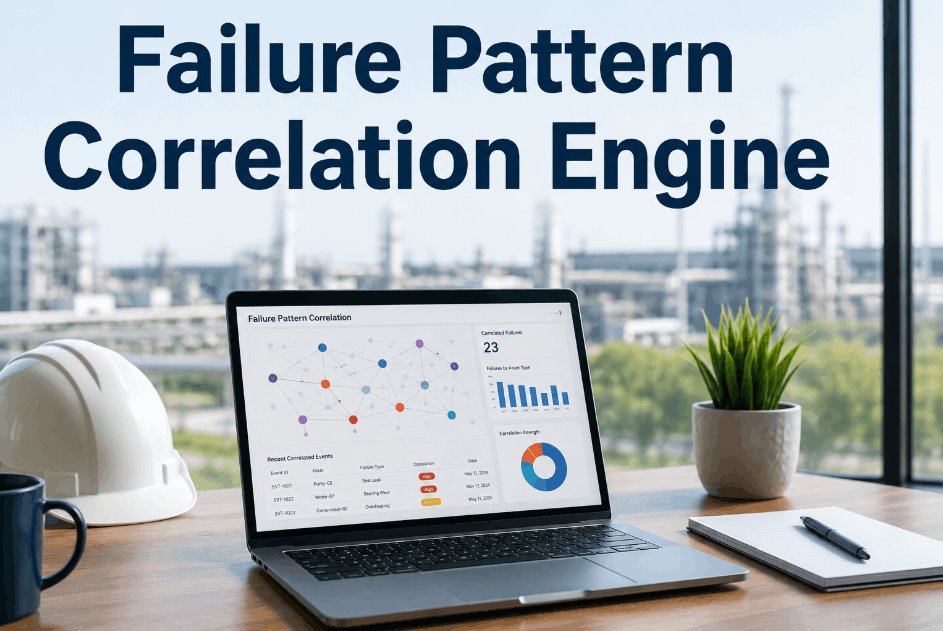
Read More
Operational risk heatmaps for critical assets give maintenance and reliability teams the visual prioritization structure to rank mitigation work before exposure accumulates into unplanned stoppage, safety incidents, or reactive responses that erod
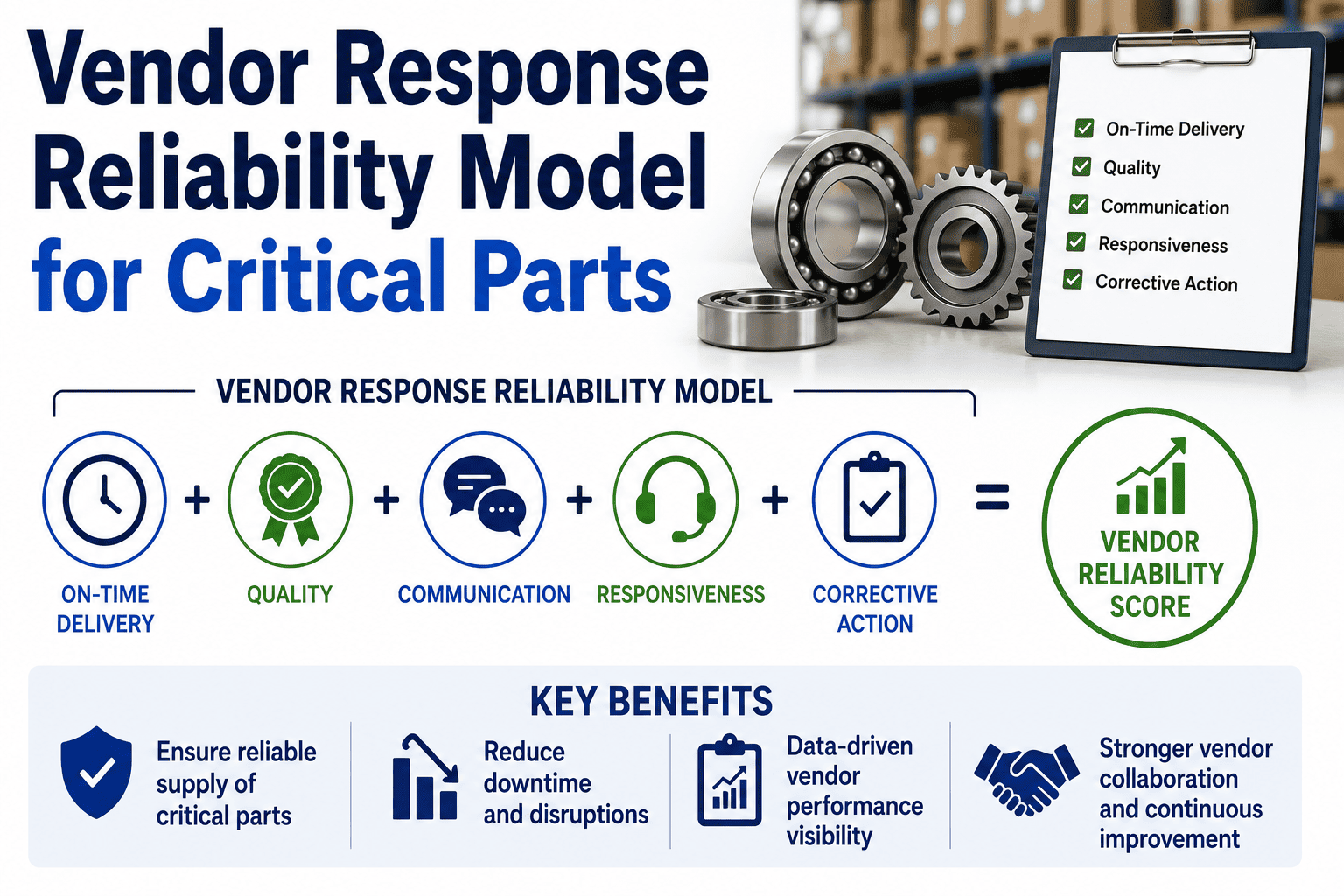
Read More
Vendor response reliability is one of the most underleveraged metrics in industrial procurement — yet it determines whether your maintenance team receives critical parts on time, whether escalation channels work under pressure, and whether your su
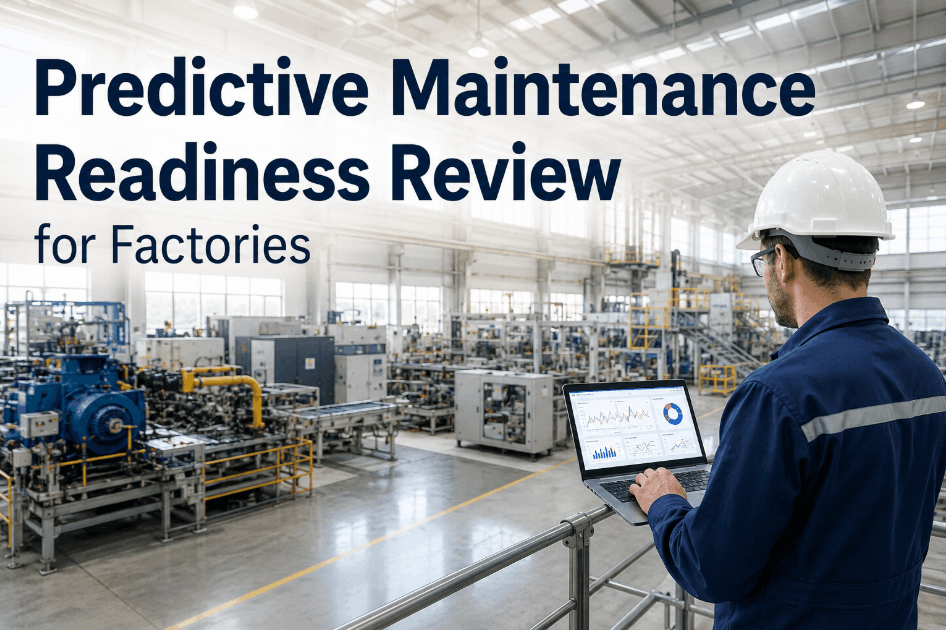
Read More
Predictive maintenance programs fail at scale not because the technology is wrong but because factories deploy them before the underlying conditions — sensor coverage, failure history quality, and response workflow discipline — are ready to suppor
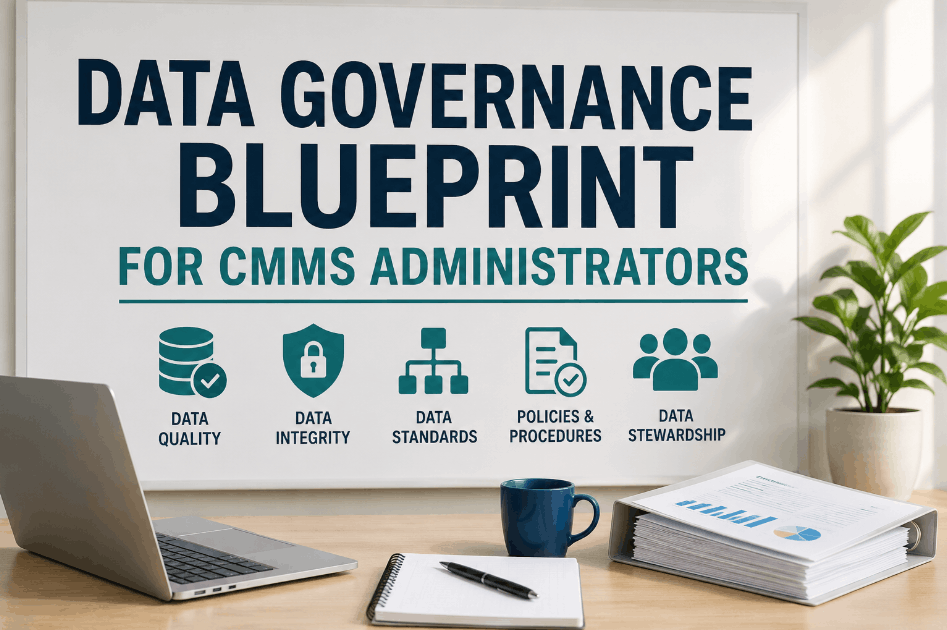
Read More
CMMS data quality erodes faster than most administrators recognize. Asset master records drift when naming conventions are inconsistently applied, failure codes multiply without taxonomy control, and work histories lose analytical value when techn

Read More
Carbon intensity varies significantly across production lines within the same facility — but most factories cannot quantify it. When energy consumption data is not linked to individual line output records, carbon accounting becomes a facility-leve

Read More
Changeover friction is one of the most underreported sources of throughput loss in batch production environments. Every minute lost between batches — waiting for tools, clearing lines, confirming startup conditions — compounds into hours of lost o
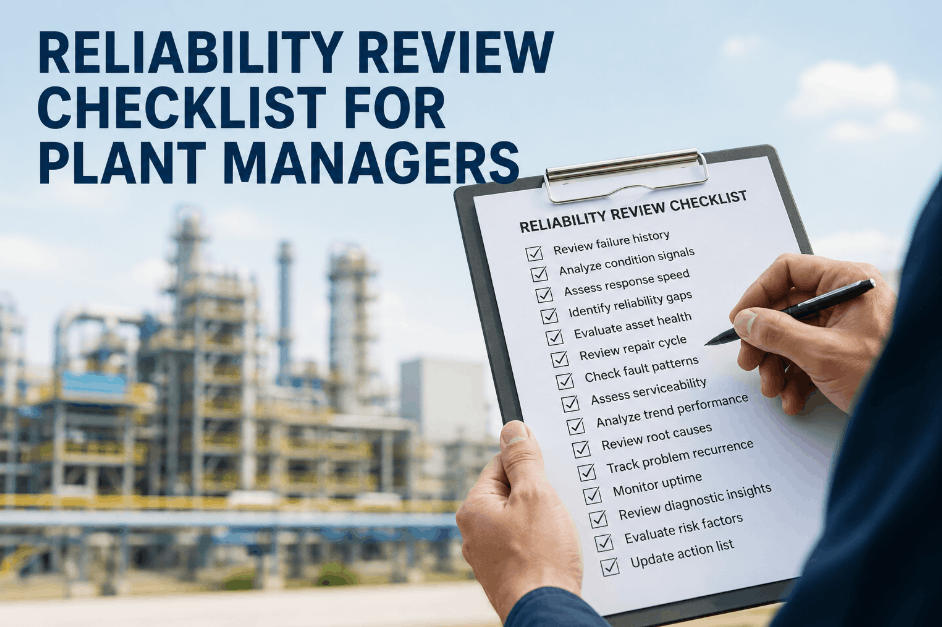
Read More
Reliability review is one of the most consistently deferred disciplines in plant management — not because plant managers are unaware of asset performance gaps, but because failure history is reviewed after patterns have already recurred across mul
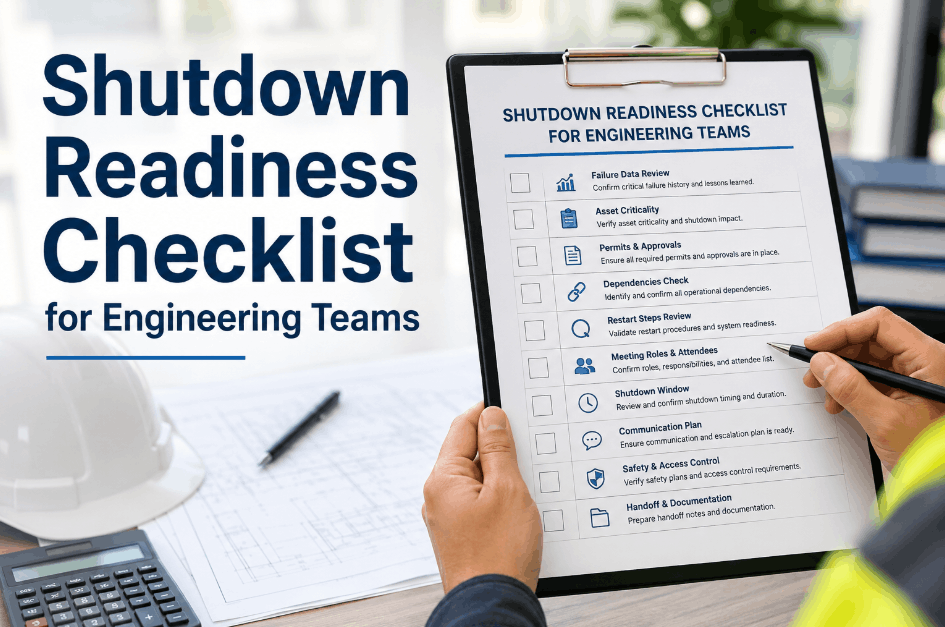
Read More
Shutdown readiness is one of the most execution-critical checkpoints in plant engineering — not because teams overlook the need to prepare, but because permit sequencing is confirmed too late, task dependencies go unresolved until the outage windo

Read More
Changeover loss in production environments accumulates not through single large failures but through repeated small delays — a setup step done out of sequence, a release check skipped and then re-done, a trial run that runs longer than necessary b

Read More
Spare parts visibility problems rarely surface until a repair stalls waiting for a part that should have been in stock, or a stockroom audit reveals reserved items consumed without replenishment. A process plant running continuous production acros

Read More
Queue pressure in packaging operations rarely announces itself as a crisis — it builds gradually through misaligned dispatch priorities, aging open work, and labor mismatches that compound during peak shifts until throughput visibly suffers. A mid

Read More
Energy waste in shared utility systems accumulates without triggering alarms — compressed air leaks, steam trap failures, and idle electrical loads during non-production periods compound into measurable cost and carbon signal problems that only be

Read More
Reliability improvement programs fail not because the maintenance actions are wrong but because teams cannot see whether those actions are producing measurable results over time. Without asset reliability growth tracking, PM program changes, overh
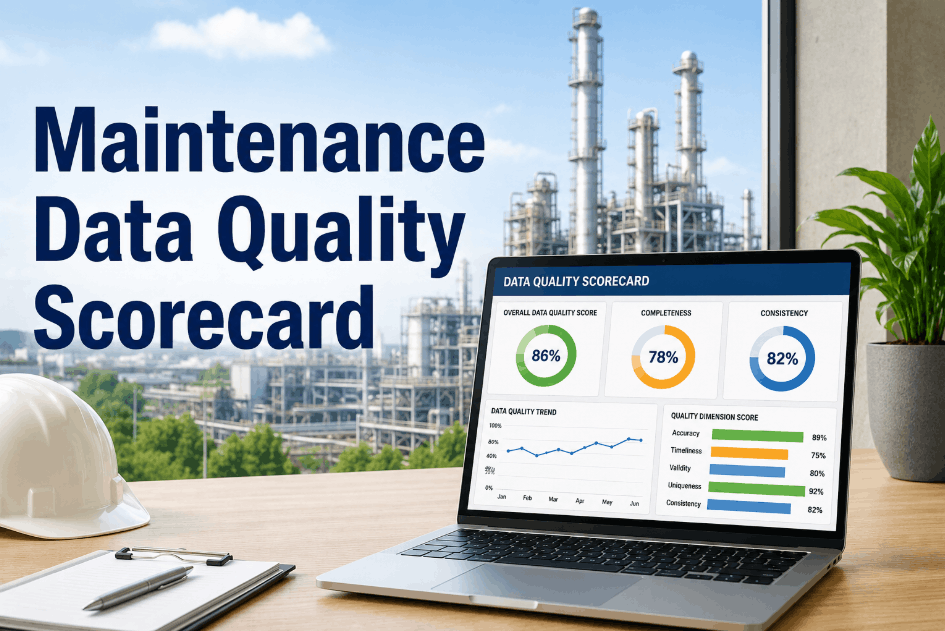
Read More
Maintenance decisions are only as reliable as the records behind them — and most CMMS databases contain missing failure codes, inconsistent asset identifiers, and work orders closed without labor or parts data. These gaps compound silently until p

Read More
Most production floors have throughput barriers hiding in plain sight — unplanned downtime on a single asset, backlogged work orders on a shared resource, or inspection gaps that let slow degradation accumulate across the line. Identifying and pri

Read More
Recurring equipment failures drain maintenance budgets silently — the same fault logged three times in a month triggers no structural response until production finally stops. Without defined repair escalation triggers, planners treat every repeat

Read More
Equipment failures don't cost the same across asset families — a chiller shutdown carries different financial weight than a conveyor stoppage or a pump failure on a process line. Yet most plants manage downtime reactively, without

Read More
Maintenance teams rarely run out of work — they run out of time spent on the right work. When technician hours disappear into unplanned reactive repairs, administrative overhead, and travel between jobs, planned maintenance falls
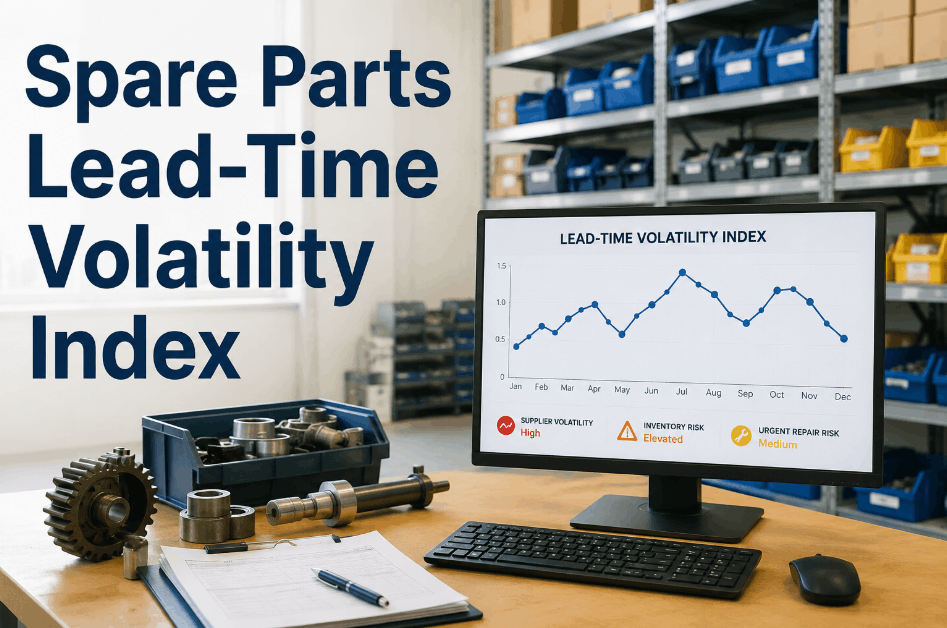
Read More
A spare part with a published lead time of five days that arrives in fourteen is not just a late delivery — it is an undocumented reliability risk sitting inside the inventory model. Lead-time volatility, the gap between promised and actual suppli

Read More
Constrained production lines fail under pressure in ways that are difficult to predict from standard throughput models. Buffers that appear adequate during normal operations empty in minutes when a bottleneck shifts, and throughput losses that loo

Read More
Maintenance crews that rely on a handful of specialists for the most demanding work carry a structural vulnerability that doesn't surface until demand spikes. When the one technician qualified for high-voltage switchgear or PLC programming is unav

Read More
Quality teams that chase individual defects without grouping them by symptom pattern are solving puzzles with missing pieces. When the same failure signature appears across multiple lines, shifts, or inspection cycles without being recognized as a

Read More
A shutdown window that opens before permits are issued, access routes confirmed, or work sequence dependencies resolved is not a planned outage — it is an improvised one that will run over schedule and restart late. Utility outage planning fails m

Read More
Multi-line facilities rarely fail all at once—reliability gaps build quietly on one line while production leaders focus on another. Without a forecast view that compares stability, failure probability, and recovery timing across lines side by side

Read More
Planned shutdowns at utility-heavy sites are a race against dependency chains—permits must clear before access is granted, access must happen before isolation, and isolation must hold before restart can begin. When sequencing isn't planned around

Read More
Continuous shift operations live or die on what gets passed between crews. When handover notes are vague, scattered across notebooks, or skipped entirely, the incoming shift inherits open issues without context—leading to repeated troubleshooting,

Read More
Plant reporting only stays trustworthy when the underlying CMMS records are clean. Missing fields, duplicate asset entries, and timestamp drift quietly distort every dashboard built on top of them, leading managers to act on numbers that don't mat

Read More
Repeat machine failures cost plants far more than the downtime minutes they show on a report. When the same breakdown happens on different assets months apart, technicians often start the diagnosis from zero because nothing links the new fault to

Read More
Maintenance backlog triage is one of the most consistently mismanaged execution disciplines in plant operations — not because teams lack work orders, but because open work accumulates without structured prioritization, aging tasks go unreviewed, a

Read More
Spare parts replenishment is one of the most consistently undermanaged disciplines in plant maintenance operations — not because teams are unaware of inventory shortfalls, but because reorder points are set without reference to actual consumption

Read More
Energy waste in shared utility systems accumulates without visibility — compressed air leaks, steam losses, and unmonitored electrical loads rarely trigger immediate alarms, but they compound into measurable cost exposure and carbon signal problem

Read More
Calibration traceability failures rarely surface at the instrument — they surface at the audit, when a quality reviewer asks for the certificate, the verification record, the reference standard used, and the handoff signature, and the answer is sc

Read More
Stockout exposure in maintenance warehouses rarely announces itself — it accumulates through deferred reorder decisions, inconsistent demand tracking, and no structured visibility into which parts are approaching critical shortage. A mid-size indu

Read More
Unplanned stop recovery is where discrete manufacturing reliability is won or lost. The time between a line stoppage and full production resumption — restart time — determines how much output loss an unplanned event actually causes. Maintenance te

Read More
OEE loss segmentation is the analytical foundation that separates packaging line management from packaging line improvement. Stop losses, speed losses, and quality losses each require different corrective actions — but without segmenting them, mai
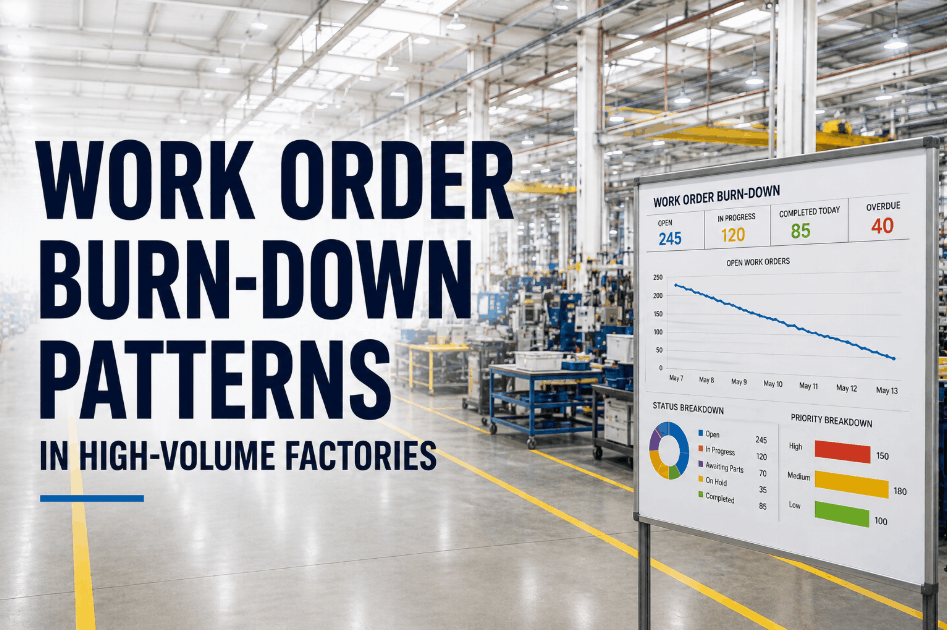
Read More
Work order burn-down patterns reveal more about a factory's maintenance health than any single KPI. In high-volume facilities, the rhythm at which open orders are closed — shift by shift, crew by crew — determines whether planned maintenance keeps

Read More
Maintenance backlog exposure is one of the most telling reliability signals in multi-line plant operations. When overdue work orders accumulate across production lines, dispatch lag grows, queue pressure intensifies, and labor loading becomes reac

Read More
Energy losses in factory environments rarely announce themselves. Compressed air leaks develop gradually over months. Steam trap failures allow live steam to bypass heat exchangers without triggering alarms. Power distribution inefficiencies compo

Read More
Maintenance procurement is only as reliable as the suppliers behind it. When a critical component fails and a work order is raised, the speed and quality of supplier response determines how long production stays down. Supplier response variance —

Read More
Spare parts inventory management in active maintenance stores is never a static problem. Demand patterns swing with production schedules, seasonal maintenance cycles, equipment age, and unplanned breakdown events — creating stockouts on the parts

Read More
Instrumented process environments depend on accurate measurement signals to maintain product quality, process safety, and regulatory compliance. When sensors, transmitters, or field instruments begin to drift, readings shift gradually away from tr

Read More
Production facilities depend on dozens of utility systems — compressed air, cooling water, steam, power distribution — but not all of them carry equal risk. When a non-critical utility fails, operations slow. When a critical one fails, production

Read More
Micro-stop losses are the most underreported and most consistently underestimated source of output reduction in continuous production environments — not because they are invisible, but because their individual duration falls below the threshold th

Read More
Inspection route coverage is one of those gaps that stays invisible until a safety incident exposes it. A mid-size process plant with five operational zones found itself with a persistent problem: safety inspections were being completed on paper,
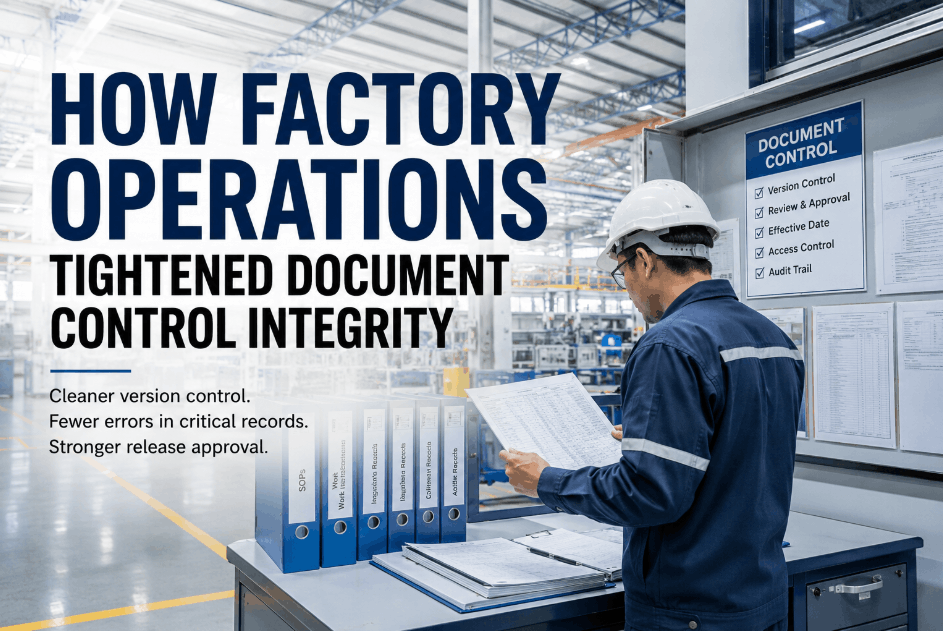
Read More
Document control integrity is one of those operational gaps that accumulates quietly — until a regulatory audit, a nonconformance event, or a failed quality review makes it suddenly visible. A mid-size factory running three production lines found
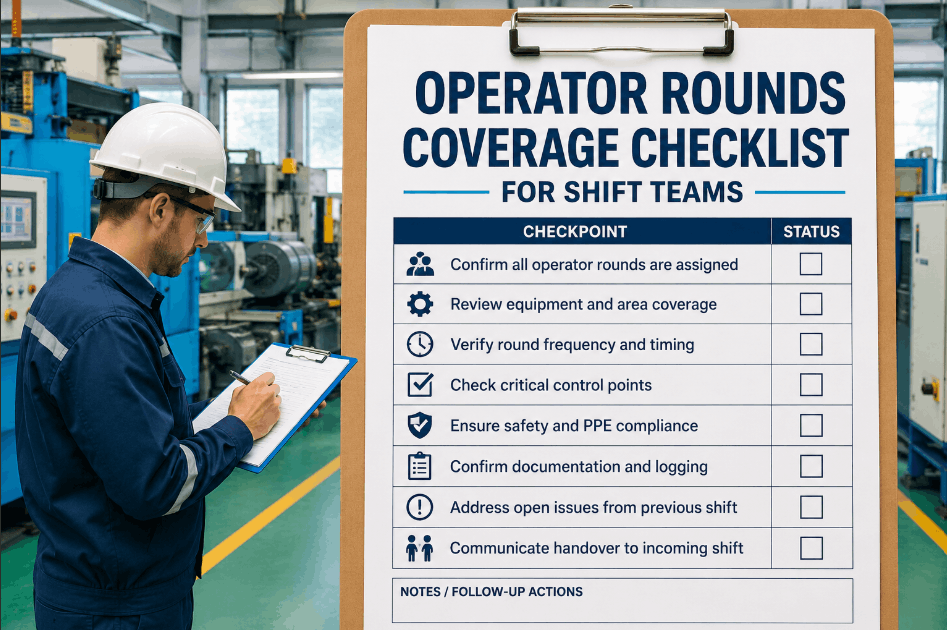
Read More
Operator rounds coverage is one of the most direct levers shift teams have for maintaining equipment visibility and preventing unplanned breakdowns — yet it is one of the first disciplines to erode when shift handovers are rushed, coverage is assu
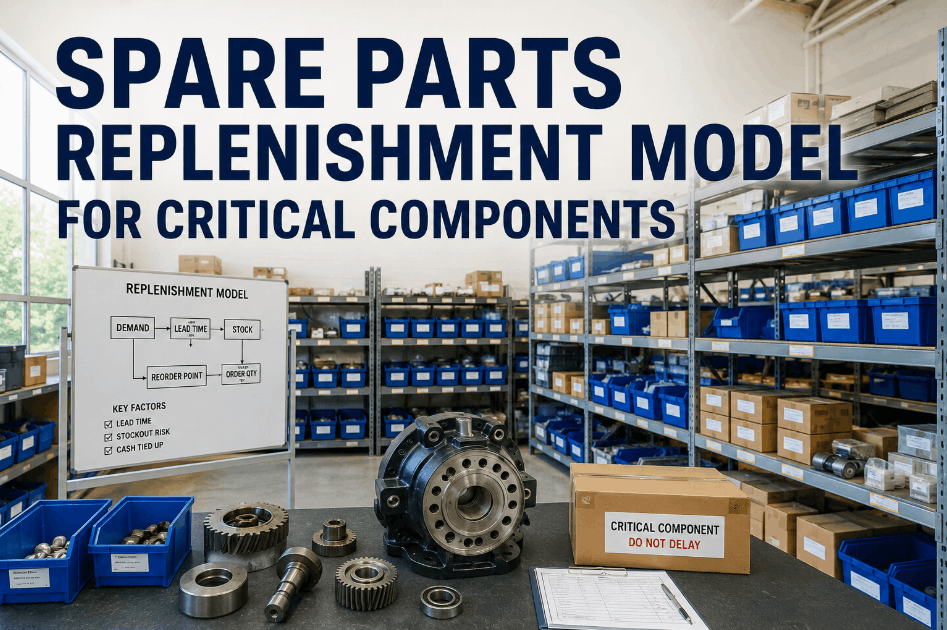
Read More
A spare parts replenishment model for critical components is the inventory discipline that prevents two equally damaging outcomes in manufacturing operations — production stoppages caused by stockouts on critical parts, and cash tied up in slow-mo

Read More
Predictive maintenance readiness assessment for factories is the structured evaluation process that determines whether your facility has the sensor coverage, failure history depth, and response workflow maturity needed to scale condition-based mon
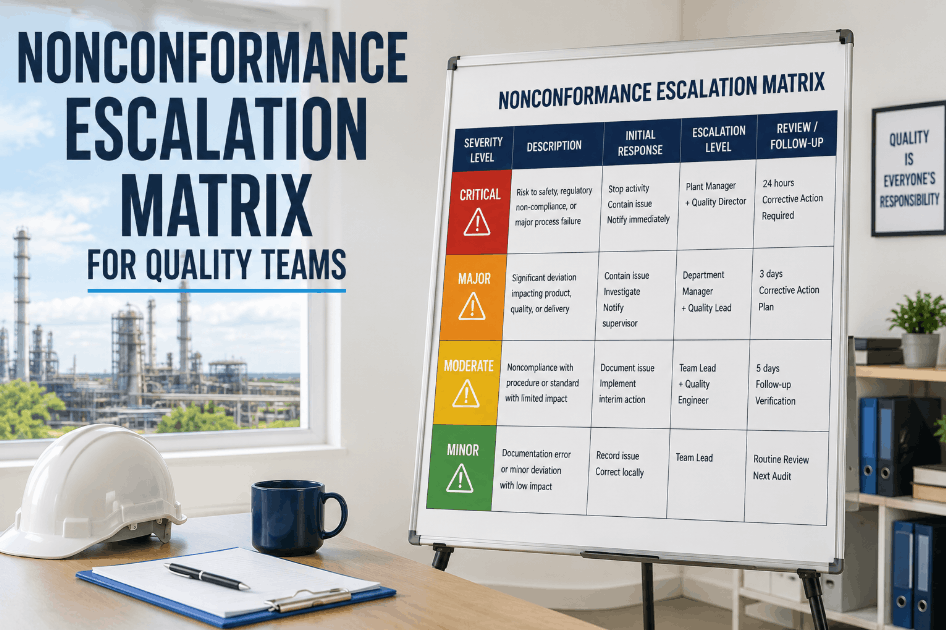
Read More
A nonconformance escalation matrix for quality teams is the structured routing framework that determines which issues get resolved at the floor level, which require supervisor review, and which demand immediate cross-functional escalation — ensuri

Read More
Inspection route coverage review for safety leaders is the systematic evaluation process that identifies which areas, assets, and systems are being inspected with appropriate frequency — and which are being missed, under-inspected, or overlooked d

Read More
A CMMS adoption roadmap for plant operations is the structured implementation discipline that separates facilities where the system becomes the operational backbone from those where it becomes shelfware within 90 days. Getting the platform live is

Read More
Shutdown execution quality is determined long before the first wrench turns. When spare kit contents vary by crew, by site, or by whoever built the kit last time, the result is inconsistent work quality, last-minute storeroom runs, and job complet

Read More
Vendor lead time is one of the most consequential variables in maintenance procurement — and one of the least systematically tracked. When a critical spare has a quoted lead time of three weeks but the actual delivery history shows six, the gap be
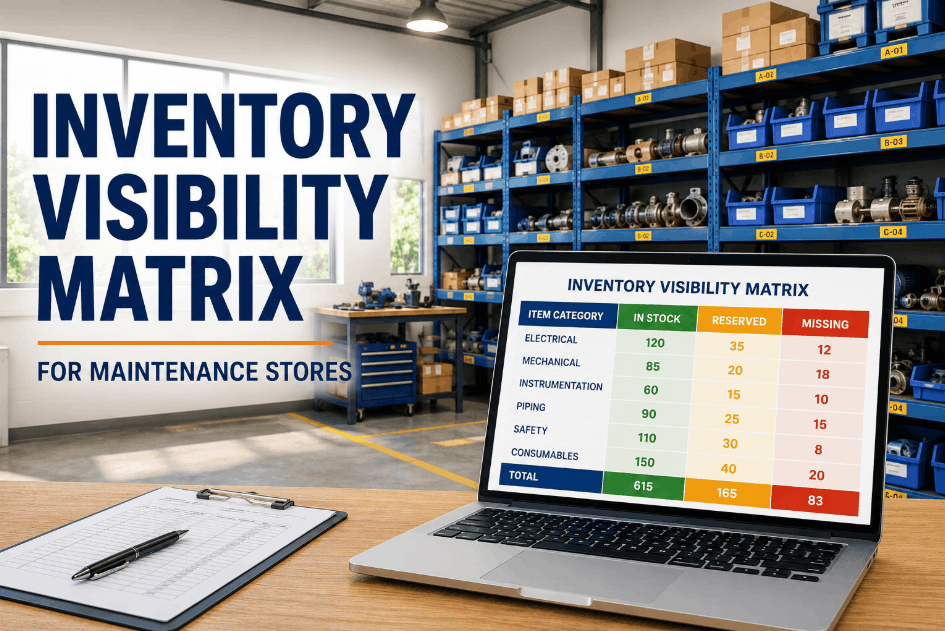
Read More
Inventory visibility in maintenance stores is not just a stockroom problem — it is a production risk. When parts availability is unclear, planners guess, technicians wait, and unplanned downtime costs compound silently. An inventory visibility mat

Read More
Slow-moving stock is one of the most persistent and least visible costs in plant warehouse operations. Parts that were ordered once for a job that never repeated, spares stocked at quantities far beyond realistic demand, and obsolete components he

Read More
Operational risk assessment is one of the most underdisciplined processes in facility management — not because risk is unknown, but because consequence severity and control effectiveness are rarely evaluated together against a consistent framework
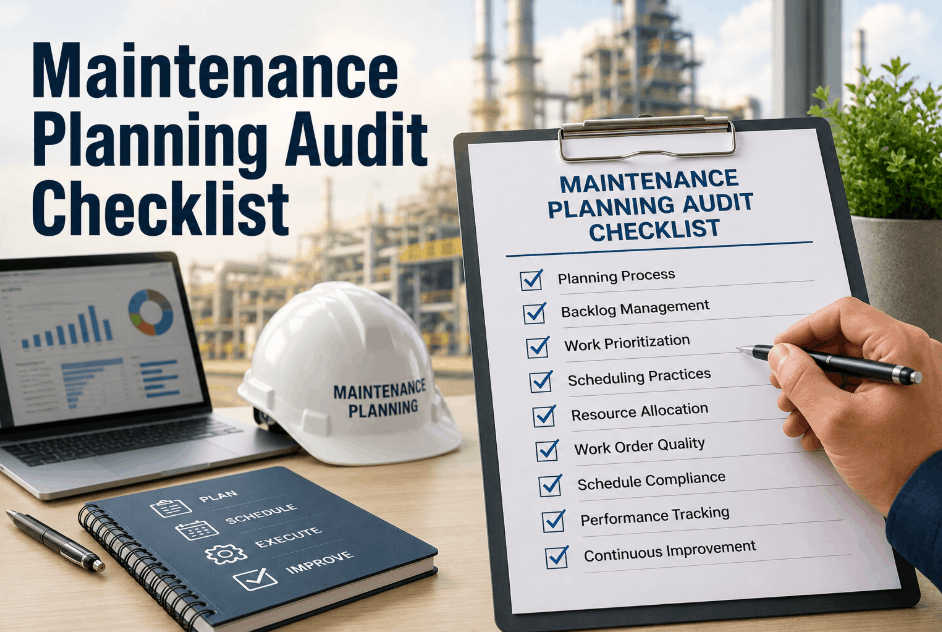
Read More
Maintenance planning quality is the single greatest determinant of whether field execution delivers reliable outcomes or produces rework, delays, and schedule shortfalls. When backlog health deteriorates, work orders are planned without complete j

Read More
Asset reliability review is one of the most overlooked disciplines in maintenance operations. When failure trends go unanalyzed and corrective actions remain open without follow-up, repeat faults quietly compound — draining uptime and eroding conf

Read More
Emergency work orders are the most expensive way to run a maintenance operation — not just in parts and labor, but in planning collapse, schedule disruption, and technician burnout. A mid-size process plant managing 14 maintenance technicians acro

Read More
Spare parts availability is one of the least visible variables in maintenance performance — until the moment a technician is standing in front of a failed asset with no part to fit. A mid-size discrete manufacturing plant running three production

Read More
The most dangerous equipment in an industrial facility is not the most complex — it is the one whose operational history, failure patterns, and troubleshooting knowledge exists only in the memory of a technician who is three years from retirement.

Read More
Predictive maintenance promises significant reductions in unplanned downtime and maintenance cost — and the technology to deliver on that promise is more accessible than it has ever been. But the gap between a compelling proof of concept and a fun

Read More
Asset criticality ranking is the foundation of every effective maintenance program — and the single most common gap in facilities that wonder why their maintenance budget never feels adequate. When every asset is treated as equally important, crit

Read More
Every plant runs on decisions — and few decisions shape operational cost, uptime, and risk exposure more directly than maintenance strategy selection. Whether you're managing a single facility or coordinating assets across multiple sites, choosing
Read More
When a discrete manufacturing line stops unexpectedly, restart time is rarely lost in a single place — it's distributed across a sequence of steps where different teams stall, handoffs are unclear, and recovery depends on whoever is available rath
Read More
Packaging line OEE losses don't come from a single source — they hide across three distinct buckets: stop losses from unplanned downtime, speed losses from running below target rate, and quality losses from rejects and rework. Most packaging teams
Read More
In high-volume factories, work orders don't just accumulate — they stack behind the shift plan in patterns that reveal exactly where execution pace is breaking down. Burn-down rate, queue aging, and task throughput are the signals that tell mainte
Read More
Multi-line plants operate under constant repair demand — but most maintenance teams don't know how exposed they actually are until backlog has already spilled into output loss. Open work pressure, overdue PM drift, and dispatch lag are the three m
Read More
Changeover time variance is one of the most underreported sources of hidden output loss in production operations. When line changeovers start adding unplanned minutes to every shift, the losses rarely appear cleanly in downtime records — they accu
Read More
Autonomous care discipline is the first layer of defense against equipment degradation — and the layer most likely to erode quietly. When operator routines drift into inconsistent habits, micro-stops increase, lubrication intervals get missed, and

Read More
Nonconformance escalation failures in manufacturing operations rarely stem from a lack of quality awareness. They build through undefined severity thresholds, manual routing bottlenecks, and inconsistent response timelines that leave critical find

Read More
SOP drift on the shop floor rarely announces itself. It compounds through minor step skips, undocumented deviations, and signoff gaps that go undetected until a quality failure or audit finding surfaces the pattern. One mid-size discrete manufactu

Read More
SOP drift is the maintenance industry's most underestimated compliance failure mode — not because the standard operating procedure is wrong, but because the way the procedure is actually being executed has quietly diverged from what the document s
Read More
Audit findings that stay open past their agreed closure date are not just a compliance programme failure — they are a documented record of a plant's inability to execute its own corrective action commitments. Every day an audit finding remains ope

Read More
Calibration records that exist as isolated certificates — one per instrument, filed by date, disconnected from the asset register and the maintenance schedule — create an audit gap that costs facilities an average of 14 days of remediation time pe
Read More
Part substitution decisions made without a structured approval framework create hidden risk — incorrect specs silently enter the asset, warranty is voided, and failure rates climb with no audit trail. Every day a critical component is unavailable,

Read More
Plant managers face a persistent accountability gap: energy savings are real, but nobody agrees on who gets credit. When a motor upgrade in Building A lowers overall utility bills, does the credit belong to maintenance, operations, or the sustaina

Read More
Every storeroom manager has lived the scenario: a technician needs a critical bearing or seal during an urgent breakdown, the shelf is empty, and the next available shipment is five days out. A critical component reorder model eliminates this outc
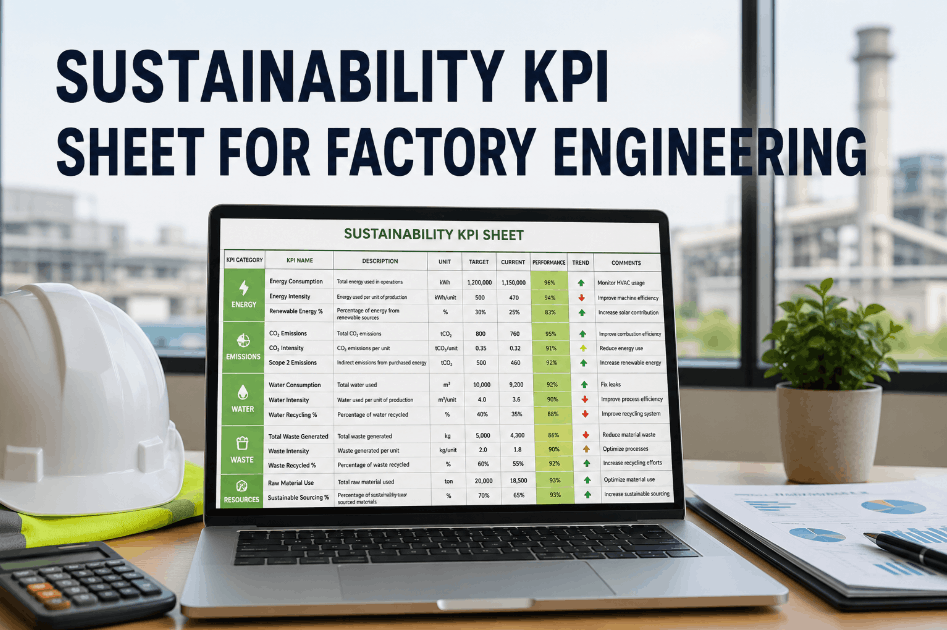
Read More
Factory engineering teams are increasingly responsible for sustainability performance, but most ESG KPI frameworks are designed for finance teams—not for the maintenance and operations staff who actually drive the numbers. A sustainability KPI she

Read More
Washdown operations consume far more water than most plant managers realize until utility bills arrive with no breakdown by process area. A water use baseline establishes the actual demand per shift, per zone, and per equipment cycle—making waste

Read More
Industrial facilities lose thousands of dollars annually through undetected heat loss paths that silently inflate utility bills. A thermal waste audit systematically maps heat loss across motors, steam traps, insulation gaps, and compressed air li

Read More
An OEE loss tree framework gives assembly cell supervisors a structured breakdown of exactly where throughput disappears — split into stop losses, speed losses, and quality losses that can be measured, tracked, and addressed with targeted correcti

Read More
A calibration evidence chain links every instrument in a metrology program — its current certificate, prior test results, tolerance history, and upcoming due date — into a single traceable record that auditors can follow without requesting additio

Read More
Dead stock in maintenance stores is not a passive problem — it is an active drain on working capital, a consumer of warehouse space, and a source of inventory complexity that grows every quarter parts are ordered without demand visibility. An inve

Read More
A root cause library transforms recurring fault data from scattered notes and tribal knowledge into a structured, searchable system that maintenance engineers can query before every investigation. When breakdown signatures, symptom clusters, and r

Read More
Mean time to repair is one of the most tracked maintenance KPIs in operations — yet most facilities report it as a single plant-wide number that hides the performance gaps that matter most. MTTR spread analysis breaks repair time data down by equi
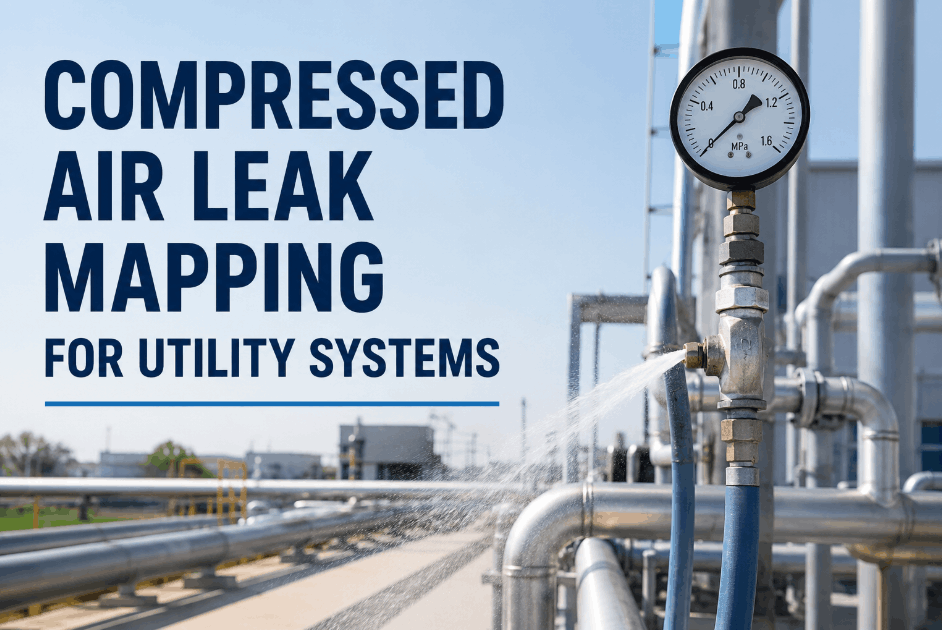
Read More
Compressed air is among the most expensive utilities in industrial operations — and most plants lose a significant portion of their compressed air output to undetected leaks before it reaches a production point. Without a structured leak mapping p

Read More
In high-queue plant environments, work orders age silently until they become emergencies. Planners without a visual aging model cannot distinguish a job that has been waiting two days from one that has been waiting two weeks — and that invisible b

Read More
Industrial plants running at capacity cannot afford to misread sensor data on bottleneck assets. When telemetry from critical equipment drifts without detection, maintenance teams lose the early warning window that separates a planned repair from
Read More
Stockout exposure in maintenance warehousing doesn't announce itself — it compounds quietly through missed reorder windows, invisible demand spikes, and no structured method for distinguishing critical items from low-priority stock. A mid-size ind
Read More
Calibration traceability failures rarely appear as a single missed certificate. They accumulate through inconsistent verification steps, incomplete records passed between shifts, and no structured method for linking instruments to their reference
Read More
A shutdown readiness checklist is the most critical pre-execution activity an engineering team can complete before any planned outage window begins. Uncoordinated shutdowns — where permit sequences conflict, utility isolations are missed, or resta
Read More
A reliability review checklist is the most structured activity a plant manager can execute to identify recurring asset failures, unresolved condition signals, and maintenance response gaps before they compound into unplanned downtime events. Witho
Read More
Demand swings, reorder point drift, and delayed replenishment decisions quietly drain spare parts coverage until the moment an urgent maintenance request arrives to an empty shelf. When repairable items run short and stock coverage isn't actively
Read More
Unmanaged maintenance backlogs compound faster than most teams realize — overdue tasks accumulate, crew load climbs, and dispatch decisions get made on gut feel instead of data. When open work stacks faster than execution capacity, plant output an

Read More
MTBF data exists in almost every plant that has ever logged a failure. The problem is rarely data collection — it is data coherence. When failure records use inconsistent codes, asset histories are fragmented across paper logs and digital systems,

Read More
Unplanned work accumulation in packaging operations rarely starts with a single failure. It builds through misaligned dispatch, invisible task aging, and no defined sequence for clearing open work. One mid-size packaging site running three product

Read More
A critical spare that arrives late — or arrives with incorrect documentation, wrong specifications, or damaged packaging — is not a spare at all. It is a downtime event that has already been paid for twice. Maintenance programs built around critic

Read More
Plant leaders lose confidence in maintenance performance not because results are poor — but because the numbers mean different things to different people. Uptime calculated one way at one site reads 91%; calculated differently at another reads 96%

Read More
Inventory inaccuracy for repairable components creates a compounding problem: technicians lose confidence in system records, start hoarding parts in field caches, and the official inventory becomes less reliable over time as informal buffers grow

Read More
Industrial asset decisions made without a full lifecycle cost model routinely lead to premature replacement of repairable equipment or costly over-extension of assets past their economic life. Facilities using

Read More
Power factor correction is one of the highest-return electrical efficiency actions available to plant maintenance teams — yet it remains underutilized because its impact is rarely connected to the maintenance records and asset histories that justi

Read More
Utility consumption mapping for shared services is the foundational step that turns plant-wide energy spending into targeted, actionable reduction programs. When electricity, water, compressed air, and steam consumption is allocated to individual

Read More
Carbon intensity scorecards are becoming a baseline requirement for manufacturing plants that need to measure, report, and reduce their emissions footprint. When carbon performance is tracked by asset, line, or shift, plant leaders move from vague

Read More
Motor load efficiency review is one of the most overlooked levers in heavy equipment maintenance. When motors operate outside their optimal load band — whether oversized, underloaded, or poorly tuned — the result is silent energy waste, accelerate

Read More
Multi-site manufacturing operations face a maintenance coordination challenge that single-facility teams never encounter: when each site defines priority differently, dispatch decisions across the network become inconsistent, escalation timing var

Read More
Unplanned equipment stops in packaging operations drain more than production time — they consume maintenance capacity, inflate repair costs, and create cascading schedule failures that affect downstream fulfilment. One mid-size packaging plant ope
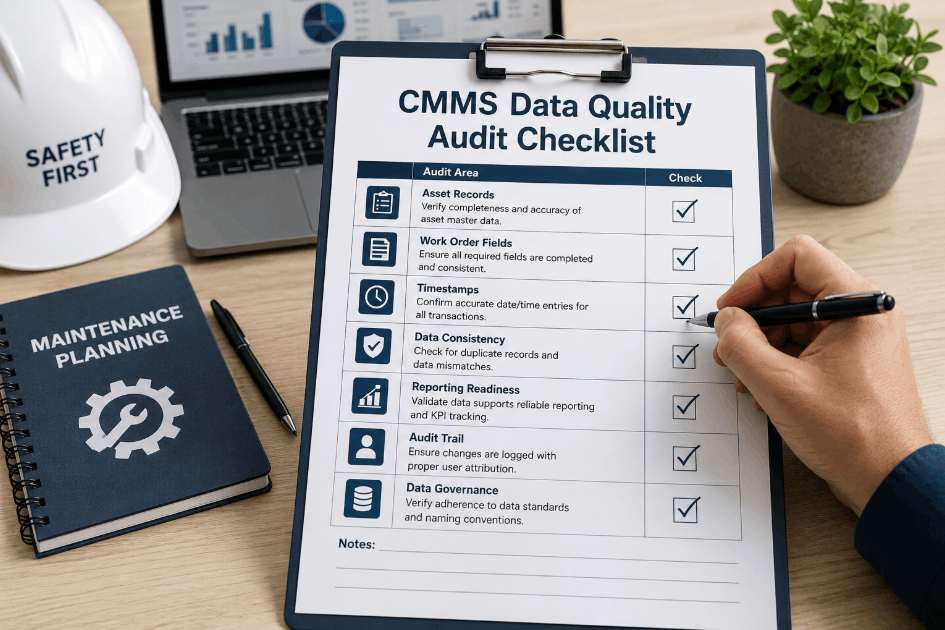
Read More
A CMMS is only as reliable as the data inside it. Inaccurate asset records, incomplete work order fields, and missing timestamps silently corrupt every report, KPI, and maintenance decision your team relies on. Before your managers act on downtime

Read More
A single missing part during an unplanned breakdown can cost more in lost production than an entire year of inventory carrying costs. Spare parts stockouts are preventable — but only when your team has visibility into lead times, safety stock leve
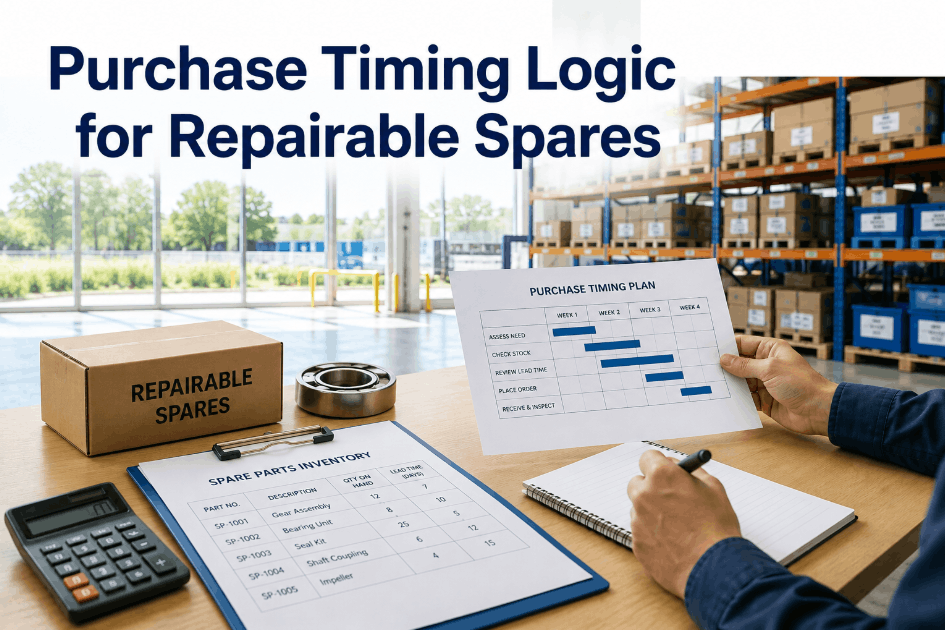
Read More
Repairable spares operate under a fundamentally different procurement logic than consumable materials. A replenished consumable arrives from a supplier; a repairable spare may return from an external repair vendor, an in-house workshop, or a third

Read More
When the system says a part is in stock but the shelf is empty, maintenance work stops and production pays the price. Warehouse accuracy — the alignment between what inventory records show and what is physically present in stores — is the single m

Read More
Consumable materials sit at the intersection of production variability and procurement planning — and when demand swings unpredictably, purchasing teams are left choosing between costly overstocking and dangerous stockouts. Lubricants, filters, fa

Read More
Industrial stores quietly hemorrhage budget through obsolete stock that no longer serves any production need. Parts that were ordered for discontinued equipment, superseded components sitting on shelves past their useful life, and slow-moving spar

Read More
Steam is one of the most energy-intensive utilities in process plant operations — and one of the most poorly measured. Process plants across chemicals, pharmaceuticals, food manufacturing, and refineries consume enormous volumes of steam for heati

Read More
Compressed air is among the most expensive utilities in a manufacturing facility — and one of the most wasted. Industry data consistently shows that unmanaged compressed air systems lose 20–30% of generated air to leaks, with the majority of those

Read More
Multi-line production sites operate under a unique reliability pressure: when one line degrades, adjacent lines absorb the load — accelerating wear, compressing maintenance windows, and turning a localized equipment risk into a plant-wide throughp

Read More
Plant operations teams face a silent productivity drain: alarm floods. As industrial assets multiply across production lines, control rooms receive hundreds of alerts per shift — many of them redundant, low-priority, or flat-out false. Predictive
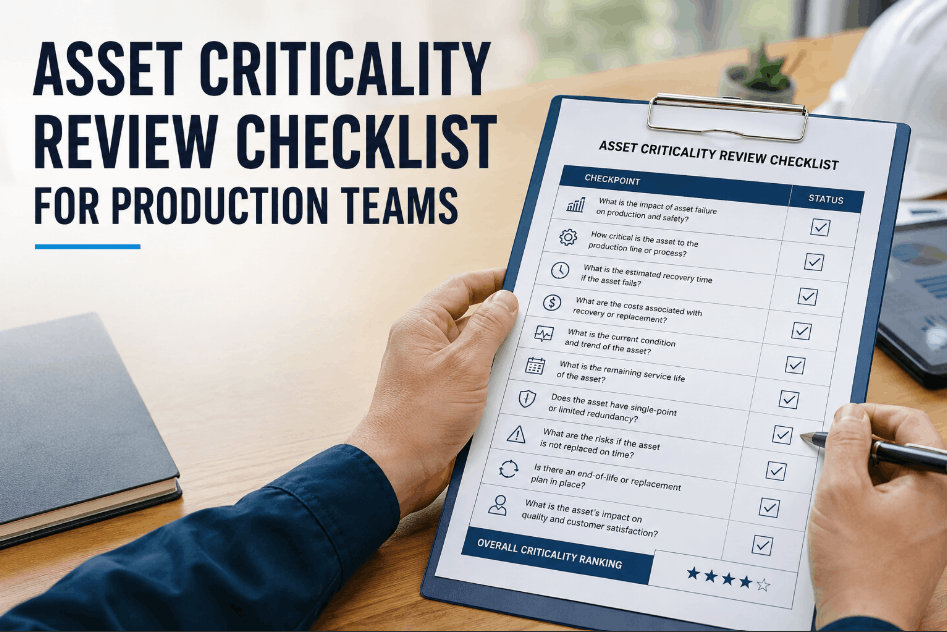
Read More
An asset criticality review checklist is the foundational planning tool production teams and maintenance managers use to ensure that capital investment, maintenance effort, and reliability resources are concentrated on the equipment that matters m
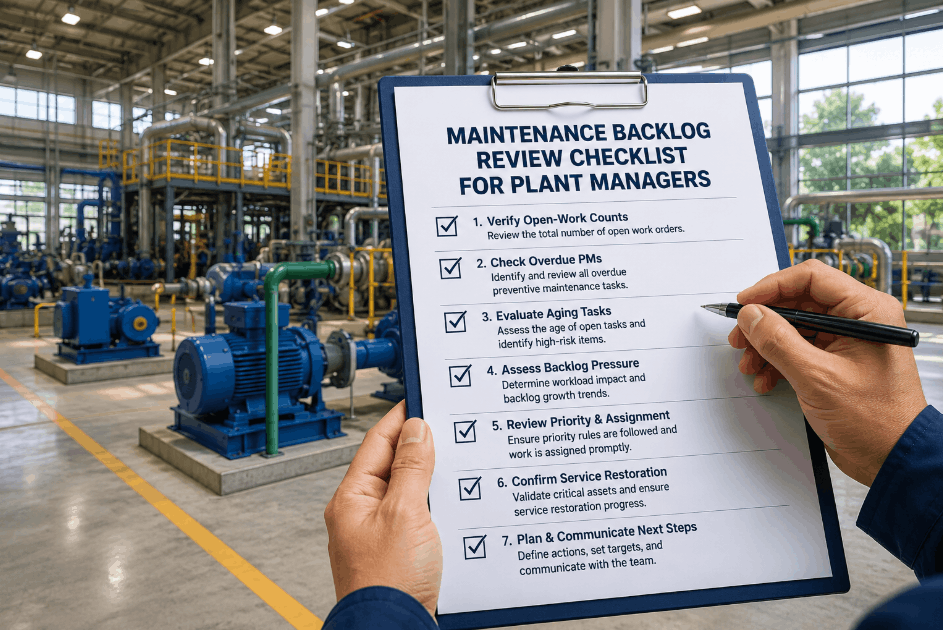
Read More
A maintenance backlog review checklist is the most critical planning instrument a plant manager can run to prevent throughput collapse, technician overload, and service restoration failures across manufacturing operations. Open work queues grow si

Read More
A mid-size industrial manufacturer operating under regulatory oversight and three active customer quality programs had a compliance team working harder than the evidence showed. Audit findings were assigned, acknowledged, and then lost — routing b

Read More
A process manufacturing plant operating across four instrumentation zones and three shift teams had built a compliance liability it could not see. Calibration records lived in disconnected binders, technician sign-offs were tracked on shared paper

Read More
Anomaly detection workflow design is the critical gap between factories that catch failures early and those that absorb the full cost of unplanned downtime. When sensors generate thousands of data points per shift, the challenge is not data volume

Read More
Fault escalation logic is the decision layer that determines whether an autonomous maintenance routine handles a detected fault independently, routes it to a technician, escalates it to a reliability engineer, or halts production pending emergency
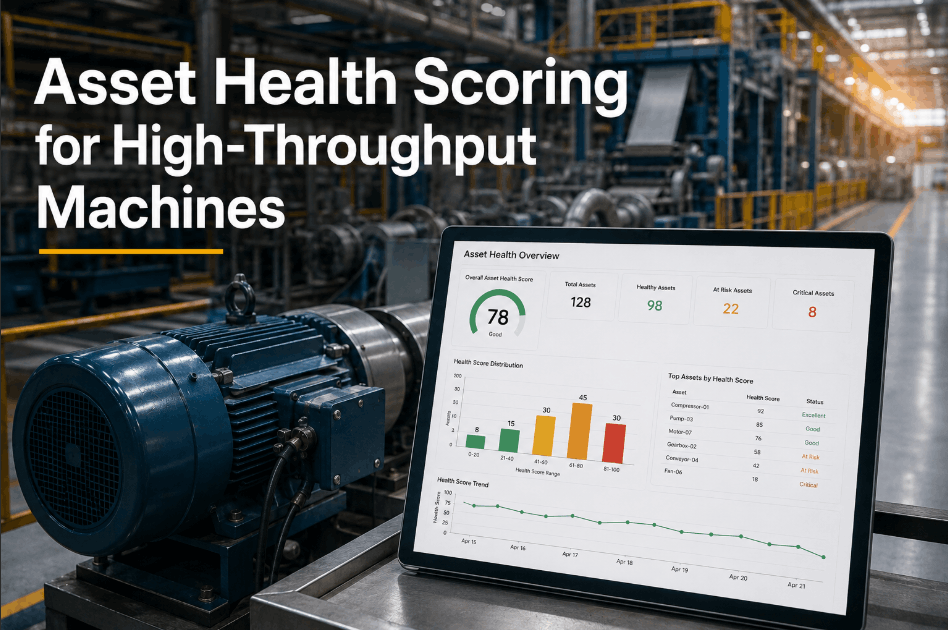
Read More
Asset health scoring gives high-throughput manufacturing operations a single, comparable metric to rank machine condition across an entire production floor — before small degradation trends escalate into output-disrupting failures. When production
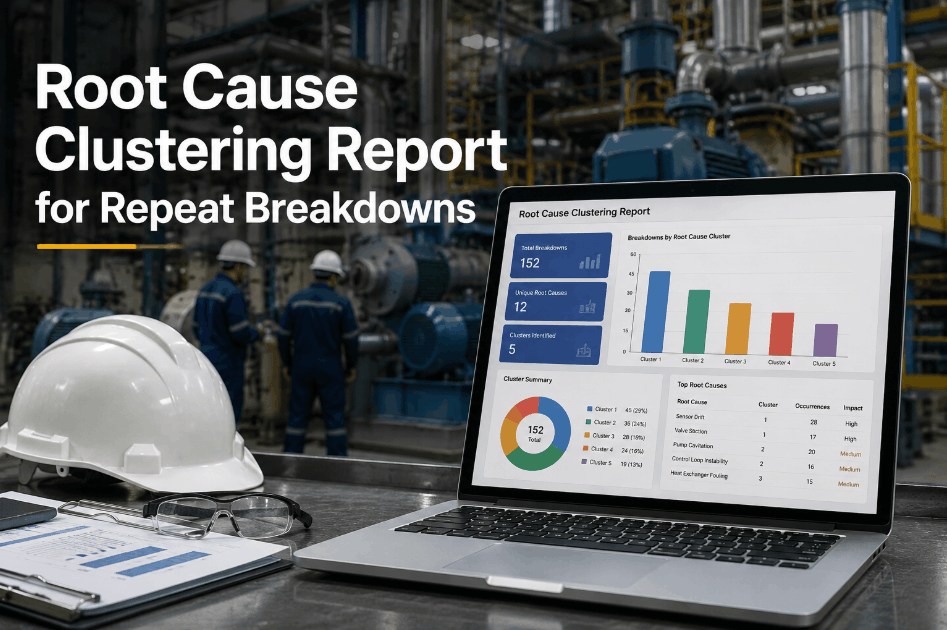
Read More
Root cause clustering transforms repeat breakdown data from a reactive maintenance record into a predictive intervention tool. When the same equipment fails repeatedly across different machines, shifts, or production lines, isolated work order rec

Read More
Production asset failures don't announce themselves—they develop through weeks or months of deteriorating condition signals that traditional threshold-based monitoring misses until it's too late for anything other than emergency response. An AI fa

Read More
Smart plant control rooms generate hundreds of maintenance signals per shift—but the volume of alerts has outpaced the capacity of operators and reliability teams to evaluate them meaningfully. Without a structured signal ranking system, high-prio

Read More
Recurring line faults drain production efficiency not because they're difficult to fix—but because maintenance teams keep responding to them as isolated incidents rather than grouped patterns. When the same fault signatures repeat across shifts, e
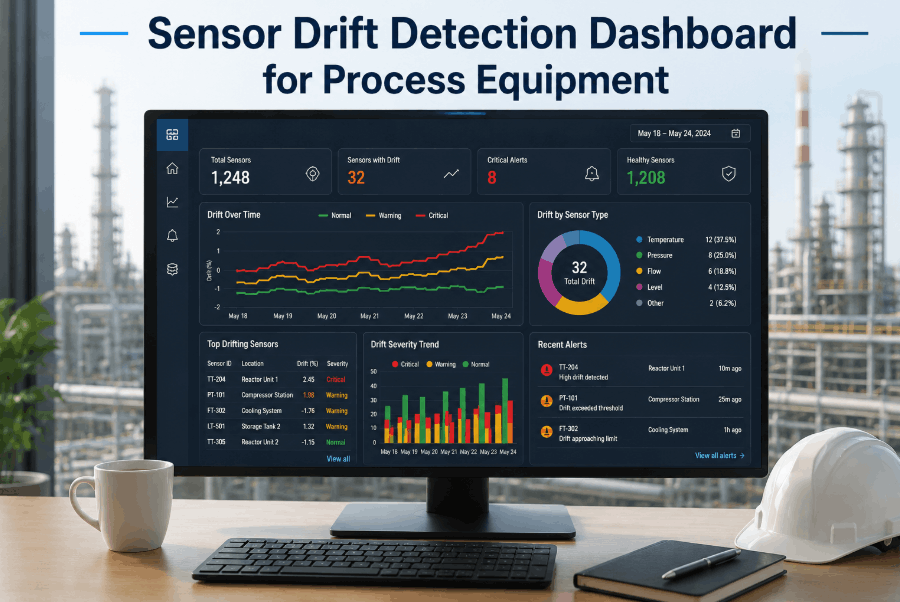
Read More
Process equipment in manufacturing and industrial facilities loses measurement accuracy silently—sensor drift corrupts readings before operators realize decisions are being made on faulty data. Unchecked drift leads to process deviations, quality

Read More
Asset lifecycle economics for manufacturing leaders is the strategic discipline that reframes equipment management from a cost center activity into a financially optimized investment decision process. Understanding the true lifecycle economics of
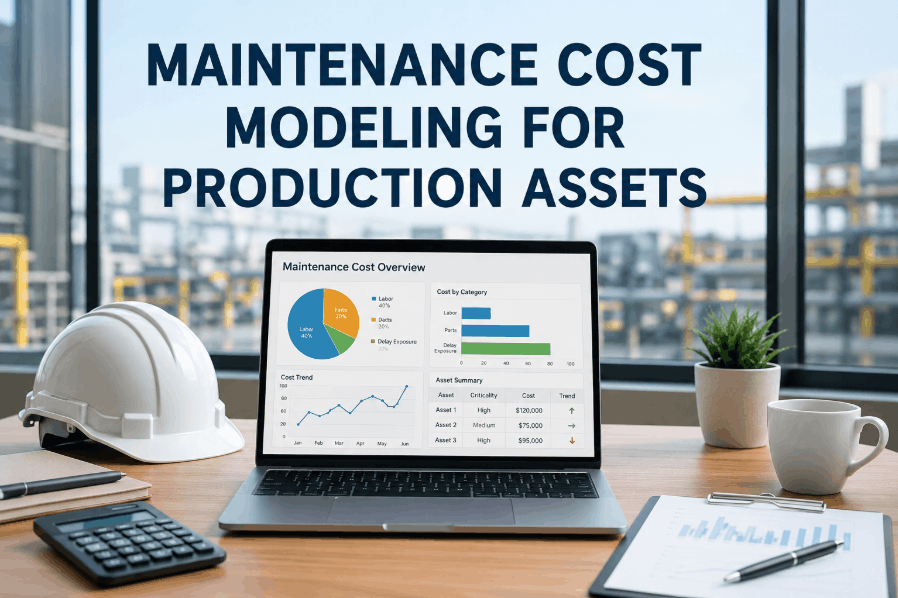
Read More
Maintenance cost modeling for production assets is the analytical discipline that converts raw work order data into financially grounded decisions about repair spend, risk exposure, and replacement timing. Most manufacturing organizations track ma

Read More
Digital work instruction adoption in plant maintenance is the operational shift that separates high-performing reliability teams from those still managing technician execution through paper forms and verbal handoffs. In 2026, manufacturers reducin

Read More
Asset history visibility for multi-site operations is the capability that separates manufacturing enterprises running proactive reliability programs from those fighting the same equipment failures across locations without ever connecting the dots.

Read More
Condition data from industrial assets — vibration readings, temperature trends, pressure deviations, and inspection findings — has little strategic value until it is translated into a single, comparable score that tells maintenance teams which ass

Read More
Factory leadership and maintenance managers often measure performance using completely different definitions of success. The plant director sees uptime percentages. The maintenance manager sees backlog hours. The reliability engineer sees MTBF tre

Read More
Preventive maintenance programs succeed or fail based on one question: did the right task get completed on the right asset at the right time with the right signoff? Most production environments cannot answer that question reliably because complian
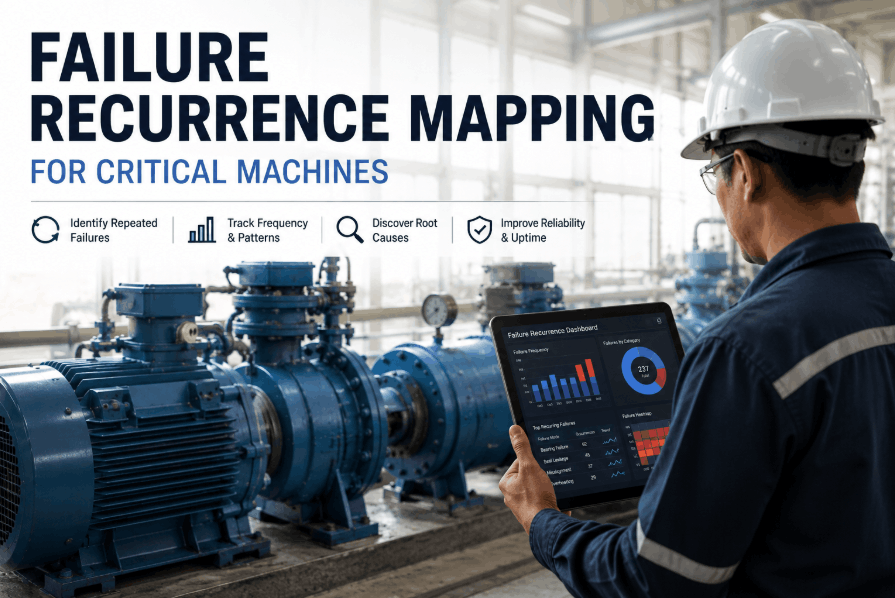
Read More
Manufacturing teams managing critical machines often find themselves fixing the same asset repeatedly — without ever understanding why it keeps failing. Failure recurrence mapping gives maintenance leaders a structured way to identify which machin

Read More
A root cause escalation workflow is the operational bridge between reactive firefighting and structured failure elimination. When the same asset fails repeatedly — a pump bearing replaced three times in six months, a conveyor motor that trips week

Read More
Maintenance data integrity checks are the verification layer that separates a CMMS that informs decisions from one that produces noise. Duplicate asset records, missing required fields, and bad timestamps do not just create reporting problems — th

Read More
Work order data quality is the single most overlooked lever in manufacturing maintenance performance. When work orders are closed with missing failure codes, inaccurate timestamps, or incomplete labor records, maintenance planners lose the ability

Read More
A CMMS data governance framework is the operational backbone of any high-performing manufacturing maintenance program. Without governed data — clean asset records, accurate work orders, enforced coding standards, and consistent field discipline —

Read More
Plant managers in manufacturing face a persistent challenge: recurring equipment failures that surface in incident reports but never get resolved at the root. Without a structured reliability review scorecard, critical signals — rising mean time b

Read More
Utility systems — compressed air, cooling water, steam, electrical distribution, and HVAC — rarely fail during steady-state production. They fail during shutdowns, when isolation, de-energization, and recommissioning sequences expose latent weakne

Read More
Maintenance procurement failures rarely start with a bad purchase — they start with an unstructured vendor evaluation. When supplier speed, documentation quality, and handoff reliability go unmeasured, procurement teams make decisions on incomplet

Read More
In high-mix manufacturing, spare parts demand variance is the hidden force behind unplanned downtime, bloated inventory carrying costs, and maintenance team friction. When production runs dozens of SKUs across shared equipment, consumption pattern

Read More
Process instrument calibration drift is one of the most underdetected sources of manufacturing quality loss — because it happens slowly, without alarms, until process variation widens and scrap rates climb. A pressure transmitter reading 2% high,

Read More
Lubrication failures are responsible for an estimated 40–50% of premature rotating equipment failures across manufacturing plants — yet most maintenance programs treat lubrication as a calendar task rather than a condition discipline. Without stru

Read More
Plant support systems — HVAC, compressed air, cooling towers, lighting, pumping stations — quietly consume a disproportionate share of your facility's total energy budget. Unlike production equipment, these systems rarely get the scrutiny they des

Read More
Maintenance cost per unit output is one of the most revealing metrics a manufacturing plant can track. It cuts through activity-based reporting and answers the question that operations leadership actually cares about: how much maintenance spend do

Read More
Aging equipment rarely fails without warning — but most maintenance teams miss the signals until a catastrophic breakdown forces an unplanned capital decision. Asset replacement planning requires recognizing wear trends, escalating fault patterns,

Read More
Not all equipment failures cost the same. A compressor failure on a primary production line is not equivalent to a conveyor fault in a buffer zone — yet many maintenance teams treat every asset with the same PM interval and the same work order pri
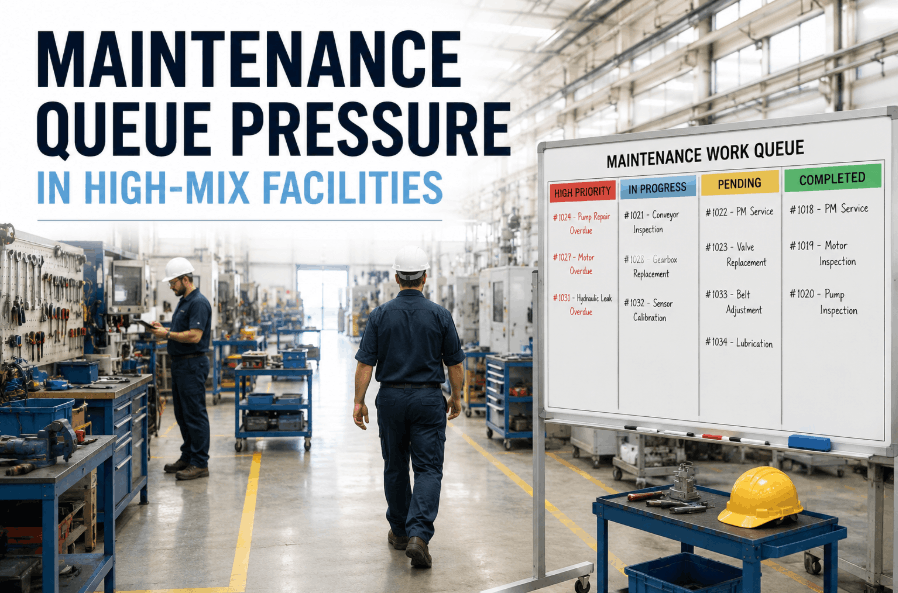
Read More
In high-mix manufacturing environments, maintenance queues don't just grow — they fracture. When job variety is high and setup time varies by asset type, traditional backlog management collapses under the weight of mixed priorities, aging tasks, a
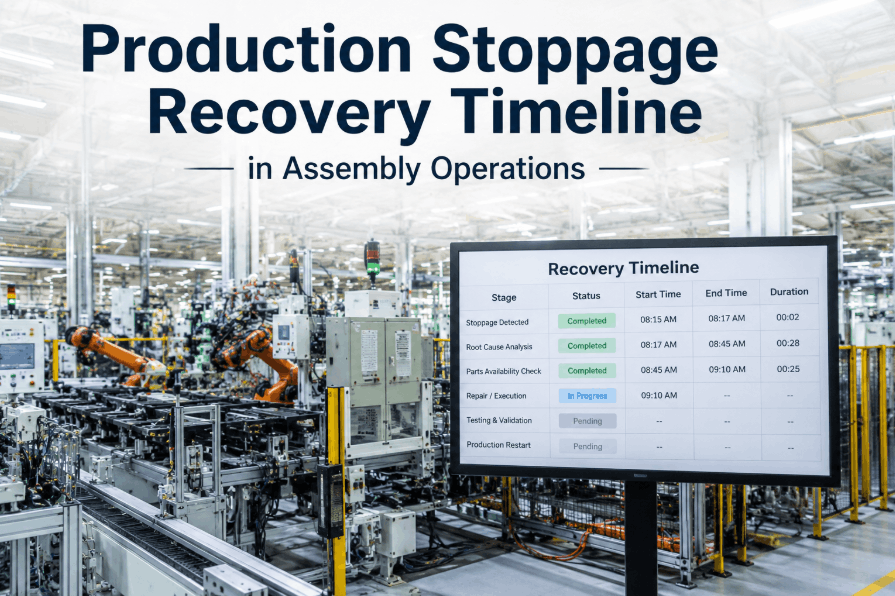
Read More
In assembly operations, production stoppages are inevitable—but the time it takes to recover is not. The recovery timeline, from the moment a line stops to when stable output resumes, is determined entirely by how fast maintenance teams can identi

Read More
In smart factory environments, the gap between when a fault begins and when it is detected—failure detection latency—is one of the most underestimated contributors to asset downtime, repair cost escalation, and production loss. Sensors, PLCs, and

Read More
Continuous production environments run 24/7, and every shift transition is a high-risk window where incomplete information, unclear task ownership, and undocumented open items quietly erode reliability. When technicians hand off equipment status w

Read More
Maintenance backlogs don't fail silently — they accumulate site by site, shift by shift, until labor strain peaks at the worst moment and deferred jobs become unplanned downtime. For multi-site plant operations, the challenge isn't just reducing t

Read More
Maintenance teams at busy plants and facilities face a constant tension between what needs to happen now and what the queue says should happen next. When every open ticket looks urgent and technicians are stretched across assets, shifts, and sites

Read More
OEE loss tree analysis for packaging lines transforms a single performance number into a structured map of where output disappears — by availability, performance, and quality — so that maintenance and operations teams can target the losses that ma

Read More
Unplanned downtime recovery in discrete manufacturing is not a single event — it is a sequence of coordinated response steps, each carrying its own friction and delay. When a line stops without warning, the speed of service restoration depends les

Read More
High-volume plants generate work orders faster than most maintenance systems can track them — and when burn-down rate falls behind creation rate, queue pressure builds until reactive events force priority reassignment. Understanding burn-down patt

Read More
Multi-line plants face a silent operational threat: maintenance backlogs that grow faster than teams can clear them. When open work queues stack up unchecked, overdue PMs accumulate, assignment lag widens, and production pressure builds until a pr

Read More
Smart factory maintenance in 2026 is defined by the convergence of AI-driven diagnostics, IoT sensor infrastructure, and cloud-based CMMS platforms that transform manufacturing maintenance from a cost center into a predictive reliability disciplin

Read More
ESG reporting in manufacturing is no longer a compliance checkbox — it is a strategic performance discipline where maintenance data has become one of the most consequential and underutilized inputs. Energy consumption, equipment uptime, emissions-
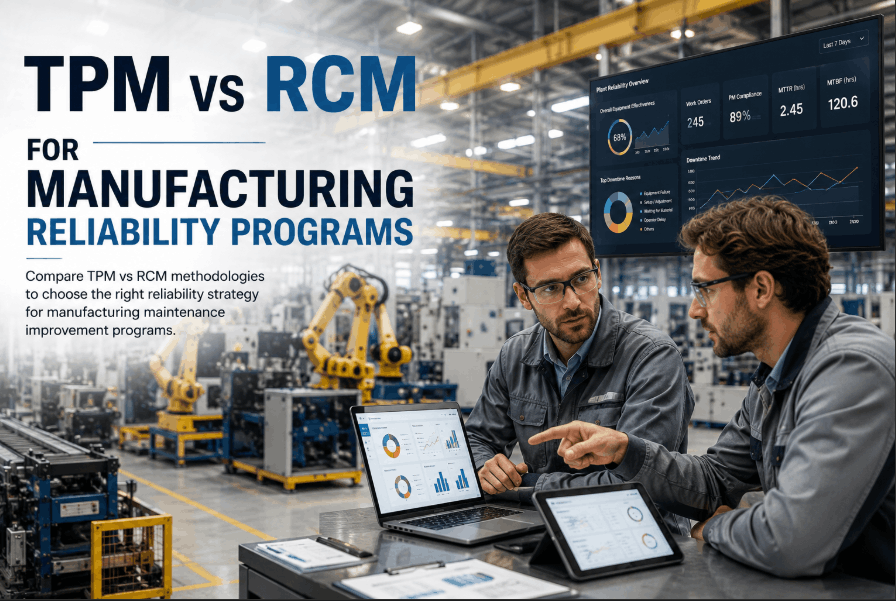
Read More
Manufacturing plants that ignore the choice between Total Productive Maintenance and Reliability Centered Maintenance end up applying the wrong strategy to every asset class — burning maintenance budget on over-maintained machines while chronicall

Read More
Manufacturing plants that treat maintenance workforce planning as a headcount problem — rather than a capacity, skill, and scheduling problem — consistently find themselves in a cycle of reactive firefighting. Technicians are either overwhelmed by

Read More
Asset lifecycle costing gives manufacturing and plant maintenance teams the financial clarity to move beyond reactive decisions and evaluate equipment on total cost of ownership — not just purchase price. From acquisition through decommissioning,

Read More
Work order prioritization in manufacturing determines whether maintenance resources are deployed where they protect production and safety — or whether urgent, high-consequence work competes with routine tasks in an undifferentiated backlog. In env

Read More
Manufacturing maintenance cybersecurity is no longer an IT-only concern — it is an operational reliability imperative. As factories deploy connected CMMS platforms, IoT-enabled condition monitoring sensors, and cloud-linked asset management system
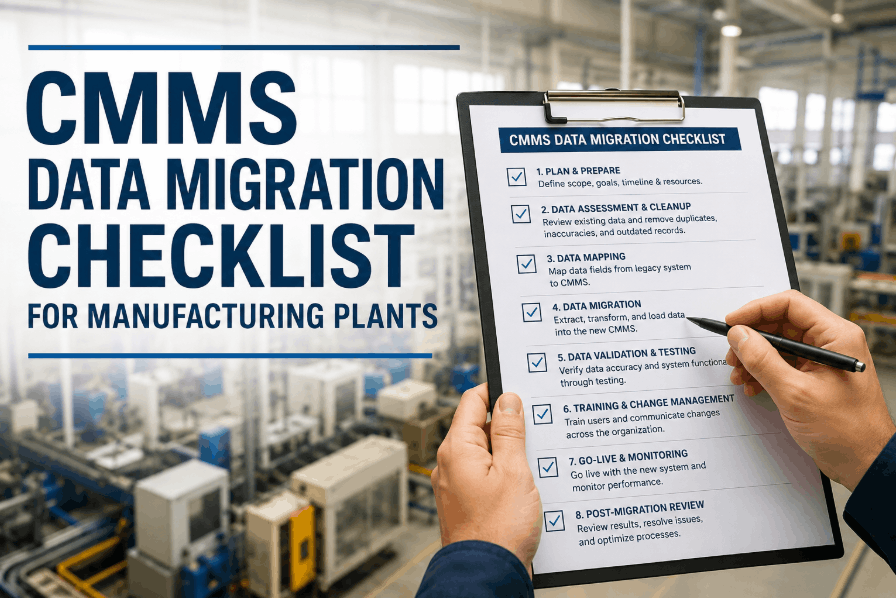
Read More
A CMMS data migration checklist is the structured foundation for moving your manufacturing plant's maintenance records, asset history, work order data, and preventive maintenance schedules into a new system without losing compliance traceability o

Read More
IoT sensors for factory maintenance monitoring are the physical foundation of any condition-based or predictive maintenance program. Without sensors capturing real-time asset condition data from the plant floor, maintenance decisions remain depend

Read More
Digital twin technology gives manufacturing maintenance teams a virtual replica of physical assets and production systems — enabling simulation, predictive analysis, and maintenance decision support that would be impossible through physical inspec

Read More
Maintenance procurement workflow optimization addresses one of the most overlooked cost centers in manufacturing operations — the gap between identifying a parts need and having the right component at the right location when a technician requires

Read More
Downtime Pareto analysis gives plant maintenance leaders a data-driven method to stop treating every equipment failure as equally urgent — and start concentrating repair resources on the 20 percent of failure causes responsible for 80 percent of t
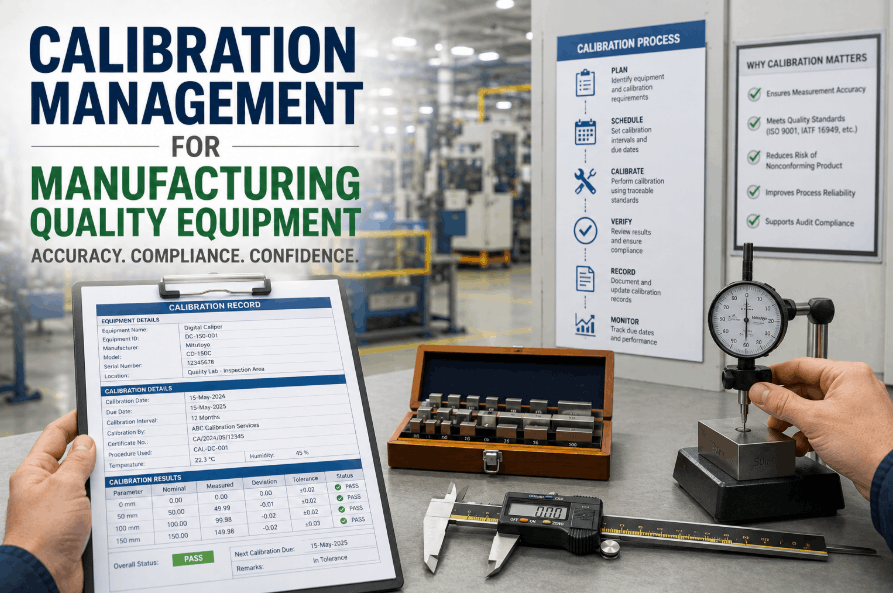
Read More
Calibration management for manufacturing quality equipment is the systematic process of verifying, adjusting, and documenting the accuracy of measurement instruments and production equipment against traceable standards. In high-compliance manufact

Read More
A maintenance risk register for critical factory assets is the structured framework that converts reactive, failure-driven plant management into a proactive, risk-ranked maintenance strategy. By identifying every significant asset risk, quantifyin

Read More
A reliability metrics dashboard for manufacturing is the decision-support layer that transforms scattered maintenance data — MTBF records, work order histories, downtime logs, and inspection findings — into a single, real-time view of plant asset
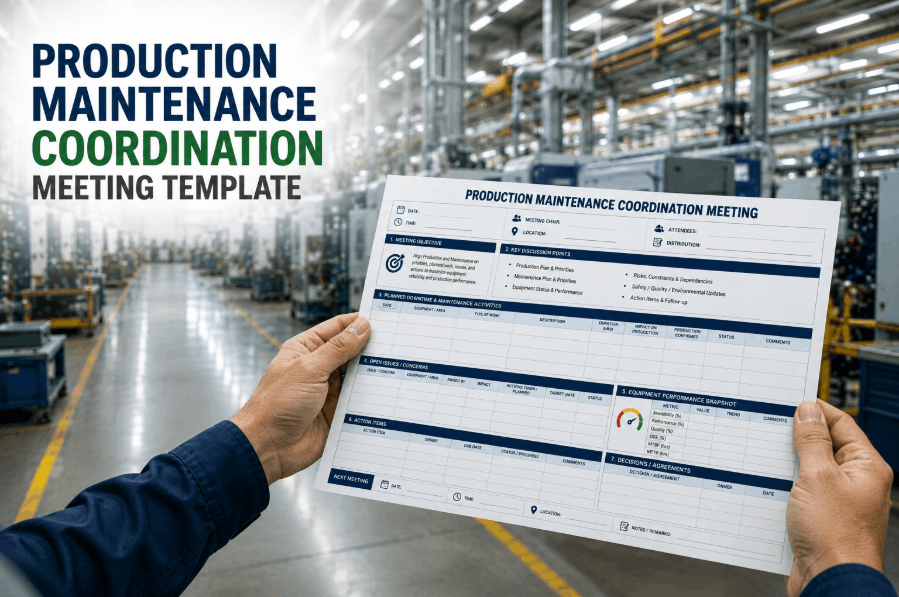
Read More
A production maintenance coordination meeting template is the operational backbone that bridges maintenance schedules with production targets — eliminating the communication gaps that drive unplanned downtime, missed PMs, and reactive repairs. Man

Read More
Reliability-Centered Maintenance (RCM) is the most structured framework ever developed for determining what maintenance to do, how often to do it, and which assets truly need it. Originally developed for commercial aviation and later adopted by mi

Read More
Spare parts management is one of the largest controllable cost variables in industrial plant maintenance — yet most plants operate without a structured classification system. Without clear spare parts classification, maintenance teams over-stock l

Read More
Manufacturing plants face increasing regulatory pressure — from OSHA equipment safety standards to ISO 55000 asset management requirements, EPA environmental compliance, and industry-specific mandates like FDA 21 CFR Part 11 or ATEX directives. Mo

Read More
Equipment failure codes are the structured language that transforms raw breakdown data into actionable maintenance intelligence. In manufacturing plants where dozens of assets generate failure events every week, unstructured fault descriptions cre

Read More
Maintenance automation workflows are the backbone of high-efficiency manufacturing operations. When work orders, inspection triggers, spare parts requests, and compliance alerts run on automated logic instead of manual coordination, maintenance te

Read More
Smart factory maintenance is no longer a future concept — it is the operational baseline that separates high-performing manufacturing plants from those stuck in reactive repair cycles. As Industry 4.0 reshapes production floors, maintenance manage
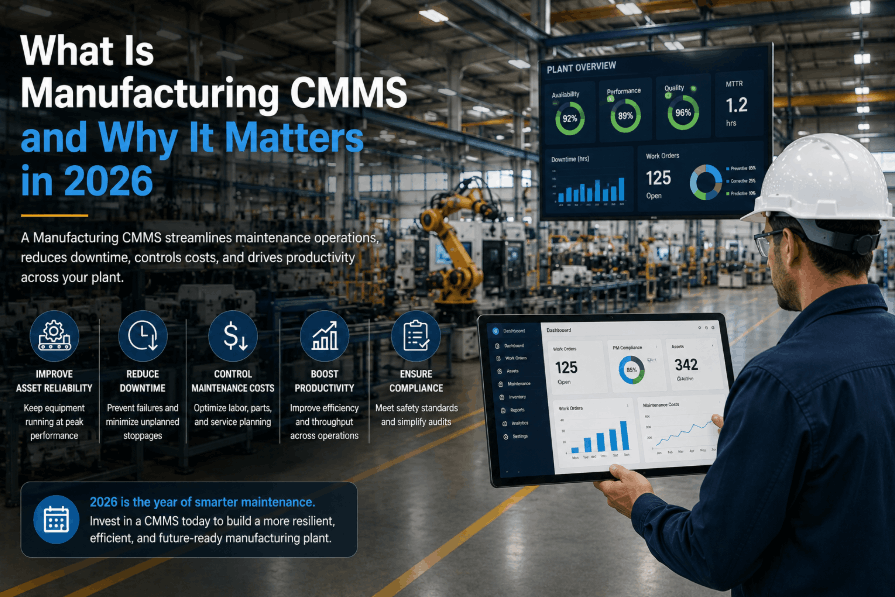
Read More
A Computerized Maintenance Management System — CMMS — is the operational backbone of a modern manufacturing plant's maintenance program. It centralizes every asset record, work order, PM schedule, spare parts inventory, and downtime event into one

Read More
Choosing between a cloud-based and on-premise CMMS is one of the highest-impact infrastructure decisions a manufacturing plant will make in 2026. The wrong choice adds implementation costs, limits scalability, or creates security exposure. The rig
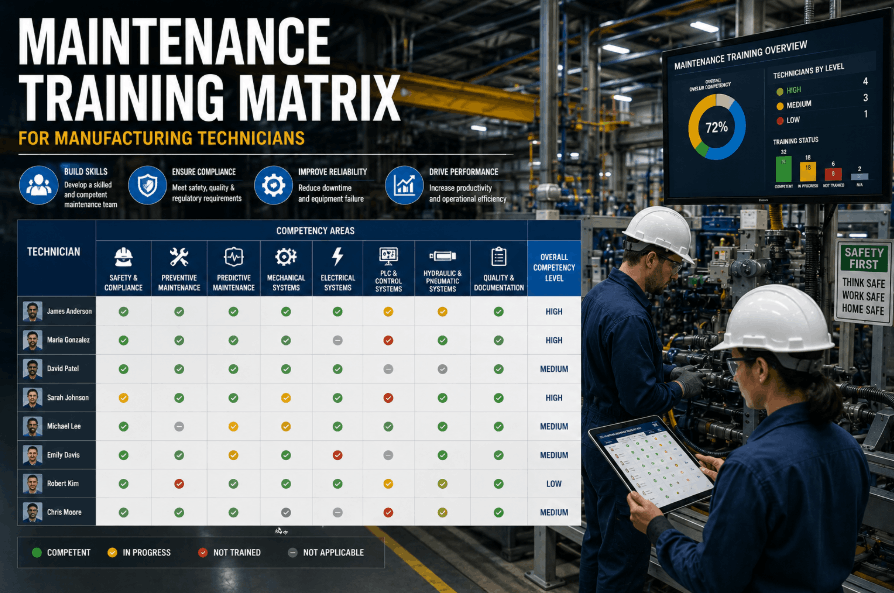
Read More
In manufacturing plants, maintenance performance depends as much on technician skill readiness as it does on equipment condition. When a CNC machine fails at 2 AM or a conveyor drive trips during peak production, the repair speed and quality are d

Read More
Most plant maintenance teams rely on handshake agreements rather than documented service levels. A production supervisor expects a 15-minute response to a line-down emergency. The maintenance manager thinks two hours is reasonable. Neither is wron

Read More
When a critical conveyor motor seizes or a packaging line loses power at 2 AM, every second of unplanned downtime drives measurable financial loss. For manufacturing plant managers and maintenance leaders, emergency maintenance response isn't just
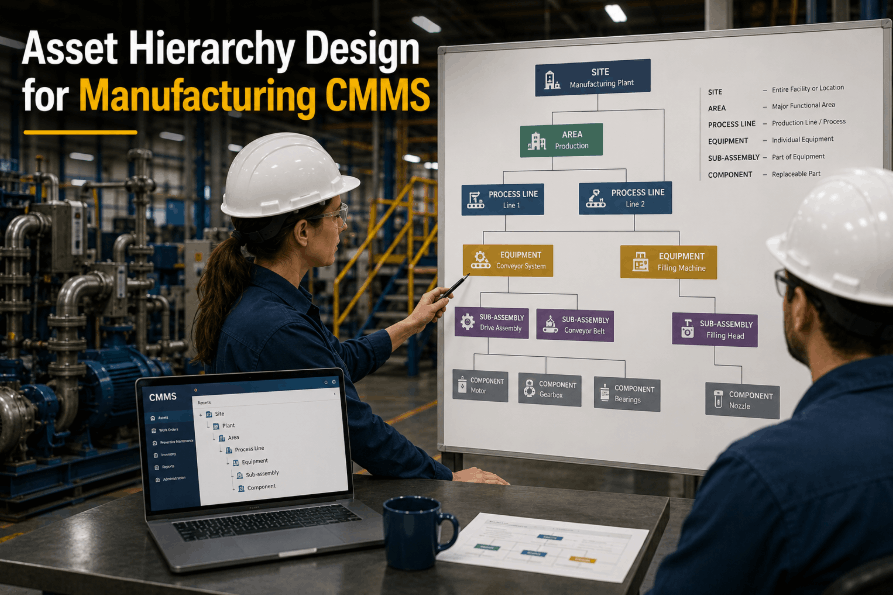
Read More
A manufacturing facility's CMMS is only as powerful as the data structure that underpins it. Without a deliberate asset hierarchy, work orders become siloed, maintenance histories fragment across spreadsheets, and reliability engineers cannot dist
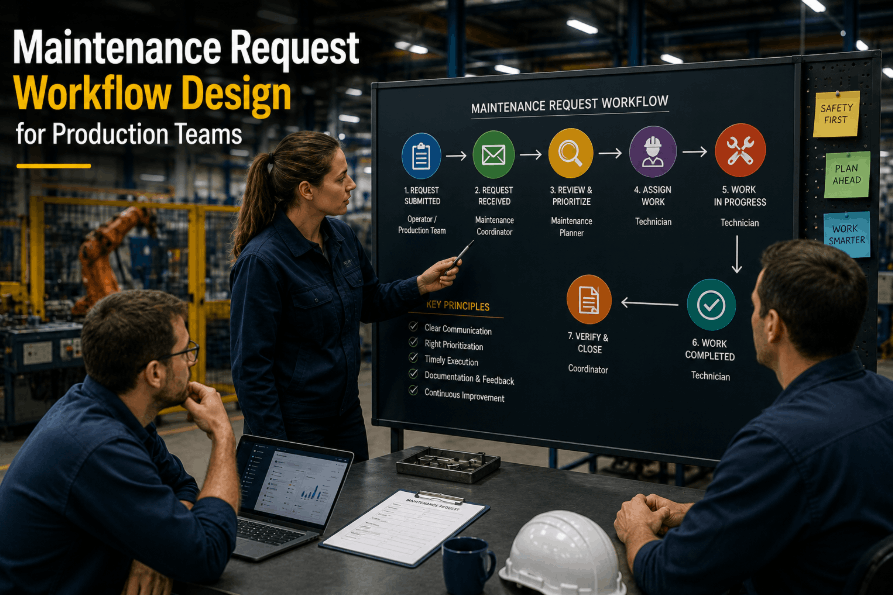
Read More
For production teams, every minute of unplanned equipment downtime begins with a maintenance request. Yet most manufacturing facilities still rely on verbal requests, paper forms, or generic email inboxes—creating workflow bottlenecks, lost inform

Read More
In manufacturing, every minute of changeover is a minute of lost production. But when changeover delays stem from equipment that isn't ready—missing tooling, uncertified assets, or last-minute breakdowns—the cost multiplies. These delays directly

Read More
Every piece of factory equipment tells a story through its operating data — vibration signatures, temperature trends, current draw patterns, and pressure differentials that shift incrementally before a failure becomes visible. Machine health scori

Read More
ISO-certified manufacturing facilities operate under a precise contract with compliance — every maintenance action, inspection record, and corrective work order must be traceable, timestamped, and audit-ready. Yet most plant teams still manage com
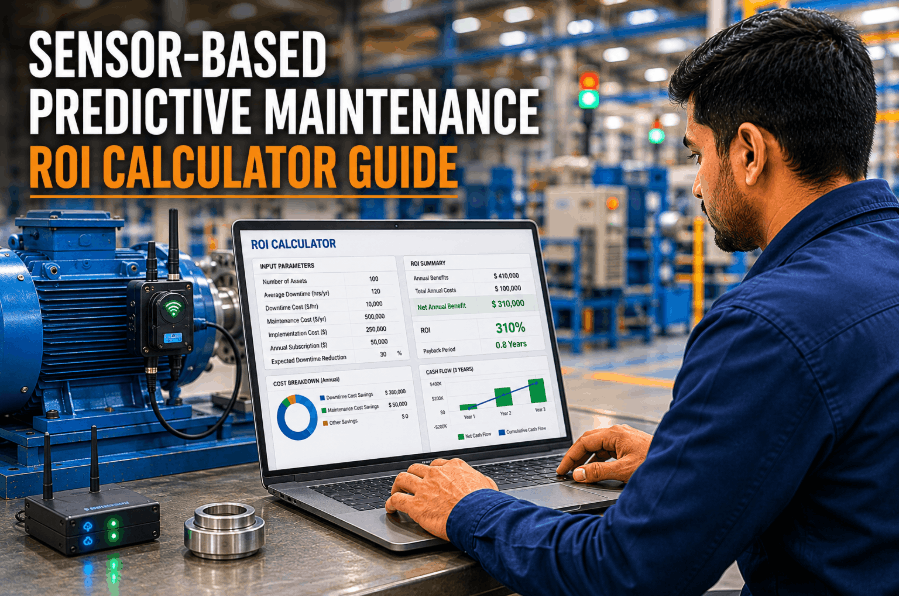
Read More
Sensor-based predictive maintenance is no longer a technology reserved for aerospace or automotive giants. As IoT sensor costs continue to fall and CMMS platforms gain real-time condition monitoring integrations, mid-sized manufacturing plants and

Read More
In high-performance manufacturing plants, the most reliable assets share one trait: operators who own their equipment. Sign Up Free on OxMaint to digitize your autonomous maintenance prog

Read More
For maintenance and reliability leaders managing multi-site manufacturing operations, inconsistent standard operating procedures represent a silent productivity killer. When each plant follows its own maintenance SOPs—with variations in PM frequen

Read More
Mobile CMMS adoption is the single biggest predictor of whether a maintenance software investment delivers measurable ROI — or becomes another system technicians route around with paper forms and phone calls. Plant technicians are the end users th
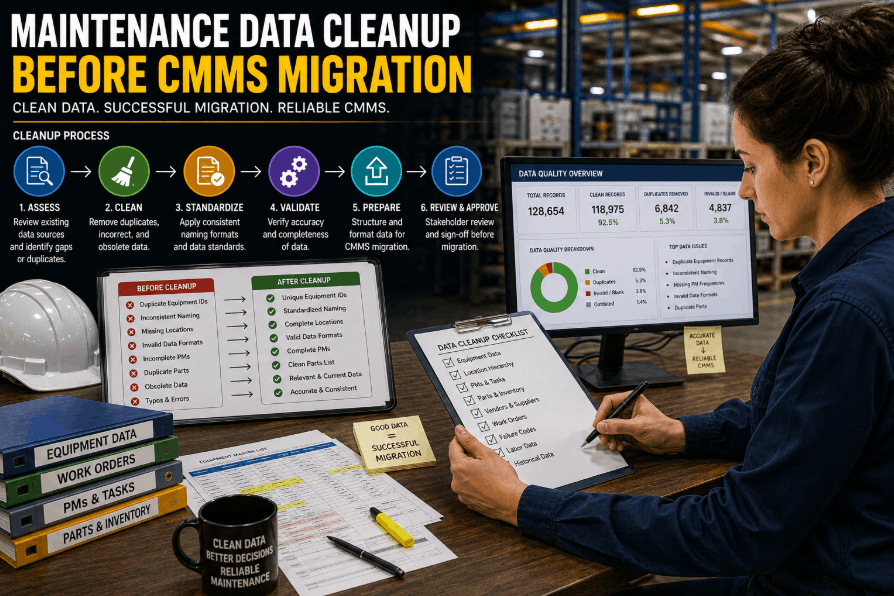
Read More
Migrating to a new CMMS platform is one of the highest-impact decisions a maintenance and reliability team can make — yet most implementations fail not because of the software, but because of the data carried into it. Dirty asset records, duplicat
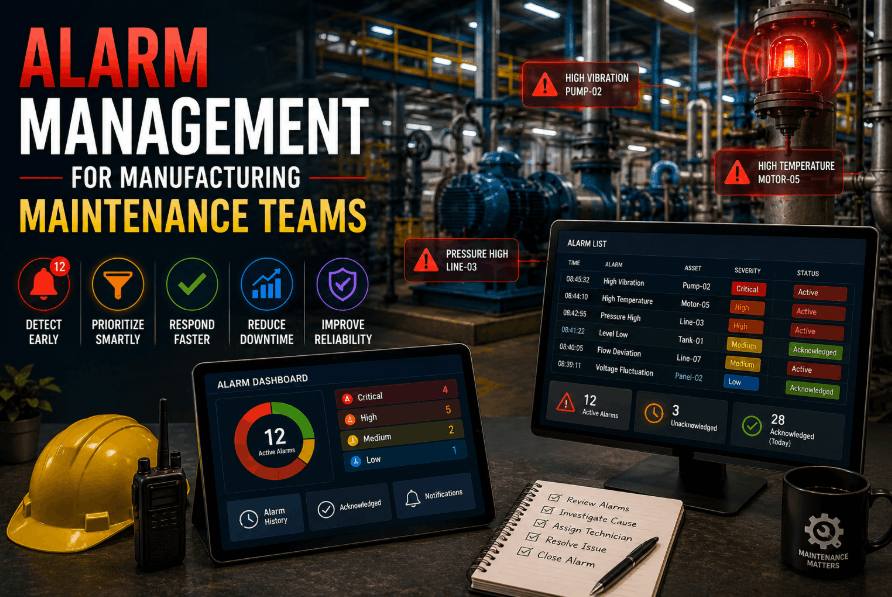
Read More
Alarm management in manufacturing plants has become one of the most pressing operational challenges maintenance teams face today. When alarm systems are poorly configured, improperly rationalized, or disconnected from maintenance workflows, the re

Read More
Shift handovers in manufacturing plants are among the most critical — and most overlooked — moments in the maintenance cycle. When information fails to transfer cleanly between shifts, equipment faults get missed, corrective actions stall, and unp

Read More
Maintenance overtime is one of the largest and most controllable cost line items in manufacturing plant operations — yet most facilities continue to manage it reactively, approving overtime after the fact rather than eliminating the scheduling gap

Read More
Process manufacturing plants depend on pumps to move fluids, slurries, and chemicals across every production stage — and when a pump fails without warning, the consequences ripple through the entire operation. Effective pump maintenance planning i

Read More
Failure Mode and Effects Analysis (FMEA) is the most structured methodology available to reliability engineers for identifying how manufacturing equipment can fail, what those failures cost, and which preventive actions deliver the highest risk re

Read More
AI-powered CMMS software is transforming how manufacturing plants manage maintenance response times — replacing slow, manual dispatch workflows with intelligent automation that detects equipment issues, routes work orders, and mobilizes technician

Read More
Plant managers who rely on gut feel and weekly status meetings to gauge maintenance performance are operating blind in a data-rich environment. The gap between what your CMMS captures and what reaches the decision-maker is where maintenance costs

Read More
Asset criticality assessment is the foundation of every high-performing manufacturing maintenance program. When plant engineers and reliability managers know exactly which assets carry the highest risk of production loss, safety incidents, or regu

Read More
Maintenance cost benchmarking for manufacturing plants is the analytical foundation that separates reactive maintenance programs from data-driven reliability operations. Without external benchmarks and internal trend baselines, plant managers cann

Read More
Compressed air leak management in manufacturing facilities is one of the highest-impact maintenance priorities plant teams can act on today. Undetected leaks silently drain compressed air systems of 20 to 30 percent of total output — driving up en
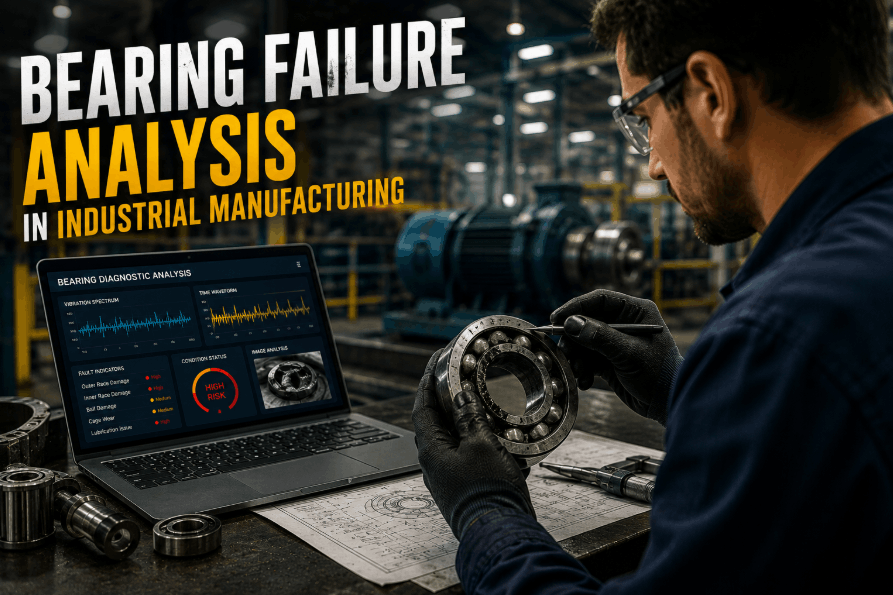
Read More
Bearing failures account for nearly 40% of rotating equipment breakdowns in industrial manufacturing — and most are preventable. In 2026, reliability engineers and maintenance managers are expected to move beyond reactive replacement cycles and im

Read More
Conveyor systems are the circulatory system of modern manufacturing — when they stop, throughput stops. In 2026, plant managers and reliability engineers are under increasing pressure to keep conveyor uptime above 95% while managing aging equipmen

Read More
PLC maintenance best practices are the operational backbone of every reliable factory automation environment. Programmable Logic Controllers govern virtually every automated process on the plant floor — conveyor sequencing, robotic cell coordinati
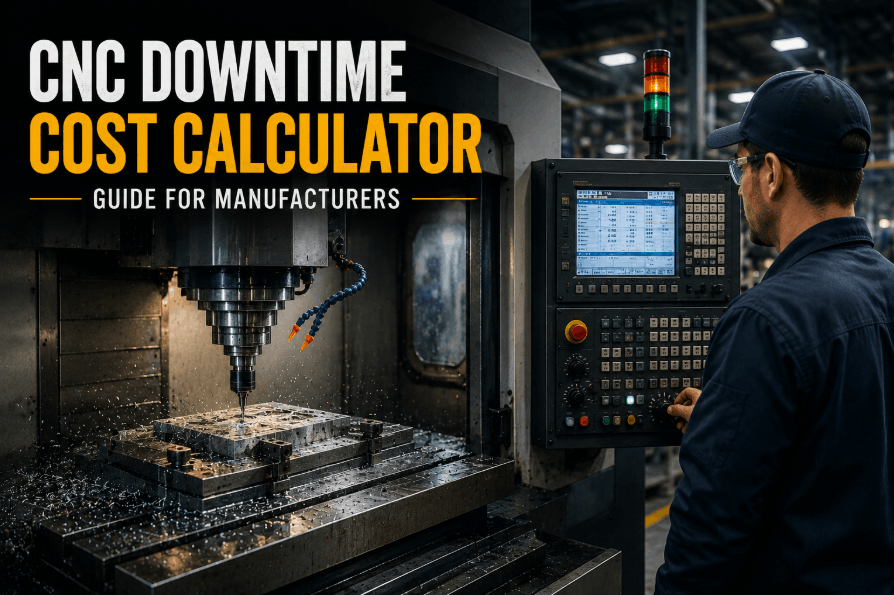
Read More
CNC downtime cost calculator tools give manufacturing teams a precise financial lens on their most expensive operational problem — unplanned machine stoppages. Every idle CNC machining center, turning lathe, or 5-axis mill costs far more than the

Read More
Effective shutdown planning is the difference between a controlled, cost-efficient turnaround and a costly, chaotic outage. Industrial facilities that use a structured shutdown planning checklist for annual plant turnarounds consistently achieve s

Read More
Thermal imaging use cases for electrical maintenance in factories represent one of the highest-return applications of predictive maintenance technology available to industrial facilities today. Infrared thermography identifies overheating connecti

Read More
Vibration analysis for rotating equipment in manufacturing plants is one of the most powerful predictive maintenance strategies available to reliability engineers today. Motors, pumps, compressors, fans, and gearboxes account for the majority of u
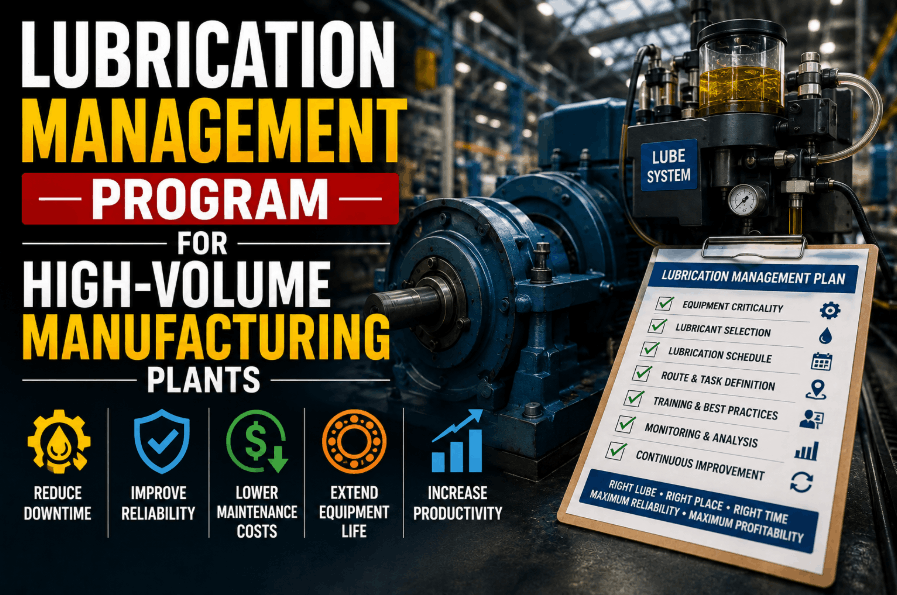
Read More
High-volume manufacturing plants waste 8–15% of rotating equipment lifespan and consume 15–25% excess energy due to inadequate or inconsistent lubrication management. Friction losses from poor lubrication reduce bearing life from 50,000 hours to 8

Read More
Manufacturing plants waste 15–35% of production capacity through unplanned equipment downtime, efficiency losses, and poor maintenance visibility. OEE improvement through data-driven maintenance isn't just an operational metric—it's the direct pat

Read More
Manufacturing facilities waste 20–40 percent of operational energy due to deferred maintenance, equipment inefficiency, and poor monitoring visibility. Energy waste reduction through maintenance isn't just an operational improvement—it's a direct
-inspection-checklist-for-industrial-facilities.png)
Read More
A Motor Control Center inspection checklist is the structured foundation for safe, compliant electrical maintenance on industrial and manufacturing facilities — an undetected loose bus connection, degraded contactor, or failed overload relay in an
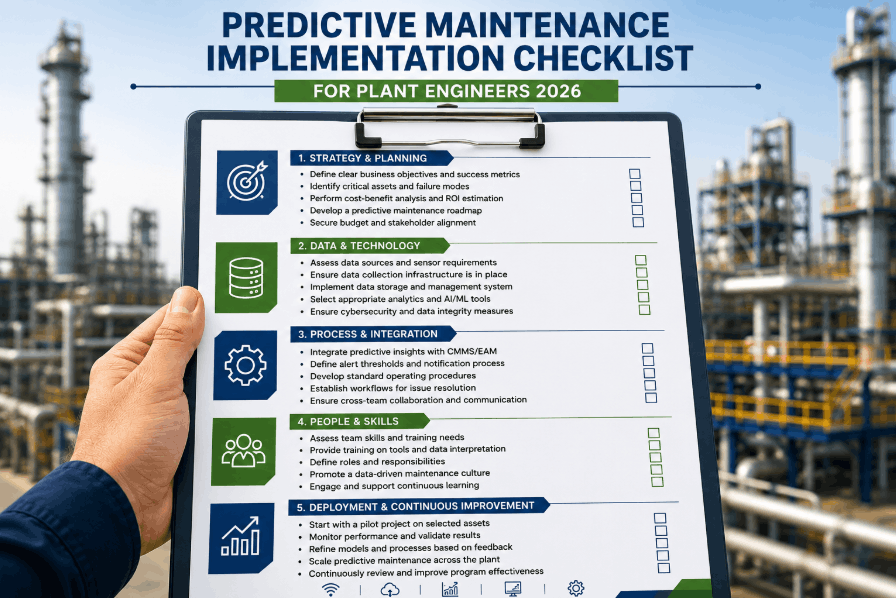
Read More
A predictive maintenance implementation checklist gives plant engineers the structured framework to launch a PdM program that reduces unplanned downtime, extends asset life, and integrates condition monitoring data directly into CMMS-driven work o
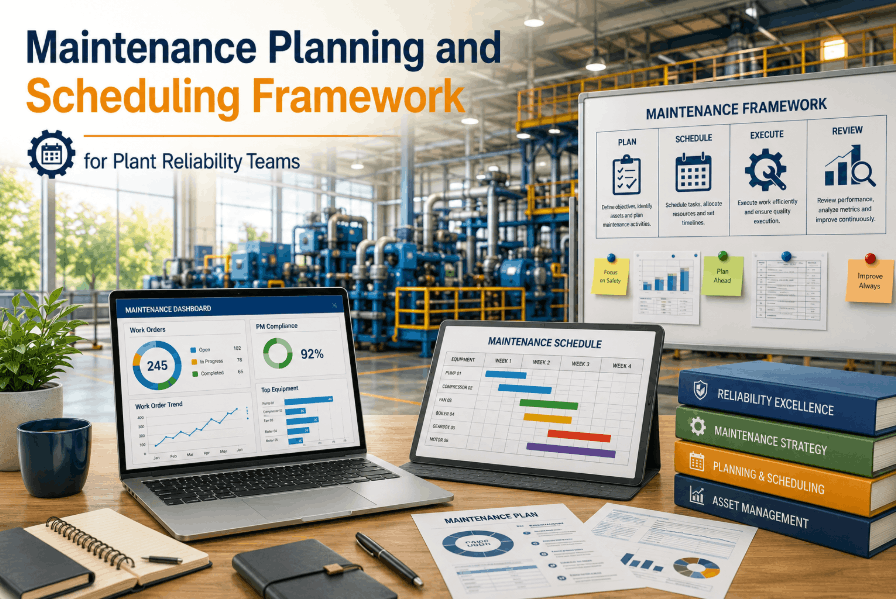
Read More
A structured maintenance planning and scheduling framework for plant reliability teams is the difference between a maintenance department that drives uptime and one that constantly reacts to failures. In 2026, reliability-focused plants are moving

Read More
Digital work order management best practices for manufacturing plants have become the defining line between operations that scale and operations that stall. In 2026, paper-based or spreadsheet-driven work order processes are costing plants real mo

Read More
Spare parts inventory is one of the most expensive and most mismanaged assets in manufacturing maintenance. Too little stock means emergency downtime while waiting for a critical bearing or seal — too much means capital locked in shelving, obsoles

Read More
Repeating machine failures are not bad luck — they are a system failure in how your maintenance program identifies, documents, and eliminates the true cause of breakdowns. When the same motor trips for the third time in a quarter, or the same conv
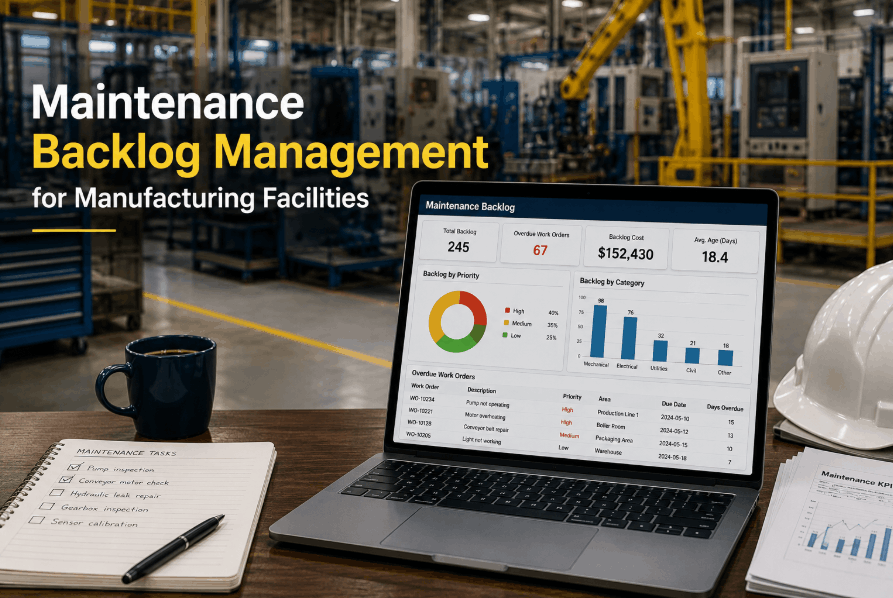
Read More
Maintenance backlog is the most reliable predictor of facility failure in mid-sized manufacturing plants. When the volume of open, overdue, and deferred preventive maintenance tasks exceeds the capacity of your maintenance team to complete them, e

Read More
A structured CMMS implementation roadmap is the difference between a manufacturing plant that achieves measurable ROI within 90 days and one that abandons its investment after a failed deployment. Mid-sized manufacturing facilities — those operati

Read More
Unplanned equipment failure costs manufacturing plants more than the maintenance itself — it costs lost production, scrambled technician allocation, and customer deliveries at risk. Motors, pumps, and gearboxes represent 60% of critical asset fail
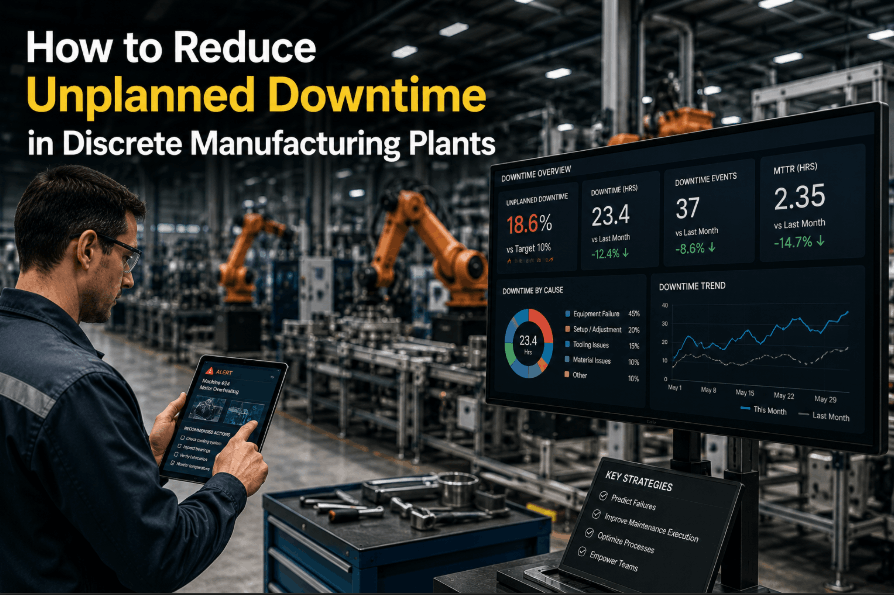
Read More
Every hour of unplanned downtime in a discrete manufacturing plant costs thousands — lost production, idle technicians, premium rush shipping for parts, and customers questioning your reliability. Yet most facilities respond to downtime reactively
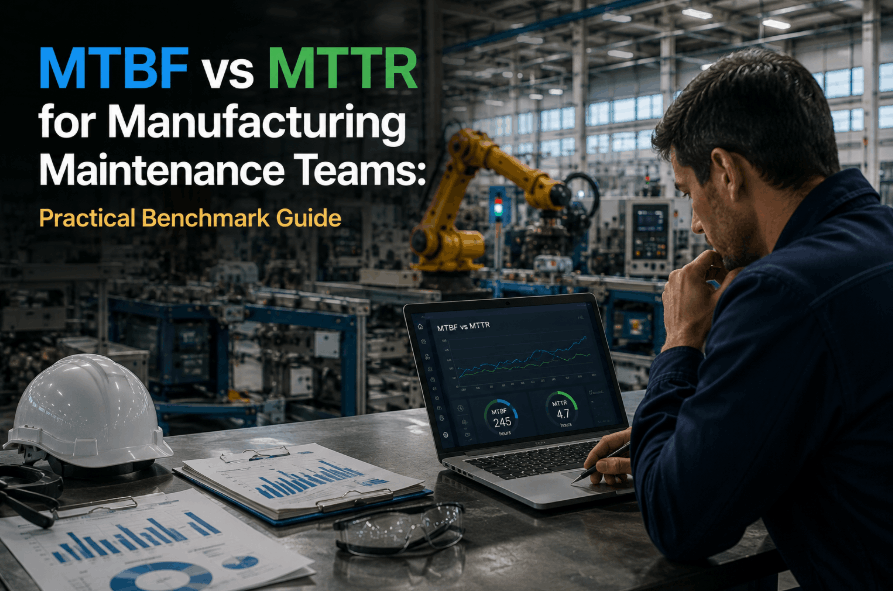
Read More
MTBF vs MTTR — two metrics that sound similar but measure completely opposite things — yet most manufacturing plants confuse them or track only one. Mean Time Between Failures (MTBF) tells you how long your equipment runs before it breaks. Mean Ti

Read More
Predictive maintenance KPIs separate manufacturing plants that run reliably from those that face constant equipment failures and production losses. Most facilities still rely on reactive maintenance — responding to breakdowns after they happen — w

Read More
Manufacturing plants that run Oracle NetSuite for financial management and a separate CMMS for maintenance operations are unknowingly creating a cost blindspot. When work order spend, parts consumption, contractor invoices, and labor hours live in

Read More
Maintenance teams and finance departments have historically operated in separate systems — work orders living in a CMMS while purchase orders, vendor records, and asset depreciation sit locked inside Oracle NetSuite ERP. That disconnection creates

Read More
Manufacturing plants running OSI PI Historian sit on a goldmine of real-time process data — vibration trends, temperature curves, pressure deviations, flow anomalies — yet most of that data never reaches the maintenance team in time to prevent fai

Read More
Manufacturing and process plants generate millions of time-stamped data points every hour — pressure readings, temperature curves, vibration signatures, flow rates — all captured and stored in OSI PI Historian (now AVEVA PI System). For decades, t

Read More
Manufacturing plants running OSI PI Historian — now AVEVA PI System — sit on a goldmine of real-time process data. Pressure readings, flow rates, temperature curves, vibration signals — all captured at millisecond resolution across thousands of PI

Read More
Manufacturing plants generate millions of data points every second — from motor temperatures and valve pressures to flow rates and vibration signatures. Without a structured system to capture and contextualize this data, predictive maintenance rem
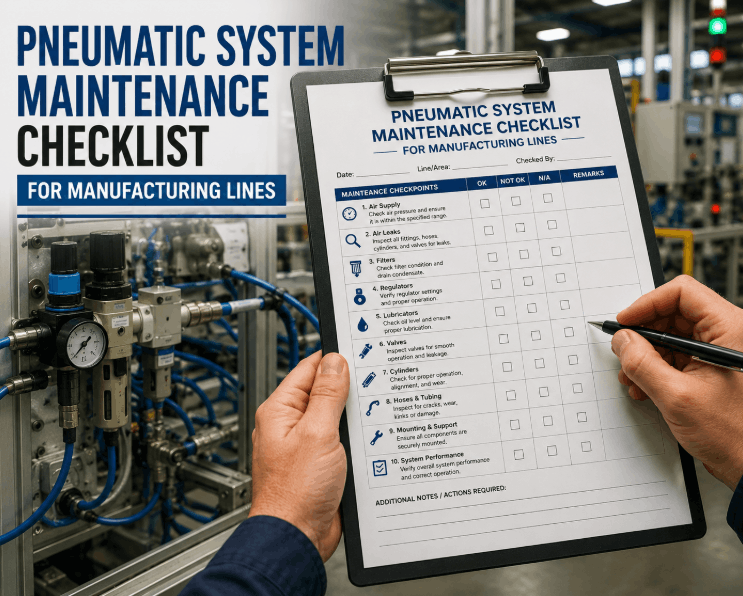
Read More
A pneumatic system maintenance checklist is the foundation of reliable, safe manufacturing line operations — unplanned air system failures stop production instantly, and a single degraded FRL unit or leaking actuator fitting can cascade into compr

Read More
A bearing inspection and lubrication checklist is the most direct tool maintenance teams have for preventing unplanned downtime from rolling element bearing failures in industrial machinery. Under ISO 18436-2, ANSI/AFBMA standards, and OEM service
![monthly-manufacturing-plant-safety-audit-checklist-[osha---iso-45001]](./manage-post-2k26/uploads/monthly-manufacturing-plant-safety-audit-checklist-[osha---iso-45001].png)
Read More
A monthly manufacturing plant safety audit checklist is the most critical compliance tool EHS managers deploy to prevent OSHA recordable incidents, ISO 45001 audit findings, and catastrophic production disruptions across industrial operations. Man

Read More
A plant emergency response checklist is the most critical safety document a manufacturing EHS manager can maintain to protect workers, assets, and operational continuity when incidents escalate from seconds to catastrophe. Industrial facilities fa
![machine-downtime-tracking-template-for-manufacturing-[excel-dashboard]](./manage-post-2k26/uploads/machine-downtime-tracking-template-for-manufacturing-[excel-dashboard].png)
Read More
Unplanned machine stoppages cost manufacturers an estimated 5–20% of productive capacity every year — yet most plants still track downtime in fragmented spreadsheets, shift logs, or not at all. A structured machine downtime tracking template gives

Read More
Manufacturing facilities account for over 30% of global energy consumption — yet most plants have never conducted a structured energy audit. An industrial energy audit is not a compliance exercise; it is the clearest path to identifying where kilo
![transformer-maintenance-checklist-for-industrial-facilities-[annual---quarterly]](./manage-post-2k26/uploads/transformer-maintenance-checklist-for-industrial-facilities-[annual---quarterly].png)
Read More
Industrial transformer failures don't announce themselves — they develop through months of deferred oil testing, ignored insulation resistance trends, and cooling system neglect until a catastrophic outage shuts down an entire production line. A s
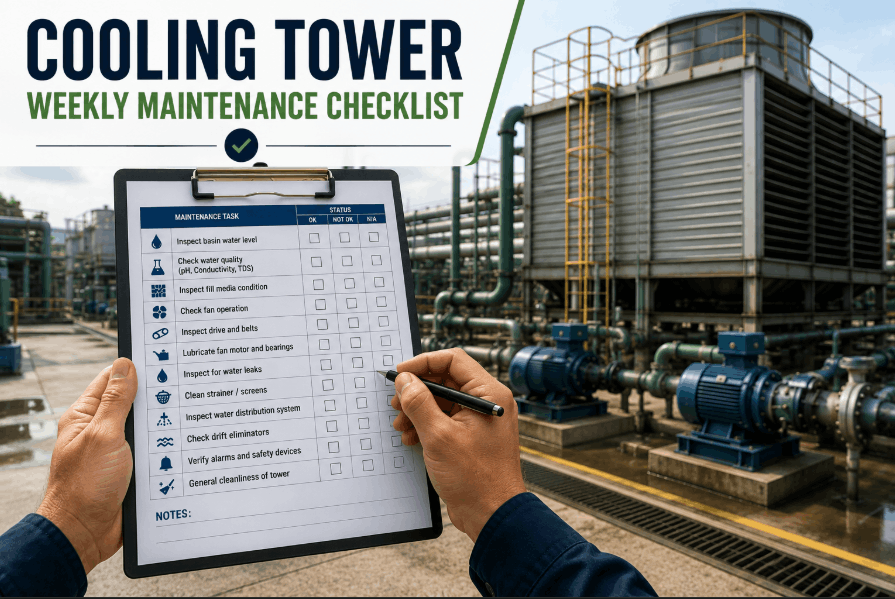
Read More
A cooling tower weekly maintenance checklist is the most essential recurring PM activity a maintenance manager at any manufacturing plant can execute to prevent Legionella outbreaks, equipment failure, and regulatory non-compliance. Cooling towers

Read More
Manufacturing plants face a tightening compliance environment in 2026 — with OSHA enforcement activity at record levels, updated standards across lockout/tagout, hazard communication, and machine guarding, and penalties that now exceed $16,000 per

Read More
Lubrication failures account for up to 50% of all premature bearing failures in manufacturing plants — yet most facilities still manage lubricant schedules through spreadsheets, whiteboards, or tribal knowledge. Effectivelubrication management is
![maintenance-technician-job-description-template-[2026-ready]](./manage-post-2k26/uploads/maintenance-technician-job-description-template-[2026-ready].png)
Read More
A maintenance technician job description template is one of the most business-critical documents a manufacturing HR or maintenance manager produces each year. The right template defines technical qualifications with precision, reduces mis-hires, s
![maintenance-cost-tracking-template-for-plant-managers-[free-excel-2026]](./manage-post-2k26/uploads/maintenance-cost-tracking-template-for-plant-managers-[free-excel-2026].png)
Read More
Uncontrolled maintenance spending is one of the largest hidden drains on plant profitability. Without a structured maintenance cost tracking template, plant managers lose visibility into labor overruns, parts waste, contractor inefficiencies, and
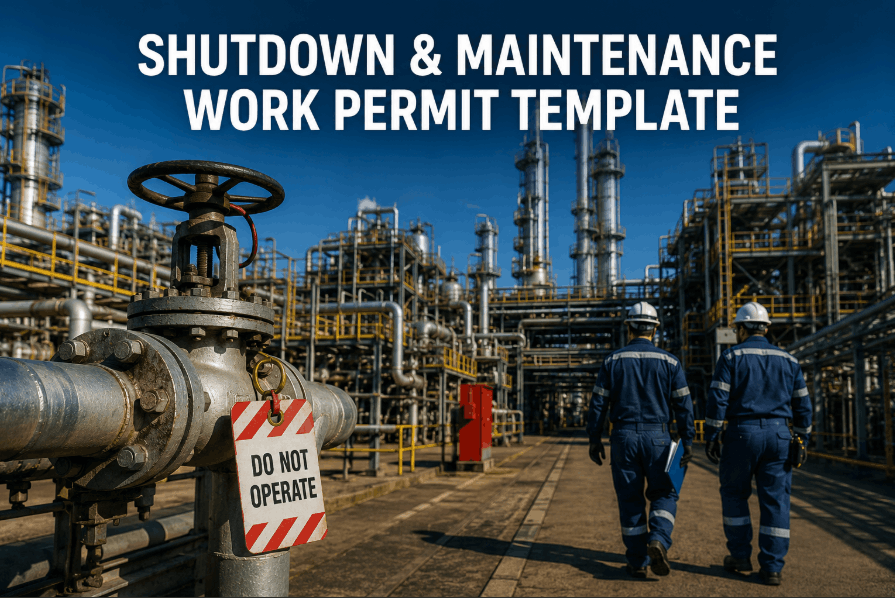
Read More
A shutdown work permit is the single most critical safety document in industrial plant maintenance. Without a structured permit-to-work (PTW) system, plants face uncontrolled hazards, regulatory penalties, and fatal incidents. This page gives main
![oee-calculation-template-for-manufacturing-plants-[excel---dashboard]](./manage-post-2k26/uploads/oee-calculation-template-for-manufacturing-plants-[excel---dashboard].png)
Read More
An OEE calculation template is the operational backbone of any data-driven manufacturing reliability program. Overall Equipment Effectiveness — the product of Availability, Performance, and Quality — is the single most actionable metric for measur

Read More
Manufacturing quality systems don't fail during certification — they fail between audits, when nonconformances go untracked, corrective actions stall, and process documentation drifts from what's actually happening on the floor. ISO 9001:2015 inte
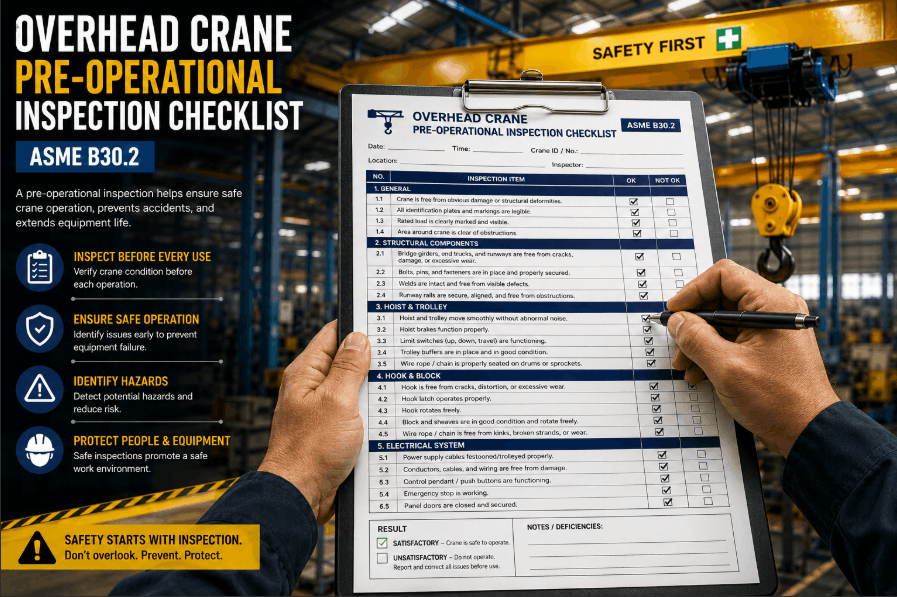
Read More
Overhead crane failures don't announce themselves — they occur mid-lift, under load, when a missed inspection item becomes a dropped load or a fatality. ASME B30.2-compliant pre-operational inspections are the frontline defense against unplanned d

Read More
Overall Equipment Effectiveness (OEE) is the most powerful KPI in manufacturing — yet most plants either measure it inconsistently or fail to act on what it reveals. A disciplined OEE improvement program surfaces hidden production losses, aligns m
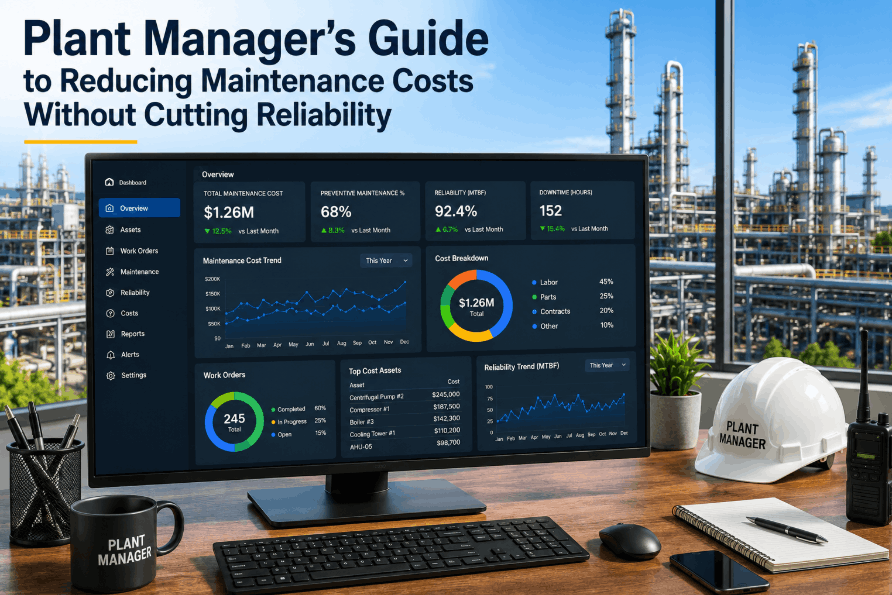
Read More
Every dollar a plant manager wastes on unnecessary maintenance is a dollar that cannot fund capital improvements, workforce development, or competitive pricing. Yet cutting maintenance costs carelessly is how facilities slip from managed reliabili
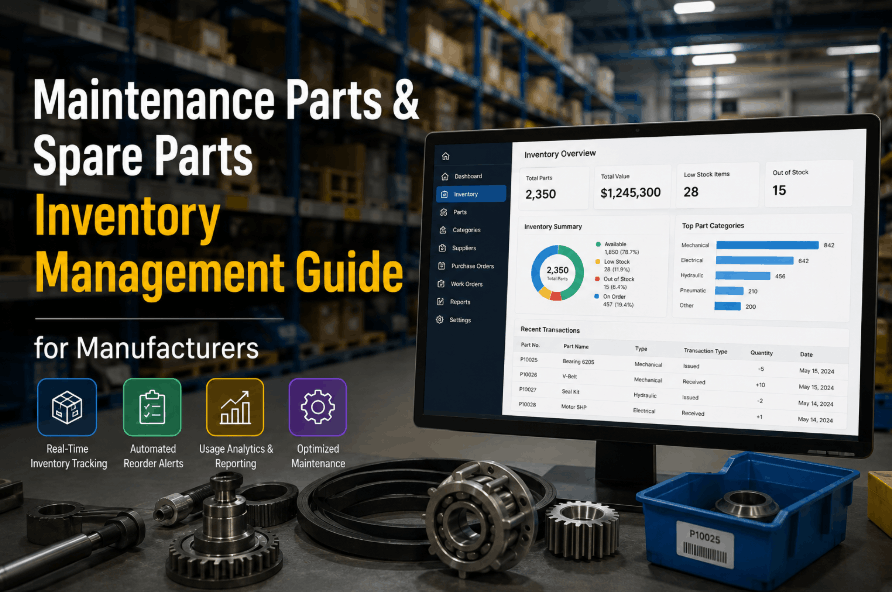
Read More
Maintenance spare parts inventory management is the operational foundation that determines whether your facility runs or fails. When the right MRO part is unavailable at the moment of a breakdown, every minute of unplanned downtime compounds into

Read More
Condition-based maintenance (CBM) is reshaping how reliability engineers protect critical assets in modern manufacturing plants. Unlike fixed-interval preventive maintenance, CBM triggers work orders only when real-time sensor data or inspection r

Read More
Choosing the wrong CMMS costs manufacturing plants more than the software license — it costs months of failed adoption, lost maintenance data, and operational disruption. In 2026, with over 200 CMMS platforms on the market, the decision framework
.png)
Read More
Asset tracking software has become a mission-critical investment for manufacturing plants in 2026 — yet most facilities still manage equipment with spreadsheets, outdated EAM systems, or manual paper logs that create blind spots in asset visibilit

Read More
Work order management software has become mission-critical for manufacturing plants in 2026 — yet most facilities still rely on paper-based systems, disconnected spreadsheets, or legacy CMMS platforms that can't keep pace with modern production de

Read More
Food manufacturing plants operate under relentless regulatory pressure — FDA inspections, FSMA compliance mandates, HACCP documentation, and sanitation audit trails that must be production-ready at any moment. Yet most maintenance teams still trac

Read More
An automotive Tier-2 supplier producing stamped metal components and subassemblies for three OEM programs was approaching an operational breaking point. Clipboards, paper work orders, and manual preventive maintenance logs had become the single la

Read More
A mid-sized cement manufacturer operating a single integrated plant in the U.S. South was losing an estimated $2.9 million annually to unplanned kiln shutdowns and rotating equipment failures. Cement kilns — the thermal core of every clinker produ

Read More
The gap between reactive and world-class manufacturing maintenance has never been wider — and what separates them in 2026 is not budget alone, it is the technology stack powering every decision, from a pump bearing anomaly detected at 3 AM to a wo
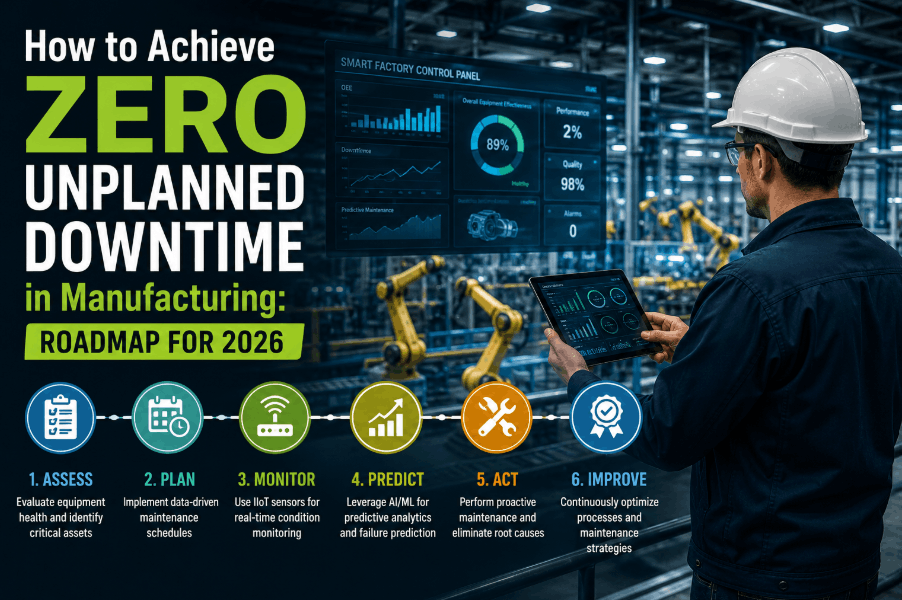
Read More
Unplanned downtime costs industrial manufacturers an average of $260,000 per hour — and in 2026, the gap between plants running reactive maintenance and those using AI-driven predictive systems is wider than ever.
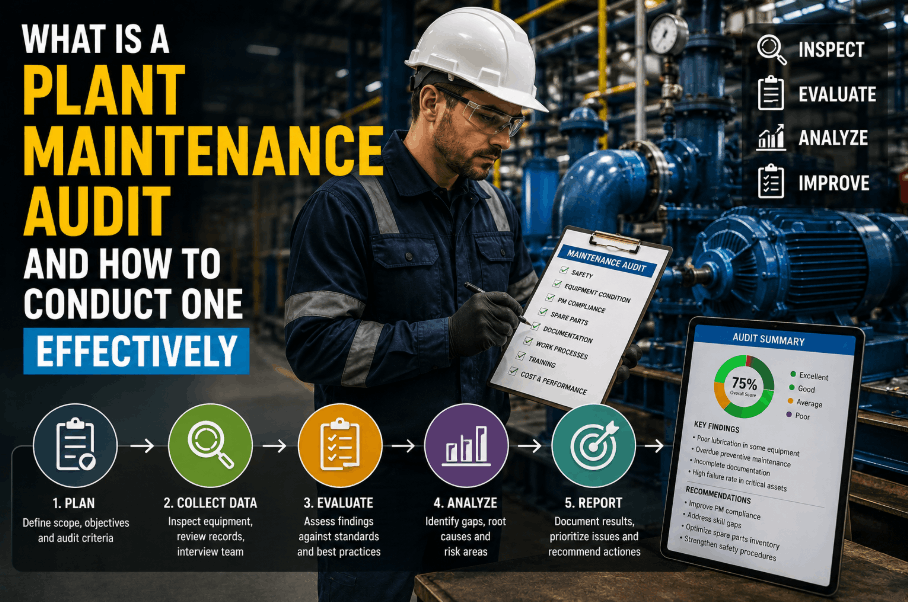
Read More
A plant maintenance audit is one of the most decisive tools a reliability manager can deploy — yet most manufacturing facilities conduct them reactively, after a compliance failure or a costly breakdown. A structured maintenance audit evaluates yo

Read More
Manufacturing plants running without IoT-enabled predictive maintenance are flying blind. Equipment failures don't announce themselves — they build through vibration spikes, thermal drift, and pressure anomalies that conventional inspection cycles

Read More
Most manufacturing facilities operating on reactive maintenance lose 20–30% of their available production capacity to unplanned stoppages — not because preventive maintenance is complicated, but because no one has ever built the foundation. Settin
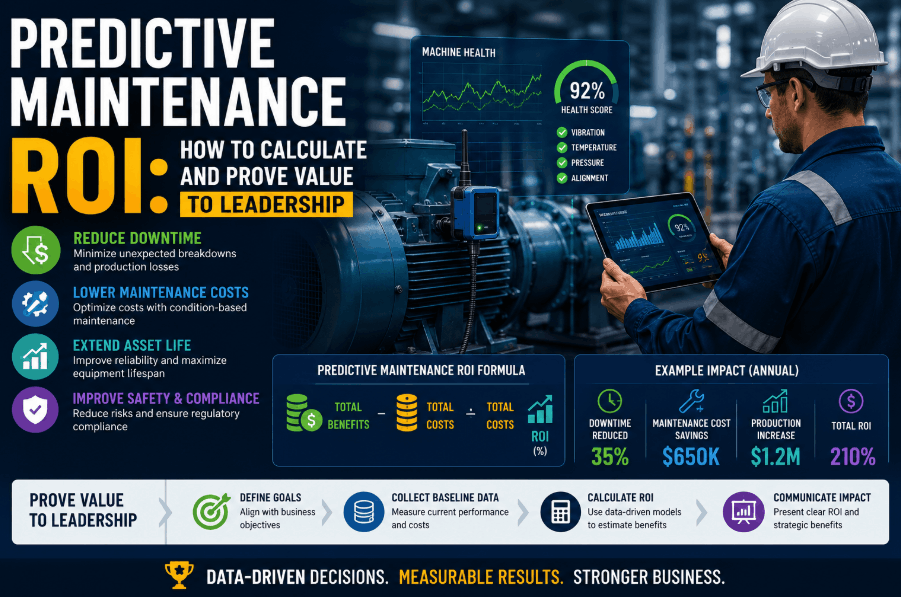
Read More
Most maintenance leaders know predictive maintenance works — but knowing it and proving it to a CFO are two different problems. The gap between a functioning PdM program and a funded one is almost always a financial translation problem: engineerin
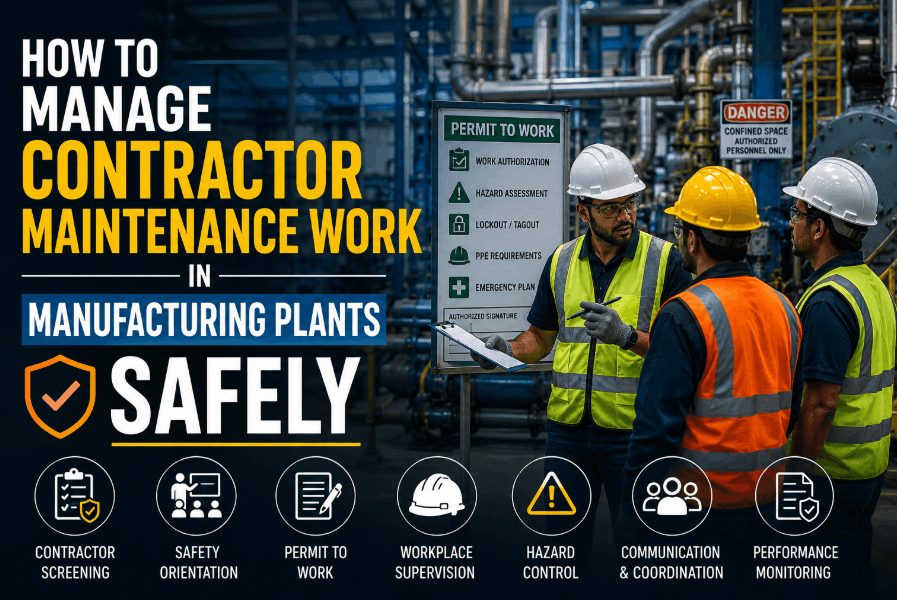
Read More
Managing contractor maintenance work in manufacturing plants is one of the most operationally complex and safety-critical challenges plant managers face. From Sign Up Free to streamline c

Read More
Maintenance managers in 2026 face a convergence of pressures that no previous generation of plant leaders has navigated simultaneously — aging infrastructure, widening skilled trades gaps, real-time production demands, and digital transformation m

Read More
QR code equipment maintenance is transforming how manufacturing plants manage assets, execute inspections, and close work orders. When a technician scans a tag on a conveyor motor, presses, or HVAC unit, they get instant access to service history,

Read More
Multi-site manufacturing operations face a silent productivity crisis: when maintenance processes differ plant to plant, reliability gaps widen, costs diverge, and leadership loses the visibility needed to make confident capital decisions.
-guide-for-maintenance-teams.png)
Read More
Pharmaceutical equipment qualification is not a regulatory checkbox — it is the operational backbone of every compliant manufacturing facility. IQ, OQ, and PQ protocols define whether your equipment is installed correctly, operating within validat
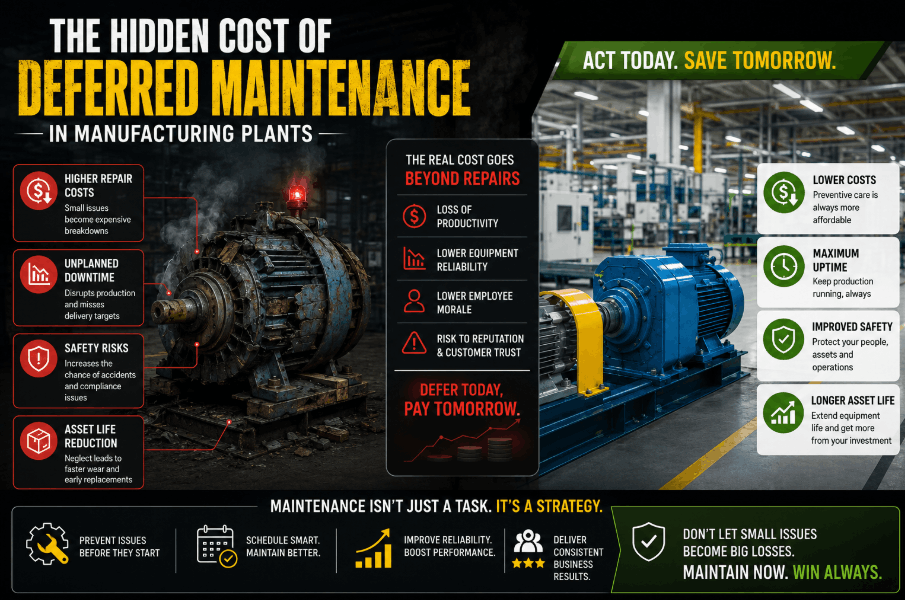
Read More
Deferred maintenance is one of the most expensive decisions a manufacturing plant can make — yet most facilities don't realize the true cost until equipment fails at the worst possible moment. Every repair that gets pushed to next quarter silently
![5-year-capital-maintenance-plan-template-for-manufacturing-facilities-[excel]](./manage-post-2k26/uploads/5-year-capital-maintenance-plan-template-for-manufacturing-facilities-[excel].png)
Read More
A 5-year capital maintenance plan is the financial and operational blueprint that separates reactive plant management from long-range asset reliability strategy. For manufacturing facilities, capital maintenance planning means forecasting every ma

Read More
A maintenance work order is the operational core of every structured maintenance program — it is the formal document or digital record that authorizes, defines, and tracks a specific maintenance task from request to completion. In manufacturing an

Read More
Uncontrolled maintenance parts consumption is one of the leading causes of inflated MRO spend in manufacturing facilities. When technicians pull spare parts without logging usage, storerooms accumulate dead stock, critical components go missing at

Read More
In 2026, the conversation around digital twin vs asset management has shifted from theoretical to urgent. As manufacturers face mounting pressure to reduce unplanned downtime, extend equipment lifespan, and optimize capital spending, digital twins

Read More
Industry 5.0 is not a distant concept — it is already reshaping how manufacturing plants operate, maintain assets, and deploy their workforce. While Industry 4.0 focused on automation and connectivity,
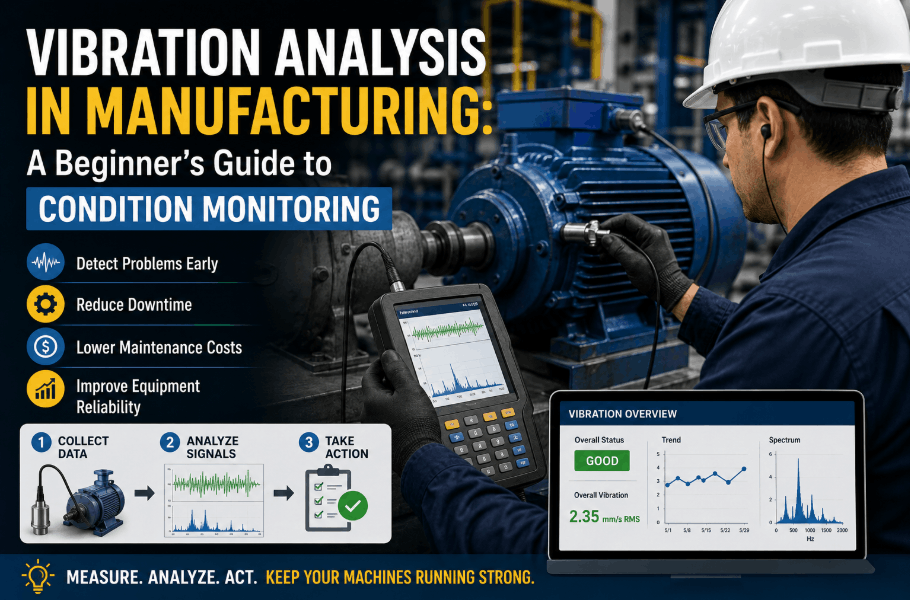
Read More
Vibration analysis is one of the most powerful techniques in predictive maintenance — yet most manufacturing teams either underuse it or rely on outdated manual methods. Whether you're a maintenance technician stepping into condition monitoring fo

Read More
Maintenance budget season puts plant managers and maintenance leaders in a familiar position: defending spending that leadership cannot directly see, to finance teams who only see the number. The reality is that a weak
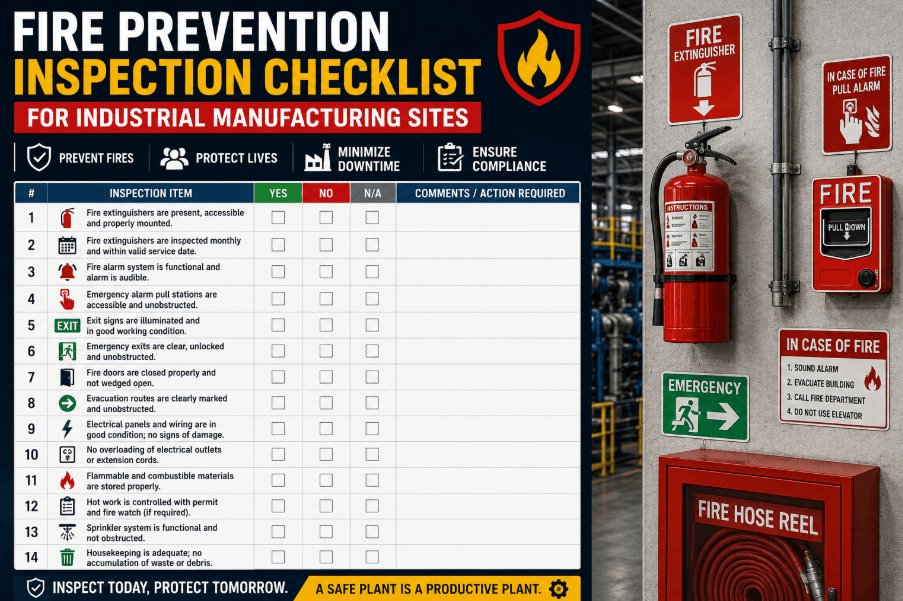
Read More
A fire prevention inspection checklist is the most critical proactive safety activity an EHS manager at a manufacturing facility can execute to prevent NFPA 101 violations, protect workers from uncontrolled fire spread, and verify that every fire
-audit-checklist-for-manufacturing-plants.png)
Read More
A hazardous energy control audit is the most critical verification activity a manufacturing EHS manager performs to prevent OSHA 1910.147 citations, protect maintenance workers from unexpected energization, and confirm that every lockout/tagout pr
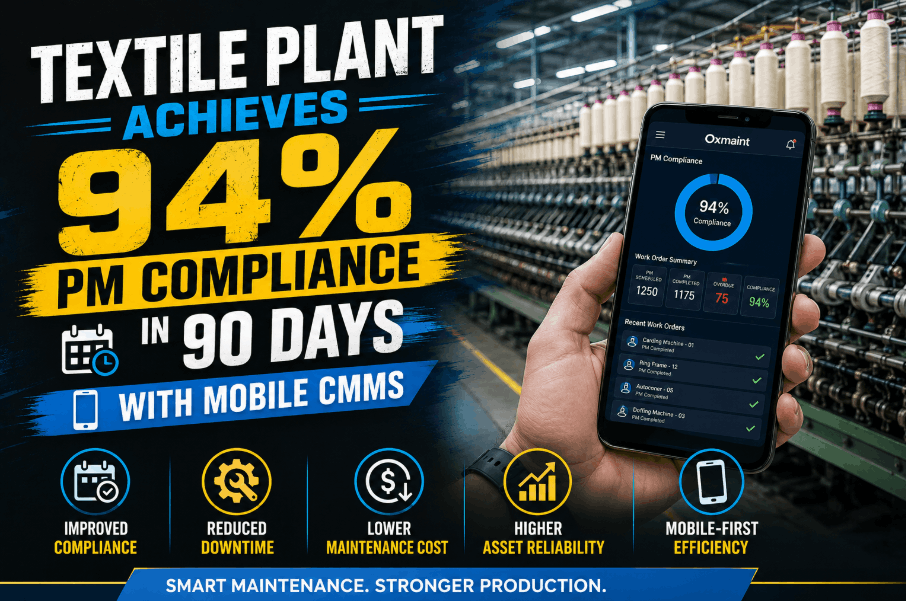
Read More
A mid-size textile manufacturing plant running spinning, weaving, and finishing lines across a single high-utilization facility was averaging 61% PM compliance — 39 percentage points below the industry benchmark for planned maintenance programs. T
.png)
Read More
A 52-week plant maintenance schedule is the backbone of any high-performing manufacturing facility. Without a structured annual preventive maintenance calendar, facilities default to costly reactive repairs — emergency downtime, premium labor rate

Read More
A multi-site discrete manufacturer operating eight production facilities across the U.S. Midwest and Southeast was spending $4.3 million annually on maintenance — with nearly 28% of that figure classified as avoidable reactive spend. Disconnected

Read More
Generative AI is no longer a concept discussed in boardrooms — it is actively changing what happens on the shop floor in 2026. From AI-generated work instructions that adapt to machine history, to fault diagnosis chatbots that guide technicians th
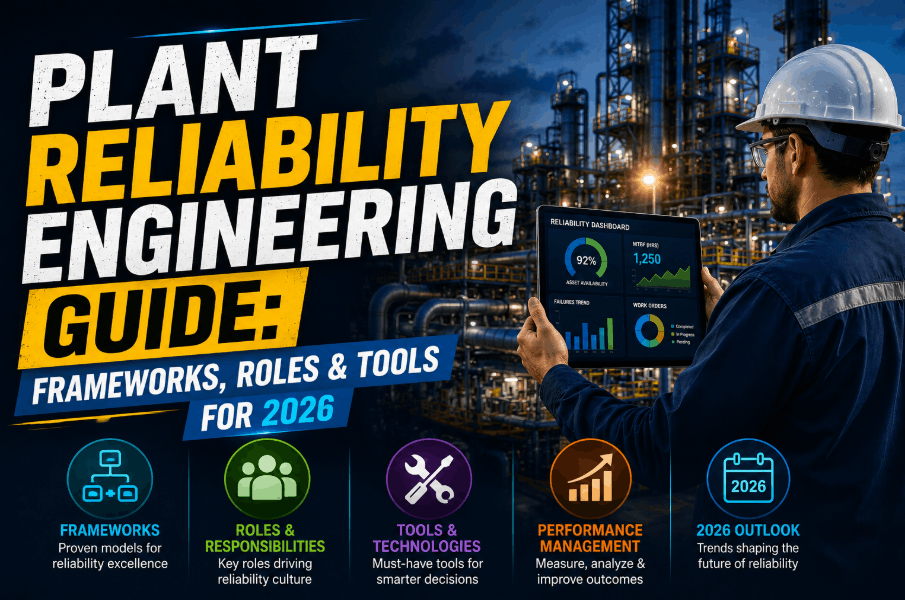
Read More
Plant reliability engineering has become one of the most strategically critical disciplines in modern manufacturing — yet most facilities still manage reliability reactively, responding to failures rather than preventing them. A mature plant relia

Read More
Spare parts obsolescence is one of the most underestimated cost drains in manufacturing plant storerooms. Components become obsolete when equipment is retired, OEM support ends, or technology shifts faster than inventory reviews can track — leavin
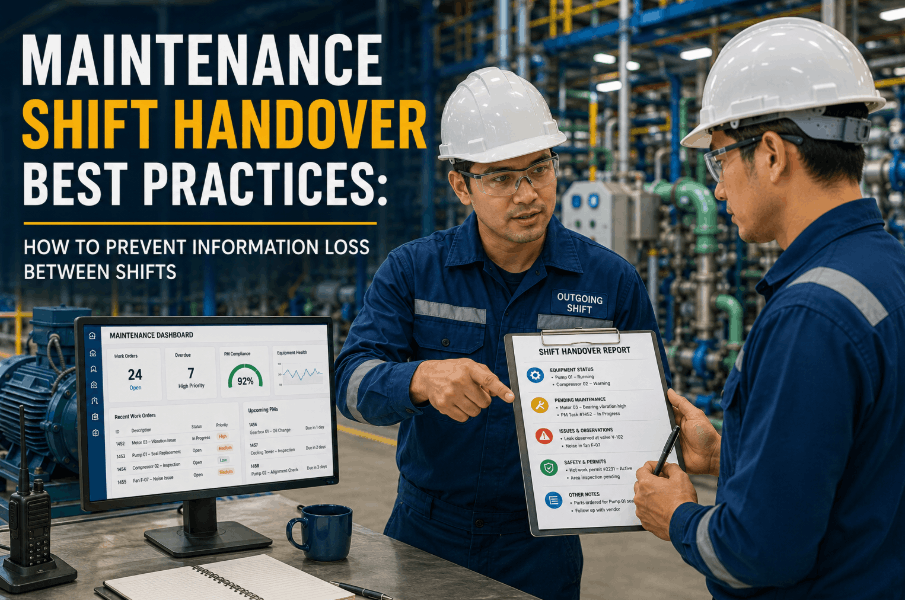
Read More
A maintenance team running three shifts across a manufacturing plant faces a structural information problem at every shift change. The outgoing technician knows which machine was running rough, which work order was raised but not closed, which tem
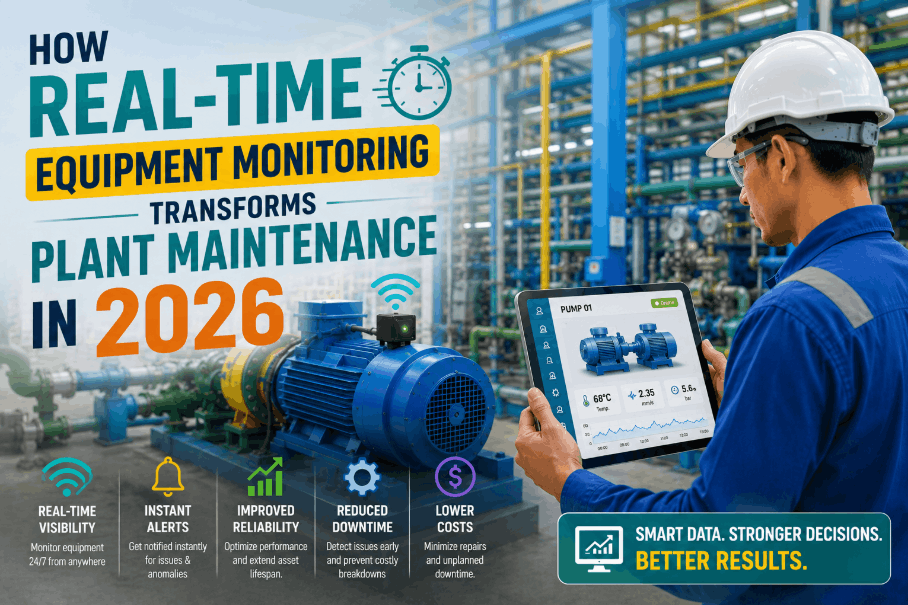
Read More
Real-time equipment monitoring has moved from a competitive advantage to an operational baseline in 2026 — manufacturing plants that run on reactive maintenance cycles are accumulating hidden downtime costs their competitors have already eliminate
-how-to-empower-operators-in-2026.png)
Read More
Autonomous maintenance — known in TPM as Jishu Hozen — shifts routine inspection, cleaning, and minor servicing responsibilities from maintenance teams to the operators who run equipment every day. In 2026, manufacturing plants adopting t

Read More
Manufacturing operations in 2026 face a defining inflection point: legacy maintenance software built for scheduled inspections and paper-based work orders is colliding with a factory floor transformed by connected sensors, machine learning, and re

Read More
Finance leaders evaluating maintenance software investments face one core question: does a CMMS deliver measurable financial returns that justify the capital expense? The answer lies in quantifying three value drivers — downtime avoidance, mainten

Read More
Vibration failures in rotating equipment rarely happen without warning — but most facilities miss the early signals. Bearing defects, shaft imbalance, and coupling misalignment each leave distinct vibration signatures detectable weeks before break
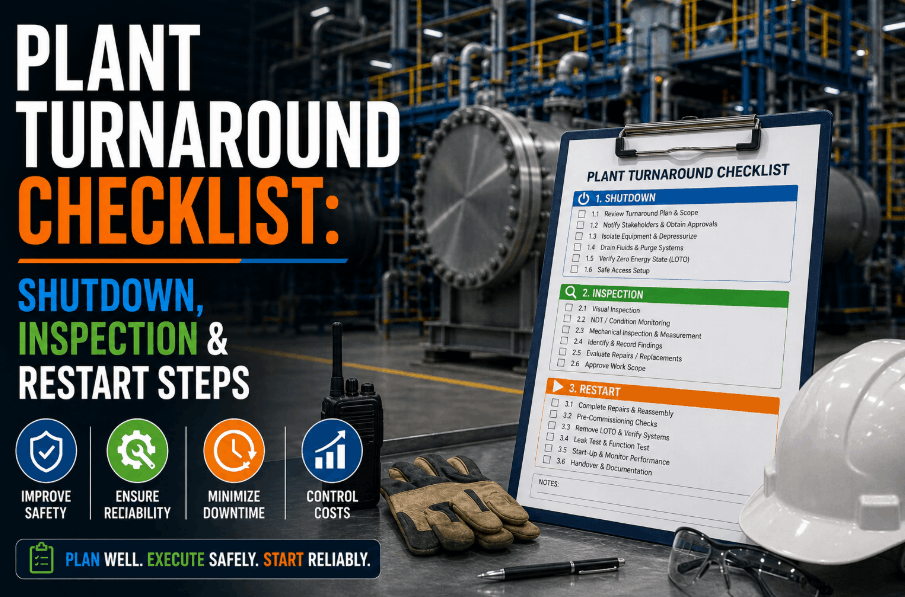
Read More
Plant turnarounds are among the most complex, high-risk maintenance events in industrial operations — compressed timelines, concurrent workstreams, and zero margin for missed steps make structured planning the difference between a smooth restart a

Read More
Most maintenance teams collect data — but few turn it into a dashboard that plant managers actually open. The gap between raw CMMS data and actionable insight costs operations leaders time, credibility, and missed opportunities to prevent failures

Read More
Manufacturing plants face a clear security dilemma when evaluating cloud CMMS software: operational data — equipment histories, maintenance schedules, asset records, inspection logs, and production workflows — is among the most sensitive data a pl

Read More
Maintenance teams in 2026 face a defining challenge: facilities are more complex, equipment expectations are higher, and skilled technicians are harder to find — yet the pressure to reduce downtime and cut operational costs has never been sharper.
-in-manufacturing.png)
Read More
Failure Mode and Effects Analysis (FMEA) is a structured, systematic reliability engineering method used in manufacturing to identify every potential way a process, product, or asset can fail — and assess the impact of each failure before it occur
.png)
Read More
Building a maintenance department KPI dashboard in 2026 means more than tracking a few numbers on a screen — it means giving your entire team a real-time view of operational health across every asset, site, and technician. Modern industrial operat

Read More
Wrench time in manufacturing is the percentage of a technician's shift actually spent performing hands-on maintenance work — and for most plants, that number is far lower than managers assume. Industry studies consistently show manufacturing maint

Read More
A well-designed maintenance department structure is the operational backbone of every high-performing manufacturing plant. When roles are clearly defined, reporting lines are logical, and KPIs are assigned at every level, maintenance teams respond

Read More
Most CMMS implementations fail — not because the software is wrong, but because the rollout is unplanned. Plants that succeed share one habit: they treat CMMS deployment as a structured 60-day project, not a software installation. This guide walks
.png)
Read More
Preventive maintenance is the backbone of manufacturing uptime — and the software you use to manage it determines whether your PM program delivers results or collapses under manual workload. The best preventive maintenance software for manufacturi

Read More
Manufacturing plants run on uptime — and uptime runs on scheduling. Without a structured Sign

Read More
A mid-size food processing manufacturer in the U.S. Midwest was bleeding over $2.1 million annually in avoidable maintenance costs — driven by unplanned line stoppages, reactive repairs, and mounting FSMA compliance exposure. Scheduled PMs were mi

Read More
A mid-size pharmaceutical manufacturing plant in the northeastern United States was facing a critical compliance crisis. Recurring GMP violations, missed equipment calibration windows, and fragmented audit documentation had placed the facility und
![corrective-maintenance-report-template-for-manufacturing-[free-download]](./manage-post-2k26/uploads/corrective-maintenance-report-template-for-manufacturing-[free-download].png)
Read More
A corrective maintenance report template is the standard documentation tool manufacturing plants use to record every breakdown event — capturing failure description, root cause, corrective actions taken, parts replaced, technician labour, and tota
![equipment-asset-register-template-for-manufacturing-plants-[free-excel]](./manage-post-2k26/uploads/equipment-asset-register-template-for-manufacturing-plants-[free-excel].png)
Read More
An equipment asset register template is the foundation of every structured manufacturing maintenance program — giving plant managers, maintenance planners, and reliability engineers a single, organized format to capture every asset's ID, location,
![preventive-maintenance-task-list-template--manufacturing-[download-free]](./manage-post-2k26/uploads/preventive-maintenance-task-list-template--manufacturing-[download-free].png)
Read More
A preventive maintenance task list template is the operational foundation of every high-performing maintenance program in manufacturing. Whether you manage a single production line or a multi-site facility, having a structured PM task list templat

Read More
An equipment maintenance log template is the foundation of every reliable manufacturing plant maintenance programme. Whether you are tracking service history, part replacements, labor hours, or next-service intervals for your machinery, using the
![plant-maintenance-budget-template-2026-[excel---google-sheets]](./manage-post-2k26/uploads/plant-maintenance-budget-template-2026-[excel---google-sheets].png)
Read More
Building an accurate plant maintenance budget is one of the most important financial responsibilities a maintenance manager or plant engineer carries into 2026. Whether you are planning labor allocation, forecasting parts spend, managing contracto

Read More
A compressor room safety checklist is the frontline defense against industrial accidents, unplanned downtime, and regulatory violations in any plant operation. Under OSHA 29 CFR 1910.169, ASME Section VIII, and NFPA 70E, compressor rooms housing r

Read More
A maintenance request form template is the first line of defense against unplanned equipment failures in any manufacturing plant. Whether you manage a 10-person job shop or a 50-employee production facility, the way a fault report is captured dete

Read More
A monthly electrical equipment inspection checklist is the most essential compliance tool an electrical or facilities manager can deploy to prevent arc flash incidents, panel failures, and unplanned production downtime across manufacturing operati

Read More
A forklift daily inspection checklist is the single most important document a warehouse manager or EHS officer deploys to prevent OSHA citations, protect operators, and keep powered industrial trucks running safely across every shift. Under

Read More
Maintenance planning and maintenance scheduling are two of the most misused terms in manufacturing operations — often treated as synonyms when they represent distinct, sequential functions that each require dedicated expertise. Whether you manage
.png)
Read More
Unplanned downtime in manufacturing is one of the most expensive and preventable problems facing plant operations today. Industry data consistently shows that unscheduled equipment failures cost manufacturers an average of $260,000 per hour in los

Read More
Breakdown maintenance vs preventive maintenance — this is the central cost decision every plant manager, maintenance director, and operations leader faces. Run equipment until it fails, or invest proactively in keeping it running? The answer isn't

Read More
A maintenance SOP (Standard Operating Procedure) is the backbone of every high-performing manufacturing plant. When technicians follow clear, documented maintenance procedures, equipment uptime improves, compliance audits pass without findings, an

Read More
Maintenance backlog in manufacturing plants is one of the most quietly destructive operational problems a facility can face. When work orders pile up faster than technicians can close them, asset reliability drops, safety risks multiply, and produ
-formula,-benchmarks-&-improvement-tips.png)
Read More
Mean Time Between Failures (MTBF) is the single most important reliability metric in manufacturing and industrial maintenance. It measures the average operating time between two consecutive failures of a repairable asset — giving maintenance engin

Read More
In 2026, the gap between mobile-first and desktop CMMS platforms has never mattered more to manufacturing plants. As technicians spend 80% of their shift on the floor — not at a desk — the best CMMS mobile app for manufacturing is no longer a conv

Read More
The transition from traditional digital maintenance to fully autonomous, AI-powered ecosystems is the defining shift for smart factories in 2026. While legacy CMMS systems were designed for data recording, modern AI-driven platforms like Oxmaint a
-for-manufacturing-plants-a-2026-guide.png)
Read More
Reliability-Centered Maintenance (RCM) is the most rigorous and technically disciplined methodology available to modern manufacturing plants for ensuring that physical assets continue to do what their users want them to do in their present operati

Read More
Managing maintenance work orders at scale is one of the most operationally complex challenges in modern manufacturing. When a plant processes 500 or more work orders every single day — spanning corrective repairs, preventive schedules, inspections
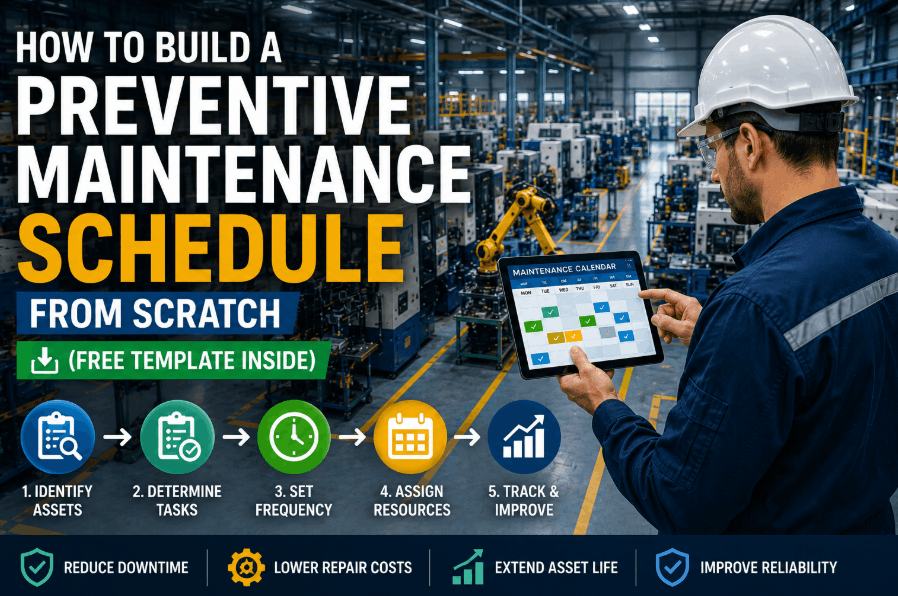
Read More
Building a preventive maintenance schedule from scratch is one of the highest-leverage decisions a maintenance or reliability engineer can make in 2026. Plants operating without a structured PM program spend 3–5× more on reactive repairs, suffer 1
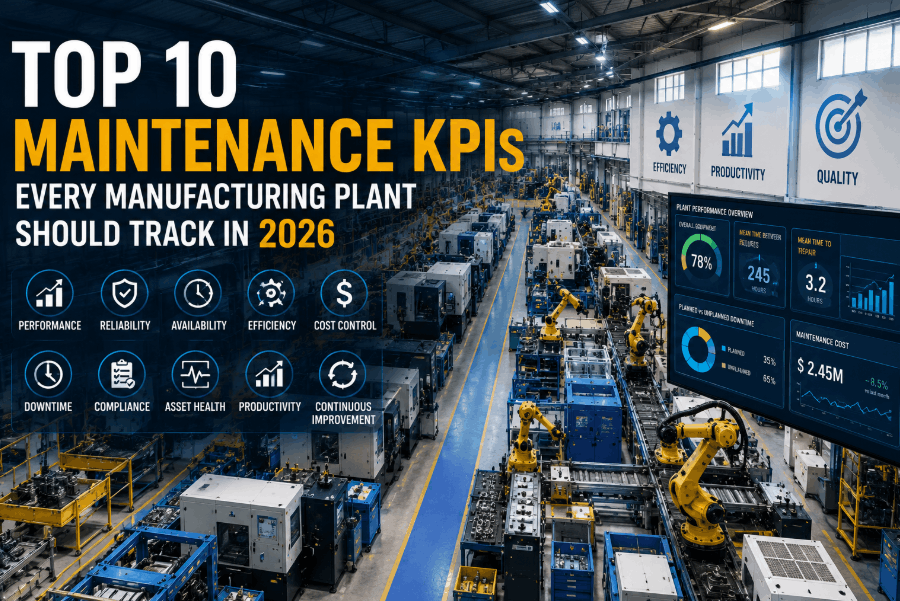
Read More
In 2026, manufacturing plants that outperform their competitors share one critical habit: they measure what matters. Maintenance KPIs for manufacturing are no longer optional reporting exercises — they are the operational backbone that separates r
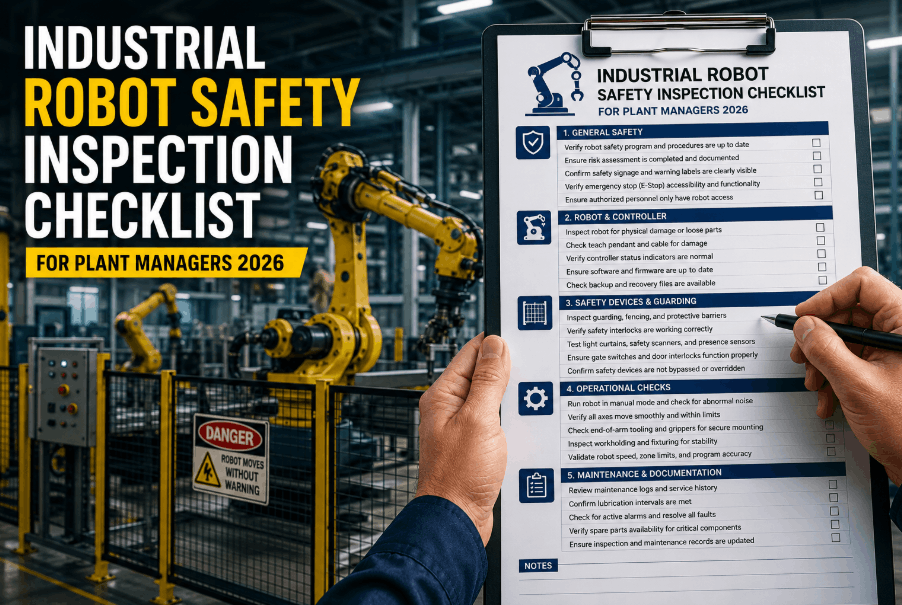
Read More
An industrial robot safety inspection checklist is the most critical tool a plant manager or EHS engineer can deploy to prevent catastrophic injuries, protect automation investments, and maintain OSHA compliance across every production shift. Indu

Read More
A proper CNC machine daily shutdown checklist is the single most effective habit a manufacturing plant can build to prevent unplanned downtime, protect spindle life, and maintain dimensional accuracy across every shift. CNC machining centers repre
.png)
Read More
Choosing the best CMMS software for small manufacturing plants in 2026 is one of the highest-leverage decisions a plant manager or maintenance lead at a sub-50-employee facility can make. Unlike large enterprises with dedicated IT teams and six-fi
.png)
Read More
Knowing how to calculate equipment replacement cost is one of the most critical financial skills a plant manager or maintenance engineer can develop in 2026. Whether you are building a capital budget, justifying a new machine purchase, or running
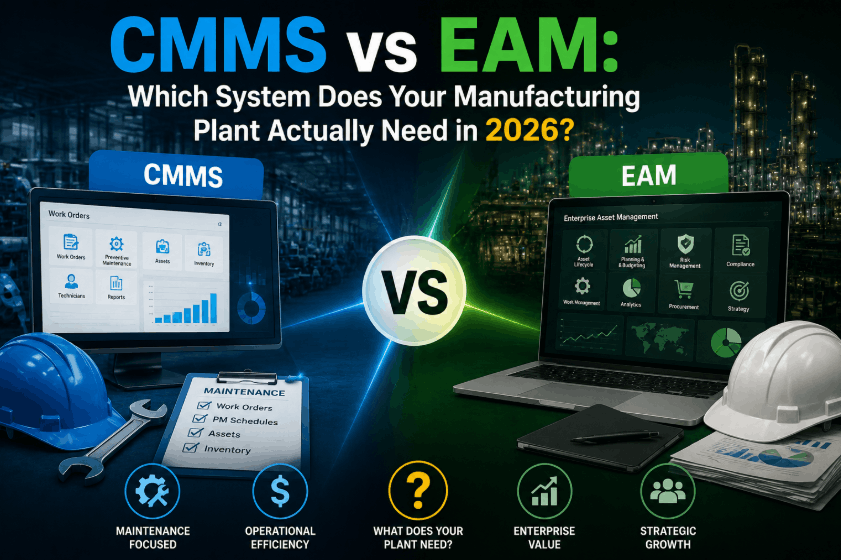
Read More
Choosing between a CMMS vs EAM is one of the most consequential software decisions a manufacturing plant can make in 2026. Both systems manage assets and maintenance — but they operate at fundamentally different scopes, depths, and costs. This gui

Read More
When manufacturing companies publish net-zero roadmaps, the conversation typically centers on energy procurement, renewable power, and supply chain emissions. What gets far less attention is the direct link between maintenance quality and carbon o

Read More
Manufacturing equipment purchase decisions that focus exclusively on acquisition cost routinely produce 30–50% higher total expenditure over the asset lifecycle compared to decisions that account for maintenance, downtime, energy consumption, and

Read More
On-board diagnostics hardware has been standard in road vehicles since the mid-1990s, but manufacturing plants have been slower to adopt it for mobile equipment and fleet assets on-site. That is changing. Forklifts, mobile cranes, yard trucks, AGV

Read More
Manufacturing safety incidents cost U.S. companies $170 billion annually in medical expenses, lost productivity, and compliance penalties — yet 85% of workplace injuries are preventable with proper monitoring and intervention systems. The problem

Read More
Six Sigma is a data-driven methodology built on one core premise — you cannot improve what you cannot measure. In manufacturing, that principle runs directly into maintenance operations, where unplanned downtime, equipment variability, and inconsi

Read More
When a machine stops unexpectedly at 2 AM, the maintenance technician on call does not have time to search through equipment manuals or wait for the supervisor to review the work order history. They need instant answers — what caused the fault, wh

Read More
Most school districts and universities manage maintenance the same way they did twenty years ago — paper work orders, phone calls to custodians, and spreadsheets that nobody updates. A broken HVAC unit in a classroom goes unreported until students

Read More
Property management at scale is an operational coordination challenge disguised as a real estate business. A single residential building has dozens of maintenance-critical systems — HVAC, elevators, plumbing, electrical, fire safety, access contro

Read More
A single unapproved vendor supplying non-conforming parts can shut down an assembly line for days. A sole-source supplier going out of business can halt production for weeks. Vendor and supplier management in manufacturing is not a procurement for

Read More
Latin America's manufacturing landscape is undergoing a quiet transformation. While headlines focus on nearshoring momentum and supply chain realignment, a parallel operational shift is happening on factory floors from São Paulo to Monterrey — the

Read More
NVIDIA's GPU infrastructure has moved from data centers into factory floors, and the shift is changing what "smart manufacturing" actually means in practice. Edge AI systems built on NVIDIA Jetson, IGX, and EGX platforms are enabling real-time def

Read More
Sub-Saharan Africa is experiencing a manufacturing renaissance. From automotive assembly in South Africa to textile production in Ethiopia, pharmaceutical manufacturing in Nigeria, and food processing across Kenya, industrial capacity is expanding

Read More
Global automotive OEMs — Toyota, BMW, Volkswagen, and General Motors — have built maintenance systems that keep production lines running at 95%+ uptime across facilities producing thousands of vehicles daily. The standards they follow, from Toyota

Read More
Public infrastructure doesn't fail on a convenient schedule, and taxpayers don't accept excuses. When a water main breaks, a traffic signal goes dark, or a public building's HVAC fails mid-winter, citizens demand accountability and elected officia

Read More
A personal care goods manufacturer running 18 filling lines at 400 units per minute does not have the same maintenance problem as a job shop making bespoke components. Their problem is velocity — the machine never stops long enough to fail slowly.

Read More
In hospitality, maintenance isn't just about keeping equipment running — it's about protecting the guest experience. A malfunctioning HVAC system in July turns a five-star review into a one-star complaint within hours. A broken elevator means gues

Read More
A petrochemical plant in Texas ran its turnaround 11 days over schedule in 2023 — not because of a major equipment failure or a safety incident, but because the contractor coordination plan lived in three separate spreadsheets, nobody owned the cr

Read More
Paper is killing manufacturing efficiency, and most plants don't even realize it. The average maintenance technician wastes 47 minutes per shift hunting for the right SOP, tracking down equipment manuals, or waiting for someone to unlock the filin
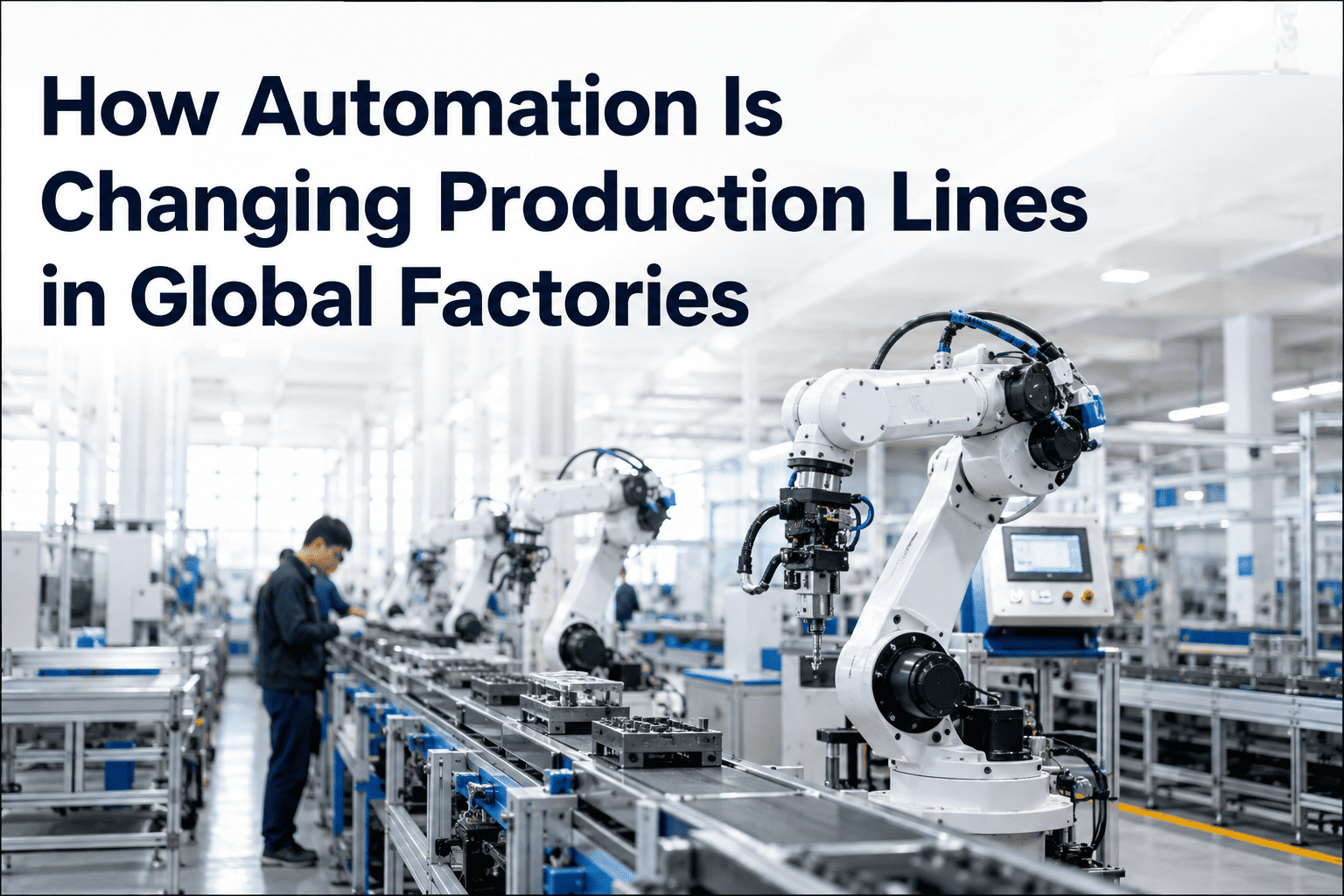
Read More
In 2019, a mid-sized automotive supplier in Ohio ran 14 manual inspection stations across three shift patterns. By 2024, six of those stations had been replaced by collaborative robots and vision systems — throughput increased 31%, defect escape r

Read More
Equipment failures don't just happen — they have root causes, and finding them is the difference between a quick patch and a permanent fix. In manufacturing, unplanned downtime costs the average plant $260,000 per hour, yet 73% of maintenance team

Read More
A virtual replica of a turbine running at a $2.1B automotive plant in Stuttgart predicted a bearing failure 19 days before it happened — averting an unplanned shutdown that would have cost $340,000 in lost production. The technology behind that in

Read More
Process control accuracy in manufacturing depends entirely on instrument calibration integrity — a temperature transmitter reading 3°C high causes batch rejection in pharmaceutical production, a pressure gauge drifting 5 PSI low triggers compresso

Read More
Energy is the second or third largest operating cost in most manufacturing plants — and unlike raw materials or labor, it is one of the few cost categories where significant reductions are achievable without cutting production. Yet in most plants,

Read More
The maintenance workforce is aging faster than it is being replaced. In industrial plants across North America, Europe, and Asia-Pacific, the average age of a skilled maintenance technician is now between 48 and 52 — and the pipeline of replacemen

Read More
Manufacturing plants handle operations that can result in severe injury, equipment damage, or facility shutdown if not properly controlled. A permit-to-work system is the primary control mechanism for high-risk activities — hot work that could ign

Read More
Every defective part that makes it to the end of a production line represents wasted material, wasted machine time, wasted labor, and in many cases a customer relationship at risk. The hard truth is that most production waste is not random — it is
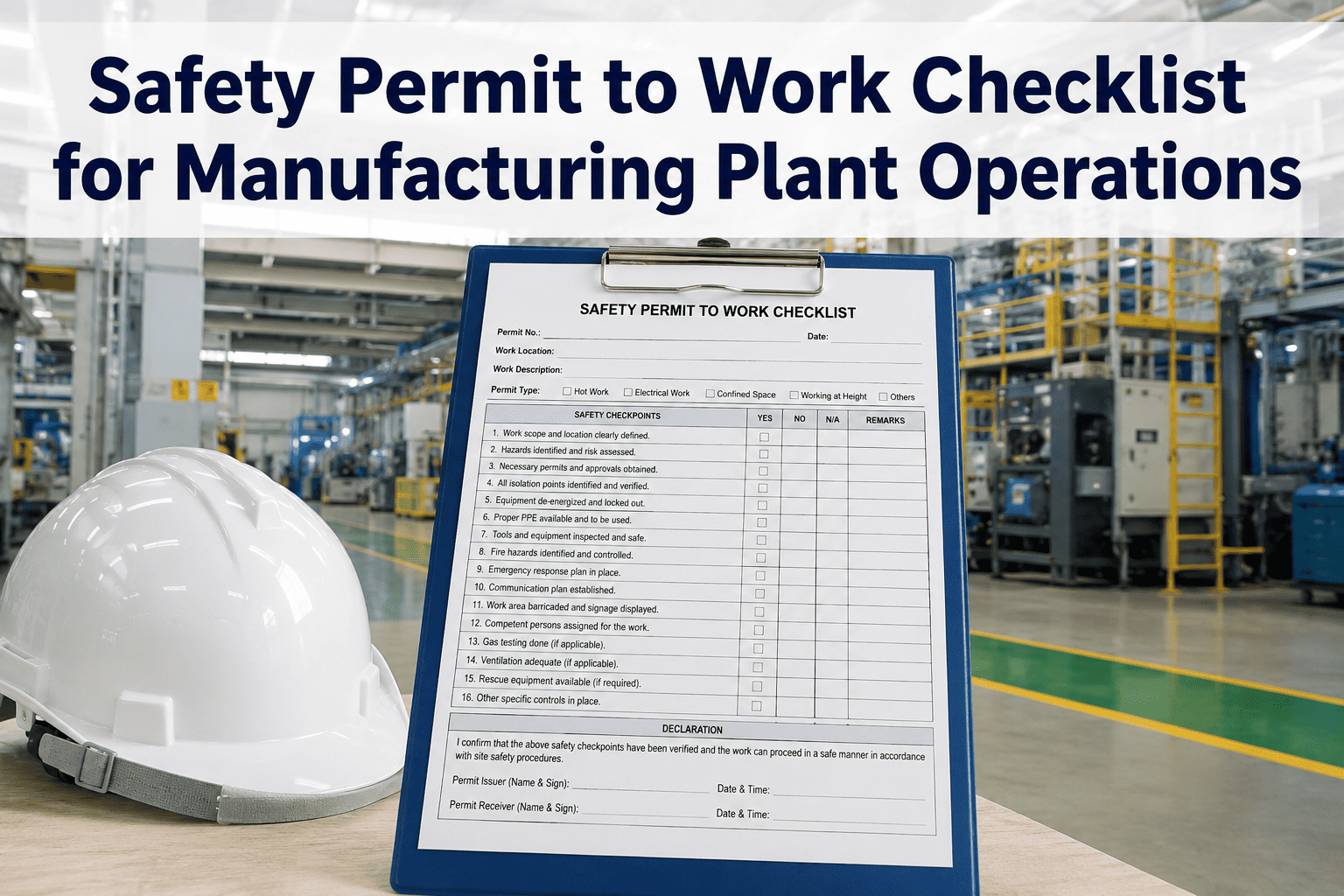
Read More
Manufacturing plants handle operations that can result in severe injury, equipment damage, or facility shutdown if not properly controlled. A permit-to-work system is the primary control mechanism for high-risk activities — hot work that could ign

Read More
Global supply chains have never been more fragile — or more fixable. From pandemic-era shutdowns to port blockages and geopolitical shocks, manufacturers worldwide have discovered that the old model of lean, single-source supply chains carries hid

Read More
UPS failures cause major downtime in manufacturing, with battery degradation responsible for nearly half of all failures during power outages. Since UPS batteries degrade silently over time, regular inspections are critical to ensure backup power

Read More
Falls from height account for 33% of workplace fatalities in construction and industrial settings, with scaffolding-related incidents representing the single largest category within this group. OSHA cites scaffolding violations more frequently tha

Read More
Manufacturing scrap is one of the most visible and most poorly managed cost categories in plant operations. Every piece of off-specification material, every rejected component, and every process waste stream represents a cost already incurred — in

Read More
Collaborative robots — cobots — have moved from pilot programmes to production floors across automotive, electronics, food processing, and general manufacturing in the past five years. Unlike traditional industrial robots that operate in caged, is

Read More
Manufacturing facilities implementing 5S workplace organisation report 30% fewer safety incidents and 25% faster material retrieval times within the first six months of sustained practice. Yet the most critical failure point in 5S programs is inco

Read More
Manufacturing plants across the world are navigating an accelerating workforce crisis. Experienced tradespeople are retiring faster than new technicians are entering the industry, apprenticeship pipelines have contracted, and competitive wage pres

Read More
Industrial wastewater systems are the environmental backbone of manufacturing operations, yet 60% of regulatory non-compliance incidents trace back to inadequate maintenance intervals. Effluent treatment plants demand systematic monitoring across

Read More
Shift handovers are one of the most failure-prone moments in manufacturing plant operations. When a critical equipment fault, a near-miss safety event, or an unresolved maintenance task fails to transfer from the outgoing shift to the incoming cre

Read More
Steam system inefficiencies drain manufacturing budgets at rates most plant managers never see itemized — a single failed steam trap wastes 2,000 pounds of steam per year, costing $200 to $400 in fuel depending on regional energy prices. Multiply

Read More
Predictive maintenance fails because of poor data discipline, not lack of technology. Vibration readings go unrecorded, thermography reports are never trended, and delayed or contaminated oil samples make analysis unreliable. Effective predictive

Read More
Every unplanned equipment failure in a manufacturing plant had a precursor — a failure mode that existed in the machine before it stopped the line. Failure Mode and Effects Analysis (FMEA) is the structured methodology that finds those failure mod

Read More
Manufacturing plant managers have historically made decisions based on data that was hours — or days — old by the time it reached them. Real-time dashboards change this fundamental dynamic: the right KPI, at the right moment, on the right screen,

Read More
Environmental Health and Safety violations in manufacturing cost companies an average of $4.2 million per incident when fines, production shutdowns, and reputational damage are combined. Most violations are preventable — they result from missing d

Read More
World-class maintenance is not a technology purchase — it is a systematic discipline that the best manufacturing organisations have built over years of deliberate practice, measurement, and cultural investment. The gap between a reactive plant and

Read More
Poor lubrication practices cause 80% of premature bearing failures in manufacturing plants — and most of those failures could have been prevented with a structured lubrication programme. When lubricant selection, application frequency, and contami

Read More
Smart manufacturing connects machines, sensors, and control systems to networks that were never designed to be connected — and attackers know it. Operational technology (OT) environments running SCADA, PLCs, and IIoT devices carry vulnerabilities

Read More
Smart manufacturing transformation requires more than purchasing IoT sensors and installing dashboards — it demands organizational readiness across infrastructure, data systems, workforce skills, and operational processes. Manufacturers investing

Read More
Manufacturing plant safety begins on day one — when new employees learn site hazards, PPE requirements, emergency procedures, and lockout-tagout protocols before they ever touch production equipment. Without comprehensive safety onboarding, new hi

Read More
Most manufacturing automation projects are killed before they start — not because the technology does not work, but because the business case does not hold up to finance department scrutiny. The most common failure is an ROI model built only on la

Read More
Industrial HVAC systems do more than regulate temperature — they protect equipment from thermal stress, maintain air quality standards that affect worker health, and keep humidity levels within the tolerances that production processes require. Whe

Read More
Industrial water treatment systems are critical infrastructure in manufacturing facilities — supplying process water, cooling water, and demineralized water that meet strict quality specifications for production operations. Without systematic main

Read More
A bearing failure that shuts down a production line for 18 hours costs your plant far more than the bearing itself. The real expense is the emergency labour, the expedited parts, the idle downstream workers, and the missed customer commitments. Ma

Read More
Manufacturing quality control starts at the production line — where defects are detected, dimensions are verified, and non-conforming products are removed before they reach the customer. A structured quality control inspection checklist ensures ev

Read More
European manufacturing plants operate under one of the most structured compliance environments in the world. Between EN 13306, ISO 55001, CE marking obligations, and GDPR requirements that now extend to machine-generated sensor data, a maintenance

Read More
ISO 55001 represents the global gold standard for asset management systems — a framework that transforms reactive maintenance operations into strategic asset lifecycle programs. Manufacturing plants pursuing certification face a comprehensive chal

Read More
Packaging line stoppages in FMCG and food manufacturing do not just cost hours — they risk product shelf life, cause fill weight compliance failures, and in regulated food environments can trigger a line shutdown by the quality team. A packaging l

Read More
CFOs and plant directors evaluating predictive maintenance face a fundamental question: does the technology investment deliver measurable financial returns that justify the capital expense and implementation effort? The answer lies in quantifying
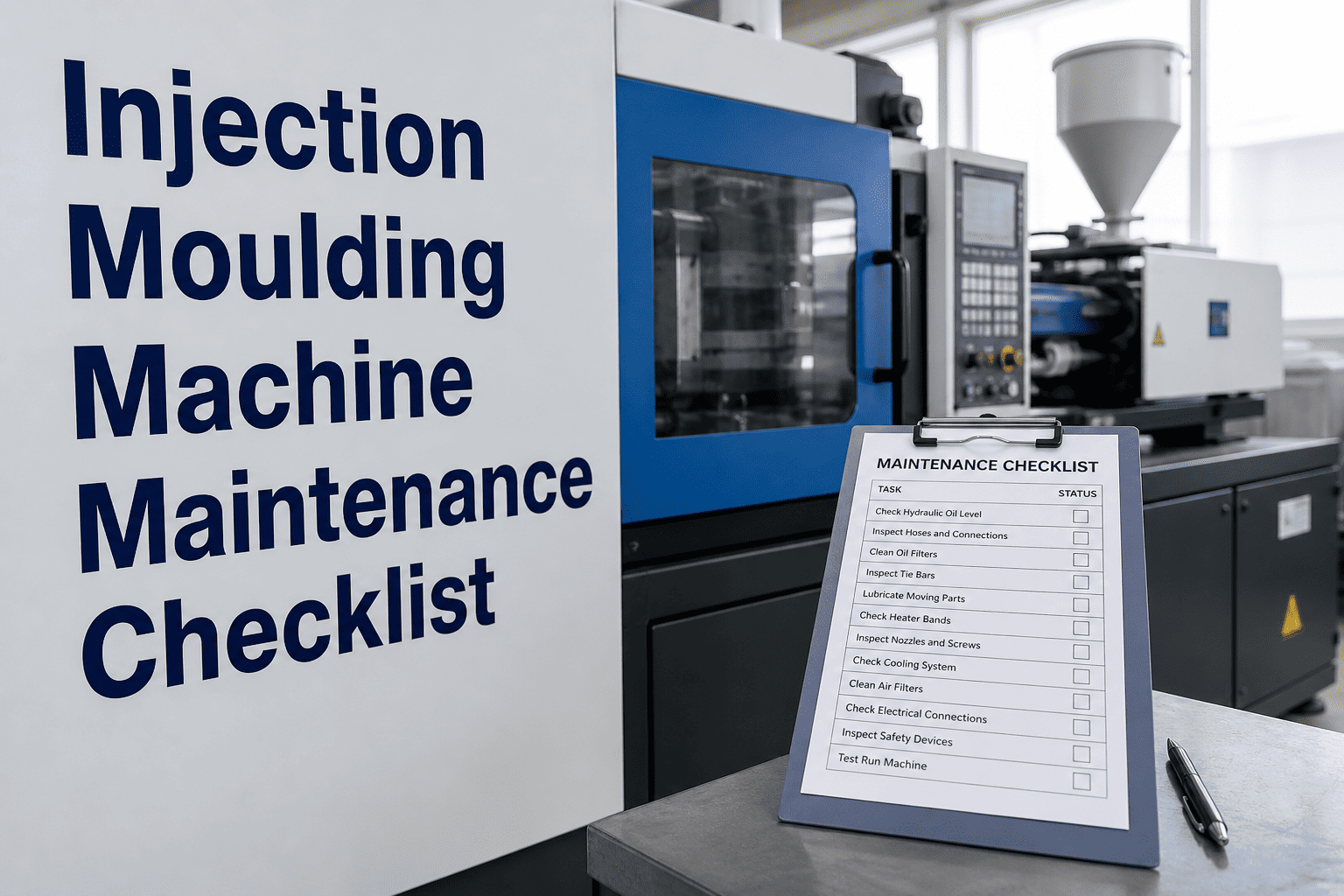
Read More
Injection moulding machines run on tight tolerances and precise conditions — even a small deviation in barrel temperature, hydraulic pressure, or clamp force can shift a batch from acceptable to scrap within minutes. This maintenance checklist is
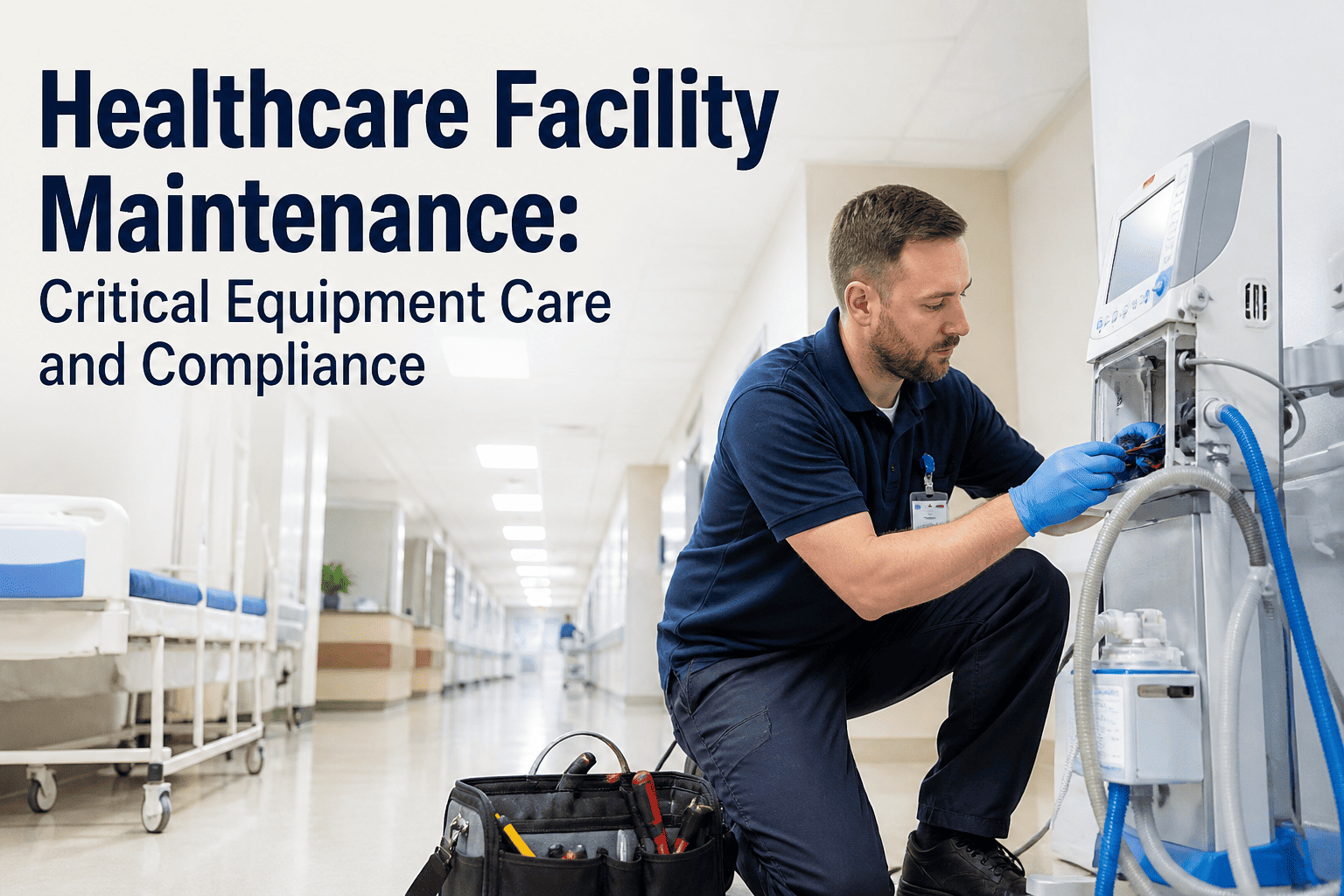
Read More
In healthcare facilities, maintenance isn't just about preventing breakdowns — it's about protecting lives. When an MRI scanner fails mid-diagnosis, when an HVAC system compromises sterile environments, or when life-support equipment malfunctions

Read More
Gas detection failures kill silently. An H2S sensor that reads zero when there is no gas — versus one that reads zero because it stopped working — looks identical until someone collapses. This checklist gives EHS officers, instrumentation teams, a

Read More
A transformer failure doesn't just disrupt your production schedule — it can trigger cascading electrical faults, catastrophic fires, and plant-wide shutdowns that extend for weeks while replacement units are procured and commissioned. Industrial

Read More
Jumping into predictive maintenance without the right sensors, data infrastructure, or analytical capability is like installing a Formula 1 telemetry system on a bicycle — expensive, overwhelming, and ultimately unused. Predictive maintenance (PdM

Read More
Rolling out a CMMS without a structured implementation plan is like assembling machinery without a blueprint — you'll eventually get there, but the inefficiencies, data errors, and user resistance compound into months of rework. A successful CMMS

Read More
Every manufacturing process produces variation — no two parts are ever identical, and no production run delivers exactly the same result twice. The question is not whether variation exists, but whether it is controlled, measured, and acted on befo

Read More
Every manufacturing process produces variation — no two parts are ever identical, and no production run delivers exactly the same result twice. The question is not whether variation exists, but whether it is controlled, measured, and acted on befo

Read More
Pharmaceutical manufacturing plants operate under some of the strictest regulatory standards in the world. A single documentation gap, missed calibration, or untracked maintenance event can trigger an FDA Form 483 observation — and escalate to a W

Read More
Catastrophic bearing failures, unbalanced rotors, and misaligned couplings announce themselves through vibration signatures weeks before failure — but only if someone is measuring, trending, and interpreting the data correctly. Industry research s

Read More
Steel manufacturing is one of the most equipment-intensive and failure-consequential industrial environments on earth. Blast furnaces run as $500 million assets operating continuously for 15–20 year campaigns at 2,000°C internal temperatures. Hot
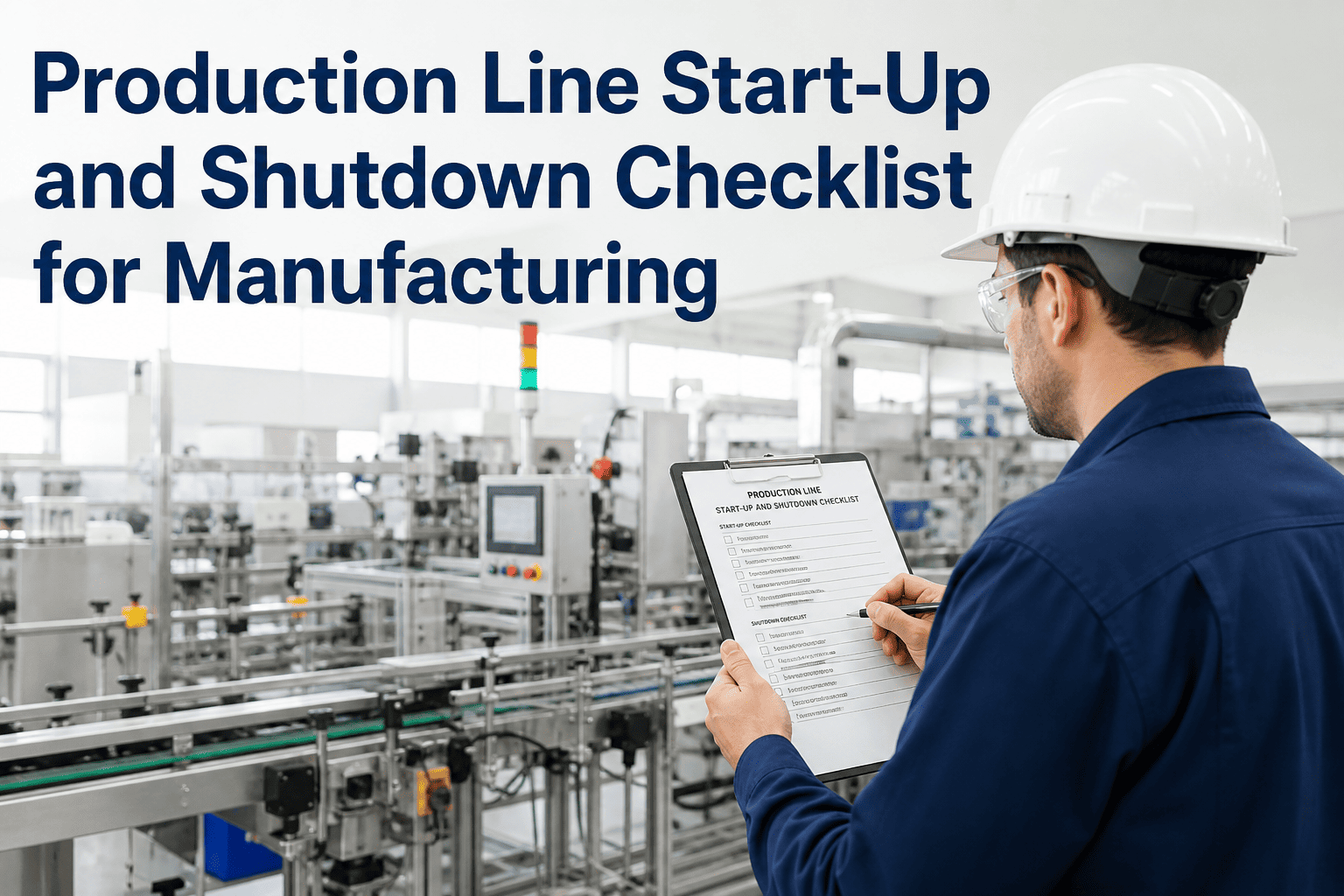
Read More
Manufacturing line transitions are high-risk windows where 40% of all production incidents occur — rushed startups bypass safety interlocks, incomplete shutdowns leave equipment energized, and shift handover gaps create communication failures that

Read More
A cement plant is one of the most mechanically demanding industrial environments on earth — rotary kilns operating at 1,450°C, vertical roller mills grinding raw material under extreme mechanical stress, and conveyor networks moving hundreds of to

Read More
Industrial cooling towers cycle millions of gallons through heat exchange systems daily, and a single overlooked biological hazard or mechanical fault can trigger a Legionella outbreak, unplanned shutdown, or catastrophic efficiency loss. Data fro

Read More
Food and beverage manufacturing is one of the most heavily regulated industries on the planet. Every shift produces documentation that an FDA inspector, SQF auditor, or BRC reviewer could request at any moment — sanitation logs, CIP cycle records,
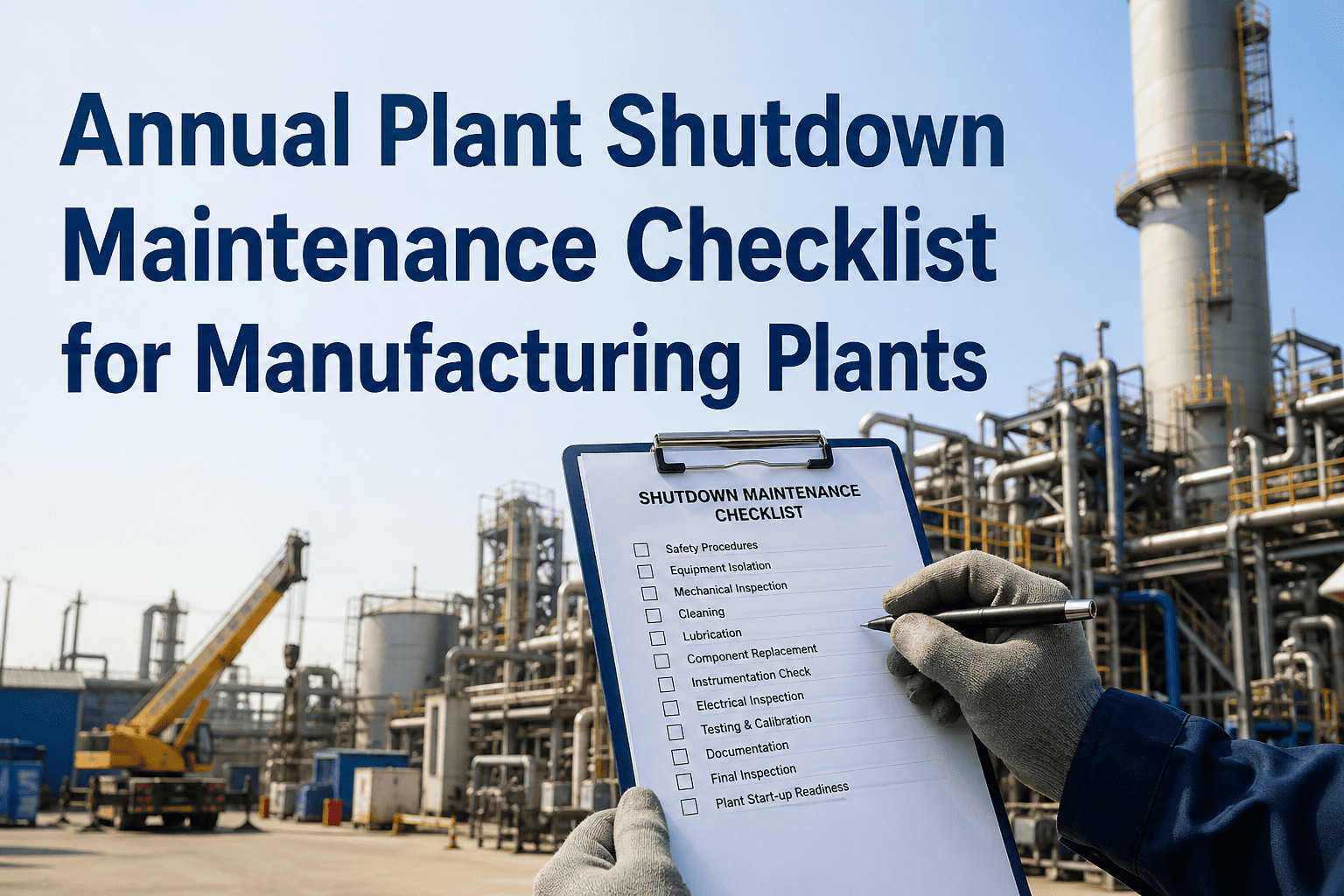
Read More
Manufacturing plant shutdowns are among the most expensive and high-stakes events a facility faces each year. Industry research consistently shows that over 80% of turnarounds exceed their budget by more than 10%, and nearly half result in signifi

Read More
Most manufacturing compliance programmes run on audit-driven panic cycles. Documentation assembled in the two weeks before the ISO auditor arrives. Safety training records pulled from three different spreadsheets when OSHA requests them. Environme

Read More
A chiller that runs 20% below its design efficiency costs more to operate every single day than an annual service contract that would have prevented the degradation. Industrial process chillers — centrifugal, screw, and scroll — are among the most

Read More
Most manufacturing plants measure dozens of metrics but act on none of them consistently. Daily production counts tallied in spreadsheets. Downtime logged on paper shift reports. Quality defects tracked in one system while maintenance costs live i

Read More
Forklift accidents cause approximately 85 fatalities and 34,900 serious injuries every year in the United States — and OSHA data shows that a significant share of these incidents trace directly to skipped pre-shift inspections and deferred prevent

Read More
Most manufacturers treat asset management as five separate problems: procurement runs acquisition, operations handles commissioning, maintenance keeps things running, finance tracks depreciation, and disposal happens when something breaks for the

Read More
Plant commissioning is the single most critical window for establishing maintenance excellence — yet 68% of manufacturing plants go live with incomplete asset registers, generic PM schedules copied from OEM manuals, and no structured CMMS implemen
Read More
Failure to control hazardous energy is one of the deadliest regulatory violations in manufacturing — OSHA estimates that inadequate Lockout/Tagout (LOTO) procedures account for 10% of all serious industrial accidents, causing approximately 50,000

Read More
Fire in a manufacturing facility is rarely sudden — it is almost always the product of weeks or months of missed inspections, ignored hazards, and deferred maintenance. NFPA 1, NFPA 72, NFPA 25, and OSHA 1910.157 impose strict inspection duties on

Read More
Predictive maintenance is no longer a theoretical advantage — it is a documented strategy with measurable ROI across automotive, pharmaceutical, food processing, and heavy industry. The business case has shifted from "will PdM reduce costs" to "ho

Read More
Crane and lifting equipment failures in manufacturing are among the most catastrophic and legally consequential events a plant can face — a dropped load, structural collapse, or wire rope failure can result in fatalities, OSHA shutdown orders, and
Read More
Regulatory audits in manufacturing plants are not random inspections — they are scheduled evaluations where non-compliance can result in production shutdowns, financial penalties, or loss of certification. The challenge is not whether your plant i

Read More
Manufacturing downtime costs vary wildly by industry — from $22,000 per hour in automotive to over $260,000 per hour in semiconductor fabrication — but one constant holds across every sector: unplanned downtime costs 3-5 times more than the same r

Read More
Most manufacturing plants own more assets than they can reliably track. A motor goes down, and no one can pull up its service history. A PM is overdue by three weeks because no one received an alert. A critical spare part is out of stock because i

Read More
A technician spots a machine vibrating differently than usual. She logs a request on paper, hands it to the supervisor, who keys it into the system, categorizes it, assigns a priority, finds an available tech, and schedules the job — three days la
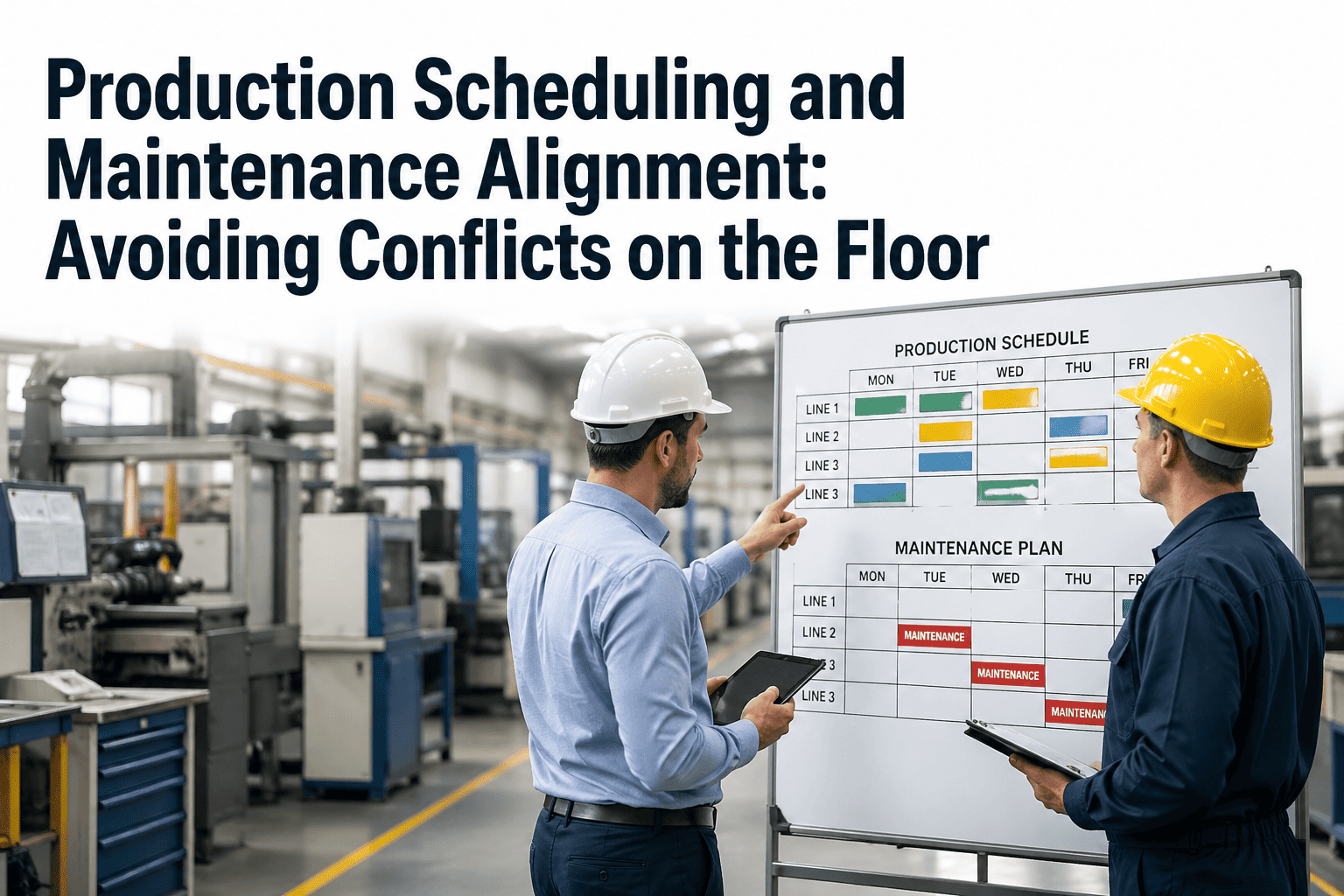
Read More
Most production floors run two separate schedules that never meet — one for output, one for maintenance. When a planned PM window collides with a customer deadline, maintenance loses. Again. And again. Until a machine fails mid-campaign, halting p

Read More
Manufacturing technicians still spend 30-40% of their shift walking back to the maintenance office to update work orders, print checklists, or look up equipment history. That inefficiency compounds across hundreds of technicians in a facility — th

Read More
Power plants generate the electricity that powers modern civilization, but a single maintenance failure can cascade into catastrophic consequences — from multi-million dollar equipment losses to regional blackouts affecting millions. The differenc

Read More
Workplace injuries in US manufacturing alone cost employers roughly $167 billion every year — split across $54 billion in lost wages and productivity, $36 billion in medical expenses, and $77 billion in administrative overhead. Behind those number

Read More
Two numbers tell you almost everything about how reliable your manufacturing plant really is. MTTR — how long it takes to fix a failure. MTBF — how long an asset runs before the next one. Plants that obsess over these two metrics consistently outp

Read More
AI vision cameras have moved from pilot project to production-line standard in less than three years. Manufacturers running modern computer vision systems are now reporting defect detection accuracy above 99%, decisions in under 200 milliseconds p

Read More
Your finance team logs into SAP. Your maintenance technicians refuse to. Your plant manager wants downtime reports. Your CFO wants procurement spend visibility. Both are right — and that is exactly why ERP and CMMS are not competing systems. ERP r

Read More
Cloud-based CMMS has crossed the line from emerging option to default deployment model — roughly 62% of the global CMMS market and over 64% of new installations in 2026 now run on cloud architecture, with manufacturing leading the migration. The s

Read More
Pump failures rarely arrive as a single dramatic event. They build up over weeks — a bearing running a few degrees hotter, a seal weeping a drop more per minute, a vibration reading climbing a millimetre per second per shift — until the day the li

Read More
SAP runs the business — but it does not run the shop floor. That is the quiet truth most plant managers face every morning: every dollar, every purchase order, and every asset sits inside SAP, while technicians print PDFs from SAP PM, scribble com

Read More
Industrial HVAC failures are not just comfort problems — they shut production lines, contaminate sensitive product, push energy bills past budget, and trigger compliance findings on the next audit. Manufacturing environments push HVAC equipment fa

Read More
The price of an industrial IoT sensor has dropped over 60% since 2020 — yet the value those sensors unlock has never been higher. The global IoT sensors market sits at $23.9 billion in 2025 and is forecast to reach $99.2 billion by 2030 at a 36% C

Read More
Conveyor belt failures rarely strike out of nowhere — they begin with a slightly skewed idler, a fastener loosened by a quarter turn, or a bearing running a few degrees warmer than last shift. Manufacturing plants that catch these early signals th

Read More
Most manufacturing plants do not have a maintenance strategy — they have a maintenance habit. Schedules inherited from the previous shift supervisor, PMs nobody questions, and reactive firefighting that consumes 65–75% of every technician's day. T

Read More
Maintenance leaders and CFOs speak two different languages. The maintenance manager talks about PM compliance, MTTR, and wrench time. The CFO asks one question — what is the payback period, and what is the year-one ROI? When the business case for

Read More
Every manufacturing plant runs on managed risk. The fire that does not start, the bearing that does not seize, the chemical that does not breach containment — these absences are the dividend of structured risk assessment done well. This guide expl
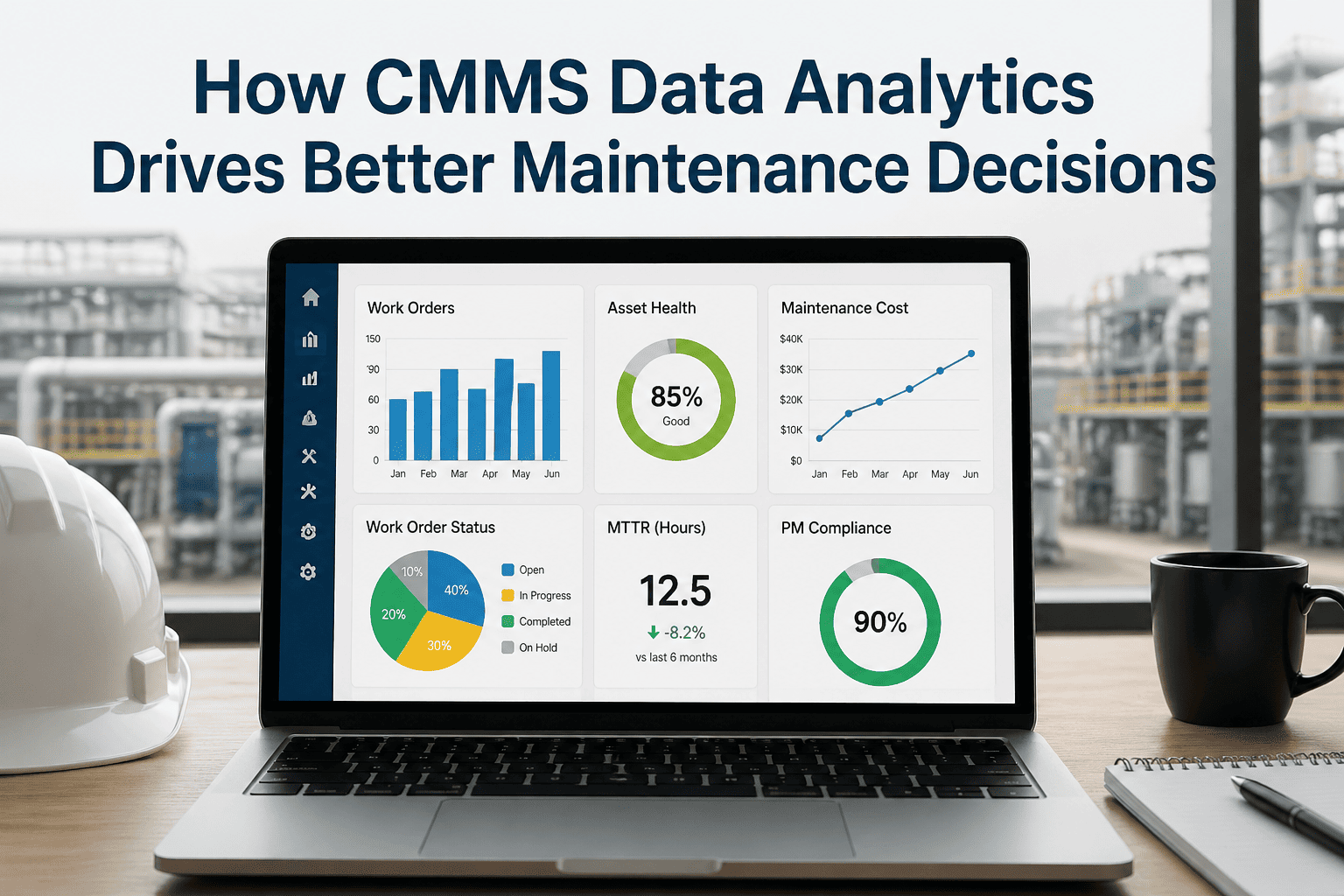
Read More
Most manufacturing plants generate maintenance data every shift — work orders, downtime events, parts transactions, technician hours, asset readings. Very few of them turn that data into decisions. The CMMS captures the inputs but the insights sta
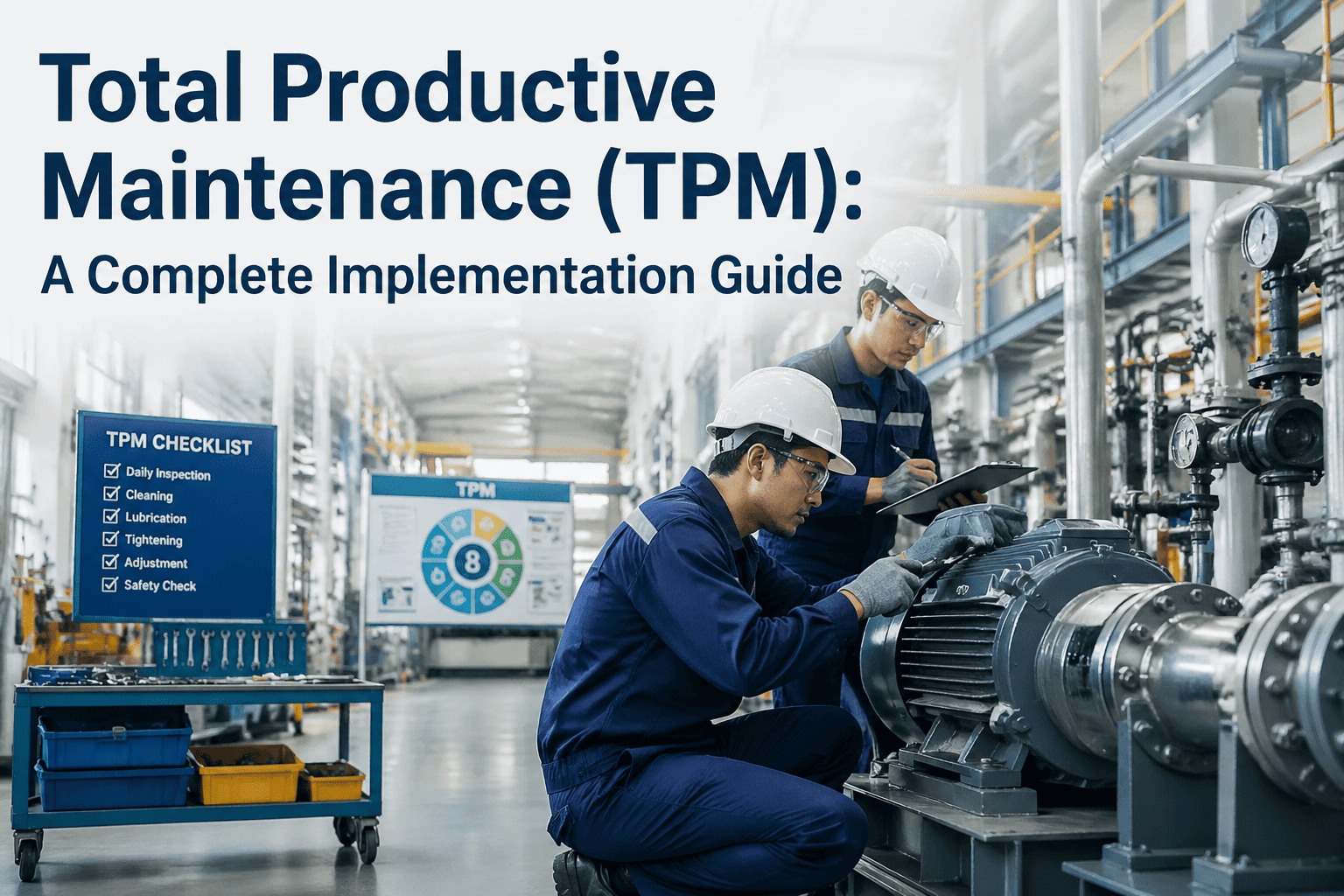
Read More
The average manufacturing plant runs at 45–65% Overall Equipment Effectiveness. World-class plants operate at 85%. The 20–40 point gap is not closed by buying better machines or hiring more technicians — it is closed by a methodology that has resh
Read More
Most manufacturing plants are not failing at maintenance because their teams lack effort. They are failing because the system around the team is broken — work orders live on whiteboards, preventive schedules slip when production pressure rises, sp

Read More
Unplanned downtime drains $1.4 trillion from the world's 500 largest manufacturers every year — equivalent to 11% of total revenue and a 62% increase from $864 billion in 2019. The average large plant now loses $253 million annually, automotive li

Read More
The debate over predictive versus preventive maintenance is not really about technology anymore — it is about money. In 2026, preventive maintenance averages $127,000 per unit per year on heavy manufacturing equipment. Predictive maintenance on th

Read More
Industry 4.0 stopped being a buzzword about three years ago. Today it's the difference between a plant that quietly beats its quarterly targets and one that keeps wondering why its numbers drift even when nothing obvious is wrong. The global Indus

Read More
Most plant managers can quote the OEE formula from memory. Far fewer can tell you — honestly — what their plant's real OEE actually is. That gap is the single biggest source of wasted capital in manufacturing. Industry analysis from Siemens, TeepT

Read More
Picking a CMMS in 2025 is harder than it should be. Every vendor claims to reduce downtime by 40%, every demo looks polished, and every pricing page hides the fees that actually show up on your invoice. Meanwhile, the stakes keep climbing — the av

Read More
The hour your production line sat idle last Tuesday did not just lose you parts — it ate into margins across the entire week. Fluke's 2025 survey of 600 global manufacturers pegged the average cost of unplanned downtime at $1.7 million per hour fo

Read More
Every minute a production line sits dead costs the average Fortune 500 manufacturer around $532,000 in lost revenue, and the painful truth is that most of those stops are entirely avoidable. A bearing that seized at 2 a.m. was whispering warnings
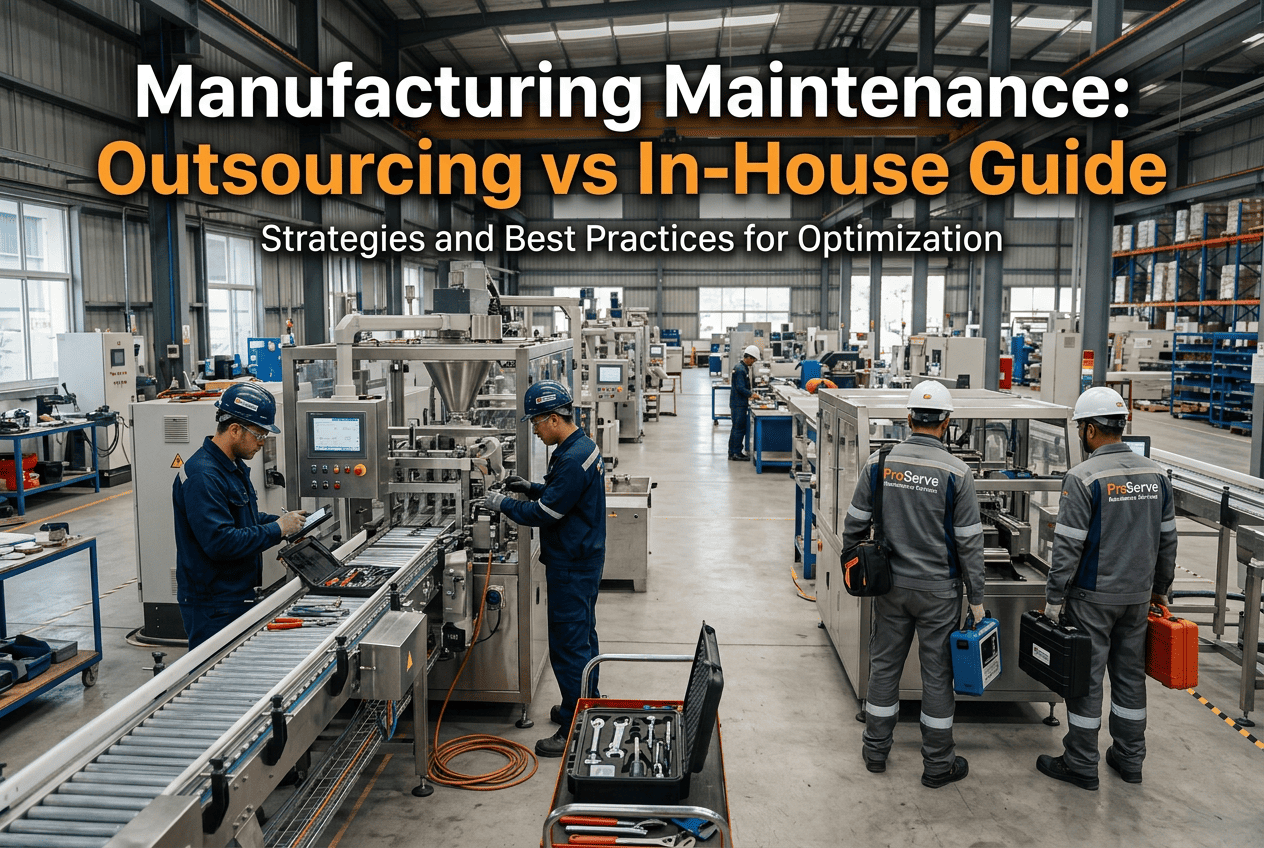
Read More
Every plant manager eventually faces the same question: Should we build a larger in-house maintenance team or bring in outside contractors for critical assets? The wrong choice creates downtime, quality problems, and hidden costs that do not show
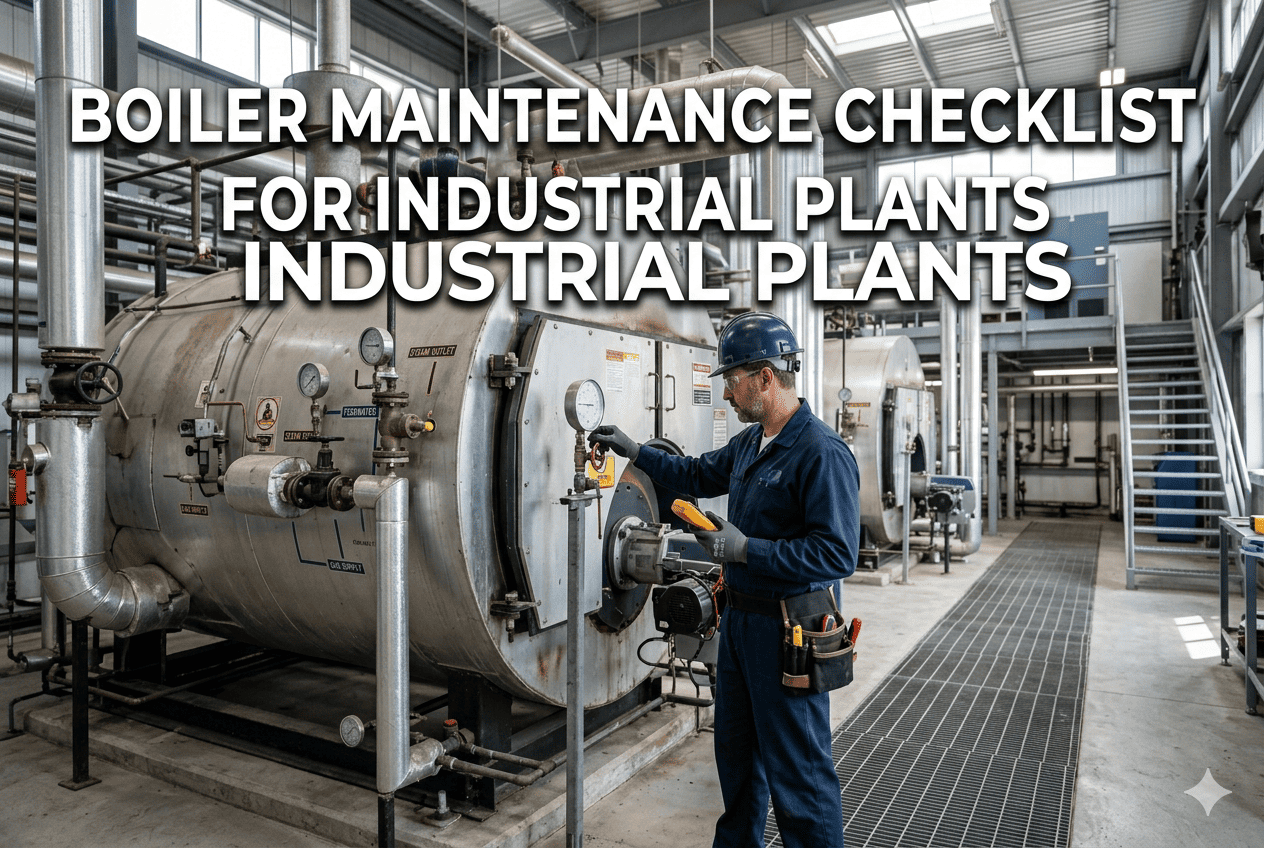
Read More
Industrial boilers are one of the most tightly regulated and highest-consequence assets in any plant — a boiler failure does not just stop production, it can cause catastrophic injury, structural damage, and regulatory shutdown that takes months t

Read More
Every hour of unplanned downtime in a manufacturing facility costs between $5,000 and $20,000 depending on the sector — and the majority of those incidents are traceable to equipment problems that were visible days before failure. A structured wee
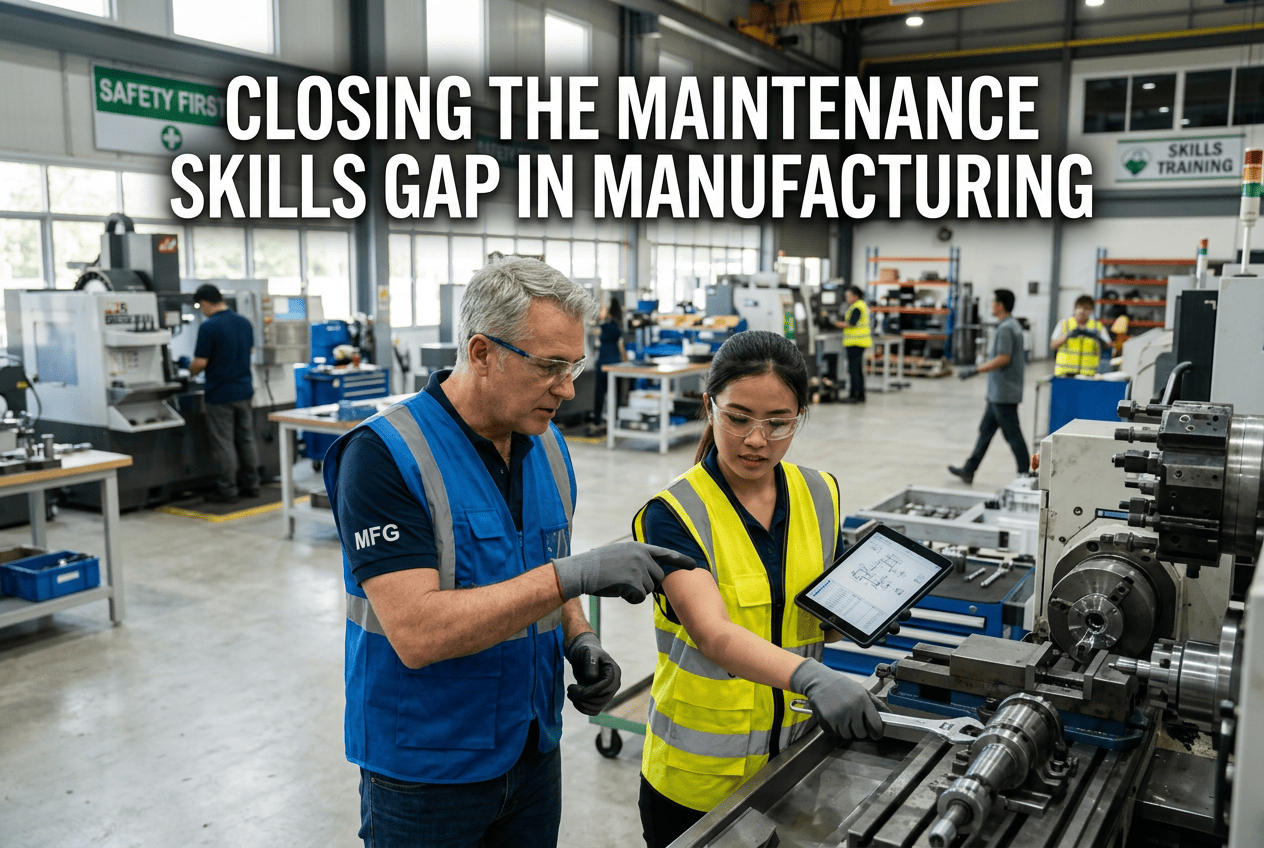
Read More
The average age of a maintenance technician in North American manufacturing is now over 48. Within the next five years, a significant portion of that workforce retires — and the technical knowledge they carry walks out with them. New hires bring e
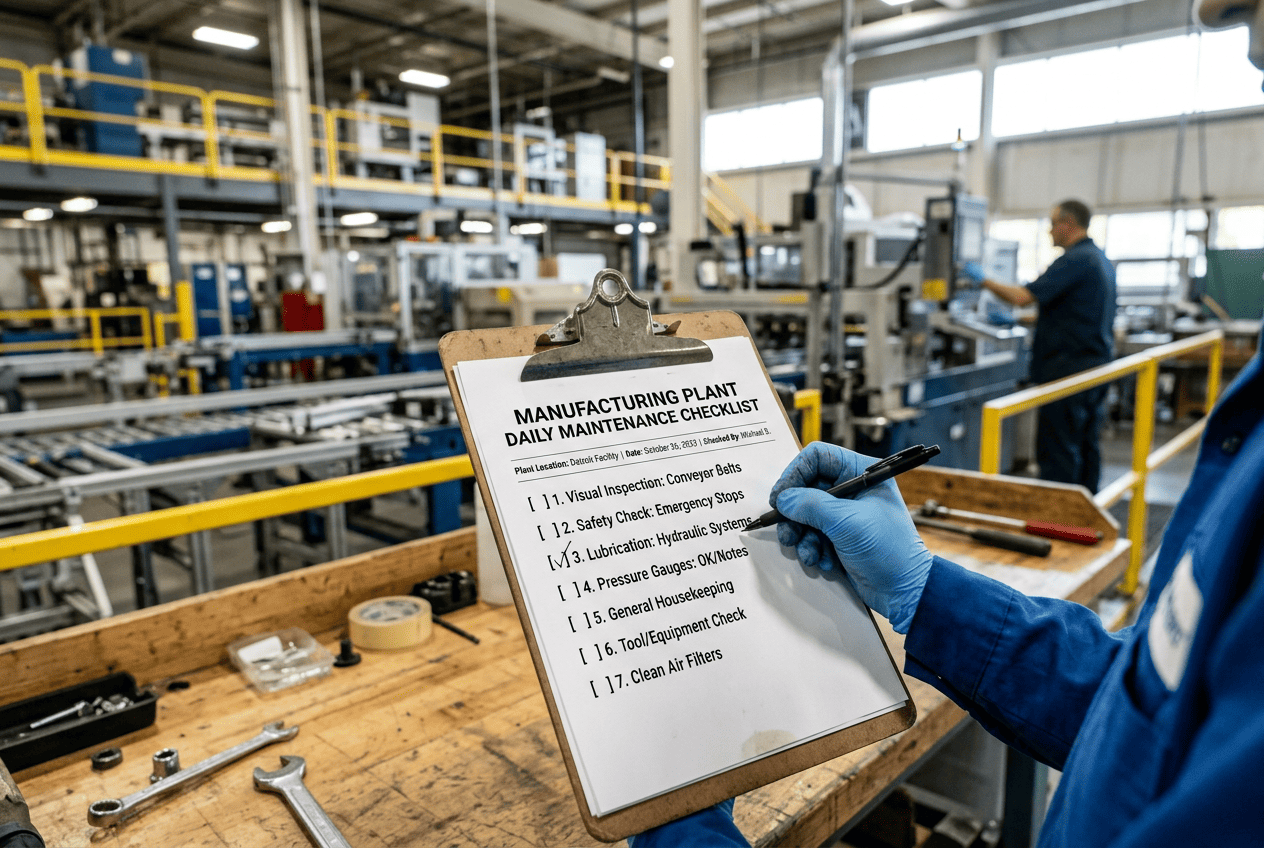
Read More
A single missed daily check in a manufacturing plant does not just create a paper trail problem — it creates the conditions for a production stoppage, a safety incident, or a regulatory citation that costs far more than the 15 minutes the inspecti
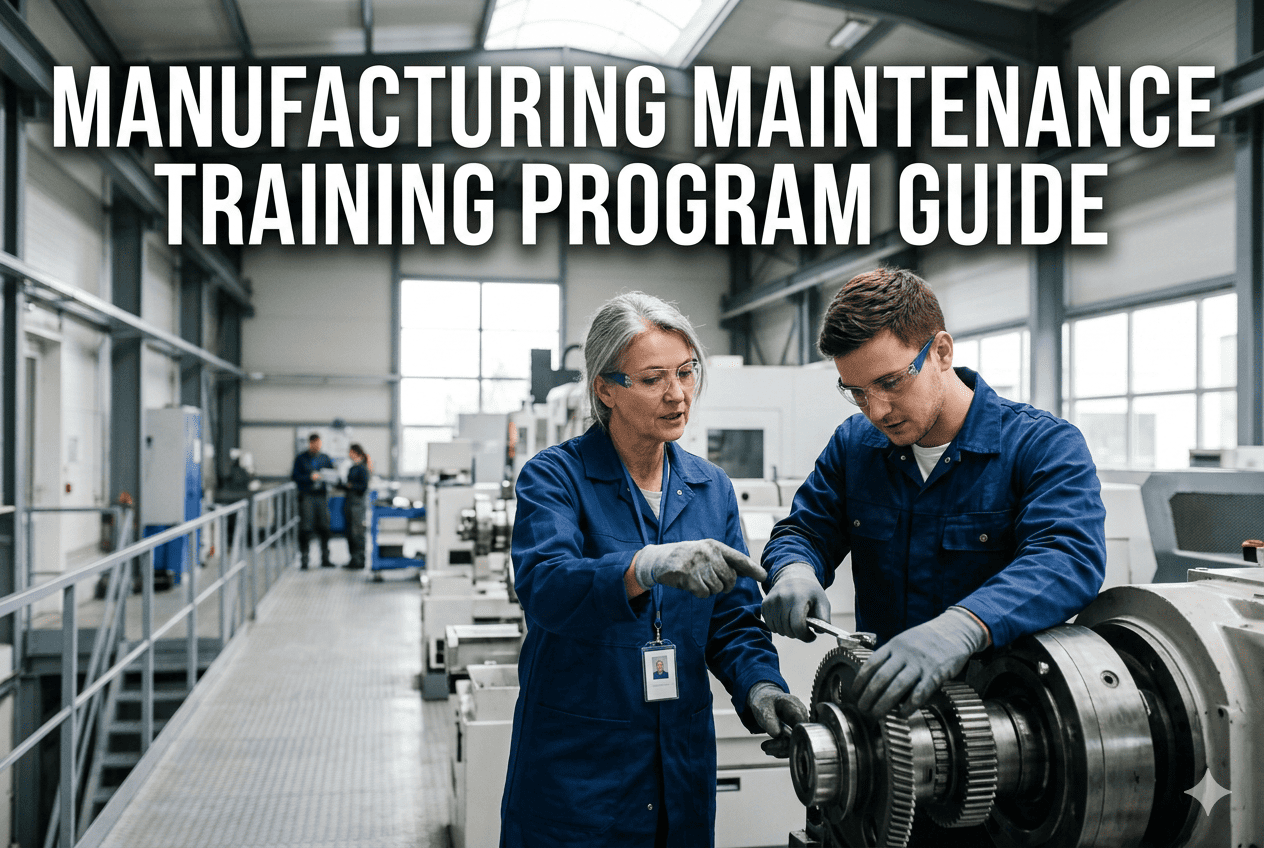
Read More
Manufacturing plants running 24/7 operations cannot afford technicians who are guessing. A structured maintenance training program is the difference between a plant that reacts to breakdowns and one that prevents them — and the gap between those t

Read More
A Boeing 737 costs between $51.5M and $87M. A B-52 runs roughly $53M. A single RQ-4 Global Hawk can cross $130M. Every aerospace component in those airframes traces back to a gauge, a furnace, a welder, or an NDT technician — and to the maintenanc

Read More
A 40-BBL fermenter at a well-regarded Pacific Northwest craft brewery tested positive for Lactobacillus on a Tuesday morning. Three batches of pale ale — 120 barrels, about $48,000 at wholesale — had to be dumped. The root cause wasn't a recipe ch

Read More
A paper mill does not stop quietly. When a dryer bearing seizes on a linerboard machine running at 1,800 feet per minute, when a recovery boiler smelt-spout plugs during black liquor firing, when a digester pressure transmitter drifts and goes unn

Read More
Inside a tier-one PCB assembly house in Penang last spring, a batch of 2,400 automotive ECU boards failed end-of-line AOI within a single shift. Every board traced back to one pick-and-place nozzle that had drifted 0.04 mm out of calibration over

Read More
A single ruptured pressure vessel. A cracked weld on a corroded ammonia line. A missed inspection interval on a heat exchanger handling 450°C hydrocarbons. Chemical process plants do not fail gently — they fail catastrophically, and they fail fast
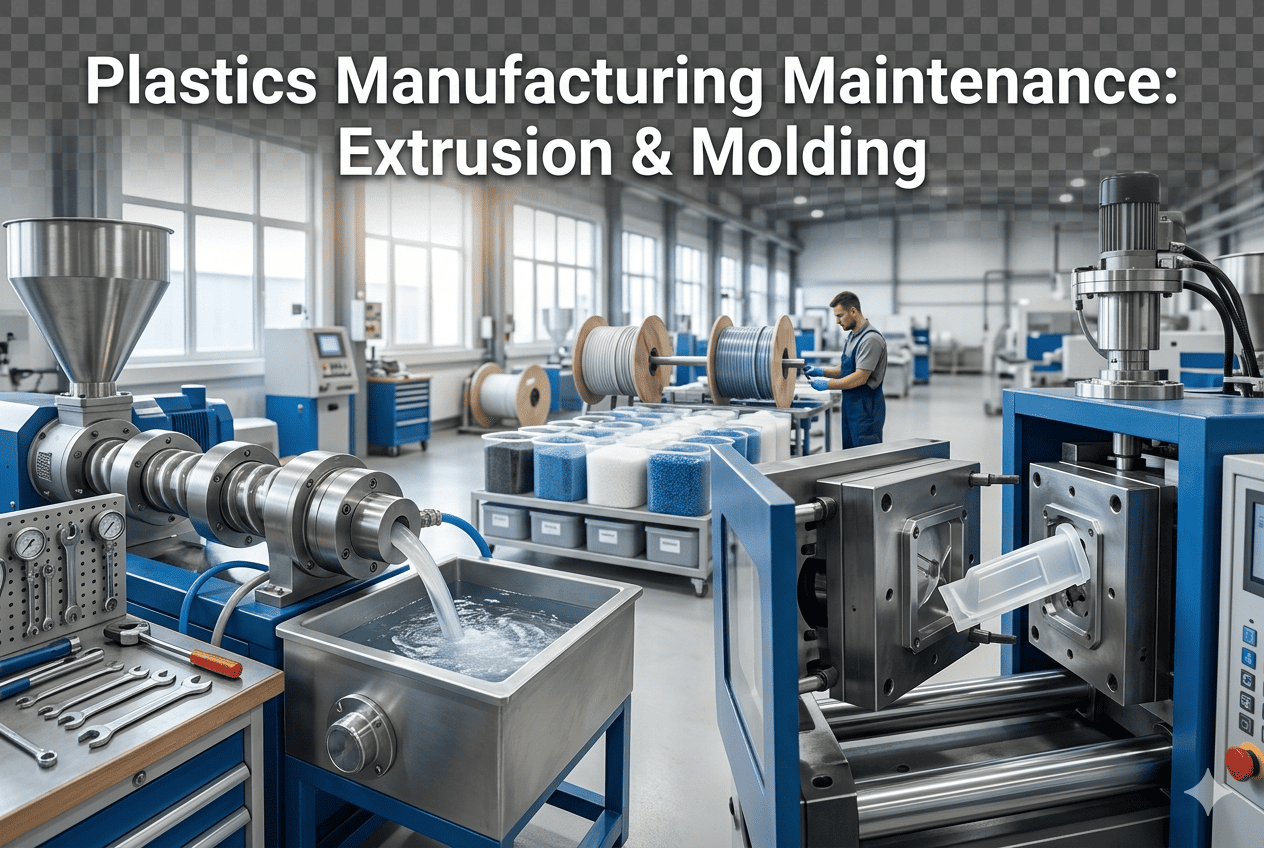
Read More
At 3:17 a.m. on a Thursday, a twin-screw extruder in a Midwest plastics plant seized mid-run — polymer carbonized inside the barrel, the motor tripped, and eleven hours of continuous PP profile production ended in a smoking halt. The root cause? A

Read More
In U.S. manufacturing plants, overhead cranes and hoists move millions of pounds of material every single day — and when one fails, the consequences are not measured in lost production hours but in lives. Manufacturing accounts for roughly 24% of

Read More
A single blast furnace outage can erase a full quarter of maintenance budget in under 48 hours. Rolling mill breakdowns halt entire finishing lines, burning $50,000 to $500,000 per hour in lost throughput, scrap, and expedited logistics. The steel

Read More
The January 2008 Imperial Sugar refinery explosion in Port Wentworth, Georgia killed 14 workers and injured 38 others — the ignition source was accumulated sugar dust on overhead surfaces that a functioning dust collection system should have preve

Read More
Walk through any welding-intensive manufacturing plant and you'll hear the same story from supervisors: machines run 20 hours, then stop cold for 40 minutes because a contact tip burned back, a liner jammed, or a robotic torch drifted off its tool

Read More
A mid-sized injection molding plant running 12 presses lost 340 production hours to hydraulic failures last year — roughly $1.2 million in missed shipments from problems that routine oil sampling and filter changes would have caught six weeks earl

Read More
A 600-ton stamping press going down for four hours on a busy automotive line can cost a manufacturer upwards of $200,000 in lost output, expedited freight, and overtime labor — and most of these shutdowns trace back to issues that a structured mai

Read More
A 40,000 square foot metal fabrication shop in Wisconsin lost 19 production days in a single year to unplanned downtime — a seized press brake hydraulic system, a laser cutter resonator failure, a welding robot calibration drift, and three separat

Read More
ESG reporting has moved from optional sustainability disclosure to a hard requirement for manufacturers — investors, customers, and regulators now demand verified, auditable data on carbon emissions, water stewardship, waste diversion, and workfor

Read More
A packaging plant running six production lines paid $4.1 million in electricity last year and could not tell its CFO which line consumed the most. The utility bill arrived as a single number. Twelve weeks after installing machine-level energy subm

Read More
Utility systems quietly consume 30–50% of a manufacturing plant's energy budget — yet most plants manage compressed air, steam, cooling water, electrical distribution, and natural gas as separate silos with no unified visibility. That fragmentatio

Read More
A mid-sized electronics assembly plant in the Midwest was spending $2.34 million a year on HVAC — make-up air units running at 100% during unoccupied third shift, chilled water setpoints unchanged since 2009, and exhaust fans pulling conditioned a

Read More
A single manufacturing plant can consume 500,000 to 2 million gallons of water per day — and up to 40% of that volume leaks, evaporates through uncontrolled cooling towers, or gets discharged as treatable wastewater that never returns to process.

Read More
Safety culture is the single strongest predictor of manufacturing injury rates — stronger than equipment age, stronger than regulatory compliance, stronger than budget. The same plant, running the same machinery, with the same workforce, can exper

Read More
Environmental compliance for a manufacturing plant is not a single regulation — it is a stack of overlapping federal programs, state authorities, and reporting deadlines that together govern every stack, every drain, every dumpster, and every chem

Read More
Falls remain one of the leading causes of serious workplace injury and death in manufacturing — and the threshold is lower than most plant managers realise. Under OSHA 1910.28(b)(1)(i), fall protection is required at just 4 feet above a lower leve

Read More
A single spark from a welder's torch can travel up to 35 feet and smolder inside a wall cavity for hours before igniting a fire that destroys a plant. Hot work — welding, cutting, grinding, brazing, soldering — is one of the largest causes of indu

Read More
Every 15 seconds, somewhere in the world, a worker dies from a work-related accident or disease — and for every fatality, there are roughly 1,000 non-fatal injuries costing manufacturers billions in lost productivity, workers' compensation, regula

Read More
A manufacturing plant that handles solvents, acids, cleaning agents, paints, lubricants, and process chemicals is one container failure away from a serious incident — and the plants that avoid those incidents are not the ones with the fewest chemi
Read More
A die-cutting operator on the second shift develops a dull ache in her right shoulder. Eight weeks later, she is filing a workers' compensation claim for a rotator cuff tear, her workstation sits idle, and the plant is down one of its most experie

Read More
An electrical arc flash ignites in under one hundredth of a second, reaches 35,000 degrees Fahrenheit — hotter than the surface of the sun — and vaporizes copper conductors into a plasma explosion that can blow switchgear doors across a room. The

Read More
In 2017, a maintenance technician at a Minnesota tanker cleaning facility climbed into a trailer to inspect cleaning quality. His partner had called in sick, so he entered alone. Witnesses later described a gasoline-like smell near the opening tha

Read More
Machine-related incidents cause over 18,000 amputations, lacerations, and crush injuries in U.S. manufacturing every year, and OSHA's National Emphasis Program on Amputations specifically targets plants with inadequate machine guarding. A single a

Read More
Picture a modern automotive plant where 2,400 wireless sensors stream vibration signatures, thermal readings, and motion telemetry from every robot, conveyor, and press — all feeding a central brain that reroutes production in milliseconds when a

Read More
A maintenance technician spends 23% of every work order searching for documentation, radioing control rooms, or waiting for a senior engineer to arrive. AR smart glasses cut that wasted time to near zero by projecting work instructions, equipment
Read More
A consumer electronics manufacturer deploying 18 UR10e cobots across three assembly cells discovered that joint grease degradation — not programming errors or sensor faults — was responsible for 61% of their unplanned cobot downtime in year two. T

Read More
Autonomous Mobile Robots (AMRs) are moving from pilot projects to production-floor infrastructure in manufacturing — not as replacements for maintenance technicians, but as force multipliers that extend human reach into hazardous zones, eliminate

Read More
A mid-size automotive parts manufacturer running 6 SCADA systems across two plants had real-time process visibility inside each system — and zero visibility across them. When a quality excursion in Plant 2 was traced back to a pressure variance in

Read More
Every weld your production line makes is either conforming or a liability — and in manual inspection regimes, the average inspector misses 12–23% of critical defects including subsurface porosity, micro-cracks, and incomplete fusion that are invis

Read More
A tier-1 automotive supplier running 14 production lines discovered that 0.3mm dimensional drift in a turned shaft component had passed 6-monthly gauge calibration checks undetected for 22 weeks — because their gauging was calendar-driven, not pro

Read More
First Pass Yield (FPY) is the single most honest number in your quality programme — the percentage of units that complete a production process correctly the first time, without rework, repair, or scrap. At the industry average of 85–88% FPY, a pla

Read More
Manufacturing facilities average 800 hours of unplanned downtime per year — and aging equipment accounts for 29% of every unplanned stoppage, according to industry data collected from over 1,000 maintenance professionals.

Read More
Every manufacturing line has one station, one machine, or one process step that determines the maximum output of the entire facility — and until you find it with data, you are optimizing the wrong things.

Read More
A single power transformer failure in a manufacturing plant is not a maintenance event — it is a facility-level emergency that halts every production line simultaneously, with replacement lead times of 4 to 16 weeks for large custom-wound units.

Read More
Industrial chillers are the silent workhorses of manufacturing cooling — and when a chiller fails mid-shift, the cascade is immediate: process temperatures spike, product quality drops, and production lines halt while emergency crews scramble for

Read More
Hydraulic systems account for nearly 30% of all unplanned manufacturing downtime — yet most plants still wait for a leak, a pressure drop, or a seized cylinder before acting. Oxmaint's CMMS brings

Read More
Industrial gearboxes are the torque backbone of manufacturing — transmitting power across crushers, conveyors, mixers, extruders, and mills with no tolerance for unexpected downtime.

Read More
A gearbox that fails mid-shift doesn't just stop one machine — it can halt an entire production line, trigger emergency repair costs 8–12x higher than preventive maintenance, and expose your facility to unplanned downtime that compounds every hour

Read More
Electrical panel failures account for 31% of plant-wide power outages in manufacturing facilities, with each incident averaging $89,000 in lost production and damaged equipment according to IEEE power reliability surveys. The difference between pl

Read More
Production packaging lines run 16–20 hours daily in most facilities — and a single filler jam, sealer misalignment, or labeler glitch can halt 400 units per minute of throughput instantly. The average packaging line experiences 47 unplanned stops

Read More
Industrial valve failures cause an estimated 23% of unplanned shutdowns in manufacturing facilities, with the average incident costing $67,000 in lost production, emergency parts, and repair labor according to plant reliability benchmarking data.

Read More
Manufacturing cooling towers handle millions of gallons daily — but 68% of unplanned shutdowns trace back to preventable water chemistry failures, scale buildup, or biological contamination. A single Legionella outbreak costs $2.3M in remediation

Read More
Heat exchanger failures cost manufacturing plants an average of $42,000 per incident in lost production and emergency repairs — yet 68% of these failures are preventable with structured maintenance protocols according to industrial reliability stu

Read More
Every manufacturing plant running kilns, furnaces, compressors, or boilers is sitting on an untapped energy asset: waste heat. Approximately 72% of primary energy in industrial conversion systems is lost as heat, escaping through exhaust stacks, c

Read More
Electric motors are the hidden powerhouses of manufacturing—and the hidden money drains. They account for roughly 70% of all industrial electricity consumption, yet most plants still run aging IE1 and IE2 motors at fixed speed, burning energy arou

Read More
Steam is one of the most essential and most wasted energy carriers in manufacturing—quietly leaking through failed traps, radiating heat through bare pipes, and draining condensate to the floor instead of returning it to the boiler. Industry studi

Read More
Manufacturing plants running energy-intensive processes—metal smelting, chemical production, food processing—face a harsh reality: energy bills consume up to 40% of operating costs, yet most facilities still manage energy reactively, addressing pr

Read More
Every manufacturing plant is silently hemorrhaging energy through its compressed air system—a problem so common that industry data shows compressed air waste accounts for 30% of a facility's
Read More
Every manufacturing plant is silently hemorrhaging energy through its compressed air system—a problem so common that industry data shows compressed air waste accounts for 30% of a facility's

Read More
Pharmaceutical manufacturing operates under the strictest regulatory scrutiny of any industry — where a single undocumented equipment change can invalidate an entire batch worth millions, and calibration records missing a signature can halt produc

Read More
Cement plants operate some of the most energy-intensive and mechanically demanding equipment in heavy industry — rotary kilns running 24/7 at 1450°C, crushers processing 300 tons per hour, and grinding mills consuming 40% of total electricity cost

Read More
Walk into any world-class manufacturing facility and you'll notice something immediately: tools return to shadow boards within seconds of use, workstations stay clean through three-shift operations, and every team member knows exactly where each c

Read More
Food and beverage manufacturers face a dual challenge: maintaining production equipment while meeting stringent FDA, GMP, and FSMA compliance requirements. A single contamination incident can trigger recalls costing $10 million on average, while u

Read More
Manufacturing environments face constant pressure to maintain rigorous safety standards while keeping production lines running at peak efficiency. When a chemical spill goes unreported for 20 minutes or a near-miss incident gets logged on paper an

Read More
Automotive assembly lines can't afford unplanned stops — a single hour of downtime costs manufacturers $1.3 million on average, yet 82% of plants still experience unexpected equipment failures monthly. AI-powered predictive maintenance is transfor

Read More
A food processing plant reduced their operating costs by $1.8 million annually without cutting production capacity or workforce. Their transformation started with detailed cost tracking that revealed compressed air leaks were consuming $220,000 pe

Read More
When a 95-year-old Michigan auto parts supplier finally abandoned their paper-based production logs in 2023, the transition revealed a staggering truth: their actual equipment effectiveness was 34% lower than management believed. Three months into

Read More
When a mid-sized electronics manufacturer invested $1.2 million in robotic assembly automation, their board demanded proof of return within 36 months. Eighteen months later, the project had already paid for itself through reduced labor overtime, 9

Read More
A $2.3 million unplanned outage at a Tennessee automotive plant—traced to a single bearing failure that went undetected for 72 hours. The maintenance manager later discovered that slight vibration spikes had appeared three weeks earlier, invisible

Read More
A major automotive parts manufacturer lost $420,000 in a single week when their critical stamping press failed without warning. The maintenance team had been performing regular inspections, but they were relying on manual vibration checks and visu

Read More
Starting a manufacturing plant in 2026 requires $500K-$5M in capital depending on industry and scale, but the real challenge isn't funding — it's avoiding the operational mistakes that cause 60% of new manufacturers to fail within their first 5 ye

Read More
A consumer electronics contract manufacturer producing PCB assemblies and device testing across three production lines was hemorrhaging 1,240 hours annually to unplanned equipment downtime — primarily SMT placement machines, reflow ovens, and auto

Read More
A pharmaceutical tablet manufacturer moved their coating operation 47 meters closer to packaging and eliminated 6.2 hours of daily material handling labor — that single layout change saved $187,000 annually while cutting product damage by 34%. Pla

Read More
An integrated steel manufacturing facility in the Midwest was experiencing catastrophic equipment failures on critical production assets — blast furnace blowers, hot strip mill rolling stands, and continuous caster systems — resulting in $3.8 mill

Read More
When a global automotive parts manufacturer operated 30 plants across 12 countries with 17 different maintenance systems, their corporate maintenance director couldn't answer a simple question: "What's our actual equipment uptime?" Each plant trac

Read More
A mid-size automotive component manufacturing plant in Germany was losing 850 hours of production annually to unplanned equipment failures, translating to €4.2 million in lost output. Traditional time-based maintenance schedules were not preventin

Read More
Most factory shutdowns don't start dramatically — they start quietly, with a bearing that wasn't checked, a conveyor belt that wasn't tensioned, and a motor that ran hot for three shifts before anyone noticed. Systematic factory equipment inspecti

Read More
Air compressors power pneumatic tools, control valves, conveyor actuators, and automated machinery across virtually every manufacturing facility — and when one fails unexpectedly, it does not just stop one machine, it stops the entire production l

Read More
Electric motor failures cost manufacturing operations an average of $210,000 per incident when emergency replacement, expedited shipping, and lost production are combined. Yet 82% of motor failures are preventable through five core maintenance pra
Read More
Industrial pump failures cost manufacturing facilities an average of $180,000 per incident when unplanned downtime, emergency repairs, and lost production are combined. Yet 78% of pump failures are preventable through structured maintenance protoc

Read More
Every manufacturing shift that starts with a conveyor jam, a misaligned belt, or a burned-out drive motor is a shift that loses hours — and unplanned downtime costs manufacturers upwards of $250,000 per hour in lost throughput, em

Read More
Energy bills are silently eating your manufacturing margins — and most plant managers only notice after the quarterly report lands. If your facility spends over $1 million a year on electricity, you are almost certainly losing 10–25% of that to pr

Read More
Every dollar wasted on energy in your plant is a dollar that didn't go into equipment, workforce, or growth — and in most manufacturing facilities, 20–30% of energy spend is preventable with the right visibility and action systems in place. Manufa

Read More
Lockout tagout failures killed 54 workers caught in running equipment during maintenance in a single year and caused nearly 18,000 lost workdays — yet OSHA continues to issue over 2,000 LOTO citations annually because most manufacturing facilities

Read More
OSHA cited over 14,600 violations across its top ten most-cited standards in fiscal year 2024 — and manufacturing plants consistently rank among the most penalized workplaces, with the manufacturing sector alone accumulating 937 forklift-related c

Read More
A CNC machine that skips its preventive maintenance schedule does not fail dramatically — it drifts. Tolerances slip by microns, spindle temperatures creep upward, coolant concentration drops silently, and by the time a breakdown arrives, weeks of

Read More
Manufacturing plants deploying ROS2-powered robot fleets — AMRs, robotic arms, AGVs — are discovering that the real bottleneck is not the robots themselves but keeping dozens or hundreds of autonomous units coordinated, maintained, and productive

Read More
Every hour a robotic welding cell sits idle costs your factory upward of $10,000 in lost production — and over 37% of welding robots experience calibration drift each year, turning a precision machine into a scrap generator. The difference between

Read More
Most manufacturing plants generate millions of data points every day — vibration readings, temperature logs, energy consumption, production counts, quality measurements — and almost none of it reaches the person making the next maintenance or prod

Read More
Every defect that reaches the customer began as an error that the process was designed to allow — and poka-yoke is the discipline of redesigning processes so those errors become physically or digitally impossible. Modern manufacturers integrating

Read More
A defective batch that passes your receiving dock does not stay at the dock — it travels into your production line, into your finished goods, and eventually into your customer's hands. Incoming Quality Control is the one gate where bad material ca

Read More
Missed calibration deadlines cost manufacturing facilities far more than a failed audit — they create measurement drift that compounds silently into defective product, scrapped batches, and liability exposure before anyone realizes instruments wer

Read More
Every industrial failure leaves a heat trail long before it causes damage — and thermal imaging is the technology that reads that trail. Facilities using Oxmaint's CMMS integrated with infrared thermography pro

Read More
A batch number change, a supplier lot swap, or a single mislabelled serial — any one of these, untracked, can turn a quality incident into a full production recall costing millions.

Read More
Most manufacturing defects are not random — they are the predictable output of a process that has never been properly measured. Six Sigma gives you the statistical framework to find the root cause, eliminate it permanently, and control the process

Read More
Lean manufacturing has always promised to eliminate waste — but traditional lean tools plateau. After years of kaizen events and 5S implementations, 72 major multinationals still average 323 hours of unplanned downtime per year. The gap between le

Read More
Every second a problem goes unseen on your factory floor is a second of capacity you will never recover. The Andon system — born in the Toyota Production System and now reengineered for Industry 4.0 — gives every operator on your line the power to

Read More
Every shift change in your factory is a knowledge transfer moment — and most plants lose critical operational context in under 10 minutes. A missed equipment fault, an undocumented quality trend, or an unassigned repair task at handover costs manu

Read More
Your machines are running — but are they producing? Micro stops, interruptions lasting under 5 minutes that clear themselves before anyone logs them, are silently consuming 15–25% of your factory's performance capacity every singl

Read More
Factories are losing output not because they lack machines — but because capacity decisions are still made by spreadsheets, gut feel, and reactive firefighting. AI-powered manufacturing capacity planning changes this entirely: it reads real-time p

Read More
Industrial boilers account for some of the most expensive unplanned failures in manufacturing — a single tube rupture or feed pump failure can halt an entire production unit for 24 to 72 hours, and reactive maintenance of boilers costs three to fi

Read More
Compressed air is the fourth utility in manufacturing—and the most wasted one. The U.S. Department of Energy estimates that air leaks drain 20–30% of a compressor's

Read More
Manufacturing is now the most breached industry globally for the fourth consecutive year — and the attack vector is almost never the office network. Oxmaint's CMMS gives your OT security teams the

Read More
A single skipped lubrication cycle on a 6-axis robot wrist joint is not a minor oversight—it triggers positional error, accelerates gear wear, and eventually causes encoder failure that throws every downstream quality measurement out of tolerance.

Read More
Most manufacturing equipment failures are not accidents — they are predictable, preventable events that get misdiagnosed as bad luck. Start eliminating repeat failures with Oxmaint's CMMS-driven RC

Read More
Manufacturing quality is no longer a clipboard-and-checklist game. Every failed inspection, every recall, every ISO audit finding that slips through costs your plant real money—and real customers.

Read More
Every manufacturing machine you own is quietly moving through a predictable cost curve — and most plants have no idea where their critical assets actually sit on that curve until an emergency repair or a failed budget meeting forces the question.

Read More
Most manufacturing plants are bleeding production capacity every single shift — not from catastrophic failures, but from the slow, invisible drain of minor stoppages, speed losses, and defects that nobody tracks systematically. Total Productive Ma

Read More
Every hour your production line sits idle during a changeover is an hour your competitors are shipping product. SMED — Single Minute Exchange of Die — is the lean manufacturing methodology that has helped factories across industries slash setup ti

Read More
Every factory floor today sits on a quiet fault line — machines generating terabytes of data on one side, and operational decisions still made on gut feel on the other. OxMaint's Industrial IoT Pla

Read More
Every major equipment failure on your production floor was preceded by warning signs that nobody could see in time — because the data existed in sensors but the intelligence to connect those signals into a meaningful failure prediction did not. Di

Read More
The factory floor has always been where fortunes are made and lost — but for the first time in industrial history, the machines themselves are learning to prevent the losses before they happen. Manufacturing 6.0 is not a buzzword coined in a confe

Read More
Most factories still running 10–20-year-old equipment are sitting on a goldmine of untapped data — and the gap between them and Industry 4.0 leaders is closing fast. Start your smart factory journey

Read More
Statistical Process Control (SPC) is one of manufacturing's most battle-tested quality methods — and when paired with AI, it becomes a real-time intelligence system that tells your team exactly when a process is drifting, why it's happening, and w

Read More
AI-powered computer vision defect detection is rewriting the rules of production quality — enabling manufacturers to detect surface cracks, dimensional deviatio

Read More
Every defective unit that slips through your production line carries a cost far beyond the part itself — recalls, warranty claims, customer returns, and brand damage that compounds with every escape. The average manufacturer loses 15–20% o

Read More
Manufacturing plants that switch from spreadsheets and paper work orders to a structured CMMS cut unplanned downtime by up to 32% within the first 90 days — but only if the rollout is done right. Industry data shows 60 to 80 percent of CMMS projec

Read More
Manufacturing maintenance is entering a new era — and it's moving faster than most teams realize. Generative AI is no longer a pilot project on a whiteboard; it's already slashing unplanned downtime by 25–40%, auto-generating SOPs

Read More
Manufacturing plants handling defense contracts, pharmaceutical production, or classified government work cannot afford to route maintenance data through a third-party server — and that is exactly why

Read More
Every year, manufacturing plants across industries — from petrochemicals to food processing — face the same high-stakes challenge: executing a planned plant shutdown or turnaround without blowing the budget, missing the restart window, or triggeri

Read More
The average manufacturing plant operates at 60% OEE when world-class is 85% — that 25-point gap represents production capacity you already own but cannot see because nobody is measuring the right things at the right frequency. Companies using stan

Read More
Most manufacturing plants set their maintenance budget the same way every year — take last year's number, add a percentage for inflation, and call it done. That approach has no relationship to asset value, no connection to failure history, and no

Read More
A critical conveyor motor fails on your production line. You rush to the storeroom — the shelf is empty. Production stops. Every hour costs thousands of dollars. Now picture the opposite: your warehouse holds $2 million in spare parts, but 60% of

Read More
A technician spending 30–40 minutes a day walking back to a desktop terminal to log maintenance tasks is losing nearly 200 hours of productive time per year — before a single wrench is turned.

Read More
Most manufacturing plants maintain their equipment on fixed calendar schedules — not because those schedules reflect how equipment actually fails, but because nobody ever ran a formal analysis to find out. Reliability Centered Maintenance (RCM) wa

Read More
Most manufacturing plants believe they run a preventive maintenance program — but McKinsey research shows nearly half of all maintenance activities are still reactive. The real cost of that gap is staggering: reactive maintenance runs 3 to 5 times

Read More
Unplanned equipment downtime costs manufacturing operations a median of $125,000 per hour — and 42% of that downtime is caused by aging equipment that a structured preventive maintenance program would have caught weeks earlier. The gap is not tech

Read More
Every manufacturing plant running work orders on paper logs or disconnected spreadsheets is silently paying for it — in missed PMs, reactive breakdowns, and technicians chasing information instead of fixing machines. A purpose-built

Read More
Most manufacturing plants are already running ERP, MES, and SCADA systems — yet maintenance teams are still the last to know when something goes wrong. The reason is not a lack of data. It is fragmentation: your SCADA captures the temperature spik

Read More
Manufacturing plants that still run maintenance on spreadsheets and paper logs lose an average of CMMS software is the single fastest way to stop that bleeding. This 2026 comparison guide cuts through the noise of 200+ platforms to show you exactl

Read More
Industrial pumps are the circulatory system of manufacturing — and when one fails without warning, the damage ripples far beyond the pump itself into process shutdowns, contaminated product, damaged seals, and emergency repair bills that dwarf wha

Read More
Most manufacturers are not suffering from a data shortage — they are suffering from a visibility lag. Machines stream data 24/7, yet production supervisors still discover equipment failures at shift-end reports, quality escapes three production ru

Read More
Most manufacturing plants chase OEE improvement without knowing exactly which losses are eating their numbers — and that is why improvement efforts stall. The

Read More
Unplanned downtime consumes up to 11% of annual revenue at Fortune Global 500 manufacturers — roughly $1.4 trillion in losses every year according to Siemens research. The plants that reverse that number share one thing: they stopped estimating do

Read More
Every hour your production line sits idle without a plan, you're not just losing output — you're bleeding labor costs, contract penalties, customer trust, and maintenance premiums that compound long after the machine restarts.

Read More
Most manufacturing plants are tracking the wrong numbers — or tracking the right ones with no system to act on them. Oxmaint's live KPI das

Read More
Manufacturing plants that don't measure OEE are flying blind—while competitors squeeze 20–30% more output from the same machines. Overall Equipment E

Read More
Manufacturing plants that still rely on reactive maintenance are losing a median $125,000 every hour equipment sits idle — a cost that has grown 50% since 2019.

Read More
Manufacturing plants running AI on distant cloud servers are losing the one thing predictive maintenance demands most: real-time response at the mach

Read More
Manufacturing equipment fails without warning—until the right sensors catch it first. Industrial IoT sensors form the backbone of predictive maintenance programs that reduce unplanned downtime by up to 70%, cut emergency repair costs significantly

Read More
Electric motors consume 45% of all global electricity and drive virtually every production process in modern industry — yet 80% of motor failures are preventable with the right monitoring in place. When a motor fails without warning, the direct re

Read More
Bearing failures account for 40–50% of all rotating machinery breakdowns in manufacturing — yet every single one of them announces itself through measurable physical signals weeks or months before catastrophic failure occurs. The difference betwee

Read More
A bearing that is 6 weeks from catastrophic failure is already screaming — you just cannot hear it without the right tools. Vibration analysis is the diagnostic method that translates mechanical stress, wear, and misalignment into readable data pa

Read More
Conveyor systems are the circulatory system of modern manufacturing and logistics — and when they stop, everything stops. Unplanned conveyor downtime costs industrial operations an average of $260,000 per hour in lost production,

Read More
Predictive maintenance is rewriting the rules of manufacturing uptime — and the plants adopting it earliest are pulling ahead fastest. Unplanned equipment failures cost manufacturers an average of $260,000 per hour in lost production, emergency la

Read More
Between 5 and 10 arc flash incidents occur every single day in the United States — and the total financial impact of a single event can reach up to $15 million when you account for medical costs, equipment replacement, legal liability, and lost pr

Read More
Fluid contamination is responsible for more than 80% of hydraulic system failures — yet most maintenance programmes catch it only after a pump has already failed, a seal has already been destroyed, or a cylinder rod has already started leaking. Th

Read More
Every warehouse manager who has watched a robot fleet grind to a halt at peak dispatch knows the real cost of deferred maintenance — and it is never just the repair bill. A structured AMR and AGV preve

Read More
Every new piece of industrial equipment that enters service without a structured commissioning process is a liability from day one — not an asset. Studies consistently show th

Read More
An electric motor does not announce its failure in advance — the bearing develops micro-fractures you cannot hear, the insulation resistance quietly degrades for months, and the VFD capacitor ages invisibly until a production-stopping fault code a

Read More
Compressed air is the fourth most expensive utility in industrial facilities — and most plants are wasting between 25% and 50% of every cubic foot they generate. According

Read More
A CNC machine that misses its preventive maintenance schedule doesn't break down dramatically — it drifts. Tolerances slip, surface finishes degrade, spindle temperatures creep up, and by the time the breakdown arrives, the damage has been compoun

Read More
Compressed air is often called the "fourth utility" in manufacturing — but unlike electricity, gas, and water, most plants have no idea how much of it they are producing just to lose it through cracks in fittings, degraded hose connections, and ov

Read More
Every manufacturer carries inventory that costs 20–30% of its own value per year just to sit on a shelf — and simultaneously runs out of the $12 bearing that halts a $40,000-per-hour production line. Both problems exist in the same storeroom, mana

Read More
Aerospace manufacturers have long operated two completely separate intelligence systems — AI vision inspection catching surface defects in milliseconds, and CMMS tracking which machines were maintained, when, and by whom. The insight that reduced

Read More
A 3PL fulfillment center running a 24-robot AMR fleet watched its uptime collapse from 97% to 81% in just four months — not because the robots broke down, but because nobody had built a maintenance program for them. Wheel tread went unmeasured. Li

Read More
When a Fortune 500 manufacturer operates 30 plants across four continents, every plant running its own maintenance system is not flexibility — it is a ₹200+ crore annual liability hiding inside your operations budg

Read More
A mid-sized plastics manufacturer running 38 injection molding machines across two production shifts was spending more on energy than on raw materials waste — and nobody had connected those two facts until Oxmaint's analytics made it impossible to

Read More
Medical device manufacturers face FDA inspections with little to no advance notice — and a single Form 483 observation can trigger warning letters, product holds, or costly corrective action cycles. Oxmaint's compl

Read More
Electric motors drive 64% of all industrial power consumption in manufacturing — and when they fail without warning, the repair bill is rarely the worst part. Lost production, scrambled crews, and emergency parts orders are. The hard truth is that

Read More
Maintenance teams in manufacturing are sitting on a data goldmine — work order histories, failure logs, sensor readings, equipment manuals — yet most plants still rely on gut feel and reactive firefighting to make maintenance decisions. Generative

Read More
Manufacturing plants that still run on reactive maintenance — fixing equipment after it breaks — are leaving money on the floor every single shift. Reliability-Centered Maintenance (RCM) is the structured framework that changes that equation perma

Read More
US manufacturers spend over $100 billion annually on equipment maintenance — yet most maintenance budgets are built by adding an inflation percentage to last year's spend rather than anchoring to actual asset value, failure history, and strategic
Read More
Every plant that runs on reactive maintenance has already decided — without realizing it — that unplanned breakdowns are acceptable. They are not.

Read More
Manufacturing equipment does not fail without warning — it gives signals weeks and sometimes months in advance, through vibration patterns, heat signatures, ultrasonic emissions, and lubricant chemistry that shift measurably before any visible sym

Read More
Manufacturing enterprises running multiple plants know the silent cost of fragmented maintenance: one facility runs at 94% uptime while another limps at 71%, yet neither team knows why — because there is no shared baseline to compare against.

Read More
Manufacturing plants that run maintenance operations on reactive instinct rather than lean discipline don't just lose hours — they lose competitive ground, with every unplanned breakdown, excess inventory, and wasted technician hour compounding in

Read More
A single seized idler bearing on your longest conveyor line can shut down an entire production floor in under four minutes — and the ripple effect through downstream processes means that fulfillment centers lose up to $20,000 per hour during unpla

Read More
The maintenance skills gap is no longer a future problem — it is a 2026 operational crisis. The U.S. Bureau of Labor Statistics projects over 500,000 manufacturing jobs will go unfilled through 2030, and Deloitte's manufacturing workforce report p

Read More
A CNC machine that runs at micron-level precision today can begin producing scrap tomorrow — not from operator error, not from bad programming, but because someone skipped a lubrication cycle three weeks ago.

Read More
Every minute a production line stands still, money bleeds. Siemens estimates unplanned downtime costs manufacturers $1.5 trillion globally — roughly 11% of annual revenues. The technology to prevent most of that loss already exists. 5G-connected I

Read More
Industrial facilities are hemorrhaging money through energy waste they have never measured — motors running at degraded efficiency, compressed air systems leaking 25–30% of their output, HVAC conditioning empty production zones overnight, and equi

Read More
Every maintenance team has faced it: a technician standing in front of a failing machine, paper manual in one hand, phone in the other, waiting 40 minutes for the right expert to pick up. In 2026, that scenario is becoming a relic.

Read More
Every minute your production line sits idle during a changeover is money walking out the door. Plants still running manual SMED processes are leaving 40–60% of their changeover time on the table—and in high-mix, low-volume manufacturing, that gap

Read More
Most manufacturing plants are already running ERP, MES, SCADA, and IoT systems — but when those systems can't talk to each other, every department operates on a different version of reality. Maintenance teams log breakdowns hours after finance has

Read More
Most manufacturers track their equipment in one of two ways: they either react when something breaks, or they follow a fixed calendar that services assets regardless of actual condition. Both approaches share the same blind spot — they treat every

Read More
Three critical machines were failing silently at a Texas steel fabrication plant — a CNC plasma cutter running 18-hour shifts, four press brakes bending structural steel, and two overhead bridge cranes moving 40-ton loads — and nobody knew until a

Read More
When a mid-sized heavy equipment manufacturer decided to deploy 35 collaborative robots across its welding, machine tending, and assembly stations, leadership knew the cobots were only half the equation. Without a structured

Read More
A high-volume electronics-to-automotive sub-assembly manufacturer was losing $6.3M annually to escaped defects, warranty claims, and three product recalls in 24 months — all traced back to a manual inspection process that missed nearly 1 in 3 crit

Read More
A global electronics manufacturer operating six production plants across three continents was losing an estimated $18.4 million annually to unplanned downtime — a problem that spreadsheets, reactive repairs, and siloed maintenance

Read More
A mid-size automotive parts manufacturer running 12 production lines was bleeding $4.1M annually in unplanned downtime. OEE sat at 58% — well below the 85% world-class benchmark — while reactive maintenance consumed 67% of the maintenance team's t

Read More
Most plants run three shifts, collect data on all three, and still cannot answer a simple question on Monday morning: which production line lost the most output last week, and exactly why? The answer is buried in inconsistent shift logs, mismatche

Read More
OSHA cited manufacturers over 82,000 times in a single recent fiscal year, with an average penalty of $15,625 per violation — and that figure only covers the regulatory fine. Add legal exposure, remediation costs, production shutdowns, and the hum

Read More
Every AI vision inspection system ships from the factory at peak accuracy — but that precision erodes the moment it enters a real production environment. Dust collects on lenses, LED illuminators age, and AI models drift as product batches, packag

Read More
A single unscheduled robot arm failure during peak production can idle an entire automated cell for 6–24 hours — stalling output, triggering downstream shortages, and pushing emergency repair costs past $80,000 before a wrench is turned. Yet 68% o

Read More
Manufacturing downtime costs an average of $260,000 per hour — yet 82% of companies have experienced at least one unplanned outage in the past three years. A structured preventive maintenance checklist is the single most proven to

Read More
Manufacturing plants face a compliance reality that is harder than most industries: OSHA cited over 16,000 violations against manufacturers in 2024 alone, generating more than $70 million in penalties — and the same four standards appear on the vi

Read More
Total Productive Maintenance is the most comprehensive maintenance strategy available to manufacturing — and the most frequently misunderstood. Most TPM programmes stall at pillar two because teams treat it as a training initiative rather than an

Read More
Most predictive maintenance programmes fail not because AI is hard, but because the stack underneath it is wrong. Sensors that feed incomplete data, AI models that only throw threshold alerts, and CMMS systems that never connect to either — that c
Read More
Industrial robots and cobots now operate in over 400,000 manufacturing facilities globally — yet fewer than 30% have a structured maintenance programme in place. The result: unplanned robot downtime costs manufacturers an average of $260,000 per h

Read More
Manufacturing 6.0 is not a roadmap item — it is already running in leading automotive, semiconductor, and pharmaceutical plants. The shift from cloud-dependent Industry 4.0 to edge-native AI inference changes everything about how predictive mainte

Read More
Manufacturing quality failures cost the global industry over $2.9 trillion annually — and most of it traces back to one unsolved problem: human inspection cannot keep pace with modern production. AI vision systems change that equation permanently.

Read More
In 2026, a CMMS is no longer a back-office tool — it is the operational backbone of every high-performing manufacturing plant. Unplanned downtime costs manufacturers between $50,000 and $250,000 per hour depending on sector, and the majority of it

Read More
Energy is quietly one of manufacturing's biggest controllable costs — yet most plant managers only look at the utility bill after it arrives. In 2026, energy accounts for 20–40% of total plant operating costs, and the US manufacturing sector waste

Read More
AR wearables and smart glasses are no longer experimental technology in manufacturing — they are production-deployed tools changing how technicians receive work orders, execute repairs, and escalate to remote experts without ever taking their hand

Read More
Changeover time — the window between the last good part of one production run and the first good part of the next — is one of manufacturing's most measurable, and most underaddressed, OEE losses. In high-mix, low-volume facilities, unoptimised cha

Read More
For the fourth consecutive year, manufacturing is the most targeted industry for cyberattacks globally — accounting for 26% of all documented ransomware incidents across critical sectors, according to IBM's 2025 X-Force Threat Intelligence Index.

Read More
Maintenance is no longer something that only happens when a technician shows up with a wrench. A new generation of AI-driven systems and autonomous robots is fundamentally changing who — and what — keeps industrial equipment running. These systems

Read More
Manufacturing has entered an era where waiting for a machine to break before you fix it is no longer a competitive strategy — it is a liability. Digital twin technology gives plant teams a live virtual replica of every physical asset, updated cont

Read More
Most manufacturing maintenance teams are collecting data — very few are extracting value from it. The difference between a plant that constantly firefights breakdowns and one that runs at peak reliability often comes down to a single question: are

Read More
Every manufacturing plant has a number it doesn't know — the true cost of its unplanned downtime. According to Siemens' 2024 True Cost of Downtime report, the world's 500 largest companies collectively lose $1.4 trillion each

Read More
Collaborative robots and industrial robotic arms are now the fastest-growing asset category on the modern factory floor — and also the most under-maintained. A cobot that goes down on a high-volume assembly line does not just stop one task; it sta

Read More
The factory of 2026 is not just automated — it is aware, adaptive, and continuously learning. Smart factories combine IoT sensors, AI analytics, edge computing, and robotics into a single nervous system that monitors every machine, predicts every

Read More
Manufacturing quality control is undergoing the most significant shift in a generation — AI vision inspection systems now catch defects in milliseconds that trained human inspectors routinely miss after hours on the line. A single defective part e

Read More
Most manufacturing plants are running at 60% OEE — meaning 40% of their production capacity is silently bleeding away every shift. This guide shows you exactly how to measure, benchmark, and recover that hidden capacity using the OEE framework and

Read More
In 2026, manufacturing plants that still rely on scheduled or reactive maintenance are paying an avoidable tax — unplanned downtime, emergency repair premiums, and production losses that predictive maintenance eliminates before they start. This gu

Read More
Every manufacturer knows the sting of an unexpected breakdown—production halts, costs spiral, and delivery schedules collapse. Across the industrial world, unplanned equipment downtime drains an estimated $50 billion each year from factory budgets

Read More
Every minute of unplanned downtime costs manufacturers an estimated $260,000 in lost output, emergency repairs, and missed delivery windows. Yet most factories still run on fixed maintenance schedules and manual inspections that catch problems onl

Read More
Every manufacturing plant has waste hiding in plain sight—not just scrap metal on the floor, but the 15 minutes a machine sits idle between shifts, the overproduced batch taking up warehouse space, the technician walking across the plant to check

Read More
Every manufacturing plant has a station, a shift, or a sequence that quietly limits the entire operation's output. These production bottlenecks cost U.S. manufacturers an estimated $50 billion annually in lost throughput, wasted labor, and missed

Read More
Manufacturing operations generate thousands of data points every hour—equipment runtime, vibration readings, energy consumption, failure logs—yet most plants still manage their assets through disconnected spreadsheets, outdated on-premise systems,

Read More
Every manufacturing plant has hidden waste—the furnace running 6% hotter than needed, the production line waiting 23 minutes between changeovers, the inventory buffer that quietly ties up working capital for weeks. Traditional lean methods uncover

Read More
Global manufacturing supply chains are under siege. In 2025 alone, 82% of companies report operations disrupted by new tariffs, 80% of industrial businesses have faced unplanned downtime in the past three years, and the average large manufacturing

Read More
Manufacturing plants burn through 20-35% of their operating budgets on energy alone—and nearly 40% of that spend is pure waste hiding in inefficient motors, undetected leaks, and outdated scheduling practices. The difference between a plant that t

Read More
Every minute a production line stands idle costs manufacturers thousands. Every undetected quality deviation wastes material, time, and trust. Digital twin technology eliminates these blind spots by creating real-time virtual replicas of your fact

Read More
A motor bearing losing 0.3mm of surface material every month does not send an email. A gearbox running on degraded oil does not file a maintenance request. A pump cavitating under shifting load conditions does not stop the line — until it does, an

Read More
Every minute a factory machine sits idle, revenue disappears. Across U.S. manufacturing alone, unplanned equipment failures drain an estimated $50 billion each year—with the average plant losing roughly 15 hours of production every single week to

Read More
Every undetected defect that reaches a customer erodes trust, triggers costly recalls, and damages your brand. In manufacturing environments running thousands of units per hour, traditional manual inspections miss up to 30% of quality issues due t

Read More
Every maintenance manager knows the frustration: a critical pump fails at 2 AM, and the replacement seal kit that should be on the shelf is nowhere to be found. The emergency order costs five times the normal price, and production sits idle for 18

Read More
Energy typically accounts for 20–40% of total operating costs in manufacturing—yet most plants still manage it with monthly utility bills and periodic audits. That reactive approach misses the real-time inefficiencies quietly draining thousands of

Read More
Manufacturing plants lose thousands of productive hours each year to disorganized maintenance workflows, unplanned breakdowns, and wasted technician time. Lean maintenance applies the core principles of lean manufacturing—waste elimination, standa

Read More
Most manufacturing plants lose thousands of dollars every week—not from broken machines, but from missing a five-dollar seal or a bearing that should have been on the shelf. Spare parts management is the invisible engine behind equipment uptime, y

Read More
Every hour of unplanned downtime on a manufacturing floor can cost thousands of dollars in lost production, wasted materials, and missed delivery deadlines. Preventive maintenance is the proven strategy that keeps equipment running, extends asset

Read More
Every modern factory generates terabytes of operational data daily—from PLC signals and SCADA readings to ERP transactions and quality inspection logs. Yet an alarming number of manufacturers still rely on disconnected spreadsheets and siloed depa

Read More
Every manufacturing plant sits on a goldmine of untapped maintenance data. Sensors fire thousands of readings per hour, technicians log work orders daily, and equipment generates performance signals around the clock—yet most plants still operate i

Read More
Every manufacturing plant has that one machine everyone worries about—the aging compressor that vibrates a little more each week, the motor that runs hotter than it should, the conveyor that jams during third shift when no one is watching. Remote

Read More
Every connected sensor, PLC, and IoT device on your factory floor is a potential entry point for cybercriminals. Manufacturing has been the most breached industry globally for four consecutive years, and the threat landscape is accelerating—ransom

Read More
Every minute of unplanned downtime on a manufacturing floor costs an average of $260,000 in lost production—and traditional maintenance strategies built on fixed schedules and manual inspections simply cannot prevent it. The fusion of Artificial I

Read More
Manufacturing plants lose an average of 800 hours per year to unplanned equipment downtime — roughly 15 hours every single week where machines sit idle, production stalls, and money burns. The solution is not more technicians or bigger budgets. It

Read More
Every minute of unplanned downtime on a manufacturing floor costs real money — from idle labor and wasted materials to missed delivery deadlines and damaged customer trust. Yet a surprising number of plants still rely on clipboards, spreadsheets,

Read More
Every minute of unplanned downtime on a manufacturing floor costs money—sometimes thousands of dollars per hour. Yet a surprising number of plants still track maintenance with spreadsheets, whiteboards, or paper logs that get lost between shifts.

Read More
Every hour of unplanned downtime in a manufacturing facility costs between $25,000 and $500,000 depending on the scale of operations. Yet a majority of plants still rely on spreadsheets, paper logs, and tribal knowledge to manage equipment worth m

Read More
Manufacturing floors are evolving faster than most operations teams realize. In 2026, the global smart manufacturing market is projected to surpass $446 billion—fueled by AI systems that can detect equipment failure before it happens, optimize pro

Read More
Every manufacturing plant has data—work orders, downtime logs, repair histories—but very few turn that data into decisions that actually improve reliability and reduce cost. The difference between plants that struggle with constant breakdowns and

Read More
Unplanned downtime costs U.S. manufacturers roughly $50 billion every year, with equipment failure accounting for over one-third of all production stoppages. Condition monitoring systems—spanning vibration analysis, thermal imaging, ultrasonic det

Read More
Every minute of unplanned downtime on a manufacturing floor carries a price tag — often between $30,000 and $260,000 per hour depending on the industry. Traditional maintenance approaches, whether reactive or calendar-based preventive, cannot keep

Read More
Every minute a machine sits idle, every work order stuck in an email chain, every production decision made on outdated spreadsheet data—it all adds up to lost revenue that compounds daily. AI-Ops is changing this equation for manufacturers worldwi

Read More
A single bearing failure on a production-critical motor can halt an entire assembly line for 8-12 hours, costing manufacturers upward of $125,000 per hour in lost output. Across global manufacturing, unplanned equipment breakdowns drain over $50 b

Read More
Every manufacturing facility faces the same invisible threat — machines that appear healthy today but are quietly heading toward failure. Traditional maintenance catches problems too late, after the breakdown has already halted your production lin

Read More
The smart factory is no longer a futuristic concept—it is the operating system of modern manufacturing. Plants that once relied on clipboard inspections and monthly meter readings are now running AI-driven predictive maintenance, real-time IoT mon

Read More
Every manufacturing facility faces a defining question: will safety be something your team talks about, or something they live? The difference is culture. Plants with deeply embedded safety cultures consistently achieve incident rates 60-70% below

Read More
Every manufacturing plant reaches a moment where the way things have always been done stops working. Whether it is a new maintenance system replacing paper-based processes, a lean transformation reshaping production flows, or a safety overhaul dem
Read More
Every recalled product, every failed audit, and every quality incident on a manufacturing floor shares a common thread—someone followed the wrong version of a document. In plants still running on paper binders and shared drives, outdated SOPs reac

Read More
Every manufacturing plant runs on electricity — and every electrical system carries risks that can injure workers, halt production lines, and trigger costly OSHA penalties. In the United States alone, over 2,070 workplace fatalities were caused by

Read More
Your manufacturing plant floor takes a beating every single day. Forklifts grinding across concrete, chemical spills eating through surfaces, thermal shock from steam cleaning, and heavy impact from dropped tools all conspire to destroy unprotecte

Read More
Manufacturing plants lose an average of $180,000 every year to unplanned utility failures that proper maintenance would have prevented. Compressed air leaks bleed energy 24 hours a day. Steam traps fail silently for months. Cooling towers grow sca

Read More
Every manufacturing plant depends on water — for steam generation, process cooling, product formulation, equipment cleaning, and waste disposal. Yet most plants treat water management as an afterthought until a boiler tube ruptures, a cooling towe

Read More
Every dollar spent on outdated factory lighting is a dollar wasted. In 2026, manufacturing plants that still rely on metal halide or fluorescent systems are overpaying by 60–75% on lighting energy alone—while battling poor visibility, frequent lam

Read More
Every manufacturing plant depends on HVAC systems to protect product quality, keep workers safe, and control energy costs. But when maintenance falls behind, the consequences hit fast—unexpected breakdowns, skyrocketing utility bills, contaminated

Read More
Unplanned equipment failures drain manufacturing plants of an estimated $50 billion annually worldwide. For every hour a critical production line sits idle, costs cascade through lost output, expedited repairs, scrapped materials, and missed deliv

Read More
Manufacturing downtime is not just an inconvenience — it is a direct hit to your bottom line. The average large manufacturing plant loses over $250 million per year from unplanned equipment failures, and that number keeps climbing. Choosing the ri

Read More
Every minute of unplanned downtime on a manufacturing floor carries a price tag that grows by the hour. While traditional maintenance approaches wait for machines to break or follow rigid calendar schedules, AI predictive maintenance software anal

Read More
Every manufacturing plant battles the same invisible enemy — downtime. A single hour of unplanned equipment failure can drain anywhere from $39,000 to over $1 million from your bottom line, depending on plant size and product value. Yet the majori
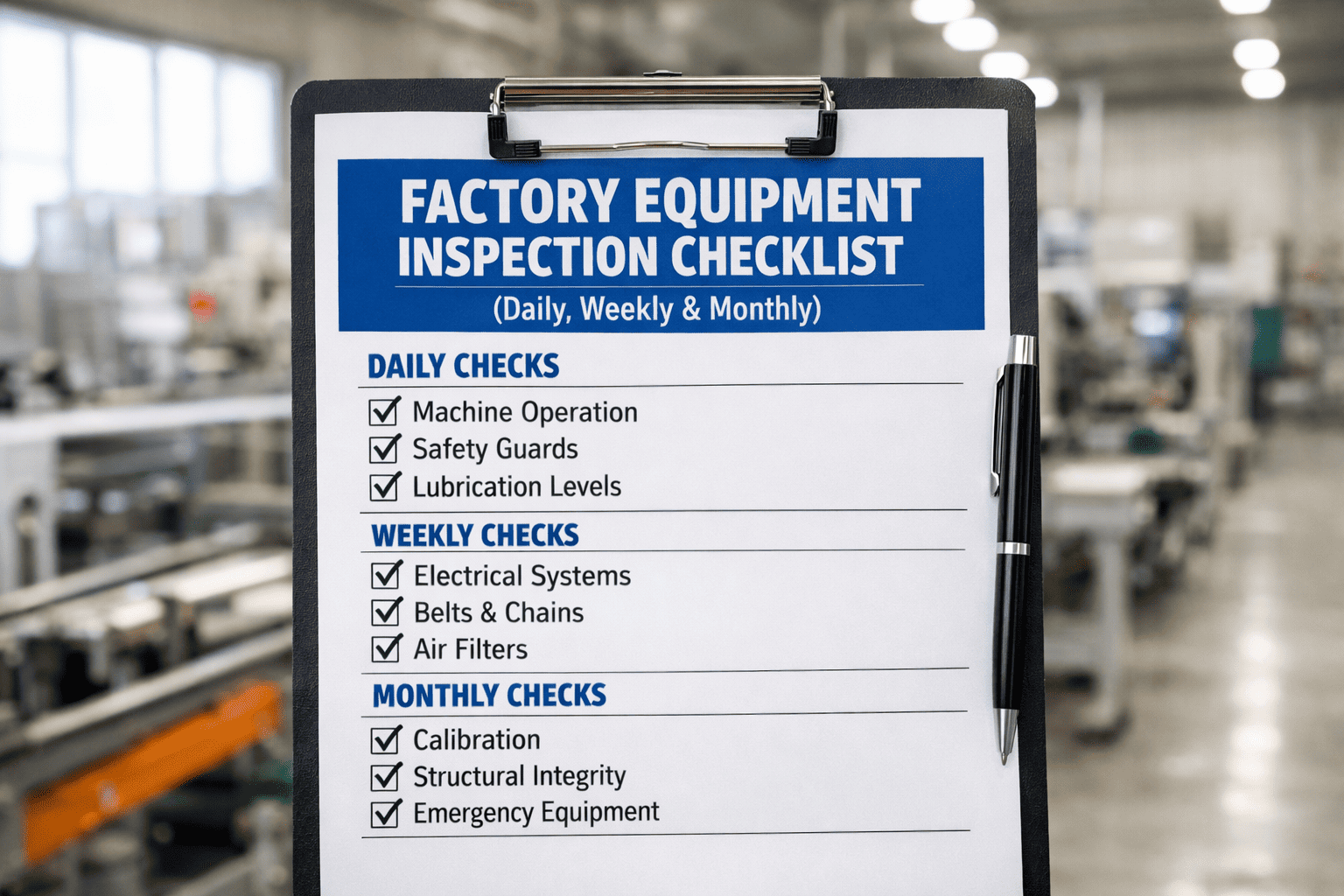
Read More
Running a factory floor without structured equipment inspections is like driving blindfolded — sooner or later, something breaks, someone gets hurt, and production grinds to a halt. Whether you manage CNC machines, conveyor lines, forklifts, or in

Read More
Choosing the right maintenance software for a manufacturing plant is one of the most consequential technology decisions a facility manager can make. With unplanned equipment failures costing manufacturers hundreds of thousands per hour and over ha
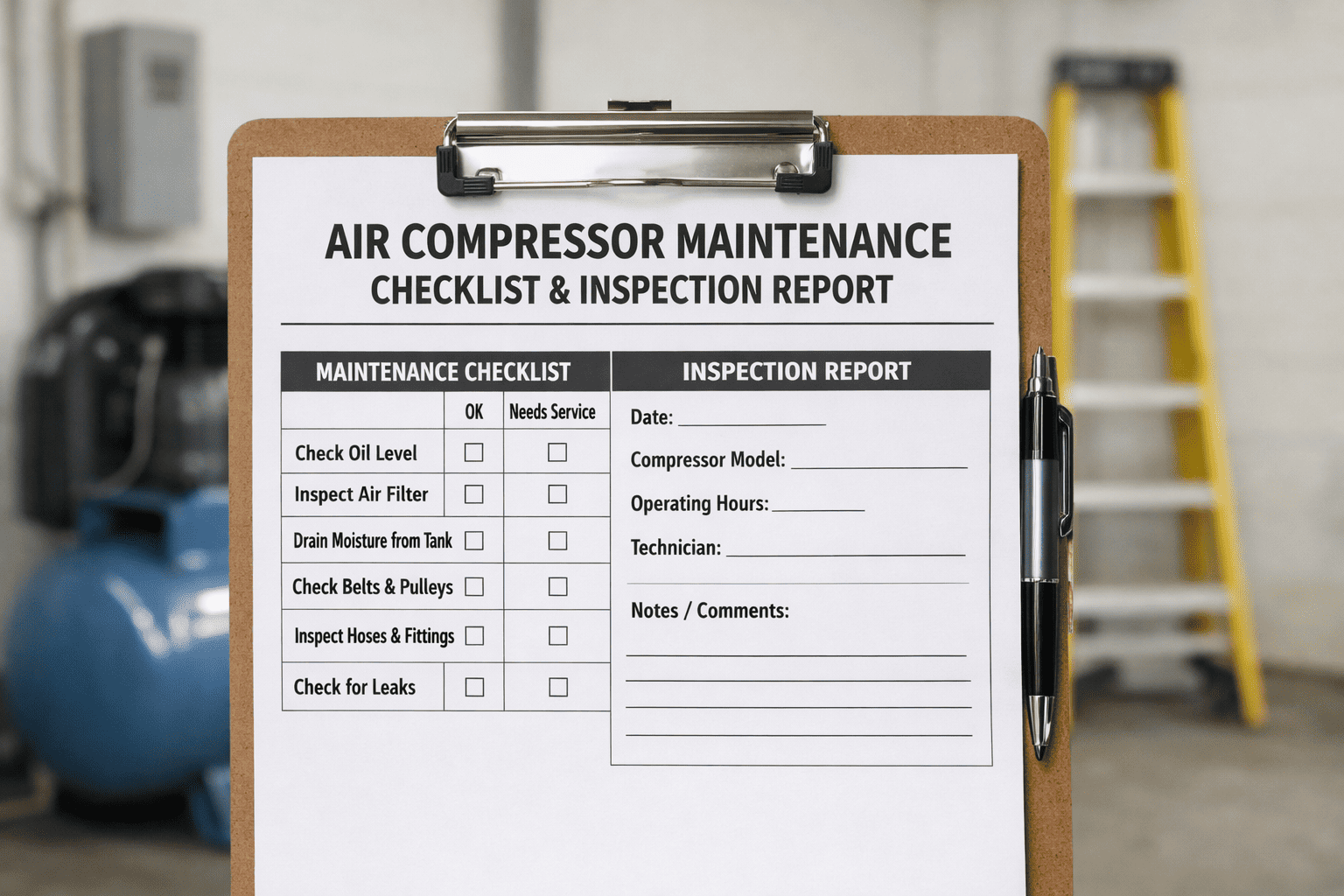
Read More
Compressed air powers everything from pneumatic tools and CNC machines to packaging lines and paint booths — yet most manufacturing plants treat their air compressors as set-and-forget equipment. The result is predictable: energy bills climb silen
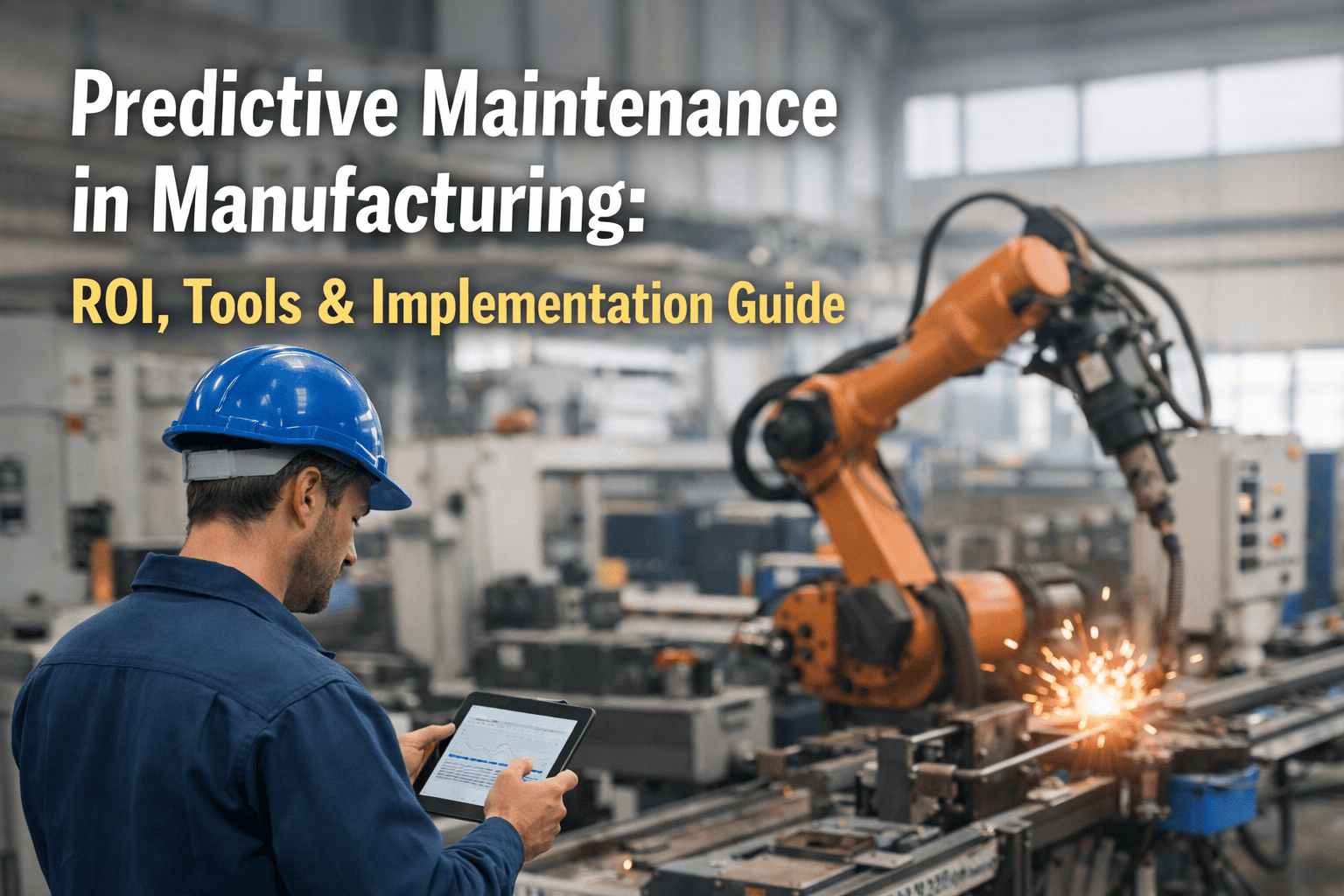
Read More
Every manufacturing plant runs on the same fragile equation — machines must keep running for revenue to keep flowing. When a critical asset fails without warning, the consequences cascade fast: halted production lines, emergency repair crews, scra

Read More
Every manufacturing plant depends on conveyors to keep materials flowing, but a single belt failure or motor burnout can shut down an entire production line in seconds. Industry data shows unplanned downtime can cost manufacturers upwards of $250,

Read More
Every conveyor belt, crusher, mixer, and production line in your plant depends on gearboxes to convert motor speed into usable torque. When one fails without warning, the damage goes far beyond the gearbox itself — production halts, delivery sched

Read More
Unplanned equipment failure is the single most expensive operational risk in manufacturing. Industry research estimates that unexpected downtime costs manufacturers roughly $50 billion each year across the United States alone, with the average pla

Read More
Cement plants burn through 30-40% of their operating budget on energy alone, making fuel and electricity the single largest controllable expense in the industry. With rotary kilns firing at over 1,450 degrees Celsius and grinding circuits consumin
Read More
Every manufacturing plant depends on conveyor belts to keep materials moving, but a single unexpected belt failure can shut down an entire production line for hours. Industry data shows that roughly half of all operators experience productivity lo

Read More
Unplanned equipment breakdowns cost industrial manufacturers close to $50 billion every year — and the per-hour cost of a production line sitting idle has roughly doubled since 2019. For most manufacturing plants, the question is no longer whether

Read More
Energy accounts for 30-40% of every dollar spent producing cement—the single largest controllable cost in any plant. For a typical 2,000 TPD facility, that means $8-12 million per year flowing through kilns, grinding circuits, and auxiliary system

Read More
Cement kilns are among the most energy-hungry machines in industrial manufacturing. Operating at temperatures exceeding 1,450 degrees Celsius around the clock, a single rotary kiln can consume fuel worth millions of dollars each year. Yet most cem

Read More
Every manufacturing plant depends on conveyor systems to keep production moving. Yet most facilities still rely on scheduled inspections or wait-until-it-breaks approaches that leave them blind to the 5 early warning signs of conveyor failure. AI-

Read More
Every manufacturing plant battles the same hidden enemy—process variation. It silently inflates scrap rates, triggers rework cycles, delays shipments, and erodes profit margins month after month. Six Sigma gives plant managers a proven, data-drive

Read More
Most lean manufacturing transformations fail — not because the tools are wrong, but because plants lack the digital infrastructure to sustain improvements beyond the first kaizen event. Without real-time equipment visibility, standardized maintena

Read More
The global plant asset management market is projected to more than double by 2031, reaching over $21 billion, and the reason is simple: manufacturers who track equipment with spreadsheets and paper logs are bleeding money they cannot see. Unplanne
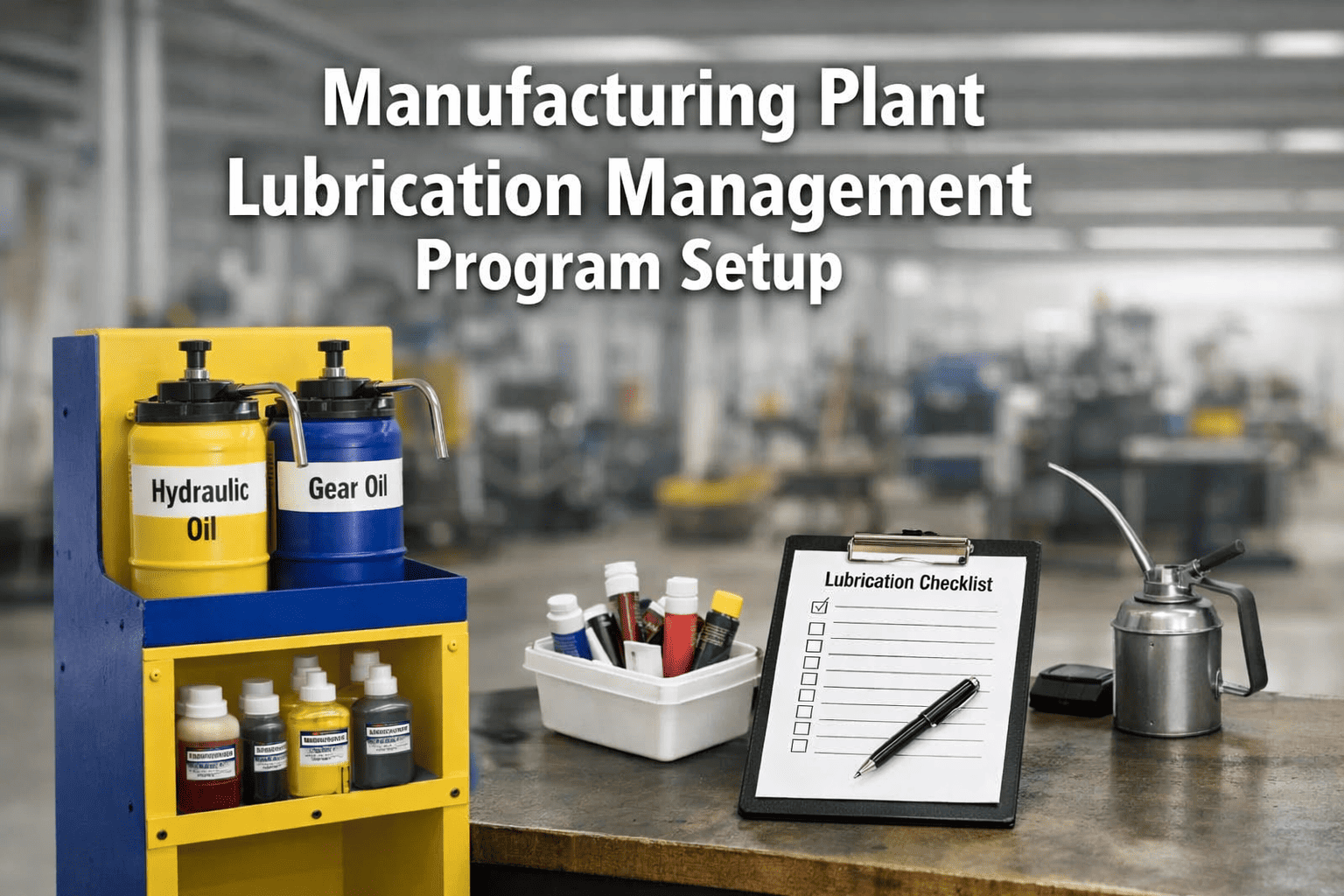
Read More
Manufacturing plants lose an estimated $1 trillion annually in the United States alone due to reactive maintenance, unplanned downtime, and lost productivity driven by equipment failure — and lubrication-related issues sit at the heart of this pro

Read More
Bearings are the backbone of every rotating machine in your manufacturing plant. From conveyor drives and pump shafts to CNC spindles and compressor motors, these small components carry enormous loads and directly determine whether your production
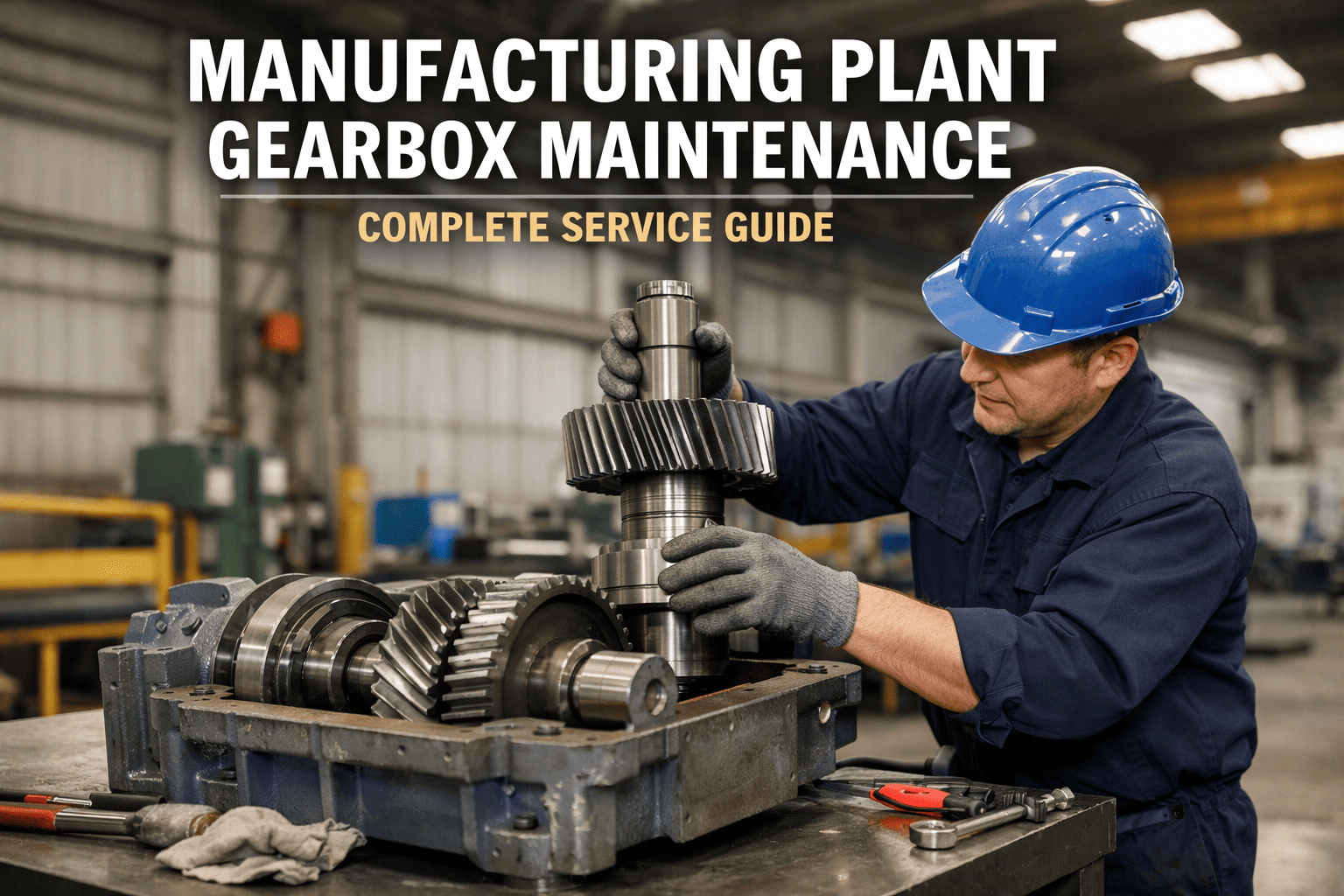
Read More
Every manufacturing plant depends on gearboxes to keep conveyors running, mixers churning, and crushers grinding. Yet most facilities still manage gearbox maintenance with spreadsheets and memory, missing the subtle warning signs that precede cata
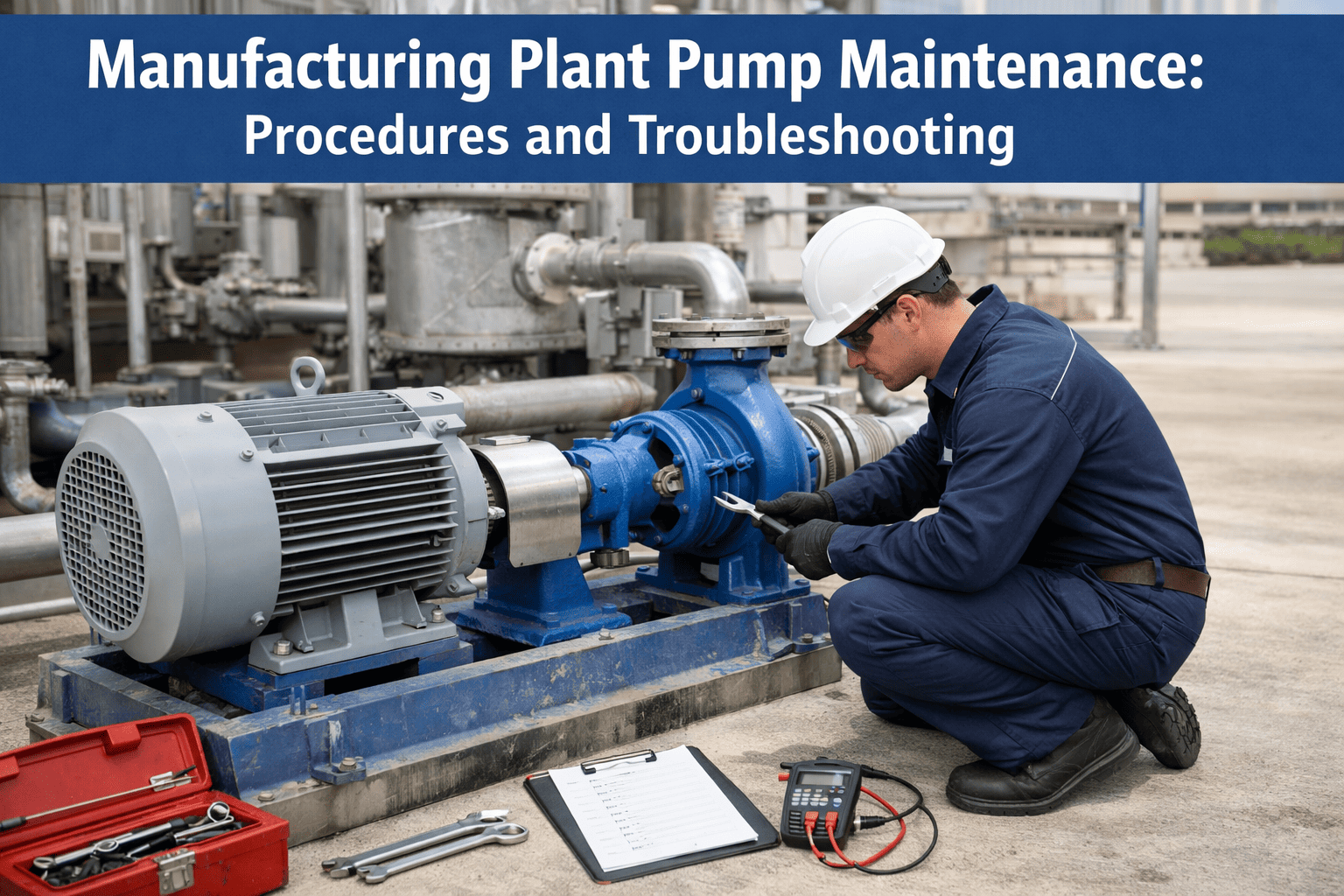
Read More
Every manufacturing facility depends on pumps to move fluids through cooling loops, chemical processes, hydraulic systems, and wastewater lines. When a single pump fails without warning, the ripple effect is immediate — production stops, emergency

Read More
Every manufacturing plant depends on its conveyor systems to keep production moving. When a belt stops, a roller seizes, or a motor overheats, the entire line grinds to a halt—and the clock starts ticking on lost revenue, delayed orders, and overt

Read More
Electric motors consume nearly 70% of all industrial electricity and power every conveyor, pump, compressor, and CNC spindle on your manufacturing floor. Yet most plants still manage motor care with paper logs and calendar-based guesswork—missing

Read More
Manufacturing plants lose an average of 800 hours per year to unplanned downtime—and most of that loss traces back to one root cause: maintenance teams measuring the wrong things, or measuring nothing at all. The difference between a plant running

Read More
Every dollar spent on manufacturing automation in 2026 demands justification. With the global industrial automation market now valued at $233.6 billion and growing at 9.5% annually, plant managers and CFOs face a critical question — not whether to

Read More
The factory floor in 2026 looks nothing like it did even two years ago. Physical AI is moving from labs to production lines, collaborative robots are now affordable for mid-size plants, and digital twins are projected to become a $34 billion marke

Read More
Every manufacturing plant faces the same question in 2026: modernize operations with connected technology or fall behind competitors who already have. Industry 4.0 is not a buzzword anymore—it is a measurable shift in how factories run, maintain e

Read More
Every manufacturing plant eventually hits the same wall — rising maintenance costs, unplanned downtime eating into margins, paper-based processes slowing everything down, and zero visibility into what is actually happening on the shop floor. Digit

Read More
Every manufacturing plant runs on equipment — and every piece of equipment eventually breaks. The question is not whether it will fail, but how you choose to deal with that failure. Reactive maintenance waits for the breakdown. Preventive maintena

Read More
Manufacturing plants spend thousands on software, yet many still struggle with the same question: should maintenance live inside the ERP, in a dedicated CMMS, or somewhere in between? The answer depends on your plant's size, maintenance maturity,

Read More
Every hour of unplanned downtime on a manufacturing floor costs an average of $50,000 — and yet most plants still rely on spreadsheets, paper logs, or outdated legacy systems to manage maintenance. In 2026, the right Computerized Maintenance Manag

Read More
Facility managers evaluating quadruped robots for industrial inspection face a critical procurement decision in 2026. Boston Dynamics Spot, ANYbotics ANYmal, and Unitree B2 each target different operational profiles across hazardous environments,

Read More
Autonomous inspection robots now patrol manufacturing plants, power stations, and data centers around the clock — scanning equipment with thermal cameras, recording ultrasonic signatures, and transmitting gigabytes of telemetry across plant networ

Read More
Every industrial facility generates mountains of inspection data — thermal scans, vibration readings, ultrasonic logs, visual defect records — yet fewer than 24% of asset-intensive operations actually use that data to predict and prevent failures.

Read More
Running a single inspection robot at one facility is manageable. But when you operate five, ten, or fifty sites — each with its own fleet of autonomous robots — fragmented schedules, siloed data, and disconnected maintenance workflows turn a promi

Read More
Safety teams in manufacturing, energy, and facility operations share one painful reality — hazards happen between inspections. A chemical spill at 3 AM, an unguarded machine during a shift change, a blocked fire exit that no one notices until the

Read More
Asingle robotic patrol can produce over 500 photos, dozens of thermal scans, and hours of continuous video. That volume sounds impressive until you realize most facilities dump it all into unnamed folders where it becomes invisible within days. Au

Read More
Every hour a critical facility goes unpatrolled is an hour of exposure — to perimeter breaches at data centers, thermal failures at power substations, and undetected gas leaks at oil refineries. Autonomous patrol robots and drones now cover these

Read More
Industrial IoT networks generate thousands of sensor alerts every week — vibration spikes, thermal anomalies, pressure irregularities — but studies show that nearly half never require technician action. These false positives drain maintenance budg

Read More
Every manufacturing plant runs on a simple promise — machines stay up, production stays on schedule, and maintenance stays ahead of failures. But when your maintenance team relies on clipboard inspections and calendar-based schedules, that promise

Read More
Every minute of unplanned data center downtime costs between $5,600 and $9,000 — and most outages trace back to environmental failures that a timely inspection would have caught. The Unitree Go2 Air quadruped robot transforms how critical faciliti

Read More
Every oil and gas facility relies on routine safety walks to catch leaks, corrosion, and equipment anomalies before they become catastrophic. But when those walks happen weekly — or less — small problems have days to become expensive emergencies.

Read More
Industrial IoT networks are growing fast, but so is the noise. Facilities running hundreds of connected sensors routinely deal with alert volumes that overwhelm maintenance teams—and research shows that more than half of those alerts turn out to b

Read More
Industrial robotics now powers everything from precision welding and material handling to packaging and quality inspection across modern factories. Yet a recent industry survey reveals that most manufacturing facilities still treat robot maintenan

Read More
Every industrial robot on your production floor is constantly communicating — through vibration signatures, thermal patterns, current draw fluctuations, and positional drift — but without smart sensors translating those signals into actionable dat

Read More
Most manufacturing plants track OEE as a weekly scorecard — a number discussed in Monday meetings and forgotten by Tuesday. But when robotic automation is paired with CMMS-driven OEE analytics and reporting, that static number transforms into a li
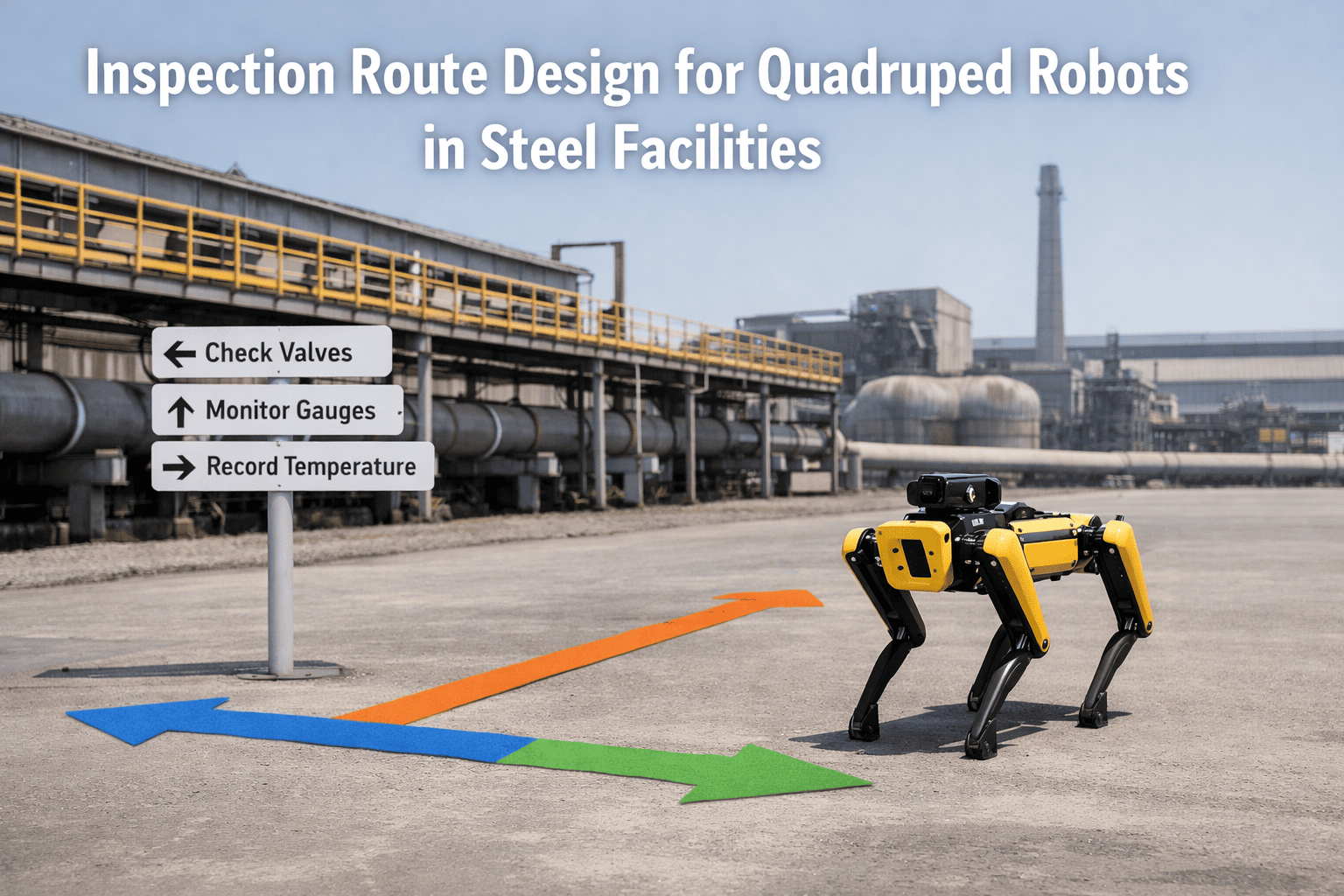
Read More
Every steel plant has blind spots — sections behind blast furnaces where radiant heat exceeds 60°C, crawl spaces beneath continuous casters caked in scale, overhead crane runways that require harness teams and shift shutdowns just to visually insp

Read More
Steel mills and oil refineries are among the most hazardous industrial environments on earth — extreme temperatures exceeding 1,200C, toxic gas pockets of H2S and CO, and equipment that operates under constant thermal and mechanical stress. Tradit

Read More
Every hour a blast furnace sits idle costs steel manufacturers upwards of $100,000 in lost production. Manual inspection rounds—slow, inconsistent, and dangerous—are one of the biggest contributors to unplanned shutdowns in steel plants. Autonomou

Read More
Every shift, maintenance crews at steel plants suit up in fire-resistant gear, strap on gas detectors, and walk into blast furnace zones where temperatures can melt aluminum and carbon monoxide concentrations can turn lethal in seconds. They do th

Read More
Every year, steel plants report hundreds of serious injuries and dozens of fatalities worldwide — many of them during routine safety inspections in high-risk zones near blast furnaces, coke ovens, and rolling mills. In 2024 alone, the World Steel

Read More
Steel plant maintenance teams are drowning in IoT alerts they cannot trust. Vibration sensors on rolling mill drives fire dozens of warnings per shift, thermocouples across blast furnace cooling circuits flag temperature excursions that resolve be

Read More
Boilers are the workhorses of manufacturing — generating the steam that drives heat treating, sterilization, drying, chemical reactions, and dozens of other critical processes. Yet the NBBI reports that poor maintenance and defective low water cut

Read More
Every minute, a factory somewhere ships a defective product that a tired inspector missed. AI vision inspection systems are changing that reality — industrial cameras powered by deep learning now detect surface flaws, assembly errors, and dimensio

Read More
Every minute a robotic welding cell sits idle costs manufacturers thousands in lost production. Yet the majority of unplanned welding robot failures trace back to neglected consumables, skipped inspections, and spare parts that were not in stock w

Read More
Every industrial robot on your factory floor is a ticking clock. Servo motors degrade, gearboxes lose precision, cables fatigue from millions of flex cycles — and when a critical robot fails mid-production, the cost is not just a repair bill but t

Read More
Smart manufacturing plants are deploying fleets of ROS 2-powered robots at an unprecedented pace, but managing dozens or even hundreds of autonomous mobile robots (AMRs), robotic arms, and AGVs across a production floor presents serious coordinati

Read More
Every industrial robot on your production floor is a precision machine with hundreds of moving parts — servo motors, reducers, encoders, cables, and bearings — all operating under extreme loads and high-speed cycles. Without a structured preventiv

Read More
The factory floor is transforming. Industrial robots, collaborative cobots, autonomous mobile robots (AMRs), and AI-driven automation systems are now the backbone of modern manufacturing—but they also introduce entirely new maintenance challenges.

Read More
Manufacturing facilities worldwide are deploying collaborative robots at an unprecedented rate. By 2026, the global cobot market is projected to exceed $9 billion, with manufacturers relying on these machines for everything from machine tending to

Read More
Autonomous Mobile Robots are reshaping how factories handle inspections, asset monitoring, and predictive maintenance in 2026. Instead of relying on technicians to walk repetitive routes with clipboards, facilities now deploy AMRs equipped with AI

Read More
Robotics in manufacturing maintenance has evolved dramatically. In 2026, robots are not just building products — they are maintaining the machines that build them. From autonomous inspection rovers patrolling factory floors to AI-driven drones sur

Read More
Manufacturing plants running ROS 2 robots across welding cells, material handling, and quality inspection lines generate thousands of diagnostic events daily. Yet most of this rich sensor data never reaches the maintenance team until something bre

Read More
Every smart factory operates on a single, uncompromising promise: continuous uptime. However, as production lines become more complex and interconnected, the margin for error disappears. Robotic Predictive Maintenance (RPM) repres

Read More
Manufacturing maintenance in 2026 is being reshaped by autonomous systems that never take breaks, never miss an anomaly, and never forget to log their findings. ROS 2 — the industrial standard for the Robot Operating System — provides the open-sou

Read More
Every manufacturing plant bleeds money through waste—often without realizing the scale. Raw materials discarded as scrap, defective batches from poorly maintained equipment, excess inventory gathering dust, and disposal fees that climb year over y

Read More
Every year, manufacturing plants across the United States report over 220,000 workplace injuries, costing the industry billions in medical expenses, lost productivity, and regulatory penalties. In 2026, the difference between plants that thrive an

Read More
Compressed air powers over 70% of manufacturing processes, yet it remains one of the most overlooked and wasteful utilities on the plant floor. Electricity alone accounts for more than 75% of a compressor's total lifecycle cost, and poorly maintai

Read More
Cluttered workstations, misplaced tools, inconsistent shift-to-shift practices, and reactive maintenance — these are the silent profit killers plaguing manufacturing plants everywhere. The 5S methodology, rooted in Toyota's Production System, give

Read More
Manufacturing plants operate under a web of regulatory requirements that can feel overwhelming—ISO quality standards, OSHA safety mandates, EPA environmental rules, and dozens of industry-specific regulations all demanding attention simultaneously

Read More
Every square foot of your manufacturing floor either makes you money or costs you money — there is no neutral ground. In 2026, the difference between a thriving production facility and one bleeding cash often comes down to how intelligently the pl

Read More
Every machine on your plant floor is talking. The hum of a motor, the rattle of a conveyor, the subtle whine from a gearbox — these are not random sounds. They are vibration signatures, and they carry detailed information about the internal health

Read More
Most manufacturing plants are running at barely 60% of their actual capacity — and the worst part is, most plant managers do not even realize it. Between unplanned equipment failures eating up 20% of production time, changeovers dragging on twice

Read More
Every manufacturing plant relies on a storeroom full of spare parts to keep production lines running. Yet most facilities manage this critical asset with outdated spreadsheets, guesswork, and reactive purchasing that leads to expensive emergency o

Read More
When a conveyor belt snaps at 2 AM and halts your entire production line, the instinct is to replace the belt and restart. But six weeks later, it snaps again—same belt, same location, same shift. The real question was never about the belt. It was

Read More
Every hour of unplanned downtime in a manufacturing plant costs between $5,000 and $50,000 depending on the industry—and the majority of those breakdowns trace back to human error or insufficient technician skills. With over 40% of experienced mai

Read More
If your manufacturing plant's operating budget feels like a leaking bucket, you're not alone. Between unplanned breakdowns, bloated spare parts rooms, energy bills that keep climbing, and maintenance teams buried in paperwork, most plants are blee

Read More
Manufacturing plant shutdowns are among the most expensive and high-stakes events your facility will face all year. A turnaround lasting just a few weeks can consume the equivalent of an entire year's maintenance budget—between execution costs and

Read More
Every hour of unplanned downtime in a manufacturing plant costs a median of $125,000 in lost production, emergency labor, and wasted materials. In 2026, predictive maintenance technologies have matured from pilot experiments into mission-critical

Read More
Every manufacturing plant manager knows the sinking feeling — a critical production line goes silent at the worst possible time, and the scramble begins. Equipment failures drain an average of $260,000 per hour from manufacturing operations, yet n

Read More
Every manufacturing plant loses money to unplanned downtime — on average $25,000 for every hour a critical machine sits idle. Total Productive Maintenance (TPM) is the proven methodology that turns this around by making equipment reliability a sha

Read More
Every year, the average large manufacturing plant hemorrhages $253 million to unplanned downtime. Equipment fails without warning, production grinds to a halt, and maintenance teams scramble to patch what could have been prevented. In 2026, with d

Read More
Every manufacturing plant generates thousands of data points daily, but only a handful of metrics truly determine whether your operation is thriving or falling behind. In 2026, the gap between top-performing plants and the rest comes down to which

Read More
Manufacturing plants are the backbone of the global economy—and also among its biggest energy consumers. In 2026, energy accounts for 20-40% of total plant operating costs, yet most facilities still run 25-40% below their peak efficiency potential

Read More
Manufacturing plants running at 60% OEE are losing nearly half their production potential every single shift — and most don't even realize it. Overall Equipment Effectiveness is the single most important metric for understanding where your plant l

Read More
Running a manufacturing plant without a structured safety checklist is like operating heavy machinery blindfolded—it is only a matter of time before something goes wrong. In FY 2025, OSHA issued over 13,700 citations across its top 10 most violate

Read More
Every manufacturing plant runs on its equipment — and every hour of unplanned downtime bleeds money. In 2026, the gap between plants using modern maintenance software and those still relying on clipboards and spreadsheets has become a competitive

Read More
Every silent machine on your production floor is burning money — roughly $260,000 per hour according to recent industry data. Manufacturing plants across the globe are losing an average of 27 hours each month to unplanned equipment failures, addin

Read More
Hydraulic system failures account for a significant portion of unplanned downtime in manufacturing plants. When a hydraulic press stops mid-cycle or a conveyor system loses power, production halts and costs escalate rapidly. Root Cause Analysis (R

Read More
Hydraulic systems are the muscle behind modern manufacturing—powering presses, lifts, conveyors, and robotic arms with precision force. Yet these critical systems often fail without warning, causing costly downtime and production delays. AI-powered p

Read More
Hydraulic systems are the backbone of modern manufacturing operations, powering everything from presses and injection molding machines to conveyors and robotic arms. When these systems fail, production grinds to a halt, costing manufacturers thous

Read More
Manufacturing facilities depend on hydraulic systems to power critical equipment from presses and injection molding machines to conveyors and robotic arms. When these systems fail unexpectedly, production stops and costs escalate rapidly. A struct

Read More
Hydraulic systems are the backbone of manufacturing and plant operations, powering everything from heavy presses and injection molding machines to material handling equipment and automated assembly lines. A single hydraulic failure can halt produc

Read More
Control panel failures in manufacturing plants can halt production lines, damage equipment, and create safety hazards within minutes. While quick fixes restore operations temporarily, recurring failures signal deeper issues that demand systematic

Read More
Electrical control panels are the nerve centers of manufacturing operations, governing everything from motor drives to automated production lines. When these critical systems fail unexpectedly, the consequences ripple through entire facilities—hal

Read More
Control panels serve as the central nervous system of manufacturing operations, coordinating everything from motor controls and PLCs to safety interlocks and communication systems. When control panels fail, entire production lines grind to a halt,

Read More
Control panels are the nerve centers of manufacturing operations, housing critical electrical components that control machinery, processes, and safety systems. Without systematic inspection and documentation, hidden issues like loose connections,

Read More
Control panels act as the central nervous system of your manufacturing operations, housing the critical electrical components that maintain production uptime around the clock. Without a standardized inspection protocol, minor issues like loose con

Read More
Chiller failures in manufacturing plants don't just cause discomfort—they halt production lines, damage sensitive equipment, and cost thousands per hour in downtime. Root Cause Analysis (RCA) transforms reactive firefighting into systematic preven

Read More
Manufacturing facilities depend on chillers to maintain critical process temperatures, protect equipment, and ensure product quality. When chillers fail unexpectedly, the consequences ripple across production lines—spoiled batches, equipment damag

Read More
Boiler failures in manufacturing plants can halt production, compromise safety, and drain budgets through emergency repairs and unplanned downtime. Root Cause Analysis (RCA) transforms reactive maintenance into strategic prevention by identifying

Read More
Boiler systems are the backbone of manufacturing operations, powering critical processes from steam generation to heating and process applications. Yet traditional maintenance approaches—reactive repairs and calendar-based inspections—leave plants

Read More
Boiler systems are the thermodynamic heart of manufacturing operations, powering critical processes from steam-driven turbines to high-pressure thermal applications. However, traditional calendar-based inspections often fail to detect internal deg

Read More
Boiler systems are the backbone of manufacturing operations, powering critical processes from steam generation to heating and process applications. Yet traditional maintenance approaches—reactive repairs and calendar-based inspections—leave plants

Read More
Industrial boilers are the workhorses of manufacturing operations, generating the steam and hot water essential for processing, heating, and power generation. Yet according to the National Board Incident Report, 79% of all reported boiler accident

Read More
Bearing failure analysis is the cornerstone of reliability engineering in modern manufacturing. When a bearing fails prematurely, it is rarely a random event; rather, it is a symptom of a systemic issue within the operating environment, lubricatio
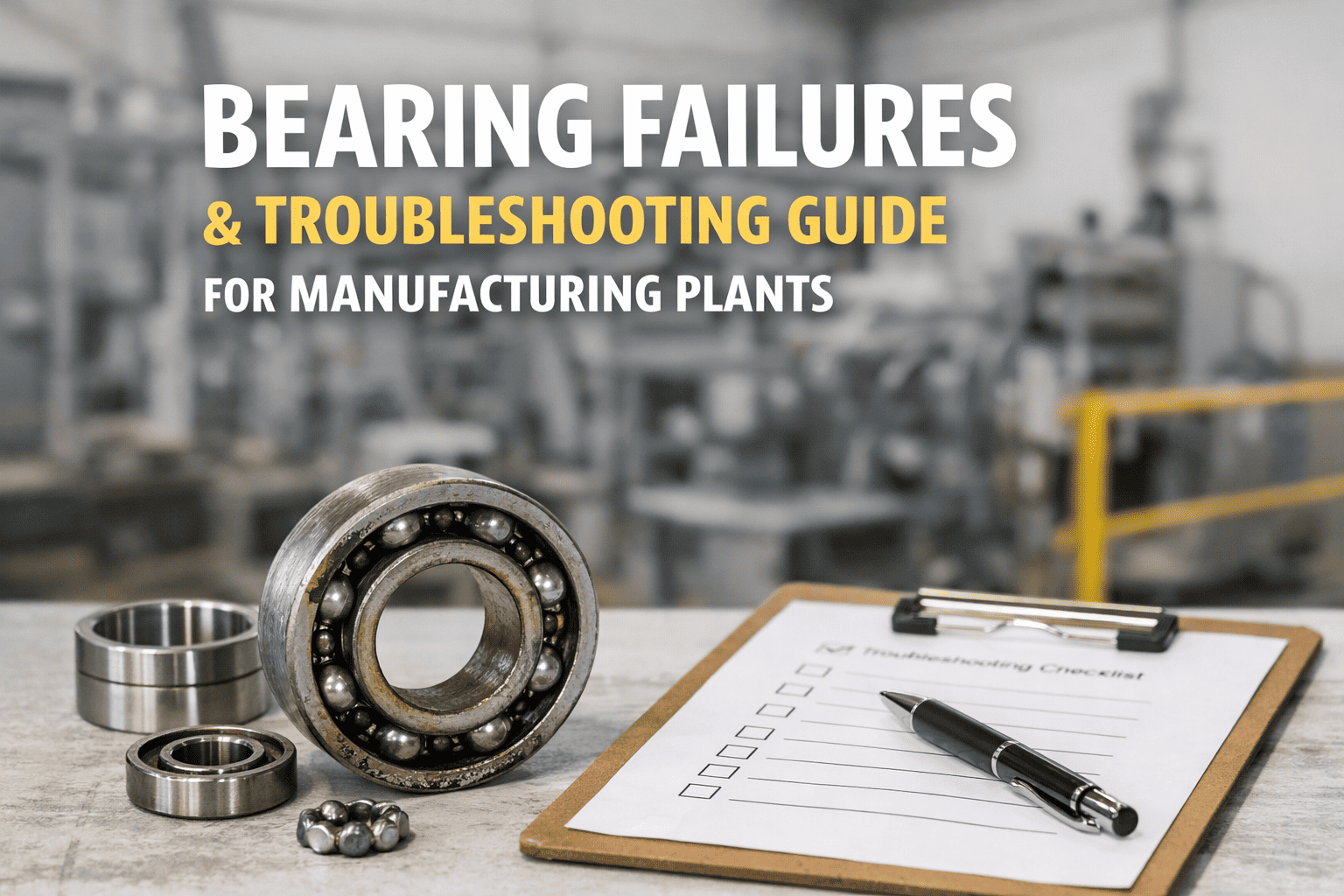
Read More
Precision troubleshooting of bearing failures is the cornerstone of industrial reliability. When a bearing fails prematurely, it is almost always a symptom of a larger systemic issue—misalignment, lubrication deficiency, or environmental contamina

Read More
In industrial environments, the bearing is the heart of rotating equipment. A single undetected bearing failure can bring an entire production line to a standstill, costing thousands in lost revenue and emergency repairs. Traditional paper-based l

Read More
Bearing failures account for over 60% of all rotating equipment breakdowns in manufacturing plants, making them the single largest cause of unplanned downtime. A systematic bearing inspection checklist transforms reactive maintenance into proactiv

Read More
Conveyor belt failures in manufacturing plants are more than simple equipment breakdowns—they represent cascading disruptions that ripple through production schedules, safety protocols, and bottom-line profitability. When a conveyor system fails u

Read More
Manufacturing plants lose millions annually to unexpected conveyor failures. A single belt breakdown can halt entire production lines, costing facilities between $10,000 to $260,000 per hour in lost productivity. Traditional maintenance approaches

Read More
Conveyor belt failures remain one of the leading causes of unplanned downtime in manufacturing plants, costing facilities anywhere from thousands to millions of dollars per incident. Whether it's belt mistracking, slippage, or unexpected tears, un

Read More
Aproduction manager at a food processing plant in Michigan received a frantic call at 3 AM—the main packaging line conveyor had seized completely. The belt, which had been showing subtle signs of edge fraying and minor tracking issues for weeks, f

Read More
Amaintenance supervisor at a steel manufacturing plant in Ohio watched helplessly as a critical conveyor line ground to a halt. The culprit? A $47 bearing that had been showing warning signs for six weeks—elevated vibration readings, subtle temper

Read More
A maintenance technician at a Texas manufacturing plant spent 15 minutes last Tuesday searching for the previous month's air compressor inspection records. He found them eventually—crumpled in a toolbox, coffee-stained, with half the readings ille

Read More
The production line went silent at 2:47 AM. Your centrifugal pump—the one moving 500 gallons per minute through your cooling system—just failed. Emergency repair costs: $8,500. Lost production while waiting for parts: $45,000. The frustrating part

Read More
That conveyor motor runs 16 hours a day, every day. Right now, the bearings are developing micro-fractures you can't hear, see, or feel. In approximately six weeks, it will seize during peak production—halting your line for 8-12 hours while your t

Read More
A single missed inspection point cost a Michigan automotive parts manufacturer $127,000 last quarter. The gearbox bearing that failed had been making subtle noise changes for six weeks—changes that a structured checklist would have flagged during

Read More
The cement industry generates more operational data per hour than most manufacturing sectors combined—kiln temperatures cycling through 1,400°C pyroprocessing zones, raw mill vibration signatures across 500+ measurement points, and real-time quali

Read More
Every 15 seconds, a worker somewhere in the world dies from a work-related accident or disease. In cement manufacturing, where workers navigate rotating kilns operating at 1,400°C, confined spaces inside silos and preheaters, and airborne silica d

Read More
Energy costs consume 30-40% of every dollar your cement plant spends on production—making fuel and electricity your largest controllable expense after raw materials. For a typical 2,000 TPD facility, that translates to $8-12 million annually flowi

Read More
Somewhere in your plant right now, a bearing is failing. Not catastrophically—not yet. But deep within its metal housing, microscopic cracks are spreading, temperatures are rising fractionally, and vibration patterns are shifting in ways invisible

Read More
Your kiln is producing 2,000 tonnes of clinker daily, but you won't know if the last four hours of production meets quality standards until the lab results arrive. By then, you've either wasted fuel over-burning to stay safe, or produced off-spec

Read More
The call comes without warning. EPA Region 5 has scheduled a compliance inspection at your cement plant in 48 hours. Somewhere in this facility—across control room binders, legacy databases, filing cabinets in three buildings, and spreadsheets on

Read More
Right now, your cement mill is burning through electricity at a rate that would power 500 homes. Every hour, 3,500 kWh disappears into the grinding chamber—and physics dictates that 95% of that energy converts to heat and noise, not particle size

Read More
Picture this: Your cement plant produces 2,000 tons daily. Every 24 hours, you're betting $304,000 worth of product on test results you won't see for nearly a month. By Day 28, when lab results finally confirm a strength deviation, you've already

Read More
When your cement mill gearbox fails at 2 AM on a Saturday, the clock starts running at $100,000 per hour—and it doesn't stop until production resumes. Your maintenance team scrambles to diagnose a problem that started showing warning signs six wee

Read More
Every hour your cement kiln sits idle, you're watching $12,500 to $100,000 evaporate into thin air. For a typical 1 MTPA cement plant, a single day of unplanned downtime translates to roughly $300,000 in lost production, emergency repairs, and mis

Read More
Your rotary kiln operates at 1,450°C around the clock, consuming fuel that accounts for 20-30% of your total production costs. With fuel expenses running approximately $20 per ton of cement and national average prices hitting $152 per ton in 2024,

Read More
A Pune automotive manufacturer invested ₹32 lakhs in on-premise AI for quality inspection in February 2024. By February 2025—exactly 12 months later—the system had saved ₹38 lakhs in reduced scrap and eliminated cloud costs. ROI:

Read More
A Pune automotive parts manufacturer started with a cloud AI pilot for quality inspection in January 2024. Budget: ₹15 lakhs monthly. By July, costs hit ₹62 lakhs—over 4x the original estimate. The CFO pulled the plug, calling it the "

Read More
In 2023, global AI investment hit $252 billion. Yet 80% of AI projects fail before reaching production. For Indian manufacturers, this paradox is acute: massive investment, minimal success. A Nashik food processing plant spent ₹42 lakhs on a

Read More
When a Pune automotive manufacturer deployed cloud AI for quality inspection in 2023, they expected transformation. Instead: 890ms latency that broke real-time control, ₹18L monthly costs, and system failure during every monsoon. Abandoned after 7

Read More
When a $50 million automotive parts manufacturer in Pune deployed a cloud-based AI vision system to detect paint defects on their assembly line, they expected 99.9% uptime and millisecond response times. What they got instead was a system th

Read More
2:47 PM. Your ISO auditor pulls calibration records for the pick-and-place machine that's been running production for three weeks. Last calibration: 94 days ago. Due date: 90 days. For four days, you've been shipping PCBs assemb

Read More
A textile plant maintenance supervisor receives three urgent calls within an hour: Ring spinning frame #4 showing excessive vibration, dyeing machine temperature controller malfunctioning mid-batch ($48,000 product at risk), and air jet loom repea

Read More
A textile plant maintenance supervisor receives three urgent calls within an hour: Ring spinning frame #4 showing excessive vibration, dyeing machine temperature controller malfunctioning mid-batch ($48,000 product at risk), and air jet loom repea

Read More
Your electronics assembly line runs at 62% OEE. Competitors implementing predictive maintenance hit 85%+—gaining 15-25% capacity advantage. Technology isn't the barrier—people are. Veterans resist sensors "telling them what to do." Technicians pre

Read More
Your thermal camera shows a motor bearing at 185°F. Normal or emergency? Your vibration meter reads 0.35 in/sec on a pump. Acceptable or failure imminent? Without standardized troubleshooting criteria, the same reading triggers shutdown from one t

Read More
Your packaging line stops at 2 AM. The filling machine seizes unexpectedly. Production scrambles to diagnose the problem while $45,000 worth of product sits in limbo. Six hours later, technicians discover a bearing that's been overheating for thre

Read More
Picture this: Your critical pump fails again for the third time this year. Each failure costs $60,000 in repairs plus production downtime. Your team replaces seals, bearings, and impellers—but the failures keep coming back. Sound familiar?

Read More
Your electronics assembly line stops unexpectedly. The SMT machine throws a cryptic error code. Production halts. Technicians scramble through paper logs trying to understand what happened. Meanwhile, the PLC has been collecting thousands of

Read More
Your lubrication technician walks the plant every week with a grease gun and clipboard. Four hours later, he's greased 120 points. But here's the problem: 35% of those points didn't need lubrication yet. Another 18% got the wrong grease type. And

Read More
The plant manager reviews the quarterly board presentation with growing unease—Overall Equipment Effectiveness (OEE) sits at 58% while competitors achieve 75-85%, costing the operation $4.2 million annually in lost production capacity. The executi

Read More
The cement plant maintenance director faces a frustrating reality: three months after implementing a $180,000 CMMS platform, technicians still carry paper clipboards, work orders pile up incomplete in the system, and the promised 65% reduction in

Read More
A chemical plant's monthly energy bill shows $840,000—within budget. Yet asset-level analysis reveals $2.3M annual waste: boilers consuming 18% excess gas, cooling towers drawing 22% extra power, pumps operating at degraded efficiency, compressed

Read More
The maintenance manager at a pharmaceutical manufacturing facility reviews last quarter's performance discovering a troubling pattern: $2.8M spent on maintenance yet unplanned downtime increased 12%, critical equipment reliability declined, and th

Read More
The production manager walks the factory floor at 7:45 AM, clipboard in hand, asking line supervisors: "What's the status on Line 3's CNC machine?" "When was the last PM on the assembly robot?" "Which equipment is due for maintenance this week?" R

Read More
The cement plant operations manager reviews the monthly energy report showing $847,000 in electricity costs—representing 38% of total production expenses—yet when asked which specific equipment drives consumption and where optimization opportuniti

Read More
The production manager receives the daily operations report showing 82% equipment effectiveness—a number that seems acceptable until the plant controller calculates lost production value: $147,000 this week alone from unplanned stoppages that "onl

Read More
The maintenance supervisor at a chemical processing facility stares at a clipboard stacked with 47 handwritten work orders—some dating back three weeks, half missing critical equipment data, and none providing visibility into technician loca

Read More
The textile plant manager stares at a production halt notice—the third this quarter—as a critical spinning frame bearing waits in a purchase order queue while $45,000 of daily production capacity sits idle. Across the facility, warehouse shelves o
Total Posts:
Manufacturing Use Cases
How manufacturers run their maintenance operation on Oxmaint
Automotive, packaging, precision machining and plastics — different machines, same workflows. Four typical deployments.
Use Case 01
Automotive Full CMMS
Cutting line downtime across a 240k unit/yr automotive assembly plant with Oxmaint
The Problem
Body shop, paint and final assembly ran PM in three spreadsheets, WOs on paper dockets and downtime in a homegrown database. PM compliance sat at 58%, with no view of which stations drove line downtime.
What Oxmaint Delivered
Full deployment across body, paint and assembly in 52 days — QR asset registry, cycle-based PM, 138 technicians on mobile and PLC downtime integration, with weekly bad-actor reports feeding the reliability review.
38%
Less unplanned line downtime
96%
PM compliance
138
Technicians on mobile
Oxmaint Modules Used
Line & Station Asset Registry
Every line, station and machine QR-labelled in one multi-line hierarchy, replacing three plant-area spreadsheets.
Cycle-Based PM Scheduling
Station PM triggered on cycles from the PLCs, with cleaning and torque calibration off changeover signals.
Downtime & OEE Availability
Every stop captured with reason code and duration, with weekly bad-actor reports feeding reliability improvement.
Mobile App Rollout
Every technician on the app — receiving WOs, capturing photos and logging completions across every shift.
Use Case 02
Packaging Predictive Maintenance
Predictive maintenance on high-speed packaging lines cuts unplanned stops by a third
The Problem
A four-line packaging plant lost an hour per line per week to unplanned stops — bearing failures, gearbox seal leaks and air pressure drops. The sensor data existed on the drives; nobody was watching it.
What Oxmaint Delivered
The predictive engine subscribed to existing drive current, vibration and air tags via OPC-UA. Anomalies auto-generated WOs with parts pre-reserved — bearing kits arrived at the line before the failure did.
34%
Fewer unplanned stops
4 lines
Under predictive coverage
5 weeks
Sensor go-live
Oxmaint Modules Used
Sensor Integration
OPC-UA connectors ingested existing drive current, vibration and pressure feeds — no new hardware anywhere on the four lines.
Predictive Maintenance
Baseline vibration and current signatures learned per motor — drift raised WOs with parts and hypothesis attached.
Auto-Reserve Spare Parts
Predictive WOs auto-reserved bearing kits, seals and belts — parts arrived at the line before the technician.
Asset Health Scoring
Live per-motor health scores replaced weekly manual vibration data reviews with a visual dashboard.
Use Case 03
CNC Precision Machining
Structured PM & asset history for a 68-machine precision machining shop
The Problem
An aerospace shop with 68 CNC centres tracked spindle hours in Excel and PM on a wall calendar. Way lube intervals were missed, post-crash inspections rarely reached the machine record, and warranty claims were hard to substantiate.
What Oxmaint Delivered
Every VMC, HMC and lathe registered with a spindle-hour meter, PM checklist, parts list and crash-history log — with way lube, coolant change and calibration PM triggered on hours pulled from the controllers.
68
Machines onboarded
100%
Digital machine history
23 days
Full go-live
Oxmaint Modules Used
Machine Asset Registry
Every machining centre and lathe QR-labelled with spindle-hour meter, parts list and full crash/service history.
Spindle-Hour PM Scheduling
Way lube, coolant change and calibration PM triggered on spindle hours pulled from the CNC controllers.
Inspection & Calibration
Post-crash inspections, geometry checks and probe calibration ran as scheduled tasks with pass/fail criteria.
Analytics & Warranty Records
Complete digital history per machine substantiated warranty claims and the annual reliability review.
Use Case 04
Injection Moulding
Shot-count PM & mould tracking across a 42-machine injection moulding facility
The Problem
A plastics processor with 42 moulders and 300+ tools ran PM on calendar dates regardless of load — busy machines under-maintained, quiet ones over-serviced, and tool history in a paper mould book.
What Oxmaint Delivered
Every moulder registered with a shot-count meter pulled from the machine PLC, and every mould as a tool asset with its own shot life and campaign history — so screw wear, heater band and mould change PM tied to actual shots.
42
Moulders on shot-count PM
300+
Tools tracked
Zero
Paper mould books
Oxmaint Modules Used
Shot-Count PM
Screw wear checks, heater band replacement and filter changes triggered on shots pulled from each moulder's PLC.
Mould/Tool Tracking
Every mould a tool asset with shot-life meter, current location and complete campaign history.
Mould Change Work Orders
Mould change WOs generated with the correct sling, torque values, hot runner settings and QA checks attached.
Cost per Mould / Cost per Machine
Maintenance cost rolled up per mould and per moulder, feeding tooling life decisions and capex planning.
Oxmaint Integrations for Manufacturing
Reads your PLCs · Talks to your MES · Posts to your SAP
Oxmaint plugs directly into the systems your plant already runs — Rockwell, Siemens and Mitsubishi PLCs via OPC-UA and Modbus, major MES platforms, PI & Aveva Historians, SAP PM/MM/EAM/FI and IBM Maximo. Bi-directional, real-time, no double entry.
Explore All Integrations


Manufacturing CMMS FAQ
Common questions from manufacturing maintenance managers
Full platform — work orders, PM, predictive, inspections and calibration, spare parts, permits, downtime tracking, shift logbook, analytics and SAP integration in one CMMS. It serves automotive, packaging, electronics, plastics and precision-machining plants.
Yes. The registry supports any hierarchy — plant › line › station › machine › sub-assembly. CNC centres, robot cells, presses, moulders, conveyors, torque tools, MCC panels, compressors and forklifts each become a tracked asset with PM schedule, WO history and parts list. Bulk import from Excel or a legacy CMMS is included in onboarding.
Yes. Presses trigger on strokes, moulders on shots, robots on cycles, CNC machines on spindle hours and packaging lines on units packed, while cleaning and format-change PM fires on changeover signals. Meters pull directly from your PLCs, MES or historian.
Deployment timelines depend on plant size and asset count. A 68-machine precision machining shop went fully live on Oxmaint in 23 days. A multi-line automotive assembly plant covering body shop, paint and final assembly completed a full deployment — asset registry with QR tags, cycle-based PM, mobile rollout for 138 technicians, digital permits and PLC integration for downtime signals — in 52 days. Sensor-based predictive coverage across a four-line packaging plant went live in 5 weeks. Bulk import of your existing Excel or legacy CMMS asset register is included in onboarding, so you are not rebuilding the register by hand.
Yes. It subscribes to your existing servo current, vibration, temperature and pressure feeds via OPC-UA, Modbus, MES or historian — no new hardware. A healthy baseline is learned per motor, drive, gearbox and compressor in two to four weeks, then drift auto-generates a WO with parts reserved and the failure hypothesis attached.
Yes. Every stop is captured with reason code and duration against the exact machine — automatically via PLC status or manually on mobile — rolling up into MTBF, MTTR and OEE availability per line, shift or product family, with weekly bad-actor reports. Oxmaint handles the availability component of OEE natively; performance and quality come from MES data through the integration.
Yes. Real-time bi-directional sync with SAP PM, MM, EAM and FI, plus IBM Maximo. Read-only feeds from MES platforms and Rockwell, Siemens and Mitsubishi PLCs via OPC-UA and Modbus pull cycle counters, downtime signals and machine status — with WOs and costs posting to the right line automatically.
Yes — the app is offline-first. In high-EMI environments, metal-clad plant areas or dead spots, technicians scan a QR label, open and close work orders, run checklists, capture photos and log parts with no connectivity. Everything syncs the moment the device is back on Wi-Fi, so nothing is lost at shift change.
Run your manufacturing plant maintenance on Oxmaint
See how Oxmaint tracks your CNCs, robots, presses and lines — with cycle-based PM, predictive maintenance from existing sensors, AI Vision and full SAP integration.