
A gearbox fails fourteen months after commissioning, and the supplier asks a simple question: can you prove it was maintained and operated as specified? In many cement plants the honest answer is scattered across logbooks, spreadsheets, contractor
AI-Powered Cement Plant CMMS
Manage cement plant maintenance with AI-powered CMMS
Oxmaint automates work orders, powers predictive maintenance, tracks assets with QR codes, streamlines inventory and ensures compliance — using AI Vision and NVIDIA technology — across every kiln, mill, crusher and conveyor in your plant.
- AI Vision detects cracks, corrosion & PPE violations 24/7
- Scan any asset QR — full history & work orders in 2 seconds
- Predictive alerts auto-create work orders before failure
Oxmaint AI · Cement Plant
312
Assets Tracked
214
Active WOs
99.2%
AI Detection
94%
Prediction
AI Activity Feed
Live
AI Vision · Kiln shell crack detected
99.4% confidence · WO auto-created · Tech assigned
Predictive · Mill bearing anomaly flagged
Sensor data · Parts auto-reserved from inventory
QR Scan · Crusher inspection logged
Photos attached · Checklist complete · Synced
Inventory · Bearing kit auto-reserved
Stock updated · Reorder alert raised to purchasing
All systems synced · SAP connected
How It Works
AI-Powered Cement Plant Maintenance in 4 Steps
From sensor connection to automatic work orders across your plant.
Step 1
Connect Your Assets
Plug in IoT sensors, AI cameras and PLC feeds, then QR-tag every asset.
Step 2
AI Monitors & Predicts
Vision AI watches for defects 24/7 while predictive models flag failures early.
Step 3
AI Acts Automatically
Work orders are auto-created, techs assigned, parts reserved and synced to SAP.
Step 4
AI Learns & Optimizes
Every resolved issue sharpens the model — shift summaries and analytics auto-generated.
AI Vision Camera
AI Vision Camera — 24/7 Automated Inspection
NVIDIA-powered cameras detect cracks, corrosion, leaks, abnormal heat and PPE violations at 99.2% accuracy — turning any camera feed into round-the-clock inspection. Detections on a kiln shell, crusher zone or conveyor transfer point create a prioritised work order with photo evidence and the right technician attached.
Crack & Corrosion Detection
Kiln shells, structures & equipment
Thermal Anomaly Detection
Abnormal heat on rotating equipment
PPE & Safety Compliance
Hard hat, vest & goggles monitoring
Auto Work Order Generation
Detection → WO → tech assigned
AI Vision — Cement Plant
4 Cameras ActiveCam 01 · Kiln Shell
Crack detected · 99.4% confidence
Cam 02 · Crusher Zone
PPE compliant · No violations
Cam 03 · Conveyor Transfer
Belt misalignment · 97.1% confidence
Cam 04 · Baghouse Stack
Emission normal · No dust leak
NVIDIA-powered · 99.2% accuracy · on-premise option
Predictive Maintenance
Predictive Maintenance — Sensor Data to Failure Alerts
Oxmaint connects directly to sensors and PLCs on your kiln bearings, mill gearboxes, ID fans and crushers, analysing vibration, temperature and runtime trends at 94% prediction accuracy. When degradation appears, a proactive work order is generated with parts pre-reserved and the right technician assigned — no manual trend reviews.
Real-Time Sensor & IoT
Direct PLC & SCADA integration
Predictive AI Detection
94% accuracy on failure prediction
Proactive WO Generation
Auto-created with parts & crew
Equipment Health Analytics
Health scores per asset
Predictive Alerts
AI MonitoringBall Mill 03 · Main Bearing
WarningVibration anomaly detected · Bearing kit auto-reserved
ID Fan 01 · Gearbox
MonitorTemperature trending up · WO scheduled for next window
Kiln Drive · Girth Gear
HealthyAll parameters within baseline · No action required
94% prediction accuracy · auto WO & parts reservation
QR Scan & Mobile
QR Scan Any Asset — Work Orders, Inspections, Issue Reports
Tag every kiln station, crusher, mill, fan and conveyor with a QR label — one scan shows health score, last PM, open WOs and full history in seconds. One tap creates a work order, logs an inspection or reports an issue with the asset already linked, and it works fully offline in no-signal areas of the plant.
Instant Asset Lookup
Health score, history & open WOs
One-Tap Work Orders
Create, log or report from scan result
Offline-First Mobile App
Syncs when connection restores
Bulk QR Label Printing
Generate for all plant assets at once
QR Scan Result
Scanned NowJaw Crusher 01
Location: Quarry · Serial: JC-2019-04A
Health: 74%
Last PM: 12d ago
1 Open WO
Maintenance History
WO-5847 · Liner replacement · Completed 12d ago
Inspection · Wear check · Photos attached
WO-5621 · Bearing lube · Completed 28d ago
Create WO
Inspect
Report
Complete CMMS Platform
Every Module Your Cement Plant Needs — One Login
Beyond AI Vision and predictive — inspections, shift handovers, shutdowns, parts, compliance, analytics and ERP integration.
Inspection Management
Digital checklists with photo capture and AI-generated templates per asset type. Failed items trigger corrective work orders instantly.
AI Shift Logbook
Plain-language shift summaries covering completed tasks, open issues and follow-ups — zero information loss at crew change.
Shutdown Management
AI-optimised task sequencing for annual kiln shutdowns — scope work, allocate parts, assign contractors and track progress through the outage.
Parts & Inventory
AI-driven inventory with automated reorder alerts — parts are auto-reserved the moment a predictive WO is created.
Safety & Compliance
Safety checklists and traceable audit trails, AI Vision PPE monitoring, and incident reports with 5-Why root cause analysis.
Analytics & Reporting
Live dashboards and auto-generated reports for PM compliance, costs, backlog and equipment performance across the plant.
Purchase Management
AI-triggered POs with automated approvals and vendor management — every cost traceable to the asset and job that consumed it.
SAP & ERP Integration
Real-time bidirectional sync with SAP PM, MM and EAM — work orders, parts, costs and asset health, AI-enriched before they reach your ERP.
Latest Posts
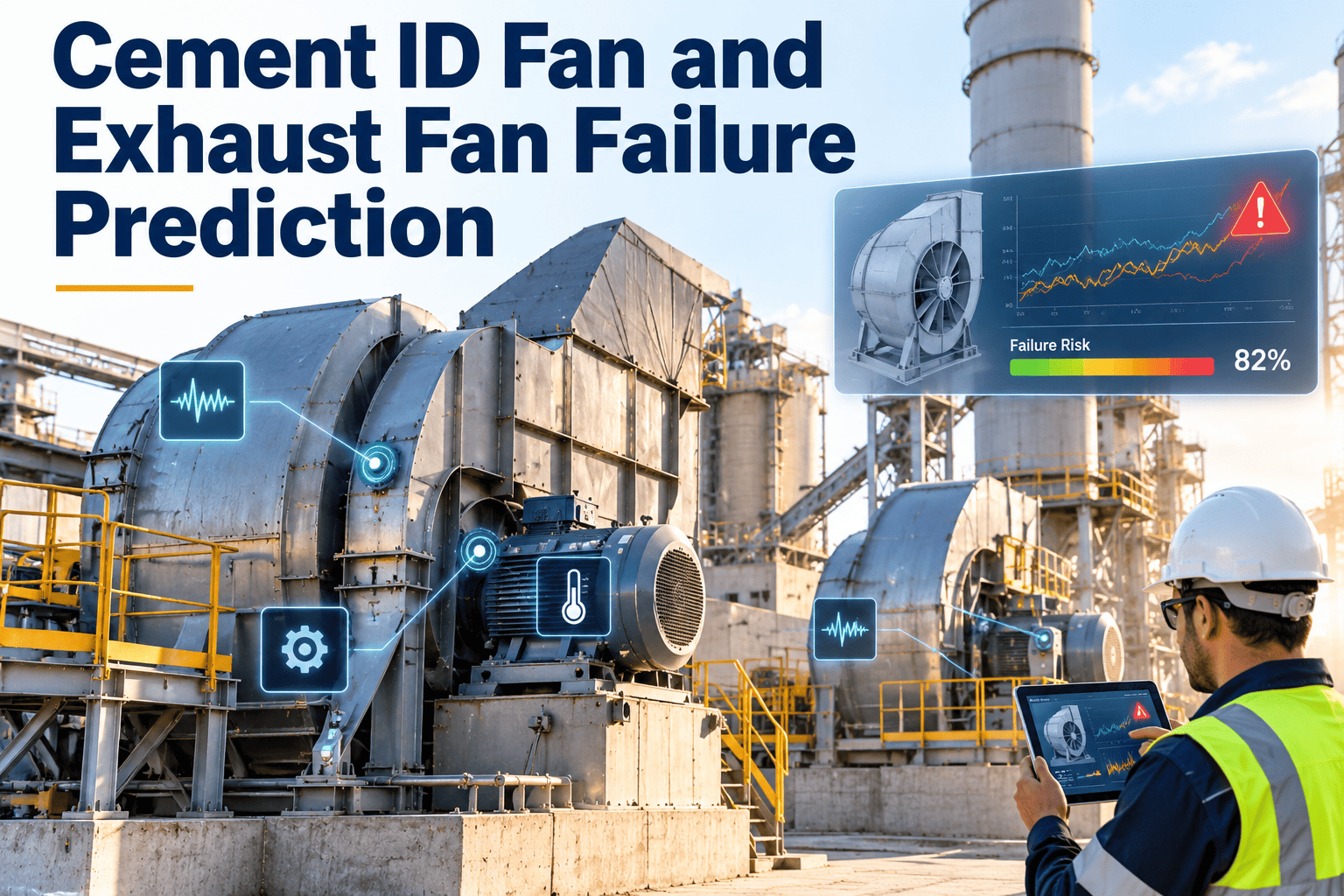
Read More
When the kiln ID fan trips, the whole line pays for it. Feed is cut, draft is lost, the kiln has to be brought down safely and every hour of restart eats into clinker output. Exhaust fans on mills, coolers and filters fail in quieter ways, but the
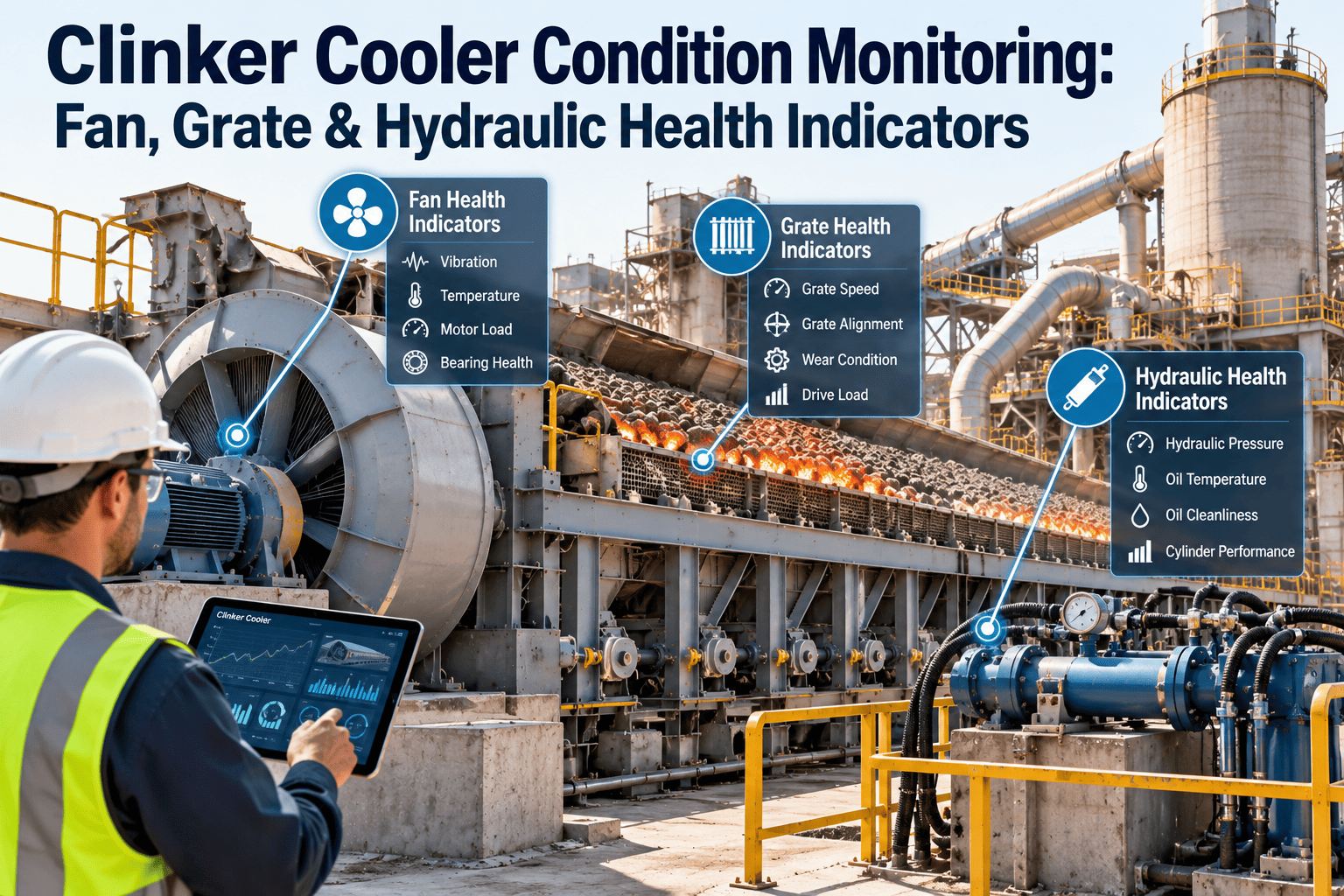
Read More
A clinker cooler rarely fails without warning. The fan that slowly loses airflow, the grate drive that starts to stutter and the hydraulic unit that runs a little warmer each week all send signals long before a kiln stop. The difficulty is that th

Read More
In a cement plant, a maintenance plan is only as good as what happens at the equipment. A technician climbs to a preheater platform, finds a worn seal, fixes it, and walks away. If the finding, the photo, the parts used, and the verification never

Read More
Every cement plant has a preventive maintenance plan on paper. The harder question is how much of it actually gets done on time, which tasks are slipping and what that slippage means for the kiln, mills and fans that keep production running. Overd

Read More
Contractors do some of the highest-risk work in a cement plant: kiln refractory, mill relining, preheater cleaning, silo entry and annual shutdown repairs. They also arrive with unfamiliar crews, different training histories and little knowledge o

Read More
In a cement plant, a stored-energy surprise can come from almost anywhere: a kiln drive that turns under its own unbalanced load, a mill motor with residual rotation, an air cannon on a preheater cyclone, or a silo of material that decides to move

Read More
A cement plant is a chain of very different hazards: hot meal in the preheater, rotating mills, dust-laden silos, conveyors that run for hundreds of metres and electrical rooms full of stored energy. A single paper checklist cannot cover all of th

Read More
Dust is part of cement making from the quarry face to the packing plant, and the fine fraction that reaches a worker's breathing zone is the part that matters most. Limestone, clay and sand can carry crystalline silica, while cement dust is alkali

Read More
Compressed air is one of the most expensive utilities in a cement plant, and a large share of it never does any work. It escapes through worn couplings, failed pulse valve diaphragms, cracked hoses and open drain valves, then reappears as extra co

Read More
Every cement plant carries a backlog, but a backlog that nobody trusts is a different problem. When hundreds of open work orders sit in a list, with no clear ranking, planners cannot tell the kiln-critical repair from the cosmetic fix. Technicians

Read More
Every cement plant knows the failure that keeps coming back. A kiln support roller bearing overheats, a raw mill roller needs another weld repair, or an ID fan loses balance again after a restart. The team fixes the symptom, production resumes, an

Read More
Cement plants operate under a dense web of obligations covering air emissions, waste co-processing, quarry safety, pressure equipment, electrical systems, lifting gear and worker protection. The permit itself is only the starting point, because re

Read More
For cement producers that sell into the European Union, carbon-intensity data has moved from a sustainability appendix to a commercial requirement. Importers need verified embedded emissions for clinker and cement, and that figure is only as defen

Read More
A cement plant covers a huge footprint of conveyors, kilns, silos, fans and electrical rooms, and no inspection round can watch all of it all the time. Hot shell sections, oil seeping from a gearbox, belt spillage or a missing guard can develop be

Read More
Cement kiln instability rarely begins with one dramatic event. It builds through small, uncorrected drifts in raw meal feed, fuel rate, excess oxygen and burning-zone temperature, each one nudging the others off balance. Operators respond with man

Read More
Cement is one of the hardest industries to decarbonize, and most of the conversation focuses on new fuels, new binders and carbon capture. Far less attention goes to the equipment that has to deliver those changes every day. A kiln that trips, a c

Read More
Bag filters clean the dust-laden gas from kilns, raw mills, coolers, cement mills, and transfer points, and differential pressure is their most important health signal. When it climbs, fans work harder, airflow drops, and energy use rises. When
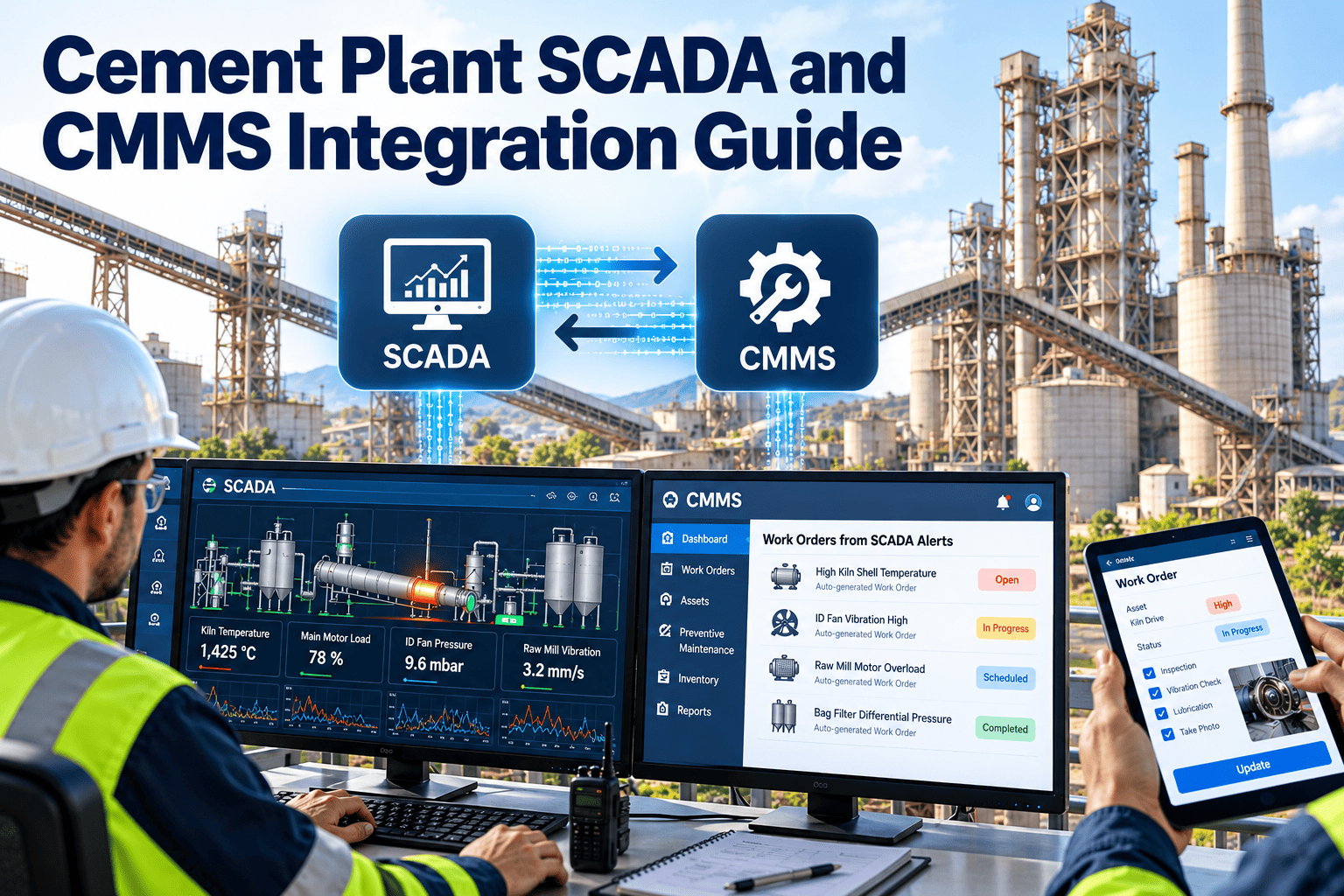
Read More
Cement plants generate a constant stream of process data, from kiln drive current to mill vibration and fan bearing temperature. Most of it stays in SCADA and PLC systems, while maintenance plans live in a separate CMMS. The gap means a rising tre

Read More
A cement plant is large, dense with steel and concrete, and often far from reliable networks. Technicians climb preheater towers, walk kiln galleries, enter mill basements, and drive to limestone quarries where coverage drops to nothing. If a ma

Read More
Limestone crusher availability sets the pace for the whole cement plant, because every tonne of kiln feed starts at the quarry. When the primary crusher stops, stockpiles drain, raw mill feed becomes inconsistent, and the cost shows up far from th
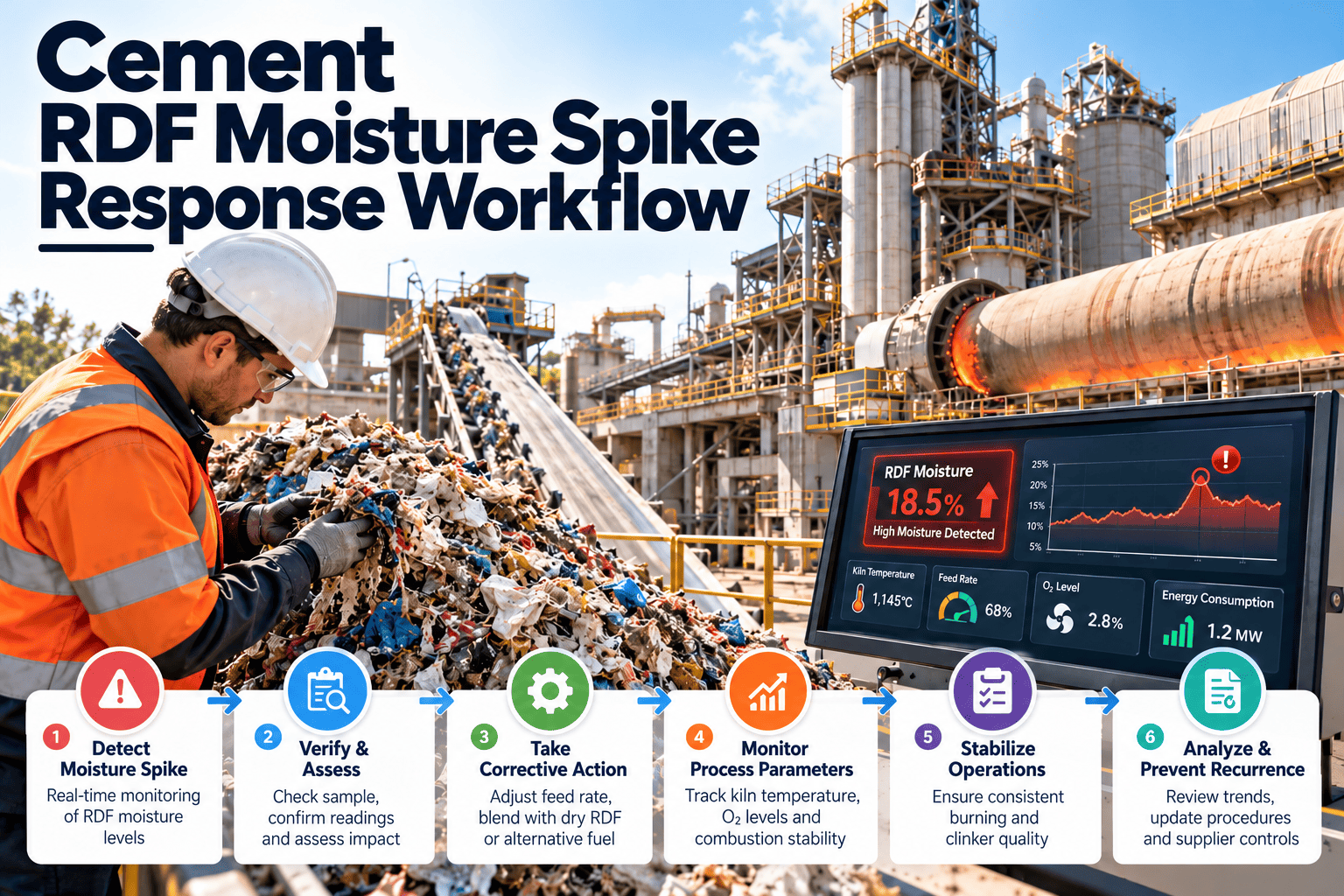
Read More
Refuse-derived fuel changes from one delivery to the next, and moisture is one of the biggest reasons. A wet batch lowers the heat each tonne delivers, bridges in bunkers, and can foul feeders and conveying lines before the calciner shows any chan

Read More
The calciner does most of the heavy chemical work in a modern dry-process cement line, so its reliability sets the pace for the whole kiln system. Build-up, refractory damage, burner wear, and blocked pressure taps rarely arrive alone, and each ca

Read More
Every kiln seal is a moving joint between a rotating shell and a stationary housing, and every one of them wears. Once it stops sealing, cold false air is drawn in or hot gas and dust escape, and fuel use, draft stability, and housekeeping all suf

Read More
Cement plants run thousands of inspection points across crushers, mills, kilns, coolers, fans, conveyors, and packing lines. Most of the useful findings, such as a hot bearing, a leaking seal, or a cracked guard, are written on paper or entered la

Read More
Carbon capture is moving from pilot projects to real investment decisions in the cement sector, driven by process emissions from limestone that efficiency alone cannot remove. A capture unit adds absorbers, solvent systems, compressors, heat excha

Read More
CO2 per tonne of clinker and per tonne of cement are the headline carbon KPIs of a cement plant, yet they are often calculated differently from site to site. Boundaries, clinker factors, and fuel assumptions change the result more than most teams

Read More
Many cement plants now generate part of their own power from waste heat recovery systems and solar plants, aiming to cut grid purchases and fuel-linked costs. These assets only pay back when they run reliably, yet they sit outside the traditional

Read More
Burning alternative fuels in a cement kiln can lower fossil CO2, but only if the numbers behind the claim are defensible. Every tonne of refuse-derived fuel, biomass, or tyre chips needs a weight, a calorific value, a carbon factor, and a biomass

Read More
Electric motors drive almost every critical process in a cement plant, from the kiln and raw mill to fans, crushers, elevators and the cement mill itself. A single motor failure can stop a whole process section, and the repair is rarely quick when

Read More
Cement fans move the gas that keeps a kiln line running. Kiln ID fans, raw mill fans, cooler vent fans, separator fans, and baghouse fans all work in abrasive, dust-laden gas. Over months, that dust erodes impeller blades unevenly, mass shifts, an

Read More
Cement fineness decides how fast a cement gains strength, how much water it demands and how much energy the grinding circuit burns per tonne. When the separator drifts, Blaine and residue drift with it, and operators compensate by overgrinding, wh

Read More
A blocked preheater cyclone can pull a kiln line down within hours, and clearing it puts crews in one of the most hazardous areas of a cement plant. Buildup rarely arrives without warning. Rising pressure drop, unstable draft, false air and shifti

Read More
A rotary kiln carries hundreds of tonnes of shell, refractory and hot clinker on a small number of tyre and roller stations. When a roller axis drifts or a tyre starts to creep, the load concentrates on a narrow contact band and damage builds quie

Read More
Title: Cement CBAM Data Audit Checklist for Exporters | Slug: cement-cbam-data-audit-checklist-for-exporters | Meta: Cement CBAM Data Audit Checklist for Exporters. Use structured field checks, condition indicators, maintenance actions, and escalatio

Read More
Stable kiln operation starts upstream. When raw mix chemistry swings, the kiln must be steered around it, with more fuel, more operator interventions and less consistent clinker. Variation comes from the quarry, from blending and from the equipmen

Read More
The crusher is the first machine in the cement process and the one whose failure stops everything behind it. Bearings fail without drama until vibration and temperature climb, and liners wear on a predictable curve that is often ignored until thro

Read More
A separator that has lost efficiency does not stop the mill, which is exactly why the loss goes unnoticed. Coarse particles leak into the product, fines return to the mill and are over-ground, circulating load climbs, and specific energy per tonne

Read More
Title: Alternative Fuel Dosing Equipment Preventive Maintenance Checklist | Slug: alternative-fuel-dosing-equipment-preventive-maintenance-checklist | Meta: Alternative Fuel Dosing Equipment Preventive Maintenance Checklist. Use structured field chec

Read More
A cement kiln that runs with the wrong oxygen level is paying for it twice. Too little oxygen pushes carbon monoxide up, destabilises the burning zone and can trip the electrostatic precipitator. Too much oxygen wastes fuel heating air that does n
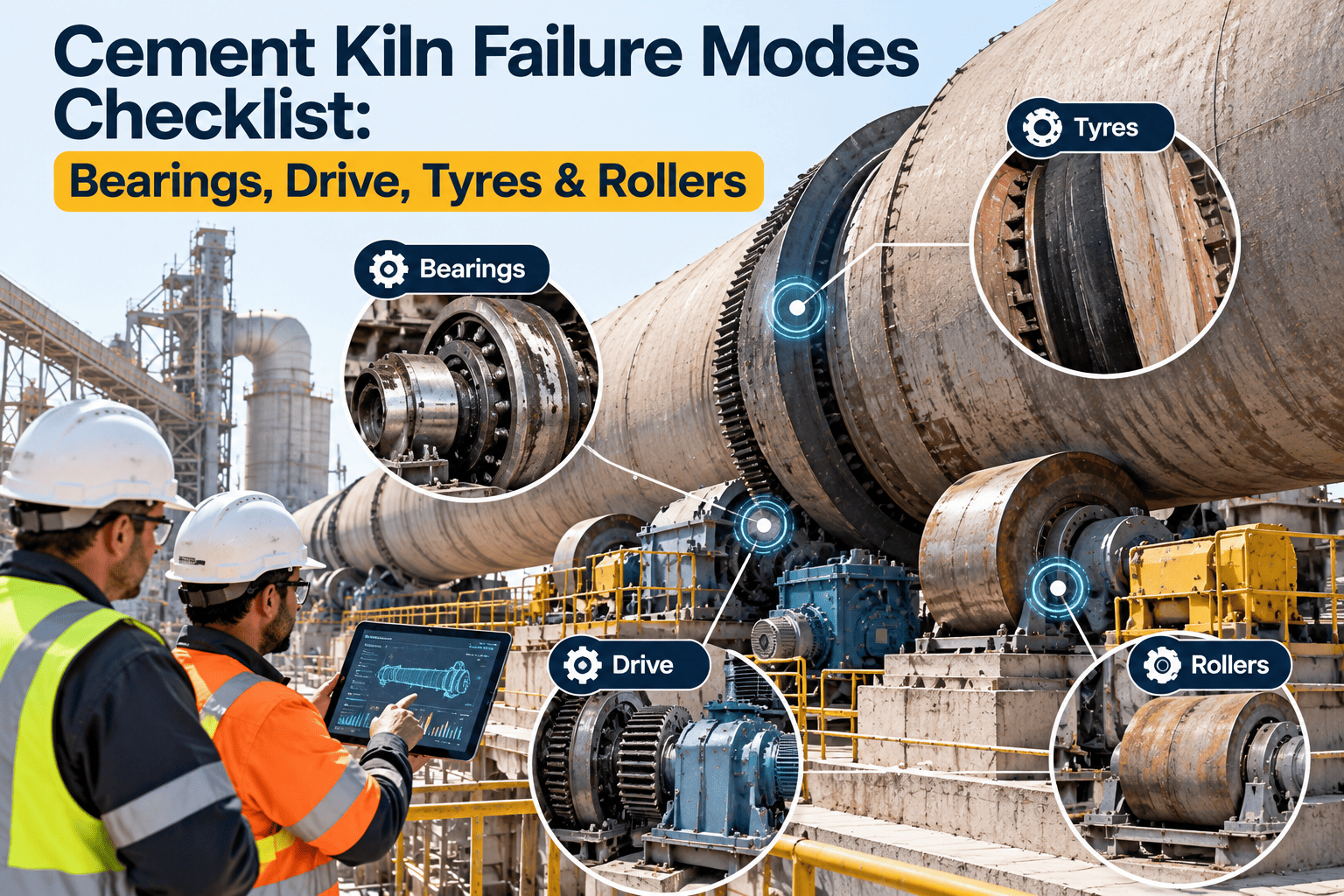
Read More
Title: Cement Kiln Failure Modes Checklist: Bearings, Drive, Tyres & Rollers | Slug: cement-kiln-failure-modes-checklist-bearings-drive-tyres-rollers | Meta: Cement Kiln Failure Modes Checklist: Bearings, Drive, Tyres & Rollers. Use s
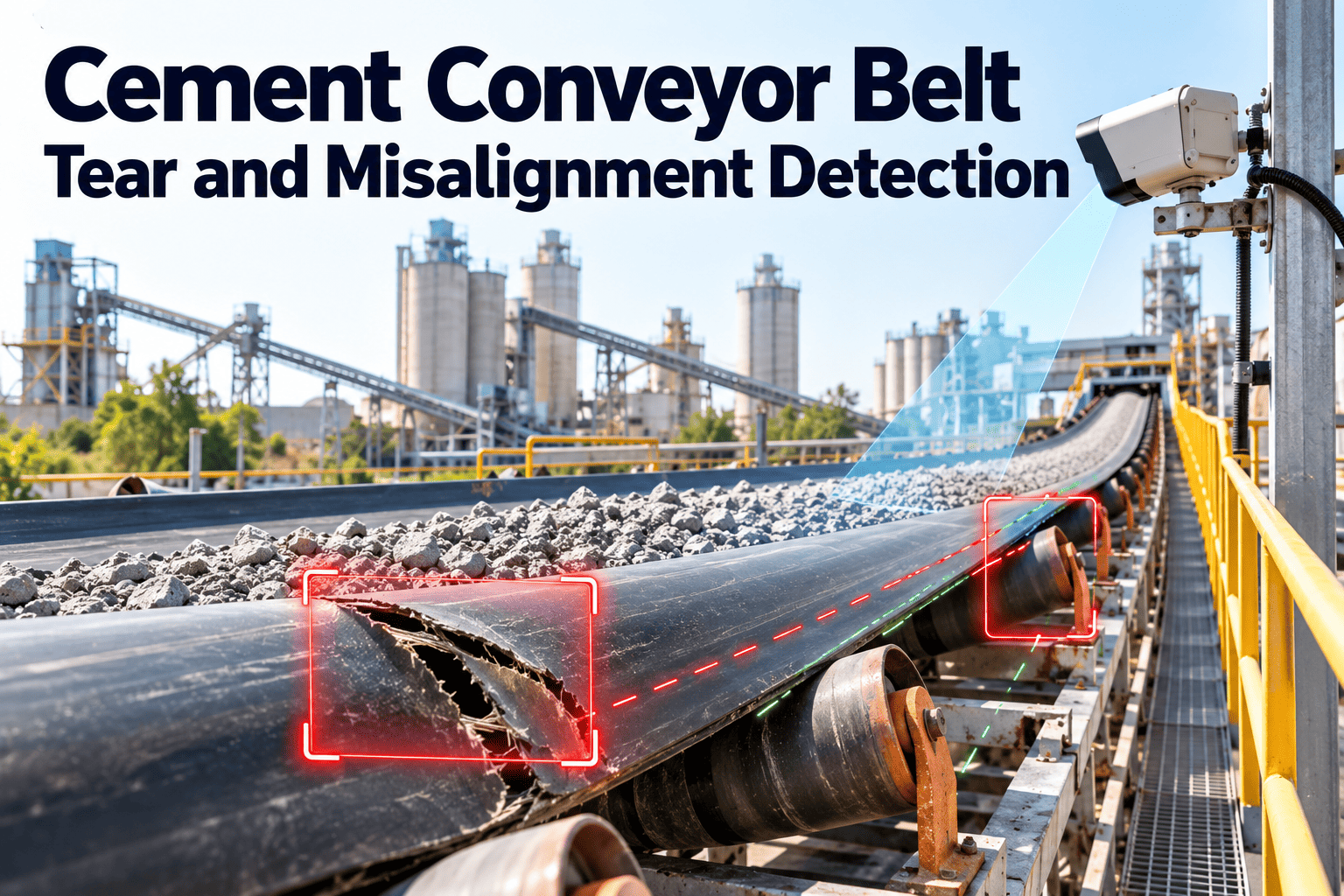
Read More
A conveyor belt rarely fails all at once. A tear starts with one impaled object or hung-up lump, and drift starts with a small mistrack that nobody notices until the edge rubs steel. On cement plant limestone, clinker, and coal belts that feed the

Read More
Free lime is the unreacted calcium oxide left in clinker, and it is one of the quickest signals of how well the kiln is burning and how stable the raw meal is. A drifting result can point to the burning zone, raw mix, fuel feed or cooler long befo

Read More
Ask ten people in a cement plant which equipment matters most and you will hear ten different answers, usually shaped by the last breakdown. Without a shared method, maintenance effort drifts toward noisy, visible problems instead of the assets th

Read More
Cement plants run long, capital-intensive process lines where a single kiln, mill or fan stoppage can ripple through clinker, grinding and dispatch. Reliability teams already hold the data to see this coming, but it often sits in shift logs, DCS s

Read More
Every cement plant eventually faces the same two uncomfortable moments: a kiln or mill stops because a critical part is not on the shelf, and a stores audit finds cash tied up in parts nobody has issued in years. Both come from the same root probl

Read More
Idler bearings rarely announce themselves. On limestone, raw meal, clinker, and coal conveyors, thousands of idlers turn in dust, heat, and spillage, and one seized roller can wear through a belt before anyone hears it. Predicting those failures m

Read More
A vertical roller mill gearbox carries the full grinding load of a raw, coal or cement mill, and when it fails the whole line stops for weeks, not days. Replacement lead times are long, repairs are specialist work, and the cost of lost output usua
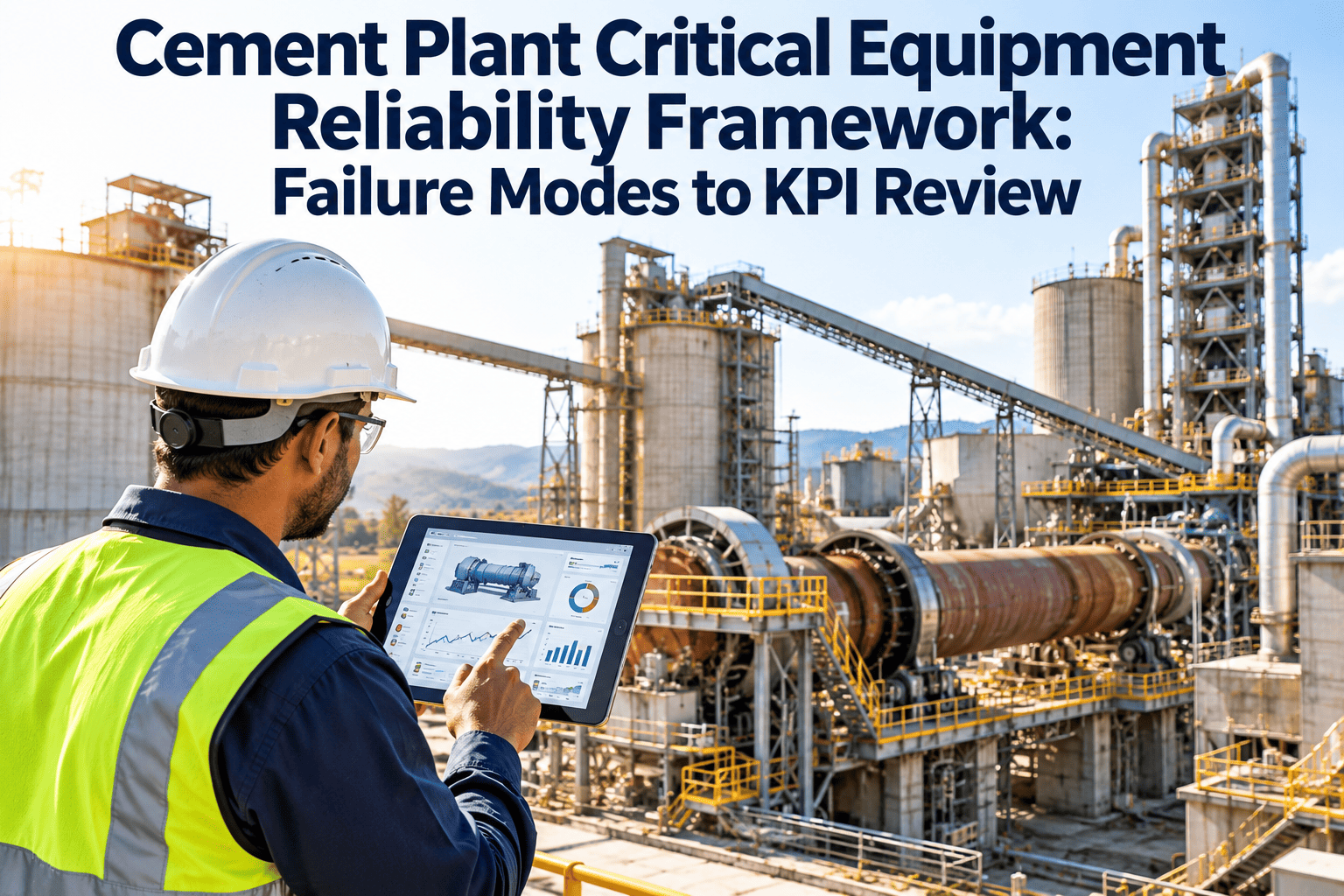
Read More
Packing and dispatch is where a cement plant turns production into revenue, and it is also where small equipment faults show up fastest as queued trucks, rejected bags and lost loading time. Rotary packers, bag applicators, weighing systems, conve

Read More
Continuous emissions monitoring systems turn a cement kiln stack into numbers that regulators, communities, and corporate teams rely on. Those numbers are only as good as the probes, sample lines, analyzers, and data systems behind them, and cemen

Read More
Large motors drive the crushers, raw mills, cement mills, kiln fans and compressors that a cement plant cannot run without, and many of them sit in dusty, hot locations where regular vibration routes are difficult. Motor current signature analysis

Read More
Cement groups often run several plants with different kilns, mills, ages, and maintenance habits, yet corporate teams still compare them through monthly spreadsheets that nobody fully trusts. Each site names assets differently, counts downtime dif

Read More
A cement plant does not run out of limestone overnight, but it often runs short of the things that keep limestone moving: crusher hammers, conveyor belting, lubricants, refractory bricks, grinding media and gypsum on the day a truck is late. Weak

Read More
Vertical roller mills grind raw meal, coal, cement, and slag with a few heavy rollers pressed onto a rotating table, so roller condition sets throughput, specific power, and vibration stability. Wear is expected, but changing a roller set too earl

Read More
The girth gear and pinion carry every kilogram of torque that turns a rotary kiln, yet they are often inspected only when a noise, a hot spot or a vibration alarm forces the issue. Wear, lubrication breakdown and misalignment rarely arrive alone;

Read More
Cement plants are struggling to find and keep people who can work safely on kilns, mills, crushers and high-voltage drives. Experienced technicians retire, new hires arrive with mixed backgrounds, and contractors rotate in during every shutdown. T

Read More
A cement plant runs on heavy, abrasive, high-temperature equipment, and every repair on a kiln shell, girth gear or mill liner leaves a question behind: can anyone prove what was found and what was done? Too often the answer is a hand-written note

Read More
Strength variation is one of the hardest quality problems in cement manufacturing because the cause is rarely where the result appears. A low 28-day result may trace back to clinker phases, gypsum dosing, fineness, additive moisture, or even sampl

Read More
The crusher is the first machine in the cement process, so when it stops, everything downstream eventually starves. Liners and blow bars wear, bearings run warm, hydraulics leak and tramp metal arrives without notice. Most of these problems can be

Read More
Energy is one of the largest controllable costs in a cement plant, and much of it is lost to equipment that has slowly drifted out of condition. Worn grinding parts, leaking ducts, fouled preheaters, misaligned drives, and unstable kiln operation

Read More
A cement mill gearbox rarely fails without warning, but the warning is easy to miss. Oil temperature drifts up, vibration changes character, filters clog faster or wear particles appear in the oil sample. Each sign is small on its own. Together th

Read More
Raising thermal substitution rate is not a single dial you turn up. Every additional percentage point of alternative fuel puts more demand on fuel preparation, feeding accuracy, calciner residence time, and kiln chemistry control. Plants that push

Read More
Alternative fuels lower fuel cost and carbon intensity, but they rarely burn the way coal or petcoke does. Moisture, particle size, calorific value, chlorine, sulfur, and ash chemistry can change from one truck to the next, and the kiln feels ever

Read More
Alternative fuel and raw material storage is one of the quieter fire risks in a cement plant. Shredded refuse derived fuel, biomass, tyre chips and sludge can heat internally for days before smoke appears, and a small ignition source near dry, flu

Read More
Cement plants run heavy, continuous equipment in dust, heat and abrasive conditions, so a poor maintenance strategy shows up quickly as kiln stops, mill outages and emergency spend. Many teams debate predictive versus preventive maintenance as if

Read More
A cement mill rarely fails without warning. Trunnion bearings run hotter, gear mesh energy climbs, and vibration creeps up weeks before a trip or a forced stop. The difficulty is separating a real mechanical fault from the constant noise of grindi
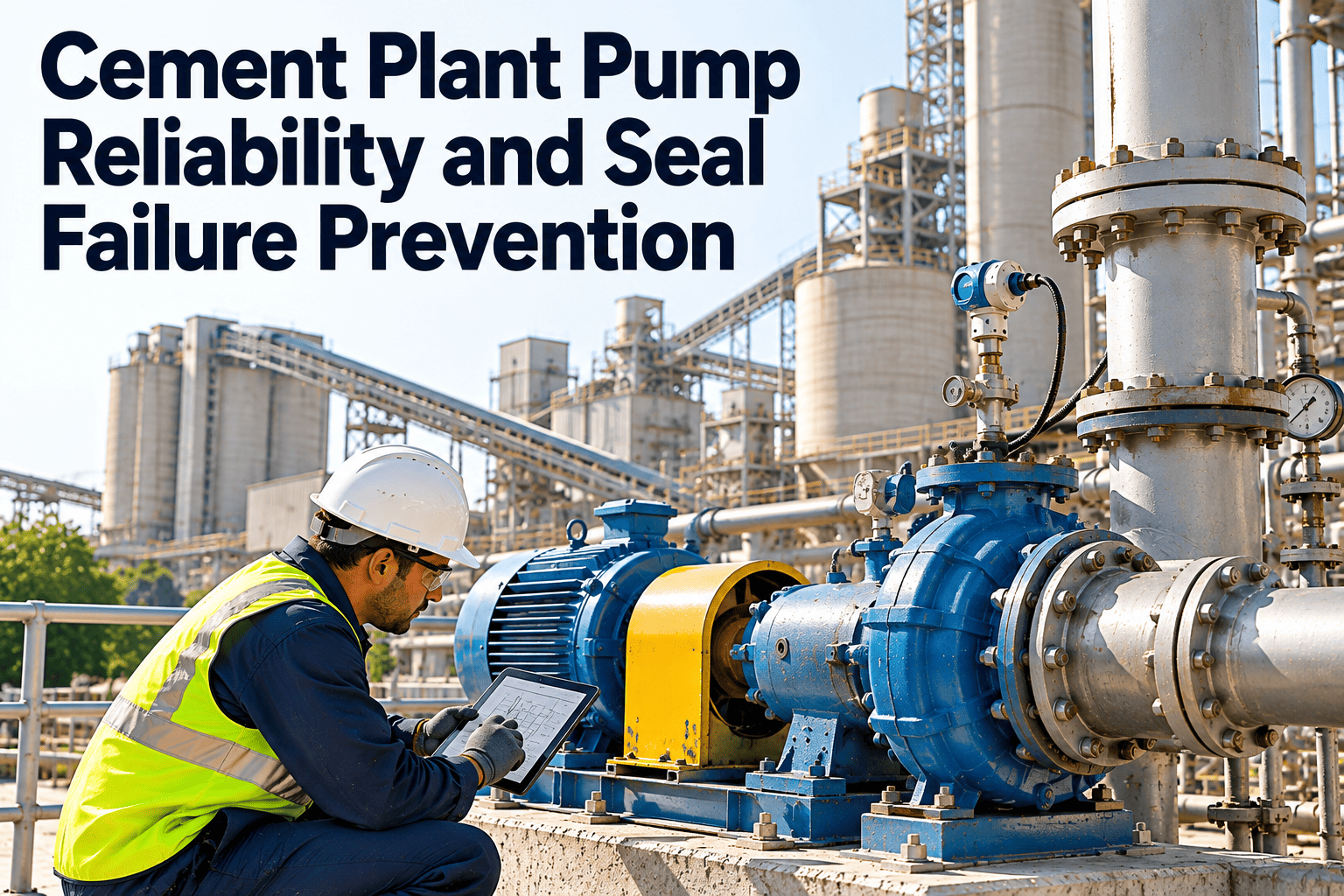
Read More
Pumps rarely get the attention that kilns and mills do, yet a failed cooling water, lube oil, or slurry pump can force a production line down just as quickly. In most cement plant pumps, the mechanical seal is the first component to fail, and abra

Read More
A cement kiln shutdown is won or lost on scope. Too little scope and the kiln restarts with known defects that force another stop within months. Too much and the outage runs long, clinker stock drains and the budget stretches, often because late a

Read More
Most cement plants know how many hours the kiln stopped, but far fewer can say what those hours cost or why they happened in a way that holds up in a budget meeting. Without a consistent cost method and loss codes, downtime becomes a list of stori

Read More
Maintenance is one of the largest controllable costs in a cement plant, alongside fuel and power. Yet many plants track it as a single annual budget line and judge it against last year rather than against output. Cost per ton of cement or clinker

Read More
A single vibration alarm on a kiln fan tells you something changed, but not why. It could be buildup on the impeller, a loosening bearing, a raw meal change, or a sensor fault. Sensor fusion combines several signals from the same asset, such as vi

Read More
Every cement plant maintenance manager eventually faces the same question: what happens to clinker output, cost and risk if we change the plan? Delay the refractory job by a month, run the raw mill on a worn roller through the monsoon, or add thre

Read More
Cement plants rarely fail because one team missed one inspection. They fail because kiln, mill, fan, and conveyor data sits in different systems, work orders use different codes, and each site solves the same problem differently. Multi-plant asset
Read More
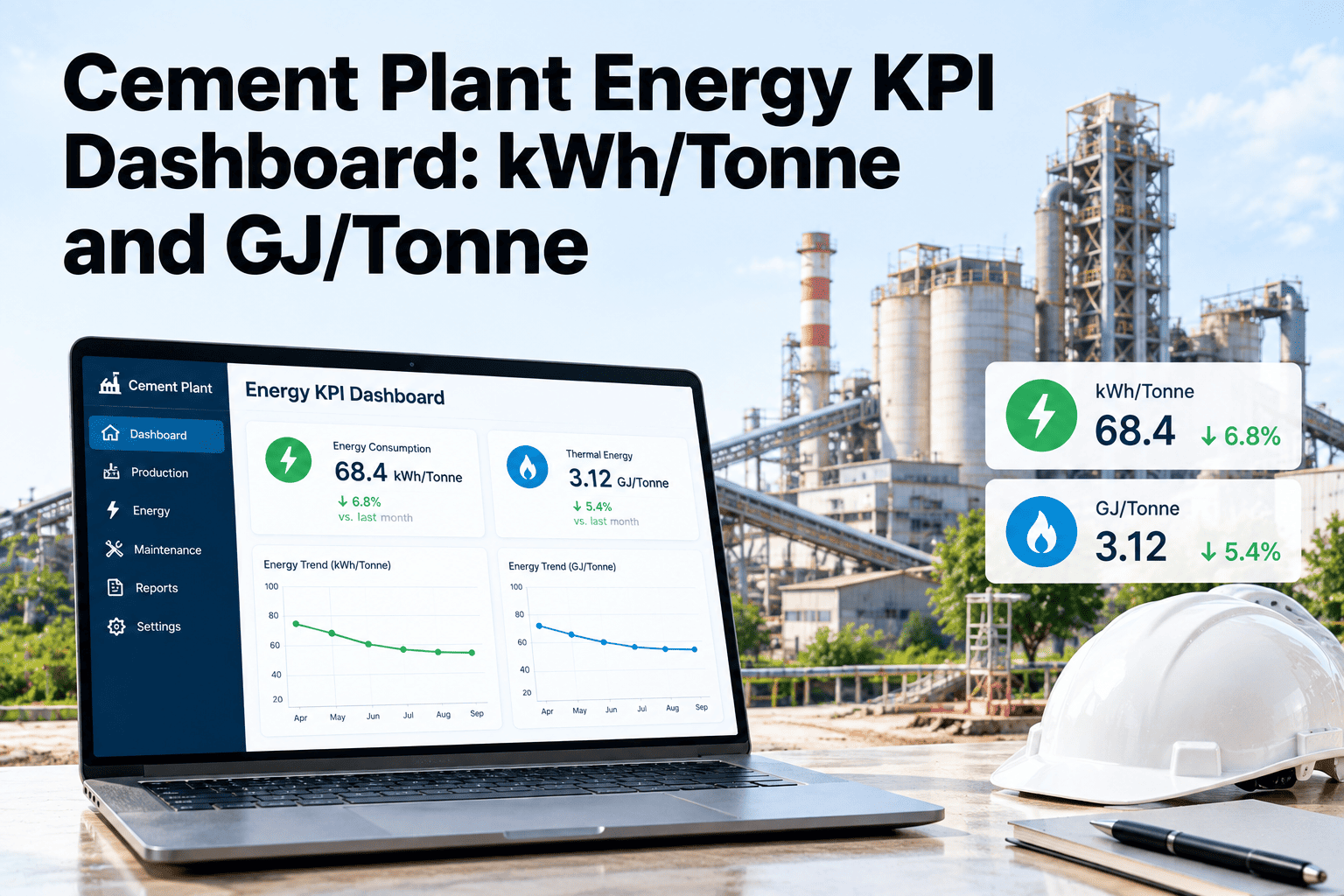
Energy is one of the largest controllable costs in cement, yet many plants still review it as a monthly total that arrives long after the shift that caused a problem. Two numbers do most of the work: electrical energy in kWh per tonne and thermal

Read More
A kiln support roller bearing rarely fails at the moment it crosses an alarm limit. It usually starts drifting warmer than its own history days or weeks earlier, while the absolute reading still looks acceptable. Trend monitoring watches that drif

Read More
Cement plants often report kiln availability and mill running hours, yet still feel they are losing output. Overall equipment effectiveness explains why, because it combines stops, slow running and off-specification product into one view. For a co

Read More
Conveyor belts move limestone, raw meal, coal, clinker, and cement through a plant, and a single torn or mistracked belt can stop a whole production line. Walk-around inspections catch some damage, but long, dusty, partly enclosed conveyors are ha
Read More
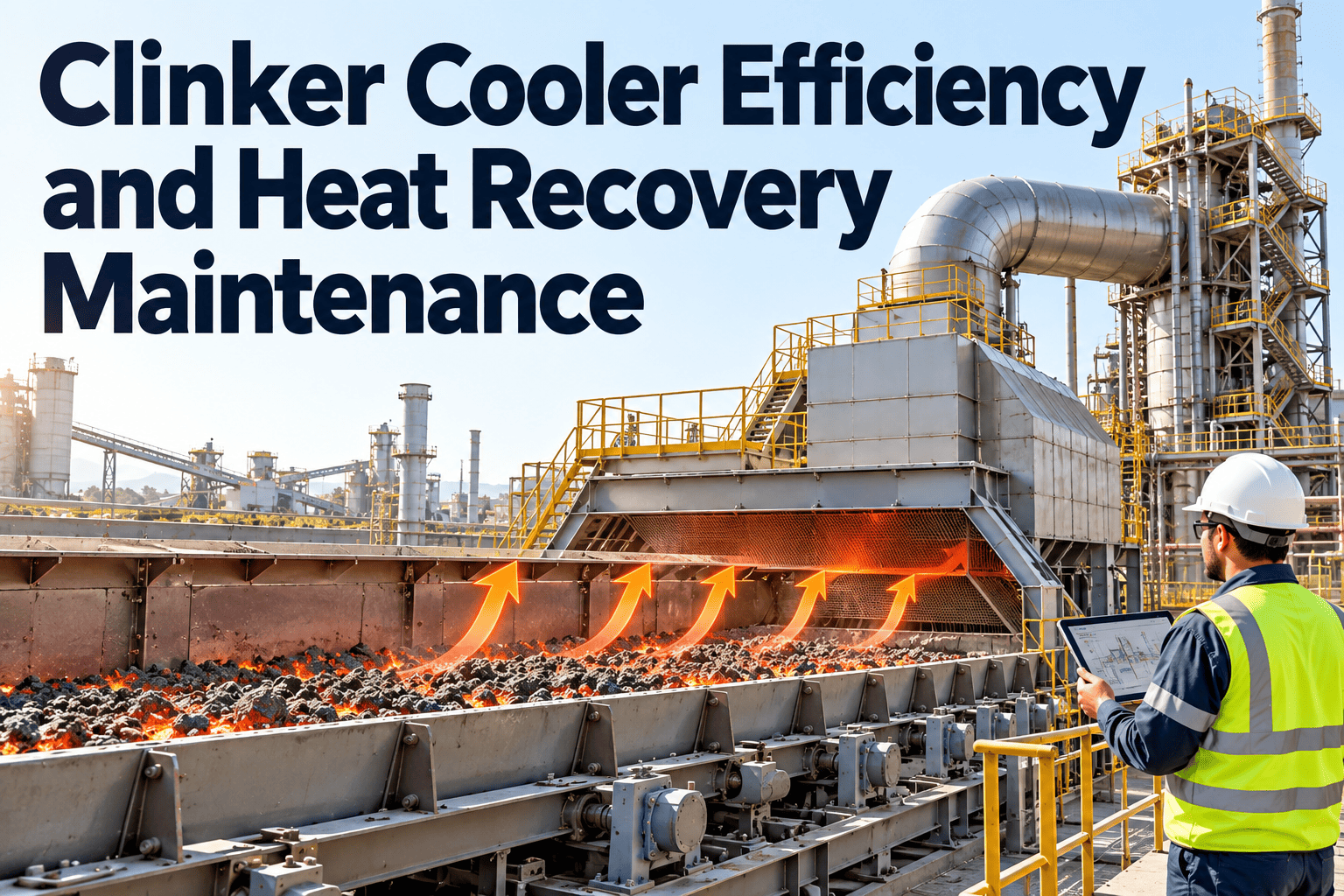
A clinker cooler has two jobs that pull in different directions: cool hot clinker quickly enough to protect product quality and downstream equipment, and hand as much heat as possible back to the process. When grate plates wear, fans lose pressure

Read More
Cement plants run on a short list of assets that decide whether the month's clinker and cement targets are met: the kiln and its drive, preheater and ID fan, raw and cement mills, coolers, crushers, and the conveyors that feed them. Most plants tr

Read More
Every tonne of refuse derived fuel, biomass, tyre chips or sludge that enters a cement kiln arrives with its own moisture, chlorine, ash and calorific value. When that quality is not tracked by batch, the effects appear downstream as unstable flam

Read More
The kiln drive gearbox turns one of the heaviest rotating assets in a cement plant, and it does so around the clock at high torque and slow, steady speed. When it fails, clinker production stops, and a kiln that stops hot brings refractory and she

Read More
Rotary kiln downtime rarely arrives without warning. Shell temperatures drift, main drive current creeps up, a support roller runs warmer than its neighbours, and refractory hot spots widen between shutdowns. In many cement plants these signals si

Read More
Lubrication failure rarely announces itself on a cement plant's daily reliability report. It shows up quietly first — a slightly higher operating temperature on a raw mill trunnion bearing, a faint metallic sheen in a gearbox sample, a viscosity r

Read More
A kiln support roller bearing does not fail without warning. Days or weeks before it seizes, its vibration spectrum starts showing rising harmonic frequencies at the bearing's characteristic defect rates, and its running temperature begins driftin

Read More
A technician who has spent twenty-eight years on the same kiln line does not just know the procedure — they know the listening check that flags a bearing problem before any sensor fires, the exact torque sequence that avoids a recurring gasket fai

Read More
Every tonne of clinker a cement plant produces starts with a blast, a bucket, and a haul truck bed several kilometers before it ever reaches a kiln. Quarry equipment — drills, excavators, haul trucks, apron feeders, and the primary crusher that ti

Read More
Walk the length of almost any cement plant conveyor gallery and you will find the same three or four transfer points buried in spilled clinker, raw meal, or fly ash, week after week, no matter how often the cleanup crew clears them. That repetitio

Read More
A rotary kiln burner rarely fails all at once. Long before an operator sees a flameout alarm, the flame has already spent weeks drifting — lengthening, shortening, lifting off the nozzle, or rolling toward the refractory — while burning zone tempe

Read More
A five-stage preheater tower is the thermal heart of a dry-process cement kiln, exchanging heat between hot kiln exhaust gas and incoming raw meal before the material ever reaches the calciner. When every cyclone, dip tube, and expansion joint hol

Read More
Every cement plant now has a carbon number attached to every tonne it ships, and by 2026 that number has to hold up under external verification, not just appear in an annual sustainability slide. Most plants still build it from fuel ledgers, elect
Read More
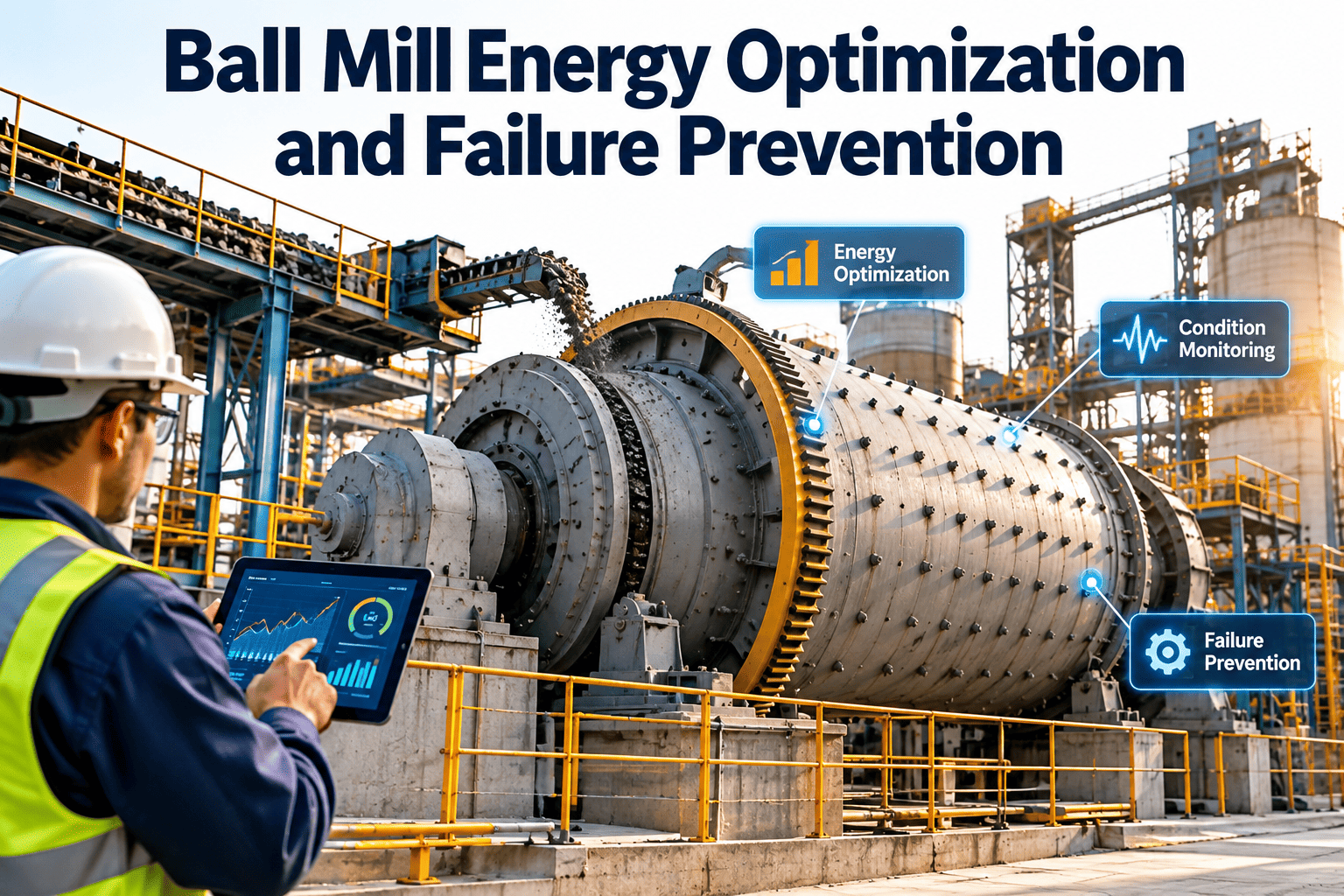
Cement grinding is the single largest electrical load in most cement plants, and the ball mill circuit carries the bulk of that draw. Specific energy consumption in a well-tuned closed-circuit mill sits well below what most plants are actually run

Read More
A cement mill that drifts from 32 kWh/t to 36 kWh/t rarely announces itself with an alarm — throughput holds, Blaine looks fine, and the only trace is a slightly higher number on next month's power bill. Multiply that drift across a 1.5 million to
Read More
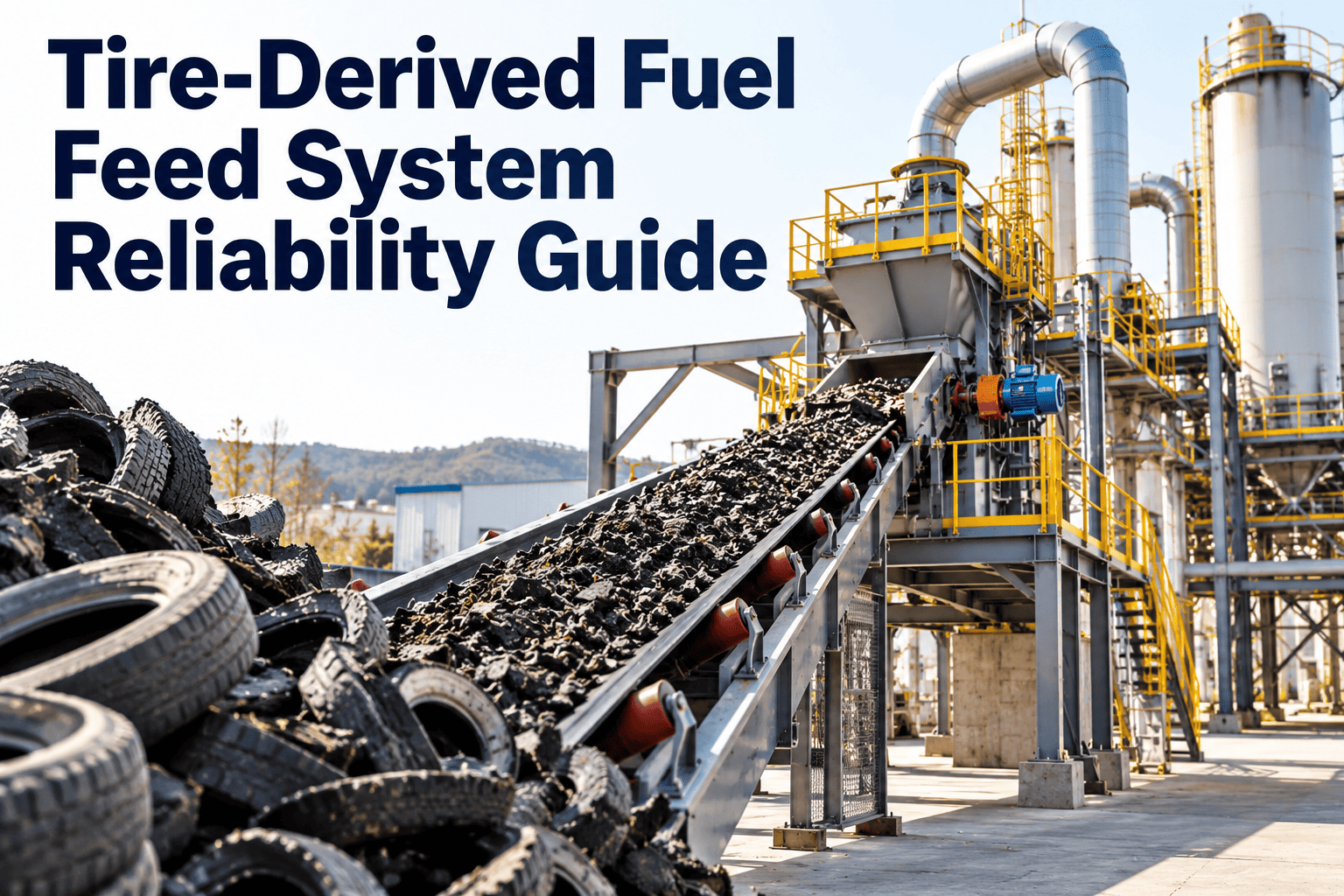
Whole tires and shredded tire chips are among the densest alternative fuels a cement kiln can burn, and the feed line built to handle them looks deceptively simple from the control room: a receiving bay, a conveyor, a metering gate, a drop point i
Read More
Push thermal substitution rate past 40% and a cement kiln stops behaving like the same kiln. Flame shape shortens or elongates depending on what batch of refuse-derived fuel just hit the calciner, free lime starts drifting shift to shift, and a bu

Read More
A rotary kiln's refractory lining is one of the most expensive consumables in a cement plant, and also one of the hardest to plan around. Burning-zone brick, transition-zone spinel, and preheater castable each wear at different rates, driven by fl

Read More
A cement kiln shell is steel plate doing a job it was never designed to do on its own — holding its shape at 1,450°C of internal process heat with nothing but a 200–250mm refractory lining standing between the flame and the metal. When that lining

Read More
A single torn bag in a cement plant baghouse can start as a faint change at the stack and end as an emissions excursion, a stressed fan, and a rushed shutdown. Manual checks and periodic readings often catch the problem late, because failures grow

Read More
Cement strength is confirmed by testing mortar prisms at set ages, with 28 days as the classic reference. By the time that result arrives, the clinker, gypsum, and additives involved may already be in silos, bags, or trucks. Even faster lab checks

Read More
In a cement plant, a technician can lose valuable minutes just working out which gearbox, fan or conveyor a work order refers to. Dust covers nameplates, similar equipment repeats across lines, and paper records go missing between shifts. QR code

Read More
Cement plants generate more maintenance signals than any team can read by hand: vibration trends, temperature drift, inspection photos, operator notes, and years of work order history. The problem is rarely a lack of data. It is that alerts, image

Read More
Raw meal fineness looks like a laboratory number, but it is decided by mill wear, separator settings, feed moisture, and how quickly your team reacts to drift. When the meal is too coarse, the kiln burns harder and clinker quality suffers. When it

Read More
The raw mill decides how steadily a cement plant feeds its kiln. When grinding stalls, a gearbox overheats, or grinding rollers wear out early, the kiln loses stable raw meal and the whole line pays for it. Reliability depends on reading vibration

Read More
Cement kilns rarely fail without warning, yet many plants still learn about a problem when the shell glows, the main drive trips, or a preheater cyclone blocks. In 2026, tighter margins, variable alternative fuels, and thinner maintenance teams ma

Read More
A kiln burner that is even slightly out of tune costs a plant real money without ever tripping an alarm — a long, lazy flame pushes back-end temperature up, a burner set too close to the charge triggers sulfur circulation and coating, and primary

Read More
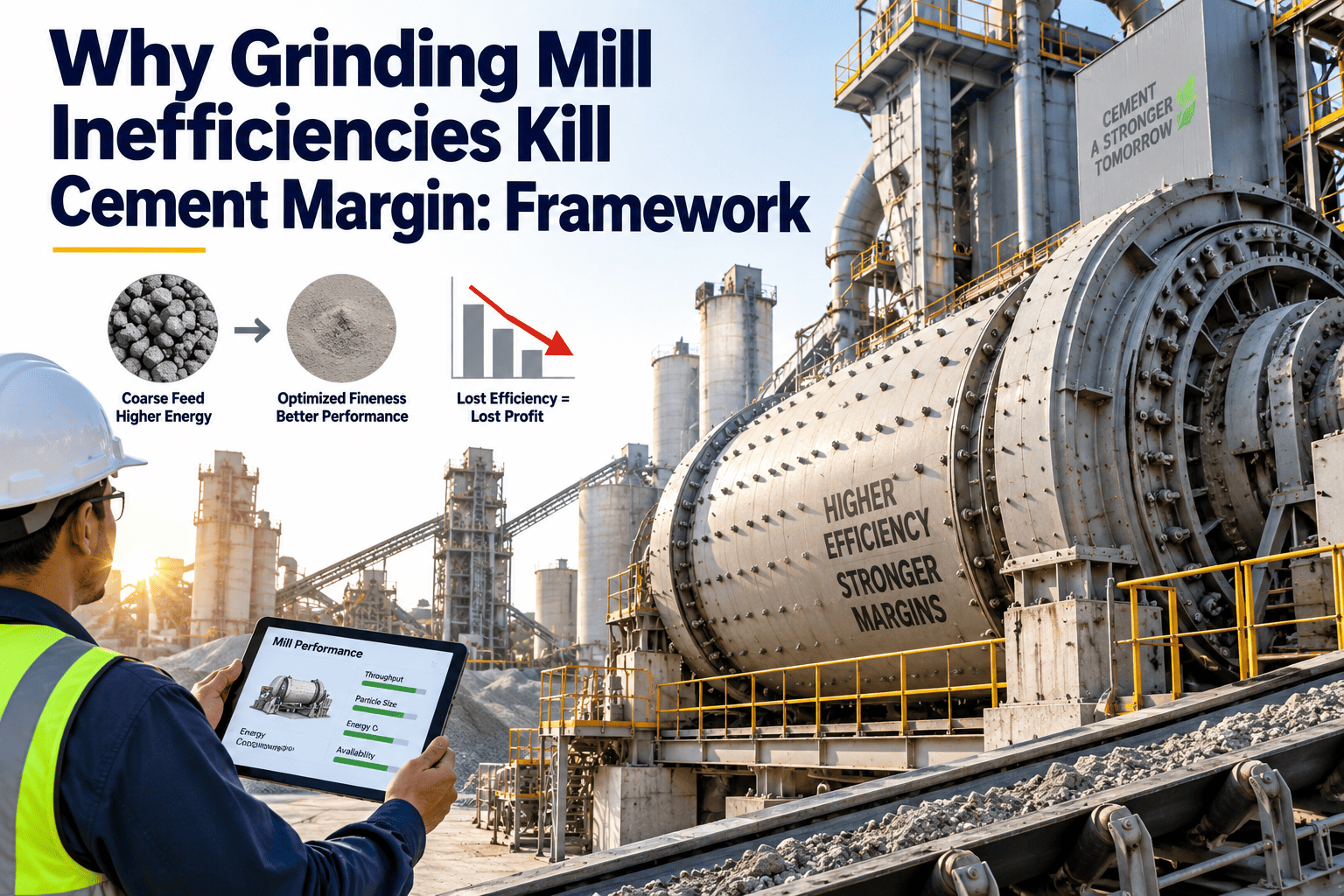
A worn or poorly tuned separator is one of the most expensive problems in a cement grinding circuit, and one of the easiest to miss, because the mill keeps running and the tonnage keeps moving even as the specific energy consumption quietly climbs
Read More
Grinding is the single largest electrical draw in a cement plant, consuming 40–45% of total plant power before a single bag of cement ships. That makes it the one circuit where a slow, invisible drift in specific energy consumption compounds into

Read More
A cement plant rolling out AI cameras needs more than hardware. This checklist helps teams verify camera placement, network and storage readiness, commissioning, training, and CMMS integration before moving from pilot to full-plant coverage. Work

Read More
Most cement plant AI pilots stall not because the technology fails, but because the business case never survives contact with finance. A reliability manager can point to a kiln trip that predictive analytics would have caught — but a CFO wants a d

Read More
A rotary kiln drive, a raw mill under load, and a clinker cooler fan bank do not stop being dangerous the moment a breaker is thrown — stored thermal, mechanical, and pneumatic energy stays live long after the switch is off. Cement plants routinel

Read More
Cement plants run kilns, raw mills, clinker coolers, and high-voltage conveyor drives that can release stored energy the instant a lock slips or a signature goes missing. OSHA 29 CFR 1910.147(c)(7) does not just require lockout/tagout training — i

Read More
Ask five plant managers how their thermal energy consumption compares to industry best practice and you'll usually get five different numbers, pulled from five different reporting cycles, calculated five slightly different ways. A benchmark scorec

Read More
Motors account for roughly 60–80% of total electricity use in a cement plant, yet most plants have never measured how many of those motors actually run near the load they were sized for. Conservative design margins, process changes after commissio

Read More
Walk a cement plant during a kiln stop and you'll usually find conveyors still turning, compressors still cycling, and auxiliary fans still pulling full load on equipment that has nothing to move. Idling loss rarely shows up as a single alarming n

Read More
Clinker manufacturing is the single most energy- and carbon-intensive step in cement production, so lowering the clinker factor — the share of clinker in the final cement blend — is the fastest lever most plants have for cutting both fuel cost and

Read More
A shredder line can hit its rated throughput and a plant can still lose thermal substitution rate, and the usual culprit is not the equipment — it is what the equipment is being fed. Refuse-derived fuel, biomass, and tire-derived fuel all arrive w

Read More
Every kiln that burns alternative fuel inherits a chemistry problem that never shows up on a single gauge: chlorine, sulfur, potassium and sodium vaporize in the burning zone, drift backward with the gas stream, condense on cooler surfaces in the

Read More
Alternative fuel substitution is one of the hardest numbers to move in a cement plant, and one of the easiest to lose again. Most U.S. integrated plants sit somewhere between 15% and 20% thermal substitution rate (TSR), while a smaller group of to

Read More
Every cement plant operator round starts the same way — walk the floor, check the gauges, note anything that looks or sounds wrong. The difference between a round that catches problems early and one that just confirms nothing has obviously broken

Read More
A missed defect on an operator round is rarely dramatic in the moment. A bearing running a few degrees warm, a slight vibration on a conveyor idler, a hairline crack on a refractory panel — each one looks minor enough to note "for later" and move

Read More
Compressed air runs almost everything in a cement plant that isn't a motor — pneumatic valves, bag filter pulse cleaning, instrument air, kiln burner controls, and dozens of dampers all depend on a compressor house nobody thinks about until it sto
Read More
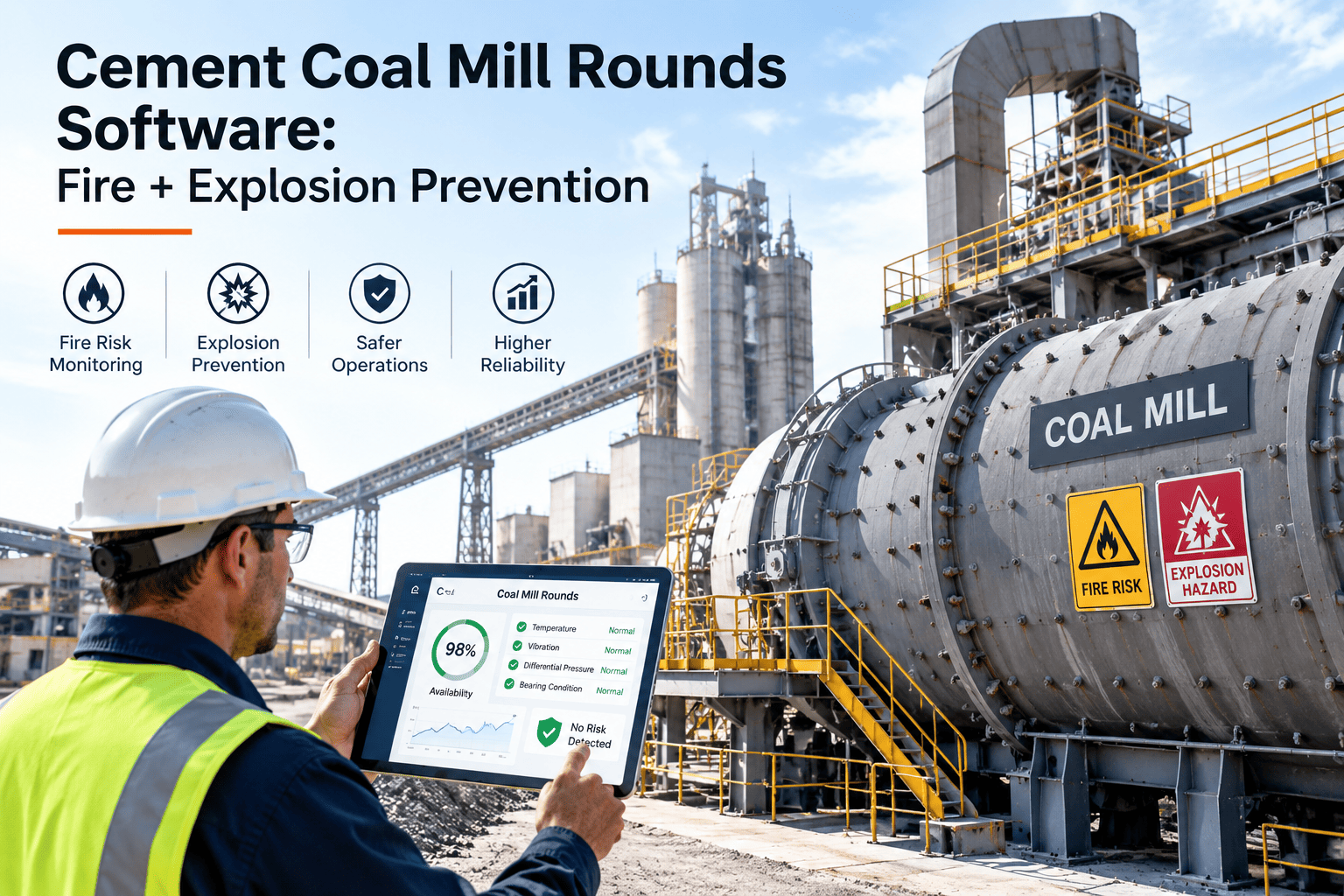
Pulverized coal suspended in air inside a mill circuit needs only three things to become a deflagration: fuel, oxygen, and an ignition source. All three are present in a coal mill by design, which is why the operator round on this piece of equipme

Read More
A cement rotary kiln shell is steel wrapped around fire — a nine to fifteen foot diameter tube holding a 1,450°C flame back with nothing but refractory brick and a clinker coating a few inches thick. When that lining wears through in one spot, the

Read More
A single kiln overhaul can put twelve electricians, six mechanical fitters, four instrument technicians, and two outside contractors inside the same energized boundary within the same eight-hour shift. When that many trades rotate through one isol

Read More
An operator round produces a number of small facts throughout the day: a bearing temperature, a vibration note, a refractory observation, a lubrication level. Any single reading rarely tells you much. It's the pattern across dozens of rounds, week

Read More
Every cement plant manager knows two things about benchmarking. The first is that a single peer-comparison number — how your kiln availability, specific heat consumption, or maintenance spend per tonne actually ranks against similar plants — is wo

Read More
Every cement kiln runs on chemistry that most maintenance teams never see directly: chlorine, sulfur, potassium, and sodium compounds vaporize in the burning zone, travel backward with the kiln gases, and condense the moment they hit cooler refrac

Read More
A kiln does not fail on a calendar. It fails when a refractory lining has worn past the point where it can safely hold heat, and that point rarely lines up neatly with the shutdown date a plant scheduled six months ago. Most cement plants still pl

Read More
A cement kiln does not care what today's fuel mix report says — it only responds to what actually lands in the burning zone minute by minute. Refuse-derived fuel, tire-derived fuel, and biomass can swing meaningfully in calorific value, moisture,

Read More
A cement kiln that ran quietly for years on a 100% coal diet becomes a different animal the moment alternative fuels cross 20% TSR. Flame shape softens and lengthens. Coating pattern shifts down the burning zone. Shell hot spots migrate. Ring form

Read More
Cement plants racing to hit 2030 Scope 1 targets are all discovering the same operational truth — the fossil-fuel dial has been turned as far as it will go, and the remaining decarbonisation is locked inside biomass. Rice husk, wood chips, agricul

Read More
A cement plant laboratory produces a constant stream of quality data — free-lime readings off the kiln, Blaine fineness on every mill sample, XRF oxide analysis on raw meal, compressive strength curing over 28 days — and in most plants that data l
Read More
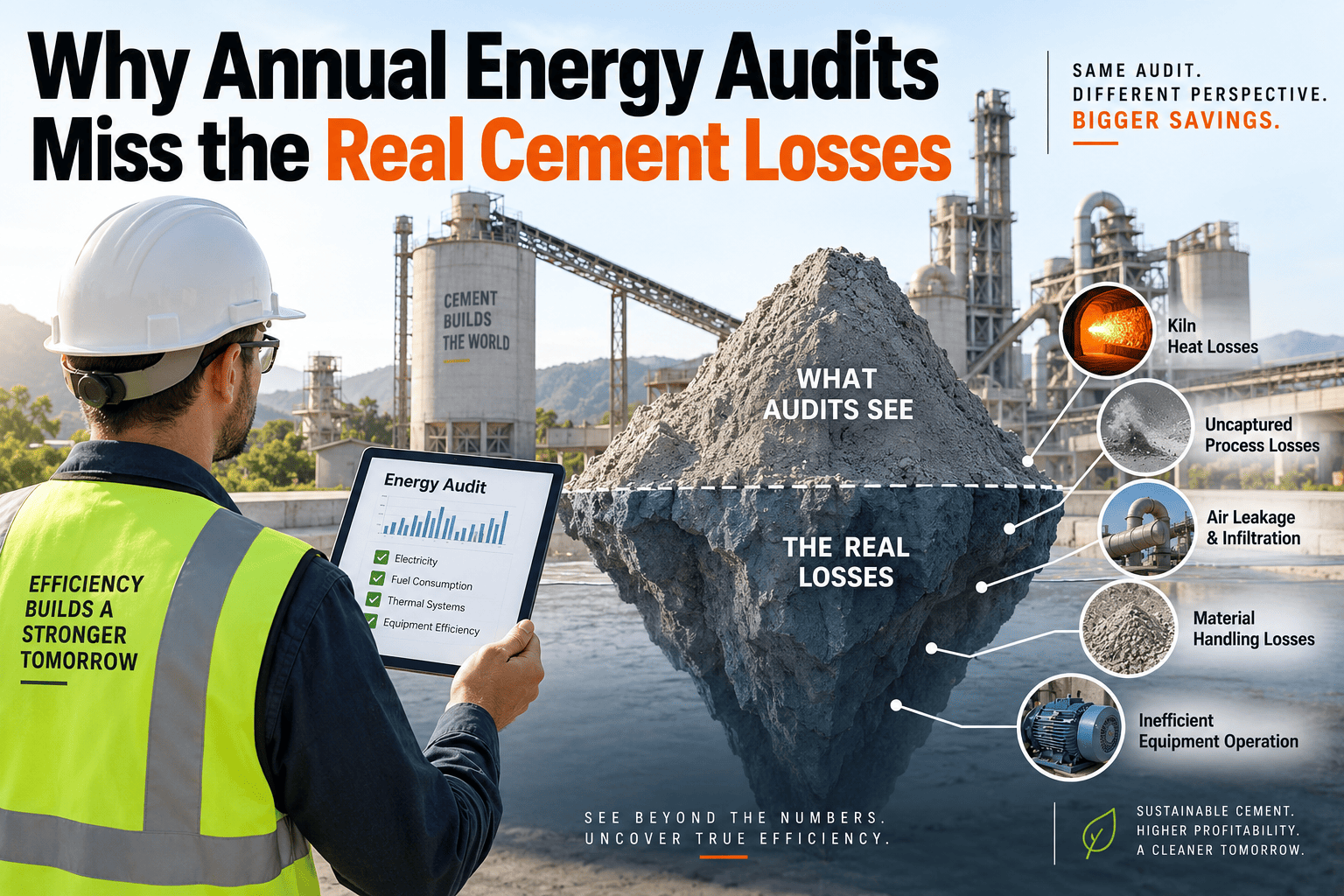
An annual energy audit is still the standard way most cement plants find out where power and fuel are being wasted, and for one week a year it works well: a team walks the raw mill, kiln drive and compressor house with power analyzers and comes ba

Read More
Waste heat recovery has become one of the few decarbonization levers a cement plant can install without changing its clinker chemistry, and it works by capturing exhaust gas from the preheater tower and clinker cooler that would otherwise vent str

Read More
False air is the cheapest energy loss in a cement plant to fix and the easiest one to ignore. Unwanted ambient air leaking into a preheater string dilutes the gas stream, drops its temperature, and forces the burner to compensate with fuel that pr
Read More
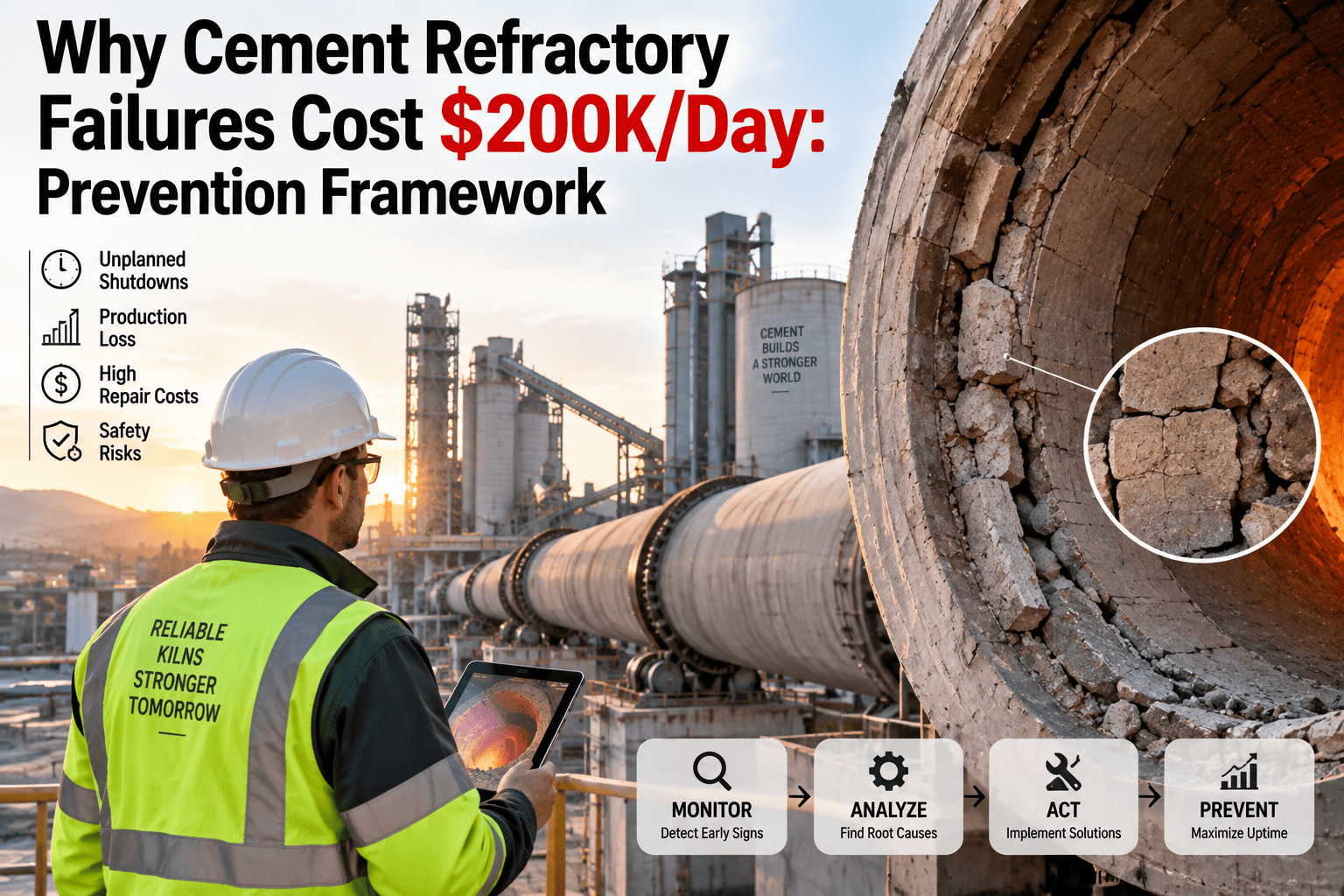
When a cement kiln's refractory lining fails without warning, the repair invoice is rarely the largest number on the page. A kiln that stops producing clinker stops the entire plant behind it, and the daily cost of that silence — lost clinker marg

Read More
A cement mill separator that runs 8% bypass instead of a achievable 6% doesn't announce itself — it just quietly returns a few extra tonnes per hour of good product back to the mill, where it gets reground for no reason. Most plants only catch thi
Read More
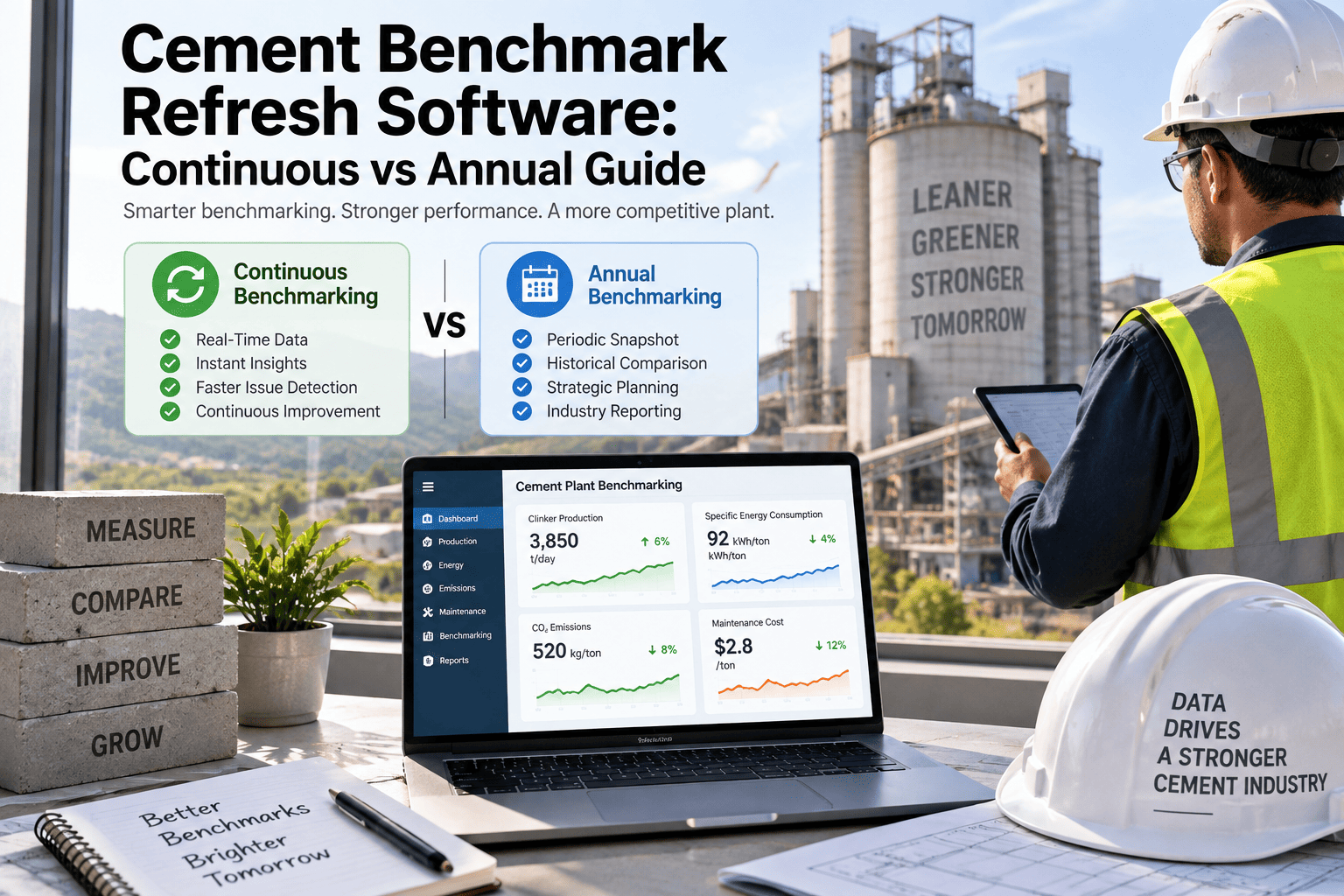
Most cement plants still benchmark performance the way they did a decade ago: an annual audit, a consultant's spreadsheet, and a set of KPI targets that get pinned to the wall in January and forgotten by March. By the time next year's audit rolls

Read More
Every batch of cement carries a 28-day question mark. The clinker is burned, ground, and shipped, but the one number that actually defines quality — 28-day compressive strength — is not confirmed until a full month after production, by which point

Read More
A 28-day compressive strength test is the number a precast yard or ready-mix buyer actually builds their specification around, and by the time that result comes back, the clinker that determined it left the kiln nearly a month earlier. The chemist

Read More
Every tonne of cement carries a number now, whether a plant chooses to track it or not. Calcining limestone releases roughly 0.50 tonnes of CO₂ per tonne of clinker before a single kilogram of fuel is burned, and that reaction is chemically fixed

Read More
Every rotary kiln depends on hot air coming back from the clinker cooler to burn fuel efficiently, and that recovered heat — the secondary and tertiary air recuperated from glowing clinker — is one of the largest thermal levers in the entire pyrop

Read More
A cement plant's preheater tower is where roughly three quarters of the plant's entire thermal energy budget is spent, yet it is also the equipment most likely to be running below design efficiency without anyone noticing on a shift report. A crac

Read More
A cement plant can hit every tonnage target on the shift report and still lose the customer relationship that pays for it. The reason is almost never a breakdown — it is drift. A finish mill running slightly rich on clinker, a Blaine fineness that

Read More
Cement plants running a High Pressure Grinding Roll know the machine only delivers its promised energy savings when the rolls, hydraulics, and gap control stay within design tolerance. The moment a stud liner wears unevenly or a hydraulic accumula

Read More
Looking for the best cement energy manager dashboard software in 2026? OxMaint delivers a purpose-built CMMS platform trusted by cement plants and heavy-industry operators worldwide. Our software helps energy managers track kWh, kcal, kVAR, and CO

Read More
Cement raw mix proportioning demands extreme precision where even minor deviations in Lime Saturation Factor trigger cascading failures across the pyroprocessing system. Traditional spreadsheet calculations and delayed laboratory feedback loops le

Read More
Looking for the cement refractory installation QA software in 2026? OxMaint delivers a purpose-built CMMS platform for cement plants and heavy-industry operators. The platform helps teams schedule preventive maintenance, digitize LOTO, log kiln in
Read More
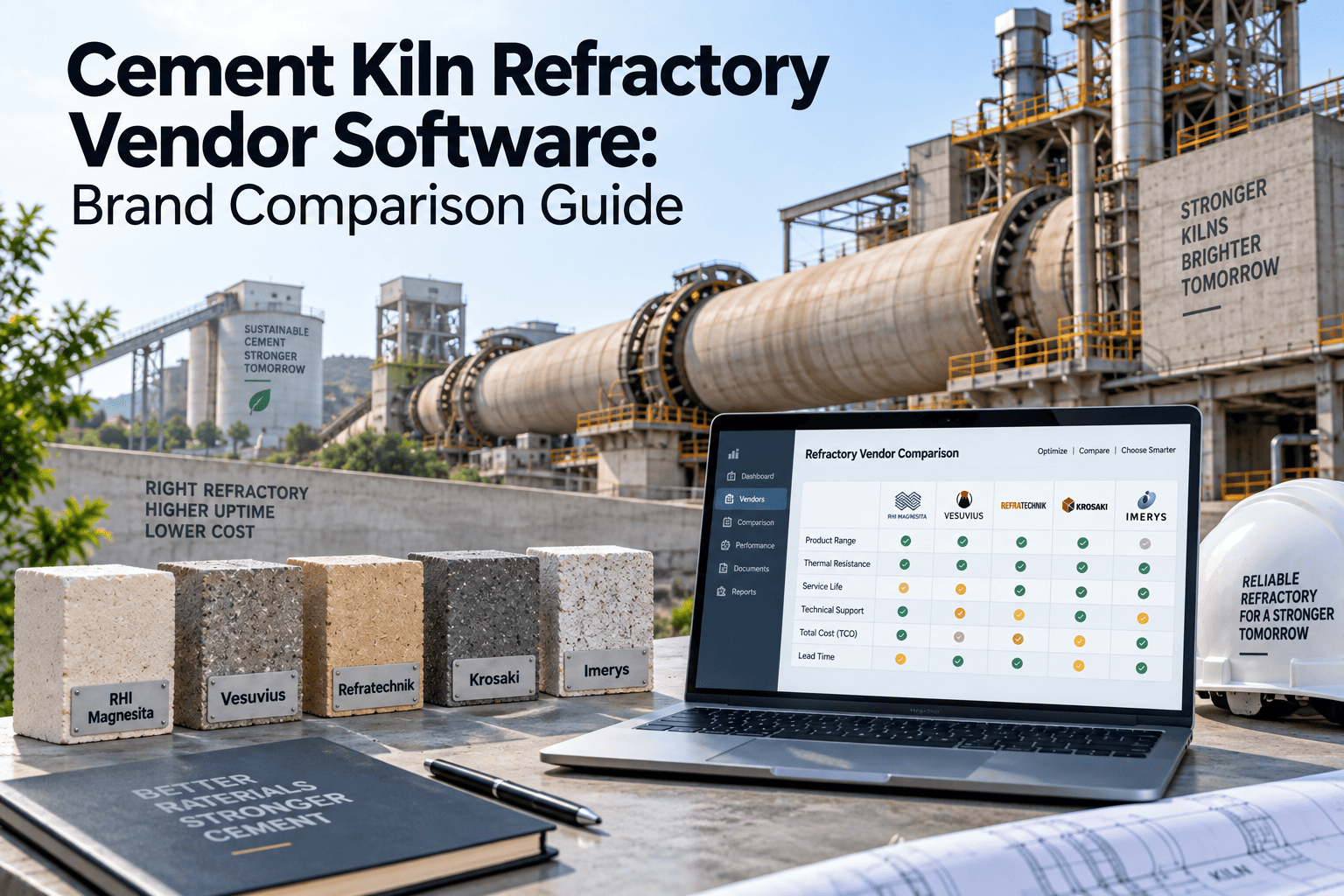
Cement kiln refractory vendor software helps cement plants compare suppliers, track refractory performance, manage inspections, and document vendor quality. OxMaint centralizes vendor records, inspection data, work orders, and performance metrics

Read More
Cement product fineness is the single most influential parameter controlling early compressive strength, setting time, and water demand in finished cement — yet most plants rely on manual lab samples taken every one to two hours with offline Blain

Read More
Cement mill ventilation is the most undermanaged variable in grinding circuit performance, directly controlling material drying, internal dew point, and finished product transport velocity. When vent airflow drops below critical thresholds, fine p
Read More
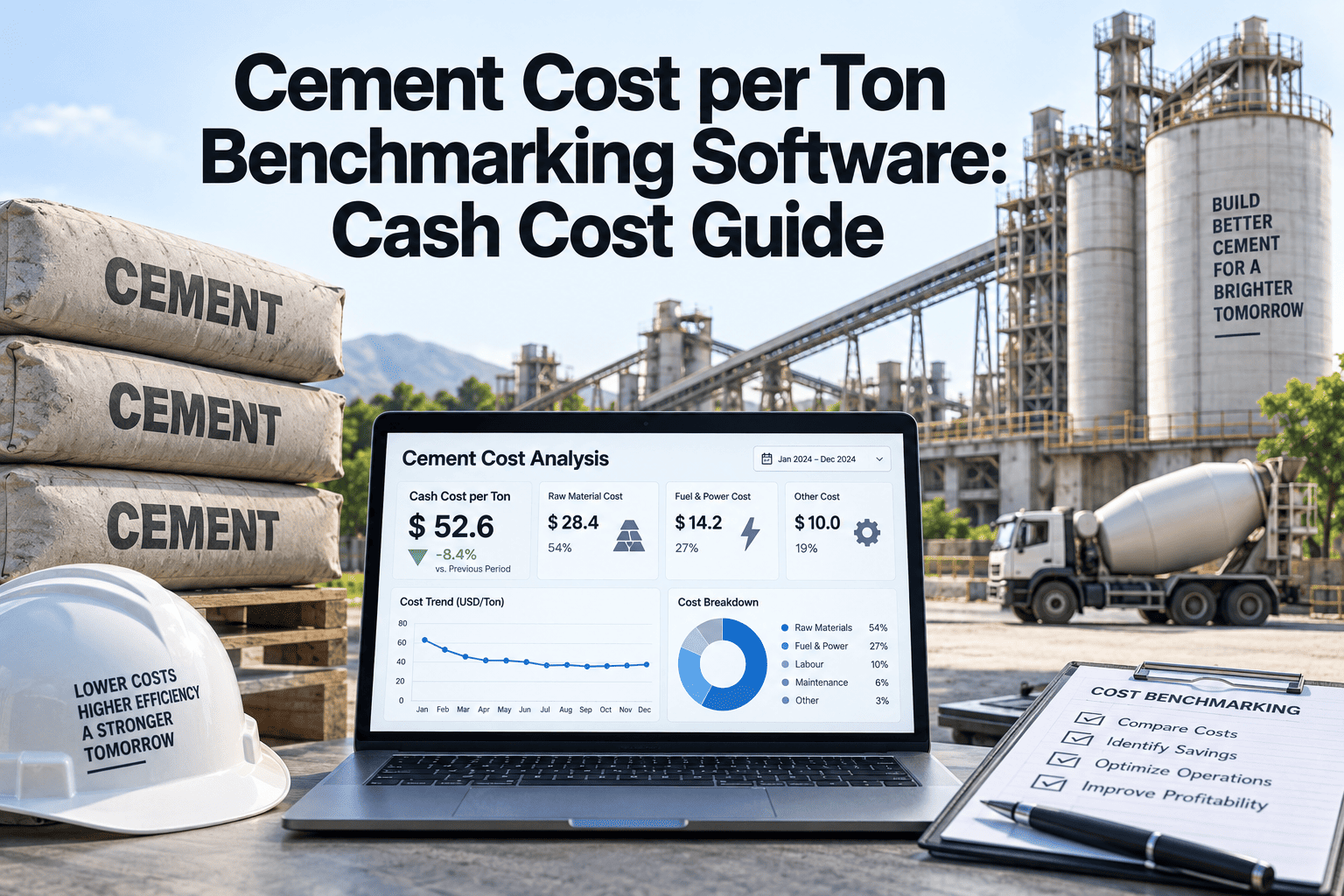
Cement plant P&Ls rarely collapse in a single bad month — they erode for two or three quarters first, one uncounted overtime shift and one unplanned gearbox repair at a time, while the monthly cost report still shows a number that looks defens
Read More
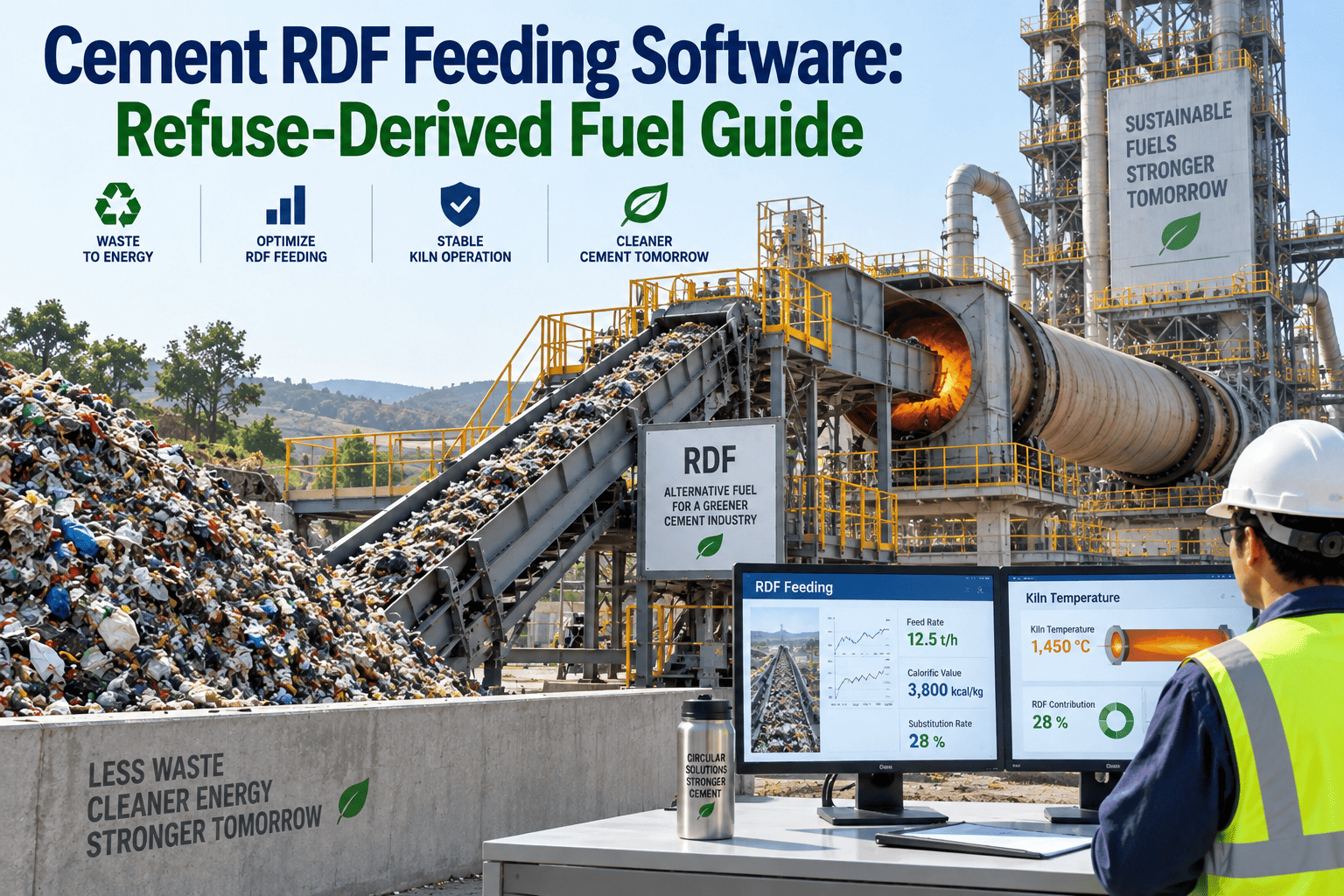
No two truckloads of refuse-derived fuel are the same. One arrives at 10% moisture and burns hot; the next comes in after a rainy week at 25% and cools the flame enough to leave free lime in the clinker. RDF is not a commodity — it is a moving tar

Read More
There is a number that quietly separates the best-run cement plants from the rest, and it rarely appears in the annual report: rounds completion. When operators walk their routes, log real readings, and close every checkpoint on time, developing f

Read More
A cement plant running three grinding circuits — raw mill, coal mill, and cement mill — across four rotating shift crews found that a slow trunnion bearing seal leak had been logged eleven times on paper before anyone raised a work order, because

Read More
At most cement plants, the tallest smokestack is not the biggest dust problem. The haul roads are. Every loaded truck rolling across an unpaved quarry road grinds fines into the air, and on a dry, windy afternoon that fugitive dust drifts over the

Read More
Cement cooler fans run some of the hardest-working drives in the plant, and the VFDs behind them rarely fail without warning. Long before a drive trips on overcurrent or shuts down on a ground fault, it leaves a trail of smaller deviations — a ris

Read More
Somewhere between the burning zone at 1,450°C and the clinker leaving the cooler at 120°C, a cement plant loses the ability to see what its own kiln just produced. Free lime, the single most important quality signal in clinker, only shows up in a

Read More
A cement plant's electrical backbone runs through 11kV switchgear, motor control centers, and substation transformers that keep kilns, raw mills, and coal grinding circuits running around the clock. When a technician opens an MCC bucket or steps i

Read More
A typical cement plant runs 20 or more disconnected systems: DCS on the kiln, SCADA on the mills, an ERP for spares and finance, a lab system for quality, and a stack of spreadsheets and paper logs filling the gaps nobody built software for. Each
Read More
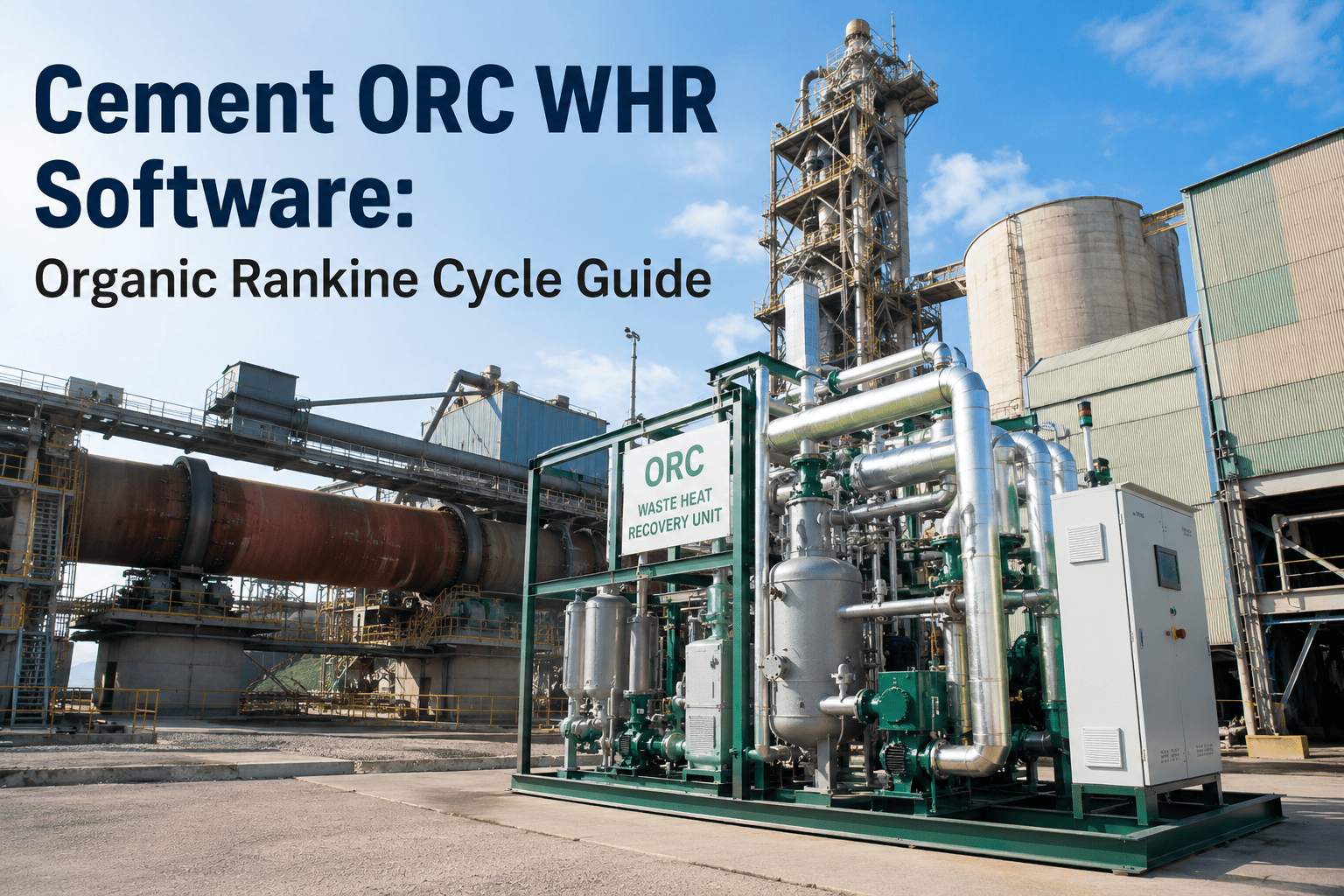
Roughly 35 to 40% of the total heat a cement kiln burns leaves the process without ever making clinker, mostly through preheater exhaust and clinker cooler vent air sitting in the 150 to 350°C band that organic Rankine cycle systems were built to

Read More
Every kiln has an oxygen setpoint sitting between two expensive mistakes, and most operators split the difference with more excess air than the process actually needs. Run kiln inlet O2 too low and CO climbs past 0.1 percent, signaling incomplete

Read More
Every cement kiln is talking to the control room in real time, and most plants only listen to half the sentence. Kiln inlet O2 sitting at 1.5 to 2%, CO climbing past 0.1%, and exit gas temperature drifting 10°C above baseline are not three separat

Read More
A kiln shutdown gives a plant one guaranteed chance a year to see inside the refractory lining, and most of that window gets spent on measurements that are already out of date by the time the brick order goes out. Manual thickness checks at a hand

Read More
A cement classifier rotor spinning at 53 RPM and the same rotor spinning at 65 RPM produce two different plants. One ships cement at 3,300 Blaine and burns 22 kWh/t doing it. The other hits 3,900 Blaine, satisfies the lab, and quietly adds 2.6 kWh

Read More
Cement grinding is the single largest electricity cost inside a plant, and the vertical roller mill was built to attack that cost directly. A ball mill finishing circuit typically runs 30 to 36 kWh per tonne, while a VRM handling the same clinker

Read More
Most cement plants have an integration architecture diagram somewhere — in an old IT proposal, a consultant's slide deck, or a whiteboard photo nobody has opened in two years. Almost none of them have software that actually behaves like the diagra

Read More
Every cement plant running for more than a decade ends up with the same problem: a DCS from one vendor, a LIMS from another, a CEMS analyzer reporting to a third system, and a maintenance team working from spreadsheets that talk to none of them. E

Read More
Most cement plants run their electrical energy audit once a year — a consultant arrives with power analyzers, spends a week logging voltage, current, and power factor on the raw mill and kiln drive, and hands over a report three weeks later. In be
Read More
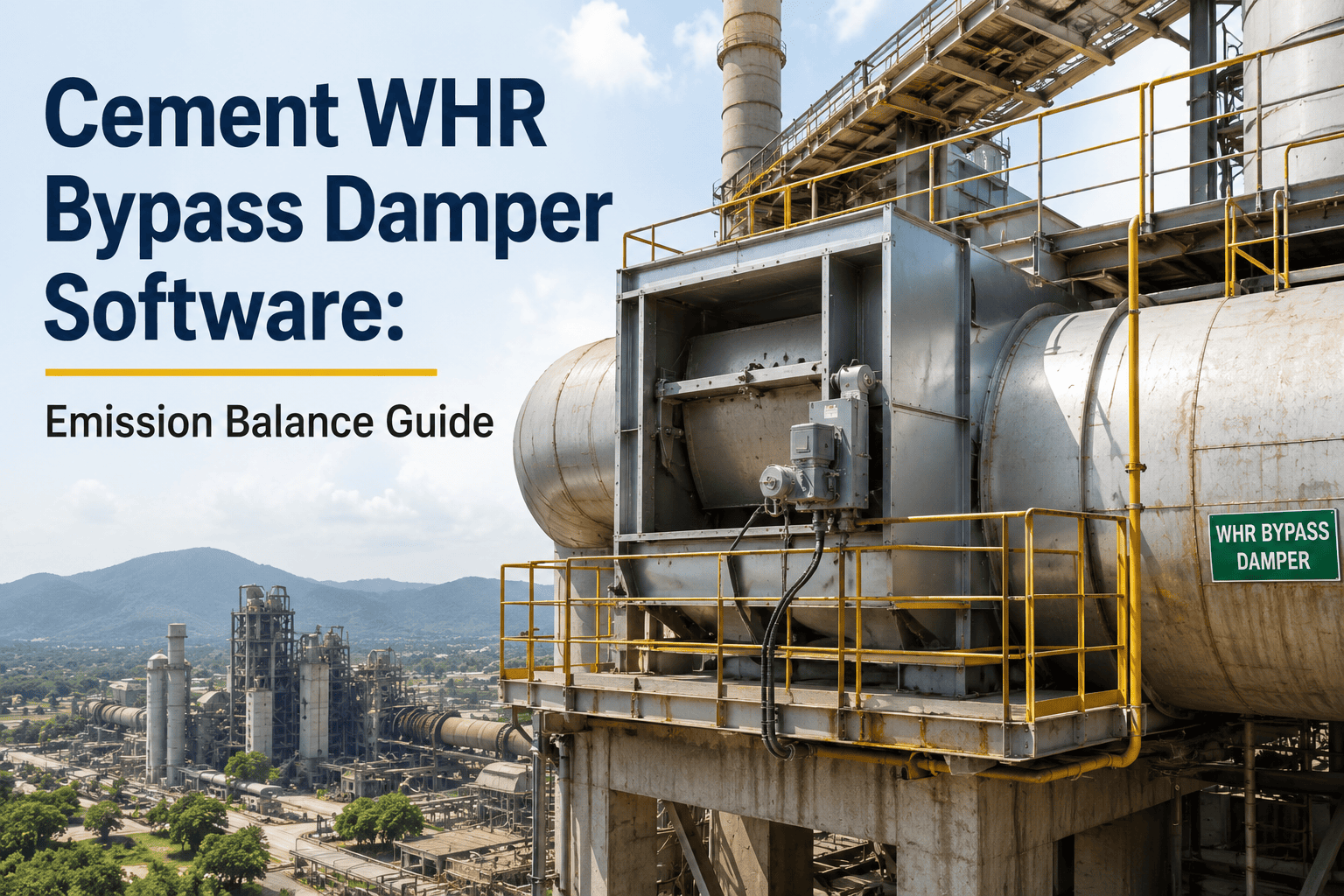
Every WHR-equipped cement kiln is running two systems that fight for the same hot gas at the same time. The waste heat recovery boiler wants as much preheater and cooler exhaust as it can get, because more gas volume and higher gas temperature mean m
Read More
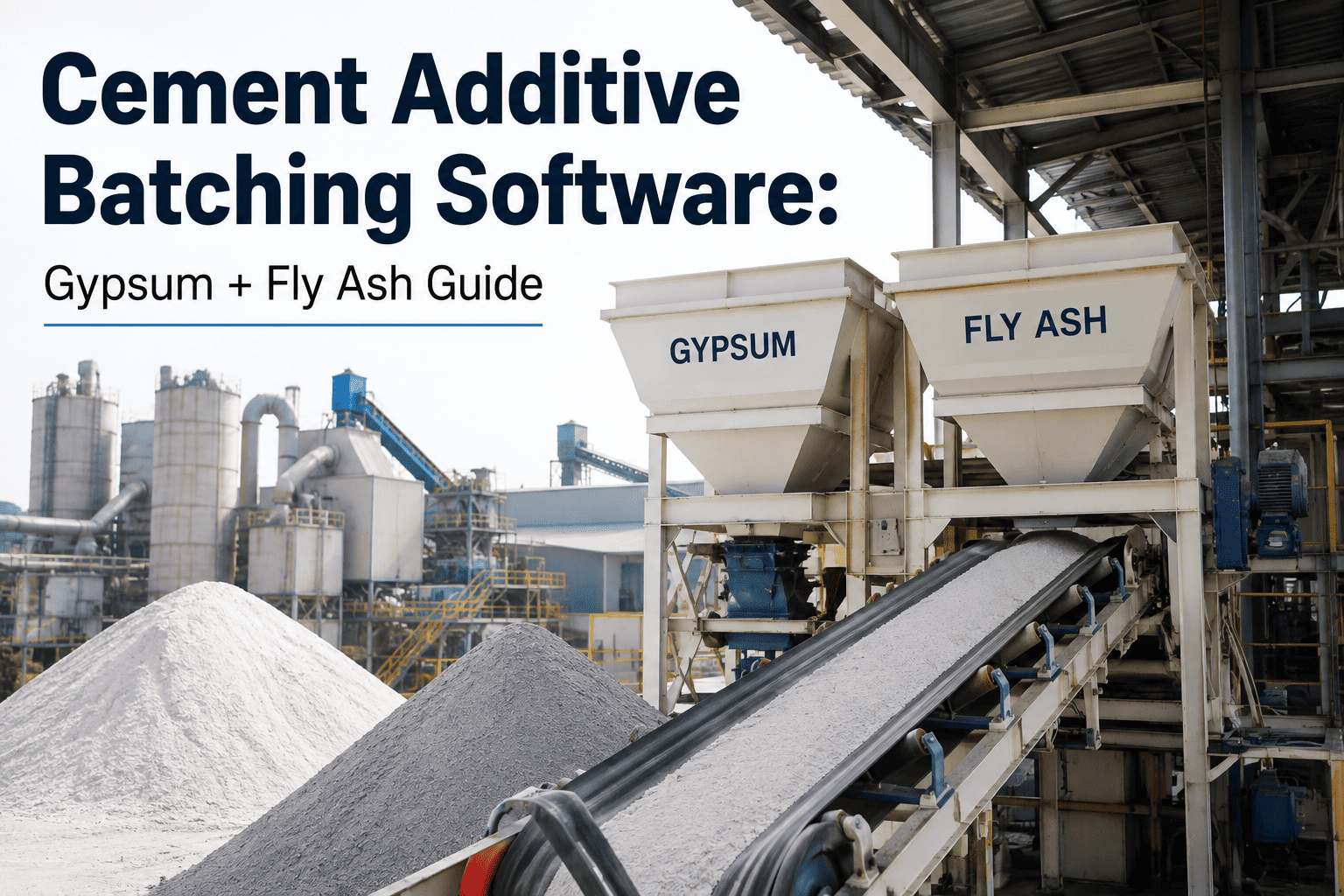
Cement additive batching decides whether every bag of PPC or PSC leaving your plant meets its promised grade, or gets rejected on a construction site three states away. Gypsum controls how fast the cement sets, while fly ash and slag replace a por

Read More
Cement kiln shell radiation loss quietly accounts for 8 to 15 percent of the total thermal energy fed into a rotary kiln system, and on kilns with thinning refractory or a collapsed coating that share climbs well past the baseline. Most plants tra

Read More
Cement plants that ship on spec batch after batch don't get there by accident — they get there by tracking three quality signals that most operations still treat as separate lab results instead of one connected system. Blaine fineness variance, 28

Read More
Ask three different departments in a cement plant to describe the same finish mill motor and you will likely get three different asset numbers, two different location codes, and a vendor name spelled two different ways — and every integration proj

Read More
Cement grinding circuits consume nearly forty percent of a plant's total electrical bill, yet most reliability teams still judge the raw mill and finish mill by tonnes-per-hour instead of the one number that actually explains where that power and
Read More
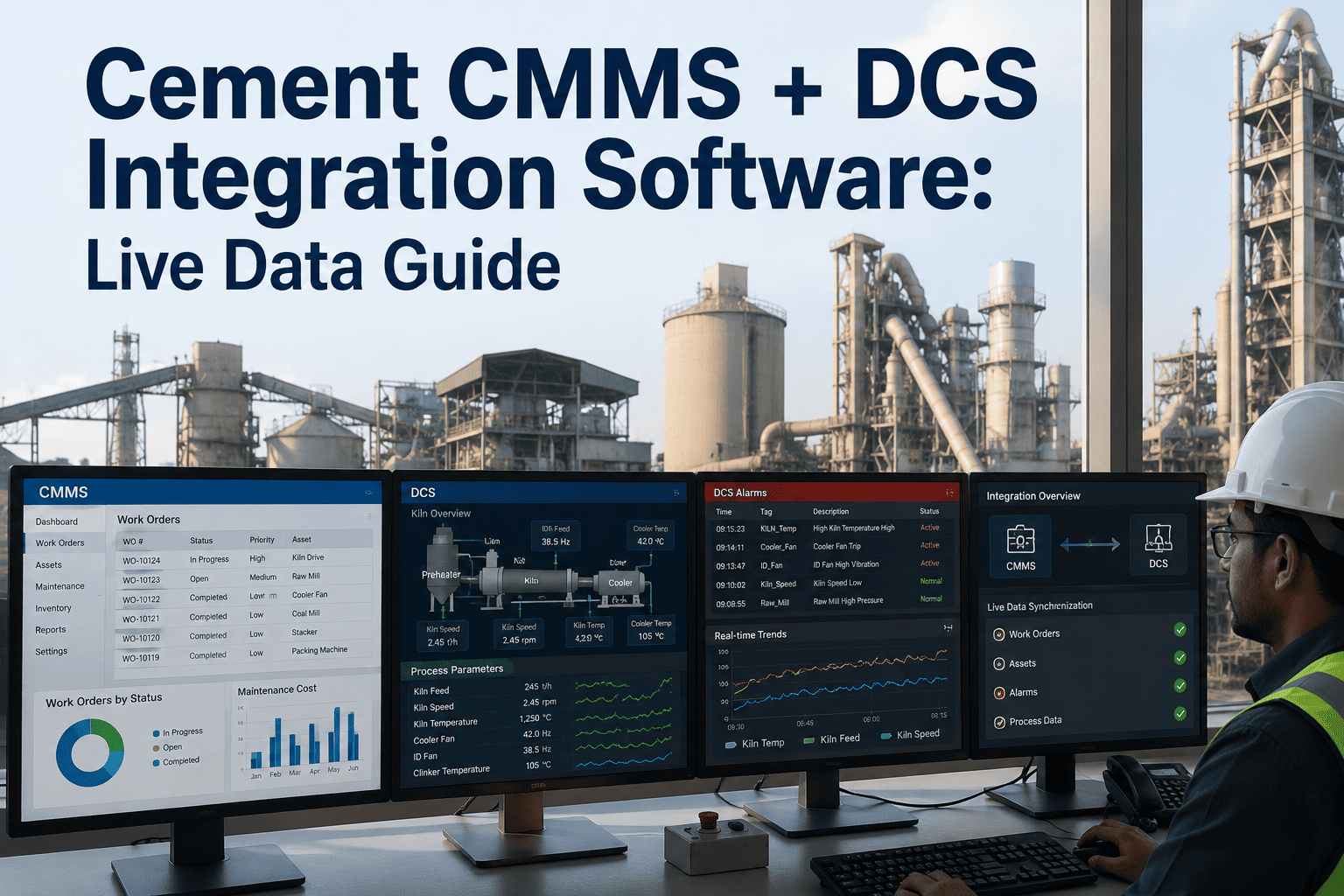
Every cement plant already runs a DCS — ABB 800xA, Siemens PCS7 or SPPA-T3000, Yokogawa Centum VP, Honeywell Experion — and that DCS already knows when a kiln main bearing is trending hot, when preheater draft is drifting, or when the cooler grate

Read More
Most cement plants can tell you exactly what last month's electricity bill was. Almost none can tell you, without a special study, how many of those kilowatt-hours went to the raw mill, how many went to the kiln drive and ID fan, and how many leak
Read More
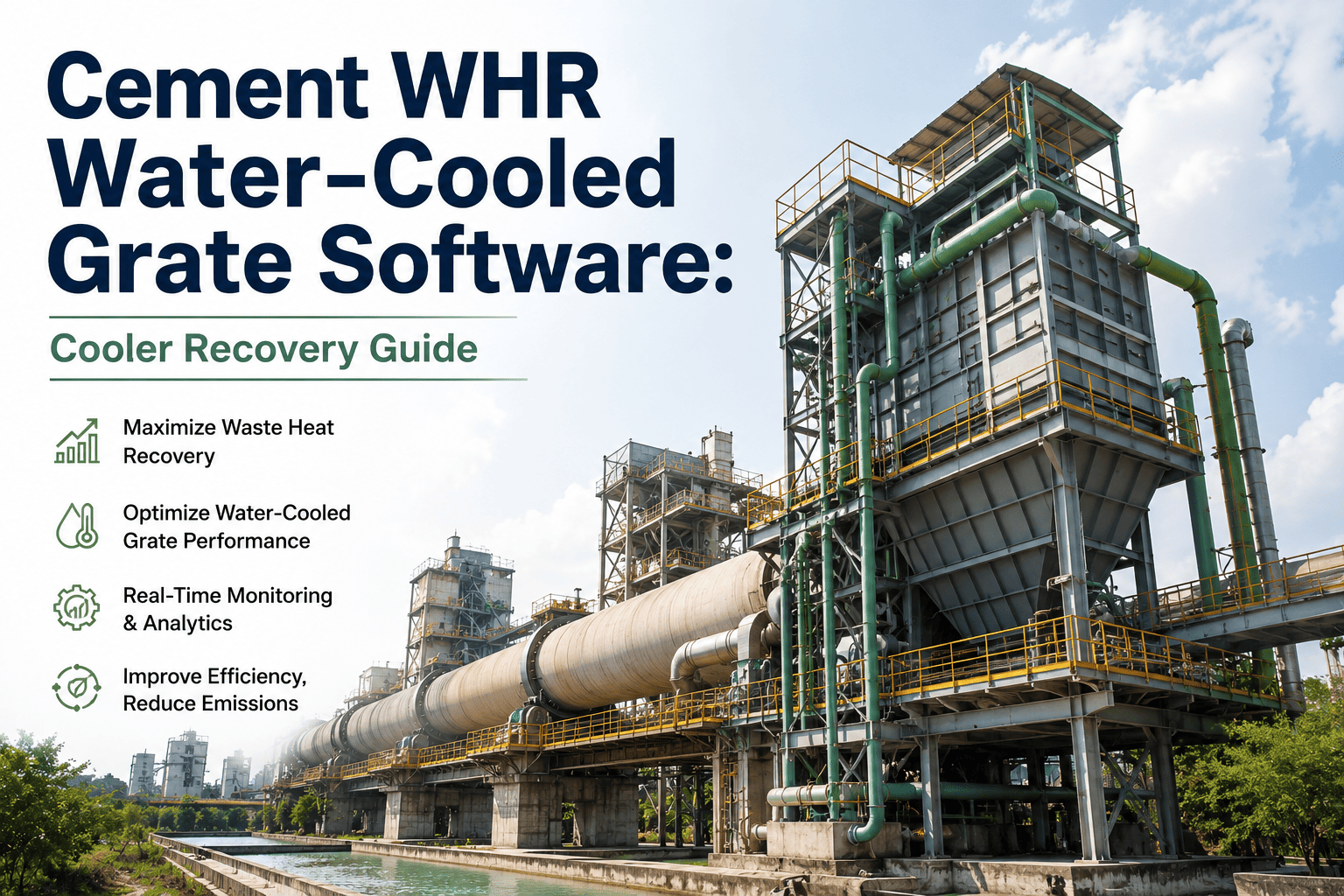
Cooling clinker isn't only about protecting downstream conveyors from heat damage — on the AQC boiler side, it's where a meaningful share of a cement plant's waste heat recovery output either gets captured or quietly lost. Every degree of drift in
Read More
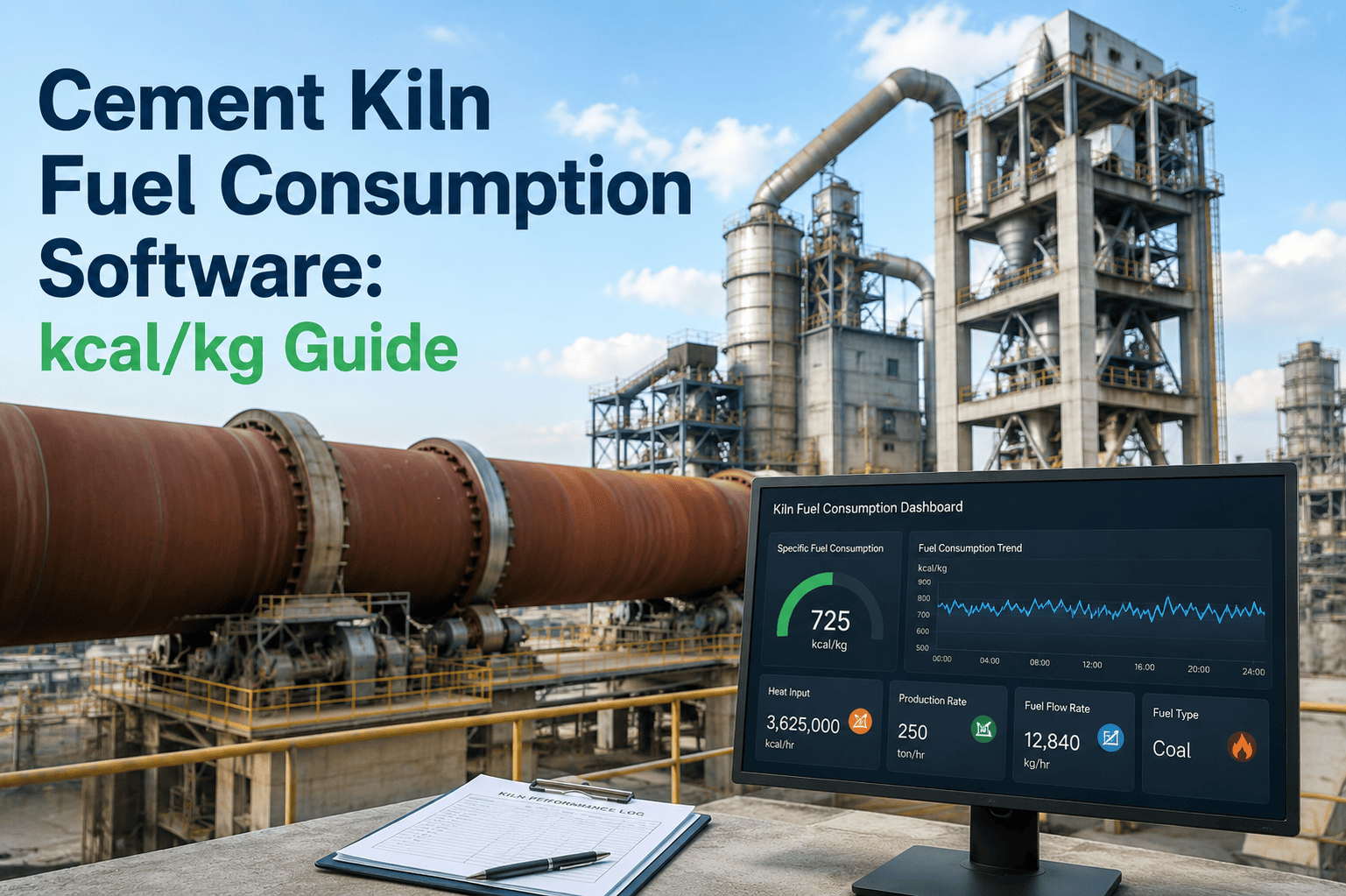
Every cement kiln has two numbers that matter more than almost anything else on the plant report: tonnes produced, and kilocalories burned to make each kilogram of clinker. A modern preheater-precalciner kiln running clean should sit around 690 to
Read More
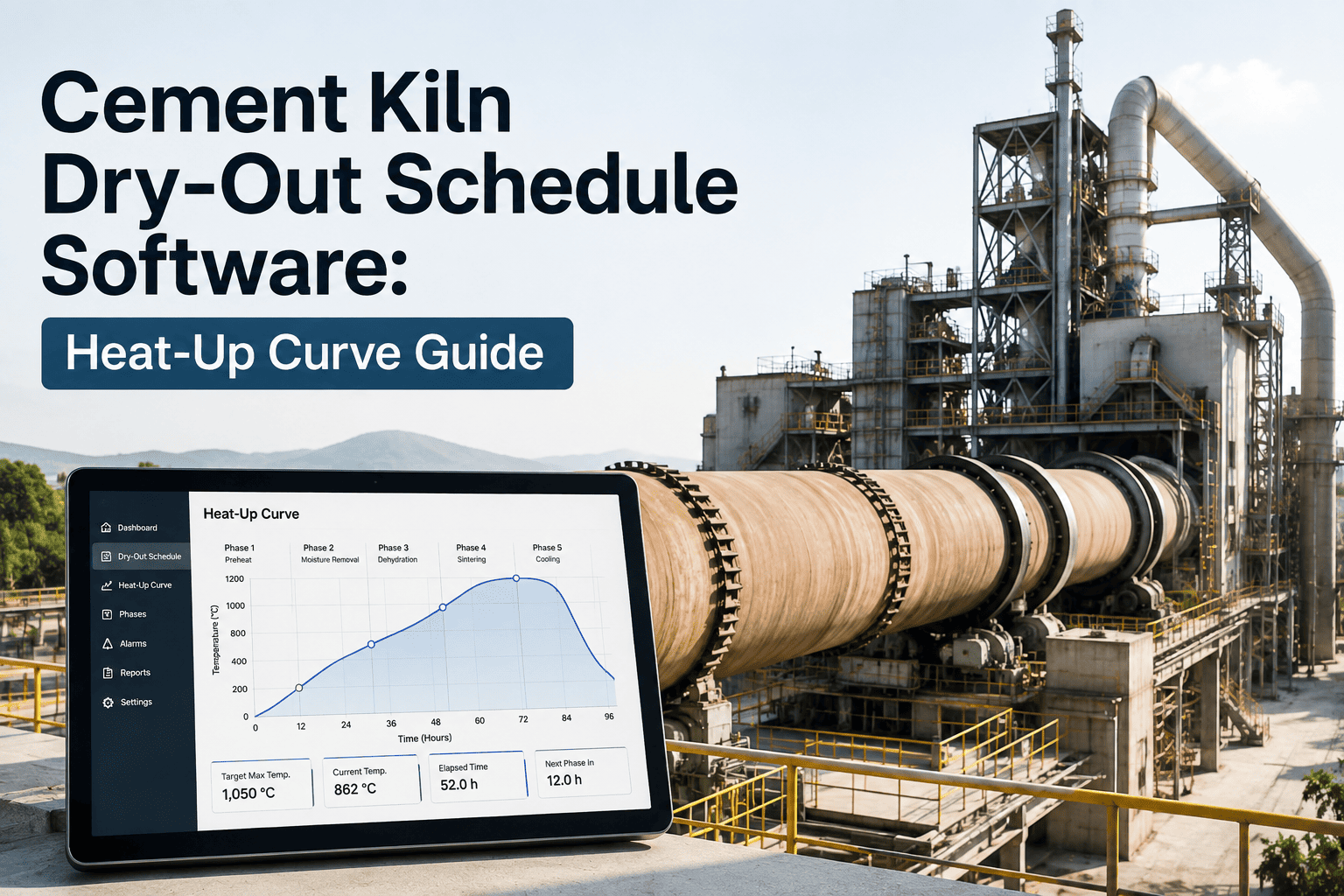
A cement kiln does not fail its first campaign because the refractory was poorly chosen — it fails because the dry-out was rushed. Every brick and castable lining carries physically bonded water from mixing and chemically bound water from the ceme

Read More
Most cement groups already own an iPaaS platform — MuleSoft, Boomi, or Workato usually landed in the IT stack to connect SAP with a CRM or an HR system — but plant-floor tools like the CMMS rarely get plugged into it. Instead, maintenance data s

Read More
Group finance, reliability, and sustainability teams at multi-plant cement companies spend the first two weeks of every month doing one thing: chasing a dozen different spreadsheets from a dozen different plants, each built by a different engineer

Read More
Ask a cement plant electrical engineer what load factor their kiln drive transformer ran at last quarter, and most will reach for a logbook instead of a dashboard. Cement plants carry some of the most cyclical electrical loads in heavy industry —

Read More
Ask an electrical engineer at a cement plant when they last measured total harmonic distortion at the point of common coupling, and the answer is often "whenever the utility complained." That gap is expensive. A single uncorrected six-pulse VFD ca

Read More
Waste heat recovery boilers are one of the best energy paybacks a cement plant can make, but the PH and AQC boiler tubes inside them absorb constant abuse from kiln exhaust and clinker cooler air. Dust-laden gas carries abrasive raw meal and clink

Read More
Walk onto the feed floor of any dry-process kiln line and ask the shift supervisor how tight their kiln feed rate control really is, and most will quietly admit the number drifts wider than the plus-or-minus 2 percent band the process actually dem

Read More
A cement kiln hot spot rarely announces itself politely — one shell scan reads 180°C, the next reads 310°C, and now the reliability engineer on shift has minutes, not days, to decide whether this is a scheduled patch or an emergency shutdown. Hot

Read More
A cement plant motor rarely fails without warning — it fails without anyone reading the warning. A bearing that's eight weeks from seizure is already pushing motor amperage 3 to 5% above baseline and nudging vibration velocity past its first alarm
Read More
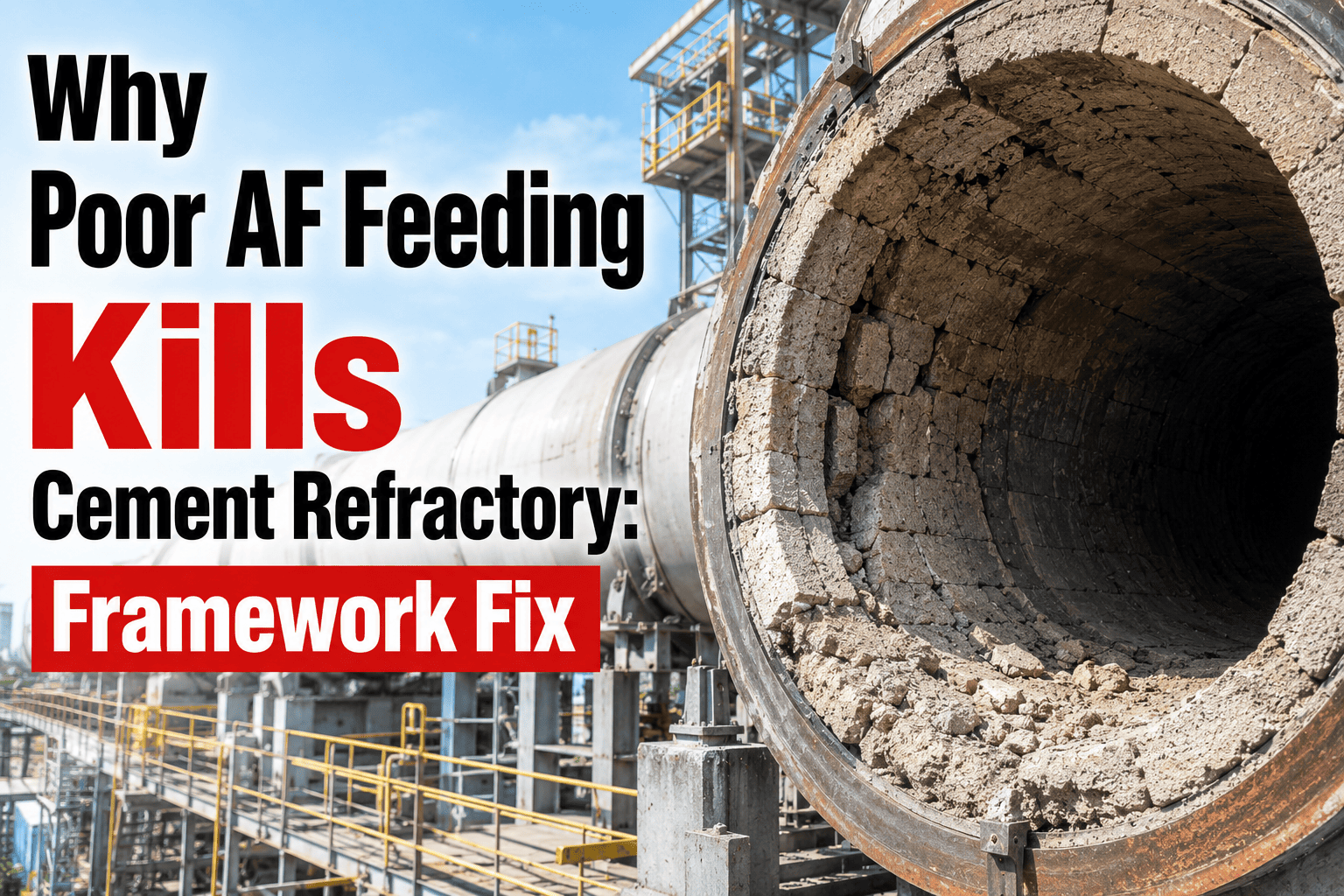
Alternative fuel feeding is rarely blamed for a refractory failure — the post-mortem usually points to "thermal cycling" or "chemical attack" and stops there. But trace most premature brick failures back far enough and the root cause is sitting at

Read More
A 6,000-tonne-per-day cement kiln can go from full production to a cold, empty shell in under three hours once a burning-zone brick lining fails, and every hour of that unplanned stop can cost a plant tens of thousands of dollars in lost clinker o

Read More
A cement plant in Gujarat spent four months fighting a generic dust-detection AI that fired an alert every time the clinker cooler vented steam on a cold morning. The camera wasn't wrong about what it saw — a visible plume was genuinely there — it

Read More
A cement kiln's continuous emissions monitoring system logs a fresh NOx, SO2, CO, and opacity reading every few minutes, feeding regulators exactly the numbers they need to issue a violation. What it rarely does on its own is tell your maintenance

Read More
A 900,000-tonne cement plant failed a Method 9 opacity reading three times in eighteen months — not because the kiln was actually out of compliance, but because a trained human observer, squinting at a stack plume against shifting daylight, misjud

Read More
A cement raw mill is never truly "off" the moment the drive motor stops. A vertical roller mill can hold thousands of pounds of hydraulic pressure in its accumulators long after the pump shuts down, ready to drop a grinding roller onto anyone work

Read More
Every cement plant runs on a walking route that most people never think about — the daily substation round that carries an operator past the main receiving substation, the transformer yard, every MCC room, and the 11kV distribution boards that fee
Read More
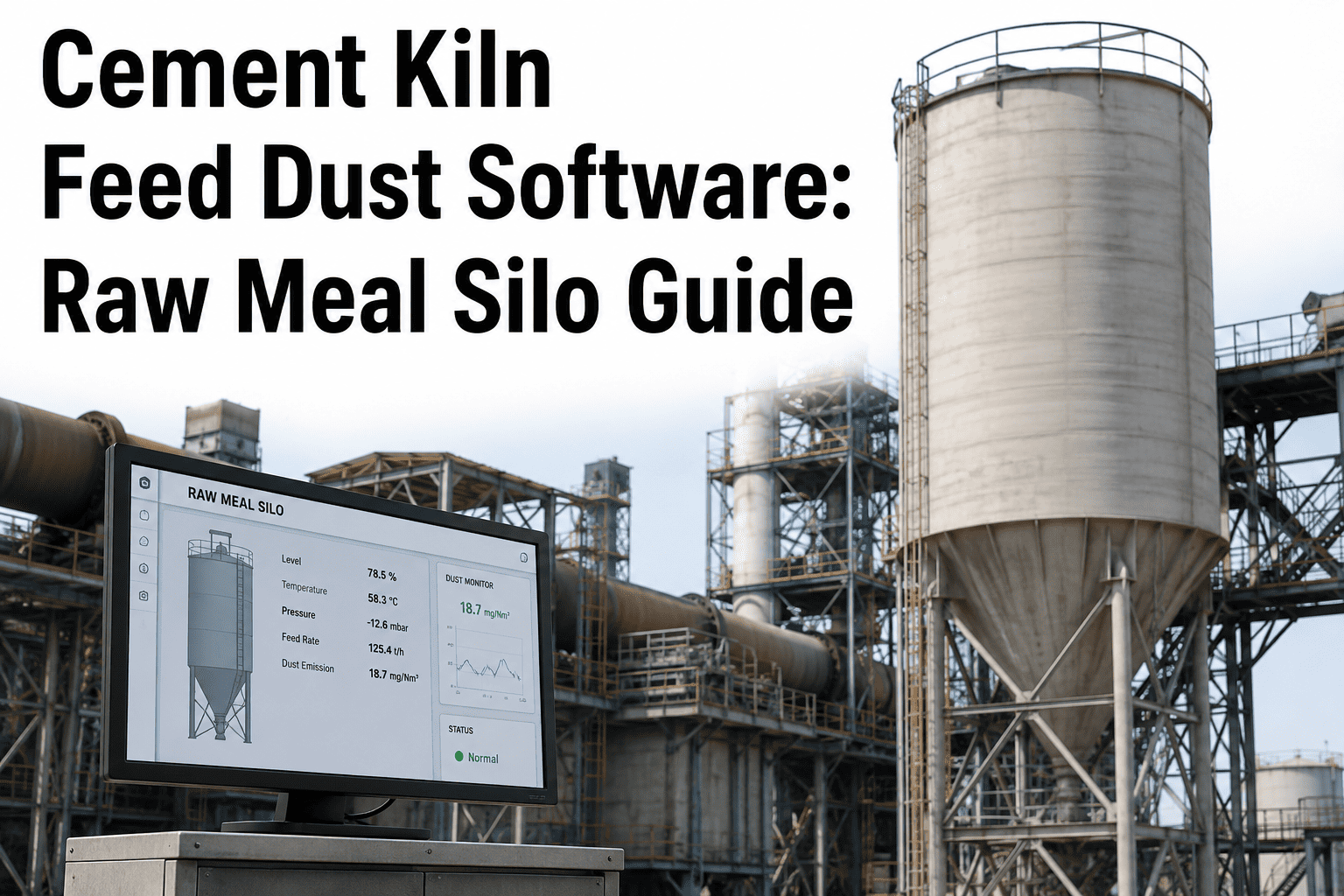
Kiln feed dust rarely announces itself with one dramatic leak. It escapes a few grams at a time — through a bin vent filter bag that lost its seal, an airslide fluidizing panel gone porous, a screw conveyor gland packed loose enough to puff dust o

Read More
A cooler fan bearing rated for 36 months of service can be dead in under six — and the entire cause can be a shaft offset smaller than the thickness of a fingernail. A misalignment of just 0.15 mm across a cooler fan shaft generates radial loads t
Read More
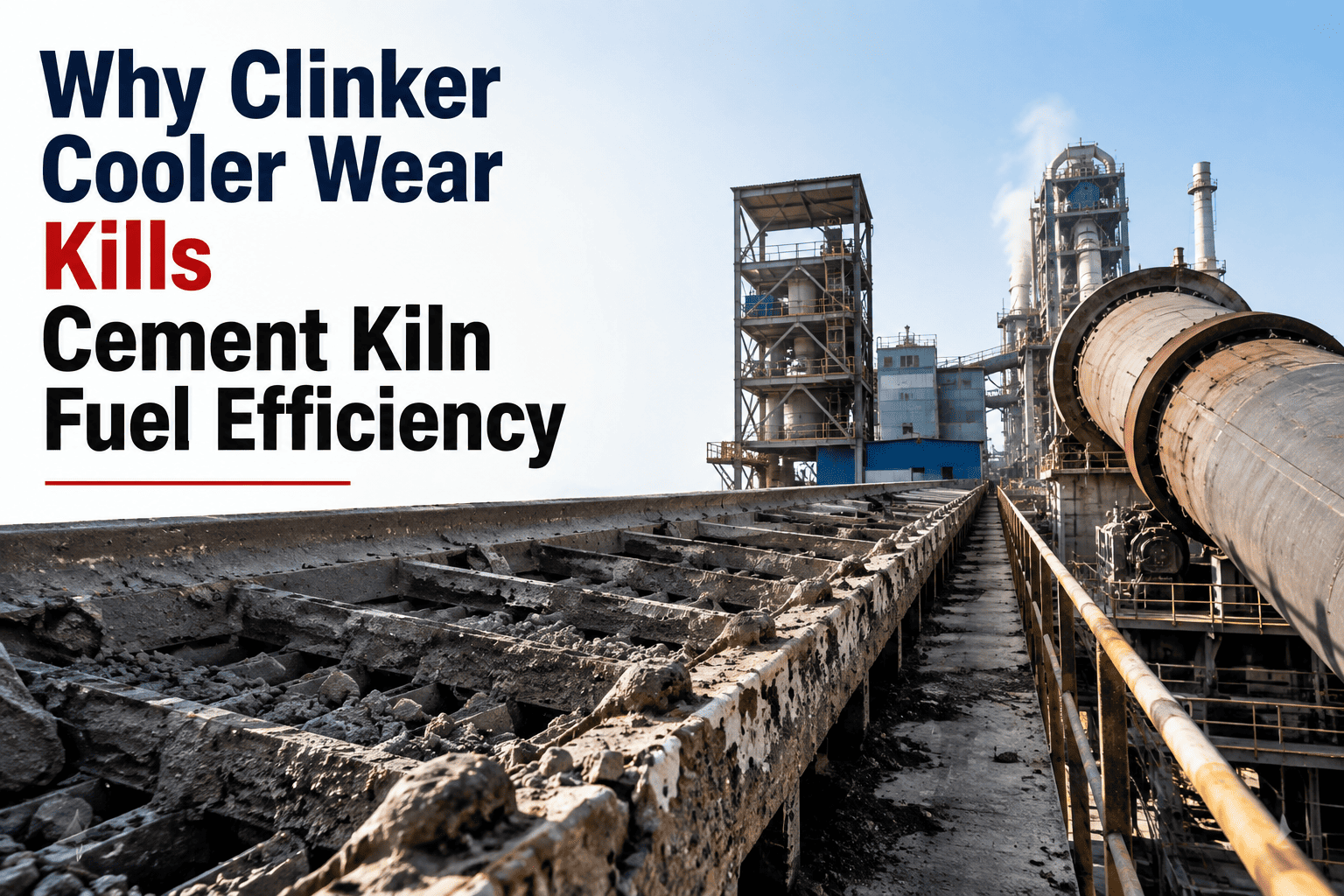
A worn grate plate in your clinker cooler never trips an alarm. It just lets air find the path of least resistance through the clinker bed instead of pushing through it evenly, and secondary air temperature drifts down ten, twenty, sometimes eight
Read More
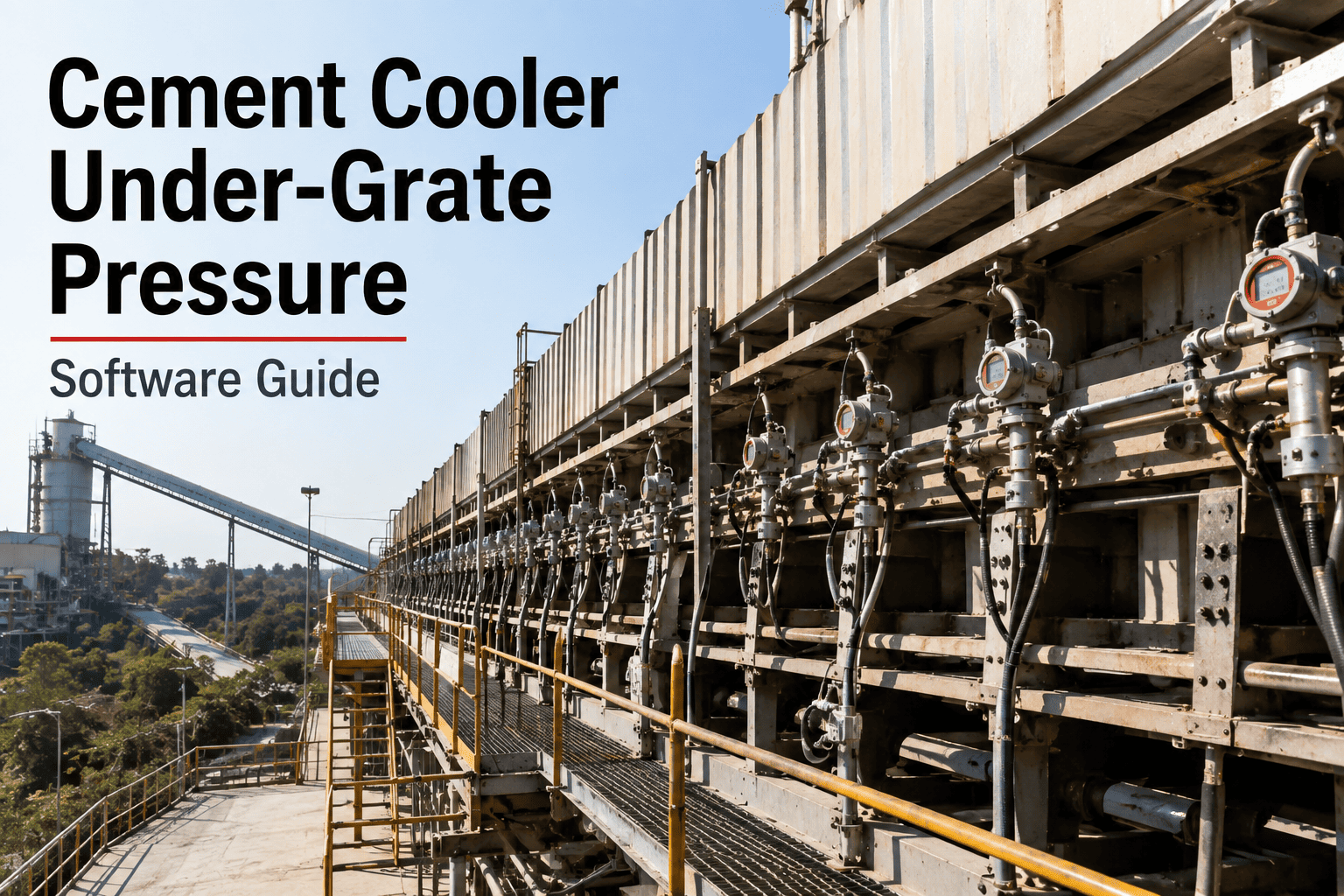
A clinker cooler tells engineers what is wrong with a grate plate roughly six weeks before anyone sees a red river in the clinker bed — but only if someone is watching the under-grate pressure, chamber by chamber. Most plants still log this number
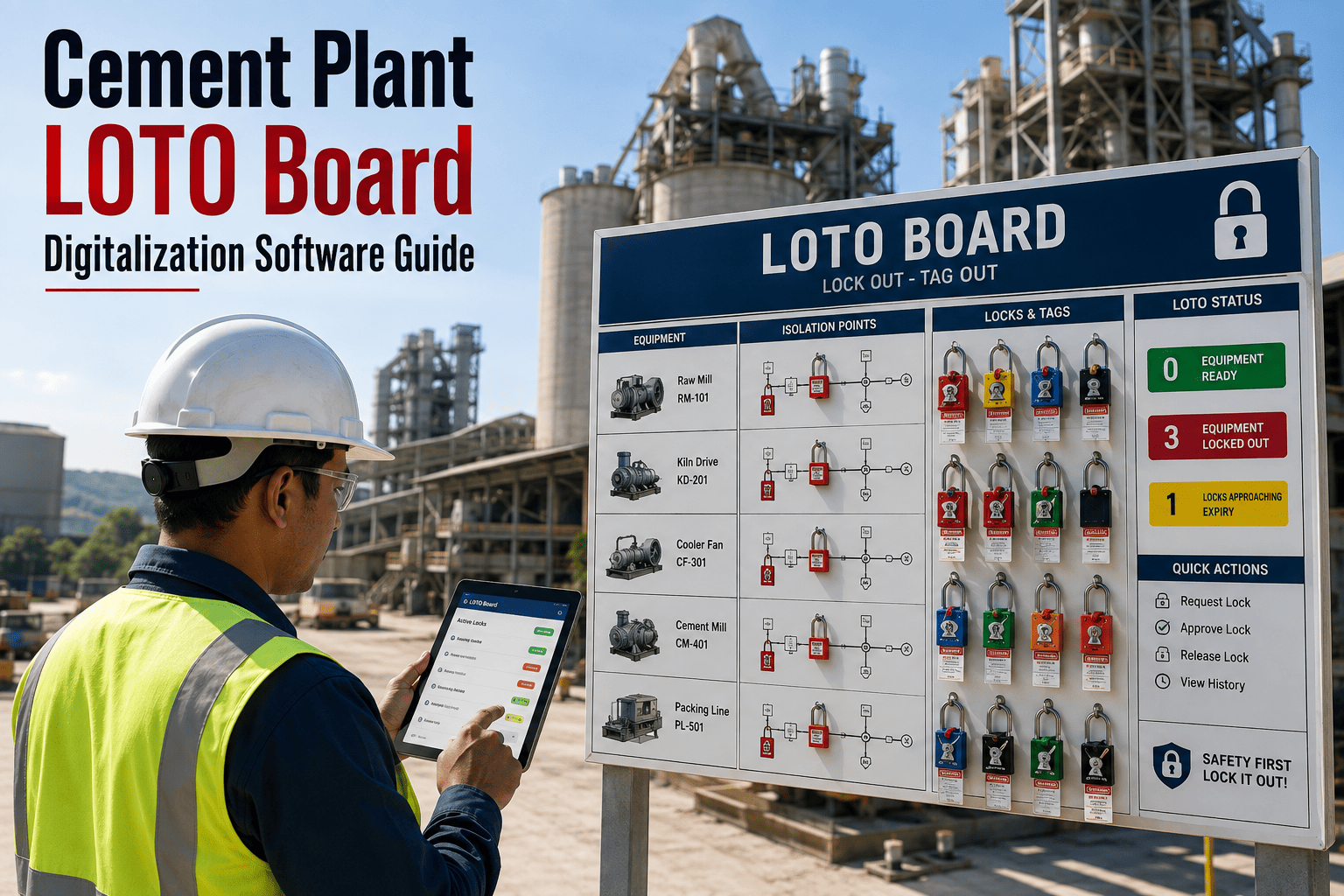
Read More
A cement kiln shutdown can pull in twenty or more technicians from mechanical, electrical, and contractor crews, each locking out a different isolation point on the same equipment train. Most plants still track all of it on a wall-mounted board wi

Read More
Hydraulic energy is the one lockout/tagout gap that keeps showing up in cement plant incident reports, and it rarely announces itself the way electrical energy does. A clinker cooler grate segment held by a hydraulic ram, a raw mill roller pressed

Read More
Poor separator performance is one of the few failure modes in a cement plant that can ruin product quality while every gauge on the control room screen still reads normal. A dynamic separator does not fail loudly — it drifts. Bypass creeps up a fe

Read More
Thermal substitution rate — the percentage of kiln energy coming from alternative fuels instead of coal or petcoke — is the one sustainability number every cement plant CFO and ESG lead has to defend every single quarter, to the board, to investor
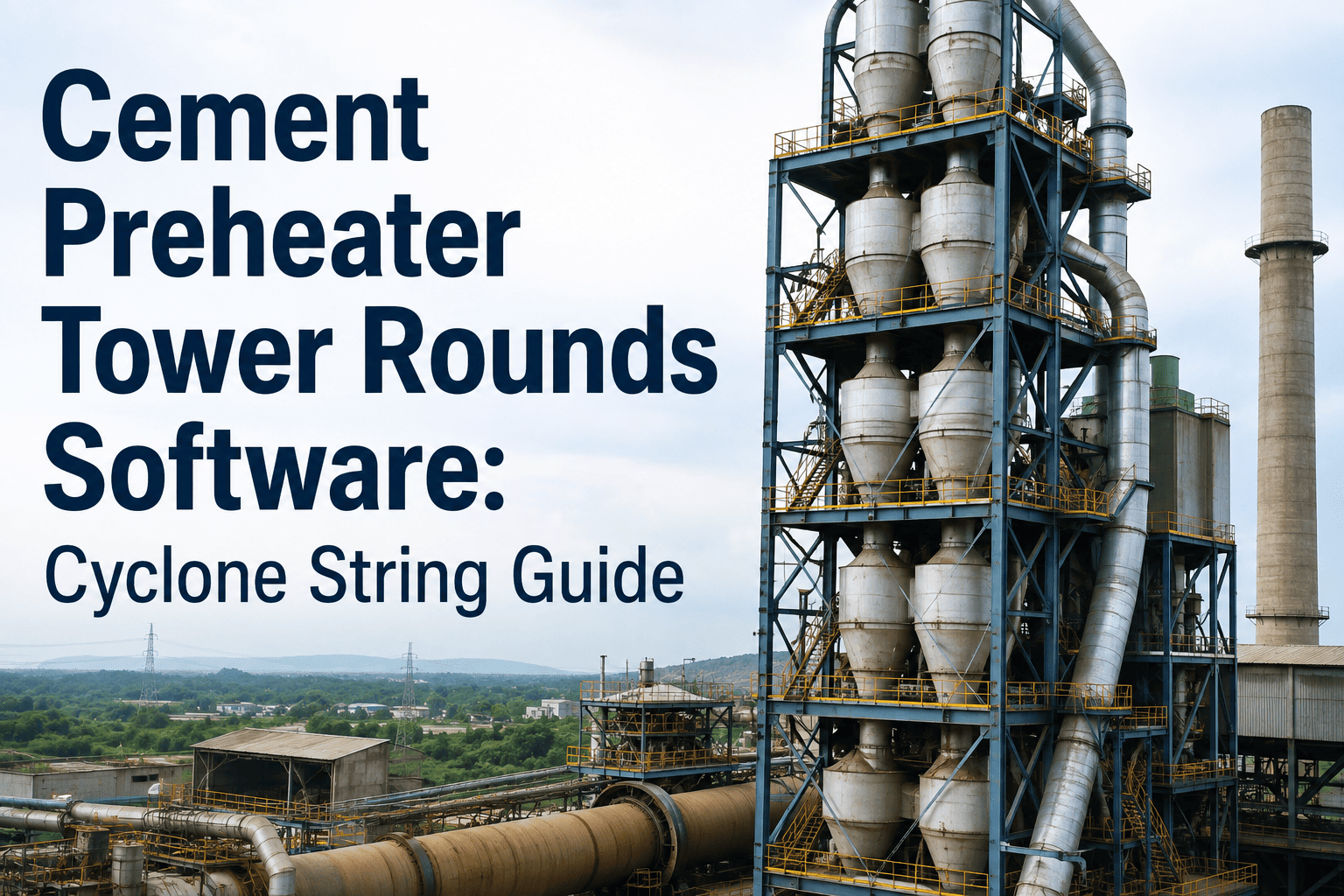
Read More
Preheater tower rounds are the least standardized inspection routine on most cement kiln lines, and it shows in the outage reports. A single blockage event inside the cyclone string can shut down clinker production for eight to thirty-six hours an

Read More
Cement packing house dust is the most visible failure a plant can have — the one visitors, auditors, and regulators see the moment they walk onto the bag line. It escapes from rotary packer spout seals, palletizer wrap stations, and bag rejector c

Read More
Clinker cooler modernization is one of the highest-return capital projects on a cement kiln line, yet most plants delay it until a forced outage makes the decision for them. A cooler still running its original mechanical drive, worn grate plates,

Read More
Every rotary kiln burns fuel against a number most plants only check once a shift: secondary air temperature. This is the heat the clinker cooler hands back to the kiln as combustion air, and it is the single largest recovered-energy stream in the

Read More
Lockout/tagout failures are the single most common reason cement plants end up on an OSHA citation report, and the paperwork gap is almost always the same one: a generic energy control policy with no machine-specific procedure for the kiln dr

Read More
A cement plant fan that has been switched off is not the same as a cement plant fan that is safe to open. Induced draft fans keep spinning on residual furnace draft, cooler fans can windmill from airflow pushed by neighboring units still running i

Read More
Cement plant inspection teams have leaned on paper checklists and clipboard rounds for decades, and the cracks show up exactly where you would expect: kiln shell hot spots, conveyor idler wear, and bag-house damper leaks get missed until they turn

Read More
A cement kiln shutdown is not a maintenance event, it is a countdown. Every hour the kiln sits cold costs a plant real clinker tonnage, and every hour under-inspected means the next campaign runs on a shell, a seal, or a burner nobody actually ver

Read More
A cement plant does not lose its dust compliance in one dramatic event — it loses it quietly, through hundreds of small leak points that never show up on a stack monitor. Truck haul roads, clinker storage piles, conveyor transfer points, and raw m

Read More
A cement silo does not fail loudly. Differential pressure across the bin-vent filter drifts up a few millimeters of water column at a time, a pulse valve solenoid starts firing late, dust cakes onto the filter media, and weeks later the plant has

Read More
Cement plants lose more unplanned production hours to fan failures than to almost any other class of rotating equipment on site. ID fans, PA fans, cooler fans, and dust collector fans run continuously under heavy dust loading, high temperatures, a

Read More
Every cement plant tracks kiln performance obsessively, but the cooler sitting right behind it quietly decides how much of that fuel budget actually survives the process. A grate cooler that is losing secondary and tertiary air recovery pushes kca

Read More
Coal mill fineness is one of the most overlooked variables on a cement plant's cost sheet, yet it quietly decides how much unburnt carbon leaves with your clinker, how stable your flame shape stays, and how many degrees your preheater exit gas tem

Read More
A cement kiln's fuel bill is decided long before the flame — it is decided in the preheater tower, stage by stage, inside a string of cyclones most people never think about. When a cyclone loses separation efficiency, hot meal that should be captu

Read More
Cement plant boundaries have quietly become one of the most watched zones in the entire operation, and not because of anything happening at the kiln. Continuous emissions monitors track what leaves the stack, but they say nothing about dust drifti

Read More
Cement plant baghouses run continuously behind every kiln, raw mill, cement mill, and clinker cooler, and differential pressure is the one number that tells you whether that system is protecting your emissions permit or quietly heading toward a st

Read More
When the ID fan bearing on your cement kiln starts trending upward on the maintenance log, every reliability engineer faces the same question: is this normal running noise, or an early warning that needs an outage before the weekend. ISO 10816 exi

Read More
A clinker cooler fan motor pulling 82 amps in January and 91 amps in June looks like a seasonal load shift to most control room dashboards — until the day it trips on overload mid-shift and the cooler backs up into the kiln. The current signature
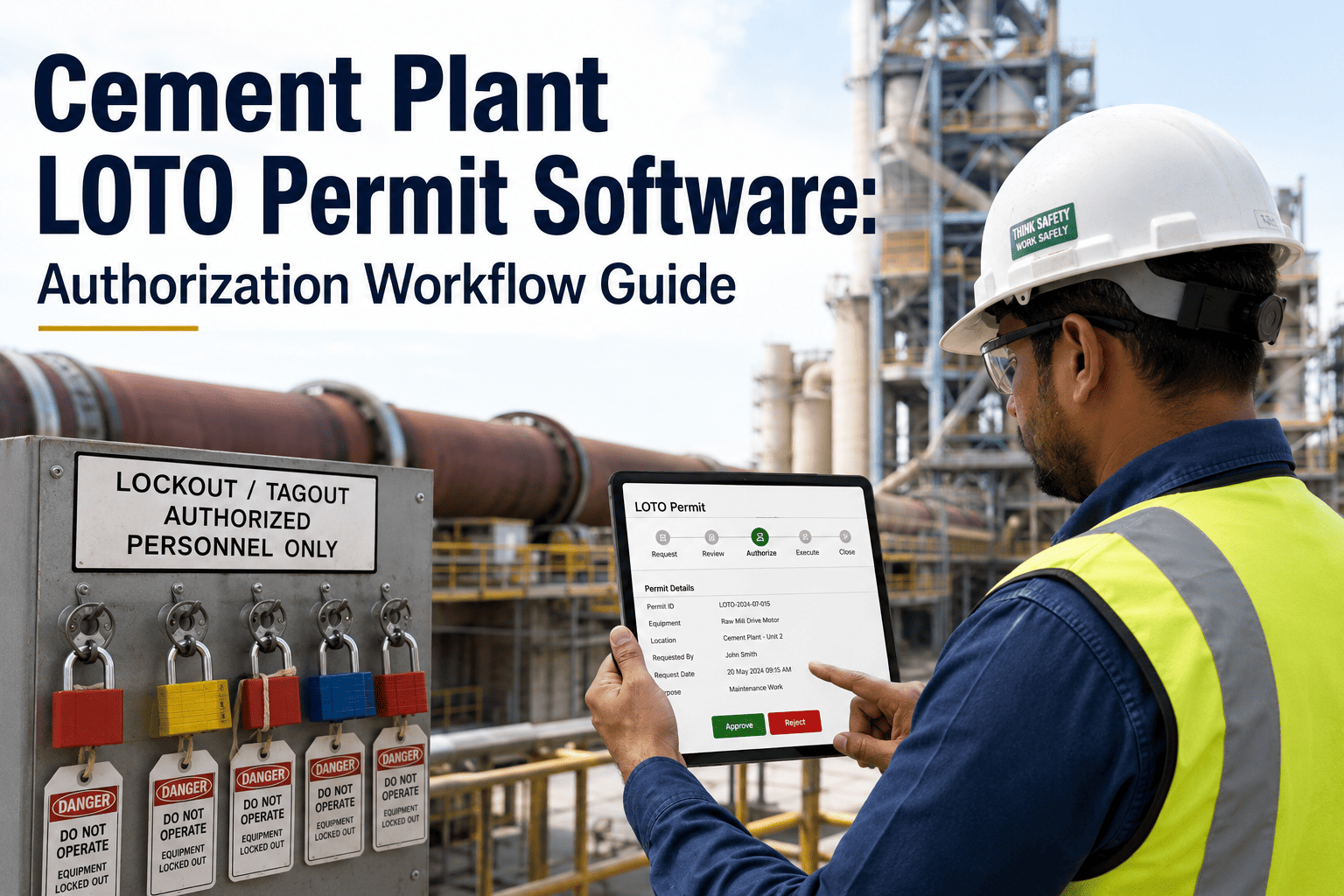
Read More
A cement plant shuts down a raw mill for a bearing replacement, and three separate crews touch that machine before the shift ends — mechanical, electrical, and a contractor brought in for the gearbox. Each one signs a paper lockout tag, but nobody

Read More
Every plant manager knows their systems are siloed — the hard part is putting a number on what it actually costs. A CFO will not approve integration spend on the word "efficiency" alone; they want the dollar figure behind duplicate data entry, del

Read More
Most cement plants run five systems that were never built to talk to each other — the DCS controls the kiln second by second, LIMS holds every lab result on raw meal and clinker chemistry, CEMS logs stack emissions for environmental filings, the E

Read More
Walk into most cement plant compressor rooms and you will find three or four machines running exactly as they were staged on commissioning day — one lead unit carrying full load, a lag machine cycling between load and unload, and a standby sitting

Read More
Limestone from one bench of a quarry face rarely matches limestone from the next — CaO content can swing several percentage points across a single blast pattern, and every one of those swings travels straight into the raw mill if nobody is trackin

Read More
Roughly half the fuel burned in a cement kiln never touches the clinker — it leaves through the stack, radiates off the shell, or exits with the cooler exhaust, and on most plants nobody has measured exactly how much goes where since the last quar

Read More
Refractory lining is one of the largest recurring line items in a cement plant's maintenance budget, yet most plants still work out refractory cost per ton of clinker once a year, long after the spend has already happened. A kiln campaign that run

Read More
A cement mill running an unmanaged ball charge is quietly burning money every single shift — grinding media that is too coarse leaves clinker under-ground, media that is too fine over-grinds and wastes power, and nobody notices until the specific

Read More
Every cement plant already has two systems of record that rarely speak to each other. The process historian, whether it is OSIsoft PI, AVEVA, or Wonderware, holds years of kiln, mill, and cooler data at second-by-second resolution. The CMMS holds
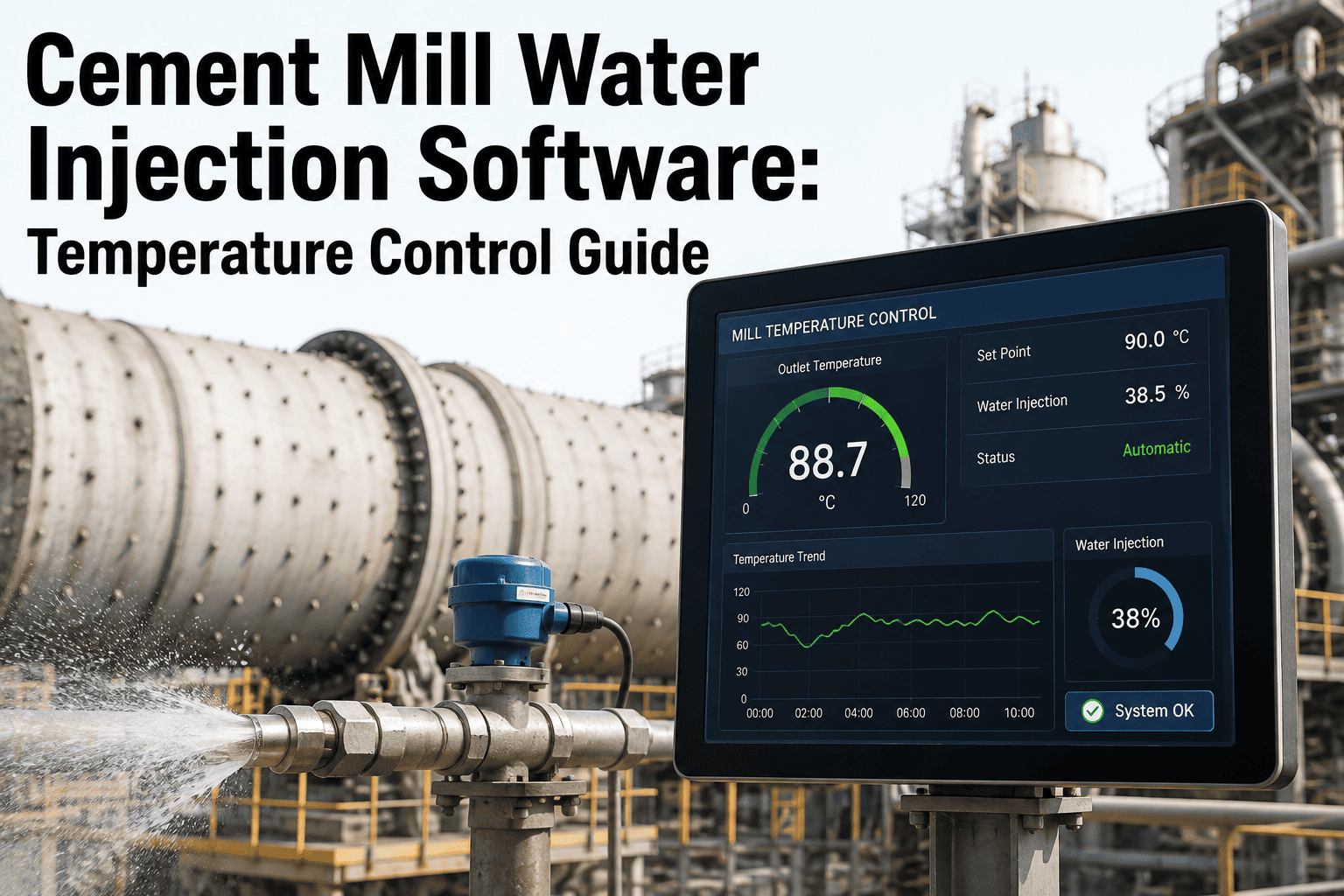
Read More
Walk onto any finish mill deck on a hot afternoon and you will hear the same question from the shift supervisor: "Is the outlet temperature climbing again?" Cement grinding generates enormous friction heat, and if that heat is not pulled out of th

Read More
When a Title V renewal audit turns up three fugitive dust exceedances in eighteen months, an environmental team stops trusting paper logs. That was the reality inside a 4-million-ton-per-year integrated cement plant before it rebuilt its maintenan

Read More
A single unplanned kiln stoppage can erase a week of production margin at a cement plant, and the real cause is rarely the kiln itself. More often it is an auxiliary asset nobody was watching closely enough, like a clinker cooler fan. When a coole

Read More
Clinker cooler selection is one of the most consequential decisions a cement plant makes, because the cooler drives fuel efficiency, secondary air temperature, clinker quality, and years of downstream maintenance cost. Older fixed inlet travelling

Read More
Cement plants run some of the most dangerous rotating and stored-energy equipment in heavy industry, and a single generic lockout tag out sheet cannot safely cover a kiln drive, a raw mill, an ID fan, and a belt conveyor with one set of steps. OSH

Read More
Every year, cement plants report incidents where a kiln, raw mill, or conveyor line restarts while someone is still inside the guard, on the platform, or reaching past an isolation point. These are rarely equipment failures. In most investigations

Read More
A CEMS analyzer can tell you the exact moment NOx, SOx, CO, or opacity crossed a permit threshold — but on its own it cannot tell your kiln team what to fix, who should fix it, or whether the fix actually happened. That gap between an emissions al

Read More
Every cement plant loses money to power that never shows up on a maintenance ticket. Idling crushers between batches, compressed air hissing out of worn fittings, and unmetered auxiliary loads running through the night rarely trip an alarm on thei

Read More
Every cement kiln lives or dies by the consistency of one number: the chemistry of the raw meal reaching the burner. Limestone quarried this week can carry a noticeably different CaCO3 percentage than limestone quarried last month, and clays, shal

Read More
A 1.5-million-tonne cement plant running two finish-mill circuits was burning power it didn't need to. Grinding alone accounts for nearly 40% of total plant electricity, and when liners wear, media grading drifts, and separator settings go uncheck

Read More
Every cement plant energy report eventually gets compared against two reference points: Best Available Techniques figures published by regulators and industry bodies, and the average performance of comparable kiln lines across the sector. The prob

Read More
Specific energy consumption is the single number every cement plant manager and finance controller watches most closely, because a one percent drift in kiln or grinding SEC quietly turns into six or seven figures of avoidable power spend by year e

Read More
Cement kilns are famously forgiving high-temperature incinerators — but the alternative fuels feeding them are anything but consistent. One truckload of RDF might arrive with a calorific value near 16 MJ/kg and chlorine safely under 0.3%, while th
Read More
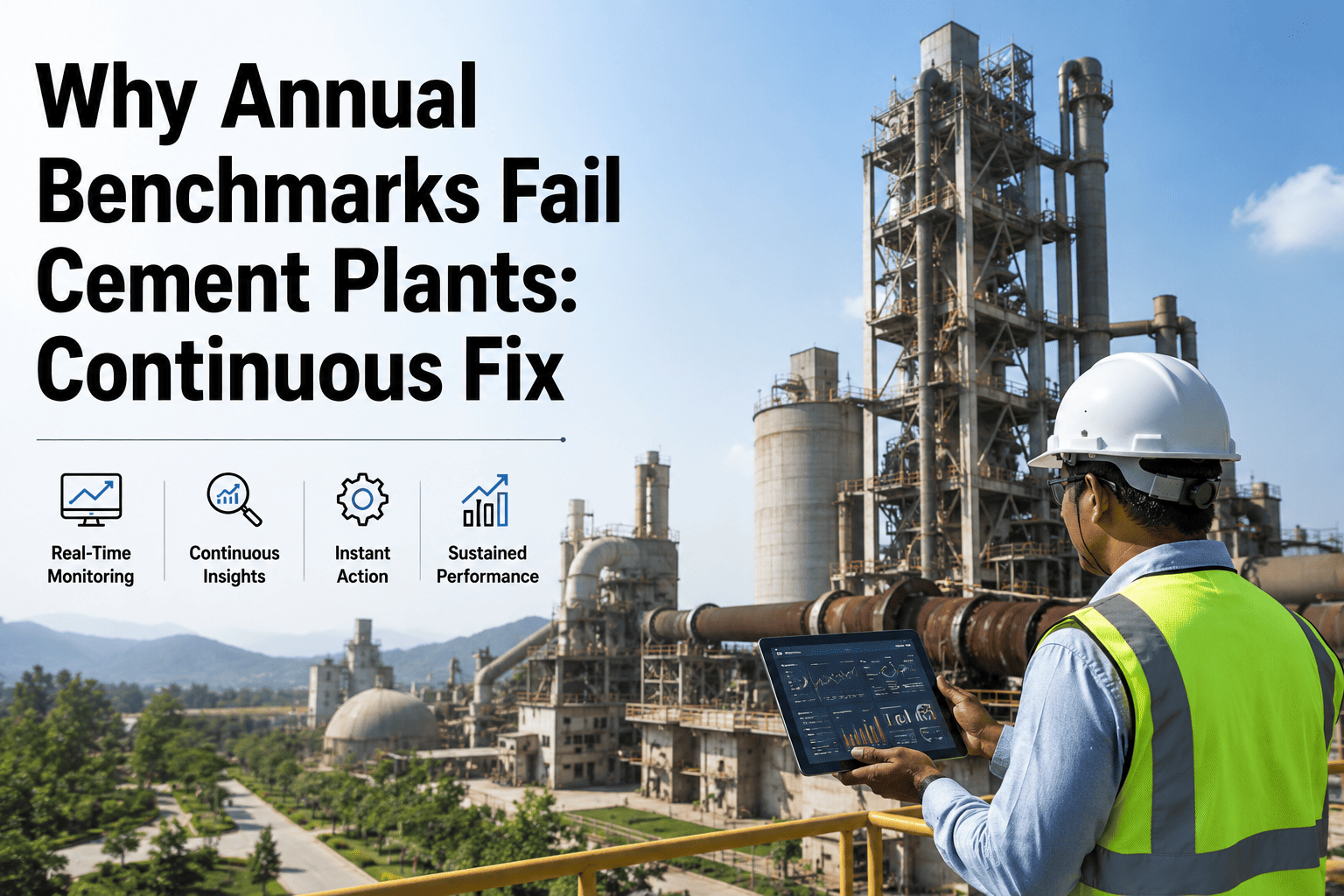
Most cement plants still treat performance benchmarking as a once-a-year event: an outside audit team walks the kiln, raw mill, and cement mill sections, compares specific energy consumption and OEE against best-available-technology numbers, and h

Read More
A cement plant carries thousands of assets across kilns, mills, conveyors, and quarry equipment, and when an inspection record can't tell one pump or gearbox from another, the paperwork often ends up tied to the wrong machine entirely. Generic des

Read More
Cement plants stretch across quarries, crushers, kilns, mills, and packing lines, and every one of these areas carries its own mix of dust, rotating equipment, and confined spaces that a single quarterly walkthrough simply cannot catch in time. Fa
Read More
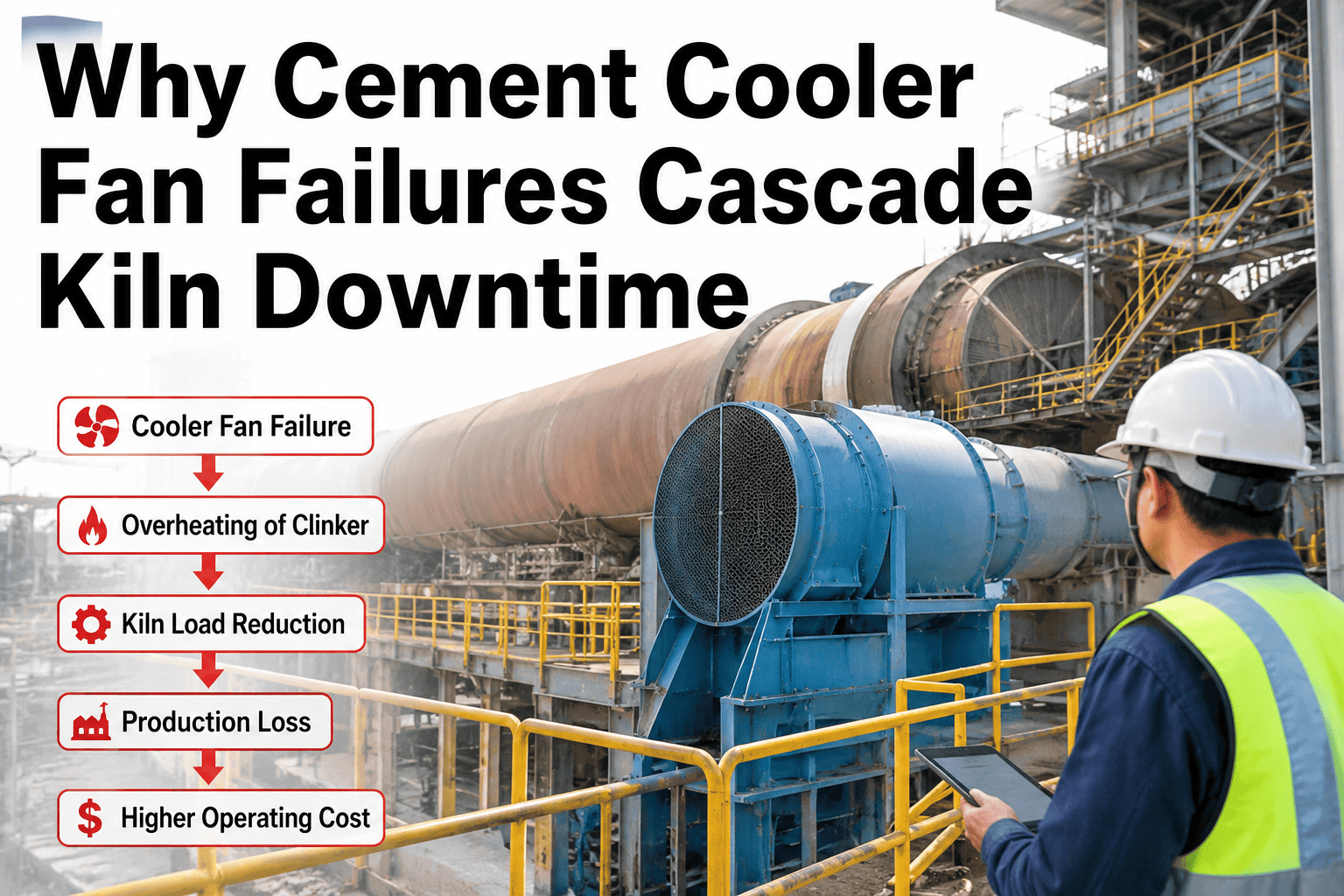
Cement plant coolers run on banks of five to fifteen fans, pulling ambient air through the clinker bed to bring material down from roughly 1,500°C to near 100°C before it reaches the transport conveyors. When one of those fans loses airflow to a w
Read More
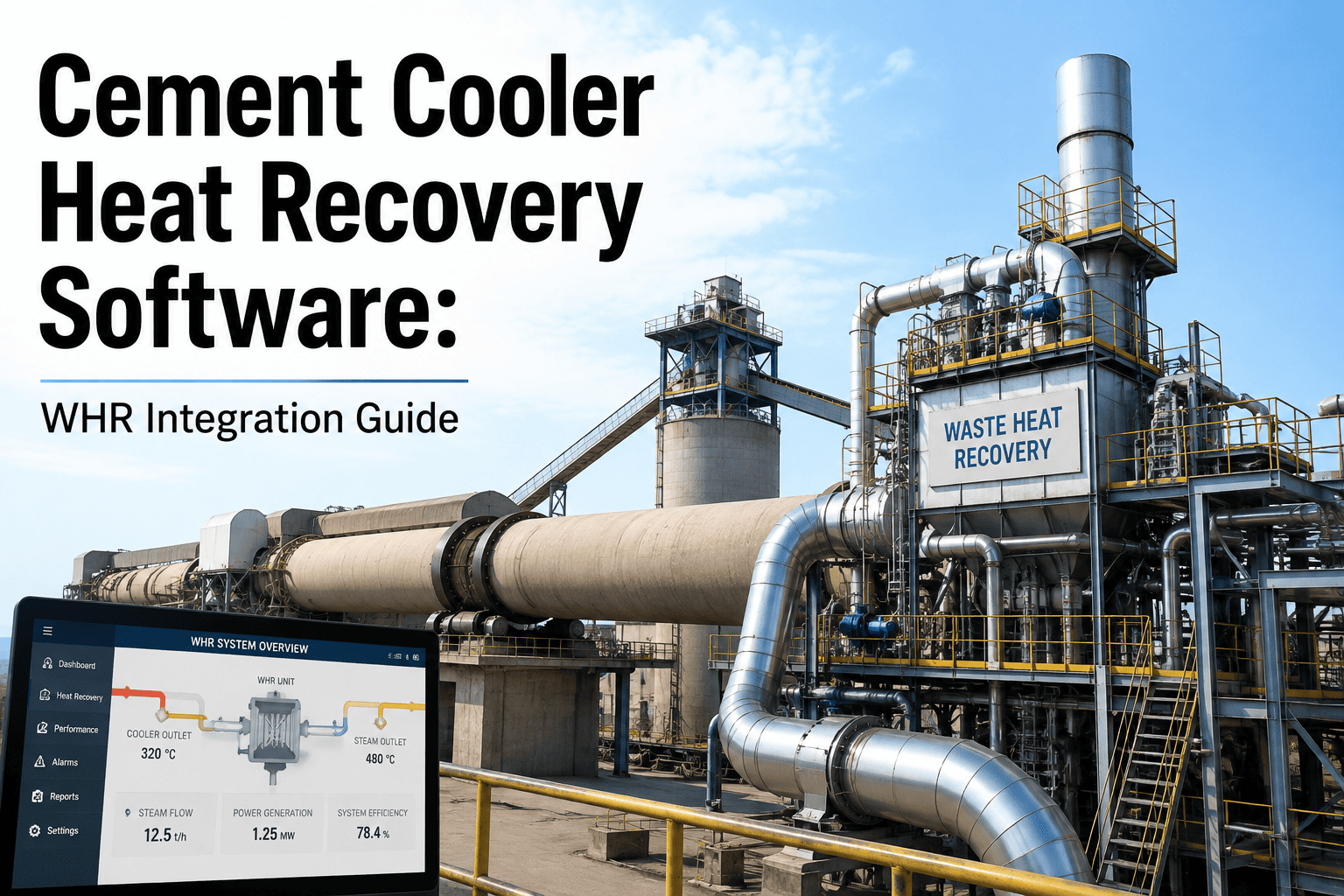
Waste heat recovery is the single biggest lever a cement plant has for cutting grid power costs, yet on most sites the PH boiler, AQC boiler, bypass dampers, and steam turbine sit outside the maintenance system entirely. Boiler tube leaks go undet

Read More
The clinker cooler sits right behind the kiln, and the way its grate moves decides how much heat the plant recovers and how stable the burning zone stays upstream. Run the grate too fast and the clinker bed thins out, secondary air temperature dro
Read More
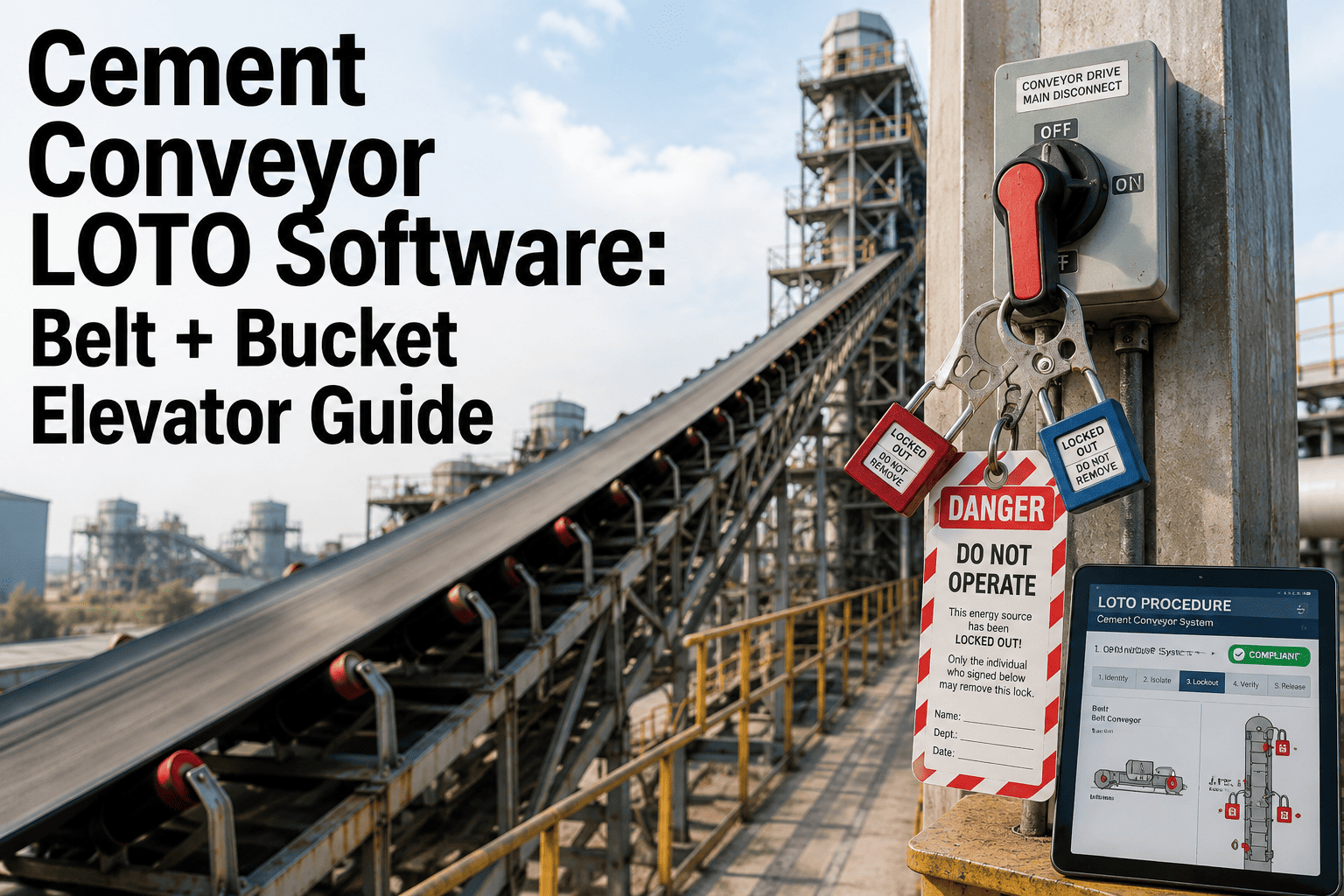
Conveyor systems move more raw material through a cement plant than almost any other equipment class — belt conveyors hauling limestone from the quarry face, apron feeders pulling clinker out from under the cooler, bucket elevators lifting raw mea
Read More
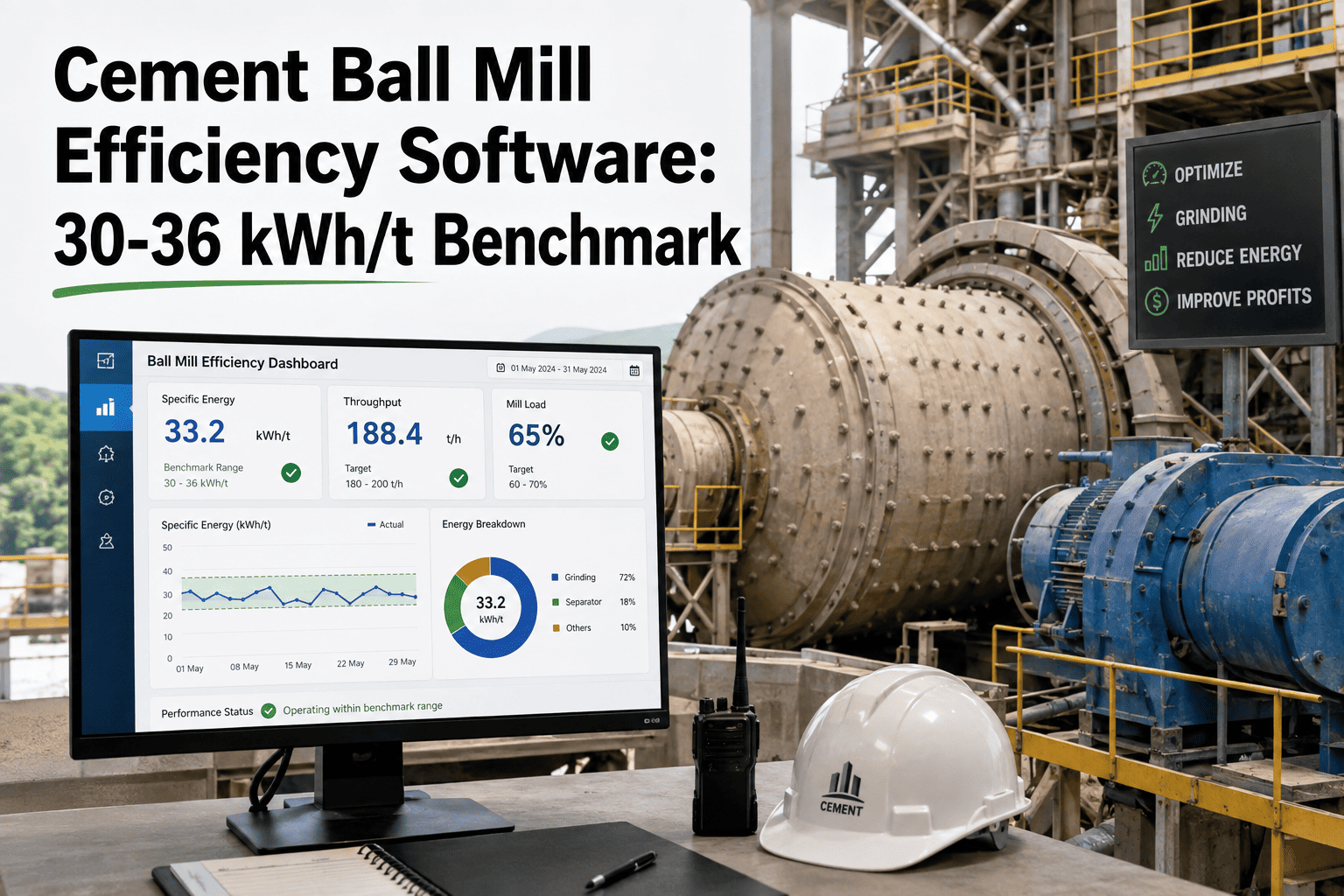
Most cement ball mills run 15 to 25 percent above the 30-36 kWh/t specific energy benchmark that a well-tuned closed circuit is capable of hitting, and the gap is rarely a design problem — it is drift. Worn liners change the lifting profile, the g

Read More
Cement plants that roll out AI cameras without a placement plan end up with blind spots at the exact zones that cause the costliest failures: kiln stack emissions, cooler vent leaks, transfer point spillage, silo overfill, and haul road near misse

Read More
Cement kiln stacks push out a moving mix of NOx and SOx that shifts with fuel type, raw meal chemistry and burning zone temperature every single shift. A certified CEMS analyzer reports the number your permit is measured against, but that number

Read More
Cement transfer points don't get inspected until they fail — and by then a citizen complaint or a visible plume already has your compliance team on notice. Every belt-to-belt drop, chute-to-hopper transfer, bucket elevator boot, and packing house

Read More
Cement cooler grate refractory rarely fails as one unit — it fails zone by zone, and most teams only notice once discharge temperature climbs past 200°C. The hot end zone takes the full force of clinker leaving the kiln at 1,200°C to 1,400°C, whil

Read More
A cement plant has more confined spaces than most people realize — kiln interiors, raw mill chambers, clinker coolers, dust collector hoppers, and silos all qualify as permit-required confined spaces under OSHA 1910.146. Each one demands its own a

Read More
Every cement plant shutdown starts the same way — a stack of paper permits, a whiteboard tracking isolation points, and a supervisor hoping nobody forgets to pull a lock before the kiln re-energizes. That gap between paper and reality is where wor

Read More
Most cement plants run four systems that never talk to each other — a CMMS for maintenance, a SCADA or energy meter network for power draw, a production MIS for tonnage and OEE, and a separate environmental log for emissions and dust. A kiln trip

Read More
A single rejected batch of cement can cost a plant more than a week of downtime once retesting, reblending, and customer penalties are added up, yet most quality teams find out about a strength or setting-time excursion only after the 28-day test

Read More
Energy managers walk into board meetings with pages of kcal/kg trends and kWh/tonne breakdowns, and walk out having answered questions about capex instead of energy performance — because a board doesn't read a report, it reads a scorecard. Cement

Read More
Cement plants track kiln uptime, clinker output, and fuel deliveries obsessively, yet specific energy consumption is usually reviewed once a month — long after the margin tied to it has already leaked away. A kiln burning 750 kcal/kg clinker again

Read More
Most cement plants know their specific energy consumption for last month. Very few know it for the last hour. By the time a monthly SEC report lands on a director's desk, the kiln has already run three days above its best-achievable kWh per tonne,
Read More
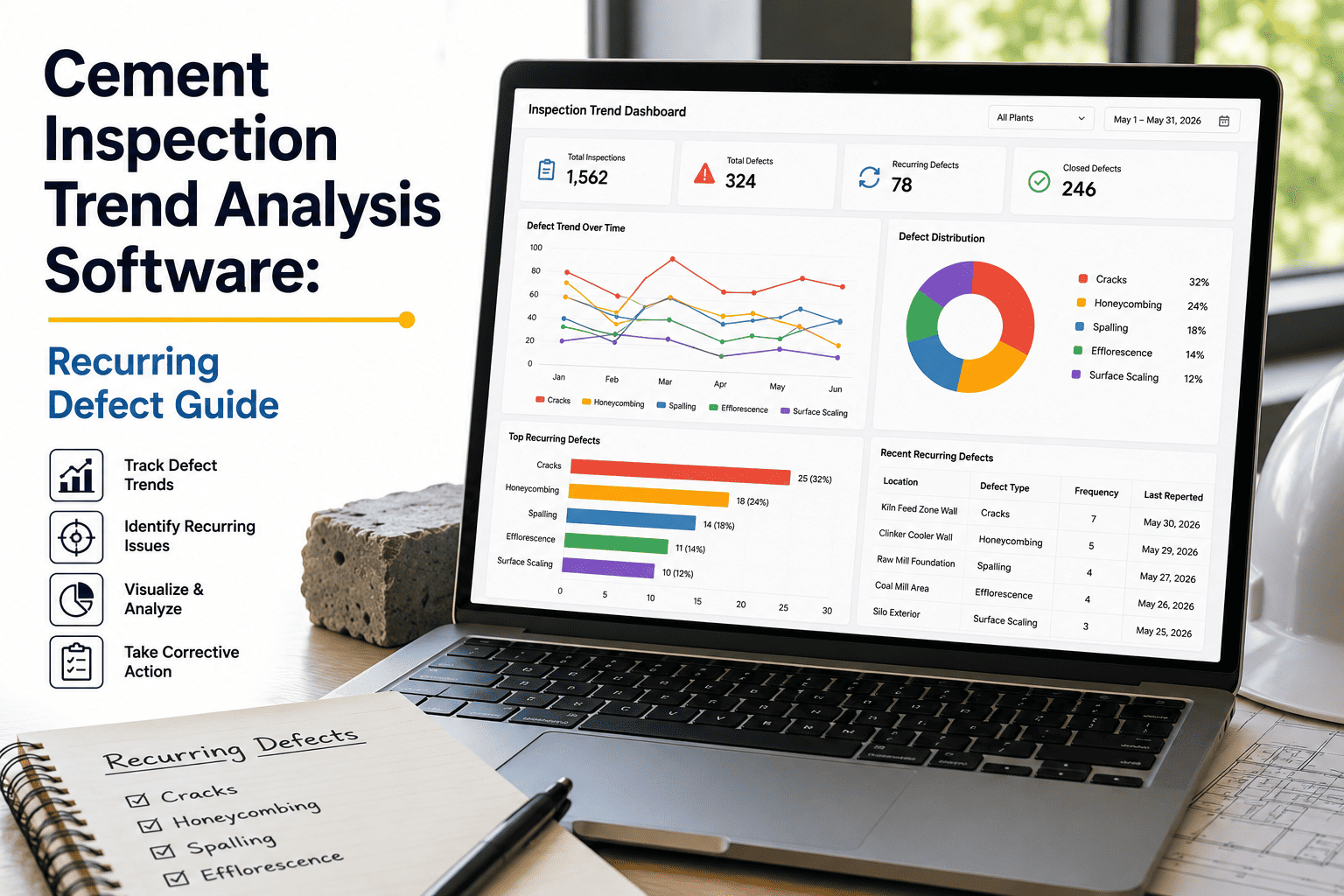
A crack in a preheater cyclone gets patched in March. It reopens in July. It reopens again in November. Three work orders, three technicians, three isolated repairs — and nobody in the plant ever connects the dots because the inspection sheets liv

Read More
A stack technician walks the emission points twice a shift, notes what looks visibly clear, and moves on. Between those two rounds, a bag filter can develop a tear, a damper can stick partway open, and a plume that would have triggered an alarm at

Read More
Cooler fan drift rarely announces itself. A stack ID fan running two percent below setpoint, or a grate cooling fan losing pressure after a bearing service, can sit for days looking like nothing more than a rounding error on a trend screen. But ce

Read More
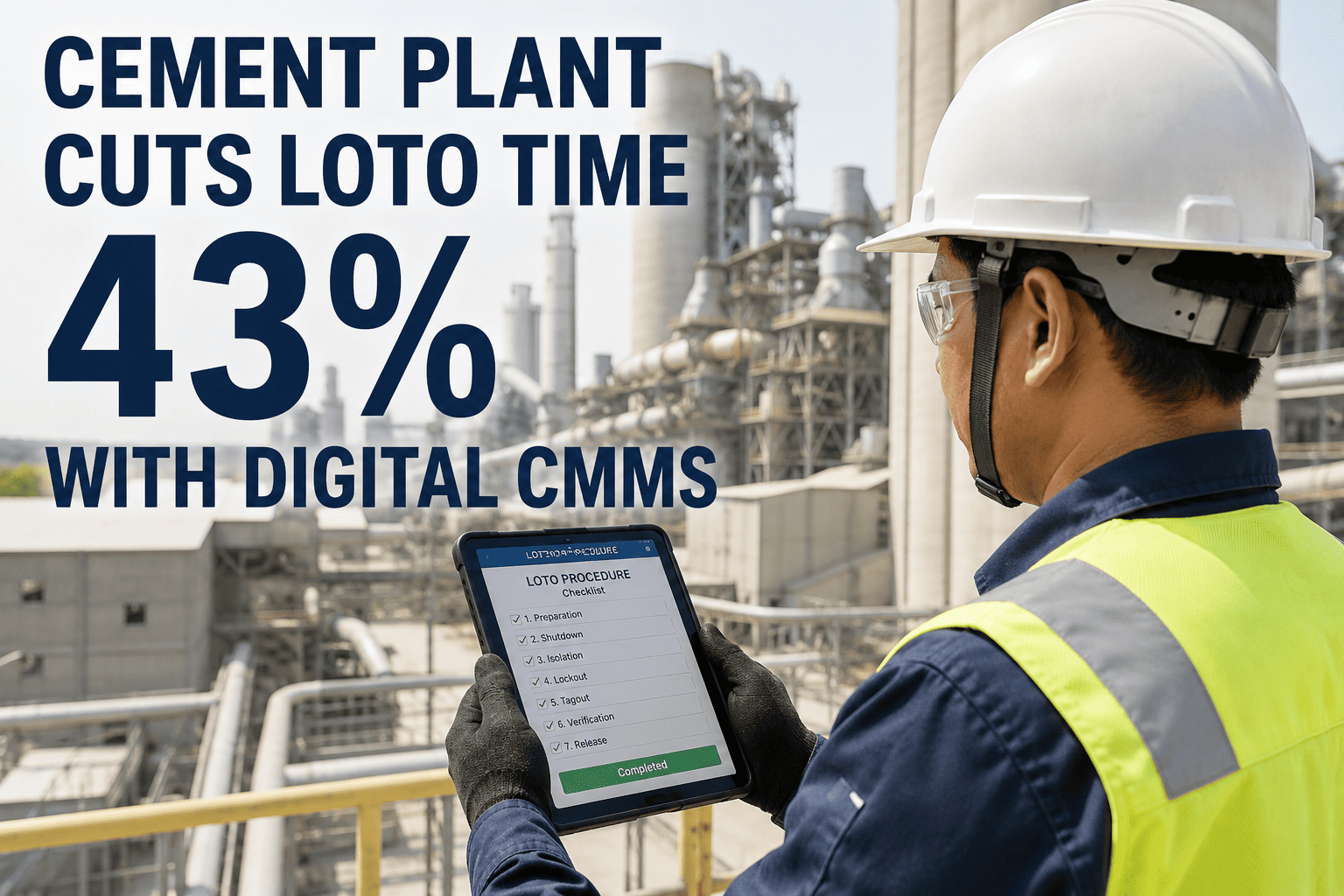
Eighteen months earlier, an OSHA inspection at this 3.2M-ton integrated cement plant had turned up four LOTO-related citations, including one willful violation that carried a $145,027 penalty. When the inspector returned this year for a follow-up
Read More
Ninety minutes. That's how long it took a maintenance crew at a 5,000 TPD integrated cement plant to isolate and de-isolate a single ball mill for routine service, start to finish, using paper tags and a control room log book. Multiply that across
Read More
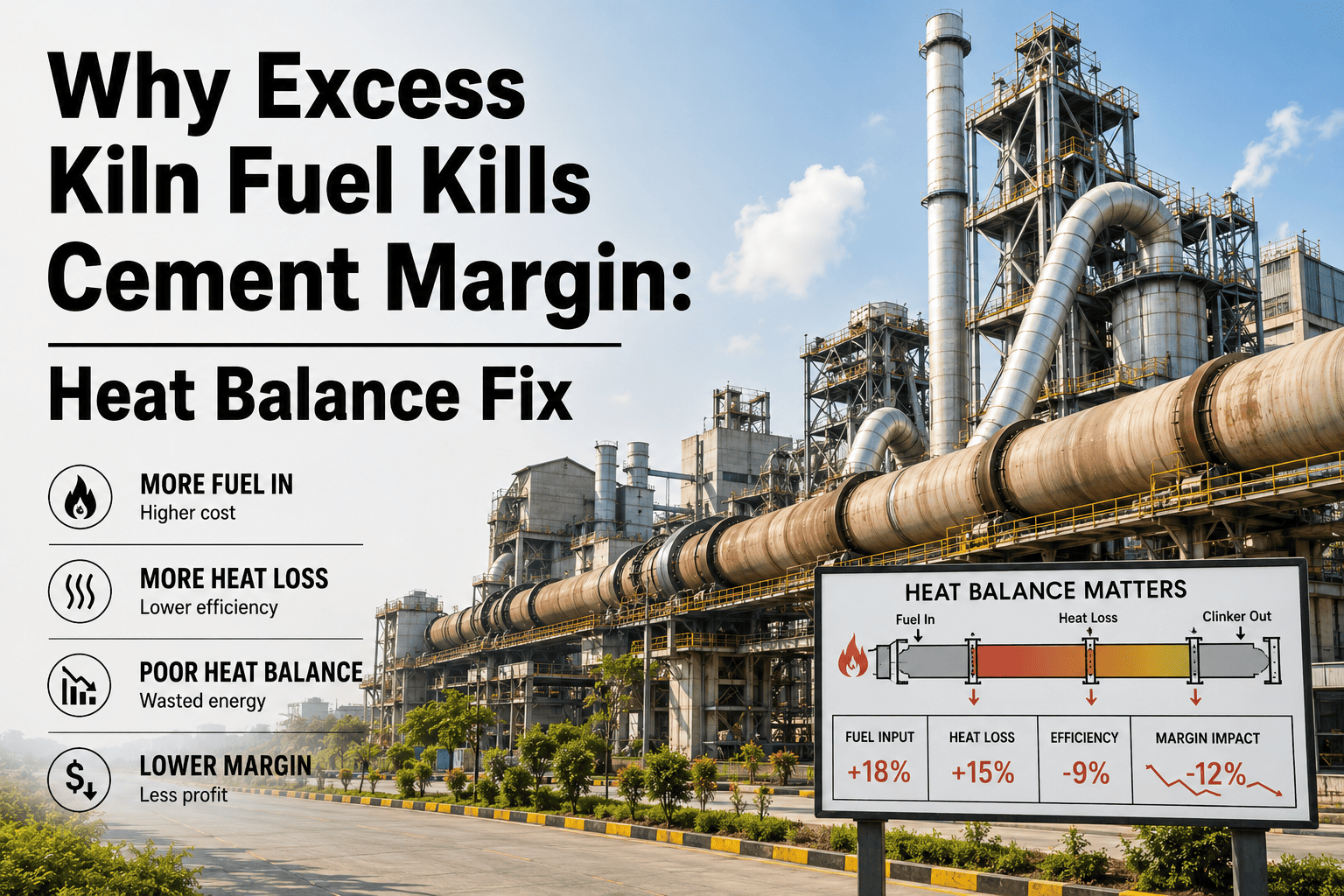
Fuel is the single biggest lever on your cost sheet — it typically eats 30–40% of total cement production cost, and the kiln alone burns over 90% of it. A well-run 5-stage preheater kiln should hold specific heat consumption near 2,900–3,100 MJ pe
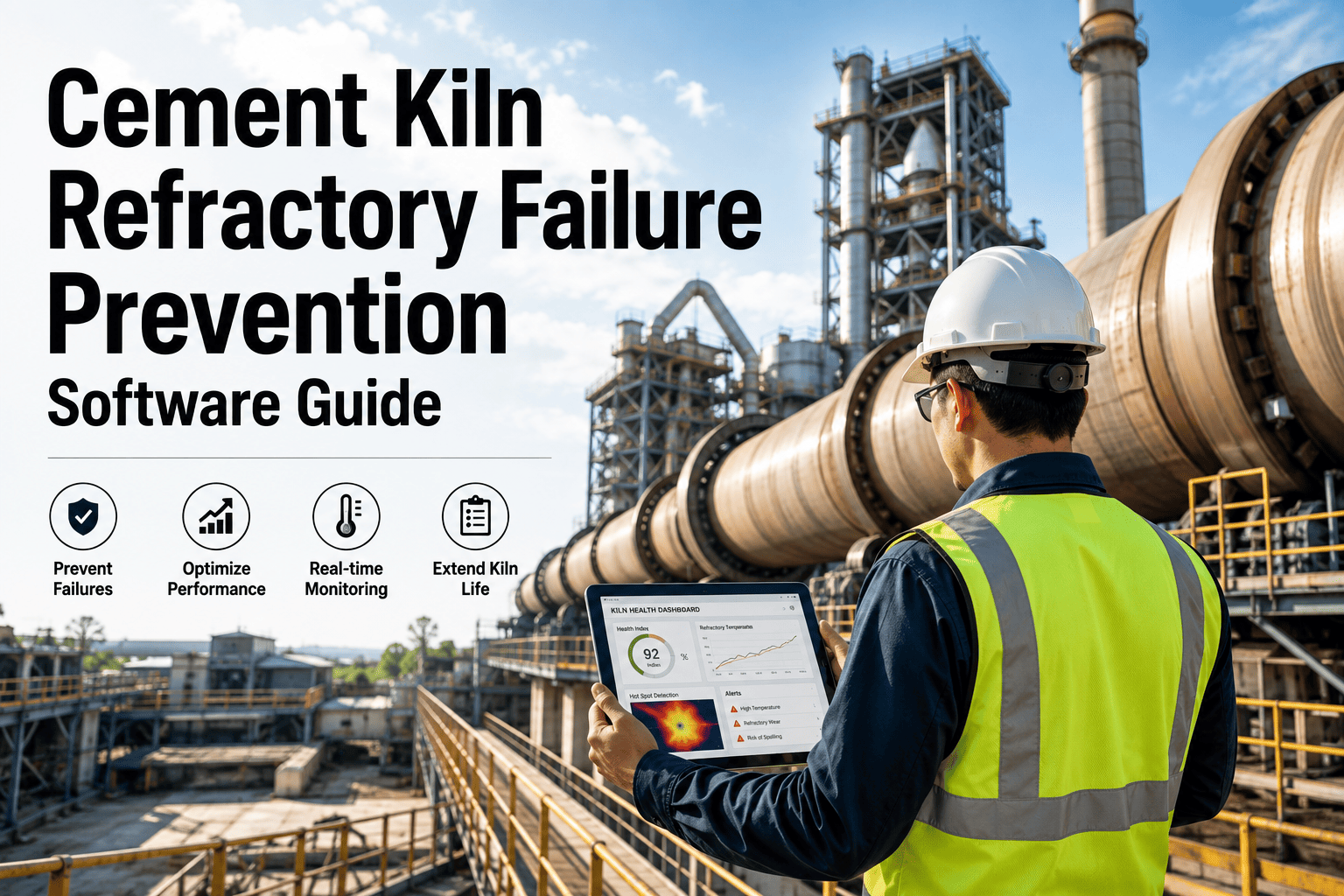
Read More
A cement kiln's refractory lining is the one component nobody thinks about until it fails, and when it does, the bill is measured in millions, not thousands. Burning zone brick collapse, coating loss, or a thermal shock crack that propagates throu

Read More
Cement grinding circuits rarely fail loudly — they just get expensive, tonne after tonne. When circulating load in a ball mill or roller press circuit climbs past 300-400%, specific energy consumption creeps up, separator efficiency drops, and mil
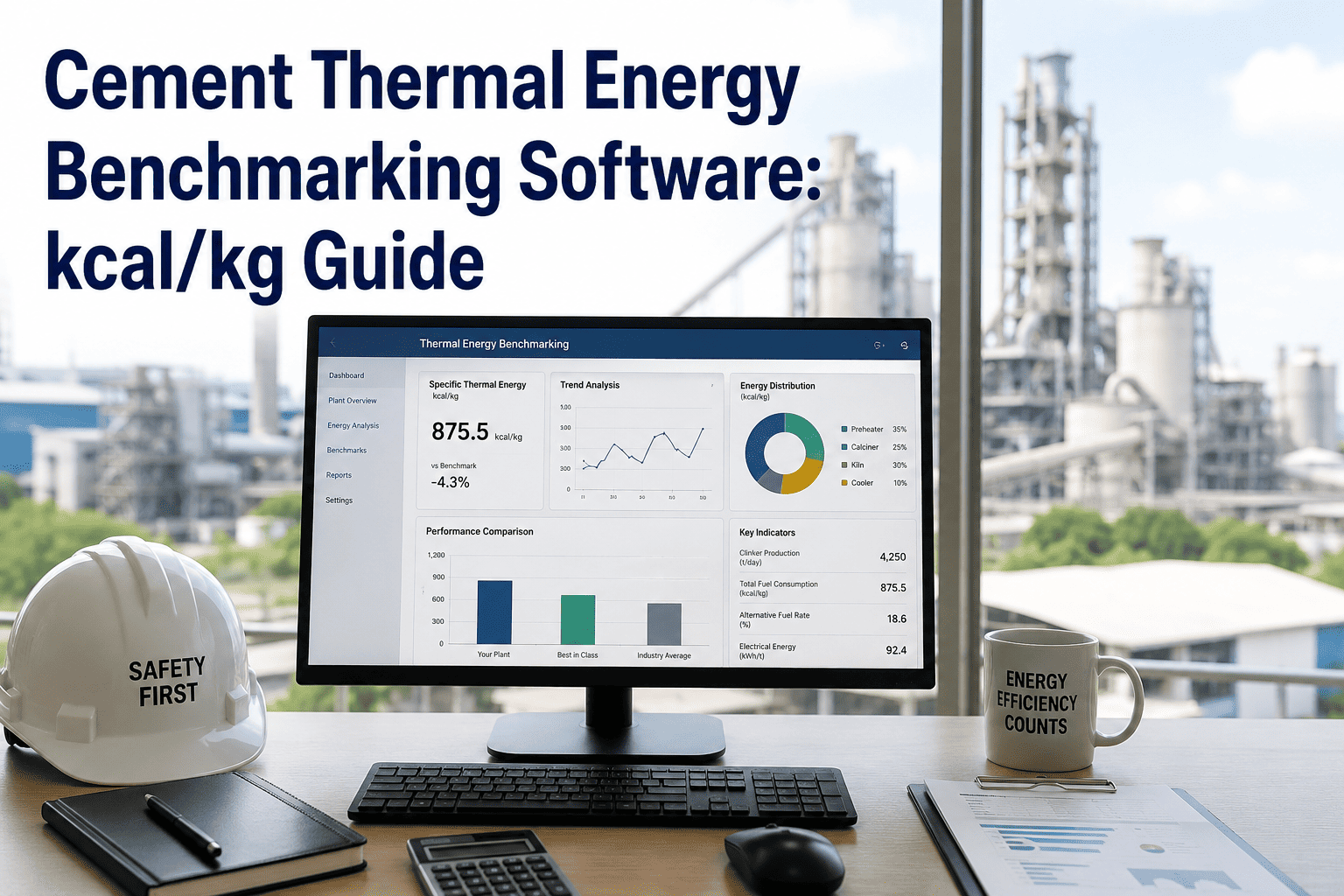
Read More
Kiln thermal energy consumption is the single number every cement plant GM asks about first, and it is also the number most plants track the least precisely. A kiln burning 20 kcal/kg more than it should on a 4,000 tonne-per-day line adds up to re

Read More
Every cement plant still has a stack of clipboard checklists somewhere near the kiln control room, and every plant manager knows they don't tell the whole story. A paper sheet cannot prove when a bearing was actually inspected, cannot hold a photo

Read More
A conveyor rarely fails because the belt snaps out of nowhere. It fails because a frozen idler ran hot for three weeks, a splice kept fraying a little more each shift, or a drive drum wore unevenly until tracking finally gave out — and none of it

Read More
Somewhere in every cement plant there is a filing cabinet, a stack of clipboards, or a shared folder of scanned sheets that nobody has opened in months — until an auditor asks for proof that an inspection happened on a specific date. Paper inspect

Read More
A cracked idler bracket, a hairline gearbox leak, a splice starting to separate — on paper, a technician walks past all three in a single shift and still checks every box "OK." It is not carelessness; it is the format. A clipboard has no memory of

Read More
Plants that invested in AI vision cameras for kiln flame monitoring, stockpile tracking, or PPE compliance often discover a second problem a few months in: the cameras themselves need maintaining just as much as any pump or motor. Cement dust sett

Read More
A single cement plant control room can generate well over a thousand alarms across one 12-hour shift, yet operators consistently report that only a small slice of that volume ever needs a real response. When a kiln draft deviation, a baghouse diff

Read More
Cement producers operating kiln lines above 3,000 tpd clinker now face a dual squeeze: fuel and power typically consume 55–70% of variable production cost, while stack-emission limits under NESHAP 40 CFR 63 Subpart LLL tighten with every complianc

Read More
Cement plants now operate under a 3-to-5-year EPA evidence retention window, which means every kiln alert, corrective-action record, and timestamped sensor reading must be retrievable on demand during surprise inspections. OxMaint functions as the

Read More
Dust is the single most visible indicator of process health in a cement plant — and the most contested one when an inspector arrives. AI camera dust monitoring turns every existing CCTV feed on transfer points, baghouses, stack outlets, and stockp

Read More
Fugitive dust at a cement plant rarely announces itself — it escapes between the 06:00 and 14:00 rounds, when a clinker conveyor seal weeps, a raw-mill fan damper drifts, or a silo-level indicator sticks and overfill begins. Manual visual-emission

Read More
Cement cooler fan bearings fail more often than any other component on the cooler deck — they account for roughly half of all cooler fan trips in a typical plant, and a single seized bearing can idle a clinker line for 6 to 14 hours. OxMaint is th

Read More
Clinker cooler fans are among the most punishing rotating assets in a cement plant — they move 400,000+ Nm³/h of 1,100°C air, run 24/7 for 8,000-hour campaigns, and when one throws a 7.0 mm/s RMS vibration alarm, the kiln behind it has roughly 30

Read More
Grate plates in a cement clinker cooler typically survive 10–18 months, yet the majority of plants swap them on a fixed calendar cycle that wastes 20–30% of usable residual life while still allowing premature failures between intervals. A cement g

Read More
Clinker cooler grate plates are the silent tax on cement plant fuel economics — every millimetre of wear shortens secondary airflow contact time, pushes cooler exit temperatures up, and forces the kiln to burn more fuel to hold the same clinker mi

Read More
Cement kiln drive isolation is one of the most safety-critical, audit-heavy procedures in heavy manufacturing — a single missed energy source on a 4,000-tpd kiln can mean a fatality, a multi-million-dollar campaign delay, or an OSHA citation under

Read More
Cement plants run some of the most punishing maintenance schedules in heavy industry — kilns spin at 4 rpm under 1,450°C, ball mills vibrate continuously, and conveyor chains stretch across hundreds of meters of quarry, clinker and packing lines.
Read More
Cement silos sit at the intersection of two of the most dangerous failure modes in heavy industry: structural collapse and confined-space entry. Every year, dozens of cement plant incidents trace back to inadequate silo inspection — from atmospher
Read More
For a cement plant running 24/7, the ball mill is the heartbeat of finish-grinding — and when it trips, the cost is counted in shifts, not hours. Most mills lose 600–1,200 production hours per year to unplanned downtime tied to liner fatigue, trun

Read More
Non-destructive testing in a cement plant is the thin line between a planned shutdown and a catastrophic pressure-vessel failure on a 1,500-ton-per-day kiln line. Between ASME-coded vessels, API-653 silo floors, and structural conveyor galleries,

Read More
Cement quarry operations live and die by the integrity of their safety program — one unstable high-wall, one missed brake inspection on a 400-ton haul truck, or one flyrock event during a blast can turn a productive shift into a MSHA-reportable in

Read More
Coal dust fires in cement plants are among the most destructive and most preventable losses in heavy industry — a single smoldering event in a coal mill can escalate to a deflagration in under 90 seconds and sideline a kiln line for weeks. This gu

Read More
Cement manufacturing is one of the most physically demanding industrial environments in the world — workers routinely operate near kiln surfaces exceeding 1,400°C, breathe air laden with respirable crystalline silica, and enter confined preheater

Read More
Cement producers now operate under environmental scrutiny that touches every kiln, stack, and stockpile — with CEMS uptime, dust limits, heavy-metal thresholds, and co-processing permits all depending on maintenance records that survive a regulato

Read More
Cement plants run some of the longest, most punishing conveyor networks in heavy industry — and that is exactly where OSHA and MSHA inspectors look first. Across a single kiln line you can have 12 to 18 kilometers of belt carrying hot, abrasive cl

Read More
Cement plants run on massive electrical loads — 5,000+ HP kiln drives, 4,160 V switchgear, and hundreds of motor control centers powering mills, crushers, and conveyors around the clock. An arc flash event in that environment releases plasma hotte

Read More
Permit-to-work discipline is what separates a controlled cement maintenance outage from a recordable incident — every hot tap near a kiln shell, every silo entry, every breaker isolation lives or dies on the quality of the permit behind it. In a t

Read More
Dust explosions in cement plants are not freak accidents — they are predictable failures of process discipline. Combustible dust from limestone, coal, petcoke, and alternative fuels accumulates in silos, conveyors, baghouses, and coal mills where
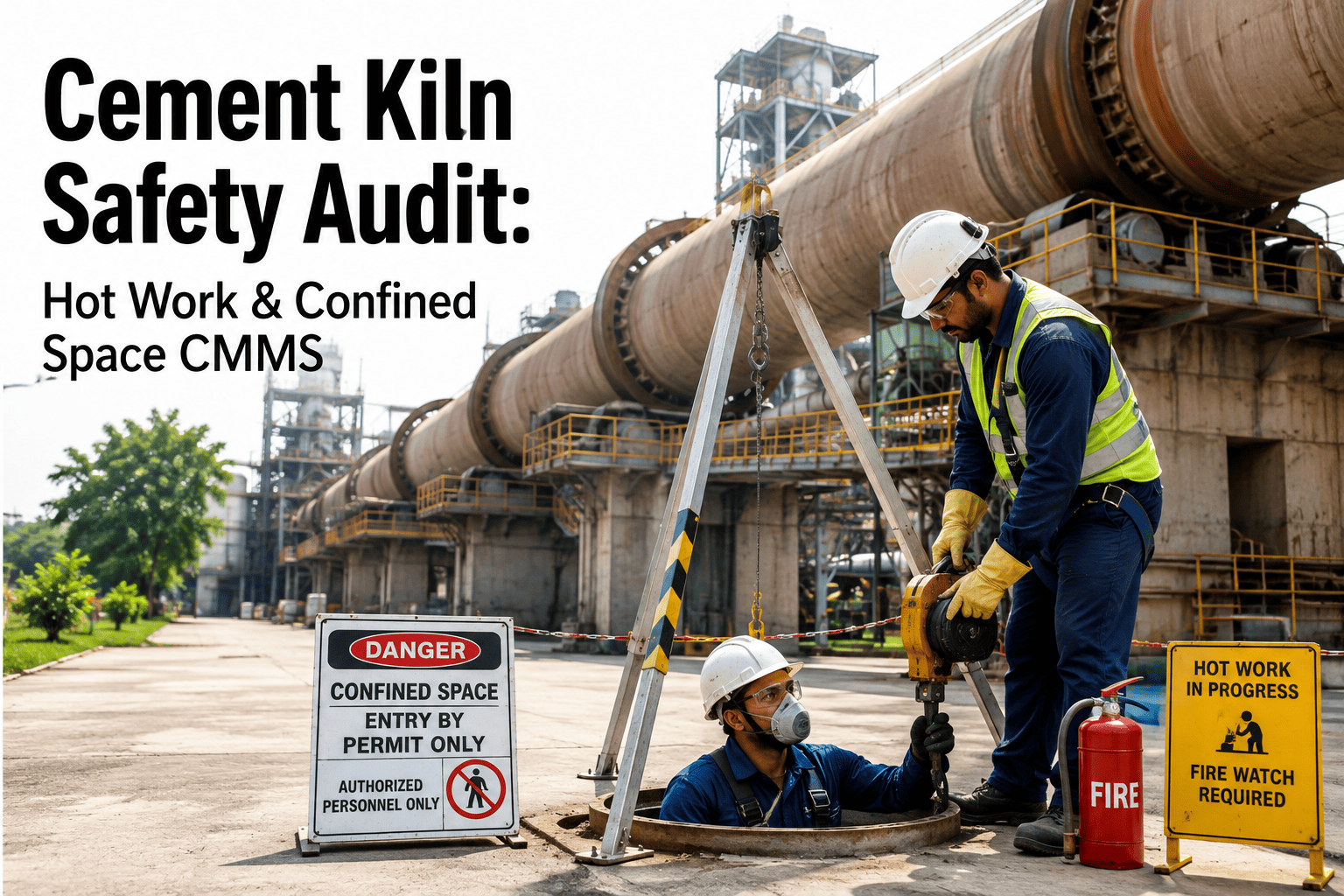
Read More
Cement kiln safety audits cover the three highest-risk maintenance activities in heavy industry: hot work near 1,400°C refractory surfaces, confined space entry into a vessel designed to be gas-tight, and high-temperature exposure during shutdown

Read More
Pushing thermal substitution rate past 40% in a cement plant used to mean trading fuel savings for an unpredictable maintenance bill — worn feed chains, clinker-ring buildup, and dust-system fouling that ate into the kiln's availability. Alternati

Read More
Energy is the single largest controllable cost in cement manufacturing — typically 30–40% of total production cost — which makes kWh per tonne of cement and GJ per tonne of clinker the two metrics every plant manager lives and dies by. A typical d

Read More
Clinker cooler efficiency is the single largest controllable lever for kiln thermal performance in a cement plant — every percentage point of cooler efficiency lost translates directly into additional fuel burned in the kiln and reduced secondary

Read More
False air ingress is the single most underestimated energy drain in a cement plant preheater system — every 1% of unwanted ingress into the string raises specific heat consumption by roughly 3–4 kcal/kg clinker, which compounds across a 330-day ca

Read More
A kiln shutdown is the single highest-leverage maintenance window a cement plant gets in any given year — the few hours when brick thickness, coating profile, tyre alignment and drive-train health can all be measured, mapped and corrected before t

Read More
Cement manufacturing remains one of the most heavily audited industrial sectors, with OSHA, MSHA, and internal compliance teams all scrutinizing kiln operations, dust handling, and maintenance workflows under tightening 2026 expectations. A single

Read More
Modern cement plants lose 30–40% of their input energy as waste heat radiating off preheater exhaust and clinker coolers — energy that a well-instrumented WHR system converts into 6–12 MW of self-generated electricity and a measurable cut in purch

Read More
Compressed air is the most expensive utility in a cement plant — typically $0.18–$0.30 per 1,000 cubic feet delivered, three to five times the cost of electricity itself. Industry audits consistently show that 20–30% of all compressed air producti

Read More
Electric motors consume roughly 60-70% of total electricity in a typical cement plant, and a single 500 kW kiln induced-draft fan running continuously can cost over $400,000 per year in energy alone. When hundreds of drives—most operating near ful

Read More
Overall Equipment Effectiveness is the single most honest number in a cement plant because it refuses to let availability hide behind throughput or quality hide behind uptime. A typical dry-process kiln runs at 65–75% OEE against a world-class ben
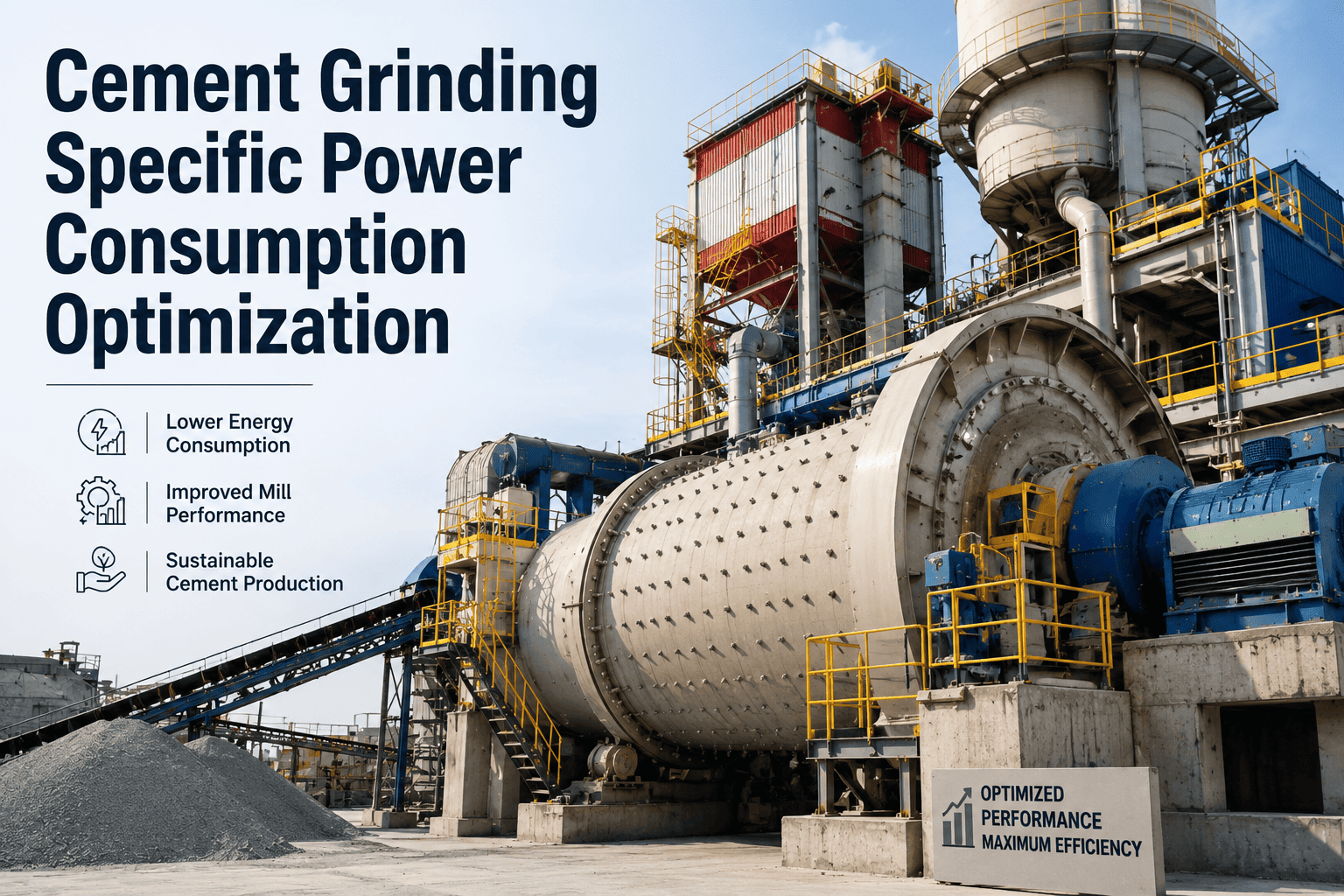
Read More
Cement grinding accounts for 30–40% of a plant's total electrical draw, which means every 1 kWh/tonne shaved off the mill circuit drops straight to the bottom line. Optimizing specific power consumption is rarely about a single lever — it is the c

Read More
A cement plant energy audit is where the biggest optimization opportunities become visible — but every audit only pays off when maintenance actually executes on the findings. Cement manufacturing consumes 3.0–3.6 GJ per tonne of clinker, and even
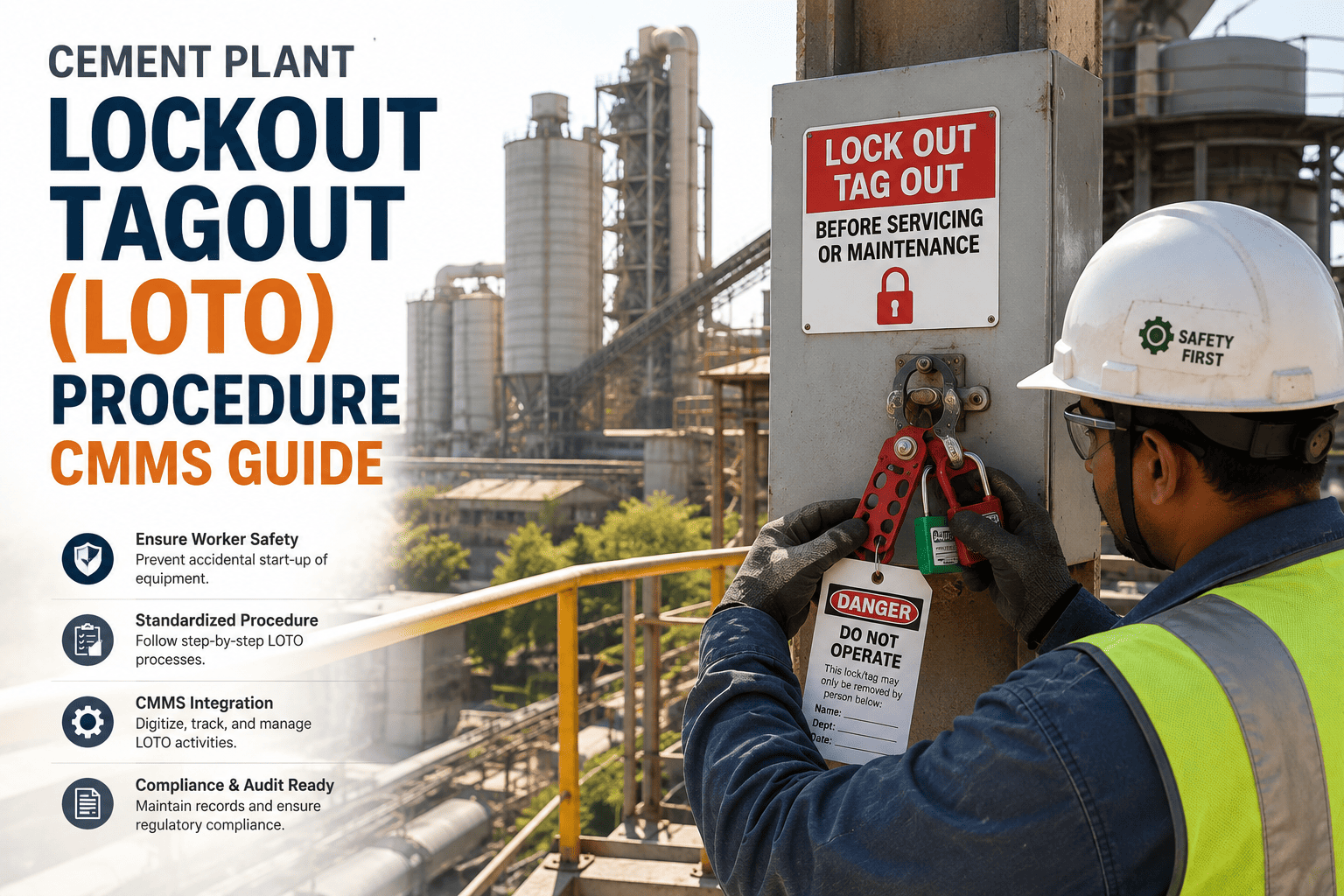
Read More
Lockout tagout violations rank among OSHA's most cited findings in cement manufacturing, and a single missed energy isolation step on a kiln drive or ball mill can cost a plant six figures in penalties and lost production. This guide breaks down t

Read More
Critical spare parts optimization in a cement plant is where maintenance strategy meets working capital reality — a single missing girth gear pinion can idle a 5,000 TPD kiln for twelve weeks, while a warehouse full of rarely-used hydrator seals t
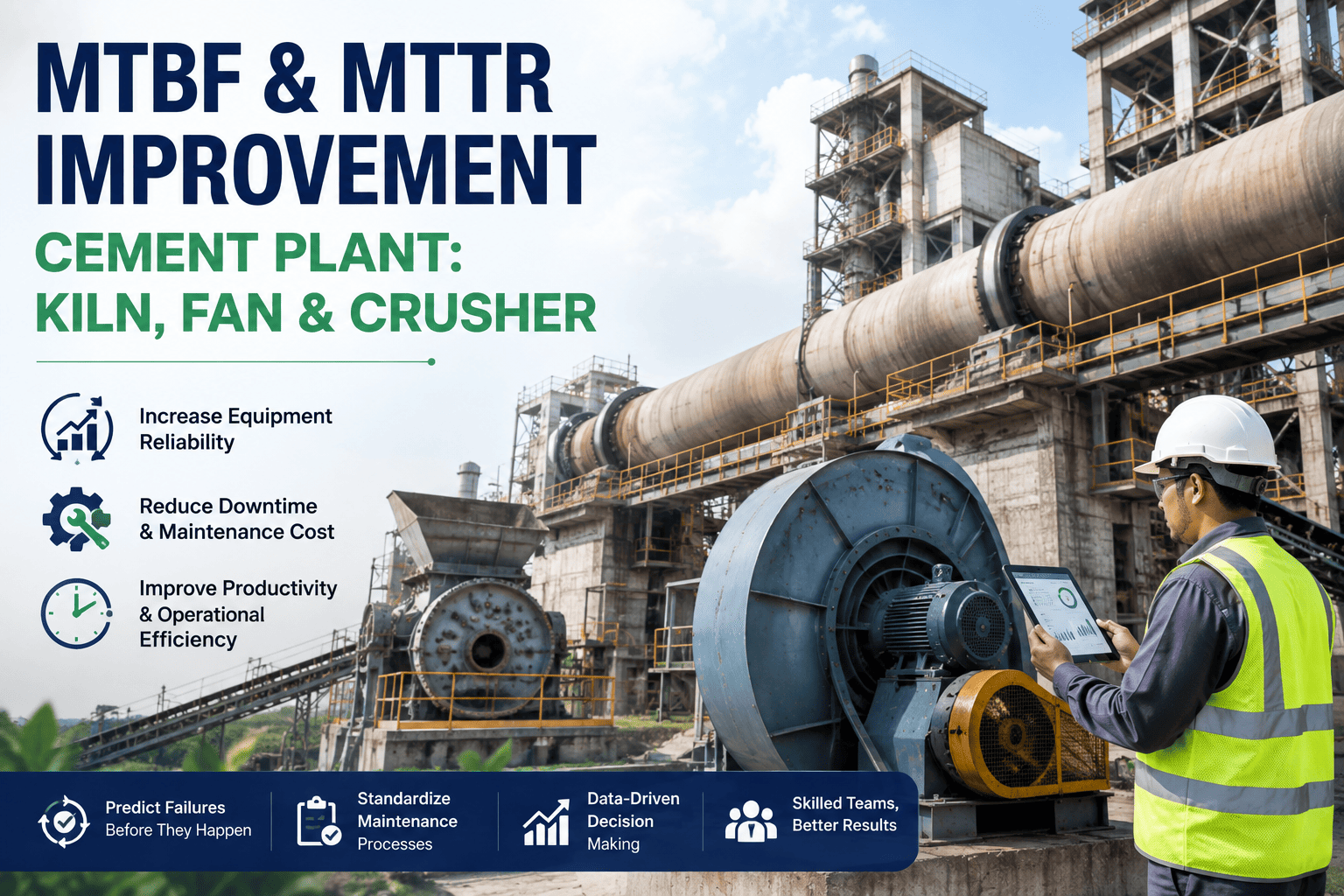
Read More
MTBF and MTTR are the two operational metrics that separate reliability-driven cement plants from reactive ones, where a single kiln outage can burn through $50,000–$120,000 per day in lost clinker production. The kiln, induced-draft fan, and crus
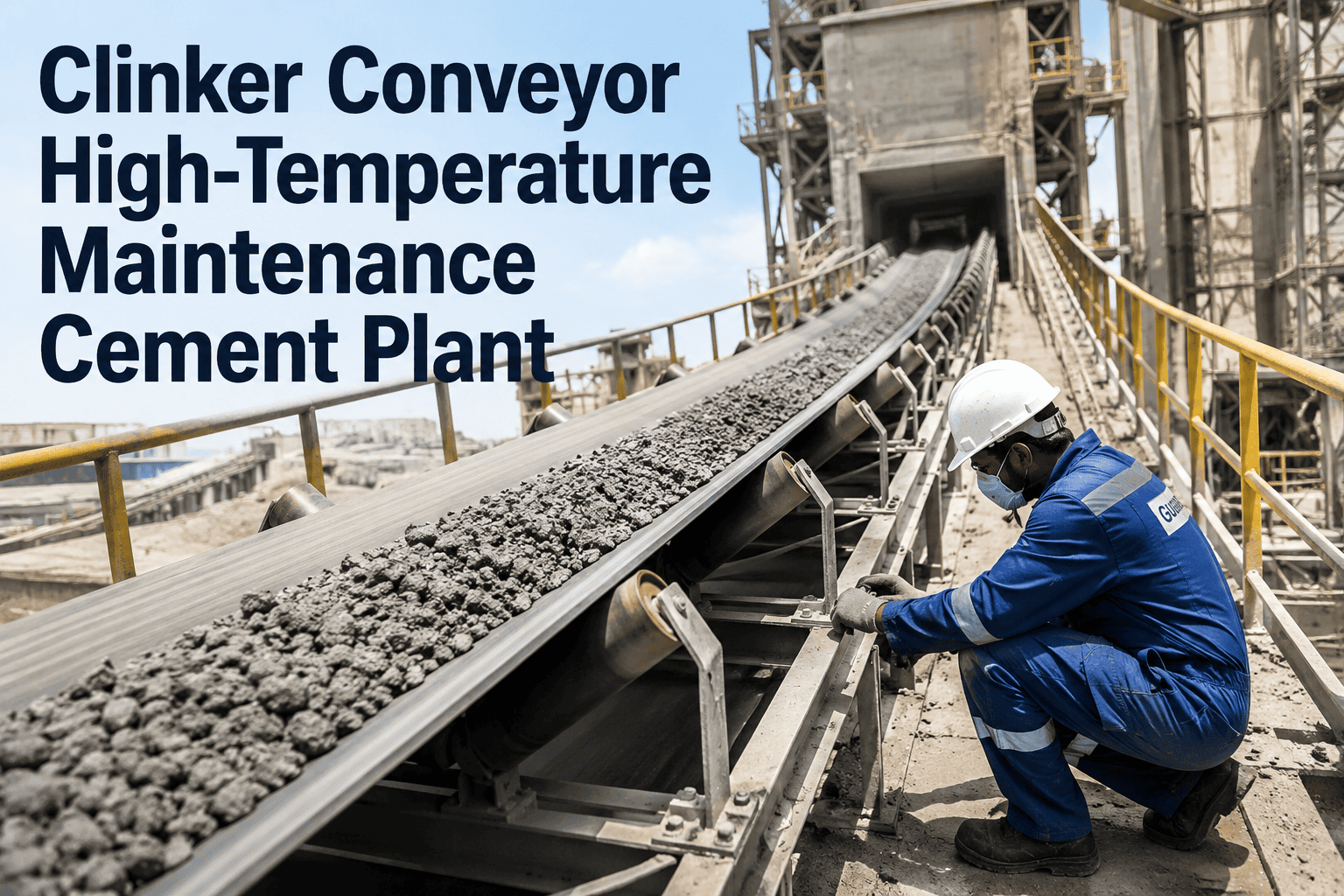
Read More
Clinker conveyors run at 150–300 °C and absorb some of the harshest thermal and abrasive punishment anywhere in a cement plant, which is exactly why reactive fix-on-failure maintenance quietly drains six-figure budgets every year. A disciplined CM

Read More
When a modern integrated cement line stops, the meter doesn't pause — it accelerates. A single day of unplanned kiln downtime routinely exceeds $150,000 once lost clinker margin, thermal restart fuel, refractory stress, and emergency repair premiu
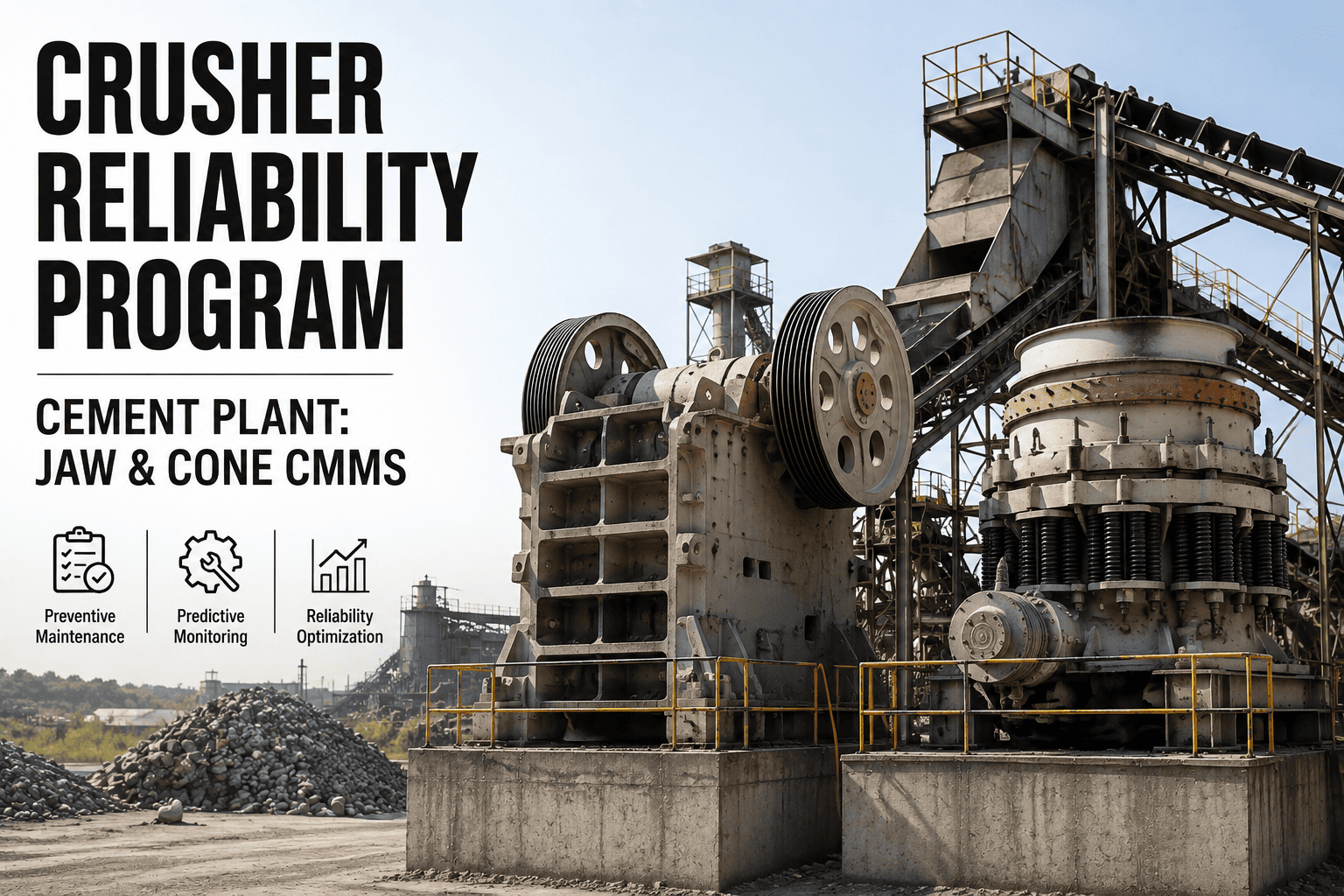
Read More
A cement plant's crushing circuit is the throat of the entire operation — when a primary jaw or secondary cone goes down, the kiln feed stockpile is the only thing keeping the plant alive, and that clock starts ticking immediately. For maintenance
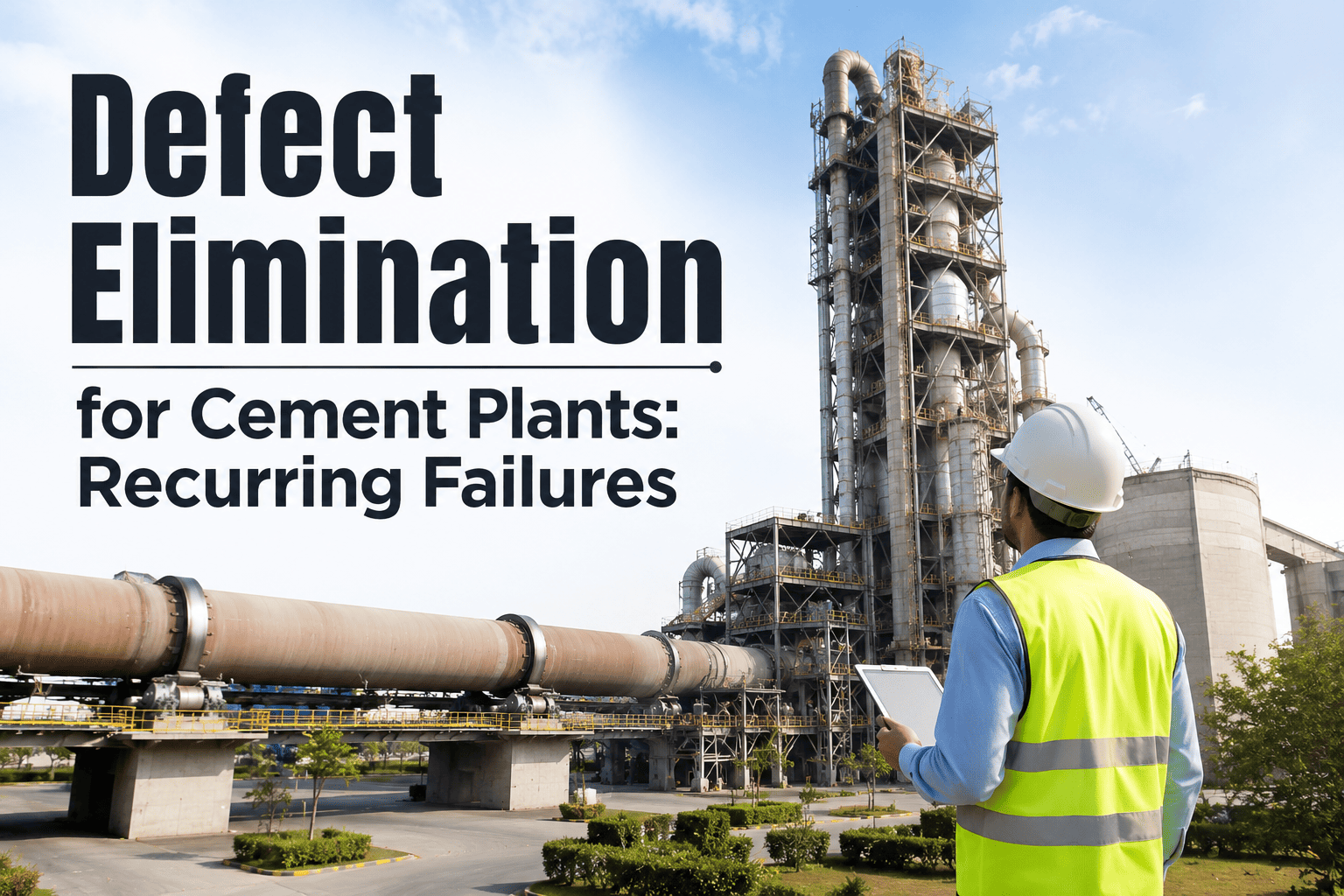
Read More
Recurring failures quietly drain cement plants of capacity and margin — a single kiln bearing that fails every 14 months, a conveyor that spills clinker after every outage, a fan that vibrates above ISO 10816 alarm limits three times a year. Defec

Read More
Overall Equipment Effectiveness has become the single most telling KPI for cement reliability leaders, because it forces availability, performance, and quality into one number that maintenance, production, and quality teams can argue about with th

Read More
Cement kilns and preheater circuits are the assets where a single failure mode can wipe out an entire quarter's maintenance budget — a refractory brick collapse, a preheater cyclone blockage, or a tyre creep event routinely translates into 12 to 7

Read More
Cement plants run some of the most punishing rotating equipment in heavy industry — a single 5-stage preheater kiln can cost upwards of $18,000 per hour of unplanned downtime, and a 4,500 kW cement mill that throws a bearing can take 72 hours to r

Read More
AI and machine learning have crossed the line from pilot to production in cement predictive maintenance, moving beyond dashboards into prescriptive work orders that dispatch crews before failures propagate. A modern cement plant now feeds kiln bea

Read More
Thermal imaging inspection in a cement plant catches what vibration, oil analysis and ultrasound cannot — the refractory thinning inside a rotating kiln, the loose lug inside a 415 V switchgear cubicle, the overgreased bearing about to seize on a

Read More
Dust collectors in cement plants operate at the edge of their design limits every minute of every shift, and the moment differential pressure drifts past 1.8 kPa, you are quietly burning through filter bags and risking an emission event. Predictiv
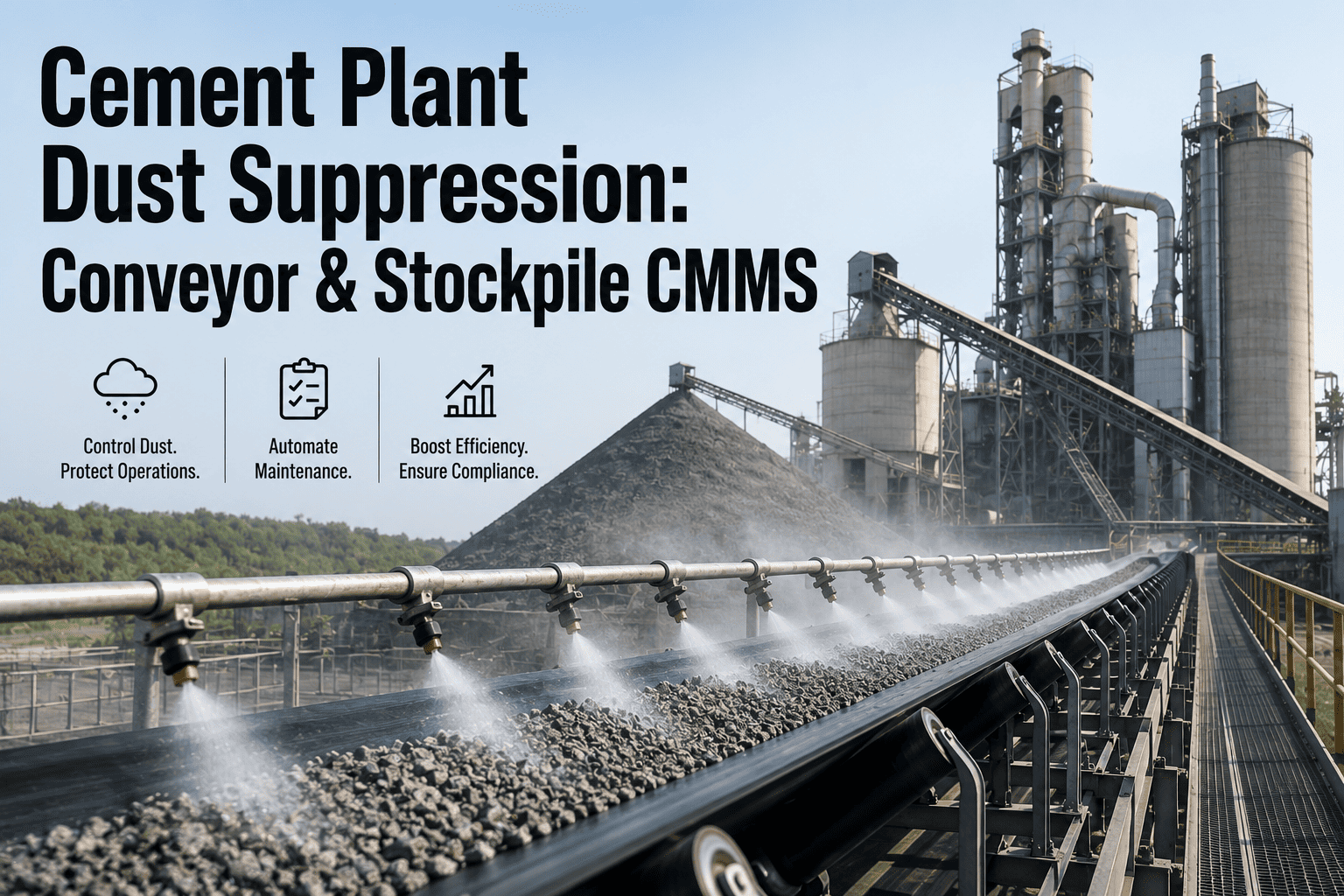
Read More
Cement plants lose an estimated 3-8% of finished clinker to fugitive dust at transfer points, stockpiles, and conveyor discharge chutes — material that escapes the process, fouls motors, and travels beyond the fenceline into nearby neighborhoods.

Read More
Specific heat consumption is the single most ruthless KPI on a cement kiln — every extra 10 kcal/kg clinker quietly burns roughly $0.40–0.60 per tonne through the stack, and on a 5,000 tpd line that compounds into seven-figure annual losses before

Read More
Cement production loses an estimated 8–12% of available operating hours every year to unplanned downtime, and a single kiln stop can cost $40,000–$120,000 per day in lost clinker output, fuel waste, and restart energy. Downtime analytics — knowing

Read More
Cement kiln heat balance is where maintenance discipline meets fuel economics — every percentage point of false air, every missing millimeter of refractory, and every misaligned burner tip shows up directly as specific heat consumption on your mon

Read More
Energy accounts for 30 to 40 percent of total production cost in a cement plant, and a measurable share of that load is governed not by process design but by how well maintenance protects kiln heat balance, mill power draw, cooler recovery and fan
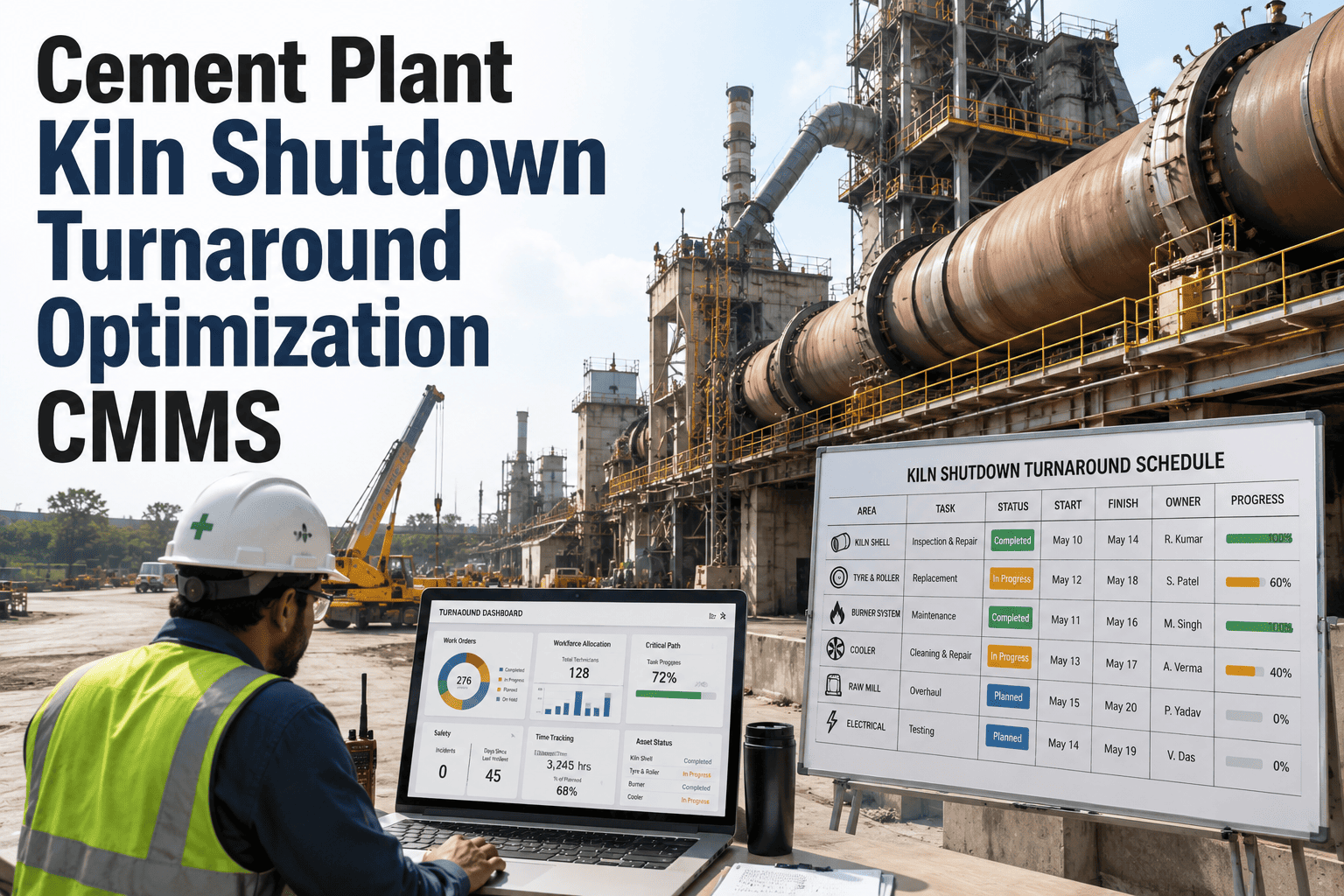
Read More
A cement kiln shutdown turnaround is the most maintenance-intensive event on the plant calendar — typically 2,500–4,500 discrete work orders compressed into a 21- to 35-day outage window, with direct contractor and lost-production costs running $4

Read More
A ball mill is the single largest power draw in a cement grinding circuit — typically 3,000 to 5,000 kW per unit — so an unplanned trip doesn't just stall one machine, it halts the entire finish-grinding line and cascades into missed shipping wind
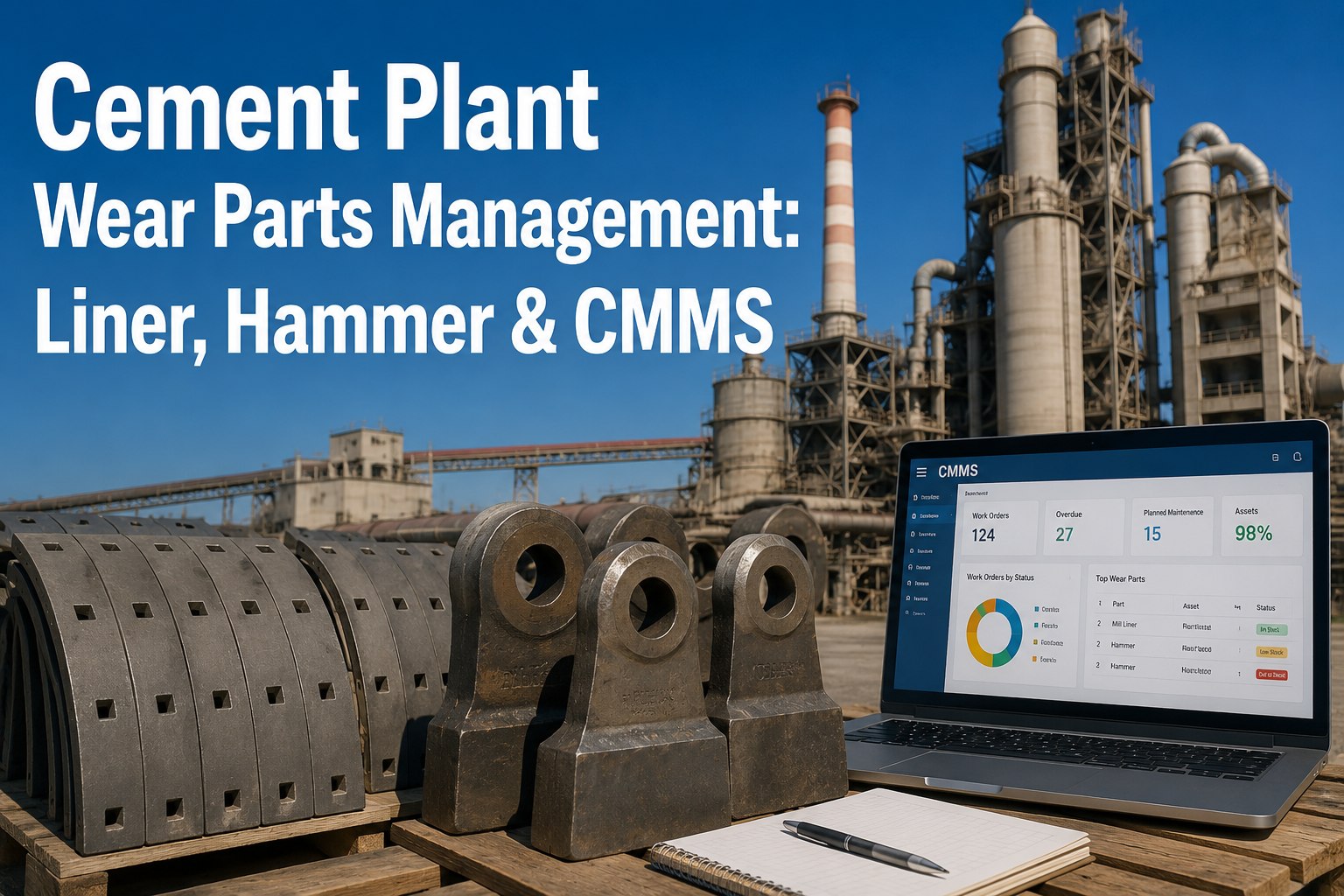
Read More
Cement plants routinely lose 3–5% of annual revenue to accelerated wear on ball mill liners, crusher hammers, VRM roller segments, and kiln refractory — yet most still schedule replacements on gut feel, fixed run-hours, or the loudest operator on

Read More
For a cement plant running 24/7 with 1,500–3,000 tracked assets, lifecycle management is the strategic layer that sits above preventive and predictive maintenance — the discipline that tells you when a kiln shell reaches its 18–22 year fatigue cei

Read More
Cement plants lose an estimated 5–7% of annual revenue to unplanned downtime, with a single kiln outage costing $80,000–$120,000 per day in lost clinker output. The maintenance strategy you choose—preventive (PM), predictive (PdM), or a calculated

Read More
Unplanned downtime in a cement plant is not just a maintenance problem — it is a direct, measurable hit to clinker output, kiln fuel efficiency, and monthly margin. Industry benchmarks show that best-in-class cement producers hold unplanned downti
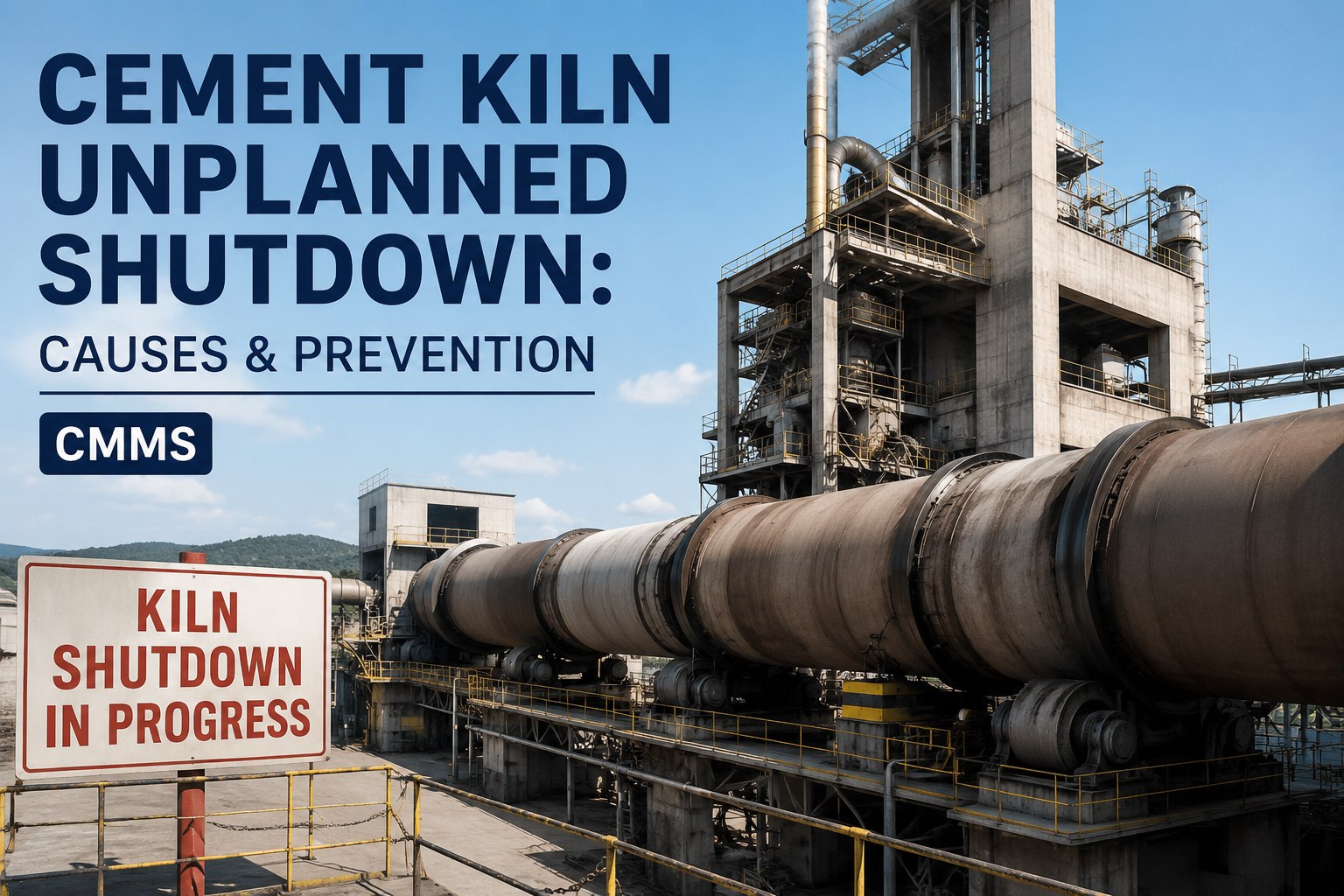
Read More
Cement kiln unplanned shutdown is the single most consequential downtime event in a cement plant — every unexpected stop typically costs six figures in lost production, fuel, and labor. A kiln that goes down for 24 hours can burn through $150,000–

Read More
When a kiln girth gear cracks mid-campaign or a raw mill fan trips on the same bearing for the third time in a quarter, the difference between a $40,000 fix and a $400,000 disaster is almost always a skipped root cause analysis. Cement plants run

Read More
In a cement plant, a single kiln main drive gearbox can cost upward of $480,000 to replace — and when it fails unexpectedly, clinker production stops within minutes, with downtime losses running $8,000–$15,000 per hour. Oil analysis catches the ea

Read More
Vibration analysis remains the single highest-leverage predictive maintenance technology in a cement plant, where a kiln support roller, ball mill gearbox, or ID fan can fail catastrophically and wipe out an entire shift of clinker production. For

Read More
Cement manufacturing consumes more maintenance hours per ton of output than almost any other heavy industry, with a single kiln outage routinely costing $80,000–$250,000 per day in lost clinker production. The shift from time-based or reactive mai
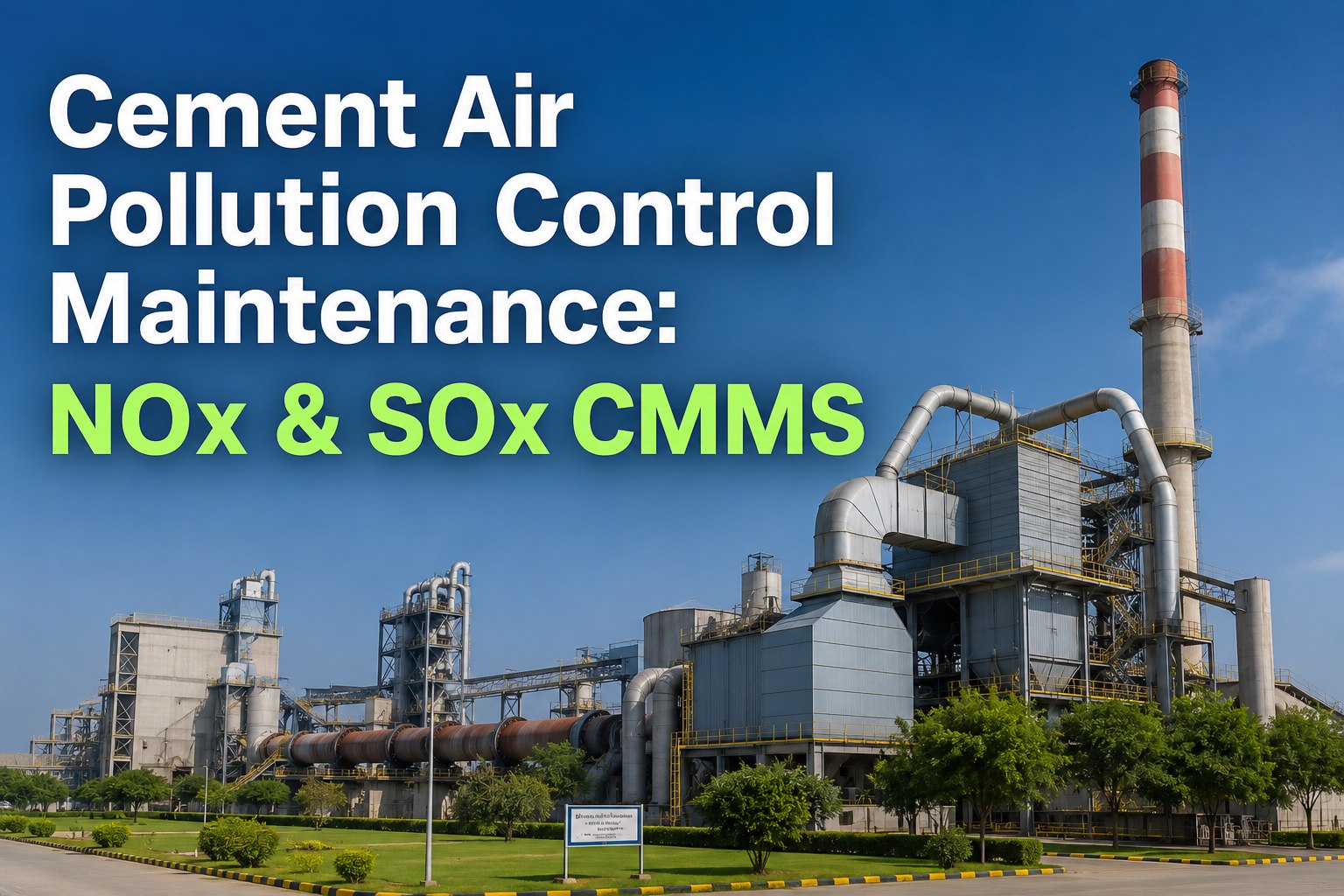
Read More
Cement manufacturing runs hot, fast, and under a microscope — every kiln, preheater, and raw-mill exhaust stack is measured continuously for NOx, SOx, particulate, and mercury. When an SNCR ammonia lance cokes, an SCR catalyst bed deactivates, or
Read More
Dust buildup in the preheater cyclones and kiln inlet is one of the top three causes of unplanned kiln stops in cement plants, often consuming 40 to 70 hours of lost production per event when a complete blockage forces an emergency shutdown. Most
Read More
Cement plant dust ductwork is the silent backbone of conveying, dedusting and emission control — yet most plants only inspect it after a leak, a buildup blockage, or an unscheduled shutdown reveals the damage. Abrasive cement dust moves at 18–22 m
Read More
Cascade failures in cement plants cost an average of $180,000 per kiln outage event — and a single raw mill trip can domino through conveyors, silos, and finish mills to halt production for 18 to 36 hours. Kiln-to-raw-mill dependency is the most u

Read More
When a kiln trips mid-clinker or a raw mill seizes at 3 a.m., the difference between a four-hour recovery and a three-day outage comes down to one document: your cement plant emergency maintenance response protocol. Industry benchmarks show that 6

Read More
For most cement plants the gap between planned and unplanned work is the single clearest signal of maintenance maturity — a plant running 40:60 is firefighting kiln failures and conveyor outages, while a plant at 80:20 controls its own schedule, l

Read More
A single missing kiln roller bearing, a delayed gearbox coupling, or a worn-out fan impeller sitting on a vendor's backlog can idle a 5,000 TPD cement line for 72 hours or more, translating into six-figure revenue losses and unplanned auxiliary we

Read More
Raw mill downtime cascades directly into kiln feed problems — every hour your raw mill sits idle becomes an hour of risk for kiln continuity, clinker output, and the day's production target. A modern CMMS flips that dynamic by converting reactive
Read More
Cement grinding consumes 40–60% of a plant's electrical energy and sits at the narrow end of the production funnel — when the ball mill or vertical roller mill (VRM) stops, clinker inventory backs up, dispatch windows slip, and every idle hour con
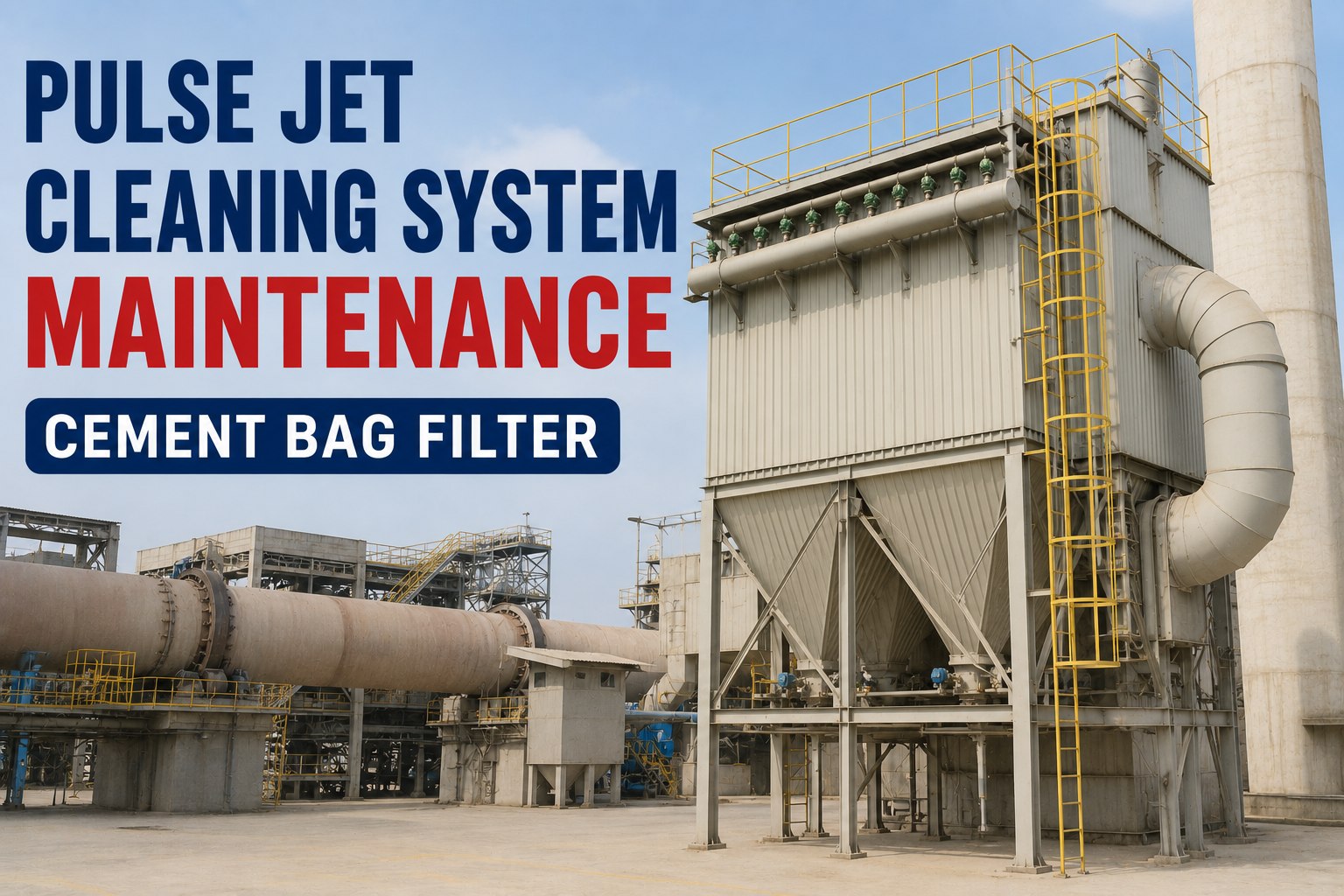
Read More
Pulse jet cleaning system maintenance is the single biggest determinant of bag filter differential pressure in a cement plant — and DP drift is exactly where energy waste, premature bag failure, and emission excursions hide. A well-tuned pulse jet

Read More
Cement plants lose an estimated 8–12% of annual clinker capacity to unplanned fan outages, with ID fans and PA fans accounting for the majority of critical air-handling failures across the kiln and cooler systems. When an ID fan trips on vibration

Read More
Cement plants operate under some of the tightest particulate-matter limits in U.S. industry, and EPA enforcement has only sharpened since the NESHAP for Portland Cement (40 CFR 63, Subpart LLL) tightened PM limits to 0.04 lb/ton of clinker. Every

Read More
Cyclone separators in the raw mill and preheater circuits of a cement plant handle some of the most abrasive material streams in the industry, enduring constant particle impacts at temperatures exceeding 300°C. As cone walls thin and vortex finder

Read More
Electrostatic precipitators shoulder the heaviest dust loads in any cement plant — kiln exhaust, clinker cooler, raw mill, and cement mill venting — and a single misaligned rapper plate or fouled discharge electrode can put a stack test, an operat

Read More
Bag filters shoulder most of the particulate load in a modern cement plant, and a single compromised chamber can push stack emissions past the 30 mg/Nm³ limit within hours. Differential pressure, pulse-jet health, and casing tightness together dec

Read More
Cement plant dust control is where environmental compliance and operational reliability collide — a single underperforming bag filter or electrostatic precipitator can push stack emissions past permit limits while quietly bleeding tonnes of recove

Read More
Stacker reclaimers are the single most consequential bottleneck in a cement plant's raw material yard — when one goes down, the raw mill starves within hours and clinker production follows. This guide breaks down a complete preventive and predicti
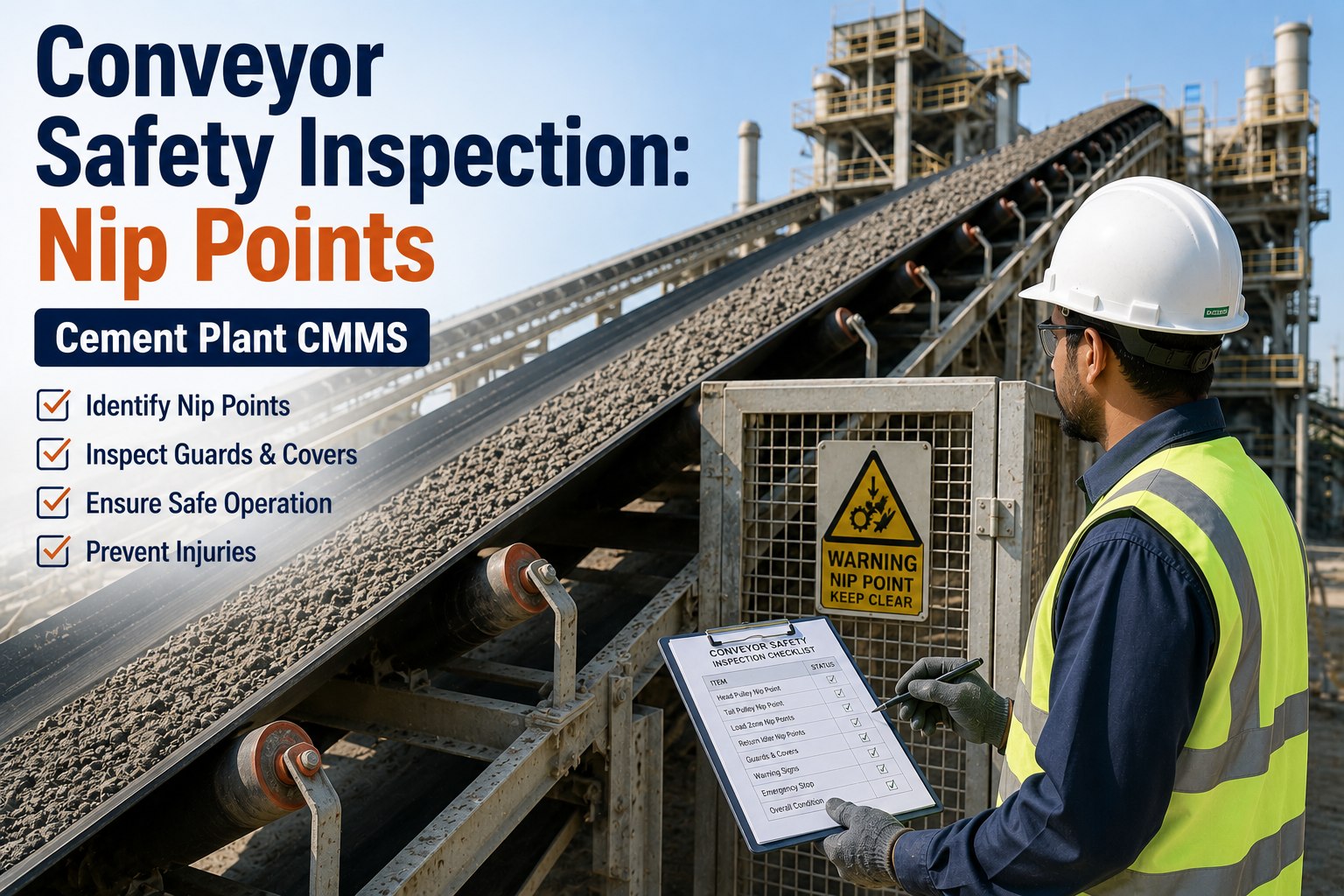
Read More
Conveyor systems move nearly every ton of material through a cement plant, from raw limestone at the crusher to clinker on the cooler belt and finished cement to the silo. Nip points at head pulleys, tail pulleys, bend pulleys and snub pulleys are

Read More
A single cement plant often runs 40–80 conveyor belts moving clinker, limestone, gypsum and finished cement, and each belt carries hundreds of inspection points that shift crews are expected to verify daily. Moving those points from a clipboard to
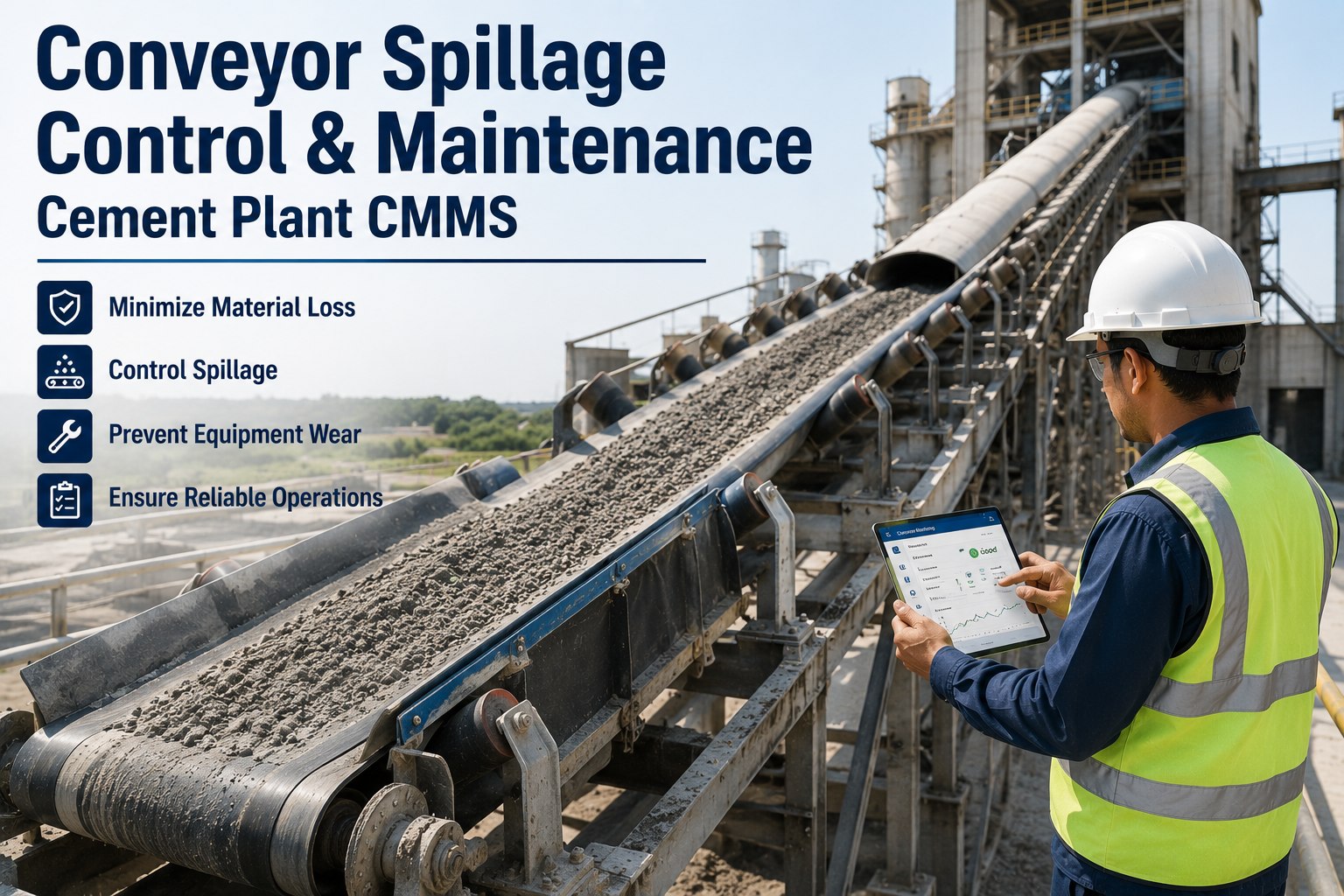
Read More
Conveyor spillage in a cement plant is rarely just a housekeeping nuisance — every kilogram of clinker dust or limestone fines that escapes the belt is paid for three times: in lost material, in the labour to shovel it back, and in the accelerated
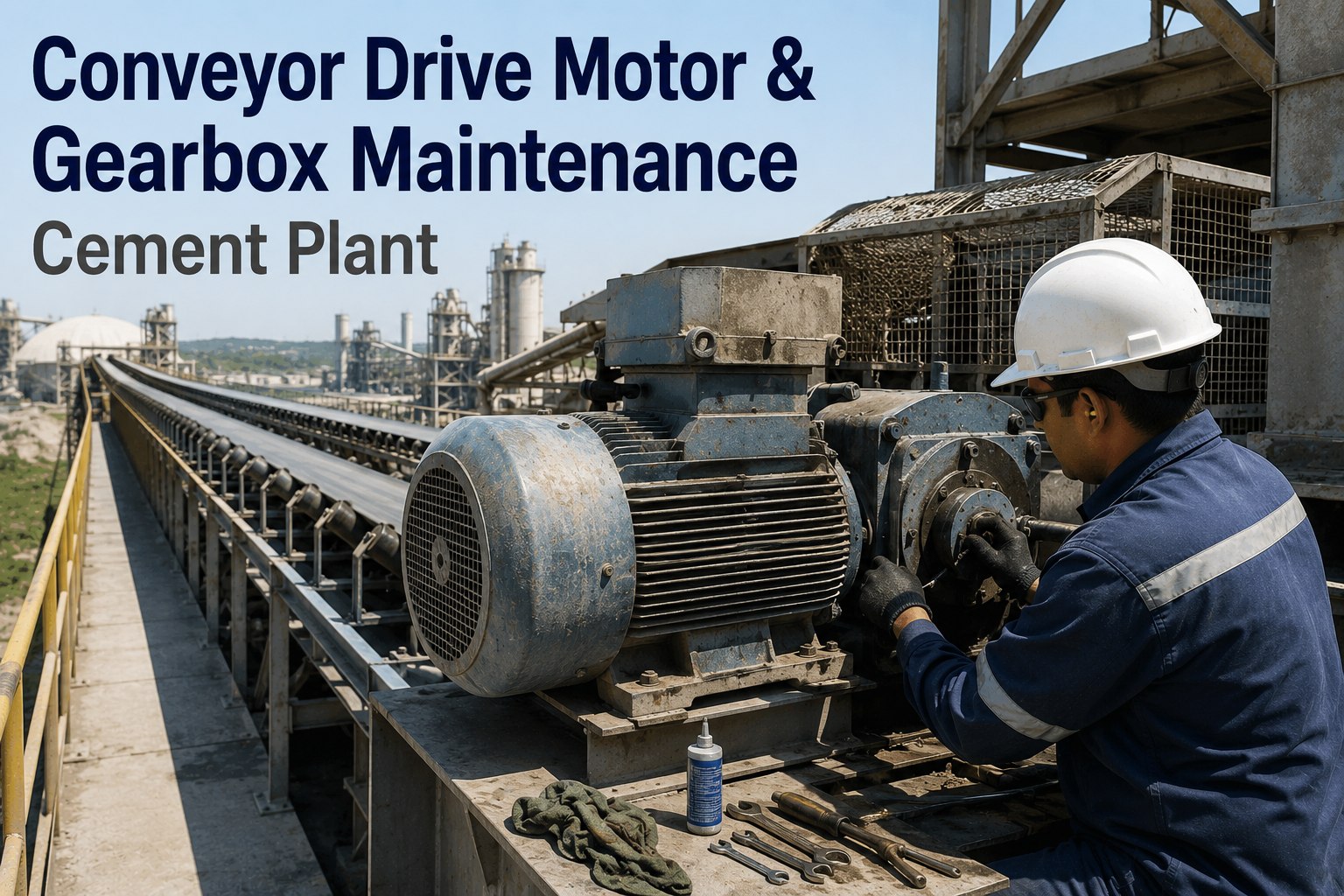
Read More
A single conveyor drive failure can halt an entire kiln feed line within minutes — and at a 5,000-tpd cement plant, every hour of stoppage translates to roughly $40,000–$70,000 in lost production. Because drive motors and gearboxes sit at the head

Read More
Predictive maintenance for conveyors in a cement plant delivers one of the fastest paybacks available to reliability teams — often under 9 months — because a single 90-minute unscheduled stoppage on a kiln feed belt can cost $40,000–$120,000 in lo

Read More
Rotary kilns are the thermal heart of every cement plant, and a single unplanned refractory failure can lock down production for 7 to 21 days at a cost of $450K to $1.2M per incident. A kiln digital twin collapses that risk by mirroring thermal, m
Read More
Screw conveyors in cement plants handle some of the harshest material in any industry — fine dust, hot clinker, abrasive grit — and the wear shows up fast on flights, shafts, and seals. A single leaking trough can scatter tons of material per week

Read More
Raw material conveyors and quarry belts operate at the brutal intersection of heavy impact loads, abrasive limestone dust, and continuous weather exposure — making them the single most failure-prone asset class in a cement plant's upstream chain.
Read More
In cement operations, a single belt conveyor can carry over 1,000 tonnes of clinker, limestone, or raw meal per hour across distances that stretch hundreds of metres — and when one fails, the entire kiln line can be idled within minutes. Belt conv
Read More
Alternative fuel and raw materials systems have become the most maintenance-hungry corner of the modern cement plant, where heterogeneous feed streams, abrasive refuse-derived fuel, and constant fire risk converge inside a single conveyor chain. A

Read More
Cement producers lose an estimated $50 billion annually to unplanned downtime, and a single rotary kiln trip can cost upwards of $80,000 per day in lost clinker output. Predictive maintenance has shifted from a competitive edge to a baseline opera

Read More
Conveyor idlers are the single most under-managed asset class in a cement plant — a typical 10,000-TPD operation runs 3,500 to 6,000 idlers across its raw meal, kiln feed, clinker and finished-cement belts, yet most are inspected only when a mecha

Read More
The kiln burner is the single most influential component in a cement plant's heat economy — flame shape, coating stability, and specific heat consumption all trace back to its condition. A burner degraded by just 8 mm of tip wear can push fuel con

Read More
The precalciner and tertiary air duct (TAD) together handle roughly 60% of total fuel combustion on a modern cement kiln line, which makes them the single largest lever for thermal efficiency and clinker capacity. A well-run precalciner maintenanc
Read More
Clinker conveyors run hotter and wear harder than almost any other asset in a cement plant — they routinely carry material at 150 to 300 °C, and a single failed idler or scorched belt can shut down kiln output for an entire shift. This guide walks

Read More
Clinker cooler performance decides both fuel efficiency and clinker quality — and grate plate wear plus fan issues quietly erode both. This guide covers clinker cooler maintenance including grate plate and fans in cement plants: grate inspection i

Read More
Reliability-centered maintenance in a cement plant lives or dies on three assets: the rotary kiln, the ball mill, and the primary crusher. These are the units that consume 60–70% of your electrical kWh and nearly all of your unplanned downtime bud

Read More
Crusher predictive maintenance is the difference between a cement plant that hits its clinker-to-finish targets and one that bleeds availability through unplanned downtime. A single jaw, cone, or impact crusher sitting at the head of the line can
Read More
Ball mills draw the highest power of any asset in a cement plant — a single unplanned trip on the main or trunnion bearing can halt grinding for 12–48 hours and cost upwards of $60,000 per day in lost finish-mill throughput. Predictive maintenance

Read More
Vertical roller mills concentrate an unreasonable share of plant power, downtime risk and grinding capacity into one asset — a single VRM outage often idles the entire kiln line and burns six-figure margins per week. This guide maps the high-value

Read More
Most cement plants already capture kiln temperature, motor vibration and fan amperage through SCADA — yet 60% of maintenance work orders are still raised by hand after a phone call from the operator. Bridging SCADA and CMMS changes that: PLC alarm

Read More
Remaining useful life prediction for refractory and mill liners is one of the highest-value predictive maintenance outputs in a cement plant, where every additional tonne of clinker per campaign converts directly into operating margin. Kiln refrac

Read More
Digital twins for cement plant kiln and mill circuits are no longer pilot-lab experiments — they are delivering real value in 2026. Thermal, mechanical, and process models tied to live plant data now support maintenance decisions on refractory lin

Read More
A cement plant predictive maintenance pilot is the inflection point where PdM either earns its budget or quietly becomes another shelf project. Industry data consistently shows that cement producers lose 5–7% of annual revenue to unplanned downtim
Read More
A cement plant that runs below 85% clinker availability is burning money in every minute of unplanned downtime — a single kiln stoppage can cost $40,000–$120,000 per day in lost production, fuel and refractory damage. The equipment reliability pro

Read More
Cement kiln run factor is the single reliability metric that separates a plant operating in the 90th percentile from one bleeding margin every shutdown cycle. Every 1% of run factor improvement translates directly to thousands of tons of additiona
Read More
The kiln feed system is the single most consequential choke point in a cement plant — when the feed elevator trips or the rotary feeder wears past tolerance, the kiln starves within minutes and clinker production drops to zero. Plant reliability t

Read More
Preheater tower buildup, cyclone jams, and dip tube failures account for a disproportionate share of unplanned kiln stops in modern cement plants — and every hour spent cleaning a choked stage four cyclone is lost clinker production at 80–120 tonn

Read More
In a cement plant, almost every ton of clinker and finished cement passes through a bucket elevator at least once — and when that elevator stops, the line stops with it. Bucket elevators are mechanical single points of failure, and unplanned outag
Read More
Cement plants run on conveyors — belt, screw, drag chain, and bucket elevator systems that together stretch for kilometers across a single facility. When one of those belts stops, the kiln keeps burning fuel, the clinker cooler backs up, and a sin

Read More
Kiln main drive system failures—encompassing the primary AC motor, gearbox, and flexible coupling—account for 19% of unscheduled cement kiln downtime, costing manufacturers $220,000–$450,000 per incident when motor burnout, gear

Read More
Kiln main bearing and thrust roller failures account for 18% of unscheduled cement kiln shutdowns, costing manufacturers $180,000–$380,000 per failure when catastrophic bearing seizure forces kiln thermal shutdown, bearing repla

Read More
Kiln shell temperature scanning—infrared monitoring of the external kiln barrel surface—is the primary real-time diagnostic for detecting impending refractory failure and preventing "red kiln" events (catastrophic internal brick

Read More
Kiln refractory brick failure represents 31% of unscheduled cement kiln shutdowns, costing manufacturers $260,000–$520,000 per reline event when the kiln barrel must be cooled, breached, relined with new brick, and reheated to f
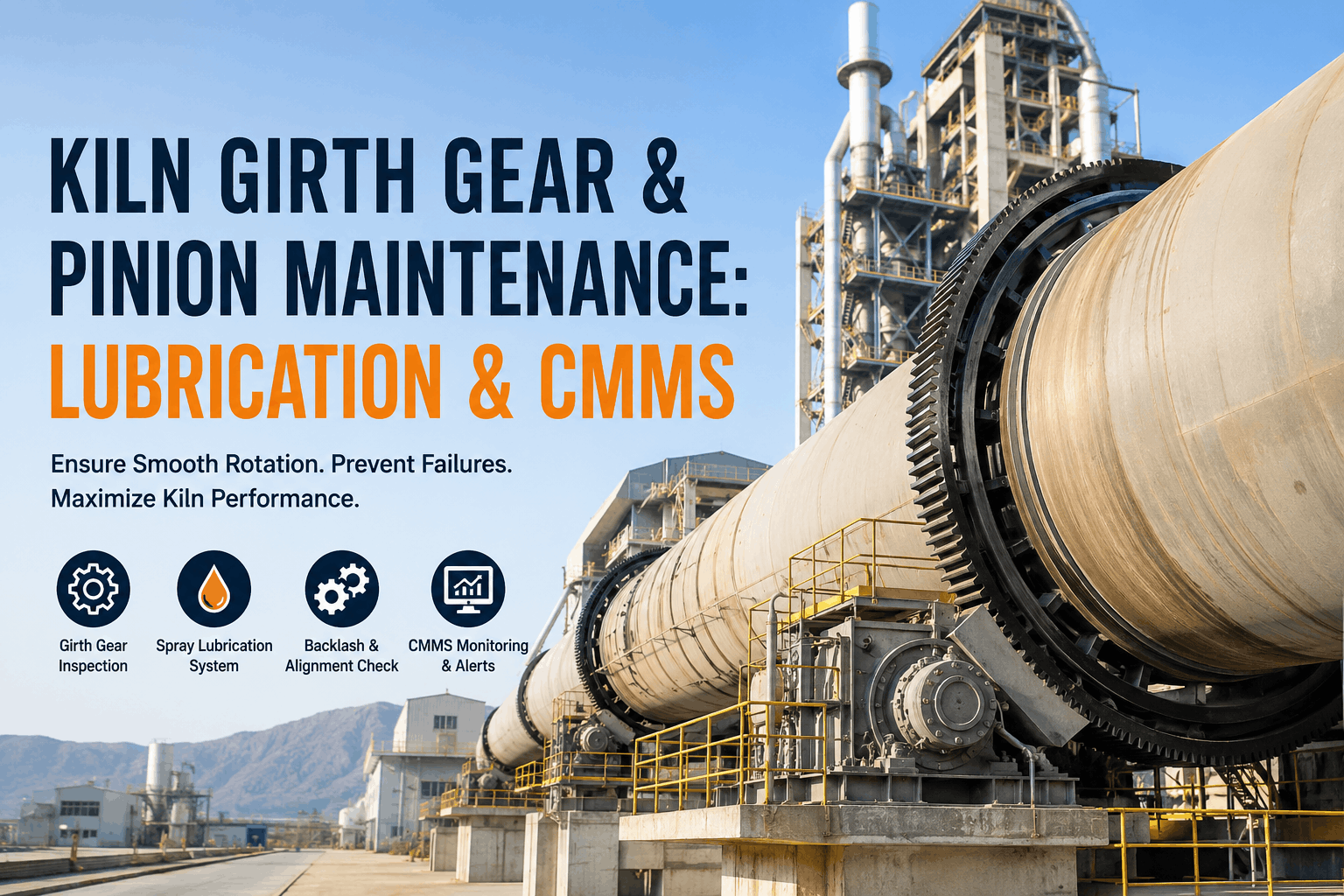
Read More
Kiln girth gear failures account for 23% of unscheduled cement kiln downtime, costing manufacturers $340,000–$680,000 per incident when production halts for gear replacement and realignment. The girth gear system—a massive tooth

Read More
Kiln riding tyres and support rollers form the mechanical foundation that enables 2,000-tonne load rotation at 1–4 RPM under temperatures exceeding 1,100°C in the burning zone. Tyre slip (also called creep or migration) — the relative

Read More
A cement plant's rotary kiln operates at 1,450°C for 330+ days per year, processing rock through a 60-meter rotating cylinder under loads exceeding 2,000 tonnes while supporting extreme temperature gradients and corrosive chemical con
Read More
Deferred maintenance in cement plants accumulates silently until a single triggering event exposes what was always deteriorating in the background. A kiln refractory lining that could have been replaced in a controlled 7-day planned o

Read More
Industry 4.0 is not about installing sensors everywhere — it's about connecting the right data streams to the right decisions at the right moment. In cement manufacturing, that means linking kiln shell thermal scanners, vibration moni
Read More
Cement plant operations face a stark financial reality: a single unplanned kiln shutdown costs $150,000–$400,000 per day in lost clinker production, thermal cycling damage to refractory lining, and cascading impacts across your raw mi

Read More
Every cement plant has a maintenance organization—but the difference between a plant that consistently achieves 90%+ kiln availability and one that lurches from one unplanned outage to the next is not budget, not headcount, and not the age of the

Read More
A cement plant major shutdown is not a maintenance event — it is a coordinated intervention across mechanical, structural, refractory, electrical, and environmental systems compressed into a 12–20 day window where $1.5M–$3M of contractor labour, p

Read More
A cement plant annual shutdown typically requires 150 to 300 contractors from 15 to 25 different specialized firms — bricklayers for kiln refractory, millwrights for mill overhaul, riggers for cooler grate replacement, welders for ductwork repair,

Read More
Cement plant maintenance teams are aging. The average maintenance professional in North America is 54 years old, with only 16% younger than 40. By 2030, an estimated 2.1 million manufacturing positions will go unfilled — and cement plants are amon

Read More
Selecting the right CMMS for your cement plant is not a software purchase decision — it is a maintenance strategy decision. A rotary kiln operating at $45,000 per hour of unplanned downtime cannot afford generic CMMS platforms that require six mon
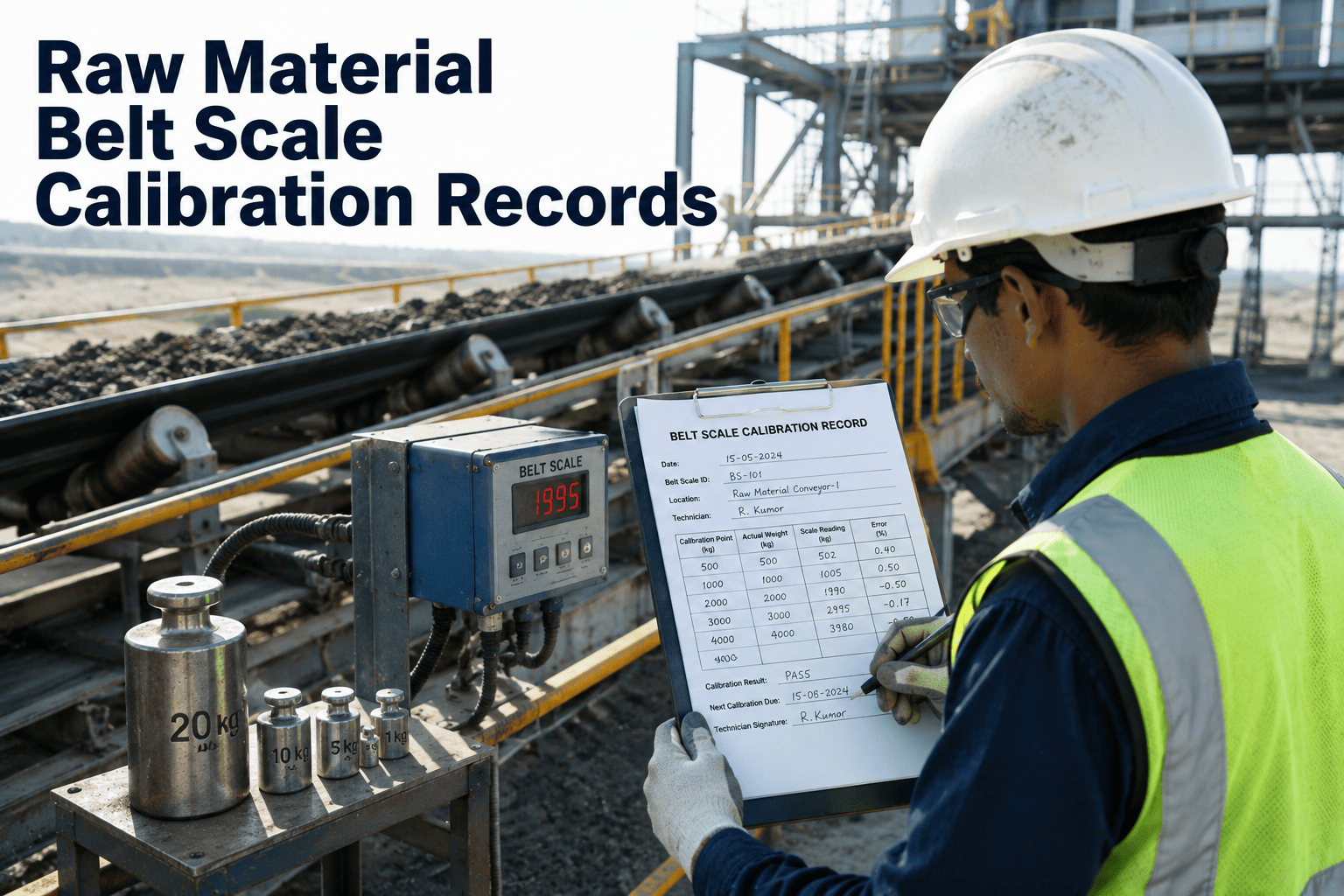
Read More
A raw material belt scale is the meter that decides how much limestone, clay, and additive reach the raw mill and kiln — and when it drifts, every tonne is either given away or throws off the mix. Belt tension shifts, dust cakes the weighbridge, i

Read More
A stacker reclaimer is a machine the length of a football pitch that rolls back and forth on two steel rails all day, moving limestone into and out of the pre-blending yard. Those rails are the one component the whole machine's safety rests on — l
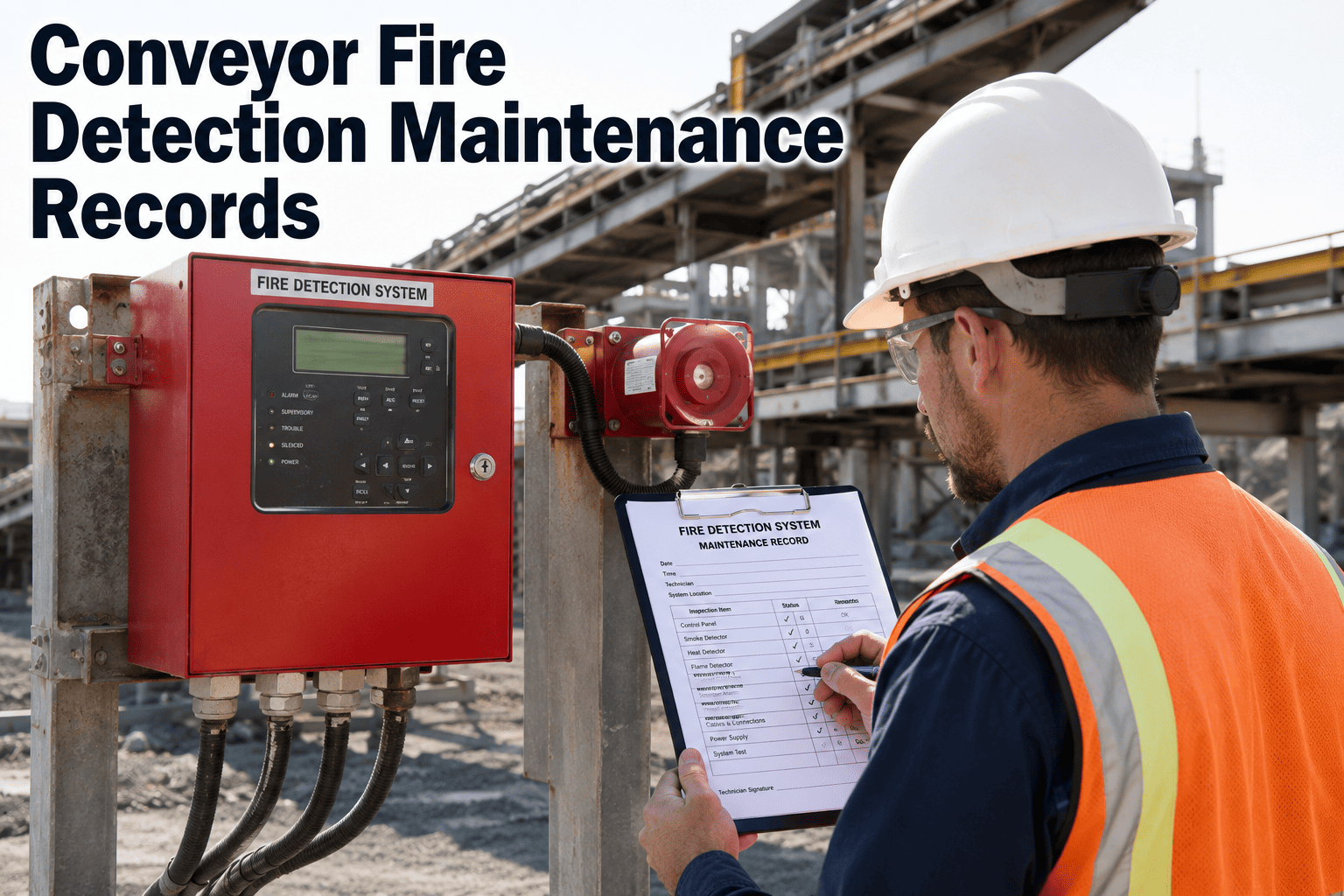
Read More
A conveyor belt is one of the few pieces of plant equipment that is also its own fuel. It runs for kilometers, often unattended, and roughly 40% of belt fires start from a single seized roller heating up unnoticed. The fire detection system that g

Read More
On a cement plant conveyor, the lagging is a thin protective skin bonded to the pulley shell — and when it fails, it rarely fails quietly. A drive pulley that loses its tread starts slipping, the belt begins to mistrack, edges fray, and a repair t
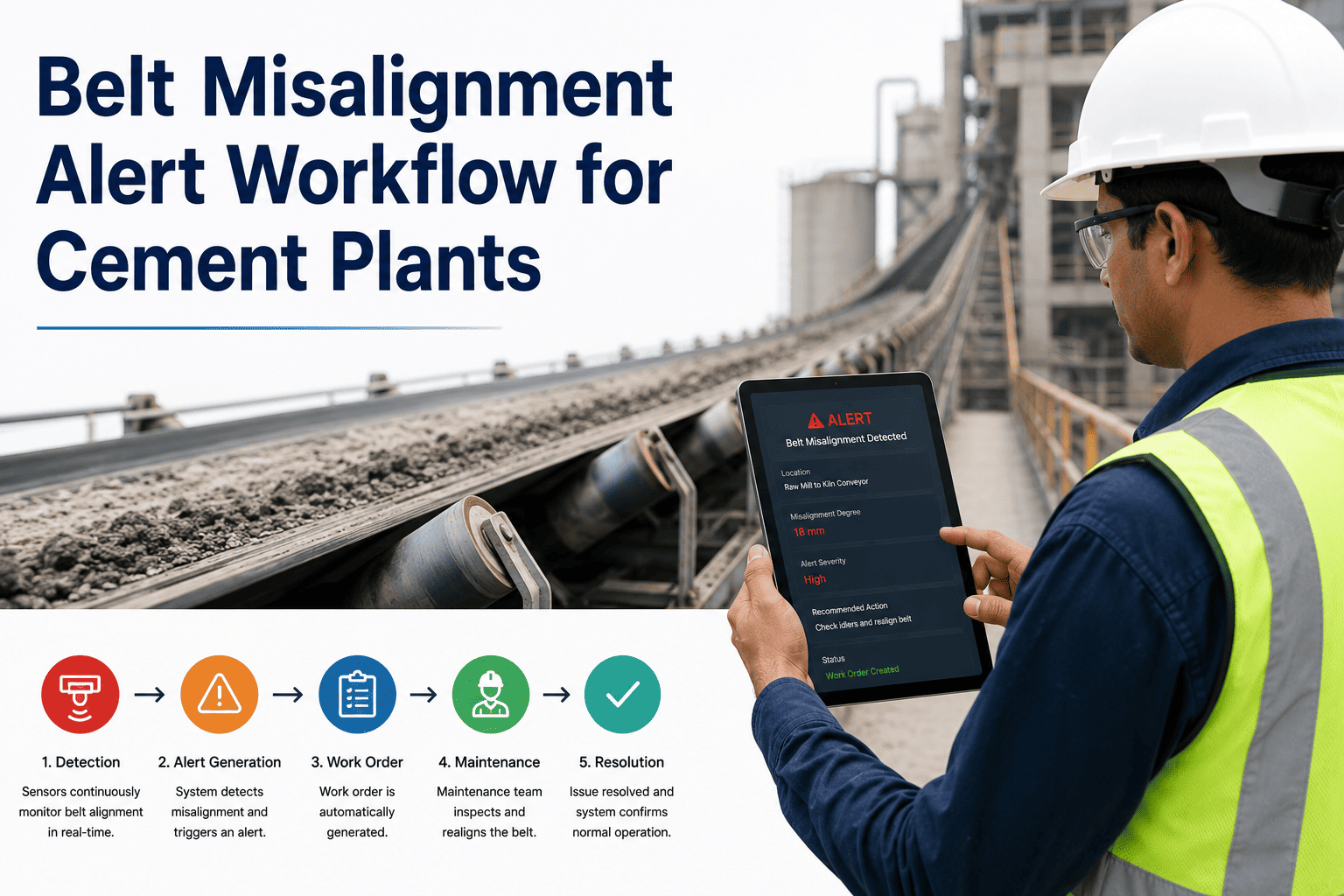
Read More
A conveyor belt that drifts even a few centimetres off centre does not stay that small for long. Edge contact against the frame starts wearing the belt cover, material begins spilling at the point of contact, and the misalignment itself gets worse

Read More
A single long belt conveyor in a cement plant can carry thousands of idlers along its route, and every one of them is a potential ignition point. A bearing seizes, the roller stops turning, and the belt keeps dragging across it — generating fricti

Read More
Spillage at a transfer chute or belt discharge point rarely gets logged as a maintenance issue until it has already become a safety hazard or a housekeeping complaint. An operator notices material building up under a conveyor, mentions it at shift

Read More
Raw material travels a long way before it becomes clinker — out of the quarry face, through primary and secondary crushing, across kilometres of conveyor, into the raw mill, and finally into the kiln feed system. Every one of those stages has its

Read More
A crusher bearing does not fail without warning. It heats gradually, a few degrees at a time, as grease breaks down, dust works its way past the seal, or feed load climbs past what the race was built to carry. Most plants only catch this drift whe
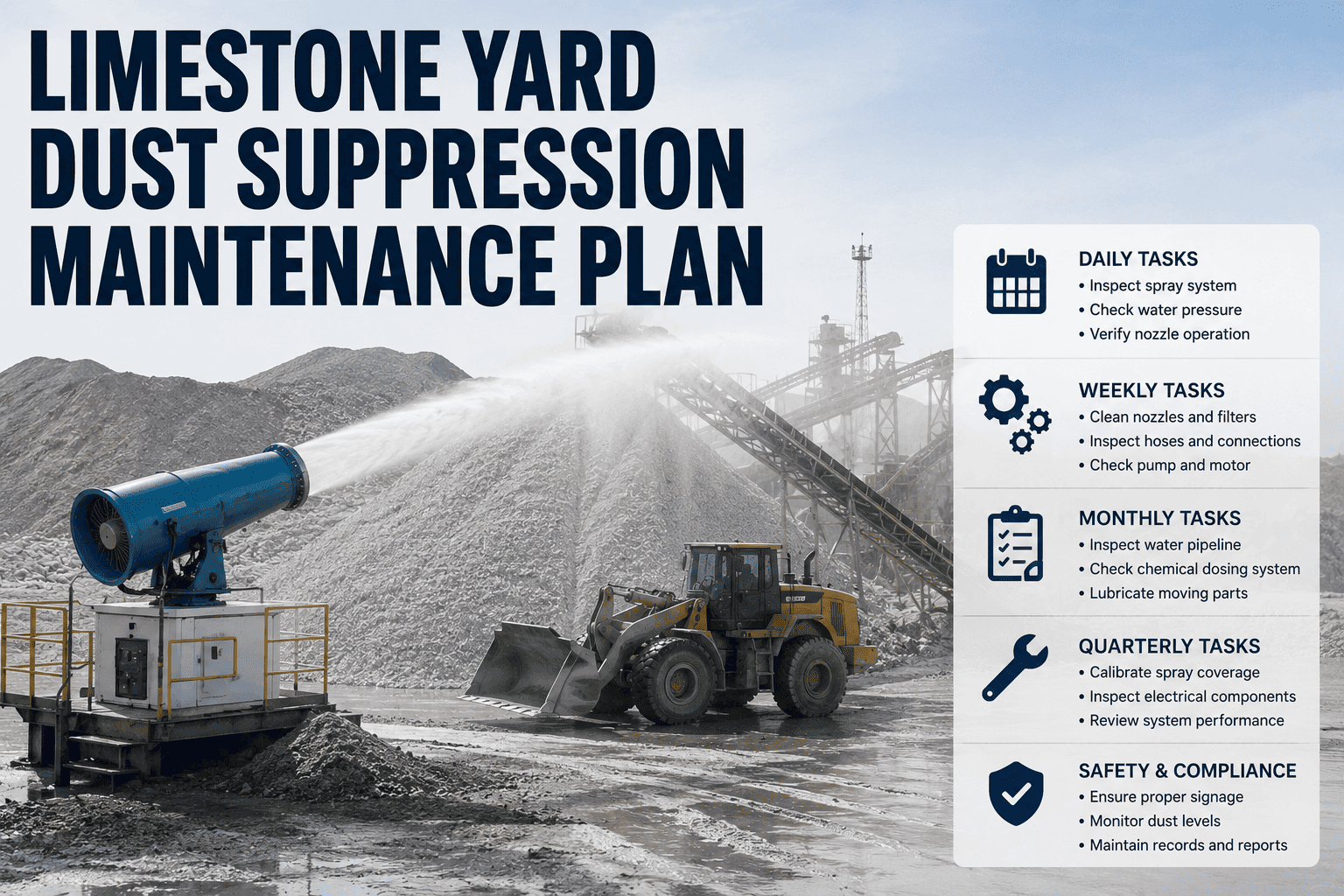
Read More
A limestone yard is one of the highest-volume dust sources on a cement plant site — crushing, stockpiling, and truck traffic all generate fugitive particulate that OSHA, EPA, and MSHA each regulate independently, with a single missed inspection or

Read More
Mill liners account for 30 to 40% of ball mill maintenance cost, and the decision of exactly when to reline sits on a knife edge — replace too early and budget is wasted on liner that still had service life left, replace too late and the risk shif
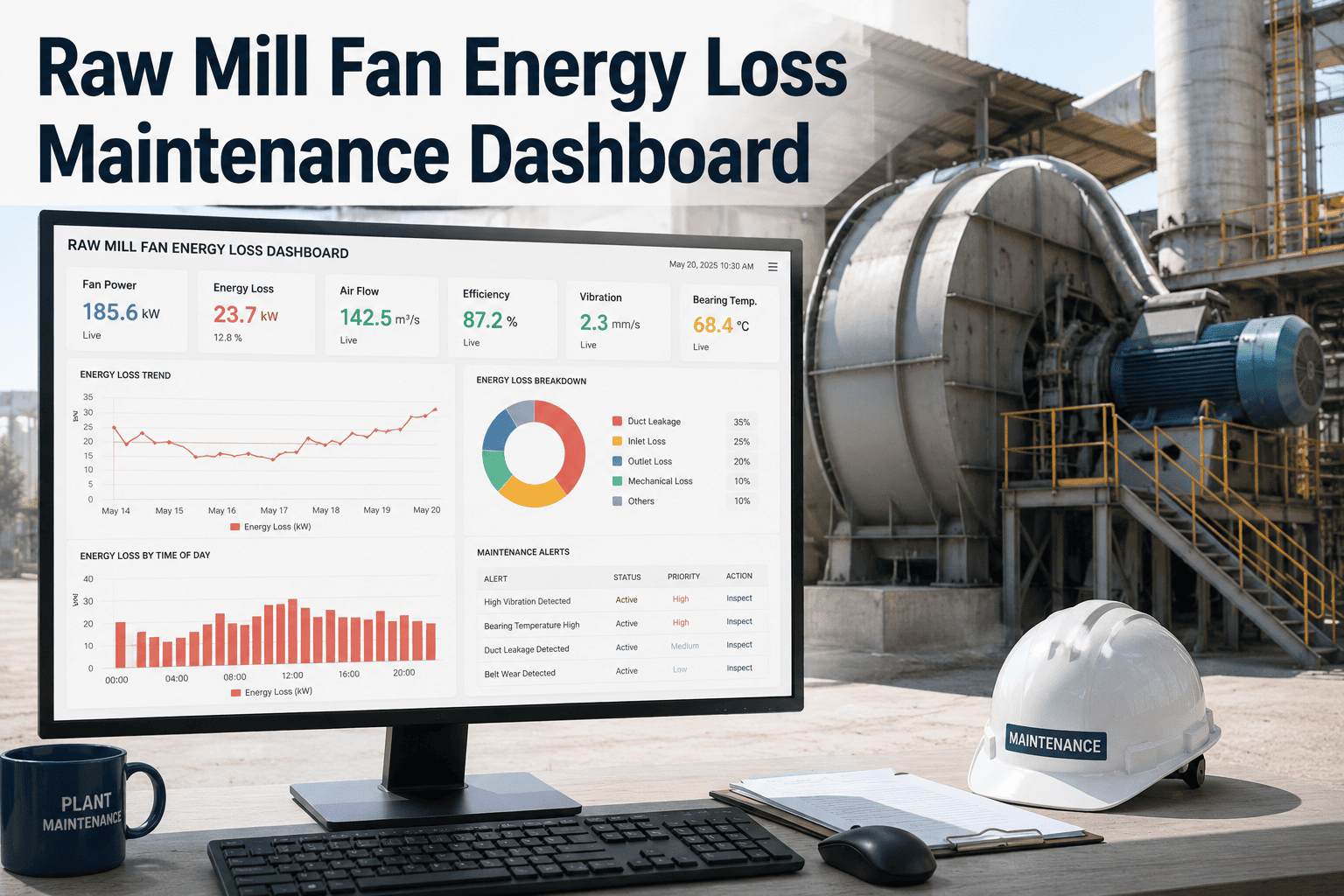
Read More
The raw mill grinding circuit is the single largest electrical load in cement raw material preparation, drawing 4,000 to 7,000 kW on a typical mid-size plant and representing $1.8 to $2.8 million a year in electricity cost. The mill fan alone can

Read More
A separator drive bearing rarely fails without warning — it fails without anyone watching. Motor current signature analysis on separator drives can now flag stator winding degradation and bearing wear three to five weeks before failure, turning wh
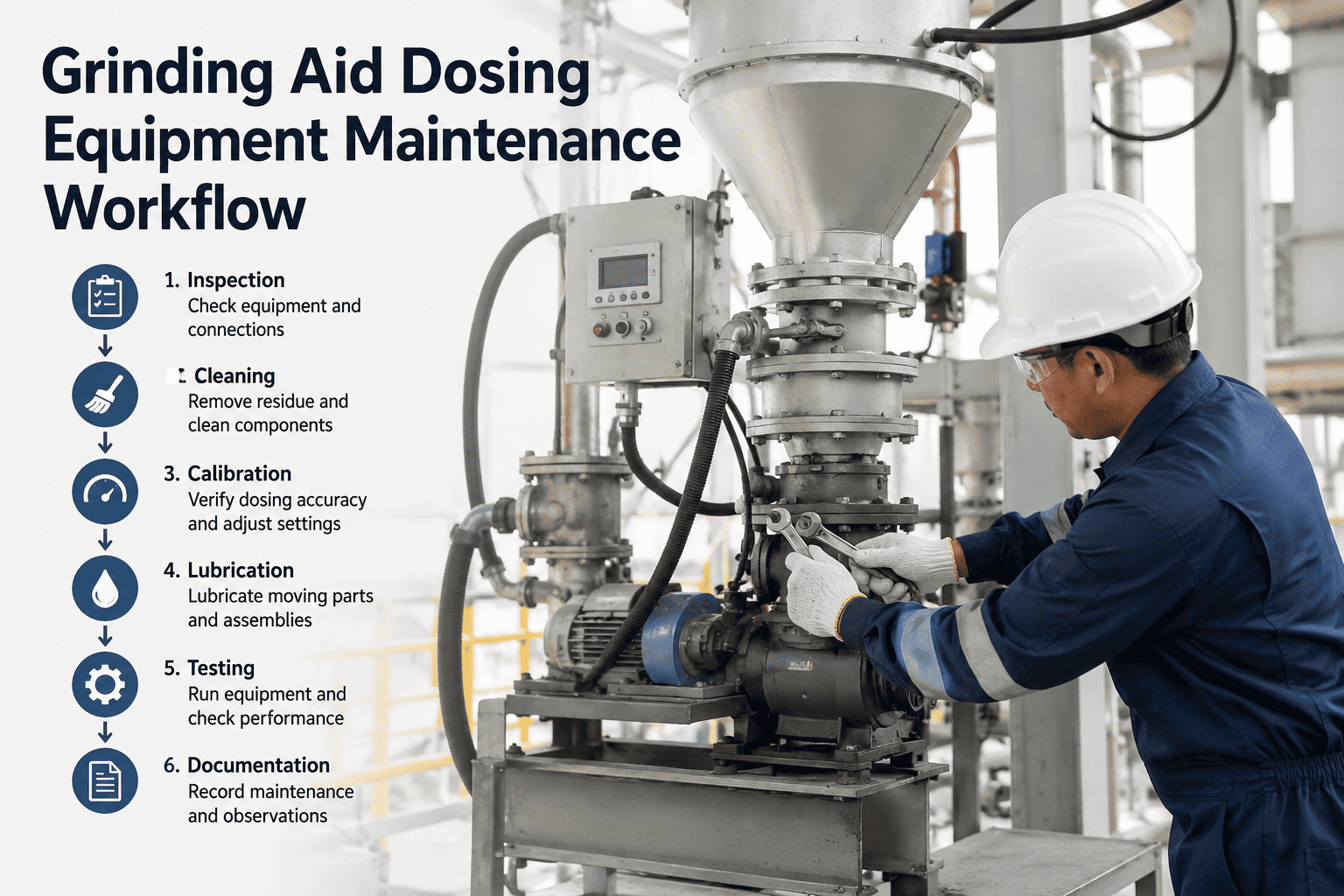
Read More
Grinding aid dosing pumps run continuously at low flow, 24 hours a day, for years without a planned replacement — and when they drift out of calibration, nobody sees it on a gauge. Industry data shows grinding aids can lift cement mill throughput

Read More
Cement plants spending $3.00–$4.00 per tonne on maintenance are hemorrhaging profit: a 1000 TPD plant at $3.50/tonne costs $1.275M annually, versus industry best-in-class $2.00–$2.30/tonne costing $730K–$840K annually. The $435K–$545K annual diffe
Read More
Cement plants relying on calendar-based preventive maintenance—replacing ball mill liners every X months regardless of production, replacing kiln bricks every Y months whether throughput is high or low, scheduling cooler maintenance on fixed dates

Read More
Cement plant operators relying on gut-feel maintenance discipline without tracked KPIs operate blind—kiln run factors drift from 89% to 84% before anyone notices, maintenance cost per tonne creeps from $2.30 to $3.50 silently, and emergency repair

Read More
Cement manufacturing runs on razor-thin margins—one unplanned kiln shutdown costs $200,000+ in lost production within 48 hours, and raw material throughput directly ties to maintenance discipline on rotary kilns, ball mills, VRM units, clinker coo

Read More
Cement plants without a structured asset register operate blind on equipment: no one can answer "when was this kiln bearing last inspected," "what is the total spare parts cost for this ball mill," or "which rotation of grate plates is currently i

Read More
The kiln gave nineteen days of warning. Bearing temperature trended up for 19 days, shell differential widened for 12, girth-gear lubrication pressure dropped for 8 — every data point logged, none of it connected to a work order. When it finally s

Read More
Mean Time Between Failures is the reliability metric that separates cement plants that plan their shutdowns from plants that get shut down by their equipment. When a rotary kiln achieves 2,800 hours MTBF, the plant schedules a 14-day reline on its

Read More
Maintenance cost per tonne is the single number that tells a cement plant manager whether their maintenance programme is an investment or a leak. When a 5,000 TPD plant spends $3.8 million on maintenance and produces 1.5 million tonnes annually, t

Read More
Remote cement plants operate where cellular signals drop to zero and satellite connectivity costs more than the monthly maintenance budget for an entire crusher section. Field technicians walk into kiln galleries, cooler enclosures, and raw mill p

Read More
The kiln doesn't care that the excavator feeding it broke down at the quarry face. Raw material continuity depends on equipment that often sits furthest from the plant's attention — excavators, loaders, and haul trucks working in dust, heat, and t

Read More
Dispatch trucks queue at the gate while a packing line sits jammed for the third time that shift, and nobody on the floor can say with certainty whether this is the valve bag spout, the bag tension setting, or worn rollers acting up again. Packing

Read More
A critical kiln drive motor trips on a winding fault, and the decision lands on someone's desk within the hour: rewind it, repair it, or replace it outright. Get it wrong and you either overspend on a motor that was close to end-of-life anyway, or

Read More
A shell scanner throws a hotspot alert at 2 AM. Somewhere between that alert and a technician walking the kiln with a thermal gun, most cement plants lose the thread — the alert sits in an inbox, the inspection happens late, and a refractory failu

Read More
Rolling out a mobile inspection app is the easy part. Getting technicians who have filled out paper checklists for fifteen years to trust a phone screen instead is where most CMMS adoption plans actually stall. Low adoption does not usually mean t

Read More
A cement plant running IoT condition monitoring across kilns, mills, fans, and conveyors can generate hundreds of alerts a day, and once that volume crosses a certain point, technicians stop reacting to individual alarms the way the system was des
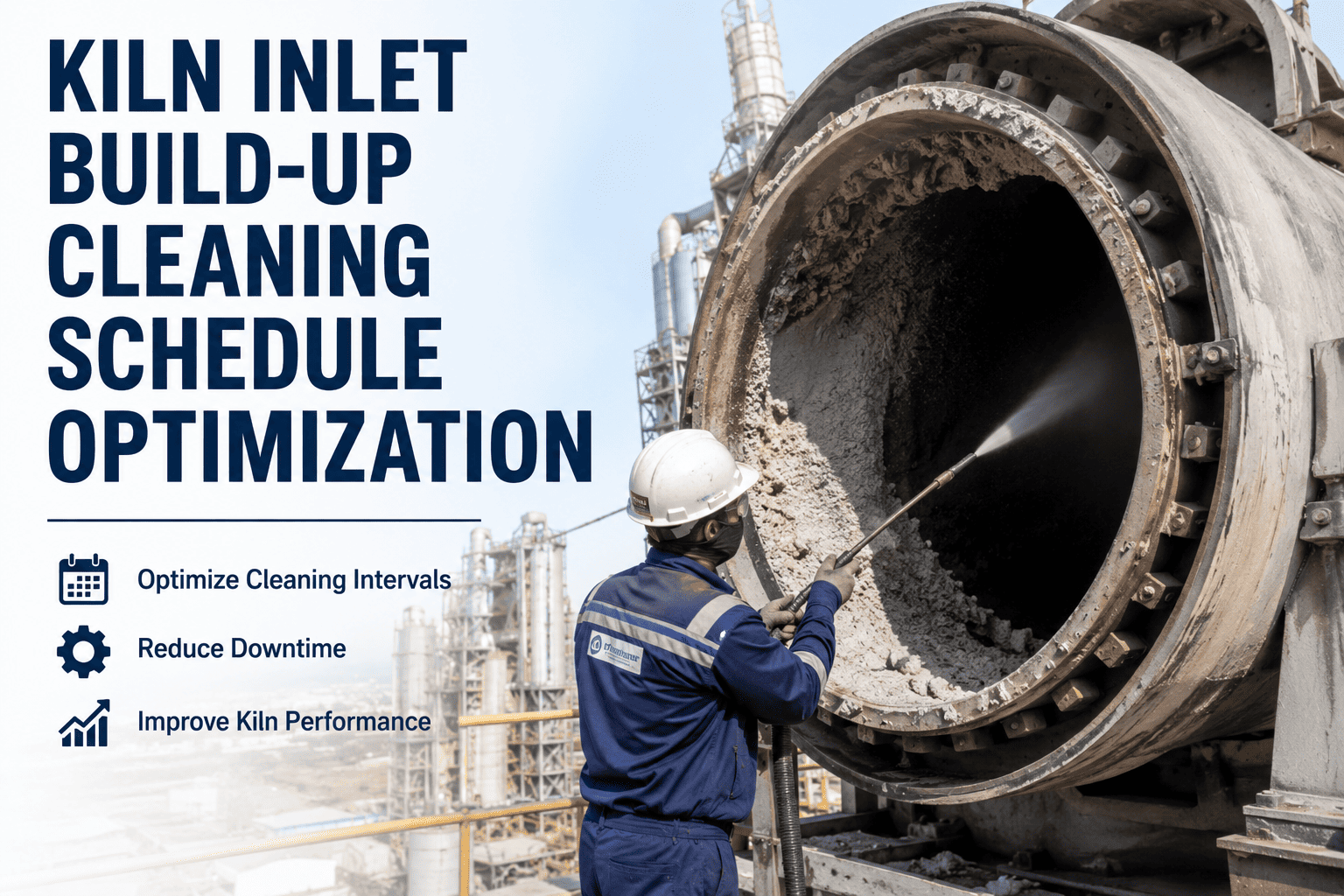
Read More
Kiln inlet build-up is one of the few failure patterns that gives a plant real warning before it becomes a shutdown. The material accumulates gradually along the riser duct and inlet chamber, narrowing gas flow and disturbing kiln stability long b

Read More
Every cement plant loses money it never sees on a single line item. It hides in emergency repairs billed at premium rates, technicians standing idle waiting for parts, duplicate spares bought because nobody checked the storeroom, and work orders t

Read More
Assigning the wrong technician to a high-risk cement plant maintenance task — a confined space entry on a preheater cyclone, a hot work permit job on a kiln shell, or a high-voltage isolation on a 6.6kV motor — is not just an efficiency problem. I

Read More
Calendar-based preventive maintenance made sense when condition data was impossible to capture reliably between inspections. For high-temperature assets in cement plants — kilns, clinker coolers, preheater systems, and pyroprocessing fans — calend

Read More
Cement plants that cannot precisely code production loss to its maintenance cause are flying blind on their reliability strategy. Every hour of unplanned kiln downtime costs ₹8–18 lakhs in lost clinker production — yet most plants aggregate all do

Read More
Cement plants lose millions in unrecoverable warranty claims every year — not because equipment didn't fail within warranty periods, but because maintenance teams cannot produce the documentation OEMs require to honor them. A single missing inspec

Read More
A bearing rarely fails without warning — temperature creeps up for days or weeks before the seizure that takes down a fan, mill, or conveyor for an entire shift. The problem is that most plants only notice the trend after someone happens to touch
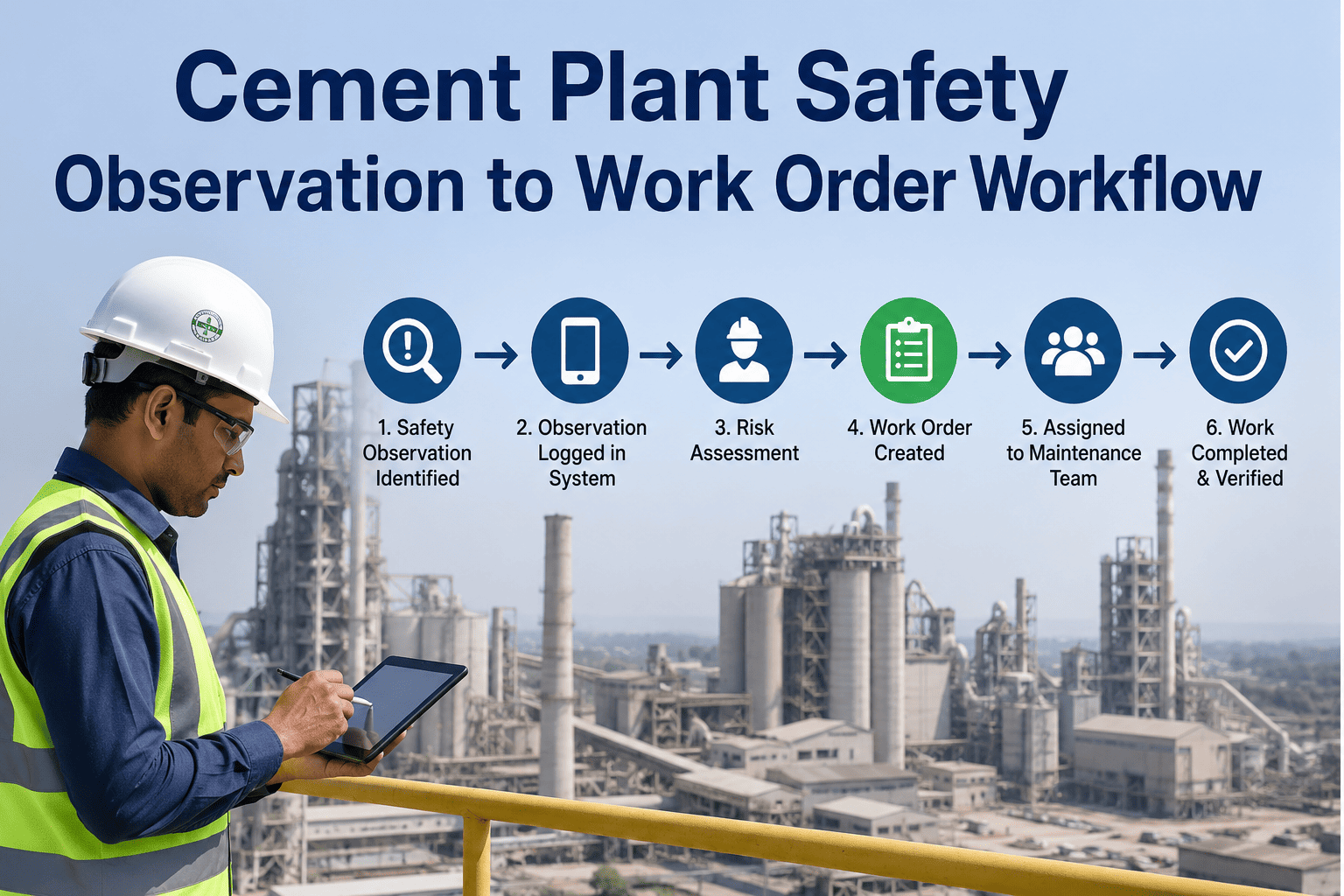
Read More
A loose handrail bolt near the kiln platform, a frayed conveyor guard, a faint oil sheen under a hot bearing — these are the warnings cement plants get before an incident, not after. The problem is rarely that nobody notices. It's that the observa

Read More
Running five cement plants often means running five different maintenance cultures — different PM intervals for the same VRM model, different inspection checklists, different definitions of "critical asset." Corporate reliability teams end up comp

Read More
Most cement plants still run maintenance off a 400-page OEM manual that nobody fully reads. Critical lubrication intervals, torque values, and inspection points sit buried in PDF appendices while technicians rely on memory and tribal knowledge. Th
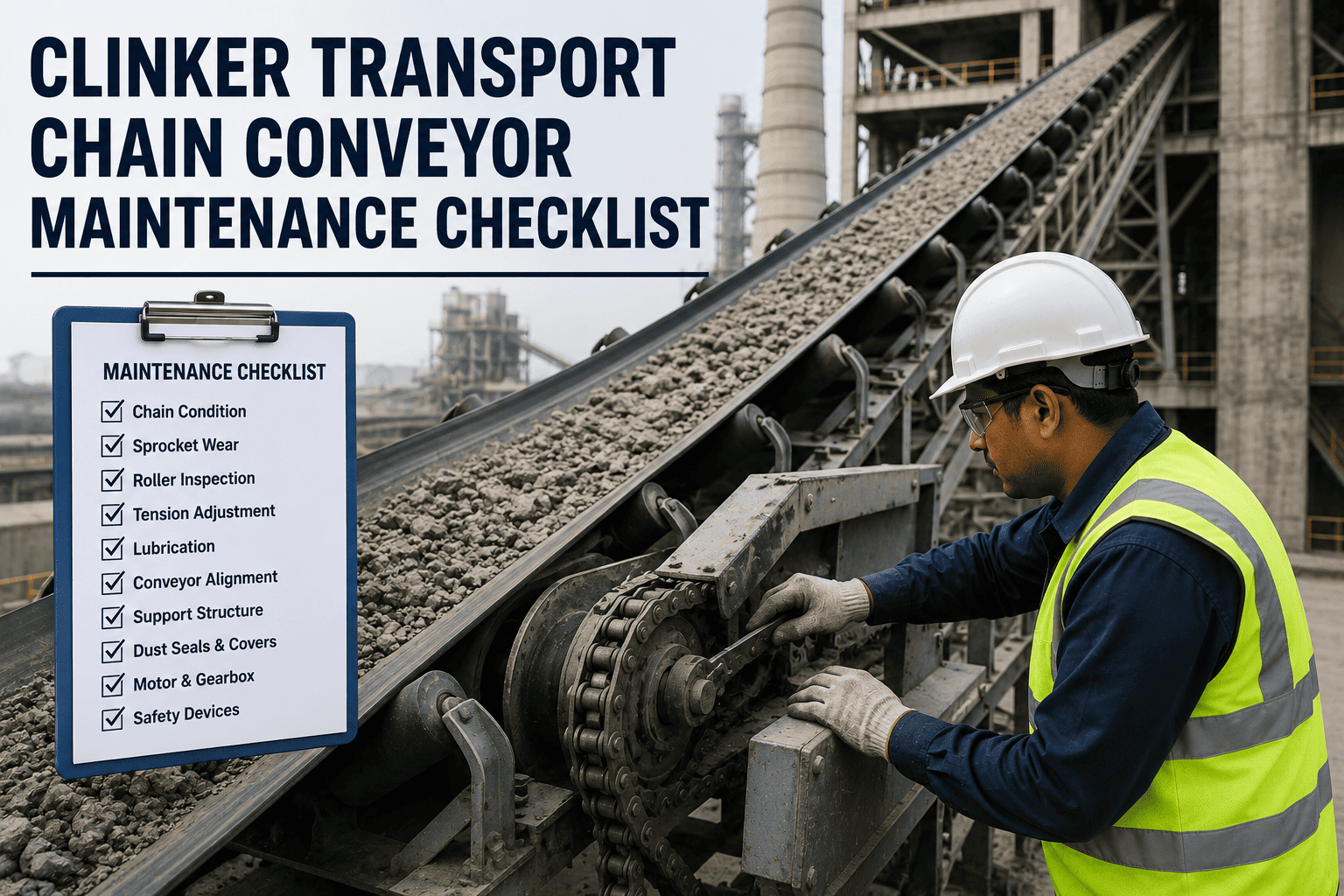
Read More
A clinker chain conveyor doesn't fail all at once. It fails one worn bush, one stretched link, and one missed lubrication cycle at a time, until a chain finally snaps under load and the transport line backs up behind it. Running above 200°C with a

Read More
Every truckload of clinker, gypsum, or fly ash that crosses your weighbridge becomes a number on an invoice, and that number is only as trustworthy as the last calibration certificate behind it. Under India's Legal Metrology framework, an expired

Read More
A clogged spray nozzle at the clinker cooler or a dead pump on the raw mill dust line doesn't announce itself with an alarm. It shows up weeks later as a dust complaint or an environmental violation notice. Water spray systems are the quietest cri

Read More
An overhead crane that hoists a kiln tyre or a raw mill liner package is also the single most audited piece of equipment on a cement plant safety walk. Inspectors don't ask whether the crane works — they ask for the daily log, the monthly hook cer

Read More
The cement mill main drive motor speaks in current. A clean grinding load reads a stable signature within a narrow band around design amperage. A spike points to a chunk in the feed, a slipping coupling, or a bearing seizing toward shutdown. A sus

Read More
The separator is the silent governor of every closed-circuit cement mill. When the rotor blades wear, when the guide vanes drift from design angle, when the fan duct loads with caked material, the dashboard reads the same as it did last month, but

Read More
Gearbox oil analysis is the single most informative diagnostic tool available to a cement plant reliability engineer, and the most consistently underused. The lab reports arrive on a 90-day cadence with viscosity, particle count, wear metals, and

Read More
The diaphragm pulse jet valve is one of the smallest components in a cement plant baghouse and one of the most consequential. When a single valve fails to fire, the dust cake on its assigned row of bags continues to thicken, differential pressure

Read More
When a breakdown call comes in at a cement plant, the loudest voice on the radio usually wins — not the most critical asset. A jammed conveyor on a non-bottleneck line can pull a crew away from a kiln drive showing early warning signs, simply beca

Read More
Compressed air is often called the most expensive utility in a cement plant, and leaks are the reason why — a single quarter-inch leak can quietly burn through enough energy in a year to cover a technician's salary. Most plants know leaks exist bu

Read More
A photo taken during a cement plant inspection round usually ends up in one of two places: a WhatsApp thread that scrolls away within a day, or a shared drive folder nobody opens again. Either way, the visual evidence of a crack, a leak, or a worn

Read More
A digital twin sounds like something only aerospace or automotive plants can afford — until you realize most cement plants already collect the sensor data needed to build one, it just sits scattered across SCADA, vibration monitors, and spreadshee

Read More
Walk any cement plant and you'll find pumps, fans, and gearboxes with no memory of their own past — no record of the last bearing change, the vibration reading from three months ago, or which technician last opened the panel. When a breakdown happ

Read More
Your process historian already has fourteen months of vibration history on that bearing that eventually failed. The trend was there the whole time — nobody in maintenance ever saw it, because it lived in a historian database and never made it into

Read More
Your kiln drive gearbox already has vibration probes feeding the PLC. Your raw mill already has motor current sensors. Your crusher already has bearing temperature transmitters. None of that changes — what changes is whether those readings ever re

Read More
A kiln drive bearing temperature alarm fires in the DCS. The operator acknowledges it and moves on. Forty minutes later, someone mentions it verbally to the maintenance supervisor. A work order gets written from memory the next morning, with no pr

Read More
A $340 bearing can sit on a cement plant shelf for three years untouched, while a $28 seal ordered every other week runs out on a Sunday night and stops a kiln rated at thousands of tonnes a day. That contradiction is the spare parts paradox almos

Read More
Cement plants running SAP S/4HANA often hold two versions of the truth about the same kiln drive — one in the ERP cost center and another on a maintenance supervisor's clipboard. That gap between enterprise financial data and field maintenance exe

Read More
SAP PM knows exactly what every asset in your cement plant costs, when it was last serviced, and which cost center it charges against — but it has no idea what's actually happening on the kiln deck right now. That disconnect is the field execution

Read More
A welding crew gets a hot work permit signed off, but nobody confirms the atmospheric test inside the silo was actually completed before the torch lights. That gap between a permit existing on paper and a permit being genuinely safe to act on is w

Read More
A technician walking the packing line spots a worn catwalk grating, taps a hazard report on a mobile screen, and keeps moving — no clipboard, no walk back to the control room, no form waiting on a supervisor's desk. That single tap is where most c

Read More
A cement plant doesn't have one safety-critical asset list — it has pressure vessels, cranes and slings, fire systems, confined space entry points, machine guards, and electrical isolation gear, each governed by a different inspection clock and a

Read More
Ask any maintenance supervisor where their shutdown crew loses the most time and the answer is rarely the wrench work — it's the walk back to a terminal because the kiln shell, the preheater tower, or the underground conveyor tunnel has no signal

Read More
A technician walking the packing line spots a worn catwalk grating, taps a hazard report on a mobile screen, and keeps moving — no clipboard, no walk back to the control room, no form waiting on a supervisor's desk. That single tap is where most c

Read More
The first 72 hours after a cement plant restart are when a large proportion of shutdown maintenance failures surface — and they surface as unplanned stoppages, not as logged defects. A post-shutdown defect tracking workflow changes that outcome by
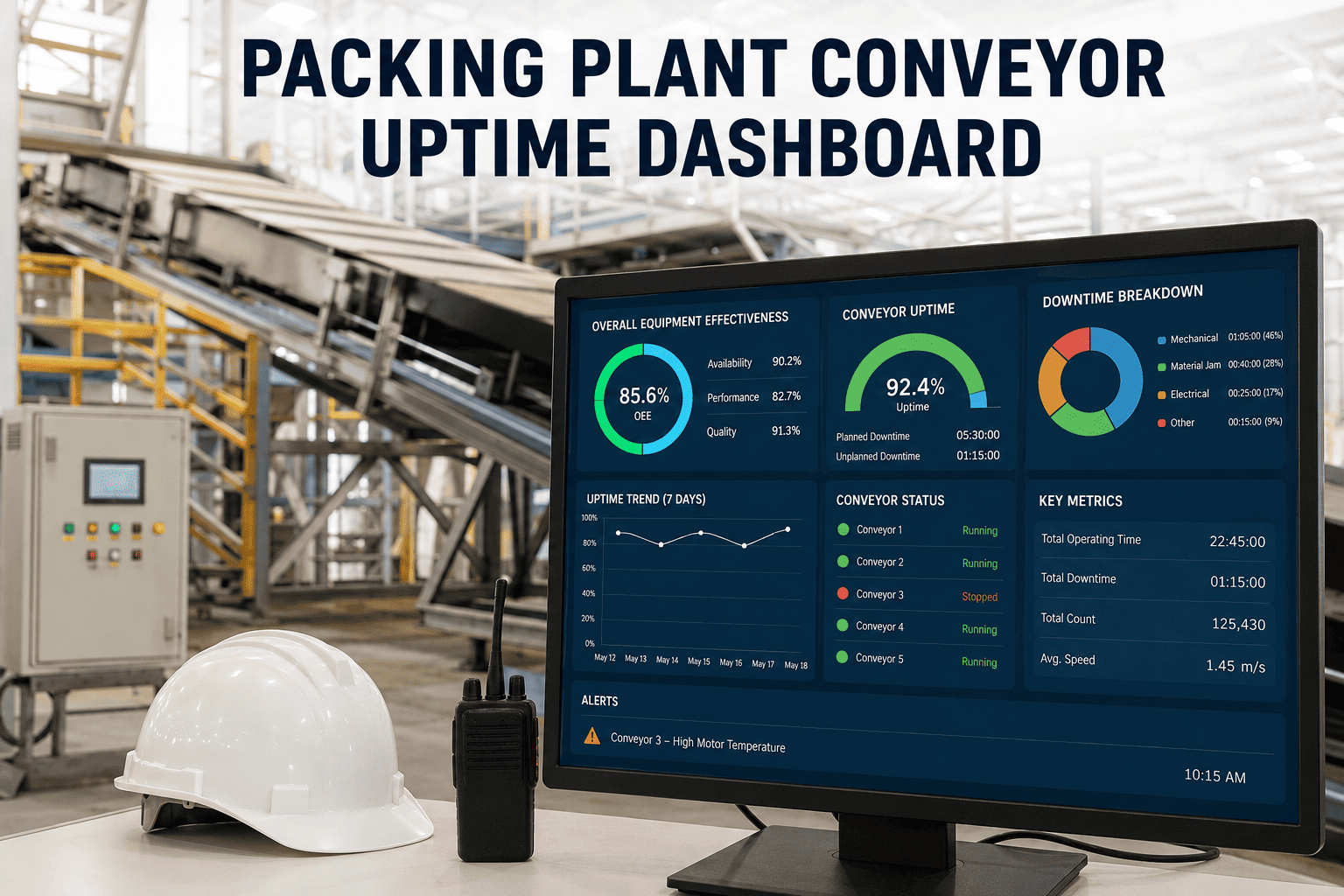
Read More
The packing plant is where cement production becomes revenue — and where a stopped conveyor costs not just repair time but delayed dispatch, unhappy customers, and downstream truck scheduling chaos. Most packing plant teams know which conveyors fa

Read More
Clinker conveyor chain wear is not a sudden event — it is a slow accumulation of elongation, link fatigue, and sprocket pitch mismatch that is entirely visible in the data months before the chain snaps and production stops. The difficulty has neve
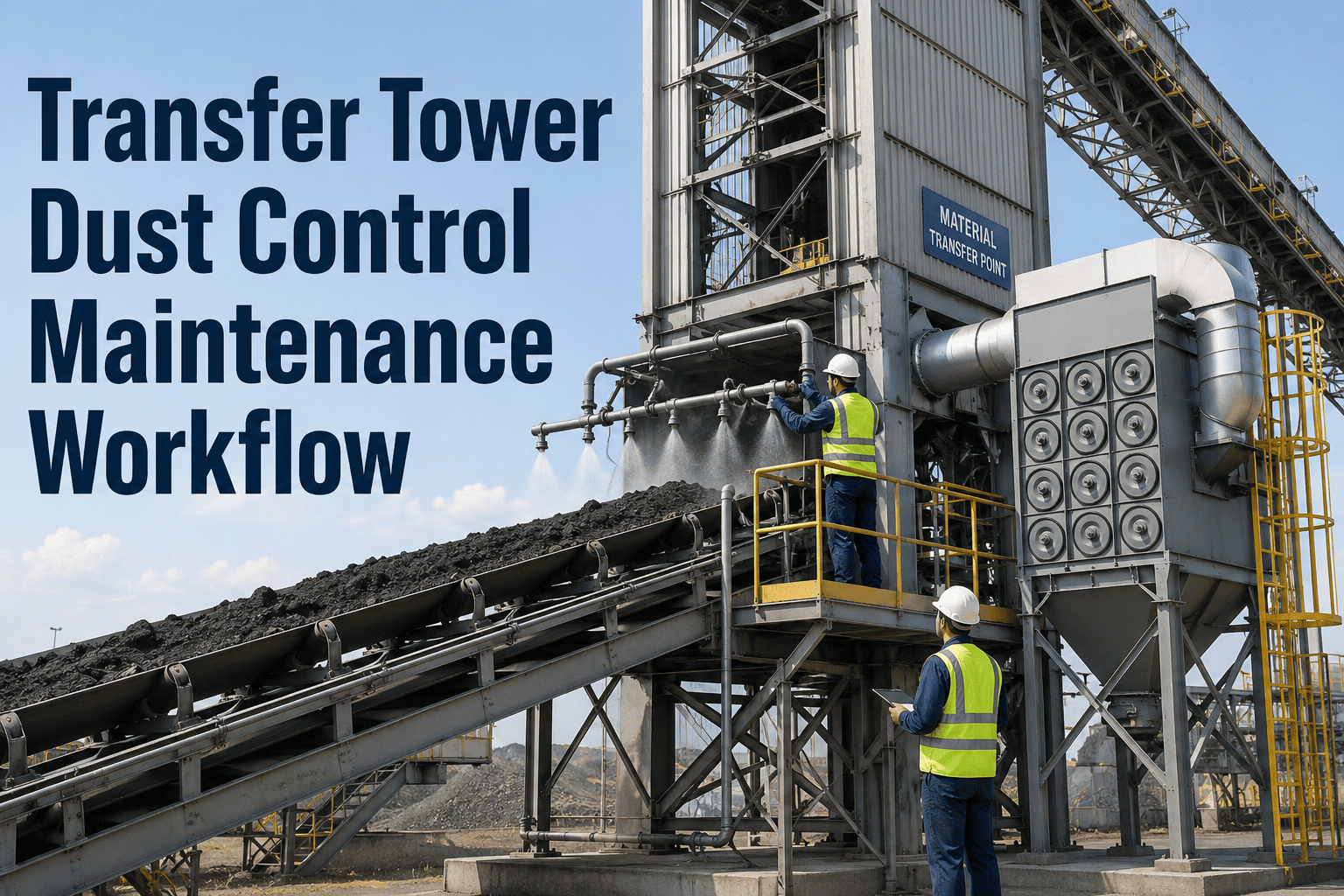
Read More
Transfer tower dust control is one of cement plant maintenance's most persistent pain points — fine particulate escapes suppress visibility, accelerate bearing wear, and trigger regulatory citations, yet the corrective work orders often stack up i
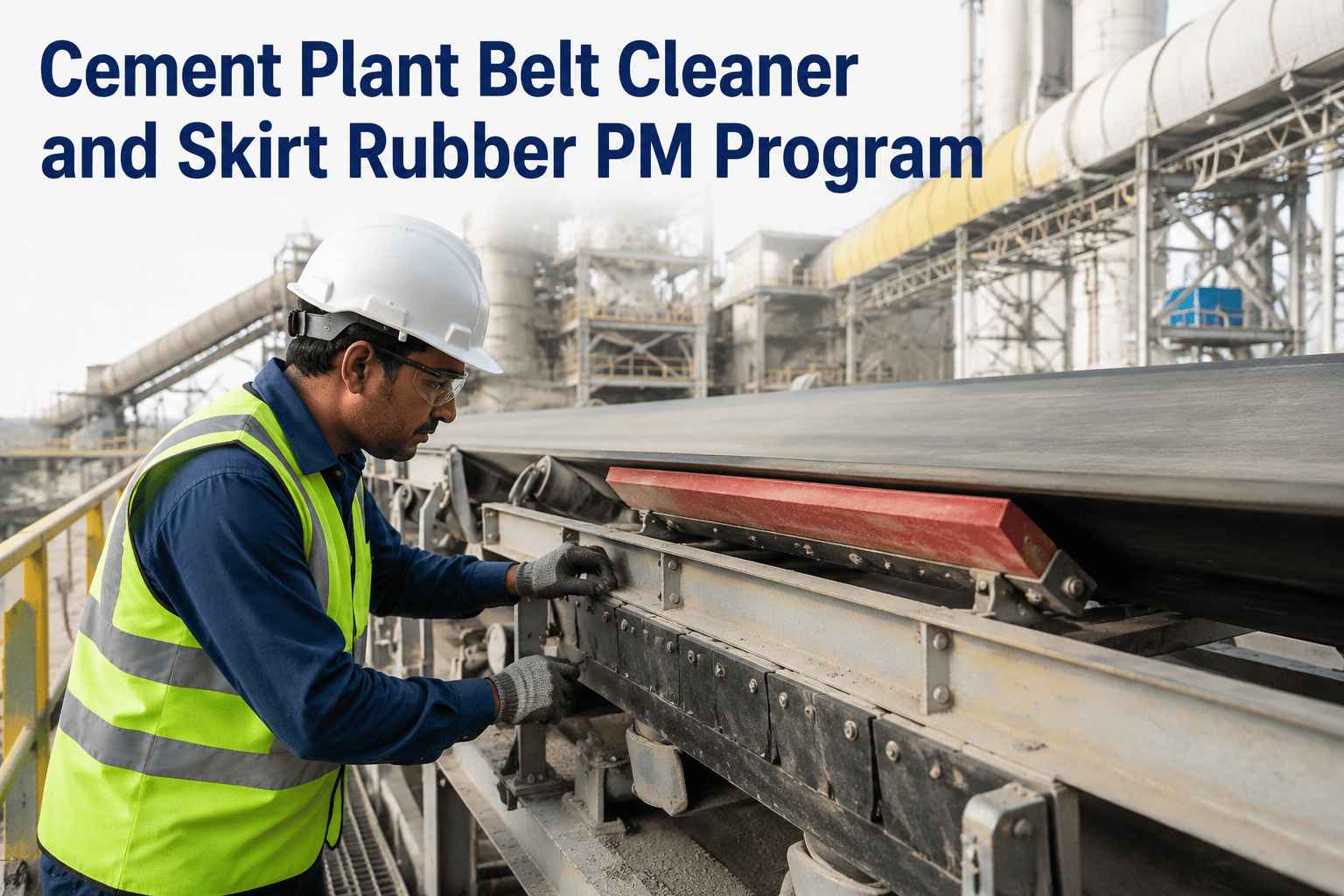
Read More
Belt carryback and conveyor spillage are among the most accepted forms of avoidable waste in cement plant operations — accepted because the fix seems routine, the individual incidents seem minor, and nobody has added up what they actually cost. A
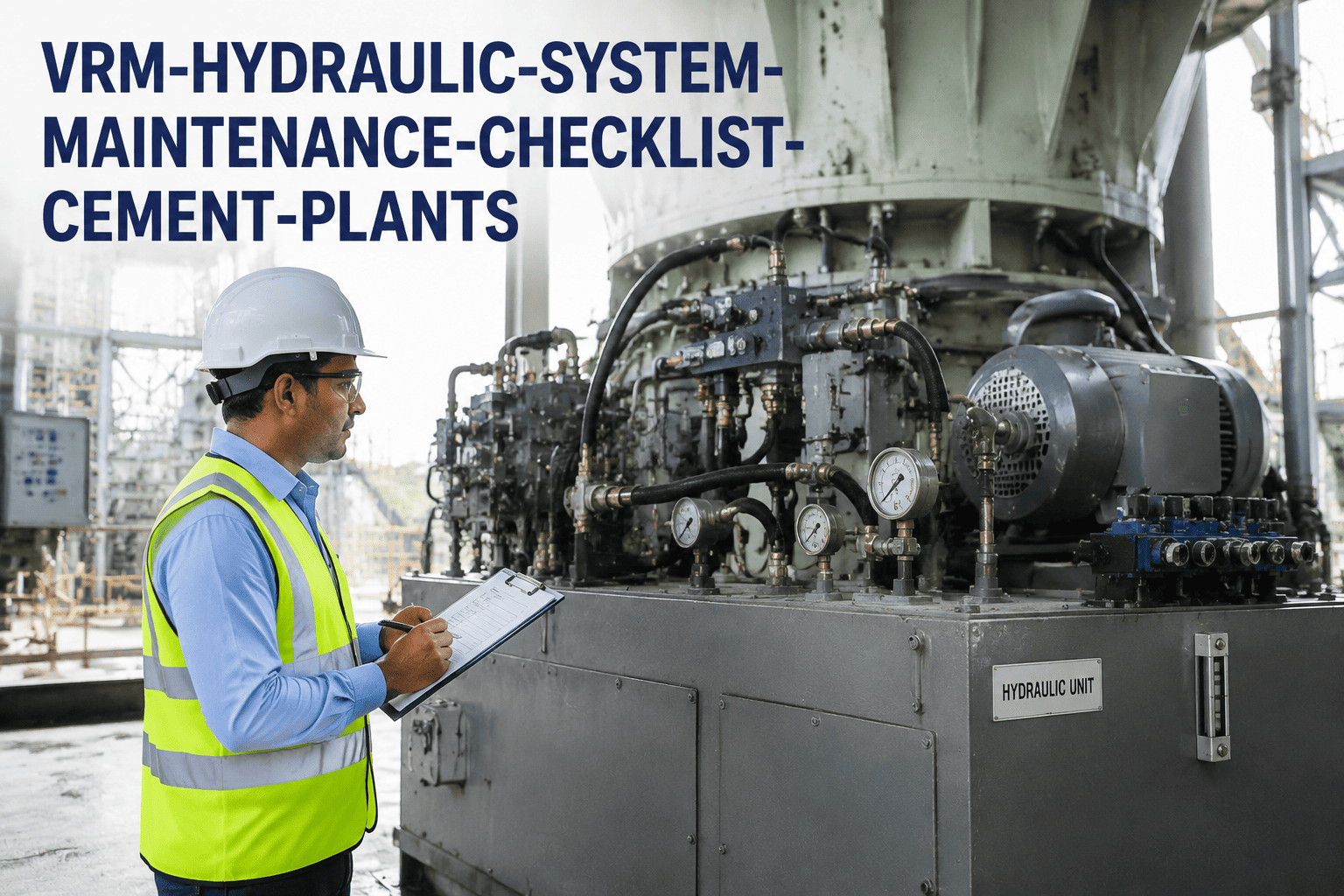
Read More
The hydraulic system on a vertical roller mill is not a support system — it is the primary grinding force. Without correct hydraulic pressure at the roller cylinders, grinding pressure drops, specific power consumption rises, and product fineness
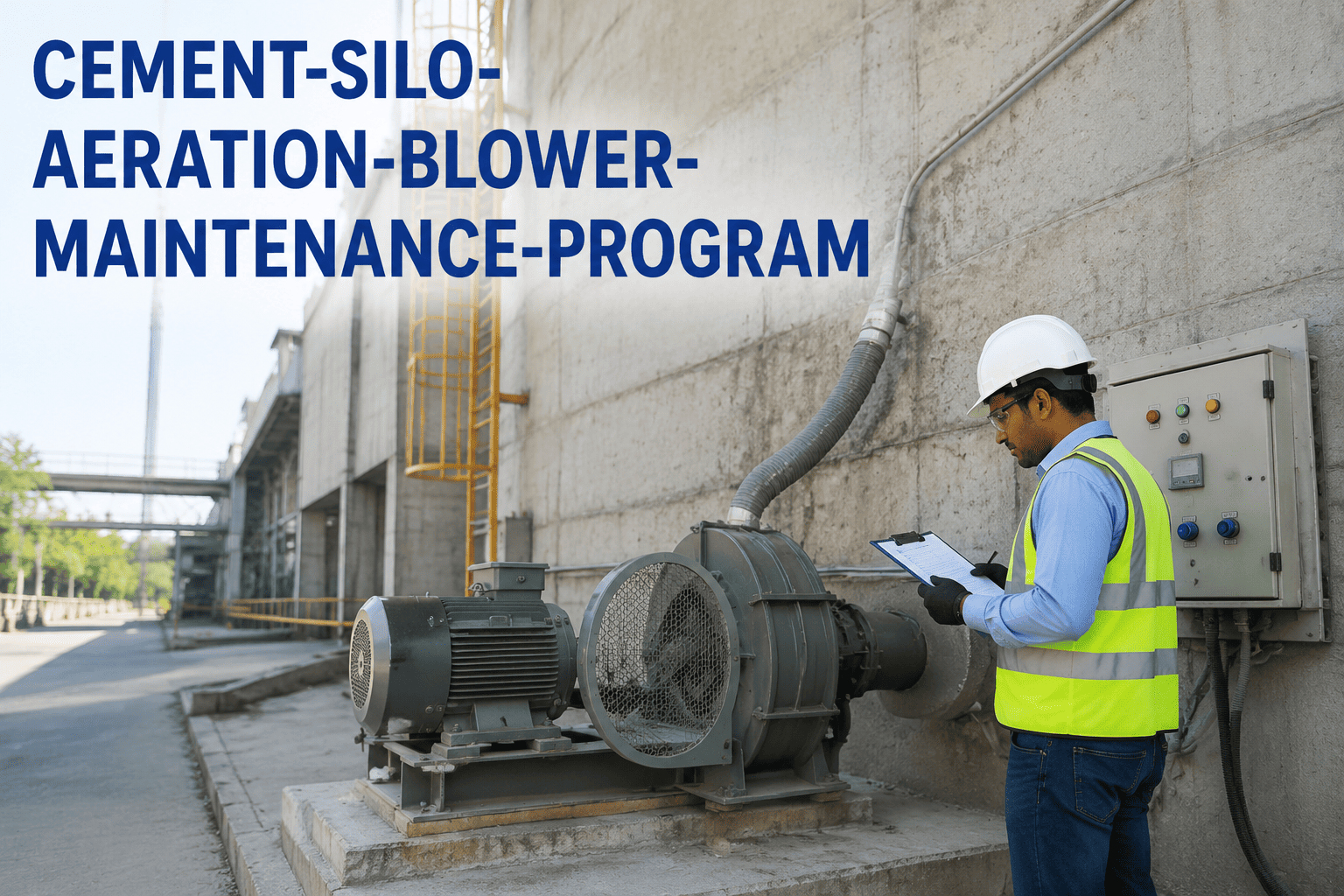
Read More
A cement silo aeration blower is one of the lowest-cost assets in the dispatch chain — a Roots blower or side-channel unit drawing 3–15 kW — but when it fails silently, the consequences reach directly into dispatch throughput, loading bay waiting
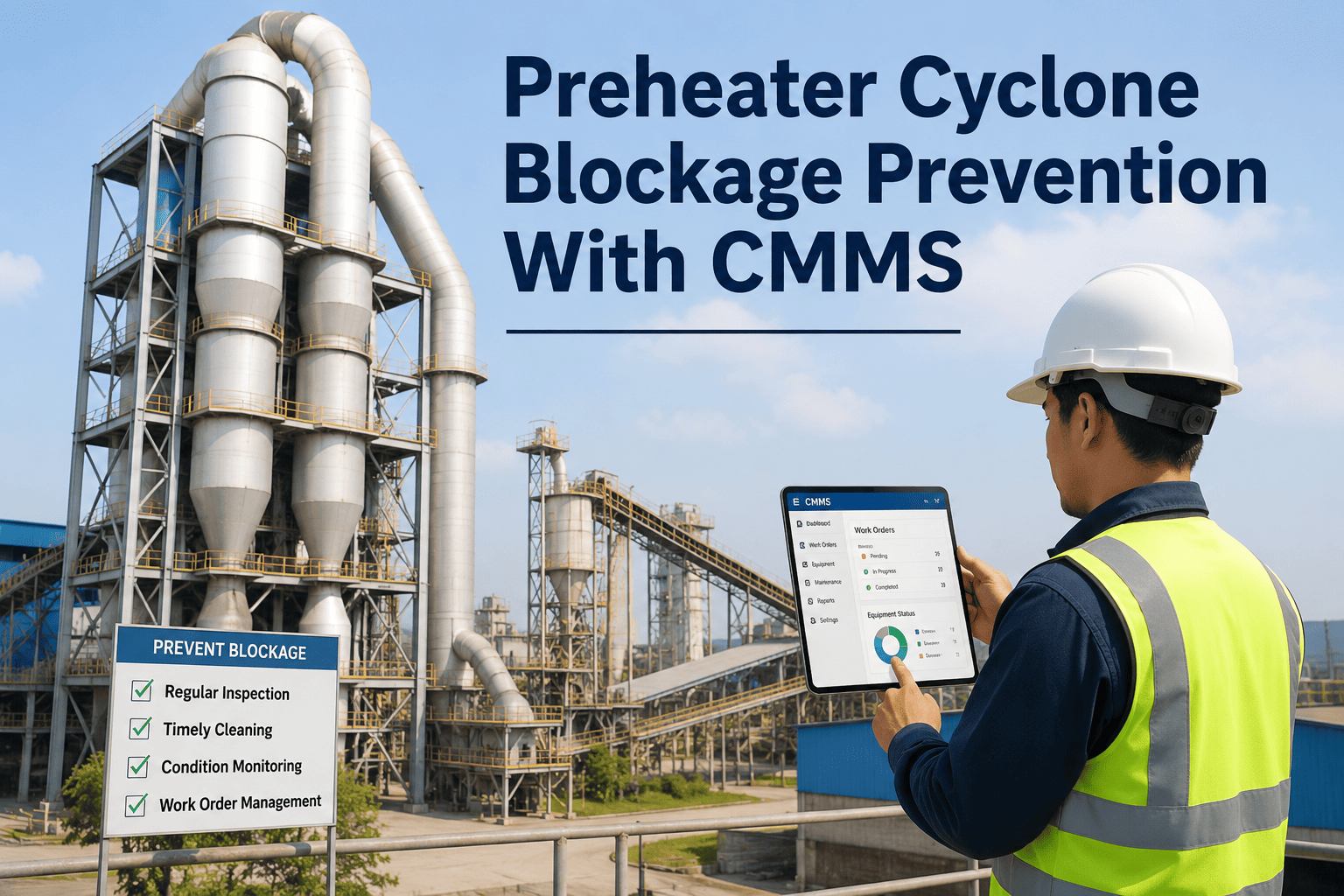
Read More
A preheater cyclone blockage does not announce itself with a warning — it announces itself with a kiln trip, a scrambled maintenance crew, and 8 to 24 hours of lost production. The fault builds incrementally: sticky raw meal accumulates at cone tr

Read More
Raw meal quality deviations — LSF drift, silica modulus shifts, elevated moisture, or fineness excursions — do not originate in the laboratory. They originate at the raw mill, separator, weigh feeder, or online analyzer, and every hour of delayed

Read More
Most cement plants still send a technician on a fixed walking round to check compressor hour meters, water flow gauges, and electricity sub-meters once or twice a shift, write the numbers on a clipboard, and file them until someone has time to rev

Read More
Lubrication failure is the leading cause of premature bearing and gearbox failure in cement plants — and most of those failures are not caused by wrong lubricant selection. They are caused by the right lubricant applied at the wrong interval, at t

Read More
In a cement plant running 4,000 to 8,000 assets across a continuous pyroprocessing line, the maintenance backlog is rarely the problem people think it is. The number on the work order list is not the risk — the age distribution behind tha

Read More
Contractor-related incidents remain disproportionately high in cement plants because the systems for managing contractor work — permits, safety steps, and job completion — live on paper clipboards while the work orders they are attached to live in

Read More
Every cement plant runs on a handful of assets that cannot stop without stopping production — and dozens more that are maintained as if they carry the same stakes. A kiln main drive and a lighting panel are not equal risks, yet many plants schedul

Read More
A thermal camera is only as valuable as the route it walks and the history it builds. One technician pointing an infrared camera at a hot breaker finds a problem; a fixed inspection route that visits the same motors, panels and bearings every cycl

Read More
The kiln burner is the one component that touches everything — fuel cost, clinker quality, refractory life and kiln stability all hinge on a stable flame. Yet in most plants its health lives in scattered shift logs and a maintenance engineer's mem

Read More
A fan vibration alarm is a clock, not a verdict. When an ID fan, baghouse fan or cooler fan starts to drift, the vibration signature usually gives two to four weeks of warning before a trip — enough time to clean, balance or change a bearing on a

Read More
False air is the leak you cannot see and rarely hear — cold atmospheric air sucked into a kiln or mill running under suction, diluting hot process gas and quietly forcing the burner to spend more fuel to hold the same temperature. A single percent
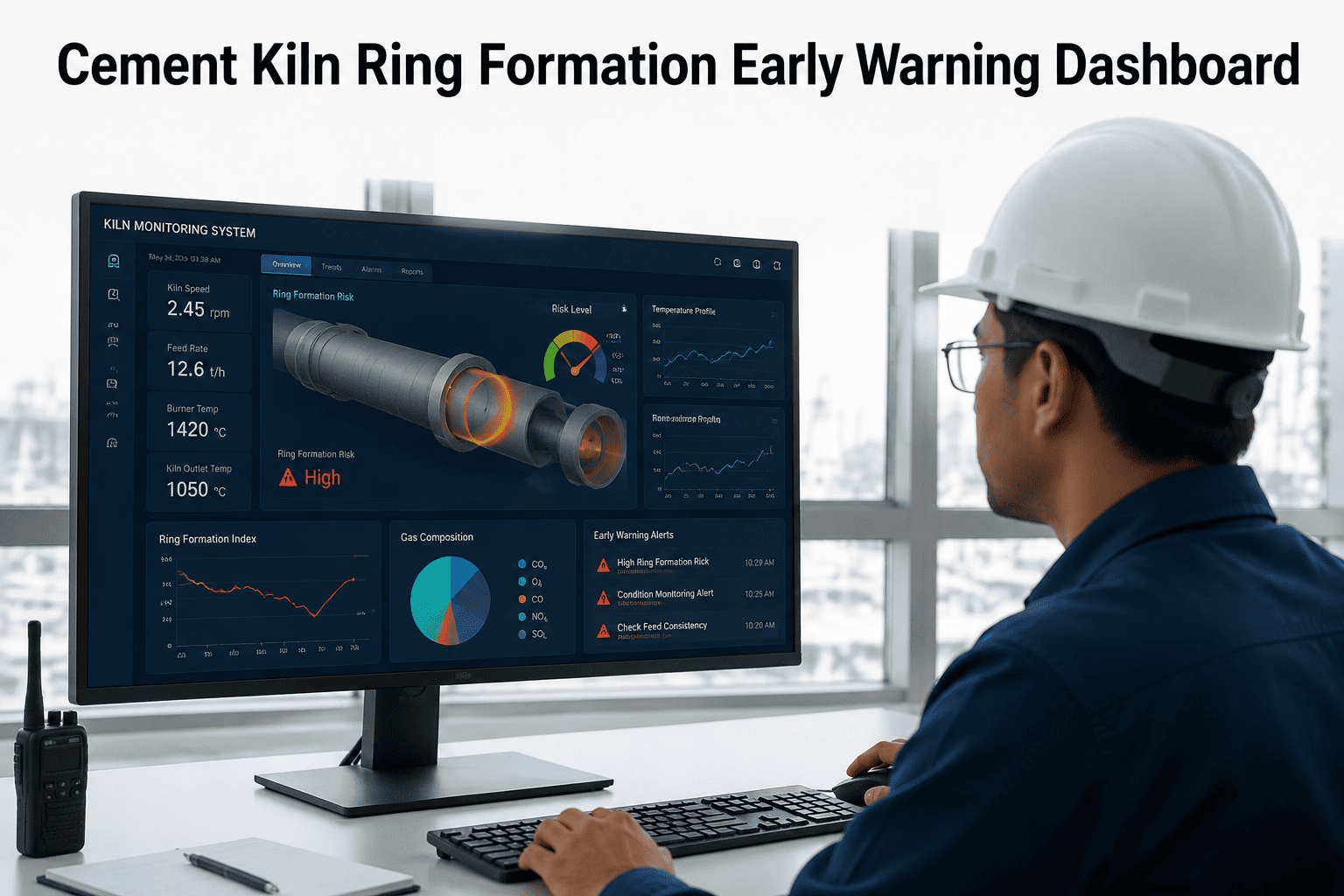
Read More
A ring inside a rotary kiln rarely announces itself in time. It begins as a thin band of sticky liquid phase fusing to the refractory in the burning or transition zone, and by the time it visibly chokes the material bed, the plant is already slidi
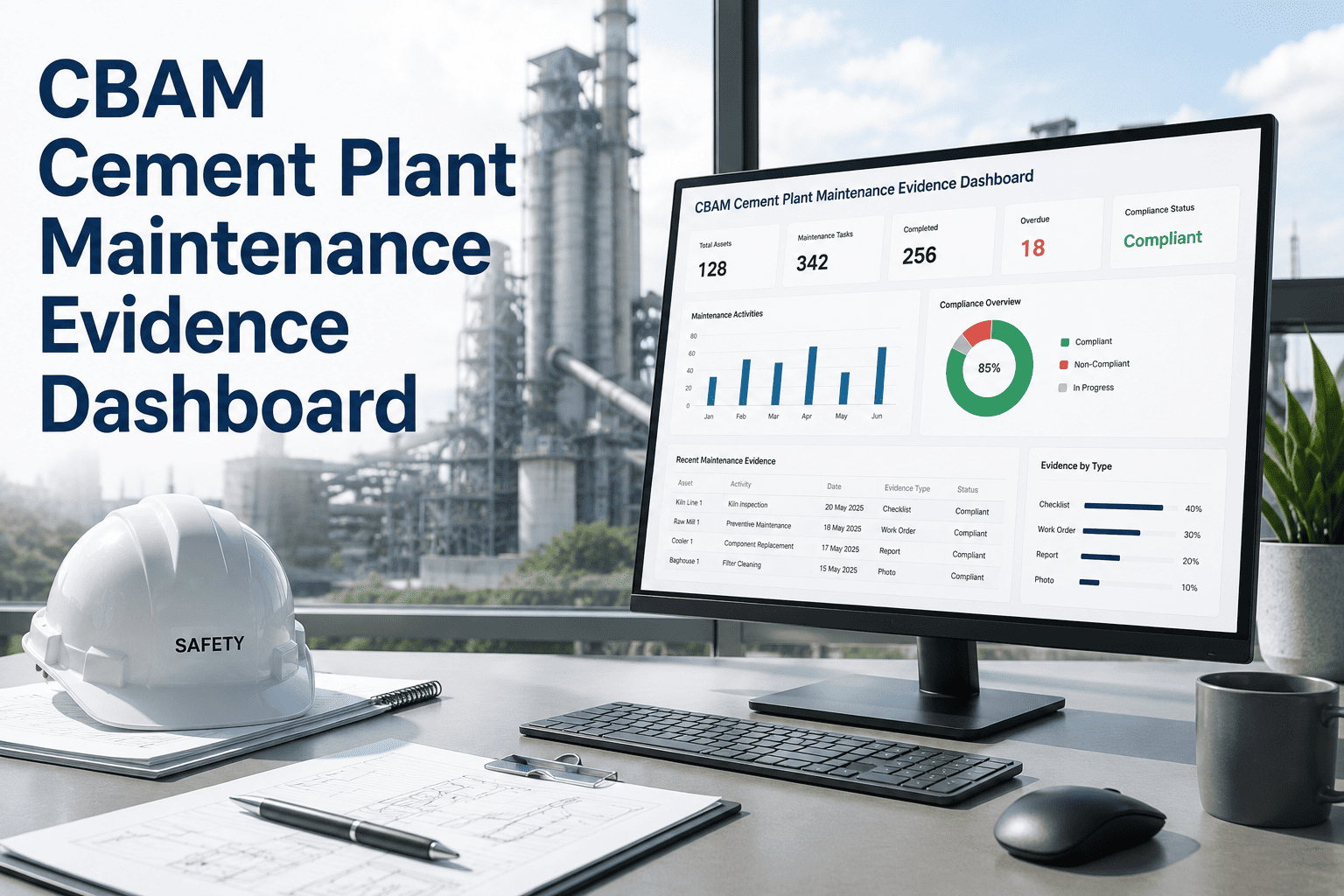
Read More
CBAM's definitive phase began on 1 January 2026, and the difference between using verified actual emissions data and falling back to the EU's default values is no longer academic — it now carries a real penalty surcharge of 10% in 2026, rising tow

Read More
European cement producers now operate under EU ETS Phase 4 with carbon prices that have climbed past $80 per tonne and free allowances shrinking roughly 2.2% every year, which means the gap between an installation's actual emissions performance an

Read More
Most cement plants know their thermal substitution rate as a monthly number someone calculates after the fact — not a live figure they can act on while the kiln is running. By the time a TSR report lands on a manager's desk, the fuel blend that pr

Read More
A burner that was perfectly tuned for petcoke drifts out of tune the moment a plant adds RDF, biomass, or tyre-derived fuel to the mix, and most teams do not notice until specific heat consumption creeps up or a coating collapse forces an unplanne

Read More
Amine-based carbon capture systems are becoming a fixture on cement plant CO2 reduction roadmaps, but they bring a maintenance discipline most cement maintenance teams have never had to manage — amine degradation, foaming, and corrosion behave not

Read More
Dosing equipment is the most mechanically abused asset on an alternative fuel line — rotary feeders, weigh belts, and metering screws run continuously against abrasive, inconsistent material that wears components far faster than the same equipment
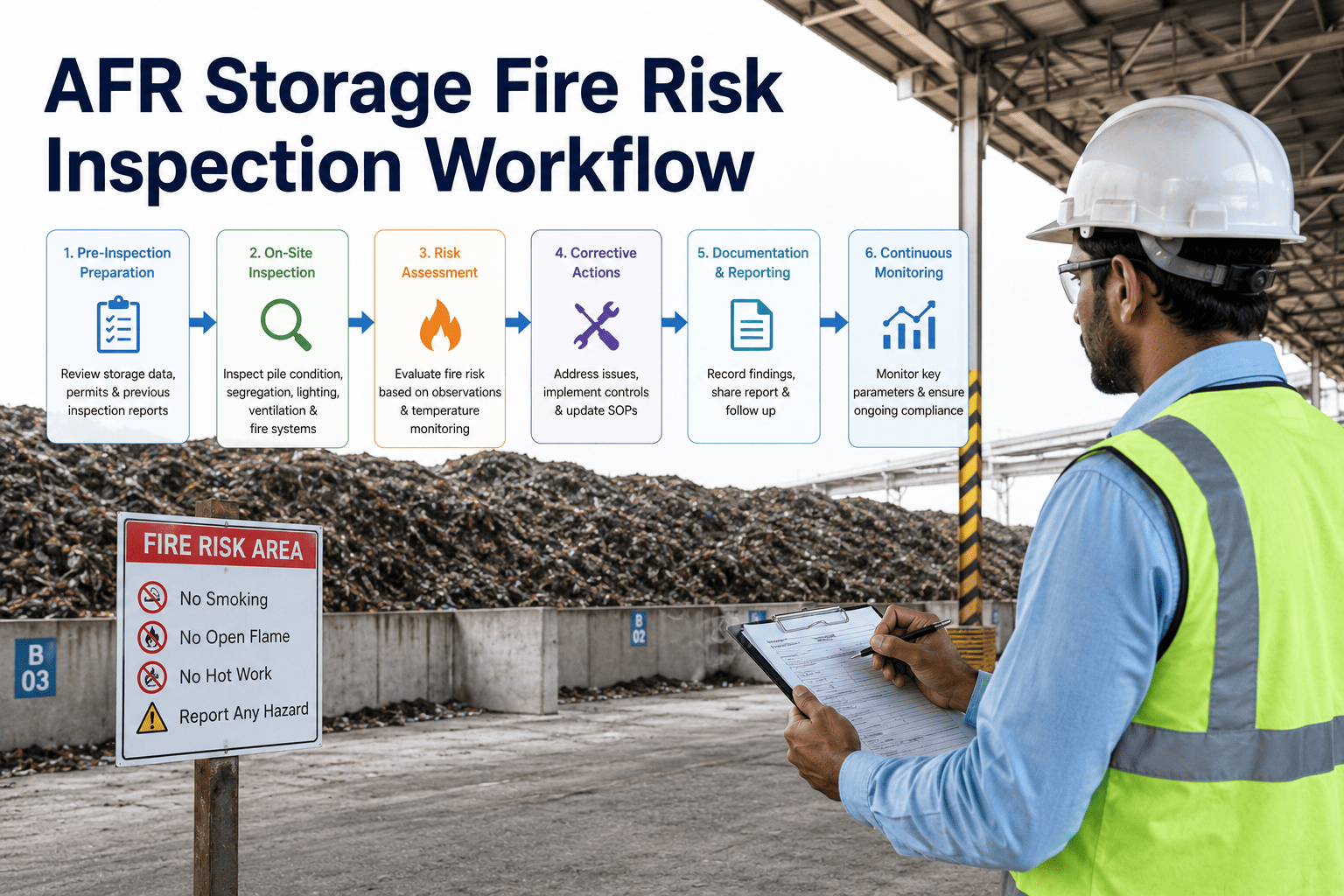
Read More
Alternative fuel storage yards are statistically one of the highest fire-risk zones in a cement plant — tyre chips, biomass, and shredded plastics self-heat through microbial and oxidative reactions long before any flame is visible. Most fire inci

Read More
A single rain-soaked delivery of refuse-derived fuel can push moisture content from a manageable 15% to over 35% within hours, and most cement plants have no structured response when that happens — operators just "run it anyway" until conveyors ja

Read More
Every truckload of alternative fuel that reaches the gate carries a quiet decision: accept it as-is, hold it for review, or reject it outright. That decision used to live in a technician's head and a paper test sheet, with the result reaching the

Read More
A biomass conveyor line looks forgiving compared to a kiln or a mill, right up until it isn't. Moisture swings from one delivery to the next, fines build up at every transfer point, and a bearing running a few degrees hotter than normal is often t

Read More
Whole-tire feed systems look simple from the control room: a conveyor, a timed gate, a tire dropping into the kiln every few minutes. What that view hides is a feed line built to swallow hundreds of tons of steel-belted rubber every month, and eve

Read More
Whole-tire feed systems look simple from the control room: a conveyor, a timed gate, a tire dropping into the kiln every few minutes. What that view hides is a feed line built to swallow hundreds of tons of steel-belted rubber every month, and eve

Read More
A technician standing next to a cement mill gearbox at 2 a.m. shouldn't have to remember an asset number, scroll through a long equipment list, or radio the control room to confirm which pump just tripped. A QR tag fixed to the equipment solves th
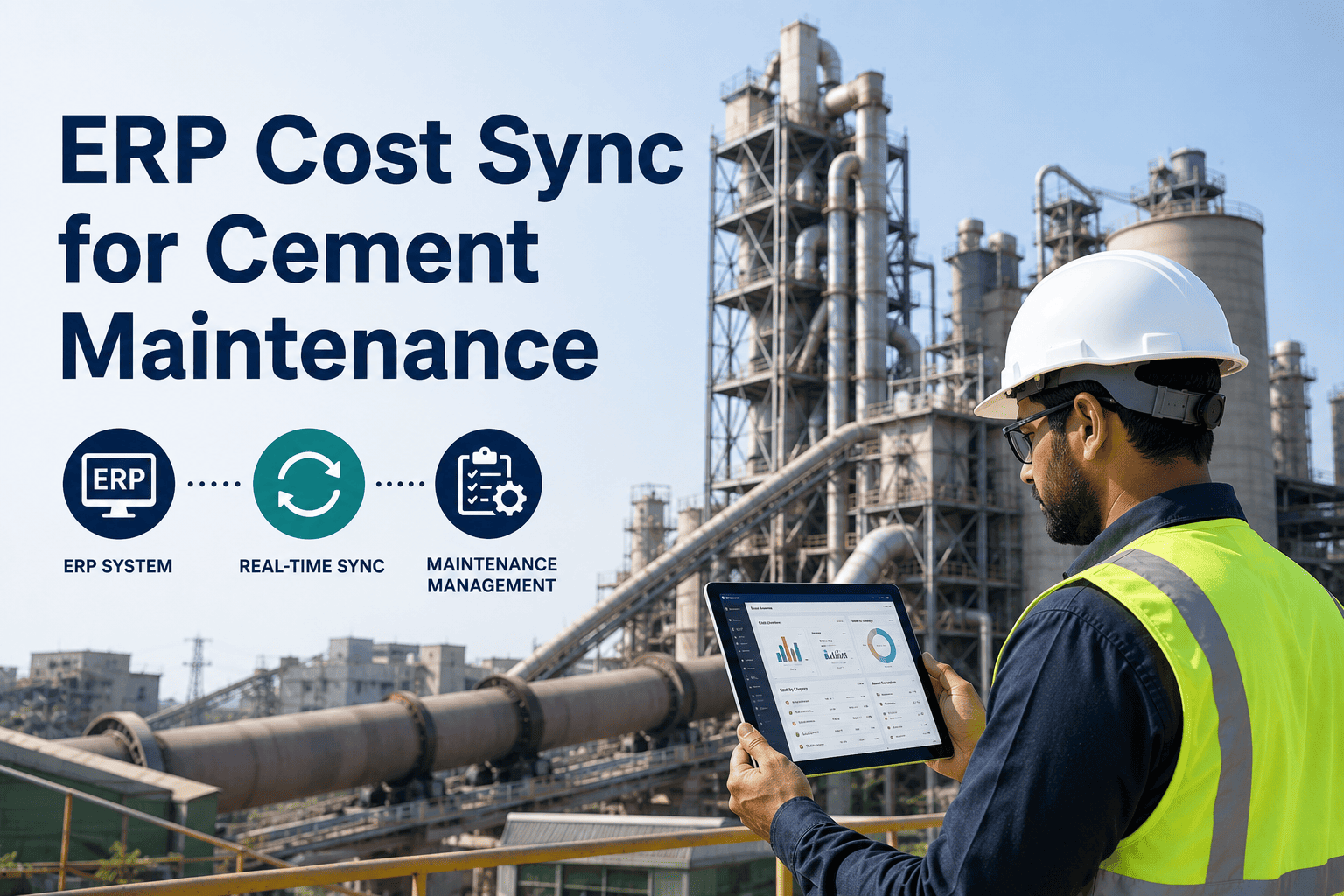
Read More
Finance teams at cement plants frequently discover maintenance cost numbers that don't match what actually happened on the floor — labor hours logged days late, parts consumption recorded against the wrong cost center, or purchase requisitions sit

Read More
Most cement plants running for ten or more years carry three parallel maintenance systems at once — paper logbooks in the field, spreadsheets the planning office actually trusts, and an SAP PM module that gets updated days after the work is alread

Read More
A new cement plant earns its production numbers in the first ninety days after commissioning, but maintenance teams often spend that same window firefighting because the CMMS was never configured before startup. Asset hierarchy, PM templates, spar

Read More
Cement plants across Saudi Arabia, the UAE, Oman and Qatar run kilns in ambient temperatures that regularly cross 48°C, putting refractory life, bearing lubrication and electrical cabinets under stress most maintenance software was never built to

Read More
A cement plant typically runs dozens of process fans — raw mill fans, cooler fans, baghouse fans, conveying fans — and most are managed the same way: a PM checklist on a calendar, with downtime, energy use, vibration and lubrication tracked separa

Read More
The induced draft fan is one of the few components in a cement kiln line where a single unplanned failure can force an immediate kiln stop — there is no bypass, no redundancy, and no graceful degradation once draft is lost. Bearing wear, rotor imb

Read More
A single uncontrolled leak in a 6mm compressed air line can cost a cement plant over $1,500 a year in wasted electricity, and most plants have dozens of them running quietly behind mills, baghouses and pneumatic conveying systems. Compressed air i

Read More
Cement manufacturing is one of the most energy-intensive industrial processes in the world, and a large share of that energy is lost not to the process itself but to equipment running below its designed efficiency — a fan with a worn impeller, a m

Read More
A cement plant runs three shifts a day, and every shift change is a moment where critical information can vanish — a kiln that ran hot for an hour, a pending permit, a bearing that "sounded off" near the end of the shift. Paper logbooks and WhatsA

Read More
India is the world's second-largest cement producer, with over 200 integrated plants and 80+ grinding units running complex kiln lines, raw mills, and logistics chains under relentless production pressure — yet most Indian cement plants still mana

Read More
North American cement plants face a maintenance landscape unlike any other region — EPA regulatory compliance, MSHA safety requirements, OSHA documentation standards, SAP ERP integrations that dominate large plant operations, and a workforce trans

Read More
Cement plant audits — whether internal compliance reviews, ISO 55000 assessments, insurance inspections, or statutory regulatory visits — all share one demand that most maintenance teams fail to meet cleanly: produce documented, timestamped proof

Read More
Cement plants rely heavily on contractors for specialized maintenance — kiln refractory lining, mechanical overhauls, electrical shutdowns, and civil repairs — yet most plants manage contractor activity through printed permits, spreadsheet tracker

Read More
Cement plants run on approvals. Every unplanned kiln stop, every safety bypass, every wrong part issued without sign-off — each one traces back to a gap in the approval chain. OxMaint's supervisor approval workflow closes that gap directly inside

Read More
An operator walking past a vibrating fan or a leaking gearbox should be able to report it in the time it takes to read this sentence, not after finding a radio, a name, and a free minute. A QR code fixed to the asset turns that walk-by observation

Read More
It is 2:43 AM when the kiln drive motor seizes. Raw meal backs up in the preheater tower, clinker cooling stops, and the cement mill sits idle within minutes. By the time the emergency crew arrives, diagnoses a failed bearing, and sources a replac

Read More
A maintenance request scribbled on paper at 2 AM, a verbal handoff to the next shift, a part pulled from inventory with no record — this is still how most cement plants run work orders, and it is why 55% of maintenance budgets at conventional plan

Read More
Most cement plants treat every motor trip, gearbox alarm, or conveyor jam as an isolated event — log it, fix it, move on. But maintenance teams that dig into their own work order history routinely find the same five or six assets failing in the sa

Read More
A maintenance planner at a mid-sized cement plant once summed up a 1,400-item work order backlog this way: roughly 200 of them actually mattered, and the rest were duplicates, self-resolved faults, or requests from three managers ago that nobody h

Read More
PM compliance below 80% is a leading indicator of rising unplanned failures — research across heavy process industries shows each 10% drop in compliance corresponds to a 15 to 20% increase in corrective work volume within 90 days. Most cement plan

Read More
A kiln support roller bearing replaced at 6,000 hours on a calendar schedule may have had 2,000 more hours of useful life left in it, or it may have already been failing at hour 4,500 and nobody knew. That single uncertainty is the entire argument

Read More
At 3:15 AM, a vibration sensor on a raw mill gearbox crossed its alarm threshold. No one was watching a screen. Within ninety seconds, a prioritized work order existed in OxMaint with the asset name, the defect pattern, the recommended spare part,

Read More
Only about three in ten cement plants worldwide have started implementing Industry 4.0 technologies, and most of those are still running pilot projects rather than connected operations. The plants that have made the jump to AI, IoT sensors, and di

Read More
Most predictive maintenance rollouts do not fail because the algorithm was wrong — they fail somewhere in the first ninety days, when a plant tries to instrument everything at once, expects a model trained on six weeks of data to predict a bearing

Read More
A kiln trips at 3 AM for the third time in ninety days, and the maintenance team replaces the same bearing for the third time, because nobody has connected this failure to the previous two. Across documented failure events at cement plants, repeat

Read More
A new technician at a 6,000 TPD cement plant once stood in front of a tripped VRM gearbox holding a printed manual in one hand and a phone call to a retired supervisor in the other. The repair that should have taken ninety minutes took almost four

Read More
Robots and drones have changed what's possible inside a kiln, preheater, or silo — inspections that once meant scaffolding, confined space entry, and a full cooldown can now happen in hours with a crawler or quadruped unit. But the robot is only h

Read More
Most cement plant maintenance teams still find out an asset is failing the same way they did twenty years ago — a technician walks the route, takes a reading, writes it down, and someone reviews it later if at all. Remote condition monitoring clos

Read More
A cement plant substation carries the load for every motor in the kiln, mill, and crusher circuits, which means an electrical failure here doesn't stay contained to one panel — it can take down the whole production line at once. Loose connections

Read More
Compressed air runs more of a cement plant than most teams realize — pneumatic valves, bag filter cleaning cycles, instrument air, and dust collection all depend on compressors that rarely get the attention given to the kiln or mill. Yet a single
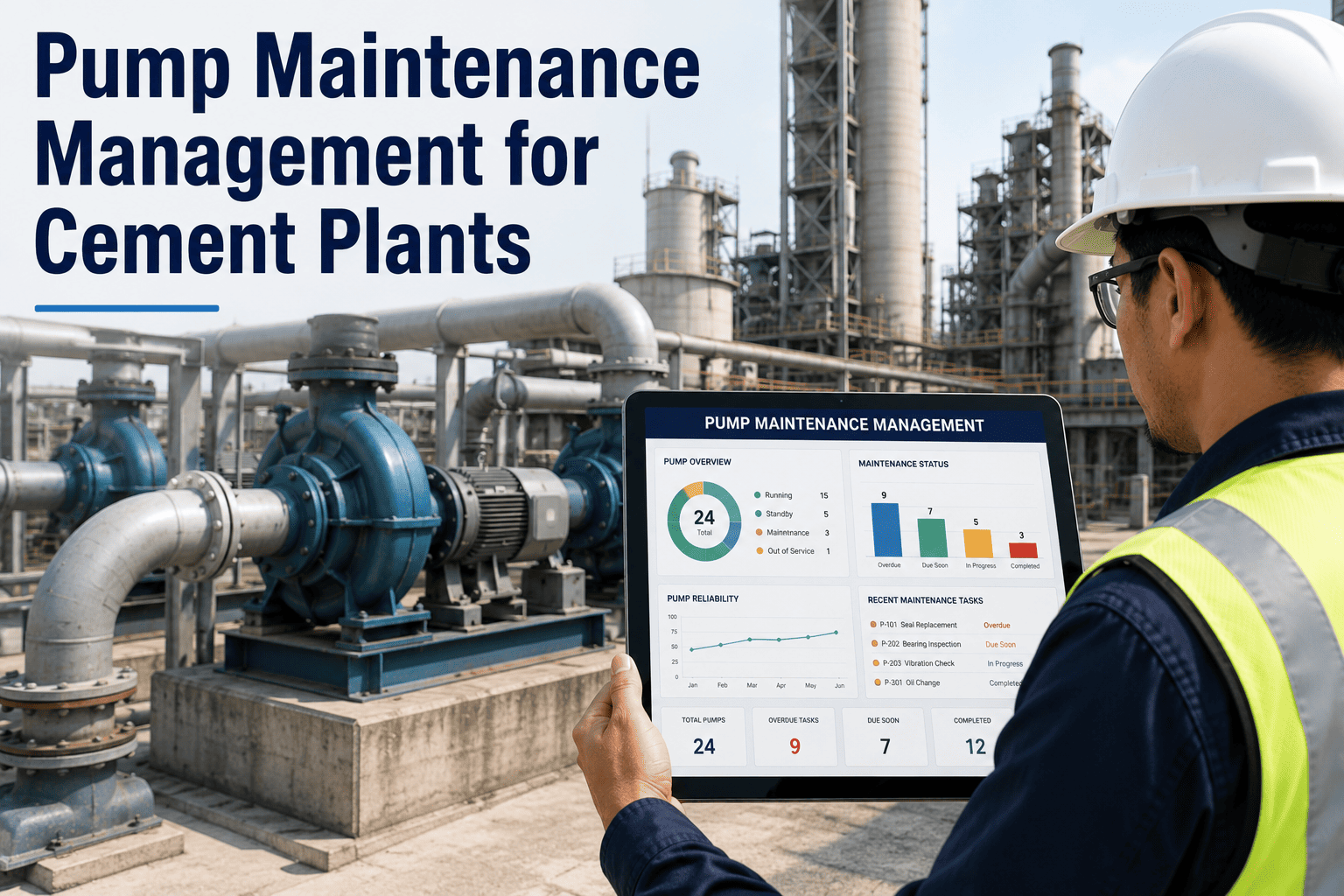
Read More
A cement plant runs on pumps most people never think about — slurry pumps circulating raw mix, cooling water pumps protecting kiln shell and bearings, lubrication pumps feeding every rotating asset from the crusher to the finish mill. When one fai

Read More
Compressors, pumps, fans, water treatment systems and electrical substations rarely get the same maintenance attention as a kiln or mill — until a compressed air failure stops pneumatic valves plant-wide or a substation trip takes down an entire p

Read More
Every cement plant has a short list of assets that keep coming back to the same work order screen — the same crusher liner, the same conveyor idler, the same pump seal, month after month. These repeat offenders, known as bad actors, often account

Read More
A digital twin for cement plant maintenance is not a 3D model for its own sake — it's a running condition score for every critical asset, built from the vibration readings, thermal scans, inspection rounds and work order history your plant already

Read More
Ask most cement plant maintenance teams how reliable their kiln drive or raw mill actually is, and the answer is usually a guess based on how recently something broke. MTBF, MTTR, downtime hours and cost per ton sit scattered across CMMS reports,

Read More
When a cement plant's rotary kiln drive fails, the entire line stops. When a packing line motor fails, dispatch slows but production keeps moving. Treating every asset on the same PM schedule wastes technician hours on low-risk equipment while the

Read More
Most plants only really monitor whichever asset broke last time — the kiln gets vibration sensors after a bearing failure, the conveyor gets attention after it jams the line. Sign up for Oxmaint to run one AI d

Read More
A vibration spike on a kiln drive could mean a failing bearing, or it could mean nothing at all. A temperature rise could be the start of a refractory failure, or just a brief process swing. Read alone, both readings lie.
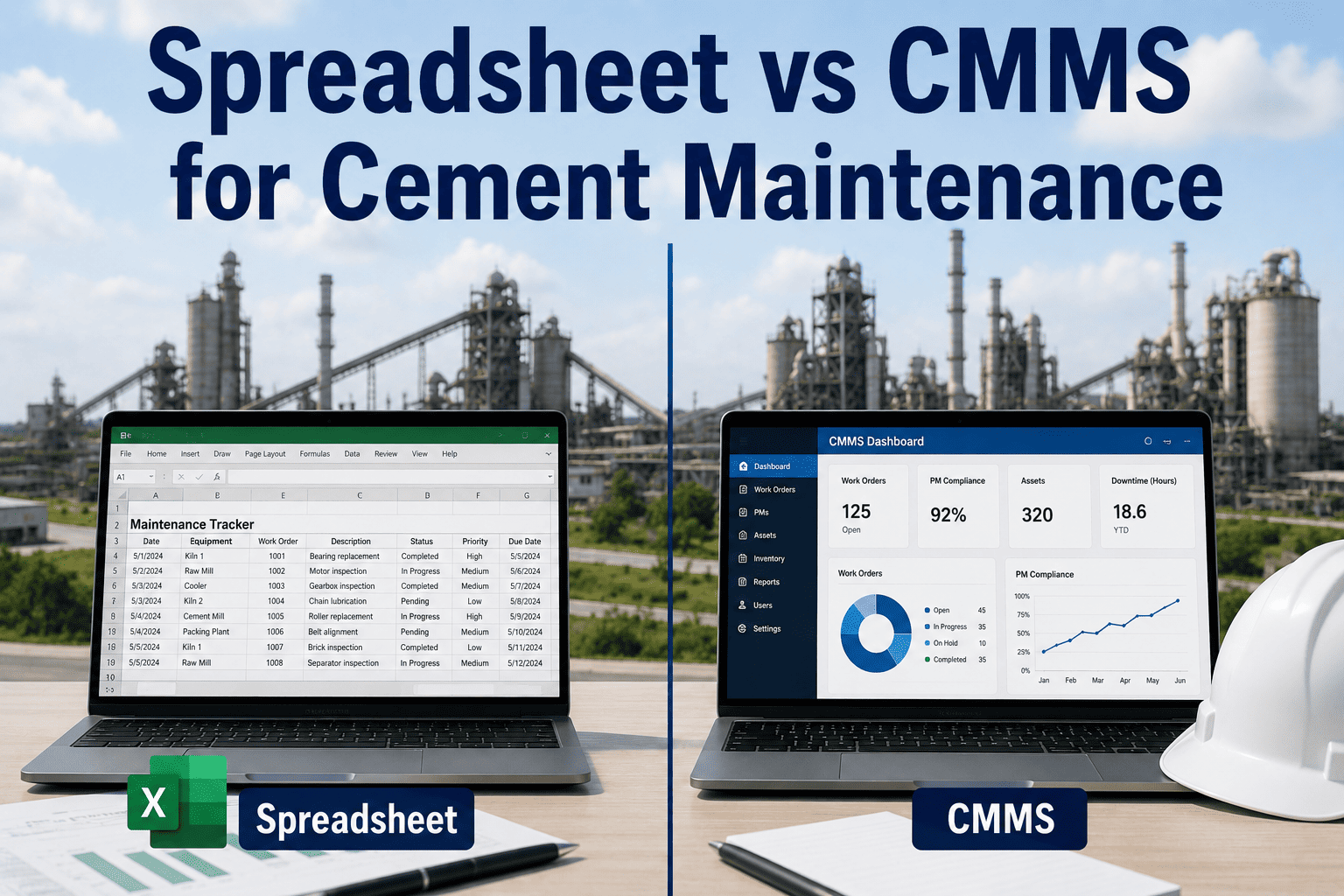
Read More
More than 60% of cement manufacturers still plan maintenance from spreadsheets and paper logs, and the bill for that habit rarely shows up as a clean line item — it shows up as a kiln stop nobody saw coming. Sign u

Read More
Most maintenance teams don't have a data problem — they have a translation problem. The sensor saw the failure coming weeks ago, but nobody connected that signal to a work order until the kiln actually stopped. Sig

Read More
Selecting a CMMS for a cement plant is not the same as selecting one for a food plant, a hospital, or a warehouse. A cement plant operates 4,000 to 8,000 assets across a continuous pyroprocessing line where one unplanned kiln shutdown costs more t

Read More
When a cement plant's maintenance team evaluates CMMS options, two names come up consistently in 2024 and 2025: OxMaint and MaintainX. Both are mobile-first, both claim ease of use, and both have enterprise customers. But cement plants are not gen

Read More
Every cement plant maintenance manager knows the gut feeling: too much reactive work, parts replaced before their time, work orders closed days after the job is done. What most cannot answer in a board meeting is what that costs in real numbers. T

Read More
Cement plants run some of the most mechanically aggressive equipment in industrial manufacturing. Kilns turning at 1 to 3 RPM under 1,450°C loads, vertical roller mills grinding clinker 24 hours a day, and conveyor systems moving 5,000 tons per da

Read More
Most plants can tell you a kiln went down for six hours last Tuesday. Far fewer can tell you what that six hours actually cost — and without that number, it's nearly impossible to justify a predictive maintenance budget or argue that a ₹40,000 bea

Read More
Searching "best CMMS for cement plants" usually turns up generic maintenance software rankings that never mention a kiln, a VRM, or a belt conveyor by name. Cement operations have a narrower set of failure points than most industries, and a platfo

Read More
Most cement plants running SAP for finance and inventory eventually hit the same wall with SAP PM: technicians avoid opening it, work orders sit unclosed for days, and a five-minute bearing replacement update turns into an ERP support ticket. The

Read More
Cooling tower pumps, RO membranes, and ETP blowers rarely get the attention a kiln drive or mill gearbox gets — until a pump seizes mid-shift or an effluent sample comes back outside the permitted range during a pollution board visit. These utilit

Read More
CapEx decisions in a cement plant are rarely wrong because of bad intent — they're wrong because of missing data. When a maintenance manager recommends replacing the raw mill main gearbox, the finance committee wants to know: how much has it cost

Read More
A rotary kiln that's been running for 22 years doesn't fail without warning — it accumulates it. Every bearing replacement, every refractory reline, every gearbox overhaul is a data point in the story of that asset's remaining life. Without a syst

Read More
A bearing running 15°C above its normal operating temperature is telling you something. Without thermal imaging embedded into your inspection workflow, that signal goes unrecorded — until the bearing seizes, the mill stops, and a two-hour repair b

Read More
Lubrication is the single highest-impact preventive maintenance task in a cement plant — and the one most likely to be skipped during high-load production runs. A kiln that loses its tyre lubrication for three consecutive shifts doesn't fail immed

Read More
Cement plant equipment fails visibly before it fails completely — a crack in a kiln shell, oil weeping from a bearing housing, a misaligned conveyor belt. But when defects are reported in text-only work requests with no photo, no asset tag, and no

Read More
A cement plant technician crouches under a ball mill outlet to inspect a bearing — cement dust coating his gloves, visibility under a metre, no signal on his phone. A supervisor radios him with a new work order from the control room. He acknowledg

Read More
A static inspection route built three years ago still sends operators to check a compressor that was decommissioned last year — while a new bucket elevator with three documented bearing failures in six months gets the same inspection interval as e

Read More
An operator walks the kiln floor at 06:00 and notices an unusual vibration at the main gear drive. He mentions it to the outgoing shift supervisor verbally, the note never reaches maintenance, and by 14:00 the gear is running hot. By 22:00 the pla

Read More
A broken bag at the packer spout wastes 50 kg of cement and contaminates the conveyor in under 60 seconds. A weight error not caught before truck loading triggers a customer complaint, a return shipment, and a regulatory weight compliance review.
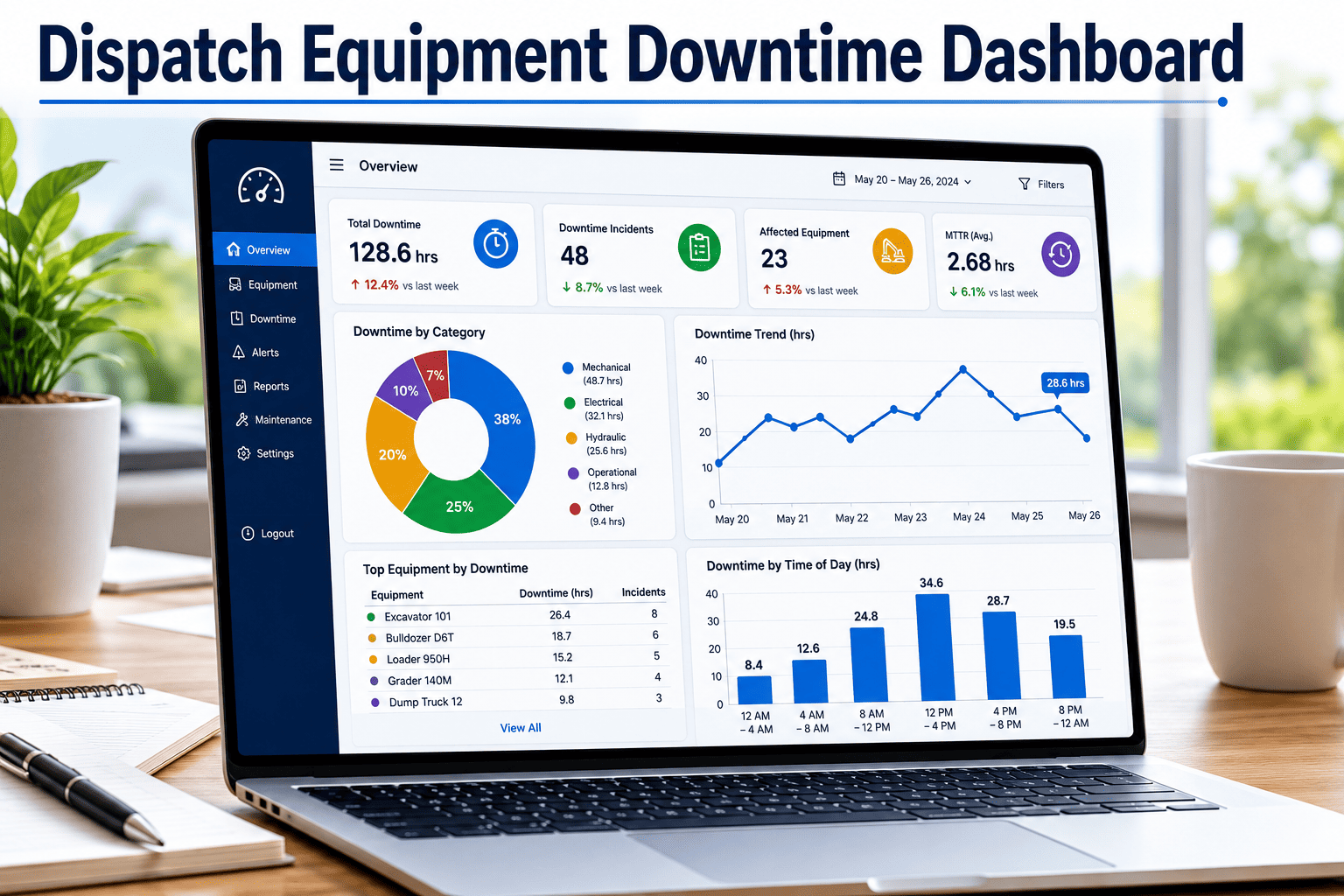
Read More
Dispatch equipment failures don't announce themselves — a packer jams at shift change, a weighbridge goes offline before a truck queue builds, a loader conveyor tears and the bagging line halts for three hours. Cement plants running without a down

Read More
A cement packing plant in Uttar Pradesh ran 12 rotary packers, four bag filter units, three palletisers, and two loading conveyors — managed through a spreadsheet, two WhatsApp groups, and one maintenance supervisor's memory. When Packer 7's impel

Read More
A cement plant quality manager in Gujarat spent two days before a BIS audit searching for calibration records across three different file registers, two spreadsheets, and one technician's personal notebook. Eleven instruments could not be confirme

Read More
A cement packaging line running 3,200 bags per hour has no human eye fast enough to catch a torn seam at bag 847, a low-fill at bag 1,203, and a broken handle at bag 2,991 — not reliably, not across an 18-hour shift. The defects ship. The customer

Read More
A cement plant in Madhya Pradesh discovered an 18-tonne daily material accounting discrepancy after a routine audit cross-checked belt scale totals against truck dispatch records. The scale had been reading consistently — just consistently wrong.

Read More
A cement dispatch unit in Rajasthan ran 340 truck movements a day through two weighbridges — neither had a calibration record newer than 14 months. When an audit flagged a 1.2% load discrepancy across 6,200 transactions, the financial exposure ran

Read More
A cement plant running 5,000 tonnes per day operates with hundreds of measurement points — process temperature sensors, kiln shell pyrometers, weighing systems, pressure transmitters, gas analysers and emission monitoring instruments. When any of

Read More
A cement quality control laboratory runs 24–30 test cycles per day across fineness testing, compressive strength, setting time, chemical analysis and particle size distribution. When a Blaine apparatus gives a drifted reading, an X-ray fluorescenc
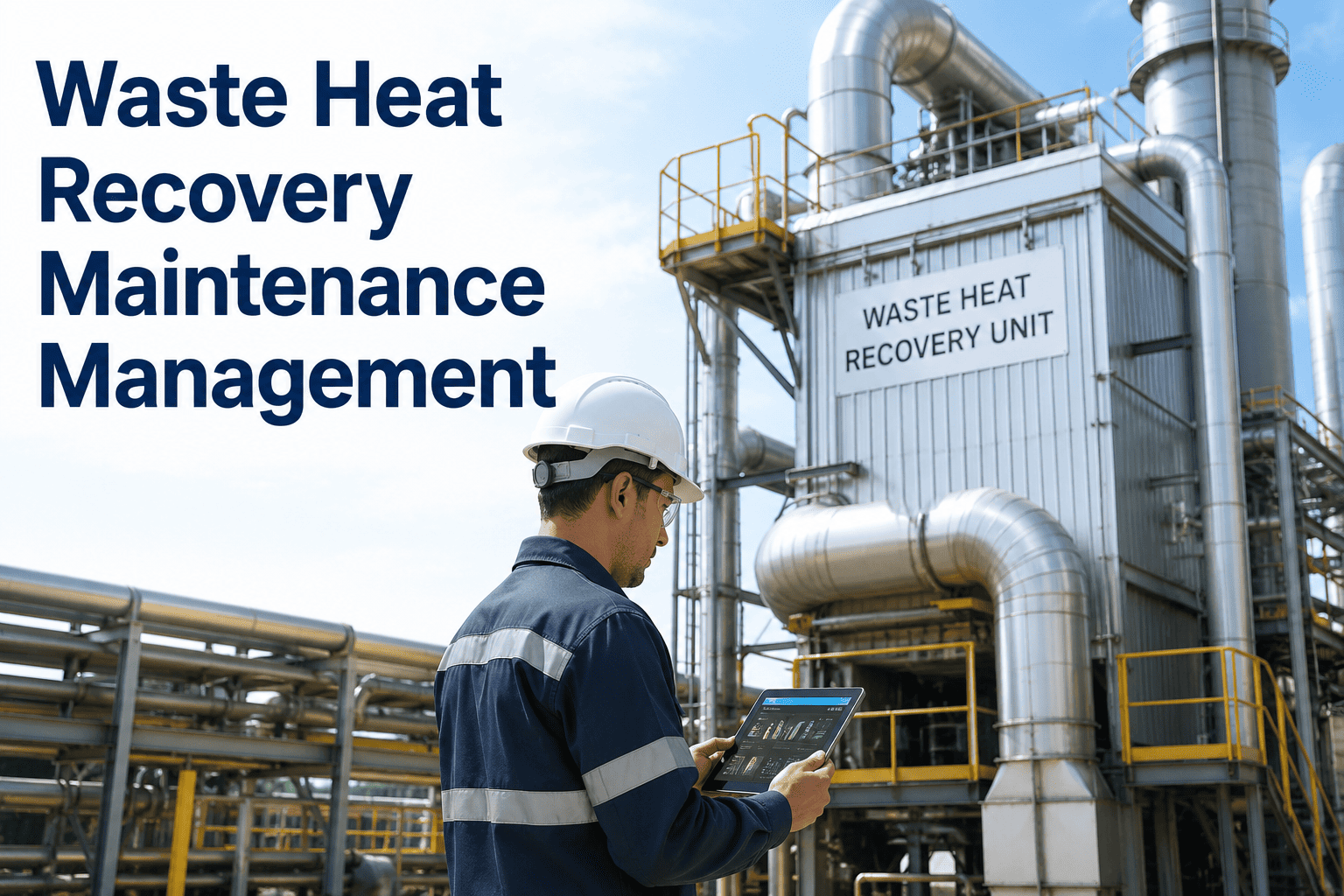
Read More
A waste heat recovery (WHR) system on a 5,000-tpd cement line can generate 6–8 MW of zero-fuel electricity — but only if the boilers, steam turbines, ID fans, heat exchangers and dust collectors that form the WHR chain are maintained to high relia

Read More
Cement production accounts for roughly 7–8% of global CO₂ emissions, and regulators, investors and buyers are demanding visible, measurable progress. The problem is that most cement plants track energy consumption in one system, maintenance histor

Read More
Alternative fuel feeding systems — from refuse-derived fuel (RDF) shredders to tyre-derived fuel (TDF) dosing conveyors — fail differently from conventional cement equipment. They handle abrasive, inconsistent, moisture-laden materials under conti

Read More
When a cement plant's kiln main drive gearbox fails and an external contractor takes seven days to complete a repair that should take four, the extra three days of downtime costs more than the contractor's entire annual billing. Yet in most plants

Read More
PLC outputs and sensor readings from your cement plant contain a continuous stream of equipment condition data — motor current draw, bearing temperature, conveyor belt speed, pump pressure. But most maintenance teams only see this data after somet

Read More
Your DCS is already watching the plant. It sees high vibration on the kiln drive, differential pressure spikes across the bag filter, and temperature excursions in the preheater. But in most cement plants, a DCS alarm reaching the right technician

Read More
Cement plant technicians spend their day between the raw mill, the kiln, and the cooler — not behind a desk. But most maintenance systems are built for desktops. Paper job cards get lost, WhatsApp updates disappear, and shift handovers miss critic

Read More
SAP PM holds your maintenance plans, equipment records, and notification history. But in most cement plants, SAP stops at the planning desk — field technicians use paper, WhatsApp, or verbal handovers to execute and close work. The result is a sys

Read More
Cement plants run on spare parts — and spare parts run on data. When your material master is full of duplicate entries, inconsistent naming, and missing criticality flags, procurement slows, stockouts happen, and planners waste hours reconciling w

Read More
Maintenance and operating expenses consume 15 to 25 percent of total cement production costs — and in most plants, 55 percent of that budget drains into emergency reactive repairs that cost four to six times more per event than a planned intervent

Read More
A single 10-hour kiln stoppage caused by a missing bearing can cost a cement plant between $800,000 and $1.5 million in lost production — more than the annual software license cost of an entire CMMS platform. Yet across the industry, 20 to 30 perc

Read More
Every time a cement plant technician creates a work order for a kiln bearing replacement or a mill liner swap, the same expensive sequence begins: the planner checks stock, finds a shortage, writes a parts request on paper or in a spreadsheet, ema

Read More
A kiln shutdown that runs one day over schedule costs a cement plant between $350,000 and $500,000 in lost clinker output — and the most common cause of overruns is not scope creep or crew shortages. It is the missing part. A refractory brick pall

Read More
The cement kiln is the heart of every integrated cement plant — and its unplanned downtime is the single most expensive maintenance event in the industry. A 5,000 TPD kiln line stopped for 24 hours represents not just lost production but refractor

Read More
A Motor Control Center failure in a cement plant is not an electrical event — it is a production stoppage that cascades through every downstream asset the MCC feeds. Raw mill drives, kiln auxiliaries, cooler fans, and packing line motors all depen

Read More
The rotary packer is the final critical asset in a cement plant's value chain — a machine whose downtime does not just affect maintenance schedules, it directly halts dispatch revenue. A 1,200 TPH packing line stopped for four hours costs more in

Read More
Falls from height remain the single leading cause of fatalities in cement plant maintenance — accounting for over 30% of industry fatalities according to OSHA data for heavy manufacturing. In cement facilities, the risk profile is amplified by the
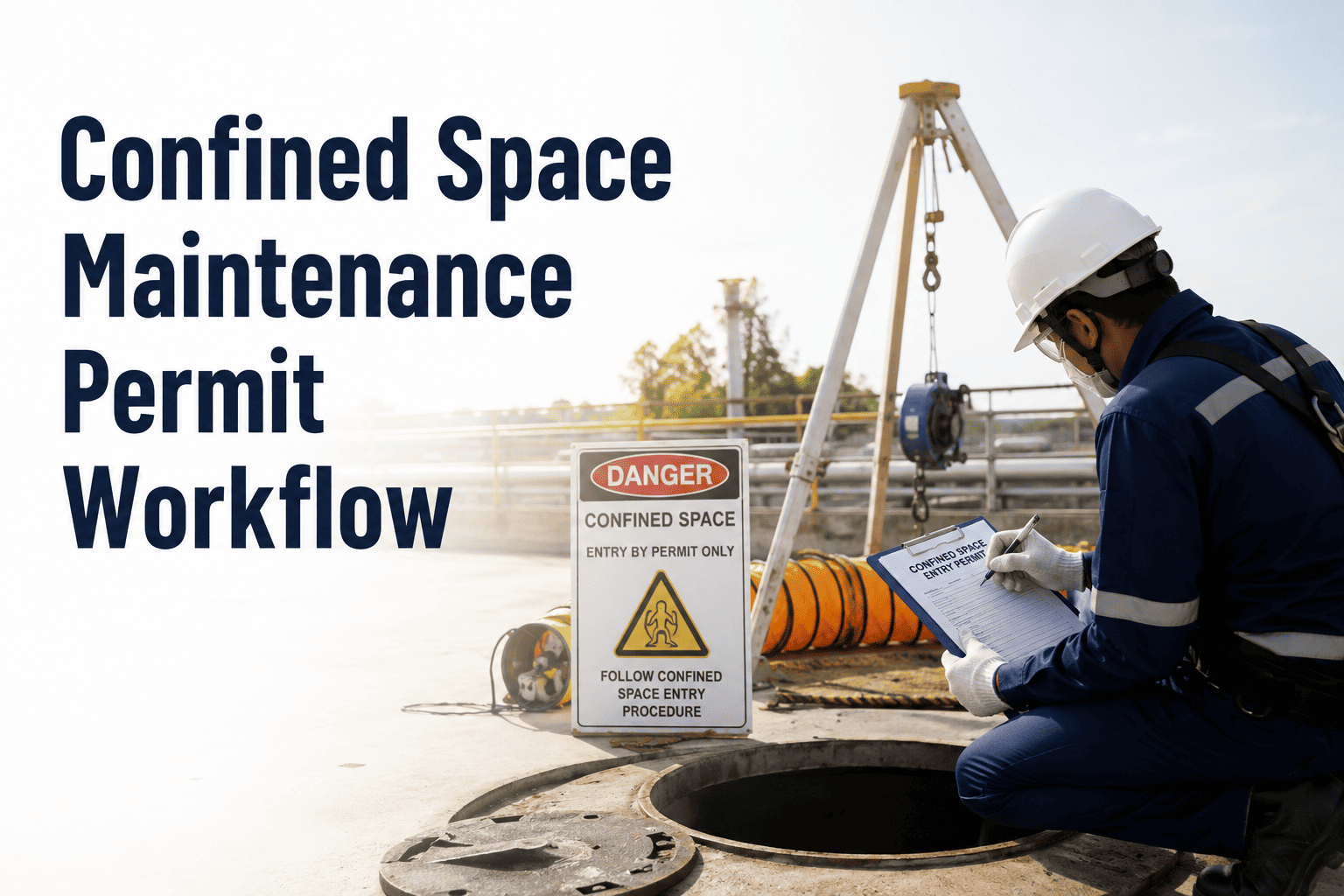
Read More
Confined spaces in cement plants — silos, clinker vaults, preheater towers, and underground ducts — are responsible for some of the most preventable fatalities in heavy industry. OSHA 29 CFR 1910.146 mandates a written permit system for every perm

Read More
A cement plant that runs out of a kiln tyre bolt set during a major shutdown does not wait a day — it waits a week, at $100,000 to $200,000 per day in lost production. Critical spares stockouts are not caused by negligence; they are caused by invi

Read More
A cement plant incident report that sits in a folder without a corrective action owner, a due date, and a closure photograph is not a safety improvement — it is a documented liability. Regulatory auditors and legal teams know the difference. More

Read More
A cement plant safety inspection that gets written on paper is, at best, a record of what was found. It cannot generate a work order, it cannot photograph a cracked conveyor guard, and it cannot notify a supervisor the moment an inspector marks a

Read More
A kiln major shutdown compresses weeks of planning into days of execution — and every hour of overrun costs a cement plant between $80,000 and $200,000 in lost production. The margin for clearance errors, miscommunicated isolation status, and perm

Read More
A single missed permit sign-off on a hot work job near a kiln hood has ended careers, triggered OSHA investigations, and shut down entire cement lines for weeks. Permit-to-work failures are not caused by careless workers — they happen when paper-b

Read More
In cement plant maintenance, the moments of greatest risk aren't production peaks — they're planned maintenance windows. The instant a conveyor is shut down, a kiln burner is isolated, or a ball mill drive is de-energized for inspection, maintenan

Read More
Filter bags are the workhorses of cement plant dust collection — and they're also one of the most frequently replaced, most inventory-intensive, and most operationally critical consumables in the plant. A single baghouse servicing a raw mill may h

Read More
An electrostatic precipitator running at peak efficiency is invisible — it quietly removes particulate from kiln exhaust gas without drawing attention. But an ESP that's underperforming tells everyone: visible stack plumes, opacity exceedances, pe

Read More
Every visible dust plume rising from a cement plant transfer point, baghouse stack, or crusher enclosure is both an environmental violation in progress and an operational failure waiting to escalate. Fugitive dust — the uncontrolled particulate th

Read More
Cement plants operate under some of the strictest environmental scrutiny in heavy industry. A Continuous Emissions Monitoring System (CEMS) that drifts out of calibration, misses a QA/QC cycle, or produces incomplete data records can trigger NOV n

Read More
Baghouse dust collectors in cement plants carry dual responsibility: environmental compliance and process protection. A filter bag failure or missed inspection does not just create a dust emission event — it can trigger a regulatory notice, a prod

Read More
Grate cooler plate wear is one of the most predictable sources of forced downtime in cement production — yet most plants discover the severity only during an emergency shutdown, when a fractured plate, a clinker fall-through event, or a rising dis

Read More
Cooler fans are among the highest-energy consumers in a cement plant — and among the least systematically monitored. When a cooler fan runs with bearing wear, blade erosion, or a misaligned drive, the energy penalty accumulates silently across eve

Read More
Clinker cooler failures rarely announce themselves—they build through incremental grate plate wear, fan imbalance, and temperature excursions that go unaddressed until a forced outage forces the kiln to stop. Predictive maintenance changes this eq
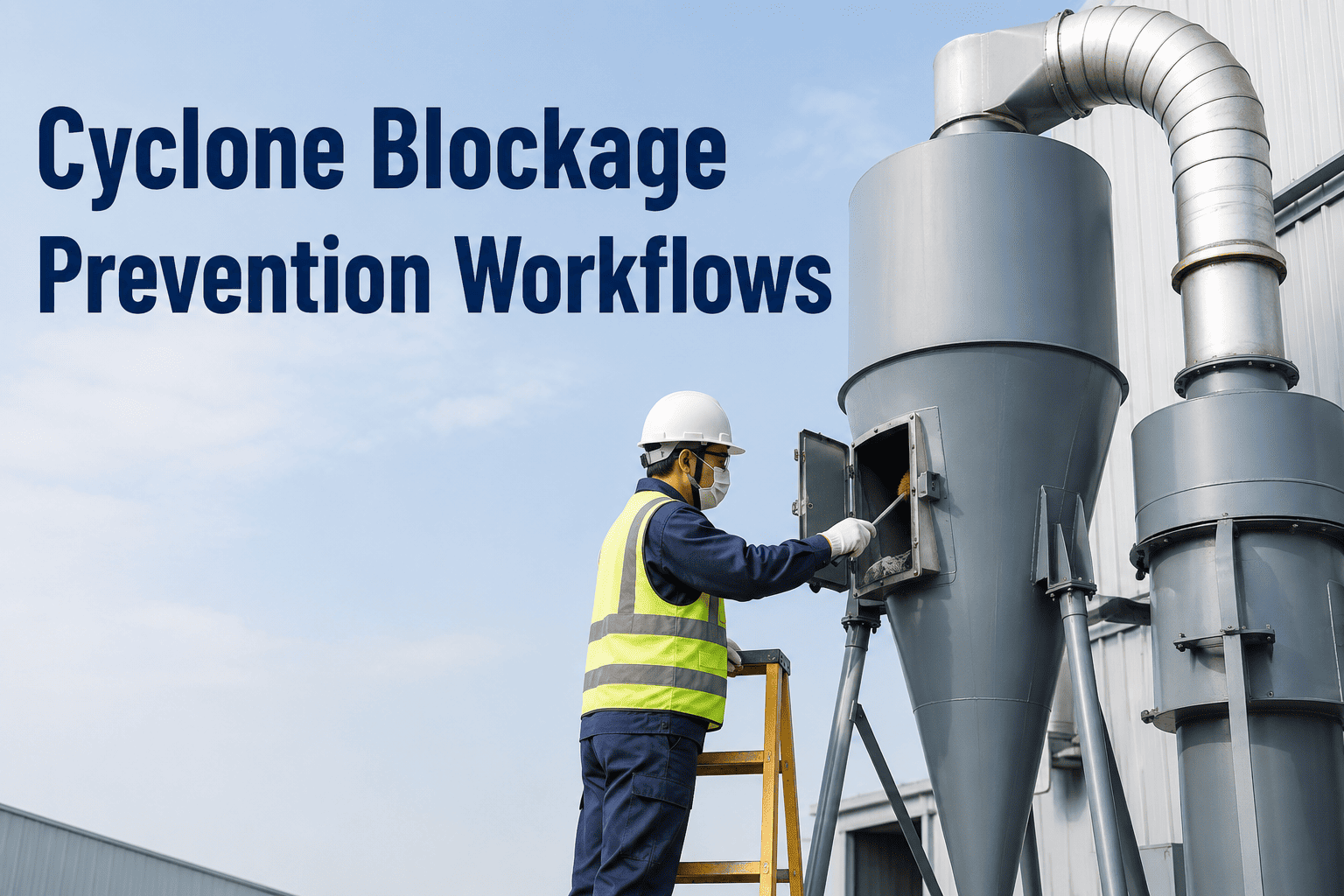
Read More
Cyclone blockages in cement preheater towers are one of the most disruptive and dangerous events in clinker production—causing emergency shutdowns, refractory damage, and kiln start-up delays that cost hours of lost output. Most blockages are pred
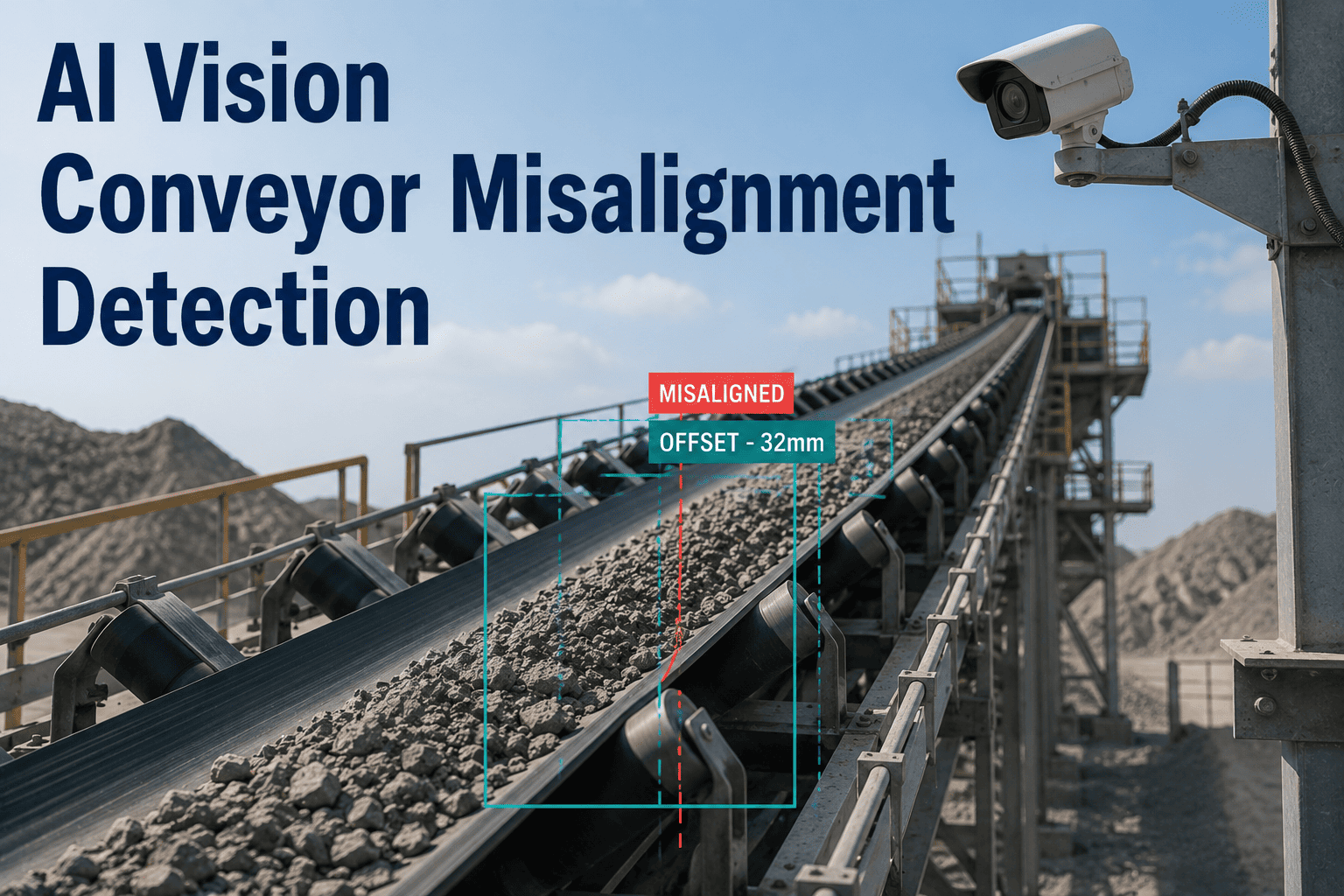
Read More
Conveyor belt misalignment is silent, progressive, and expensive. By the time an operator notices the belt has been riding the edge for the past two hours, the damage to the belt edge, the idler frames, and sometimes the structural steelwork is al

Read More
A cement plant's conveyor network is its circulatory system — stop one belt, and you stop the flow of raw material, clinker, or finished product through the entire production chain. Conveyor belt failures are the single most frequent cause of unpl

Read More
Cement plant crushers operate in one of the harshest environments in any industrial setting — fine limestone and clinker dust saturates the air, penetrates every gap, and silently destroys bearings, seals, motors, and electrical enclosures over we

Read More
The preheater tower is the most maintenance-intensive vertical structure in any cement plant — and the least forgiving of unplanned work. At 80–120 meters tall, with cyclone stages operating at 300–900°C, every inspection entry requires scaffoldin

Read More
A belt tear that is not detected within the first few meters of propagation can travel the full length of a conveyor run — turning a $15,000 repair into a $180,000 belt replacement. In cement plants, where conveyors run 18–24 hours daily through a

Read More
Screw conveyors in cement plants operate in conditions that accelerate wear at rates most maintenance teams still manage on spreadsheet schedules written years ago. Fine limestone dust works into bearing seals. Clinker abrades flights down to the

Read More
Bucket elevators are the vertical backbone of cement plant material flow — handling everything from raw limestone feed to finished cement dispatch. Unlike horizontal conveyors, a bucket elevator failure happens inside an enclosed casing where earl

Read More
Conveyor idler failures are the silent production killers in cement plants — individually small, collectively catastrophic. A single seized idler bearing generates enough friction heat to ignite belt material within minutes; a missed overheating i

Read More
A raw material crusher is the first critical point of failure in your cement plant — and the one that creates the most chaotic maintenance situations. When a blockage hits, when vibration spikes, when the inspection team finds a cracked deflector

Read More
Every cement plant knows the drill — a worn crusher liner goes unnoticed until throughput drops, motor load climbs, and suddenly you're scheduling an emergency shutdown in the middle of peak production. Liner wear is gradual, invisible to the nake

Read More
A preheater tower blockage event costs a cement plant between $180,000 and $650,000 in lost output and emergency clearing labor — and over 60% of those events trace back to refractory failures and coating buildup in cyclone stages that were visibl

Read More
Conveyor spillage in a cement plant is simultaneously a housekeeping problem, a safety hazard, a belt wear accelerant, and a compliance risk — and it almost always starts with a root cause that a structured inspection would have caught weeks earli

Read More
The limestone crusher is the first critical bottleneck in the cement production chain — and the most dangerous piece of equipment to inspect reactively. A single missed liner wear check, an undetected jaw plate crack, or a hydraulic leak that goes
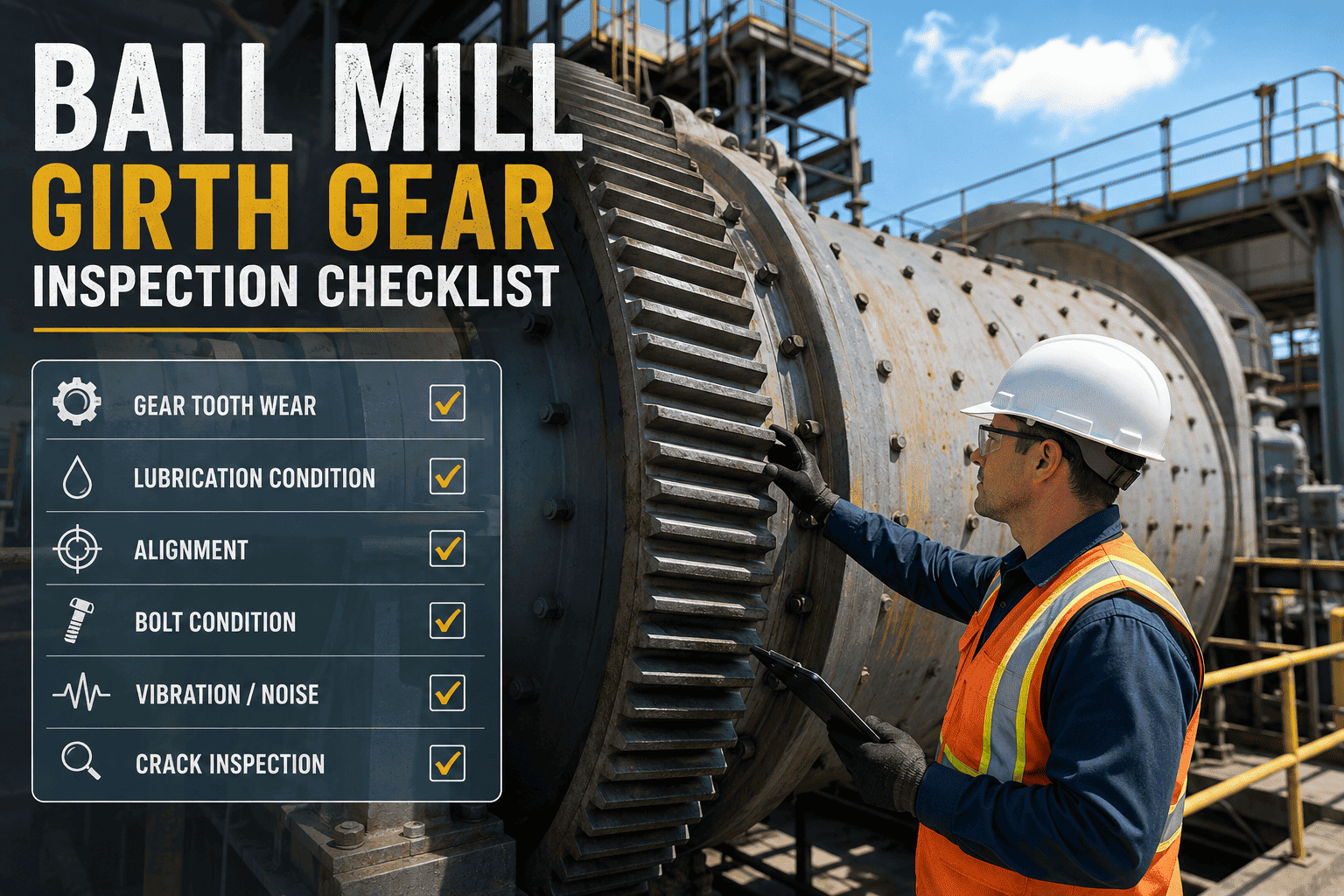
Read More
The girth gear is the highest-value single drive component on a ball mill — transmitting full motor torque through a ring gear that can span four to six meters in diameter, meshing with a pinion under loads that generate surface pressures exceedin

Read More
Rotary kiln tyres and support rollers are the most mechanically loaded components in a cement plant — transmitting the full weight of a spinning 2,000-tonne kiln under temperatures exceeding 400°C at the shell surface. Tyre migration beyond 50mm p

Read More
In a cement plant, the crusher is where the entire production chain begins — and where an unplanned failure creates the longest, most expensive stoppages. A crusher bearing failure that forces a 12-hour emergency repair doesn't just cost the beari
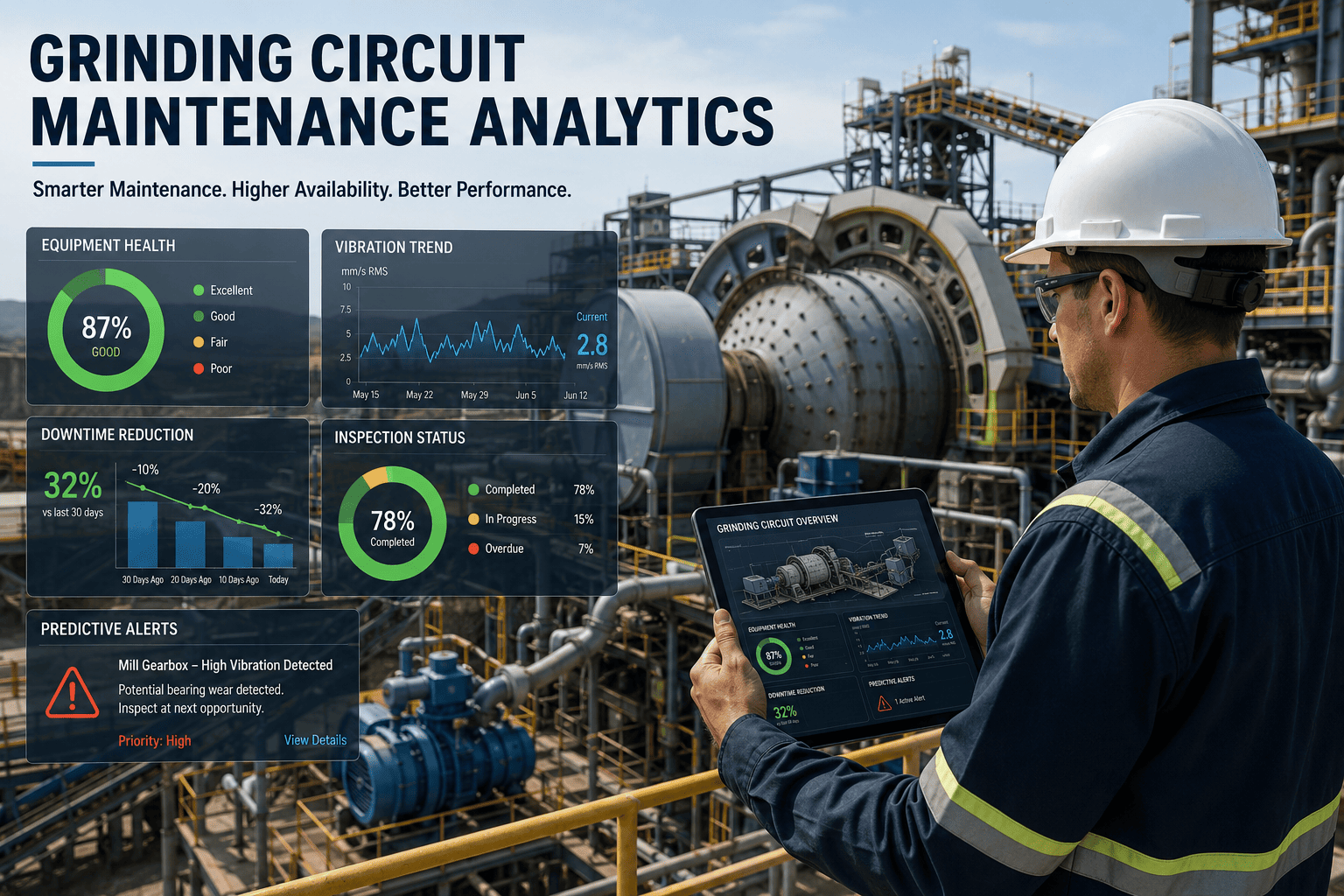
Read More
A cement plant's grinding circuit is where raw material cost, energy consumption, and product quality converge — and where maintenance decisions have the most direct impact on operating economics. Yet in most plants, the data needed to connect mai

Read More
Lubrication failure is the single largest preventable cause of bearing and gearbox damage in cement mill operations. Industry data consistently shows that over 50% of rolling element bearing failures trace back to inadequate or contaminated lubric

Read More
The separator is the quality gatekeeper of every cement mill circuit — it decides what returns for regrinding and what advances as finished product. Yet in most plants, separator maintenance is managed reactively: a vibration complaint triggers an
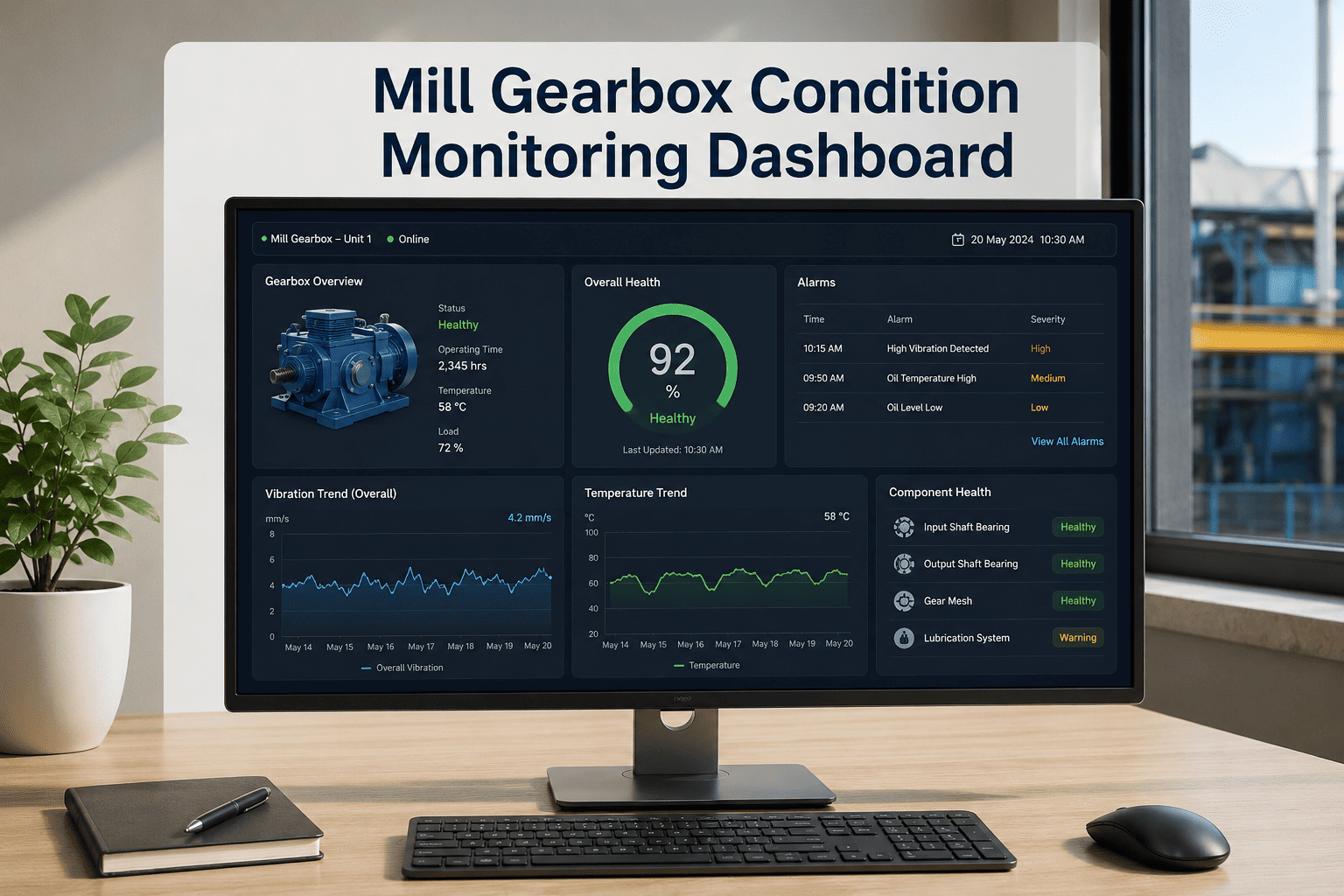
Read More
Cement mill gearboxes are among the most stressed mechanical assets in any plant — running 24 hours a day under high torque loads, contaminated with fine cement dust, and often starved of the real-time visibility needed to catch early-stage failur

Read More
A vertical roller mill bearing failure that halts production for 72 hours does not just cost the mill — it starves the kiln of raw meal, forces thermal stabilization cycles, and creates a production shortfall that takes days to recover. The engine
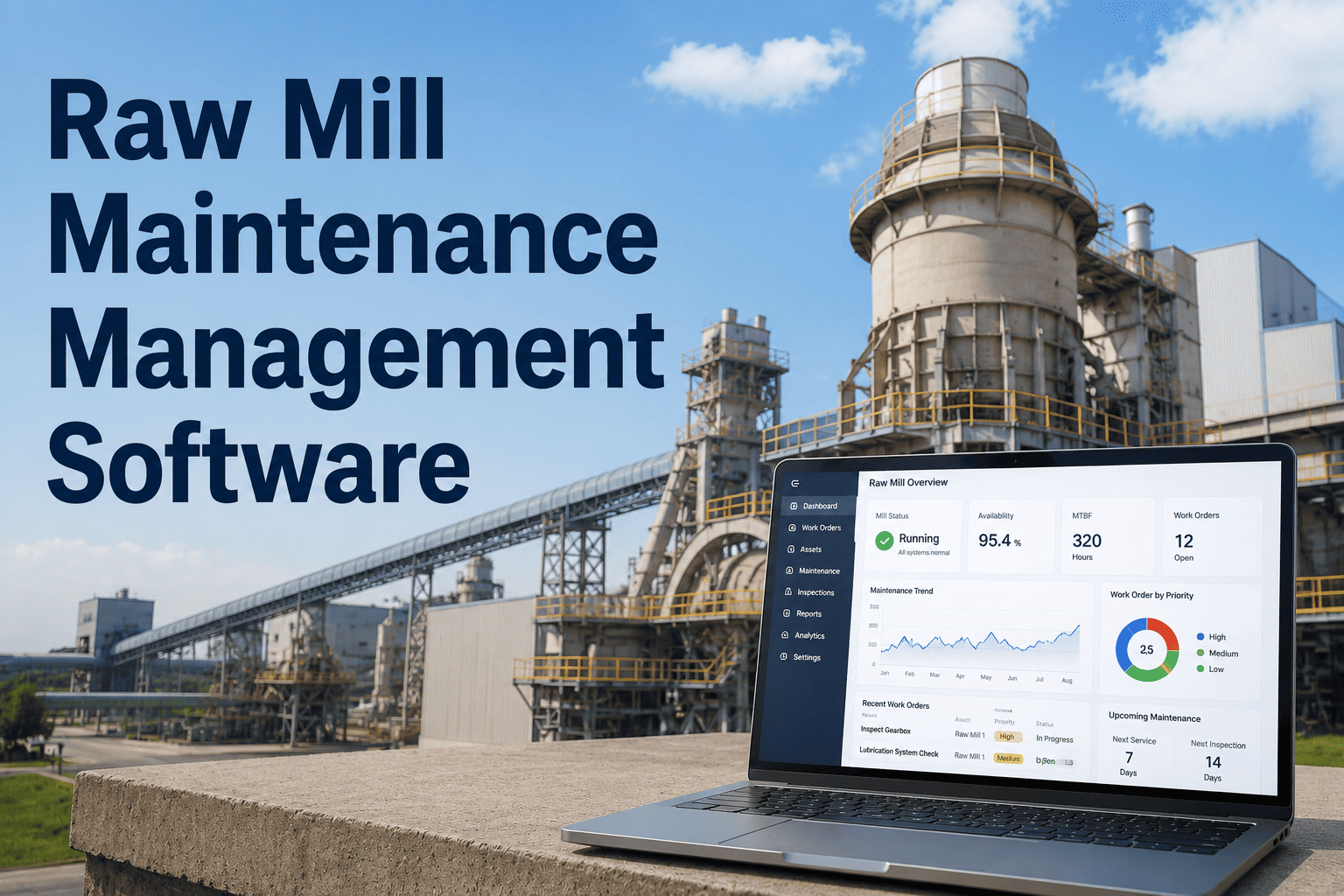
Read More
Raw mill reliability is the foundation of stable kiln feed chemistry — and unstable kiln feed is one of the most expensive problems a cement plant can have. Every unplanned raw mill stop disrupts kiln feed rate, forces operators into manual correc

Read More
A cement mill planet bearing failure that could have been caught 5–7 days in advance instead triggers an unplanned stop, an emergency rebuild, and 18 weeks of lead time for a replacement gearbox. The financial damage — $850,000 in parts, $70/ton l

Read More
A refractory failure that forces an emergency kiln stop costs a cement plant between $800,000 and $2.5 million — in emergency brick procurement, expedited relining crews, kiln cool-down and heat-up energy loss, and clinker production shortfall. Th

Read More
Calendar-based kiln maintenance is a bet that your kiln ages at a fixed, predictable rate — it does not. Rotary kilns accumulate wear through revolutions, thermal cycles, raw material variability, and operating load — none of which map neatly onto

Read More
A cement plant kiln shutdown is one of the most logistically complex maintenance events in industrial manufacturing. In a single 12 to 18-day window, hundreds of tasks across refractory, mechanical, electrical, and instrumentation disciplines must

Read More
The kiln drive system — main gearbox, girth gear, pinion, support rollers, and trunnion bearings — is the mechanical backbone of continuous clinker production. A single main drive bearing seizure or girth gear failure at an unplanned moment costs

Read More
A single unplanned kiln refractory failure triggers a chain reaction no cement plant can afford. Production stops across the entire clinker circuit, emergency contractors mobilize at premium rates, and refractory replacement costs run 3.2 times hi

Read More
Kiln shell temperature is the most direct real-time indicator of refractory health in a cement plant. A 15°C temperature elevation above baseline in any single zone signals brick thinning, spalling, or coating loss — conditions that, if unaddresse

Read More
A rotary kiln running at 1,450°C is the single most expensive, highest-consequence asset in any cement plant. When it stops unexpectedly, clinker production halts instantly — and so does every downstream process. Emergency refractory repairs, forc

Read More
Most cement plants have a near-miss reporting problem that looks like a safety culture problem but is actually a friction problem. When reporting a near-miss requires a supervisor to be physically present, a paper form to be located and completed,
Read More
The annual operating plan (AOP) and maintenance budget define what your cement plant can and cannot do for the next twelve months — and yet most plants submit them using a prior-year spreadsheet adjusted by a percentage, with no connection to actu

Read More
A kiln drive gearbox replacement costing $1.4 million is easy to approve when the previous one failed and took the plant offline for 11 days. The same project is rejected 70% of the time when submitted as a proactive replacement before failure — u

Read More
MSHA inspections arrive unannounced — and a plant that scrambles to locate hazard records, training logs, and equipment examination forms during an active inspection almost always receives citations it could have avoided. A structured mock inspect

Read More
Cement plants lose 15–25% of available production capacity to untracked losses that never appear on the daily shift report. The Six Big Losses framework — originally developed for discrete manufacturing — translates directly to cement kiln, mill,

Read More
Weighing accuracy in a cement plant is not a peripheral technical concern — it is the foundation of every commercial transaction, production recipe, and regulatory compliance record the plant generates. A belt weigher delivering incorrect raw meal
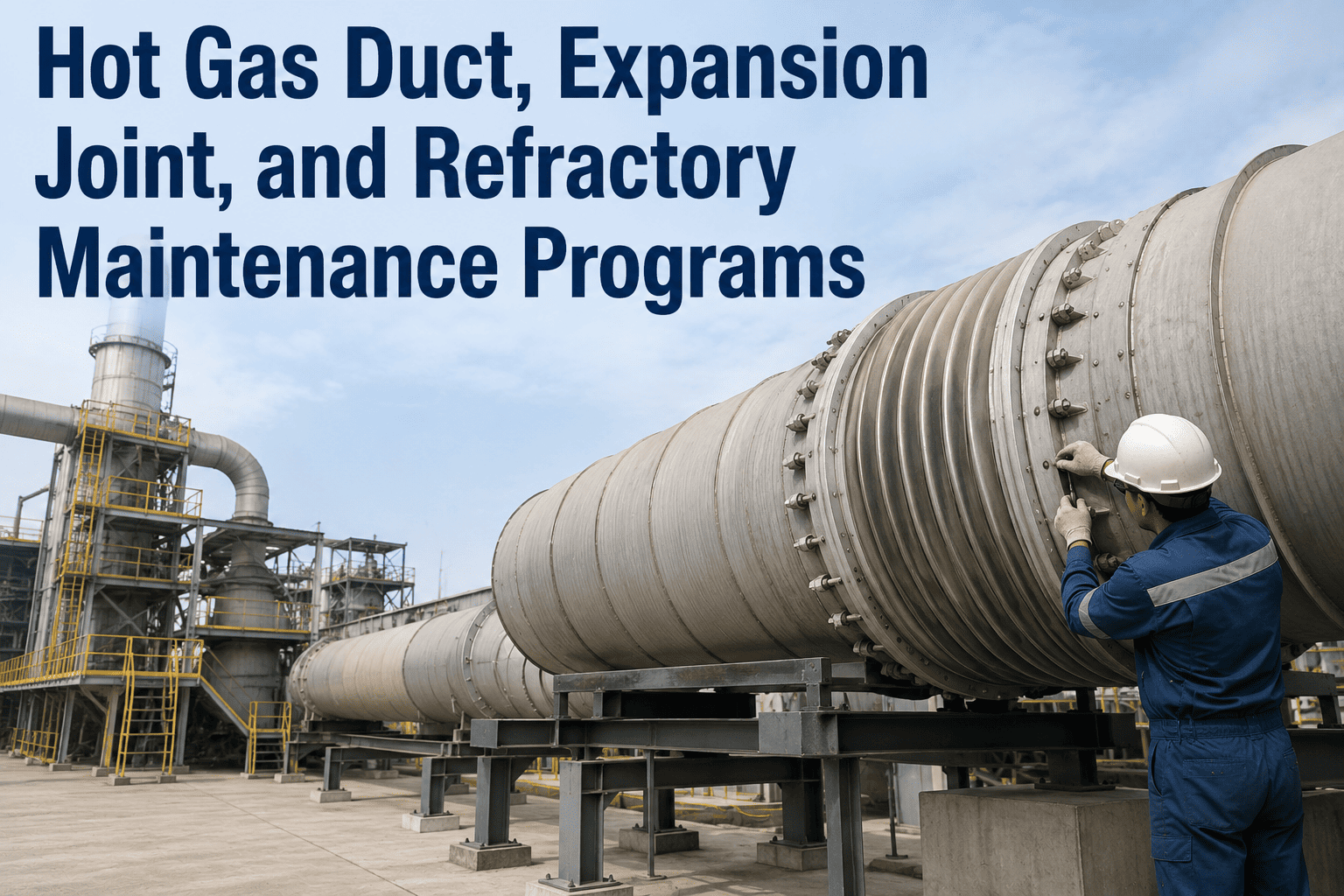
Read More
Hot gas ductwork, expansion joints, and refractory linings are among the most maintenance-intensive and failure-consequential assets in a cement plant — yet they are systematically under-inspected in most operations. A hot gas bypass through a fai

Read More
Quarry mobile equipment maintenance is one of the highest-stakes maintenance challenges in cement manufacturing — and one of the least systematically managed. Haul trucks, wheel loaders, and drill rigs operating in a cement quarry environment face

Read More
Fly ash supply chains are fragile in ways that cement plant engineers often underestimate until the first disruption hits production. Unlike internal raw materials, fly ash availability depends on power station output, transport logistics, and sup

Read More
Slag handling and granulation plant maintenance is one of the most demanding disciplines in cement and steelmaking operations — abrasive slurries, high-temperature equipment, rotating dewatering drums, and continuous conveyor systems all operate u

Read More
Cement manufacturing accounts for roughly 8% of global CO2 emissions — and regulators, investors, and buyers are demanding credible, documented decarbonization action plans. But building a roadmap that is both technically grounded in GCCA Net-Zero

Read More
Energy is the single largest operating cost in cement manufacturing — typically representing 30–40% of total production cost — yet most cement plants still track energy performance through fragmented spreadsheets, monthly utility bills, and inform

Read More
Shaft misalignment is the second most common cause of premature bearing failure in cement plant rotating equipment — after lubrication failure — and it is almost entirely preventable with a structured alignment record system. Yet in many cement pl

Read More
Lubrication failure is responsible for more than 40% of bearing failures in cement plant rotating equipment — yet most plants still run oil sampling programmes that are ad hoc, inconsistently labelled, and disconnected from their CMMS. A structure

Read More
Cement plant vibration monitoring is one of the most critical — and most under-documented — reliability practices in heavy industry. When a kiln main drive bearing fails without warning, the consequences are not just mechanical: production halts f
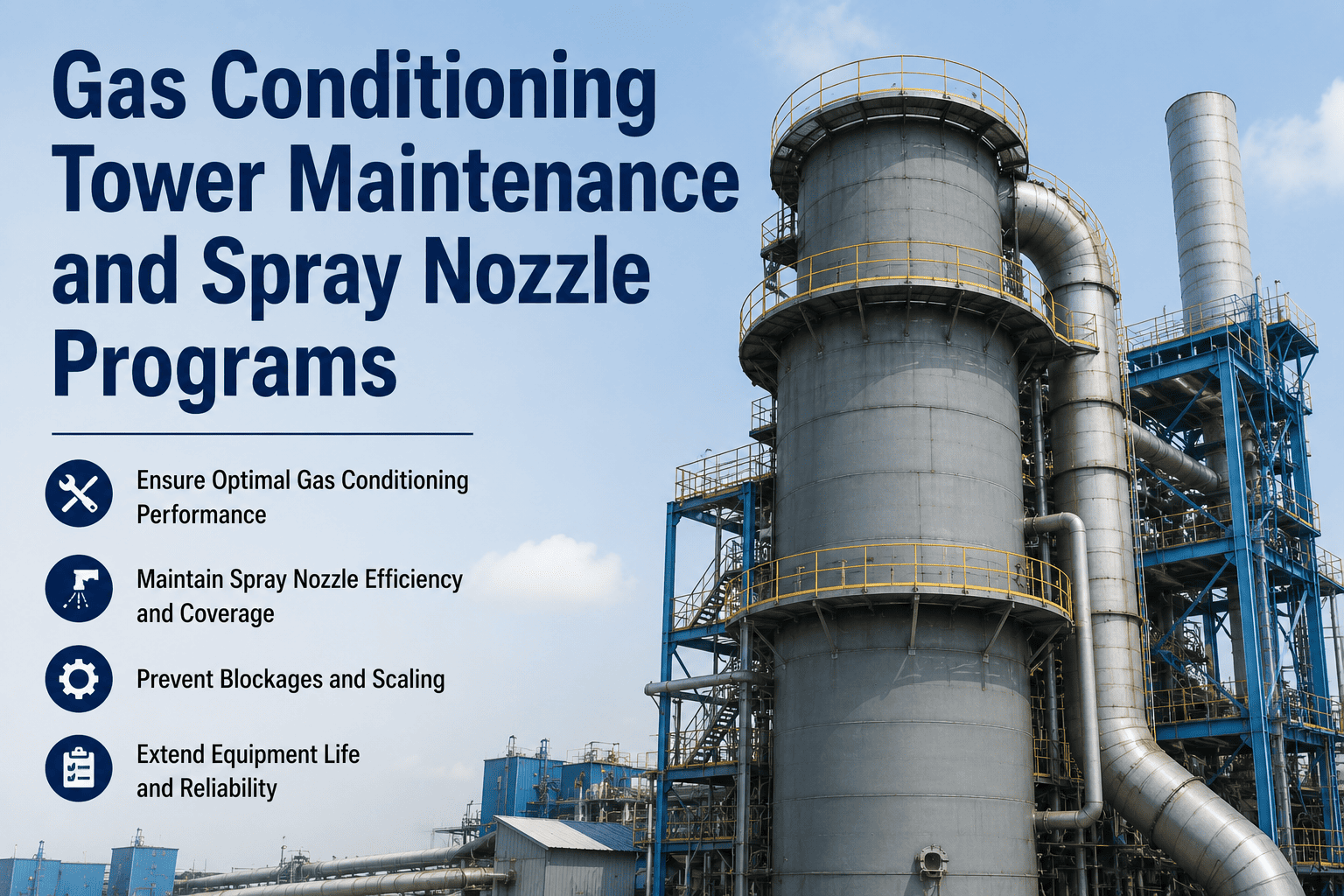
Read More
The gas conditioning tower sits between the preheater and the electrostatic precipitator — and when it fails, neither system works correctly. Hot gas entering the GCT at up to 400°C must be cooled to 120–180°C through evaporative water injection b
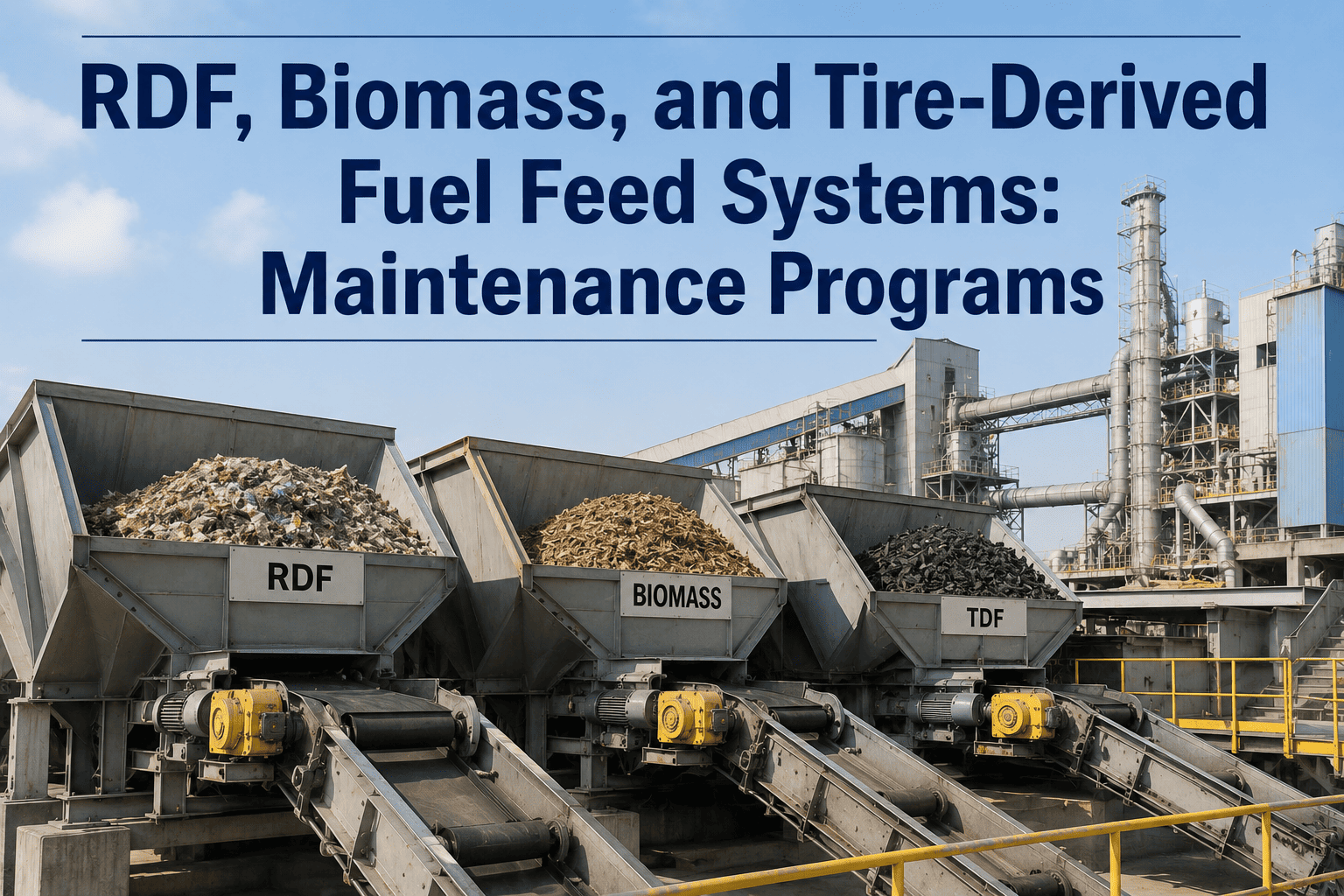
Read More
Alternative fuel co-processing is one of the most powerful cost-reduction levers available to cement plants today — RDF replacing 30% of coal in a kiln delivers significant fuel savings and gate fee revenue, while TDF and biomass feeding systems e

Read More
A single unexpected grate plate failure at a cement plant recently caused 72 hours of unplanned downtime worth $540,000 in lost production — and post-incident analysis revealed that worn plates had been completely obscured by clinker buildup durin
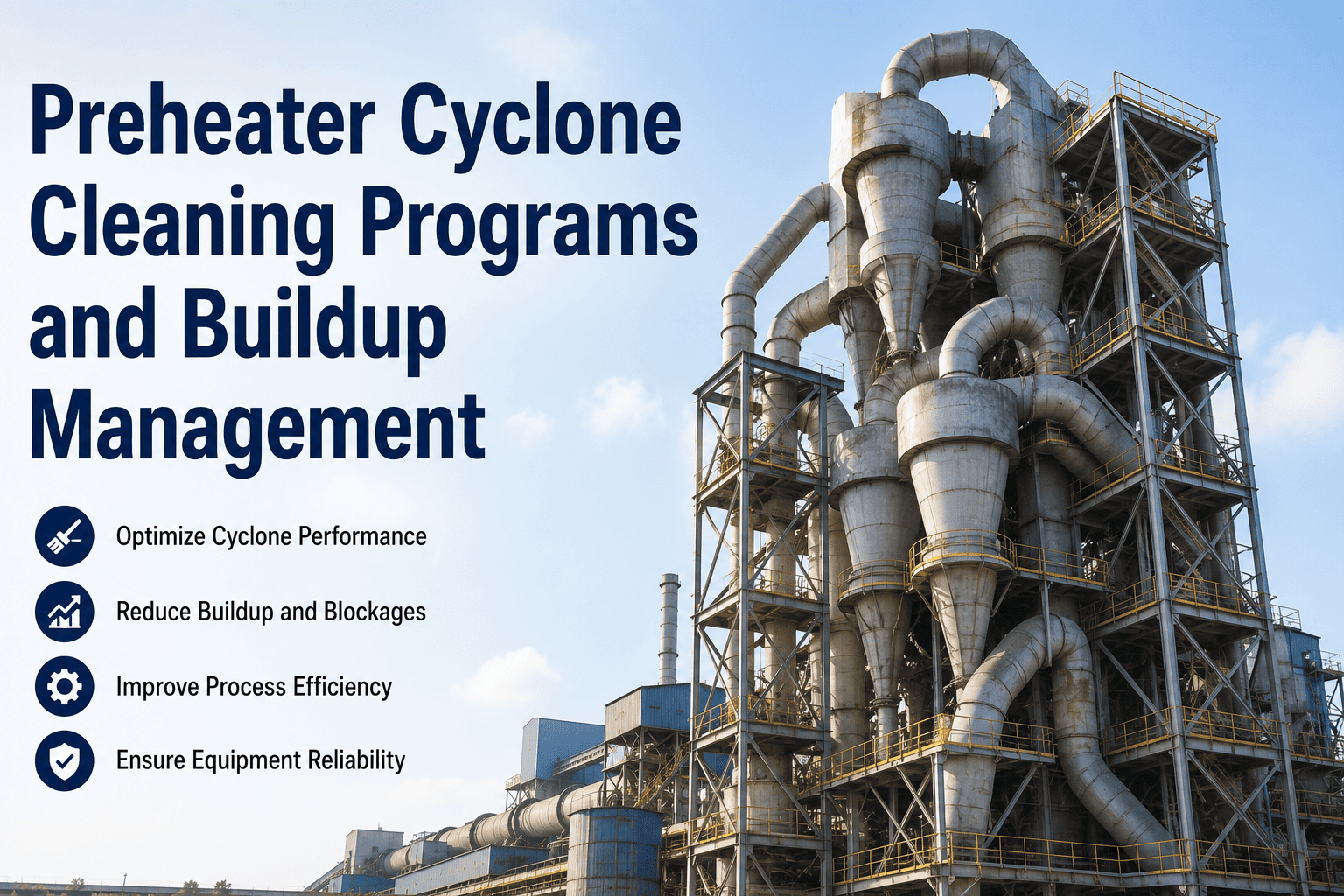
Read More
A single preheater blockage event shuts down clinker production for 8 to 36 hours — costing cement plants anywhere from $180,000 to $650,000 in lost output and emergency clearing labor, according to industry incident data. Over 60% of these events

Read More
In cement pyroprocessing, the calciner is where 60–70% of fuel combustion happens — and where small maintenance lapses compound into expensive kiln shutdowns. Whether your plant runs an In-Line Calciner (ILC), a Separate Line Calciner (SLC), or a

Read More
A mid-size cement plant operating three limestone quarries was losing an average of 14 hours per week to unplanned mobile equipment downtime — haul trucks sitting idle at the crusher, wheel loaders pulled from service without parts on hand, and pr

Read More
Cement plants are among the most energy-intensive industrial operations in the world — clinker production alone consumes 3,000–4,500 MJ per tonne, making energy typically the second-largest operating cost after raw materials. ISO 50001 provides th

Read More
ISO 17359 provides the framework for setting up condition monitoring programs on industrial machinery — defining how to select monitoring techniques, establish baseline measurements, set alarm thresholds, and document the program in a way that sur

Read More
API 670 sets the machinery protection standard for vibration, position, and temperature monitoring on critical rotating equipment — and cement plants are increasingly required to demonstrate compliance during insurance reviews, insurance-mandated

Read More
Dust suppression systems — water cannons, high-pressure mist lines, and fogging networks — are the first line of defense against fugitive dust at cement plants. When a nozzle clogs, a pump seal fails, or a control valve sticks open, the result is
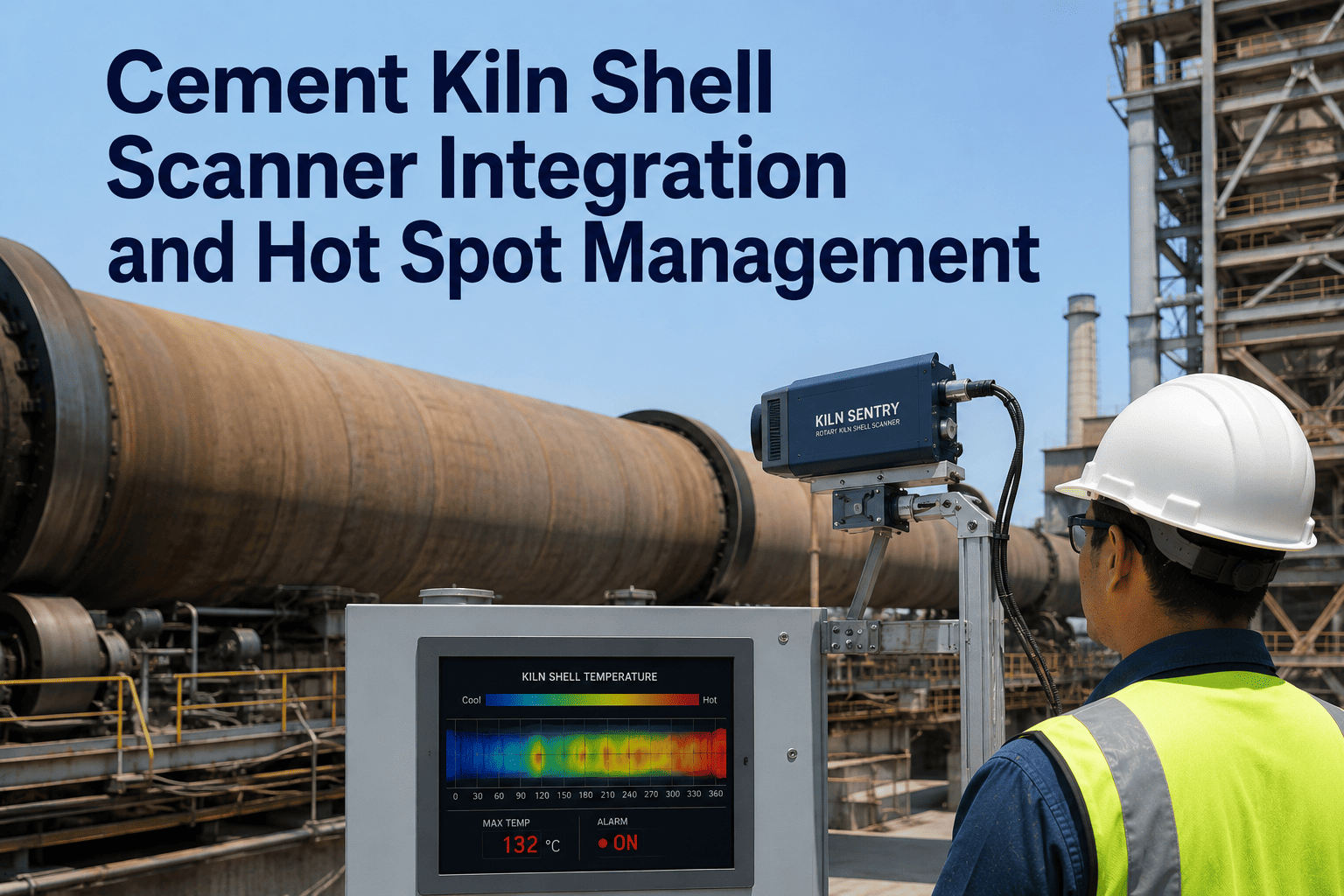
Read More
Kiln shell scanning has matured from a specialist contractor exercise into a continuous condition monitoring discipline at cement plants that take refractory management seriously. The combination of infrared camera scanning, thermal mapping of she

Read More
MSHA enforcement at cement quarries is following a measurable pattern in 2026: inspectors are spending more time on documentation gaps and less time on equipment condition, because the equipment condition issues tend to be visible and corrected on

Read More
NESHAP MACT compliance at cement plants has tightened considerably heading into 2026, with EPA enforcement priorities shifting toward documented continuous monitoring failures and exceedance recordkeeping gaps rather than the process design issues

Read More
Annual carbon reporting at cement plants is one of the most resource-intensive compliance exercises on the operations calendar. When one integrated cement plant switched from a spreadsheet-and-email process to OxMaint's Scope 1, 2, and 3 dashboard

Read More
A cement plant running a rotary kiln at scale knows that every kcal/kg of specific heat consumption (SHC) maps directly to fuel spend. When one mid-size integrated cement plant engaged OxMaint's maintenance platform, their kiln burner condition tr

Read More
Limestone calcined clay cement (LC3) is one of the most significant cement technology advances of the past two decades — a blend of 50% clinker, 30% calcined clay, 15% limestone, and 5% gypsum that delivers up to 40% lower CO2 emissions than ordin

Read More
Supplementary cementitious materials (SCMs) — fly ash, ground granulated blast-furnace slag (GGBS), silica fume, calcined clay, and limestone calcined clay cement (LC3) — have transformed from sustainability add-ons into core production inputs at

Read More
Carbon capture, utilisation, and storage (CCUS) is the only available technology that can address the process CO2 released during limestone calcination — a reaction that accounts for roughly 60% of total cement plant emissions and cannot be elimin

Read More
Cement production accounts for roughly 7% of global CO2 emissions, making it one of the hardest industries to decarbonise. The Global Cement and Concrete Association's (GCCA) 2050 Net Zero Roadmap is the first detailed decarbonisation blueprint is

Read More
Confined space entry in a cement plant is among the most controlled activities in industrial safety — and for good reason. Cement plants contain hundreds of permit-required confined spaces: kiln hoods, preheater cyclones, silos and bins, ball mill

Read More
Hot work in a cement plant carries a fire risk that most industrial facilities never encounter at the same scale. Raw meal, coal dust, clinker fines, and baghouse filter cakes are all combustible under the right conditions — and welding, cutting,

Read More
Lockout/Tagout failure is the leading cause of serious injury during maintenance in cement plants. High-energy systems — rotary kilns with stored thermal energy, raw mills with hydraulic accumulators, conveyor systems under tension, and electrical

Read More
A Pre-Startup Safety Review (PSSR) is not a formality in a cement plant — it is the final checkpoint before a contractor hands back a repaired or newly installed system to operations. Cement plants run continuous, high-temperature processes involv

Read More
Rotating equipment in cement plants — kiln main drives, raw mill fans, separator motors, clinker conveyor gearboxes, and high-voltage motor-driven pumps — collectively represent the majority of unplanned downtime cost and the highest repair bill i

Read More
Welding, cutting, grinding, and any open-flame or spark-producing activity in a cement plant introduces fire and explosion risk in environments where combustible coal dust, raw petroleum coke, lubricant residues, and hydraulic fluid accumulate on

Read More
Cement plants are dense with permit-required confined spaces — silos, hoppers, preheater vessels, mill interiors, dust collectors, and underground pit structures that demand rigorous pre-entry control before any person enters. OSHA 1910.146 mandat
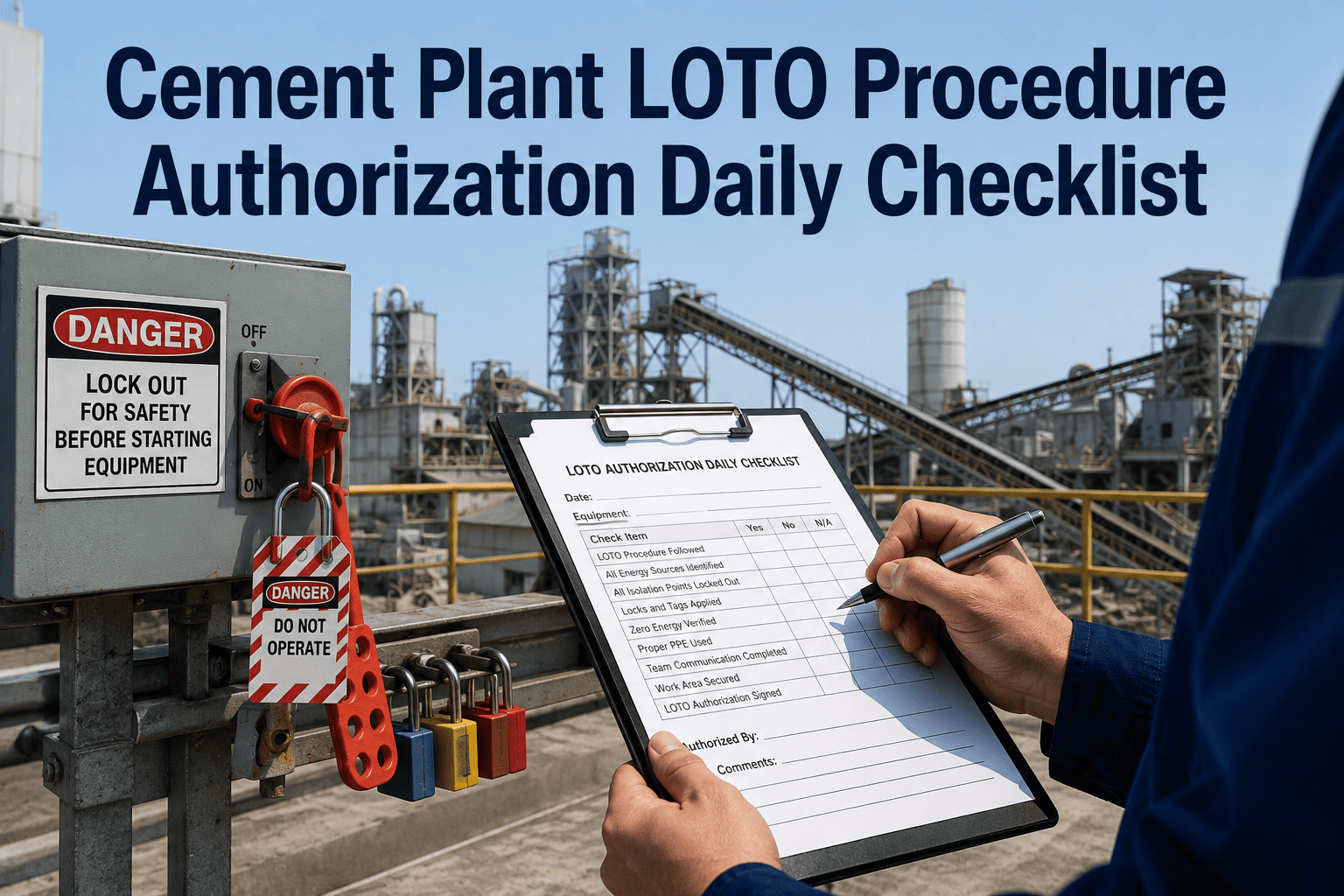
Read More
Every cement plant operates with rotating kilns, high-voltage drives, bulk conveyors, and pressurized systems that can release stored energy in an instant — making Lockout/Tagout (LOTO) one of the highest-stakes compliance obligations under OSHA 1

Read More
Explosives management at a cement quarry sits at the intersection of three regulatory frameworks — ATF federal licensing, BIS (Bureau of Indian Standards) requirements where applicable, and MSHA blasting standards — and a compliance failure in any

Read More
MSHA Part 56 and Part 57 citations are not just compliance paperwork — they are a leading indicator that your quarry's safety management system has a gap between what your procedures say and what your records prove. The difference between a citati

Read More
Crusher failures are among the most expensive unplanned events a cement quarry can absorb. A jaw crusher feeding the primary crusher circuit at 800 to 1,200 tonnes per hour does not fail slowly — jaw plate wear progresses predictably until it does

Read More
Cement plant conveyor systems are the circulatory system of production — a single belt failure can cascade into kiln starvation, clinker discharge backup, and unplanned shutdowns lasting 8 to 24 hours. Yet most cement plants still manage belt cond

Read More
Running a cement group with five plants is not five times harder than running one plant — it is exponentially more complex, because every plant's maintenance culture, equipment configuration, and work order practice is different, and none of them

Read More
Ask the maintenance manager of a 3 MTPA cement plant how many assets their team is responsible for and you will typically hear a number between 2,200 and 2,800 — rotating kilns, ball mills, vertical roller mills, girth gears, preheater cyclone tow

Read More
Every cement plant manager who has walked into a capital review meeting armed only with production tonnage and last quarter's downtime numbers knows the feeling: the CFO asks a benchmark question you cannot answer, and the room goes quiet. The 202

Read More
Cement plants burning alternative fuels face a paradox that spreadsheets and generic CMMS platforms cannot solve: every percentage point of Thermal Substitution Rate you gain introduces new wear variables, emissions compliance obligations, and cli

Read More
The maintenance manager once requested $6.2 million in component replacements, but without reliable remaining useful life (RUL) data, most requests were cut. After deploying OxMaint's RUL tracking, budget requests were backed by condition data, fa

Read More
A cement plant once spent 14 days preparing audit packages for NESHAP, MSHA, and ISO 50001 compliance, pulling staff away from maintenance work and still facing 11 documentation gaps. After implementing OxMaint, the same audit packages were genera

Read More
When a 5.1 MTPA cement plant's operations director gave the instruction to go live on a new CMMS in 60 days, the maintenance planning team had three concerns: the asset register from the old system was incomplete, the technician workforce had neve
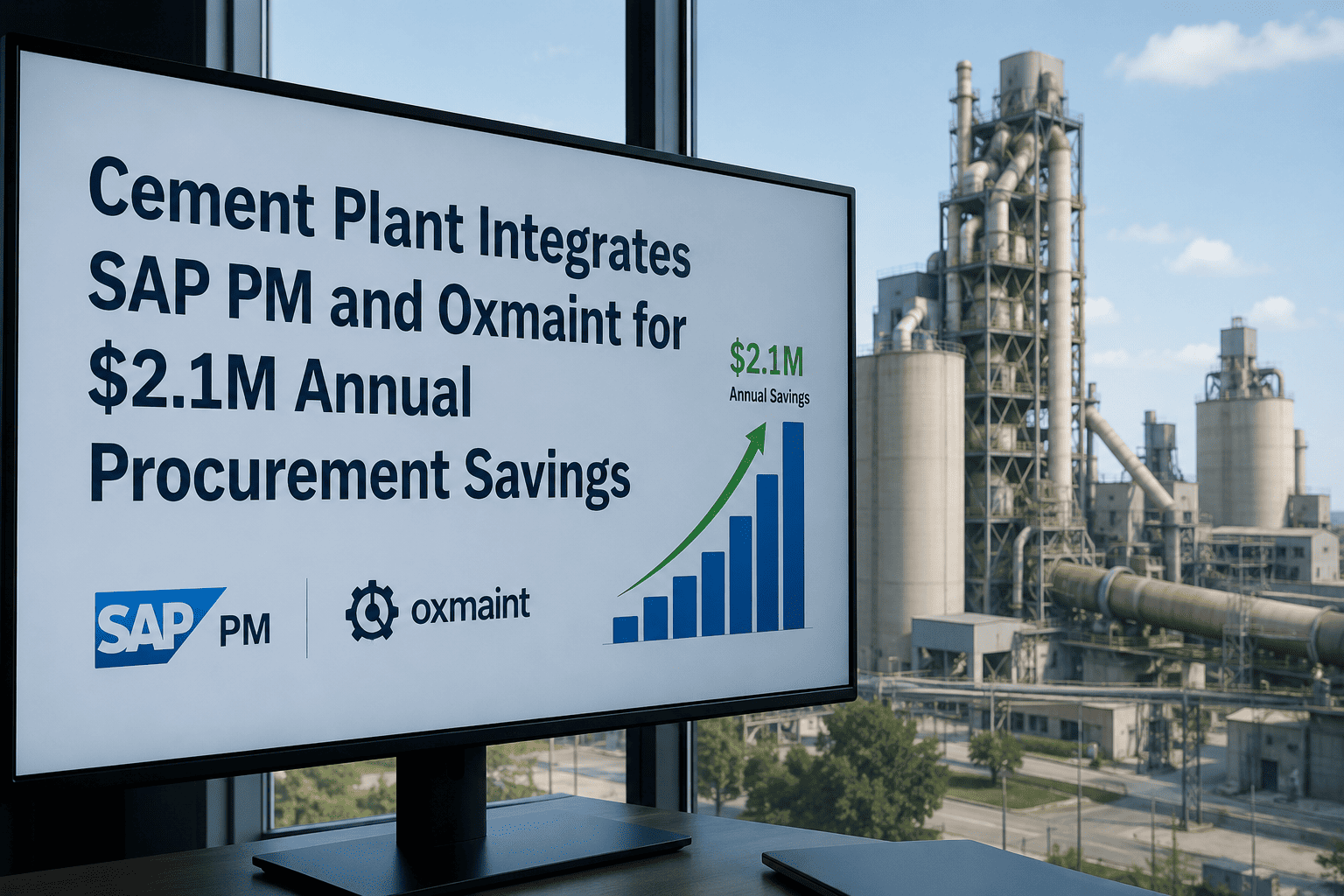
Read More
A 3.8 MTPA integrated cement plant in the midwest had been running SAP PM for six years when their procurement controller flagged an anomaly: $2.1 million in parts spend annually was untraceable to any asset on the maintenance register. The equipm

Read More
A cement plant running without a spare parts criticality program isn't managing maintenance — it's gambling. When a kiln refractory fails at 3 AM on a Sunday and the right bricks aren't in the store, the cost isn't just the repair bill — it's ever

Read More
A cement plant manager who cannot answer four questions in under two minutes is operating blind: What is our kiln MTBF this month? What percentage of our PMs were completed on time? What is our reactive-to-planned maintenance ratio? What is our ma

Read More
Lubrication failure is responsible for more than 50% of premature bearing failures in cement plants — yet most plants have no structured system to verify that the right lubricant was applied, in the right quantity, to the right point, at the right

Read More
Paper-based maintenance in a cement plant is not just inconvenient — it is a structural reliability problem. When a technician completes an inspection at the preheater tower and the findings live on a paper form until someone types them into a spr

Read More
Most cement plants run maintenance programs built around one assumption: reliability is a maintenance team problem. The kilns run hot, the mills grind continuously, and when something breaks, technicians respond. That model has a ceiling — and alm

Read More
In 2026, cement plant operations directors are under simultaneous pressure from five directions at once — rising alternative fuel targets, AI-driven maintenance expectations, a generation of retiring engineers taking tribal knowledge with them, ER

Read More
At 4:15 PM on a Friday in October, an MSHA inspector walked into a cement plant in the southeastern United States with a formal inspection notice and a records request covering 18 months of workplace examination logs, equipment maintenance records

Read More
Cement kilns consume 30 to 40% of a plant's total production cost in fuel alone — and in 2026, that cost is under pressure from two directions simultaneously: rising energy prices and tightening carbon regulations. Global cement production exceeds

Read More
At 3:15 AM on a Tuesday at a 4,500 TPD cement plant, the main drive gearbox on the primary raw mill failed catastrophically. Vibration had been slowly rising for three weeks — but without a system watching it, nobody acted. The repair cost exceede

Read More
Cement plants are running kilns at 1,450°C, grinding clinker around the clock, and managing hundreds of rotating assets simultaneously — yet most plant engineers are still battling their CMMS to get basic work orders out. In 2026, that gap is cost

Read More
A cement plant's annual major shutdown was finishing 4 to 6 days behind schedule every cycle — not because the maintenance work was slow, but because the plan itself was loose. Scope kept expanding after work began. Contractors arrived before thei

Read More
A kiln reline is the single most expensive and time-critical shutdown event in a cement plant. Every additional day of kiln downtime costs between $200,000 and $600,000 in lost production depending on plant capacity. When a cement plant's kiln rel

Read More
A cement plant's kiln shell was flagged for replacement during a five-year capital planning review. The original estimate: $18 million in replacement CapEx, scheduled for year three of the plan. What the asset replacement model did not account for

Read More
An MSHA inspector arrives unannounced at a cement quarry. Without a complete, timestamped record of workplace examinations, a serious violation becomes almost unavoidable — triggering fines, operational shutdowns, and a permanent mark on the compl

Read More
The kiln burner pipe is one of the most thermally and mechanically stressed components in a cement plant — and one of the least consistently inspected. Operating at the centre of a rotating kiln with flame temperatures exceeding 2000°C, a cement k

Read More
NESHAP emissions compliance at a cement plant is not simply an environmental obligation — it is a continuous operational requirement that, if unmet, triggers EPA enforcement actions ranging from notice of violation through to Title V permit revoca

Read More
MSHA Part 56 workplace examination is a daily federal requirement for every surface metal and nonmetal mine — and in a cement quarry, where blasting, heavy mobile equipment, highwalls, and conveyor systems operate in close proximity, a missed exam

Read More
A quarry haul truck pre-shift inspection under MSHA Part 56 is not a formality — it is a federal legal requirement that protects operators from catastrophic equipment failures in one of mining's most hazardous environments. Cement quarry haul truc

Read More
Every cement plant that submits an ESG report or CDP questionnaire is making claims about its carbon intensity, energy performance, alternative fuel usage, and emissions compliance — and institutional investors, regulators, and rating agencies are

Read More
A cement group managing three plants with three different CMMS configurations — or worse, three plants running on spreadsheets — is not managing maintenance. It is managing chaos at scale. One plant runs 94 percent kiln availability while another

Read More
A cement plant that consumes 90 to 130 kWh per tonne of clinker will typically have three to five hidden energy anomalies running at any given moment — none of which appear on a monthly utility bill until thousands of kilowatt-hours have been wast

Read More
Cooling water failures are among the fastest routes to a kiln stoppage in any cement plant. Kiln bearing circuits, clinker cooler pumps, raw mill gearbox cooling, and compressor aftercoolers all depend on water systems that most maintenance progra

Read More
Compressed air is the silent electricity drain in every cement plant — consuming 8 to 12 percent of total electrical energy, yet operating almost entirely without real-time oversight. Industry surveys consistently find that 25 to 40 percent of all

Read More
The gap between a cement plant that runs predictive maintenance and one still managing work orders on paper or spreadsheets is measurable in millions — per year, per plant, at documented facilities across multiple continents. In 2026, the evidence

Read More
In cement manufacturing, a maintenance professional's credentials are the single most visible signal of technical credibility — to hiring managers, to regulatory inspectors, and to the production teams who rely on their judgment at 2 AM when a kil

Read More
The cement industry's most consequential decisions — on decarbonization strategy, alternative fuels adoption, digital maintenance transformation, and equipment investment — are increasingly being made by professionals who show up in person at the

Read More
Every cement plant runs two parallel universes of data: the ERP handles procurement, finance, and materials — and the CMMS tracks work orders, asset history, and maintenance scheduling. When these systems don't talk to each other, the results are

Read More
Cement plants operate under one of the most layered regulatory environments in heavy industry — EPA Title V air permits, NESHAP Subpart LLL emissions standards, MSHA mine safety mandates, OSHA confined space rules, and ISO 50001 energy certificati

Read More
Switching a cement kiln or industrial furnace to alternative fuels — RDF, biomass, TDF, or blended AFR streams — delivers measurable cost savings and carbon reduction only when the daily feed parameters are controlled with the same discipline appl

Read More
A coal mill running without a structured daily safety round is not a maintenance oversight — it is an active fire and explosion hazard accumulating risk shift by shift. Carbon monoxide buildup, oxygen deviation, failed inerting flow, and suppressi
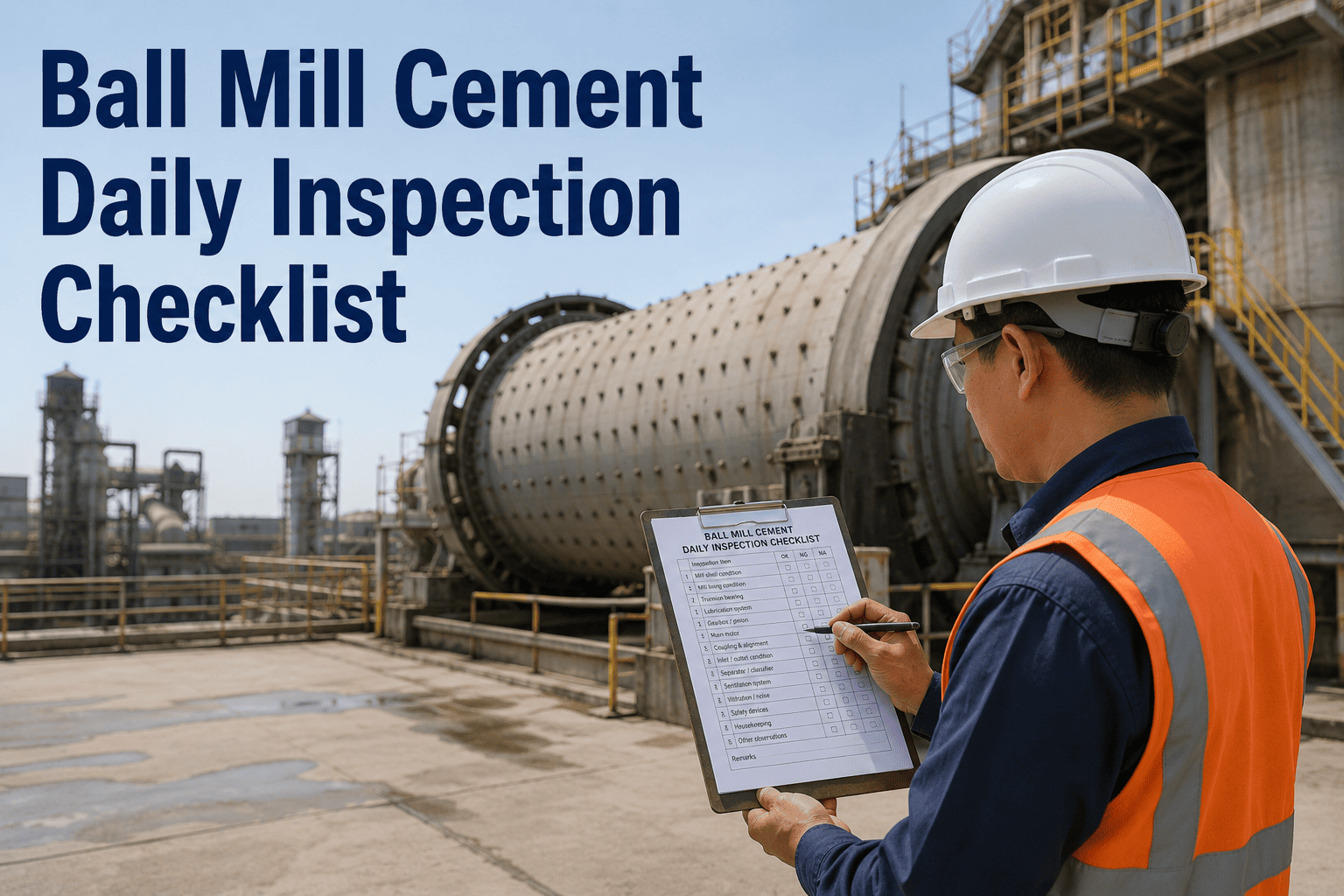
Read More
A ball mill in a cement grinding circuit has fewer automatic trip responses than a VRM — it does not vibration-trip, it does not have roller seal alarms, and it will continue grinding past the point where damage is happening if the operator round
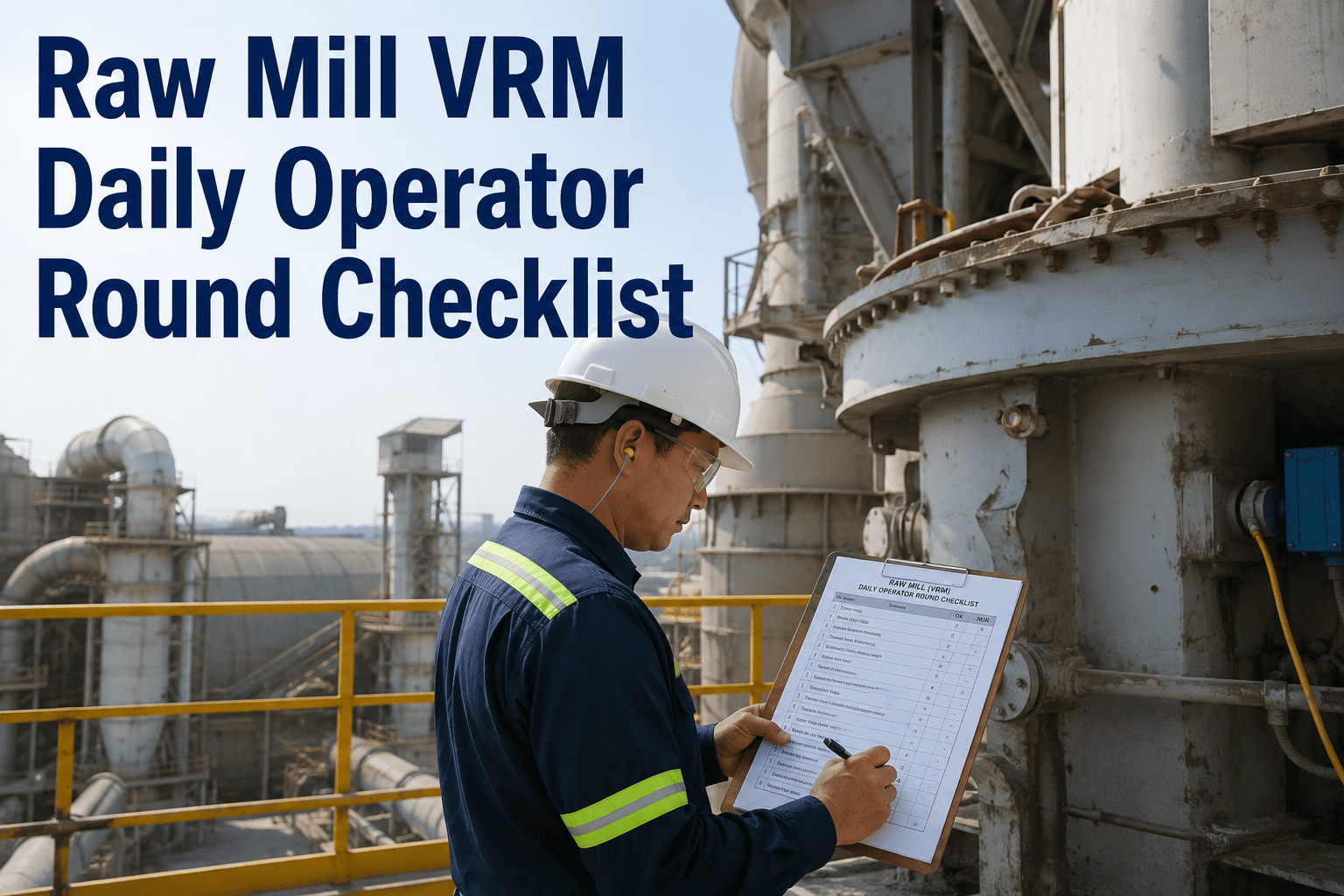
Read More
A vertical roller mill running without a structured daily operator round is a liability waiting to surface — hydraulic pressure creeping beyond tolerance, roller wear accelerating undetected, separator efficiency drifting, and vibration signatures
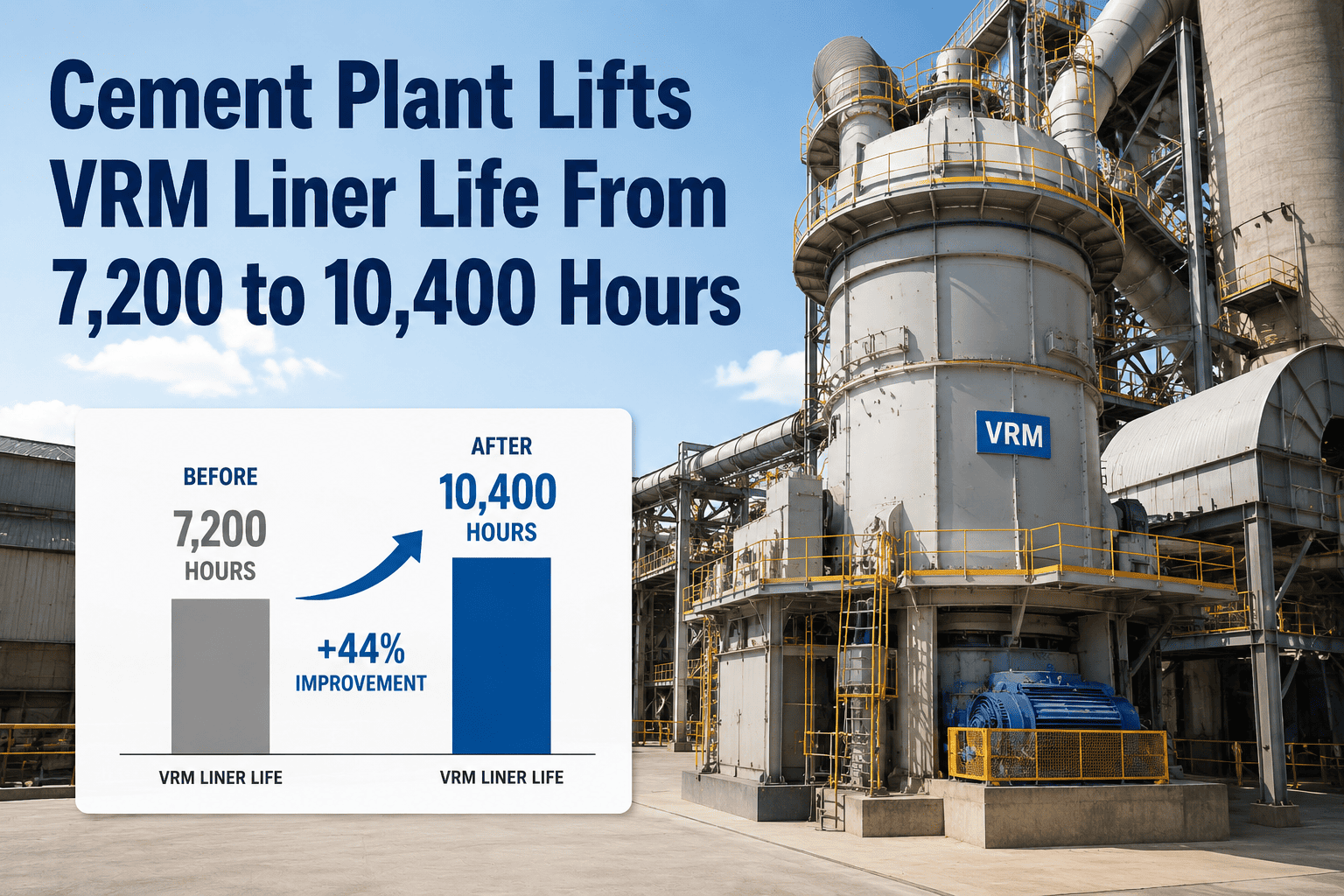
Read More
Vertical roller mill liner replacement is one of the most expensive and schedule-intensive maintenance events in a cement plant — a single liner campaign typically runs 5 to 9 days of mill downtime, with material and labor costs between $280,000 a

Read More
Off-spec cement production is a cost that most plants understand in aggregate but almost never trace to its mechanical root cause. When separator wear degrades particle size classification — broadening the particle distribution and reducing finene

Read More
Clinker cooler heat recovery is one of the highest-leverage efficiency levers in cement manufacturing, yet most plants leave 3 to 6 percentage points of recoverable heat on the table — not because the technology is wrong, but because grate plate w

Read More
Coal mill fires are not rare in cement plants — they are predictable failures that happen when preventive maintenance programs slip. This case study documents how one mid-sized cement plant eliminated coal mill fire incidents entirely over 18 mont

Read More
An emergency response plan is the document that gets read most carefully on the worst day of a plant's year and is otherwise forgotten in a binder on a shelf. Cement plants are unforgiving environments for that pattern. Coal handling systems and e

Read More
A modern US cement plant operates under three regulatory regimes simultaneously, each enforced by a different agency, each with its own clauses, evidence rules, and inspection cadence. NESHAP 40 CFR Part 63 Subpart LLL governs hazardous air pollut

Read More
Cement is responsible for roughly 8% of global CO2 emissions, and the regulatory environment around that fact is hardening fast. The EU ETS Phase 4 has free allowances declining year on year, CBAM moved into its definitive phase on 1 January 2026,

Read More
Buying a CMMS for a cement plant is not the same as buying a CMMS for a warehouse, a fleet workshop, or a hospital. The asset list runs from rotary kilns operating at 1,450°C to bag filters with 12% oxygen safety ceilings, the maintenance budget i

Read More
A kiln reline capital request walks into the CFO's office carrying a number between $1 million and $1.9 million for a 5,000 TPD line. The plant manager who got it approved last cycle and the plant manager who watched it bounce back into "next year

Read More
Most cement groups discover the same uncomfortable truth somewhere between the fifth and tenth plant acquisition: one site is running at 94% kiln availability and another is limping at 71%, and nobody at corporate can confidently explain why. Each

Read More
A cement plant FMEA is the difference between a reliability programme that prevents the next $540,000 unplanned outage and a binder of paperwork that gets dusted off after the kiln has already stopped. Done right, Failure Mode and Effects Analysis

Read More
A cement kiln turnaround is the single most expensive 14 days on the maintenance calendar — and the single biggest opportunity to claw back production capacity for the year ahead. When the burning zone hits 1,450°C and a 60-metre rotating cylinder
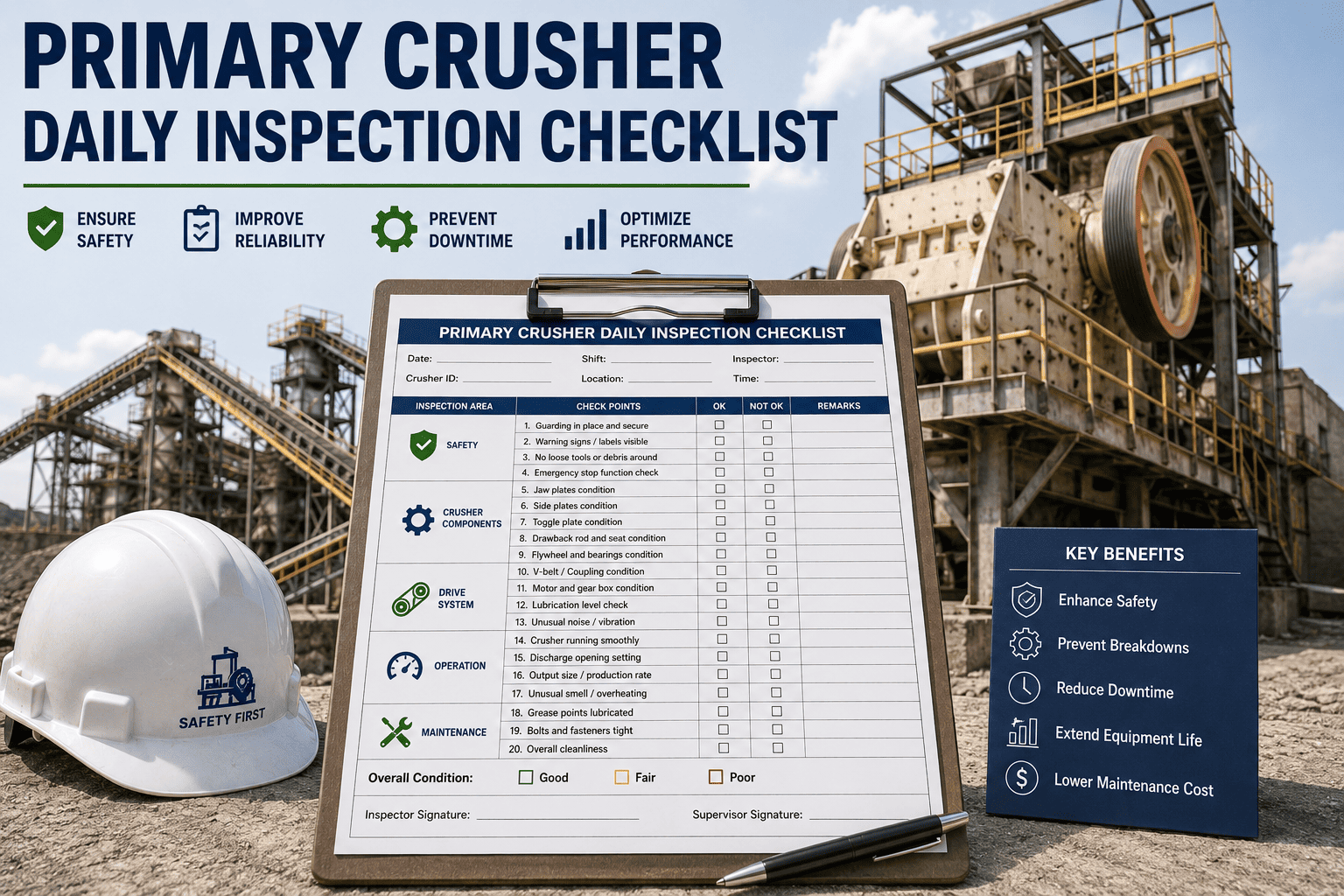
Read More
The primary crusher is the first piece of equipment limestone touches after blasting — and the one with the least tolerance for an unplanned stop. A missed bearing temperature reading, an unlogged motor current spike, or a discharge chute blockage
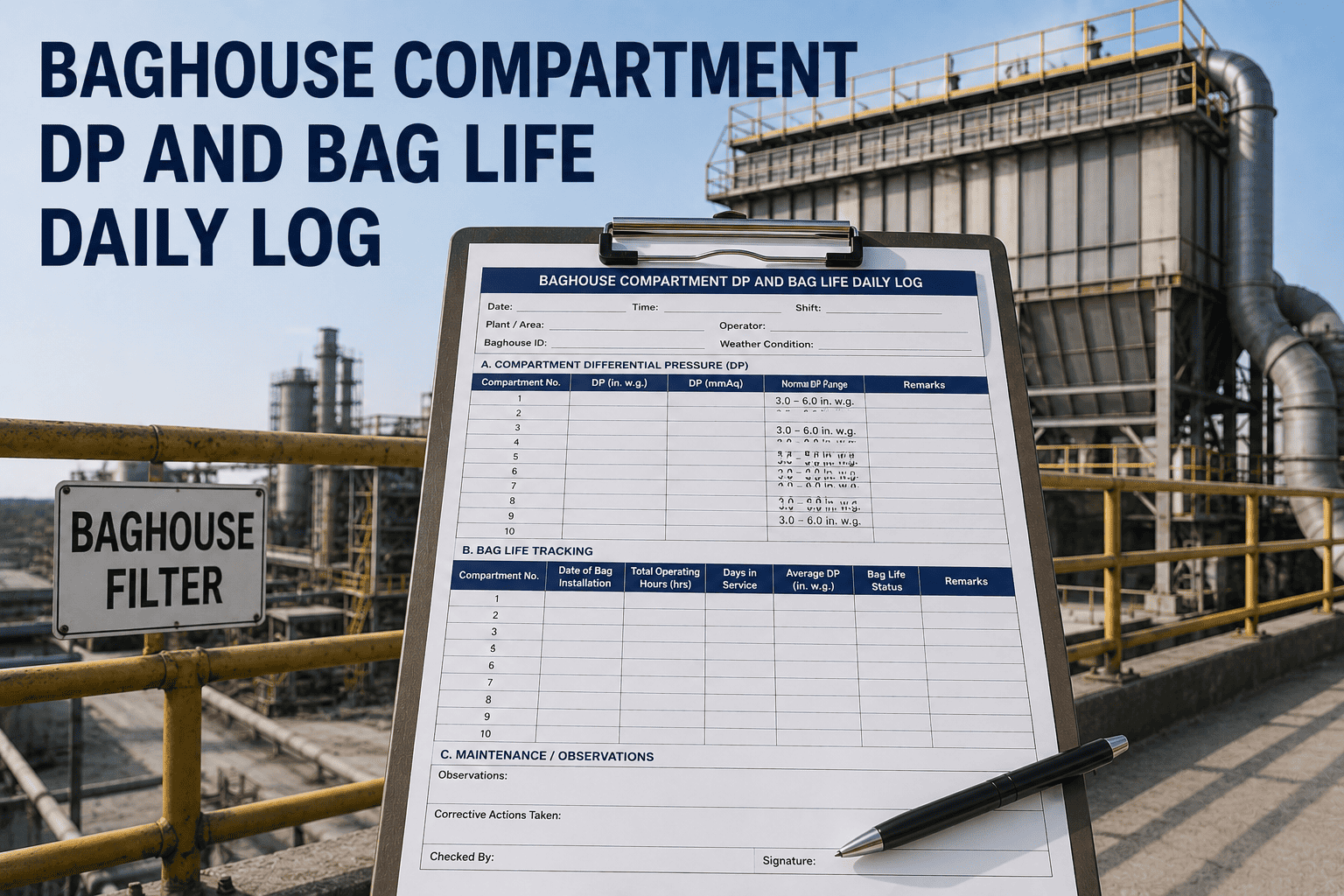
Read More
Baghouse failure in a cement plant almost never happens without warning — differential pressure trends upward for days, a hopper bridge forms slowly, a pulse valve loses response shift by shift. The problem is not the equipment; it is the missing

Read More
The clinker cooler is the one piece of equipment that controls secondary air temperature to your kiln, tertiary air to your calciner, clinker discharge temperature, waste heat recovery output, and grindability — all at the same time. A missed grat

Read More
A blocked preheater cyclone does not give much warning. Differential pressure drifts, a cone discharge slows, refractory thins — and within hours the kiln is down, costing anywhere from $180,000 to $650,000 in lost output and emergency clearing la

Read More
Every contractor who enters a cement plant site carries risk — to your people, your equipment, and your liability position. When a vendor's COI expires mid-shutdown, when a background check is skipped because procurement was under time pressure, o
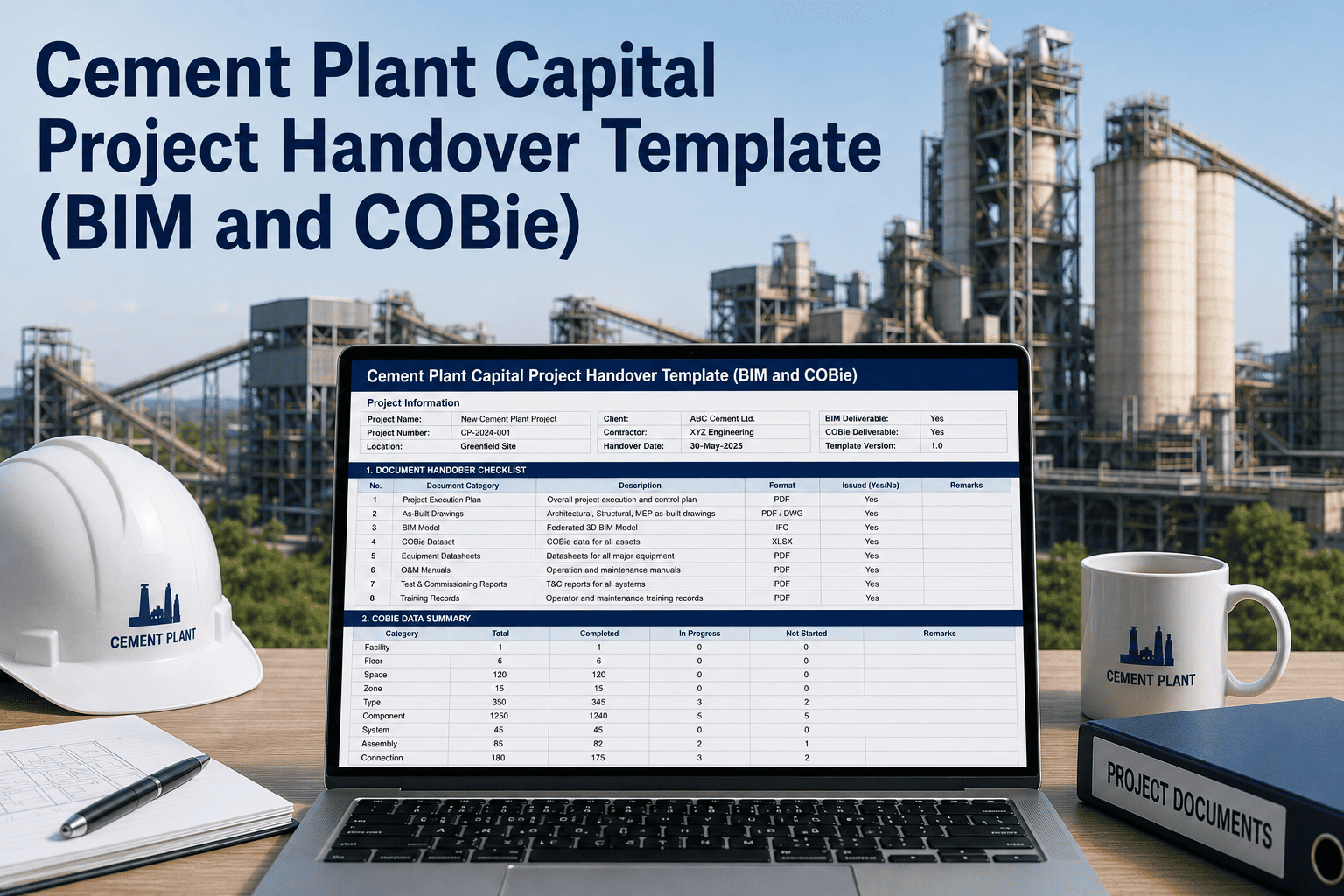
Read More
A cement plant capital project — whether a greenfield line at $150M–$400M or a brownfield kiln upgrade at $8M–$35M — generates thousands of asset records, commissioning test results, OEM documents, warranty certificates, and PM schedules. Without
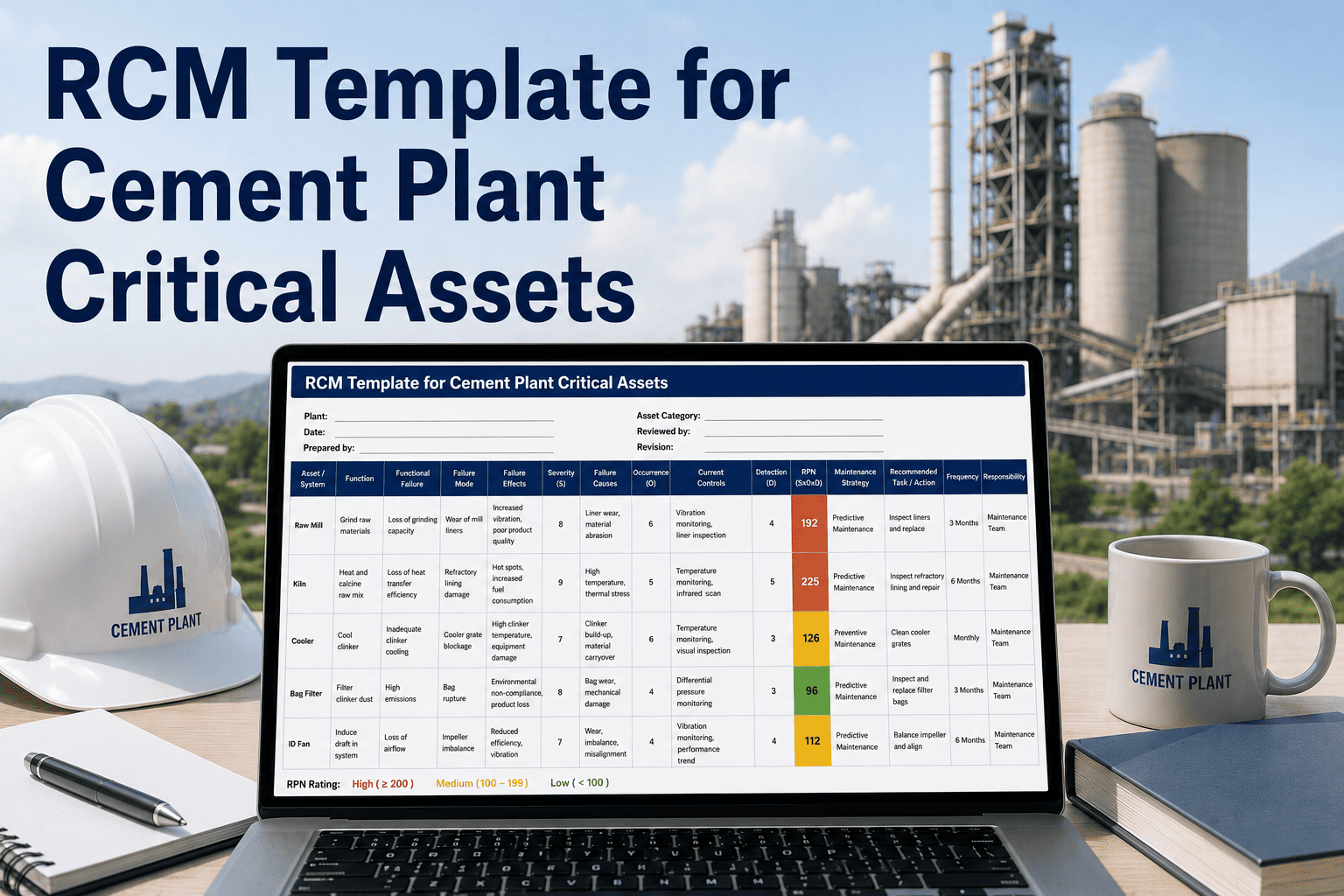
Read More
Calendar-based maintenance schedules apply the same logic to a rotary kiln main bearing and a conveyor idler roller — yet one failure costs $800,000 and stops the entire plant, and the other costs $200 and takes 20 minutes to fix. Reliability Cent

Read More
Cement plant failures rarely arrive without warning — but without a structured FMEA in place, those warnings go unread until a kiln stop or unplanned mill outage turns a $12,000 repair into a $180,000 crisis. A Failure Mode and Effects Analysis (F
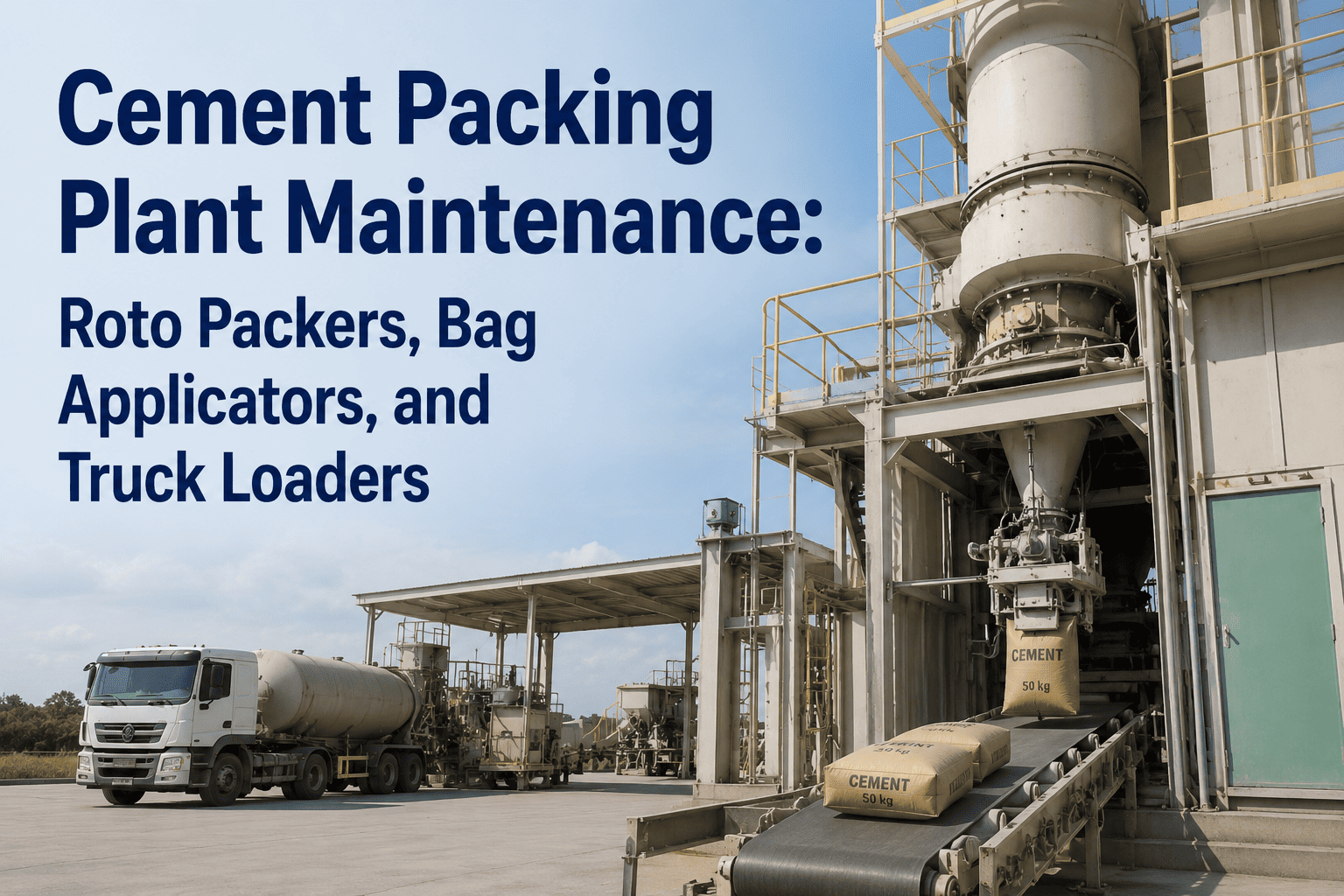
Read More
The cement packing plant is where the entire operation either makes its dispatch numbers or quietly bleeds them away. A roto packer spout that has drifted 200 grams over weight loses a bag's worth of cement on every 24th fill. A bag applicator sho

Read More
A cement mill separator is the most expensive component nobody watches closely — and it is the single largest hidden source of wasted kWh in the entire grinding circuit. A worn rotor blade that has lost 18 percent of its profile, a guide vane sitt

Read More
A cement ball mill does not fail because of one big thing — it fails because of dozens of small things that nobody connected to each other. Liner bolts loosen by 4 Nm a week. Oil cleanliness drifts from ISO 18/16/13 to ISO 22/20/17 across a quarte
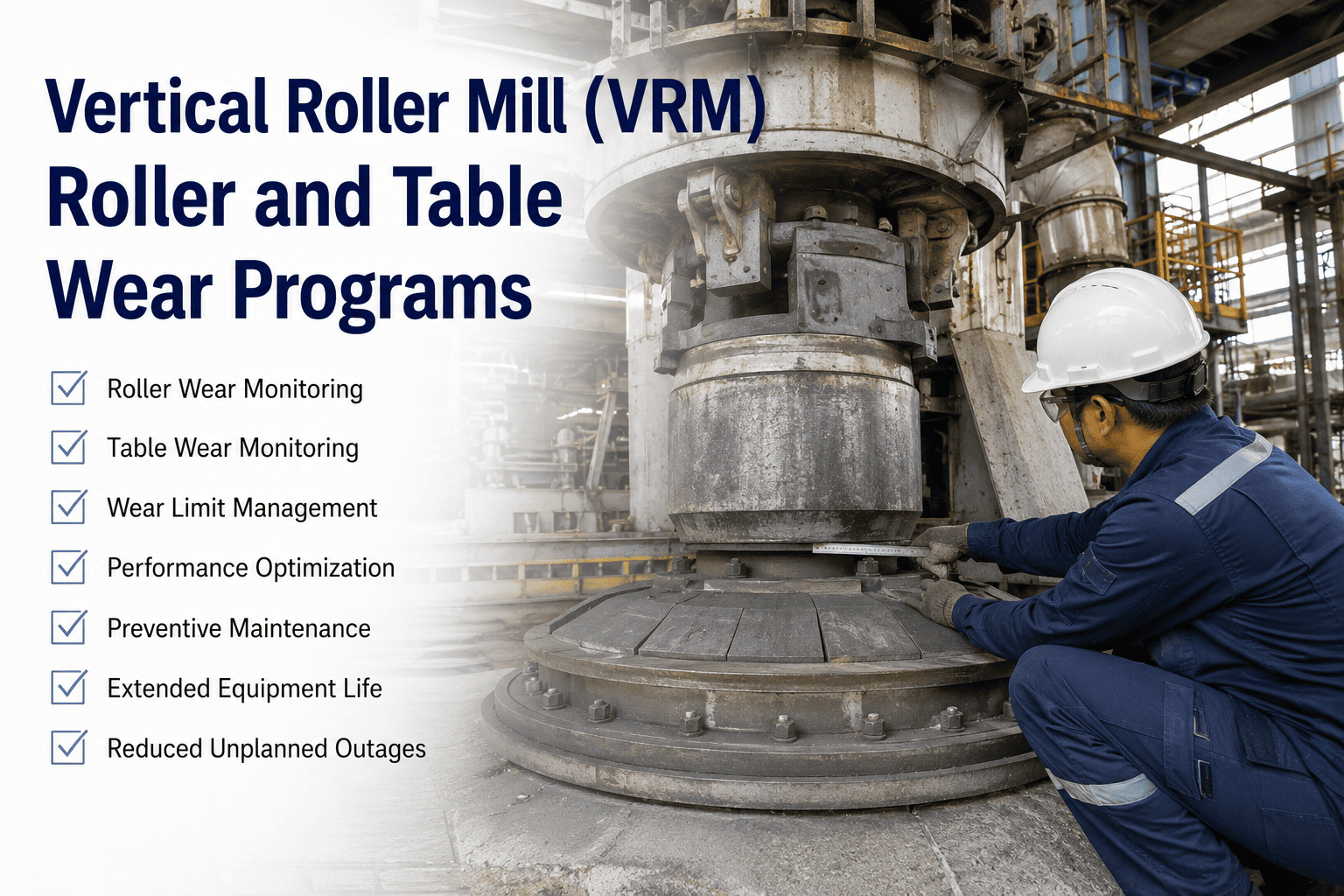
Read More
A vertical roller mill does not retire because its motor burns out or its gearbox fails — it retires because the rollers and table liners slowly lose the precise geometry that lets compression do its work, and most cement plants never see the loss
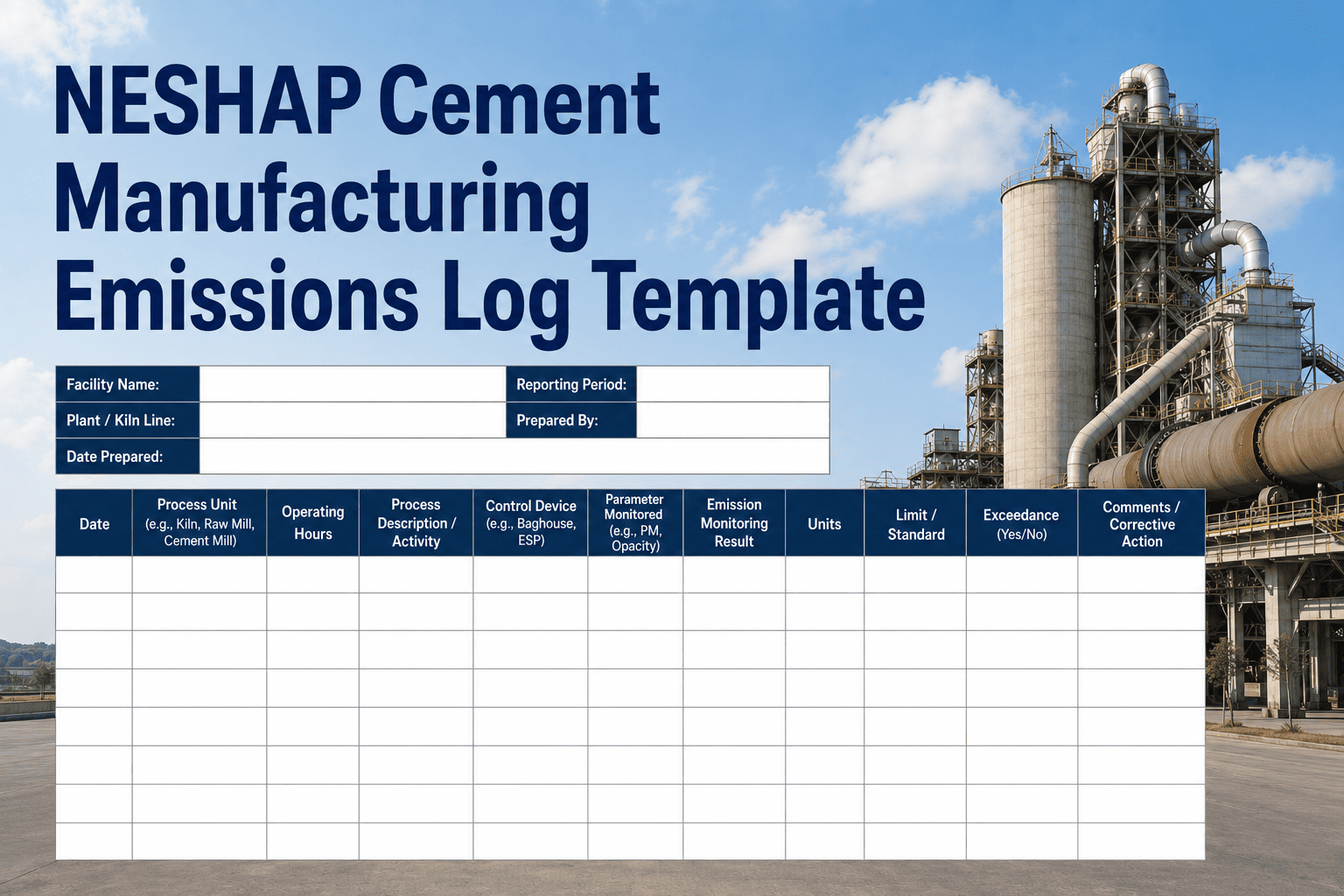
Read More
Cement plants operating under NESHAP Subpart LLL face EPA enforcement actions when emissions monitoring records contain gaps, uncalibrated CEMS data, or missing exceedance documentation — violations that trigger penalties starting at $55,808 per d

Read More
Mining operations conducting workplace examinations on paper forms face a compliance crisis — MSHA Part 56.18002 requires documented daily inspections of working places, and missing or incomplete records trigger $15,000+ citations during inspectio
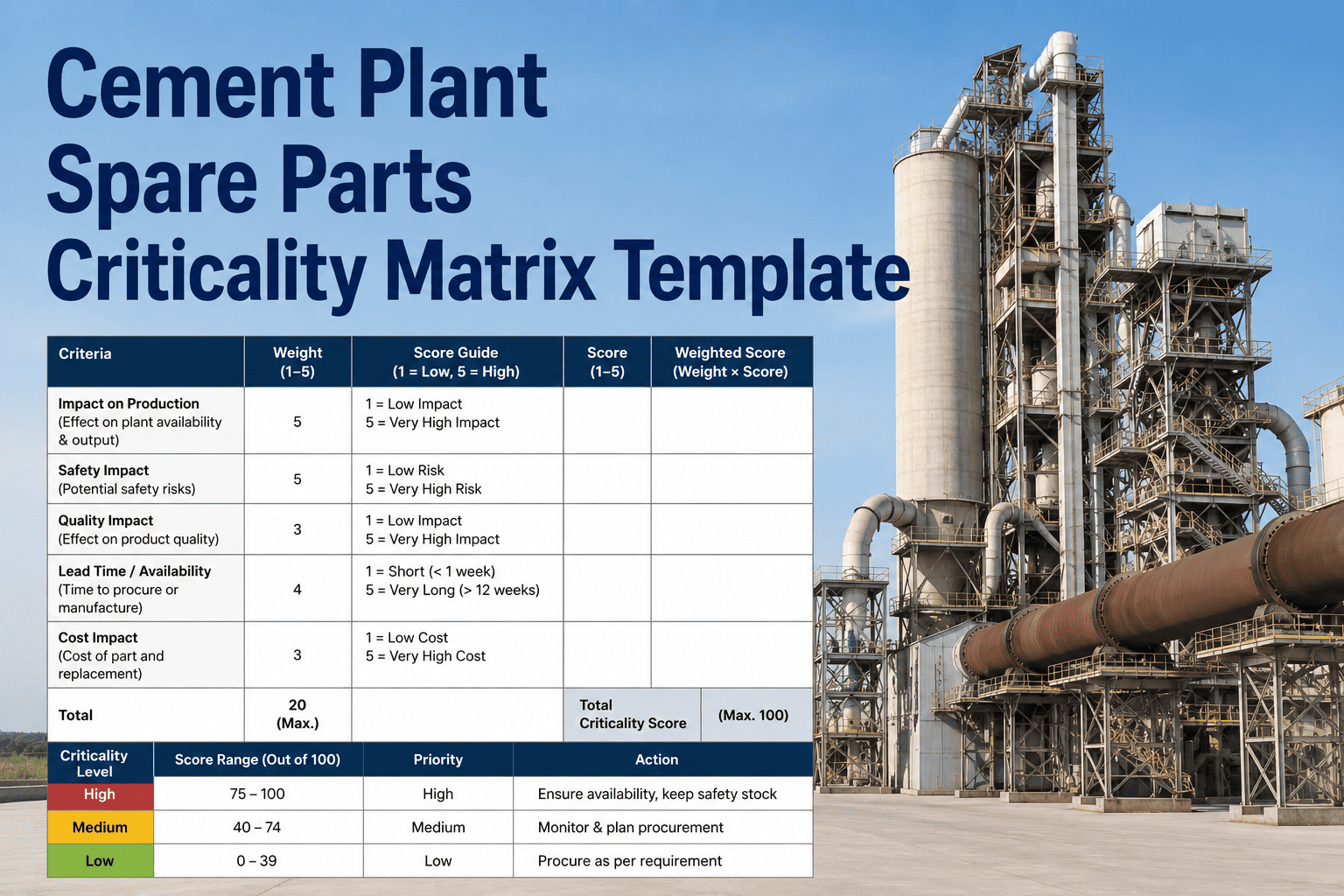
Read More
Cement plants managing spare parts inventory without a criticality matrix face a $400K+ annual problem — critical kiln bearings and refractory bricks stockout while low-value consumables fill 40% of storeroom space. A properly structured spare par

Read More
Cement plants running refractory campaigns on spreadsheets face a costly blind spot — without automated hot spot alerts, thermal zone tracking, and campaign life forecasting, unplanned kiln shutdowns cost $180,000+ per day in lost production. OxMa
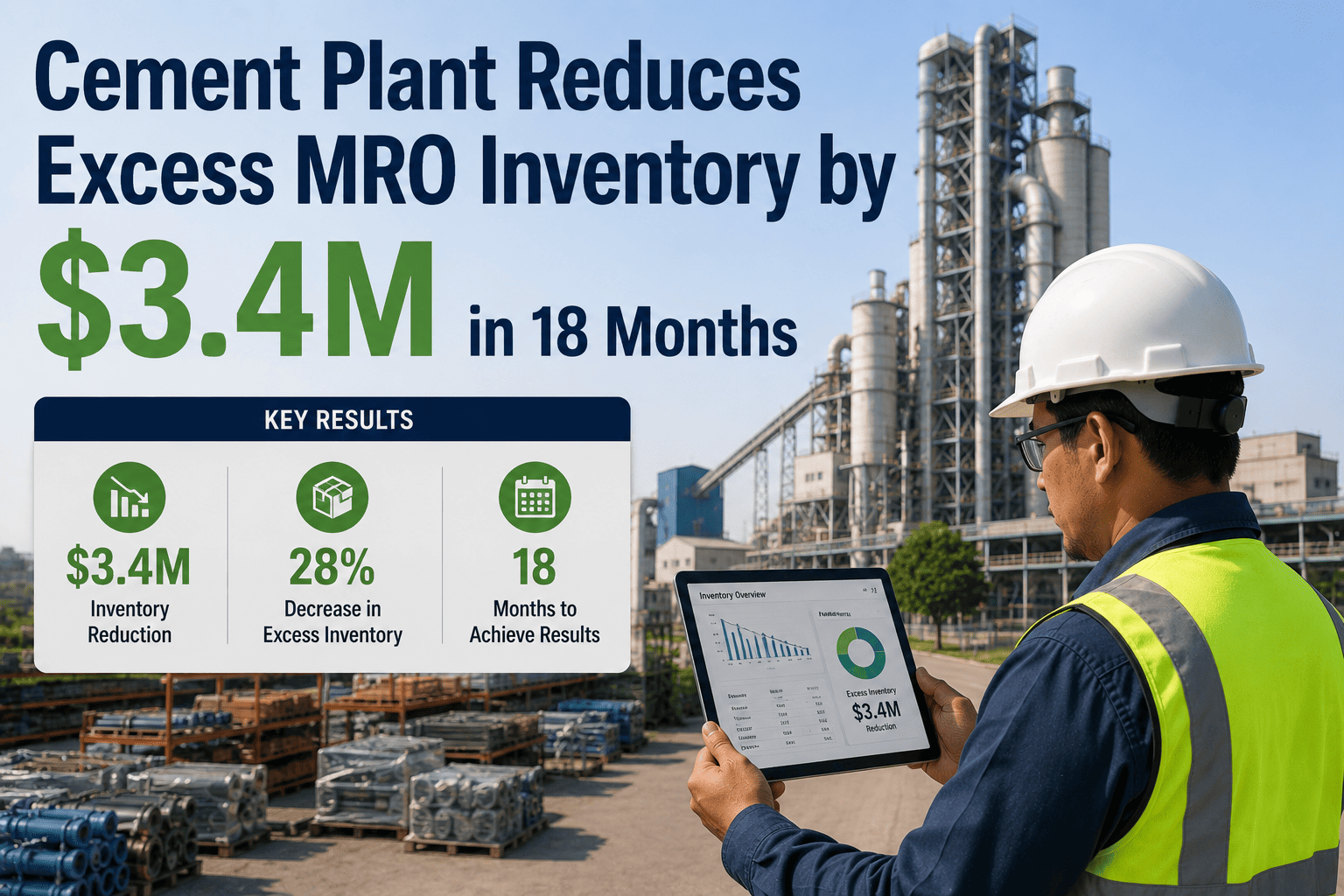
Read More
Excess MRO inventory is one of the most overlooked cost centers in cement manufacturing. Storerooms fill up over years of over-ordering, "just-in-case" purchasing, and the accumulation of parts for equipment that has since been retired or replaced

Read More
When a mid-sized cement plant with three production lines and over 1,200 assets attempted its annual maintenance audit, the results were sobering — PM compliance sat at 61%, technicians were carrying paper work orders through kiln areas, and super

Read More
A cement plant in Southeast Asia operating a 4,500 TPD kiln reported specific energy consumption (SEC) averaging 3,420 kJ/kg clinker — approximately 11% above regional benchmark and 14% above best-in-class performance for comparable dry-process ki
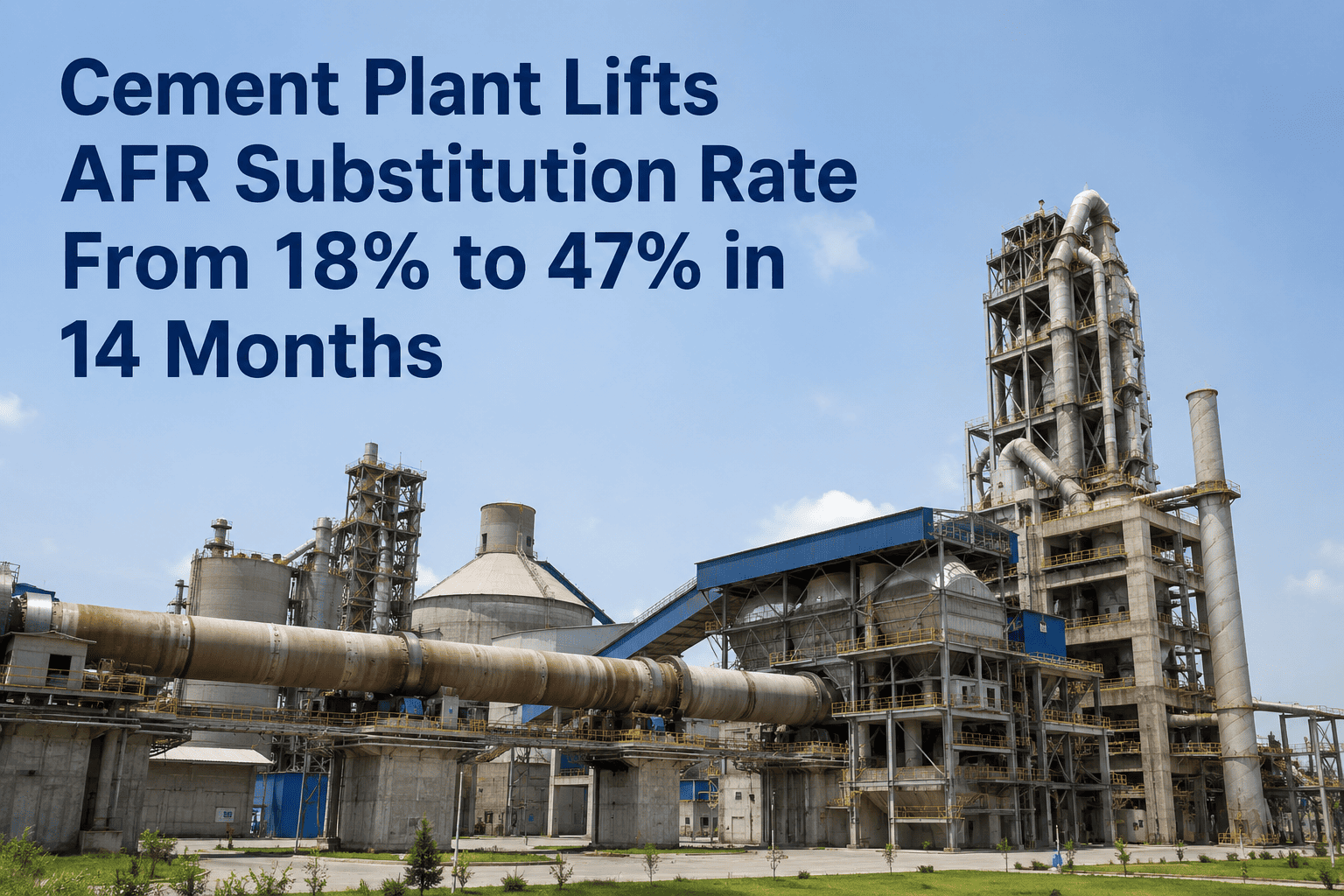
Read More
A cement plant in Eastern Europe operating two 3,200 TPD kilns faced a persistent barrier — alternative fuel and raw material (AFR) substitution stuck at 18% thermal substitution rate despite having secured municipal solid waste (MSW) contracts, i
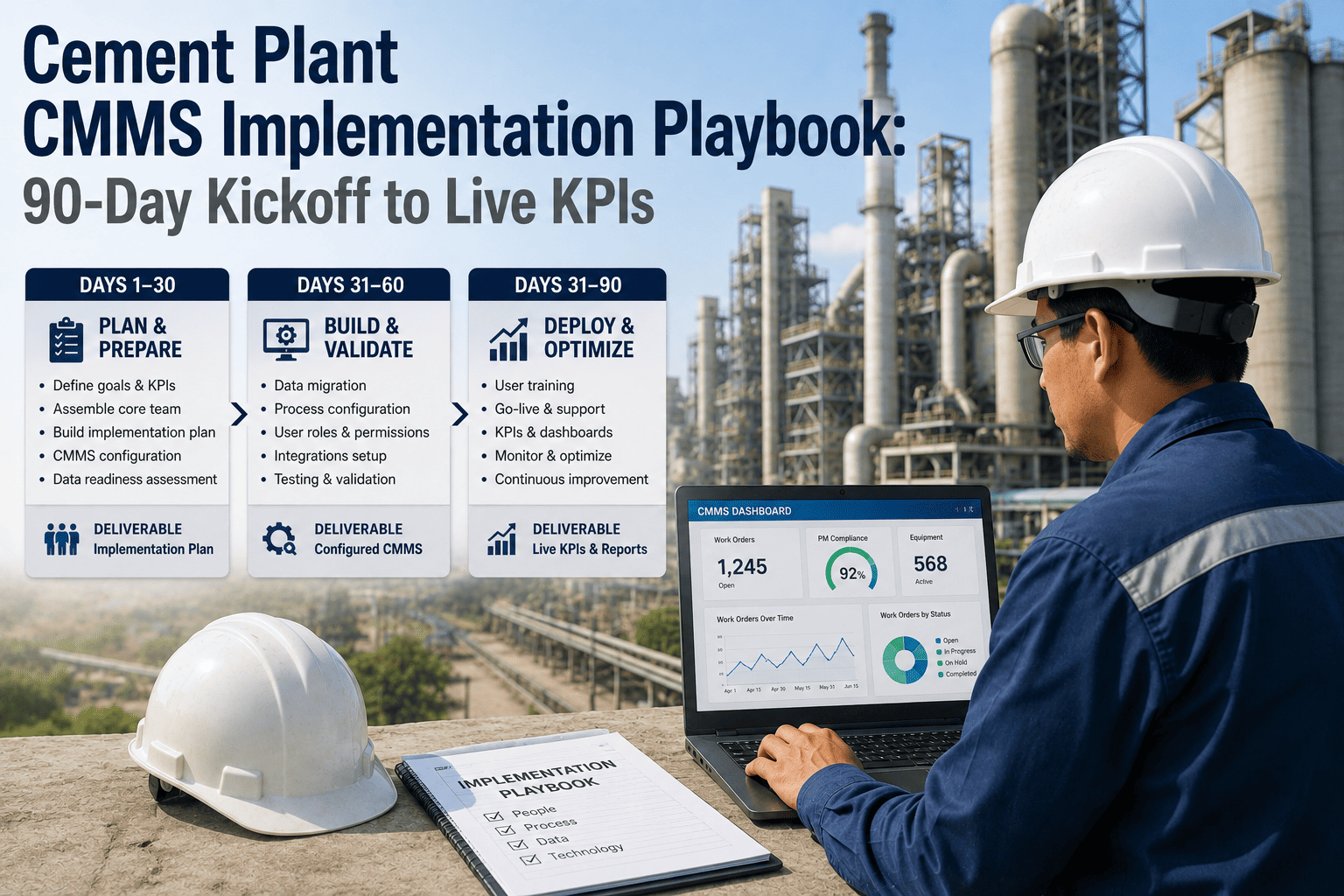
Read More
A CMMS that goes live in 18 months delivers 18 months of no ROI, no compliance records, and no data — while your maintenance team keeps running on spreadsheets and gut instinct. For cement plants handling kiln campaigns, conveyor networks, and maj

Read More
Selecting the wrong CMMS for a cement plant doesn't just slow down your maintenance team — it breaks your workflow at the kiln, creates compliance gaps at the crusher, and leaves your refractory records in spreadsheets nobody trusts. This guide co

Read More
A cement plant without a functioning permit-to-work system is not just an OSHA citation waiting to happen — it is a hot work fire in a coal storage area, a confined space entry without atmospheric testing, or a fall from an unguarded preheater pla
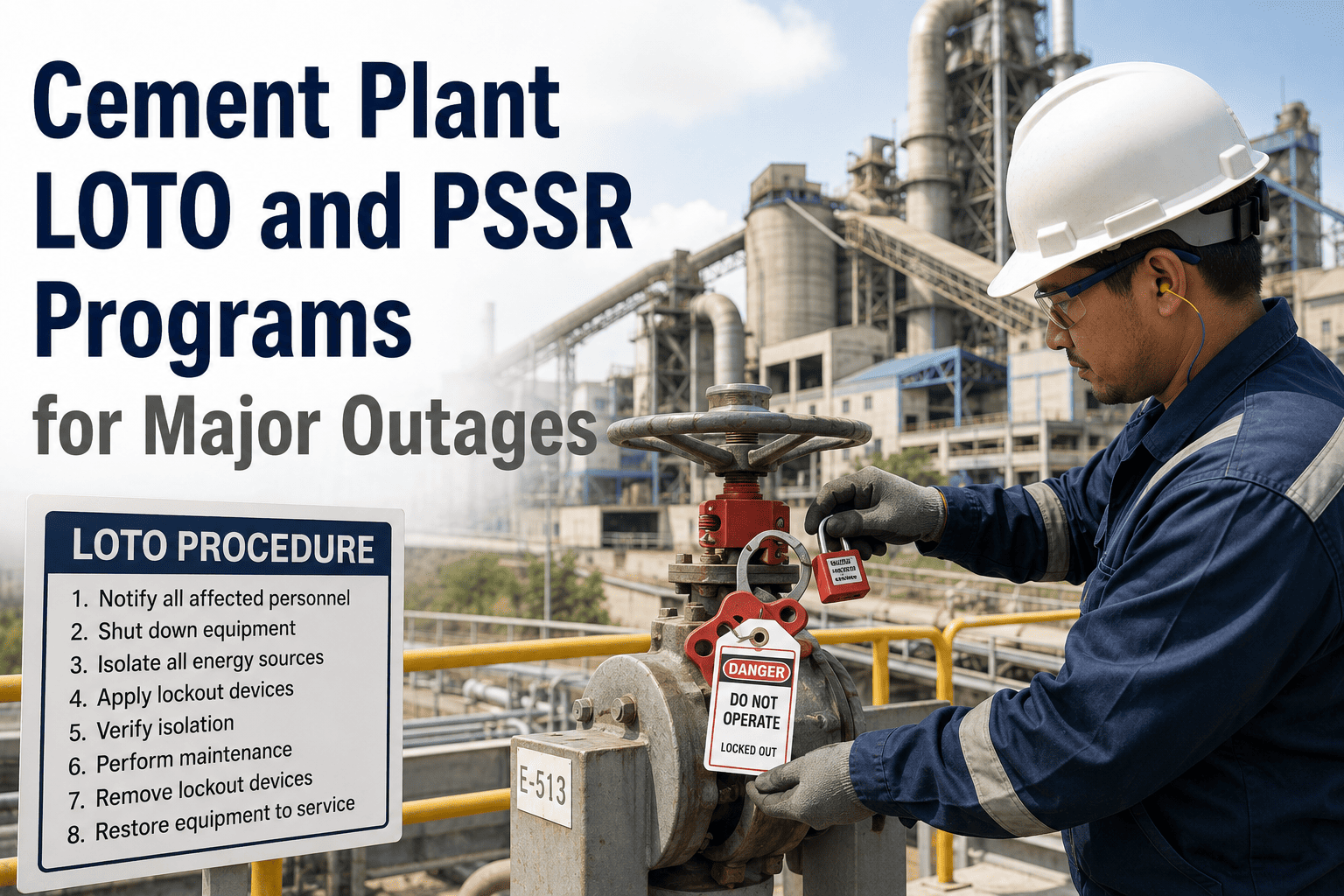
Read More
In a cement plant, a kiln drive spinning at operating temperature, a raw mill loaded with material, or a conveyor under tension is not just an asset — it is a stored-energy hazard that can kill the moment isolation procedures fail. OSHA 1910.147 L

Read More
During a four-day EPA audit, a cement plant faced scrutiny over CEMS maintenance records, calibration logs, and corrective action documentation tied to continuous emissions monitoring systems that had recorded multiple exceedances in the prior 18

Read More
A cement plant in South Asia was losing nearly three months of productive life on every ID fan cycle — bearing failures, impeller wear, and reactive shutdowns were stacking up because nobody connected vibration spikes to oil sample data until afte

Read More
Mean Time to Repair is the single number that tells you how efficiently your maintenance team responds to equipment failures — and for most cement plants running manual work order systems, it is silently much higher than it should be. When a kiln

Read More
What does it take to unify 12 cement plants — spread across different geographies, each running its own maintenance records, spreadsheets, and tribal knowledge — onto a single CMMS platform in under six months? For one of Southeast Asia's leading

Read More
When Sarah retires from your cement plant after 28 years as a kiln technician, she does not leave behind a gap on the headcount sheet. She leaves behind 28 years of accumulated equipment intuition — the listening check she does when passing the ma

Read More
A cement plant's rotary kiln is the single most expensive, most critical, and most failure-prone asset on site. At $50,000 to $100,000 in lost production per hour, every unplanned kiln bearing failure is not a maintenance event — it is a financial

Read More
Most cement plant failures are not sudden — they are slow-developing processes that vibration, temperature, and acoustic data can detect four to eight weeks before the breakdown event. The problem is not the absence of warning signals. It is the a

Read More
A cement plant running 2,400-plus assets — rotary kilns, ball mills, clinker coolers, preheater towers, and ID fans — cannot afford the wrong software decision. Choosing between an EAM (Enterprise Asset Management) system and a CMMS (Computerized

Read More
A kiln shutdown that starts without a complete work pack is a shutdown that will overrun — on time, on cost, or both. In cement plants, the rotary kiln is the single most capital-intensive asset on site, and every hour of unplanned extension durin

Read More
A cement plant runs on hundreds of rotating assets — kiln, raw mill, cement mill, cooler, fans, elevators, compressors — and when any one of them fails unexpectedly, the financial damage is staggering. A single unplanned kiln shutdown costs betwee

Read More
A disorganized asset register is the single biggest reason cement plant CMMS implementations deliver half the expected value. When kilns, mills, coolers, and crushers are entered as flat lists rather than structured hierarchies, maintenance teams
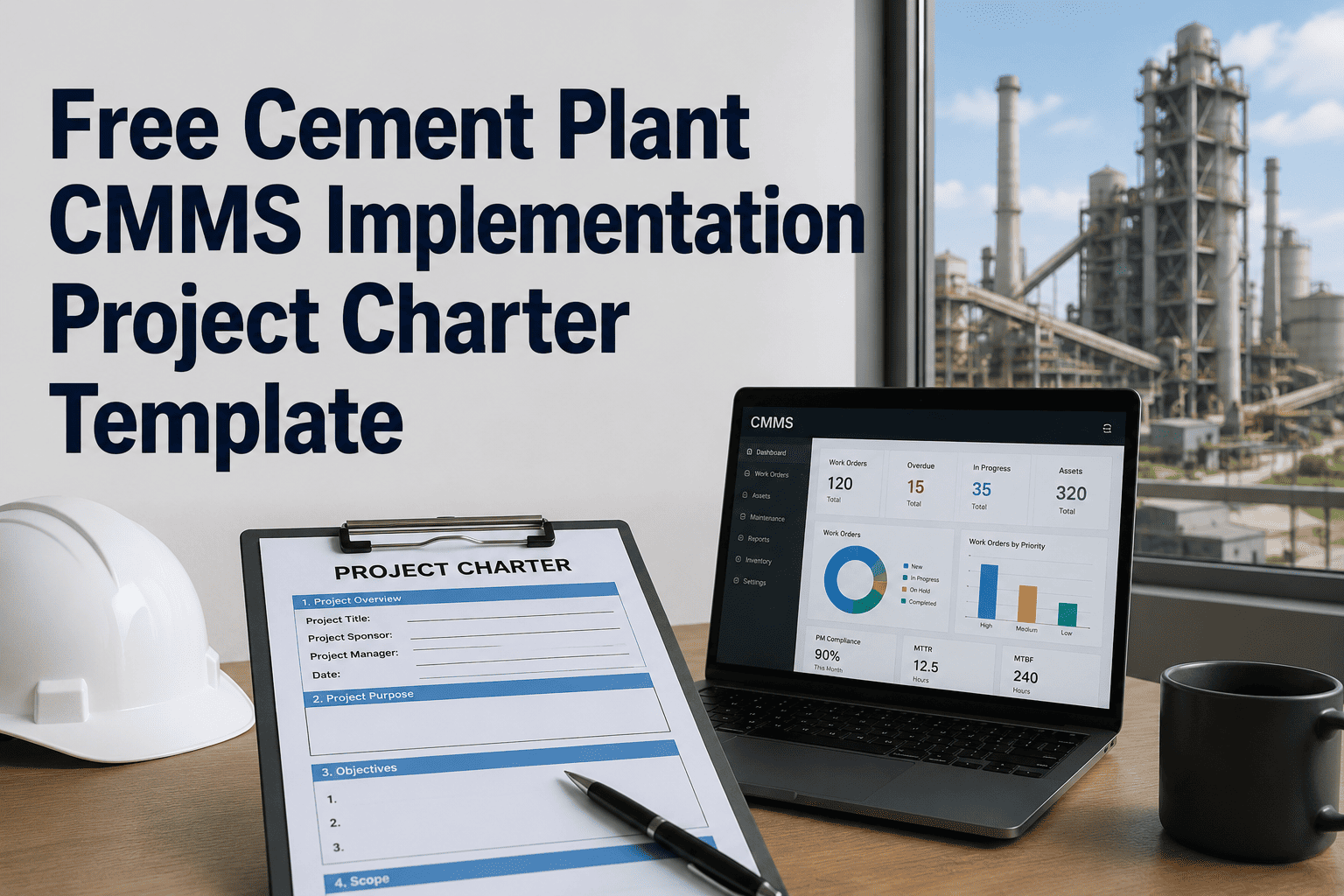
Read More
Cement plant CMMS implementations fail 60% of the time — not because the software is wrong, but because teams skip the project charter. Without a structured charter defining scope, stakeholders, success metrics, and asset taxonomy, CMMS rollouts s

Read More
The girth gear is the single largest open gear drive in most industrial plants — and one of the most expensive single components to replace, with costs ranging from $200,000 to over $800,000 for a cement kiln girth gear including installation and

Read More
The tyre and roller system is the mechanical heart of any rotary kiln — and it is also the most expensive drivetrain component to replace when neglected. A single worn tyre on a cement kiln can cost $150,000 to $400,000 to replace, including machi

Read More
A refractory thickness measurement programme is the backbone of any serious kiln integrity management system. Without accurate, campaign-tracked thickness data, refractory replacement decisions are based on guesswork — and guesswork in a rotary ki

Read More
A refractory hot patching decision checklist is the critical frontline tool that separates proactive kiln operators from those who face costly unplanned shutdowns. Rotary kilns in cement, lime, and mineral processing plants run at shell temperatur

Read More
Selecting a CMMS for a cement plant is a fundamentally different decision from selecting one for a warehouse, food plant, or utilities facility. Cement operations run continuous kiln campaigns measured in months, refractory maintenance programmes

Read More
A cement plant floor is one of the most demanding mobile computing environments in any industry — kiln bay temperatures above 60°C, fine limestone and clinker dust that clogs touch screens, conveyor bay noise levels above 90 dB, and connectivity d

Read More
Plant managers in cement operations carry a dual accountability that few manufacturing roles share — production output measured in thousands of tonnes per day, and regulatory compliance measured in permit conditions that span NESHAP, MSHA, and env

Read More
Cement plants run some of the most mechanically demanding operations in heavy industry — kiln temperatures above 1,400°C, refractory linings that degrade unpredictably, AFR feed systems, and regulatory frameworks spanning NESHAP, MSHA, and ISO 500

Read More
Cement plants are increasingly targeted by ransomware and OT-specific cyberattacks — and the consequences of a successful attack are not just IT downtime. A compromised DCS can stop a kiln mid-run, damage refractory, and cost $2–4 million in resta

Read More
For cement manufacturers running SAP PM or Oracle EAM as enterprise systems, the question is not whether to use a dedicated maintenance platform — it is how to make both systems work together without duplicating data or creating competing records.

Read More
Connecting a cement plant's SCADA and PI historian to a CMMS is the infrastructure decision that separates reactive maintenance teams from predictive ones. When your Siemens PCS7, ABB 800xA, or Yokogawa DCS can push tag data into

Read More
In 2026, cement plant reliability engineers are moving beyond reactive dashboards into digital twin environments that simulate kiln behavior, mill vibration patterns, and crusher load cycles in real time. A cement plant digital twin creates a livi

Read More
Coal mill fires and explosions are the most catastrophic safety event in cement manufacturing — and the warning signs appear 4 to 8 hours before the incident in the form of CO trending, rising outlet temperatures, and O₂ concentration drift above

Read More
NESHAP MACT under 40 CFR Part 63 Subpart LLL is the compliance framework every Portland cement plant in the United States operates under — covering mercury, particulate matter, hydrochloric acid, total hydrocarbons, and dioxins/furans from kilns,

Read More
Every cement plant running a legacy electrostatic precipitator (ESP) will face a decision that finance teams and plant managers often approach from opposite directions: retrofit what you have, or convert to a baghouse? The wrong call costs between
Read More
A cement plant in Eastern Europe had been running its kiln on a 9-month refractory campaign cycle for five years. Not because the brick couldn't last longer — but because the maintenance team didn't have the zone-level data confidence to push past

Read More
In March, a cement group operating three integrated lines in West Africa received a vibration alert on its largest kiln's main gearbox output shaft bearing. The alert came from Oxmaint's predictive analytics module — 9 days before the bearing woul

Read More
A 3 MTPA cement plant in South Asia had run its kiln at 84% availability for three consecutive years. The maintenance team filed work orders from memory, tracked refractory wear on spreadsheets, and learned about bearing failures at the moment of

Read More
Bringing a rotary kiln back online after a shutdown is where most refractory failures, alignment damage, and mechanical incidents occur. The heat-up and commissioning phase is not a formality — it is a precision process where rushing a refractory

Read More
A kiln shutdown that starts with a frozen scope costs a fraction of what a scope-creep shutdown does — yet most plants still walk into a planned stop with unconfirmed work packs, unstaged parts, and contractors who learned about the job two days b

Read More
Rotary kilns run 24/7 under extreme heat, mechanical stress, and constant vibration — making daily operator rounds the single most critical maintenance activity in cement, lime, and mineral processing plants. Missing a shell hot spot, an overheati

Read More
The girth gear is the largest and most expensive power transmission component on a rotary kiln — a single forged steel ring that transfers drive torque to the shell across millions of revolutions per year. When a girth gear fails, it rarely gives

Read More
Of all the daily measurements taken on a rotary kiln, tyre migration is the one that speaks most directly to the kiln's mechanical health. A tyre moving too fast signals a load imbalance, a worn shell pad, or a misset support roller. A tyre barely

Read More
Rotary kilns are the backbone of cement, lime, and mineral processing plants — rotating continuously under extreme thermal and mechanical stress. When kiln alignment drifts undetected, the consequences cascade: accelerated tyre and riding ring wea
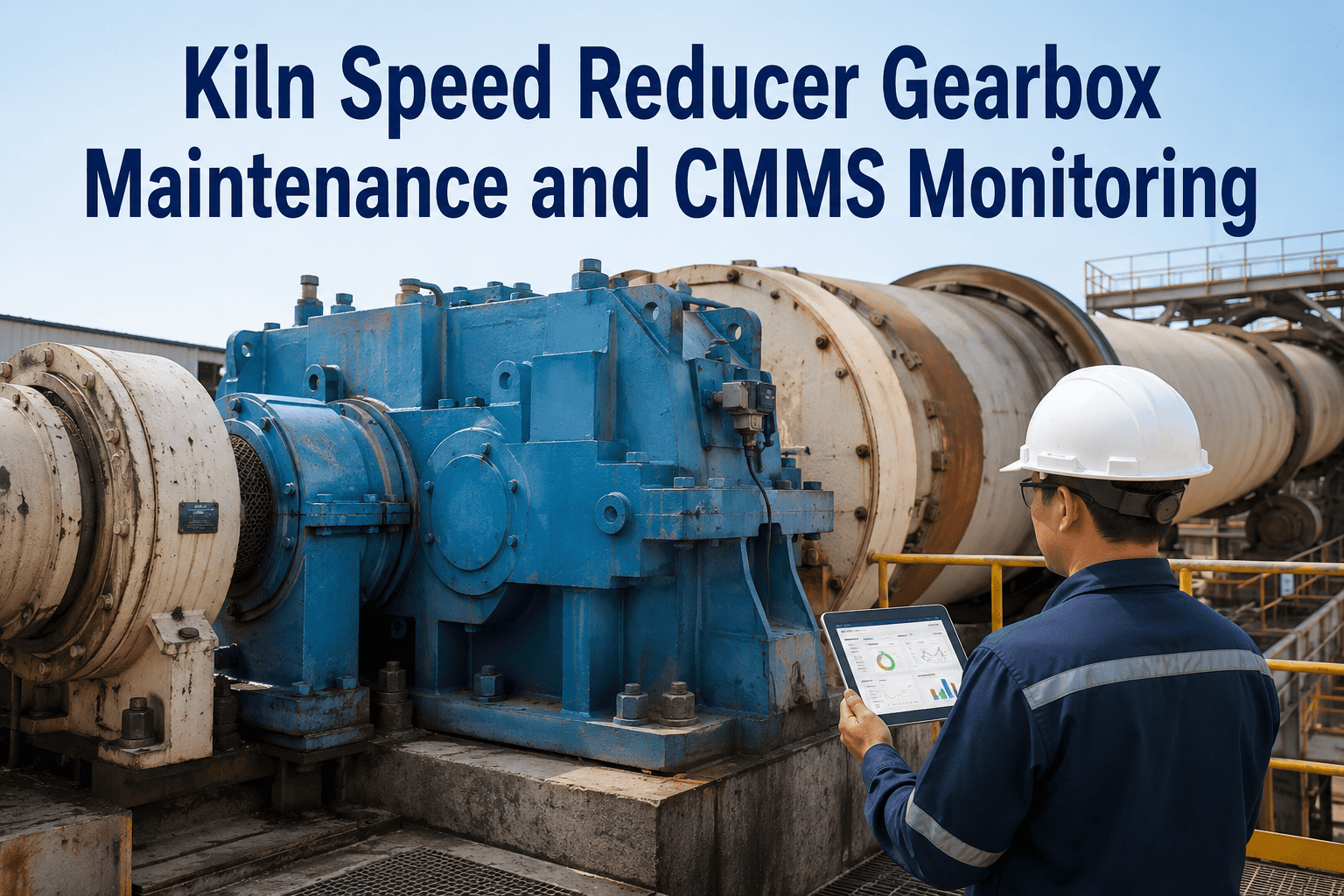
Read More
The kiln speed reducer gearbox — connecting the main drive motor to the girth gear that rotates the entire kiln — is the most failure-critical power transmission component in cement manufacturing. Unlike a mill gearbox that can sometimes be bypass

Read More
Riding ring wobble, ovality, and pad wear are the most consistently underestimated maintenance risks in any rotary kiln programme — not because they are hard to measure, but because measurement results traditionally end up in shutdown binders disc

Read More
The kiln nose ring and outlet refractory zone operate under the most severe thermal and mechanical stress in the entire pyroprocessing system — yet they receive less structured maintenance attention than any other kiln zone. Secondary air temperat

Read More
A bucket elevator failure in a cement plant doesn't just stop one piece of equipment — it stops everything connected to it. Raw material feed to the raw mill, clinker transport from the cooler, finished cement to the silos: bucket elevators sit at

Read More
Over 60% of operating cement plants worldwide were built before 2000 — running kilns, mills, and crushers that pre-date modern condition monitoring, some of them pushing 30 to 40 years of continuous operation. These plants aren't waiting for a gre

Read More
A greenfield cement plant is the rarest opportunity in industrial maintenance — you get to build it right before a single bad habit forms. Most plants spend their first decade fighting a maintenance backlog that traces directly back to the same de

Read More
When a cement kiln support roller bearing collapses without warning, the recovery window is not hours — it is 5 to 7 days of shutdown, emergency procurement, and lost production that no maintenance budget has room for. Cloud-connected AI condition

Read More
A single VRM gearbox seizure at a 5,000 TPD cement plant costs between $800,000 and $2.5 million in emergency parts, labour, and lost production — and in most documented cases, the failure was preventable. Wear metal particles, moisture contaminat

Read More
False air is the most expensive invisible problem in cement manufacturing. Unlike a broken conveyor or a failed bearing, false air announces itself only through your monthly fuel bill — by which time a 5,000-tonne-per-day kiln may have burned hund

Read More
Cement plant technicians work in some of the most signal-hostile environments in industrial maintenance — 200 feet up a preheater tower, deep inside a clinker tunnel, or inside a kiln gallery thick with fly ash and steel — and when connectivity dr

Read More
Cement kilns operate at 1,400°C and emit a cocktail of regulated pollutants — NOx, SO2, particulate matter, mercury, CO, and dioxins — from every stage of production. Environmental regulators across the US, EU, India, and China now mandate continu
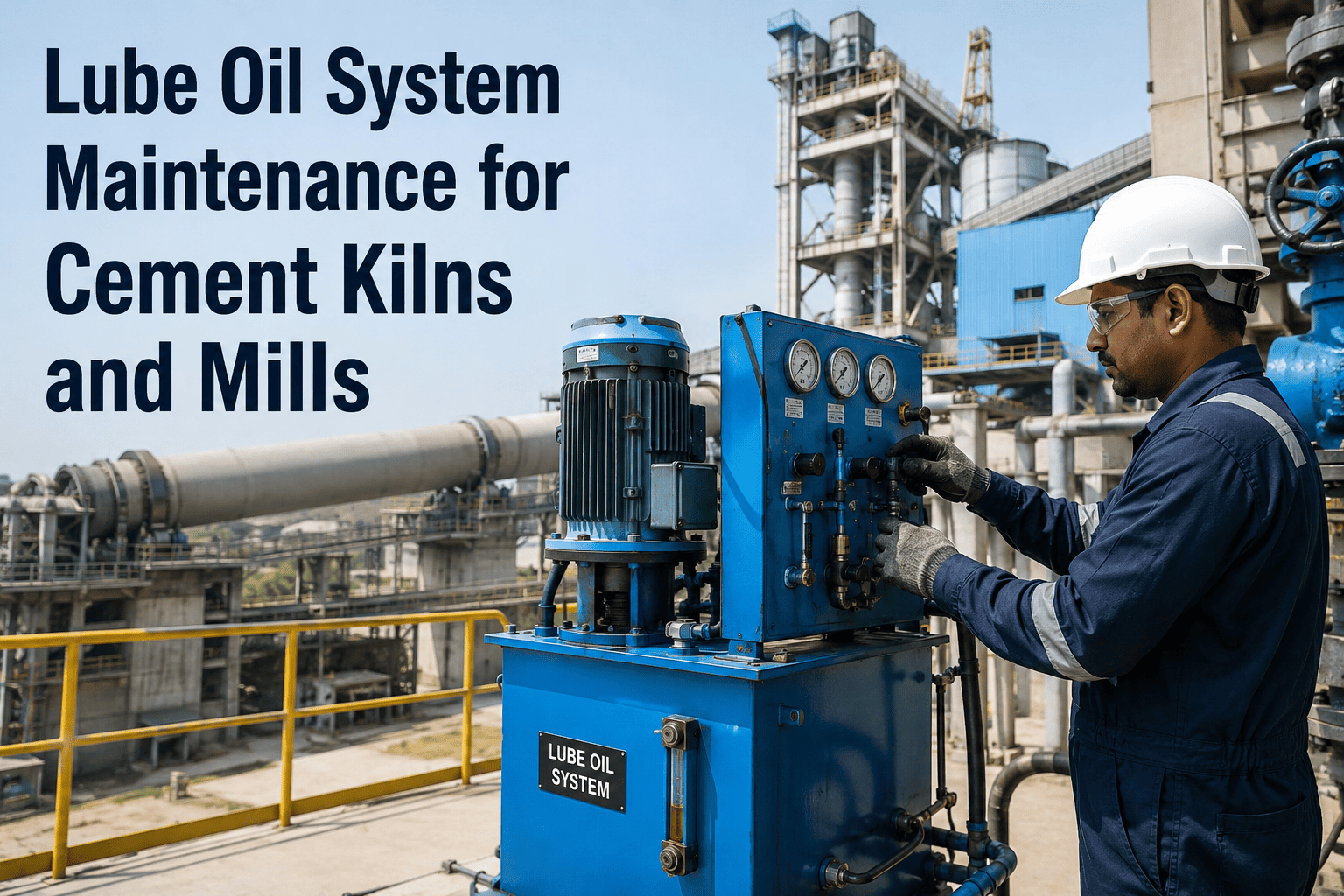
Read More
Centralized lubrication systems are the circulatory system of every cement plant — the moment oil pressure drops, filter differential rises, or heat exchanger performance degrades, the kiln trunnion bearings and mill gearboxes driving your entire

Read More
Cement plants run hundreds of electric motors — driving kilns, mills, fans, conveyors, and compressors — and the conventional approach to monitoring their health requires either shutting the motor down for internal inspection or installing sensors

Read More
Rotary kiln misalignment is one of the most expensive mechanical failures a cement plant can experience — damage to the shell, destruction of refractory lining, and unplanned downtime combine to produce losses between $180,000 and $420,000 per mis

Read More
Every cement plant runs on equipment that wears down hour by hour — kiln bearings, mill gearboxes, fan rotors — and the difference between a planned replacement window and an unplanned shutdown is simply knowing how many hours of life each asset h

Read More
Kiln tyre creep is the silent cost multiplier inside every cement plant — the differential rotation between a rotating tyre and its shell accumulates undetected until refractory damage, shell wear, and unplanned stoppages force a relining event th

Read More
A single high-frequency vibration sensor on a cement mill bearing streams 25,600 samples per second — that is 2.2 billion data points per day from one sensor alone. A typical cement plant runs 50 to 200 critical assets with vibration, thermal, cur

Read More
A cement plant kiln runs 8,000 hours a year, generating thousands of sensor readings every minute — bearing temperatures, vibration spectra, shell temperatures, inlet pressures, exhaust gas compositions, drive current signatures. Each of these rea

Read More
A cement group operating five plants across three countries doesn't have a maintenance problem — it has five separate maintenance problems, each invisible to the others. The highest-performing plant in the portfolio is running 83% OEE. The lowest

Read More
A cement plant operating at full capacity runs more than 2,000 electric motors — from the 5 kW belt conveyor drives to the 5,000 kW kiln main drives. When one of them fails, the question is always the same: rewind or replace? Get it wrong and you

Read More
ISO 55001 certification is not a documentation exercise — it is proof that your cement plant manages assets as a governed system, not a reactive maintenance function. The standard requires documented asset strategies, lifecycle cost models, risk-b

Read More
A typical cement plant operates over 2,000 motors with more than 5,000 lubrication points — each one a potential failure waiting to happen. Manual lubrication routes miss an average of 23% of grease points per cycle: the ones in difficult-to-acces

Read More
Cement plants are among the most hazardous industrial environments on earth — with preheater towers reaching 120 meters, permit-required confined spaces at every turn, and GPS signals blocked by thick concrete walls and steel structures. When a br

Read More
Cement plants using CMMS performance dashboards, technician leaderboards, and completion streak features report significant improvements in PM compliance and reductions in overdue work orders — not because the work gets easier, but because the sys
Read More
Cement plants running Siemens SPPA, ABB 800xA, or Honeywell Experion DCS generate thousands of process alarms and equipment events every shift — and most of those signals disappear into a historian log that maintenance teams never see. A direct AP

Read More
Cement plants evaluating CMMS deployment face a decision that goes beyond IT preference — cloud versus on-premise carries real implications for data residency compliance, ICS network segmentation, and operational resilience. The wrong deployment c
Read More
Clinker storage domes and silos hold millions of dollars of cement production capacity — but the civil structures housing that clinker are among the most under-maintained assets in any cement plant. Structural cracks, rebar corrosion, and foundati

Read More
Electric motors drive every critical process in a cement plant — the kiln rotation, the mill grinding circuits, the preheater fans, the clinker conveyors — and motor failure in any of these systems triggers costly unplanned stops that ripple acros
Read More
Pump and mechanical seal failures are among the most frequent reactive work order categories in cement plant maintenance — yet they remain among the least systematically managed. In cooling water, lubrication, and slurry pump systems, seals are ro

Read More
Maintenance and operating expenses account for 15–25% of total cement production costs — yet most plants manage this spend at building level, not at asset level. The result is a budget that reports totals accurately but hides the real story: which

Read More
Cement plant maintenance is entering a workforce crisis that no amount of hiring can fully offset. The generation of technicians who built their expertise on rotary kilns, vertical roller mills, and preheater systems through the 1980s and 1990s is

Read More
The kiln shell temperature sensor crosses its upper threshold at 2:14 AM. The DCS alarm fires. The control room operator acknowledges it. And somewhere between the operator's shift handover notes and the next morning's maintenance planning meeting

Read More
A cement plant manager starts every shift with the same question: is the plant running, what is broken, and what is about to break? The answer should take sixty seconds — not a phone call to the maintenance supervisor, not a search through three d

Read More
OSHA's respirable crystalline silica standard sets a permissible exposure limit of 50 micrograms per cubic meter of air as an 8-hour time-weighted average — and cement plants are among the highest-risk facilities for silica overexposure. Raw mill

Read More
Cement plants in regulated markets — Gulf Cooperation Council facilities under national data residency rules, European operations under GDPR, state-owned enterprises with strict data localisation mandates — cannot always route maintenance data thr

Read More
Wireless IIoT vibration sensors mounted on cement mill bearings stream real-time FFT data directly into your CMMS — triggering predictive maintenance alerts 4 to 8 weeks before catastrophic failure. Ball mill and vertical roller mill main bearings

Read More
Early-adopter cement plants co-firing hydrogen face entirely new maintenance requirements that no existing CMMS template, OEM service manual, or industry standard fully addresses yet. Burner tip erosion accelerates at rates not seen with conventio

Read More
High-voltage cable failures in cement plants cause the longest electrical outages of any single asset class — re-termination and fault location in underground cable routes serving kiln drives and mill motors can take 3 to 7 days. Unlike transforme

Read More
Standard industrial sensors fail within months in cement kiln zones where ambient temperatures exceed 250°C and radiant exposure destroys standard cable insulation. Pyroprocessing environments demand a fundamentally different approach to instrumen

Read More
Cement plant reliability is not achieved by expanding maintenance crews — it is achieved by empowering production operators to perform first-line maintenance through structured inspection routines, digital checklists, and instant escalation pathwa

Read More
An electrostatic precipitator failure in a cement plant is not just an equipment problem — it is an immediate regulatory event. When a single field section goes offline, particulate emissions can exceed permit limits within 15 minutes. When rapper

Read More
Every equipment failure in a cement plant carries two costs: the repair bill and the safety risk. A kiln bearing that fails without warning does not just stop production — it can injure workers, trigger permit violations, and generate regulatory n

Read More
Cement plants generate sensor data from thousands of monitoring points simultaneously — kilns, mills, crushers, fans, conveyors, and emission systems running 24 hours a day. Sending all of that raw data directly to the cloud is not just inefficien

Read More
A cement kiln shutdown is the most expensive, highest-risk maintenance event your plant will face — a single poorly planned refractory replacement can stretch a 7-day window into 14, costing millions in lost production and overtime labor. NVIDIA O

Read More
In a cement plant running three shifts, the most dangerous moment of the day happens six times — every handover. The outgoing crew knows the bearing that's been running 3°C hotter since noon, the raw mill separator that made an unusual sound at 2

Read More
Every cement plant asset tells a story — but only if someone is listening. A kiln drive bearing that failed last March, the raw mill separator rebuilt six months ago, the clinker cooler fan that runs 4°C hotter than it did two years ago: each of t

Read More
Cement plants are among the most hazardous industrial environments in the world — rotating kilns, high-voltage equipment, pressurized systems, and toxic dust create a lethal combination when energy isolation fails. Paper-based LOTO and permit-to-w

Read More
Grate cooler plate failures allow red-hot clinker to bypass the cooling zone entirely — creating "red rivers" of poorly cooled material that damage downstream equipment, reduce secondary air temperature back to the kiln, and raise specific heat co

Read More
Continuous Emission Monitoring Systems generate thousands of compliance data points every day — SO₂, NOₓ, CO, CO₂, particulate matter, and stack flow readings logged every minute across every emission point in the plant. Under EPA 40 CFR Parts 60
Read More
Bag filter jamming, separator bearing failures, false air ingress, and feed fluctuations account for 68% of all raw mill downtime events — yet each one leaves a clear digital fingerprint in sensor and operational data days before it becomes a prod

Read More
World-class cement plants plan 85%+ of their maintenance work before the week starts — not after equipment fails. Yet most plants still run at 55–60% planned work ratios, which means nearly half of all maintenance hours are being consumed by react
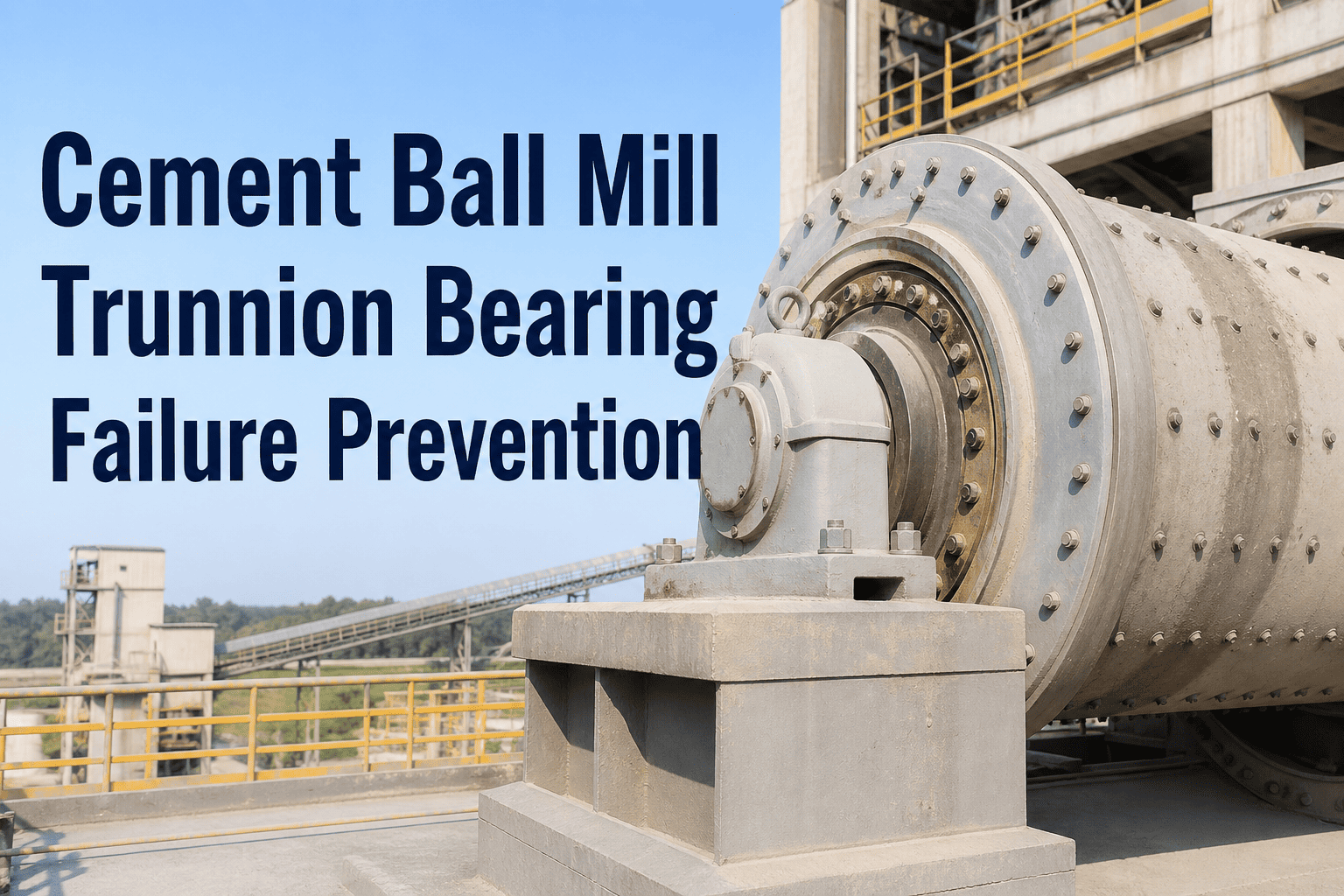
Read More
Trunnion bearing failure is the single most expensive unplanned event in cement ball mill operations — a seized white metal bearing can take a 5,000-tonne-per-day mill offline for 10 to 21 days, with total losses including emergency repairs, exped
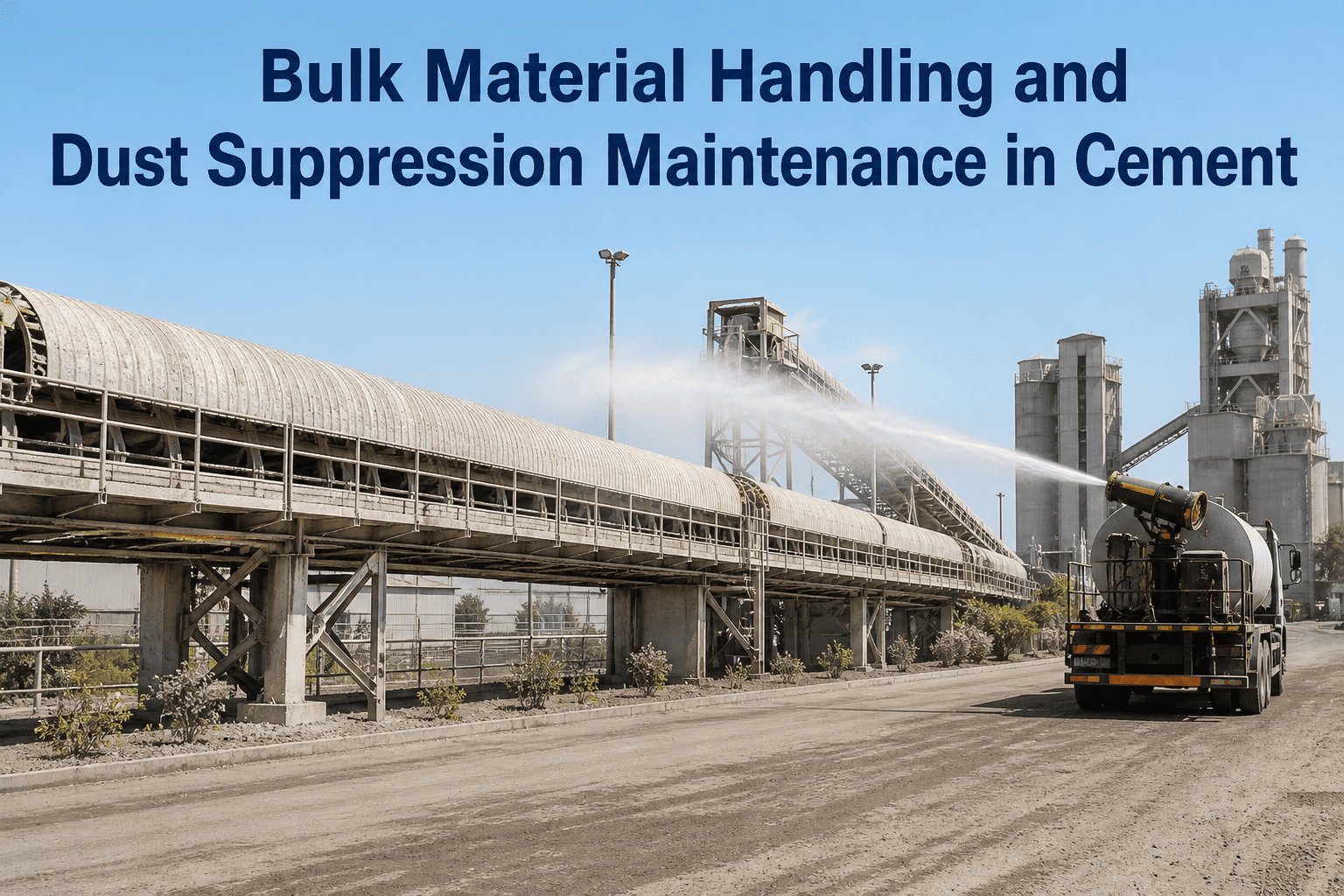
Read More
Apron feeders are the unsung workhorses of every cement raw material circuit — hour after hour, they drag abrasive limestone, clay, and shale from stockpiles and hoppers into primary crushers and raw mills. Because they rarely stop on their own, m
Read More
Dust suppression systems that fail in cement plants don't just trigger environmental violations — they set off a chain reaction that grinds production to a halt and buries your maintenance team in emergency repairs. When suppression nozzles clog,

Read More
Virtual reality simulators let new cement plant technicians practice kiln refractory inspection, gearbox replacement, and LOTO procedures in a risk-free environment — with competency scores automatically recorded in CMMS training records. Training

Read More
Cement technicians wearing gloves in dusty environments cannot type work order updates — but they can speak them. The documentation gap in cement plant maintenance is not a motivation problem; it is a physical reality. A technician inspecting a ra

Read More
Compressed air leaks consume 8 to 12 percent of total cement plant electrical energy — yet most plants have no systematic leak detection program beyond occasional manual surveys. A cement plant consuming 30 MW pays $20,000 to $35,000 every month i

Read More
Electrical failures cause 22% of all unplanned cement plant shutdowns — and transformer and switchgear failures are the most expensive and slowest to repair. A single power transformer failure can sideline your entire cement operation for 4 to 16

Read More
A CMMS implementation that takes 12–18 months to reach usability is not a deployment — it is a failed project. Cement plants running rotary kilns at $45,000 per hour of unplanned downtime cannot afford 18 months of half-operational maintenance sof
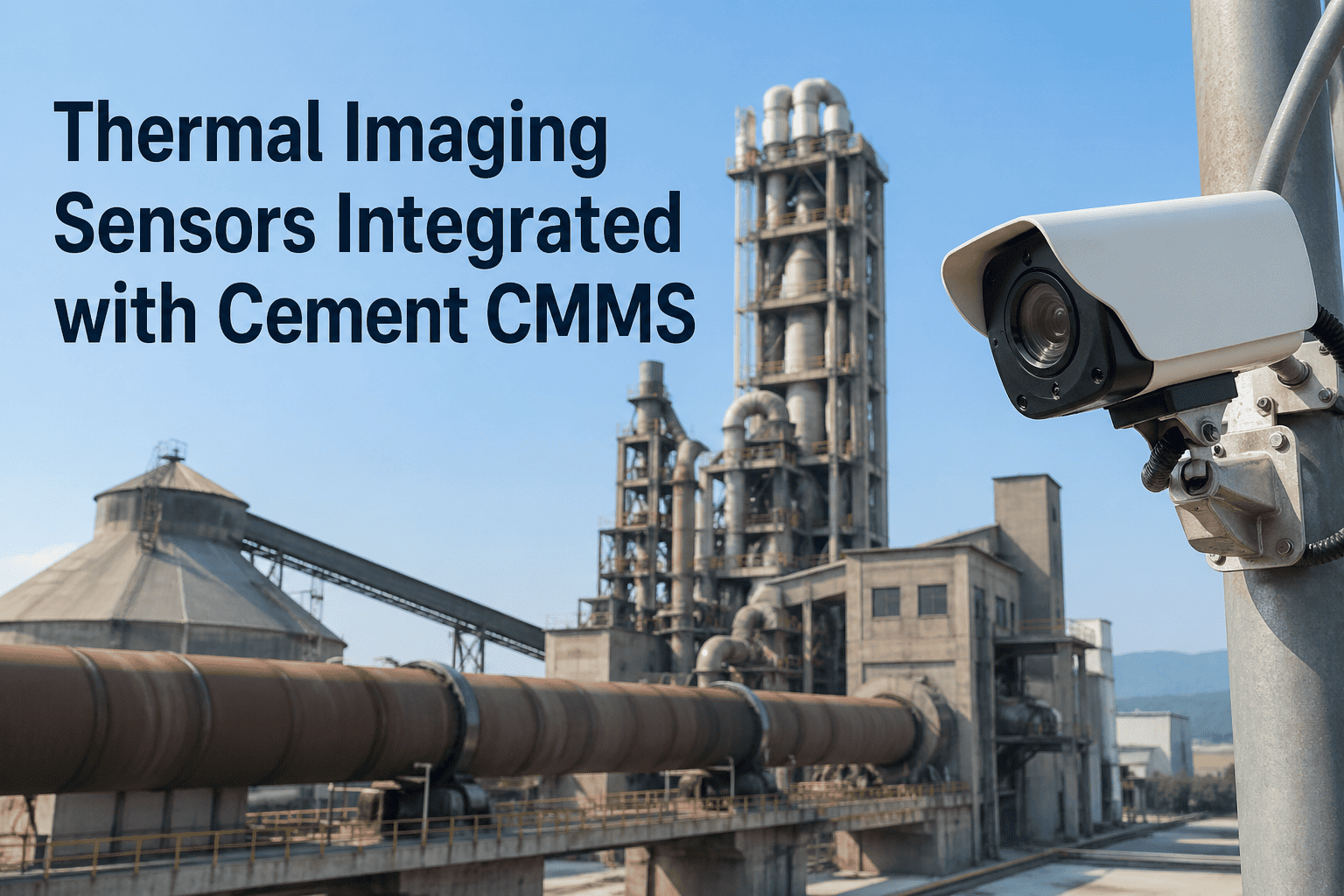
Read More
Fixed thermal imaging cameras positioned on kiln tyres, gearboxes, and electrical panels generate a continuous stream of temperature intelligence — but that intelligence creates maintenance value only when it reaches the right person, in the right

Read More
Cement plants are among the most energy-intensive industrial facilities in the world, consuming 110–150 kWh per tonne of clinker — and energy costs represent 30–40% of total production expenditure. As the sector moves to cut carbon exposure and re

Read More
A cement plant contains more confined spaces per square meter than almost any other industrial facility — preheater cyclones, raw meal silos, clinker silos, cement storage domes, ball mill interiors, kiln shells, cooler compartments, coal hoppers,

Read More
Cement plant cooling towers are the circulatory system of your heavy equipment — quietly moving heat away from kiln bearing circuits, compressor intercoolers, and VRM hydraulic systems every hour of every campaign. Unlike a failed conveyor or a tr

Read More
Cement plants spending $2–8 million annually on maintenance contractors are running a hidden risk: without objective performance data, contractor selection becomes a relationship exercise — not a reliability decision. When a refractory lining cont

Read More
A modern 3 MTPA cement plant generates millions of sensor readings every day — vibration telemetry from rotating equipment, temperature profiles from kiln shell scanners, DCS process tags updating every 30 seconds, SCADA alarm logs, CMMS work orde

Read More
Most cement plant managers know their maintenance budget number — but very few know whether it is competitive. A plant spending $8.50 per tonne on maintenance may look controlled on the balance sheet while sitting in the bottom quartile against gl

Read More
A cement kiln's induced draft fan runs 24 hours a day pulling 400,000 m³/hour of flue gas through the preheater tower — and when it fails without warning, the kiln goes cold in under 40 minutes, triggering a refractory cool-down cycle that takes 1

Read More
The grinding circuit at a 4,500 TPD cement plant is consuming 38 kWh/tonne when it should be running at 32 kWh/tonne. The mill operator does not flag it. The energy team logs it as "seasonal variance." What is actually happening is invisible from
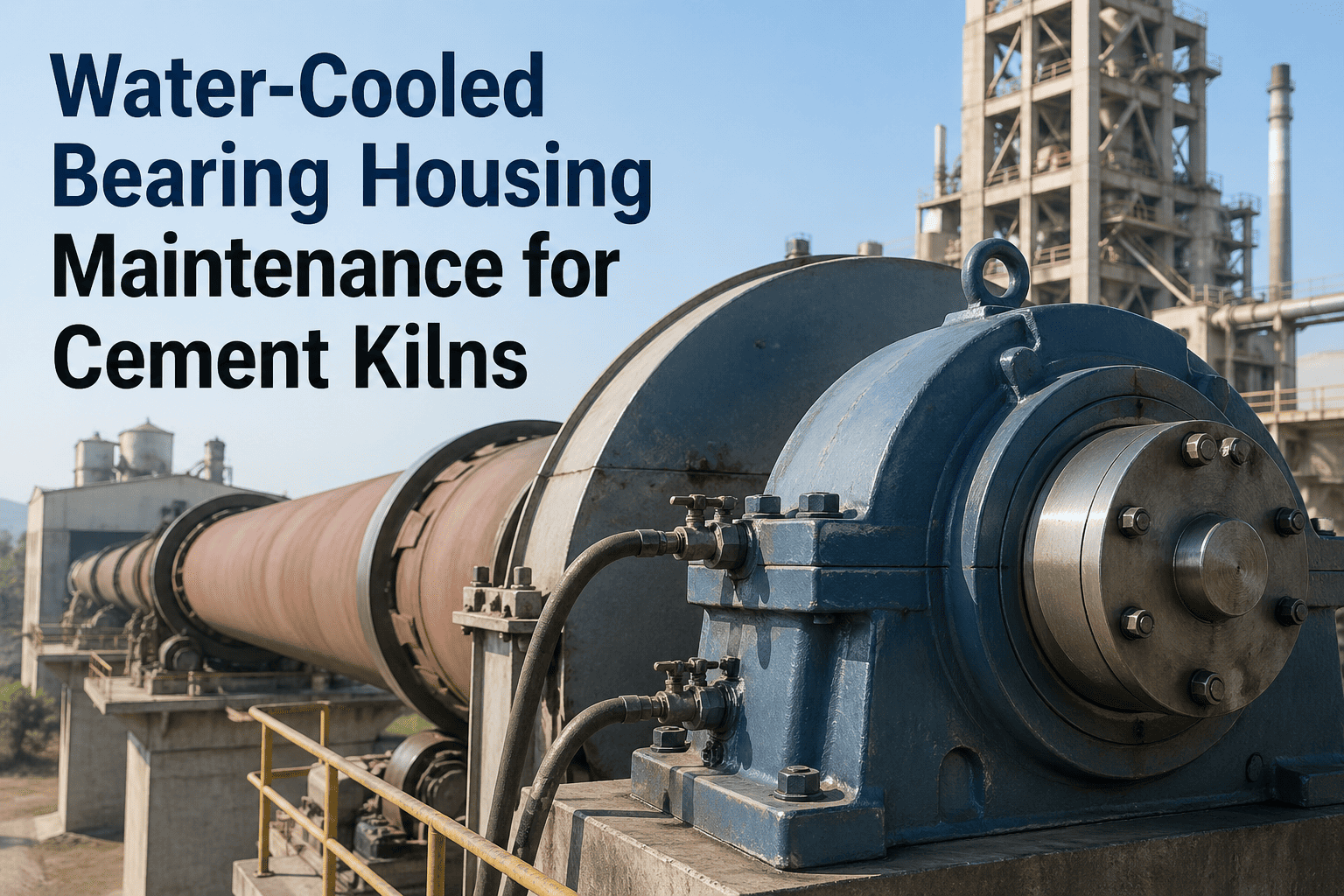
Read More
The water-cooled bearing housing is the single most under-instrumented critical asset in the entire cement plant. It supports a 600-tonne rotating kiln operating at 1,450°C, runs on a hydrodynamic oil film no thicker than 0.02 mm, and depends on a
Read More
A pinhole leak in a kiln support roller cooling line at a 5,000 TPD cement plant looks insignificant when it starts — a slow drip, maybe a litre per hour, often hidden behind the kiln housing where nobody walks during a shift. Six hours later, tha
Read More
Vertical roller mill vibration is the loudest complaint and the costliest blind spot inside modern cement plants — and it is also the most preventable failure mode in the entire grinding circuit. A VRM that trips at 9.0 mm/s does not break suddenl

Read More
The 4.2 MTPA cement plant had been hearing it for months — a faint, irregular click from the kiln girth gear, audible only when the plant was unusually quiet. The maintenance superintendent dismissed it as "normal kiln noise." The vibration team r
Read More
The lab posts the 6:00 AM clinker sample: free lime at 3.4% — well above the 1.5% target, soundness at risk, customer rejection looming. The control room blames the kiln operator. The operator blames the fuel quality. The fuel team blames the raw

Read More
At 3:47 AM, a CO sensor inside a cement plant's coal mill bag filter spiked from 80 ppm to 380 ppm in under four minutes — the unmistakable signature of smoldering combustion before any visible flame. The plant's CMMS-integrated fire and gas detec

Read More
Compressed air and nitrogen are the two utility gases a cement plant cannot run safely or reliably without — yet both are treated as invisible background services until something fails. A refrigerant dryer silently drifting from a +3°C pressure de

Read More
Coal dust is classified as one of the most dangerous combustible materials in industrial manufacturing, and inside a cement plant coal mill — where raw coal is pulverised to the 70-micron particle size needed for kiln firing — all three legs of th
Read More
Cement production is responsible for roughly 7–8% of all human-made CO2 emissions globally, and with the EU's Carbon Border Adjustment Mechanism entering its definitive financial phase on 1 January 2026, every tonne of clinker now carries a tracea

Read More
A cement plant's CMMS is not a commodity purchase. The platform with the lowest subscription fee often becomes the most expensive system within 18 months — through hidden integration costs, poor mobile performance on the plant floor, customization

Read More
Cement plant maintenance teams waste an average of 12-15 hours per week manually reconciling work order data between their CMMS and SAP ERP system — technicians closing jobs in CMMS, clerks re-entering the same information into SAP for financial p
Read More
Every cement plant CFO asks the same question before approving CMMS investment: "What tangible ROI will we see, and how fast?" Vendor promises of 40% downtime reduction sound impressive until you realize they're based on idealized case studies, no
Read More
A cement plant maintenance team staring at 600 overdue work orders does not have a backlog problem — it has a prioritisation problem. Every item in that list competes for the same pool of technician hours, spare parts, and planned shutdown windows

Read More
Bearing failures in cement plants are not sudden events — they develop over days or weeks as temperature gradients shift, lubrication degrades, and load distribution changes. A wireless bearing temperature sensor installed on a cement mill trunnio
Read More
An operations director at a cement plant is responsible for one number above all others: clinker tonnes produced per unit of cost. Every unplanned kiln shutdown, every maintenance overspend, every asset running at degraded capacity is a direct cha

Read More
Cement plant technicians working near rotary kilns, preheater towers, and clinker coolers are routinely exposed to ambient temperatures exceeding 60°C — environments where heat stress progresses from fatigue to medical emergency within minutes. We

Read More
A cement plant reliability engineer opens their laptop on a typical Monday morning and starts stitching together a picture of plant health from seven different places — the CMMS for work order status, a SCADA historian for vibration trends, a shar

Read More
Across the global cement industry, the gap between the best plants and the average ones is measured in a single number: maintenance cost per tonne of clinker. World-class operators hold that number between $2.50 and $4.00. The industry average sit

Read More
A 3,000 TPD cement kiln producing at 70% OEE against a world-class benchmark of 85% is quietly losing 450 tonnes of clinker every single day — but the plant manager will not see that number until the morning production meeting tomorrow. By then th

Read More
In a cement plant, two clocks run at the same time — the production clock that measures clinker tonnes per hour against monthly contracts, and the maintenance clock that tracks kiln campaign hours, refractory life, and mill liner wear. When those

Read More
The cement industry's best-performing plants — those with lost-time incident rates below 0.3 per 200,000 hours — report near-miss events at roughly 10 times the rate of average performers. That counterintuitive finding from decades of industrial s

Read More
A bearing housing misaligned by just 0.15 mm across a cement mill fan shaft generates radial loads 3–5 times the design rating — collapsing bearing service life from 36 months to under 6 months and cascading into seal failures, shaft bending, and

Read More
A temperature sensor drifting 15°C over six months doesn't trigger an alarm — it quietly poisons every prediction your AI-driven condition monitoring system makes. In cement plants where kiln thermocouples, mill vibration probes, and cooler airflo

Read More
Cement plants operate the most dangerous confined spaces in heavy industry — silos with 40-meter vertical drops, preheater cyclone towers at 300°C residual heat, and kiln interiors where scaffold inspection consumes 72–120 hours of downtime per cy

Read More
A 2000 kW planetary gearbox on a cement raw mill does not fail from a single catastrophic event. It fails from a slow chemical degradation no one can see — moisture ingress, acid number rising, wear debris accumulating, viscosity drifting out of s

Read More
In the control room of a 6,500 TPD integrated cement plant in Southeast Asia, a SCADA screen flashed amber at 03:14 on a Tuesday morning — vertical raw mill main gearbox oil temperature exceeding 72°C on a bearing that normally ran at 58°C. The ni

Read More
A cement plant maintenance coordinator spends 18 to 22 hours every week on repetitive admin — typing work orders from paper inspection sheets into the CMMS, re-keying parts data from the CMMS into SAP, matching three-way invoices for kiln refracto

Read More
A cement plant sets its annual maintenance budget in Q4 for the following fiscal year, then spends the next twelve months watching that budget collide with reality. A preheater cyclone fails in March — $480,000 unplanned. A raw mill gearbox shows

Read More
A reliability engineer managing four cement plants across three states cannot fly to each site to understand what broke, why the kiln tripped at 2:14 AM, or whether the raw mill in Plant B is running the same failure pattern that took Plant D offl
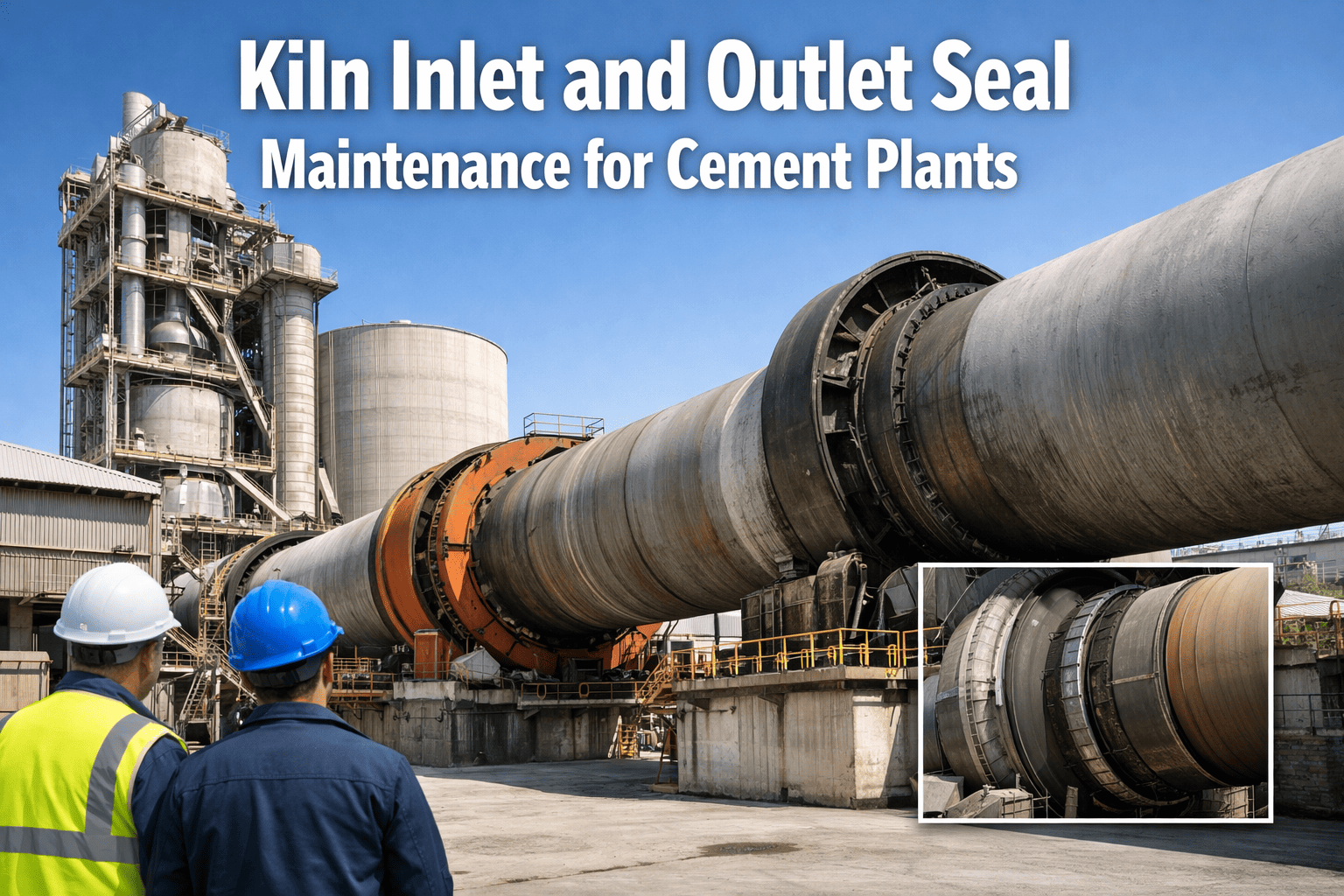
Read More
Every cement plant knows about false air. Few plants know that 60–75% of total false air infiltration happens at just two locations — the kiln inlet seal and the kiln outlet seal. In extreme cases these two seals alone pull 10% false air at the in

Read More
When a lab technician pulls a hot meal sample from your preheater and reports a loss-on-ignition reading, your CCR operator makes a kiln-changing decision — adjust fuel rate, shift kiln speed, or hold steady. But the operator is trusting data that
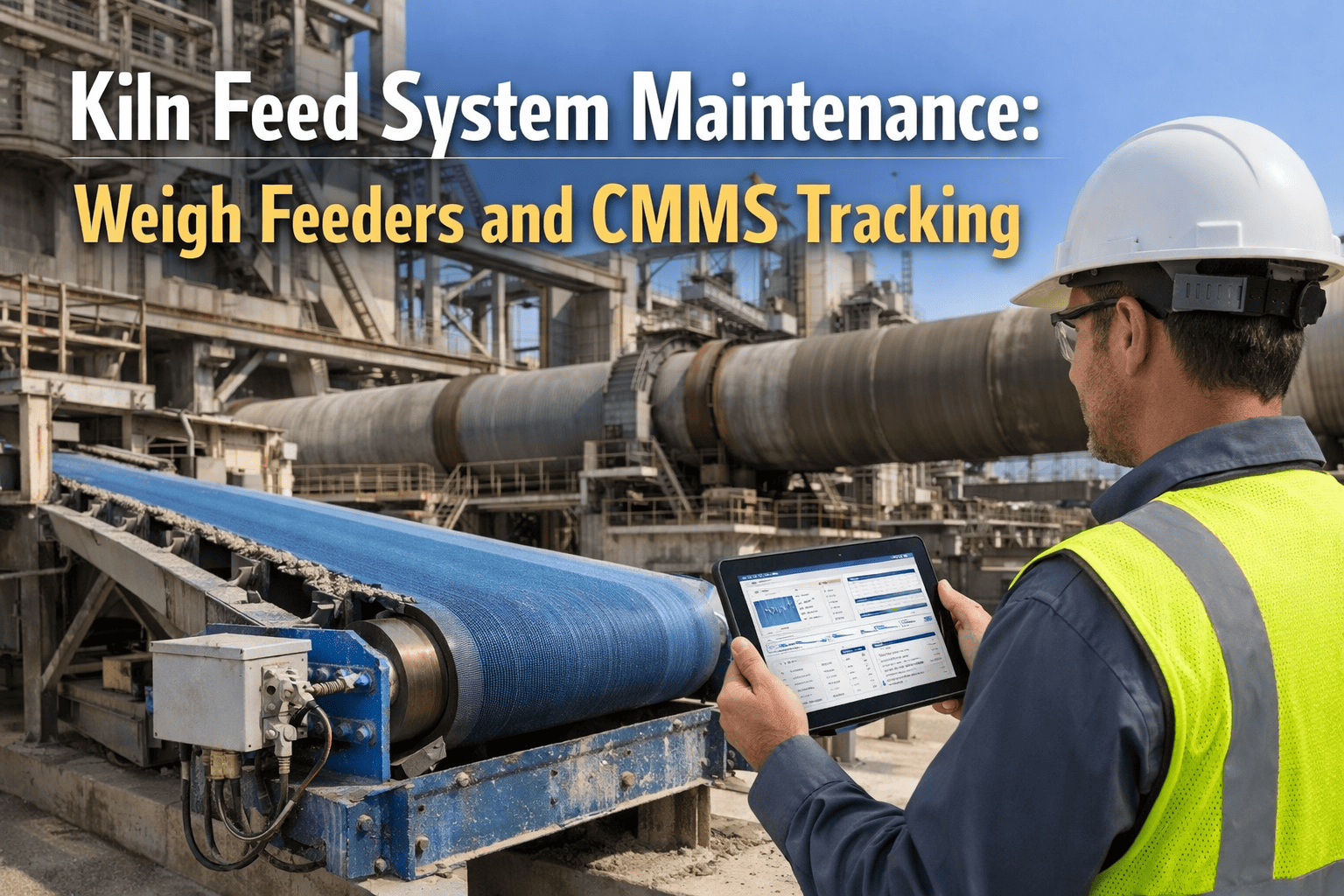
Read More
The kiln is only ever as accurate as the weigh feeder in front of it. Every clinker quality problem that gets blamed on fuel, raw mix, or the kiln operator actually starts 50 metres upstream on a belt that is reporting the wrong number. A 1% weigh

Read More
Your kiln main drive motor and its variable speed drive are the single highest-consequence failure point in the entire cement plant — a VSD trip stops kiln rotation within seconds, and a stationary kiln at 1,450°C starts warping its own shell. Yet

Read More
Most cement plants treat suboptimal kiln combustion as a process control problem — tune the burner, adjust excess air, retune the PID loop, call in the APC vendor. But the combustion anomalies showing up on the control room screen are almost never

Read More
A cement plant technician who works without a mobile AR-enabled CMMS loses an average of 47 minutes every shift walking between equipment and the control room to retrieve work orders, check maintenance history, and log findings on paper. Across a
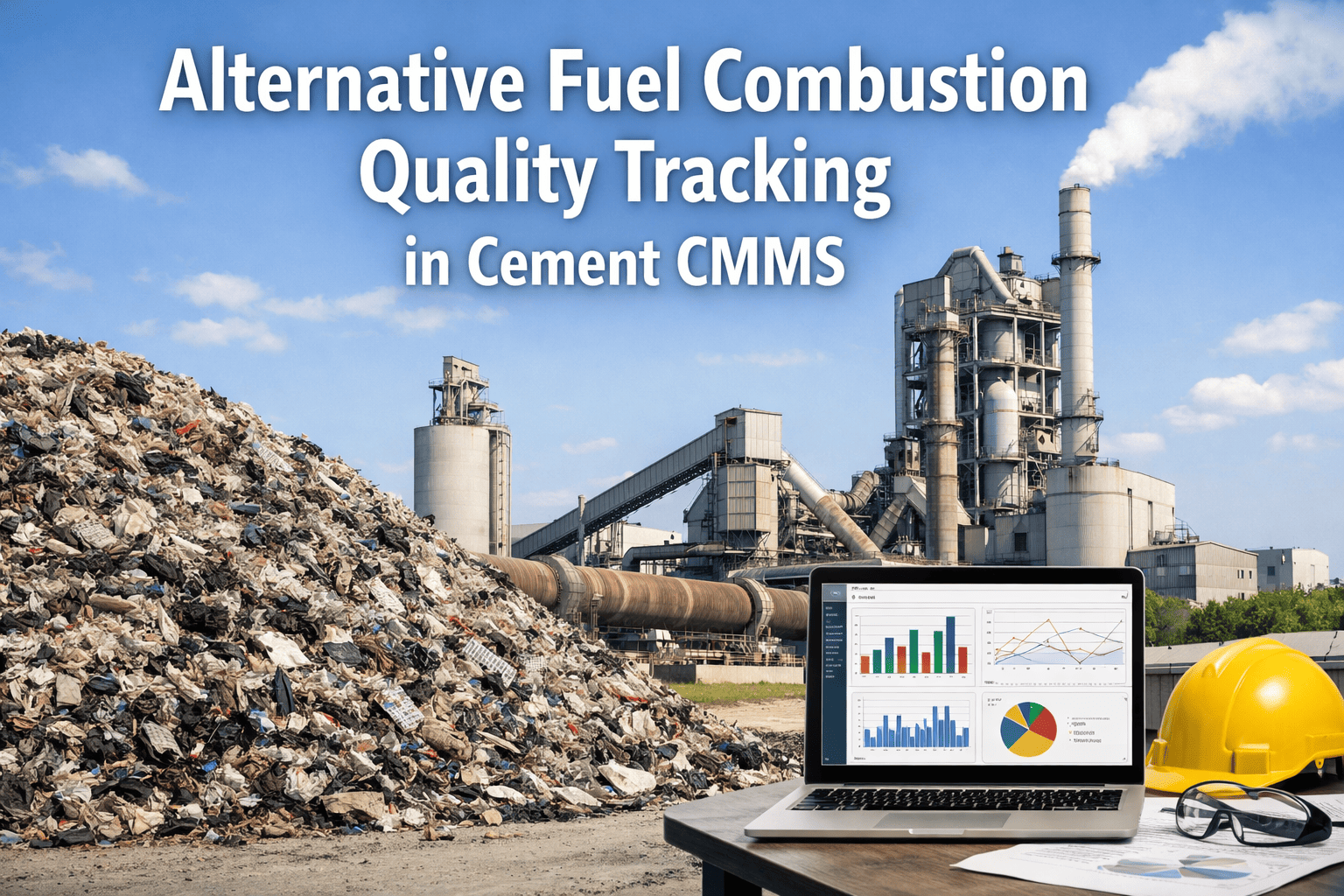
Read More
Cement plants co-firing waste-derived fuels — RDF, SRF, tire-derived fuel, biomass, and sewage sludge — unlock real fuel cost savings and decarbonization credits, but every percentage point increase in thermal substitution rate introduces combusti
Read More
Most cement plants invest in predictive maintenance tools and see an initial improvement — then plateau. Downtime drops in month three, stabilises in month six, and by month twelve the gains are no longer compounding. The reason is almost always t

Read More
Cement plants spending $4–12M annually on MRO supplies are making procurement decisions that directly determine equipment reliability — yet fewer than 1 in 5 tracks part-level MTBF by supplier.

Read More
Traditional FMEA in cement plants is a document created once, revised annually if you are disciplined, and consulted during failure reviews when the damage is already done. A rotary kiln running at 1,450°C does not wait for your next quarterly rel

Read More
At 02:14 on a Tuesday morning, a 4,200 TPD cement plant in Southeast Asia lost kiln feed. Stage 4 of the preheater had blocked. By the time the control room operator noticed the differential pressure spike, the coating fall had already compacted a

Read More
A cement plant in South Asia was spending ₹8.4 crore a year on maintenance — and could not understand why the number kept rising despite buying newer spare parts and hiring more contractors. When the plant manager mapped every failure event over 2

Read More
A cement plant running a 3,500 TPD kiln was absorbing ₹14 crore in annual maintenance costs — 60% of it unplanned, reactive, and avoidable. When their maintenance manager loaded 24 months of failure records into OxMaint, the analysis revealed that

Read More
Most cement plant predictive maintenance programmes do not fail because of bad sensors or wrong software — they fail because of a broken implementation sequence. Skipping asset criticality ranking, deploying sensors before CMMS baseline data exist

Read More
For years, predictive maintenance was a privilege reserved for large cement plants with dedicated reliability engineers, $500K software budgets, and in-house IT teams. Small cement plants under 1,000 TPD were told — directly or indirectly — that t

Read More
Cement plants in Sub-Saharan Africa, Southeast Asia, and Latin America are expanding faster than their maintenance infrastructure. With Sub-Saharan Africa's cement market growing at 7.8% CAGR towar

Read More
Cement plant bag filters consume 15–25% of total compressed air supply, yet most plants run pulse jet cleaning on fixed timers regardless of actual filter condition. AI vision systems monitoring pressure drop patte

Read More
Calendar-based preventive maintenance schedules in cement plants are built on averages — and averages are wrong for every individual machine. A kiln drive that runs hard in summer heat ages faster than the schedule assumes; a ball mill in a clean

Read More
A single undetected kiln shell hotspot can force an emergency shutdown costing $300,000 or more — not counting refractory rebuild labour, delayed shipments, and lost contracts. AI vision cameras mounted along the k

Read More
Every undetected tramp metal piece on a cement plant conveyor belt is a countdown to a $50,000–$200,000 crusher or belt damage event. Oxmaint's AI-integrated CMMS platform connects real-time AI vision alerts di

Read More
Raw vibration waveforms from cement plant rotating equipment hide fault signatures that calendar-based maintenance schedules simply cannot detect. AI-powered spectral analysis decodes FFT frequency patterns — u

Read More
A cement kiln in Alabama missed a developing shell hot spot detected only by manual thermal gun readings taken once per shift — by the time the anomaly was visible, the refractory had already failed, the steel shell had warped past 400°C, and the

Read More
A cement kiln girth gear has a 16-week supplier lead time. When the plant discovers it needs one — after the failure, not before — those 16 weeks cost an average of $47,000 per day in lost product

Read More
Cement plants lose an average of $9,000 per minute when critical equipment fails — and 60% of those shutdowns trace back not to the failure itself, but to a missing spare part that should have been on the shelf three weeks earlier. AI-powered dema

Read More
Cement plant spare parts inventories hold $2–$8 million in stocked items, yet 30–45% of that capital sits unused for over 2 years while critical components stock out during breakdowns. Manual criticality assessments rely on tribal knowledge and ou

Read More
Cement plant shutdowns cost between $500,000 and $2 million per event, yet 20–40% of planned tasks are unnecessary or could be deferred. Traditional scope planning relies on fixed schedules and manual checklists, leading to bloated work lists that

Read More
A cement plant shutdown that runs 3 days over schedule does not just cost labour hours — it costs kiln production at $40,000 to $120,000 per day depending on clinker output and market pricing. AI-driven shutdown planning tools are eliminating the
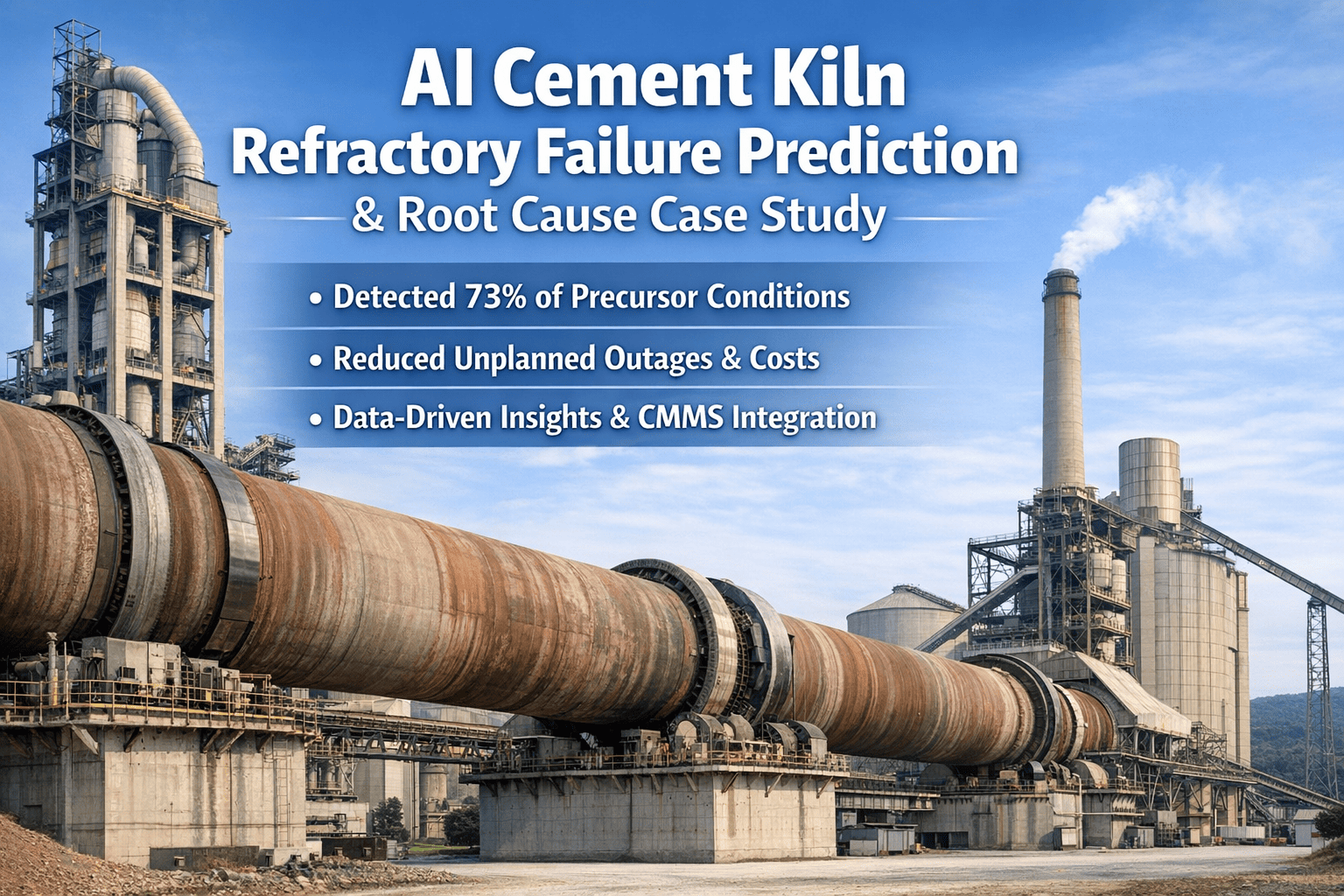
Read More
Cement kilns run at over 1,400°C — and when the refractory lining fails without warning, the cost is not just a repair bill. It is 10 to 21 days of lost production, emergency contractor mobilisation, and accelerated wear on adjacent equipment. AI-

Read More
A cement plant that ties up $4M in storeroom inventory but still faces a 6-week kiln downtime waiting for a girth gear segment has a criticality problem, not a budget problem. AI spare parts criticality scoring fixes this by ranking every SKU in t

Read More
Every cement plant turnaround that runs on gut feeling and last year's scope list leaves money on the table — or worse, misses a kiln shell crack that surfaces three weeks after restart. AI shutdown scope optimization changes this by analyzing rea

Read More
Cement plant turnarounds that run over schedule or over budget are not bad luck — they are the predictable outcome of planning with incomplete information. AI shutdown planning engines anal
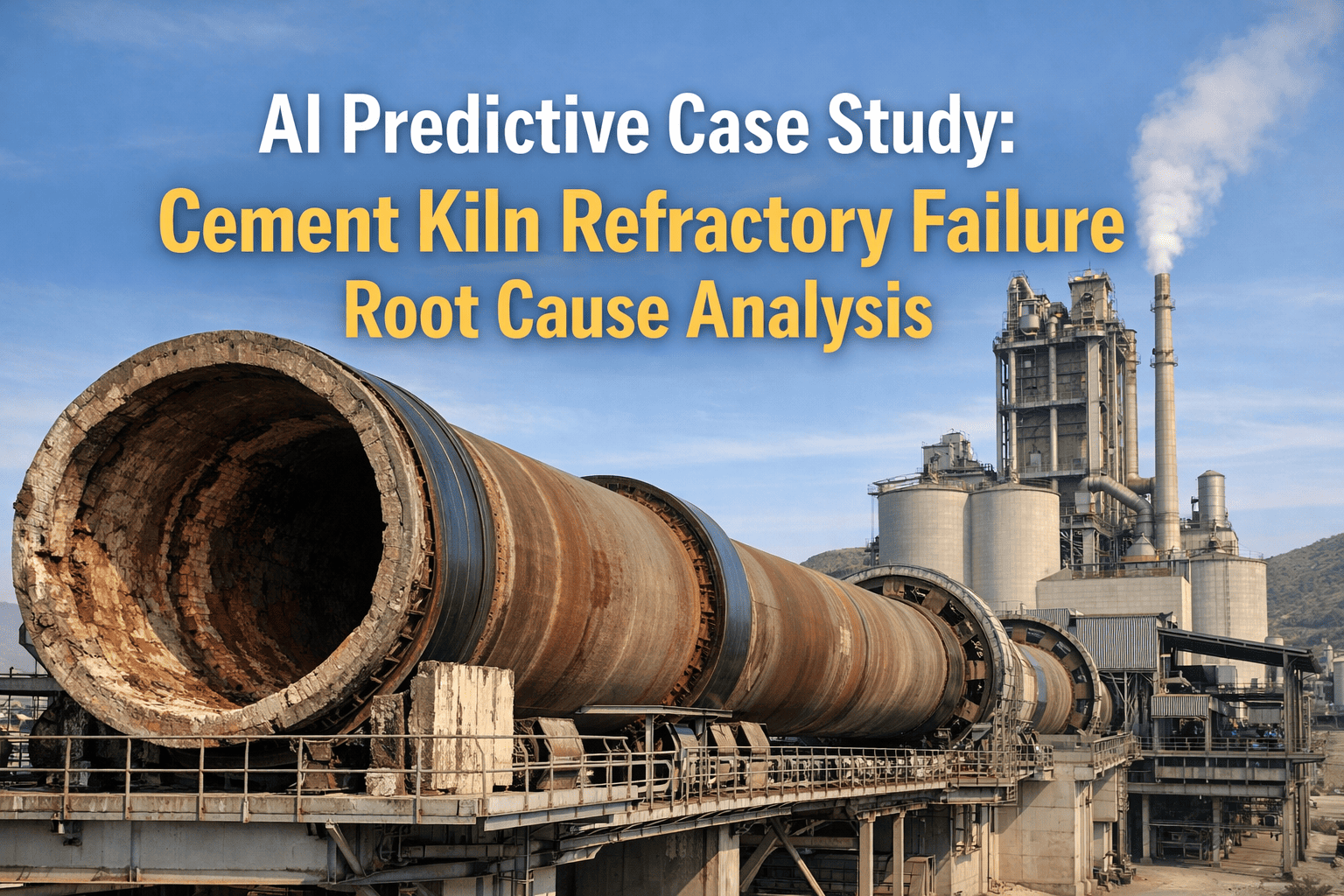
Read More
Most cement plant operators discover refractory failure the hard way — a sudden kiln shutdown that costs $500K to $2M in lost output per day. AI-driven predictive maintenance platforms now det

Read More
A single refractory failure in a cement kiln can cause 5–10 days of unplanned downtime and up to $2M in lost production plus $500k in emergency relining. Traditional schedules replace lining too early (wasting mil
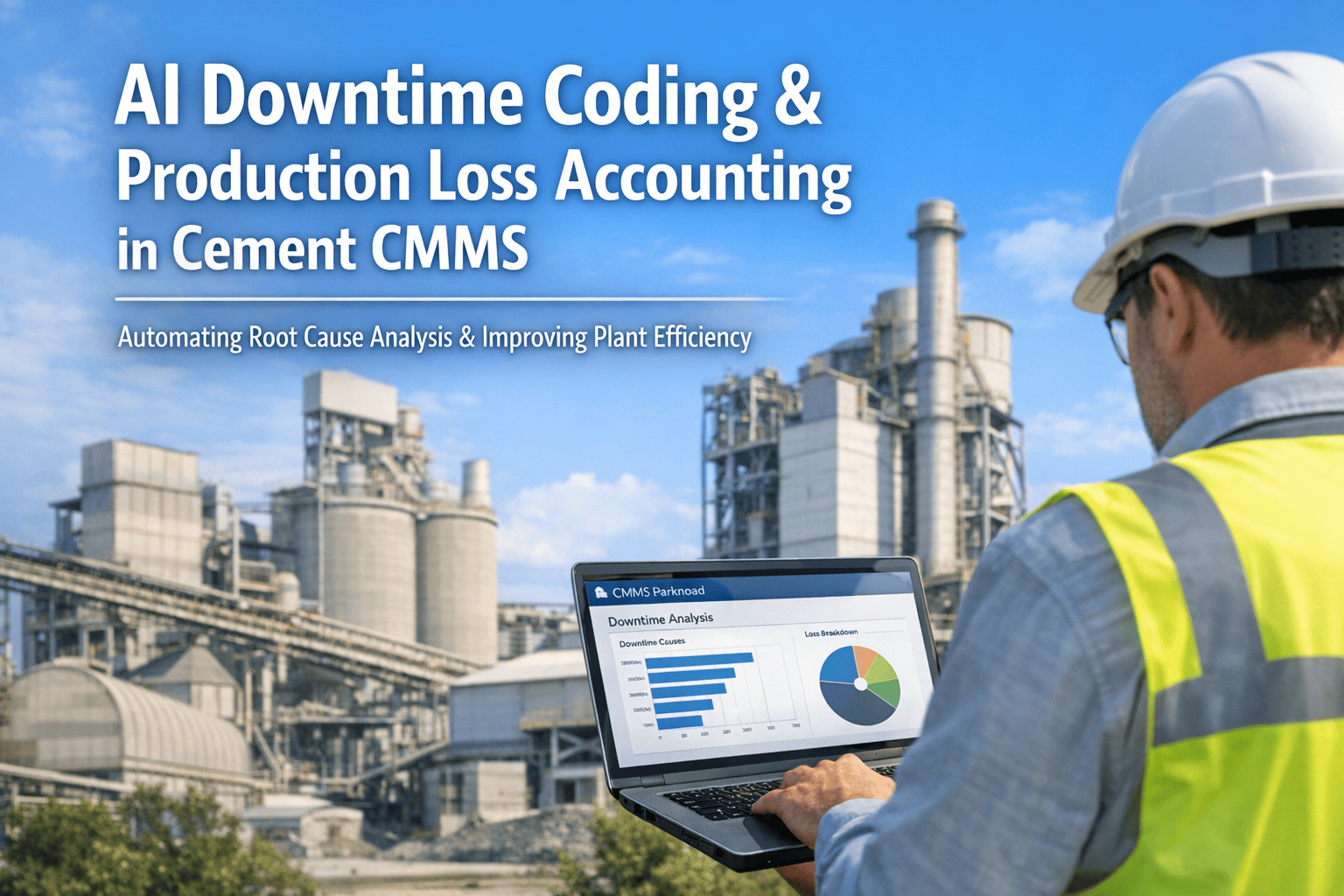
Read More
Every month, cement plants lose 3–8% of production capacity due to unplanned stops — but the real loss is hidden in poor downtime coding. Without AI-driven classification, production loss accounting becomes a blame game between op

Read More
A single unexpected kiln or mill trip in a cement plant can cost $250k–$1.2M in lost production and emergency repairs. AI prescriptive maintenance doesn't just predict failure — it auto-genera

Read More
Your CMMS holds thousands of work orders written by technicians over the past 5 to 10 years — and buried inside that unstructured text are failure patterns, recurring faults, and asset-specific degradation signals that no human can manually extrac

Read More
Maintenance consumes 15 to 25% of total cement manufacturing expenditure — and most plants have no idea where that money actually goes until the year-end review reveals another budget overrun. A single unplanned kiln stop costs $150,000 to $300,00

Read More
Your cement plant's best maintenance technician just retired — and 34 years of institutional knowledge about restarting the #3 boiler after a flame-out, aligning the VRM separator, and diagnosing girth gear vibration patterns walked out the door w

Read More
Cement kilns burn at 1,450°C around the clock — and the refractory lining protecting your shell steel is degrading with every rotation. A single unplanned refractory failure costs cement plants $800,000 to $2.5 mil

Read More
A cement kiln refractory lining running at 1,450°C does not fail suddenly — it cracks first, spalls second, and catastrophically breaches third. The problem is that by the time a crack is visible to a human inspector, the progression to spalling h

Read More
A cement kiln girth gear failure does not announce itself — it sends warnings for weeks through vibration harmonics, thermal signatures, and mesh pattern changes that conventional inspection cycles miss entirely. When the gear finally fails, the b

Read More
Cement plant maintenance teams in 2026 are drowning in data — kiln temperatures, mill vibration logs, conveyor sensor feeds, work order histories, compliance checklists — yet most plants still spend 15 to 20 hours every week manually compiling thi

Read More
A 3,000 TPD cement plant in South Asia was running its kiln within what every quarterly energy audit considered acceptable limits — specific heat consumption of 3,410 MJ per tonne of clinker, well inside the 3,500 MJ benchmark. Nobody flagged it.

Read More
Energy is the single largest cost in cement production — consuming 30 to 40 percent of every rupee spent — yet most plants are running their kilns and grinding mills on setpoints configured years ago, calibrated for worst-case conditions, burning

Read More
A cement plant's conveyor network moves 50,000 to 200,000 tonnes of raw material every single day — and a single belt tear that goes undetected for even 20 minutes can cascade into a full kiln shutdown costing your plant $50,000 to $200,000 in los

Read More
A 3,200 TPD cement plant in South Asia was running two finish mills at 34–38 kWh per tonne — 15% above the regional best-in-class benchmark of 30–32 kWh/tonne. The culprit was not the mill itself. It was the separator: rotor speed running 8% below

Read More
Cement manufacturing produces roughly 8% of global CO₂ emissions — more than aviation, shipping, and long-distance trucking combined. But here is what most decarbonization conversations miss: a significant share of that carbon is not from limeston

Read More
Every shift in a cement plant starts with a safety briefing. Every shift also ends with footage nobody watched — cameras that recorded twelve hours of PPE violations, dust mask removal, hard hat-free zones, and restricted area breaches that nobody

Read More
When a cement kiln trips at 3 AM, the first question is never "what failed" — it is "why did it fail, and why did it fail again." A kiln that has tripped three times in 90 days for what appears to be an identical cause is not experiencing bad luck

Read More
Belt splice failures are the single longest unplanned stoppage event in cement plant bulk material handling — averaging 6 to 18 hours per event when a full splice separation requires belt extraction, vulcanisation repair, and conveyor re-commissio

Read More
A cement mill gearbox failure gives three warning signals before it destroys itself. The first microcrack propagation in a gear tooth is detectable by acoustic emission sensors six to twelve months before the fault manifests. The second surface fa

Read More
Water management and cooling system maintenance for cement plants is a CMMS program that schedules and documents cooling tower PM, chemical dosing, blow-down cycle management, make-up water metering, and effluent quality checks

Read More
A cement plant in a remote location faces a 12-week lead time for a proprietary wear part. The kiln auxiliary drive coupling has failed. The OEM cannot expedite. The plant is down. At an average clinker production value of $28 per tonne and 5,000

Read More
A limestone quarry fleet does not fail on calendar dates. Haul trucks degrade on tonne-kilometres hauled under abrasive dust loads. Drill rigs wear on metres drilled per shift in variable rock hardness. Jaw crushers consume liner material at rates

Read More
A slewing drive pinion wear failure on a circular blending bed reclaimer — undetected because the last vibration reading was taken 11 weeks past its scheduled date — forced an unplanned 72-hour shutdown at a Southeast Asian cement plant during pea

Read More
A cement plant managing 35 to 80 kilometers of conveyor belt infrastructure across raw material handling, kiln feed, clinker transport, and cement dispatch operates one of the most failure-prone asset categories in any industrial facility — and be

Read More
A cement plant's primary crusher is the first and most consequential bottleneck in the raw material process chain. When a jaw crusher toggle plate fractures mid-shift, or an impact crusher rotor becomes imbalanced from uneven hammer wear, the enti

Read More
A rotary kiln running at 1,450°C does not give you a second chance to test the wrong maintenance decision on live equipment. Yet most cement plants optimise PM intervals, evaluate component substitutions, and plan shutdown sequences entirely on pr

Read More
Instrumentation and calibration failures are the invisible driver behind cement plant process inefficiency — a miscalibrated kiln inlet temperature sensor drifts process control setpoints silently for weeks before a quality excursion forces invest

Read More
Cement kilns, raw mills, and clinker coolers generate thousands of process alarms per shift — and in most plants, fewer than 12% of those alarms ever produce a maintenance work order. The rest are acknowledged, silenced, and forgotten, until the e

Read More
A failed kiln main drive motor at a cement plant — with no current insulation resistance record, no vibration baseline, and no predictive alert — stops production for an average of 4.2 days at a cost of $280,000 to $680,000 in lost clinker output,

Read More
Efficient water management is critical to maintaining operational stability and environmental compliance in cement plants. From cooling towers and process water systems to wastewater treatment and recycling, every component must be monitored and

Read More
A Continuous Emissions Monitoring System that fails a calibration drift check during an EPA Method 19 relative accuracy test audit doesn't just produce a data gap — it creates a regulatory notice of violation, potential excess emission fees, and a

Read More
Cement plants operating under ISO 14001 and ISO 50001 face a dual compliance burden that paper-based management systems cannot sustain — environmental registers spanning dust emissions, kiln NOx, SO2, CO2, and stormwater, combined with energy revi

Read More
Cement manufacturing accounts for approximately 8% of global CO₂ emissions — making it one of the most scrutinised industries under expanding carbon disclosure mandates, EU ETS obligations, EPA GHG reporting rules, and ESG investor frameworks. Yet

Read More
A confined space entry at a preheater cyclone tower — without a current gas test, without a posted rescue team, and without a signed permit — costs a US cement plant an average OSHA citation of $156,000 per violation, plus the human consequence th

Read More
Cement manufacturing is among the most heavily regulated industrial sectors globally — responsible for approximately 7% of worldwide CO2 emissions, generating significant particulate matter, NOx, SO2, and heavy metal releases that place every kiln

Read More
A single failed bag filter in a cement plant kiln line can push particulate matter emissions above EPA permit thresholds within hours — triggering regulatory notices, production curtailments, and emergency contractor costs that dwarf an entire yea
Read More
The European Union’s Carbon Border Adjustment Mechanism (CBAM) imposes a carbon cost on imports of emission-intensive goods such as cement, aligning them with the EU’s internal carbon pricing system. This significantly affects cement exports, as

Read More
A North American cement producer managing three integrated plants faced a board-level crisis in Q3 2024: their sustainability committee requested a verified ESG report covering Scope 1 and Scope 2 emissions, kiln thermal energy intensity, water wi

Read More
Cement manufacturing is one of the most energy-intensive industries on earth, with power representing 30–40% of total production cost. Captive solar generation and waste heat recovery (WHR) from kiln exhaust and clinker cooler gases offer the most

Read More
Cement production accounts for 8% of global CO₂ emissions — and the technology pathway to decarbonization runs directly through your maintenance program. Carbon capture systems, LC3 blended cement processing lines, hydrogen co-firing infrastructur

Read More
Alternative fuels now account for 20–80% of thermal energy substitution at leading cement operations globally — yet the feeding systems, pre-processing equipment, and burner modifications that enable co-processing are maintained with far less disc

Read More
Cement manufacturing consumes 110–150 kWh per tonne of clinker — making energy the single largest variable cost at 30–40% of total production cost. Most cement plants have real-time energy meters but no structured maintenance program connecting eq

Read More
Catastrophic cement mill gearbox failures cost $280,000–$620,000 per event in parts, emergency labor, and lost production — yet every failure begins as a detectable oil contamination signal or vibration deviation weeks or months before the breakdo
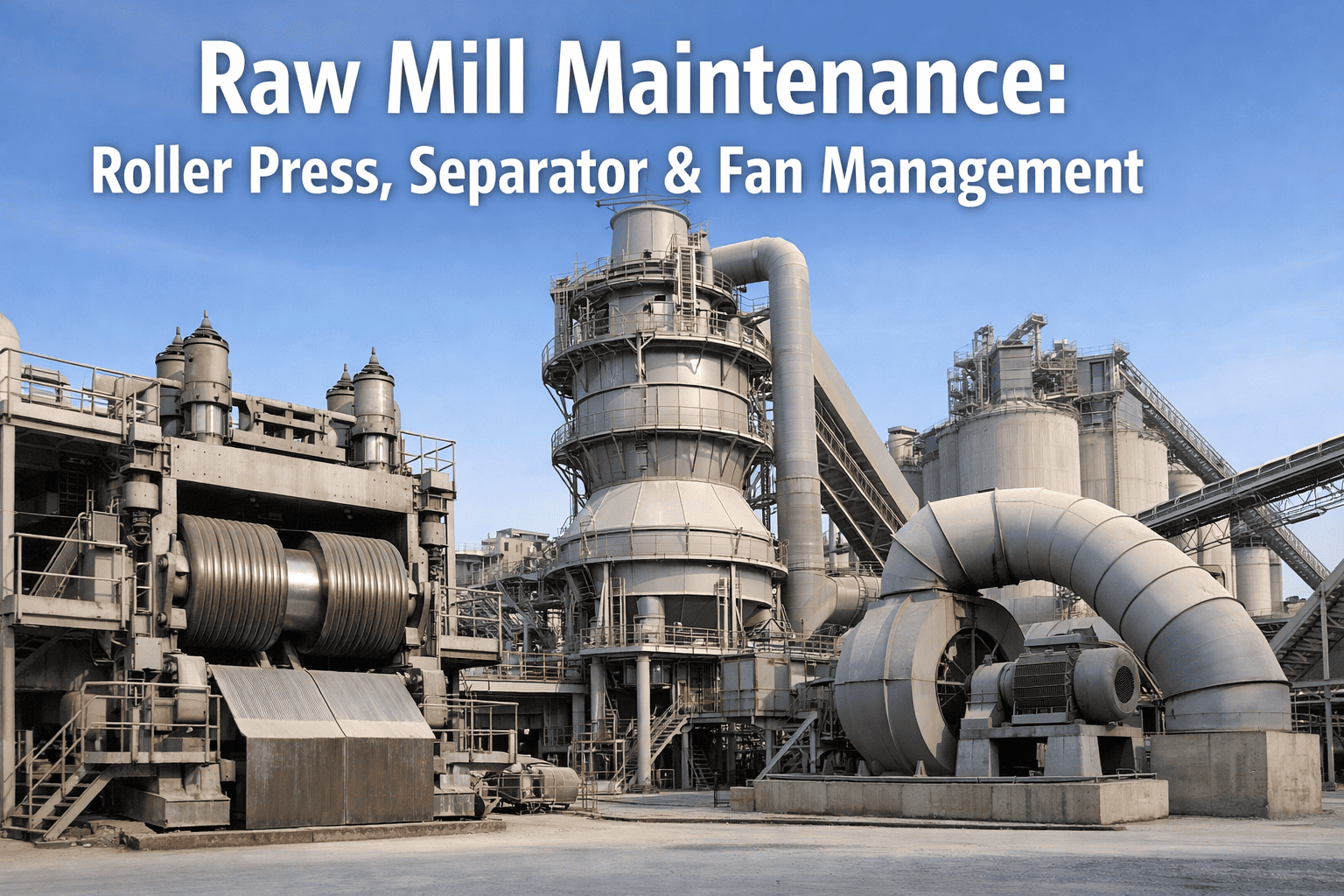
Read More
Raw mill circuit failures cost North American cement plants $85,000–$320,000 per unplanned stop in lost kiln feed and emergency repair spend — yet 74% of these events trace back to roller press wear, separator degradation, or mill fan imbalance th

Read More
Wrong liner profile delivered, crane not booked, bolt torque records missing — turns a 36-hour planned shutdown into a 72-hour overrun costing $140,000–$280,000 in lost clinker production. This checklist structures every relining event from wear c

Read More
Cement grinding consumes 40–45% of a plant's total electrical energy — yet most North American plants lack the asset-linked performance data to identify where that energy is being wasted. Separator inefficiency, overloaded mill circuits, and untra

Read More
Vertical roller mill roller tire failures are responsible for 31% of unplanned finish grinding shutdowns across North American cement plants — each emergency roller change costs $95,000–$260,000 in lost production and unplanned contractor mobiliza

Read More
Ball mill liner failures account for 38% of all unplanned grinding circuit shutdowns in North American cement plants — each emergency relining event costs $140,000–$380,000 in lost clinker production and expedited contractor fees. Without throughp
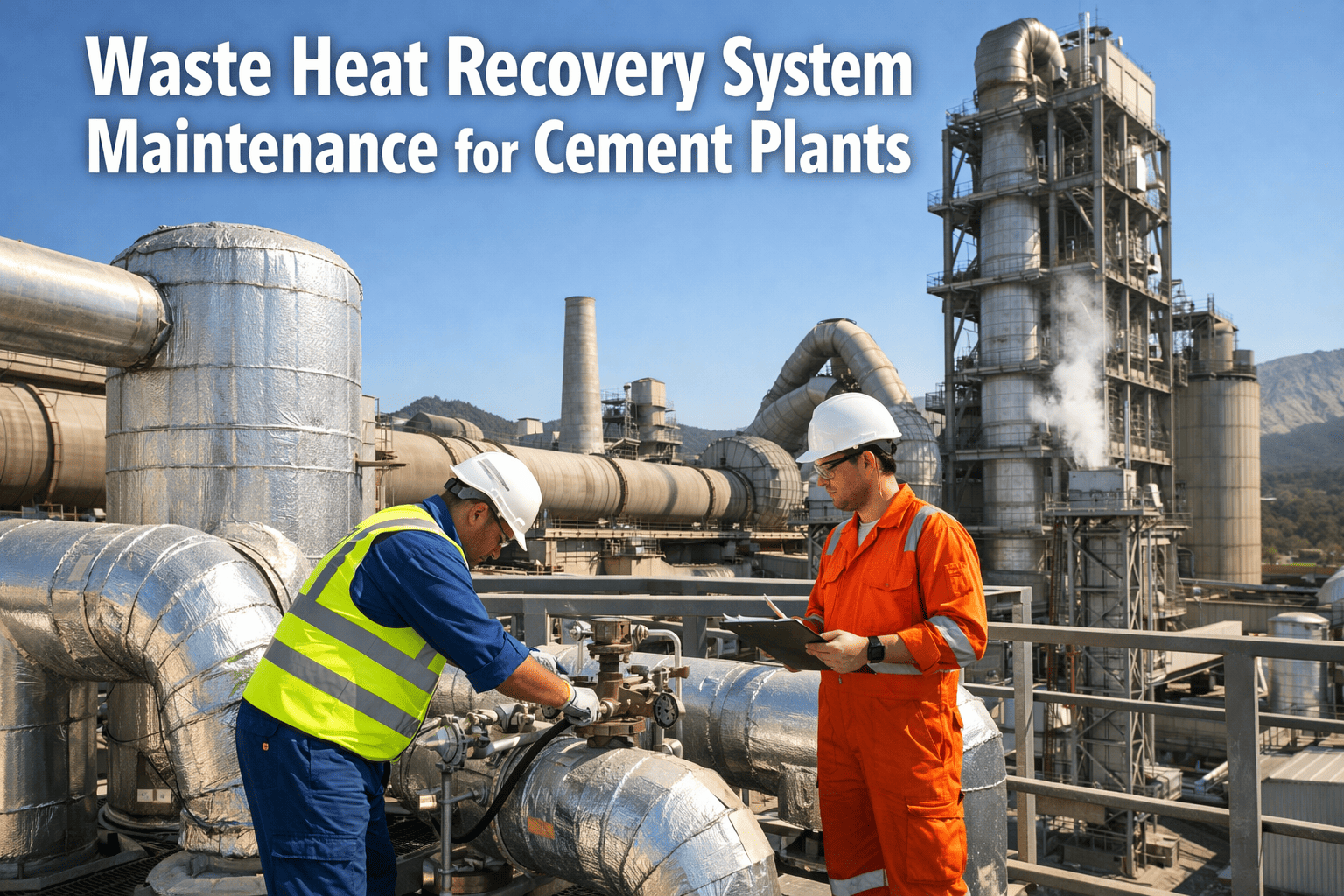
Read More
Waste heat recovery systems in cement plants represent $1.5M to $4M in annual energy value per kiln line — yet most WHR assets operate without structured PM schedules, relying on reactive responses to efficiency losses that have already cost weeks

Read More
Kiln refractory assessment during a cooldown stop is one of the highest-risk, highest-consequence inspection tasks in cement manufacturing — a missed hotspot or unmapped lining failure that goes undetected during a 48-hour shutdown window can forc

Read More
Kiln burner and fuel system failures are among the fastest-escalating events in cement pyroprocessing — a burner pipe burnout or fuel feed interruption forces a kiln stop within minutes, costing $22,000 to $60,000 per hour in lost clinker output.

Read More
Clinker cooler failures are among the most costly unplanned events in cement pyroprocessing — a single grate plate collapse or fan trip can force a kiln shutdown costing $18,000 to $45,000 per hour in lost clinker production. Most plants still tra

Read More
Kiln misalignment costing a North American cement plant $180,000 in unplanned downtime is not an equipment failure — it is a measurement gap that developed over six to eighteen months without a structured trending program. Tyre creep exceeding 50m

Read More
A single preheater blockage event shuts down clinker production for 8 to 36 hours, costing cement plants $180K to $650K in lost output and emergency clearing labor. Over 60% of these events originate from coating buildup in cyclone stages 4 and 5

Read More
Rotary kiln failures are the most expensive unplanned events in cement manufacturing — a single uncontrolled shell overheat or refractory collapse can mean 5 to 14 days of lost production worth $1.4M to $4.8M per event, plus emergency refractory c

Read More
Unplanned kiln refractory failures cost cement producers $800K to $2.5M per event when emergency relining, production loss, and expedited brick procurement are combined. Most plants still track lining condition on spreadsheets updated quarterly, m

Read More
A 2.4 MTPA single-kiln cement plant in East Java was recording 14.3 unplanned production stops per year — each averaging 31 hours of lost kiln run time at a cost of $22,400 per event in clinker production loss alone. Emergency bearing replacements

Read More
Japan and South Korea operate the world's most technically advanced cement plants — average kiln availability exceeds 94% in Japan versus a global benchmark of 79%, achieved not through larger maintenance teams but through systematic condition mon

Read More
Latin America's cement market is expanding at 4.2% annually — driven by Brazil's Novo PAC infrastructure programme, Mexico's infrastructure execution backlog, and Colombia's 4G and 5G highway concession pipeline. Yet most plants in the region stil

Read More
Sub-Saharan Africa's cement industry is entering its most significant expansion phase — installed capacity is projected to double from 180 MTPA to over 360 MTPA by 2030, driven by greenfield investments in Nigeria, Ethiopia, Kenya, Tanzania, and G

Read More
Turkey's cement industry operates at a scale and export intensity that makes maintenance quality a trade competitiveness issue, not just an operational one. As the world's second-largest cement exporter — shipping clinker and finished cement to ov

Read More
European cement producers — Heidelberg Materials, Holcim, Cemex Europe, and Buzzi — operate under the world's most aggressive decarbonization mandate: EU ETS carbon prices above $80 per tonne, CBAM import levies active from 2026, and CSRD sustain

Read More
China produces over 50% of global cement output across approximately 1,700 operating plants — yet most still run maintenance on fixed-interval schedules that absorb 14% to 22% of available kiln hours in unplanned stoppages that predictive systems

Read More
The Infrastructure Investment and Jobs Act has injected over $550 billion into roads, bridges, ports, and water systems — placing American cement producers at the center of the largest public construction program in a generation. Yet as US plants

Read More
MEA cement plants operating across Saudi Arabia, UAE, Egypt, and Nigeria face a dual challenge unique in global cement operations: explosive demand growth driven by Vision 2030 mega-projects and Africa's urbanisation wave, combined with the most h

Read More
Five platforms dominate cement plant CMMS shortlists in 2026: Oxmaint, IBM Maximo, SAP PM, MaintainX, and Limble. Scored across 11 capabilities weighted for integrated kiln-line operations — AI prediction, OPC-UA connectivity, campaign-level refra

Read More
Southeast Asia's cement industry is expanding faster than any other region — Vietnam, Indonesia, and the Philippines collectively added 42 MTPA of new kiln capacity between 2018 and 2024, yet unplanned downtime rates at newly commissioned plants a

Read More
Indian cement plants operating at 380+ MTPA of installed capacity lose an estimated 12–18% of available kiln hours annually to unplanned stoppages — failures that structured preventive maintenance, CPCB-compliant documentation, and integrated CMMS

Read More
A top-10 Indian cement producer running three kilns across two plants was spending ₹2.4 crore per unplanned kiln stop — parts at spot pricing, overtime labor, and clinker shortfall penalties combined. With six unplanned stops in the 18 months befo

Read More
Daily operator rounds are the primary early-warning mechanism between condition monitoring cycles. This checklist covers six inspection zones per shift — 40 check points with parameter thresholds and priority classification. All items run natively

Read More
When the EU Emissions Trading System expanded its scope in 2023 and increased audit stringency for cement kilns above 500 tonnes per day clinker capacity, a multi-plant European cement producer operating seven kilns across four countries found tha

Read More
When the maintenance manager at a 2.4 MTPA integrated cement plant in the U.S. Southeast walked into his first board meeting with a maintenance performance report, it was a 38-tab Excel workbook that took three people two days to compile. The data

Read More
Refractory failure is the leading cause of unplanned kiln stops — and 73% of those failures show detectable precursor conditions at the previous inspection. This checklist gives cement process engineers and kiln maintenance engineers a structured

Read More
Preventive maintenance programs in cement manufacturing fail not from lack of intent but from lack of structure — inspections missed because schedules live in spreadsheets, findings not captured because paper rounds get lost, and compliance exposu

Read More
Baghouse failure in cement operations rarely announces itself — differential pressure drift, blinded bags, and cage corrosion accumulate over weeks before emission exceedances or fan trip events force an unplanned shutdown. A structured inspection

Read More
Oxmaint's free tier covers the core maintenance execution stack — work orders, asset register, PM scheduling, and mobile field access — with no time limit and no credit card required. The ceiling is 50 assets and 3 users. For a satellite facility
Read More
OxMaint and MaintainX are both mobile-first CMMS platforms. The difference for cement is depth: kiln revolution PM triggers, per-shift OEE, native DCS integration, and benchmark analytics against the 2026 cement industry dataset.

Read More
Cement plants that run maintenance programmes built on calendar-based intervals rather than failure mode analysis spend an estimated 22% to 35% more on preventive maintenance than necessary — while simultaneously leaving the failure modes most lik

Read More
Cement plants spend 25 to 35% of production costs on maintenance — yet most of that goes to reactive repairs costing 4 to 6 times more than planned interventions. TPM changes that ratio by shifting equipment ownership from a central maintenance de

Read More
Cement plants relying on fixed-interval schedules lose 12% to 18% of available kiln production hours to unplanned stoppages that condition monitoring would have predicted 4 to 8 weeks in advance. Vibration analysis, thermal imaging, and oil analys

Read More
Cement plants carry between 18 and 34 months of critical spare parts lead time on slow-moving components — kiln tyre pads, clinker cooler grate segments, preheater cyclone wear liners, and specialised gearbox housings that single-source suppliers

Read More
Cement plants relying on fixed-interval schedules lose 12% to 18% of available kiln production hours to unplanned stoppages that condition monitoring would have predicted 4 to 8 weeks in advance. Vibration analysis, thermal imaging, and oil analys

Read More
Cement plants running SCADA systems, DCS networks, and CMMS platforms connected to enterprise IT layers are now high-value targets for ransomware groups and state-sponsored threat actors — and 92% of successful OT breaches begin not with a zero-da

Read More
Cement plant equipment inspections that require confined space entry, scaffolding, or kiln cooldown cost between $18,000 and $85,000 per event in access preparation, lost production, and technician safety risk. Robotic inspection systems — thermal

Read More
Cement plant maintenance teams lose 47 minutes per technician per shift walking between preheater towers, raw mill galleries, and control rooms to retrieve procedures and expert guidance. Augmented reality closes that gap by delivering overlay ins

Read More
Within seven years, 42% of experienced cement plant technicians will retire — taking decades of undocumented process knowledge no hiring programme replaces at speed. Plants without structured knowledge capture already see MTTR inflating 30% to 60%

Read More
Cement plants that depend on corrective and time-based maintenance lose between $180,000 and $340,000 per unplanned kiln stop — costs that compound across 8 to 15 unplanned events per year in facilities without AI-driven failure prediction. The sh

Read More
Cement plants running calendar-based PM, paper inspection logs, and spreadsheet shutdown trackers in 2026 are operating on pre-digital infrastructure. AI prediction engines, digital twins, and autonomous sensor networks are reducing unplanned kiln

Read More
Cement plants that operate without real-time KPI visibility lose between 8% and 15% of available kiln production hours annually to unplanned stoppages — failures that generate $150,000 to $220,000 in lost clinker output per idle hour and carry eme

Read More
A planned cement plant shutdown involves hundreds of contractors, dozens of vendors, and millions of dollars in labour and materials compressed into a 10 to 21 day window. When contractor qualification records are held in spreadsheets, safety indu

Read More
Cement plants lose 18 to 22% of production time to equipment failures, and 73% are repeat events from unresolved root causes. A repeated rotary kiln bearing failure costs $180,000 to $280,000 per event. Plants with CMMS-integrated RCA reduce recur

Read More
Every unplanned rotary kiln stop costs between $18,000 and $45,000 per hour. Plants without documented shutdown checklists spend 35 to 60 percent more per outage than those running structured digital procedures.

Read More
Cement plants managing 500-plus shutdown work orders across rotary kilns, preheater cyclone towers, and ball mills cannot rely on spreadsheets and radio coordination to execute an annual outage costing between $2M and $8M in planned expenditure al

Read More
Cement plants that operate without a structured CMMS programme spend 4 to 5 times more per repair event than plants running disciplined preventive maintenance cycles. A single unplanned rotary kiln stop costs between $18,000 and $45,000 per hour i

Read More
Cement plant maintenance managers evaluating software in 2026 face a decision that carries 3 to 5 years of operational consequence: deploy a purpose-built cloud CMMS in 60 to 90 days or commit to an SAP PM implementation that takes 12 to 18 months

Read More
Cement manufacturing is one of the most asset-intensive industries on earth — a single integrated plant runs 2,400-plus maintainable assets across rotary kilns, ball mills, vertical roller mills, clinker coolers, preheater cyclone towers, crushers

Read More
A cement plant CMMS implementation that takes 12 to 18 months to reach usability is not a deployment — it is a failed project. Plants running rotary kilns at $45,000 per hour of unplanned downtime cannot afford 18 months of half-operational mainte

Read More
An unplanned rotary kiln stop caused by a stockout of refractory bricks that cost $180 per unit costs between $18,000 and $45,000 per hour in lost clinker production — a ratio that makes even the most aggressive spare parts stocking policy look ch

Read More
Cement plant field technicians operate in some of the most demanding maintenance environments on the planet — rotary kiln platforms coated in clinker dust, raw mill galleries with airborne particulate exceeding 30 mg per cubic metre, and remote co

Read More
Cement plants retire 23% of major rotating equipment prematurely because maintenance teams lack total cost of ownership data at the moment capital decisions are made. A rotary kiln shell with 8 years of remaining useful life gets replaced at year

Read More
An unplanned kiln stop costs $18,000–$45,000 per hour — yet 73% of critical cement failures show measurable anomaly signals 4–8 weeks before breakdown. AI analytics and IoT sensor networks close the gap between what equipment signals and what main

Read More
Cement plants managing 2,400-plus maintainable assets across rotary kilns, ball mills, vertical roller mills, girth gears, clinker coolers, and preheater cyclone towers cannot operate on spreadsheets and reactive callouts in 2026. An unplanned kil

Read More
A 50-tonne EOT crane that fails mid-lift in a cement plant kiln bay does not produce a work order — book a demo to see how a live inspection programme prevents exact

Read More
The global construction sector is undergoing a materials specification shift that cement producers who ignore it will lose market share to those who do not. Green building rating systems now influence over 40% of commercial construction decisions

Read More
Corrosion is the single largest contributor to premature structural and equipment retirement in cement plants — costing the global cement industry an estimated 3–5% of total maintenance budget annually, and retiring assets at 60–75% of their rated

Read More
A cement plant managing 250 active maintenance suppliers — each with separate contact relationships, separate pricing agreements, separate invoice streams, and no performance measurement system — is not running a supply chain. It is running a coll

Read More
A cement plant consuming $4M–$12M in MRO supplies annually — bearings, lubricants, conveyor belts, refractory materials, electrical components, and mechanical consumables — is making hundreds of individual procurement decisions per month with no c

Read More
Cement transport pipes, air slides, pneumatic conveying lines, and valve assemblies carry raw meal, cement dust, clinker fines, and compressed air through every stage of the production process — and they do it continuously, under abrasion, thermal

Read More
A cement plant consuming 120–180 kg of coal or petcoke per tonne of clinker cannot afford an unplanned fuel stockout. A kiln forced into unscheduled shutdown due to fuel supply failure costs $50,000–$300,000 per day in lost production — and restar

Read More
Cement packing plants are the final link in the production chain — and the most overlooked from a maintenance standpoint. Industry data shows that unplanned packer downtime reduces dispatch capacity by 15–25% on peak days, while miscalibrated bag

Read More
A cement plant capacity expansion is one of the highest-capital decisions an operations leadership team will make — greenfield lines run $150M–$400M, brownfield additions $40M–$120M, and major equipment upgrades $8M–$35M per asset class. The diffe

Read More
A cement kiln operating on uncalibrated thermocouple readings is making fuel combustion decisions on false data. A cement mill controlled by a drifted pressure transmitter is grinding to the wrong setpoint. A weighbridge dispatching cement on a la

Read More
A cement silo that cannot accurately report its contents is an inventory liability. A silo that develops a rathole, bridging event, or structural crack without detection is a safety emergency. Yet across cement plants worldwide, silo maintenance i

Read More
Cement production generates, handles, and stores some of the most hazardous materials in industrial manufacturing — hexavalent chromium in clinker dust, polycyclic aromatic hydrocarbons in petcoke, heavy metals and chlorinated compounds in alterna

Read More
A rotary kiln drive produces 105–115 dB(A) at one metre. A cement ball mill runs at 95–105 dB(A) continuously across an entire production shift. A primary jaw crusher peaks at 110 dB(A) during impact loading. Sustained exposure at 85 dB(A) causes

Read More
Every hour a loaded cement truck spends waiting at the dispatch gate is an hour of working capital locked in inventory, a customer relationship eroding, and a loading bay blocked from the next vehicle. Cement plants running manual dispatch systems

Read More
Limestone accounts for 78–82% of total raw material feed in integrated cement plants — yet quarry operations remain the least digitised stage of the production chain. Inconsistent CaO content from uncontrolled extraction forces kiln operators to c

Read More
Compressed air is the invisible utility consuming 8–12% of total electrical energy in every cement plant — yet most plants have no real-time visibility into how much of that energy is escaping through leaks, over-pressurised headers, and mismatche

Read More
Cement plants spend 25–35% of total production costs on maintenance — yet most of that budget is consumed by reactive responses to failures that were entirely predictable months in advance. A single unplanned kiln stop costs $50,000–$300,000 per d

Read More
The cement industry stands at a pivotal crossroads in 2026. Responsible for approximately 8% of global CO2 emissions—making it the fourth-largest industrial emitter worldwide—cement manufacturing generates 1.57 billion tons of carbon dioxide annua

Read More
Cement plants operating without artificial intelligence are leaving millions on the table annually. In 2026, AI-powered cement manufacturing delivers documented results that redefine operational benchmarks: 18% reduction in energy costs, 40-60% de

Read More
A cement plant's raw material stockpile represents millions of dollars in tied-up working capital—yet most facilities manage this critical inventory through manual visual estimates and truck weight tickets that can vary by 15–20% from actual tonna

Read More
A cement producer in Germany reduced unplanned downtime by 42% and cut shutdown planning time from 6 weeks to 10 days after implementing a digital twin platform that simulates their entire production line from quarry to dispatch. This isn't theore

Read More
Grinding to 4,000 cm²/g Blaine consumes approximately 30% more energy than achieving 3,200 cm²/g—yet most cement plants routinely over-grind by 200–400 cm²/g as a quality safety margin. This conservative approach burns through an additional 5–10 k

Read More
Equipment failures in cement plants follow a predictable pattern that most maintenance teams miss: 20% of failure modes cause 80% of total downtime. Research analyzing cement plant reliability over nine-year periods confirms that belt conveyors, c

Read More
Advanced Process Control (APC) and expert systems have transformed cement manufacturing from reactive operator-dependent operations to predictive, self-optimizing production environments. Modern cement plants implementing APC solutions document 6-

Read More
A maintenance technician enters a preheater cyclone for routine inspection at 6:14 AM. The confined space permit was issued the previous shift—but atmospheric testing happened 9 hours ago, and an overnight raw meal leak has silently displaced oxyg

Read More
Falls from height account for approximately 25% of all cement plant fatalities, making it the single deadliest hazard category in the industry—exceeding mobile equipment strikes, confined space incidents, and electrical contact combined. Cement ma

Read More
Electrical systems in cement plants consume 110–120 kWh per tonne of cement produced, representing 20–25% of total production costs. With hundreds of motors ranging from 400V low-voltage units to 11kV high-voltage drives powering kilns, mills, and

Read More
Every 72 hours, a cement manufacturing facility somewhere in the world experiences a significant fire incident, with coal handling systems and electrostatic precipitators accounting for 68% of all industrial fires in the sector. The cement industr

Read More
Cement plants lose an average of $300,000 per day of unplanned downtime—yet over 60% still manage maintenance with paper logbooks and fragmented spreadsheets. The global CMMS software market is projected to reach $3.56 billion by 2035, growing at

Read More
Maintenance and operating expenses consume 15-25% of total cement production costs, yet 55% of that budget typically drains into emergency reactive repairs that cost 4-6 times more than planned interventions when accounting for production losses,

Read More
A typical cement plant operates over 2,000 motors with more than 5,000 lubrication points—each one a potential failure waiting to happen if neglected. The harsh reality: up to 80% of premature bearing failures stem directly from improper lubricati

Read More
Global cement manufacturing accounts for approximately 8% of worldwide CO2 emissions—1.6 billion metric tons in 2022 alone—making the industry the world's third or fourth largest emitter if it were a country. With emissions having more than double

Read More
Cement manufacturing contributes approximately 7-8% of global carbon dioxide emissions while releasing nitrogen oxides, sulfur dioxide, particulate matter, and heavy metals that directly impact surrounding communities and ecosystems. A single prod

Read More
Cement plant maintenance managers spend an average of 15-20 hours per week compiling compliance reports manually—extracting data from spreadsheets, cross-referencing work orders, formatting documentation for regulatory submissions, and chasing dow

Read More
A single cement plant must manage 15 to 25 distinct regulatory frameworks simultaneously, with permit violations costing $25,000 to $50,000 per day and potentially triggering consent decrees reaching $10 million or more. The EPA's 2024 penalty adj

Read More
Cement plants endure some of the harshest operational conditions in heavy industry—extreme temperatures exceeding 1450°C in the kiln zone, constant vibration from rotating equipment, corrosive dust exposure, and chemical attack from process byprod

Read More
Cement plants generate over 14.3 million tons of particulate emissions annually, making dust collection systems the critical lifeline between compliant operations and costly environmental violations. Your baghouse filters and electrostatic precipi

Read More
Cement manufacturing is a brutal environment for heavy machinery. In 2026, the leading plants no longer rely on rigid calendar-based maintenance or wait for equipment to break. They use Reliability Centered Maintenance (RCM). Operating 24/7 at tem

Read More
Water is the unsung hero of cement production. It cools extreme equipment, mitigates dust, and forms the core of gas conditioning in preheater towers. However, the industry is waking up to a stark reality: water scarcity is no longer a future risk

Read More
Plant managers know that industrial waste doesn't just eat up physical space—it destroys profit margins through rising tipping fees, regulatory fines, and missed energy recovery opportunities. A comprehensive circular economy approach transforms c

Read More
It's 6:15 AM on a Monday in October. The plant manager at a 1.5M ton/year cement facility receives the latest energy and carbon compliance report. Coal prices have spiked again, the regional carbon tax just increased by $15 per ton, and the aging

Read More
Cement and ready-mix concrete logistics present one of the most complex routing challenges in the transportation industry. In 2026, leading dispatch systems no longer just assign a truck to a route — they orchestrate a highly perishable supply cha

Read More
Carbon Capture, Utilization, and Storage (CCUS) systems are becoming the most critical infrastructure in the modern cement industry. Operating in harsh, high-temperature environments, they provide the essential pathway to net-zero emissions—until

Read More
The technical director at a regional cement plant was struggling to meet new sustainability targets. Despite optimizing the kiln and switching to alternative fuels, their carbon emissions remained stubbornly high. The core issue? Their cement form

Read More
Cement quality dictates the structural integrity of the modern built environment. From initial quarrying to final grinding, producing cement requires strict adherence to international testing standards like ASTM C150 and EN 197-1. Yet, despit

Read More
Cement manufacturing is one of the most resource-intensive and heavily regulated industries in the world. Operating around the clock, these facilities process massive volumes of raw materials while navigating stringent emissions, waste, and energy

Read More
The night shift superintendent at a 5,000 TPD cement plant thought their lubrication route was bulletproof. Every trunnion, fan, and conveyor bearing had a dedicated grease schedule. Then, a massive ID fan bearing seized at 2:00 AM, tearing the sh

Read More
The cement industry is one of the most resource-intensive sectors globally, processing massive volumes of raw materials and consuming vast amounts of thermal and electrical energy. Historically, production has focused on maximum output (push manuf

Read More
Cement plant operations involve some of the most hazardous industrial environments globally, featuring massive rotating equipment like kilns, extreme temperatures, confined spaces in silos, and high-voltage electrical systems. Managing maintenance

Read More
The safety siren echoes across the quarry at 2:14 PM—a contractor bypassed a critical lockout/tagout (LOTO) protocol on the primary crusher. The control room halts operations immediately, but instead of a routine maintenance check, the plant faces

Read More
A cement plant in Kentucky lost $280,000 in a single shutdown because one $340 drone propeller was not in stock — the 4-day vendor lead time pushed kiln inspection past the relining contractor's arrival window. This is not an outlier. The average

Read More
The cement industry operates on razor-thin margins where a 5% demand miscalculation in either direction triggers a cascade of costly consequences. Overproduce, and you burn fuel grinding clinker that sits in silos for months while carrying costs e

Read More
A maintenance technician at a 5,000 TPD cement plant needs a set of kiln shell bearings urgently — the vibration readings crossed the alarm threshold 48 hours ago. He walks to the warehouse, fills out a paper requisition form, and waits. The store

Read More
Cement logistics accounts for 30-40% of total production costs, yet nearly half the industry still manages supply chains with spreadsheets and manual calls. In 2025, 48% of cement digital projects target supply chain visibility — and the gap betwe

Read More
A 6,500 TPD cement plant was running at 68% OEE — 17 full points below the world-class benchmark of 85%. Monthly reports arrived too late for action. Shift supervisors made decisions on gut feel while the kiln stopped three times per month for unp

Read More
Cement kilns with preheater and precalciner systems consume 70–80% of a plant's total thermal energy budget, yet most facilities operate 15–20% above the theoretical minimum of 2.9 GJ per tonne of clinker. The global industry average hovers around

Read More
At 2:14 AM on a Thursday, the induced draft fan at a 4,500 TPD cement plant seized without warning. The kiln went cold within 40 minutes. By the time the emergency maintenance crew sourced replacement bearings, aligned the shaft, and restarted the

Read More
A cement plant laboratory generates thousands of data points every day — XRF raw meal analysis, free-lime measurements, Blaine fineness readings, compressive strength results, particle size distributions, and sulfate balance checks. In most plants

Read More
A cement plant producing 200 tons per hour generates over 2.3 million sensor data points every single day — kiln temperatures, mill feed rates, fan pressures, clinker chemistry, vibration signatures, and power consumption readings flowing continuo

Read More
Cement production exceeds 4.1 billion tonnes annually, yet clinker quality remains the most unpredictable variable in the entire manufacturing chain. The gap between what the quarry delivers and what the kiln produces is governed by three chemical

Read More
A cement plant consuming 120 kWh of electrical energy per ton of cement has no way of knowing whether that number represents strong performance or catastrophic waste — without a benchmark to measure against. Specific energy consumption (SEC) bench

Read More
In a cement plant's pyroprocessing system, the clinker cooler is where 35–40% of total process heat is either recovered or lost. That single piece of equipment determines your secondary air temperature feeding back into the kiln (typically 1,050°C

Read More
Energy data in most cement plants is scattered across DCS archives, lab servers, and spreadsheet reports that arrive days or weeks too late — by the time a monthly summary reveals a kiln burned thousands of extra gigajoules, the money is already g

Read More
Electricity accounts for 30% of total cement manufacturing costs, and grinding operations alone consume up to 70% of a plant's entire electrical load. Yet across the global cement sector, energy efficiency has improved only 18% since 1990 — a gap

Read More
In a cement plant's pyroprocessing system, the clinker cooler is where 35–40% of total process heat is either recovered or lost. That single piece of equipment determines your secondary air temperature feeding back into the kiln (typically 1,050°C
Read More
Electricity accounts for 30% of total cement manufacturing costs, and grinding operations alone consume up to 70% of a plant's entire electrical load. Yet across the global cement sector, energy efficiency has improved only 18% since 1990 — a gap

Read More
The cement industry burns through 8% of global CO₂ emissions and consumes roughly 120 kg of coal per tonne of cement produced — making energy the single largest controllable cost at 40% of total production expenses. Yet the gap between leaders and

Read More
Cement plants consume 110–120 kWh of electrical energy per ton of cement produced, yet most facilities operate 15–25% above optimal efficiency benchmarks. An electrical energy audit systematically uncovers these hidden inefficiencies across motors

Read More
Cement grinding devours up to 70% of a plant's total electrical load — yet most mills operate at barely 5% thermodynamic efficiency. For a 1 MTPA facility consuming 33–40 kWh per tonne through conventional ball mills, that translates to over $1.5

Read More
Cement manufacturing is one of the most energy-intensive industrial processes on the planet, and nearly 40% of the total thermal energy input is lost as waste heat through preheater exhaust gases and clinker cooler vents. That is not a minor ineff

Read More
Gearbox failure is one of the most common and costly failure modes in cement plant operations. In ball mills, gear misalignment, tooth wear, and lubrication breakdown are among the top three causes of unplanned stoppages. In vertical roller mills,

Read More
Mean Time Between Failures is the single most important number on a cement plant maintenance manager's dashboard. It answers a straightforward question: how many hours does your equipment actually run before something breaks? In cement manufacturi

Read More
A single undetected vibration anomaly in a cement plant can cascade into a catastrophic failure costing $300,000 per day of unplanned kiln downtime. The global vibration monitoring market reached $1.87 billion in 2025 and is projected to hit $2.54

Read More
A cement plant's conveyor network is its circulatory system — when a belt stops, everything upstream backs up and everything downstream starves. Across the global cement industry, conveyor systems account for between 50 and 80 individual belt line

Read More
Cement plants lose an average of $260,000 per hour of unplanned kiln downtime — yet 82% of equipment failures still arrive without warning, detected only after catastrophic breakdown. Global cement production exceeded 4.1 billion

Read More
Cement plant workers face one of the most hazardous breathing environments in any industrial sector. Dust concentrations at raw material crushers reach 38.6 mg/m³ — nearly four times OSHA's permissible exposure limit — while ambie

Read More
A rotary kiln failure does not announce itself — it builds silently through weeks of subtle indicators that unmaintained plants miss entirely. When the kiln finally stops, the average cost is $180,000–$400,000 per day of lost prod

Read More
Cement manufacturing consumes 3–4 GJ of thermal energy and 90–130 kWh of electricity per tonne of clinker — making it the most energy-intensive industry on the planet after aluminum smelting. Energy costs represent 30–40% of total

Read More
Only 14% of global cement plants have moved beyond basic process control into true Industry 4.0 operations — yet those plants report 38% lower maintenance costs, 22% higher kiln utilization, and carbon intensity reductions of up t
Read More
A rotary kiln operating at 1,450°C processes up to 6,000 tonnes of clinker per day — and when it fails, every hour of unplanned downtime costs a mid-size cement plant between $20,000 and $85,000 in lost production, emergency labour, and thermal en

Read More
Cement plants carry between $2 million and $18 million worth of spare parts inventory at any given time — yet 20–30% of all maintenance delays in the cement industry are caused by the wrong part being unavailable at the right mome

Read More
The global cement industry produces over 4.2 billion tonnes annually — and yet, most plants still lose 18–22% of production time to unplanned equipment failures. A single kiln shutdown in a mid-size cement facility costs an average of $85,000 per

Read More
A rotary kiln that seizes at 2:43 AM doesn't announce itself in advance — but the bearing vibration that caused it was measurable three months earlier, buried in a paper logbook no one reviewed. That single unplanned stop wiped out $280,000 in pro

Read More
A cement plant technician walking the 800-metre stretch between the preheater tower and the raw mill loses an average of 47 minutes per shift walking back to a control room or supervisor desk to log a maintenance observation, retr

Read More
Cement plants operate in one of the most demanding industrial environments on earth — continuous 24/7 production cycles, extreme heat, abrasive dust, and critical rotating equipment that cannot afford unplanned stoppage. Yet in 2025, over

Read More
Cement manufacturing is one of the most heavily regulated industries on the planet. A single plant may face simultaneous oversight from environmental agencies, occupational safety bodies, mining regulators, and quality standards authorities — each
-in-cement-plants.png)
Read More
Cement plants are among the most capital-intensive and equipment-dependent operations in heavy industry. A single unplanned kiln stoppage can cost $50,000–$150,000 per day in lost production. Yet most plants still operate in a reactive maintenance

Read More
A mid-scale cement plant running a 40-year-old raw mill faces a decision that will determine its production economics for the next decade: invest $1.2–$3.5 million to retrofit the existing equipment with modern drive systems, sens

Read More
A girth gear that reaches end-of-life six months ahead of schedule doesn't fail overnight — it degrades through measurable wear stages that paper-based maintenance programs consistently miss. One premature replacement on a 4-metre girth gear costs

Read More
The cement industry accounts for approximately 8% of global CO₂ emissions, making it one of the most carbon-intensive sectors under regulatory scrutiny. With the EU Emissions Trading System (ETS) entering Phase 4 and the Carbon Border Adjustment M
Read More
The cement industry accounts for approximately 8% of global CO₂ emissions, making it one of the most carbon-intensive sectors under regulatory scrutiny. With the EU Emissions Trading System (ETS) entering Phase 4 and the Carbon Border Adjustment M

Read More
Cement plants operate on razor-thin margins where even a 1% improvement in OEE can translate to millions in annual savings. Yet most plants still rely on shift-end paper reports and monthly Excel reviews to track performance — by the time a proble

Read More
The cement industry must cut its emissions by 75-90% by 2050 to align with Paris Agreement targets. That means reducing from today's ~4.1 billion tonnes of CO₂ annually to under 1 billion — while global cement demand is projected to grow 12-23% ov

Read More
Cement manufacturing is responsible for approximately 8% of global CO₂ emissions — more than aviation and shipping combined. A single cement plant producing 1.5 million tonnes of clinker annually emits roughly 1.2-1.4 million tonnes of CO₂ per yea

Read More
A cement plant contains more confined spaces per square meter than almost any other industrial facility. Preheater cyclones, raw meal silos, clinker silos, cement silos, ball mills, the kiln shell, cooler compartments, coal hoppers, bag filter hou

Read More
A cement plant contains more confined spaces per square meter than almost any other industrial facility. Preheater cyclones, raw meal silos, clinker silos, cement silos, ball mills, the kiln shell, cooler compartments, coal hoppers, bag filter hou

Read More
A maintenance electrician is found unconscious inside a ball mill. The investigation reveals the mill was re-energized while he was still inside — his paper LOTO tag had fallen off the MCC disconnect during the shift change, and the incoming opera

Read More
At 6:14 AM on a Tuesday, a maintenance technician enters a preheater cyclone for a routine inspection. The confined space permit was issued the previous shift — but the atmospheric testing was done 9 hours ago, and a small raw meal leak overnight
Read More
At 6:14 AM on a Tuesday, a maintenance technician enters a preheater cyclone for a routine inspection. The confined space permit was issued the previous shift — but the atmospheric testing was done 9 hours ago, and a small raw meal leak overnight

Read More
A single batch of off-spec cement can destroy months of customer trust. When 500 tonnes of OPC shipped to a ready-mix plant fails the 28-day strength test by just 2 MPa, the consequences cascade—rejected loads, rush replacement shipments, contract

Read More
Fuel accounts for 30–40% of total cement production cost—and the kiln consumes over 90% of that fuel. For a plant producing 1.5 million tonnes of clinker annually, even a 3% improvement in kiln thermal efficiency translates to $1.2–1.8 million in

Read More
Refractory lining is the single most expensive consumable in a cement plant—and its failure is the single most expensive event. A typical kiln reline costs $800,000 to $1.5 million in materials alone, but the real financial damage comes from unpla

Read More
A well-executed shutdown is the difference between a cement plant that runs 330+ days a year and one that struggles to hit 300. Yet most plants treat shutdowns as chaotic fire drills—scrambling for parts two weeks before the outage, discovering sc

Read More
It's 2:43 AM when the kiln drive motor seizes. Within minutes, the entire production line grinds to a halt. Raw meal backs up in the preheater tower, clinker cooling stops, and the cement mill sits idle. By the time the emergency maintenance crew

Read More
The ball mill is the workhorse of cement grinding, consuming 40-50% of the total energy in a cement plant and representing one of the largest capital investments in the production line. When a ball mill fails, the entire plant stops. Yet many oper

Read More
The blast furnace has been the foundation of steelmaking for over 500 years. But its chemistry is also its carbon problem: reducing iron ore with coke produces roughly 1.8-2.2 tonnes of CO₂ for every tonne of steel. With global steel demand projec

Read More
A cement plant in Georgia experienced a conveyor belt contact incident that resulted in a hand injury. The supervisor filed a paper incident report, but it sat in a folder for three weeks before the safety manager reviewed it. By then, witness mem

Read More
A cement plant in Vietnam passed their first OSHA inspection without citations after implementing a systematic EHS compliance audit program that identified and corrected 47 deficiencies before regulators arrived. Previously, the plant had received

Read More
A cement plant in Morocco avoided a fatal asphyxiation incident when atmospheric monitoring during a silo entry detected dropping oxygen levels 47 seconds before the entrant would have lost consciousness. The digital permit system immediately trig

Read More
A cement plant electrician in Maharashtra suffered fatal injuries when a 6.6kV motor feeder was energized while he was performing maintenance—the electrical isolation had been released prematurely due to uncle

Read More
A cement plant in Texas faced a $156,000 OSHA citation after an employee entered a raw mill without proper confined space clearance—the clearance had expired 36 hours earlier, but paper-based tracking failed to flag the issue. T

Read More
A cement plant in Pakistan reduced recordable injuries by 67% within 18 months of implementing an EHS dashboard that gave supervisors real-time visibility into leading indicators—catching safety gaps before they became incidents. Before the dashbo

Read More
A cement plant in Pennsylvania ran SAP for enterprise resource planning and Oxmaint for maintenance execution—but the systems operated as separate islands. Work orders created in Oxmaint required manual entry into SAP PM for costing. Material cons

Read More
An EPA inspector arrived at a cement plant in Texas requesting documentation for their Title V operating permit, CEMS calibration records, and quarterly emission reports. The environmental coordinator spent two days assembling documentation from m

Read More
A cement plant shift supervisor in Nevada needed to know which equipment was currently locked out before starting the ball mill for the morning production run. Three different maintenance crews had worked overnight across raw mill, kiln, and packa

Read More
A cement plant in Brazil eliminated 100% of LOTOTO documentation gaps after replacing paper-based procedures with a digital system that enforces step completion and captures photo evidence at each isolation point. Before digitization, auditors fou

Read More
A cement plant in Alabama experienced a near-miss when welding operations ignited residite dust in a storage silo—a hot work permit had been issued, but the required atmospheric testing wasn't completed before work began. The paper permit sat in a

Read More
Connecting SAP S/4HANA with Oxmaint transforms how cement plants manage maintenance operations. This guide walks you through every step: from gathering prerequisites and configuring SAP communication channels,
Read More
Connecting SAP S/4HANA with Oxmaint transforms how cement plants manage maintenance operations. This guide walks you through every step: from gathering prerequisites and configuring SAP communication channels,

Read More
A cement plant in Indonesia prevented a fatal electrical contact incident when a maintenance technician followed the 7-step LOTOTO verification process and discovered the kiln drive motor remained energized despite the main breaker being open—a fa

Read More
A cement plant in Kentucky scheduled major ball mill maintenance during what they thought was a low-production window—only to discover production had committed to a large order requiring maximum mill capacity that same week. The maintenance team's

Read More
Connecting SAP S/4HANA with Oxmaint transforms how cement plants manage maintenance operations. This guide walks you through every step: from gathering prerequisites and configuring SAP communication channels,

Read More
A cement plant in Kentucky scheduled major ball mill maintenance during what they thought was a low-production window—only to discover production had committed to a large order requiring maximum mill capacity that same week. The maintenance team's

Read More
A cement plant in Madhya Pradesh faced a regulatory audit that revealed 23 incomplete incident investigations and 8 expired work permits in their SAP EHS system—all from maintenance activities that were tracked in separate spr

Read More
A cement plant in Egypt reduced maintenance part search time from 23 minutes to 47 seconds after integrating their CMMS with SAP Warehouse Management. Previously, technicians walked the warehouse manually searching for parts—often finding empty bi

Read More
A cement plant in Indiana ended their fiscal year $1.8 million over their maintenance budget—but couldn't explain where the overrun originated. Work orders posted costs to generic cost centers, making it impossible to distinguish planned maintenan

Read More
A cement manufacturer with two plants in Gujarat discovered their maintenance costs were 23% higher than budgeted—but only found out during quarterly financial review, weeks after the overspend occurred. The problem wasn't exce

Read More
A cement plant in Turkey reduced their spare parts procurement cycle from 14 days to 3 days after implementing automated purchase requisition creation from work orders. Previously, maintenance technicians completed work orders on paper, walked the

Read More
A cement plant maintenance team needed to add 340 new spare parts for a kiln upgrade project. Manually creating each material master in SAP—entering basic data, plant data, purchasing views, and storage location details—would take weeks. Using the

Read More
A cement plant in Ohio ran SAP for materials management but struggled with maintenance spare parts coordination. Technicians couldn't see real-time stock availability from their CMMS—they'd create work orders for repairs only to discover critical

Read More
A cement manufacturer with three plants across Rajasthan struggled with fragmented maintenance data—SAP stored equipment masters and cost centers, spreadsheets tracked daily work, and paper logs recorded technician activities.

Read More
A cement group operating six plants across three countries reduced cross-plant equipment failures by 41% after implementing unified IoT visibility that enabled corporate engineering to identify maintenance patterns invisible at individual plant le

Read More
A cement plant in Georgia needed to connect 47 different data sources—PLCs from three vendors, legacy Modbus sensors, and new wireless vibration monitors—to their cloud-based maintenance platform. Direct cloud connections weren't feasible: legacy

Read More
A cement plant in Madhya Pradesh installed 52 vibration sensors on critical equipment—and lost 38 of them within the first four months. The sensors had IP65 ratings, adequate for indoor industrial use, but cement dust penetrate

Read More
A cement plant in Vietnam reduced unplanned downtime by 34% after implementing IoT analytics dashboards that transformed 2.3 million daily sensor readings into actionable maintenance insights. Before the dashboard deployment, operators navigated b

Read More
A cement plant in Arizona struggled with IoT connectivity across their 2-mile quarry-to-plant operation. WiFi coverage gaps left mobile crushers and conveyor transfer points without monitoring. Cellular IoT worked inconsistently—public network con

Read More
A cement plant in Rajasthan had 47 vibration sensors installed across their kiln and grinding sections—but technicians still missed critical bearing failures because sensor alerts went to email inboxes that nobody monitored cons

Read More
A cement plant in Morocco saved $1.4 million in emergency repairs when their IoT alert system notified the maintenance supervisor of abnormal kiln shell temperatures at 2:47 AM—while the operator on shift had missed the gradual temperature rise du

Read More
A cement plant in Ohio ran SAP for materials management but struggled with maintenance spare parts coordination. Technicians couldn't see real-time stock availability from their CMMS—they'd create work orders for repairs only to discover critical

Read More
A cement plant in Gujarat lost 47 hours of production data when their consumer-grade WiFi network failed under kiln area temperatures exceeding 65°C. The plant had deployed sensors on critical equipment—but the wireless infrast

Read More
A cement plant in Turkey prevented a $1.8 million refractory replacement when their IoT sensor network detected a developing hot spot 23 days before visible shell deformation occurred. The thermal imaging sensors identified a 47°C temperature anom

Read More
A cement plant in Pennsylvania deployed 340 IoT sensors across their kiln, mills, and conveyor systems—then struggled to extract value from the data. Sensors from four different vendors fed into separate dashboards with no unified view. Gateway fa

Read More
A cement plant in Kentucky learned the cost of robot spare parts stockouts when their primary inspection drone required propeller replacement during their annual kiln shutdown—but no replacement propellers were in stock. The 4-day vendor lead time

Read More
A cement plant in Germany discovered unauthorized access attempts on their kiln control DCS after deploying inspection robots with default network credentials—the same robots transmitting quality control data used for CE certification. With cement

Read More
A cement producer in Germany reduced unplanned downtime by 42% and cut shutdown planning time from 6 weeks to 10 days after implementing a digital twin platform that simulates their entire production line from quarry to dispatch. Their previous pl

Read More
A cement plant in Alabama experienced catastrophic kiln shell failure when undetected refractory damage allowed shell temperatures to exceed 400°C—warping the steel shell and requiring 45 days of emergency repairs at a cost of $2.3 million plus lo

Read More
A cement plant in Turkey lost $1.2 million in production revenue when their kiln inspection robot failed mid-shutdown—bearing seizure from cement dust infiltration that vibration sensors would have flagged three weeks earlier. With annual kiln shu

Read More
A cement plant in India detected 47 developing crusher component failures during a single quarter after deploying quadruped robots for continuous patrol of their primary and secondary crushing stations. Their previous manual inspection approach co

Read More
A cement plant in Egypt extended their vertical roller mill campaign from 8,000 to 11,500 hours by deploying inspection robots during scheduled outages—the drone-captured wear measurements identified uneven grinding table wear that would have caus

Read More
A cement plant in Brazil eliminated 94% of packaging department injuries and reduced worker turnover from 45% to 8% annually after deploying collaborative robots and automated palletizers across their bag filling and stacking operations. Their man

Read More
A cement plant in Georgia faced 340% annual turnover in their packaging department—workers couldn't sustain the physical demands of stacking 50-lb cement bags onto pallets for entire shifts. Workers' compensation claims for back injuries averaged

Read More
A cement plant in Ohio lost $180,000 in a single shift when a failed idler roller on their limestone conveyor caused belt damage that halted raw material feed to the mill. The roller had been running hot for weeks—thermal signatures that

Read More
A cement plant in Morocco eliminated rope access inspections entirely after deploying specialized drones for their 85-meter kiln stack assessment. Their previous inspection approach required a 4-person rope access team working for 3 days at height

Read More
A cement plant in Texas experienced unexpected grate plate failures that caused 72 hours of unplanned downtime—$540,000 in lost production plus emergency repair costs. Post-incident analysis revealed that worn plates had been obscured by

Read More
A cement plant in Texas achieved 100% EPA NESHAP compliance and reduced worker exposure to respirable silica by 85% after deploying quadruped robots equipped with multi-gas detection arrays across their kiln line and cement grinding area
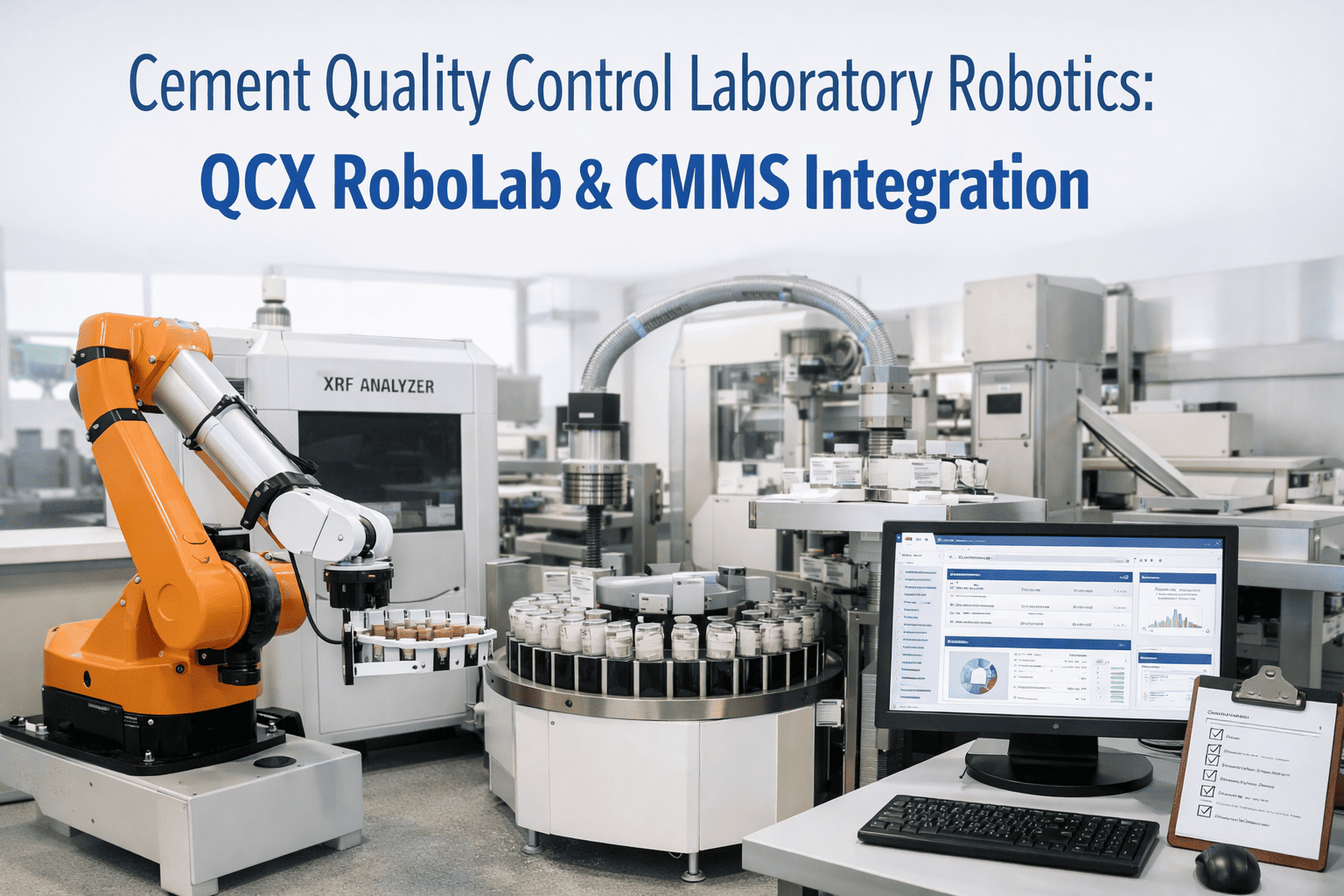
Read More
A cement producer in Germany achieved 99.2% sample analysis accuracy and reduced clinker factor by 3.5% after deploying Fuller Technologies QCX RoboLab automation across their quality control laboratory. Their manual sampling process had been intr

Read More
A cement plant in Indiana faced a 21-day annual shutdown for preheater tower relining—with 8 days consumed waiting for safe entry temperatures and manual demolition of existing refractory. After deploying Brokk demolition robots that beg

Read More
A cement manufacturer in Pennsylvania spent $45,000 annually on scaffold-based silo inspections—each requiring 3-day shutdowns, confined space permits, rescue teams on standby, and workers exposed to residual cement dust and structural h

Read More
A cement plant in Turkey eliminated all confined space entries for preheater cyclone inspections after deploying cage-protected inspection drones. Their four-stage preheater tower required 18 workers, 3 days of scaffolding installation, and $85,00

Read More
Rotary kiln inspections have traditionally required full cooldown periods lasting 3-5 days, scaffold installation inside 4-meter diameter vessels, and confined space entry protocols that expose workers to residual heat and atmospheric hazards.

Read More
CRH's Ash Grove Spot robot deployment in Washington State represents one of the most successful implementations of quadruped robot cement plant inspection in North America. The Boston Dynamic

Read More
Cement plants represent some of the most challenging environments for maintenance operations—extreme temperatures exceeding 1400°C in kilns, abrasive clinker dust that destroys equipment, confined spaces requiring extensive safety protocols, and c

Read More
This real-world case study documents how a 2.4 million ton per year cement plant in Indonesia transformed their maintenance operations through robotic inspections and CMMS software integration. Facing $4.2 milli

Read More
A cement plant in Germany deployed ROS 2-based inspection robots to monitor their kiln zone, preheater towers, and clinker cooler—areas where temperatures exceed 400°C and toxic gas concentrations make human entry dangerous. The

Read More
A cement plant in Turkey reduced their annual shutdown duration from 28 days to 19 days—a 32% improvement—by deploying robots for inspection, cleaning, and maintenance assistance during turnarounds. The shutdown maintenance p
Read More
A cement plant in Germany deployed ROS 2-based inspection robots to monitor their kiln zone, preheater towers, and clinker cooler—areas where temperatures exceed 400°C and toxic gas concentrations make human entry dangerous. The

Read More
A cement plant in Pakistan lost $1.2 million in a single quarter when their primary crusher experienced catastrophic liner failure during peak production season. The failure occurred three weeks before scheduled shutdown maintenance planni

Read More
A cement plant in Morocco experienced a catastrophic silo collapse that killed two workers and shut down production for seven weeks. Investigation revealed the silo's internal structure had been deteriorating for months—corrosion weakeni

Read More
A cement plant in Egypt lost $1.8 million in a single year from conveyor belt failures—splices separating, belts misaligning, and idlers seizing without warning across their 12km of conveyors. Manual inspections every two weeks caught only 23% of

Read More
A cement plant in India reduced unplanned robot downtime by 73% after implementing predictive maintenance strategies powered by PLC sensor integration and CMMS analytics. Their kiln inspection crawlers and mill drones had been fai

Read More
A cement plant in Texas lost $2.3 million annually to unplanned kiln and mill shutdowns—temperatures exceeding 1400°C, abrasive clinker dust, and confined spaces made human inspection dangerous and infrequent. After deploying heavy-duty

Read More
A cement plant in Ohio faced repeated OSHA citations for respirable crystalline silica exposure—each citation carrying $15,000+ penalties and requiring costly remediation. Fixed monitoring stations showed compliance in tested locations, but worker

Read More
A cement plant in Texas faced a critical challenge: their annual kiln shutdown consumed 14 days—costing $180,000 per day in lost production. Manual inspection of the 450-foot rotating kiln required scaffolding, confined space permits, and teams wo

Read More
Your cement plant already has cameras. Dozens of them — mounted on walls, pointed at conveyors, overlooking the kiln area. But here's the uncomfortable truth: those cameras are just recording. Nobody watches 90% of that footage until after somethi

Read More
If you've ever rushed to a cement plant at odd hours because of an injury report, you already know — safety data buried in spreadsheets doesn't protect anyone. The cement industry remains one of the most hazardous manufacturing environments, where

Read More
Cement manufacturing is the third largest industrial source of air pollution, releasing over 500,000 tons of sulfur dioxide, nitrogen oxide, and carbon monoxide into the atmosphere every year. Dust emissions alone from kilns, clinker coolers, mill

Read More
Every cement plant runs on a handful of assets that cannot afford to fail. Your rotary kiln operates at 1,450°C around the clock. Your ball mills grind raw meal through 44+ bearing points under constant abrasive stress. Your vertical roller mills,

Read More
In cement manufacturing, data delays kill productivity. When your kiln sensor detects rising temperatures but that data takes 48 hours to reach the maintenance team, you've already lost $300,000 to unplanned downtime. Real

Read More
Cement plant equipment maintenance involves multiple hazardous energy sources—electrical systems powering 5,000 HP motors, hydraulic pressures exceeding 3,000 PSI, thermal zones reaching 1,450°C, and mechanical components spi

Read More
Your SAP system holds the financial truth. Your maintenance team holds the operational reality. When these two worlds operate in isolation, cement plants face delayed decisions, duplicate data entry, and maintenance blind

Read More
Cement plants running SAP S/4HANA often struggle with a painful disconnect: your ERP holds financial and procurement data in one silo, while maintenance teams work with spreadsheets, paper forms, or outdated CMMS systems.

Read More
Cement rotary kilns operate at extreme temperatures—flames reaching 2,000°C, burning zones at 1,450°C, and shell surfaces that must never exceed 400°C to avoid permanent steel damage. OxMaint's IoT temperature monitoring syst

Read More
Cement crusher systems endure extreme punishment—jaw crushers processing 1,200mm limestone boulders, impact crushers spinning at 50,000+ RPM, and hammer mills absorbing constant shock loads. OxMaint's IoT condition monitoring

Read More
Cement plants are asset-intensive operations where equipment reliability directly determines profitability. A single unplanned kiln stop can cost $500,000 or more in lost production, emergency repairs, and quality impacts. Traditional asset manage

Read More
The cement industry stands at an inflection point. For decades, competitive advantage came from scale, location, and operational know-how passed down through generations. Today, a new force is reshaping the landscape: digitalization. Plants that e

Read More
Running a cement plant is an orchestra of complexity—kilns burning at 1,450°C, mills grinding around the clock, quality specifications that must hit narrow targets, equipment that can't afford to fail, and energy costs that never stop climbing. Tr

Read More
Sensors are the eyes and ears of modern cement plants—without them, optimization is guesswork and predictive maintenance is impossible. But not all sensors are created equal. Smart sensors go beyond simple measurement: they self-diagnose, communic

Read More
Data flows through cement plants in torrents—temperatures, pressures, flows, compositions, power draws, quality measurements—yet most of it disappears into historians, never analyzed, never acted upon. Manufacturing analytics transforms this data

Read More
Cement plants are asset-intensive operations where equipment reliability directly determines profitability. A single unplanned kiln stop can cost $500,000 or more in lost production, emergency repairs, and quality impacts. Traditional asset manage

Read More
Cement supply chains face unique pressures: bulk materials with high transport costs, production that can't easily flex to demand changes, customers expecting just-in-time delivery, and thin margins that punish inefficiency. Traditional supply cha

Read More
A digital twin is more than a 3D model or dashboard—it's a living, breathing virtual replica of your cement plant that mirrors physical operations in real-time. Every sensor reading, every process change, every equipment state is reflected instant

Read More
The cement industry stands at a transformation point. While the basic chemistry of cement production hasn't changed in over a century, the way plants operate is undergoing radical evolution. Industry 4.0 technologies—IoT sensors, AI analytics, dig

Read More
Cement manufacturing is one of the most energy-intensive industrial processes on Earth. Energy typically accounts for 30-40% of production costs, with the kiln alone consuming massive amounts of thermal energy to transform raw materials into clink

Read More
Cement manufacturing demands precision at every stage—from raw material blending through clinker production to final grinding. Traditional quality control relies on periodic lab sampling, often catching problems hours after they occur. AI-powered

Read More
The cement plant of the future doesn't just run—it thinks. While traditional operations rely on operators making hundreds of manual adjustments daily, smart cement plants leverage AI, MES platforms, and digital twins to optimize

Read More
The cement industry stands at a crossroads. While other manufacturing sectors have embraced Industry 4.0 technologies to achieve breakthrough efficiency gains, not a single cement plant has achieved "lighthouse" status in the Wo

Read More
Raw mills are the heartbeat of cement production—grinding limestone, clay, and iron ore into the fine powder that becomes clinker. But when particle size drifts, chemistry fluctuates, or equipment fails unexpectedly, the enti

Read More
A single kiln failure can cost your cement plant $50,000 to $100,000 per hour in lost production. Traditional maintenance approaches force you to choose between expensive over-maintenance or risking catastrophic breakdowns. But
.png)
Read More
Cement plant equipment operates under extreme conditions—rotary kilns reaching 1,450°C, ball mills grinding 24/7, and gearboxes transmitting millions of Newton-meters. OxMaint's AI-powe

Read More
Cement plants face relentless pressure: fluctuating raw material quality, volatile energy costs, and aging equipment that fails without warning. Traditional operations rely on experienced operators making gut-feel decisions—but

Read More
Cement manufacturing demands precision at every stage—from raw material grinding to clinker formation at 1,450°C. OxMaint's AI-driven process optimization platform uses machine learning, neural networks, and advanced analytic

Read More
Raw mill performance determines your cement quality. When particle size varies, moisture fluctuates, or grinding efficiency drops—your entire production line suffers. Predictive Cp/Cpk monitoring transforms reactive maintenan

Read More
Every cement plant generates millions of data points daily—from kiln temperatures and grinding parameters to energy consumption and quality metrics. OxMaint transforms this raw data into actionable intelligence that drives pr

Read More
The cement industry stands at a transformative crossroads—where artificial intelligence, autonomous systems, and sustainable practices converge to reshape manufacturing forever. OxMaint software is leading this revolution wit

Read More
Cement plants are among the most hazardous industrial environments—with extreme temperatures, toxic dust, rotating machinery, and confined spaces threatening worker safety every shift. OxMaint software powered by Vision AI

Read More
Every cement bag tells a story. Cracks, tears, and printing failures speak of quality issues your customers will notice before you do. AI-powered surface inspection catches what human eyes miss—ensuring only perfect products

Read More
Foreign objects on your conveyor belts don't announce themselves. Vision AI does it for them—detecting metal fragments, oversized rocks, and debris before they destroy your crushers. In cement production, a single undetecte
Total Posts:
Cement Industry Use Cases
How Cement Plants Use Oxmaint to Solve Real Maintenance Problems
From predictive kiln monitoring to automated compliance tracking — three typical deployments.
Use Case 01
Predictive Maintenance
Reducing Unplanned Kiln Shutdowns with Predictive AI
The Problem
A 3,400 TPD dual-kiln plant was losing production to unplanned shutdowns and emergency rotating equipment failures — most WOs were triggered by failure, not schedule.
What Oxmaint Did
Predictive monitoring on critical rotating assets — kiln drive, preheater fans, raw mill and cement mill — with sensor data auto-generating WOs, parts and procedures on anomaly.
52%
Less kiln downtime
8 months
To full results
3,400 TPD
Dual-kiln plant
Oxmaint Features Used
Predictive Maintenance
Vibration, temperature and runtime from kiln drive, fans and mills analysed to flag bearing and gearbox degradation early.
Auto Work Order Generation
Detected anomalies created WOs automatically with parts reserved, procedures attached and the right technician assigned.
PLC & Sensor Integration
Direct SCADA connection — vibration probes, temperature sensors and motor current ingested without replacing existing hardware.
Equipment Health Dashboards
Real-time health scores per asset replaced weekly manual trend reviews with continuous monitoring.
Use Case 02
Full CMMS Deployment
Eliminating Reactive Maintenance Across a 3.8 MTPA Plant
The Problem
A 3.8 MTPA dual-kiln plant ran mostly reactive maintenance — paper logbooks, no structured PM, no centralised asset history — with unplanned stops across kiln, mill and crusher circuits.
What Oxmaint Did
Full deployment — asset registry, OPC-UA sensor integration, mobile rollout for 52 technicians, PM scheduling and compliance configuration — completed in 38 days with no production disruption.
60%
Fewer unplanned stops
38 days
Full deployment
52
Technicians on mobile
Oxmaint Features Used
Preventive Maintenance Scheduling
Time- and meter-based schedules replaced paper logbooks, with auto-generated WOs across kiln, mill and crusher circuits.
Mobile App for 52 Technicians
Every technician received WOs, logged completions and ran inspections from their phone — offline across plant, quarry and packing.
QR Asset Tagging
Every asset QR-tagged — scan for instant history, health score and one-tap work order creation.
Safety & Compliance Tracking
Digital checklists with photo capture replaced paper safety forms and fragmented audit records.
Use Case 03
SAP + Sensor Integration
Connecting Sensors & SAP Across a Multi-Line Cement Operation
The Problem
A multi-line cement manufacturer had sensors collecting data that never reached SAP or maintenance workflows — PM completion averaged just 41%, with most preventive tasks skipped.
What Oxmaint Did
Oxmaint connected to existing sensors and integrated bidirectionally with SAP — work orders, parts and costs flowed automatically, ending manual entry and double handling.
35%
Less downtime
22%
Cost reduction
2.8 MTPA
Multi-kiln operation
Oxmaint Features Used
SAP Integration (PM, MM, EAM, FI)
WOs to SAP PM, parts to MM, asset health to EAM and costs to FI cost centers — bidirectional, with zero double entry.
Sensor Integration
Connected to existing vibration and temperature sensors across crushers, kilns, grinding circuits and bag filters — no new hardware.
Parts & Inventory Management
Automated reorder alerts ended stockouts, with predictive WOs reserving parts before technicians arrived on site.
Inspection & Compliance
Inspection records, corrective action trails and condition documentation fall out of the workflow, not separate reporting.
Connected Ecosystem
Your ERP Gets Smarter When Your CMMS Thinks
Oxmaint integrates with SAP, Siemens PLCs, telematics and accounting systems — real-time bidirectional sync, both ways.
Explore All Integrations


FAQ
Frequently Asked Questions
NVIDIA-powered cameras detect cracks, corrosion, leaks, abnormal heat and PPE violations at 99.2% accuracy. Each detection creates a prioritised work order with photo evidence attached, cutting inspection time by up to 80%.
Oxmaint connects directly to sensors, PLCs and machine feeds, analysing vibration, temperature and runtime trends at 94% prediction accuracy. Issues spotted before failure generate a proactive work order with parts auto-reserved and the right technician assigned.
Yes — both time-based and meter-based. Repeat daily, weekly, monthly or yearly, or trigger on runtime, operating hours or meter readings. Work orders auto-generate when due, with technicians assigned and advance notifications sent.
Yes. Technicians scan QR codes, receive work orders, log completions, take photos and run inspections with no connectivity — data syncs automatically when the connection returns. Available on iOS and Android.
Yes. Real-time bidirectional sync with SAP PM, MM, EAM and FI, with every record AI-enriched — predictive scores, failure flags and auto-reserved parts with PO triggers. Siemens PLCs connect via direct data feeds.
Yes. AI Vision and predictive models deploy on NVIDIA edge servers inside your plant, so all inference runs locally and process data never leaves your network. Supports DGX, HGX and EGX hardware.
Start Managing Your Cement Plant Maintenance with AI
Join 1,000+ maintenance teams automating work orders, predicting failures and keeping compliance records audit-ready.