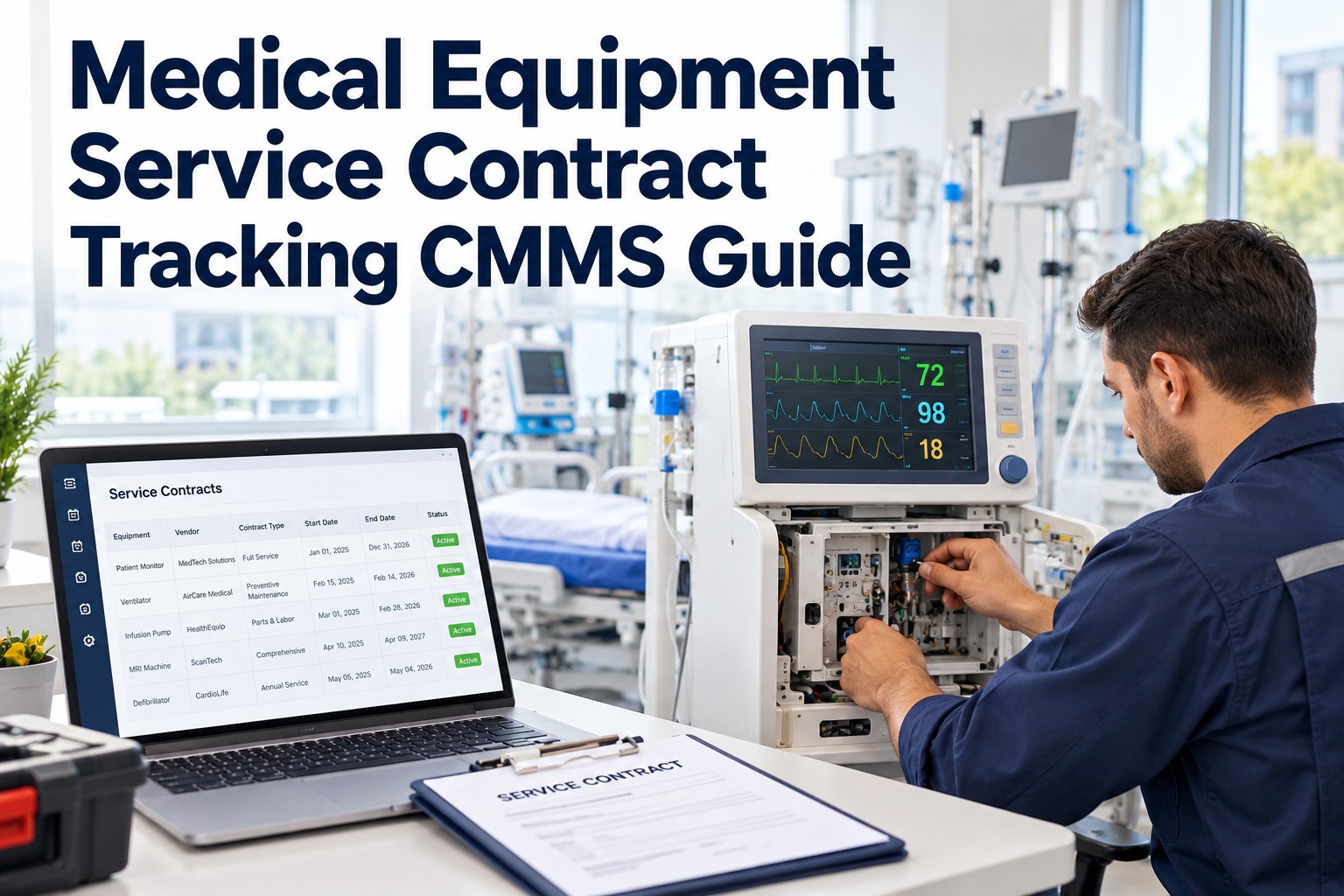
A CT service contract that quietly auto-renewed at near-new rates on a scanner already near the end of its life; a warranty that expired unnoticed, so you paid out of pocket for a repair that was covered — money like this is rarely lost in one dra
Healthcare CMMS · Biomed & Facility Maintenance
Manage hospital maintenance with a healthcare CMMS
Oxmaint unifies biomedical equipment and facility maintenance in one CMMS — PM schedules, mobile work orders, calibration records, life-safety inspections and traceable compliance documentation across every OR, ICU, ward and mechanical room in your hospital.
- Biomed devices and facility assets in one register, not two systems
- Scan any device QR — full PM & calibration history on your phone
- Every record e-signed, time-stamped and retrievable for survey
Oxmaint · Hospital Maintenance
35,412
Assets Tracked
184
Open WOs
98.6%
PM Compliance
100%
Audit Ready
Maintenance Activity
Live
Calibration · Infusion Pump 218 logged
Flow accuracy verified · Record archived to asset
PM · OR-3 HVAC quarterly complete
Checklist signed off · Photos attached
QR Scan · Ventilator VN-064 inspected
Signed by biomed tech · Synced
Inventory · Sterilizer chamber seal reserved
Stock updated · Reorder alert raised
All records synced · e-signed & retrievable
How It Works
Healthcare CMMS in 4 Steps
From asset register to audit-ready records — here's how Oxmaint runs biomedical and facility maintenance across your hospital.
Step 1
Import Your Assets
Load biomed and facility assets from spreadsheets, then QR-tag every device.
Step 2
Schedule PM & Inspections
Set PM intervals by manufacturer, risk class or your AEM programme.
Step 3
Execute in the Field
Techs scan QR, follow the checklist, capture photos and sign on mobile.
Step 4
Report & Audit
Pull compliance reports and asset history in real time, every record traceable.
Unified Asset Register
One Register for Every Biomedical Device & Facility Asset
Every device is tracked by manufacturer, model, serial, location, criticality classification and inspection basis in one register — ventilators, infusion pumps, imaging and sterilizers on the biomed side; HVAC, electrical, elevators and medical gas on the facility side. All four domains Joint Commission surveyors inspect are managed from one platform.
Biomedical Devices
Pumps, ventilators, imaging, monitors
Facility Infrastructure
HVAC, electrical, plumbing, elevators
Life Safety Systems
Fire alarm, suppression, egress, generators
Medical Gas & Utilities
O2, medical air, vacuum, WAGD, nitrogen
Asset Register · Live
35,412 assetsBiomedical Devices
Pumps, ventilators, imaging · 24,180 assets
Facility Infrastructure
HVAC, elevators, plumbing · 6,842 assets
Life Safety Systems
Fire alarm, egress, generators · 3,214 assets
Medical Gas & Utilities
O2, med air, vacuum · 1,176 assets
Single asset register · JC EC.02.04.01 inventory
PM & AEM Scheduling
Automated PM Schedules with AEM Programme Support
Configure PM intervals per device by manufacturer recommendation, clinical risk classification or code-mandated frequency — work orders auto-generate when due, assign to the right technician and escalate overdue on your own timeline. For AEM-enrolled devices, Oxmaint holds the risk assessment basis, adjusted interval, performance data and approval authority on the device record, so programme evidence stays retrievable.
Interval-Based PM
Manufacturer or risk-class intervals
AEM Programme Support
Risk-based interval documentation
Auto Work Order Creation
Parts, procedures & code references attached
Overdue Escalation
Supervisor alerts on your own rules
PM Schedule · This Week
Auto-GeneratedInfusion Pumps · Ward 4
Due TodayManufacturer interval · 24 devices · Assigned biomed team
OR-3 HVAC · Quarterly
ScheduledQuarterly checklist · Facilities engineer assigned
Non-Critical Monitors (AEM)
On TrackRisk-based interval · Performance data logged
Auto WOs · code references attached · escalation rules on
QR Scan & Mobile
QR Scan Any Asset — Log PMs, Calibrations and Work Orders
Tag every infusion pump, ventilator, monitor, sterilizer, imaging device and HVAC unit with a QR label — one scan shows model, location, PM history, calibration status, warranty and open WOs. One tap creates a work order, logs a calibration or records a PM completion with photos and e-signature attached, and the app works fully offline in shielded imaging rooms and mechanical spaces.
Instant Asset Lookup
History, calibration & open WOs
Calibration & PM Logging
Records archived at scan time
Offline Mobile App
Works in shielded imaging rooms
Bulk QR Label Printing
Tag every asset in one batch
QR Scan Result
Scanned NowInfusion Pump 218 · Ward 4B
Model: SP-8600 · Serial: IP-2022-218
Calibration Due
Last PM: 88d ago
1 Open WO
Maintenance History
WO-9314 · Battery replaced · Completed 88d ago
Calibration · Flow accuracy verified · Photos attached
WO-9128 · Firmware update · Completed 174d ago
Create WO
Log PM
Report
Complete CMMS Platform
Every Module Your Hospital Maintenance Team Needs — One Login
Asset register, PM scheduling, work orders, calibration records, life-safety inspections, medical gas logs, parts, analytics and portfolio dashboards in one CMMS.
Biomed Equipment Registry
Every device tracked by model, serial, location, risk class and warranty — ward moves and decommissioning captured so nothing slips off the PM schedule.
Calibration Management
Calibration intervals per device with tolerance ranges, pass/fail records and photo evidence — overdue items flagged and escalated before the next survey.
AEM Programme Records
Risk assessment, adjusted interval, performance data and approval authority held together on each enrolled device, not in a separate binder.
Parts & Storeroom
Probes, batteries, tubing, seals, filters and imaging consumables with reorder points and low-stock alerts.
Compliance Documentation
Map your own code references — Physical Environment, NFPA or K-Tag — to WO and inspection types, so every record carries them and reports pull in seconds.
Medical Gas & Utilities
O2, medical air, vacuum, WAGD and nitrogen inspections logged per outlet and zone, plus generator runs and load-bank tests with pass/fail evidence.
HTM & Facilities Analytics
PM completion, MTTR, calibration compliance, cost per device and asset uptime — trended by department and by campus. Portfolio dashboards for single-site or multi-hospital rollups.
ERP & BMS Integration
Bidirectional sync with hospital ERPs, procurement platforms and building management systems. Every work order carries department, cost-centre and asset context before it hits your finance system.
Latest Posts
Read More
A generator fault mentioned verbally on the way out the door, an OR air handler running on a temporary fix nobody wrote down, a part that was ordered — or was it? In a hospital that never closes, the most dangerous place for a maintenance issue to
Read More
A hospital pharmacy runs on equipment that fails quietly and expensively: a laminar-flow hood that drifts out of certification, a medication refrigerator that slips below range overnight, a calibration certificate that lapsed three months ago and
Read More
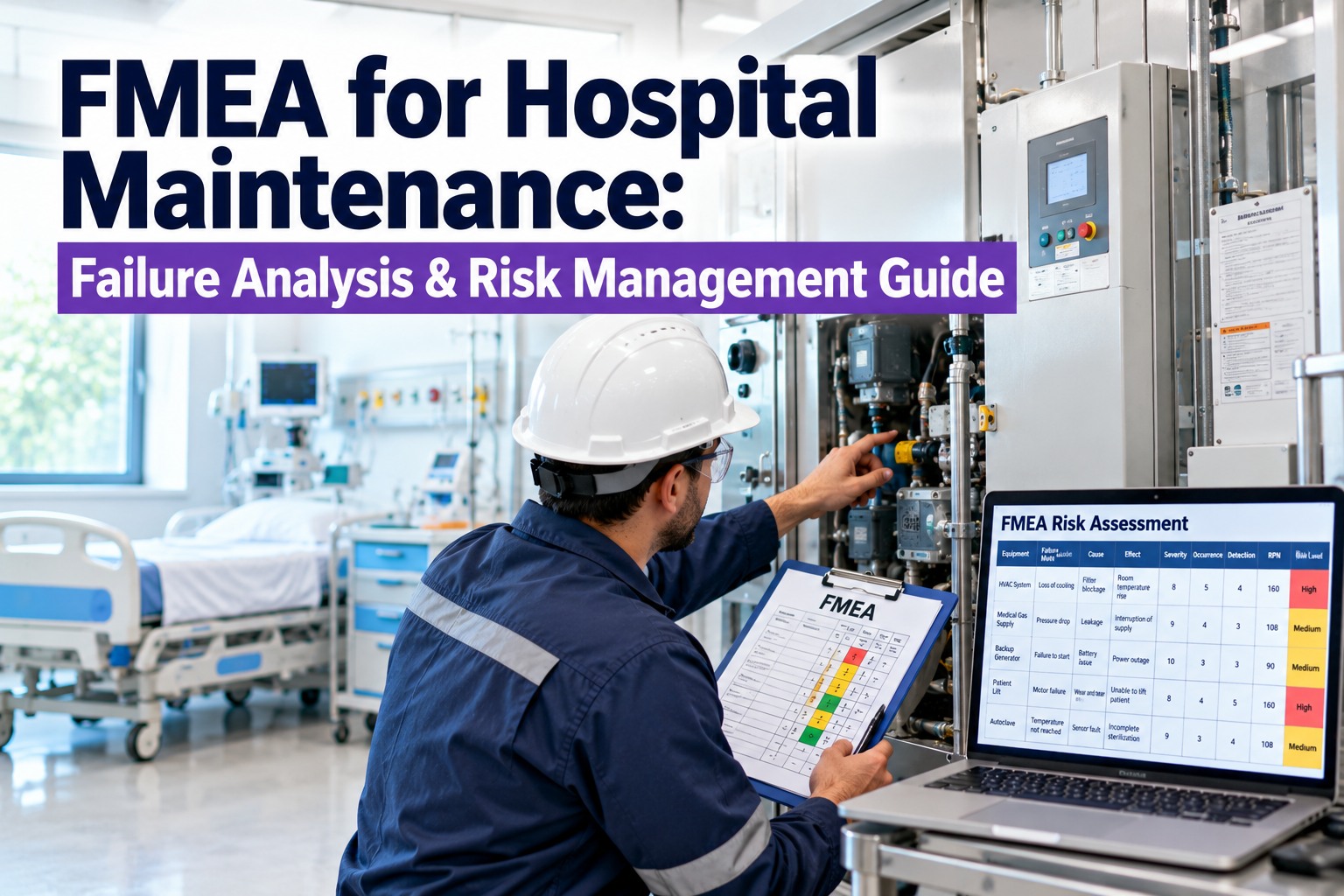
In a hospital, not every asset deserves the same maintenance attention — a failed ventilator is a patient-safety event, a failed waiting-room TV is an inconvenience, and spreading limited biomedical staff evenly across both is how the dangerous fa
Read More
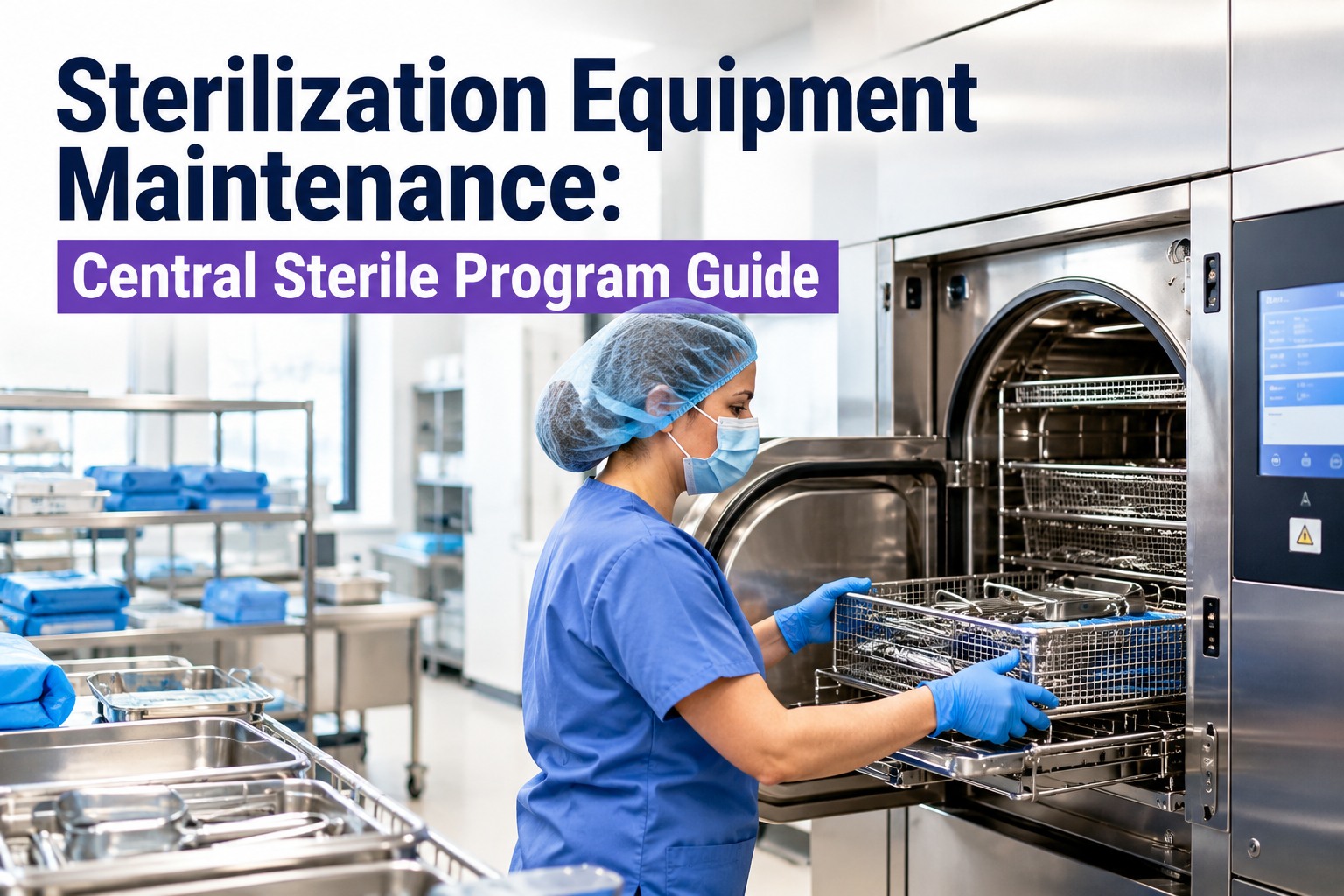
When a sterilizer goes down mid-shift, the problem is never just the sterilizer. A positive biological indicator quarantines every load processed since the last negative result, a cracked door gasket pulls a prevacuum unit out of the rotation your
Read More
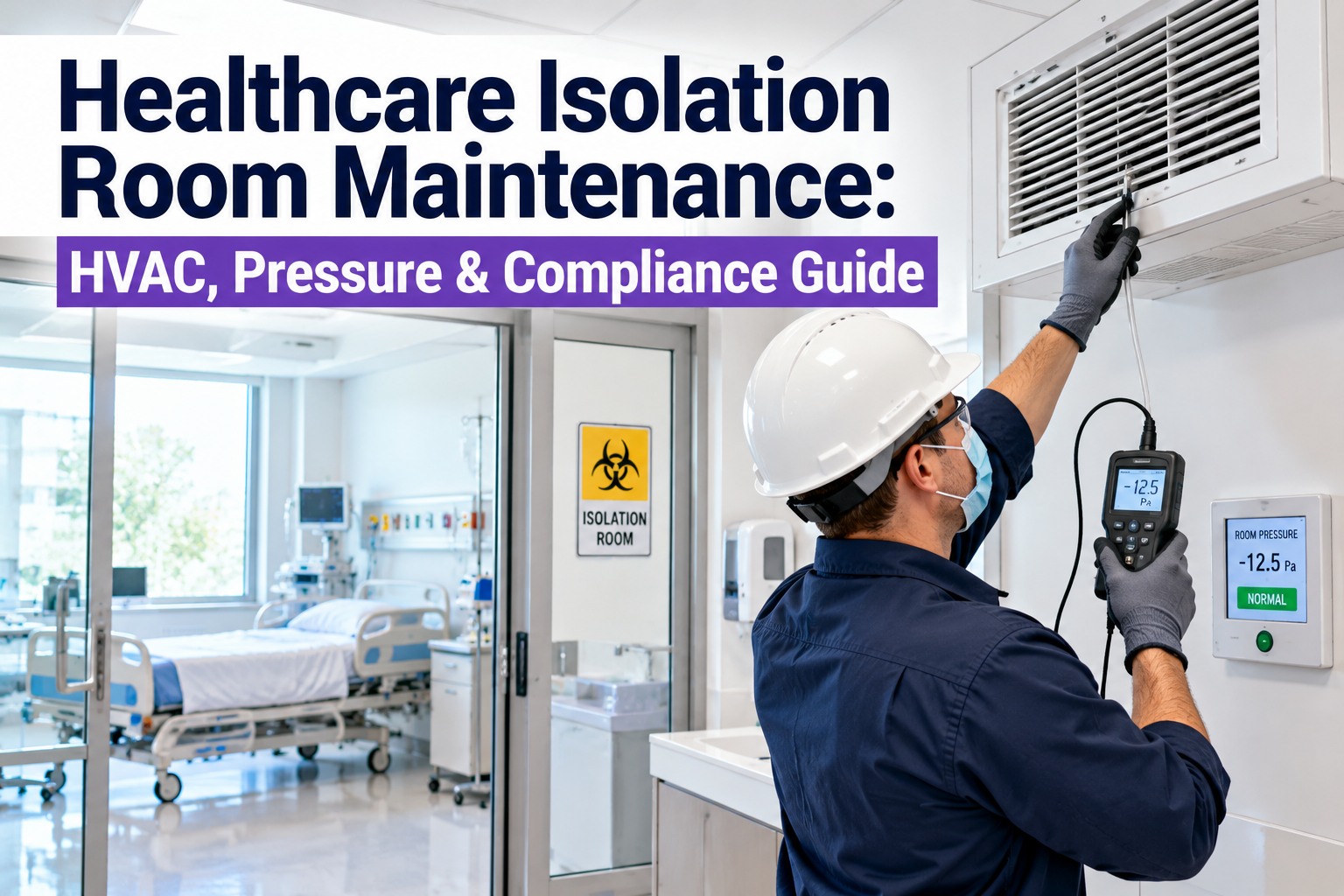
A door propped open for a meal tray, a manometer reading nobody wrote down, an exhaust belt slipping a little more each week — any one of them can quietly turn a negative-pressure isolation room positive, and the first sign is often an exposure th
Read More
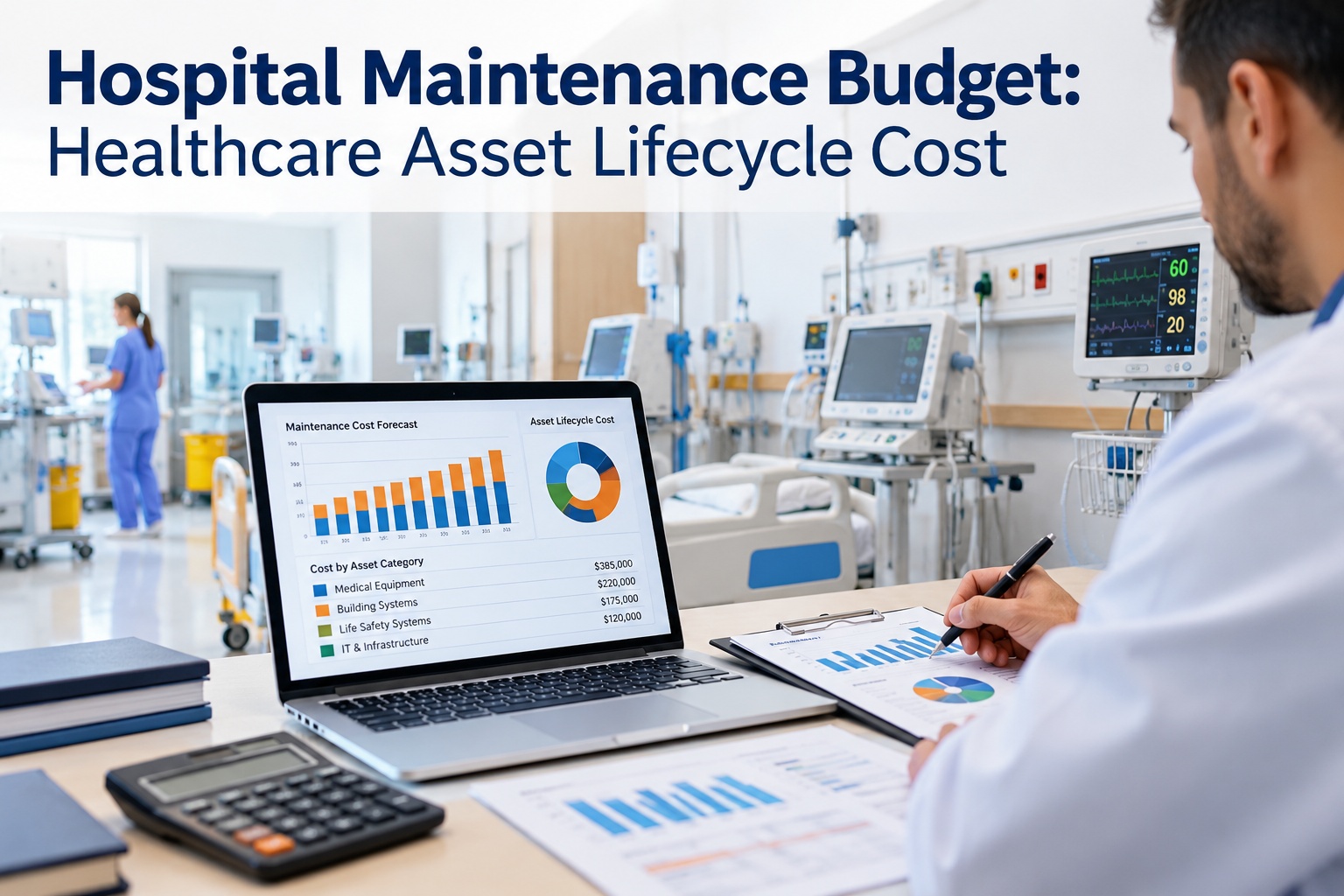
The price on the invoice is only the opening bid. Over its working life, a medical asset can cost far more to own, run and repair than it did to buy — and most hospital budgets are built from last year's spend, not from lifecycle cost. This guide
Read More
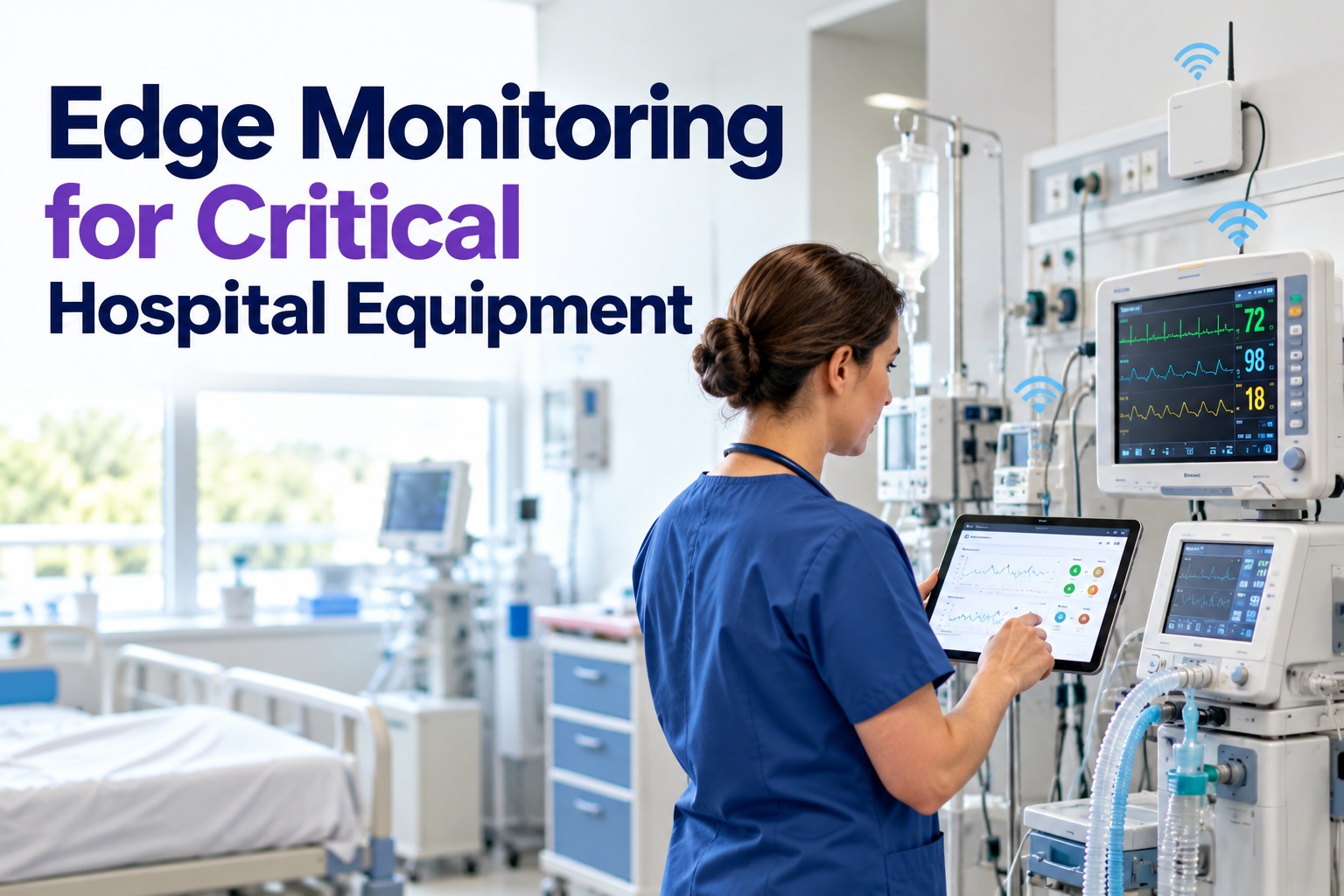
When a generator, medical gas pump or blood-bank freezer starts to drift, minutes matter. Yet many hospitals still learn about it from a rounding sheet, a nurse's call or an alarm nobody owns. Edge monitoring processes sensor signals close
Read More
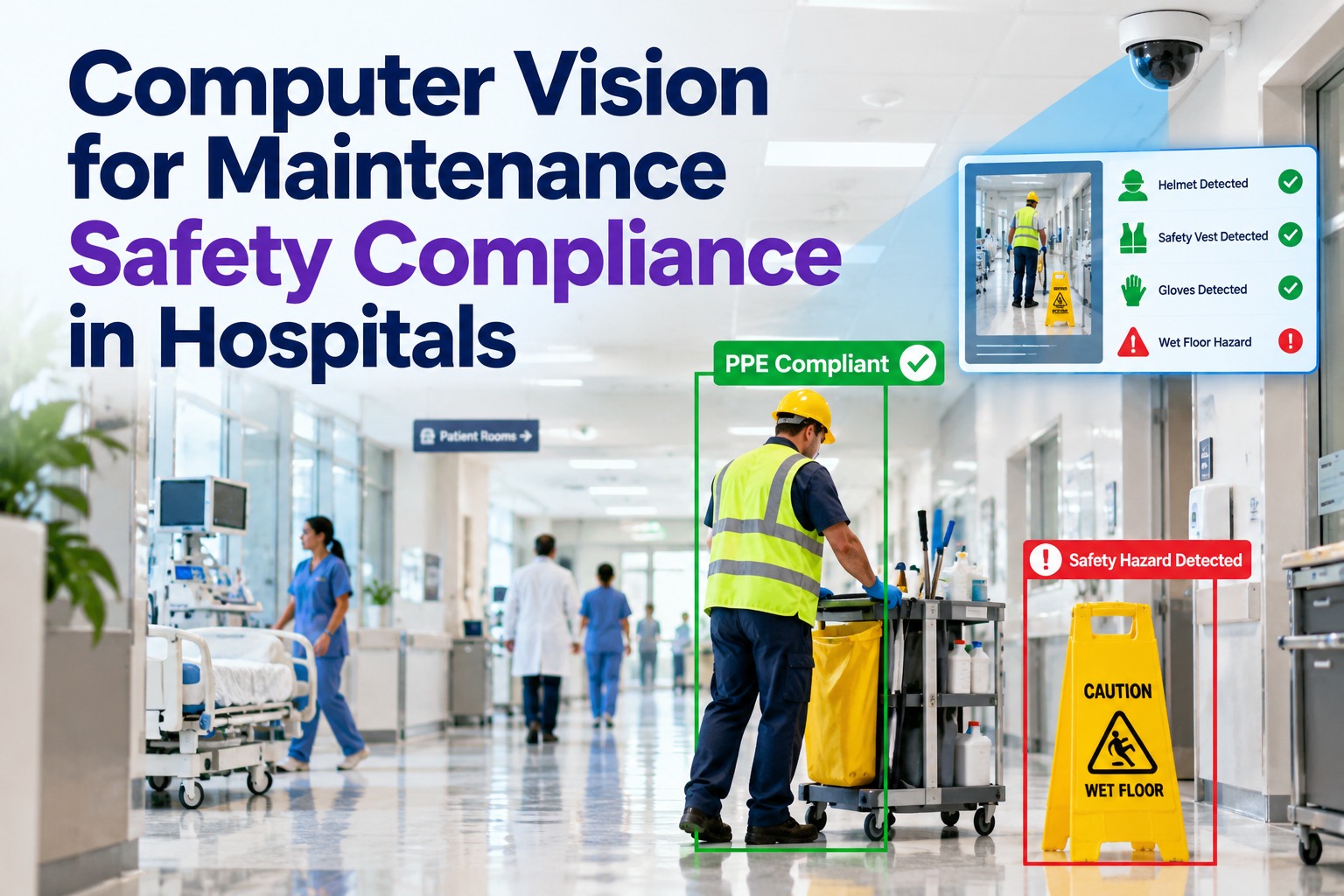
A maintenance technician opens a ceiling tile above a patient corridor. Dust drifts down, no barrier is up, and nobody is wearing a mask. Nobody planned it that way. It just was not caught. Hospital safety teams cannot be everywhere, and a paper c

Read More
It is 02:10 and a nurse smells smoke near a patient room. Someone has to shut off oxygen to that zone, fast, without cutting supply to the room next door. That one decision depends on a small, easy-to-ignore box in the corridor: the zone valve. If

Read More
Ask a pharma maintenance team what a HEPA filter costs and they will quote the price on the purchase order. Ask the finance team what a HEPA replacement really costs and the answer is bigger: shutdown time, integrity scanning, requalification, pap
Read More
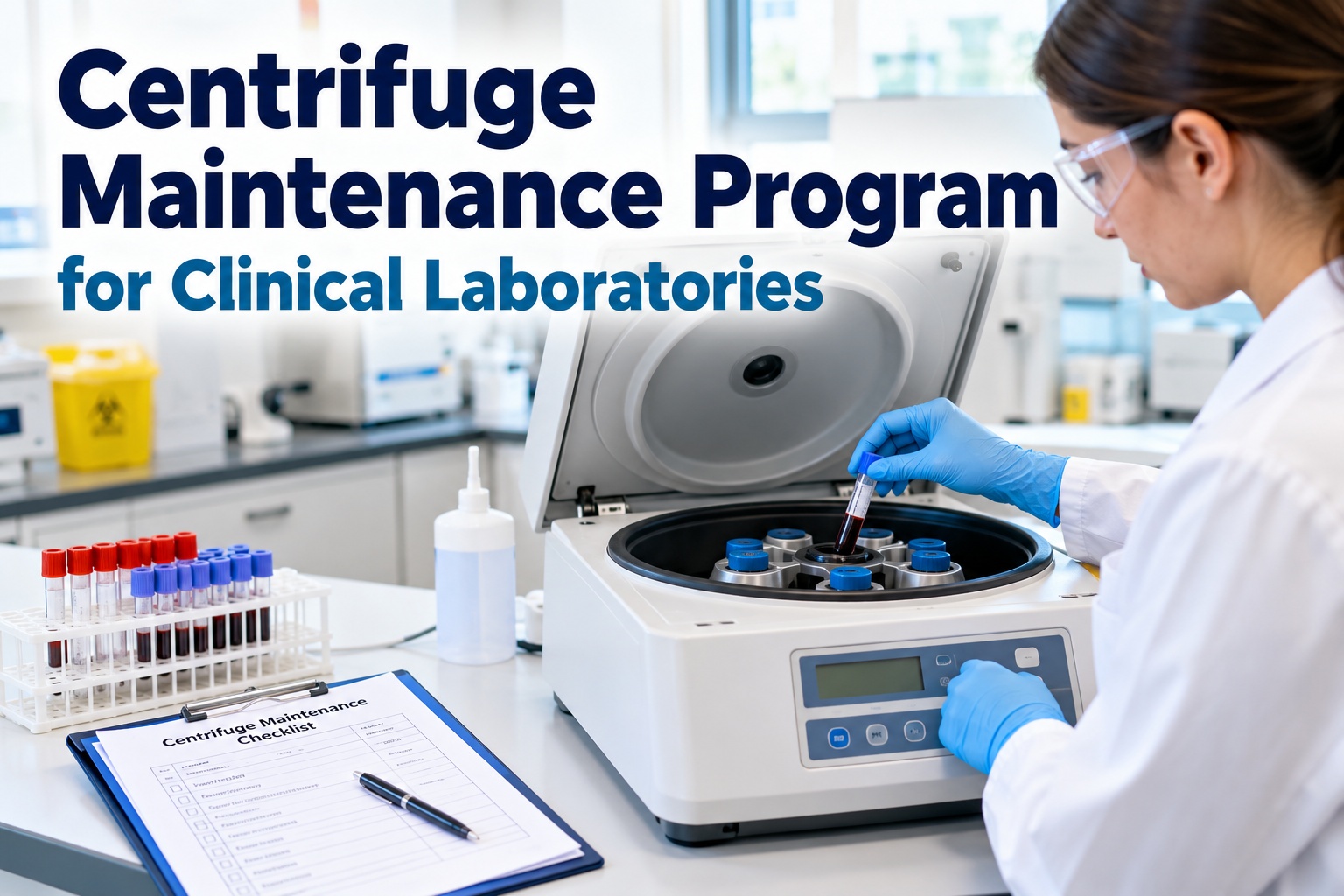
A centrifuge that spins a little fast, a little off-balance, or on a rotor past its cycle limit doesn't announce it — it just quietly produces suspect separations and, at worst, fails catastrophically at speed. In a clinical lab that means questio

Read More
A clinical analyzer that has drifted out of calibration doesn't stop working it keeps returning results, they just aren't true anymore. Every patient sample run since the last valid verification is now in question, and in a lab that means po
Read More
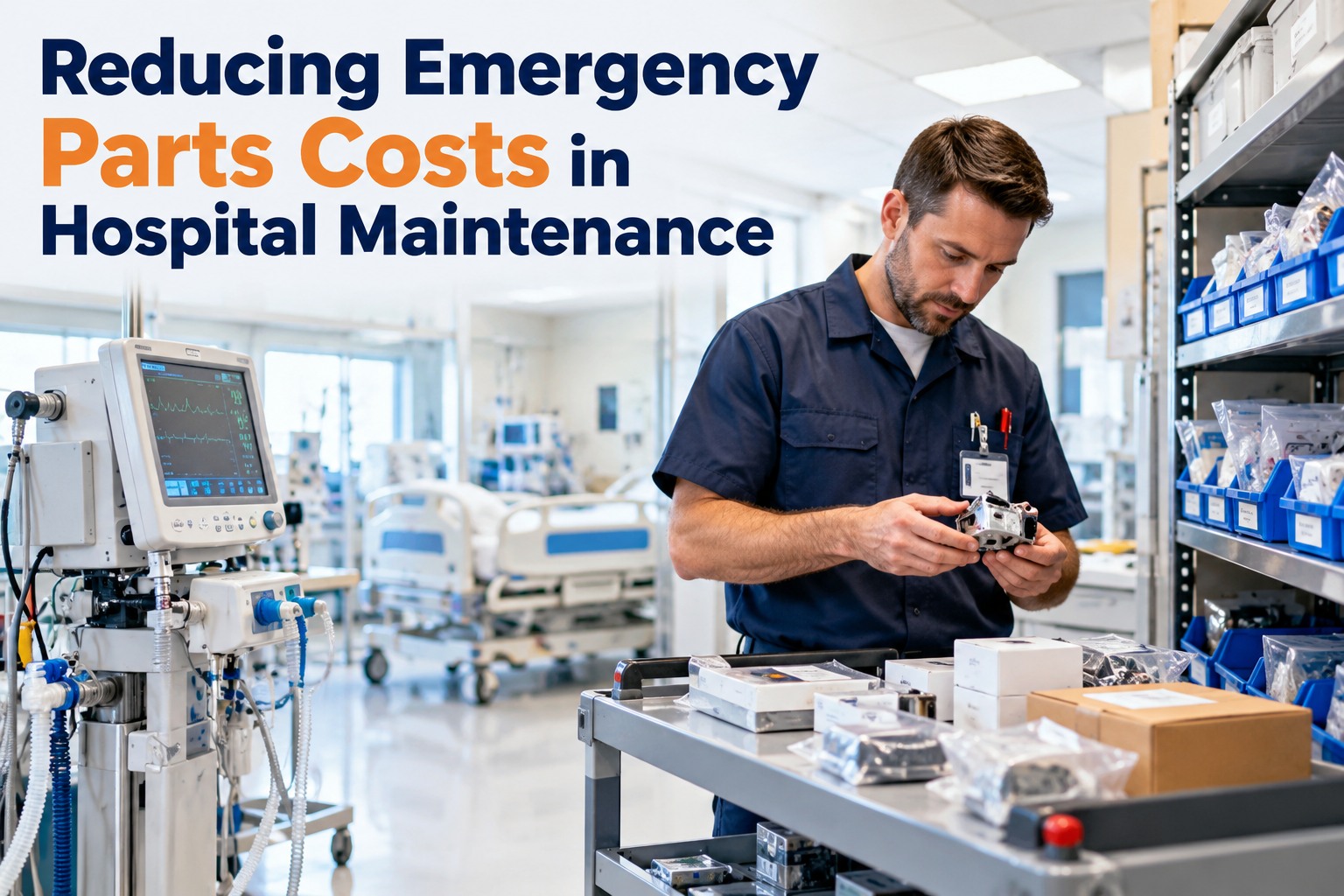
The same part costs two very different amounts depending on when you order it. Stocked ahead of a planned repair, it's list price and standard freight. Ordered at 2 a.m. because a critical device just failed, it's a sole-source OEM markup, an over
Read More
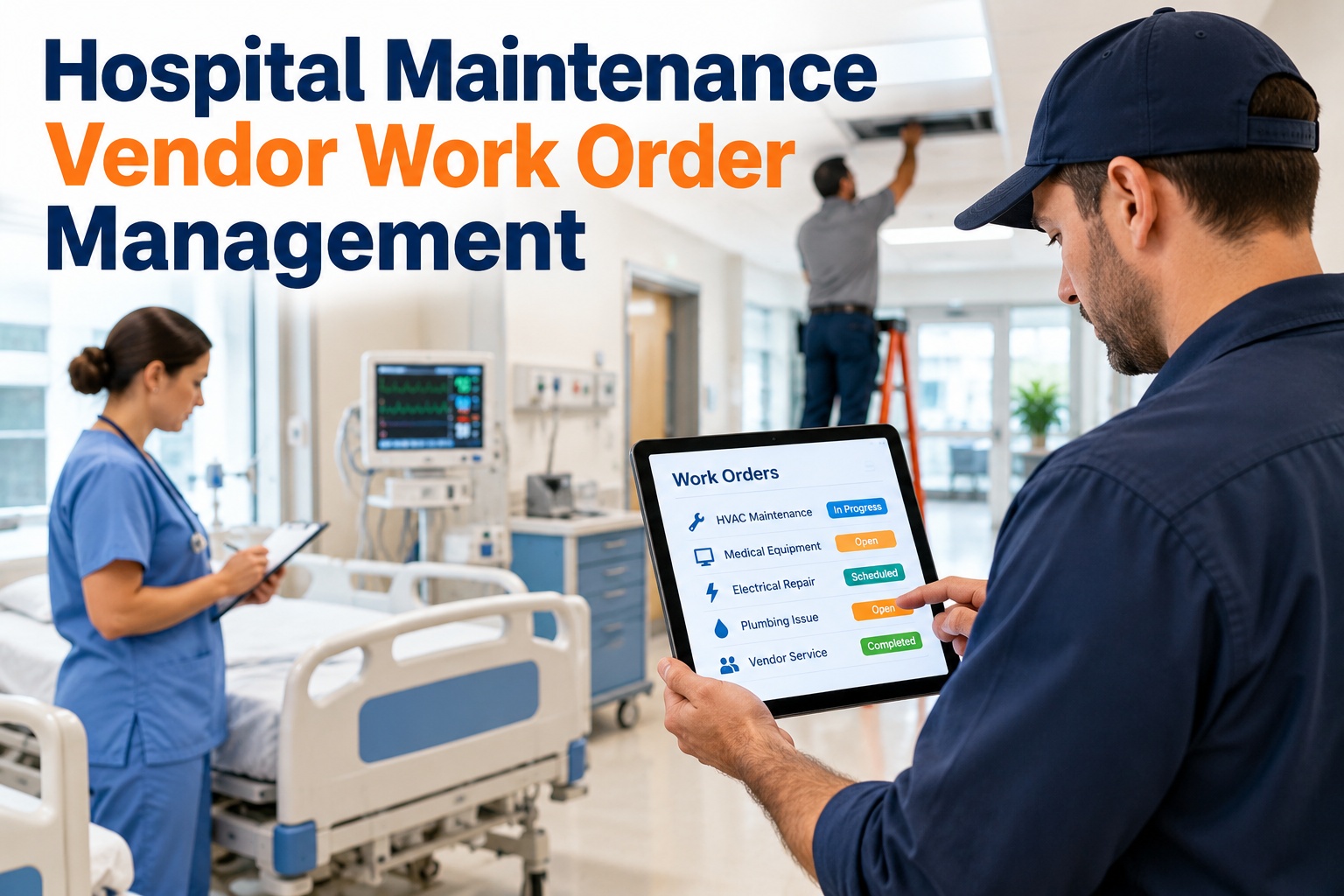
In a hospital, the people fixing your fire pumps, medical gas systems, elevators, and imaging equipment often don't work for you — they work for the forty-plus outside vendors your facilities team coordinates. That's where the exposure lives. A co
Read More
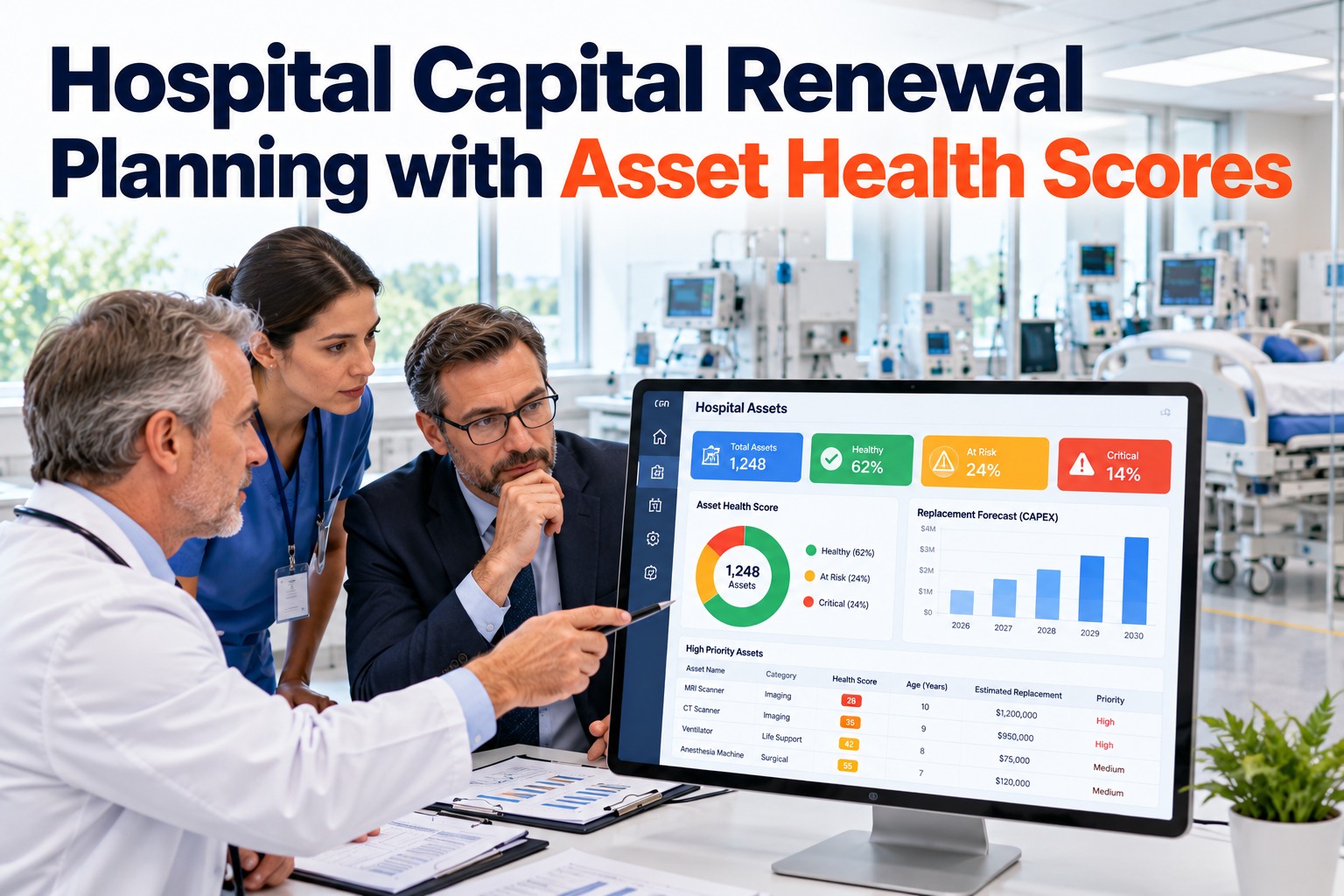
Every hospital capital budget starts as an argument. The imaging team wants a new CT; facilities wants the chillers; finance wants the list cut. Whoever tells the best story wins — and the asset quietly failing in the basement loses, until it fail
Read More
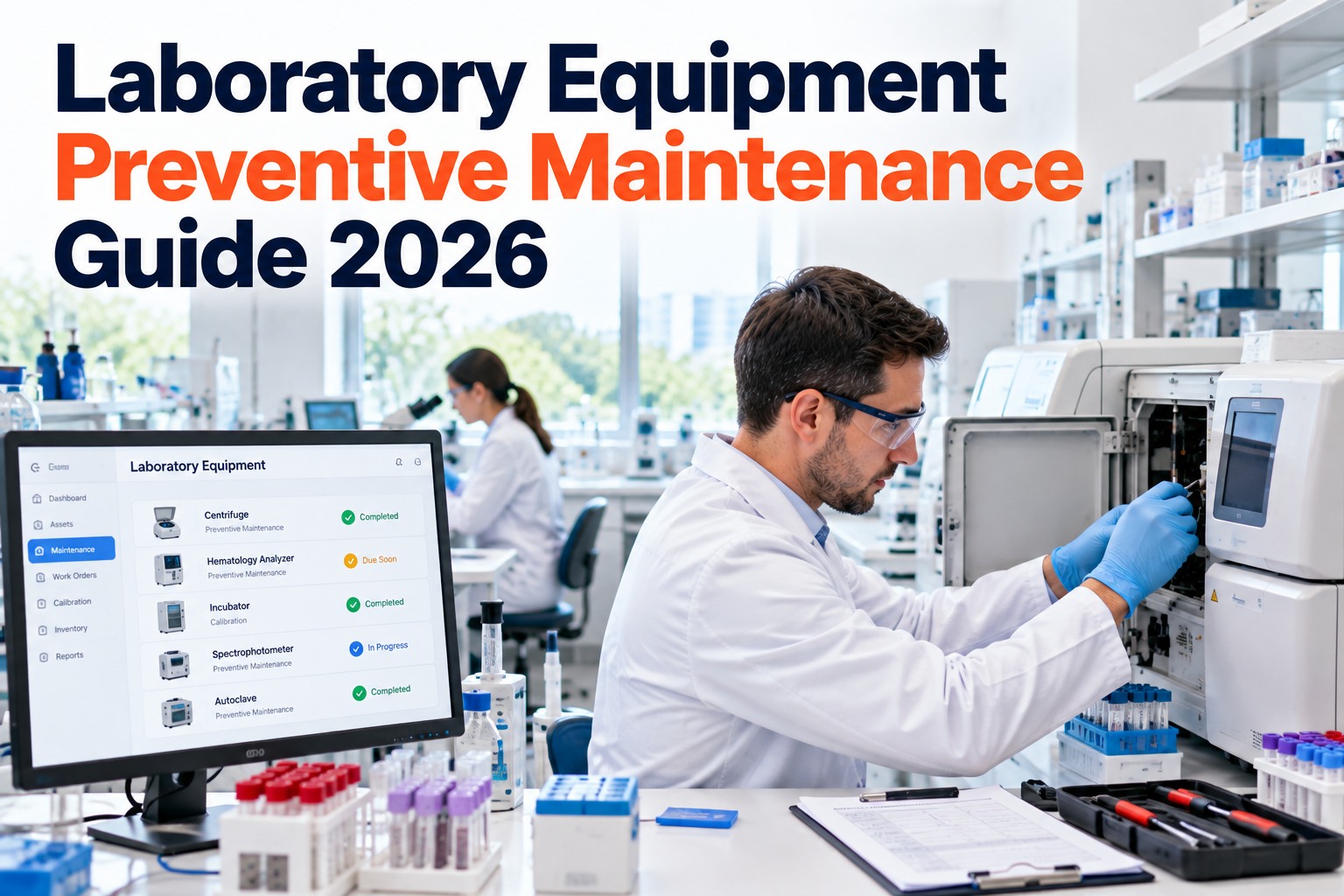
In a clinical lab, a missed analyzer maintenance isn't just downtime — it's a drifting electrode reporting a potassium that's wrong, a photometric error skewing a chemistry panel, a centrifuge imbalance corrupting a separation. The result reaches
Read More
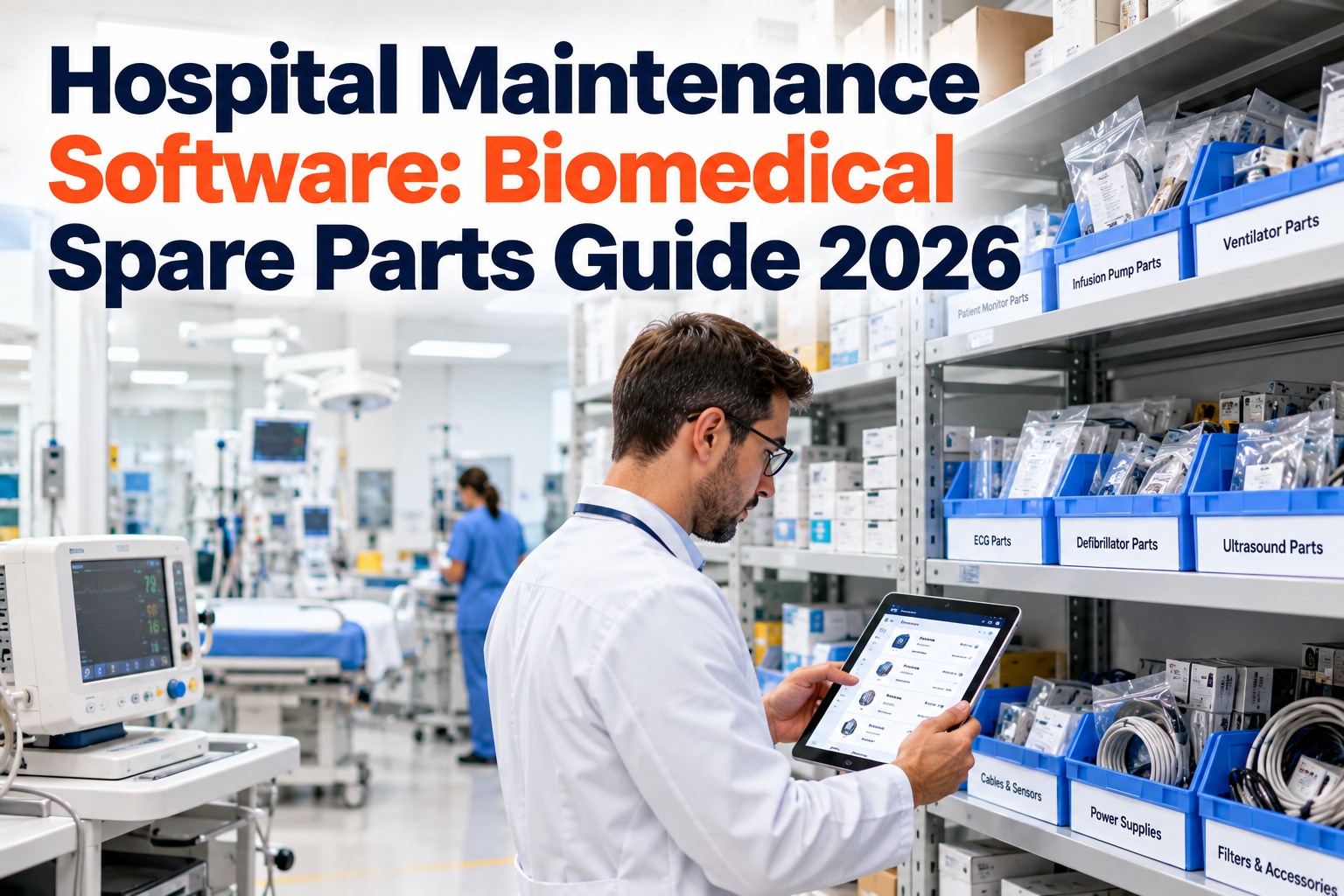
A ventilator is down. The fix is a $40 sensor — but it's not on the shelf, the vendor quotes a five-day lead time, and the rush order costs four times list. Meanwhile a cabinet down the hall holds $12,000 of parts nobody has touched in two years.
Read More
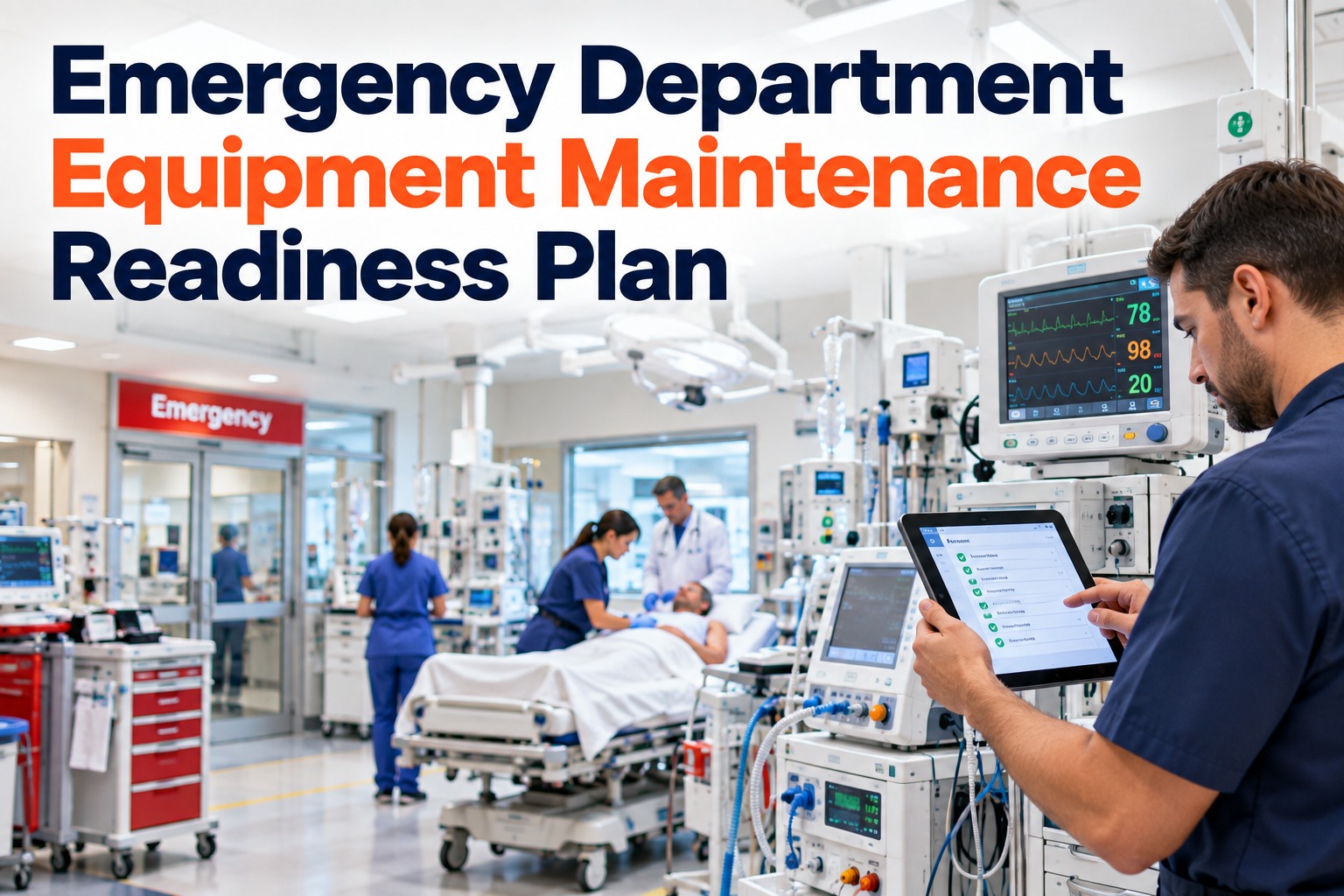
In an emergency department, "maintenance readiness" has a very specific meaning: the defibrillator charges, the ventilator delivers, the crash cart is complete — the instant a code is called. There's no second attempt and no downtime window. Yet e
Read More
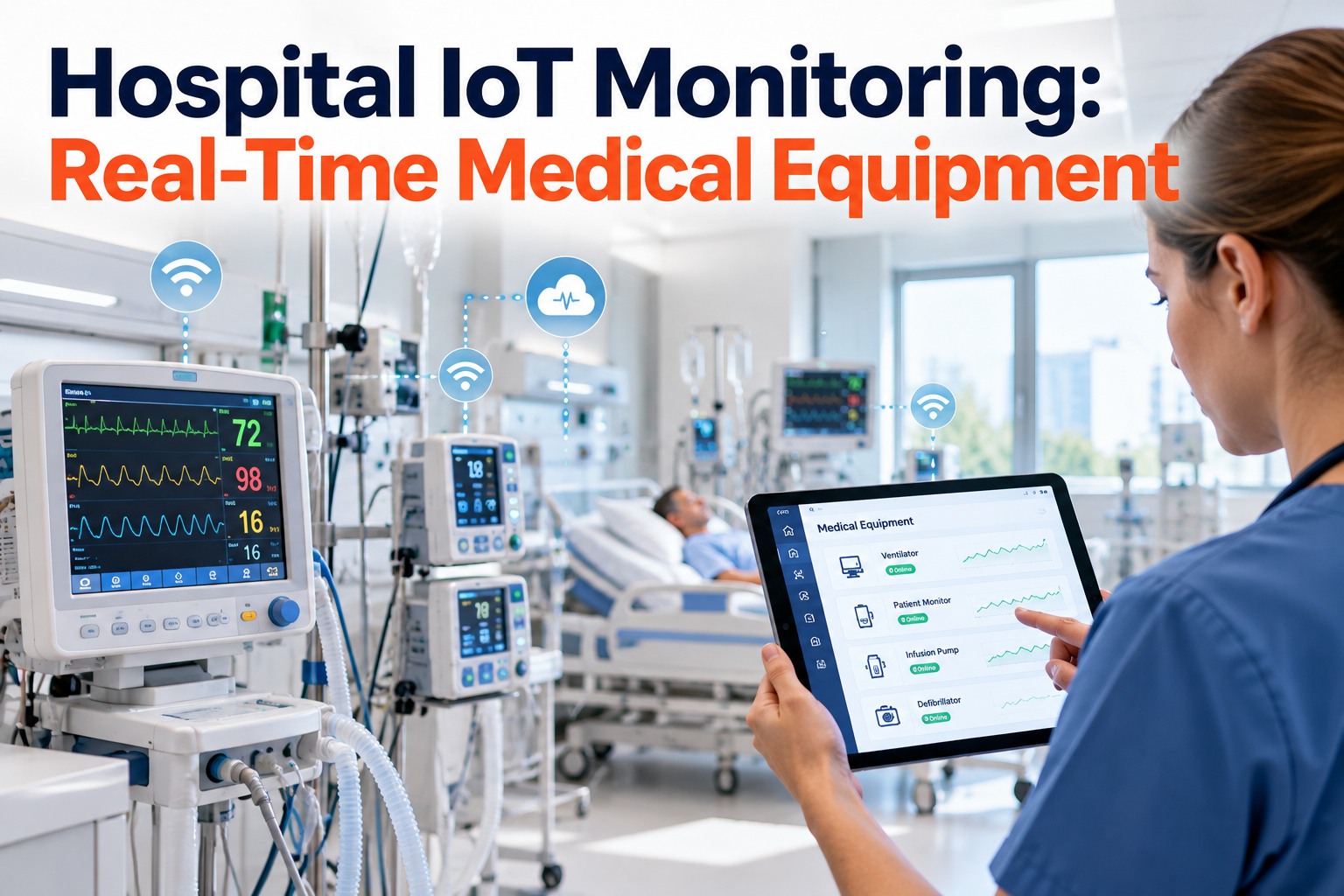
An infusion pump fails mid-shift. A nurse walks three floors to find a spare that isn't there. A ventilator's PM comes due and no one notices until it's overdue. None of these are equipment problems — they're visibility problems, and the fi

Read More
Of every system in a hospital, medical gas is the one where a maintenance lapse can reach a patient directly. A contaminated air line, a mislabeled zone valve, a source alarm nobody heard — these aren't equipment problems that inconvenience operat

Read More
Run one clinical lab and CLIA documentation is a discipline. Run ten across a health system and it becomes a governance problem: every site keeps records a little differently, one lab's calibration binder is immaculate while another's lives in sca
Read More
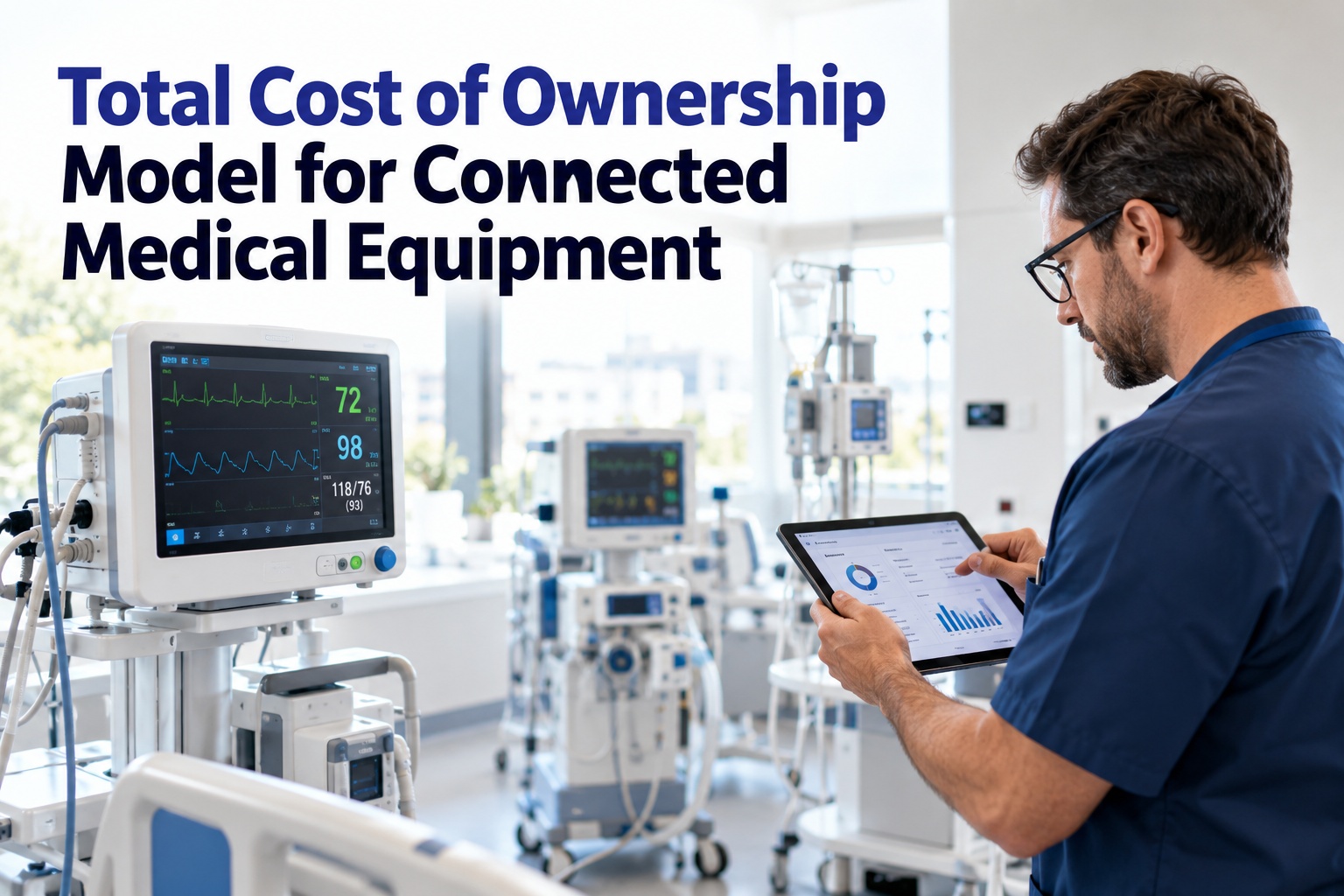
The $1.2M MRI on the capital request is the cheap part. Over its ten-year life it will cost more than three times that in downtime, service, consumables and disposal — and none of it shows on the purchase order. That's why replace-or-repair decisi
Read More
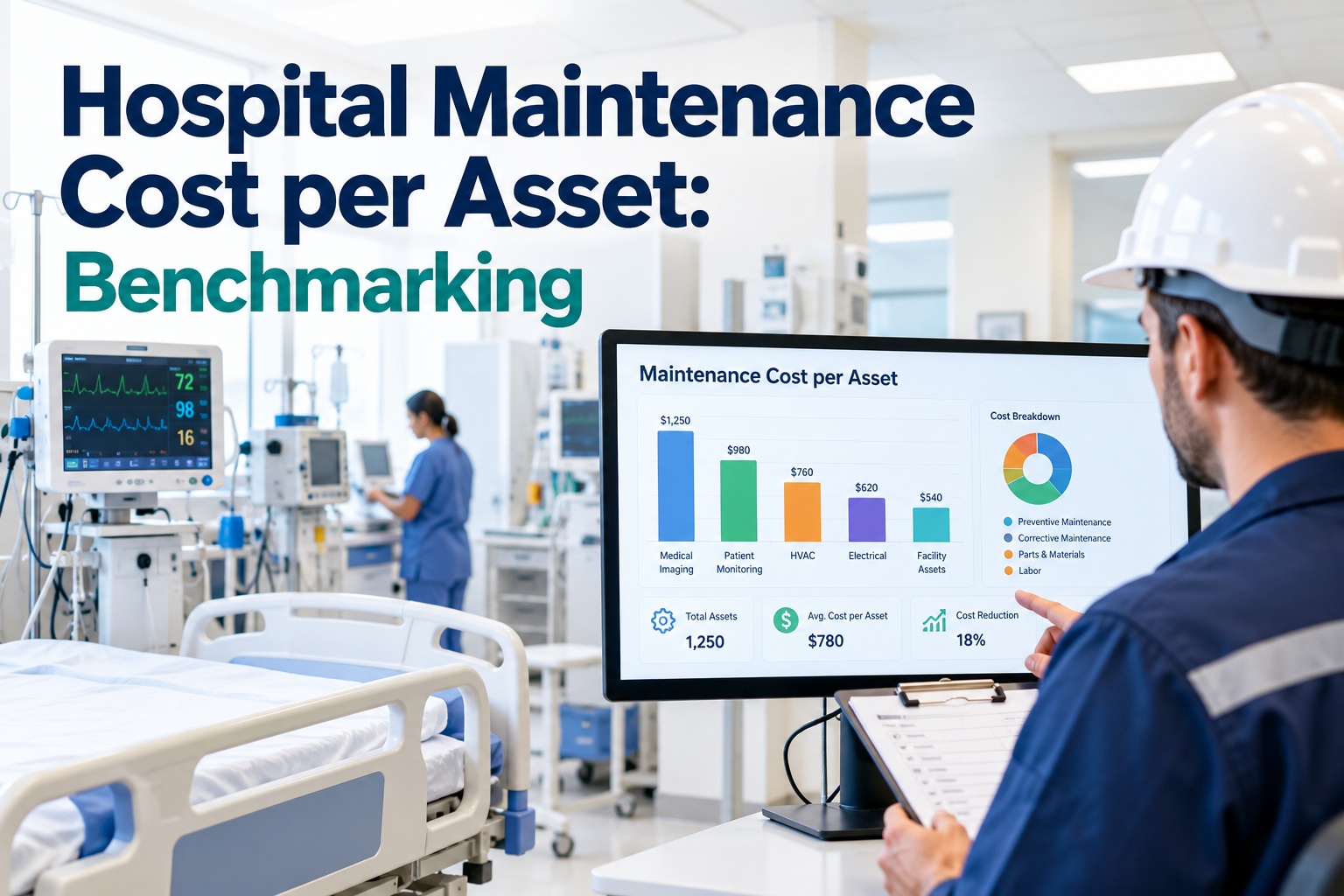
Ask a hospital facilities director what it costs to maintain a single infusion pump versus an air handler versus an MRI, and most can't answer — not because they don't care, but because maintenance spend is tracked as one big bucket, not per asset
Read More
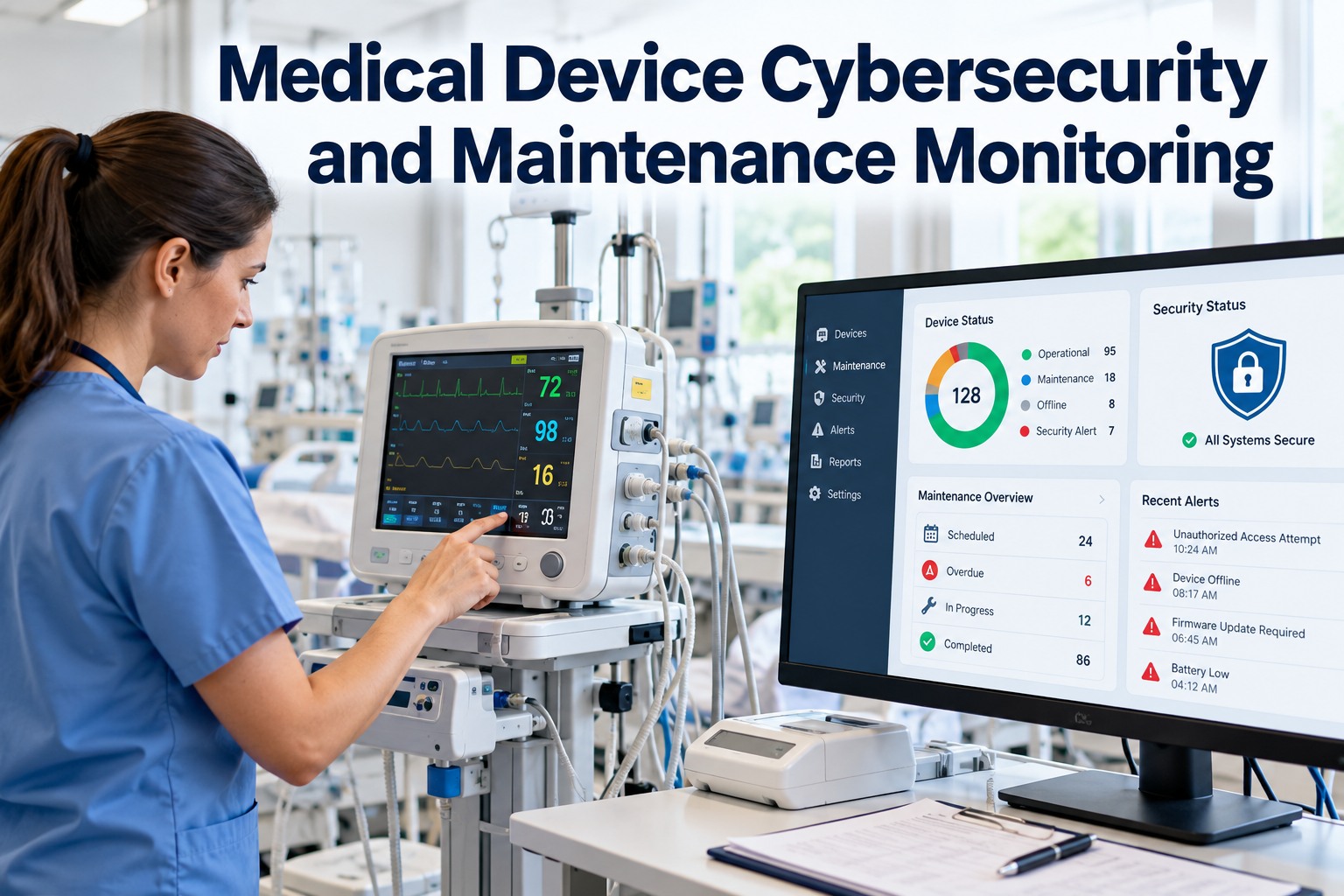
The infusion pump keeping a patient alive is also a networked computer running an operating system that stopped getting security patches years ago. Biomedical engineering tracks its PM schedule; IT security tracks its vulnerabilities — and the two
Read More
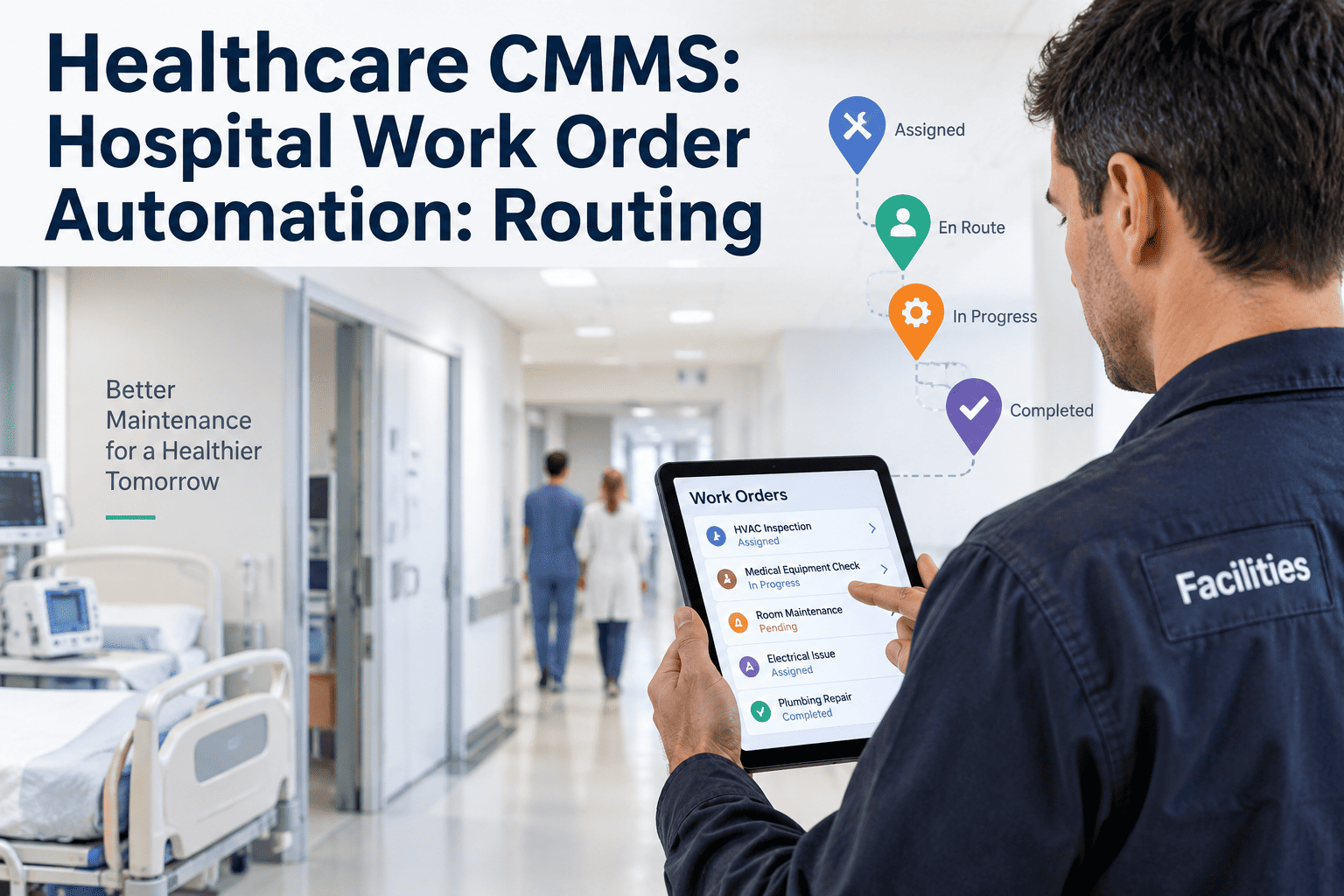
Every hospital already has work orders. The difference between a struggling maintenance operation and a working one isn't the ticket — it's what happens in the ninety seconds after it's raised. Which queue does it land in? Which tech gets paged? D
Read More
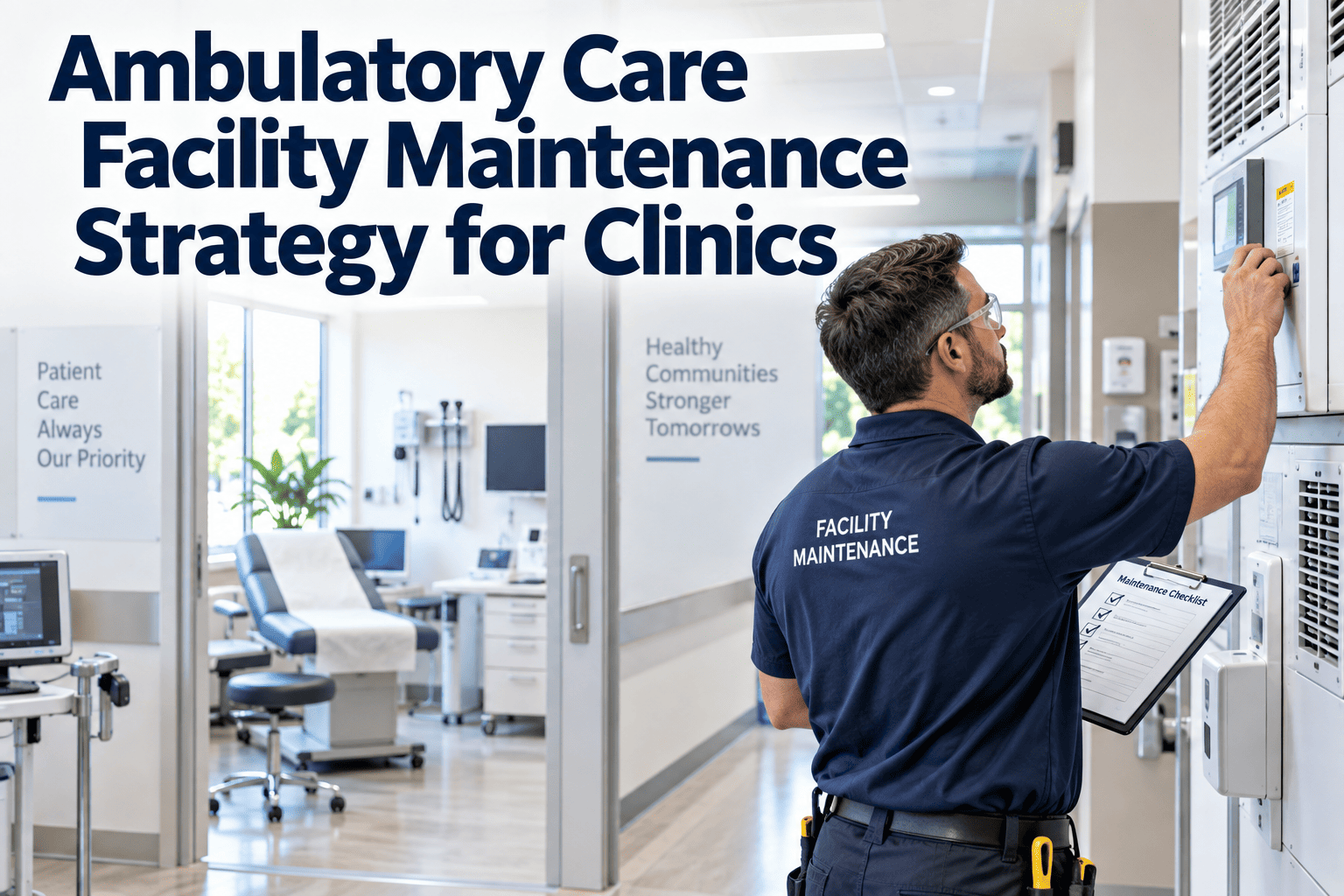
An ambulatory care operator doesn't run a hospital — they run twenty, thirty, sometimes a hundred small clinics. Each one is a fully-equipped healthcare site, but none has a dedicated biomed team, a facilities engineer or a night crew. Maintenance
Read More
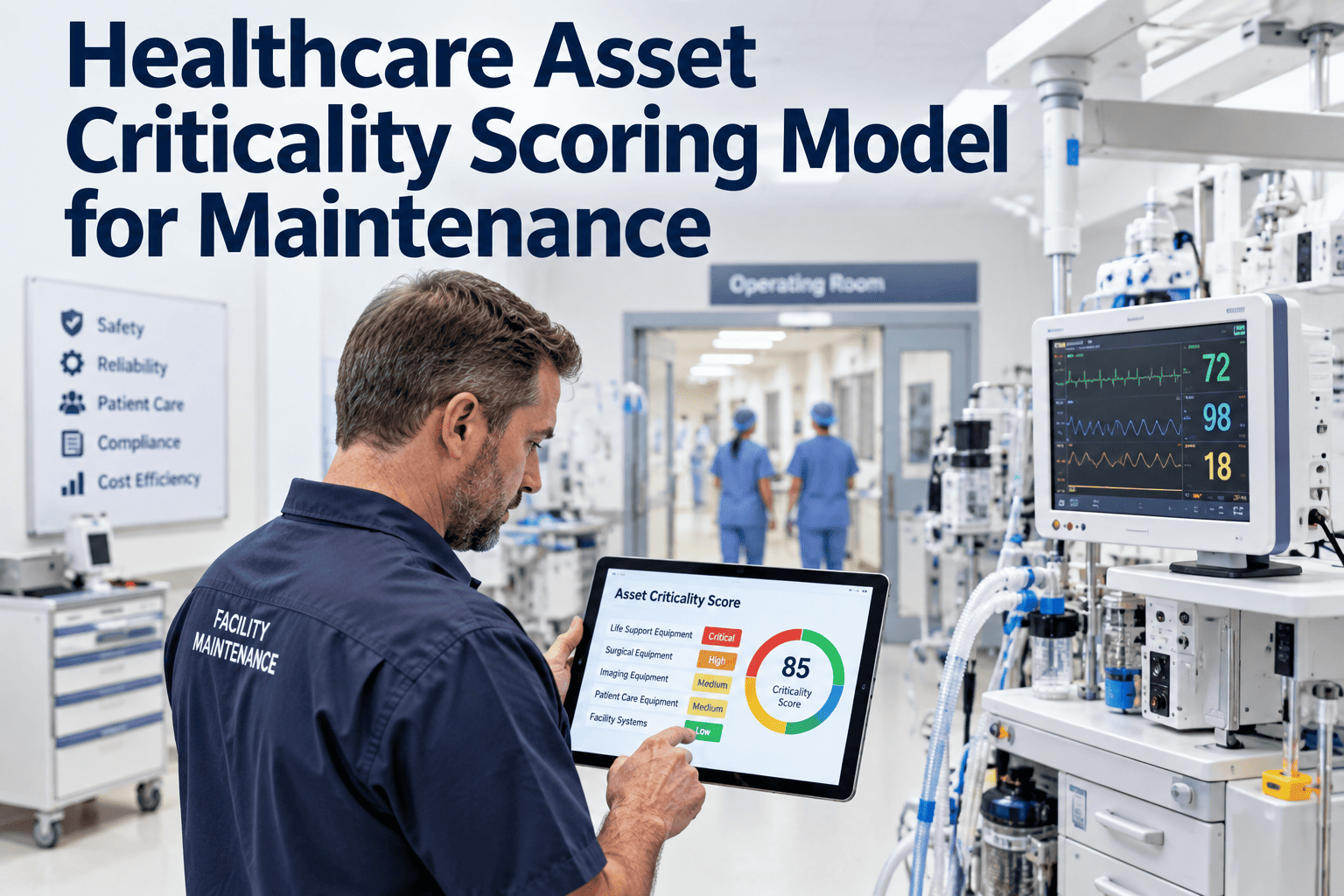
Not every hospital asset deserves the same maintenance attention. A ventilator in ICU and a waiting-room TV both sit on the biomed inventory, and treating them the same is either a Joint Commission finding or a badly spent budget. Healthcare asset
Read More
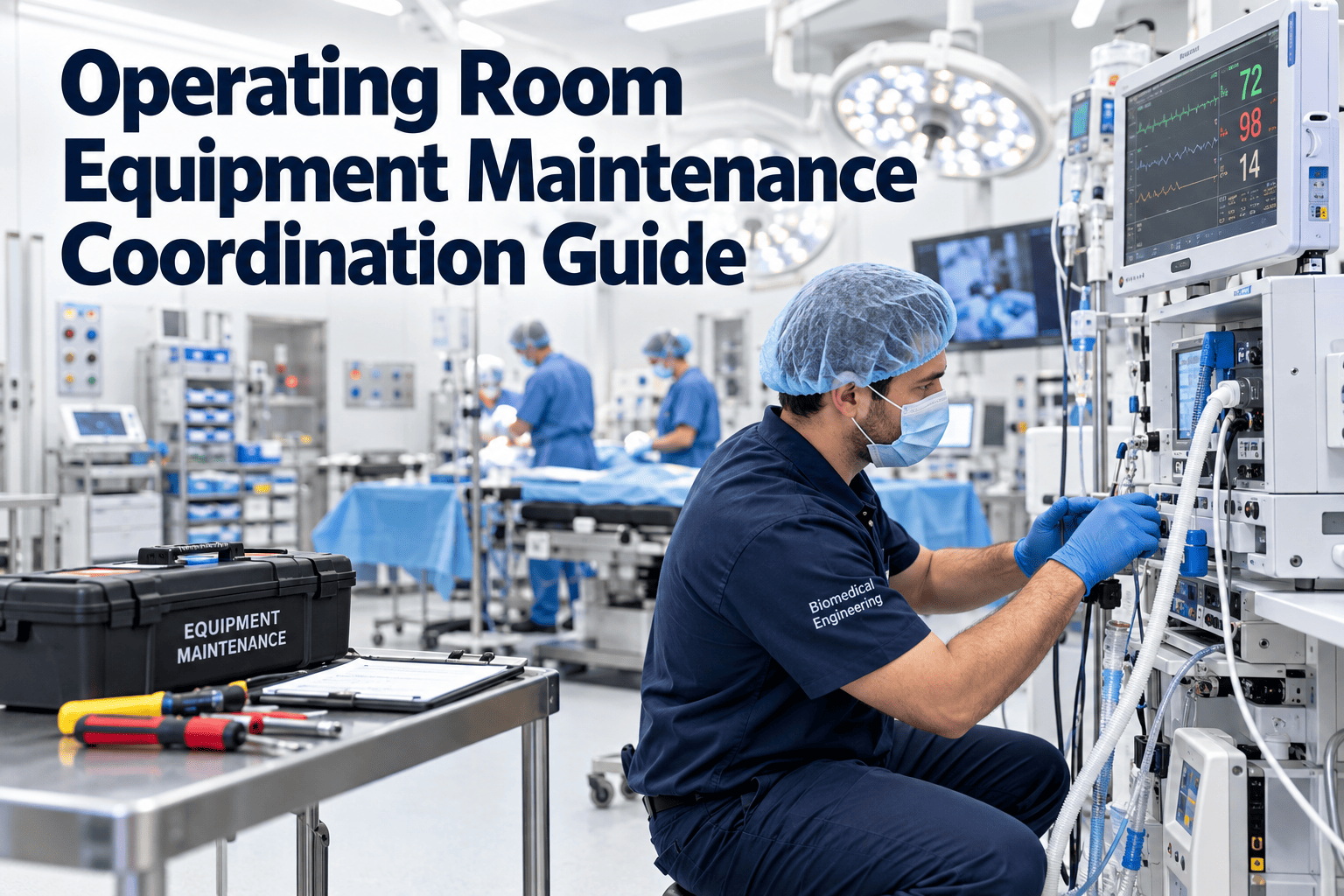
An operating room isn't a workshop the biomed team walks into whenever the PM is due. It's a booked, staffed, sterilised space with a case schedule that dictates who gets access and when. A ventilator PM overdue on Theatre 4 doesn't just fail an a
Read More
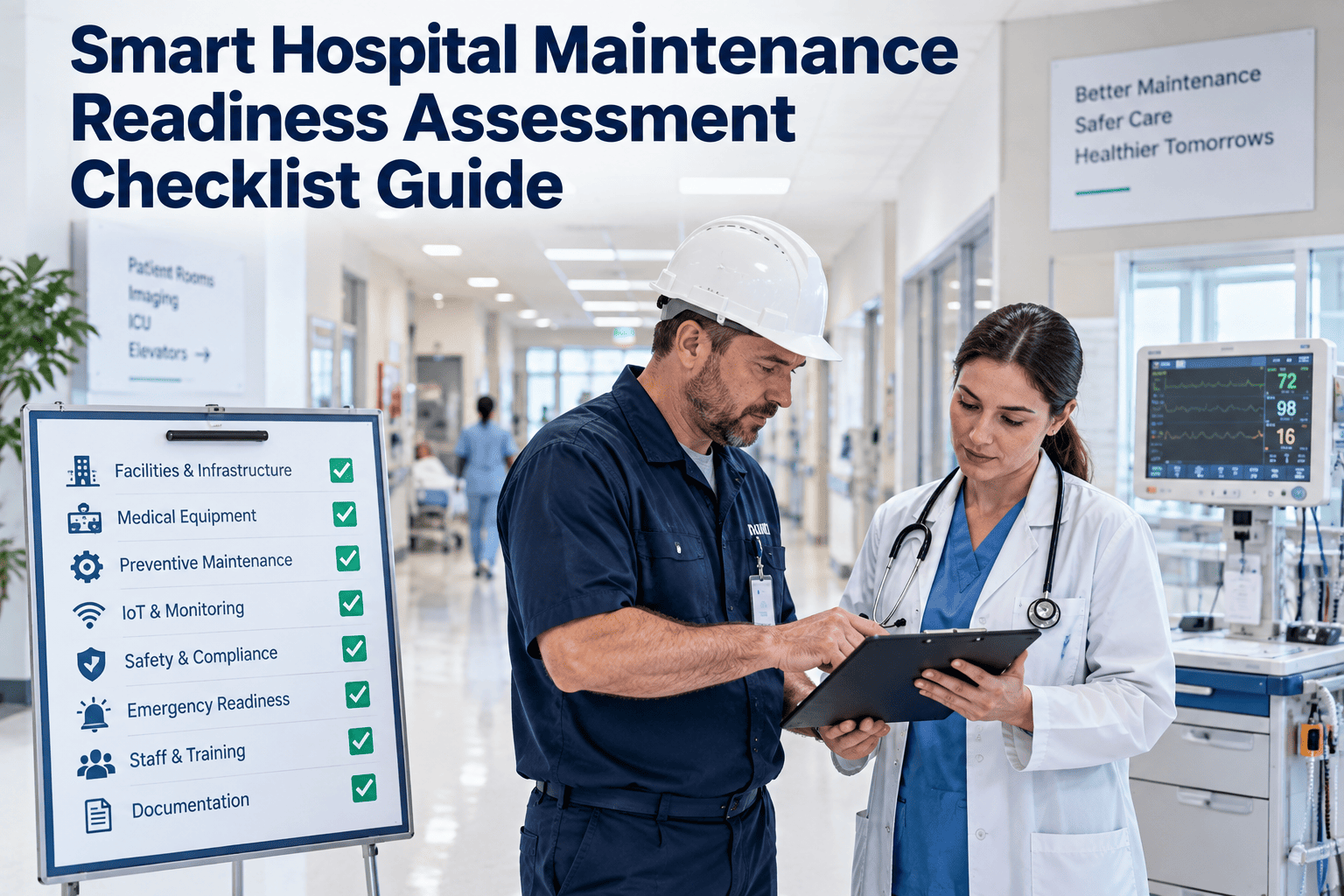
Every hospital plans to be "smart" — connected beds, IoMT-enabled infusion pumps, live utility telemetry, real-time location tracking. But most estates aren't ready for what smart means to a maintenance department: ten times the data, ten times th
Read More
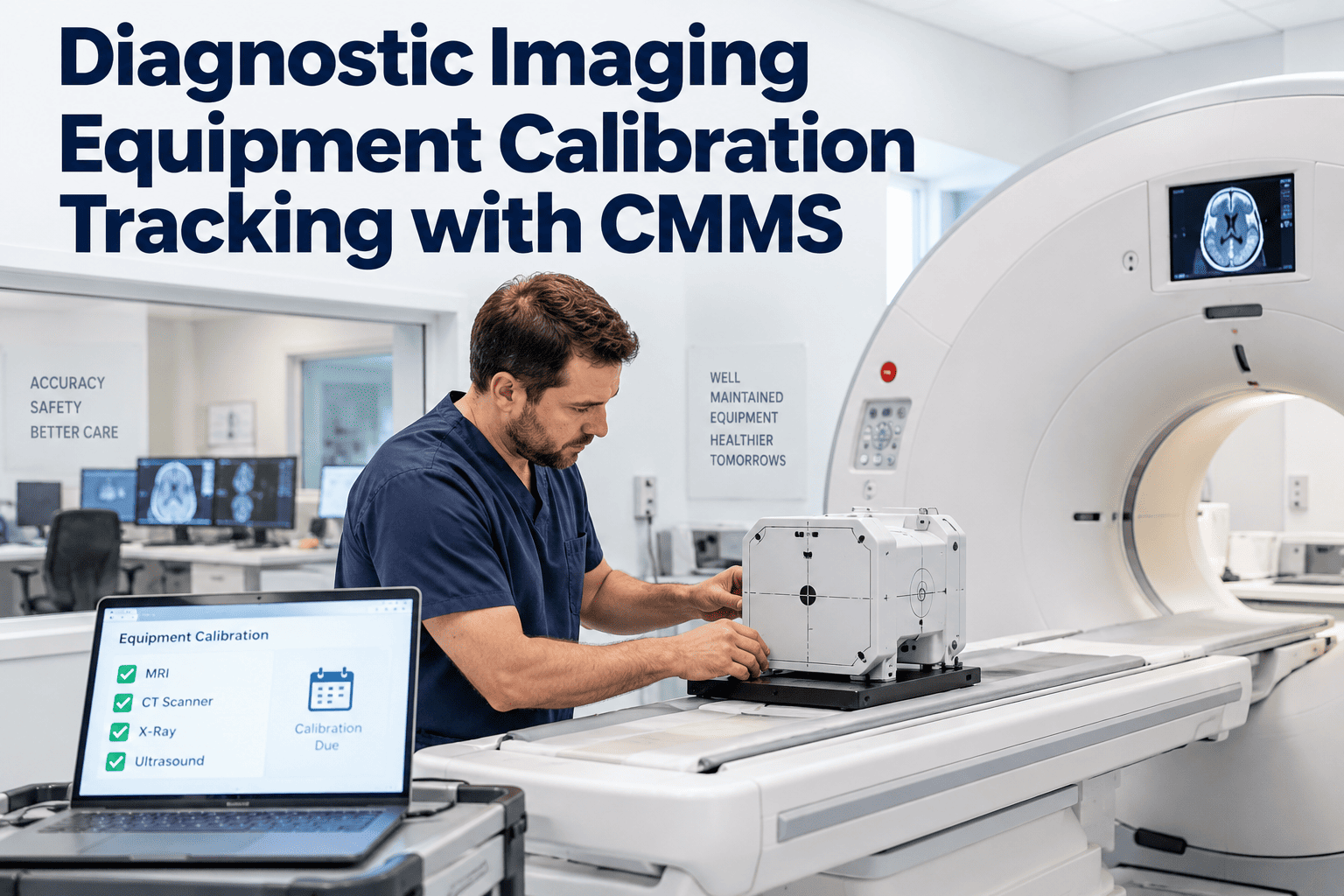
A drifted CT number, a slice-thickness reading a millimetre off, an SNR trend sliding for six weeks imaging equipment doesn't fail loudly; it drifts. And when the ACR annual physicist survey lands, the drift becomes a deficiency that can pul
Read More
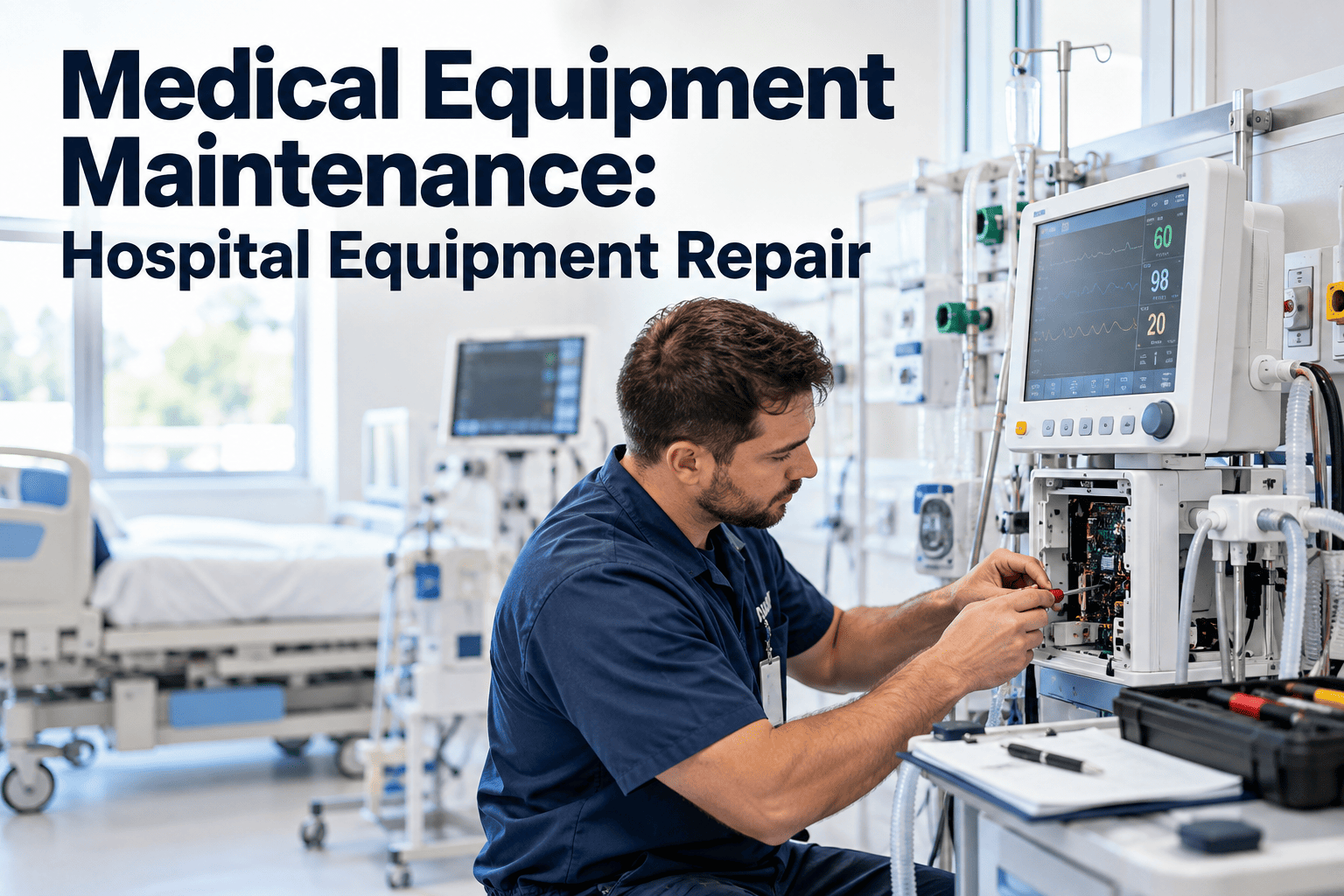
Hospital biomed teams don't lose devices to age — they lose them to blind spots. An infusion pump that missed its PM window, a defibrillator with a battery past its cycle count, a ventilator flagged for a recall no one linked to the asset. Each is
Read More
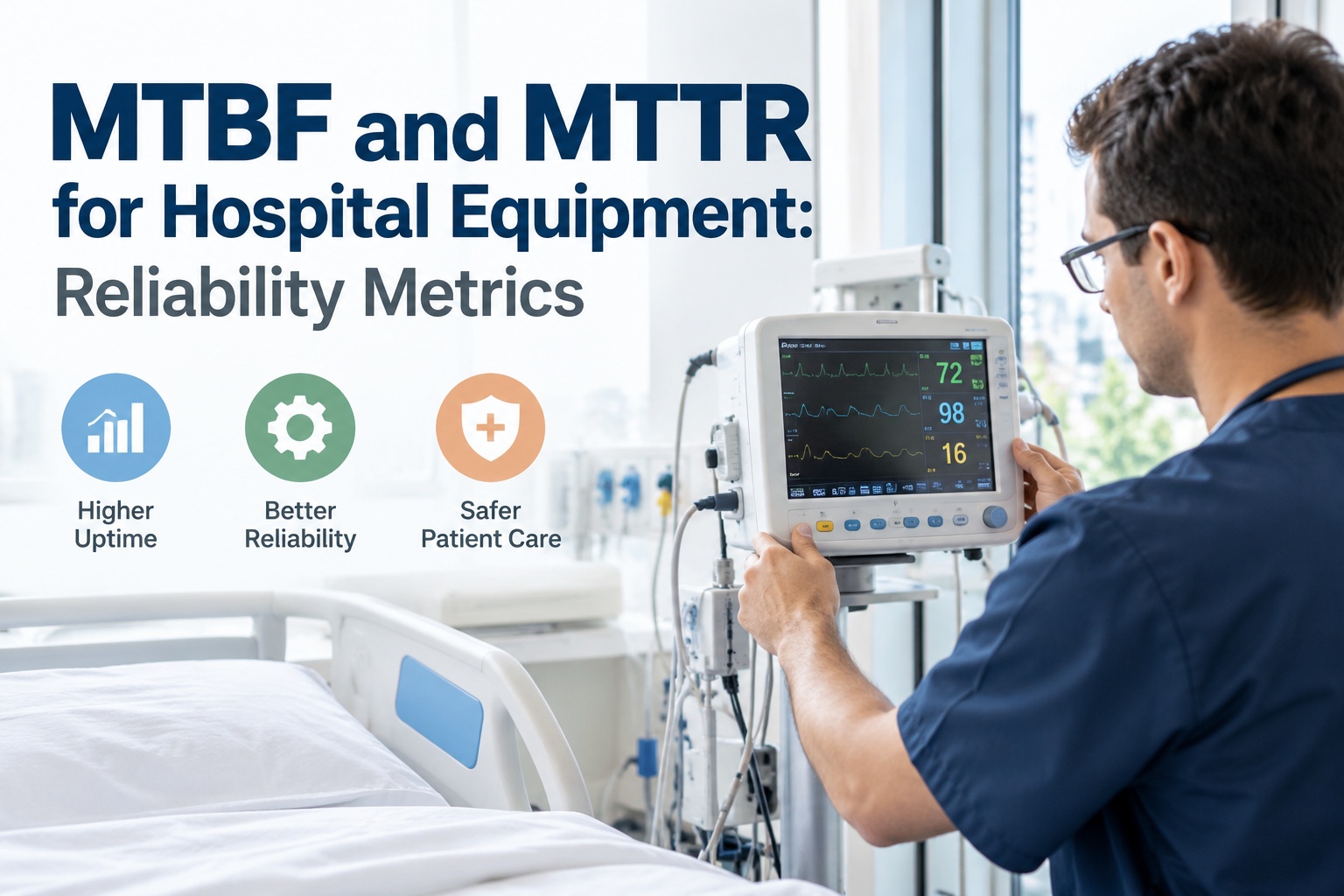
Mean Time Between Failures (MTBF) and Mean Time To Repair (MTTR) show how reliably hospital equipment performs and how quickly it is restored. For example, 8,000 operating hours and 4 failures gives an MTBF of 2,000 hours; 120 total repair hours g
Read More
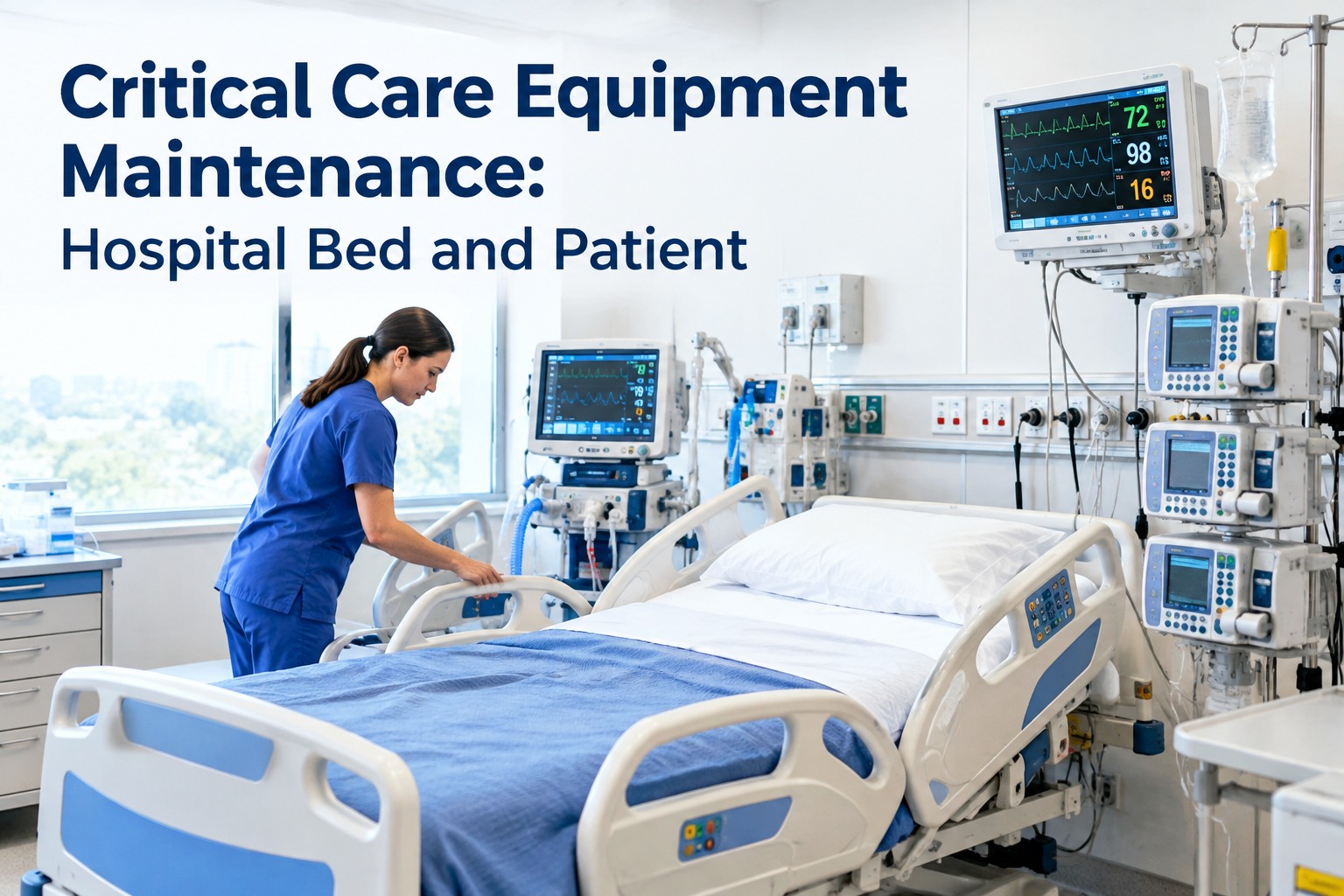
Every ICU device must be maintained reliably, yet many equipment incidents are linked to missed or incomplete preventive maintenance. Managing PM schedules, device histories, and biomedical work orders across critical care assets is difficult with
Read More
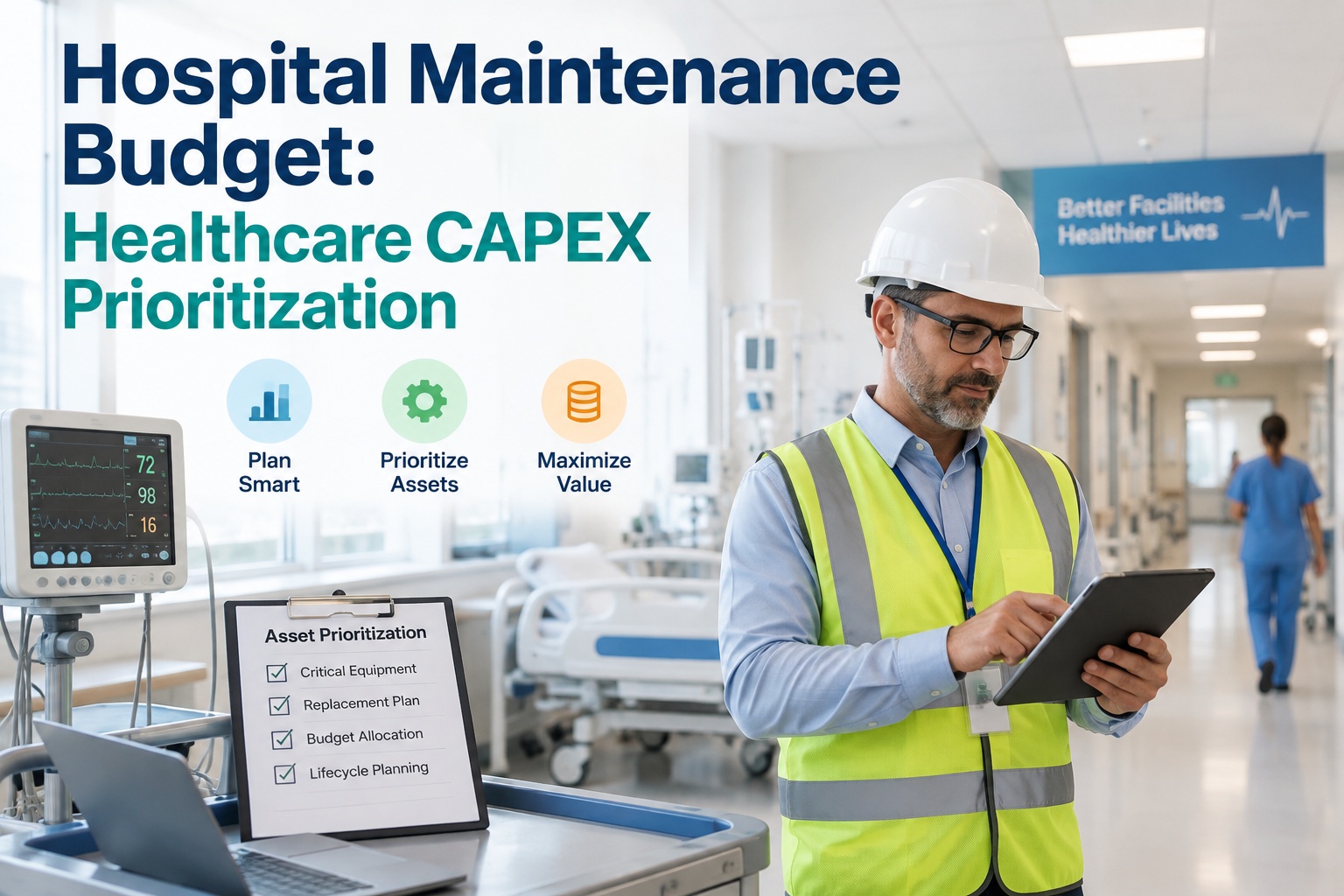
Hospital capital plans often rely too heavily on equipment age and expected lifespan. A better approach combines age with repair costs, safety risk, reliability, and clinical importance. Weighted scoring helps identify which equipment truly
Read More
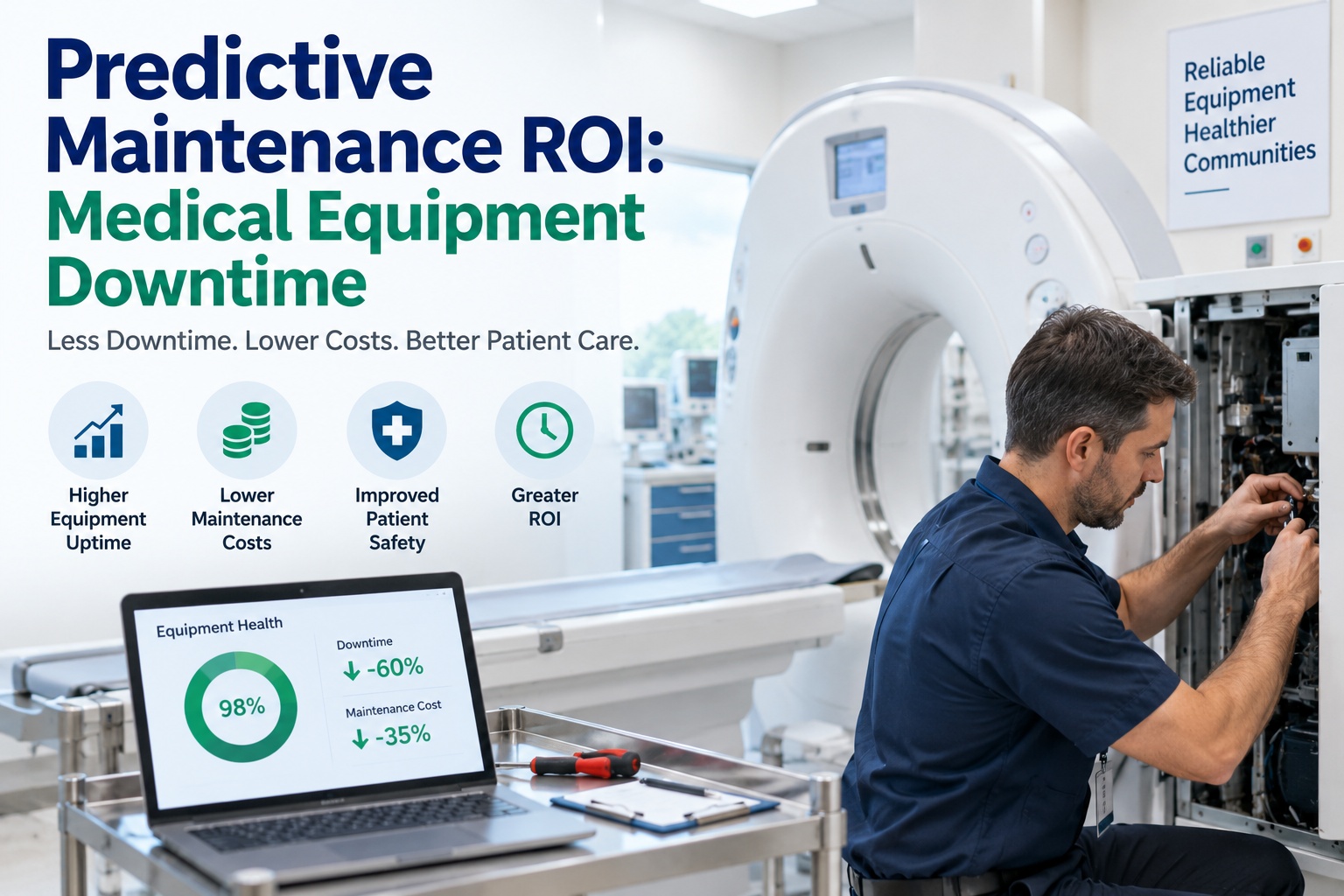
U.S. hospitals can lose billions annually to medical equipment downtime, with costs extending beyond repairs to lost revenue, rescheduled patients, rentals, and overtime. Since many failures are preventable, predictive maintenance ROI can be calcu
Read More
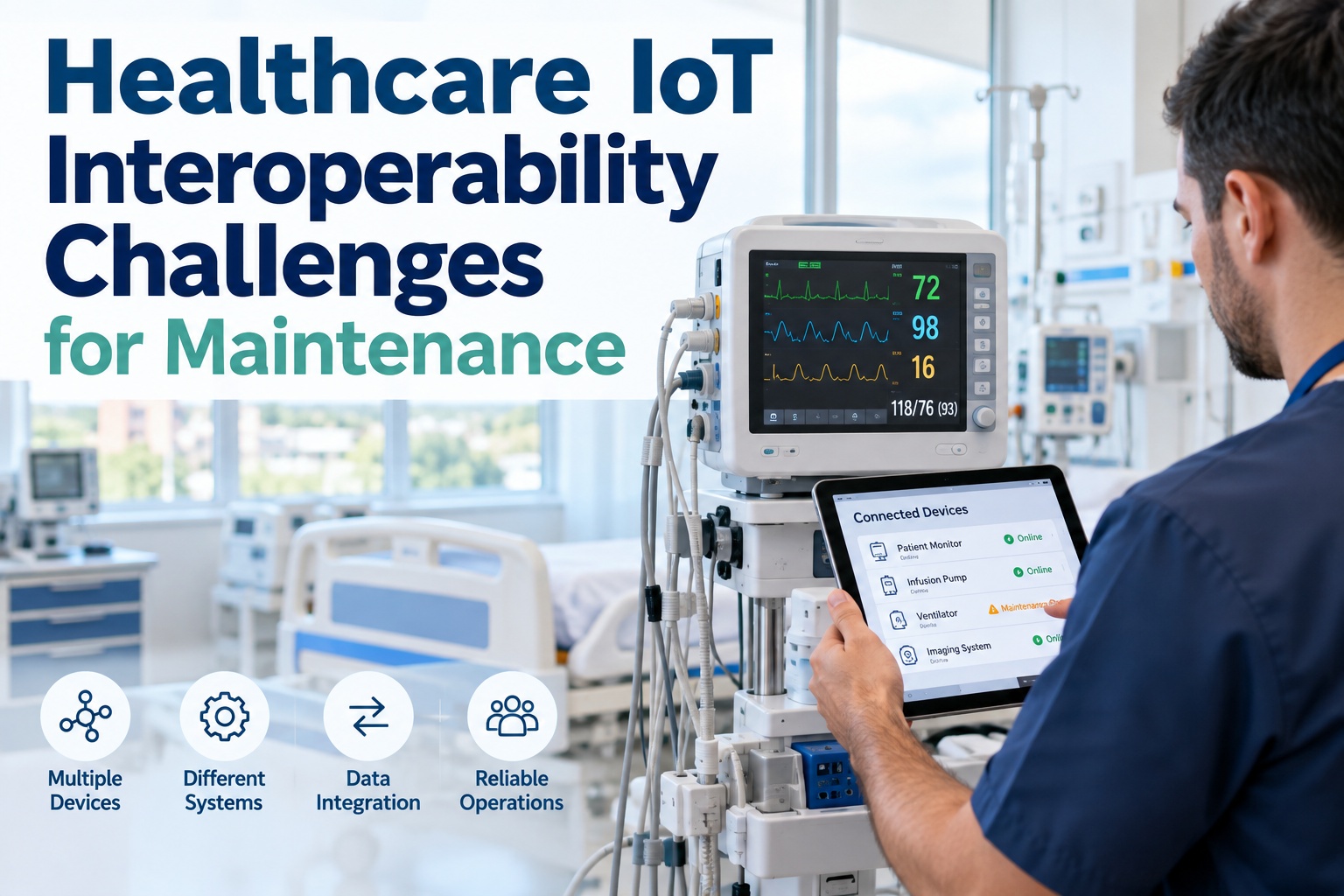
A hospital ICU can have 10 to 15 connected devices per patient, including monitors, infusion pumps, and ventilators. These devices often use different protocols, from legacy serial connections to Bluetooth and proprietary gateways. This fragmentat
Read More
Not every asset in a hospital deserves the same maintenance strategy — and treating them as if they do is exactly how a facilities budget gets wasted on the wrong things. A ventilator and a waiting-room chair fail differently, matter differently,
Read More
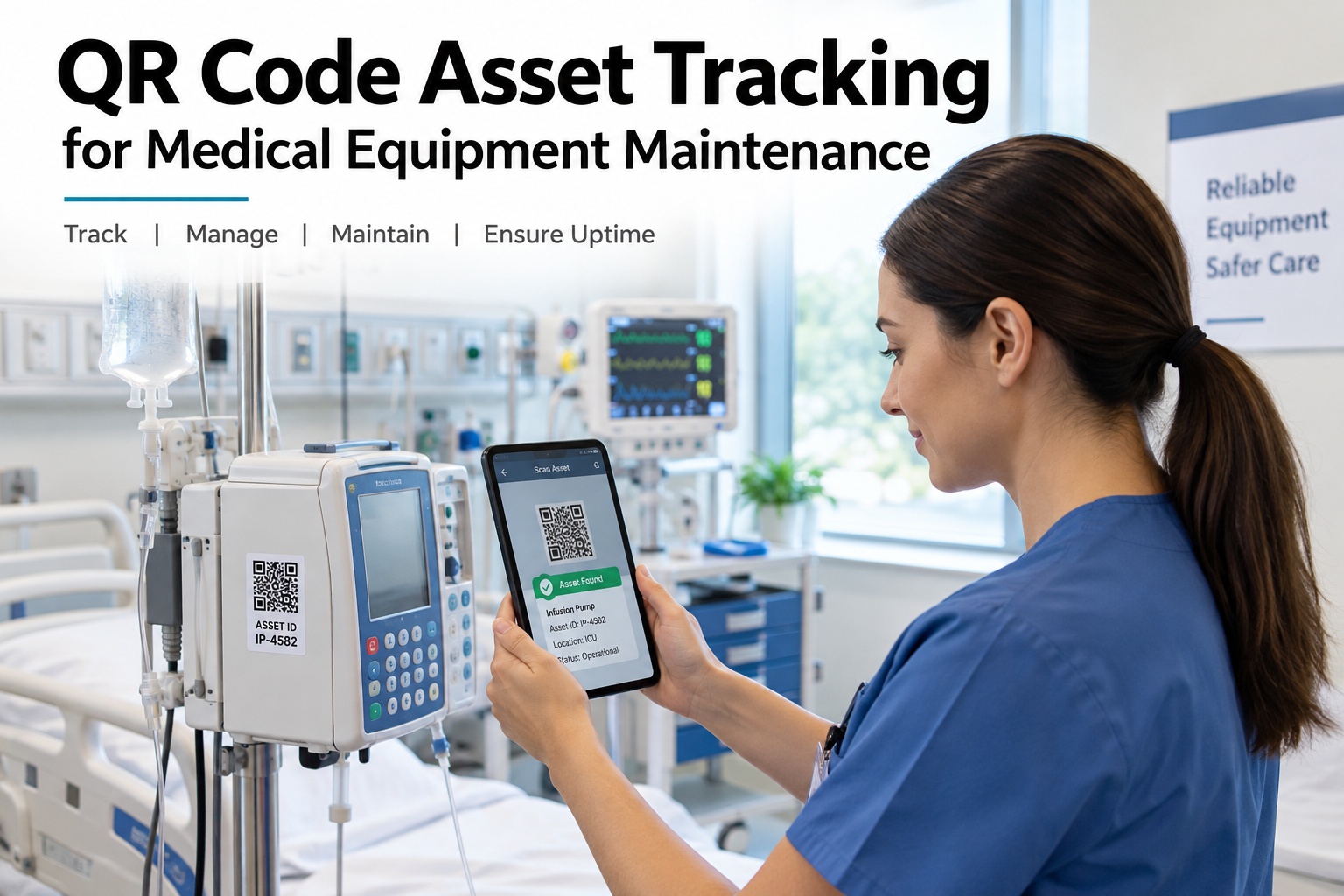
Ask any biomedical engineering team how long it takes to locate a specific infusion pump on a 400-bed floor, and the honest answer is usually "longer than it should." Industry studies on hospital asset tracking put 10–20% of mobile medical equipme
Read More
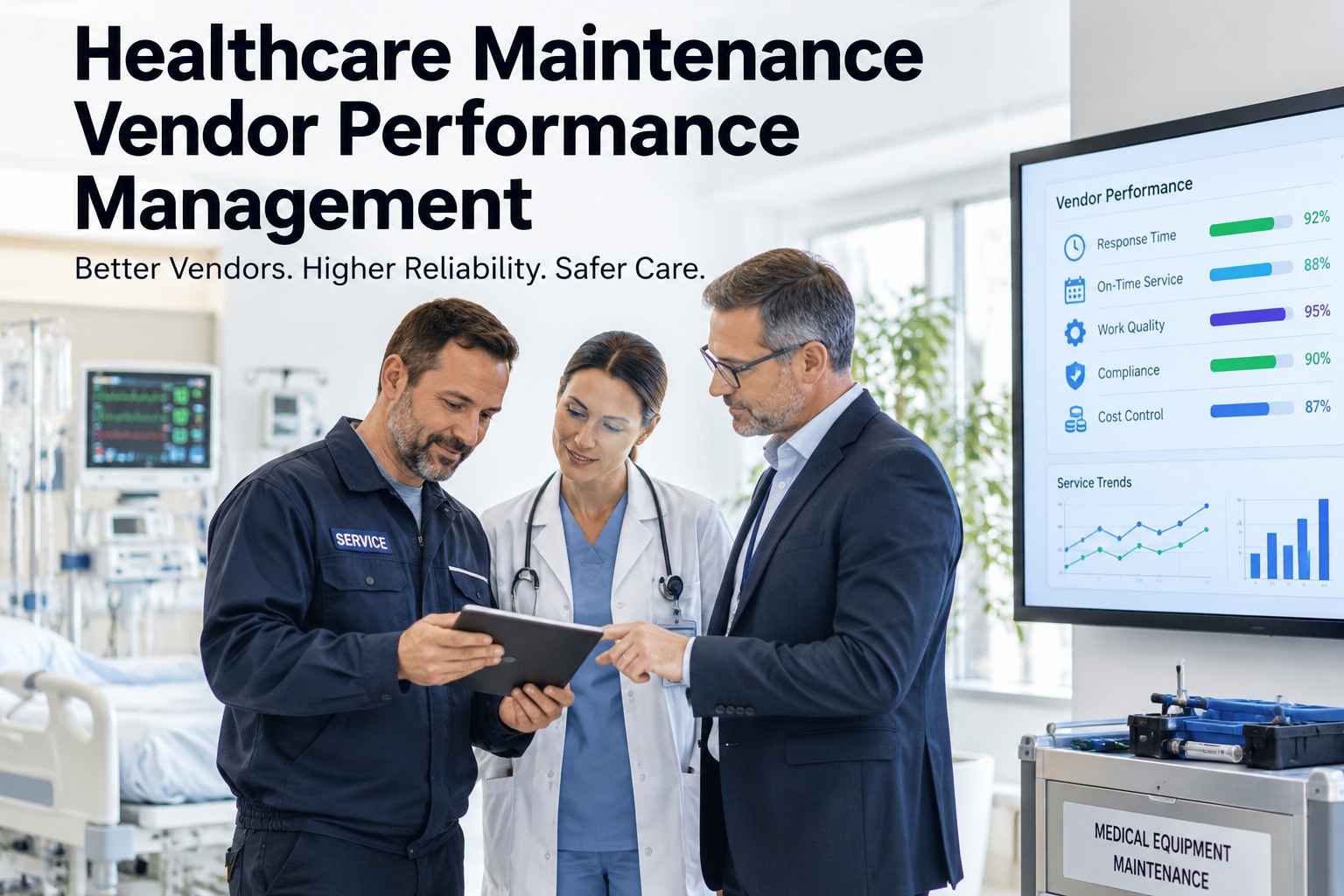
A vendor contract looks solid on paper — response time guarantees, coverage hours, a service-level agreement everyone signed. Then a chiller goes down at 2 a.m., the vendor takes nine hours to show up instead of the four they promised, and there's
Read More
Every hospital's maintenance backlog is a story about risk that hasn't been paid own yet. A 6-week backlog on lobby lighting is a paperwork problem; a 6-week backlog on OR HVAC controls is a survey finding waiting to happen. The difference i
Read More
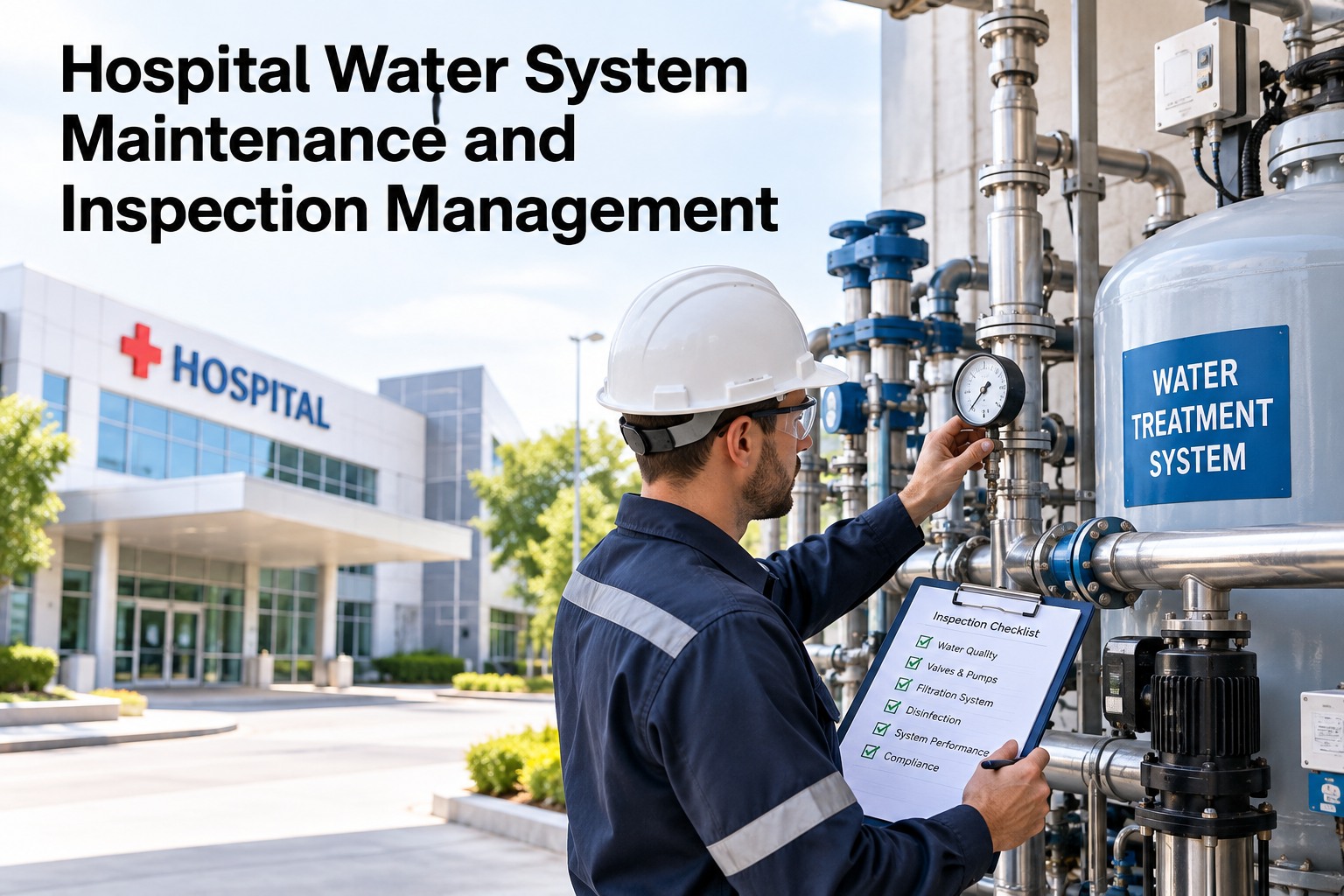
A water system doesn't fail loudly — it fails in a logbook nobody has looked at in three weeks. A cooling tower temperature that's supposed to be checked weekly, a low-use fixture that should have been flushed, a hot water tank running a few degre
Read More
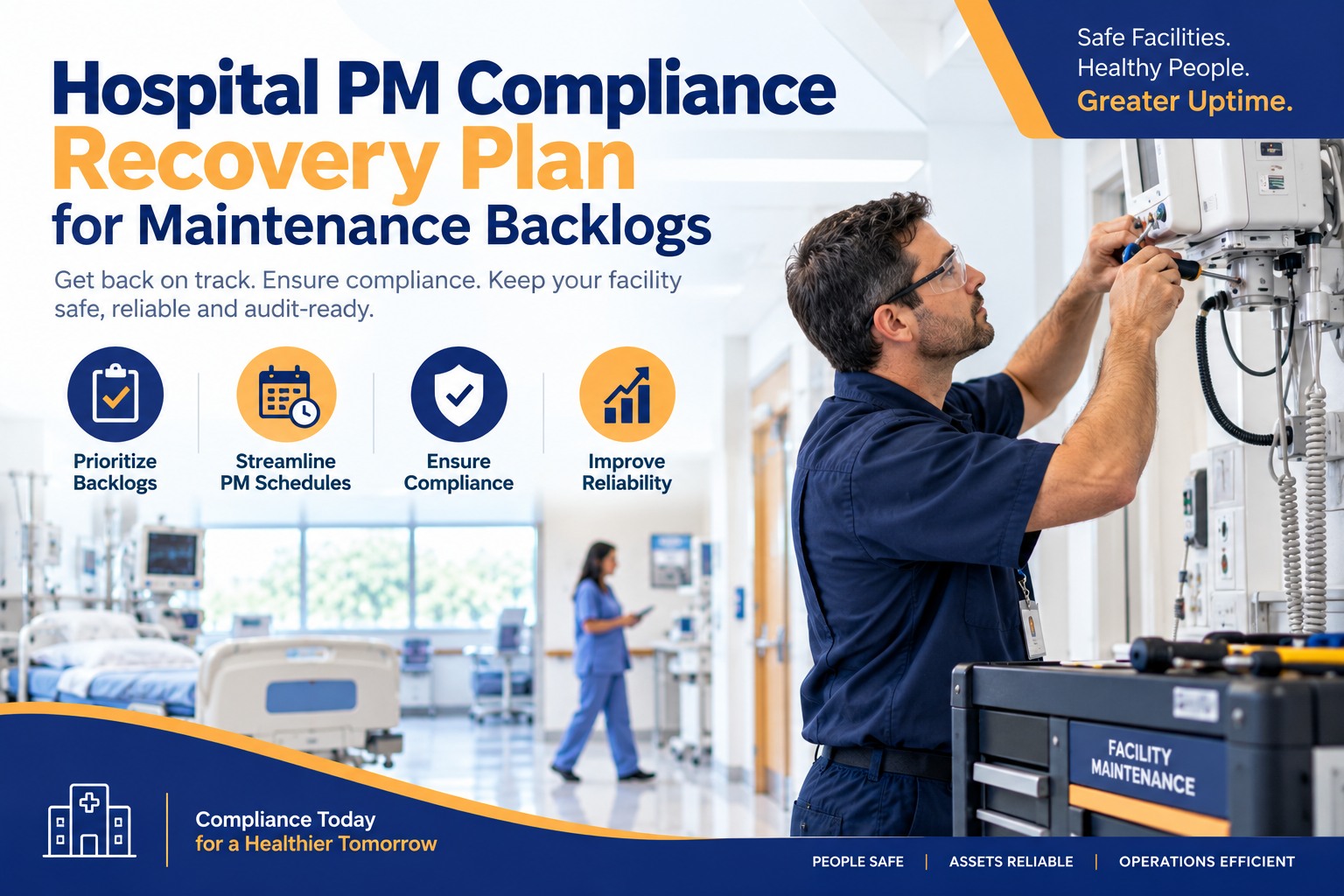
A PM compliance backlog rarely starts as one big failure — it's 40 overdue work orders here, a biomed roster gap there, and inspection notes that live in three different binders. Then a survey date lands on the calendar and the whole thing becomes
Read More
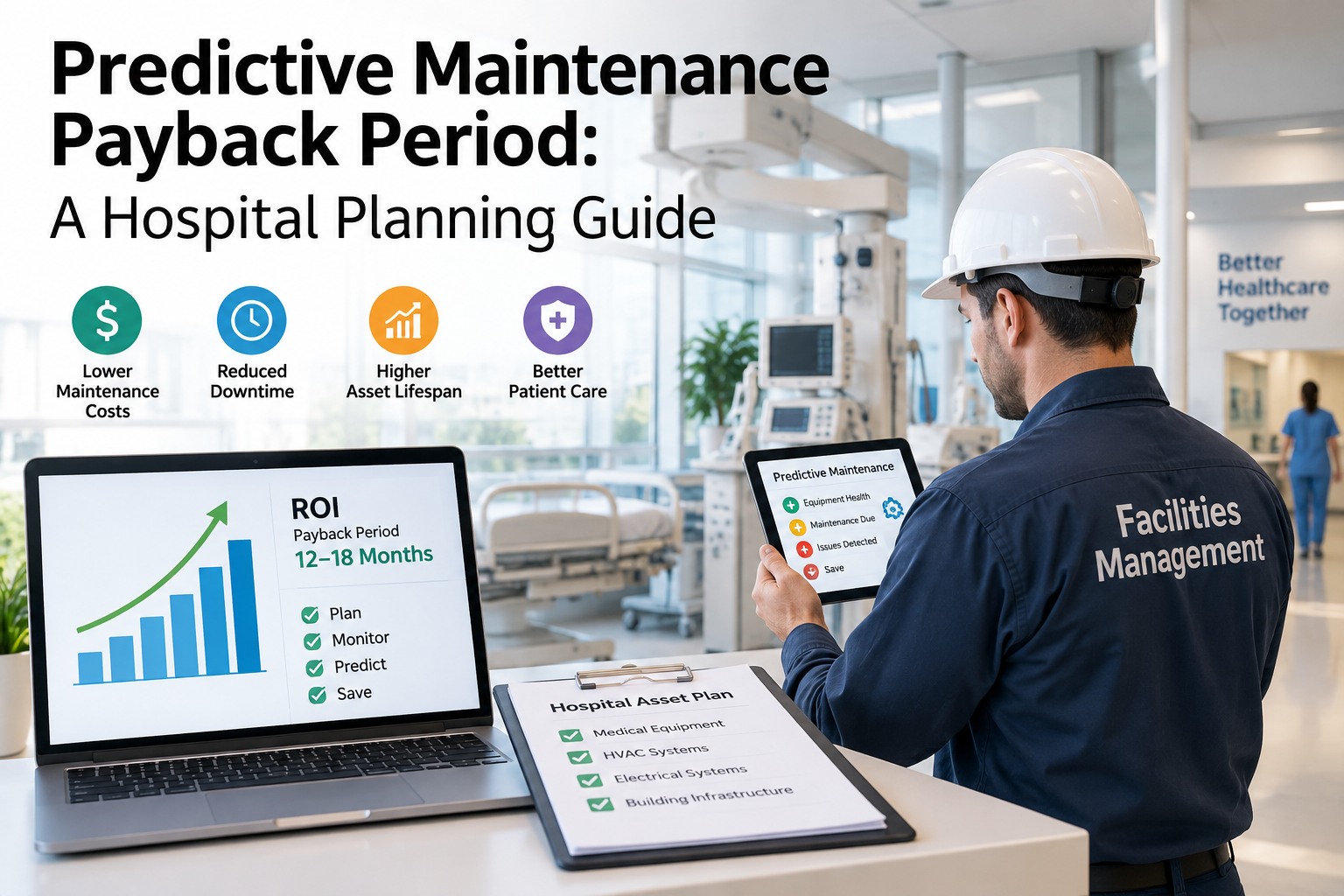
Every hospital CFO asking about predictive maintenance eventually asks the same question: "When do we break even?" It's the right question — and the honest answer is that most hospitals hit payback between month 7 and month 14, depending on asset
Read More
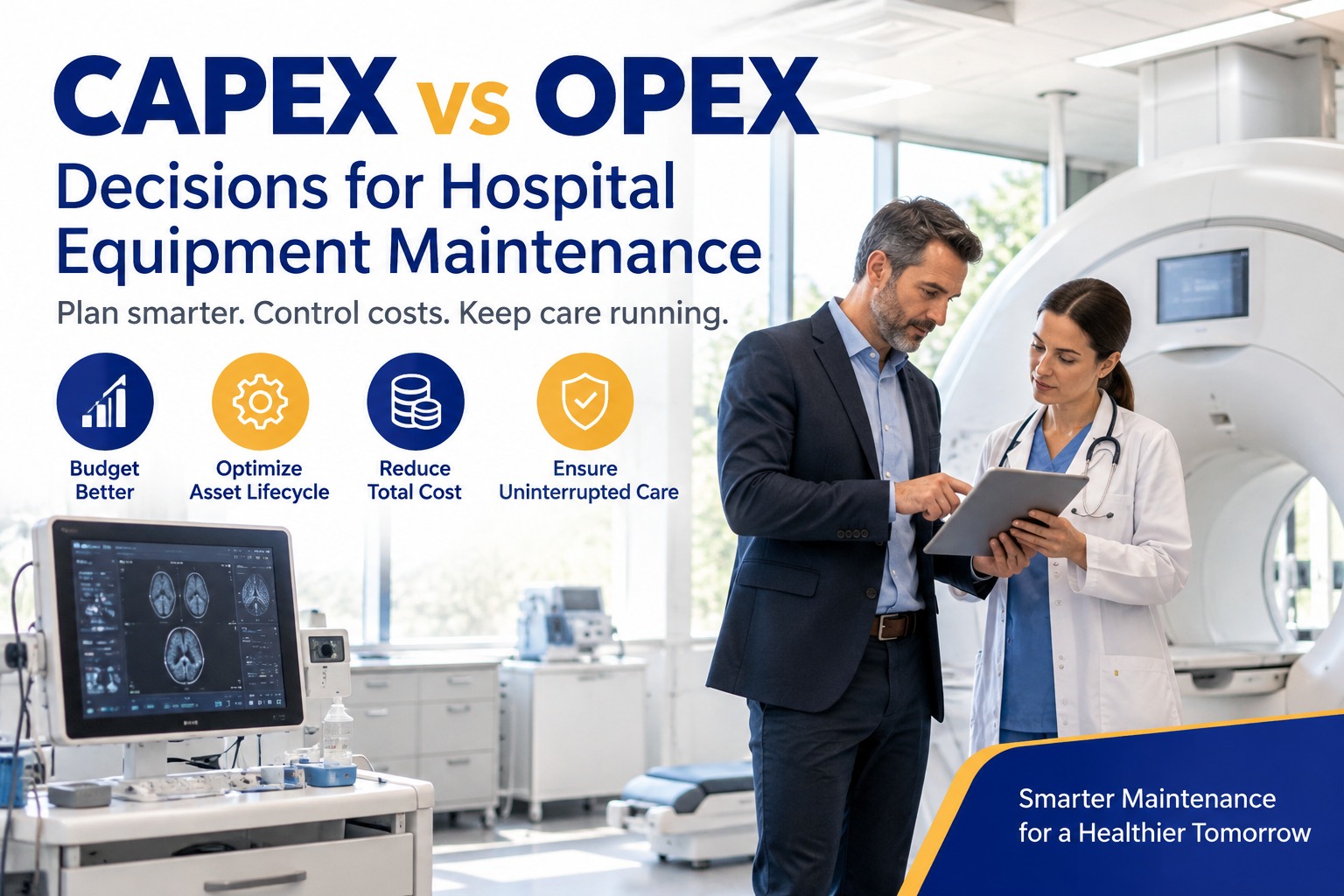
Every hospital finance committee runs the same argument twice a year: patch the 12-year-old CT one more time, or move $1.6M of capital to replace it. Repair keeps this quarter's OpEx line clean but pushes the risk into the next unplanned failure —
Read More
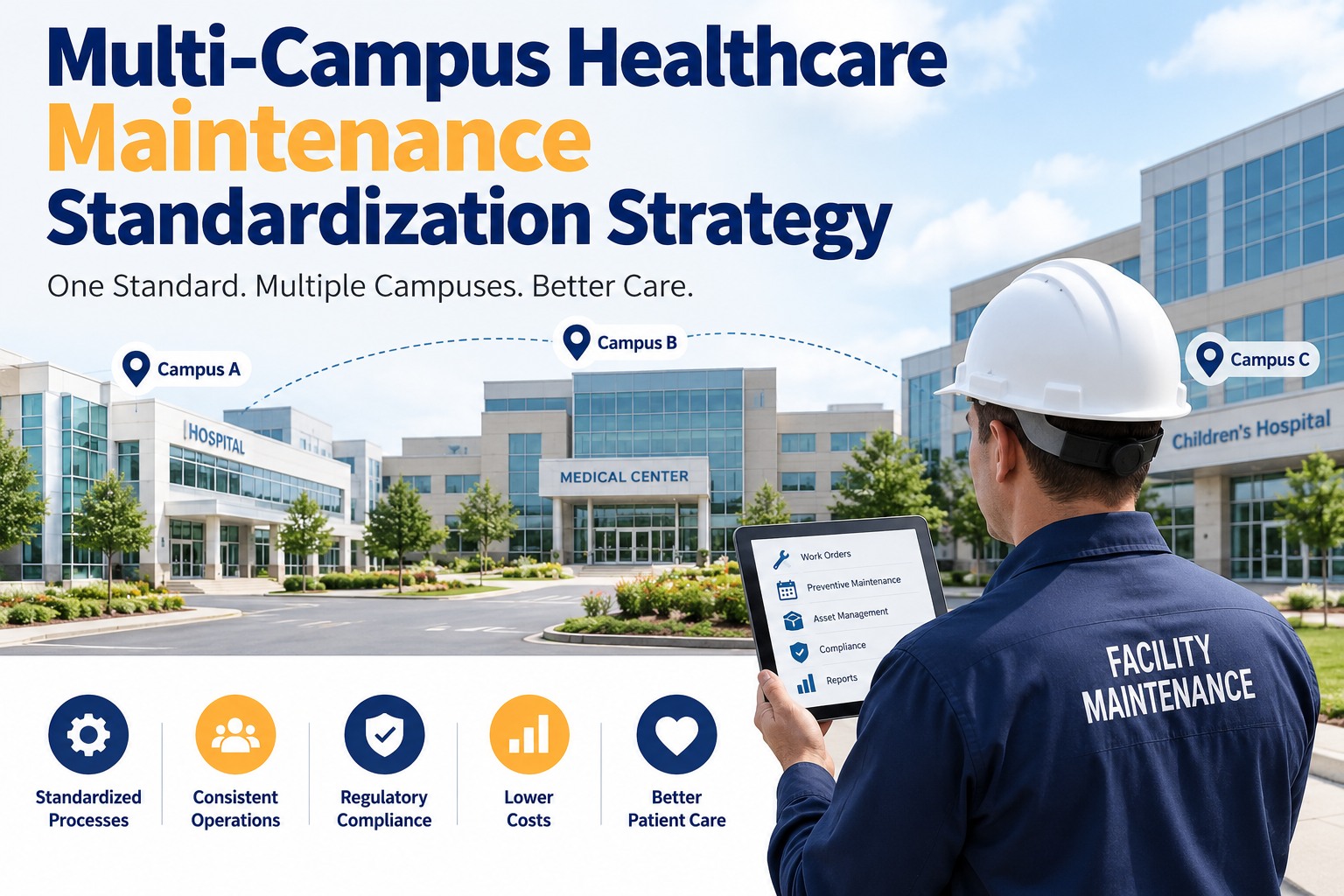
Most multi-campus health systems don't have a maintenance problem — they have twenty-seven different versions of one. Site A uses a spreadsheet, Site B has a legacy CMMS from 2011, Site C runs a paper binder in the biomed office, and every audit c
Read More
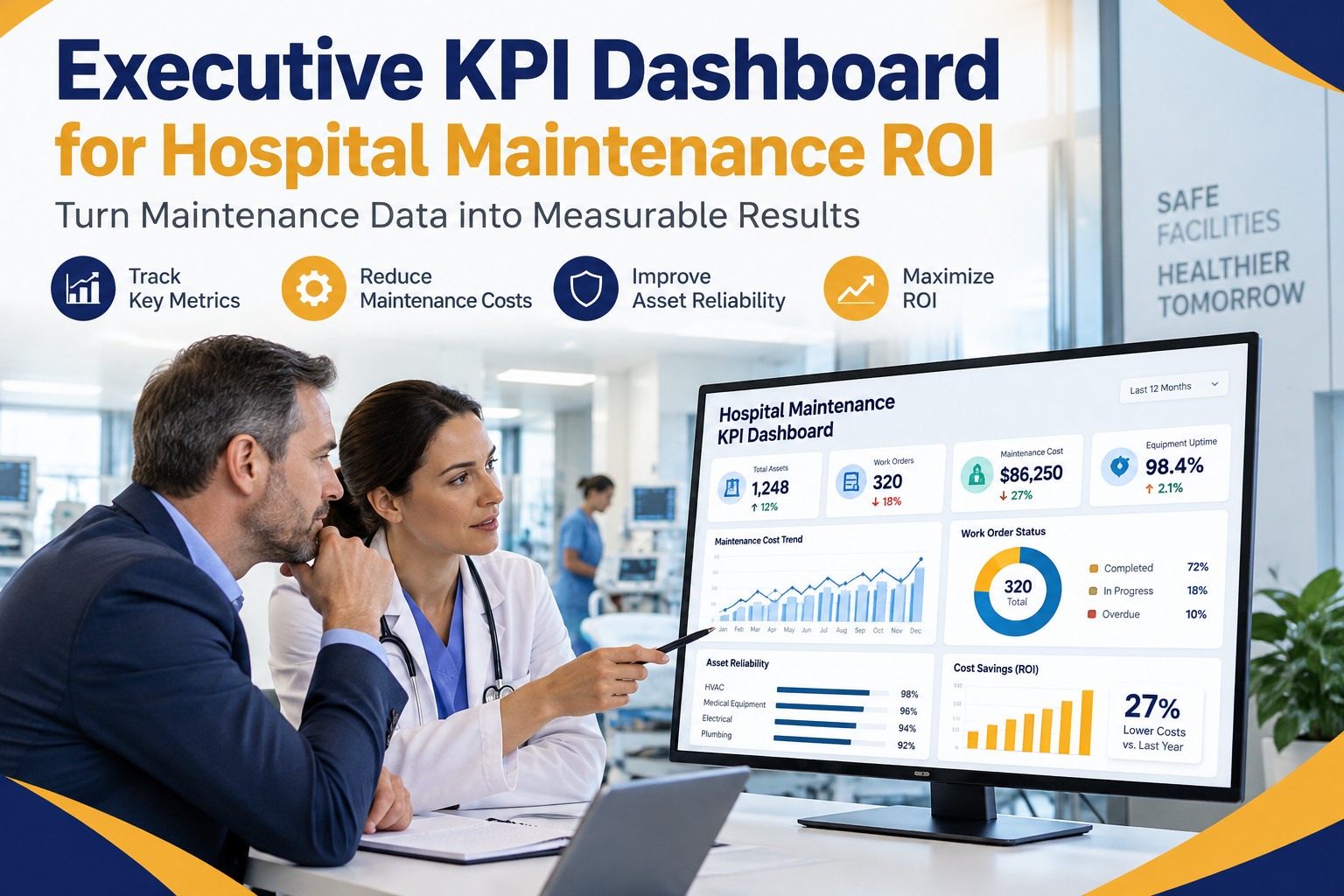
For hospital CFOs and COOs, maintenance has traditionally been a cost centre a line item to squeeze rather than an ROI lever to pull. That view is changing. Healthcare facilities running reactive maintenance overspend their maintenance budget by 1
Read More
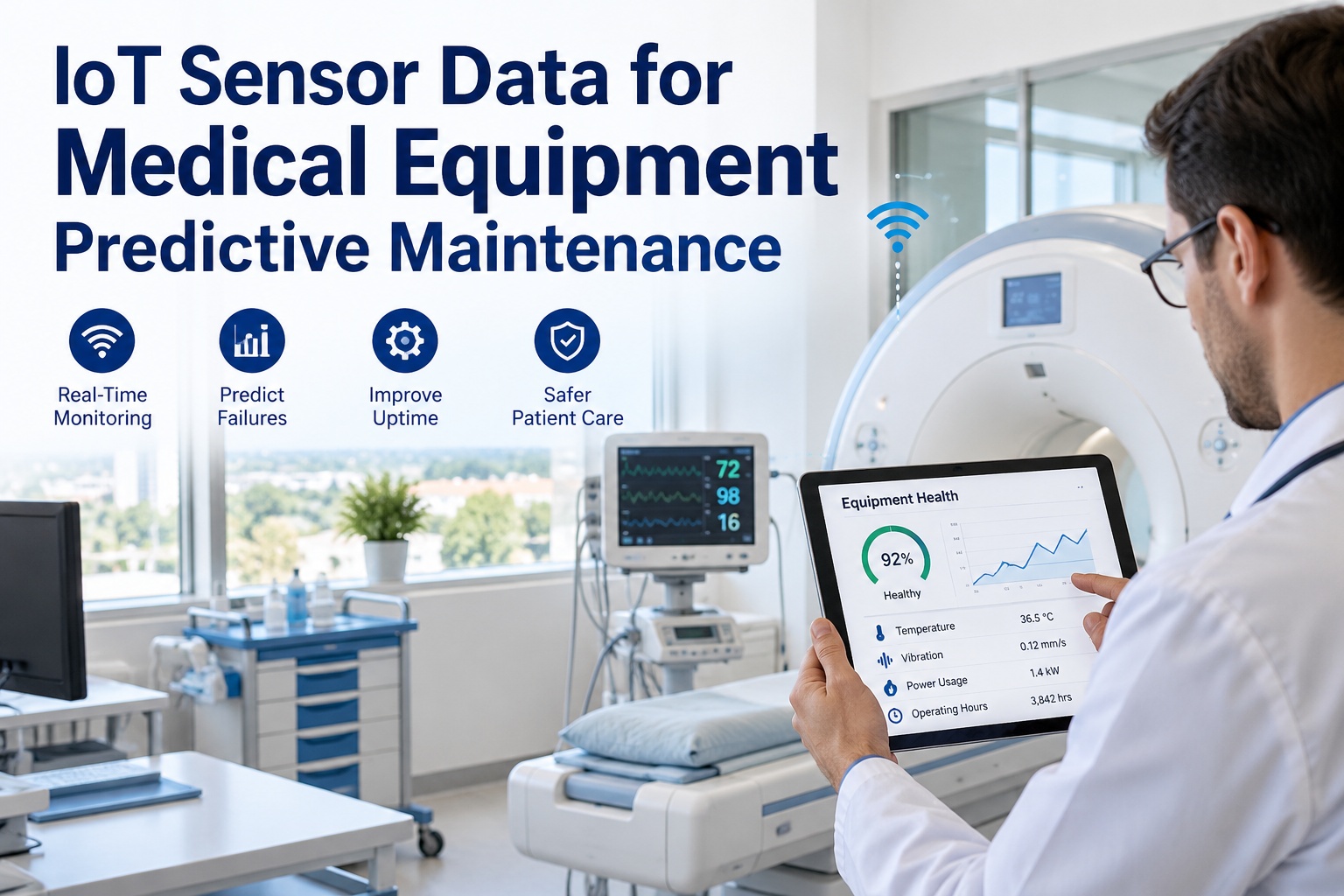
A modern hospital collects more equipment sensor data in a single afternoon than a biomed team could read in a year — helium pressure from the MRI, valve cycles from every ventilator, motor current from every infusion pump, tube temperature from t
Read More
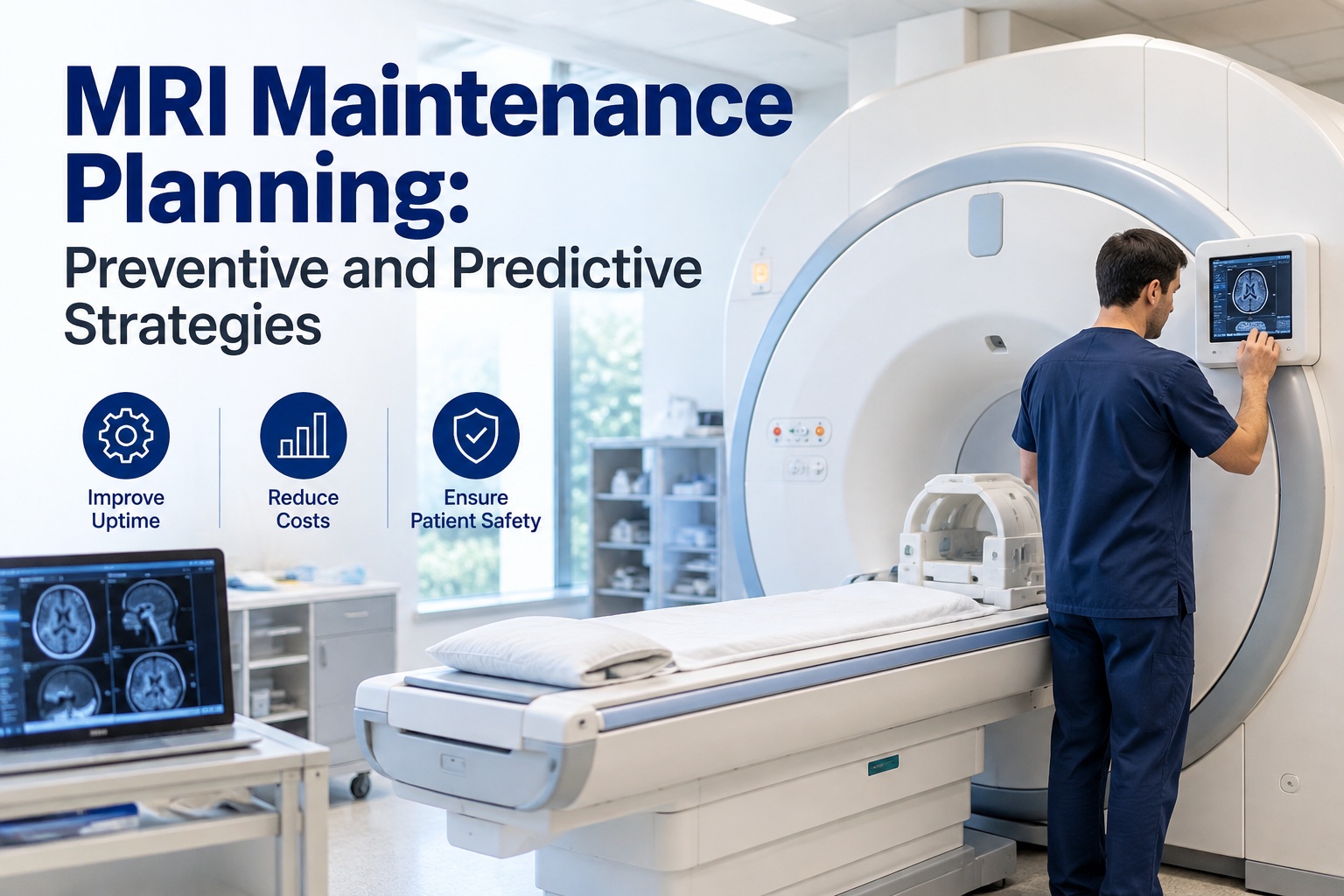
An MRI scanner holds liquid helium at −269°C and books patients weeks in advance which is why every day of downtime costs a disproportionate share of hospital revenue. An uncontrolled magnet quench alone runs $30,000–$80,000 in helium refill plus
Read More
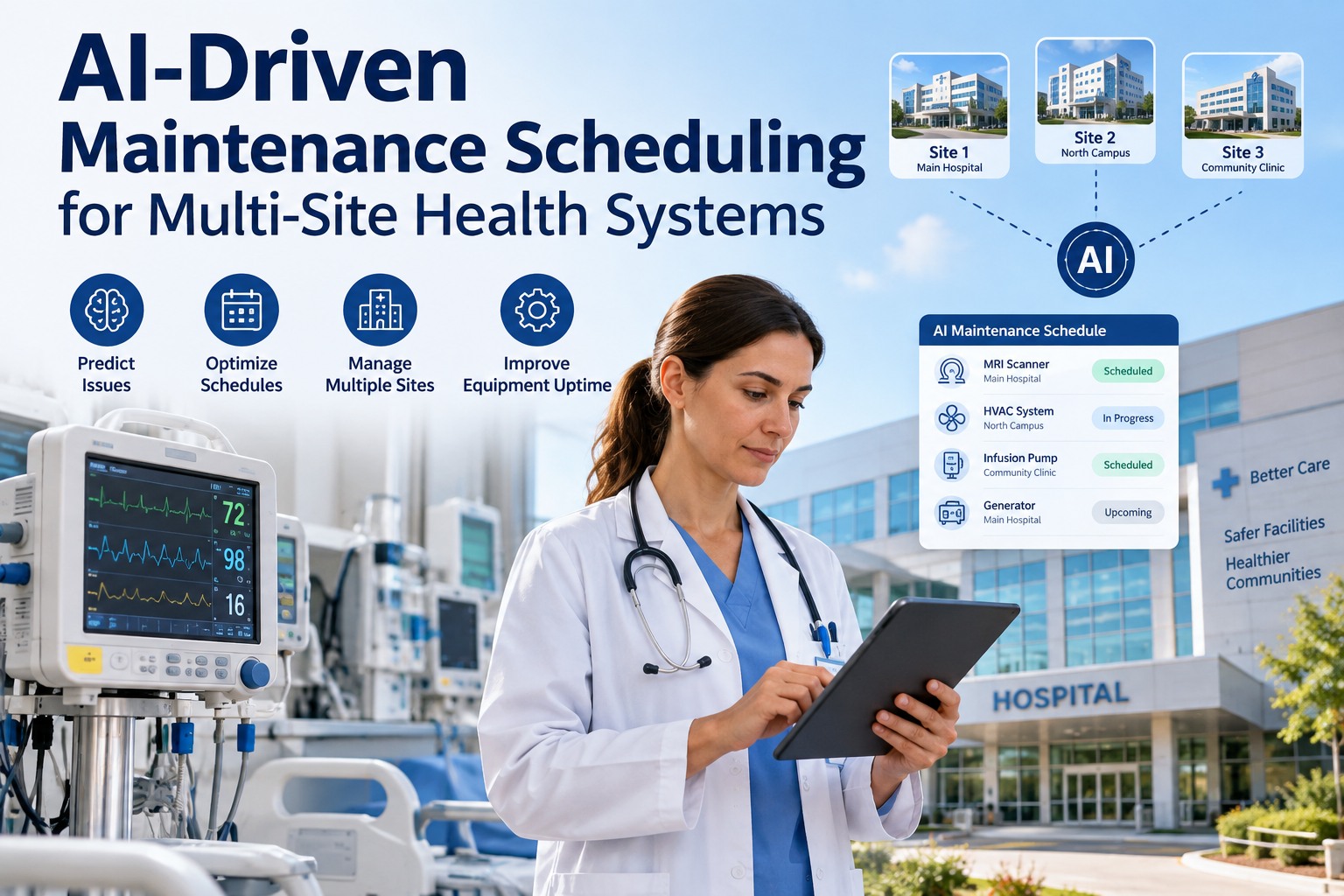
A health system with 14 hospitals and 60+ clinics doesn't have a maintenance problem it has a scheduling problem. Each site runs its own PM calendar, its own biomed roster and its own definition of "critical," so duplicate PMs happen at one

Read More
A HEPA filter's performance isn't a fixed property it ships with — it's a balance you either maintain or slowly lose across its whole service life. The same filter can hold ISO 5 on clean, uniform airflow at a sensible pressure drop, or it can qui
Read More
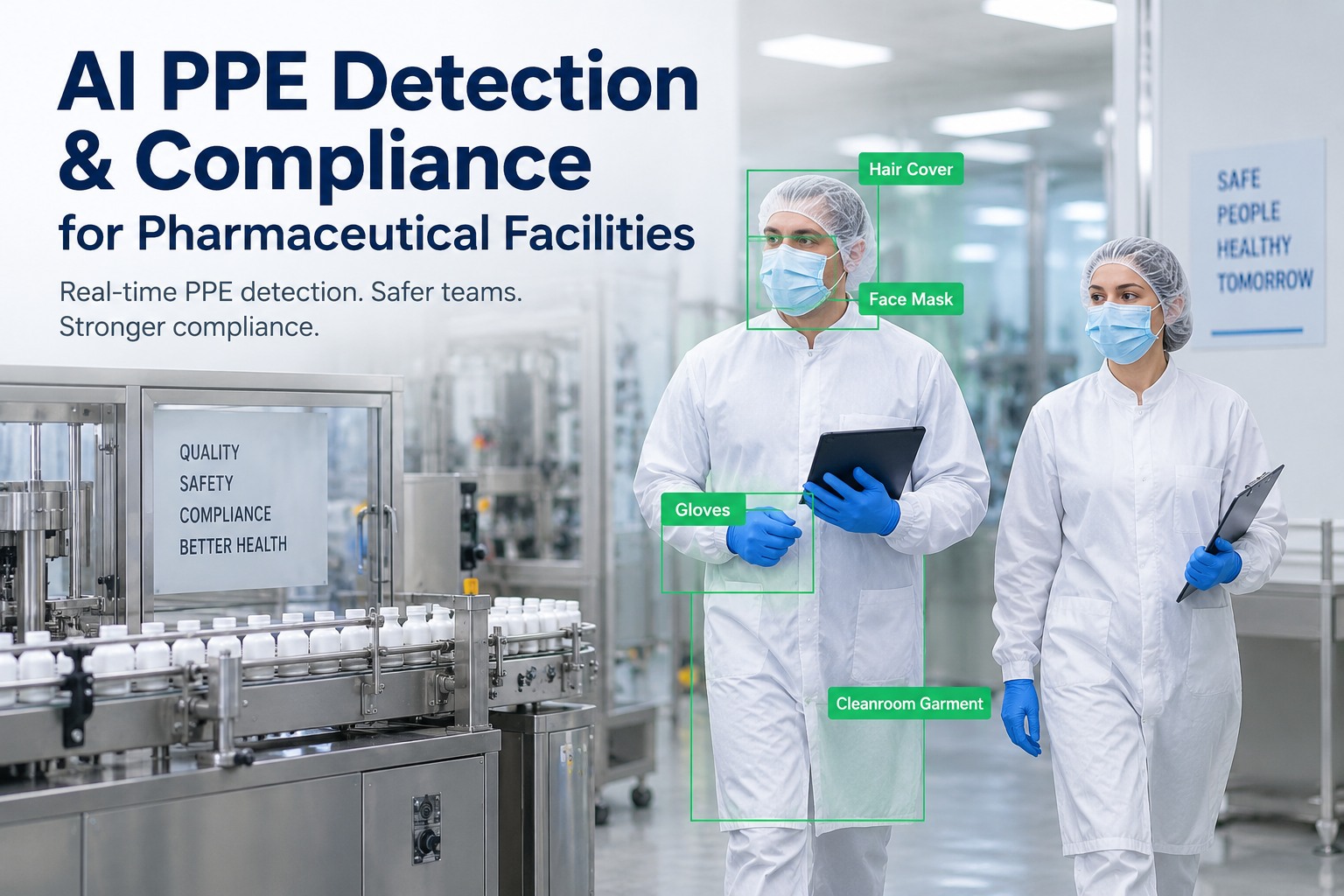
General-industry PPE detection answers one question: is the hard hat on the head. Pharmaceutical PPE compliance has to answer a harder one — was every garment donned in the correct sequence, does the mask fit, is any skin exposed, and can you prov

Read More
A HEPA filter is the only contamination barrier in a pharmaceutical cleanroom that gives no sign it has failed. The air still moves, the room still reads clean on a good day, and a pinhole leak in the media or a failed gasket seal stays invisible
Read More
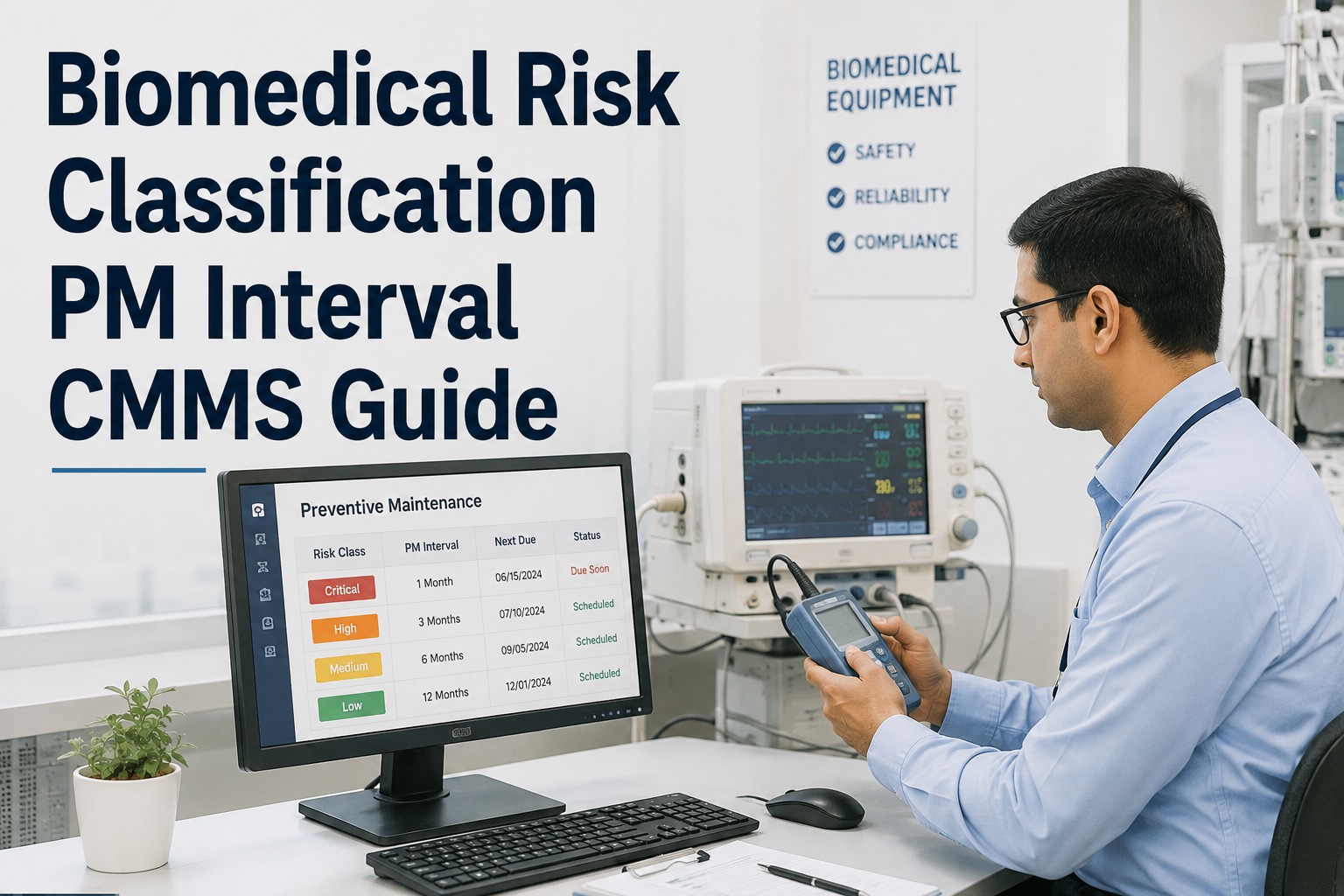
Biomedical risk classification is the backbone of every defensible PM interval assignment in modern healthcare maintenance. Regulators like CMS, The Joint Commission, and DNV surveyors expect clinical engineering teams to document exactly how equi
Read More
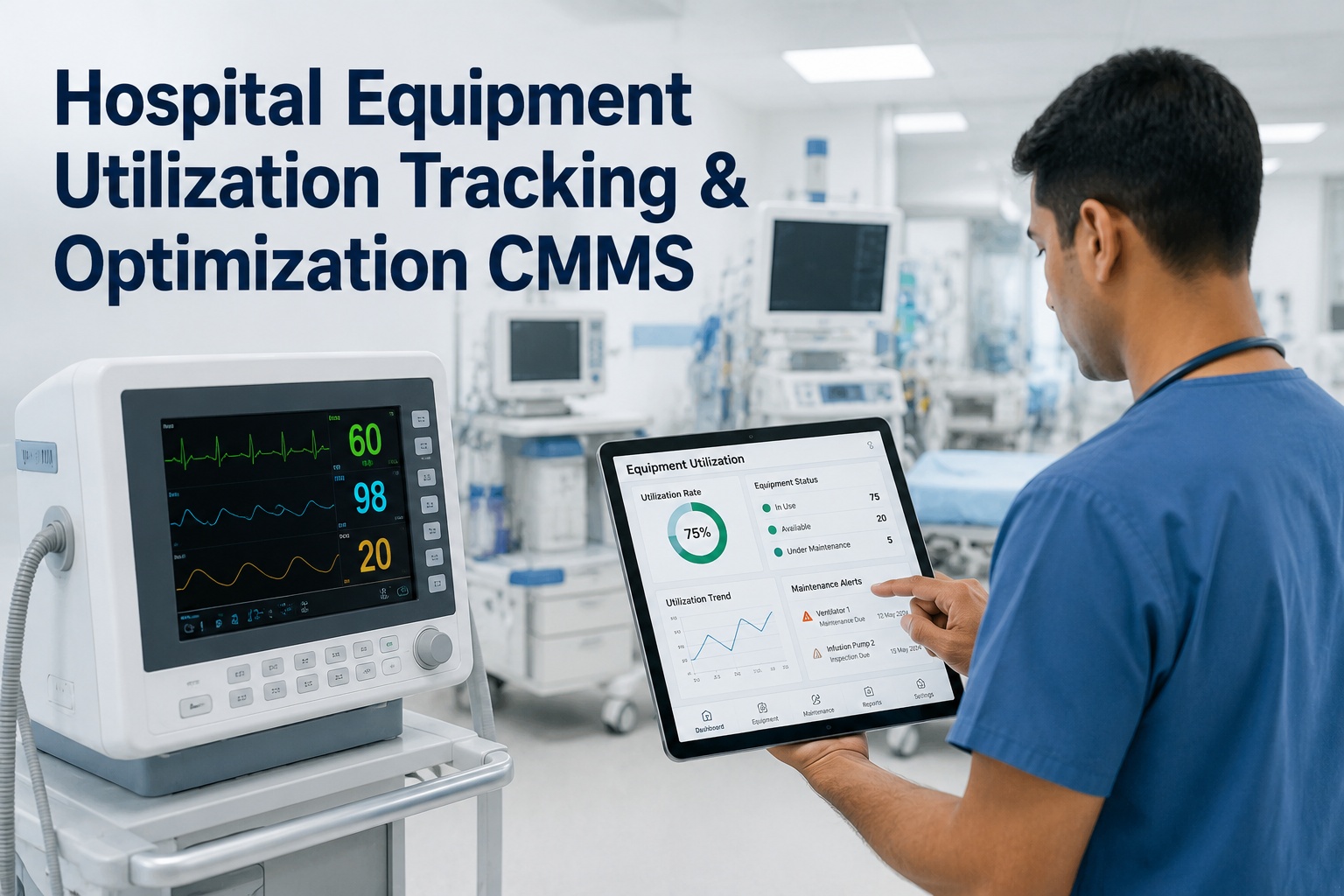
Hospital equipment utilization tracking and optimization through a CMMS is how modern clinical engineering teams stop guessing about device usage and start making data-driven decisions about what to buy, share, or retire. The average hospital runs
Read More
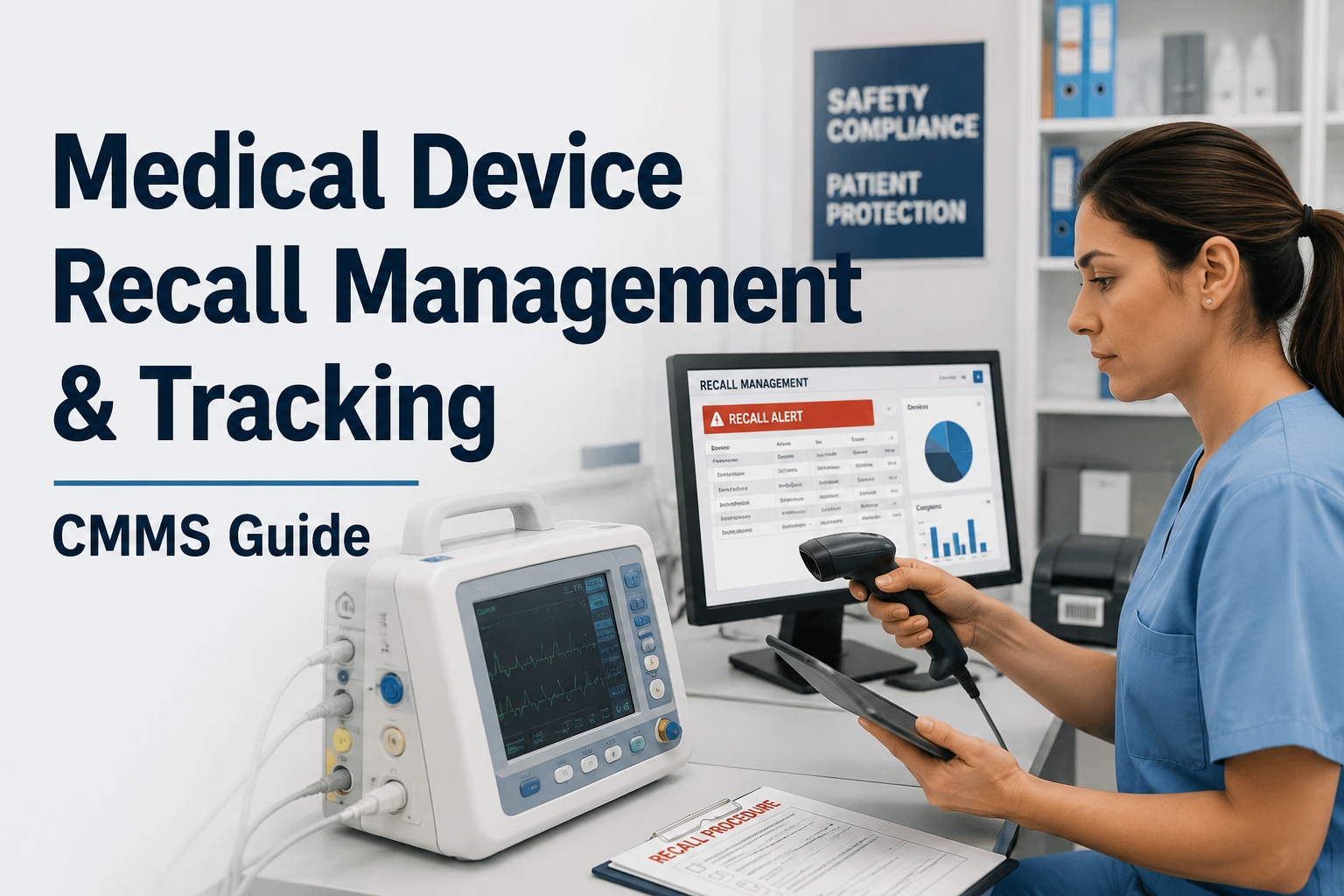
Medical device recall management is the structured process of identifying, isolating, and remediating medical equipment subject to an FDA or manufacturer recall, and a dedicated CMMS is the fastest way to execute it across a healthcare inventory.
Read More
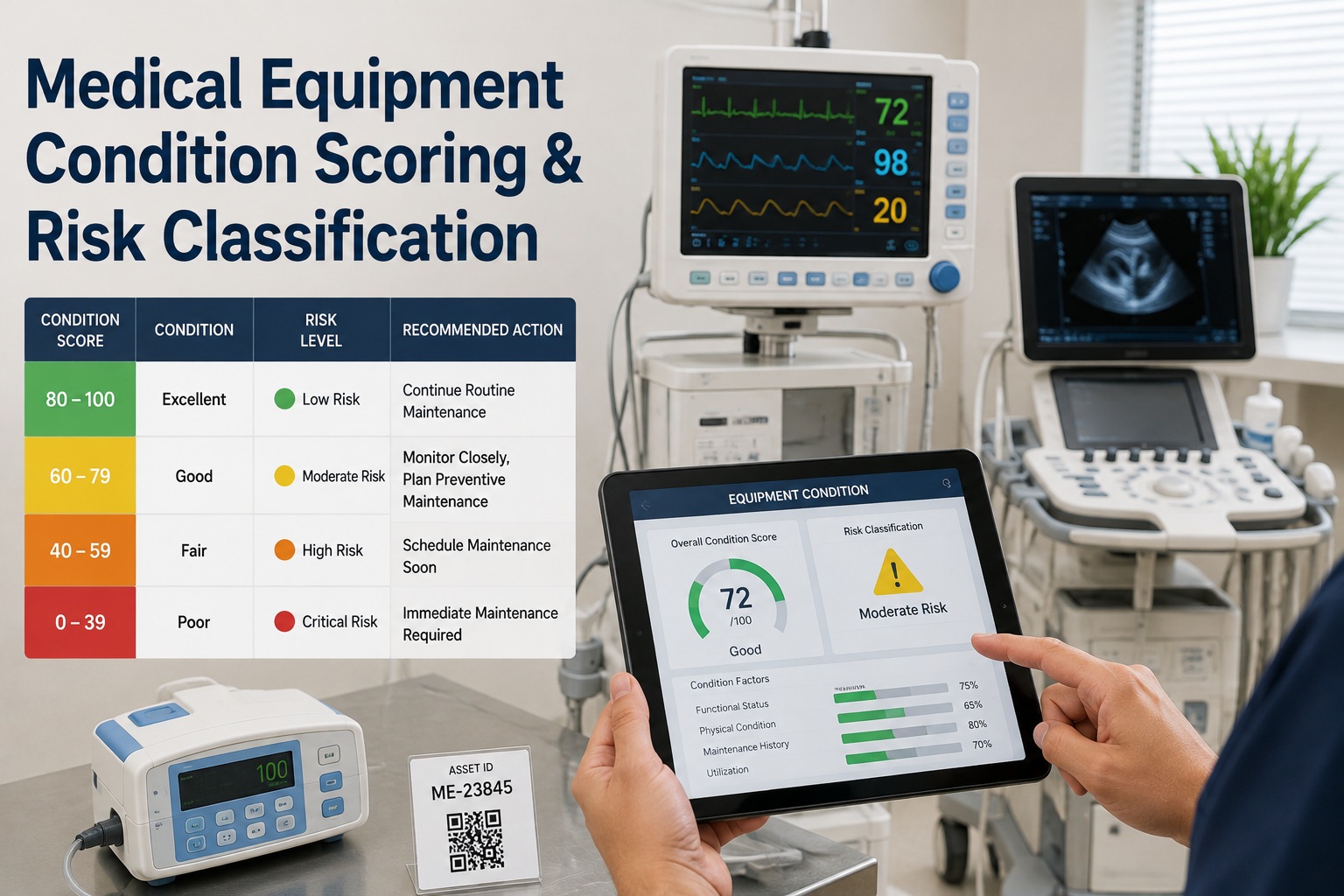
Medical equipment condition scoring assigns a quantified risk value to every device in a hospital inventory based on its clinical function, physical risk, and maintenance history, enabling biomedical engineering teams to concentrate preventive mai
Read More
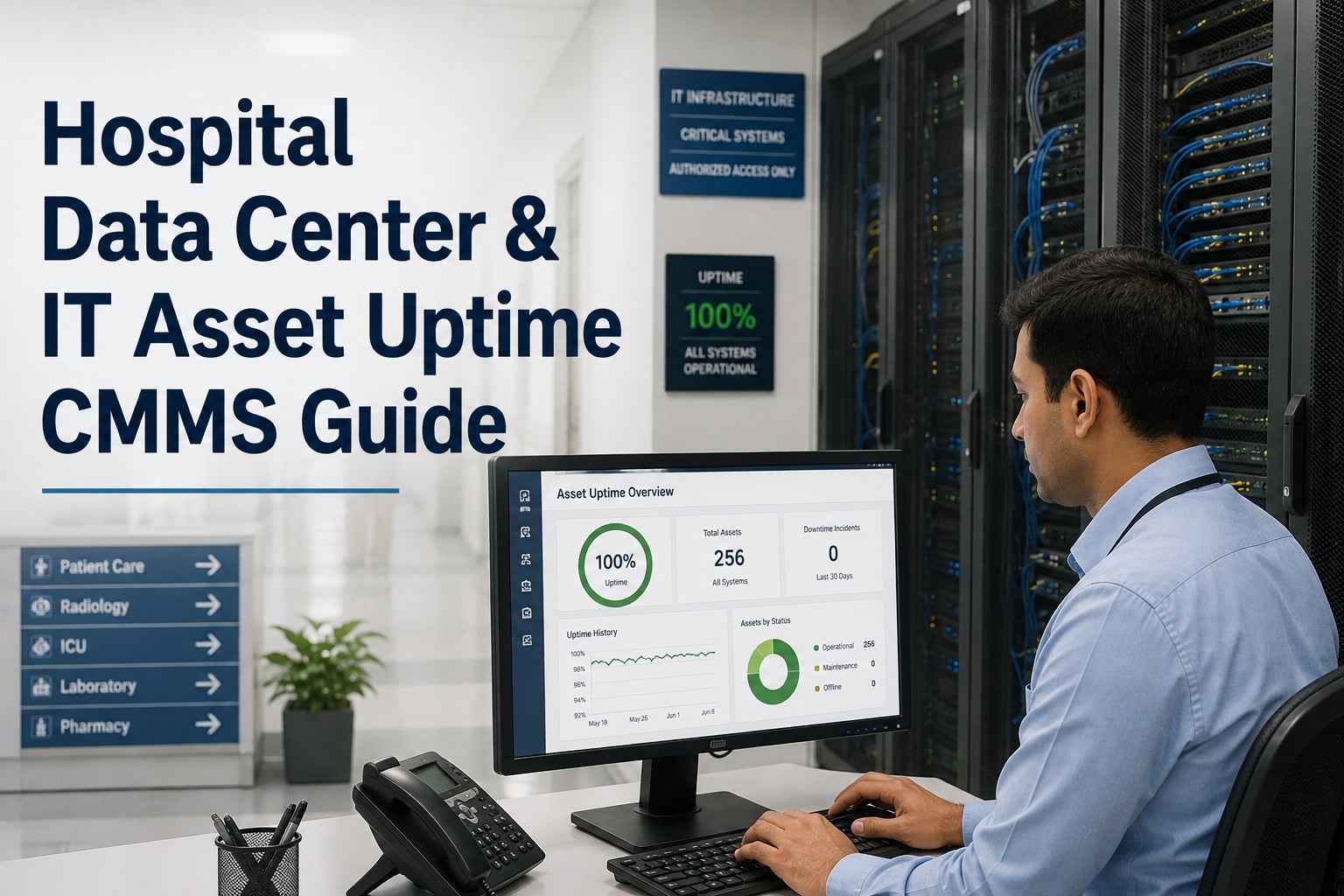
Hospital data center CMMS is no longer optional infrastructure — when EHR, PACS, and clinical systems go dark, patient safety is directly at risk and a single hour of healthcare IT downtime can exceed $300K in lost revenue and diverted care. This
Read More
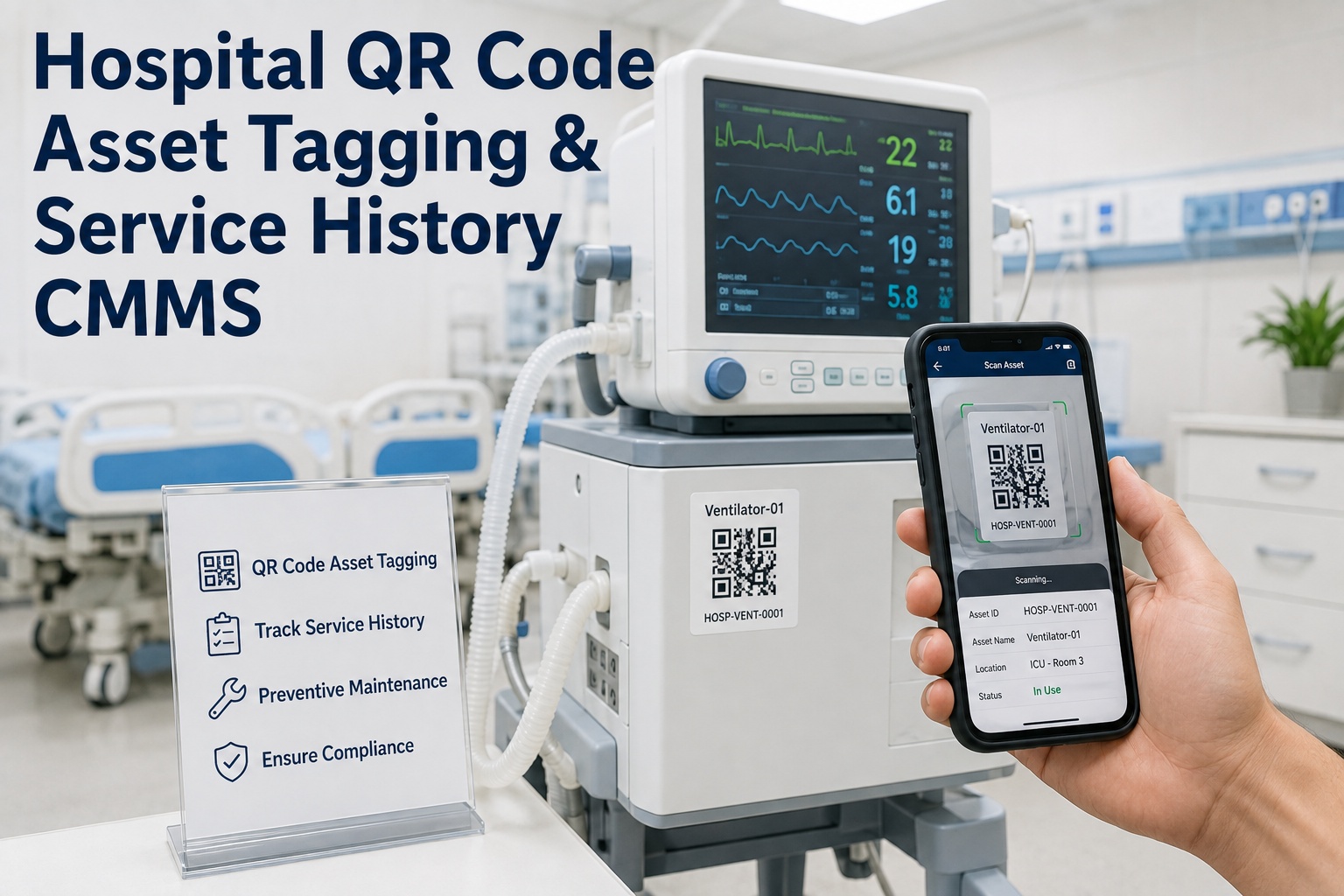
Hospital QR code asset tagging is the boring foundation that makes every downstream biomedical and facilities workflow work — scan the QR, get the full service history, log the work, move on. A medical device QR code system tied directly to your C
Read More
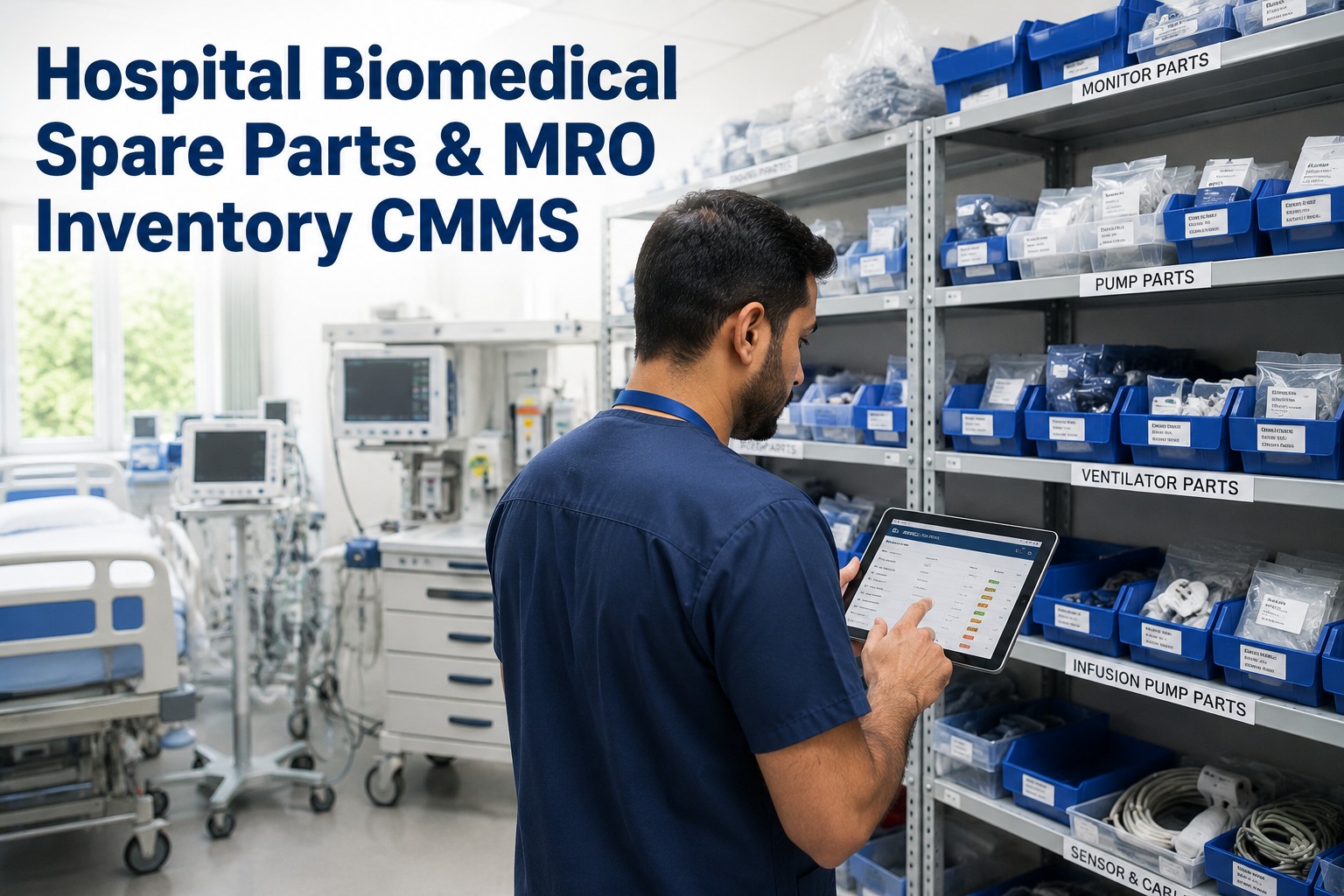
Hospital spare parts inventory management is the hidden backbone of patient care — when a single biomedical connector, filter, or circuit board is missing, a critical device sits idle and procedures get delayed. This guide covers biomedical MRO in
Read More
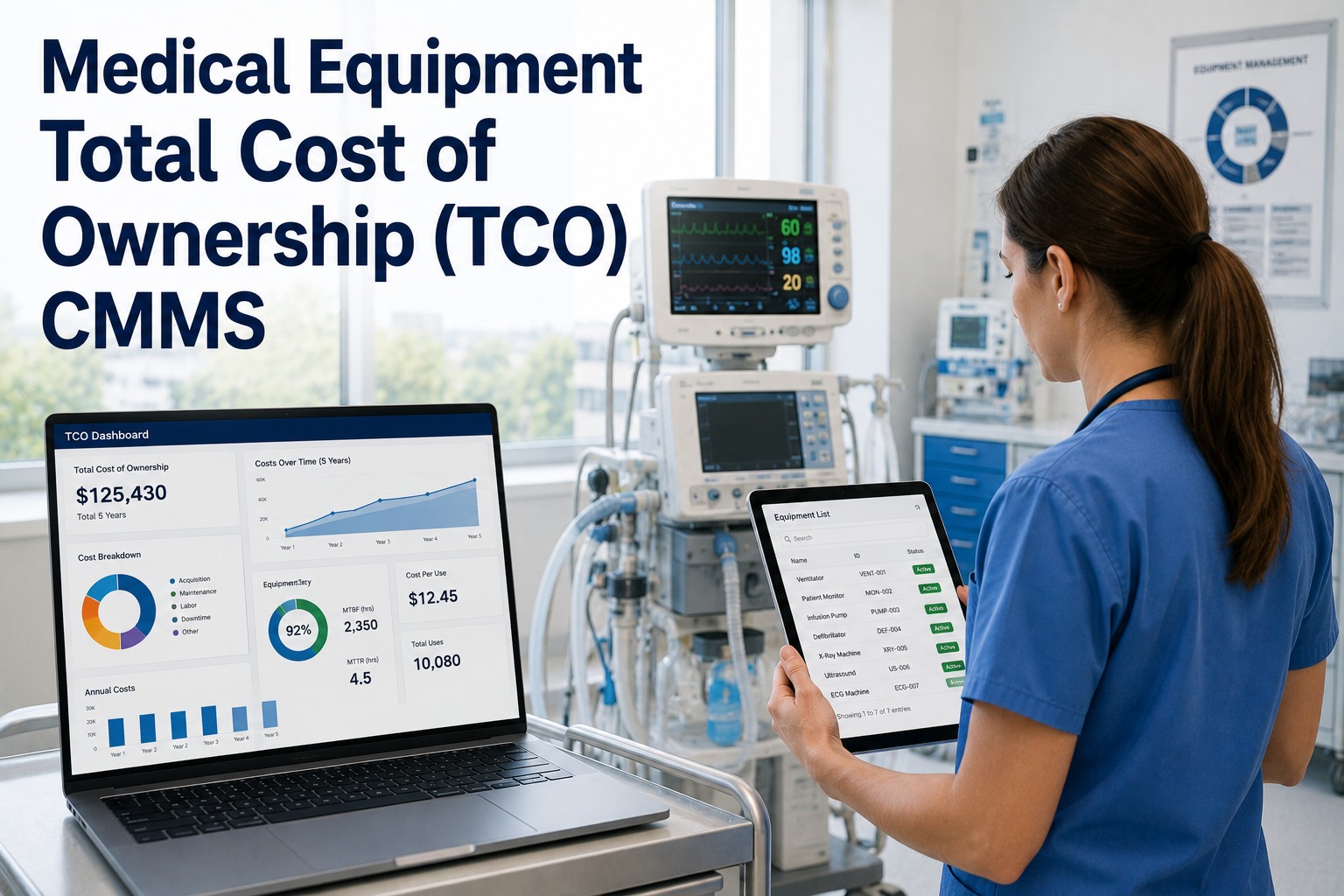
Medical equipment TCO — total cost of ownership — is the single most misunderstood number in healthcare capital purchasing, because acquisition price typically represents less than 25% of what a device actually costs to own over its 10-year lifecy
Read More
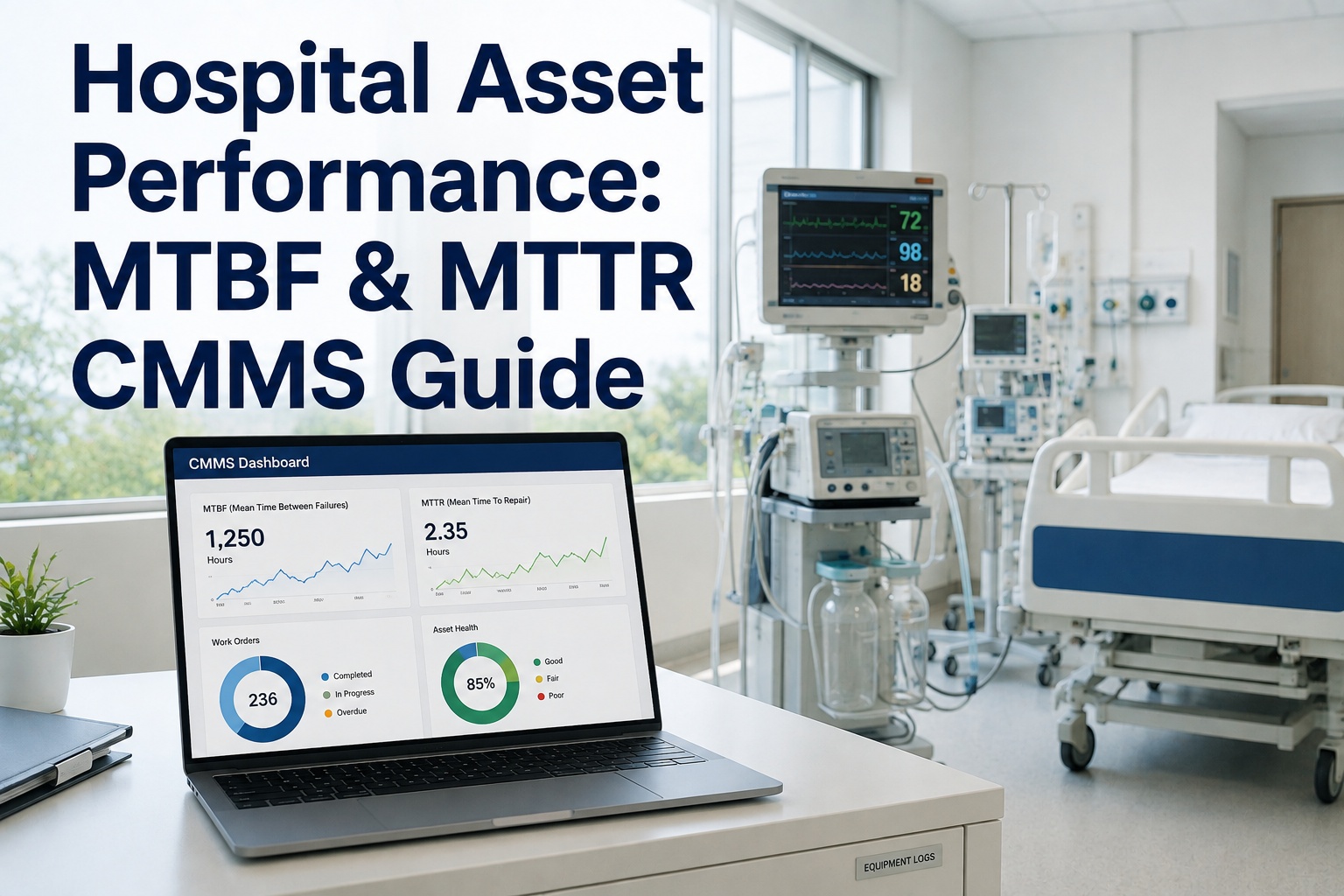
Hospital asset performance lives or dies on two metrics: Mean Time Between Failures (MTBF) and Mean Time To Repair (MTTR). Together, they reveal whether your biomedical engineering team is preventing equipment failures before they disrupt patient
Read More
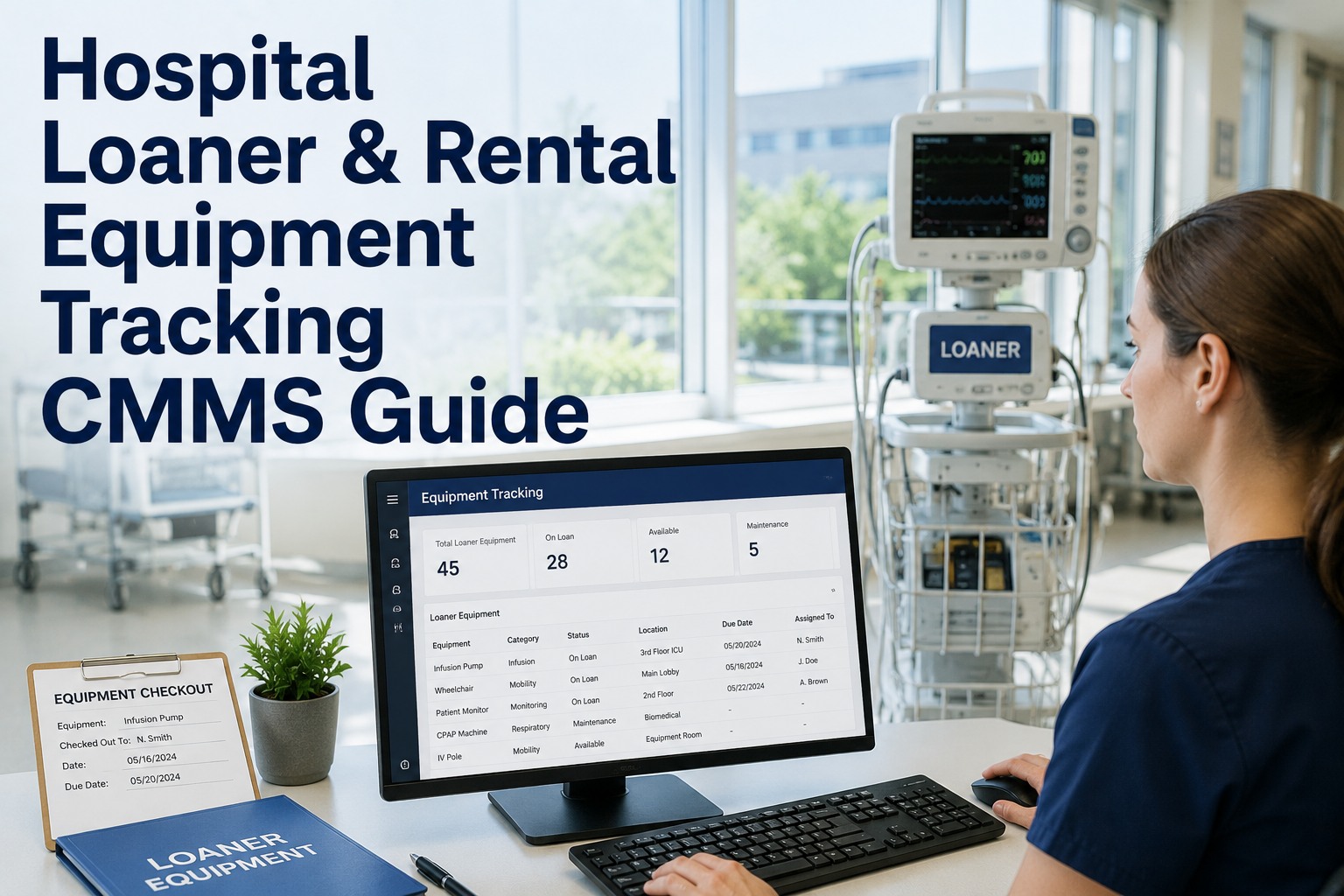
Hospital loaner equipment and rental tracking is one of the most overlooked compliance liabilities in healthcare maintenance today. When a vendor drops off a temporary imaging system, infusion pump bank, or biomedical device, that asset must be he
Read More
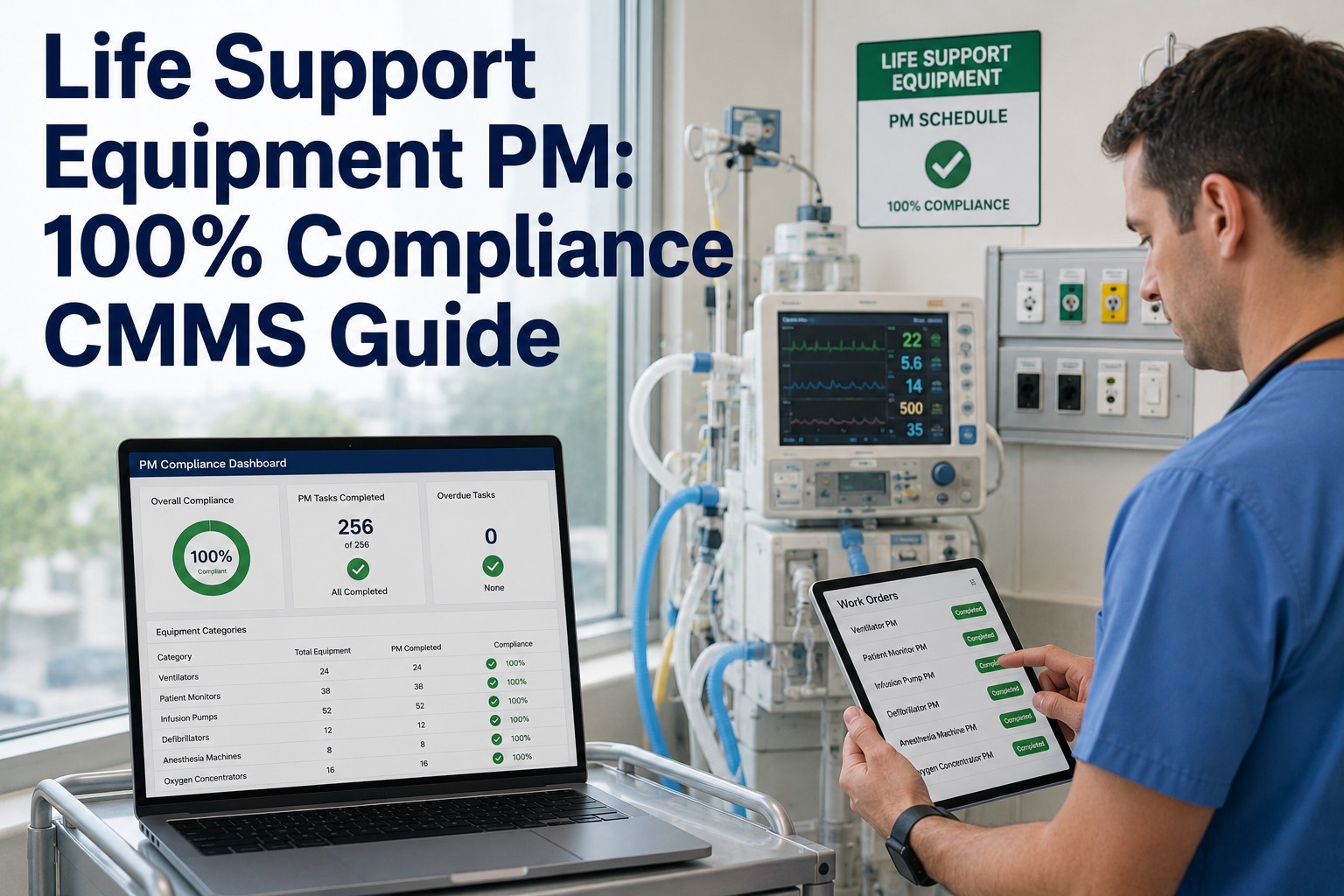
Life support equipment preventive maintenance demands zero-tolerance, 100 percent PM compliance — every ventilator, defibrillator, and cardiac monitor either has a current PM record or it does not belong near a patient. This life support CMMS guid
Read More
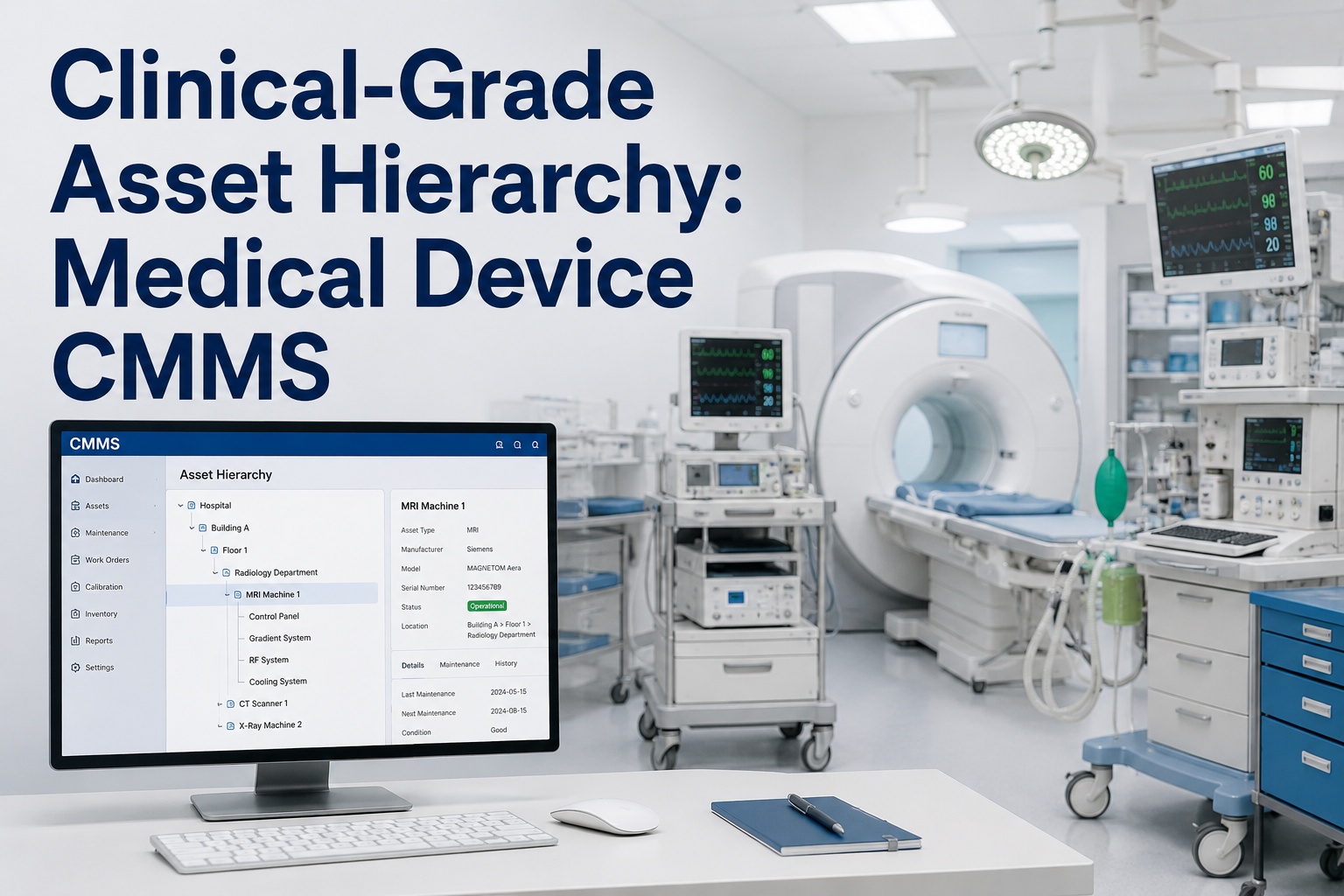
A clinical-grade asset hierarchy is the structured backbone every hospital CMMS depends on — the parent-child mapping of facilities, clinical departments, medical devices, and sub-components that makes preventive maintenance compliance, recall tra
Read More
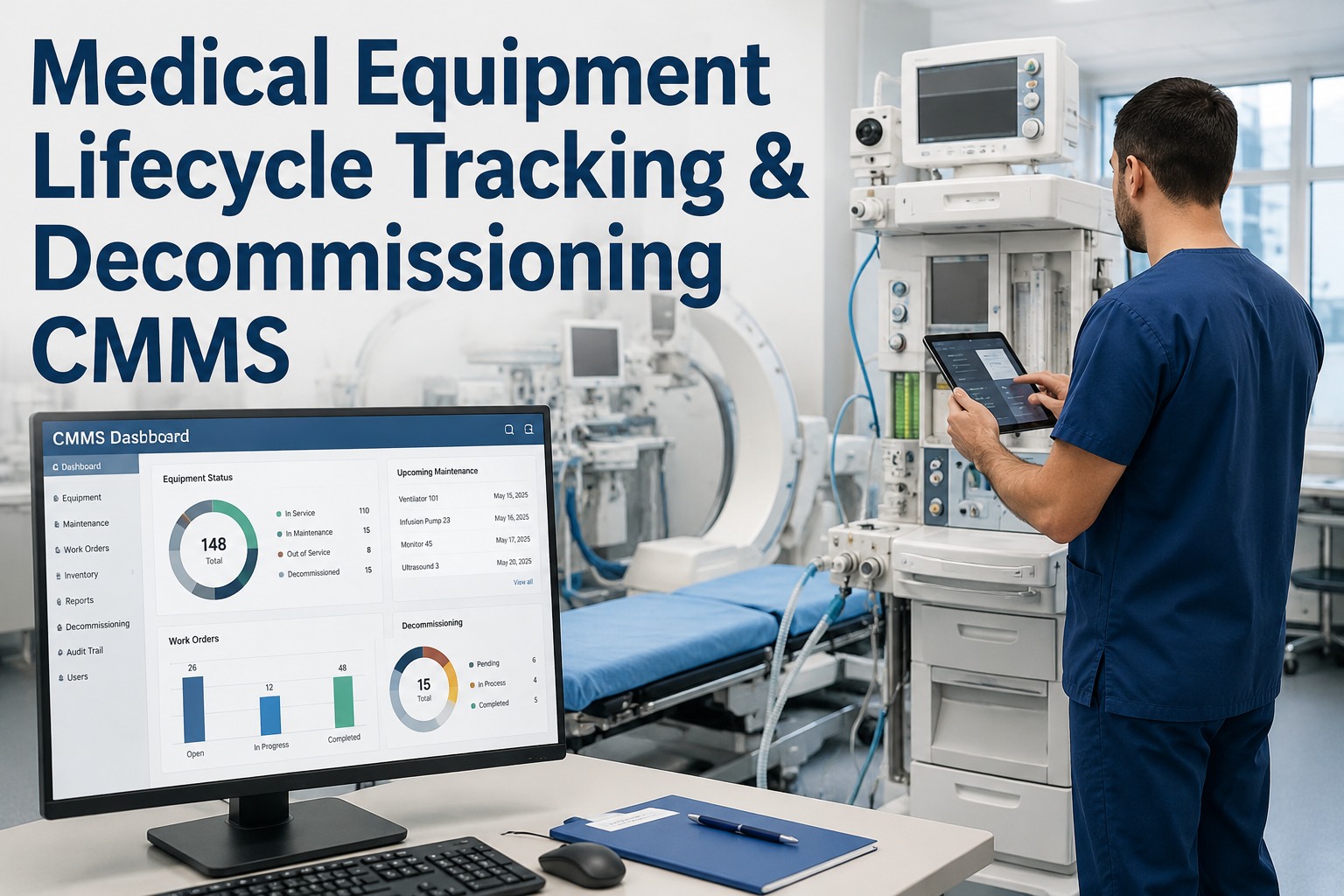
Medical equipment lifecycle tracking — from acquisition through preventive maintenance compliance, condition scoring, and final decommissioning — is what separates a defensible capital and compliance function from a spreadsheet exercise. A purpose
Read More
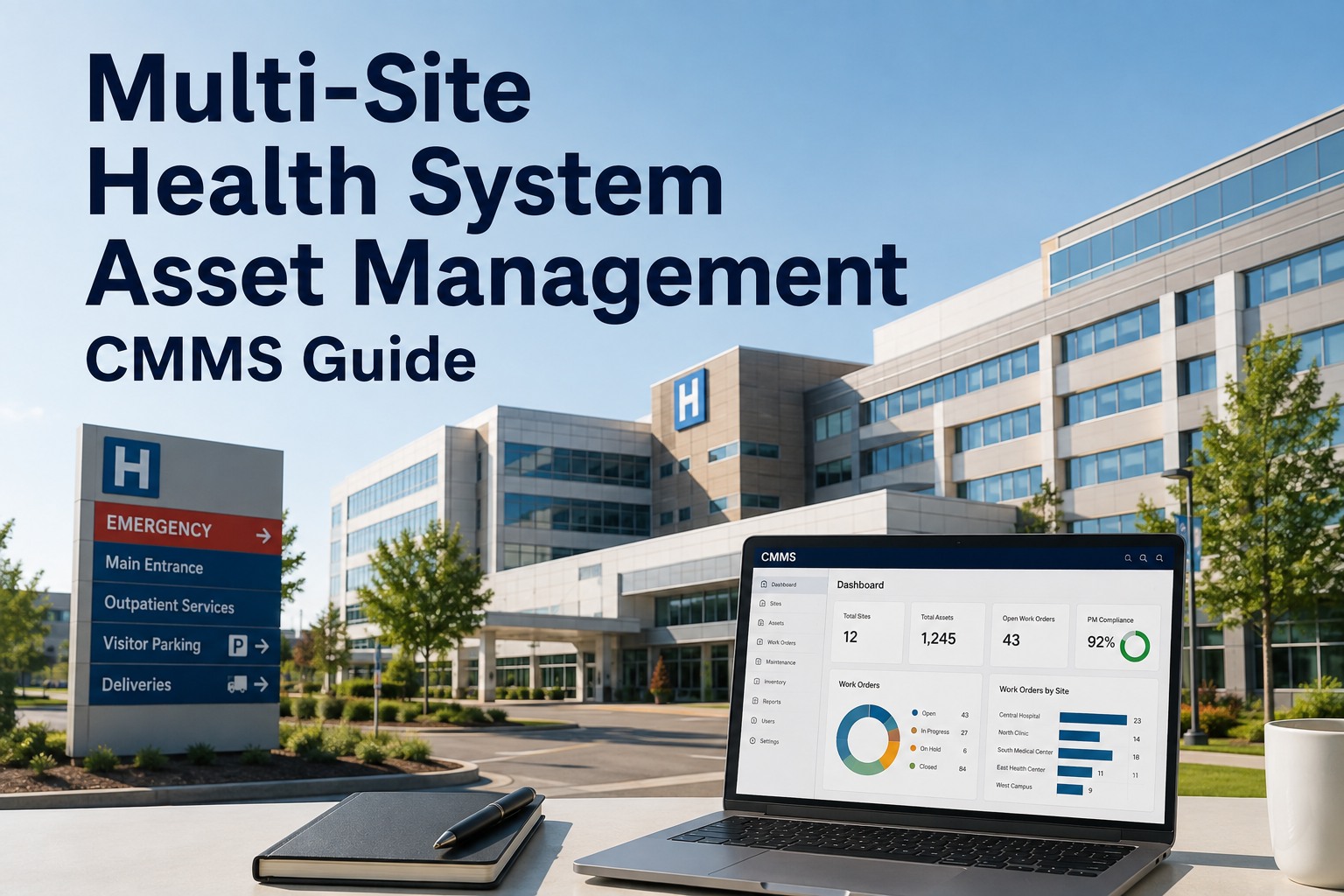
Multi-site health system asset management demands a CMMS architecture that follows patients, equipment, and clinical engineering teams across every hospital, outpatient clinic, and ambulatory site in the network. A 2026 health system asset guide h
Read More
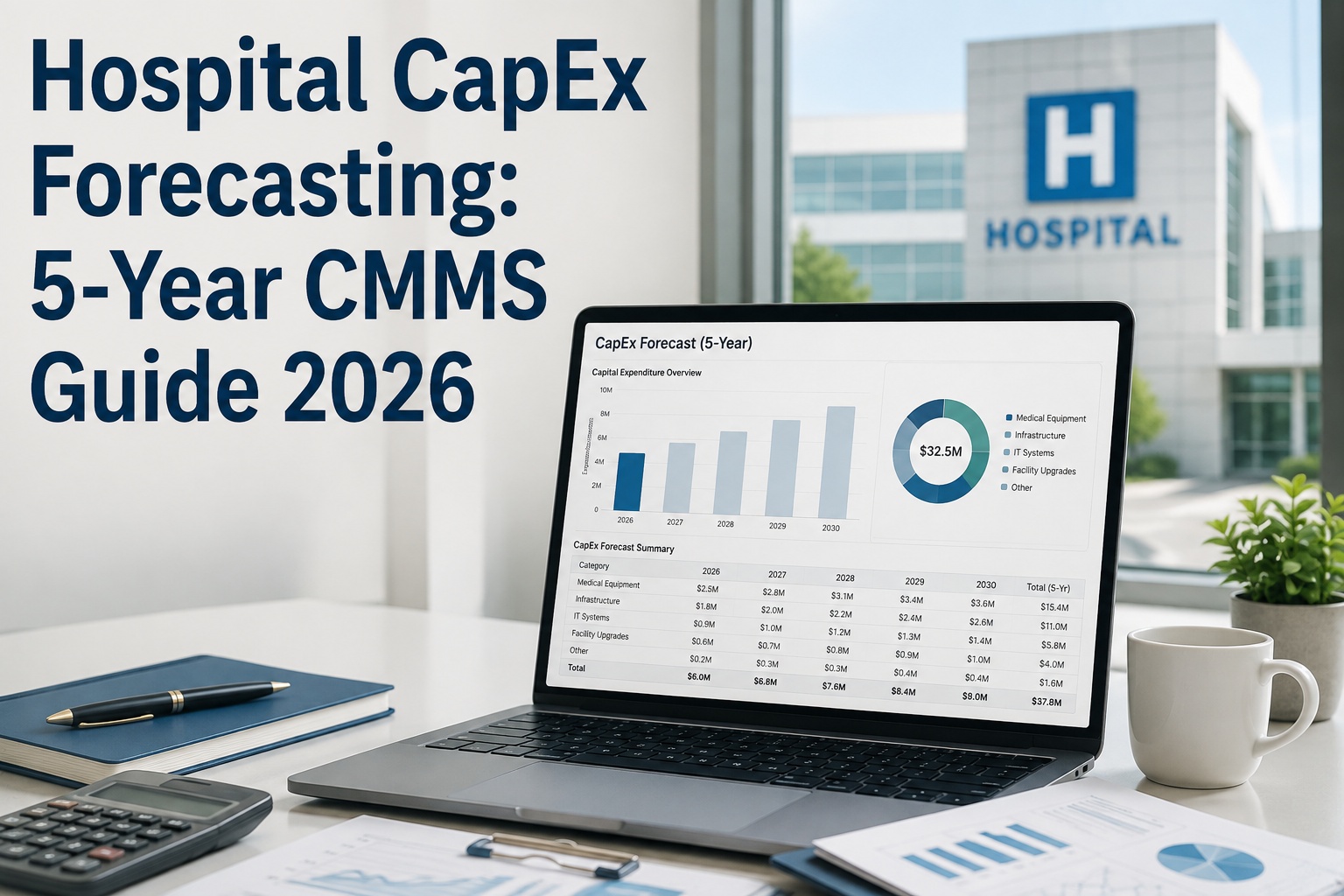
Hospital CapEx forecasting is where clinical leadership, finance, and facilities either align on a 5-year capital plan or fight the same annual battle over shrinking budgets. This 2026 CMMS guide covers hospital CapEx forecasting with a focus on b
Read More
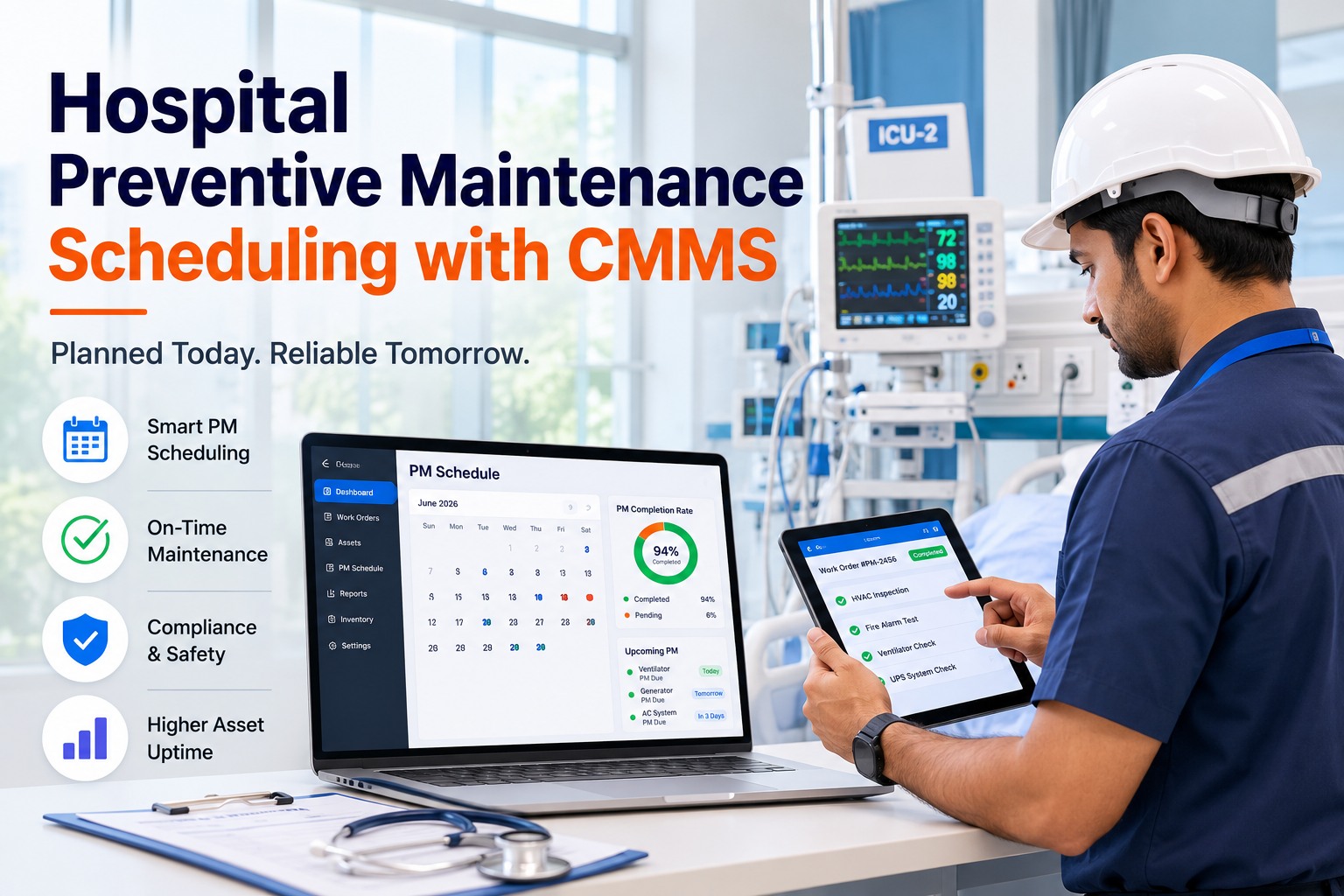
Most hospital maintenance departments do not have a preventive maintenance problem. They have a completion problem. The intervals are written, the work orders exist, the technicians are competent — and the on-time PM completion rate still sits aro
Read More
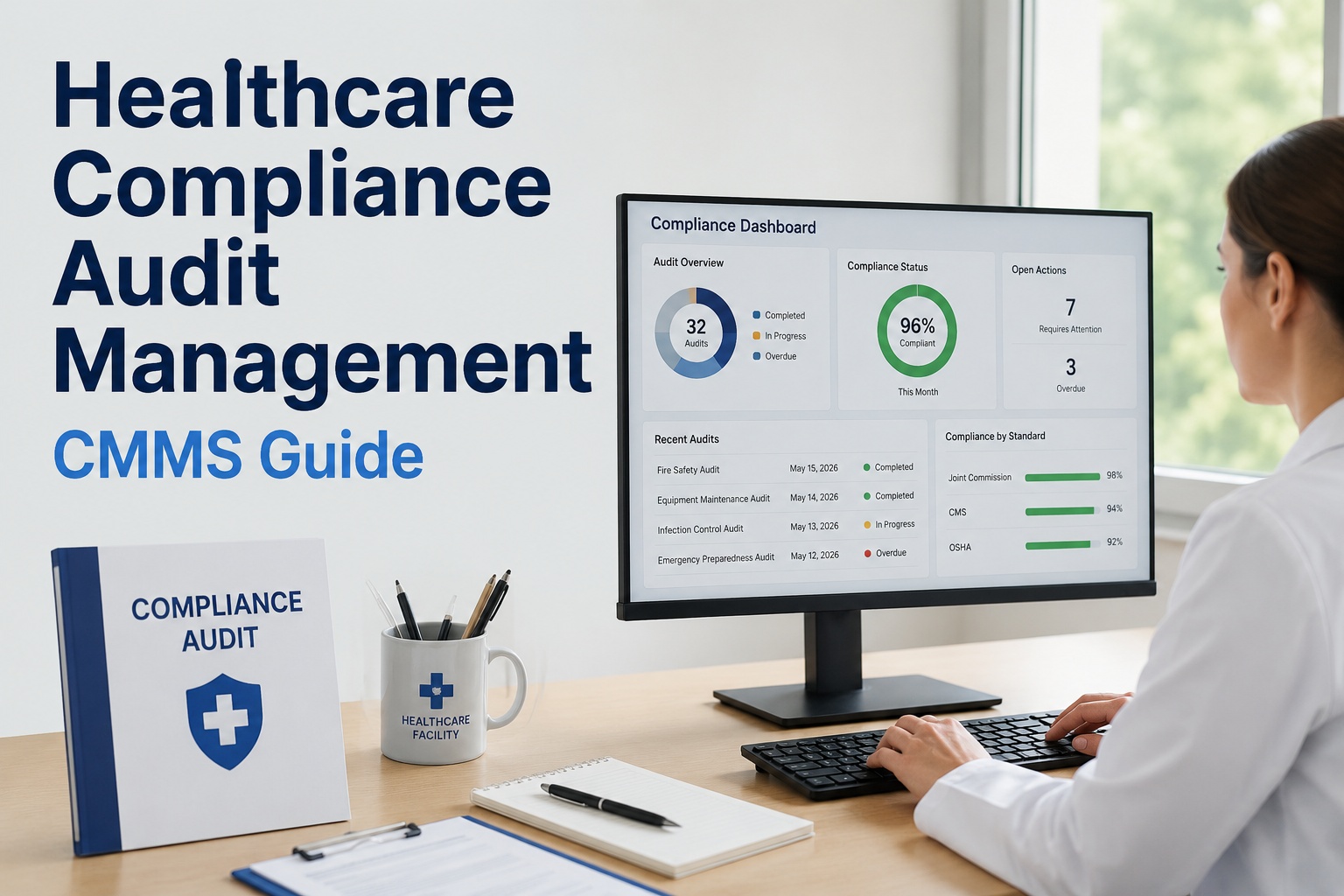
A US hospital in 2026 is subject to the concurrent regulatory authority of at least six separate agencies — The Joint Commission for accreditation, CMS for Medicare and Medicaid conditions of participation, OSHA for workplace safety, state departm
Read More
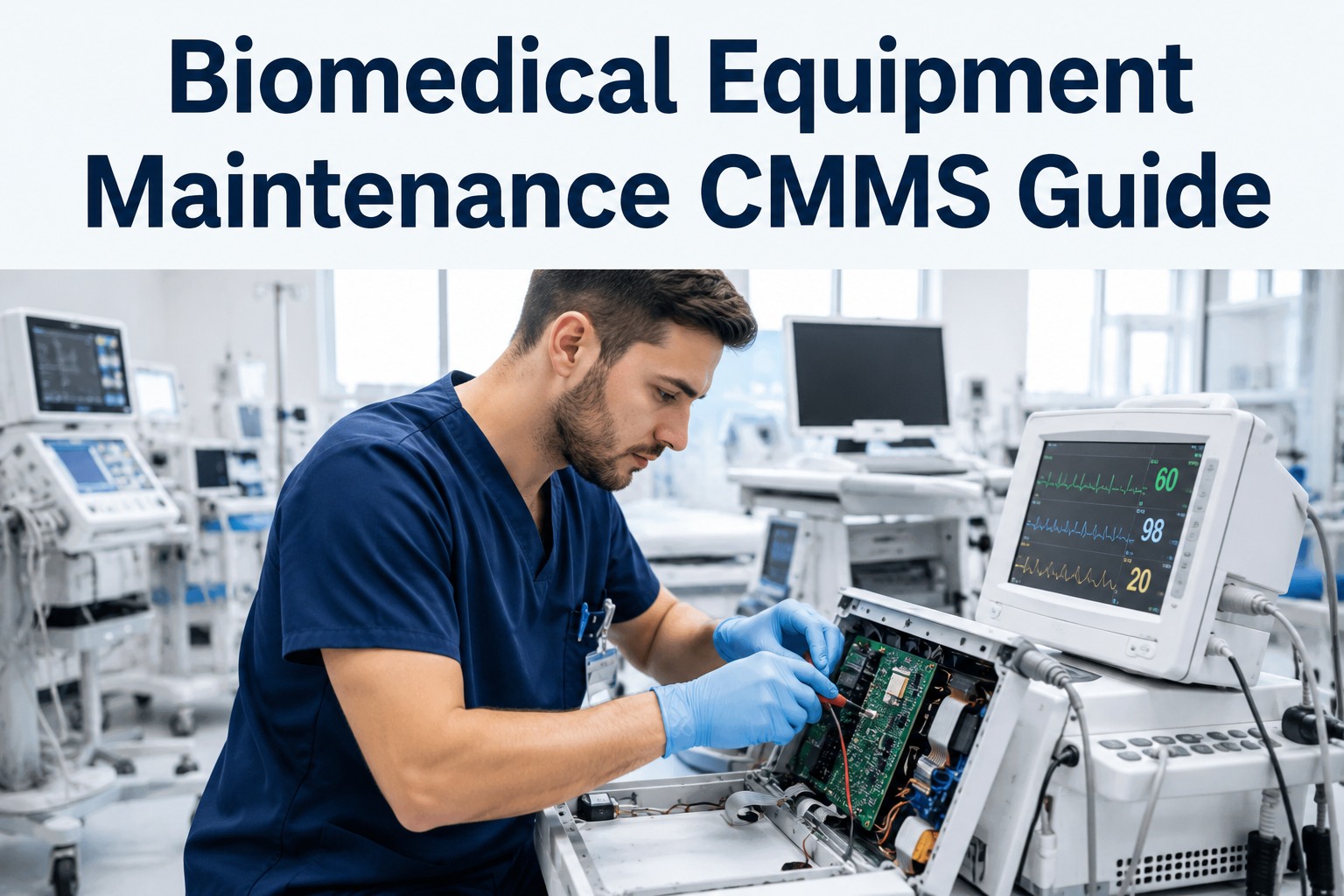
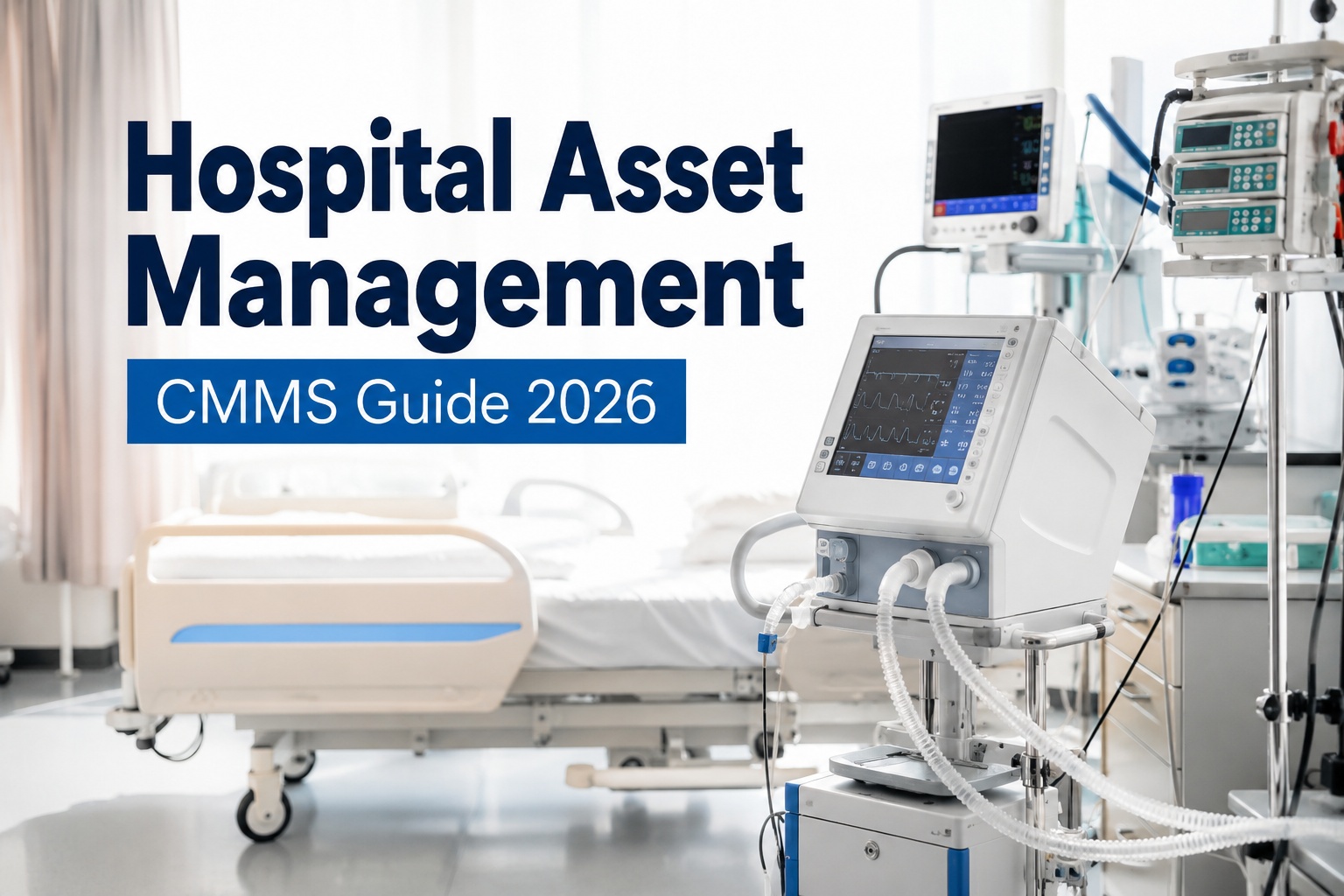
There is a sentence in the accreditation guidance that reorganizes how a clinical engineering department should think about its entire PM programme: if you are not following every maintenance activity and every PM frequency in the manufacturer's s
Read More
A mid-sized US hospital operates approximately 35,000 medical devices at any given moment — from a $3 million MRI in radiology to a $12 infusion pump on a nursing unit, with everything from ventilators and surgical robots to point-of-care glucose

Read More
A propped-open fire door is not just a maintenance issue—it is a life safety compliance risk under Joint Commission standards, CMS 42 CFR § 482.41, and NFPA 101/99, triggering a 60-day correction timeline. Hospital engineering teams must document

Read More
A single closed sprinkler control valve is responsible for 79% of sprinkler system failures during actual fire events. Yet the check that would have caught that closed valve — a 30-second visual verification of position, chain, se
Read More
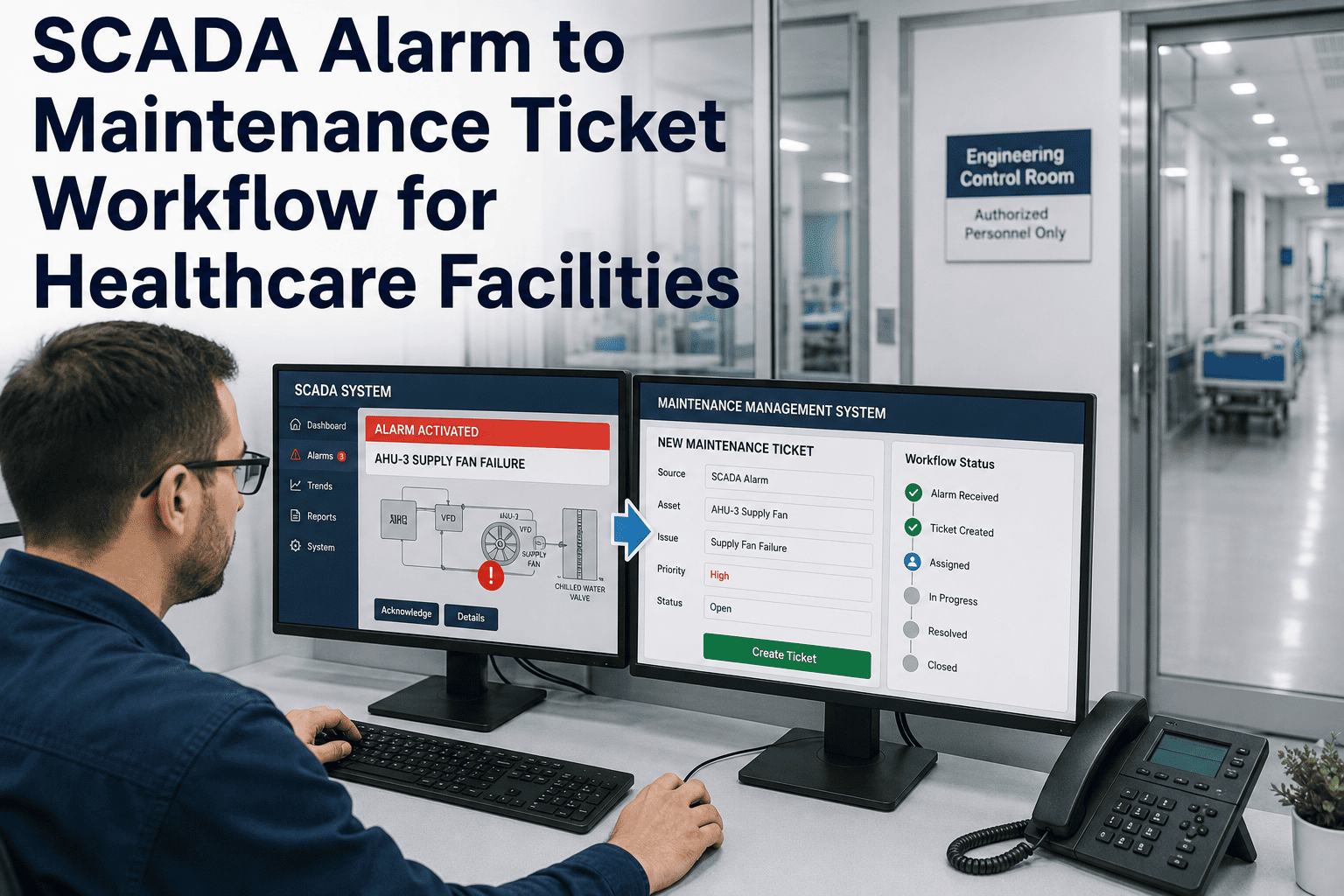
A hospital SCADA system that fires more than ten alarms in a ten-minute window has entered what ISA-18.2 formally defines as an alarm flood — and once an operator is inside one, the standard's own guidance says they can no longer be expected to re

Read More
A hospital boiler plant, backup generator, and elevator bank are all run by PLCs that already know something is wrong long before a facilities technician does — a pressure setpoint drifting, a battery voltage sagging, a motor drawing more current

Read More
Six months ago, a 310-bed regional hospital's facilities and biomedical teams were running two separate backlogs, both sorted by date created, both routinely burying the tickets that mattered most behind the tickets that arrived first. A recurring
Read More
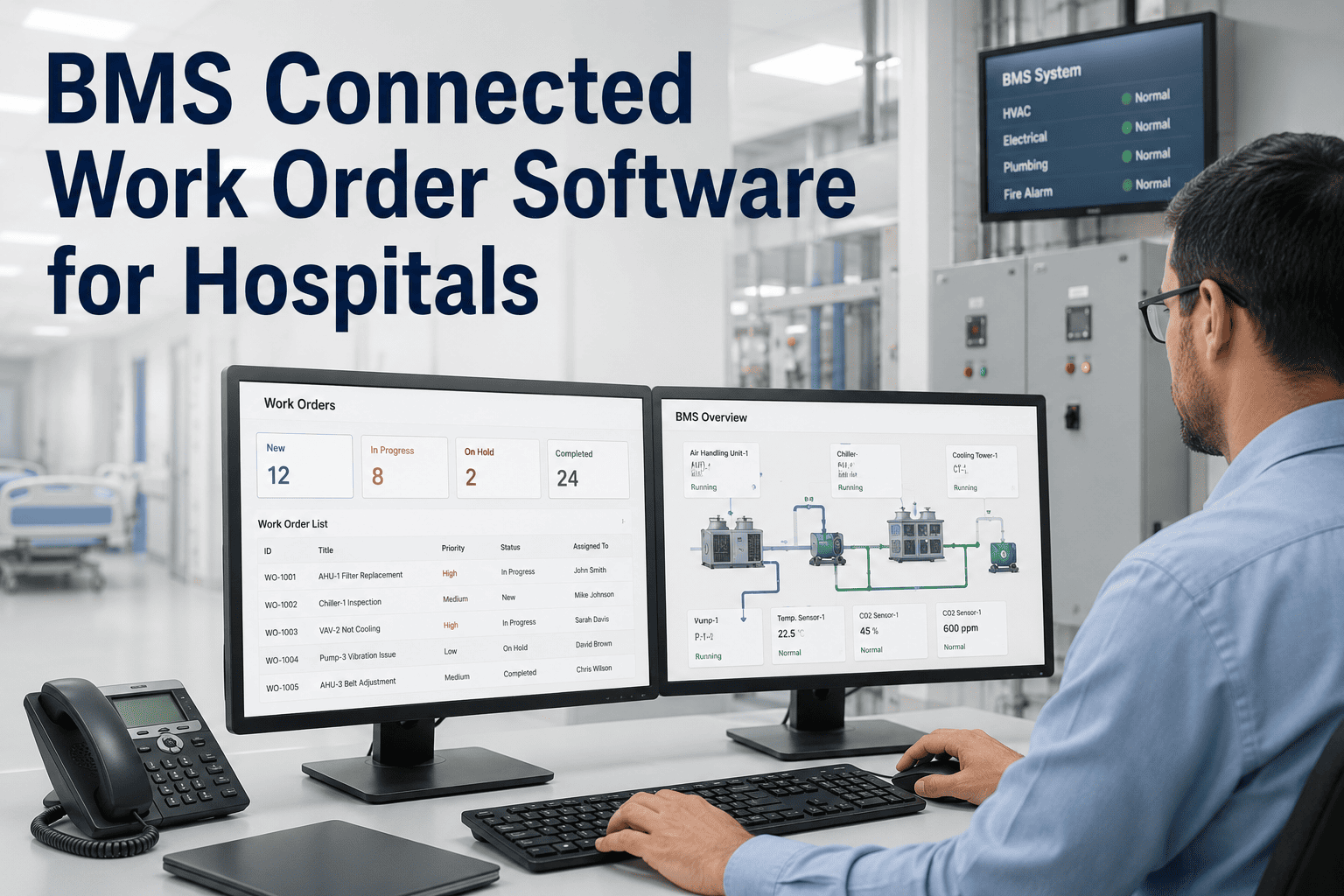
Most hospital building management systems generate anomaly data continuously — chiller pressure drift, air handler vibration, generator fuel level — but at most facilities that data feeds a dashboard nobody is watching, not a work order somebody h
Read More
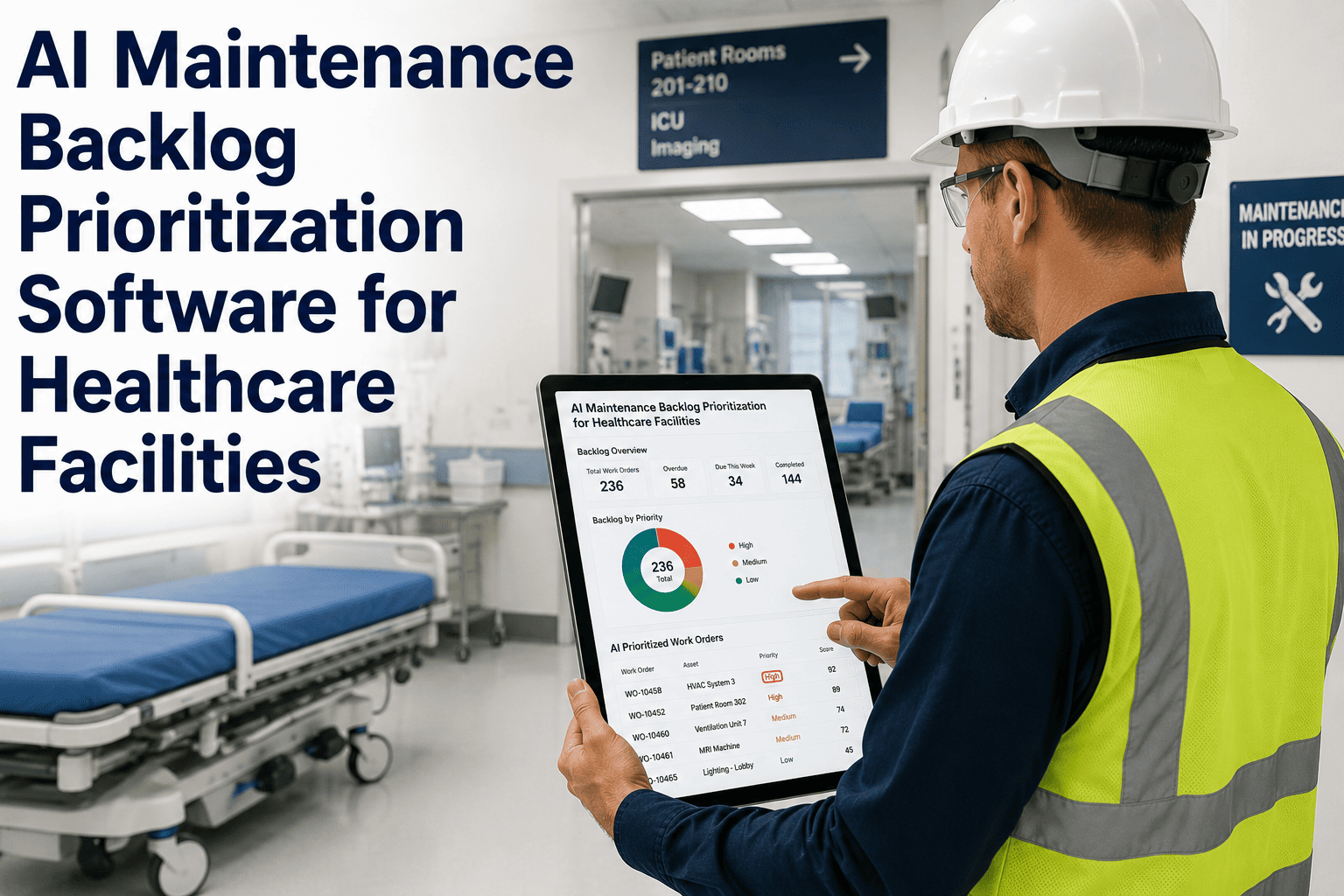
A biomedical engineering department carrying 340 open work orders is not managing a backlog — it is gambling on which ticket gets ignored long enough to become an incident. Industry data shows that over 55% of hospital maintenance tasks are still

Read More
A ventilator failing at 2 AM is a clinical emergency. A ventilator failing at 2 AM with the replacement sensor sitting in a vendor's warehouse three days away is a different problem entirely — one that

Read More
The Drug Supply Chain Security Act requires every pharmaceutical warehouse handling prescription drugs to maintain interoperable, electronic product tracing at the package level — and the entire traceability chain collapses the moment a barcode sc
Read More
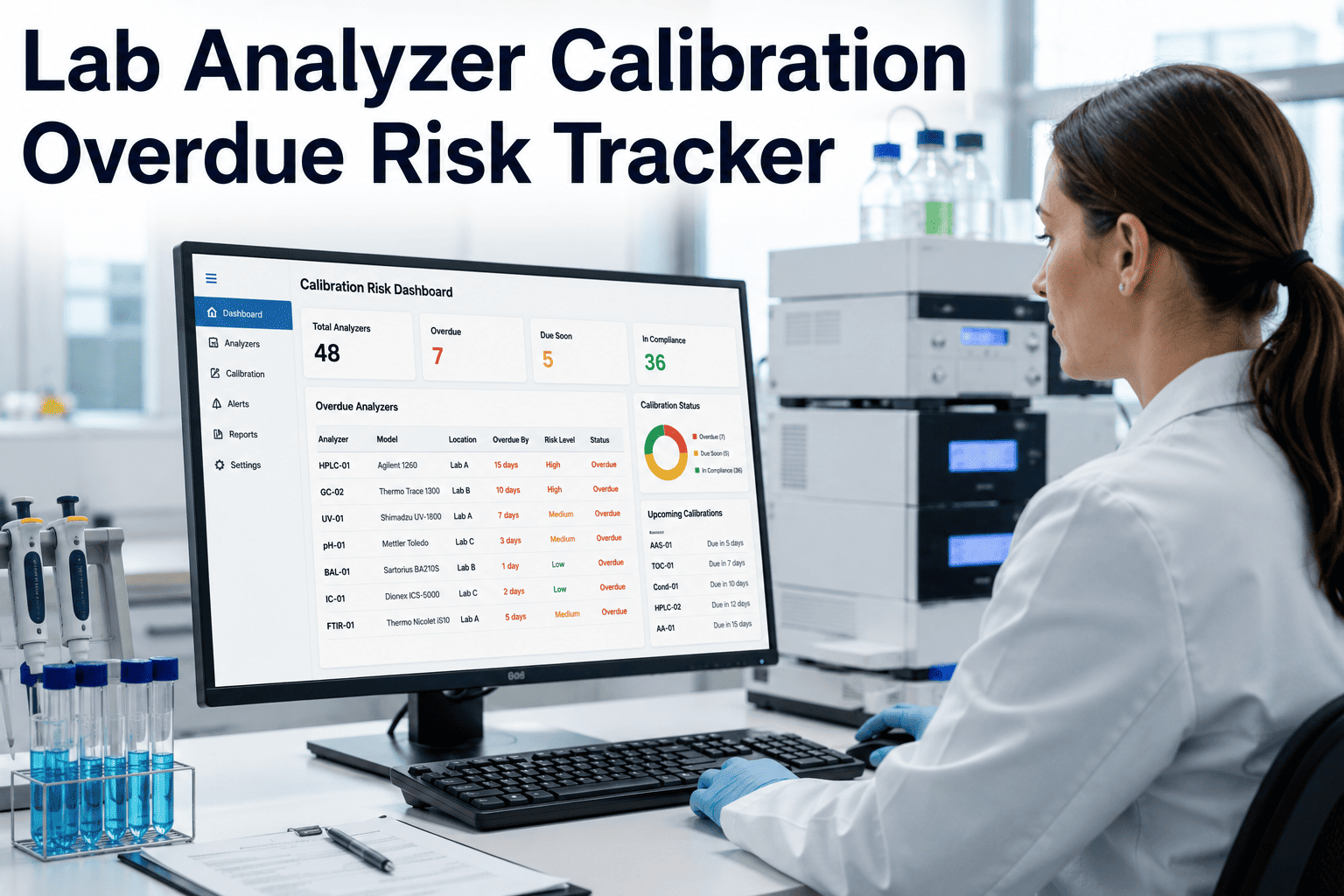
Overdue analyzer calibration in a hospital laboratory is not a maintenance issue — it is a patient safety and regulatory exposure issue. When a chemistry, hematology, or immunoassay analyzer operates past its calibration due date, every result it
Read More
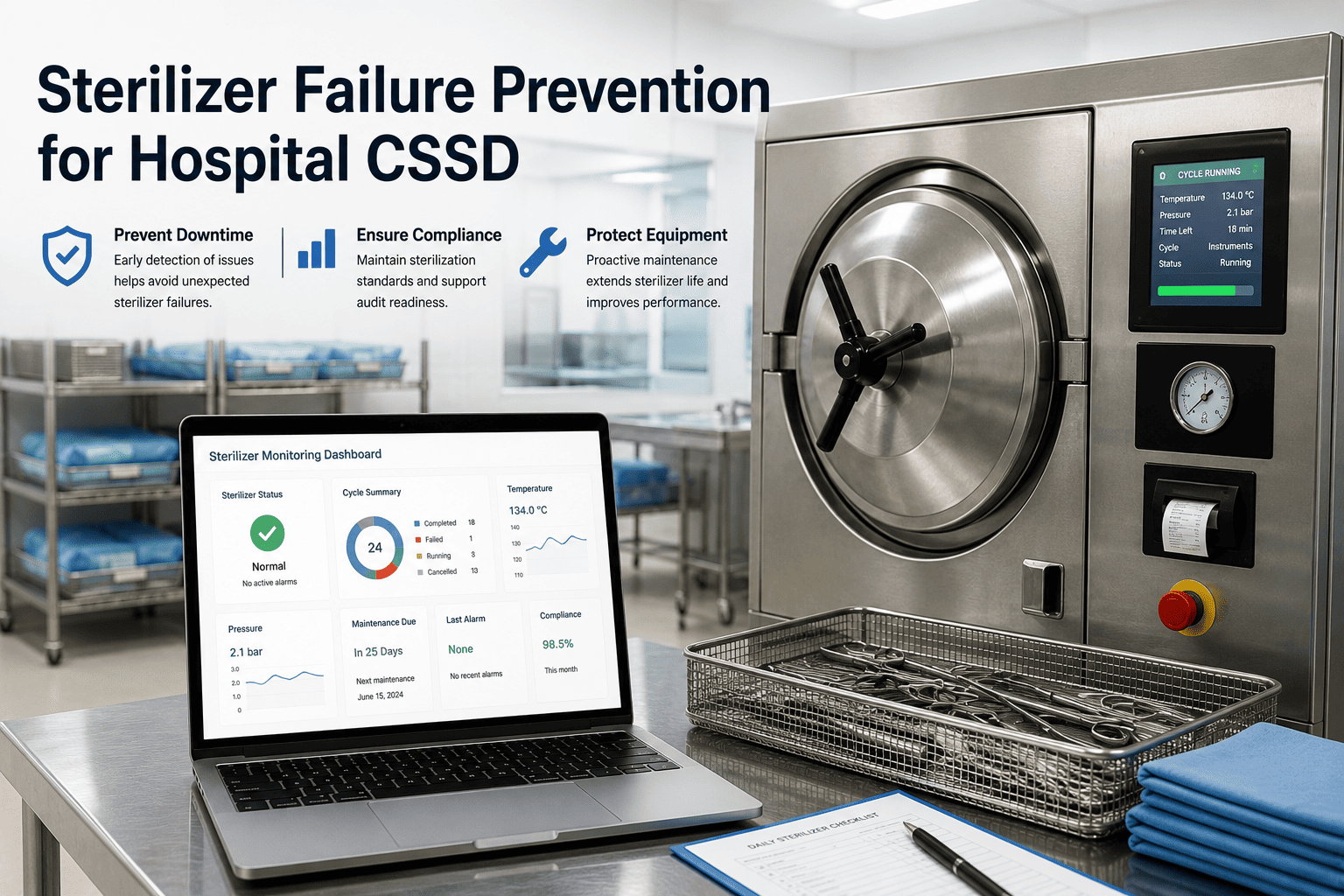
A surgical tray that is not sterile at 6:55 AM for a 7:00 AM joint replacement is not a CSSD problem. It is a hospital problem — one that delays the OR, cascades across the day's surgical schedule, and at industry-benchmark $65 per minute of lost
Read More
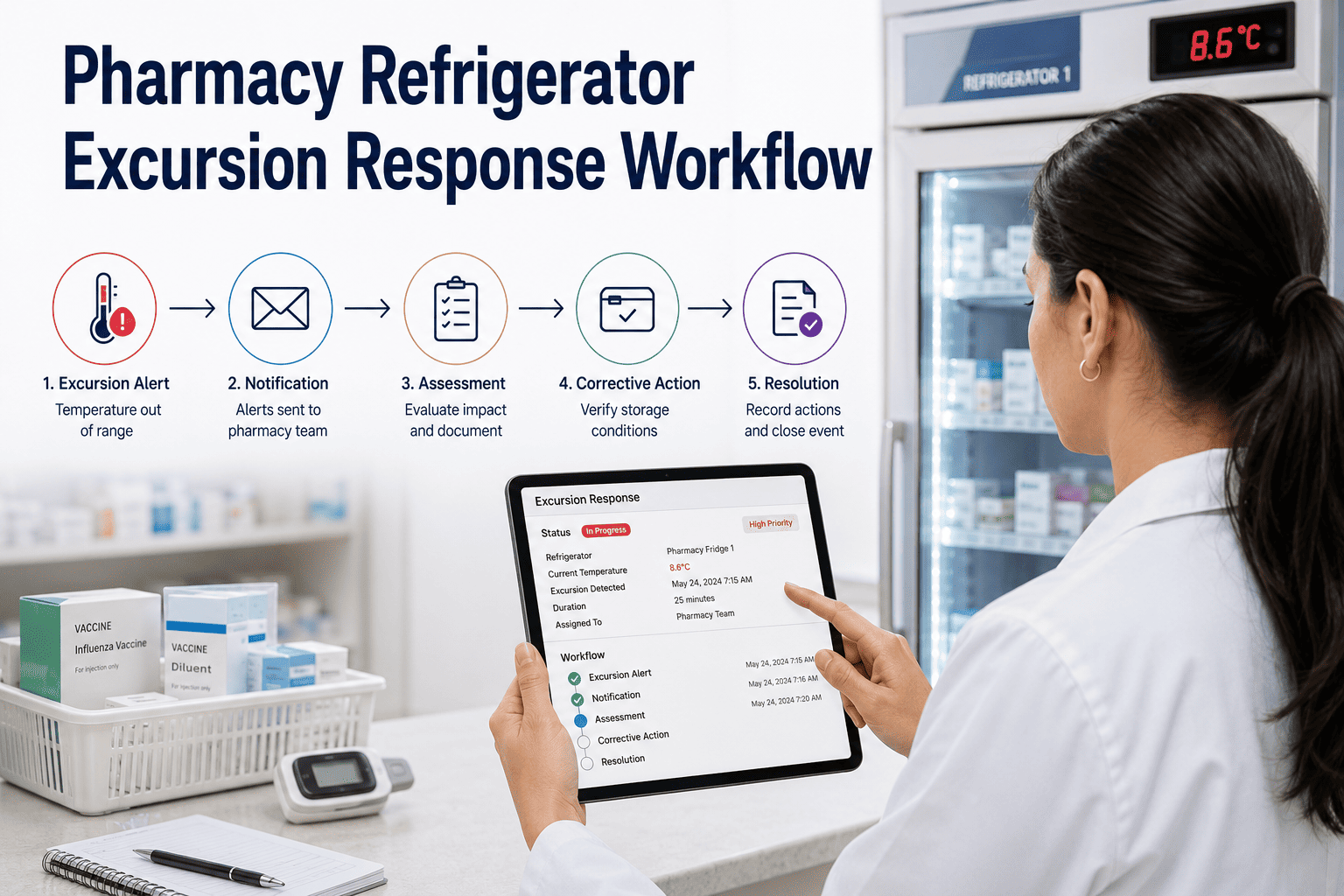
Pharmacy refrigerator temperature excursions are among the most time-sensitive events in hospital operations — every minute a vaccine or biologic spends outside its validated range, the risk of product loss and patient safety exposure increases. M
Read More
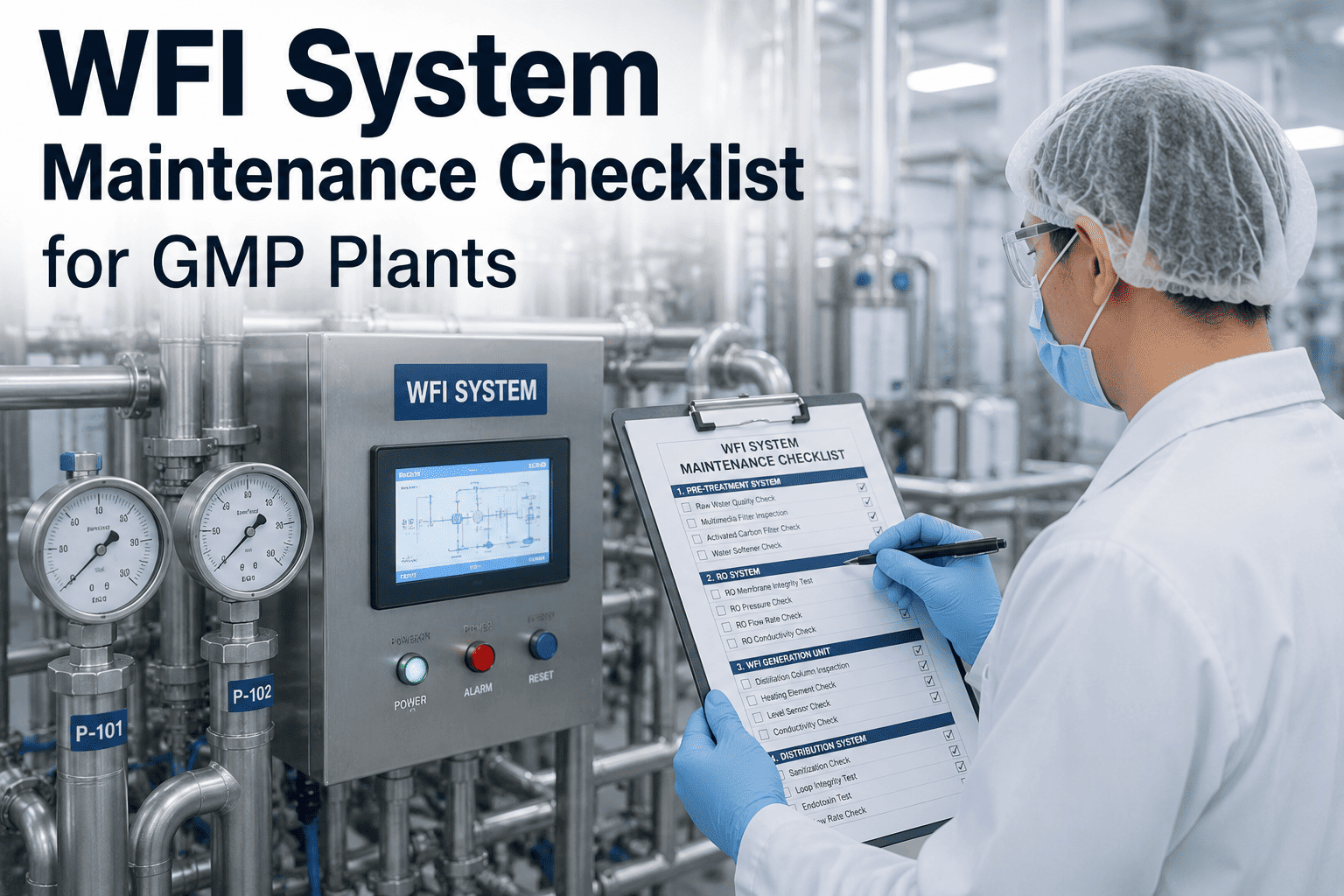
Water for Injection systems are the circulatory system of any sterile pharma plant — and when they excursion, the impact is immediate and cascading. A single out-of-specification TOC or conductivity reading can halt filling operations, quarantine
Read More
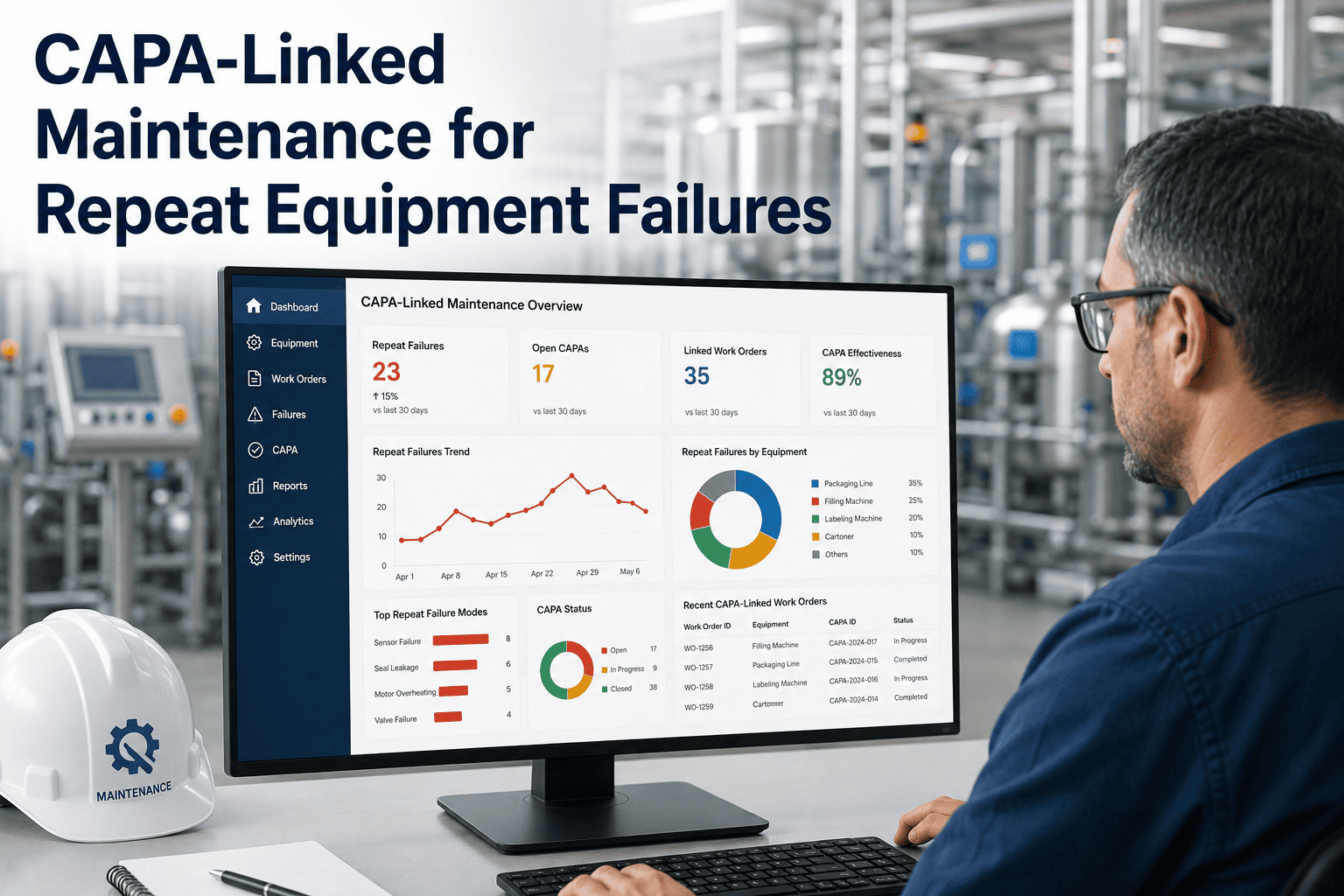
The FDA issued 303 drug warning letters in FY 2025 — a 59% jump from 190 in FY 2024 — and across the warning letters reviewed for cause, inadequate CAPA systems appeared in roughly 60% of enforcement actio
Read More
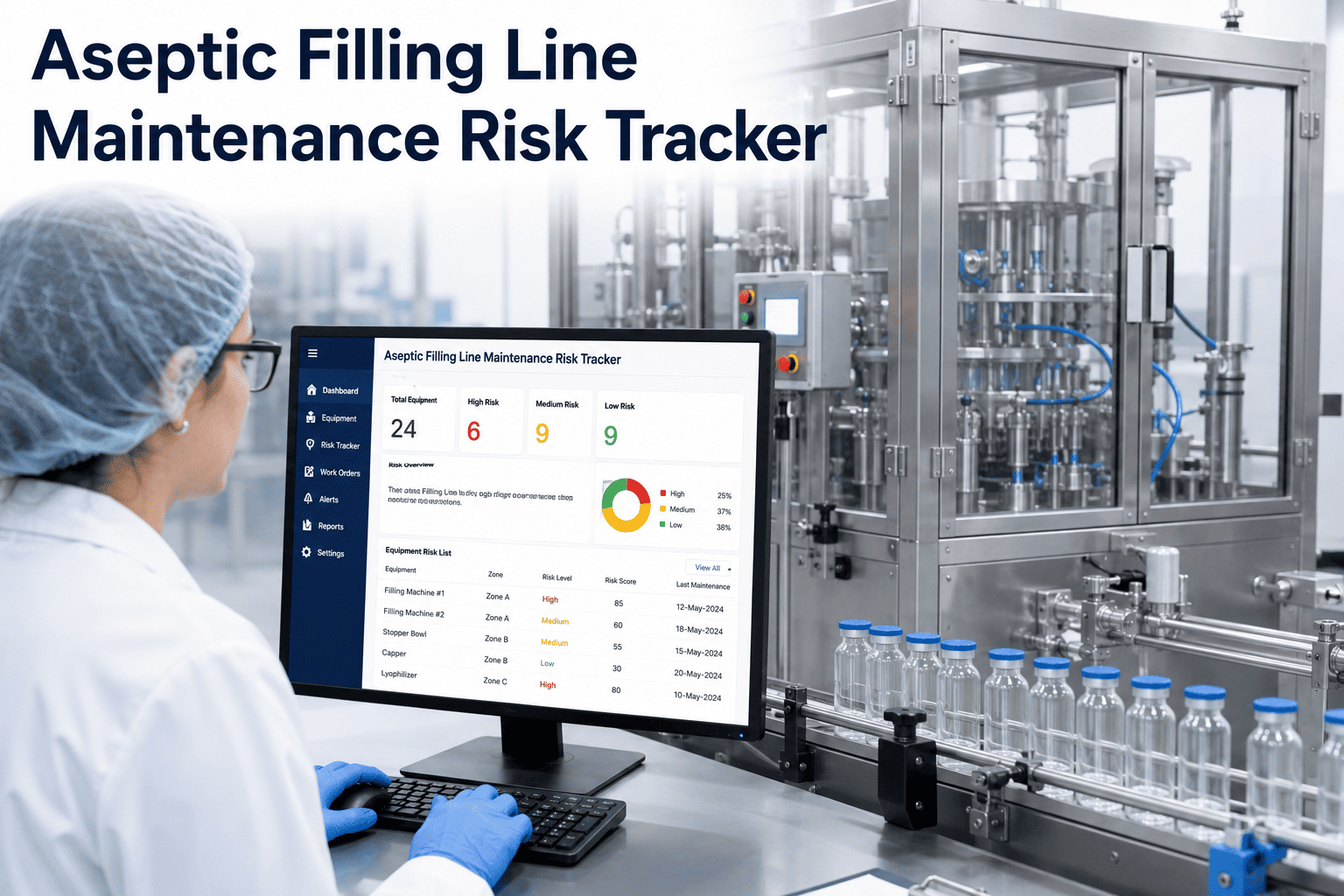
Aseptic filling lines represent the highest-risk maintenance environment in pharmaceutical manufacturing because every physical intervention on a Grade A or Grade B zone component creates a potential pathway for microbial contamination into steril

Read More
Cleanroom pressure differential is one of the most critical environmental parameters in sterile pharmaceutical manufacturing — and one of the most vulnerable to drift. When the pressure gradient between classified zones narrows or reverses, contam
Read More
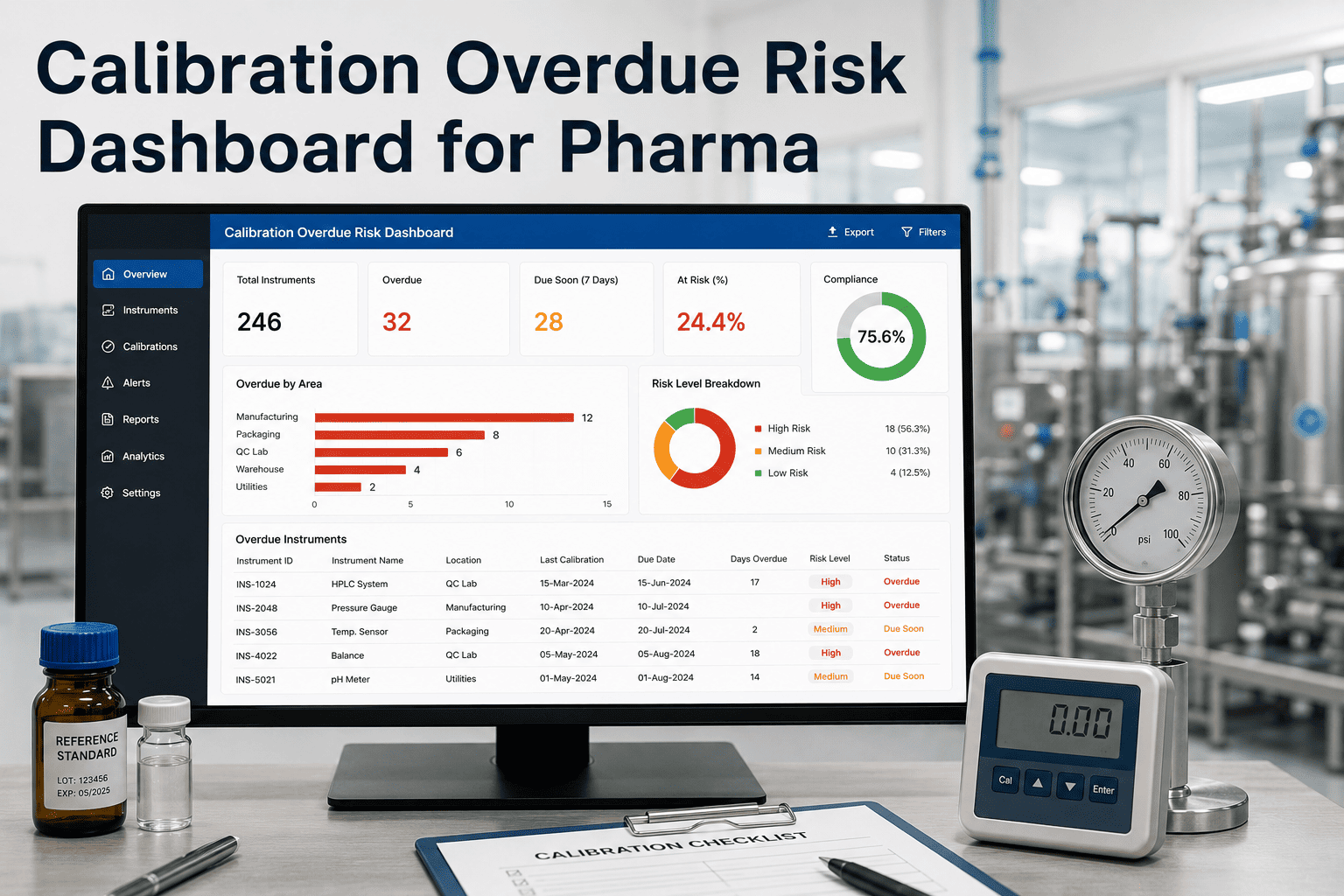
In pharmaceutical manufacturing, a single overdue instrument calibration can halt an entire batch release, trigger a FDA 483 observation, or force a costly investigation that takes weeks to resolve. Under 21 CFR Part 211.68, equipment used in prod
Read More
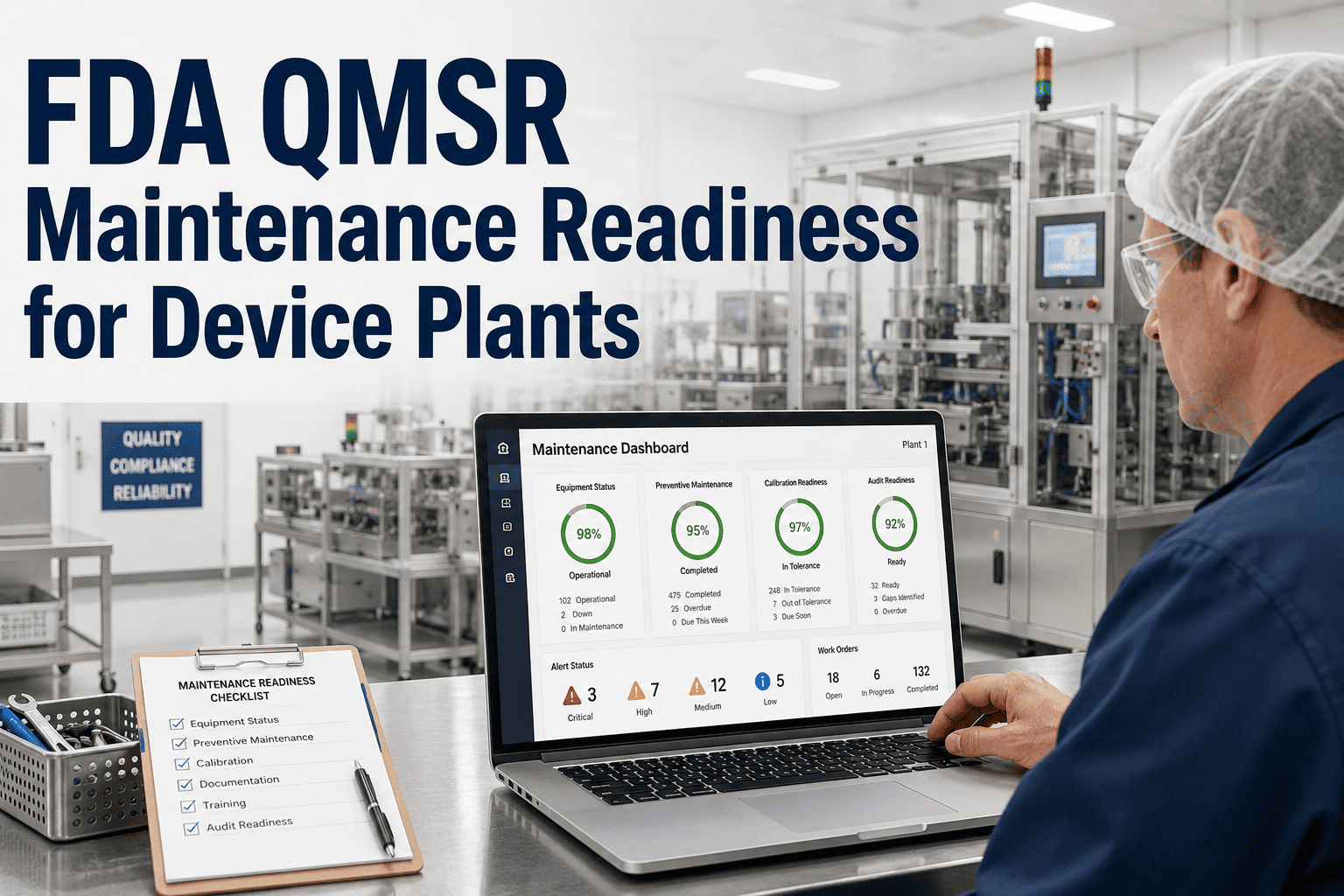
As of February 2, 2026, the FDA's Quality Management System Regulation (QMSR) replaced the 1996-era Quality System Regulation under 21 CFR Part 820 — and the Quality System Inspection Technique (QSIT) was retired the same day, replaced by the upda
Read More
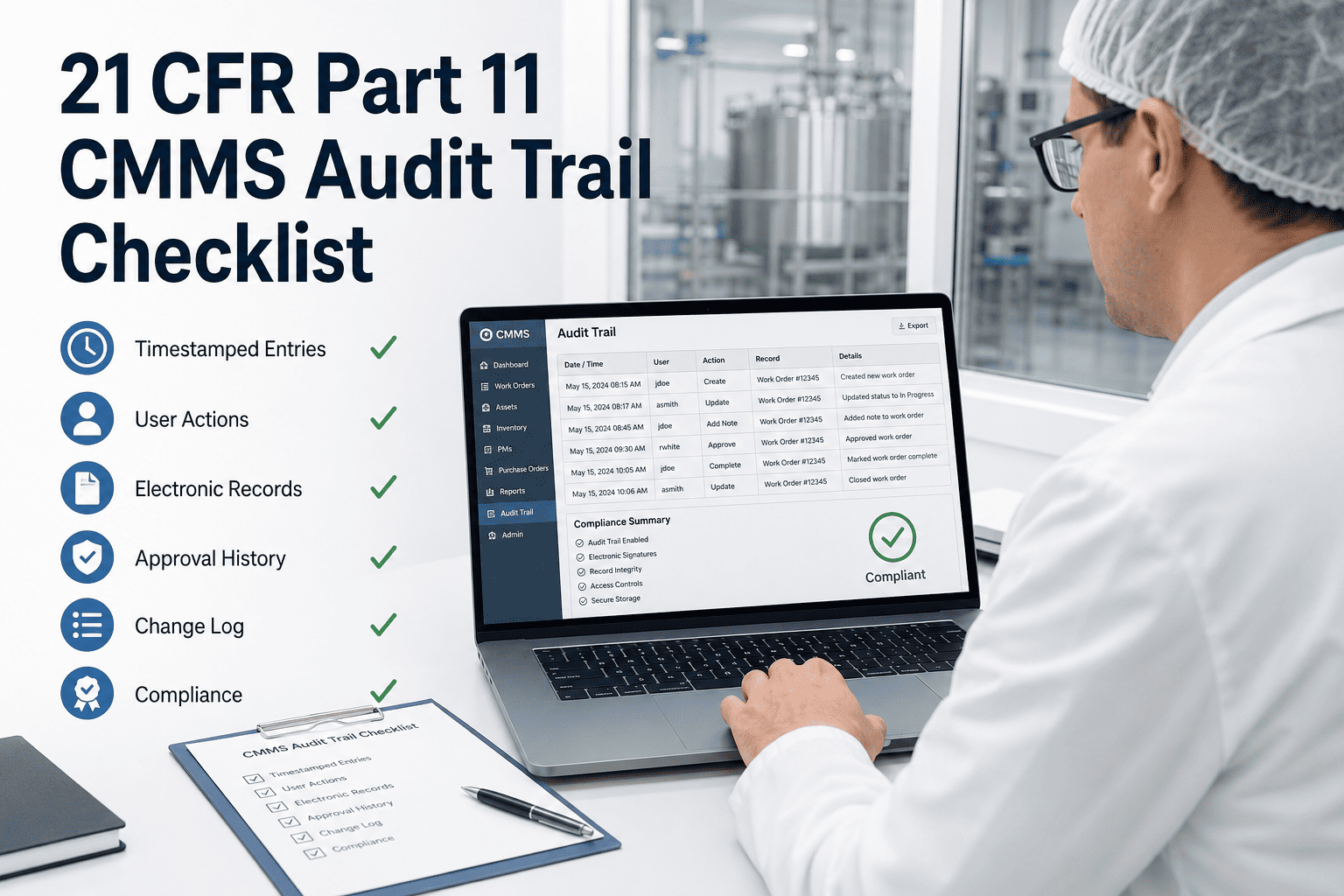
FDA inspections in pharma manufacturing increasingly target electronic maintenance records as a high-risk area for data integrity violations. Since 21 CFR Part 11 establishes the requirements for electronic records and electronic signatures, any C

Read More
An automatic transfer switch can fail without ever tripping a control panel alarm, which means the first sign of trouble is often a hospital wing that doesn't get power back when the generator starts.
Read More
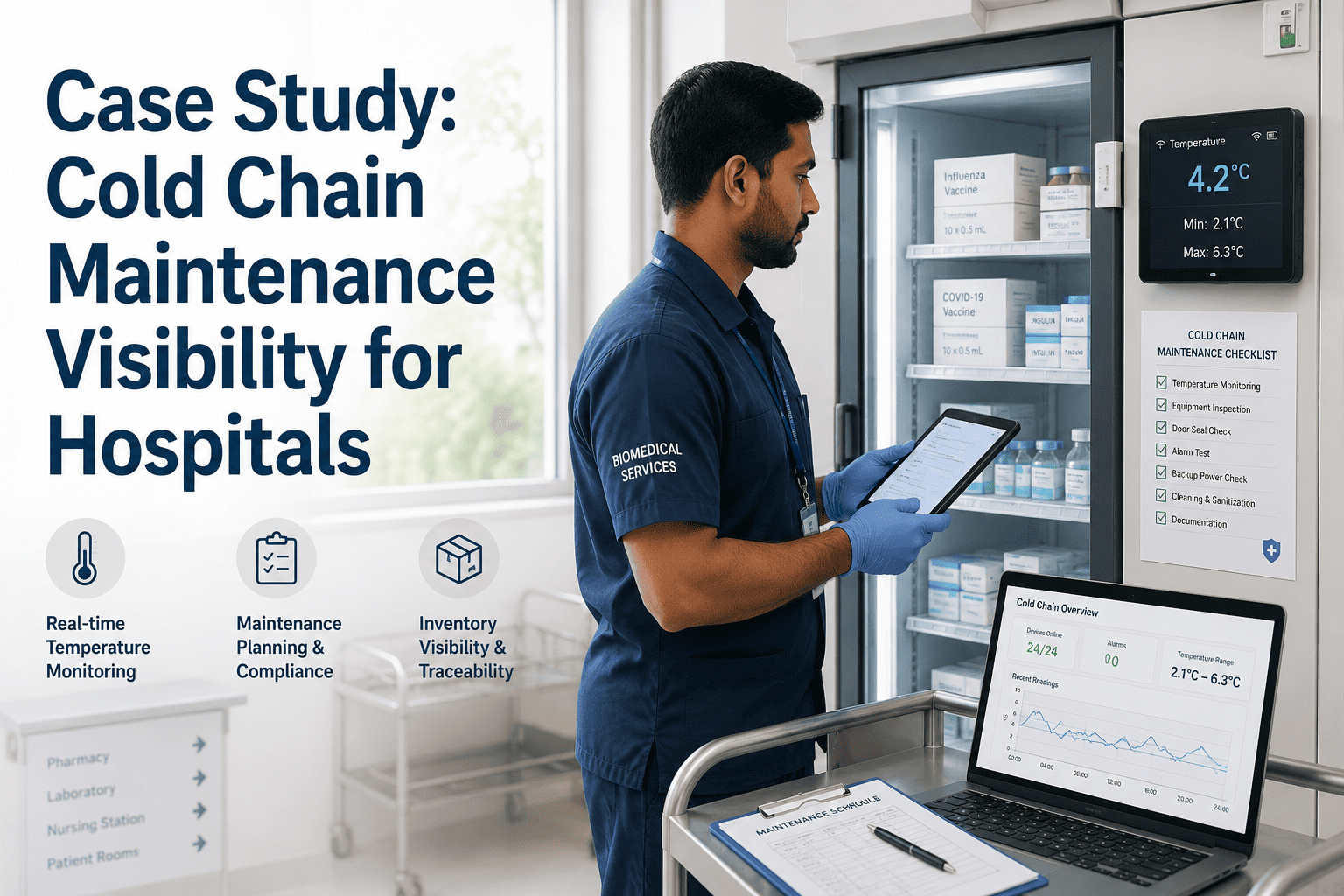
A regional hospital network with six cold storage rooms spread across three campuses spent years finding out about refrigeration problems the same way most hospitals do — after a nurse noticed something felt warm.

Read More
Manufacturers often advertise a ten-year design life on UPS batteries, but most healthcare facilities see real service life closer to three to five years, and the gap between those two numbers is exactly where unplanned outages happen.
Read More
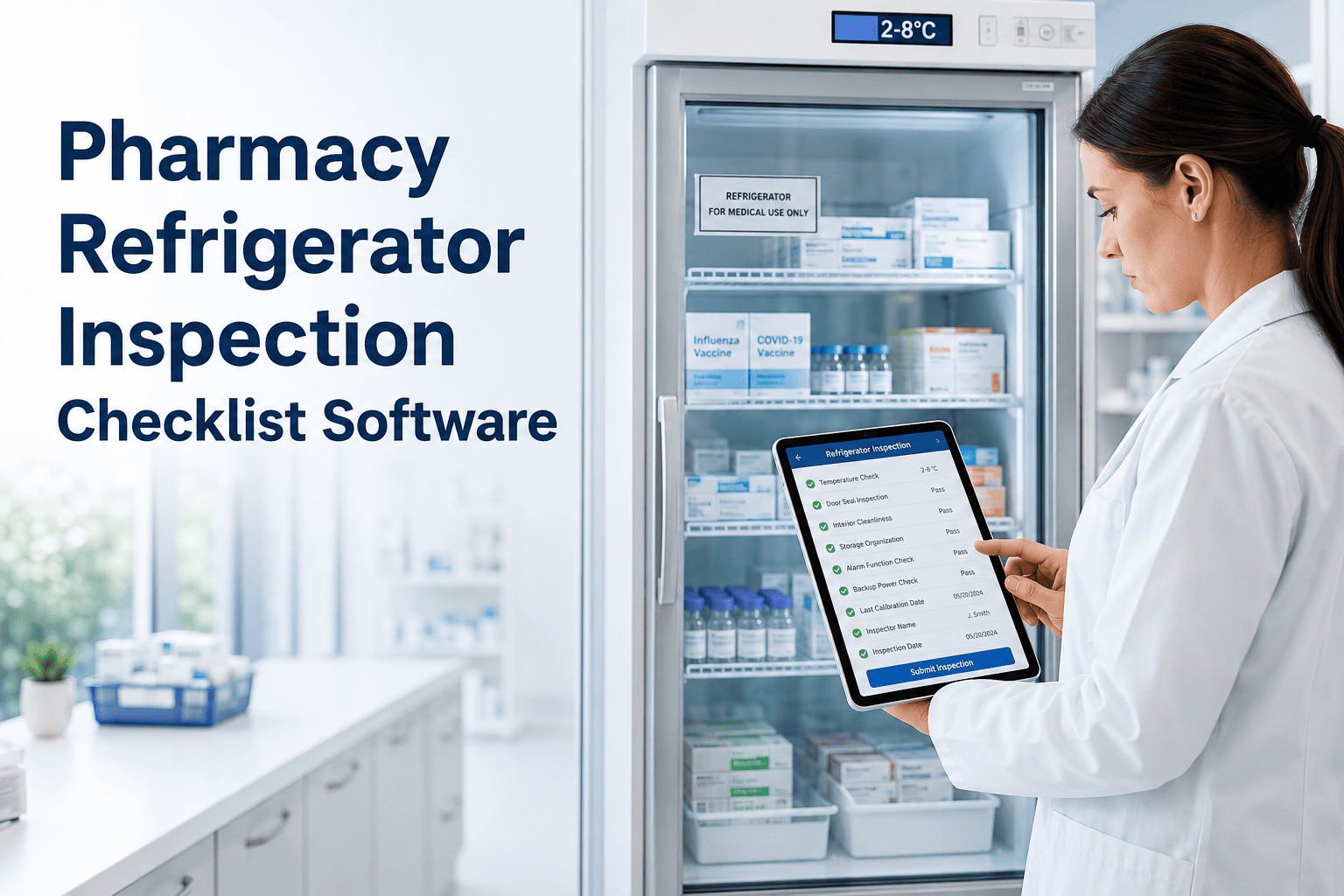
A pharmacy refrigerator inspection checklist only protects an inventory if someone actually completes it, on time, every time, and most paper clipboards taped to the side of a fridge fail that test within a month.
Read More
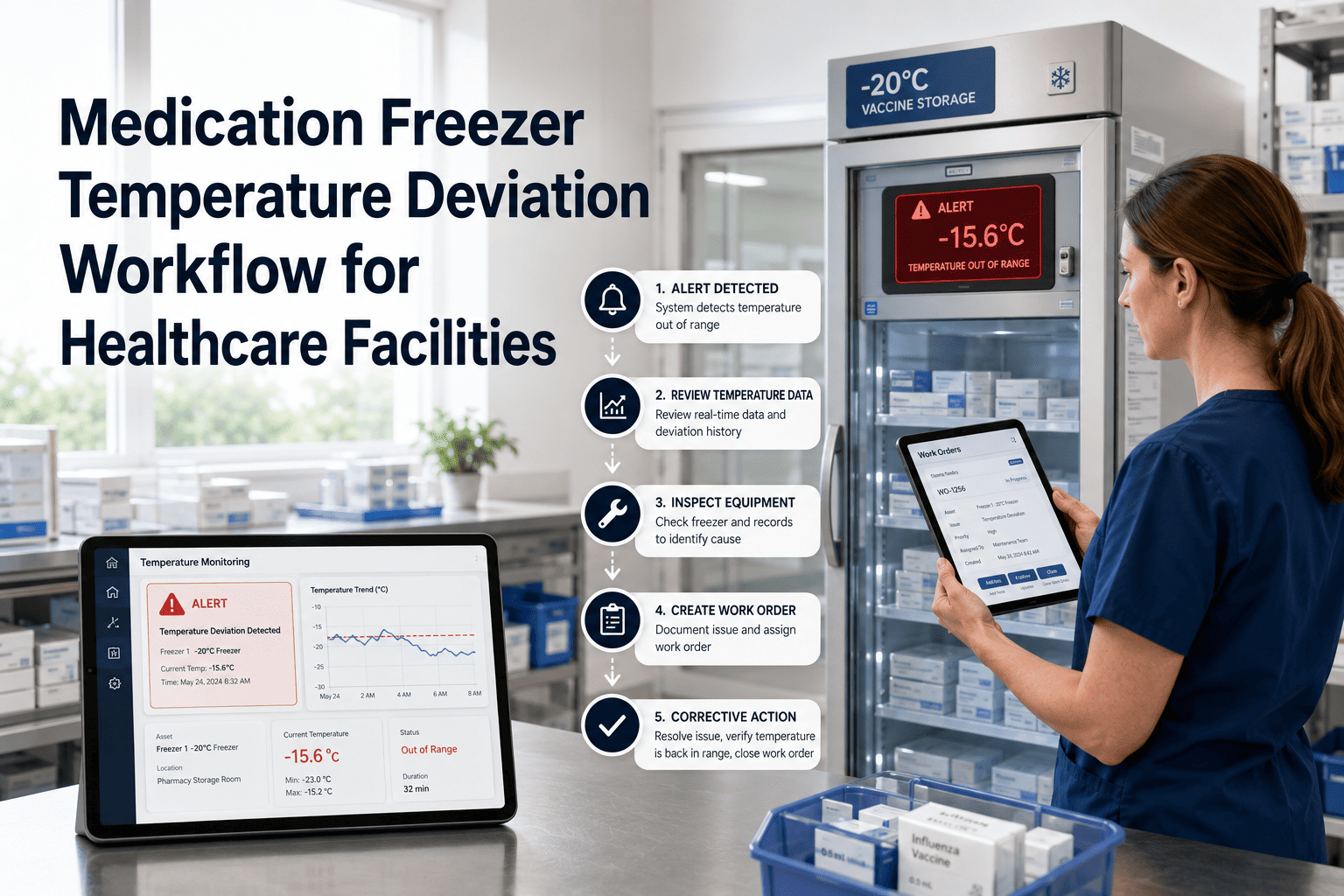
Most pharmacy teams brace for a freezer running too warm, but plenty of refrigerated medications are damaged just as permanently by freezing, and a thermostat drifting two degrees too cold rarely trips the same alarm as one running too hot.
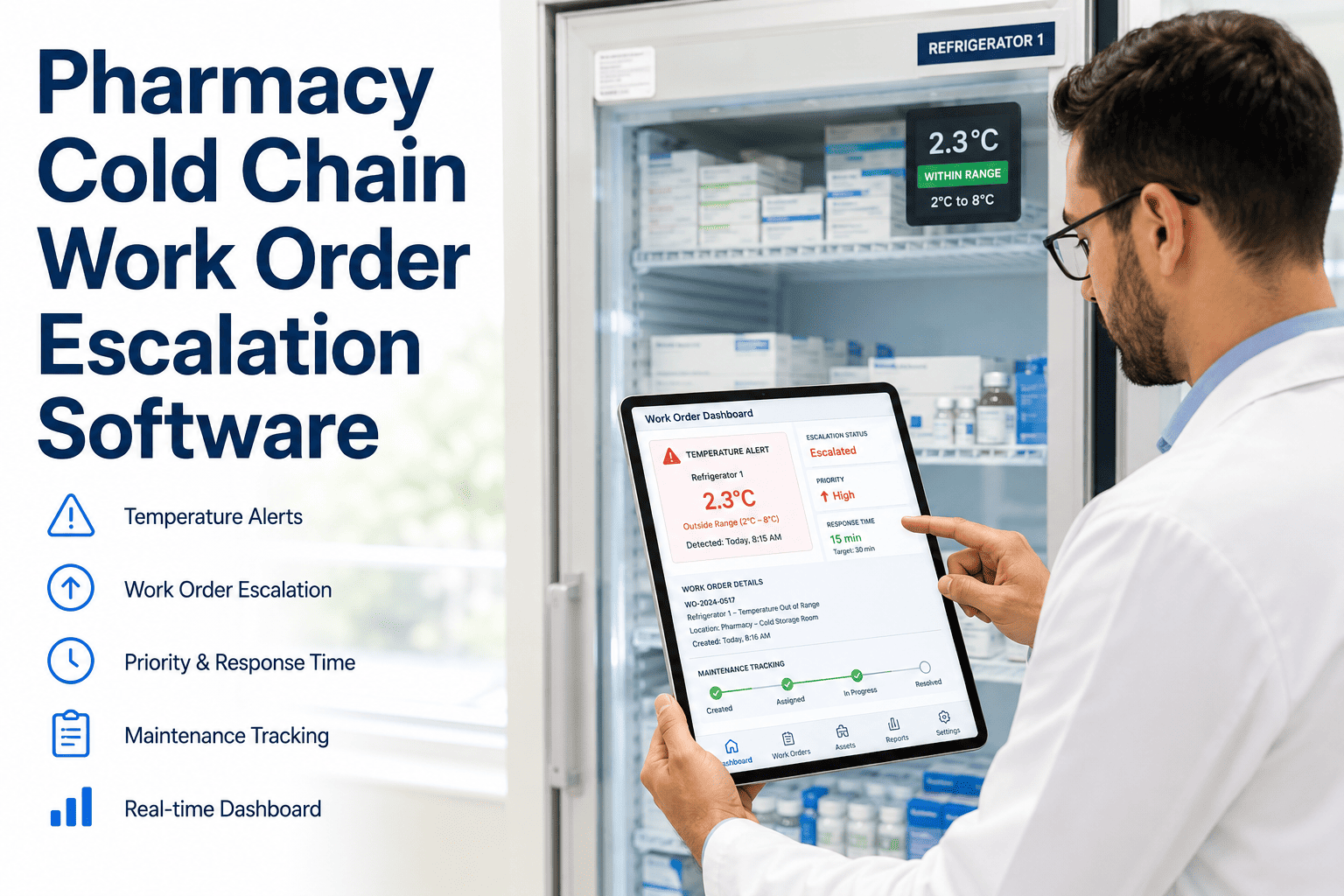
Read More
A cold storage alarm that sits unread for forty minutes can cost a hospital pharmacy a six-figure vaccine inventory, and most facilities only discover the gap during the post-incident review.
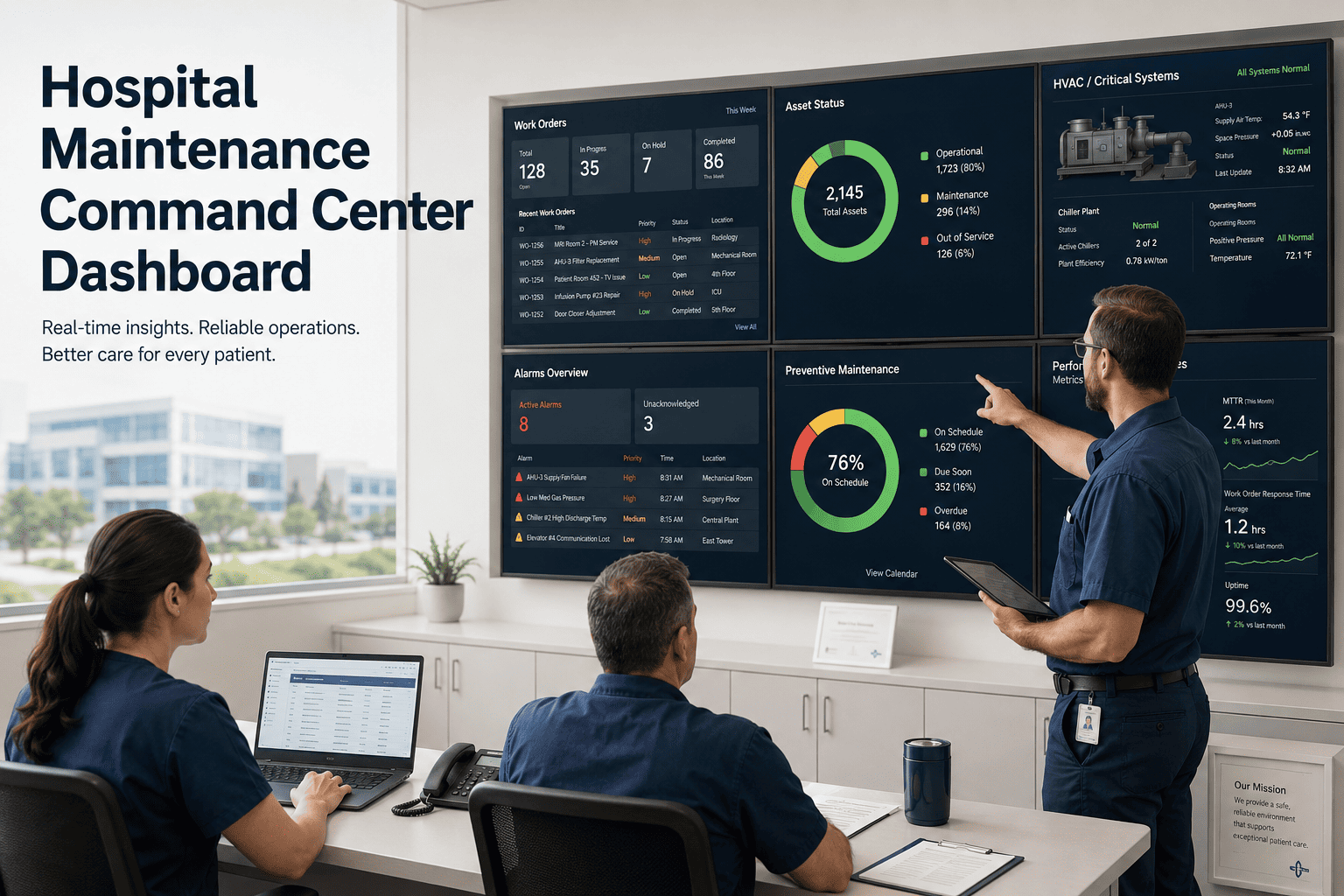
Read More
A VP of Facilities at a 450-bed acute care hospital is responsible for every infrastructure event in the building — simultaneously. A surgical suite HVAC alarm. An elevator entrapment on Tower B. A medical gas pressure drop in the ICU. A fire door
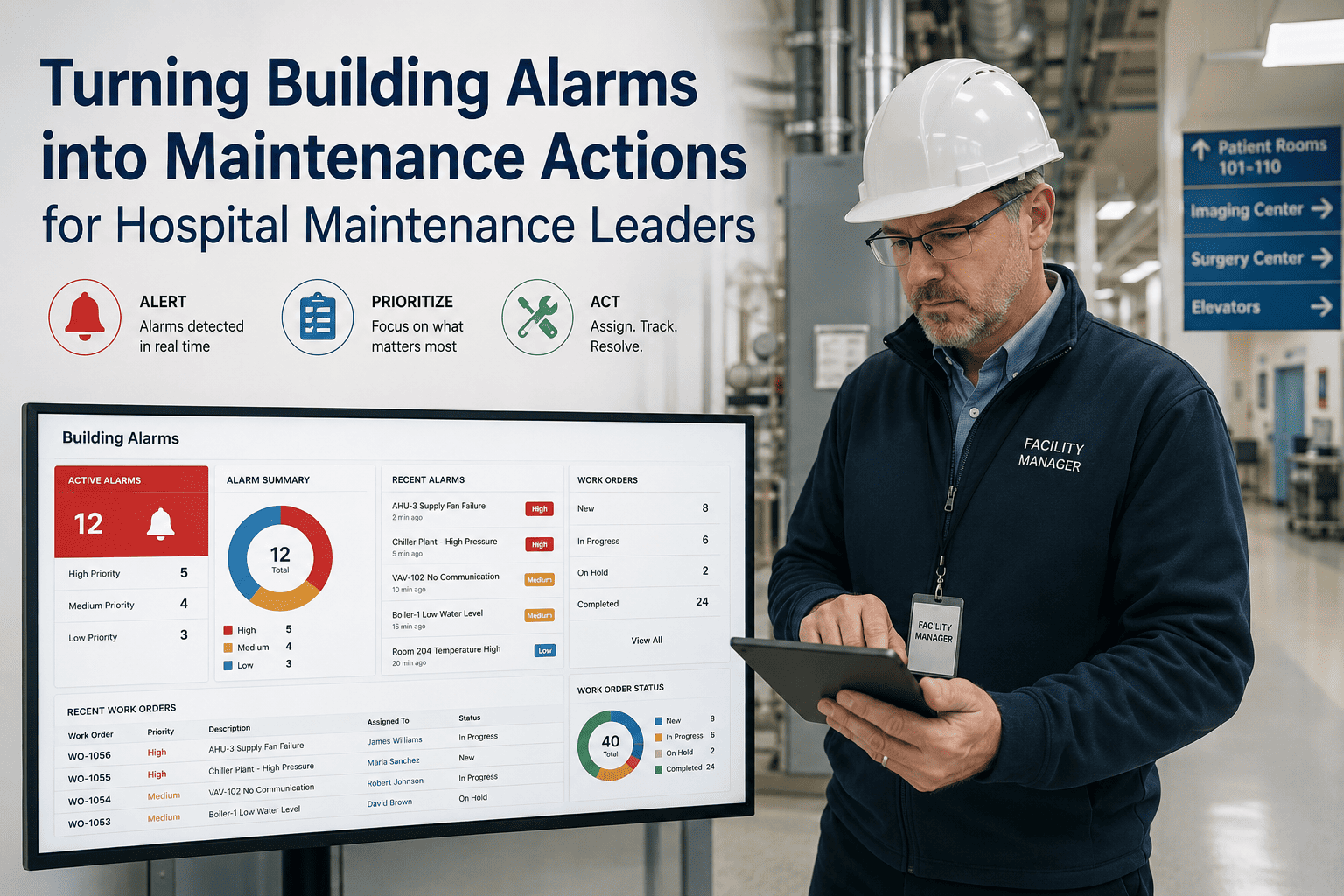
Read More
Most hospital building management systems are excellent at generating alarms. Very few of those alarms reliably become maintenance actions — assigned to the right technician, completed with evidence, closed with an audit trail. The gap between "al
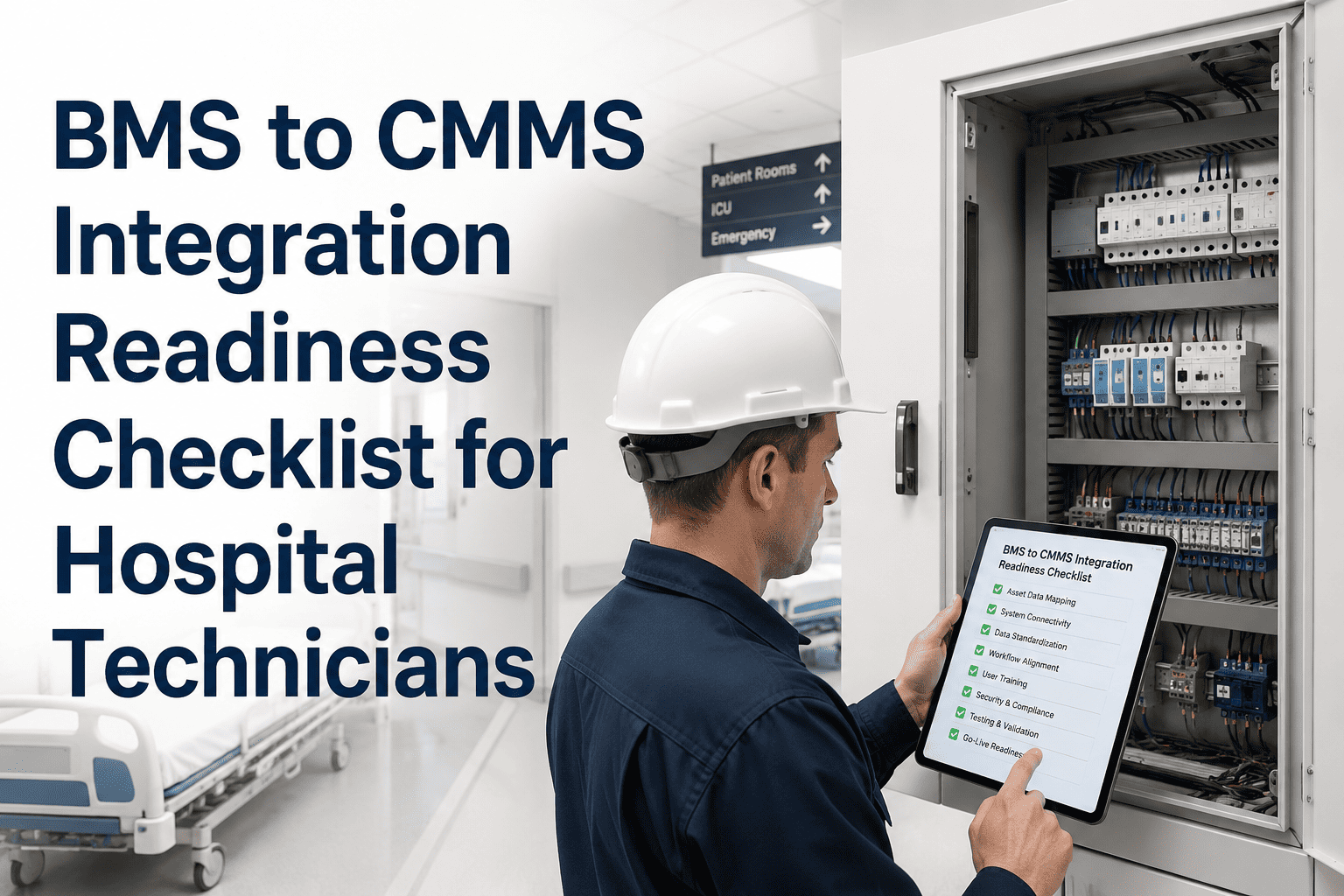
Read More
Integrating a Building Management System with a CMMS is one of the highest-leverage moves a hospital facility team can make — and one of the most commonly delayed because teams are not sure whether they are actually ready to do it. A BMS sends sig
Read More
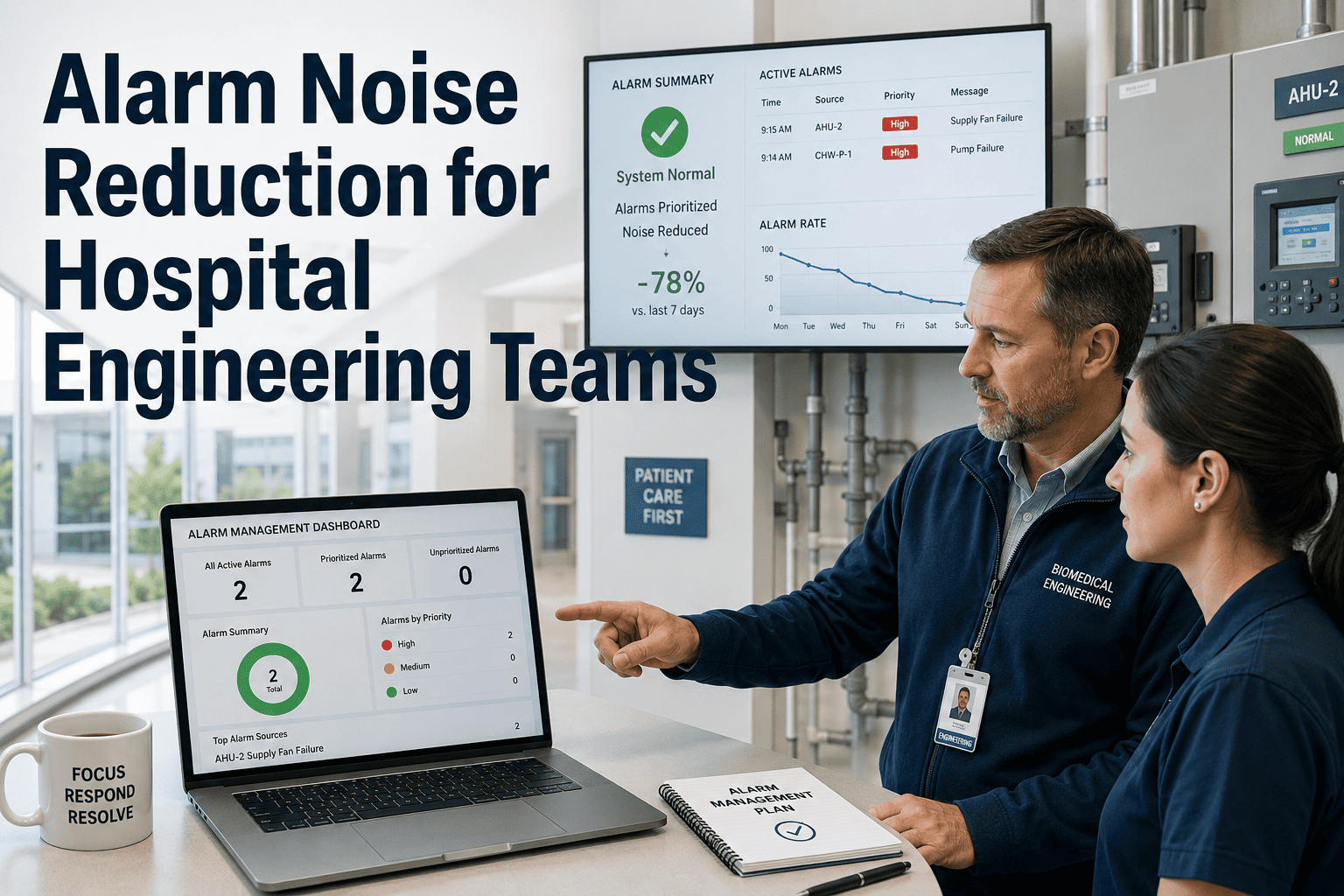
Hospital engineering teams are drowning in alarms — and most of them are noise. Studies consistently show that up to 85–99% of hospital alarms are false or clinically insignificant, and the same pattern plays out in facility systems: BMS alerts, s
Read More
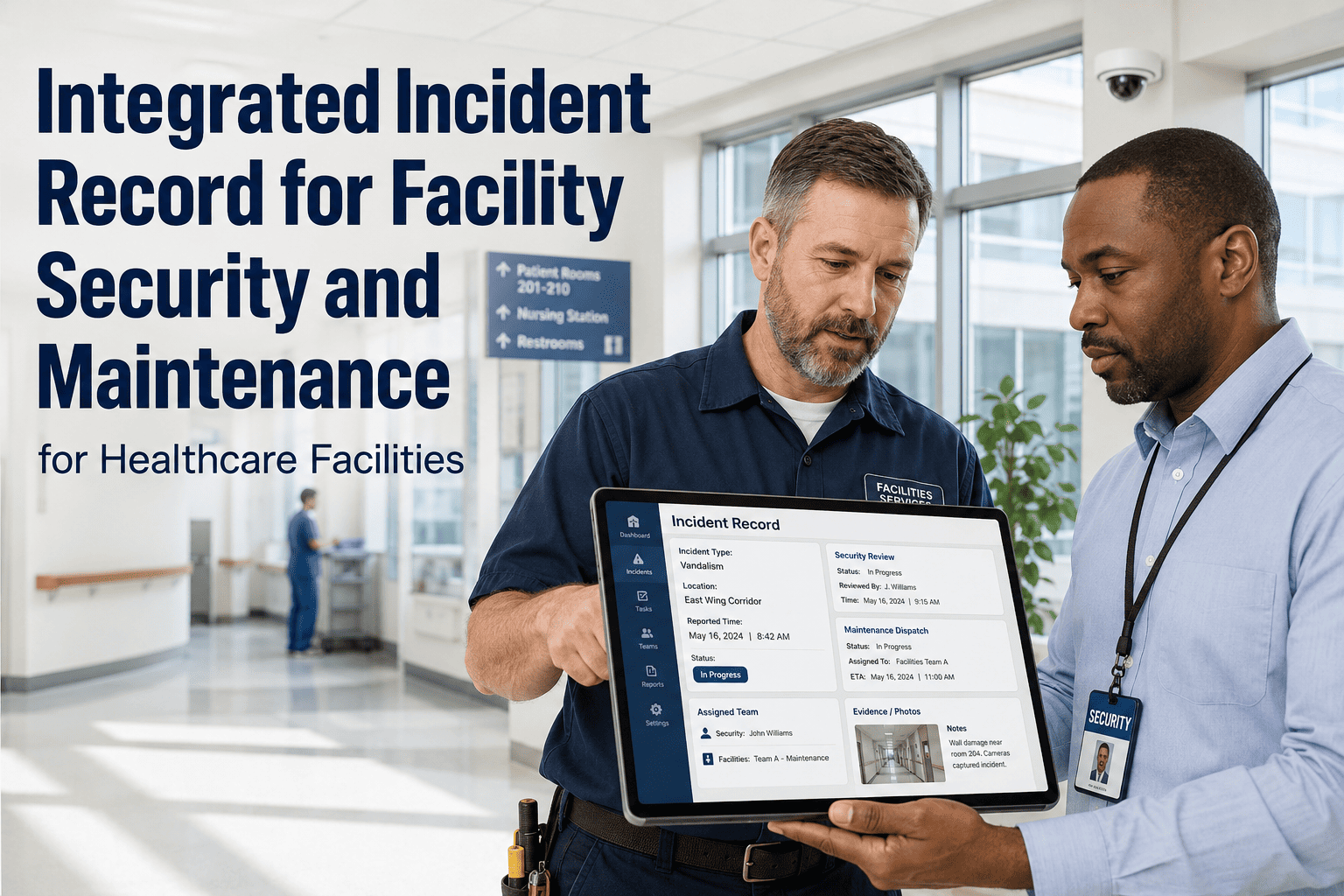
When a security event touches a physical asset — a door that failed, a corridor that flooded, a system that triggered a safety alert — it creates two records that almost never connect: a security log and a maintenance ticket. The gap between them
Read More
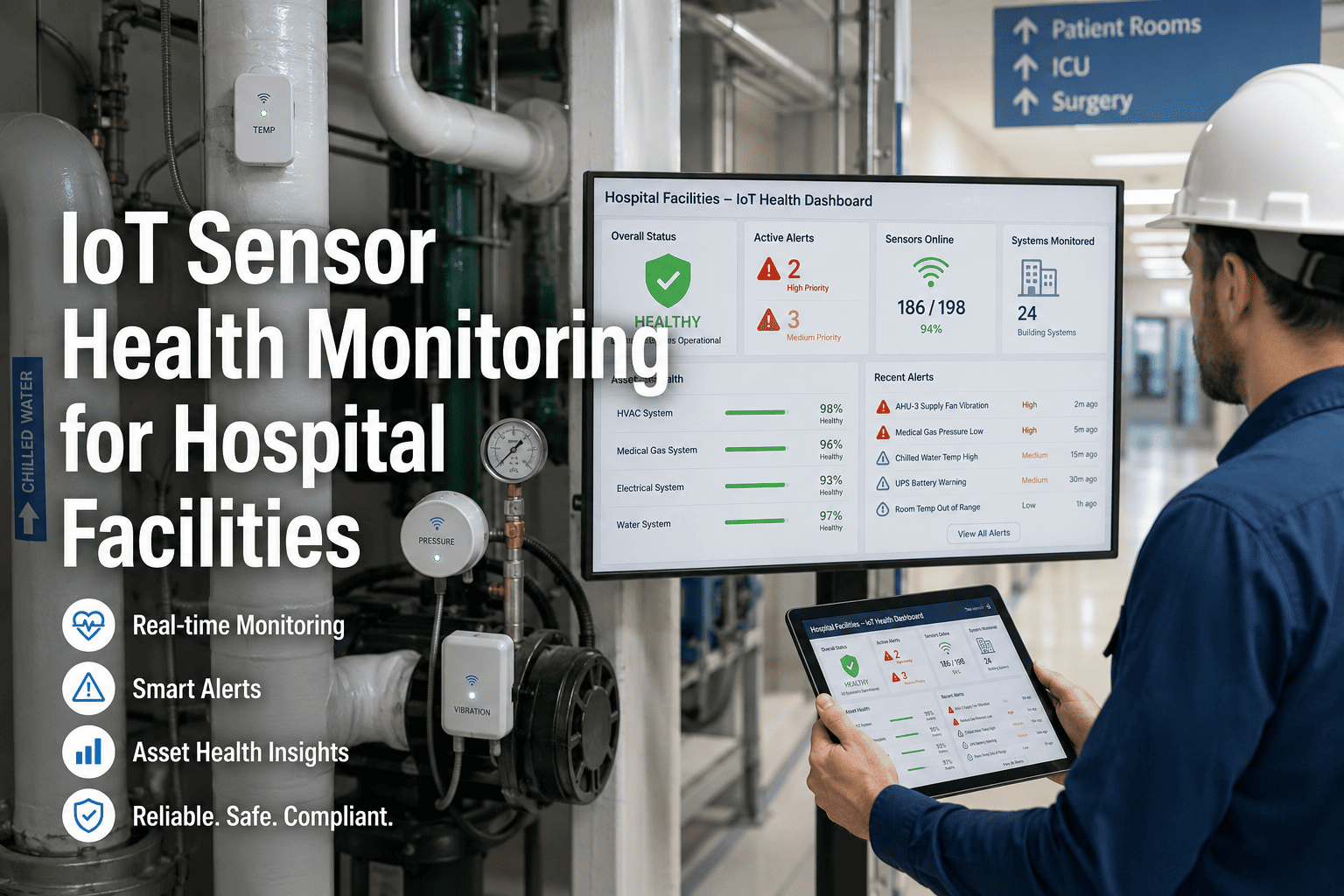
Hospital facilities teams are under constant pressure to keep hundreds of connected assets running — from HVAC and medical gas systems to refrigeration units and critical power infrastructure. IoT sensor health monitoring gives facility engineers
Read More
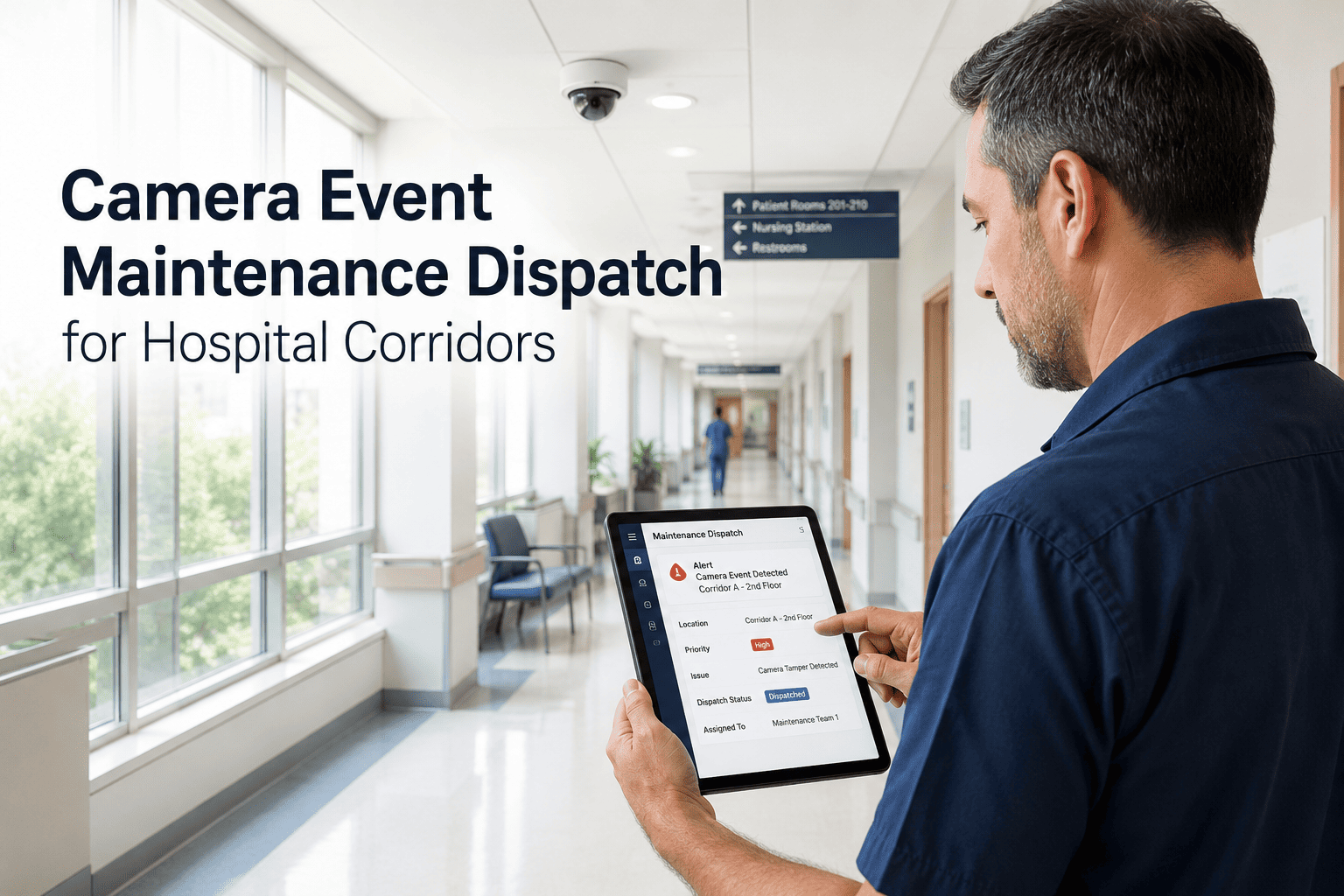
Hospital corridors are among the highest-traffic, highest-risk areas in any facility — and yet most corridor maintenance is still triggered by someone physically noticing a problem. Camera event maintenance dispatch changes that equation entirely:
Read More
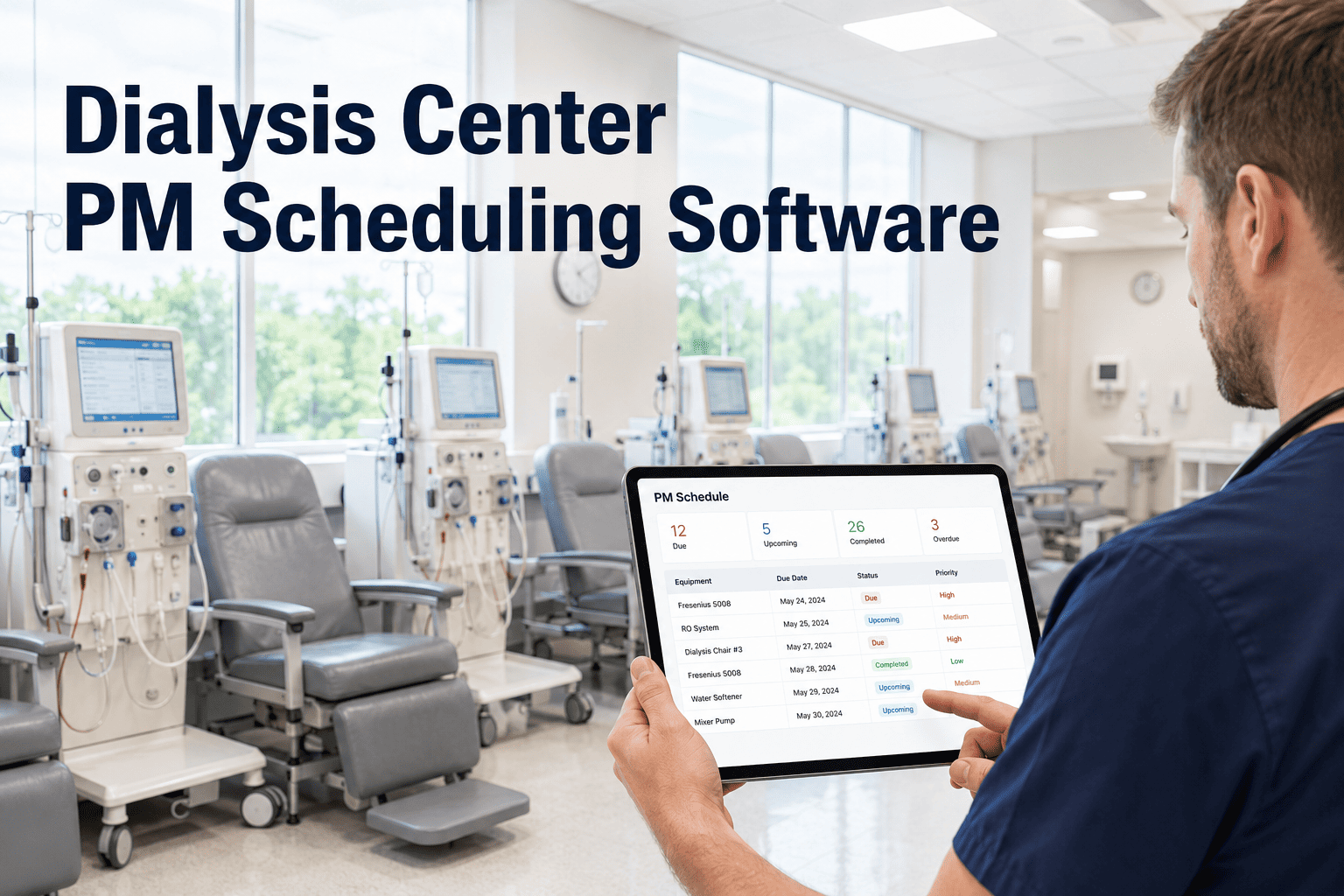
A dialysis center is really three maintenance operations stacked on top of each other — the machines at every chair, the water-treatment train that feeds all of them, and the disinfection cycles that keep both safe — and a single weak point in any
Read More
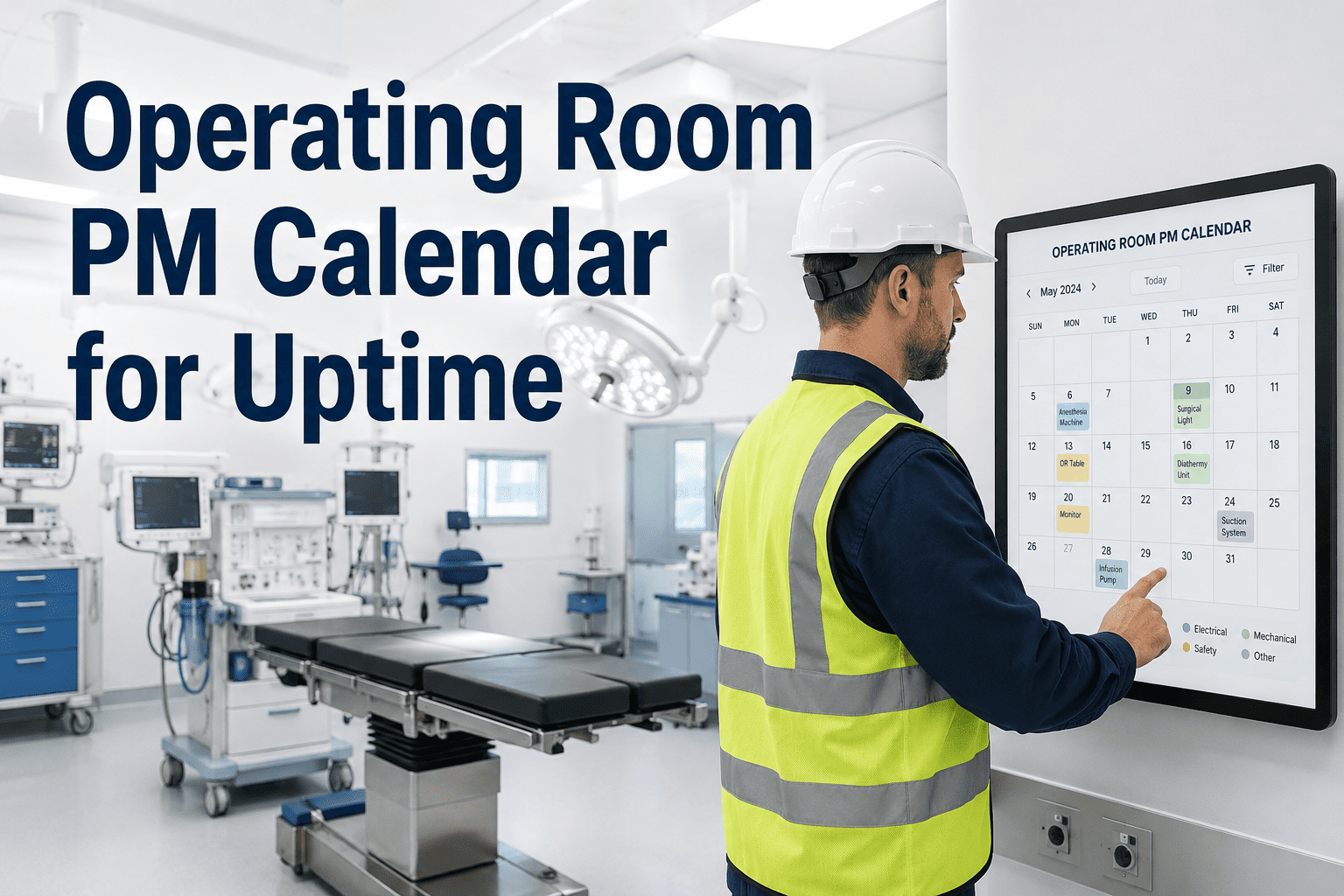
An operating room only earns its keep when it's running a case, and at $36 to $133 a minute, every idle minute is expensive. Yet some of the most predictable causes of OR delay are maintenance-related: an anesthesia machine that wasn't checked, a
Read More
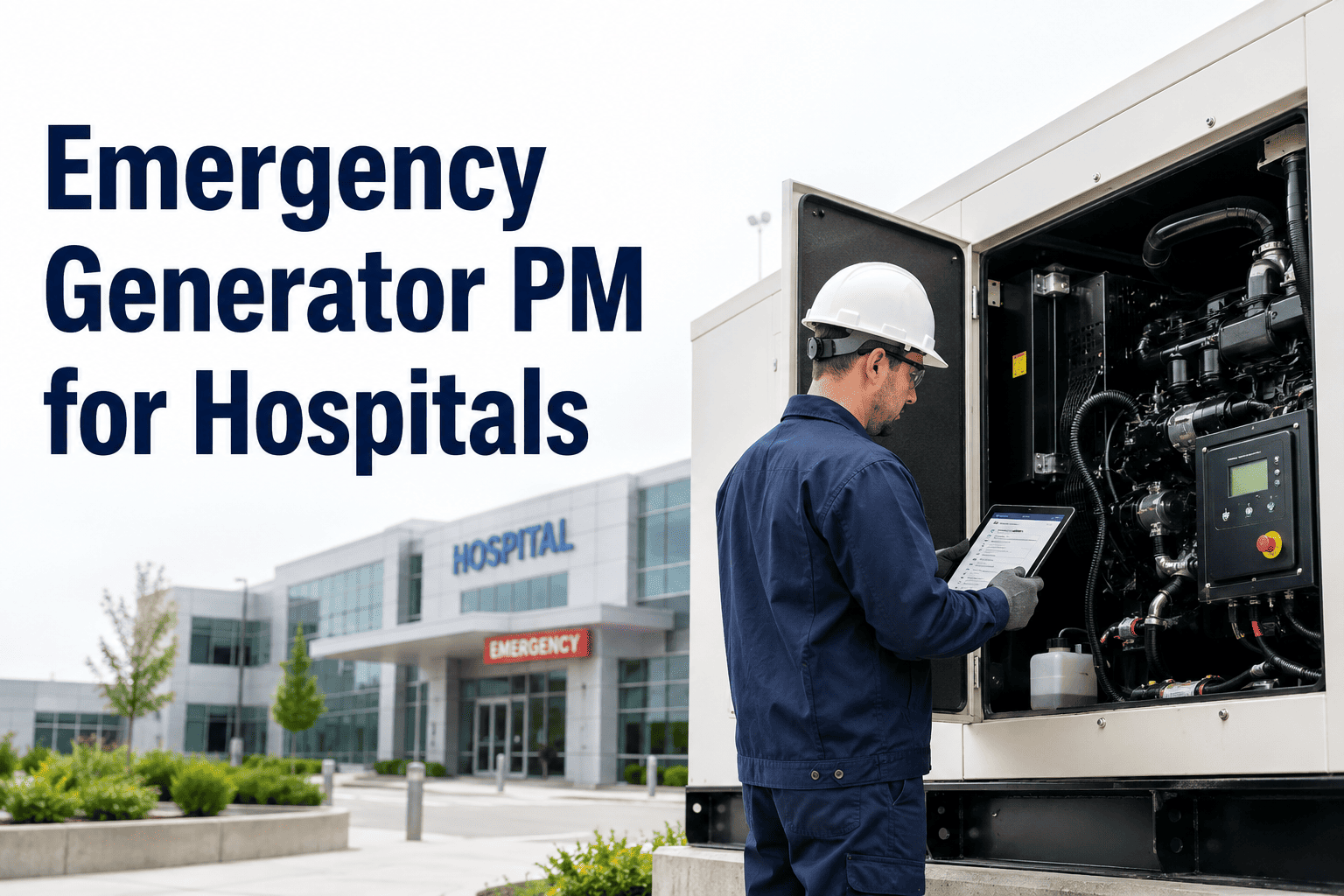
When utility power drops, a hospital has about ten seconds before the gap between the grid and the generator becomes a clinical event — ventilators, ORs, imaging, and life-safety lighting all waiting on a machine that has to start, accept load, an

Read More
In a hospital, an air handler isn't just comfort equipment — it's an infection-control device. An operating room stays sterile because it's held at positive pressure to its corridor; an isolation room protects everyone else because it's held negat
Read More
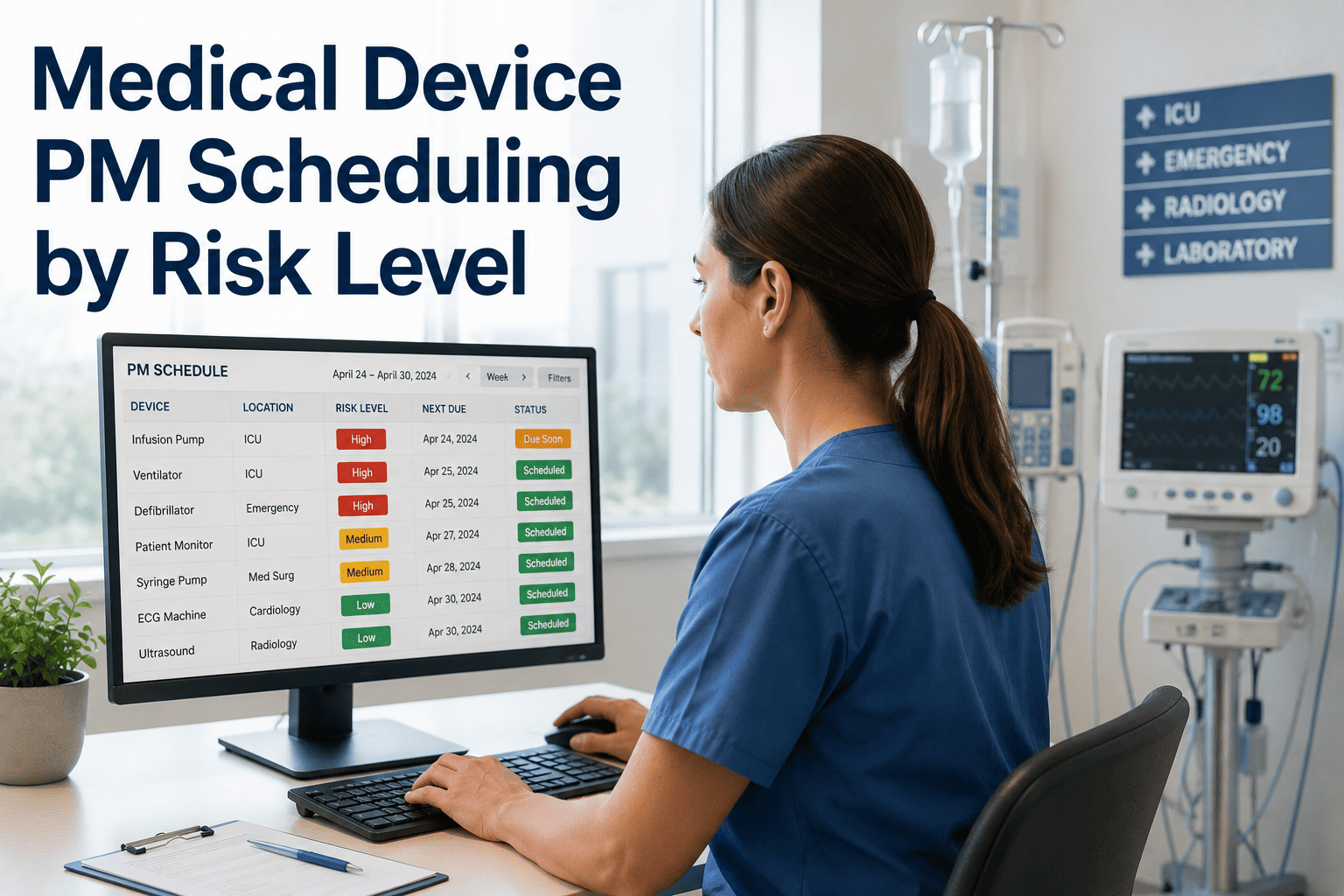
A ventilator running twenty-four hours a day in the ICU and an identical unit used twice a month in a clinic do not wear at the same rate — but a calendar-only schedule treats them as if they do. The heavily used device blows past its real service
Read More
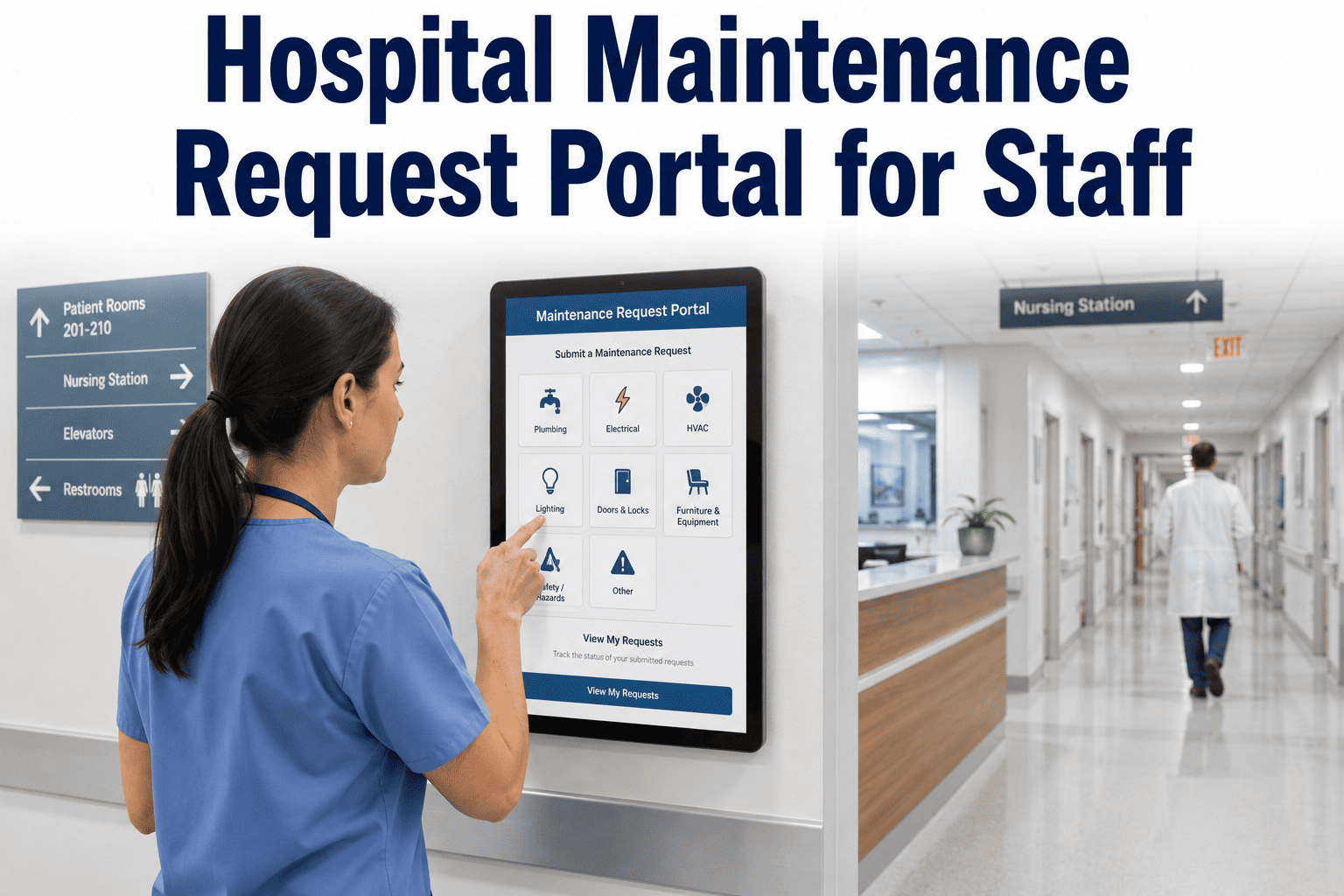
In most hospitals, a maintenance request can arrive five different ways — an email to the facilities inbox, a call to the desk, a paper form on a clipboard, a message in a chat app, or a quick word to a technician in the hallway. And that's exactl

Read More
A biomedical team's morning often starts the same way: a queue with no order to it. A down ventilator sits in the same undifferentiated list as a wobbly IV pole; a failed defibrillator waits behind a thermometer reading two degrees high. Someone h
Read More
When a surveyor or a department head asks a hospital how fast it responded to an urgent repair, "pretty quickly" isn't an answer — and for most teams running on email and paper, it's the only one available. The problem the spec names is real: hosp
Read More
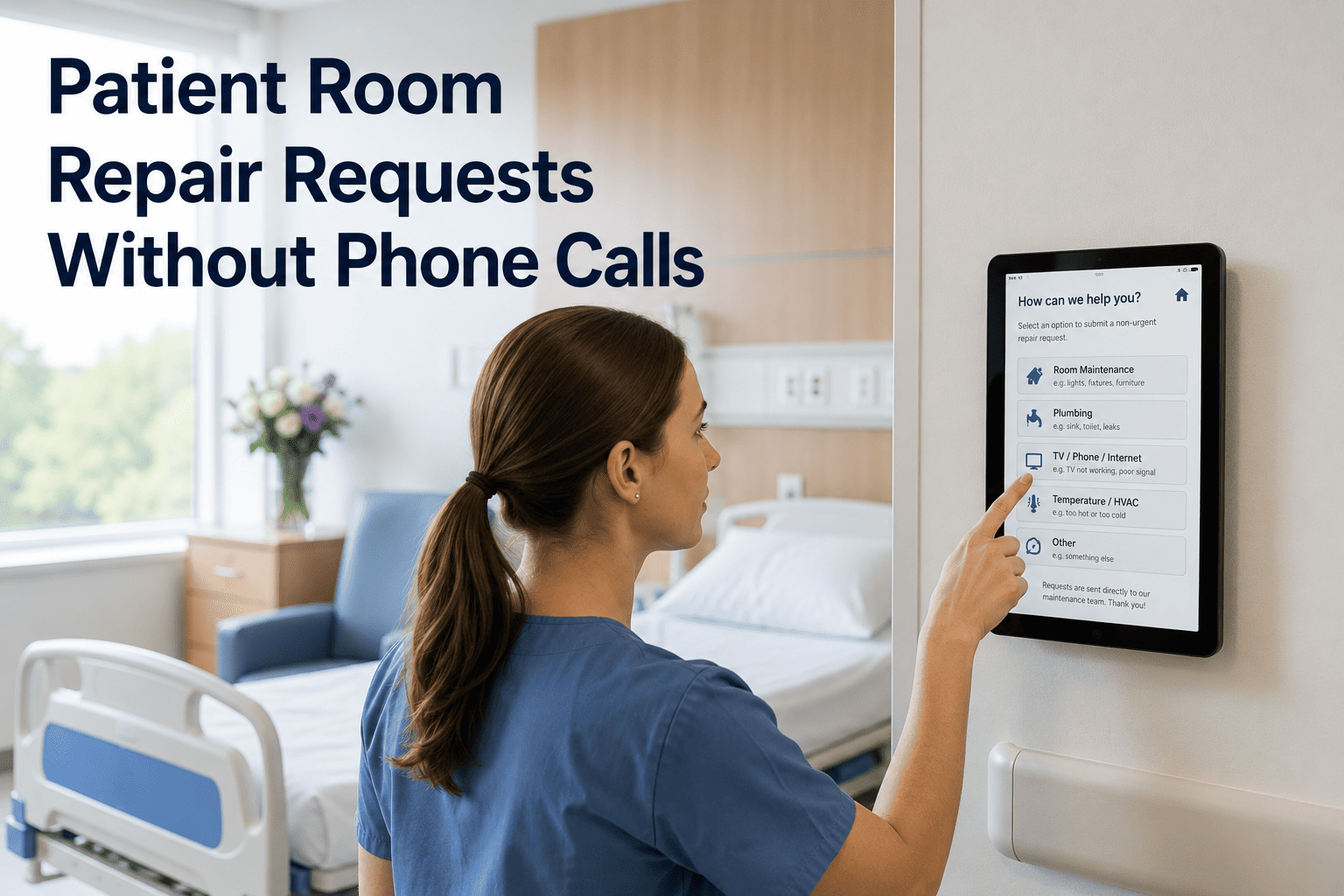
A nurse notices a broken bed rail, a flickering exam light, or a leaking sink — and then loses ten minutes to the one task no one trained them for: chasing maintenance. They dial the facilities office, wait on hold, describe the problem and the ro
Read More
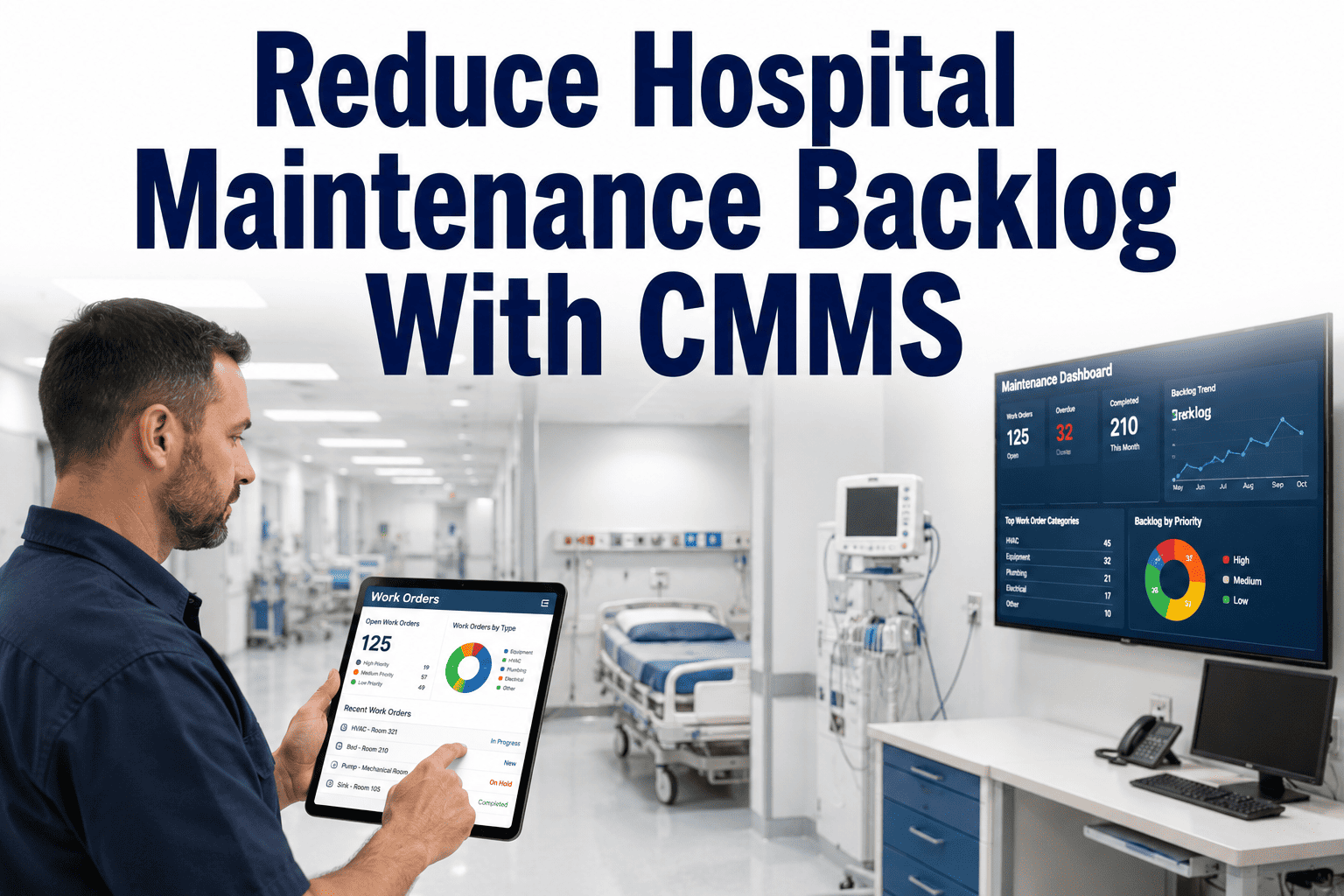
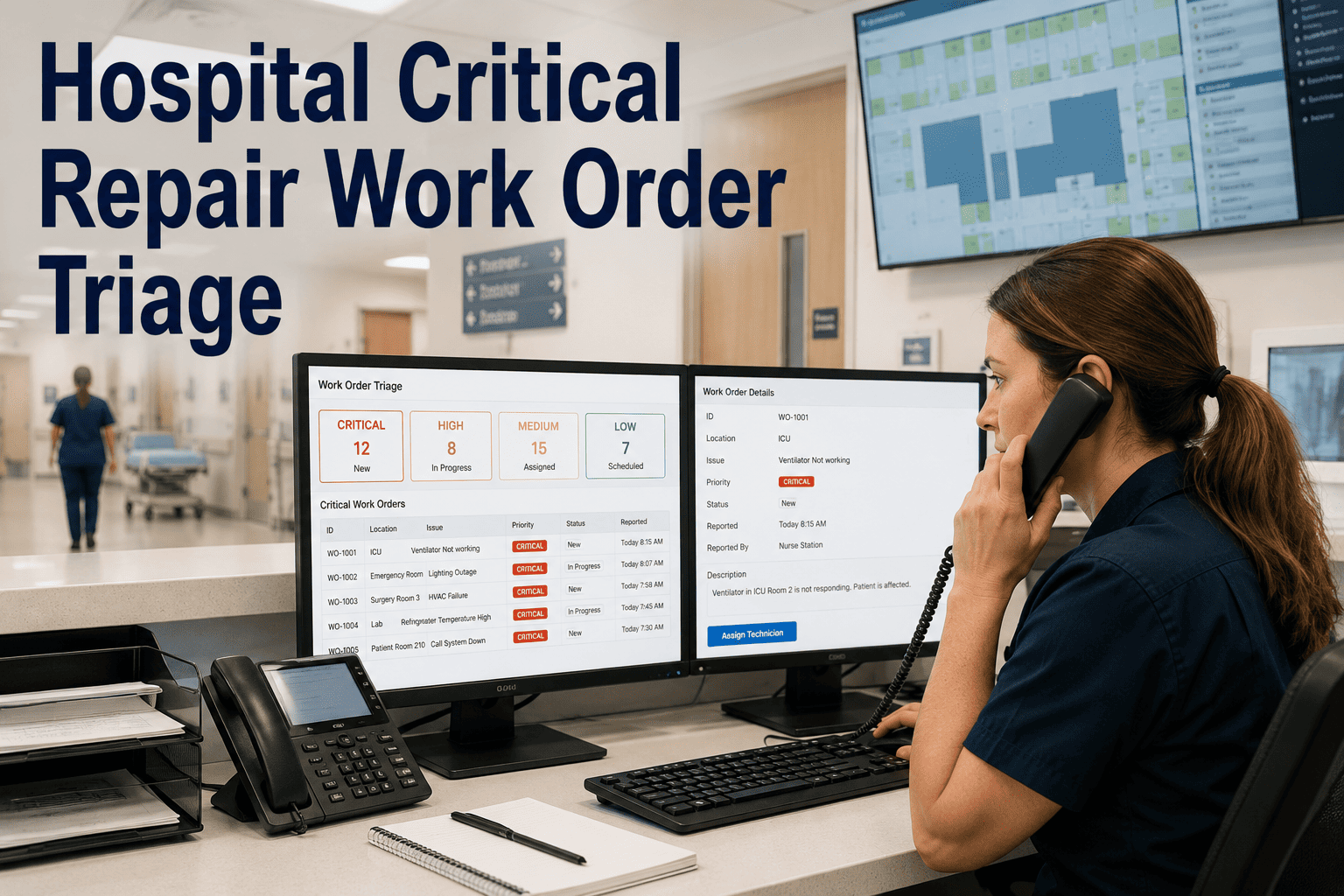
In a hospital, a maintenance backlog isn't just an operations headache — it's a patient-safety and accreditation risk that compounds quietly until a surveyor asks for the records. US hospitals collectively carry over $100 billion in deferred maint
Read More
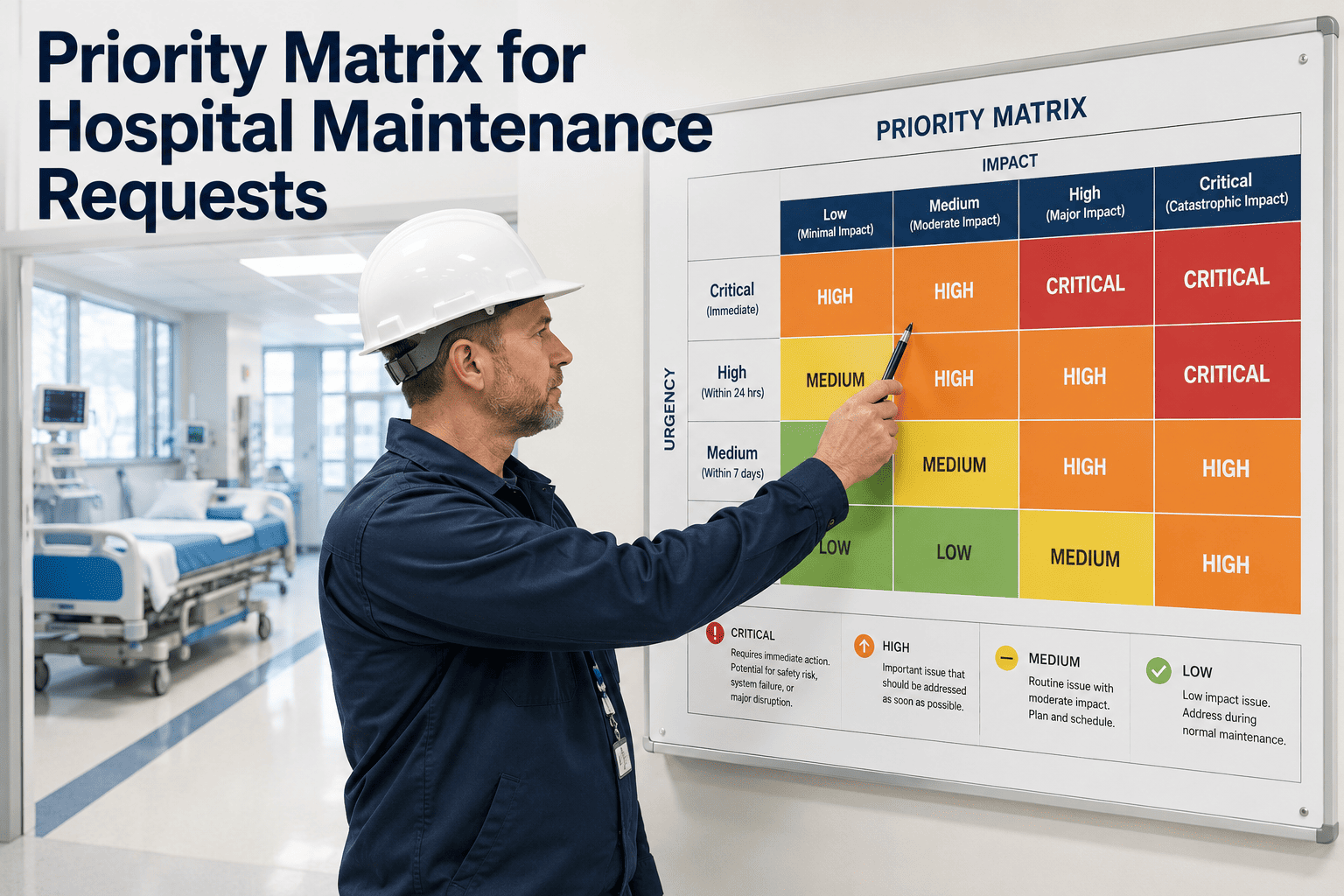
In a hospital, the question is never just "what broke" — it is "where." A tepid-water complaint in an administrative wing is a routine ticket; the same failure in a NICU is a patient-safety emergency. A power blip in a storage room can wait; in an
Read More
A conference room projector complaint from a department head reaches the top of the maintenance queue before a chiller serving an entire patient wing, simply because one request came with a phone call and the other came through a form. This is wha

Read More
A night-shift technician spends two hours diagnosing an intermittent fault on a critical chiller, runs out of time before the shift ends, and leaves a verbal note for whoever comes in next. By morning, that note has become "something about the chi

Read More
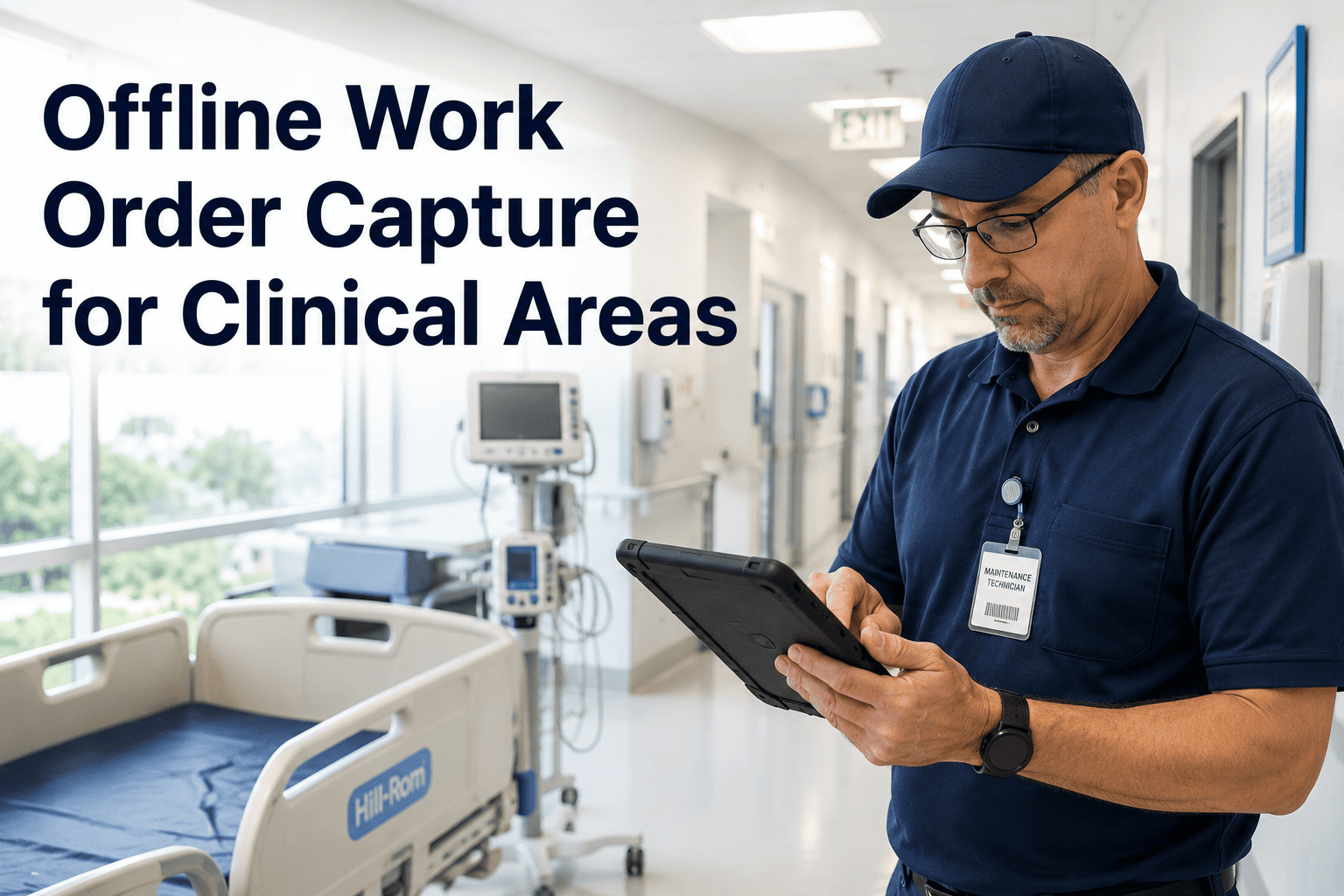
An auditor's first question is rarely about whether maintenance happened — it's "prove it." A work order marked complete with no photo, no timestamp, and no clear before-and-after record is a claim, not evidence, and claims don't hold up well duri
Read More
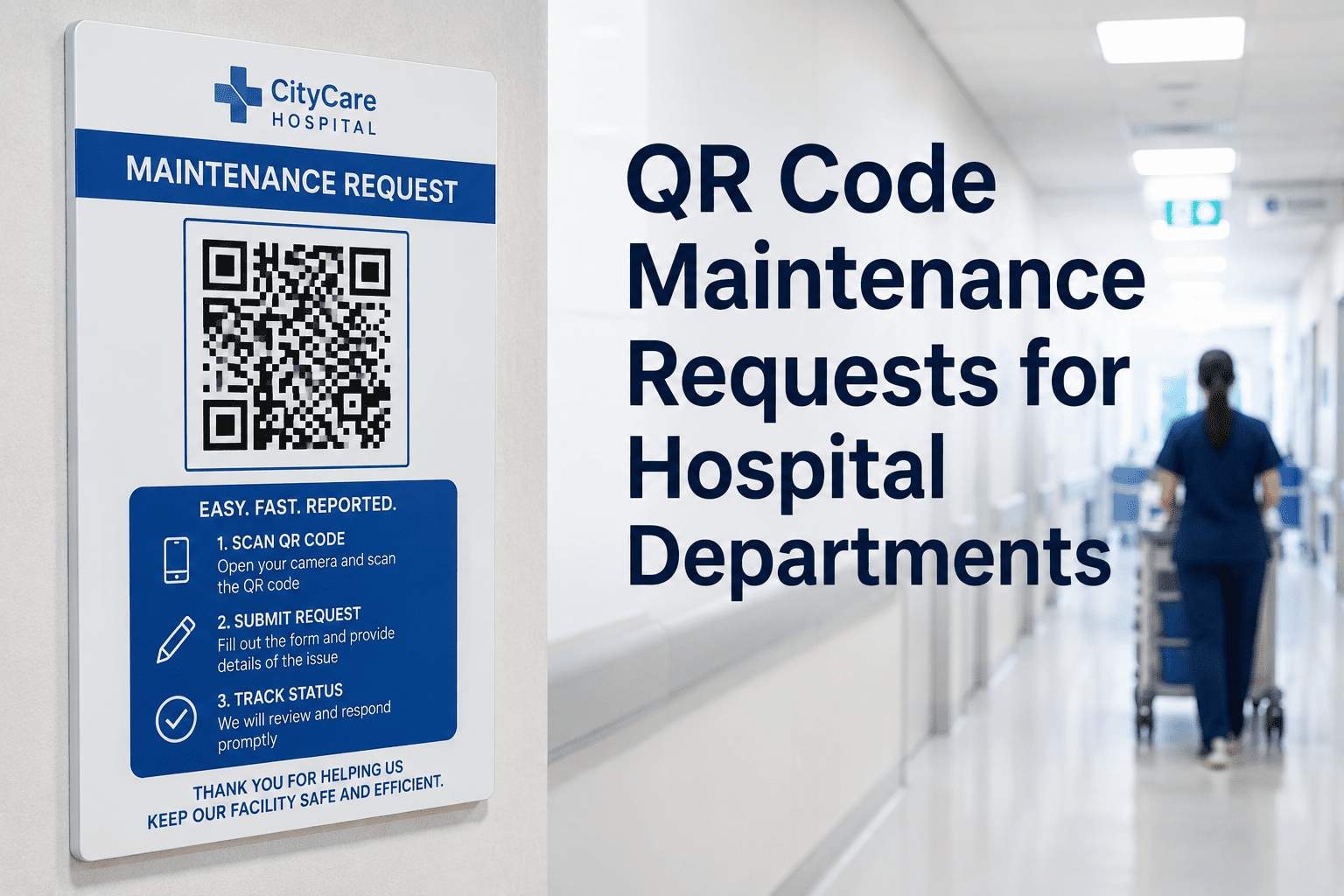
A lead-lined imaging suite, a basement mechanical room, and an MRI corridor all share one problem that has nothing to do with maintenance skill: no signal gets in or out. A technician finishing a repair in one of these zones either has to remember
Read More
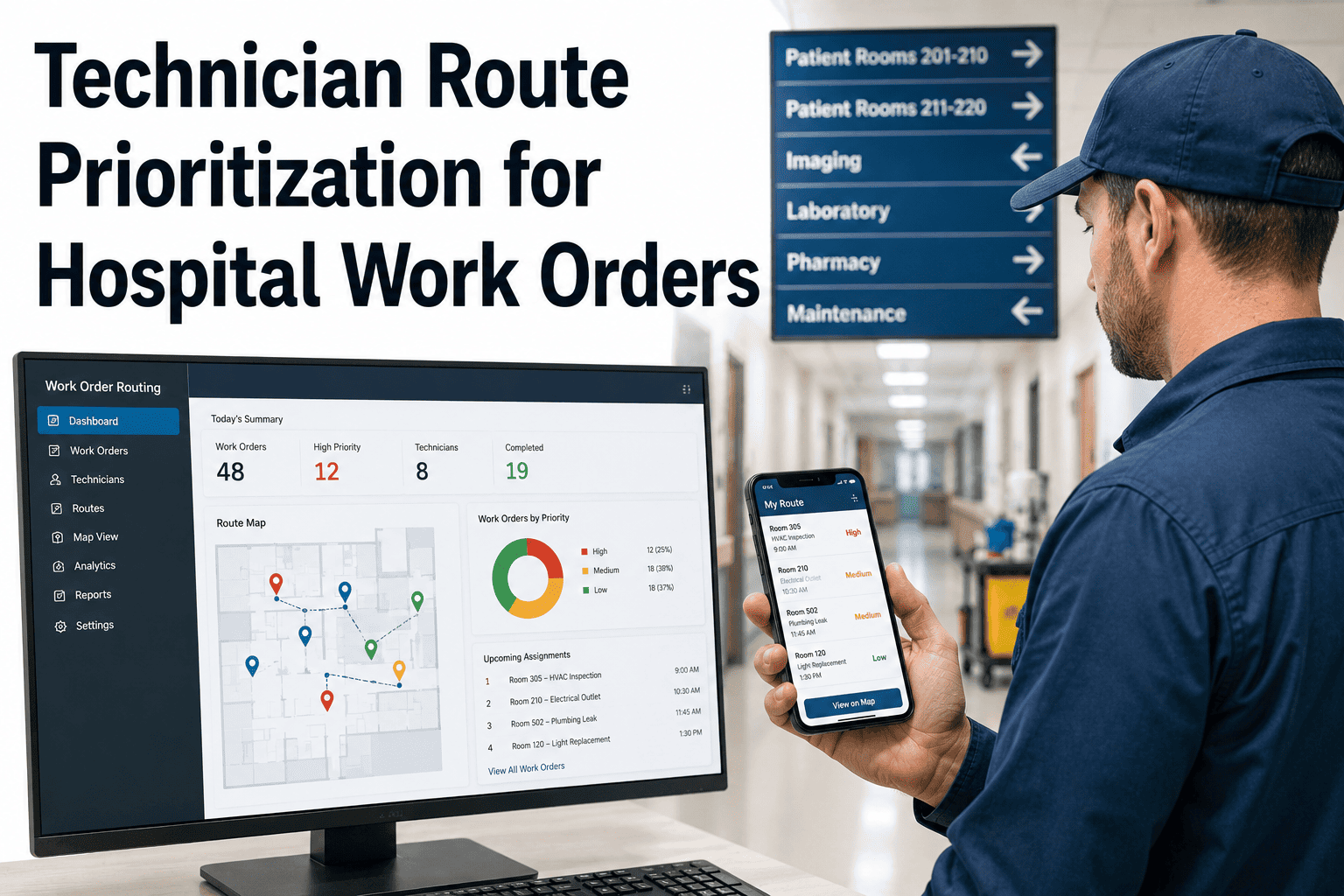
A nurse notices a flickering light in a patient room, a broken cart wheel in radiology, or a leaking faucet in a break room — and then what? In most hospitals, that observation turns into a hallway conversation, a phone call to facilities, or a st
Read More
A technician finishing a routine filter change gets pulled to a low-priority light fixture two floors away, while a ventilator alarm work order sits unacknowledged in the queue because nobody flagged it as urgent. This isn't a staffing problem — i
Read More
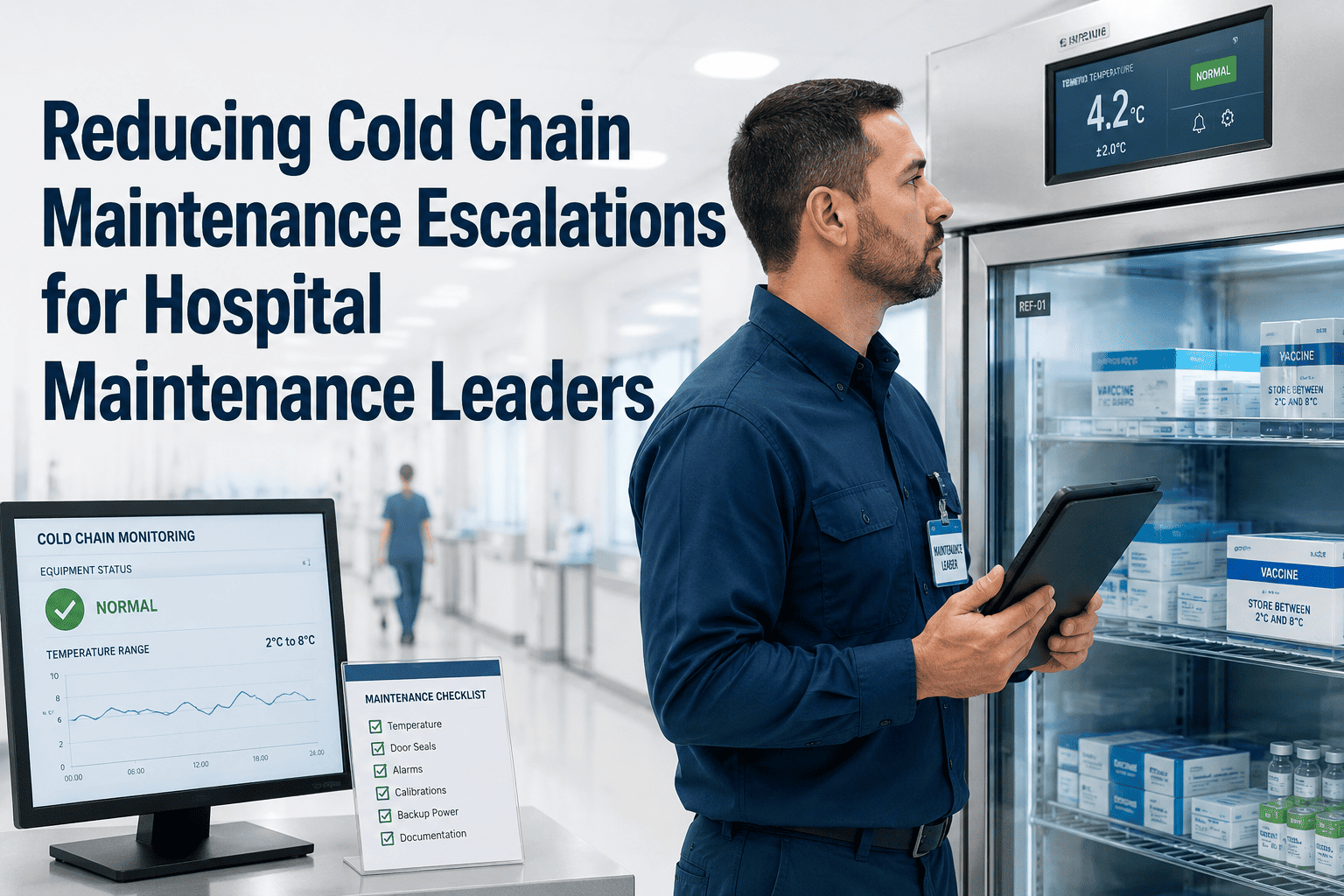
A 340-bed regional hospital was averaging eleven cold chain escalations a month across its pharmacy, lab, and blood bank units — each one a 2 a.m. phone call, a scramble to find an on-call technician, and a department head asking why nobody caught

Read More
A pharmacy cold room door seal rarely fails all at once. It hardens slightly, loses a little flexibility, develops a hairline crack near a hinge — and keeps looking fine to a passing glance for weeks while warm air quietly leaks in and the compres
Read More
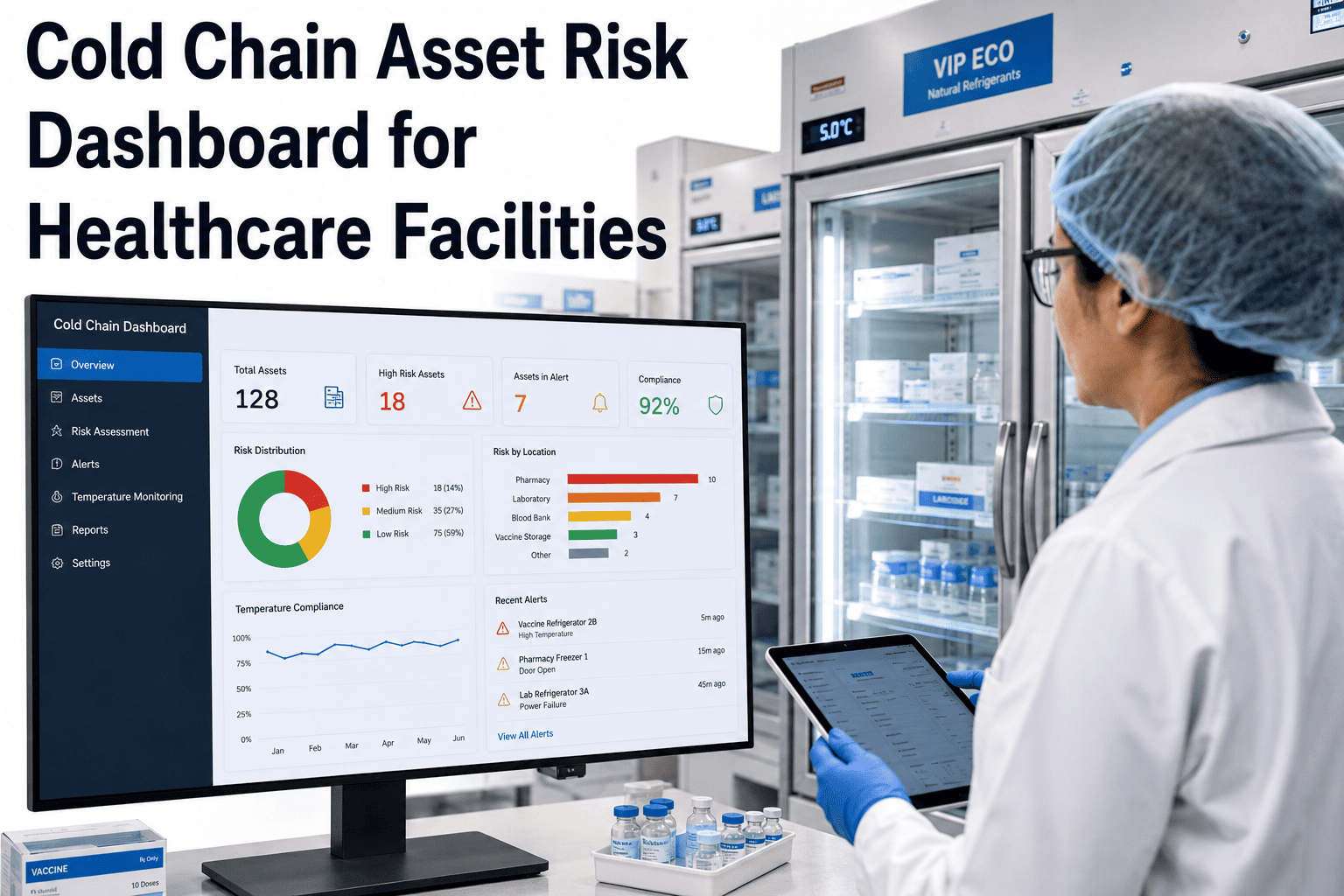
A single vaccine refrigerator failure can destroy more than $40,000 worth of biologics in one weekend — and most hospitals only find out after the temperature has already drifted out of range for hours. Pharmacy coolers, lab freezers, and blood ba

Read More
A research freezer holding years of irreplaceable samples runs on the same compressor, day after day, with almost nobody checking it until an alarm goes off — and by then a single ultra-low temperature freezer failure can destroy more than $100,00
Read More
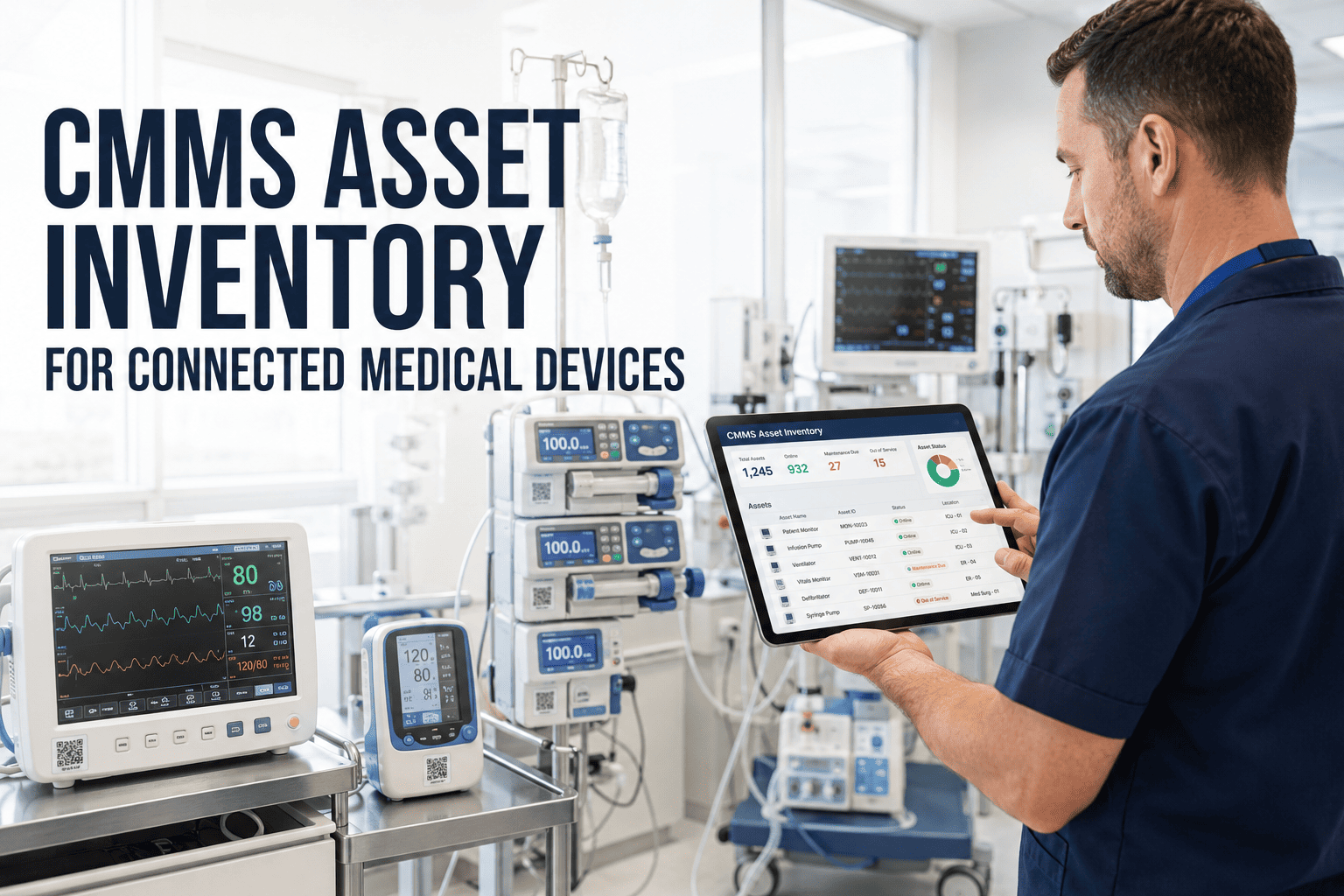
The average hospital now operates more than 10,000 connected medical devices — infusion pumps, patient monitors, ventilators, imaging systems, and bedside diagnostic units — each with a network address, a firmware version, an owner, a location, an
Read More
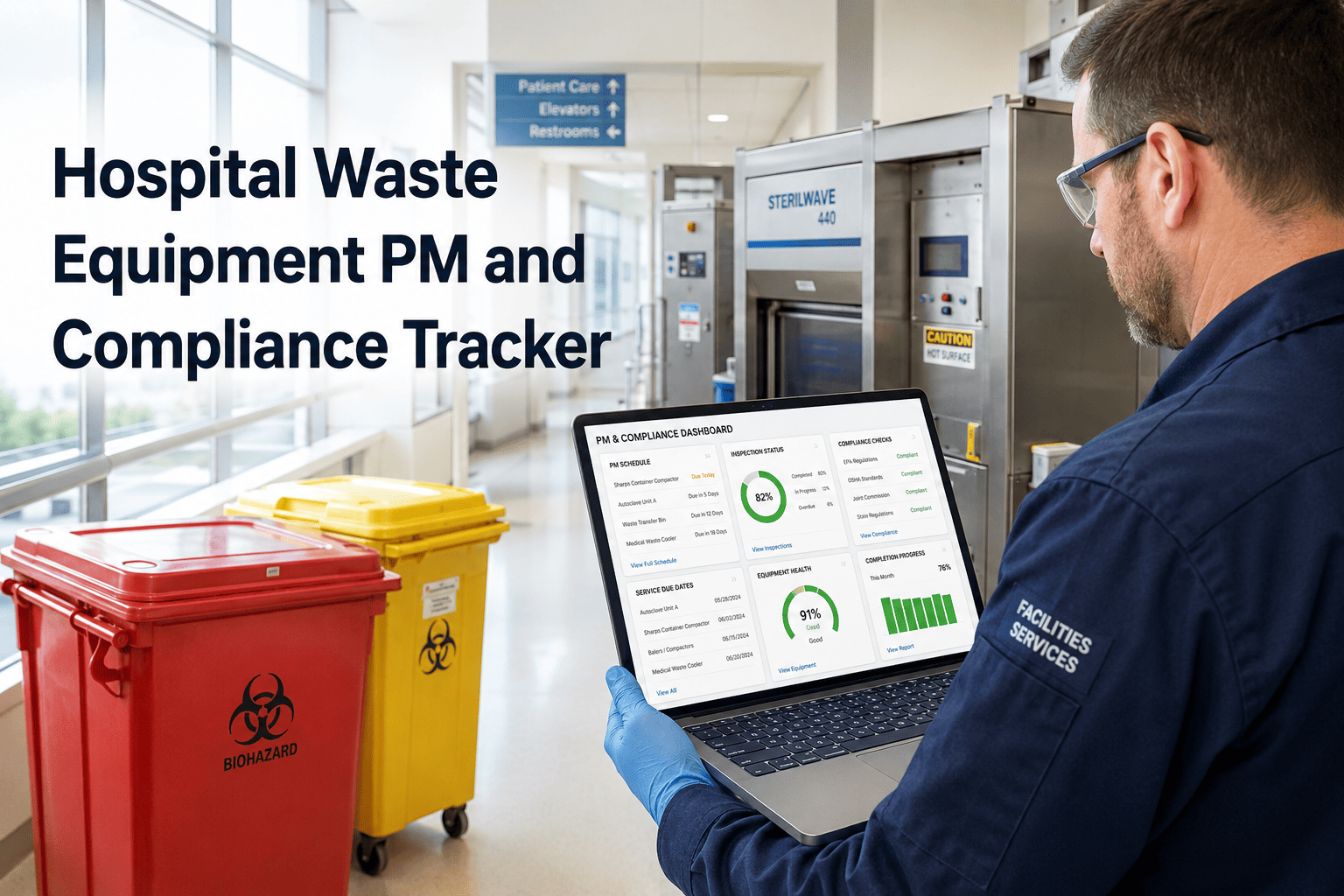
Hospital waste management is one of the most heavily regulated and liability-sensitive maintenance areas in healthcare facility operations. Compactors, autoclaves, sharps containers, pharmaceutical waste handlers, and regulated medical waste treat
Read More
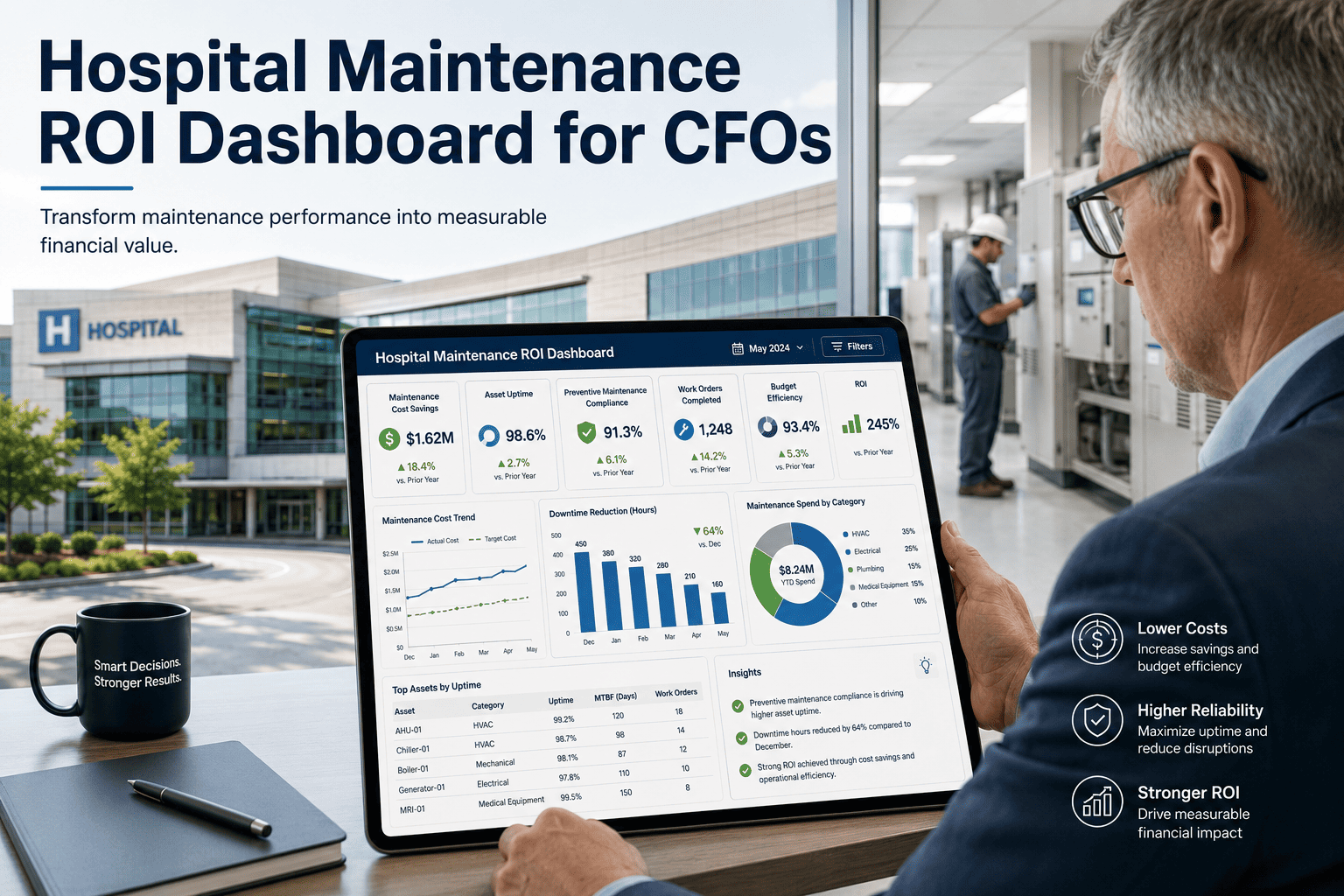
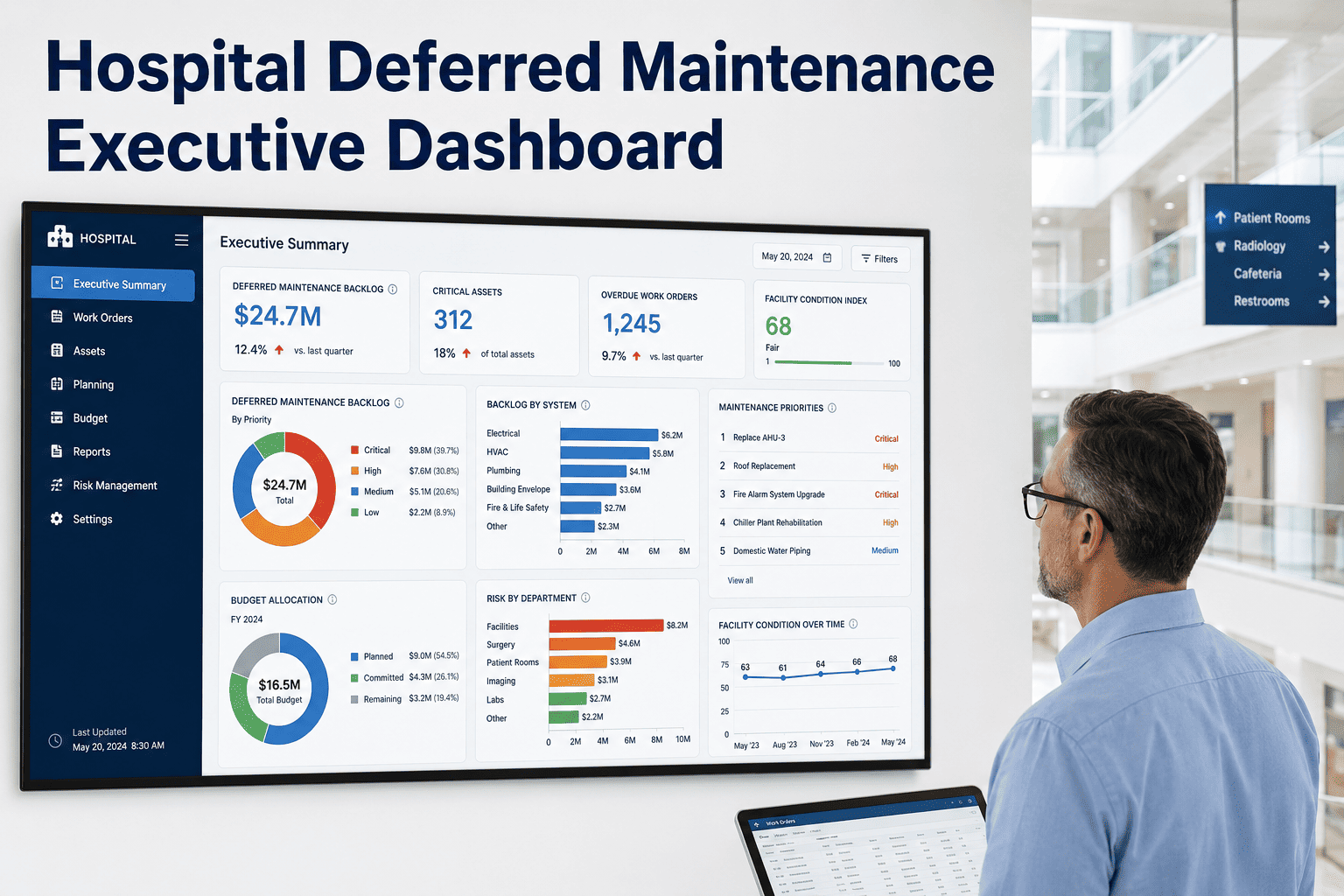
Hospital CFOs face a structural challenge unique to healthcare finance: maintenance budgets are treated as operational cost centers, yet the consequences of deferred maintenance — surgical suite downtime, regulatory citations, equipment failure du
Read More
Every technician carries a camera to every job — but most maintenance teams never extract value from the thousands of photos their workforce captures each month. AI vision changes that. When a technician photographs a worn bearing, a cracked weld,
Read More
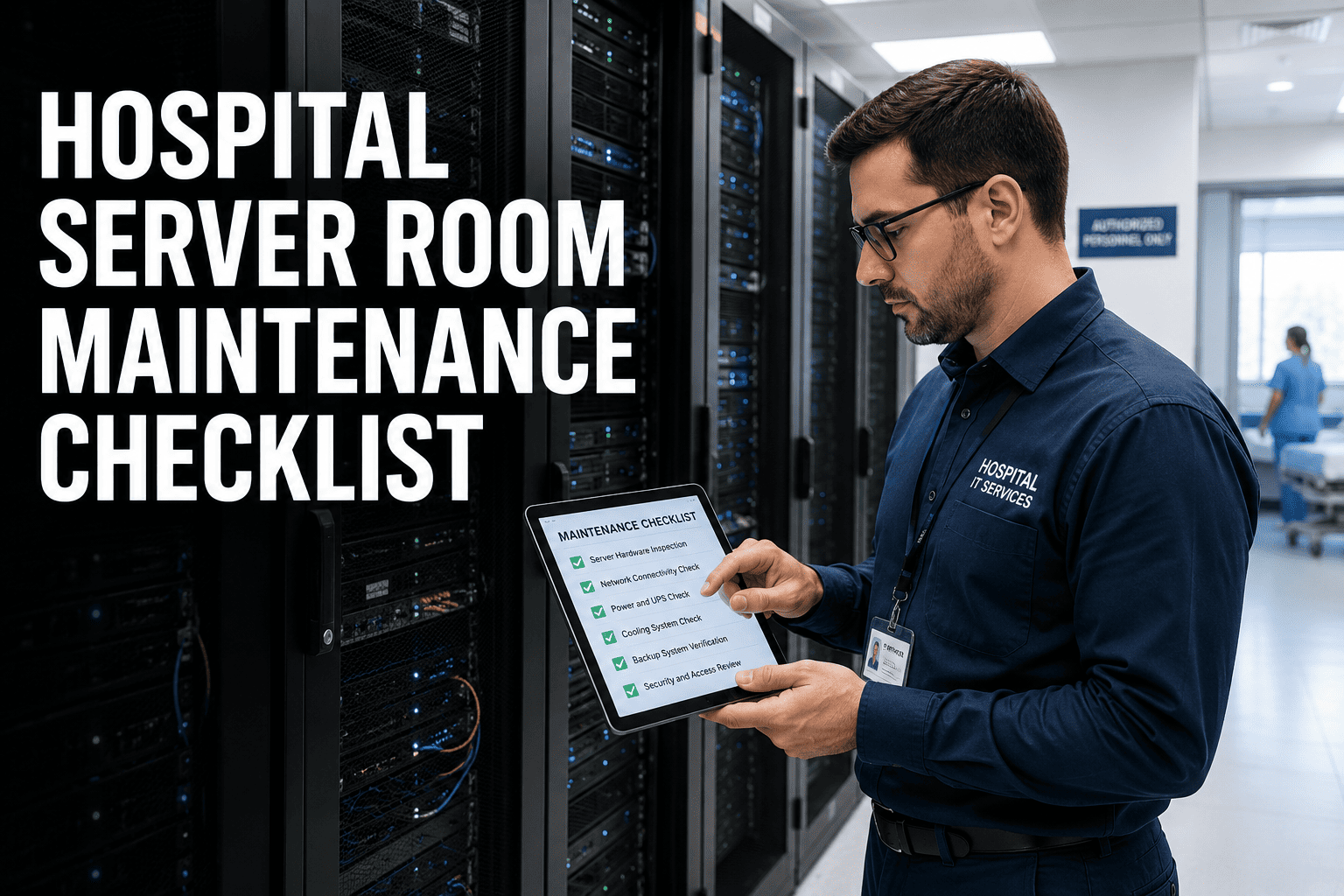
A hospital server room is not an IT convenience — it is clinical infrastructure. Electronic health records, imaging systems, patient monitoring networks, pharmacy dispensing platforms, and surgical scheduling tools all depend on uninterrupted serv
Read More
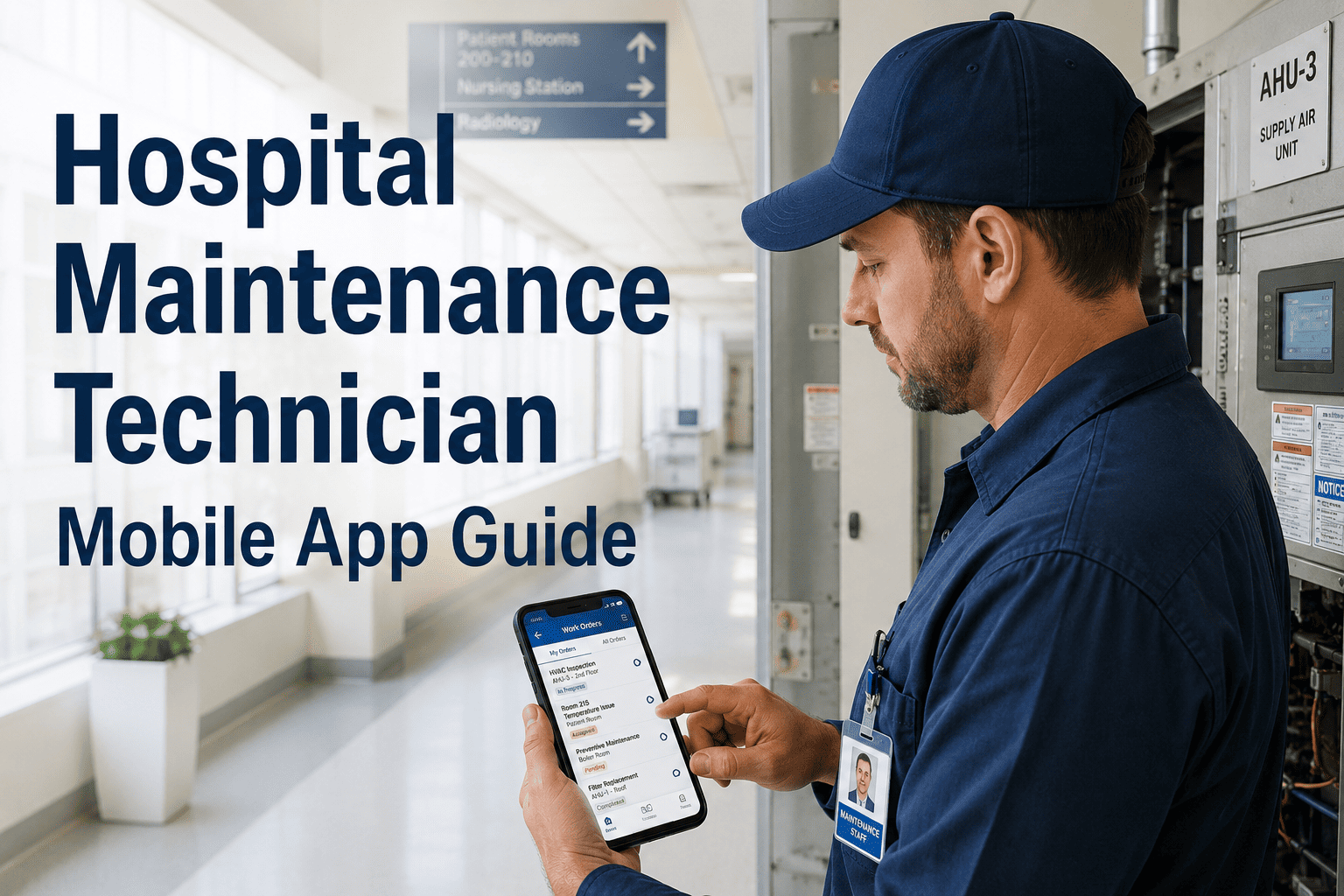
Picture a hospital biomedical technician getting paged for a ventilator alert. With a paper-based system, they walk to the office for the work order, dig through a binder for the last service record, write notes by hand, and walk back to log it on
Read More
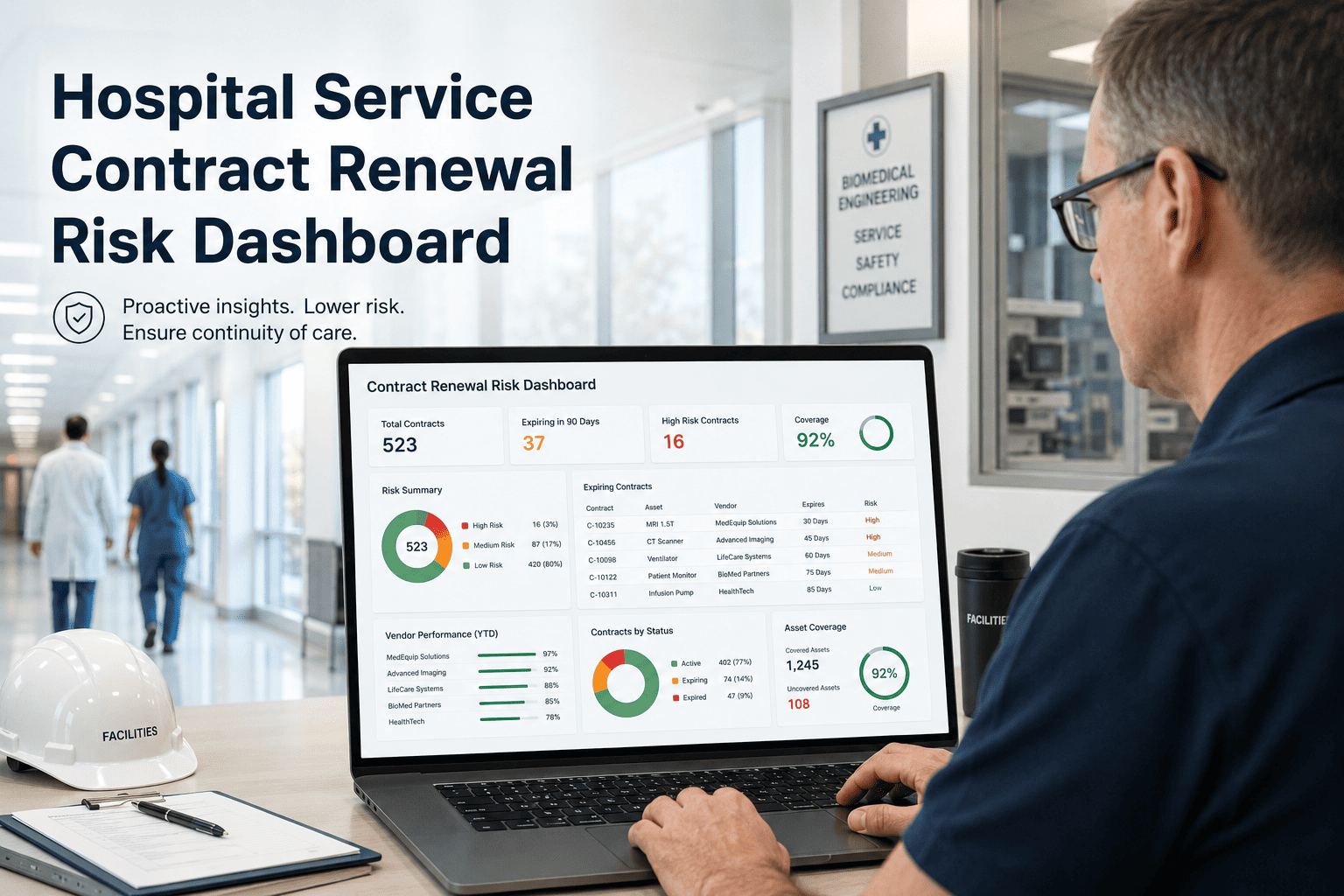
The average hospital manages around 146 active equipment service contracts at any given time, and most renew on autopilot. Nobody flags the contract until thirty days before expiration, by which point the only real decision left is whether to sign

Read More
A pneumatic tube system is invisible until it stops working, and then it's the only thing anyone in the building is talking about. Lab specimens that normally arrive in ninety seconds are suddenly walking down five flights of stairs in someone's h
Read More
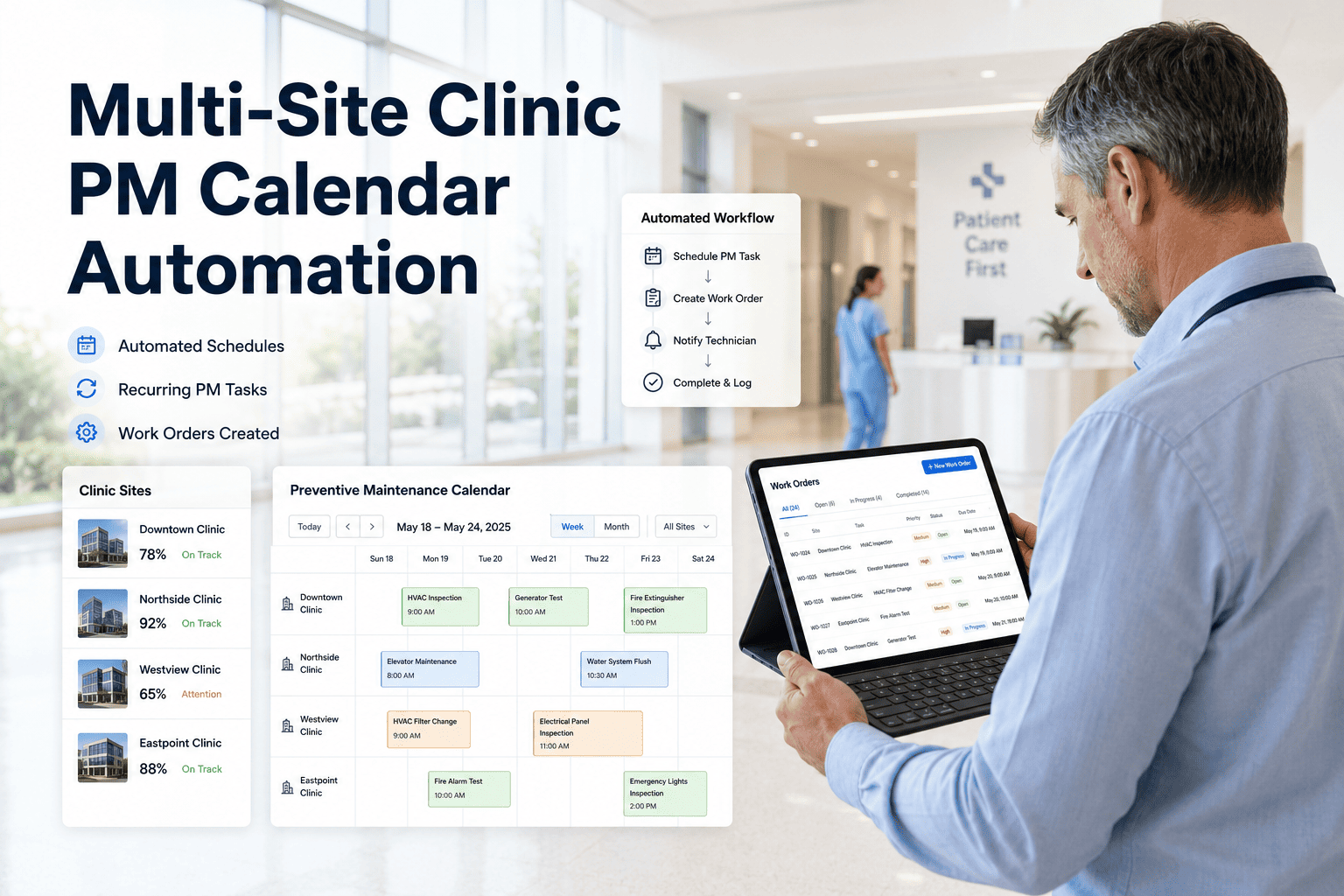
A clinic network rarely fails because one site has bad maintenance habits. It fails because twelve sites each have different ones. One clinic runs PM on a wall calendar, another on a shared spreadsheet nobody updates, and a third runs on the offic
Read More
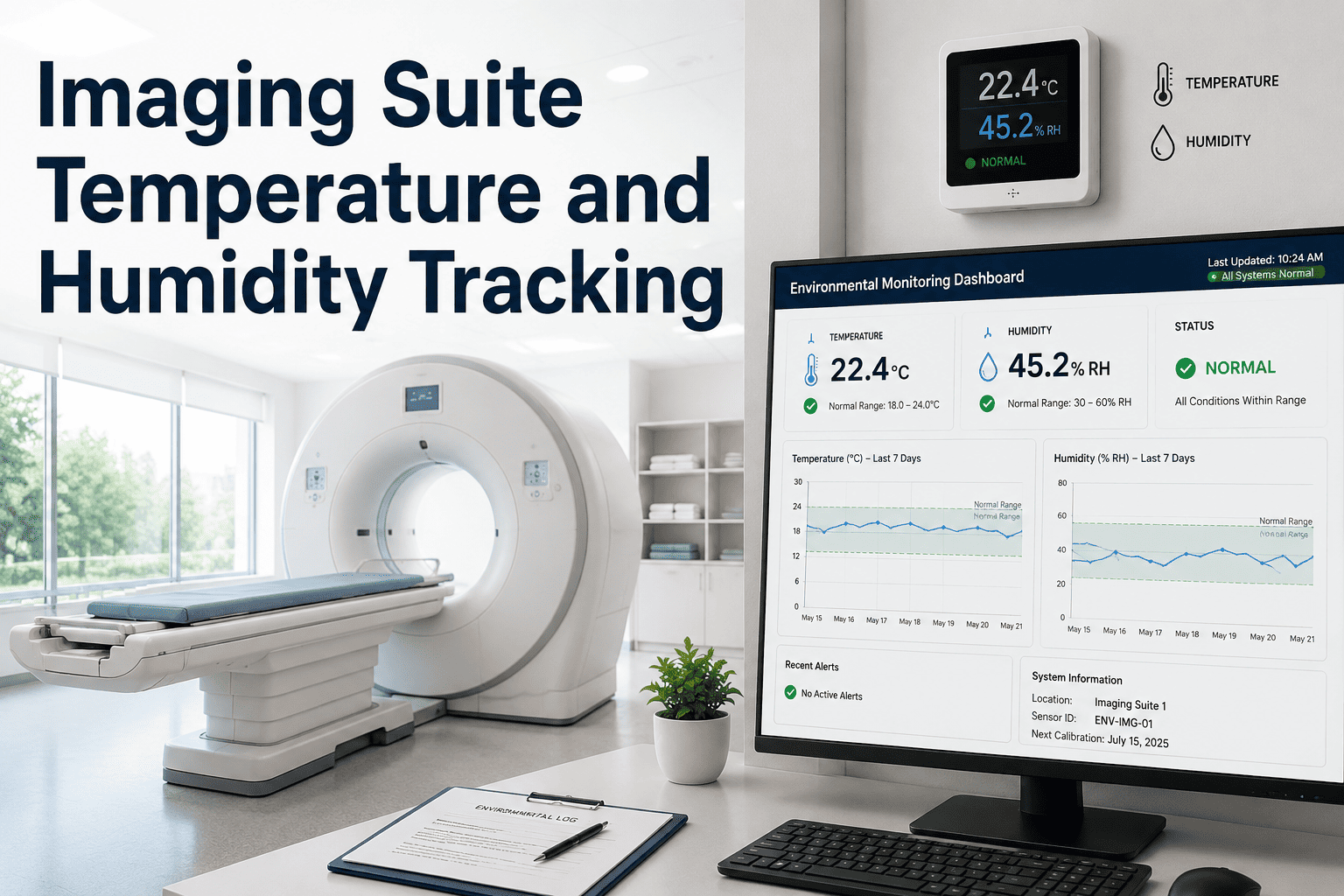
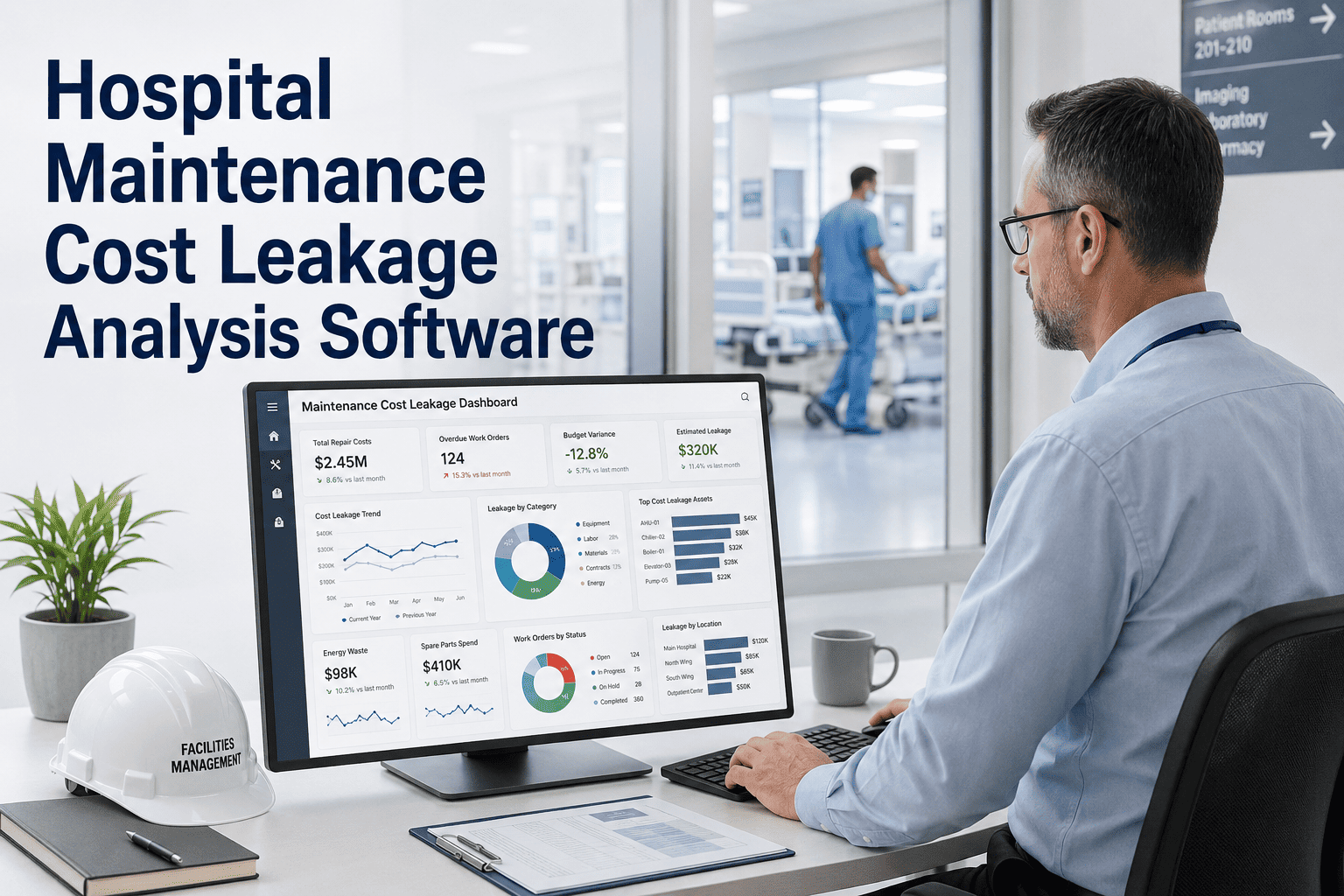
An MRI suite doesn't fail because of a software bug or an aging part — it fails because the room got too warm over a long weekend and nobody knew until Monday's first scan came back with artifact noise. Climate drift is one of the most preventable
Read More
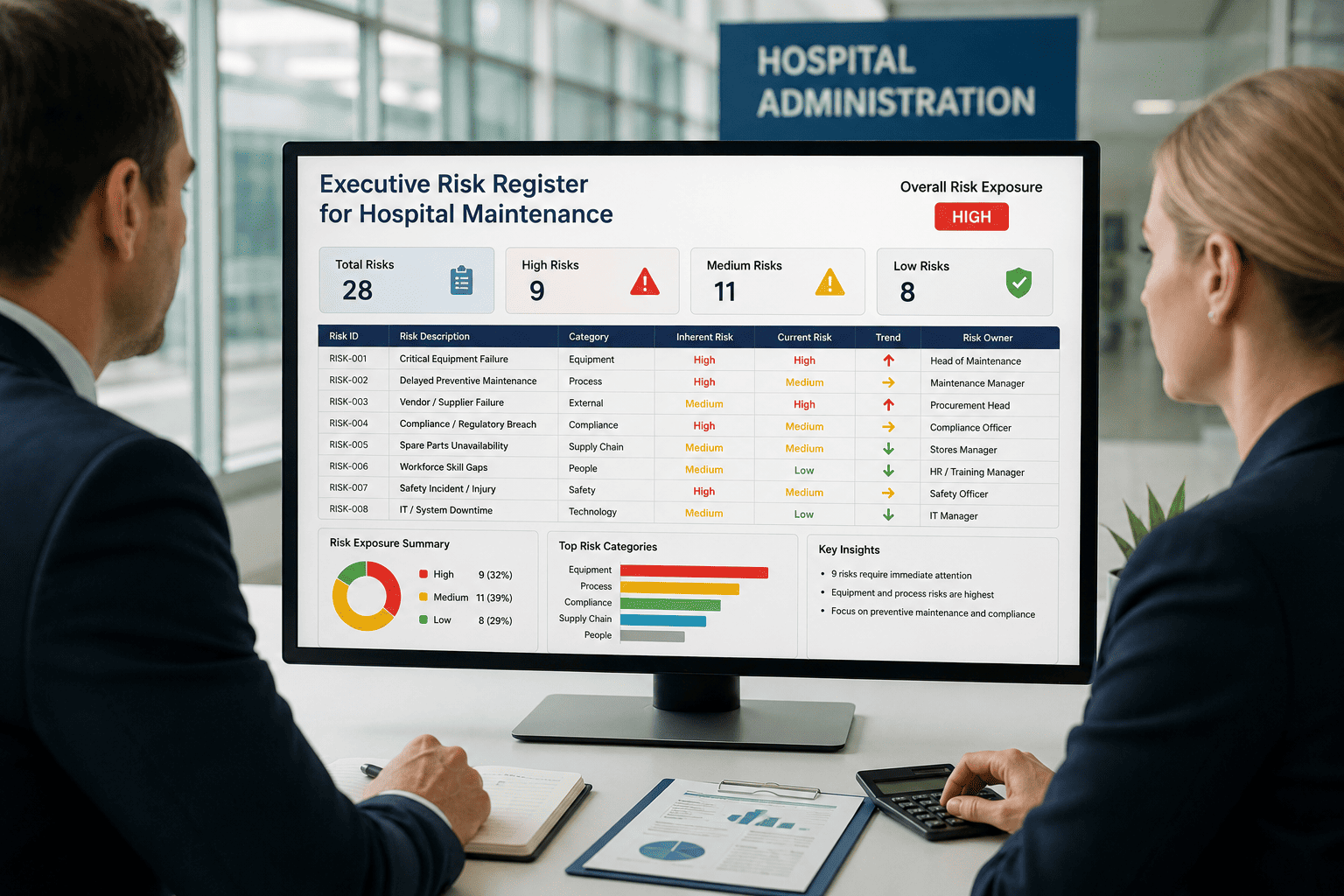
U.S. hospitals lose an average of $7.5 million a year to inadequate equipment maintenance — and 68% of that cost never shows up as a line item anyone can point to. It hides inside overtime pay, rescheduled procedures, premium emergency parts, and
Read More
A single Life Safety Code violation costs hospitals an average of $109,000 per deficiency — and most of these findings aren't actual safety hazards. They're documentation gaps, the space between what maintenance teams actually did and what they ca
Read More
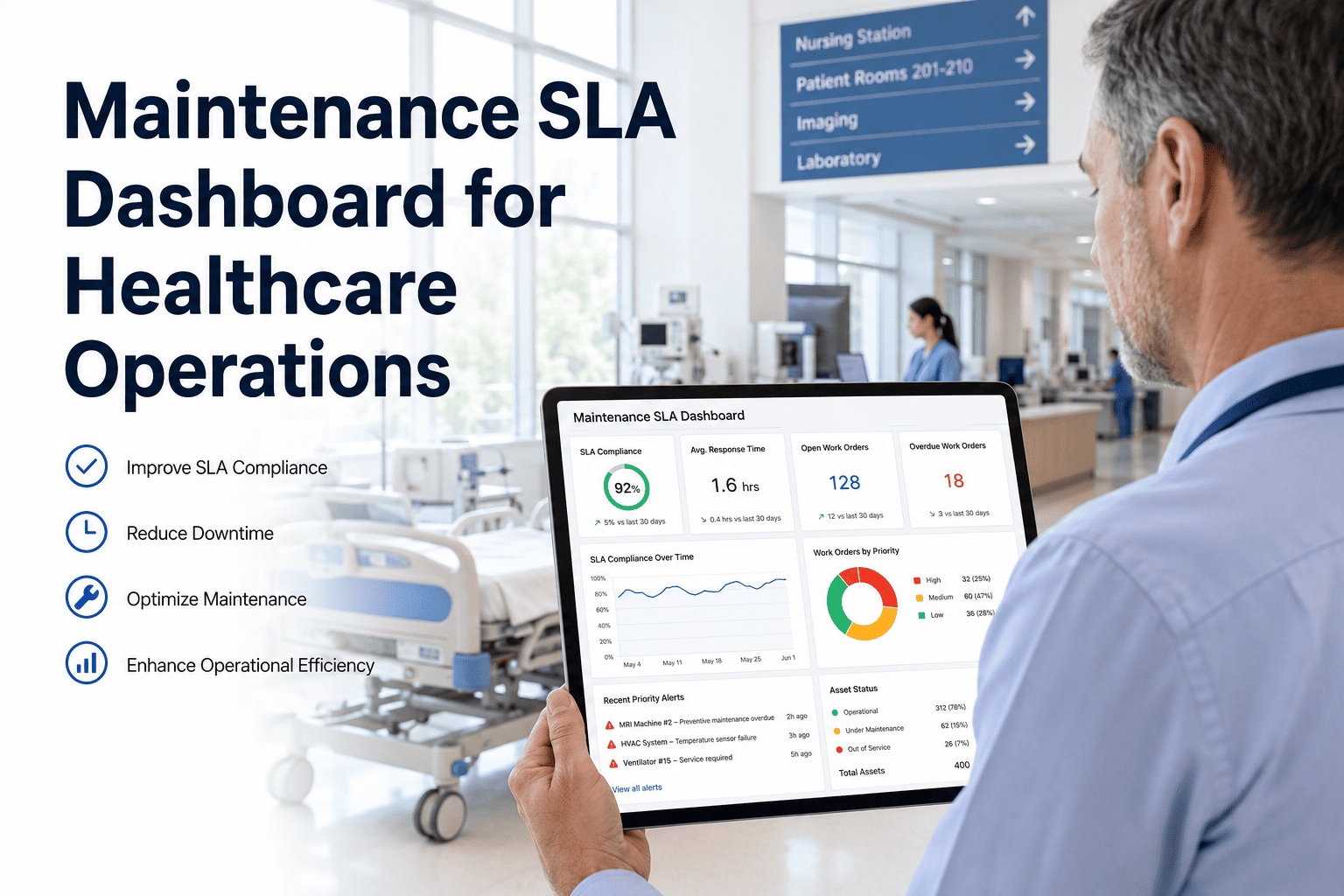
A leaking sink and a failed HVAC unit in an isolation room should never compete for the same technician's attention — but in hospitals without formal SLA tiers, they often do. Without a structured response framework, maintenance teams default to s

Read More
Most hospitals budget capital replacement using two numbers: equipment age and the manufacturer's suggested lifecycle. Both are guesses dressed up as data. An MRI unit that's been well maintained for twelve years might have four good years left in

Read More
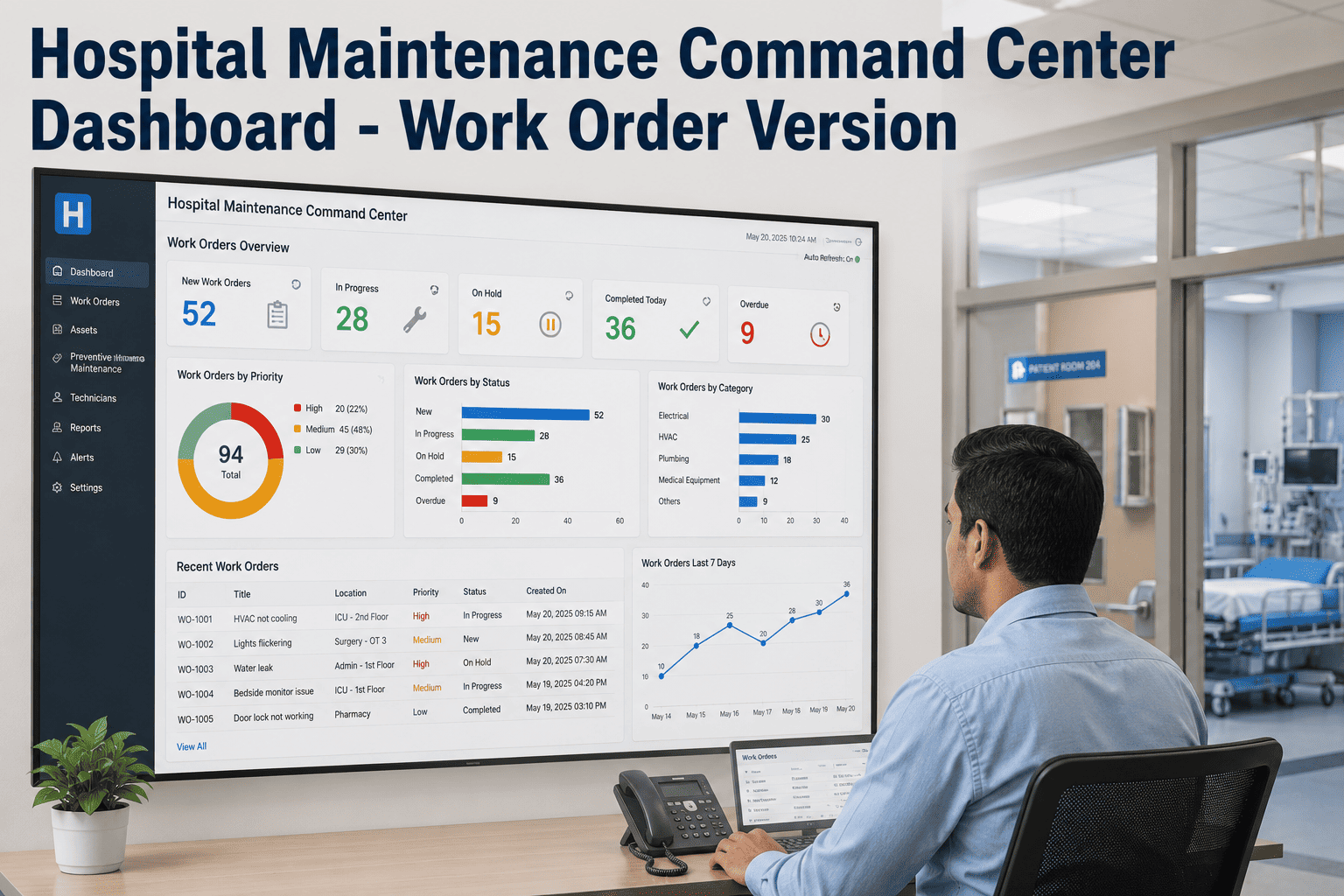
A chiller alarm fires at 2 AM. The building management system logs it correctly — but the facilities technician on call doesn't see it until the morning shift, because the BMS and the maintenance team have never spoken the same language. This is t
Read More
A facilities director overseeing six hospital campuses starts every Monday the same way: nine phone calls, three spreadsheets, and a guess about which site has the worst backlog. By the time the picture is assembled, it's already Tuesday afternoon
Read More
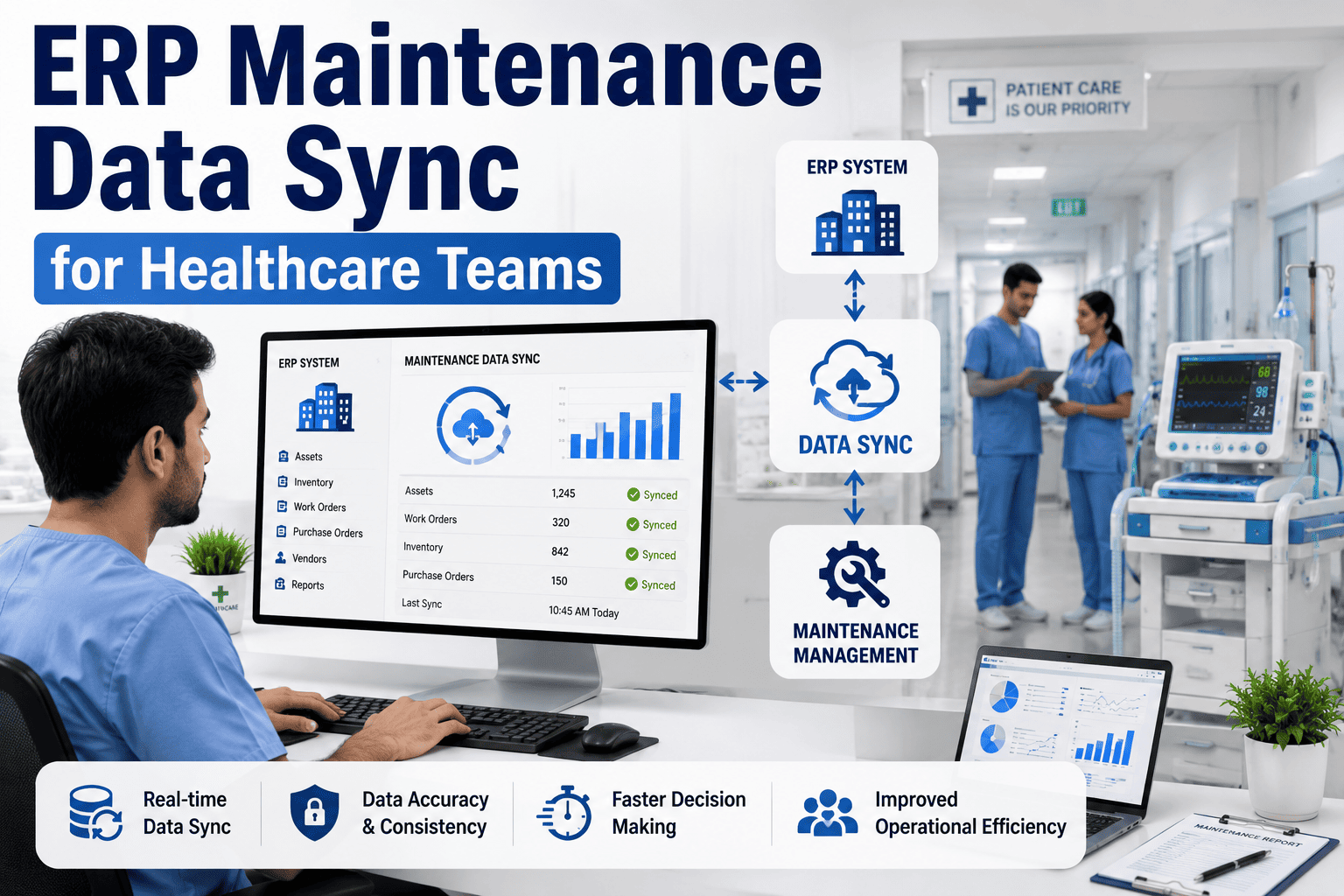
Hospital finance teams trust the ERP. Maintenance teams trust the CMMS. The problem is neither system knows what the other one is doing — and the gap between them is where budgets quietly bleed. A work order closes in the CMMS but the cost never r

Read More
A nurse needs an infusion pump. She doesn't know which storage room has one ready, which one is overdue for calibration, or which one was just pulled for repair. So she walks. And searches. And calls biomedical engineering. Multiply that five-minu

Read More
A batch can pass every quality test and still sit in QA limbo for days, because the equipment record that proves it was made correctly lives in a paper logbook, a separate MES, and someone's memory of a maintenance call from three weeks ago.

Read More
Most tablet coating defects trace back to one of three settings drifting out of range — spray gun alignment, pan speed, or airflow — and all three can shift gradually without tripping any alarm on the coating pan.

Read More
A single DSCSA citation can run up to $487,000, and the equipment most likely to trigger one is not the filling line or the cartoner — it is the serialization printer, the vision camera, or the reject station that nobody scheduled a preventive che
Read More
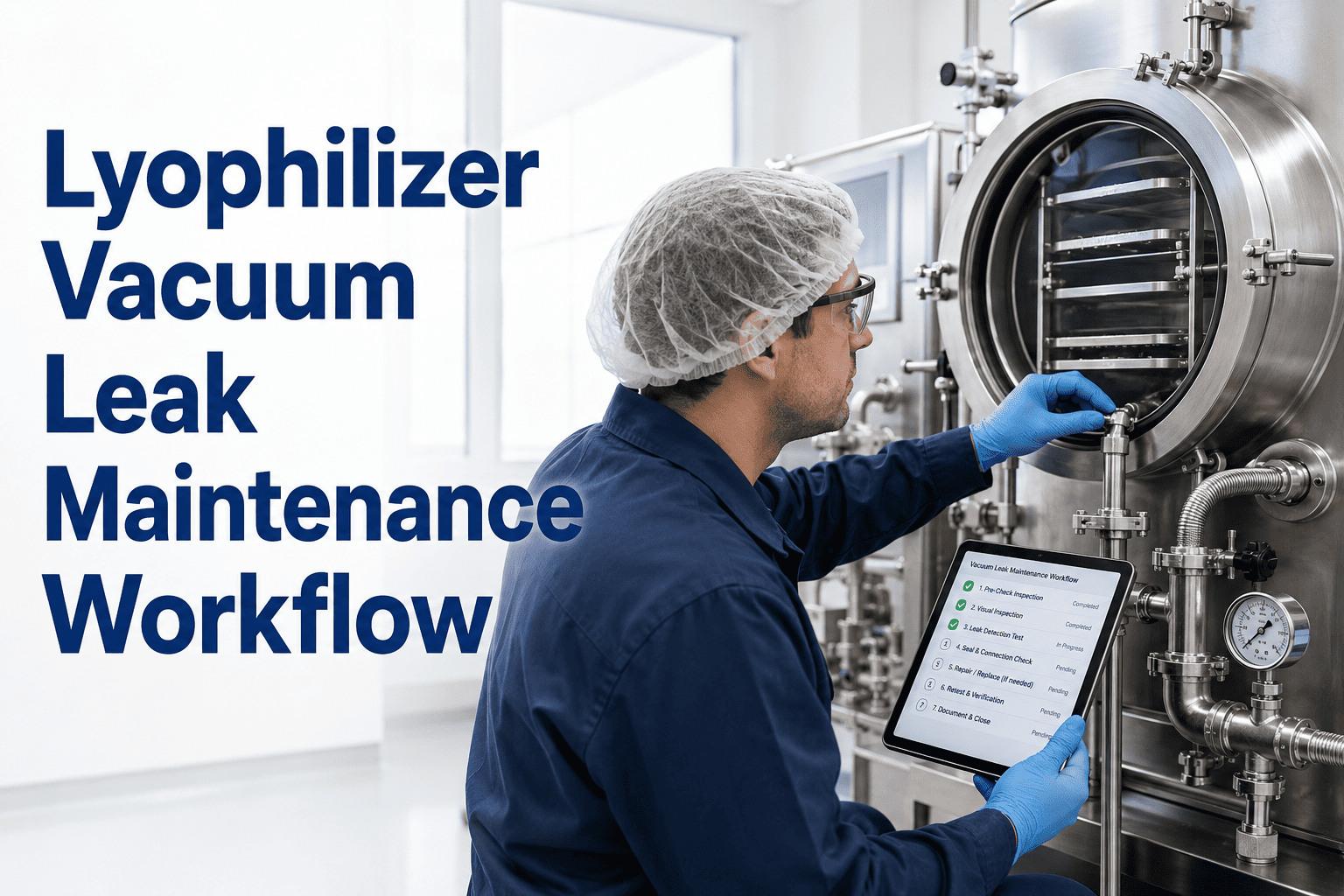
A single batch of lyophilized product can hold thousands of vials, and even a small external leak in the chamber seal can put every one of them at risk — which is why vacuum integrity is treated as a sterility assurance control, not a process para

Read More
A clogged spray nozzle in a fluid bed granulator does not stop the batch immediately — it just starts producing uneven granules, excess fines, or wet clumping while the process looks normal on the control screen. G

Read More
A vision system rejection rate that jumps from a 0.3% baseline to 3-8% rarely means more defective blisters are coming off the line — it usually means the camera, the lighting, or the calibration drifted, not the product.

Read More
Downtime on an aseptic filling line carries one of the highest price tags in pharmaceutical manufacturing — an average of $450,000 per hour in lost production and batch rejection when a piston pump seal fails, a needle misaligns, or a stopper plac

Read More
A single worn punch hiding inside a 40-station turret can quietly produce out-of-spec tablets for hours before anyone notices a pattern. Punch wear tracking software closes that gap by logging compression cycle

Read More
A dosator that has lost half a millimeter of tolerance does not announce itself with an alarm — it shows up two hours later as capsules drifting past the ±5% cGMP weight variation limit. Capsule filling equipment t
Read More
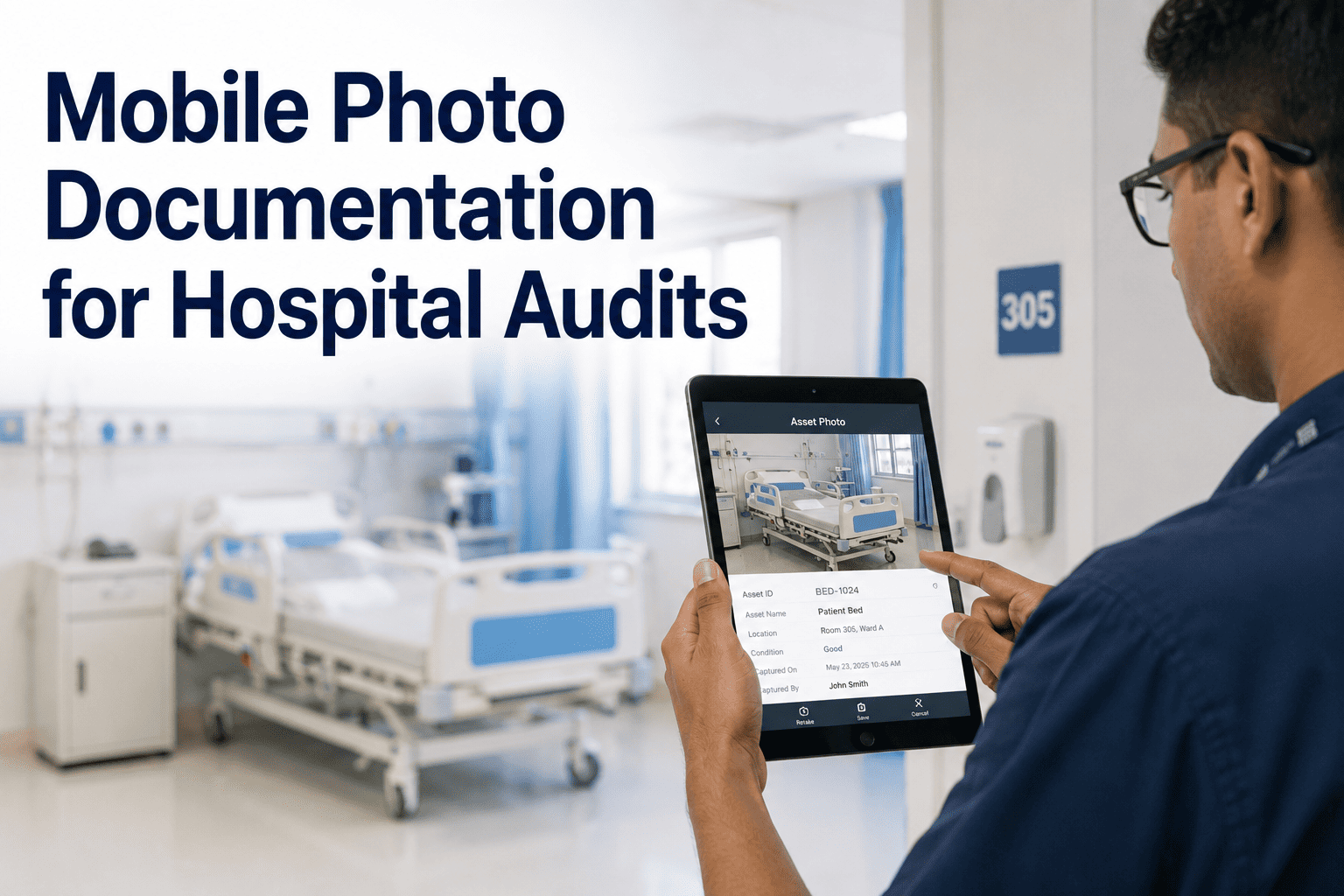
When a Joint Commission surveyor asks for proof that a repair near a patient care area was completed correctly, a compliance officer needs more than a technician's word — and pulling that proof together from someone's phone gallery, a paper sign-o

Read More
Most facility leaders make capital and budget decisions from a spreadsheet that somebody manually compiled, which means the numbers driving a six-figure decision are often four to six weeks out of date by the time they reach a board meeting. Maint
Read More
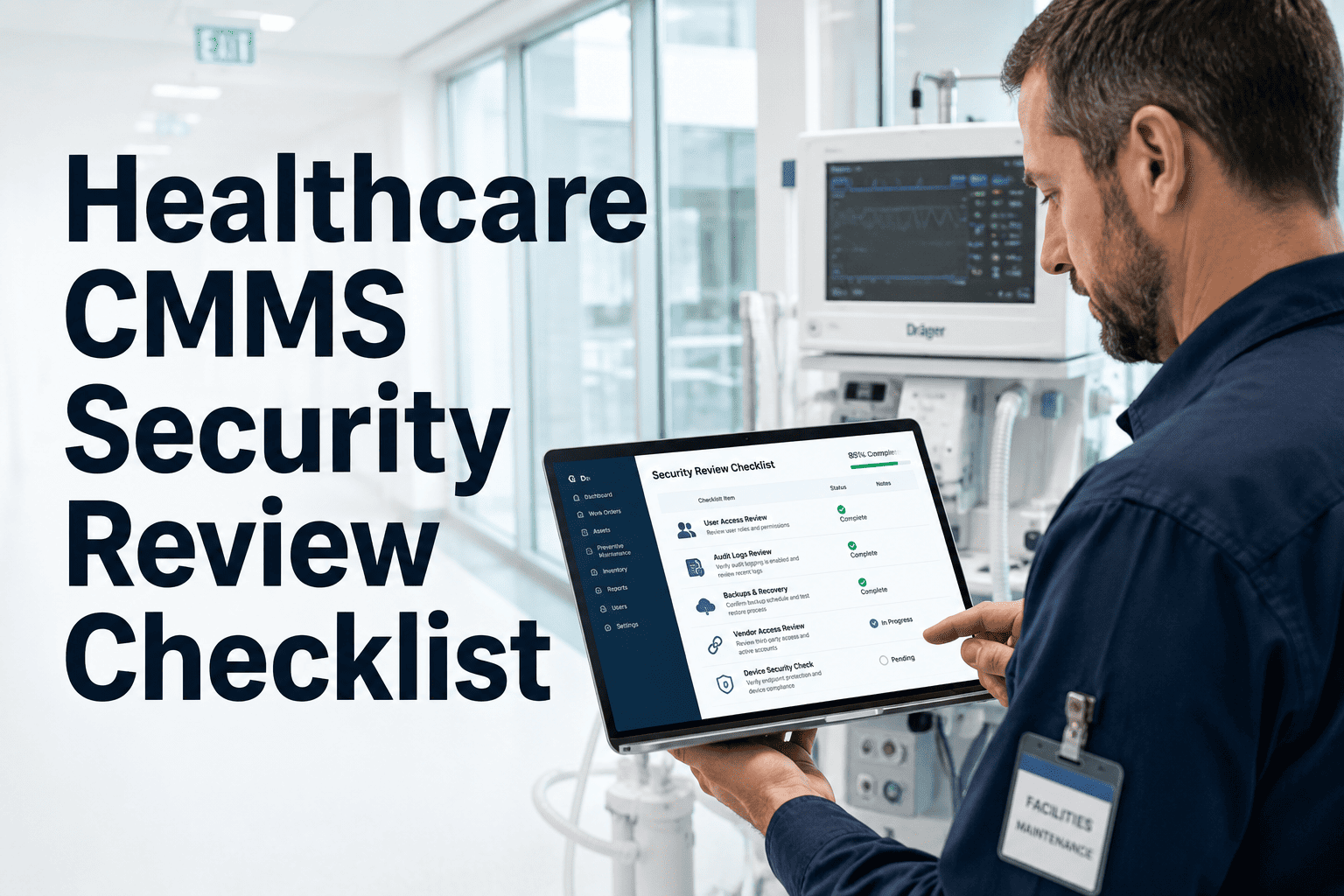
When a new piece of software touches anything connected to a hospital network, IT security needs a fast, structured way to evaluate it — not a forty-page vendor whitepaper, and not a verbal assurance on a sales call. A CMMS in particular touches a
Read More
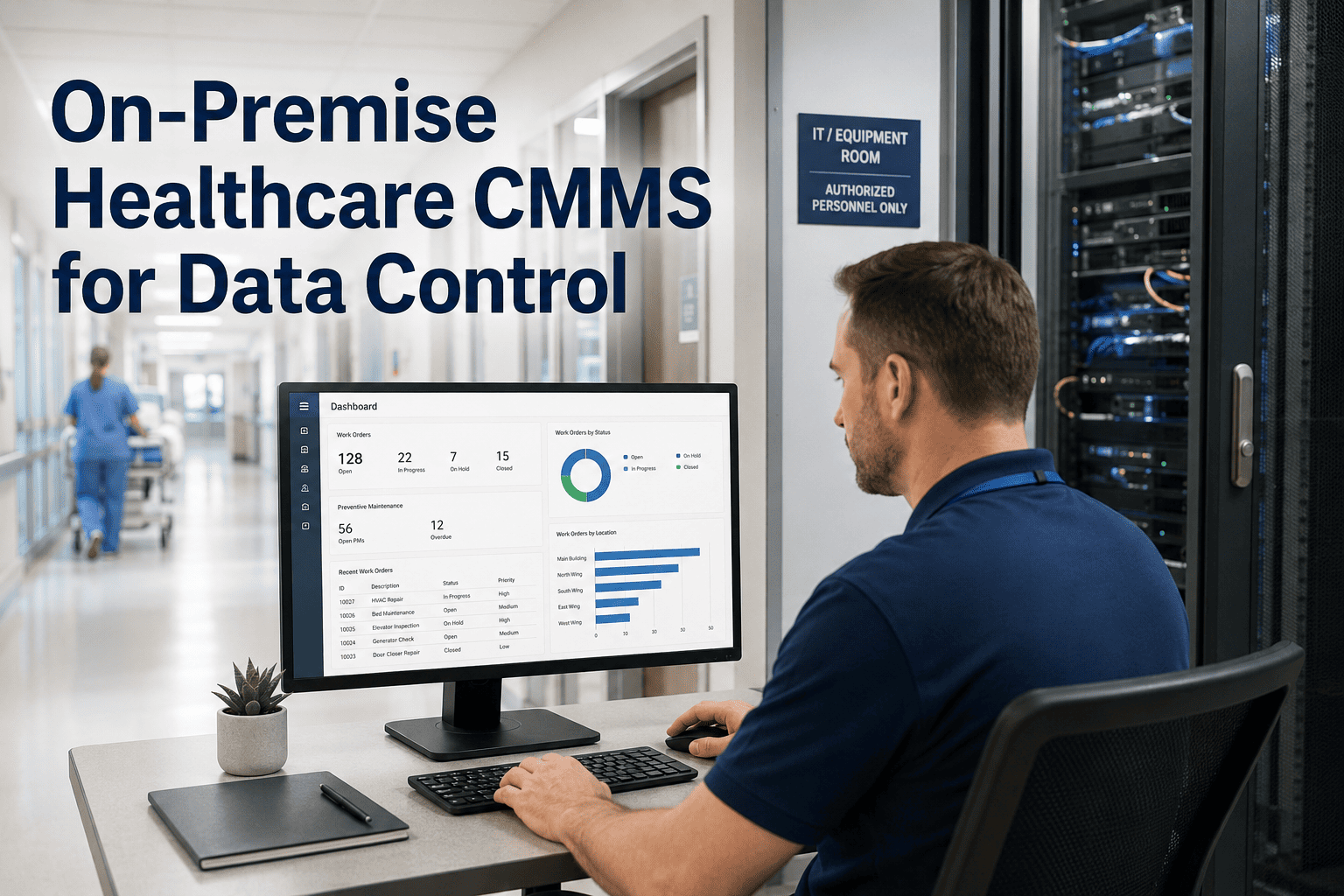
Most CMMS platforms only come one way: cloud-hosted, data leaving the building the moment it is entered. For most hospitals that is a non-issue. For others — academic medical centers with strict data residency policy, government-affiliated facilit
Read More
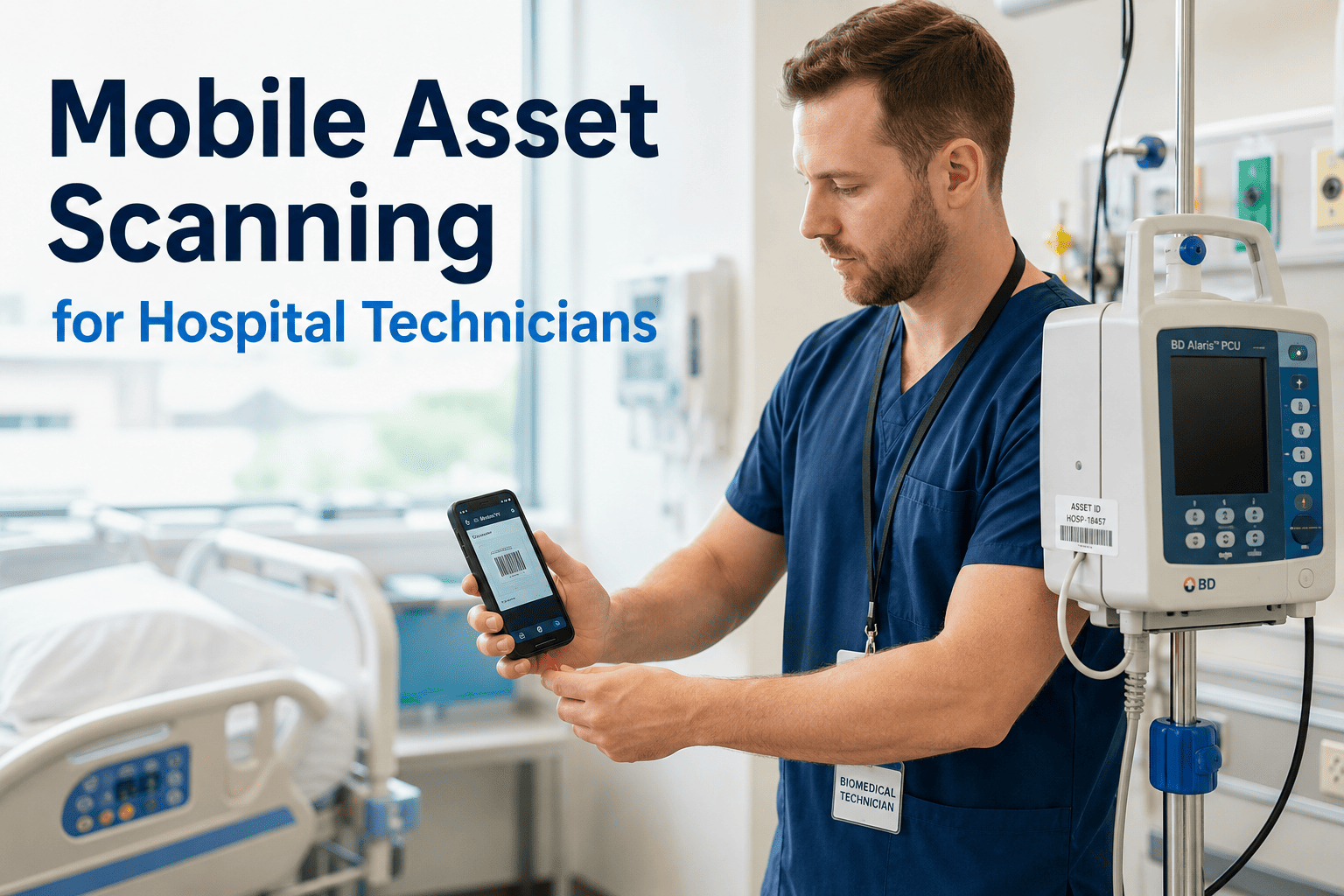
Before a technician ever touches a piece of equipment, they usually spend several minutes finding out what it even is — walking to a binder, calling a supervisor, or typing an asset number into a search box and hoping it was entered correctly the
Read More
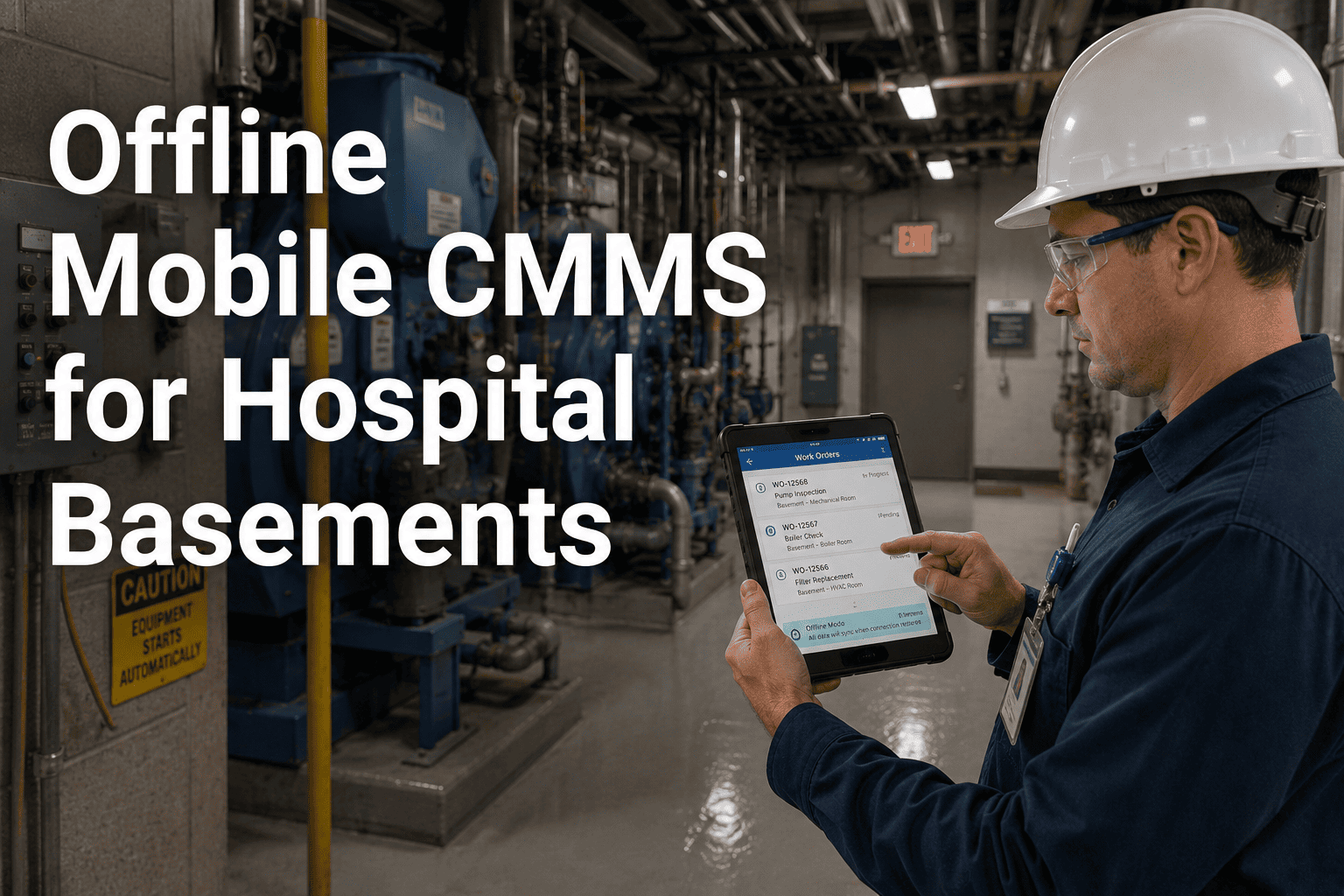
Hospital basements, mechanical penthouses, and below-grade utility tunnels share one trait that has nothing to do with the equipment inside them: there is no cell signal and often no Wi-Fi. That is exactly where chillers, boiler rooms, electrical
Read More
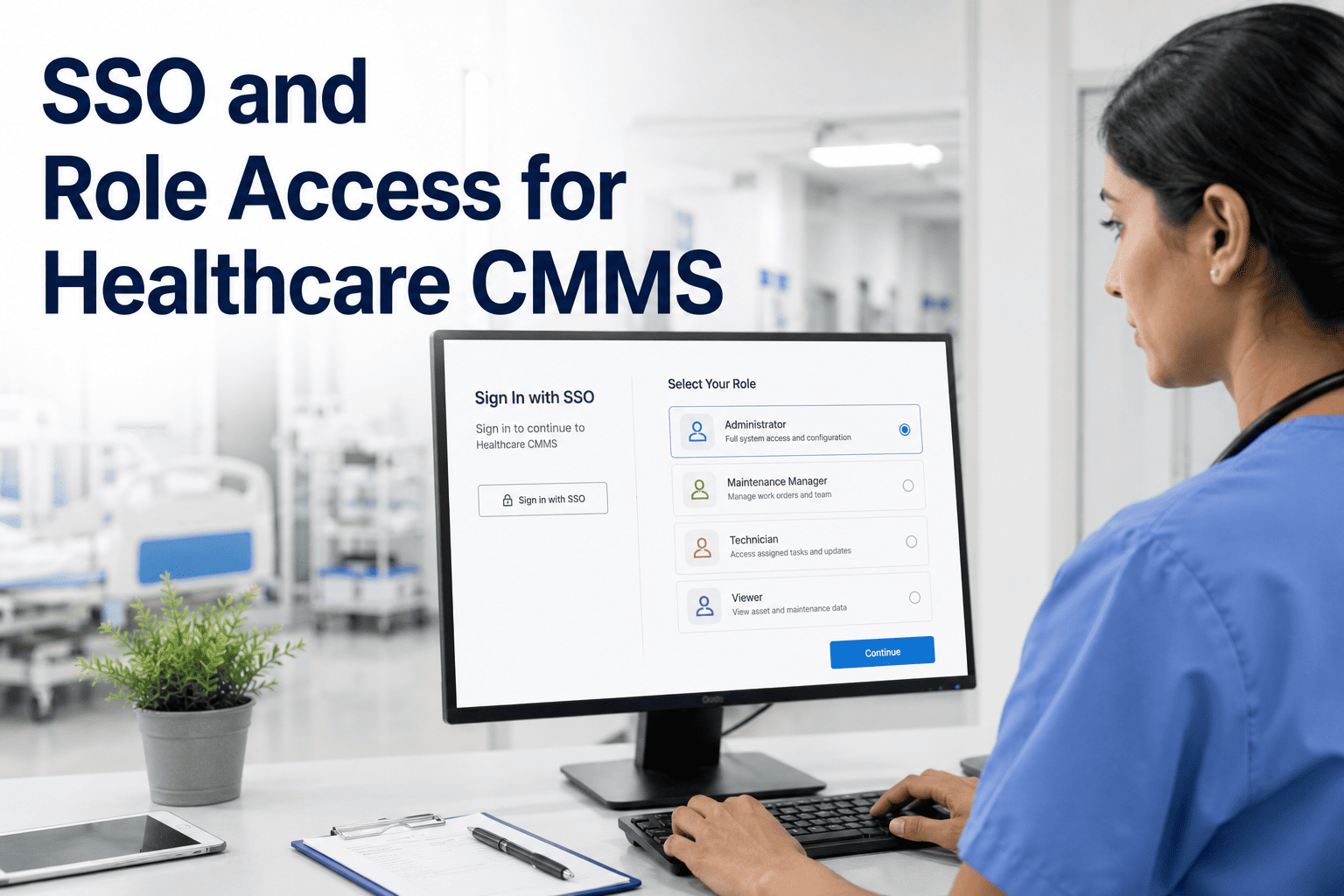
A maintenance technician, a facilities manager, and an HVAC contractor should never be looking at the same screen with the same access. Yet in many hospital CMMS deployments, that is exactly what happens — one shared login passed around a departme
Read More
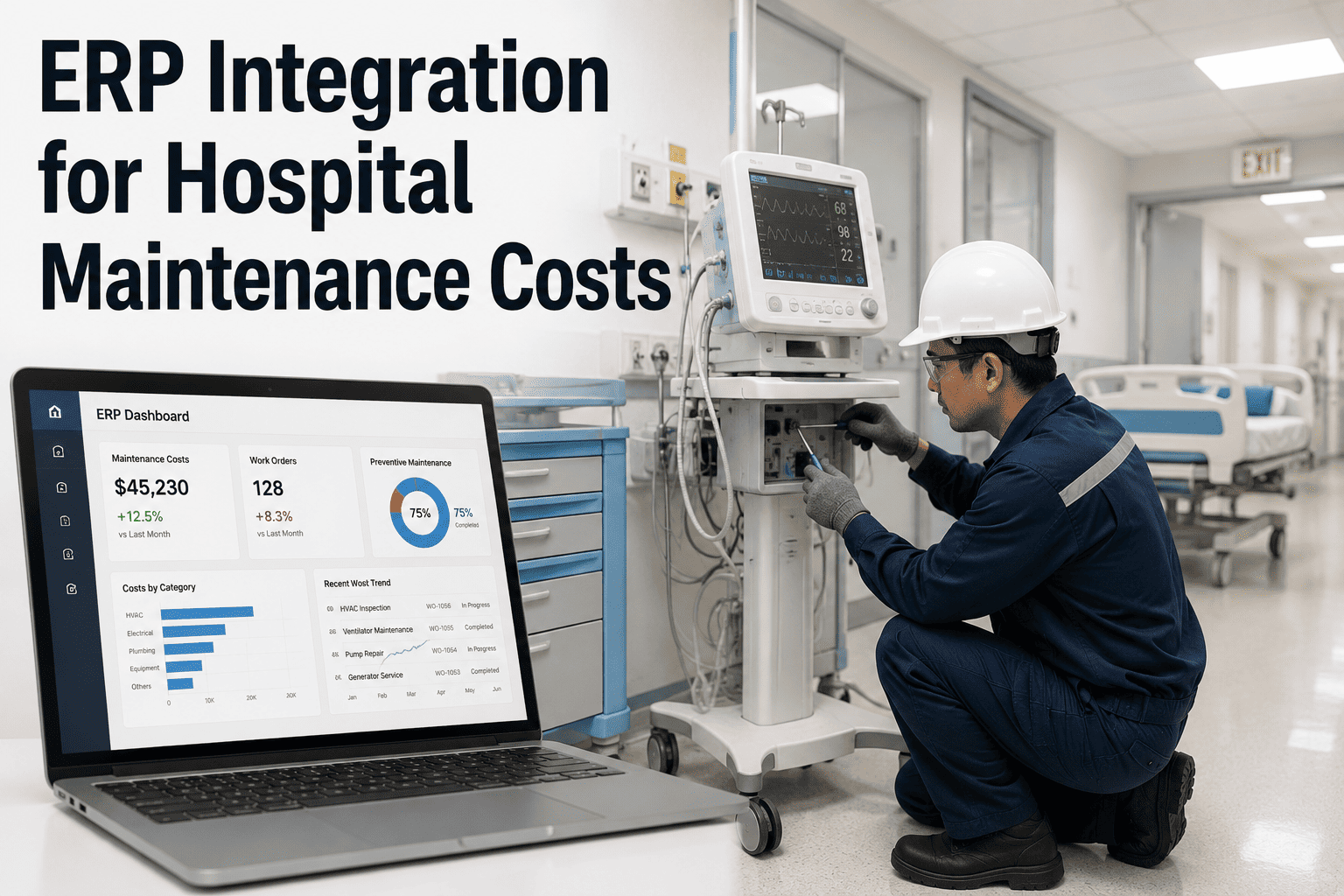
Every hospital finance team has the same blind spot: maintenance spend that never reaches the general ledger until the invoice is already overdue. Parts get purchased outside the approved vendor list, technician overtime gets logged on paper, and

Read More
Most hospitals already have the sensors. Temperature probes on vaccine refrigerators, vibration sensors on chiller motors, pressure gauges on medical gas lines — these devices generate a fresh reading every few minutes, every day of the year. The
Read More
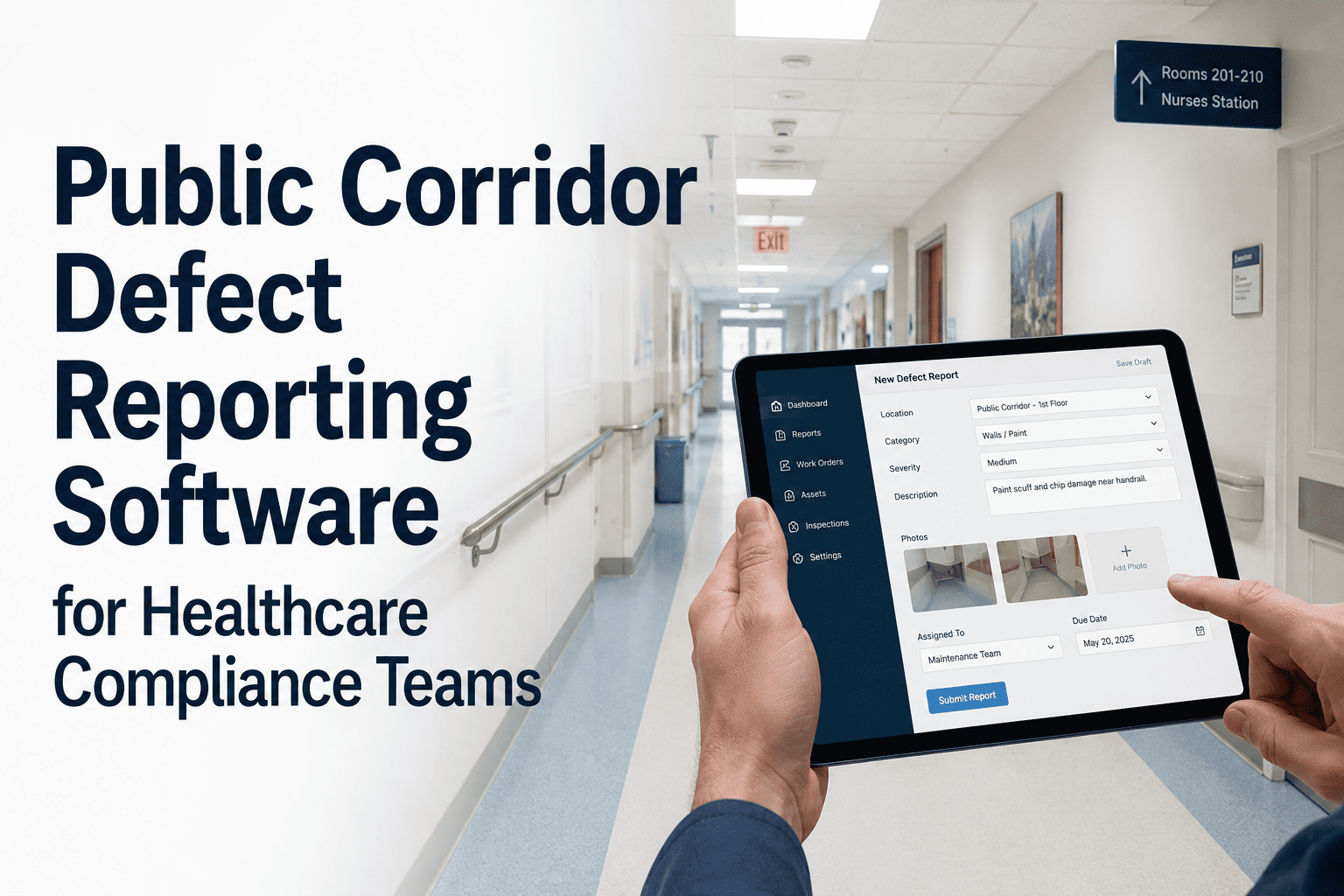
Joint Commission surveyors walk hospital corridors looking for exactly the kind of small defects that get noticed by staff every day but never make it into a tracked work order — a loose handrail, a blocked exit path, damaged flooring near a nursi

Read More
Behavioral health inpatient units place extraordinary demands on physical infrastructure — doors, walls, fixtures, and furnishings in these environments are subject to rates of wear, damage, and safety-critical deterioration that far exceed what s
Read More
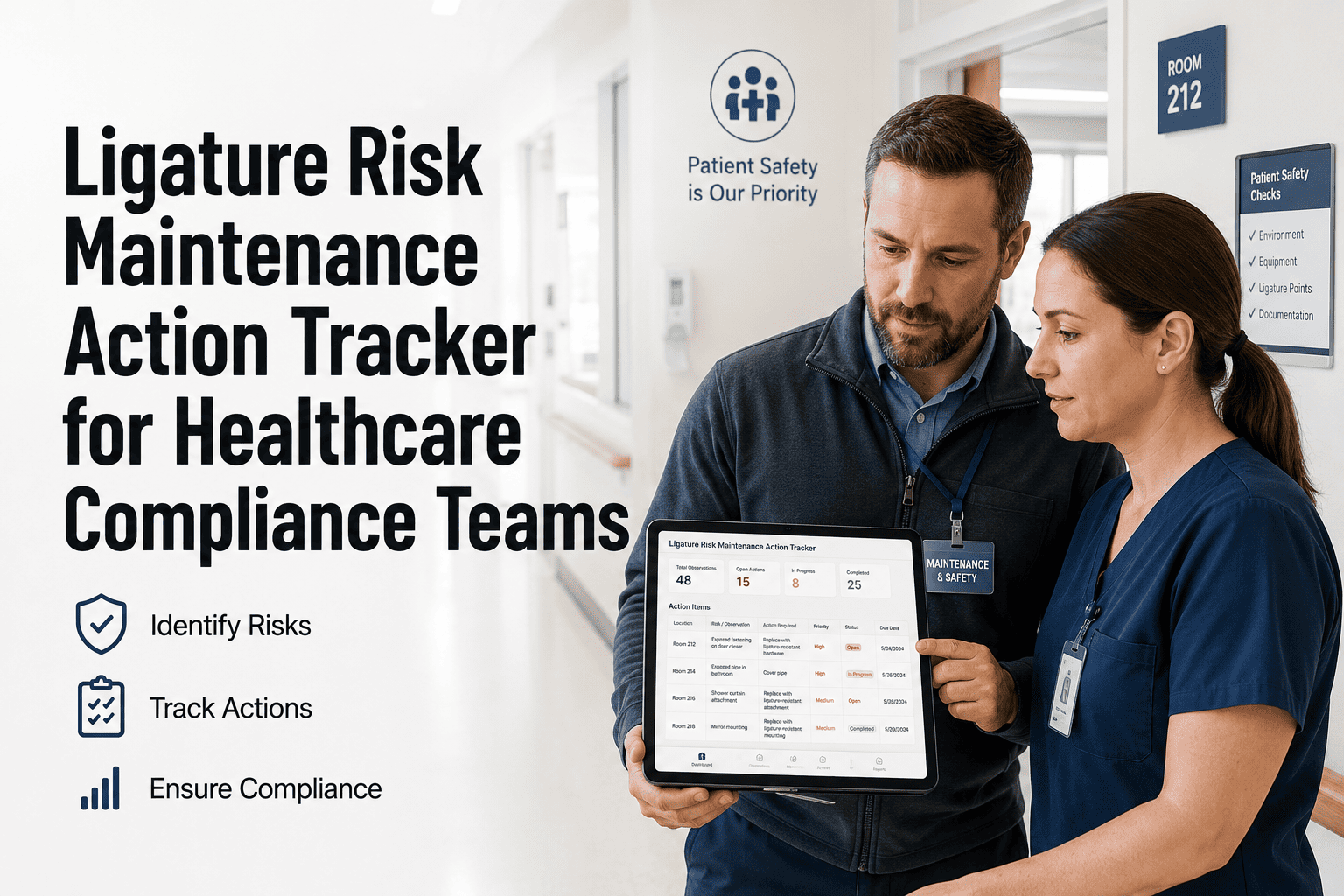
Ligature risk is one of the most compliance-critical environmental hazards in behavioral health and acute psychiatric care — and the maintenance work required to address it is more complex than most hospital CMMS platforms are designed to handle.
Read More
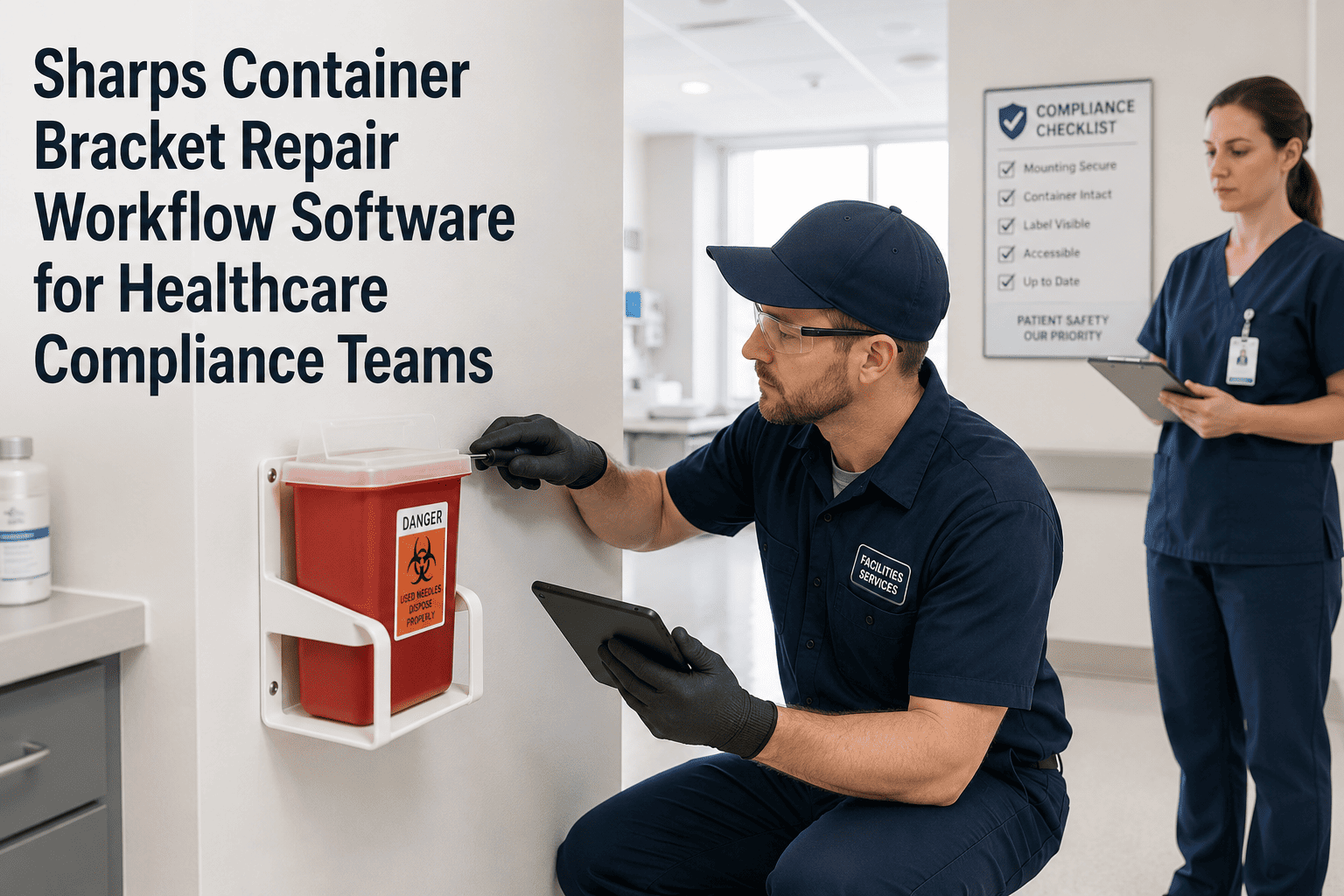
A broken sharps container bracket is more than a maintenance ticket — it's a documented OSHA violation risk, a Joint Commission Environment of Care finding, and a potential needlestick injury waiting to happen. When a sharps container falls due to
Read More
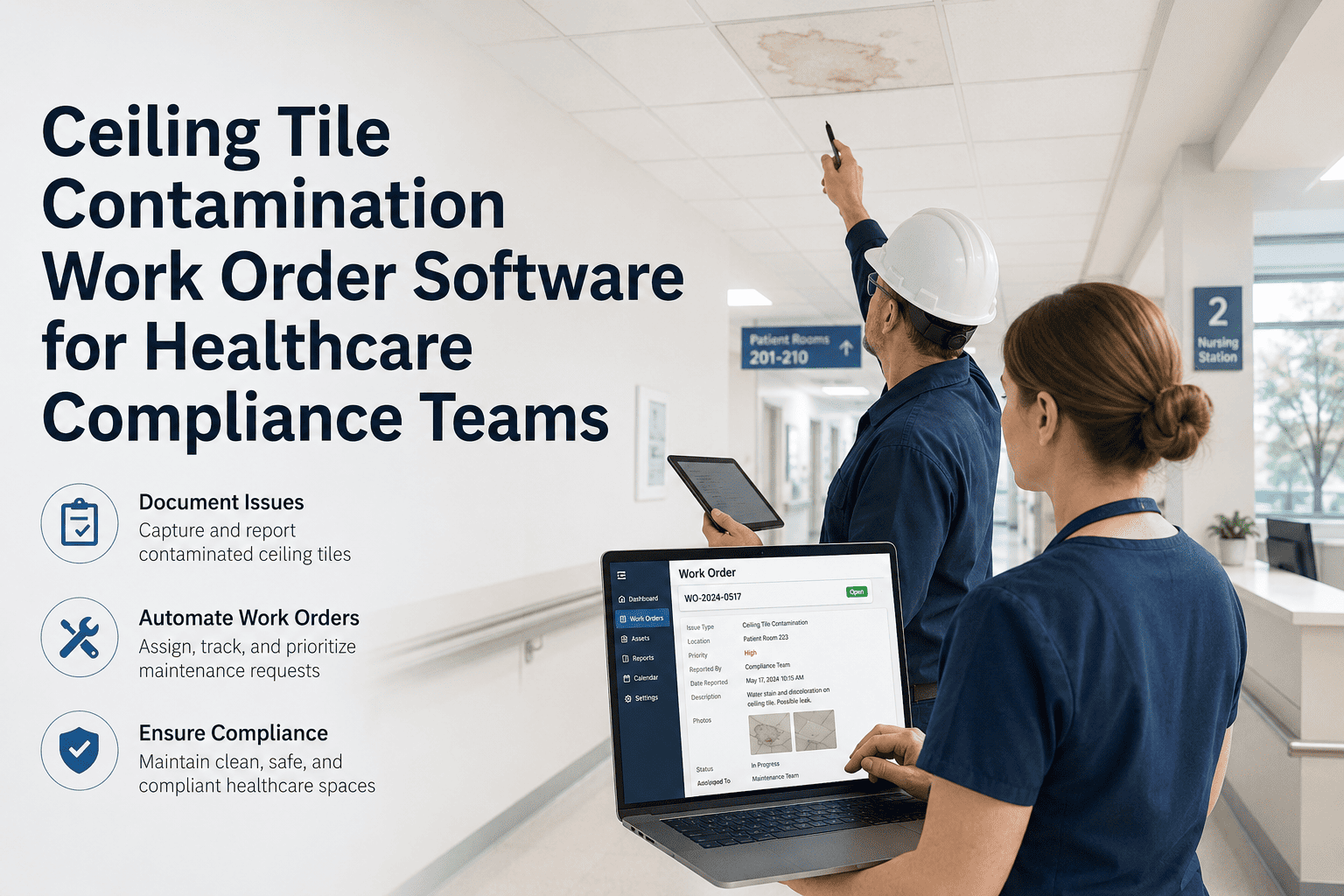
Contaminated or displaced ceiling tiles in healthcare environments are not a cosmetic inconvenience — they are a documented infection risk, a fire barrier integrity concern, and a recurring Joint Commission citation category that affects hospitals

Read More
Hand hygiene compliance is the single most evidence-based intervention for preventing healthcare-associated infections — yet the maintenance of the dispensers, stations, and supplies that enable it remains one of the most inconsistently documented
Read More
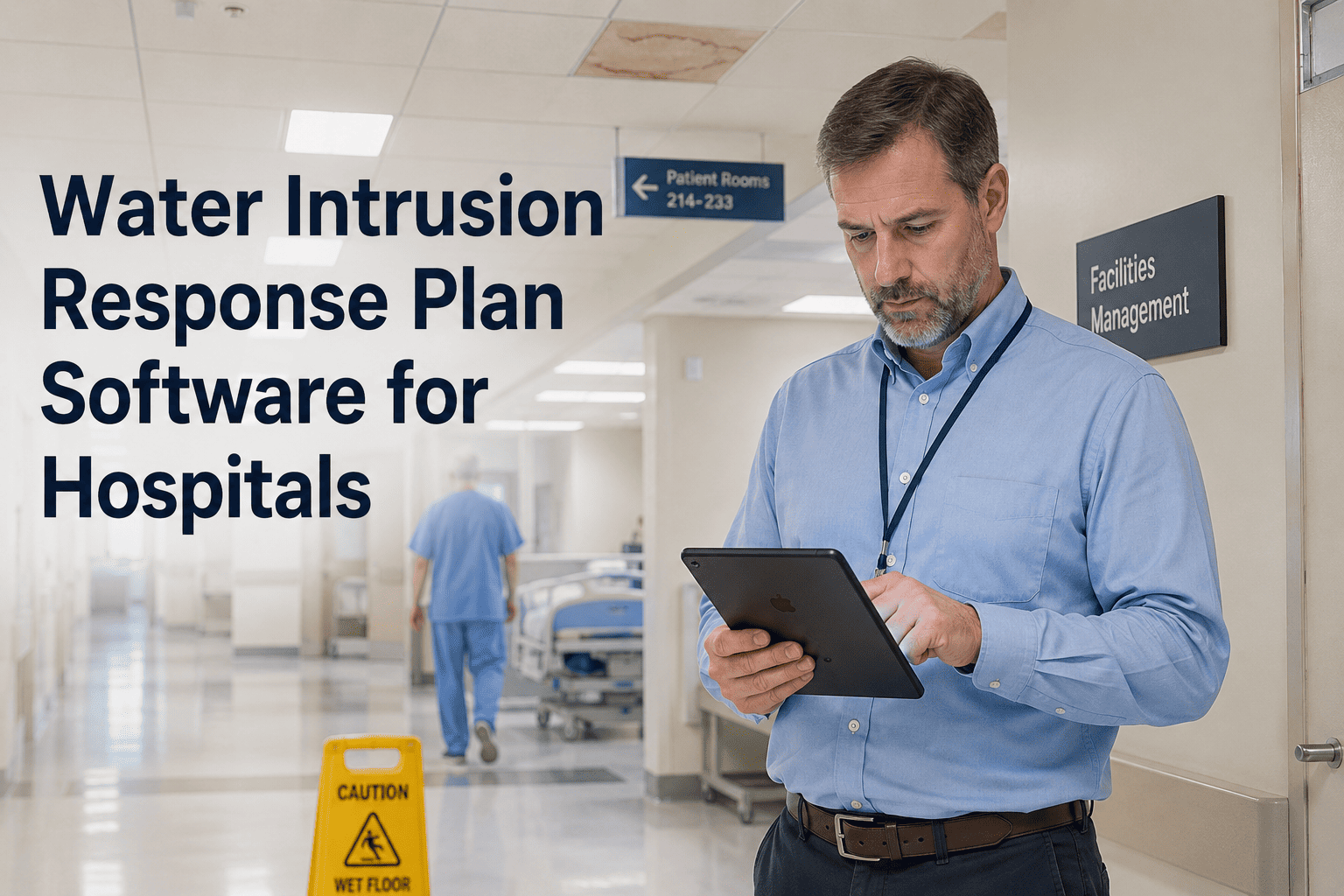
Water intrusion in a hospital is never just a facilities problem — it is an infection control emergency, a structural liability, and a regulatory citation risk compressed into a single event. From a leaking roof in a sterile procedure corridor to
Read More
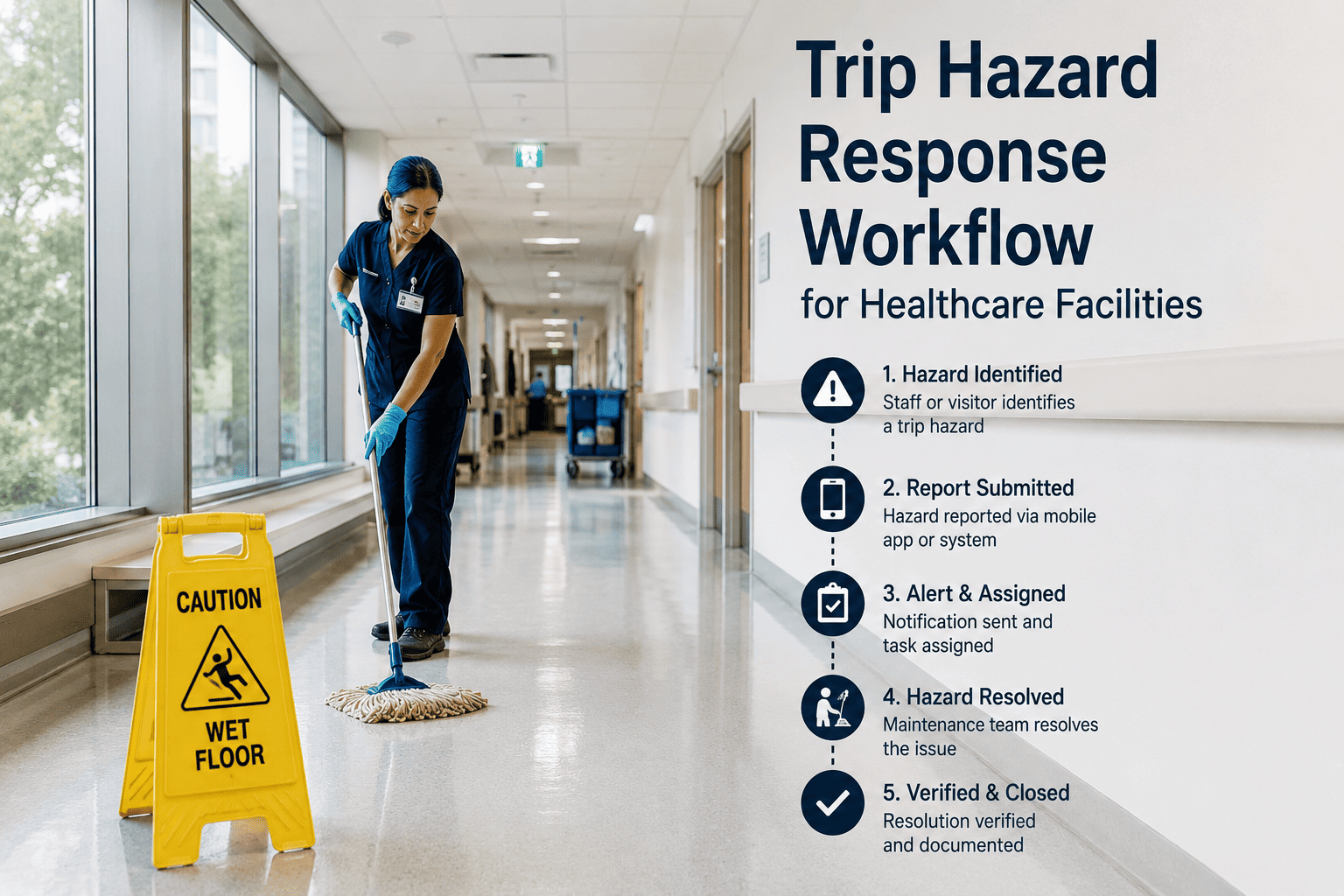
In healthcare facilities, a single unaddressed trip hazard can result in patient falls, visitor injuries, staff accidents, and immediate Joint Commission citation — yet most hospitals still rely on paper rounds, verbal reports, and email chains to
Read More
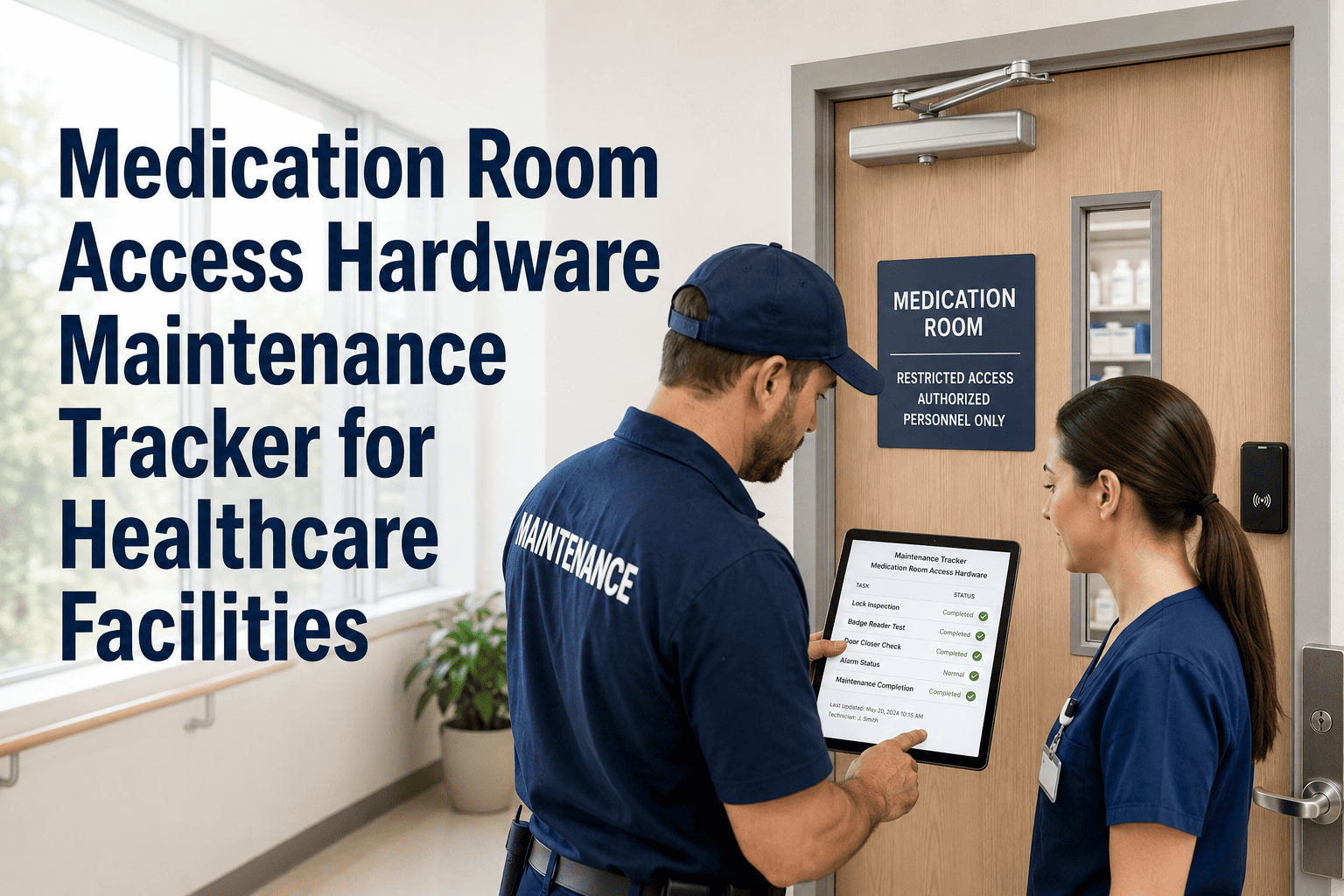
A door controller on a medication room failing quietly is a different kind of problem than a door controller failing loudly. A loud failure gets noticed and fixed the same day. A quiet one — a badge reader that's slow to respond, a keypad that occ
Read More
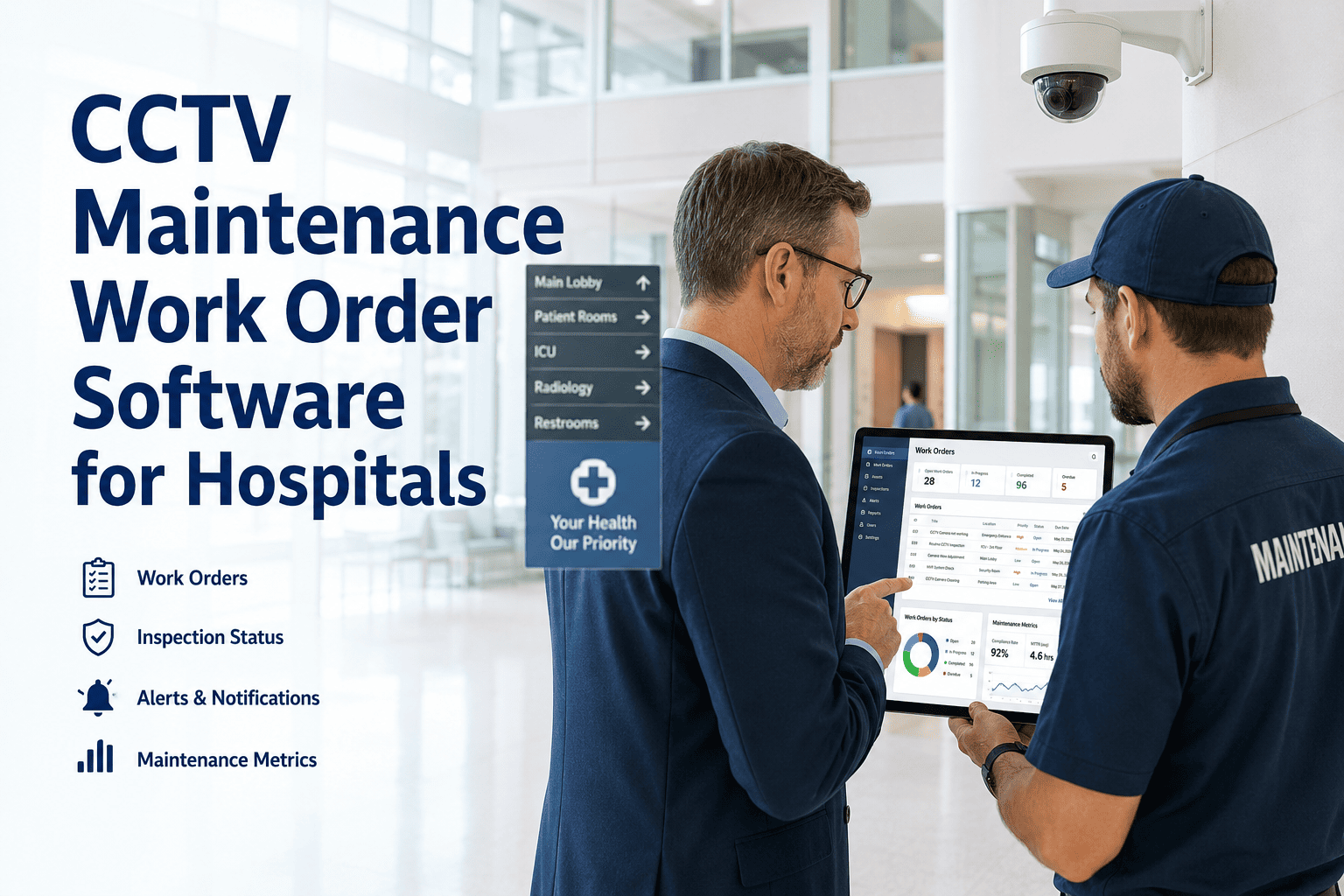
Hospital CCTV systems are the silent audit trail behind patient safety investigations, security incidents, staff safety disputes, and regulatory inquiries — and when they fail, they fail quietly, without an alarm, often going undetected for days o

Read More
A nurse on a night shift presses a panic button bolted to the wall of a med-surg unit. If that button hasn't been tested since it was installed, nobody can say with confidence whether the signal reaches security, whether the location resolves to t
Read More
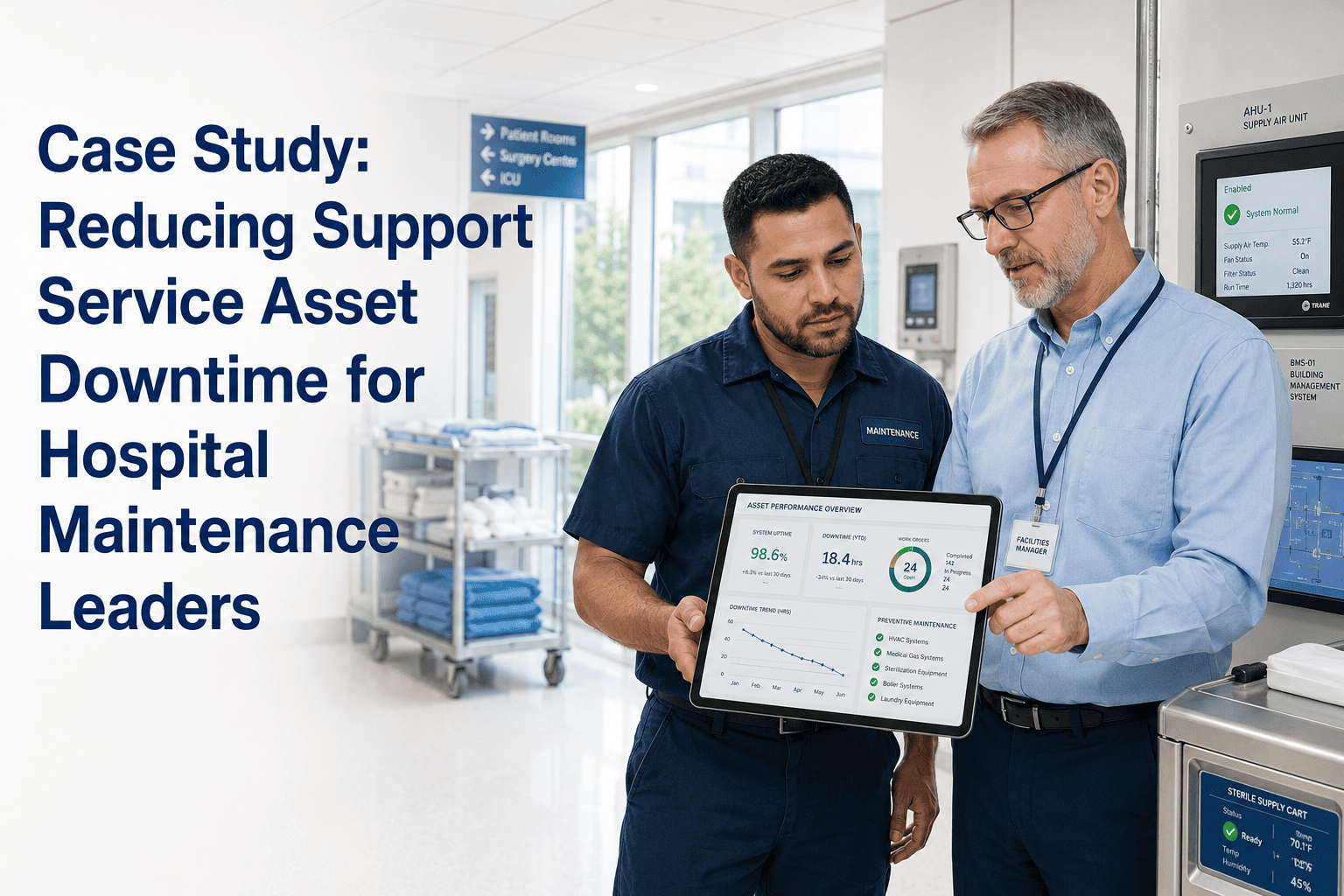
When a 420-bed regional medical center in the US Southeast found itself managing 11 open support asset failures simultaneously — with no structured escalation, no service history, and a maintenance backlog that had grown 38% over eight months — th
Read More
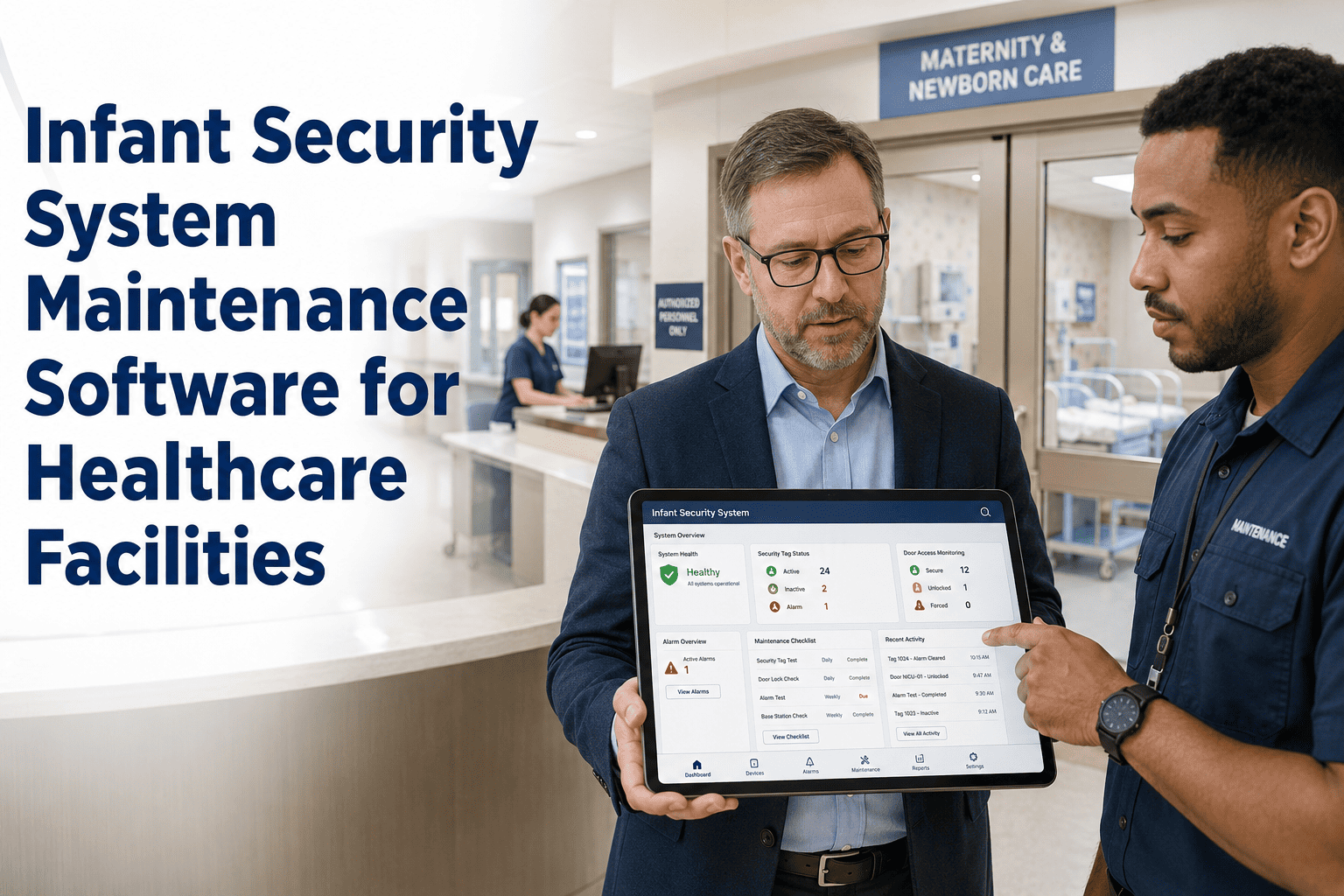
Infant security systems are among the most zero-tolerance assets in any hospital — the consequences of a system failure or missed maintenance cycle aren't measured in productivity loss, they're measured in patient safety incidents that carry feder
Read More
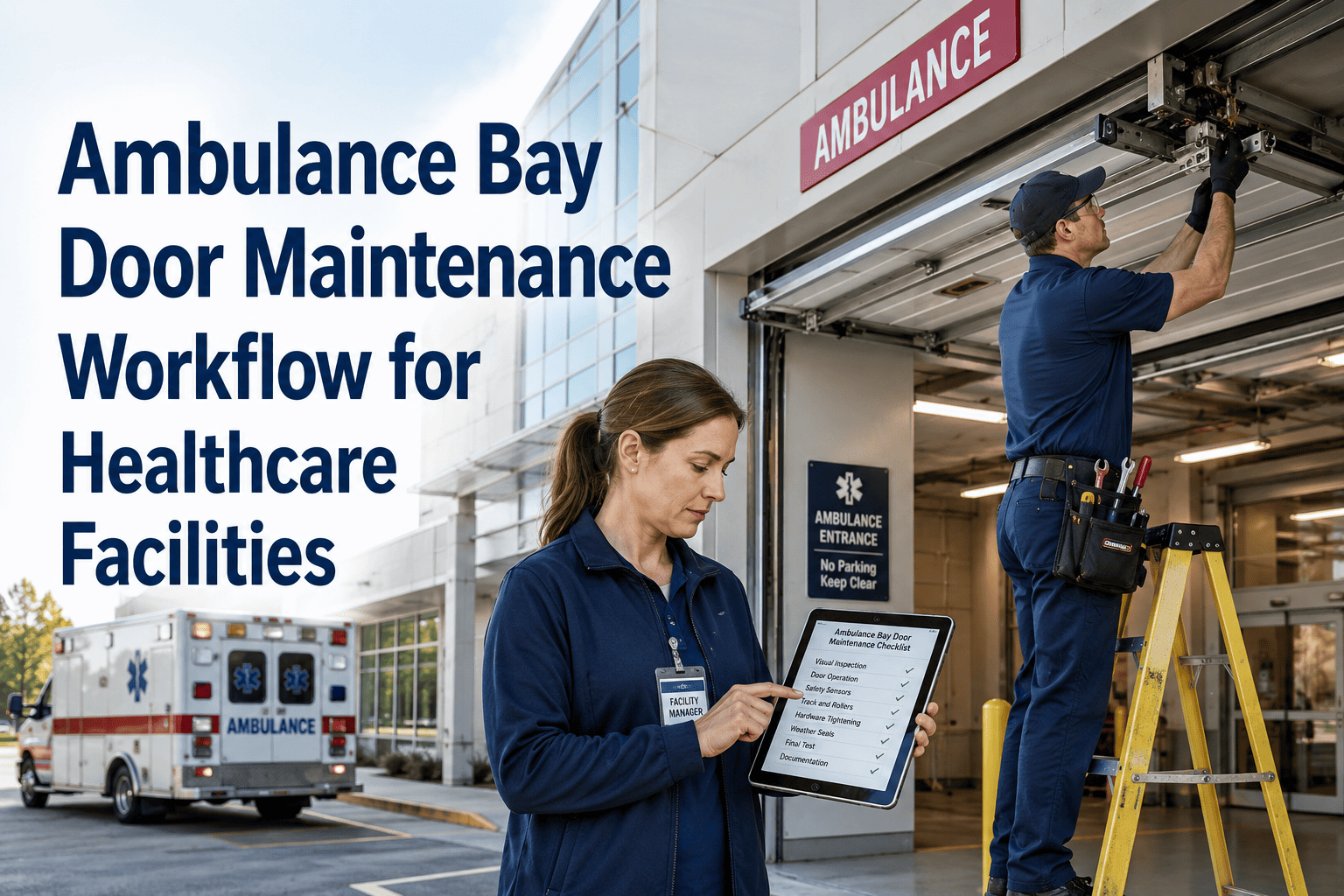
Ambulance bay doors are among the highest-cycle, highest-consequence assets in any hospital — a malfunction during an emergency arrival doesn't just create a maintenance ticket, it creates a patient safety event.

Read More
Hospital facility teams manage hundreds of support assets — patient lifts, pneumatic tube stations, dietary carts, waste handling equipment, environmental controls — that rarely appear on clinical dashboards but directly affect care delivery quali

Read More
In pharmaceutical manufacturing, the gap between a production event and a maintenance response is where batch failures, regulatory findings, and costly equipment damage accumulate. When a bioreactor stops mid-batch, an alarm fires, a fill line slo

Read More
SAP Plant Maintenance is the backbone of asset management in large pharmaceutical enterprises — but it was never designed to be a GMP-compliant maintenance execution system. When FDA inspectors ask for electronic work order signatures with individ
Read More
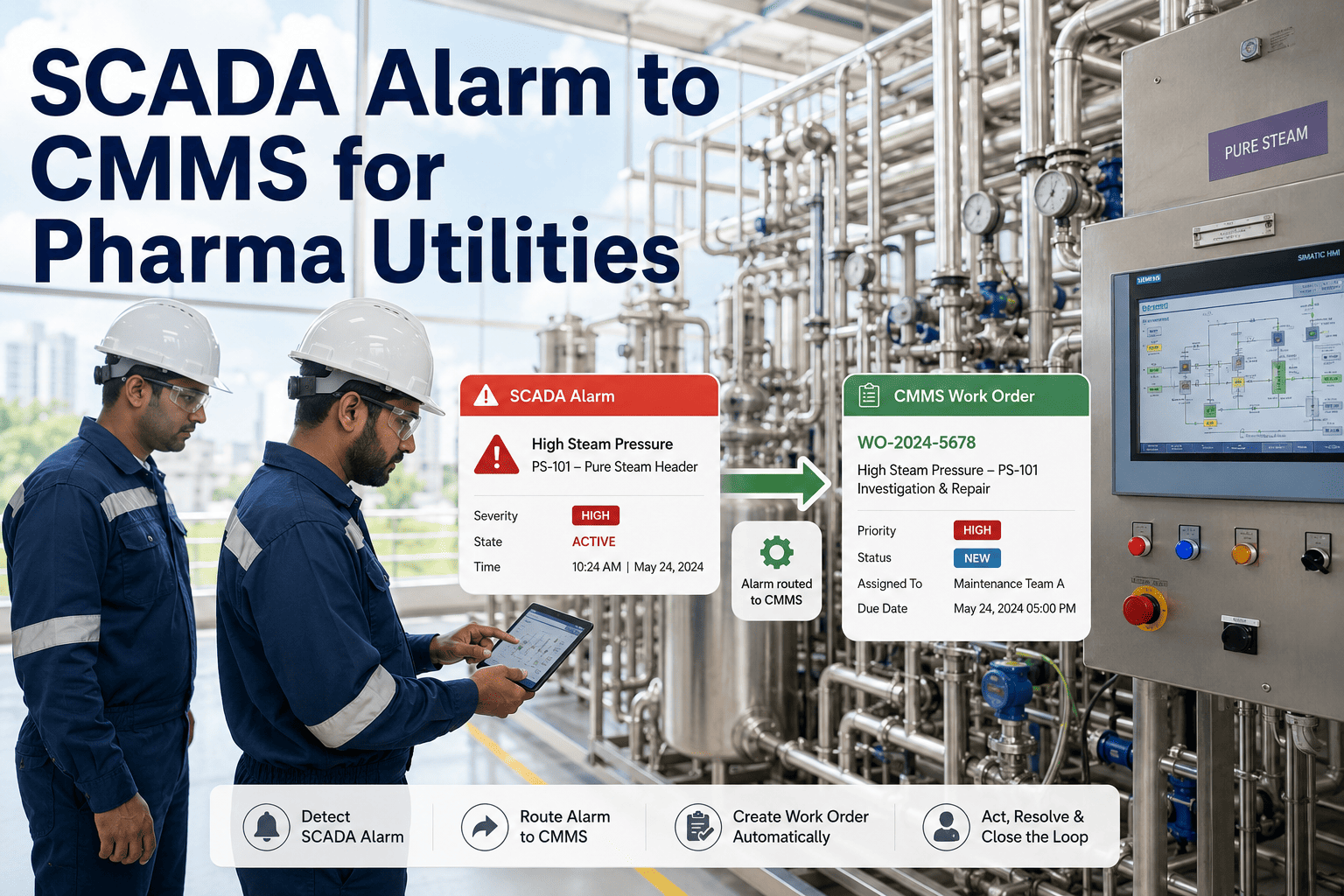
In GMP-regulated pharmaceutical manufacturing, a SCADA utility alarm is not just an operational alert — it is the start of a compliance event. When a chiller fails, a cleanroom HVAC system deviates, or a WFI loop loses temperature control, regulat

Read More
In GMP pharmaceutical manufacturing, assigning a work order to the wrong technician is not just an operational mistake — it is a compliance failure. Regulatory agencies expect that every technician performing a qualified maintenance task holds cur

Read More
Pharma maintenance leaders face the same budget conversation every year: the finance team wants to cut, the maintenance director knows cutting creates risk, and neither side has the data to resolve the argument objectively.

Read More
Pharma finance and quality teams are under growing pressure to justify every dollar in the maintenance budget — and audit readiness is the line item that is hardest to defend when it lives inside spreadsheets and tribal knowledge.
Read More
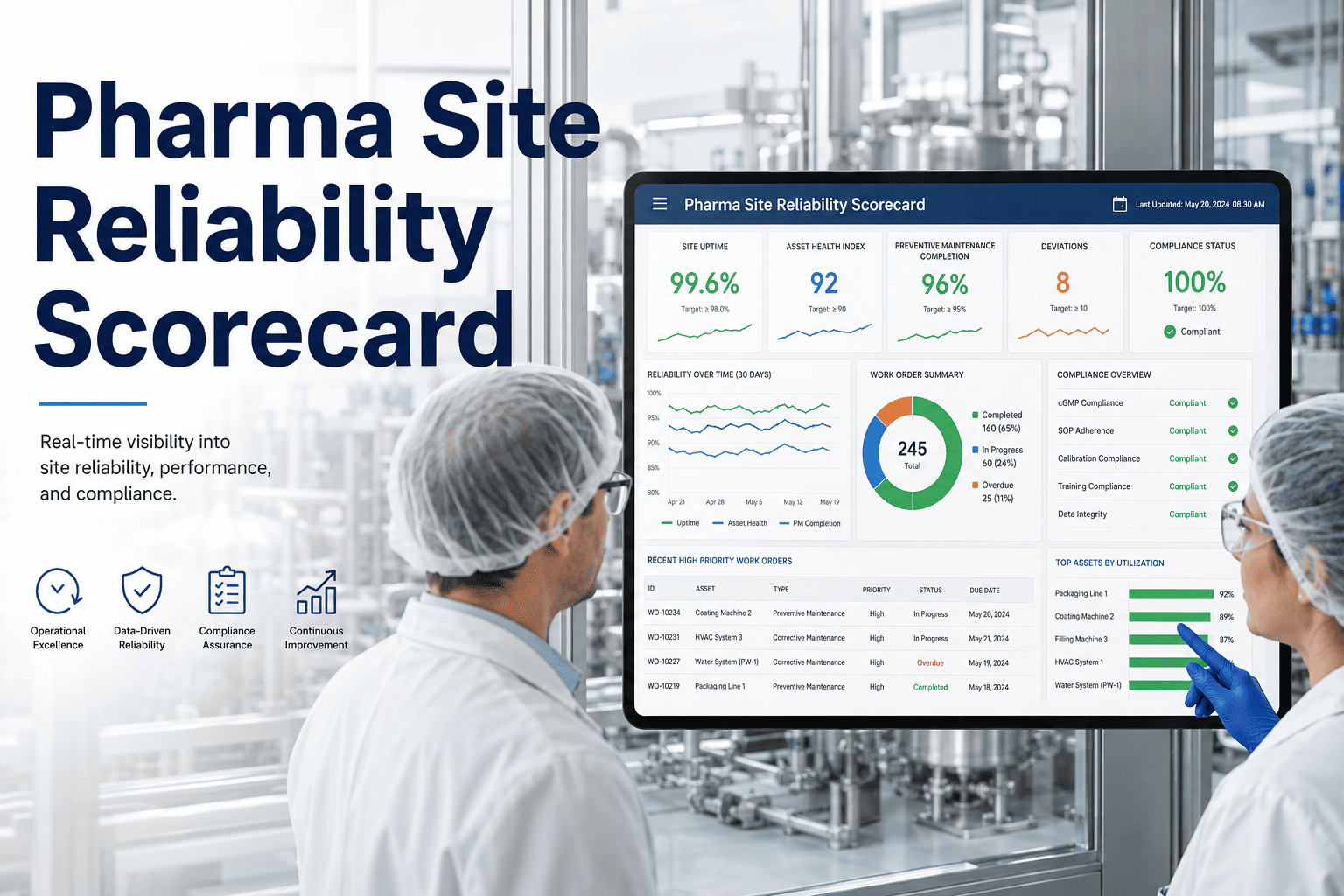
North America pharma manufacturing sites are operating under tighter scrutiny than at any point in the past decade — FDA warning letter volume, EU Annex 1 revisions, and post-pandemic capacity pressure have made site reliability a board-level conv
Read More
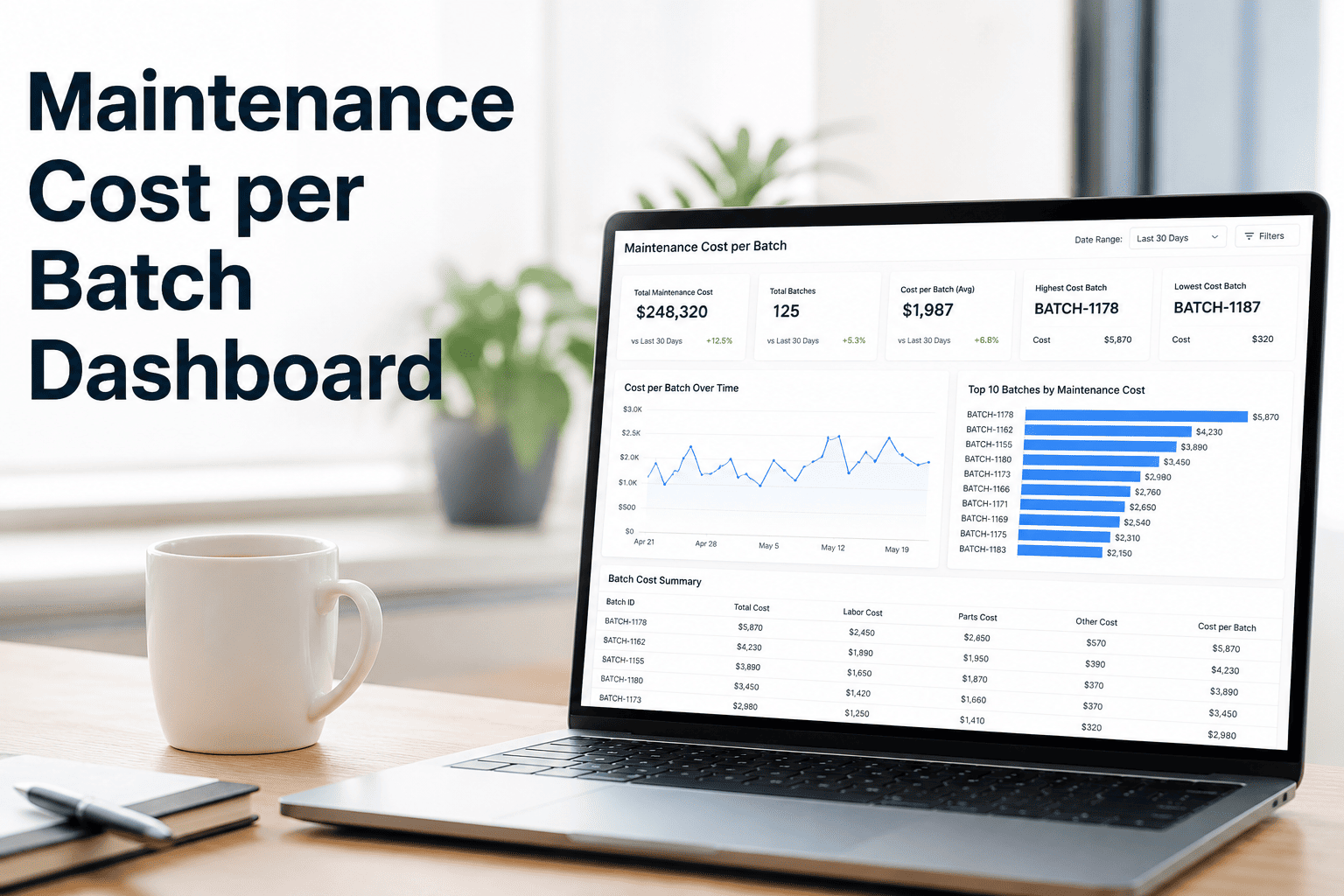
Pharmaceutical maintenance teams have always tracked equipment uptime, PM compliance, and work order closure rates — but when the CFO asks how much does maintenance actually cost per batch on Line 4 versus Line 7, most CMMS systems go silent. That
Read More
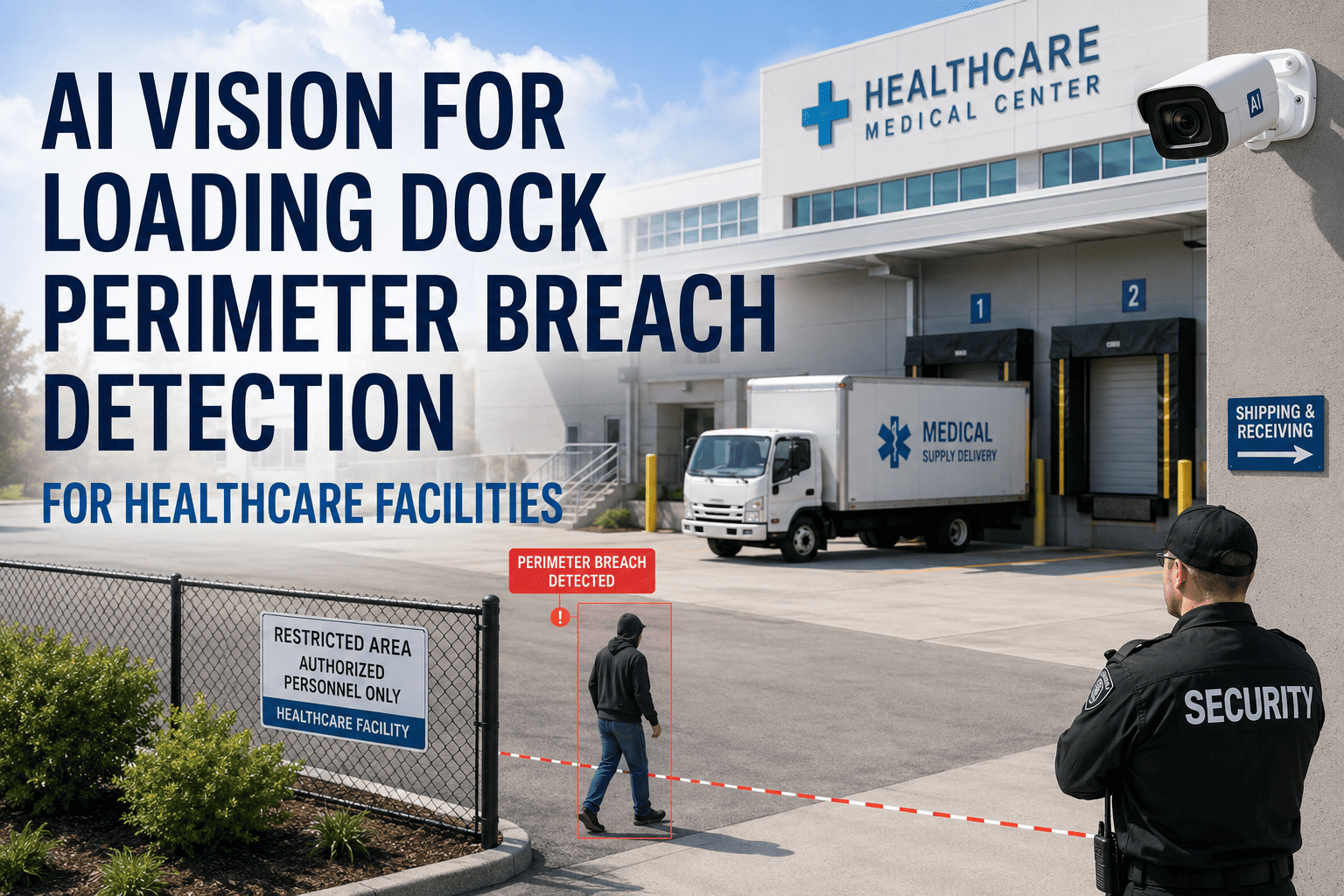
Healthcare facilities face a critical security gap that most facility managers underestimate: the loading dock. Unlike patient entrances and emergency rooms monitored by security staff around the clock, loading docks operate in unpredictable windo

Read More
Hospital rooftops are among the most overlooked security perimeters in healthcare. Roof hatches provide direct access to HVAC systems, electrical panels, communication equipment, and in some facilities, areas directly above sensitive clinical zone
Read More
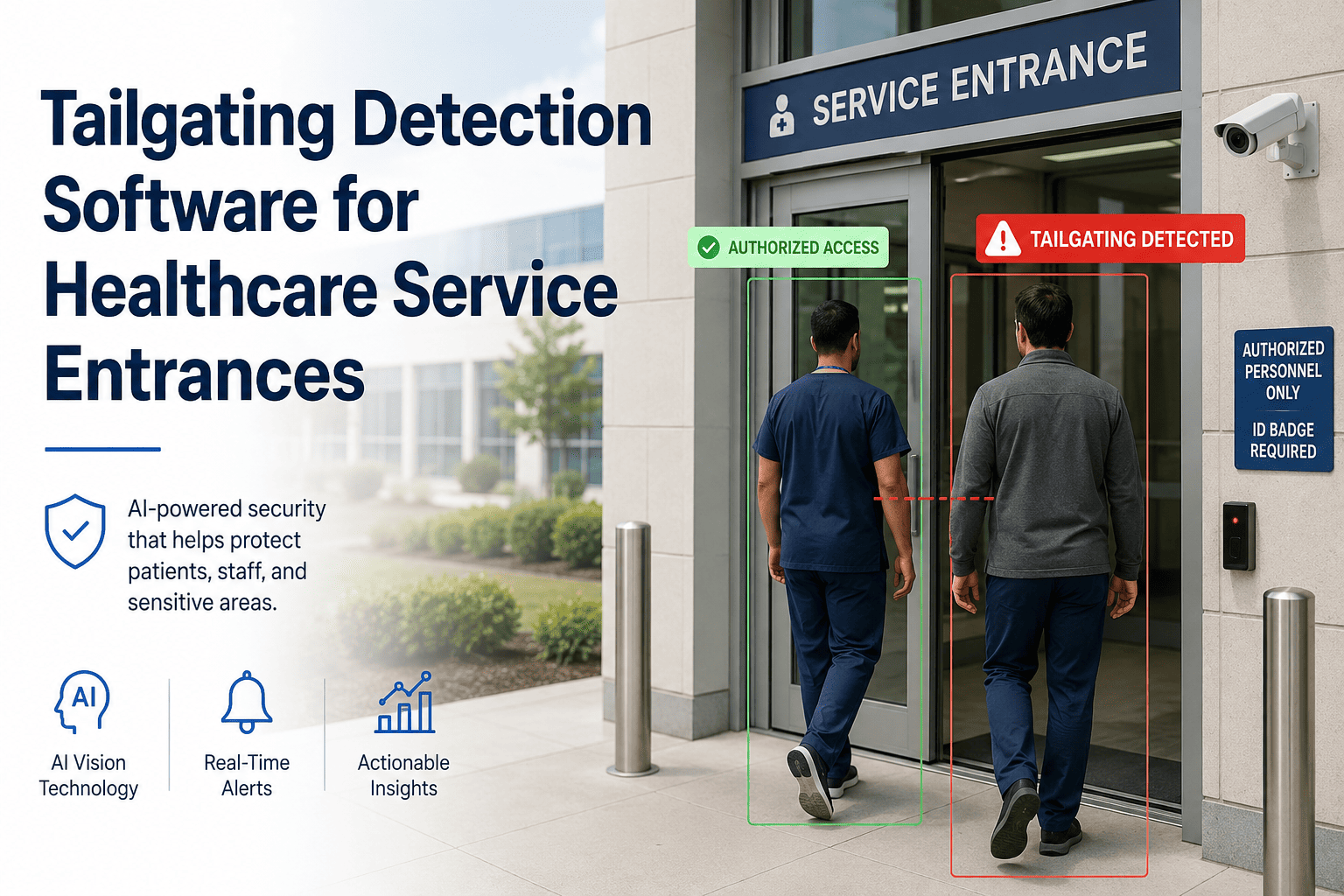
Tailgating at healthcare service entrances is one of the most underreported access control failures in hospital security — and one of the most difficult to document after the fact. When an unauthorized individual follows a credentialed worker thro
Read More
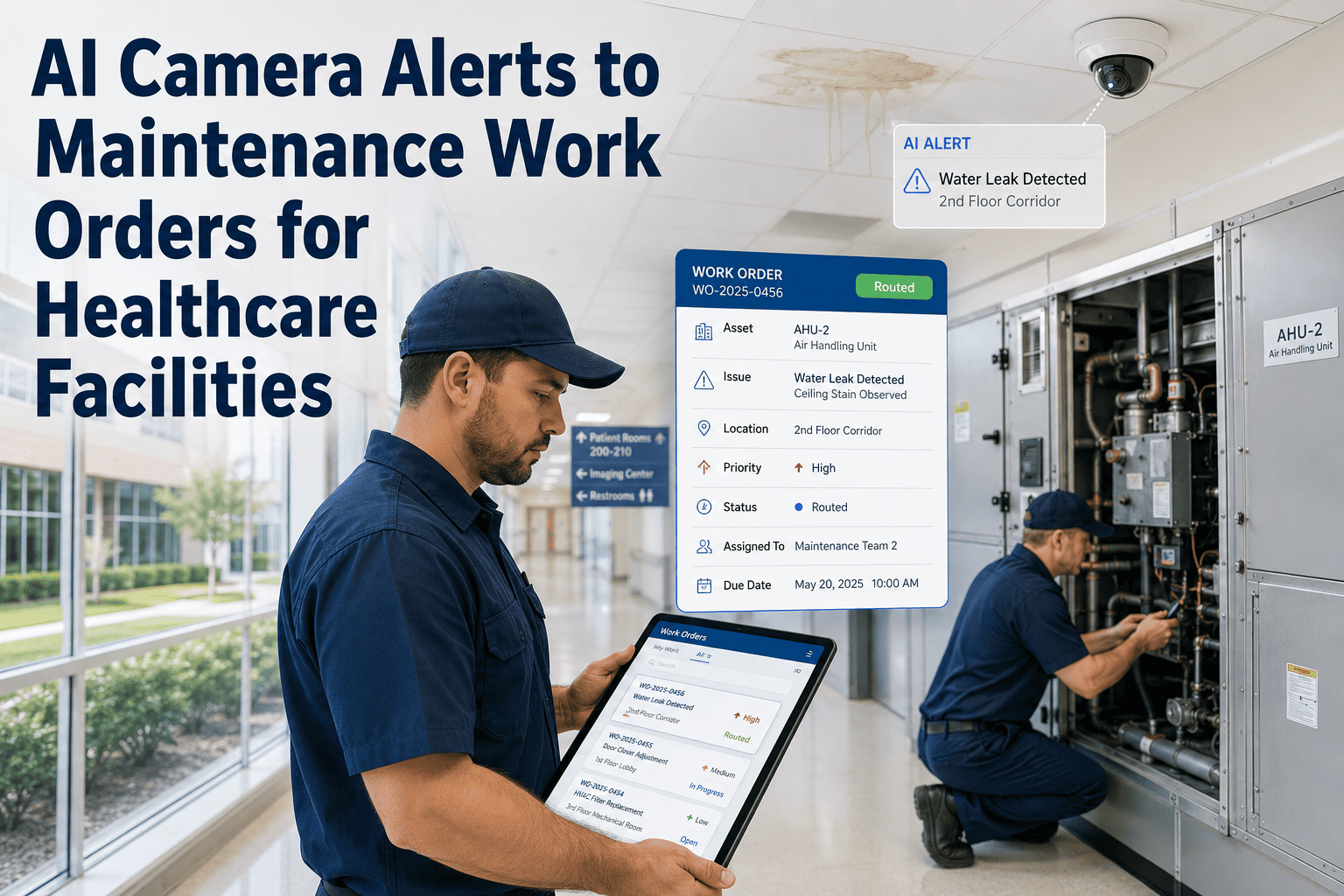
AI camera systems in healthcare facilities generate hundreds of alerts every week — but most of them end as a push notification that a security guard reads, closes, and forgets. When a camera alert never becomes a maintenance work order, there is
Read More
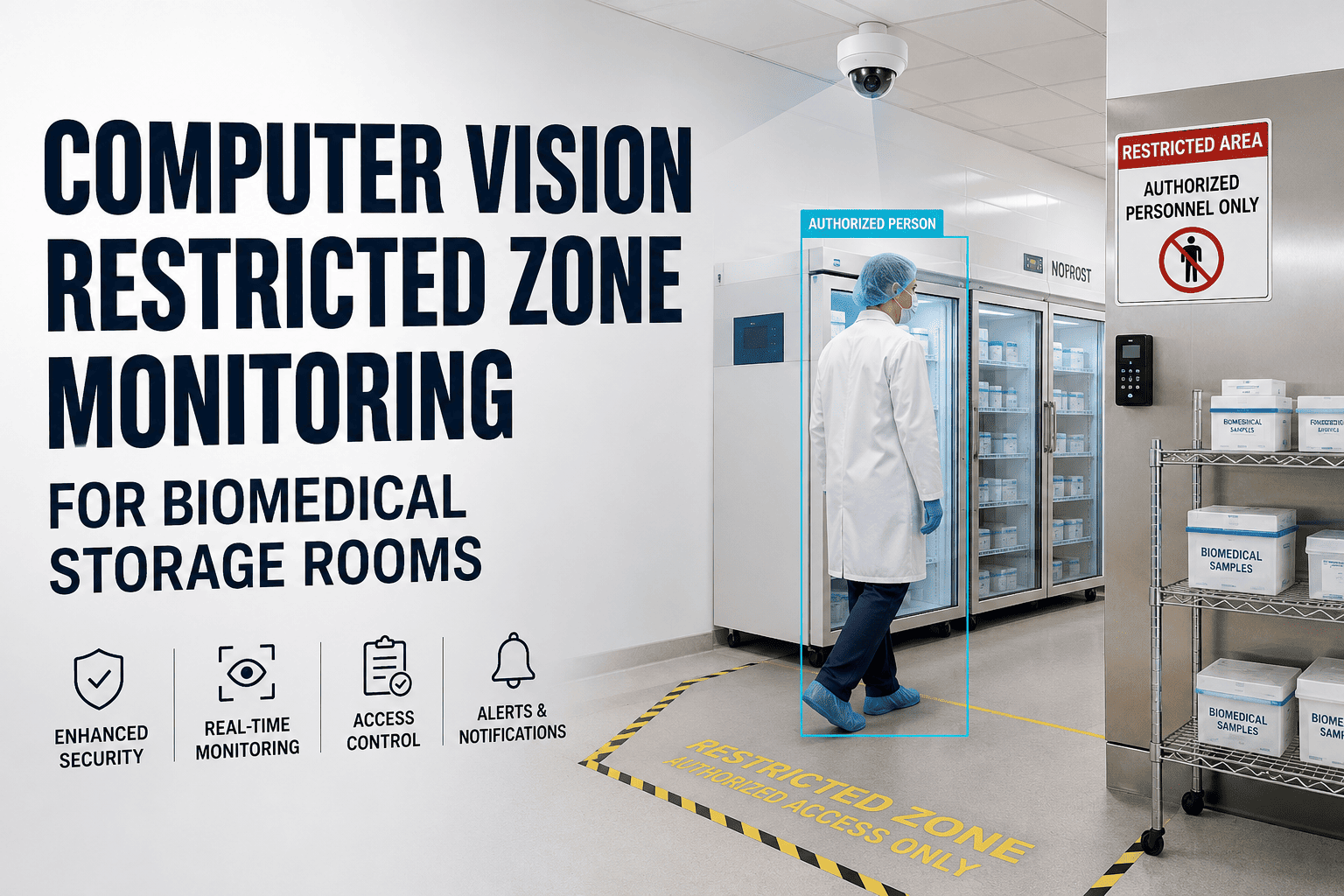
Biomedical storage rooms contain implants, surgical instruments, diagnostic equipment, and high-value consumables that must be accessible only to credentialed personnel — and every access event must be documentable on demand. Standard badge-and-ca

Read More
Hospital plant rooms house the most critical infrastructure in any healthcare facility — chillers, boilers, electrical switchgear, and HVAC systems that cannot tolerate unauthorized access. A single intrusion into an unmonitored plant room can mea

Read More
Healthcare facility maintenance teams are responsible for more than fixing equipment — they are the first line of defense when a perimeter breach puts restricted clinical zones, utility corridors, or medication storage at risk. Traditional perimet
Read More
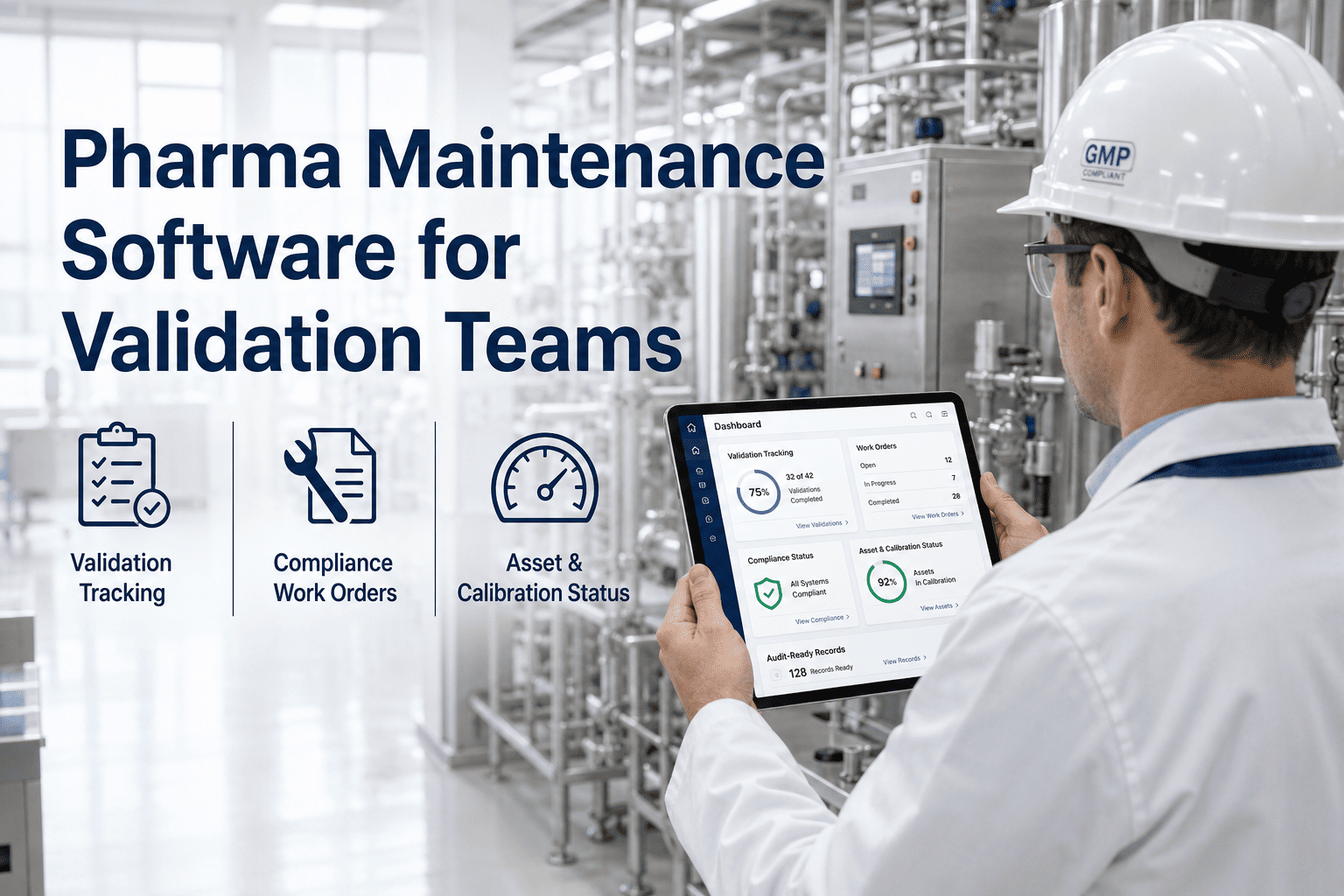
Validation teams at pharmaceutical manufacturers carry a mandate that goes beyond the initial CSV project. Every change to a CMMS configuration, every new PM procedure, and every updated maintenance form needs to be evaluated for validation impact
Read More
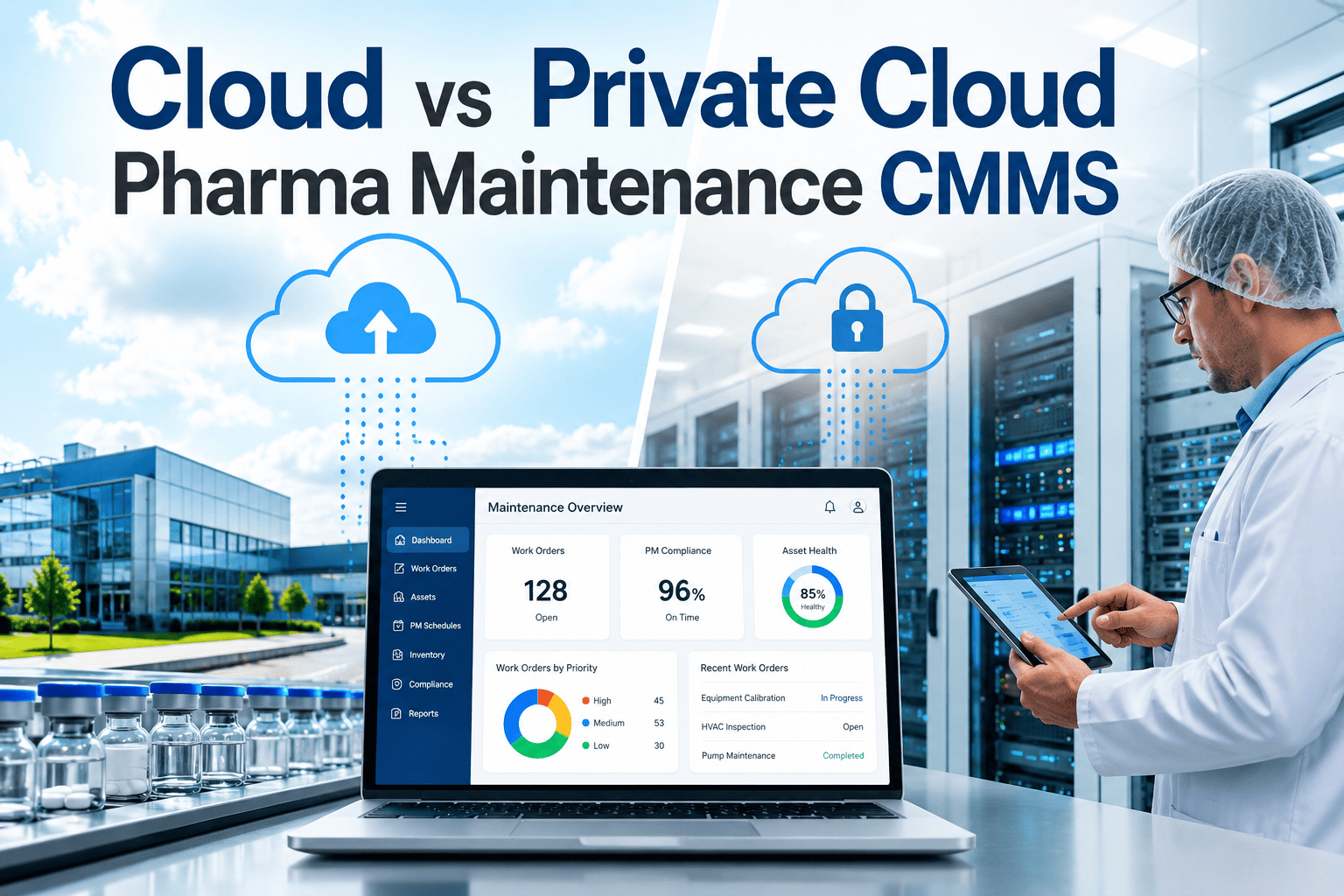
Every pharma IT and validation team eventually has the same conversation: should the maintenance system run on standard cloud infrastructure, a private cloud environment dedicated to the facility, or some hybrid of the two? The answer depends less
Read More
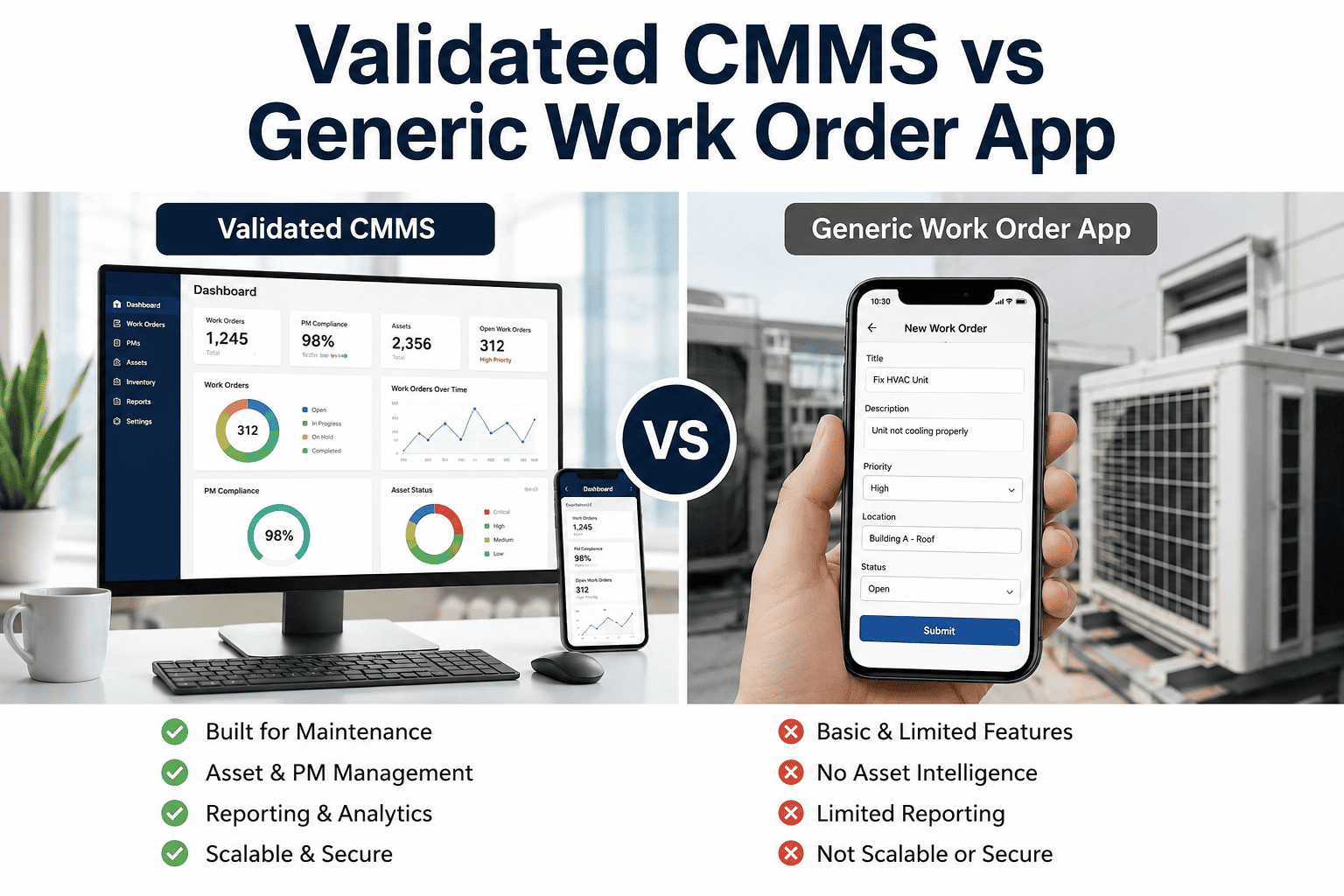
A generic work order app and a validated pharma CMMS can look nearly identical on the surface — both let technicians log a work order, attach a note, and mark a task complete. The difference only becomes visible the day an FDA investigator asks fo

Read More
Most pharmaceutical maintenance teams know their legacy CMMS is holding them back — audit gaps, paper trails that fail FDA reviews, and technicians working around broken mobile workflows. Yet the switch keeps getting delayed, not because the new s
Read More
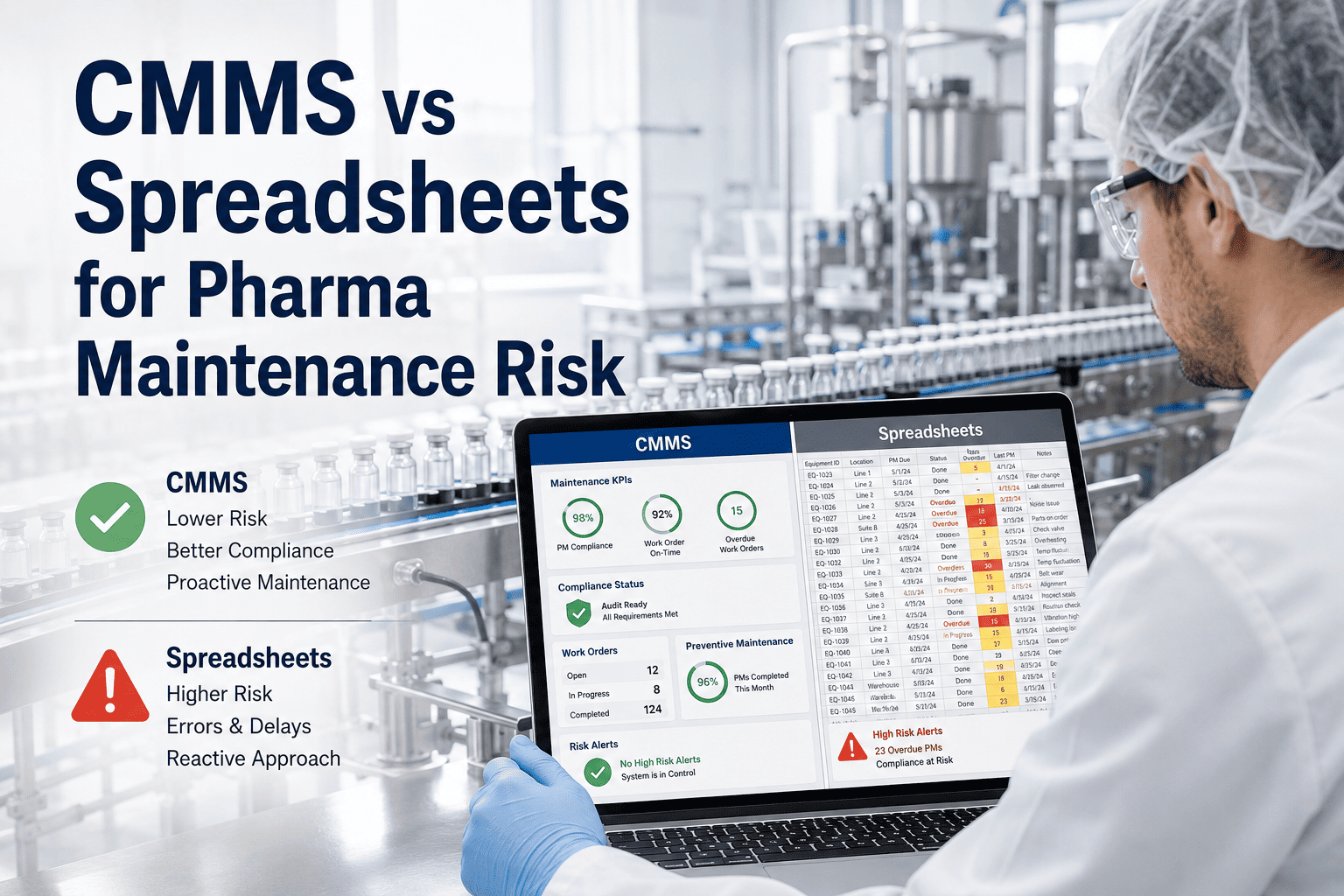
A spreadsheet doesn't flag an overdue calibration, doesn't lock a completed record from being edited, and doesn't produce an audit trail when an inspector asks who changed a maintenance date and when. For pharmaceutical sites operating under 21 CF

Read More
Pharmaceutical engineering teams carry a maintenance scope that no generic CMMS was designed for. Assets, utilities, work orders, calibration schedules, planned shutdowns, and audit-ready records all need to live in a single system that can produc

Read More
Quality leaders at pharmaceutical manufacturers know the inspection risk is not in the batch record alone. Maintenance records, calibration logs, deviation links, and CAPA closure evidence are reviewed with equal rigor by FDA investigators, and a

Read More
A pharmaceutical plant manager carries accountability that no other manufacturing role matches: production output, GMP compliance, team safety, utility uptime, and inspection readiness all land on the same desk. A single unplanned equipment failur

Read More
A brown ring on a ceiling tile is never just a cosmetic issue — it is a signal. Behind that stain is an active or past water intrusion event that may involve a leaking pipe, a failing roof membrane, HVAC condensation, or a slow plumbing drain seep
Read More
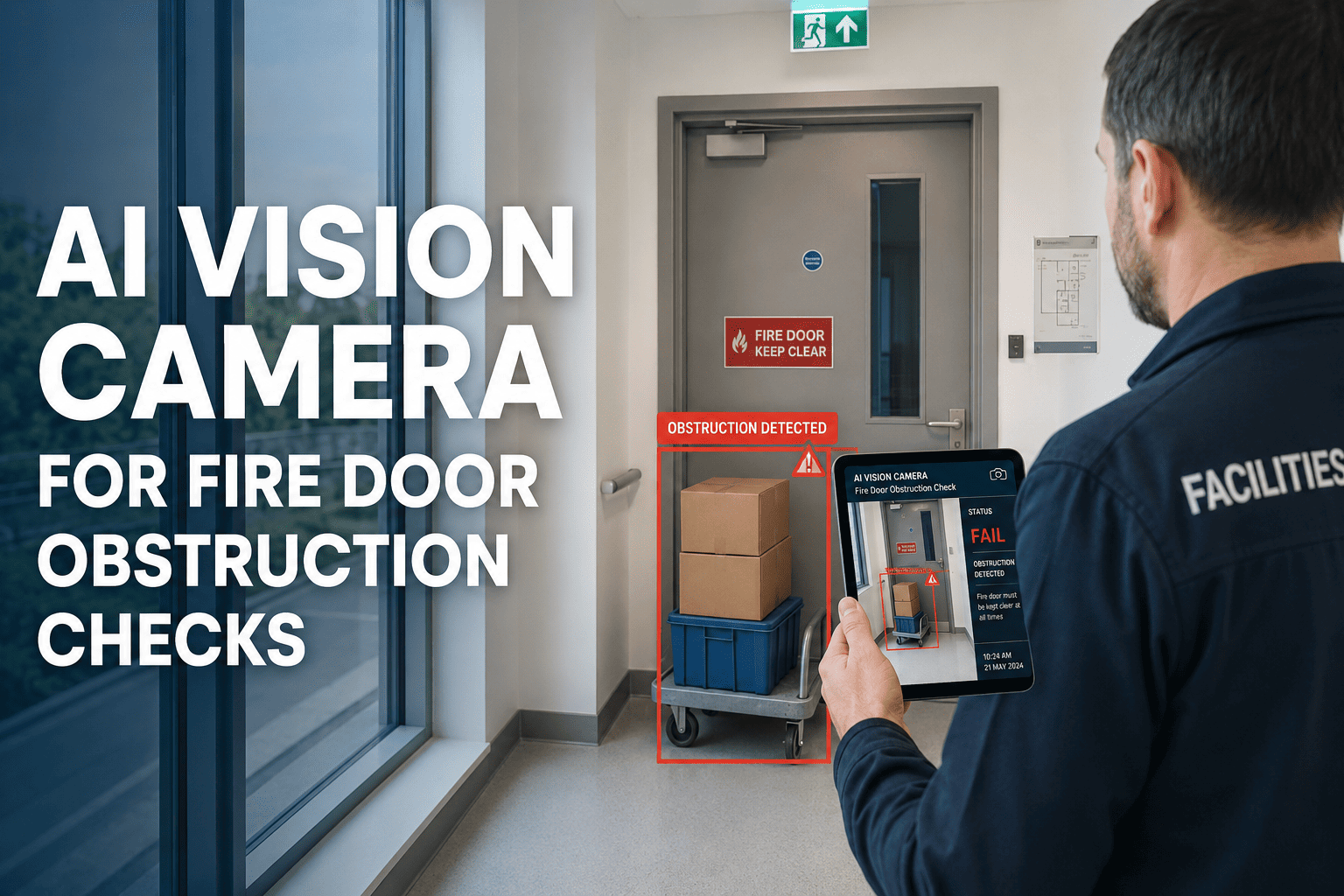
A blocked fire door is not a housekeeping issue — it is a life-safety violation that can cost lives, fail a Joint Commission survey, and expose a facility to immediate regulatory action. In hospitals, care facilities, and large commercial building

Read More
In a hospital, the assets most likely to corrode are often the ones nobody walks past on a normal day — chilled water pipes running along a mechanical room ceiling, a rooftop condenser support bracket, a steam line behind a false wall near sterile

Read More
Plant rooms are among the most hazardous work environments in a hospital — and among the least supervised. Boiler rooms, pump stations, chiller decks, and electrical switchgear vaults require specific personal protective equipment for every task,
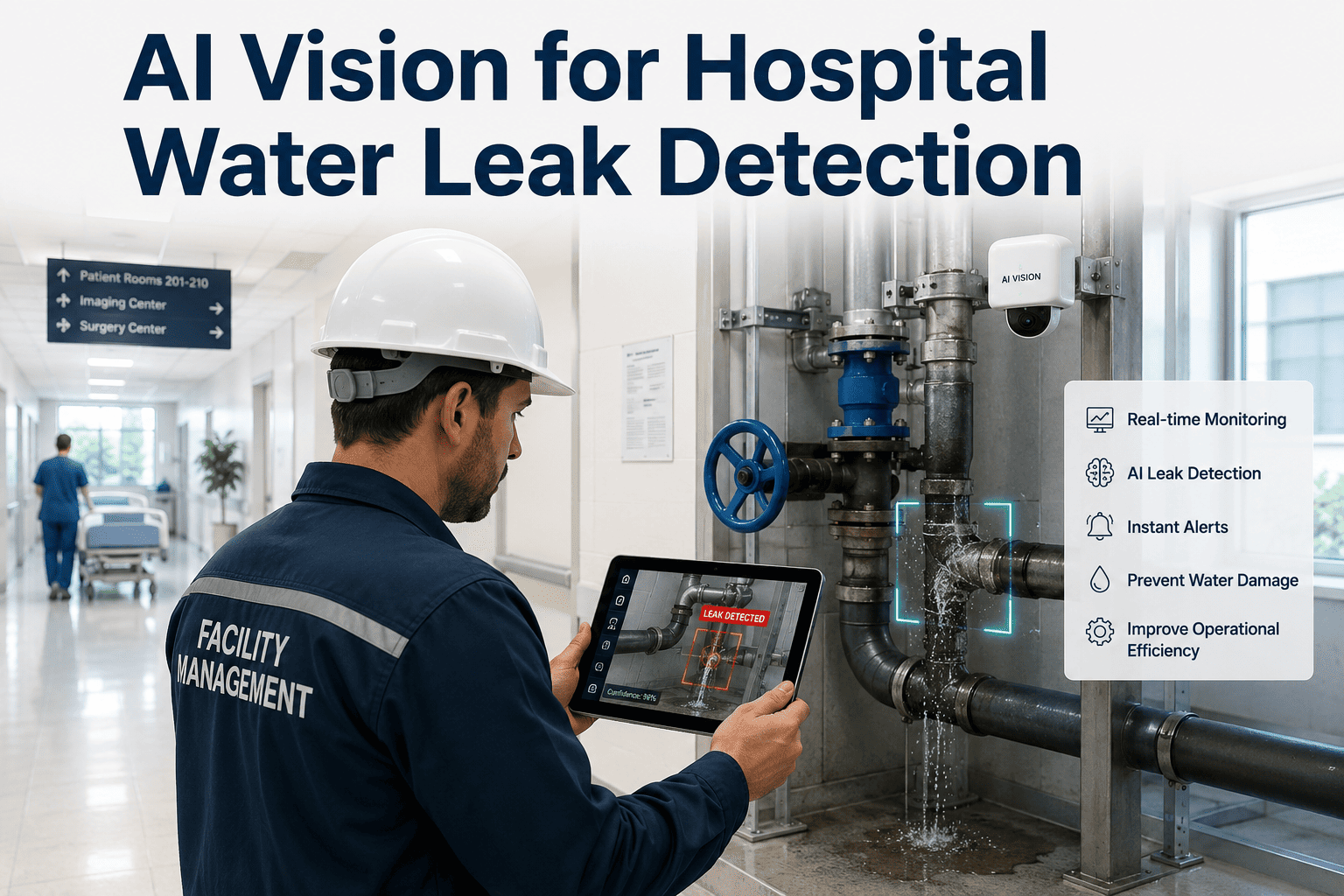
Read More
Water damage is among the top causes of commercial property loss — and in hospitals, the stakes go far beyond repair costs. A leak in an operating room ceiling, a sterile compounding pharmacy, or a NICU can render a clinical space unusable for day
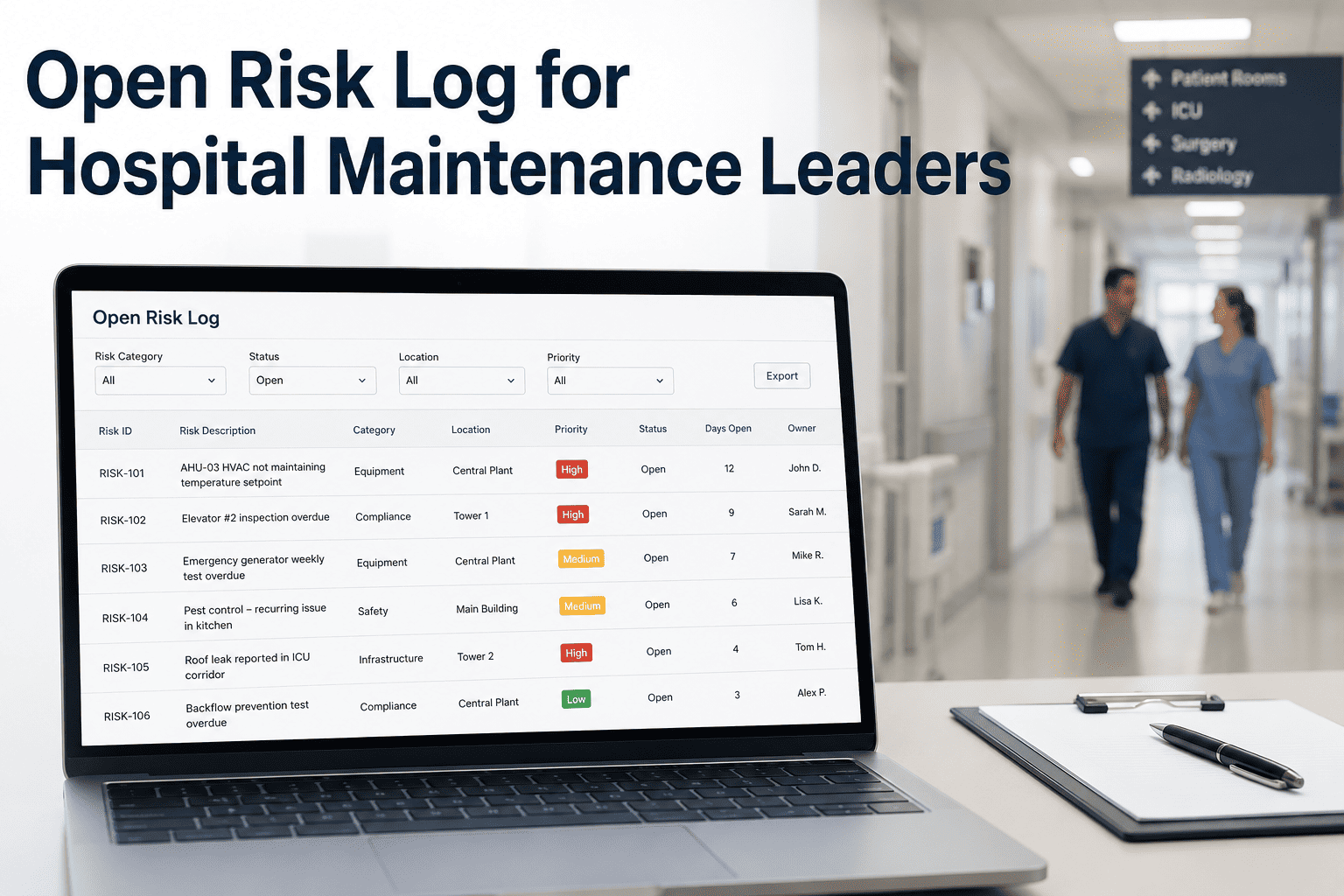
Read More
Every hospital facility has a growing list of deferred repairs, aging assets, and unresolved inspection findings — but most maintenance directors are managing that list in their heads, on whiteboards, or scattered across email threads that disappe
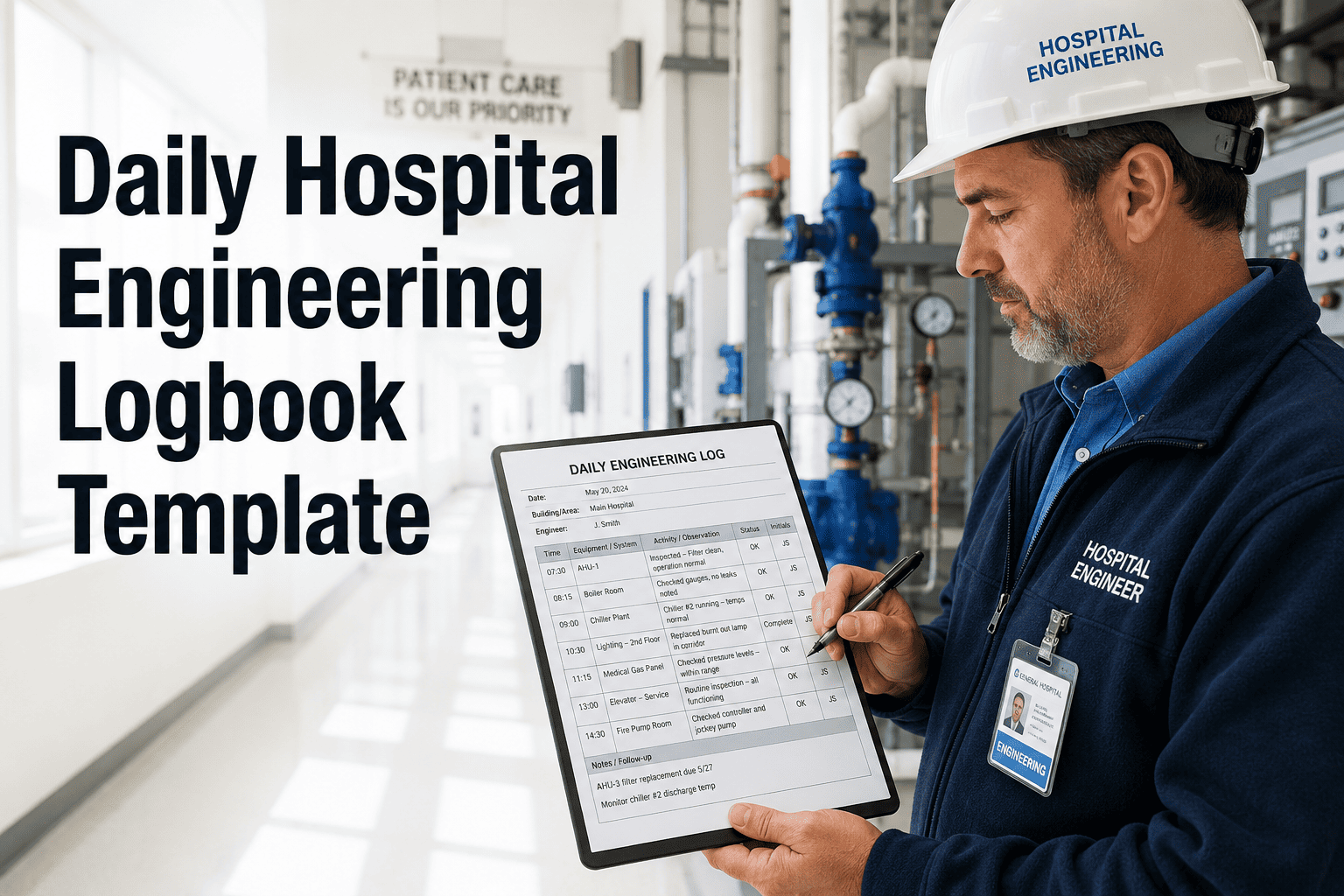
Read More
Hospital engineering teams conduct hundreds of rounds, readings, and inspections every single day — but most of that work disappears into handwritten binders that no surveyor can locate on demand and no night-shift technician can actually read. Wh
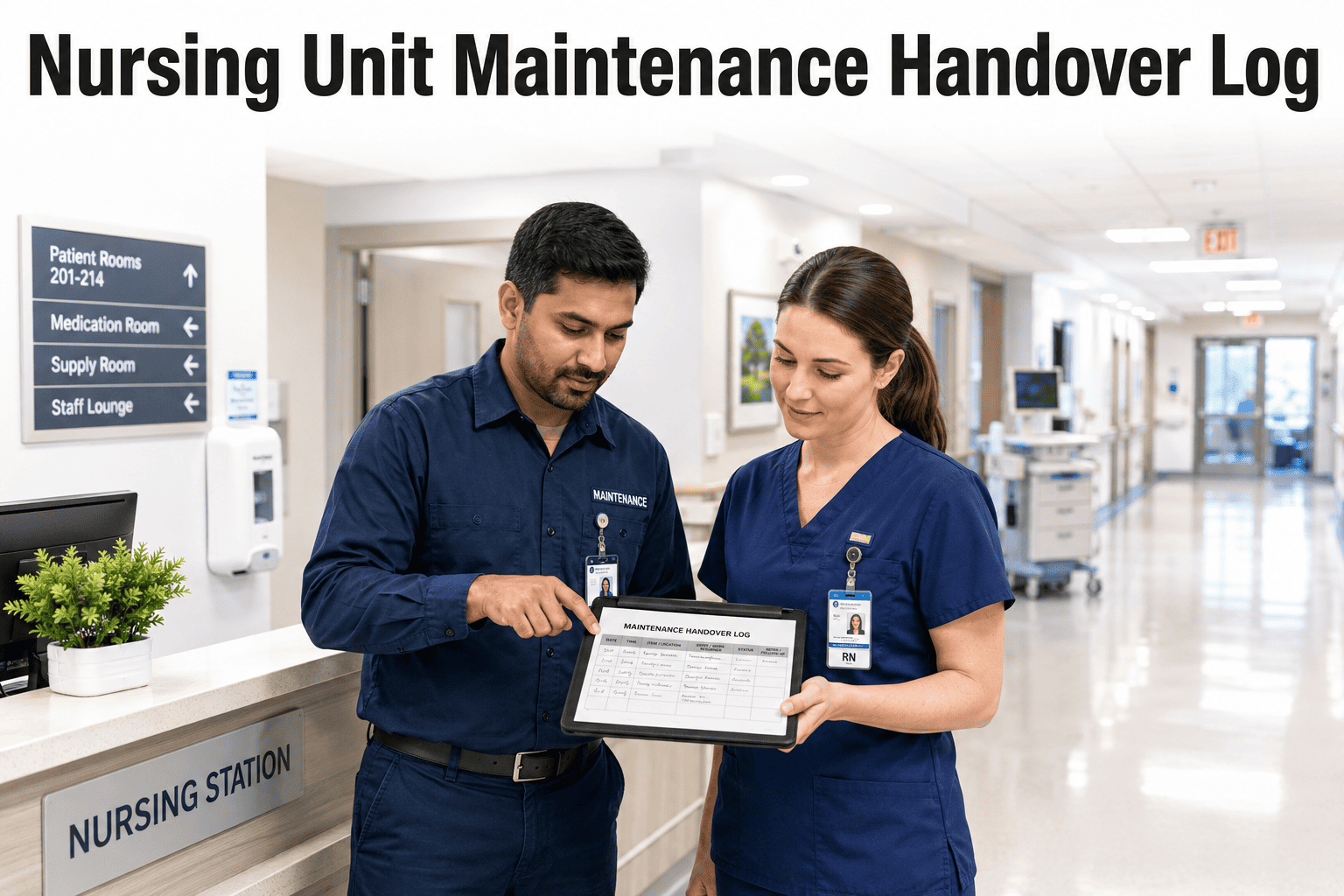
Read More
Nursing units run around the clock — but maintenance communication rarely does. When a patient room call light fails at 11 PM, a corridor HVAC fault goes unlogged at 6 AM, or a broken bed frame sits in a unit without a documented repair status, th

Read More
Steam is the backbone of pharmaceutical manufacturing — sterilization, process heating, clean-in-place systems, HVAC, and humidification all depend on it. It is also one of the largest sources of untracked energy waste in any pharma plant. Industr

Read More
Pharmaceutical manufacturing sites operate under some of the strictest environmental and facility compliance requirements in any industry. Chiller systems, cold storage units, and HVAC equipment across U.S. and Canadian pharma campuses carry large

Read More
Pharmaceutical manufacturing is one of the most energy-intensive sectors in global industry — with energy costs representing 5–10% of total operating expenses at a typical US or European drug product facility. Yet the majority of that energy waste

Read More
An undocumented equipment password reset in a GMP environment is not a minor IT oversight — it is a data integrity event. Under 21 CFR Part 11 and EU Annex 11, every access credential change on a co

Read More
An OT (operational technology) asset inventory is the foundational requirement for every pharma cybersecurity programme — you cannot protect, patch, validate, or audit assets you don't know exist. In pharmaceutical manufacturing, OT assets span a

Read More
As pharmaceutical and regulated manufacturers connect more equipment to enterprise networks, the attack surface for cyber incidents expands rapidly — making a structured cyber risk maintenance log

Read More
A validated CMMS is only as secure as its user access controls — and periodic access reviews are a core expectation under 21 CFR Part 11, EU Annex 11, and the ISPE GAMP 5 framework for computerized s

Read More
Calibration drift does not announce itself. An analytical balance, a temperature sensor, or an HPLC pressure transducer shifts gradually — reading 0.3% high, then 0.6%, then past the tolerance limit during a batch run that no one flags until a 483

Read More
A pharmaceutical facility's CMMS is only as trustworthy as the data inside it. When asset names vary between departments, PM codes don't match the validation master plan, criticality ratings were assigned informally years ago and never reviewed, a

Read More
In regulated pharmaceutical manufacturing, a maintenance record without a proper electronic signature isn't just incomplete—it's a compliance liability. FDA 21 CFR Part 11 requires that every approval, review, and sign-off on a maintenance record

Read More
Maintenance log errors in pharma plants are rarely acts of bad faith — they are structural failures. A technician signs a record hours after completing the work. A supervisor approves an entry without reviewing it. A date gets entered wrong and no

Read More
An audit trail in a pharma CMMS is not a log — it is a regulatory artifact. Every edit, every approval, every late closure, and every role change in a maintenance record must be captured, attributed, and unalterable. When FDA investigators request

Read More
An FDA maintenance evidence binder is not a filing cabinet — it is a structured, audit-navigable package that allows an investigator to trace any maintenance event from the initial work order through completion, QA sign-off, and subsequent PM conf

Read More
When FDA or ISO auditors arrive on-site, the inspection war room becomes the nerve center of your compliance defense. Every record request, every data pull, every cross-reference check flows through that room — and facilities without a CMMS-backed
Read More
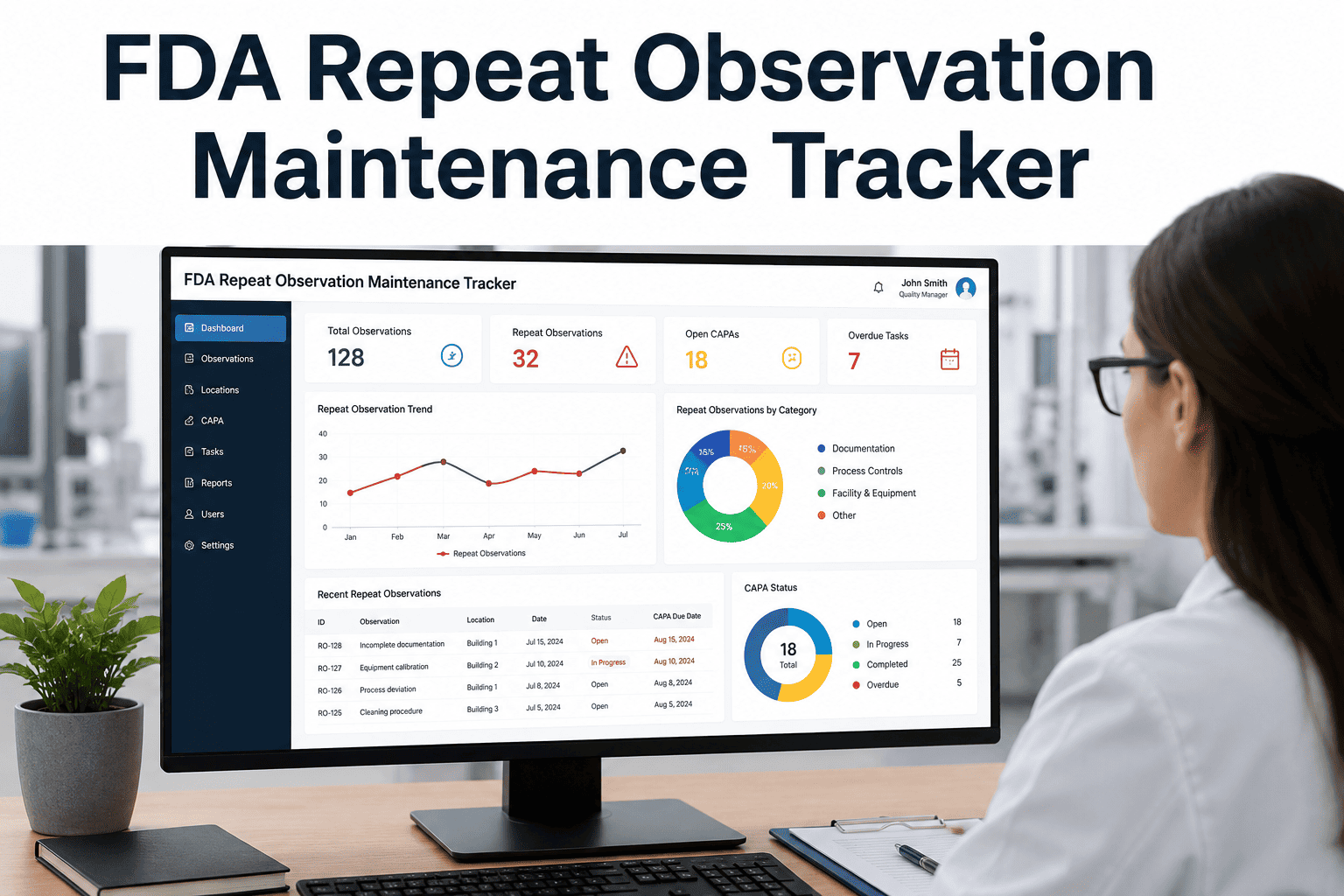
FDA repeat maintenance observations don't happen in isolation — they are symptoms of broken documentation loops, untracked corrective work, and missed closure evidence that auditors find in subsequent inspections. When the same finding appears twi
Read More
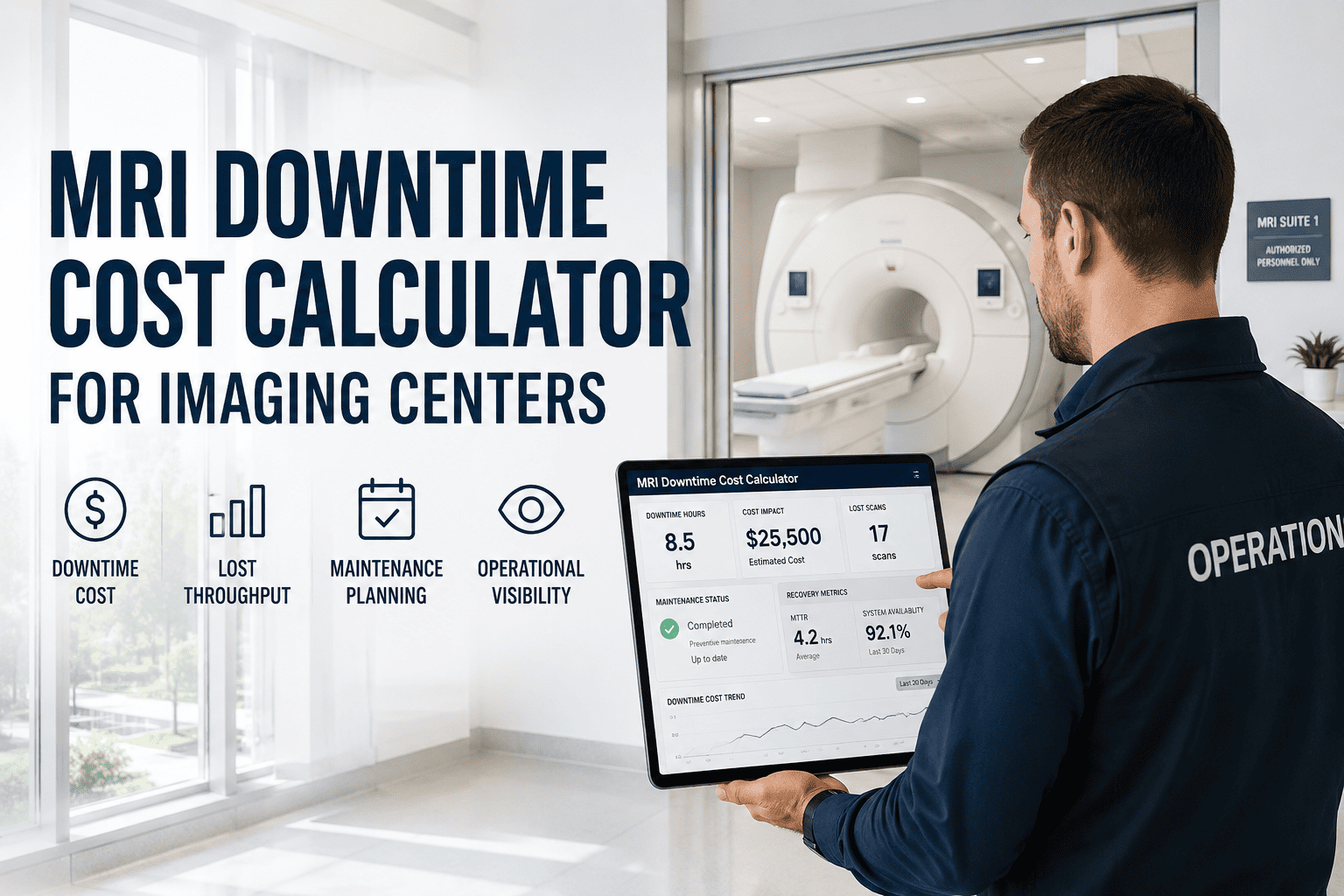
When an MRI scanner goes down at an imaging center, the cost isn't just the service call — it's every scan that doesn't happen, every patient referred elsewhere, every radiologist hour left idle, and every downstream diagnostic delay that delays a
Read More
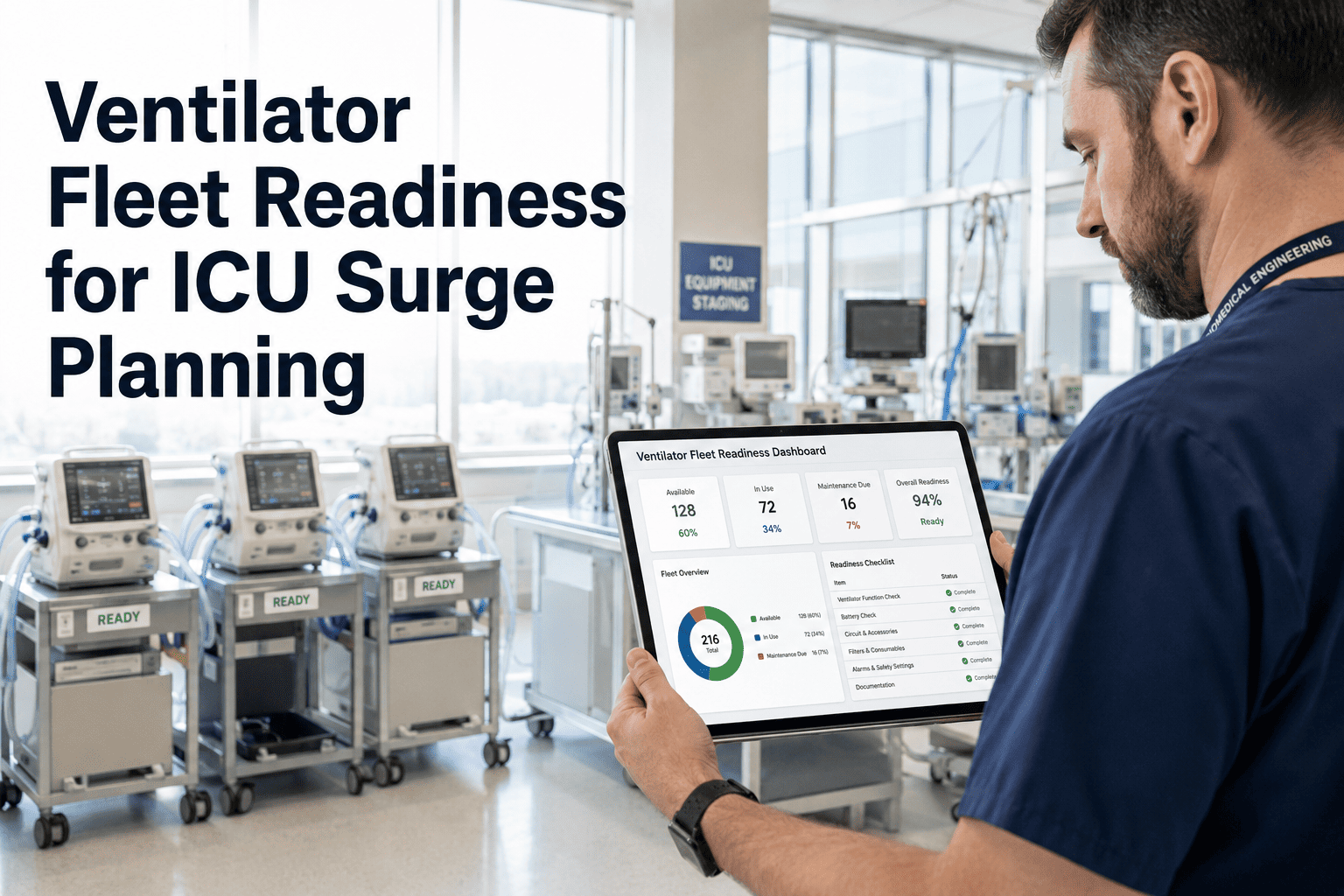
When ICU demand spikes — seasonal respiratory surges, mass casualty events, or pandemic escalation — the question hospital leadership asks first is: how many ventilators are actually ready right now? Not how many are in the inventory, but how many
Read More
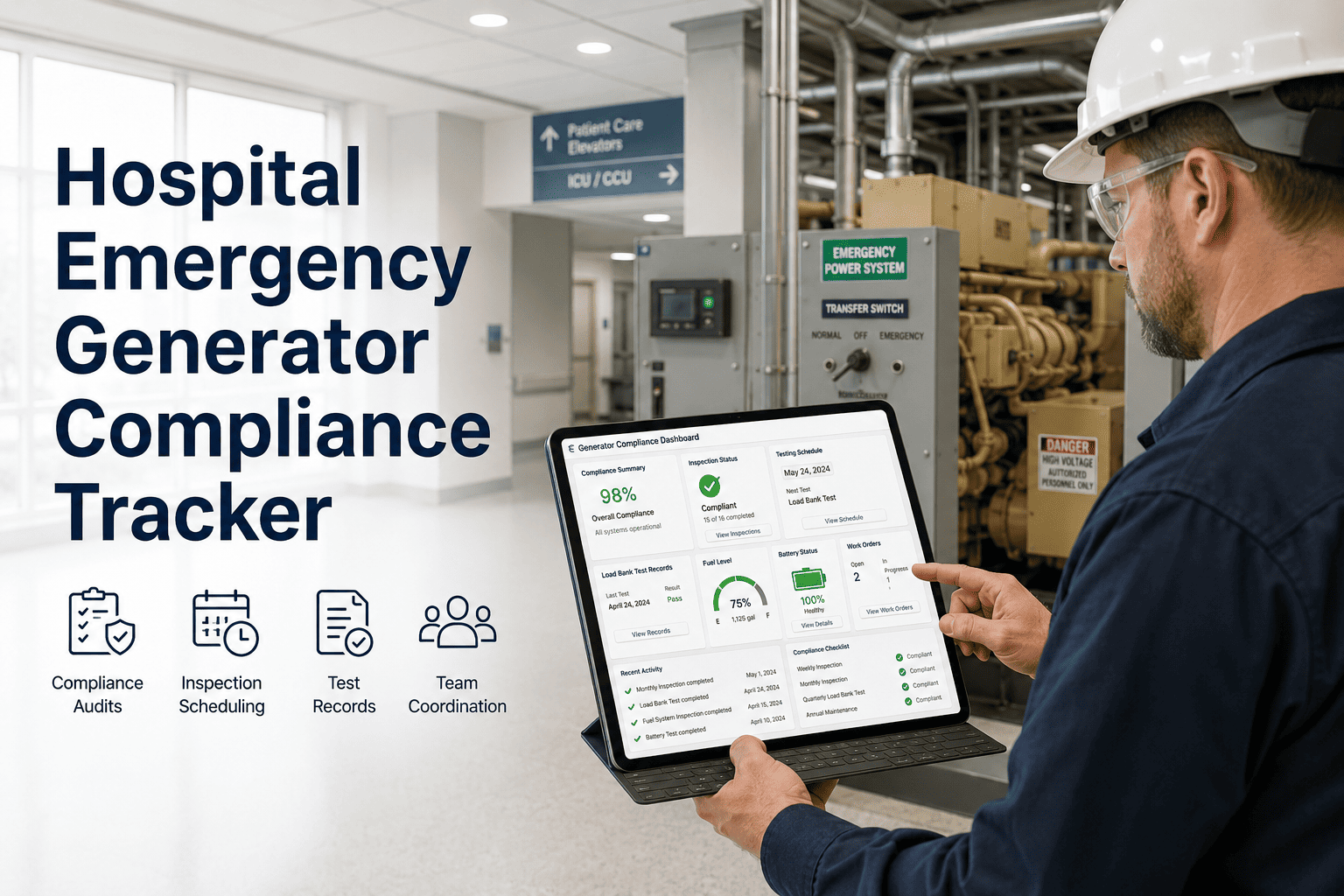
Emergency power failures during patient care are among the most preventable — and most cited — regulatory findings in hospital surveys. NFPA 110 and Joint Commission EC.02.05.07 require documented monthly and annual load testing for all emergency
Read More
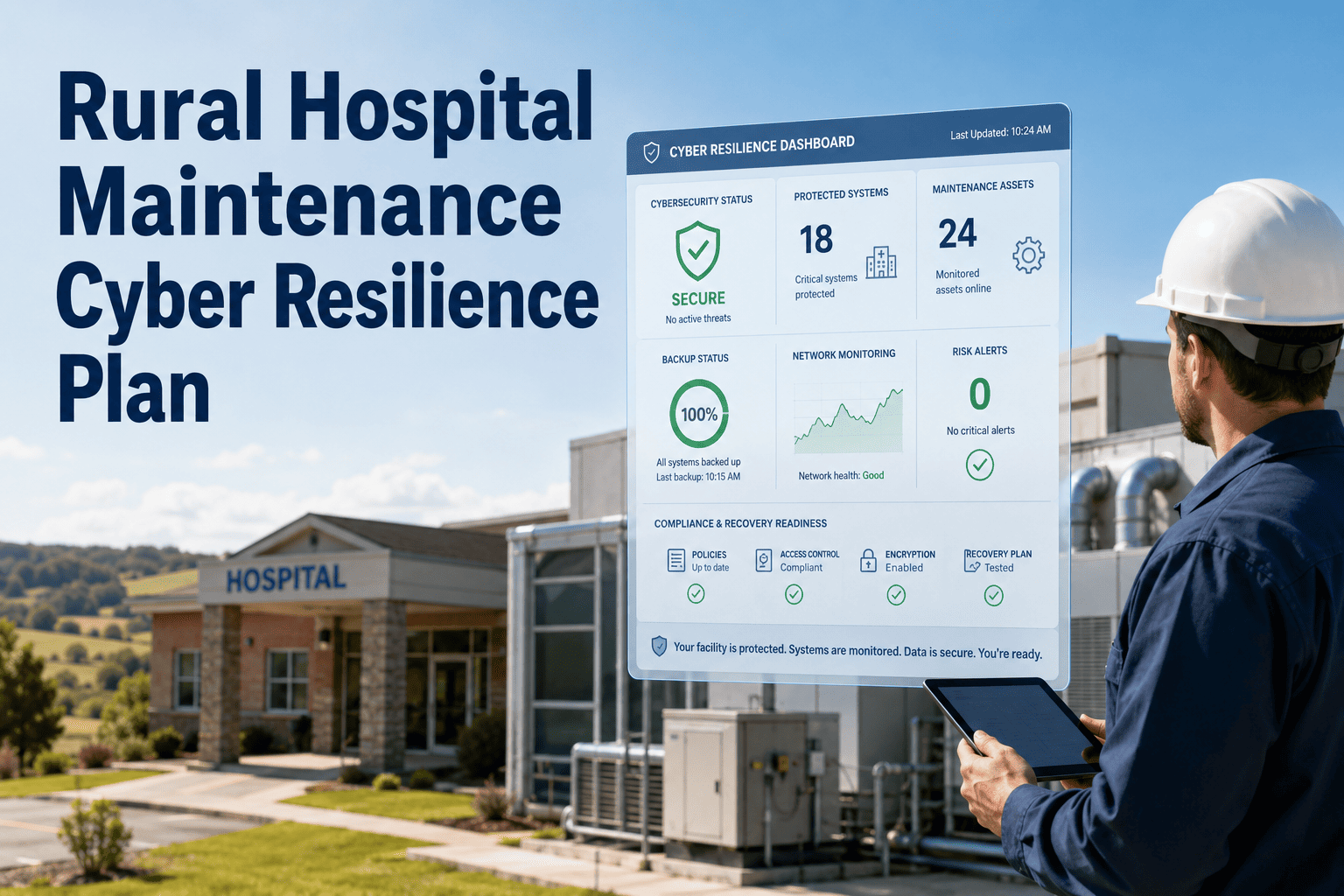
60% of rural hospitals have experienced a cyber incident in the last three years, yet 73% say they struggle to maintain HIPAA compliance due to staffing and funding gaps. When a ransomware event hits a rural facility, the operational impact is com
Read More
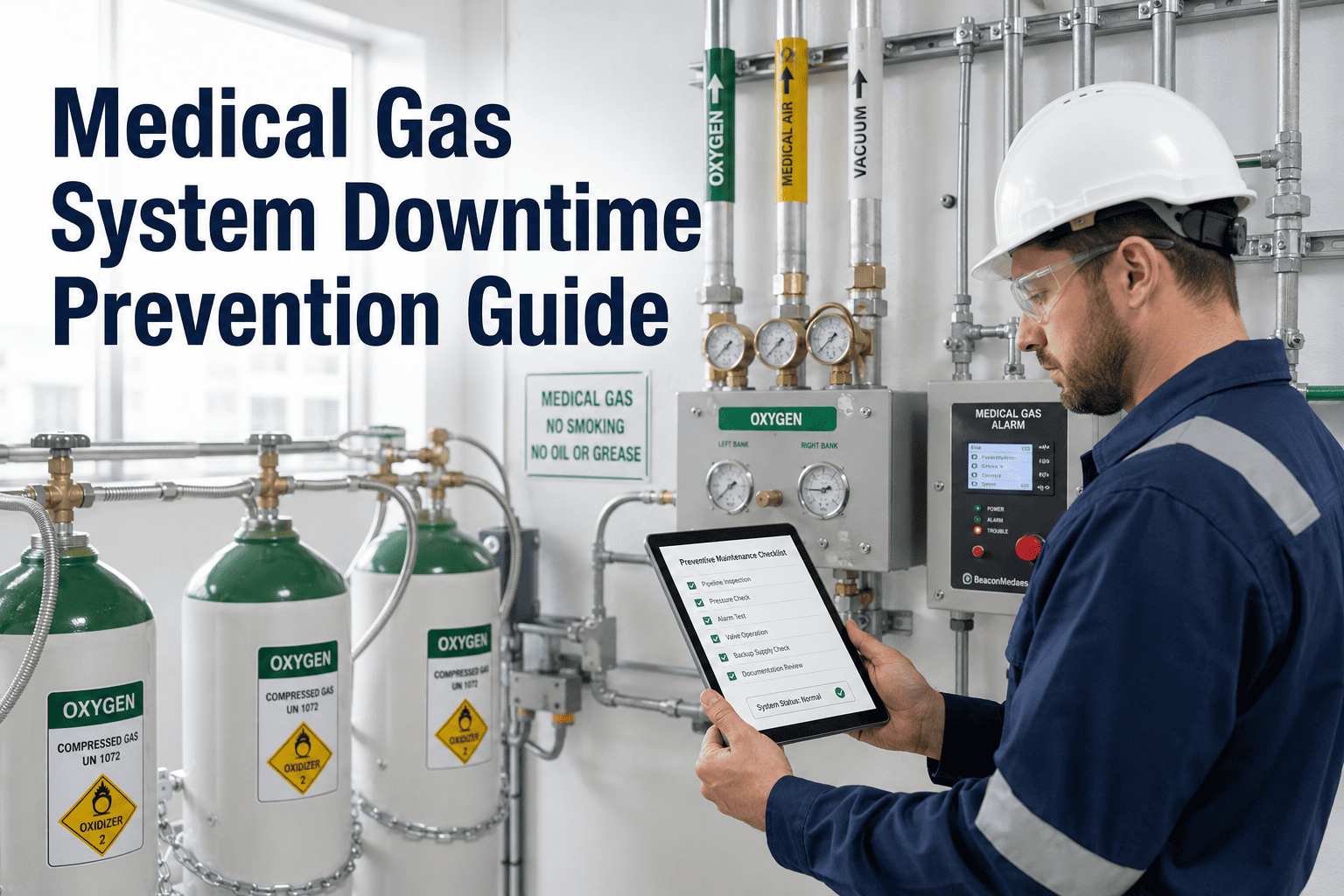
A medical gas system failure during active patient care is not a maintenance inconvenience — it is a sentinel event. NFPA 99 mandates documented inspection, alarm verification, and zone valve testing for every oxygen, medical air, vacuum, and nitr
Read More
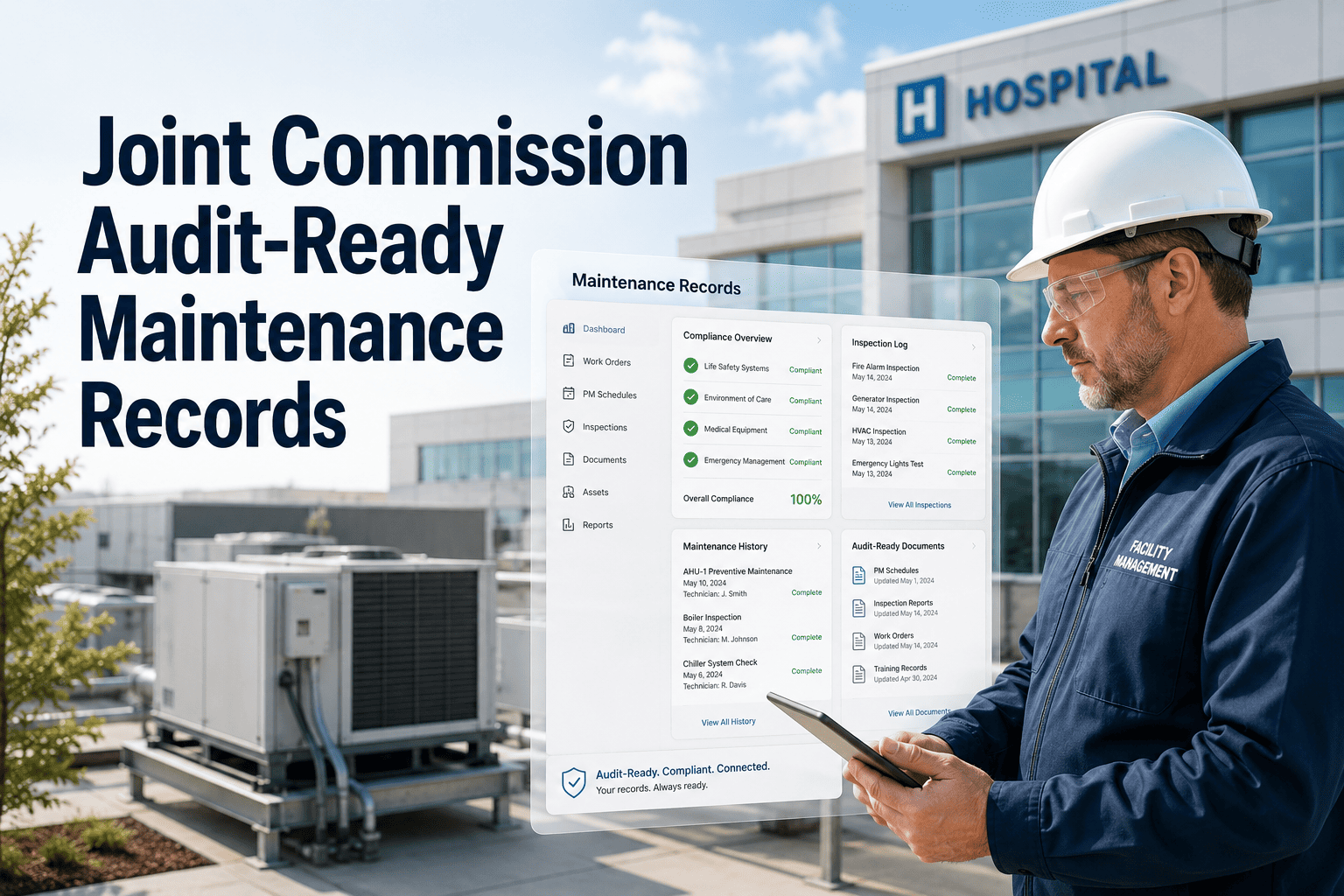
When a Joint Commission surveyor walks into your facility, the first request is always the same: produce your maintenance logs, utility system test records, and equipment service histories for the past 12 months — organized by EC standard, availab
Read More
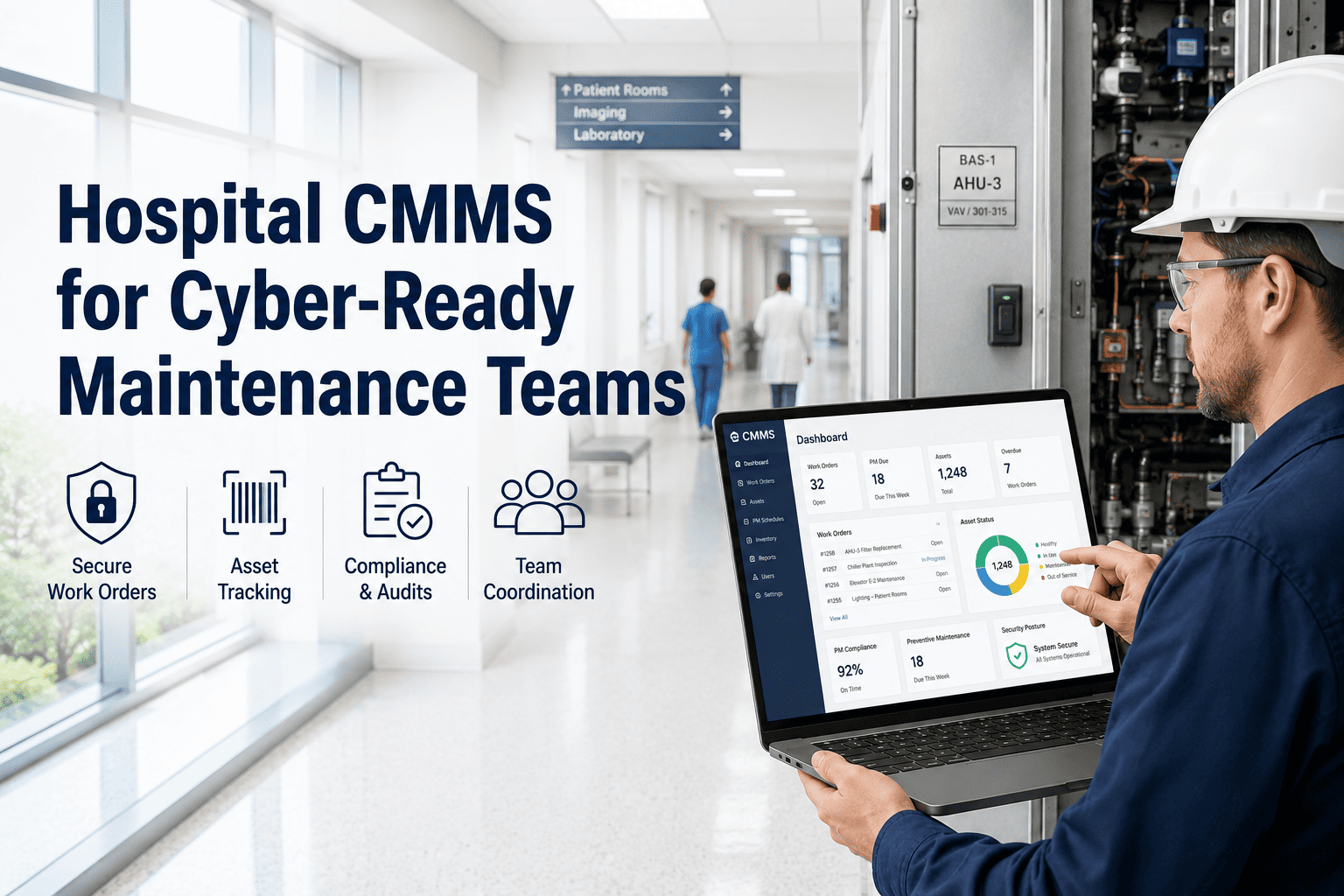
Hospital maintenance teams managing connected devices face a new threat: cyberattacks entering through unprotected CMMS platforms are now the third leading entry point for healthcare breaches. In 2024,
Read More
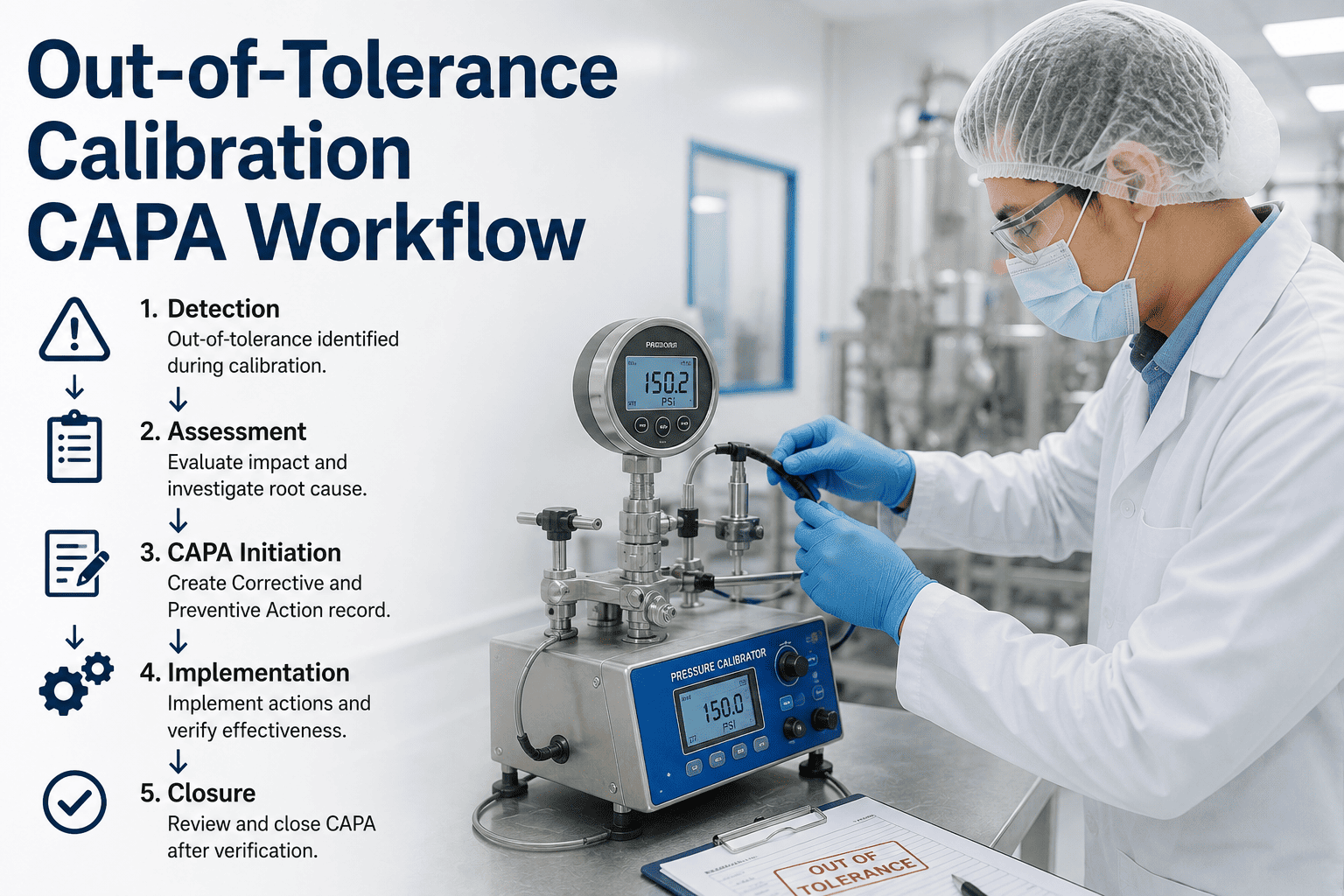
When a calibration result falls outside its defined tolerance band, the clock starts. Regulatory bodies expect a documented, time-bound response — quarantine, batch risk review, root cause investigation, and CAPA closure — not just a note that the

Read More
In pharmaceutical manufacturing, a single out-of-calibration instrument can invalidate entire production batches, trigger FDA 483 observations, and delay product releases by weeks. Calibration audit readiness is not just a compliance checkbox — it
Read More
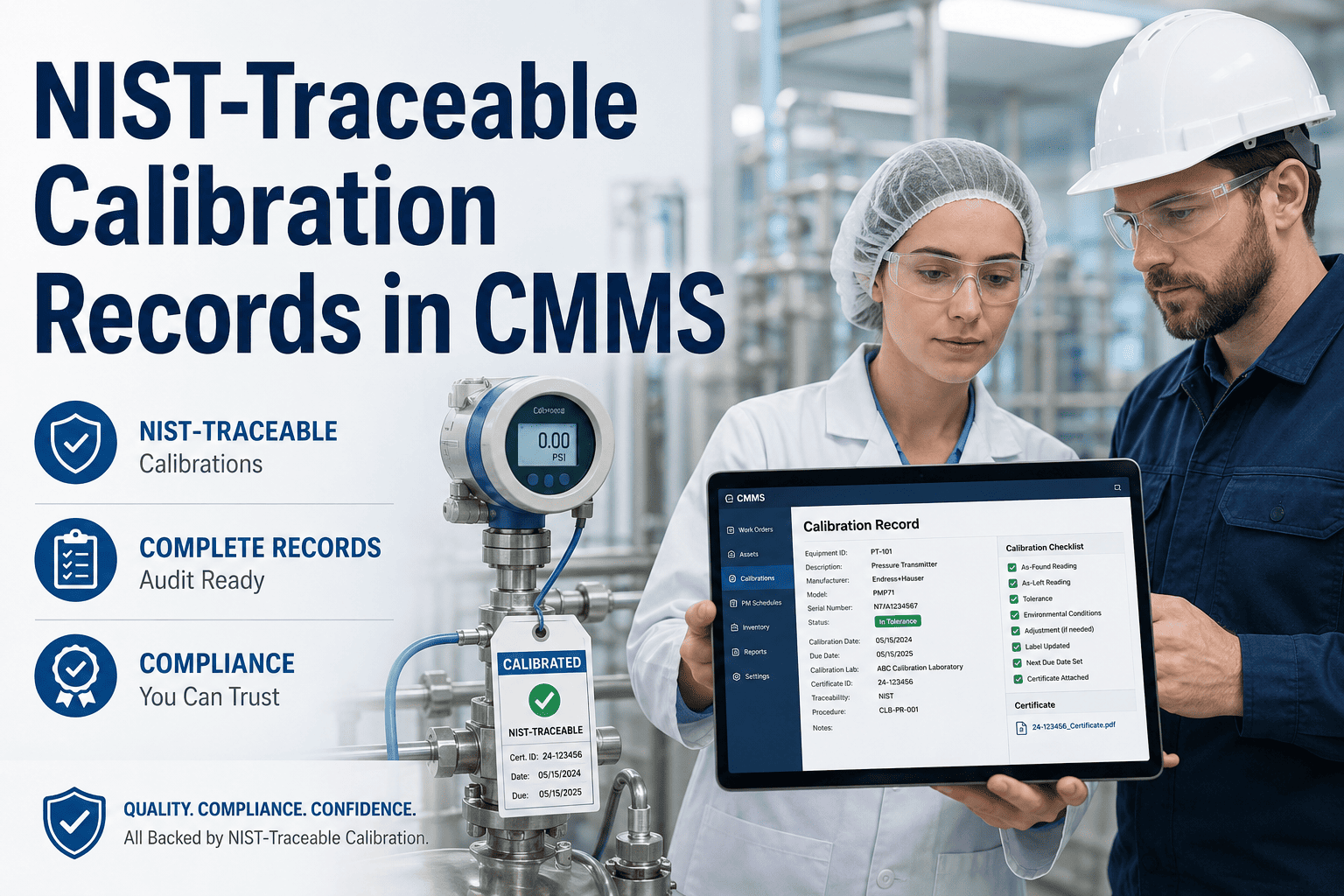
Pharmaceutical and regulated-industry facilities that rely on paper binders or spreadsheets to manage NIST-traceable calibration records face a hidden audit risk: the traceability chain exists in fragments, not as a single verifiable record. A CMM
Read More
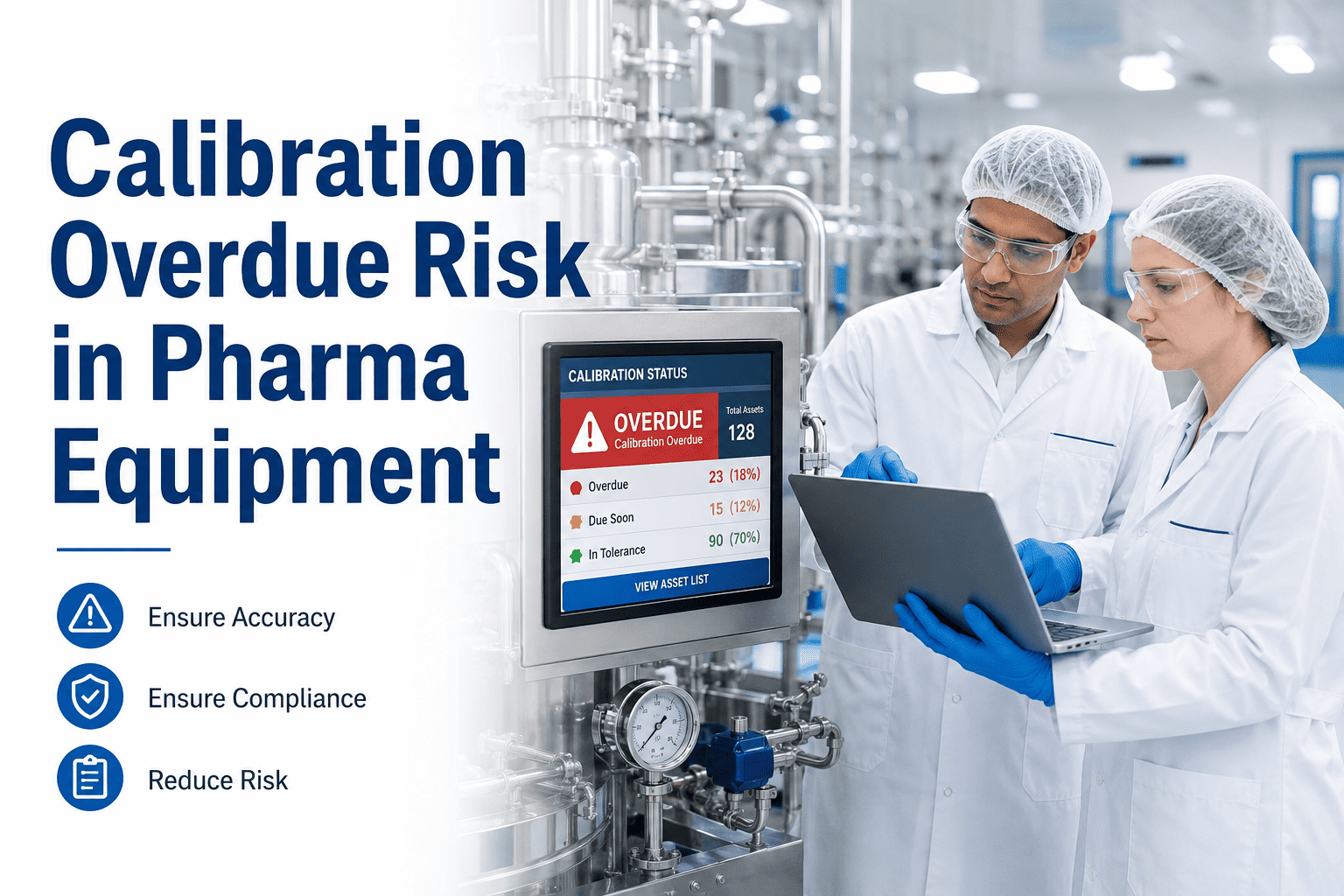
An overdue calibration on a critical instrument is not a scheduling inconvenience — it is a data integrity event. Every measurement taken after the calibration window closes is potentially unreliable, and every batch record referencing that data c
Read More
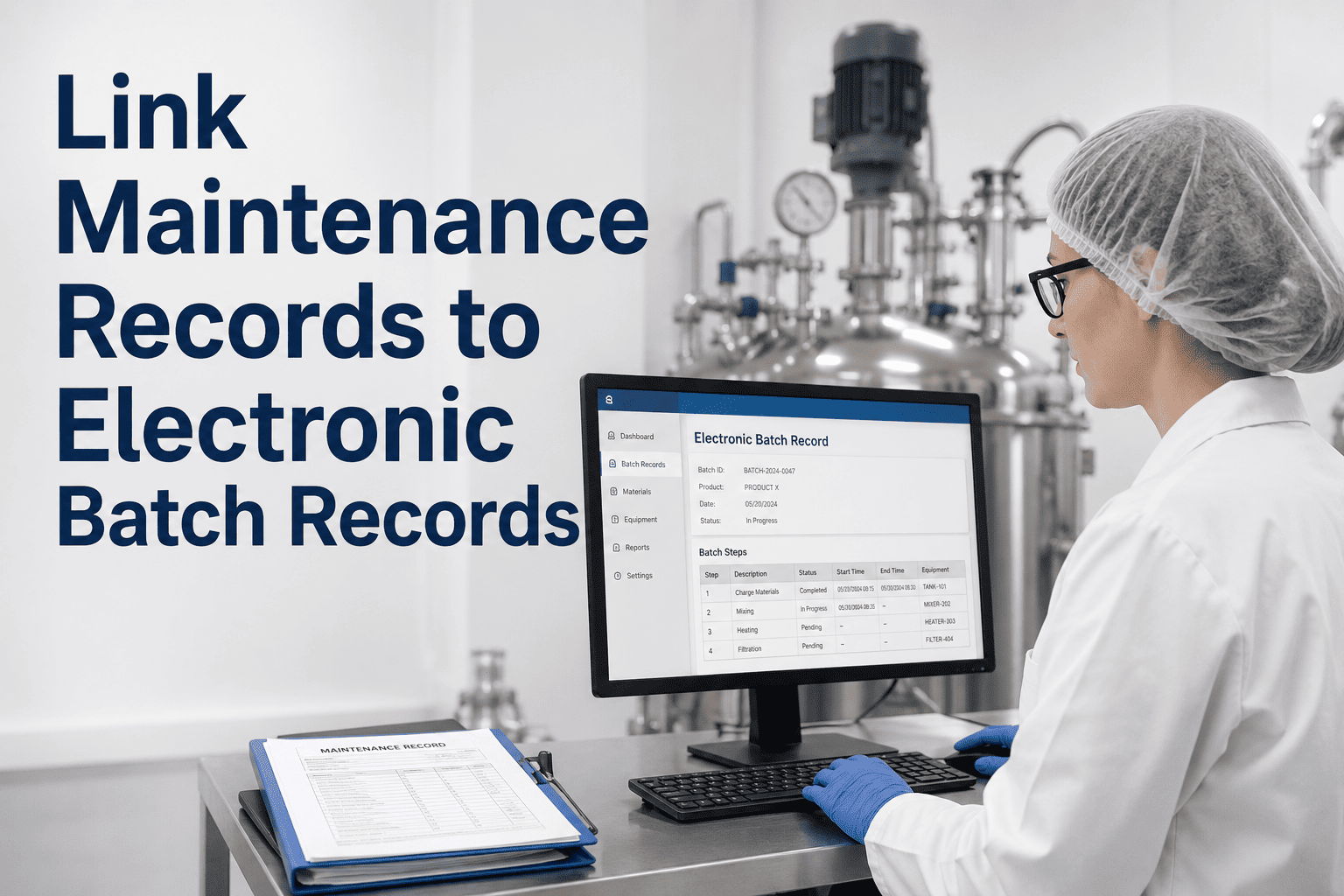
Batch release decisions are only as reliable as the equipment readiness data behind them. When a batch record review reaches sign-off and the reviewer cannot confirm whether the fill line received its last scheduled PM, whether the balance used du
Read More
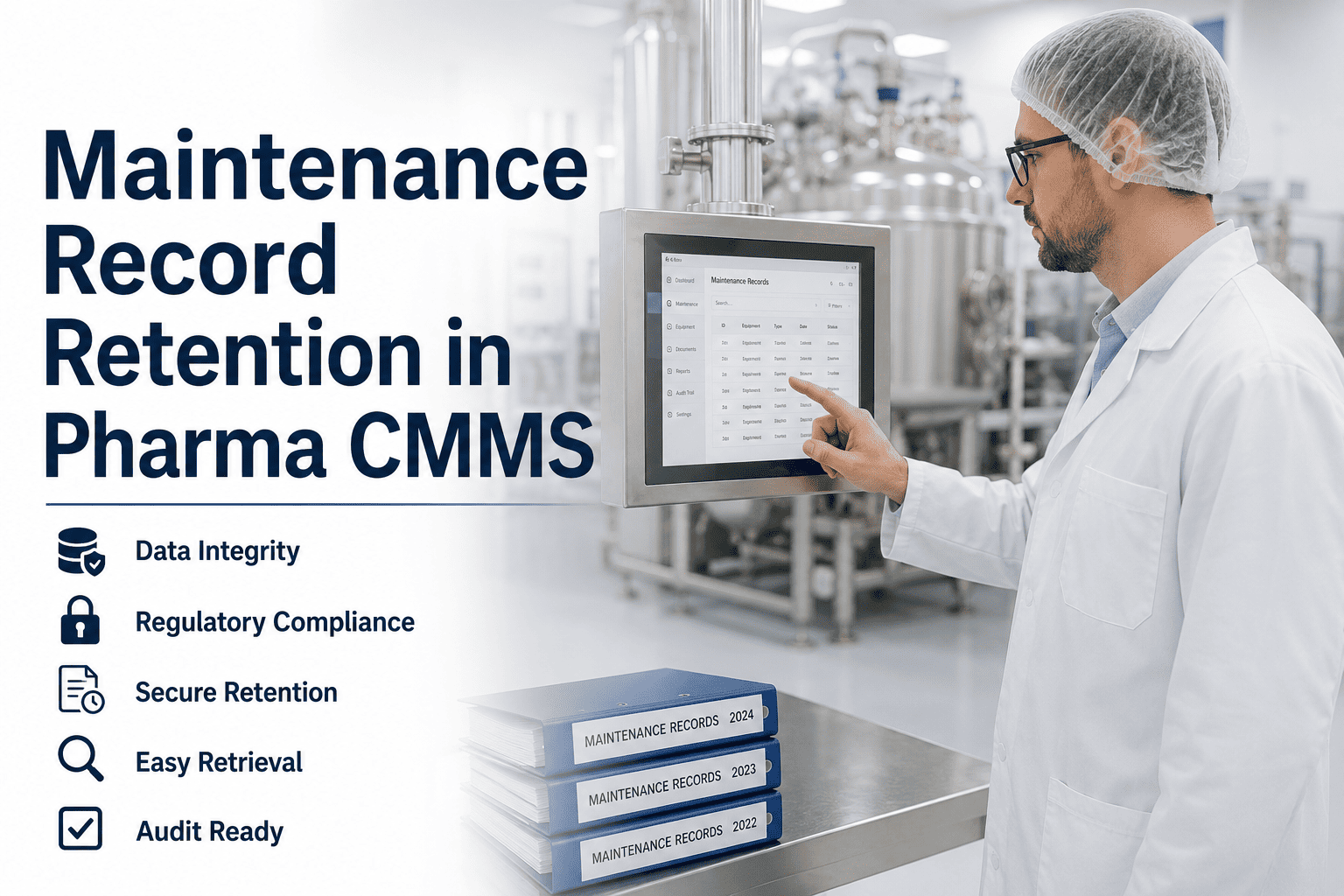
Pharmaceutical maintenance records are regulatory evidence — not operational history. FDA, EMA, and WHO GMP standards set minimum retention periods for work orders, calibration certificates, PM logs, and electronic signatures, and the penalties fo
Read More
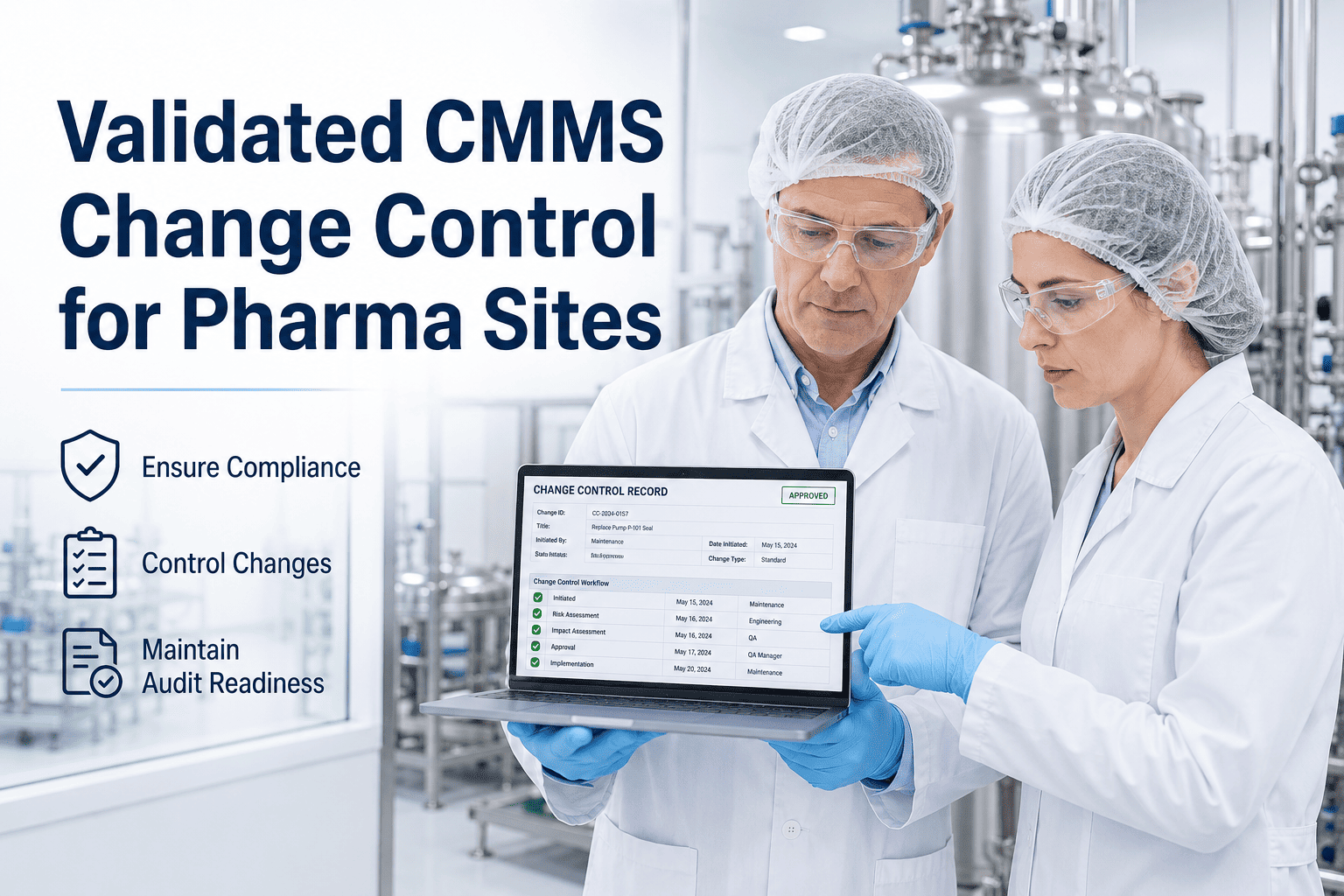
A CMMS configuration change that lacks documented approval, testing evidence, and a controlled rollout procedure is not a software update — it is an uncontrolled GMP event. OxMaint's validated CMMS embeds change co

Read More
Maintenance gaps in pharmaceutical manufacturing rarely announce themselves — they accumulate silently until an FDA inspector or internal QA audit surfaces them as observations. OxMaint's pharma CMMS gives QA teams

Read More
In a regulated pharmaceutical environment, a maintenance record is only as good as the system that created it. Electronic maintenance records must not only capture the right information — they must be created within a validated system with control

Read More
Data integrity failures in pharmaceutical maintenance records are among the most serious compliance findings an FDA or MHRA inspector can make — because they raise questions not just about one record, but about the trustworthiness of your entire q
Read More
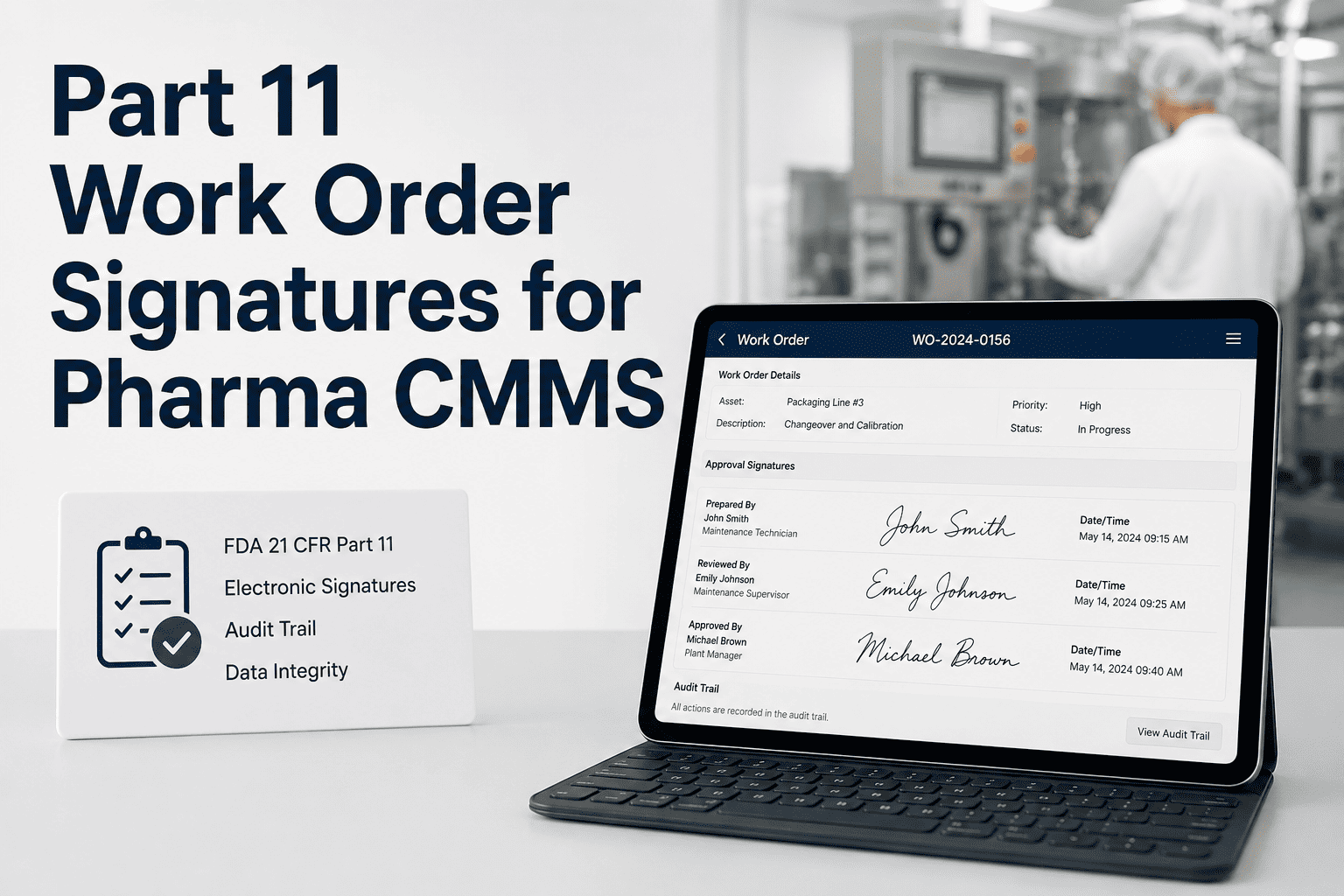
A maintenance work order in a pharmaceutical facility is not just a task record — it is a regulated document. When a technician signs off a PM completion or a supervisor approves a corrective work order, that signature carries legal and regulatory
Read More
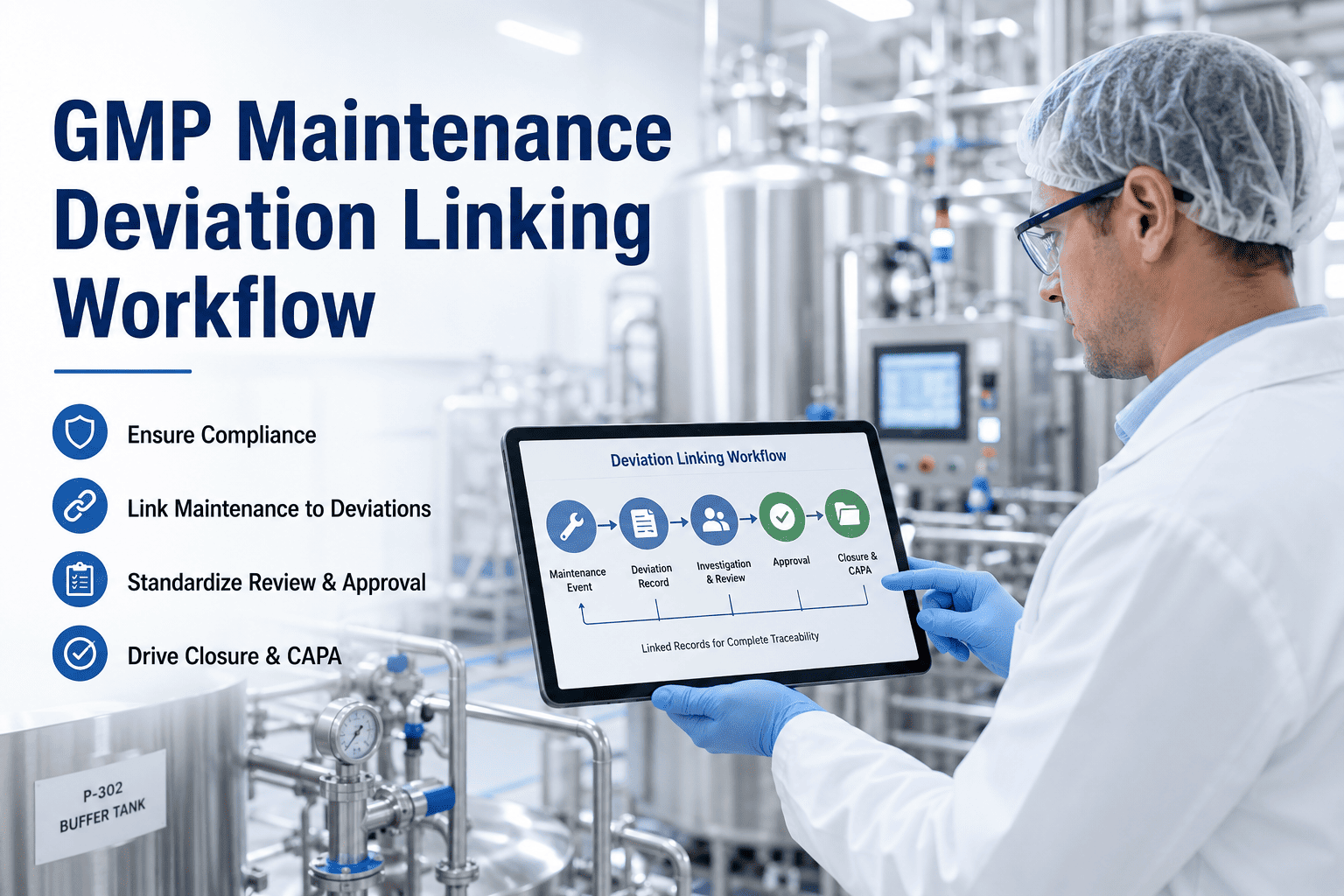
When a critical manufacturing line breaks down at 2 AM, the maintenance team fixes the equipment and logs the work order — but the QA deviation report never gets linked. Weeks later, during an FDA audit, investigators ask for every equipment event
Read More
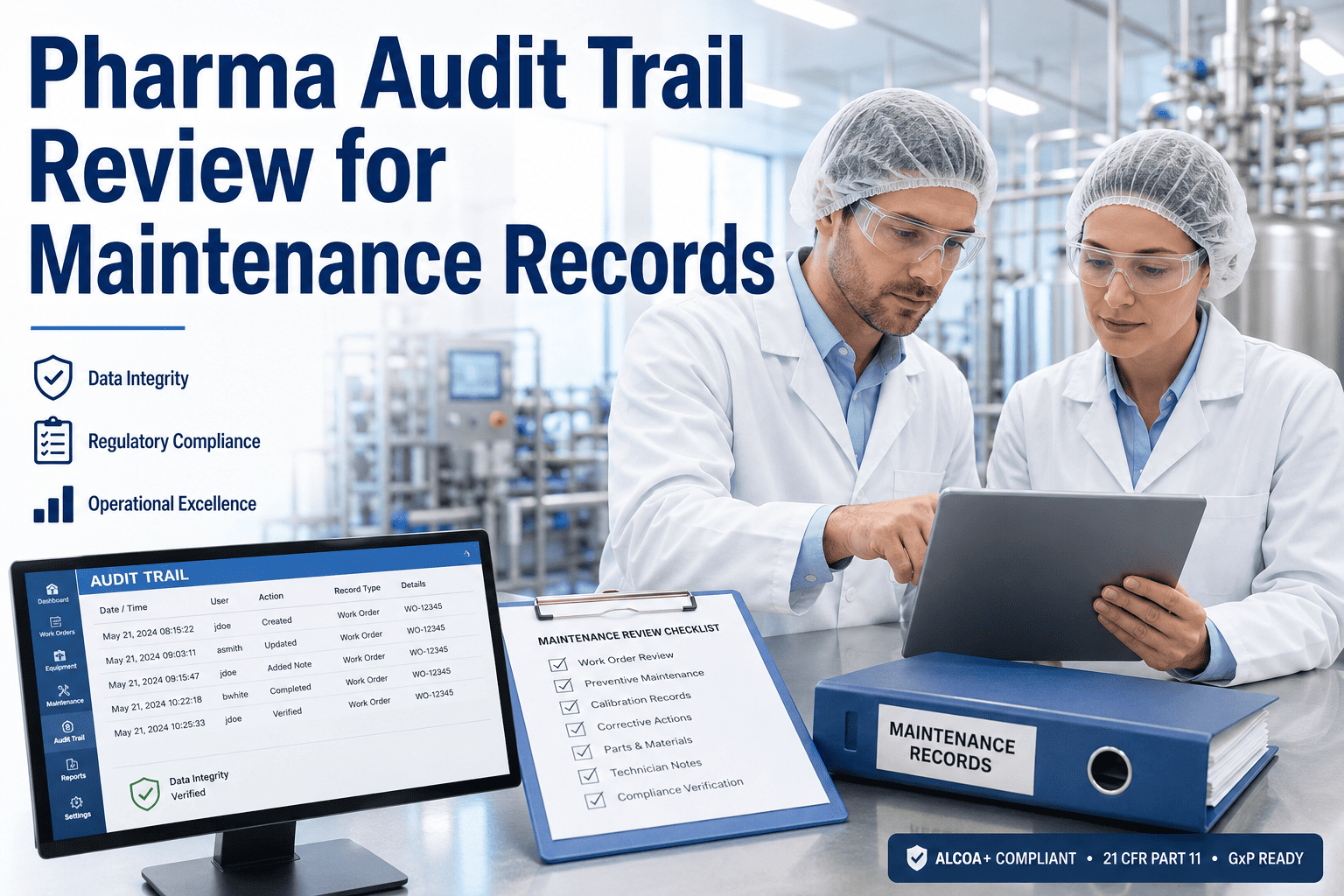
Every GMP maintenance record carries a hidden layer — a timestamped, user-attributed log of every action taken on that record from creation to closure. This is the audit trail, and it is what FDA investigators look at first when they pull your mai
Read More
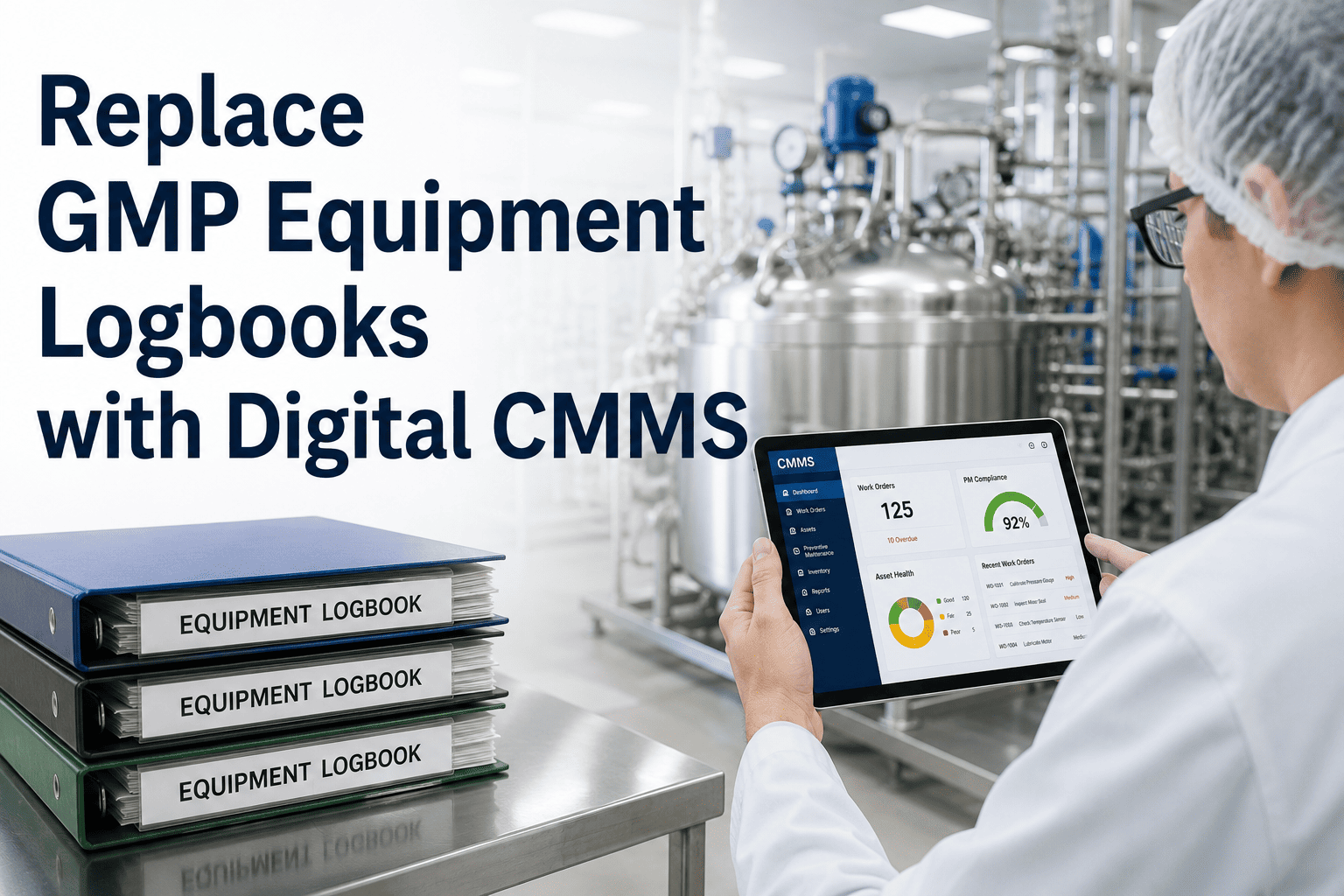
Paper equipment logbooks are among the most persistent compliance risks in pharmaceutical manufacturing — they get lost, damaged, illegible, or incomplete at exactly the wrong moment. When an FDA inspector asks for the last three years of usage an
Read More
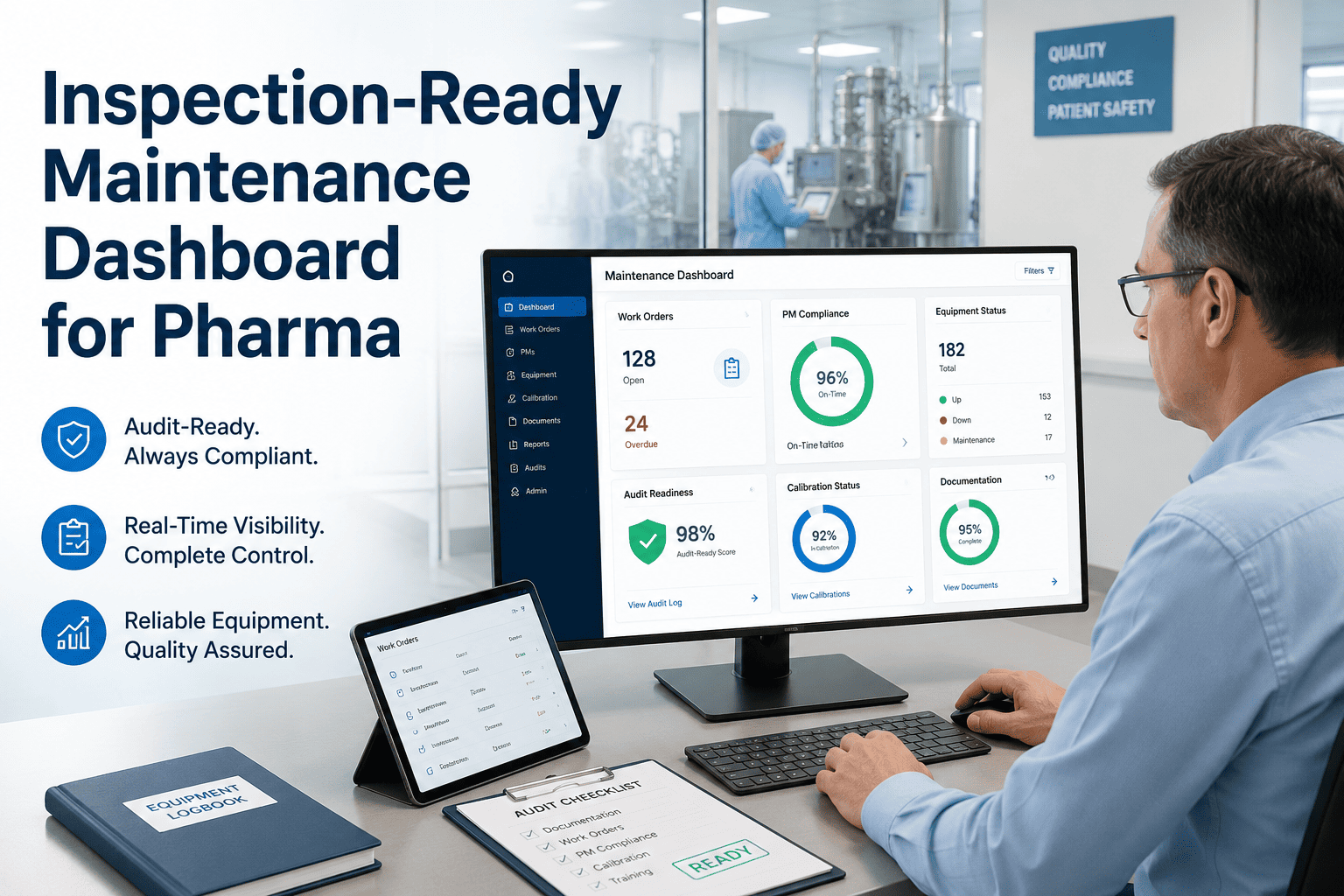
When an FDA investigator or health authority inspector arrives at your pharmaceutical facility, the first question they ask is whether you can demonstrate that your maintenance program is under control — right now, not after a manual records searc

Read More
Pharmaceutical maintenance SOPs are not administrative documents — they are quality records that define how GMP-critical work must be performed, who is qualified to perform it, and what evidence must be captured when it is done. When an FDA or Hea
Read More
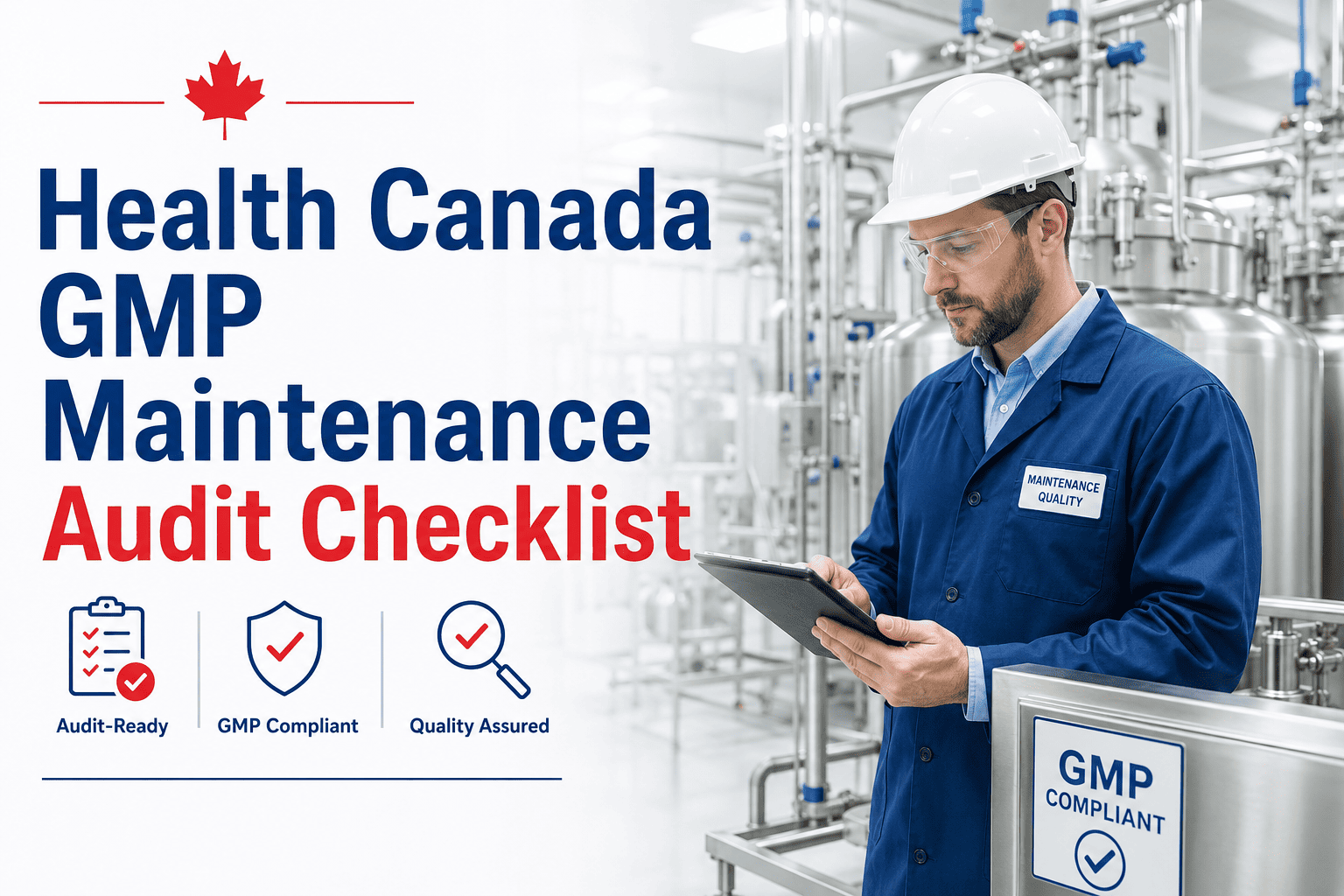
Canadian pharmaceutical manufacturers regulated under the Food and Drug Regulations (C.02.004–C.02.029) and Health Canada's Good Manufacturing Practices Guidelines face inspection readiness requirements that are closely aligned with — but distinct

Read More
U.S. pharmaceutical manufacturers operating under 21 CFR Parts 210 and 211 are required to maintain complete, accurate, and retrievable maintenance records for every piece of GMP-critical equipment. Building a documentation system that satisfies F

Read More
Maintenance record gaps are one of the top reasons U.S. pharmaceutical manufacturers receive FDA 483 observations during inspections. Missing work order sign-offs, incomplete PM histories, and unlinked corrective actions routinely trigger Form 483
Read More
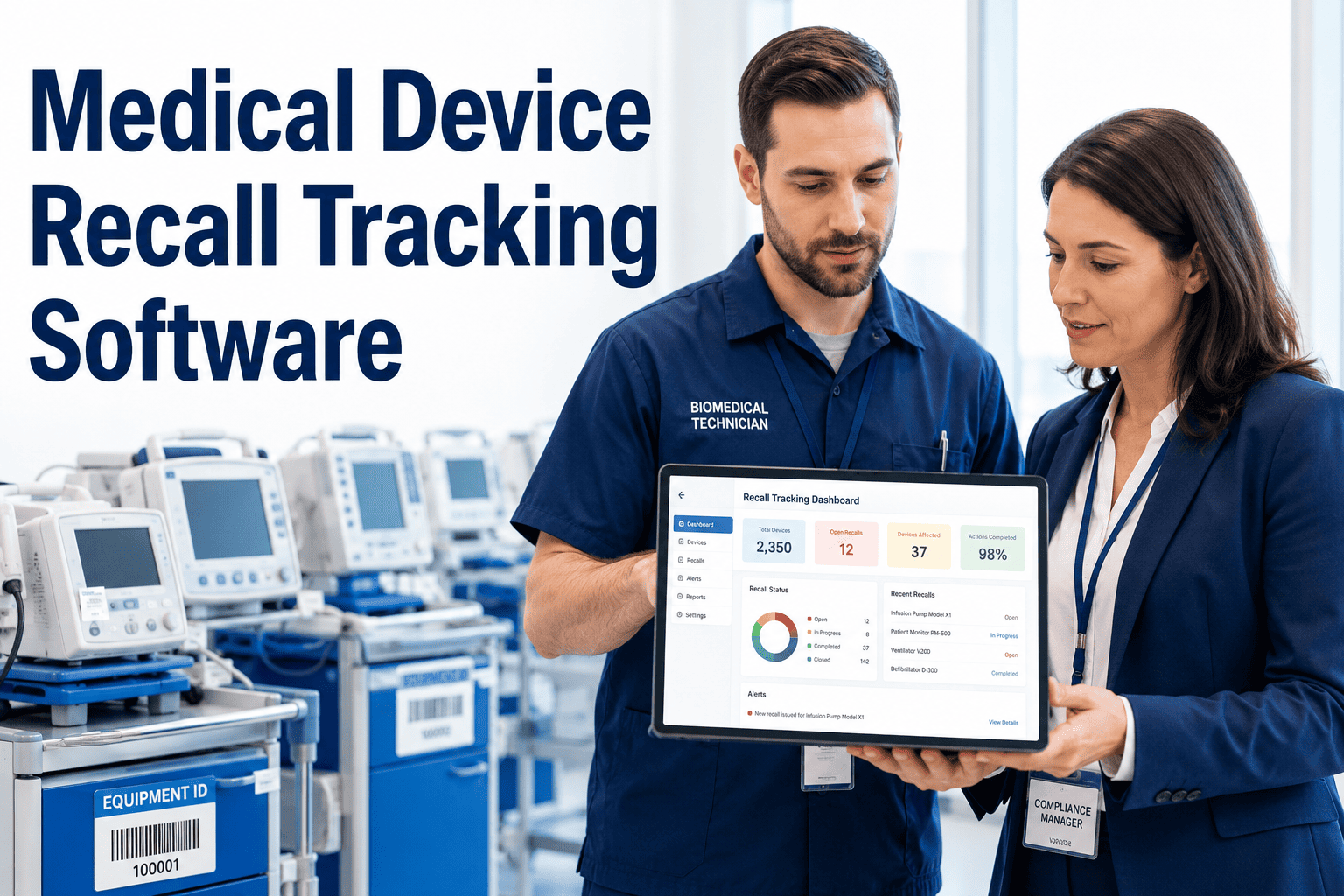
An FDA medical device recall does not give hospitals days to respond — it gives them hours to locate every affected device, remove it from service, document the action, and notify clinical staff before a patient encounter occurs. Most healthcare f
Read More
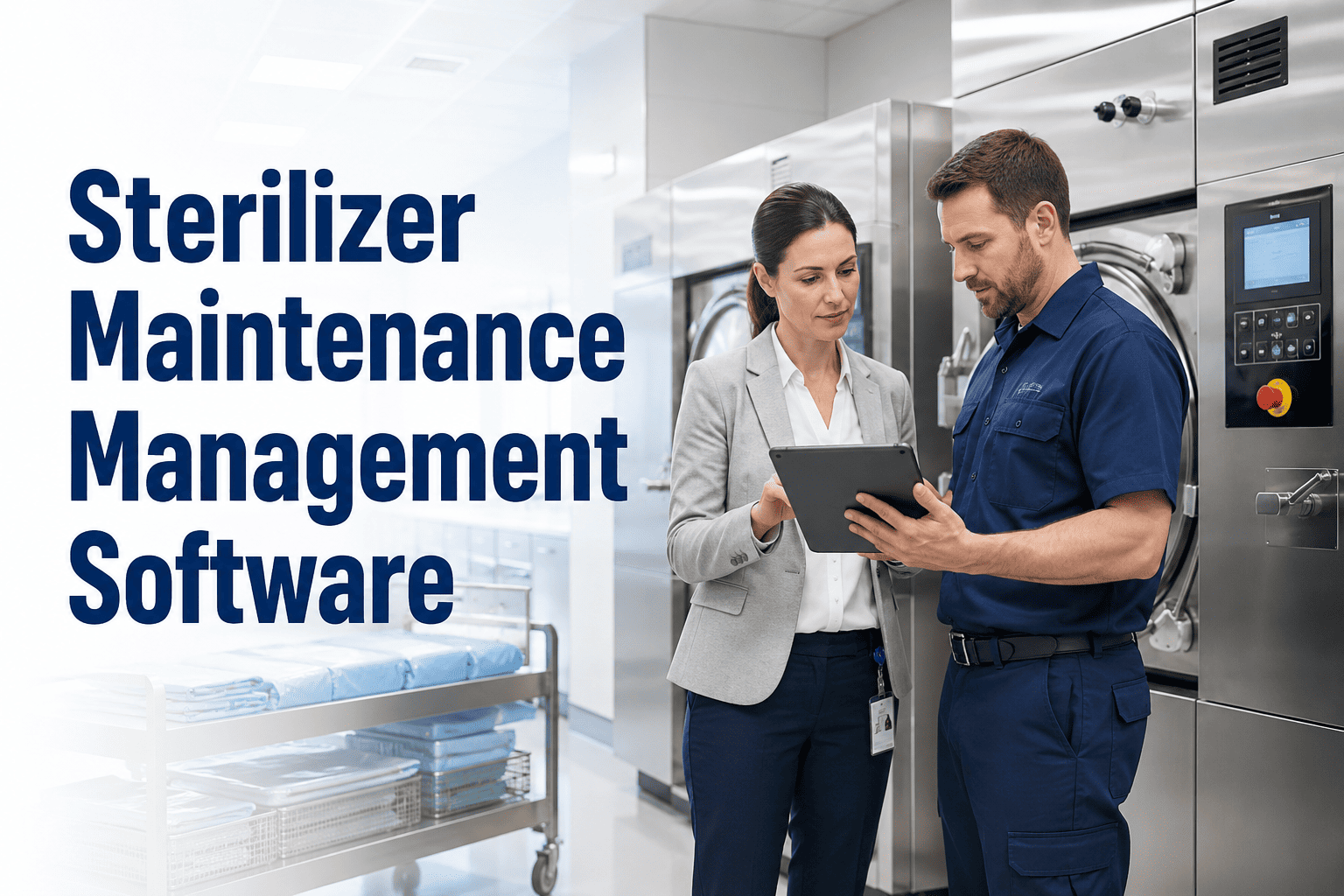
Sterilization equipment failure is not a maintenance inconvenience — it is a patient safety event. A single autoclave that misses a PM interval, skips a Bowie-Dick test, or runs a failed cycle without a logged corrective action puts surgical instr

Read More
In a biomedical department, an overdue calibration on a patient monitor is not an administrative oversight — it is a compliance failure, a patient safety risk, and a potential accreditation finding in the same moment. Most healthcare facilities ma
Read More
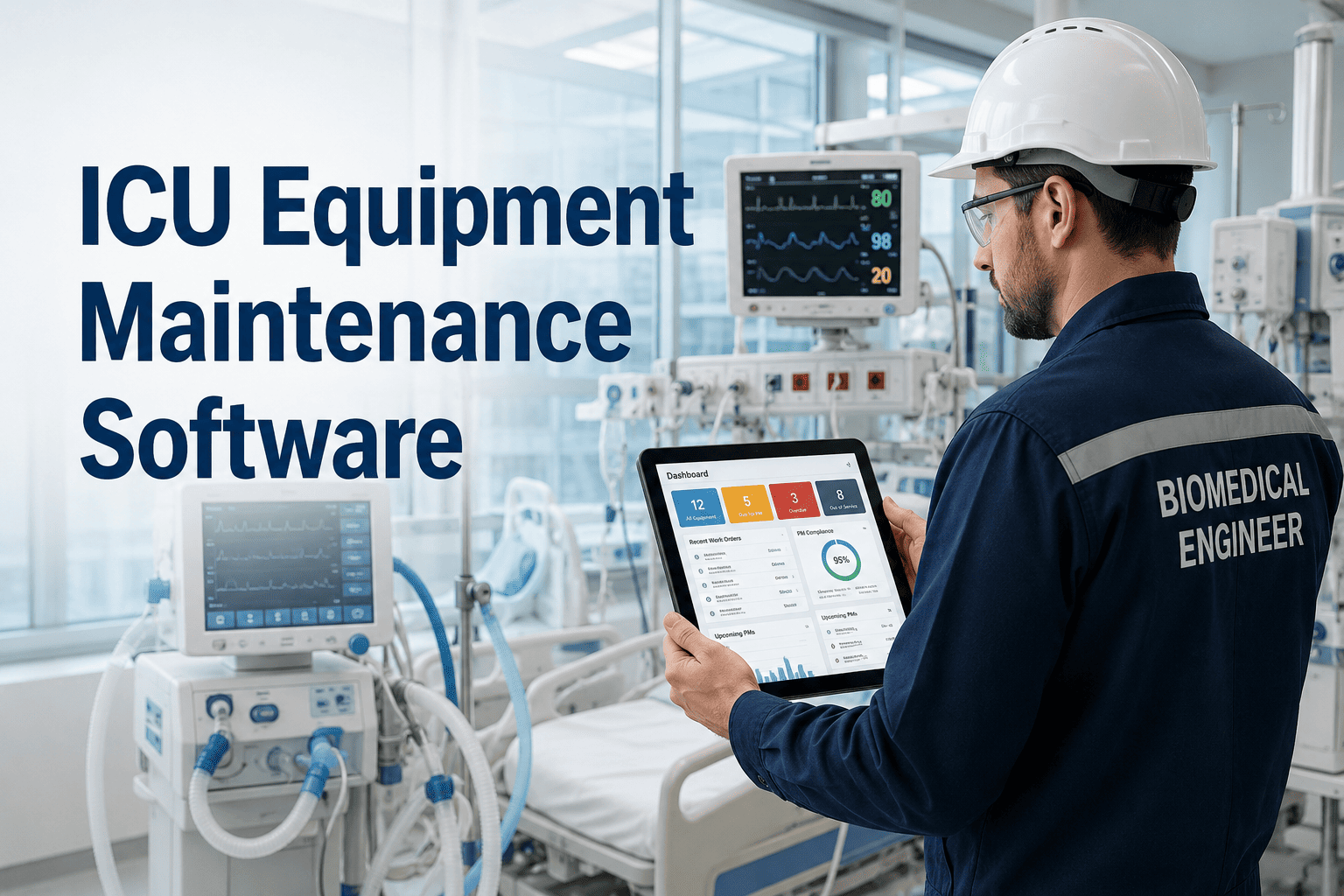
In a hospital intensive care unit, every piece of equipment is keeping someone alive. A ventilator with a missed PM, an infusion pump with an overdue calibration, or a patient monitor with a battery backup that was never tested represents a risk t
Read More
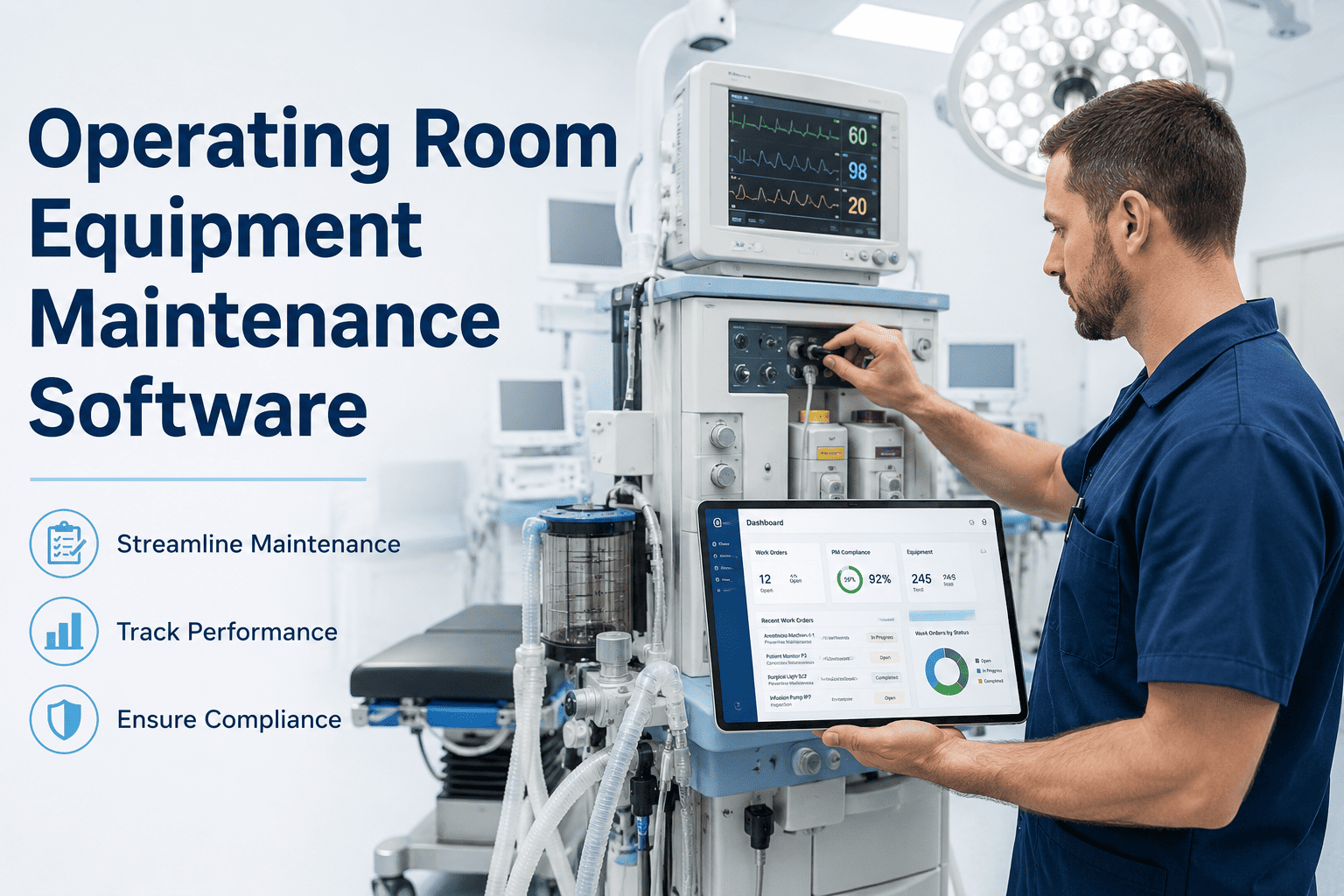
Operating room delays cost hospitals an average of $36–$100 per minute in lost revenue and resource costs. The leading preventable cause of unplanned OR delays is equipment that was not ready — a surgical table that malfunctioned at setup, a surgi

Read More
Hospital HVAC systems are not ordinary building systems. In operating rooms, intensive care units, isolation rooms, and sterile processing departments, the air handling equipment directly affects infection rates, patient outcomes, and regulatory s

Read More
Hospital emergency power systems are tested more frequently than almost any other building system — and yet generator failures during actual power outages remain a leading cause of life-safety incidents in healthcare facilities. The problem is rar

Read More
Oxygen systems, medical vacuum, and nitrous oxide delivery are among the most life-critical utilities in any hospital. A single undetected failure in a medical gas system can result in patient harm, immediate NFPA 99 citation, and potential CMS Co

Read More
Most hospital fire and life safety citations are not caused by broken systems — they are caused by missing, misfiled, or unproducible inspection records. The Joint Commission's most frequently cited Environment of Care standard, EC.02.03.01, has o

Read More
A Joint Commission survey does not fail because a hospital stopped maintaining its equipment. It fails because the maintenance happened and no one can prove it. The gap between what your facilities team does every day and what a surveyor can verif
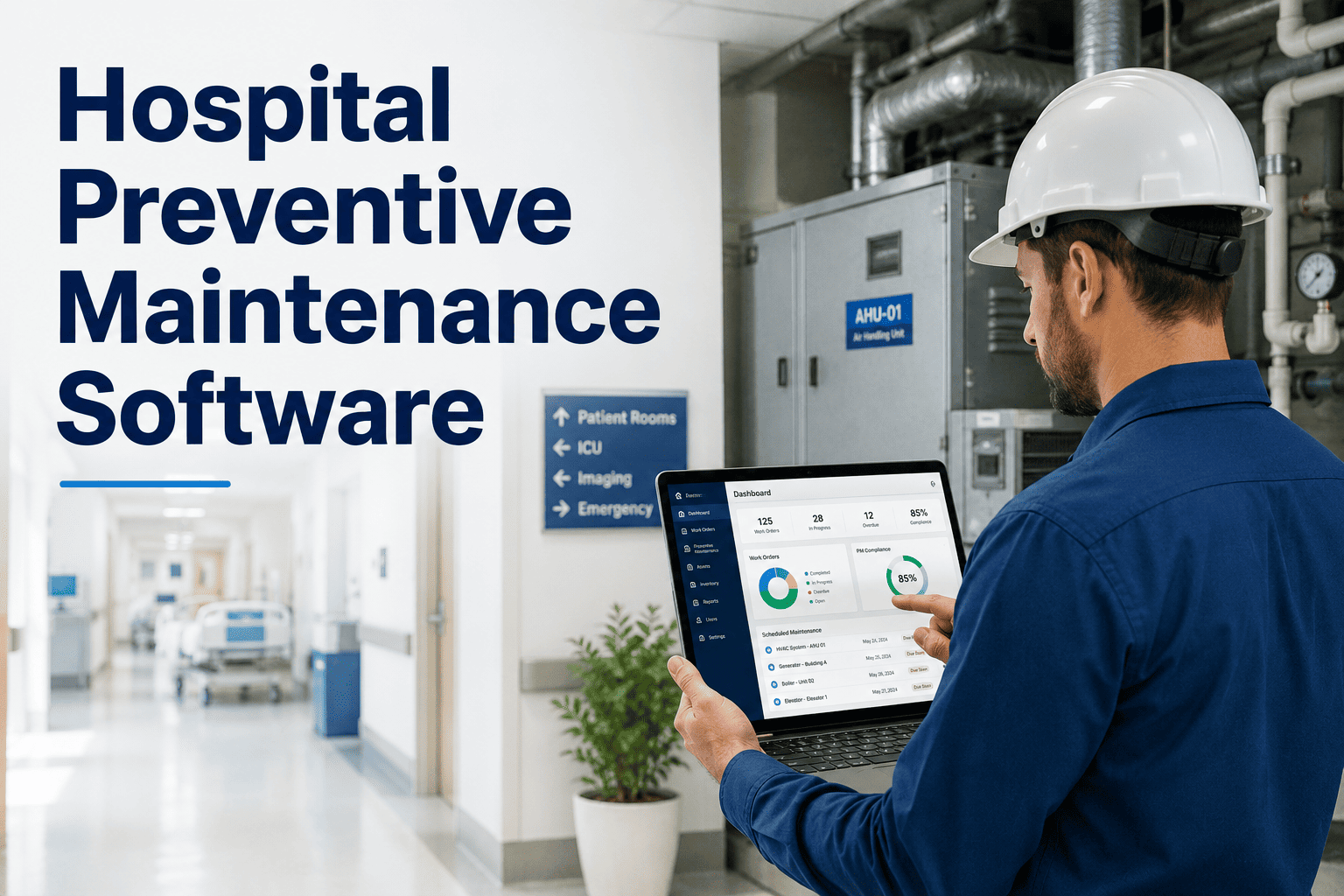
Read More
Running a hospital means running one of the most asset-intensive, compliance-critical, and safety-sensitive facilities on earth — where a missed PM on an infusion pump or a skipped HVAC inspection can escalate from a maintenance oversight to a pat
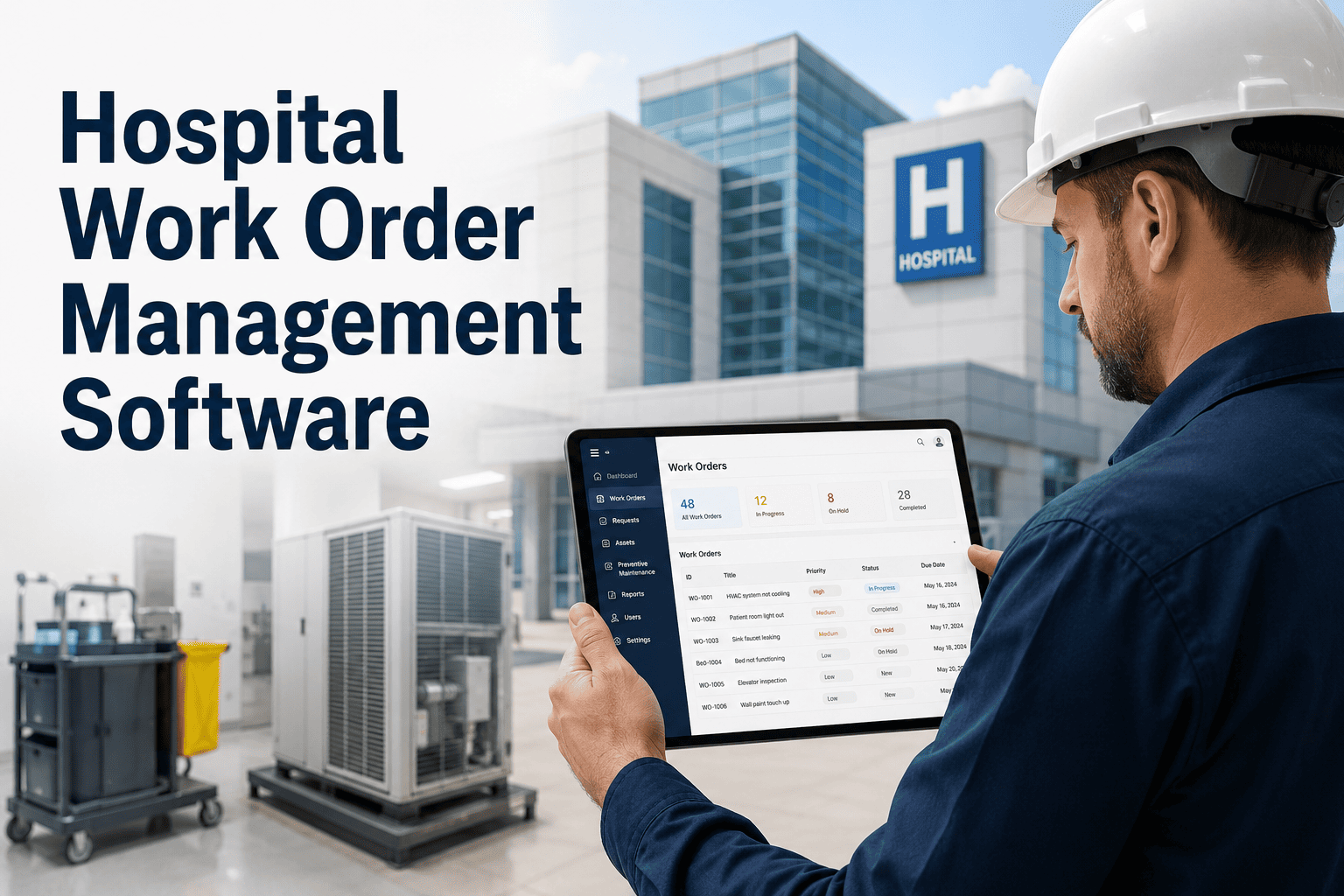
Read More
In most hospitals, a maintenance request still travels a broken path: a nurse calls the maintenance office, someone writes it on a whiteboard or sticky note, the job eventually gets assigned, and three days later no one is certain whether it was a
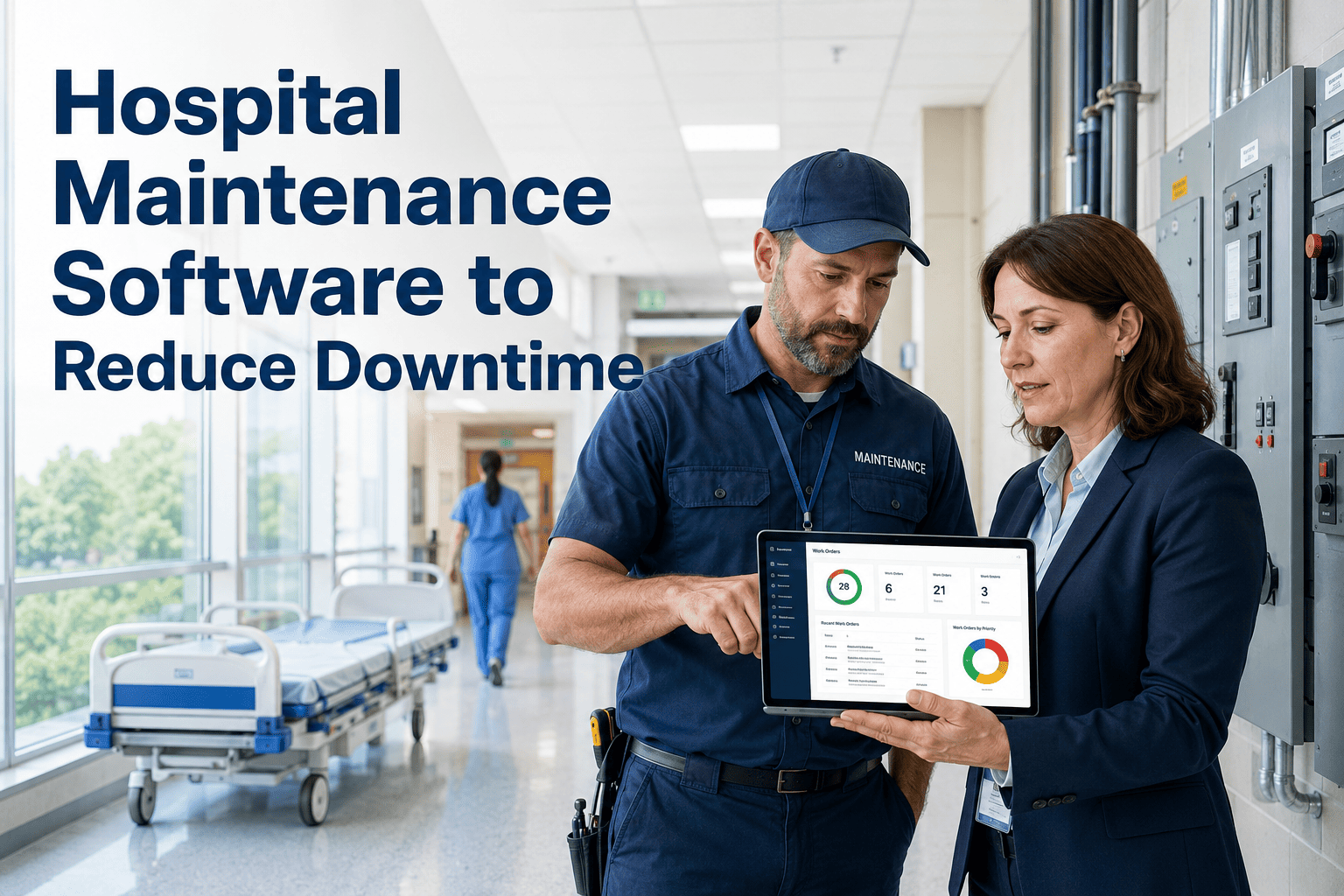
Read More
Medical equipment failures don't announce themselves. A ventilator due for calibration, an infusion pump with a missed PM, a defibrillator that hasn't been load-tested — these aren't abstract risks, they're the gaps that lead to Joint Commission f
Read More
Unplanned equipment downtime in hospitals costs more than operational delays — it puts patient care at direct risk. A non-functional ventilator, a failed sterilization unit, or an out-of-service imaging system does not pause care; it redirects it
Read More
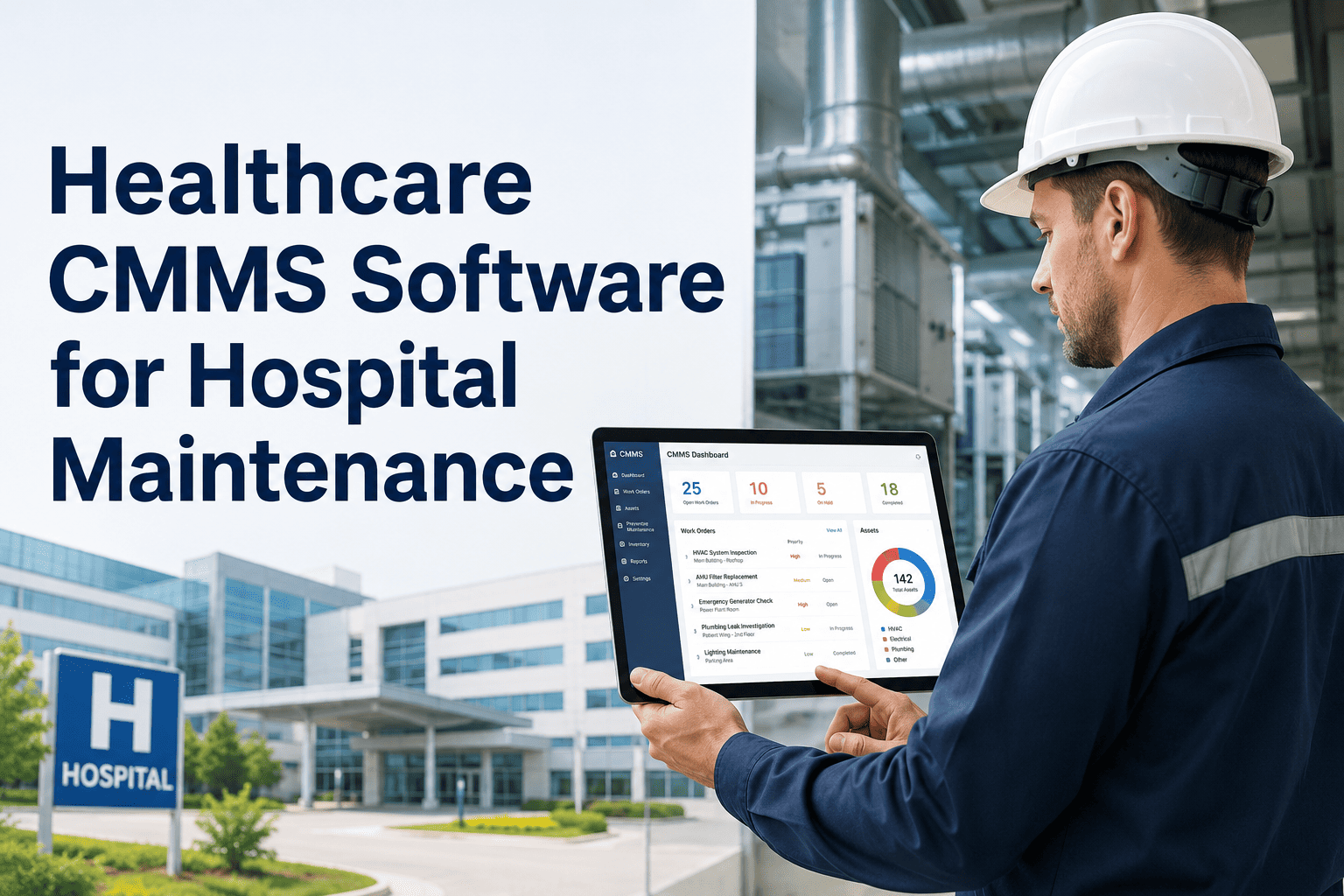
Hospital maintenance teams manage over 35,000 medical devices across hundreds of asset categories — each requiring scheduled PMs, documented inspections, and audit-ready records. OxMaint is the

Read More
Every pharmaceutical facility that uses software to create, modify, maintain, archive, retrieve, or transmit maintenance records is subject to computer system validation requirements under 21 CFR Part 11 and GAMP 5 guidance. A maintenance CMMS — w

Read More
21 CFR Part 11 is the FDA regulation that governs electronic records and electronic signatures in pharmaceutical, biotech, and medical device manufacturing — and it applies directly to any maintenance software that creates, modifies, stores, or tr

Read More
Pharmaceutical manufacturing runs on a paradox: the assets most critical to GMP compliance — production equipment, HVAC systems, utilities, and cold chain infrastructure — are the same assets most likely to trigger deviation investigations, CAPA o

Read More
Traditional CMMS platforms were built to record what happened — AI-powered CMMS platforms are built to prevent what's about to happen. In pharmaceutical manufacturing, where unplanned downtime triggers deviation investigations, CAPA obligations, a

Read More
In GMP-regulated manufacturing, a maintenance failure is never just a maintenance failure — it is a potential deviation event with regulatory consequences. When a critical asset fails unexpectedly, the clock starts immediately: the failure must be

Read More
Temperature excursions in pharmaceutical cold chain storage cost the industry over $35 billion annually — and most failures trace back to missed preventive maintenance, delayed alarm response, and paper-based refrigeration logs th

Read More
In pharmaceutical manufacturing, an equipment failure does not end at the repair log — it opens a deviation, triggers an investigation, demands root cause analysis, and links to a CAPA that QA must close before the next audit. Most facilities hand

Read More
An FDA medical device recall does not give hospitals days to respond — it gives them hours to locate every affected device, remove it from service, document the action, and notify clinical staff before a patient encounter occurs. Most healthcare f

Read More
A mislabeled pharmaceutical product is a recall. Not a corrective action, not a deviation — a recall. Vision inspection systems and labeling machines are the last line of defense before products reach patients, and their maintenance state directly

Read More
GMP utilities are the infrastructure behind every batch — and they are the most audit-scrutinized assets in a pharmaceutical facility. Purified water systems, WFI loops, compressed air, clean steam, nitrogen, HVAC, and electrical systems each carr

Read More
Tablet coating failures cost pharma manufacturers more than just a rejected batch — they trigger QA investigations, delay release timelines, and in severe cases generate FDA observations around process control documentation. Coating pan maintenanc

Read More
Granulation is where active ingredients become manufacturable — and where unplanned downtime hits hardest. High-shear granulators, fluid bed processors, conical mills, and planetary mixers each carry distinct failure modes, GMP documentation requi

Read More
Ultra-low temperature freezers operating at -80°C are among the most critical — and most failure-prone — pieces of equipment in any biopharma facility. A single undetected temperature excursion can destroy irreplaceable biological samples, clinica
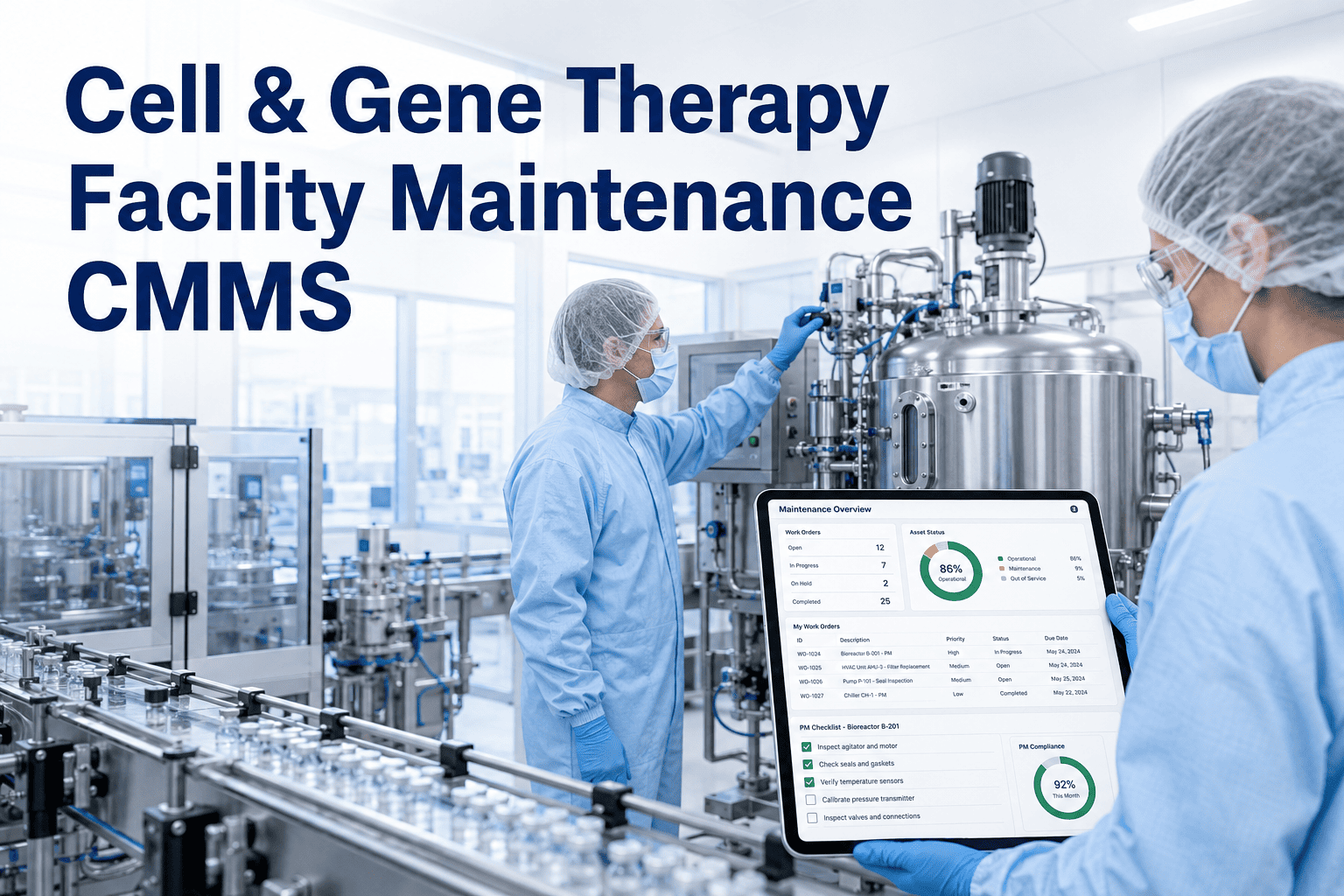
Read More
Cell and gene therapy facilities operate under some of the most demanding maintenance requirements in all of biopharmaceutical manufacturing. A single HVAC failure in an ISO 7 cleanroom, an undetected ultra-low freezer temperature excursion, or a

Read More
Blister packaging lines are the final gatekeeper before product reaches patients — and when they stop, they stop everything. An FDA Warning Letter citing seal integrity failures or vision inspection downtime can trigger a $2–15 million facility re

Read More
A capsule filling machine with a 14-month calibration gap — still running production without documented qualification status — was cited in an FDA Warning Letter that shut down a mid-size pharma plant. Changeovers that take six hours instead of th

Read More
Tablet press downtime costs pharma manufacturers an average of $50,000 per hour in lost production — yet 68% of facilities still rely on manual sampling and post-batch analytics, catching defects only after out-of-spec tablets hav

Read More
A single bioreactor failure mid-batch in biologics manufacturing can destroy product that took 10 to 21 days to grow — and unlike small-molecule manufacturing, you cannot simply restart from a reliable intermediate. Agitation fail
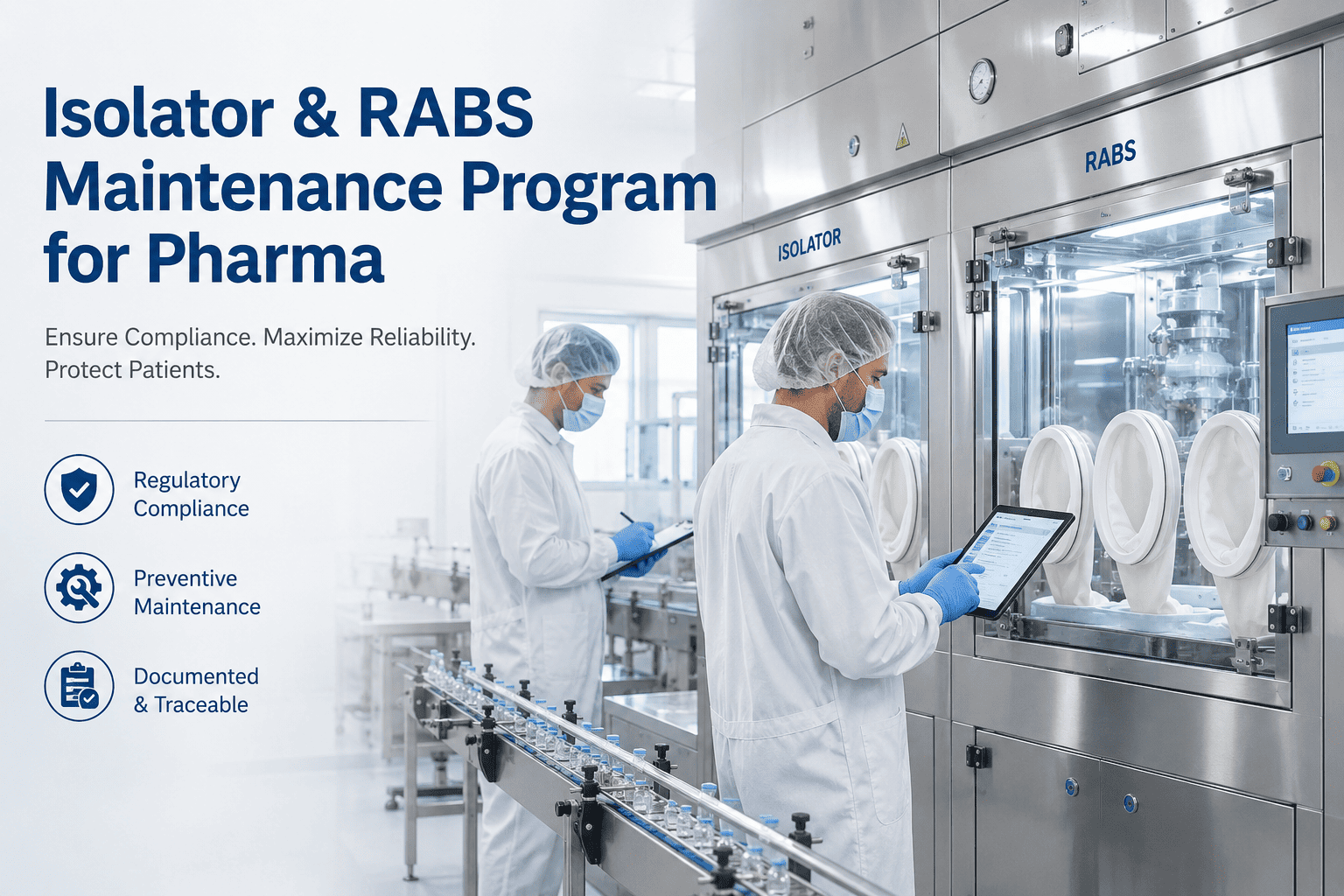
Read More
Isolators and Restricted Access Barrier Systems are the last line of defense in aseptic pharmaceutical manufacturing — yet glove failures, missed VHP cycle evidence, and undocumented alarm histories remain among the top reasons facilities receive
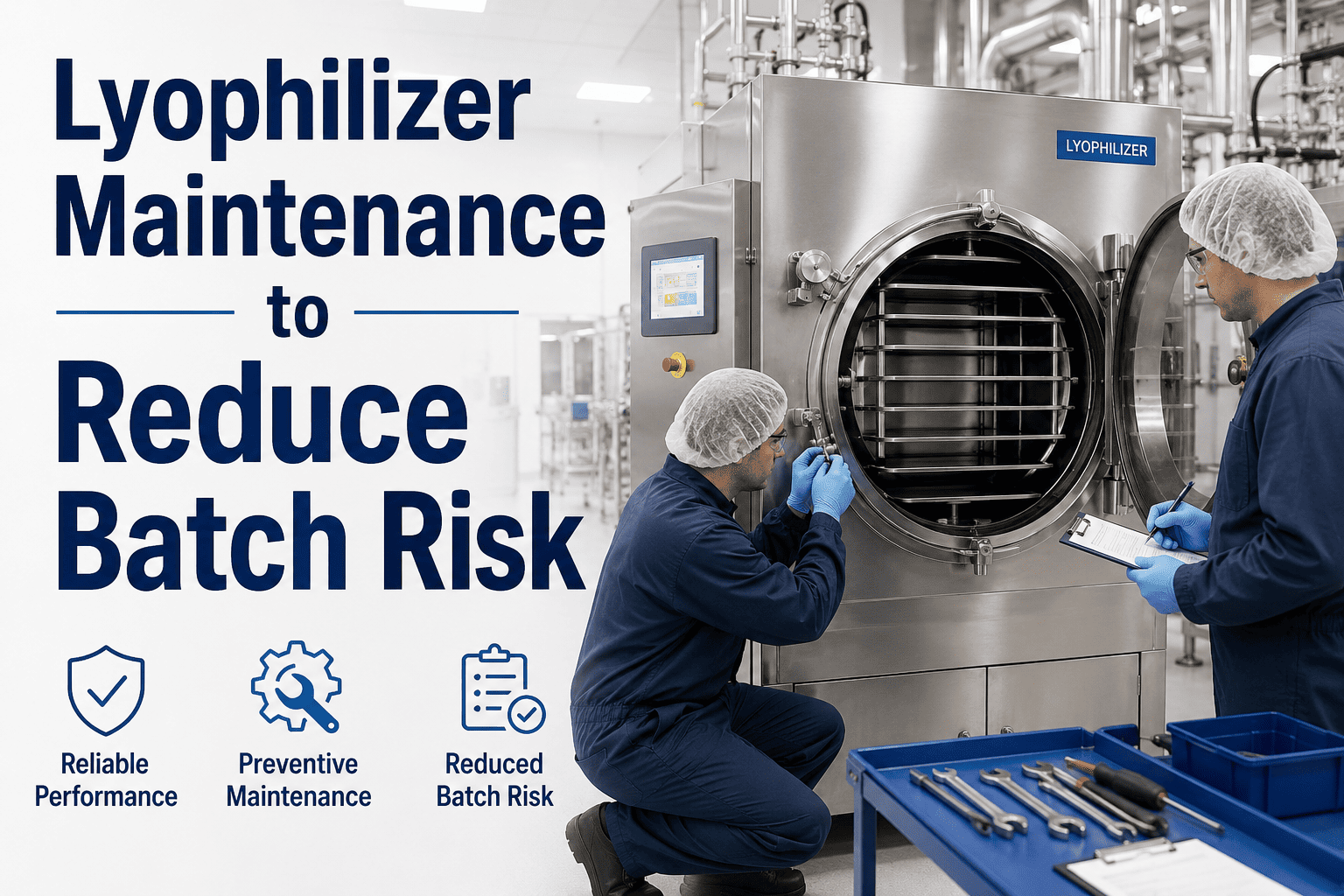
Read More
Freeze-drying failures are among the most costly events in pharmaceutical manufacturing — a single lyophilizer batch loss can exceed $3M in biologics, and the root cause traces back to preventable equipment failures in the majorit

Read More
A failed media fill can cost a pharmaceutical facility between $2M and $8M in batch losses, revalidation costs, and production delays — yet most failures are traceable to equipment interventions that were not properly documented o

Read More
Sterile manufacturing facilities lose an average of $500,000 per contamination event — and most trace back to missed maintenance steps, skipped intervention logs, or delayed QA approvals on aseptic filling lines.

Read More
A pharmaceutical distribution centre is a different maintenance challenge from a general logistics warehouse. Cold rooms running at 2°C–8°C for refrigerated biologics, GDP-compliant temperature chain requirements, DSCSA-mandated t

Read More
A single temperature excursion in a pharmaceutical cold room averages $100,000 to $500,000 in product losses — before adding the investigation labour, GDP non-conformance documentation, regulatory reporting obligations, and potent

Read More
Pharmaceutical serialisation aggregation lines run at a median OEE of 58% — with the top quartile reaching 69% and the best-in-class plants achieving 74% according to TeepTrak's 2026 benchmark of 120+ packaging lines globally. The

Read More
Temperature and humidity excursions do not look the same, do not propagate the same way, and do not carry the same risk profile — but most pharmaceutical facilities manage them with identical workflows. A 2°C temperature spike in

Read More
Every undetected HEPA filter leak in a pharmaceutical cleanroom carries a single-event financial exposure of $30,000–$50,000 in batch rejection costs — before factoring in the FDA 483 observation, the unplanned shutdown, or the re

Read More
A pressure reversal between two cleanroom zones is invisible. No visible contamination, no immediate alarm in many legacy systems, no warning to the operator transferring materials across the boundary — just contaminated air flowi
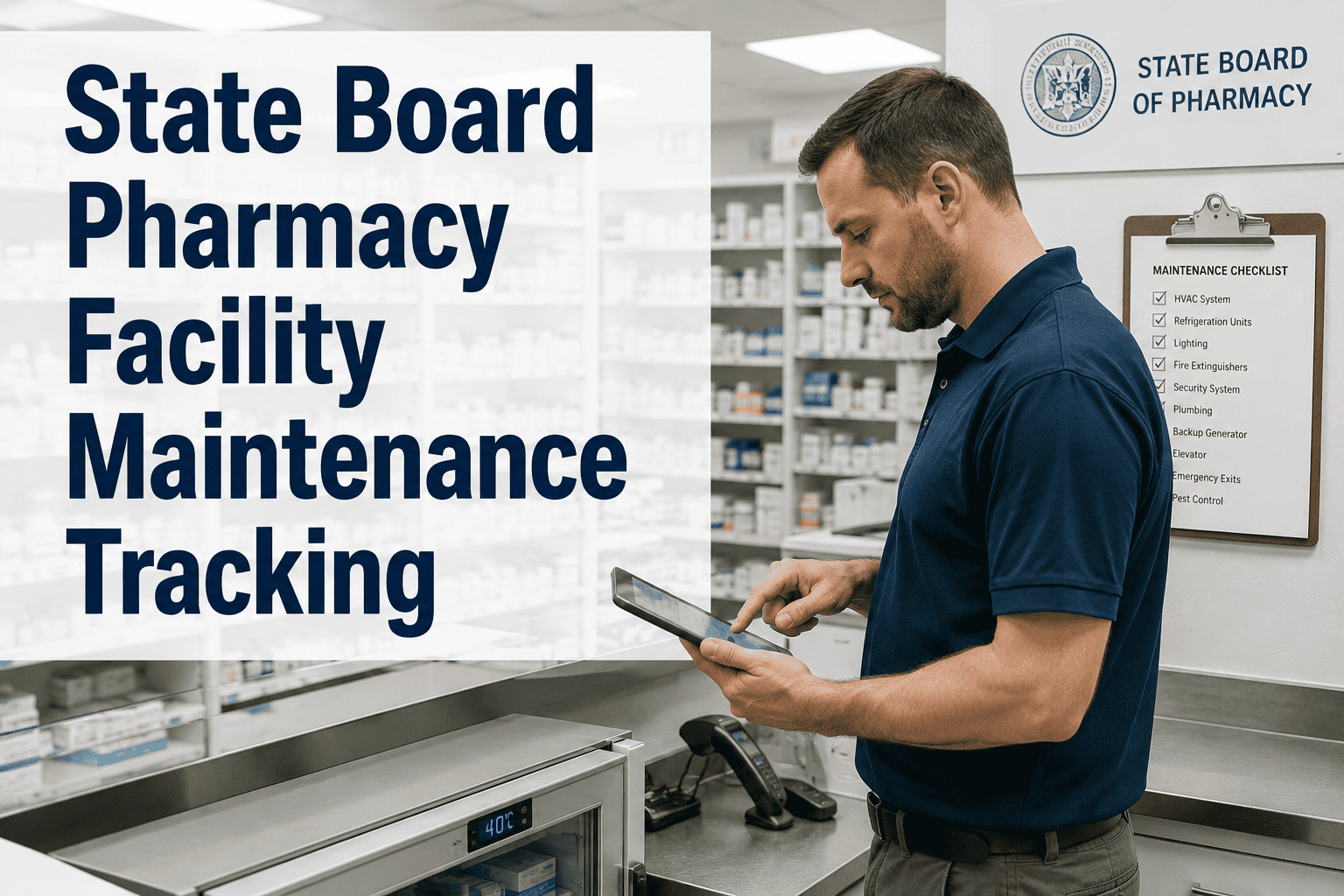
Read More
State Board of Pharmacy inspectors do not announce their visits. They arrive with a checklist, ask for documentation on the spot, and expect to see dated maintenance records, current HEPA certification reports, air pressure differ

Read More
The FDA's DSCSA stabilization period ended May 27, 2025 — the Drug Supply Chain Security Act is now fully enforced as written, with no further grace periods. Every pharmaceutical distributor and 3PL must now electronically verify, capture, and exc

Read More
Every maintenance activity performed inside a DEA-registered controlled substance manufacturing or storage area is a regulated event — not just an operational one. Under 21 CFR 1301.71(a), all DEA registrants must provide effective controls and pr

Read More
Health Canada completed 318 domestic GMP inspections in FY 2023–2024 under its Good Manufacturing Practices programme — and as of 2025, Canada completed full harmonisation with PIC/S, meaning every Canadian GMP inspection now carries the same expe
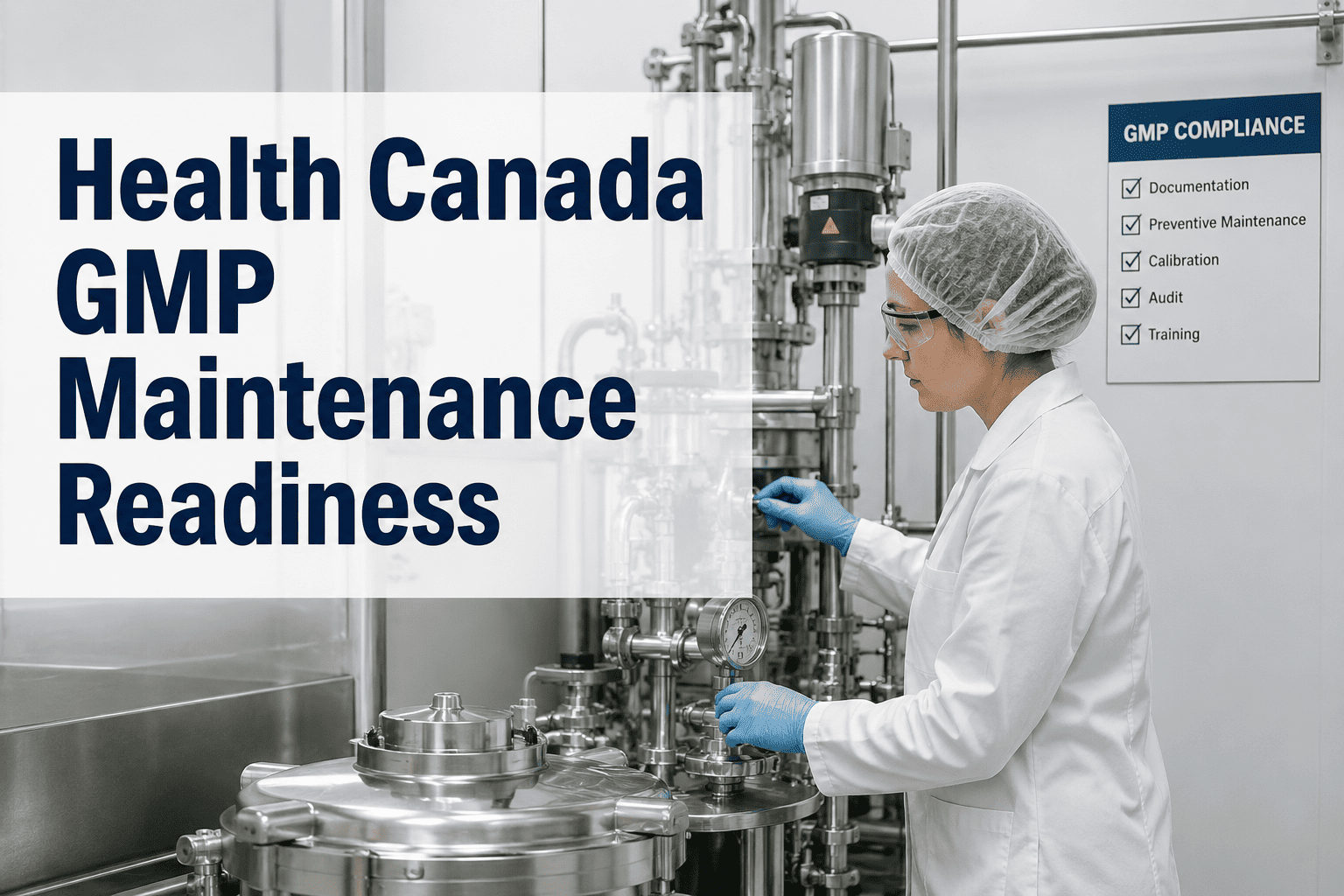
Read More
Health Canada completed 318 domestic GMP inspections in FY 2023–2024 under its Good Manufacturing Practices programme — and as of 2025, Canada completed full harmonisation with PIC/S, meaning every Canadian GMP inspection now carr
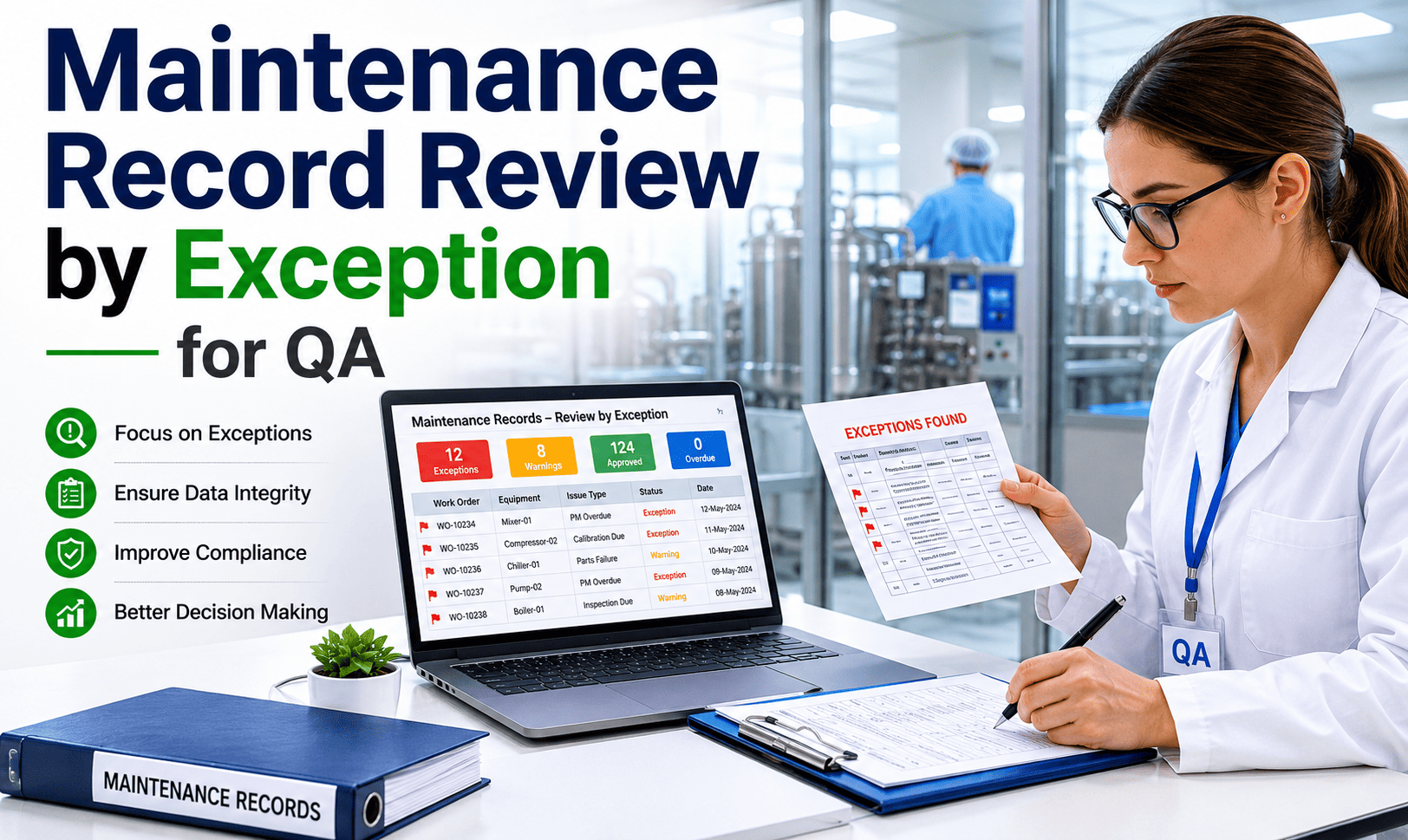
Read More
A QA manager responsible for reviewing maintenance records across a 200-asset pharmaceutical facility has two options: review every record, every week — a task that takes 8 to 12 hours and produces diminishing returns because 95%

Read More
Paper maintenance logbooks in pharmaceutical manufacturing are not just inefficient — they are a documented compliance liability. Illegible entries, missing timestamps, unsigned records, and binders that take 40 minutes to locate during an FDA ins
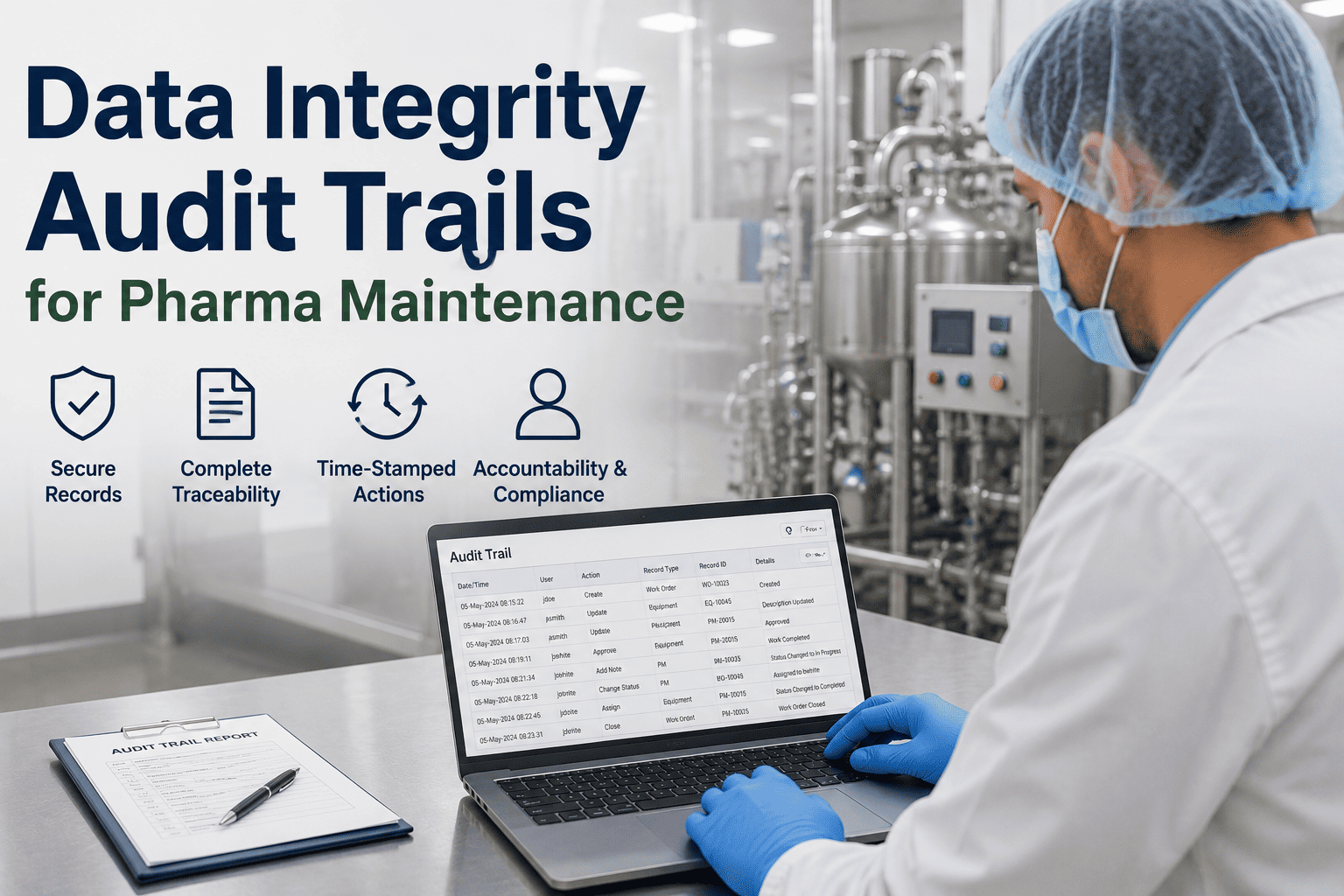
Read More
A pharmaceutical maintenance audit trail is not a log of what happened — it is the legal record that proves what happened, who did it, and whether it was altered afterward. Under 21 CFR Part 11, Section 11.10(e), electronic mainte

Read More
When an FDA investigator walks through your facility's front door, the clock starts — and every minute your team spends hunting for maintenance records, calibration logs, or open deviation reports is a minute that erodes inspector confidence.

Read More
Between 2017 and 2022, the FDA issued more than 160 warning letters citing data integrity deficiencies — and CDER warning letters jumped another 50% in fiscal year 2025, with data integrity and quality system gaps accounting for o

Read More
The FDA conducted 1,927 facility inspections in 2024 and issued Warning Letters following 42% of them. Most maintenance-related Form 483 observations share a single root cause: the records existed, but could not be produced in the
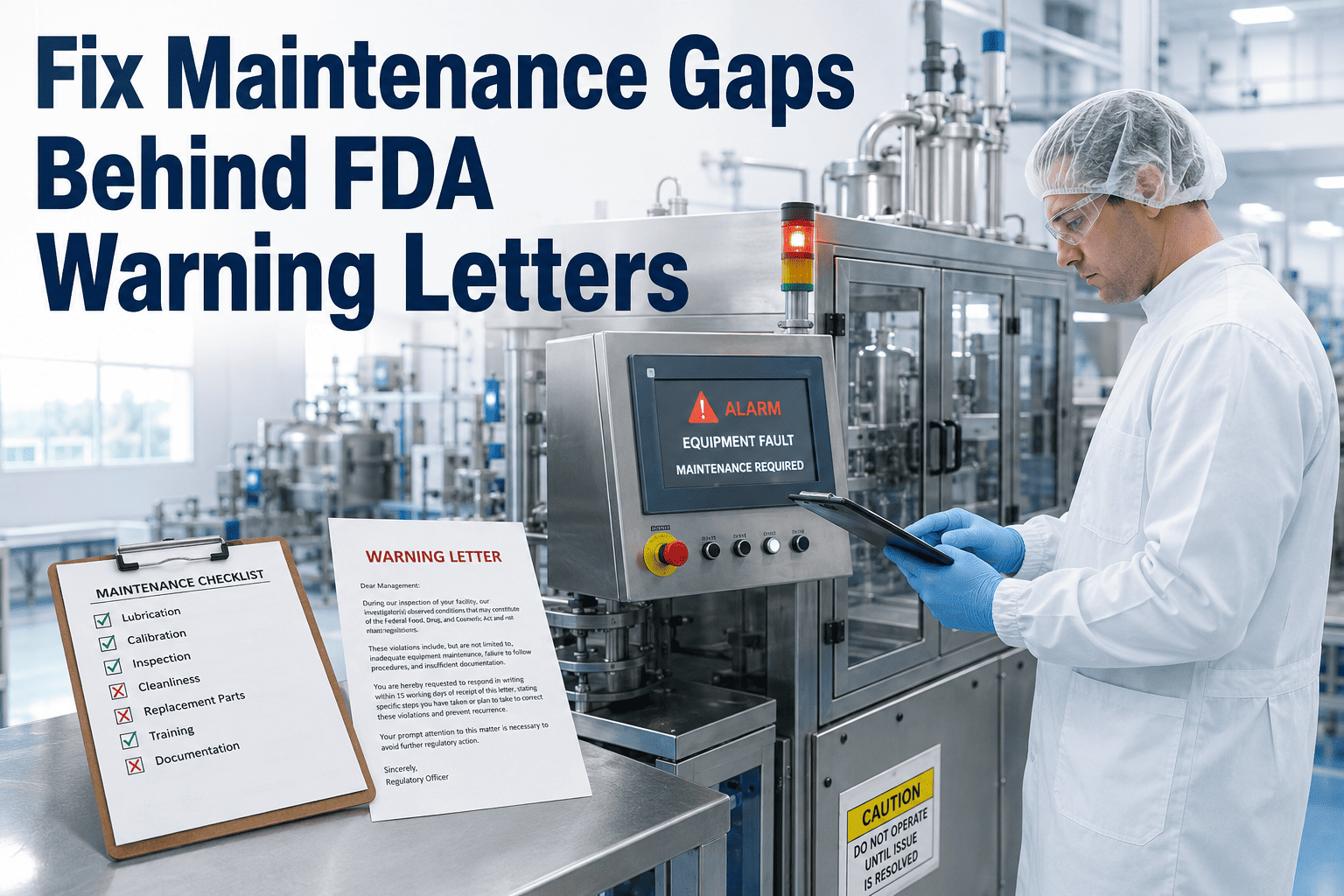
Read More
In October 2025, Scientific Protein Laboratories received an FDA warning letter that contained a sentence every pharma maintenance director should read aloud: "your CAPA plan to implement routine, vigilant operations management oversight of facili

Read More
FDA investigators do not arrive on a schedule. When they do arrive, they request equipment maintenance logs, calibration records, deviation investigations, and CAPA documentation — and they expect those records to be produced within two hours. Und
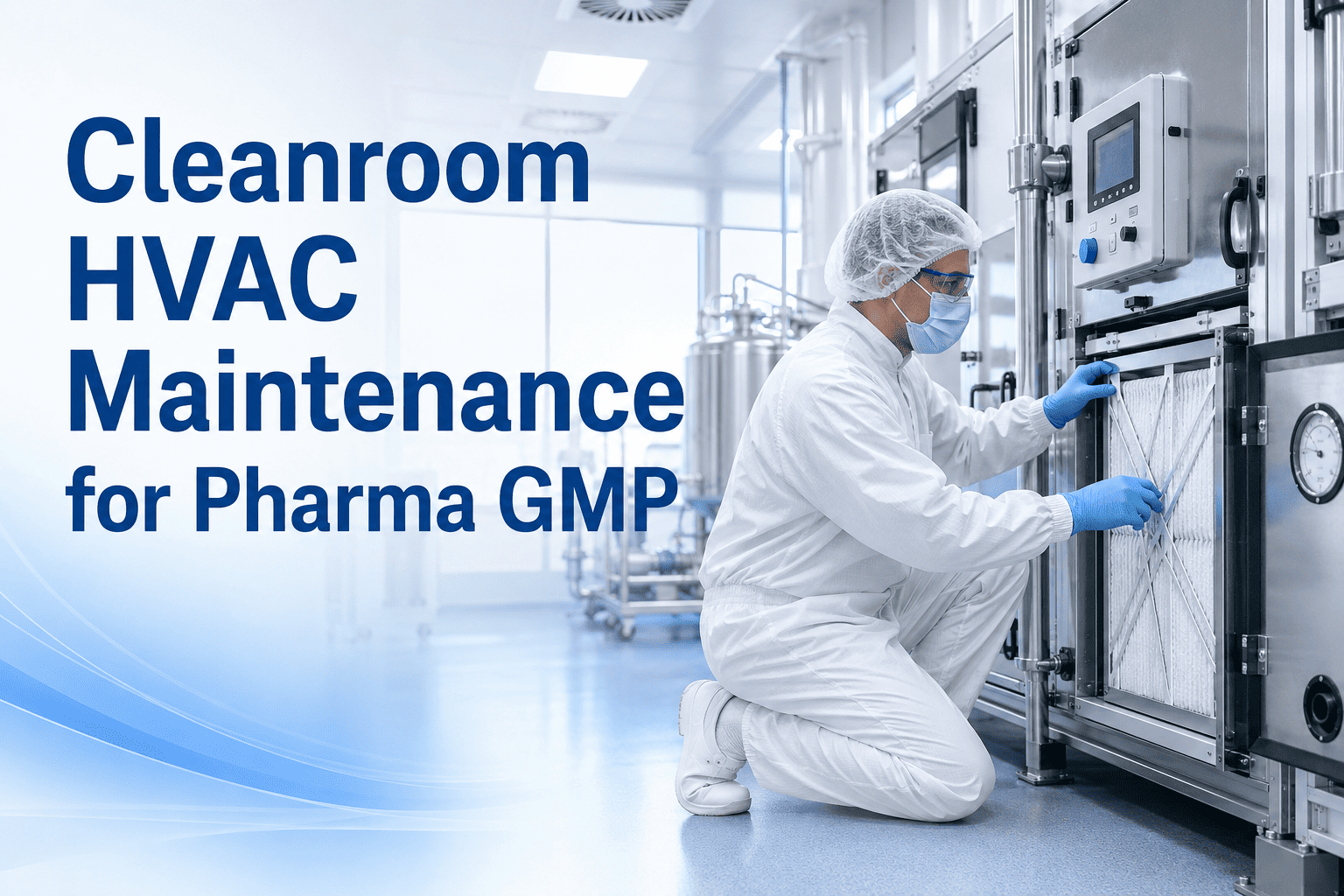
Read More
A single HEPA filter loaded 22% above its clean baseline can drop your Grade A air supply velocity below 0.45 m/s — and you will not know until the particle counter alarms during the next batch. A pressure cascade that drifts by 5 Pa across two do
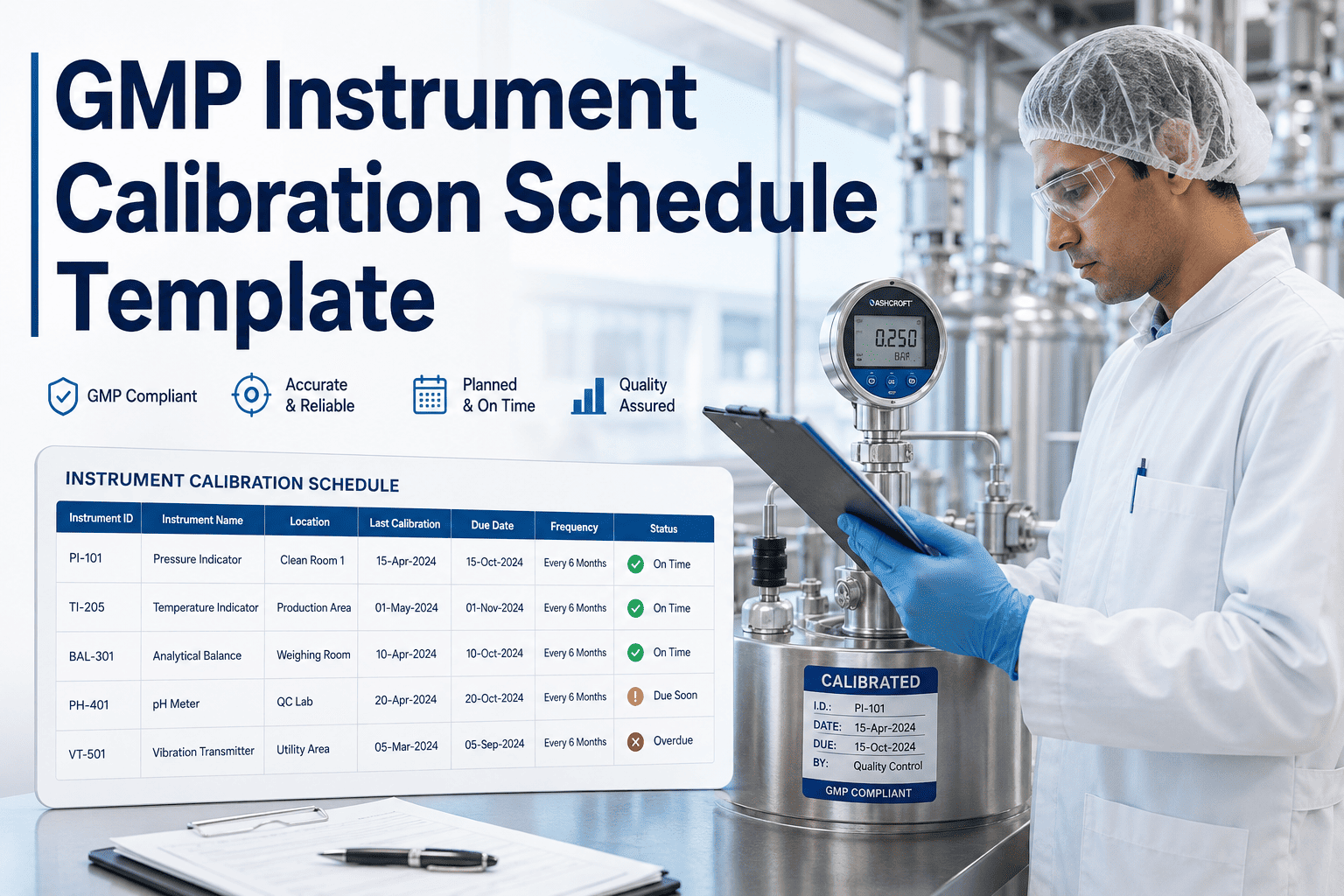
Read More
A GMP instrument calibration schedule is not a spreadsheet of due dates — it is the documented proof that every instrument affecting product quality, patient safety, or regulatory decision-making is calibrated at defined, justified intervals with

Read More
Walk any FDA Form 483 from the last five years and one pattern repeats: the IQ/OQ/PQ documentation looked clean on paper, but the maintenance trail underneath it didn't hold up. A calibration certificate that expired three weeks before OQ executio

Read More
An out-of-calibration instrument discovered after a batch has already been released is not a maintenance problem — it is a regulatory crisis. Under 21 CFR Part 211.160(b)(4) and ICH Q7 Section 5.35, deviations from approved calibration standards o

Read More
Equipment qualification in a pharma facility is not a one-time event — it is a lifecycle state that must be actively maintained through preventive maintenance, calibration, change control, and periodic requalification. The most common FDA 483 obse

Read More
Pharmaceutical plants that pass FDA, MHRA, and WHO GMP audits without major findings do not achieve that outcome through luck — they achieve it through documentation systems that make compliance the default, not the exception. Audit readiness is n

Read More
In pharmaceutical manufacturing, a single miscalibrated instrument can invalidate an entire batch, trigger an FDA investigation, and generate CAPA obligations that consume months of quality team resources. Yet calibration management in most pharma

Read More
An FDA Form 483 observation related to maintenance is not just a documentation problem — it is a signal that your quality management system has a structural gap. Maintenance-related 483 observations are among the most cited in pharmaceutical inspe

Read More
In pharmaceutical manufacturing, contamination does not announce itself — it accumulates silently through undocumented cleaning steps, missed intervals, and incomplete sanitization records. A single batch contaminated due to a cleaning or maintena

Read More
Title 21 CFR Part 211 — the FDA's current Good Manufacturing Practice regulations for finished pharmaceuticals — is specific and unambiguous about maintenance records: every piece of equipment used in drug manufacturing must have written maintenan

Read More
Pharmaceutical manufacturing runs on trust — trust that every batch is clean, every instrument is calibrated, and every maintenance record is ready when an FDA auditor walks through the door. Without a structured G

Read More
Hospitals face annual Joint Commission and authority-having-jurisdiction (AHJ) surveys where a single improperly maintained fire door can trigger a citation, a Plan of Correction, and — in worst cases — conditional accreditation. NFPA 80 (Standard

Read More
Chemical splash injuries in hospital laboratories, pharmacy compounding areas, and sterile processing departments can result in permanent vision loss within 10–15 seconds of eye contact with hazardous substances. ANSI/ISEA Z358.1-2014 — the govern
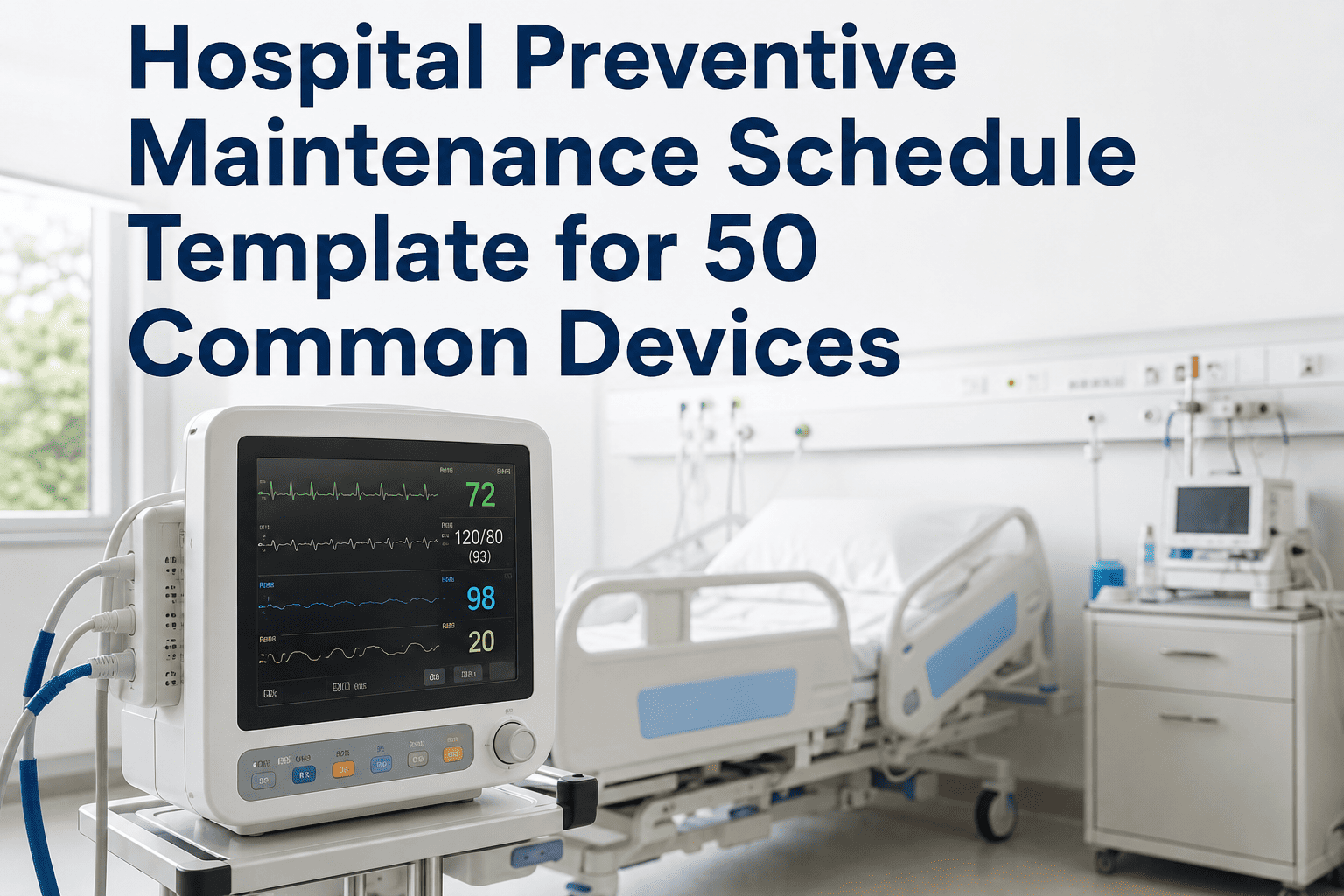
Read More
Hospital biomedical teams manage PM schedules for dozens of device types — each with different manufacturer requirements, regulatory citations, and task step lists. Building these from scratch is time-consuming, and getting them wrong creates comp

Read More
When a 600-bed academic medical center in the southeastern United States began its search for a CMMS platform in early 2022, the biomedical engineering team was logging over 1,200 reactive work orders per quarter. Equipment downtime was impacting

Read More
Government maintenance records are audited more frequently than most public works directors expect — and the compliance risks they expose are rarely the dramatic failures. They are the quiet gaps: a playground inspection that was completed but nev

Read More
The Joint Commission's EC.02.04.01 standard requires hospitals to establish a written program for managing medical equipment risk — but most biomedical teams spend weeks building a risk scoring matrix from scratch every survey cycle.

Read More
Hospital-acquired infections kill more Americans each year than car accidents — and a significant portion are preventable through rigorous HVAC maintenance and sterilization equipment tracking. A 420-bed regional hospital partnered with its infect

Read More
Most hospital capital requests fail not because the equipment is not needed, but because the data does not exist to prove it. A 7-campus hospital network in the Midwest faced exactly this problem — aging imaging fleet, mounting repair costs, and a

Read More
Hospital nurses spend up to 60 minutes per shift searching for available beds, portable equipment, and IV poles — time stolen from patient care. OxMaint's CMMS with RTLS integratio

Read More
When a hospital's MRI scanner gets hit by ransomware or a networked infusion pump broadcasts unencrypted patient data, the biomedical engineering team is now on the front line — not just IT. OxMain

Read More
Not every CMMS implementation succeeds — and not every "success" produces the same kind of outcome. The nine deployments profiled here represent the best hospital CMMS implementations of 2026 across different facility types, budget scales, and ope
Read More
Not every CMMS implementation succeeds — and not every "success" produces the same kind of outcome. The nine deployments profiled here represent the best hospital CMMS implementations of 2026 across different facility types, budget scales, and ope

Read More
Hospital maintenance is undergoing its most significant operational transformation in a generation. The convergence of AI-driven predictive analytics, IoT sensor networks, accelerating regulatory scrutiny, and post-pandemic workforce constraints h

Read More
When a hospital IT team approves a new CMMS platform, the security review rarely starts with the right question. The first question is not whether the software is cloud-hosted or on-premise — it is whether the vendor will execute a legally binding

Read More
A 500-bed hospital in 2026 operates between 15,000 and 20,000 connected medical devices — each with a different manufacturer, age, utilization pattern, and failure signature. Traditional calendar-based PM cannot distinguish between an MRI that has

Read More
Pharmacy cold chains fail silently — a refrigerator logging 8.4°C instead of 7.8°C rarely triggers a manual alarm, but under USP 800 and USP 659 standards, every uncorrected excursion is a docum

Read More
The neonatal intensive care unit operates at the narrowest margin of acceptable equipment performance in the entire hospital. An infant warmer that drifts 0.5°C outside set temperature, an incubator with a failed humidity sensor, or a phototherapy

Read More
Critical access hospitals operate under a different set of constraints than large health systems — smaller maintenance teams, tighter budgets, and fewer biomedical resources. Yet the regulatory and compliance obligations are identical. A CMMS isn'
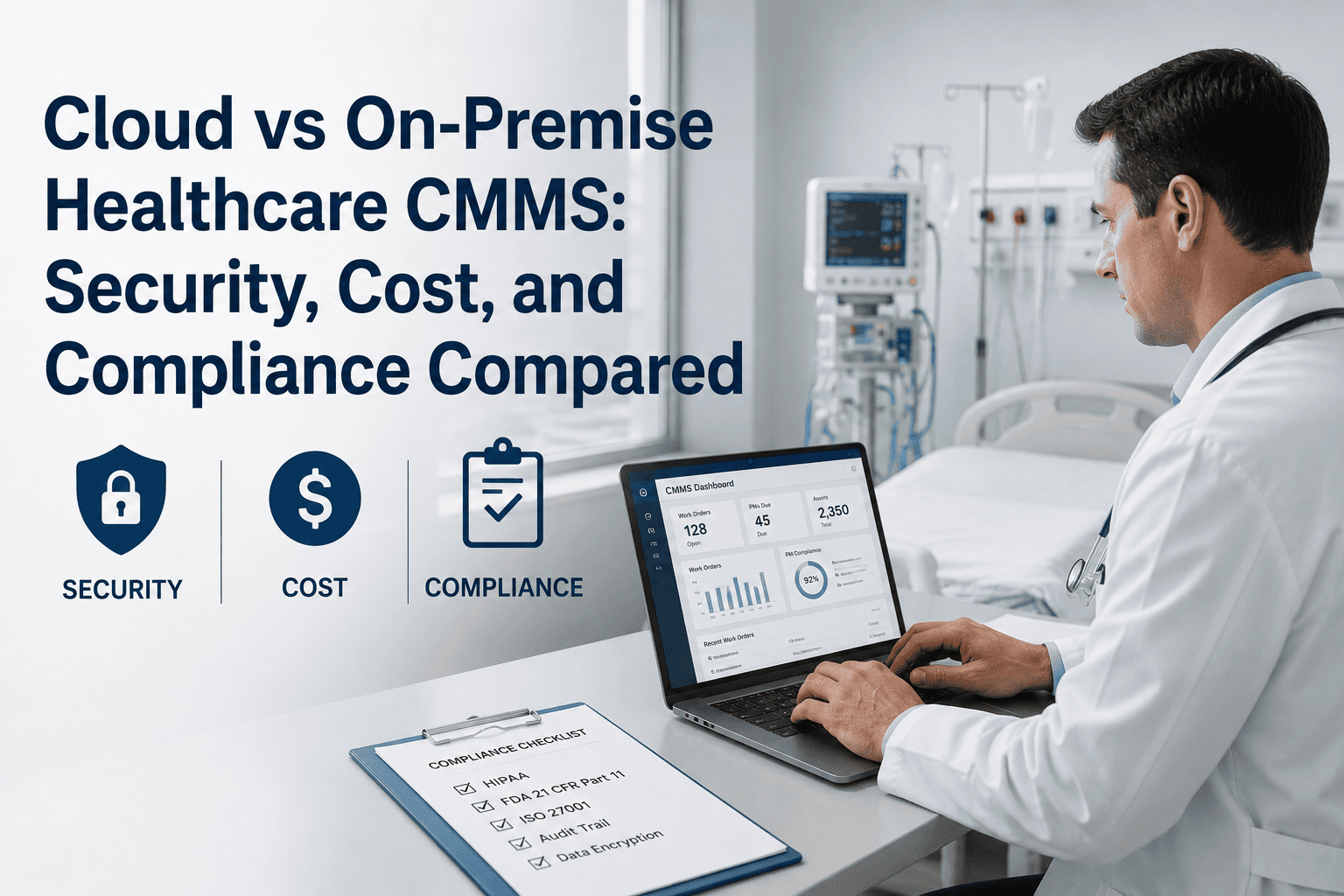
Read More
Healthcare facility teams evaluating a new CMMS face a decision that affects every department in the hospital — not just maintenance. Whether to deploy on a cloud SaaS platform or a locally hosted on-premise server determines your HIPAA compliance

Read More
Operating room turnover time is the most scrutinized efficiency metric in surgical services — and one of the least understood in terms of what actually drives it. Most OR efficiency programs focus on staff coordination, case cart staging, and hous

Read More
An ICU director managing a ventilator fleet of 40, 80, or 200 units faces a maintenance challenge that has no equivalent elsewhere in hospital operations — equipment that must be clinically ready at any moment, calibrated to precise specifications

Read More
Hospital alarm fatigue is one of the most documented — and most preventable — patient safety risks in modern ICUs. When patient monitors generate hundreds of non-actionable alarms per bed per day, clinical staff begin to desensitize, delay respons
Read More
Hospitals spend between 3% and 6% of their total operating budget on facility and biomedical equipment maintenance — for a 500-bed hospital, that's $8M to $15M annually. Yet most of that spend is reactive: emergency repairs, overt
Read More
Every hospital finance team knows the line item for maintenance repair spend. What they rarely see is the full cost — because most of the financial damage from reactive maintenance never appears on a maintenance budget. It appears in clinical reve
Read More
Hospital CFOs evaluating CMMS platforms in 2026 face a procurement decision that extends well beyond software licensing — it encompasses biomedical equipment compliance, Joint Commission audit readiness, clinical engineering workflow integration,

Read More
Your behavioral health facility passed its last Joint Commission survey. The anti-ligature risk assessment was filed. The preventive maintenance schedule exists in a spreadsheet. The ligature-resistant hardware was installed two years ago — and ha

Read More
Your long-term care or nursing home facility passed its last CMS survey — but you already know the next one is coming, and the regulatory landscape surveyors use to evaluate you has fundamentally changed. Revised surveyor guidance under QSO-25-12-
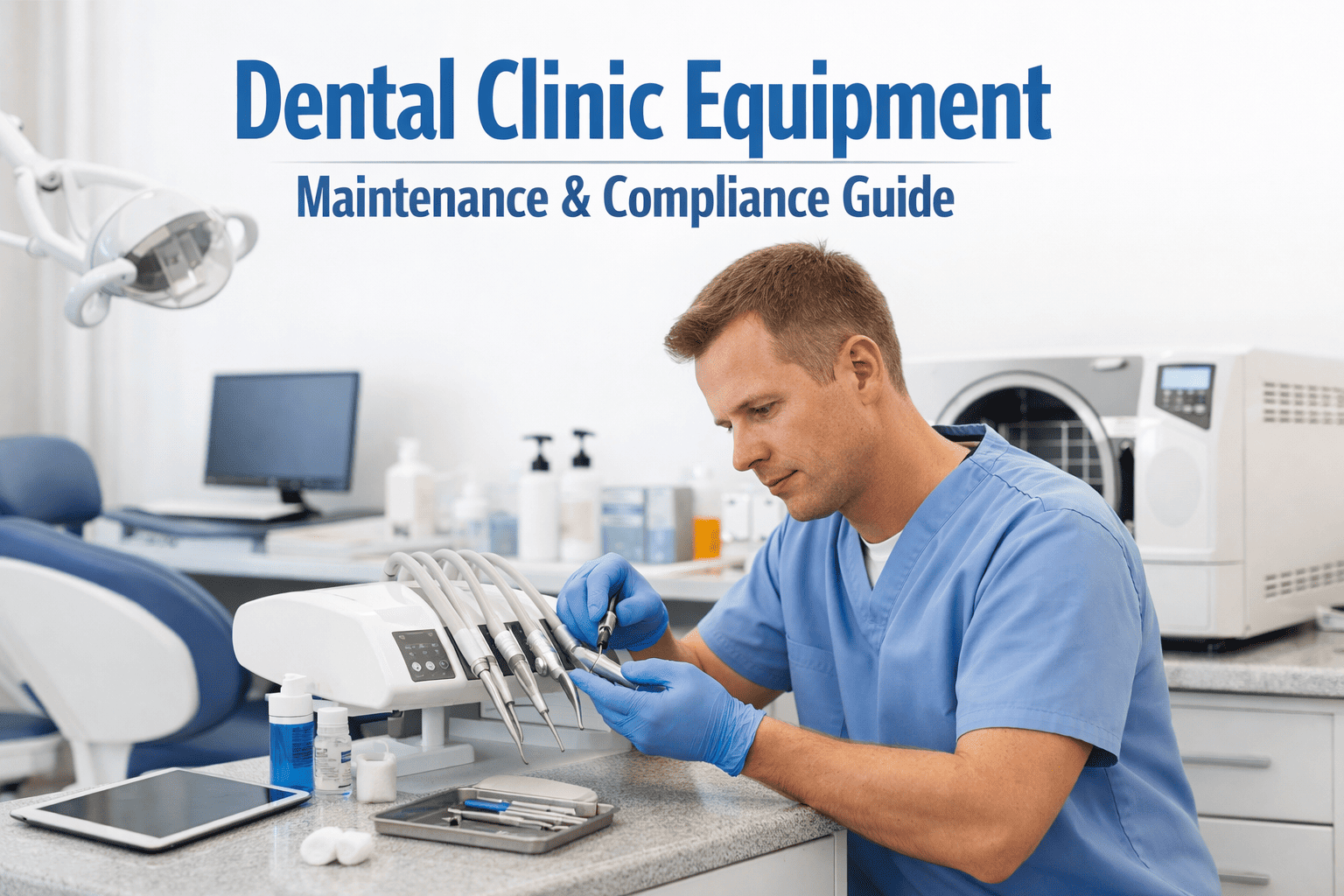
Read More
Your dental clinic's compressor fails mid-procedure. The autoclave log is a paper binder nobody can find during an infection control survey. Your X-ray units haven't had documented calibration in 14 months — and your compliance officer just walked

Read More
A single CMS survey deficiency citing inadequate water treatment documentation at your dialysis facility doesn't just trigger a corrective action plan — it puts your Medicare certification at risk. For the 550,000+ Americans receiving maintenance

Read More
Your hospital's data center is the operational core of every clinical system — EHR, PACS, laboratory information, pharmacy dispensing, and real-time patient monitoring. When cooling fails at 2 a.m., when a UPS module degrades silently for six week

Read More
You have invested millions in surgical robots, autonomous delivery AMRs, UV disinfection systems, and rehabilitation exoskeletons — yet the maintenance documentation keeping those assets compliant, patient-safe, and audit-ready is still running on

Read More
Every unfilled OR slot, every over-crowded ED bay, and every idle recovery room is a quantified revenue loss — yet most hospital executives make space allocation decisions from floor plans that are months out of date and occupancy reports assemble

Read More
Your hospital's wireless infrastructure was designed for a world that no longer exists. Today, a single ICU bed generates over 1,400 data points per hour from connected monitors, infusion pumps, and ventilators — yet most hospital networks were bu

Read More
Every hour a critical medical device sits offline — an MRI suite dark, a ventilator queue backed up, an OR delayed — it costs your hospital between $5,000 and $22,000 in lost revenue and clinical disruption. The technician standing in front of it
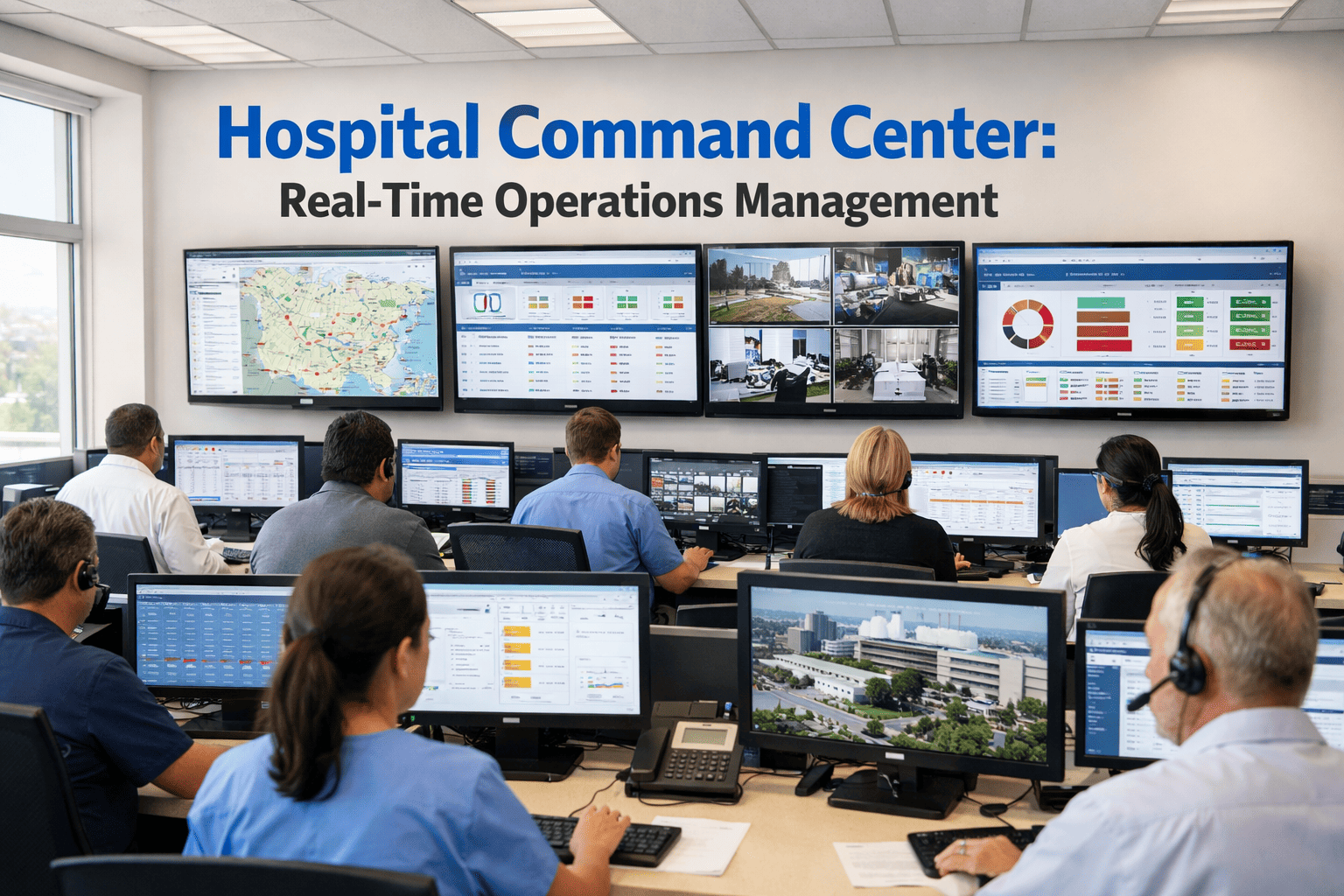
Read More
When a patient deteriorates in Bay 4, a bed opens in the ICU, three OR cases finish simultaneously, and your ED wait time crosses 4 hours — your operations team finds out in four different systems, or not at all. That fragmented visibility is not
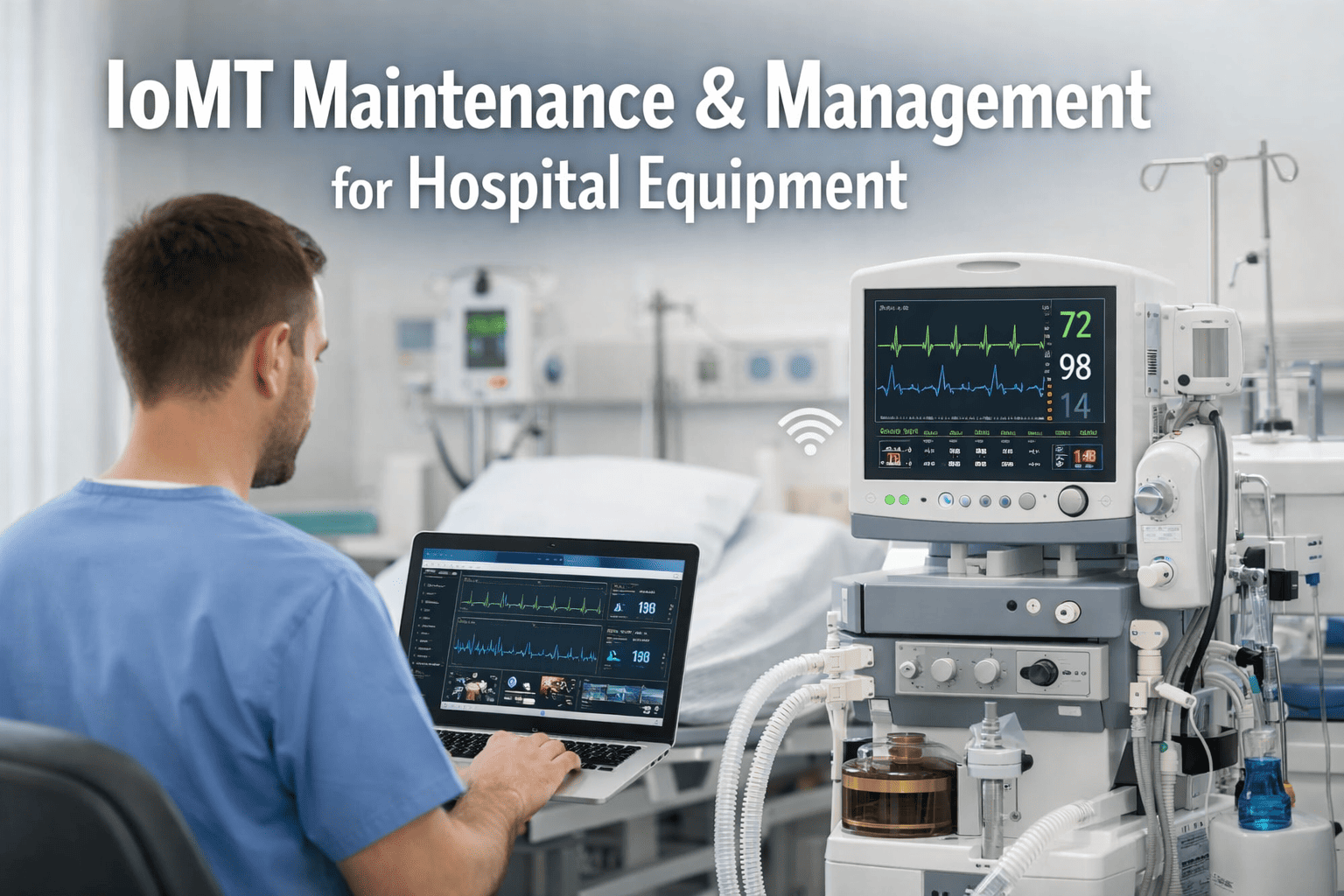
Read More
Every hour, clinical staff spend an average of 45 minutes searching for infusion pumps, ventilators, and wheelchairs that have no fixed location. That time is not a workflow inefficiency — it is direct care denied to patients. When your ICU nurse

Read More
Every hour your clinical staff spends searching for infusion pumps, wheelchairs, or portable monitors is an hour not spent on patient care — and at scale, that invisible drain compounds into millions in labour waste, equipment over-purchasing, and

Read More
Your autonomous mobile robots are reducing nurse walking distance by 4 kilometres per shift and keeping OR supply chains running without human touchpoints — until one stops. When a delivery robot sits idle outside pharmacy for 72 hours because no

Read More
Your hospital's aging infrastructure doesn't fail on a schedule — it fails at 2 AM on a Saturday, during a joint commission visit, or mid-surgery when HVAC drops. If you're still relying on reactive work orders and paper-based inspection logs to m

Read More
You are auditing your hospital's energy spend, carbon footprint, and green building compliance — and the data lives in five disconnected systems, none of which talk to your CMMS. When your sustainability officer prepares the quarterly Energy Star
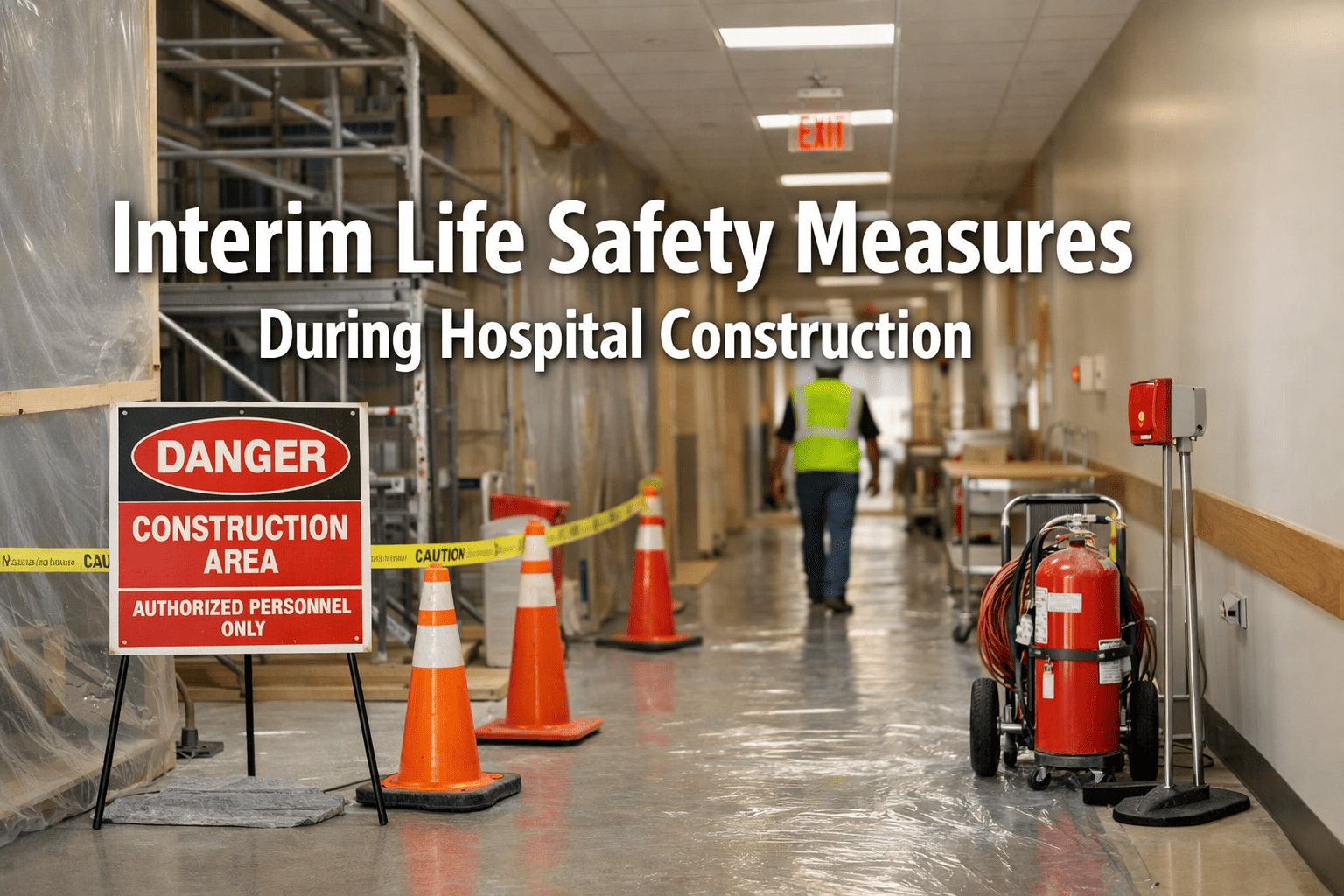
Read More
As a hospital executive or VP of Facilities, you know the high stakes of any construction or renovation project: one lapse in Interim Life Safety Measures (ILSM) can expose patients to serious risk, trigger Joint Commission findings, delay project
Read More
A hospital-acquired infection costs your facility an average of $28,000 per case in treatment, extended stays, and regulatory exposure — and in most cases, the root cause traces directly to a maintenance failure your team had no visibility into. H
Read More
Every FDA inspection that finds a maintenance record gap at your facility carries an average citation cost of $92,000 — before legal fees, remediation, and the operational disruption of a 483 observation response. The harder consequence is that mo
Read More
Your hospital maintenance team is already doing the work — isolating energy before equipment repair, responding to spills, entering mechanical rooms and utility vaults. The documentation gap is what creates the liability. A single OSHA citation fo
Read More
Your NABH surveyor arrives in six weeks. Your biomedical equipment maintenance logs are split across three spreadsheets, your fire safety inspection records are in a cabinet no one can locate, and your preventive maintenance compliance sits at 61
Read More
Every hospital maintenance director has been there: a critical HVAC unit fails at 2 a.m., your contracted vendor is unreachable, their insurance certificate expired three months ago, and the service agreement is buried in a filing cabinet no one c
Read More
If your hospital's maintenance team is still tracking preventive maintenance schedules, work orders, and equipment inspections on spreadsheets — your next Joint Commission survey is already at risk. Excel doesn't send alerts when a PM is overdue,
Read More
If your hospital's maintenance team is still measuring performance against gut instinct — or worse, last year's budget variance — you are leaving compliance exposure, equipment downtime, and seven-figure operational losses unaddressed. The benchma
Read More
Managing maintenance across a multi-site hospital network on disconnected spreadsheets, paper work orders, and siloed facility teams does not scale — it creates compliance gaps, inflated asset spend, and reactive fire-fighting that your frontline
Read More
Every unauthorized entry into a restricted ward, every infant security alert that goes unverified, every access card reader that fails during a lockdown — these are not maintenance oversights. They are documented liability events waiting to become

Read More
Every delayed meal tray, every refrigeration failure, every uninspected steam kettle in your hospital dietary department carries two risks most VPs underestimate: a Joint Commission citation and a patient harm event that no apology letter can undo

Read More
In 2024, 62% of FDA Form 483 observations at biotech facilities cited equipment qualification, calibration, or maintenance documentation failures as root causes. A single contamination event in a 2,000L bioreactor campaign averages $8.4M in batch

Read More
A single equipment deviation in a cleanroom assembly line — without a documented corrective action, without a calibration record tied to the affected lot, and without a closed CAPA — puts your ISO 13485 certification and FDA 21 CFR Part 820 standi

Read More
A single compromised connected medical device on a hospital network can cascade into a full-scale breach — exposing patient data, disabling clinical systems, and triggering HIPAA enforcement actions that average $1.9 million per incident. In 2024,

Read More
Hospital maintenance teams managing 10,000-plus work orders annually — across biomedical equipment, HVAC, fire suppression, and infection control systems — lose an estimated 4.2 hours per technician per week to documentation alone. Generative AI c

Read More
For hospital VPs and facility executives, maintenance data is not just an operations issue — it is a HIPAA liability, a Joint Commission survey exposure, and a board-level risk. A single OCR corrective action plan for access control failures costs

Read More
A hospital that still routes maintenance work orders through paper logbooks and spreadsheets is not just operationally inefficient — it is carrying a documented risk liability. Joint Commission Standard EC.02.06.01 requires evidence of planned pre

Read More
A single HIPAA breach involving unsecured maintenance access records at a US hospital carries a maximum civil penalty of $1.9 million per violation category — and the OCR audit trail begins with whether your CMMS documented who accessed patient-ar

Read More
A 500-bed hospital running MRI, CT, HVAC, and life-safety systems on paper-based maintenance schedules carries a risk exposure that no CFO would approve if it were presented as a balance sheet item. Unplanned equipment failure in a clinical enviro
Read More
A hospital biomedical engineering team that cannot produce a signed PM checklist, calibration record, or corrective maintenance log within minutes of an accreditation surveyor's request is already in a compliance exposure position — before a singl

Read More
Deferred maintenance in a pharmaceutical manufacturing facility is not a cost avoidance strategy — it is a liability that compounds. A single batch loss from an uninspected HVAC system costs more than three years of preventive maintenance on that

Read More
A hospital that begins CMMS implementation without a complete asset registry, defined work order workflows, and Joint Commission-aligned PM schedules will spend the first six months correcting the deployment rather than operating it. The cost is n
Read More
Hospitals lose an average of 11 percent of their movable medical equipment on any given day — not to theft, but to location uncertainty. When an IV pump is three floors from where it is needed, a nurse spends 23 minutes locating a replacement. Mul

Read More
A hospital that loses an MRI scanner for 48 unplanned hours loses approximately $180,000 in revenue — before factoring in rescheduled procedures, diverted patients, and the clinical consequences of delayed diagnoses. Predictive maintenance closes
Read More
A Joint Commission survey finding tied to missing preventive maintenance records — on a ventilator, a sterilizer, or a patient lift — carries an immediate jeopardy citation that can suspend Medicare billing within 23 days. In 2024, 61 percent of J

Read More
A missed preventive maintenance task on a medical gas system — without a completed EC work order, without a documented inspection interval, and without a retrievable audit trail — exposes a US hospital to Joint Commission immediate threat-to-life
Read More
A hospital water system without documented Legionella risk assessment, temperature monitoring, and flushing records — costs a US healthcare facility an average CMS citation of $89,
Read More
A hospital medical gas system failure during a surgical procedure is not a maintenance event — it is a sentinel event. NFPA 99 mandates documented inspection, testing, and alarm verification for every zone valve, pressure alarm, and master alarm p
Read More
A hospital fire safety audit that uncovers an unmonitored sprinkler zone, an uninspected fire door, or a missing suppression system test record does not end with a notation — it ends with a Joint Commission deficiency, a CMS Condition of Participa

Read More
An unannounced NFPA 110 compliance audit at a US hospital — with a missed generator load test, an unsigned transfer switch inspection record, or a UPS battery replacement log two months overdue — creates regulatory exposure that extends beyond a f

Read More
Hospital HVAC systems operating without validated pressure differentials, compliant air-change rates, or documented HEPA filter integrity expose healthcare facilities to Joint Commission citations averaging $28,000 per finding — and more criticall

Read More
Unplanned downtime in a hospital HVAC system is not a maintenance inconvenience — it is a patient safety event. Negative pressure isolation rooms losing differential pressure, surgical suites failing temperature thresholds, and emergency generator

Read More
Pharmaceutical manufacturing sits at the intersection of the most demanding regulatory environment in any industry and the fastest pace of technology disruption since the introduction of automated filling lines. Maintenance leaders who treat CMMS

Read More
Pharmaceutical manufacturers operating under FDA, EMA, and ICH Q10 frameworks face a compounding cost challenge: maintenance spend that averages 18–24% of total plant operating budget — with reactive programs pushing that figure above 30%.

Read More
Pharmaceutical manufacturers operating under 21 CFR Part 211 and EU GMP Annex 1 face a maintenance strategy decision that directly affects regulatory standing, batch release timelines, and capital allocation. The choice between preventive and pred

Read More
A sterile pharmaceutical manufacturer operating three ISO 5 cleanrooms and two ISO 7 support corridors reduced environmental contamination events by 75% within eight months — not by changing their cleaning protocols or rebuilding their HVAC system

Read More
Standardizing CMMS across eight pharmaceutical manufacturing plants without a validated, documented rollout strategy costs more than the implementation itself — through audit findings, duplicate deviations, and unharmonized KPI data that auditors

Read More
A US pharmaceutical manufacturer running eight validated production lines faced a recurring compliance liability: maintenance-related FDA 483 observations in three consecutive inspection cycles. The root cause was not inadequate maintenance — it w

Read More
A single bioreactor batch failure at a mid-size biotech manufacturer costs between $800K and $2.4M in lost product, regulatory rework, and timeline delays. Predictive maintenance closes that exposure before it materializes — and the financial case

Read More
A mid-size pharmaceutical manufacturer operating three production lines and 480 GMP-certified personnel reduced equipment-related deviations by 60 percent within twelve months of deploying Oxmaint — eliminating an average of 2.3 batch losses per q

Read More
A pharmaceutical plant operating without GMP-compliant maintenance documentation faces an average FDA 483 observation cost of $2.1 million per inspection cycle — and that figure excludes consent decree exposure, which averaged $47 million in resol

Read More
Pharmaceutical facility maintenance is not an operational cost — it is a compliance obligation with direct regulatory consequence. A single FDA Form 483 observation for inadequately maintained HVAC or cleanroom systems can halt batch release, trig

Read More
Pharmaceutical manufacturers running paper-based maintenance logs face a compounding risk: every unvalidated deviation, every undocumented calibration cycle, and every missing equipment qualification record is a potential FDA Form 483 observation

Read More
Pharmaceutical manufacturers running SCADA systems, historian servers, and IoT-connected production equipment on unsegmented OT networks face an average regulatory remediation cost of $4.2M per cybersecurity incident — before the FDA 21 CFR Part 1

Read More
A single contamination event traced to inconsistent manual filling at a sterile injectables line costs a US pharmaceutical manufacturer an average of $50 million in product recalls, regulatory remediation, and reputational damage — before the firs

Read More
Pharmaceutical packaging line failures don't announce themselves — they surface during an FDA 483 observation, a GMP audit finding, or a serialization data gap that halts a product release. A single unplanned stoppage on a high-speed blister line

Read More
A pharmaceutical plant's most valuable data — active ingredient ratios, proprietary synthesis conditions, yield optimization parameters built over decades of R&D — leaves the facility the moment a cloud-connected AI system processes a batch re

Read More
A single contaminated batch that reaches the market costs a pharmaceutical manufacturer an average of $50 million in recall expense, regulatory sanction, and brand damage — before litigation. The FDA's 21 CFR Part 211.68 and EU GMP Annex 1 (2022)

Read More
Deploying IoT sensors on pharmaceutical equipment without a documented GMP qualification protocol, without validated data integrity controls, and without a traceable calibration record exposes a facility to FDA 21 CFR Part 11 data integrity findin

Read More
A serialization system failure at a pharmaceutical manufacturer — without real-time barcode verification, without aggregation chain compliance, without track-and-trace audit records — costs an average DSCSA violation of $487,000 per incident, plus

Read More
AI Vision Inspection for pharmaceutical manufacturing eliminates the gap between GMP quality requirements and manual inspection capacity. A single undetected tablet defect, an improperly sealed vial, or a mislabeled unit reaches the distribution n

Read More
A single unplanned shutdown of a pharmaceutical manufacturing line — due to maintenance failure on critical GMP-controlled equipment — costs a mid-size pharma producer an average of $420,000 in lost production, plus regulatory re-qualification and

Read More
Deploying a generative AI copilot inside a pharmaceutical maintenance operation is no longer an IT initiative — it is a GMP compliance decision. When a technician spends 22 minutes searching for the correct SOP revision during an unplanned equipme

Read More
A single GAMP 5 validation gap found during an FDA inspection — an unqualified system change, an unsigned IQ/OQ/PQ protocol, a missing audit trail entry — can trigger a Form 483 observation that costs a mid-size pharmaceutical manufacturer an aver
Read More
A single GMP deviation or FDA 483 observation tied to undocumented maintenance activities, uncalibrated equipment, or missed preventive maintenance can cost a pharmaceutical manufacturing facility an average of $450,000 in remediation, lost produc

Read More
Pharmaceutical manufacturers face increasing pressure to protect proprietary formulation data, process parameters, and equipment validation records from external exposure. Deploying a standard cloud CMMS introduces unnecessary risks of data sovere

Read More
A single undocumented confined space entry or incomplete LOTO isolation record at a cement plant can trigger an average OSHA citation of $156,000 — plus unquantifiable human and operational risk. In 2023, 74% of OSHA inspections at cement and mine

Read More
Mobile CMMS for pharmaceutical technicians in cleanroom production environments eliminates the compliance risk of paper-based maintenance documentation in FDA-regulated manufacturing. A single GMP violation during FDA inspection due to incomplete

Read More
Equipment lifecycle documentation failures — not the absence of records, but the failure to connect what happened in the field to a retrievable, auditable record — are among the top five GMP deficiencies cited in FDA 483 observations. The calibrat

Read More
A single GMP documentation failure during a pharmaceutical work order — missing validation evidence, incomplete deviation linkage, or unapproved change control — can trigger a Form 483 observation, delay product release, or result in multi-million

Read More
A pharmaceutical maintenance record missing a complete audit trail, signed by an unauthenticated user, and stored without data integrity controls — costs a US pharma manufacturer an average FDA 483 observation escalating to Warning Letter exposure

Read More
A pharmaceutical facility managing BMS alarms and maintenance records in disconnected systems carries a documentation gap that FDA 21 CFR Part 11 and EU GMP Annex 11 auditors are specifically trained to find. In 2024, 61 percent of FDA warning let

Read More
Pharmaceutical laboratory equipment failing validation audits, missing calibration records, and untracked maintenance histories cost US pharma firms an average regulatory citation of $89,000 per instrument — plus production delays that halt batch

Read More
A pharmaceutical facility managing BMS alarms and maintenance records in disconnected systems carries a documentation gap that FDA 21 CFR Part 11 and EU GMP Annex 11 auditors are specifically trained to find. In 2024, 61 percent of FDA warning let

Read More
A single temperature excursion in a pharmaceutical cold chain facility can compromise an entire batch of temperature-sensitive drugs, trigger regulatory action from the FDA or EMA, and result in multi-million-dollar losses in product, recalls, and

Read More
Undetected cleanroom environmental deviations cost pharmaceutical manufacturers $500K–$2M in batch failures, product recalls, and manufacturing downtime. 71% of FDA warning letters cite inadequate environmental monitoring documentation. Oxmaint cl
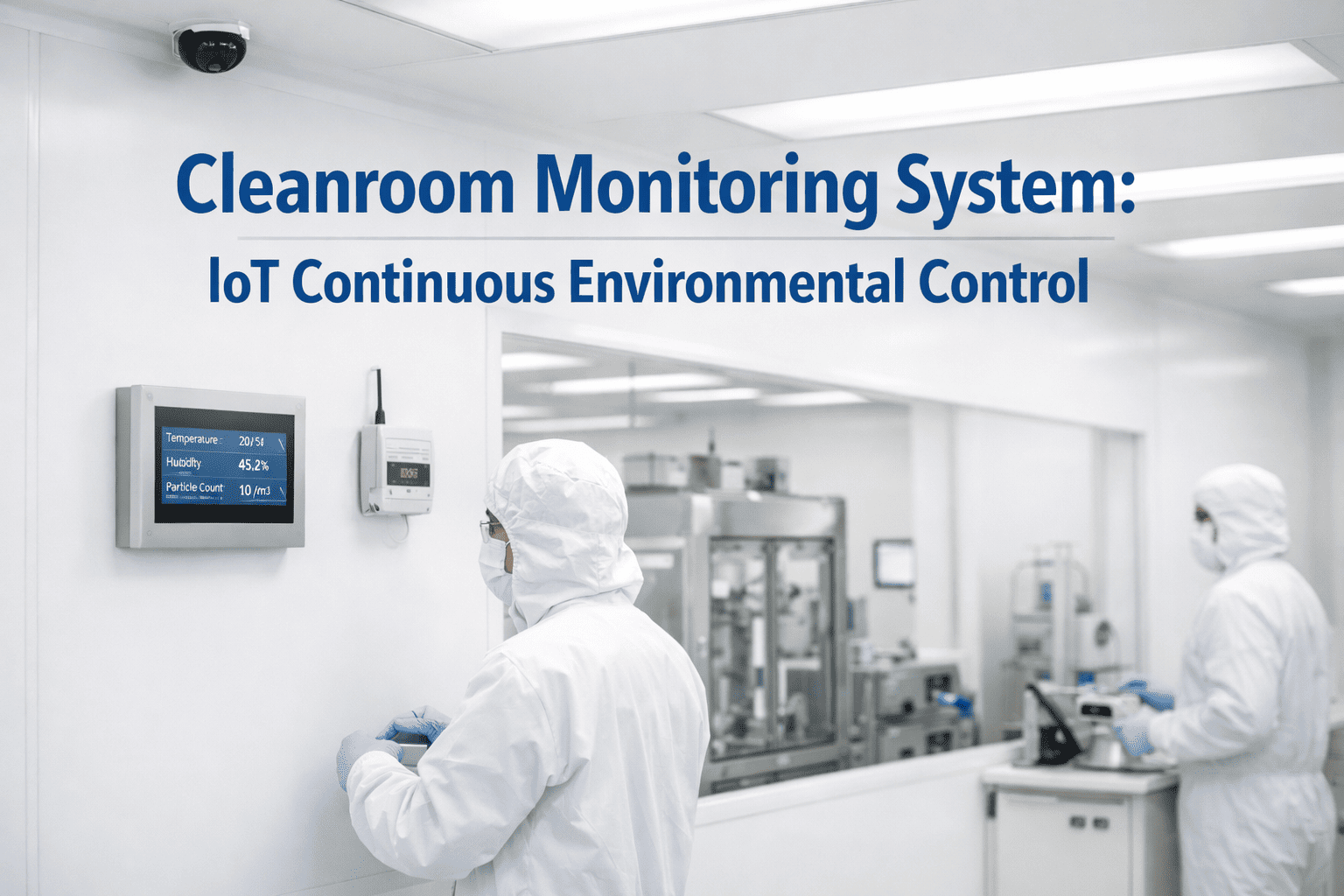
Read More
A single lapse in cleanroom environmental monitoring — undetected particle excursion, unlogged temperature drift, or undocumented pressure differential failure — can trigger a multimillion-dollar batch rejection, FDA 483 observation, or full produ

Read More
Undocumented HEPA filter failures cost pharmaceutical manufacturers $50K–$200K in FDA remediation, plus product recall risk. 68% of FDA facility inspections identify HEPA documentation gaps. Oxmaint closes the gap between field execution and audit

Read More
A confined space entry at a pharmaceutical cleanroom — without current particle count validation, without documented HEPA filter integrity test, and without a signed entry permit — risks GMP non-conformance, batch rejection, and regulatory action

Read More
A single GMP non-compliance observation in pharmaceutical environmental monitoring during an FDA inspection can trigger Form 483 findings, warning letters, or production holds costing millions in lost revenue and remediation. In 2023-2025 data, ov

Read More
A single failure in preventive maintenance qualification for validated pharmaceutical equipment can trigger FDA 483 observations, warning letters, or batch rejection — with remediation costs often exceeding $2.5 million per incident. In 2024-2025,

Read More
A single FDA 483 observation related to inadequate maintenance documentation or unvalidated equipment can trigger costly remediation, delayed product release, and reputational damage for pharmaceutical manufacturers. In recent years, maintenance-r

Read More
Confined space entry into a pharmaceutical reactor vessel or sterile manufacturing tank without a current gas test, without a posted rescue team, and without a signed permit can trigger an FDA Form 483 observation or a multimillion-dollar warning
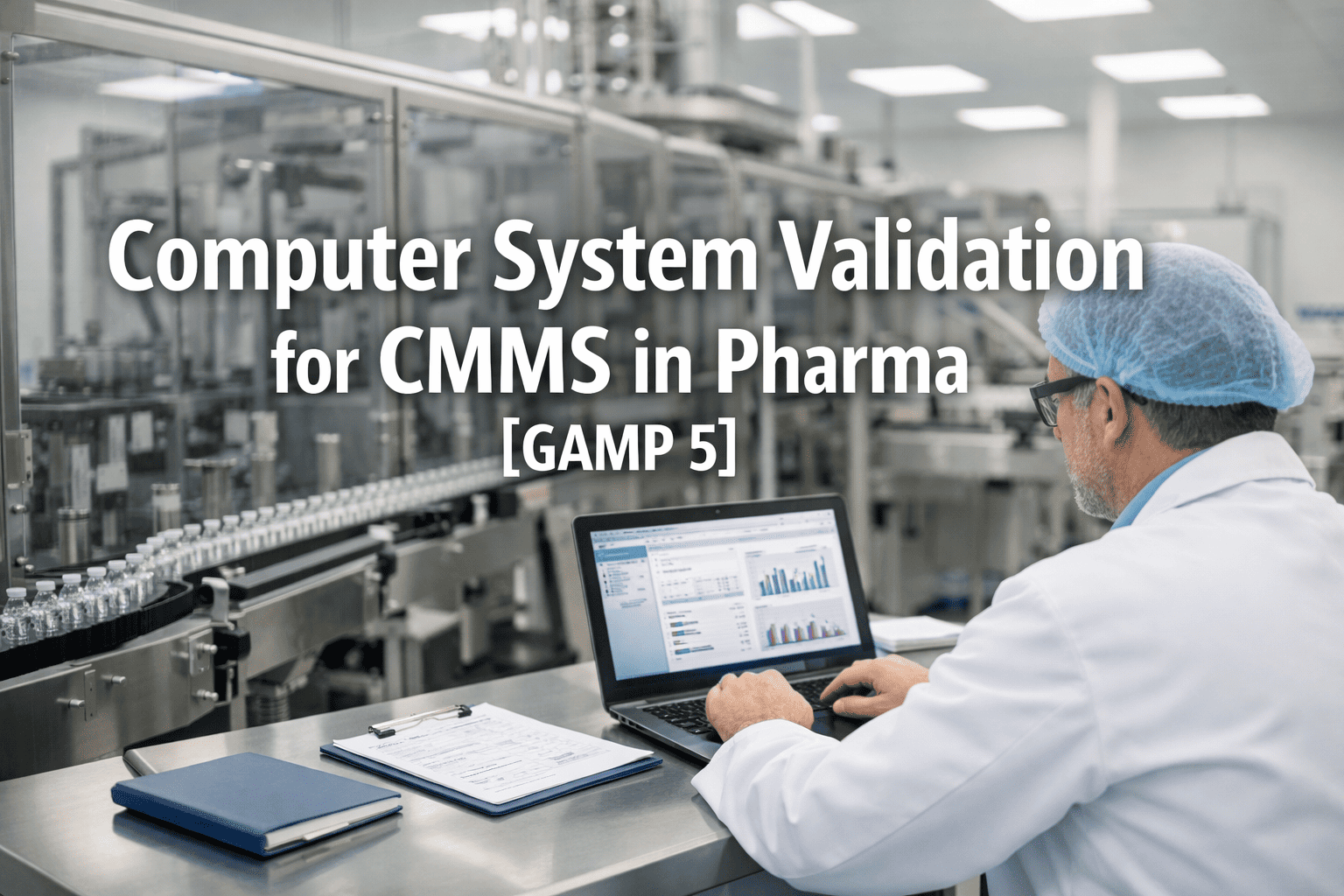
Read More
A CMMS operating in a GxP environment without completed IQ/OQ/PQ protocols, a signed User Requirement Specification, and documented 21 CFR Part 11 controls exposes your facility to FDA 483 observations, Warning Letters, and consent decrees averagi

Read More
An unresolved deviation in a pharmaceutical manufacturing line — without a documented root cause, without a closed corrective action, and without effectiveness verification — exposes a facility to a Form 483 observation, a Warning Letter, and cons

Read More
A pharmaceutical equipment modification executed without a closed change control record — no impact assessment, no validation review, no regulatory filing determination — exposes a US drug manufacturer to an FDA Form 483 observation, a warning let

Read More
A single cleaning validation failure or inadequate documentation during a regulatory inspection can trigger a Form 483 observation, Warning Letter, or product recall for pharmaceutical manufacturers. With FDA and EMA scrutiny on cleaning procedure

Read More
A single undocumented or out-of-calibration instrument in a pharmaceutical manufacturing facility can trigger a Form 483 observation, delay batch release, or lead to product recall — with average remediation costs exceeding $450,000 per incident.

Read More
A pharmaceutical water system failure — whether in WFI generation, purified water distribution loops, or RO/EDI modules — can trigger immediate batch rejection, regulatory observations from FDA or EMA, and multimillion-dollar production downtime.

Read More
Aseptic filling line downtime in pharmaceutical manufacturing — whether from piston pump seal failure, peristaltic tubing degradation, needle misalignment, or stopper placement errors — costs an average of $450,000 per hour in lost production and
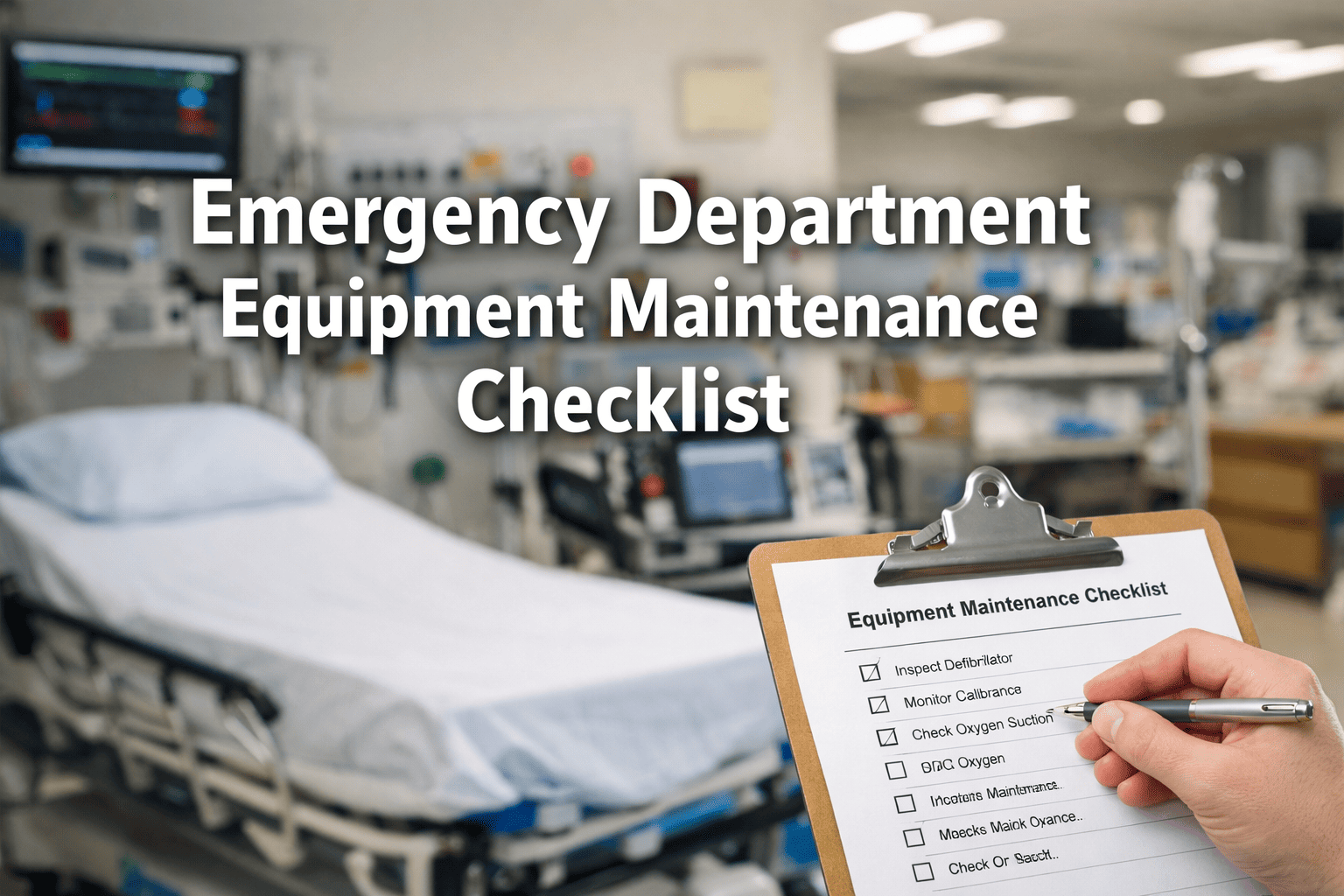
Read More
An unverified crash cart at a resuscitation bay — missing a signed daily check, an expired defibrillator pad, or an undocumented ventilator calibration record — exposes a US health system to an average TJC citation finding of $84,000 per equipment

Read More
A single failure in operating room equipment during surgery — whether a surgical light losing intensity mid-procedure, a table malfunction, or an electrosurgical unit delivering inconsistent energy — carries immediate patient safety risks and sign
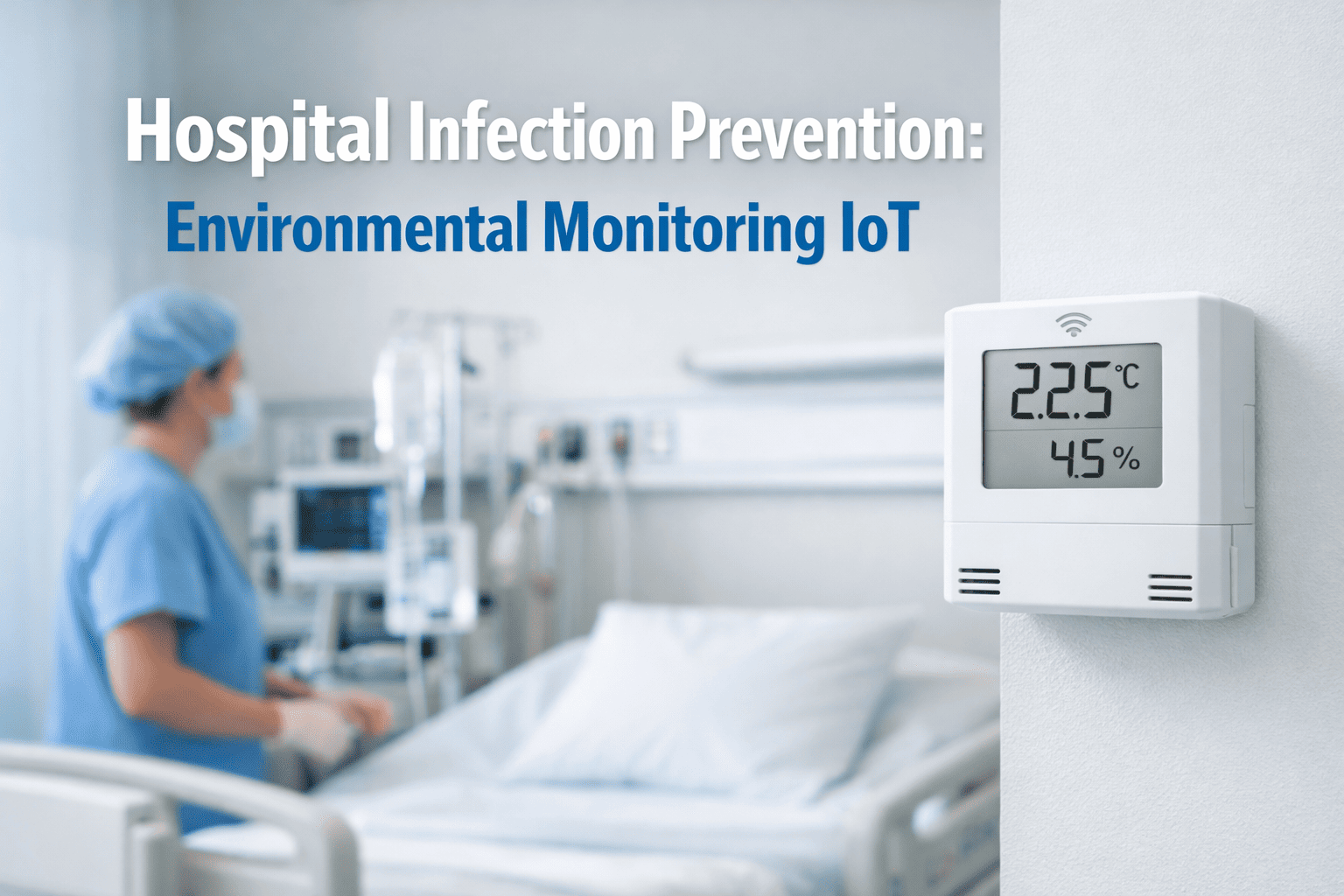
Read More
A single hospital-acquired infection (HAI) outbreak — undetected by manual environmental rounds, undocumented in a retrievable audit record — costs a US hospital an average of $28,400 per case in direct treatment costs, plus CMS reimbursement pena

Read More
A single missed preventive maintenance task on critical hospital equipment — without automated escalation, without documented SLA compliance, and without auditable workflow records — can trigger Joint Commission findings, delay patient care, and e

Read More
A single failure in critical medical equipment — from undetected bearing wear in an MRI compressor to electrical insulation breakdown in a ventilator — can halt life-saving procedures, compromise patient safety, and trigger regulatory violations u
Read More
A non-compliant hospital maintenance program — with incomplete preventive maintenance records, undocumented equipment inspections, and gaps in life safety system documentation — exposes healthcare facilities to average OSHA citation risks exceedin

Read More
Agentic AI is transforming healthcare facility maintenance by autonomously orchestrating complex, multi-step workflows — from predictive equipment servicing and regulatory compliance tracking to real-time resource allocation and intelligent decisi
Read More
A single missed hospital compliance requirement during a Joint Commission survey or CMS audit can trigger findings costing $50,000 to over $250,000 per deficiency, plus corrective action mandates and potential loss of accreditation. In 2024-2025,
Read More
Preventive maintenance protocols at US hospitals cost an average of $240,000 annually per facility in scheduled inspections and routine service calls — yet 58% of hospital mai

Read More
A deferred maintenance backlog averaging $11 per square foot across US hospital systems — combined with reactive work orders that cost 3 to 5 times more than planned preventive maintenance — produces an annual cost exposure that compounds with eve
Read More
Hospital maintenance departments running on paper work orders, clipboard-based PMs, and disconnected spreadsheets carry a compounding liability: every undocumented inspection, every missed preventive task, and every untracked corrective a
Read More
A single misplaced or unmaintained medical device in a hospital can delay critical procedures, compromise patient safety, and trigger regulatory penalties. In 2024, U.S. healthcare facilities faced average Joint Commission and CMS citations exceed

Read More
Hospital maintenance leaders face increasing pressure to maintain full regulatory compliance while ensuring maximum equipment uptime and patient safety. A single gap in preventive maintenance documentation, undocumented lockout/tagout procedures,

Read More
A 400-bed regional hospital operating on paper-based HVAC schedules and reactive maintenance cycles spends an estimated $1.8M to $2.4M annually on mechanical and electrical energy — 42 percent of which moves through HVAC systems running at pre-set
Read More
A hospital maintenance department that cannot produce a completed preventive maintenance work order, a current fire door inspection record, or a signed utility system risk assessment during a Joint Commission survey faces an Immediate Threat to Li

Read More
A 400-bed regional hospital operating on paper-based HVAC schedules and reactive maintenance cycles spends an estimated $1.8M to $2.4M annually on mechanical and electrical energy — 42 percent of which moves through HVAC systems running at pre-set
Read More
A health system operating 12 hospitals on four separate CMMS platforms cannot demonstrate consistent PM compliance to a Joint Commission surveyor — and inconsistency, not absence, is what triggers Condition-level findings under EC.02.05.01. In a 2

Read More
A single unplanned MRI downtime event at a 400-bed hospital can cost $18,000–$25,000 in lost revenue and patient rescheduling — before accounting for emergency repair premiums and technician overtime. Across a fleet of imaging equipment, these int

Read More
A single unplanned downtime event on a surgical robot during a critical procedure or a documentation failure in a hospital's disinfection robot fleet can trigger regulatory scrutiny, patient safety risks, and six-figure operational losses. Healthc

Read More
Unplanned downtime of an MRI, CT scanner, or X-ray system in an imaging center can result in significant revenue loss, delayed diagnoses, and compromised patient care. A single hour of MRI downtime often exceeds $2,000–$4,000 in direct lost revenu

Read More
A single unplanned equipment failure in a hospital can cascade into delayed surgeries, extended patient wait times, and significant revenue loss. Predictive analytics closes this gap by forecasting failures, optimizing staffing, and aligning resou
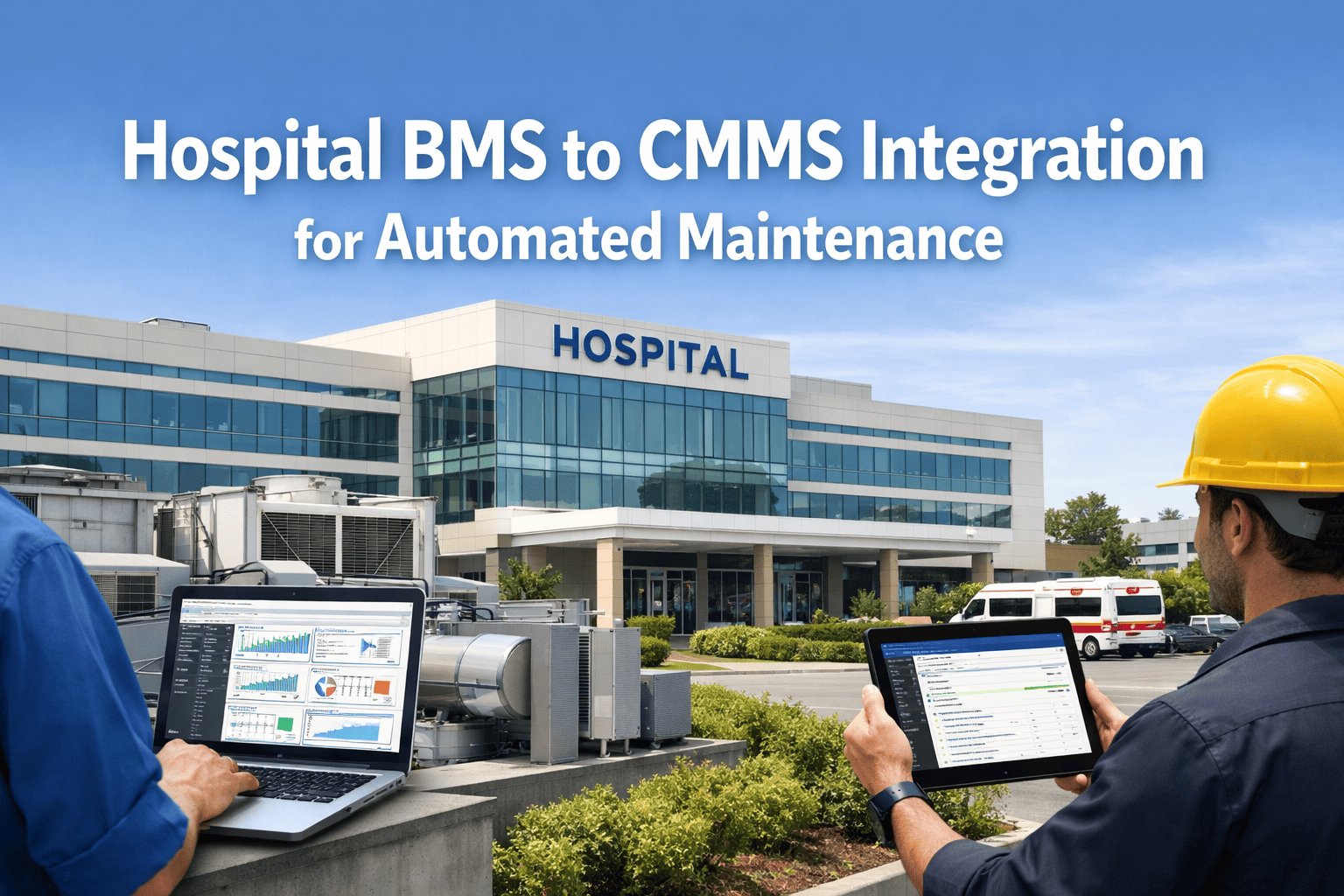
Read More
A hospital chiller failure, AHU malfunction, or critical BMS alarm left unaddressed can compromise patient safety and operational continuity. In healthcare facilities, the gap between Building Management System (BMS) detection and Computerized Mai
Read More
A hospital chiller failure, AHU malfunction, or critical BMS alarm left unaddressed can compromise patient safety and operational continuity. In healthcare facilities, the gap between Building Management System (BMS) detection and Computerized Mai

Read More
A single hour of unplanned downtime for critical medical equipment in a hospital can cost $10,000–$50,000 in lost revenue, delayed procedures, and compromised patient safety. In 2025–2026, over 60% of hospitals worldwide have adopted IoT devices f

Read More
Incomplete HIPAA documentation at a hospital system — without current infection control records, without automated maintenance logs, and without signed compliance audits — costs a US healthcare facility an average CMS citation of $247,000 per viol

Read More
A single Life Safety Code violation at a hospital costs an average CMS penalty of $109,000 per deficiency. In 2023, 68% of CMS surveys at hospitals identified at least one critical compliance gap. Most failures aren't hazards in facilities—they're
Read More
Healthcare organizations face a compliance blind spot that most legal and compliance teams don't see until an OCR investigator does: the maintenance layer. Every biomedical technician entering a patient room, every contractor servicing a connected

Read More
Non-compliance with CMS Conditions of Participation maintenance requirements at a US hospital — without documented life safety inspections, without current equipment certifications, and without a preventive maintenance program — costs an average C

Read More
NFPA 99 non-compliance in hospitals carries significant financial and reputational risk. A single failure in documented risk-based maintenance for medical gas systems, essential electrical equipment, or life safety systems can result in Joint Comm

Read More
A failed Joint Commission survey due to incomplete maintenance documentation, untracked medical equipment inspections, or missing Environment of Care (EC) records can result in conditional accreditation, costly corrective action plans, and signifi

Read More
A hospital technician needs to isolate a critical chiller for urgent maintenance — but the LOTO procedure is outdated, the confined space entry permit for the cooling tower basin lacks a current gas test, and the fall protection harness inspection

Read More
Hospitals face increasing pressure to maintain strict HIPAA compliance while managing critical medical equipment and facility assets. Traditional CMMS solutions often fall short on data security, deployment flexibility, and audit readiness. Oxmain

Read More
A non-functional nurse call button, delayed response logging, or missing test records during a Joint Commission survey can trigger immediate patient safety citations, corrective action mandates, and potential liability exposure for hospitals. In r

Read More
A single unplanned downtime of critical medical equipment in a hospital can cost $10,000–$50,000 per hour in lost revenue, delayed procedures, and patient safety risks. Yet most healthcare facilities still rely on reactive maintenance, leading to

Read More
Hospital maintenance documentation gaps continue to drive significant regulatory risk. A single Joint Commission or CMS finding related to incomplete equipment records or life safety systems can result in citations exceeding $120,000, plus potenti

Read More
Maintenance documentation gaps in hospitals continue to drive Joint Commission and CMS findings, with 68% of recent surveys citing deficiencies in Environment of Care standards. A single major citation can exceed $250,000 in remediation costs and

Read More
Choosing between a traditional CMMS and an AI-powered CMMS can make the difference between reactive firefighting and truly predictive maintenance in hospitals. A single unexpected downtime of a critical MRI, ventilator, or sterilizer due to missed
Read More
A single missed preventive maintenance task on a hospital's critical life-support ventilator, MRI machine, or autoclave — without a documented schedule, without automated reminders, and without auditable compliance records — can trigger a Joint Co

Read More
Hospitals lose millions annually to equipment downtime, compliance risks, and inefficient maintenance processes. A poorly implemented CMMS compounds these issues with low adoption and incomplete records. Oxmaint delivers a rapid, healthcare-specif

Read More
A flat roof failure at a hospital — without a current inspection record, without a documented waterproofing assessment, and without a signed preventive maintenance log — exposes a US healthcare facility to an average remediation cost of $240,000 p
Read More
A roof membrane failure above an operating room costs more than the repair. It costs OR downtime at $30,000 to $80,000 per day, remediation at $200,000 to $500,000, and a Joint Commission Environment of Care citation that follows your facility thr

Read More
A patient bed elevator that goes out of service during a code blue — without a current inspection certificate, without a documented preventive maintenance record, and without a signed service log — costs a US hospital an average Joint Commission c
Read More
A hospital system missing a single FDA medical device recall notification — without real-time alert routing, without affected equipment identification, and without documented remediation — costs an average of $2.1 million in liability exposure, co

Read More
Dialysis machines operate at the center of patient care — and any lapse in maintenance, water purity, or disinfection directly impacts treatment outcomes. Yet many dialysis centers still rely on fragmented logs, delayed documentation, and manual t

Read More
In 2024, the FDA logged over 4,200 adverse event reports tied to anesthesia delivery systems — vaporizer drift, circuit leaks, and flow calibration failures driving 61 percent of device-related intraoperative incidents. The Joint Commission found
Read More
In 2024, the FDA logged over 4,200 adverse event reports tied to anesthesia delivery systems — vaporizer drift, circuit leaks, and flow calibration failures driving 61 percent of device-related intraoperative incidents. The Joint Commission found
Read More
41 percent of ultrasound adverse event reports trace back to transducer degradation that a scheduled PM inspection would have caught. The machine powers on. The image appears. The diagnosis is compromised. That gap — between operational equipment

Read More
In 2023, the Joint Commission cited emergency equipment readiness failures in 31 percent of hospital surveys — making code equipment documentation a top-five medical equipment finding nationwide. The defibrillators were on the crash carts. The bat

Read More
Infusion pumps are the most reported medical device category to the FDA — over 56,000 adverse event filings in 2023 alone. The root cause in the majority of Joint Commission findings and litigation outcomes is not missing maintenance — it is maint
.png)
Read More
A bedside patient monitor in a cardiac ICU that drifts 4 mmHg on NIBP readings — undetected because the last calibration was 14 months ago instead of 12 — creates a clinical decision error that no post-incident review can undo. In 2024, 58 percent

Read More
A single sterilization documentation gap — one missing biological indicator result, one unrecorded cycle parameter, one unsigned load release — costs a US hospital an average of $92,000 per associated infection event, plus Joint Commission survey

Read More
Undocumented calibration events, missed PM intervals, and unlinked corrective actions are the three most common sources of CAP Phase II deficiencies — and the most preventable. In 2024, 68 percent of CAP inspection cycles at US clinical laboratori
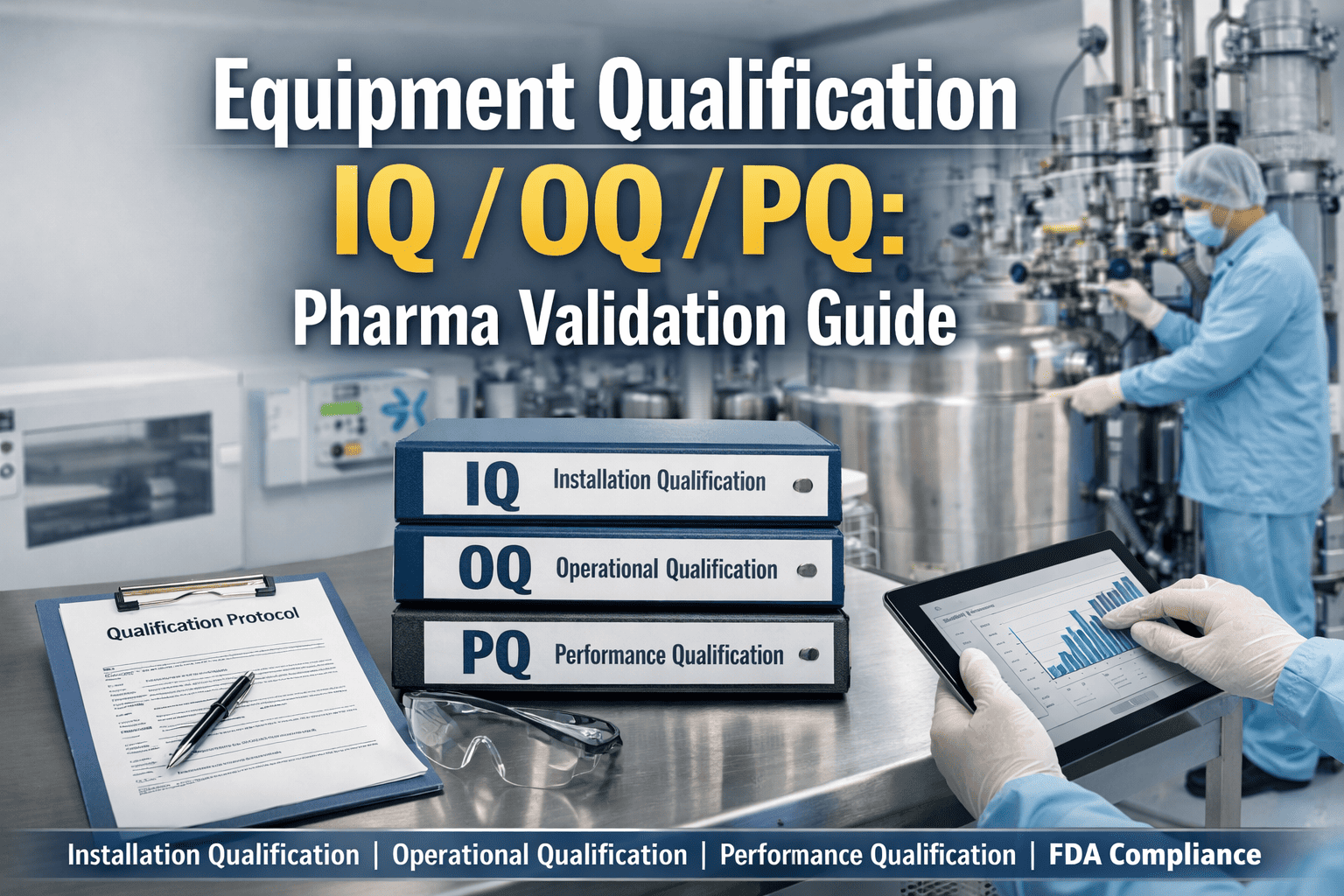
Read More
FDA 21 CFR §211.63 requires documented evidence that pharmaceutical manufacturing equipment is properly installed, operates within defined parameters, and performs its intended function reproducibly under production conditions. The structured thre

Read More
FDA 21 CFR Part 211 Subpart D sets the equipment maintenance, cleaning, and calibration requirements that every pharmaceutical manufacturer producing drug products for the US market must meet. An investigator who requests your maintenance records

Read More
Under 21 CFR Part 211.68, pharmaceutical equipment must be "of appropriate design, adequate size, and suitably located to facilitate operations for its intended use and for its cleaning and maintenance." The phrase "cleaning and maintenance" is no

Read More
A hospital nurse spending 20 minutes per shift searching for an IV pump that has been moved to the wrong floor is not a workflow problem — it is a quantifiable cost. Across a 400-bed hospital with 120 nursing staff on three shifts, that adds up to

Read More
A work order submitted verbally to a passing technician in a hospital corridor has no timestamp, no priority classification, and no accountability trail. Studies show 23% of verbal maintenance requests in healthcare facilities are never actioned —

Read More
Healthcare facility managers searching for CMMS software in 2026 face a market crowded with platforms that call themselves "healthcare-ready" but lack the Joint Commission documentation workflows, medical equipment tracking, and NFPA compliance sc

Read More
Hospital pharmacy cleanrooms are the only space in a healthcare facility where a maintenance failure — a HEPA filter leak, a failed pressure differential, a surface cleaning gap — can directly contaminate every sterile preparation compounded for p

Read More
A hospital generator that fails to start during a grid outage does not produce a maintenance work order. It produces a mass casualty event. Ventilator-dependent ICU patients, patients mid-surgery under general anaesthesia, neonates in incubators —

Read More
Medical gas infrastructure is one of the few hospital systems where a single maintenance failure can affect every patient in a clinical zone simultaneously. Unlike a malfunctioning infusion pump or a defective surgical light — where the impact is

Read More
A failed fire door latch, a sprinkler head blocked by a storage cart, or a smoke detector untested since last survey — any single gap in a hospital's fire safety maintenance programme can result in a Joint Commission citation, a CMS survey finding

Read More
A pharmaceutical autoclave that passes every cycle visually can still fail GMP compliance if its thermocouples drift, its steam quality degrades, or its IQ/OQ/PQ documentation cannot be retrieved during an FDA inspection.

Read More
A single undetected HEPA filter integrity breach in a Grade B cleanroom can trigger a batch recall, a regulatory deviation, and a six-week investigation — all from a maintenance gap that costs under $500 to prevent. Pharmaceutical HVAC systems are

Read More
A single pressure reversal in an OR or isolation room creates a direct patient safety incident — and a Joint Commission citation if it goes undocumented. to see automated ASHRAE 170 compliance, pressure alerts, and Joint Commission audit document

Read More
A hospital in the US Midwest lost power to an entire ICU wing for 23 minutes during a summer thunderstorm — not because the generator failed to start, but because the automatic transfer switch had a degraded contact that slowed the transfer to 47

Read More
A surgical robot that goes offline mid-schedule does not just create a maintenance problem — it cancels procedures, displaces patients, and puts a $2.6 million asset out of service while staff wait.
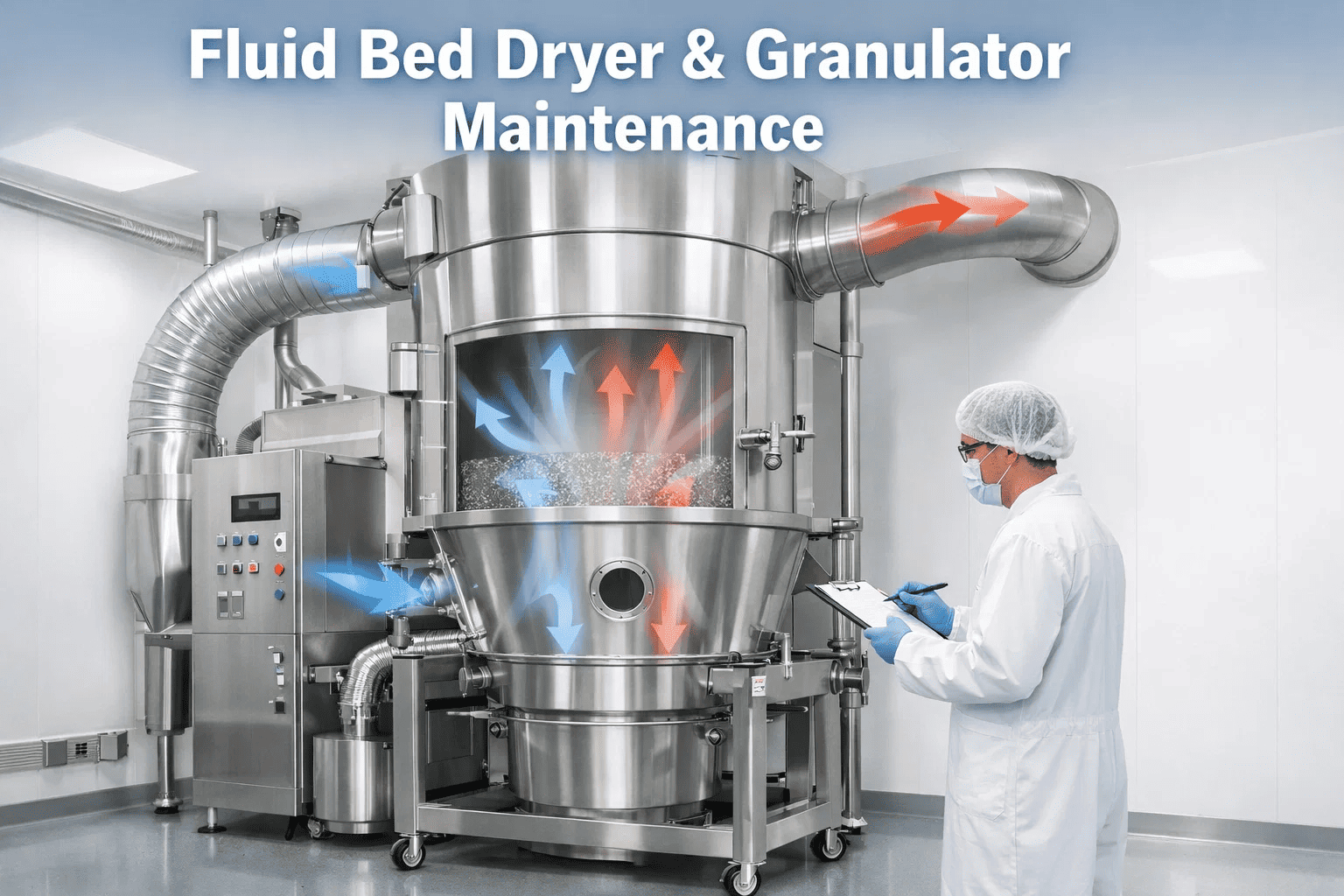
Read More
A fluid bed dryer running without a structured maintenance program is not a GMP risk waiting to happen — it is a GMP deviation already in progress. Clogged filter bags reduce airflow uniformity and cause moisture gradients that fail Loss on Drying

Read More
Pharmaceutical tablet presses are precision instruments where microscopic deviations in compression force can trigger batch rejections, regulatory holds, and six-figure quality incidents. Yet 68% of pharma facilities still monitor punch wear and forc

Read More
Pharmaceutical manufacturing runs on razor-thin tolerances. A tablet press running 2% out of spec does not just waste product — it triggers batch failures, regulatory holds, and investigations that shut lines for days. The difference between a pla
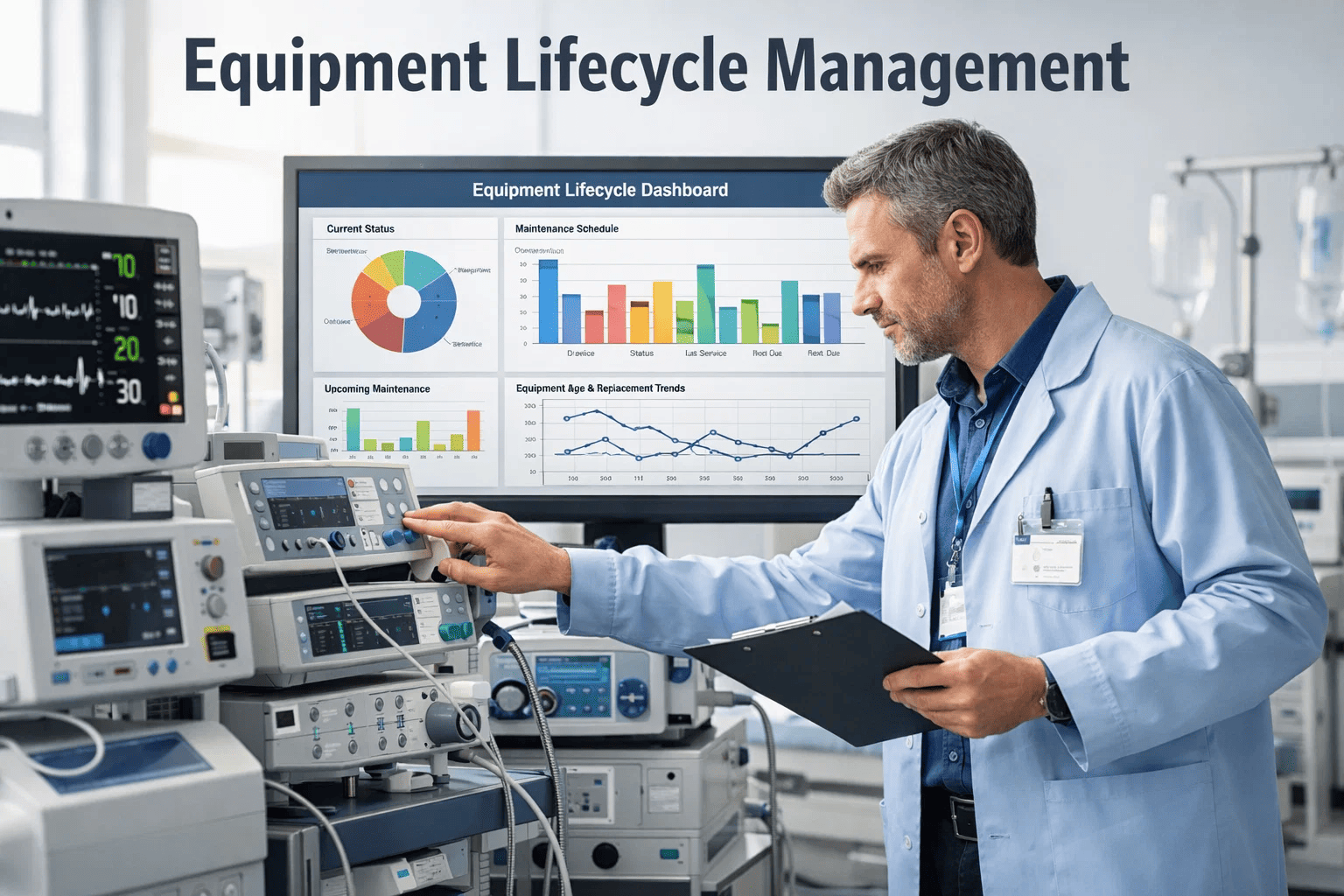
Read More
Biomedical equipment failures do not announce themselves. A ventilator that drifts out of calibration, an infusion pump with a worn drive mechanism, or a defibrillator with a degrading capacitor — these are not sudden events. They are the predicta

Read More
I'll create a unique, mobile-first responsive page about Hospital Equipment Downtime Cost Analysis with a completely different layout structure while maintaining the brand colors. Let me build this from scratch. A single MRI scanner offli
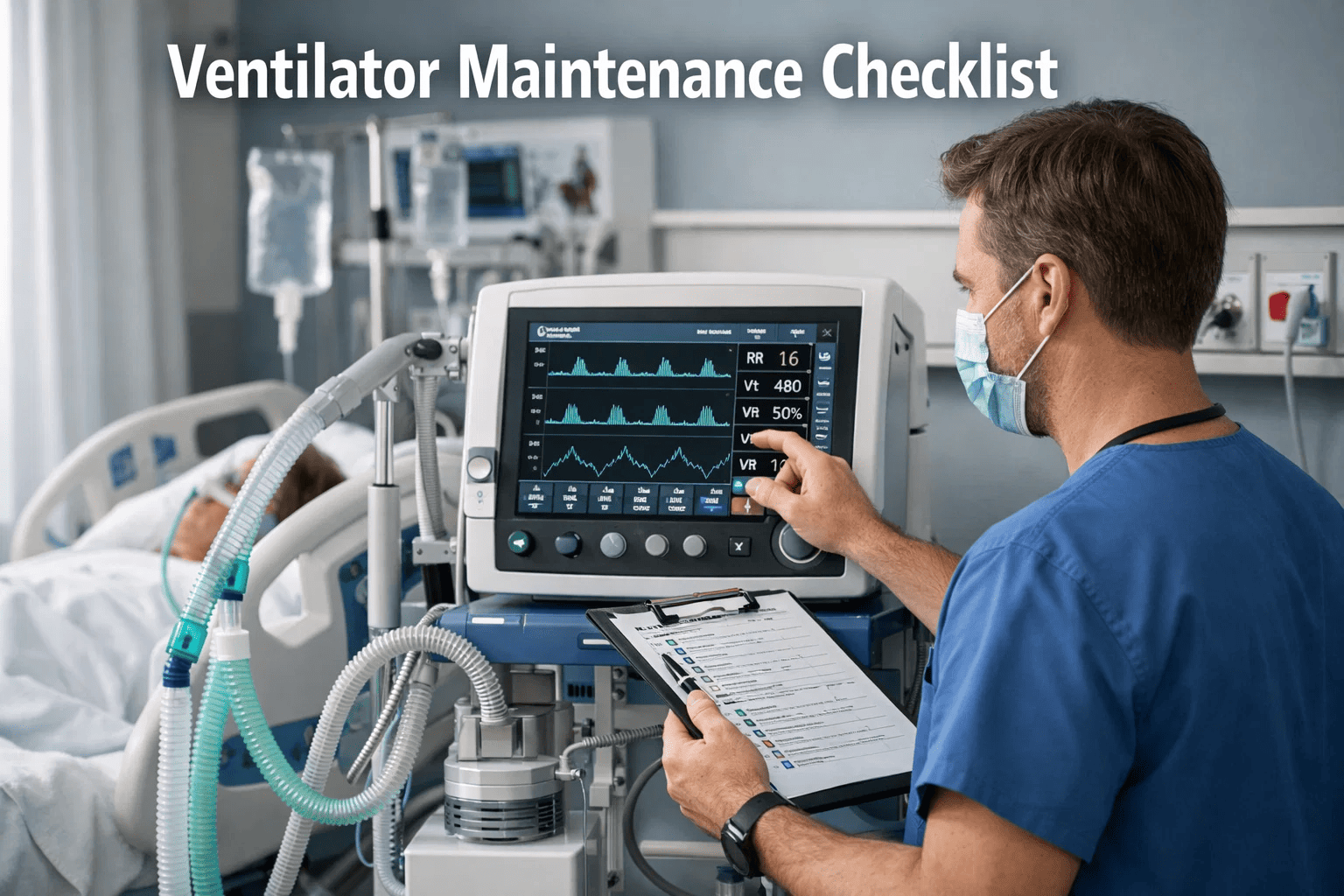
Read More
A ventilator failure in the ICU is not a maintenance inconvenience — it is a patient safety event. Studies show that 23% of ventilator-related adverse incidents are directly traceable to skipped or incomplete preventive maintenance steps. Yet acro
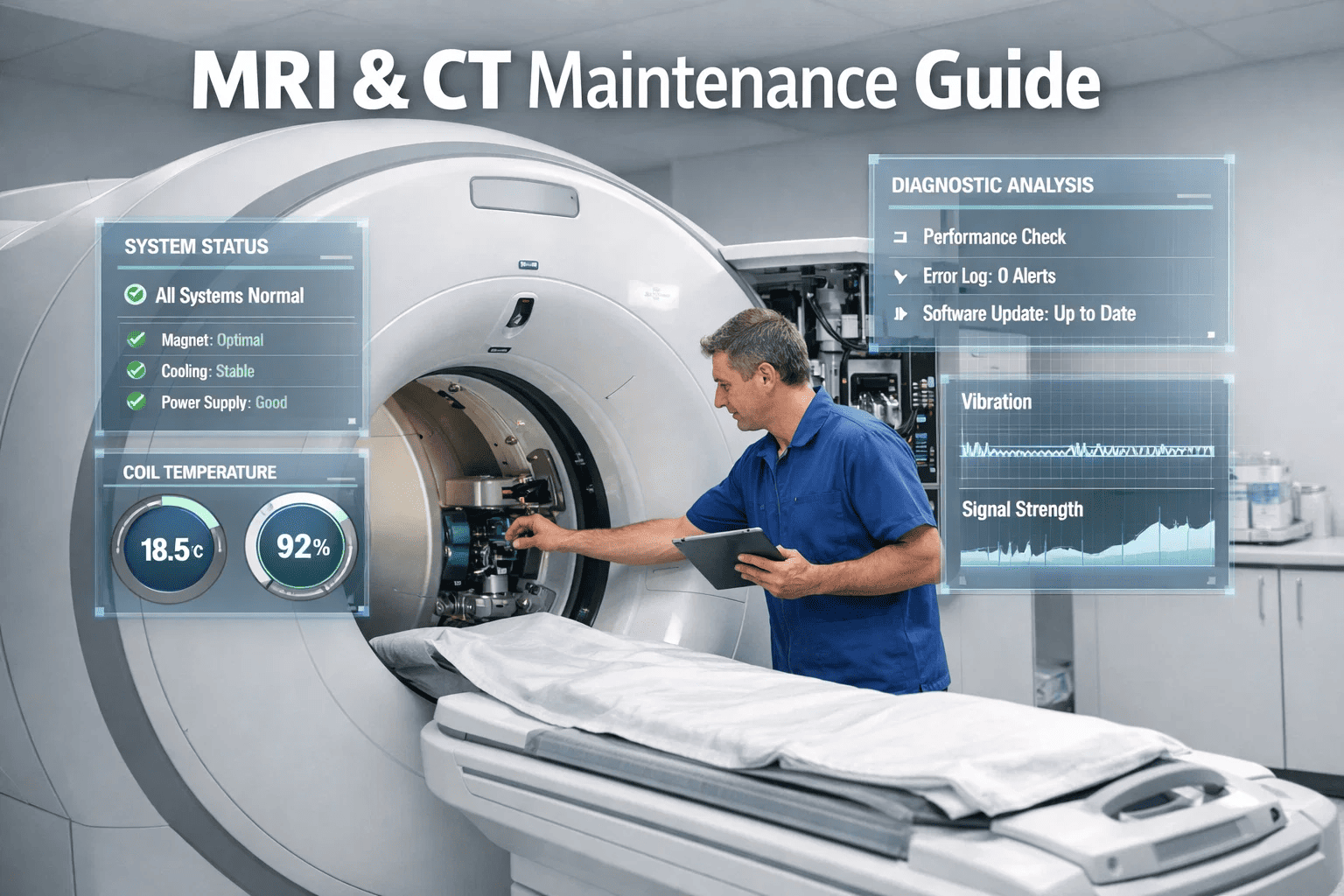
Read More
An MRI scanner goes offline at 7 AM on a Monday. By noon, twelve patients have been rescheduled, four referring physicians are on hold, and your biomedical team is chasing a parts lead time of three to five business days. That single unplanned fai

Read More
Unplanned equipment downtime in a surgical setting costs an average of $8,662 per minute. A single MRI out of service for one day erases approximately $4,000 in revenue — and that figure ignores the patients rescheduled, the diagnoses delayed, and

Read More
Most hospitals don't discover their equipment lifecycle gaps during a routine review — they find them during a budget crisis, when a $280,000 MRI scanner fails unexpectedly because nobody tracked its service history or planned its replacement. A s

Read More
Clinical engineering departments sit at the intersection of patient safety, regulatory compliance, and capital planning — yet most are managed with tools that have not changed since the 1990s. Paper logs, siloed spreadsheets

Read More
Every minute an MRI sits dark costs a hospital between $1,500 and $3,000 in lost revenue. CT scanners running without structured PM programs fail 60% more often than maintained units. Yet across radiology departments globally, maintenance is still

Read More
Every hospital floor has a version of this problem: a nurse needs an infusion pump, the closest one is missing, and staff spend 20–45 minutes searching the building before borrowing from another ward. The equipment was there all along — just invis

Read More
Most hospitals don't discover their documentation gaps during a routine review — they find them during a survey, when a TJC surveyor asks for a work order closed six months ago and the answer is a spreadsheet, a sticky note, or silence. A single d
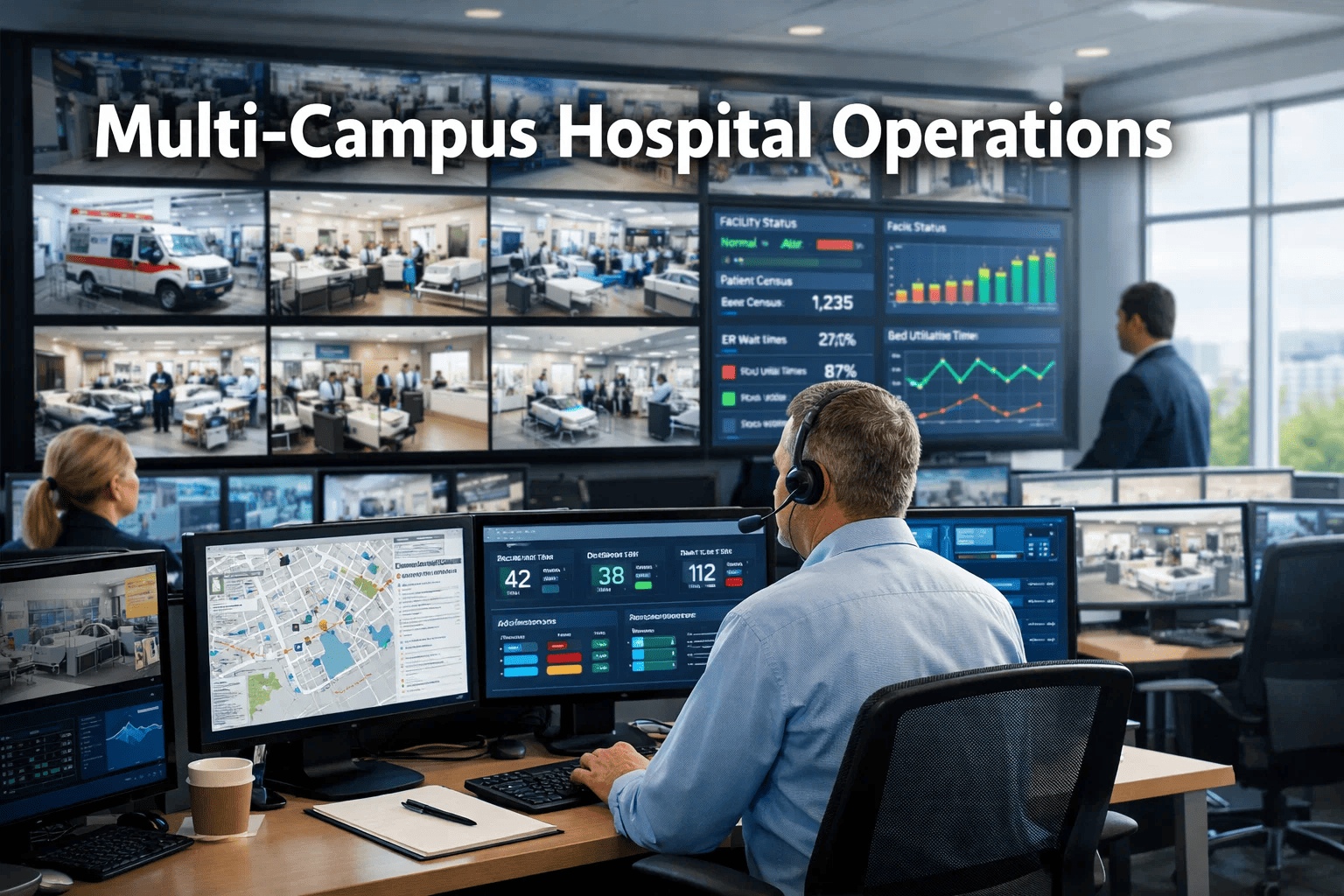
Read More
Running maintenance operations across a single hospital campus is hard. Running them across five, ten, or twenty is a different problem entirely — one that most health systems are solving with a patchwork of spreadsheets, site-specific CMMS platfo

Read More
Every hospital maintenance failure is a race against the clock — but most facilities have never formally decided how fast the clock needs to run. A collapsed SLA framework is not just an operations gap; it is a patient safety exposure, a complianc

Read More
Hospital maintenance budgeting is one of the least glamorous — and most consequential — decisions a healthcare operations leader makes each year. A miscalculated budget does not just drain working capital; it accelerates asset deterioration, expos

Read More
Every hospital runs on two parallel systems — one that delivers care, and one that keeps care possible. The second system, facilities and maintenance operations, is where 62% of healthcare organizations are still operating reactively in 2026: wait

Read More
Hospital equipment failure does not send a warning. An MRI scanner trips offline at 6 AM. A ventilator throws a fault code mid-shift. A surgical suite HVAC system fails on a Tuesday with a full operating schedule. These are not rare disasters — th

Read More
Every second counts in an emergency department — and the equipment your team reaches for in those seconds must work without hesitation. Studies show 23% of adverse events in hospitals are linked to equipment failures or maintenance lapses, yet mos

Read More
Hospital water systems are silent carriers of one of healthcare's most preventable threats. Legionella pneumophila thrives in warm, stagnant water between 77°F and 113°F — the exact conditions found inside aging hospital plumbing, cooling towers,

Read More
In hospitals, a ventilator that stops working mid-shift is not a maintenance failure — it is a clinical emergency. Yet across healthcare systems worldwide, the majority of equipment failures are entirely preventable. This article breaks down how s

Read More
Hospital infrastructure does not forgive complacency. A single ventilator failure, an unscheduled MRI shutdown, or a sterile processing breakdown does not just disrupt operations — it puts patients at risk, triggers regulatory scrutiny, and create

Read More
Medical tourism is no longer a niche curiosity — it is a $179 billion global industry reshaping how healthcare systems compete, invest, and perform. Hospitals that attract international patients operate under a fundamentally different set of deman

Read More
Every square foot of a modern hospital is a system — HVAC keeping operating theatres sterile, elevators moving patients between floors, infusion pumps delivering precise medication doses, MRI machines cycling through thousands of scans a year. Unt

Read More
Every year, ECRI Institute releases its definitive analysis of the threats most likely to harm patients in the months ahead. The 2026 report lands at a critical inflection point — artificial intelligence is entering clinical pathways faster than g

Read More
The healthcare sector enters 2026 at a turning point unlike any in the past two decades. Clinical AI is shifting from pilot programs into formal governance policy. Value-based care contracts now account for more than 40% of US Medicare reimburseme

Read More
Medical gas infrastructure is one of the few hospital systems where a single maintenance failure can affect every patient in a clinical zone simultaneously. Unlike a malfunctioning infusion pump or a defective surgical light — whe

Read More
Clinical laboratories operate at the intersection of precision science and patient safety. Every result your analyzer produces drives a clinical decision — a diagnosis, a medication dose, a surgical go-ahead. When instruments drift out of calibrat

Read More
An ambulatory surgery center operates at the intersection of clinical precision and facility engineering. Every procedure performed within its walls depends on sterile fields maintained by HVAC systems running within strict press
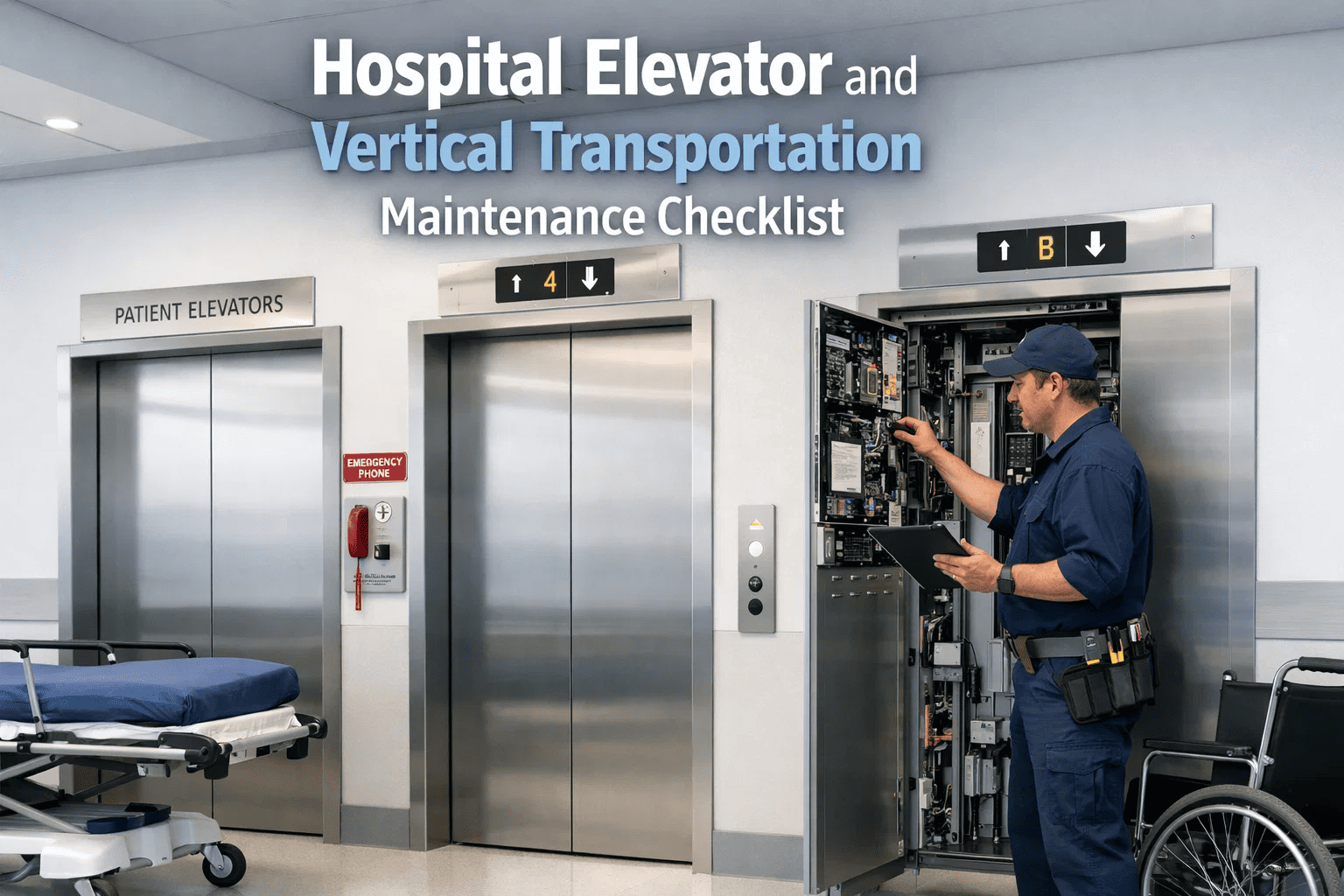
Read More
Hospital elevators carry patients on stretchers, staff rushing between floors, and equipment that cannot afford a delay. When a lift fails in a healthcare facility, the consequences are not measured in inconvenience — they are measured in clinical

Read More
Hospital biomedical engineers operate in one of the most unforgiving environments in any industry. Infusion pumps, syringe drivers, PCA devices, and enteral feeding systems run continuously across wards, ICUs, and surgical units — and a missed PM

Read More
Every hospital carries a quiet obligation that never sleeps — the duty to protect patients who cannot protect themselves. Fire safety is not a checkbox. It is the structural backbone of every healthcare facility's life safety program, and when it

Read More
Hospital kitchens operate under some of the most demanding conditions in any facility. Serving hundreds of patients daily, managing strict temperature controls, and staying audit-ready at all times — the dietary department is where food safety, in

Read More
Across every continent, the buildings that house modern medicine are quietly failing. Hospital corridors that once represented the height of public investment now conceal corroding pipes, overloaded electrical panels, and HVAC sy

Read More
Healthcare enterprises managing hundreds of millions in assets across clinical sites face a structural data problem — SAP S/4HANA holds the financial truth about every asset, every cost center, and every inventory transaction, w

Read More
Hospital maintenance doesn't fail because of broken equipment — it fails because of broken vendor relationships. When a chiller goes down at 2 AM in an operating wing, the real question isn't whether the compressor failed. It's
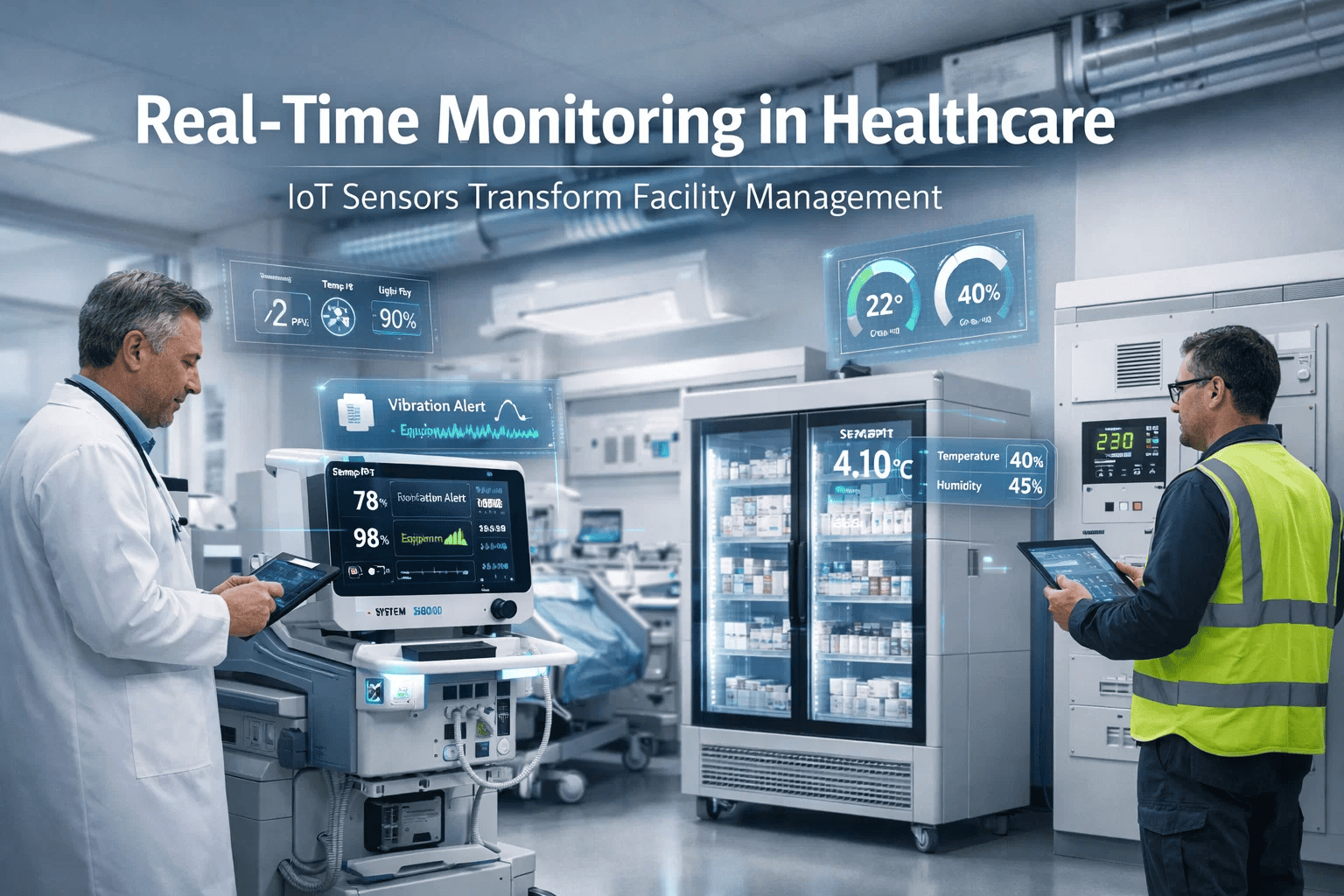
Read More
Every hospital runs on invisible systems — HVAC keeping surgical suites sterile, refrigeration preserving temperature-sensitive medications, ventilators sustaining lives in the ICU. For decades, facility managers learned about f

Read More
Nurse call systems are the central nervous system of any inpatient care environment. When a call goes unanswered because of a failed device, a discharged battery, or a misconfigured IP node, the consequences extend far beyond inconvenience — patie

Read More
Sterilization equipment failures in sterile processing departments are not just maintenance problems — they are patient safety events. When an autoclave cycle fails validation, when an EtO sterilizer misses a PM window, when documentation cannot w

Read More
Clinical laboratories operate on a fundamental principle: every result must be accurate, every time. Yet across diagnostic centers worldwide, equipment calibration lapses, missed preventive maintenance, and fragmented compliance records quietly er

Read More
Hospital maintenance teams across the USA, UK, Australia, UAE, and Germany are under mounting pressure — aging infrastructure, tighter compliance mandates, and shrinking budgets colliding simultaneously. Yet the highest-performing health systems c

Read More
Every hospital in the United States operates under a non-negotiable obligation: life-safety power must never fail. Yet maintenance teams across North America still rely on paper logs, missed fuel checks, and reactive testing cycles that leave emer

Read More
The Joint Commission does not announce its arrival on a fixed schedule — and when surveyors walk through your doors, the question they answer is not whether your facility is safe today, but whether you can prove it has been safe every day for the

Read More
Biomedical equipment doesn't announce its own failure. It degrades in silence — across calibration drift, seal fatigue, and battery decline — until the moment it matters most. A structured medical equipment preventive maintenance checklist turns t

Read More
Patient room equipment failures don't announce themselves — they develop quietly between shifts, across routine cycles, and through gradual wear that paper-based programs never catch in time. This hospital bed and patient room equipment maintenanc

Read More
In 2026, undetected HVAC failures, neglected water systems, and unmonitored isolation rooms are generating the exact conditions that allow healthcare-associated infections to spread. With 1.7 million HAIs annually in US hospitals, your preventive

Read More
In 2026, equipment failure is no longer an acceptable surprise. Clinical engineering teams managing ICU floors, surgical suites, and diagnostic departments now have access to AI-powered predictive maintenance that flags device failures 14 to 21 da

Read More
Every hospital biomedical engineer knows the moment: a ventilator alarms at 2:47 AM, a technician responds, the fault is cleared, and the repair is documented in one system while the work order lives in another — and neither talks to the asset rec

Read More
Hospital water infrastructure sits at the intersection of patient safety, regulatory compliance, and operational risk — yet it remains one of the most under-documented systems in healthcare facilities management. Legionella bacteria colonize in ho

Read More
Hospital finance teams approve millions in capital expenditures every budget cycle based on the same unreliable inputs: equipment age, manufacturer estimates, and departmental lobbying. A 2025 ASHE Capital Planning Benchmark revealed that 67 perce

Read More
Every hour a hospital MRI scanner sits offline costs approximately $7,900 in cancelled procedures, rescheduled patients, and emergency service overhead. For a radiology department running three to five imaging systems — MRI, CT, X-ray, and ultraso
Read More
When state surveyors and CMS inspectors arrive at a hospital, they do not come to observe clinical outcomes — they come to request your NFPA 99 maintenance documentation for every Category 1 system on the floor. Medical gas piping, isolated power
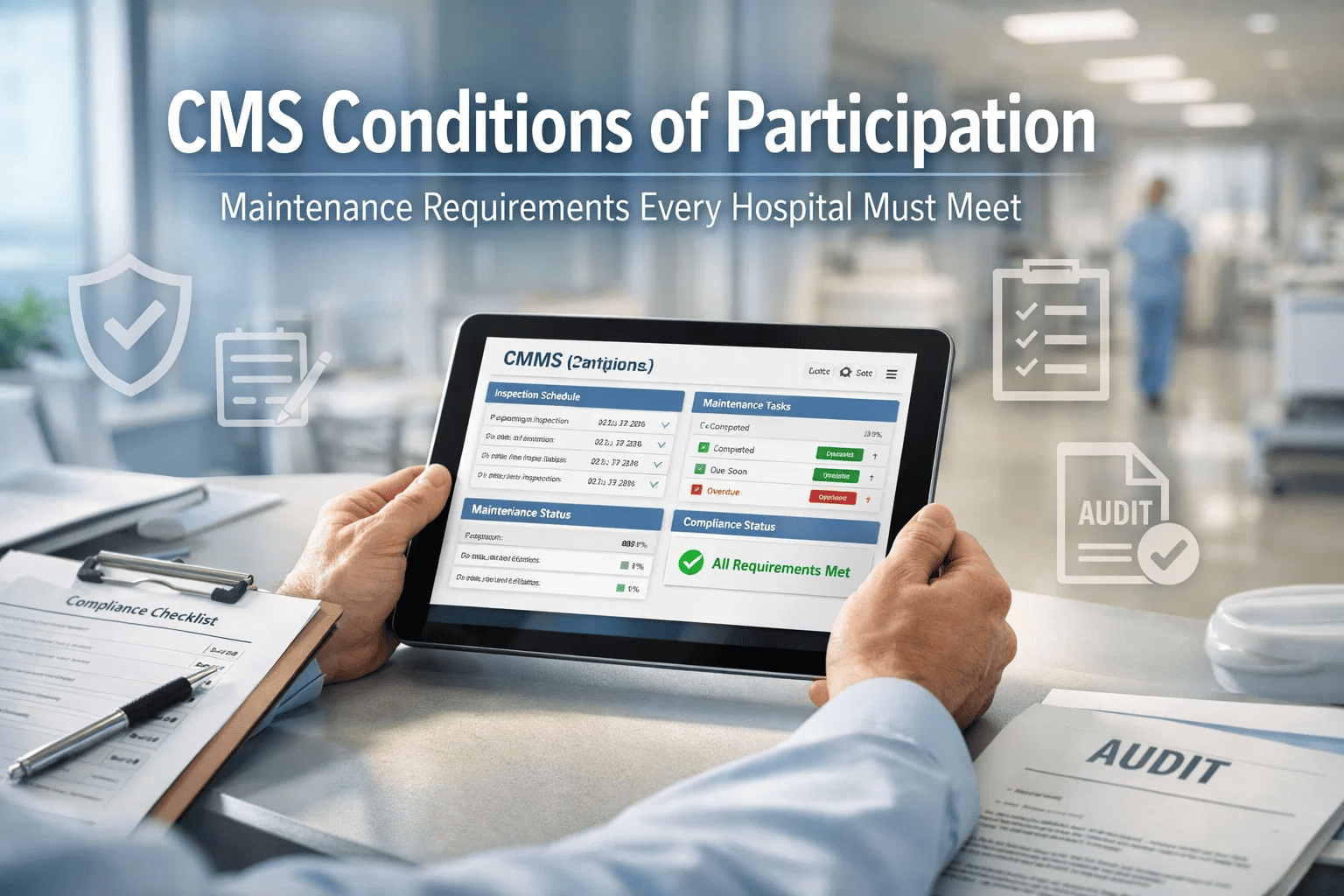
Read More
CMS Conditions of Participation set the baseline health and safety standards every hospital must satisfy to remain eligible for Medicare and Medicaid reimbursement — and within them, the Physical Environment standard at 42 CFR §482.41 consistently

Read More
Joint Commission surveyors do not schedule appointments to review your documentation — they arrive and ask for it immediately. When the Environment of Care chapter opens in a standard TJC survey, the first 60 minutes are consumed by a single deman

Read More
In 2024, 31% of hospital ransomware events traced their initial entry point to a maintenance or facilities system — not the EHR, not the billing platform. The CMMS. Attackers have learned what most facility managers have not yet internalized: main

Read More
Healthcare maintenance teams are drowning in manual processes — work orders lost in email chains, preventive maintenance missed because no one got the alert, compliance documents scattered across paper binders. Workflow automation is the structura

Read More
Hospital energy bills do not lie. The U.S. Department of Energy estimates that healthcare facilities spend between $25 and $30 billion annually on energy — averaging $6.50 to $8.00 per square foot, or four to five times more than a standard commer

Read More
Biomedical equipment is the backbone of clinical care — and yet most healthcare facilities still manage it through spreadsheets, paper logs, and reactive repair calls. The gap between knowing a device is failing and acting before it fails is where

Read More
The global healthcare industry is in the middle of a maintenance revolution — and the facilities still running on manual rounds, paper logs, and reactive repair cycles are falling behind in ways that affect patient outcomes, regulatory standing, a

Read More
By 2028, over 70% of hospital systems in the US, UK, and UAE are projected to have active AI-driven maintenance programs — yet fewer than 18% of healthcare facilities today have moved beyond spreadsheets and reactive repair cycles. The gap between

Read More
Choosing the wrong CMMS for your hospital does not just slow down your maintenance team — it creates compliance exposure, accelerates asset degradation, and turns avoidable failures into patient safety events. With over 340 CMMS vendors now compet

Read More
AI vision cameras are no longer a pilot-program luxury reserved for large academic medical centers — they are an operational necessity reshaping how hospitals detect hazards, secure facilities, and prevent equipment failures before they become pat

Read More
Hospital maintenance teams in 2026 are operating in an environment where a single unresolved work order can escalate from a minor equipment fault to a patient safety incident within hours. Work order management in healthcare is n
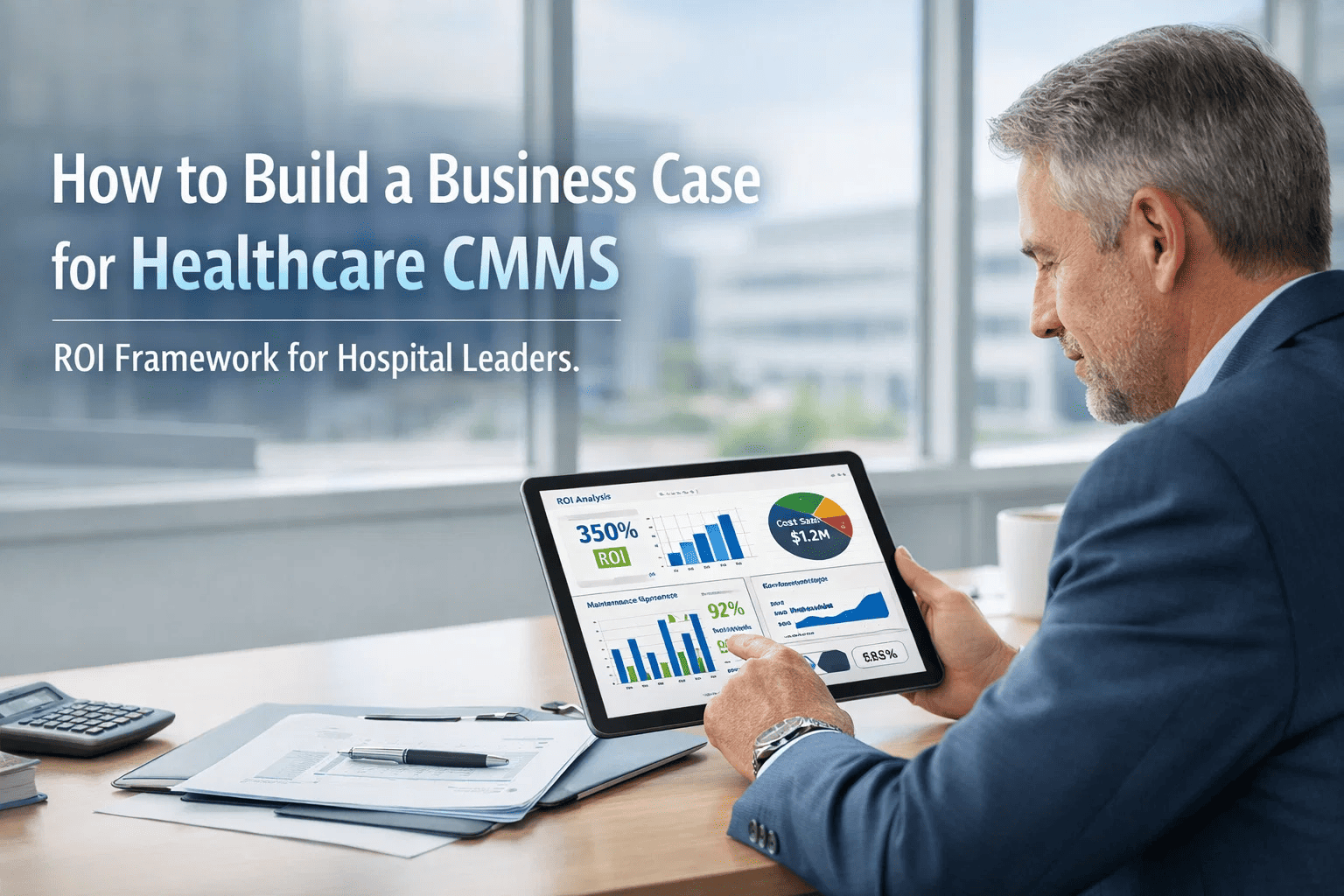
Read More
Hospital executives do not approve budgets on intent — they approve them on numbers. If you are a Facility Director or VP of Operations trying to get CMMS investment over the line, the challenge is not making the operational cas

Read More
Healthcare facilities operate under a standard of operational accountability that most industries never experience — where a failed HVAC unit can compromise a sterile field, a broken sterilizer can halt an entire surgical schedule, and a missing m

Read More
Patient monitoring equipment sits at the intersection of technology and human life. Bedside monitors, telemetry systems, pulse oximeters, capnography units, and multi-parameter vital signs monitors continuously track the physiological state of cri

Read More
Hospital operations generate an enormous volume of data every day — from equipment sensor readings and work order completions to repair durations and parts expenditure. Yet most healthcare facilities capture only a fraction of this intelligence, l

Read More
Healthcare facility management has entered a new era of complexity. As hospitals expand their clinical footprints, adopt increasingly sophisticated medical technologies, and operate under tightening regulatory scrutiny, the traditional approach to

Read More
In a hospital, every second of equipment downtime carries consequences that extend far beyond the maintenance budget. A failed ventilator at 2 AM, an offline MRI scanner before a scheduled diagnostic, or an out-of-service sterilization autoclave a

Read More
Artificial intelligence is no longer a distant promise in healthcare — it is actively reshaping how clinicians make decisions and how hospitals function at every operational level. From flagging sepsis risk hours before symptoms escalate to automa

Read More
Hospital maintenance teams operate in one of the most demanding environments on earth. Equipment downtime is not just a budget line — it is a patient safety event. Yet the majority of hospital technicians still carry paper work orders, return to t

Read More
Healthcare facility managers walk a tightrope every day — balancing operational efficiency with the stringent demands of regulatory compliance. When it comes to HIPAA, most attention naturally focuses on electronic health records, billing systems,
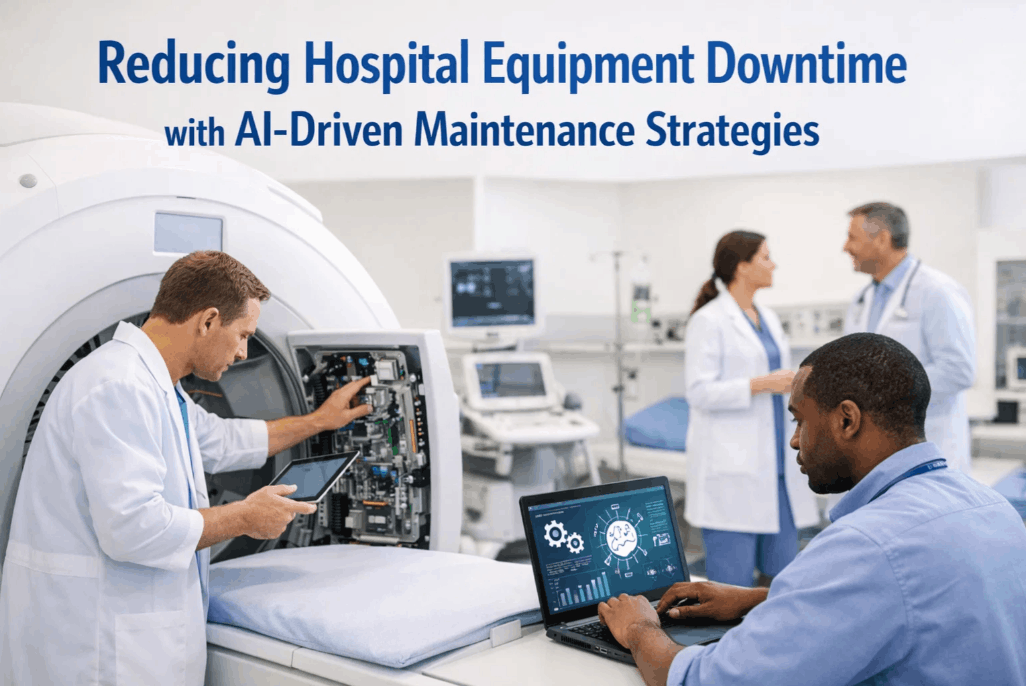
Read More
Unplanned equipment failure in a hospital is not simply an operational inconvenience — it is a patient safety event. When a ventilator goes offline unexpectedly, when a CT scanner requires emergency service in the middle of a trauma shift, or when

Read More
When a ventilator fails mid-procedure, no clinical team wants to hear about scheduled maintenance intervals. The only question that matters is whether the device was properly monitored. AI asset health scoring answers that question — before the fa

Read More
Hospital infrastructure never sleeps. From ICU ventilators and MRI machines to HVAC systems and emergency generators, the physical assets of a healthcare facility operate under continuous demand — where a single maintenance failure can cascade int

Read More
In 2026, hospital operations teams are under more pressure than ever. Regulatory bodies in the USA, UK, Australia, Canada, and the UAE are tightening compliance requirements for biomedical asset documentation. Labor costs are ri
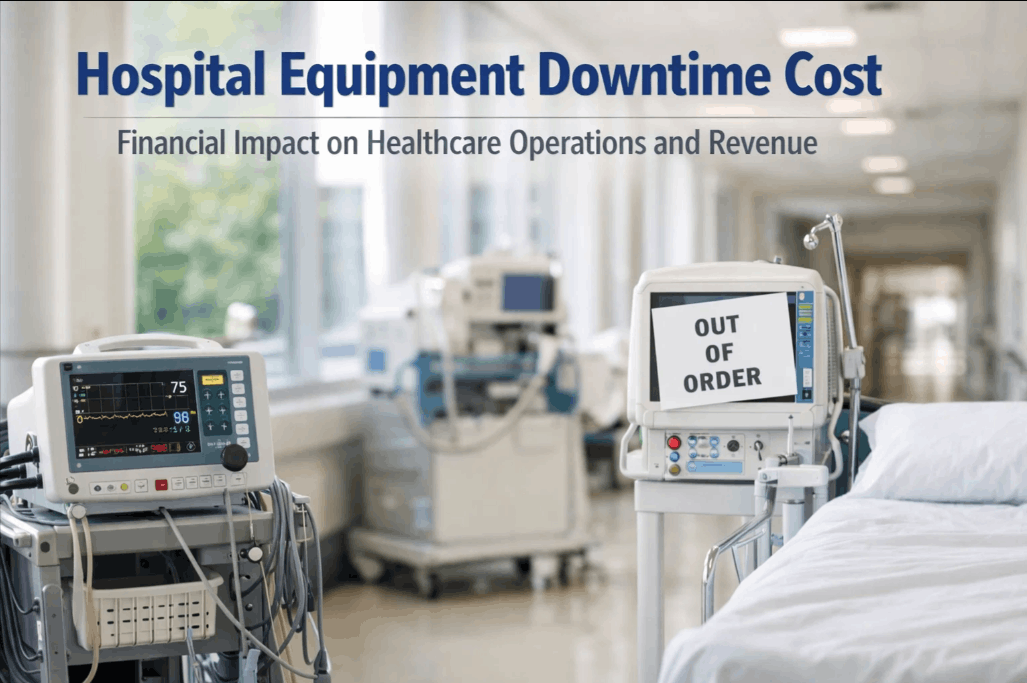
Read More
Hospital equipment downtime is one of the most financially damaging and operationally disruptive challenges facing healthcare systems today. From imaging suites and surgical robots to ventilators and infusion pumps, every hour a critical medical d
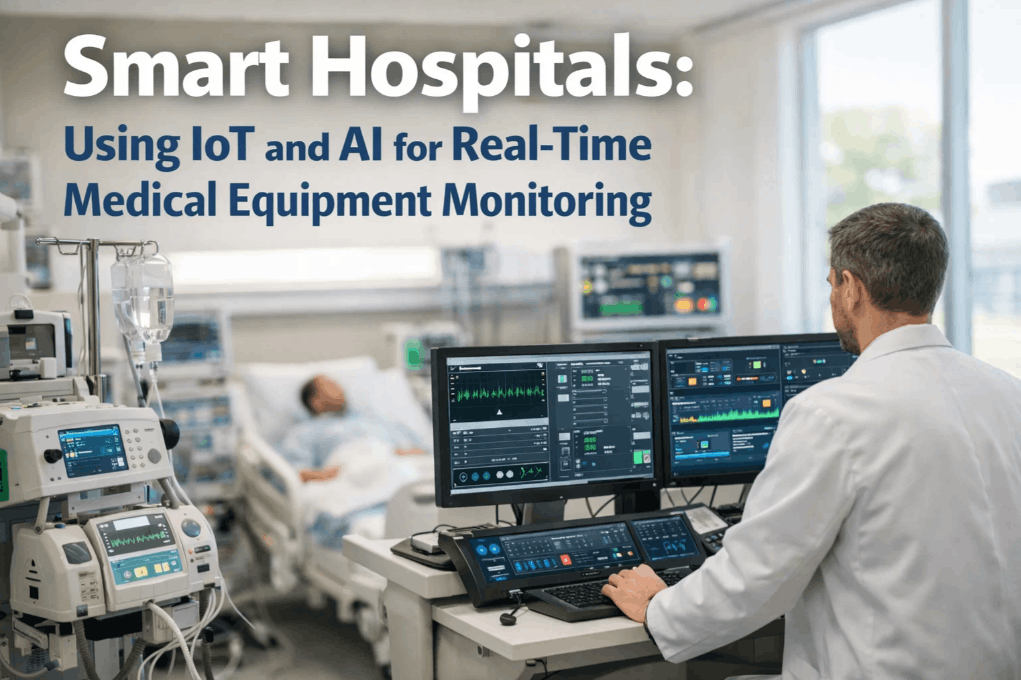
Read More
Modern hospitals are undergoing a profound transformation — one driven not by a single breakthrough, but by the convergence of two powerful technologies: the Internet of Things (IoT) and Artificial Intelligence (AI). Together, they are enabling a

Read More
In hospitals and healthcare facilities, a ventilator that fails mid-shift or an MRI that goes offline without warning is not just an operational setback — it is a patient safety crisis. Yet across the USA, UK, Australia, Ca

Read More
Every year, hospital equipment failures cause thousands of cancelled procedures, delayed diagnoses, and compromised patient outcomes across the USA, UK, Australia, UAE, and Germany. The frustrating reality is that the vast majority of these failur

Read More
Hospital asset management software has become a critical operational backbone for modern healthcare facilities navigating the complex challenge of tracking thousands of medical devices, equipment units, and supplies across spr
.png)
Read More
In 2026, hospitals that still manage medical equipment maintenance on spreadsheets, paper logs, or disconnected work order systems are operating with a blind spot that directly costs lives and millions in avoidable downtime. Healthcare CMMS softwa

Read More
Rehabilitation has always been the most human side of medicine — the slow, determined process of rebuilding strength, coordination, and independence after injury, surgery, or neurological damage. But for decades, it has also been the most resource

Read More
Hospitals and health systems are under relentless financial pressure. Margins have compressed to historic lows, labor costs continue to climb, and reimbursement models are shifting toward outcomes rather than volume. In this environment, artific

Read More
Healthcare fraud is not a fringe problem. It is the largest source of financial loss in the healthcare system — estimated at $300 billion annually in the United States alone, representing nearly ten cents of every dollar spent on healthcare. What

Read More
Healthcare organizations have become the most targeted sector in the global cybersecurity landscape. In 2023 alone, the healthcare industry reported more data breaches than any other sector — exposing over 133 million patient records according to

Read More
The modern hospital is under pressure from every direction — rising patient volumes, nursing shortages, burnout-driven turnover, and the constant push to do more with less. At the center of this operational crisis is a problem that has long resist

Read More
Every year, 1 in 31 hospital patients contracts a healthcare-associated infection during the course of their care. That is not an outlier number — it is the predictable consequence of monitoring systems that rely on manual rounds, paper checklists

Read More
Sleep disorders affect more than one billion people globally, yet the majority remain undiagnosed for years. Traditionally, diagnosing conditions like obstructive sleep apnea, insomnia, or restless leg syndrome required overnight stays in clinical
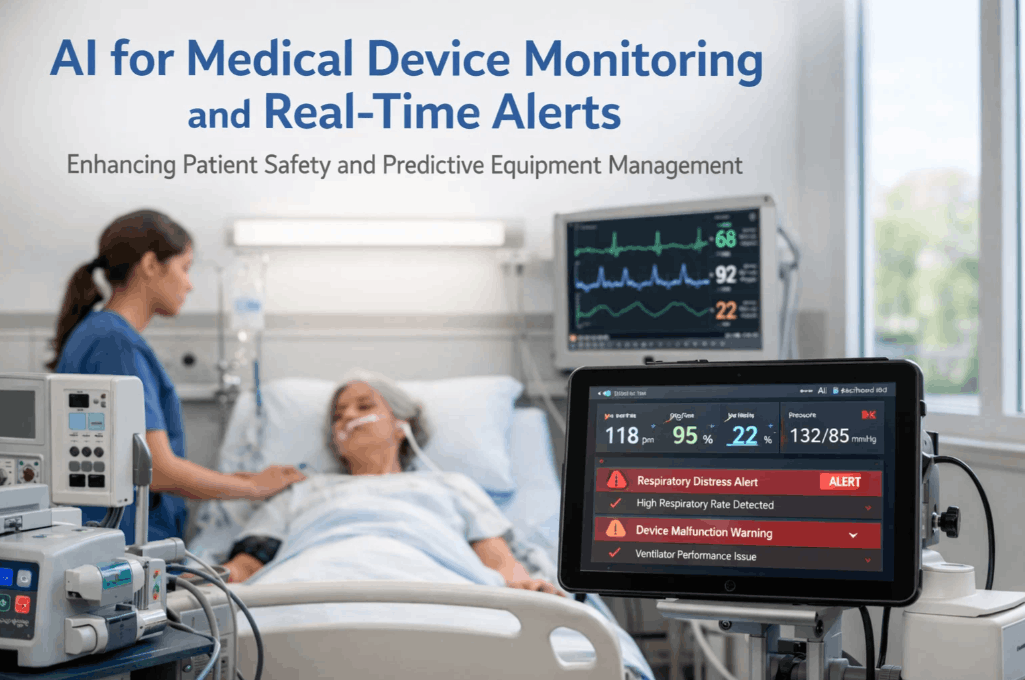
Read More
Modern hospitals are no longer simply places of treatment — they are dense, interconnected ecosystems of life-sustaining equipment, diagnostic systems, and monitoring technologies. At the center of this transformation is Artificial Intelligence, w

Read More
Artificial intelligence is dismantling the most expensive bottleneck in healthcare finance: the broken claims pipeline. Hospitals spending hundreds of millions on care delivery are losing up to 15 cents of every dollar bi

Read More
Artificial intelligence is dismantling the most expensive bottleneck in healthcare finance: the broken claims pipeline. Hospitals spending hundreds of millions on care delivery are losing up to 15 cents of every dollar bi

Read More
The promise of the electronic health record was simple: put every patient's medical history in one place, make it instantly accessible, and eliminate the paper chaos that had plagued healthcare for generations. That promise, for most health system

Read More
Natural Language Processing is no longer a futuristic concept in healthcare — it is quietly rewriting how hospitals document patient care, how clinicians access records, and how health systems operate at scale. From ambi

Read More
Healthcare facilities are no longer guessing what patients should eat. Artificial intelligence is reshaping dietary care — converting fragmented lab values, clinical condition codes, and patient histories into precision meal plans that directly ac

Read More
Hospitals and health systems are entering a pivotal era where artificial intelligence is no longer a future aspiration — it is an operational imperative. From predictive diagnostics and clinical decision support to automated administrative workflo

Read More
In healthcare facilities worldwide, nutrition management is undergoing a fundamental shift. AI-powered nutritional planning systems now analyse thousands of patient data points — from lab results and allergies to recovery timelines and metabolic p

Read More
Artificial intelligence is reshaping healthcare at an unprecedented pace — accelerating diagnostics, personalizing treatment protocols, and streamlining clinical workflows that once demanded enormous human effort. Yet as AI systems grow more embed
Read More
Across hospitals, senior care networks, and home health programs, the most consequential shift in patient care delivery is not happening inside clinical walls — it is happening inside patients' homes. AI-powered sensors, machine learning models tr

Read More
Healthcare systems across North America, Europe, and the Middle East face a common challenge: patients demand faster, more consistent communication — but administrative bandwidth has not kept pace with that demand. Over 75% of patients now prefer

Read More
Artificial intelligence is no longer a futuristic concept in healthcare — it is an operational reality reshaping how governments, health departments, and global agencies design policy, allocate resources, and respond to emergi

Read More
Healthcare is undergoing one of its most profound transformations in decades — not inside operating theatres or ICUs, but inside training rooms equipped with headsets, haptic gloves, and AI engines that adapt in real time. Virtual Reality and Arti

Read More
Healthcare organizations today operate under one of the most demanding regulatory environments in any industry. From Joint Commission standards and CMS Conditions of Participation to HIPAA documentation requirements and ISO 55001 frameworks, the c

Read More
Genomic medicine is undergoing a seismic shift. What once required years of painstaking laboratory work can now be accomplished in hours, as artificial intelligence systems parse billions of base pairs with a precision no human team could match. F

Read More
Machine learning is reshaping how clinicians understand, diagnose, and treat disease — moving healthcare from population averages to individual biological truth. For decades, medicine treated the average patient. Today, algorithms trained on billi

Read More
Rural healthcare is at a breaking point — 60 million people lack access to quality care, 140+ hospitals have shut down, and the gap keeps widening every year. AI is finally changing that, and the facilities that act now will define the next decade

Read More
Rural healthcare is at a breaking point — 60 million people lack access to quality care, 140+ hospitals have shut down, and the gap keeps widening every year. AI is finally changing that, and the facilities that act now will define the next decade

Read More
Healthcare organisations sit on one of the most valuable and most sensitive data assets in any industry — and the pressure to unlock its analytical potential without compromising patient privacy has never been greater. AI data governance in health

Read More
Healthcare is undergoing a profound digital revolution. AI-powered chatbots and virtual assistants are reshaping how hospitals communicate with patients, automate administrative workflows, and deliver care far beyond clinic wall

Read More
Across health systems worldwide, the gap between preventive care potential and actual delivery has long been shaped by one stubborn constraint: knowing where to look. Clinicians understand that catching disease early saves lives and costs, but ide

Read More
Healthcare has always been defined by its complexity — intricate patient journeys, overlapping clinical responsibilities, and workflows that span dozens of departments, systems, and specialists. For decades, hospitals absorbed this complexity thro

Read More
Bringing a new drug to market takes an average of 12 years and costs more than $2.6 billion — and the majority of that burden is carried by clinical trial operations. Yet as many as 80% of trials fail to meet enrollment timelines, and up to 30% of

Read More
Hospital facilities teams face a relentless challenge: keeping millions of square feet of complex infrastructure running without a single critical failure. HVAC systems that drift out of calibration can compromise sterile surgical environments. An

Read More
Robotic systems and artificial intelligence are redefining what is possible inside the operating room and the rehabilitation ward. Surgical robots now perform incisions with sub-millimetre accuracy, AI algorithms guide real-time procedural decisio

Read More
Oncology is being fundamentally reshaped by artificial intelligence. Predictive models trained on genomic data, imaging archives, and clinical records are enabling oncologists to forecast therapy responses, identify high-risk pa

Read More
Hospital supply chains handle thousands of SKUs, manage millions in annual procurement, and operate with zero tolerance for stockouts when patient care is on the line. Machine learning is fundamentally changing how healthcare fa

Read More
Radiology departments sit at the center of nearly every diagnostic pathway in modern hospitals — yet most imaging workflows still rely on manual queue management, paper-based prioritization, and reactive reporting systems that leave critical findi

Read More
Telemedicine has moved from experimental to essential healthcare delivery. In the United States alone, over 116 million telehealth visits were recorded in 2023, and adoption continues to accelerate across the UK, UAE, Australia, India, and Germany

Read More
Walk into any busy hospital ward today and you will witness a paradox: physicians equipped with the most advanced diagnostic tools in human history, spending more than half their working hours typing notes into electronic health records instead of

Read More
Hospitals have always operated under pressure — too many patients, too few beds, unpredictable surges, and staffing that rarely aligns perfectly with demand. For decades, capacity planning was a manual exercise: administrators reviewed last year's

Read More
Hospitals have always operated under pressure — too many patients, too few beds, unpredictable surges, and staffing that rarely aligns perfectly with demand. For decades, capacity planning was a manual exercise: administrators reviewed last year's

Read More
Intelligent wearables and home medical devices are transforming how clinicians monitor patients outside clinical settings — streaming continuous vitals, behavioral signals, and environmental data into AI systems that flag deterioration before symp

Read More
Drug discovery has historically been one of humanity's most expensive and time-consuming endeavors. Developing a single new medicine takes an average of 12 to 15 years and costs upwards of $2.6 billion, with a failure rate exceeding 90% in clinica

Read More
Healthcare systems in 2026 are under mounting pressure to deliver more with less — fewer resources, tighter margins, and rising patient volumes. Artificial intelligence-powered predictive analytics is rewriting the rules of hospital operations,
.png)
Read More
Sepsis kills approximately 11 million people annually — more than prostate cancer, breast cancer, and HIV combined. The defining clinical challenge is not treatment complexity. It is speed. Every hour of delayed intervention reduces survival proba

Read More
Artificial intelligence is fundamentally reshaping how health systems, governments, and epidemiologists anticipate the future. Where traditional public health models relied on lagging indicators and manual surveillance, AI-powered population healt
.png)
Read More
Digital healthcare ecosystems powered by AI and IoT are no longer pilot projects — they are the operating standard for health systems that intend to remain competitive, compliant, and patient-centred through 2030 and beyond.

Read More
The era of reactive hospital maintenance is over. Across modern healthcare systems, a quiet but consequential transformation is underway — one driven not by new drugs or surgical techniques, but by artificial intelligence embedded deep within the
.png)
Read More
Healthcare documentation consumes up to 35% of a clinician's working day — physicians spend nearly two hours on paperwork for every single hour of direct patient care. That ratio is not a rounding error; it i

Read More
Hospital infrastructure operates on a foundation of invisible complexity. Behind every controlled room temperature, every sterile airlock, every uninterrupted power supply, and every automated pharmacy dispenser lies a sophisticated control system
.png)
Read More
Artificial intelligence is no longer a futuristic concept in healthcare — it is actively reshaping how diseases are detected, measured, and prioritized. Machine learning for medical imaging sits at the center of this shift, enabli
-in-healthcare-maintenance-prevent-equipment-failure-&-downtime.png)
Read More
Root cause analysis is the discipline of not accepting "it broke" as an answer. In healthcare maintenance, equipment failure is never truly random — every unplanned downtime event has a traceable origin, and every origin left unaddressed becomes t
.png)
Read More
AI for Clinical Decision Support: Reducing Readmissions and Enhancing Outcomes — how modern AI models integrate vitals, lab results and patient histories to support clinicians with early alerts, risk scores and personalised treatment plans.
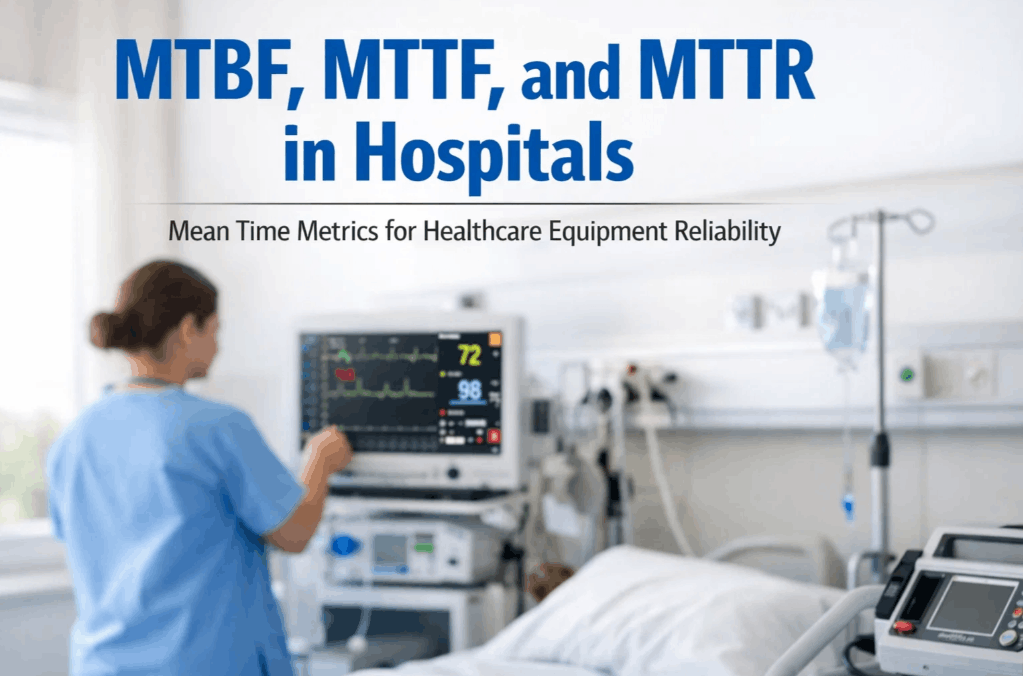
Read More
In a hospital, equipment reliability is not a technical abstraction — it is a matter of life and death. When a ventilator fails unexpectedly, when an infusion pump goes offline mid-treatment, or when an imaging system shuts down between scans, pat
.png)
Read More
Healthcare has entered an era where clinicians can rehearse a surgery before making a single incision, where hospital administrators can model a capacity crisis before it happens, and where treatment protocols are tested on

Read More
Hospitals run on equipment. Every MRI scanner, ventilator, infusion pump, and surgical robot is a link in a chain of patient care — and when one link breaks unexpectedly, the consequences ripple far beyond a maintenance tic
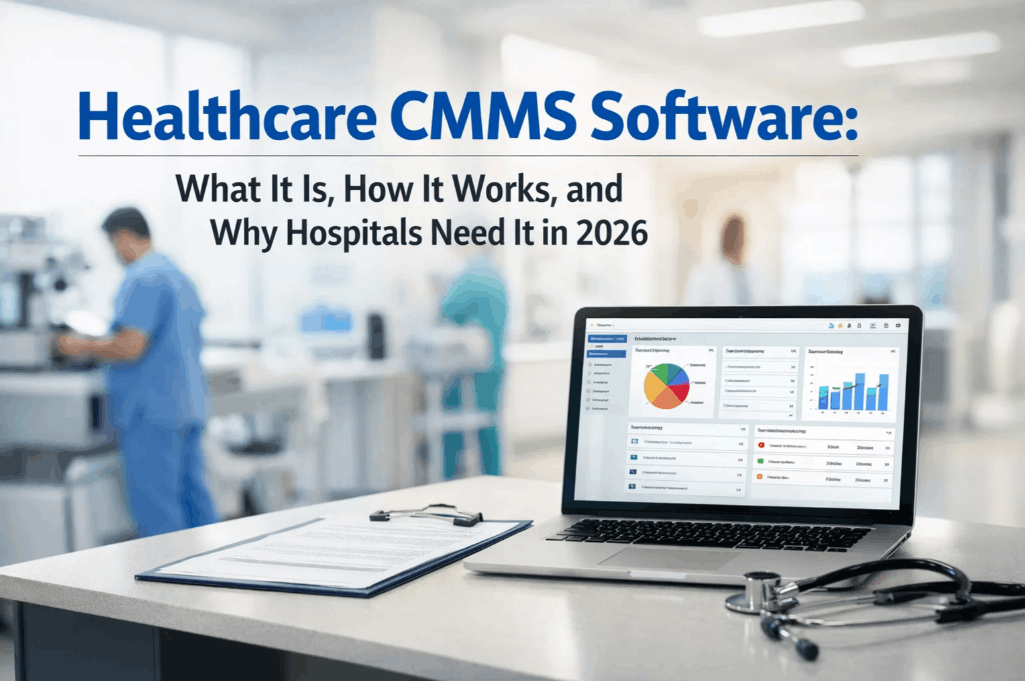
Read More
In 2026, hospitals can no longer afford to manage critical equipment the way they did a decade ago. Aging assets, growing regulatory demands, and razor-thin margins have made reactive maintenance a liability rather than a cost-saving measure. Heal

Read More
Deploying a CMMS in a hospital is not like setting one up in a warehouse. You are managing regulated medical devices, life safety systems, and compliance documentation that surveyors will scrutinize. A poor rollout does not just slow down your tea

Read More
India is running one of the most ambitious national AI-in-healthcare experiments on the planet — and the operational, diagnostic, and infrastructure implications are reshaping how health facilities are managed from Kerala to Kashmir. Whether you o

Read More
Imaging centers and hospitals operate in an environment where equipment reliability is not a matter of convenience but a direct determinant of patient safety and diagnostic accuracy. MRI scanners, CT systems, ultrasound units, and digital radiogra

Read More
Hospital facilities are among the most complex built environments in the world. Every square foot, from the sterile operating suite to the basement mechanical room, must function without interruption to protect patient safety, satisfy regulatory i
.png)
Read More
Hospitals are entering an era where equipment failure is no longer an acceptable operational risk — and the maintenance teams leading that shift are doing it with intelligent, data-driven platforms built for clinical environments
-(1)-(1).png)
Read More
Hospitals cannot afford unplanned downtime. A failed sterilizer, a tripped HVAC unit, or a malfunctioning imaging device does not just cost money — it delays patient care. AI-powered maintenance management is changing how h
.png)
Read More
Healthcare facilities run on uptime. A single ventilator failure, an HVAC shutdown in an ICU, or a delayed sterilization cycle is not a maintenance inconvenience — it is a clinical emergency. Yet 67% of hospitals still operate on reactive maintena

Read More
Medical equipment inspection is one of the most critical responsibilities in any hospital or clinic. From ventilators and infusion pumps to defibrillators and surgical instruments, every device in a healthcare setting must be verified as safe, cal

Read More
Hospital equipment failures do not announce themselves. They cascade — a missed PM on a ventilator becomes a clinical emergency, an untracked HVAC fault becomes a shutdown ward, and a reactive maintenance culture becomes a compl
.png)
Read More
Hospital equipment failures do not announce themselves in advance. A ventilator that malfunctions mid-procedure, an infusion pump that drifts out of calibration, or a sterilization unit that fails inspection — these are not random occurrences. The

Read More
Healthcare facilities operate in an unforgiving environment where equipment reliability is not a performance metric — it is a patient safety imperative. When a ventilator fails unexpectedly or a sterilization unit goes offline without warning, the
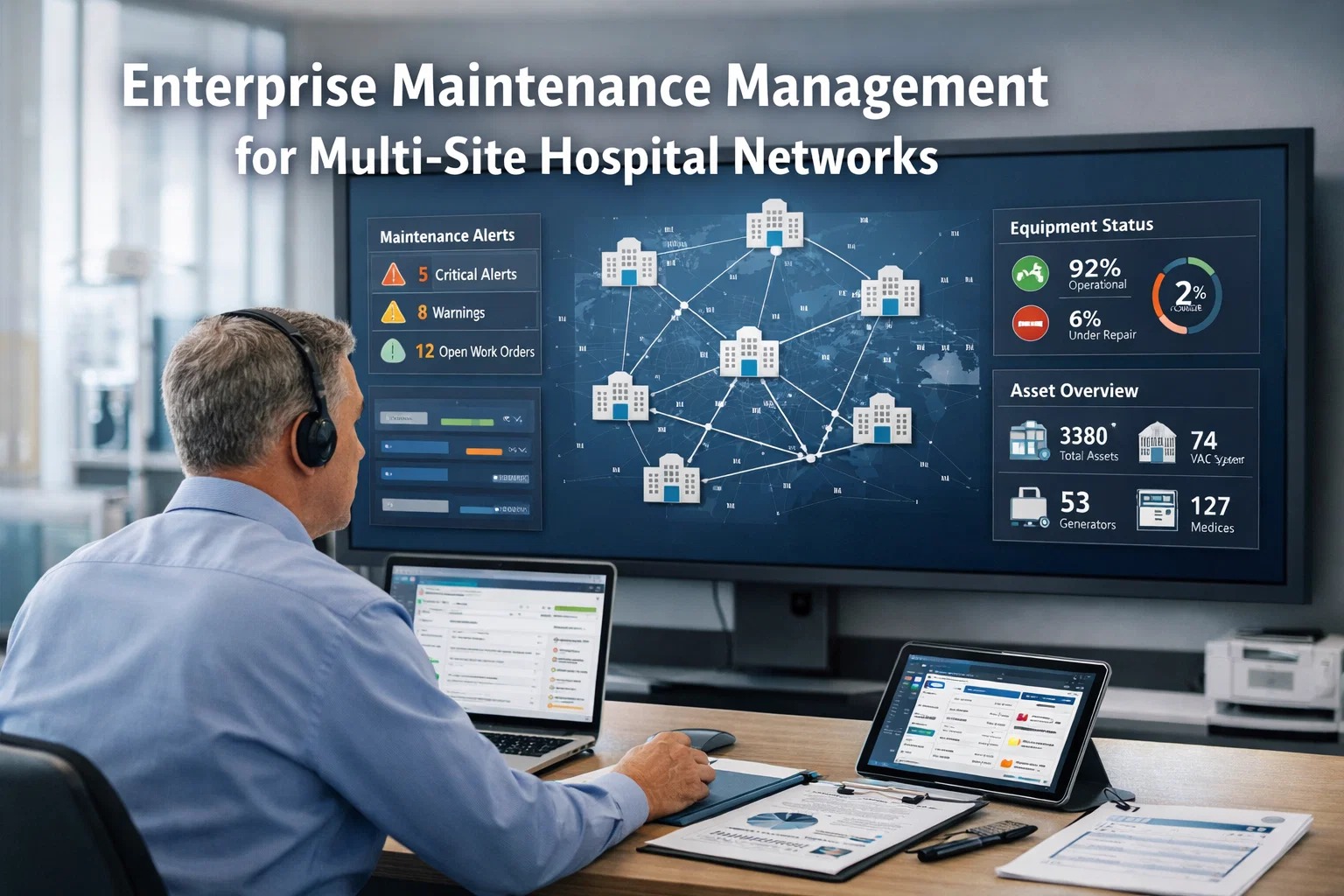
Read More
Multi-site hospital networks are among the most operationally complex environments in existence — thousands of assets, dozens of clinical areas, and regulatory scrutiny that never stops. When maintenance fails across even one fa
Read More
Hospitals are no longer just places of care — they are complex digital ecosystems where thousands of interconnected devices, infrastructure systems, and clinical workflows must operate in perfect synchrony. As AI reshapes every layer of healthc

Read More
Healthcare facilities are under relentless pressure — aging equipment, tightening budgets, and zero tolerance for downtime when lives are on the line. The gap between a reactive hospital maintenance program and a predictive one

Read More
Hospital maintenance teams are under pressure from every direction — regulators, CFOs, clinical staff, and patients. The difference between a high-performing facility and one that lurches from crisis to crisis comes down to one t

Read More
Hospital maintenance is no longer a back-office function — it is a direct driver of patient safety, regulatory standing, and operational profitability. When medical equipment fails without warning, the consequences cascade: cancelled procedures, d

Read More
Hospitals operate under relentless pressure — aging infrastructure, shrinking budgets, staffing shortfalls, and an unforgiving mandate to deliver safe, uninterrupted care. Amid these challenges, generative AI is emerging as

Read More
Digital maintenance management is rewriting the operational playbook for hospitals worldwide — and the facilities still running on spreadsheets and paper work orders are paying the price in compliance citations, emergency re

Read More
Hospital infrastructure failures don't announce themselves. A ventilator malfunctions mid-procedure. An imaging system crashes during a critical diagnostic window. A power distribution fault silences an entire ICU wing. These aren't hypothetica

Read More
Hospitals generate enormous volumes of equipment data every single day — compressor run hours, chiller delta-T readings, motor amperage trends, vibration signatures, fault codes, and thousands of other data points across hu

Read More
Hospitals operate in one of the most heavily regulated environments in the world. From Joint Commission accreditations to CMS Conditions of Participation, HIPAA mandates, and state-level licensing requirements, the compliance burden on healthcare

Read More
Healthcare facilities operate under a different maintenance standard than any other sector. A failed HVAC system in an office building is an inconvenience. In a hospital, it can trigger a patient safety incident, a regulato

Read More
Across modern hospital networks, thousands of medical assets — infusion pumps, ventilators, imaging systems, surgical robots, and mobile diagnostic units — move continuously between departments, floors, and facilities. In a system this complex,
-(1).jpg)
Read More
Hospital maintenance management is no longer a back-office function — it is a direct driver of patient safety, regulatory standing, and operational profitability. When medical equipment fails without warning, the consequenc

Read More
Hospitals have long operated on a painful paradox: the most critical equipment in human care is also the most vulnerable to unexpected failure. A malfunctioning ventilator, an offline imaging system, or a misbehaving surgical robot does not just c

Read More
Hospitals run on equipment. When an MRI scanner goes offline unexpectedly, surgery suites halt, patient backlogs grow, and revenue evaporates by the minute. When an ICU ventilator throws an undetected fault, the stakes rise beyond operational l
.jpg)
Read More
Large hospital networks are managing thousands of medical assets across dozens of facilities — imaging equipment, HVAC systems, elevators, sterilisation units, emergency generators — each with its own regulatory compliance

Read More
Hospitals run on systems, and those systems break. A single failed sterilizer or an unscheduled elevator outage can disrupt dozens of procedures, delay patient care, and expose your facility to compliance violations that carry six-figure penalt
.jpg)
Read More
Hospitals and medical facilities run under some of the most demanding regulatory frameworks in any industry — Joint Commission surveys, NABH accreditation cycles, CMS Conditions of Participation, and a growing stack of regi
Read More
The hospital of 2026 is not simply a building with upgraded equipment — it is a living, data-driven organism that anticipates failure, automates compliance, and tracks every clinical asset in real time. Healthcare administrators who still rely on
-(1).jpg)
Read More
Hospital equipment failures do not announce themselves in advance — they surface at the worst possible moment, mid-procedure, during peak census, when the engineering team is two staff short. Predictive maintenance in healt
.jpg)
Read More
Healthcare facility managers are under relentless pressure — aging infrastructure, tightening compliance requirements, staff shortages, and boards demanding capital efficiency. The right healthcare facility management softw

Read More
Hospitals generate vast quantities of equipment performance data every single day — temperature logs, pressure readings, work order histories, energy consumption patterns, and failure event records — yet most healthcare facilities are still making
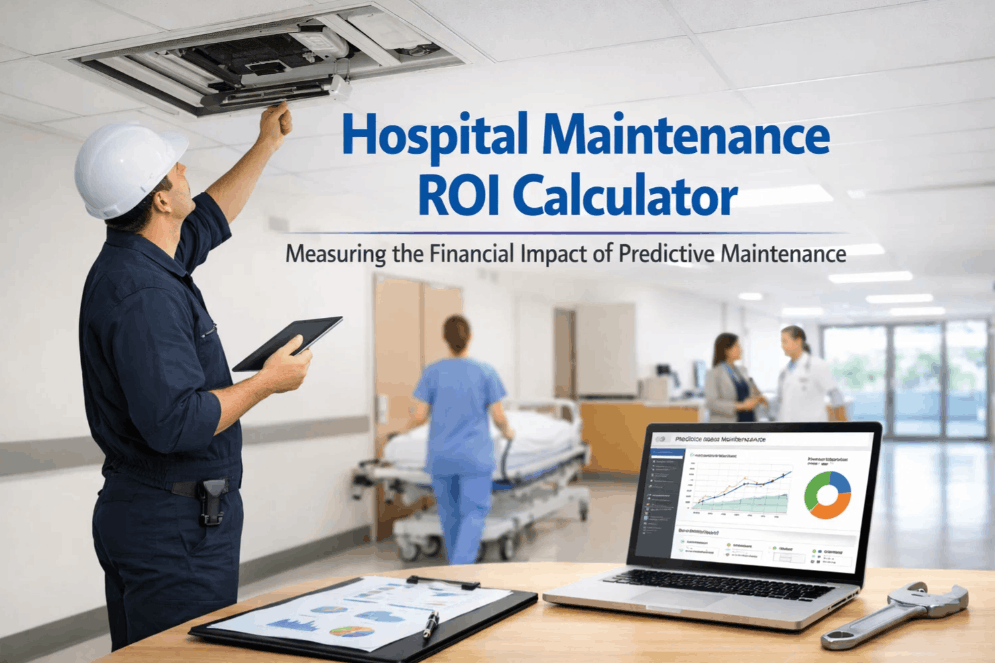
Read More
For hospital executives and CFOs, maintenance has long been viewed as a cost center — a necessary expense to keep facilities running, not a strategic lever for financial performance. That perception is changing fast. As predictive maintenance t
.jpg)
Read More
Managing work orders in a hospital or clinic is not a back-office function — it is a direct line to patient safety, regulatory compliance, and operational budget control. When maintenance requests go untracked, technician a
![]-(1)](./manage-post-2k26/uploads/]-(1).jpg)
Read More
Hospital equipment downtime is not just an operational inconvenience — it is a direct revenue drain, a clinical risk, and a compliance exposure. When an MRI suite goes dark or an ICU ventilator fails, the financial conseque

Read More
Hospitals in 2026 are no longer managed through clipboards, paper logs, and reactive repair calls. They are evolving into intelligent, connected ecosystems where AI-driven maintenance platforms, compliance automation engines, and digital asset
.jpg)
Read More
Hospital equipment doesn't get a second chance. When a ventilator fails mid-shift, an MRI goes offline before a critical scan, or a surgical suite's HVAC system drops pressure — the consequences extend far beyond repair costs. For facility an

Read More
Hospital operations depend on the reliability of hundreds of assets — from life-critical medical devices to facility infrastructure systems that sustain the care environment. When those assets fail unexpectedly, the consequences are not limited

Read More
Hospital maintenance teams operate in one of the most demanding environments in the world — where every equipment failure can directly impact patient safety, regulatory compliance, and operational continuity. Yet many healthca

Read More
Hospital networks face a silent but costly challenge: medical equipment that ages poorly, breaks down unexpectedly, and gets replaced far sooner than necessary. The root cause is rarely the equipment itself. It's the absence of intelligent lifecyc
.jpg)
Read More
Hospitals depend on thousands of pieces of equipment — from ventilators and infusion pumps to imaging systems and surgical tools. When any one of them fails unexpectedly, the cost is not just financial. A standardized medical equipment maintenance
.png)
Read More
Healthcare organizations across the country are facing a defining moment. The buildings they operate in, the systems that run them, and the equipment that sustains clinical care were largely designed for a different era — one where connectivity wa
.jpg)
Read More
Hospital maintenance teams operate in one of the most demanding environments in the world — where every equipment failure can directly impact patient safety, regulatory compliance, and operational continuity. Yet many healthca
.jpeg)
Read More
Hospital maintenance teams operate in one of the most demanding environments in the world — where every equipment failure can impact patient safety, regulatory compliance, and operational continuity. Yet many healthcare facili

Read More
The hospital of 2030 won't be defined by its number of beds or the size of its emergency department. It will be defined by the intelligence embedded in its walls, its equipment, and its workflows. Right now, U.S. healthcare spending exceeds $5 tri

Read More
The hospital of 2030 won't be defined by its number of beds or the size of its emergency department. It will be defined by the intelligence embedded in its walls, its equipment, and its workflows. Right now, U.S. healthcare spending exceeds $5 tri
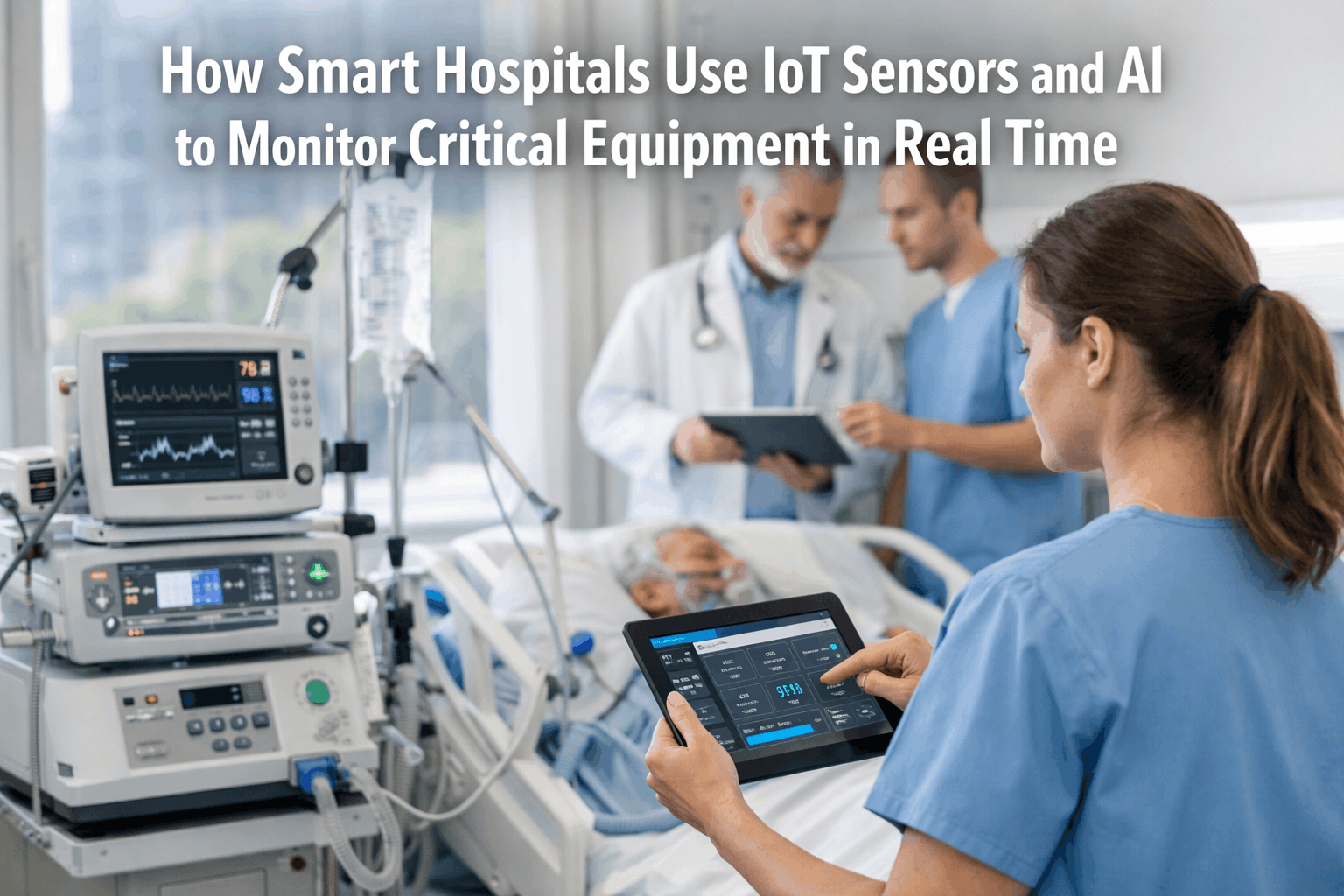
Read More
Imagine a hospital where every ventilator, MRI machine, and infusion pump communicates its own health status in real time. Where AI algorithms detect a failing compressor inside a CT scanner three weeks before it breaks down, automatically generat

Read More
Every hospital executive faces the same uncomfortable question during board meetings: how reliable is our facility, really? In 2026, the answer increasingly comes from a handful of maintenance KPIs displayed on real-time executive dashboards. Thes
Read More
In 2026, hospitals face a defining crossroads in how they maintain the equipment that keeps patients alive. The era of simply fixing machines after they break is rapidly fading. Today, forward-thinking healthcare facilities are choosing between th
Read More
There are over 7,300 biomedical equipment technician positions opening up every year across hospitals in the United States, but fewer than 400 trained graduates enter the field annually. That is not a hiring challenge. That is a structural crisis
Read More
Every hospital, clinic, and healthcare network depends on a complex web of physical infrastructure and digital systems working seamlessly together. But behind the scenes, a dangerous gap is growing — one that silently threatens patient safety, ope
Read More
When a Joint Commission surveyor or NABH auditor walks through your hospital doors unannounced, the last thing you want is a scramble through filing cabinets and outdated spreadsheets. Healthcare compliance audits have become the defining benchmar

Read More
Every hospital administrator has faced the dreaded call: a critical piece of equipment just went down. Whether it is an MRI scanner, a CT unit, or a ventilator in the ICU, the financial consequences begin the moment the machine stops working. Rese

Read More
The hospital maintenance landscape is undergoing its mostsignificant transformation in decades. In 2026, healthcare facilities worldwide are rapidly abandoning the old break-fix mentality and embracing AI-driven autonomous maintenance systems that

Read More
Healthcare operations are undergoing a fundamental transformation as artificial intelligence reshapes how hospitals manage their most critical assets. With AI-driven CMMS platforms projected to reduce facility management costs by 35-45% while impr

Read More
The healthcare industry faces a workforce crisis that extends far beyond nursing and physician shortages. Behind every functioning hospital is a team of biomedical equipment technicians and clinical engineers who ensure critical medical equipment

Read More
Managing medical equipment across multiple hospital locations presents one of the most complex operational challenges in healthcare today. With 41.2% of facility management challenges attributed to communication deficiencies and 85.8% of healthcar

Read More
Every morning across America, hospital maintenance directors open Excel spreadsheets that contain the fate of million-dollar MRI machines, life-support ventilators, and surgical robots. They scroll through rows of outdated data, hoping that today

Read More
The healthcare industry stands at a critical crossroads. While medical technology advances at unprecedented speeds, the infrastructure supporting these innovations often remains trapped in decades past. Legacy systems—outdated software, aging hard

Read More
The healthcare landscape is undergoing a seismic shift. As hospitals race to become "smart hospitals"—connected, data-driven ecosystems—the spotlight is turning to predictive maintenance for medical equipment as the critical infrastructure layer t

Read More
Hospitals today face an unprecedented financial crisis. With operating costs rising faster than reimbursement rates and labor shortages straining already thin margins, healthcare executives are desperately seeking sustainable cost reduction strate

Read More
Regulatory audits in 2026 have evolved into comprehensive evaluations that scrutinize every aspect of hospital maintenance operations. With Joint Commission surveys becoming more data-driven and NABH accreditation standards tightening their docu

Read More
Every hour an MRI machine sits idle costs your hospital $50,000 in lost revenue and delayed patient care. Across the United States, hospitals lose a staggering $20-30 billion annually due to medical equipment downtime. When critical ICU equipment
Read More
Healthcare facilities in 2026 face an unprecedented challenge: maintaining complex biomedical equipment while controlling costs and ensuring strict regulatory compliance. Unplanned equipment downtime costs hospitals an average of $7,900 per hour

Read More
The hospitals of 2026 run on robots. Autonomous mobile platforms deliver medications through corridors at all hours, surgical systems execute procedures with sub-millimeter accuracy, disinfection bots eliminate pathogens from patient rooms without

Read More
Hospital robots powered by ROS 2 are no longer experimental curiosities confined to research labs. In 2026, they navigate busy corridors delivering medications, assist surgeons with micron-level precision, disinfect patient rooms autonomously, and

Read More
Every hospital that deploys robotic systems, from autonomous delivery bots navigating corridors to surgical robots performing precision procedures, faces one persistent operational challenge that rarely makes headlines but quietly determines wheth

Read More
The convergence of micro-robotics and nanobots in modern medicine is reshaping how hospitals and research facilities approach targeted drug delivery, minimally invasive surgery, and diagnostic imaging. These extraordinary machines, often smaller t

Read More
Healthcare facilities worldwide are witnessing a seismic shift in how they maintain their most critical robotic assets. As the medical robots market races toward an estimated $32 billion by 2032, growing at over 17% annually, the pressure to keep

Read More
A delivery robot glides through a hospital corridor carrying sealed medication containers. It connects to the hospital Wi-Fi to receive navigation updates, transmits delivery confirmations to the pharmacy system, and logs patient-linked transactio

Read More
Picture a hospital campus at dawn — a four-legged robot trots down a ramp, climbs a staircase to the research wing, crosses a gravel courtyard, and delivers laboratory specimens to the pathology annex. No elevator needed. No stuck wheels on a thre

Read More
In a modern operating room, a surgical robot arm moves with a precision that no human hand can match — positioning instruments within fractions of a millimeter while a surgeon controls every motion from a console across the room. Over 2.68 million

Read More
When a healthcare robot navigates a busy hospital corridor, it does not rely on a single sensor. It fuses data from LiDAR scanners mapping walls and doorways, depth cameras detecting patients and staff, IMUs tracking its own orientation through tu

Read More
Picture this: it is 2:00 AM in a 600-bed hospital. While most staff are attending to critical patients, a fleet of 35 autonomous mobile robots is silently navigating corridors, delivering medications to nursing stations, transporting lab samples t

Read More
Hospitals in 2026 are no longer just staffed by doctors and nurses. Walk into a modern healthcare facility and you will find collaborative robots — cobots — working alongside clinical teams, lifting patients, transporting lab samples, and restocki

Read More
Robotic exoskeletons are transforming rehabilitation — enabling patients with spinal cord injuries, stroke, and neurological conditions to stand, walk, and regain independence. The global exoskeleton market reached $590 million in 2025 and is grow

Read More
Behind every autonomous hospital robot navigating corridors, elevators, and patient areas, the ROS 2 Nav2 navigation stack makes thousands of real-time decisions per second. Nav2 — trusted by over 100 companies worldwide — powers localization, pat

Read More
Four-legged robots are walking into hospitals. Boston Dynamics has deployed over 2,000 Spot robots across industries, and healthcare is the next frontier. Quadruped robots like Spot — priced at $75,000 with advanced LIDAR, thermal imaging, and aco

Read More
Healthcare robot maintenance sits under multiple overlapping regulatory frameworks. Understanding which regulations apply to which robot types — and which maintenance activities they govern — is the foundation of any compliance program. Here is th

Read More
Patient care robots never clock out. They assist with mobility support at 2 AM, monitor vital signs through the night shift, deliver medications on schedule at dawn, and provide companionship to elderly residents when staffing is thinnest. In hosp

Read More
Hospitals in 2026 are managing more robots than ever before — surgical systems costing over $2 million each, autonomous delivery bots navigating corridors around the clock, UV disinfection units cycling between patient rooms, and diagnostic robots

Read More
Medical laboratory robots have transformed sample processing, pipetting, and centrifuge operations across clinical labs worldwide. Yet, the precision these robots deliver is only as good as the maintenance routines behind them. A single missed cal

Read More
A physician in Houston conducts morning rounds at a rural hospital 300 miles away. A neurologist in Boston evaluates a stroke patient in a community clinic that has never had a specialist on staff. A geriatrician checks on twelve homebound patient

Read More
Hospitals across the United States are deploying AI-powered diagnostic robots at an unprecedented pace. These systems — from machine learning algorithms that read CT scans and MRIs to robotic blood analyzers that process thousands of samples per h

Read More
Pharmacy automation robots are the backbone of modern medication dispensing. Over 70% of large U.S. hospital systems have adopted robotic dispensing or compounding solutions, and the global pharmacy automation market is projected to exceed $11.6 b

Read More
Hospitals in 2026 are no longer just buildings filled with doctors and nurses rushing through corridors. They are intelligent ecosystems where autonomous delivery robots like TUG, Moxi, and Zena RX silently navigate hallways, elevators, and nursin
Read More
Hospitals in 2026 are no longer just buildings filled with doctors and nurses rushing through corridors. They are intelligent ecosystems where autonomous delivery robots like TUG, Moxi, and Zena RX silently navigate hallways, elevators, and nursin

Read More
Healthcare-associated infections (HAIs) affect over 1.4 million patients globally at any given time, making disinfection robots an essential frontline defense in modern hospitals. UV-C light robots, hydrogen peroxide vapor systems, and pulsed xeno

Read More
Surgical robots like the da Vinci Xi, Mako SmartRobotics, ROSA Knee, and Hugo RAS are transforming operating rooms across the world. With over 10,600 robotic surgical systems installed globally and more than 12 million procedures performed, hospit

Read More
In healthcare facilities, chiller systems are the silent backbone of patient safety. They regulate operating room temperatures, preserve medications, protect sensitive imaging equipment, and maintain infection control standards across the entire h

Read More
In healthcare, power is not a convenience — it is a lifeline. Uninterruptible Power Supply (UPS) systems stand between your patients and potentially catastrophic equipment failures during outages. Across North America, regulatory bodies have estab

Read More
In healthcare, a UPS overload alarm is not just an equipment warning — it is a patient safety emergency. When an Uninterruptible Power Supply system becomes overloaded in a hospital setting, life-sustaining ventilators, cardiac monitors, and surgi

Read More
In healthcare, uninterrupted power is not a convenience — it is a lifeline. Ventilators, cardiac monitors, MRI machines, and electronic health records all depend on a steady flow of electricity. At the heart of this reliability sits the Uninterrup

Read More
The operational integrity of an Uninterruptible Power Supply (UPS) network hinges on more than just high-quality hardware; it requires a rigorous, data-driven Asset Master Workflow. In mission-critical environments like data centers, healthcare fa

Read More
When Joint Commission surveyors arrived unannounced at a 300-bed hospital in Ohio, they requested 24 months of continuous generator test logs within two hours. The facilities team spent six hours searching through filing cabinets, spreadsheets, an

Read More
Maintenance teams at a 400-bed hospital in Florida spent three months troubleshooting intermittent generator alarms that never quite triggered emergency protocols. Weekly inspections showed normal parameters, oil analysis came back clean, and vibr

Read More
When a 450-bed hospital in Texas experienced a generator bearing failure at 2:00 AM during a critical surgery, the resulting cascade of events cost $2.3 million in emergency repairs, patient transfers, and regulatory penalties. This scenario plays

Read More
When a storm hits and the grid fails, hospital generators don't get a second chance to make a first impression. They either fire up instantly or leave patients in the dark. For healthcare facility managers, the difference between those outcomes is

Read More
Medical gas systems are the invisible lifeline of every hospital, surgical center, and long-term care facility across North America. From oxygen delivery in ICUs to nitrous oxide in operating rooms and medical air in ventilators, these systems dir

Read More
Medical gas systems are the invisible lifeline of every hospital. Oxygen flowing to ICU beds, nitrous oxide powering anesthesia in surgical suites, nitrogen preserving tissue samples in laboratories — these gases are classified by the FDA as pharm

Read More
Every year, hospitals across the United States face unexpected medical gas pressure drops that put patient lives at risk. When oxygen pressure falls below the required 50 psi at a wall outlet, ventilators can malfunction, surgeries may be delayed,

Read More
Healthcare cleanrooms in North America operate under some of themost demanding regulatory environments in the world. With the FDA, Health Canada, and ISO standards all converging on stricter contamination control requirements, maintaining complian

Read More
Cleanrooms are the backbone of pharmaceutical manufacturing, semiconductor fabrication, and biotechnology research. A single undetected maintenance issue — a failing HEPA filter, a drifting pressure differential, or an overworked HVAC compressor —

Read More
Cleanrooms are the backbone of healthcare manufacturing. From sterile injectable drugs to life-saving implants, every product that touches a patient starts its journey in a controlled environment where even a single airborne particle can compromis

Read More
Healthcare cleanrooms demand zero compromise. A single missed maintenance issue — a worn HEPA seal, a drifting pressure differential, a skipped surface wipe — can trigger contamination events that jeopardize patient safety, halt production lines,

Read More
Cleanroom environments in healthcare and pharmaceutical facilities demand an extraordinary level of precision. Every asset, from HEPA filtration units and laminar airflow hoods to autoclaves and environmental monitoring sensors, must perform flawl

Read More
Healthcare facilities across North America operate under some of the most stringent HVAC compliance requirements in the world. From ASHRAE Standard 170 governing ventilation in hospitals to Joint Commission accreditation surveys evaluating air qua

Read More
Healthcare facilities depend on HVAC systems the way patients depend on oxygen — silently, constantly, and critically. When an HVAC unit fails in a hospital operating room or ICU, it is not just a comfort issue. It is a patient safety emergency. W

Read More
In healthcare facilities, HVAC systems are far more than comfort machines. They are critical life-support infrastructure. Operating rooms demand precise temperature and humidity control. Isolation wards rely on negative pressure differentials to p

Read More
In healthcare facilities across the United States, HVAC systems do far more than regulate temperature. They serve as the primary defense against airborne infections, maintaining sterile surgical environments, protecting immunocompromised patients,

Read More
In healthcare facilities, HVAC systems are not just about comfort — they are a critical lifeline for patient safety, infection control, and regulatory compliance. Operating rooms demand precise air pressure differentials, ICUs require controlled h

Read More
In North America, biomedical equipment compliance is not just a regulatory checkbox — it is the backbone of patient safety, operational efficiency, and institutional credibility. Every ventilator, infusion pump, defibrillator, and imaging system i

Read More
Every year, hospitals worldwide lose millions of dollars and put patient lives at risk because of unexpected biomedical equipment failures. The World Health Organization estimates that 50% to 80% of medical equipment in healthcare facilities bec

Read More
Every year, hospitals and healthcare facilities worldwide face a silent but critical threat that goes largely unnoticed until it's too late: calibration drift in biomedical equipment. When an infusion pump delivers medication at slightly inaccurat

Read More
In healthcare facilities across the United States, biomedical equipment inspections are not just regulatory requirements—they're critical safeguards that protect patient lives and ensure operational excellence. From ventilators in intensive care u

Read More
In healthcare environments, biomedical equipment alarms serve as critical safety mechanisms that alert staff to potential equipment malfunctions, patient status changes, or system failures. When alarm faults occur, they can compromise patient safe

Read More
Between 2018 and 2020, over 231,000 power outages lasting more than an hour hit the United States—and nearly 17,500 stretched beyond eight hours. In healthcare, those seconds between utility failure and generator startup can determine patient outc

Read More
In Venezuela's 2019 blackout, hospital staff used phone flashlights while 26 patients died—ventilators stopped, dialysis machines went silent, incubators failed. In 2022, Santa Clara Valley Medical Center lost power for four hours when backup gene

Read More
NewYork-Presbyterian lost $4 million in a single year. Cedars-Sinai, $3.1 million. These weren't fines for equipment failures—they were penalties triggered by documentation gaps that linked to hospital-acquired conditions. When CMS penalizes the b

Read More
Your HEPA HVAC system stands between patients and airborne infections. Research shows contaminated air-conditioning systems create an 8.59 times higher probability of hospital-acquired infections—yet most facilities discover filtration failures on

Read More
At 2:47 PM on a Tuesday afternoon, the lights flickered twice at Riverside Dialysis Center before going dark entirely. Twelve patients sat connected to hemodialysis machines, their blood circulating through external circuits at 400 milliliters per

Read More
The clipboard hung on a hook outside the mechanical room, its pages wrinkled from humidity and smudged with pencil marks that might have said "checked" or might have said something else entirely. When the Joint Commission surveyor asked to see mai

Read More
The Joint Commission surveyor arrived at Westbrook Medical Clinic on a Tuesday morning with no advance notice. Within three hours, the facility manager was scrambling through filing cabinets searching for maintenance records on a defibrillator tha

Read More
At 3:47 AM on a Tuesday, the oxygen pressure in Wing B of Riverside Community Clinic dropped below critical threshold. The wall-mounted alarm panel flashed amber, then red—but with only a single night-shift technician covering four buildings, fift

Read More
When the Joint Commission surveyor walked into Greenfield Family Medicine's back office at 8:47 AM on a Tuesday morning, the clinic administrator knew exactly where this was heading. The request was simple: "Show me your facility inspection record

Read More
Every breath a patient takes in your acute care hospital depends on systems most never see: the intricate network of air handlers, pressure differentials, and ventilation controls that separate sterile surgical environments from infectious disease

Read More
When a dialysis patient experiences a medical emergency mid-treatment, every second matters. They're connected to a machine filtering their blood, often unable to move freely, potentially in a facility above ground level where evacuation requires

Read More
When a maintenance technician enters Room 312 to repair a therapy lift, they're not just fixing equipment—they're stepping into a space governed by one of healthcare's most stringent privacy frameworks. For rehabilitation facilities, where extende

Read More
Long-term care facilities performing surgical and procedural services face a unique challenge: maintaining hospital-grade sterility standards with nursing home-level staffing and budgets. When 75% of sterile processing departments show compliance

Read More
Healthcare-associated infections affect nearly 2 million patients annually in the United States, costing facilities between $28 and $45 billion each year. For clinics operating without dedicated infection control departments, maintaining complianc

Read More
Every minute your nursing staff spends searching for a wheelchair is a minute stolen from resident care. Research reveals nurses lose up to 60 minutes per shift hunting for equipment—that's over 1,000 hours annually walking hallways instead of pro

Read More
When a rehabilitation facility loses power, the consequences extend far beyond inconvenience. Patients recovering from strokes depend on powered mobility equipment for therapy sessions. Those with traumatic brain injuries rely on electronic monito

Read More
Ambulatory surgery centers process over 65% of all U.S. surgeries—more than 28 million procedures annually—with an average same-room turnover time under 14 minutes. This operational velocity depends entirely on biomedical equipment that performs f

Read More
Hospital laboratories operate under invisible but critical constraints that determine whether test results are accurate, staff remain safe, and regulatory surveys end in compliance rather than citations. The air flowing through your clinical lab,

Read More
Long-term care facilities operate in a constant tension between providing compassionate, personalized care and managing the operational realities of equipment-dependent healthcare. Your nursing home's wheelchairs, hospital beds, patient lifts, and

Read More
When a clinic's emergency generator fails to start during a power outage, the consequences extend far beyond inconvenience. Ventilators stop, medication refrigerators warm, patient monitors go dark, and the cascade of equipment failures can transf

Read More
Managing facility maintenance across ambulatory care settings presents a unique challenge that acute care hospitals must address head-on. With the U.S. ambulatory surgery center market valued at $45.6 billion in 2024 and projected to reach $103 bi

Read More
In acute care hospitals, the journey of a surgical instrument from post-operative contamination to sterile readiness represents one of healthcare's most critical and vulnerable workflows. Every scalpel, forceps, and retractor passes through a comp

Read More
When rehabilitation facilities invest millions in therapeutic equipment—from hydrotherapy pools and parallel bars to advanced electrical stimulation units—the question isn't whether that equipment will eventually need replacement. The question is

Read More
A single hour of MRI downtime costs imaging centers between $2,000 and $4,000 in lost revenue—yet the true impact extends far beyond the balance sheet to delayed diagnoses, disrupted patient care, and strained physician relationships. With the U.S

Read More
The ambulatory care market is projected to reach $1.5 trillion by 2034, with rehabilitation facilities leading this transformation in outpatient healthcare delivery. Yet behind every successful patient recovery story lies an often-overlooked found

Read More
Clinical laboratories manage equipment portfolios worth millions of dollars, yet most still rely on gut instinct and arbitrary age limits for replacement decisions. The result? Premature replacements that waste capital, or

Read More
Every dialysis patient spends 12–15 hours per week connected to machines that filter their blood. Their immune systems are already compromised. The air they breathe during those critical hours either protects them or expose

Read More
"Every year, approximately 687,000 patients in U.S. healthcare facilities develop healthcare-associated infections. About 72,000 of them die during their hospitalizations. The financial toll reaches $28–45 billion annually. Behind these numbers li
Total Posts:
Healthcare Use Cases
How Hospitals Use Oxmaint to Solve Real Maintenance & Compliance Problems
From Joint Commission survey readiness to biomed PM compliance and multi-site rollups — three typical deployments.
Use Case 01
Survey Readiness
Closing Joint Commission Documentation Gaps at a 640-Bed Acute Care Hospital
The Problem
A 640-bed acute care hospital had gaps from missing PM records, incomplete calibration logs and no traceability from work order to Physical Environment code — every unannounced survey meant weeks of paper reconstruction.
What Oxmaint Did
The PM library was rebuilt with the hospital's own Physical Environment and NFPA references mapped to each task type, so every closed WO carries them and reports pull by asset class or department in seconds.
Traceable
WO to code reference
On demand
No paper reconstruction
640 beds
Acute care hospital
Oxmaint Features Used
Compliance Documentation
Every WO carried its mapped Physical Environment code and NFPA reference — a surveyor saw the trail, not a folder chase.
Calibration Management
Overdue calibrations were flagged, escalated on the hospital's own threshold and closed with signed evidence.
Continuous Survey Readiness
A weekly readiness report showed open gaps by department, giving the HTM director a live compliance number.
Compliance Analytics
Documentation completeness, PM compliance and overdue calibrations reported to the safety committee monthly.
Use Case 02
Life Safety Compliance
Bringing NFPA Life-Safety Inspections into One Digital Log at a 4-Site Health System
The Problem
A 4-site health system tracked fire alarm, suppression, egress lighting, generator load-bank tests and medical gas inspections across paper logs and separate spreadsheets per site — each Statement of Conditions submission took weeks to compile.
What Oxmaint Did
Life-safety schedules were configured against the NFPA references each site reports on. Route-based mobile rounds replaced paper checklists, with pass/fail evidence archiving per site as each round completes.
Digital logs
Replacing paper per site
One system
Not four spreadsheets
4 sites
Health system
Oxmaint Features Used
Life Safety Inspection Schedules
Fire alarm devices, suppression, egress lighting, nurse call and fire doors managed with evidence archived per asset.
Medical Gas & Generator Logs
O2, medical air, vacuum and WAGD inspections logged per outlet, with generator runs and load-bank tests evidenced.
Route-Based Mobile PM Rounds
Engineers followed device-by-device routes on their phones — QR scan opened the checklist, signature closed the record.
Site-Level Evidence Packs
Every inspection archived with its mapped life-safety reference, so submission data pulls from the system.
Use Case 03
Biomed PM at Scale
Managing 35,000 Biomed Devices Across a 12-Hospital Health System
The Problem
A 12-hospital system tracked 35,000-plus biomed devices across paper logs and legacy spreadsheets. Devices moved wards without register updates, PM completion was reported differently at every site, and AEM evidence lived in twelve formats.
What Oxmaint Did
A unified register was deployed across all 12 sites with QR-tagged devices and one PM definition per device class. AEM documentation was configured for eligible low-risk devices, with the risk assessment and performance data stored on the device.
One register
12 hospitals
One metric
PM compliance system-wide
35,000
Devices unified
Oxmaint Features Used
Biomed Equipment Registry
One register for 35,000-plus devices across 12 hospitals, with ward moves and decommissioning in a single system-of-record.
AEM Programme Documentation
Risk assessment basis, adjusted interval, performance data and approval authority held per device — one format across 12 sites.
QR-Tagged Devices
Biomed techs scanned any device QR to see PM history and log a completion, replacing clipboard rounds.
Portfolio HTM Analytics
PM compliance, calibration completion and cost per device rolled up to the system HTM director — one number, twelve sites.
Connected Ecosystem
Oxmaint Sits Alongside Your BMS, Emergency Power and Hospital ERP
Oxmaint connects with building management systems, emergency generators, hospital ERPs and procurement platforms — asset, cost-centre and telemetry data flow both ways.
Explore All Integrations


FAQ
Frequently Asked Questions
Biomedical equipment management and facility maintenance in one CMMS — PM scheduling, work orders, calibration records, life-safety inspections and audit-ready documentation, covering all four domains Joint Commission surveyors inspect.
Map your own code references — Physical Environment, NFPA or CMS K-Tag — to work order types and inspection templates, so every closed record carries the reference your hospital reports against and pulls per asset in seconds. Oxmaint keeps the documentation traceable; the accreditation determination stays with your survey body.
Yes. For each AEM-enrolled device Oxmaint holds the risk assessment basis, adjusted PM interval and procedure, supporting performance data and approval authority — so when a frequency deviates from the manufacturer recommendation, the reasoning sits on the device record. Your clinical engineering leadership still owns the AEM decisions; Oxmaint keeps them documented and retrievable.
Yes. Biomed techs and facility engineers scan device QR codes, complete PMs, capture calibration measurements and log work orders with no connectivity — designed for MRI suites, shielded imaging rooms and sub-basements. Data syncs when signal returns. Available on iOS and Android.
It depends on asset count and how clean your existing records are, but a single-site rollout typically runs in weeks rather than months — covering stakeholder mapping, asset scope, your compliance framework, KPI agreement and asset import. Healthcare asset and inspection templates give you a starting point rather than a blank system.
Yes. The portfolio dashboard gives leadership visibility across all sites in one interface — compare PM compliance, asset health and spend across every facility, with each site's records still retrievable individually for its own survey.
Start Managing Your Hospital Maintenance with Oxmaint
Join hospitals unifying biomed and facility maintenance — PM schedules, calibration records, life-safety inspections and traceable compliance documentation in one platform.