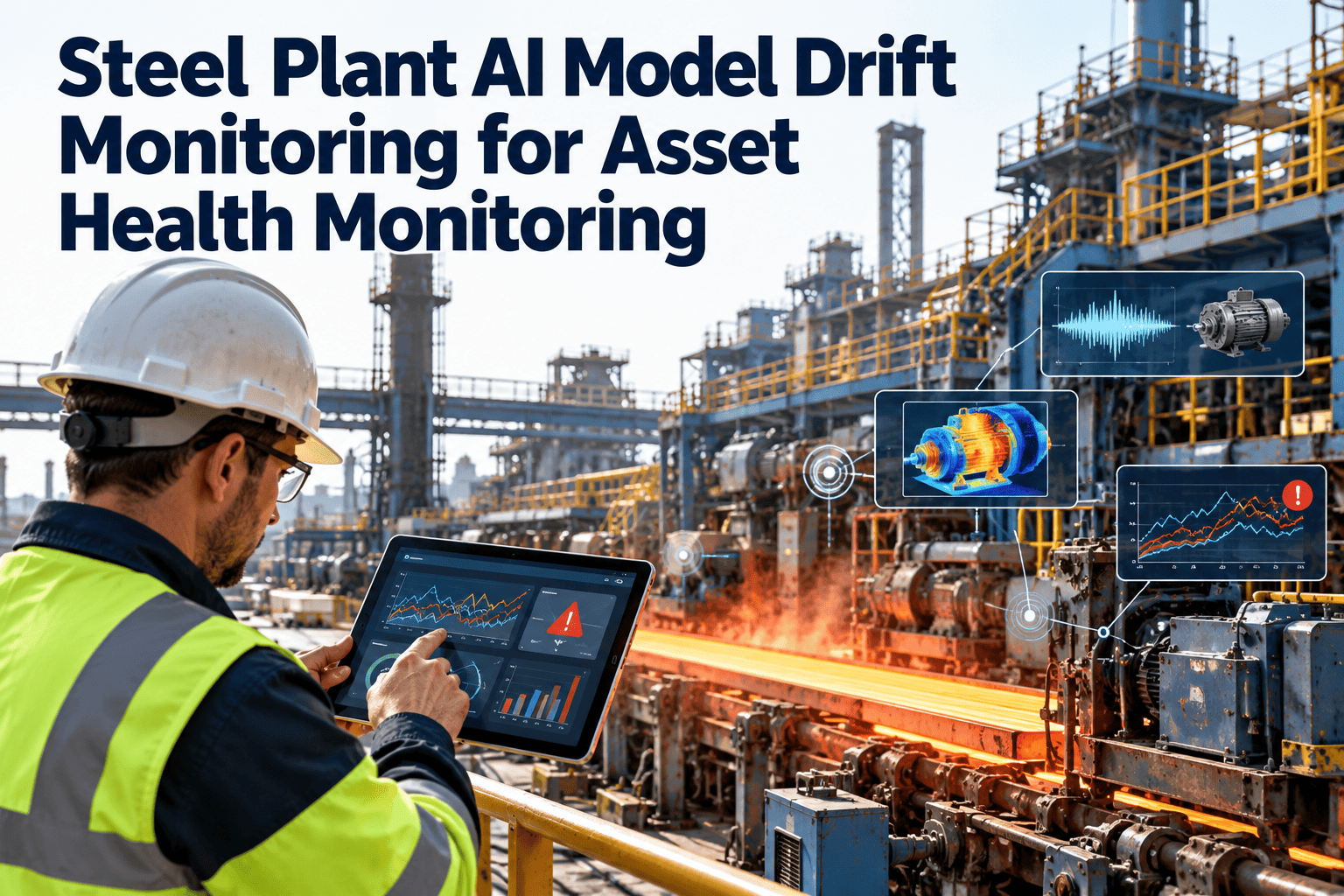
A predictive model that worked well at commissioning can quietly lose accuracy as the plant changes. A new product grade, a mill reline, a replaced sensor or a repaired gearbox shifts what normal looks like, and...
Oxmaint CMMS for Steel Plants
The AI-powered maintenance management software built for steel plants
Oxmaint is a purpose-built CMMS for steel plants — one platform to manage work orders, schedule preventive maintenance by heat count and tonnage, run predictive maintenance from your existing sensors, track refractory campaigns, control spare parts and post costs back to SAP. Every roll, ladle, caster segment, EAF, crane and mill drive in one asset register.
- PM schedules trigger on heats, tonnes or campaign hours — not calendar
- Predictive alerts from vibration & temperature sensors auto-create work orders
- Mobile app + QR scan for offline work orders across the shop floor
Oxmaint CMMS · Steel Plant Dashboard
1,247
Assets Tracked
312
Active WOs
96%
PM Compliance
94%
Prediction
Oxmaint Activity Feed
Streaming
PM WO created · Ladle 07 refractory reline due
Heat-count trigger at 98/120 · Bricks reserved · Crew booked
Predictive alert · Roughing mill drive bearing
Vibration anomaly · WO auto-created · Tech assigned
QR scan · EOT crane inspection completed
Checklist signed · Photos synced · Records logged
Inventory · Bearing kit auto-reserved
Stock updated · PO drafted · Vendor notified
Level-2 sensors · SAP PM · Historian synced
Why Steel Plants Choose Oxmaint
A CMMS that speaks the language of steel maintenance
Heats, tonnage, campaigns and rolling schedules are configured out of the box — so your team spends less time bending the software and more time keeping the plant online.
Steel-Native Meters
PM triggers on heats, tonnes rolled and lift cycles, straight from Level-2 tags.
Sensor-Ready Predictive
Plugs into existing vibration, temperature and pressure sensors — no new hardware.
Shop-Floor Mobile
QR scan gives asset history and one-tap logging — offline in SMS, tunnels and mill floors.
SAP-Grade Integration
Bi-directional sync with SAP PM, MM, EAM and FI — WOs and costs post automatically.
Roll Shop & Rolling Mill
Roll shop management inside your CMMS — every work roll tracked as an asset
Every work roll and back-up roll is a unique tracked asset with its own history, meter and location — tonnage rolled captured live from your Level-2, grinding logged as work orders, and current status (in stand, in shop, ground and ready) visible from any screen. PM triggers on cumulative tonnage instead of calendar days, and shop crews scan a roll's QR code to log a grinding pass in seconds.
Tonnage as a Meter
PM triggers on tonnes rolled per roll
Live Roll Location
Stand, shop, ground-ready or storage
Grinding as Work Orders
Every pass logged with diameter reduction
Mill Drive Predictive
Bearing vibration & motor temperature
Oxmaint Roll Register
LiveRoll ID: WR-F5-118
Change PM DueMeter: 14,820 t of 17,000 t · WO auto-generated
Roll ID: BUR-F3-207
HealthyMeter: 4,200 t · Next grind at 12,500 t
Roll ID: WR-R2-094
Ready to InstallLocation: Roll shop bay 4 · Grind WO closed
Full roll history and audit trail in one register
Caster, EAF & Furnace Maintenance
Every caster segment, EAF panel and furnace zone tracked as a maintenance asset
The caster, EAF and blast furnace are modelled the way maintenance teams already do — parent assets broken into segments, panels, mould copper plates, tuyeres and zones, each with its own PM schedule, WO history and parts list. Condition data from mould thermocouples, segment roll temperatures and EAF hydraulic pressures flows in via Level-2, and anomalies auto-generate a WO with parts reserved and the LOTO procedure attached.
Multi-Level Asset Hierarchy
Caster › strand › segment › roll
Level-2 Condition Sync
Read-only sensor tags into PM triggers
Auto WO on Anomaly
Parts reserved · Tech assigned · LOTO attached
Per-Asset PM Checklists
Templated per segment, panel, tuyere
Caster & EAF Assets
Live WOsCaster 02 · Segment 6
WO OpenRoll bearing vibration high · Inspection WO-8394 assigned
Caster 02 · Mould Copper Plate
PM Scheduled1,140 of 1,500 heats · Replacement PM in queue
EAF 01 · Hydraulic Pump 2
Predictive AlertPressure decay trend · Seal kit WO auto-created
BF 01 · Stove 3 Valve
Inspection DueCampaign hour trigger · PM WO ready for tech
Every sub-asset owns its own PM history and work orders
Refractory Life Management
Refractory linings managed as tracked assets — from installation to reline
Every ladle, tundish, EAF hearth, torpedo car and blast furnace lining is a refractory asset with its own campaign meter, brick specification and expected life, fed by heat count or tonnage from your Level-2. Crossing the PM threshold auto-generates the reline WO, reserves the brick lot, drafts POs for shortages and books the masonry crew — then the crew logs install photos, brick lot IDs and variances against a digital checklist.
Meter-Based Campaign Life
Heats, tonnes or hours per lining
Auto Reline WO
Generated at PM threshold with parts
Brick Inventory & POs
Auto-reserve, auto-PO, auto-post to SAP MM
Brick Lot Traceability
Every lot linked to install WO and outcome
Refractory Asset Board
28 ActiveLadle 07 · Slag Line
Reline WO Open98/120 heats · Bricks reserved · Crew booked
Tundish 03 · Impact Pad
On Schedule54/100 heats · Next PM inspection: 20 heats
EAF 01 · Hearth
Healthy465/1,500 heats · No open WOs
Full campaign audit trail per asset · No paper files
Predictive Maintenance
Predictive maintenance across every critical asset — from your existing sensors
The predictive engine plugs into the vibration, temperature, pressure, current and position sensors you already have via OPC-UA, Modbus or your historian — no new hardware — and learns a healthy baseline per asset. When a signal drifts, whether EAF hydraulic pressure decay, a mill drive bearing signature or thermal rise on a stove valve, it auto-generates a WO with parts pre-reserved and the failure hypothesis attached.
Uses Existing Sensors
Vibration, temp, pressure, current, position
Per-Asset Baseline AI
Learns healthy signature over 2-4 weeks
Auto Work Orders
Parts reserved · Tech assigned · Hypothesis
Asset Health Scoring
Live health score per critical asset
Predictive Watchlist
Auto-WO EnabledRoughing Mill Drive Bearing
WO CreatedVibration drift · Bearing kit reserved
EAF Hydraulic Pump
WO CreatedPressure decay · Seal kit reserved
Ladle Crane Hoist Motor
MonitorWinding temperature slightly elevated
94% prediction accuracy · Model improves with every closed WO
AI Vision Inspection
AI Vision replaces routine physical inspection rounds with 24/7 automated checks
AI Vision connects to your existing HD, thermal and IR cameras and scans for what maintenance rounds look for — refractory hot spots on furnace and ladle shells, water leaks and steam plumes on mill stands, wire rope fraying on cranes, PPE compliance in hot zones and structural cracks. Anything above your confidence threshold auto-generates a work order with still image, timestamp and video clip attached.
Shell & Refractory Hot Spots
Furnace & ladle thermal anomaly detection
Water Leak Detection
Steam plumes on mill stands & hoses
Hot-Zone PPE Compliance
Aluminized suit, face shield, hard hat
Structural Crack & Corrosion
Housings, stairs & support structures
AI Vision Findings
18 CamerasBF 01 · Shell IR Cam
Hot spot flagged · 89% confidence
HSM · F4 Stand Cam
Steam plume · Cooling hose suspected
SMS · Ladle Bay
PPE compliant · No violations
Crane 05 · Deck Cam
Rope fraying flagged · 92% confidence
NVIDIA edge inference · On-premise option · 99.2% accuracy
Mobile CMMS & QR Workflow
Mobile app + QR — one scan for history, one tap to log the job
Every asset on the shop floor gets a QR label — rolls, ladles, tundishes, mill stands, EAF panels, crane cabinets and hydraulic packs. One scan shows full history, open WOs, health score, spare parts and the LOTO procedure; one tap creates a work order or logs an inspection with the asset already linked. Offline-first, so melting shops, caster tunnels and mill basements sync back on Wi-Fi.
Scan-to-Asset Lookup
History, health, WOs & parts in 2 seconds
One-Tap Work Orders
Create, log or report from scan result
Offline-First Mobile
Syncs automatically when in range
LOTO & Permit Workflow
Hot work, confined space, isolation
QR Scan Result
Just ScannedLadle 07 · 180-tonne teeming
Location: SMS Bay 3 · ID: LDL-180T-07
Reline WO open
98 heats used
2 open WOs
Recent Work Order Activity
WO-8391 · Slide gate mechanism inspection · Open
Insp-2247 · Purge plug check · Passed 6h ago
WO-8285 · Trunnion pin greasing · Closed
New WO
Inspect
LOTO
Complete Oxmaint CMMS Platform
Every maintenance workflow your steel plant needs — on one platform
Beyond work orders and PM — inspections, shift handovers, shutdown planning, spare parts, safety compliance, analytics and ERP integration.
Work Order Management
Create, assign, track and close work orders across your steel plant. Predictive alerts, AI Vision findings and PM triggers all auto-generate WOs with parts, technician and procedure attached.
Inspection Management
Digital inspection checklists per asset type — rolls, cranes, ladles, mill stands. Photo capture, pass/fail logic and instant corrective WO generation on any failed item.
AI Shift Logbook
AI-generated shift summaries highlighting completed work, open issues and required follow-ups. Structured digital handovers replace whiteboards and lost verbal briefings.
Shutdown Management
Plan, sequence and track annual mill turnarounds, blast furnace relinings and caster overhauls in Oxmaint. Scope work, allocate parts, assign contractors and monitor completion.
Parts & Inventory
Spare parts inventory tuned for steel — rolls, refractory bricks, hydraulic seals, mould copper plates, electrodes. Auto-reserved on WO creation, PO drafted at reorder point.
Safety & Compliance
Digital permit-to-work, LOTO, hot work and confined-space workflows built into every job. AI Vision catches PPE violations. Audit-ready records with photo evidence and digital sign-off.
Analytics & Reporting
Live dashboards for MTBF, MTTR, PM compliance, WO backlog, spare parts consumption and maintenance cost per tonne of steel produced. Customizable per role.
SAP & Level-2 Integration
Bi-directional sync with SAP PM, MM, EAM and FI. Read-only integration with Siemens, ABB, PSI and Danieli Level-2 systems and OSIsoft PI Historian for sensor data.
Latest Posts
Read More
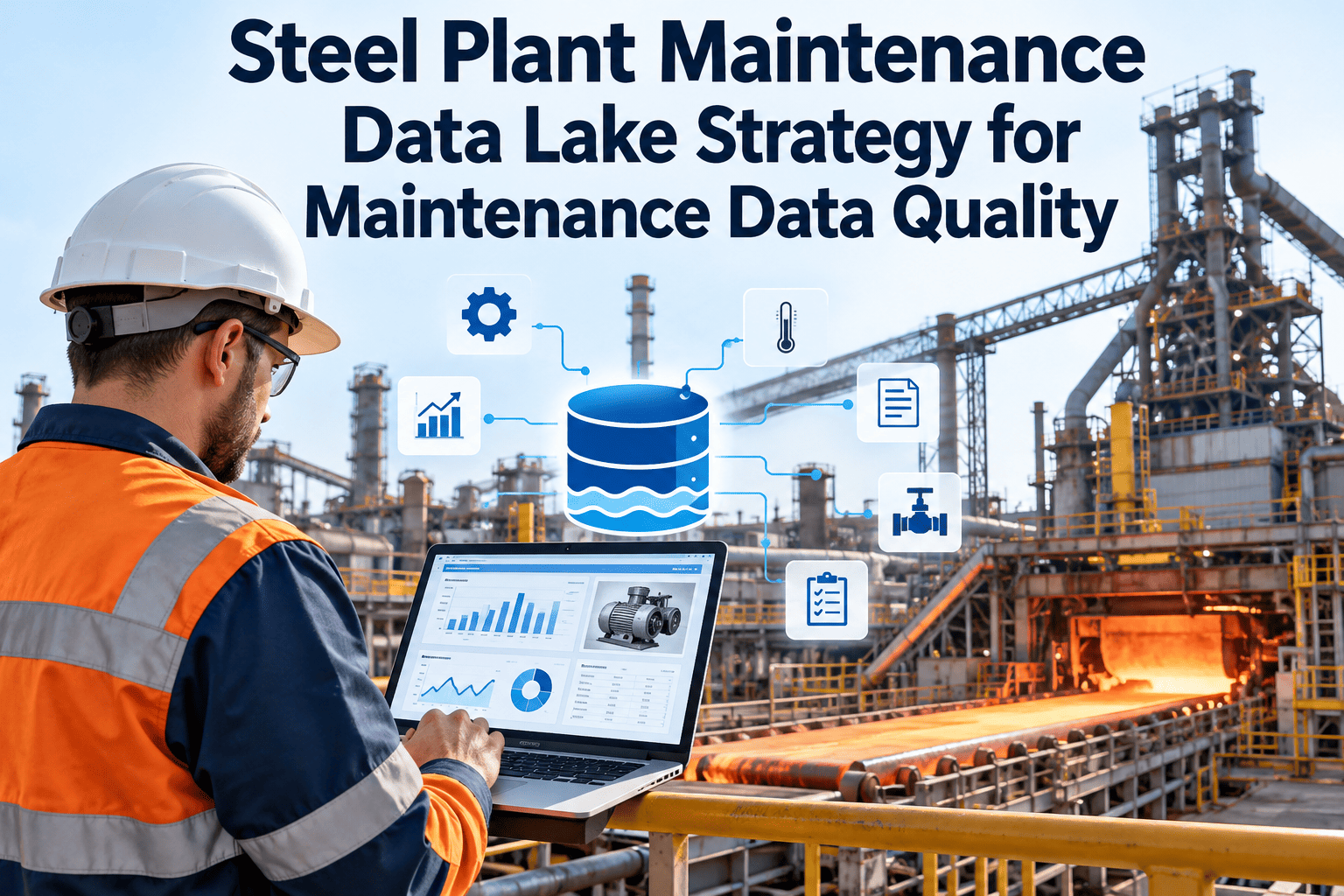
A steel plant already produces the data needed for better maintenance decisions: historian time series, PLC events, work orders, inspection forms, oil reports, shutdown plans and spare part movements. The problem...
Read More
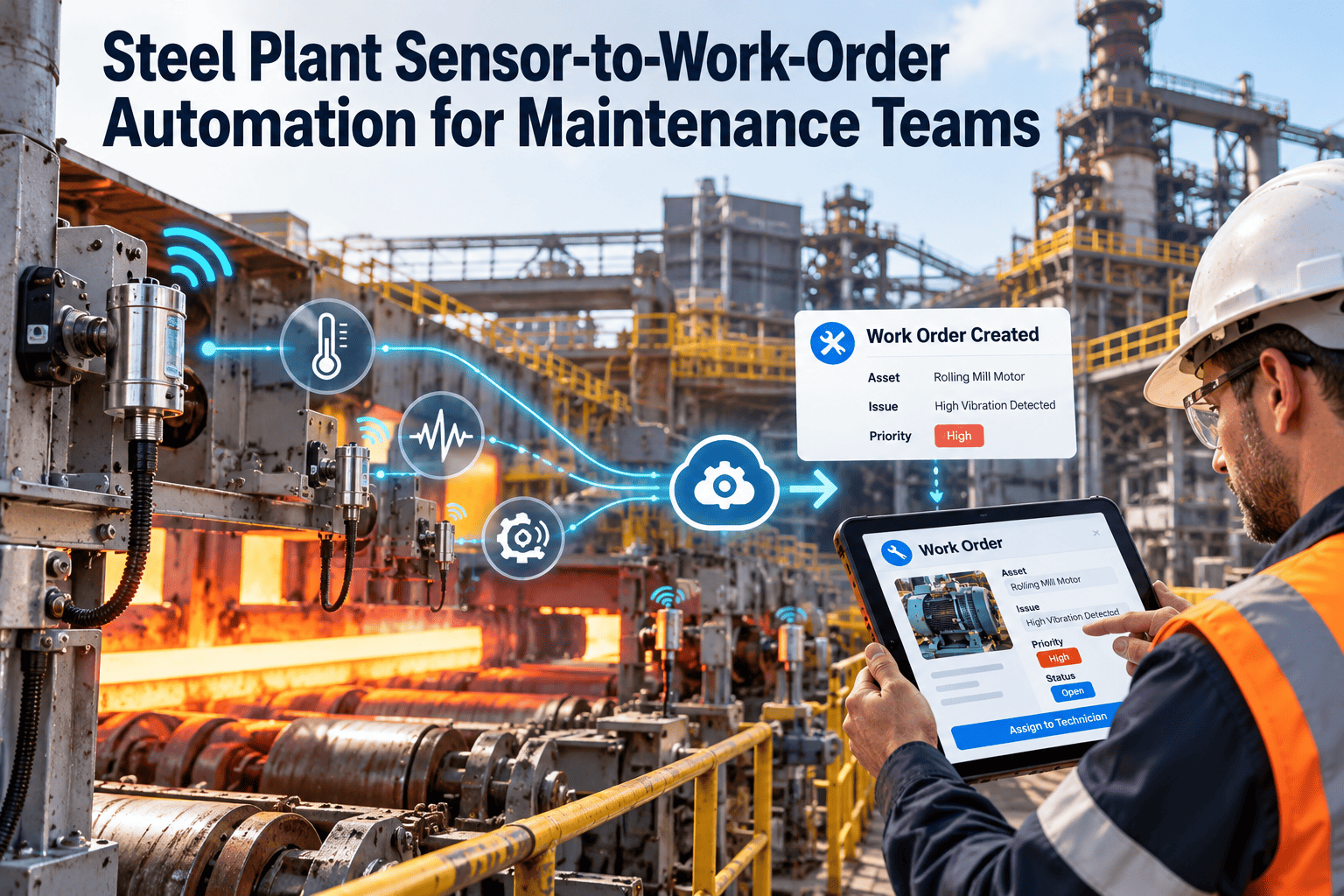
When a bearing temperature climbs on a mill drive at night, the useful outcome is a work order with the right asset, the right priority and the right instructions, not an email that someone may read tomorrow....
Read More
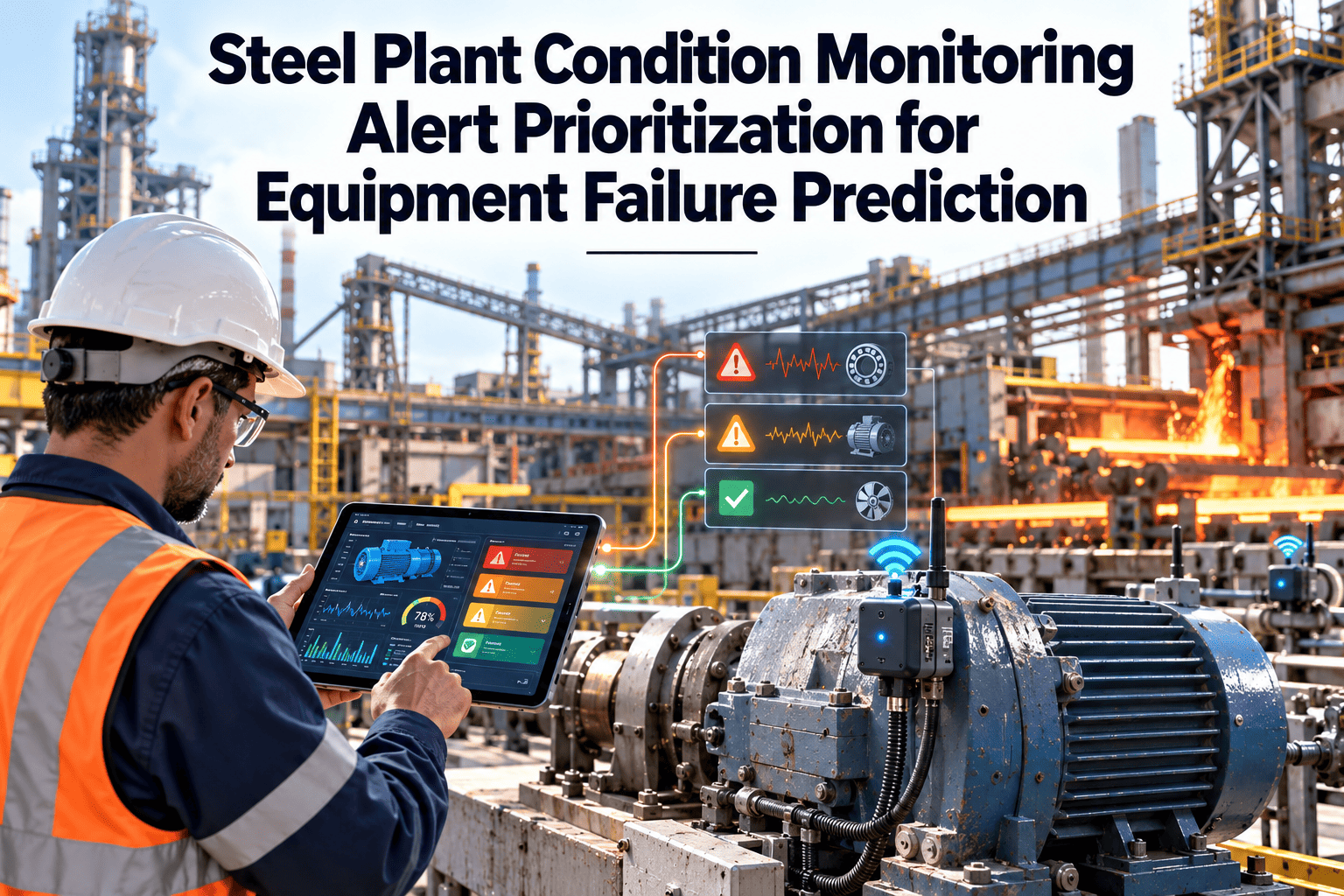
Condition monitoring in a steel plant can generate hundreds of alerts per shift from vibration, temperature, current and process signals. Most are minor, some are false and a few are early warnings of failures that...
Read More
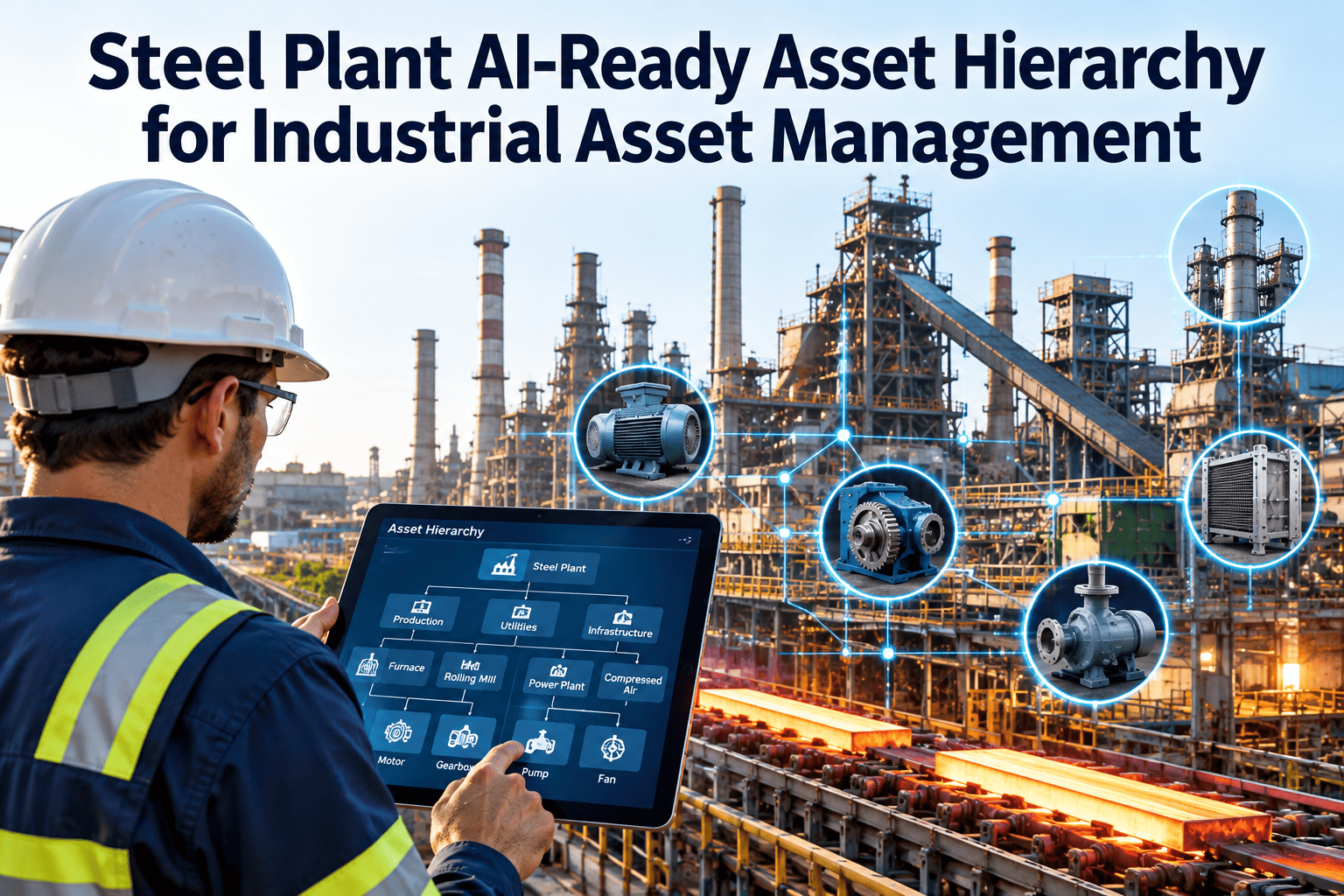
An AI model can only tell you which asset is degrading if it knows what that asset is, where it sits and what it is connected to. In many steel plants, the same gearbox appears under three names, sensors point to...
Read More
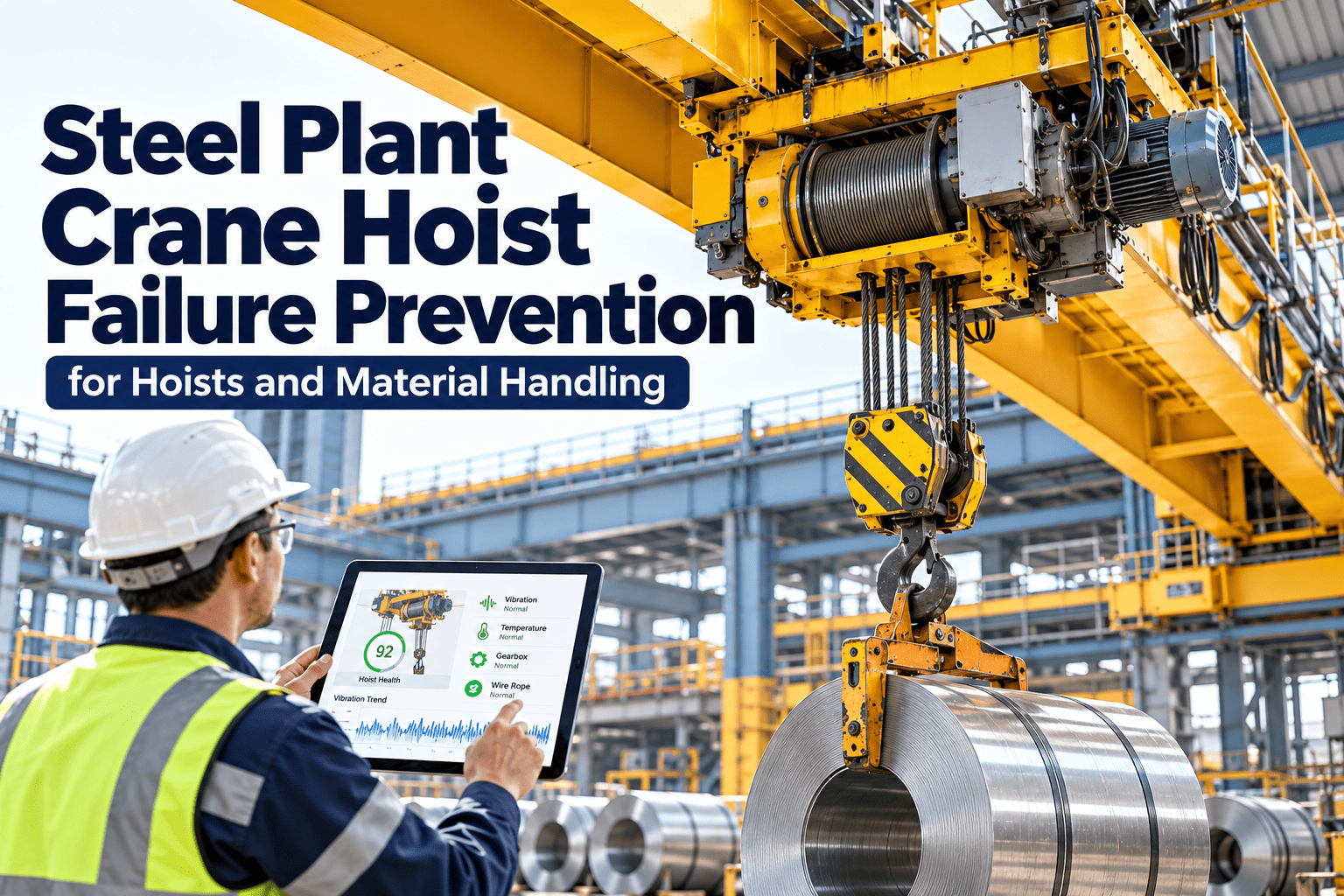
In a steel plant, overhead cranes carry ladles of molten metal, slabs, coils, scrap and rolls over people and production lines. A hoist failure is rarely a minor repair. It can mean a dropped load, a stopped caster...
Read More
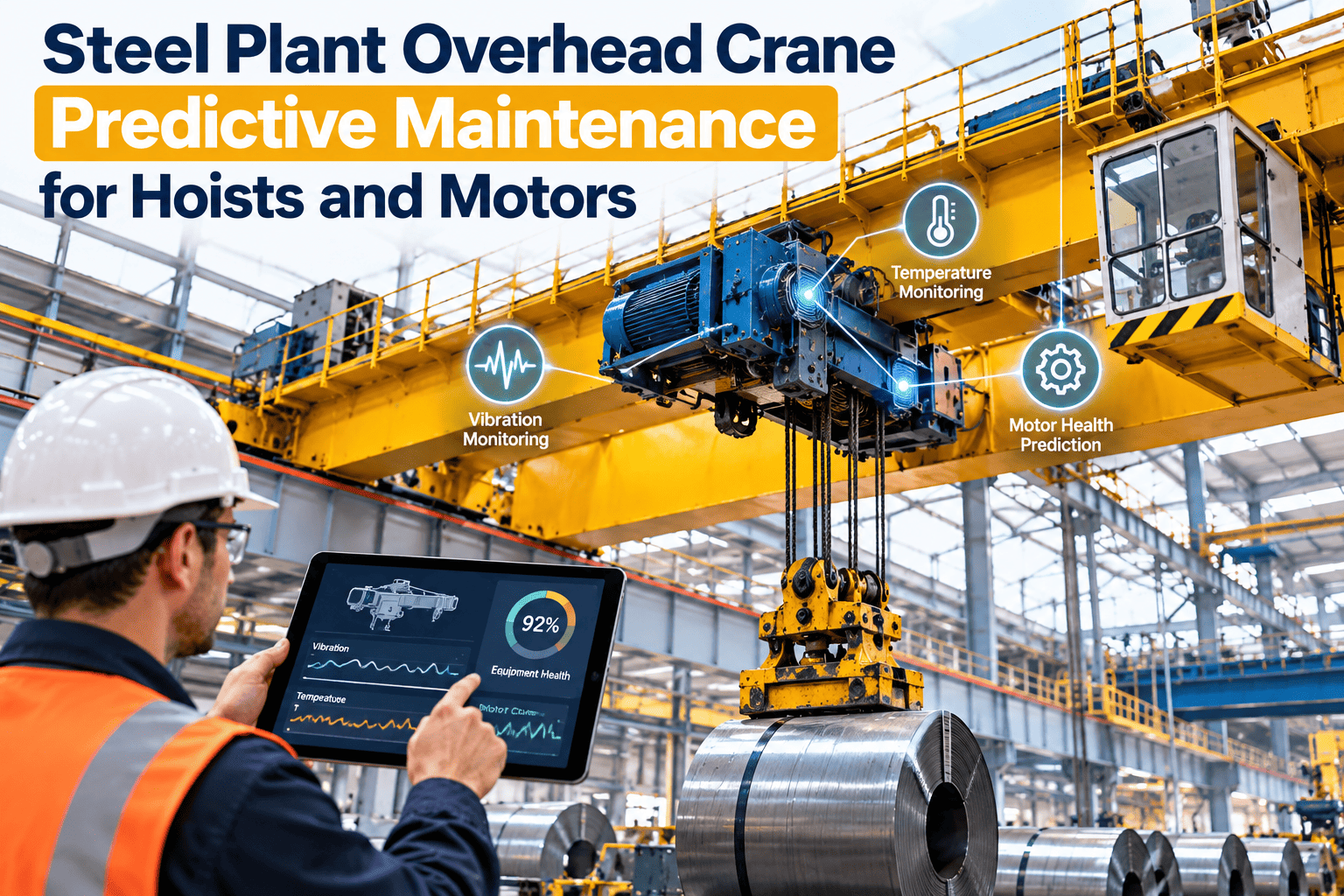
When an overhead crane stops in a steel plant, the problem rarely stays with the crane. Ladle moves wait, slabs and coils stack up, furnaces and casters lose their feed, and a single hoist fault becomes a...
Read More
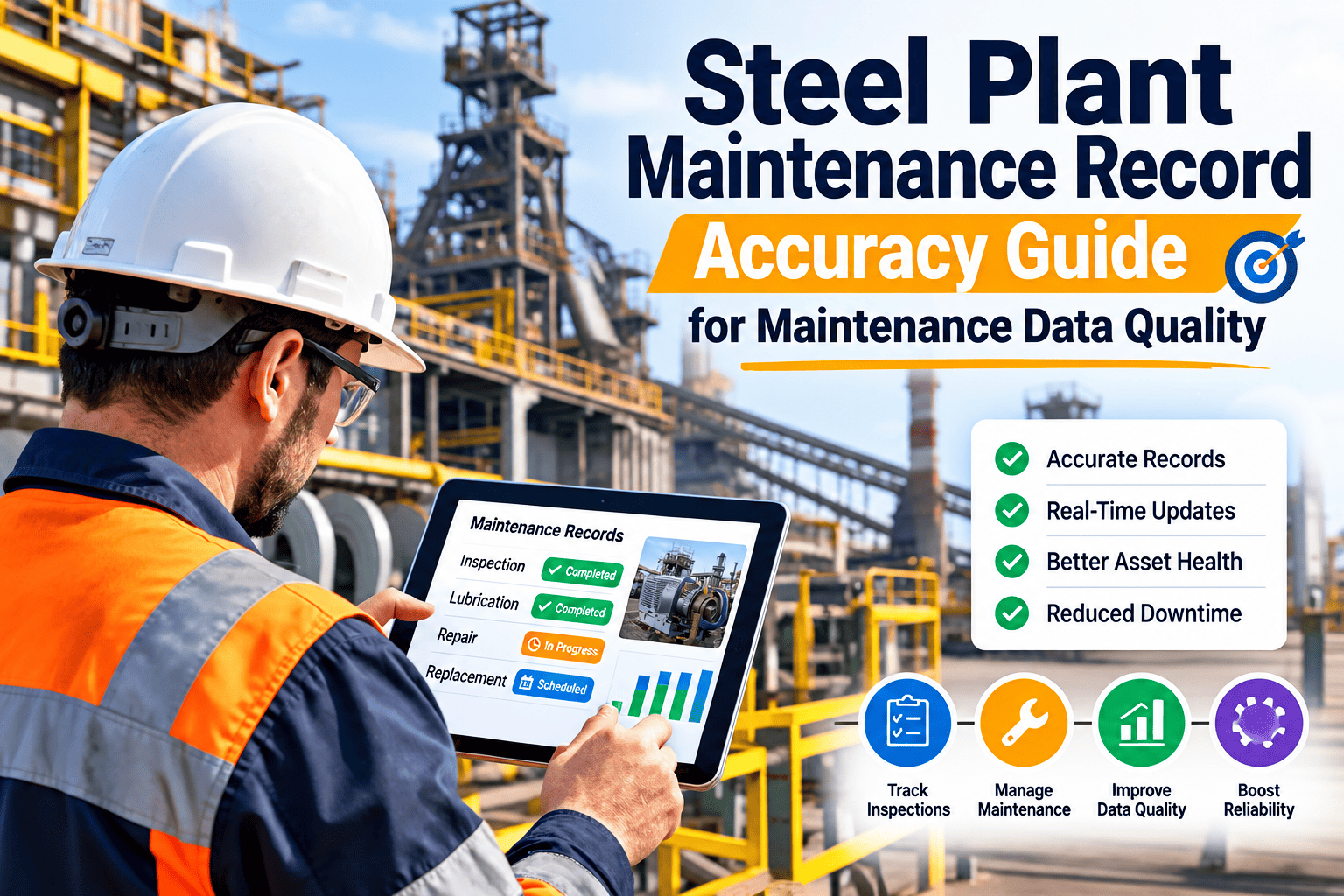
Every maintenance KPI in a steel plant starts as a record typed by someone at the end of a long shift. If the work order says "fixed it" against a generic asset, with no failure cause, no labor hours and a close...
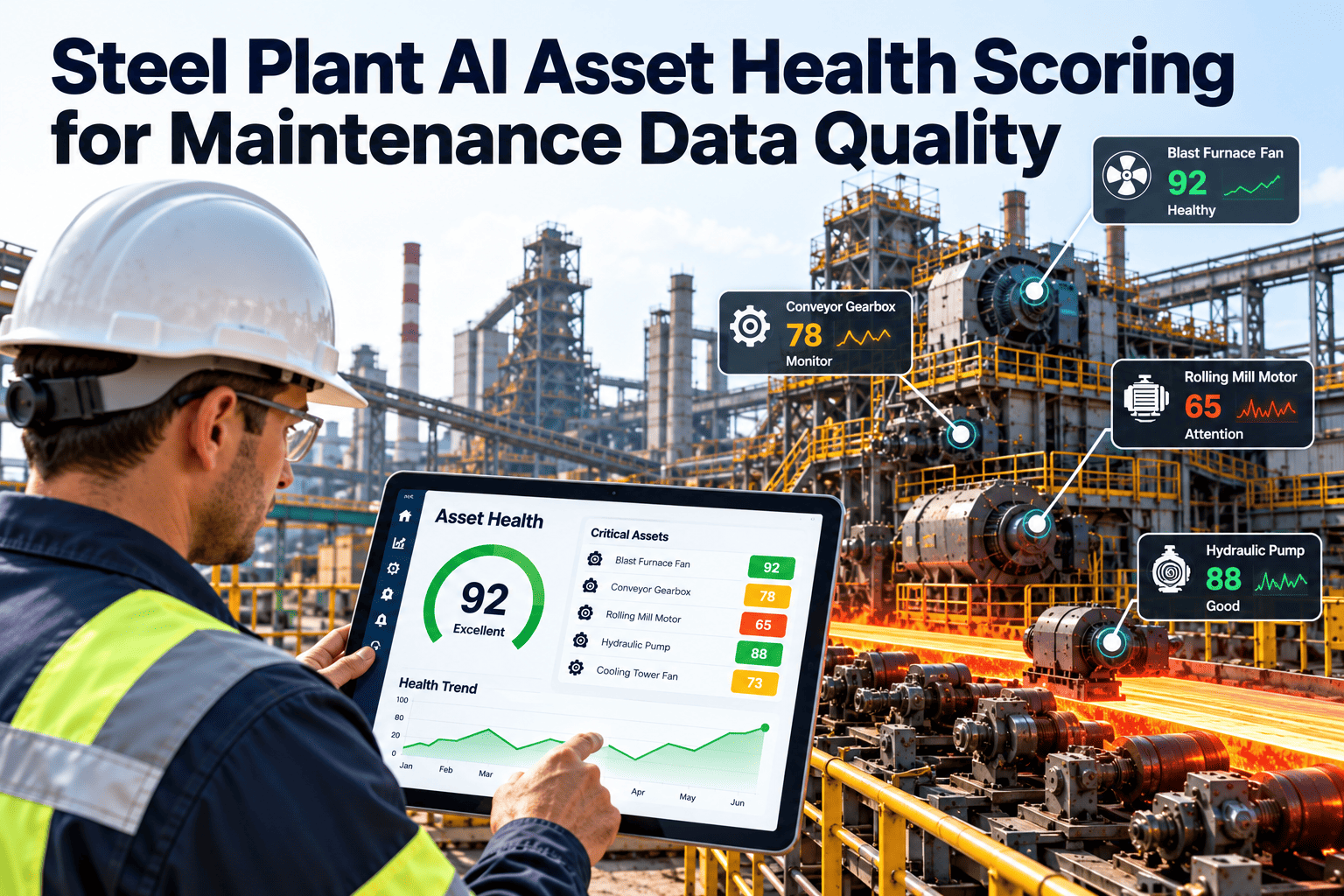
Read More
An asset health score looks objective, but it is only as reliable as the maintenance data behind it. In steel plants, equipment records are often scattered across spreadsheets, paper logs, historian tags and...

Read More
A predictive model is only as honest as the signal feeding it. In a steel plant, sensors sit next to ladle heat, scale, water spray, electromagnetic noise and constant vibration, so readings drift, freeze, spike or...
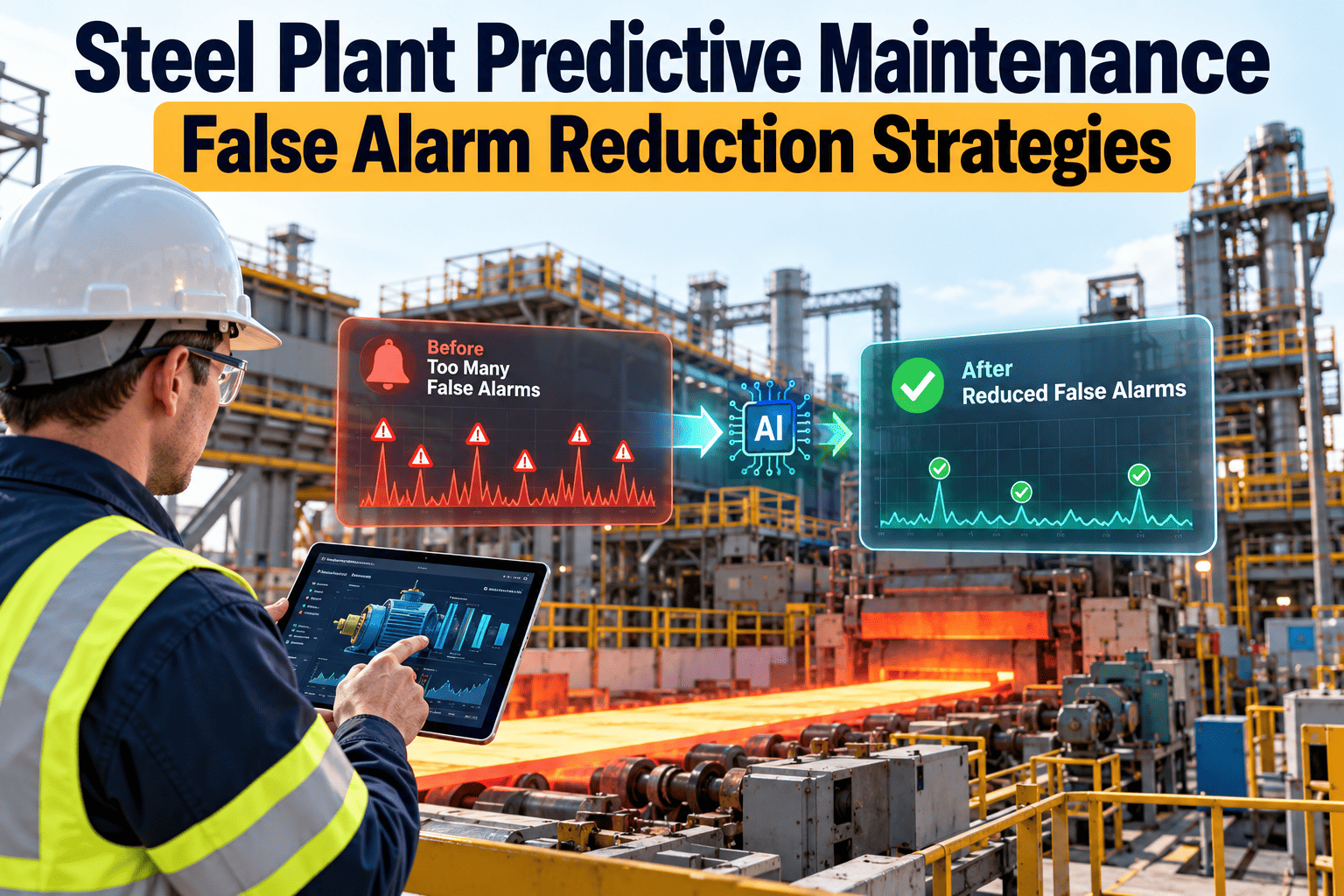
Read More
In a steel plant, a predictive maintenance alert only creates value when someone trusts it enough to act. Rolling mill gearboxes, caster segments, fume extraction fans and reheat furnace drives all produce noisy...
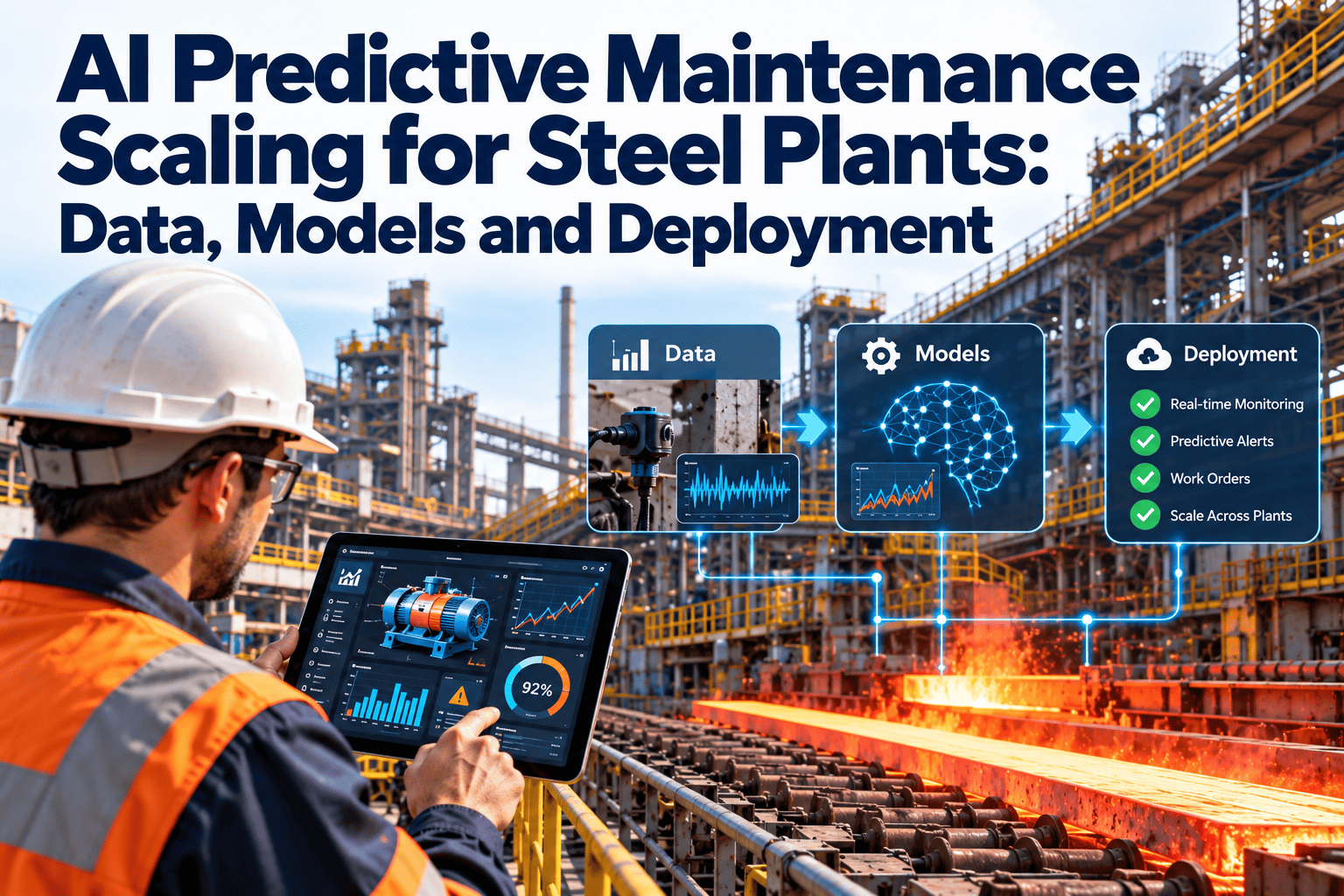
Read More
Most steel plants can show that AI predictive maintenance works on a single asset. Far fewer can repeat that result across blast furnace blowers, caster segment drives, mill gearboxes, descaling pumps and overhead...

Read More
Live quality control in steel only works if the answer arrives before the heat moves on. A chemistry result that comes back late, a spectrometer drifting out of calibration, or a mold level sensor with a noisy...
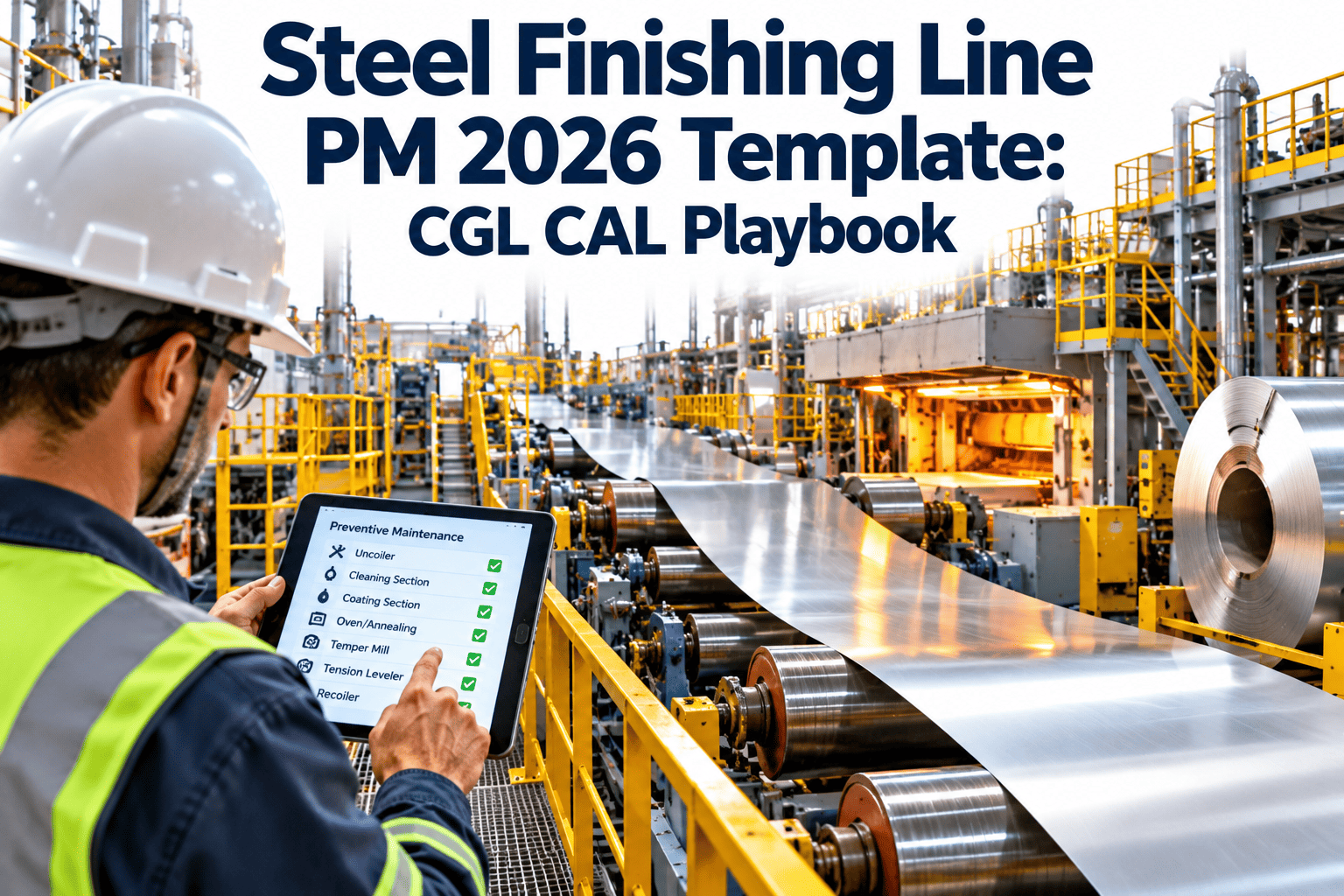
Read More
A coil that leaves a finishing line with coating weight variation, roll marks, or stretcher strain does not just fail inspection. It carries the cost of every upstream process and returns as a claim, a downgrade,...
Read More
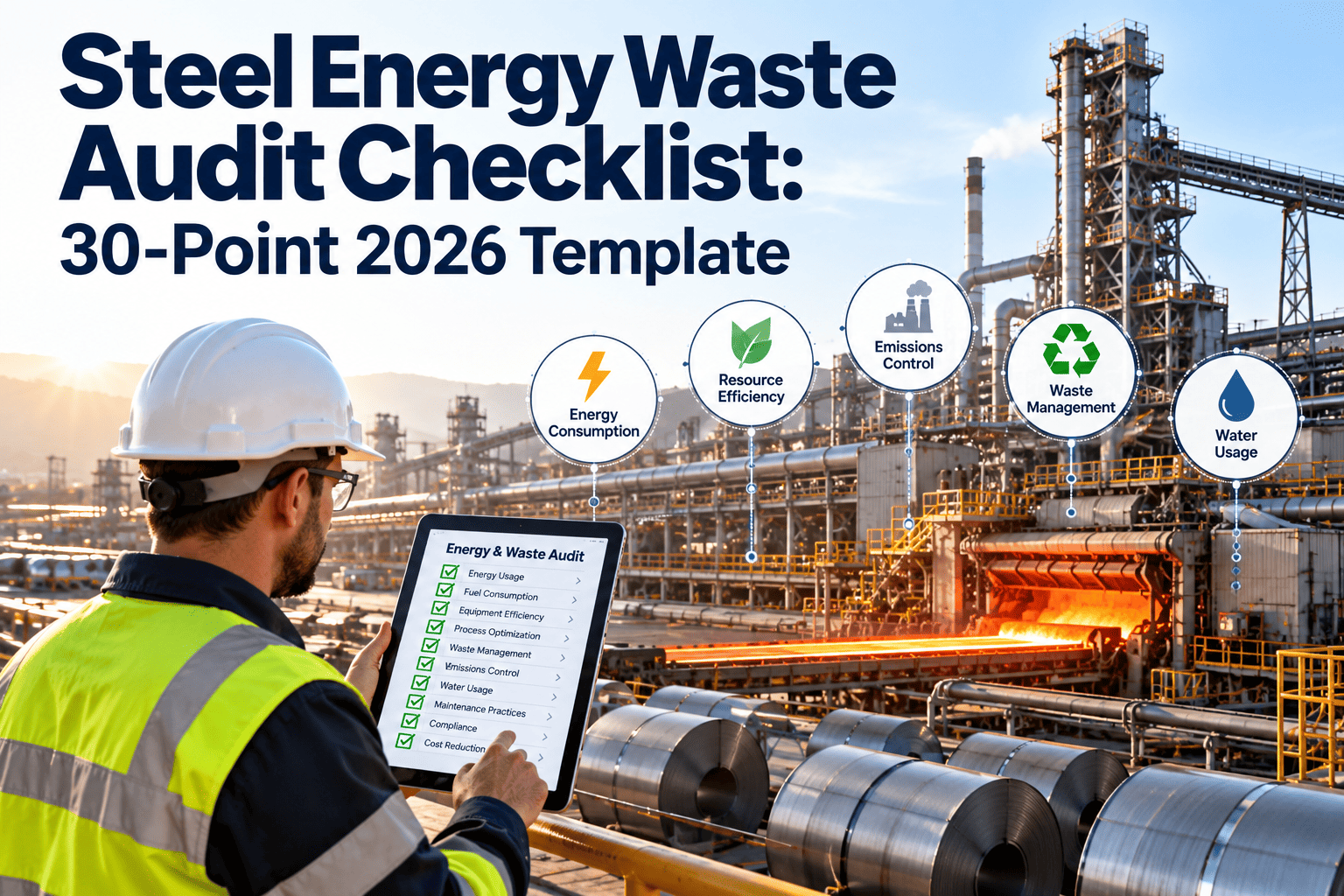
Steel plants rarely lose money to energy waste in one dramatic event. The loss builds quietly through idle furnaces, compressed air leaks, oversized motors, fixed-speed fans, ageing lighting, and demand peaks that...
Read More
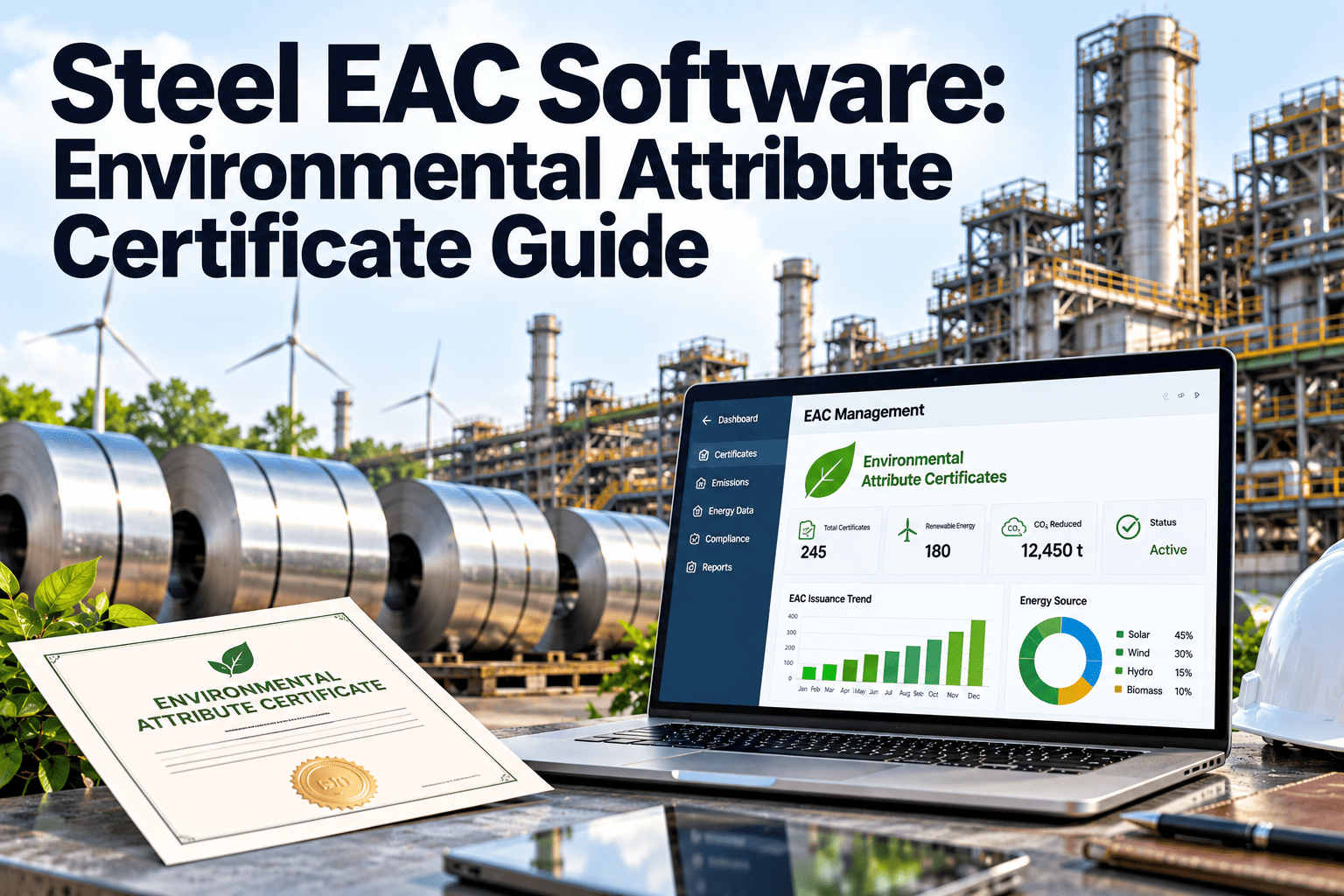
Low-carbon steel is increasingly sold in two parts: the physical product and the environmental claim attached to it. The claim travels as an Environmental Attribute Certificate, or EAC, and it is only as credible...
Read More
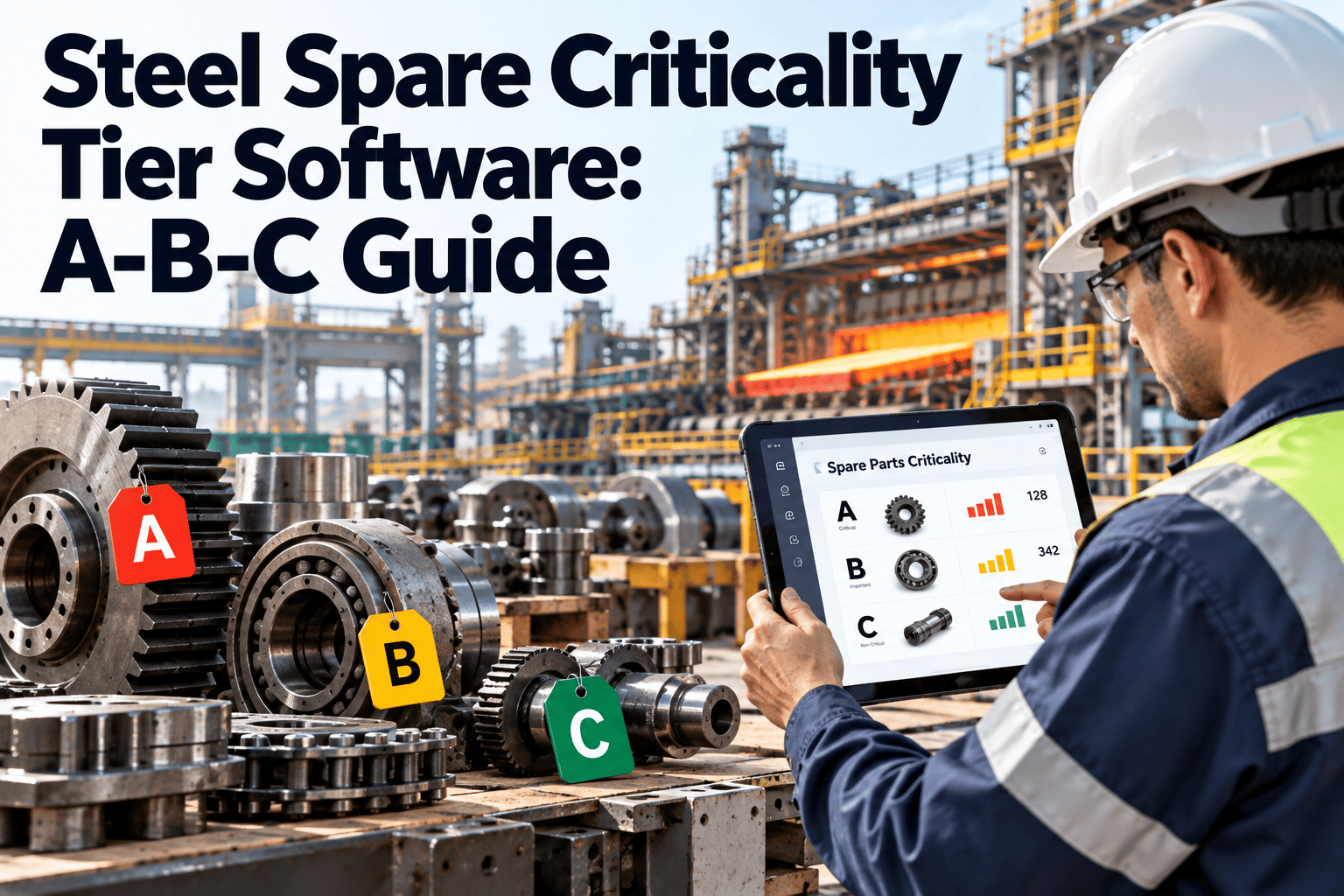
Most steel plant storerooms hold two kinds of risk at the same time: money tied up in parts that rarely move, and gaps where a missing part can stop a mill, furnace or caster. Spend-based ranking does not separate...

Read More
Every steel plant storeroom has the same two complaints at once: shelves full of parts nobody uses, and urgent orders for parts nobody expected to need. Both come from reorder points that were set once and never...
Read More
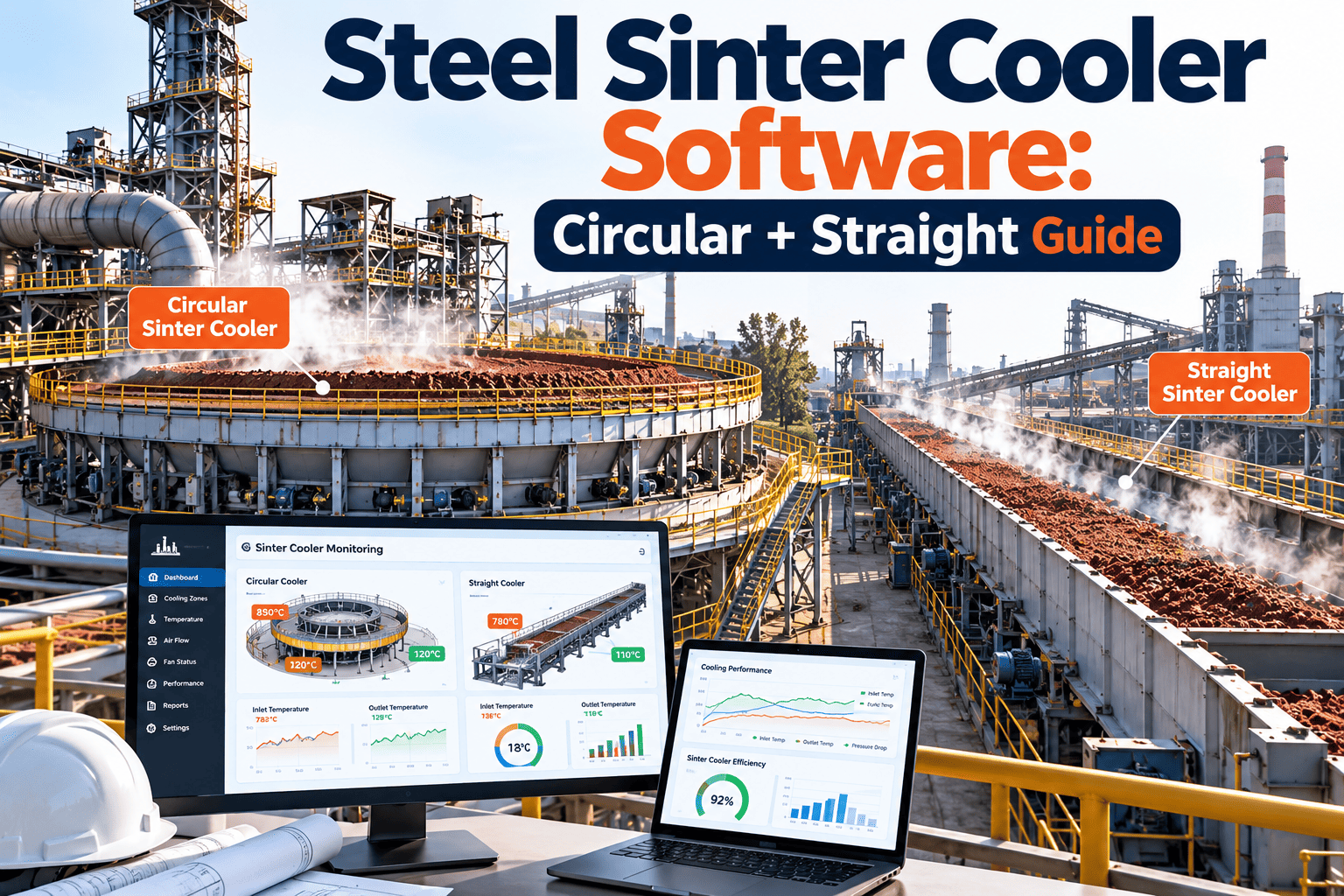
The sinter cooler sits between the sinter machine and the blast furnace, and when it underperforms the damage spreads in both directions. Hot sinter that is not cooled enough burns conveyors and degrades screening,...
Read More
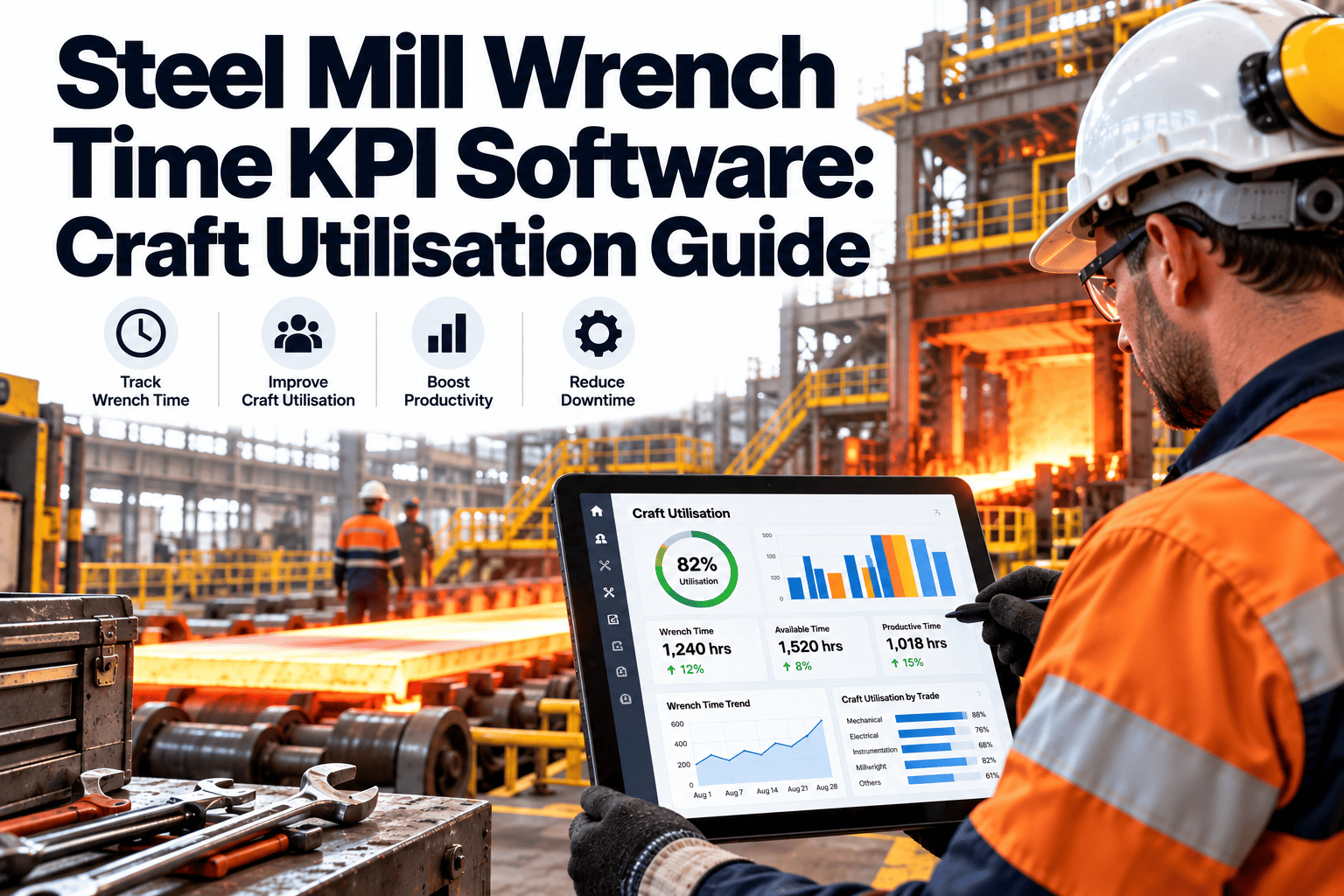
Most steel mill maintenance crews are busy all shift, yet only part of that time is spent with tools on the equipment. The rest goes to walking across the plant, waiting for permits, cranes, parts, and equipment...

Read More
A coil can meet its average gauge and still be rejected because the first and last few metres sit outside tolerance. For high-tolerance customers, head-to-tail thickness variation is the number that decides whether...
Read More
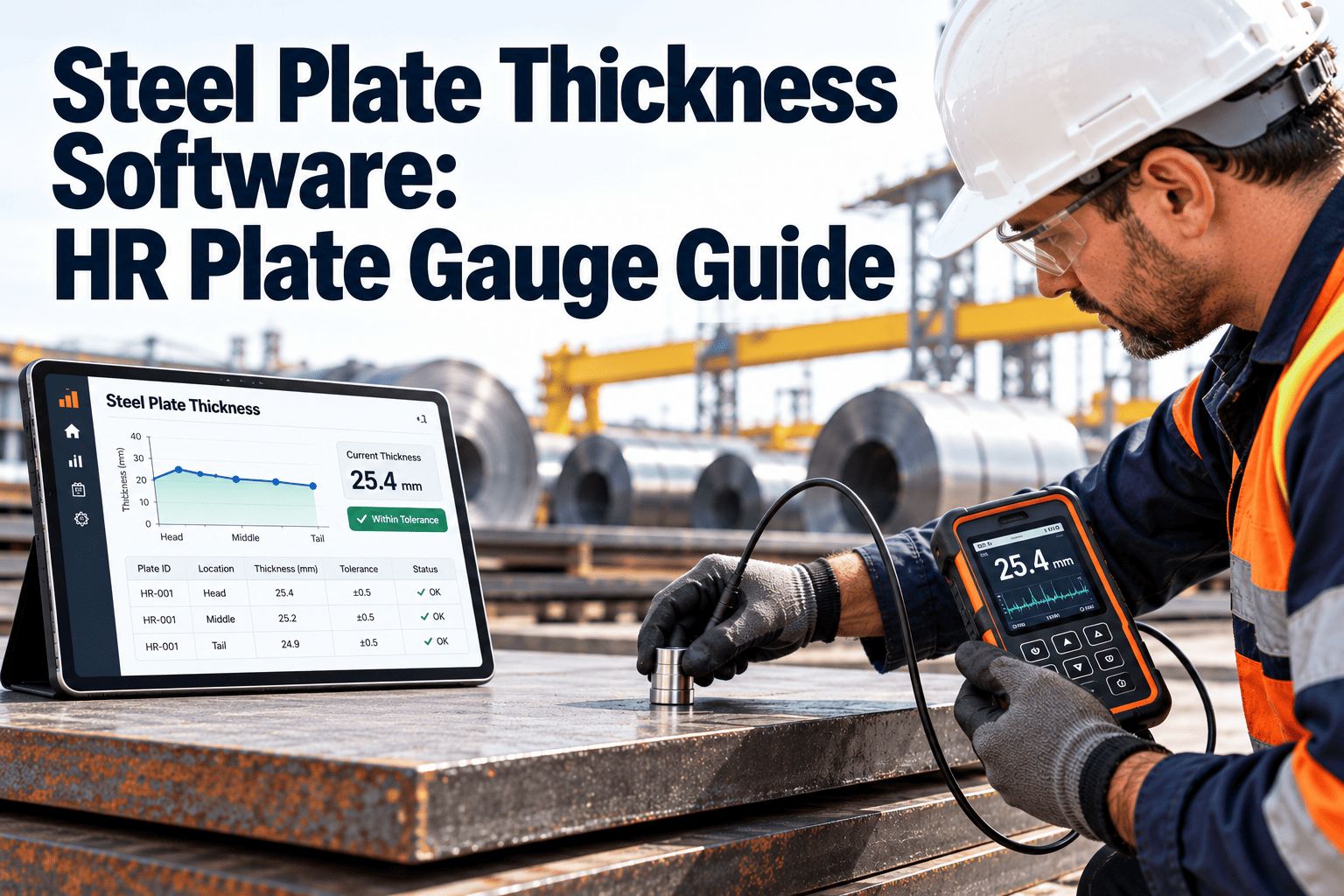
Steel plate thickness is where hot rolling quality meets maintenance discipline. A plate can leave the mill with perfect chemistry and still be rejected because one side runs heavy, an edge runs light, or the gauge...
Read More
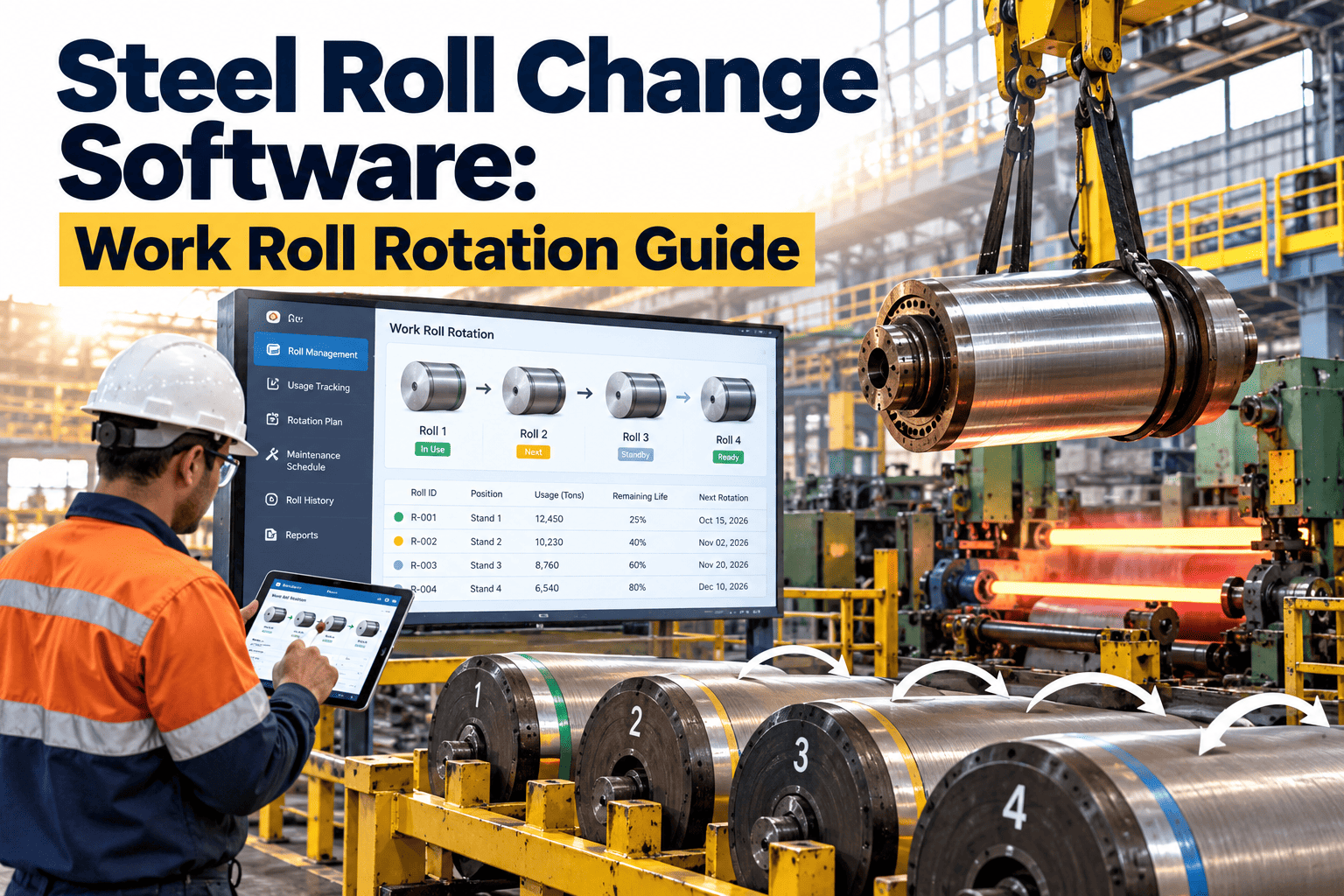
Work rolls touch the strip, so everything that happens to a roll shows up in the product. A rushed roll change, a missed grind, or a roll left in the mill for one campaign too long can print a defect on every coil...
Read More
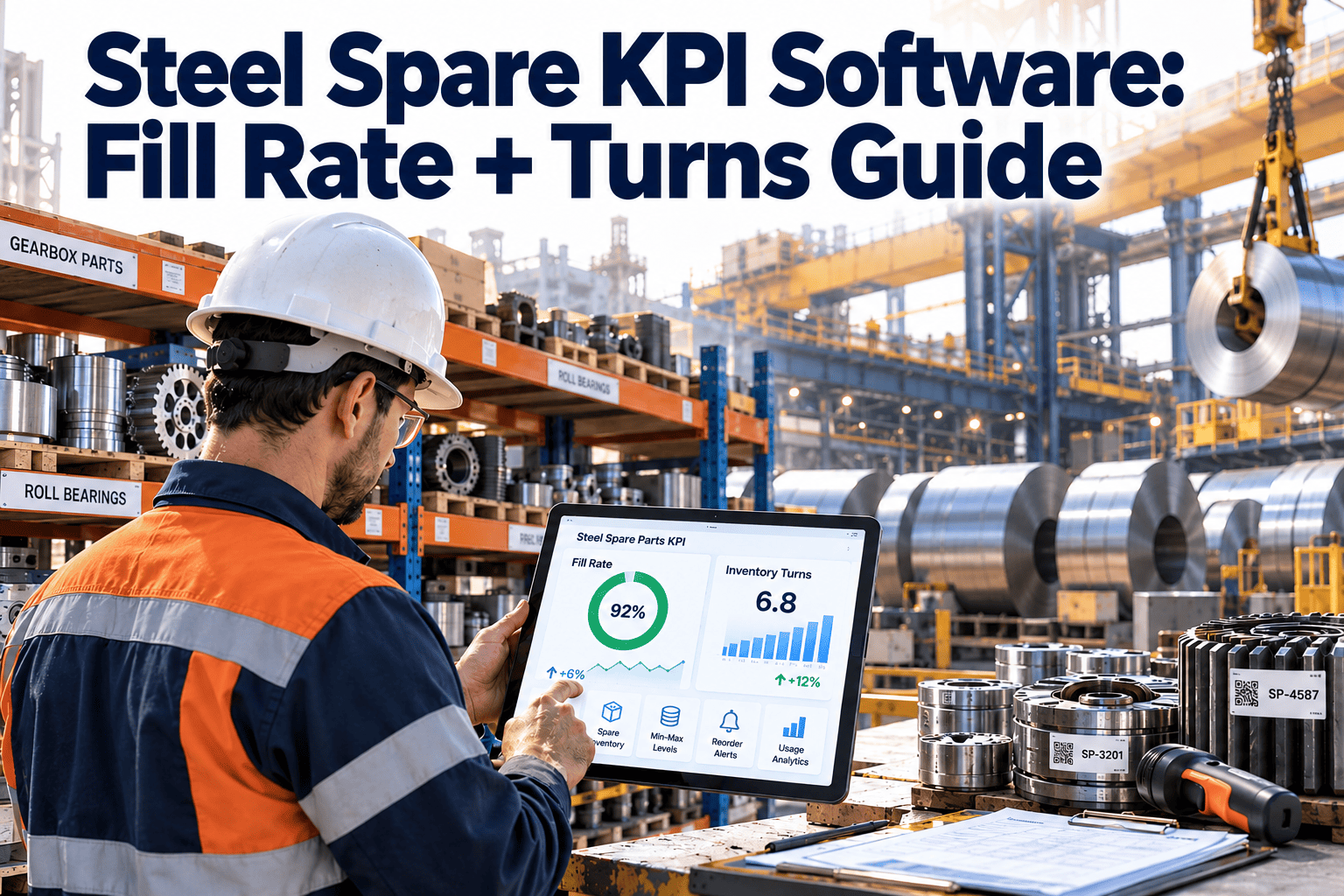
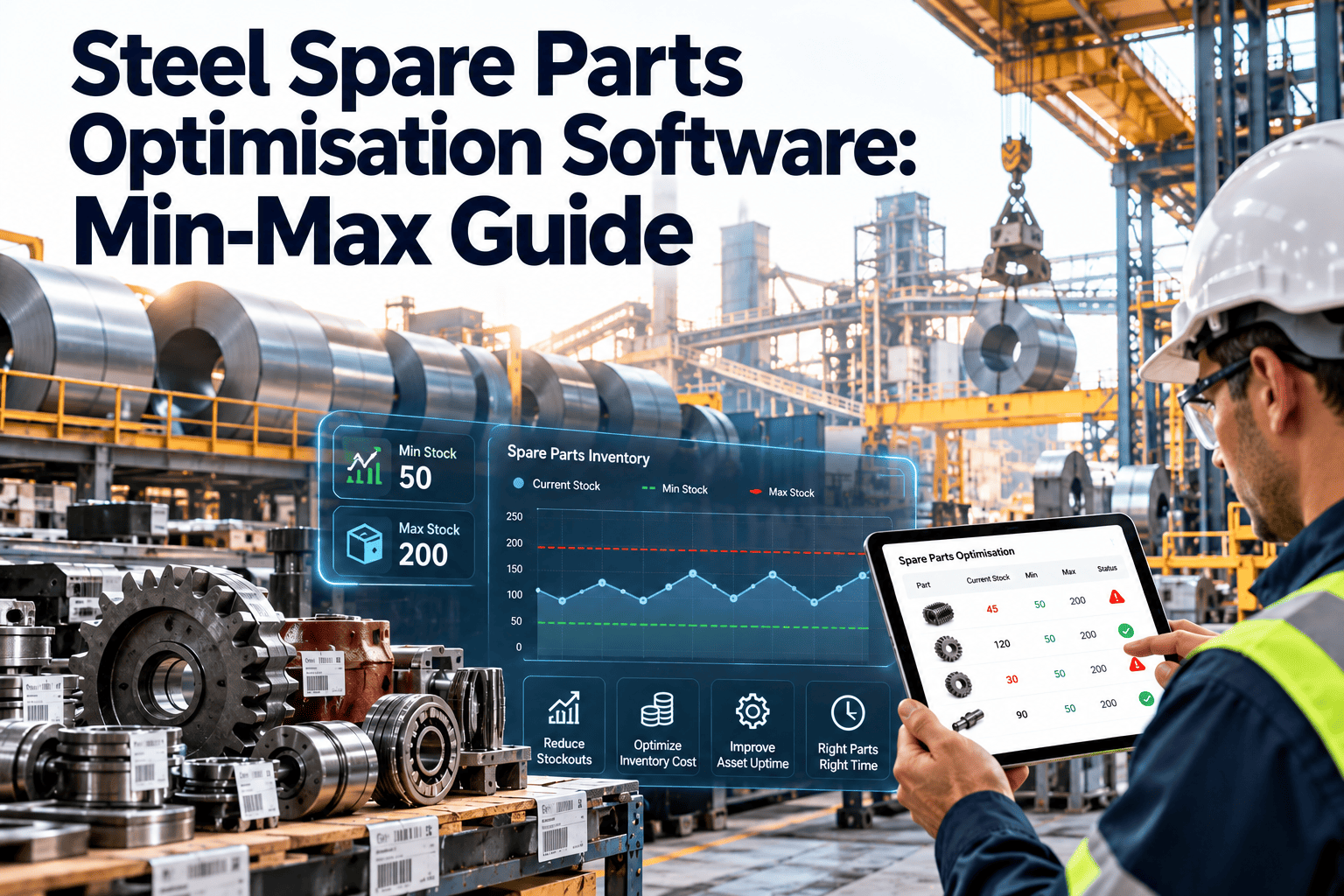
A steel plant can hold millions of dollars in spares and still stop for want of one bearing, coupling, or tuyere. The storeroom looks full, the finance team sees a large inventory balance, and the maintenance team...
Read More
A steel plant can hold millions in spare parts and still be unable to find the one bearing, servo valve, or gearbox seal it needs at three in the morning. At the same time, shelves fill with items nobody has used...

Read More
Every steel group eventually faces the same question: which AI platform should sit behind our reliability and quality programmes? The market is crowded with cloud giants, GPU vendors, industrial software suites,...
Read More
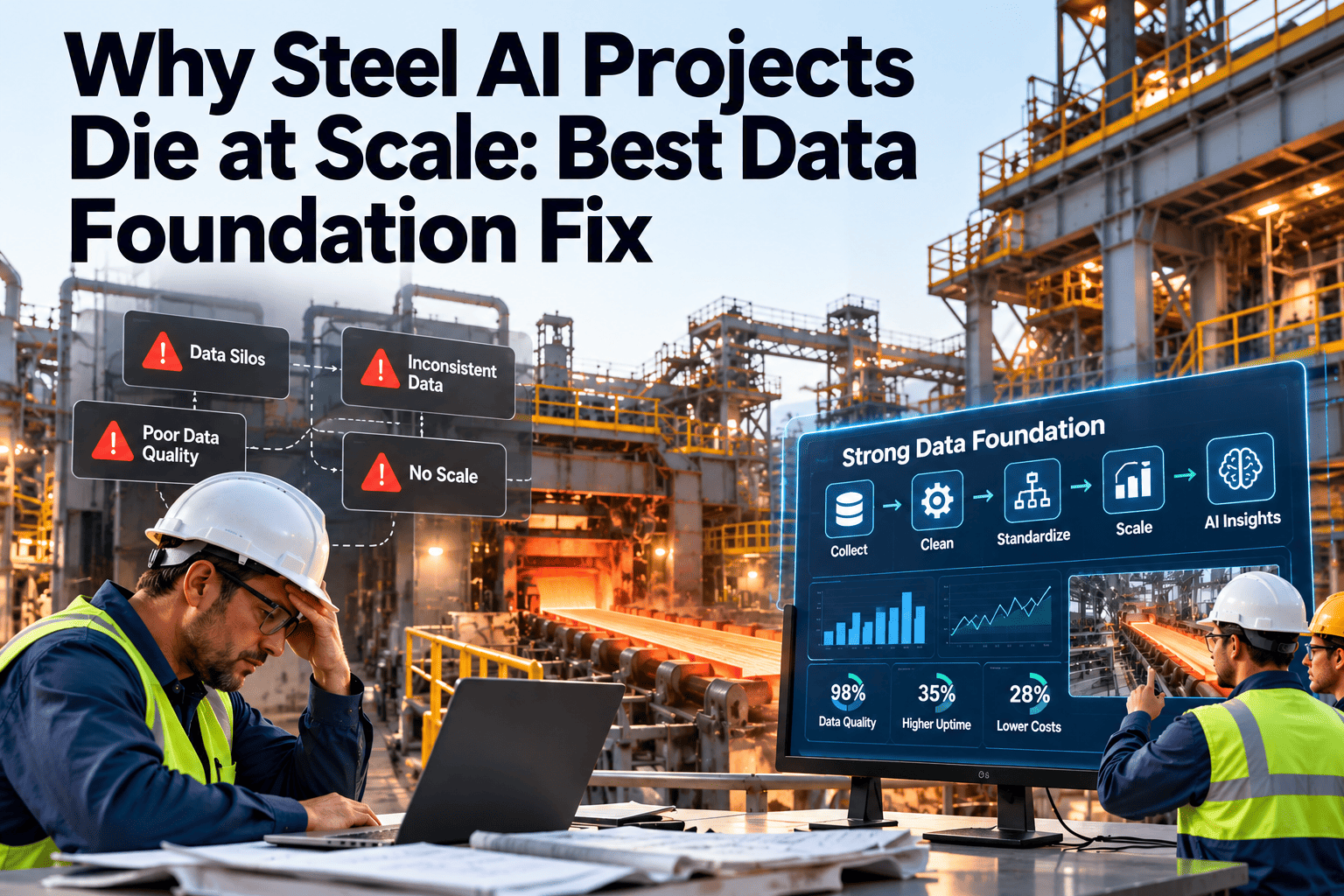
Most steel plants can point to an AI pilot that worked. A model predicted a gearbox fault, flagged a quality drift, or ranked a set of risky assets, and everyone agreed it looked promising. Then the project met the...
Read More
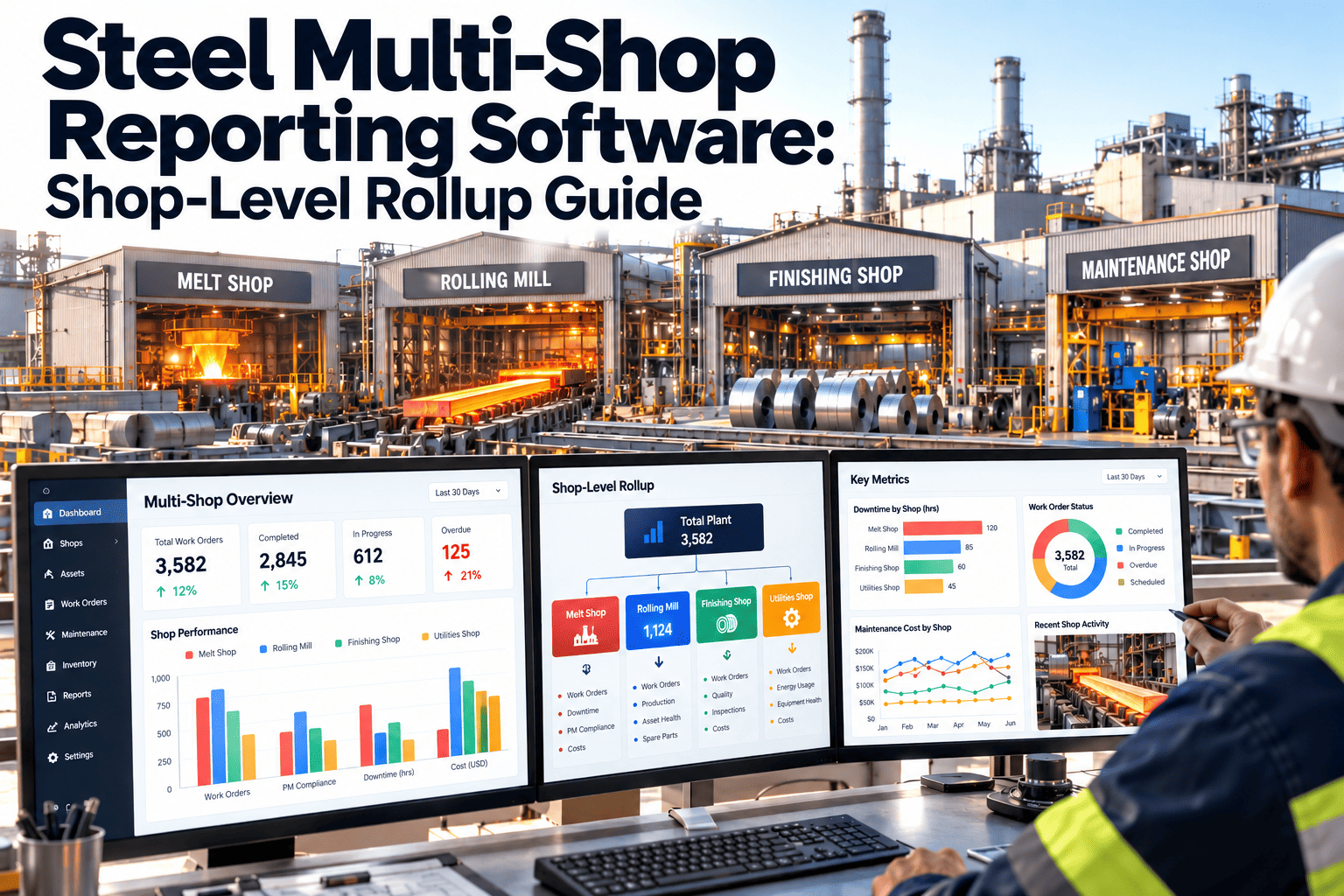
A steel plant rarely suffers from a lack of maintenance data. It suffers from shops that each count availability, backlog, and cost in their own way, so the monthly review turns into an argument about whose number...
Read More
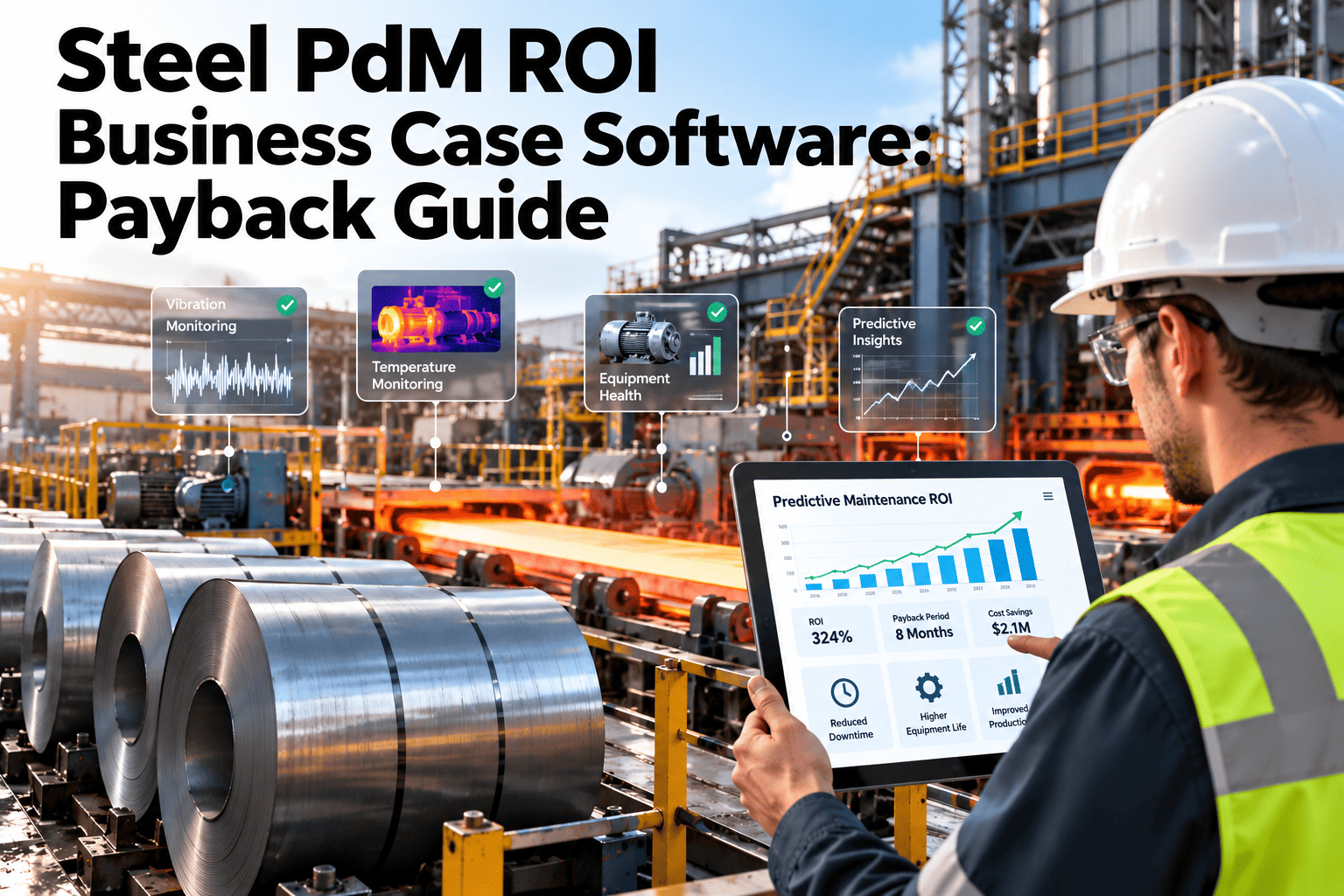
Steel plants rarely struggle to collect vibration or thermal data. The harder job is turning predictive maintenance results into a number that a finance committee will approve. Every blast furnace fan, caster...
Read More
Many steel predictive maintenance programmes stall because they start too wide. Hundreds of sensors, no agreed alarm limits and no way to prove value leave the team with data nobody acts on. A focused pilot on 10...
Read More
Not every asset in a steel plant deserves the same maintenance attention. A failed gearbox on a continuous caster, a stuck converter tilting drive or a tripped stove valve on a blast furnace can stop output,...
Read More
A steel mill turnaround is the one window in the year when furnaces, converters, casters and rolling lines stop long enough for deep work, and every extra day of downtime is lost tonnage. Most overruns do not begin...

Read More
Inspection rounds in a steel plant cover thousands of check points across furnaces, casters, rolling mills, cranes, pumps and utilities. On paper, those rounds produce unreadable notes, skipped points and findings...
Read More
A quality nonconformance in a steel plant is rarely only a quality event. A surface defect, dimensional drift or chemistry deviation often traces back to a worn mold, a drifting sensor, a missed lubrication task or...
Read More
An electric arc furnace asks its hydraulic system to do several demanding jobs at once: hold electrodes steady against an unstable arc, lift and swing the roof, tilt the shell, and operate the slag door and tapping...
Read More
An electric arc furnace works in short, violent cycles: electrodes arc at extreme current, cooling panels face radiant heat, and hydraulics move heavy loads every heat. When one subsystem drifts, the whole melt...
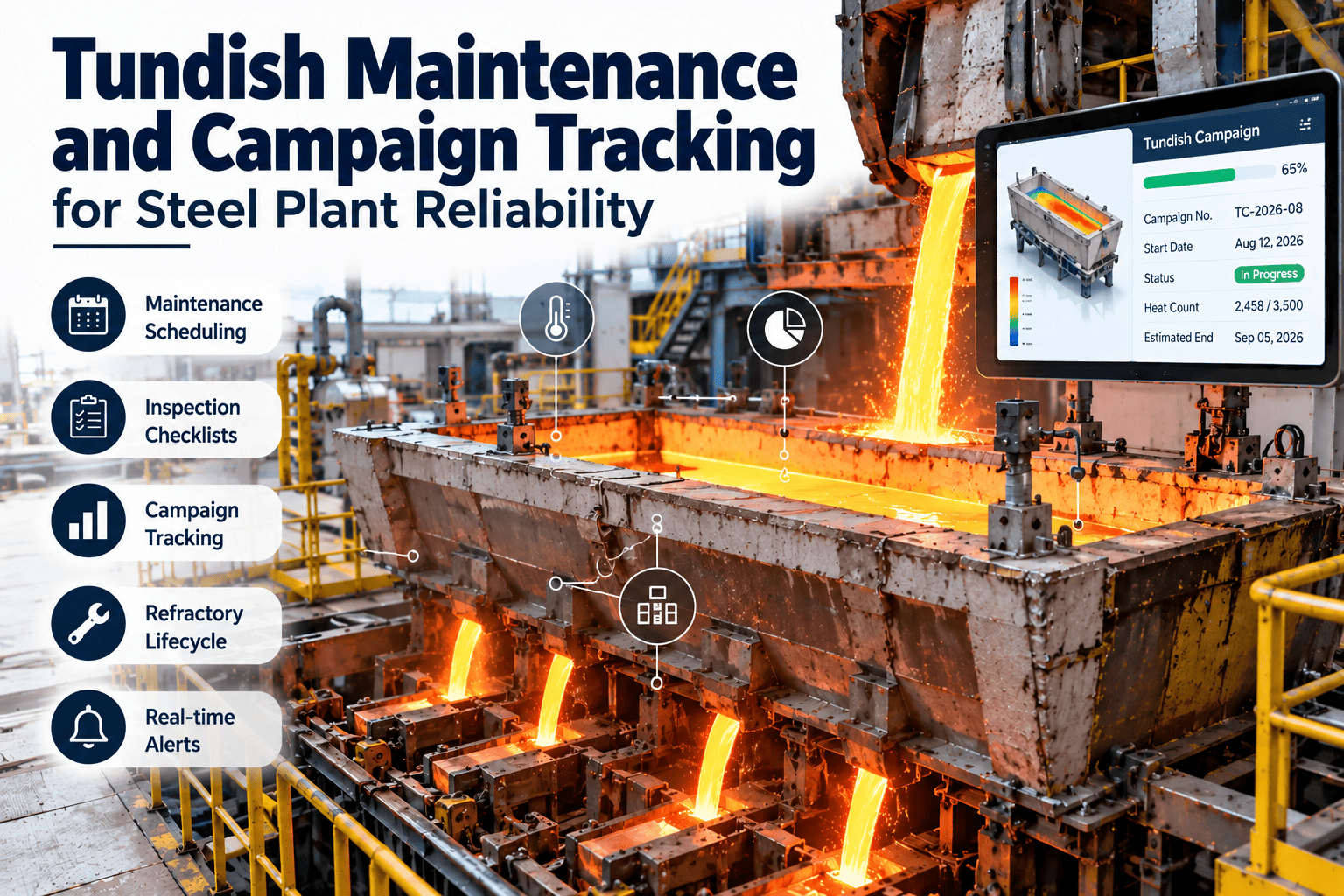
Read More
The tundish sits between the ladle and the mold, and its condition shapes casting stability, steel cleanliness, and sequence length. Each campaign wears the refractory lining, slide gates, stopper rods, and nozzles...
Read More
Continuous casting depends on cooling water doing its job every second of a sequence. Mold water removes heat to form the shell, and secondary spray zones finish solidification below the mold. When flow drops, a...
Read More
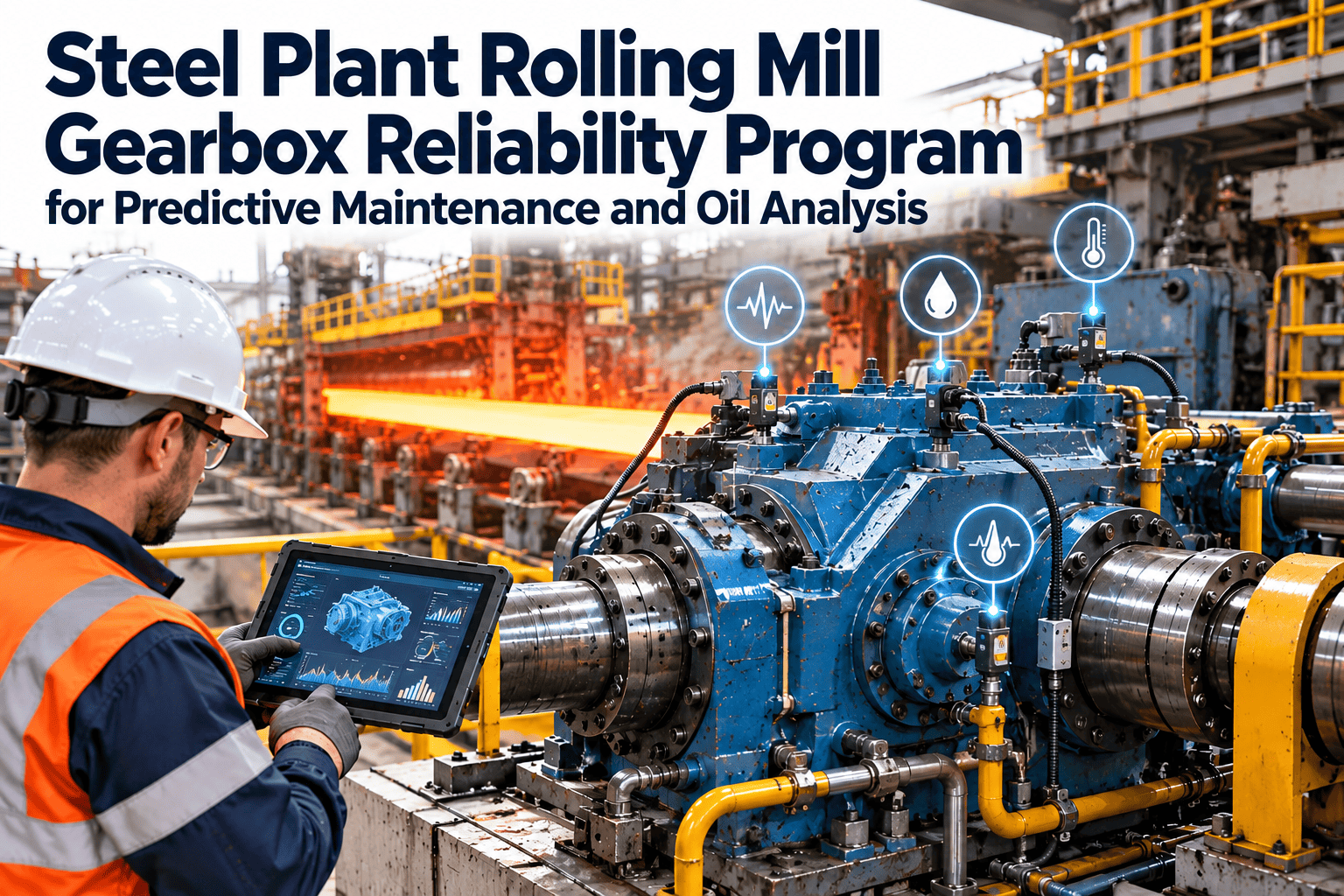
A rolling mill gearbox rarely fails without warning, but the warning is easy to miss when vibration, oil, temperature, and lubrication records live in different places. Shock loads from bite entry, high torque,...

Read More
Energy loss in a steel plant seldom announces itself. It hides in a compressed-air leak that has hissed for months, a motor running at a fraction of its rated load, a cooling pump throttled by a half-closed valve...

Read More
Most steel plants already take oil samples, yet many still learn about a failing gearbox from noise or heat instead of from the lab report. The gap is rarely the laboratory. It is the program around it: unclear...
Read More
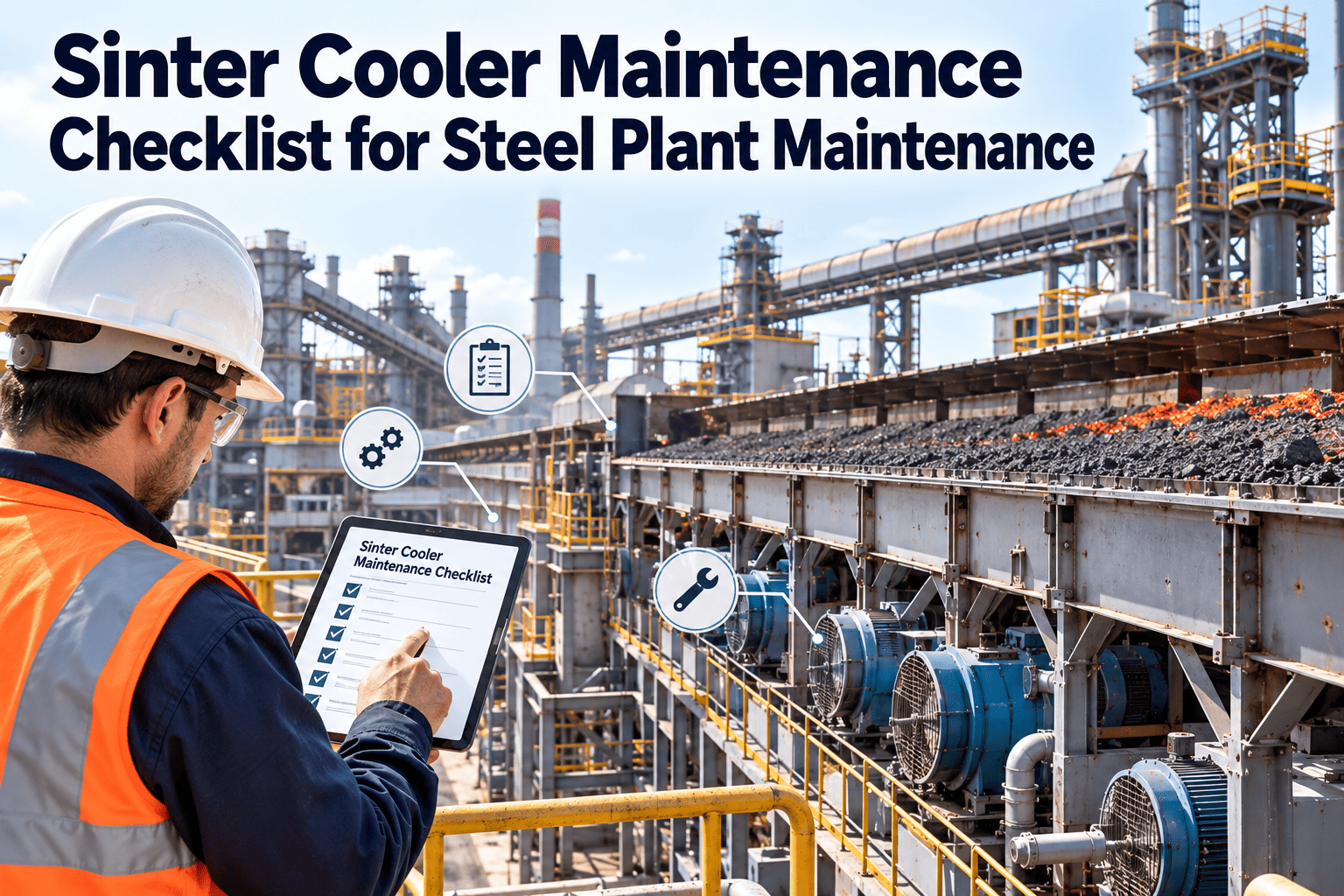
A sinter cooler rarely fails without warning, but the warnings are easy to miss. A fan drifts out of balance, a seal skirt wears thin, a drive current creeps upward, and discharge temperature rises a few degrees...
Read More
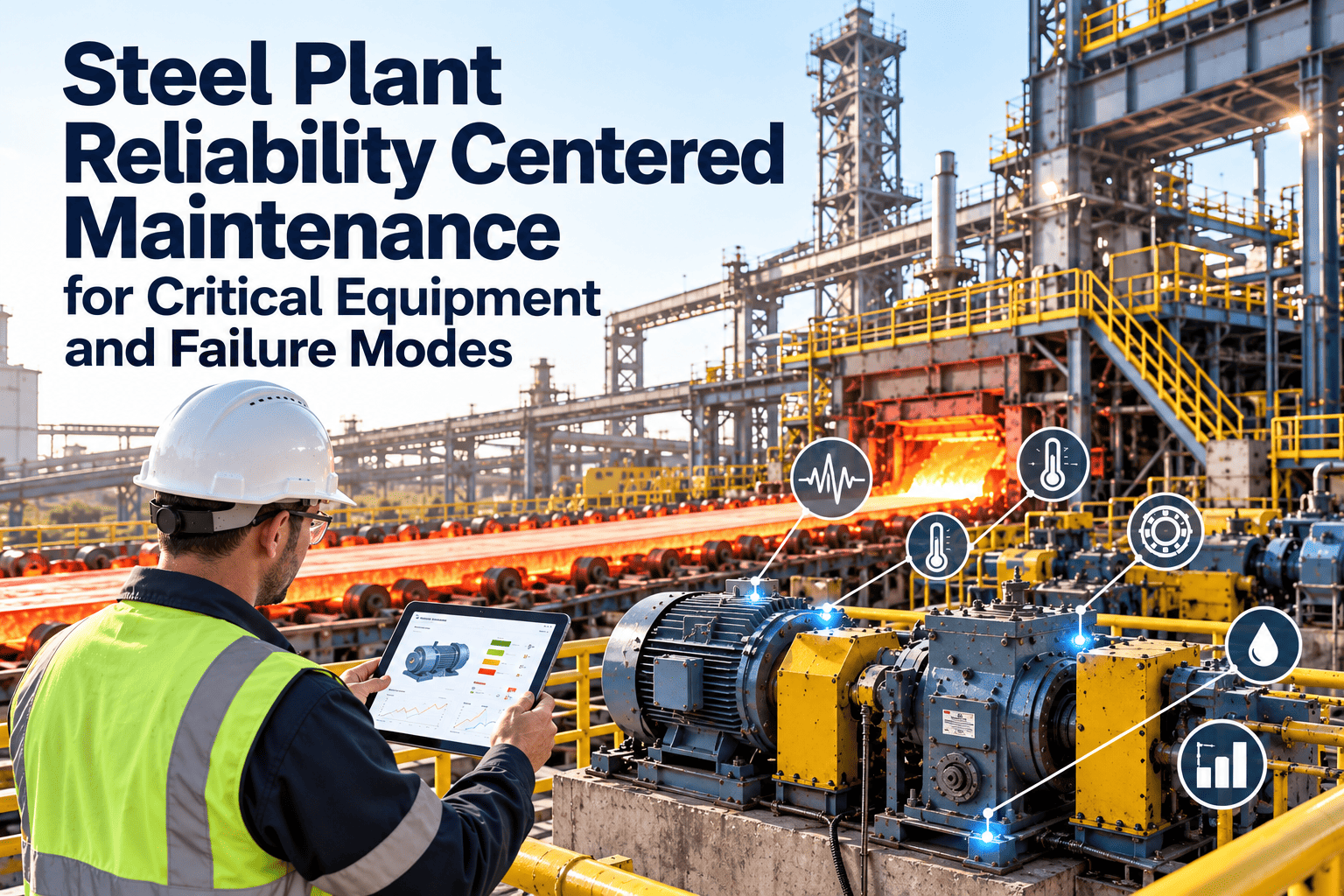
Steel equipment runs hot, dirty, heavy and continuous, so a single failed fan, gearbox or hydraulic unit can interrupt an entire process chain. Reliability centered maintenance helps a steel plant decide which...
Read More
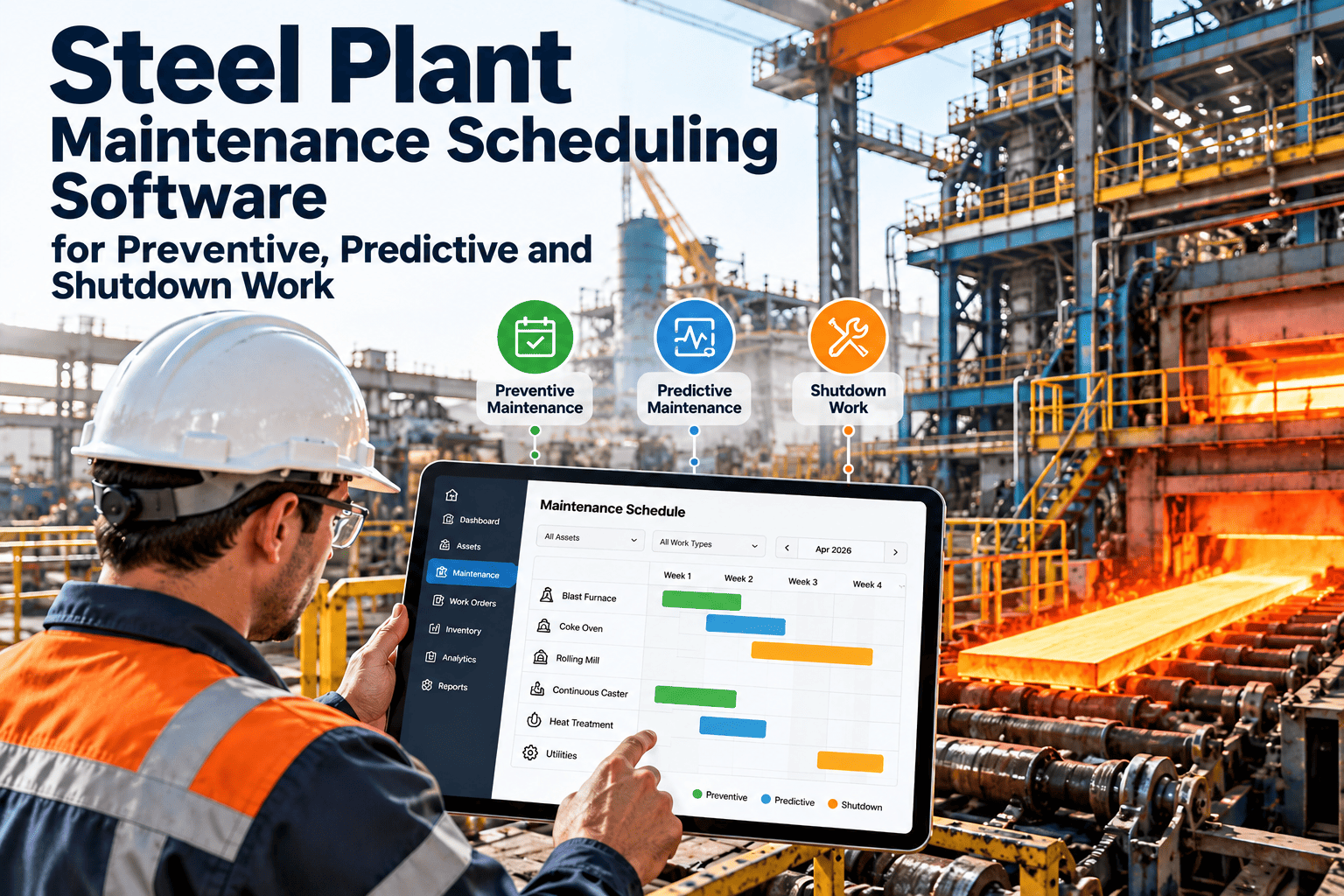
In a steel plant, maintenance rarely gets to choose its own time. Heats, casting sequences, rolling campaigns and furnace cycles decide when equipment can be touched, and a work order that ignores those windows...
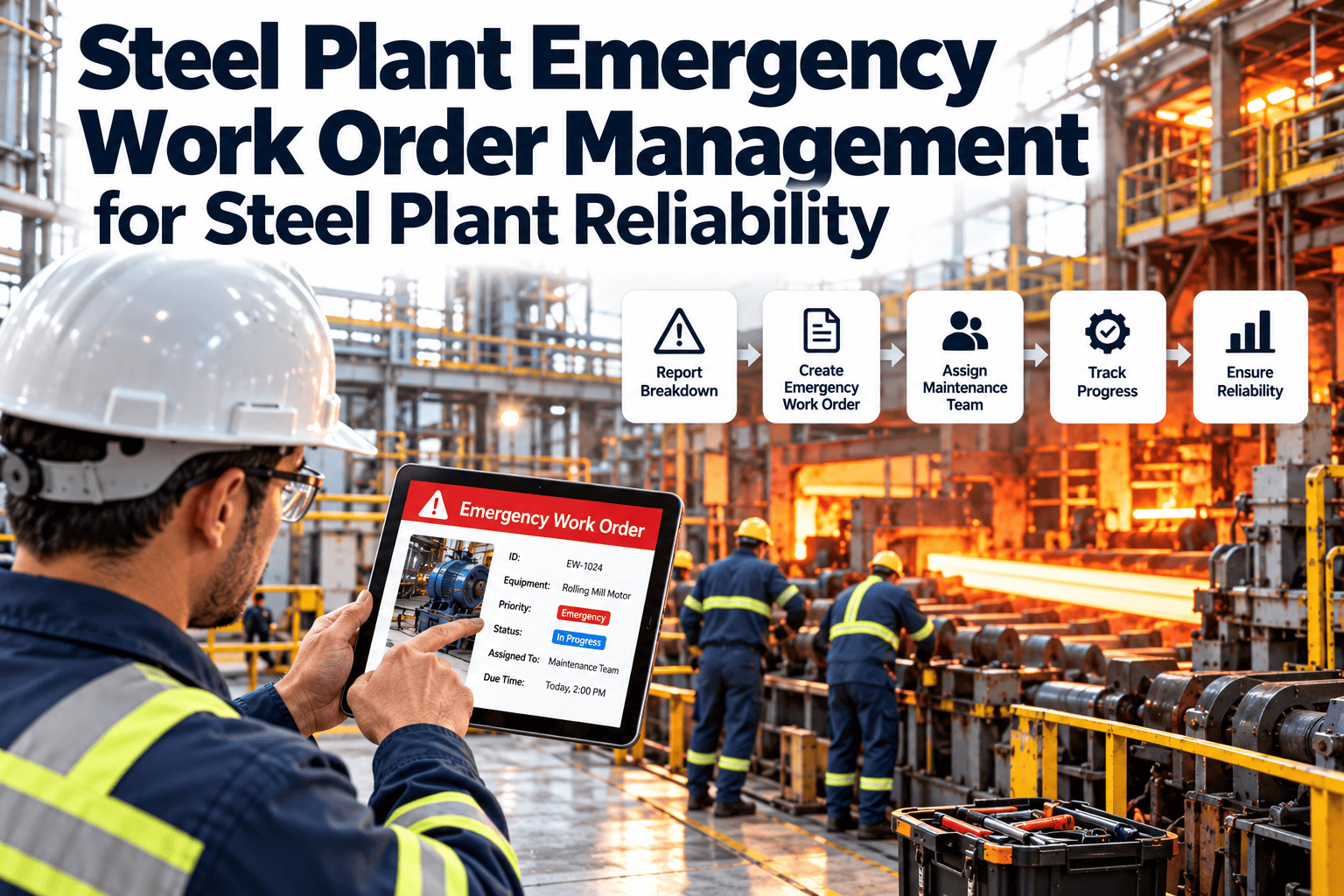
Read More
When a ladle crane hoist trips mid-pour or a caster drive stops without warning, the next few minutes decide how much production is lost. Emergency maintenance in a steel plant needs more than fast technicians. It...
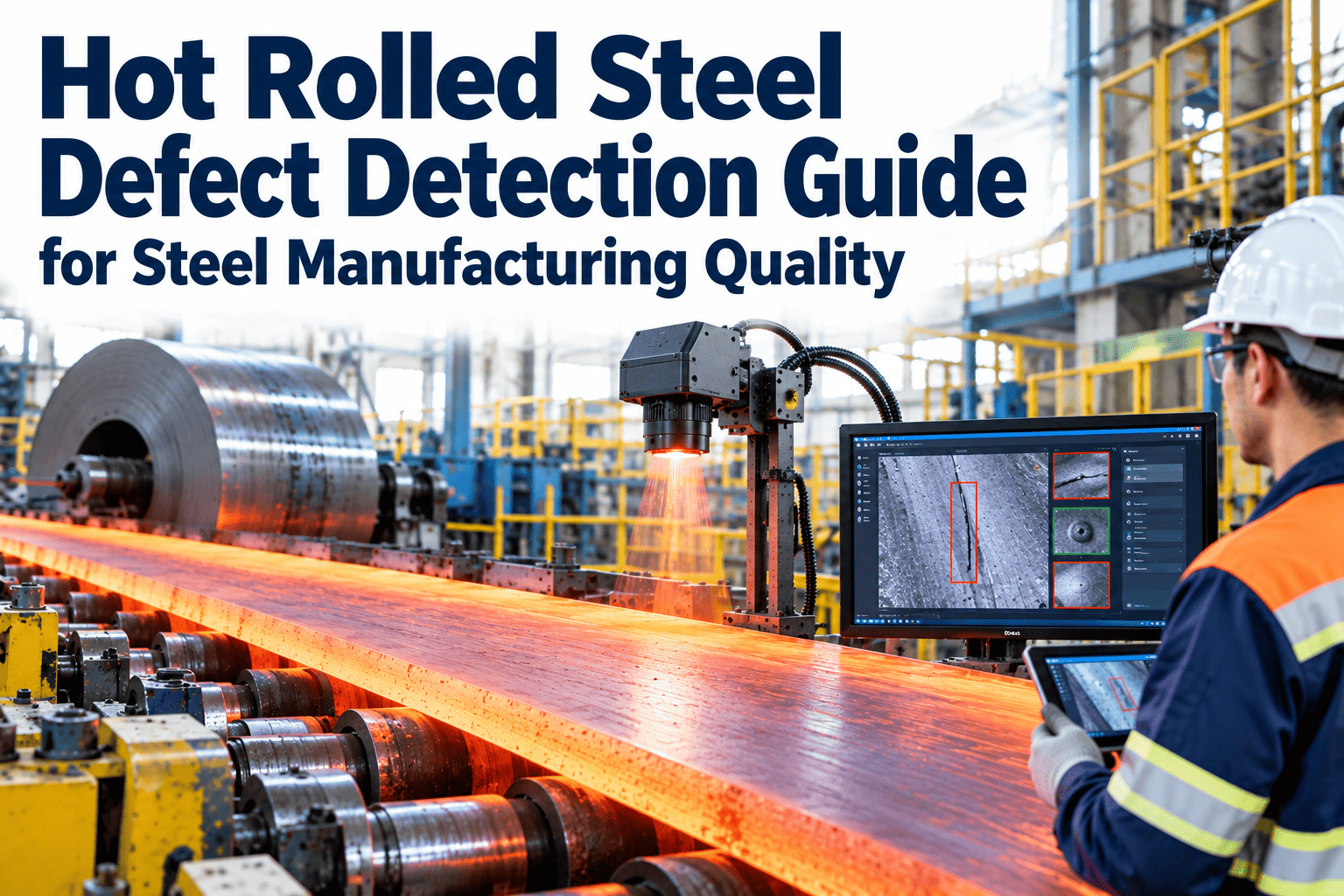
Read More
A hot strip leaves the finishing mill moving fast, hot and covered in a thin layer of oxide, which is exactly where surface defects are hardest to see and most expensive to miss. Hot rolled steel defect detection...
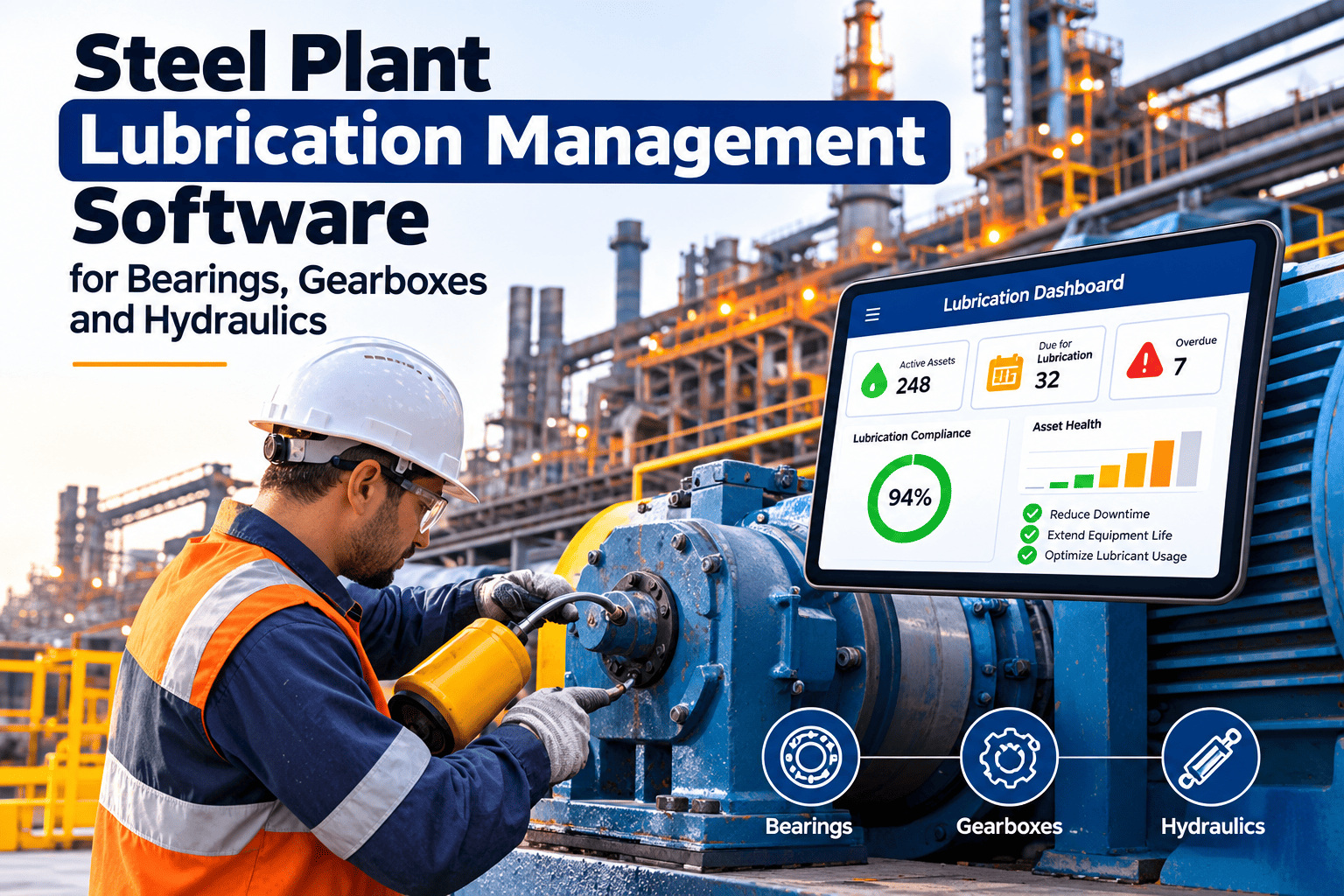
Read More
Most steel plants own plenty of lubrication knowledge and very little lubrication control. Grease guns, oil drums, sample bottles and OEM manuals exist in every area, yet intervals live in people's heads and a...
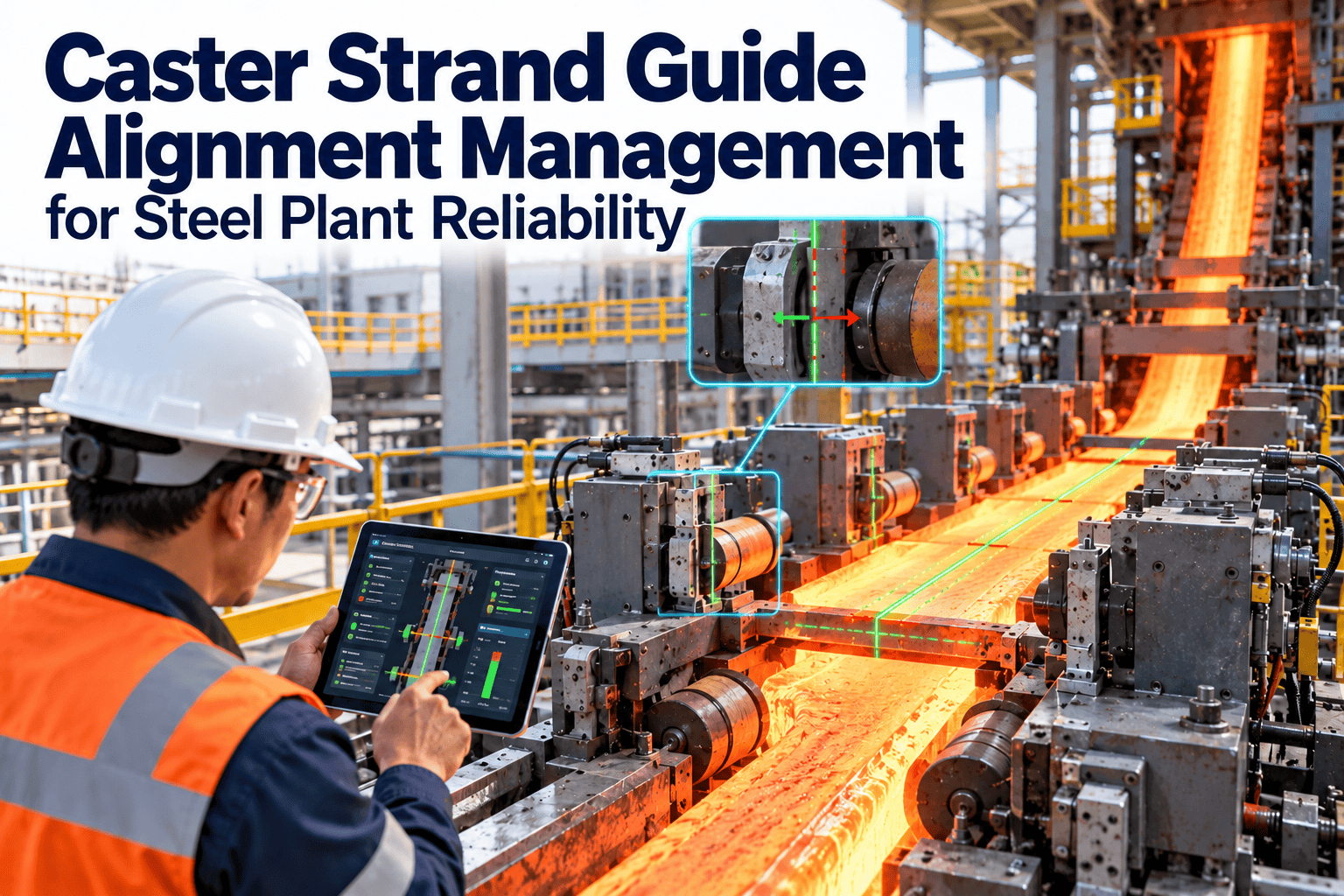
Read More
Continuous casting punishes small geometric errors. When strand guide rolls drift out of alignment, the shell is squeezed unevenly, bulging and internal stress rise, and defects that look like metallurgy problems...
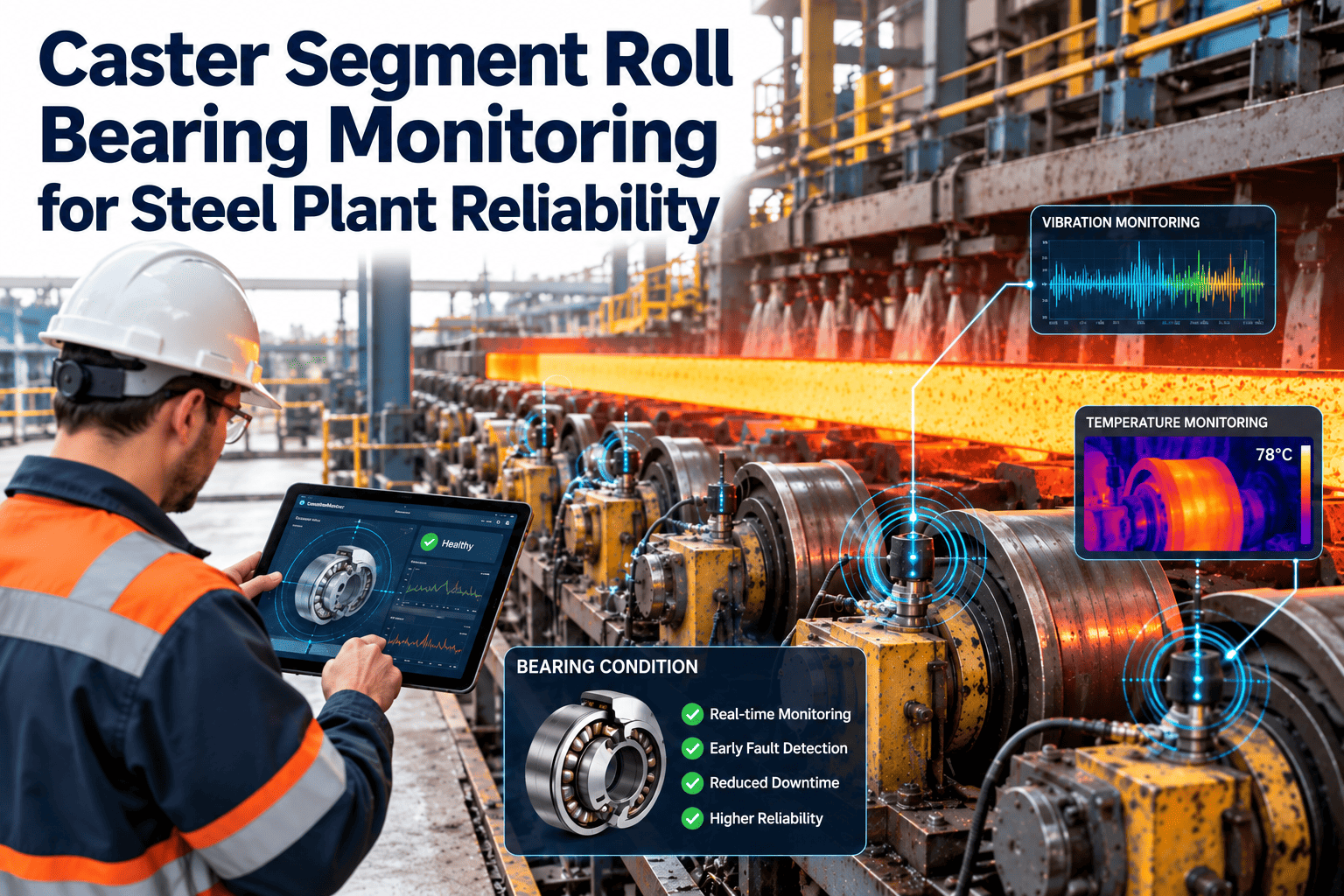
Read More
A caster segment roll bearing rarely announces itself. The roll turns slowly under heavy strand load, cooling water, steam and scale, so early damage hides behind normal-looking operation until the bearing locks...
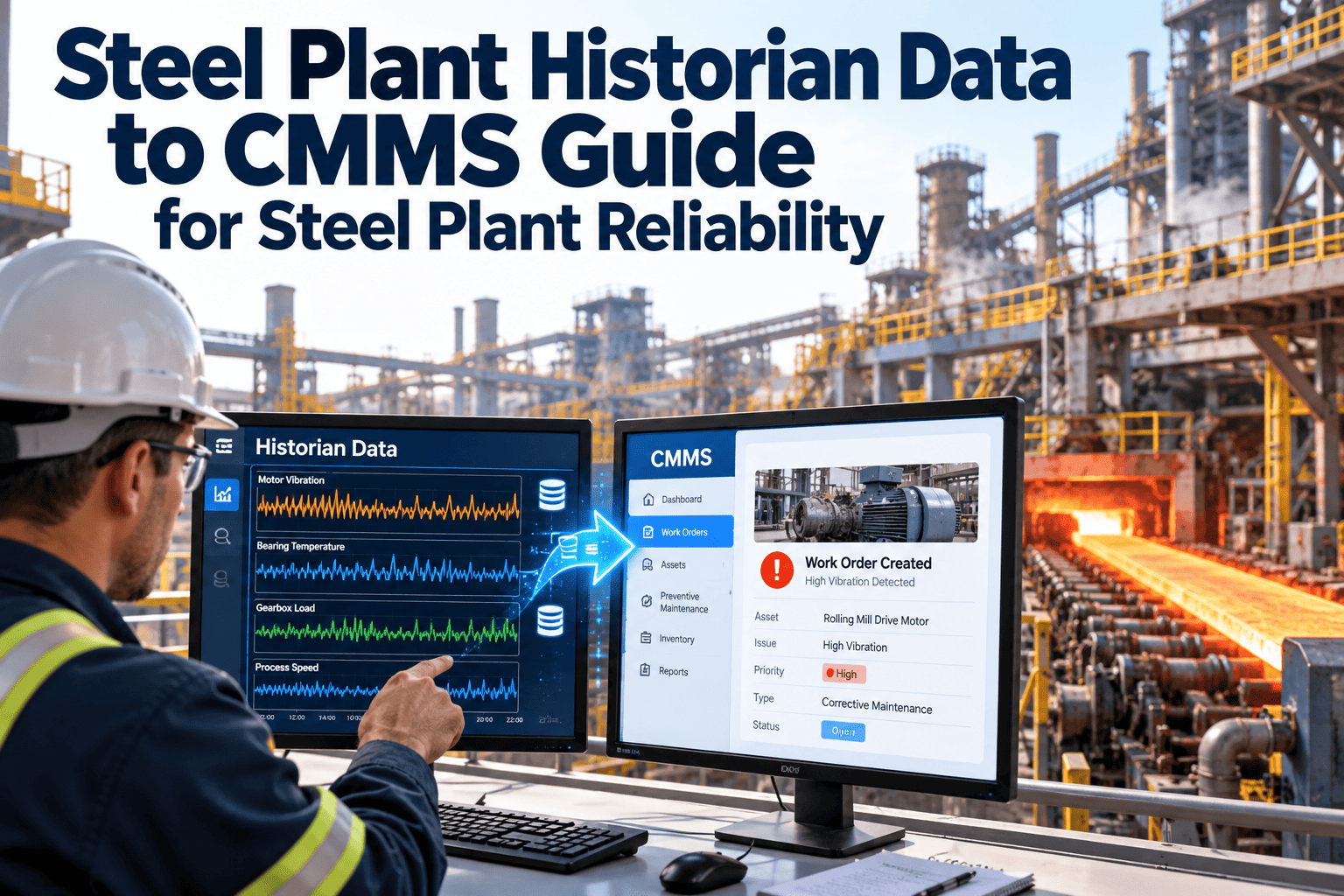
Read More
Steel plants already collect huge volumes of process data in historians and Level-2 systems, yet much of it never reaches the people who plan maintenance. A bearing temperature creeps upward on a trend screen, but...
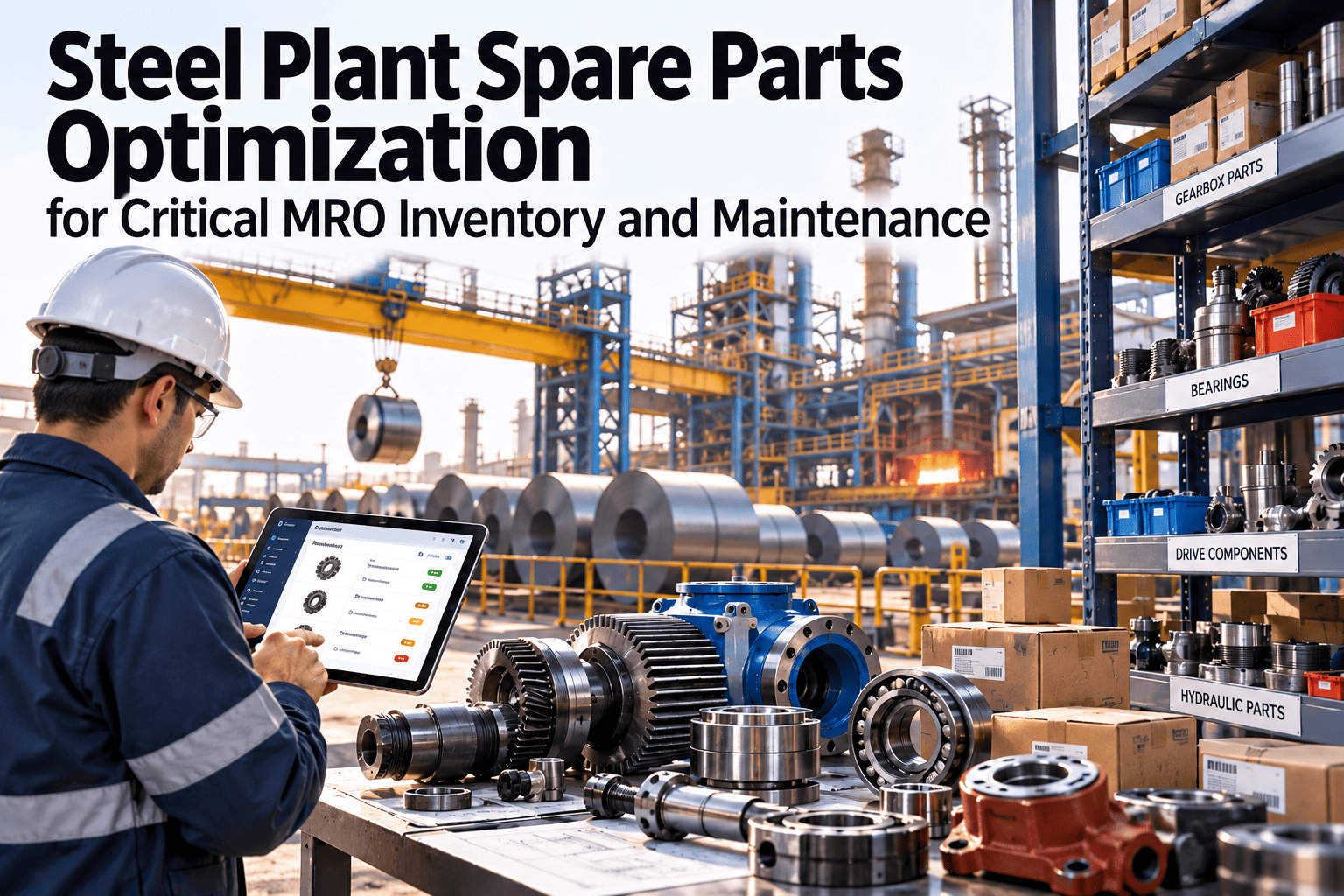
Read More
A steel plant can hold thousands of spare parts and still stop because one bearing, seal or hydraulic valve is missing. It can also tie up large amounts of cash in parts that have not moved in years. Spare parts...
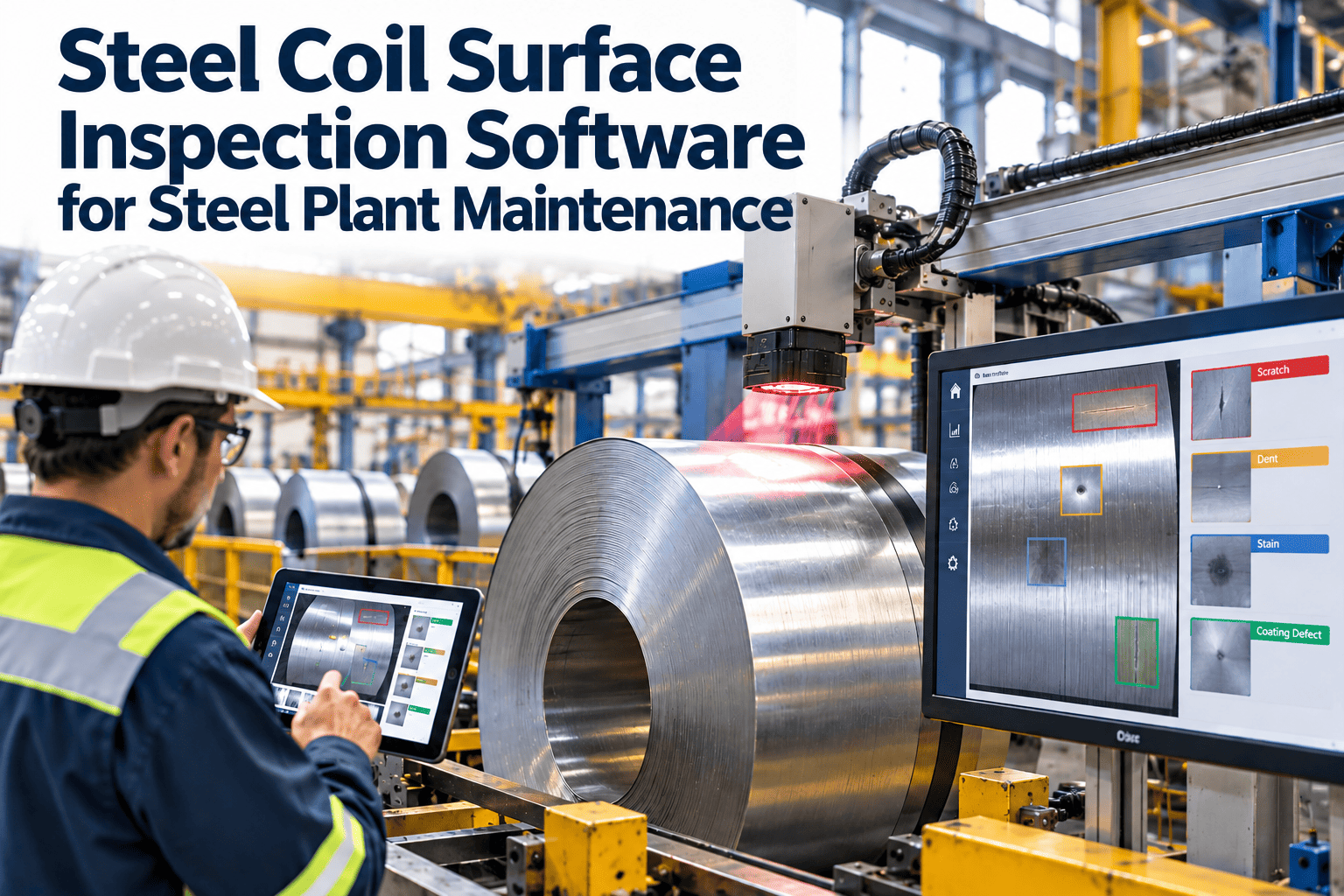
Read More
A coil leaves the mill looking acceptable and arrives at the customer with a line of scratches, rolled-in scale, or pits that nobody caught. Manual inspection cannot keep up with a strip moving at line speed, and a...
Read More
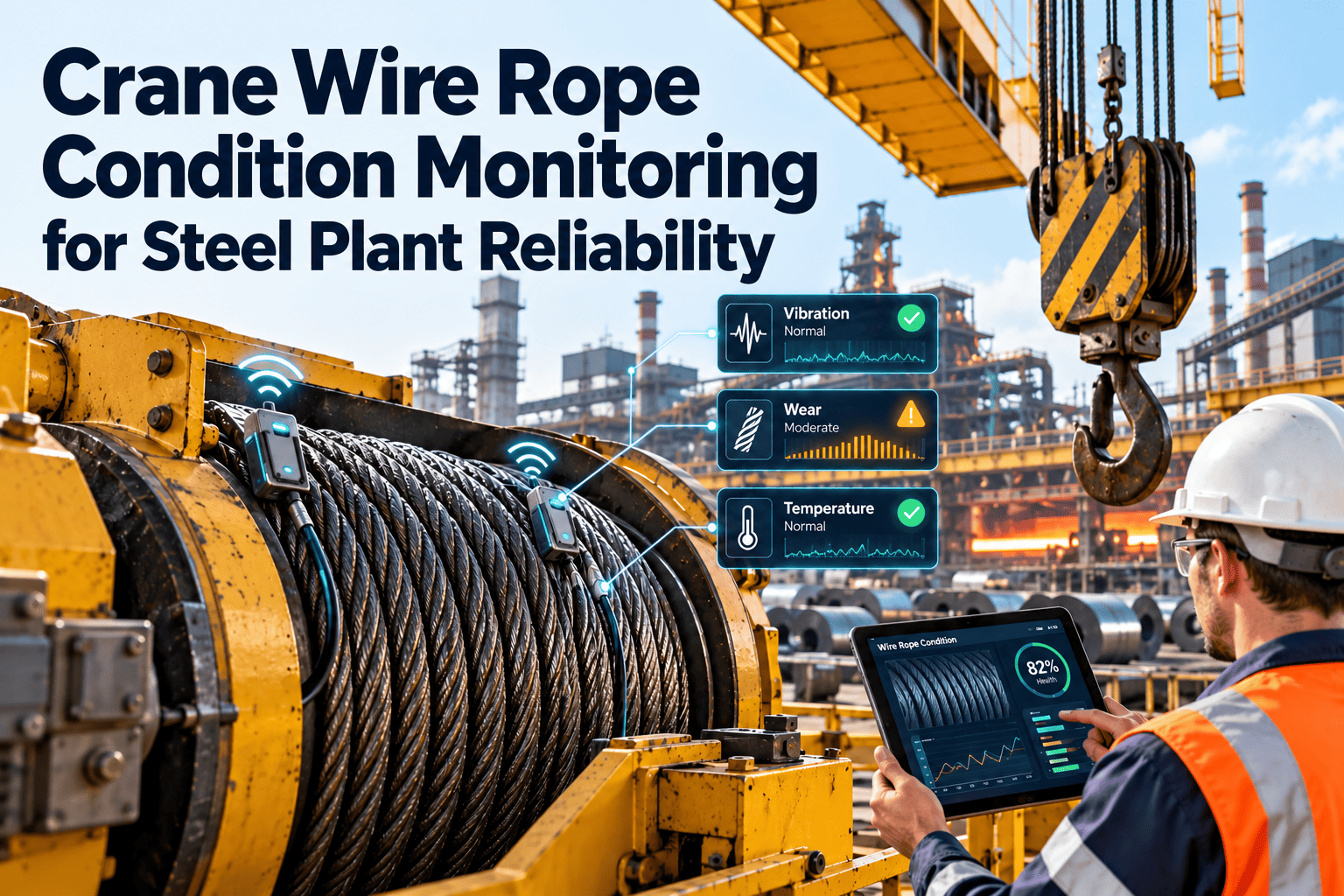
Overhead cranes carry ladles of molten metal, coils, slabs and billets above people and equipment, so the wire rope is a safety-critical component, not a consumable to run until it looks bad. In steel plants, heat,...
Read More
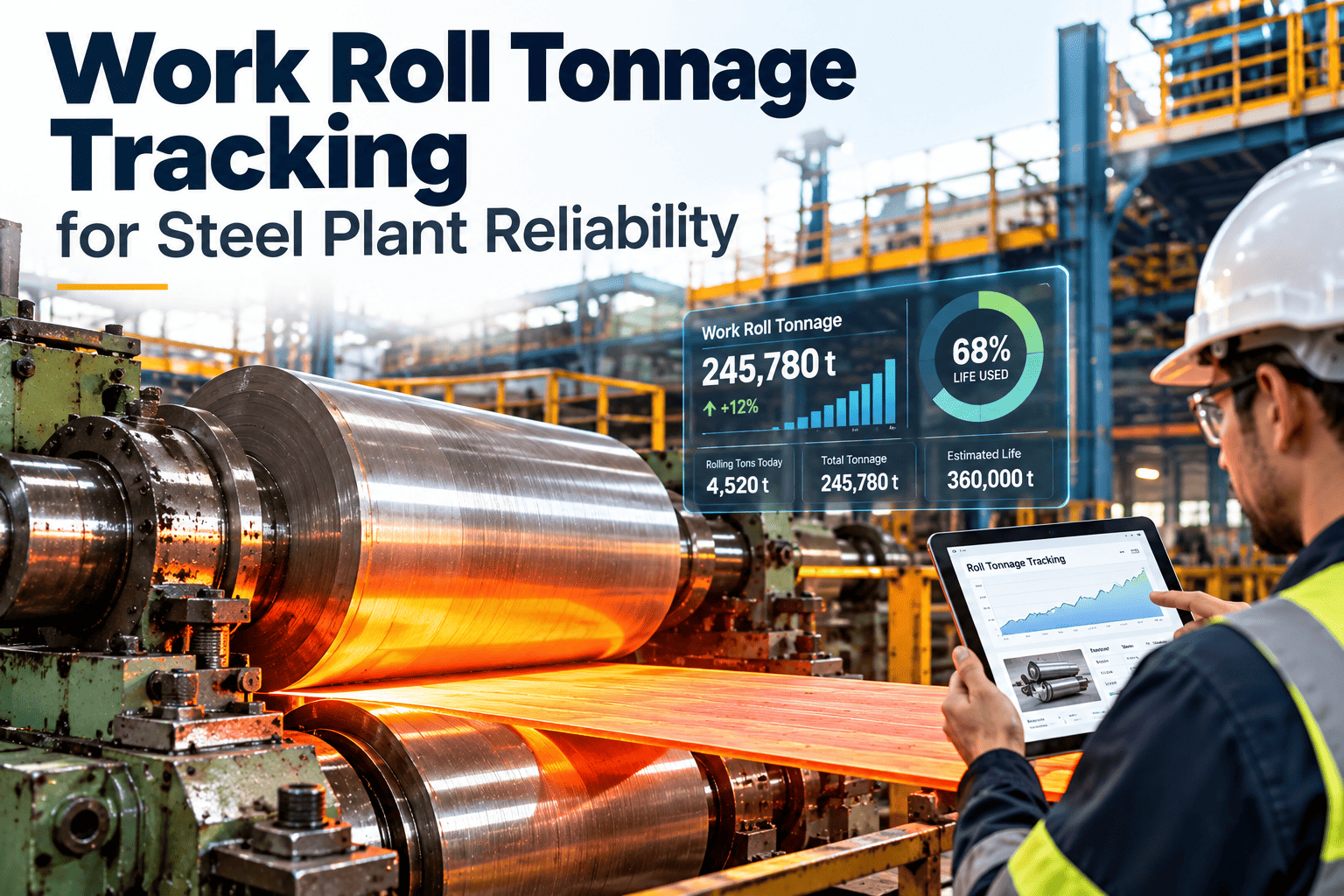
Work rolls wear with every tonne that passes through the stand, not with every hour on the calendar. A roll that sits through a slow week and a roll that runs a heavy campaign can show the same mounted time and...
Read More
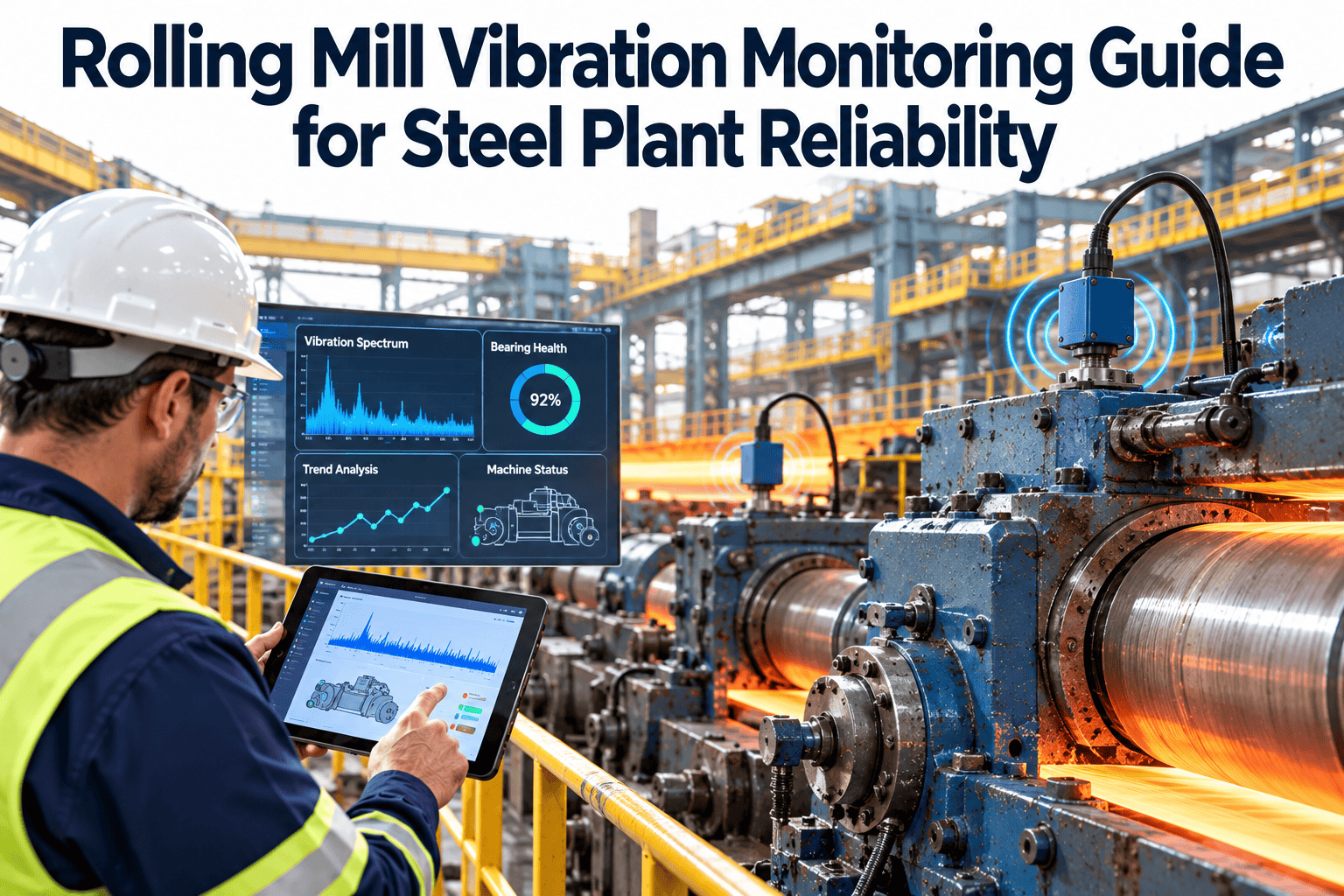
Rolling mills run at high load, in heat, scale and cooling water, and a single bearing or gearbox failure can stop an entire strip, bar or plate line. Vibration monitoring gives maintenance teams weeks of warning...
Read More
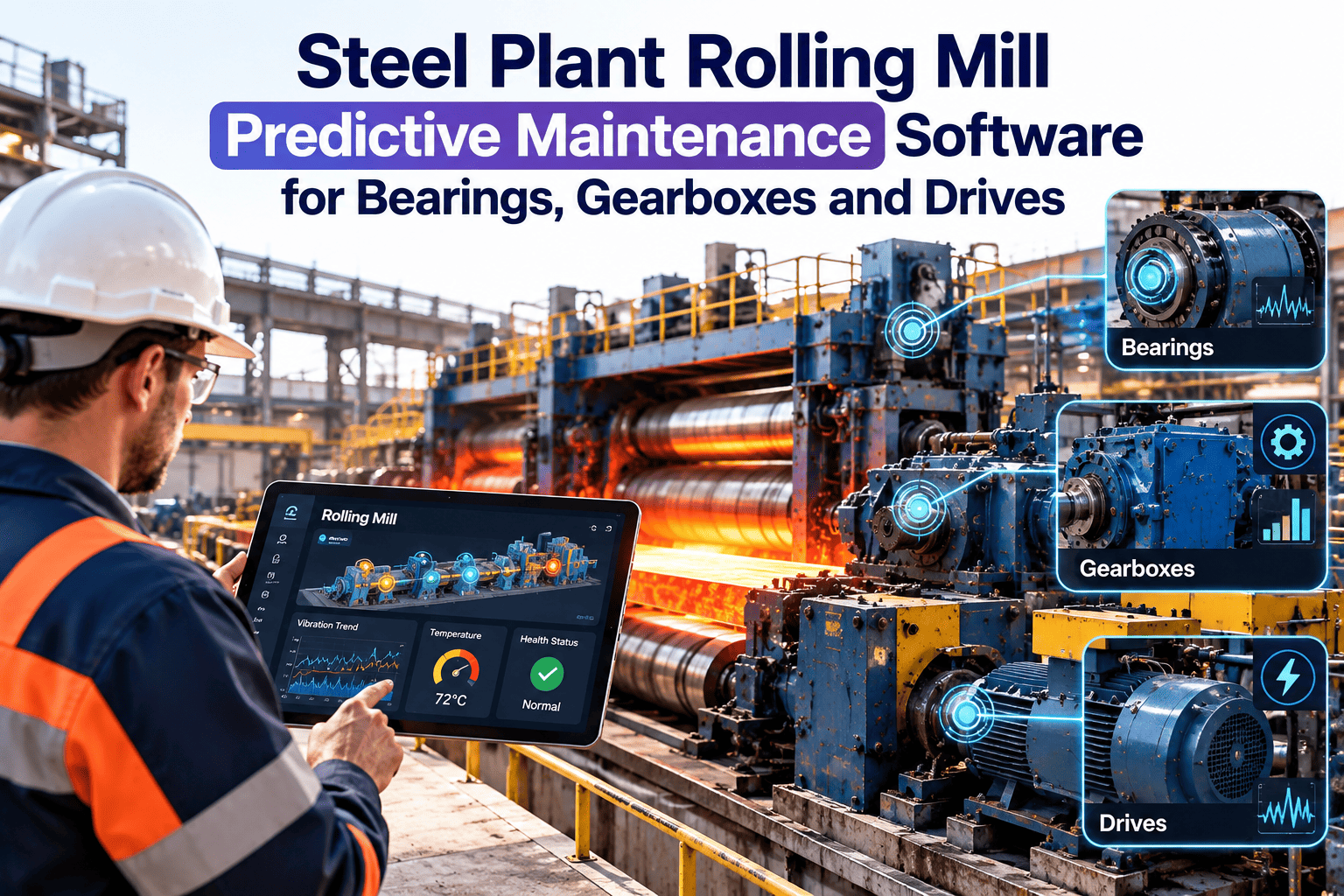
A rolling mill stops production the moment one bearing seizes, one gearbox loses its oil film, or one drive trips under load. The cost is rarely the part itself. It is the cold slab waiting in the furnace, the coil...

Read More
Energy is one of the largest operating costs in steelmaking, and it is also one of the easiest to misread. A plant can see its monthly electricity bill and gas totals and still not know which area, asset or shift...
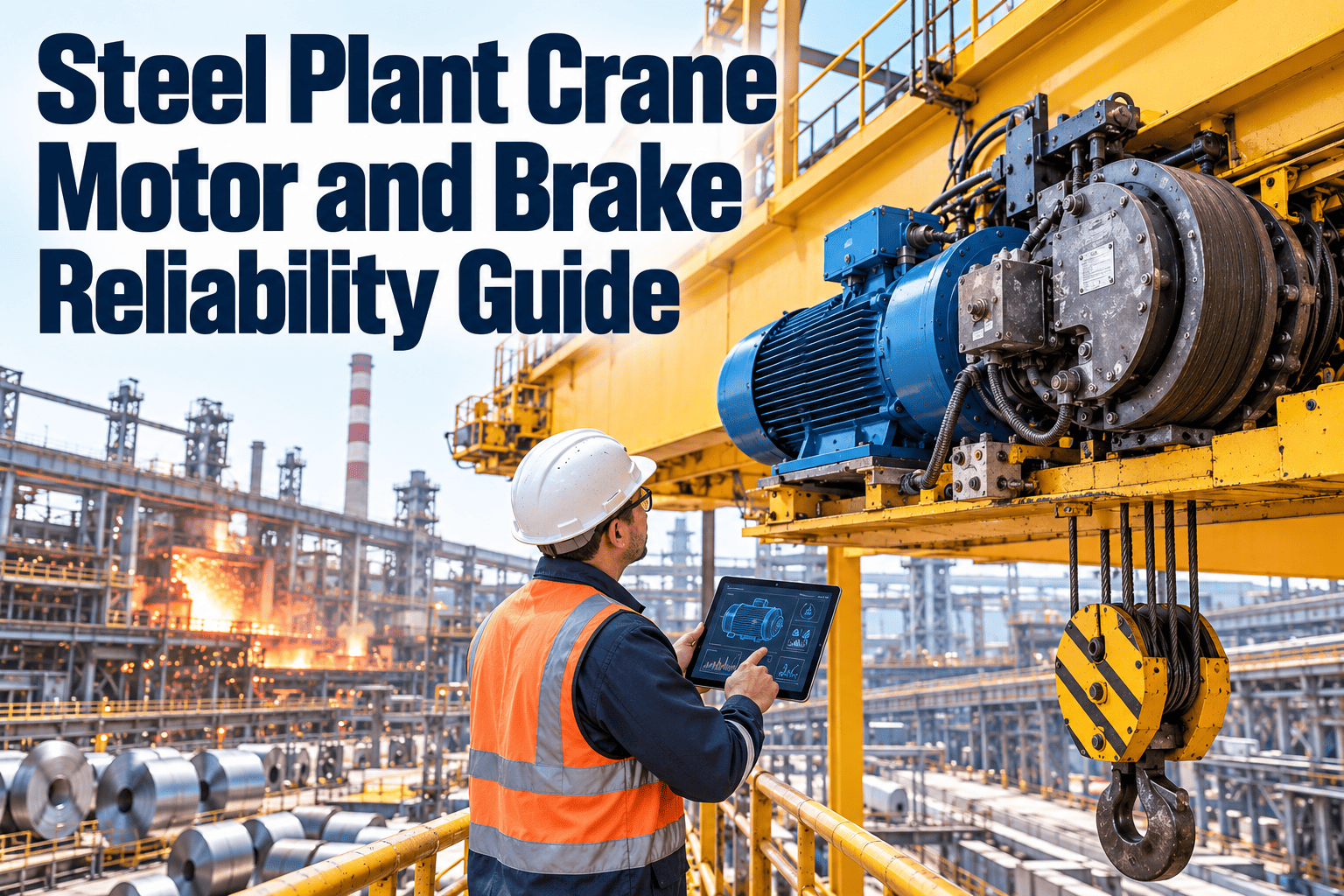
Read More
Overhead cranes carry ladles, coils and slabs through steel plants, and their motors and brakes work through heavy duty cycles in heat and dust. A failed brake or overheated hoist motor is both a production stop...
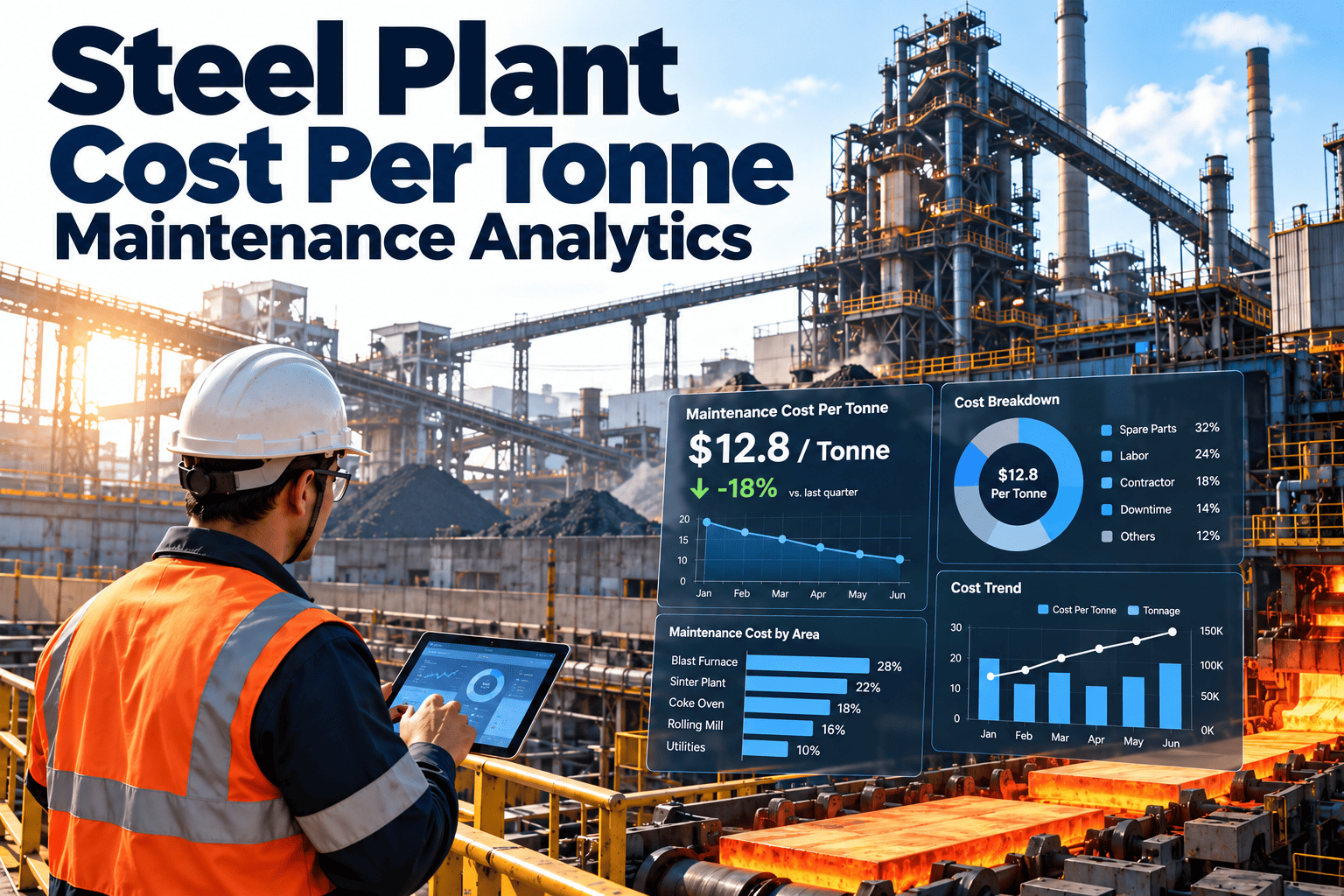
Read More
Maintenance cost per tonne is one of the few numbers that both the plant manager and the finance team already understand. The trouble is that a single plant-wide figure hides almost everything useful: which area is...

Read More
Steel plants often report OEE as a single number, yet the real gains sit in the losses behind it: stops, slow running and off-spec output. Maintenance records explain many of those losses, but they rarely connect...
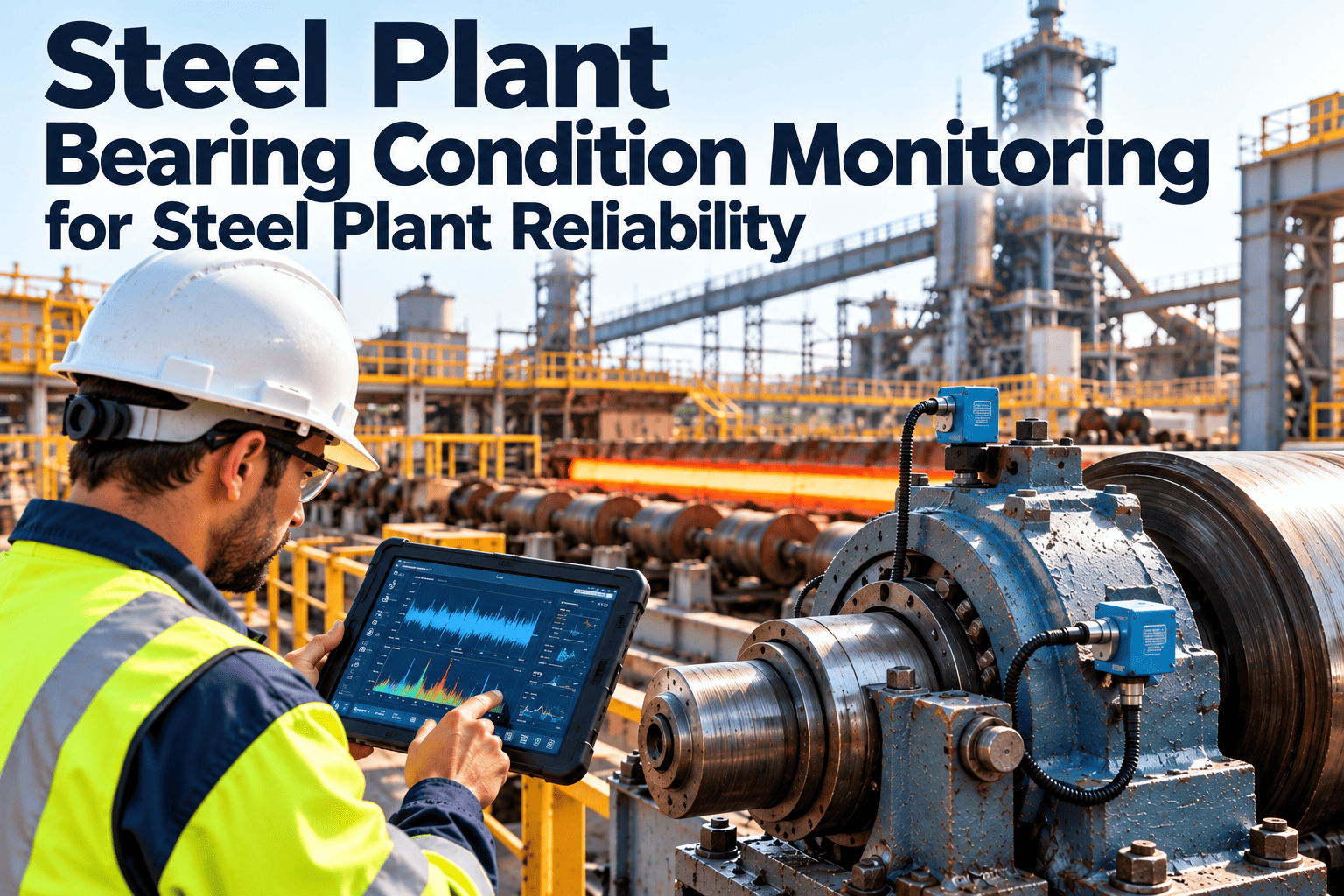
Read More
Bearings sit under almost everything that matters in a steel plant: mill stands, fans and blowers, conveyor drives, pumps, gearboxes, cranes and descaling systems. Most of them fail slowly, then suddenly, and the...
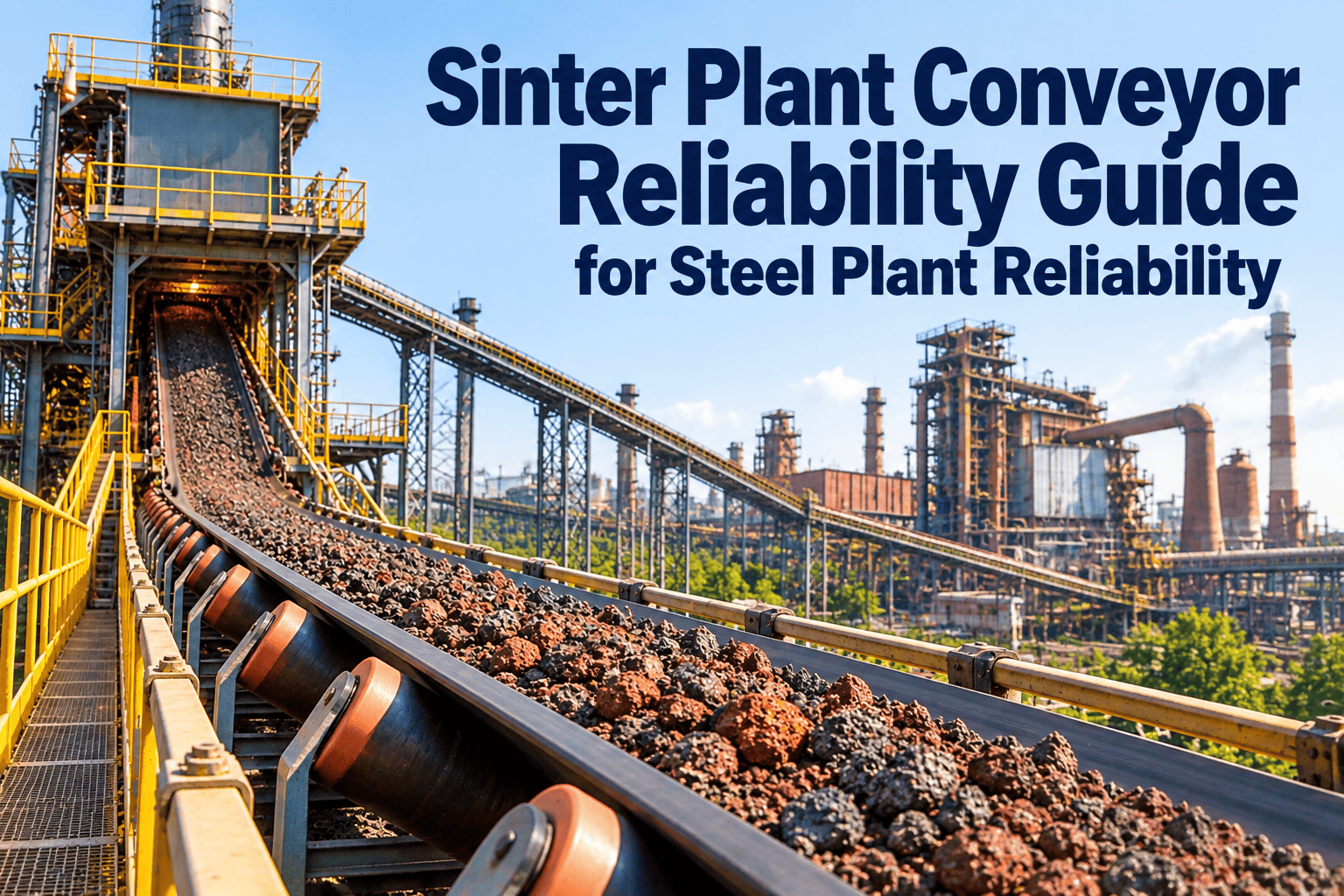
Read More
A sinter plant moves raw materials, fluxes, fuel and finished sinter on long belt conveyor chains, and one stopped belt can starve the sinter strand and the blast furnace behind it. Belt tracking, pulley lagging,...

Read More
Hot-blast stove valves work in some of the harshest conditions in an integrated steel plant. Every changeover loads water-cooled discs, seats, stems and actuators with heat, pressure and cycling stress, and one...
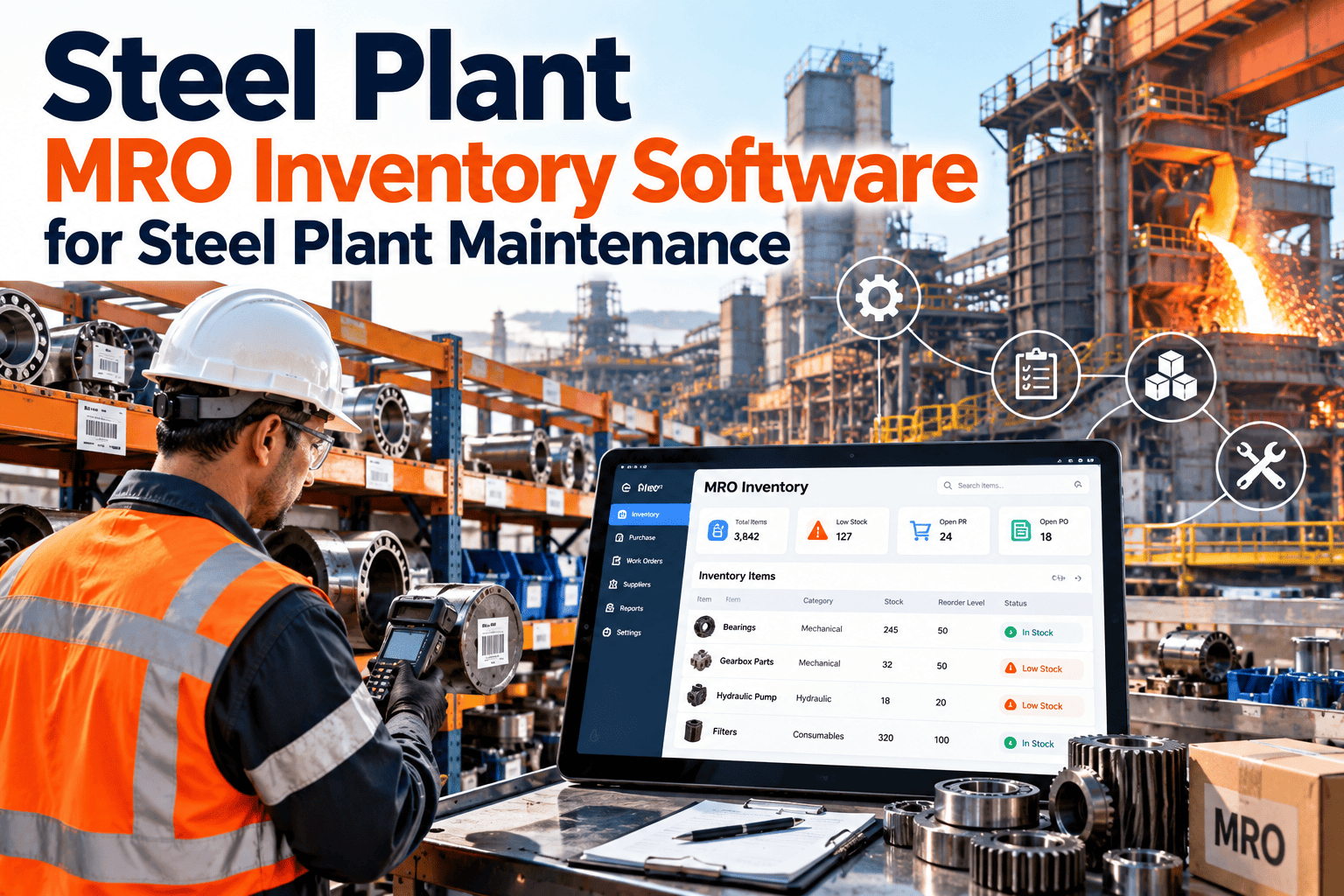
Read More
Steel plant storerooms hold thousands of items, from bearings and hydraulic valves to refractory consumables, electrical spares, and lubricants. Most of those items are cheap compared with the cost of a stopped...
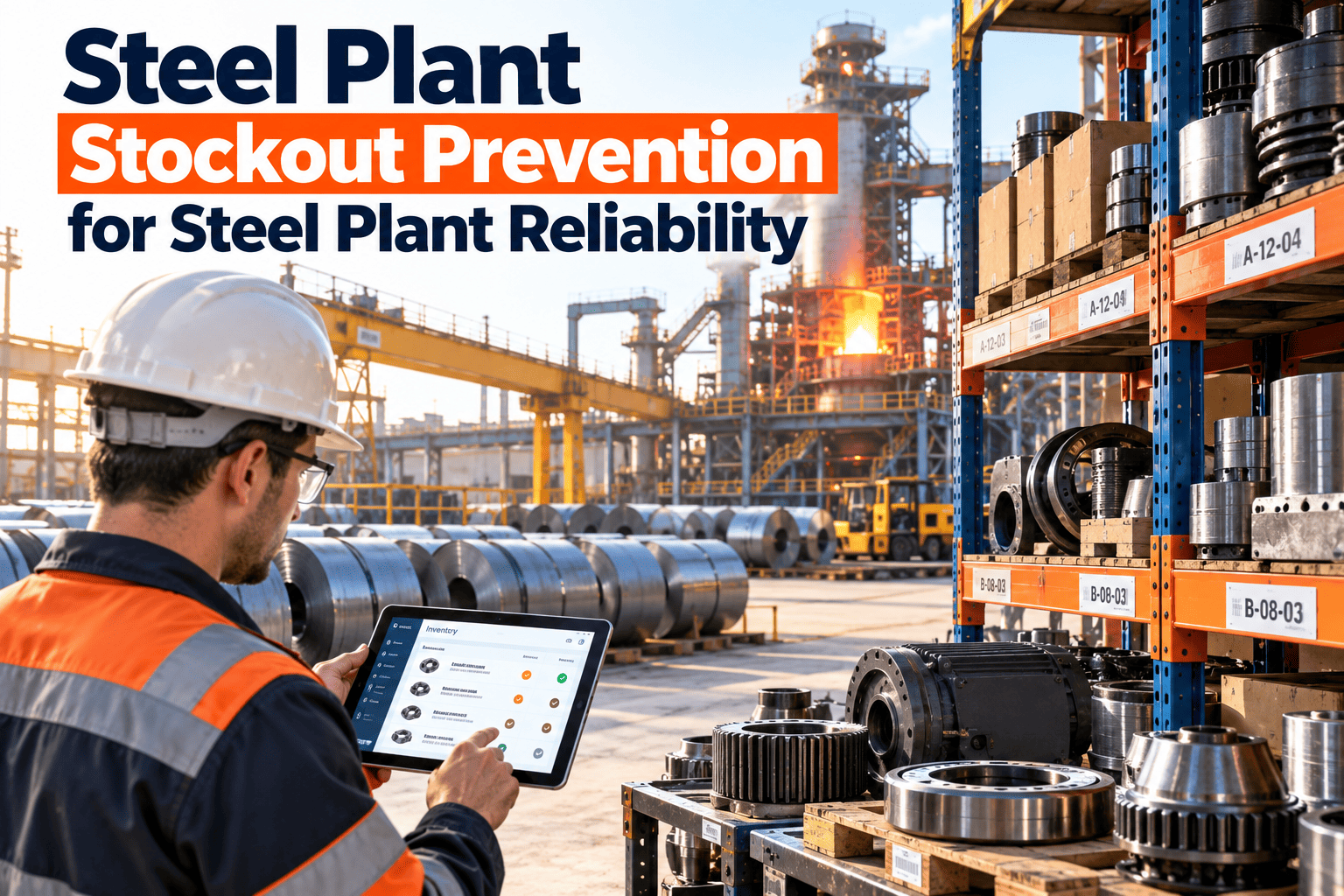
Read More
A steel plant rarely loses a shift because a part was expensive. It loses the shift because the part was not on the shelf when a failing asset finally reached the repair window. Stockouts turn a planned fix into an...
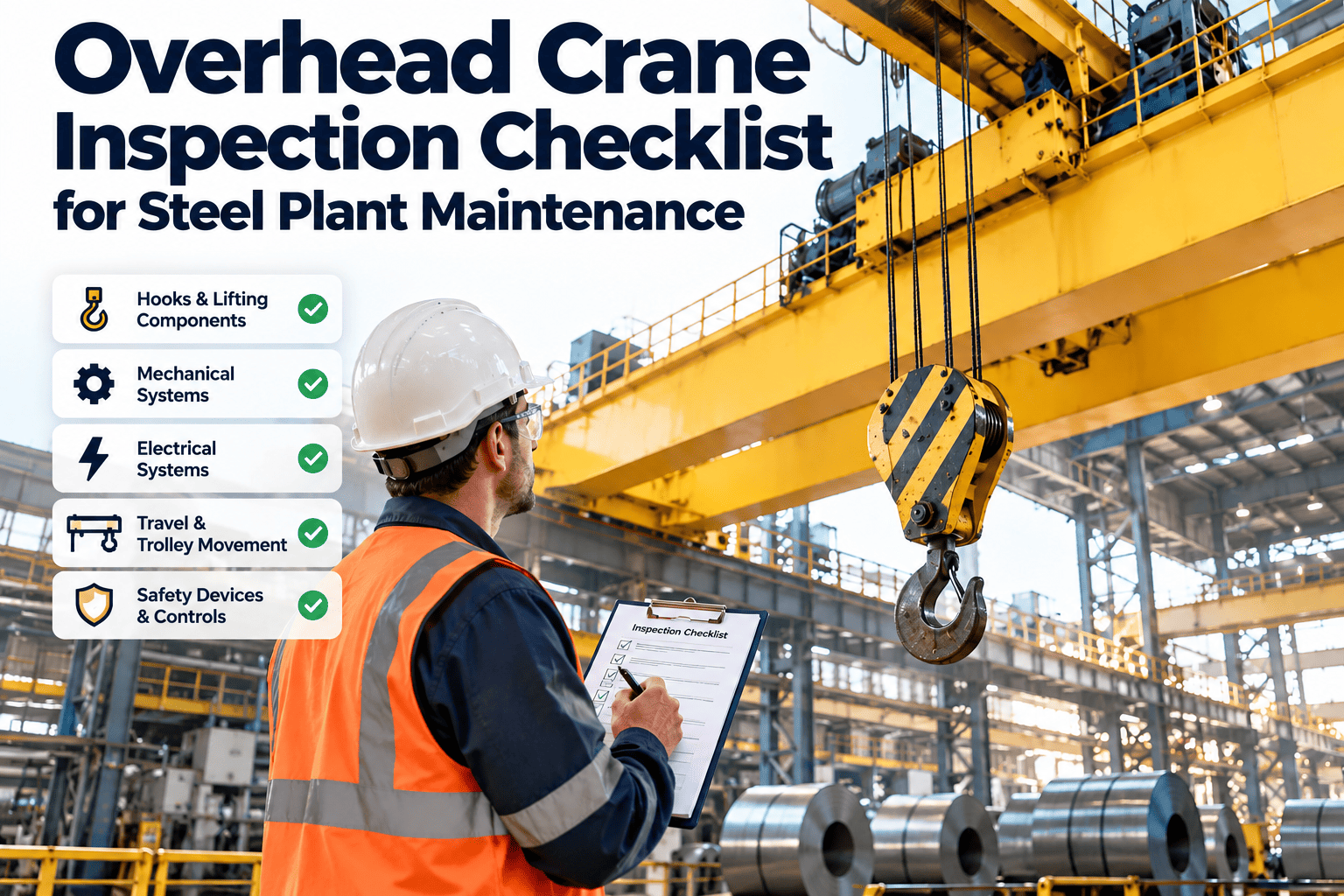
Read More
Overhead cranes carry hot metal, coils, slabs, scrap and ladles across almost every area of a steel mill, and a single stoppage can hold up a melt shop, rolling mill or finishing line. They also work in heat, dust,...
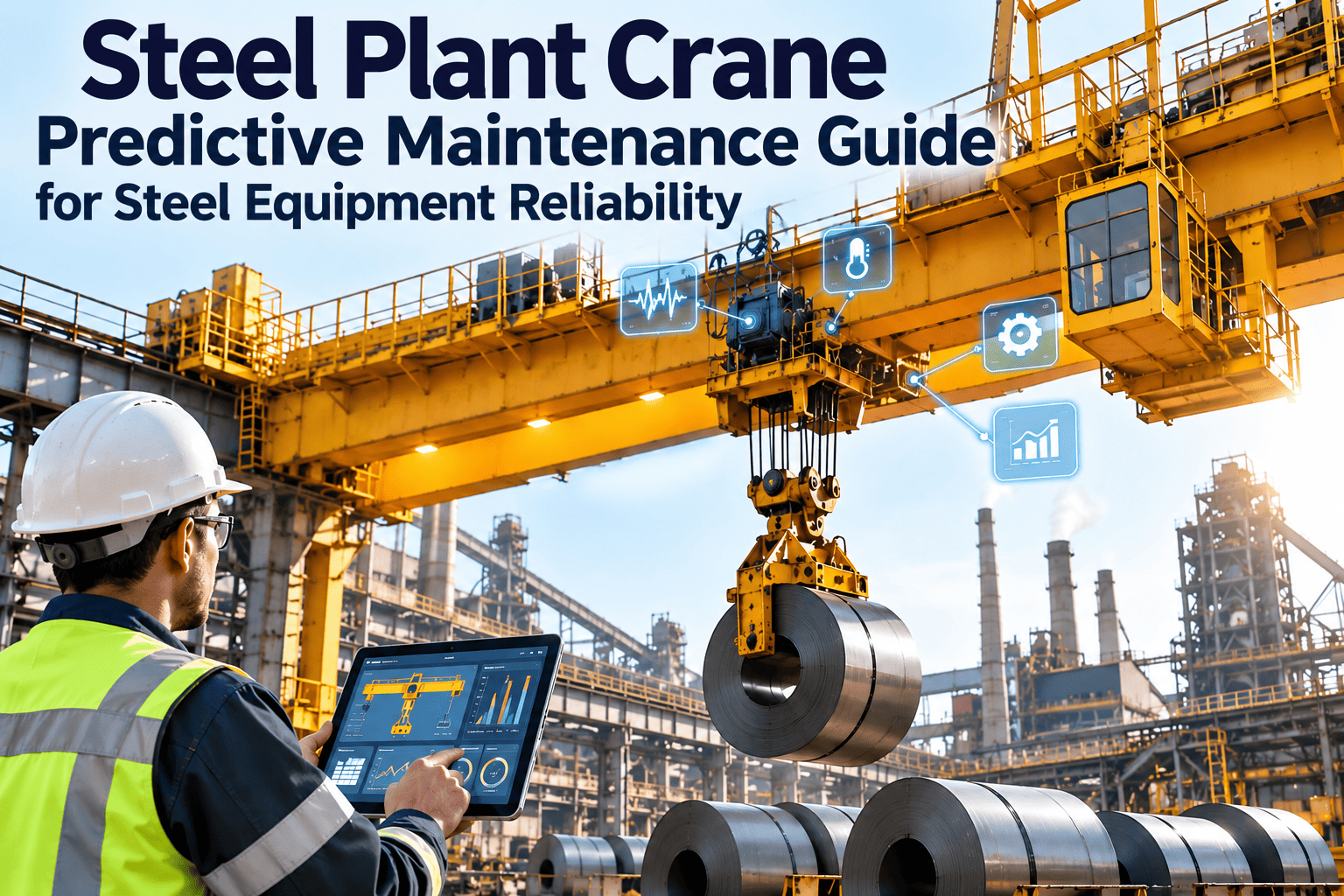
Read More
Steel plant crane predictive maintenance protects the one system that moves almost everything else: ladles, slabs, coils, scrap, rolls and spares. A crane that stops in a melt shop, caster bay or rolling mill can...
Read More
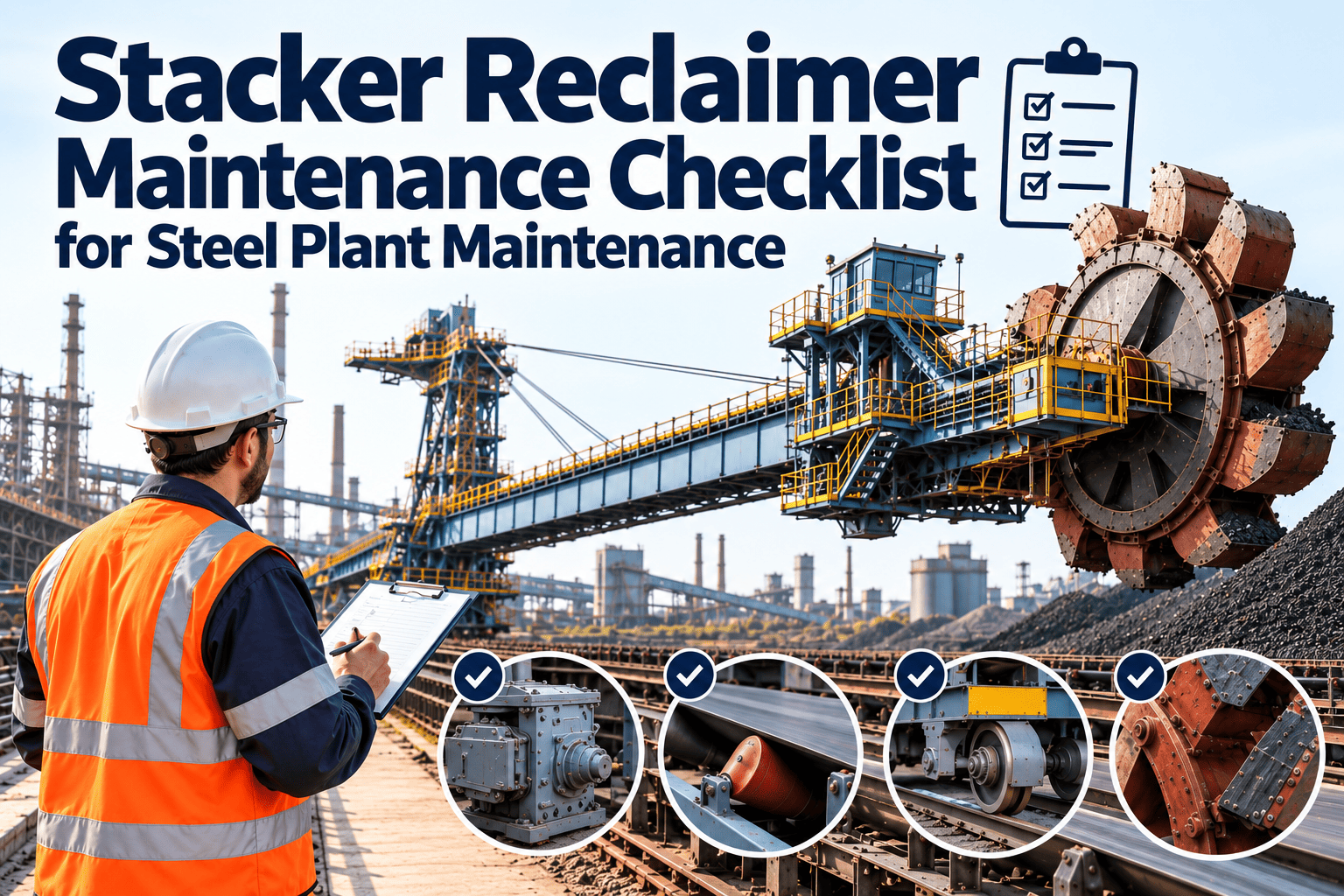
Stacker reclaimers sit at the front of the steel plant supply chain, building and drawing down the stockpiles of ore, coal, limestone and fluxes that feed sinter plants, coke ovens and blast furnaces. When one...

Read More
Blast furnace cooling system reliability decides how long a campaign lasts and how safely it runs. Staves, tuyeres, cooling plates and shaft panels sit between the burden and the shell, and they only survive...
Read More
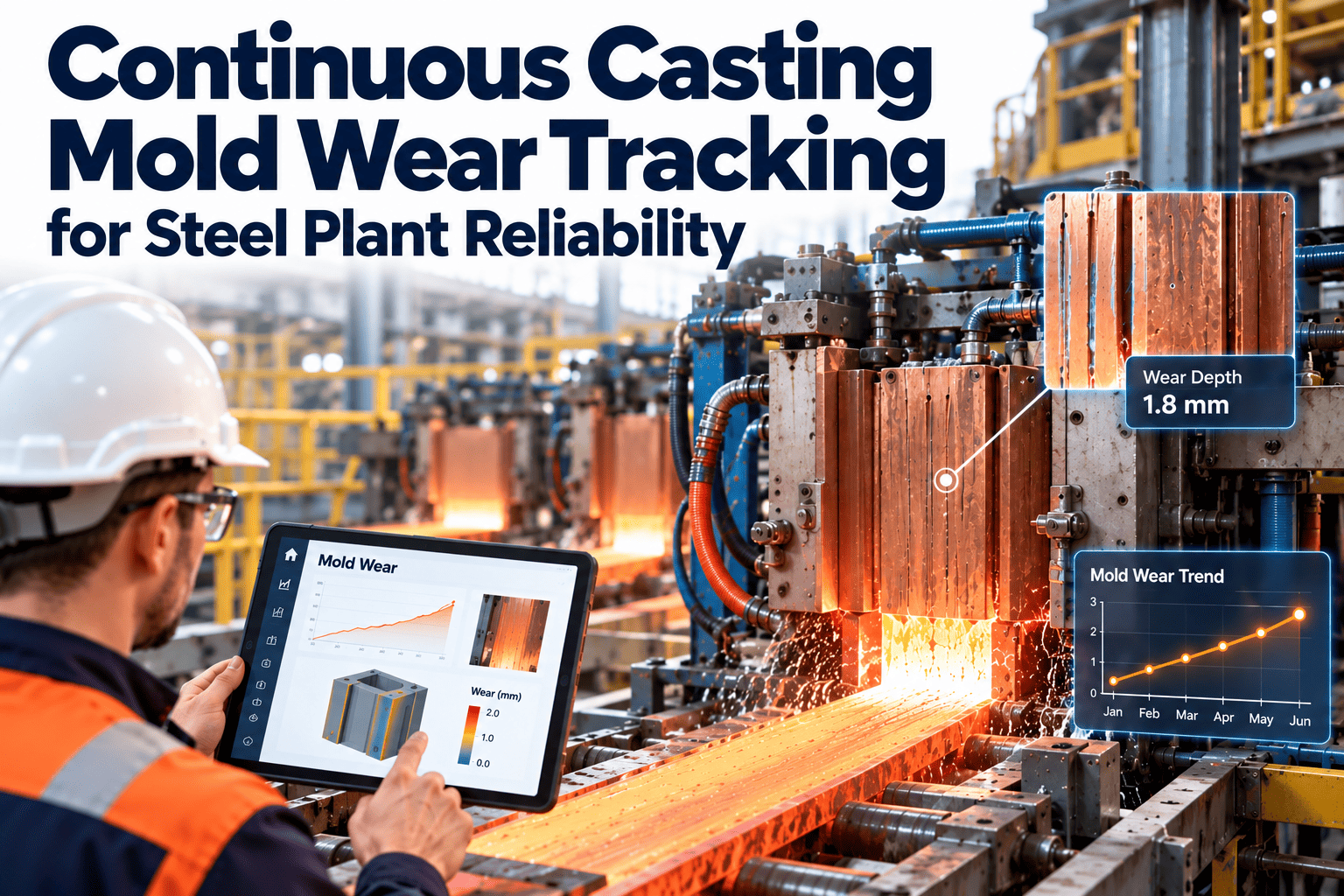
Continuous casting mold wear tracking gives a caster team something most plants still lack: a clear answer to how much life is left in each copper mold. Copper faces wear, distort and lose coating during every...

Read More
A blast furnace gas system moves a fuel that is valuable and hazardous at the same time. Top gas leaves the furnace hot, dusty and rich in carbon monoxide, then passes through uptakes, a downcomer, a dust catcher,...
Read More
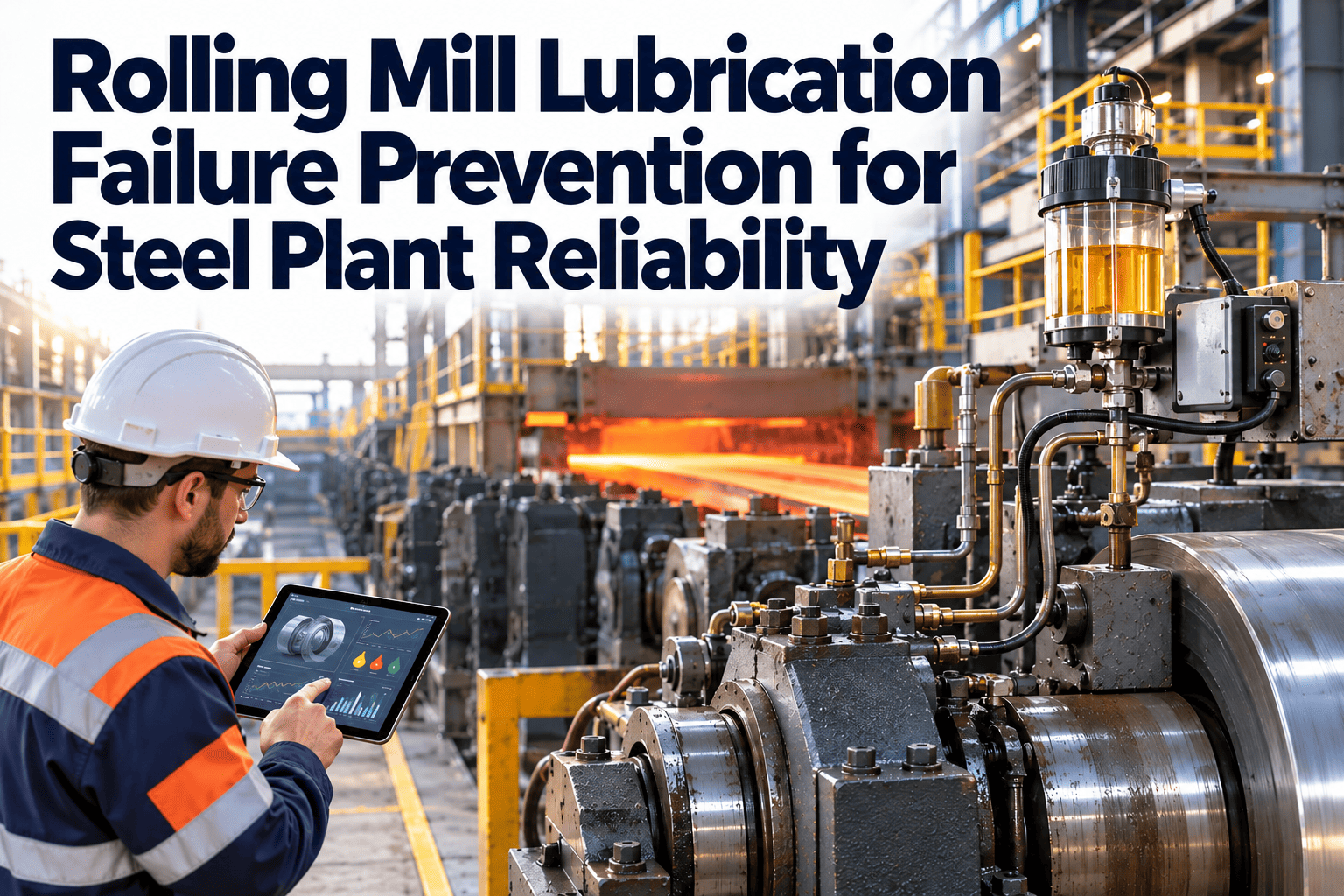
Rolling mill lubrication failure prevention begins with an uncomfortable fact: most bearing and gearbox damage in a mill is gradual, measurable and preventable long before a roll change, a stand outage or a...
Read More
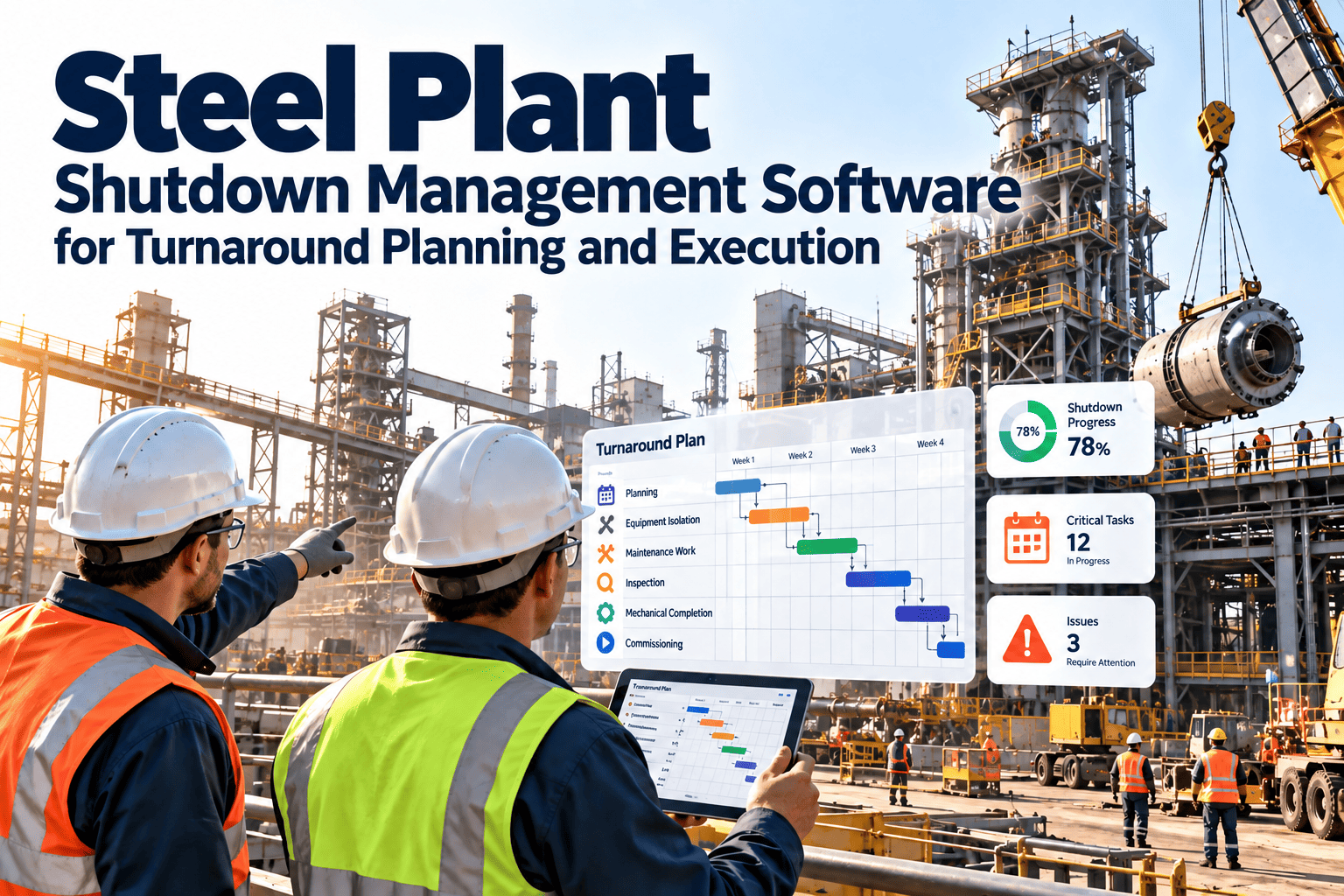
A steel plant shutdown compresses months of deferred work, hundreds of contractors and tight safety controls into a few days of lost production. Every hour of delay is expensive, and every missed dependency can...
Read More
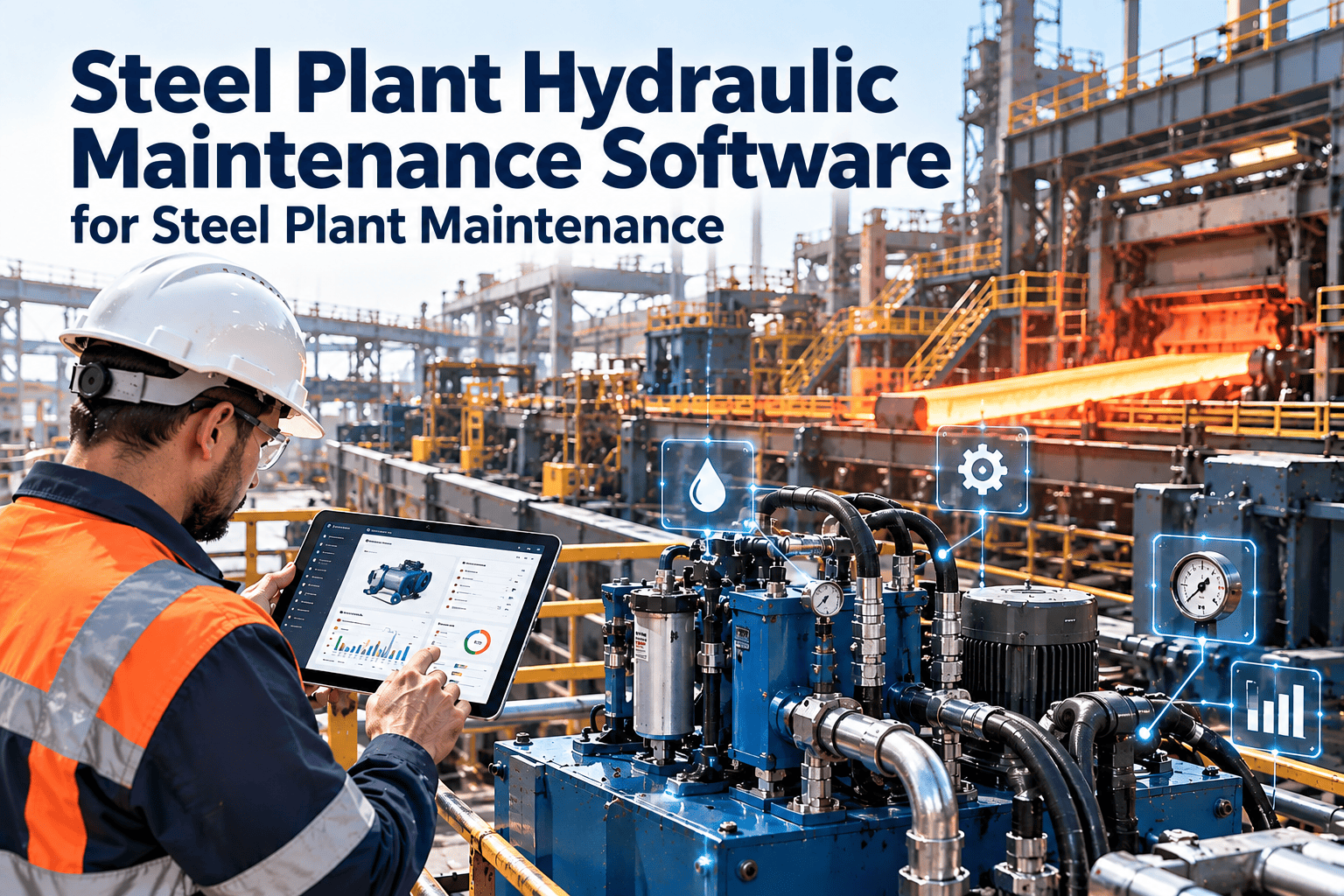
Hydraulics drive some of the most critical motions in a steel plant, from mill roll positioning and caster oscillation to furnace tilting and ladle slide gates. When a pump, valve or hose fails, the effect is felt...
Read More
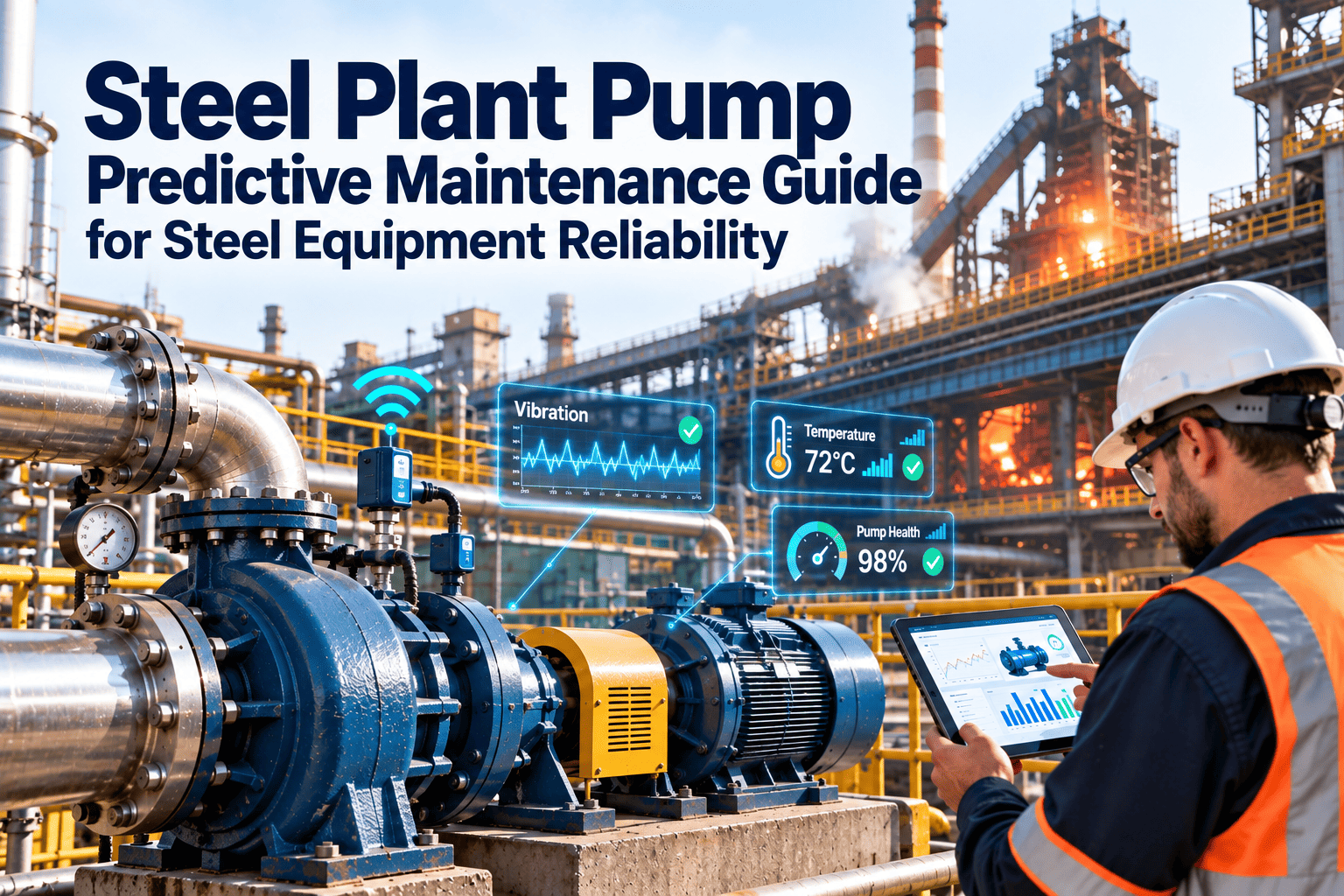
Pumps are the quiet workhorses of a steel plant. They push cooling water through furnace panels and casting equipment, feed descaling headers, circulate emulsions, move slurry from scrubbers and keep fire water...

Read More
A tuyere is a water-cooled copper nozzle that delivers hot blast into the blast furnace, and a single failed unit can force a blow-down or an unplanned stop. Most failures announce themselves in cooling data well...
Read More
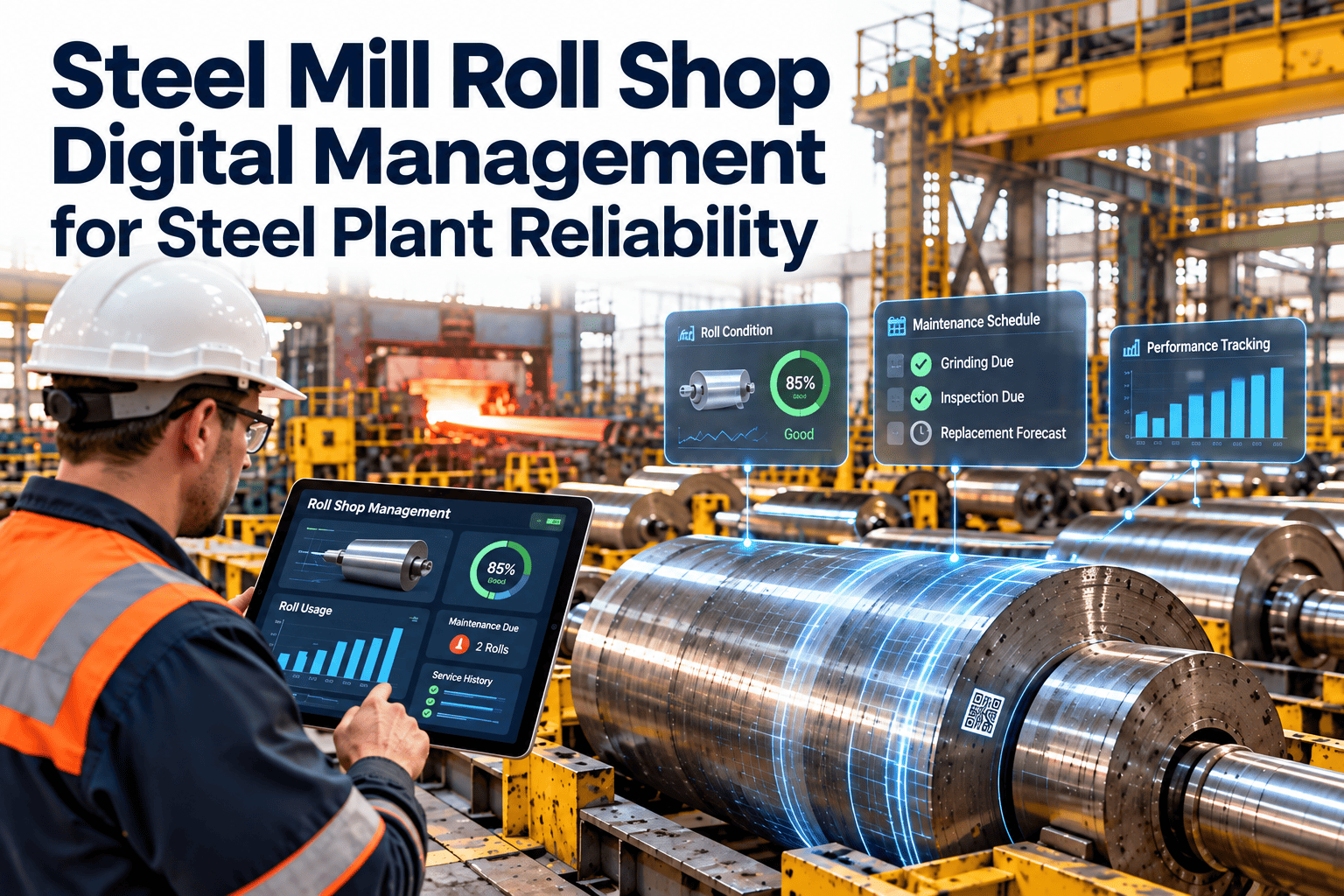
Every roll that enters a rolling mill has already passed through the roll shop, and every surface defect, profile error or bearing problem that leaves it can show up later as a rejected coil, a strip break or an...
Read More
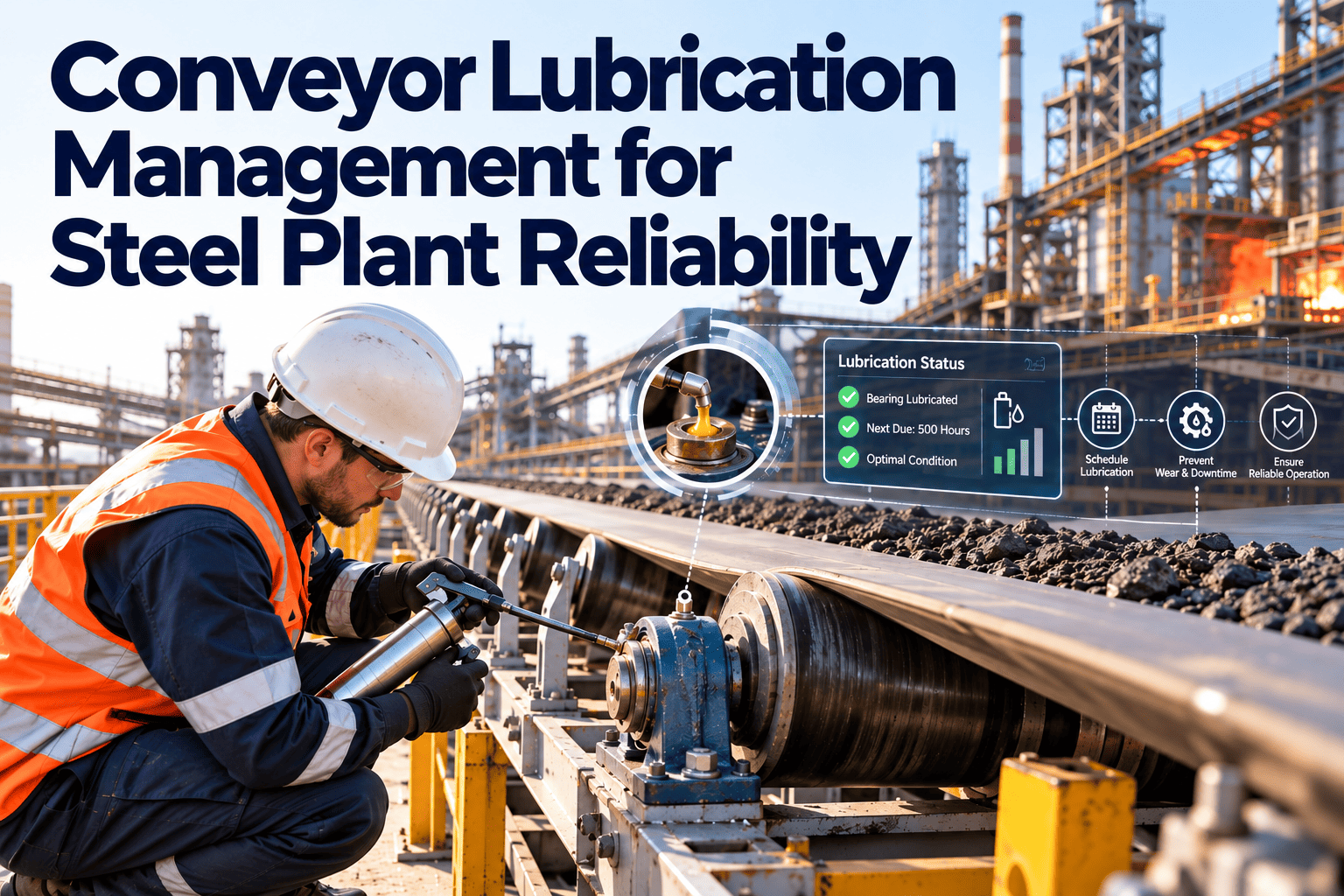
Conveyors move iron ore, coke, sinter, limestone, scrap and finished products through a steel plant around the clock, and most of their failures begin at a lubrication point. Dust, heat, water and scale attack...

Read More
A conveyor idler rarely fails without warning. Weeks before a bearing seizes, the roller starts running warmer, louder and harder to turn, and in a steel plant that drift is easy to miss across thousands of idlers...
Read More
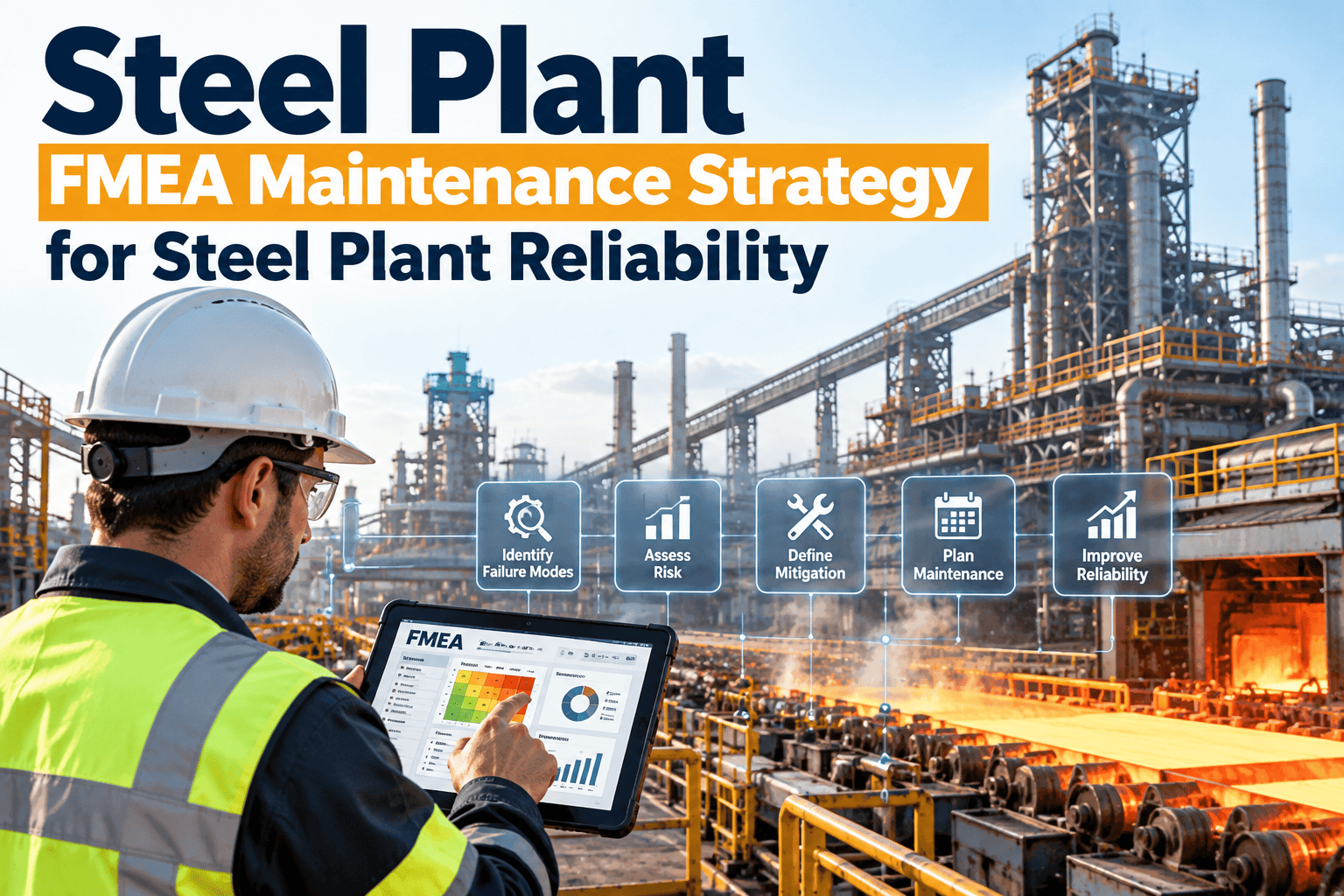
Maintenance plans in many steel plants grow by habit. A task is added after a breakdown, an interval is copied from a vendor manual, and nobody can say which failure each task is meant to prevent. Failure mode and...
Read More
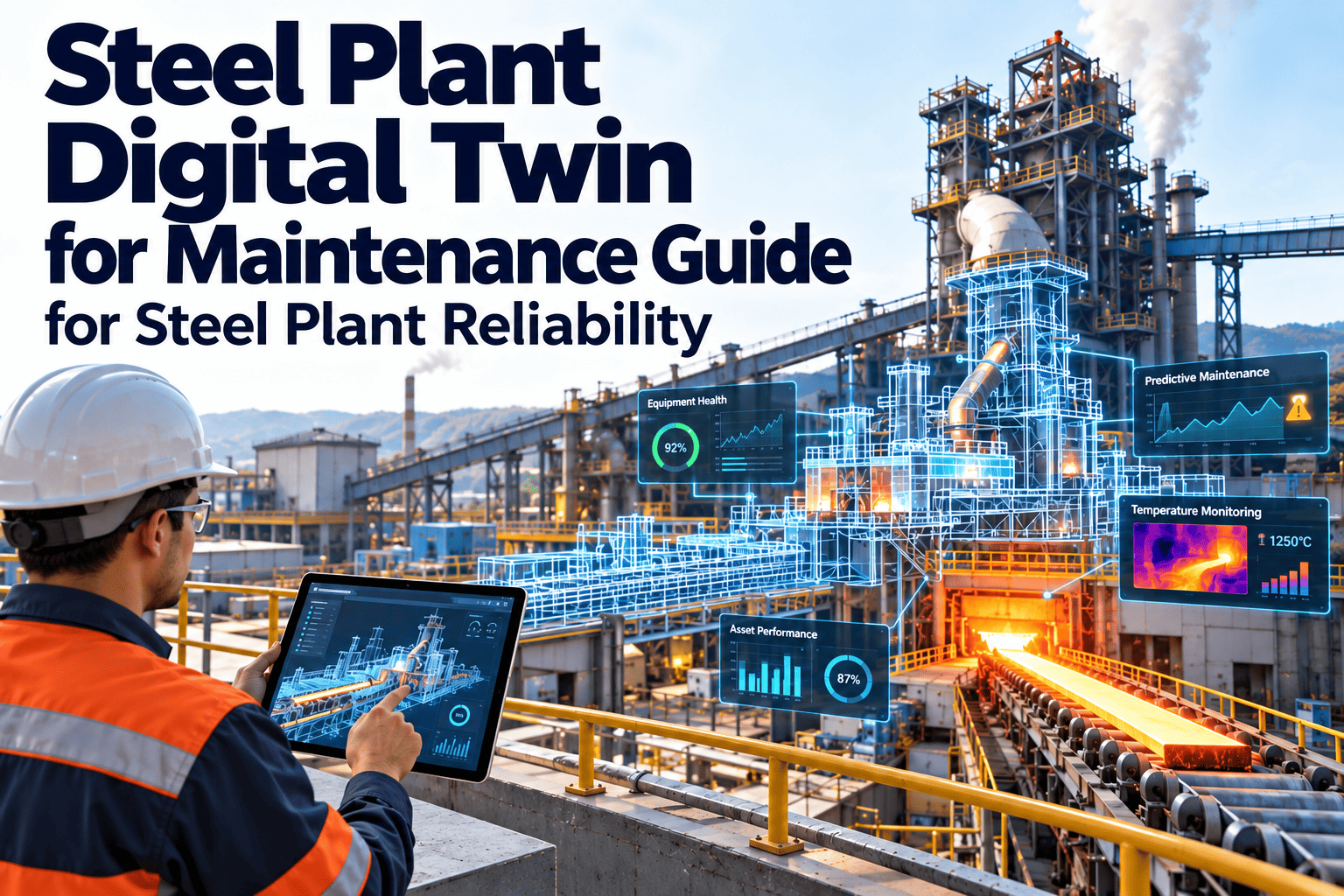
A digital twin in a steel plant does not have to start as a 3D model or a physics simulation. For maintenance teams, the most useful twin is a living record of each machine: where it sits in the plant, what it is...

Read More
Most steel plants already collect more sensor data than the maintenance team can use. Vibration, temperature, pressure and motor current sit in PLCs, SCADA screens and historians, while work orders live in a...
Read More
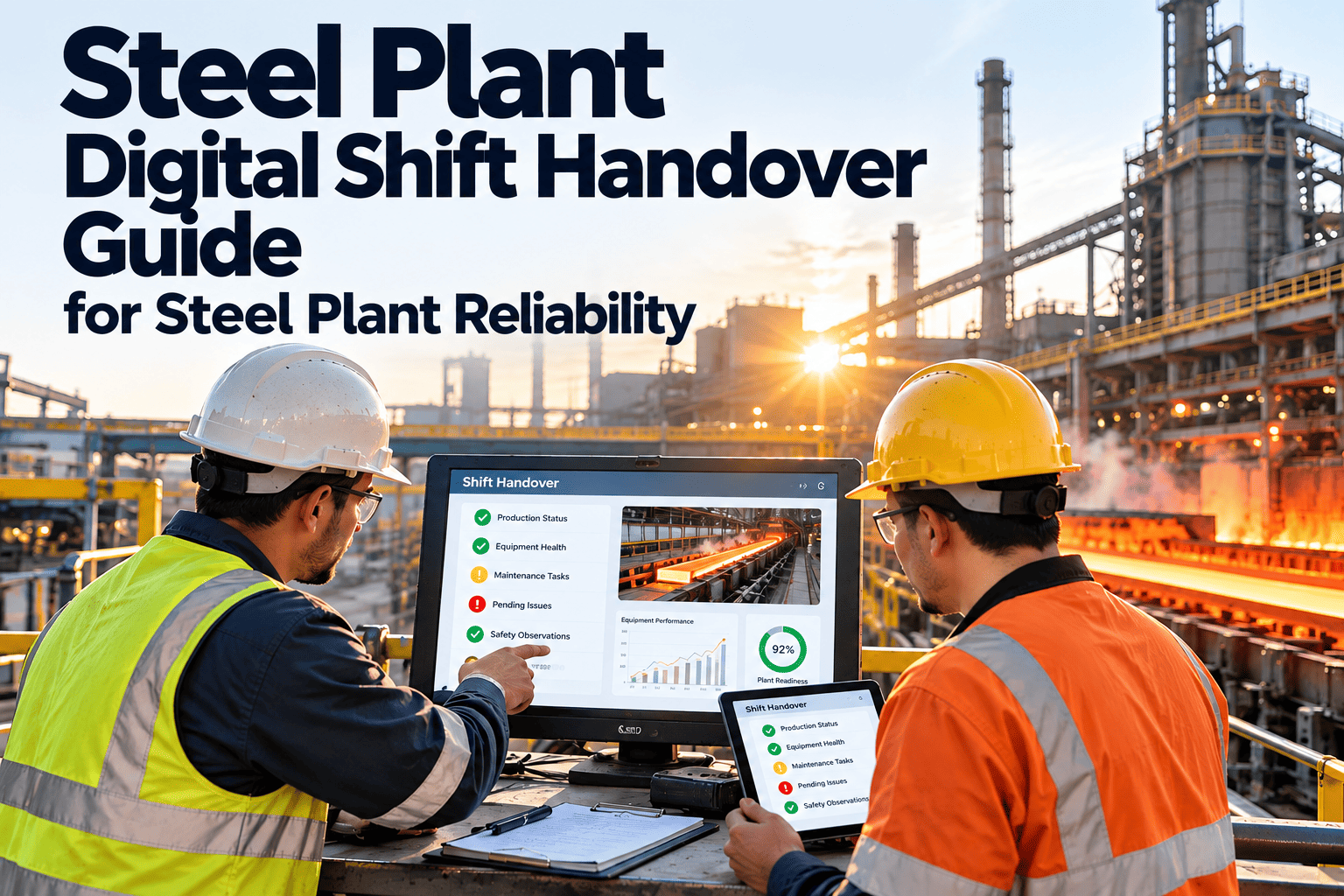
In a steel plant the process never stops, but the people running it change every eight or twelve hours. Most repeat failures start in that gap: a half-finished repair, an isolation still in place, a bearing that...
Read More
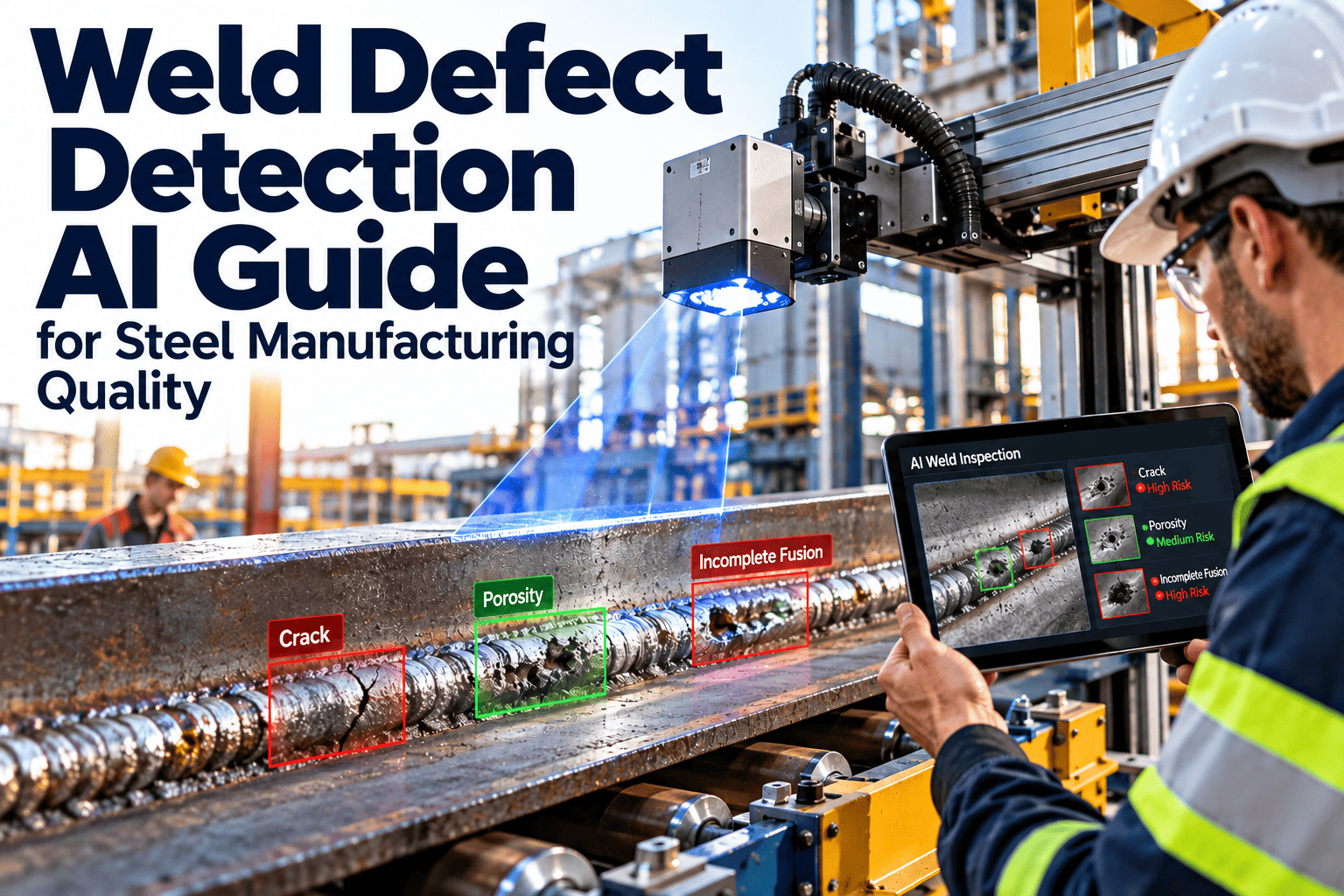
A weld can look acceptable and still hide a crack, a pocket of porosity or a lack of fusion that only shows up under load. In steel manufacturing, welds sit in pipe and tube production, structural fabrication, wear...
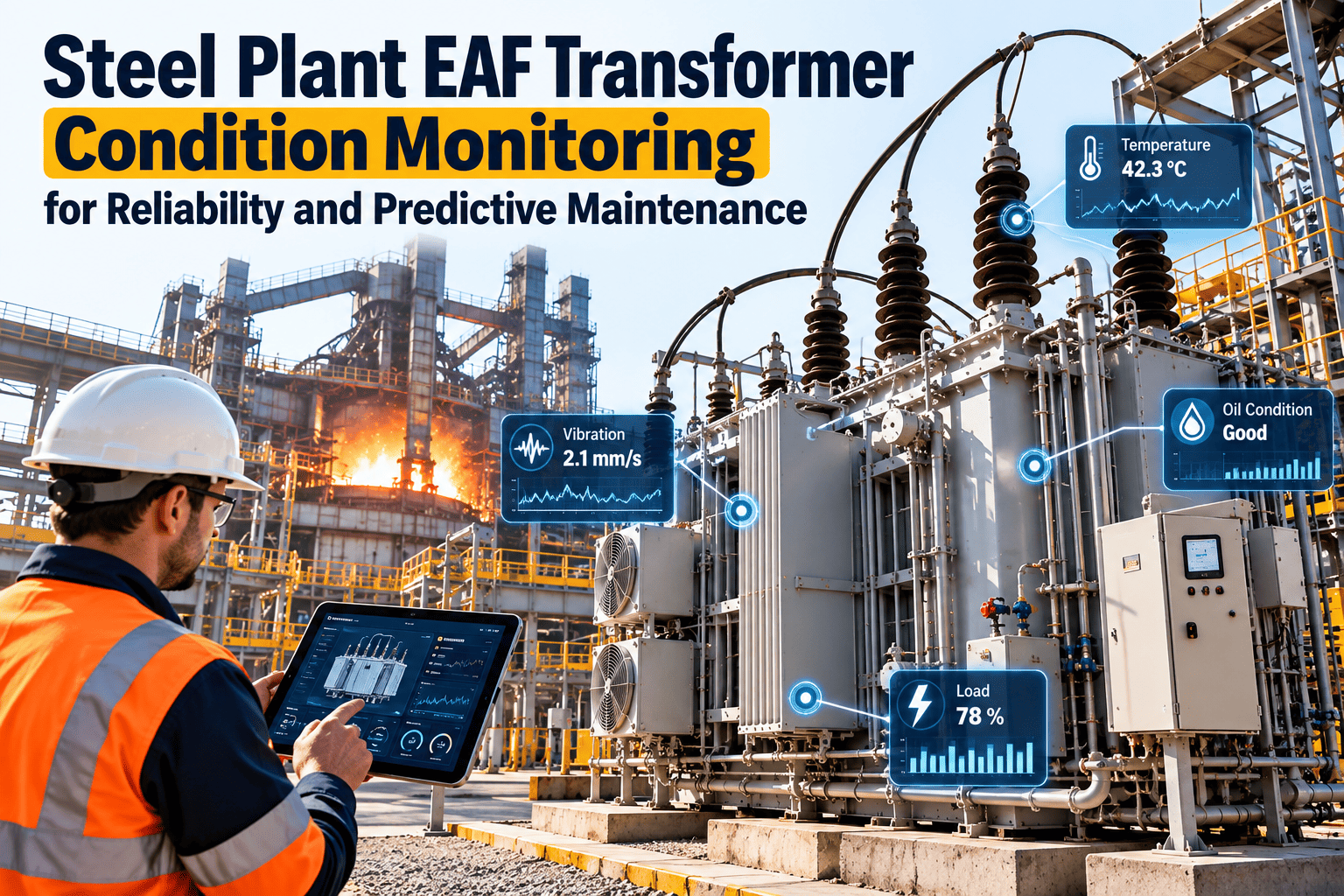
Read More
An electric arc furnace transformer works harder than almost any transformer in a power network. It is switched often, hit by repeated short circuits during meltdown, loaded close to its rating and cooled by water...
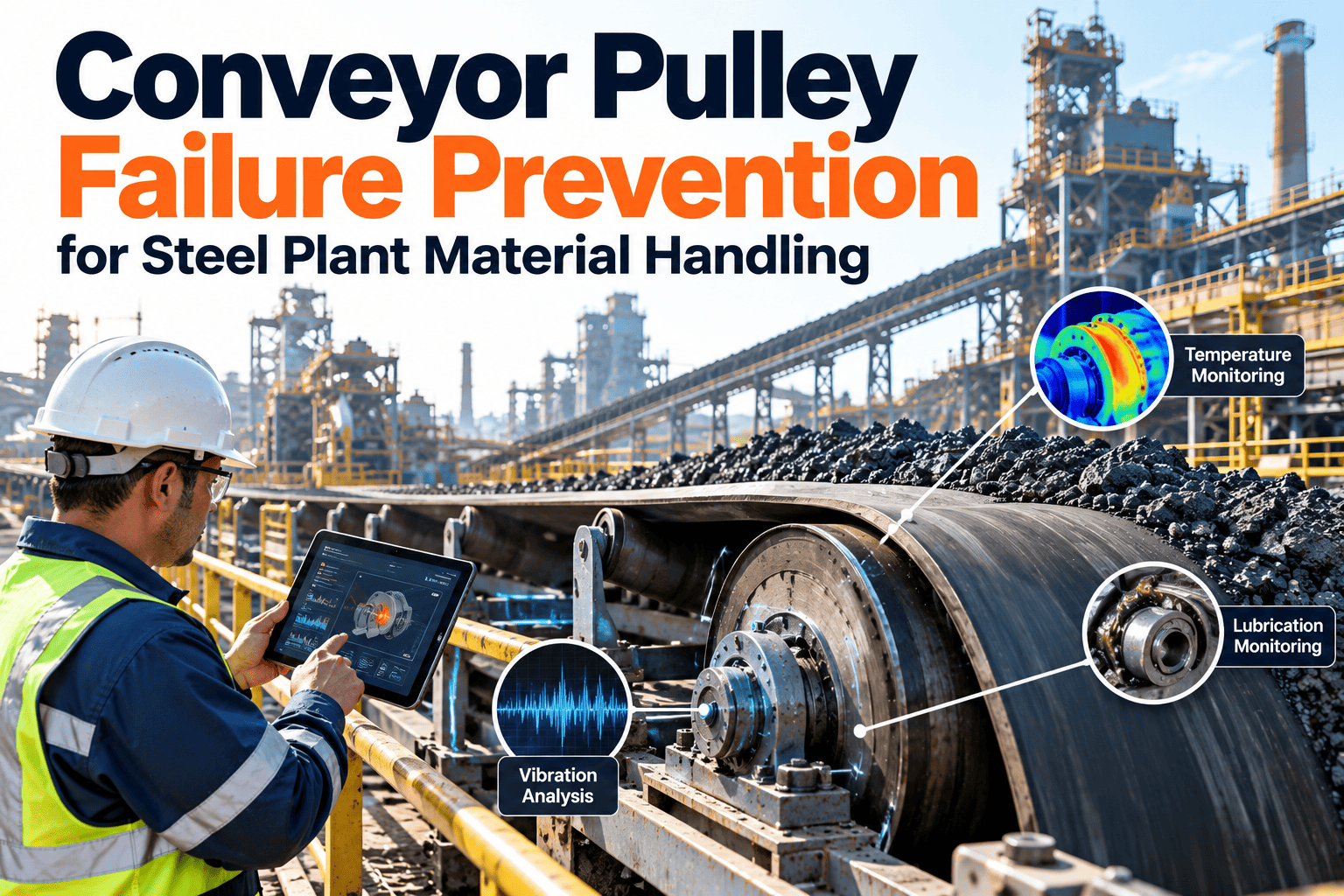
Read More
A conveyor pulley rarely fails without warning. The bearing runs a little warmer for weeks, the shaft picks up a trace of misalignment, lagging wears smooth, and a belt starts tracking to one side. In a steel...
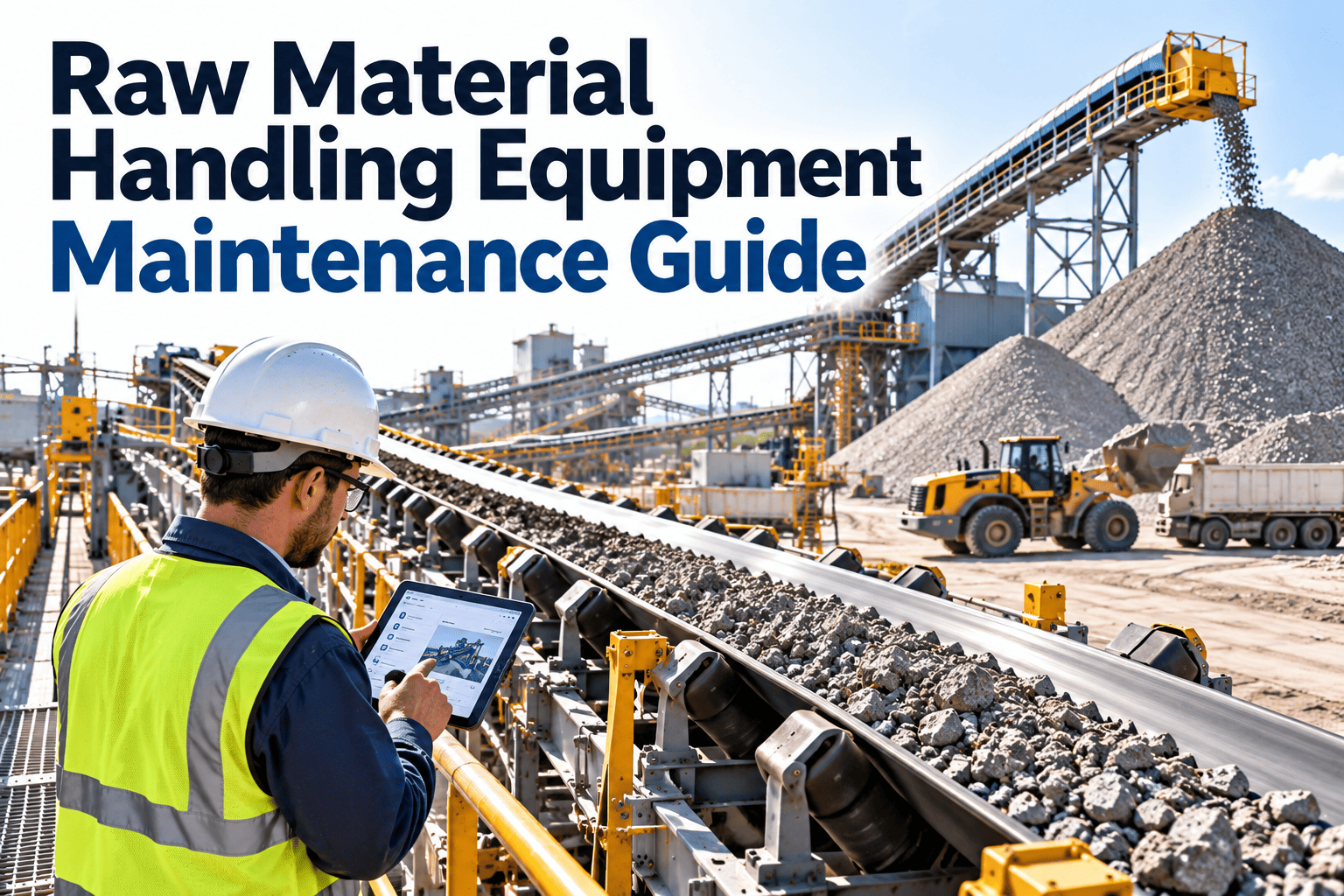
Read More
In a steel plant, the blast furnace and sinter plant are only as reliable as the raw material that reaches them. Crushers, feeders, stackers, reclaimers, conveyors, and transfer towers work in dust, moisture, and...
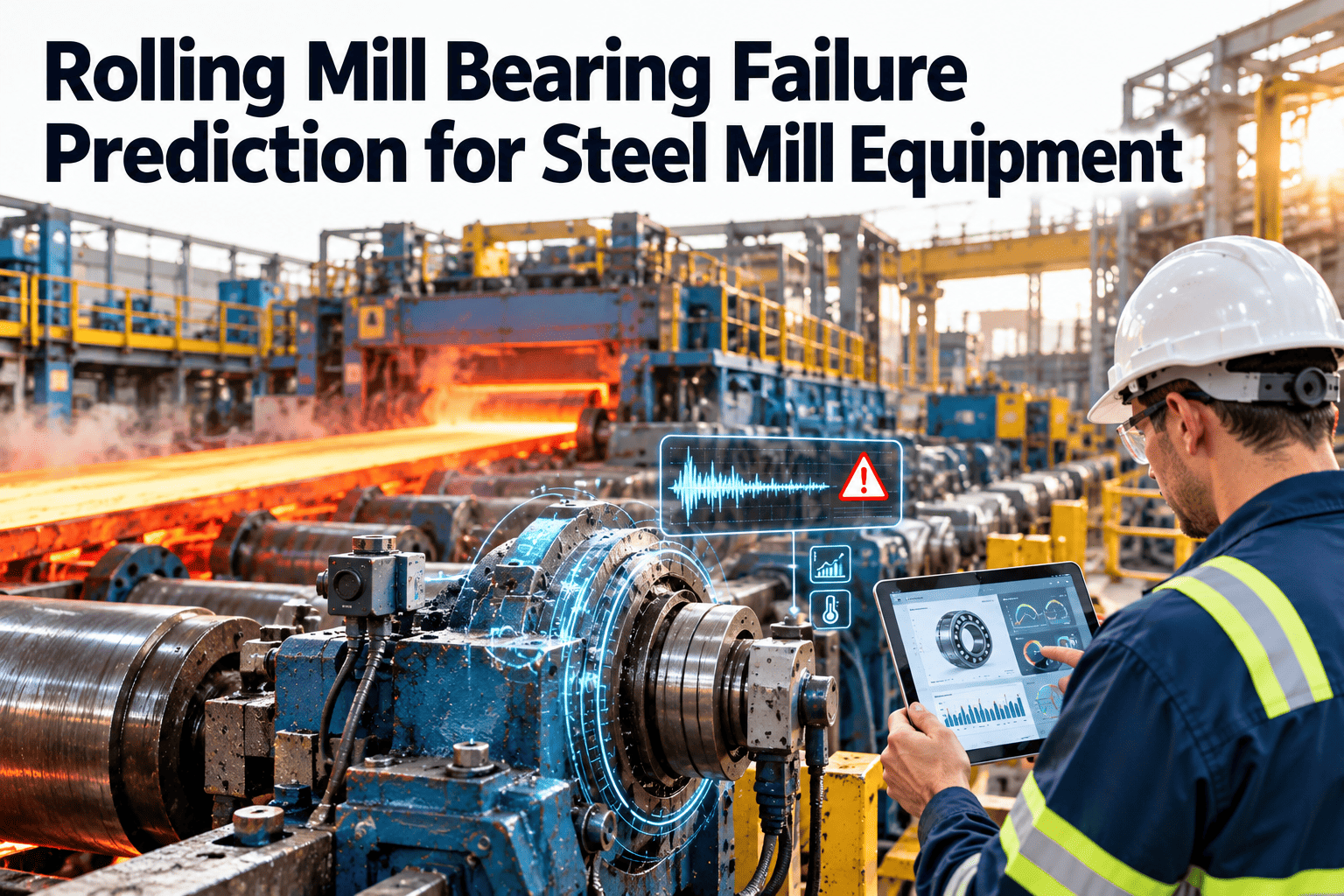
Read More
A rolling mill bearing rarely fails without warning. Vibration changes, temperatures drift, and load history quietly accumulates long before a chock runs hot or a roll neck seizes. The difficulty is that these...
Read More
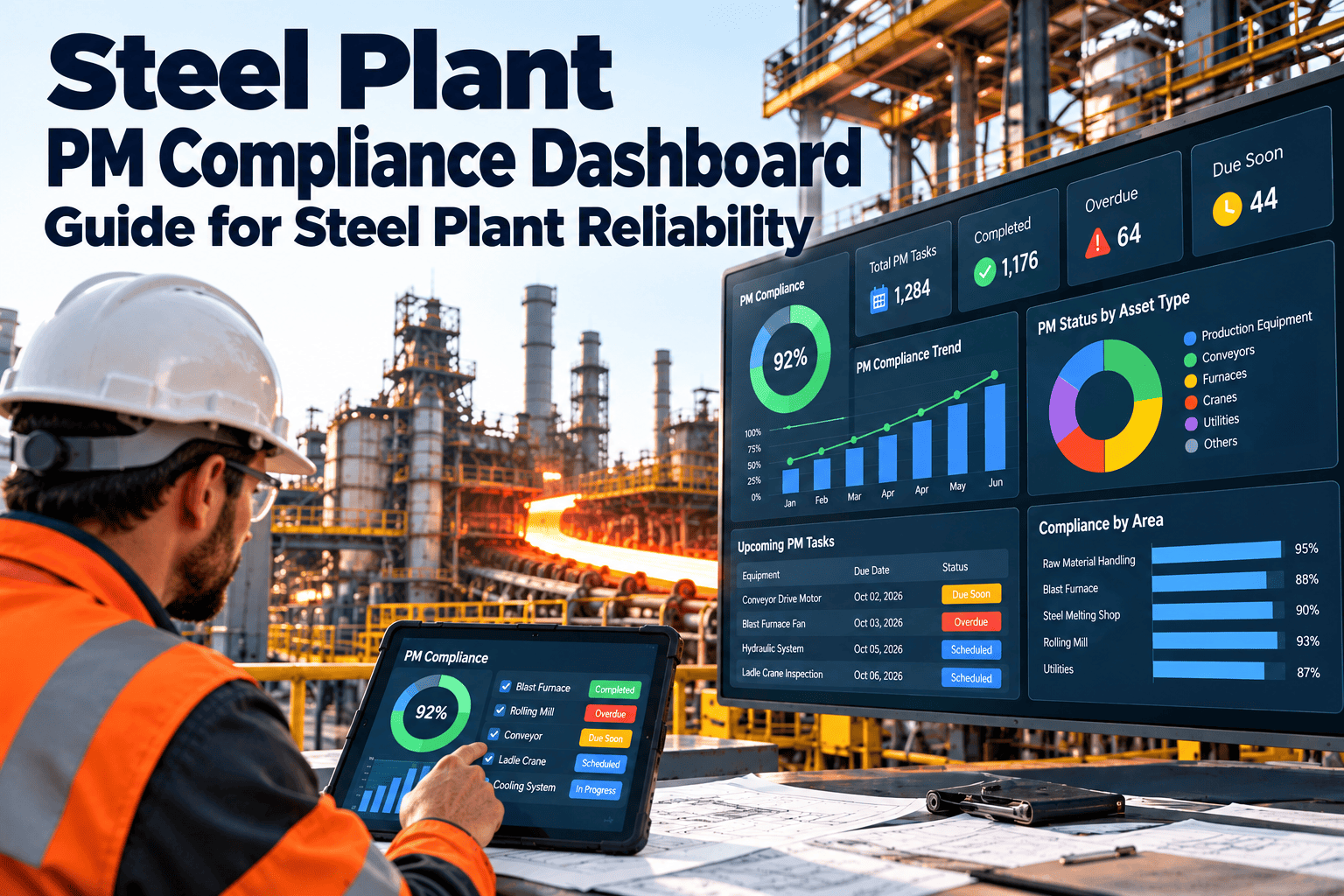
Most steel plants can say how many preventive maintenance tasks were scheduled last month. Far fewer can say which departments fell behind, which asset classes were skipped or whether the missed tasks were on...
Read More
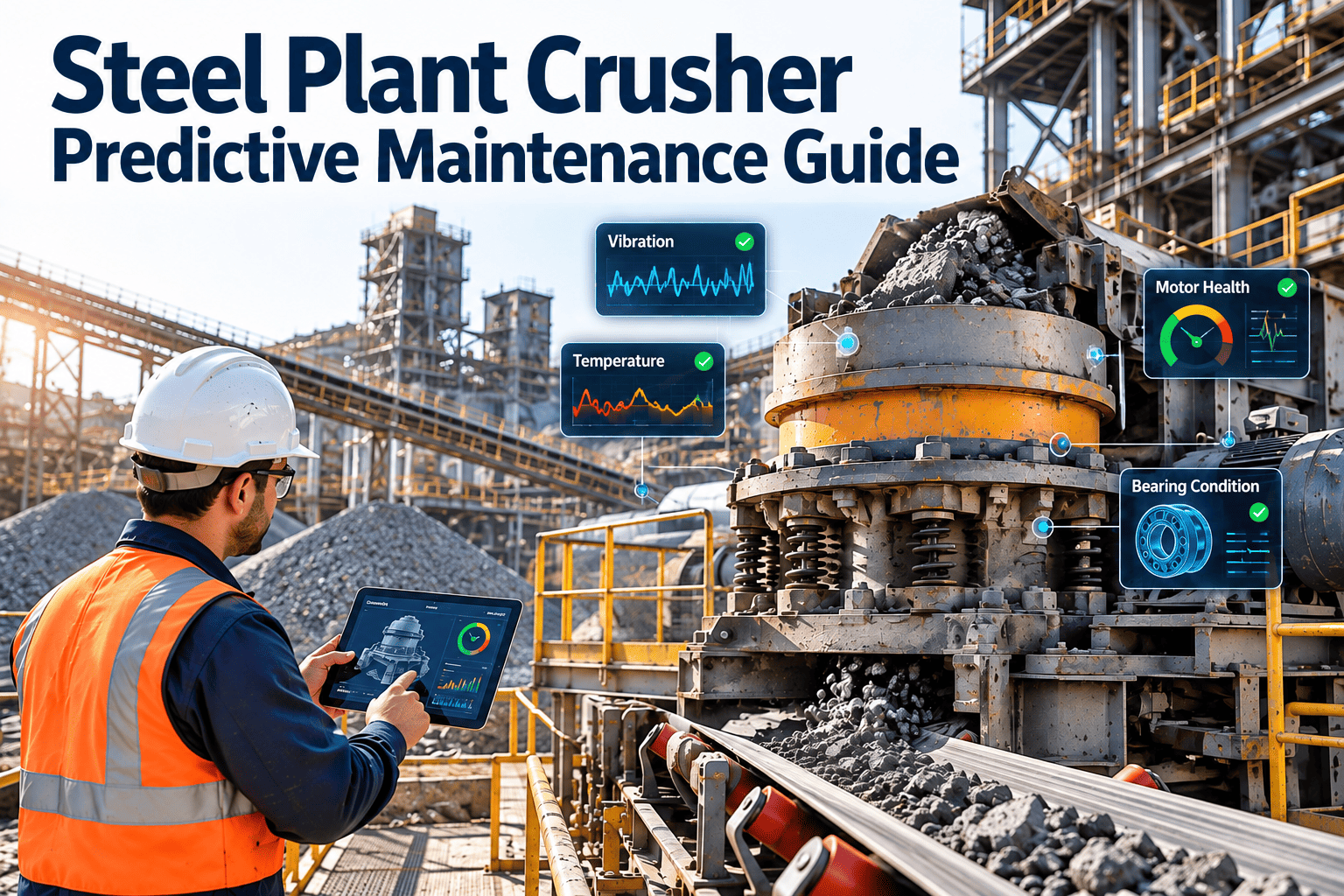
Crushers sit at the front of the steel plant material chain. Coke, limestone, dolomite, coal and ore lumps are reduced here before they reach screens, sinter strands and furnace bunkers. When a crusher stops, the...
Read More
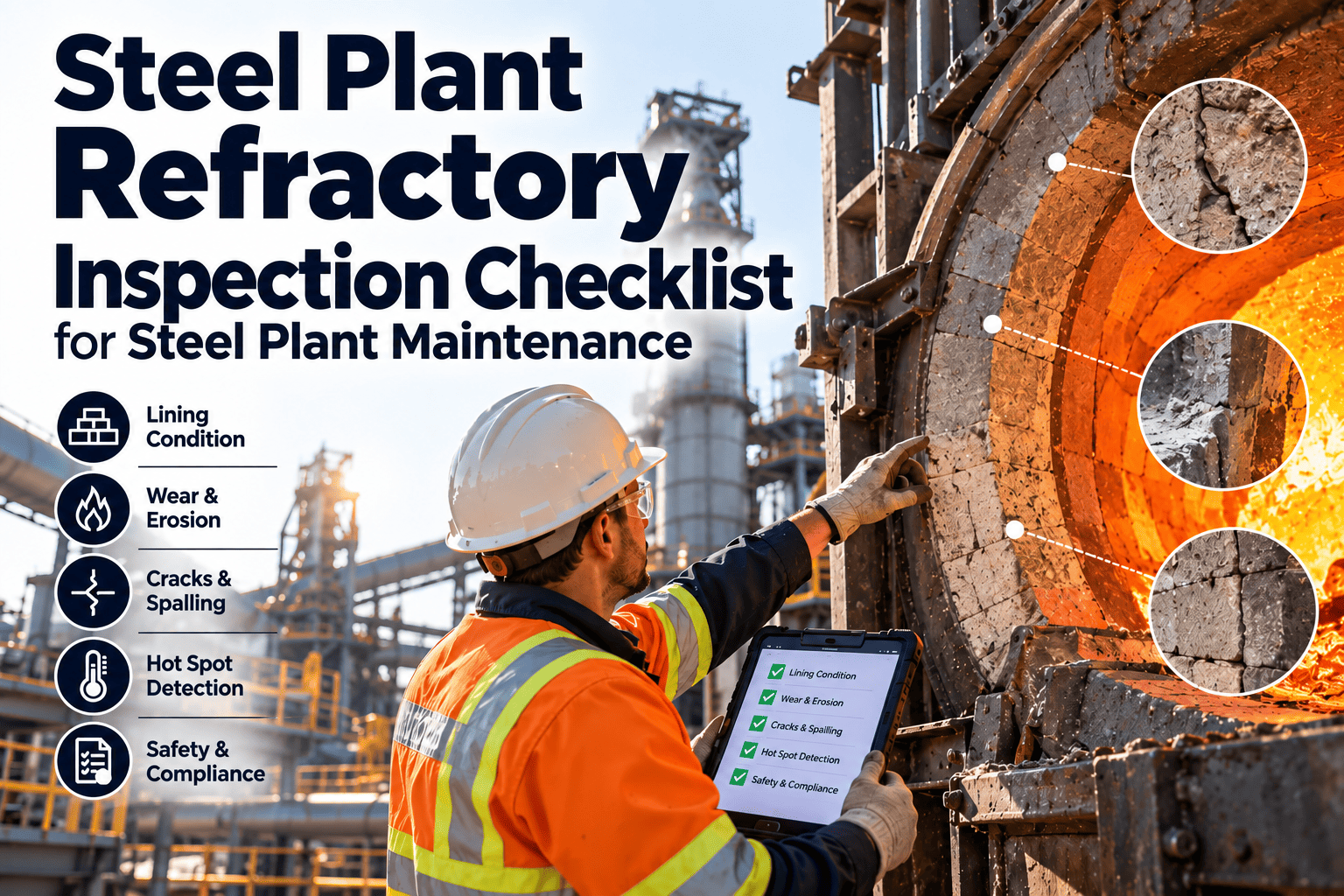
Refractory linings decide how long a furnace, converter, ladle or tundish can stay in service. Wear, cracking, spalling and hotspots develop slowly, then accelerate once slag penetrates joints or the shell begins...

Read More
The blast furnace runs on a continuous supply of air. The main blower, the stove combustion fans and the cast house dedusting fans all work around the clock, and none of them has an easy substitute. A bearing that...
Read More
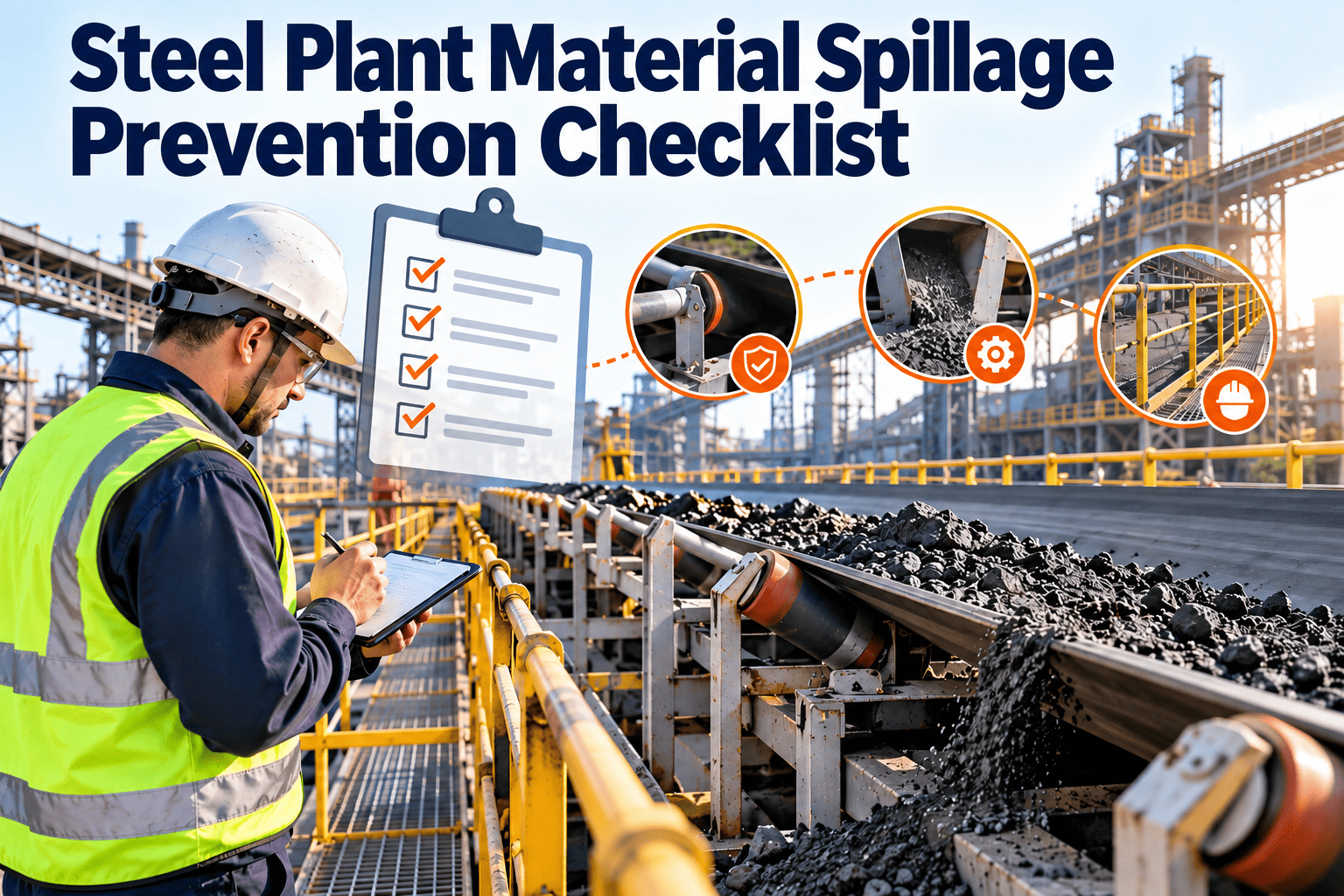
Material spillage on steel plant conveyors rarely starts as a big failure. It starts with a worn skirt rubber, a chute liner that has changed the material trajectory, or a belt that has drifted a few centimetres...
Read More
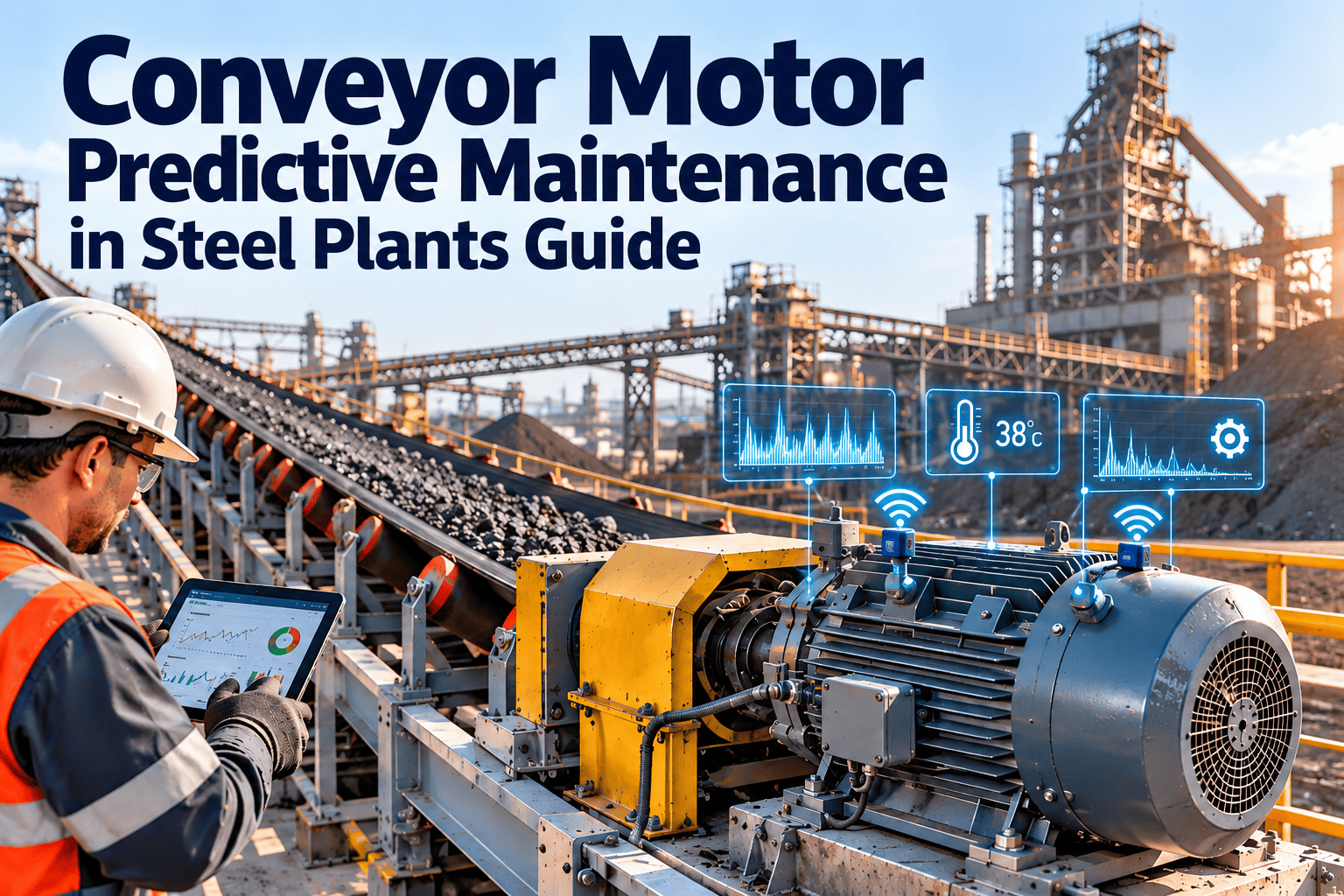
A conveyor motor in a steel plant rarely fails without warning. Overload, bearing wear, misalignment, loose connections and winding stress all change the motor's current draw, temperature and vibration well before...
Read More
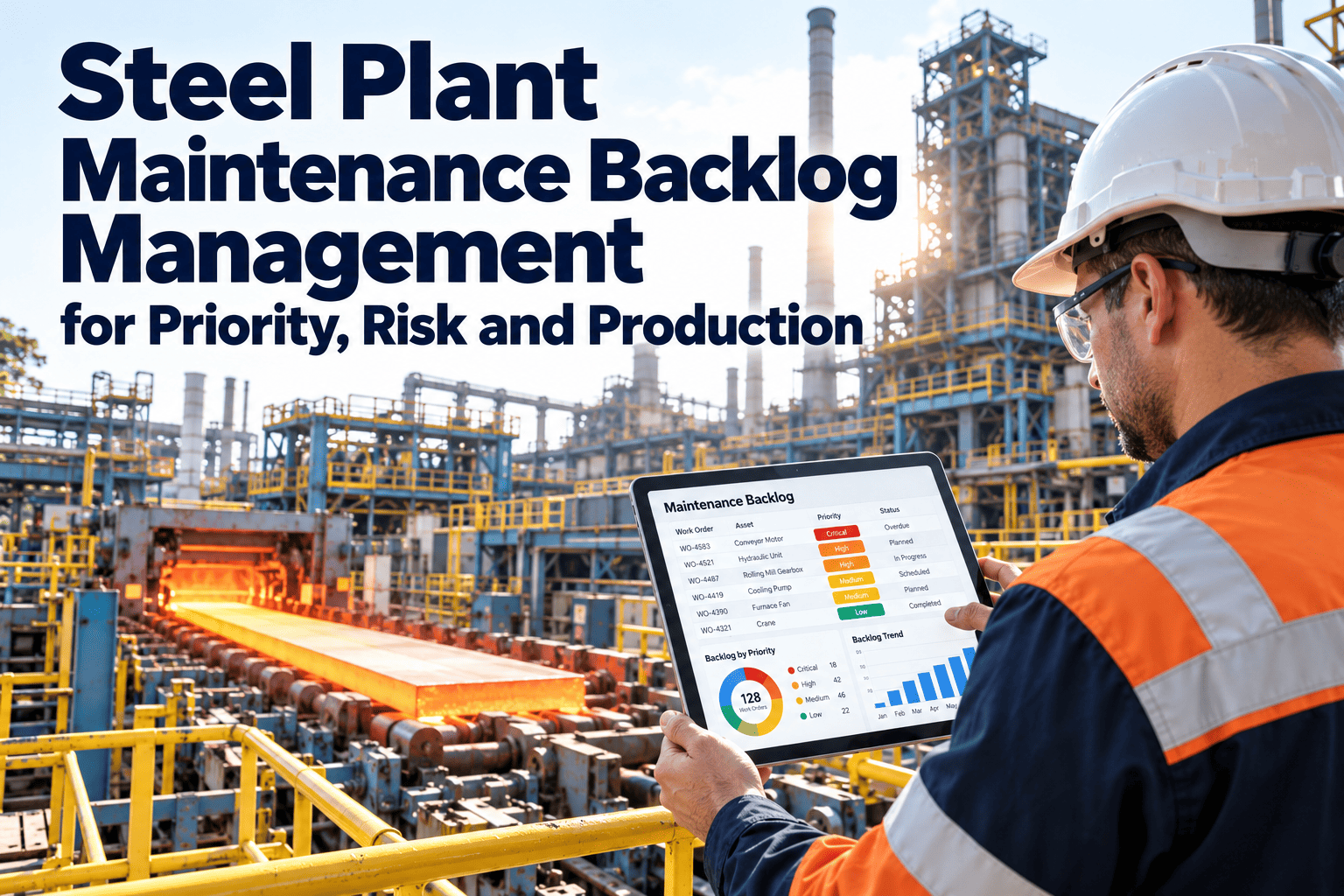
A steel plant never runs out of maintenance work. Furnace repairs, caster roll changes, crane inspections and conveyor faults all compete for the same crews, shutdown windows and spare parts. When work arrives...
Read More
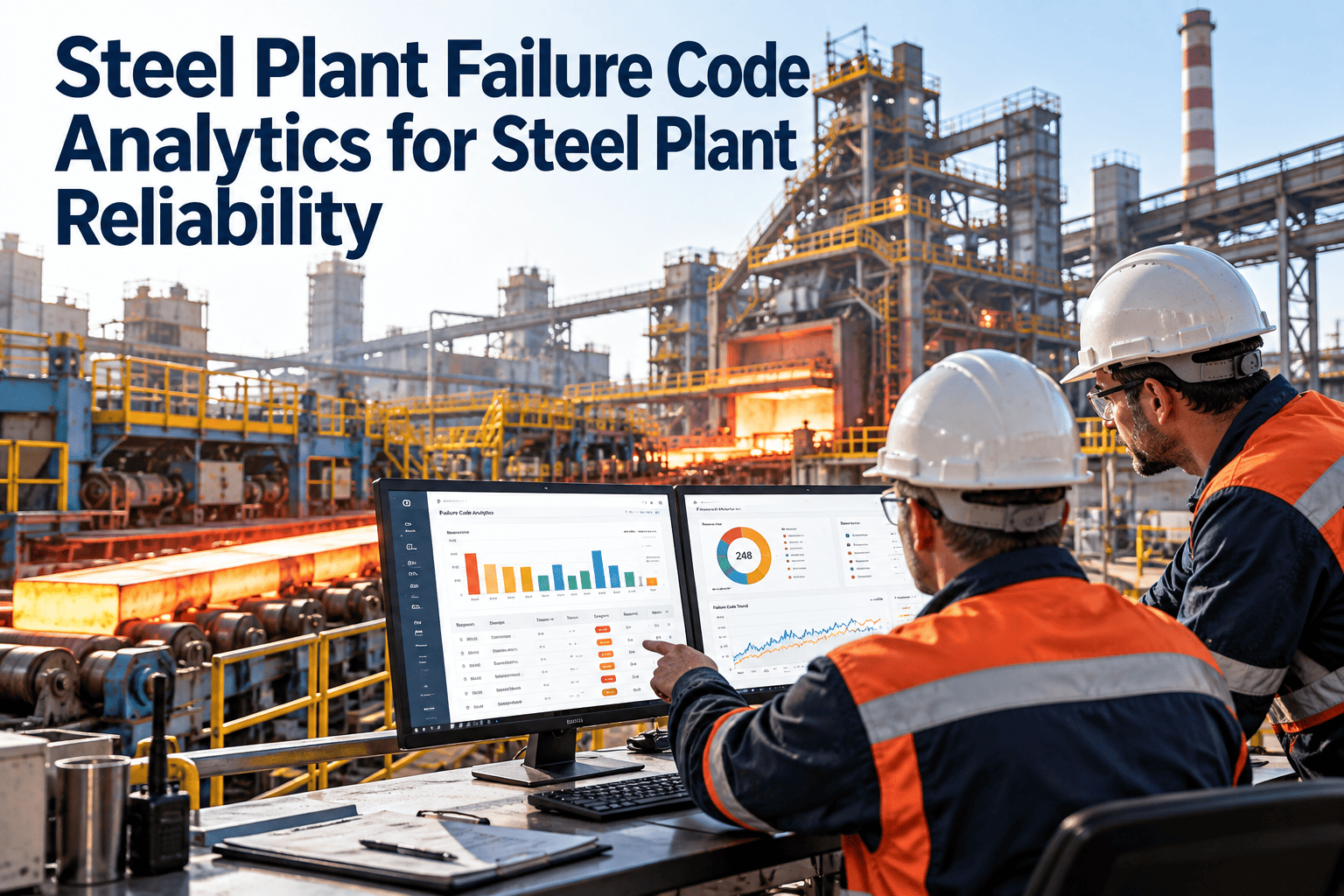
Most steel plants record thousands of breakdowns a year, yet few can say which failure modes cost them the most. The reason is usually the data: free-text descriptions, inconsistent codes and work orders closed...

Read More
A single scale streak, roll mark or edge crack can turn a good coil into a downgrade, a customer claim or a scrapped slab. Surface quality is judged at line speed, yet many defects are still caught late, by tired...
Read More
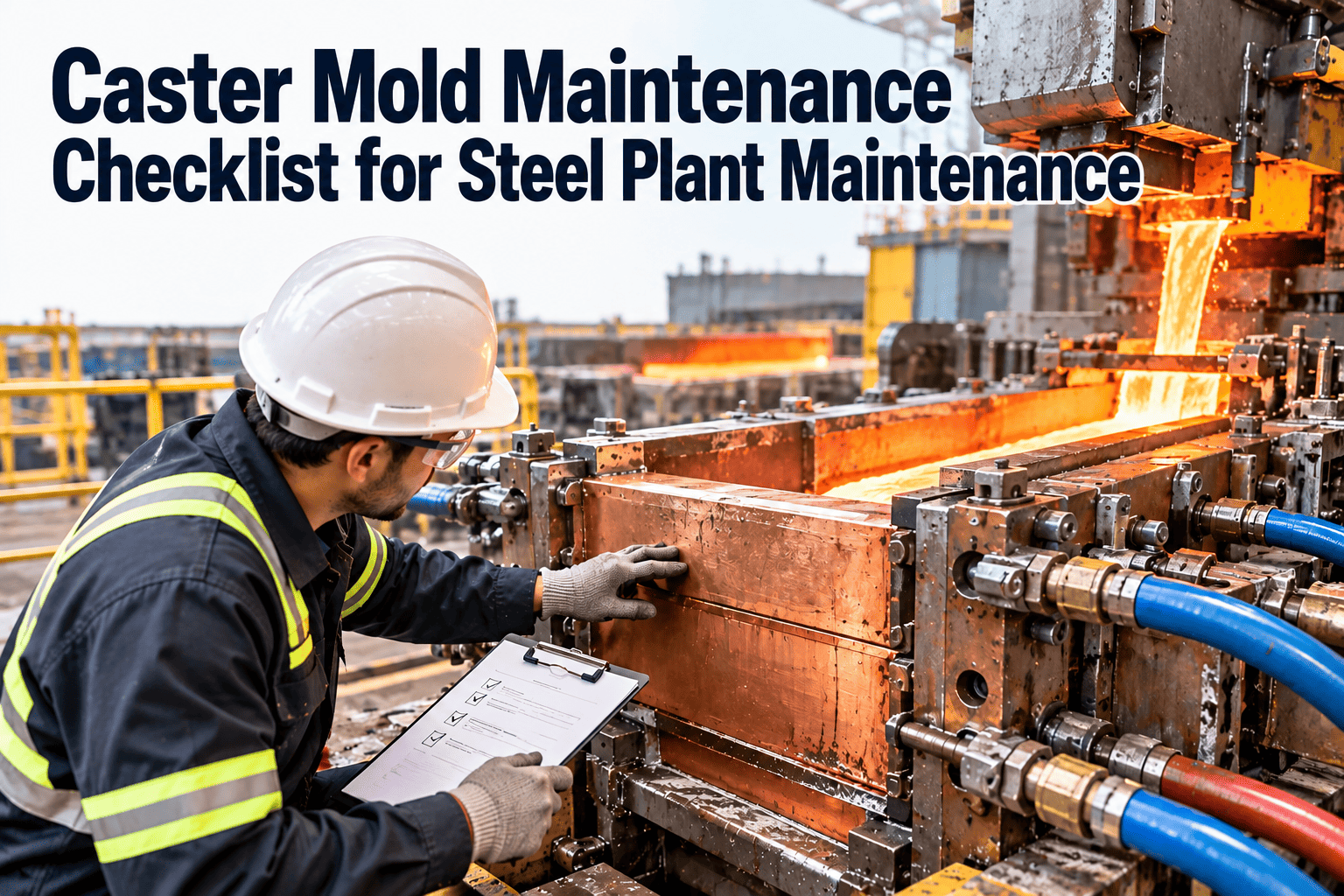
The mold is where liquid steel first becomes a solid shell, and it controls surface quality, casting speed and breakout risk. Worn copper, blocked water slots, drifting oscillation or poor lubrication all show up...
Read More
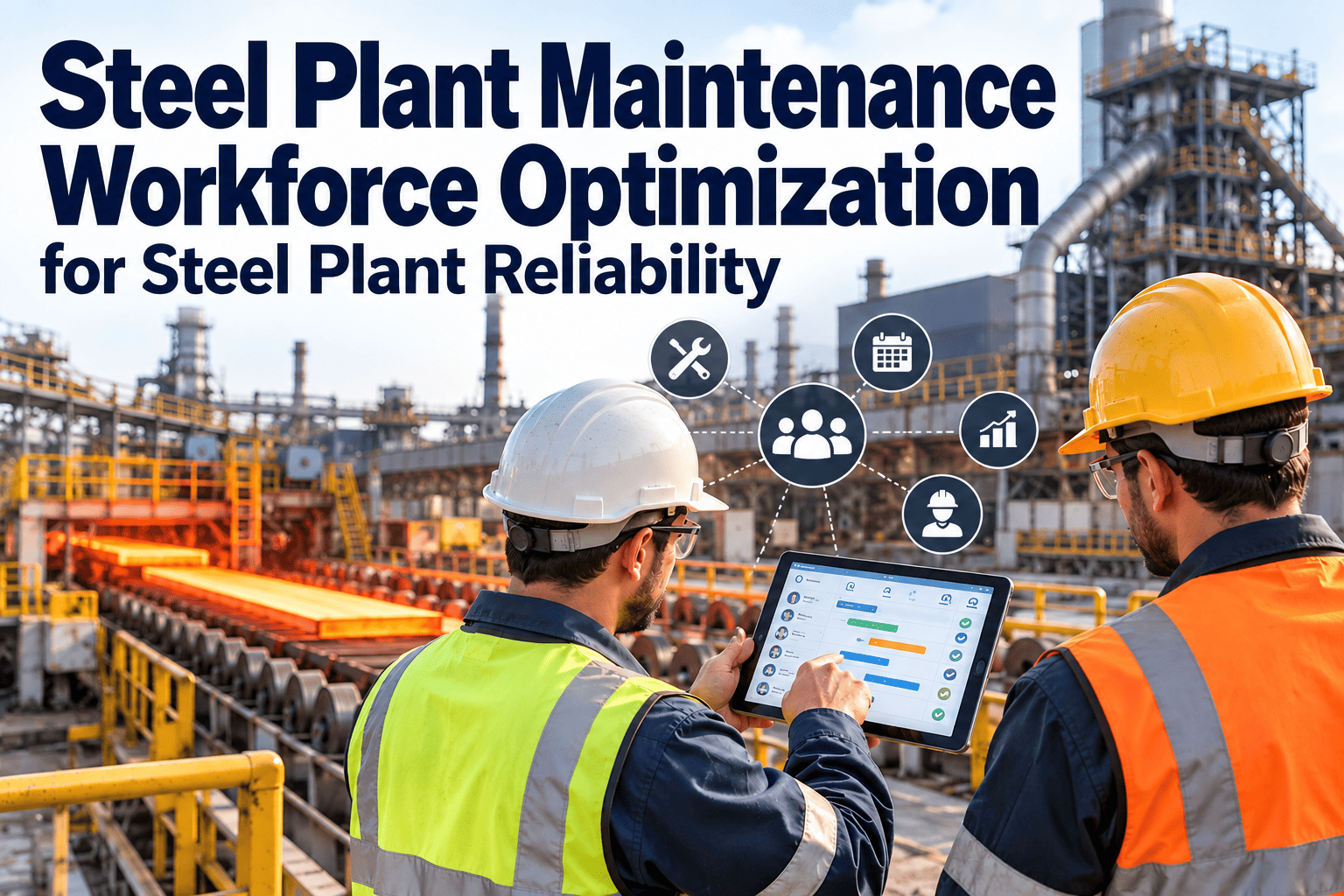
Most steel plants do not have too few technicians; they have the wrong technician on the wrong job at the wrong time. Skills sit in one area while urgent work waits in another. Shifts overlap unevenly, and travel...
Read More
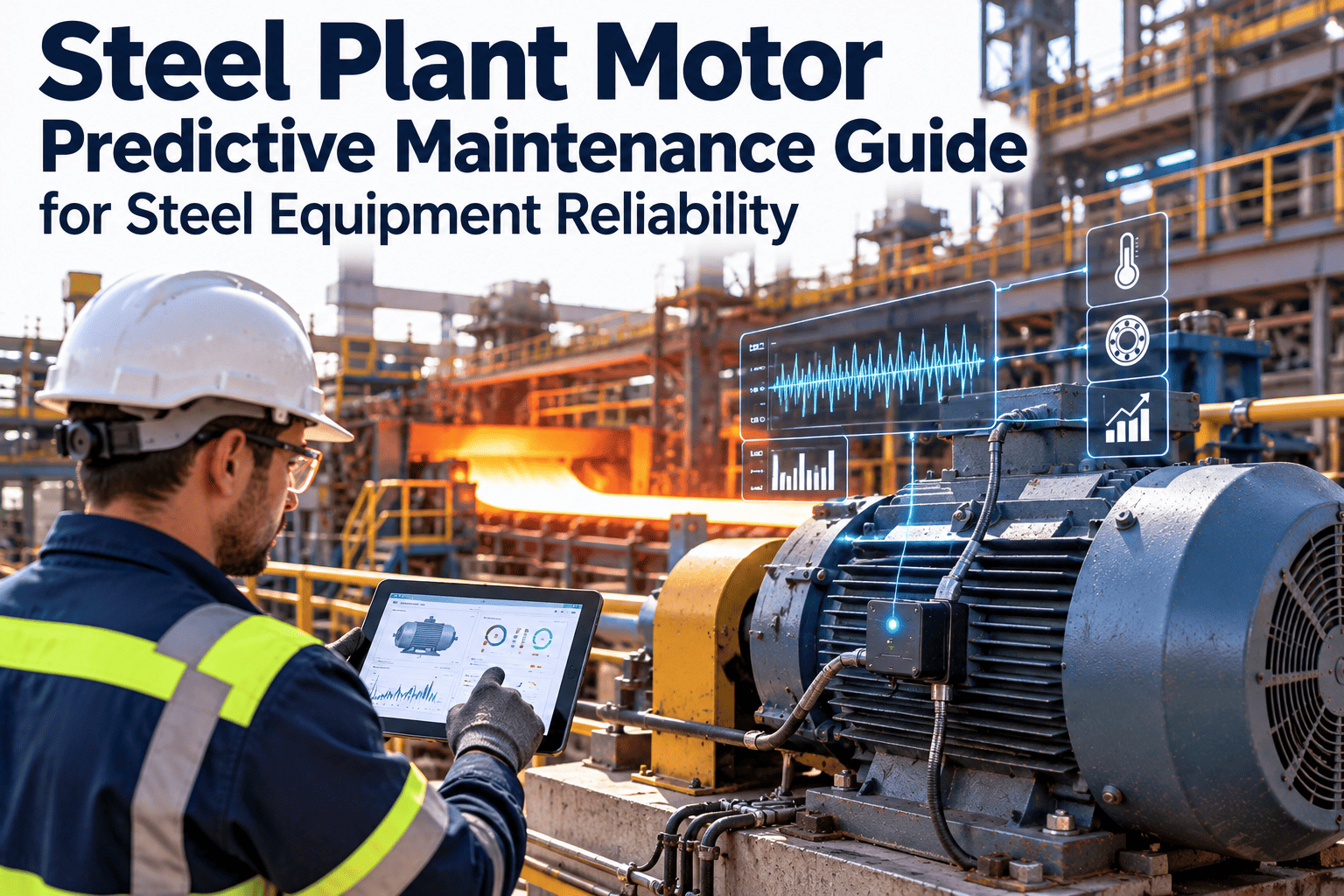
Motors turn nearly every fan, pump, conveyor, crane and mill drive in a steel plant. When one fails, the loss is rarely the motor alone; it is the process it drives. Bearings wear, rotors go out of balance,...
Read More
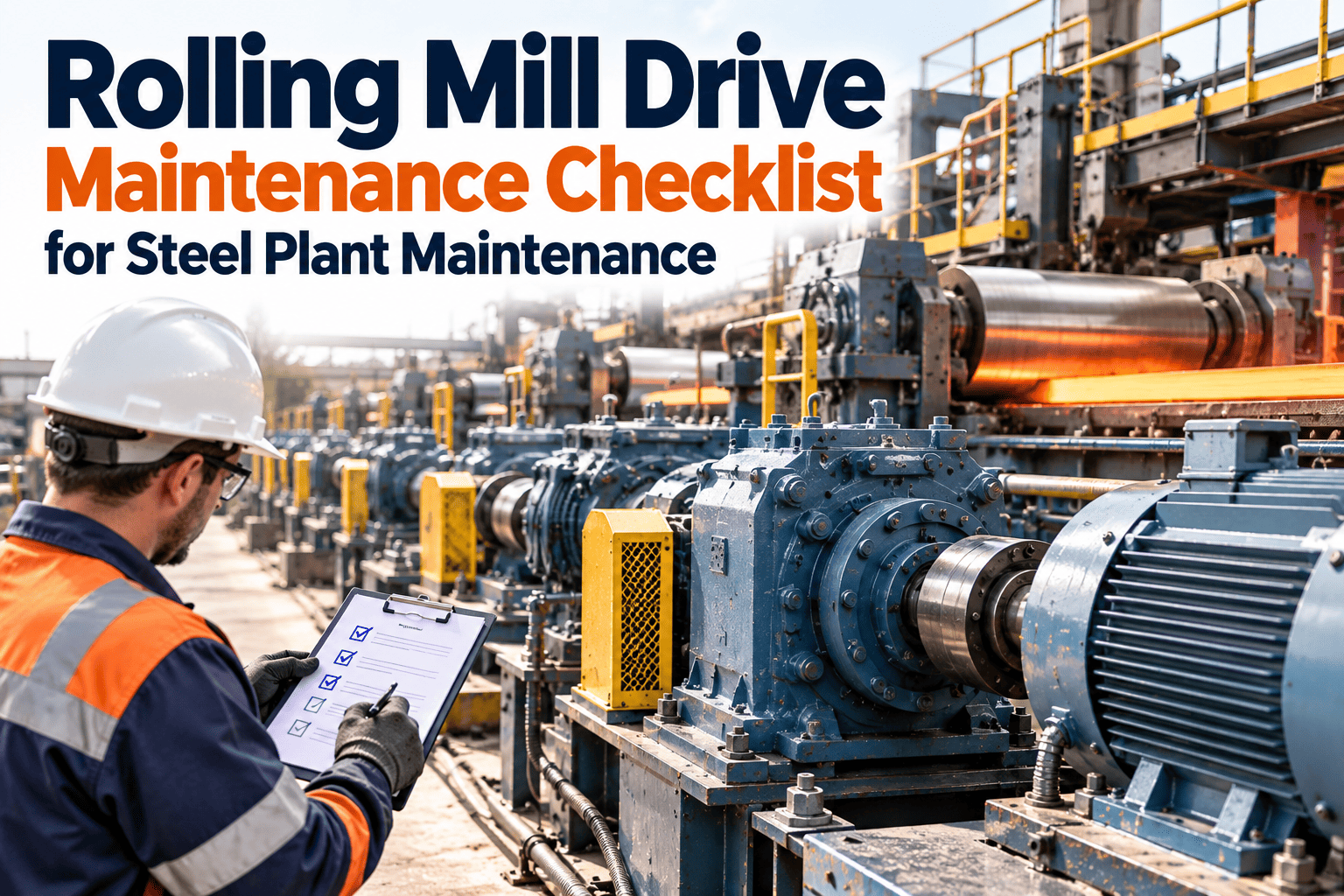
A rolling mill drive turns motor power into controlled roll torque, and it does so under shock loads every time a bar or slab bites. Coupling wear, gearbox damage, bearing heat and small alignment errors rarely...
Read More
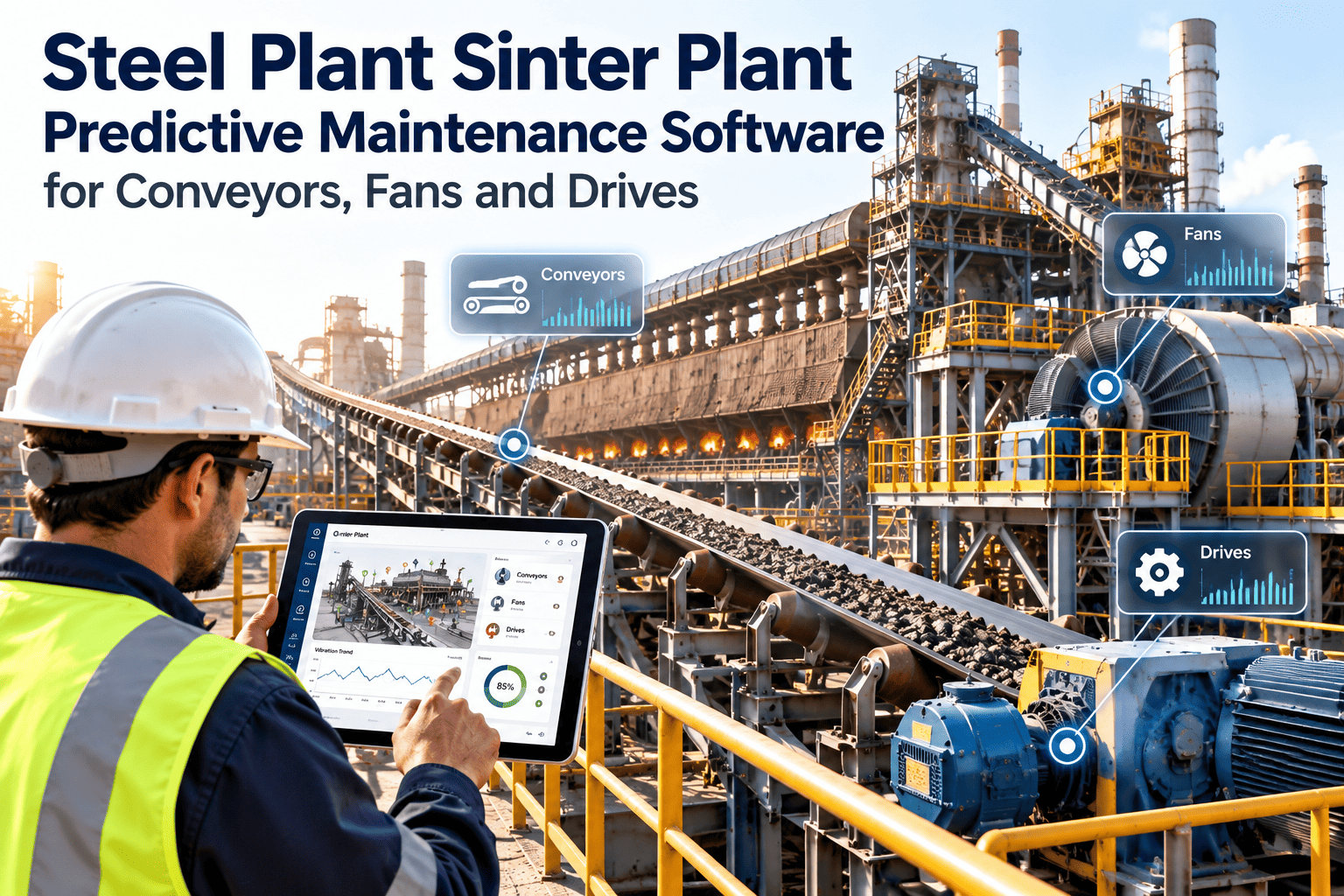
A sinter plant runs on continuous flow. Ore, coke and flux move on long conveyors, get crushed and screened, pass through the strand, and leave through coolers and more belts. One failed drive or fan can starve the...
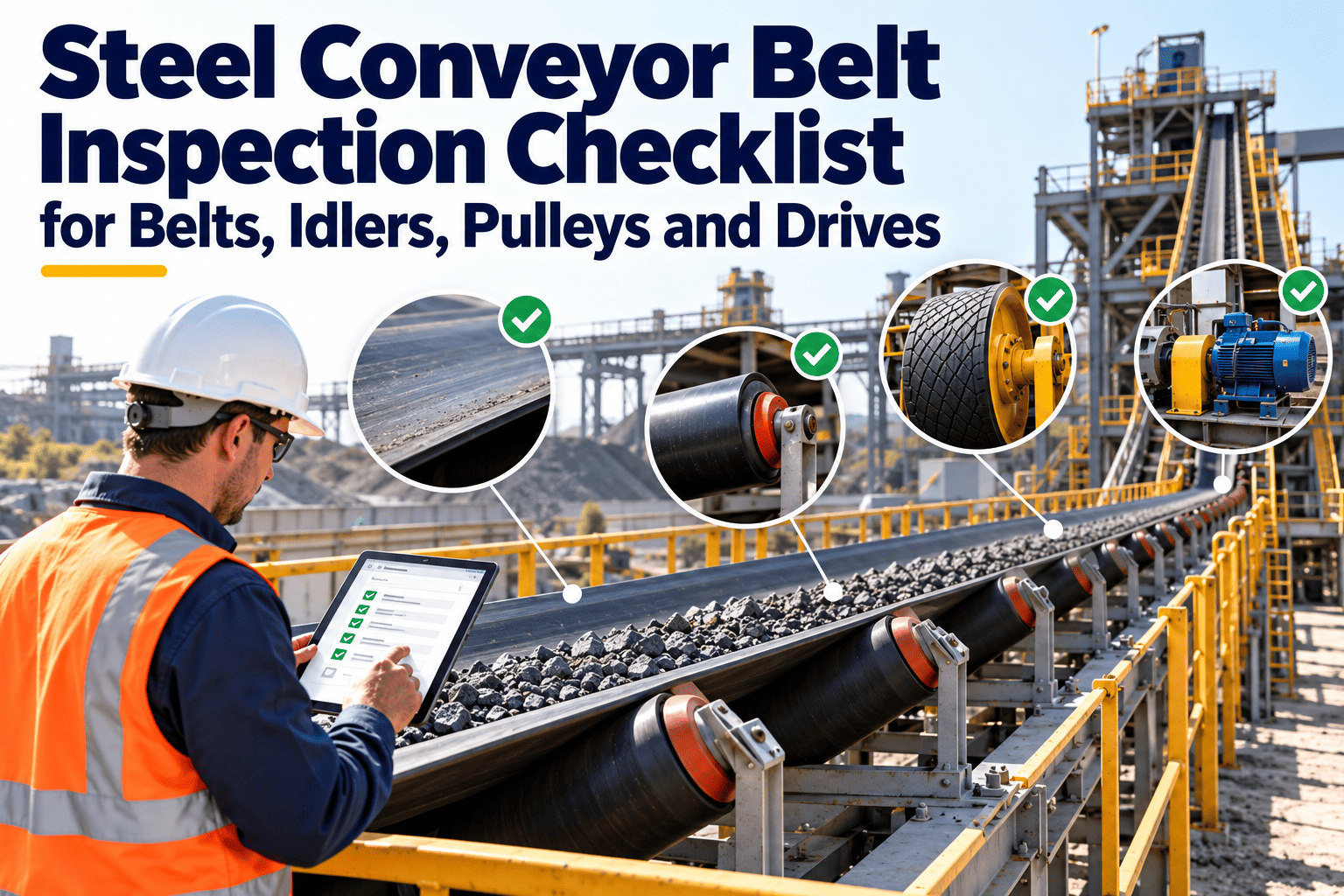
Read More
In a steel plant, a conveyor is rarely a stand-alone machine. It feeds coke, sinter, ore, limestone and scrap into the process, and one torn belt or seized idler can starve a blast furnace or sinter line within...

Read More
Electric arc furnace downtime rarely starts with a dramatic failure. It starts with a warm busbar joint, a phase current that drifts a little each week, or transformer oil that changed between two samples. This...
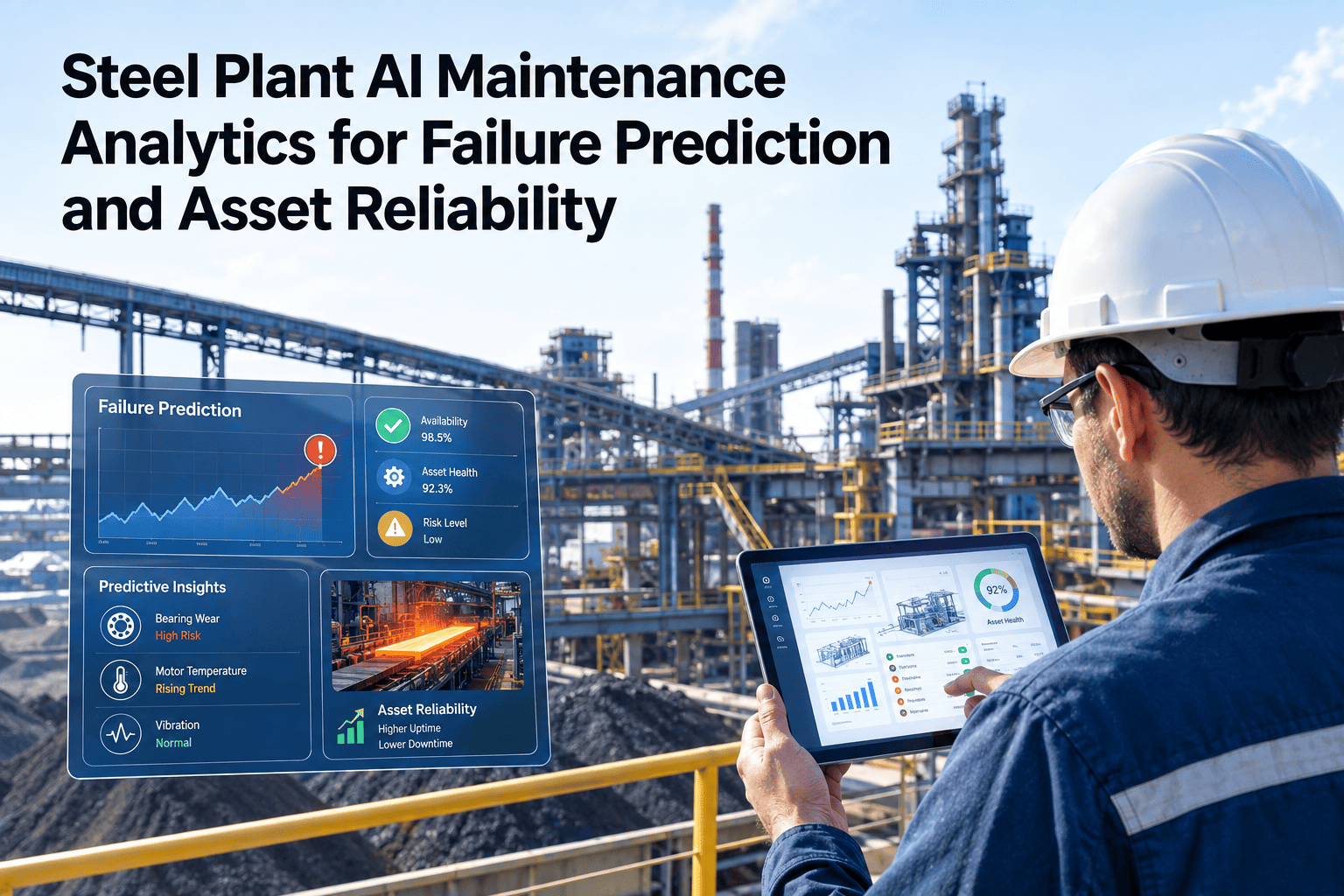
Read More
Most steel plants already hold the raw material for failure prediction: years of work orders, a growing stream of sensor readings and detailed production logs. The gap is that these sit in separate systems,...
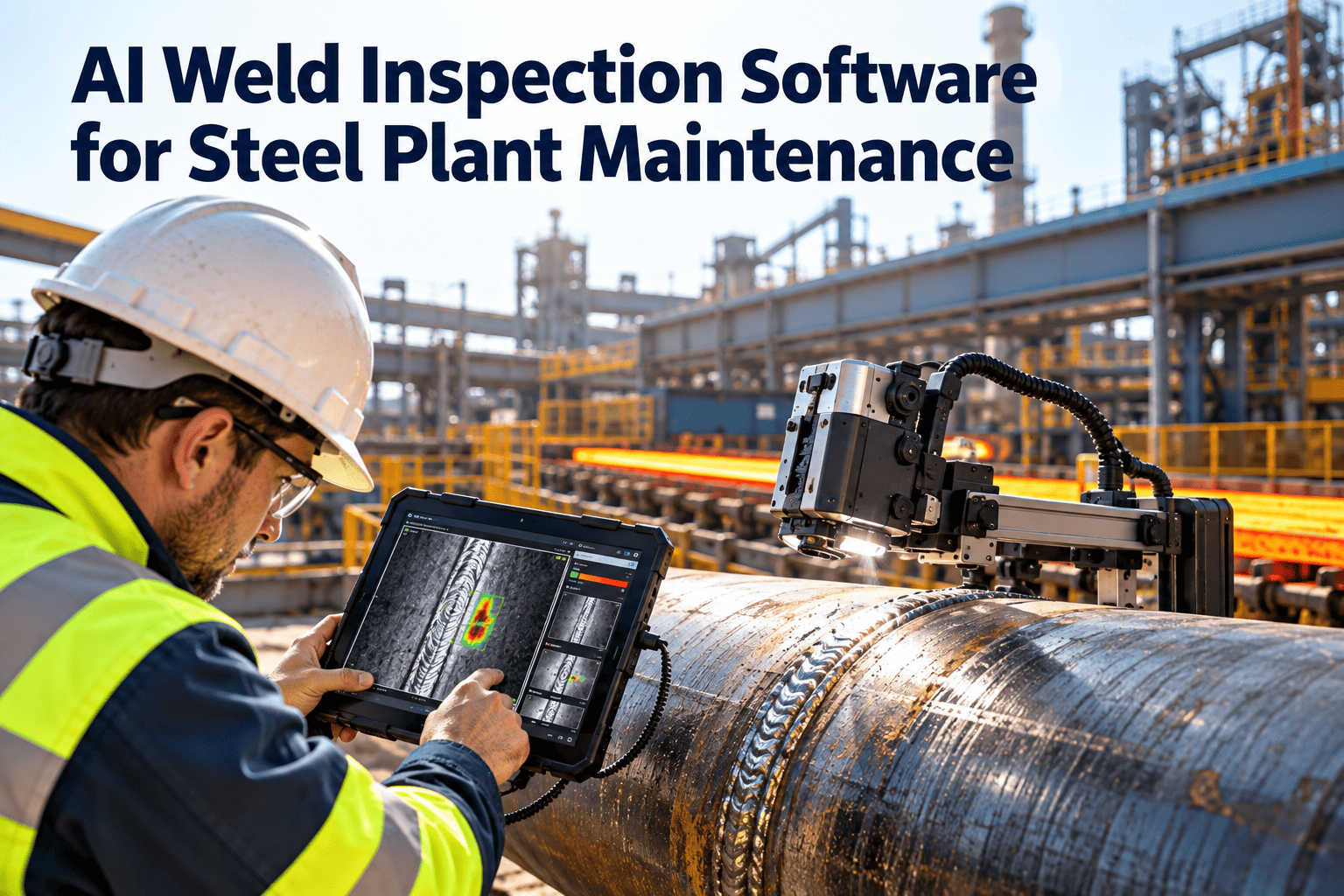
Read More
Weld quality in a steel plant is judged twice: once when the weld is made, and again months later when a crane runway, a pressure line or a strip joint is asked to carry its load. Manual visual inspection depends...
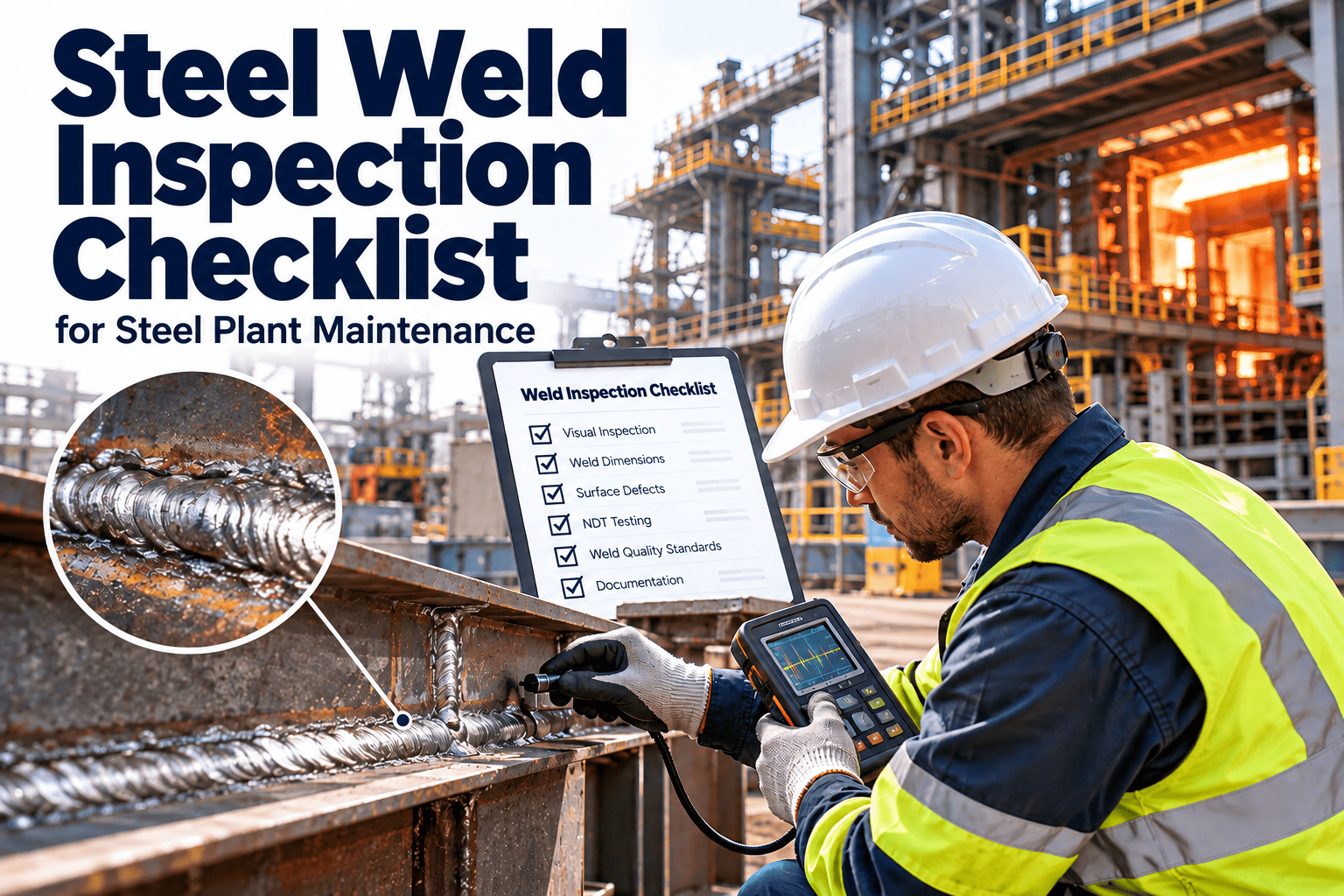
Read More
Steel plants run on welded equipment. Ladle shells, crane runway girders, conveyor structures, chutes, gas mains and mill stand components are repaired and modified by welding throughout their lives, often under...
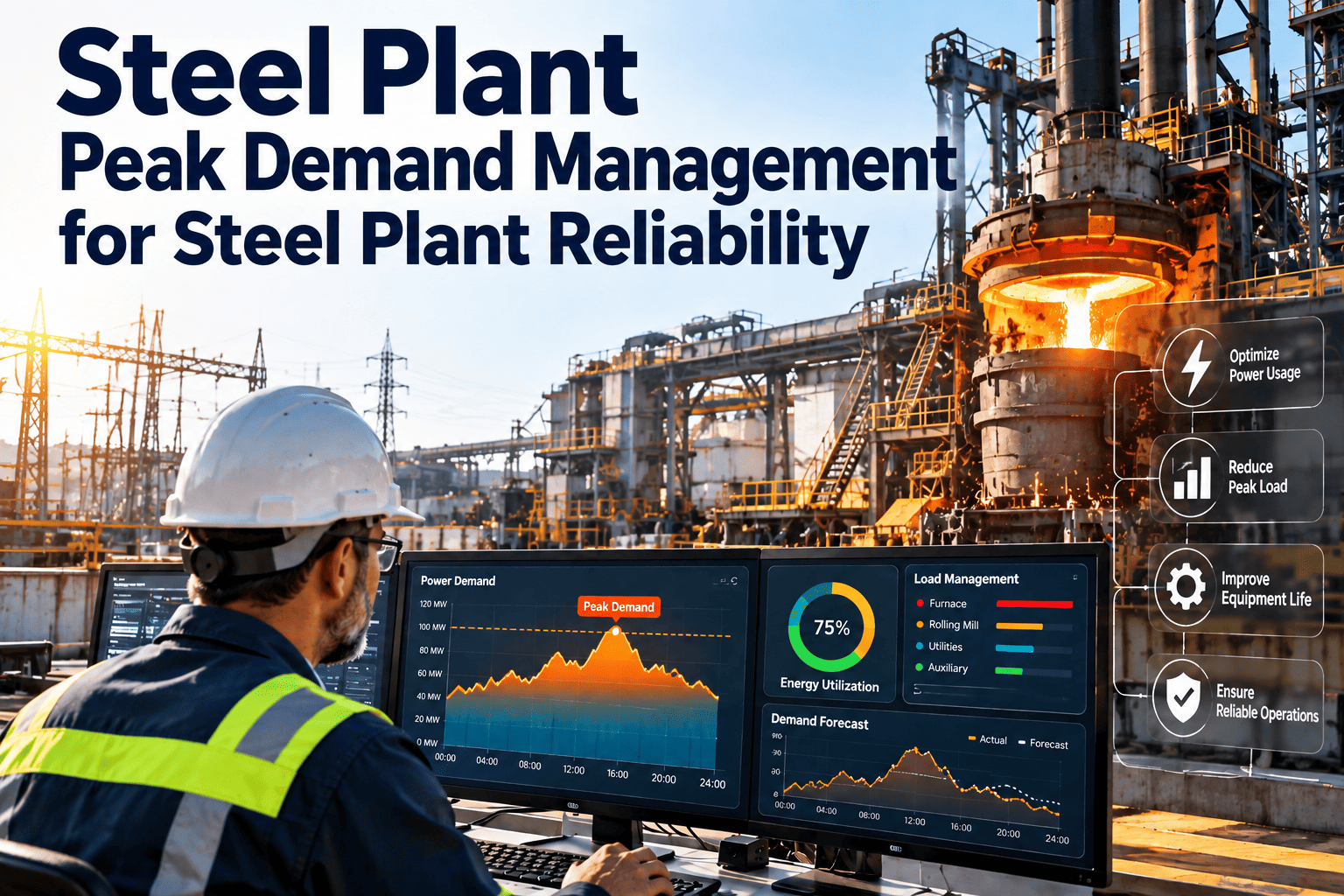
Read More
A steel plant can run a good month and still pay for one bad fifteen minutes. When an EAF, a ladle furnace, a rolling mill drive and several compressors all peak together, the utility meter records the highest...

Read More
Reheat furnaces are among the largest fuel users in a rolling mill, and much of that fuel is spent on things that never make it into product: idle holds, excess air, door leakage and long dwell times. Energy per...
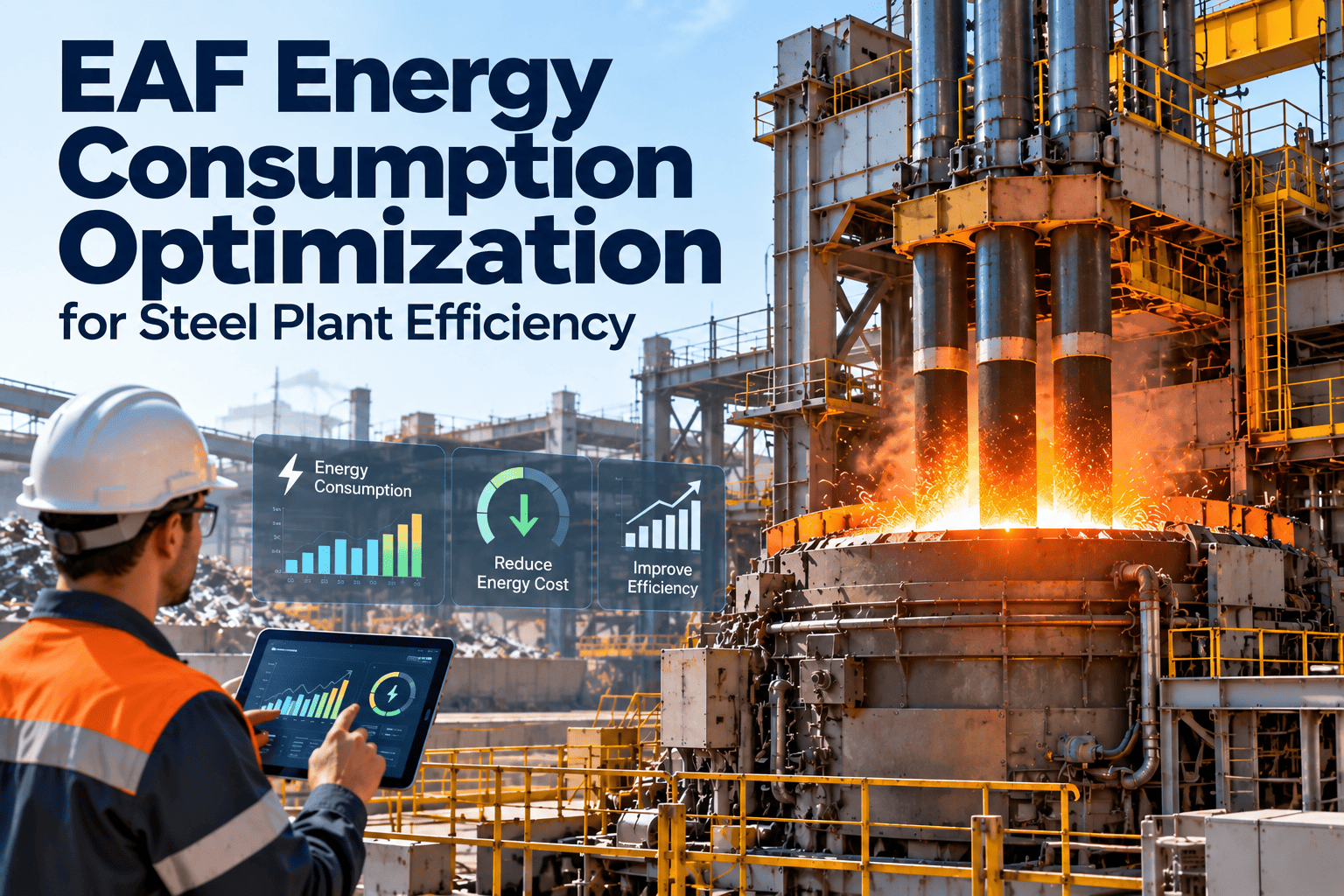
Read More
Electricity is one of the largest controllable costs in an electric arc furnace shop, yet energy per tonne is often reviewed as a finance number rather than a maintenance signal. A worn cooling circuit, an air leak...
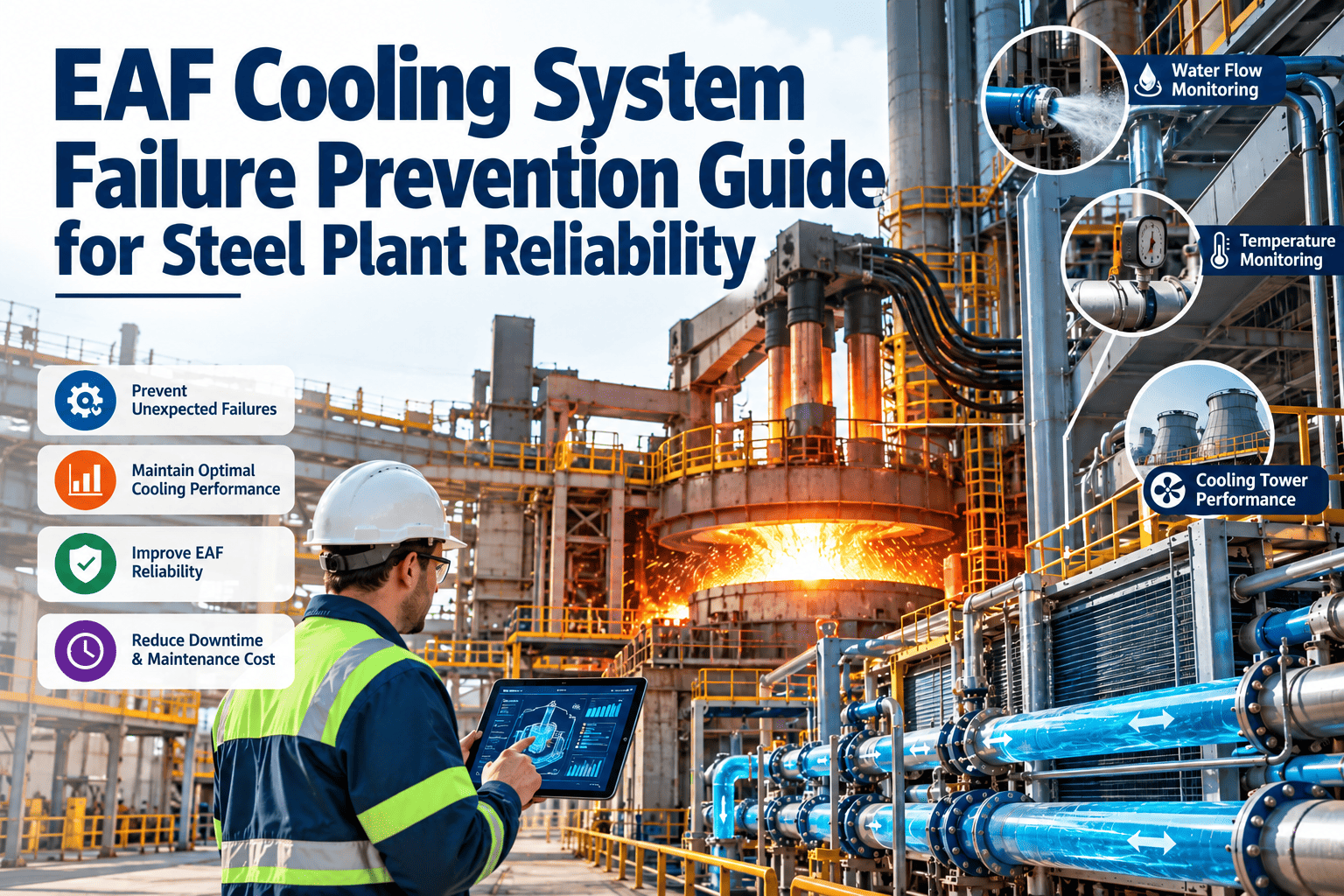
Read More
An electric arc furnace runs at temperatures where a small cooling fault becomes a serious event within minutes. Water-cooled panels, roof rings, cables, hoses, ducts and pumps all share one job: keep heat away...
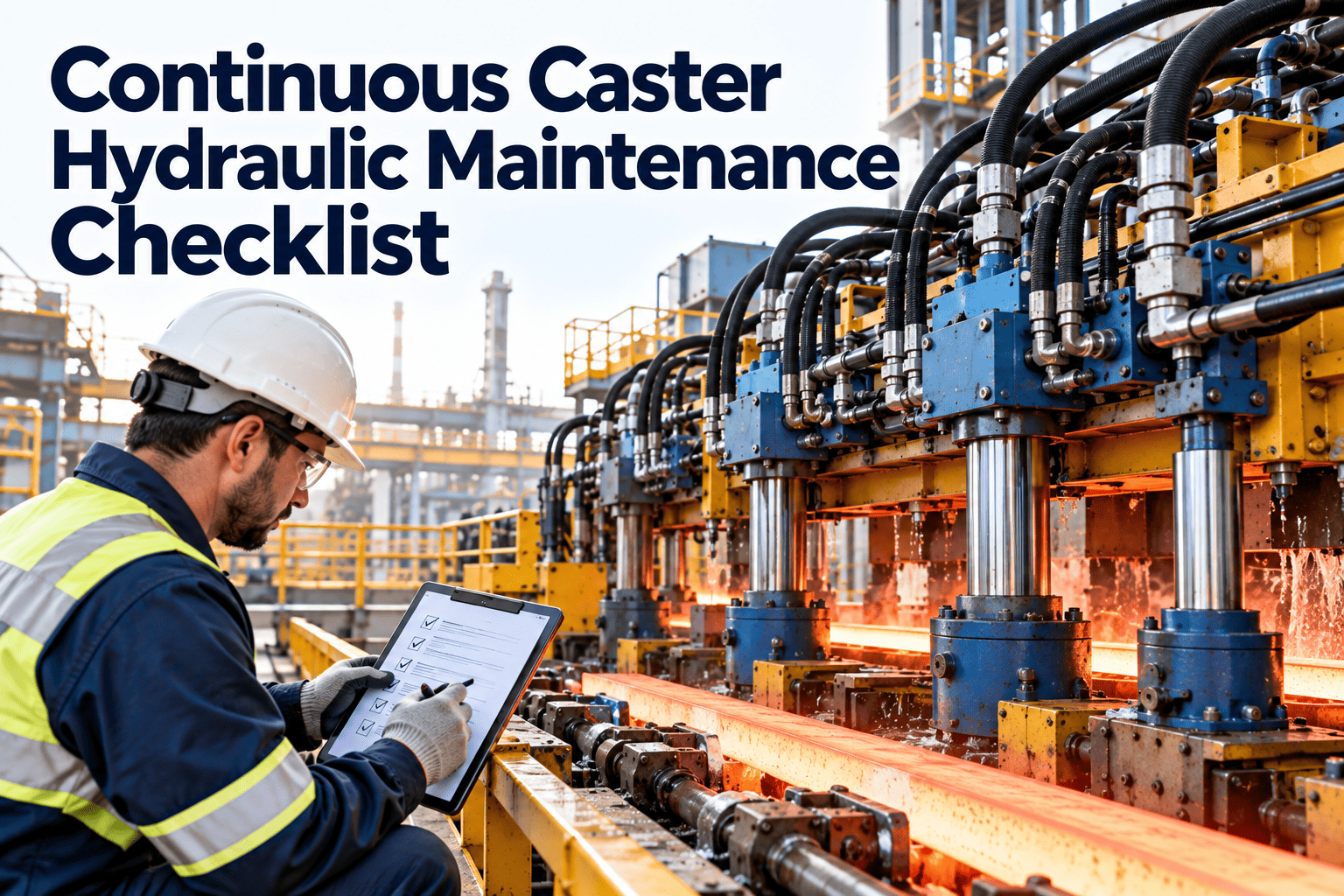
Read More
An electrode break in an electric arc furnace is rarely a surprise to the data. The clues sit in joint history, regulator behavior, cooling water readings and the scrap that went into the heat, but they are...
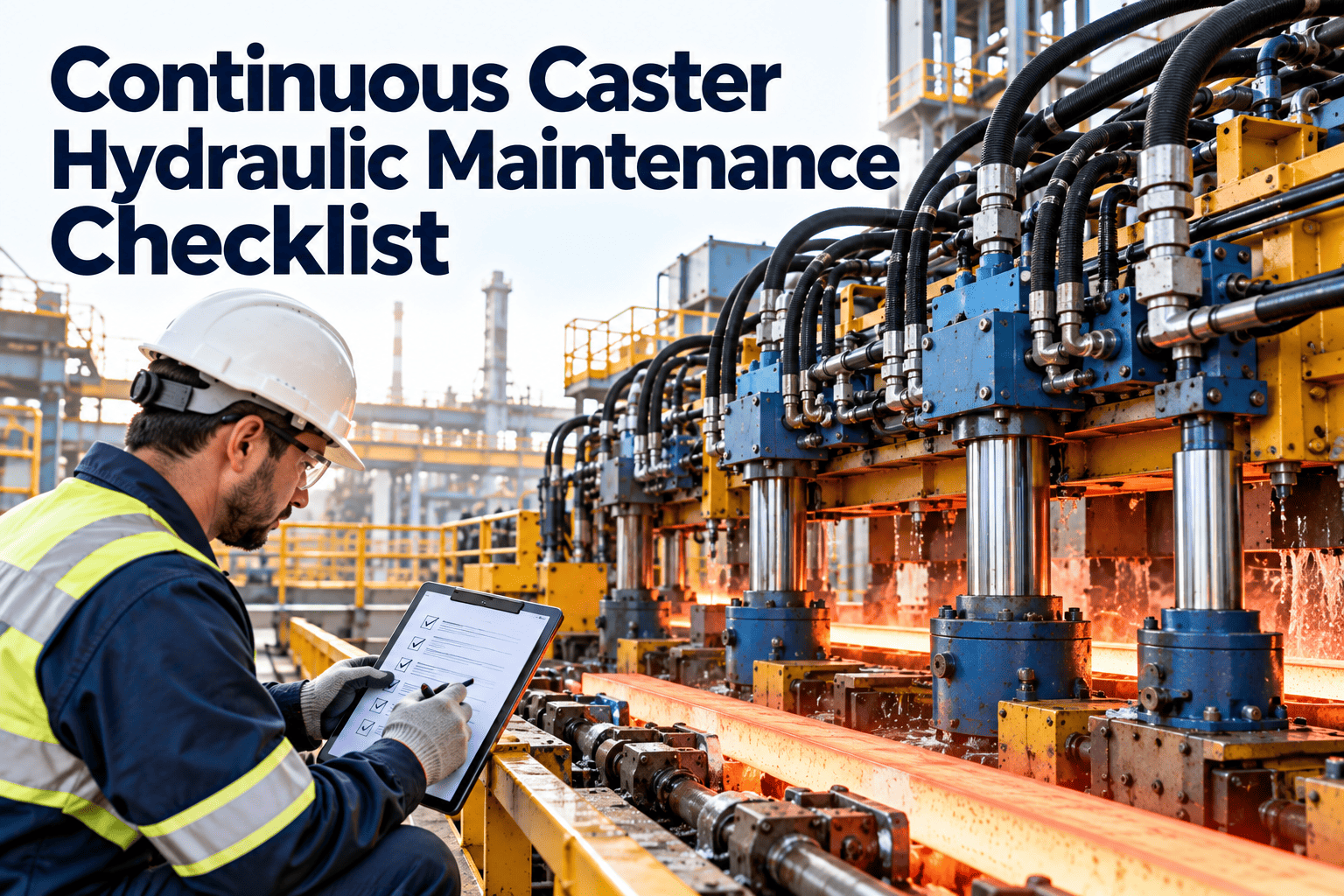
Read More
On a continuous caster, hydraulics do the work nobody notices until it stops. They oscillate the mould, clamp the segments, set the roll gap, lift the tundish and swing the ladle turret over the casting floor. When...
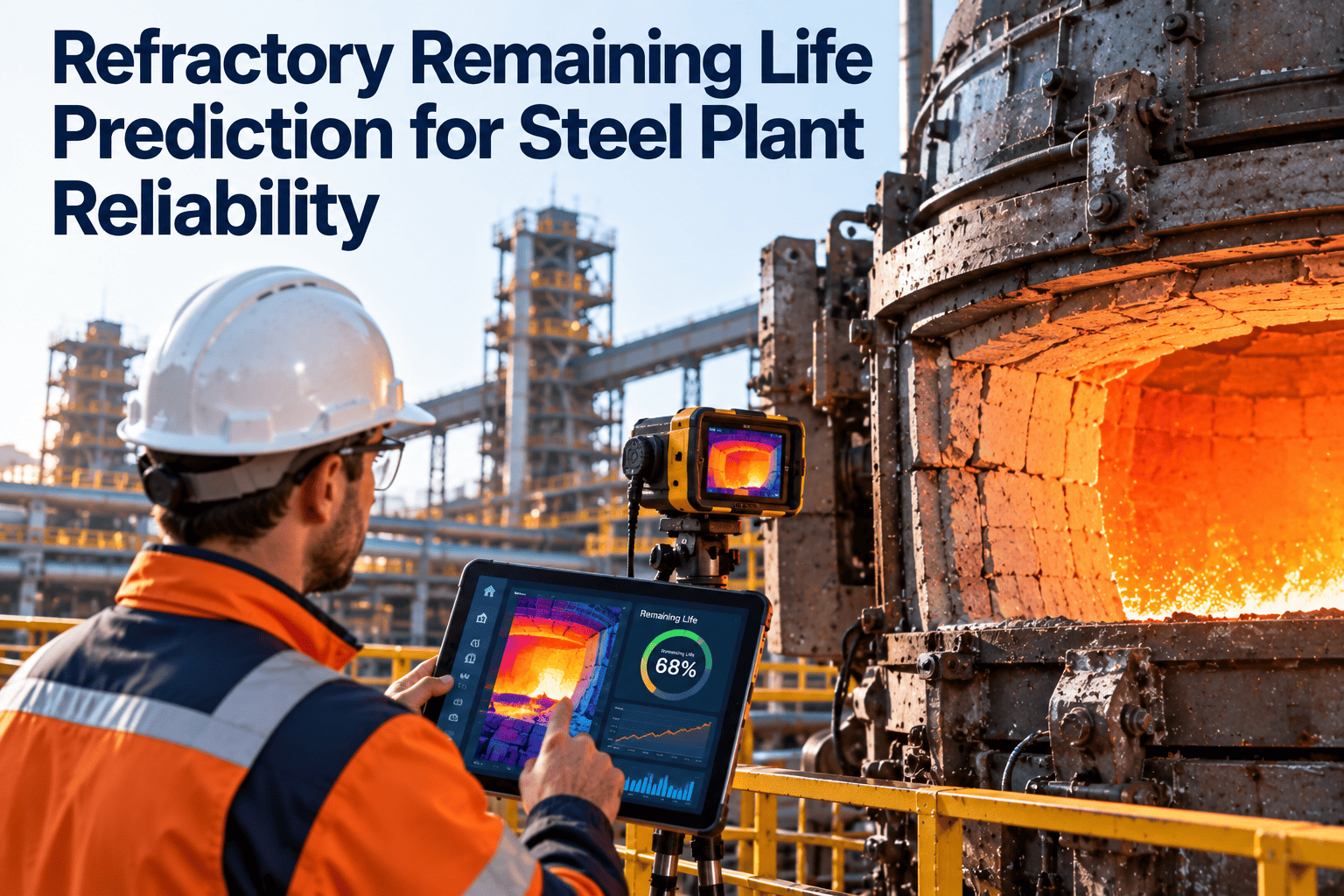
Read More
Knowing how a refractory lining is wearing is only half the job — the harder question is knowing how many heats it has left before it crosses a safety threshold, and being confident enough in that number to...
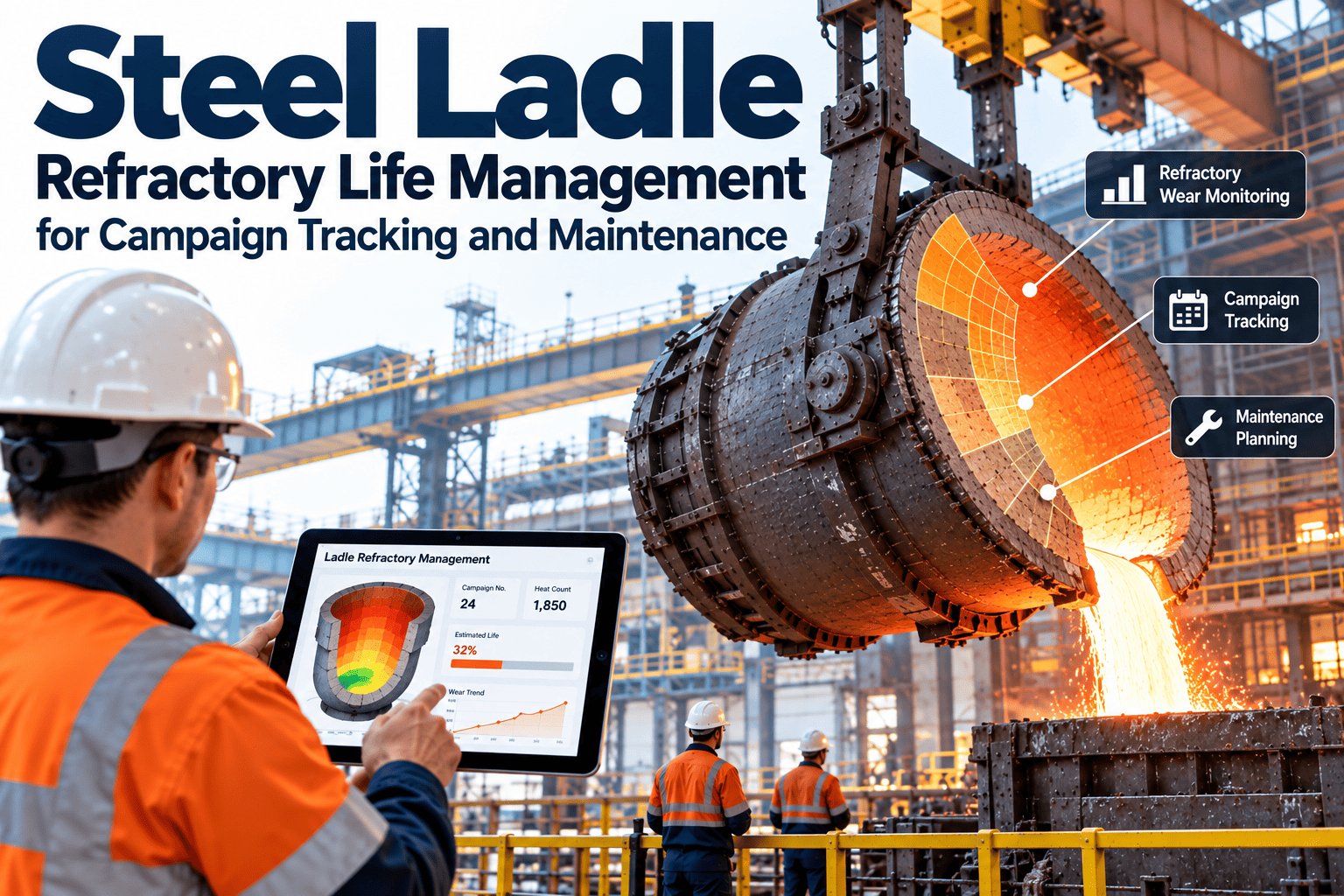
Read More
A steel ladle is not one refractory lining wearing down at one rate — it is a stack of zones, each eroding for a different reason and on a different schedule, which is exactly why a whiteboard with a single heat...
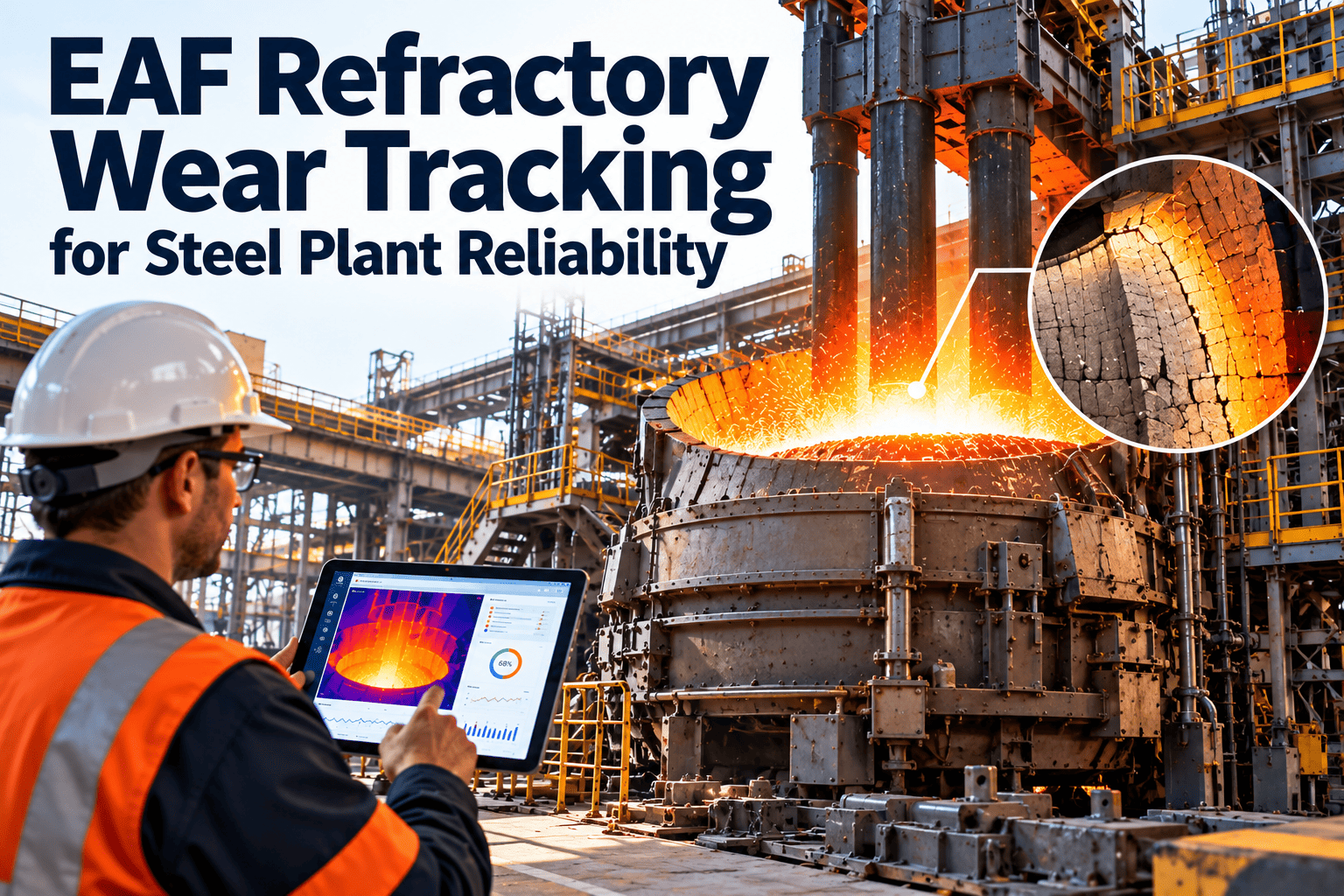
Read More
An electric arc furnace lining does not wear evenly. The slag line takes chemical attack from molten slag at roughly 1,600°C plus mechanical erosion from bath agitation, while the hearth and roof degrade on...
Read More
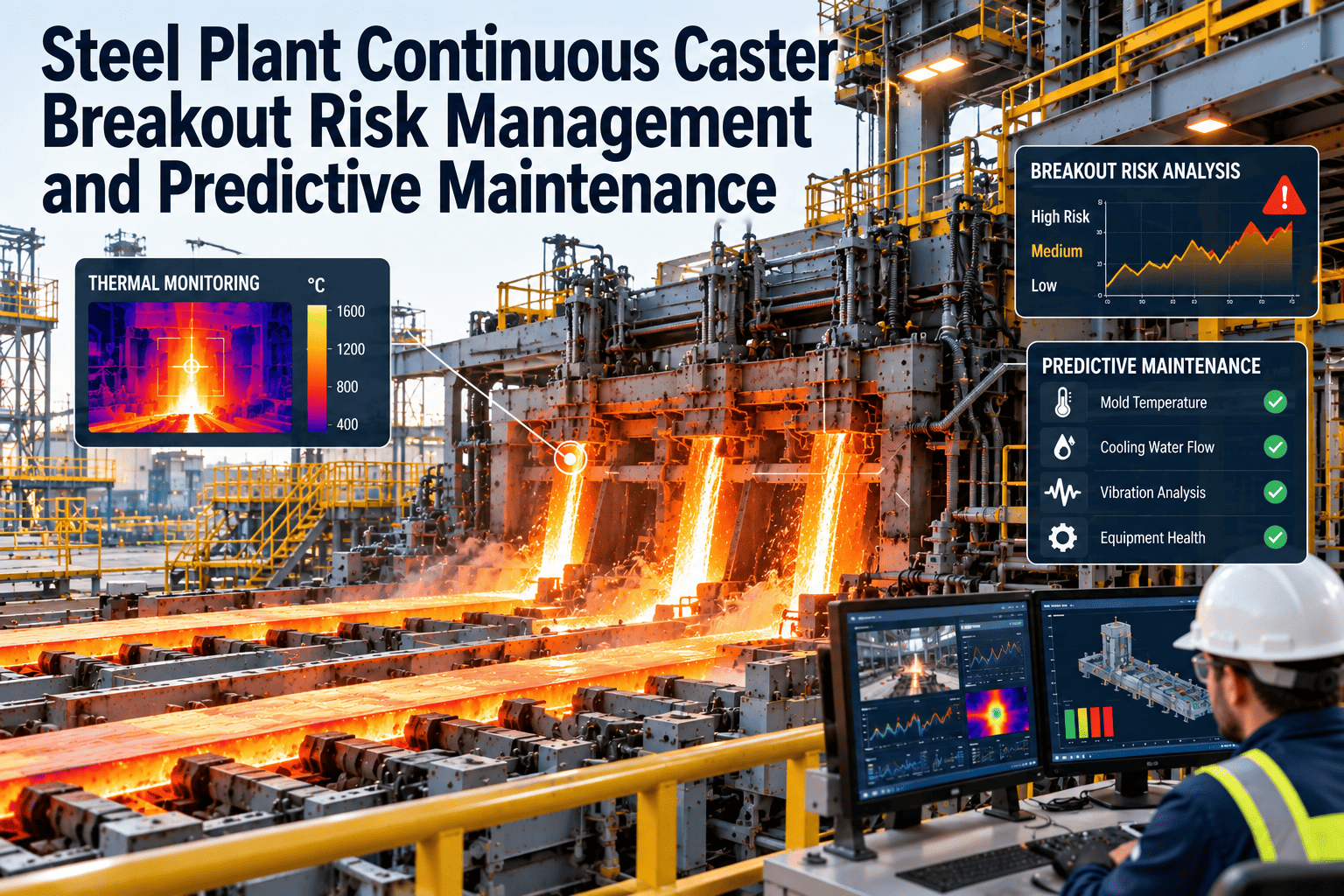
A breakout at the continuous caster is the one failure mode every melt shop plans its maintenance calendar around, because when the solidifying shell tears and liquid steel escapes the mold or strand, the line can...
Read More
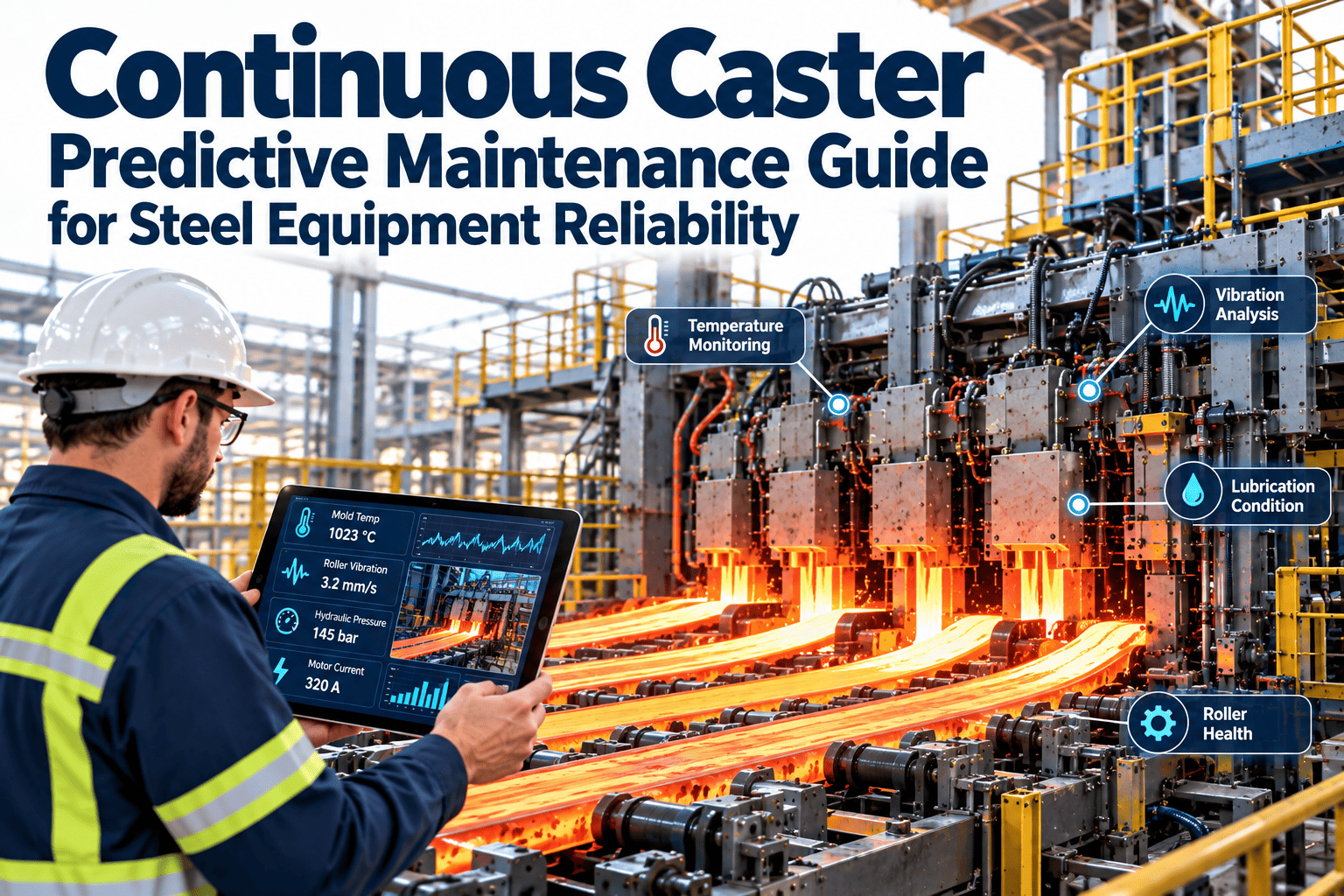
A continuous caster runs five interdependent systems at once — the copper mold, the segment rolls guiding the solidifying strand, the secondary cooling sprays, the oscillator drive, and the hydraulics that hold...
Read More
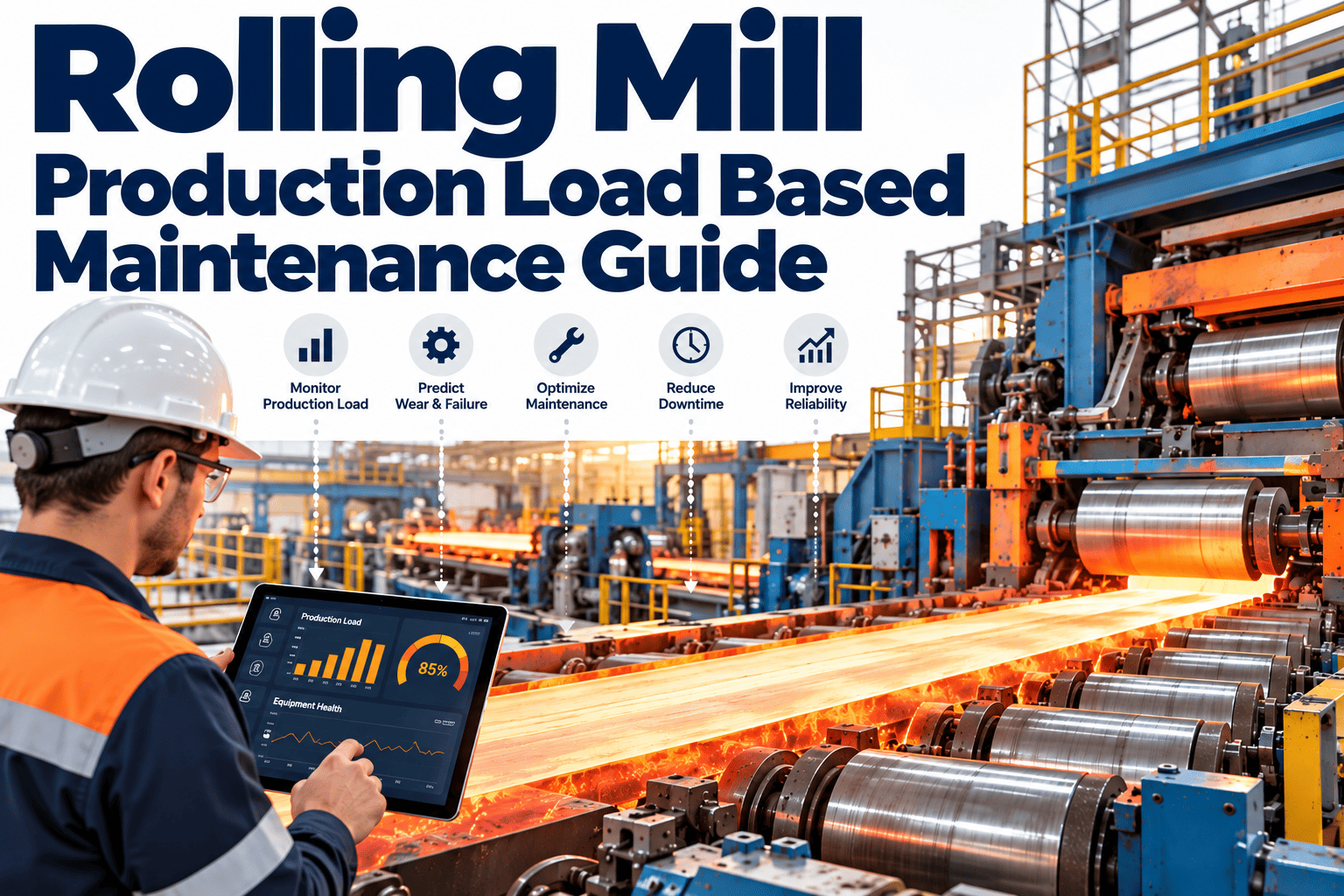
Most rolling mills still schedule bearing changes, gearbox oil drains and roll changes on a fixed calendar, even though the same interval sees wildly different wear depending on whether the mill spent that month...
Read More
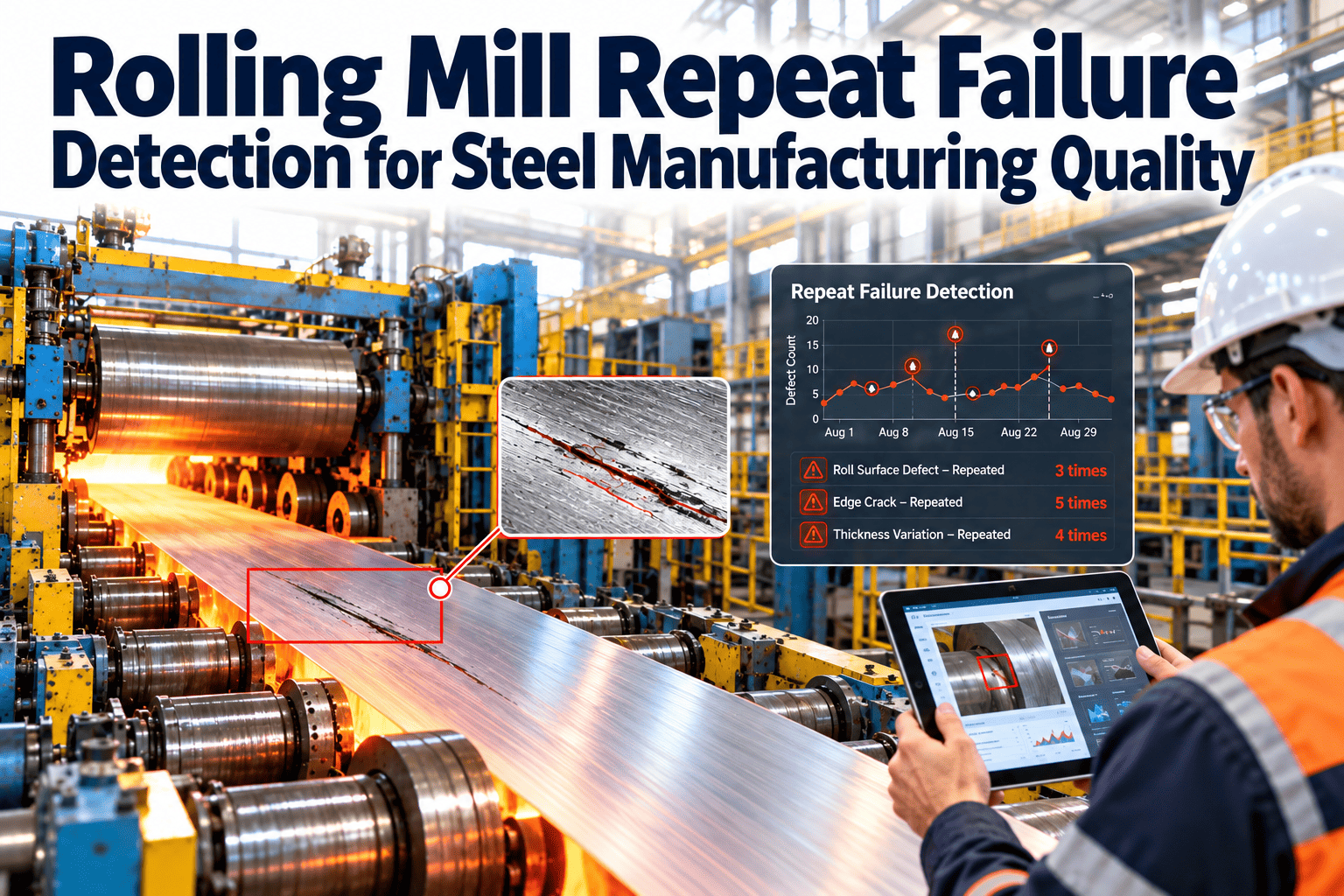
A hot strip mill can log the same gearbox trip, the same intermediate-stand bearing seizure, or the same coupling failure three or four times in a single year without anyone in the maintenance department ever...
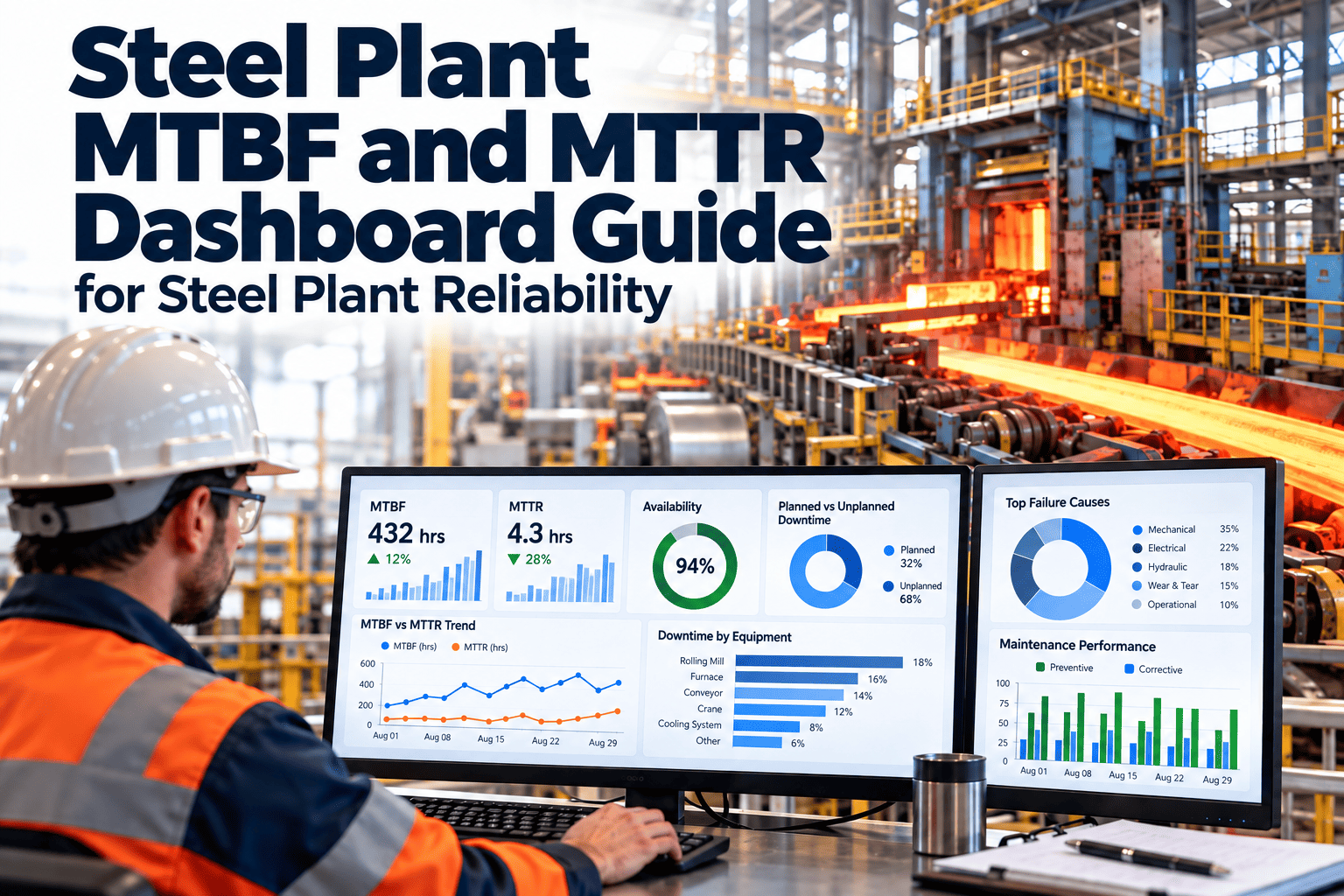
Read More
Most maintenance teams can tell you how many work orders closed last month, but far fewer can tell you which asset is quietly consuming the most repair hours relative to how often it runs. Mean time between...
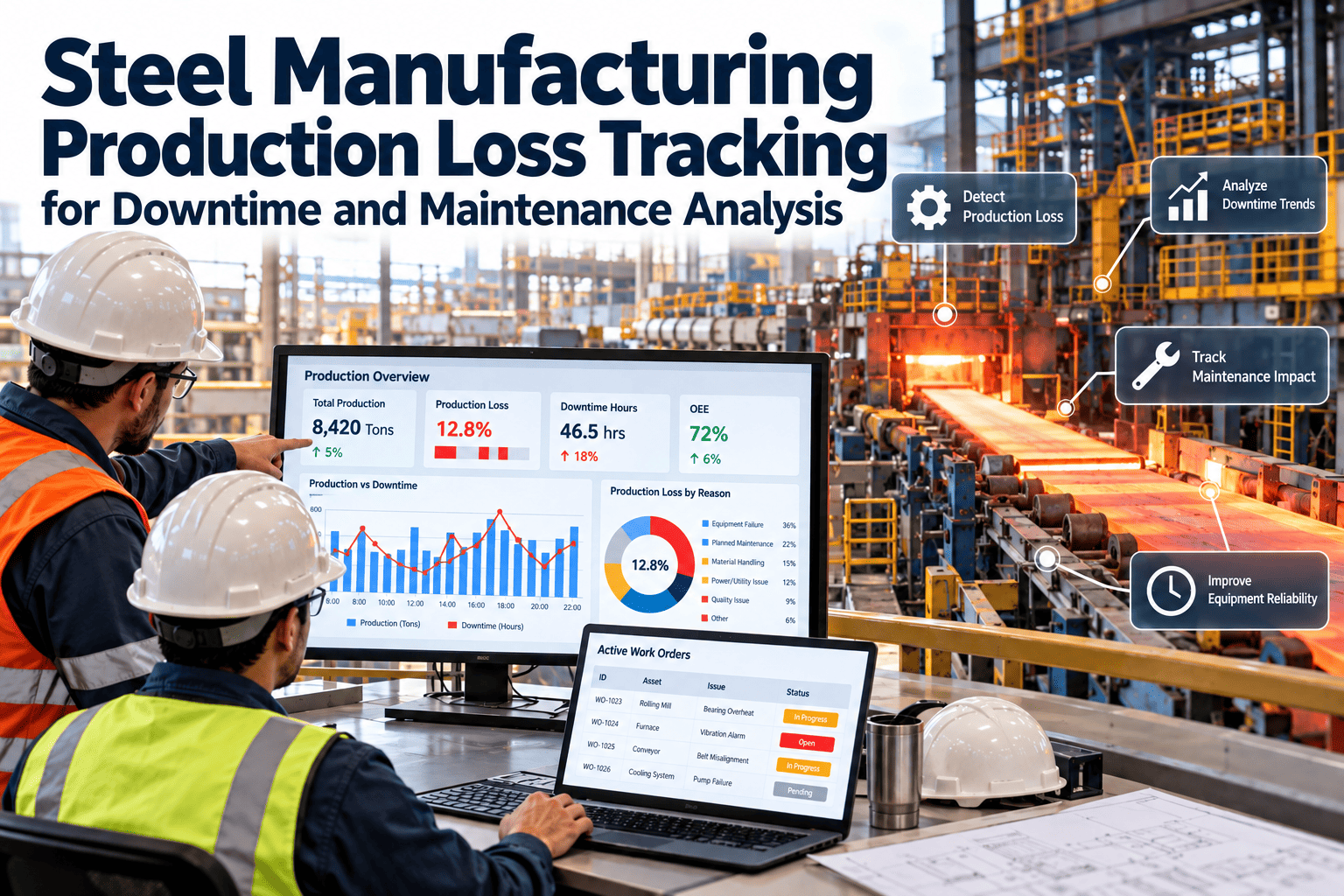
Read More
Ask a maintenance manager how much production a rolling mill lost to unplanned downtime last month, and you will usually get two different numbers from two different people. The shift log says one duration, the ERP...
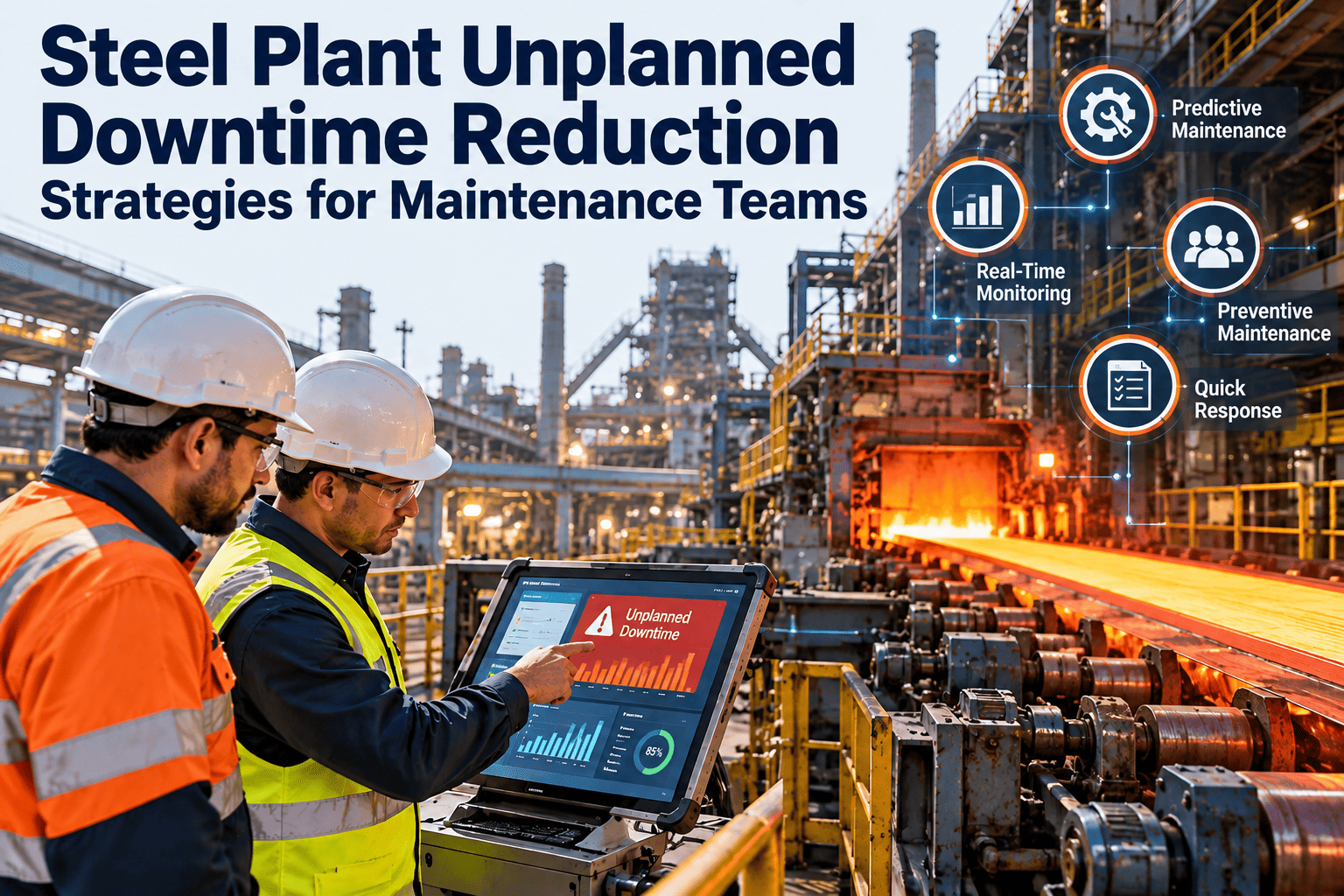
Read More
An hour of unplanned downtime on a hot strip mill or a continuous caster does not just cost the repair — it costs the tonnage that line would have produced, the scrap generated during restart, and the schedule...
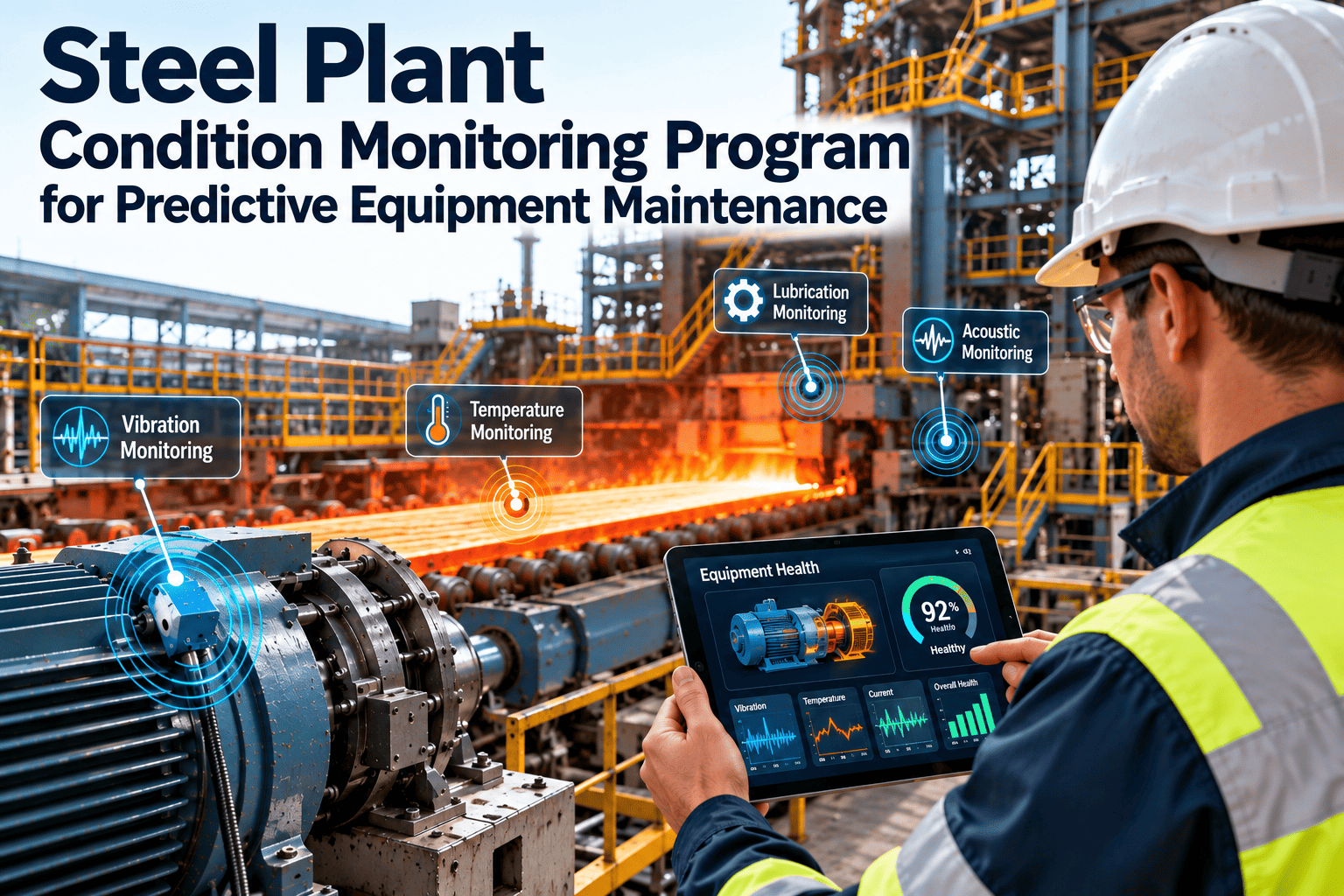
Read More
A bearing on a rolling mill drive doesn't fail without warning — it announces itself weeks in advance through a change in vibration signature, a rise in operating temperature, or metal particles accumulating in the...
Read More
Steel plants run on a rhythm that no calendar can predict — a ladle refractory that lasts 90 heats one week and 60 the next, a continuous caster mold that wears with tonnage rather than time, a work roll that...
Read More
Steel mills run on a small number of extraordinarily expensive, highly specialized assets — furnaces, continuous casters, rolling stands, overhead cranes, conveyor systems — and losing even one of them mid-shift...
Read More
A blast furnace does not run on a calendar the way an office HVAC unit does, and a rolling mill drive does not fail the way a forklift does. Steel production runs on heat counts, tonnage, refractory campaigns, and...

Read More
Reliability teams in steel plants face a constant question when planning maintenance strategy: should a bearing, gearbox, or hydraulic system be inspected on a fixed schedule, or should it be monitored continuously...
Read More
Compressed air is often called the fourth utility in a steel plant, and it is also the one most plants monitor the least — a single leaking quarter-inch fitting can waste enough air to run a small motor...
Read More
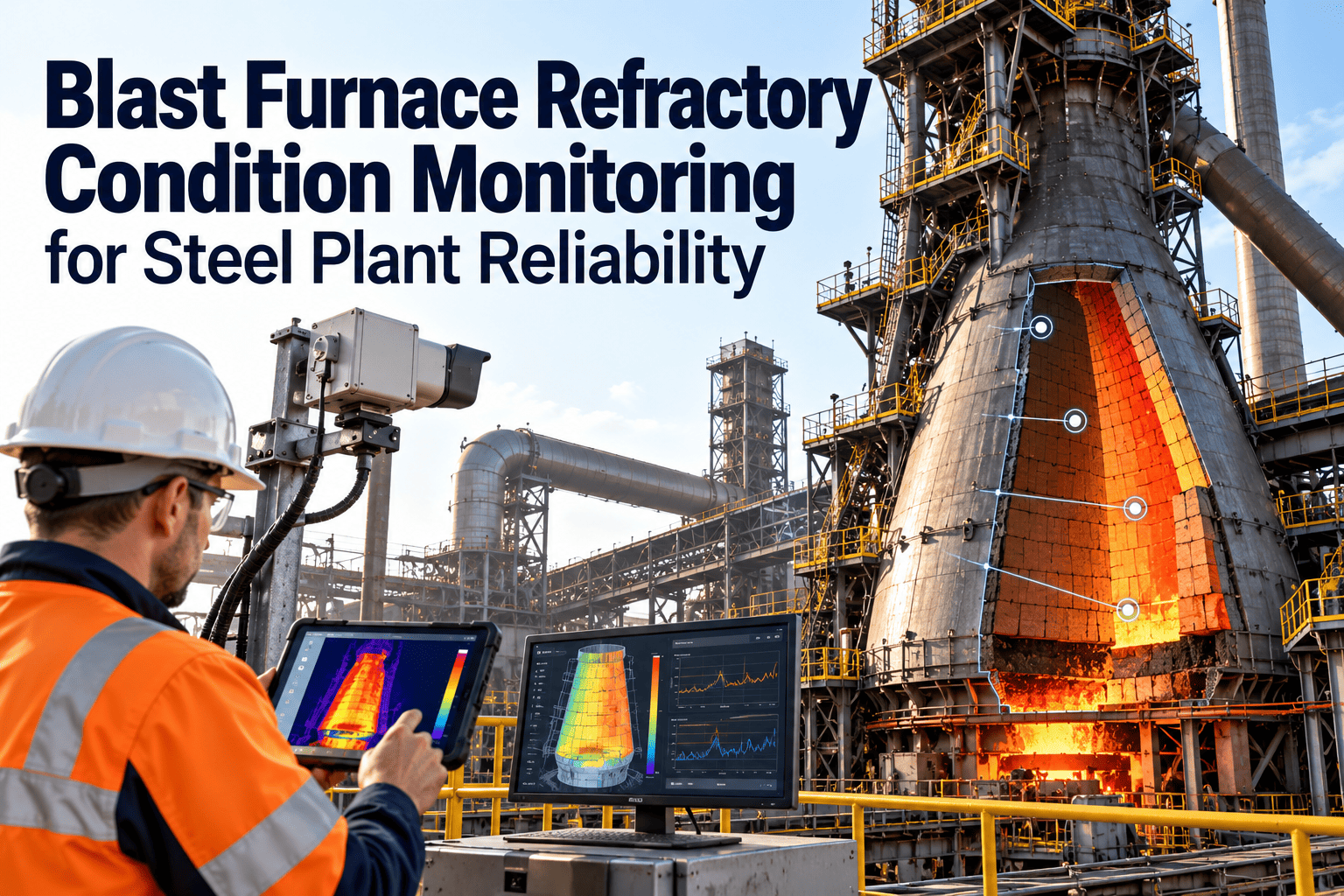
A blast furnace campaign can run for fifteen years or more, and the refractory lining protecting the shell is the single factor that determines whether that campaign ends on schedule or ends early with an emergency...
Read More
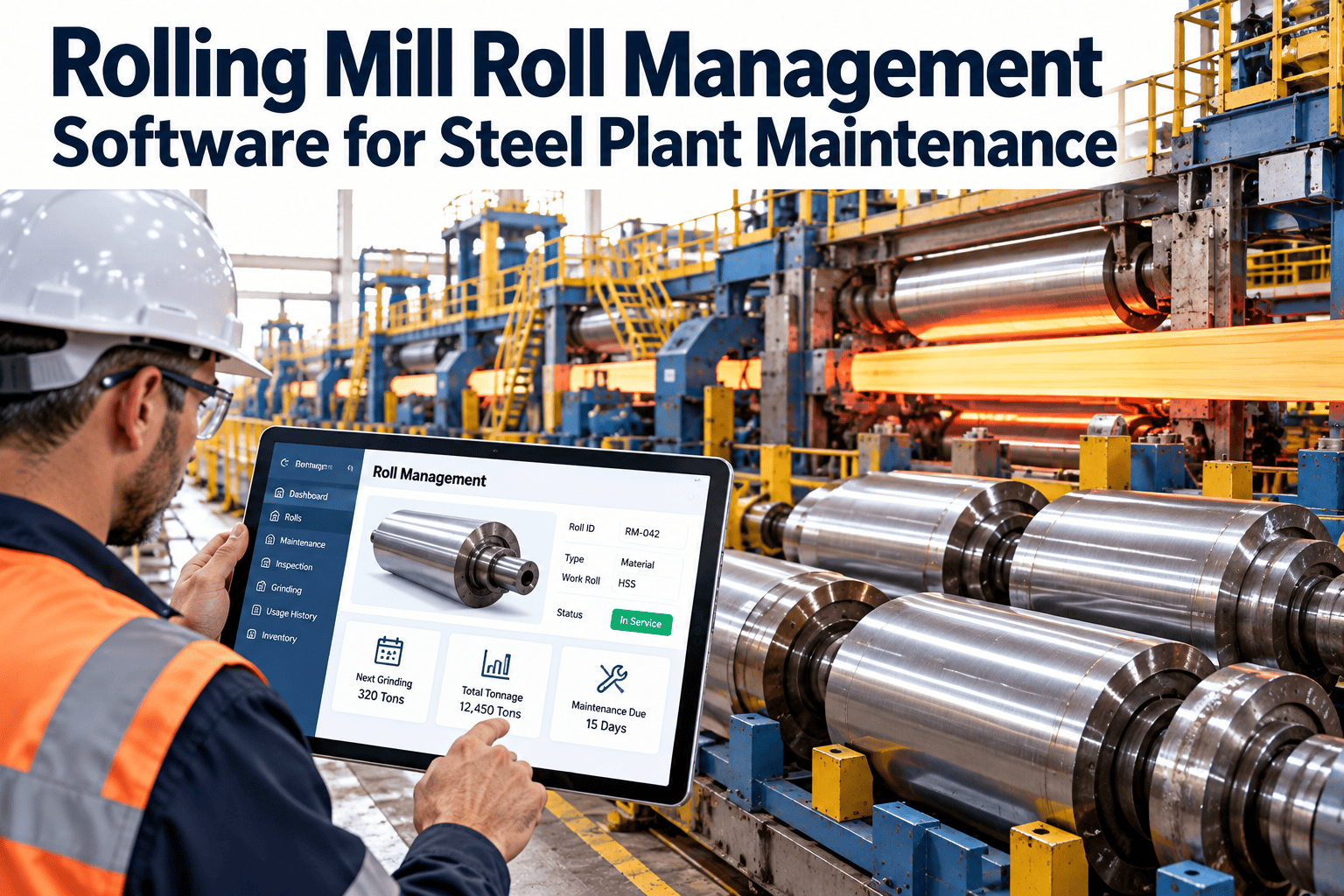
A single work roll on a hot strip mill can cost more than most of the machines around it, and it wears out on a schedule measured in tonnes rolled, not calendar days. Losing track of which roll is in which stand,...
Read More
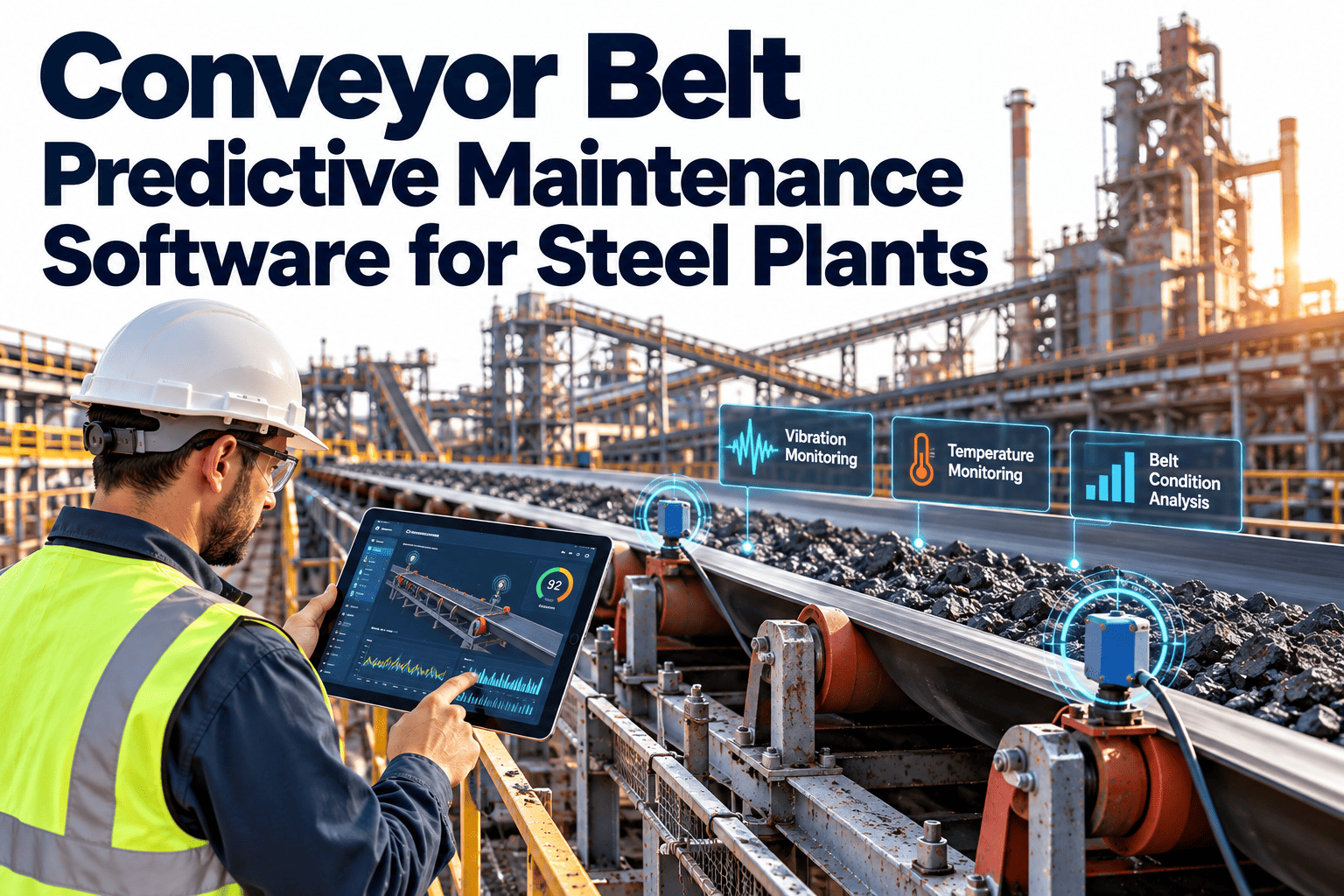
Material handling conveyors move raw ore, coke, sinter, and scrap through a steel plant around the clock, and when one line goes down, everything feeding the blast furnace or EAF behind it grinds to a halt within...
Read More
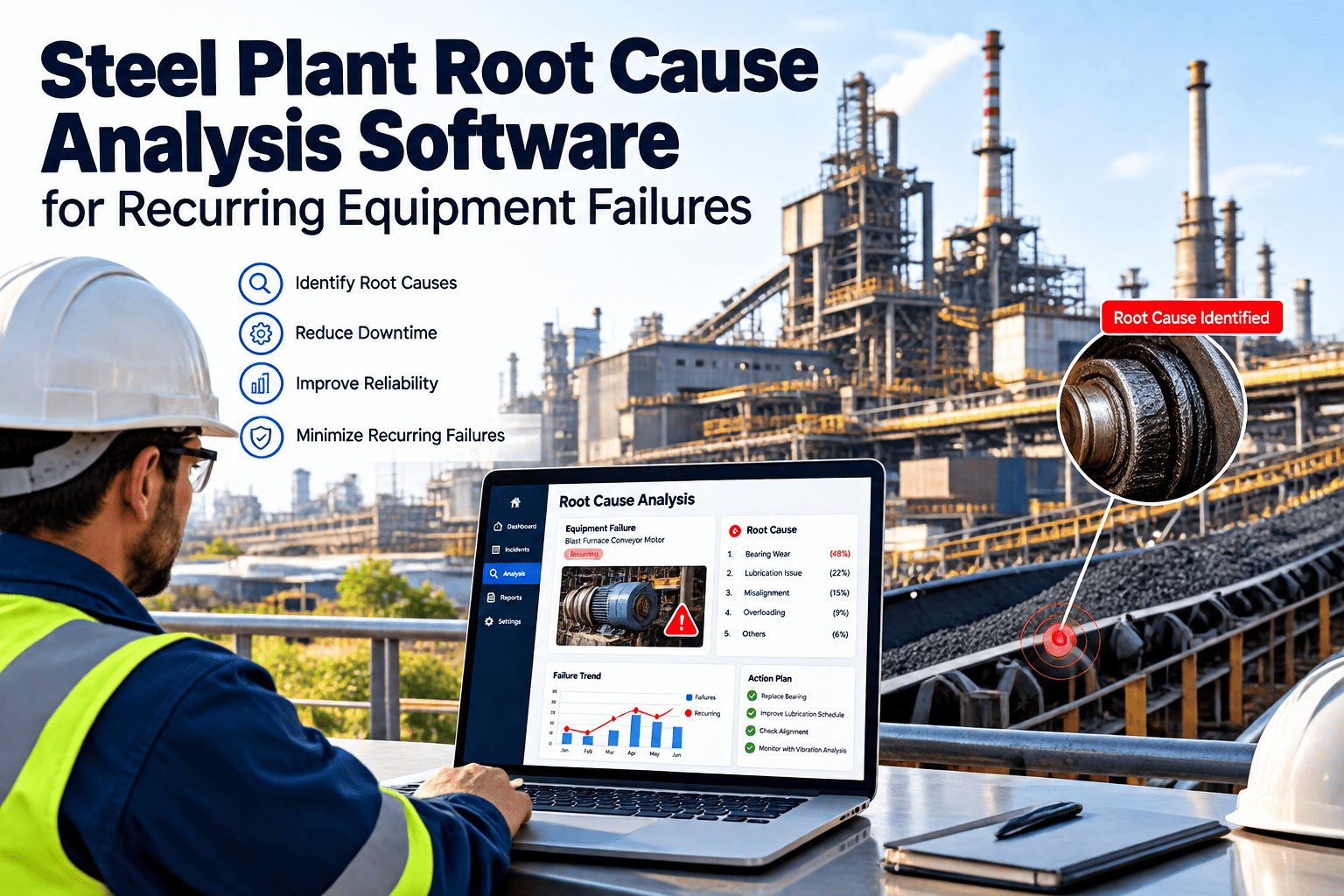
Steel plants lose more production to the same ten failures happening again and again than to anything truly unpredictable — a coupling that fails every eleven weeks, a hydraulic seal that weeps on the same shear...
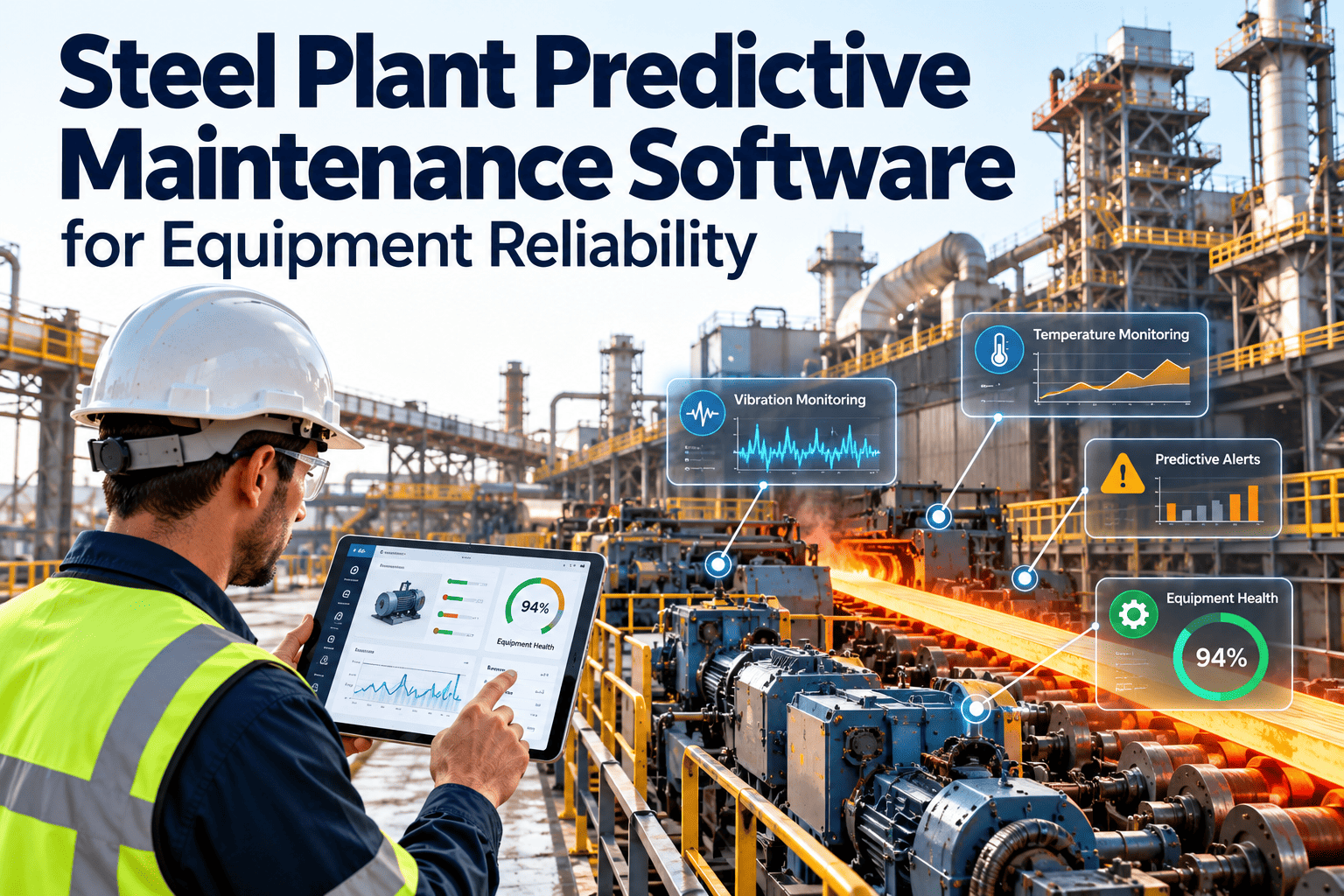
Read More
Integrated steel plants run some of the most punishing rotating and thermal equipment in industry — reheat furnaces pushing past 1,200 degrees C, continuous casters cycling molten steel every few minutes, and...
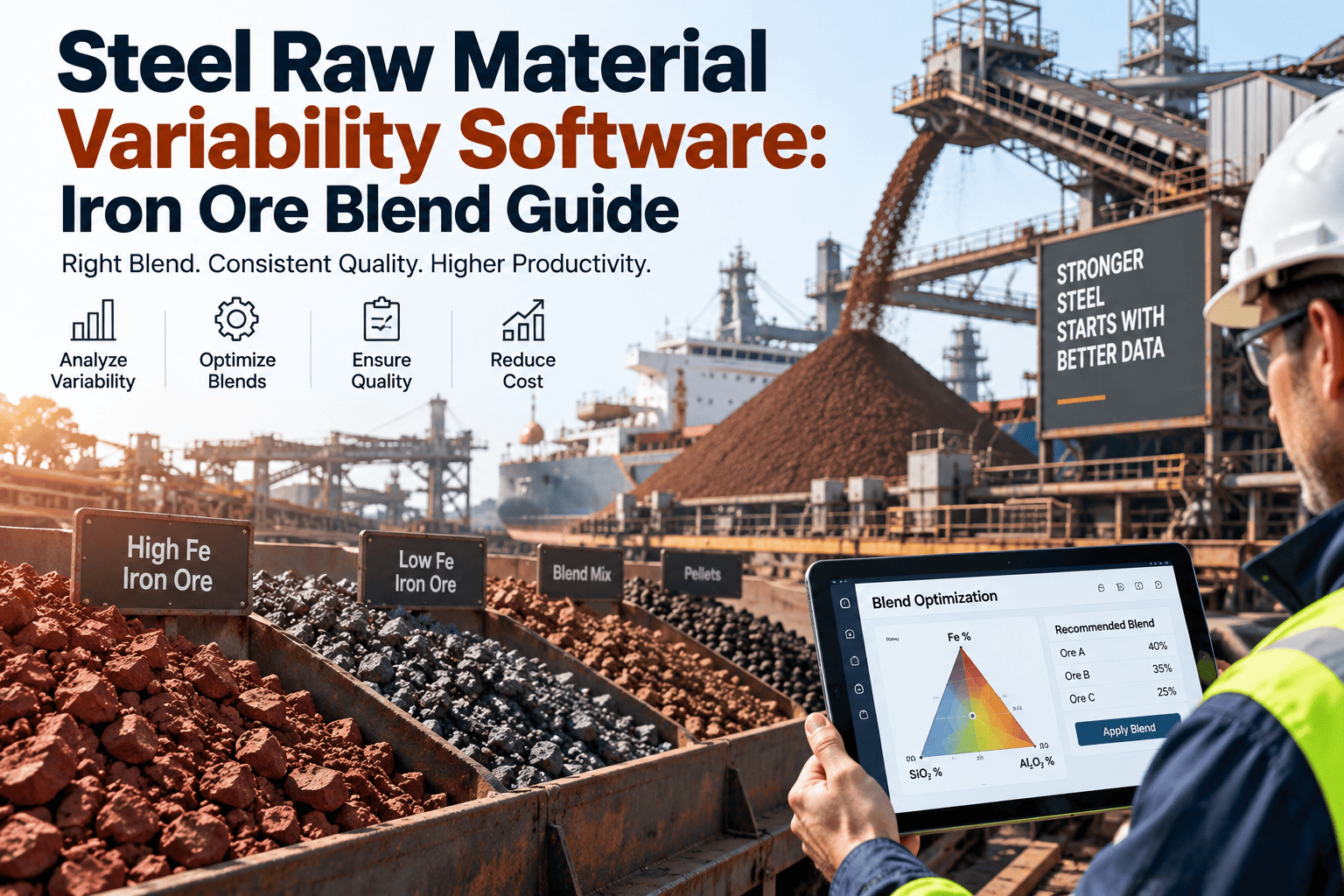
Read More
Iron ore rarely arrives in the same condition twice. Parcels from different mines, ports, and stockpile positions vary in Fe content, silica, alumina, moisture, and size, and every swing that reaches the sinter...
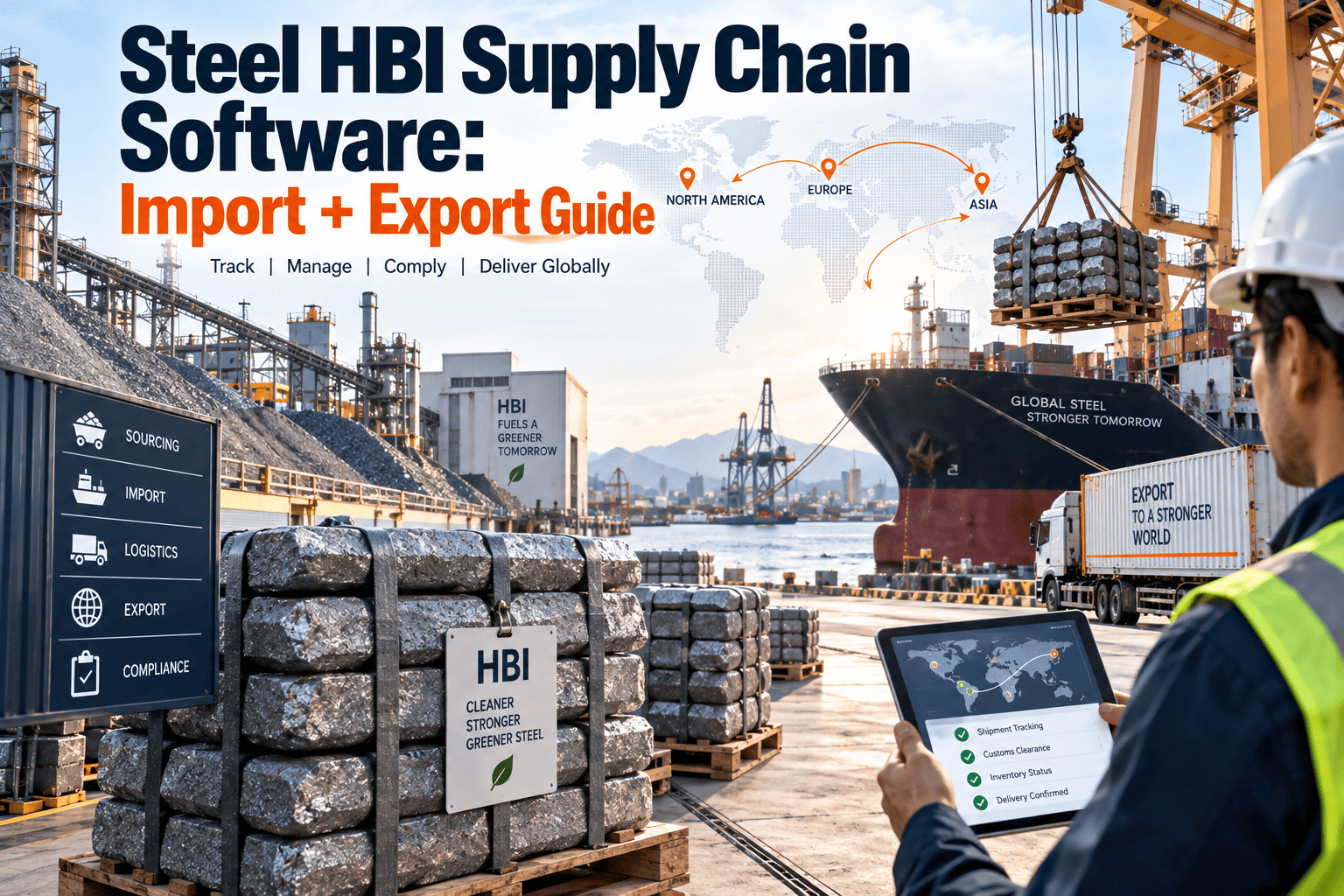
Read More
Hot briquetted iron moves through a longer, more fragile chain than most raw materials feeding an EAF melt shop — ocean freight, port handling, moisture exposure, and a certificate of analysis that has to match...
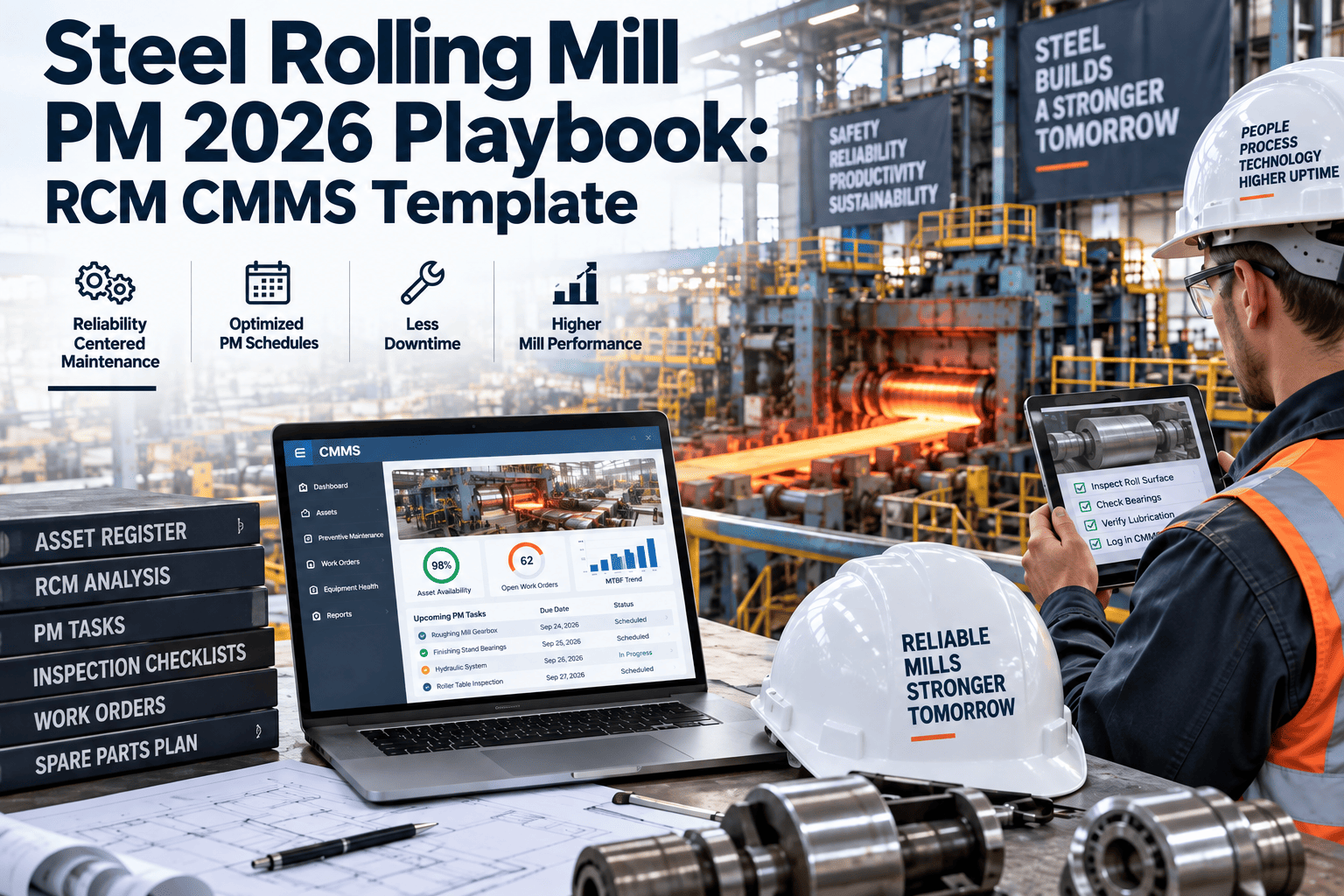
Read More
A rolling mill PM program only works when technicians know exactly what to check, what a good result looks like, and what to do when a result is bad. This checklist playbook gives you that for the five systems...
Read More
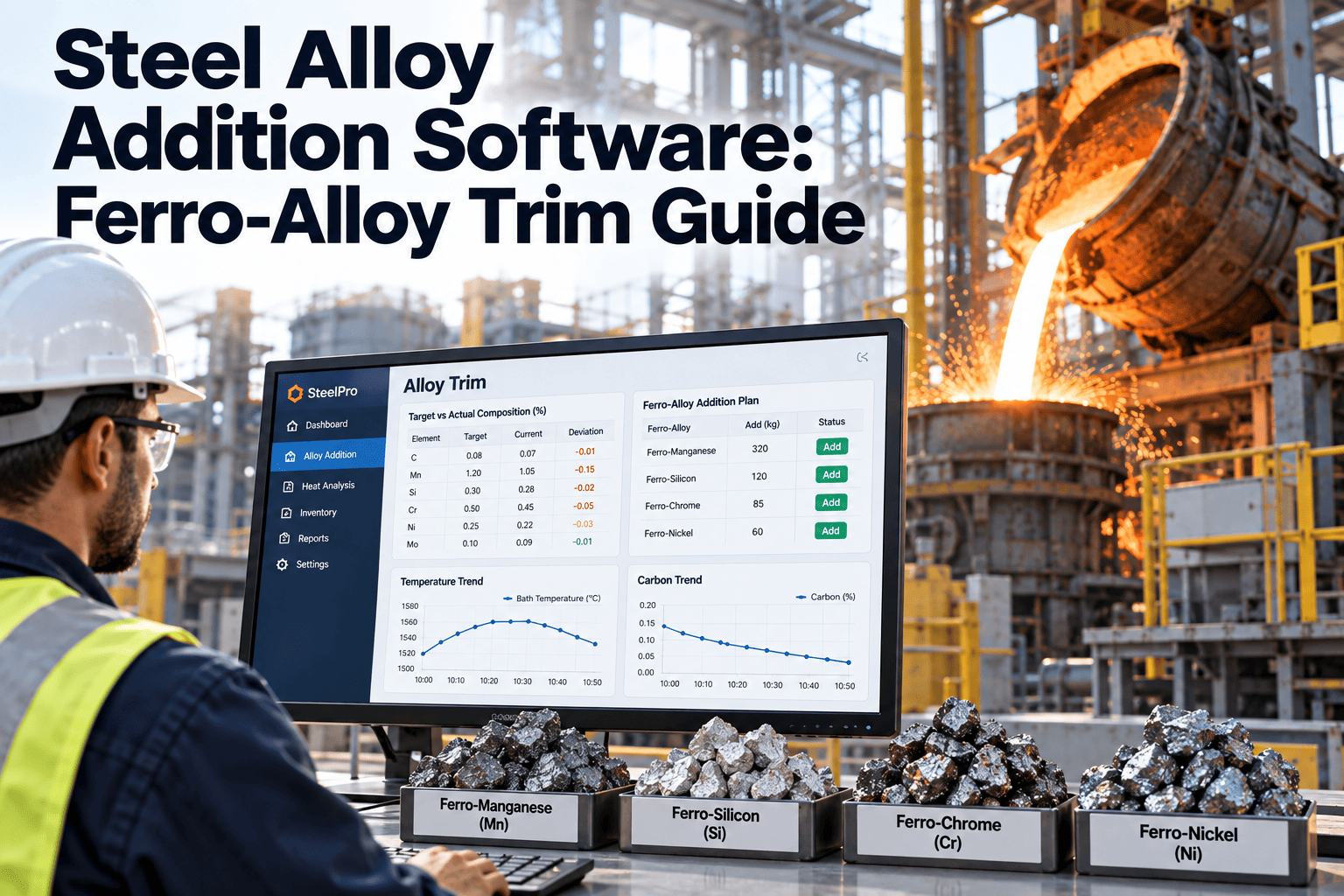
Ferro-alloy trim additions are where steelmaking chemistry meets steelmaking cost, and the gap between the two is usually measured in silence rather than alarms. A ladle that gets a slightly heavy ferro-manganese...
Read More
Rolling mills run on tight margin math — a few percentage points of yield, a few hours of uptime, a few tenths of a millimeter of gauge tolerance separate a profitable coil from a downgraded one. When maintenance...
Read More
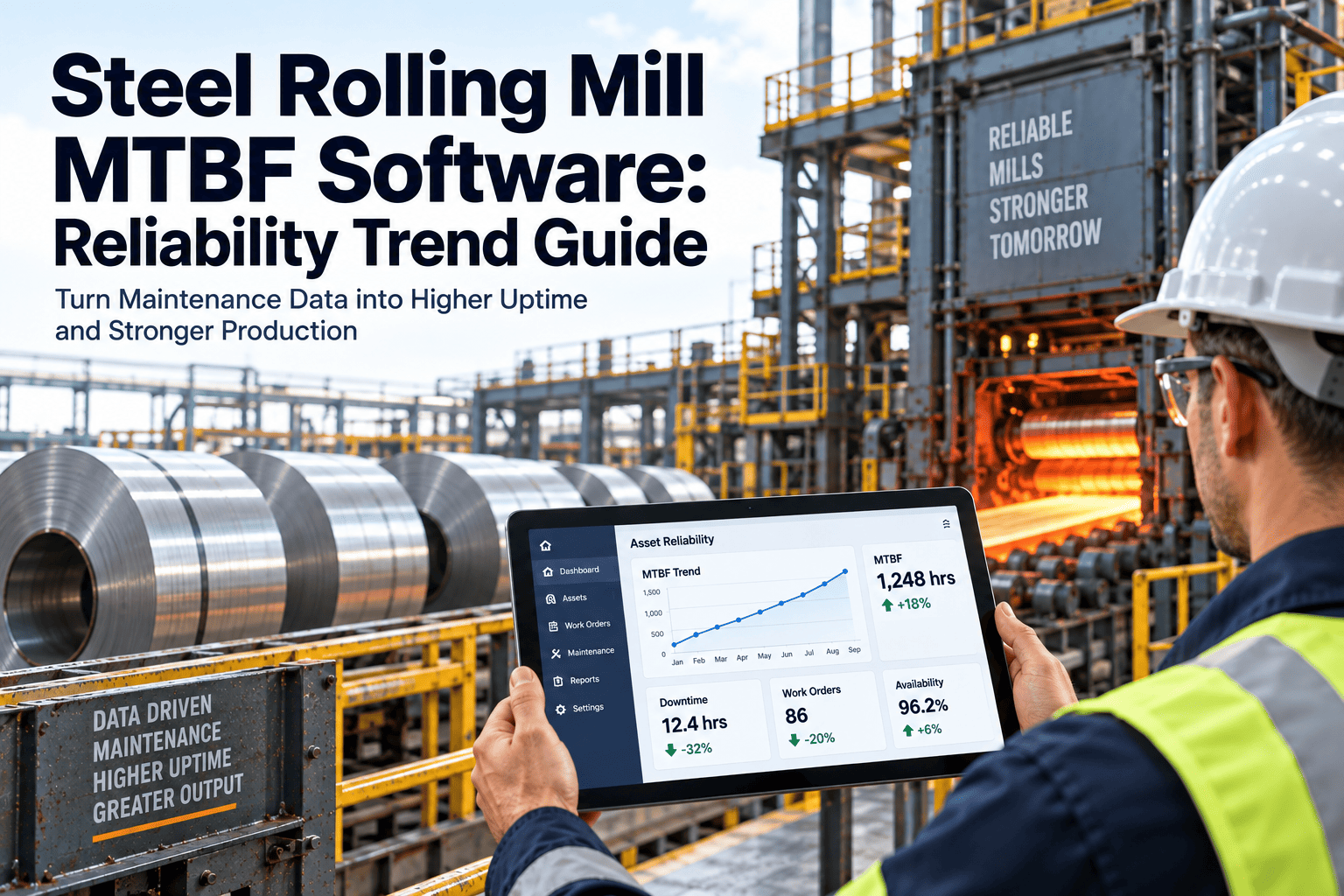
Mean time between failures is the single number that separates a rolling mill running to schedule from one bleeding tonnage to unplanned stands. Most mills still calculate it once a quarter in a spreadsheet, long...
Read More
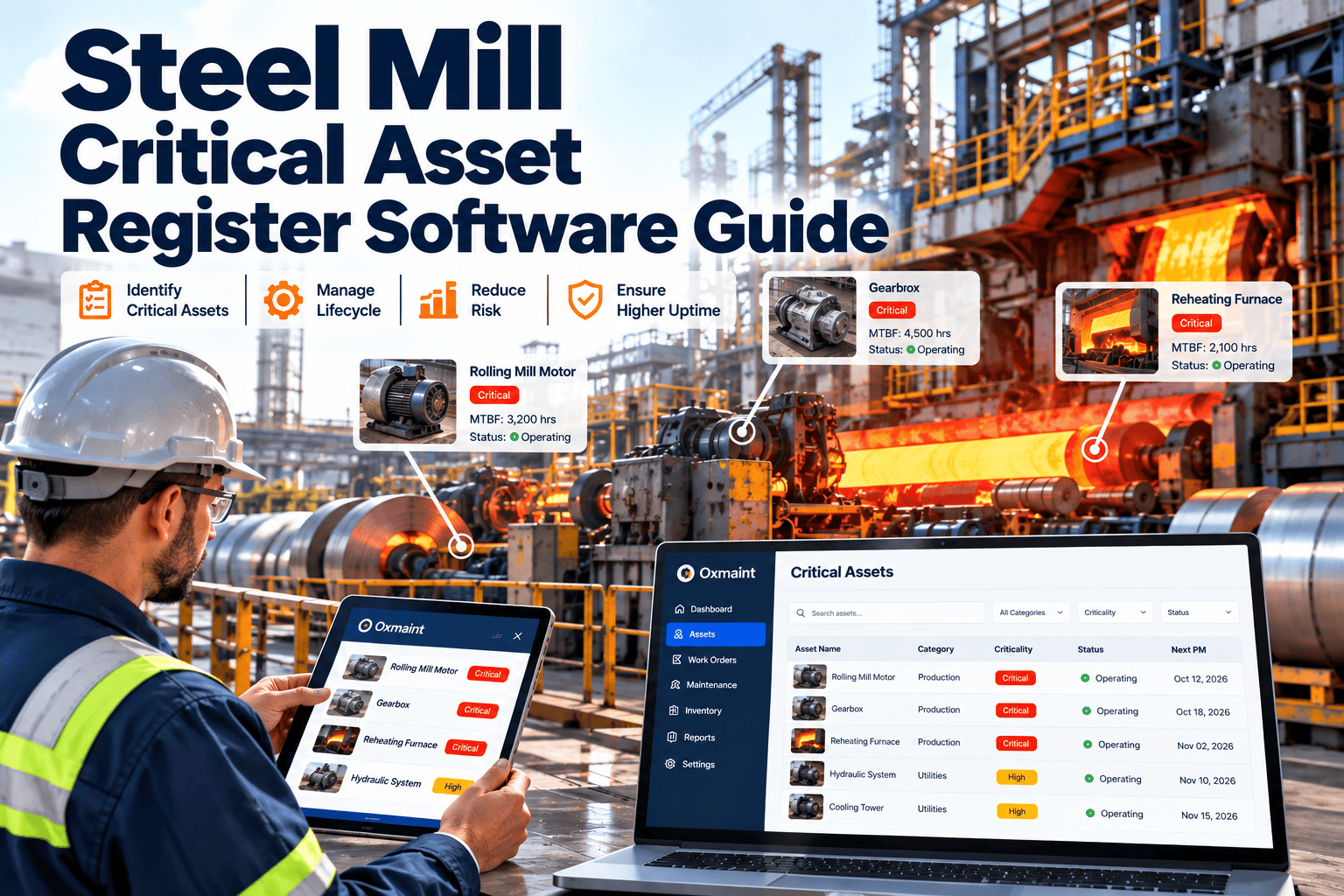
Every steel mill runs thousands of maintainable assets, but only a small share of them can stop a heat, break a cast sequence, or end a rolling campaign on their own. A critical asset register is the controlled...

Read More
Bar diameter control is the line item that decides whether a rebar heat passes ASTM A615 sectional weight requirements, whether a wire rod coil feeds cleanly through a downstream drawing die, or whether a...
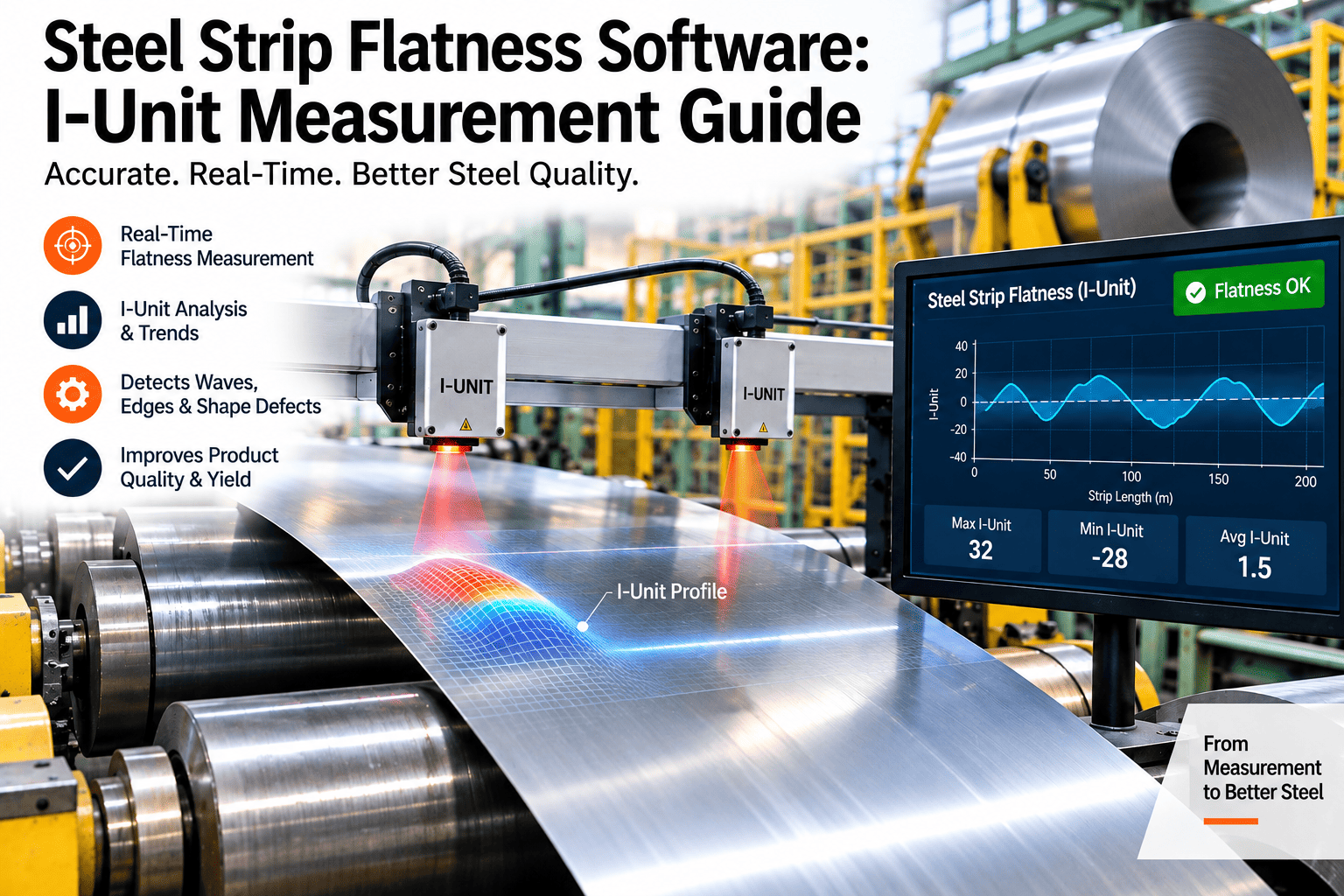
Read More
A coil can pass gauge, width, and surface inspection and still be rejected the moment it hits an automotive stamping press or an appliance panel line, because flatness is a defect that only becomes visible once...
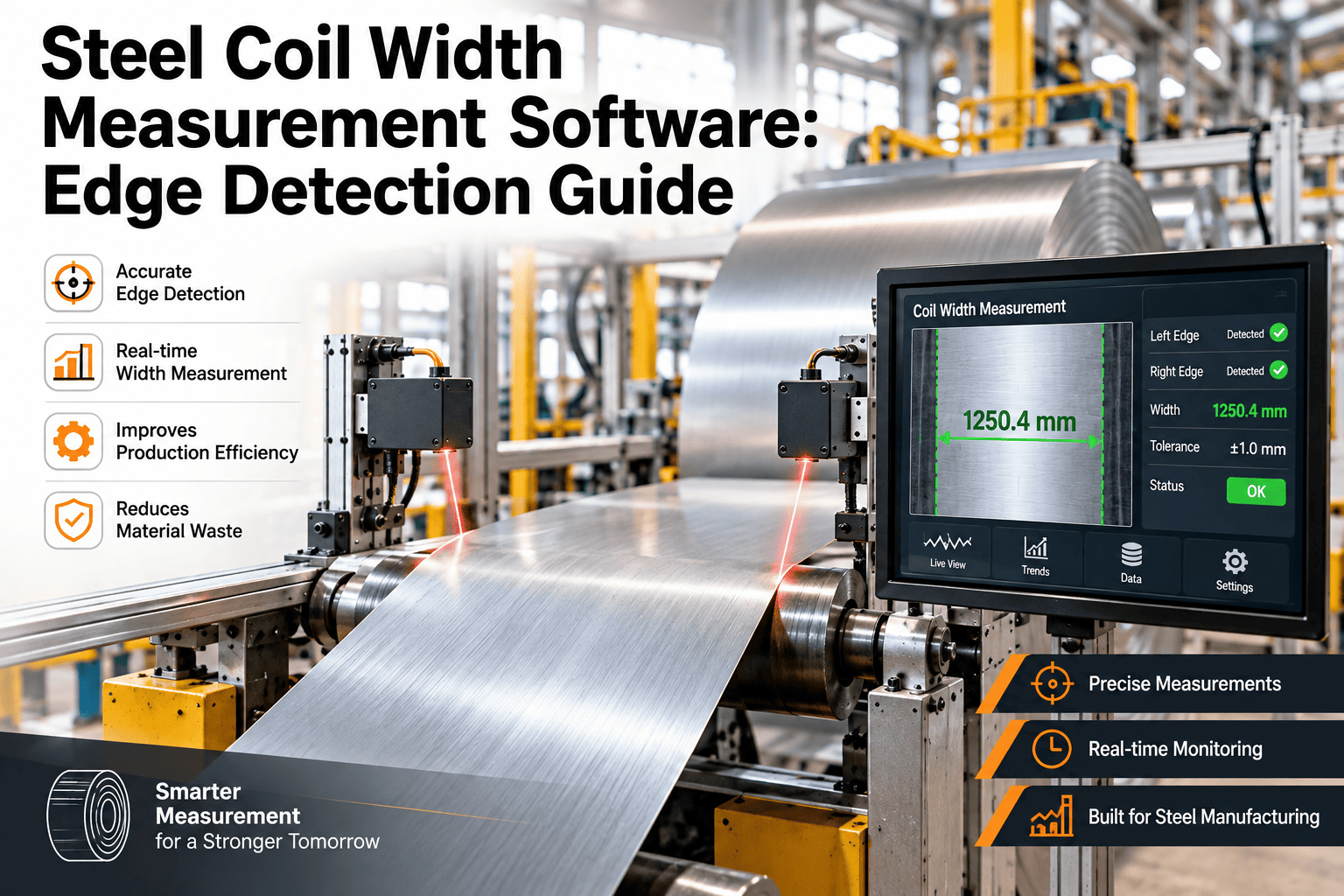
Read More
Coil width variance is a quiet quality problem until it isn't — a wide-coil automotive or appliance grade running a few millimeters out of tolerance doesn't trigger a visible defect on the line, it triggers a...
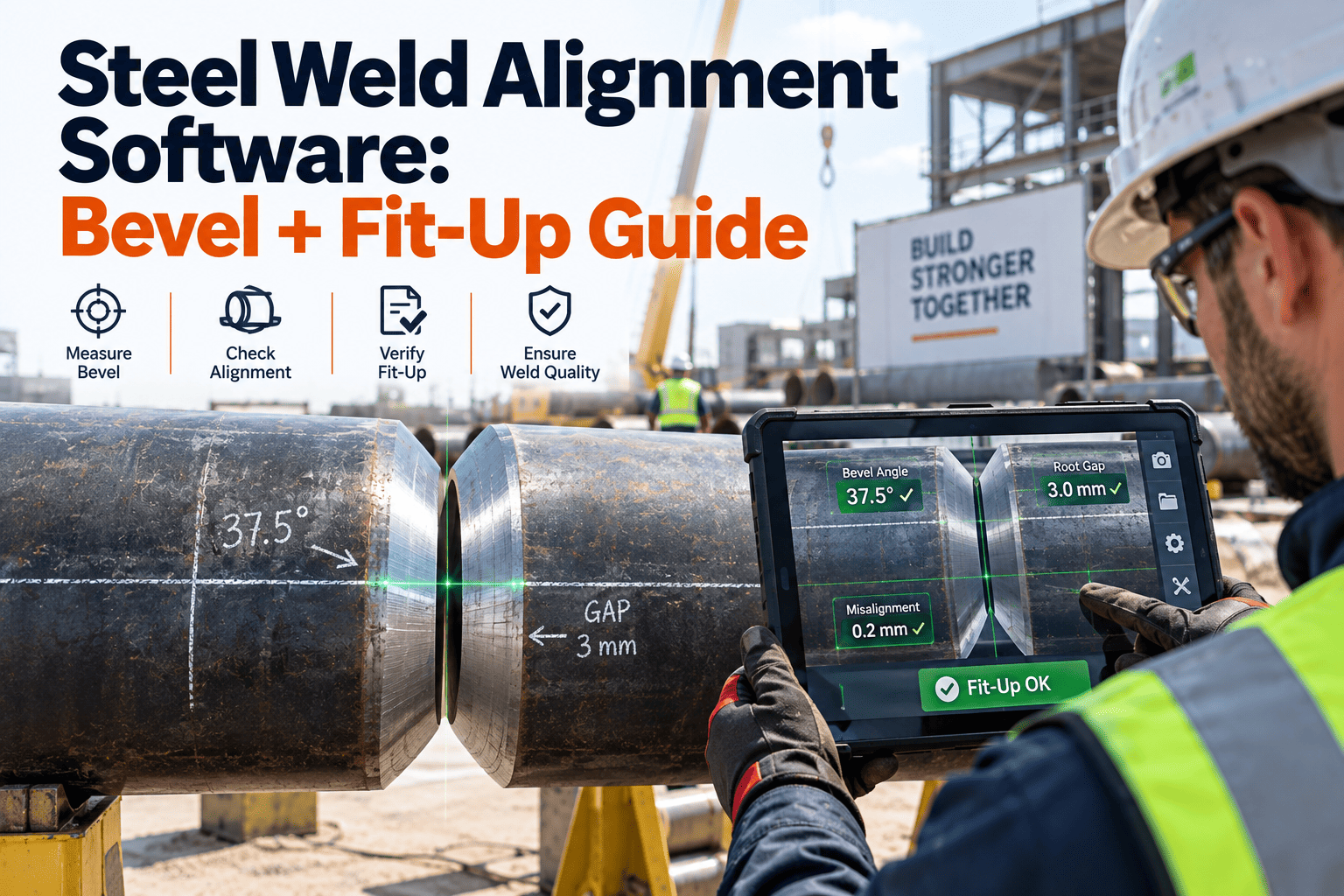
Read More
Every girth weld on a steel pipe spool is decided before the arc is ever struck. Bevel angle, root face, fit-up gap, and hi-lo offset set the geometry the root pass has to fill — and once a welder tacks a joint...
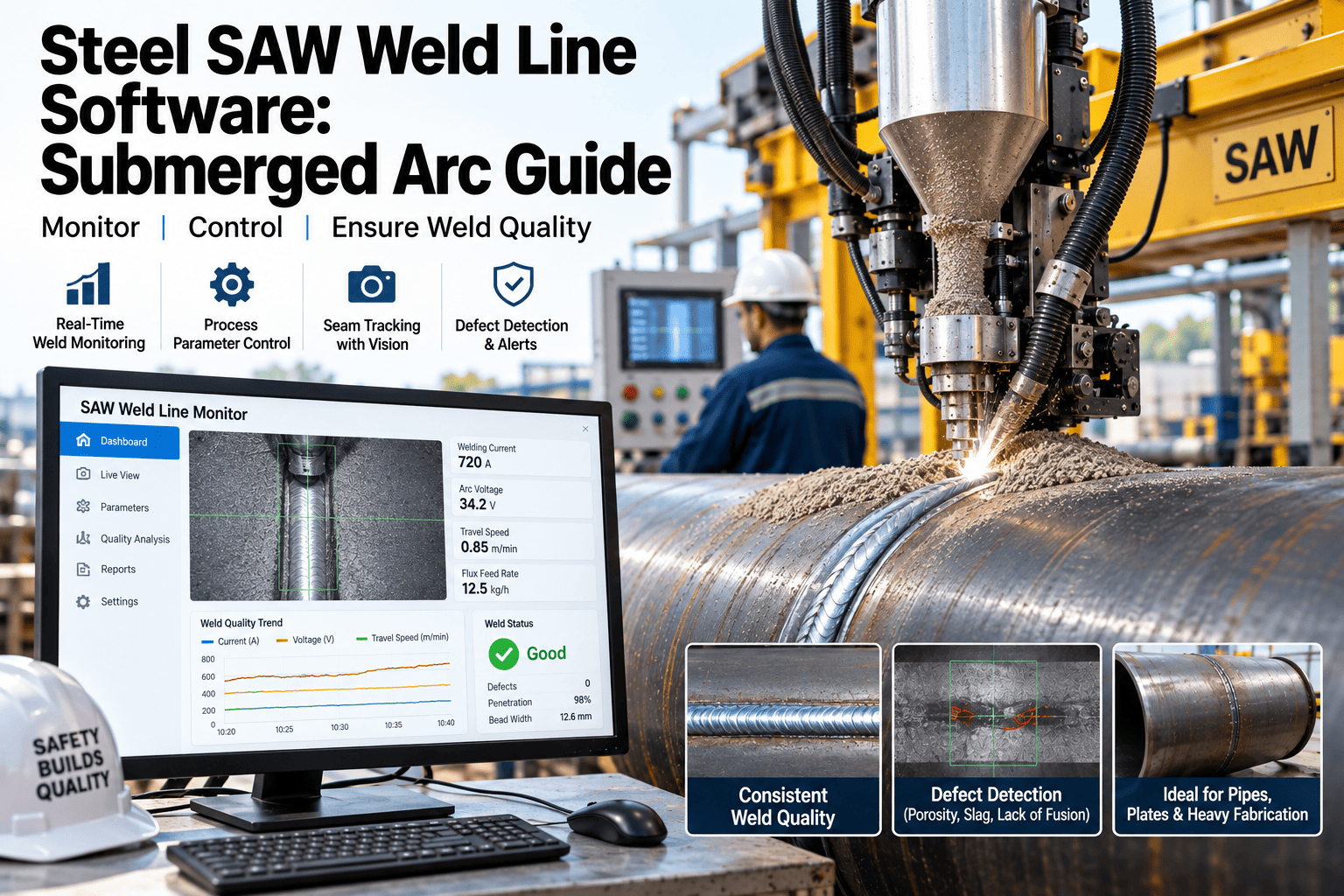
Read More
Submerged arc welding runs some of the highest-deposition, highest-consequence joints in a steel plant — longitudinal seams on LSAW line pipe, girth welds on large-diameter pipe, and structural plate seams where a...
Read More
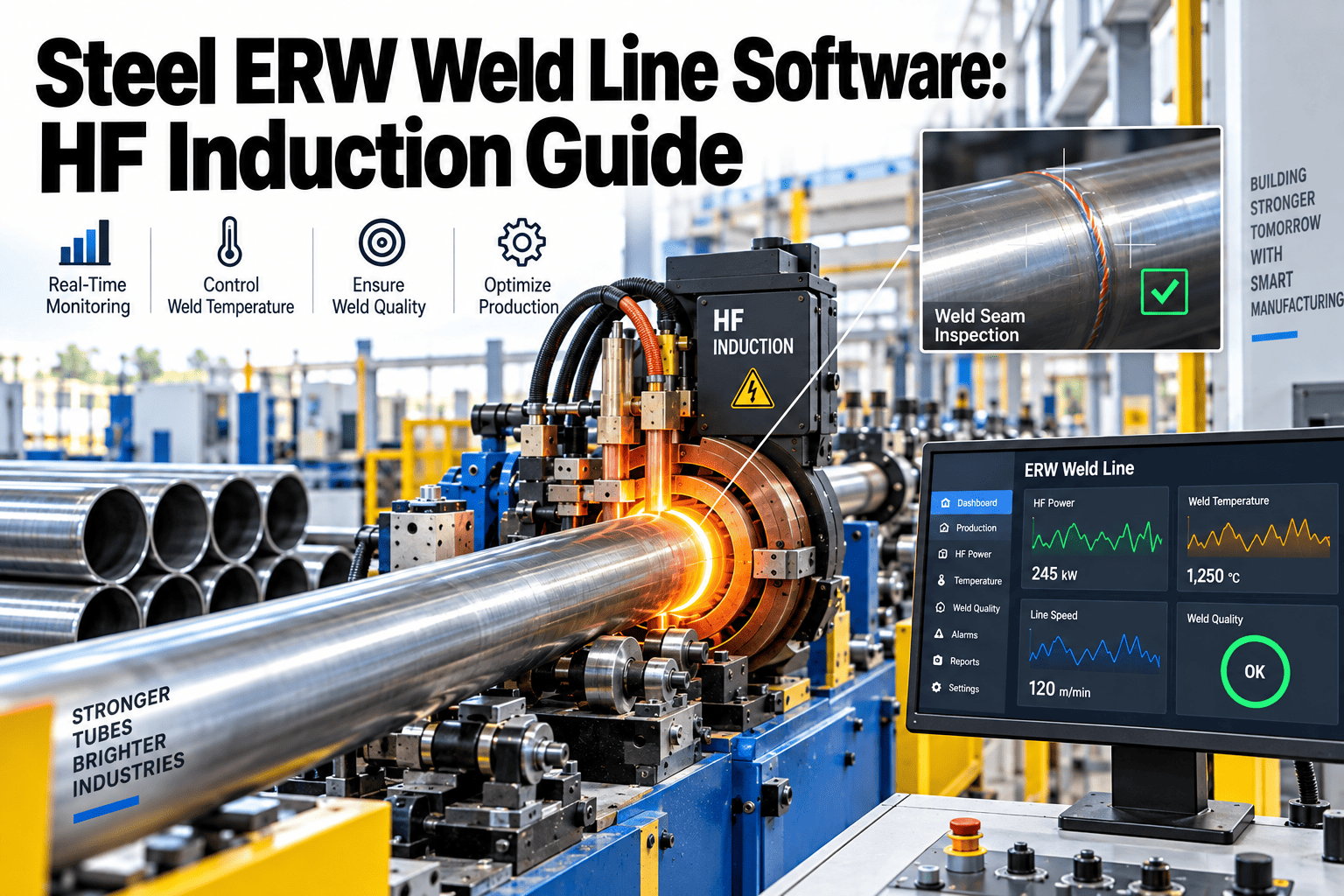
An ERW weld line has no margin for drift. The strip edges are heated to forging temperature in a fraction of a second, squeezed together by rolls turning at line speed, and the seam is gone from view within seconds...
Read More
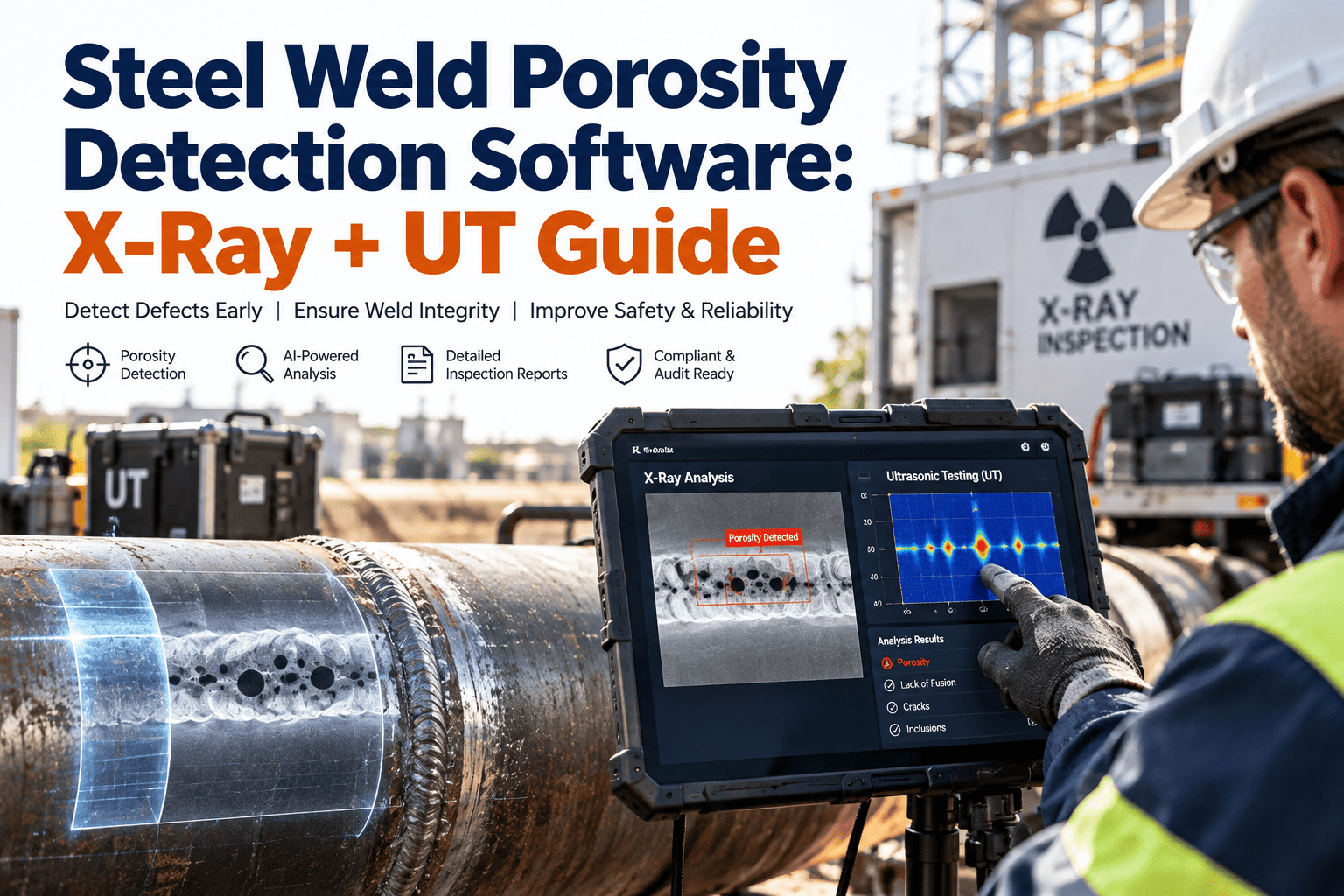
Weld porosity is the single most common rejection cause on steel pipe and plate fabrication lines, and it rarely announces itself until an X-ray film or a phased array scan catches a cluster of gas pockets buried...

Read More
Automotive-grade galvanized sheet has almost no tolerance for coating weight error. Where a general industrial coating can run heavier without consequence, an automotive exposed panel spec often caps coating weight...
Read More
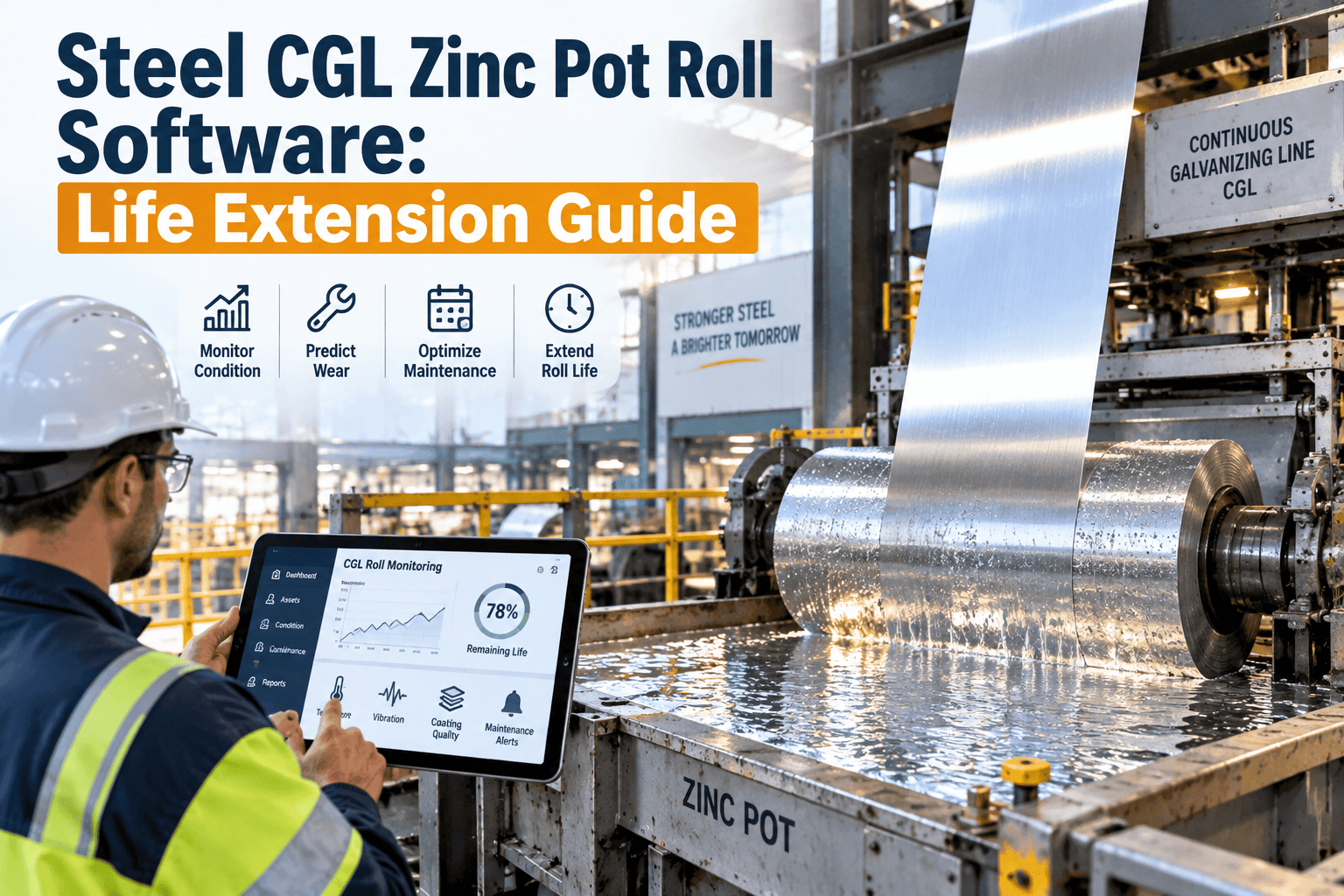
On a continuous galvanizing line, the rolls that run inside the molten zinc pot decide how long the line can run between stops. Dross builds up on bearings and sleeves, ceramic surfaces wear, and a roll that stops...
Read More
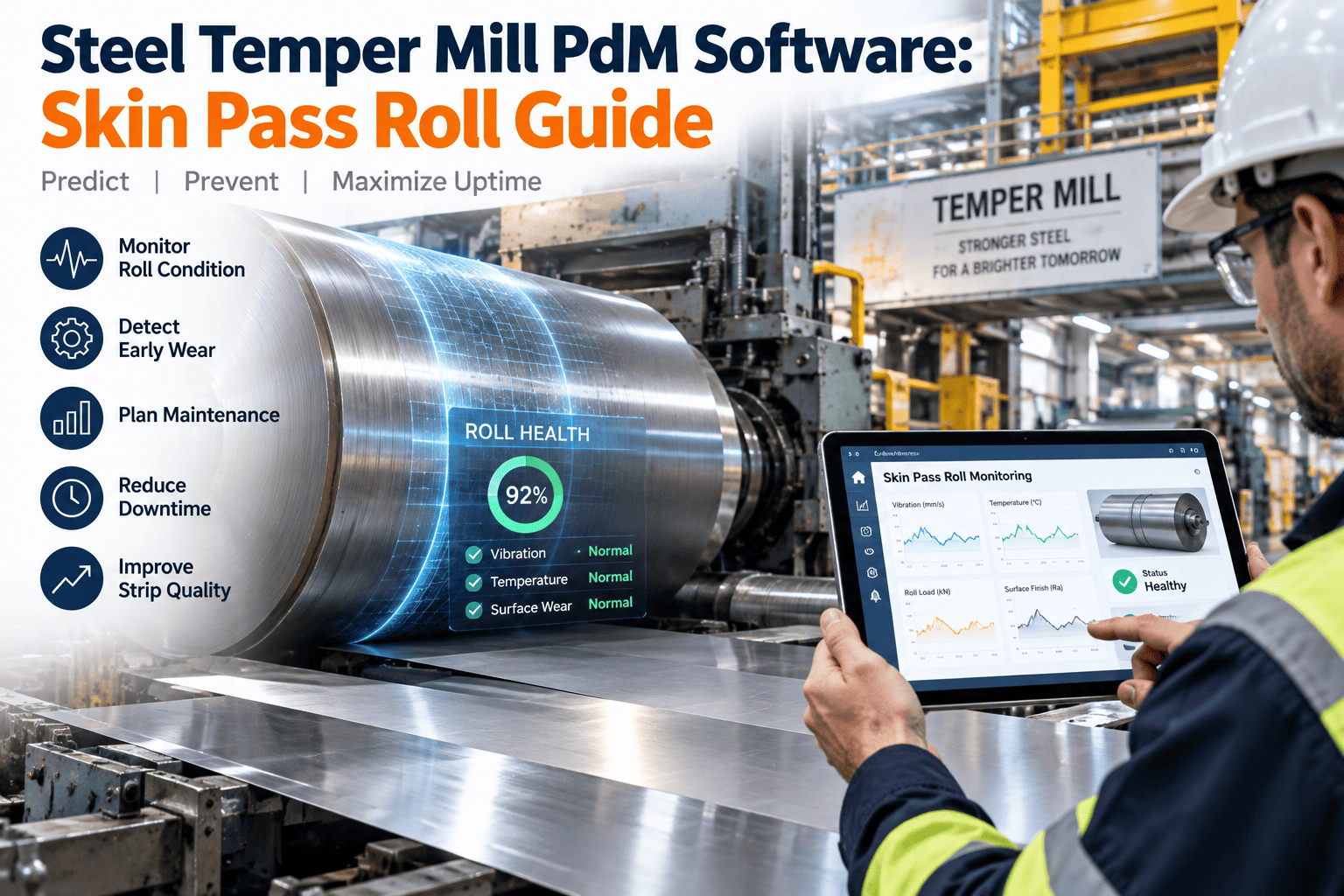
A temper mill's skin pass rarely reduces strip thickness by more than one or two percent, and that small pass carries an outsized job: eliminate yield point elongation before it shows up as Lüders lines on a body...
Read More
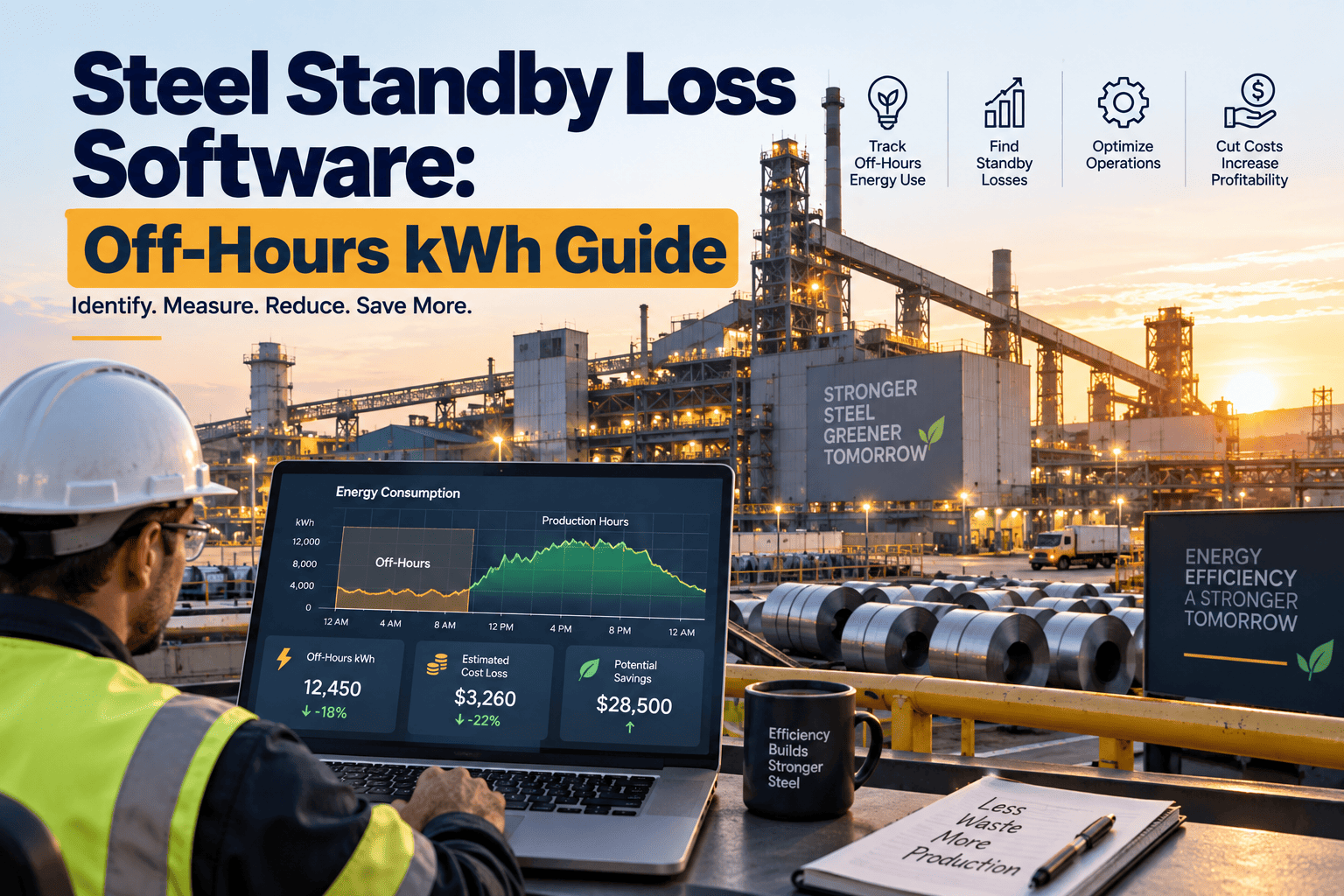
Most steel plant energy audits happen during production, when the loud, hot loads dominate every reading. The kWh that keep flowing on a Sunday night, from idle transformers, panels, fans, pumps, and always-on...
Read More
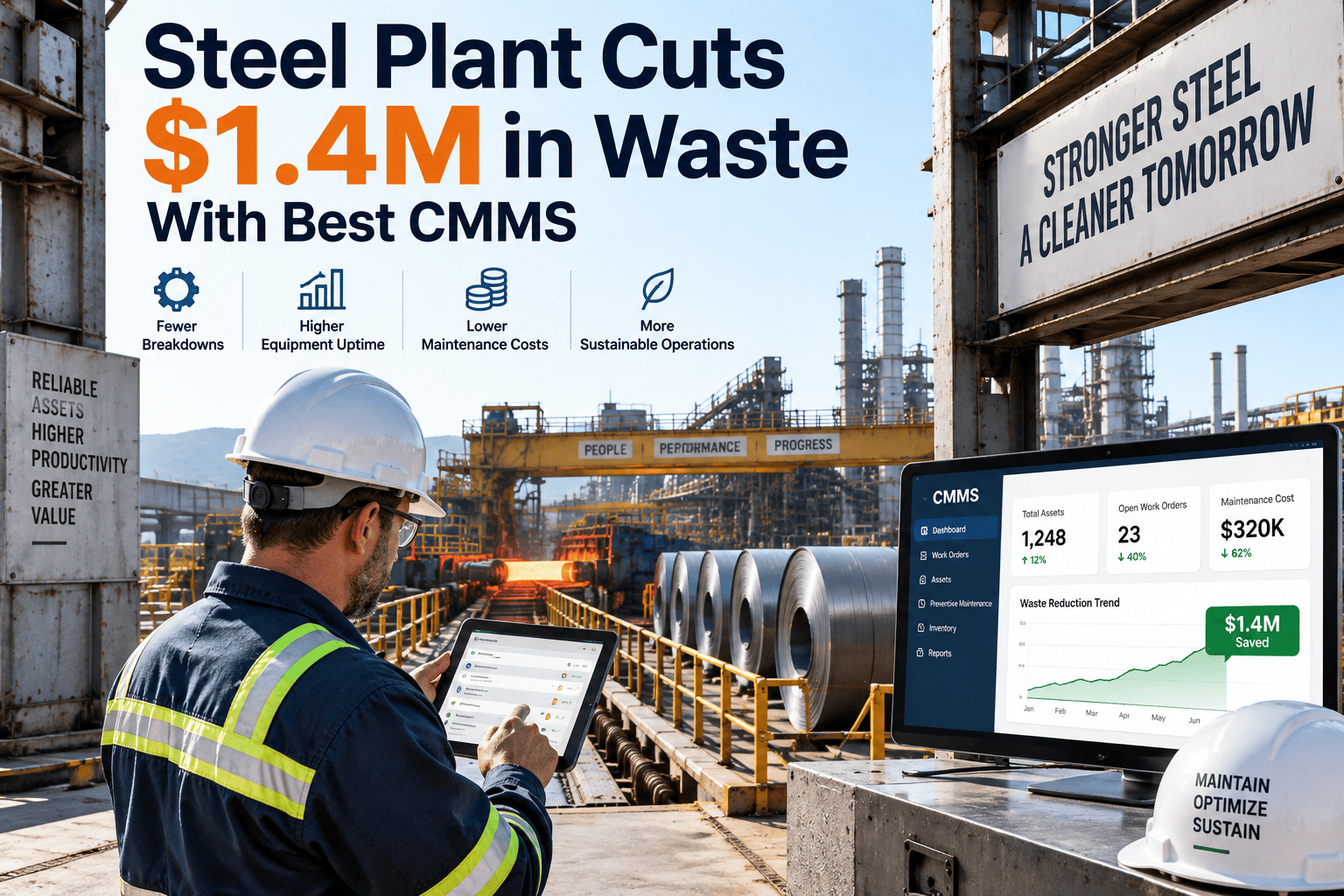
A mid-size flat-rolled steel plant running two shifts, roughly 900 employees, and an aging fleet of utility systems had a familiar problem: nobody could say with confidence where the plant's energy and material...
Read More
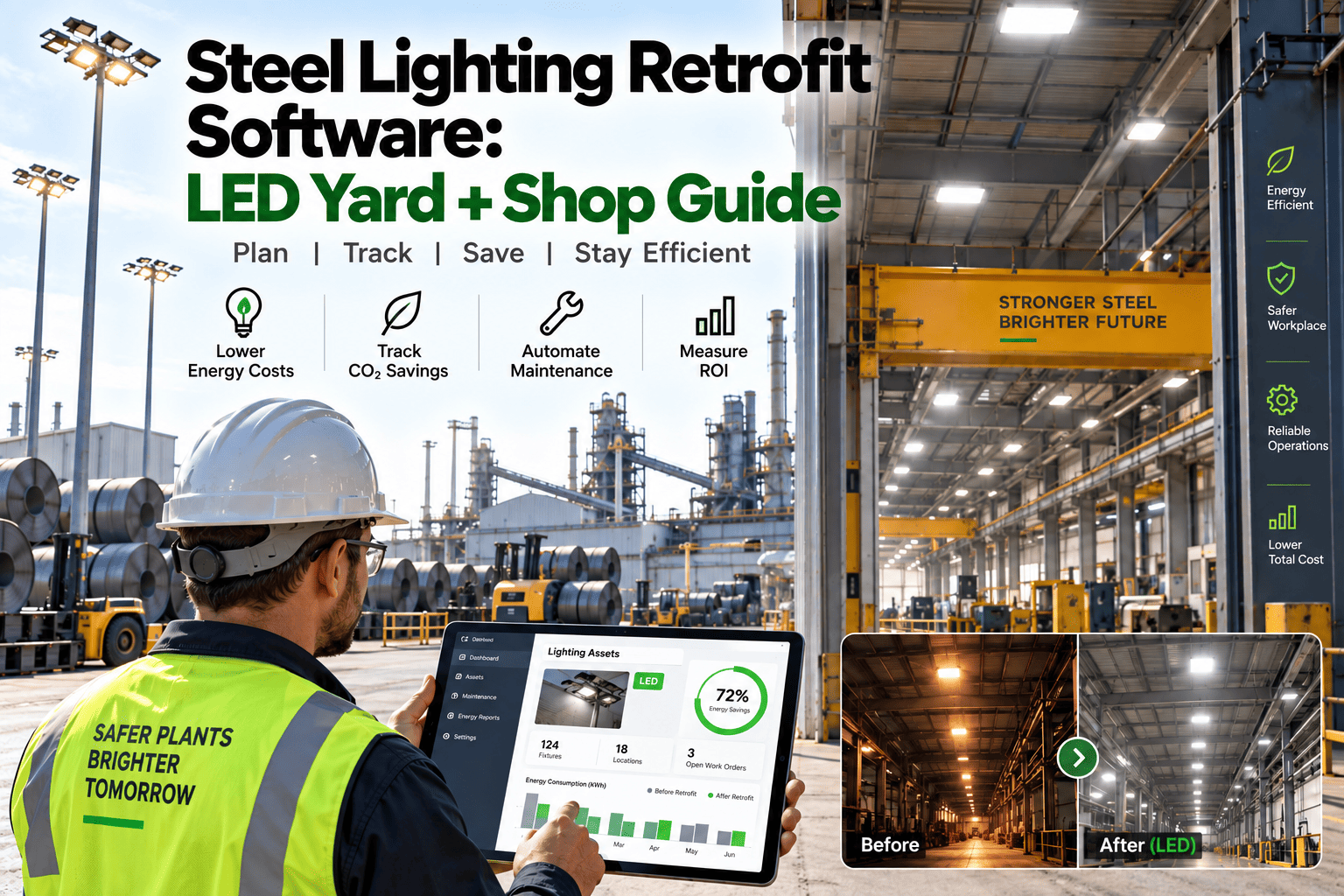
Steel plants are hard on lighting. Radiant heat gathers under melt-shop roofs, scale dust coats every lens, cranes shake fixtures loose, and the yards must stay bright all night. A steel lighting retrofit replaces...
Read More
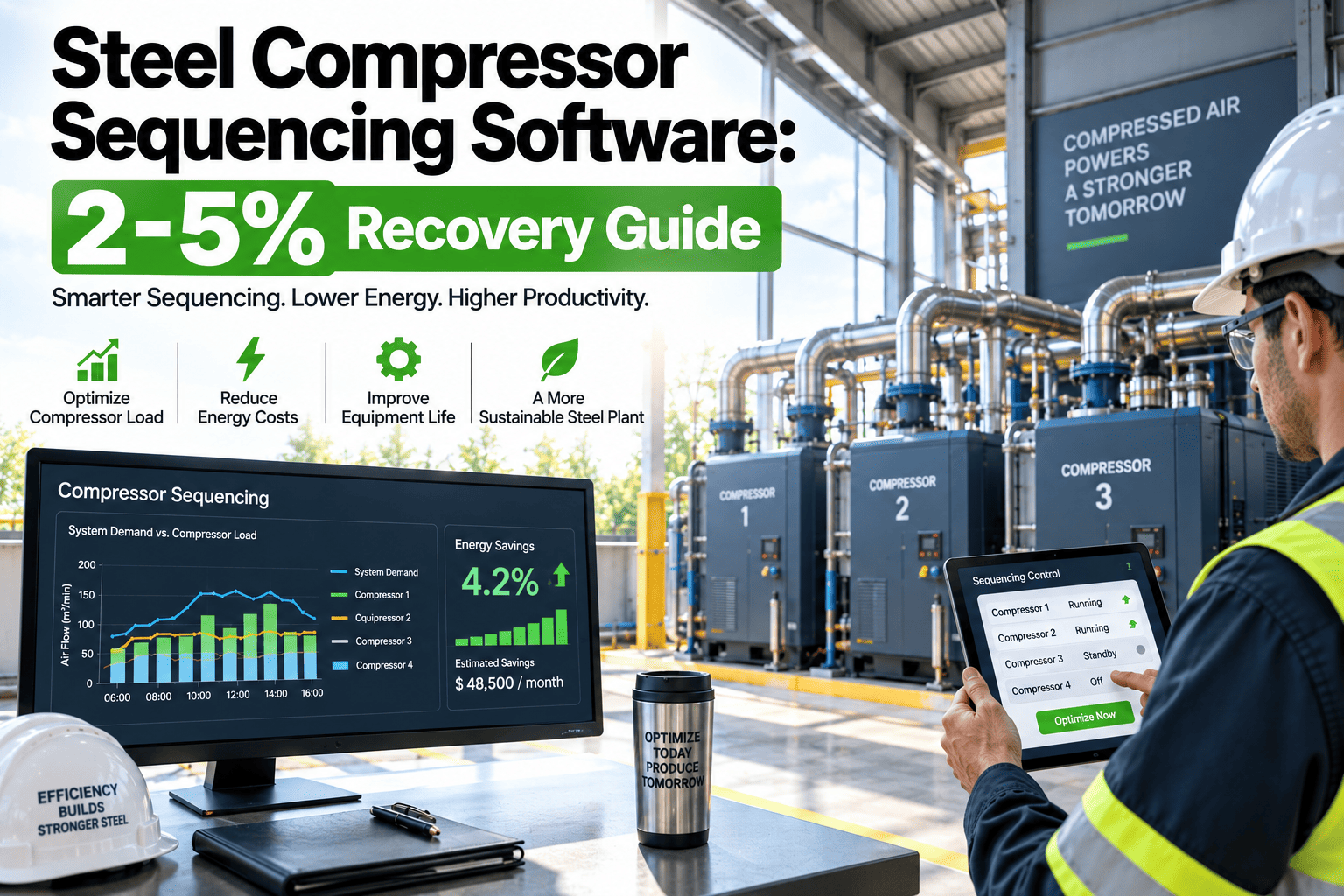
A blast furnace air separation unit, a caster spray system, and a pickle line rinse header all pull from the same compressed air header, and none of them care which compressor happens to be running when they do....

Read More
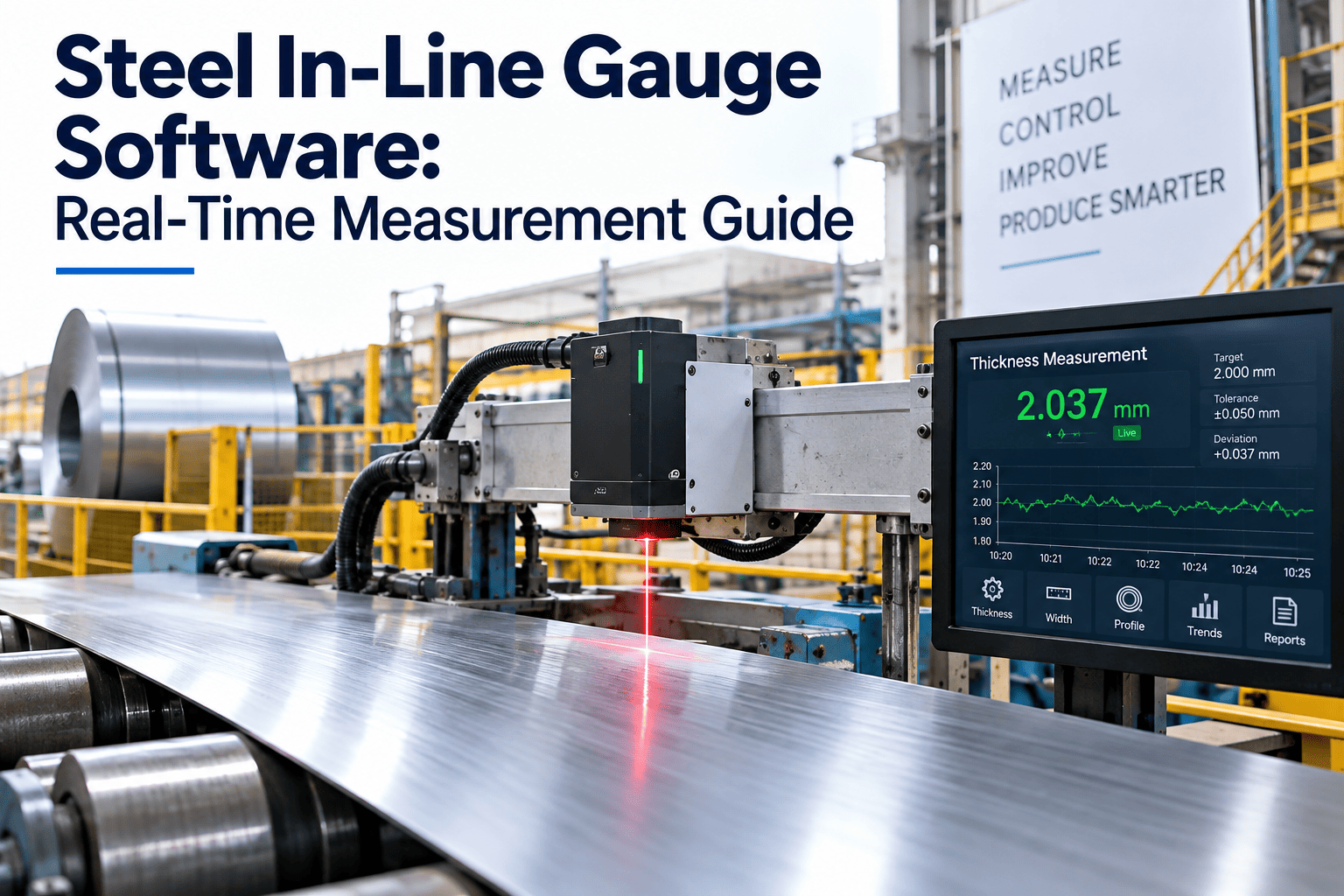
A gauge reading drifts half a millimetre off target on the rolling line, and the SPC chart flags it the instant it happens — but the flag sits inside a dashboard nobody is watching, and the alert only reaches a QA...
Read More
A steel rolling line running on an in-line gauge that has drifted half a millimetre out of calibration does not look like a problem on the mill floor — the coil still comes off the line, still gets banded, and...

Read More
A steel weld that passes a quick visual check but is never measured against ISO 5817 acceptance criteria is not a classified weld — it is an unverified joint that could be carrying a porosity cluster sized for...

Read More
Electric arc furnaces are the beating heart of every steel mini-mill, and the electricity bill that comes with them is the single largest controllable cost after scrap itself. A furnace running at 430 kWh per tonne...
Read More
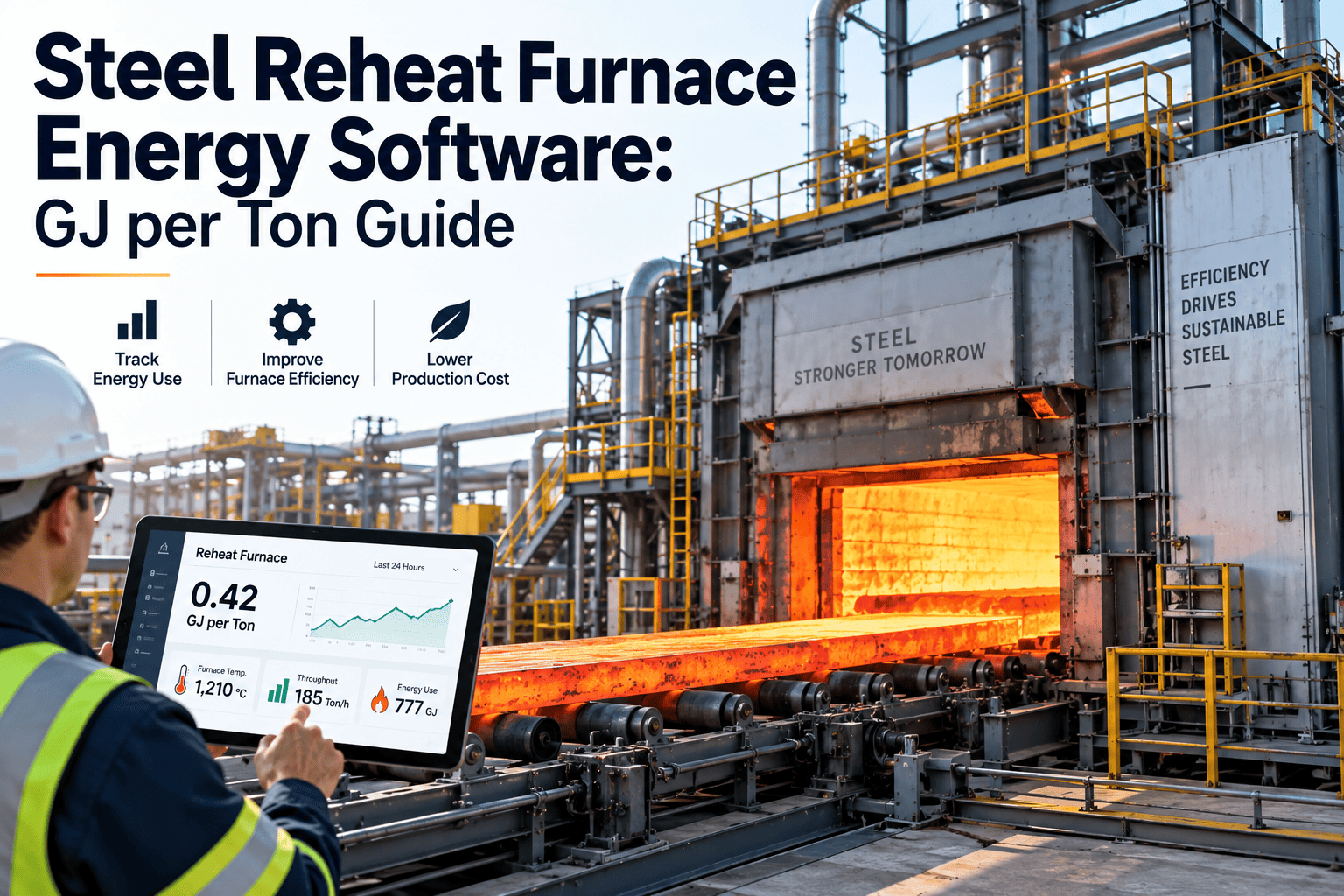
Steel reheat furnaces decide the economics of a rolling mill long before a single billet reaches the stand, and the gap between a well-run furnace and a drifting one shows up as GJ per ton — the number every plant...
Read More
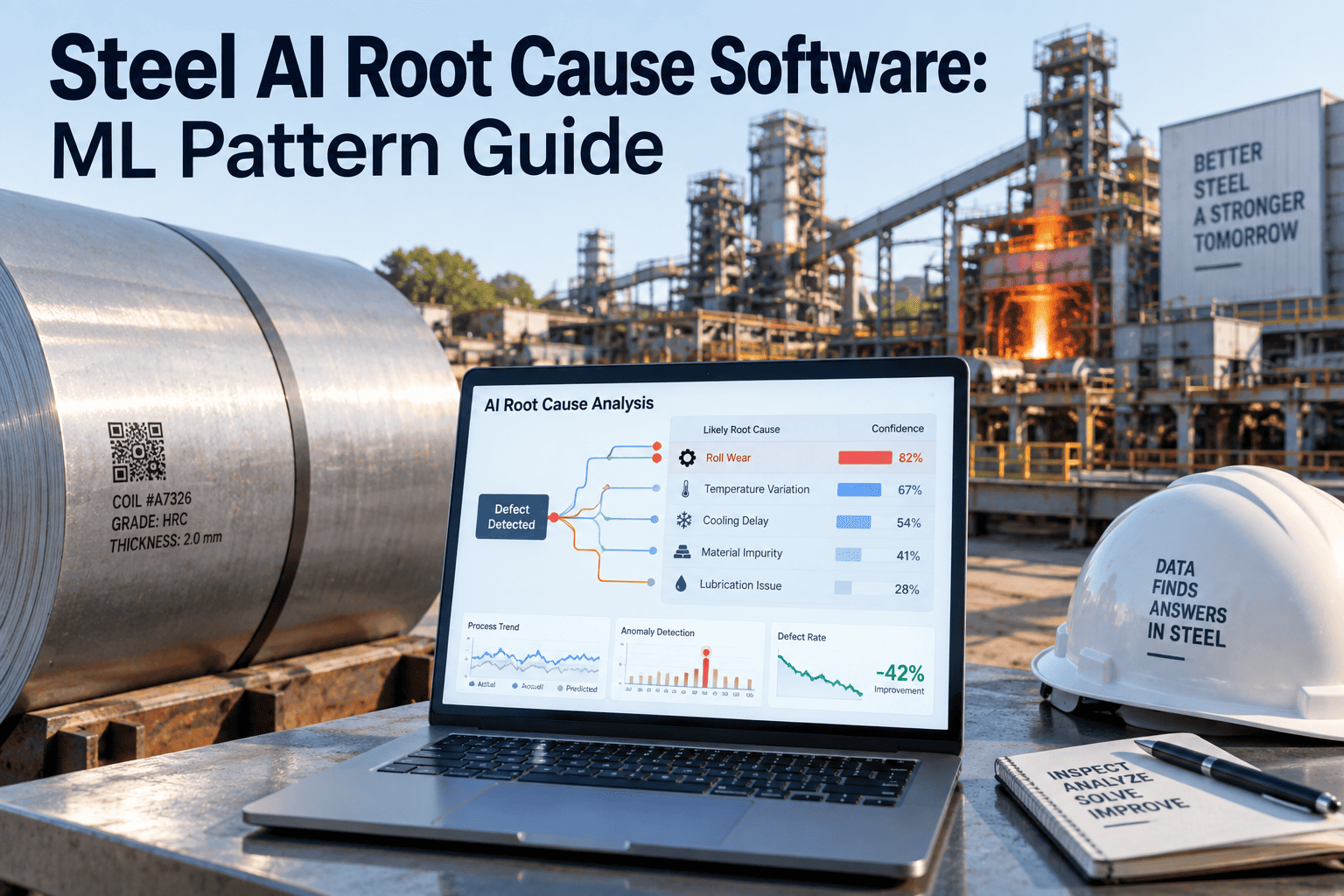
Traditional root cause analysis at a steel plant runs on human pattern recognition — a reliability engineer pulls three or four related failure reports, notices a shared symptom, and traces it back to a probable...
Read More
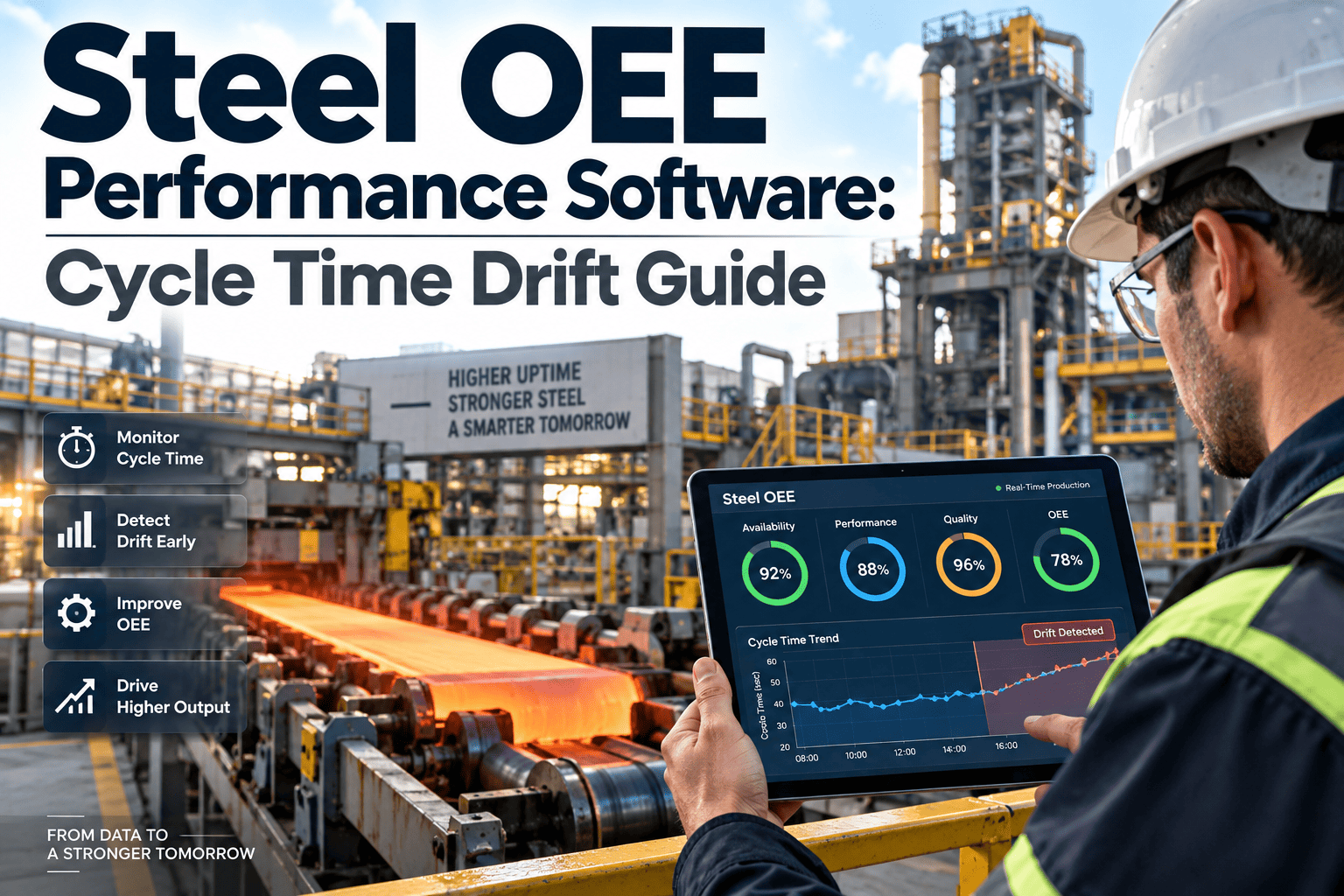
Steel producers spend years tightening availability — reducing unplanned downtime, cutting changeover time, eliminating breakdowns — only to find OEE still plateaus somewhere between 55% and 65%. The reason is...
Read More
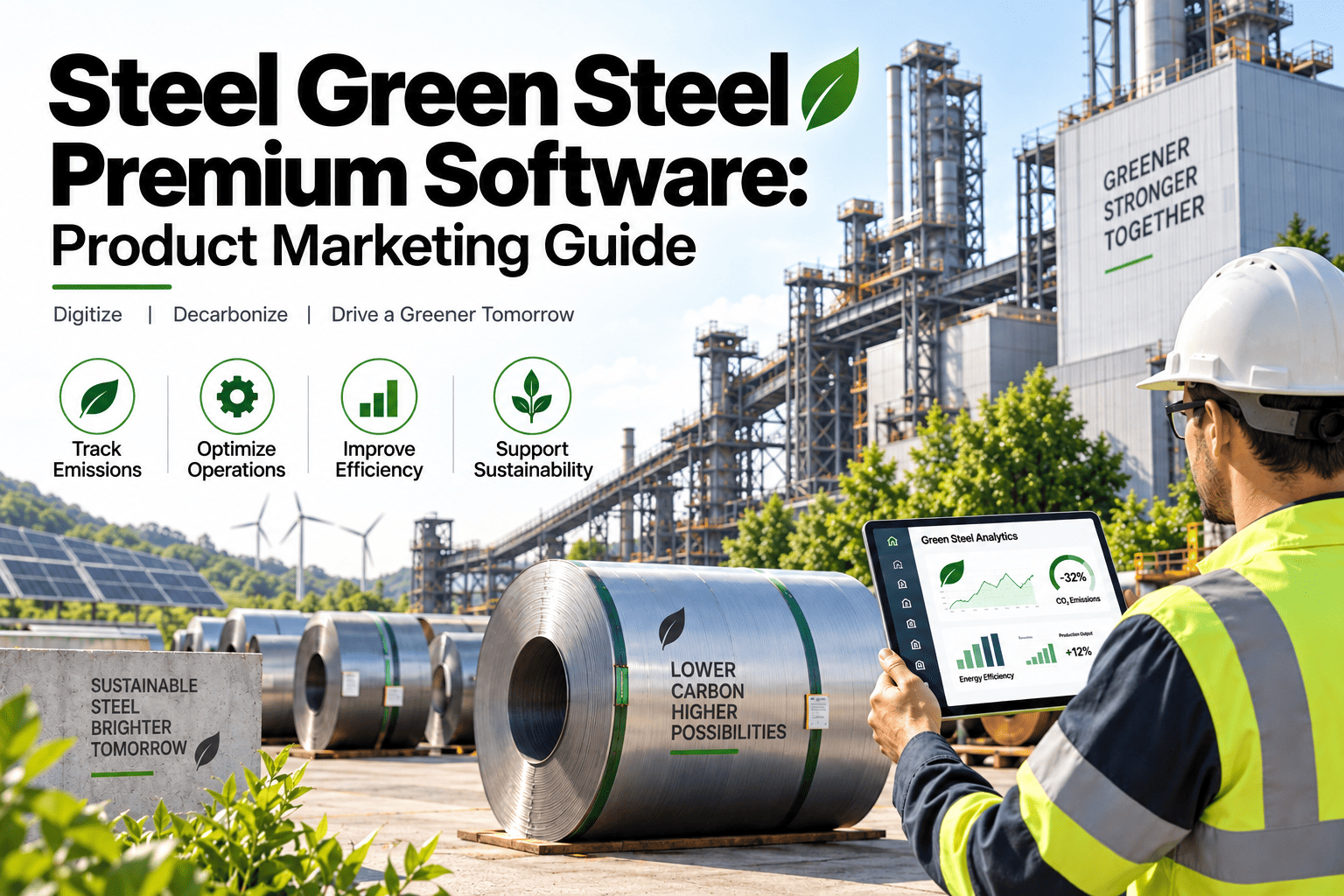
Green steel no longer trades on sustainability language alone — it trades on proof. Buyers in automotive, construction, and appliance manufacturing will pay a documented premium for low-carbon steel, but only when...
Read More
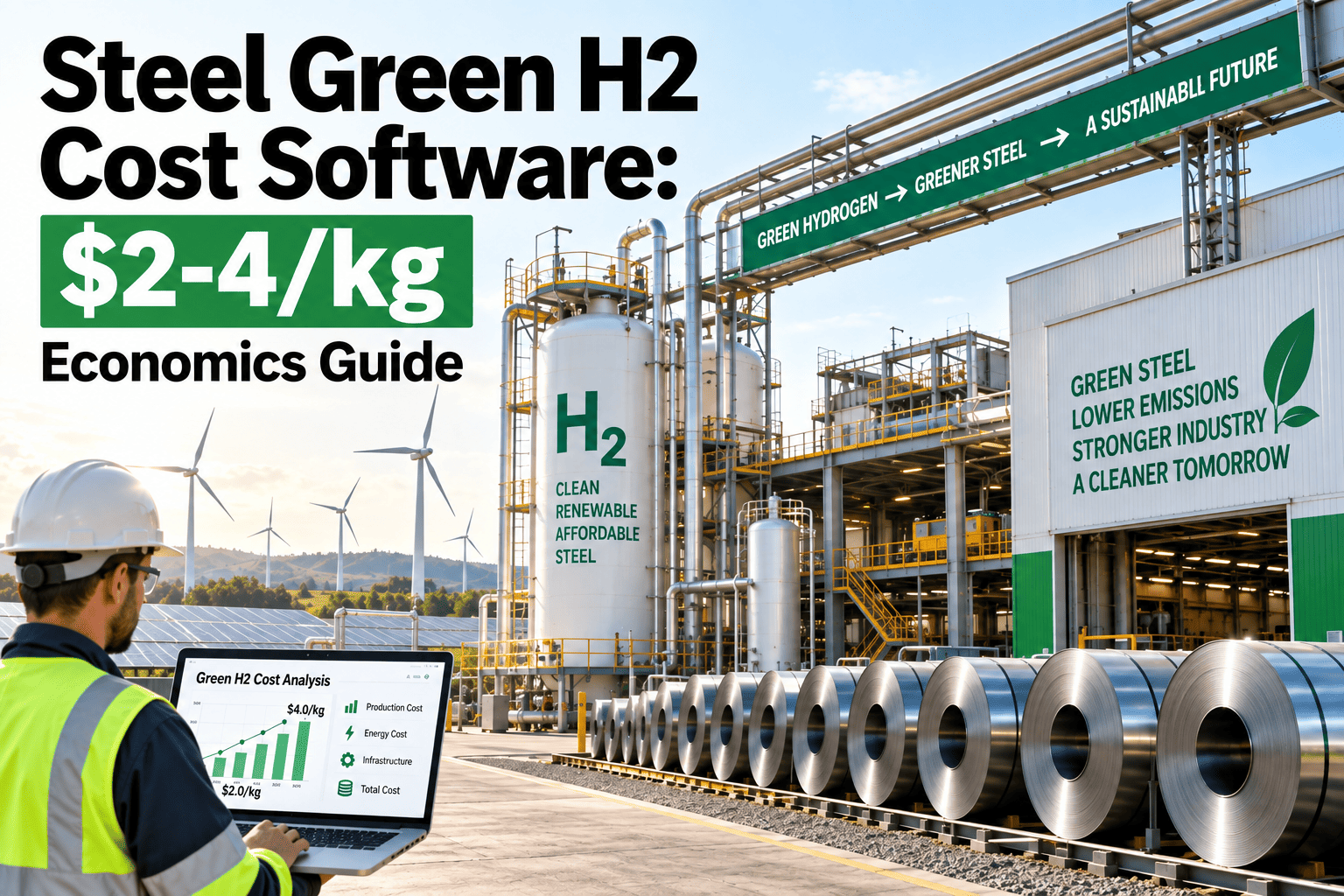
The investment case for hydrogen-based direct reduced iron almost always comes down to one number: the delivered cost of green hydrogen per kilogram. Techno-economic studies consistently show that green H2-DRI...

Read More
The Carbon Border Adjustment Mechanism moved from a reporting exercise to a financial obligation on January 1, 2026. Steel producers and EU importers can no longer treat embedded emissions data as a compliance...
Read More
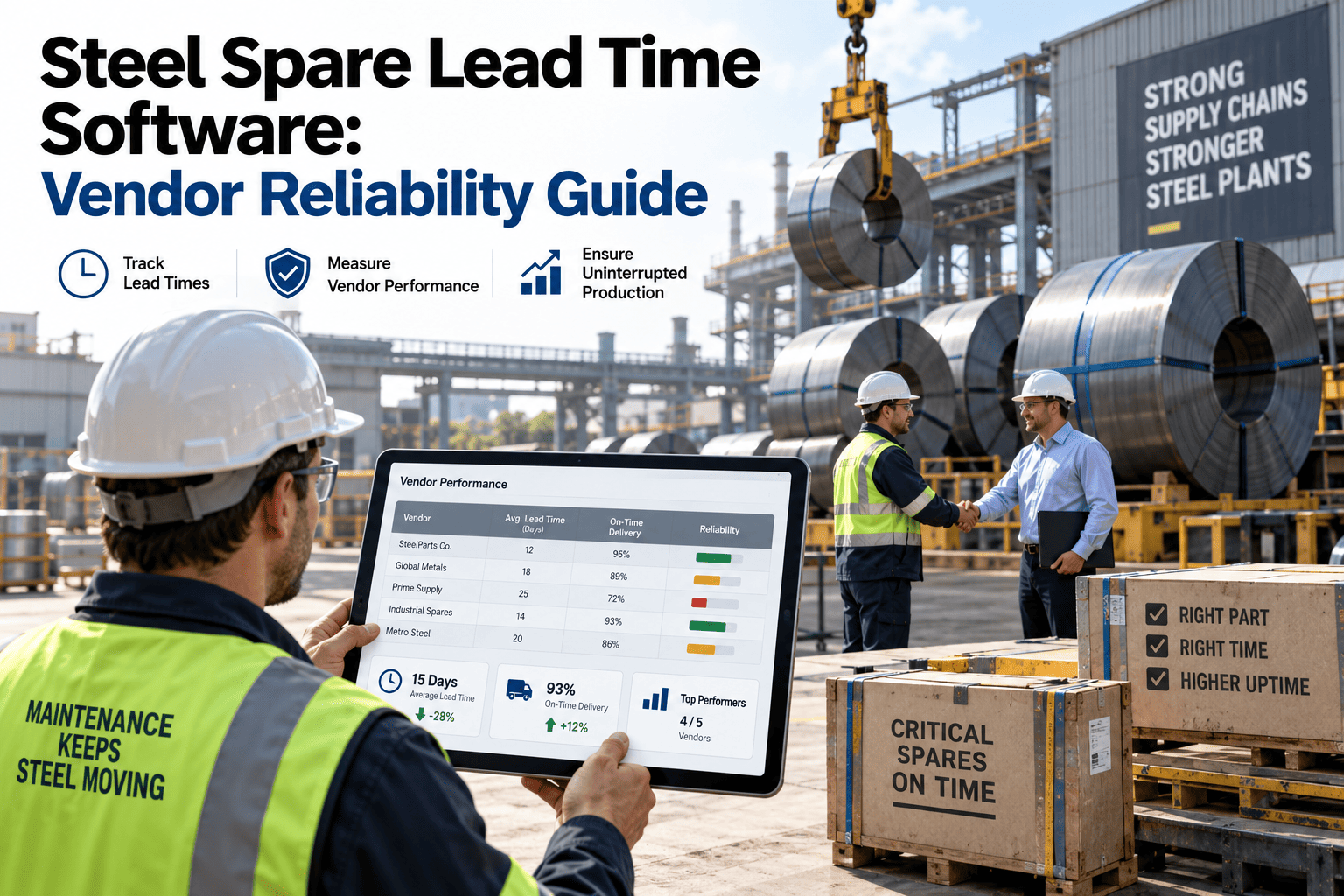
Reorder points on a steel plant's critical spares list are only as good as the lead time number behind them, and that number is usually a guess. A vendor quoted twelve weeks on a mill roll bearing eighteen months...
Read More
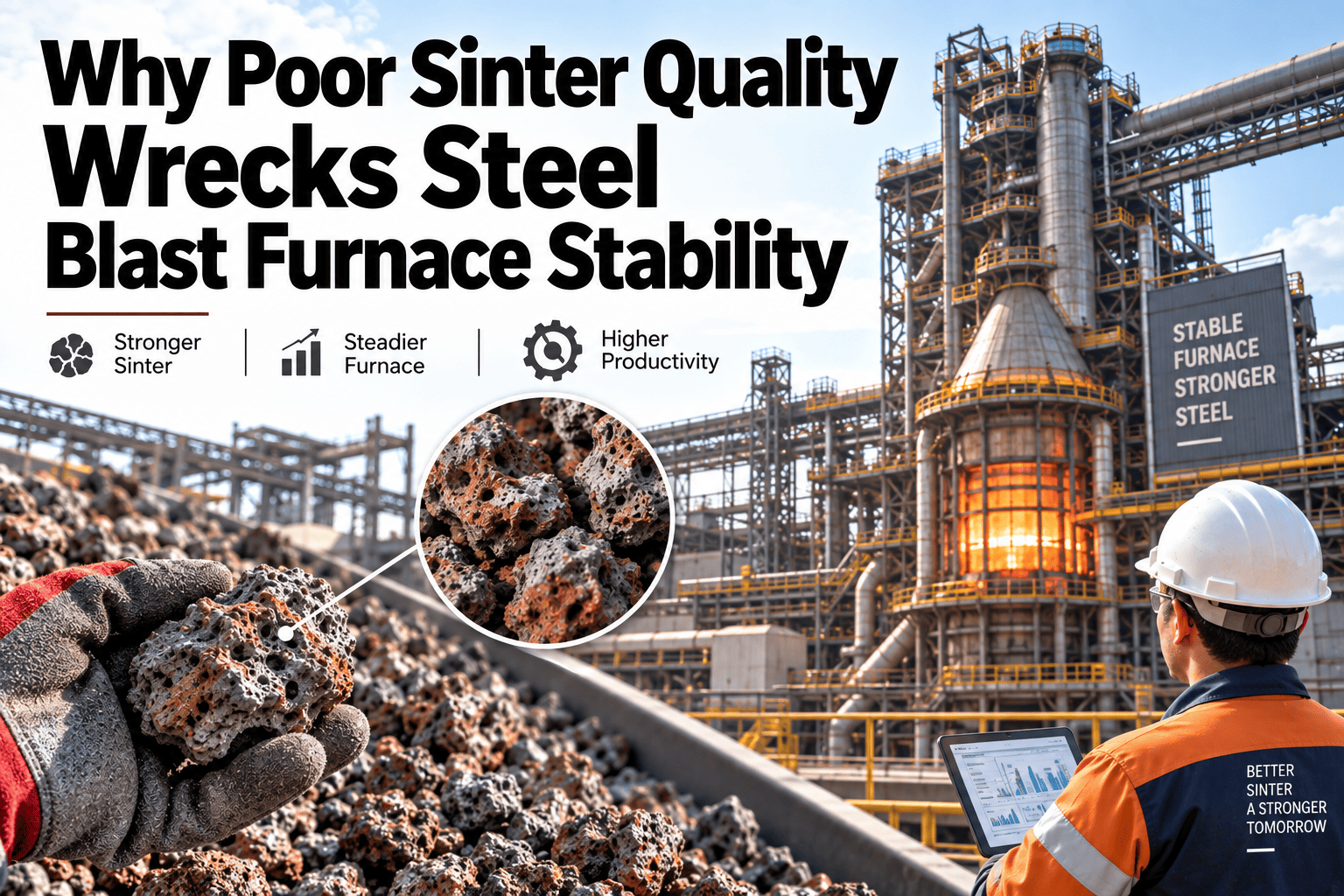
A blast furnace doesn't fail because of one bad shift. It fails because of hundreds of small inconsistencies in the burden feeding it, and sinter is usually the biggest single contributor. When basicity swings, FeO...
Read More
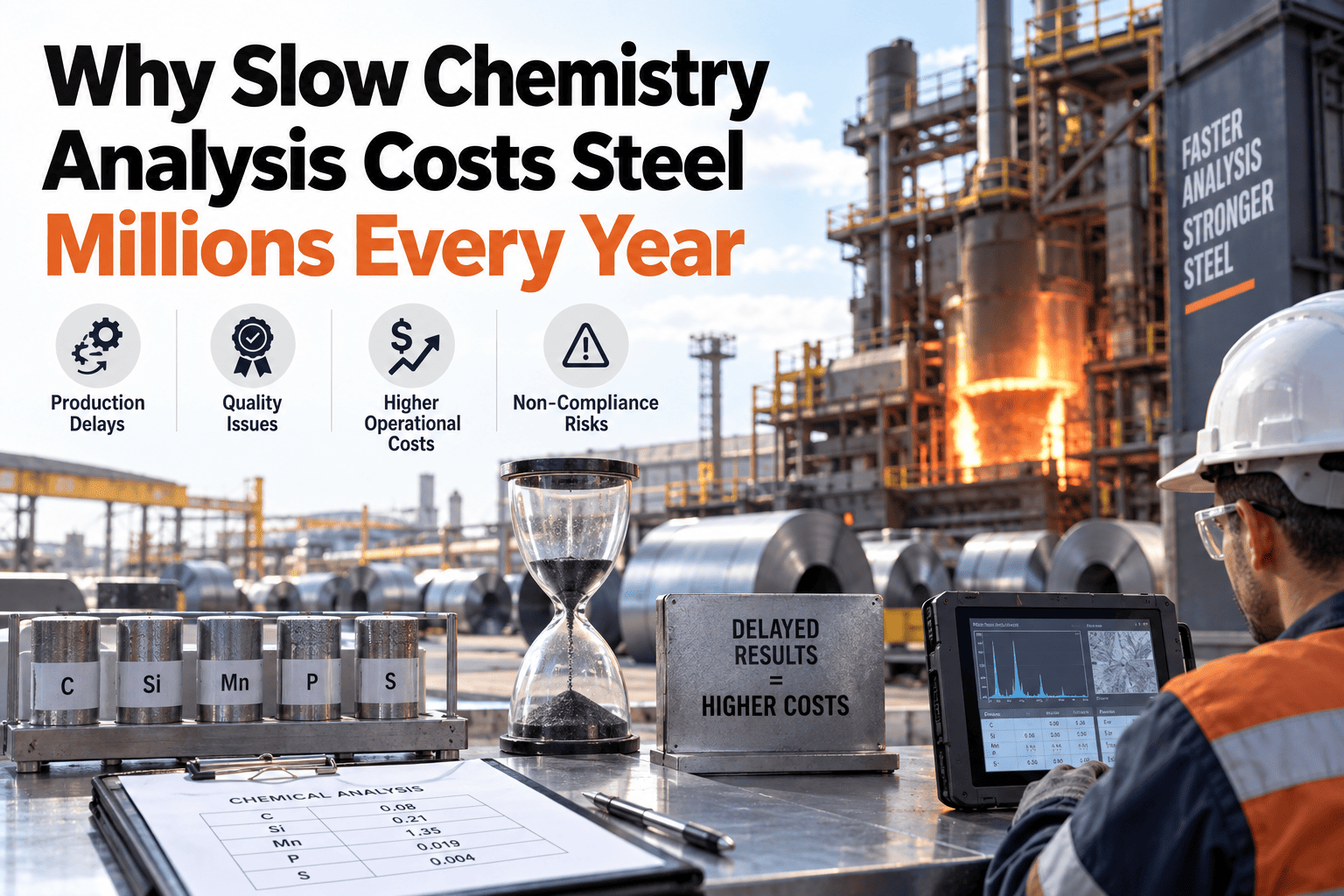
In a steel meltshop, the gap between "sample pulled" and "chemistry confirmed" is one of the most expensive gaps in the plant, and it rarely shows up on a single line item. It shows up as holding heats, re-blowing...
Read More
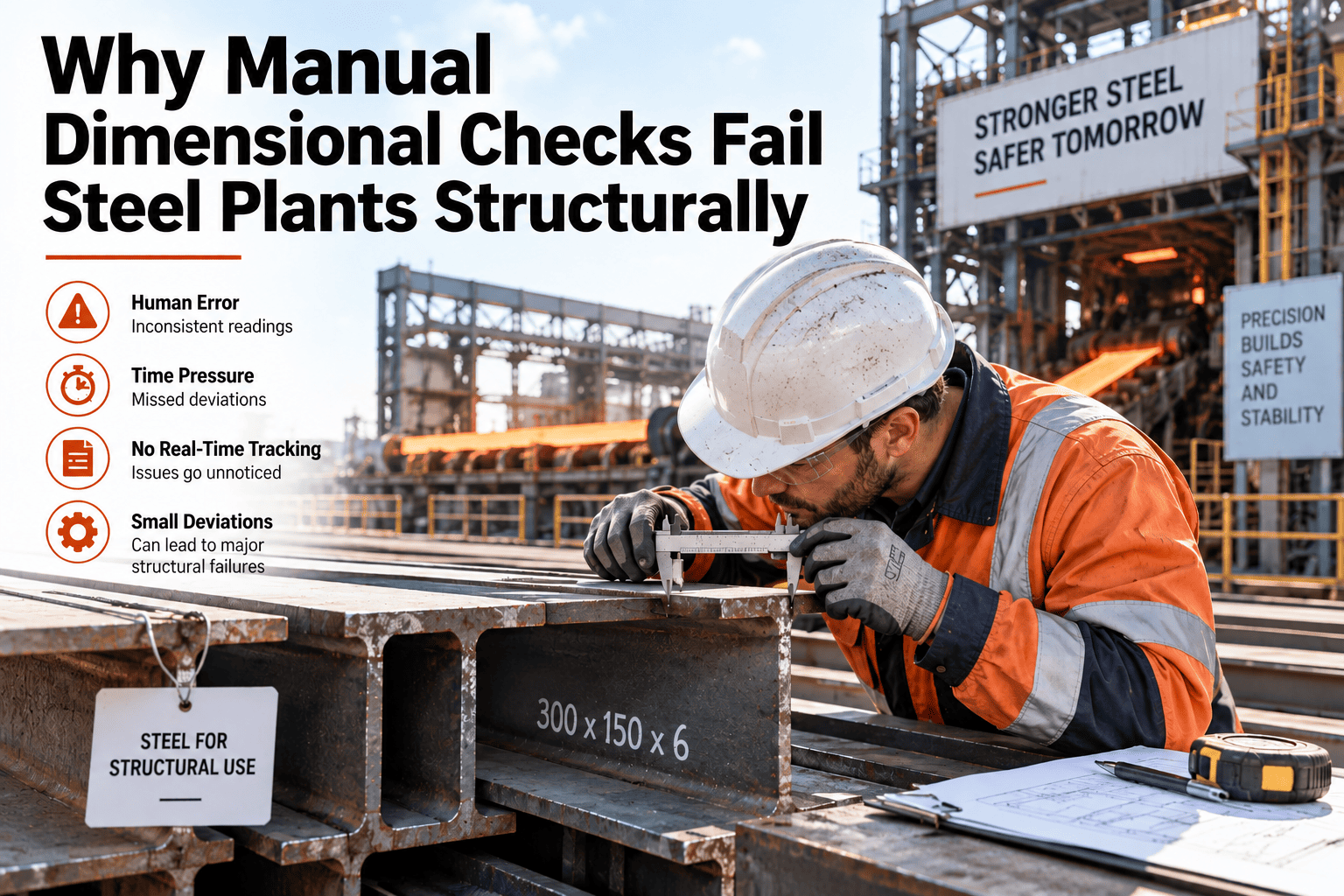
Rolled and structural steel lives or dies on a handful of numbers: thickness, width, flatness, camber, and squareness. When those numbers drift outside tolerance, coils get downgraded, beams get rejected, and...

Read More
A galvanizing line running at full line speed suddenly shows a faint pickup mark on the strip surface — barely visible at first, then worse coil after coil until quality holds the entire run. The cause traces back...

Read More
A continuous annealing line spends its entire operating life pushing cold-rolled strip through a sequence of furnace zones at temperatures between roughly 600°C and 800°C, holding each zone tight enough to hit the...

Read More
An unplanned stoppage on a continuous galvanizing line rarely stays contained to the zinc pot or the air knife that actually failed — because the line runs as one continuous strip path, a single roll seizure or a...

Read More
Walk any steel finishing line at night and you will likely hear it before you see it — a faint hiss near a hose coupling that nobody has time to chase down. Compressed air is often the most expensive utility per...

Read More
On a mid-size electric arc furnace line, a rolling mill supervisor spends forty minutes each shift filling out a downtime log that nobody reads twice. The categories are vague — "mechanical," "electrical," "other"...

Read More
A hot-strip mill or blast furnace crew can hit its shift-end tonnage number and still have quietly lost four hours of pace somewhere in the middle of the shift — a slow changeover here, an unplanned idle stretch...

Read More
Running SAP PM, Oracle E-Business Suite, or Microsoft Dynamics alongside a separate maintenance program creates a familiar problem for steel plant finance and operations teams: purchase orders that never match...
Read More
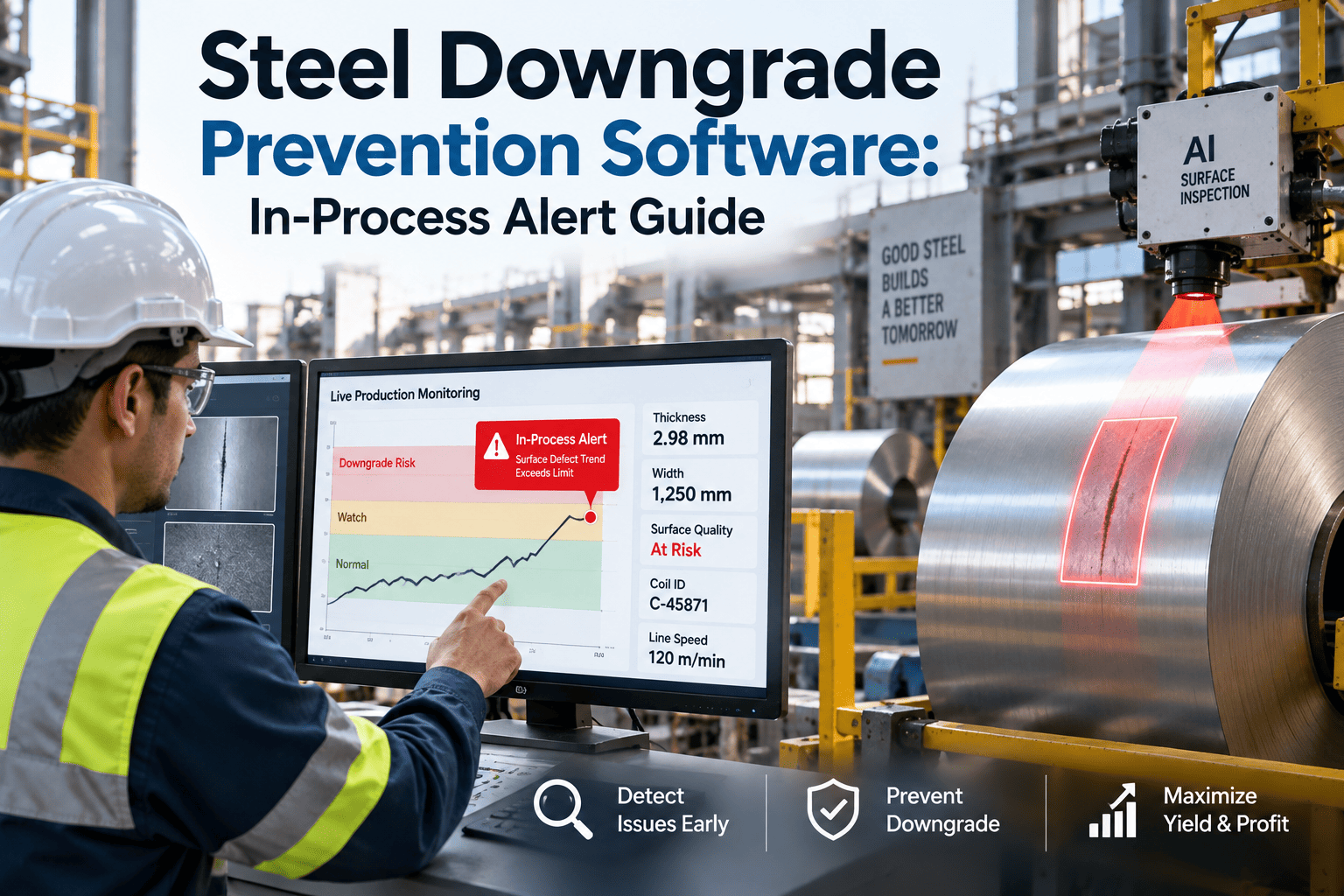
A single coil that fails final inspection can lose 200 to 400 dollars per ton the moment it drops from prime to secondary grade, and by the time the defect reaches quality control the melt, the cast, and the...
Read More
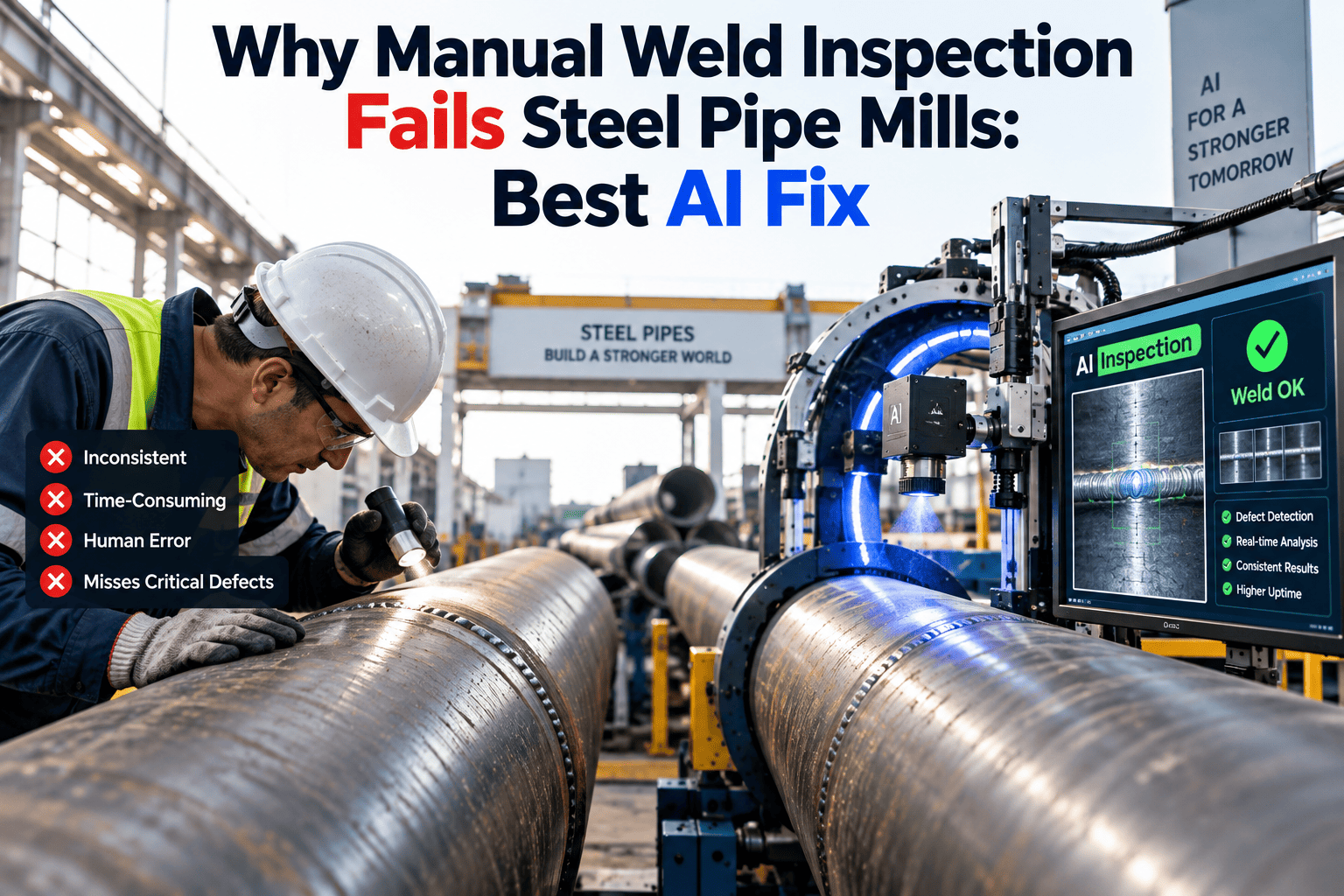
Steel pipe mills run electric resistance welding and submerged arc welding lines fast enough to turn out a finished coil every few minutes, yet weld seam quality is still verified the way it was decades ago — a...
Read More
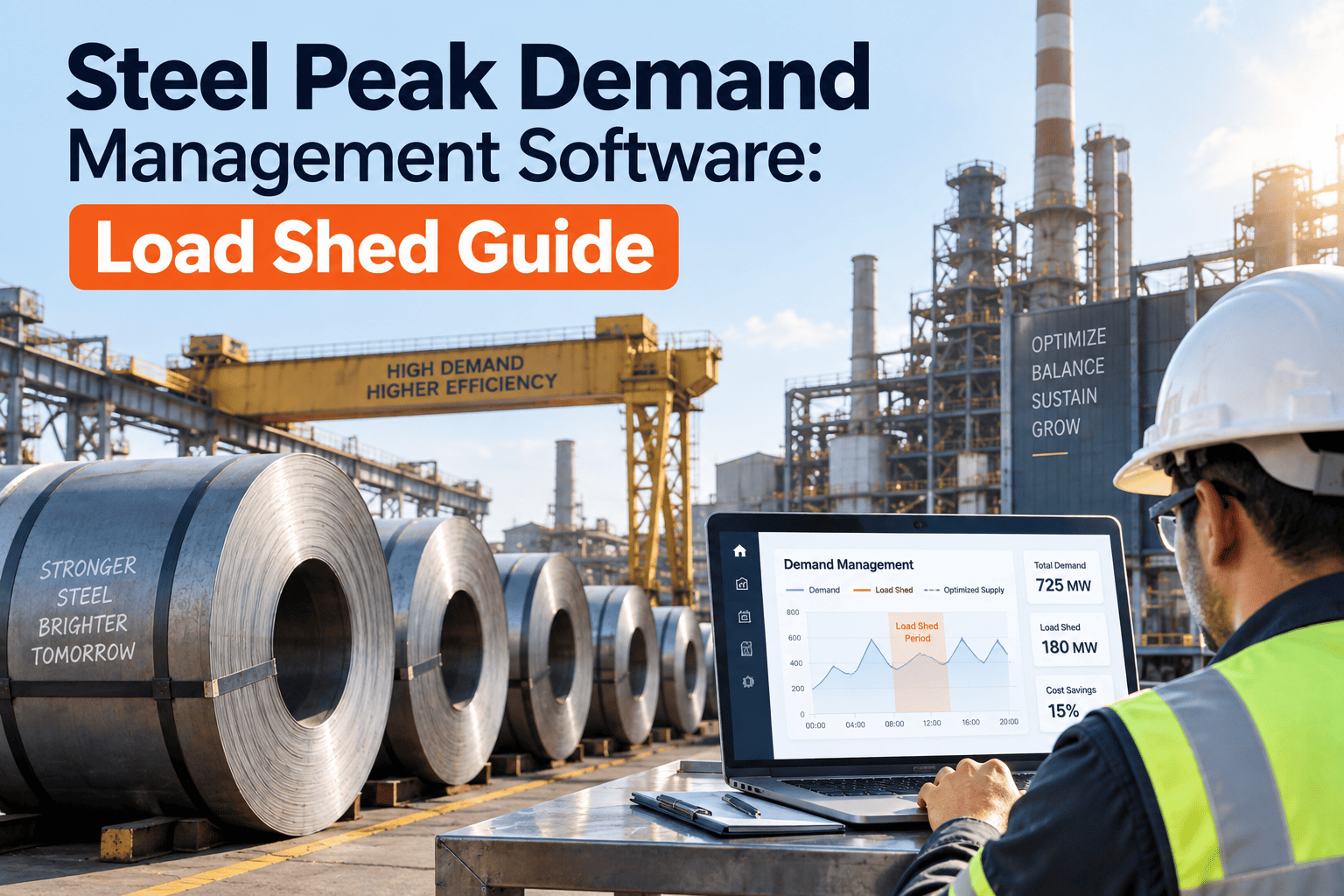
Steel mills don't lose money on electricity the way most industries do — one bad fifteen minutes can set the tariff for an entire month. A single electric arc furnace can pull 80-100 MW at full arc-on, and if that...
Read More
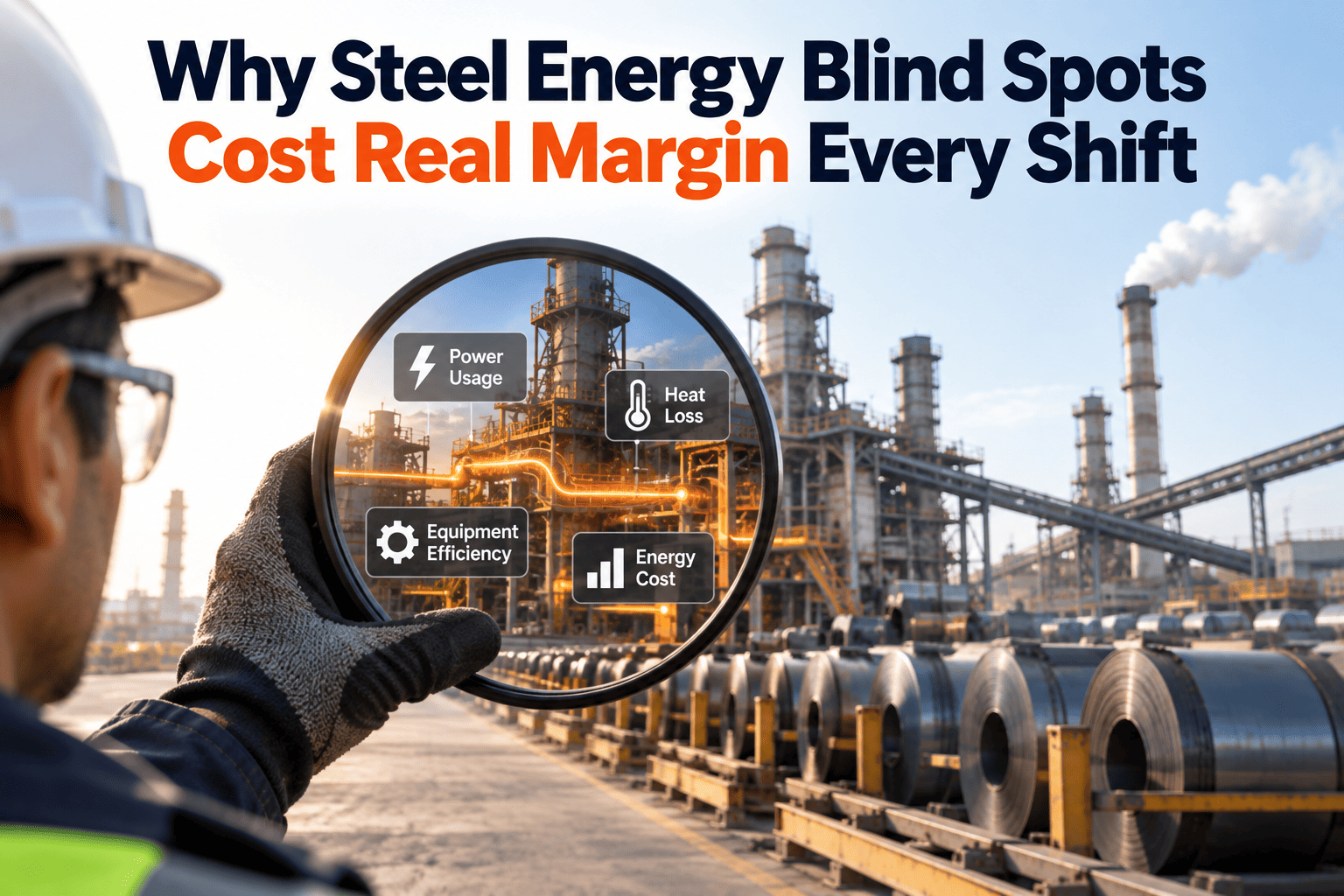
A steel plant's monthly utility bill tells you what energy cost, not where it went — and the gap between those two numbers is where real margin quietly disappears every single shift. A compressor left cycling on a...
Read More
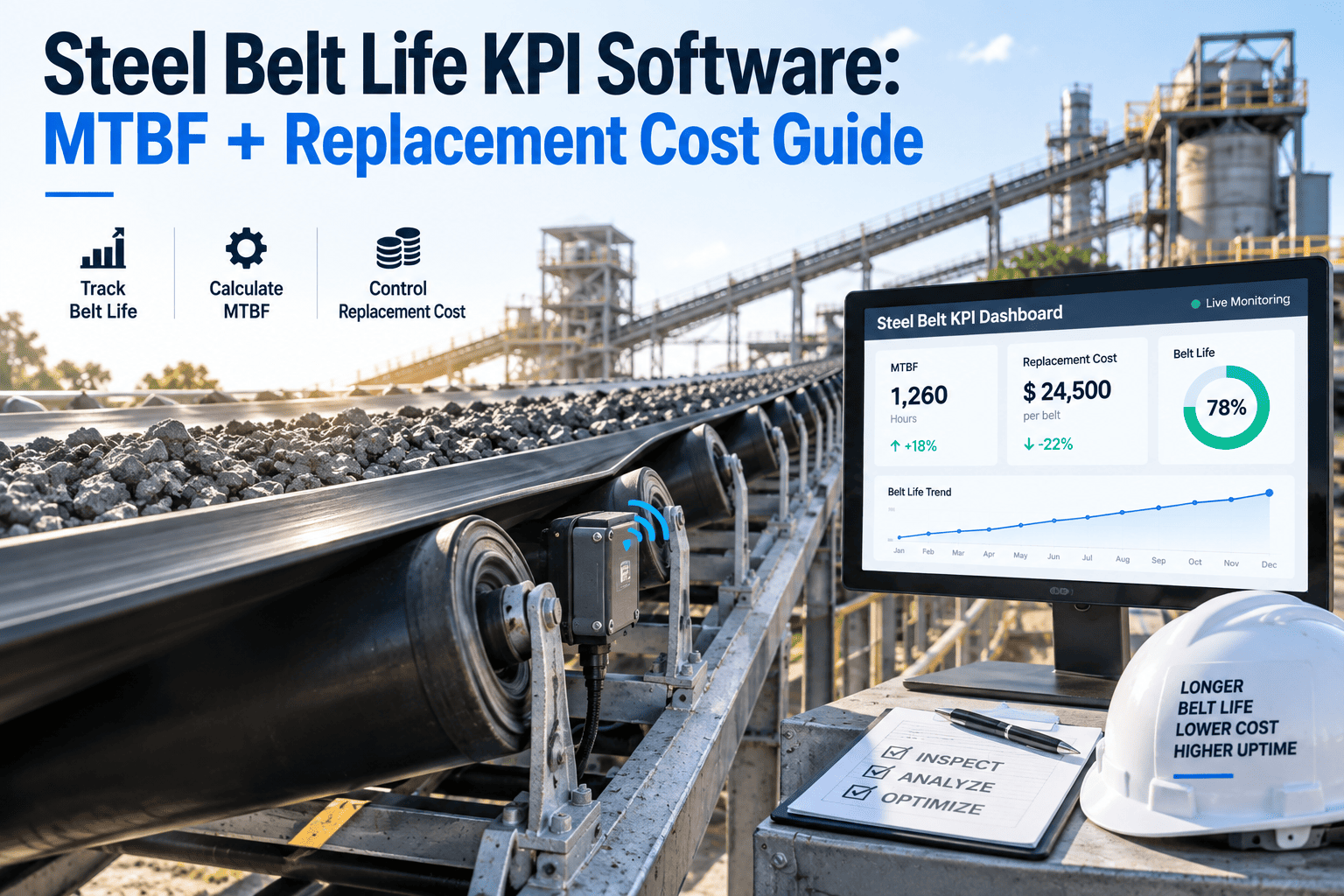
Wide steel-cord conveyor belts move raw ore, sinter, coke, and finished product through every stage of a steel mill, and a single unplanned belt failure on a main transfer line can stop production across an entire...
Read More
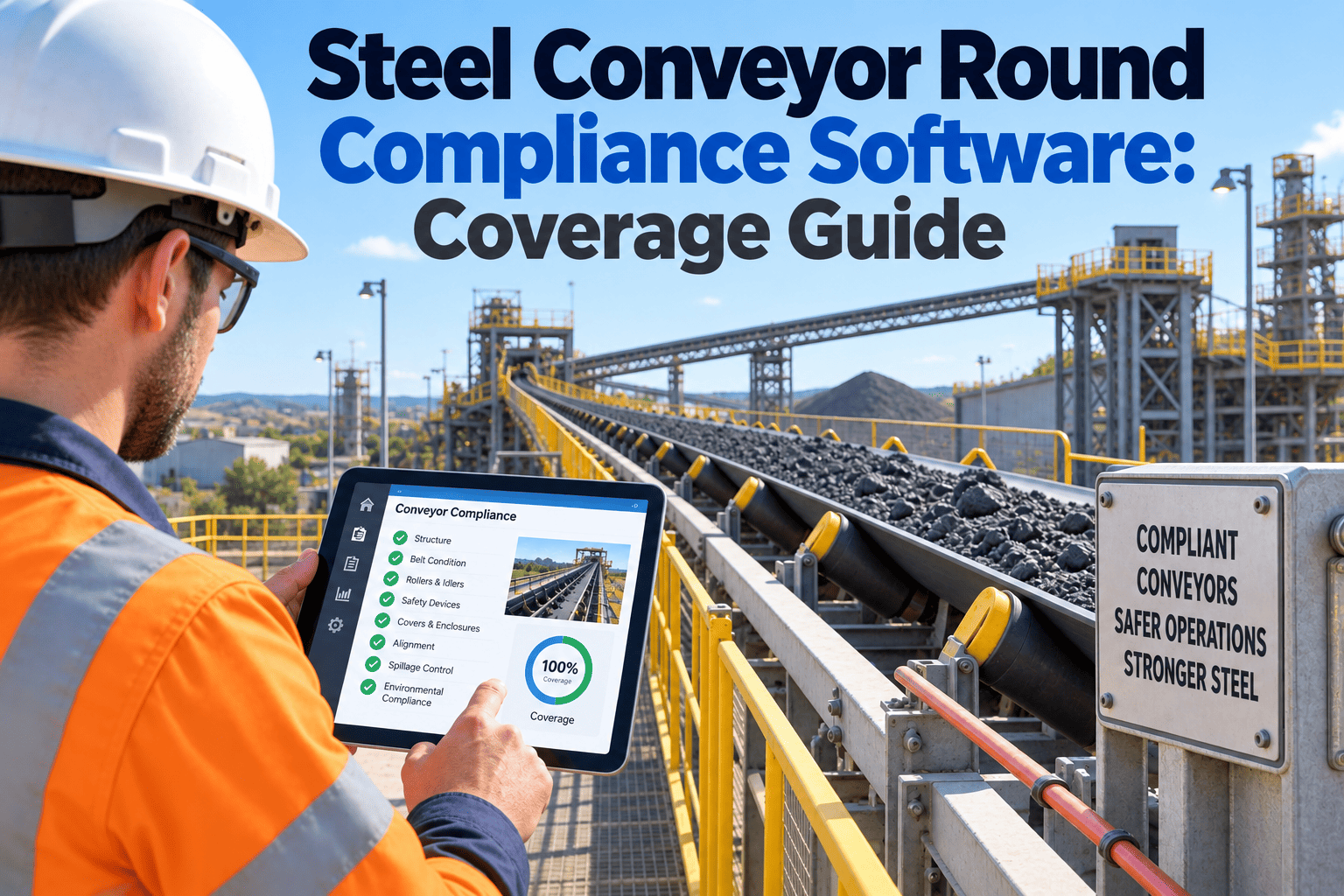
Ask any steel plant reliability manager how much of the conveyor network actually gets walked every shift, and the honest answer is usually lower than the schedule claims. A round that looks complete on paper can...
Read More
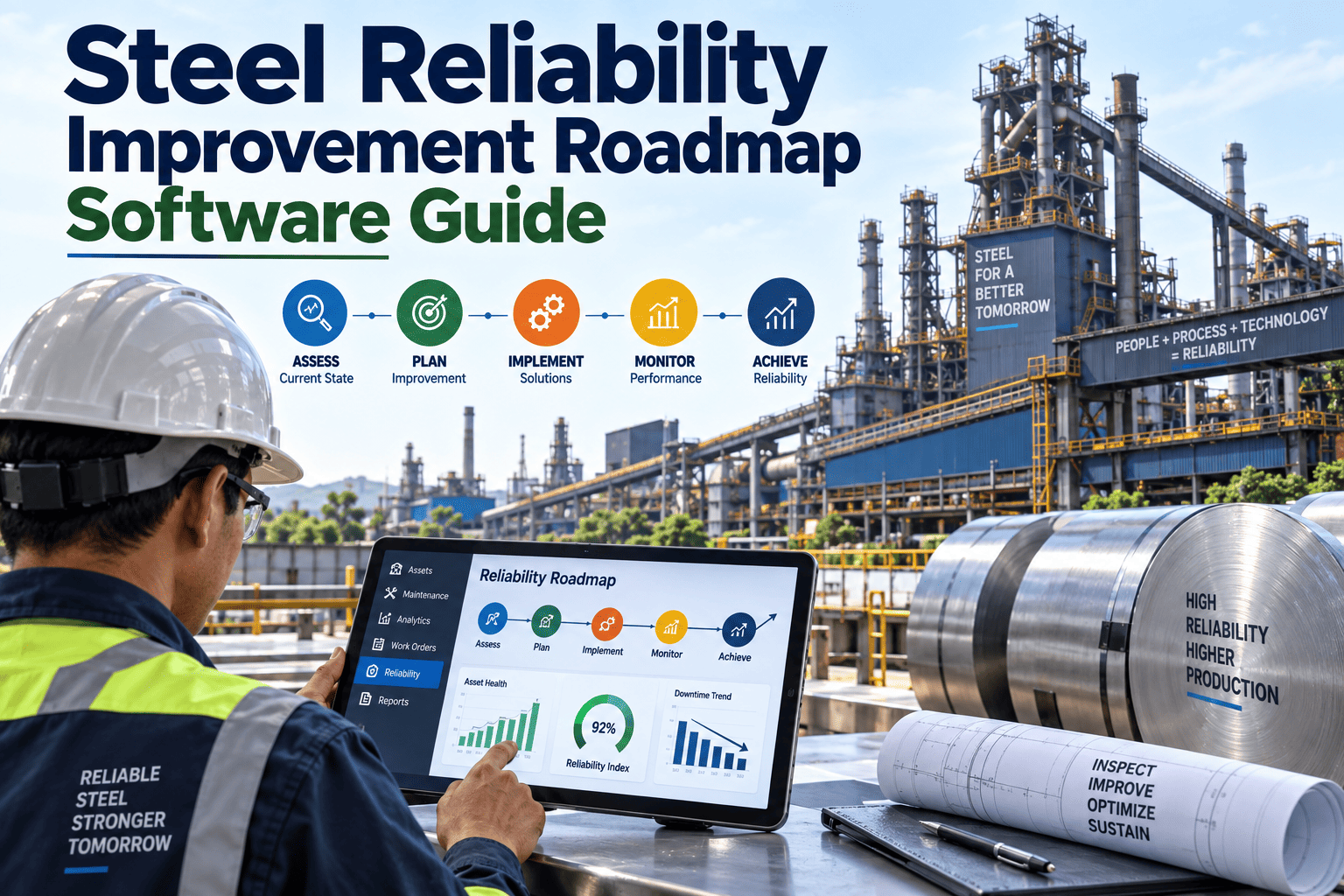
When a maintenance director asks "what is our plan for the next eighteen months," too many steel plants answer with a stack of RCA reports, a PM binder, and a capex wishlist that were never sequenced into one...
Read More
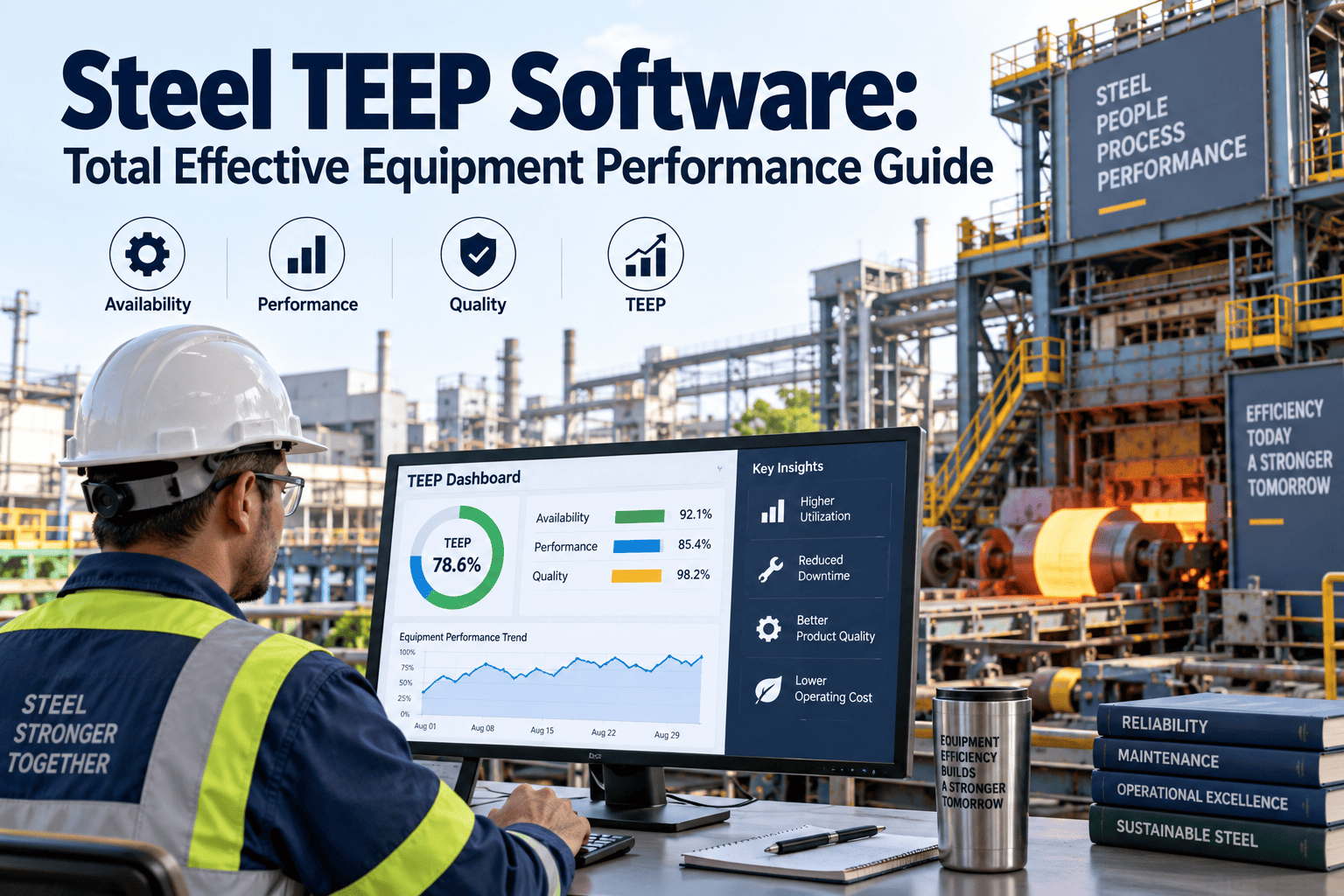
A rolling mill can post a flattering ninety percent OEE for the week and still be sitting idle more often than it is running, because OEE only ever looks at the hours the plant chose to schedule. Total Effective...
Read More
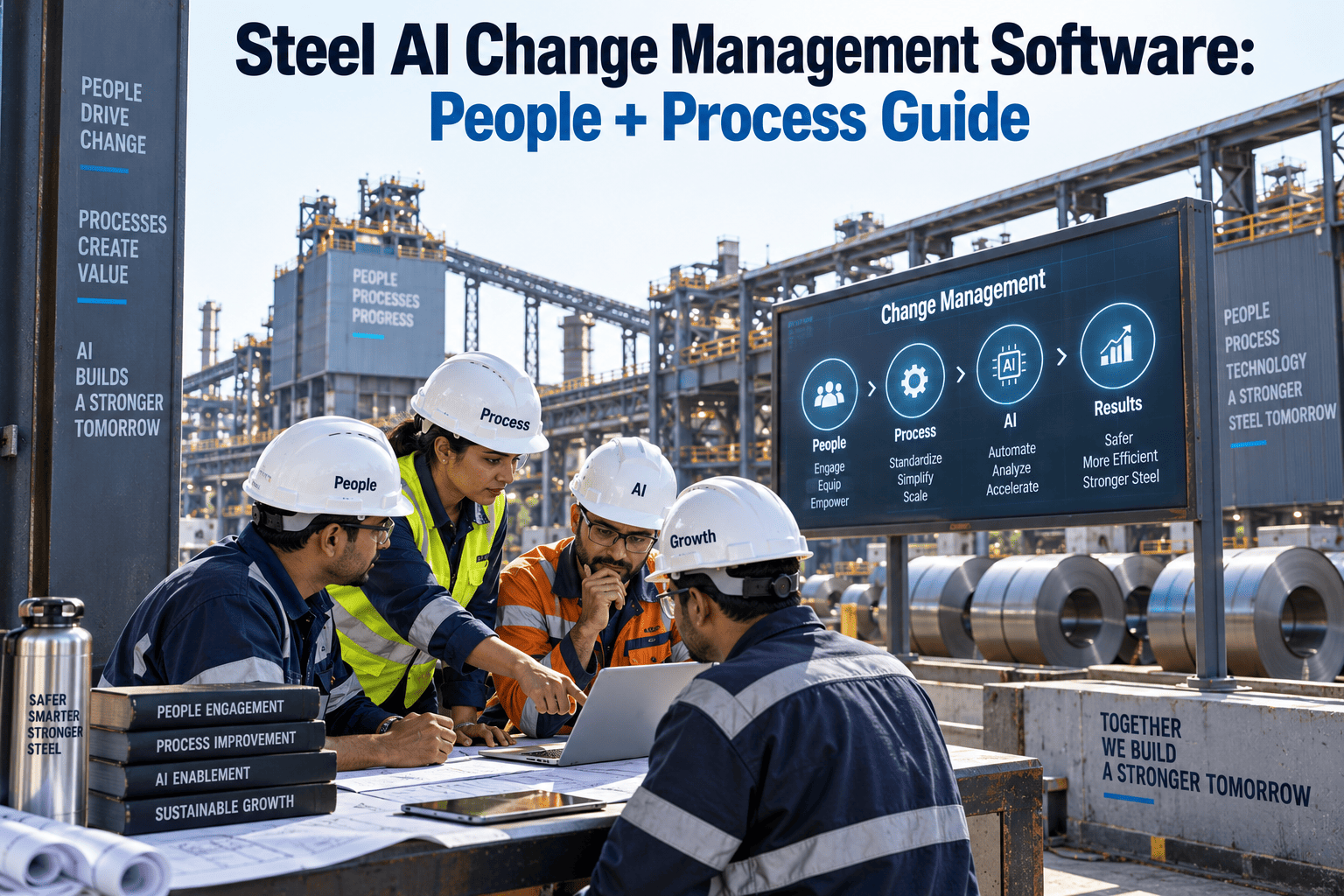
When a plant director tells the board that AI adoption has reached three use cases after eighteen months of investment, the follow-up question is rarely about the algorithm. Steel producers that study their own...
Read More
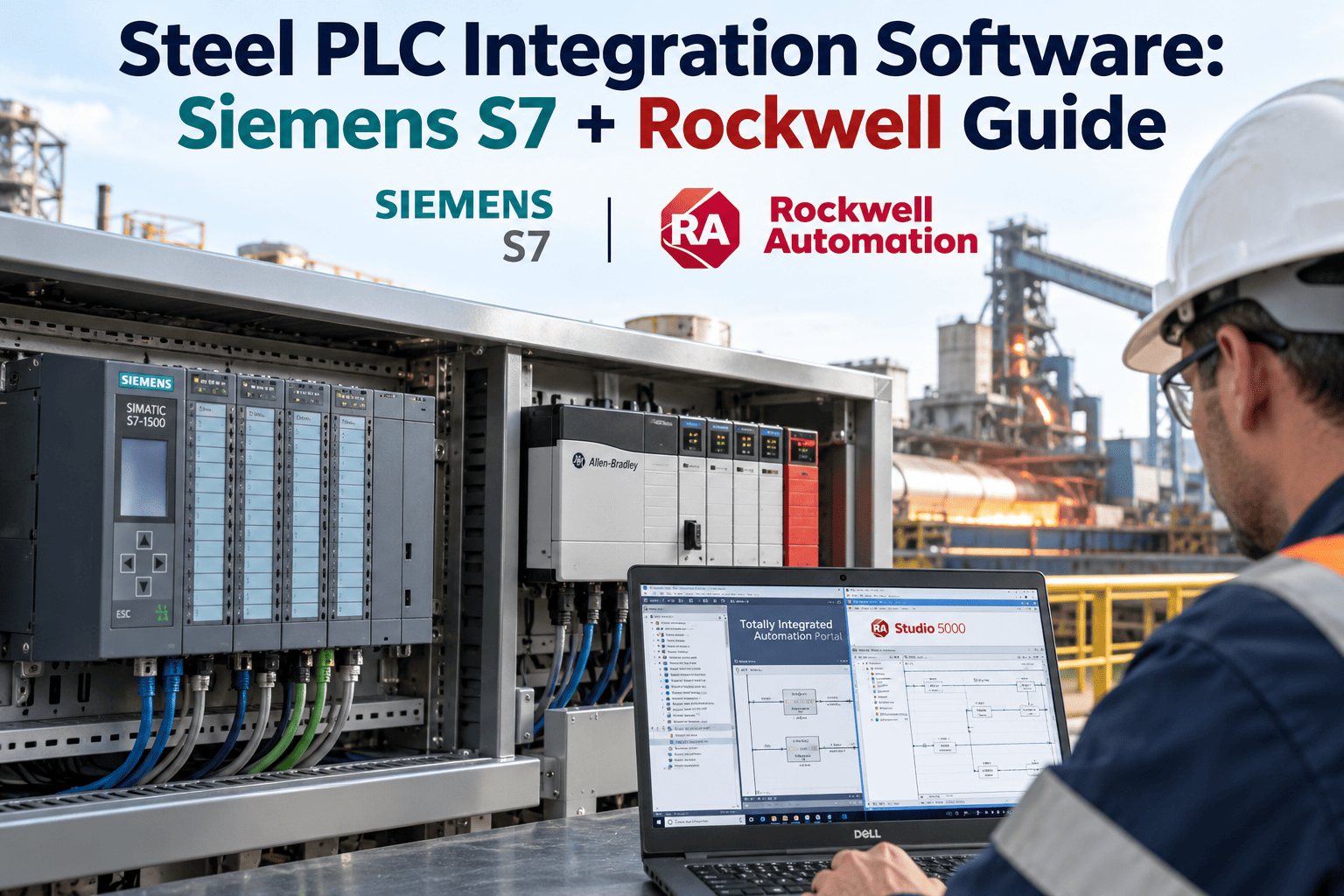
Every steel plant floor tells the same story: a Siemens S7 controller running the rolling mill, an Allen-Bradley ControlLogix driving the caster, and a Mitsubishi PLC tucked away on a decades-old annealing line —...
Read More
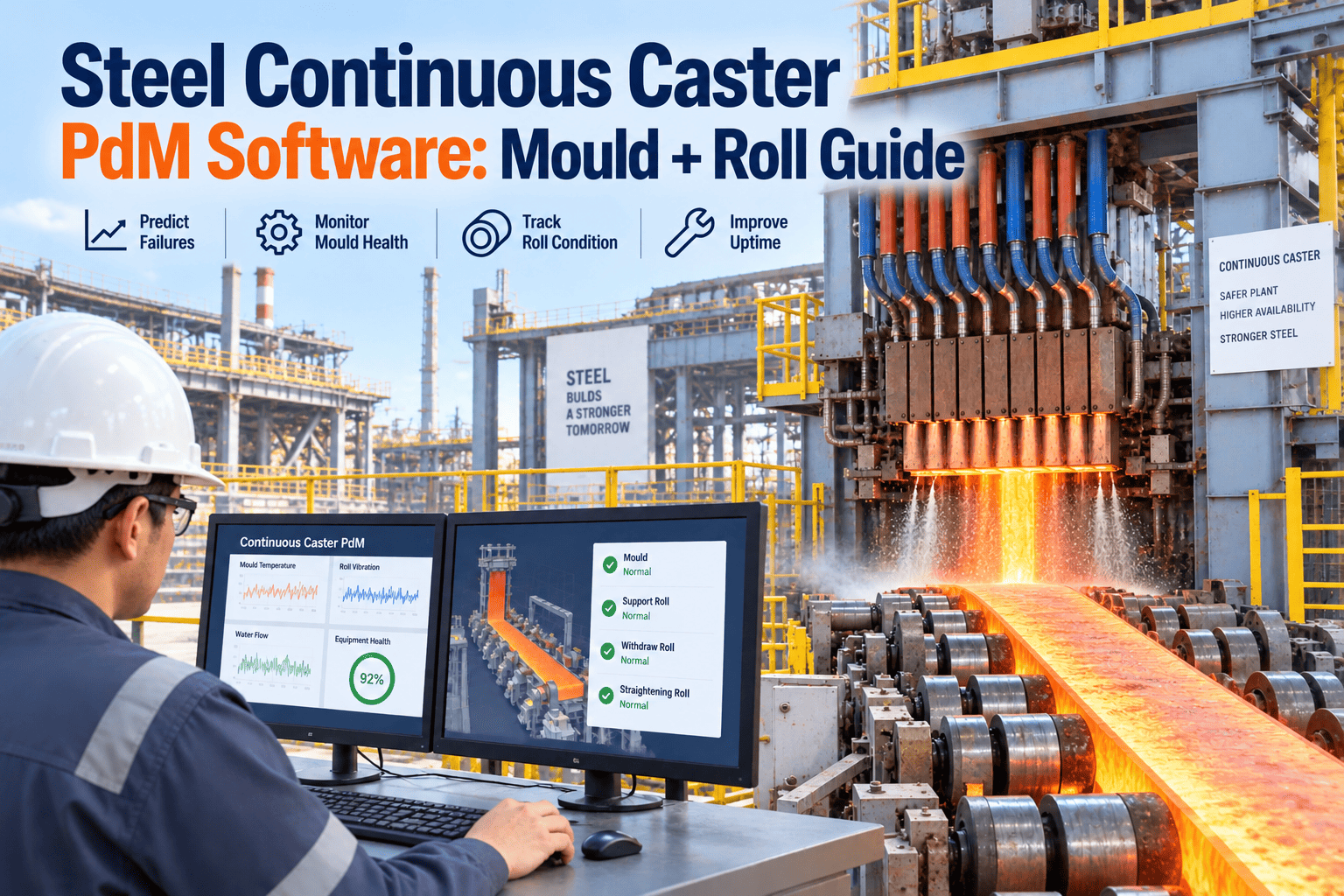
A continuous caster rarely fails without warning. Long before a breakout drops molten steel into the containment pit, the machine has already been telling on itself — a mould thermocouple drifting a few degrees per...
Read More
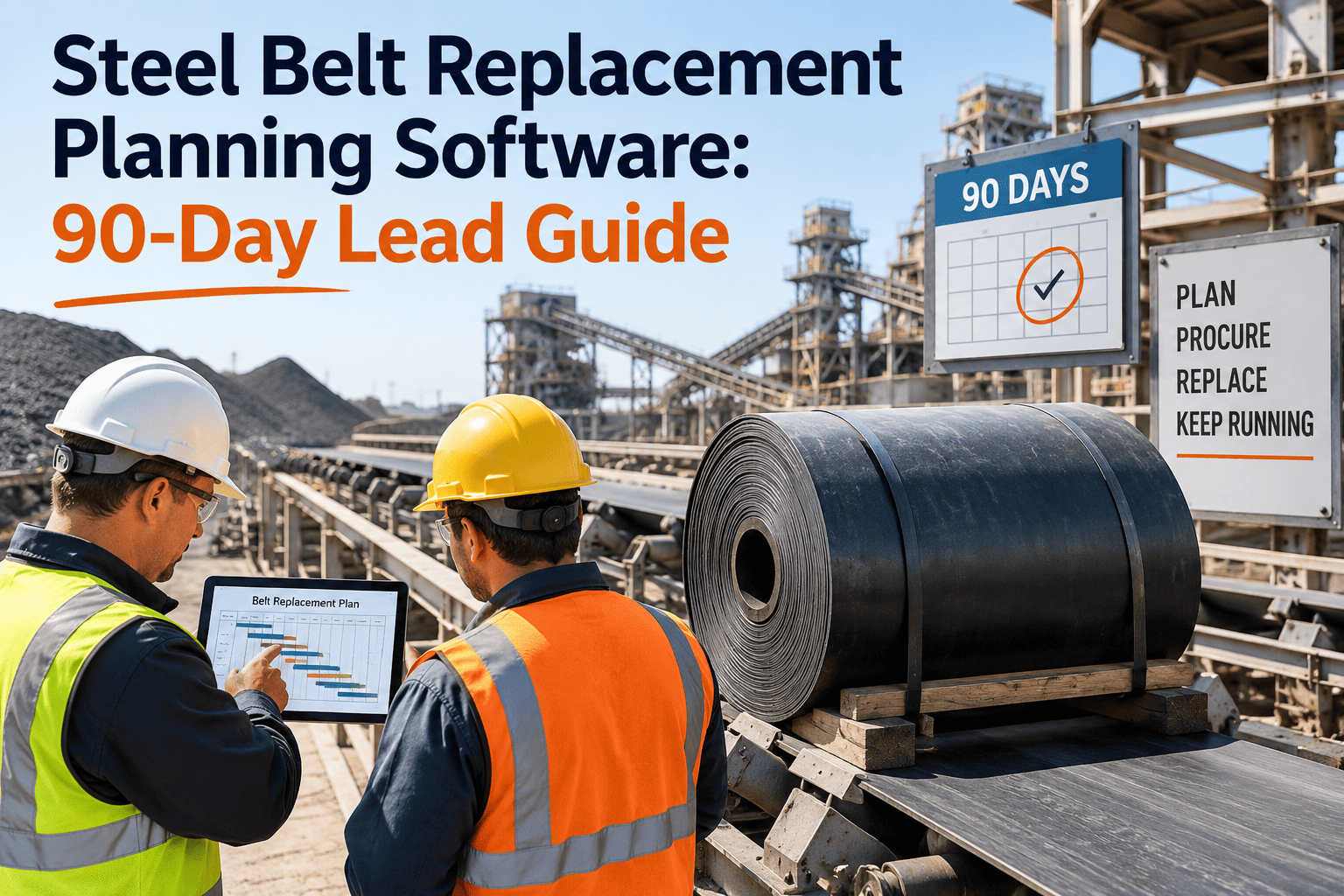
A conveyor belt replacement on a steel plant's ore, coke, or sinter line is never a same-week job. Custom-width, high-tensile belting is built to order, not pulled off a warehouse shelf, and a fabricator's...
Read More
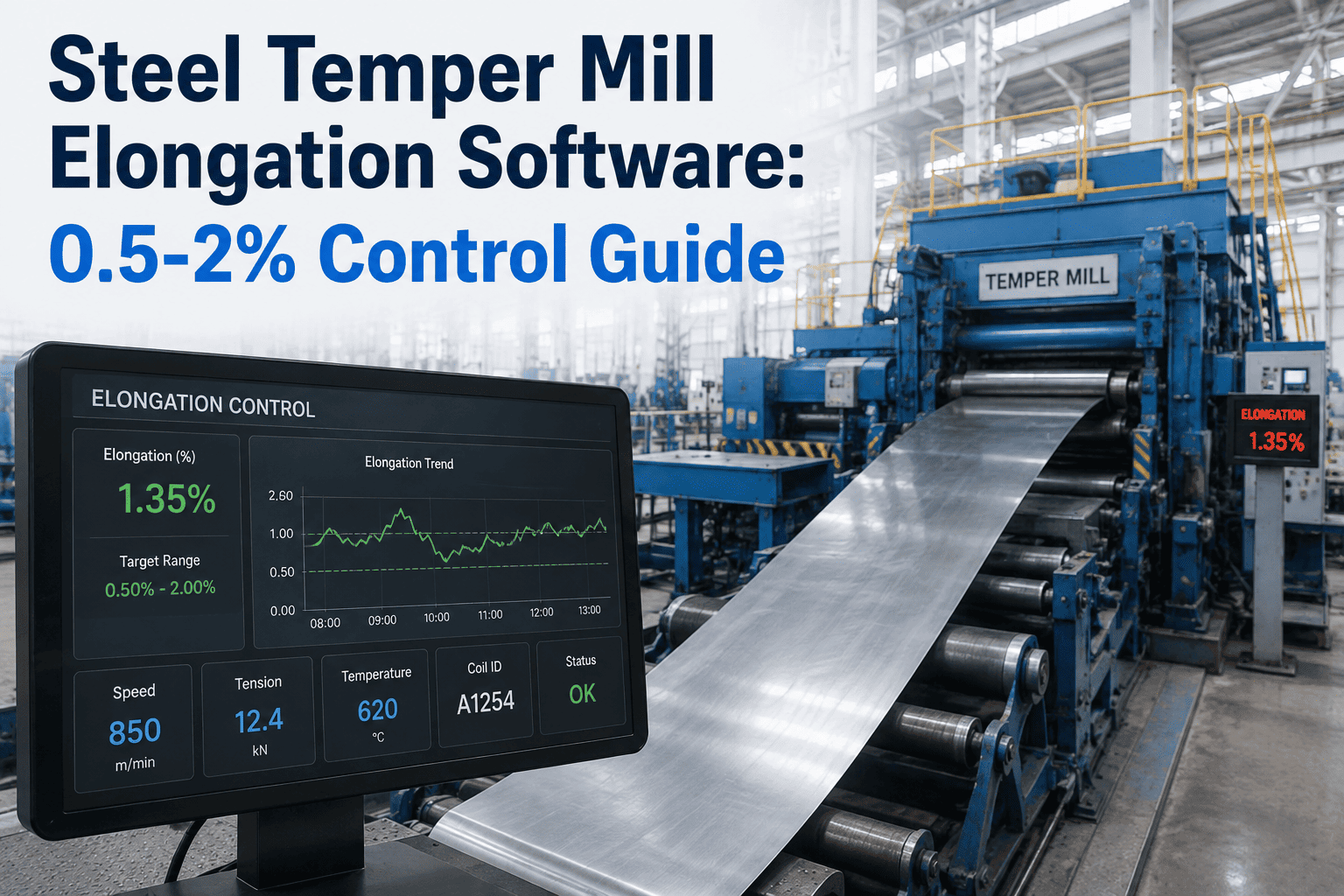
A temper mill applies somewhere between 0.5 and 2 percent elongation to a coil, and that number is one of the most consequential quantities in the entire cold mill — not because the reduction is large, it isn't,...
Read More
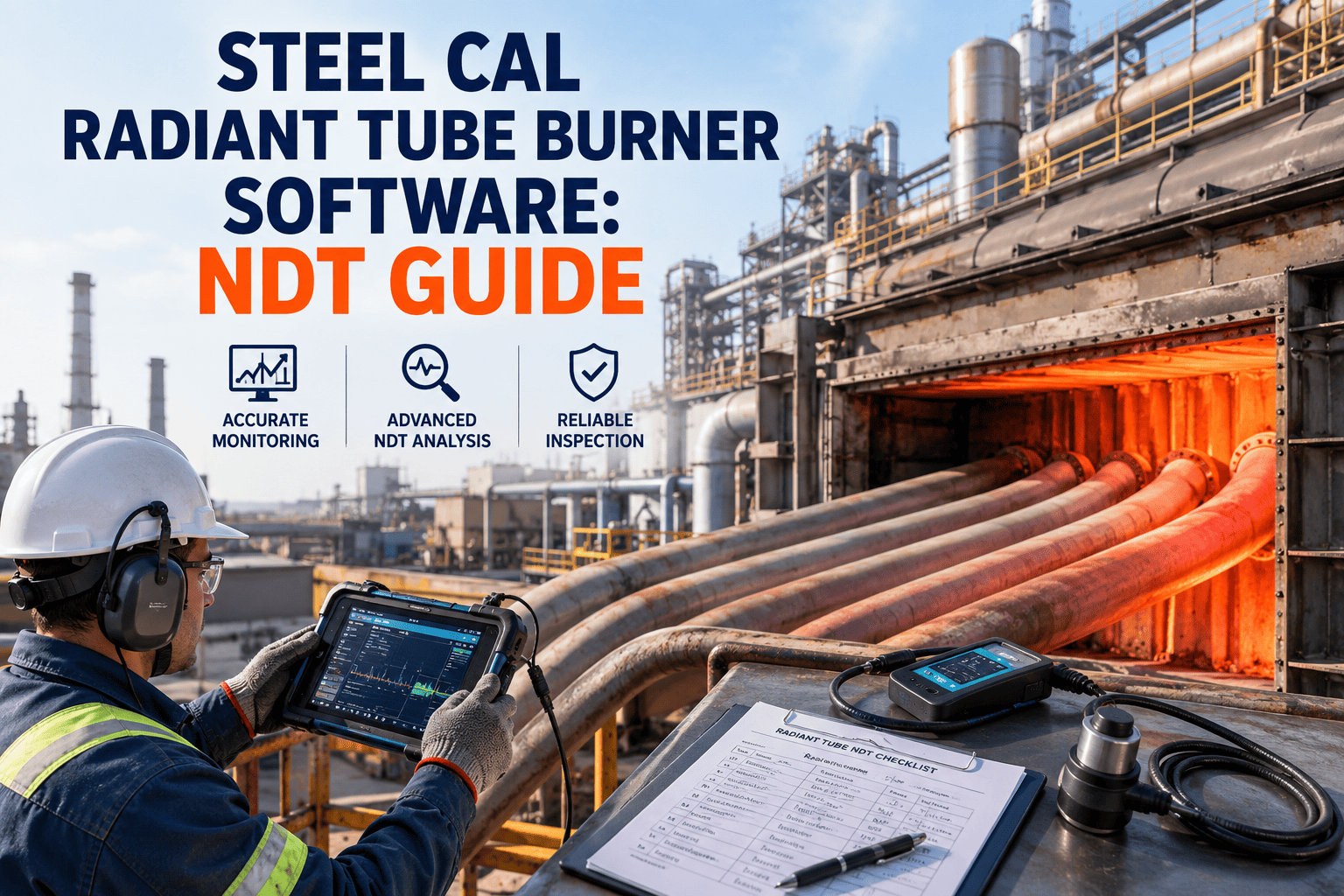
A radiant tube on a continuous annealing line runs at roughly 900 to 920 degrees Celsius, with the tube wall itself running fifty to a hundred degrees hotter than the strip it's heating, day after day, for years....
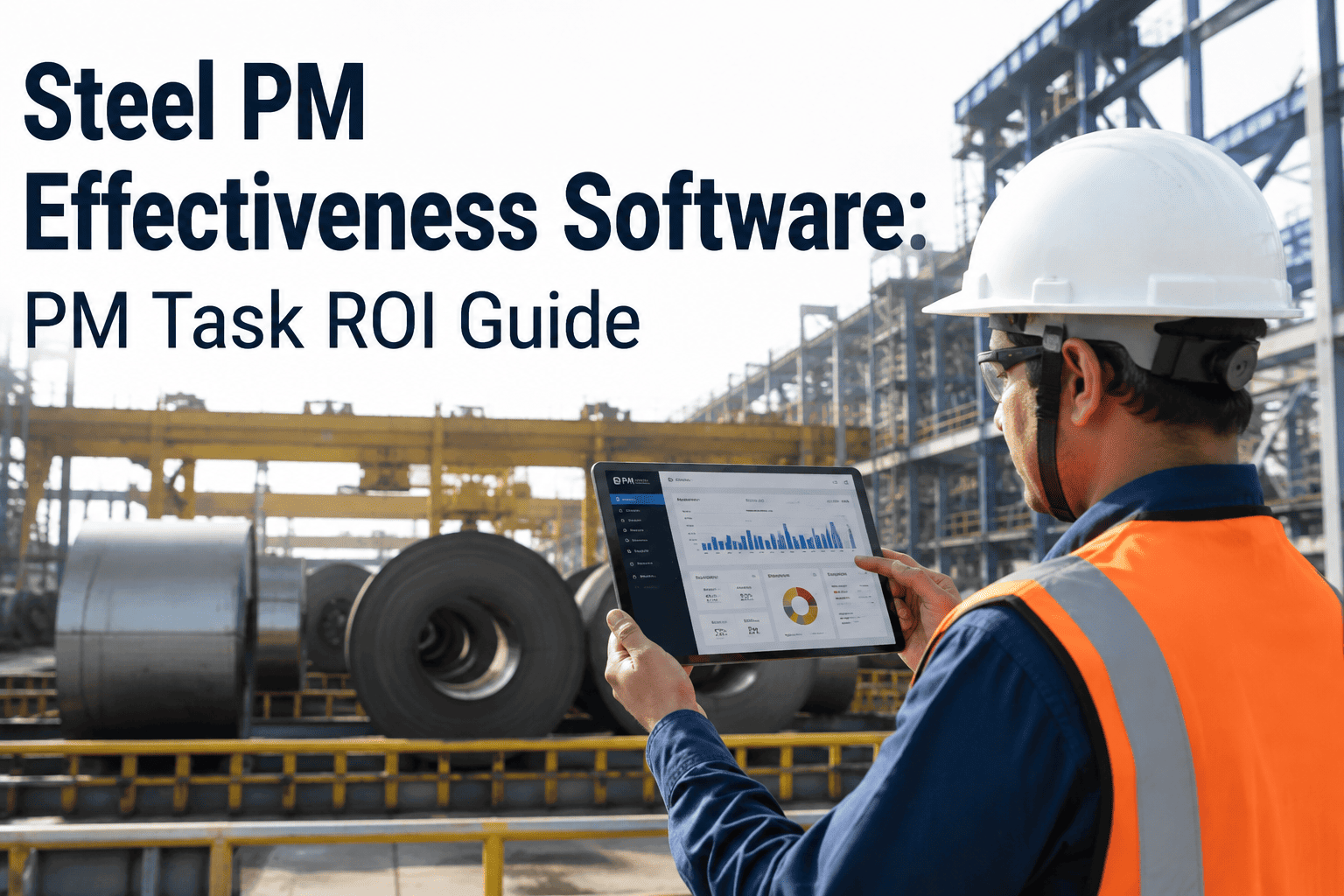
Read More
A steel plant running eight thousand PM tasks a year looks disciplined on paper — schedule compliance sits at 95%, technicians are busy every shift, and the CMMS dashboard reports green across the board. None of...
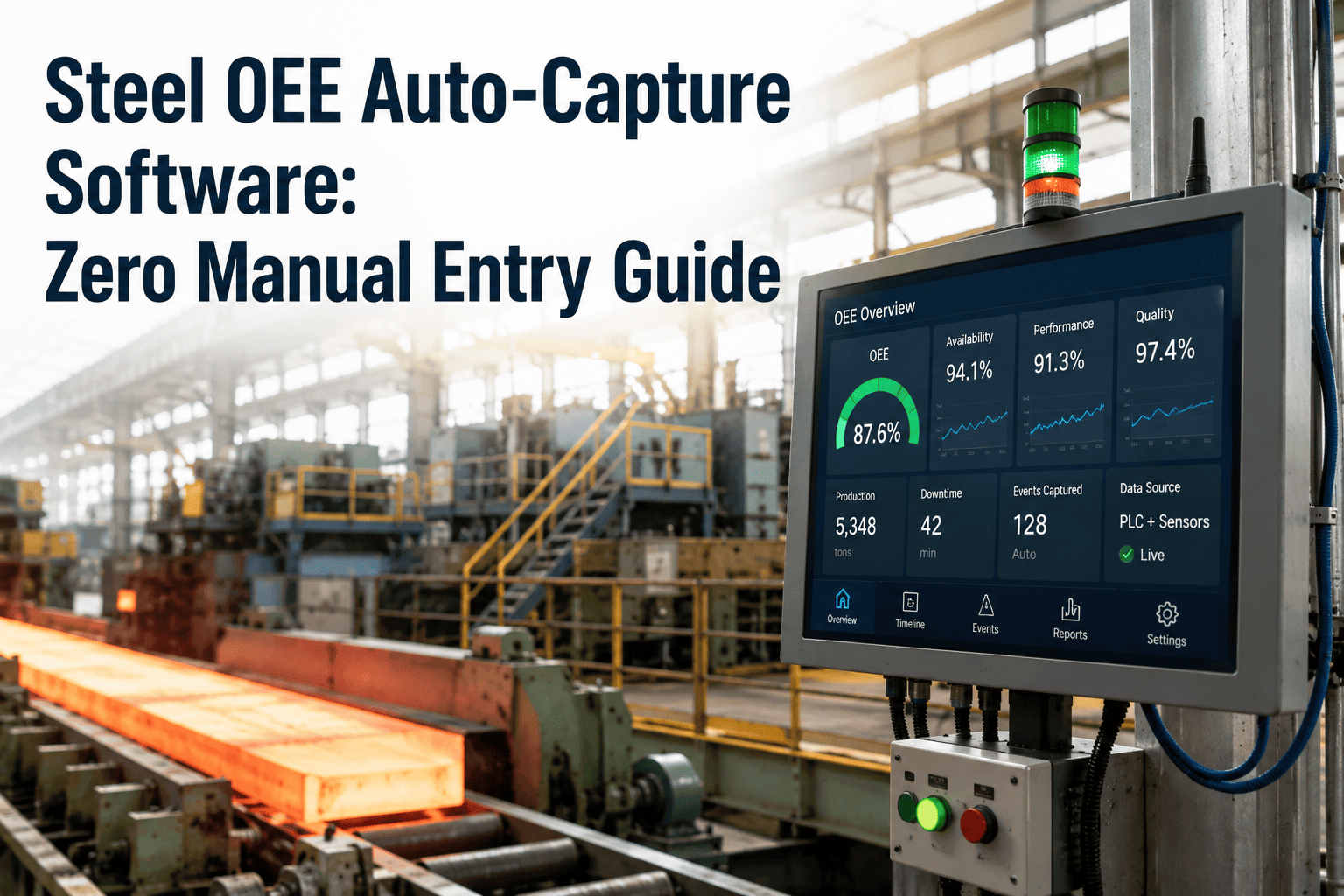
Read More
A steel plant that tracks OEE on paper is not tracking OEE — it is tracking whatever the operator remembered to write down at the end of a twelve-hour shift. Manual logs typically capture only 60 to 70 percent of...
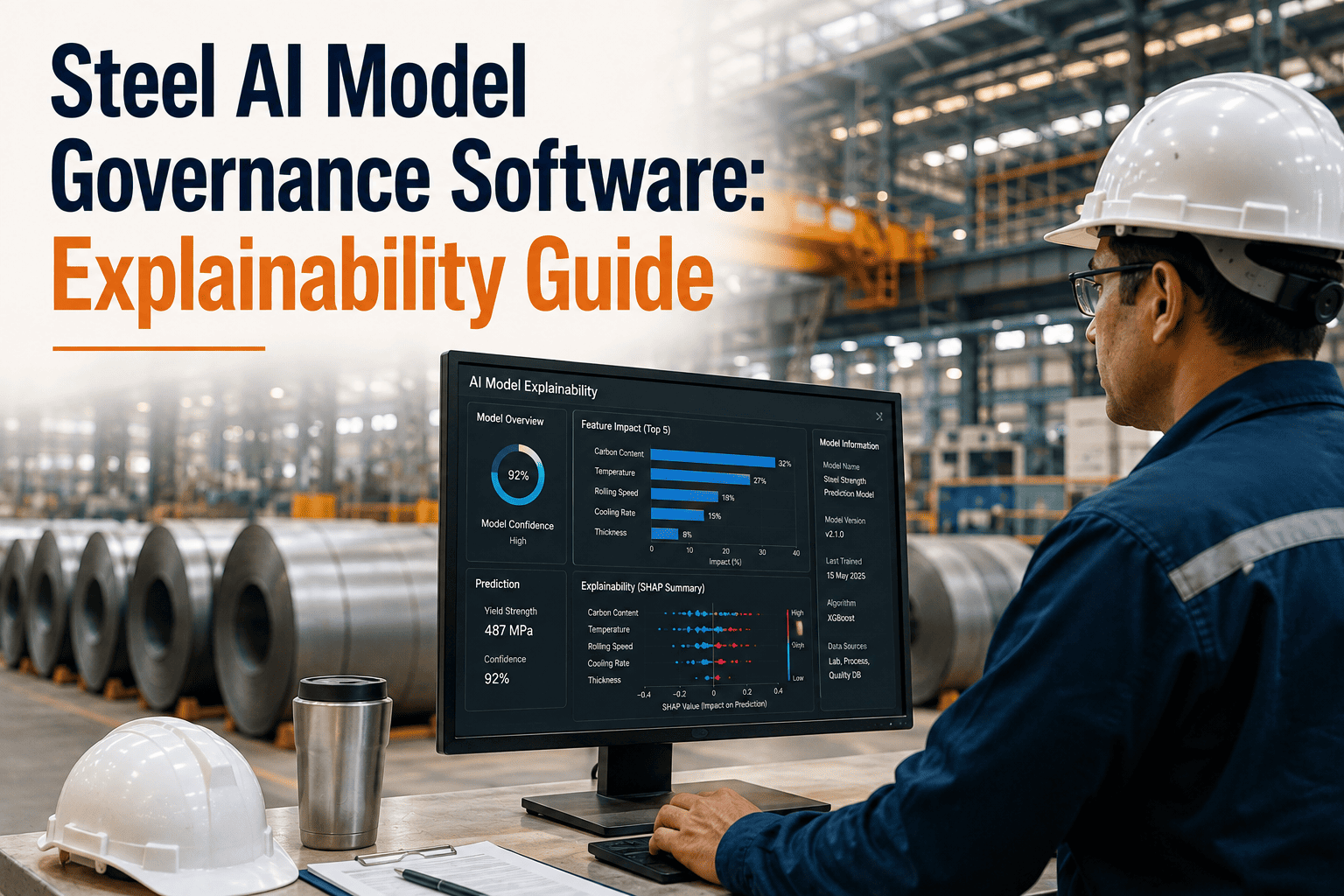
Read More
When a steel plant's predictive maintenance model recommends pulling a caster roll two weeks early, or a vision system flags a slab defect and stops the line, somebody eventually has to answer a hard question: why...
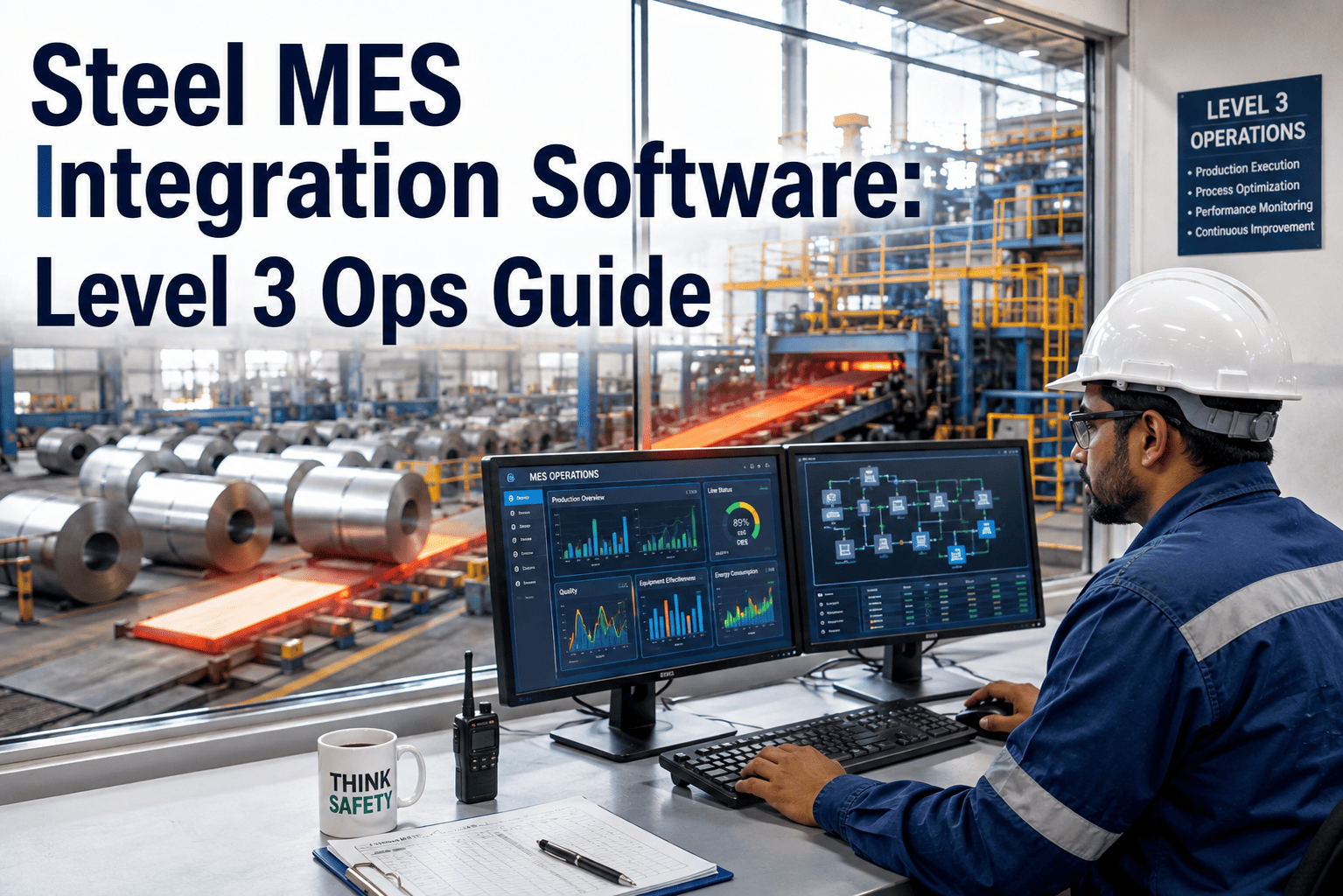
Read More
Steel plants run two Level 3 systems that were never built to talk to each other. The MES — GE Proficy, Wonderware MES, or Siemens Opcenter — owns the cast schedule, the rolling program, and the OEE number reported...
Read More
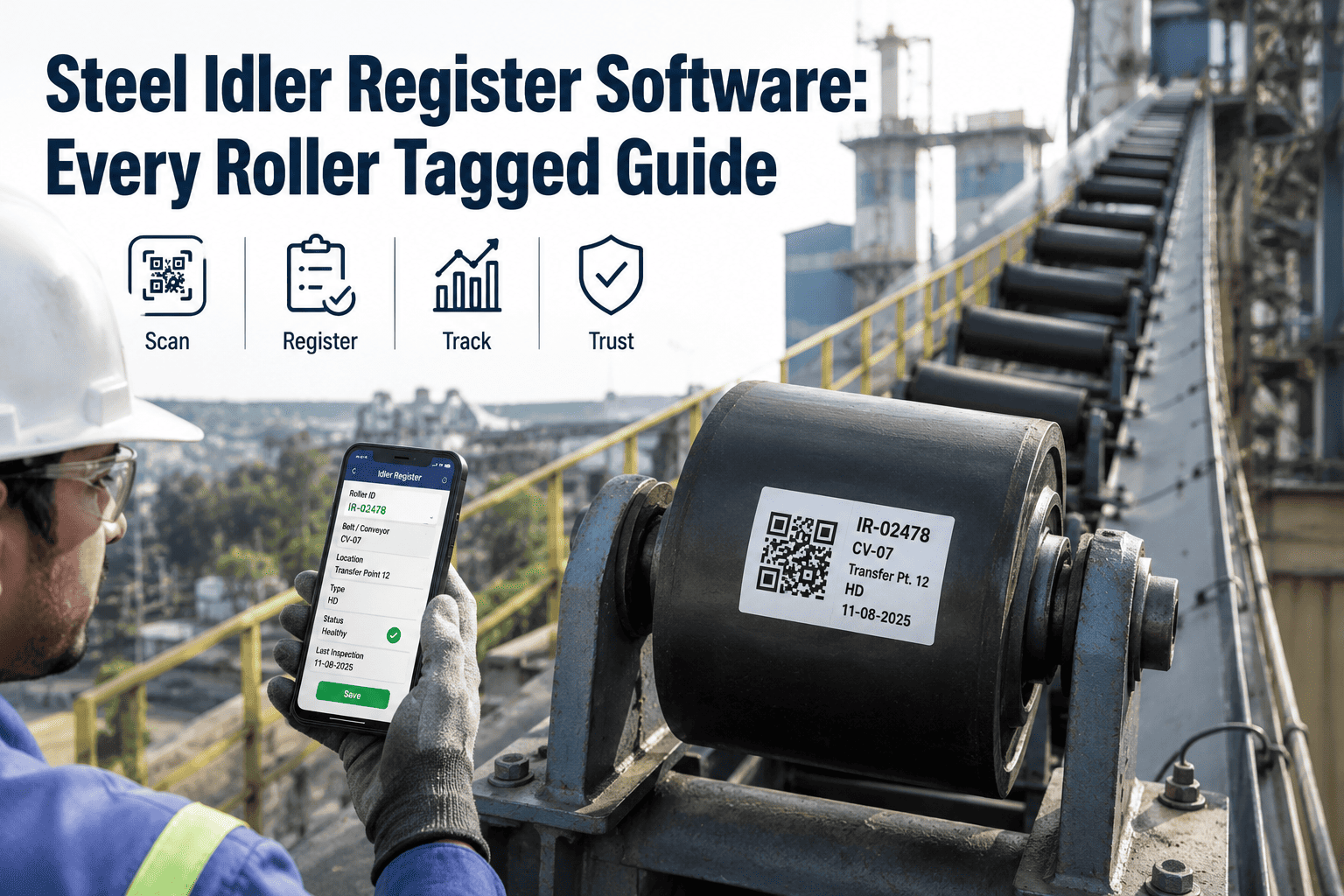
Walk any integrated steel plant's ore yard, sinter strand, or hot metal transfer conveyor and you will pass thousands of individual idler rollers — each one a small, cheap component with no name, no history, and no...
Read More
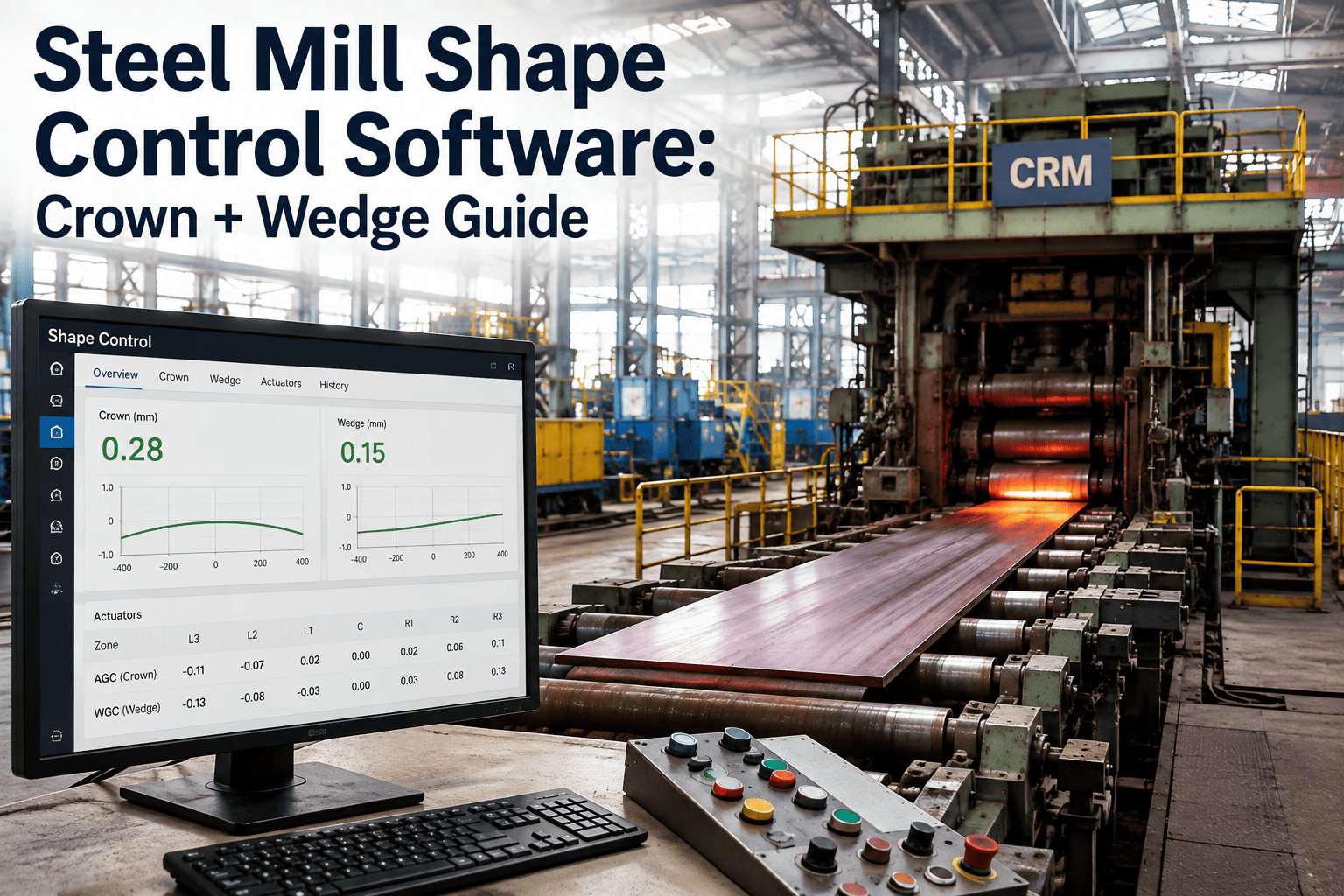
A coil doesn't get rejected because a stand breaks down — it gets rejected because the roll gap quietly held a shape it shouldn't have, and nobody caught the drift until the shapemeter flagged edge wave three...
Read More
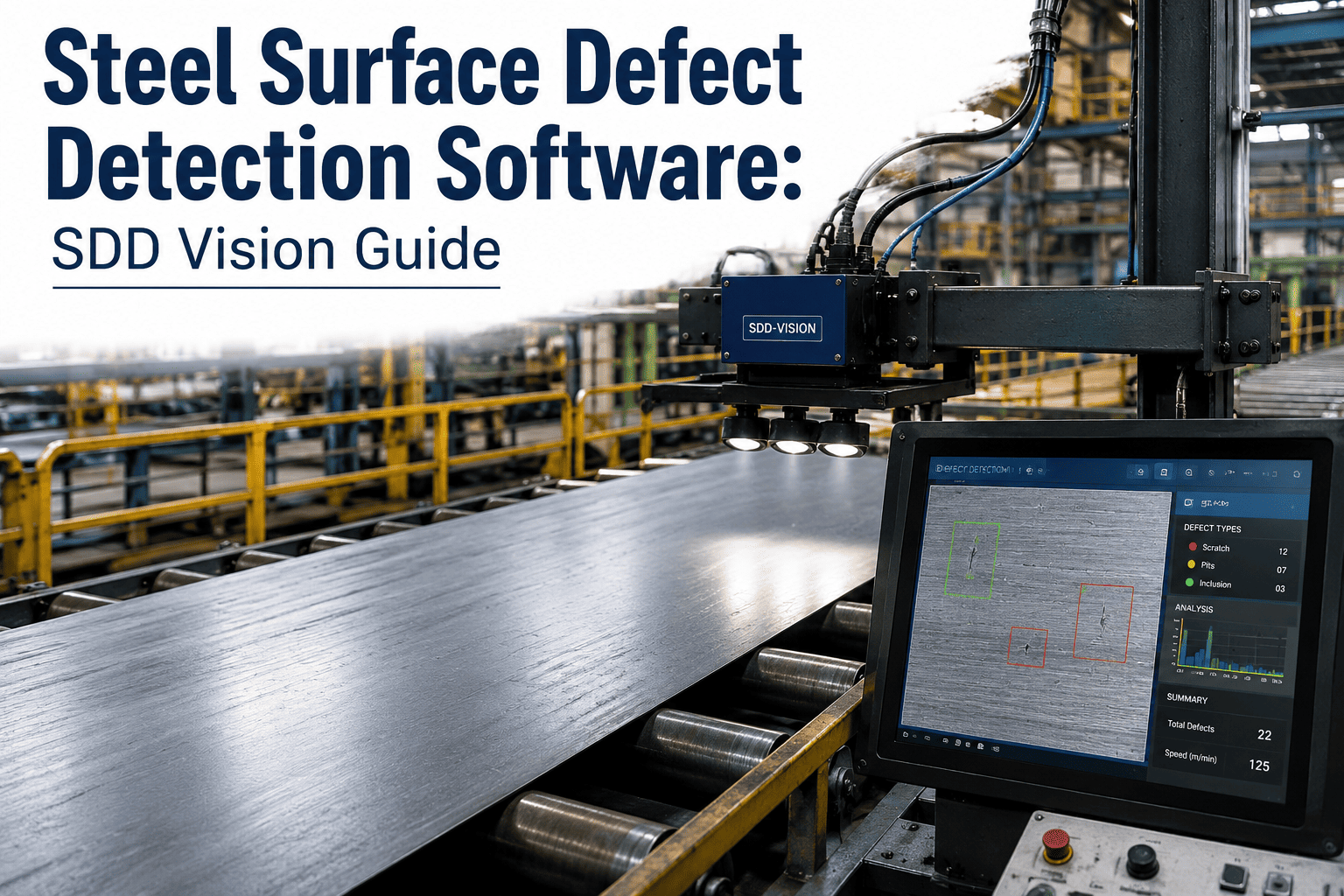
A hot strip mill can run at flawless gauge and perfect chemistry and still ship a claim-generating coil, because the defect that matters most at the end of the line is not dimensional, it is visual — a scale patch,...
Read More
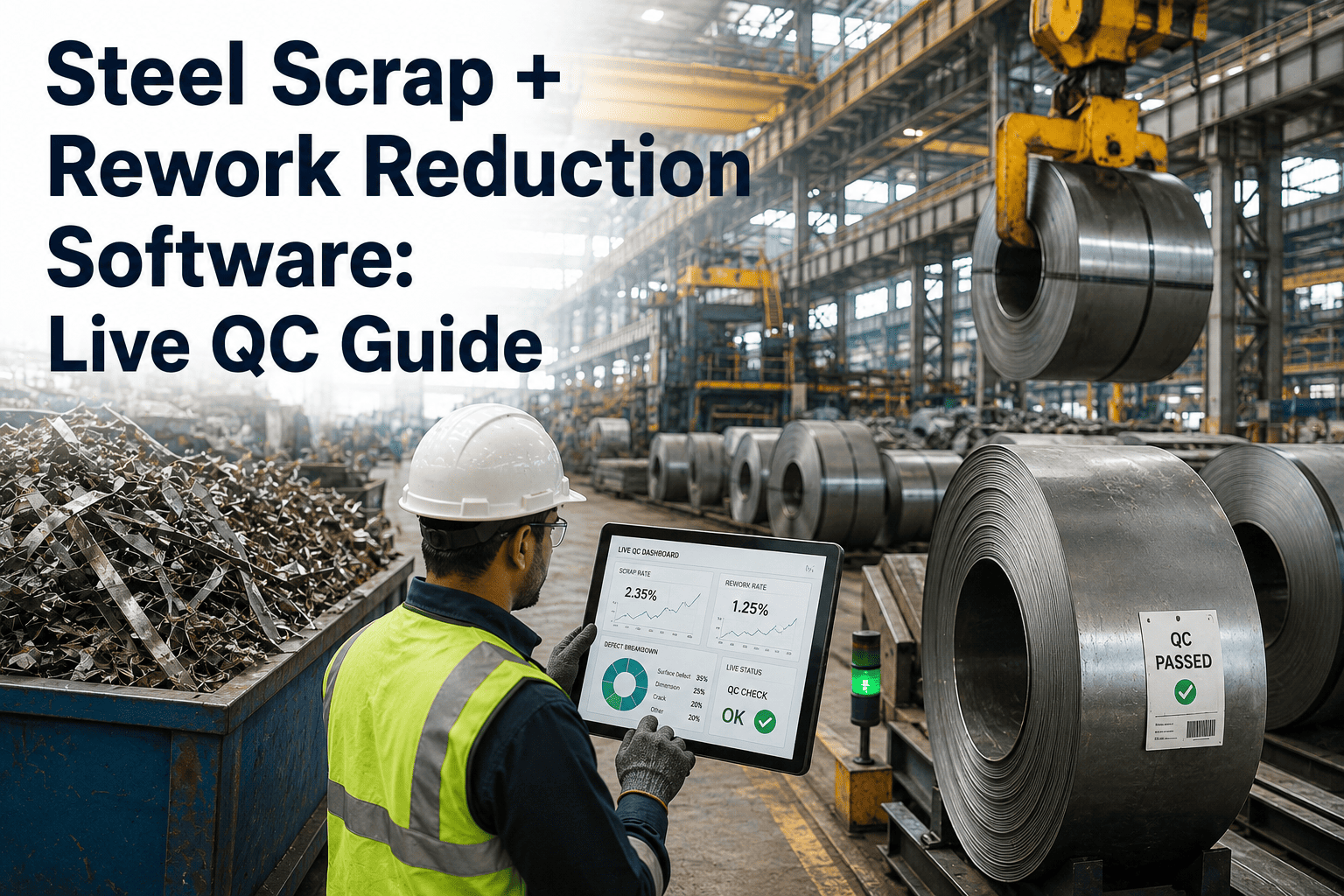
A steel plant does not lose margin the moment a coil gets rejected — it loses margin in the eighteen minutes before that, while a caster mold runs slightly cold, a rolling pass drifts off gauge, or a furnace charge...
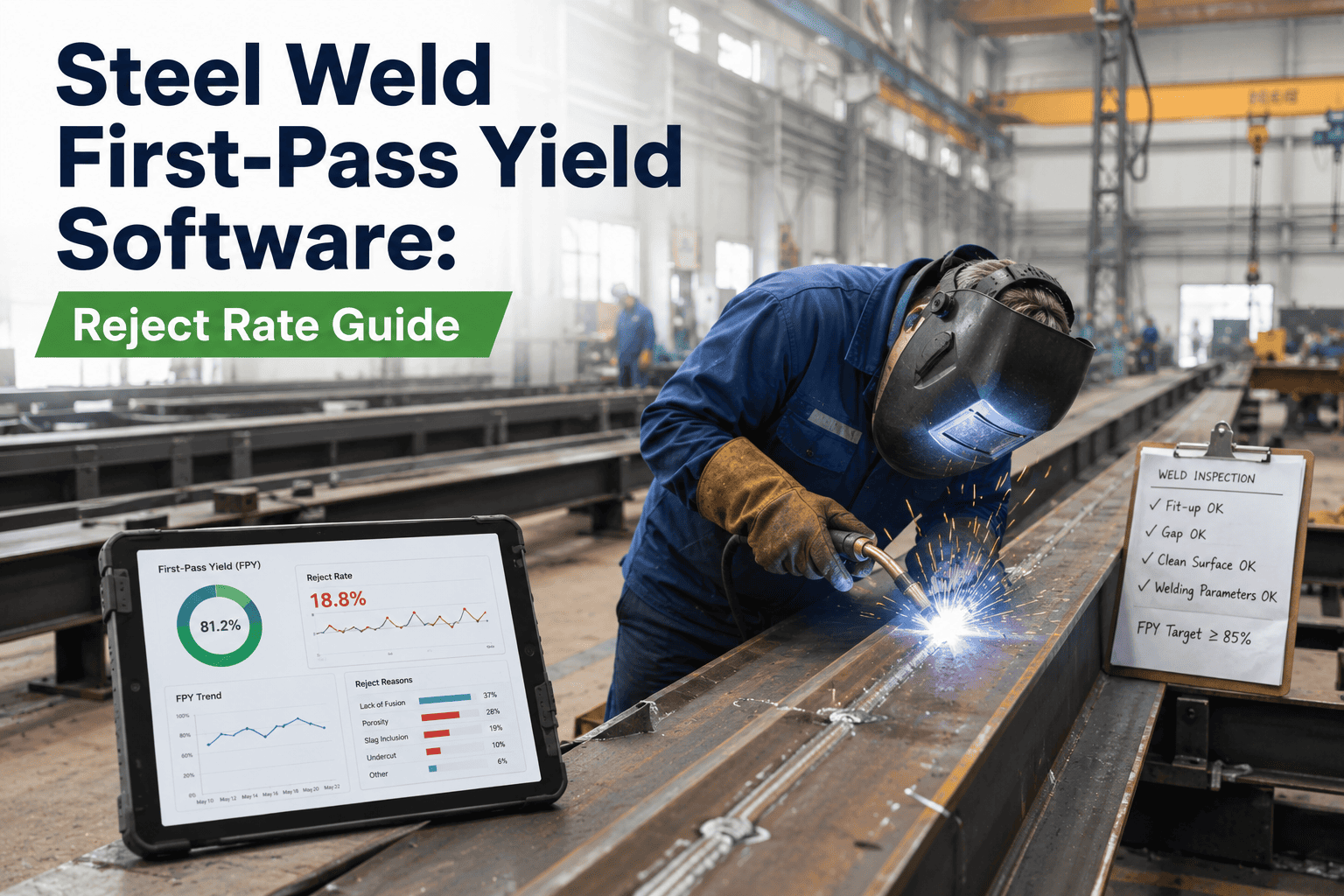
Read More
Ask five welding supervisors how their shop is performing and four of them will quote a scrap percentage from memory, not a measured first-pass yield. That gap is expensive. A pressure vessel shop running a...
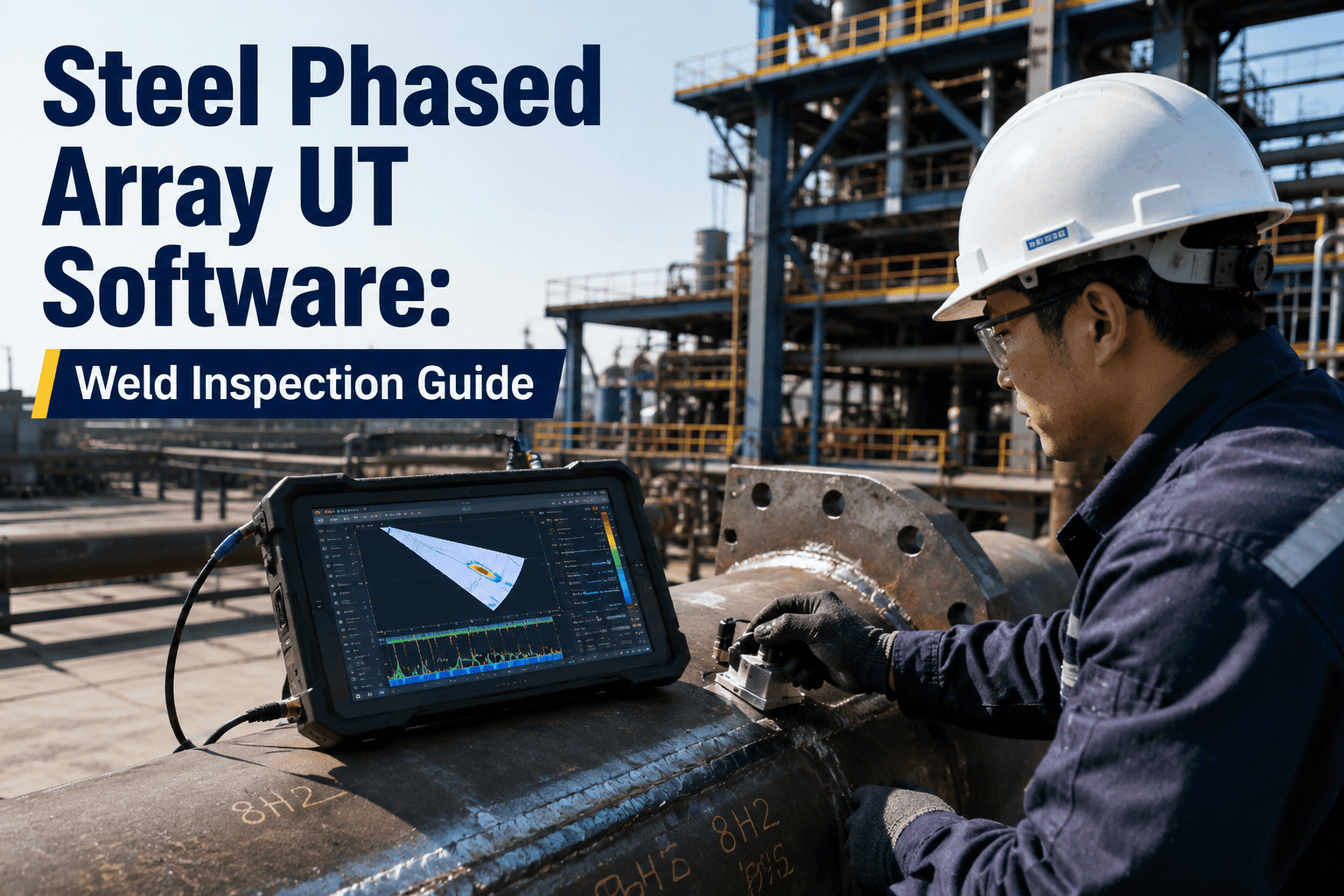
Read More
Radiography built the last fifty years of weld quality control in steel plants, but it comes with shielded enclosures, exposure permits, and film that takes hours to develop before a fabrication crew even learns...
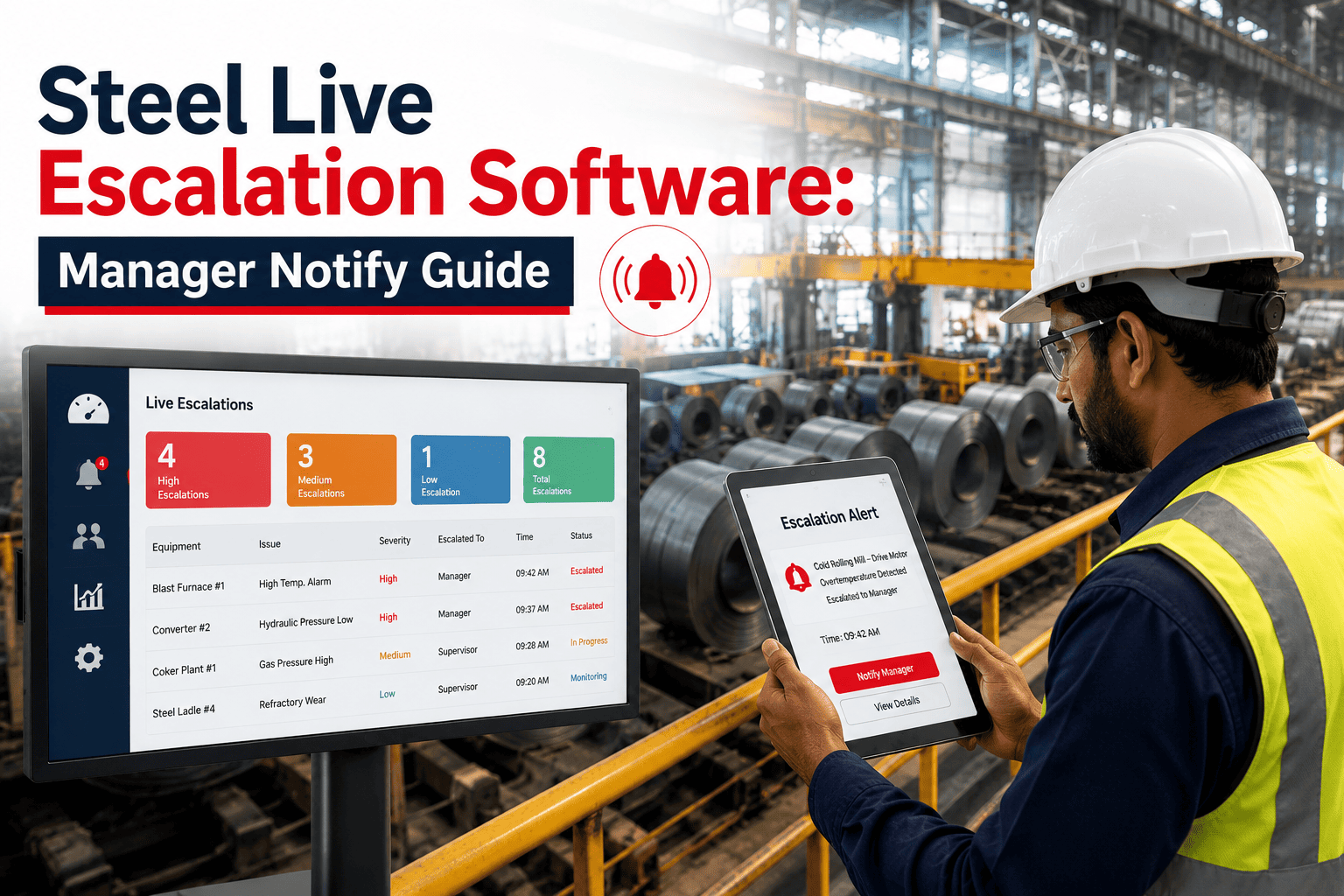
Read More
A furnace alarm sitting unacknowledged in a queue for twenty minutes on the plant floor is not a software failure — it is a missing escalation path. Most CMMS platforms generate the alert correctly and then stop,...

Read More
Steel plants running OPC UA polling architectures hit a ceiling long before their sensor counts do. A rolling mill instrumented with 300 vibration, thermal, and current sensors polled every second creates 300...
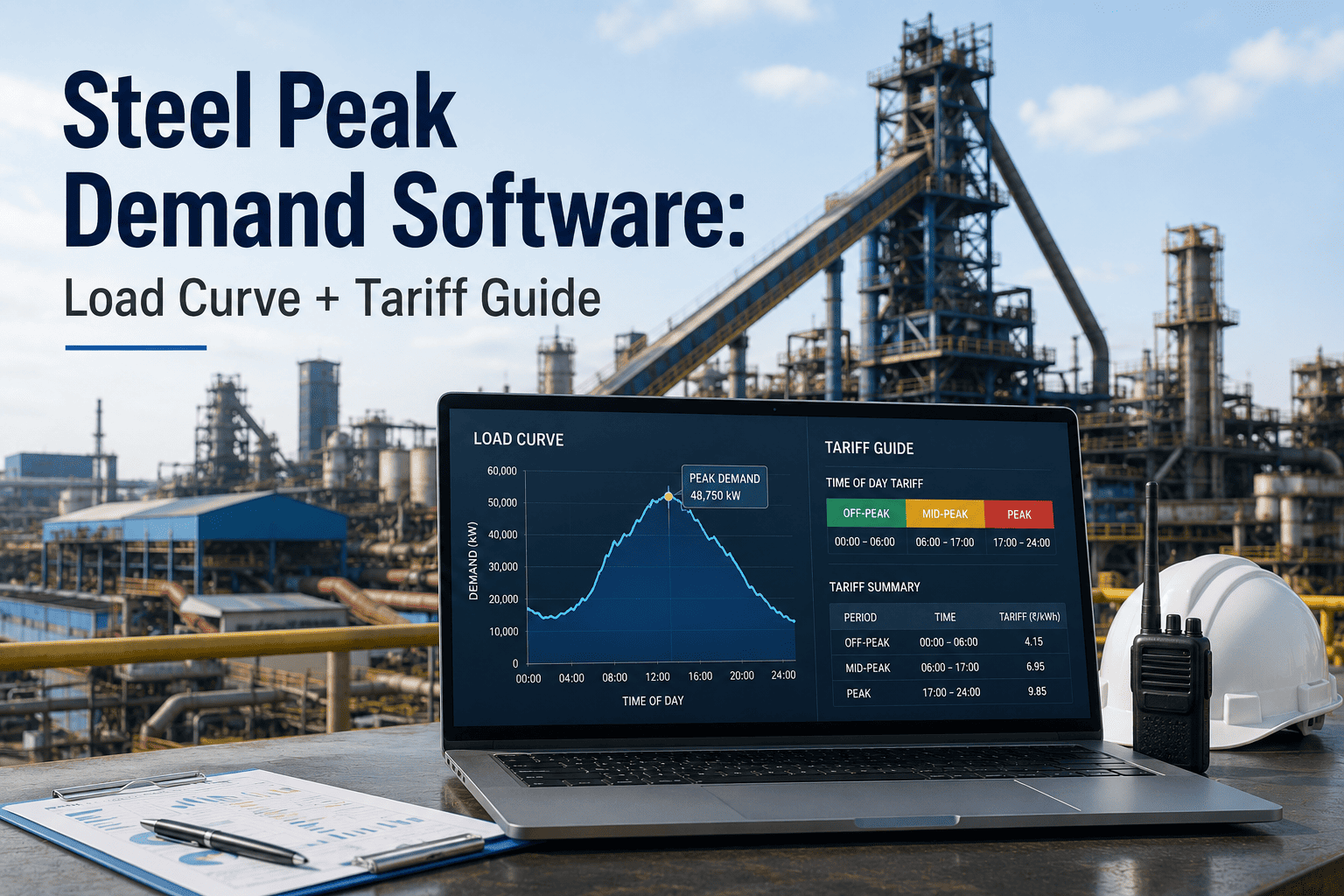
Read More
A single fifteen-minute window can set the electricity bill for an entire month, and most steel plants never see it happen — three large motors start within the same interval, a furnace and a compressor load...

Read More
The same bearing failure happens at Plant A in March, gets root-caused, fixed, and documented in a report that lives in one engineer's folder — then happens again at Plant C in October, investigated from scratch by...
Read More
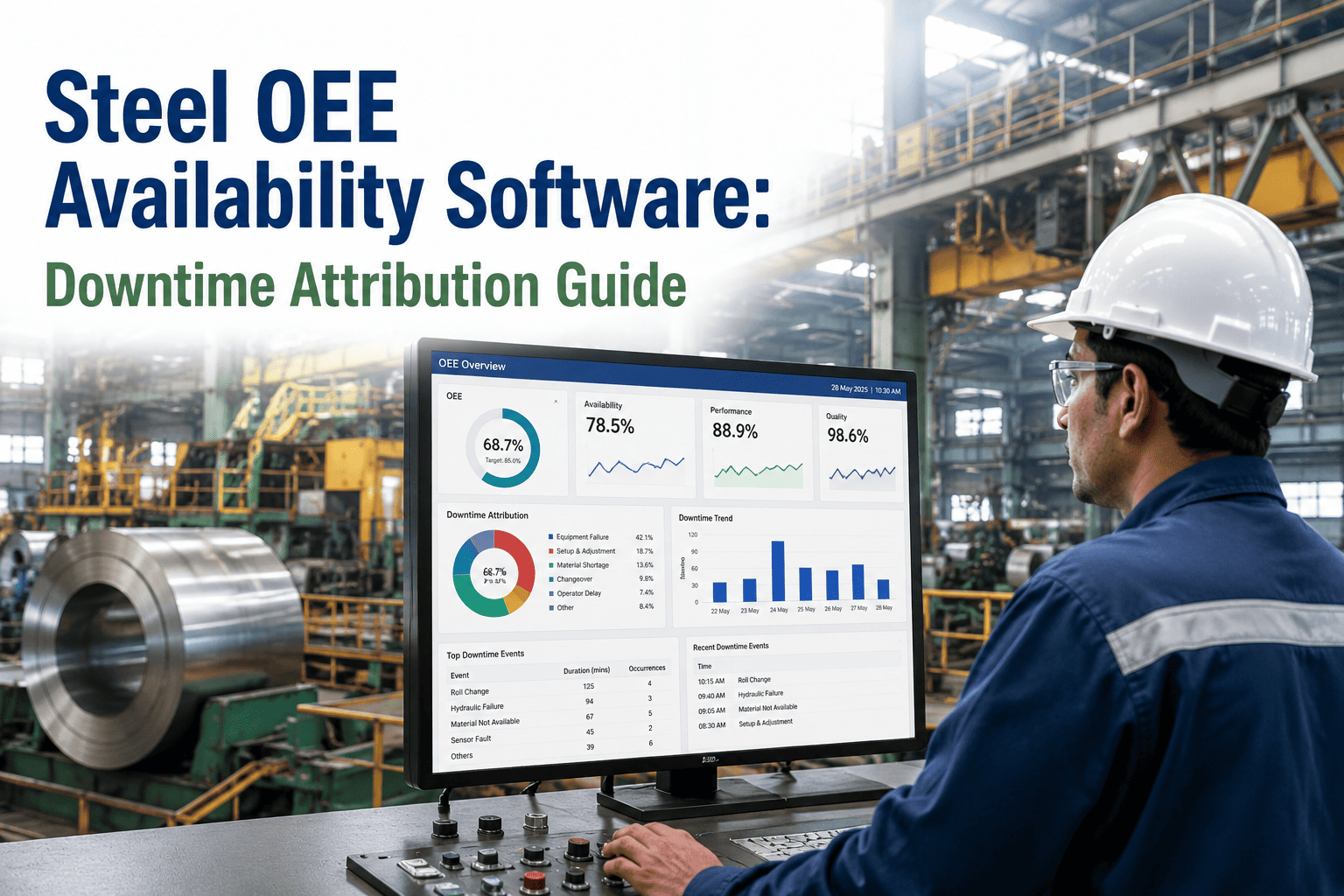
A caster runs 6.5 hours out of an 8-hour shift and the availability number reads 81%. That number alone tells a plant manager almost nothing. Was it a bearing failure, a ladle changeover that ran long, a material...
Read More
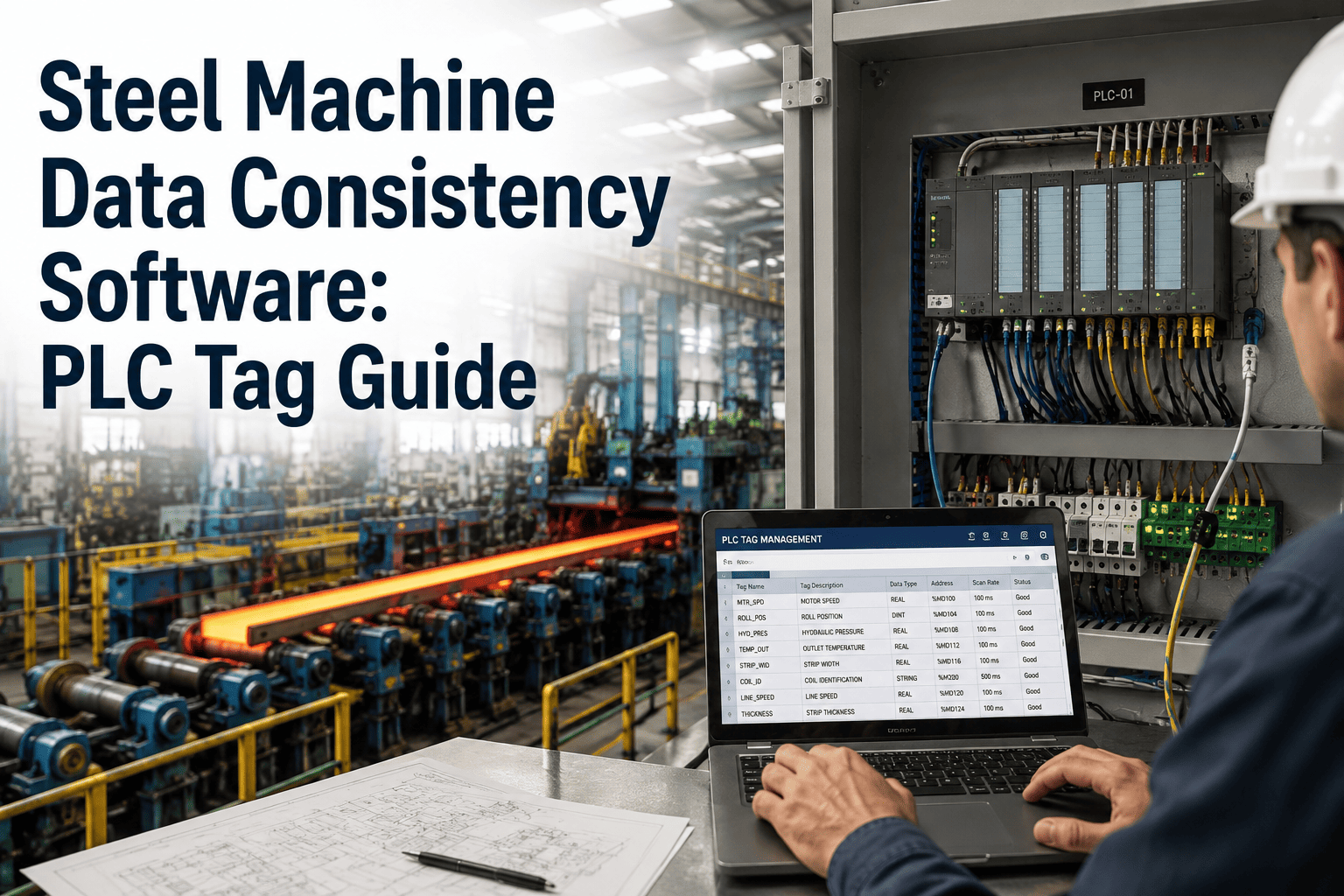
A predictive model doesn't fail because the algorithm is wrong — it fails because "Furnace_1_Temp," "FCE01_TEMP," and "F1TempPV" are three different tag names for the same signal, sitting in three different...
Read More
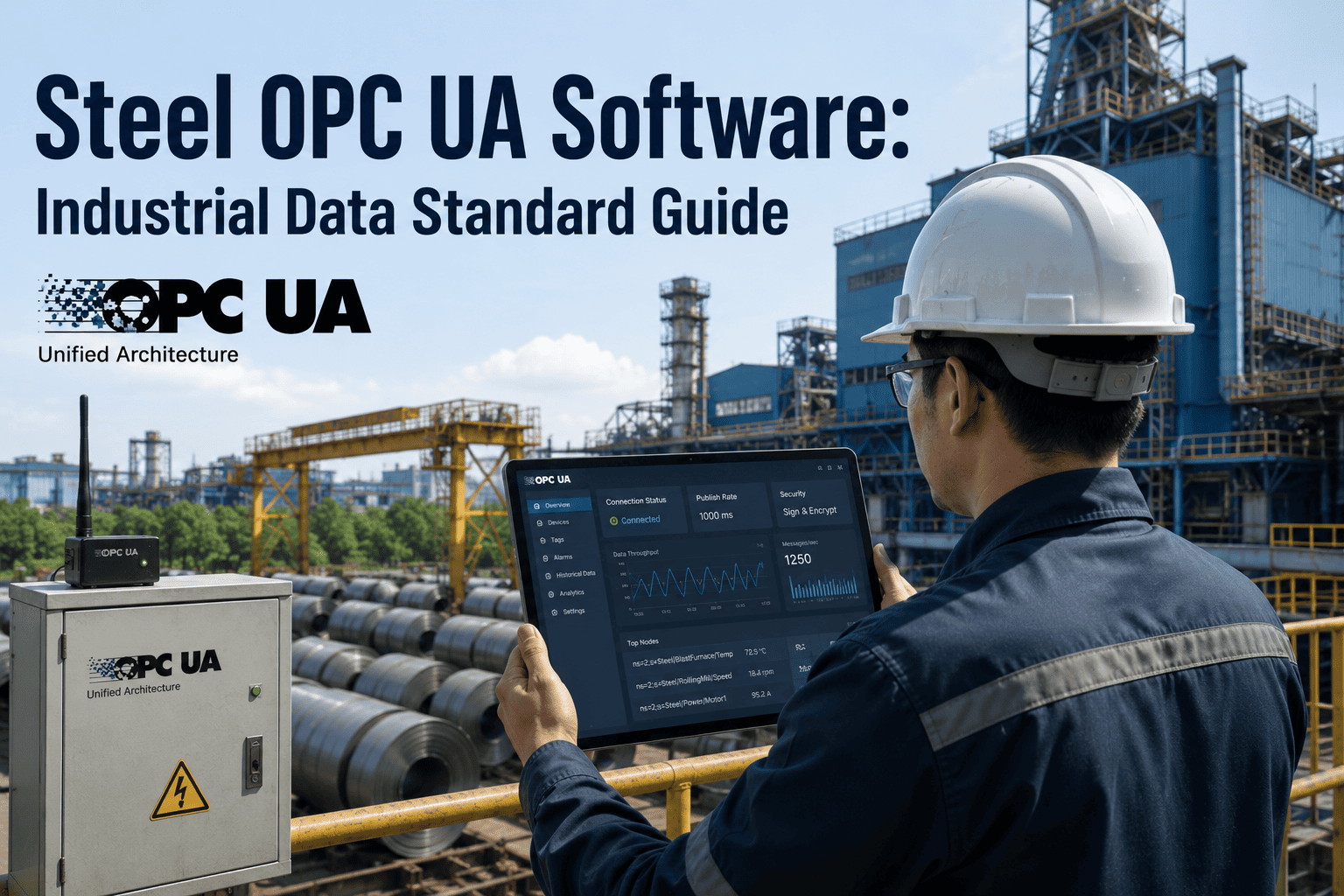
A steel plant's PLCs speak one dialect, its SCADA historian speaks another, and the CMMS on the maintenance floor speaks a third. For years the fix was custom point-to-point drivers between every pair of systems —...
Read More
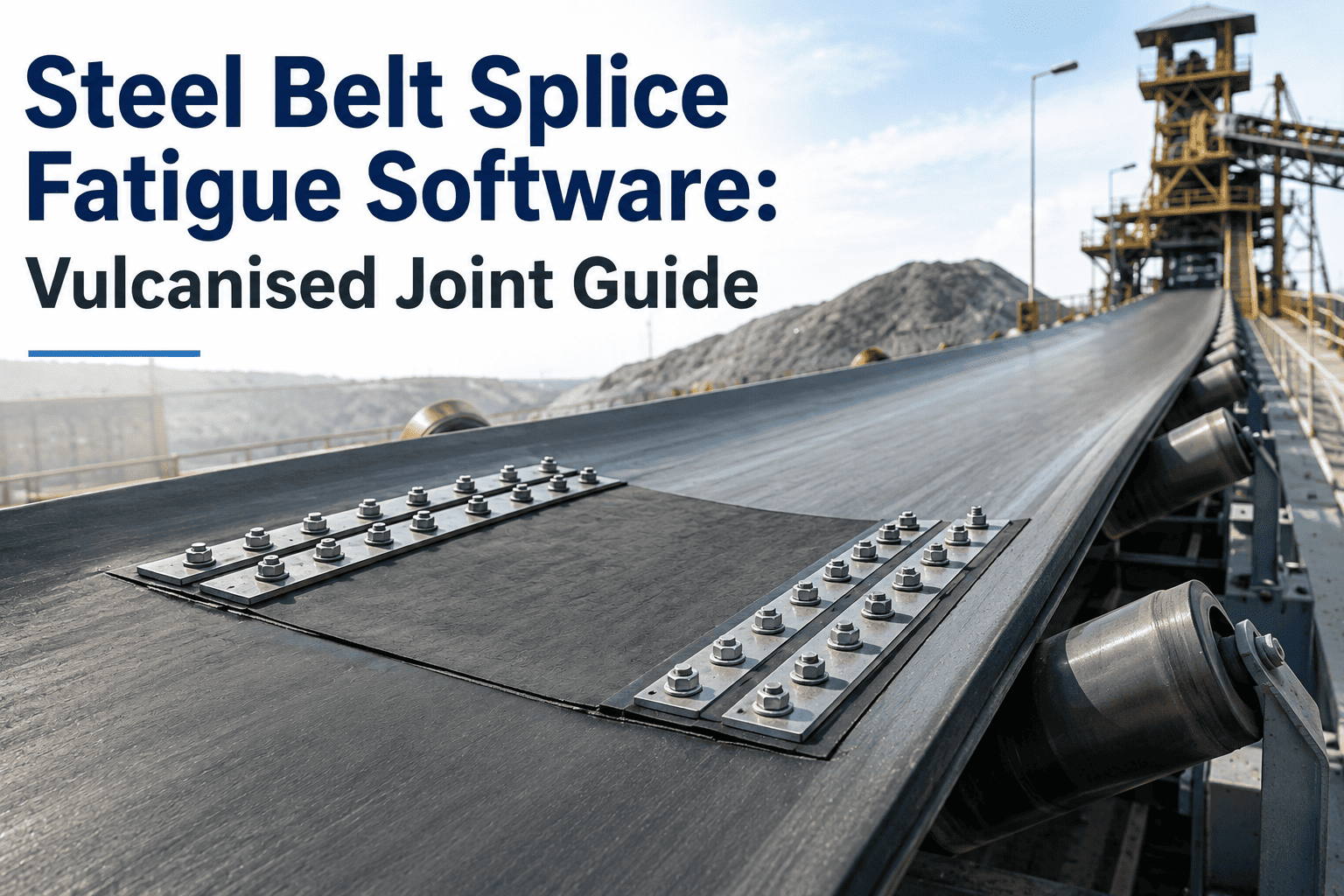
Roughly ninety percent of in-service conveyor belt failures start at the splice, not in the belt body — and on a long overland conveyor feeding a steel plant's ore yard, sinter plant, or coke handling circuit, that...
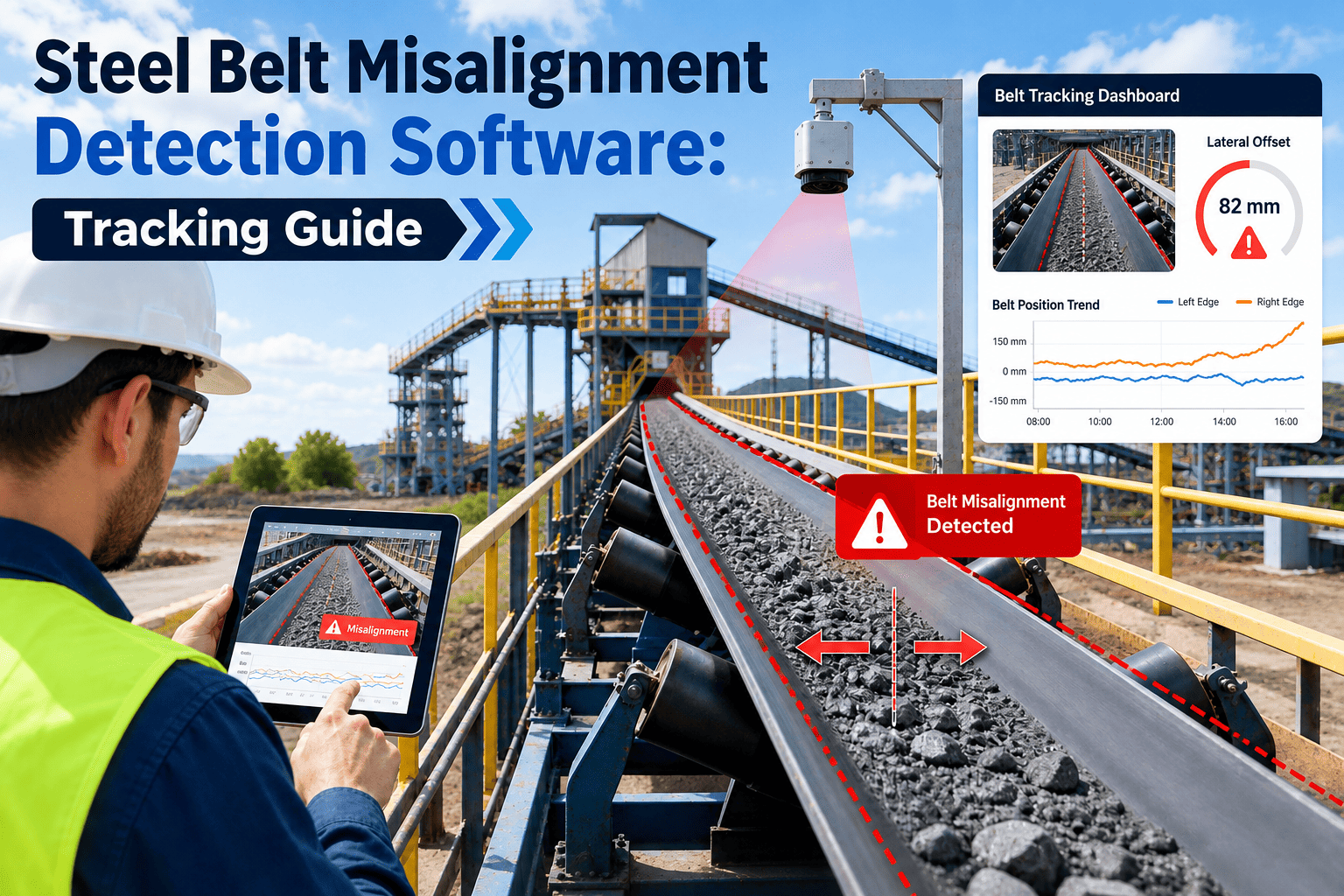
Read More
Every steel plant conveyor drifts a little — until it doesn't. A tracking roller shifts two millimeters out of true, nobody notices for a week, and by the time an operator sees the belt edge rubbing against the...

Read More
Converting an integrated steel mill from the blast furnace and basic oxygen furnace route to direct reduced iron and electric arc furnace production is a capital decision measured in hundreds of millions of dollars...
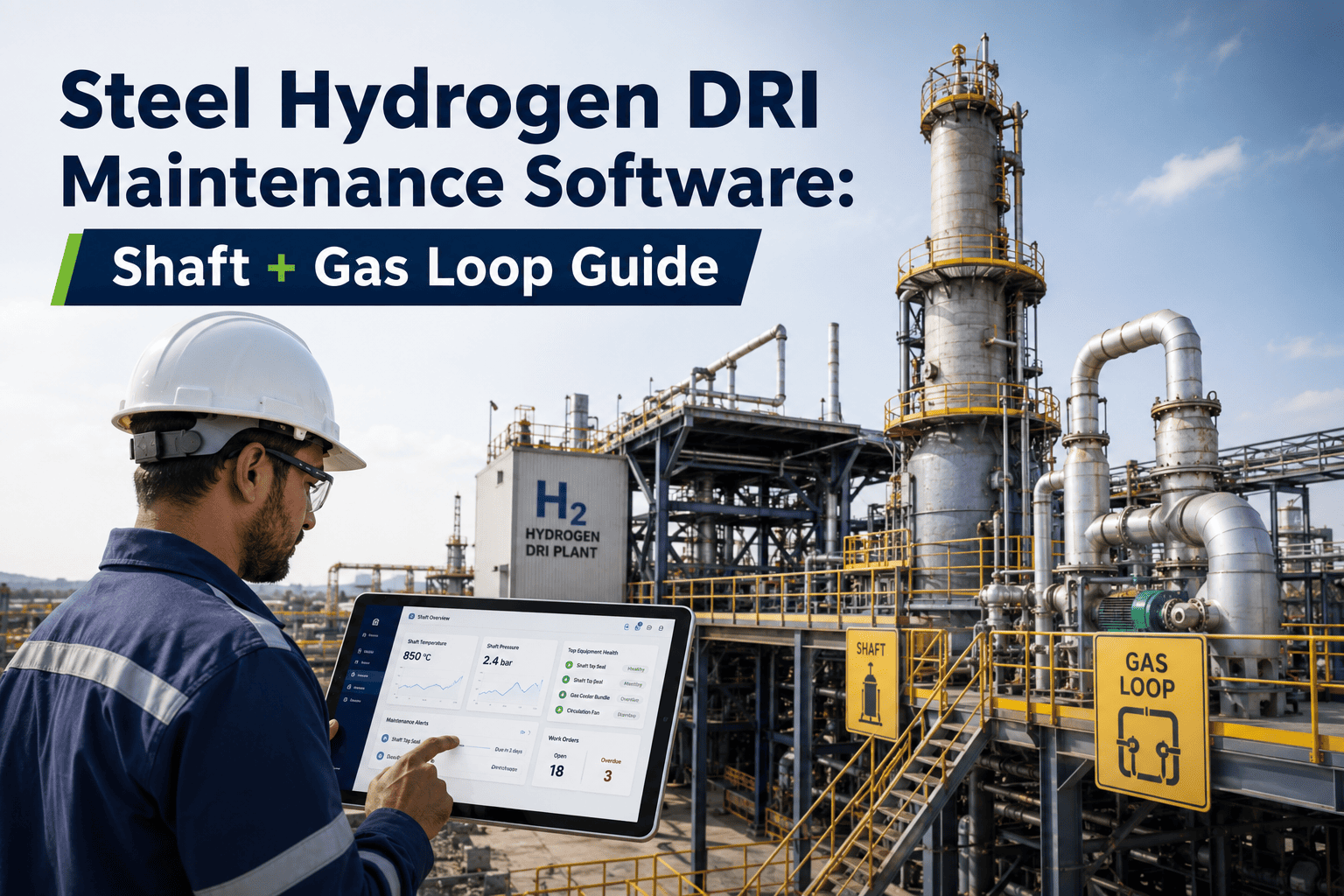
Read More
Hydrogen direct reduced iron production is moving from pilot projects to commercial-scale shaft furnaces across Europe, the Middle East, and North America, and the equipment inside that shaft behaves nothing like a...
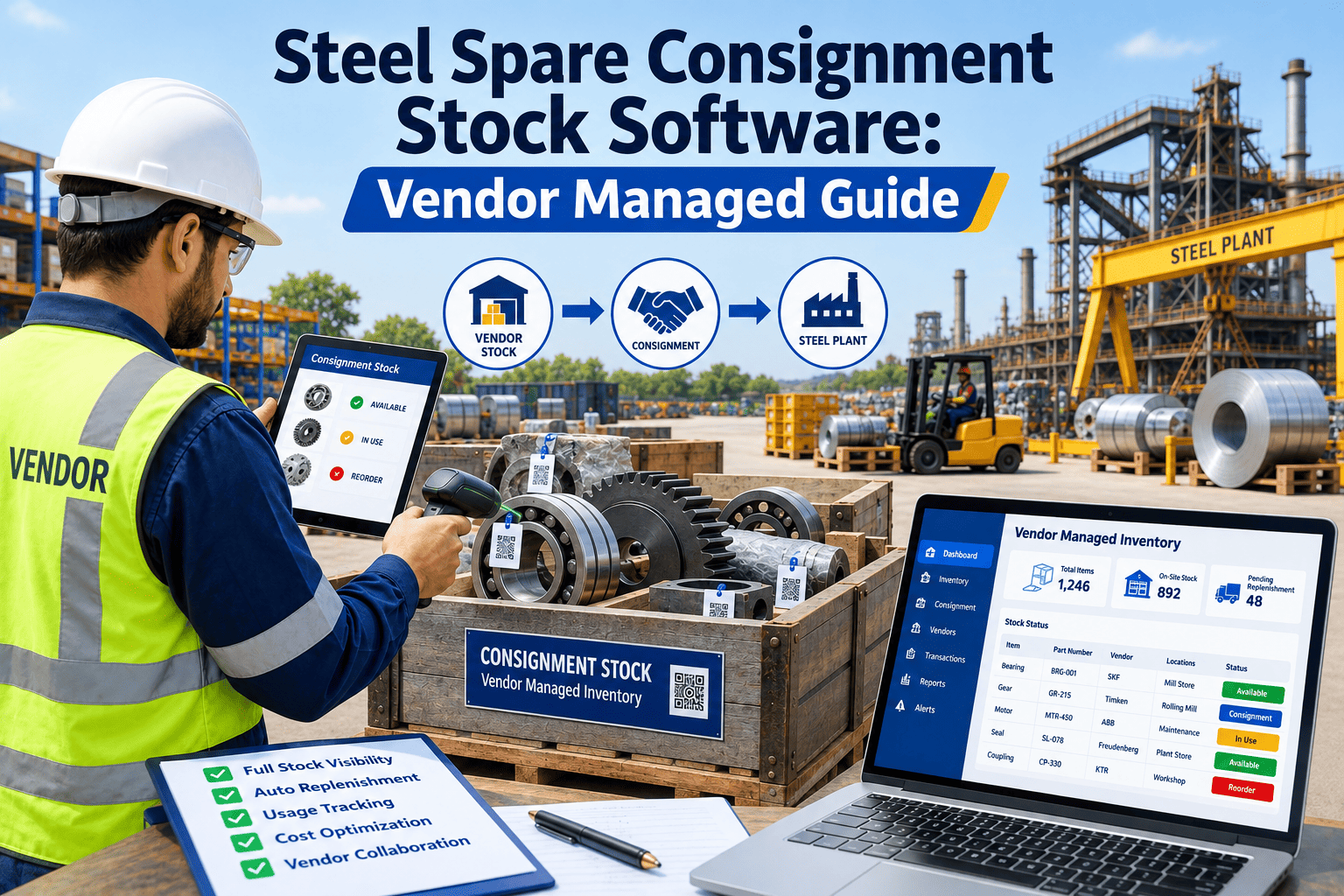
Read More
A work roll can cost more than a delivery truck and still spend eleven months sitting on a shelf between changeovers. A hydraulic cylinder for a caster segment might fail twice in five years, yet a rolling mill...
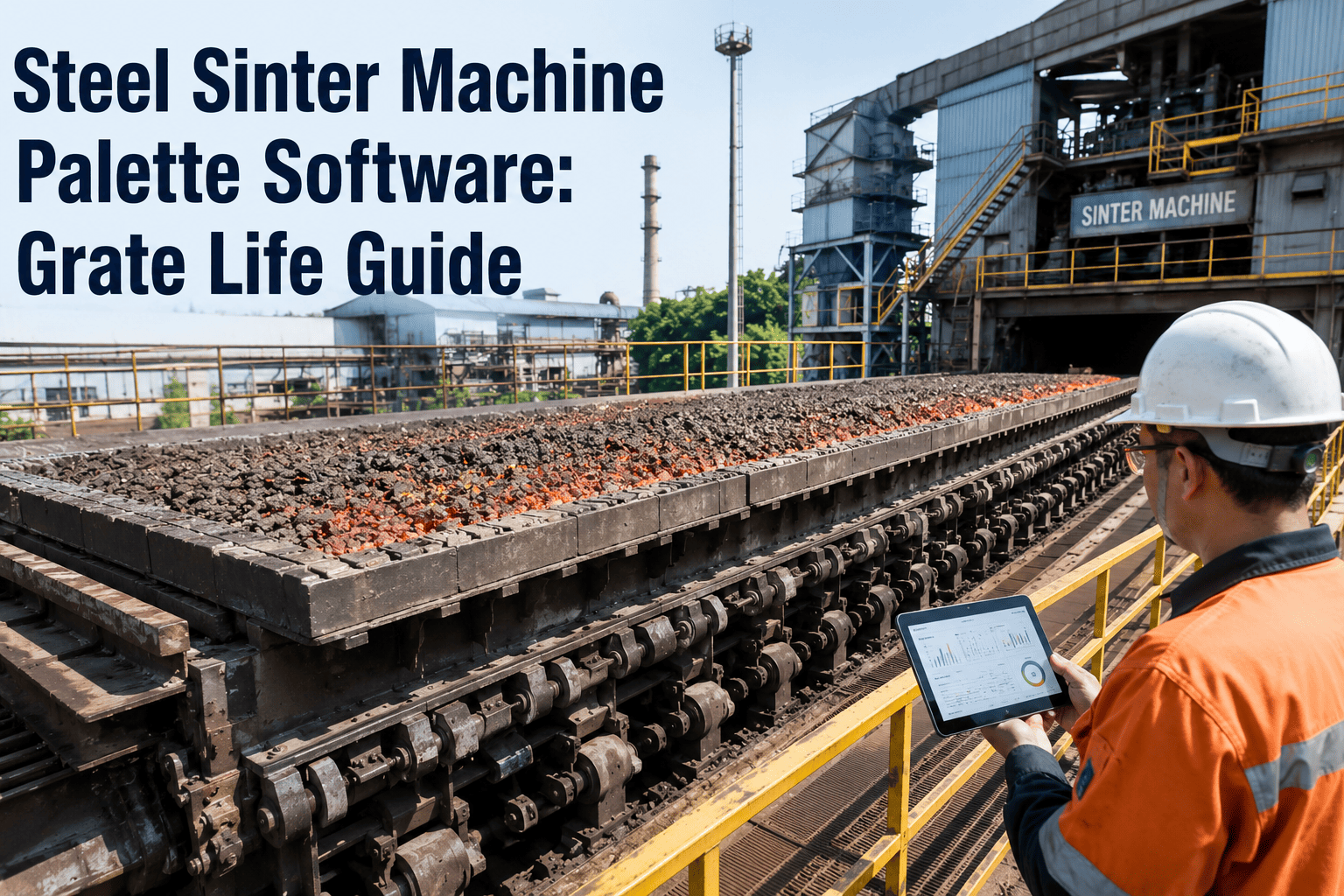
Read More
A steel sinter machine runs on a moving chain of pallet cars — often called the sinter "palette" on the plant floor — dragging a bed of raw ore through 1,300°C ignition and burn-through zones, twenty-four hours a...
Read More
Most steel plants still run maintenance on a fixed calendar — greasing spindle couplings, changing gearbox oil, and rebuilding roll chocks on a schedule copied from an OEM manual written for average operating...

Read More
Chatter shows up on a cold rolling mill as a faint rhythmic mark on the strip surface long before anyone hears or feels anything unusual at the stand — by the time an operator notices vibration by ear or by hand on...
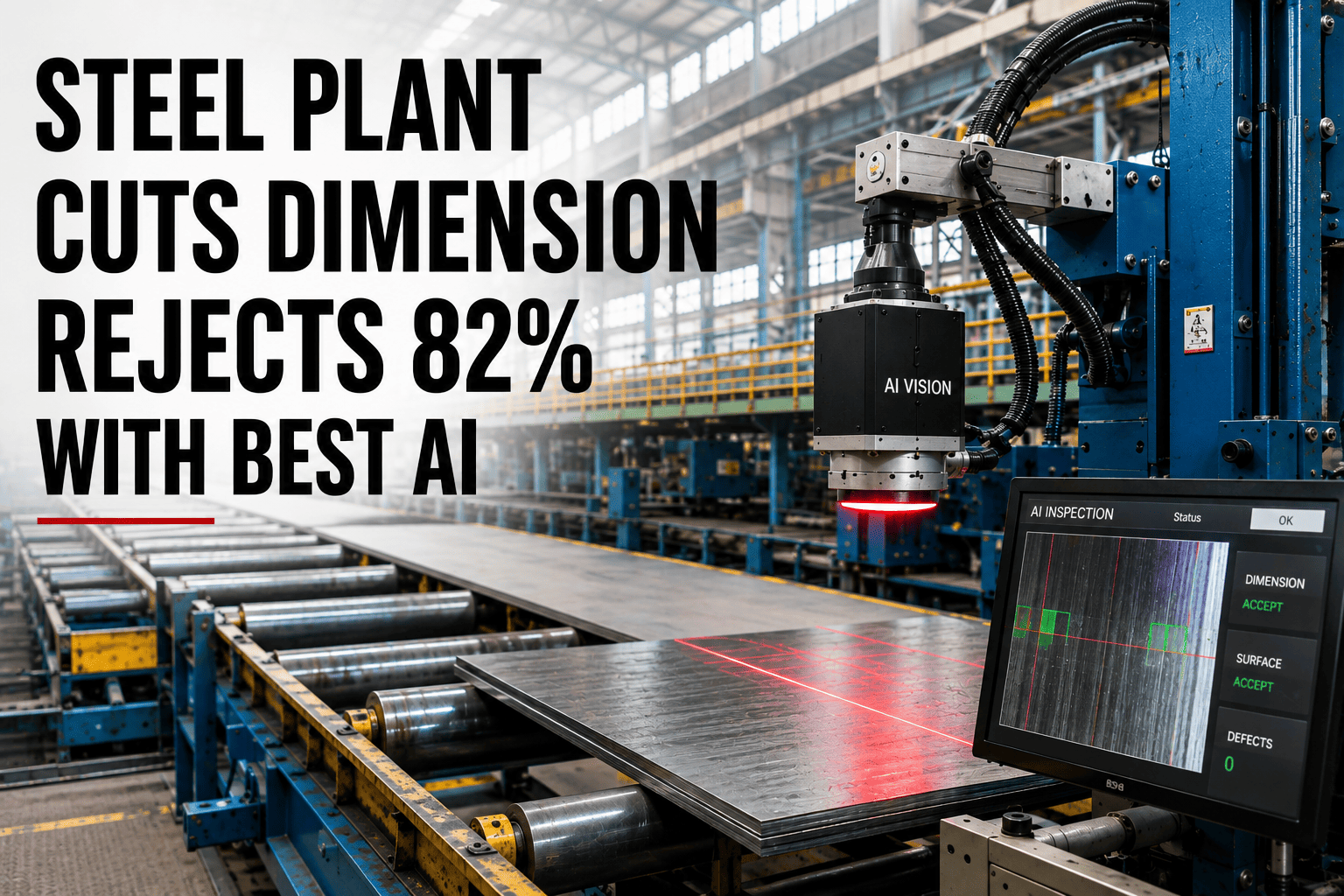
Read More
Dimension rejects were quietly eating into margins at a mid-sized flat-rolled steel producer running two cold rolling stands and one finishing line — coils that missed gauge, camber, or crown tolerance were either...
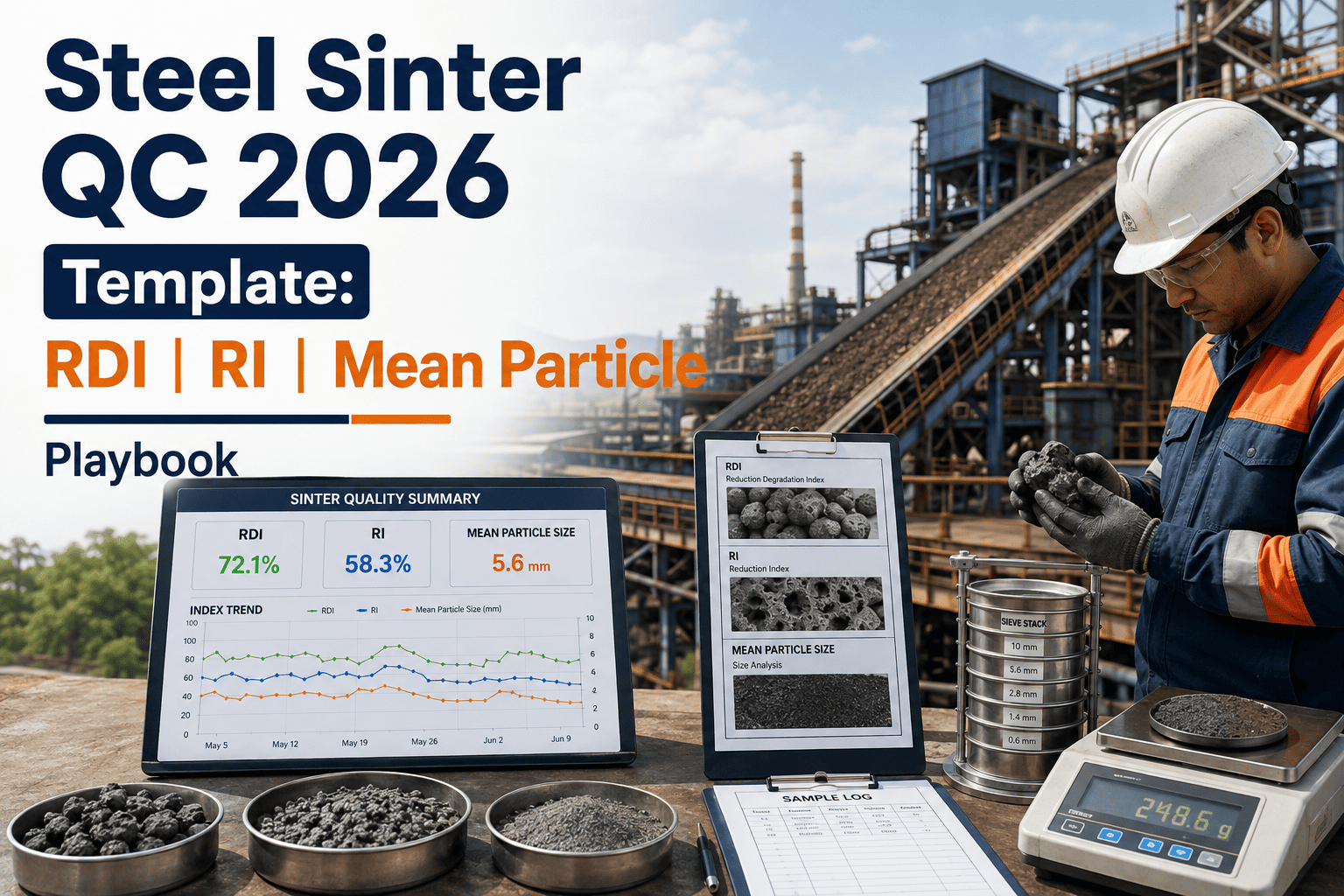
Read More
A blast furnace does not care how a sinter plant explains an off-spec strand — it only cares whether the sinter charged into the stack holds its strength, breaks down slowly under reduction, and keeps the burden...
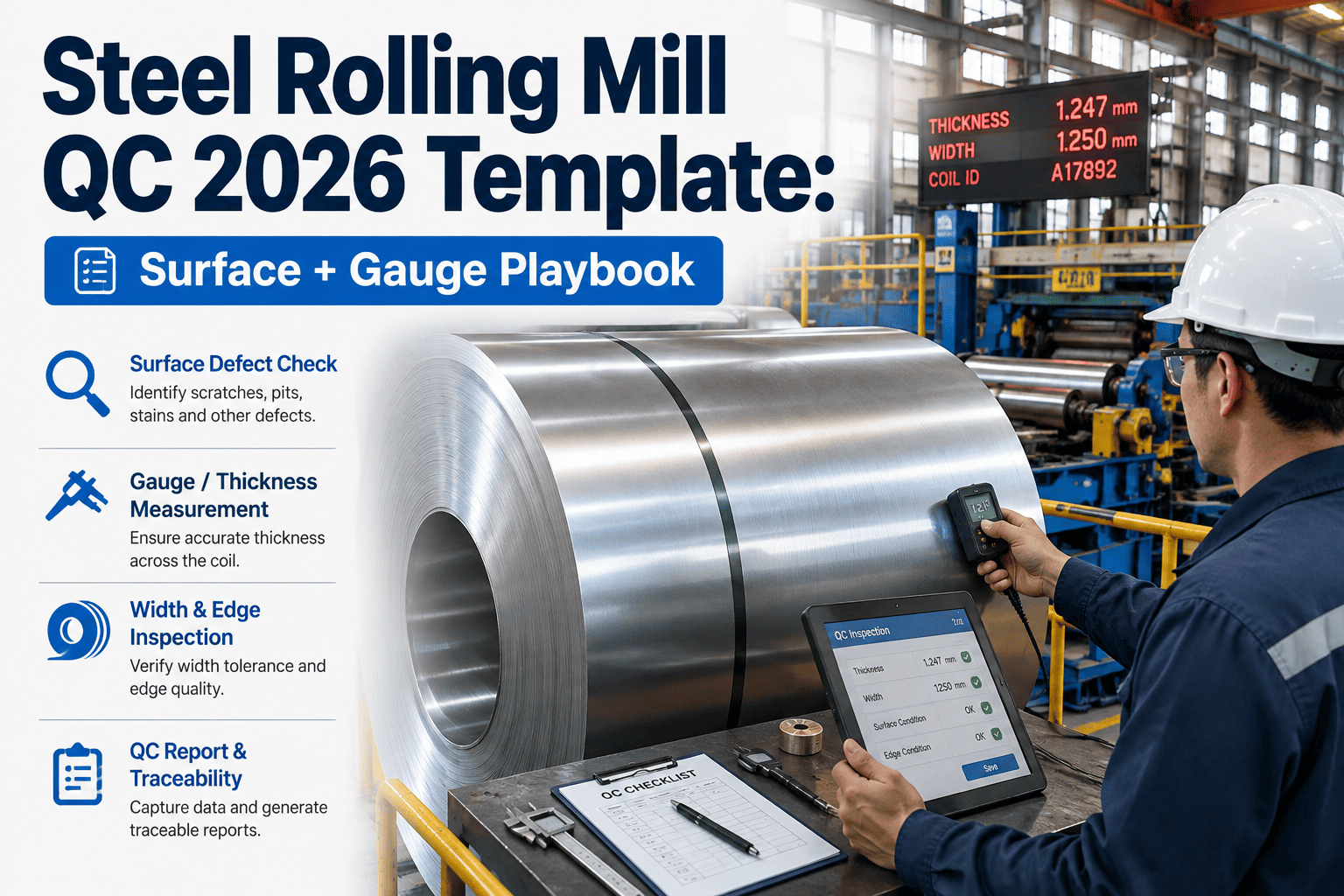
Read More
Every coil that leaves a hot or cold rolling mill carries two questions a quality inspector has to answer before it ships: is the surface acceptable, and is the gauge inside tolerance. Miss either one and the...
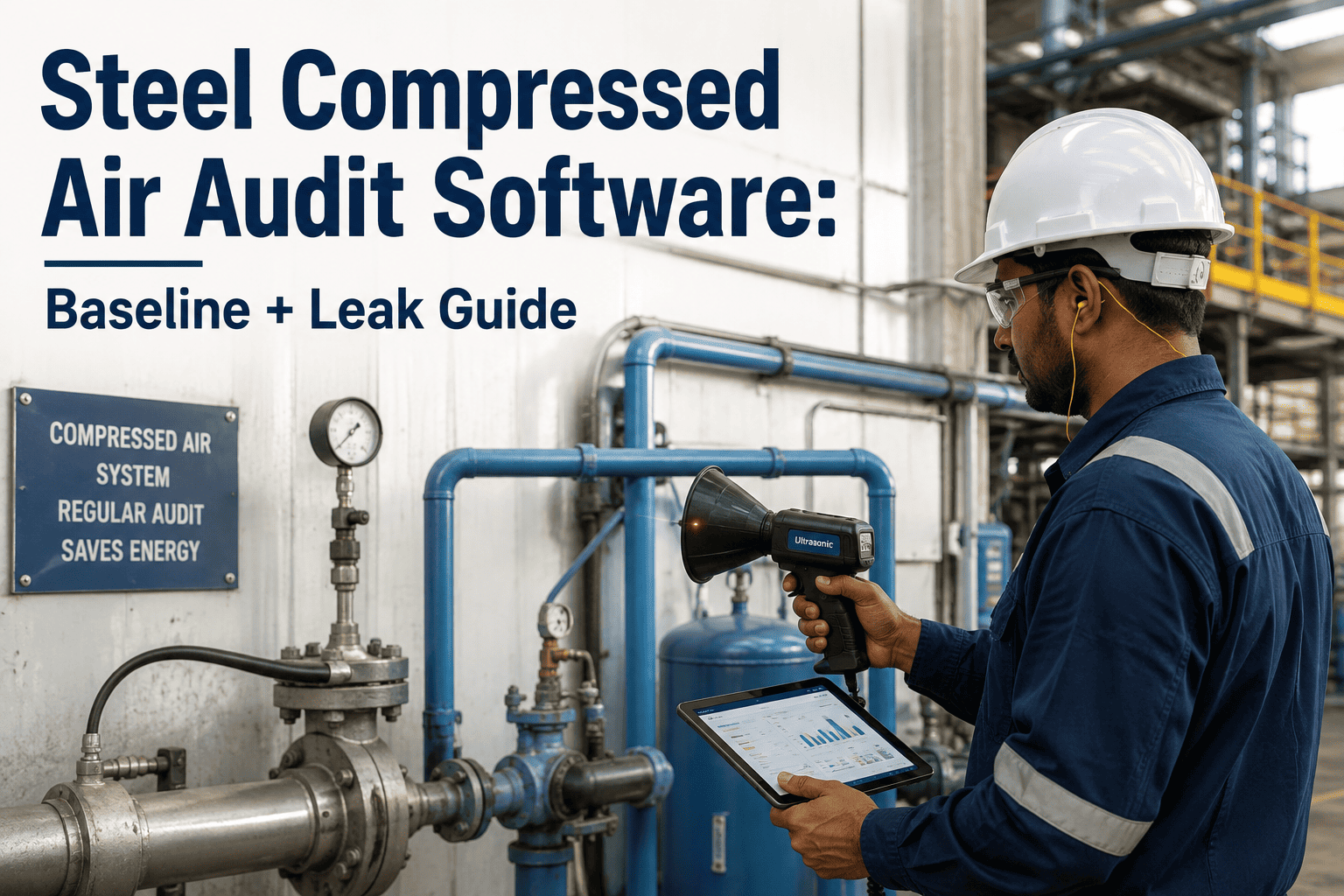
Read More
Compressed air keeps a steel plant moving — descale valves on the hot mill, mold oscillation on the caster, pinch-roll actuators, purge air on optical sensors, and dozens of pickling line dampers all draw from the...
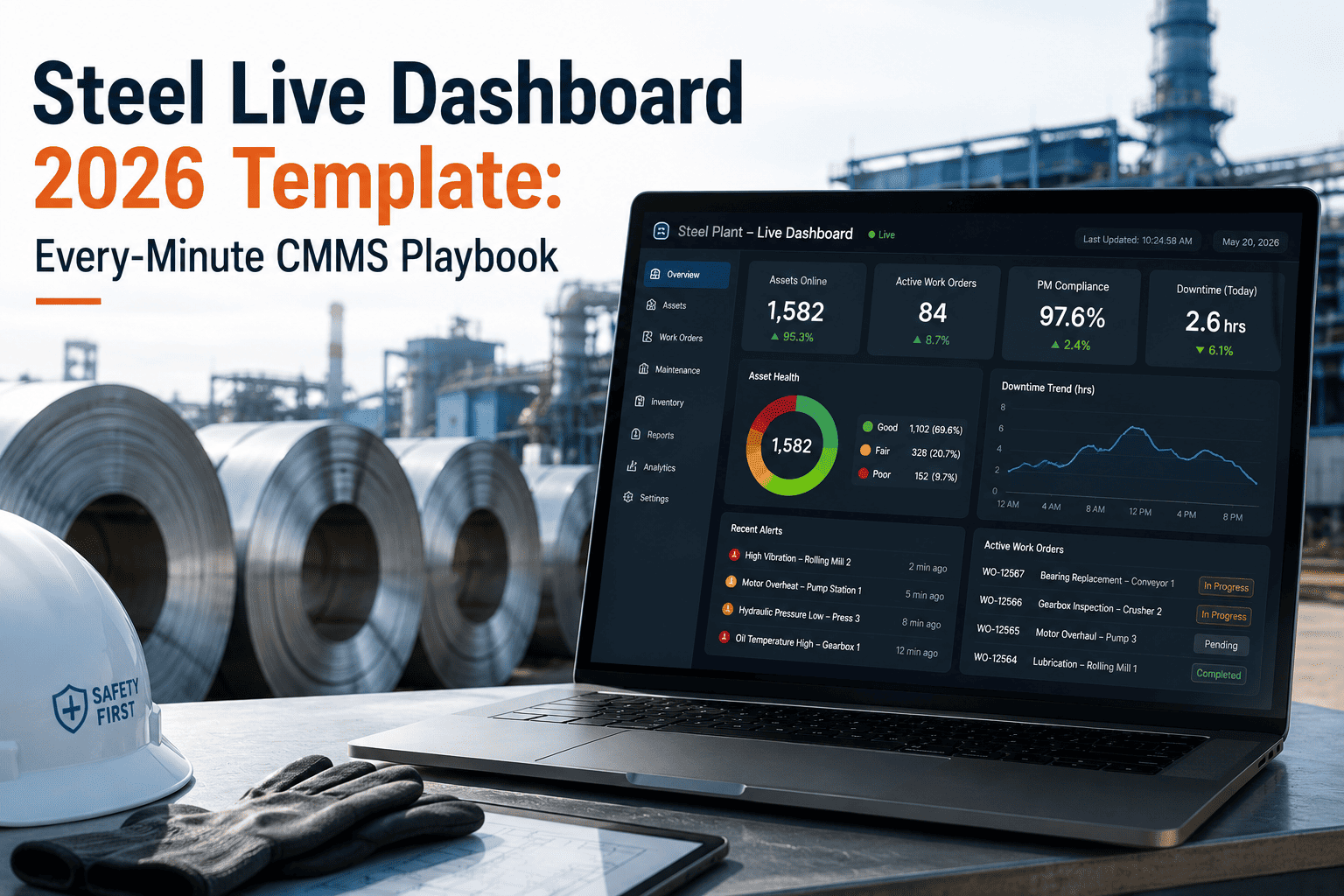
Read More
Most steel plants build a shift dashboard once, get half of it right, and never touch it again — leaving operators staring at yesterday's downtime Pareto while a caster runs 8% under target right now. A dashboard...
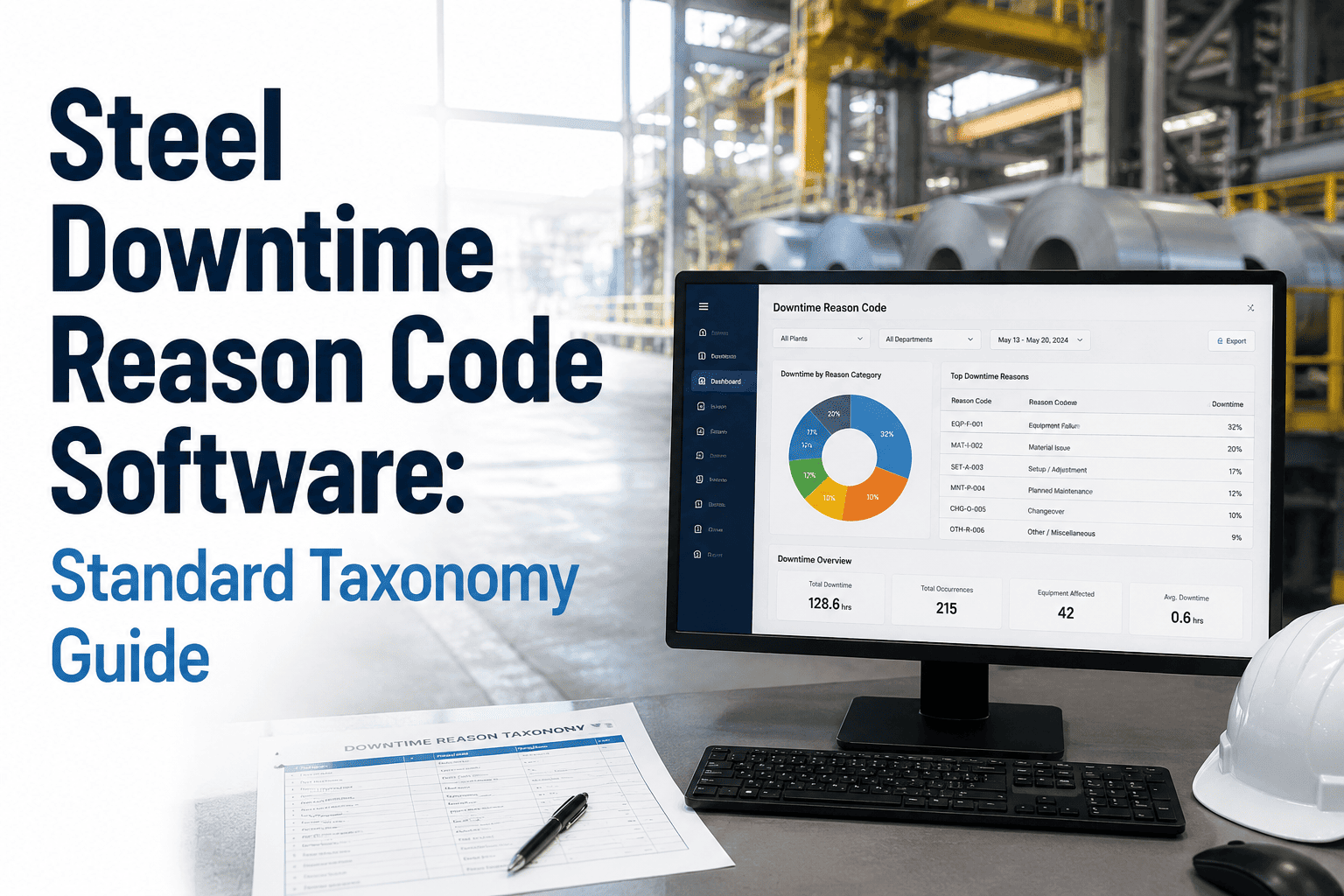
Read More
Ask five operators why the same caster stopped last Tuesday and you will likely get five different answers — "mechanical issue," "waiting on crew," "process delay," "material problem," and one honest "not sure."...

Read More
A digital twin does not replace your steel plant's CMMS — it turns the operating data your sensors, inspections, and maintenance history already collect into a live, simulated model of a blast furnace, caster, or...
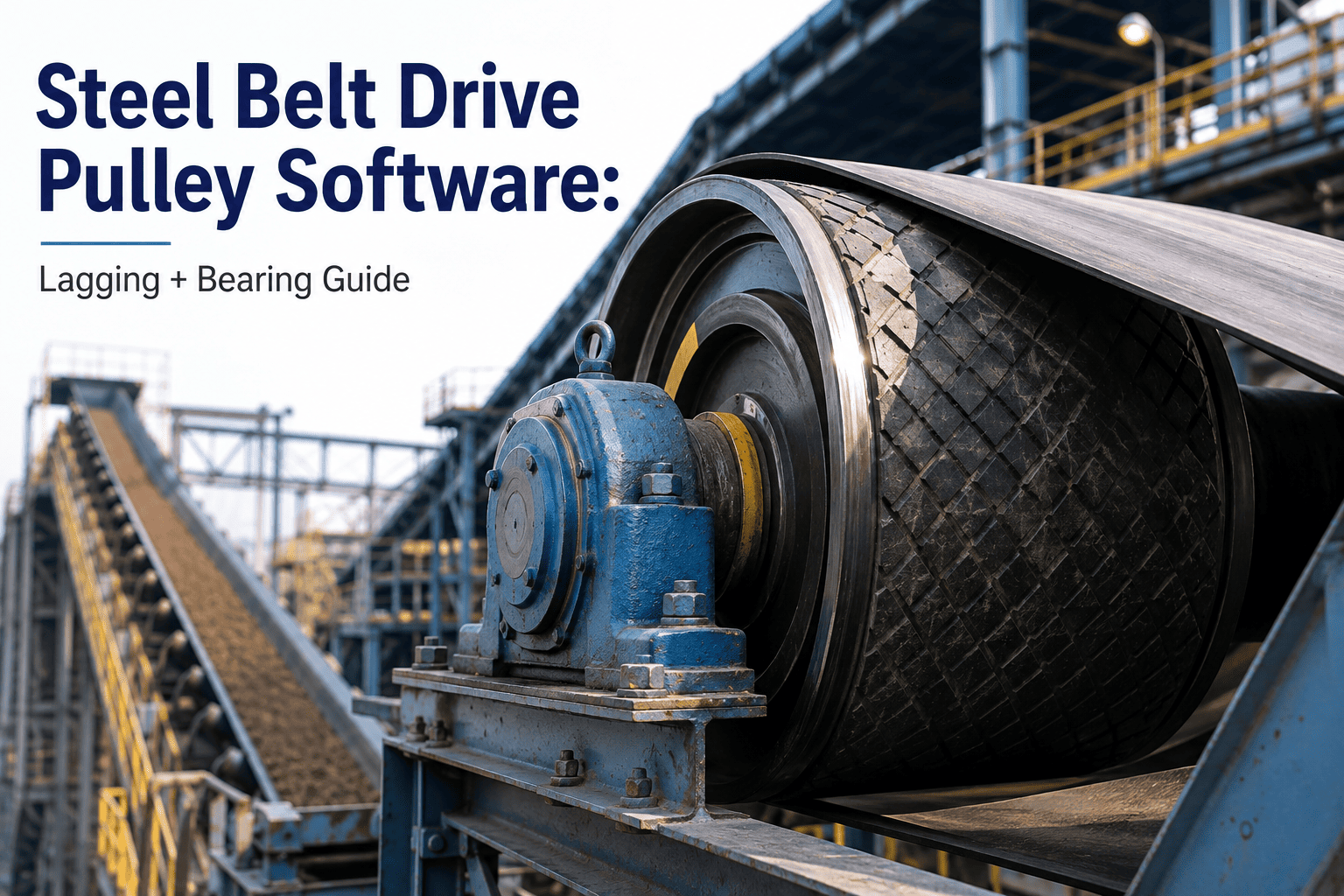
Read More
Drive pulley failures on steel plant conveyor systems rarely happen without warning — they build for months along two quiet failure paths: rubber lagging that thins and debonds under abrasive ore, sinter, and coke...
Read More
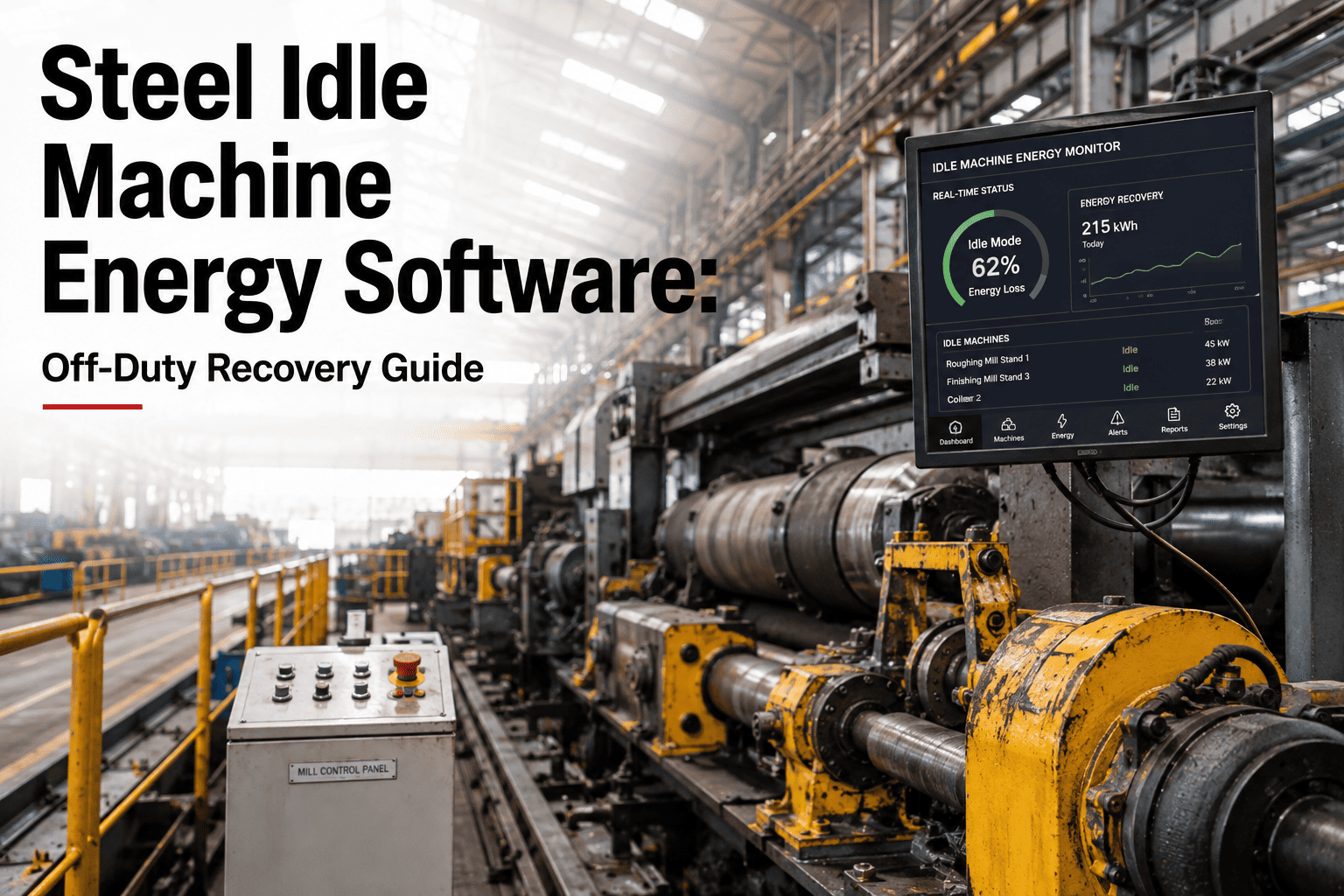
A rolling mill stands idle for forty minutes during a roll change, yet the run-out tables, cooling pumps, and drive motors keep pulling current the entire time. A walking beam furnace goes into "banking" mode...
Read More
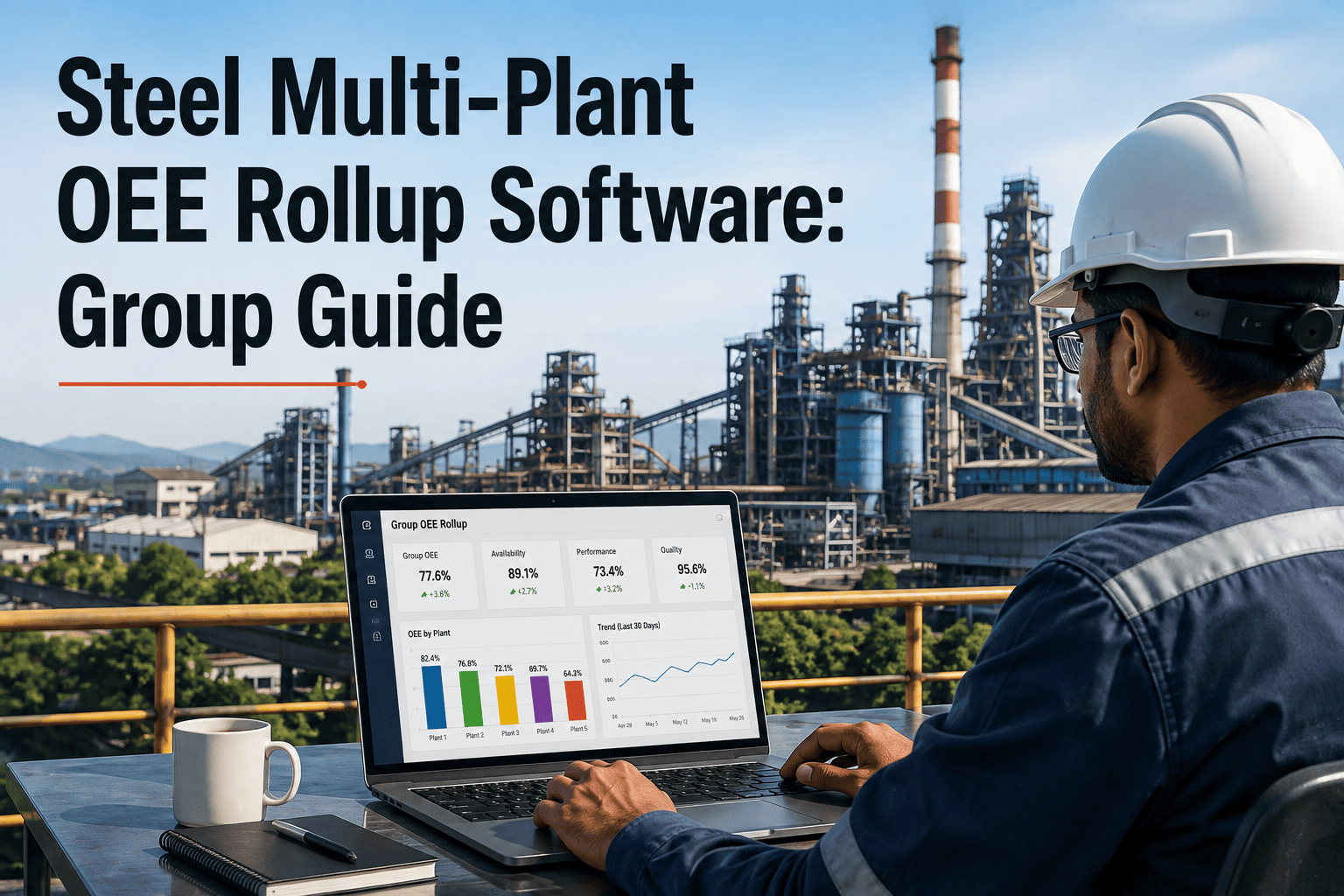
A board deck that shows one plant's OEE at 78% and another's at 82% looks like useful information until someone asks how each number was calculated — and the answers turn out to involve different definitions of...
Read More
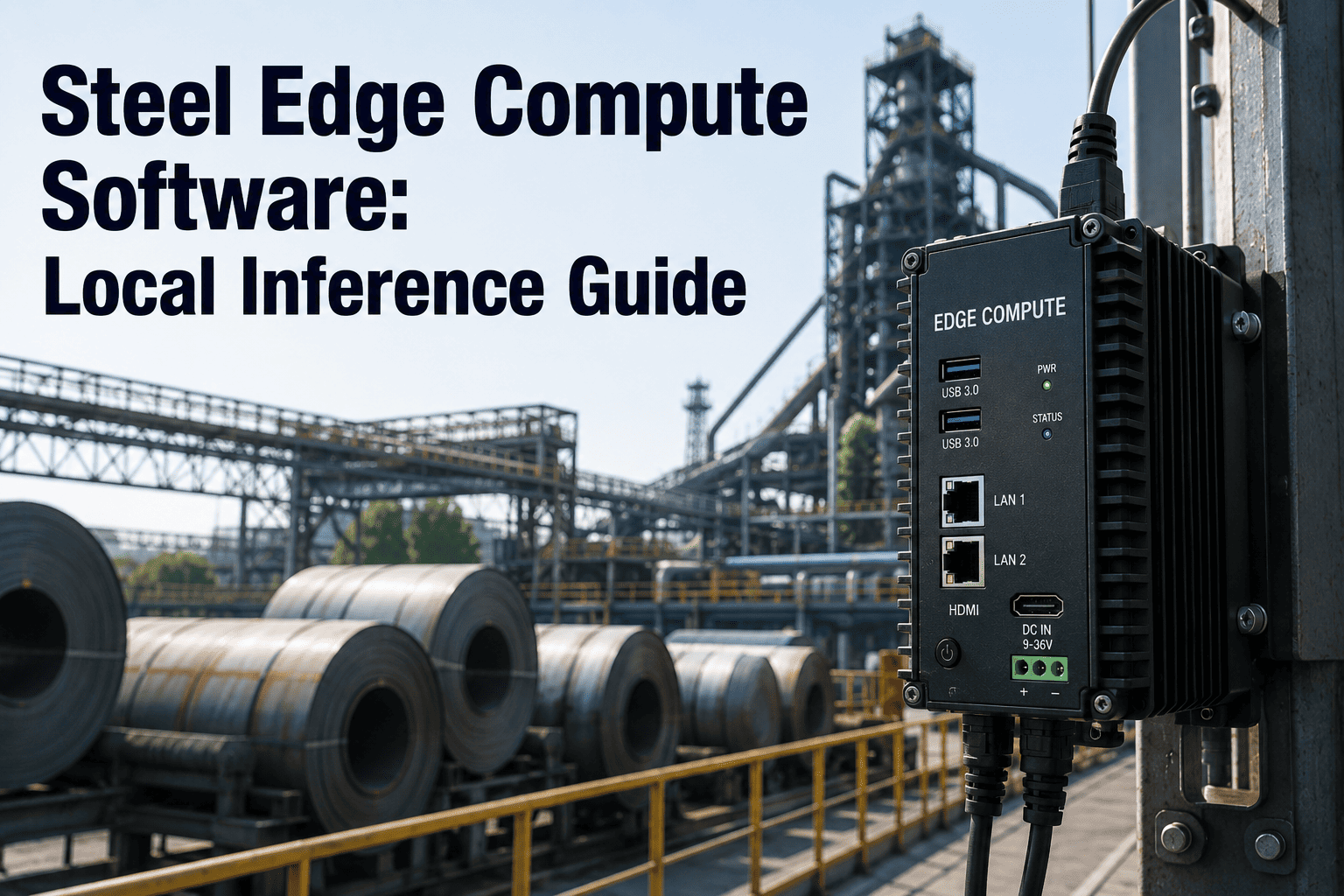
Steel plants are adding AI faster than their networks can keep up with it — quality vision on the finishing line, bearing anomaly detection on rolling mill drives, safety monitoring near cobots and overhead cranes...
Read More
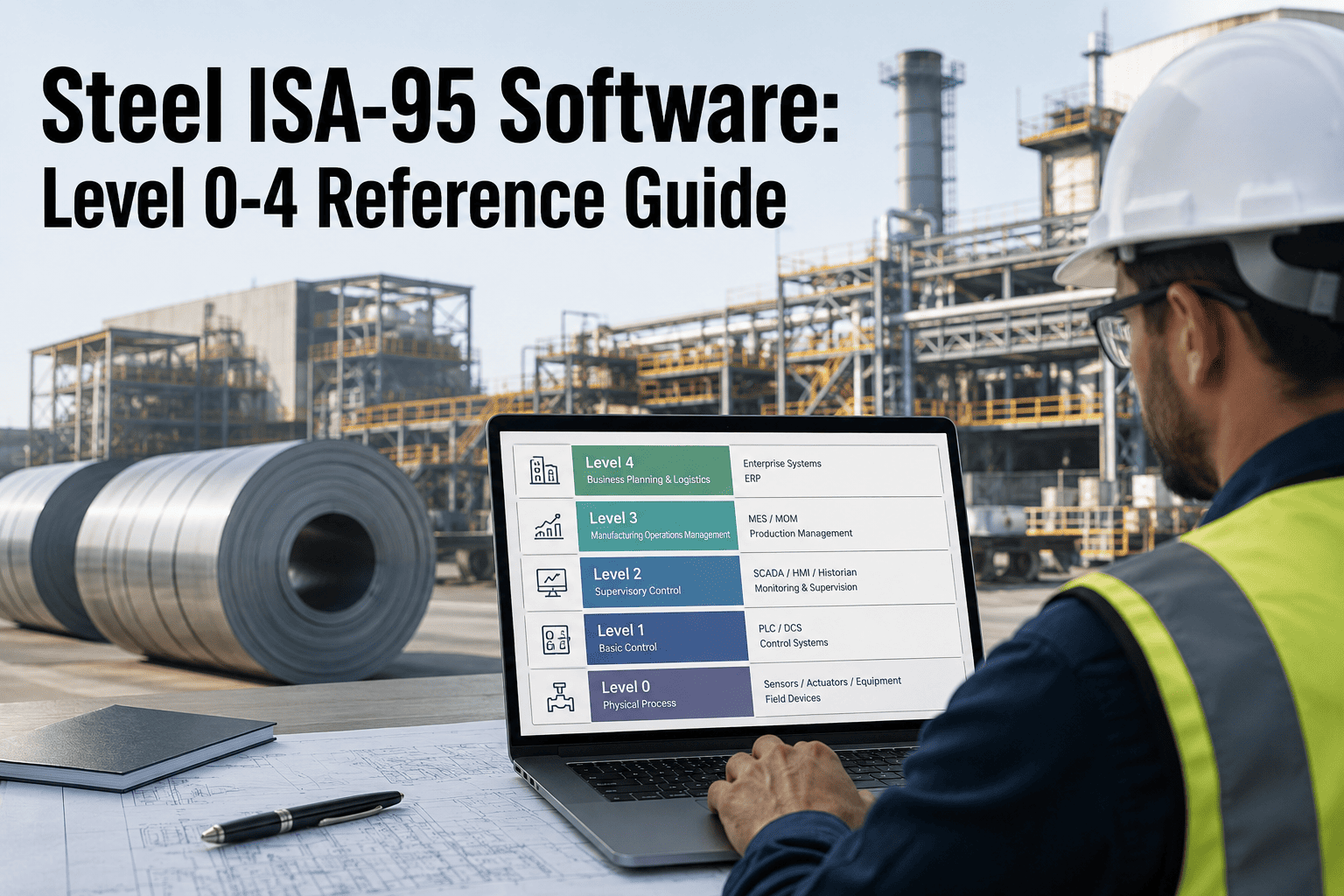
Every steel plant has an ISA-95 diagram somewhere — in an integration RFP, an IT architecture slide, or a consultant's report from three years ago. Almost none of them have software that actually behaves like the...
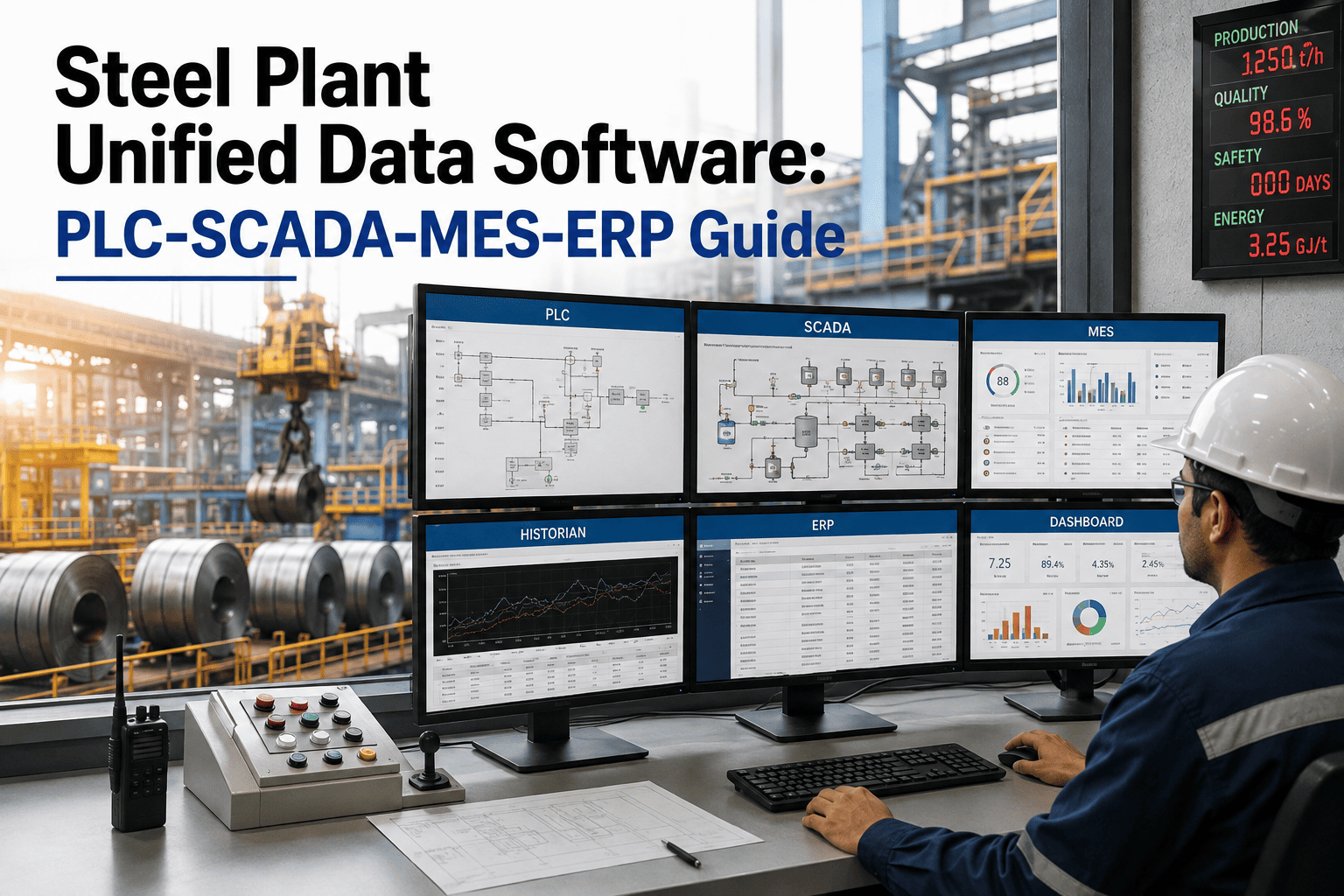
Read More
A single steel plant runs four systems that were never designed to talk to each other. PLCs control the rolling mill drives and furnace burners in milliseconds. SCADA and Level 2 historians watch thousands of tags...
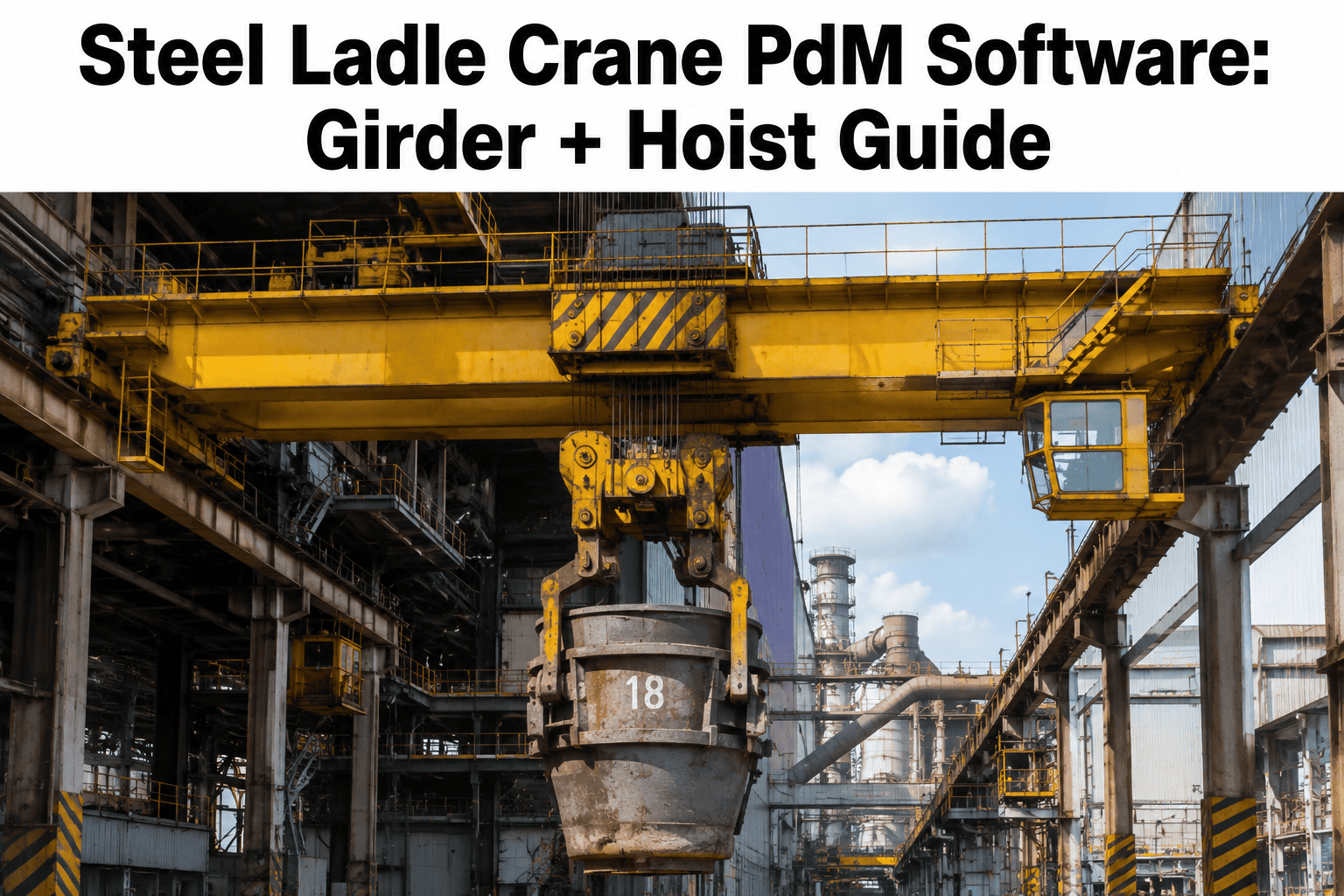
Read More
A ladle crane in a BOF or EAF shop is never just lifting steel — it is carrying two hundred tons of molten metal across a walkway lined with people, three or four times an hour, in heat that would shut down almost...
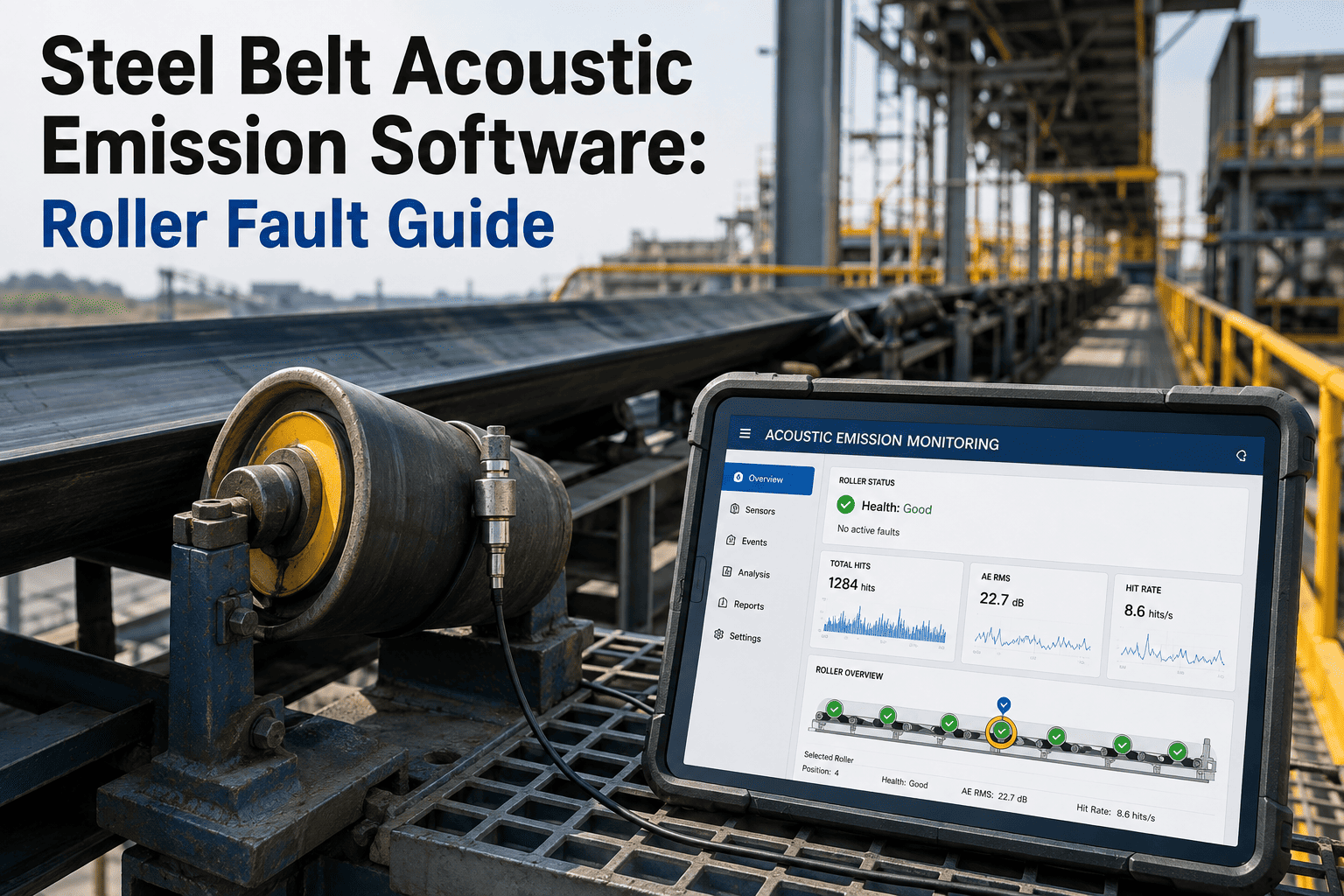
Read More
Steel plants running kilometers of belt conveyors depend on thousands of idler rollers to keep sinter, coke, and iron ore moving between yards, blast furnaces, and finishing lines. Each roller carries a sealed...
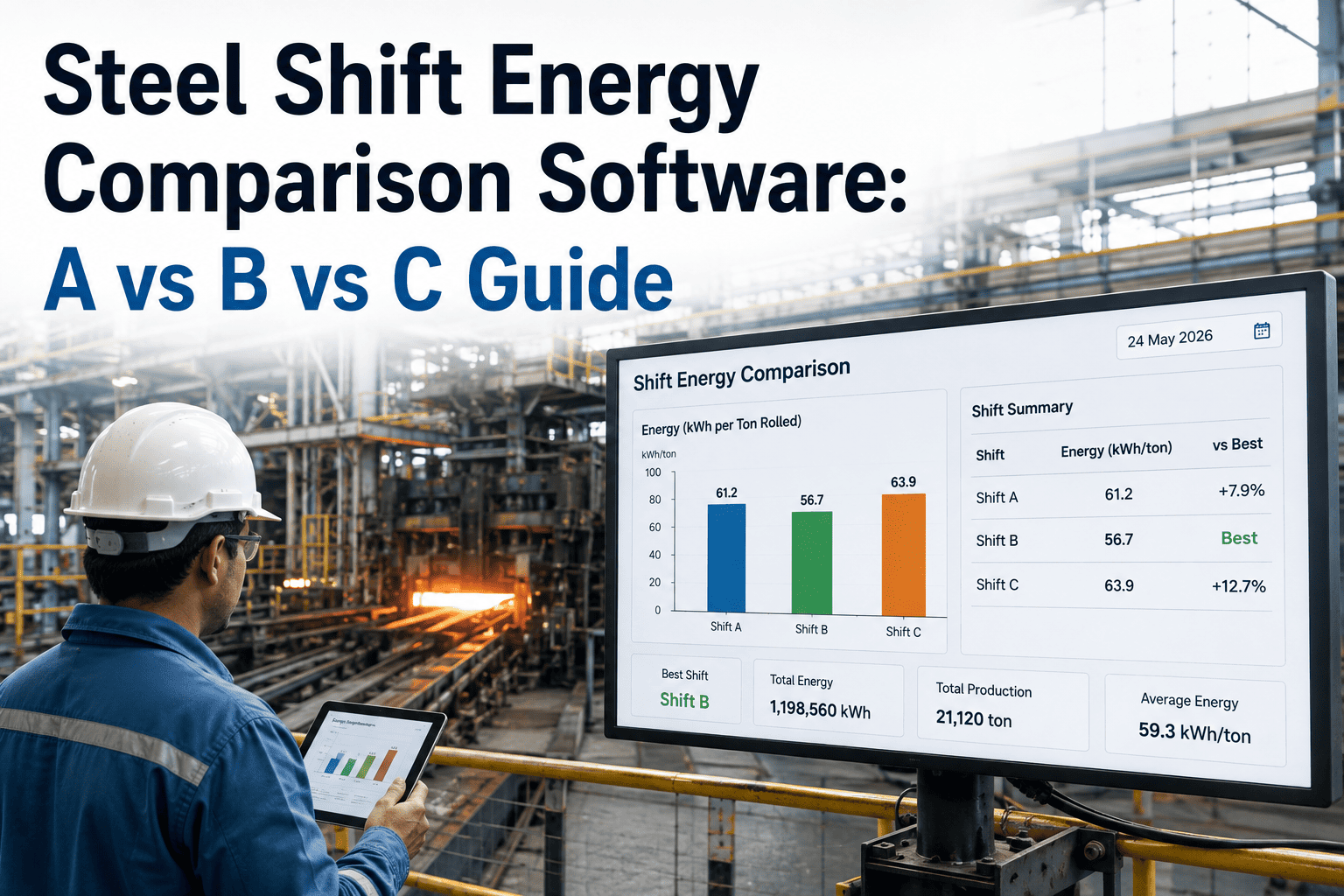
Read More
Same furnace, same product, same shift length — and three different energy numbers depending on who is running the floor. It shows up quietly at first: a slightly longer ramp-up on one rotation, a setpoint nudged...
Read More
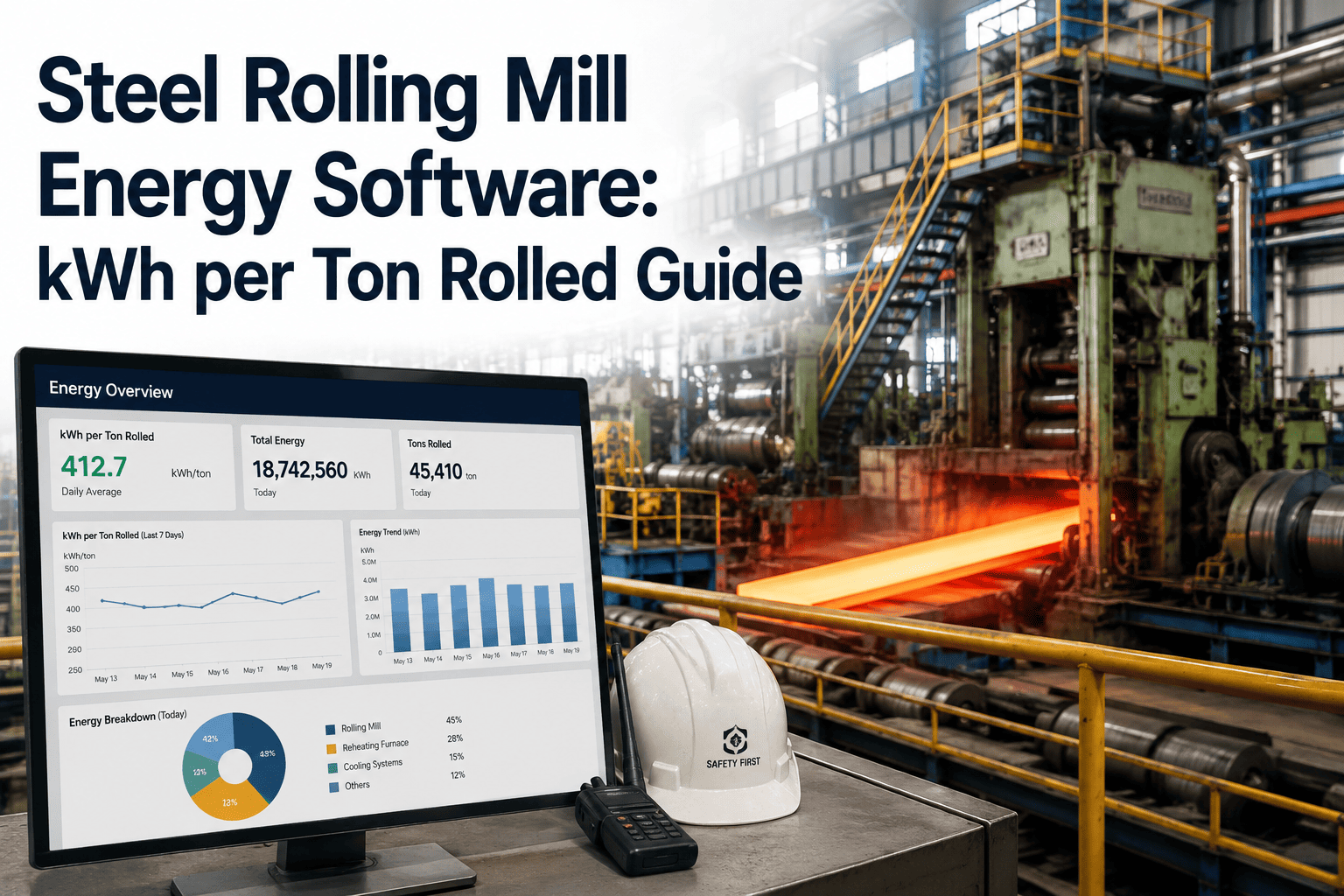
A rolling mill that used to run at 85 kWh per ton rolled and now runs at 98 kWh per ton is not announcing that change anywhere. No alarm fires. The bill just arrives a month later, larger than expected, with no...

Read More
By the time a shift-end OEE report lands in a supervisor's inbox, the eight hours it describes are already gone — the eleven-minute changeover that ran long, the run of coils that drifted off gauge for twenty...

Read More
Somewhere between the PLC cabinet on the mill floor and the ERP dashboard in the corporate office, most of a steel plant's most valuable maintenance signals quietly disappear. A blast furnace can generate thousands...
Read More
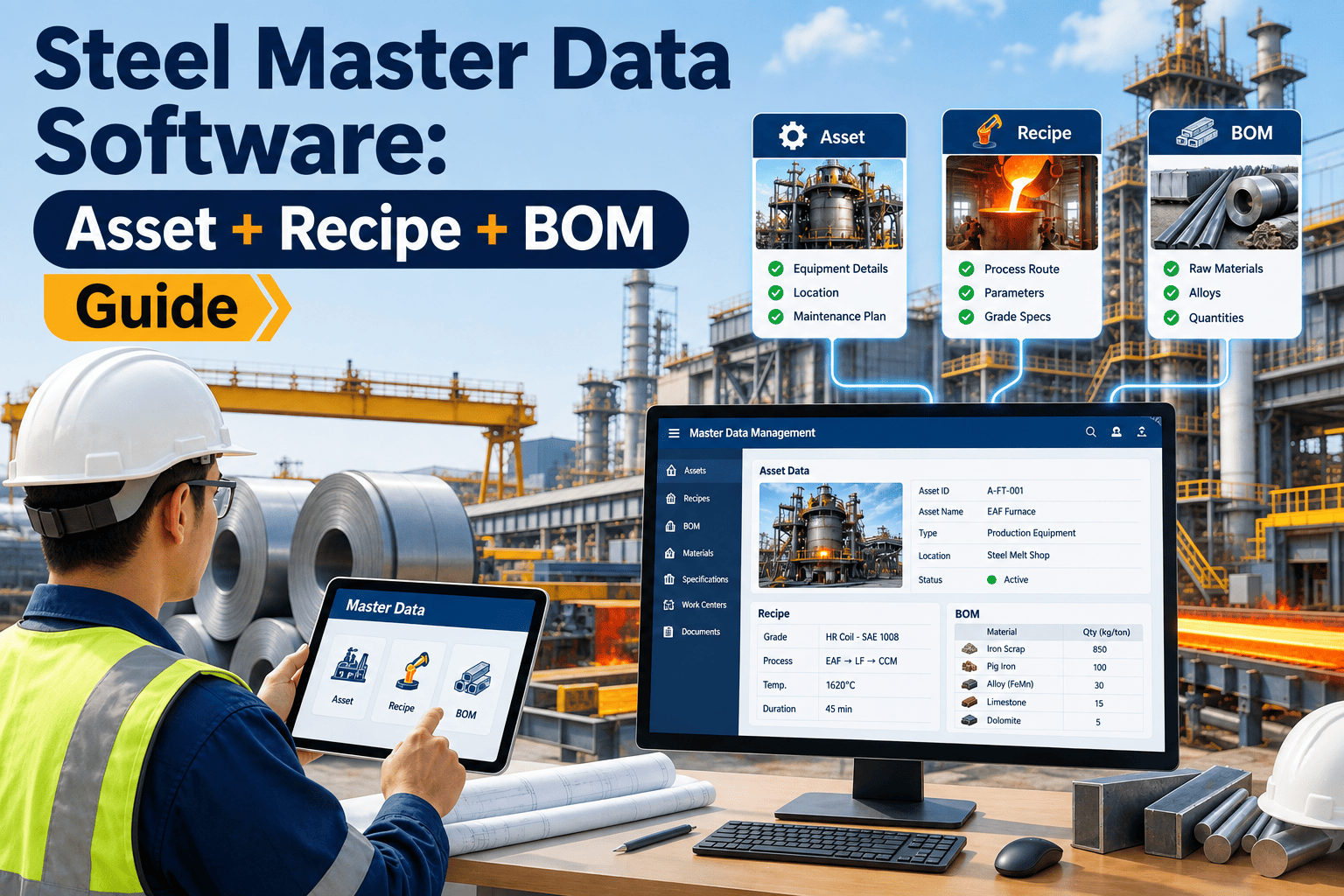
Ask any plant IT lead why a new CMMS, ERP, or sensor integration project ran six months over schedule, and the honest answer is rarely the software itself — it is the asset list that had three different names for...
Read More
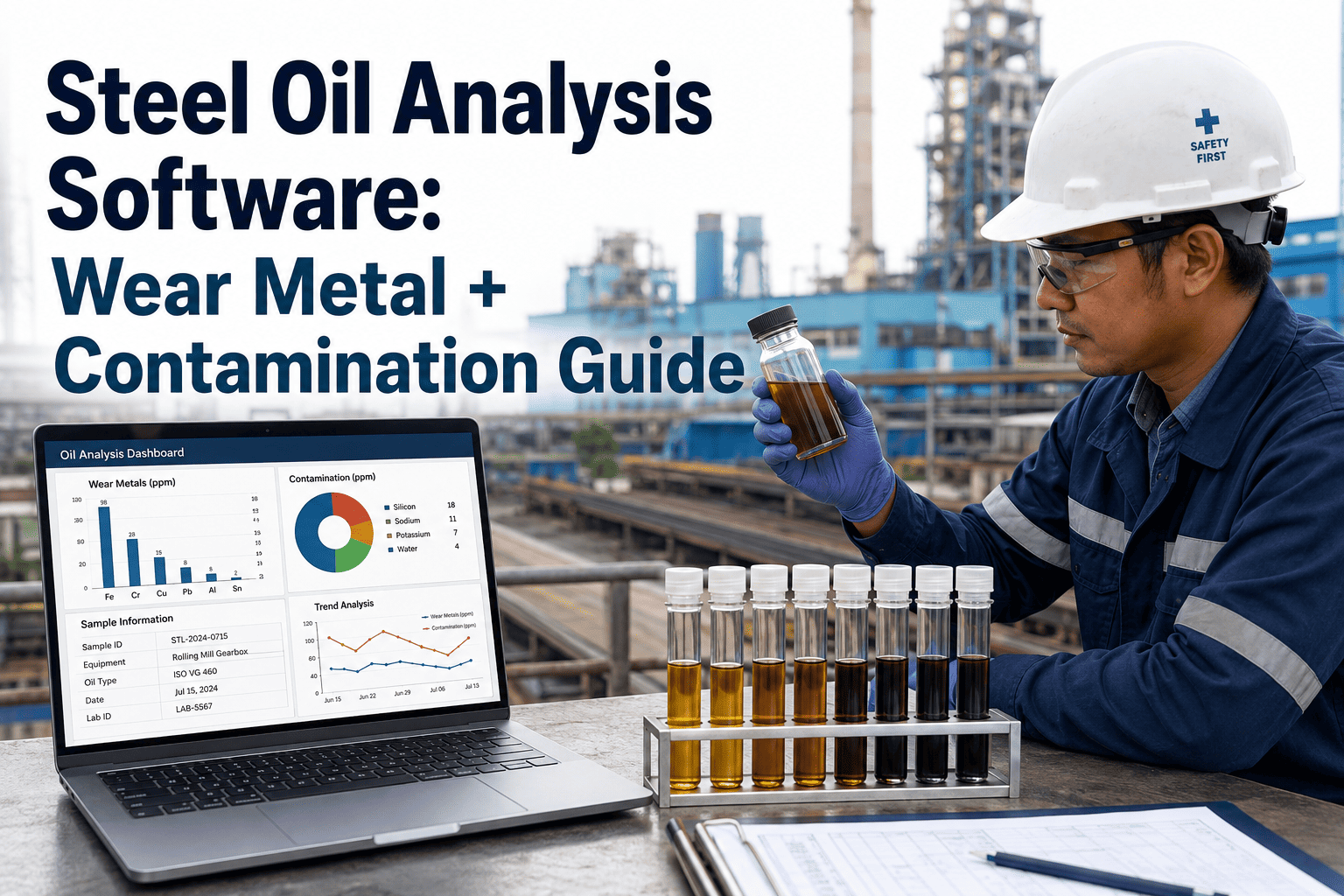
A rolling mill gearbox does not fail without warning. Weeks before a bearing seizes or a gear tooth spalls, microscopic iron and copper particles begin showing up in the lubricating oil, water creeps past a worn...
Read More
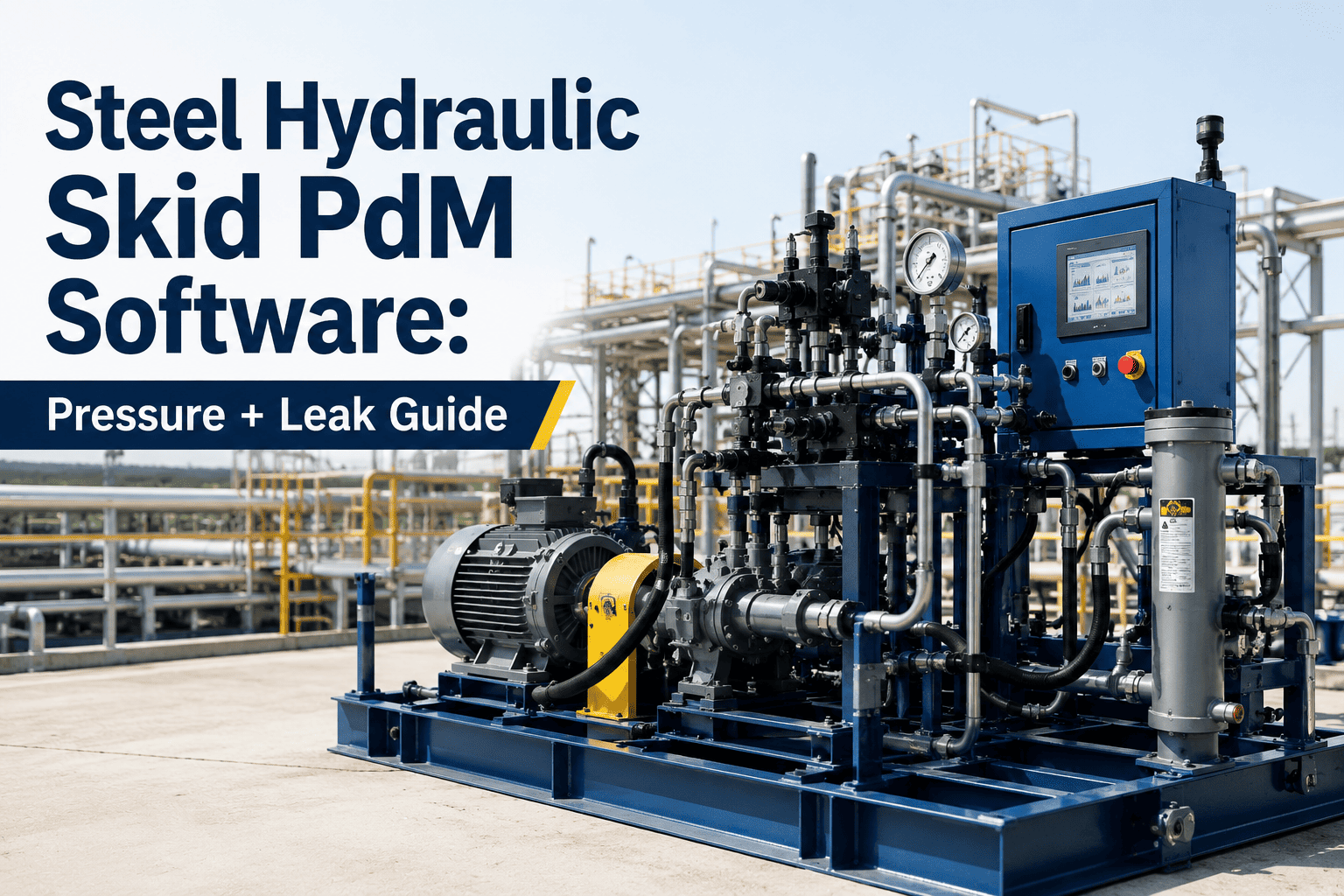
Every rolling mill and caster maintenance team knows the sound of a hydraulic skid running rough — pressure that drifts a little on every cycle, a valve that hesitates half a second longer than it should, a faint...
Read More
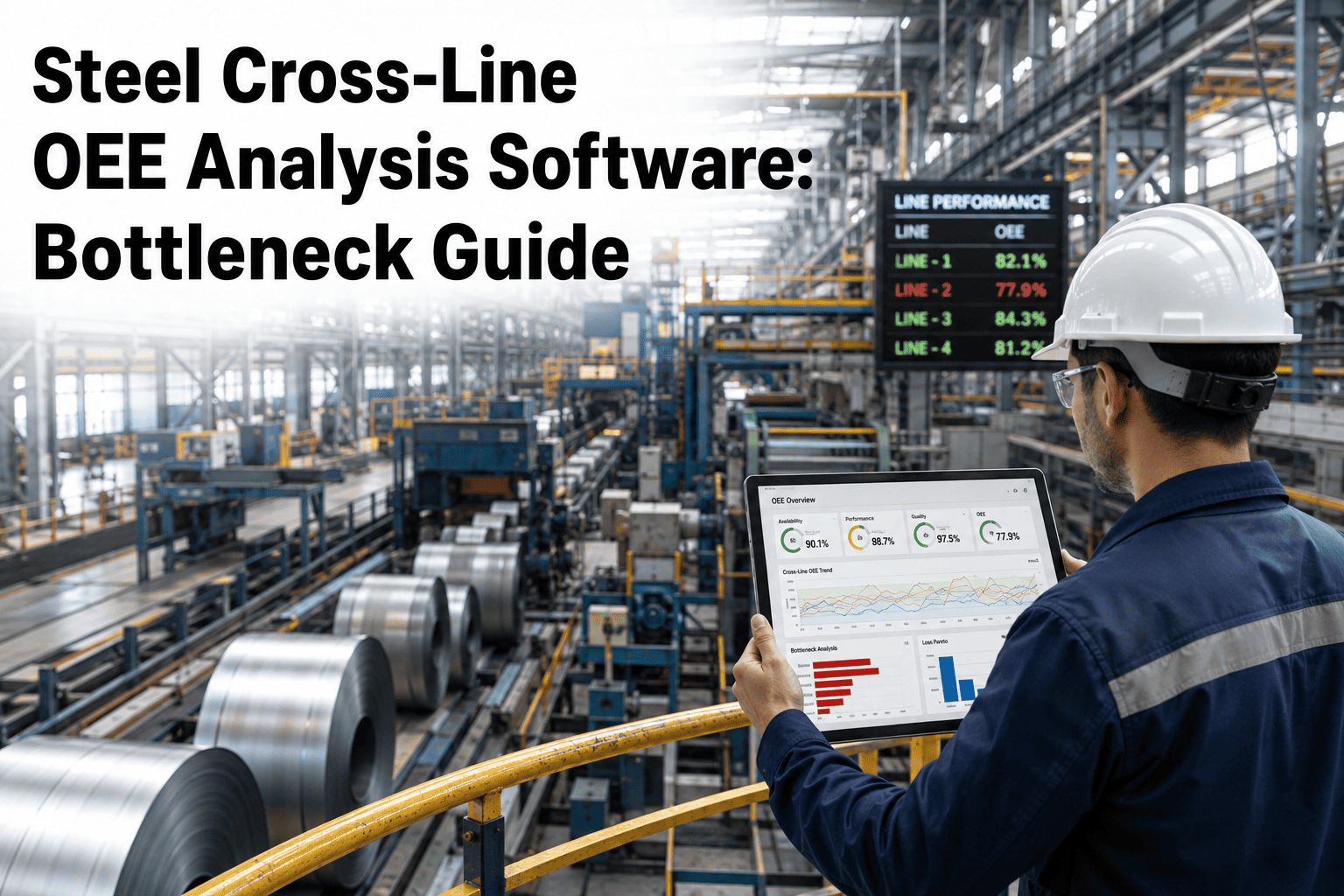
The hot strip mill reports 64% OEE and everyone assumes it's the problem line — so that's where the improvement budget goes, for the third year running, with barely a dent in plant output. Meanwhile the real...

Read More
Walk onto almost any steel plant floor and ask the shift supervisor for last week's downtime report, and the number that comes back will look reasonable — maybe 78% availability, in line with what the plant has...
Read More
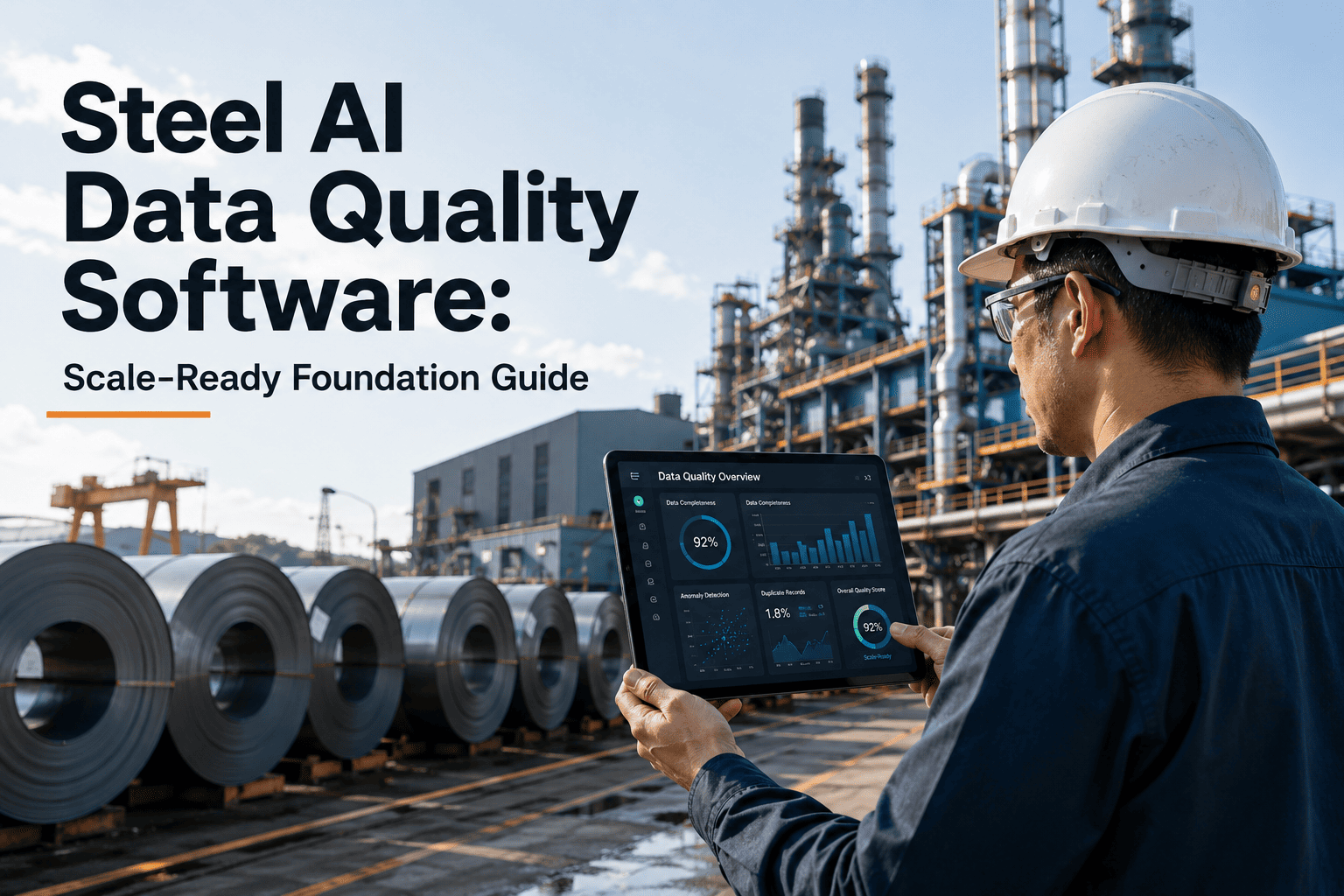
Most steel plants don't fail at AI because the algorithms are wrong. They fail because the data feeding those algorithms was never clean enough to trust in the first place — duplicate asset records, inconsistent...
Read More
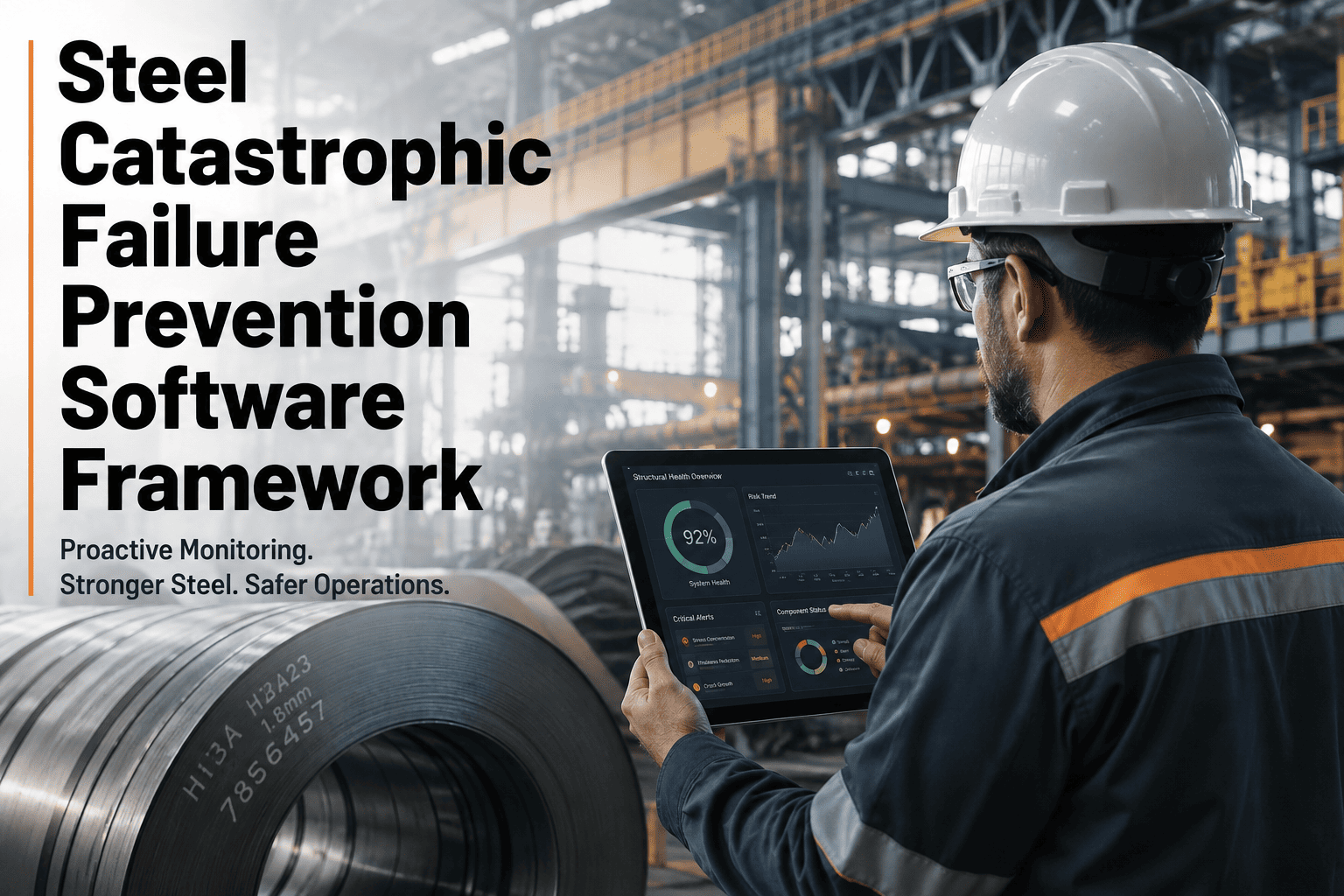
A bearing seizure on a continuous caster does not stay a bearing problem for long. The strand freezes against the rollers, the tundish chills, and a repair that should take thirty minutes on a bench turns into a...

Read More
A belt splice fails on a Tuesday, a technician snaps a photo on their personal phone, and three weeks later an OEM warranty reviewer asks for proof of when the defect was found and where. Nobody can produce it —...

Read More
Ask any steel plant maintenance manager how they know a technician actually walked the full length of the No. 4 conveyor last shift, and most will admit the honest answer is a signed sheet of paper that could have...
Read More
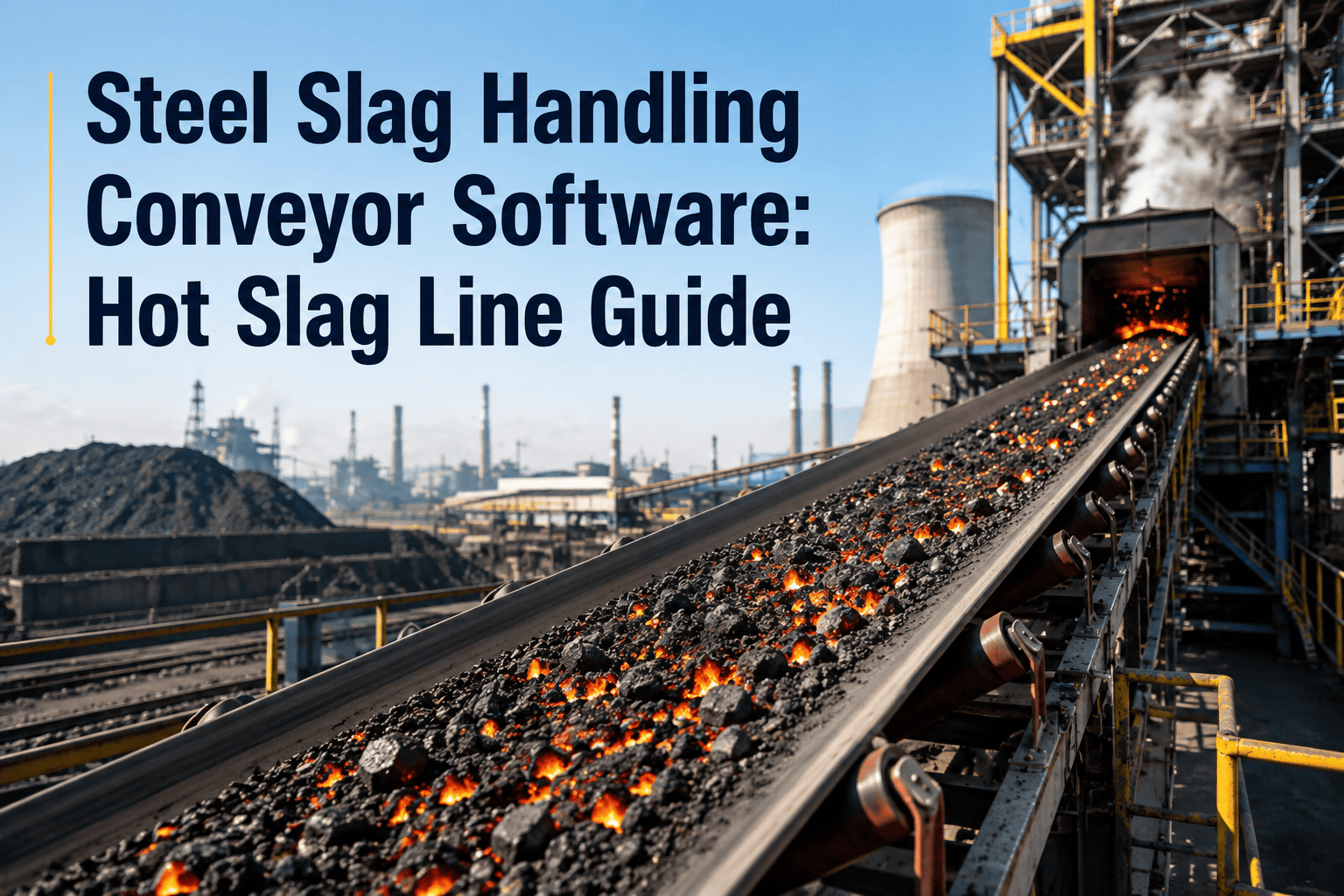
Every integrated mill runs two production lines at once — the steel line everyone plans around, and the slag line nobody budgets for until it stops moving. Molten slag leaves the BOF or EAF at 1,400–1,500°C, rides...
Read More
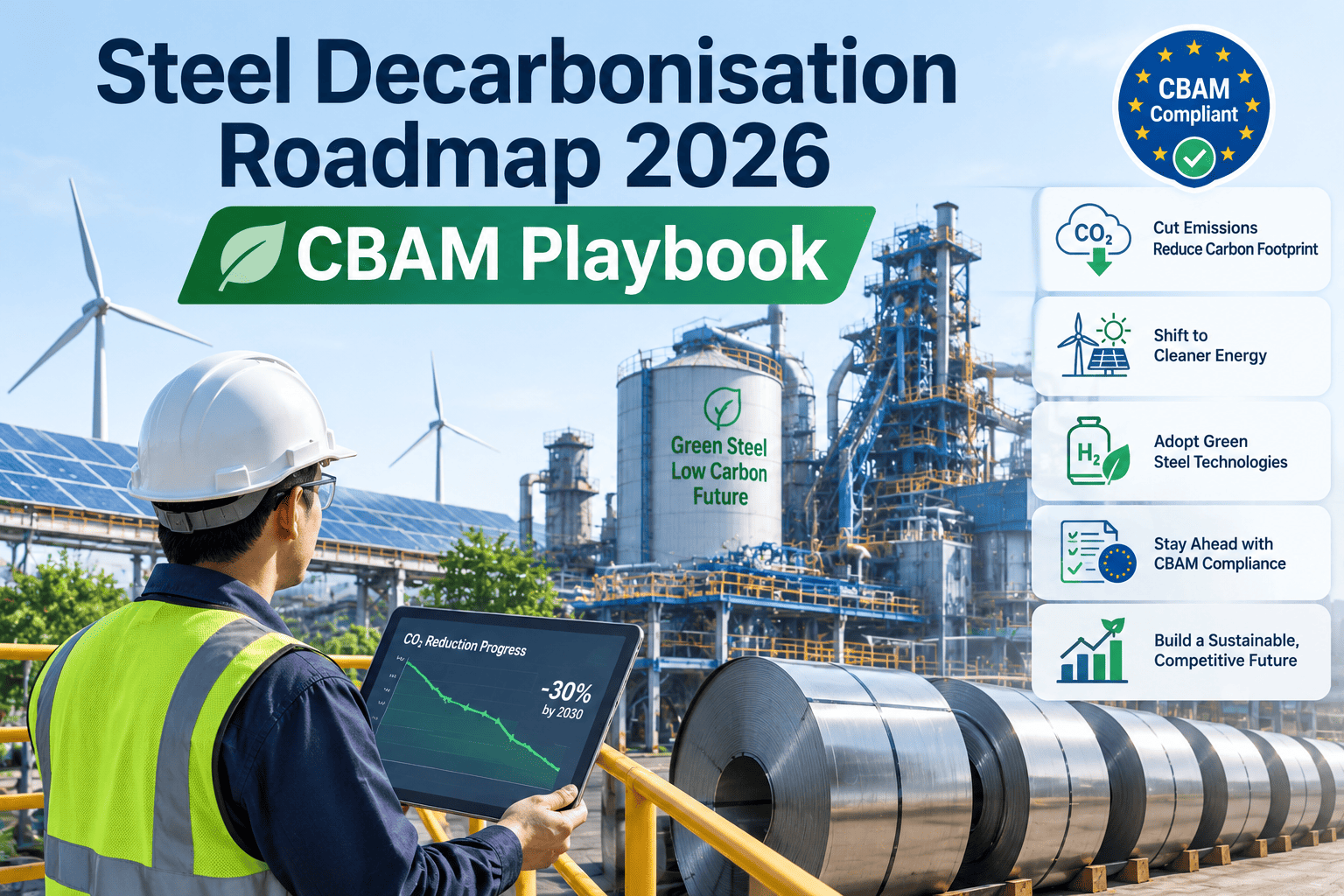
A blast furnace still running past 2030 without a documented Scope 1, Scope 2, and Scope 3 emissions baseline is not just an environmental liability — it is a plant that will lose EU market share the moment CBAM...
Read More
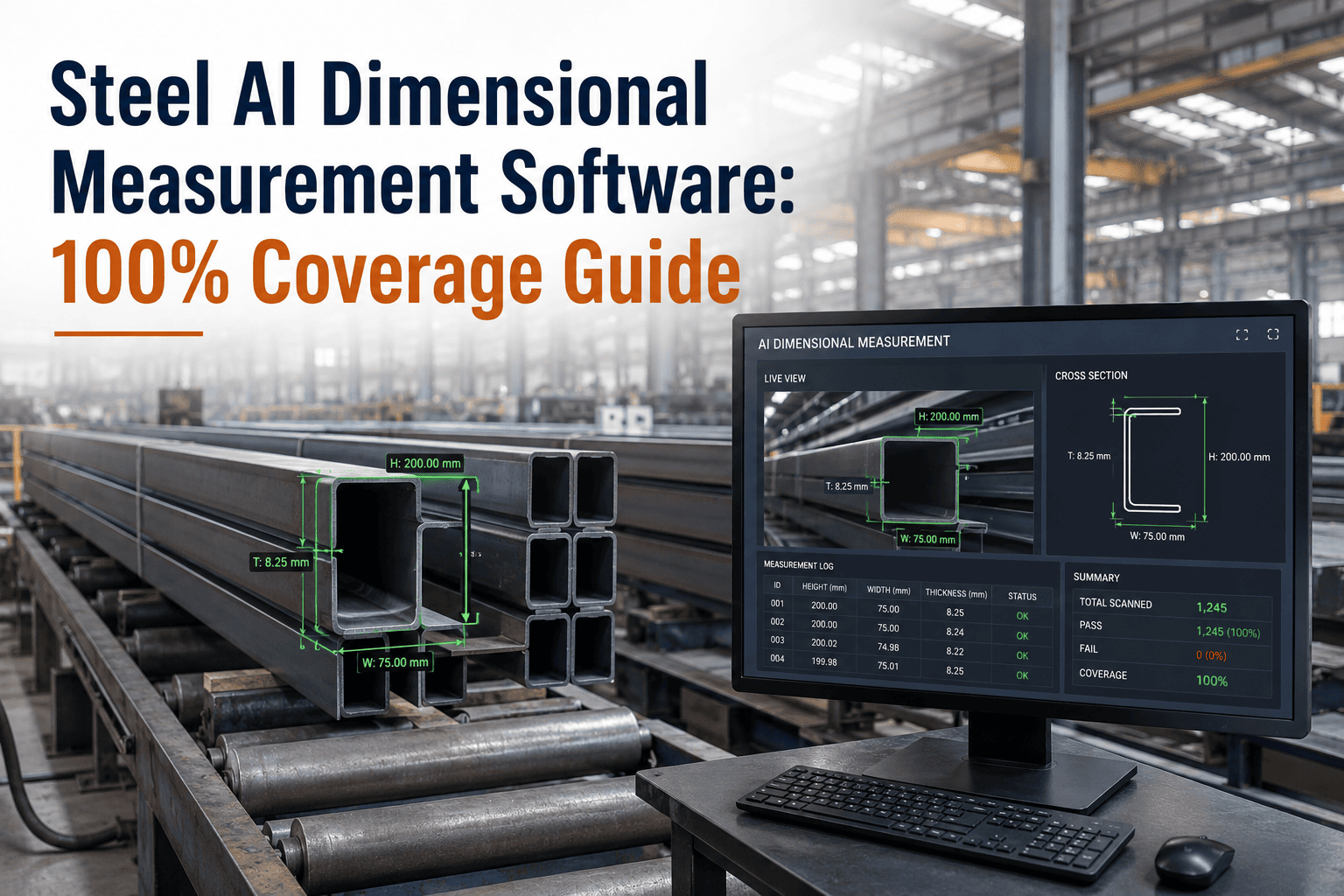
Walk any steel finishing line and you will still find a technician with a hand micrometer, sampling one coil in twenty and logging the reading on a clipboard before the next one rolls past. That sampling gap is...
Read More
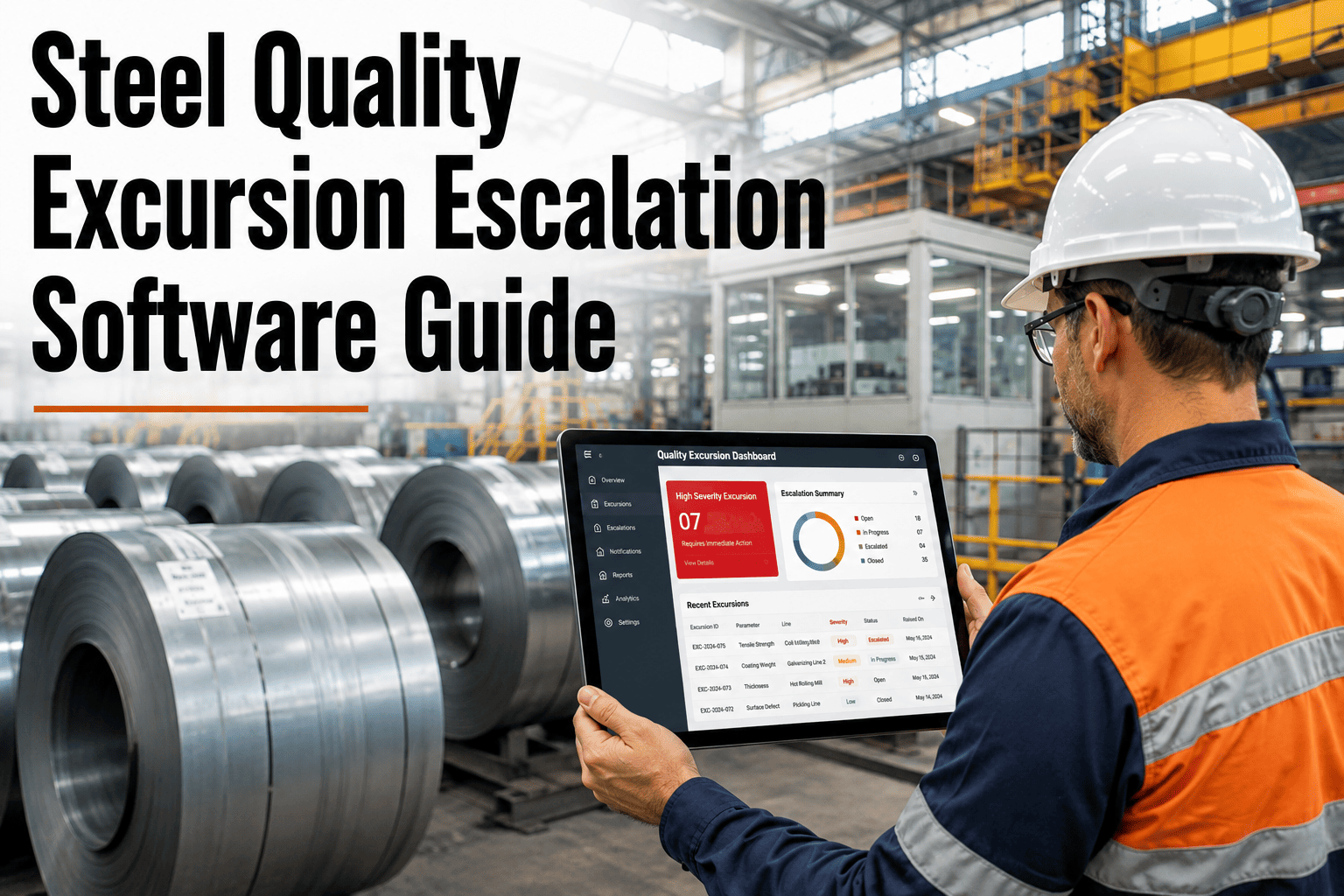
A coil of galvanized sheet ran 0.4mm under gauge tolerance for eleven minutes before anyone in the mill noticed. The SPC chart flagged it the moment it happened, but the alert sat in a shared inbox until the day...
Read More
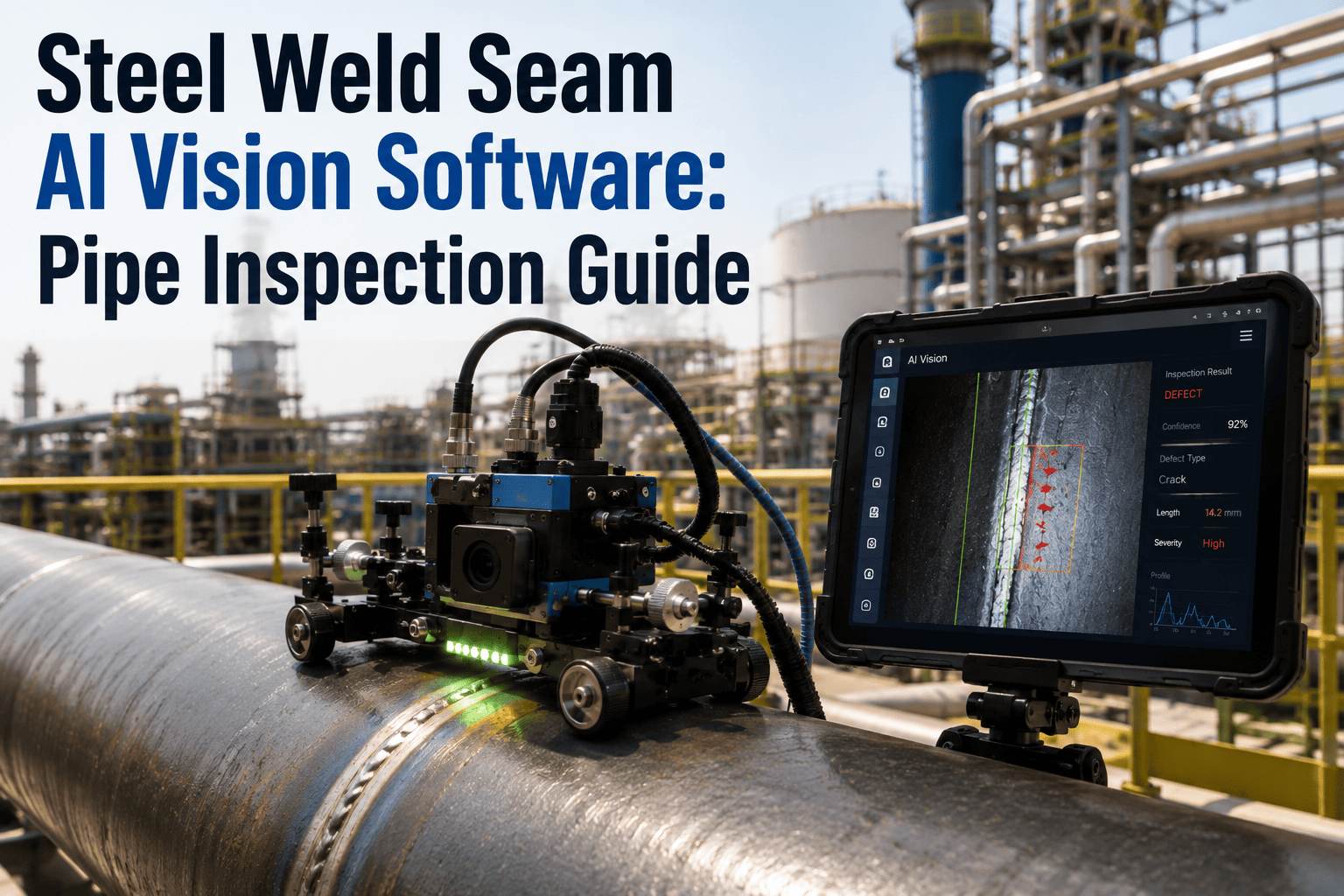
A pipe mill running three ERW lines was losing roughly 4% of finished coil to weld seam rejects that inspectors caught only after the pipe had already been cut, capped, and staged for shipping. The root cause...
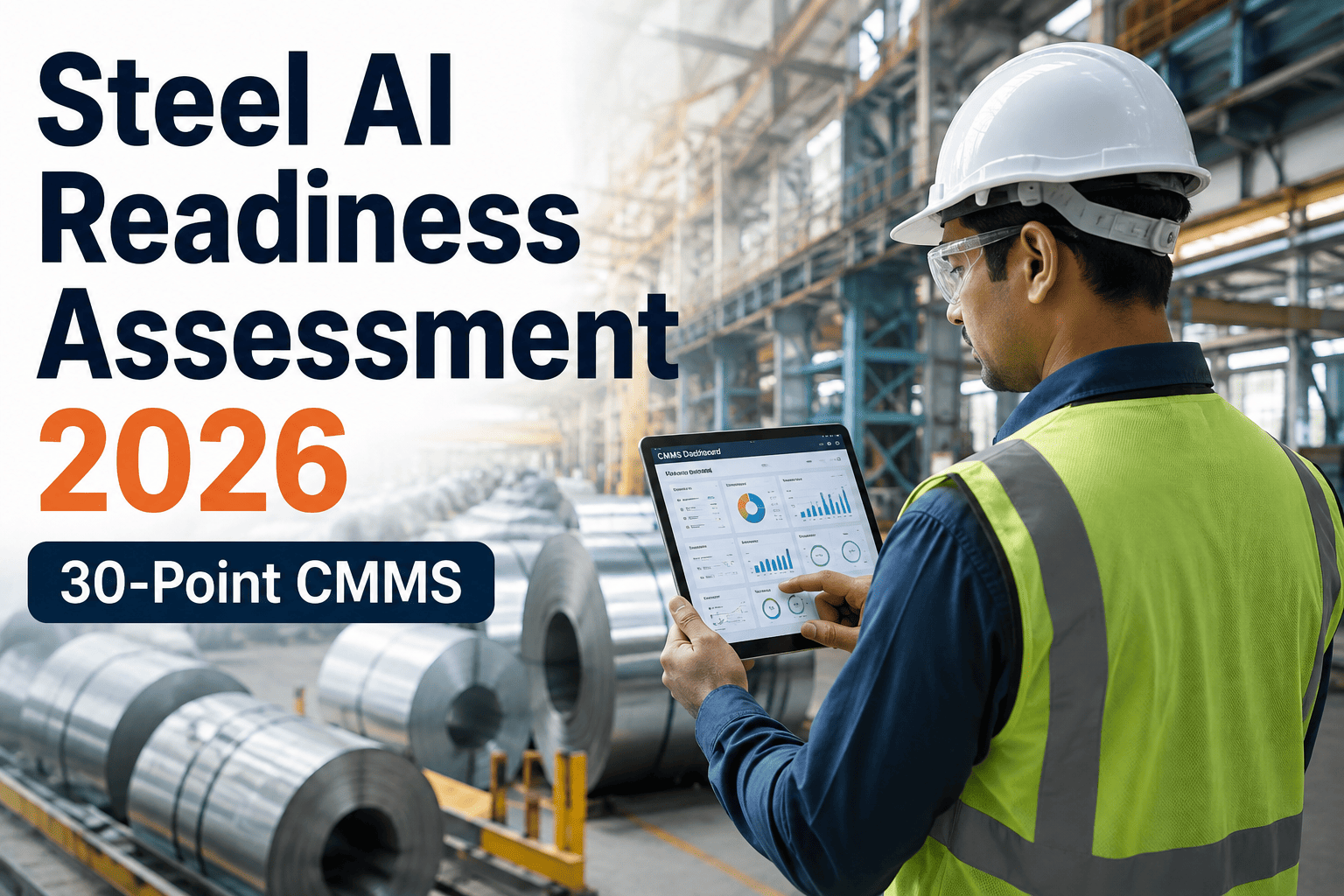
Read More
Most steel plants that start an AI pilot for predictive maintenance or process optimization discover the real obstacle only after the project has already burned through a quarter of its budget — the sensor data was...

Read More
A cold rolling mill running three shifts across two kilometers of belt conveyor went six months without an unplanned bearing failure, until a drive pulley bearing seized without warning, buckled the belt against...
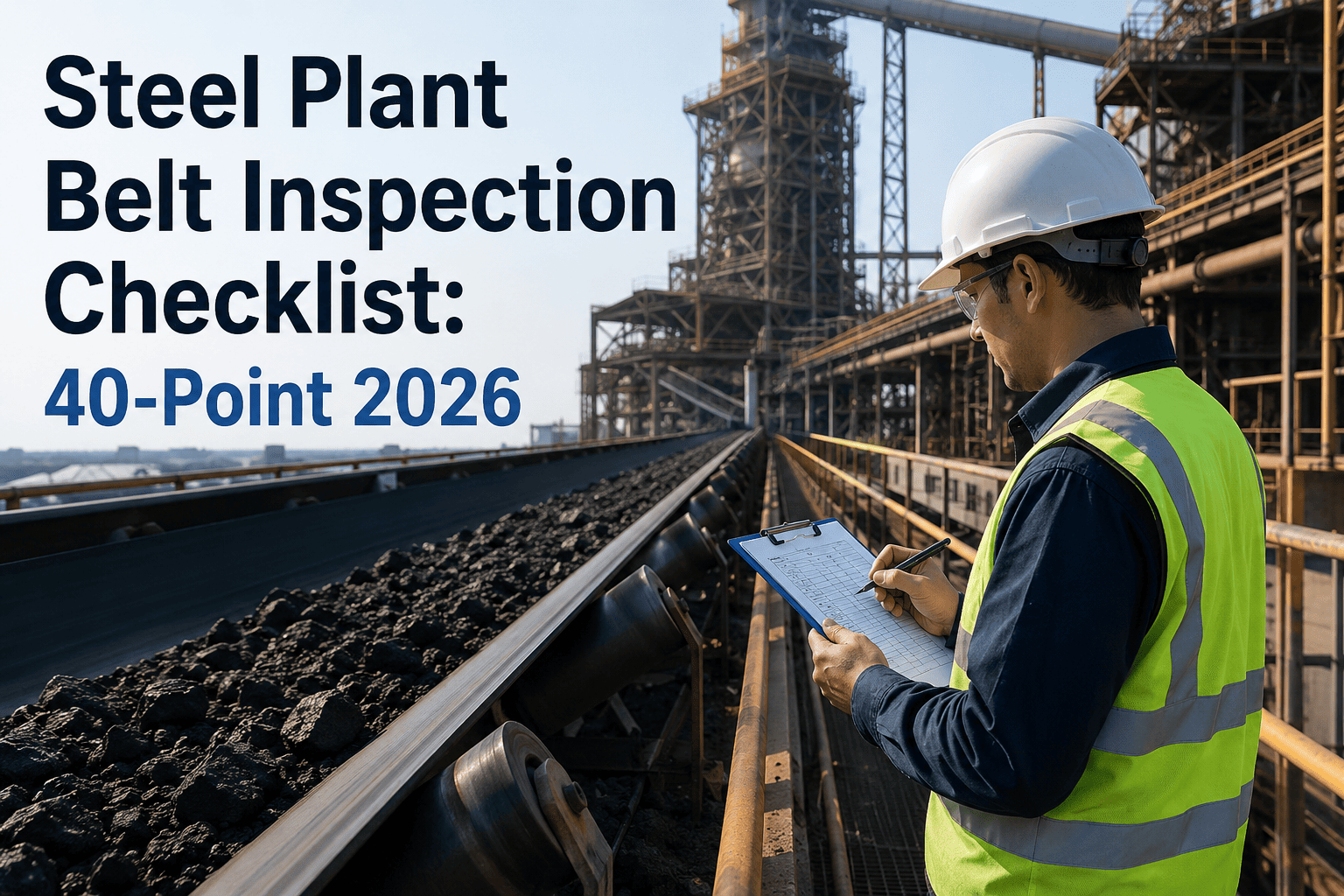
Read More
A conveyor belt running through a steel plant's sinter line, coke handling yard, or raw material stockyard carries abrasive, high-temperature material at heavy tonnage every hour of every shift, and it almost never...
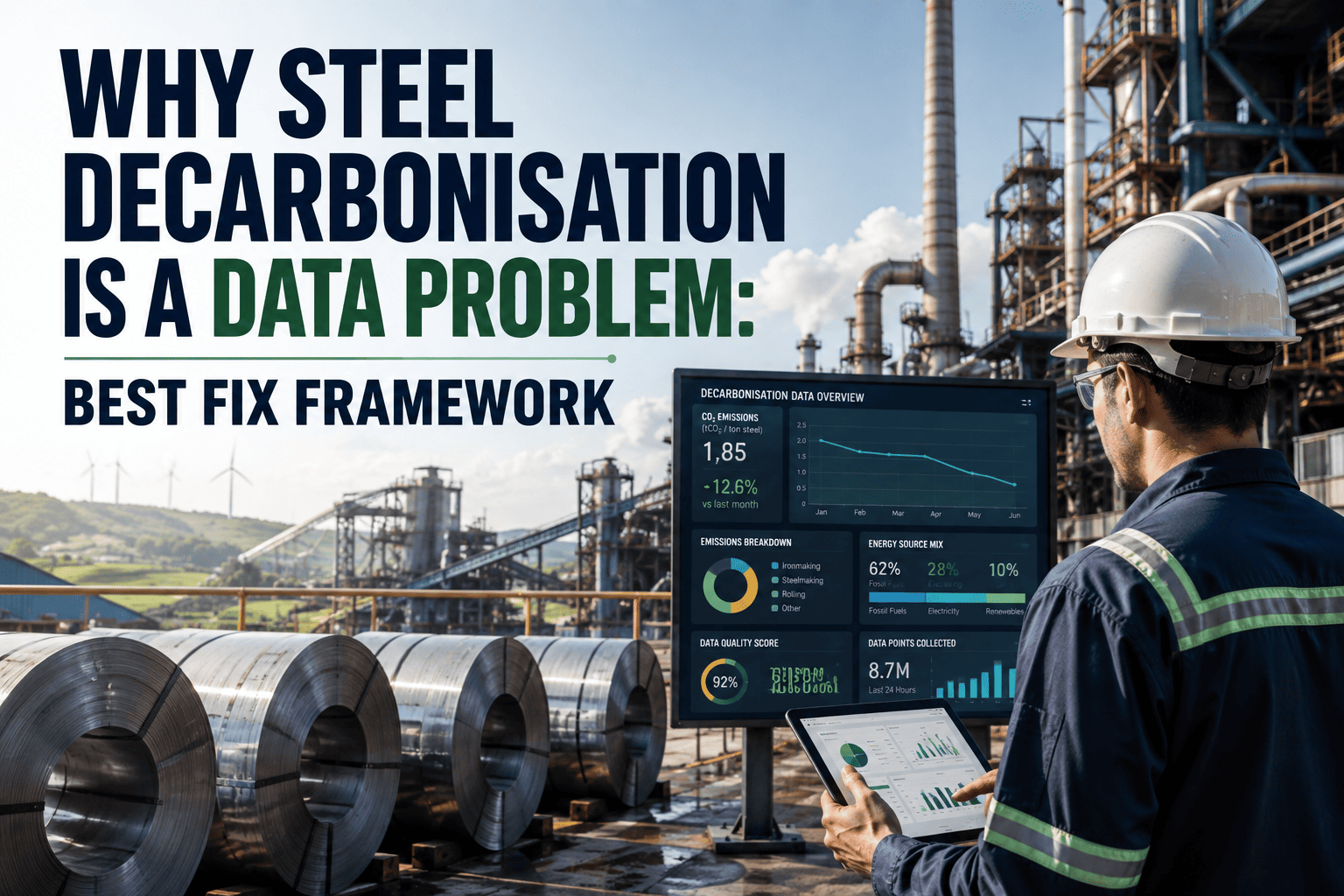
Read More
Every steel producer with a public net-zero pledge is now discovering the same uncomfortable truth: the commitment was the easy part. What comes next is proving it, tonne by tonne, furnace by furnace, shipment by...
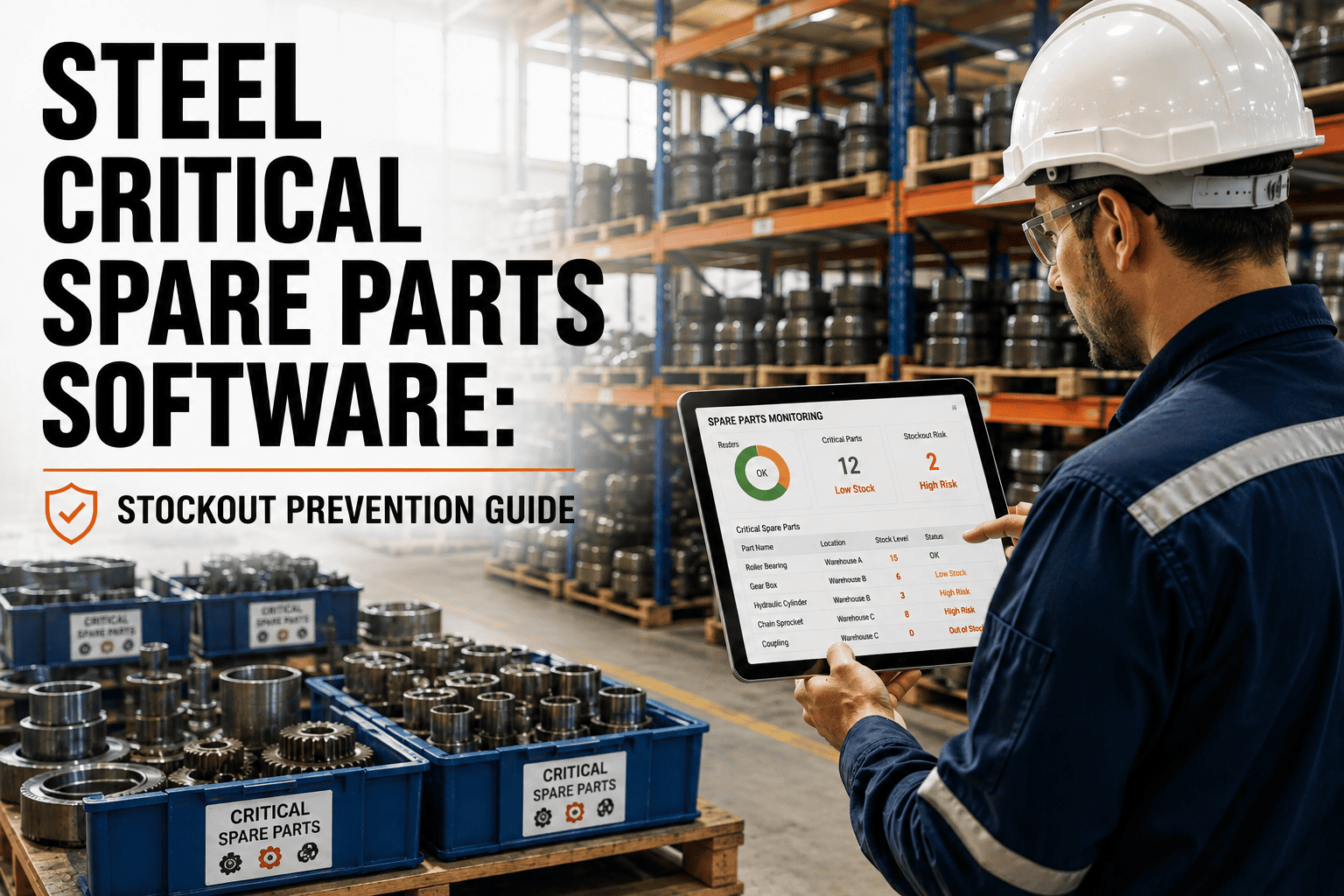
Read More
A steel plant does not stop because of a cheap part. It stops because a mill drive gearbox, a caster segment bearing, or a furnace transformer bushing was not on the shelf when it failed, and the replacement had a...
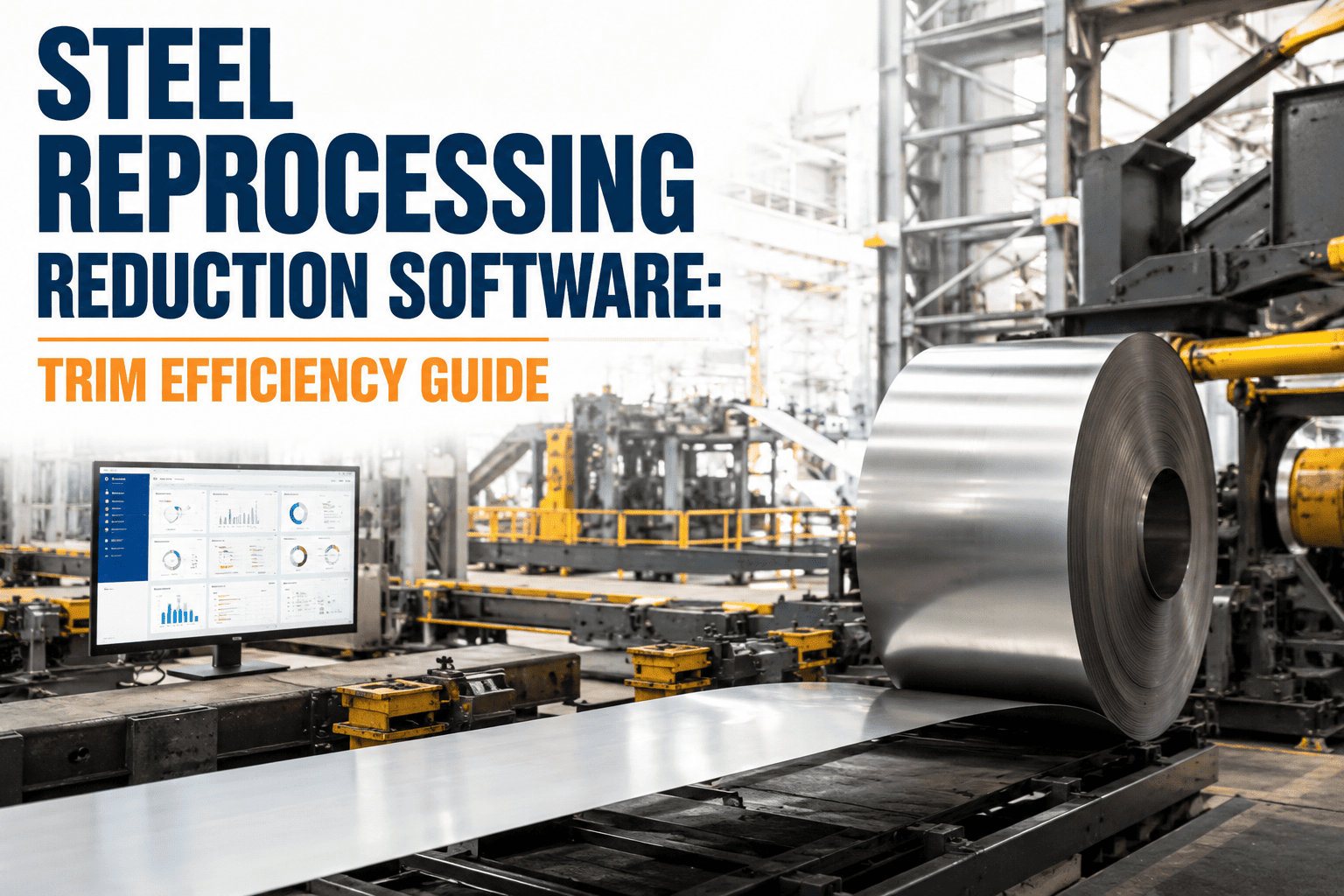
Read More
Every ladle that misses its target chemistry, every billet that cools before it reaches the mill, and every coil pulled for re-trim after final inspection is not an isolated event on a steel plant floor. Each one...
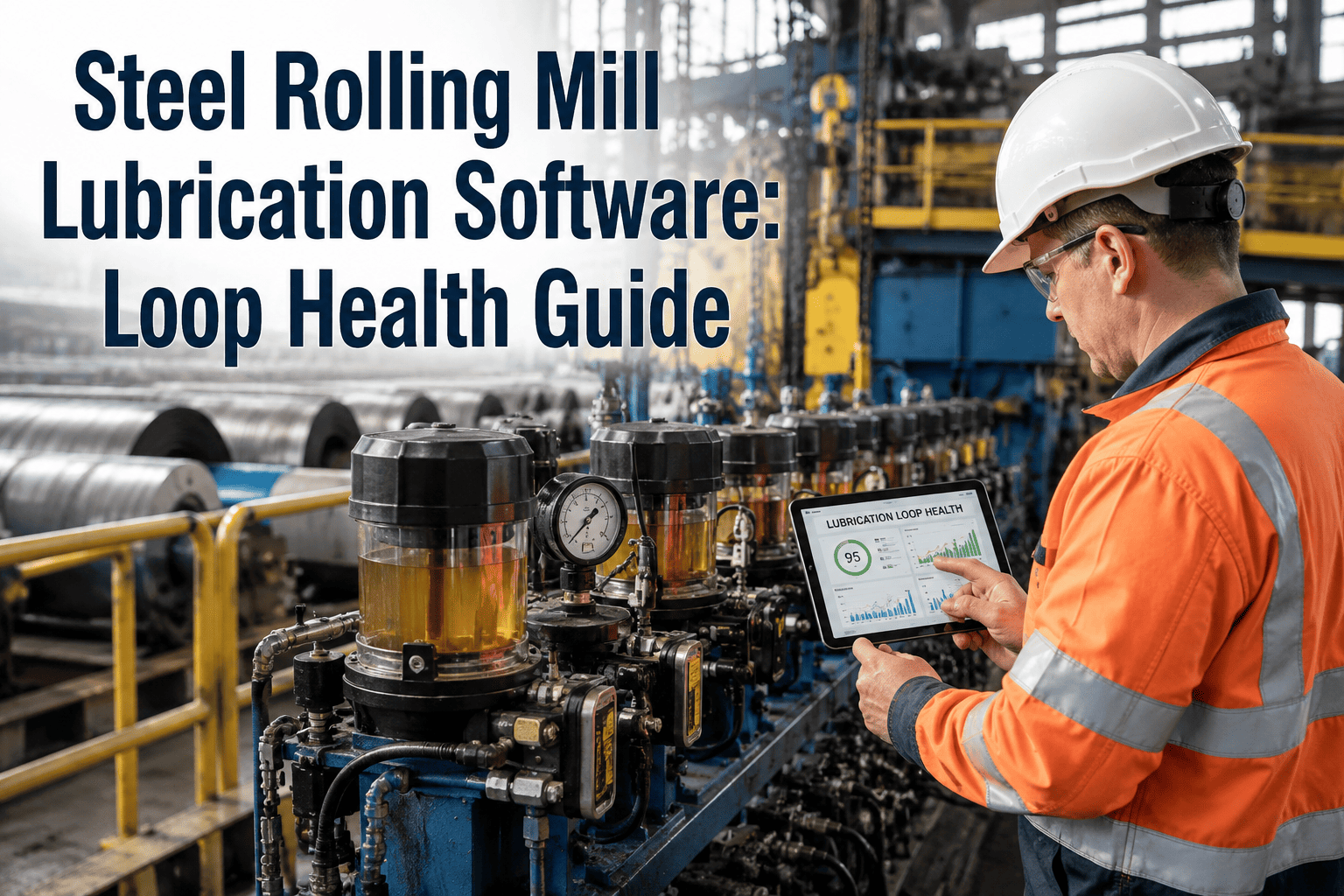
Read More
Rolling mill lubrication looks simple from the outside — oil goes in, oil comes out — but every bearing, gearbox, and hydraulic loop on a rolling mill is running under loads and speeds that punish even small...
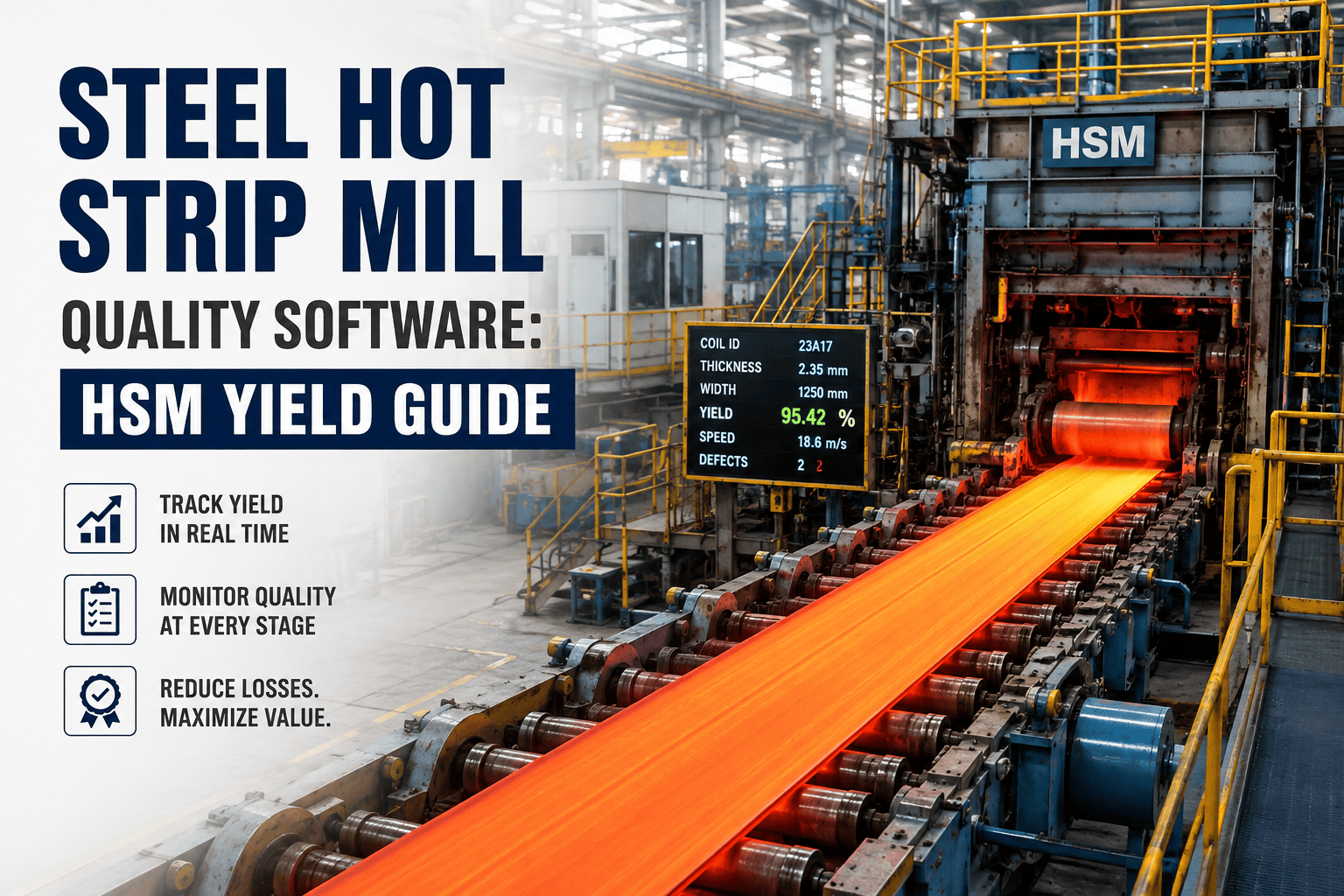
Read More
Hot strip mills are where slab becomes coil, and where a large share of the yield a steel plant will ever recover — or lose — actually gets decided. Scale that isn't removed before the finishing stands embeds into...
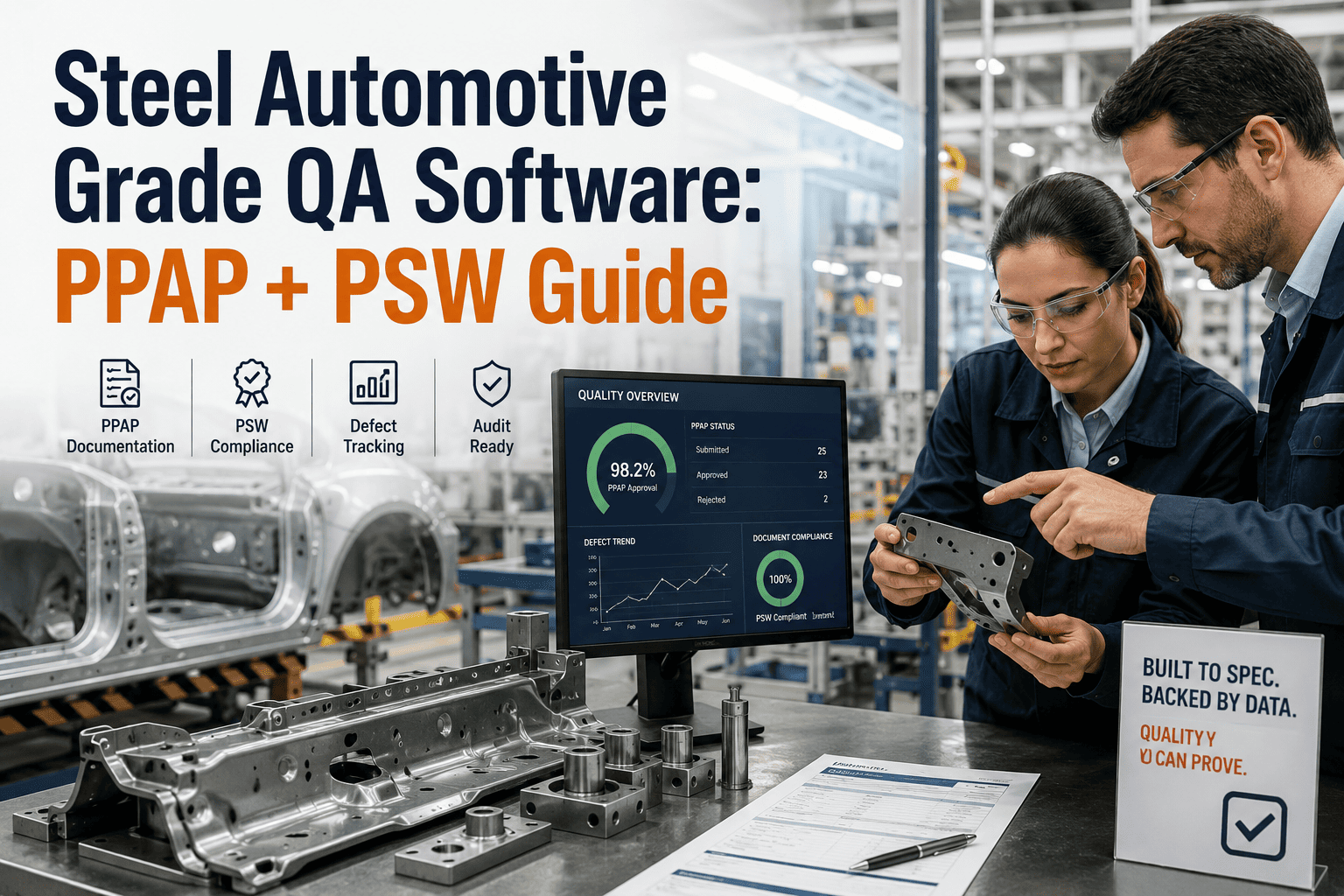
Read More
Automotive OEMs do not just buy steel — they buy a documented, repeatable process for making that steel, and PPAP is how a supplier proves the process exists. A single missing control plan revision or an FMEA that...
Read More
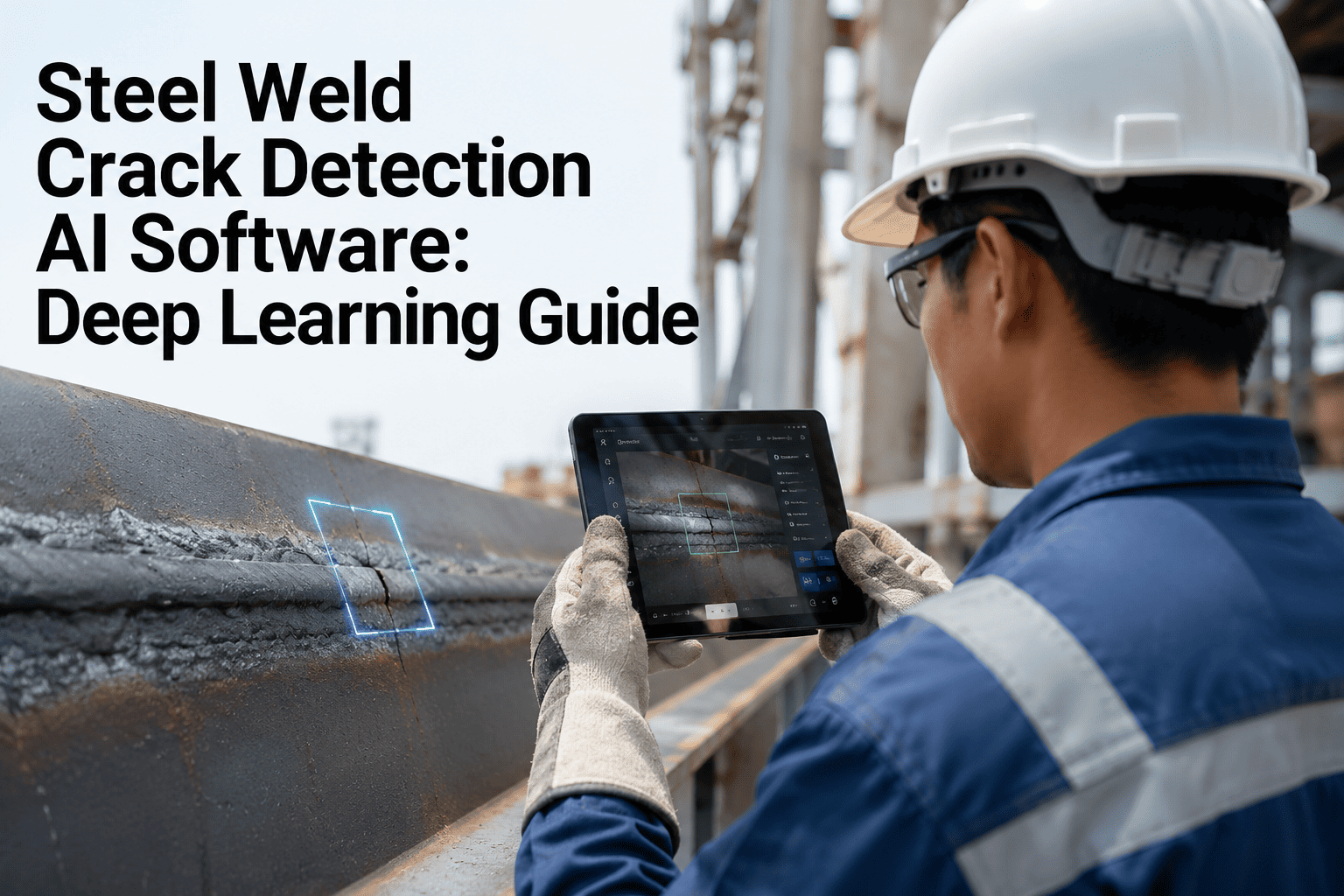
Weld cracks are the defect every radiographic and ultrasonic inspector fears missing, because a hairline crack in a load-bearing seam can sit invisible under a coating and still propagate under cyclic stress months...
Read More
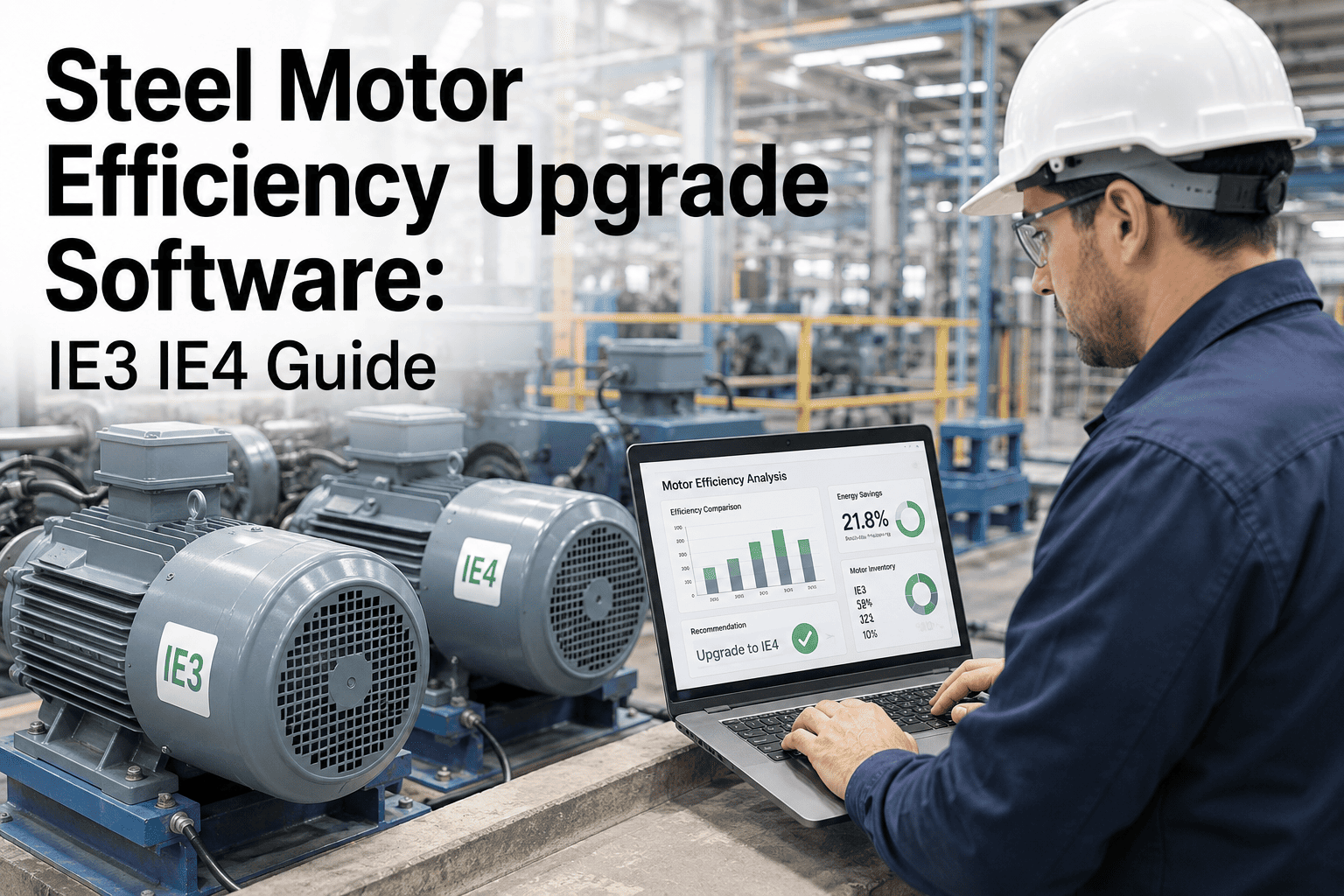
Most steel plants are still running a mixed fleet of IE1 and IE2 motors on fans, pumps, compressors, and conveyor drives that were installed a decade or more ago, and nobody has ever built the business case to...
Read More
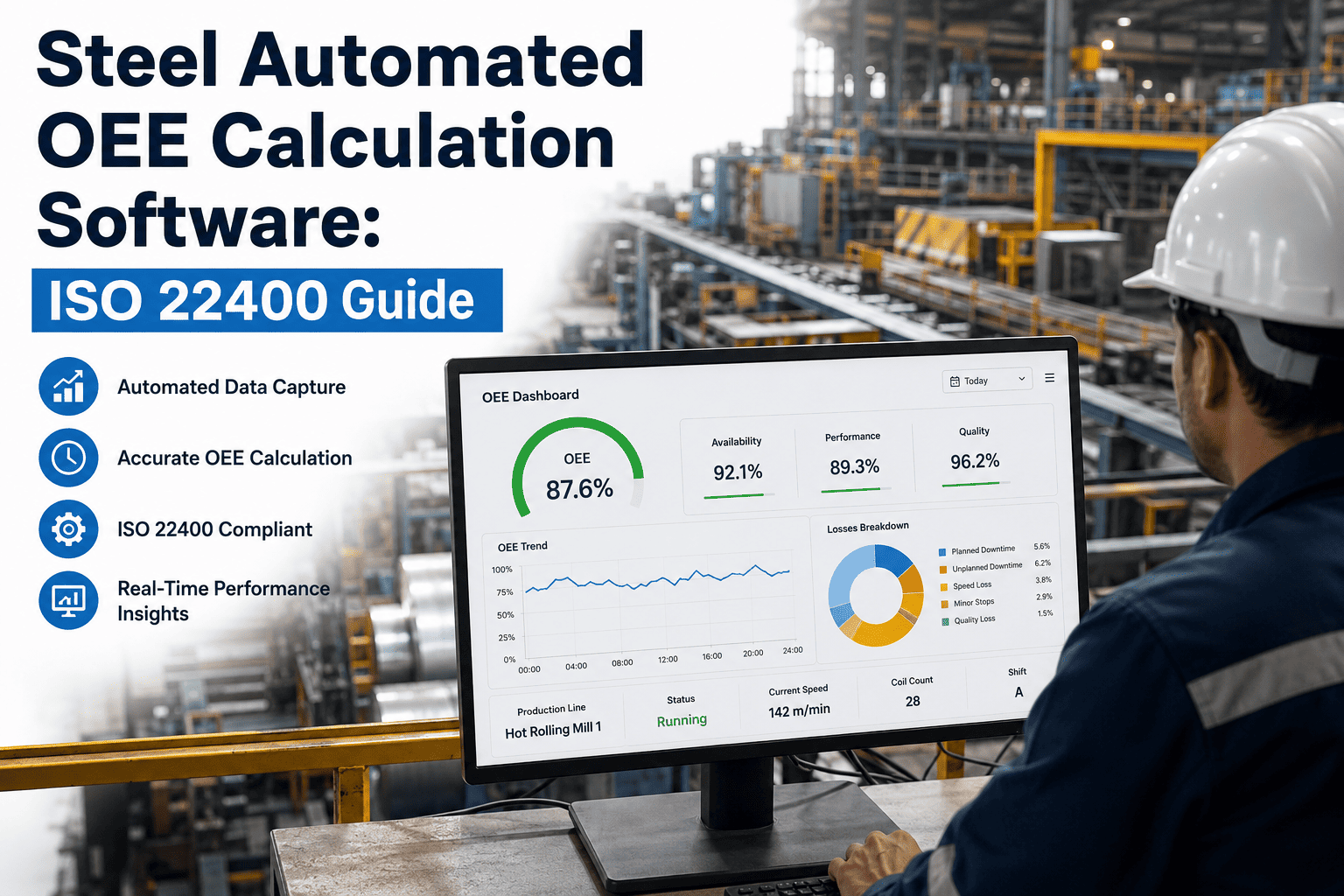
A rolling mill supervisor in Indiana checks OEE once a shift, usually from a whiteboard tally that mixes the outgoing crew's rough guess at downtime with a hand count of rejected coils. The mill has reported...
Read More
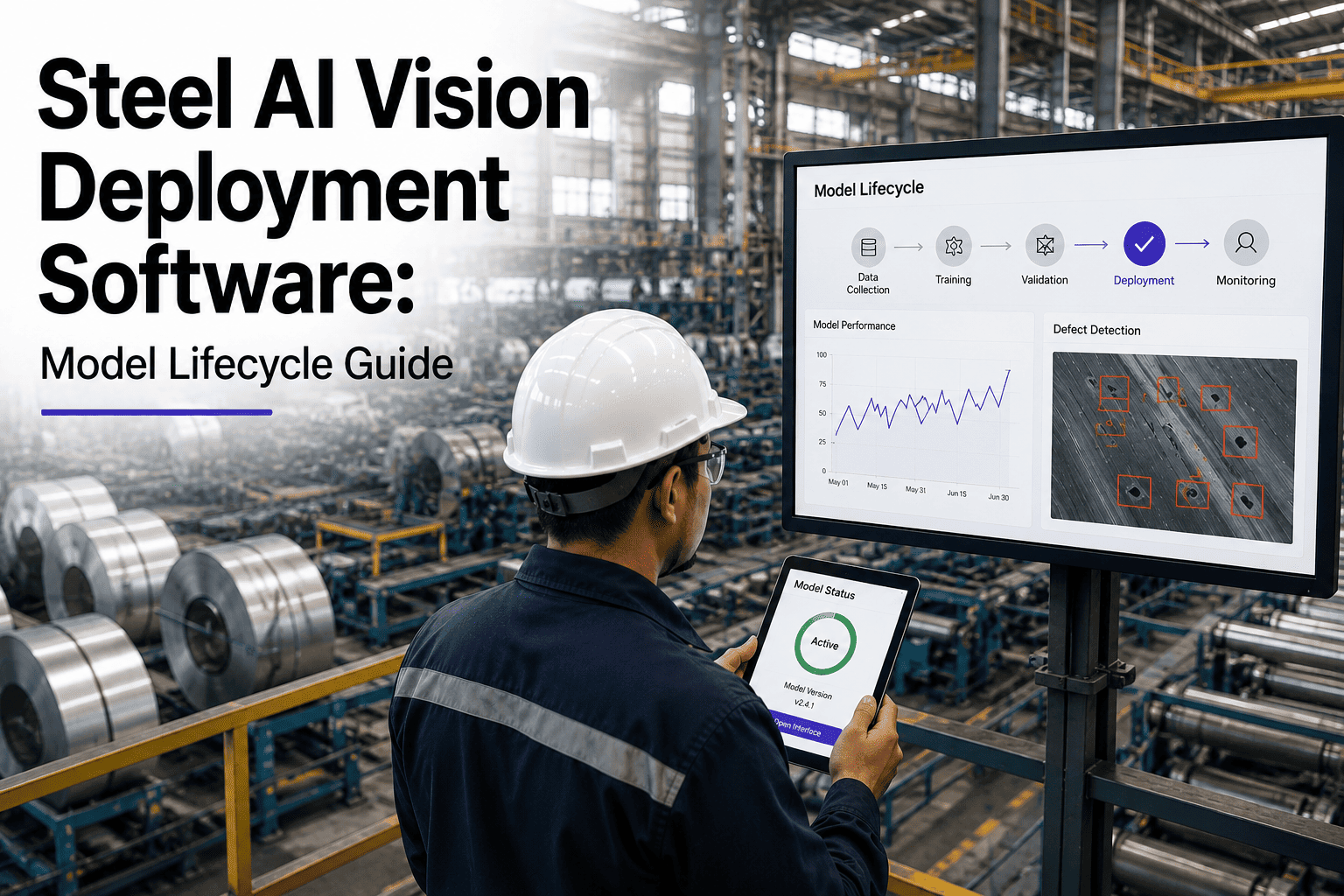
A galvanizing line installed a computer vision camera to catch surface defects that inspectors were missing at line speed, and in testing the model caught 96% of scratches and coil breaks the human eye missed....

Read More
A steel producer in Indiana ran a six-month AI pilot on its hot strip mill, using vibration sensors and a prediction model to catch bearing failures before they caused an unplanned stop. The pilot line cut downtime...
Read More
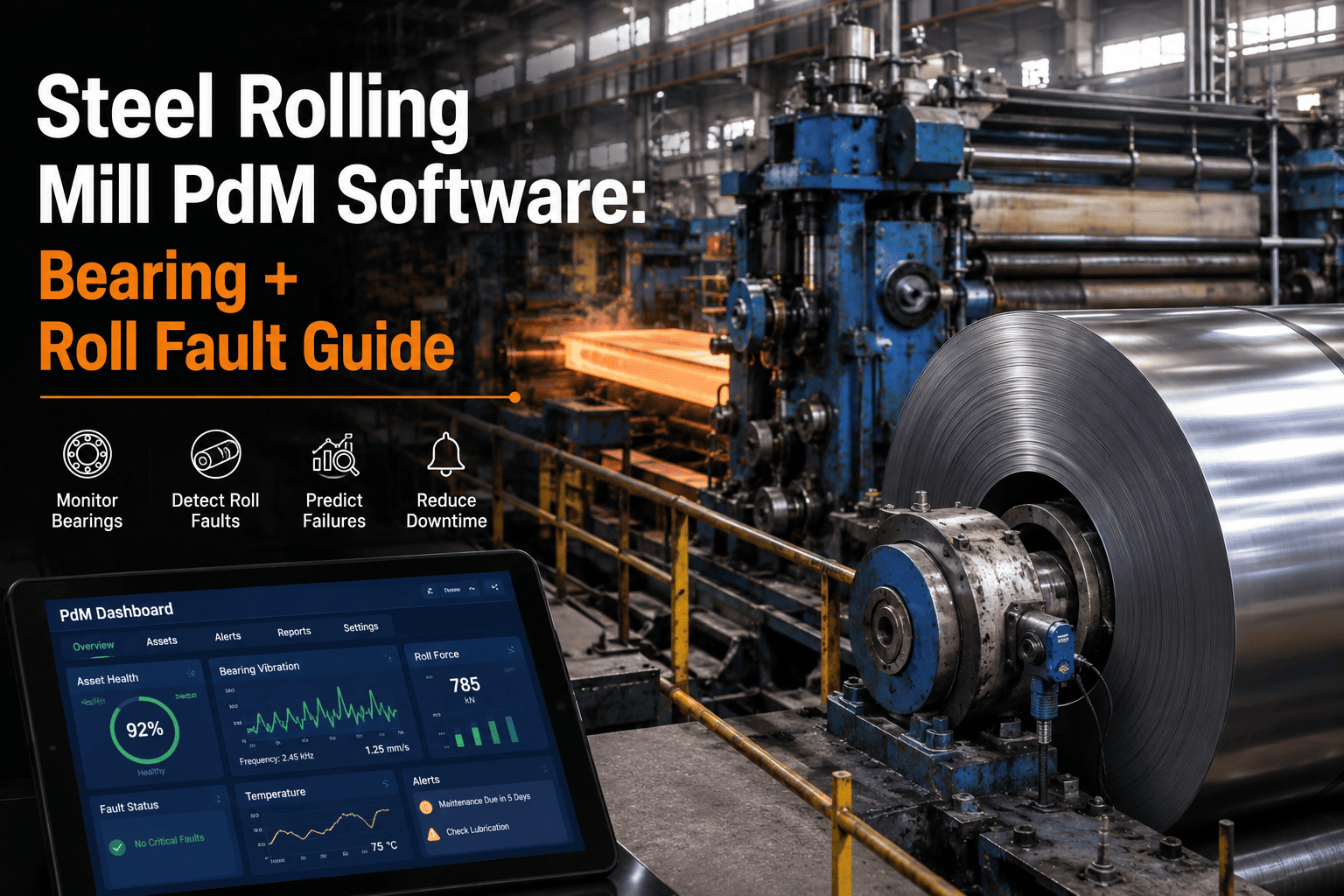
A work roll bearing rarely fails without warning — it fails without anyone reading the warning. Steel rolling mills run some of the highest-load, highest-speed rotating equipment in any industrial plant, and the...
Read More
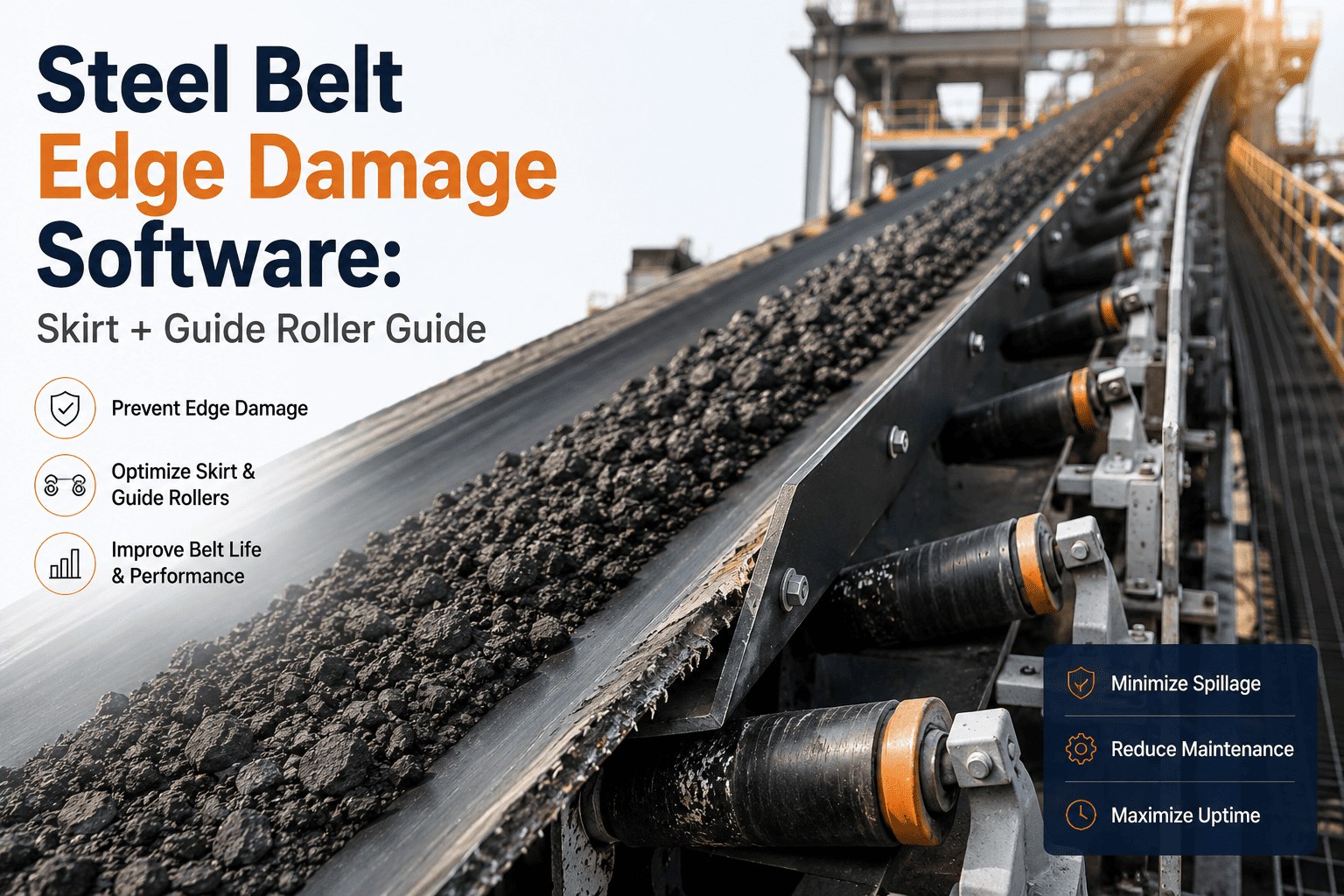
Belt edge damage is the single most under-reported failure mode on steel plant conveyor systems, and it is also the most expensive one to ignore. A worn skirt rubber seal or a seized guide roller rarely causes an...
Read More
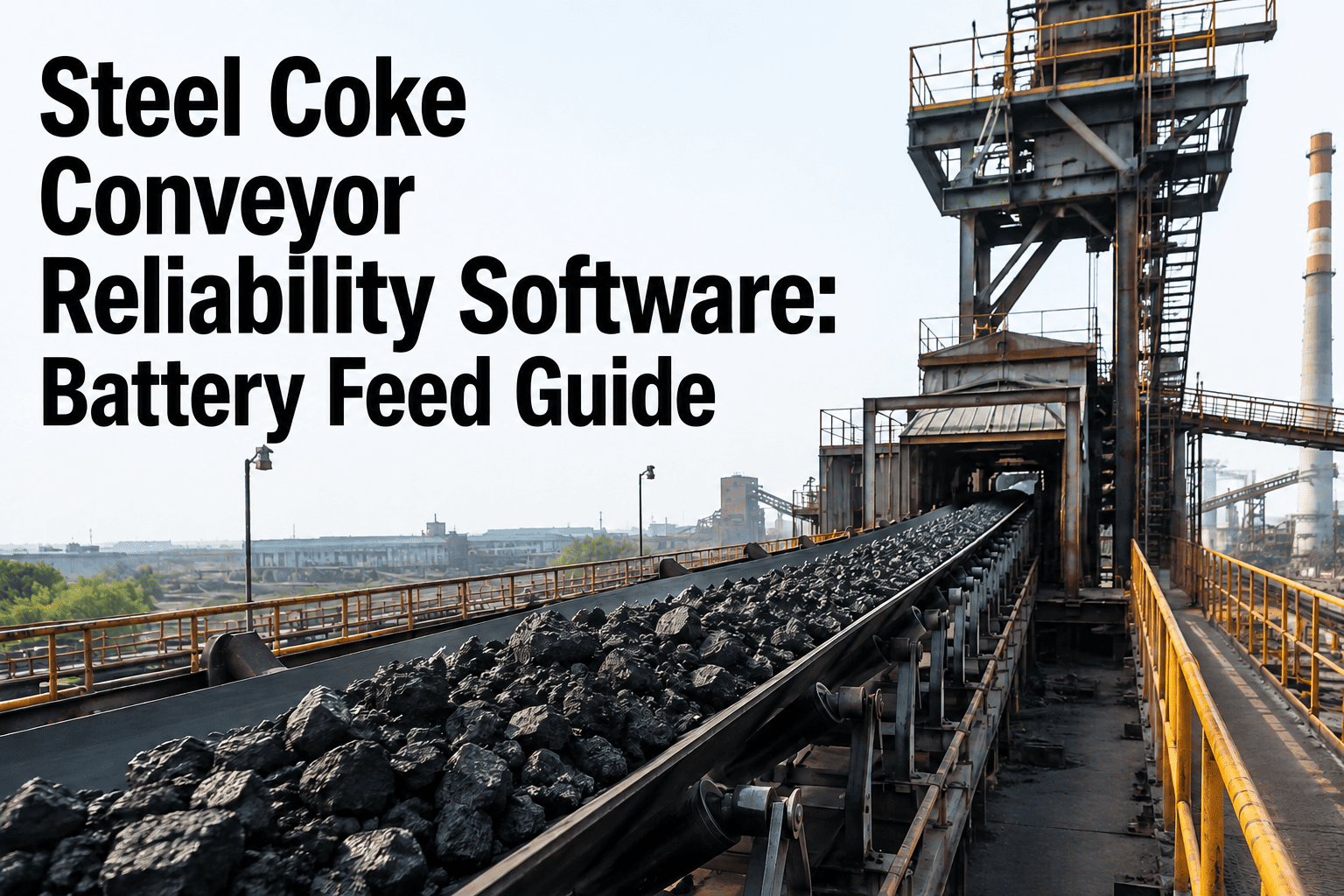
Every ton of hot coke that leaves a coke oven battery travels through five separate conveyor and transfer points before it reaches the blast furnace stockhouse — the pusher-side apron, the quench car discharge, the...
Read More
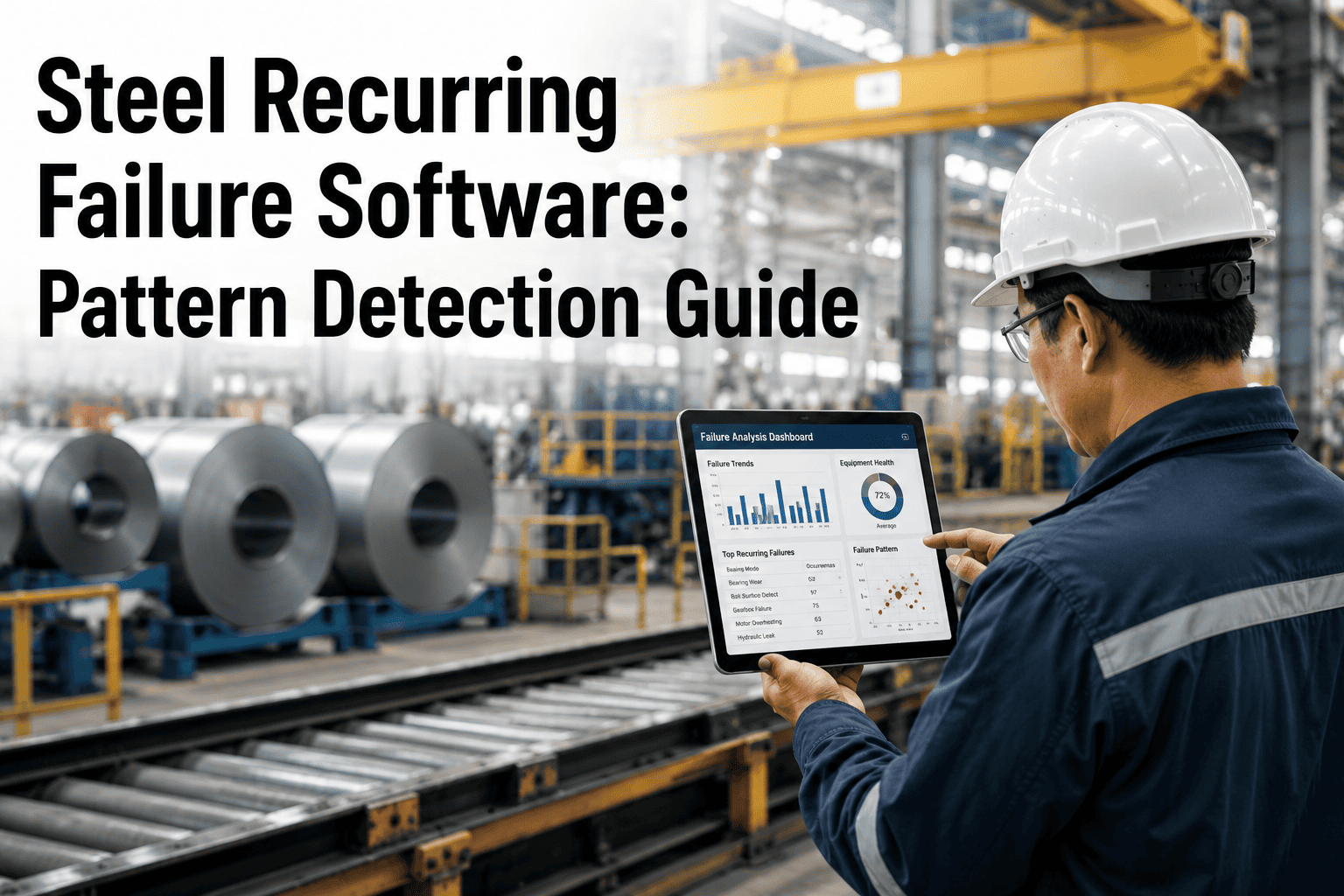
A rolling mill gearbox trips on a night shift, gets repaired, and returns to service. Six weeks later it trips again, on a different shift, logged by a different technician in different words, so nobody connects...
Read More
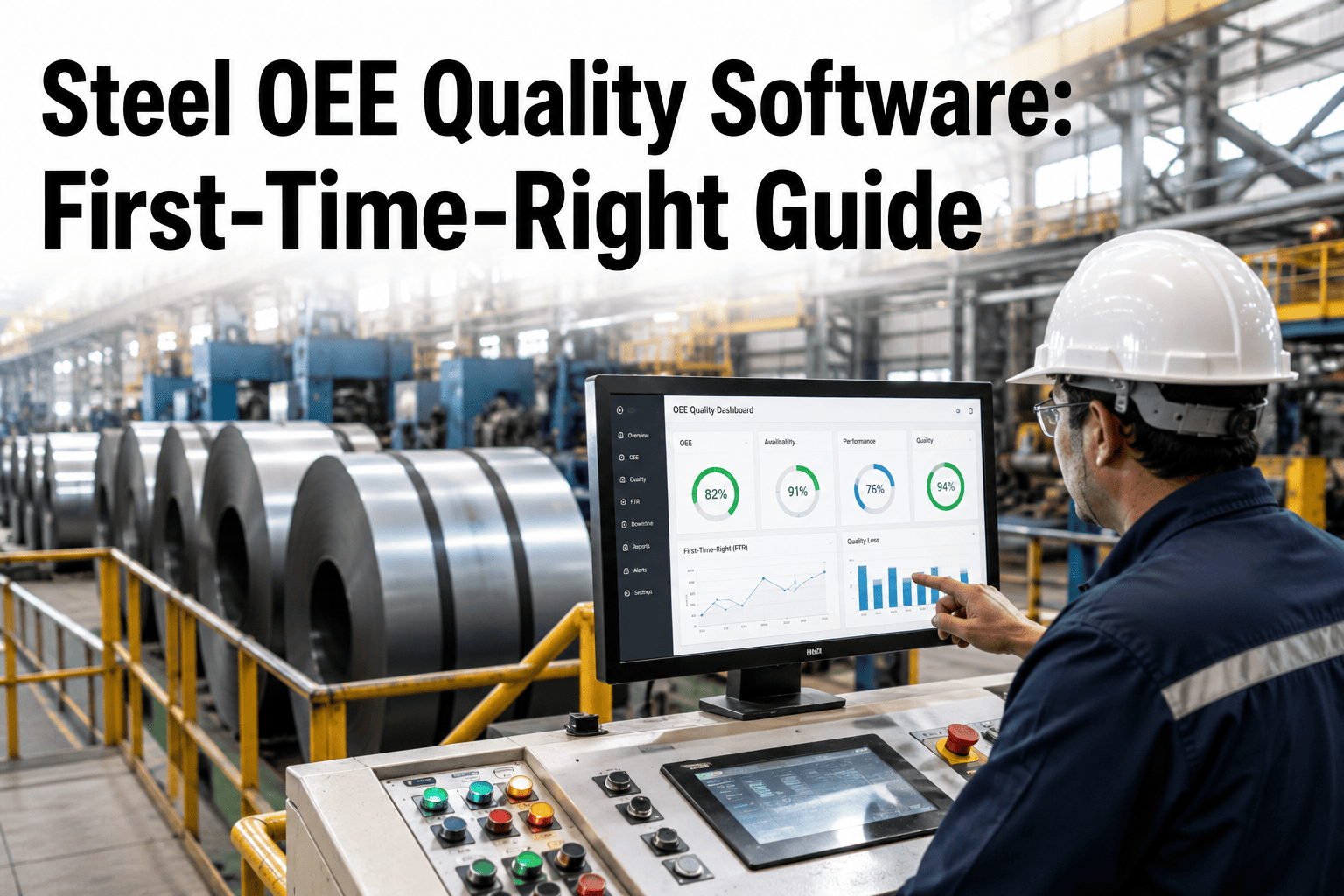
Most steel plants proudly report an OEE number in the 80s, then miss their monthly yield target anyway, and the gap almost always traces back to one factor nobody tracks properly: Quality. Availability and...
Read More
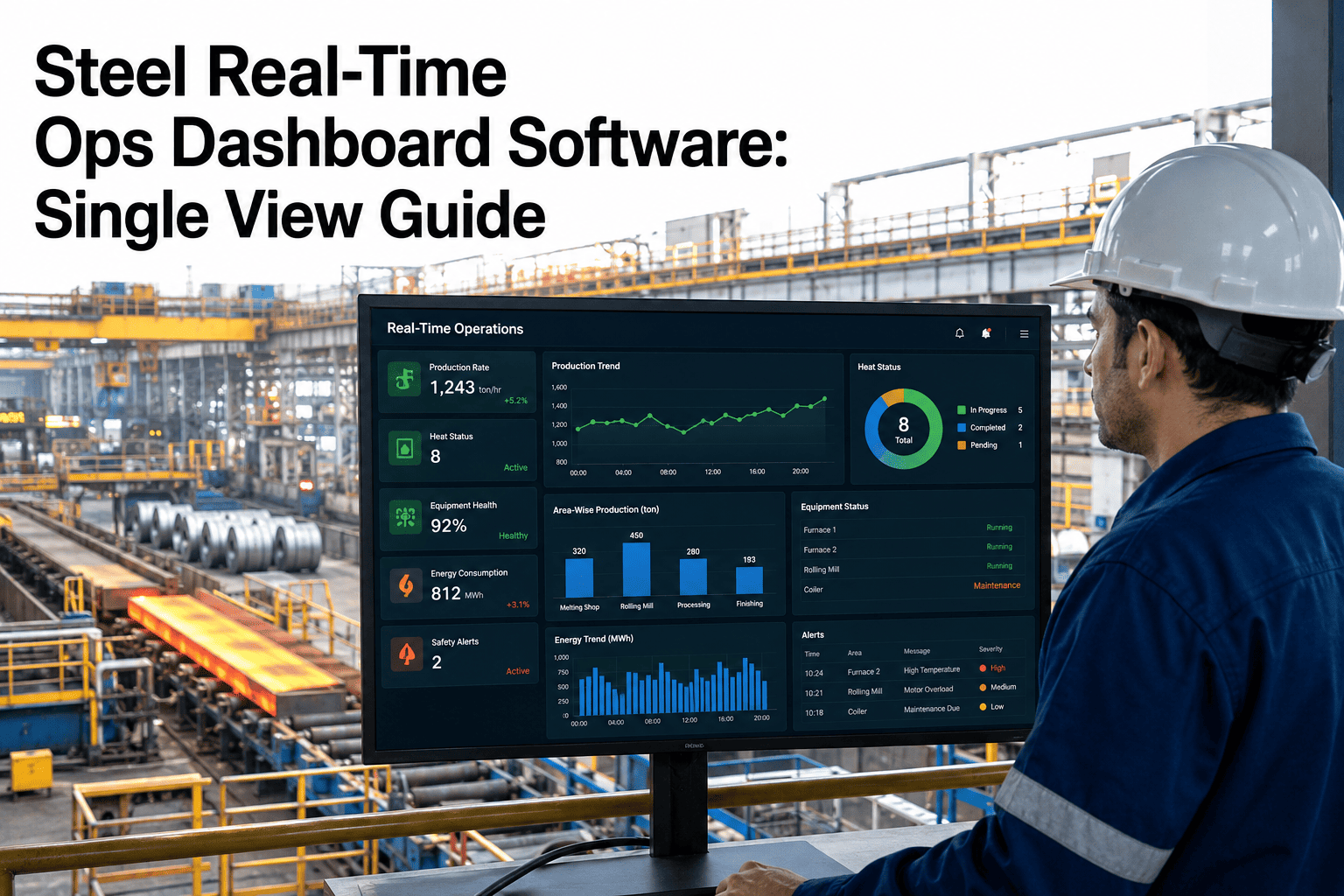
Every steel plant generates a flood of live data every shift — furnace temperatures, mill speeds, energy draw, and quality results — yet most plant managers still walk the floor or wait for a phone call to learn...
Read More
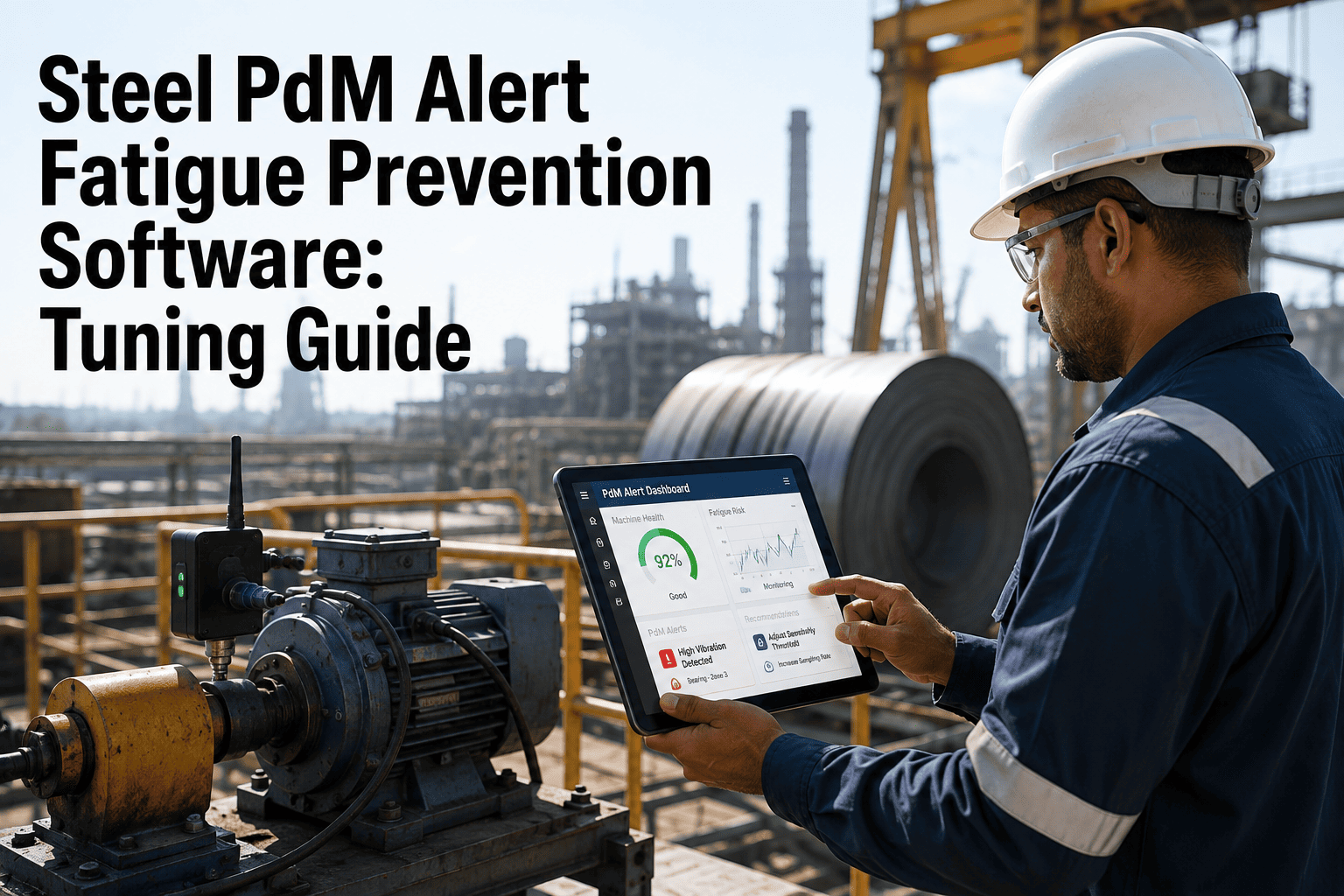
Predictive maintenance was supposed to end unplanned steel plant downtime — instead, many reliability teams have quietly stopped opening their PdM dashboards altogether. When vibration, thermal, and oil sensors...
Read More
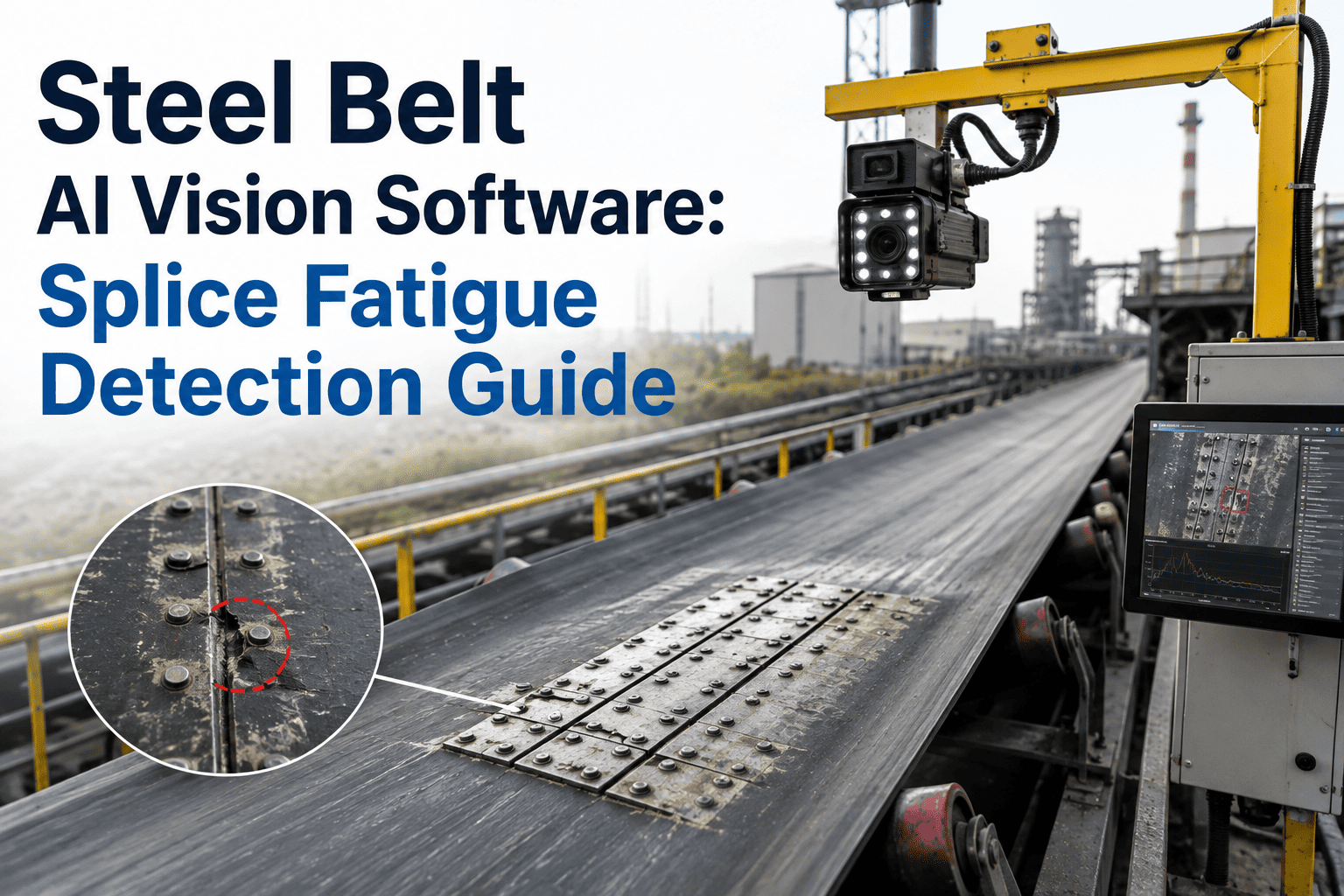
Steel plant conveyor belts move sinter, coke, ore, and finished coils around the clock, and the weakest point on any belt is almost always the splice. A mechanical or vulcanized splice loosens under cyclic tension,...
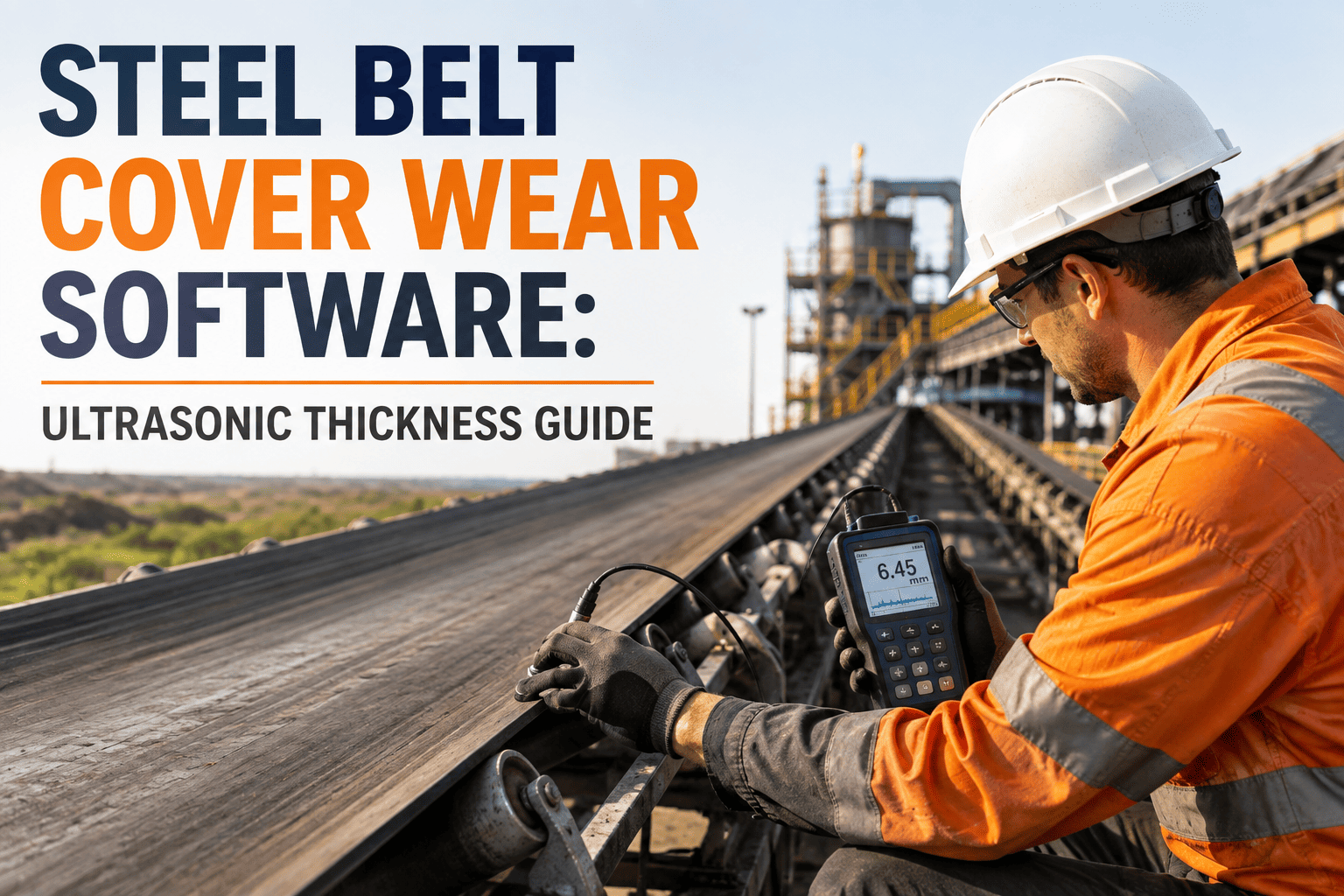
Read More
A conveyor belt rarely fails the way people picture it. It doesn't snap without warning — it thins, quietly, a fraction of a millimetre at a time, under years of abrasive ore, coke, and sinter sliding across its...
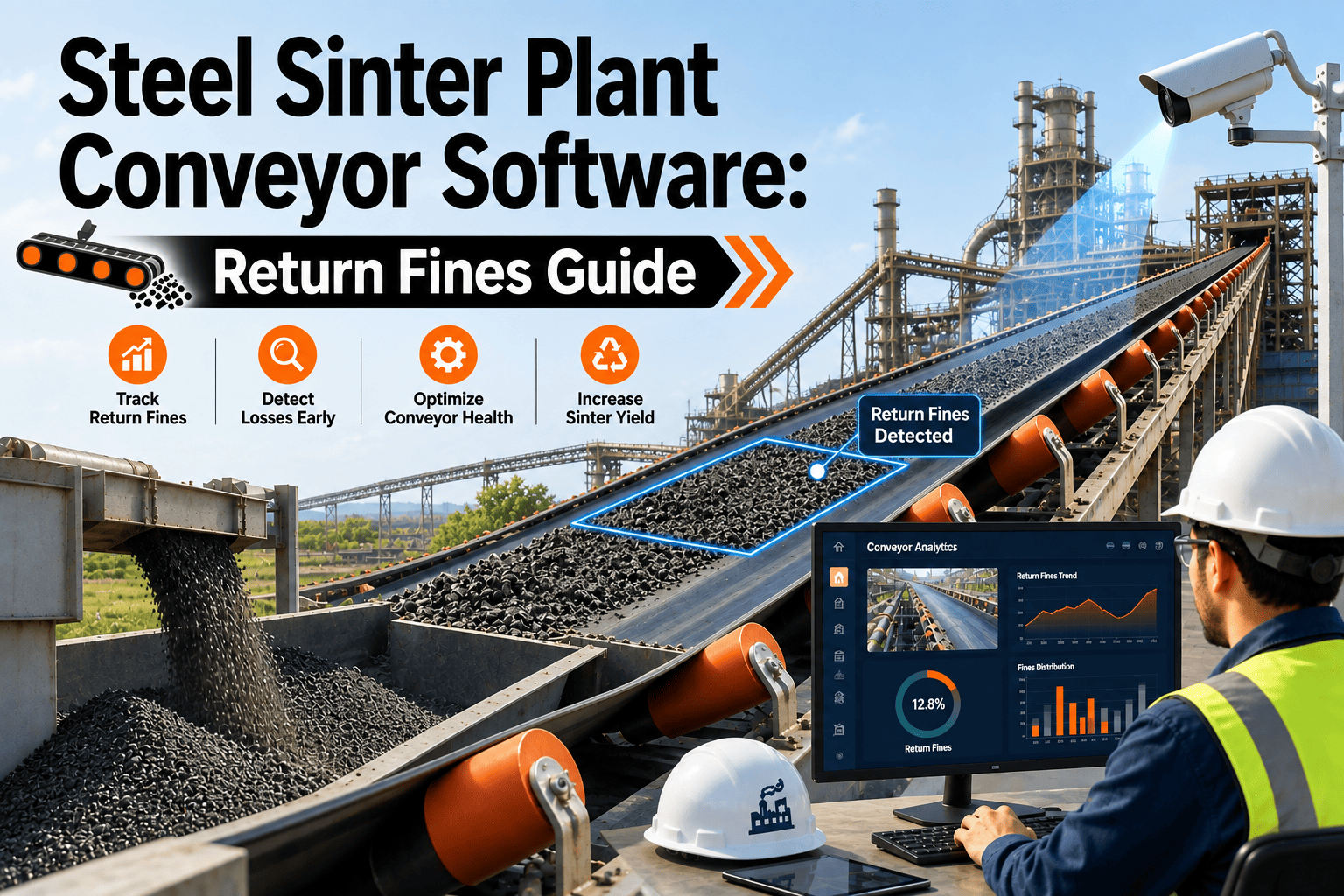
Read More
Every tonne of sinter that reaches the blast furnace has already made a dozen trips across belts most plant managers never think about until one fails. Raw mix conveyors feed iron ore fines, coke breeze, and flux...

Read More
Every steel plant runs a root cause investigation after a caster breakdown or a bearing seizure — and in most plants, that's where the story ends. The finding gets written into a report, filed away, and forgotten...
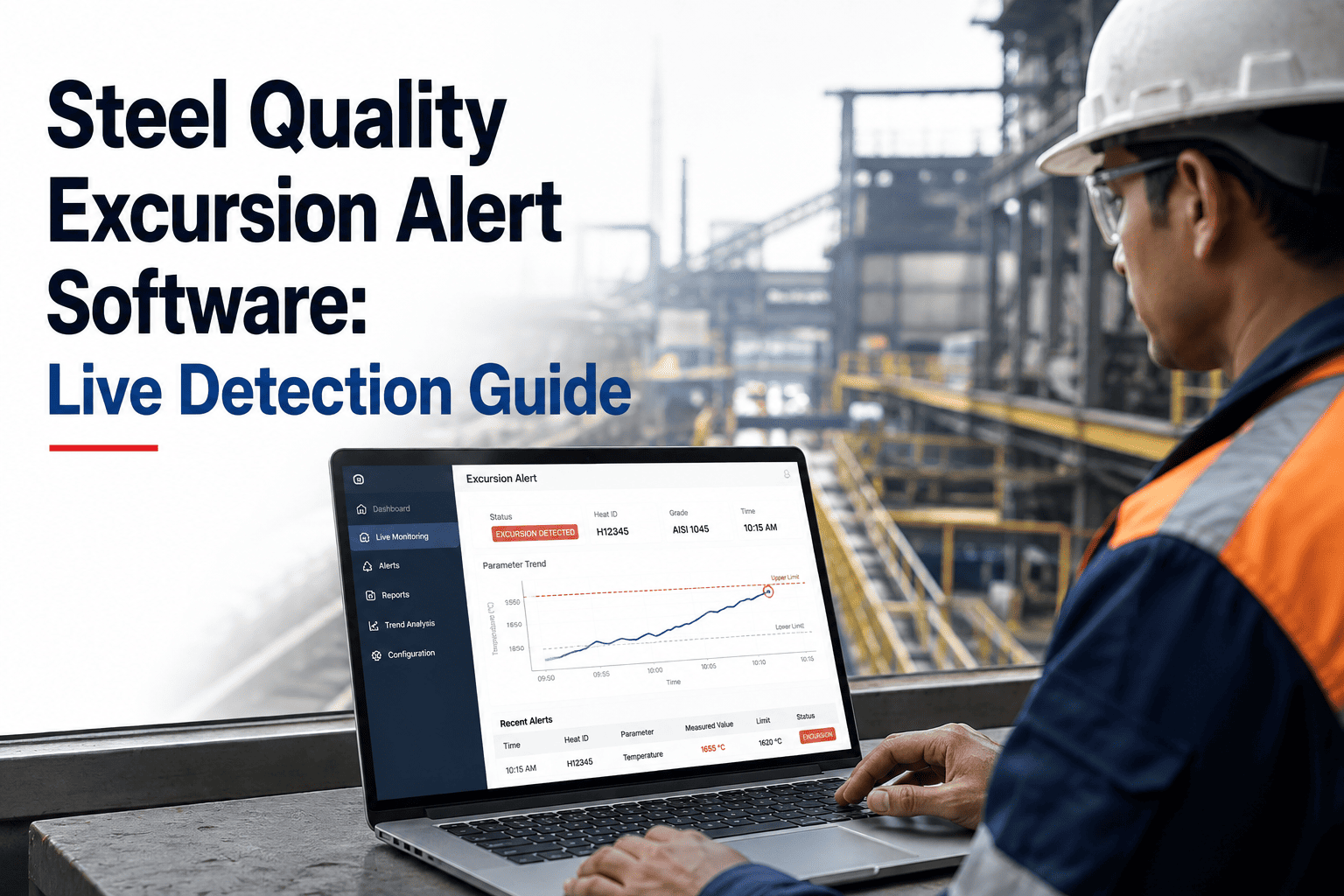
Read More
A quality excursion in a steel plant rarely announces itself with a loud failure — it shows up as a gauge reading drifting half a millimeter off target, a coating thickness sliding out of tolerance, or a chemistry...
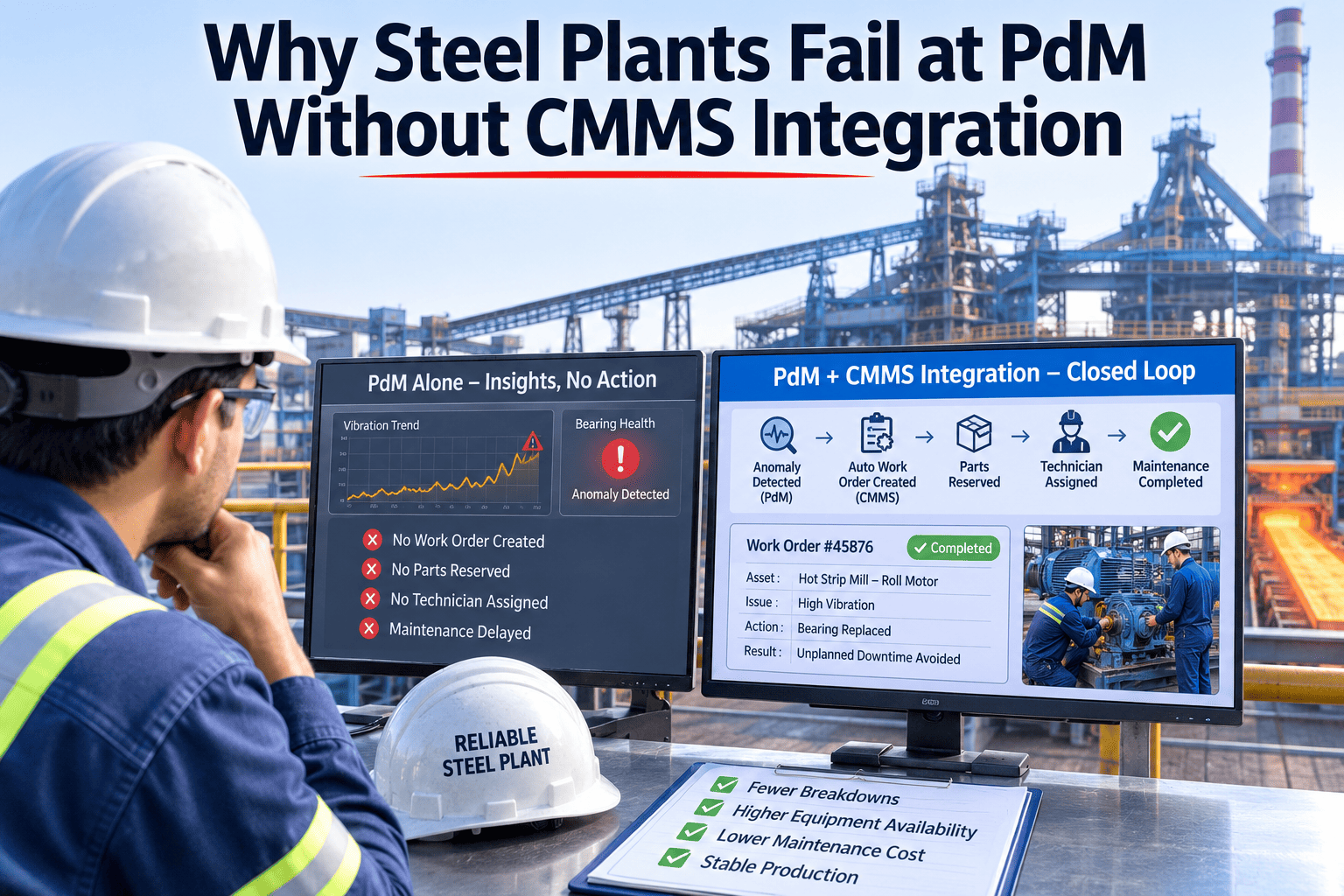
Read More
Most steel plants don't fail at predictive maintenance because their sensors are bad. They fail because a vibration spike on a rolling mill motor has nowhere to go — no work order, no technician assignment, no...

Read More
A rolling mill main drive motor that crosses from Zone B into Zone C on the ISO 10816 vibration scale is not yet broken — it is telling you, in a language auditors, insurers, and OEMs all recognize, that a bearing...
Read More
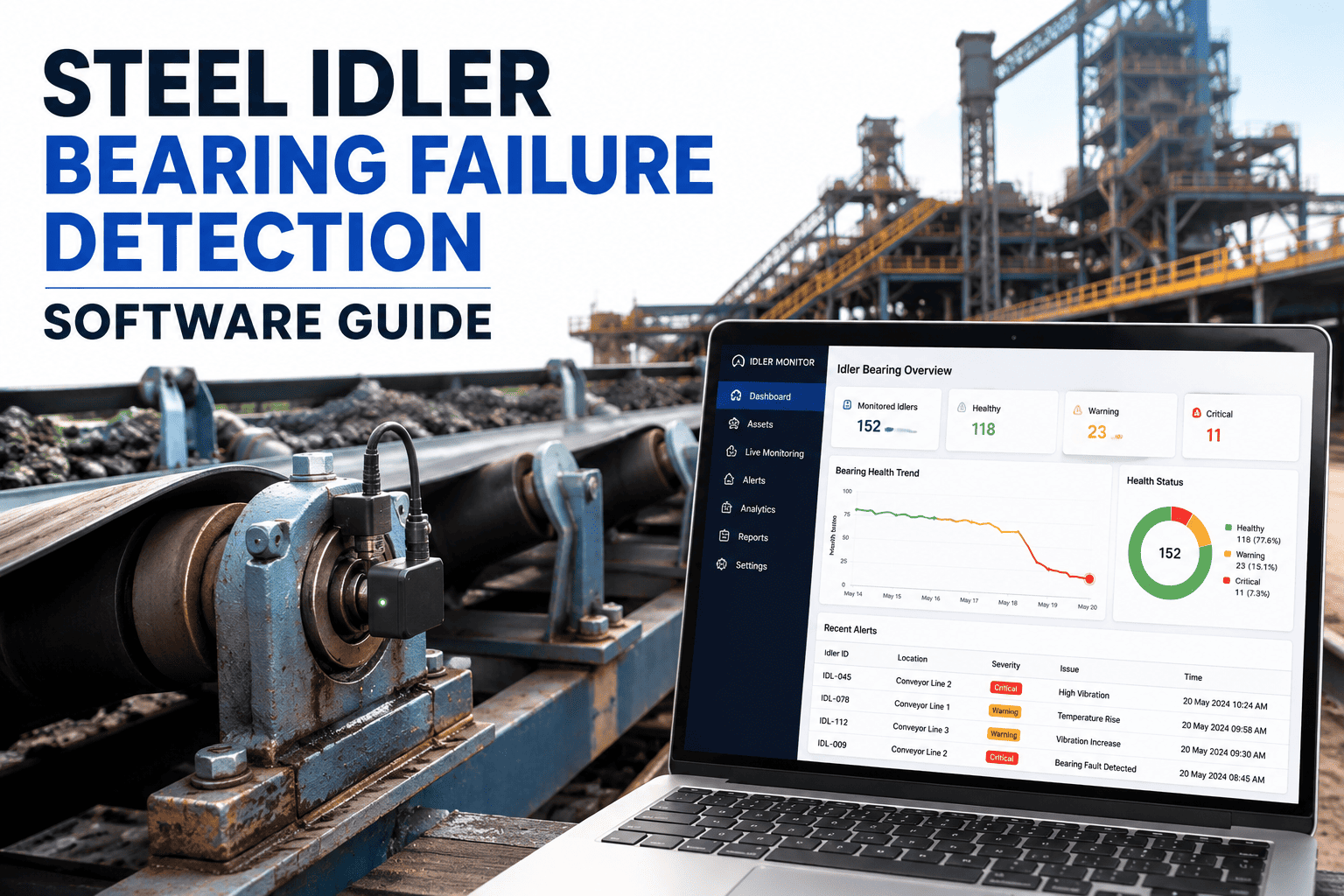
A steel plant conveyor network can carry thousands of idler rollers across sinter, coke, and finished-product lines, and every one of them depends on two small bearings that quietly run twenty-four hours a day....
Read More
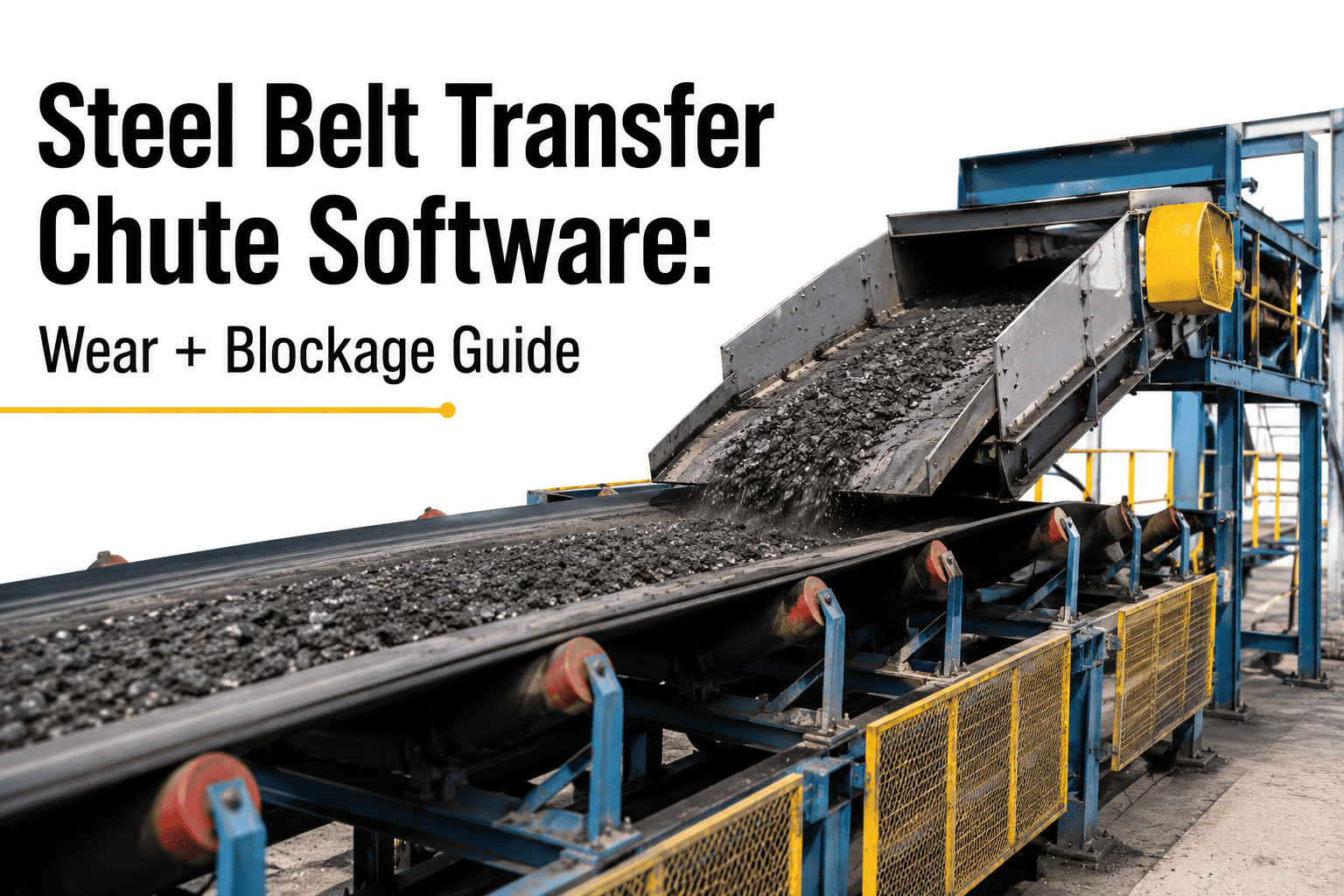
A transfer chute rarely announces its own failure — it just quietly gets worse. A worn liner plate lets fines escape through a gap that started as a pinhole, dust builds along the skirt seal, spillage piles up...
Read More
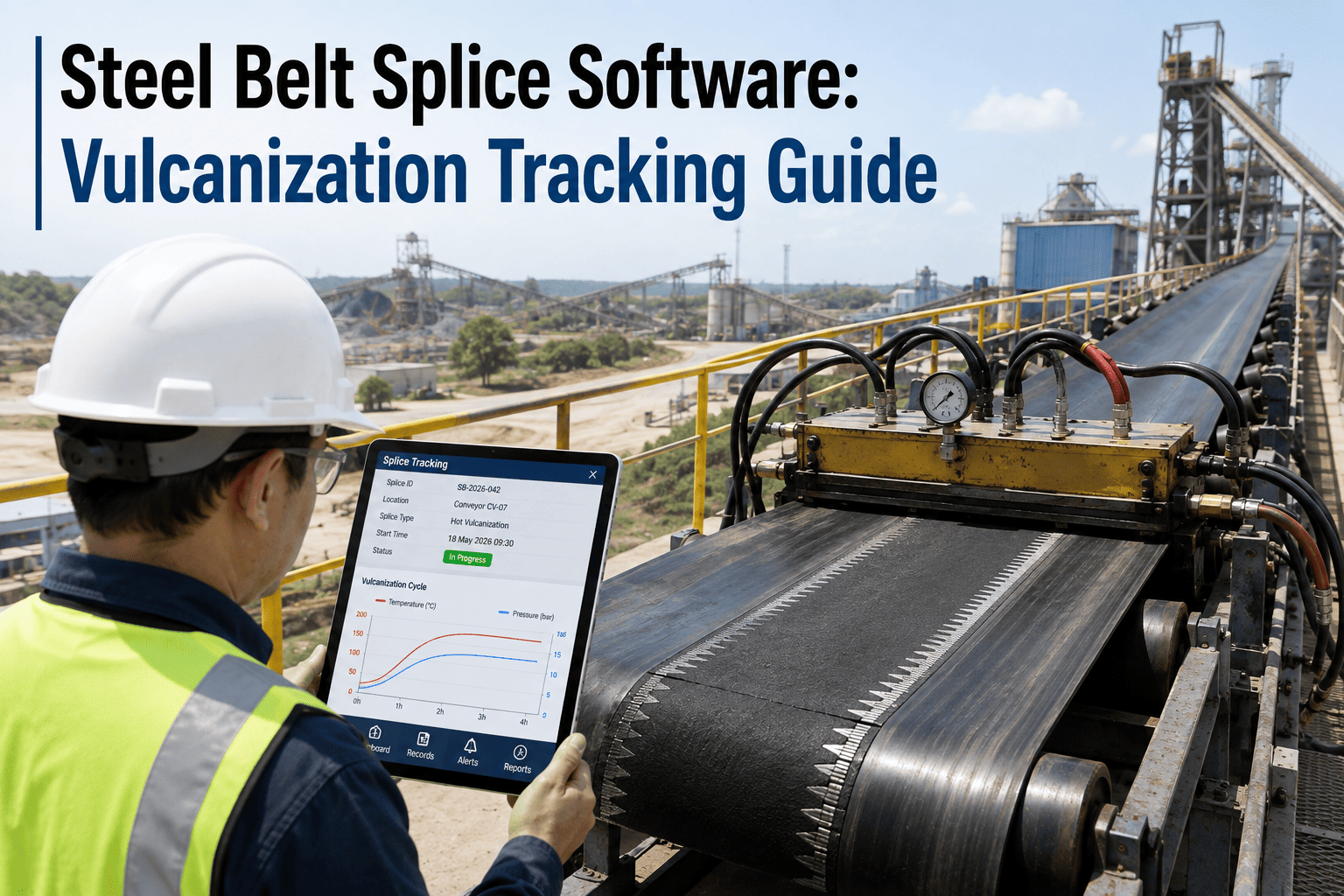
A steel cord conveyor belt splice that fails mid-shift does not fail quietly. On a sinter feed or coke handling line, a torn splice means a stopped belt, a buried load zone, and a maintenance crew working a...
Read More
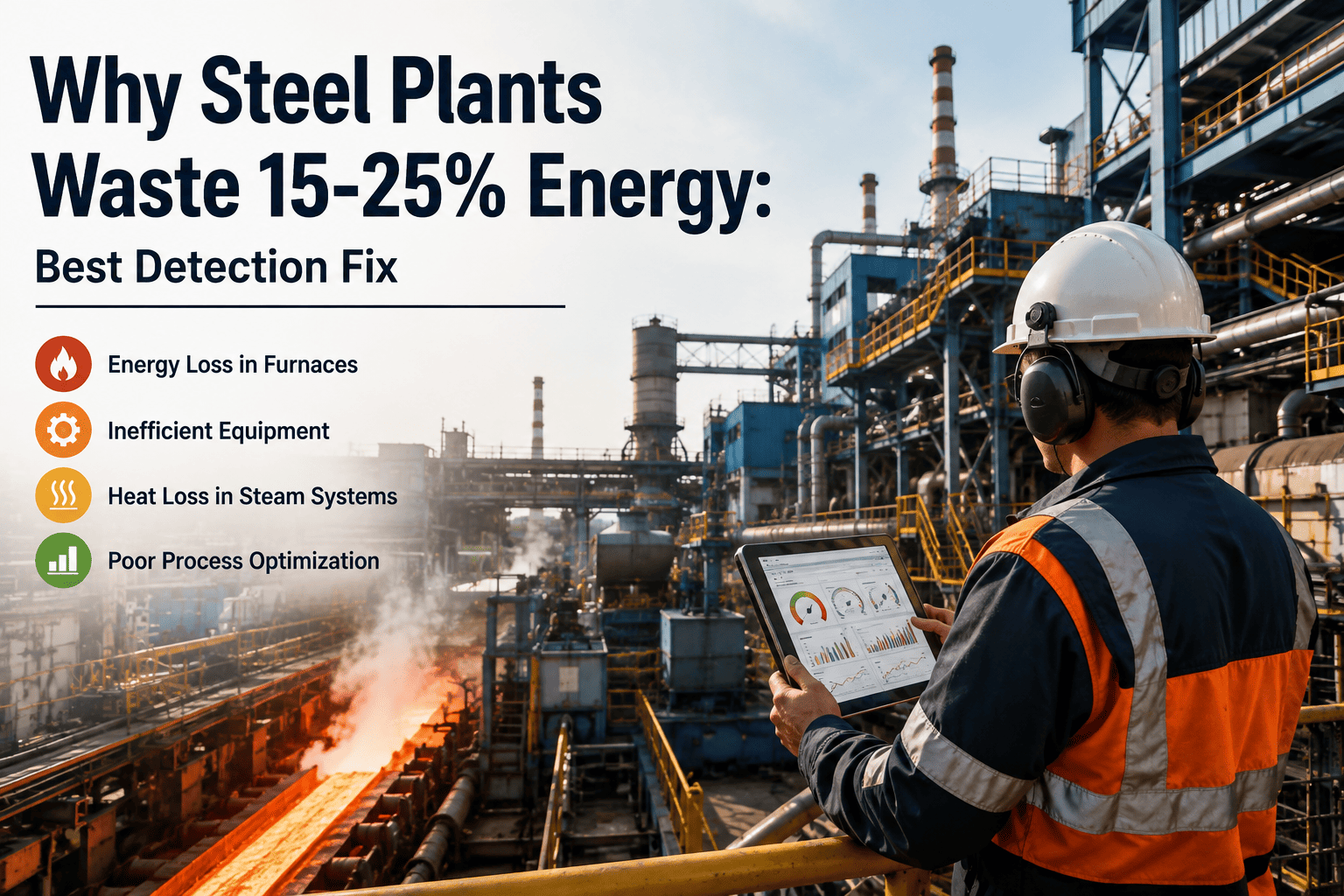
Most steel plant managers assume their biggest energy problem is the size of the monthly bill. It isn't. The real problem is that a quarter of the electricity a plant pays for never turns into a single tonne of...
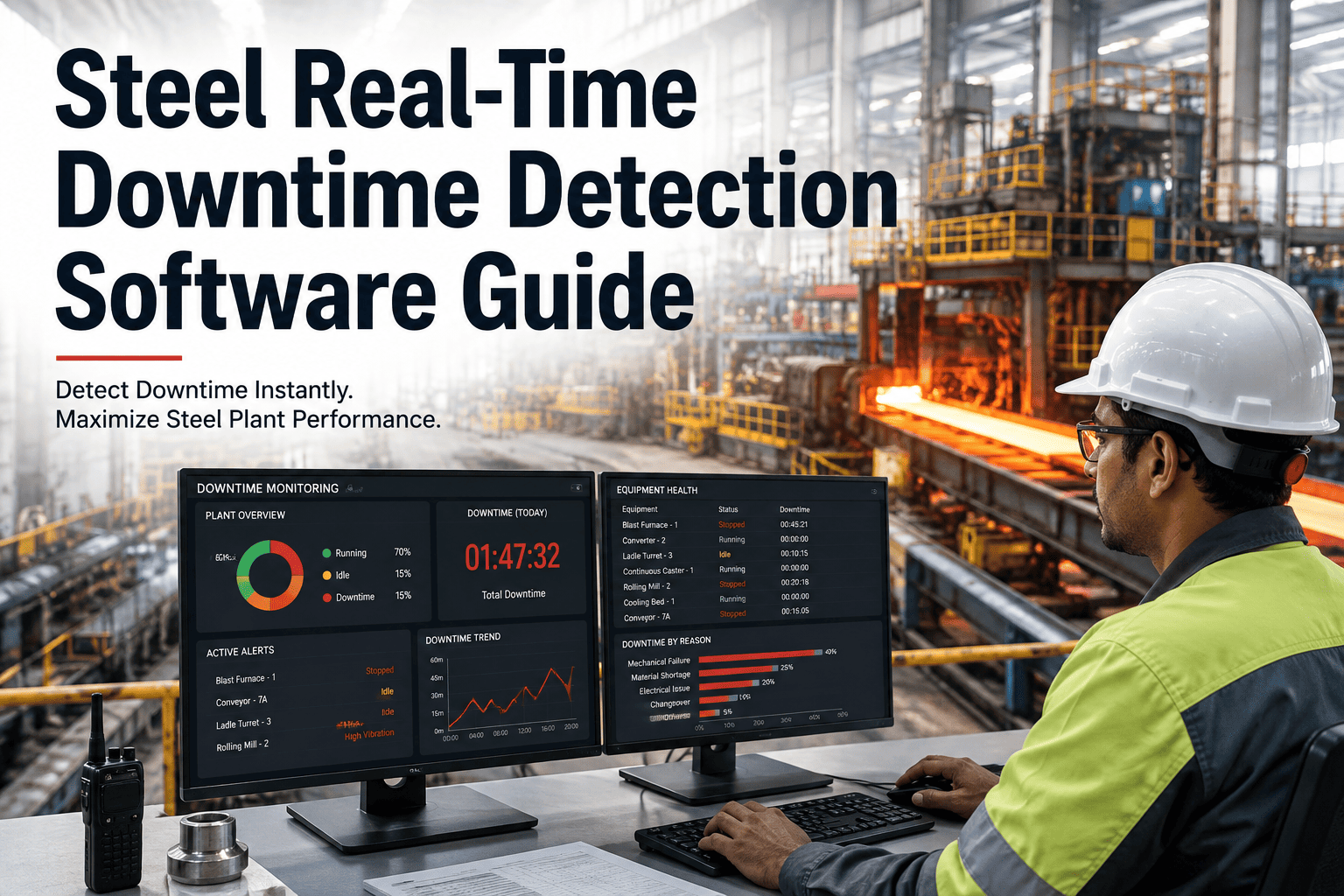
Read More
Most steel plants find out about downtime the same way, shift after shift — a supervisor walks the floor, sees a rolling mill standing still, and only then starts asking why. By the time that walk happens, the line...
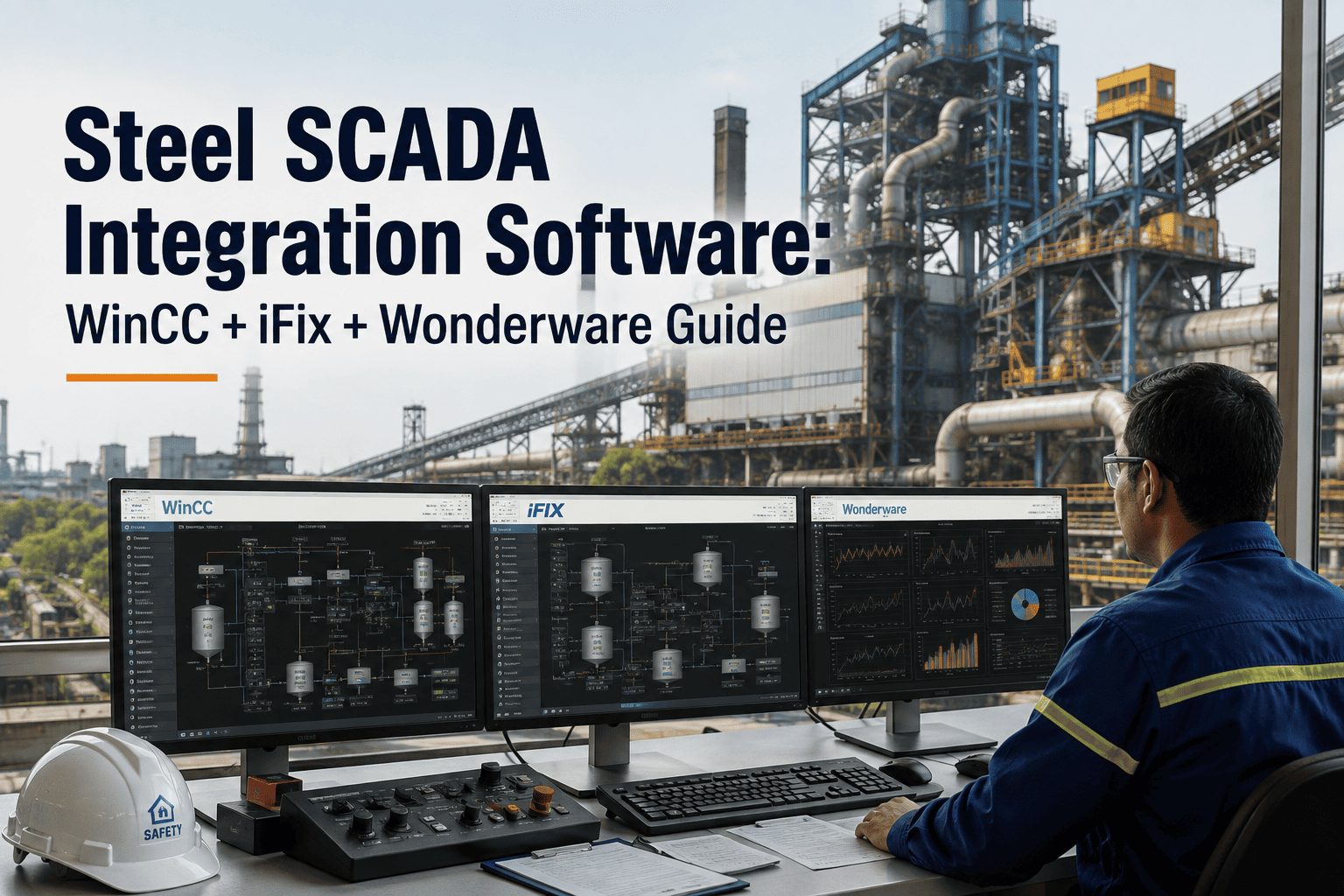
Read More
Every steel plant control room runs on SCADA — Siemens WinCC watching the hot strip mill, GE iFIX tracking the caster, AVEVA Wonderware logging blast furnace pressure. These systems know the exact moment a bearing...
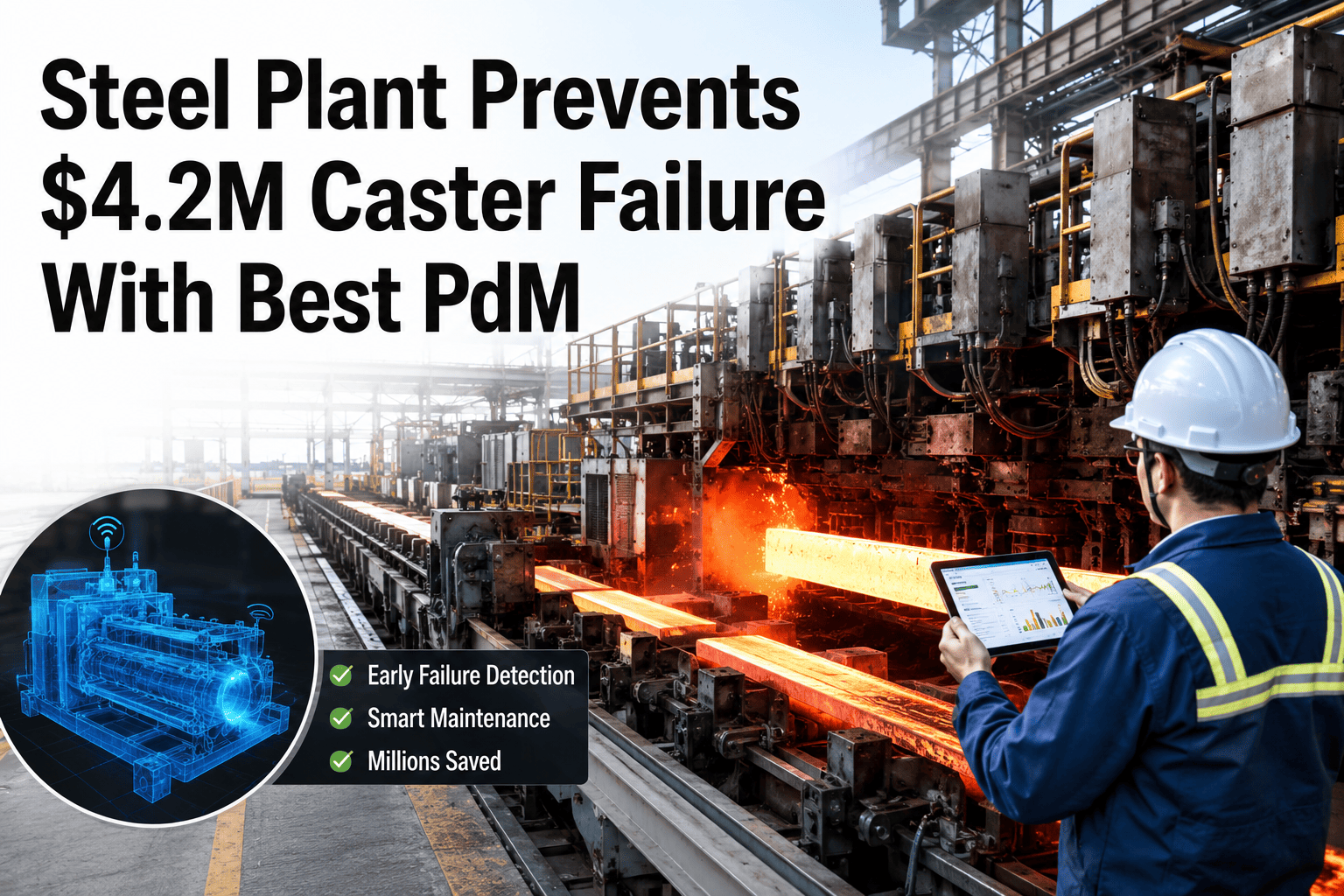
Read More
When a segment roll bearing on a continuous caster starts to fail, plant teams usually get almost no warning — the roll runs normal on one shift and seizes mid-cast on the next, triggering a steel breakout that can...
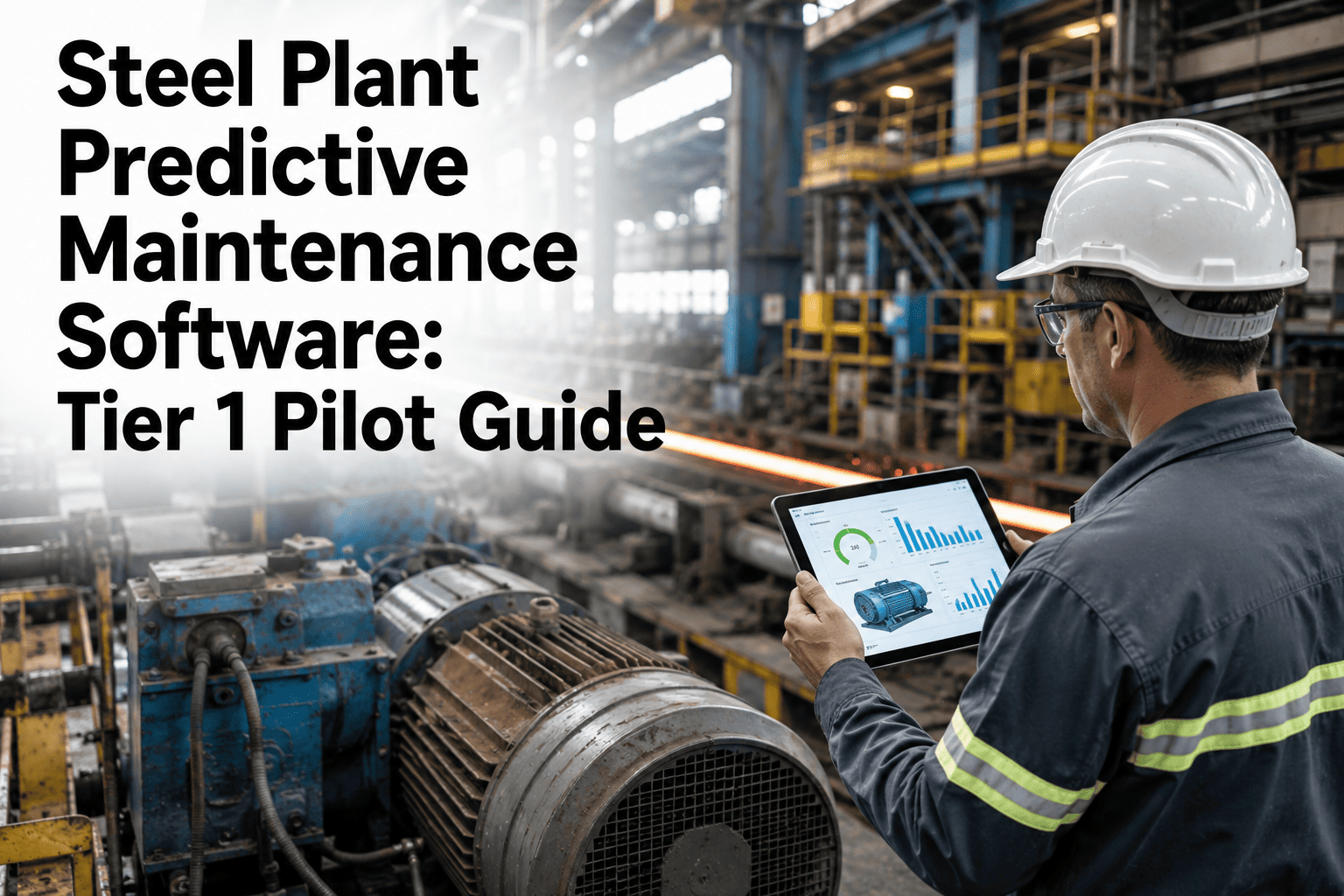
Read More
Most steel plants that try to roll out predictive maintenance across every asset at once collapse within the first year, buried under sensor noise, integration headaches, and reliability teams that stop trusting...
Read More
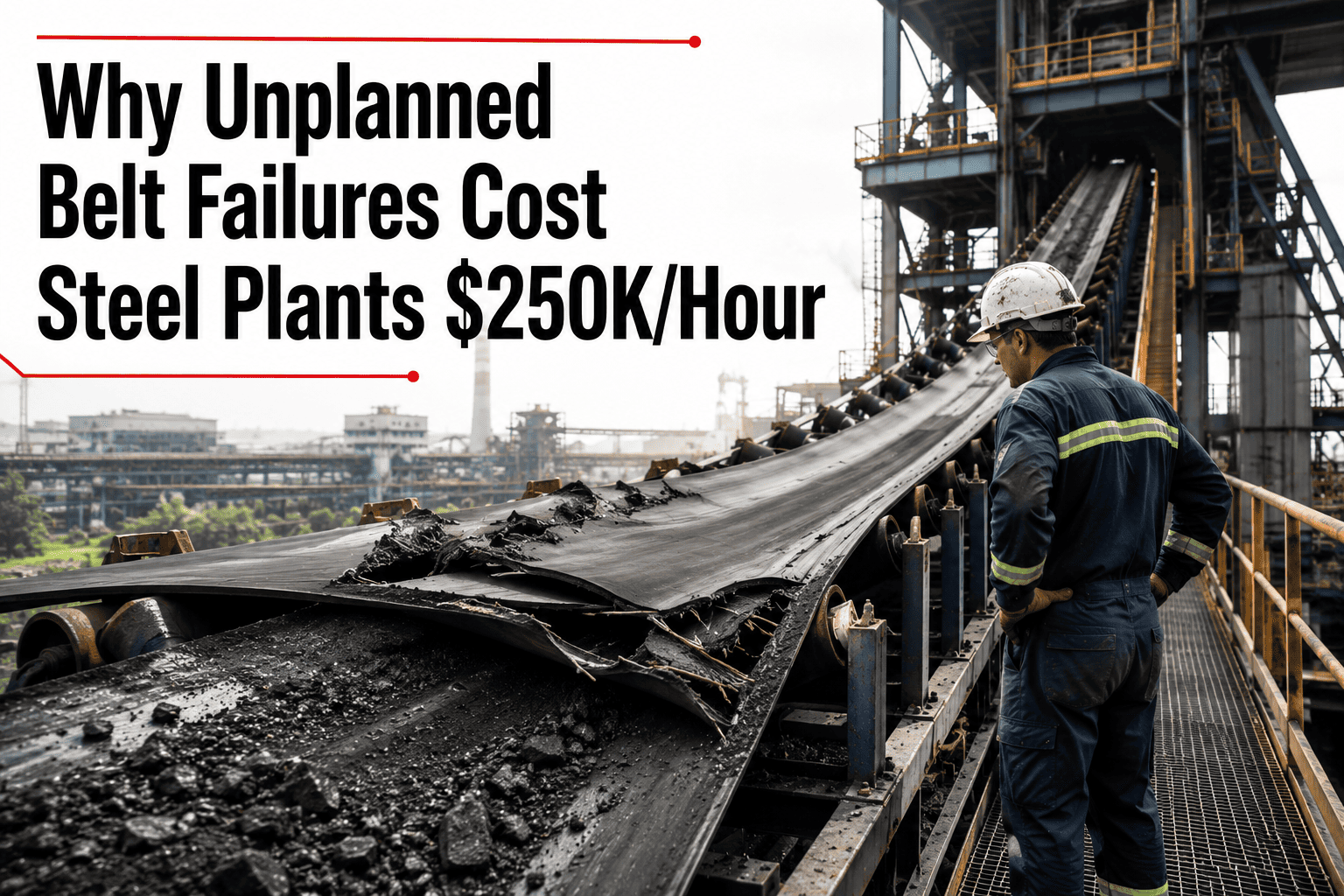
When a main-line conveyor belt tears on a blast furnace stockhouse feed system, the furnace does not stop the moment the belt does. It starts drawing down its burden inventory, and once that buffer runs dry, hot...
Read More
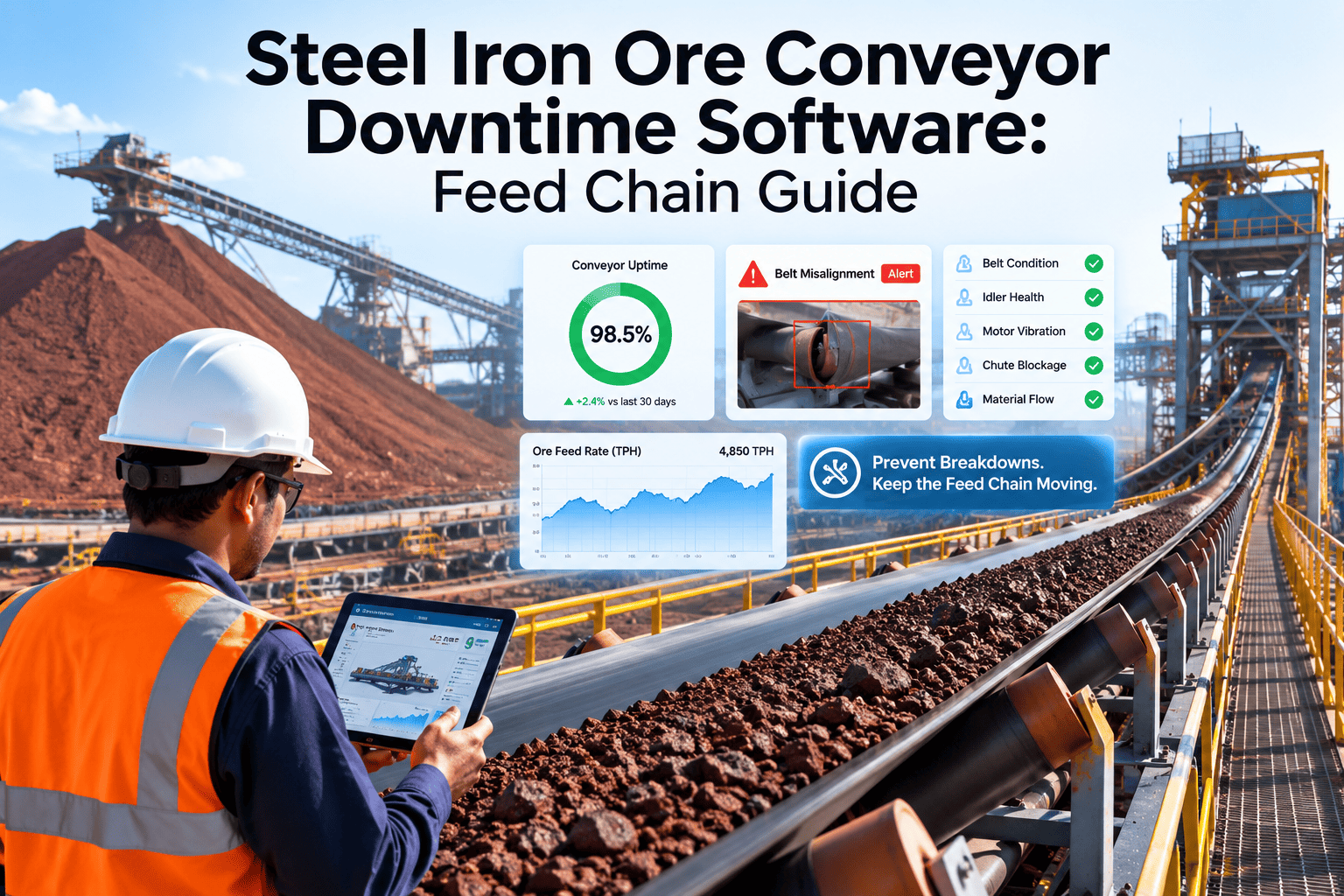
An integrated steel plant's iron ore feed chain runs from the ore yard stacker to the blending bed, through the bucket-wheel reclaimer and yard conveyors, and into the stockhouse bins that feed the blast furnace...
Read More
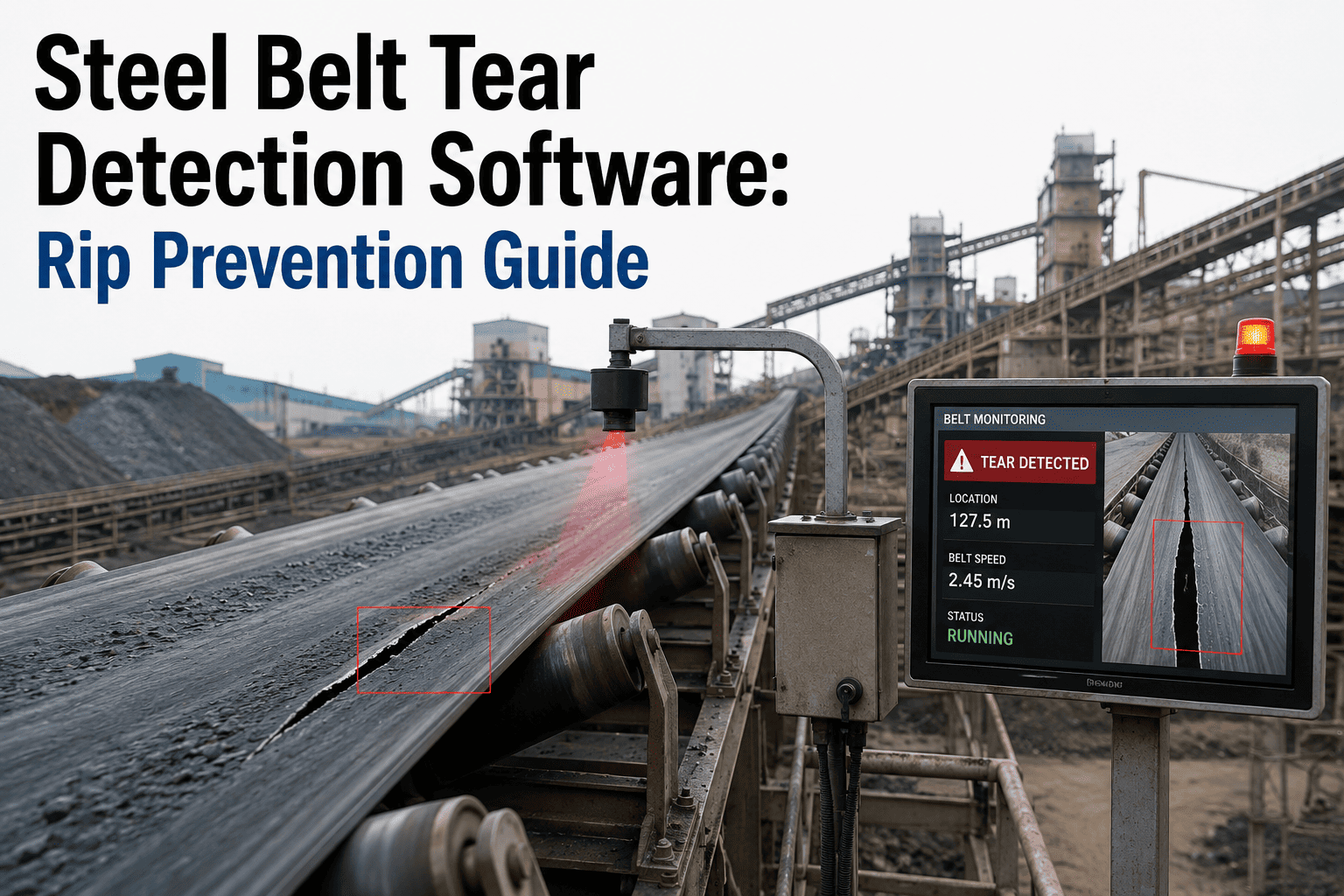
A longitudinal rip on a steel plant conveyor belt rarely starts as a dramatic tear — it starts as a small puncture from a tramp metal edge or a jammed chute, travelling quietly under the load for minutes before...
Read More
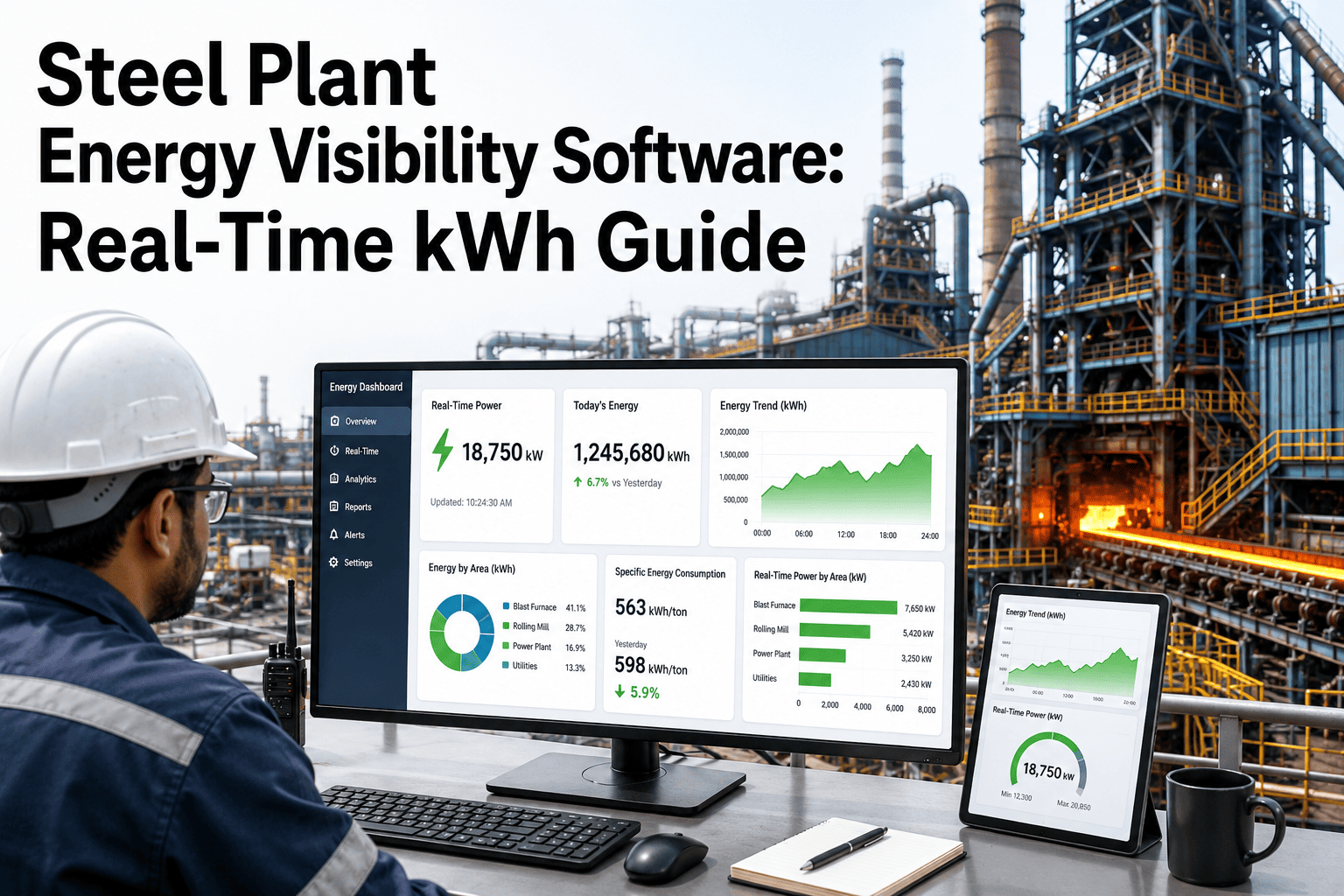
Most steel plants know their monthly electricity bill down to the last rupee, yet almost none can say how many kilowatt-hours a single reheating furnace consumed on the night shift, or how much power a rolling mill...
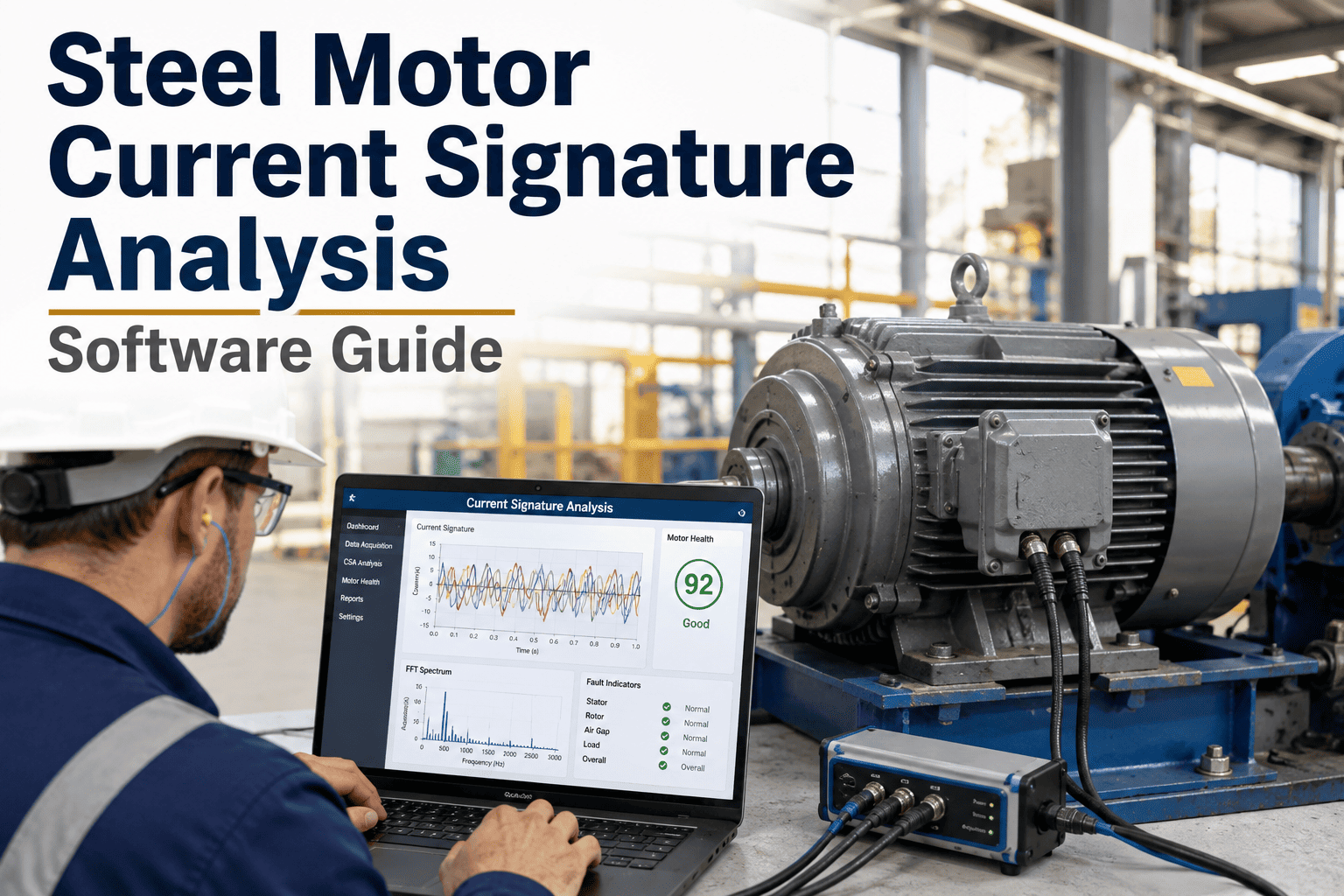
Read More
Every motor driving a fan, pump, mill stand, or conveyor in a steel plant is already broadcasting its own health data — through the current it draws from the supply. A broken rotor bar shows up as a sideband...

Read More
Every steel plant generates a flood of data — DCS tags, LIMS quality results, CMMS work orders, energy meters, vision-system frames — and most of it sits in scattered historians that no AI model can use directly....
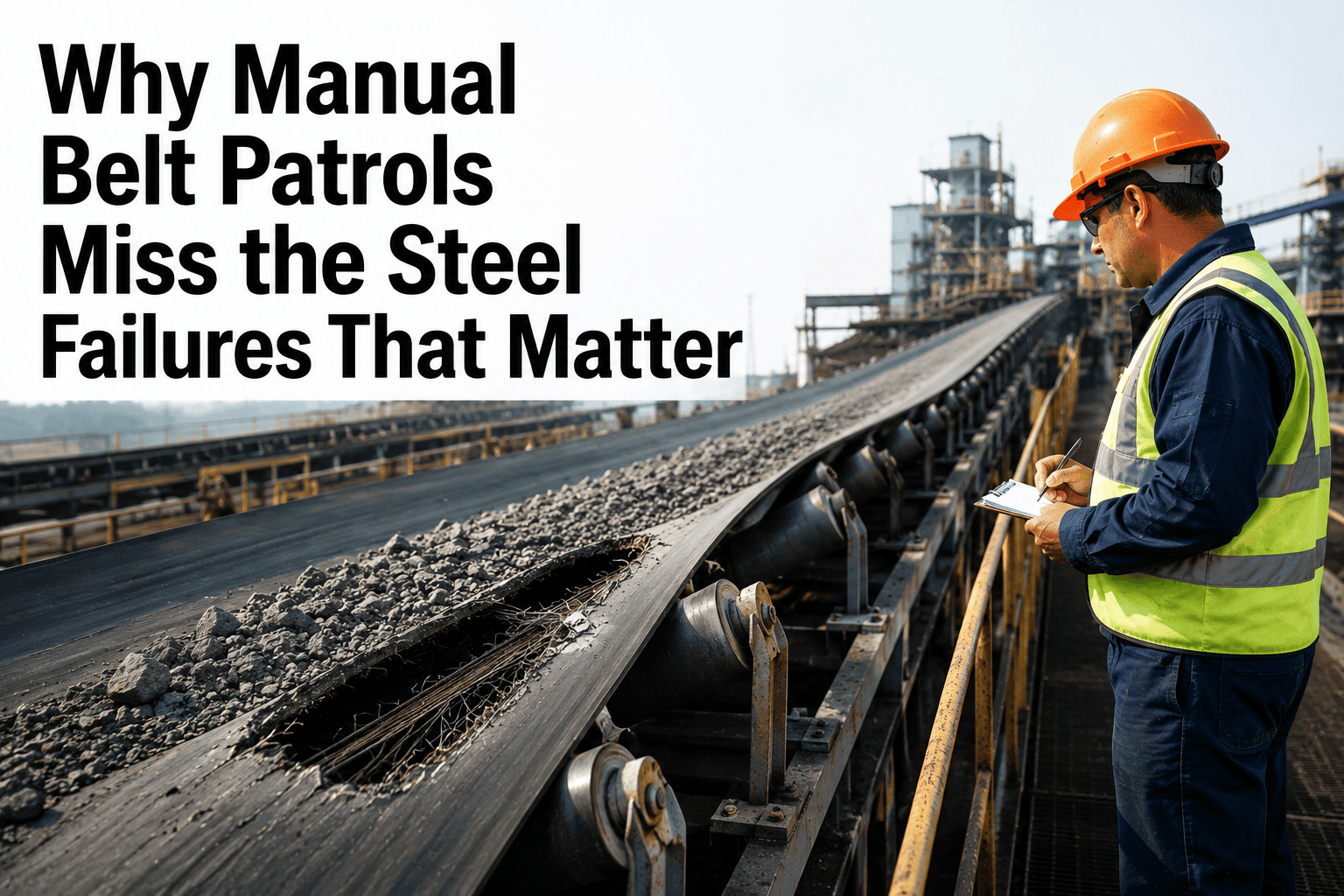
Read More
A technician walks the length of a 400-metre ore conveyor twice a shift, checking idlers by eye and by ear the way patrols have worked for decades. Three weeks later, one of those idlers seizes, drags against the...
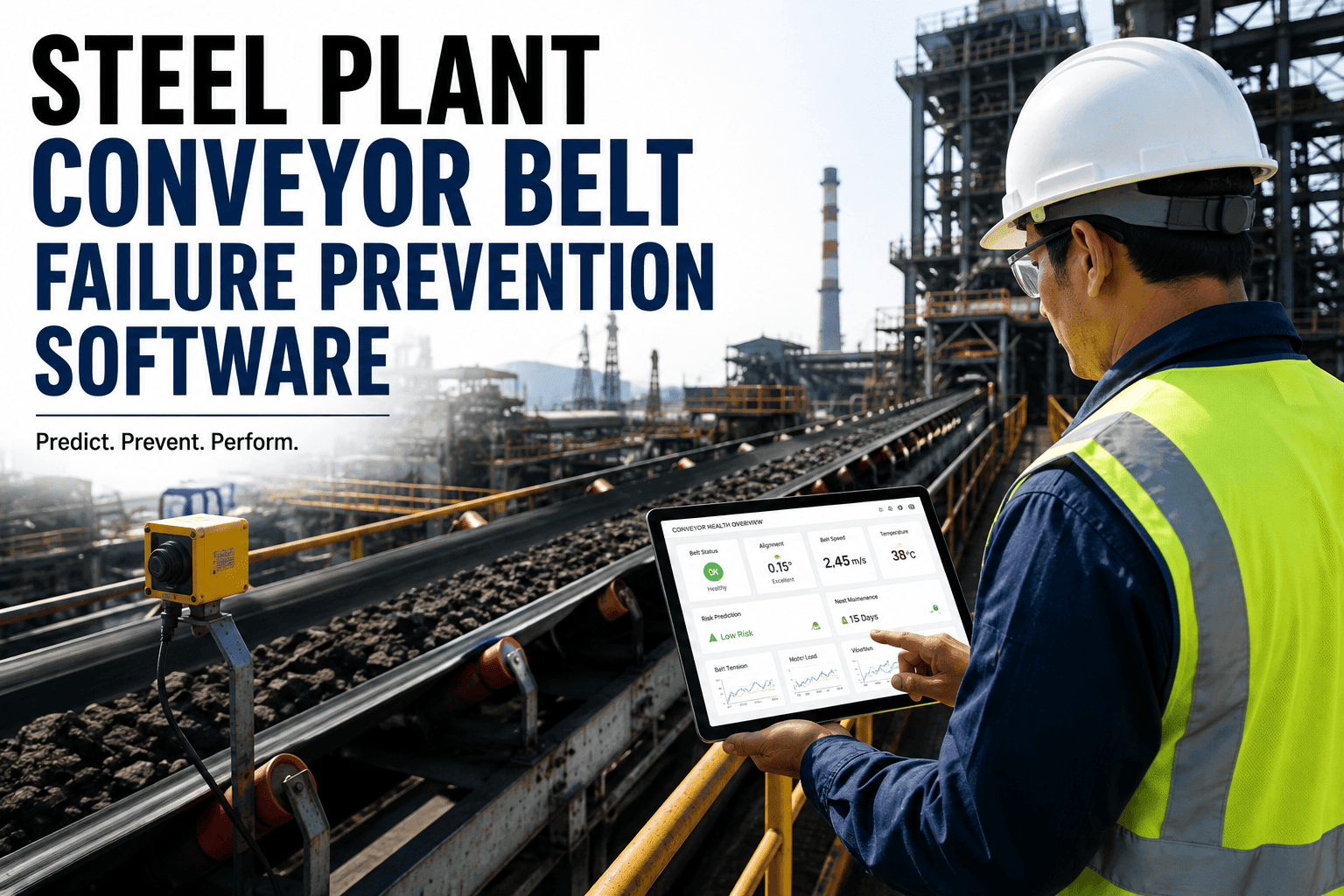
Read More
A conveyor line carrying iron ore, coke, or sinter through a steel plant rarely fails without warning — it fails after a splice that has cycled past its fatigue life, a belt cover that has thinned past its wear...
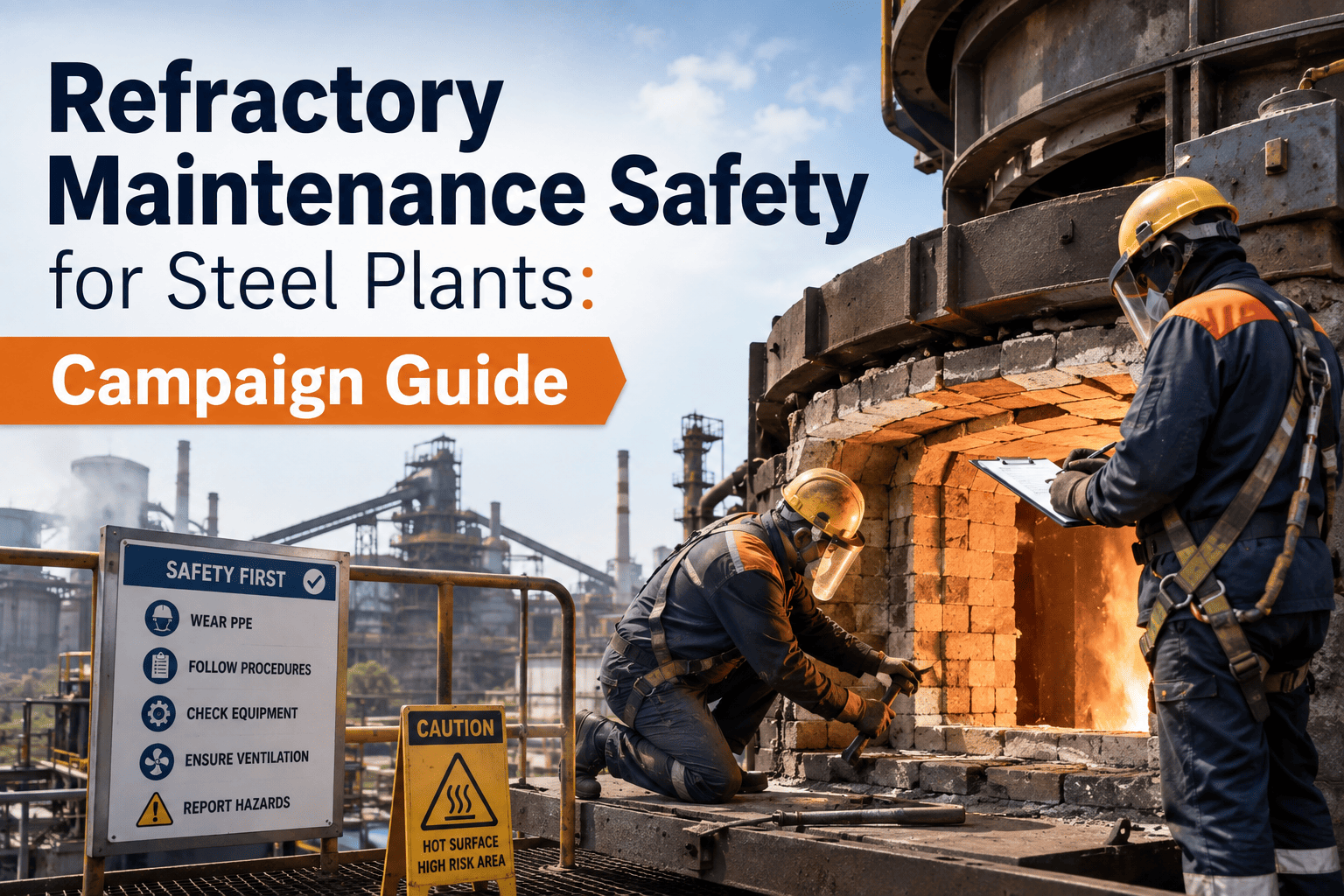
Read More
Refractory maintenance in a steel plant means working meters from liquid iron at temperatures above 1600°C, entering vessels that hold dangerous residual heat for days, and breathing air loaded with fine silica...

Read More
An arc flash event releases as much thermal energy in a fraction of a second as a small explosion, and steel plants sit among the highest-risk facilities for it because of large EAF transformers, high-current MV...
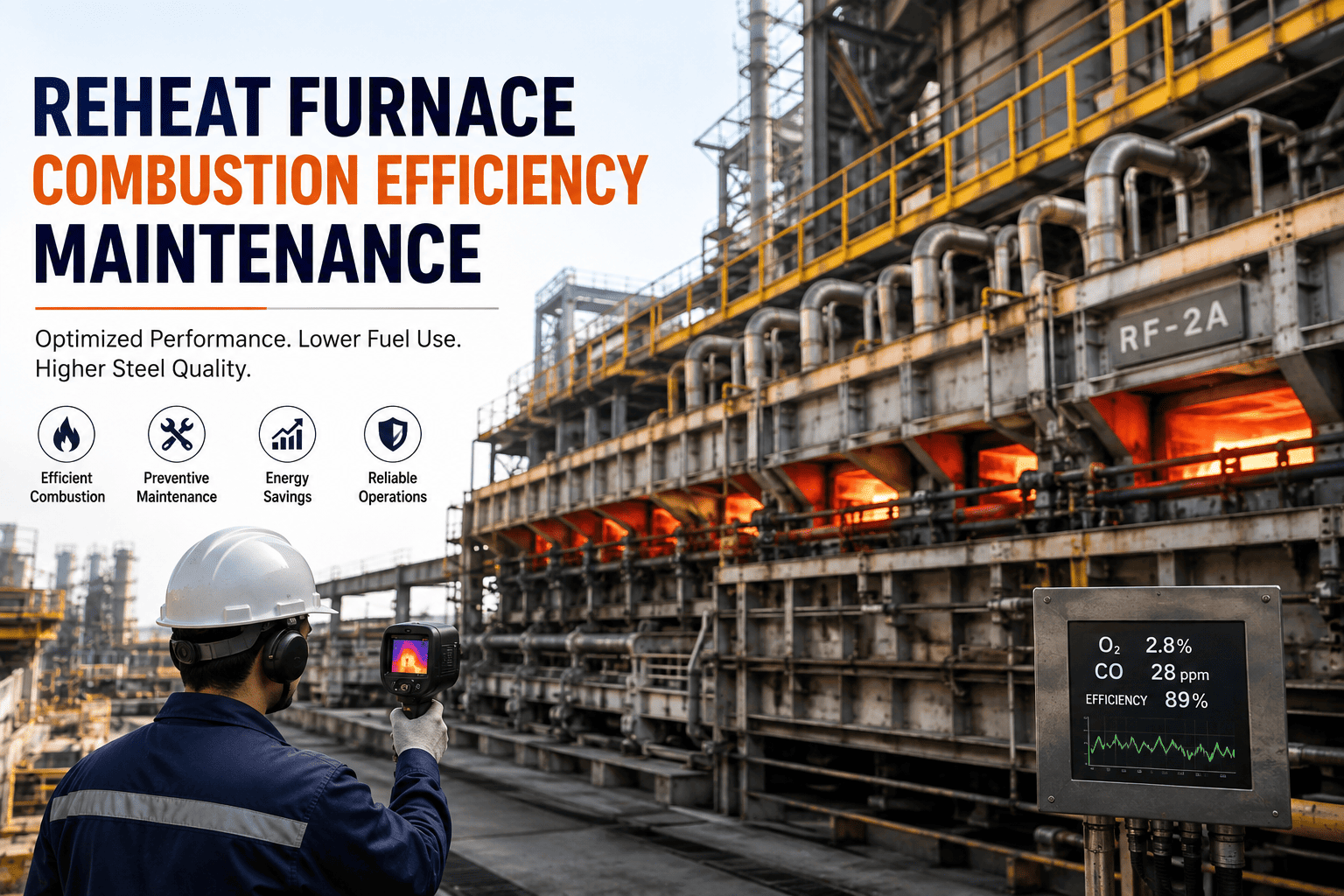
Read More
A 3,200-tonne-per-day reheat furnace running with higher-than-optimal excess air was quietly burning through 18% more natural gas than its design specification, adding nearly $1.1M a year to the mill's fuel bill...
Read More
A single moisture-contaminated ladle refractory patch turned a routine tap into an explosive event that injured three operators and shut a caster down for eleven days. Molten metal safety is the highest-consequence...
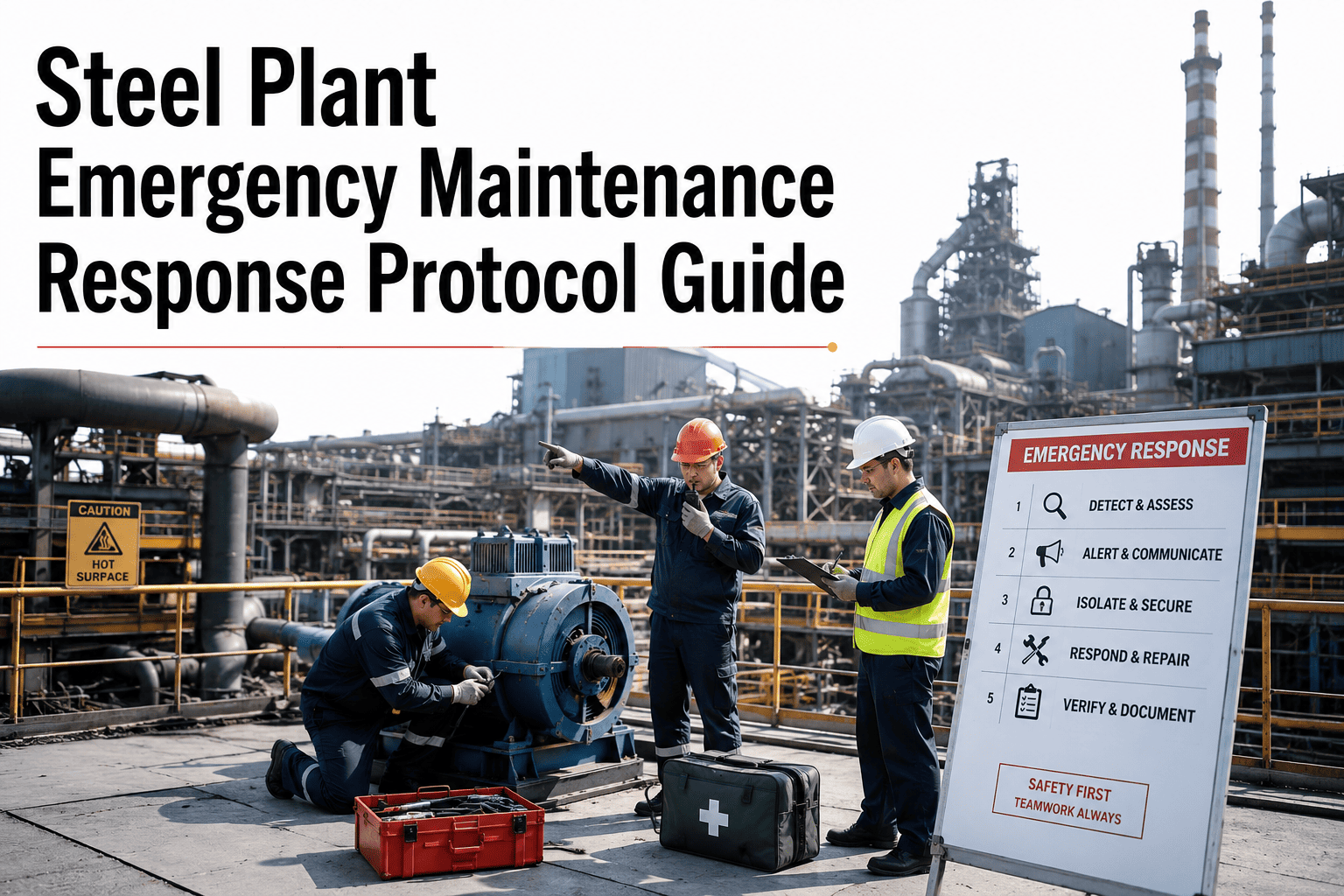
Read More
A caster breakout at 2am does not wait for the day-shift reliability engineer to wake up, and neither does a rolling mill emergency stop that halts an entire production line. Steel plants that handle these moments...
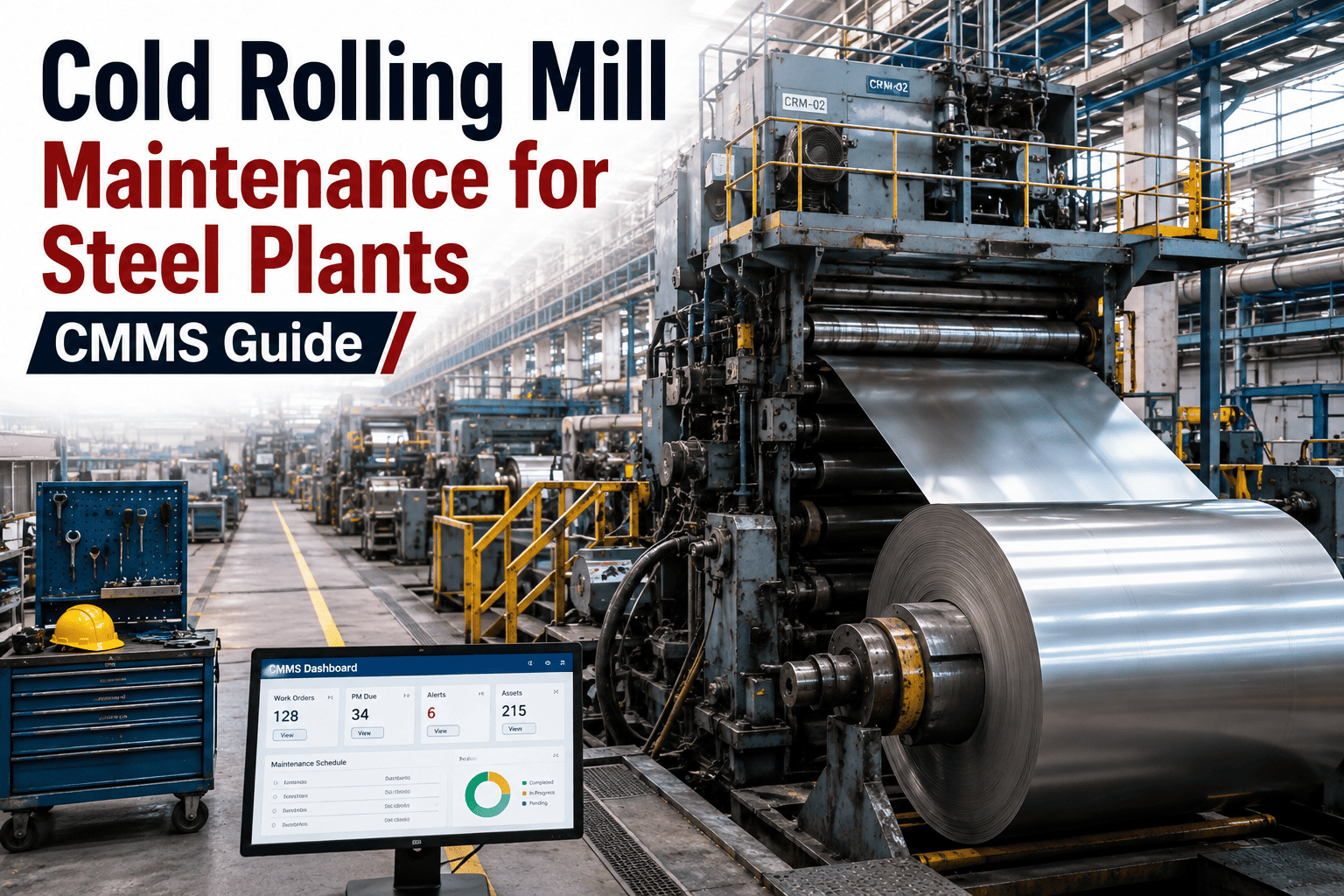
Read More
Cold rolling mills operate at tolerances measured in microns, where a worn work roll bearing or a hydraulic pressure drift of a few bar can turn a full coil run into scrap. Plants running these lines find that...
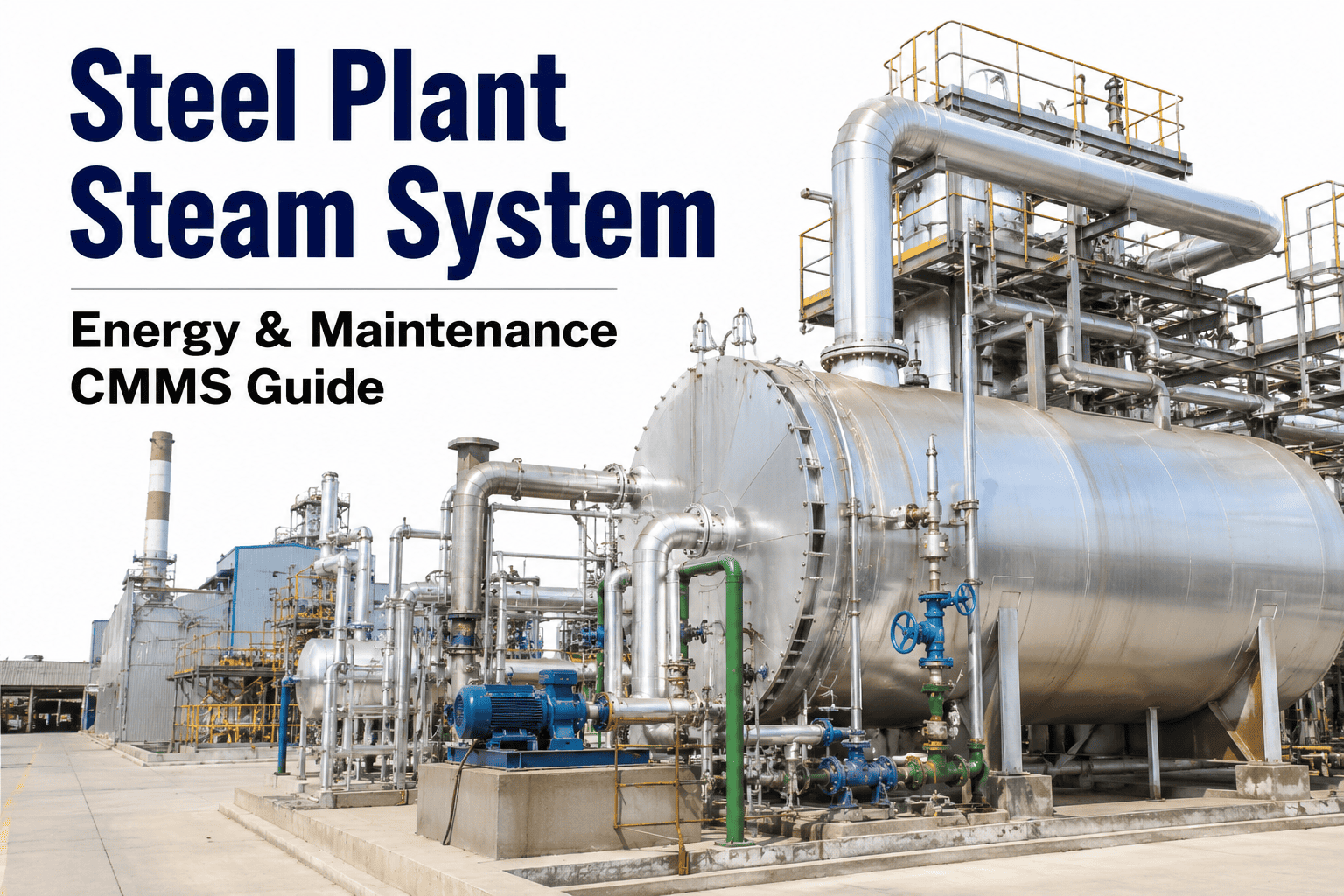
Read More
Steam systems quietly move more recoverable energy through a steel plant than almost any other utility, carrying process heat, power-generation steam, and waste-heat recovery gains to dozens of connected users on...
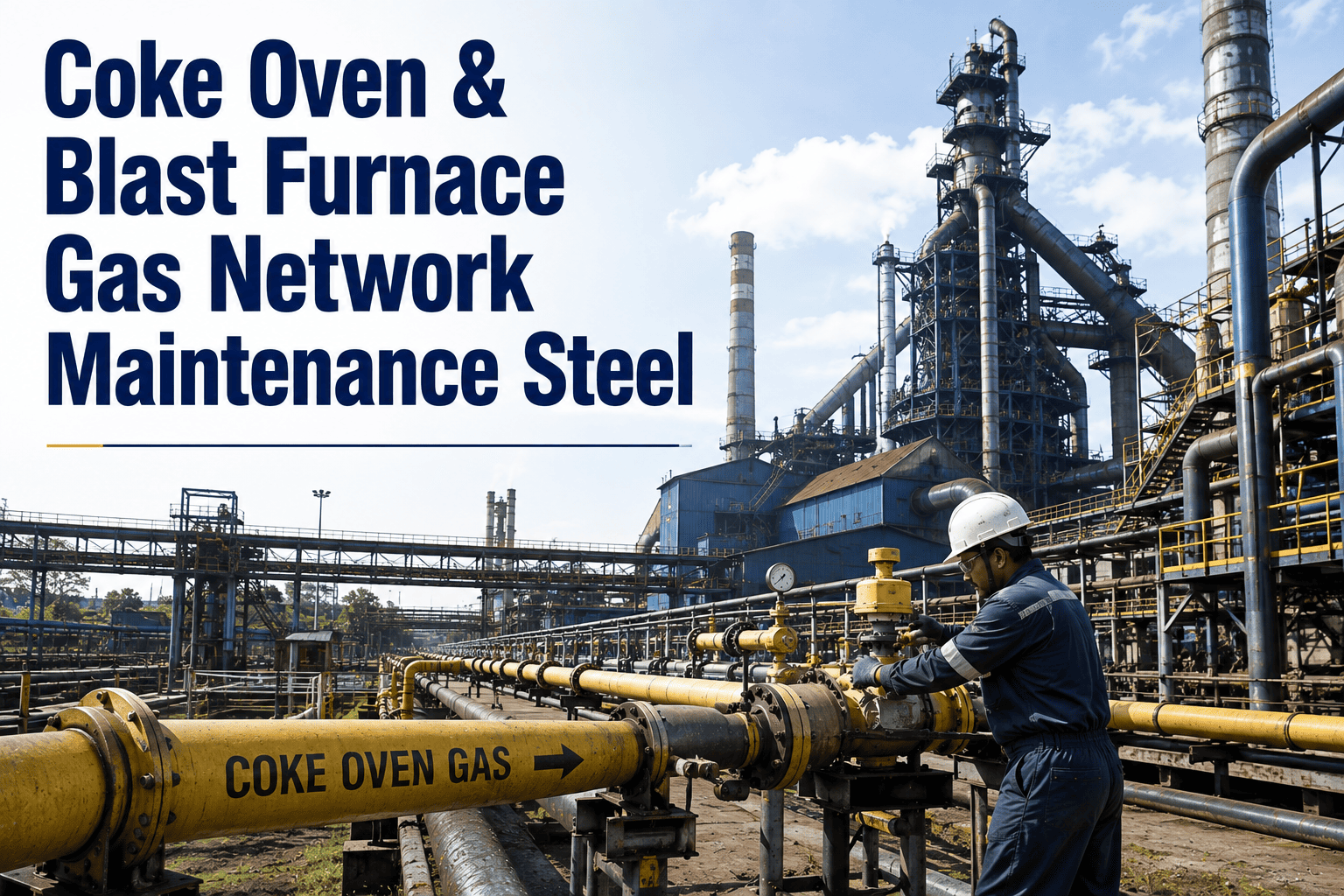
Read More
Every integrated steel plant runs on two invisible fuel lines that most people never think about: coke oven gas from the by-product plant and blast furnace gas recovered from the ironmaking process. Together these...
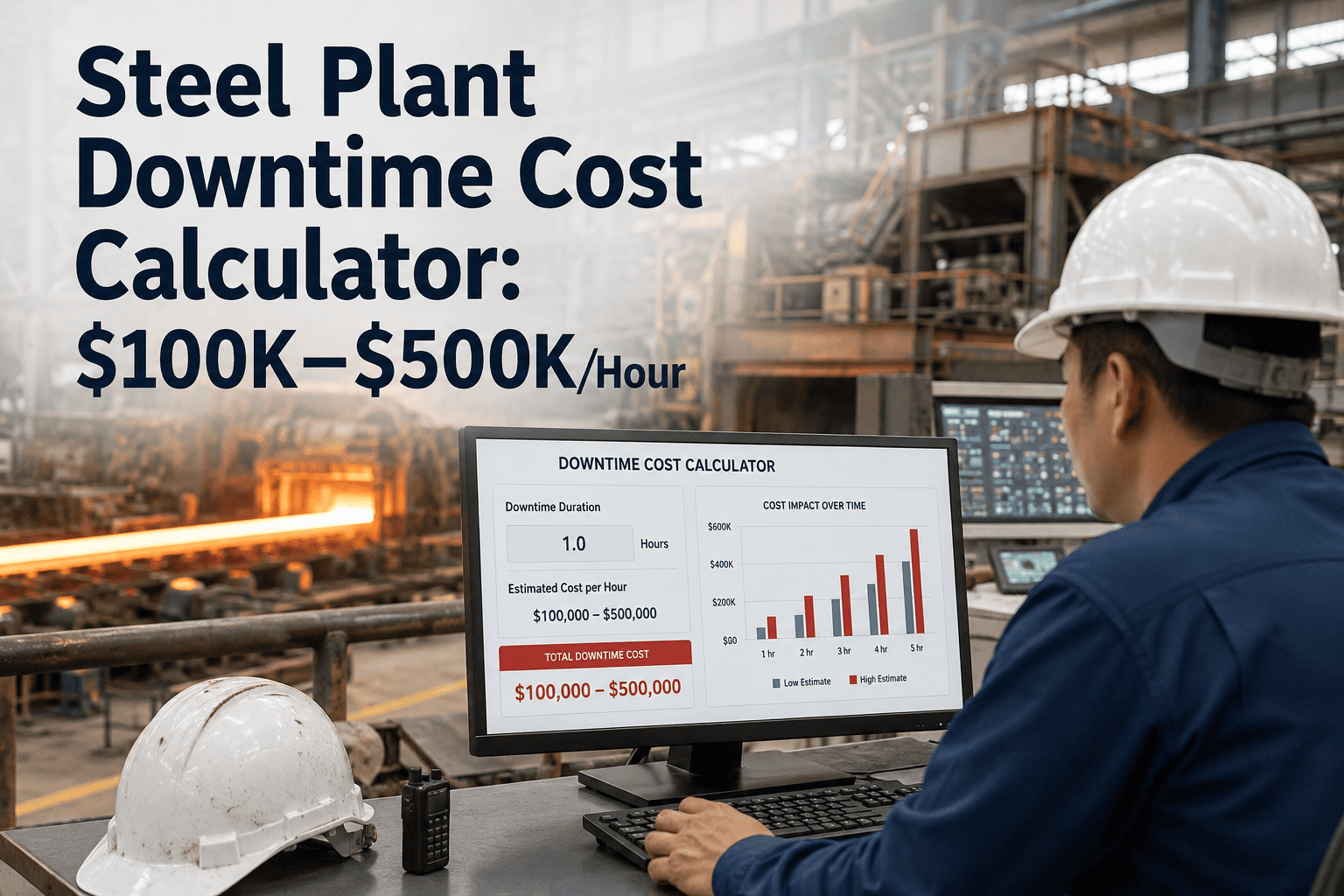
Read More
When a blast furnace trips or a rolling mill drive fails, most steel plants capture exactly one number afterward: the repair work order cost. The real cost of that hour also includes lost production revenue,...
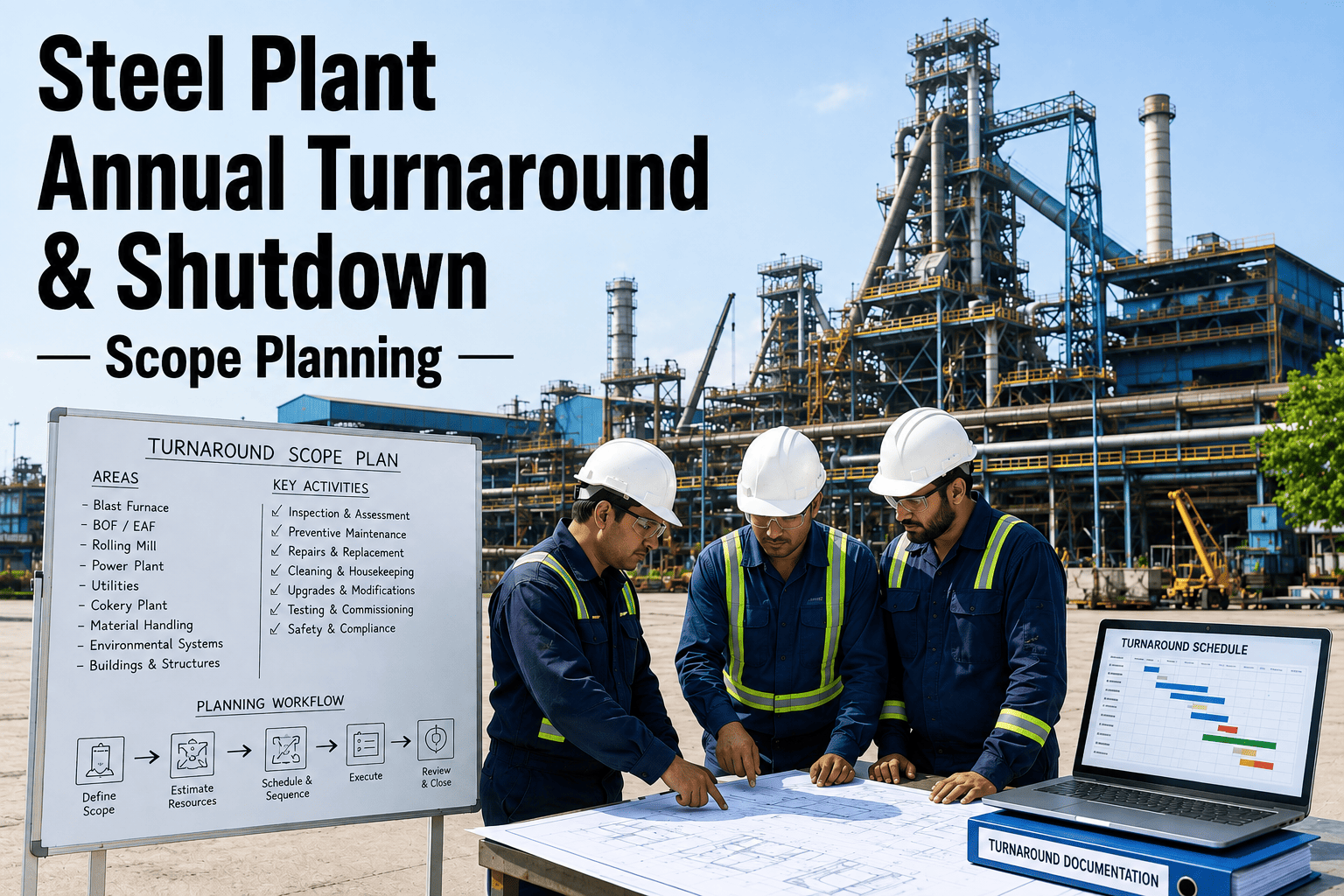
Read More
Every annual turnaround starts the same way: a scope list that looks manageable in week one and a shutdown that runs three days long by week twenty. Scope creep, not equipment failure, is the single largest driver...
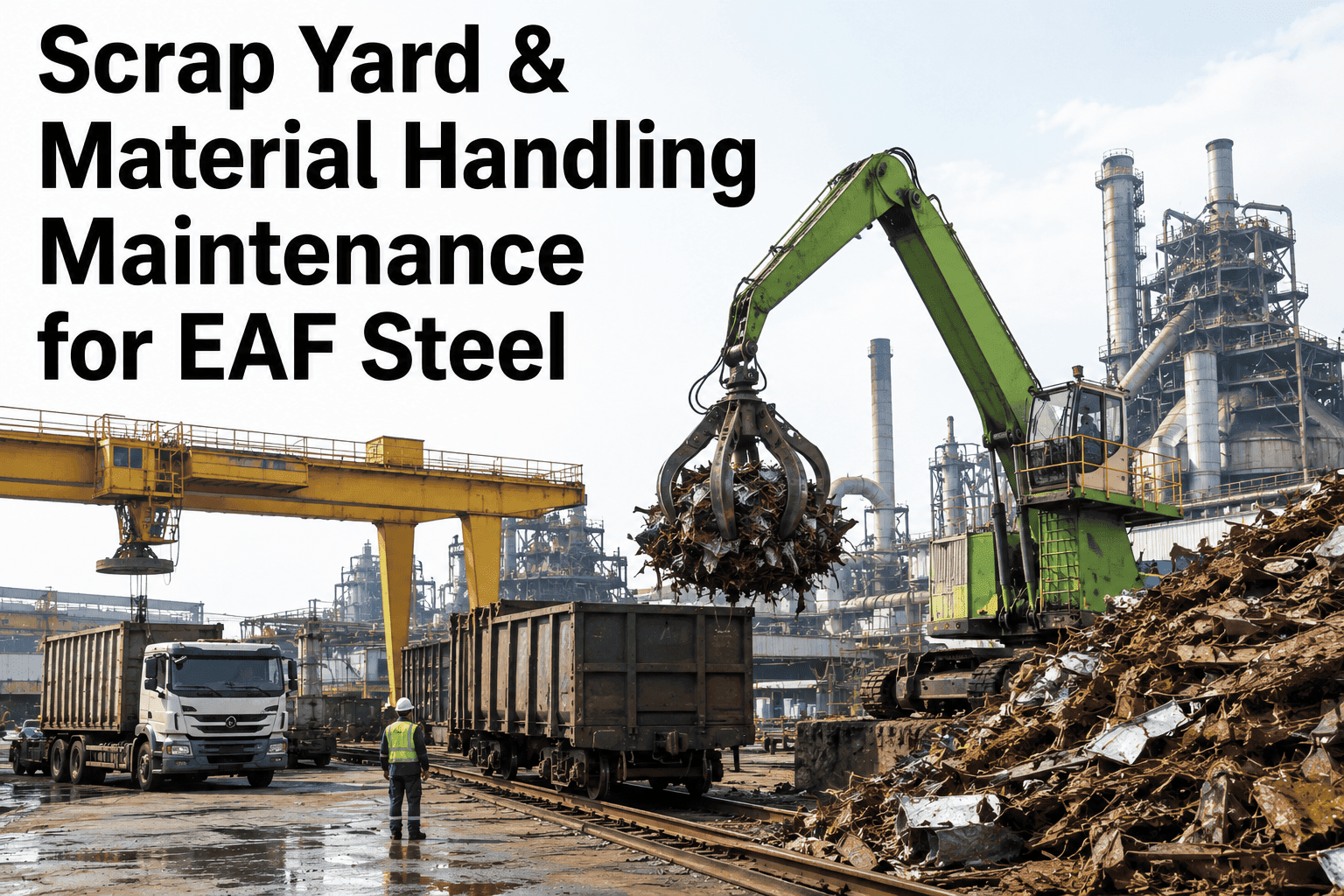
Read More
Scrap yard maintenance for EAF steel plants is the single biggest determinant of furnace feed-rate stability — because every minute a magnet crane, orange-peel grapple, or charging bucket is down, the electric arc...
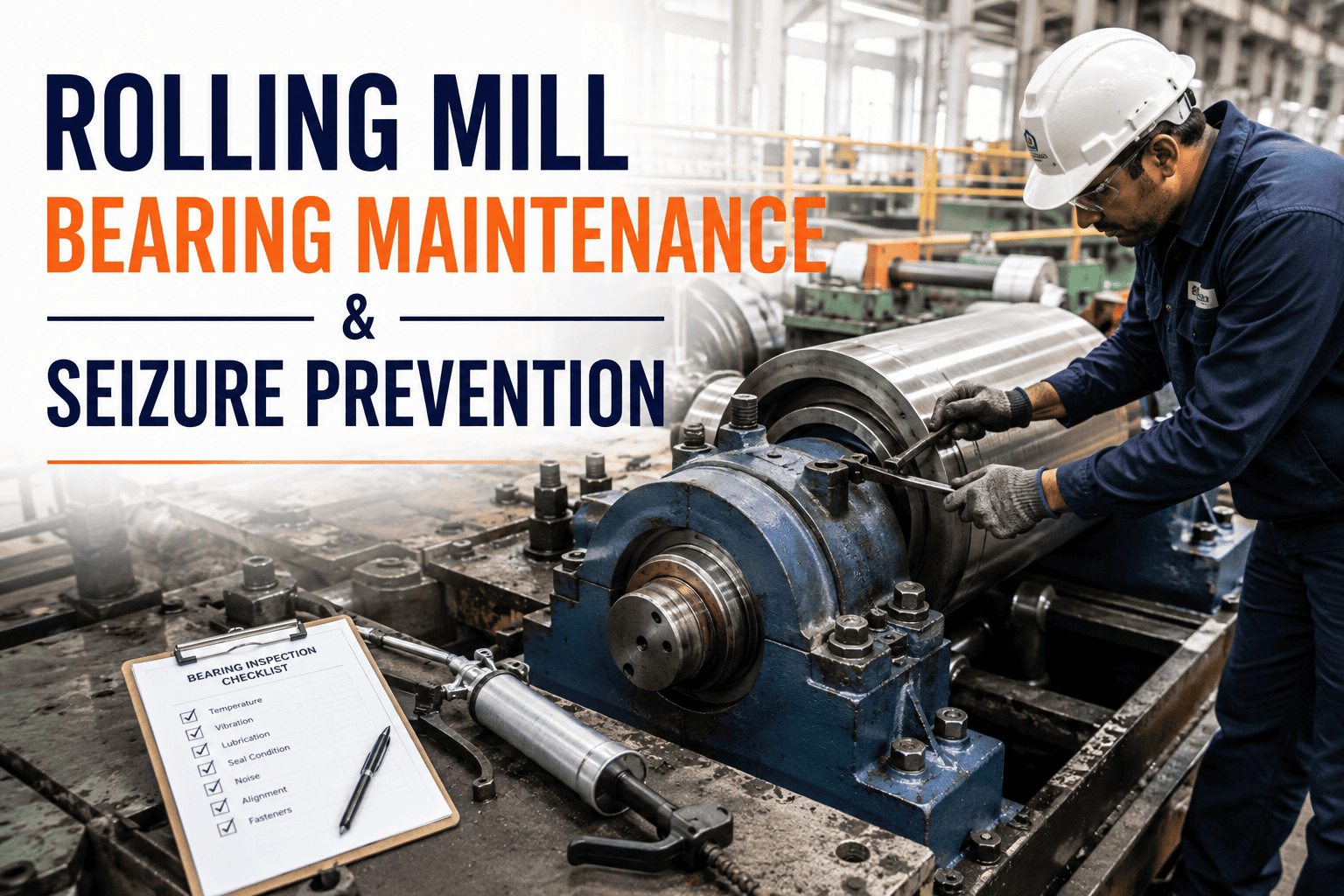
Read More
Rolling mill bearing maintenance is the single highest-leverage discipline in steel production: one seized backup-roll chock bearing can idle a hot strip mill for 3–7 days and destroy roll bodies, bearings and...
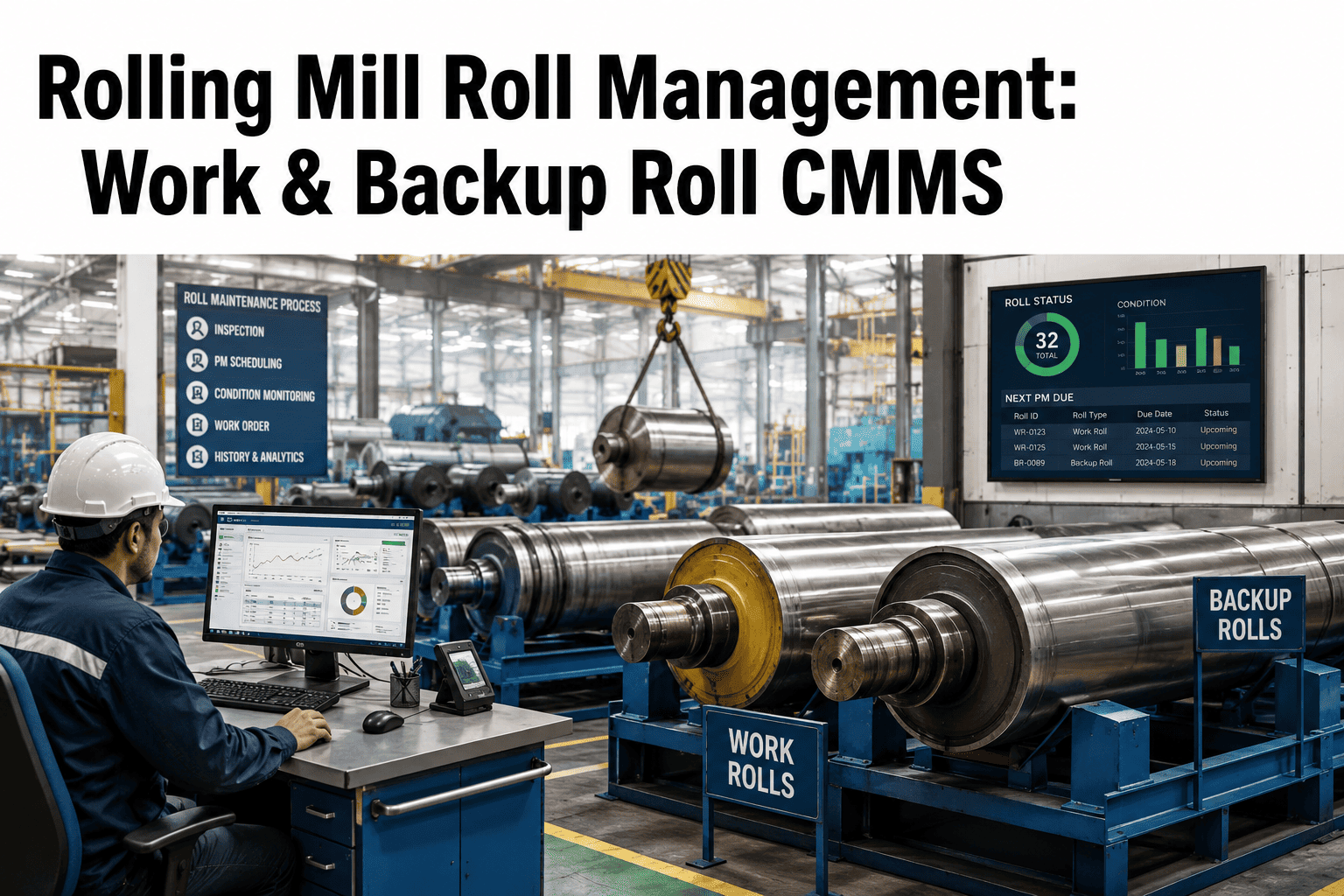
Read More
Rolling mill roll management governs work rolls, backup rolls, and intermediate rolls across every stand in a hot or cold mill — and it is the single variable that dictates strip quality, yield, and cost per tonne....
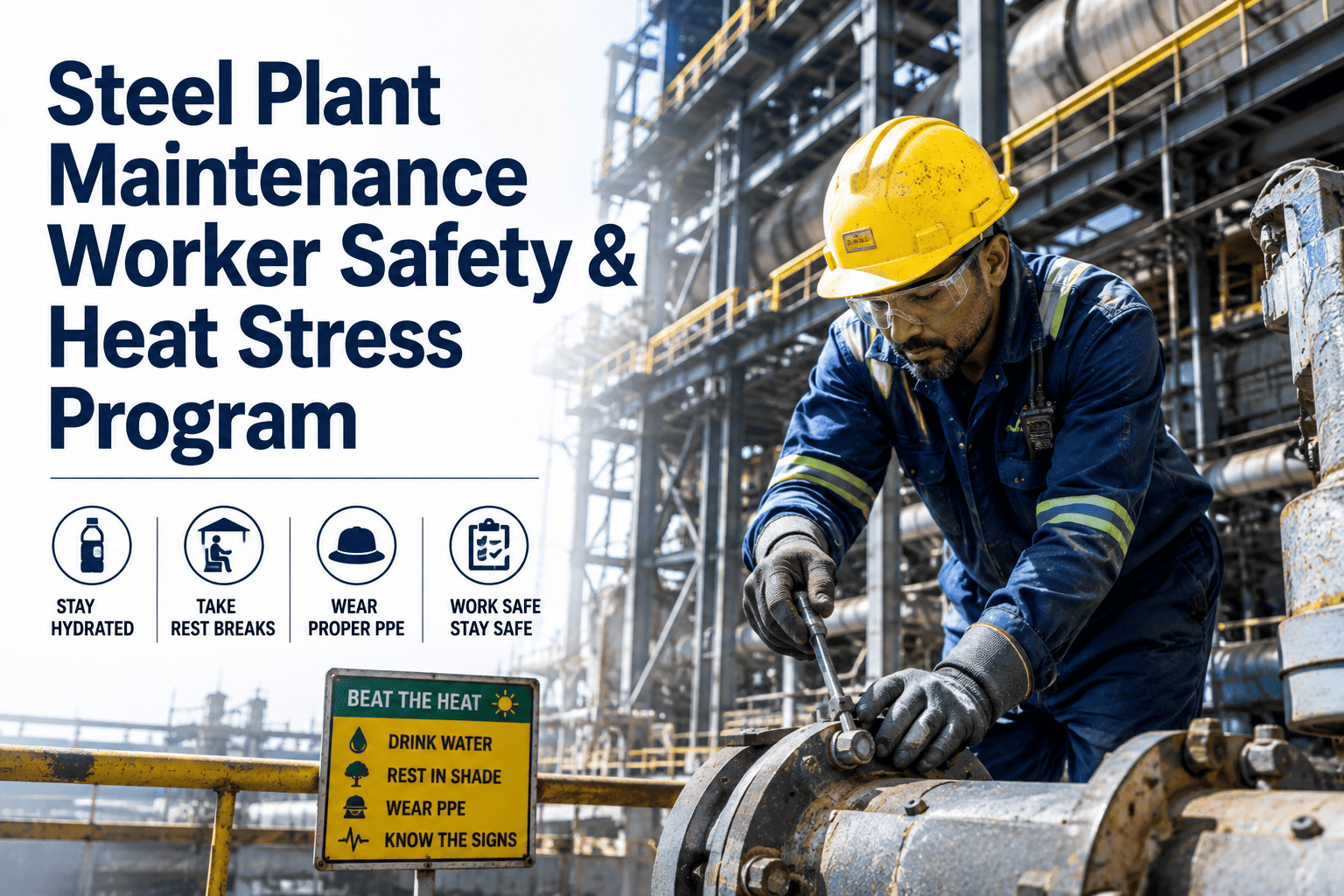
Read More
Steel plant maintenance worker safety hinges on one relentless adversary: heat. Near blast furnaces, ladles, and reheating furnaces, ambient temperatures can exceed 140°F (60°C), pushing technicians past their...
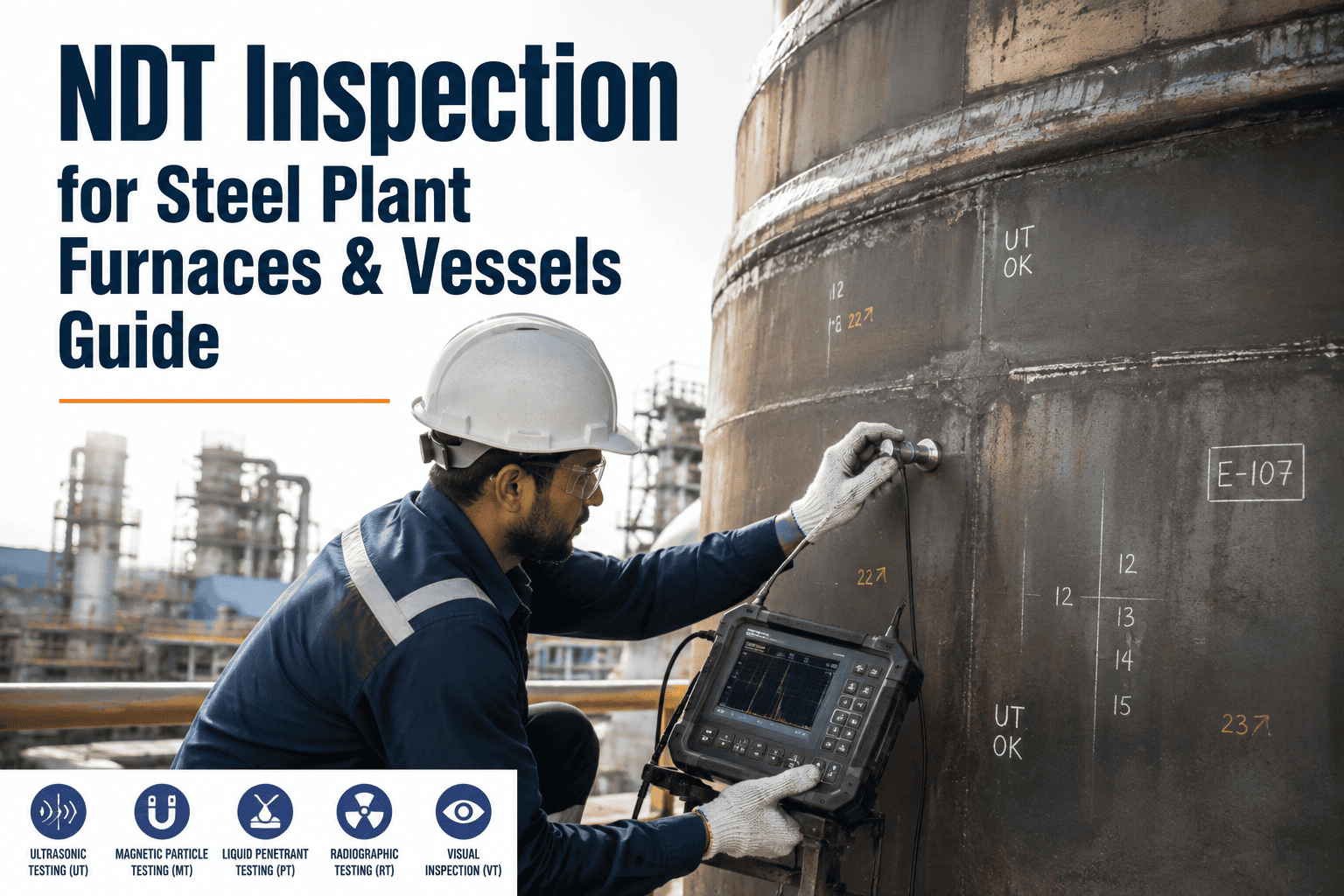
Read More
Non-destructive testing (NDT) inspection is the most critical defense against catastrophic failure in steel plant furnaces, ladles, and pressure vessels, catching subsurface cracks, wall thinning, and weld disbonds...
Read More
Steel plant environmental compliance hinges on disciplined maintenance execution across dust suppression, gas cleaning, effluent treatment, and emissions monitoring systems — a single failed baghouse or offline...

Read More
Electric arc furnace energy consumption accounts for 60–70% of a mini-mill's total operating cost, making EAF energy efficiency the single biggest lever for steel plant profitability — and disciplined maintenance...
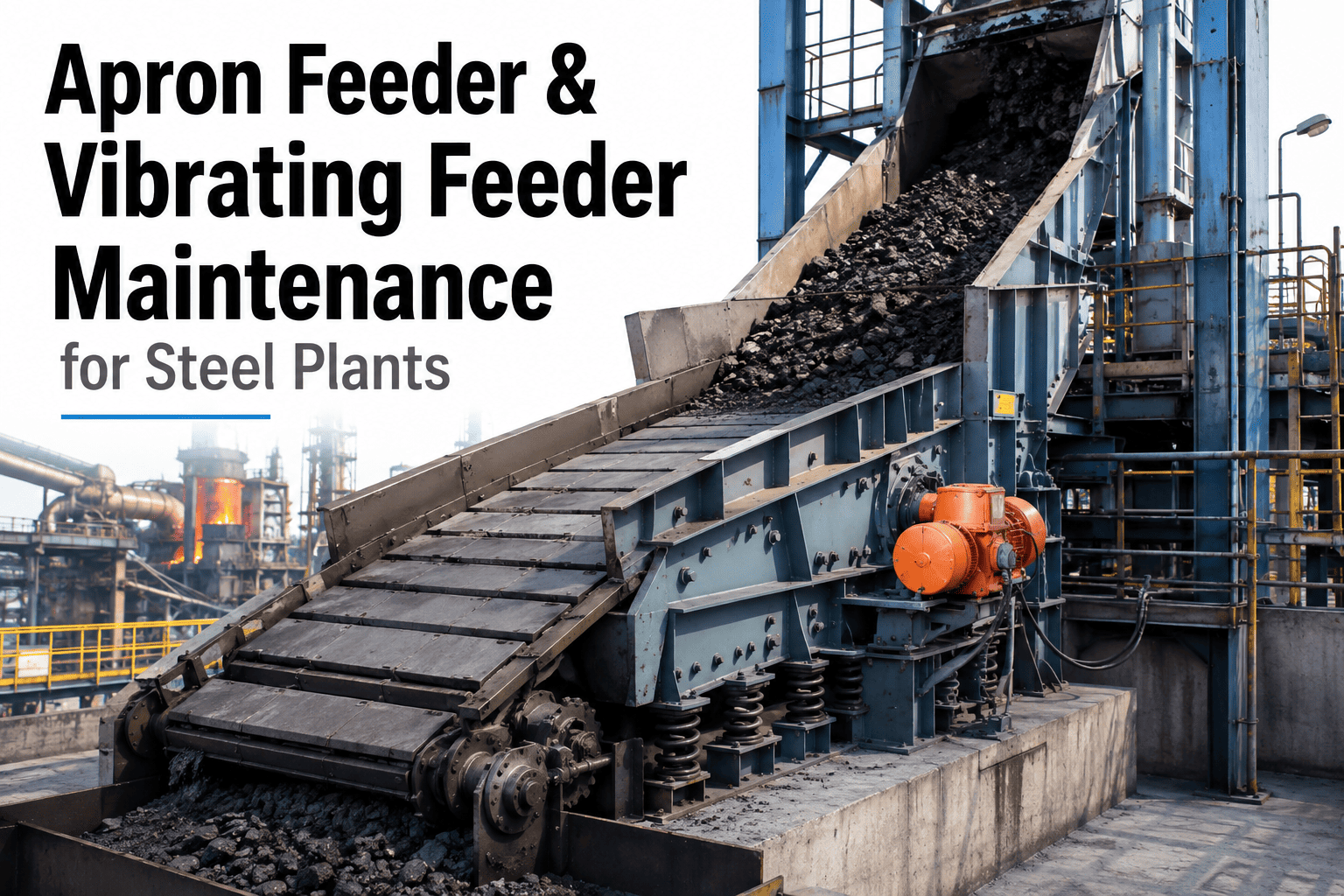
Read More
Apron feeder and vibrating feeder maintenance at steel plants is the thin line between steady throughput and a frozen material handling circuit — when a feeder stops, the blast furnace, mill, or ship-loader...
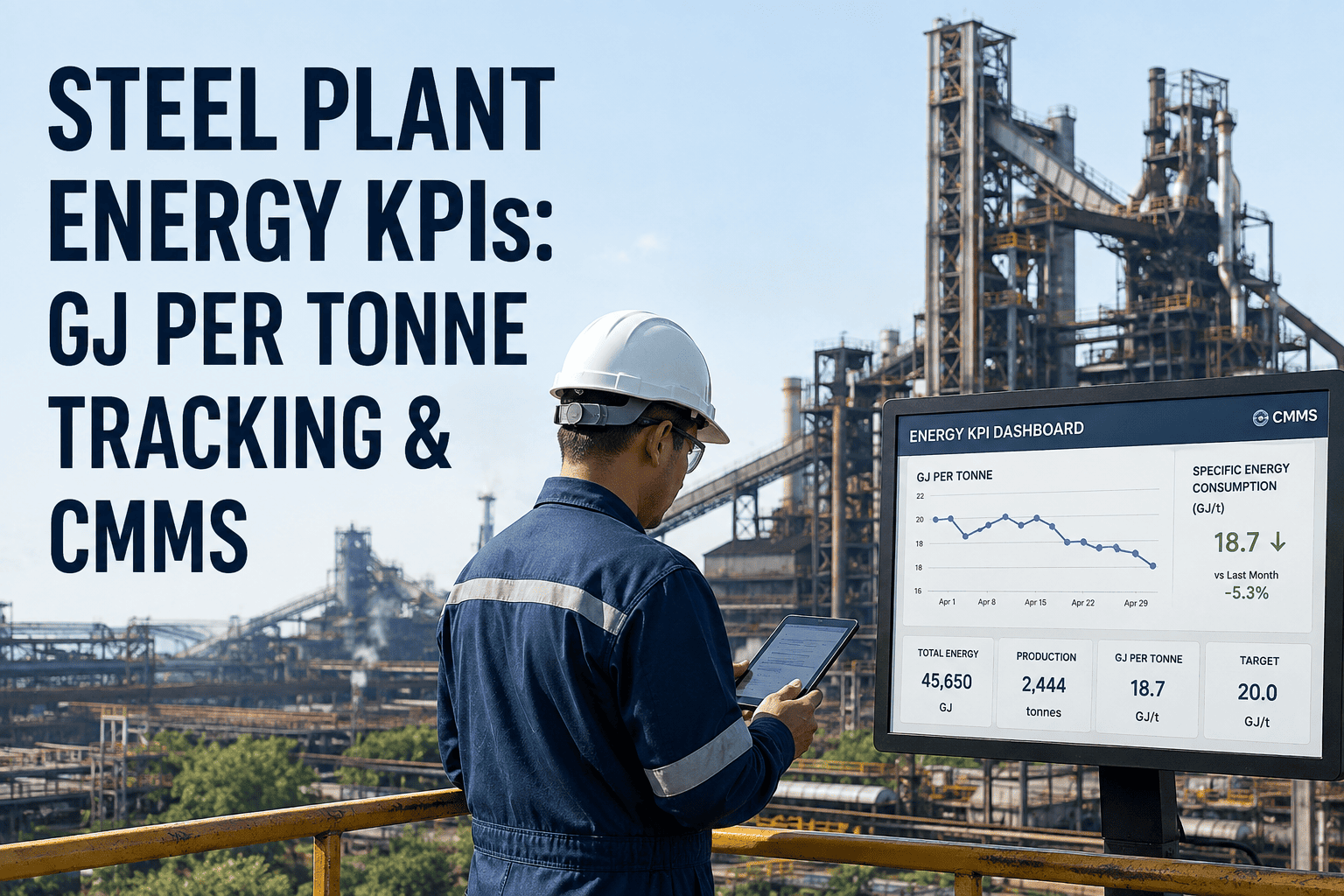
Read More
Energy intensity — measured in gigajoules per tonne of crude steel — is the single number that decides whether a mill is competitive or bleeding margin. Global steelmaking averaged 20.95 GJ per tonne of crude steel...
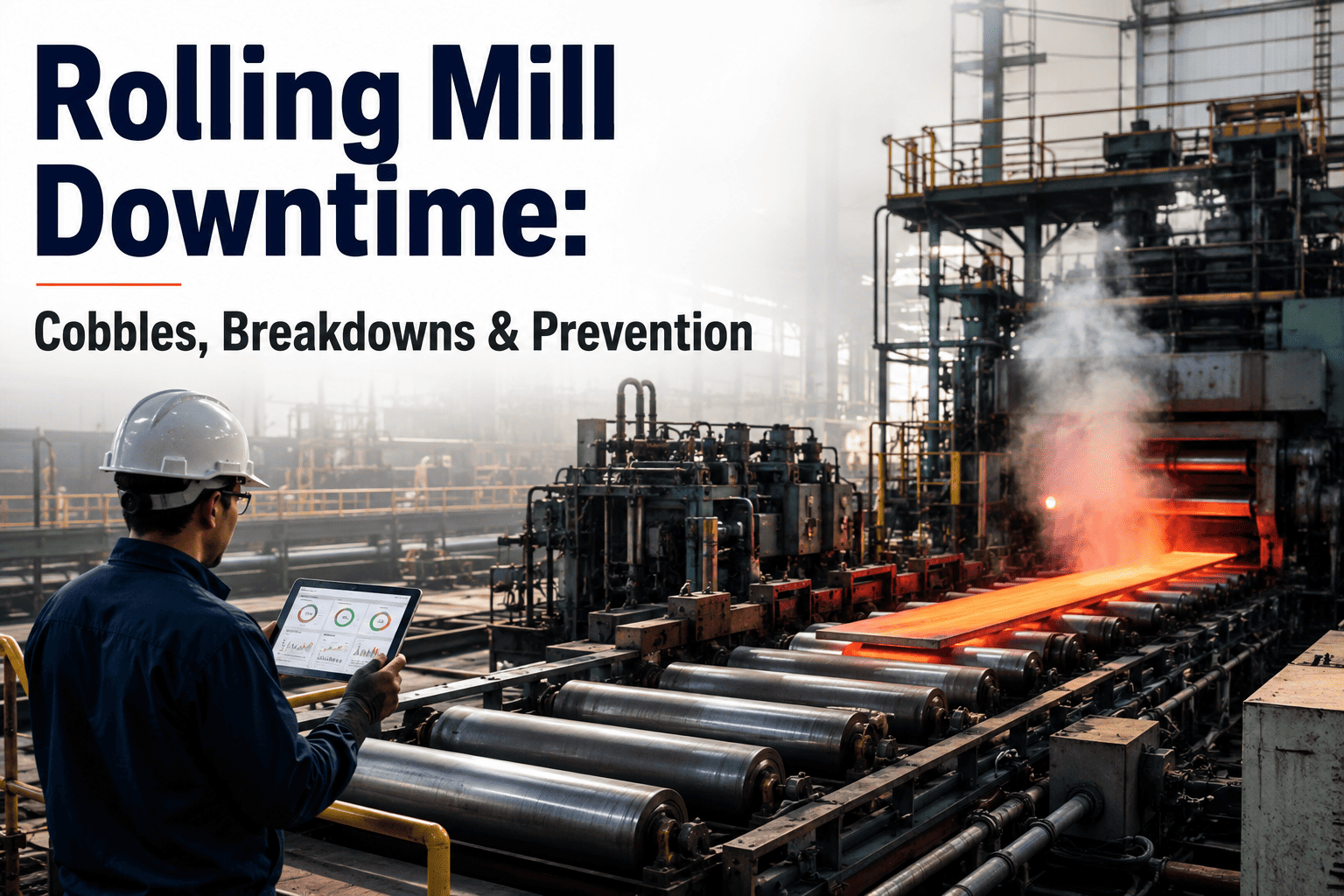
Read More
Rolling mill cobbles and mechanical breakdowns concentrate an entire day's downtime into a handful of violent minutes — and in almost every case, the warning signs were sitting in a vibration reading or an...
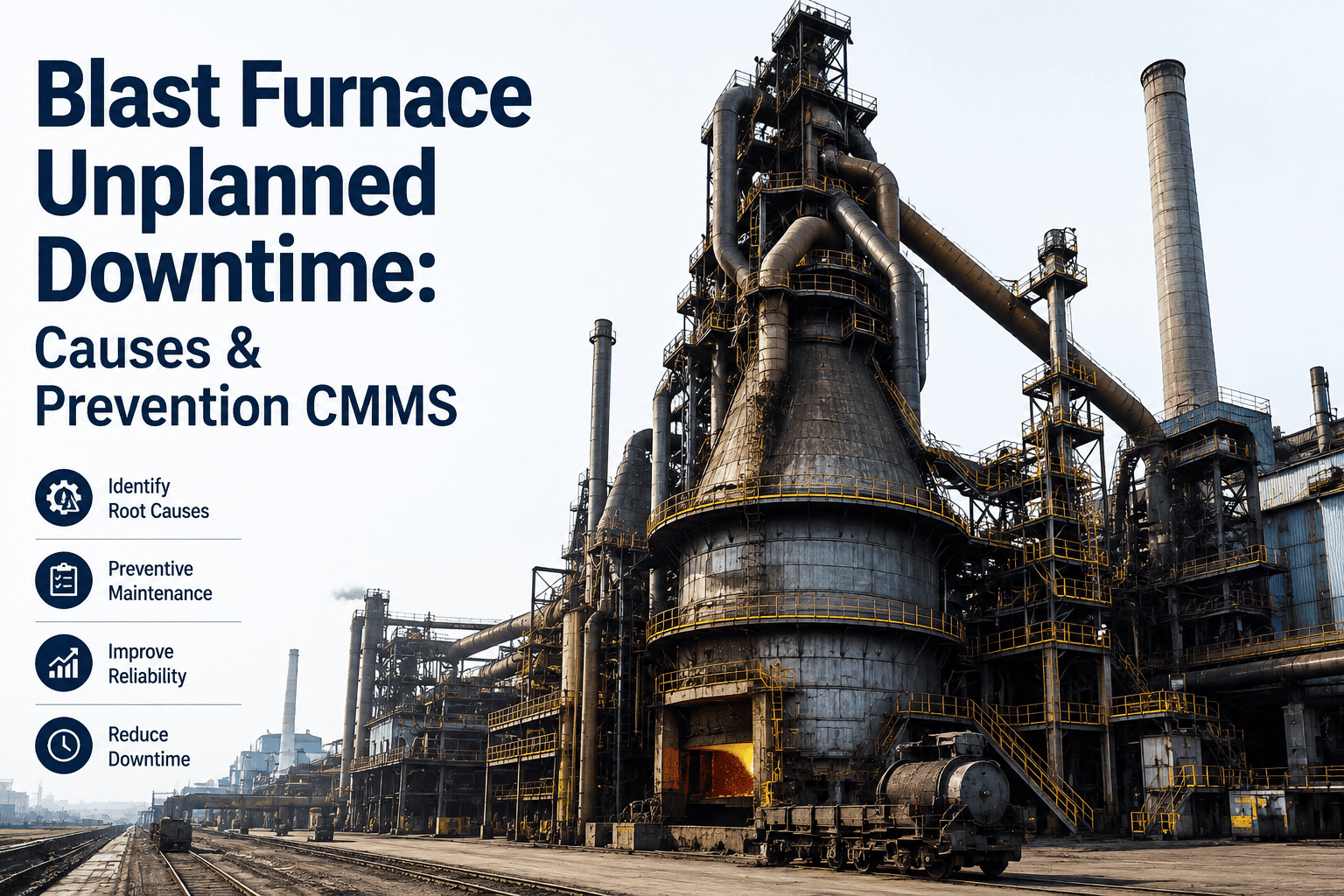
Read More
Blast furnace unplanned downtime is the single costliest event an integrated steel mill can face, often draining seven-figure margins within hours of a trip. Most incidents are not random — they trace back to a...
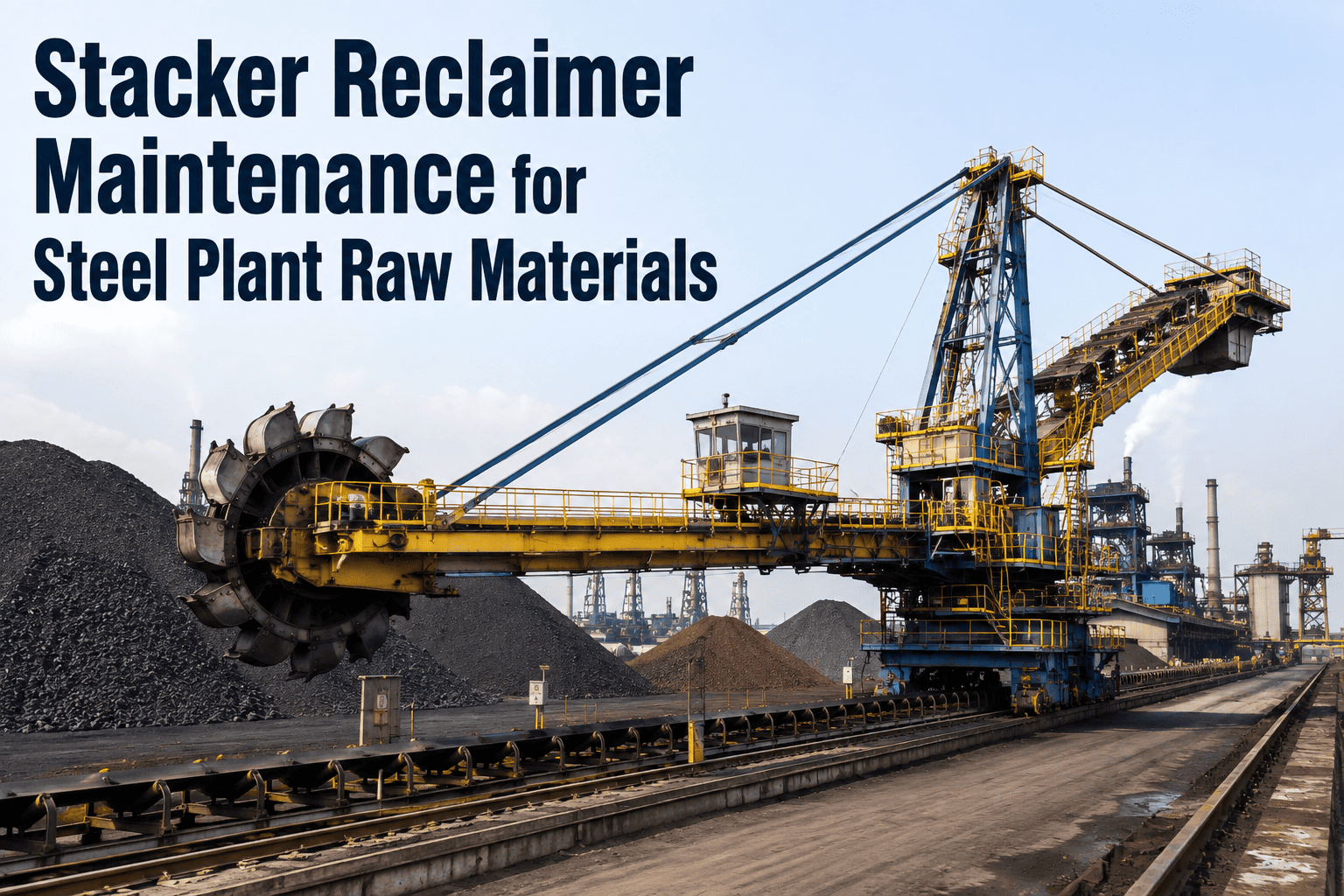
Read More
Every ton of ore, coal, and coke that reaches a blast furnace passes through a stacker reclaimer first — making this single machine the gatekeeper of the entire raw material yard. When a slew bearing seizes or a...
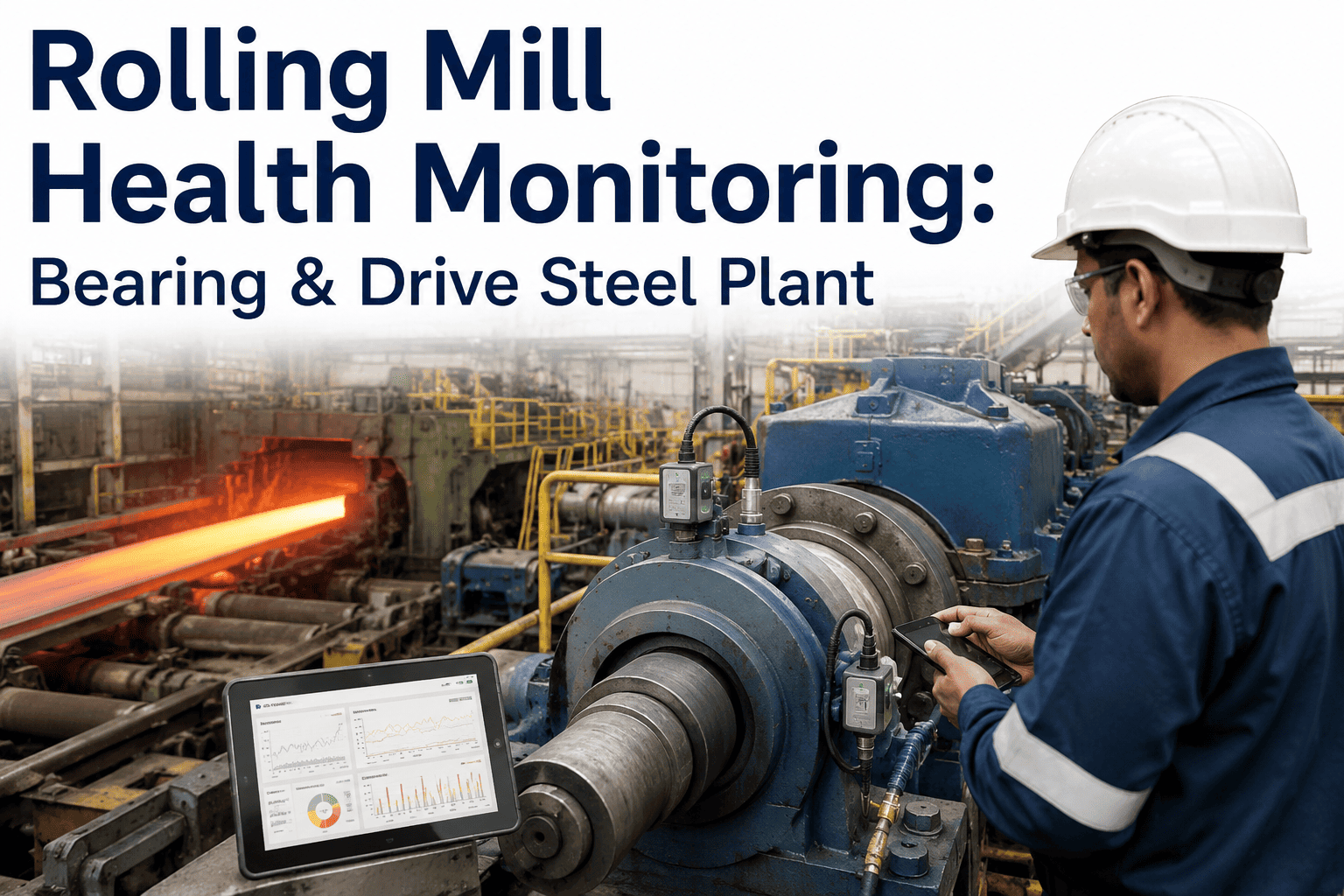
Read More
A rolling mill stand rarely fails without warning — it whispers first. A bearing race developing a hairline defect generates a faint vibration frequency weeks before it becomes audible. A drive motor with a cracked...
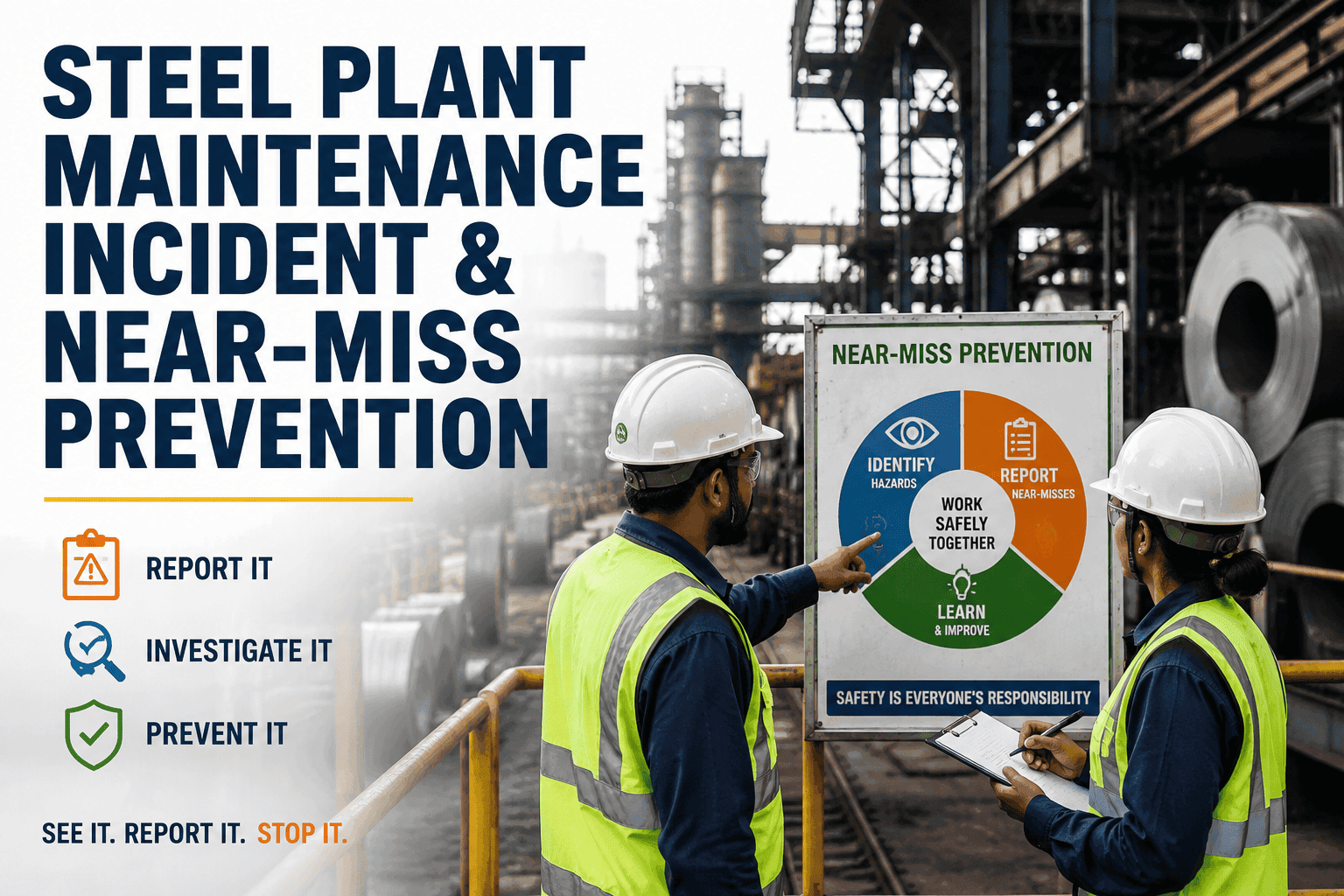
Read More
A rolling mill operator feels a sleeve brush a nip point and steps back just in time. A crane rigger notices a load shift half a second before it would have swung into a walkway. A furnace technician moves off a...
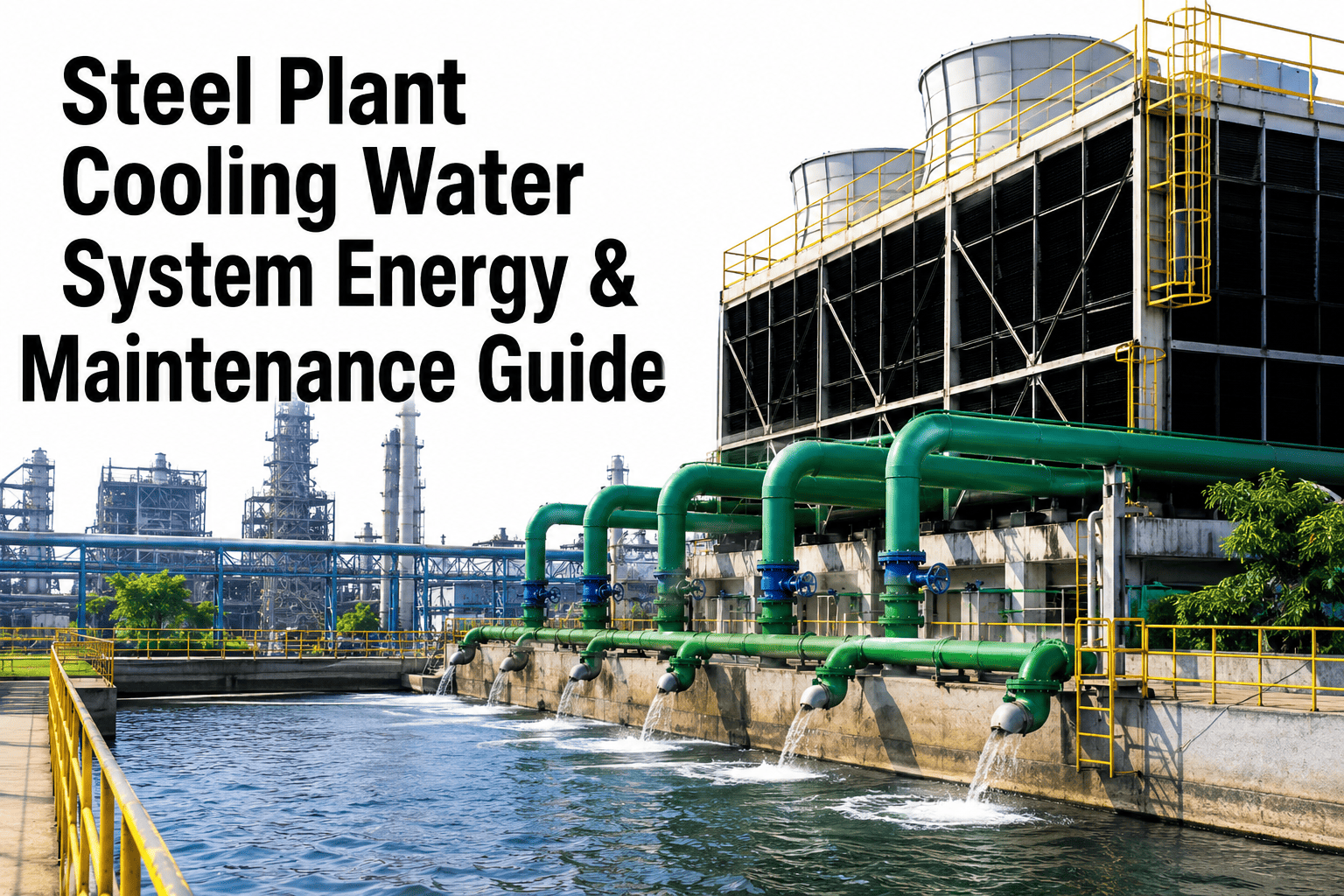
Read More
Steel plants run some of the largest industrial water networks on earth, and cooling water touches almost every hot process on site — blast furnace staves, caster molds, rolling mill rolls, and coke ovens all...
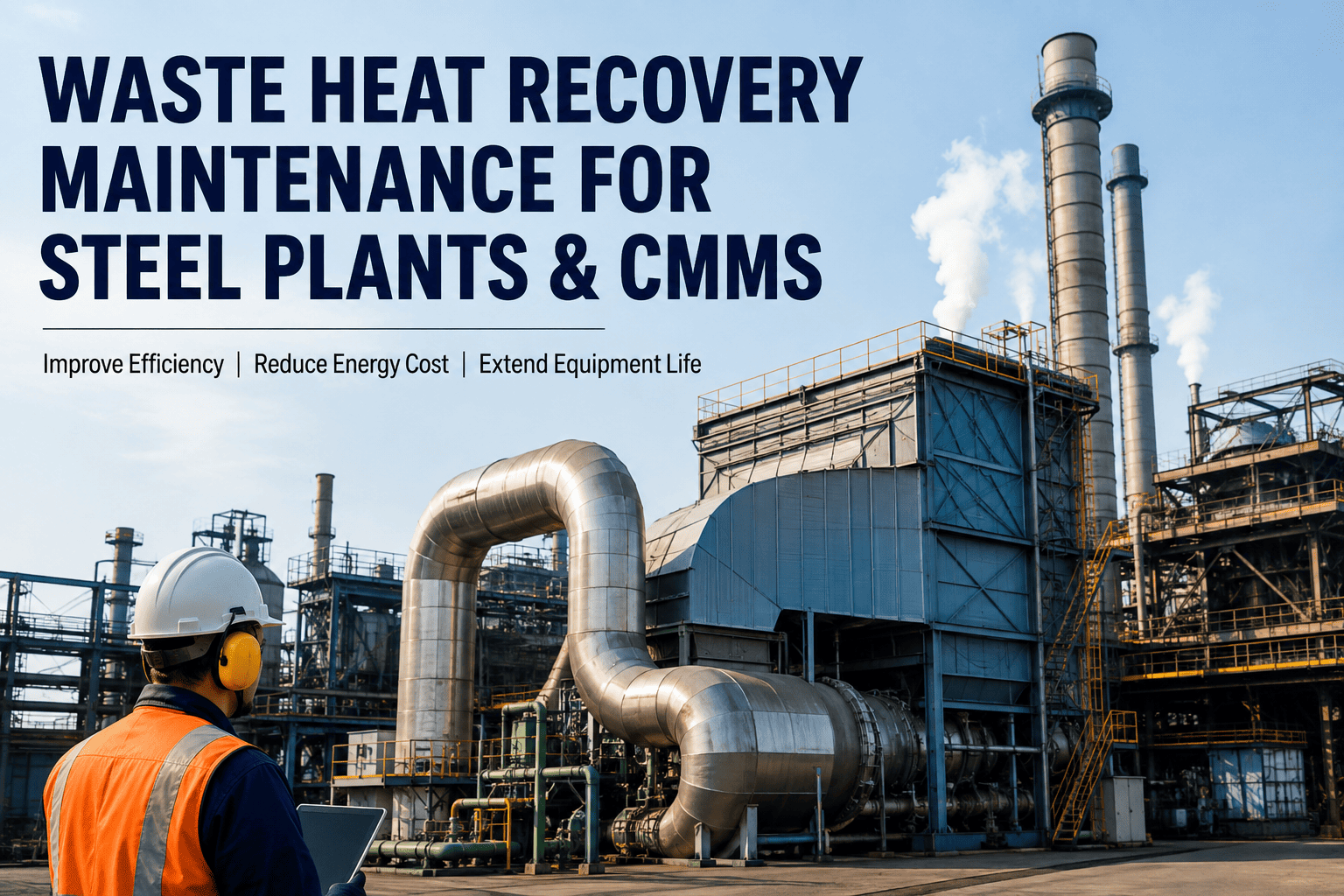
Read More
Waste heat recovery systems — blast furnace gas boilers, BOF gas recovery stacks, top pressure recovery turbines, and coke dry quenching units — quietly generate 15% to 25% of a steel plant's total energy value...
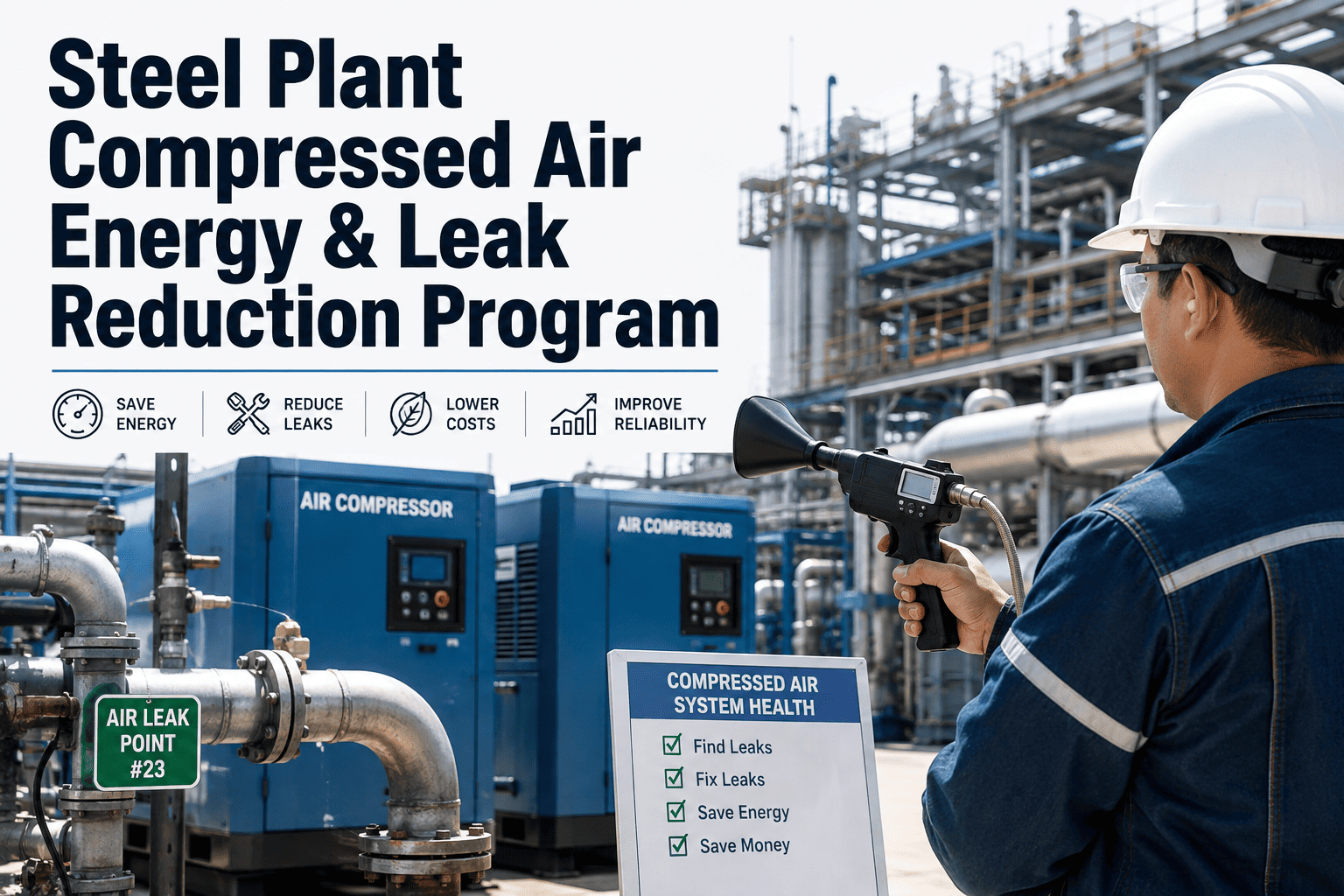
Read More
Compressed air is called the fourth utility for a reason — steel plants pay to generate it, pay again when it leaks, and rarely measure either cost. A single quarter-inch leak at header pressure can waste enough...
Read More
Electric motors are the largest single electricity consumer in any industrial plant, and a steel mill is no exception — blast furnace fans, cooling water pumps, rolling mill drives, and conveyor systems run around...
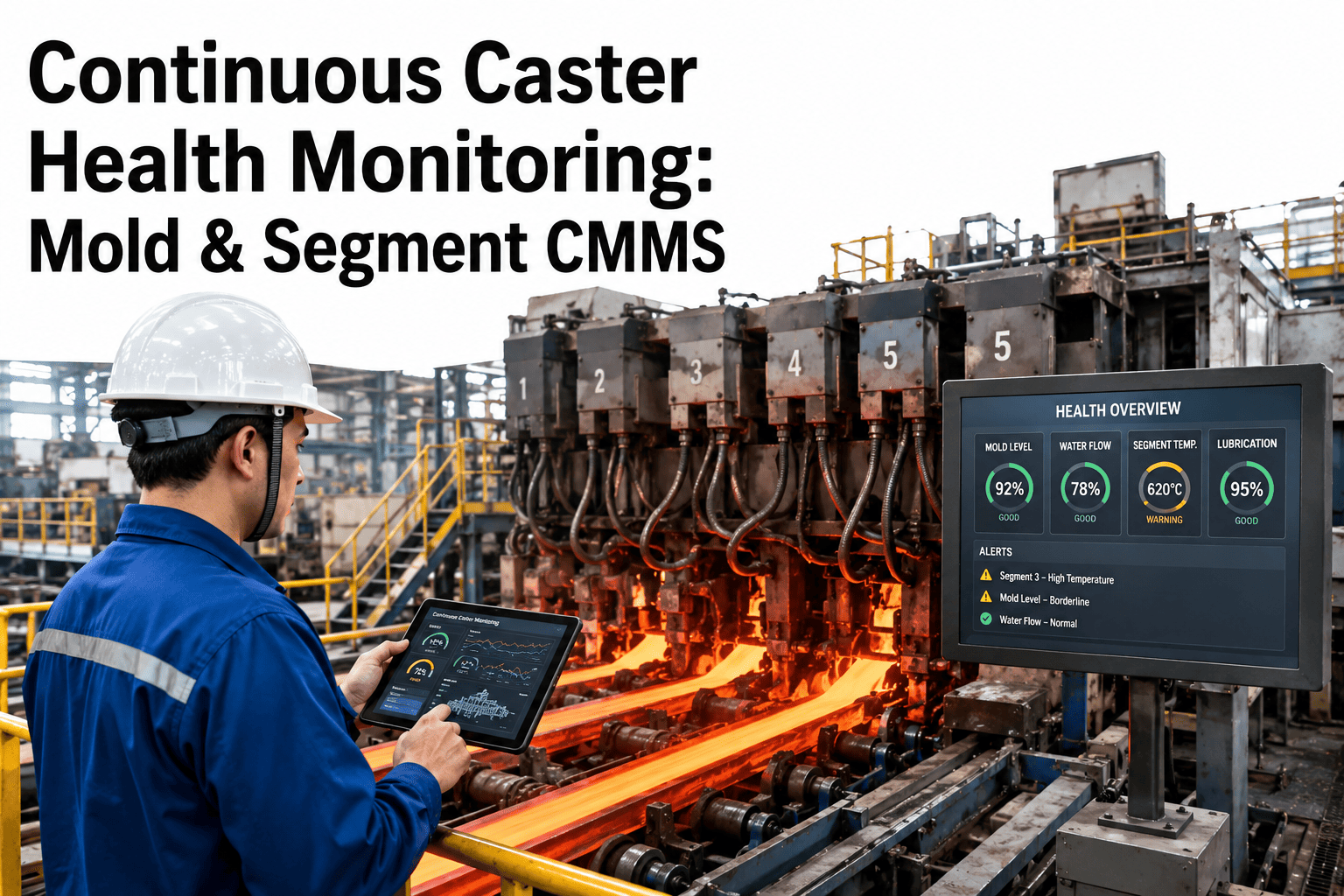
Read More
Continuous caster health monitoring is the discipline of tracking mold copper temperatures, segment roll displacement, oscillator vibration and secondary cooling flow in real time so steel mills can predict...
Read More
Steel plant safety compliance reporting for OSHA is one of the most scrutinized areas in heavy industry, and CMMS-generated records are the evidence auditors ask for first. A defensible steel safety audit hinges on...
Read More
Steel plant gas safety hinges on rigorous CO and blast furnace gas (BFG) monitoring, yet carbon monoxide exposure remains one of the leading causes of serious incidents in steel manufacturing today. Mills that...
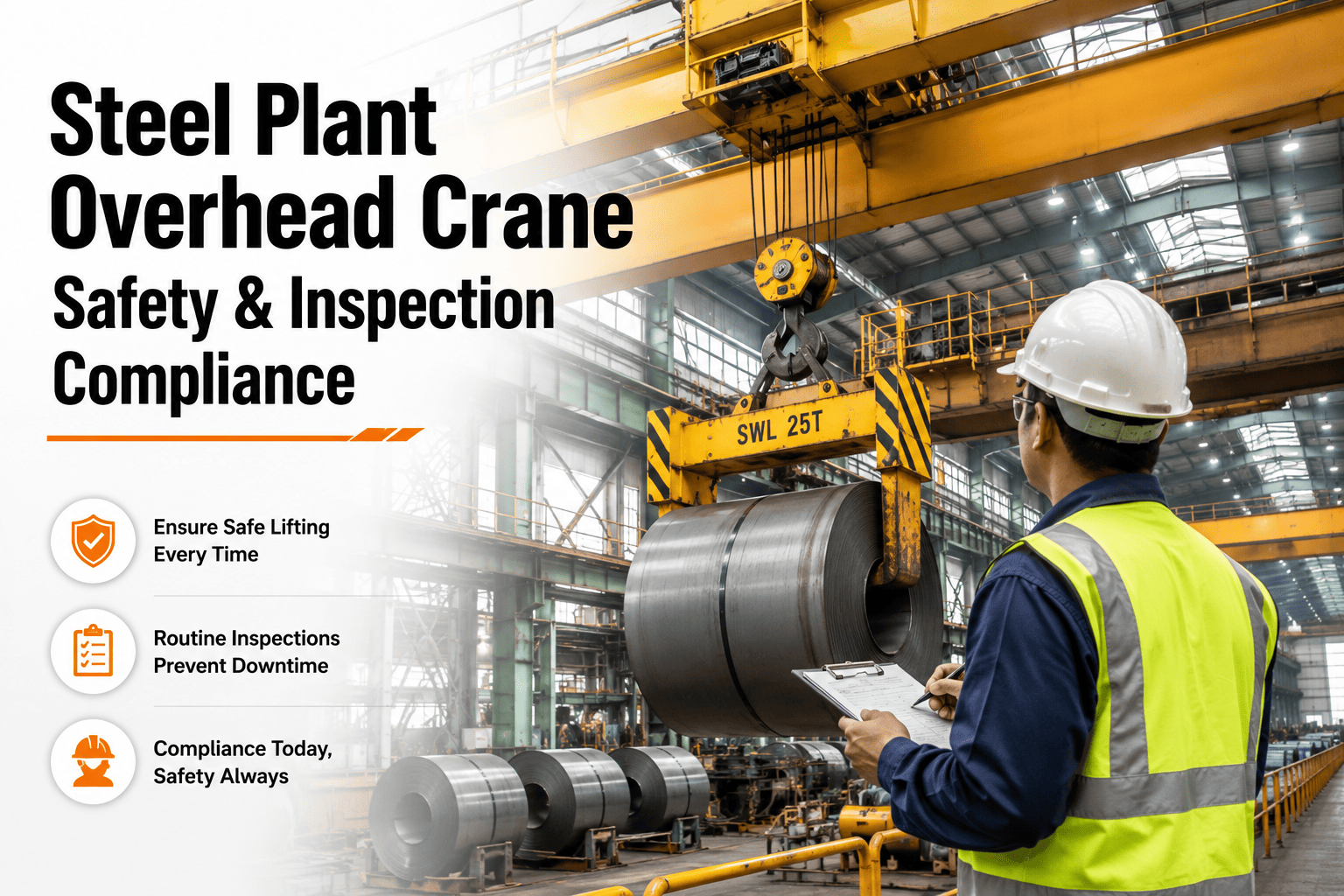
Read More
Steel plant overhead crane safety hinges on disciplined inspection compliance with OSHA 1910.179 — and when a ladle crane lifts 200 tons of molten metal, a missed wire-rope defect or expired load test can trigger...
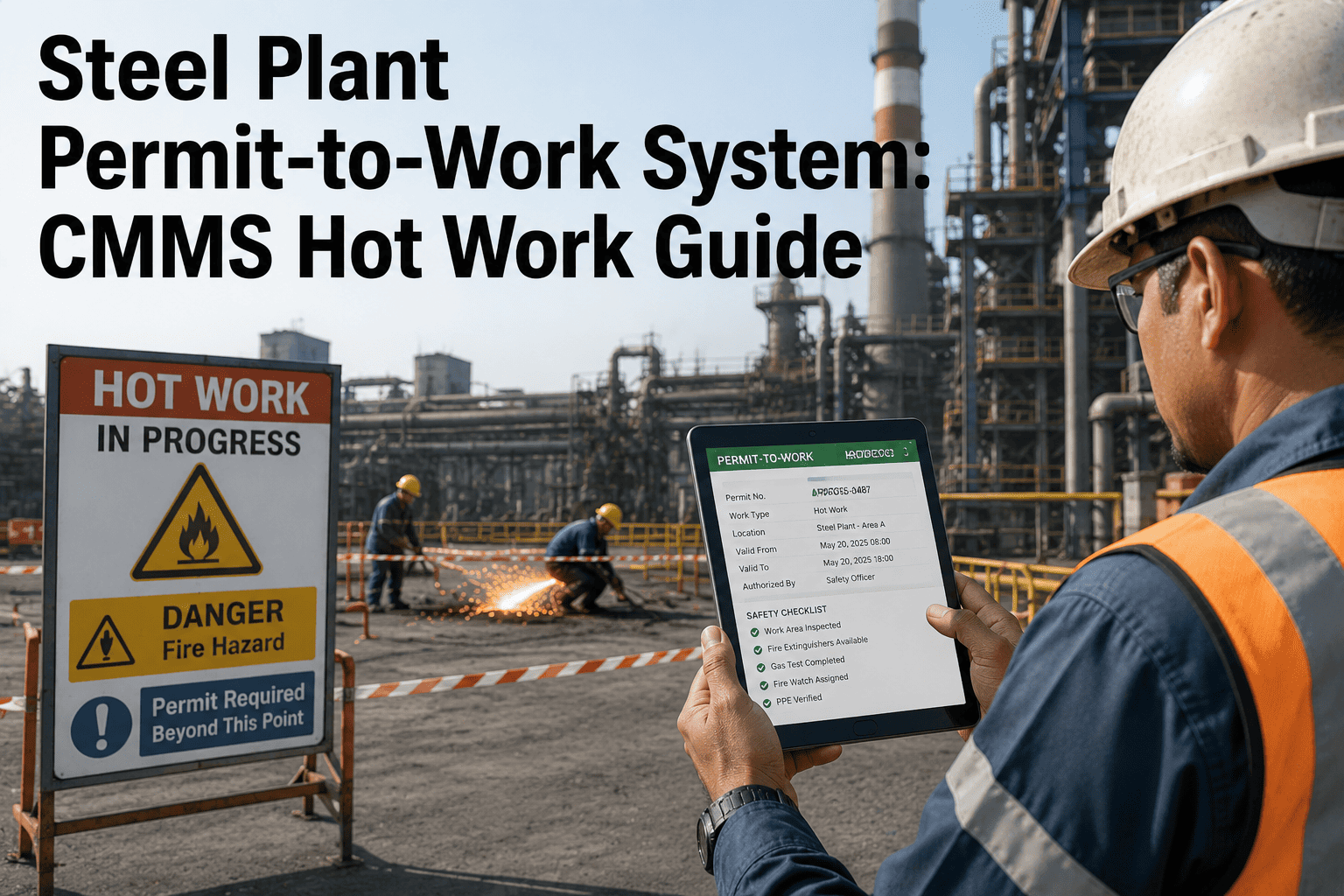
Read More
A steel plant permit-to-work system is the formal, documented control procedure that authorizes specific maintenance tasks — hot work near furnaces, confined space entry in casters, and LOTO on rolling mill drives...
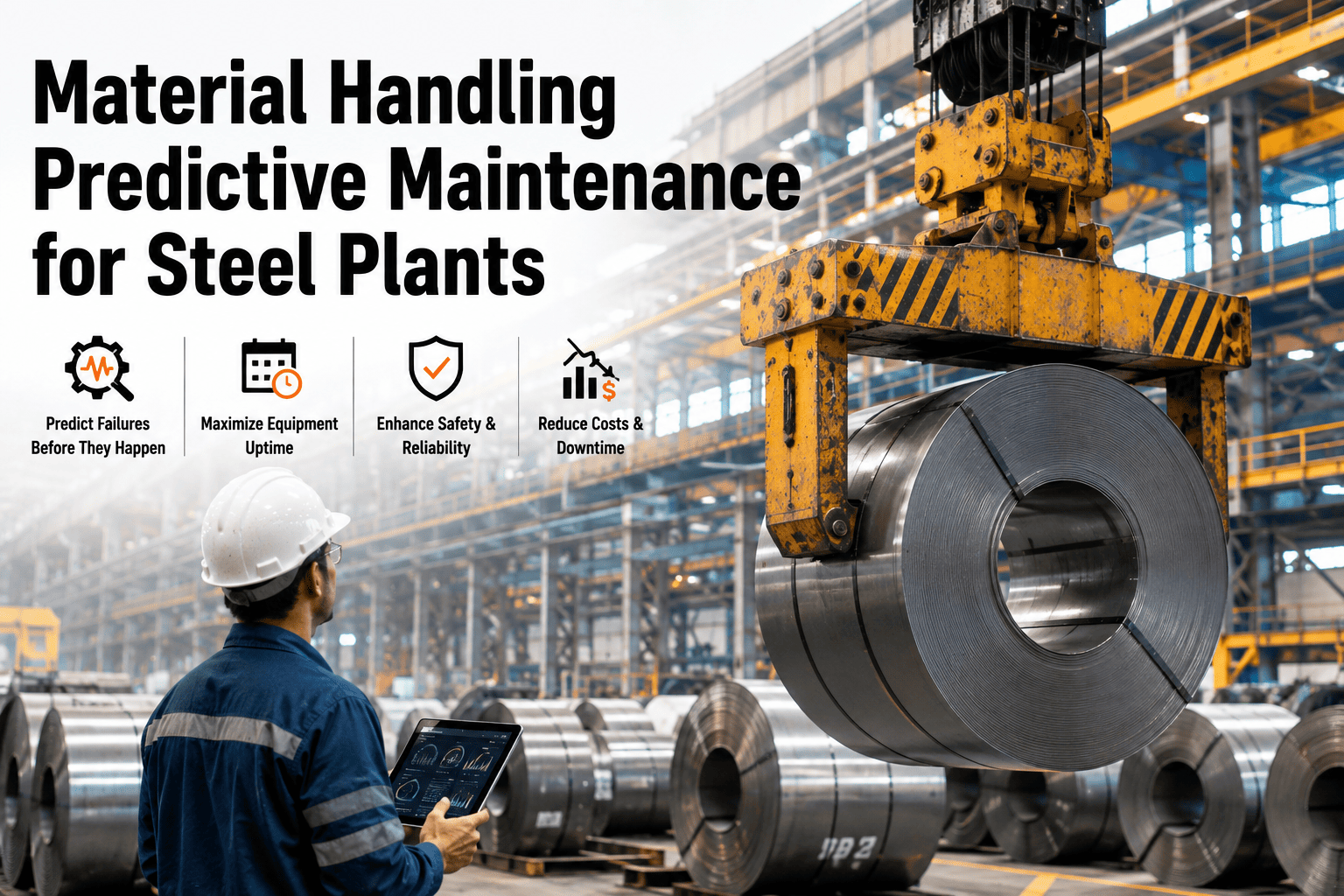
Read More
Steel plants lose material handling capacity in ways that rarely show up until a conveyor stops mid-shift or a ladle crane throws a fault code during a heat. Thousands of idlers, dozens of conveyor drives, and a...
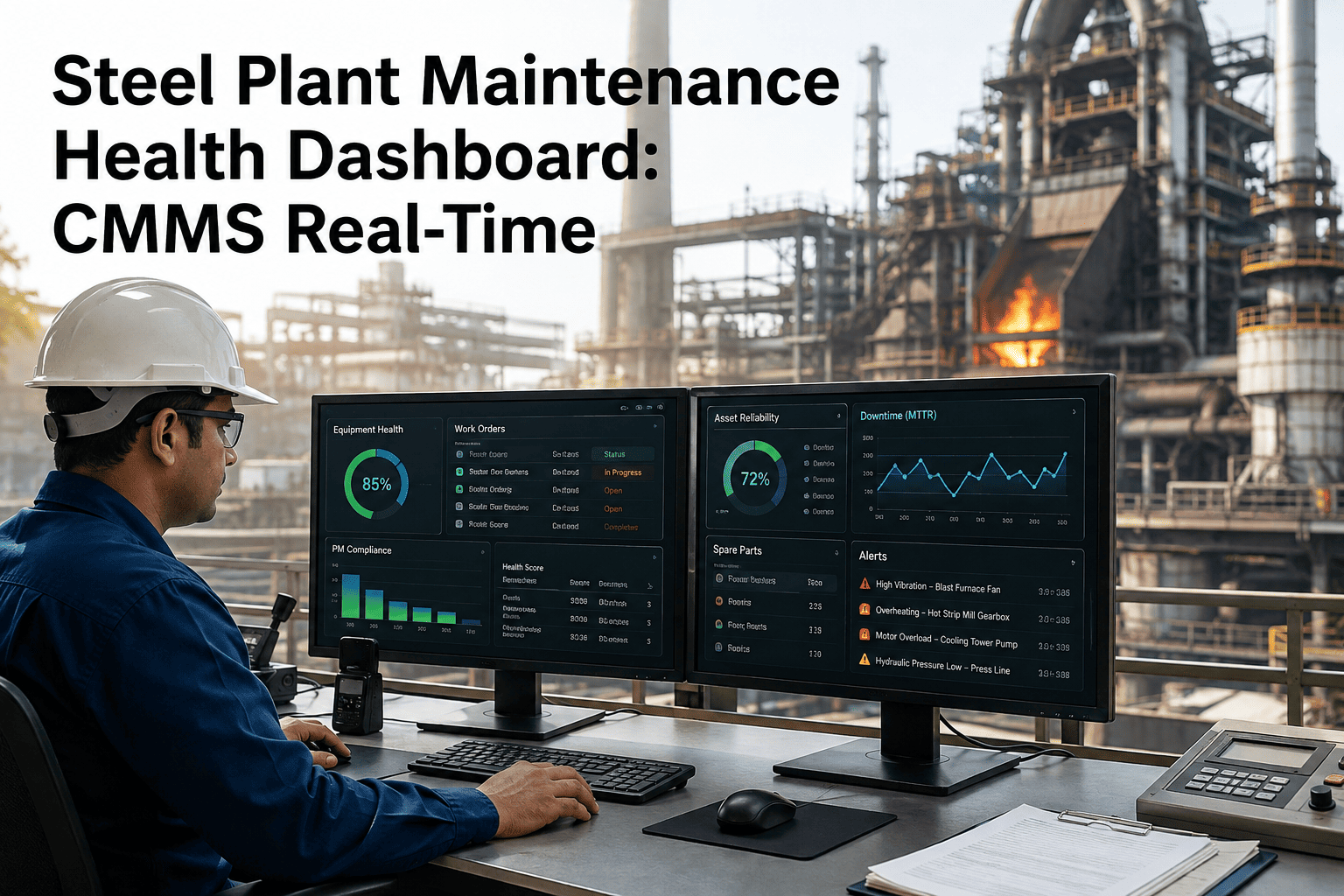
Read More
When a blast furnace cooling pump starts drifting toward failure, or a rolling mill's OEE quietly slips five points below target, a monthly maintenance report tells the plant weeks after the damage is done. A...
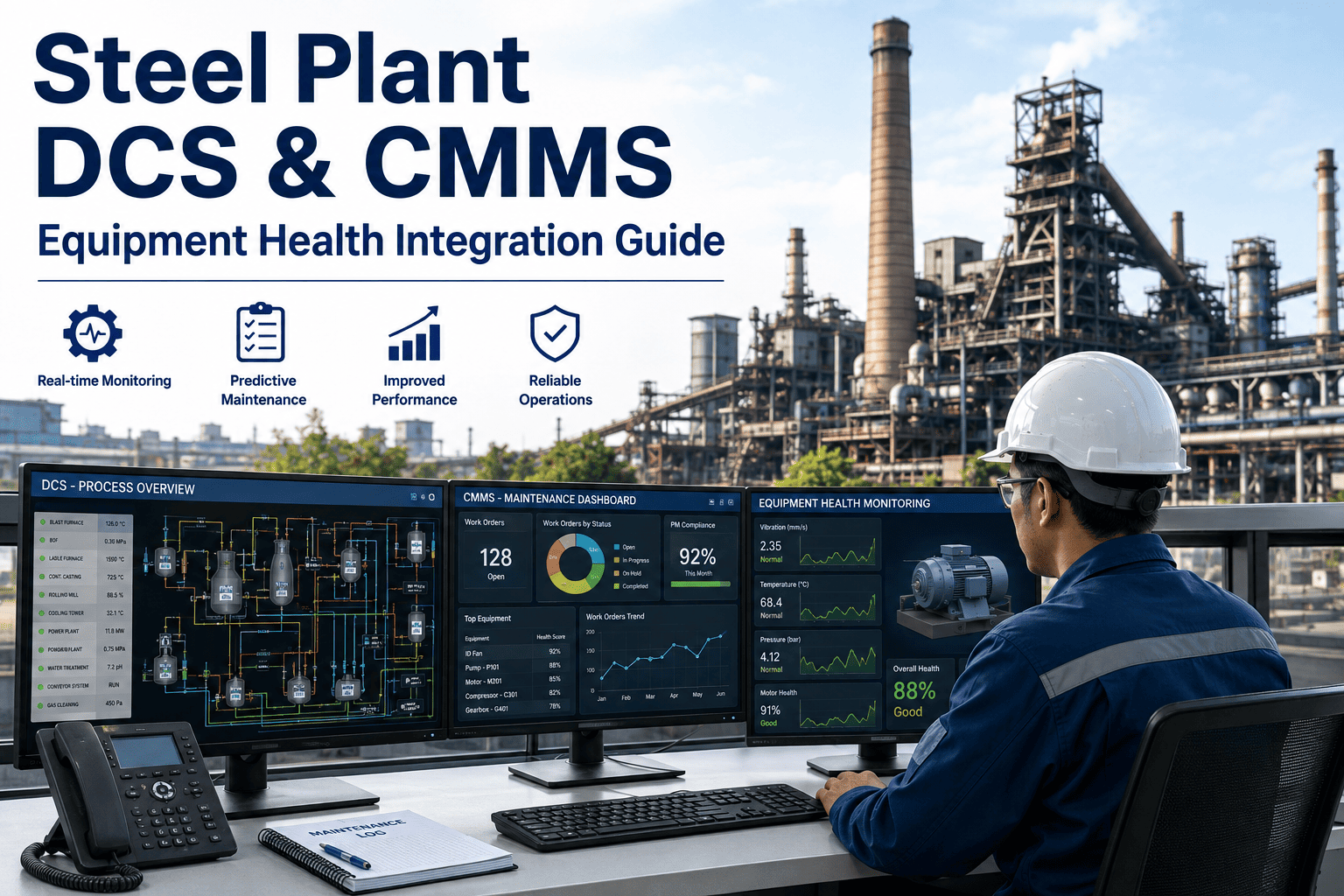
Read More
In a steel plant, the DCS sees a bearing temperature climb past its threshold the moment it happens. The maintenance team, working off the CMMS, usually doesn't find out for hours. That gap between what the control...
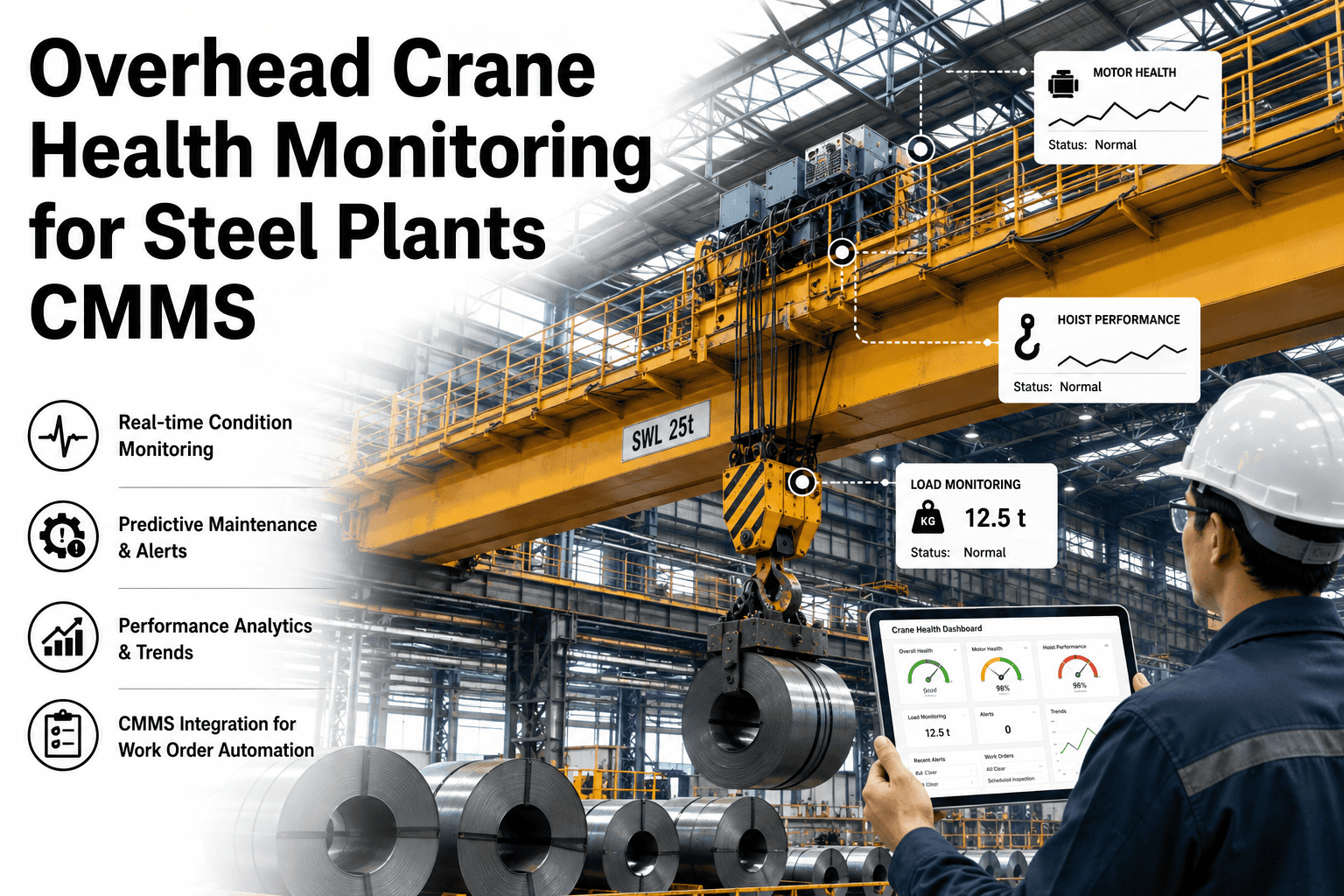
Read More
Ladle cranes, charging cranes, and slab-handling overhead cranes carry molten metal and multi-ton loads across live steel plant floors on every shift, and a single undetected fault in a brake, wire rope, or hoist...
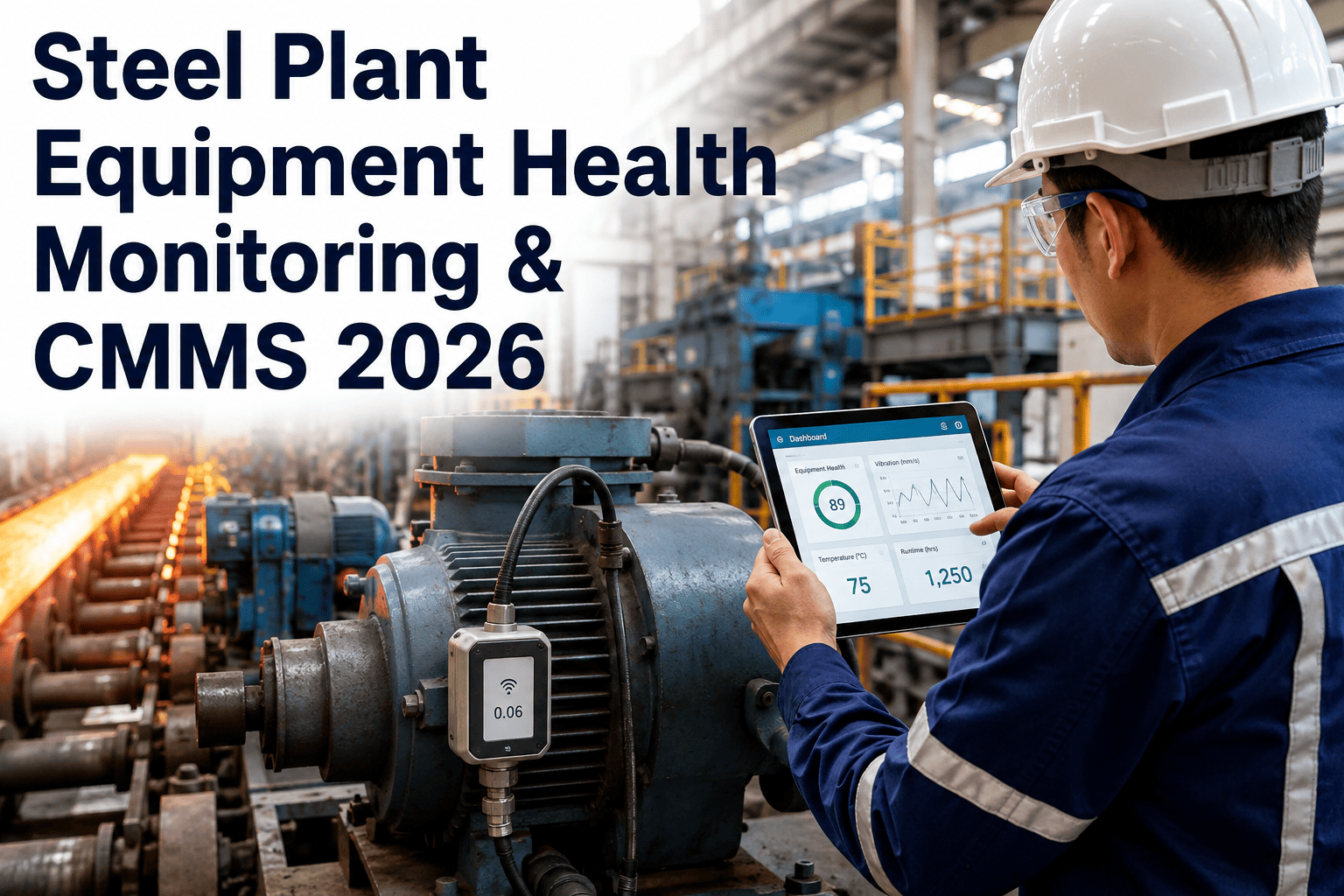
Read More
Steel plants run some of the toughest equipment on earth — blast furnaces holding 20 million tons of campaign life, casters where one bearing failure turns into a six-figure breakout, and rolling mills where a...
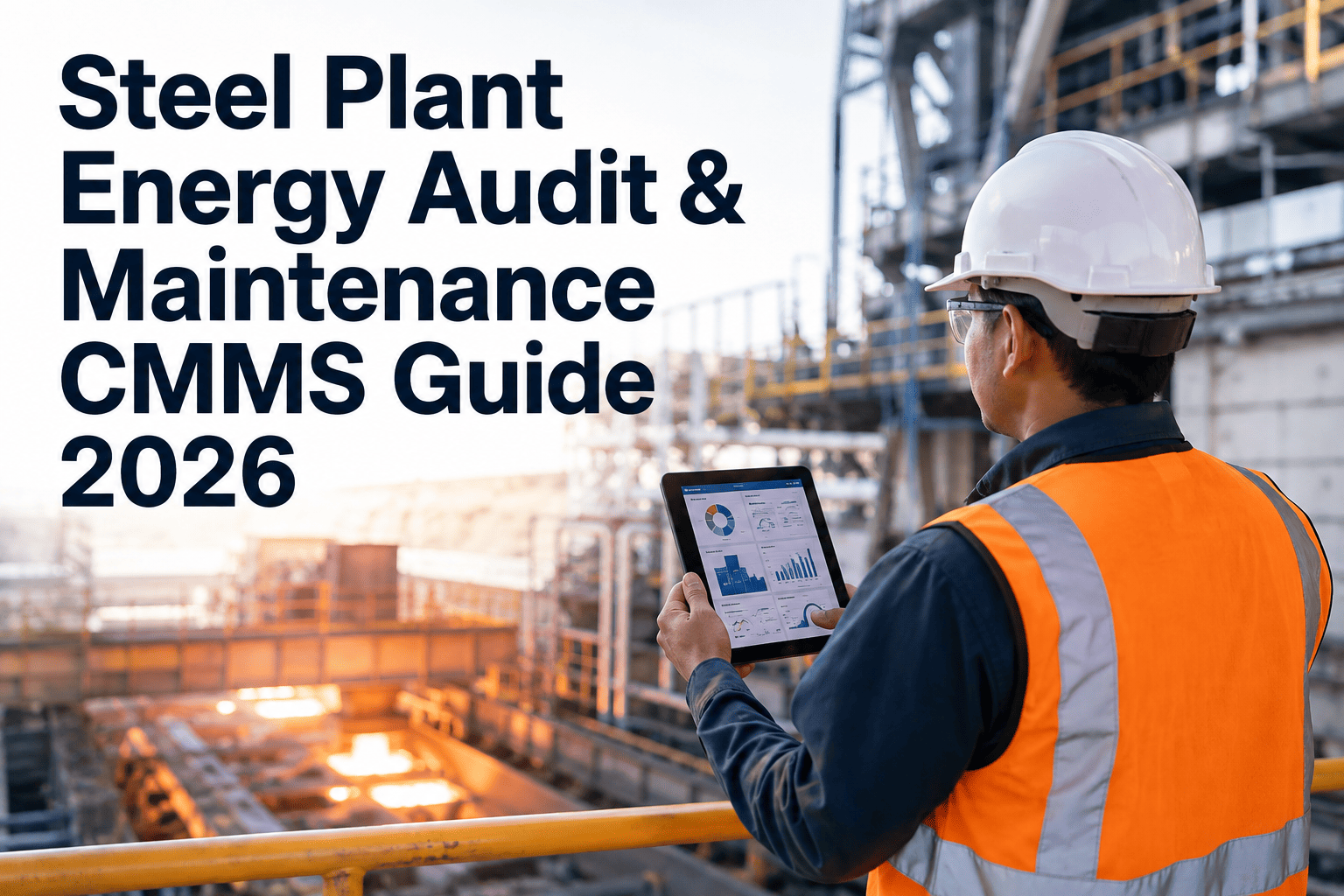
Read More
Energy audits at steel plants routinely uncover five to fifteen percent in recoverable savings, and a large share of that opportunity sits inside maintenance's own backlog rather than in expensive process upgrades....
Read More
Steel plant safety compliance sits at the intersection of OSHA general industry rules, NFPA fire codes, and the daily reality of molten metal, energized equipment, and confined spaces. Most citations don't trace...
Read More
In an integrated steel plant, no piece of equipment fails alone. A blast furnace cooling leak halts ironmaking, the BOF runs out of hot metal, the caster breaks sequence, and the rolling mill idles within the hour...
Read More
A tandem cold mill running six stands at 1,500 metres a minute relied on quarterly vibration surveys and a maintenance team that trusted the numbers on the HMI screen. For weeks strip gauge held within spec and no...
Read More
A mid-sized bar mill kept logging backup roll chock failures every 14 months, always mid-campaign instead of at startup, and nobody could explain the pattern. Oil analysis found the real cause: cooling water and...
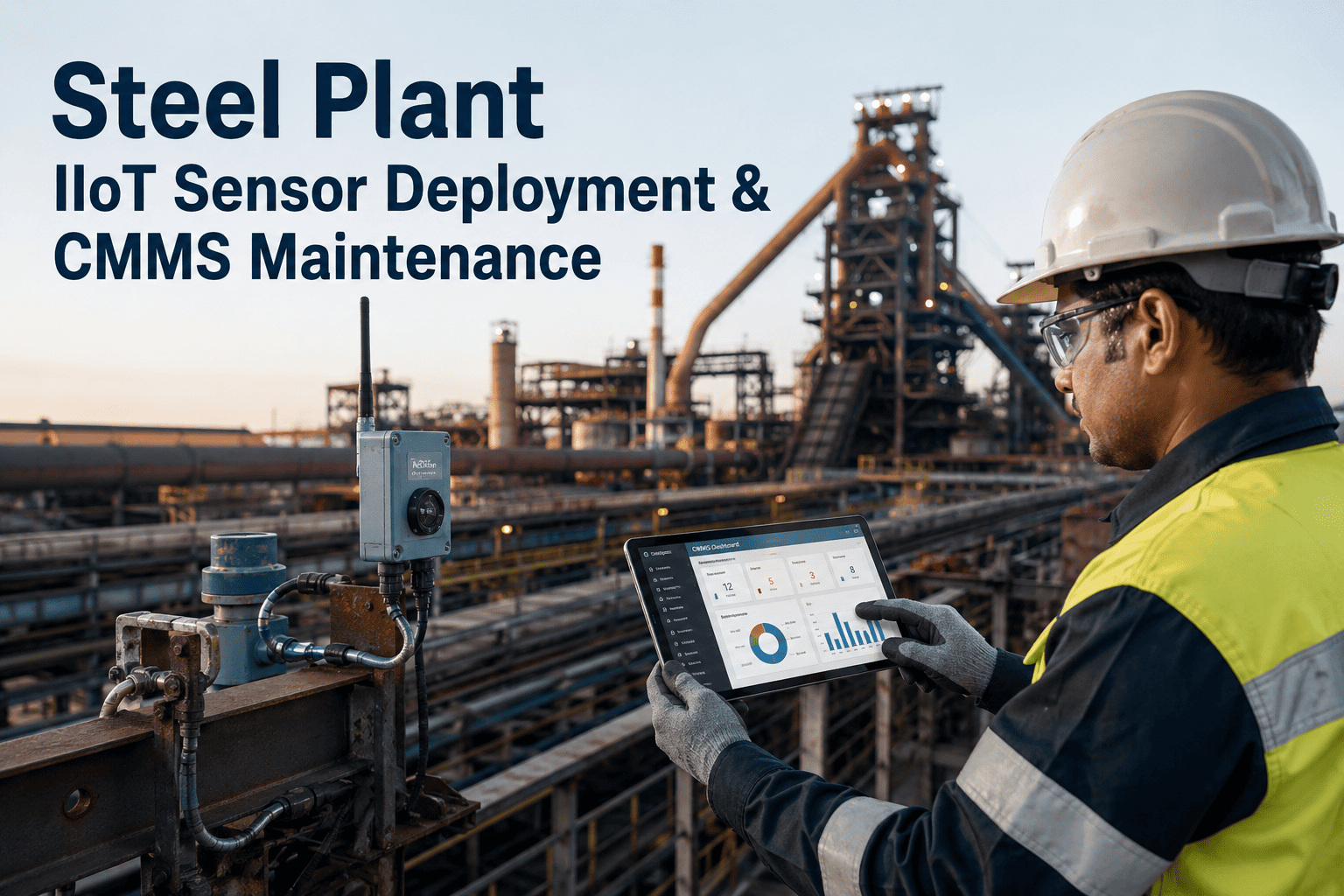
Read More
A 3.5 MTPA integrated mill spent eighteen months wiring up an IIoT rollout and ended up with vibration data in one screen, temperature trends in SCADA, and current readings nobody ever opened. The sensors...
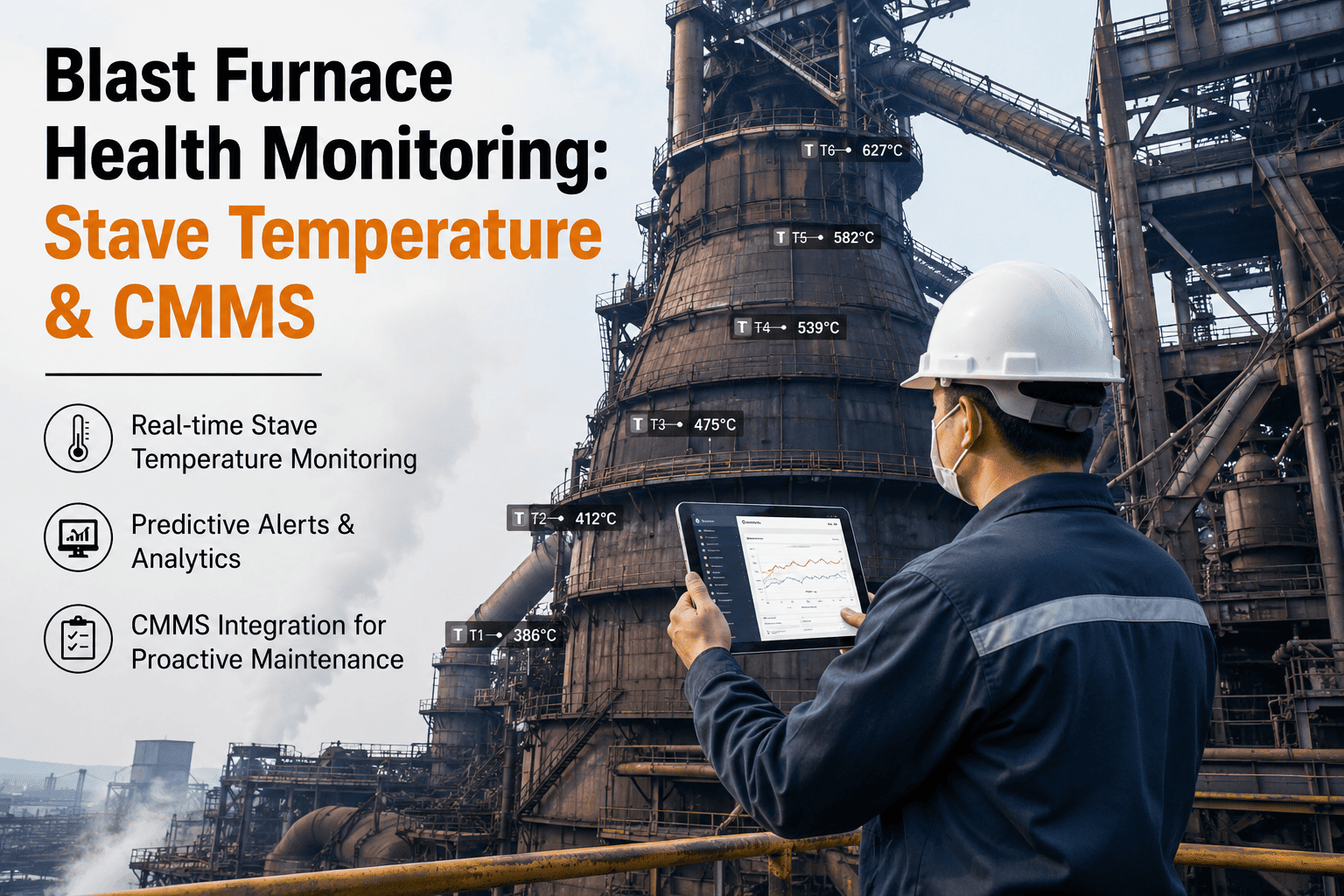
Read More
A steel mill running a mid-size blast furnace once went three full days without noticing anything wrong. A single cooling stave had developed a small water channel blockage, but daily rounds still showed outlet...
Read More
Lockout/Tagout ranked #4 on OSHA's Top 10 most cited standards in FY2025, with 2,177 citations recorded across general industry. Steel plants carry some of the highest LOTO risk of any sector — blast furnace hot...
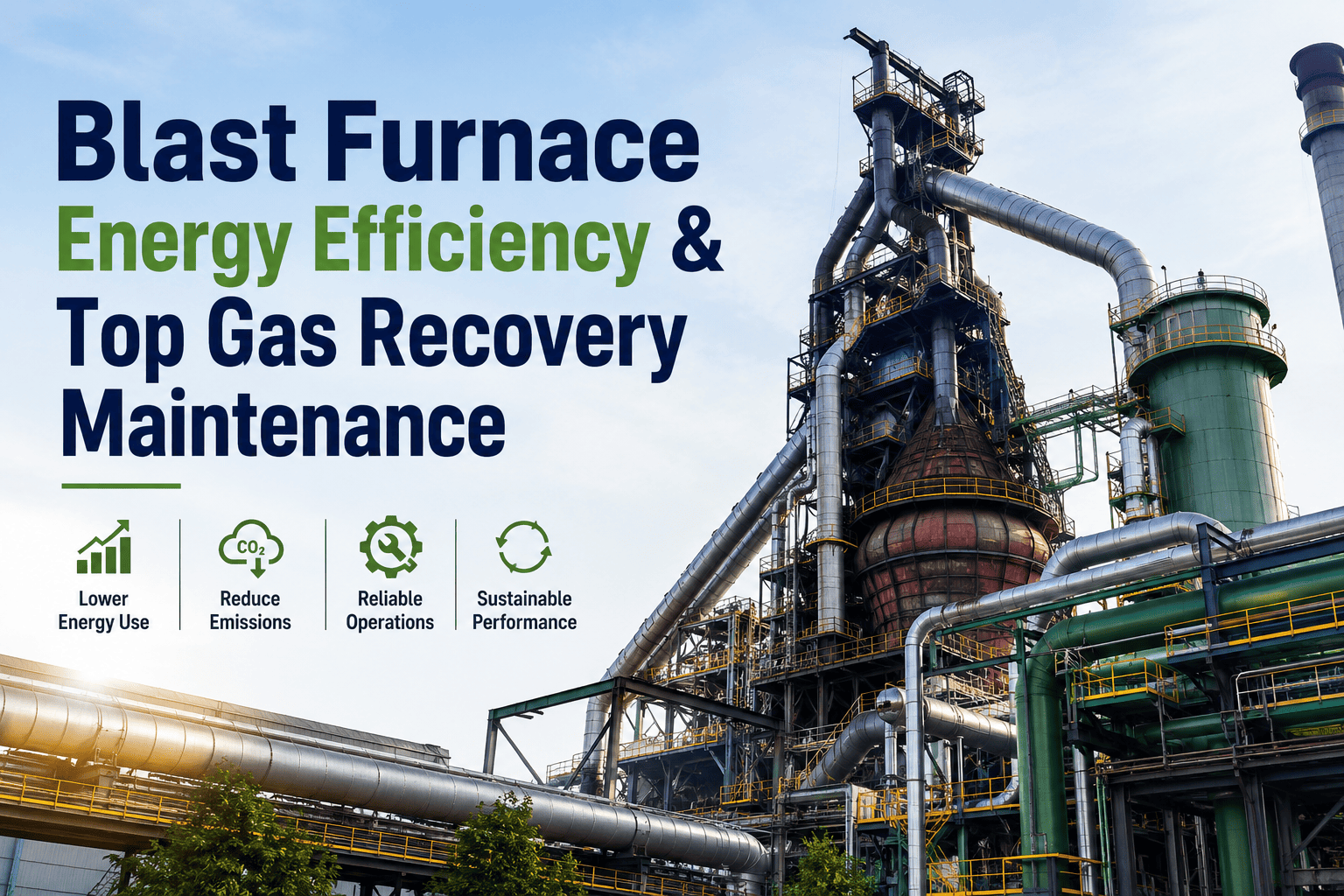
Read More
A blast furnace burns through roughly 11.6 GJ of fuel energy for every tonne of hot metal it produces, and the hot blast stoves alone account for 25–35% of that total input. Most of that energy is invisible on a...
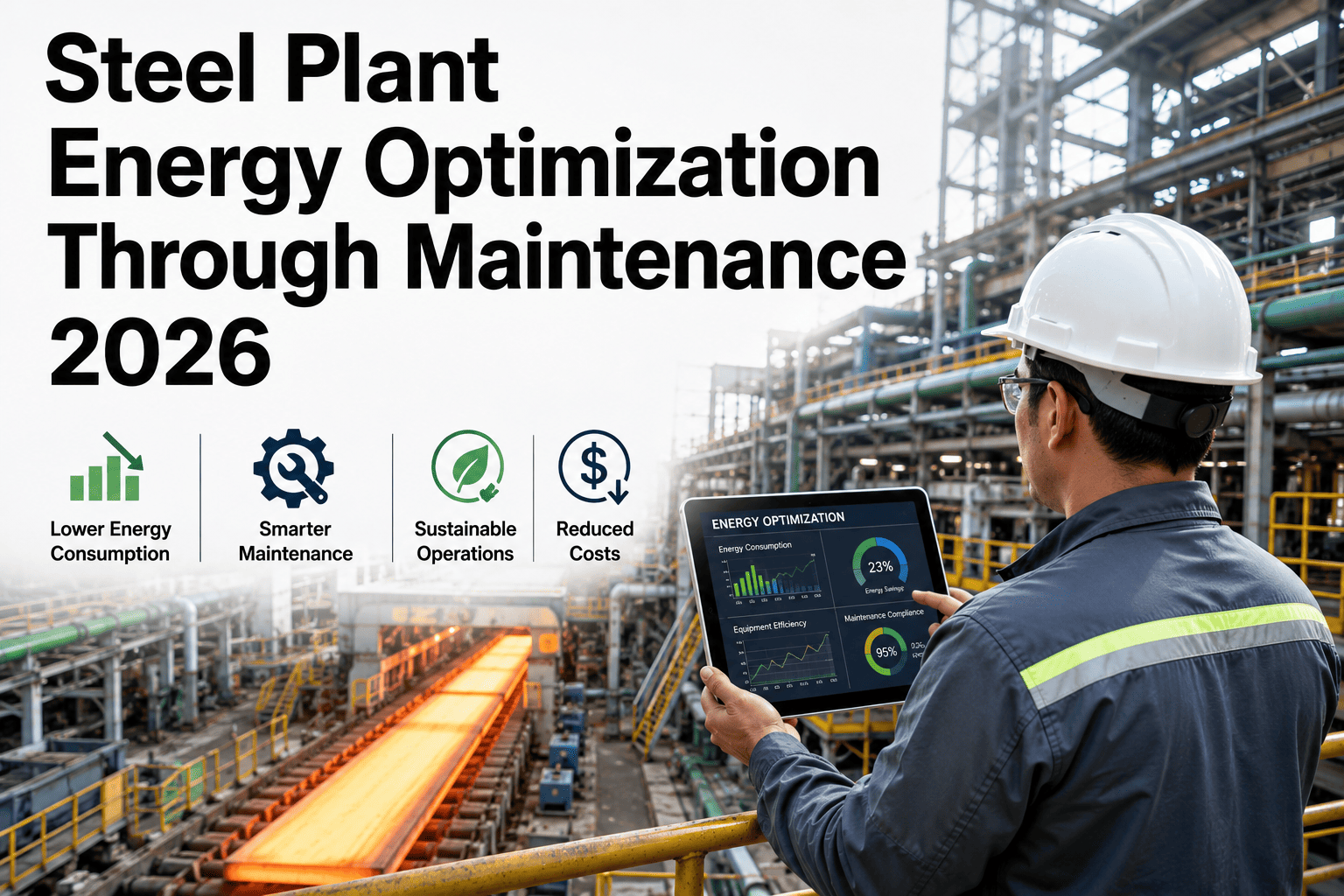
Read More
Energy is the largest controllable cost in steelmaking, often consuming 50-80% of a plant's total operating budget across blast furnaces, electric arc furnaces, reheat furnaces, and rolling mills. Yet most of that...
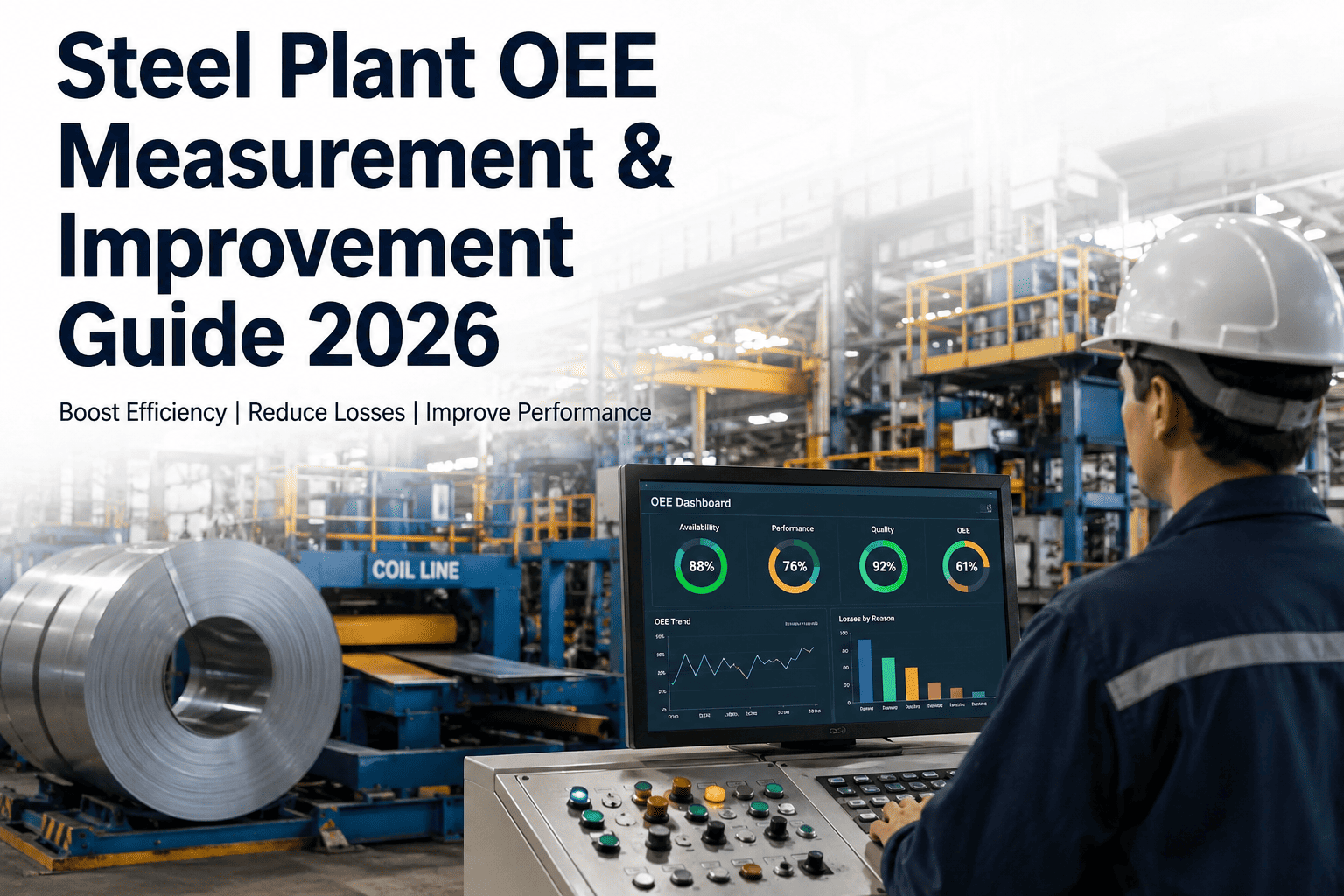
Read More
Steel plants don't lose production to one big breakdown — they bleed it away in small, invisible losses across blast furnaces, casters, and rolling mills that never show up on a shift report. Most integrated mills...
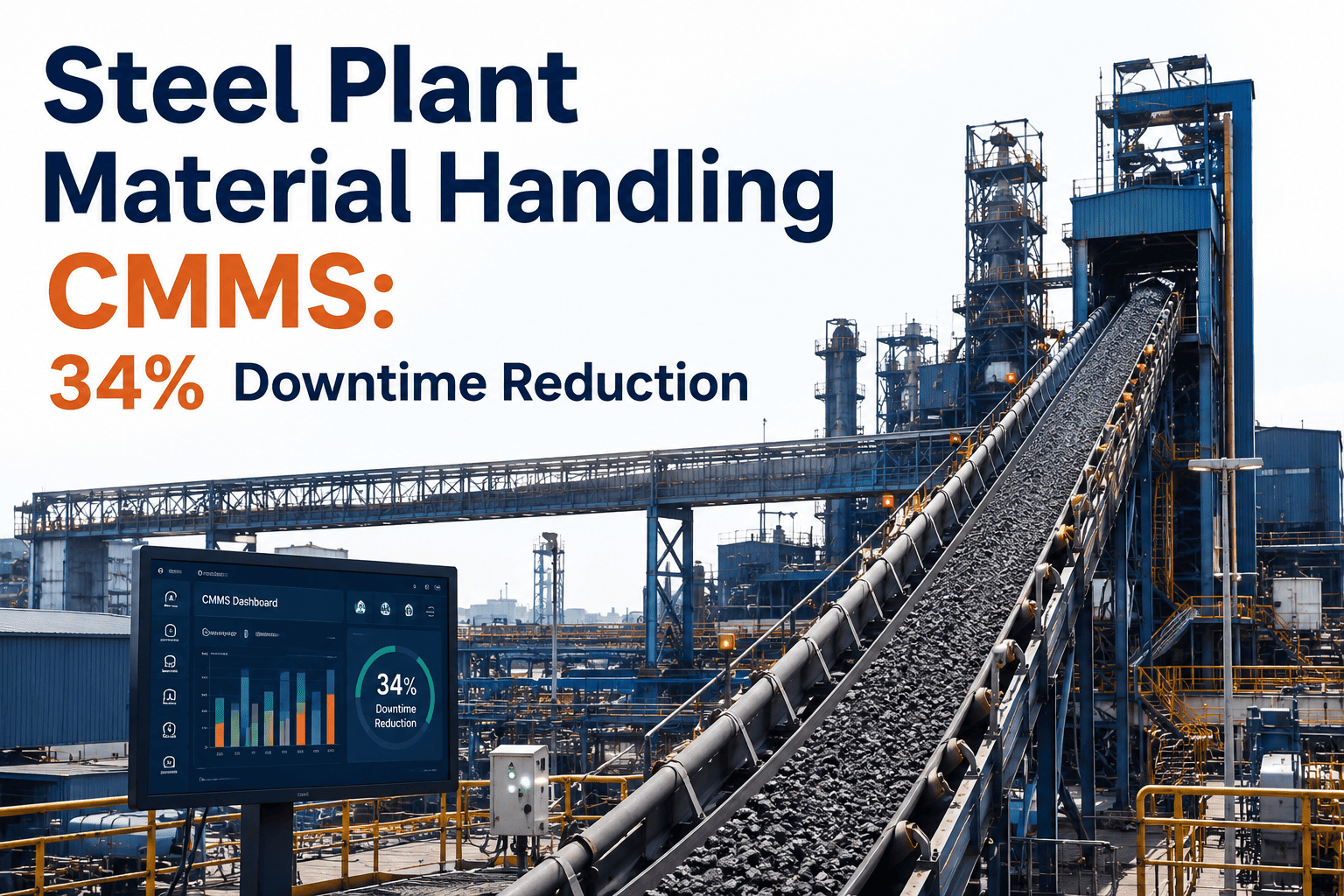
Read More
Material handling equipment causes up to 34% of unplanned downtime in a typical steel plant — more than any single process asset, including furnaces and rolling stands. Conveyors, overhead cranes, and ladle...
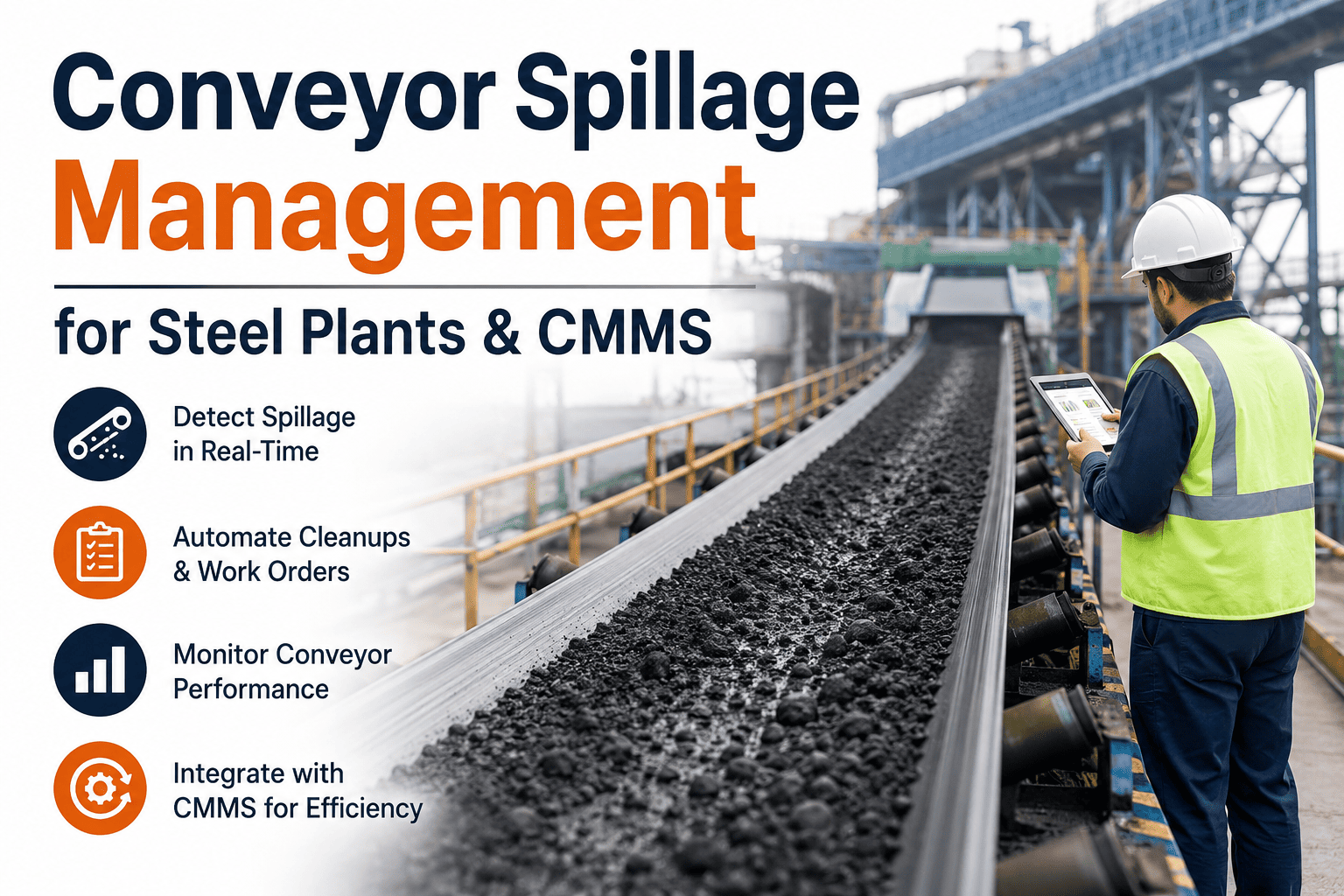
Read More
Conveyor spillage looks like a housekeeping problem until it starts eating into belt life, safety records, and unplanned downtime. In most steel plants, spilled ore, coke, and sinter fines collect fastest at...
Read More
A rolling mill maintenance manager once proudly reported 312 completed work orders in a month. It looked like a productive team, until an insurance audit asked a different question — how many of those orders were...
Read More
A ladle turret bearing seized twice in the same quarter at an integrated plant, and both times the repair itself only took three hours. What actually cost the plant two full shifts each time was everything around...
Read More
A blast furnace in Chhattisgarh sat idle for eleven hours because a single tuyere cooling element was not on the shelf. The part cost less than a lakh. The production loss did not. Steel plants run thousands of...
Read More
A hot strip mill in Odisha lost an entire night shift to a single coiler jam. The strip head failed to grip the mandrel, the tail whipped back into the pinch rolls, and the resulting cobble took four hours to clear...
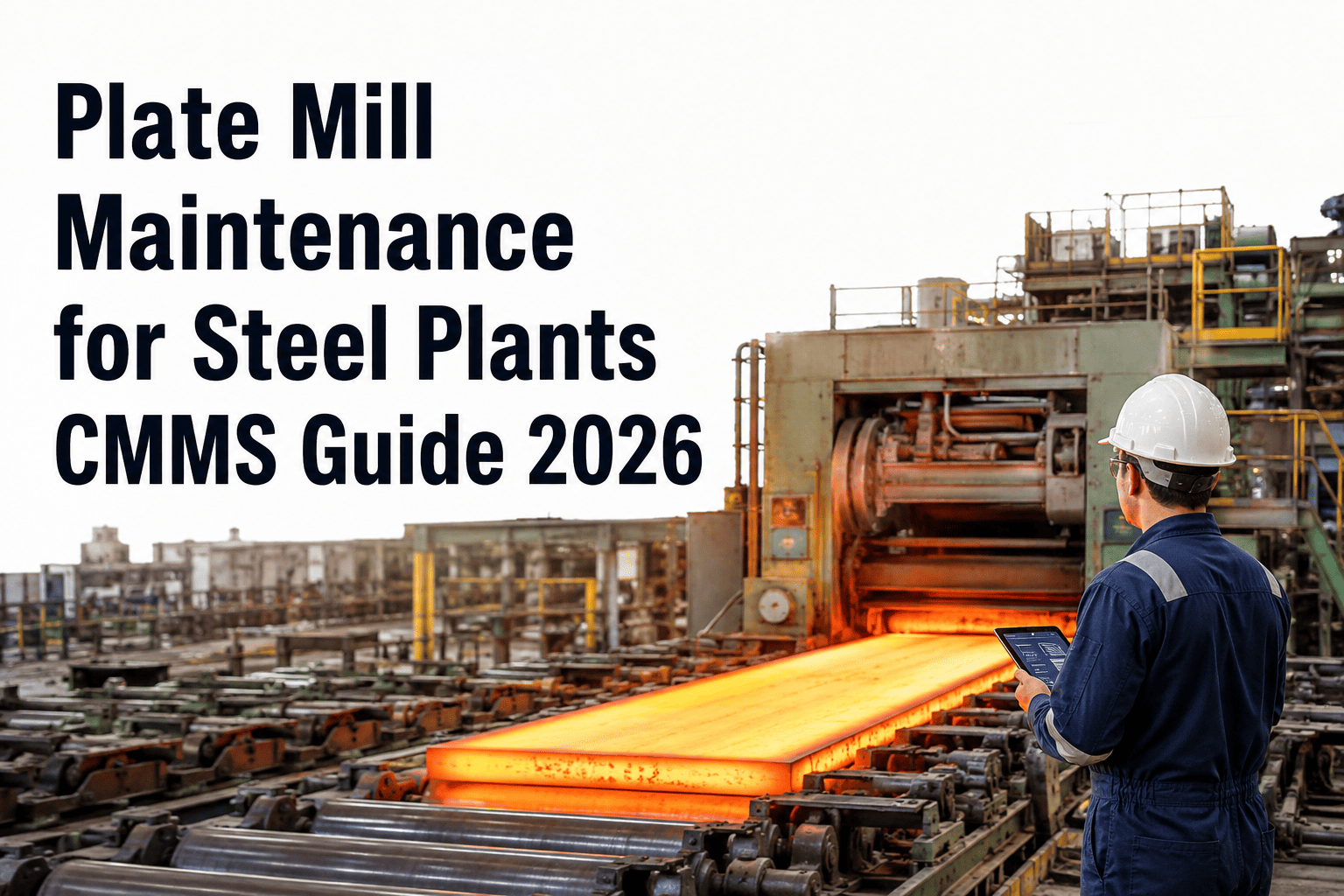
Read More
A heavy plate mill in eastern India was rejecting 340 tonnes of plate every month for flatness alone, and nobody could say why. Rolling parameters were checked and rechecked, operators were retrained, and the...
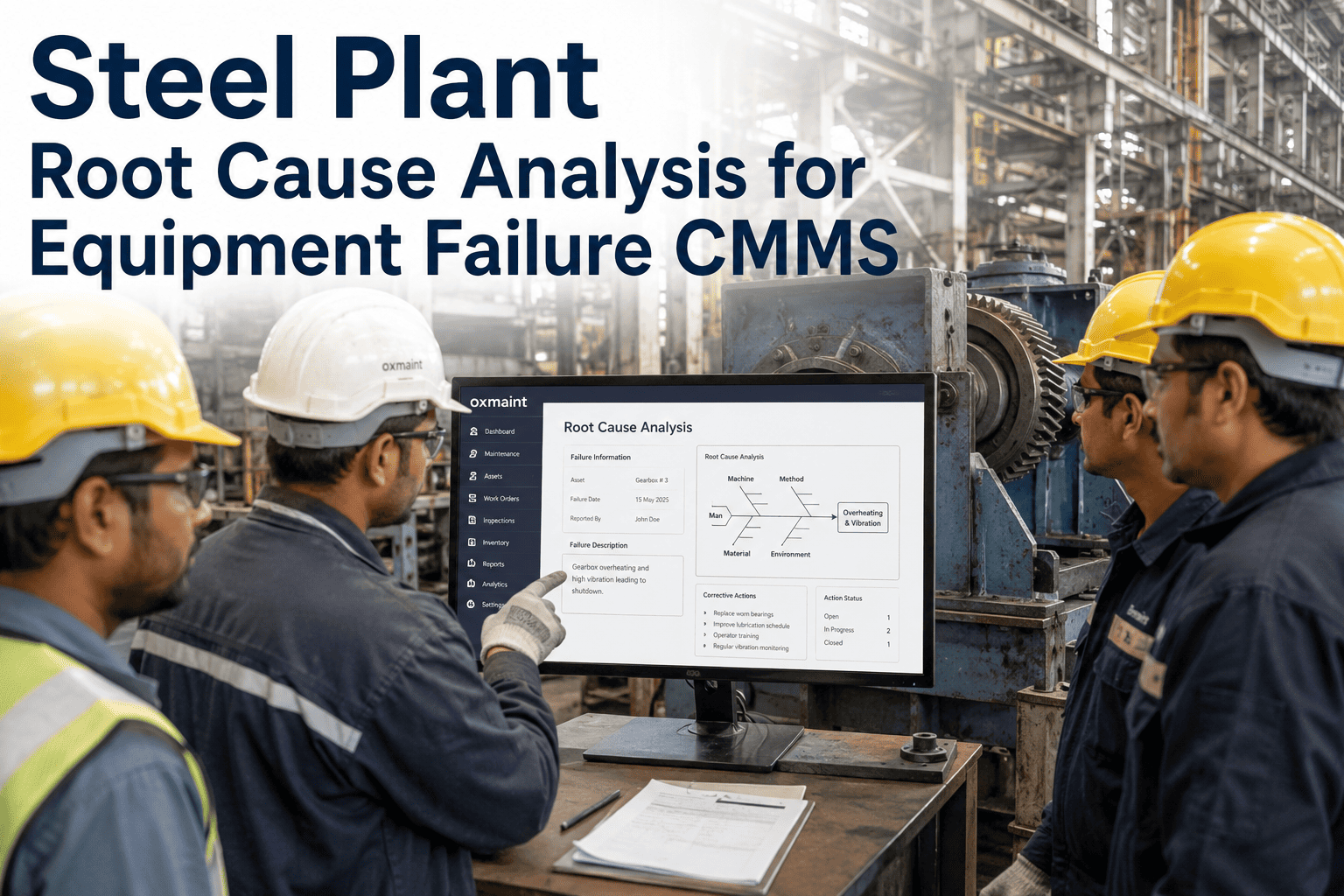
Read More
Steel plant root cause analysis for equipment failure is the disciplined process of identifying the underlying reason a critical asset — a blast furnace, rolling mill, or continuous caster — broke down, so that the...
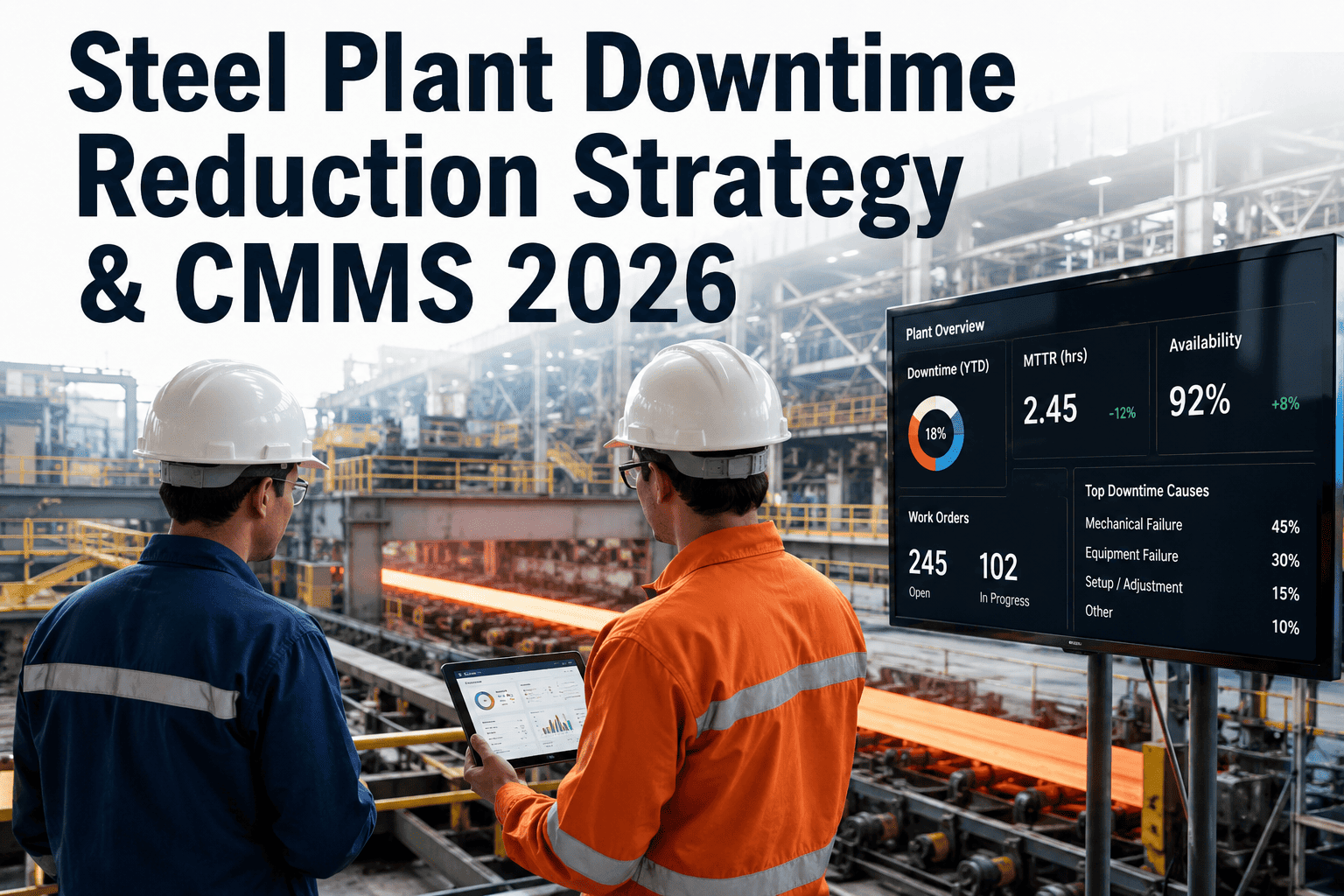
Read More
Steel plant downtime costs integrated mills anywhere from $200K to over $500K per hour on major process lines, making steel plant downtime reduction the single highest-leverage reliability initiative for 2026. When...
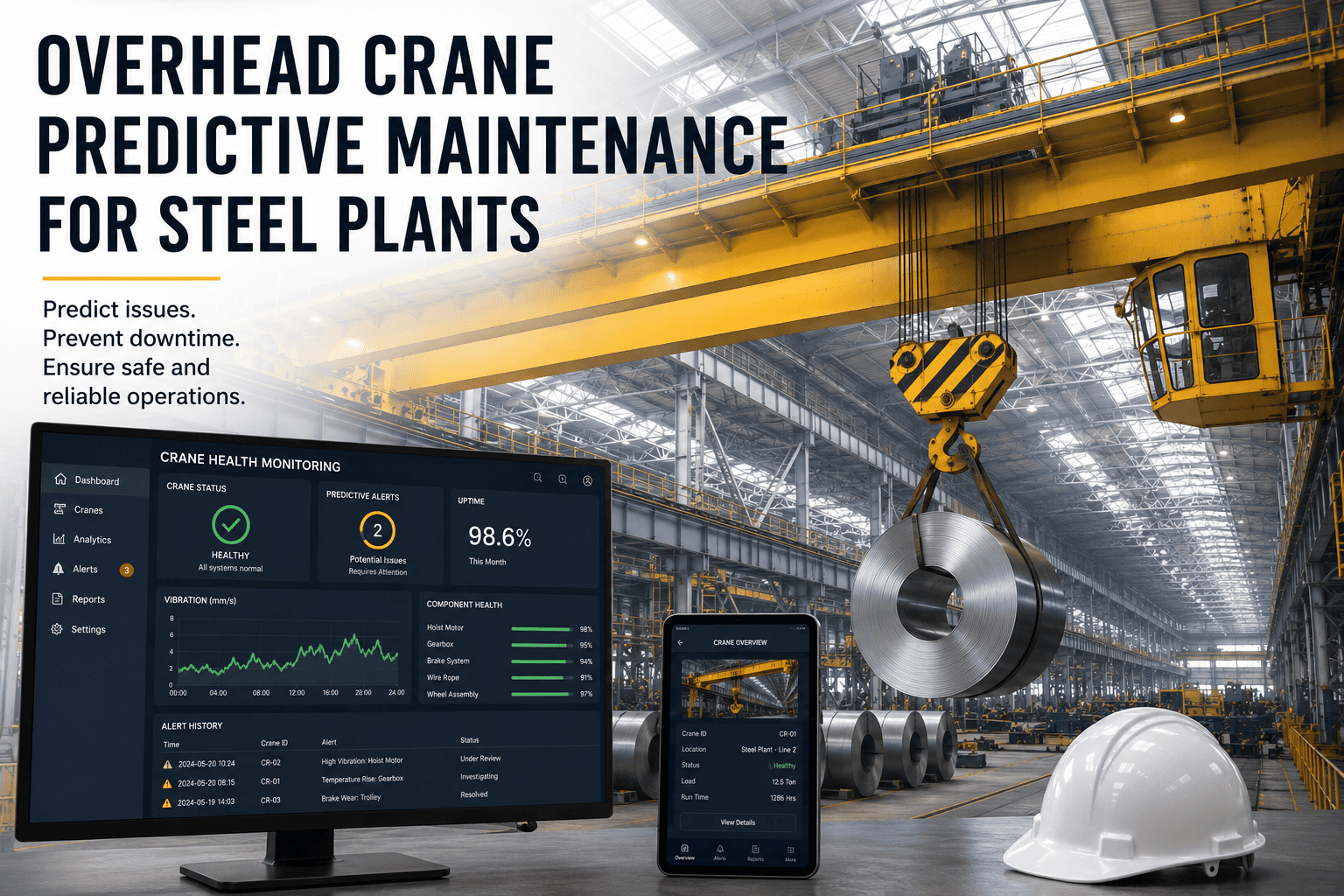
Read More
Overhead crane predictive maintenance in steel plants uses vibration analysis, wire rope condition monitoring, brake performance trending, and gearbox oil analysis to detect failures before they cause unplanned...
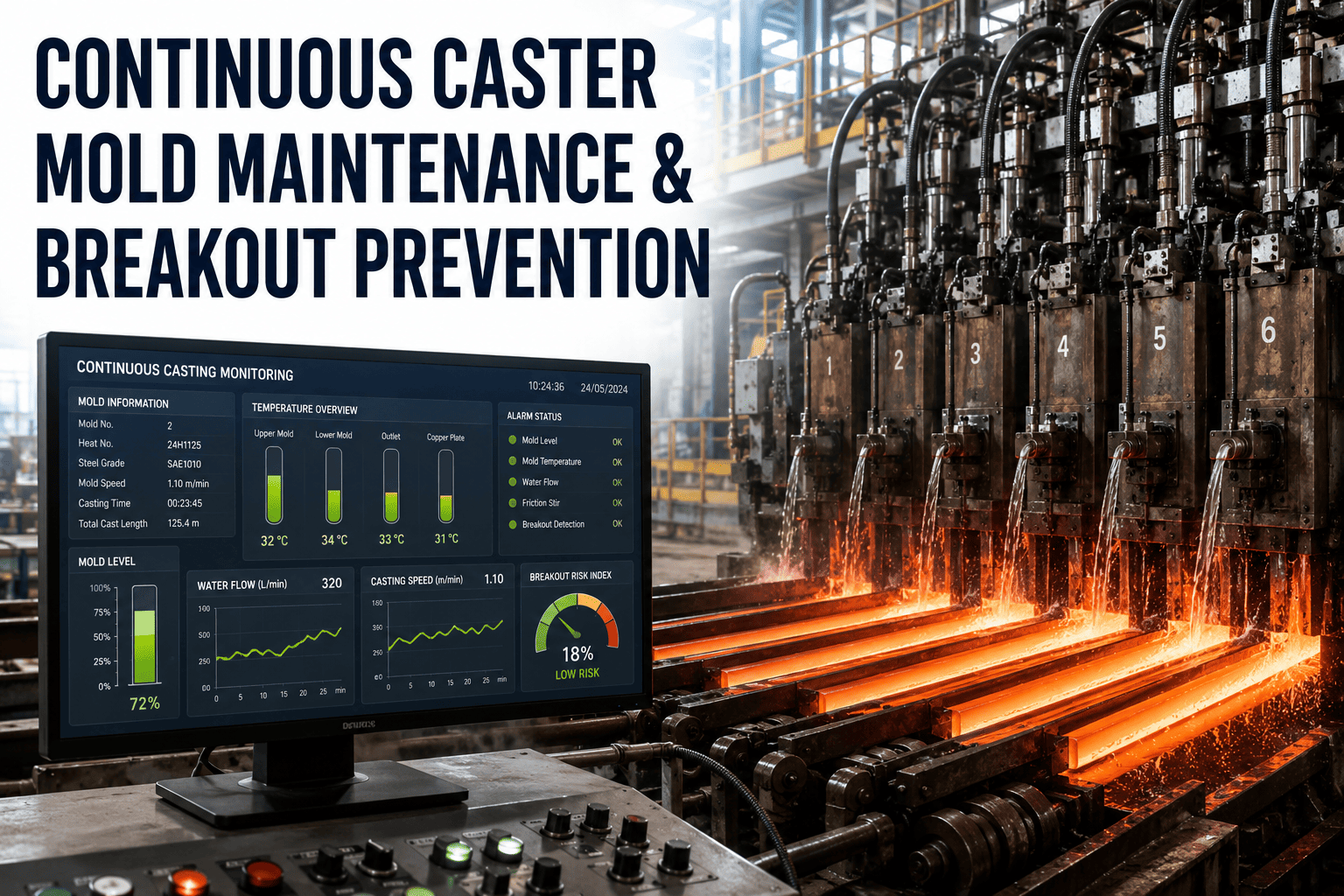
Read More
Continuous caster mold maintenance is the single highest-leverage discipline in a steel plant — a well-maintained mold prevents breakouts, preserves surface quality, and sustains cast rate across thousands of...
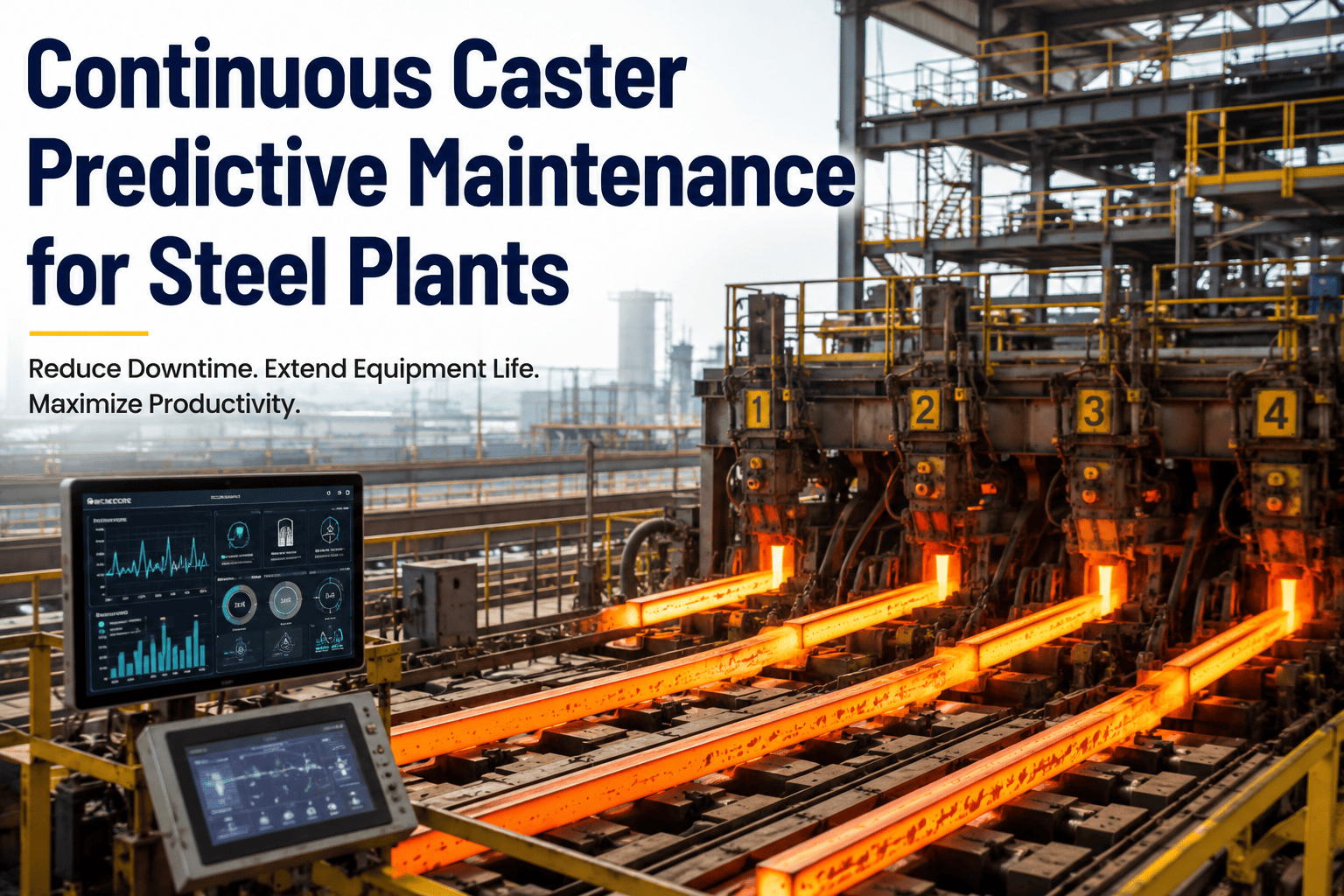
Read More
Continuous caster predictive maintenance is the difference between a stable cast sequence and a six-figure breakout event that halts steel production for hours. Most caster breakouts, cobbles, and segment failures...
Read More
Steel plant predictive maintenance has evolved from manual vibration routes into full AI-driven programs that integrated mills now rely on to cut unplanned downtime by 30 to 50 percent. This 2026 complete guide...
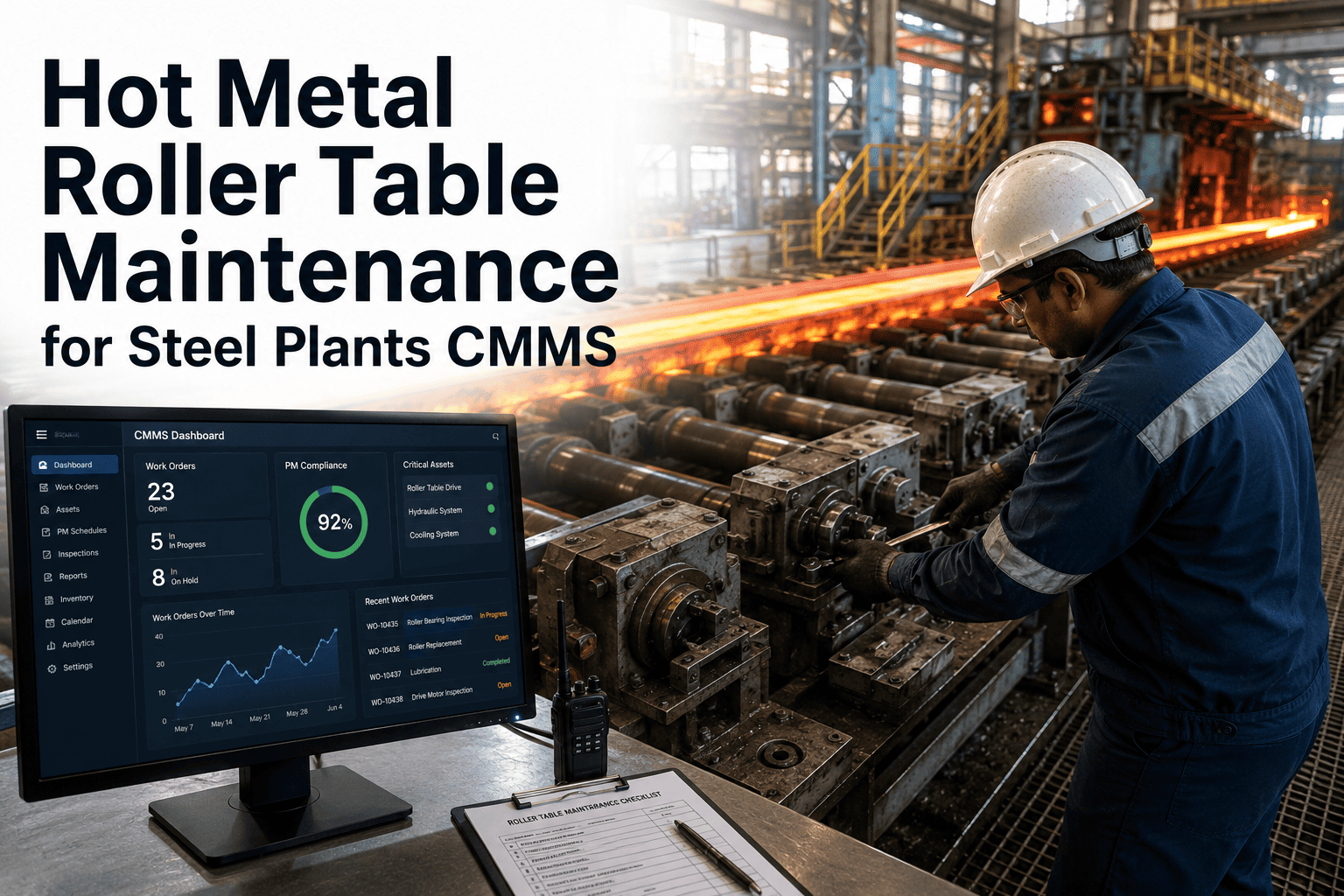
Read More
Hot metal roller table maintenance in steel plants demands a disciplined blend of bearing lubrication under extreme thermal load, drive motor preventive care, and cooling water nozzle inspection—because a single...
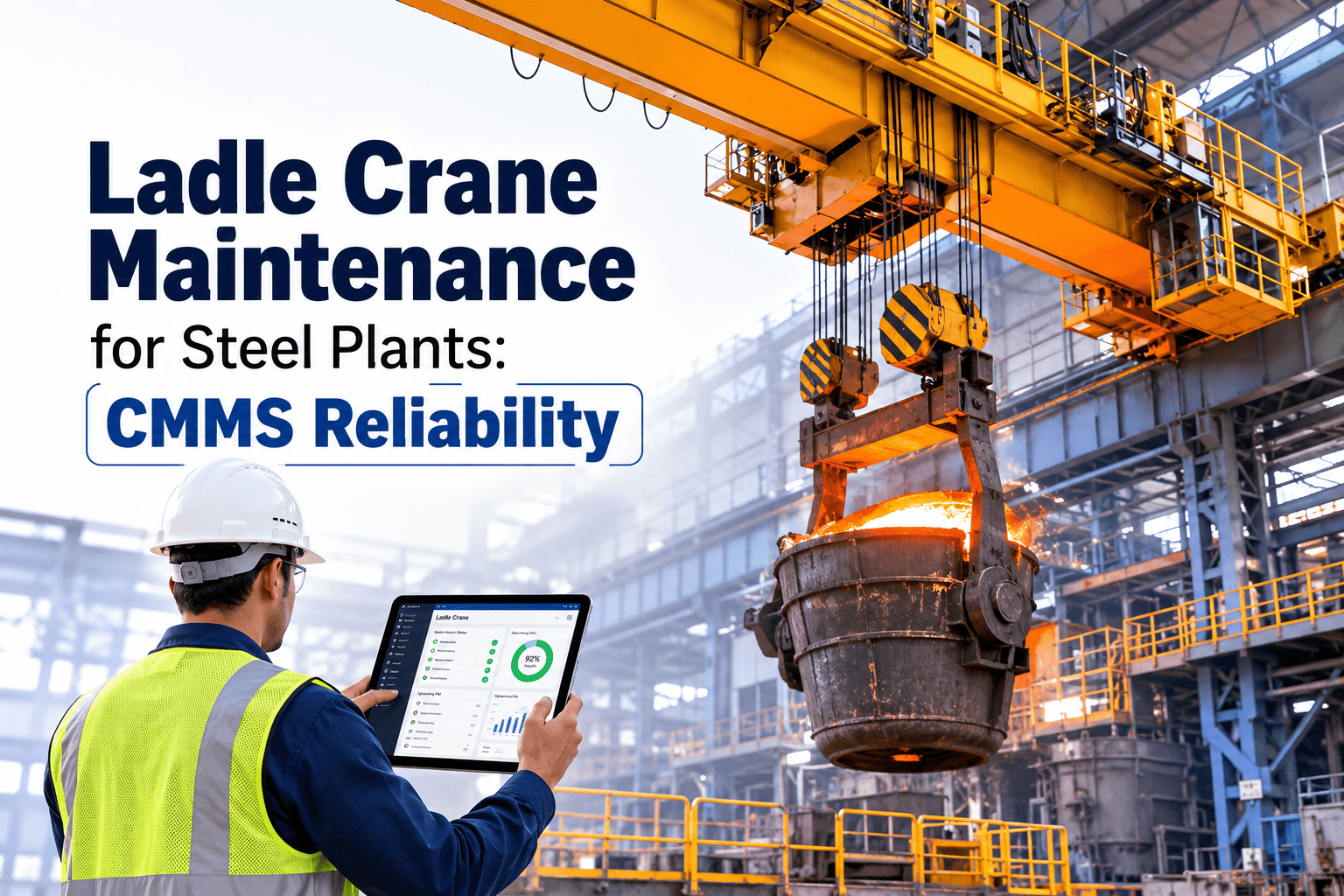
Read More
Ladle crane maintenance is the most safety-critical asset care program inside any integrated steel plant, because a single hoist, brake or wire-rope failure during a molten-metal lift can trigger catastrophic...
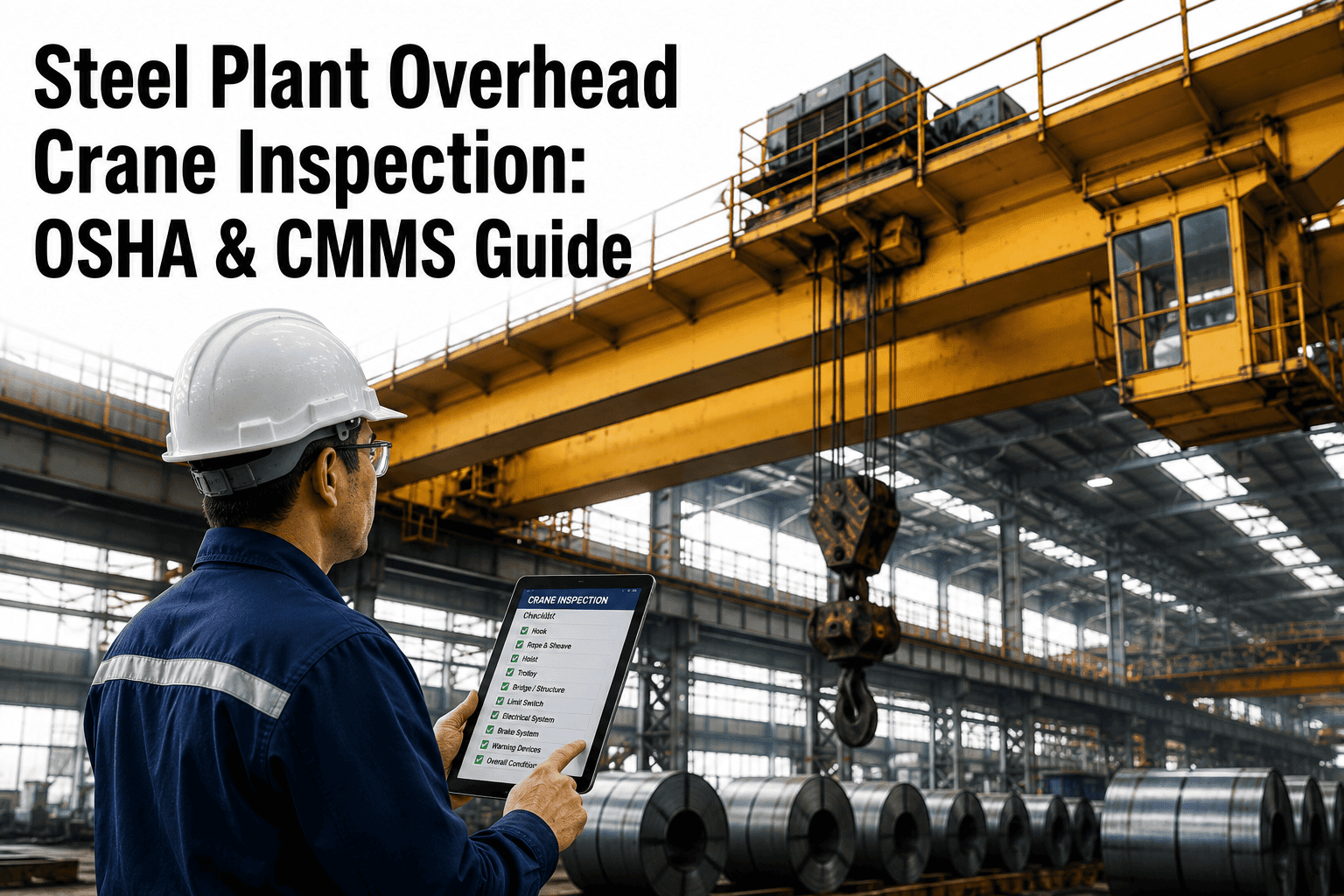
Read More
Steel plant overhead crane inspection is one of the highest-stakes maintenance activities in heavy industry, combining massive loads, molten metal risk, and strict OSHA crane inspection requirements. A single...
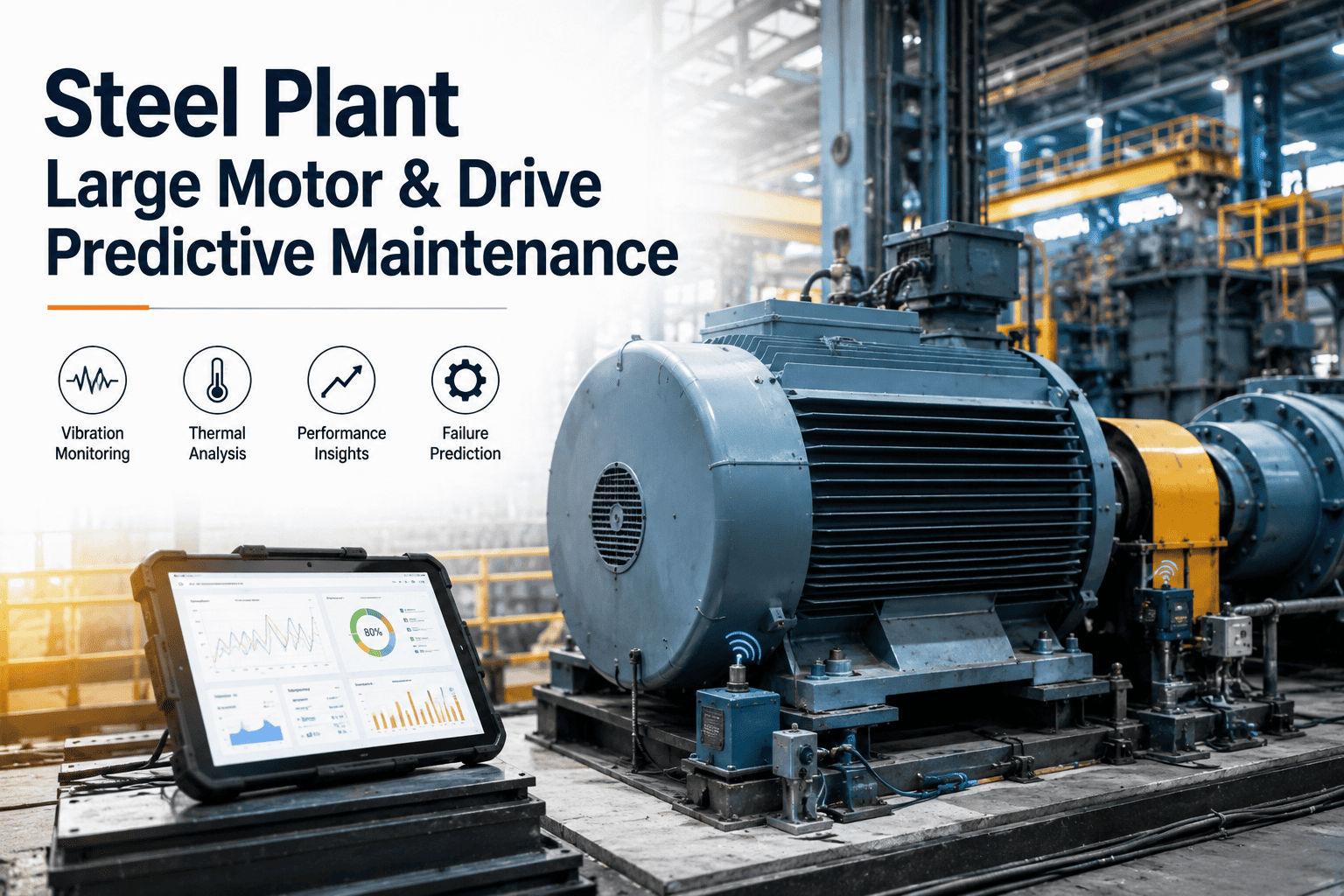
Read More
Large motors and drives — rolling mill main drives, blower motors, ID fans, and ladle turret motors — are the highest-consequence electrical assets in any steel plant, and disciplined steel plant motor predictive...
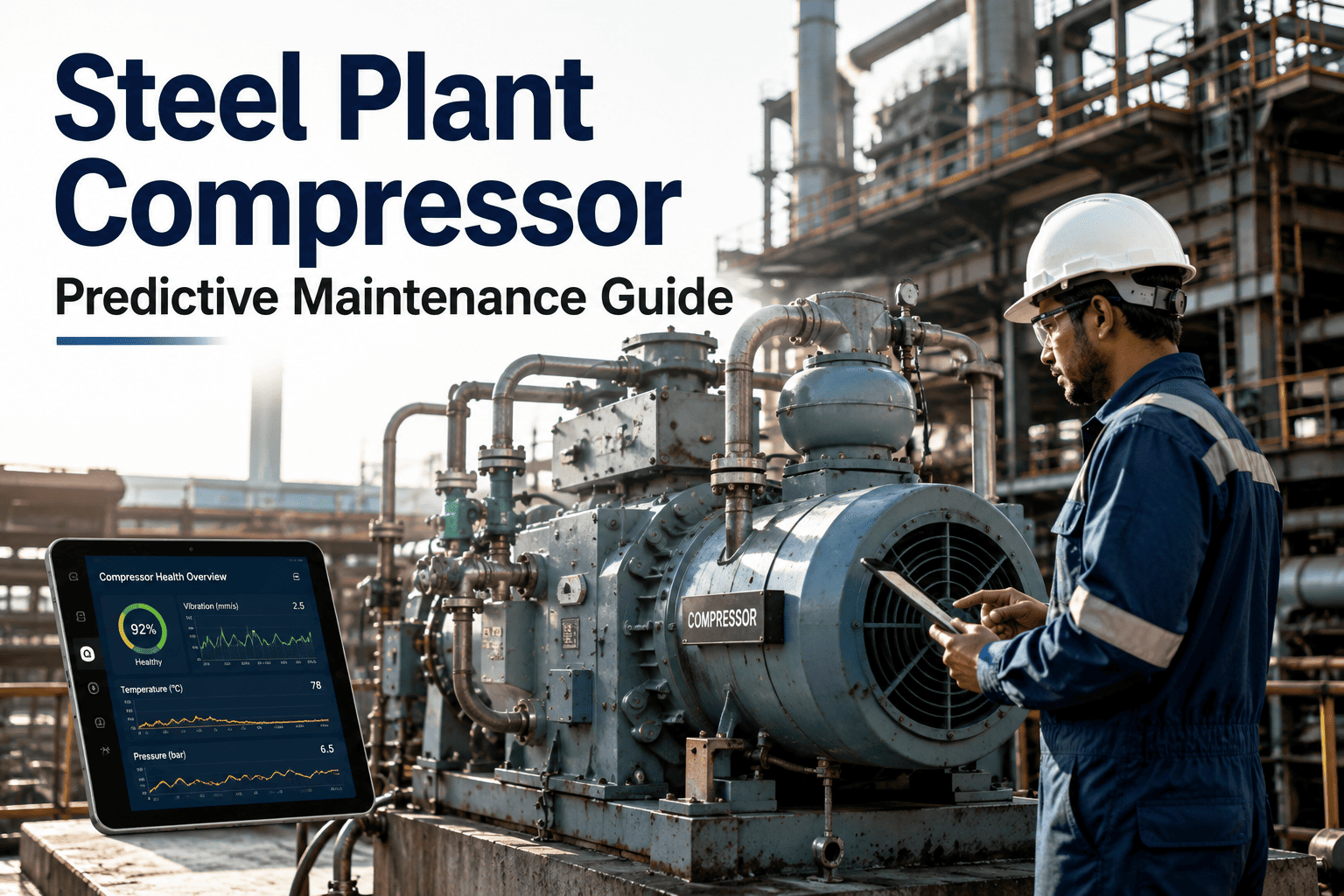
Read More
Steel plant compressor maintenance is the linchpin of uninterrupted ironmaking and steelmaking — a single blast furnace blower trip can idle a 10,000-ton-per-day operation and erase $1M+ in revenue over a shift....
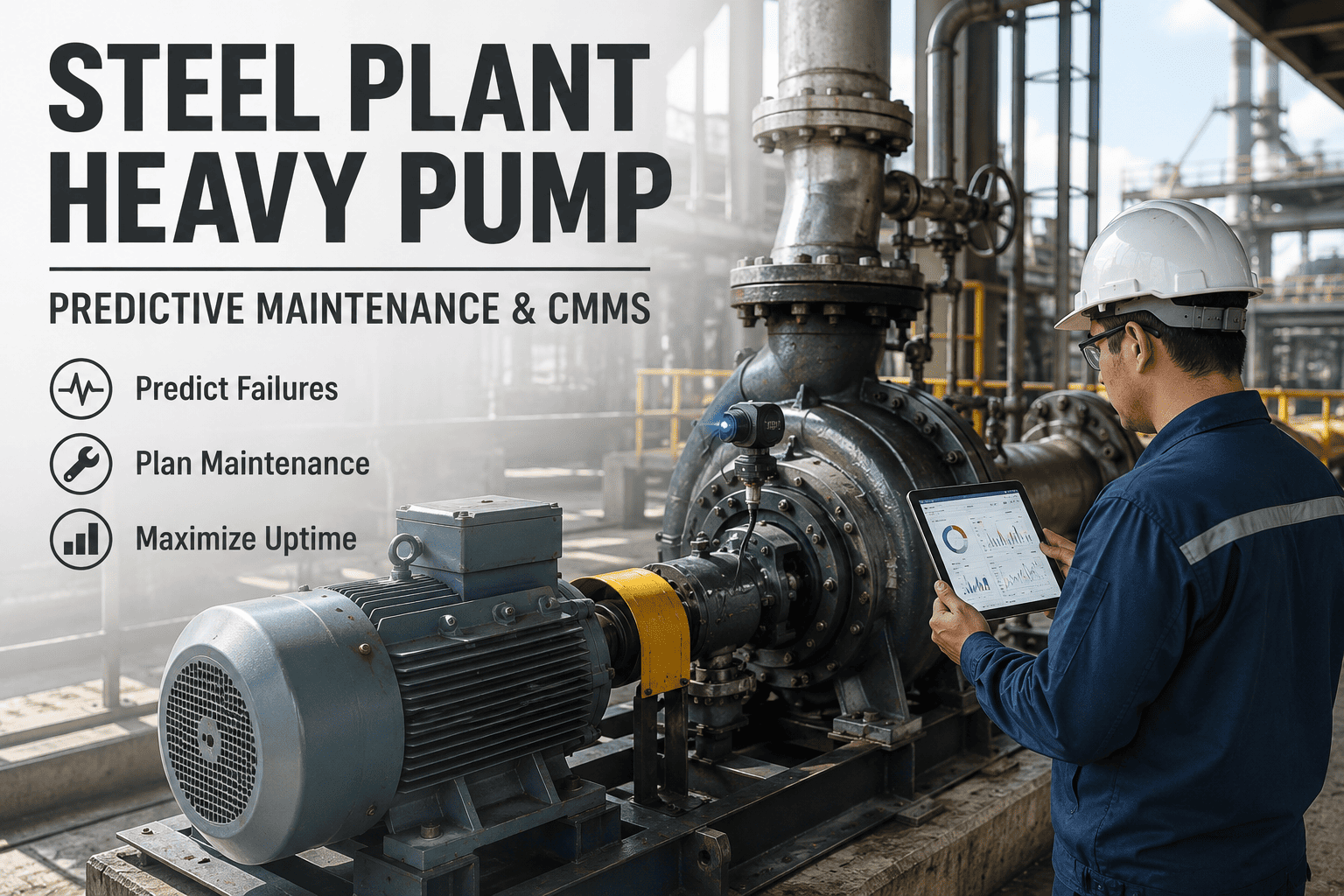
Read More
Steel plant heavy pump predictive maintenance is the difference between a reliable continuous-casting operation and a multi-million-dollar unplanned outage. In integrated steel mills, heavy-duty process...
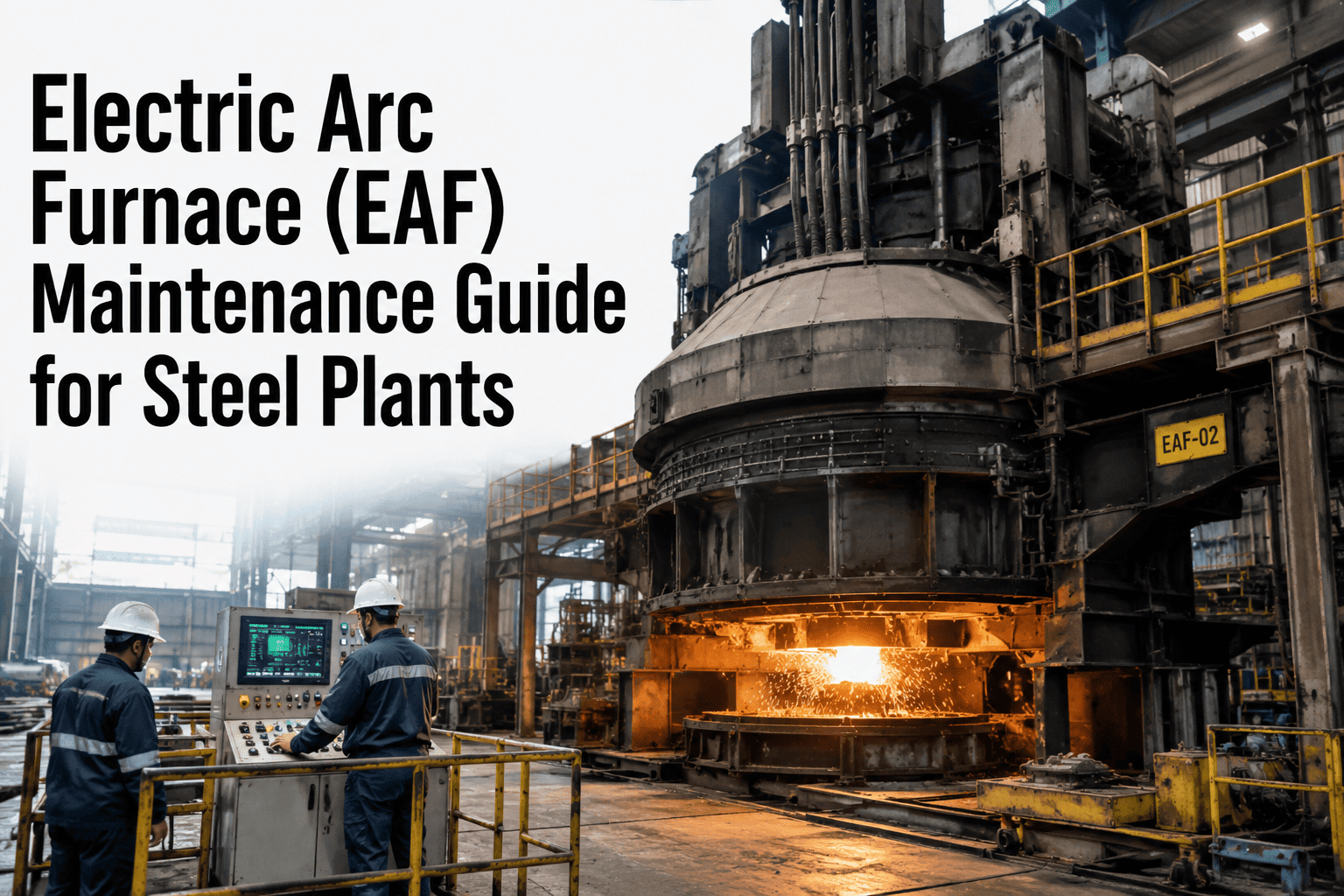
Read More
Electric arc furnace availability is the single largest determinant of mini-mill throughput — a 100-ton EAF idled for eight hours of unplanned refractory or electrode work typically forfeits 800–1,200 tons of...
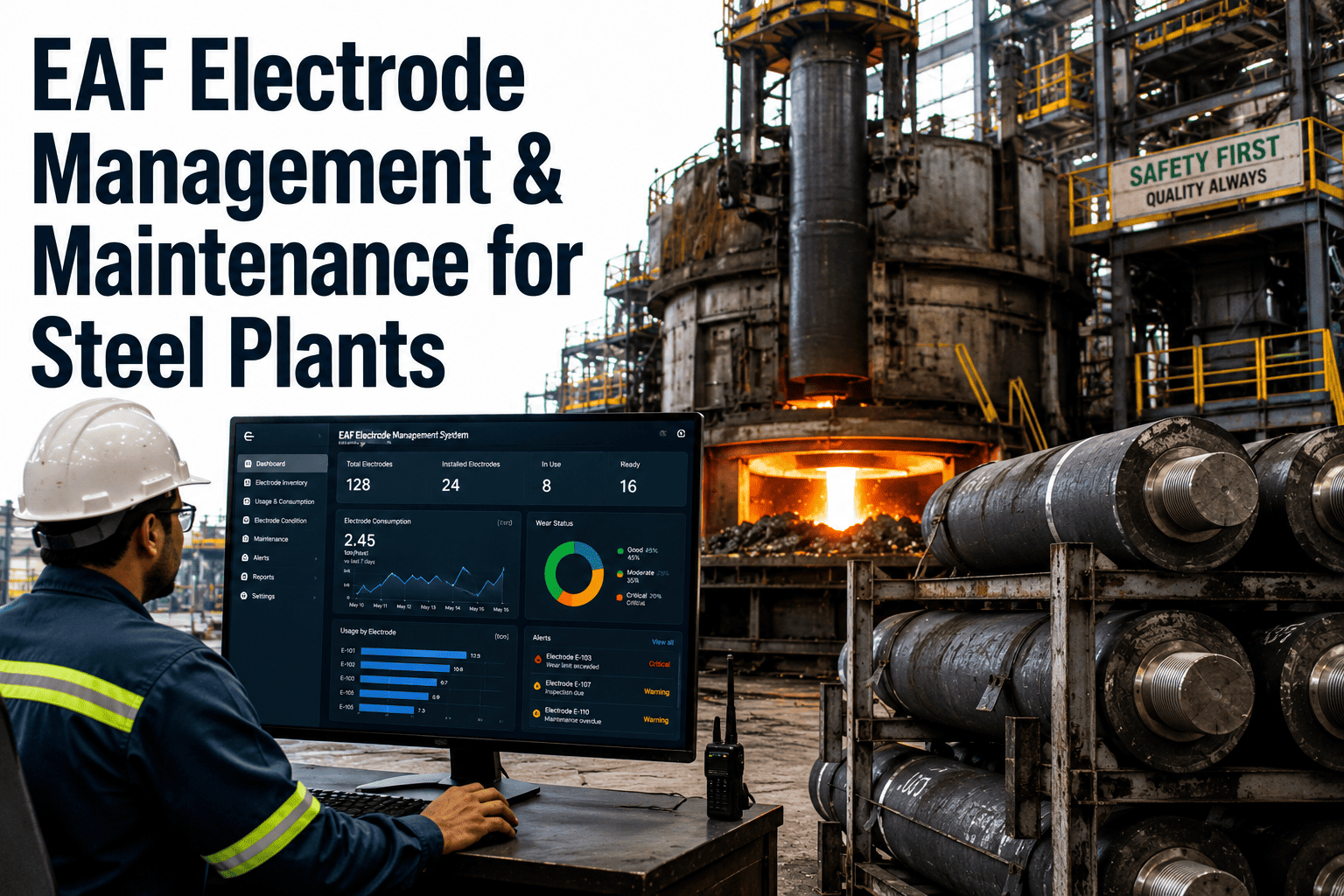
Read More
Electrode consumption can account for 3–5% of liquid steel cost in a mini-mill, making graphite the single largest refractory-adjacent variable after energy and alloys. A well-run electrode management programme —...
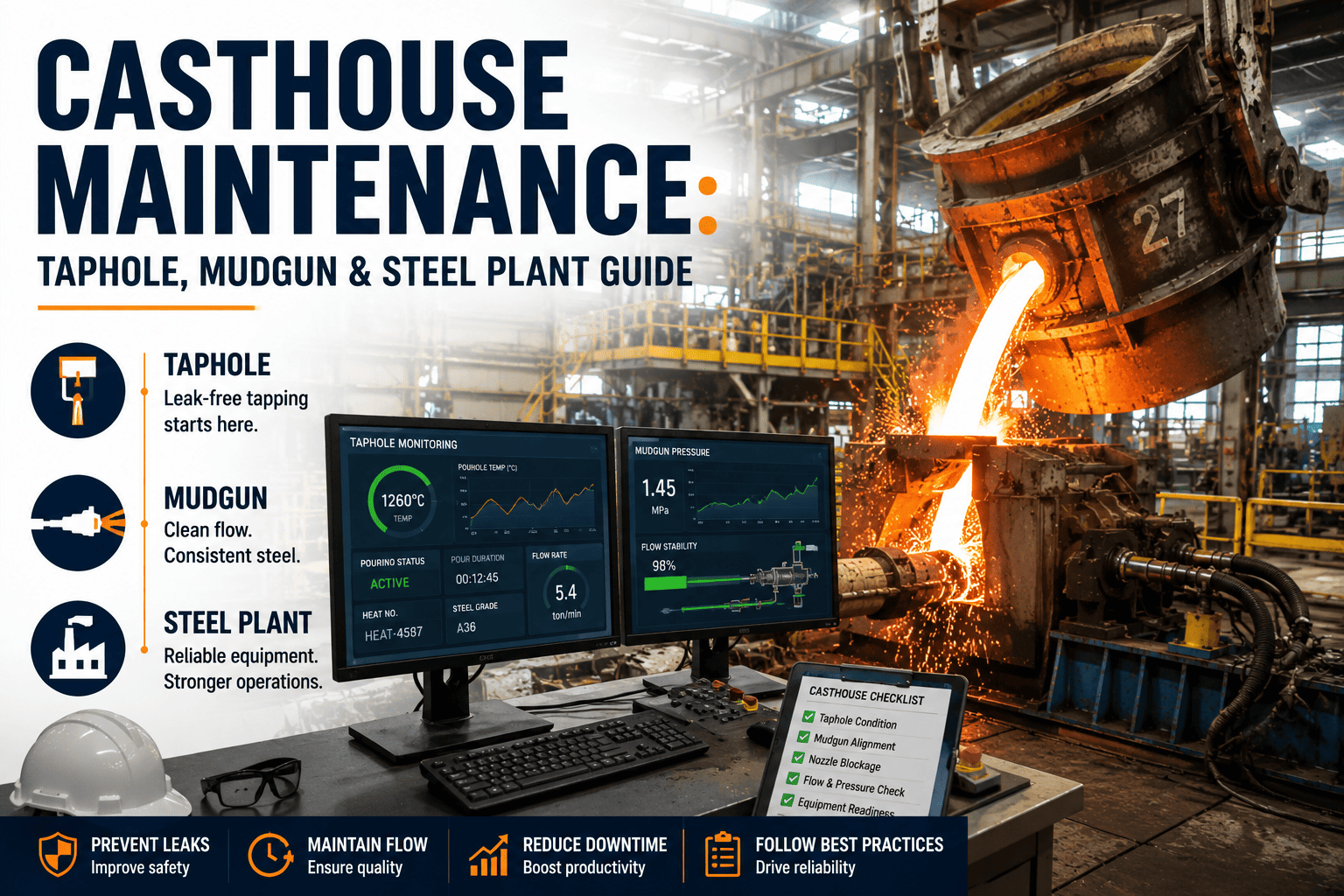
Read More
Casthouse operations sit at the convergence of molten metal at 1,500°C, heavy mechanized equipment, and unforgiving production schedules — making maintenance one of the highest-leverage activities in an integrated...
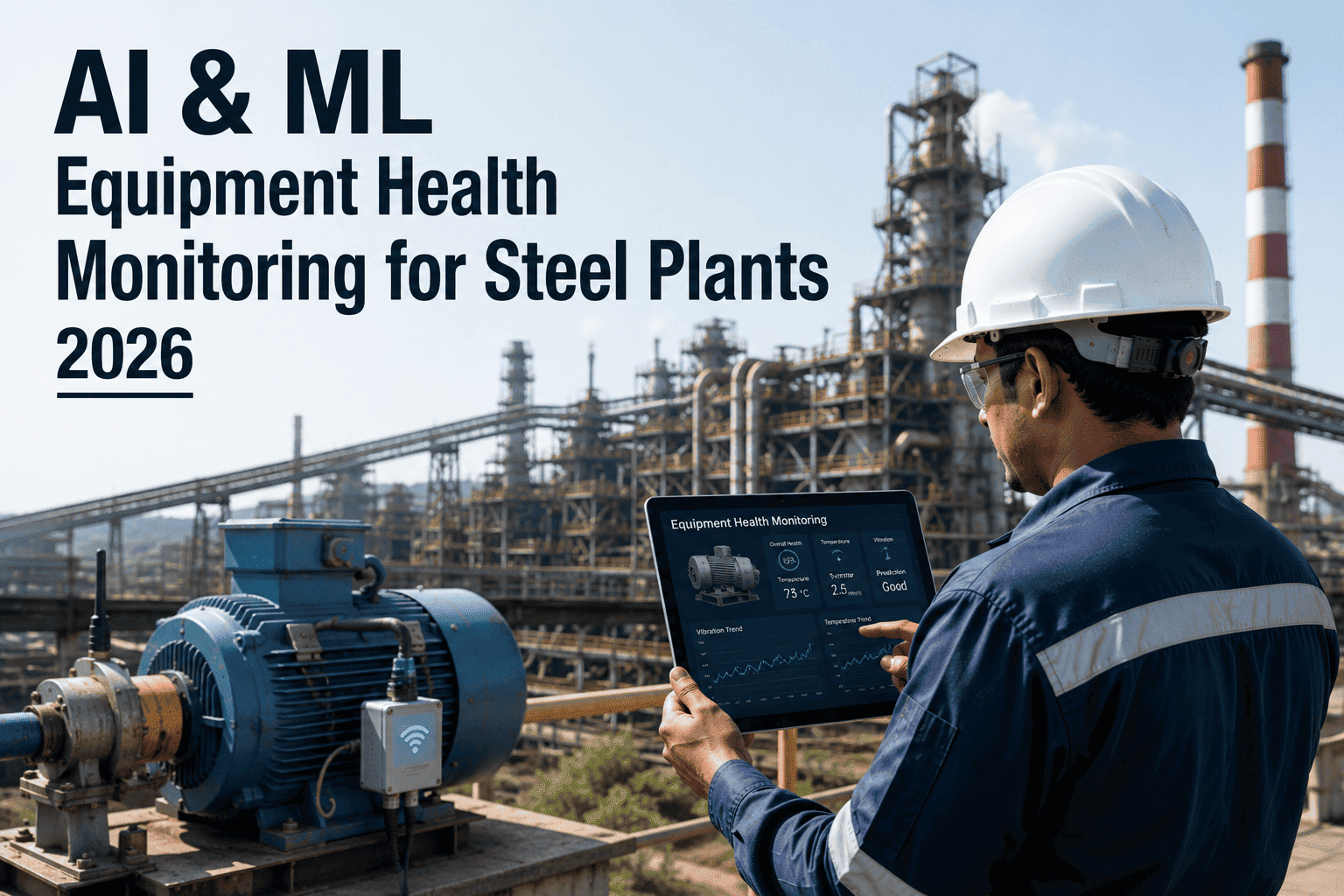
Read More
AI equipment health monitoring for steel plants has moved from pilot projects to production-grade deployments, with machine learning models now detecting anomalies in furnace temperature, pressure and rolling-mill...
Read More
Steel plant gas cleaning systems — including blast furnace gas cleaners, EAF baghouses, and wet scrubbers — are the environmental and operational backbone of any integrated steel facility, and keeping them running...
Read More
Steel plant water treatment and cooling system health directly determine refractory life, energy performance, and continuous-caster availability — yet most facilities still manage chemistry logs and cooling tower...
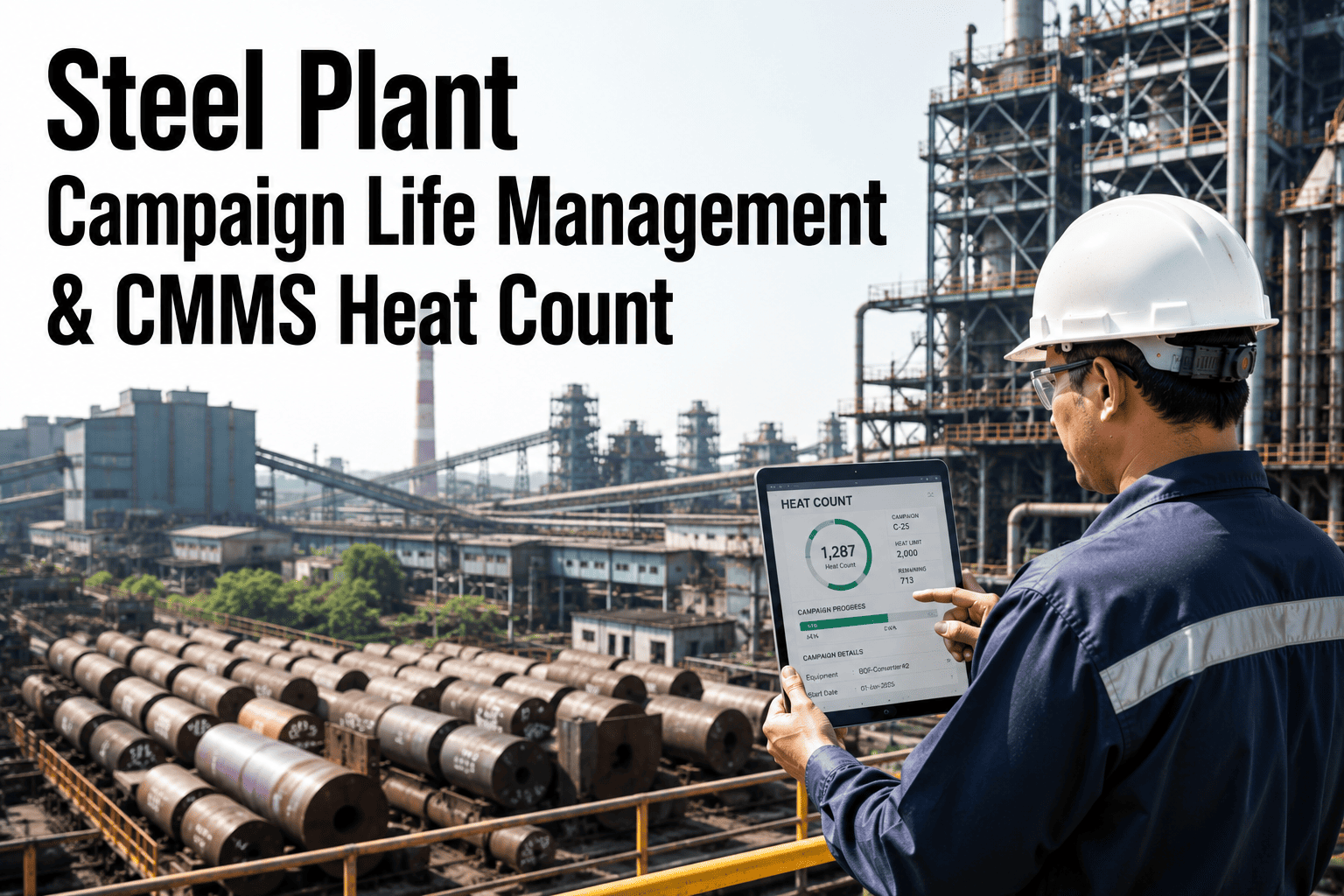
Read More
Steel plant campaign life management is the discipline of tracking every heat, tap, and cycle a refractory-lined vessel endures — from blast furnaces and basic oxygen furnaces (BOF) to ladles and torpedo cars — so...
Read More
Reliability engineering for steel plants is the discipline of applying structured methods — Reliability-Centered Maintenance (RCM), Failure Modes and Effects Analysis (FMEA), and criticality analysis — to keep...
Read More
Conveyor belt predictive maintenance in steel plants leverages IIoT sensors and CMMS analytics to detect failures weeks before they cause unplanned downtime. In a steel mill handling 10,000+ tons of raw material...
Read More
Raw material conveyor maintenance for steel plants and sinter operations is the backbone of uninterrupted blast furnace productivity — when an ore conveyor belt stops, the entire steelmaking value chain grinds to a...
Read More
Steel plant conveyor maintenance is the backbone of continuous production — when a single belt stops, the entire material flow from raw ore to finished coil grinds to a halt. Effective steel plant conveyor...
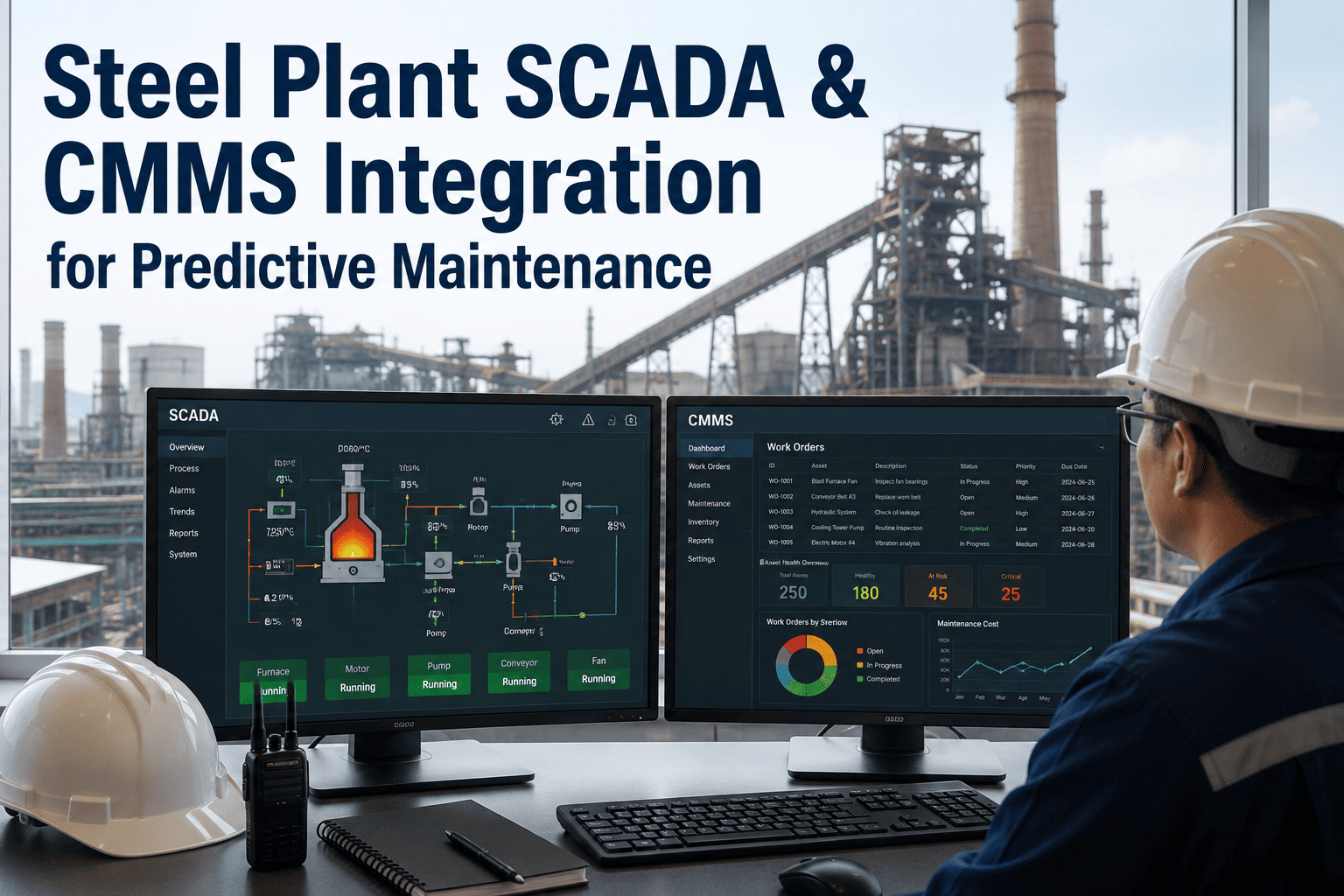
Read More
Steel plant SCADA CMMS integration is the bridge that turns real-time process data into scheduled maintenance action — connecting OPC-UA tags, PI System historians and blast furnace alarms directly into your...
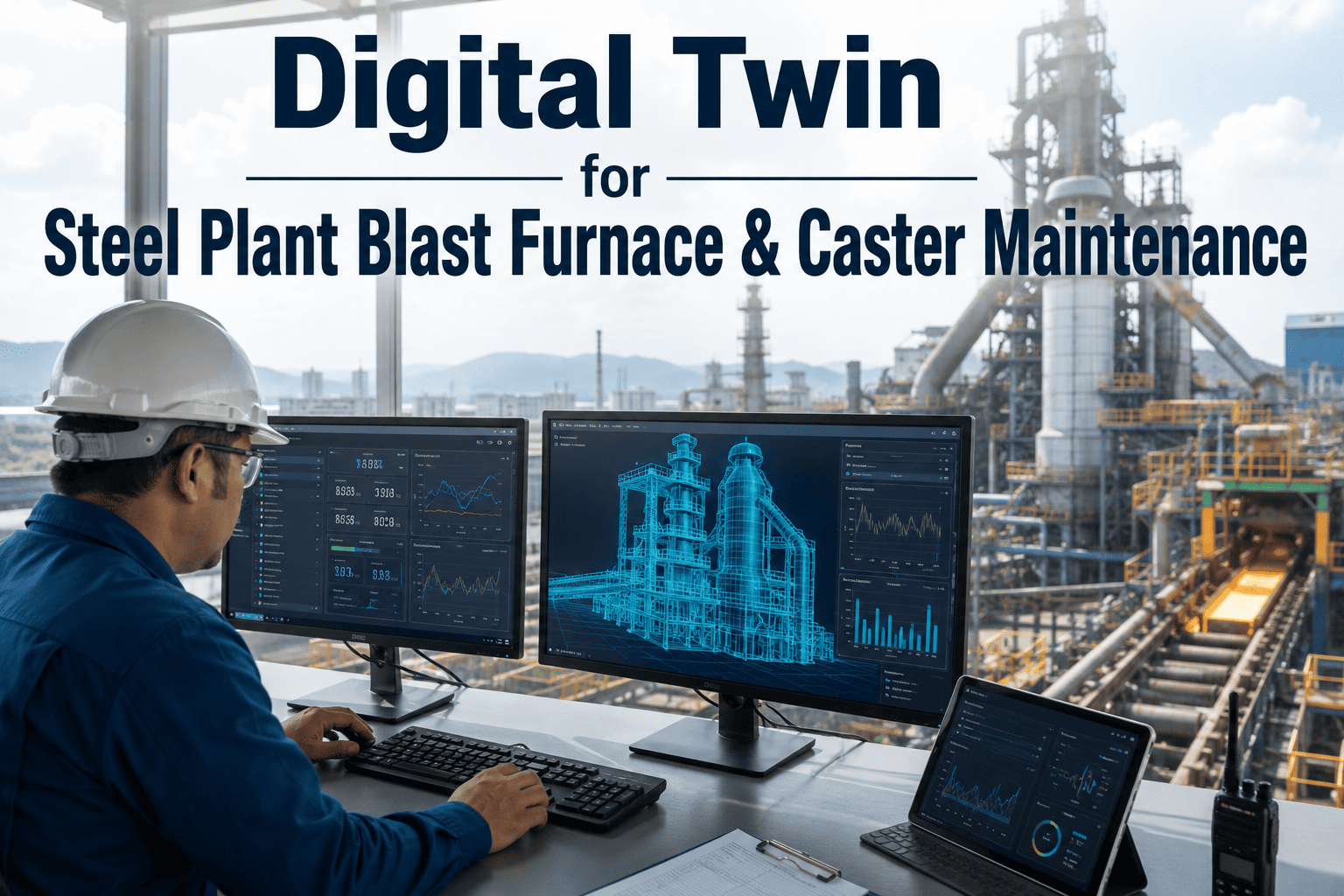
Read More
A digital twin for steel plant maintenance is a live, physics-based virtual replica of blast furnaces, continuous casters, and rolling mills that ingests real-time sensor data to simulate wear, predict failures,...
Read More
Oil analysis is the cheapest predictive tool a steel plant has — a single $15 sample can flag bearing debris in a rolling mill gearbox weeks before a $250,000 failure shuts down the line. A structured oil analysis...

Read More
Thermal imaging inspection for steel plants is the fastest way to catch hidden electrical hotspots, refractory wear, cooling-system failures, and steam leaks before they trigger unplanned downtime or catastrophic...
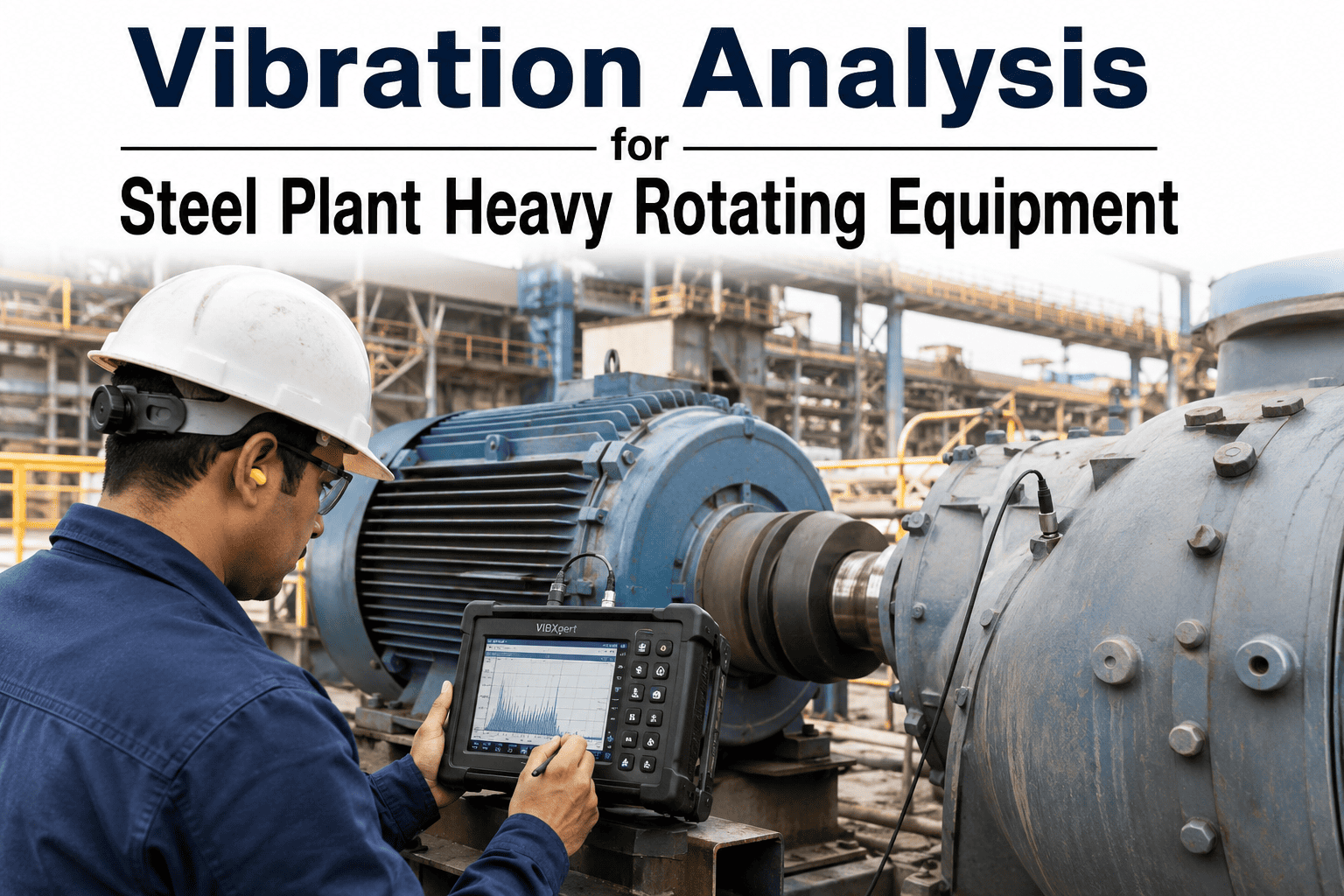
Read More
Vibration analysis for steel plant heavy rotating equipment is the foundation of any mature predictive maintenance program, catching bearing wear, misalignment and resonance in blast furnace blowers, rolling mill...
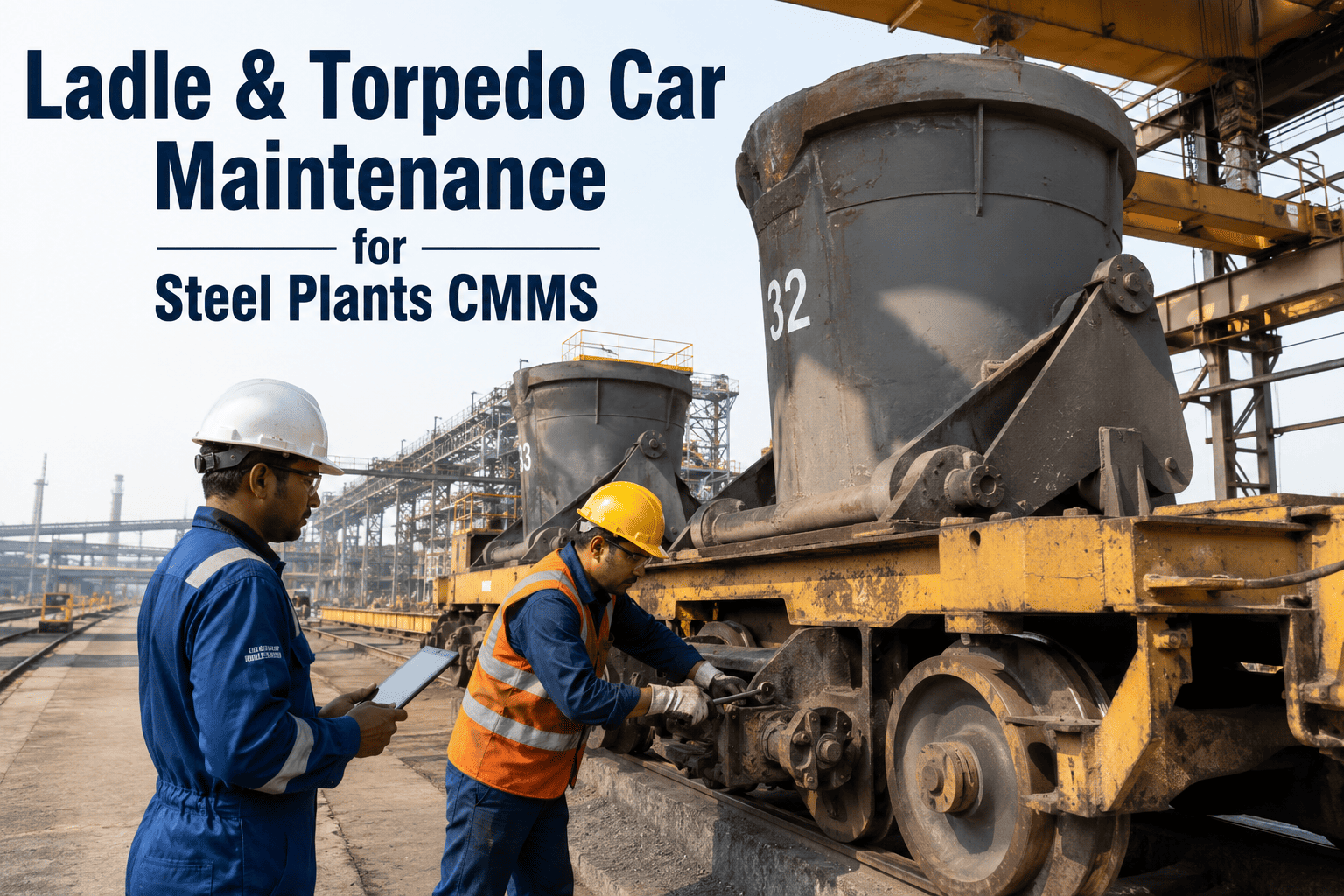
Read More
Ladle maintenance and torpedo car maintenance are the two most safety-critical asset reliability challenges in any integrated steel plant, because these vessels carry 150–300 tons of molten metal at 1,650 °C across...
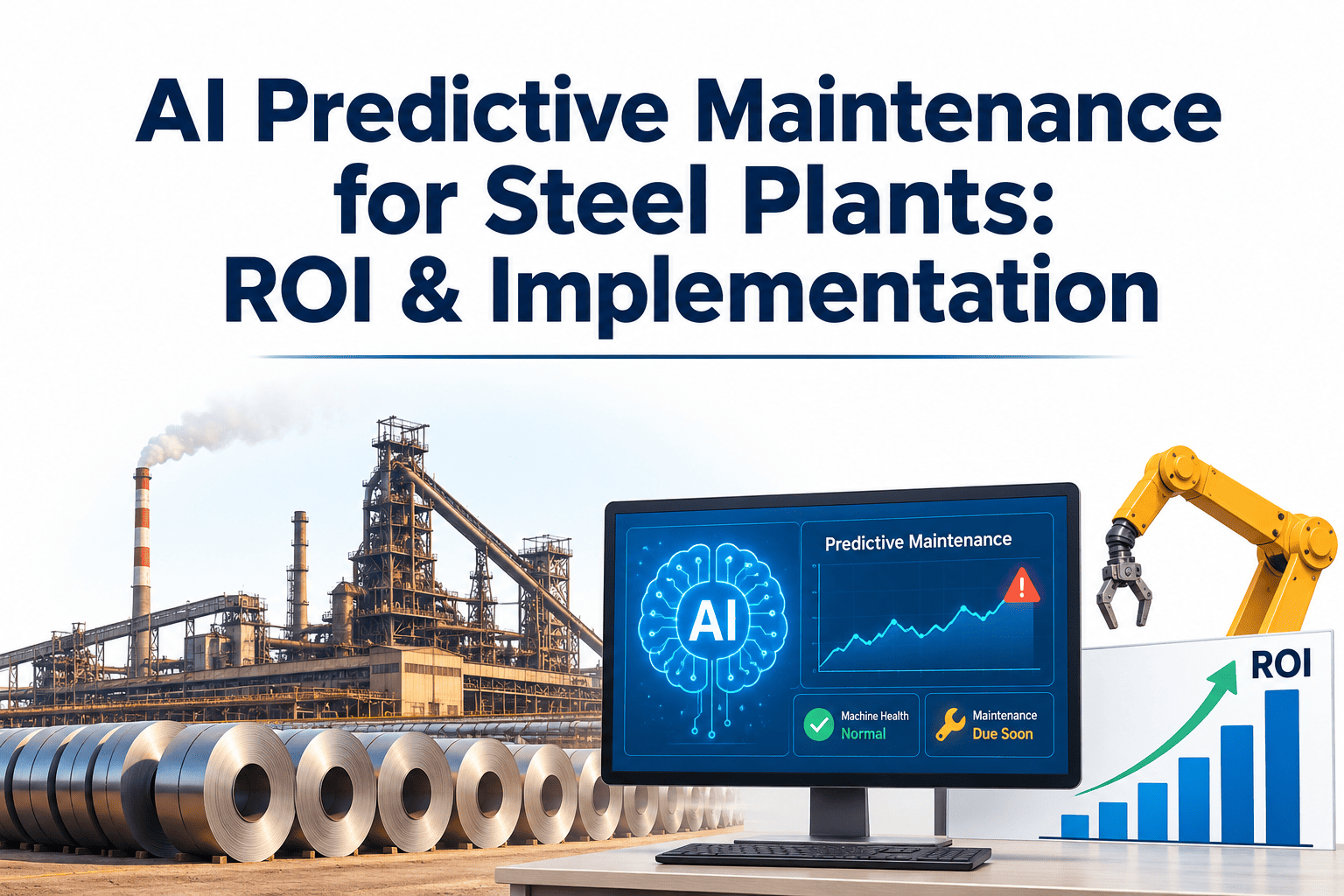
Read More
AI predictive maintenance for steel plants now delivers measurable ROI by combining sensor data, machine learning models, and CMMS work-order automation to forecast equipment failures days or weeks before they...
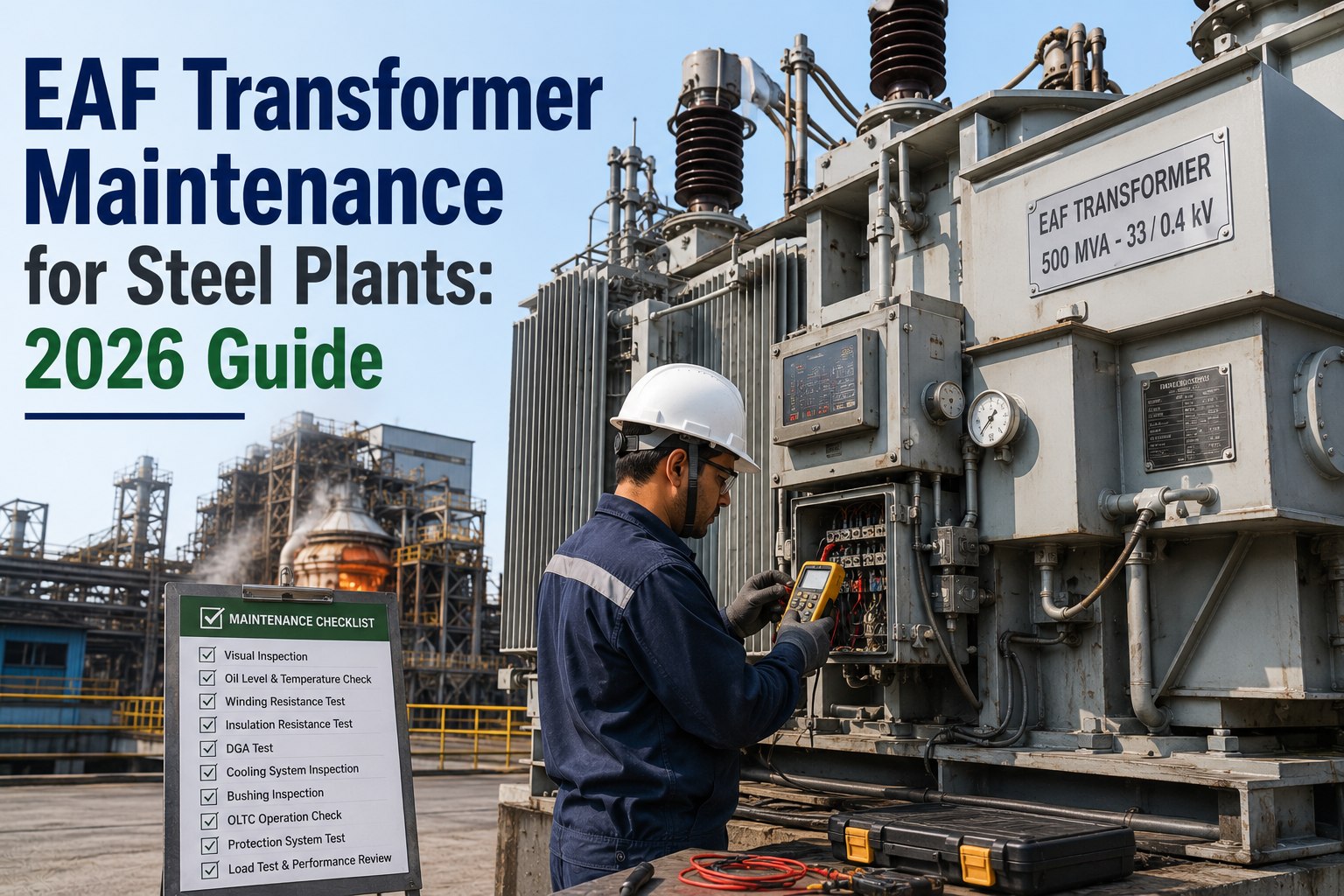
Read More
Electric arc furnace transformers sit at the violent electrical heart of every steel melt shop — absorbing switching surges, harmonic distortion, and thermal shocks that would destroy a standard grid unit within...
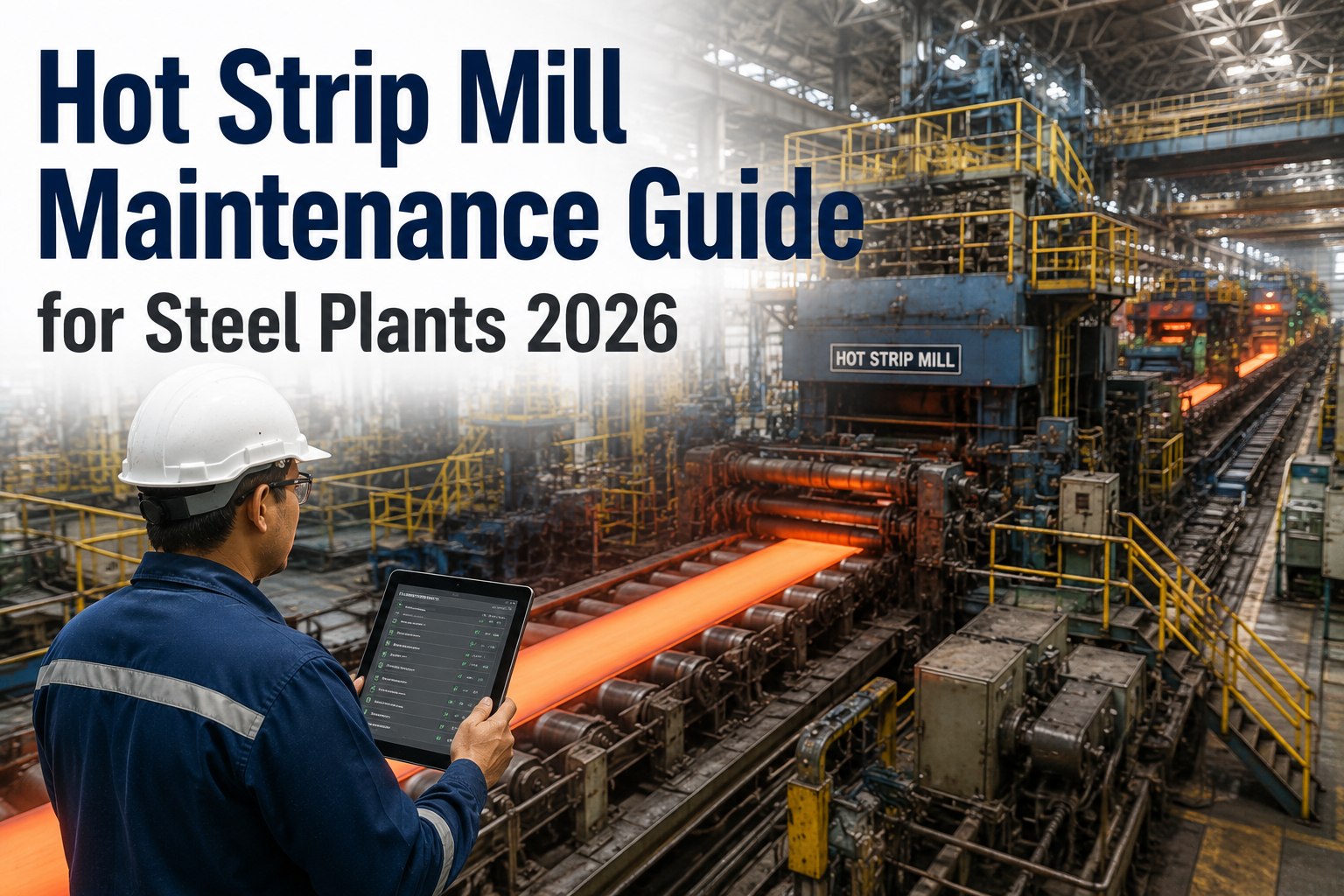
Read More
Hot strip mill availability is the single most leveraged variable on a steel plant's rolling floor — every unplanned hour of downtime on a 5-stand finishing train typically wipes 800–1,200 tonnes of prime coil...
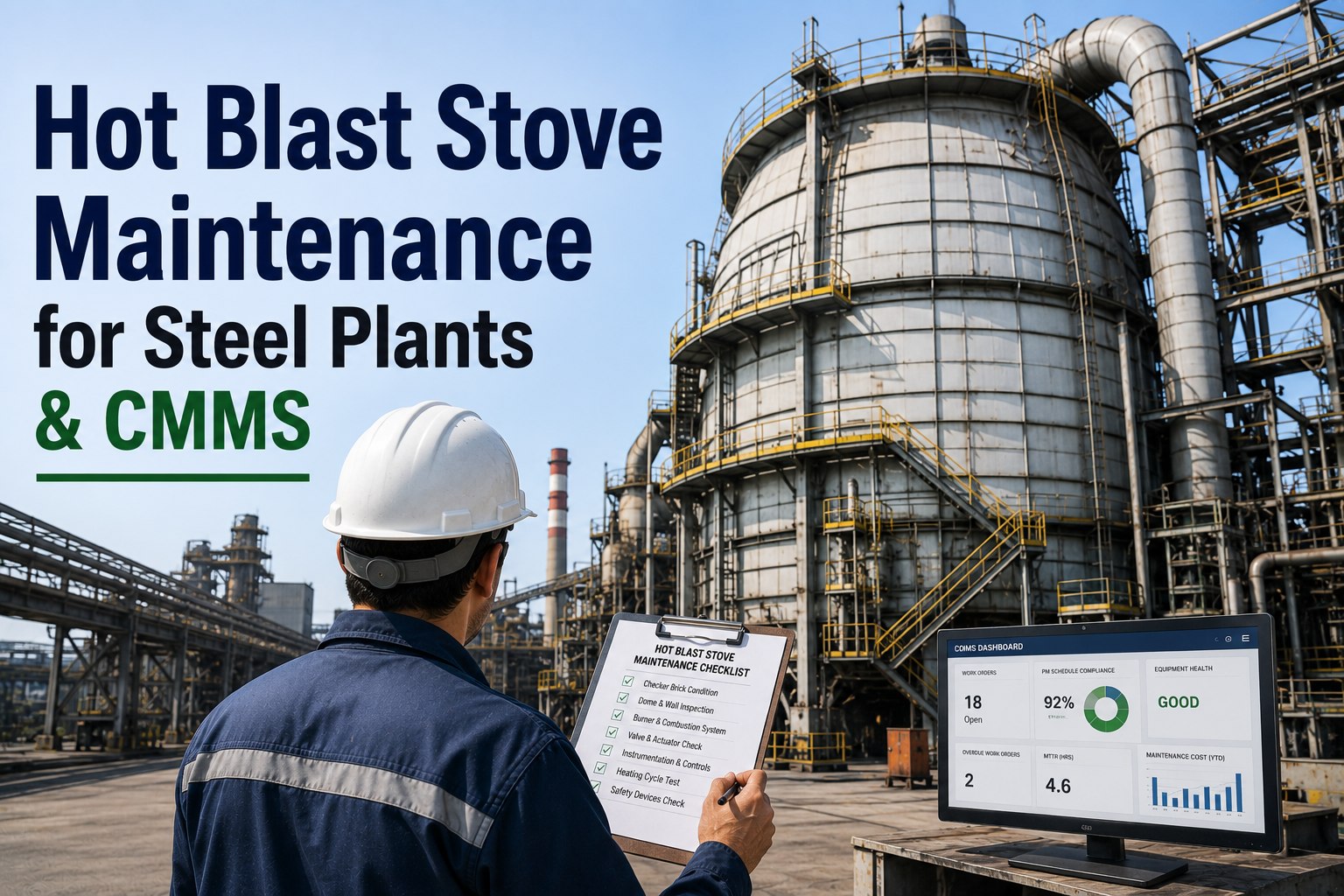
Read More
Hot blast stoves sit at the top of the energy-consumption ladder in ironmaking — a single three-stove battery can burn through 25 to 35% of a steel plant's total gas energy budget, making every percentage point of...
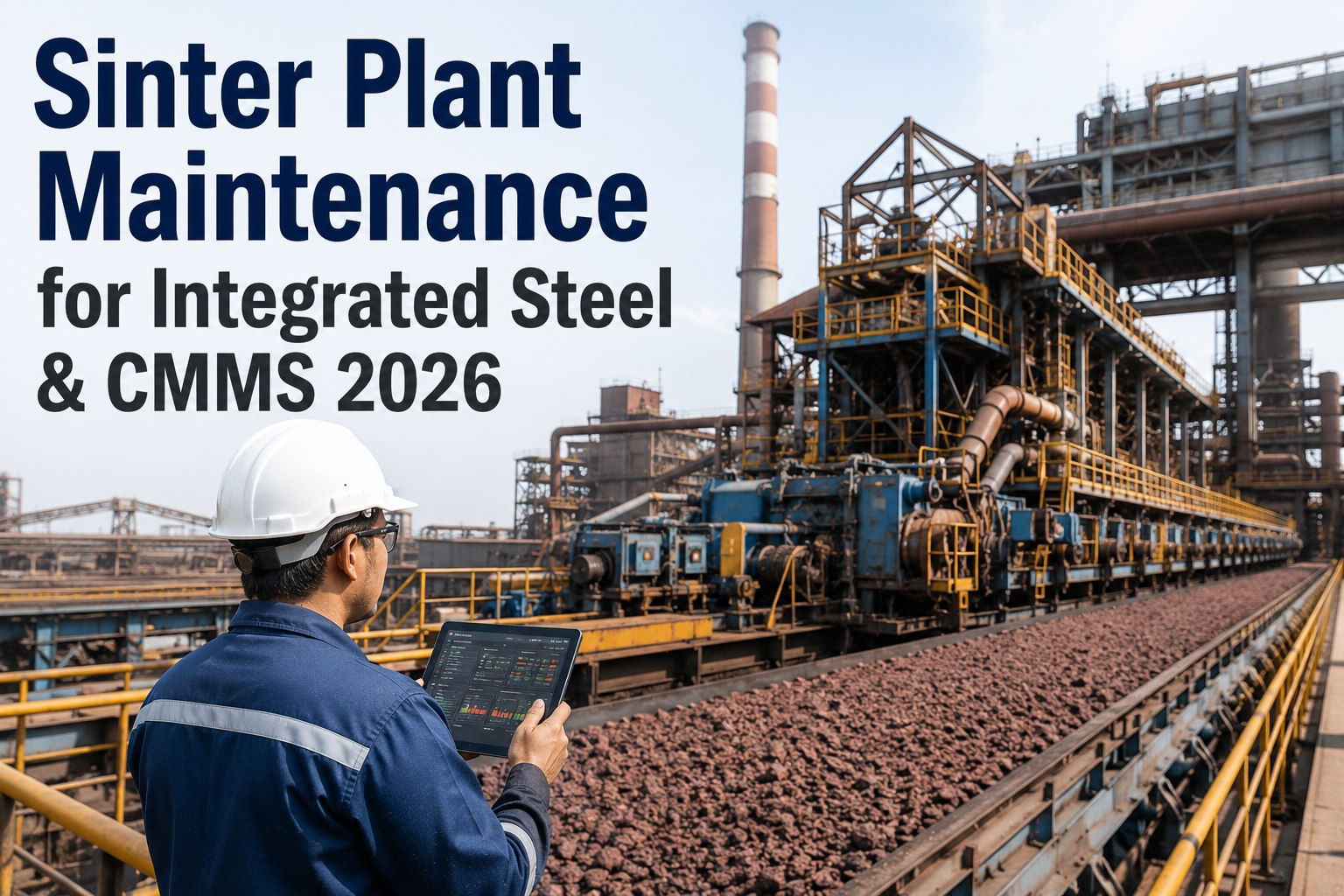
Read More
Sinter plant availability is the single largest lever an integrated steelmaker has over blast furnace feed quality — every percentage point of strand uptime translates directly into hot metal cost, coke rate, and...
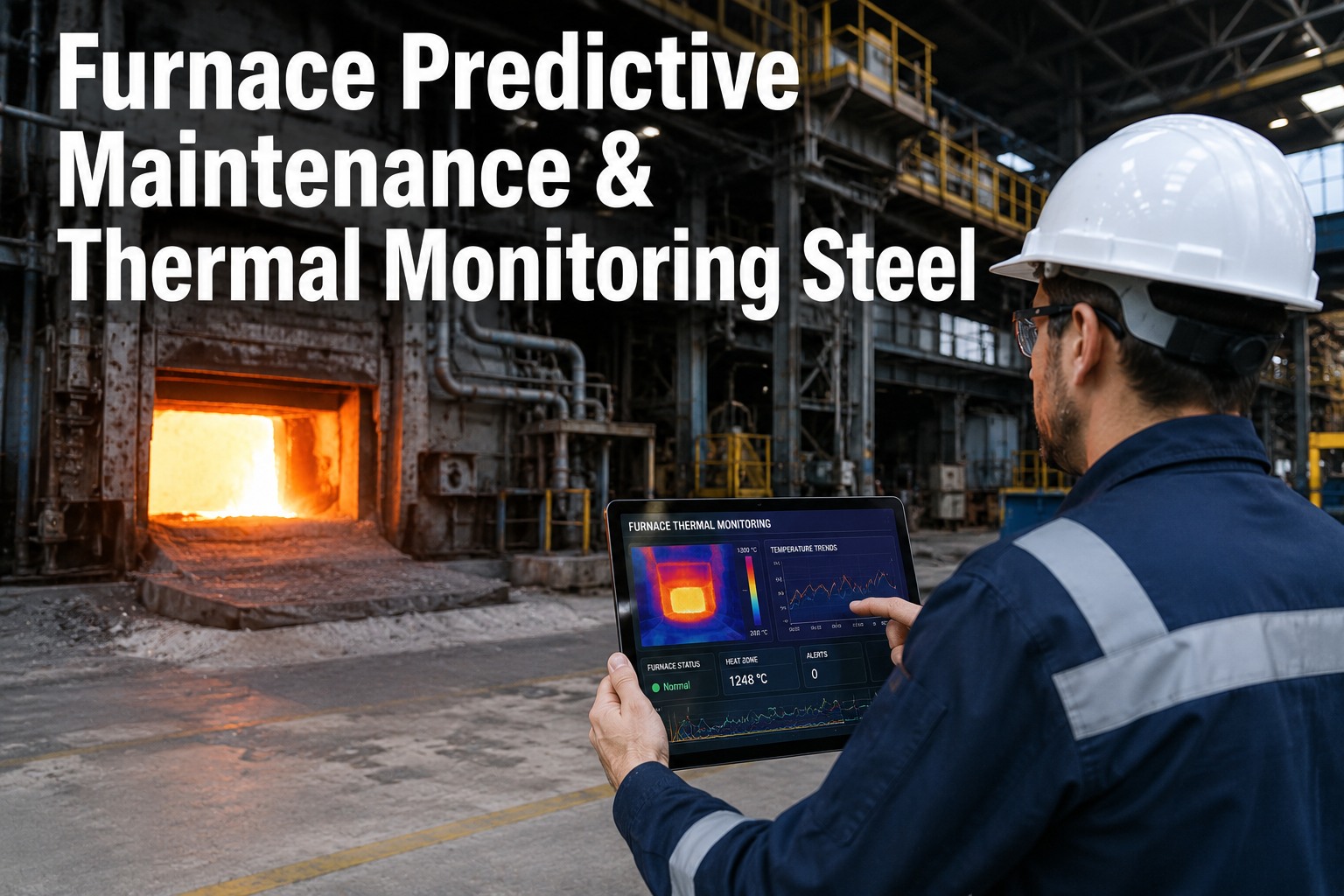
Read More
Predictive maintenance for steel plant furnaces is where thermal imaging, acoustic emission, and vibration signals converge into a single, actionable view of asset health — catching refractory thinning, burner...
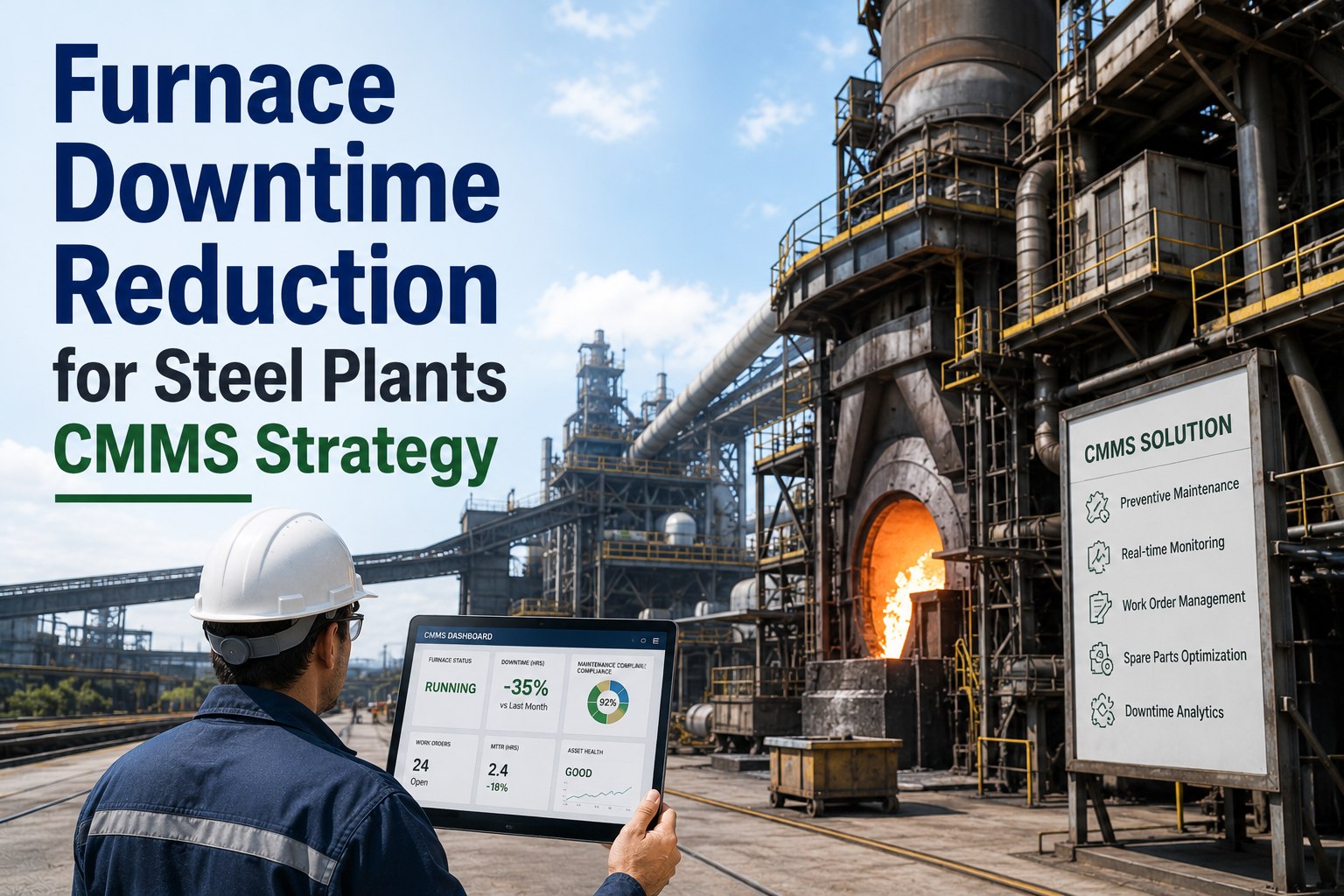
Read More
Furnace downtime is the single most expensive failure mode in a steel plant — every hour a blast furnace or reheat furnace is offline can cost $200,000 to $500,000 in lost production, coke rate penalties, and...
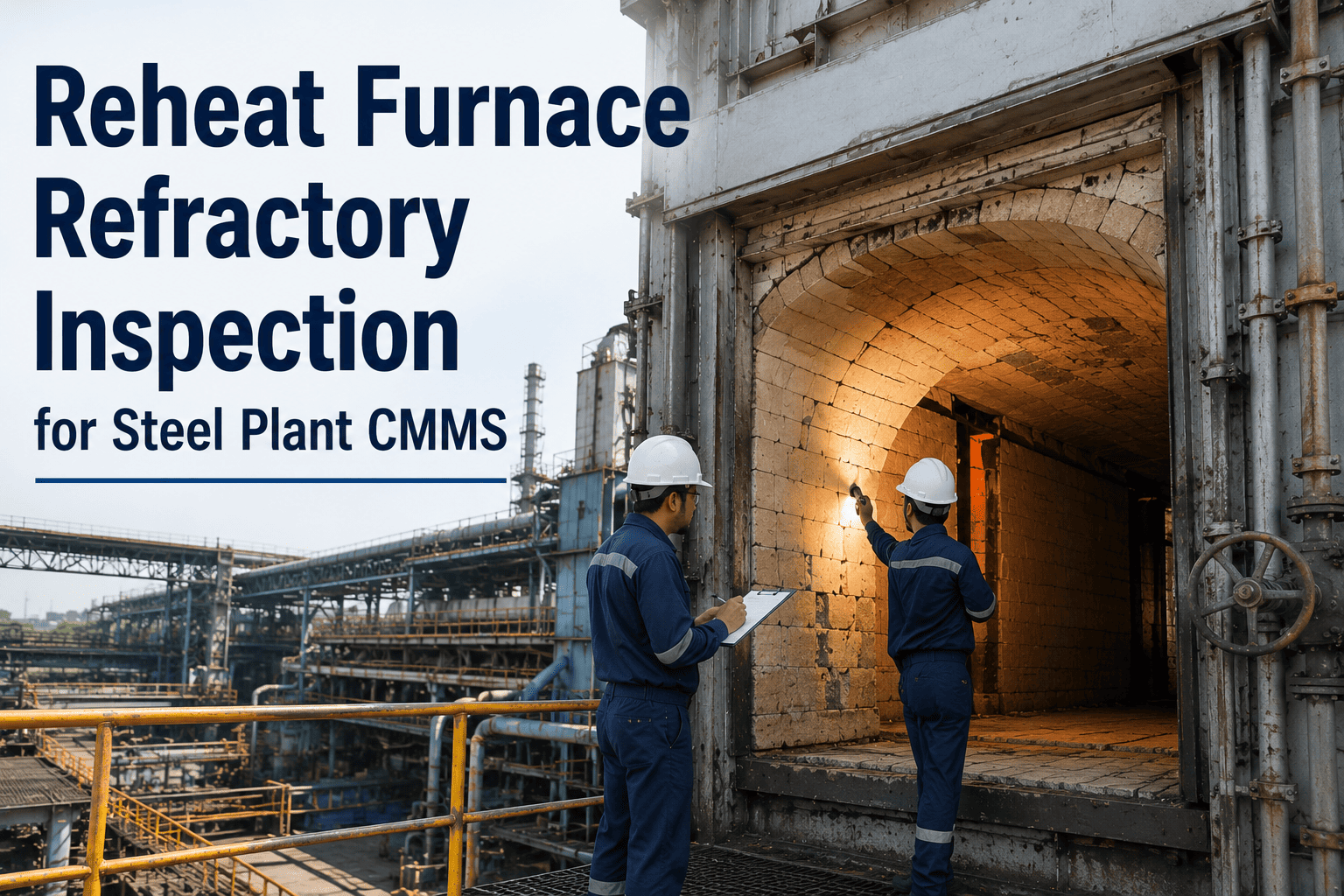
Read More
Reheat furnace refractory is the single largest determinant of fuel rate, slab quality, and campaign length in any hot strip mill or plate mill. A 1% lining loss can push fuel consumption up 3–5% and trigger...
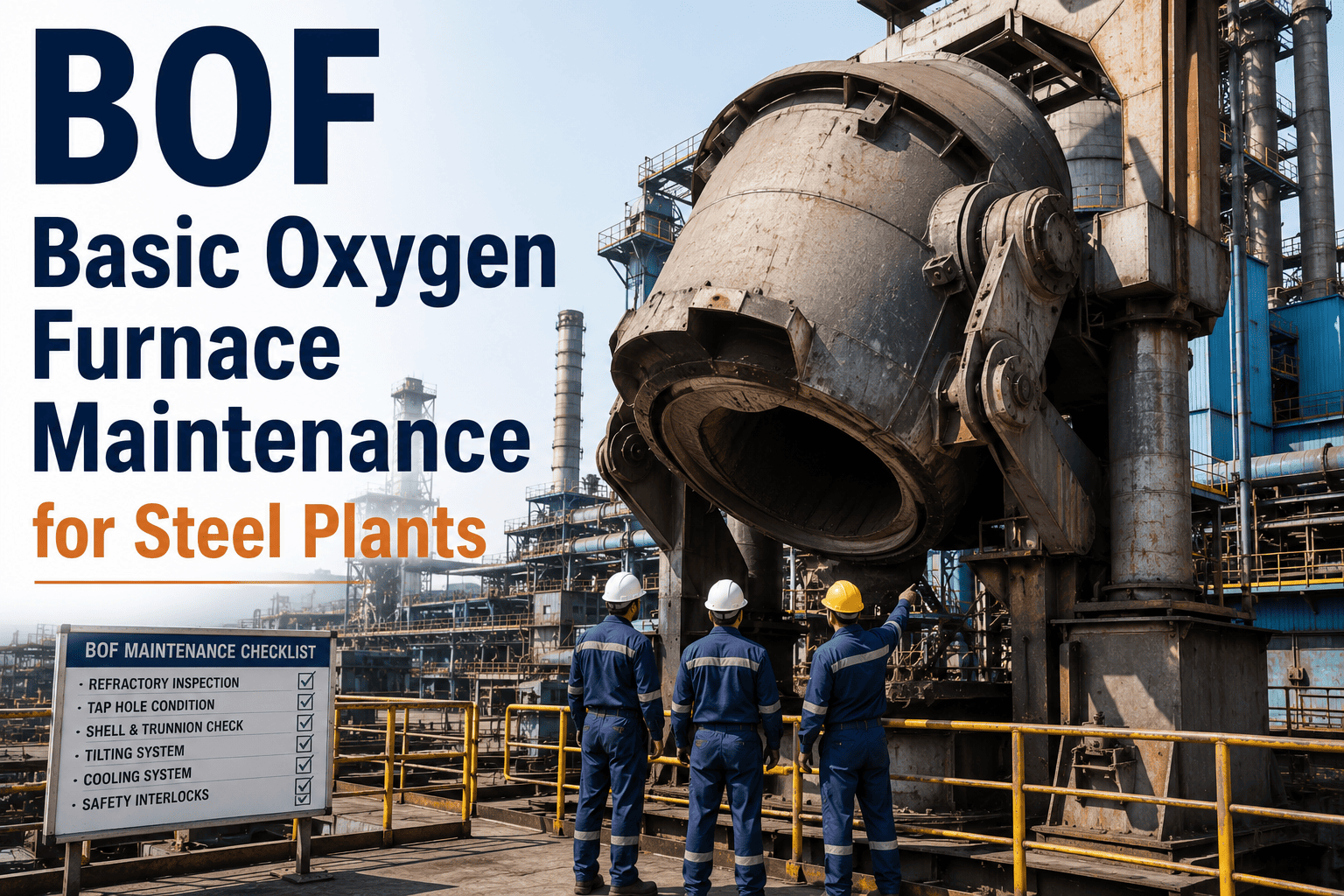
Read More
Basic oxygen furnace availability is the single largest determinant of integrated steel plant productivity — every minute of BOF downtime cascades into delayed castings, idled rolling mills, and missed order...
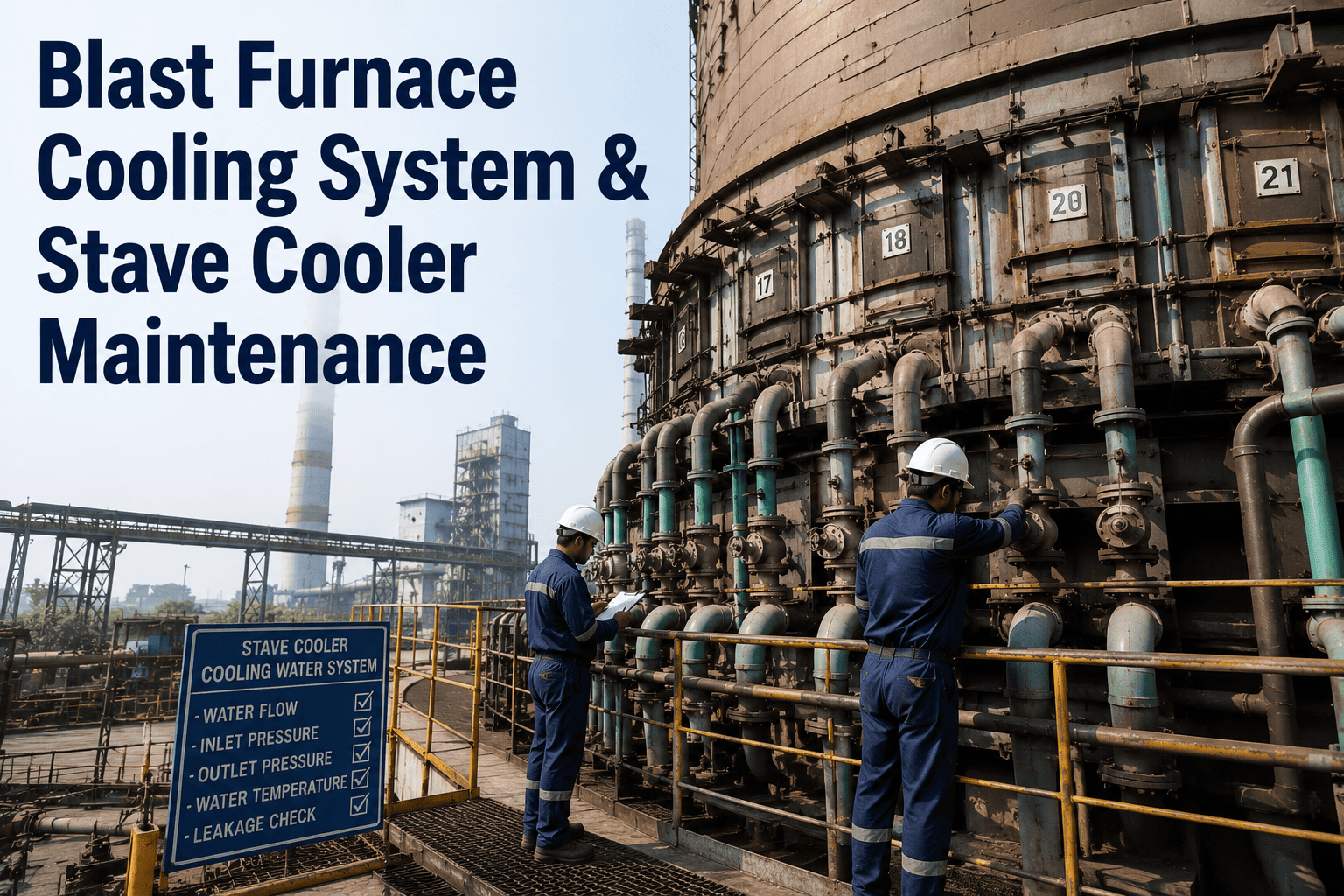
Read More
A blast furnace cooling system quietly carries 30–50 MW of heat load away from the shell every single operating hour, and a single failed stave cooler can trigger an unplanned blowdown that costs upward of $1.2M...
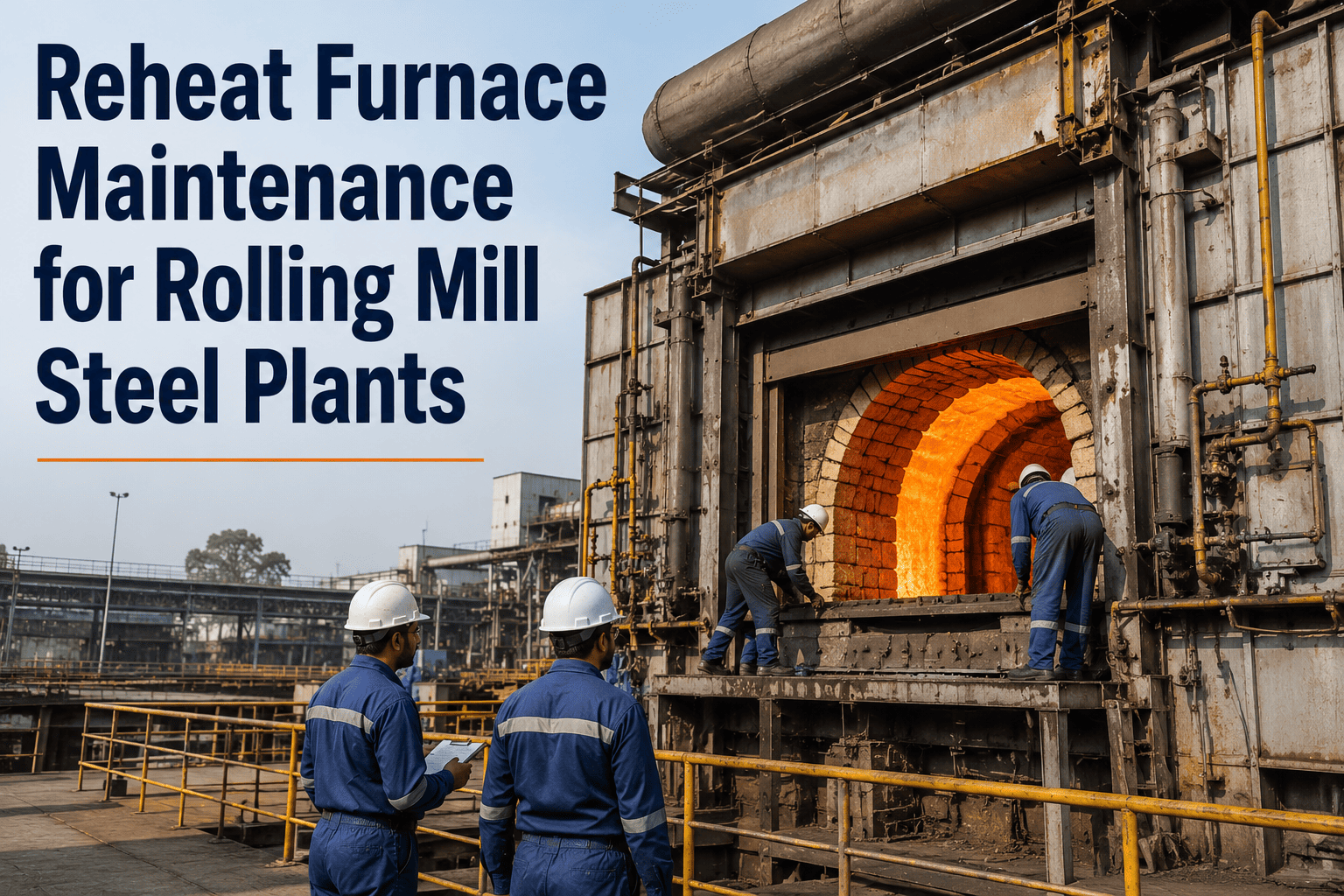
Read More
Reheat furnace availability is the single biggest lever on rolling mill throughput — every hour of unplanned downtime on a 150 t/h line can trap 60–80 billets in the heating cycle, starve the mill stands, and push...
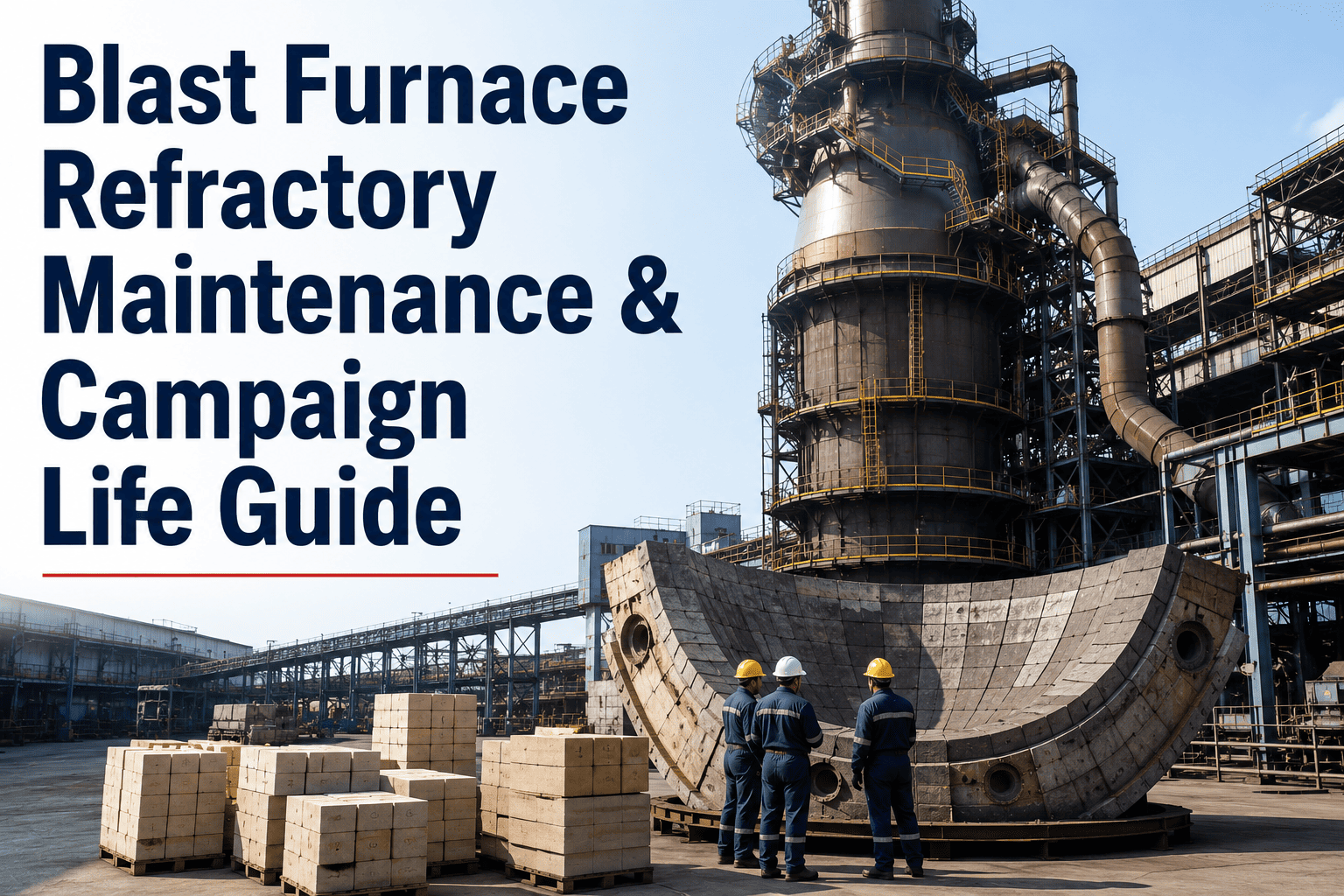
Read More
Refractory lining life is the single biggest variable in blast furnace campaign economics: a 15-year campaign that ends two years early can cost an integrated mill $80–120M in lost iron output and emergency reline...
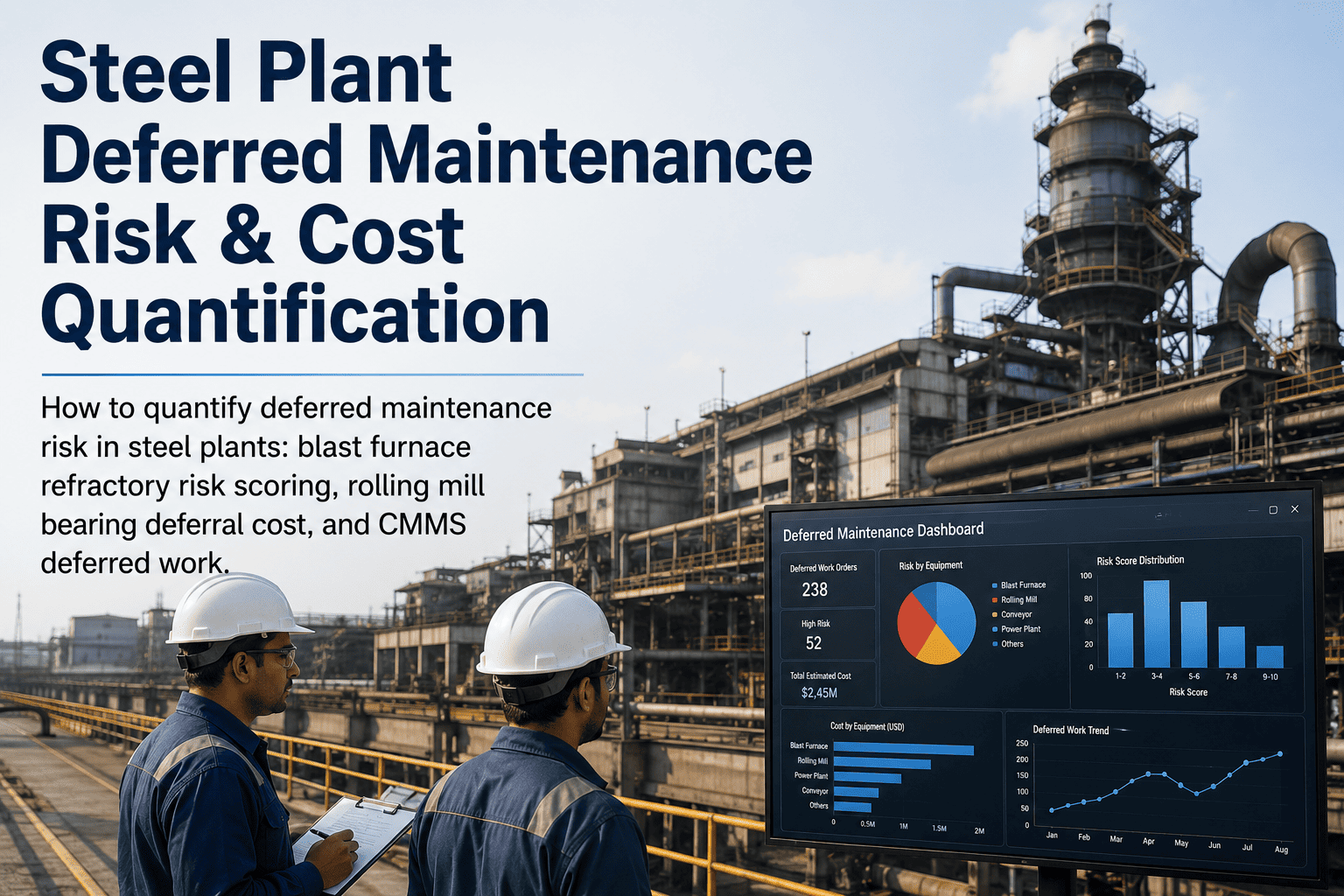
Read More
Deferred maintenance in a steel plant is rarely a single missed work order — it is a compounding backlog that builds quietly across blast furnaces, rolling mills, cranes, and utilities until a critical asset fails...

Read More
A major steel plant shutdown compresses twelve months of high-risk maintenance into a window that often lasts fewer than thirty days — and a single misstep in scope definition, sequencing, or contractor...
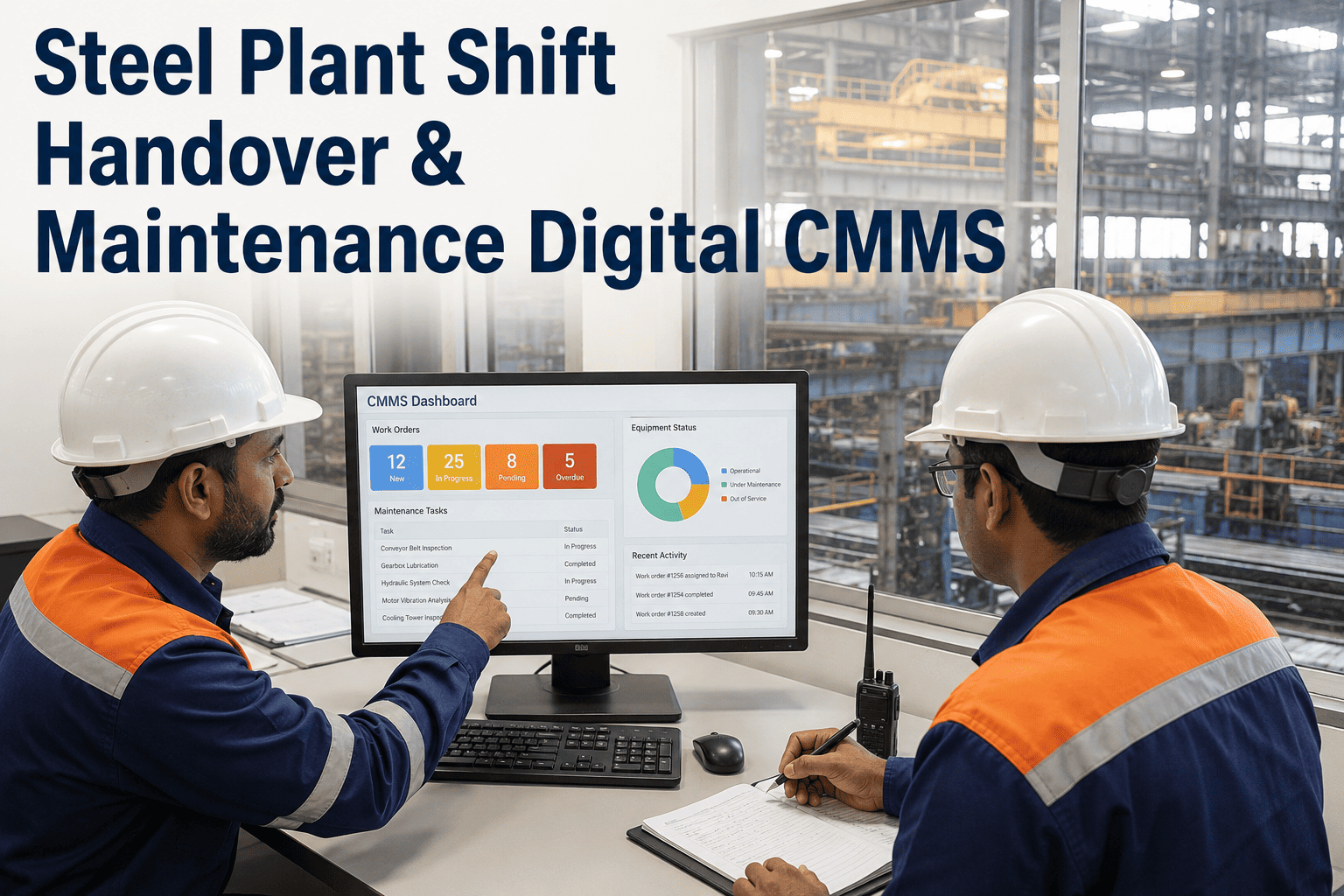
Read More
Shift handover at a steel plant is not a paperwork ritual — it is the single most dangerous 20 minutes of the operating day. When a blast furnace crew hands control to the next shift without capturing equipment...
Read More
Blast furnace maintenance is the highest-stakes reliability discipline in steel — a single unplanned blowdown can idle a 10,000-ton-per-day unit and vaporize seven-figure margins in hours. This guide distills the...
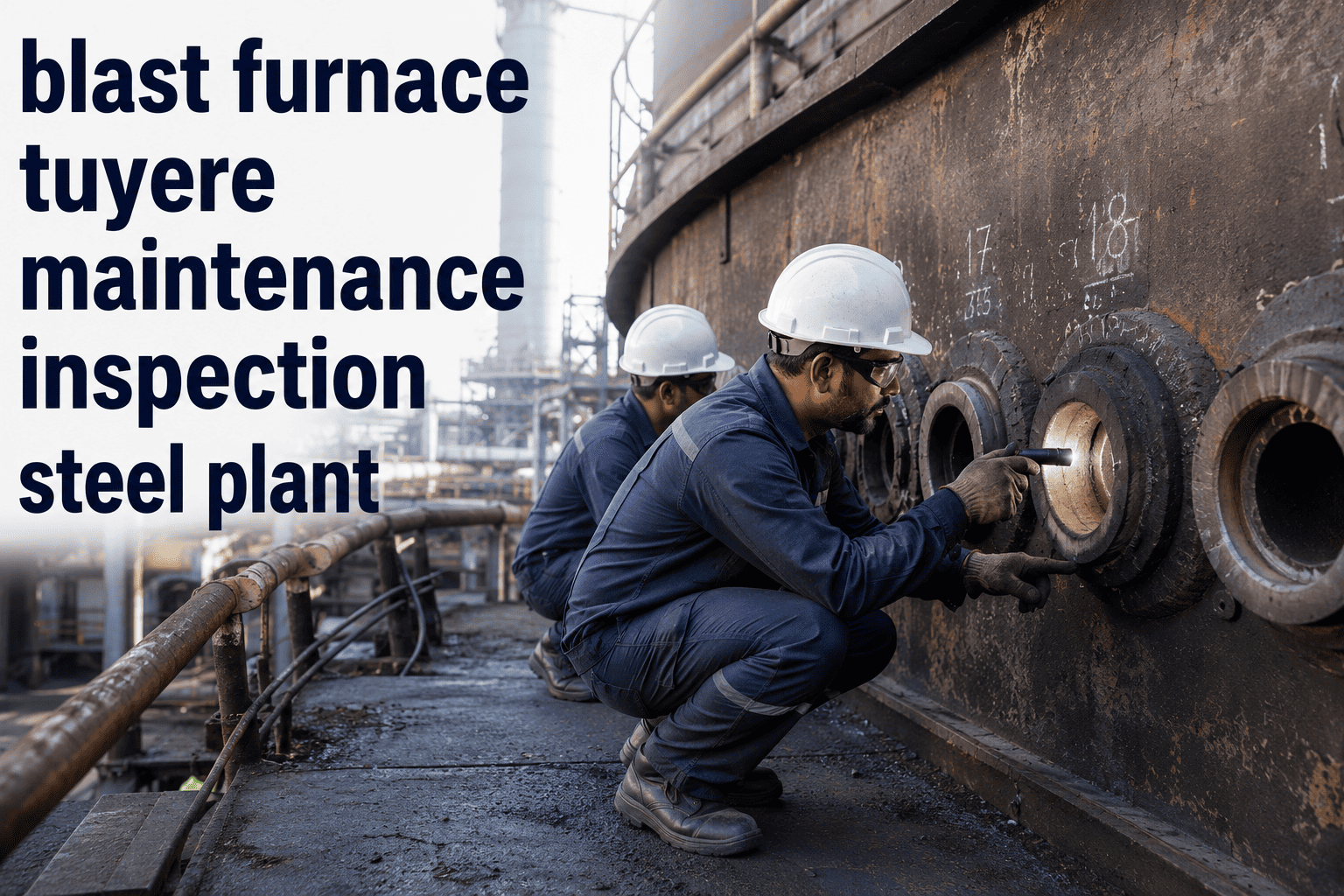
Read More
A single blast furnace tuyere failure can shut down a 10,000-ton-per-day iron campaign, melt a copper cooler in under 90 seconds, and trigger a blowpipe eruption that endangers every operator on the cast house...
Read More
Steel plant maintenance cost per tonne is the single most comprehensive financial metric in steelmaking. It integrates labor efficiency, spare parts optimization, emergency repair reduction, extended equipment...
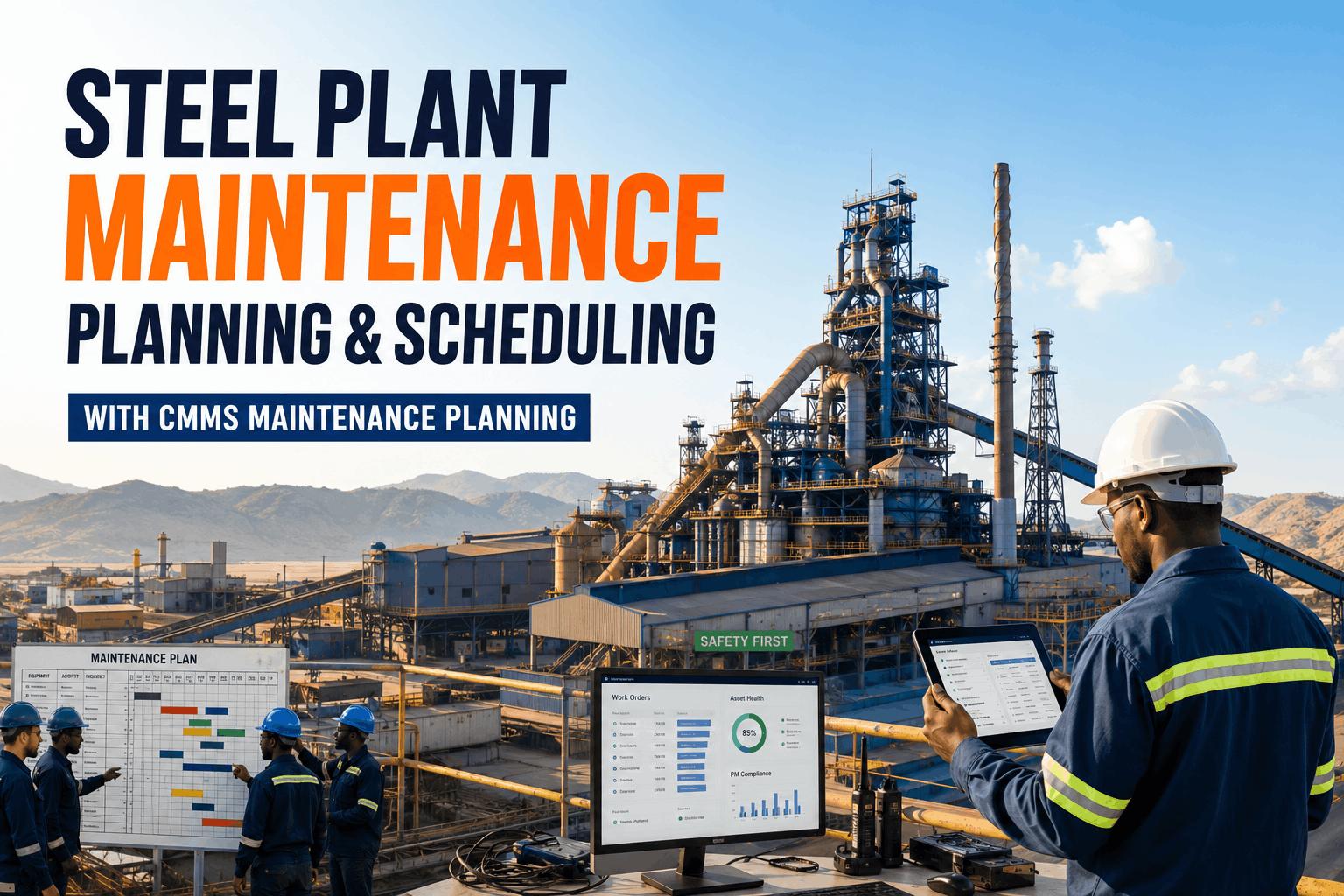
Read More
Steel plant maintenance planning is fundamentally different from discrete manufacturing scheduling. In automotive, a line stoppage for maintenance is a planned downtime event with clear start and end. In steel, an...
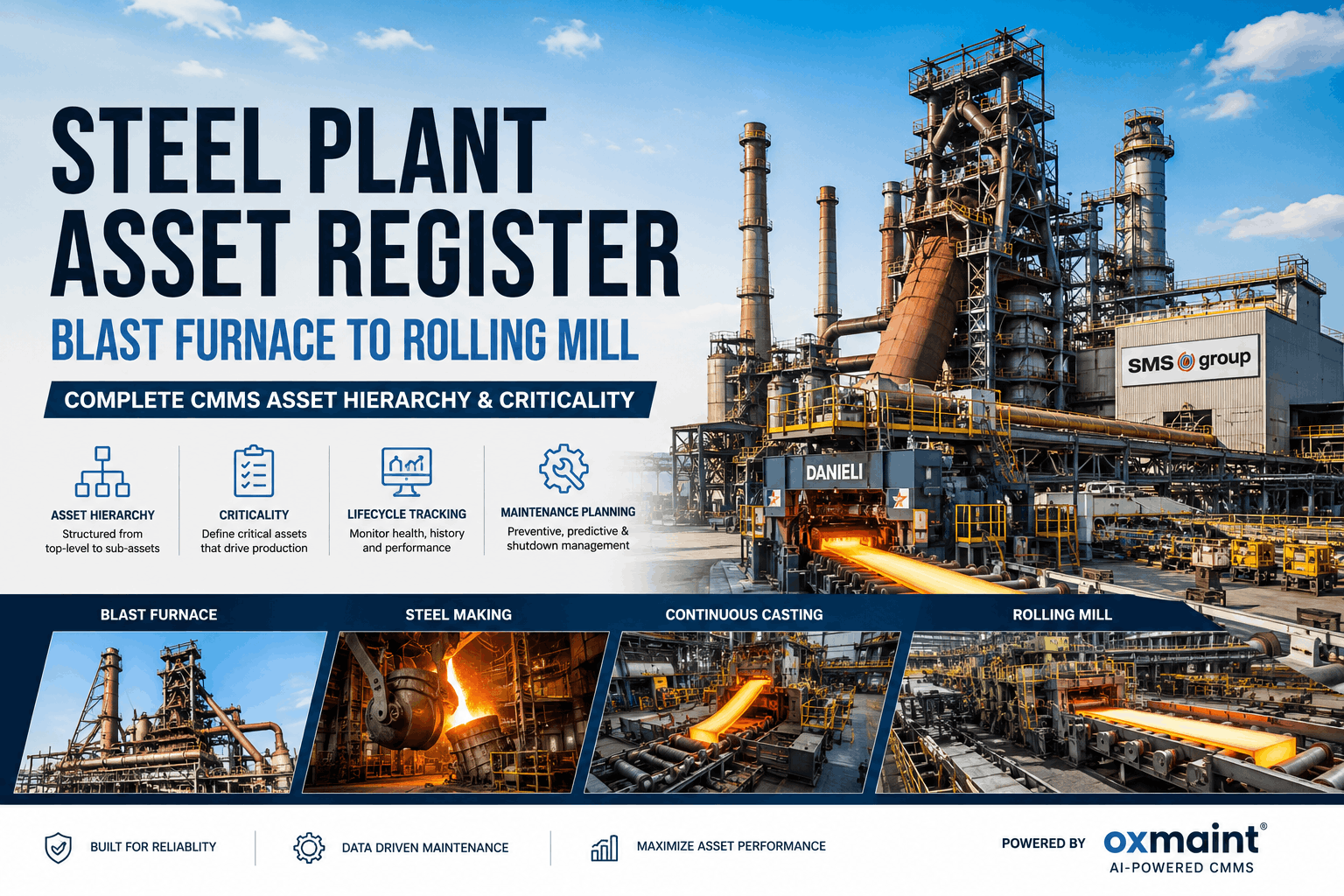
Read More
A steel plant asset register is not a flat list of equipment. A blast furnace is a 500-million-dollar asset consisting of staves, cooling circuits, tuyere positions, tap holes, hot blast stoves, and the gas...
Read More
Steel plant maintenance KPIs in 2026 have shifted from lagging indicators (total maintenance cost, total work orders completed) toward leading indicators that predict production loss before it occurs. The three...
Read More
Steel plant maintenance strategy in 2026 requires moving beyond calendar-based PM schedules toward integrated, data-driven asset management across blast furnaces, steelmaking vessels, continuous casters, and...
Read More
Managing maintenance contractors at a steel plant is fundamentally different from managing contractors at a hospital or office facility. A reline contractor working on a blast furnace during a 10-day campaign is...
Read More
Two fundamentally different steelmaking routes dominate the global industry, and their maintenance organizations face challenges as different as the metallurgy they manage. The integrated BF-BOF route—with its...

Read More
The difference between a $180,000 emergency blast furnace reline and a $45,000 scheduled reline is preventive maintenance discipline—and preventive maintenance discipline requires technicians trained in refractory...
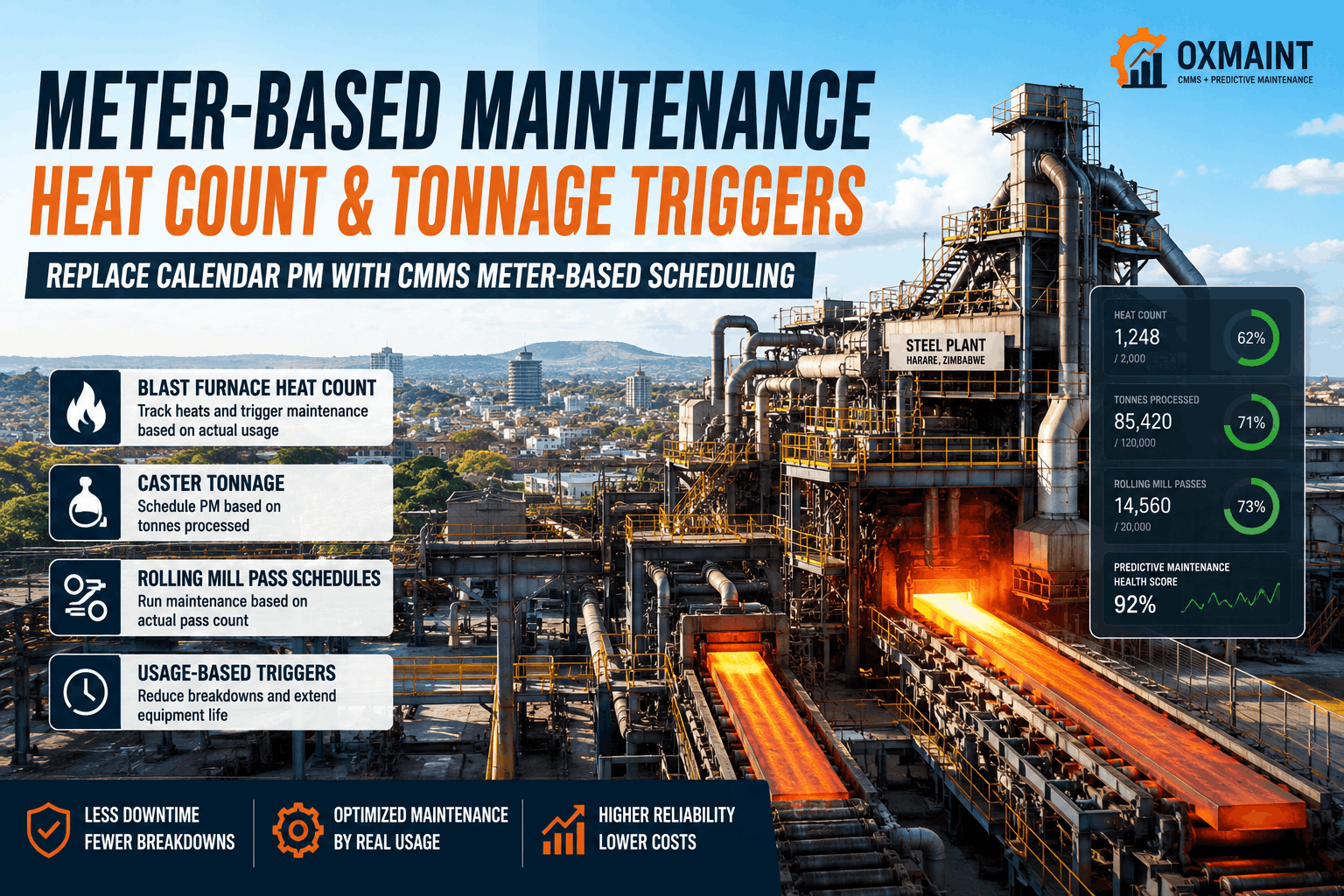
Read More
Calendar-based preventive maintenance was invented for equipment with predictable, consistent wear patterns. Steel plants operate in the opposite environment—blast furnace campaigns vary from 1,200 to 2,000 heats,...
Read More
Choosing a CMMS (Computerized Maintenance Management System) for steel plant operations is one of the most critical technology decisions maintenance leaders face in 2026. With hundreds of critical assets operating...
Read More
In a steel plant, a maintenance window is the most valuable and most contested resource on site. A planned outage on the continuous caster does not just stop the caster — it blocks work on the blast furnace and...
Read More
Ask a steel plant maintenance head how many assets they have, and the honest answer is usually "more than the CMMS says." A blast furnace is not one asset — it is 40-plus individual stave circuits and 20 to 40...
Read More
A steel plant is not a collection of machines — it is a single chain reaction. Iron ore enters the blast furnace and, hours later, finished steel leaves the rolling mill, having passed through the steelmaking...
Read More
Steel plant compressed air systems are the hidden backbone of every mill's operations: powering pneumatic tools, process actuators, blast furnace controls, and emergency safety systems. A centrifugal or...
Read More
In an integrated steel plant, blast furnace gas (BFG) and coke oven gas (COG) are not waste streams—they are valuable energy assets that can supply 30–40% of the plant's total energy requirement when recovered and...

Read More
Electric arc furnace (EAF) electrode consumption is one of the most volatile operating costs in North American scrap-based steelmaking. Graphite electrode prices fluctuate wildly ($500–1,500 per metric ton...
Read More
Refractory installation represents one of the most critical control points in steel plant operations, yet most facilities treat it as a commodity activity delegated to contract crews with minimal oversight. The...
Read More
Blast furnace outages represent the costliest operational nightmare in integrated steel plants across North America. A single unplanned shutdown can cost between $4–8 million per day in lost production, secondary...
Read More
In a steel plant, the Continuous Emissions Monitoring System (CEMS) is not just an environmental compliance tool—it is a regulatory license to operate. When CEMS data is inaccurate, the consequences cascade far...
Read More
Most USA steel plants operate maintenance organizations with reactive postures — technicians respond to failures as they occur, parts are ordered after equipment breaks down, and capital budgets are allocated...
Read More
Steel plants maintaining on-premise CMMS systems face mounting challenges: aging infrastructure requiring continuous IT support, server vulnerability to cyberattacks, difficulty accessing maintenance records...
Read More
Blast furnace campaign life represents the operational lifespan between major relines in integrated steel plants — typically lasting 5 to 15 years depending on operational intensity, refractory quality, and...
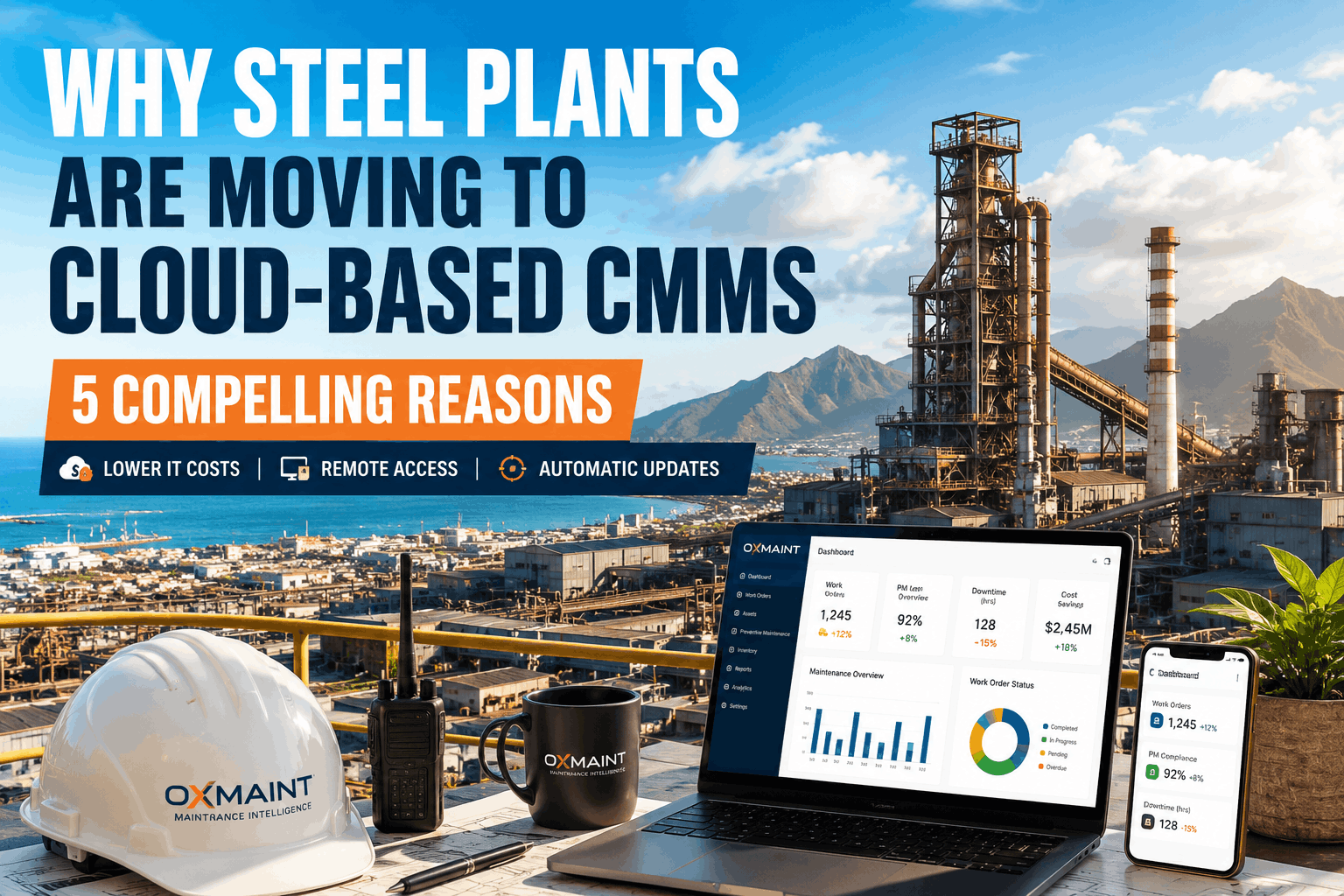
Read More
Steel plants maintaining on-premise CMMS systems face mounting challenges: aging infrastructure requiring continuous IT support, server vulnerability to cyberattacks, difficulty accessing maintenance records...
Read More
Building a resilient steel plant maintenance organization is arguably the most important strategic initiative a plant manager can undertake. Technical systems and equipment are essential, but they are not the...
Read More
Stacker reclaimers are the workhorses of a steel plant's raw material yard. Moving 90% of bulk materials like iron ore and coal, they are critical for maintaining a consistent production flow...
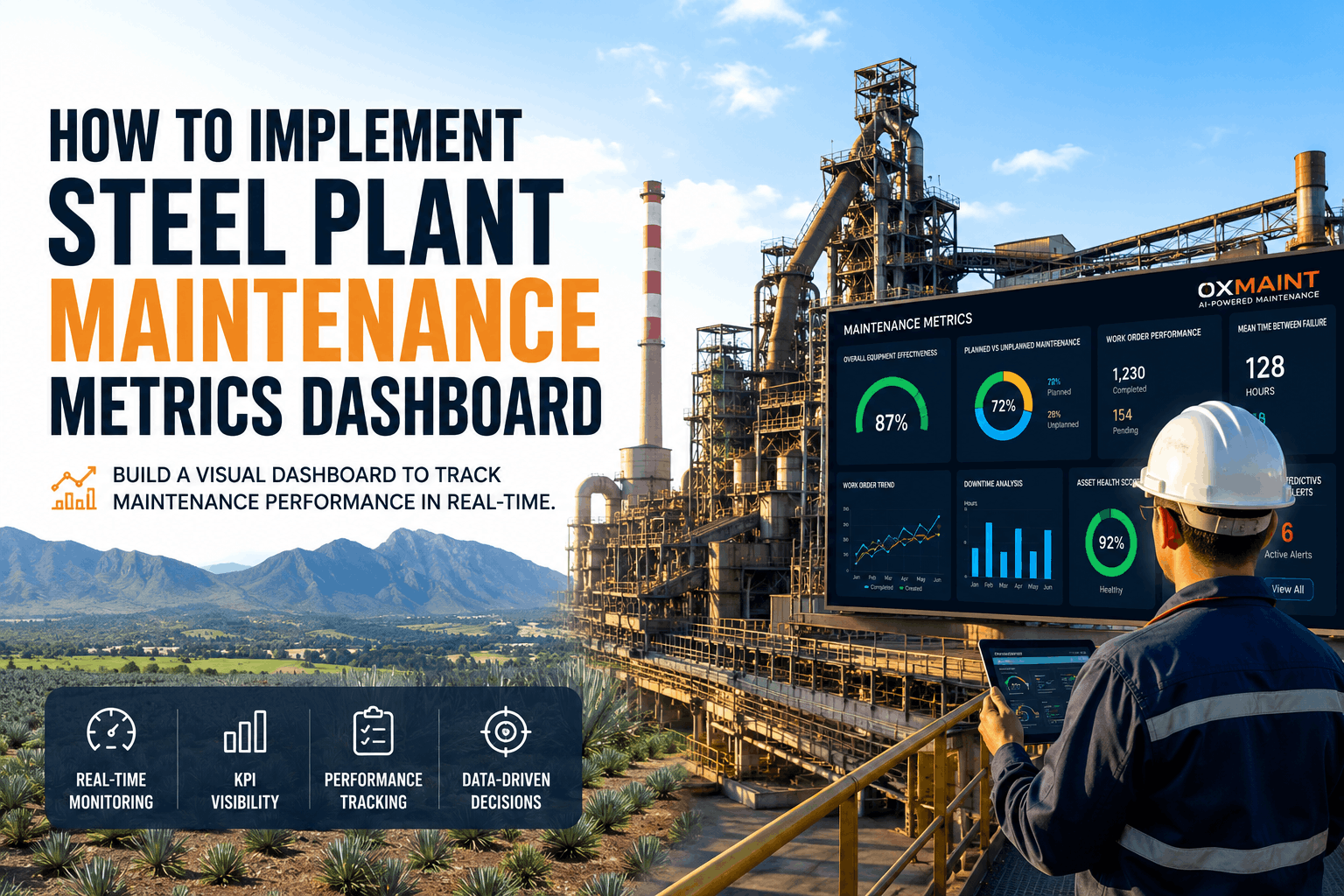
Read More
Steel plant maintenance generates massive amounts of data — work orders, sensor readings, downtime logs, and inspection reports. The challenge isn't data collection — it's getting the right information in front of...
Read More
Steel coil packaging is the final, critical step before product reaches the customer. EVOH-based films and high-performance winding equipment provide exceptional protection against corrosion and damage during...
Read More
Steel plant maintenance excellence represents the gold standard of operational performance — a strategic transformation that separates industry leaders from competitors struggling with reactive downtime, escalating...
Read More
Steel plant overhead cranes are the circulatory system of production—ladle cranes lifting 300-tonne molten metal, charging cranes handling red-hot scrap, and material handling cranes moving equipment across the...
Read More
Total Productive Maintenance (TPM) is not a maintenance program—it is a comprehensive management philosophy that transforms how production workers, maintenance technicians, operators, and engineers interact with...
Read More
Maintenance is the single largest controllable cost in steel manufacturing—consuming 10–15% of total production cost and up to 35–40% of operational revenue at struggling facilities. Yet most steel mills treat...
Read More
Overall Equipment Effectiveness (OEE) is the metric that answers the most critical question any rolling mill manager can ask: of all the time my mill was scheduled to produce, how much of it did I actually spend...

Read More
Achieving ISO 50001 certification for your steel plant represents more than a compliance checkbox. It transforms how your facility measures, tracks, and continuously improves energy performance across every...
Read More
Your CMMS already contains the data that could eliminate stockouts and optimize your spare parts inventory — the problem is that 76% of steel plant maintenance managers never analyze their inventory data for...
Read More
Steel plant operators face a critical business decision: continue reactive maintenance that costs $2-3 million annually in emergency repairs and lost production, or invest in predictive maintenance technology that...
Read More
Steel plant hydraulic systems fail catastrophically more often than any other equipment category—and the root cause is almost always contamination, not equipment design. A single particle larger than 10 microns...
Read More
Steel plant overhead cranes are the circulatory system of material movement—they operate continuously throughout the facility, moving coils, slabs, and semi-finished steel between process stations. When a crane...
Read More
Steel plant gearboxes operate under extreme conditions—high torque loads, continuous operation, temperature fluctuations, and contaminated environments push lubrication systems to their limits. When gearbox...
Read More
Your CMMS already contains the data that reveals your preventive maintenance scheduling mistakes — the problem is that 81% of steel plant maintenance managers never analyze it. Every PM work order your team has...
Read More
Work roll consumption is among the highest operating costs at hot strip mills — a major integrated U.S. facility spends $5–12 million annually replacing rolls that degrade through thermal fatigue, mechanical wear,...

Read More
Lubrication is not a maintenance afterthought — it is the primary defense against bearing degradation, gear wear, and thermal stress in steel plants operating 24/7 at temperatures exceeding 2,000°F. Systematic...
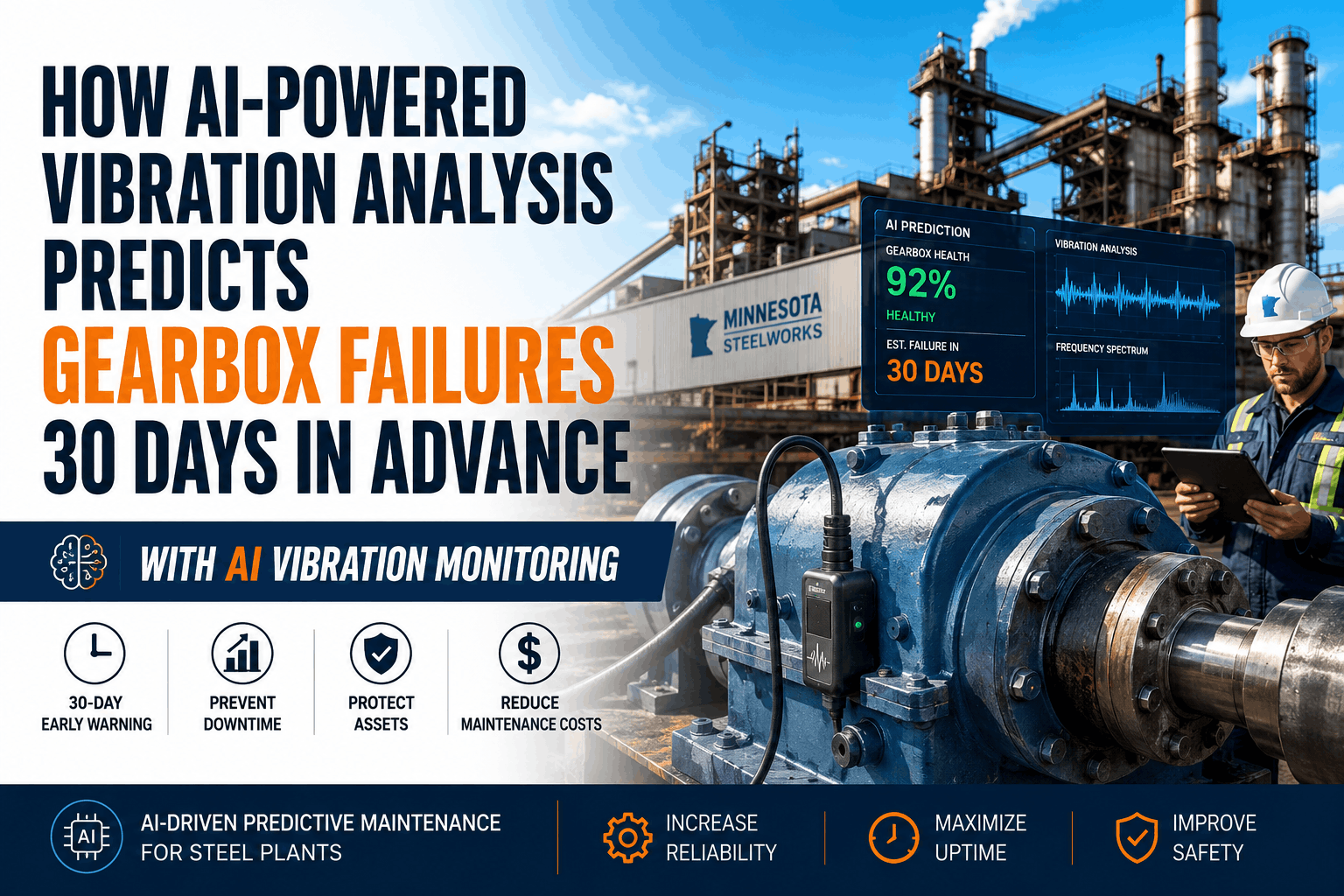
Read More
A cracked bearing race, a fractured gear tooth, or a shaft running progressively out of alignment — each generates a distinct vibration signature that appears in sensor data 30–90 days before the equipment fails...
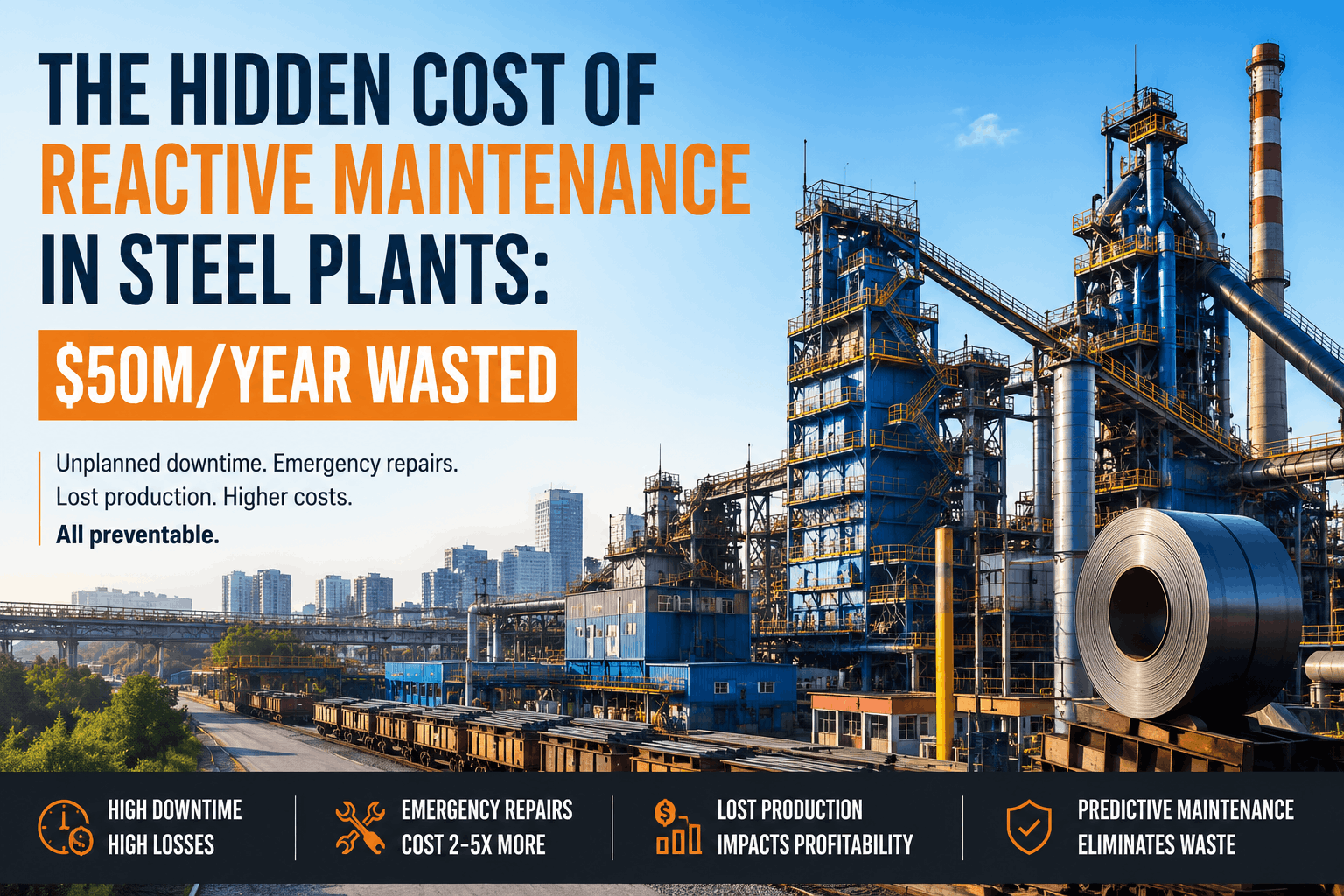
Read More
Reactive maintenance — the cost of waiting for failure — consumes $1.2 million or more per day in unplanned downtime at a typical 3.5 MTPA integrated U.S. steel mill. Emergency repairs cost 3–5× more than the same...
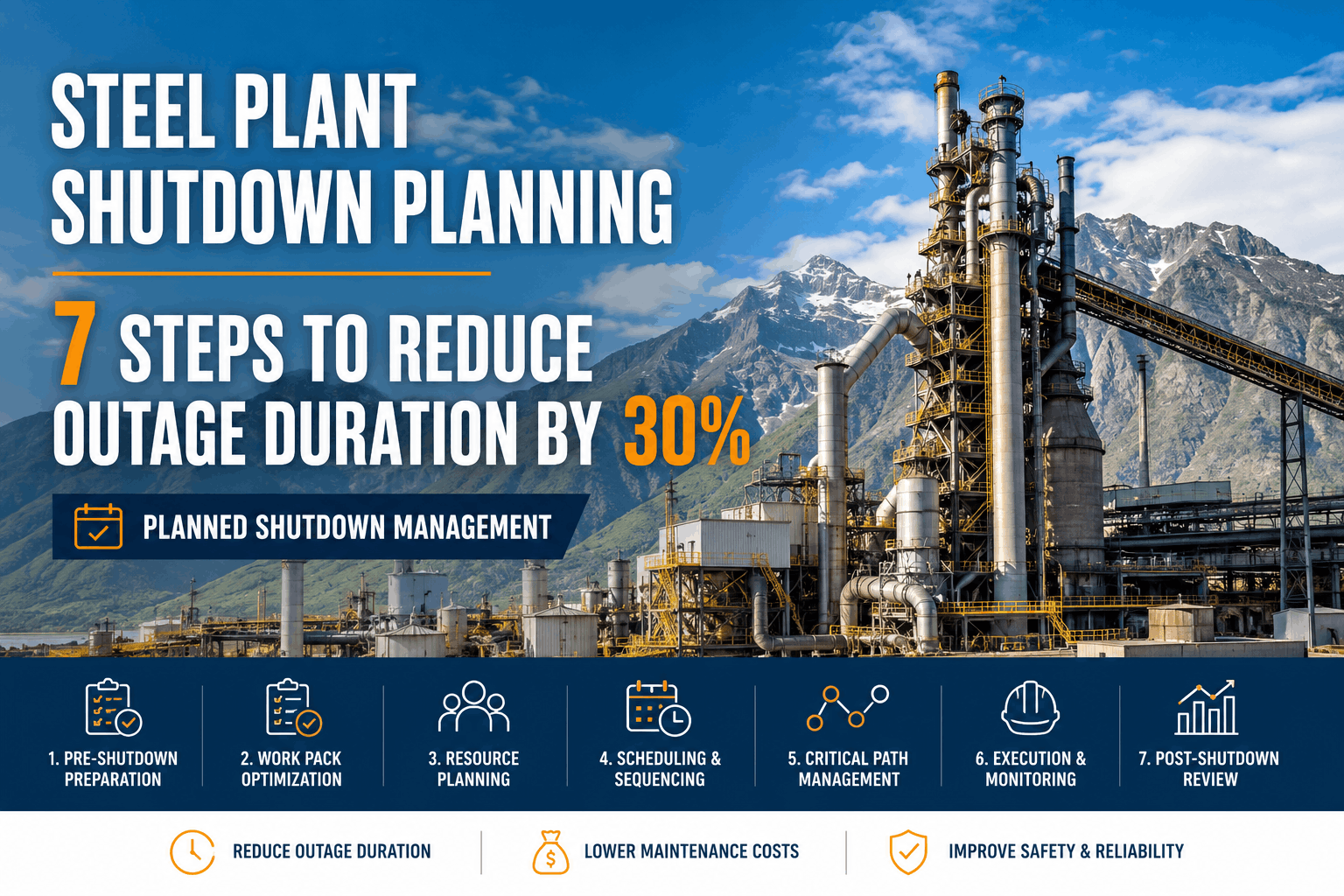
Read More
Planned steelmaking shutdowns and turnarounds are the most complex, high-stakes logistical events in manufacturing. A integrated steel mill executing a major planned shutdown must coordinate 200–500 contractors,...
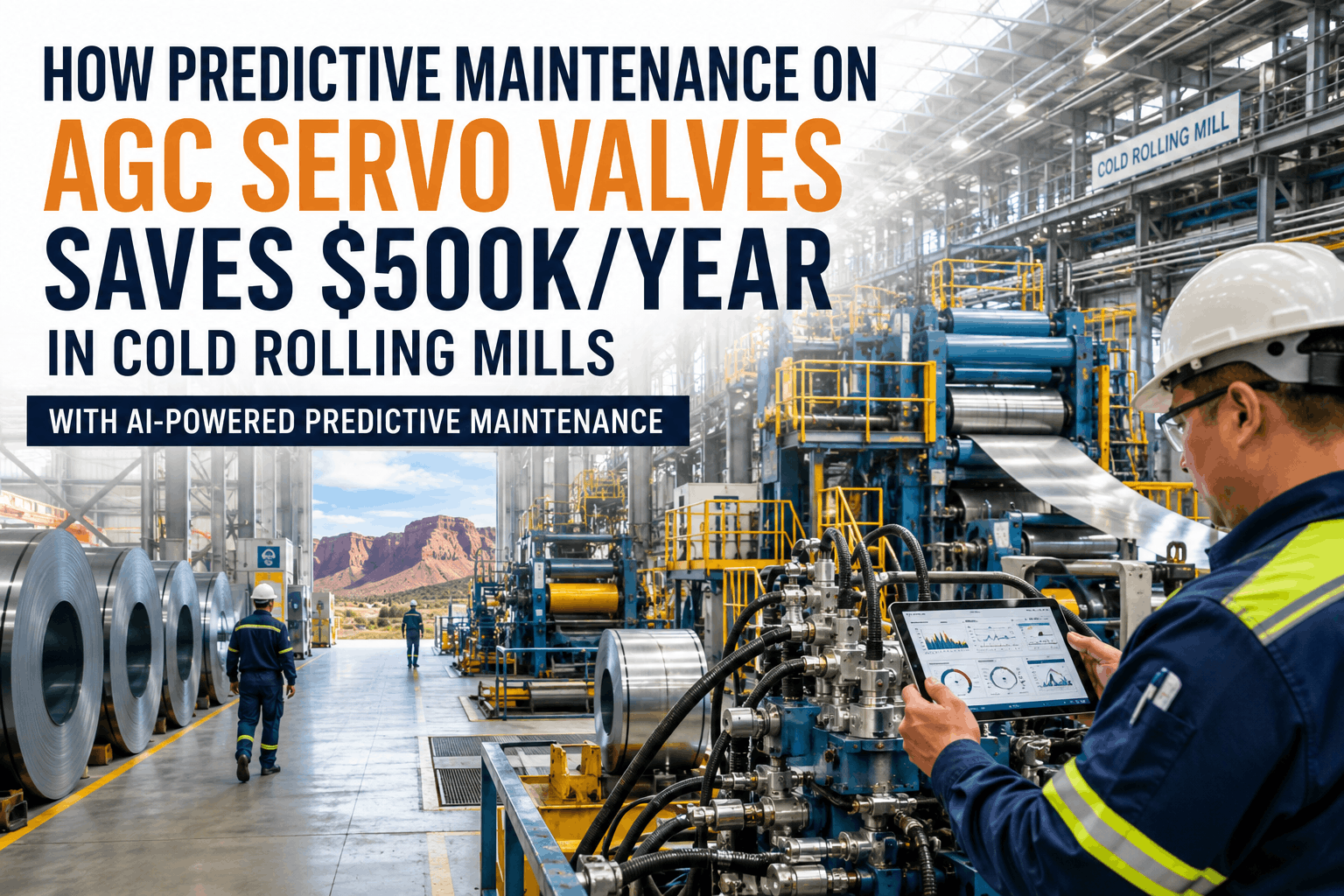
Read More
Automatic gauge control (AGC) servo valves are the precision nervous system of cold rolling mills. These components modulate hydraulic pressure with sub-millisecond response to maintain strip thickness within ±50...
Read More
Blast furnace cooling staves are the unheralded guardians of iron production. These copper and steel components dissipate the extreme thermal and chemical stress of a 1,500°C active zone, preventing catastrophic...
Read More
A single caster breakout in continuous steel casting costs between $2 million and $5 million in direct and indirect losses—yet 68% of steelmakers still rely on reactive response systems instead of predictive...
Read More
Accurate basic oxygen furnace (BOF) refractory life tracking is the single most critical operational discipline in modern steelmaking. When mills fail to monitor lining thickness, refractory consumption rates, and...

Read More
Your CMMS already contains the data that could launch your digital transformation — the problem is that 76% of steel plant managers never develop a structured roadmap to guide their Industry 4.0 journey. Every...

Read More
Your CMMS already contains the data that could be transformed by 5G private network connectivity — the problem is that 92% of steel plant managers never evaluate the network infrastructure required to support...
Read More
Industrial cybersecurity in steel plants operates within a complex threat landscape fundamentally different from IT security. Operational Technology (OT) systems — SCADA networks, Programmable Logic Controllers...
Read More
Carbon emissions reporting has transformed from an environmental compliance checkbox to a core business risk factor. The European Union's Carbon Border Adjustment Mechanism (CBAM), effective January 2024, imposes...
Read More
Steel production ranks among the most energy-intensive industrial processes globally, consuming approximately 12-15% of total industrial energy worldwide. The average integrated steel plant expends 15-18 MWh of...
Read More
Your CMMS already contains the data that could unlock your Scope 3 emissions reduction strategy — the problem is that 87% of steel plant managers never analyze their supply chain data for carbon hotspots. Every...
Read More
Continuous Emission Monitoring Systems (CEMS) in steel plants measure real-time concentrations of particulate matter (PM), sulfur dioxide (SO2), nitrogen oxides (NOx), carbon monoxide (CO), and carbon dioxide (CO2)...
Read More
India's Perform Achieve Trade (PAT) scheme, administered by the Bureau of Energy Efficiency (BEE), mandates that large steel plants achieve specific specific energy consumption (SEC) reduction targets over...
Read More
The EPA's National Emission Standards for Hazardous Air Pollutants (NESHAP) and Maximum Achievable Control Technology (MACT) standards require steel plants to maintain daily emissions logs documenting particulate...

Read More
Steel plant carbon footprint calculation has become mandatory across North America, Europe, and increasingly in Asia-Pacific regions. The GHG Protocol divides steel emissions into three scopes: direct emissions...
Read More
ESG (Environmental, Social, Governance) and CDP (Carbon Disclosure Project) reporting has evolved from a voluntary corporate sustainability exercise into a mandatory compliance obligation for any steel mill...

Read More
Hydrogen-based direct reduction iron (H2-DRI) plants represent a fundamentally different maintenance challenge than traditional natural gas DRI operations. When hydrogen replaces natural gas as the reduction gas in...
Read More
Steel industry decarbonization represents one of the most complex industrial transformation challenges globally — converting century-old blast furnace-basic oxygen furnace (BF-BOF) routes that produce 1.9–2.2...
Read More
The EU Carbon Border Adjustment Mechanism (CBAM) entered its compliance phase on January 1, 2026, fundamentally reshaping how North American and global steel mills calculate, verify, and disclose the embedded...
Read More
ResponsibleSteel certification stands as the steel industry's most rigorous sustainability standard, combining environmental performance, labor rights, occupational health, water stewardship, human rights,...
Read More
Your CMMS already contains the data that proves your environmental management system is working — the problem is that 73% of steel plant managers never analyze it for ISO 14001 compliance and performance...

Read More
ISO 45001 occupational health and safety management system transforms steel plant safety culture from compliance checkbox to operational excellence standard. U.S. steel mills averaging 8–12 lost-time injuries per...
Read More
Steel plant maintenance technicians are the foundation of operational reliability. A skilled technician can diagnose a failing pump bearing by sound alone, adjust hydraulic flow compensators to micron precision,...
Read More
Maintenance technician training is the highest-ROI investment a steel plant can make—yet 70% of U.S. mills spend <$200 per technician annually on structured training while world-class facilities invest...

Read More
Most integrated steel plants run asset-heavy operations where a single unplanned blast-furnace reline or caster outage can erase millions in margin, yet the majority still rely on break-fix routines and...
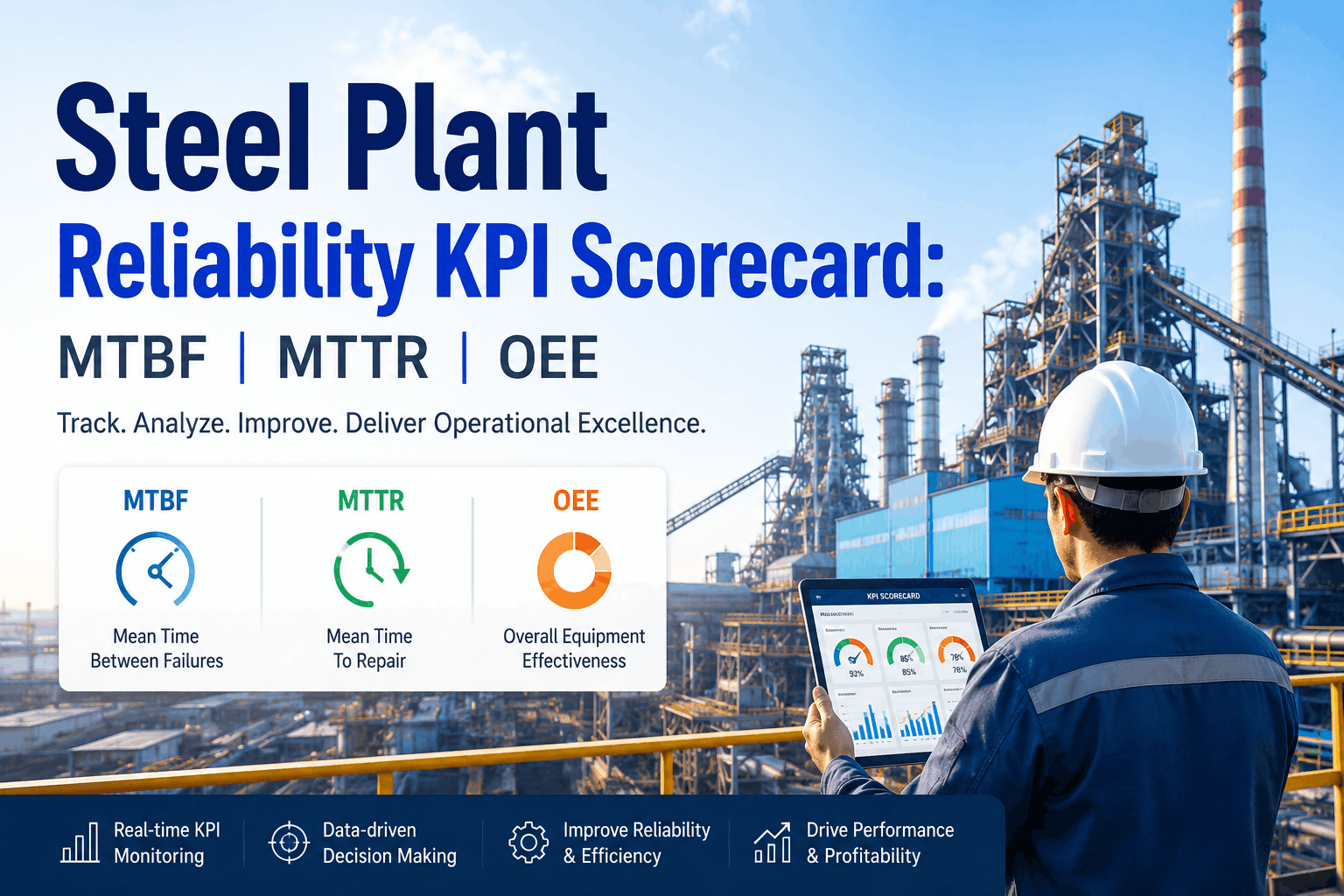
Read More
Your CMMS already contains the data that reveals your plant's reliability performance — the problem is that 76% of steel plant managers never track it systematically. Every work order your maintenance team has...
Read More
Your CMMS already contains the data that reveals your maintenance cost reduction opportunities — the problem is that 82% of steel plant managers never analyze it for cost-saving patterns. Every work order your...
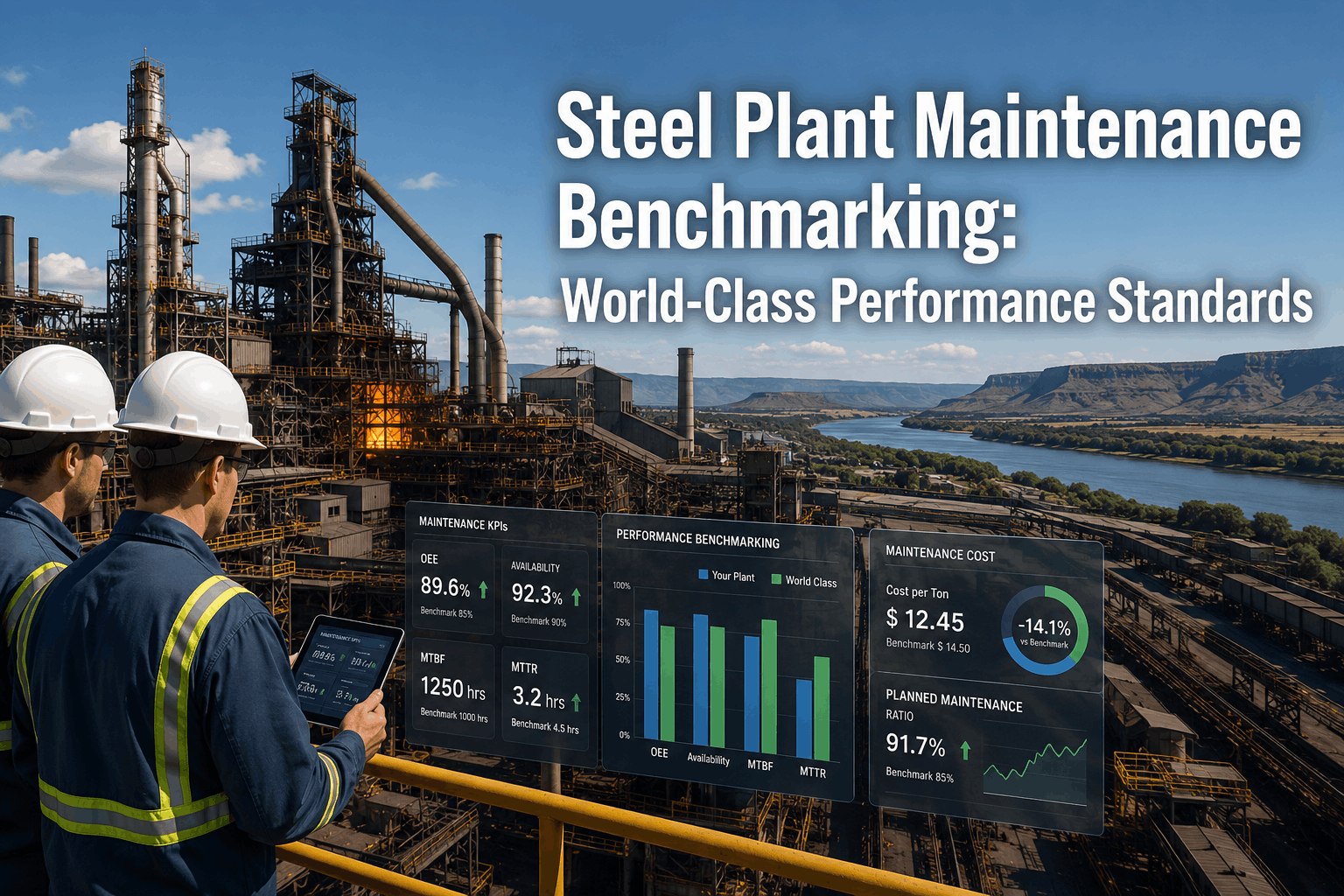
Read More
Steel plant maintenance performance is not subjective — it is measured and benchmarked against industry standards. A rolling mill with 88% overall equipment effectiveness (OEE) and mean time to repair (MTTR) of 6.2...
Read More
Steel plant maintenance technicians are the foundation of operational reliability. A skilled technician can diagnose a failing pump bearing by sound alone, adjust hydraulic flow compensators to micron precision,...
Read More
Steel plant hydraulic systems operate under extreme conditions — rolling mills, casters, and servo-controlled presses demand precision and reliability. Hydraulic fluid contamination is the single largest threat to...

Read More
Your CMMS already contains the data that could predict your next gearbox failure in the steel plant — the problem is that 87% of steel plant maintenance teams never analyze it. Every gearbox inspection your...
Read More
Your CMMS already contains the data that could predict your next bearing failure in the steel plant — the problem is that 94% of steel plant maintenance teams never analyze it for root cause patterns. Every bearing...

Read More
A 2,600-tonne-per-day integrated steel mill operating hot rolling mills (1,200°C furnace zones), EAF transformer cooling systems (105°C oil temperature), high-speed motorized reducers, and precision spindle...

Read More
A 2,800-tonne-per-day integrated steel mill operating rolling mill drive systems, compressor trains, and centrifugal pump arrays struggled with precision machinery alignment and dynamic balancing, experiencing...
Read More
A 2,400-tonne-per-day integrated steel mill struggling to detect subsurface defects, fatigue cracks, and material degradation in critical equipment experienced unplanned failures averaging every 18 months—each...

Read More
Your CMMS already contains the data that could prevent your next material handling equipment failure in the steel plant — the problem is that 92% of steel plant maintenance teams never analyze it for ultrasonic...
Read More
Thermal imaging reveals equipment degradation through surface temperature variations that emerge weeks or months before mechanical failures occur. A loose electrical connection generates localized heat through...

Read More
Vibration analysis reveals the signature of rotating equipment degradation through FFT spectral decomposition and time-domain waveform analysis. Every rotating machine—motors, pumps, fans, gearboxes—generates...
Read More
Vibration analysis reveals the signature of rotating equipment degradation through FFT spectral decomposition and time-domain waveform analysis. Every rotating machine—motors, pumps, fans, gearboxes—generates...

Read More
Oil analysis transforms maintenance from reactive crisis management into predictive intervention by monitoring lubricant health and wear particle signatures. Steel plant gearboxes, hydraulic systems, and...
Read More
Your CMMS already contains the data that could predict your next critical asset failure in the steel plant — the problem is that 91% of steel plant maintenance teams never analyze it for condition monitoring...
Read More
Your CMMS already contains the data that could predict your next electric motor failure in the steel plant — the problem is that 89% of steel mill maintenance teams never analyze it for predictive patterns. Every...
Read More
Gearbox failures represent some of the most expensive and disruptive equipment failures in steel plants. A rolling mill gearbox failure stops the entire mill line, creating immediate production loss of...
Read More
In a steel plant, the operators who run the equipment eight hours a day know its condition better than any maintenance technician. They hear the bearing sounds, feel the vibration, notice the temperature changes,...
Read More
A continuous caster represents one of the most capital-intensive and operationally critical assets in modern steelmaking. Modern casting speeds exceed 1.8 meters per minute, meaning a single breakout doesn't just...
Read More
Steel plant equipment operates under conditions few industries can comprehend: molten metal at 1,700°C, thermal cycling from room temperature to white heat within minutes, and corrosive slag attacking materials...
Read More
A paper permit pinned to a clipboard at a blast furnace casthouse is not a safety system — it is organizational liability waiting to materialize into worker injury. In steel plants operating across multiple zones...
Read More
Failure Mode and Effects Analysis is not a compliance document filed in a cabinet — it is a living reliability engineering practice that transforms steel plant maintenance from reactive firefighting into predictive...

Read More
Steel plants operate some of the most demanding industrial environments on earth — extreme temperatures, heavy loads, continuous operation, and punishing conditions that push equipment to the limit. A single...

Read More
Root cause analysis in steel plants is not a post-failure forensic exercise — it is a maintenance system that prevents repeat failures before they halt production. Yet most steel plants operate as pure...

Read More
Arc flash incidents in steel plants occur at temperatures reaching 35,000 degrees Fahrenheit — hotter than the surface of the sun — and can cause severe burns, blindness, and fatalities in milliseconds. In United...
Read More
Dust explosions at steel mills occur when five elements combine: combustible dust, dispersion in air, confinement of resulting cloud, oxidant (typically oxygen), and ignition source. Primary explosions from dust...
Read More
Fire protection systems at steel mills protect blast furnaces, electric arc furnaces, hydraulic rooms, cable galleries, and material handling areas where combustible materials accumulate and high-temperature...
Read More
Cooling towers at integrated steel mills handle 80–150 million gallons daily—supporting blast furnace cooling staves, basic oxygen furnace tuyere systems, continuous caster spray circuits, and rolling mill coolers...

Read More
Compressed air consumes 15–25% of total electricity at integrated steel mills, translating to annual costs between $3 million and $12 million depending on plant size and operating pressure. Yet 25–35% of that...
Read More
Critical steelmaking operations demand absolute power reliability. Unplanned electrical outages at integrated steel mills cost $1.2 million or more per day and cascade through blast furnaces, continuous casters,...
Read More
A steel plant's blast furnace lining campaign requires a four-week controlled outage. The plant hires 240 contractors for scaffold work, refractory installation, equipment repair, and finishing services. On day...
Read More
A steel plant's utility steam system feeds process heating, sterilization, and equipment operation across 50+ end-uses. The boiler runs steadily — steam pressure holds, no visible leaks, no obvious failures. But...
Read More
A waste heat recovery boiler (WHRB) begins an operating campaign generating 18 tons/hour of steam from blast furnace exhaust gases. The boiler performs flawlessly — no alarms, no visible problems, no work orders...
Read More
A steel plant's blast furnace cooling system fails six times a year — each unplanned failure costs $240,000 in emergency contractor labor, expedited parts, and lost production during repair. Finance asks: "Why...
Read More
Steel plant maintenance budgets fail annually — not because maintenance is expensive, but because the budget never actually tracks against reality. Finance approves $8.2 million based on spreadsheets and historical...
Read More
Total Productive Maintenance (TPM) is often described as a cultural shift toward zero defect manufacturing, but poorly-executed TPM programs become bureaucratic busywork — operators spend hours on equipment...
Read More
Most steel plants maintain separate planning cycles for weekly emergency repairs, monthly maintenance windows, and annual planned shutdowns — losing 30-40% of maintenance productivity to coordination overhead and...
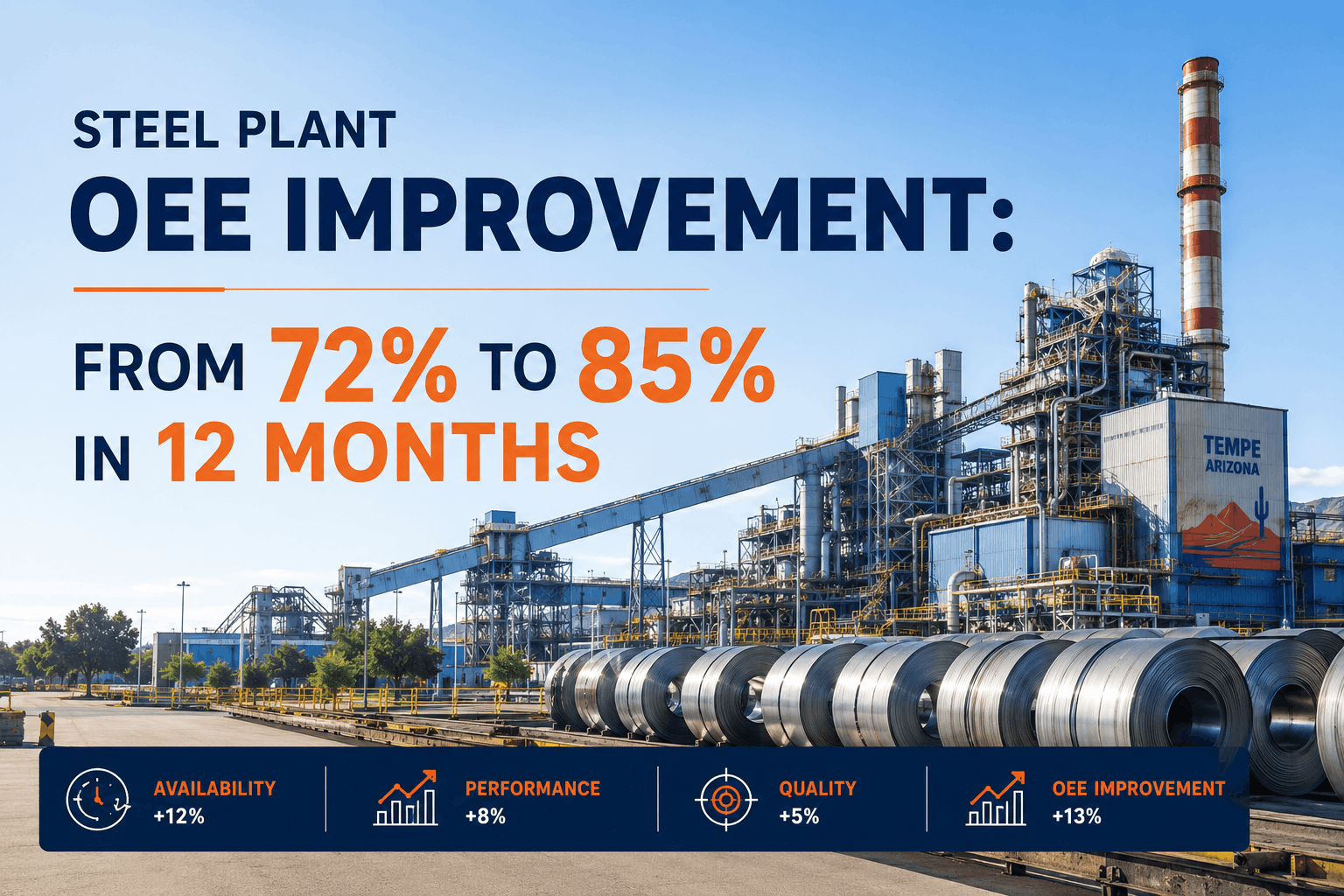
Read More
Steel plant Overall Equipment Effectiveness (OEE) scores of 65-72% are painfully typical — the result of chronic downtime, performance losses, and quality defects that plants accept as inevitable. But 15-18...

Read More
Steel surface quality determines final product value, customer satisfaction, and production cost. A single undetected surface defect — a pit, scratch, roll mark, or edge crack — reaching a customer's finishing line...
Read More
Steel plants operate in one of the most complex, capital-intensive manufacturing environments in the world. A single unplanned equipment failure — whether on a blast furnace, continuous caster, rolling mill, or...
Read More
Integrating CMMS with ERP systems (SAP, Oracle, NetSuite) costs US steel mills $2.4 billion annually in unaligned maintenance data, manual transaction entry, and procurement inefficiencies. The International Data...
Read More
Automating maintenance work orders from SCADA equipment alarms saves US steel mills $1.8 million annually per facility in manual dispatching delays and reactive emergency repairs. The International Society of...
Read More
Implementing a Computerized Maintenance Management System (CMMS) in US steel mills fails 42% of the time — not due to software limitations, but due to execution errors that are entirely preventable. The American...

Read More
The difference between edge AI and cloud AI deployment in steel plants is not technical preference — it is a choice between predictive latency that enables real-time action (milliseconds) and architectural...

Read More
Reducing off-grade steel production costs the US steel industry $3.2 billion annually in scrap disposal, rework penalties, and customer rejects. The Federal Association of Steel Manufacturers documents that 19% of...
Read More
In a steel plant, the most dangerous moment is not the blast furnace operating at 2,800°F or the EAF handling 1,000-ton scrap loads — it is the transition from maintenance mode back to production. A single failure...
Read More
Continuous annealing lines (CAL) represent the most thermally complex, precision-critical steel finishing process: cold-rolled strip enters at ambient temperature, is heated to 650–800°C in a multi-zone furnace...
Read More
Continuous galvanizing lines (CGL) represent the final coating manufacturing step for corrosion-resistant steel strip before dispatch to automotive, construction, and appliance end-markets—and they tolerate...
Read More
Steel pickling lines represent one of the most chemically aggressive industrial environments in modern manufacturing: hydrochloric acid (HCl) or mixed acid (H2SO4 + HNO3) systems dissolve iron oxide scale at...
Read More
Direct Reduced Iron (DRI) production through MIDREX and HYL shaft furnace processes represents one of the most capital-intensive, least-tolerant-of-downtime operations in modern steelmaking. When a MIDREX furnace...
Read More
Iron ore pellet plants are the critical link between mining and steelmaking — producing the high-quality furnace feed that blast furnaces and direct reduction plants require. The indurating furnace and travelling...
Read More
A steel plant scrap yard is the starting point of the electric arc furnace (EAF) steelmaking process — and the reliability of scrap processing equipment directly impacts furnace productivity. A shredder breakdown...

Read More
Bar mills and rebar finishing stands operating at line speeds of 20–35 m/s produce 8–32 mm structural reinforcement and merchant bars, yet most independent steel mills manage finishing stand gearboxes, roll pass...

Read More
Heavy plate mills processing 1.5–5.5 meter wide steel sheets at thickness ranges of 5–120 mm operate under crushing roll forces exceeding 100 MN, yet most independent plate producers manage roll shop operations...
Read More
Wire rod mills operating at speeds exceeding 110 meters per second represent the highest mechanical stress environments in steel production, yet most plants manage block mill laying heads, Stelmor conveyor systems,...

Read More
Reheat furnaces consume 67% of the energy in the continuous casting and rolling process — making them the single largest energy consumer in an integrated steel mill [citation:1]. A typical walking beam...

Read More
Steel mills operate some of the most demanding dust collection systems on Earth. Every ton of hot metal from a blast furnace generates 2–4 tons of dust, sinter fines, and scale. Every electric arc furnace produces...
Read More
Blast furnace cooling stave failure is the silent killer of campaign life. A single stave cooling water leak in a 4,500-cubic-meter blast furnace drives refractory erosion that cascades across 8–12 adjacent staves...

Read More
Hydraulic system failures are the #1 cause of unplanned downtime in rolling mills and casters. A single pump failure, proportional valve malfunction, or servo cylinder drift can halt production for 8–36 hours and...
Read More
Unplanned steel plant shutdowns cost $50,000 to $200,000 per hour in lost production, idle workforce expenses, and emergency procurement overhead. Planned shutdowns are predictable — but only if you compress...

Read More
A steel plant running 300+ critical rotating assets — blast furnace blowers, rolling mill drives, compressors, fans, pumps, and gearboxes — cannot afford unplanned downtime. A single bearing failure on a blast...
Read More
Steel plant lubrication programs protect rotating equipment—rolling mill bearings, blast furnace blowers, casting machine drives, compressors, and hydraulic systems—from friction, heat, and wear. Poor lubrication...
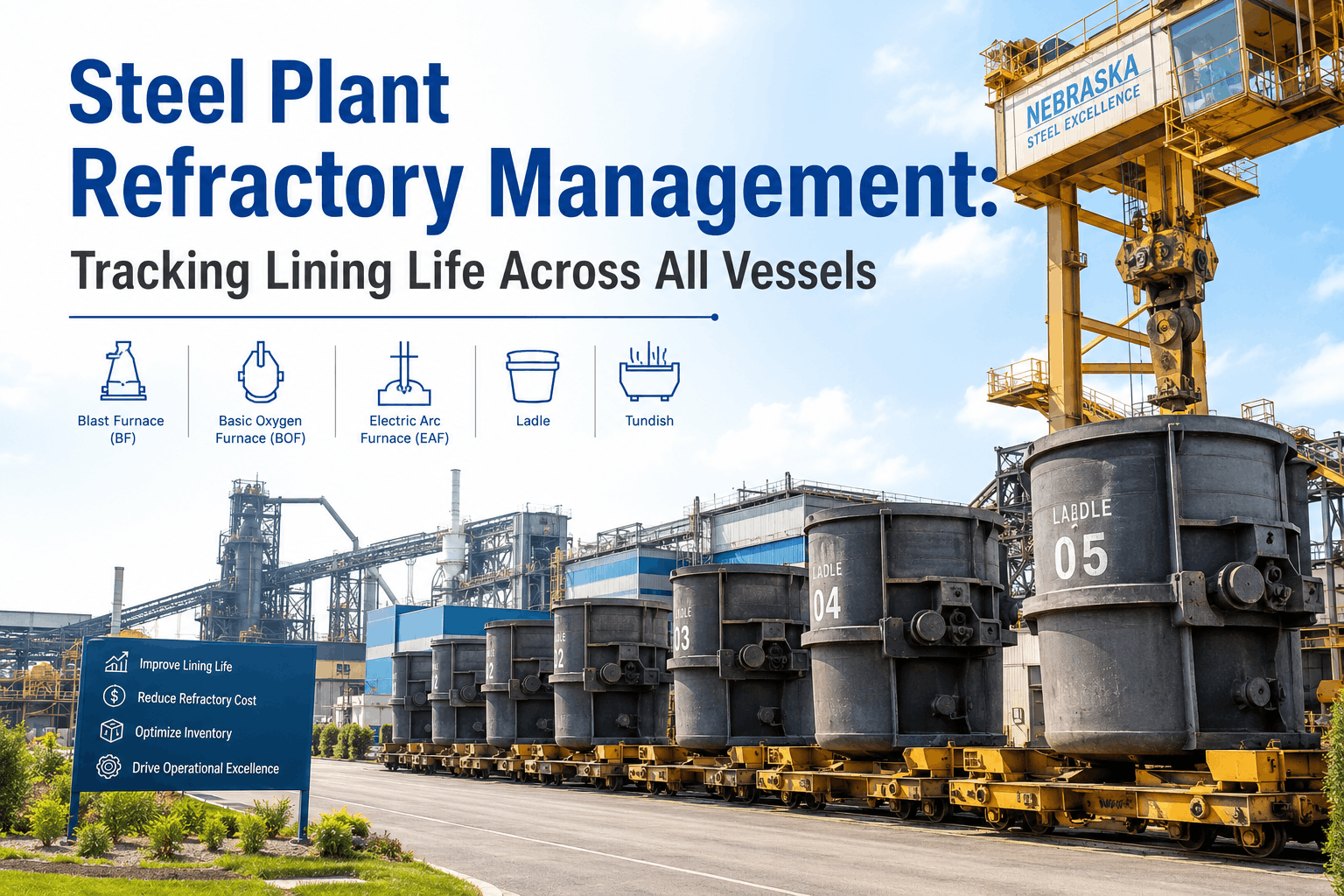
Read More
Refractory linings protect blast furnaces, basic oxygen furnaces (BOF), electric arc furnaces (EAF), ladles, and tundishes from 1,500–1,800°C molten metal temperatures. A single refractory campaign failure can cost...
Read More
Steel plant cranes—electric overhead traveling (EOT), gantry, ladle, and charging cranes—hoist tons of molten metal, scrap, and raw materials daily. OSHA 1910.179 compliance requires daily visual inspections,...
Read More
Steel plant conveyor systems handle millions of tons of material annually—ore, coke, sinter, scrap, and finished products. A single conveyor belt failure can halt production for hours, costing $10,000–$50,000 in...

Read More
Steel mills operate continuous production systems where unplanned equipment downtime costs $50-500k per hour in lost production, material waste, and overhead absorption. A critical bearing failure on rolling mill...

Read More
Steel manufacturing is among the most hazardous industrial operations globally, with injury rates (non-fatal injuries + fatalities per 200,000 worker-hours) 2-3 times higher than all-industry average. Typical large...
Read More
Steel plants operate under one of the most stringent EPA regulatory frameworks in industrial America: the National Emission Standards for Hazardous Air Pollutants (NESHAP) and Maximum Achievable Control Technology...
Read More
Steel plants consume 20-50 cubic meters of water per ton of finished steel produced—among the most water-intensive industrial operations globally. A typical 500,000-ton integrated mill consumes 10-25 million cubic...
Read More
Steel plants consume approximately 10-15% of global industrial energy demand, with specific energy consumption (SEC) ranging from 400-700 kWh per ton of finished steel depending on production route, equipment age,...

Read More
A coke oven battery is the heart of an integrated steel mill — and one of the most expensive assets to replace. A complete battery rebuild costs $150–300 million and takes 18–36 months of construction, during which...
Read More
A major sinter plant in the USA operating a traveling grate strand faced chronic grate bar consumption exceeding budget projections by 35-40% annually. Grate bar failures forced unexpected strand shutdowns,...

Read More
A major cold rolling mill in the USA struggled with gauge deviation and thickness variation that violated customer tolerance specifications. The root cause: servo valve contamination in the AGC hydraulic system...

Read More
A leading hot strip mill in the USA extended average work roll campaign life from 22 hours to 28 hours of rolling time while increasing backup roll campaigns from 60 to 75 passes through systematic roll condition...

Read More
A major steel caster in the USA faced a critical operational challenge: frequent breakouts were costing $2.1 million annually in lost production, equipment damage, and safety incidents. By implementing AI-powered...
Read More
An Electric Arc Furnace (EAF) transformer is the single most critical electrical asset in a steel mill — and one of the most expensive to replace. A catastrophic failure can cost $500,000–2,000,000 in replacement,...
Read More
A major steelmaking operation in the Northeast was replacing BOF converter vessels every 18,000–22,000 heats due to refractory wear and vessel integrity loss. Their BOF department lacked systematic vessel health...

Read More
A major integrated steelmill in the Midwest conducted a blast furnace reline campaign in 2023 without systematic planning—no condition-based campaign life prediction, no work package scheduling, and no predictive...

Read More
A 600-ton-per-day EAF steelmaking facility in the Upper Midwest experienced unplanned downtime of 42–58 hours per month, costing $2.1M–$2.8M annually in lost production and emergency repairs. Their maintenance was...

Read More
A 450-ton-per-day integrated steel mill in the Midwest was operating at $28.40 in maintenance costs per ton of finished steel—32% above the industry top-quartile target of $21.50. Their maintenance team lacked...
Read More
Electric motors are the workhorses of industrial facilities — operating fans, pumps, compressors, conveyors, and process equipment. Yet many facilities treat motor maintenance as reactive crisis management: run...
Read More
Dissolved Gas Analysis (DGA) is the most powerful predictive diagnostic tool for assessing power transformer health without opening equipment for intrusive inspection. When transformer oil is analyzed for trace...
Read More
Mobile equipment — forklifts, wheel loaders, mobile cranes, and telehandlers — are high-risk assets in steel mills, foundries, and manufacturing plants. OSHA regulations (29 CFR 1918, 1919, 1926) mandate daily...
Read More
CMMS go-live readiness is the culmination of months of planning, configuration, testing, and team preparation. Industrial facilities that execute a structured go-live readiness checklist report 85% reduction in...
Read More
User acceptance testing (UAT) is the critical quality gate between CMMS development and production go-live. In steel plants, chemical facilities, and refinery operations, a comprehensive UAT checklist ensures that...
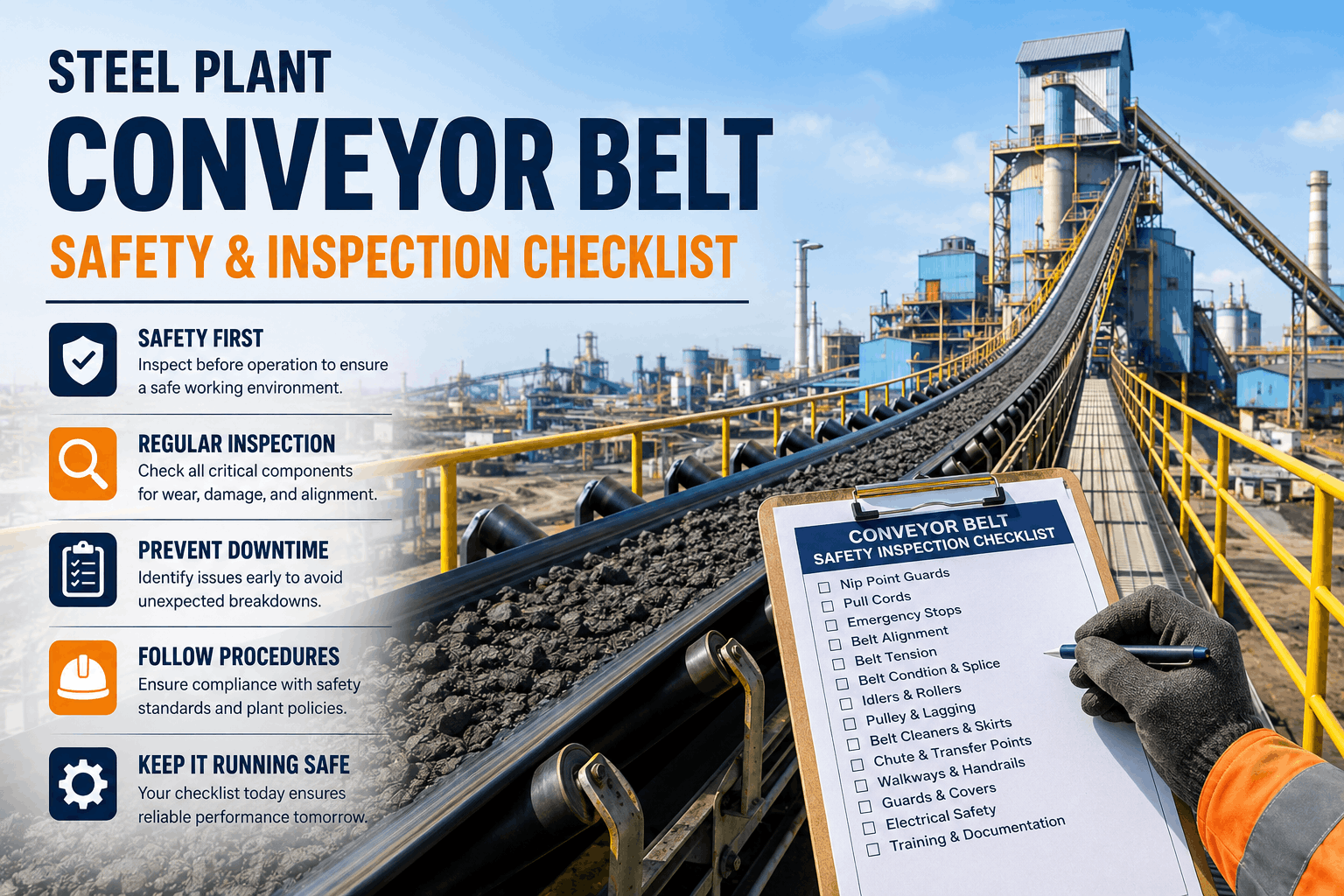
Read More
Conveyor belts are the arteries of a steel plant — moving raw materials, sinter, pellets, coke, and finished product throughout the facility. But they are also among the most hazardous equipment in the plant. Nip...
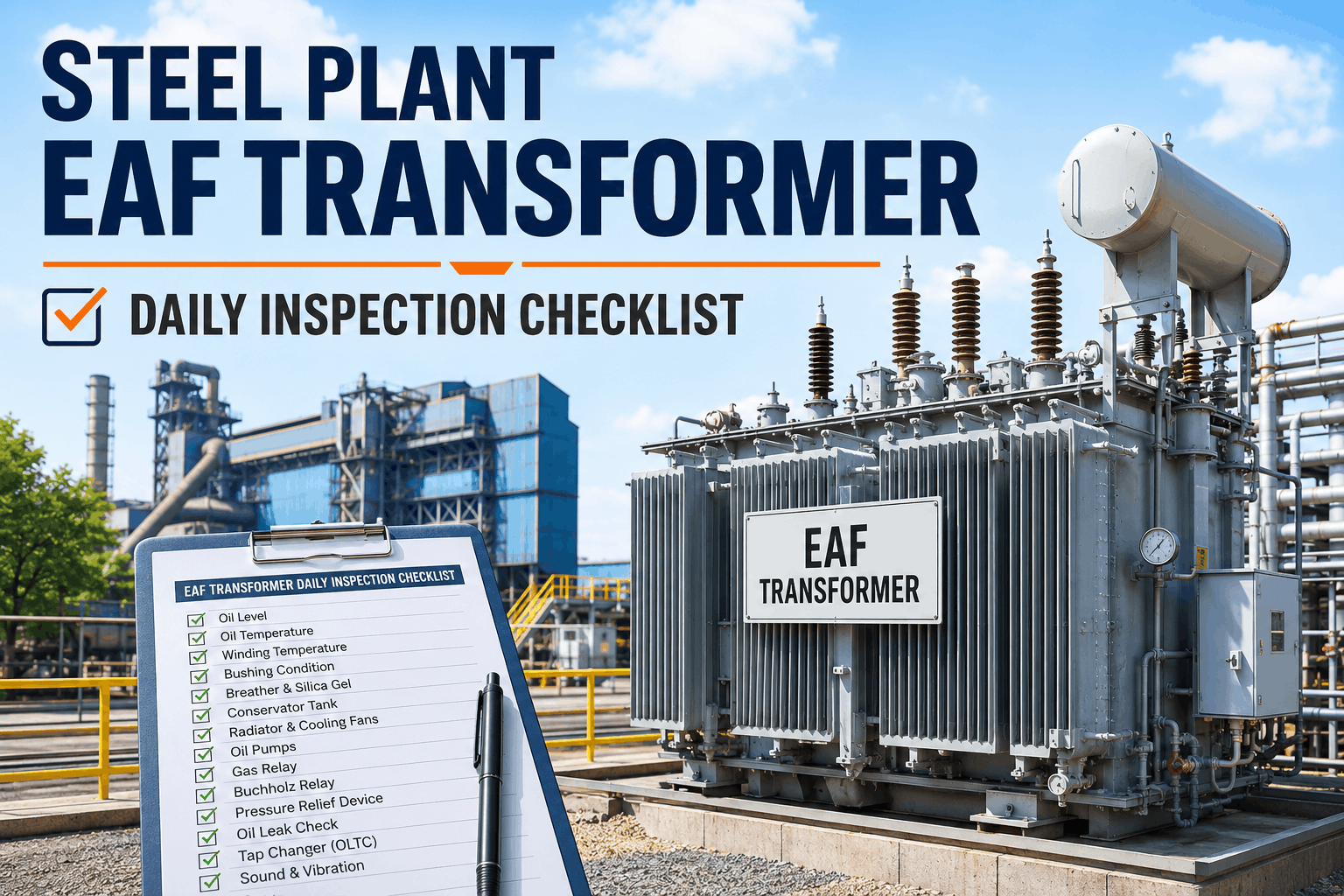
Read More
Electric Arc Furnace (EAF) transformers operate under extreme electrical and thermal stress — daily load swings from near zero to full power, harmonic distortion, and high short-circuit currents. A single...
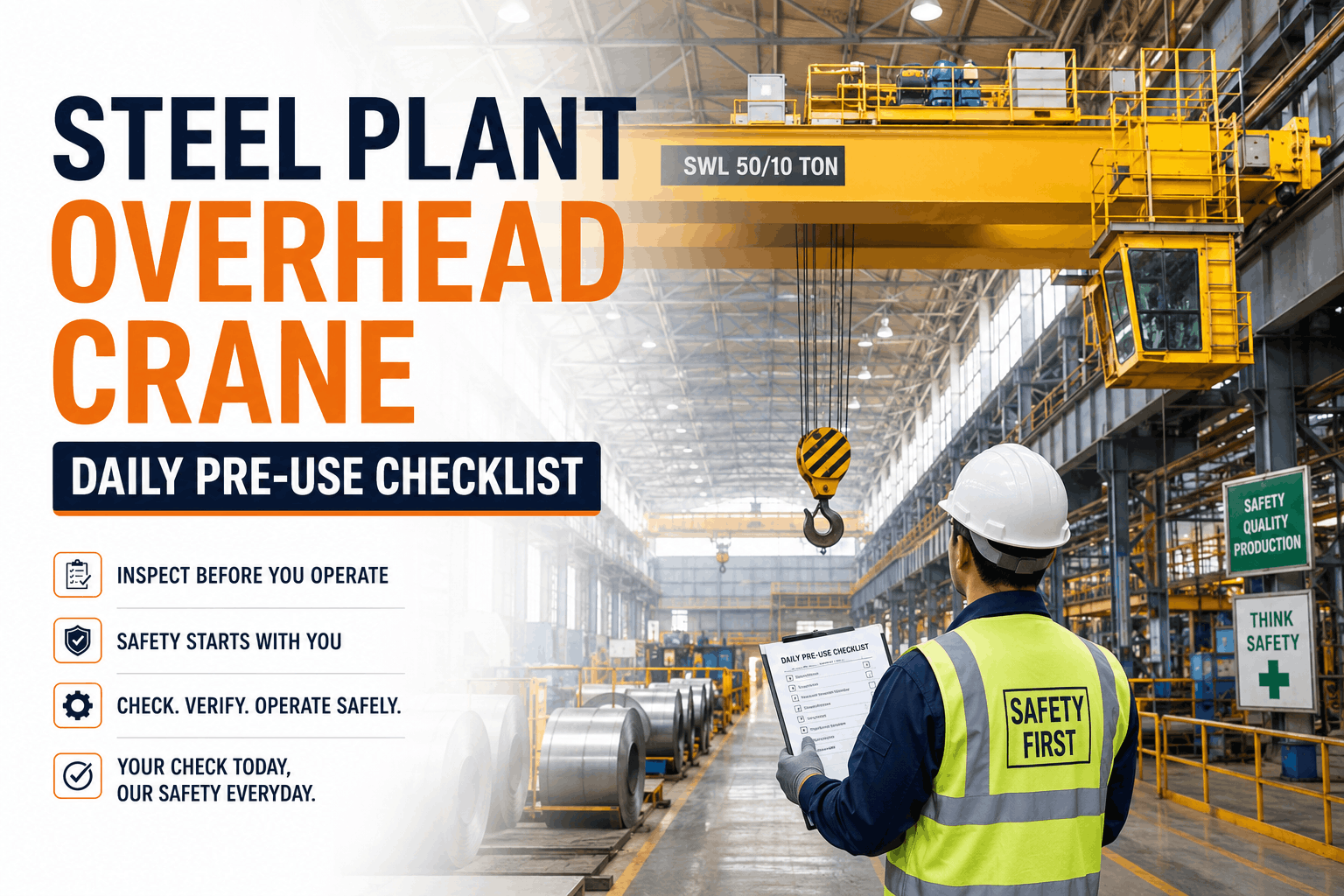
Read More
Overhead cranes are silent killers in steel plants — they carry hundreds of tons across production areas where workers stand unaware of the danger overhead. A single failed component during material transfer can...
Read More
Molten metal incidents are among steelmaking's most catastrophic events. Liquid steel at 1,550–1,600°C and blast furnace hot metal at 1,450–1,500°C represent thousands of megajoules of thermal energy. When water...
Read More
Working at heights above 4 feet in general industry and 6 feet in construction demands comprehensive fall protection protocols. Steel plants operate at extreme heights — from blast furnace charging platforms to...
Read More
A single overhead crane failure in a steel mill can drop a 50-ton ladle of molten steel, causing catastrophic injury, facility destruction, and OSHA fines exceeding $150,000 — not to mention weeks of production...

Read More
Steel mill operations present continuous occupational health and safety risks — electric arc furnaces at 3000°F, molten metal pouring at 2800°F, hydraulic presses generating 5000 tons of force, and equipment...
Read More
Steel mills are among the most energy-intensive manufacturing operations in the world — an integrated steel mill consumes 12–15 megawatt hours (MWh) of electricity per ton of steel produced. With global electricity...
Read More
Steel mill spare parts inventory management operates at an intersection of cost pressure and operational necessity — a critical spare part in stock that never gets used represents locked capital and warehouse...

Read More
Mobile CMMS systems designed for steel plant floor environments eliminate the disconnect between maintenance operations and technician teams in high-heat, dust-laden, and vibration-intensive production zones....
Read More
Overhead traveling (EOT) cranes and ladle handling cranes are the highest-risk assets in integrated and mini steel mills — a single unplanned EOT crane failure halts entire production floors and costs $50,000+ per...

Read More
Rigging and sling failures cause catastrophic injuries in steel plants—dropped loads, struck-by incidents, and equipment damage. OSHA 29 CFR 1910.184 mandates pre-use inspections for all slings, shackles, and...

Read More
Overhead and gantry cranes lift, position, and lower loads in manufacturing plants, steel mills, automotive facilities, and warehouses. Wire rope failure, hook deformation, brake system degradation, and limit...

Read More
Forklift operators in USA general industry must conduct thorough pre-shift safety inspections daily before placing equipment in service per OSHA 29 CFR 1910.178(q)(7). Defective forklifts immediately removed from...
Read More
Working at heights above 6 feet in USA general industry exposes workers to fall hazards requiring comprehensive fall protection planning, equipment selection, rescue capability, and incident response readiness....

Read More
Hot work operations—welding, cutting, grinding, torch-applied roofing, and thermal processes—generate sustained flames, sparks, and molten metal that readily ignite combustible materials within 35 feet of the work...

Read More
Confined space entry compliance safeguards worker lives and protects facilities from catastrophic incidents. Permit-required confined spaces present unique hazards—oxygen deficiency, atmospheric hazards, engulfment...

Read More
A medium-sized integrated steel plant operating a bar rolling mill was running at 72% OEE — well below the industry benchmark of 82-85%. The mill tracked overall equipment effectiveness manually, with data compiled...

Read More
A 2,400 m³ integrated steel mill operated three shifts across its blast furnace, BOF melt shop, caster, and rolling mill — but critical maintenance information was lost between every shift change. Shift logs were...
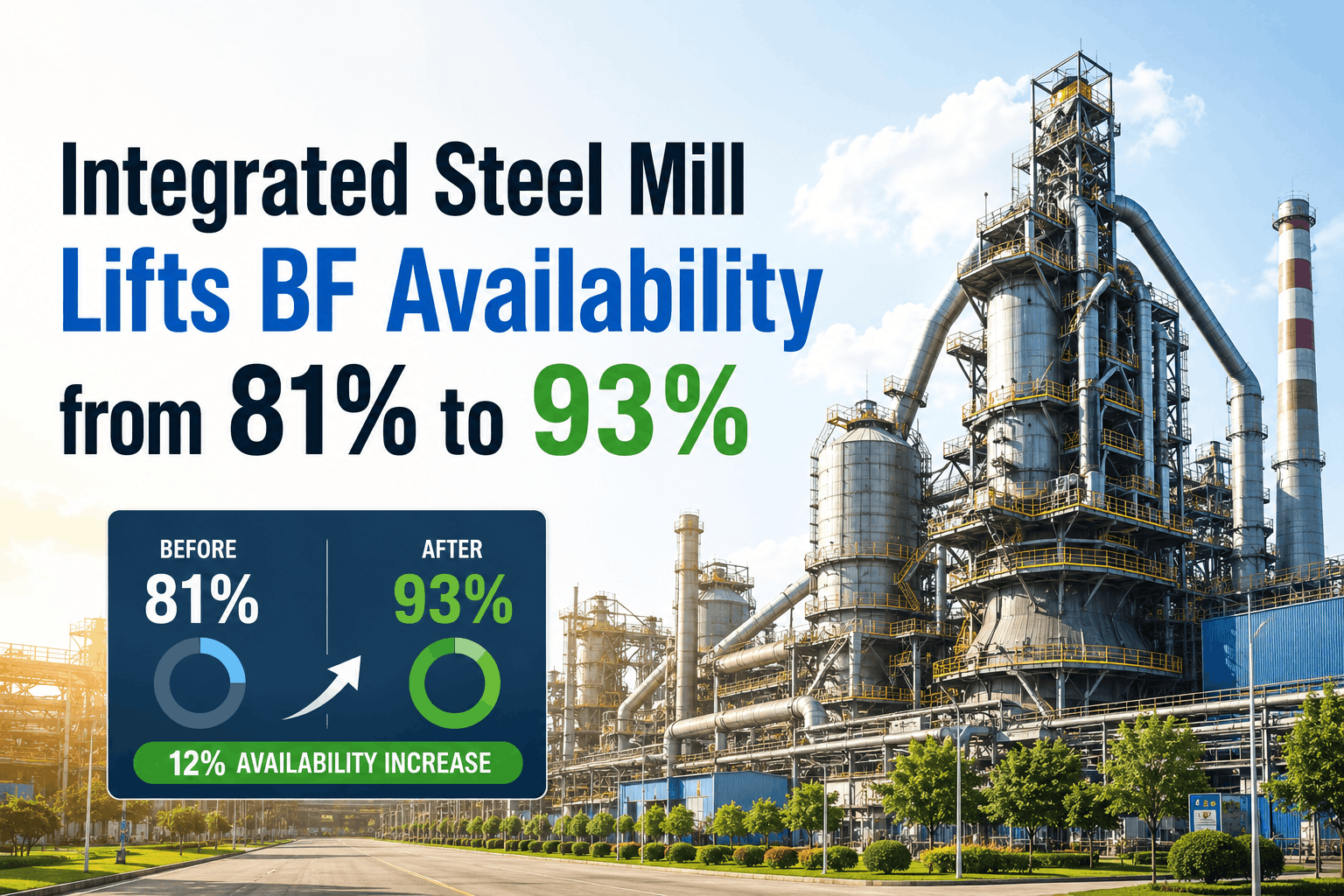
Read More
A 2,400 m³ integrated steel mill operated its primary blast furnace at 81% availability — losing 69 days annually to unplanned repairs, emergency maintenance, and extended outages. Maintenance was fragmented:...
Read More
A large integrated steel mill operating a 2,800 m³ blast furnace averaging 650 tons hot metal daily faced catastrophic unplanned shutdown risk. Cooling stave failures occur without warning — a stave leak initiation...

Read More
A 120-ton capacity mini mill operating four electric arc furnaces was constrained by tap-to-tap cycle time averaging 56 minutes per heat — 18% above industry benchmark. Electrode consumption varied wildly (1.8–2.4...
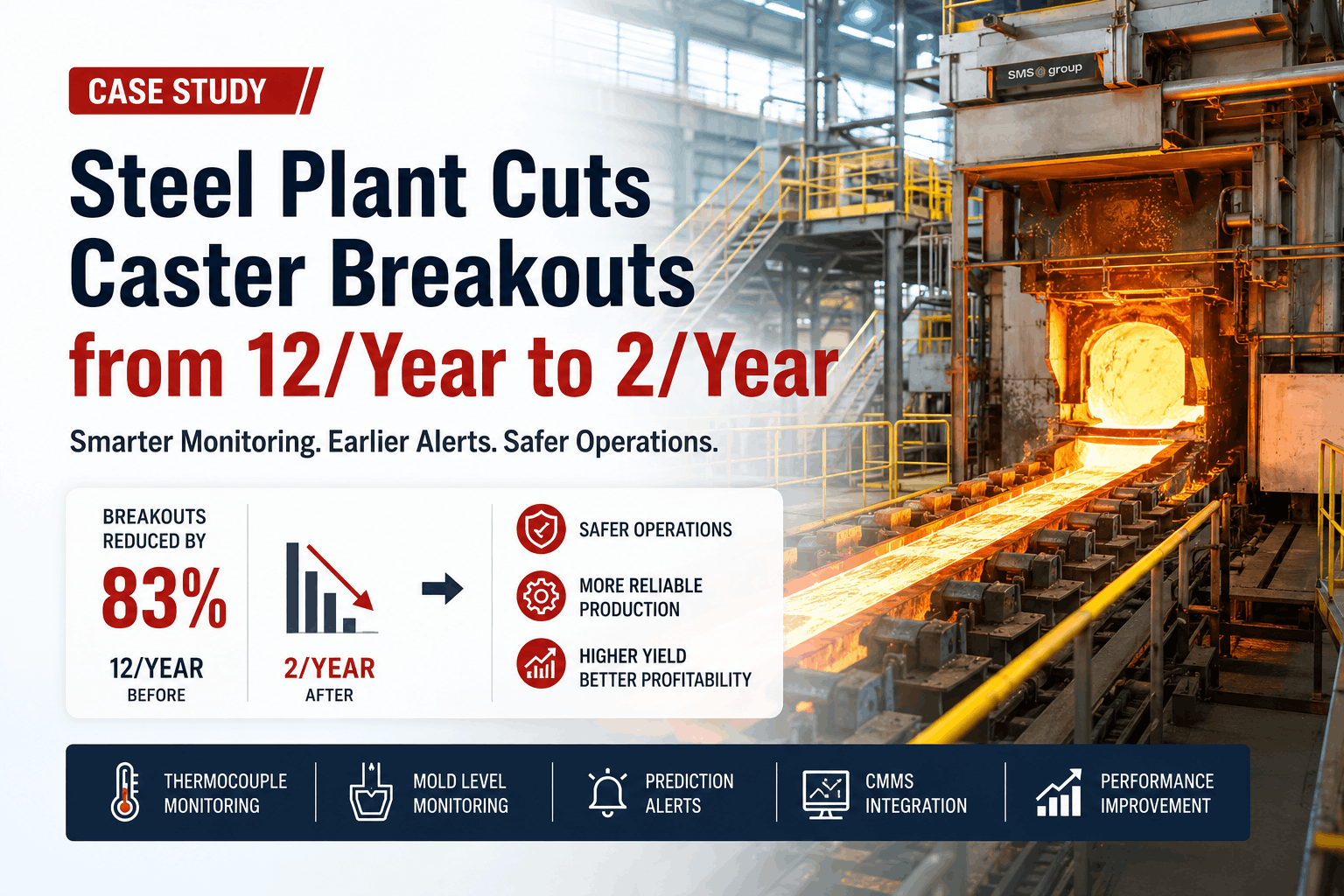
Read More
A large North American integrated steel mill operating two continuous casters was losing $850,000 annually to mold breakout incidents. Averaging 12 breakout events per year, each incident destroyed mold copper...
Read More
A medium-sized integrated steel plant operating a meltshop, caster, and rolling mill had no centralized maintenance system. Work orders were handwritten on paper logs. Preventive maintenance existed only as...
Read More
An integrated steel mill operating a 150-ton AC electric arc furnace was spending $2.8 million every 18-24 months on refractory relines — the single largest maintenance expense in EAF steelmaking. The refractory...
.png)
Read More
Steel plants conduct thousands of hot work operations annually — welding, cutting, grinding, and brazing on processing equipment, structural steel, and piping systems. NFPA 51B Standard for Fire Prevention During...

Read More
Permit-required confined spaces in steel plants — blast furnace shells, pickling tanks, ladle vessels, boiler drums, and reaction tanks — contain hazardous atmospheres (hydrogen sulfide, carbon monoxide, oxygen...

Read More
Lockout/Tagout (LOTO) procedures isolate hazardous energy sources — electrical, hydraulic, pneumatic, thermal, or mechanical — before maintenance begins. A single missed energy source in a multi-energy steel plant...

Read More
Fire doors compartmentalize steel plants by creating rated barriers that contain fire and smoke within specific operational zones. NFPA 80 mandates annual inspections and functional testing to confirm that fire...

Read More
Fire sprinkler systems protect steel plant operations by containing fires before they escalate into catastrophic losses. NFPA 25 quarterly inspections ensure that waterflow alarm devices, control valves, fire...
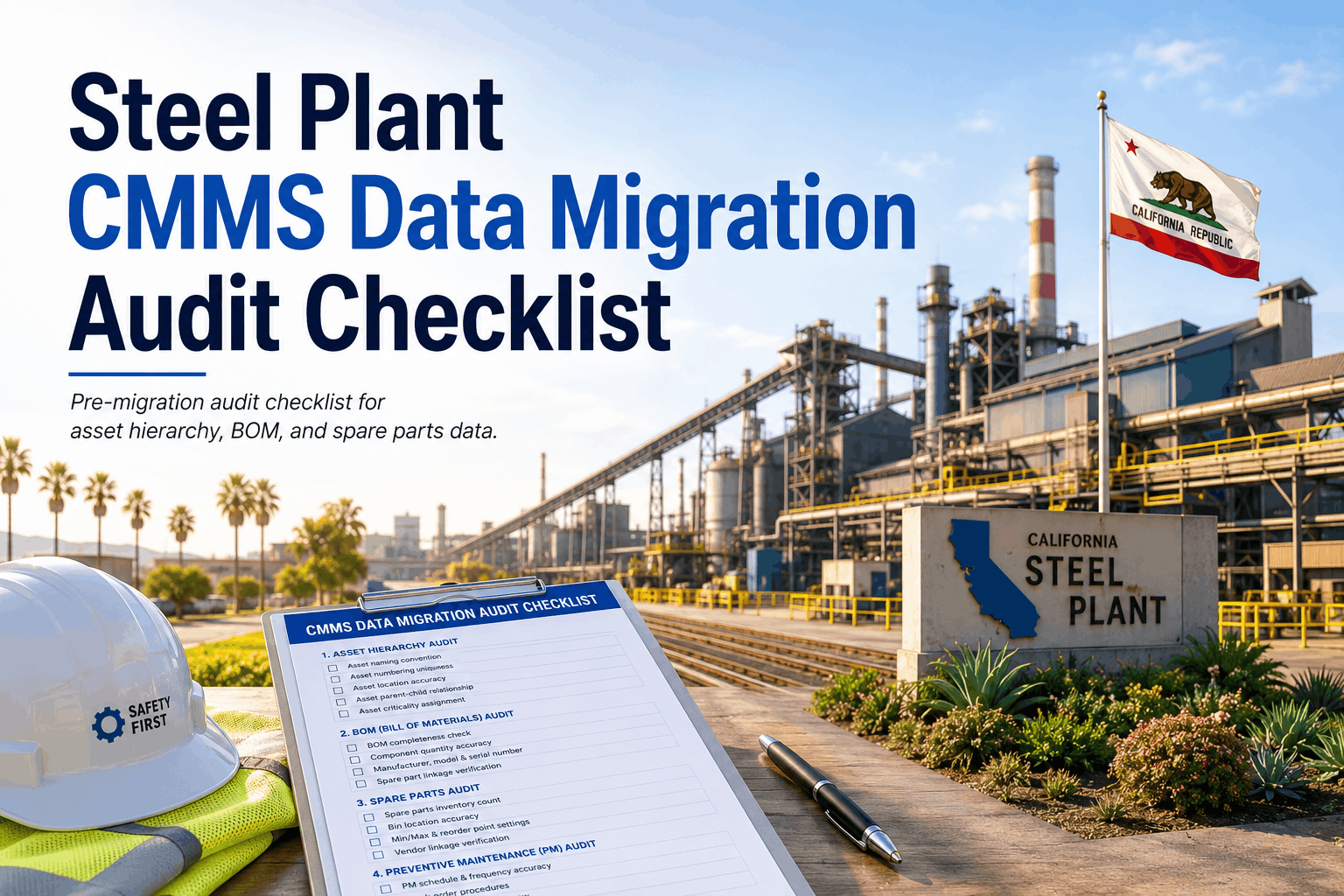
Read More
CMMS data migration—moving maintenance records, asset data, and preventive maintenance schedules from a legacy system to a new platform—is treated by most steel mills as a technical IT task: export data, import...
Read More
A 120-ton EAF mini-mill melting automotive scrap was spending $580,000 annually on graphite electrodes — the single largest material cost in electric steelmaking. Electrode breakage incidents (averaging 6-7 per...
Read More
A 650,000-ton-per-year hot strip mill producing automotive sheet and appliance-grade material was experiencing cobble events (strip breaks mid-rolling requiring full shutdown and strip remelt) at a rate of 14-18...
Read More
A diversified global steel group operating 14 production facilities across North America, Europe, and Asia — ranging from small rebar mills to large integrated steelworks producing specialty products — had...
Read More
A 1.8 million-ton integrated steel mill faced an EPA NESHAP (National Emission Standards for Hazardous Air Pollutants) inspection that historically resulted in citations across 40% of US steel plants. The mill's...
Read More
A leading automotive steel supplier was experiencing inconsistent cold rolling mill thickness yields — costing approximately $340,000 annually in scrap, rework, and tolerance failures. Their AGC (automatic gauge...
Read More
Permit-to-work systems are the primary control mechanism protecting workers performing high-risk tasks in steel mills. A permit verifies that: the work scope is clearly defined, the location is isolated from...
Read More
Permit-to-work systems are the primary control mechanism protecting workers performing high-risk tasks in steel mills. A permit verifies that: the work scope is clearly defined, the location is isolated from...

Read More
Contractor incidents represent 23% of steel mill workplace fatalities despite contractors typically comprising only 8–12% of the daily workforce. The root cause is systemic: contractors arrive from external...

Read More
Emergency response drills separate steel plants that can execute critical evacuations in 180 seconds from facilities where confusion reigns for 15+ minutes. OSHA 1910.38 mandates documented fire and evacuation...

Read More
Steel mills encounter hazardous atmospheric conditions: hydrogen sulfide (H₂S) from coke ovens and blast furnace gas, carbon monoxide (CO) from furnaces, oxygen depletion in confined spaces, and combustible gases...
-checklist.png)
Read More
Steel mill workers face burns, eye damage, and respiratory injury every shift. OSHA statistics show that inadequate or degraded Personal Protective Equipment (PPE) causes 90+ fatal workplace injuries annually in...

Read More
Continuous Emissions Monitoring Systems (CEMS) are the regulatory gateway between your steel mill and environmental compliance. EPA regulations mandate daily zero and span calibration checks, weekly linearity...

Read More
Electrostatic precipitators (ESP) in steel mills handle extreme flue gas temperatures (150–400°C) and high particulate loading, removing up to 99.5% of dust before emissions. A single failed rapper mechanism or...
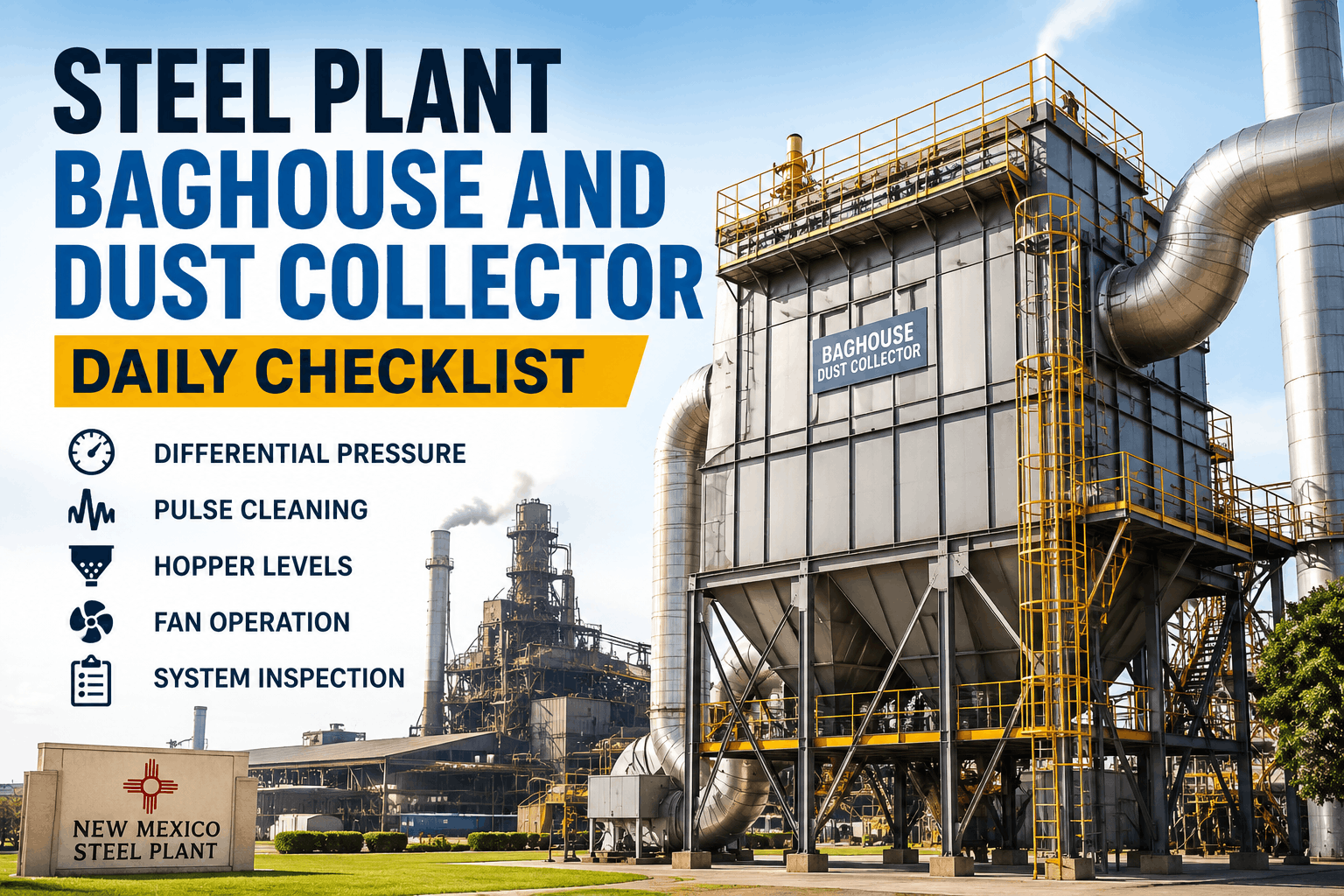
Read More
Dust collection system downtime costs steel plants between $5,000 and $15,000 per hour in lost production capacity. Baghouse failures stem from unmonitored differential pressure buildup, fouled filter bags,...
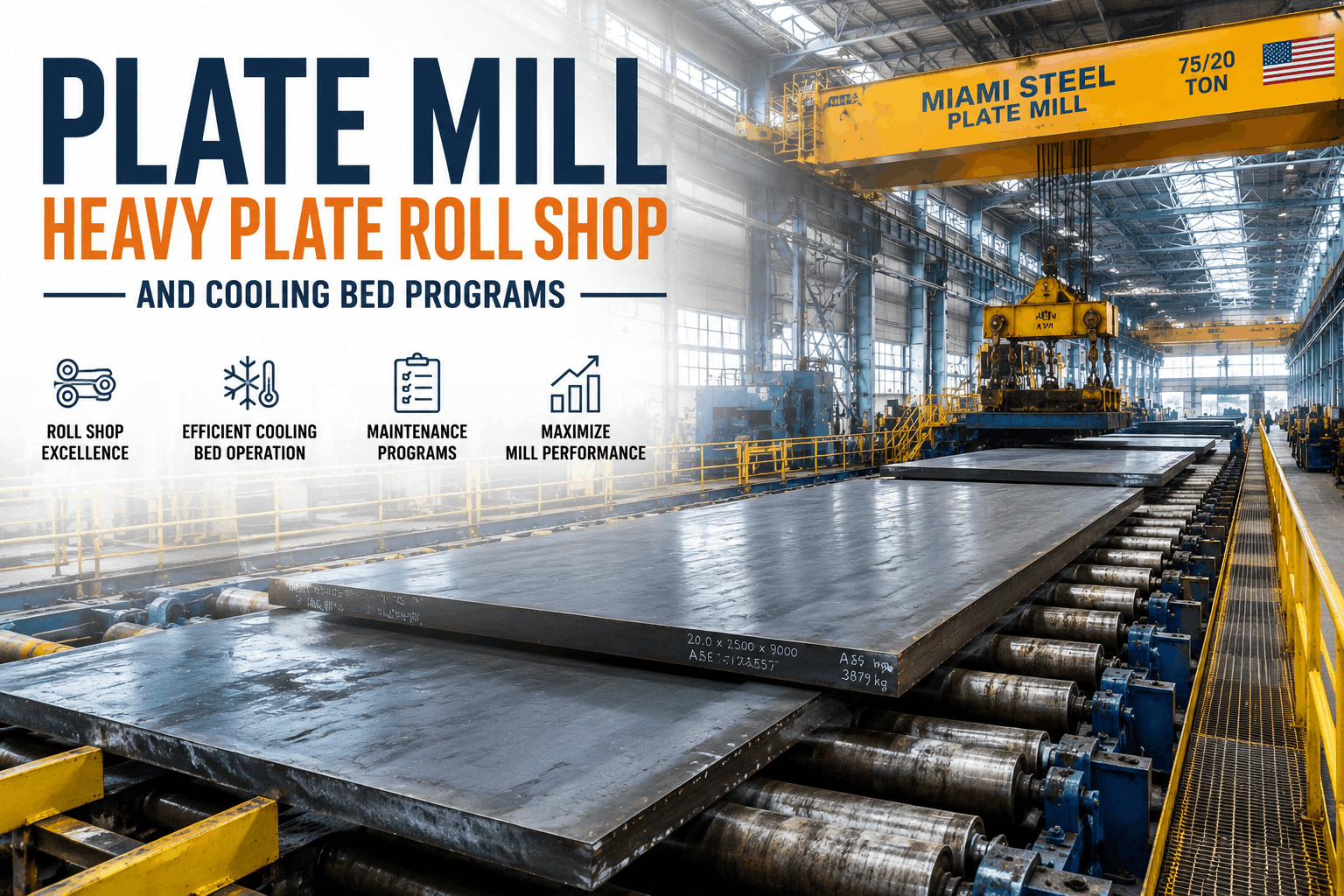
Read More
Heavy plate mills operating at 4,000–10,000 tons per month face a fundamental constraint: roll shop capacity and cooling bed throughput determine mill availability. A roll shop with insufficient grinding capacity...
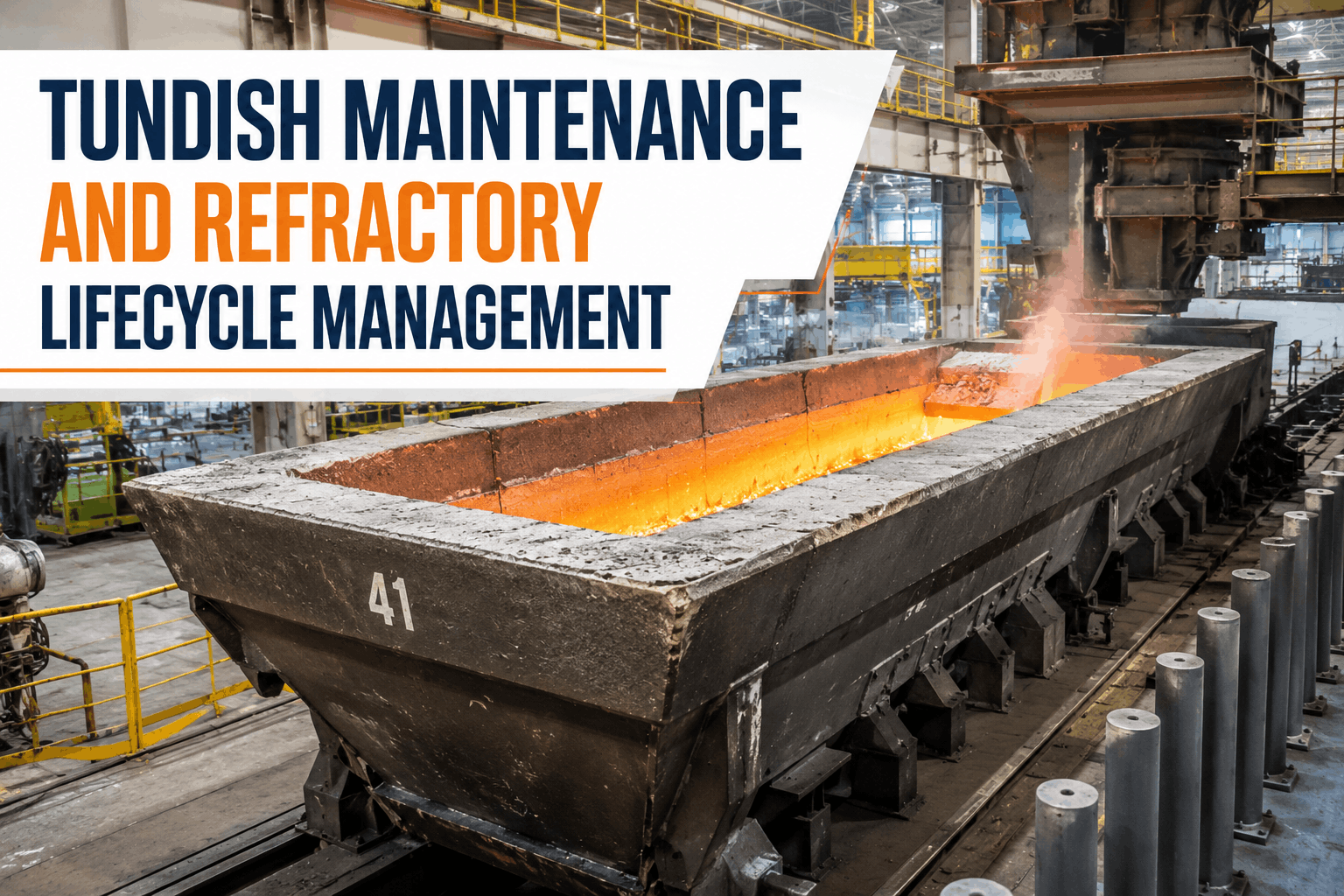
Read More
Tundishes are the final metallurgical vessels before molten steel solidifies into slabs, blooms, or billets. Every tundish lining failure — working lining erosion, well block cracking, nozzle clogging — directly...
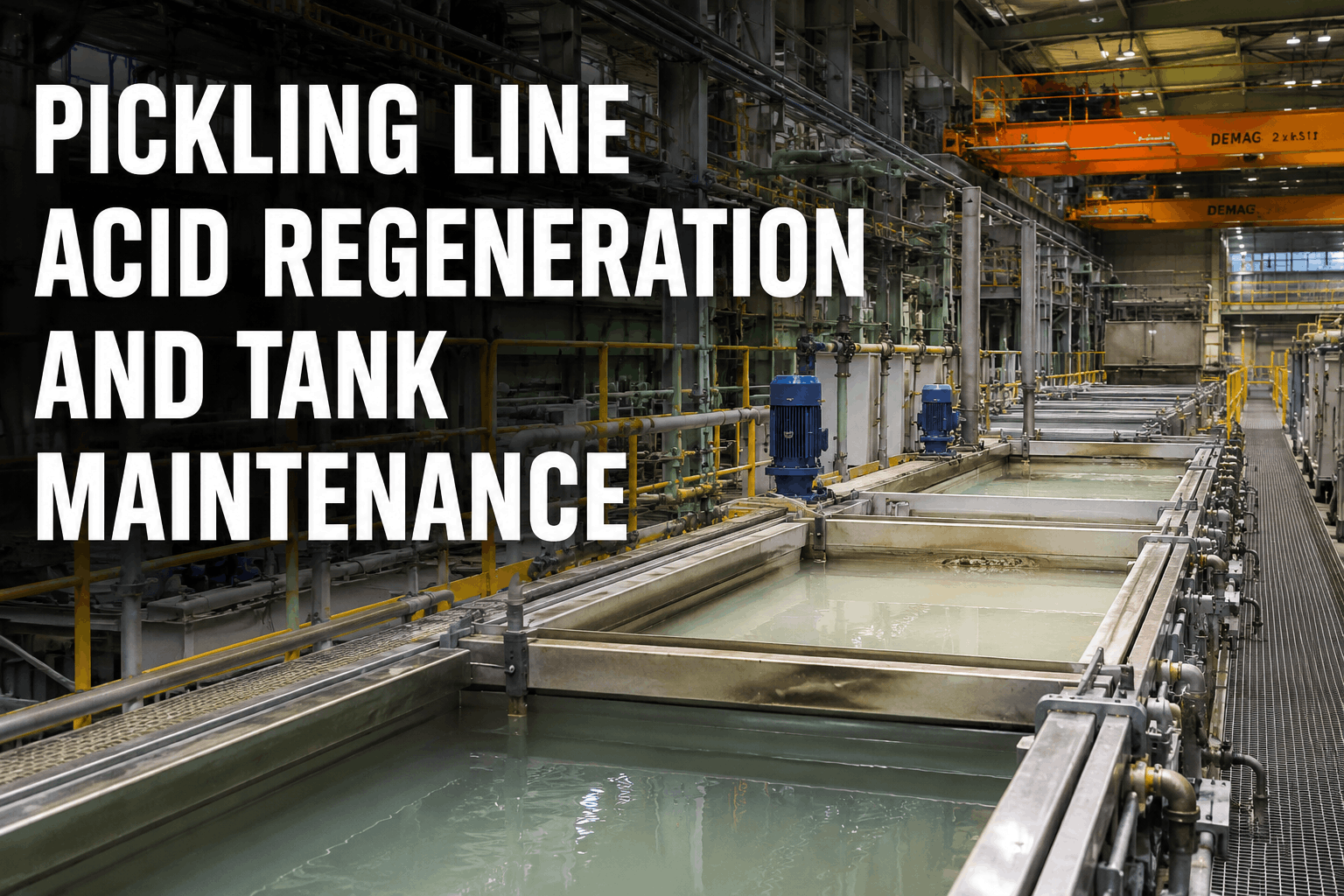
Read More
Pickling lines remove scale from hot-rolled steel using hydrochloric acid at 80-95°C. The acid regeneration plant (ARP) recovers HCl from spent pickle liquor, producing iron oxide as a byproduct. A single tank...
Read More
Reheat furnaces are the gateway to rolling mill productivity — but also the most thermally demanding asset in the mill. Refractory spalling, skid pipe water leaks, walking beam alignment drift, and burner...
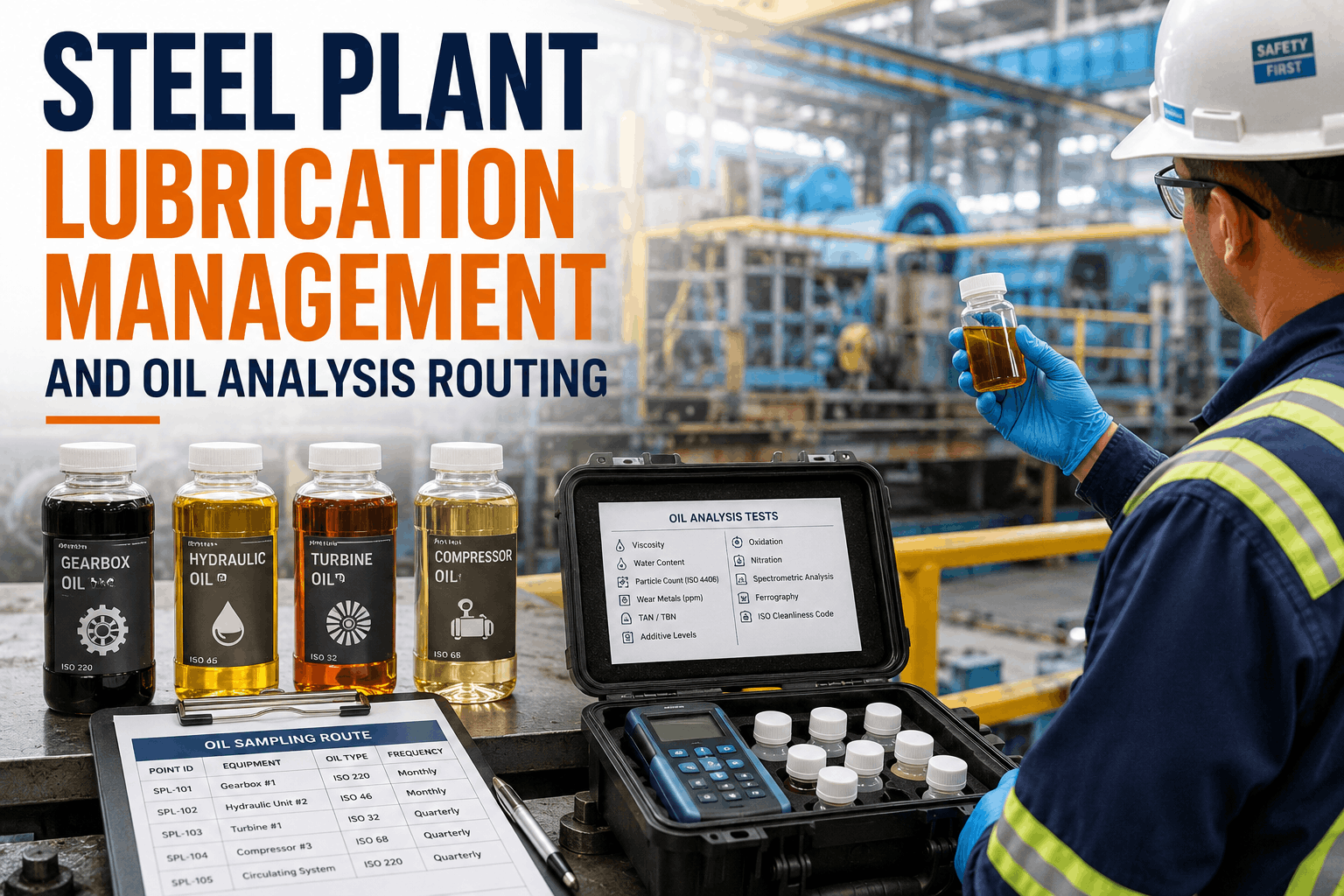
Read More
Steel plant bearings, gearboxes, hydraulic systems, and compressors fail prematurely in 70% of cases due to lubrication-related issues — wrong lubricant, contaminated oil, degraded additives, or incorrect greasing...
Read More
Cold rolling mills operate at high speeds (1,500–2,500 m/min) under extreme loads (10–20 MN rolling force), with backup and work roll bearings subjected to millions of stress cycles daily. Hydraulic Automatic Gauge...
Read More
Coke oven batteries are the most maintenance-intensive assets in an integrated steel mill. Door leaks, ascension pipe blockages, pushing system failures, and oven heating wall damage cause fugitive emissions, lost...
-for-steel-plant.png)
Read More
Steel plant equipment failures — EAF transformer winding shorts, caster mold copper plate cracks, rolling mill spindle bearing seizures — cost millions in downtime, repairs, and lost production. Without a formal...
.png)
Read More
A steel plant CFO in Michigan made the most expensive capital allocation decision of her career in Q2 2025: convert a 35-year-old integrated blast furnace operation to electric arc furnace (EAF) production by 2028....
-sensor-deployment-for-steel-plants.png)
Read More
A maintenance engineer at a rolling mill in Pennsylvania installed twenty wireless vibration sensors across the main motor drive train, cooling system, and bearing housings in June 2025 — expecting to capture...
-for-steel-plant-critical-assets.png)
Read More
A reliability engineer at a Midwest EAF steel mill in Chicago studied her preventive maintenance program for the last five years and found something deeply disturbing: the mill had invested $580,000 annually in...

Read More
A steel plant manager in Pittsburgh, Pennsylvania stood on the rolling mill floor in June 2025 with a production target of 540 tonnes per shift and no visibility into whether her blast furnace hearth would survive...
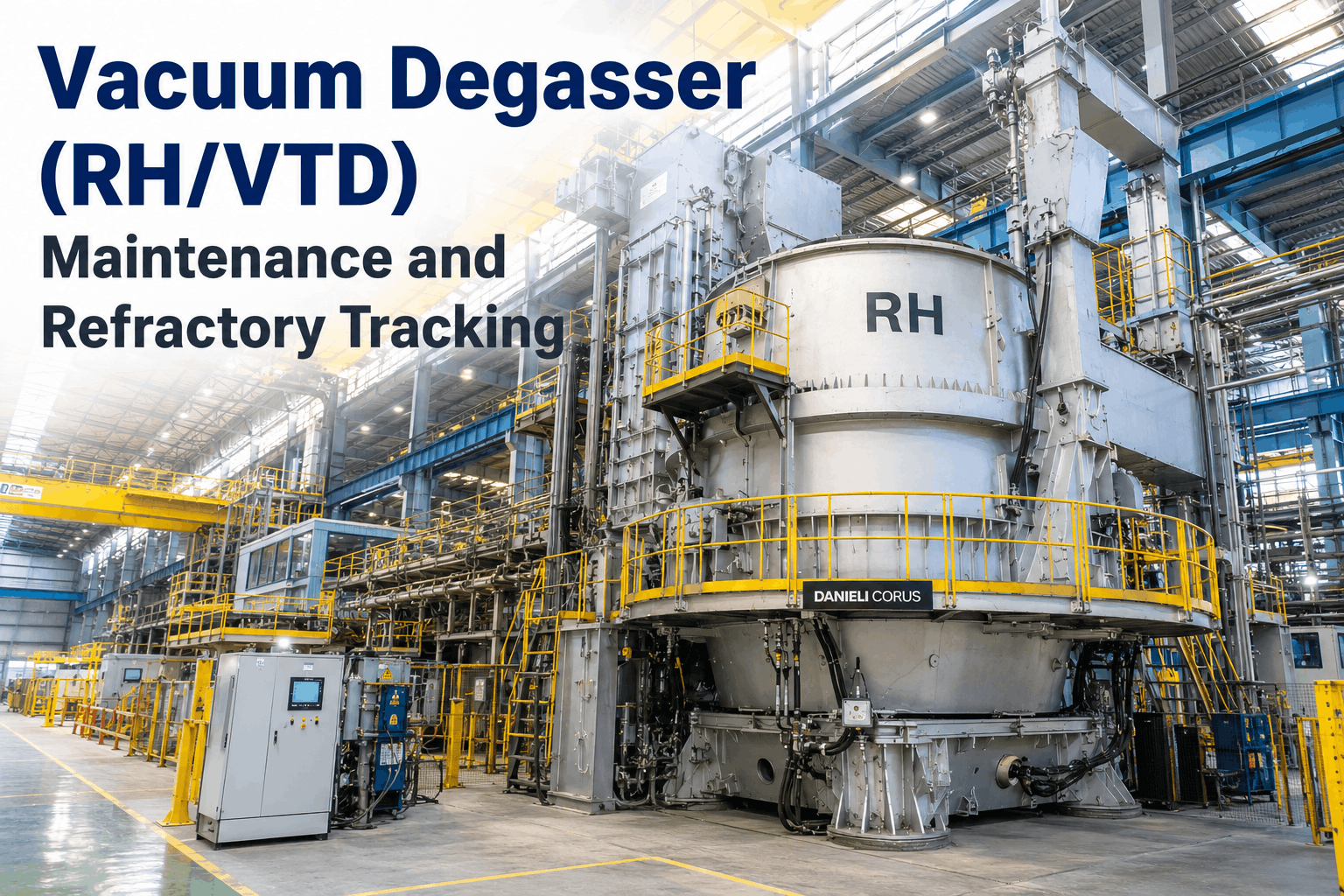
Read More
A vacuum degasser snorkel refractory fails at heat 487 of 600-heat campaign — the vessel is then pulled from service for 5–7 days for cold repair and refractory relining. The failure was not a surprise. The snorkel...
.png)
Read More
A blast furnace with Mean Time Between Failures (MTBF) of 1,200 hours is reliable. The same furnace with MTBF declining from 1,200 to 900 to 650 hours over six months is degrading toward catastrophic failure — but...
Read More
A reheating furnace with degraded regenerator brick linings consumes 15–20% more natural gas than design specification — but a monthly energy report arrives weeks after the equipment fails, making corrective action...
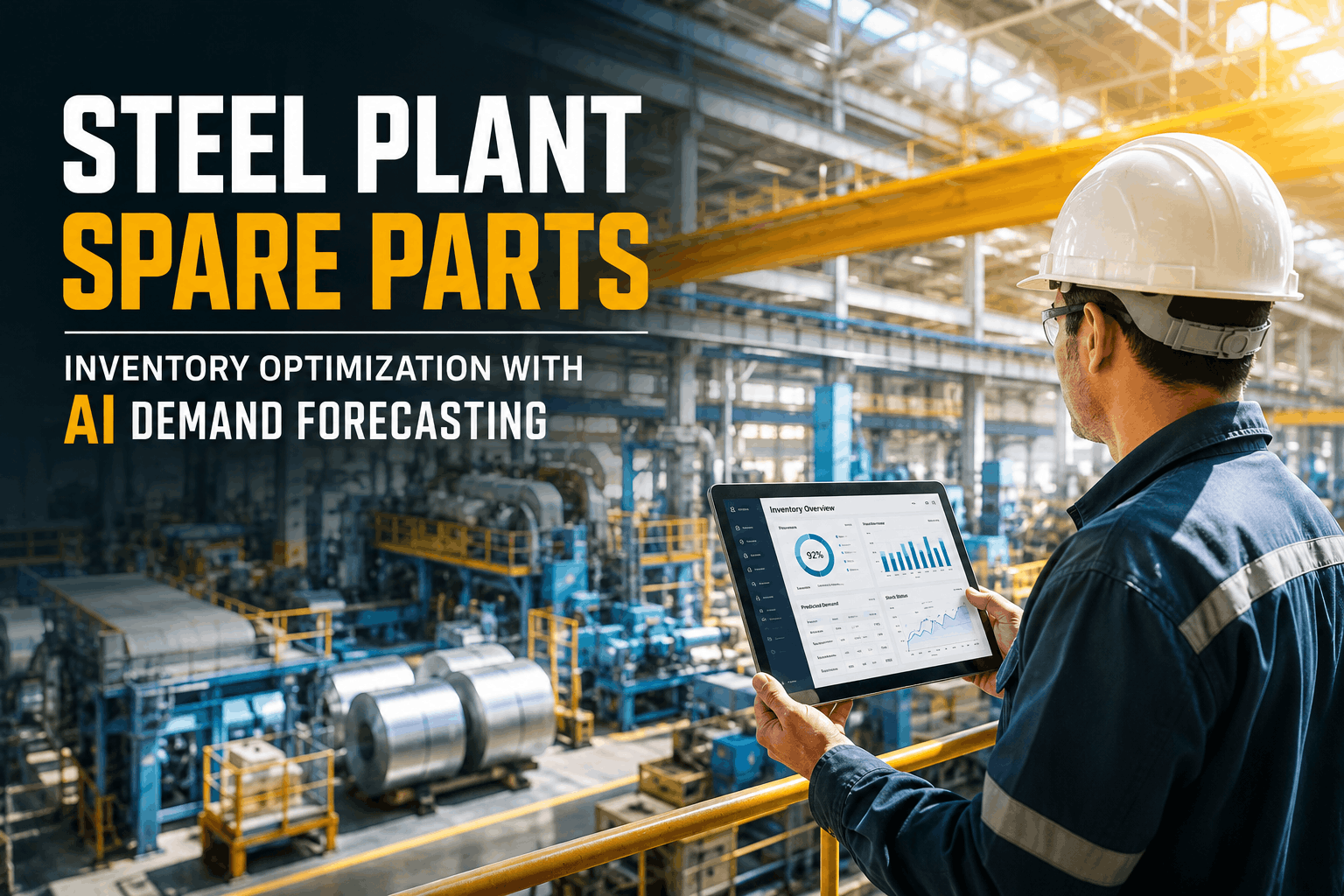
Read More
Spare parts stockouts cost steel plants $50k–$120k per hour in unplanned downtime — yet most facilities still manage inventory with static reorder points set 18 months ago, oblivious to changing asset age,...
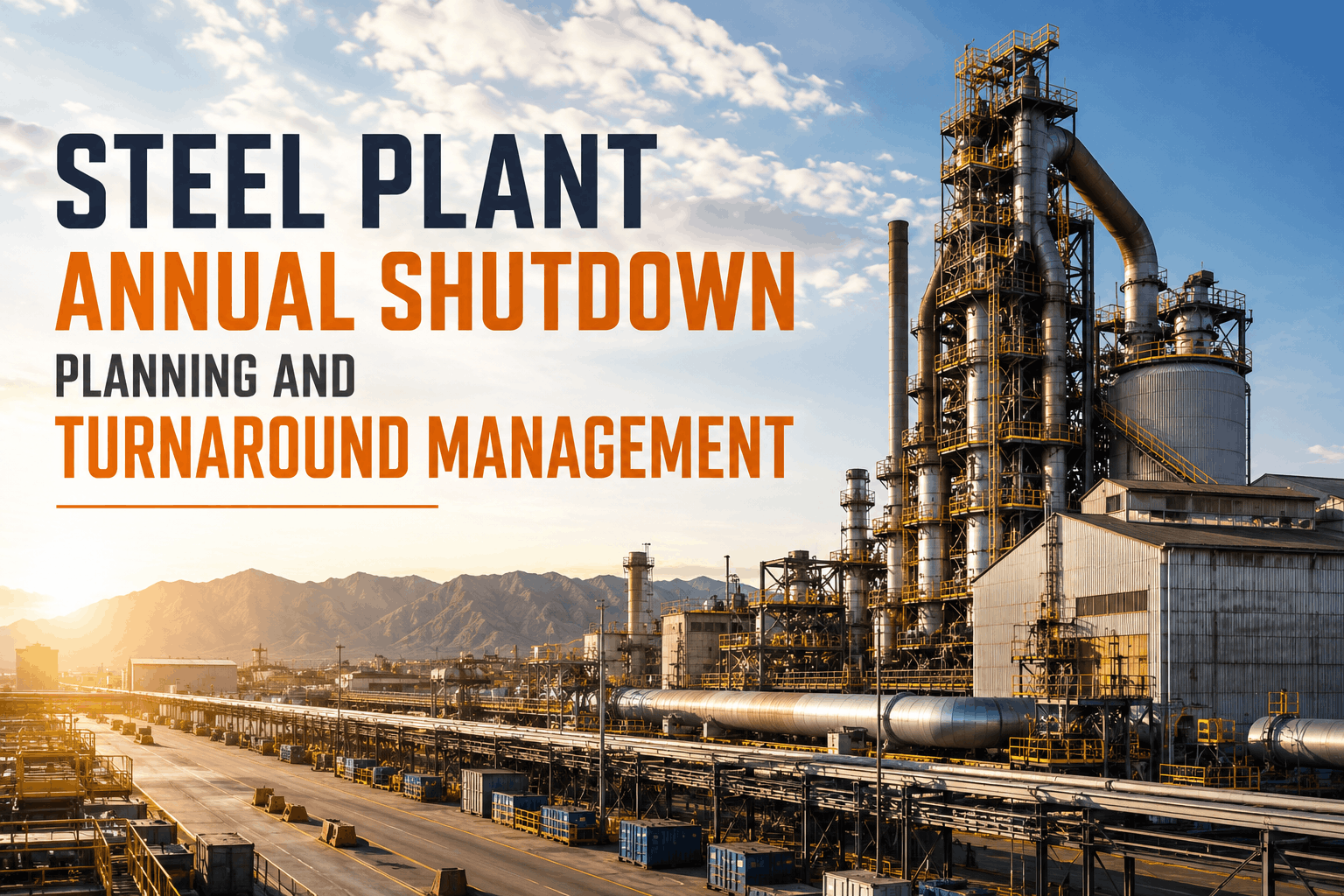
Read More
Planned shutdowns cost between $1.2M to $3.5M per unplanned extra day in lost production — yet 70% of steel plant turnarounds globally still overrun schedule and budget. The difference between a controlled shutdown...
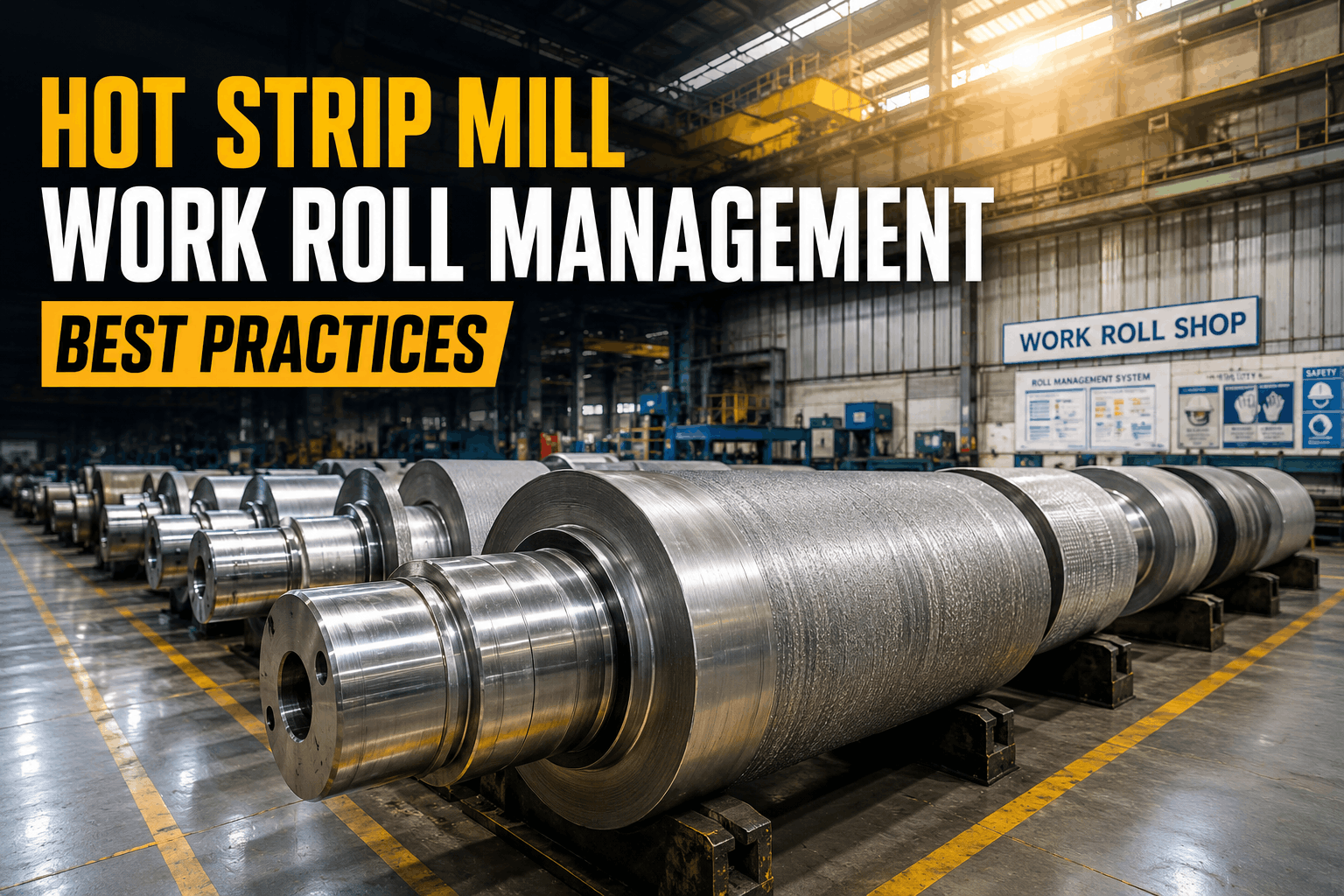
Read More
Hot strip mills produce the highest-volume steel products in the world — 85% of all North American steel tonnage passes through hot strip mills that flatten raw ingots into coils. Work rolls, the rotating drums...

Read More
Basic Oxygen Furnace (BOF) vessels represent the highest capital investment in steelmaking facilities — a single converter shell and refractory lining costs $3.5–$6.2 million. Yet most mills manage converter...

Read More
Continuous casting machines represent the highest-value equipment in modern steel mills, yet many plants operate these complex systems with reactive maintenance protocols rather than predictive frameworks. A single...
Read More
The American steel industry faces an existential workforce crisis. By 2028, over 40% of the current skilled steel mill workforce will reach retirement age, taking with them decades of undocumented procedural...
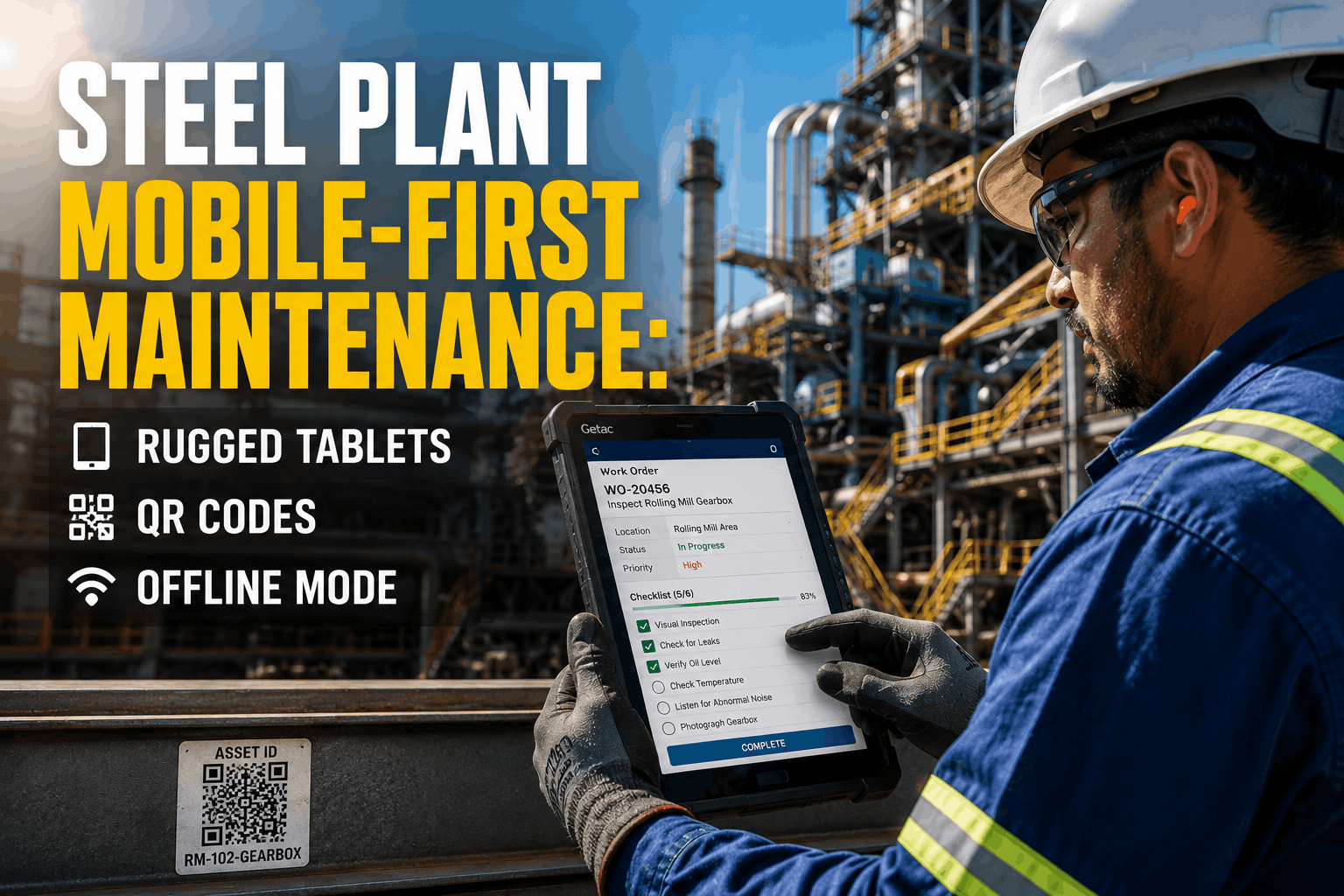
Read More
Mobile-first maintenance in steel plants isn't a convenience anymore — it's an operational necessity. Technicians working across furnaces, rolling mills, and casting equipment need instant access to work orders,...

Read More
Steel plant failures — cracked rolls, bearing seizures, gearbox breakdowns, refractory collapses — cost millions in downtime, repairs, and lost production. Traditional root cause analysis (RCA) takes weeks, relies...

Read More
Steel production accounts for 7–9% of global CO2 emissions, making carbon reporting no longer optional — it is a regulatory requirement, a customer contract condition, and a competitive differentiator. The GHG...
Read More
Steel plant rotating assets — blast furnace blowers, compressors, turbomachinery, and large fans — operate at high speeds under extreme loads. API 670 (American Petroleum Institute) defines the gold standard for...
Read More
`Steel mills carry millions of dollars in MRO (Maintenance, Repair, and Operations) spare parts inventory — yet 80% of stockouts occur on critical parts that were misclassified as non-critical. The spare parts...
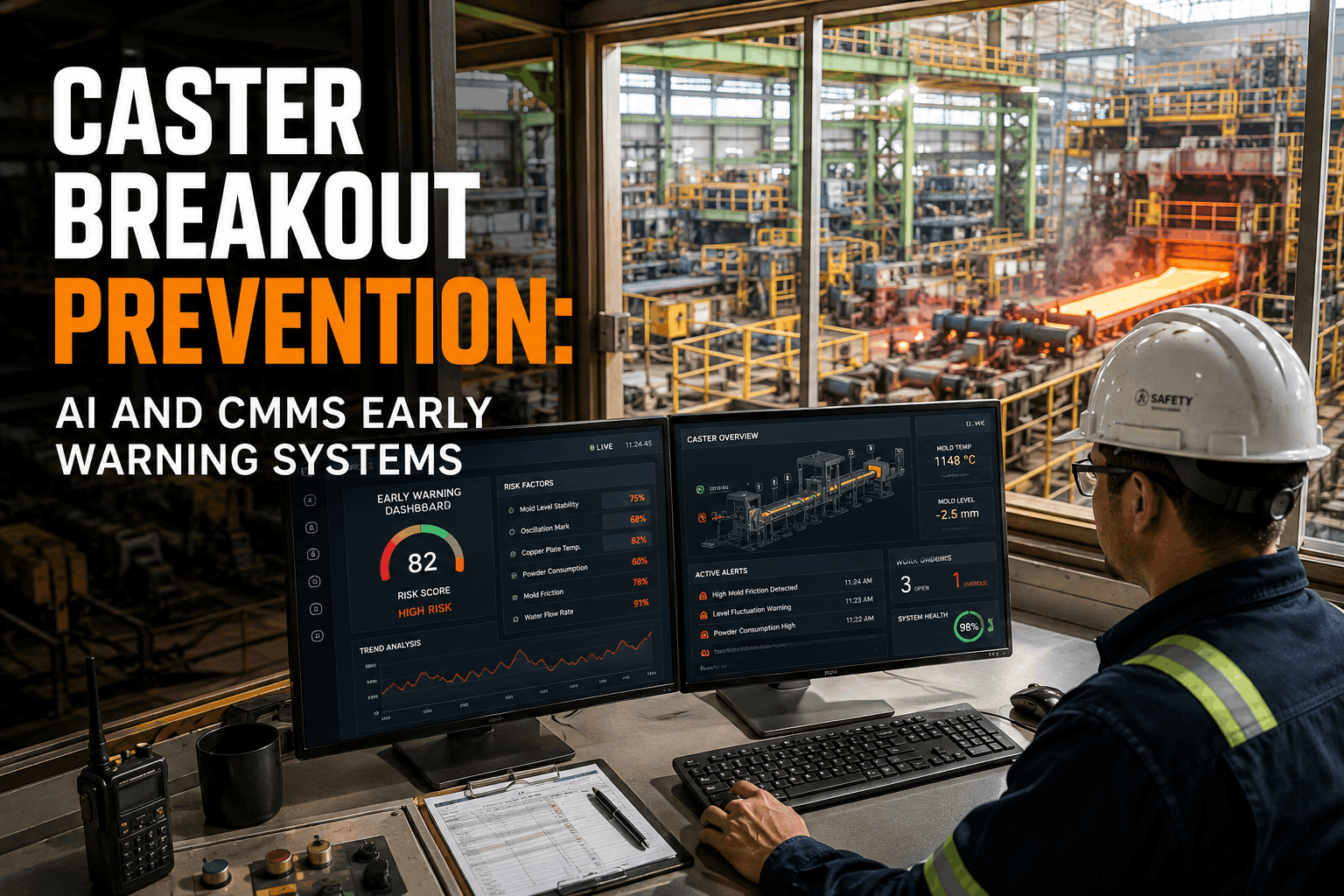
Read More
Continuous casting is the heartbeat of steel production — and breakout is its nightmare. A single sticker breakout can cost $1.5M–$4M in mold damage, lost production, and safety incidents. AI-powered early warning...
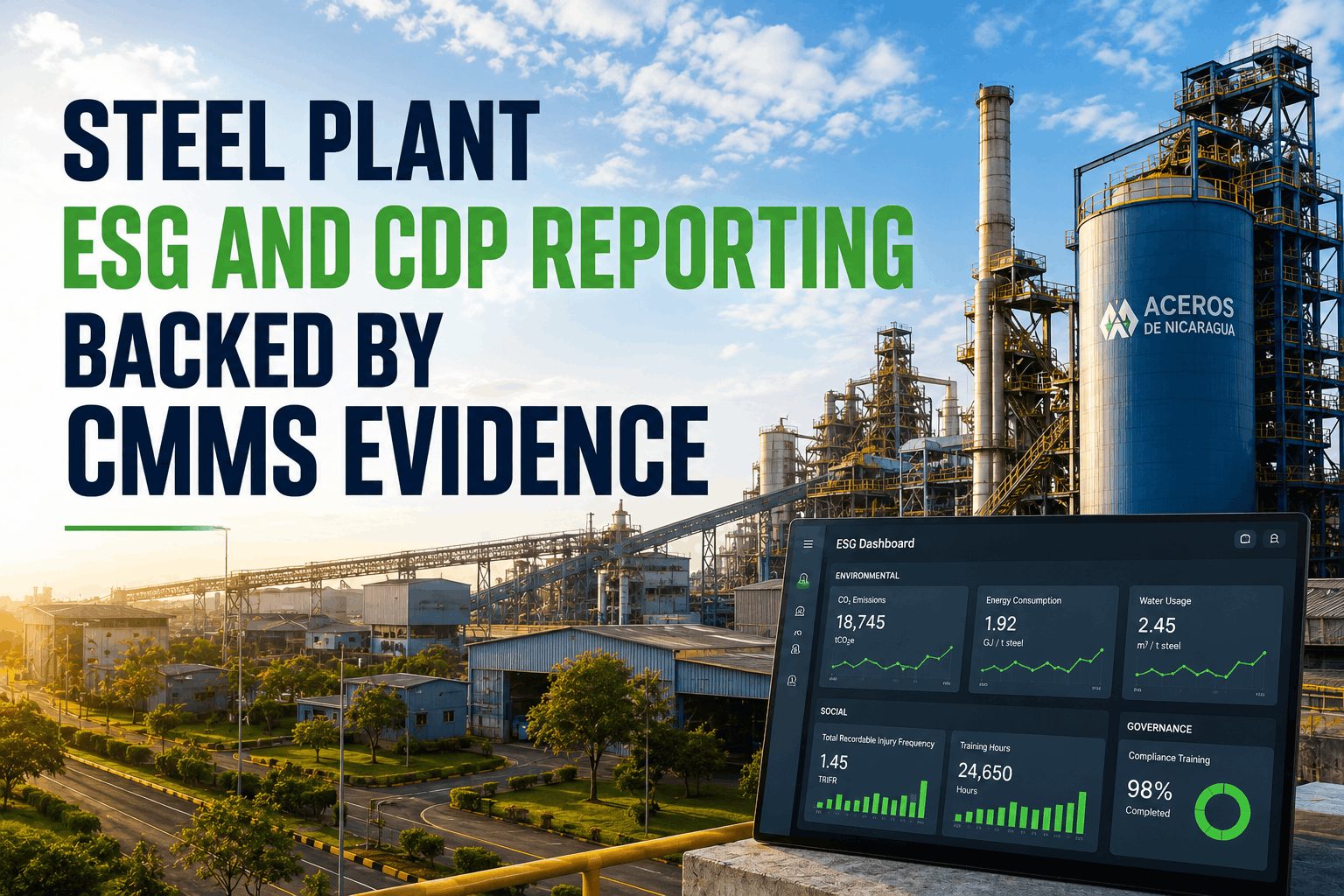
Read More
Steel plants face unprecedented ESG (Environmental, Social, Governance) disclosure requirements — from CDP (Carbon Disclosure Project) and SASB to emerging CSRD and TCFD mandates. Investor-grade ESG reporting...
.png)
Read More
Steel plants run on two critical systems: ERP for financials, procurement, and planning; CMMS for maintenance execution. When these systems operate in isolation, maintenance costs leak, spare parts inventory...
Read More
Steel mills operate with massive energy hazards — electrical, mechanical, pneumatic, hydraulic, and thermal. OSHA 1910.147 requires formal lockout/tagout procedures for every energy isolation point, yet manual...

Read More
Rolling mills operate at the heart of steel production, yet many struggle to accurately measure Overall Equipment Effectiveness (OEE). A practical, step-by-step OEE calculation for hot and cold rolling mills —...

Read More
Steel plants operate 24/7/365, yet critical maintenance information between shifts is still lost in paper logbooks, whispered handovers, and fragmented spreadsheets. Digital shift handover integrated with CMMS...

Read More
Green steel production through hydrogen-based Direct Reduced Iron (DRI) plants is reshaping the metallurgical landscape. However, the shift from natural gas to hydrogen as a reductant introduces unique, high-stakes...

Read More
Blast furnace hearth and stave refractory wear is the single biggest constraint on campaign life. Deploying AI models to predict lining erosion enables proactive reline planning, extends campaign life by 18–36...
.png)
Read More
Steel plants in 2026 are achieving unprecedented reliability through predictive maintenance (PdM). Real wins include cobble detection preventing hot strip mill wrecks, caster breakout prediction saving millions,...

Read More
Steel mills in 2026 face unprecedented OT cybersecurity threats. Ransomware attacks on connected plants have surged 87% since 2024, targeting CMMS and SCADA integration as the weakest link. Fleet operators and...
Read More
Steel plants in 2026 are achieving unprecedented reliability through predictive maintenance (PdM). Real wins include cobble detection preventing hot strip mill wrecks, caster breakout prediction saving millions,...

Read More
Electric Arc Furnace (EAF) operations consume 400–600 kWh per ton of steel — making energy the single largest OpEx line item in modern steel mills. Condition-based maintenance of electrodes, transformers, and...
Read More
Between 60% and 80% of CMMS implementations fail — and the majority of failures happen when organizations try to retrofit modern maintenance workflows into legacy ERP systems designed 20+ years ago. SAP Plant...
Read More
The EU Carbon Border Adjustment Mechanism (CBAM) begins mandatory enforcement in October 2025 — and steel producers shipping to European markets will need documented, auditable carbon accounting systems for Scope...
Read More
Steel plants lose an average of $125,000 per hour of unplanned downtime — and that number climbs exponentially when a blast furnace trips or a rolling mill seizes mid-shift. In 2026, most steelmakers still rely on...
Read More
Steel plants circulate 50,000–300,000 gallons per minute through cooling towers for furnace equipment, gas compressors, and hydraulic systems where Legionella growth, scale fouling, and corrosion can cause...
Read More
Steel plants generate 130–200 kg of slag per ton of steel produced from blast furnace and basic oxygen furnace (BOF) operations. Granulated slag (GBFS) is a direct cement substitute worth $45–60/ton when properly...
Read More
Steel plants generate combustible dust from coal dust, iron oxide fines, and metal powders where fire or deflagration hazards can occur if dust concentration, oxygen, and ignition sources align.
-maintenance-and-shaft-furnace-reliability.png)
Read More
Direct reduction ironmaking plants operate shaft furnaces at temperatures exceeding 900°C where reducing gas quality directly controls iron recovery rates, DRI metallurgical properties, and carbon footprint...
Read More
Steel mill pickling operations generate spent pickle liquor (SPL) containing iron chloride or iron sulfate that must be continuously managed for regulatory compliance and cost recovery.

Read More
Blast furnace cooling staves are the refractory protection system that prevents the furnace shell from overheating and allows the furnace to maintain internal temperatures above 2,000°C without metal failure. Each...

Read More
Torpedo cars transport molten iron at 1,400-1,500°C from blast furnaces to steelmaking vessels across kilometres of rail track. A single refractory breakthrough or brake failure at operating speed can release...

Read More
Charging cranes operate in extreme thermal environments, loading scrap, hot metal, and alloys directly into electric arc furnaces (EAF) and basic oxygen furnaces (BOF). Ambient temperatures at crane level reach...

Read More
Ladle cranes carrying 150-350 tonnes of molten steel at 1,600°C represent the highest-consequence lifting equipment in any integrated steel plant. A single wire rope failure, hoist brake malfunction, or hook defect...

Read More
A reheat furnace is the energy consumer of the rolling mill — burning 800–2,000 cubic metres of natural gas per hour at 1,300°C to heat incoming slabs before they are hot-rolled into finished products. But every...
Read More
A continuous caster breakout — where the solidified shell fails and 1,520°C molten steel breaches onto the strand surface or secondary cooling zones — is one of the most catastrophic events in steel production....
Read More
The Electric Arc Furnace (EAF) is where modern steel is born — three graphite electrodes carrying 50,000–80,000 amps melting scrap into liquid steel within 40–65 minutes per heat. But that arc operates at 3,000°C...
Read More
The Basic Oxygen Furnace (BOF) converter is a 250–360 tonne vessel that refines hot metal into liquid steel in 30–45 minutes per heat — subjecting its magnesite brick refractory lining to 1,650°C molten steel,...
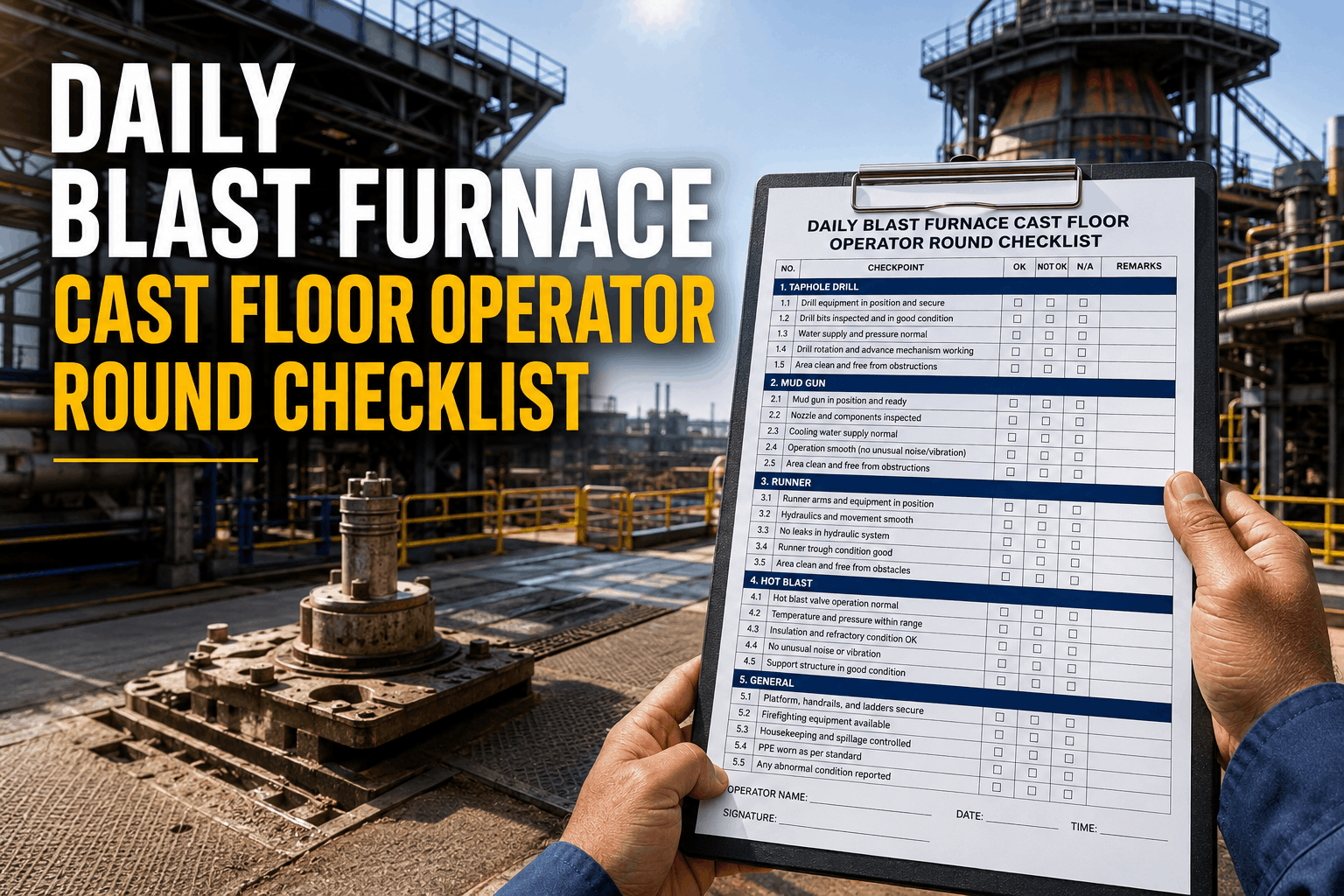
Read More
The cast floor is where molten iron from the blast furnace meets refractory-lined runners, taphole assemblies, and mudgun systems — a zone where every second of unscheduled downtime costs $15,000–$25,000 per hour...
Read More
A 2.2 MTPA midwest integrated steel plant operating three 280-ton basic oxygen furnaces (BOFs) faced a critical capital constraint: BOF relines occurred every 3–5 years per converter and required 18–24 days of...
Read More
A 2.8 MTPA integrated steel plant faced a looming capital equipment replacement plan that projected spending $24 million over five years to replace aging blast furnace cooling staves, rolling mill drive motors,...
Read More
A 2 MTPA midwest steel plant with 68 maintenance technicians tracked PM schedules on a combination of paper forms, email reminders, and a shared spreadsheet that nobody trusted. The result: PM compliance measured...
Read More
A 3.5 MTPA integrated steel plant operating blast furnace, BOF converters, continuous caster, and hot rolling mill struggled with an escalating maintenance cost per tonne that had climbed from $18 to $24 over 36...
Read More
A midwest integrated steel plant operating a fleet of 24 ladles across blast furnace, ladle furnace, and continuous casting operations faced escalating refractory costs that consumed $3.2 million annually —...
Read More
When a North American cold rolling mill producing 850,000 tons annually faced persistent strip thickness deviation that eroded yield by 3.8%, conventional manual gauge checks and reactive bearing replacements could...
Read More
A 280-ton integrated steel mill in the Midwest faced a 5-day EPA onsite NESHAP audit — a compliance inspection of equipment maintenance records for emission control systems. Without CEMS-linked maintenance records,...
Read More
A 120-ton EAF mini-mill in the Midwest faced one of electric steelmaking's highest controllable costs: graphite electrode consumption. With electrodes accounting for $3.2M annually, a single percentage point of...

Read More
A North American steel group operating 14 independent mills across 6 states struggled with fragmented maintenance systems — each plant running its own CMMS vendor, scheduling practices disconnected from corporate...

Read More
A hot strip mill operating in the Midwest USA faced a critical challenge: cobble events occurring at an unsustainable rate, destroying strip in finishing stands and causing production shutdowns. Within 8 months of...

Read More
A large North American steel plant eliminated 83% of continuous caster mold breakout incidents — cutting from 12 unplanned events per year to just 2 — by deploying Oxmaint copper mold RUL tracking and predictive...

Read More
A 500,000-tonne-per-year electric arc furnace mini-mill in the USA reduced tap-to-tap time from an industry-underperforming 56 minutes to a world-class 42 minutes in just 9 months using Oxmaint electrode regulation...

Read More
A large integrated steel mill in North America averted a catastrophic $6.4M unplanned blast furnace shutdown by acting on Oxmaint's cooling stave thermal trending alert — which provided 11 days of advance warning...

Read More
A 4 MTPA integrated steel mill in USA lifted blast furnace availability from a persistent 81% to industry-leading 93% in just 14 months using Oxmaint cooling stave thermal trending and tuyere remaining useful life...

Read More
Iron ore pellet plants transform iron ore fines into hard, porous agglomerates — essential feedstock for both blast furnaces (producing hot metal for steelmaking) and direct reduction iron (DRI) plants (producing...

Read More
Coke oven batteries are among the most maintenance-intensive and operationally complex assets in integrated steelmaking, operating continuously at 1,100°C for 25–40 year campaigns while executing 1,000+ push cycles...

Read More
Sinter plants operate at 1,300–1,400°C continuously, transforming iron ore fines into the porous, agglomerated material that forms the primary burden material for blast furnaces. Every ton of hot metal produced in...
Read More
Pipe and tube mills operate at production speeds exceeding 120 meters per minute, transforming flat steel strip into structural tubing through a sequence of mechanical forming, electrical resistance welding, and...

Read More
Plate mills represent one of the most critical assets in heavy steel production, operating continuously at extreme mechanical pressures and thermal stresses. The heavy plate roll shop is the engineering heart of...

Read More
Bar and section mills represent critical revenue-generating assets for integrated steelmakers — processing 500–3,000 tons daily through integrated roughing, intermediate, and finishing stands converting reheated...

Read More
A U.S. wire rod mill operating at full capacity produces 500–800 tonnes per day of finished product — meaning a single unplanned breakdown on the block mill (the primary forming station) or the laying head assembly...
Read More
Compressed air is the "fourth utility" in steel plants—as essential as electricity, water, and natural gas. A typical integrated steel mill operates 15–30 air compressors delivering 5,000–20,000 cubic feet per...

Read More
Steel mills face existential pressure to demonstrate environmental, social, and governance (ESG) progress — yet 76% of North American steelmakers struggle to compile auditable evidence for ESG disclosures because...

Read More
Selecting a Computerized Maintenance Management System (CMMS) is one of the highest-impact infrastructure decisions steel plants make — yet 58% of mills select systems through incomplete evaluation criteria,...
-programs.png)
Read More
Steam systems and waste heat recovery (WHR) infrastructure drive the economics of integrated steel mills — yet 71% of North American mills operate steam systems with 20–30% energy waste due to failed condensate...
Read More
Steel plant power outages cost $500,000–$2 million per hour depending on facility size and equipment criticality — yet 64% of North American mills operate without documented UPS backup systems, NFPA 110-compliant...
Read More
Environmental, Social, and Governance (ESG) reporting and Climate Disclosure Project (CDP) submissions have become non-negotiable for steel manufacturers seeking capital, supply-chain access, and insurance...

Read More
Permit-to-Work (PTW) systems are the critical control layer between hazard identification and actual maintenance execution in steel plants. While Lockout/Tagout (LOTO) controls energy, Permit-to-Work controls the...
Read More
Lockout/Tagout (LOTO) and Pre-Startup Safety Review (PSSR) are the two most critical safety protocols in steel plant operations. OSHA regulation 1910.147 mandates that ALL hazardous energy sources—electrical,...

Read More
Steel manufacturing accounts for approximately 7% of global carbon dioxide emissions—second only to the energy sector. A single integrated steel mill (producing 2 million tons per year) generates roughly 2.8...
.png)
Read More
Managing a blast furnace, basic oxygen furnace, or electric arc furnace operation requires precision coordination across maintenance, operations, and safety teams. A poorly executed maintenance strategy—tracked via...
-and-maintenance-budget-template.png)
Read More
The annual operating plan and maintenance budget for a U.S. steel plant is not a spreadsheet exercise conducted in November where the plant controller rolls forward last year's numbers and inflation rates, submits...
-justification-template.png)
Read More
Every major capital project at a U.S. steel plant — whether a $15 million tundish reline programme, an $80 million hot strip mill rebuilding, a $200 million EAF upgrade, or a $50 million environmental compliance...

Read More
OSHA cited over 14,600 violations across its top standards in fiscal 2024, with manufacturing plants accumulating 937 forklift-alone citations and $2.7 million in penalties in a single category. Serious violations...
Read More
In 2026, steel plants operate at an average OEE of 45-65%, leaving millions in unrealized production capacity every year. The gap between your plant's current performance and world-class OEE (78-92%) traces...

Read More
Unplanned downtime costs integrated steel mills $8,000–$50,000 per hour depending on equipment criticality — yet 79% of mills lack real-time reliability KPI visibility, tracking MTBF (Mean Time Between Failures),...

Read More
Steel plants face existential pressure to decarbonize — but without a structured roadmap, EAF conversion projects stall mid-execution, H2-DRI pilot plants exceed budgets, and CCUS investments drain capital with...

Read More
Steel manufacturing consumes more energy than any other industrial sector — the average integrated steel mill spends $40–80 million annually on electricity and fuel. Yet 82% of North American mills lack real-time...

Read More
Shaft misalignment costs steel plants $500,000+ annually in excess vibration, bearing wear, and seal failures — yet 68% of mills still document alignment checks on hand-written forms filed in equipment binders or...

Read More
Steel plant operations depend on predictable equipment uptime. Oil sampling schedules are your first line of defense against catastrophic failures — yet 73% of steel mills still track sampling intervals on paper or...

Read More
At a U.S. steel plant, an outer race bearing fault on a rolling mill drive will progress from undetectable on overall RMS vibration to catastrophic failure in as little as 3 weeks under heavy cyclic loading. A...

Read More
Confined space fatalities kill more than 100 U.S. workers every year — and the defining characteristic of those deaths is that more than 60% of them are rescuers, not the original entrants. Workers who see a...
.png)
Read More
Hot work is the leading single cause of industrial fires — and in a steel plant where hydraulic oil, process gases, conveyor lubricants, and combustible dusts are present throughout the structure, a welding arc or...
Read More
LOTO was #4 on OSHA's Top 10 most-cited standards in FY2025 with 2,177 citations — and at a steel plant where a single rolling mill drive can have 12 simultaneous energy sources (electrical, hydraulic, pneumatic,...

Read More
A Pre-Startup Safety Review is not a formality before a steel plant restarts a modified process. It is the last structured gate between a potentially incomplete or unsafe modification and the introduction of highly...

Read More
A steel plant that allows a contractor on-site with an expired COI, an unverified OSHA 300A log, or a lapsed workers' compensation policy is not just taking a safety risk — it is accepting direct financial...
Read More
Every catastrophic maintenance failure at a U.S. steel plant — the blast furnace tuyere burnout, the continuous caster breakout, the rolling mill main drive seizure — was preceded by a failure mode that existed in...

Read More
An EPA inspector arriving at a U.S. integrated iron and steel manufacturing facility under 40 CFR Part 63, Subpart FFFFF does not ask about your environmental commitment — the inspector asks for records....
.png)
Read More
Every contractor, maintenance vendor, refractory supplier, OEM service technician, and turnaround crew entering a U.S. steel plant carries potential liability that the plant owner assumes the moment that worker...

Read More
Reliability Centered Maintenance is the most rigorous and financially justified approach to maintenance strategy development that U.S. steel plants have available — yet the majority of integrated mills, EAF...
.png)
Read More
Crane citations are the highest-volume violation category in U.S. industrial facilities under OSHA enforcement, and the most common trigger is not a crane that failed — it is an inspection that happened but was...

Read More
A ladle is the most safety-critical vessel in liquid steel handling — and the most consequential maintenance asset in any BOF or EAF steelmaking shop. A ladle shell breach, a slide gate failure during transfer, or...
Read More
A U.S. steel plant operating without a formalized spare parts criticality matrix is making one of the most expensive inventory decisions in heavy industry — managing tens of thousands of MRO SKUs with the same flat...

Read More
A refractory campaign that ends 200 heats early costs $300,000 in unscheduled downtime and emergency reline labor at 3× planned cost. A campaign pushed 150 heats past its safe limit risks a breakout — and a single...

Read More
A blast furnace shutdown at a U.S. integrated steel plant is not a maintenance event — it is the highest-risk, highest-cost, most time-critical operational transition the plant's maintenance organization will...
.png)
Read More
A steel plant running $1.2 million per day in unplanned downtime is not running a maintenance program — it is running a reactive breakdown response operation with a maintenance budget attached to it. The difference...
Read More
Every steel plant CMMS implementation begins or ends with a single decision that no software vendor can make for you: what is your asset hierarchy structure? An EAF melt shop with 400 assets organized as a flat...
Read More
A hairline crack in a blast furnace delta closure goes undetected during a quarterly turnaround inspection because the inspector's exposure window is 8 minutes at 1,400°F residual ambient temperature. Over eleven...

Read More
In 2026, the U.S. steel industry's highest-performing maintenance programs share one structural advantage: they converted sensor data into action automatically — without routing every alert through a human decision...
Read More
The steel industry's maintenance technology gap in 2026 is not about awareness — every reliability engineer and plant maintenance director in the U.S. understands that reactive maintenance costs 4.8× more per...
Read More
The difference between a CMMS implementation that transforms a steel plant and one that gets abandoned within six months is not the software — it is the implementation methodology, the asset data quality at...
Read More
The difference between a CMMS implementation that transforms a steel plant and one that gets abandoned within six months is not the software — it is the implementation methodology, the asset data quality at...
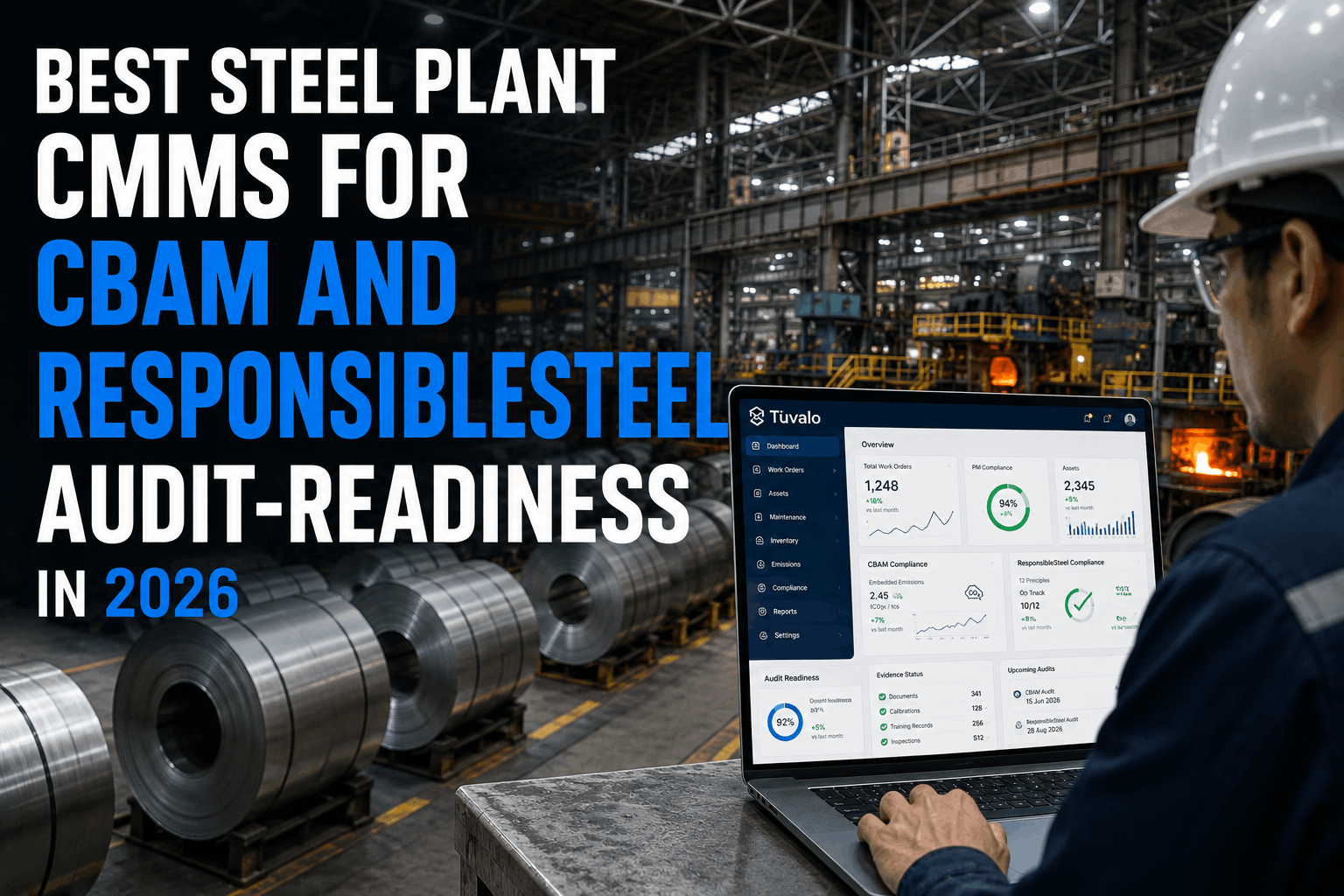
Read More
On January 1, 2026, the EU Carbon Border Adjustment Mechanism entered its definitive phase — and every U.S. steel producer with European export exposure is now required to purchase and surrender CBAM certificates...
Read More
Walk the floor of a leading American steel mill in 2026 and the shift is unmistakable. Where foremen once relied on clipboards and phone calls, digital dashboards now stream live sensor data from furnaces, casters,...
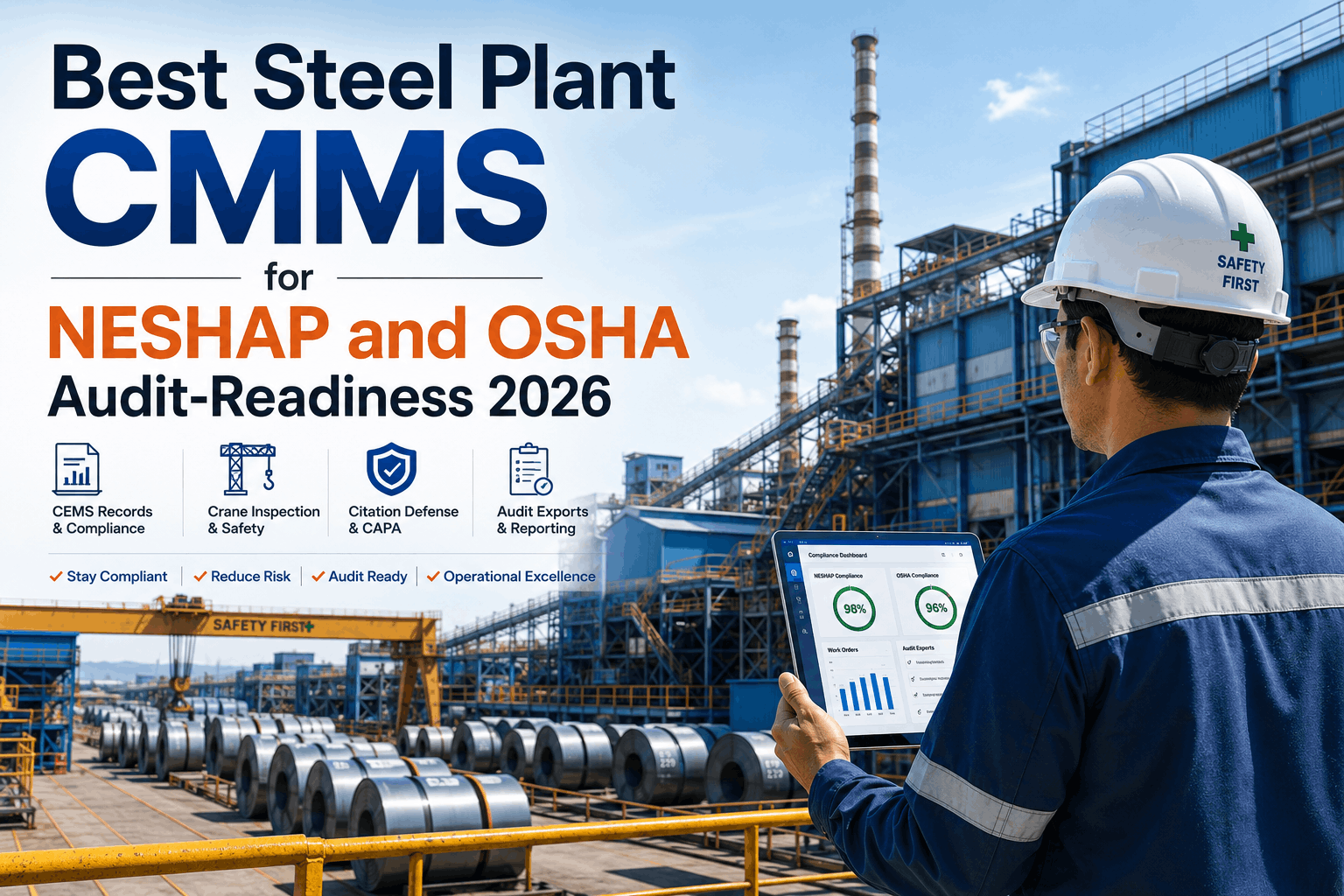
Read More
An EPA inspector requesting five years of CEMS calibration records, SSM logs, and corrective action documentation for a blast furnace cast house doesn't give you two weeks to find the files. The records must be...
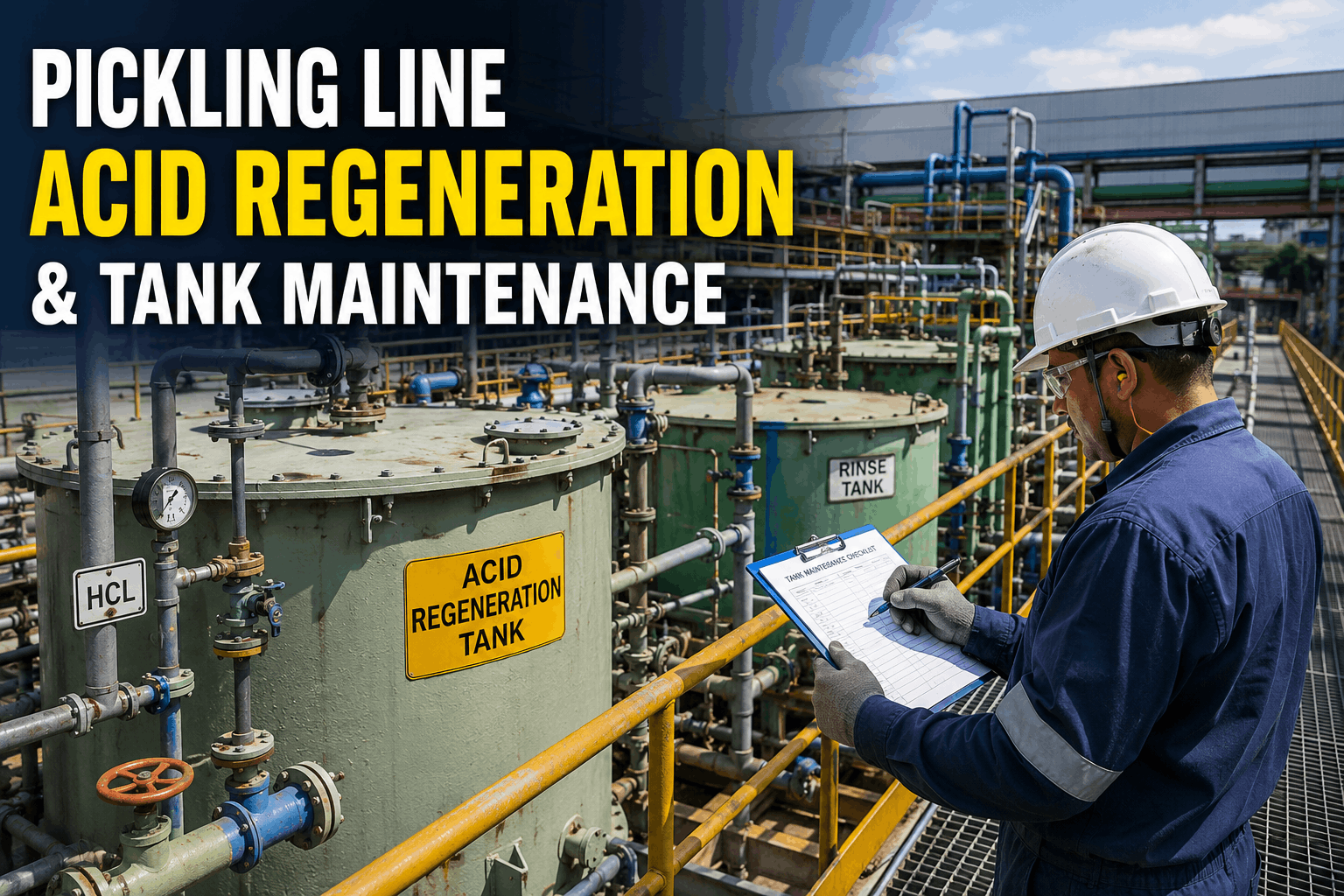
Read More
The pickling line is one of the most chemically aggressive operating environments in a steel processing facility — hydrochloric acid (HCl) concentrations of 10–18%, sulfuric acid (H2SO4) solutions at elevated...
-furnace-and-cooling-maintenance.png)
Read More
The continuous annealing line (CAL) is one of the most technically demanding assets in a cold rolling complex — processing cold-rolled strip through precisely controlled heating, soaking, and cooling zones in a...
.png)
Read More
The most persuasive argument for deploying a steel plant CMMS is not a feature comparison table — it is a documented set of outcomes from real steel operations that made the same decision and measured the results...
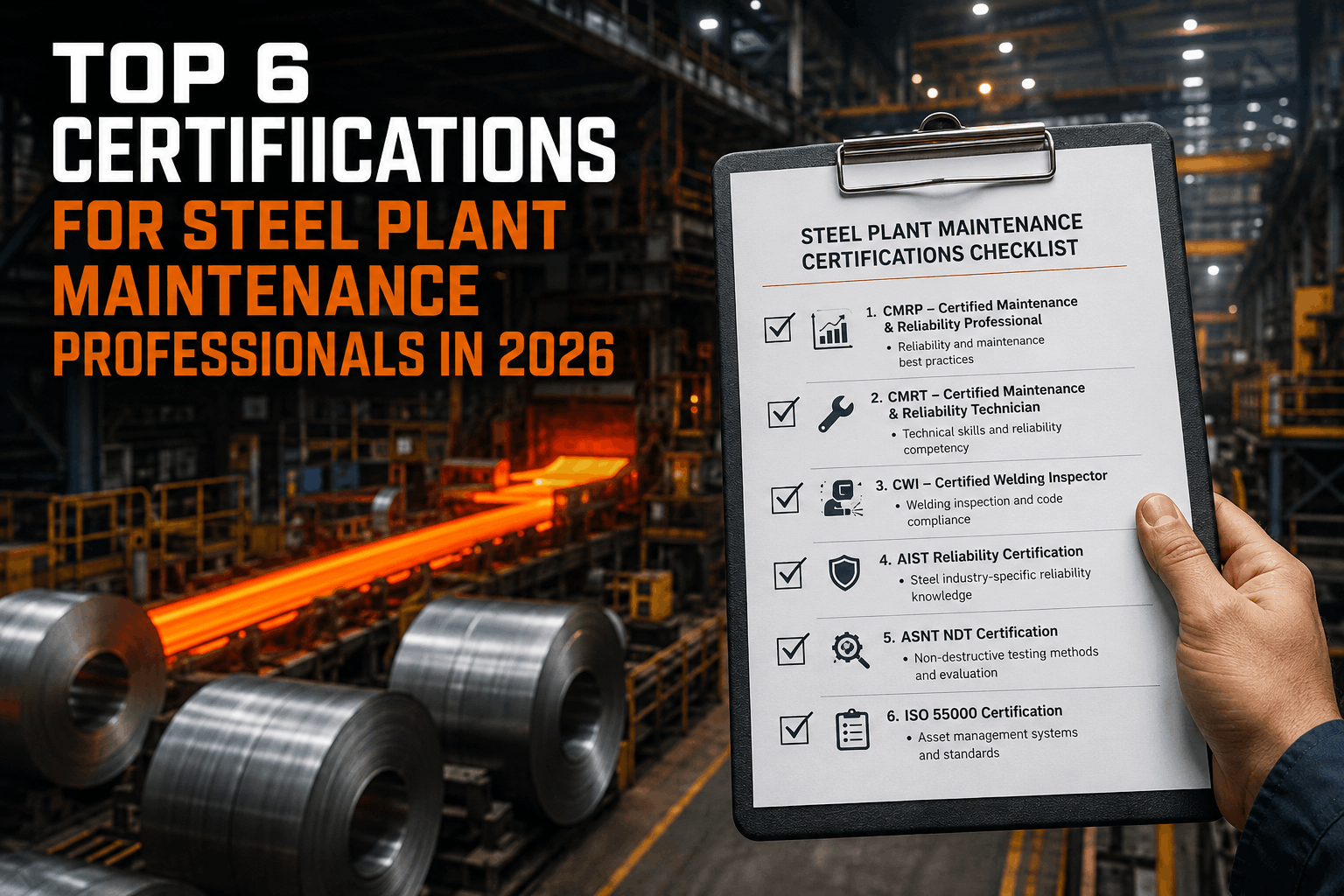
Read More
Steel plant maintenance careers in the U.S. have never been more technically demanding — or more financially rewarding for professionals who hold the right credentials. With integrated mills running BF-BOF routes...
.png)
Read More
The steel groups that consistently lose money on CMMS deployments are not choosing the wrong vendor on paper. They are choosing platforms built for single-site light manufacturing and attempting to stretch them...
.png)
Read More
In the high-tonnage, asset-intensive arena of modern steel manufacturing, operational efficiency is governed by two distinct software layers: the corporate Enterprise Resource Planning (ERP) ledger and the...
.png)
Read More
In the highly regulated world of US steel manufacturing, compliance is the foundation of operational continuity. Under the current EPA and OSHA enforcement regimes in 2026, a single unmonitored calibration drift,...

Read More
A hairline crack in a blast furnace delta closure goes undetected during a quarterly turnaround inspection because the inspector's exposure window is 8 minutes at 1,400°F residual ambient temperature. Over eleven...
Read More
The steel groups that consistently lose money on CMMS deployments are not choosing the wrong vendor on paper. They are choosing platforms built for single-site light manufacturing and attempting to stretch them...
.png)
Read More
Electric arc furnace mini-mills represent the fastest-growing segment of U.S. steel production in 2026 — over 70% of American steel is now produced via the EAF route, driven by lower capital intensity, carbon...
.png)
Read More
An integrated steel mill running the blast furnace–basic oxygen furnace (BF-BOF) route is the most asset-intensive, highest-consequence maintenance environment in American heavy industry. A single unplanned blast...

Read More
Steel plant floor crews work in environments that destroy standard mobile software in under two weeks. Casthouse ambient temperatures reaching 65°C. EAF bays where WiFi signal never reaches. Blast furnace platforms...
Read More
Steel plant managers who track the right KPIs make better decisions than those who track more KPIs. In a 24/7 continuous steelmaking operation — where a single unplanned blast furnace shutdown costs $500,000 per...

Read More
Steel manufacturing is one of the most maintenance-intensive industrial environments on the planet. Blast furnaces operating at 1,500°C, continuous casters with millisecond precision tolerances, rolling mill stands...

Read More
In the financial boardroom of a North American steel mill, the difference between an approved $10M capital project and a "deferral" often comes down to the quality of the data defense. When a reheat furnace reaches...

Read More
In the high-intensity environment of a modern steel plant, the failure of a single critical asset—such as a blast furnace blower, a multi-megawatt mill drive, or a high-capacity exhaust fan—can trigger a cascade of...

Read More
In the abrasive, high-heat, and signal-blocked environments of a North American steel mill, the traditional "Desktop CMMS" is a direct barrier to productivity. When a technician has to walk 15 minutes across the...

Read More
The North American steel industry is facing a demographic inflection point—often referred to as the "Silver Tsunami"—where a significant percentage of the most experienced maintenance tradespeople are reaching...
-programs.png)
Read More
In the high-stakes environment of North American steel manufacturing, the transition from traditional maintenance to a culture of **Total Productive Maintenance (TPM)** is the definitive marker of a world-class...
.png)
Read More
In the data-intensive environment of a North American integrated steel mill, the bridge between Operational Technology (OT) and Maintenance Management (CMMS) is the catalyst for true reliability excellence. While...

Read More
In the Tier-1 industrial landscape of North American steel manufacturing, the digital ecosystem is often anchored by heavy Enterprise Resource Planning (ERP) systems like SAP PM (Plant Maintenance) or Oracle eAM...
.png)
Read More
In the high-stakes world of North American steelmaking, the era of the "air-gap"—the physical isolation of industrial control systems from the internet—is officially over. The convergence of Information Technology...
Read More
In the high-hazard, high-uptime environment of US steel manufacturing, a "Living FMEA" (Failure Mode and Effects Analysis) is the structural foundation of a world-class reliability program. From the catastrophic...
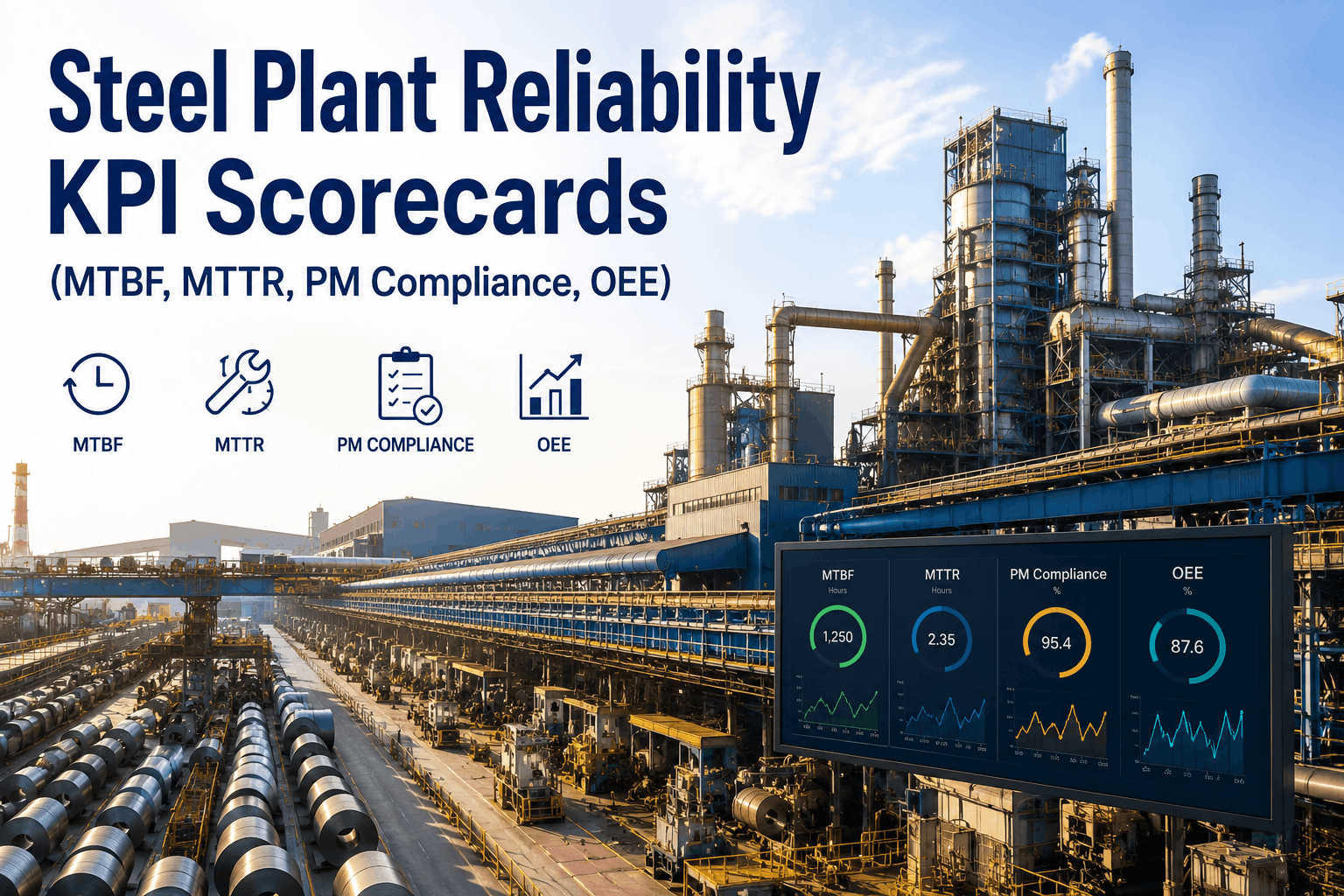
Read More
In the high-stakes, capital-intensive environment of 21st-century North American steelmaking, the difference between a top-quartile facility and a struggling one is often found in the quality of its maintenance...
Read More
In the capital-intensive and high-velocity world of US steel manufacturing, an optimized MRO (Maintenance, Repair, and Operations) strategy is far more than a simple logistics function—it is the difference between...
Read More
In the high-friction, high-heat environment of US steel manufacturing, lubrication is the literal lifeblood of production. From the massive gearboxes of hot strip mills to the heavy-duty bearings of sinter plant...

Read More
In the high-stakes environment of US steel manufacturing, reliability is not a luxury — it is a metric for survival. Transitioning from reactive "run-to-fail" maintenance to a proactive, data-driven strategy...
Read More
In the high-torque, high-speed world of US steel manufacturing, the reliability of rotating assets is the pulse of the plant. From the massive turbo blowers that breathe life into blast furnaces to the mill drives...
Read More
Steel manufacturing is consistently ranked among the most hazardous industries in the United States, with approximately 140,000 workers exposed daily to molten metal, overhead crane loads, high-energy rotatin

Read More
In the high-intensity world of US steel manufacturing, energy is more than a utility — it is the single largest variable cost after raw materials. Implementing an ISO 50001 Energy Management System (EnMS) is no...
-maintenance-and-zinc-pot-reliability.png)
Read More
The Continuous Galvanizing Line (CGL) is the final, high-value frontier of the steel finishing process — where raw steel is transformed into corrosion-resistant material for the automotive and construction sectors....

Read More
EAF water-cooled panels and roofs are the structural shield of the melt shop — protecting the furnace shell from extreme thermal loads and mechanical impacts during the scrap charging cycle. Operating in one of the...

Read More
Electric Arc Furnace (EAF) transformers and bus tubes are the high-voltage heart and high-current arteries of the modern melt shop — delivering the massive energy required to liquify scrap steel at temperatures...
Read More
ISO 50001 surveillance audits have a sobering failure rate at US steel plants — industry data suggests that over 70% of facilities that lose certification do so not because their energy programs are ineffecti

Read More
ISO 14001 is the world's most widely adopted environmental management system standard, with over 670,000 global certifications as of the ISO Survey 2024. For U.S. steel plants operating under EPA Clean Air Act...

Read More
ResponsibleSteel is now the defining ESG certification standard for U.S. steel producers competing in downstream automotive, construction, and infrastructure supply chains. Big River Steel — operated by U.S. Steel...

Read More
For an integrated steel producer, Scope 3 emissions dwarf Scope 1 and Scope 2 combined. Iron ore, coking coal, limestone, scrap, and alloying material supply chains — Category 1 purchased goods alone — typically...

Read More
The EU Carbon Border Adjustment Mechanism is not a future concern for steel exporters — the transitional reporting phase has been live since October 2023, and full financial obligations begin in January 2026. For...

Read More
Steel plants operating under the US Clean Air Act or the EU Industrial Emissions Directive face a compliance challenge that is fundamentally different from most environmental regulations: the evidence of compliance...

Read More
An EPA inspector arriving at an integrated iron and steel manufacturing facility under 40 CFR Part 63, Subpart FFFFF does not ask how committed your facility is to environmental compliance — the inspector asks for...
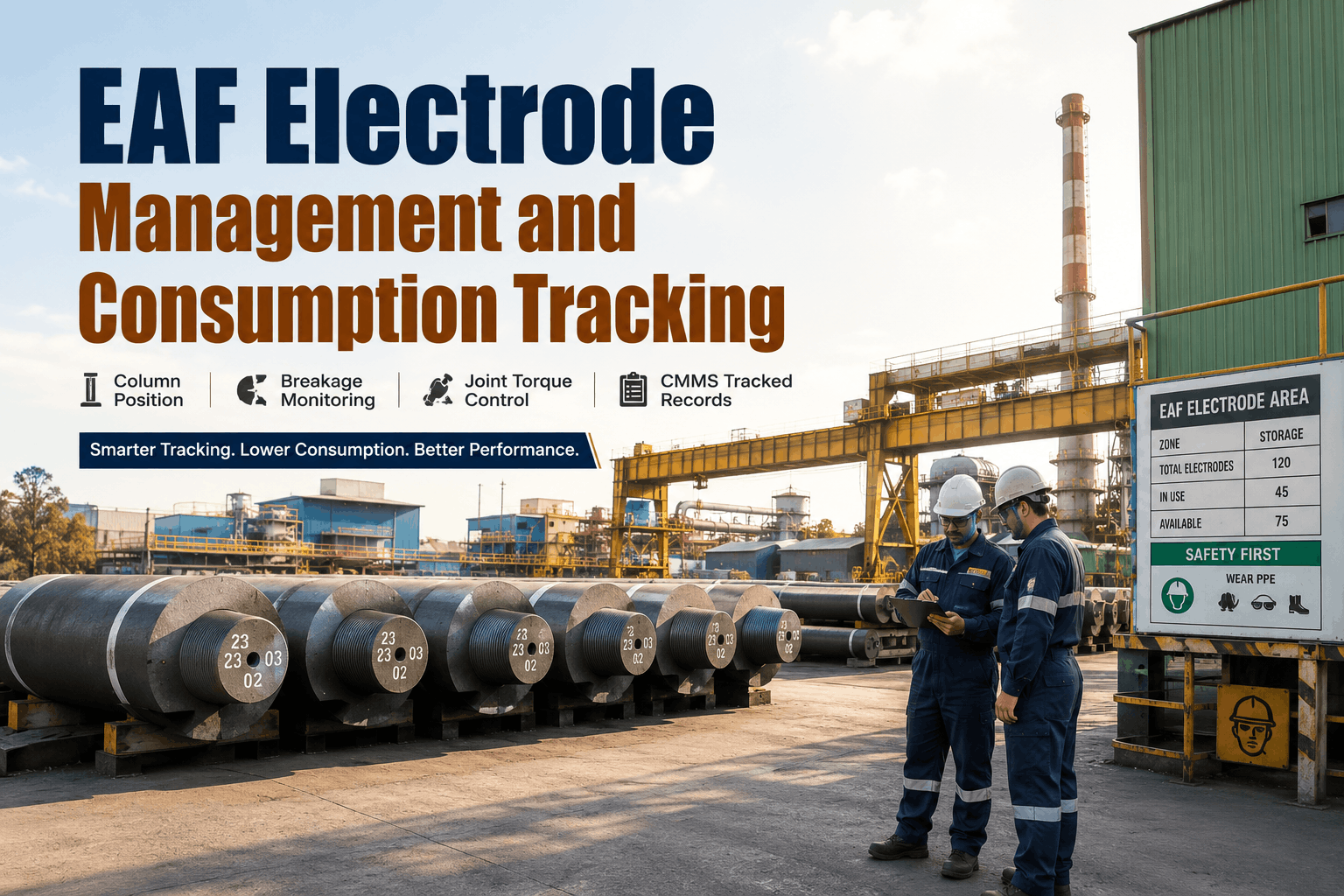
Read More
Graphite electrodes are the second-largest variable cost in electric arc furnace steelmaking after scrap — and unlike scrap, where the procurement price is largely market-driven, electrode consumption is...
Read More
A BOF vessel reline costs between ₹2.5 crore and ₹12 crore in refractory materials and contractor labour, takes 15–25 days of production downtime, and happens — in a plant without structured campaign management —...
Read More
A BOF oxygen lance delivers supersonic oxygen at 450–500 m/s into a 300-tonne bath of molten steel at 1,650°C. The only thing standing between productive blowing and a catastrophic water-into-bath explosion is the...
Read More
The vacuum degasser is the most process-critical and maintenance-intensive piece of secondary metallurgy equipment in an integrated steel plant. For flat products requiring ultra-low carbon content (<30 ppm C),...
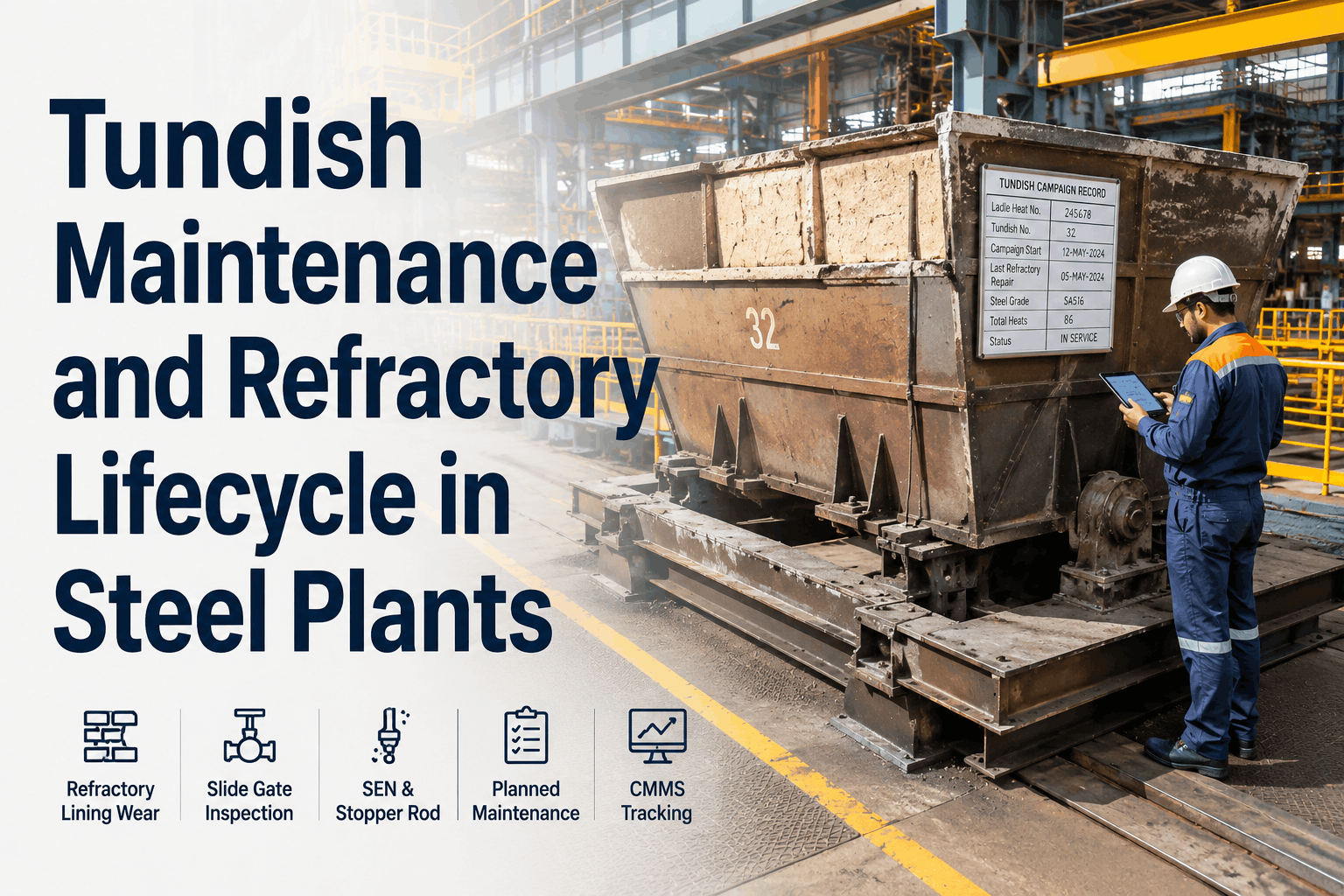
Read More
The tundish is the last refractory vessel that liquid steel passes through before it enters the mold. It is an intermediate buffer, a metallurgical refining vessel, and a flow control system simultaneously — and...
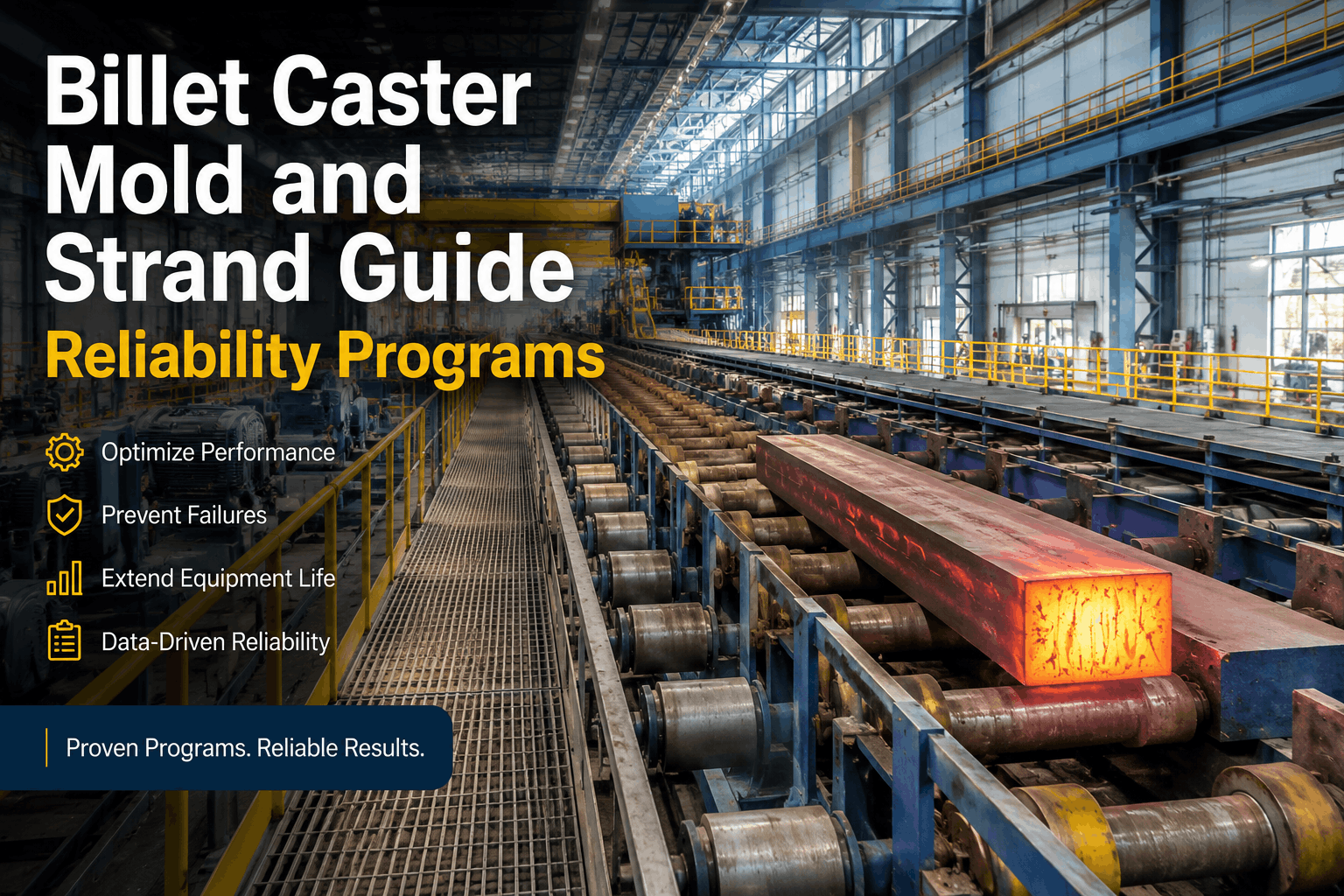
Read More
Billet caster molds and strand guides are the high-precision mechanical arteries of every continuous casting machine (CCM) — transforming liquid steel into solid geometry through meticulously controlled heat...
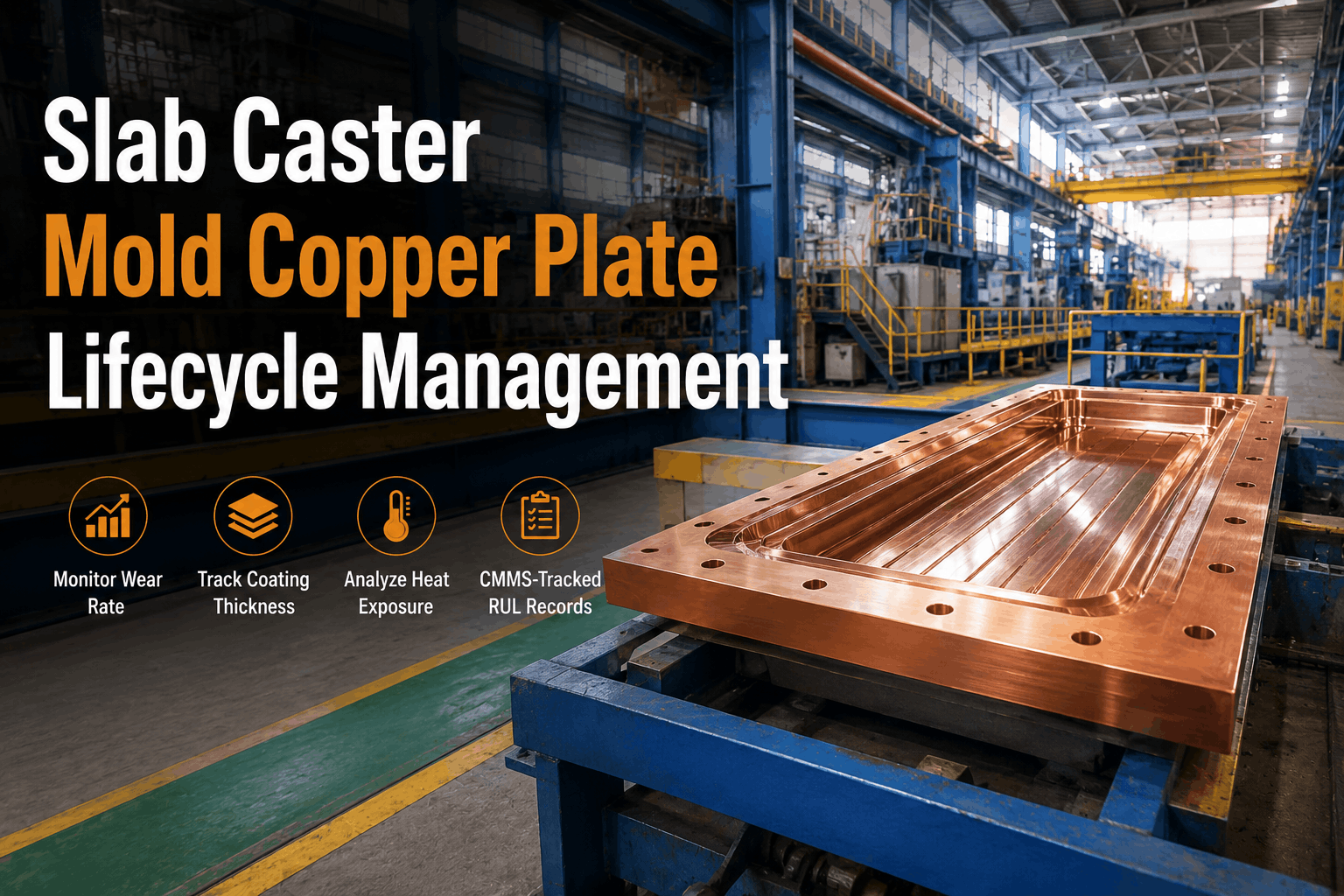
Read More
The slab caster mold copper plate is not a consumable — it is a precision reusable asset that goes through multiple refurbishment cycles across its operational life. A wide-face mold copper plate installed on a...
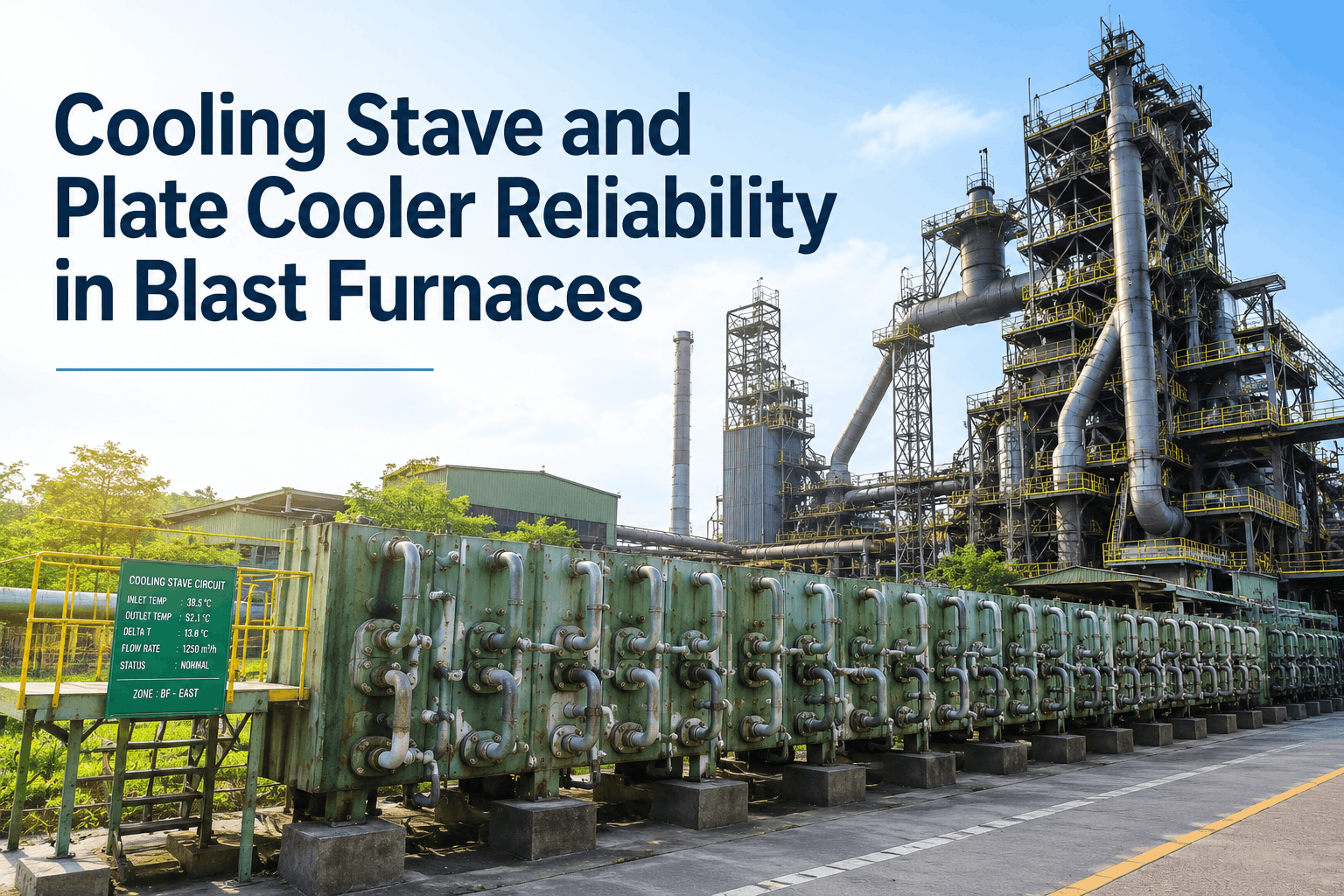
Read More
The blast furnace cooling system is the single most consequential maintenance domain in ironmaking. Cooling staves and plate coolers do not just regulate shell temperature — they are the physical boundary between a...
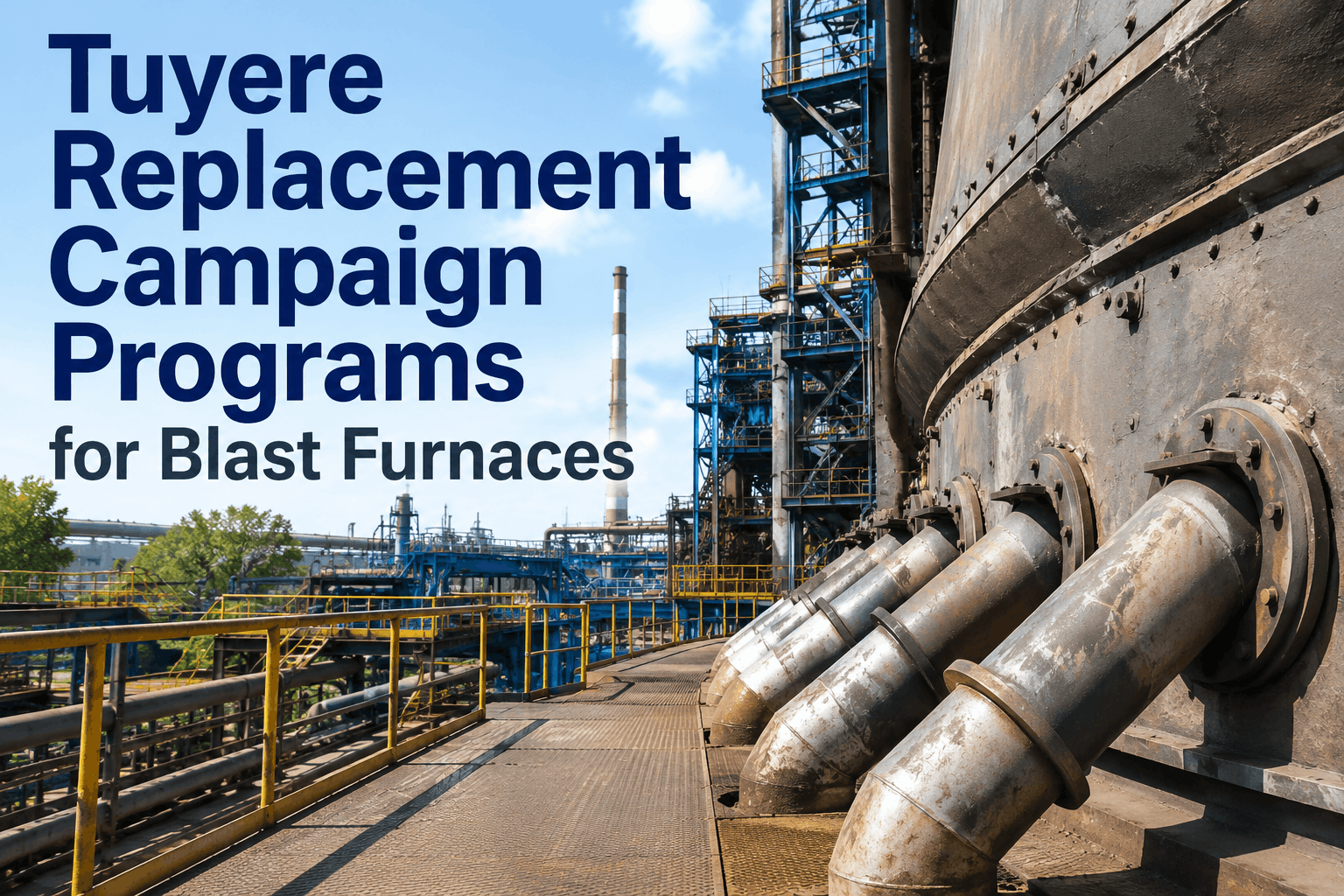
Read More
A tuyere blowout — water from a failed copper casting contacting the molten iron bath — is one of the most serious safety incidents in blast furnace operation. Beyond the immediate hazard, it forces an unplanned...
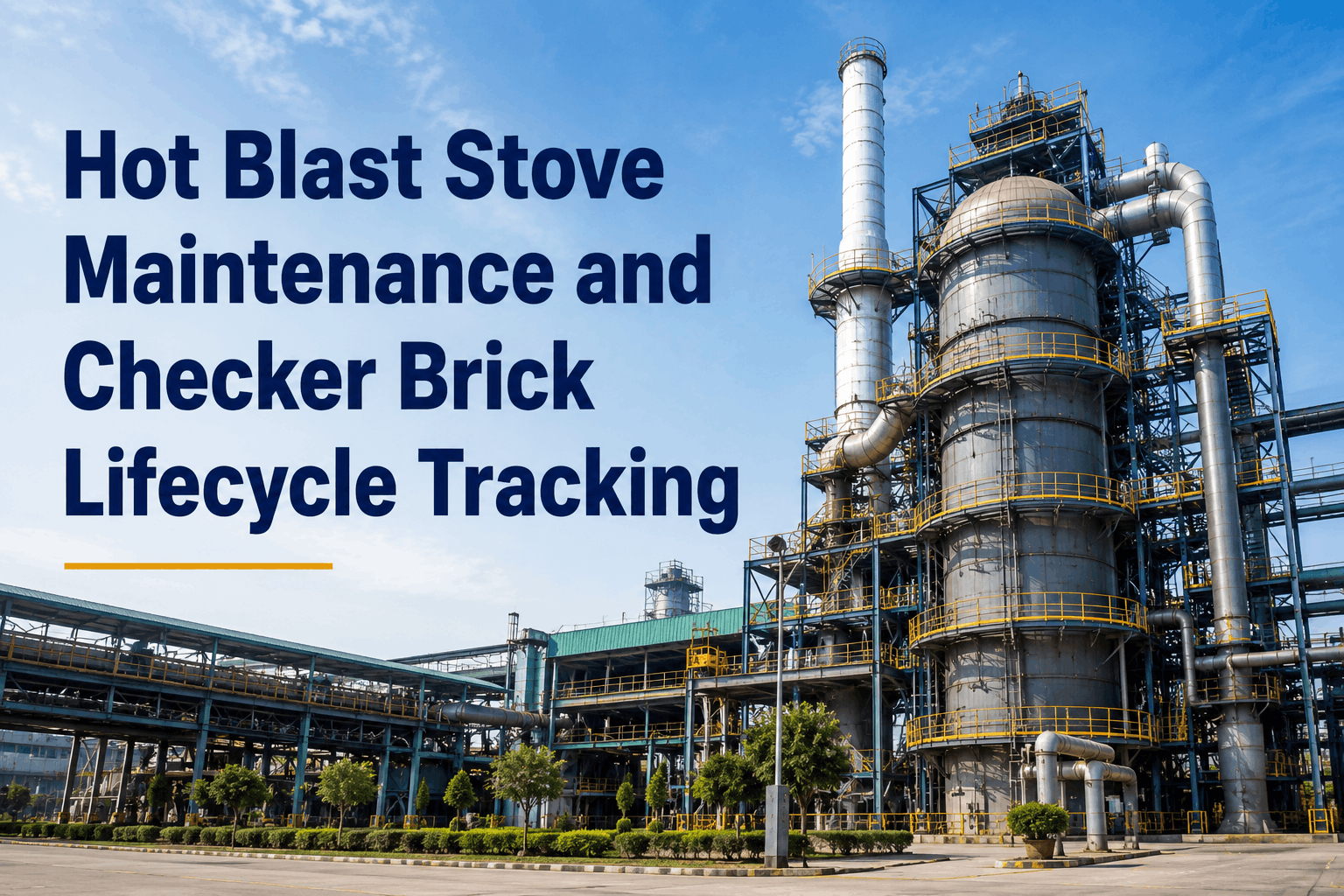
Read More
Hot blast stoves are the thermal lungs of every blast furnace — preheating combustion air to temperatures between 1,050°C and 1,350°C before injection into the furnace tuyeres. When a stove underperforms, coke...
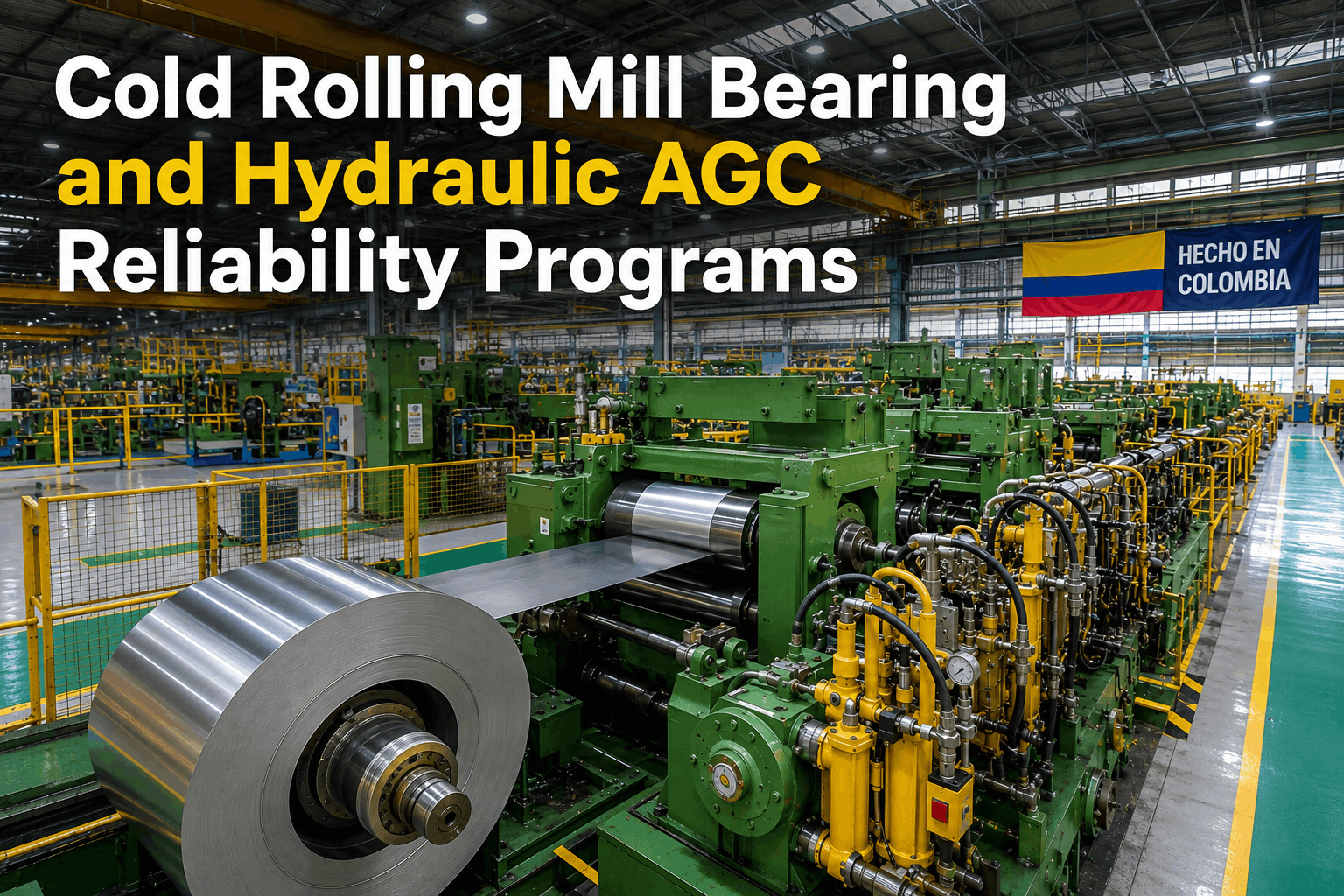
Read More
A cold rolling mill's ability to hold strip thickness within ±5 µm depends entirely on two systems working in perfect condition simultaneously: the hydraulic Automatic Gauge Control circuit and the work roll and...
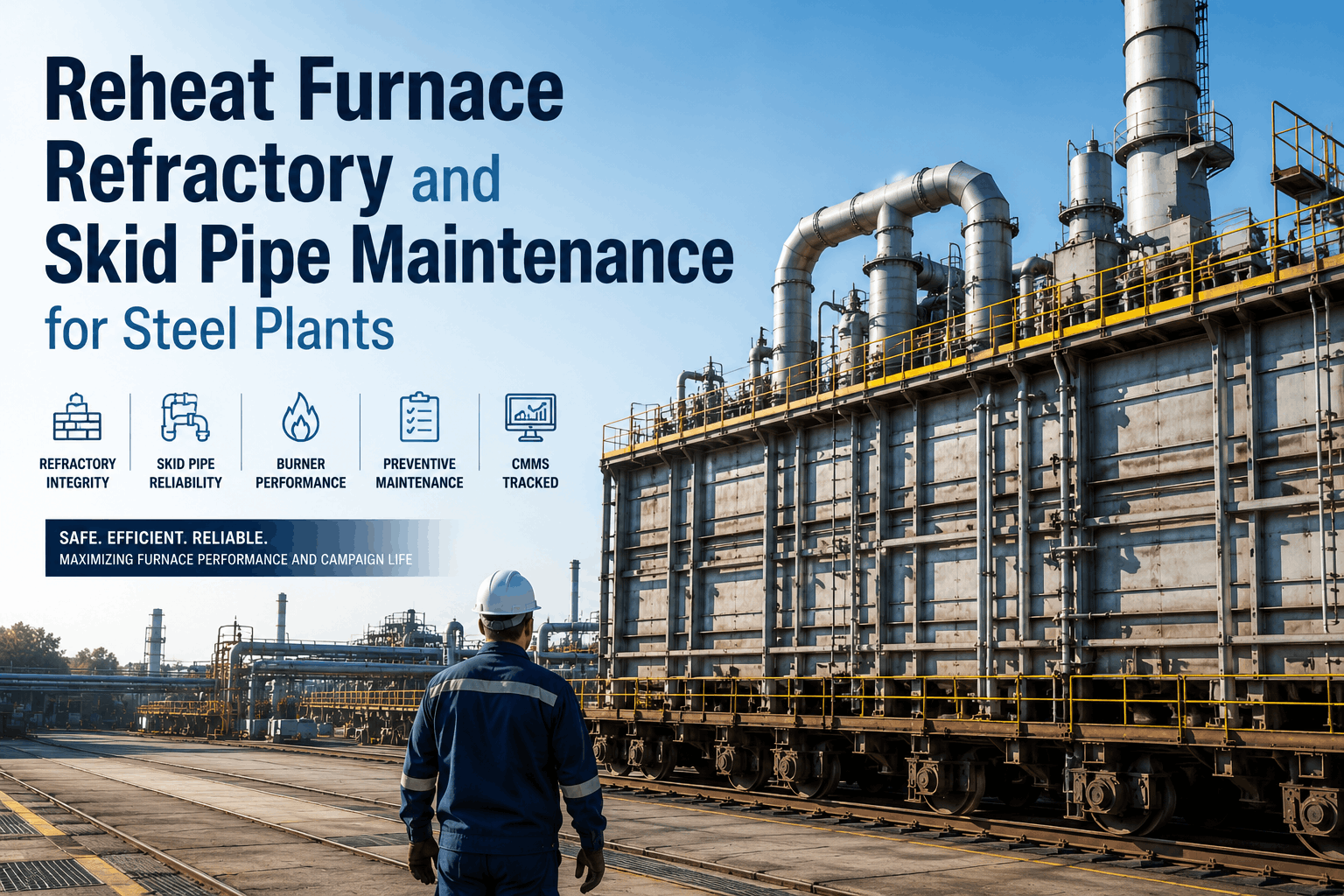
Read More
A reheating furnace that fails its refractory loses more than its lining — it loses the entire rolling campaign upstream and downstream of it. When hearth castables degrade past the point of structural integrity,...
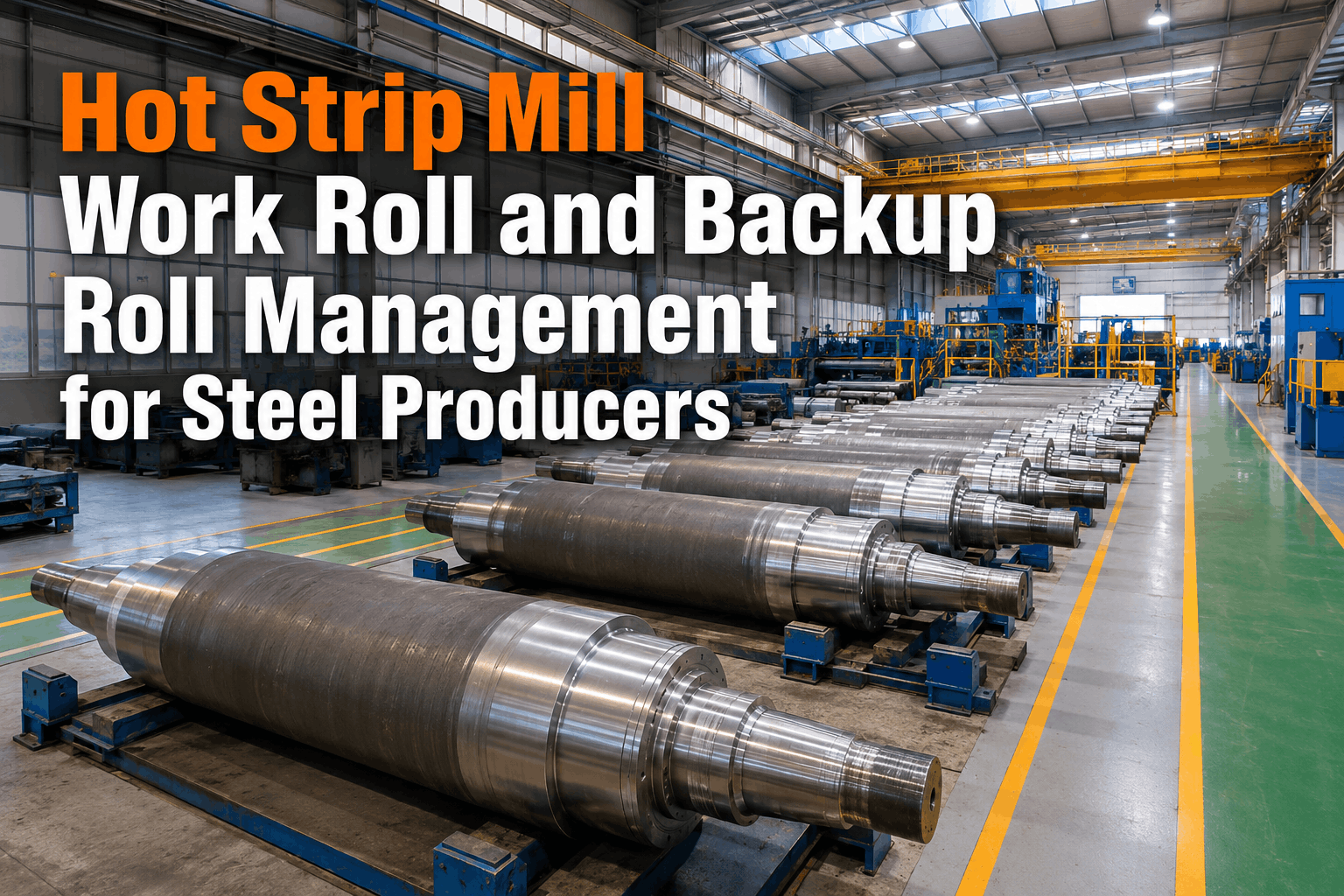
Read More
A hot strip mill runs on its rolls. Work rolls absorb thermal shock, rolling force, and surface wear across every tonne of steel produced, while backup rolls transmit those forces into the mill housing structure...

Read More
The electric arc furnace is the most energy-intensive asset in a steel plant — consuming between 350 and 700 kWh per ton of liquid steel, depending on scrap mix, electrode condition, and cooling system performance....

Read More
Steel production accounts for roughly 8% of global CO₂ emissions — and a significant portion of that is preventable through smarter maintenance decisions. When a ladle car runs degraded, when a furnace operates...

Read More
Green steel is no longer a future ambition — it is an active capital programme at ArcelorMittal, SSAB, Thyssenkrupp, POSCO, and JSW. The shift from blast furnace ironmaking to hydrogen-based Direct Reduced Iron...

Read More
A steel plant shutdown that runs three days over schedule because a critical spare was not stocked does not just cost the price of the part — it costs the price of three days of lost production on a blast furnace,...

Read More
A steel plant shutdown that costs $4.2 million in planned maintenance can easily become a $9 million event — not because the maintenance scope changed, but because the costs that surround it were never properly...

Read More
Green steel certification is no longer a marketing exercise — it is a commercial necessity. European buyers governed by CBAM (Carbon Border Adjustment Mechanism) now require documented proof of emissions-linked...

Read More
In a steel plant running three shifts across blast furnaces, rolling mills, and utilities, the moment one shift ends and another begins is the most dangerous and costly gap in operations. Critical equipment faults...

Read More
Every shift change in a steel plant is a knowledge transfer event — and most plants are failing it. Critical alarms, pending work orders, production deviations, near-miss safety events, and asset risk conditions...

Read More
Energy is the single largest operating cost in any steel plant — typically accounting for 20–40% of total production cost depending on the process route. Yet in most facilities, energy waste is invisible until it...
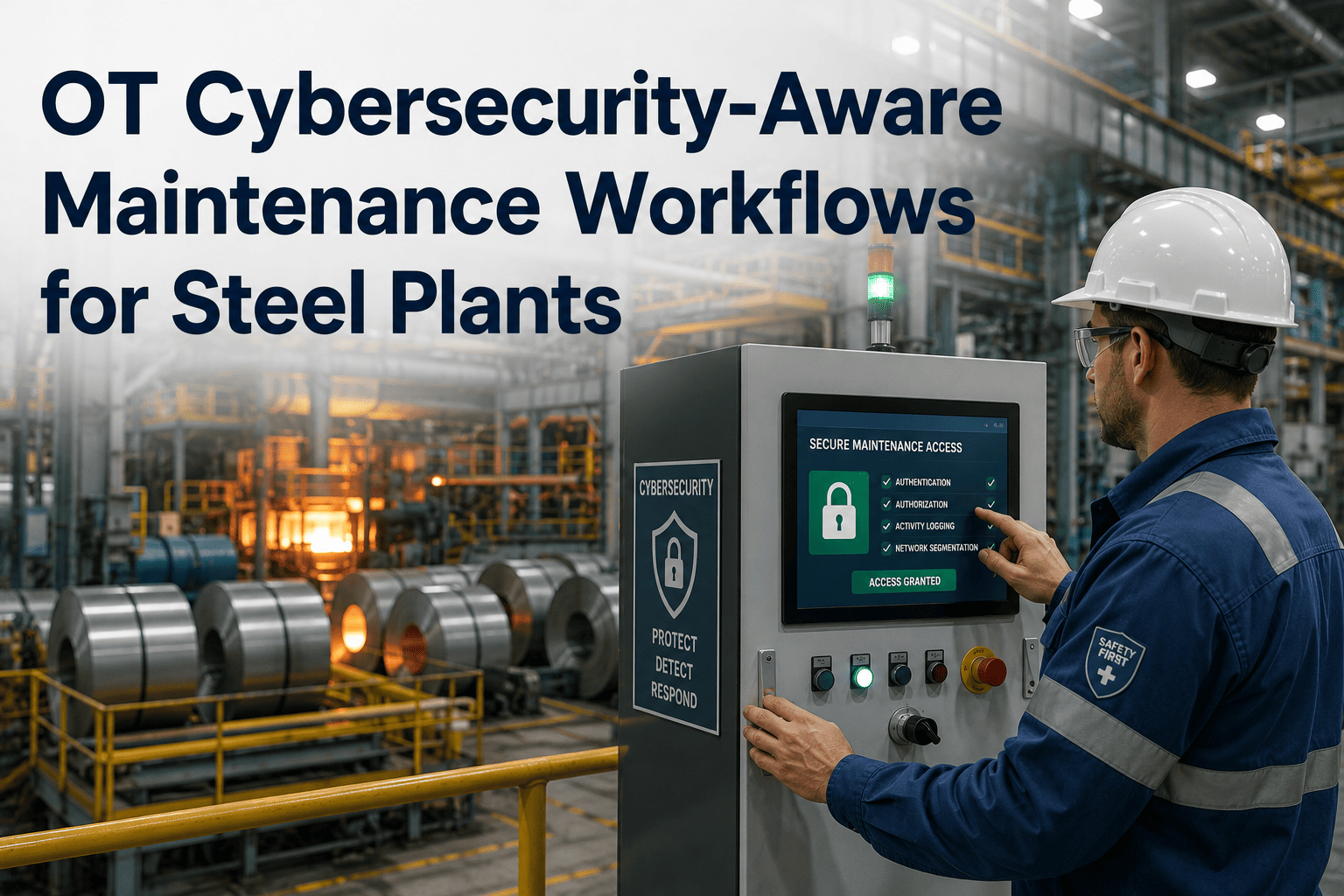
Read More
Every time a maintenance technician plugs a laptop into a PLC on the rolling mill floor, connects a USB drive to update firmware on a blast furnace controller, or accesses a SCADA terminal to verify a sensor...
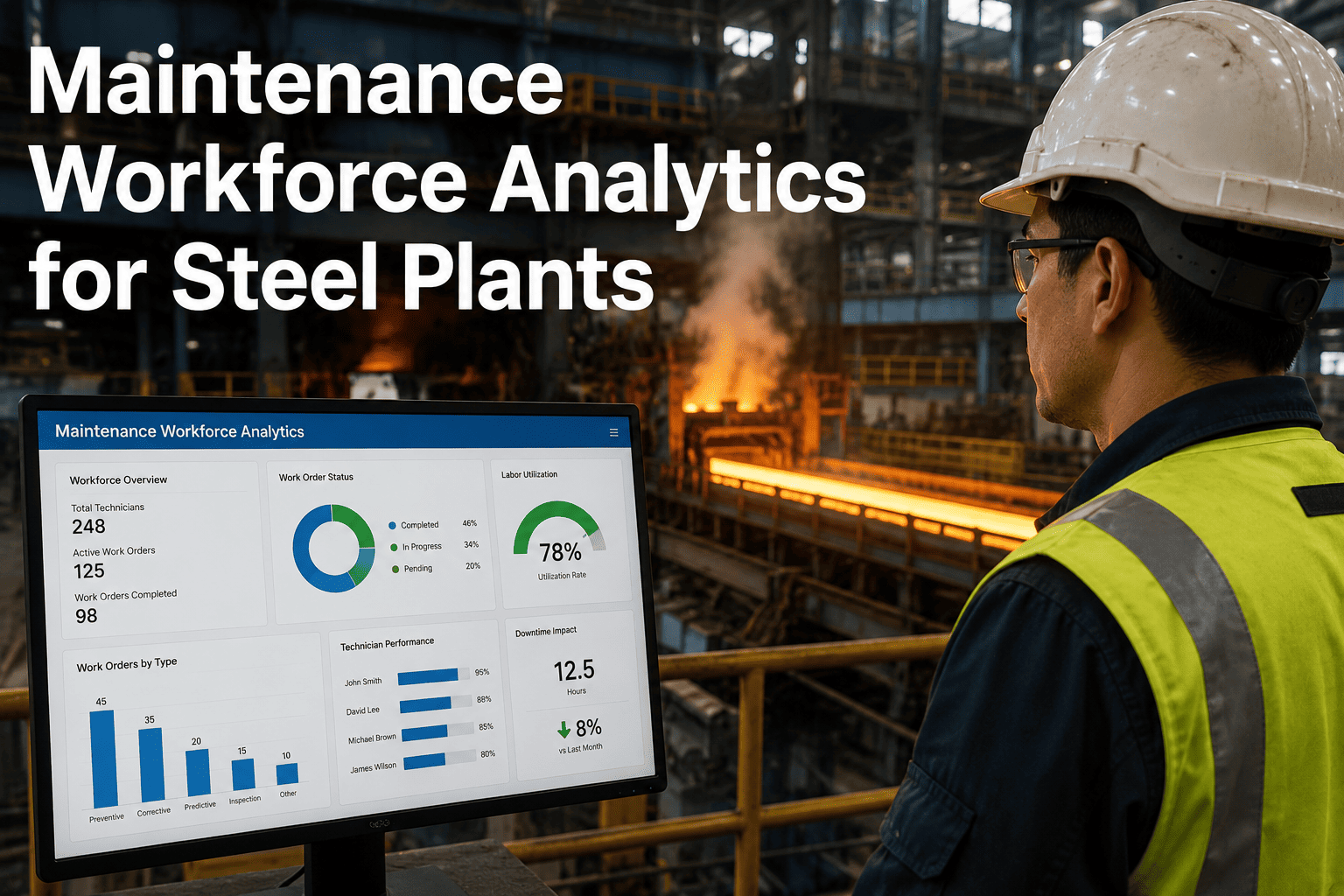
Read More
A steel plant's maintenance output is only as strong as the team executing it. Technician productivity, skill deployment, backlog velocity, and task quality are the four levers that separate a maintenance...
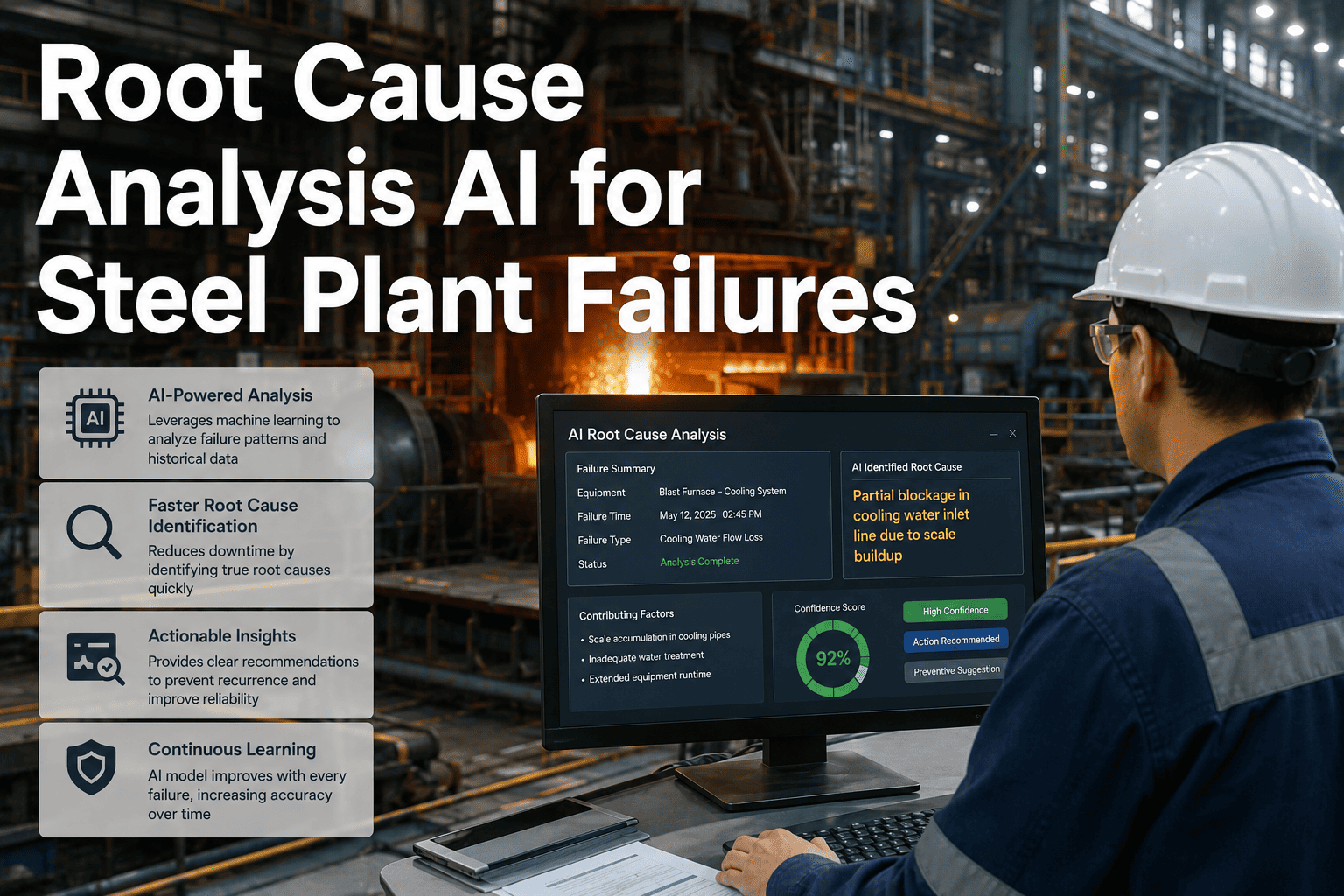
Read More
A steel plant that fixes the same rolling mill gearbox failure every 90 days is not running a maintenance program — it is running an expensive cycle of symptom suppression. Root cause analysis exists to break that...
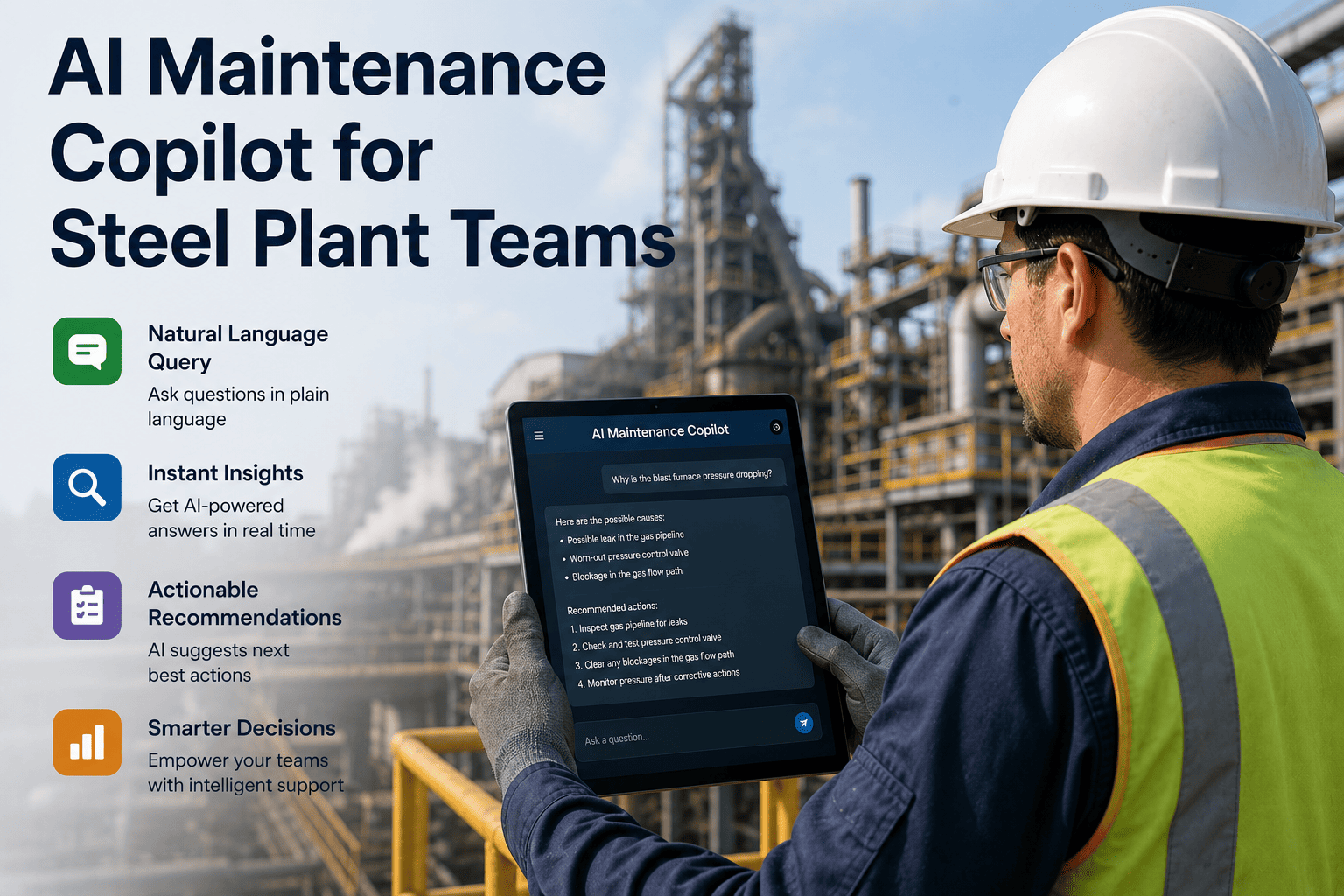
Read More
When a rolling mill drive motor trips at 2 AM, the responding technician has minutes — not hours — to diagnose the fault, find the right procedure, check parts availability, and decide whether to attempt a repair...
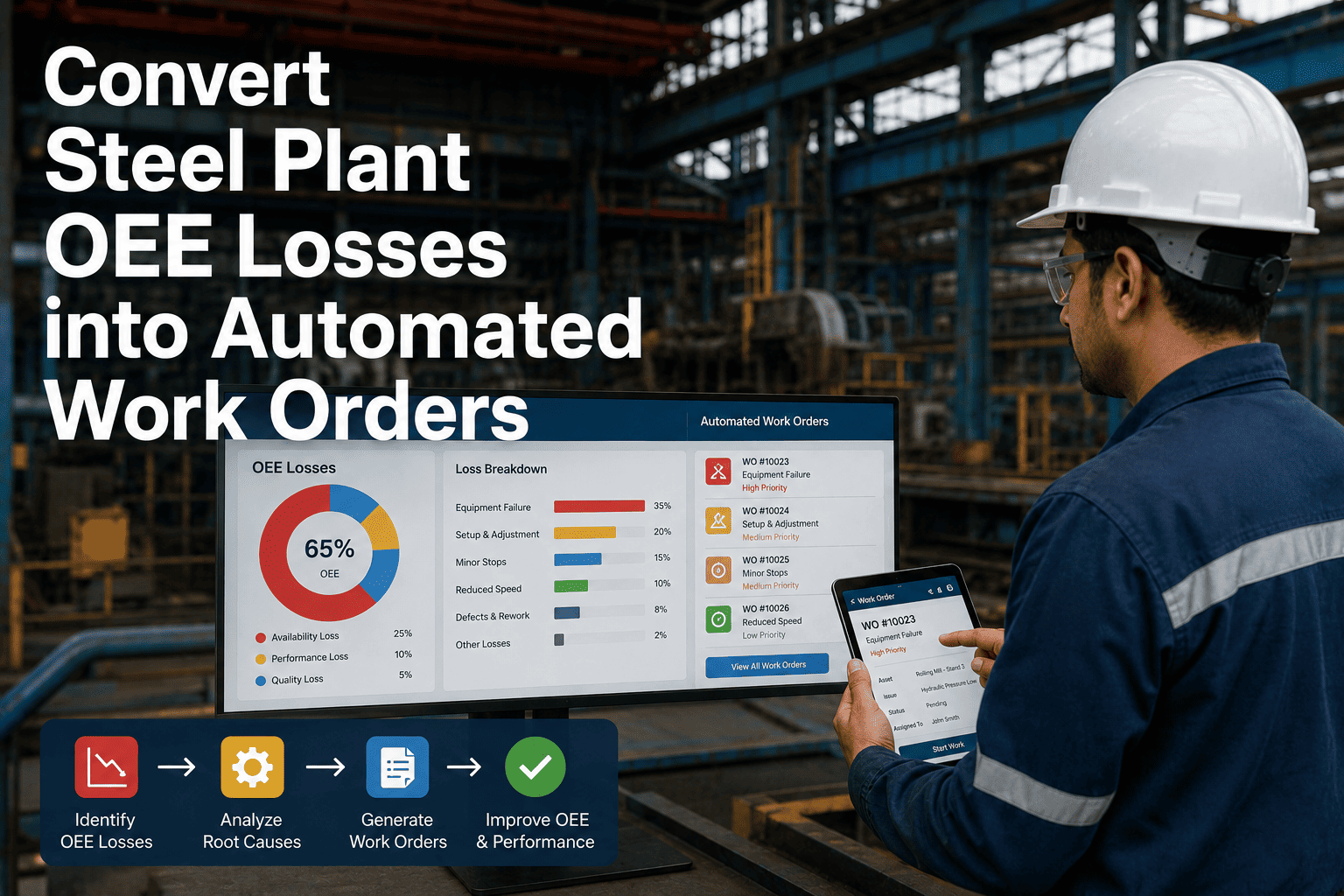
Read More
Every OEE percentage point lost in a steel plant has a name, a cause, and a work order that should have been triggered — but wasn't. When a blast furnace cooling pump degrades over two shifts and no anomaly is...
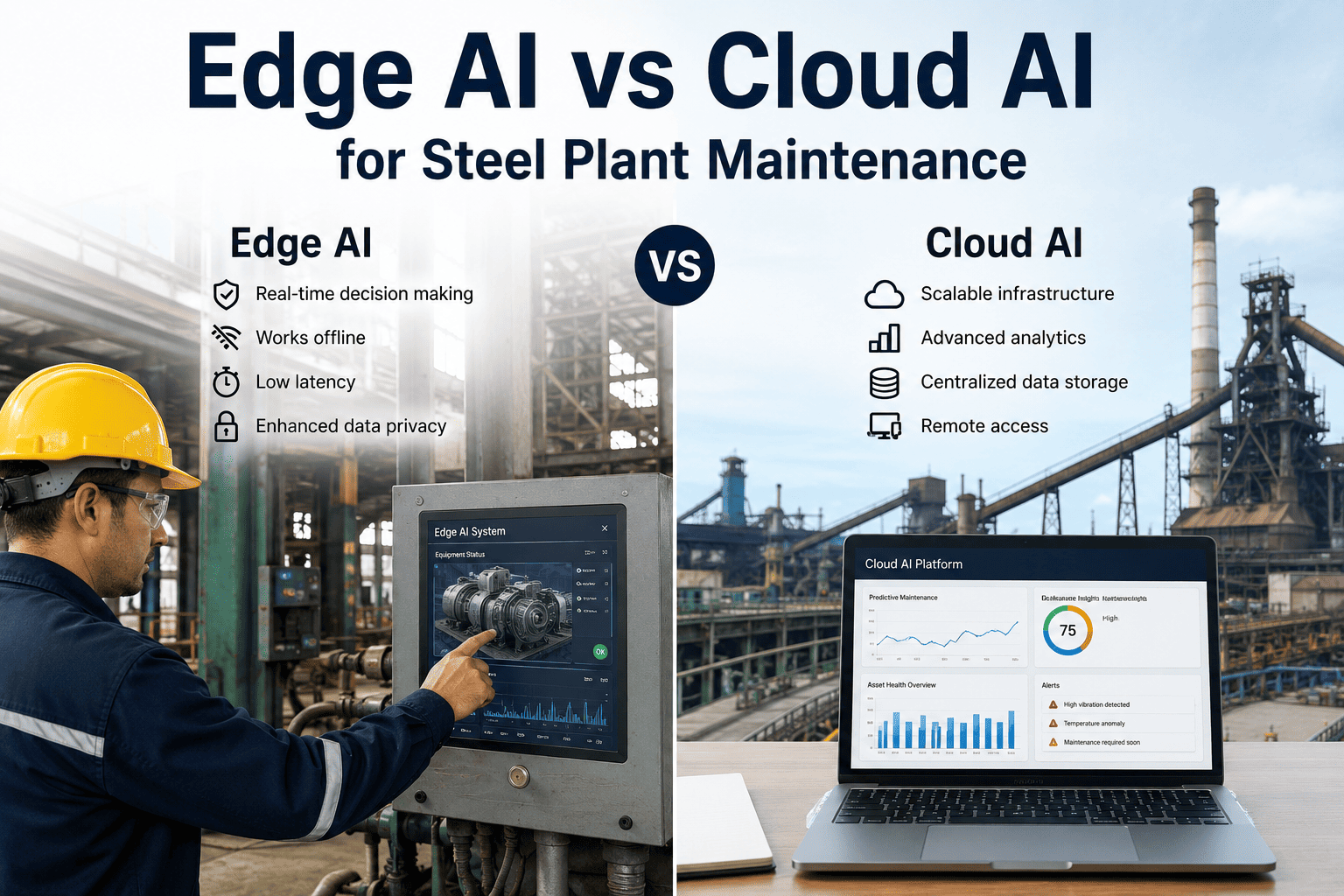
Read More
Steel plant AI deployments are hitting a critical fork in the road: run intelligence at the edge — directly on sensors, PLCs, and gateway hardware inside the plant — or route data to the cloud for processing and...
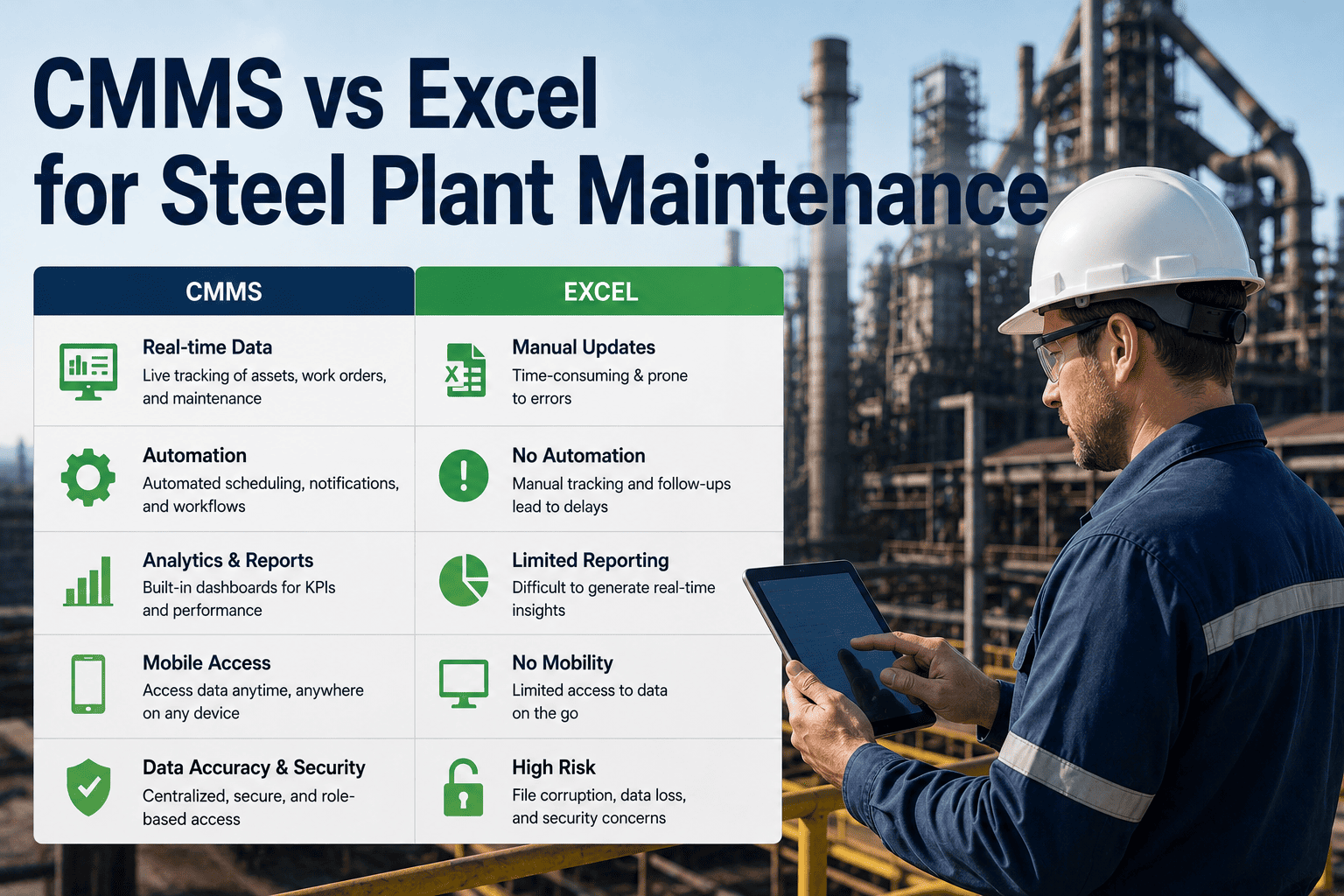
Read More
Steel plants running maintenance on Excel are not maintaining assets — they are managing documents. Every missed PM, every untracked spare, every work order scribbled on paper represents a gap between what was...
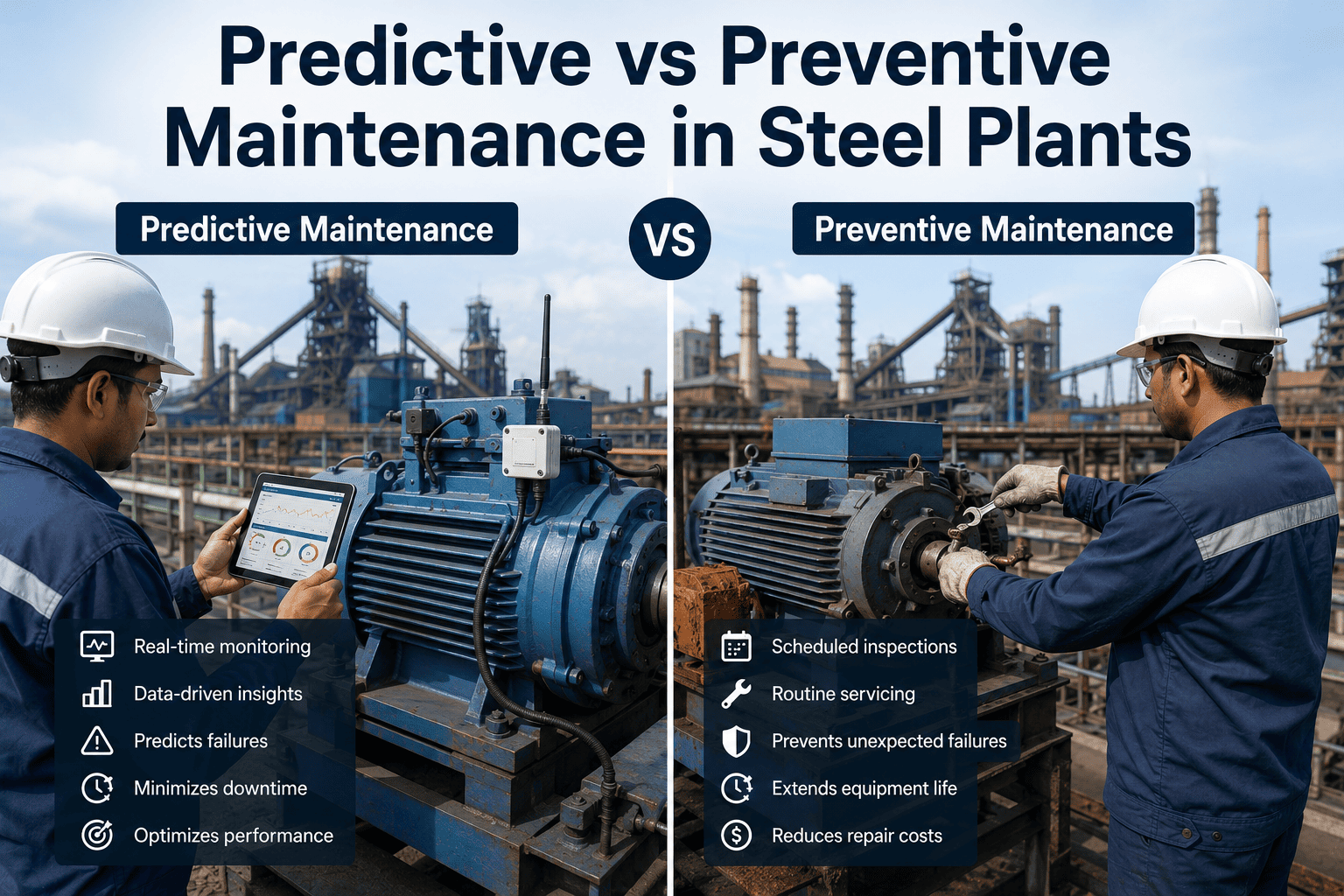
Read More
Steel plants that rely on calendar-based preventive maintenance replace components with 30–60% useful life still remaining, waste labor on healthy equipment, and still fail to prevent 40% of unplanned breakdowns....
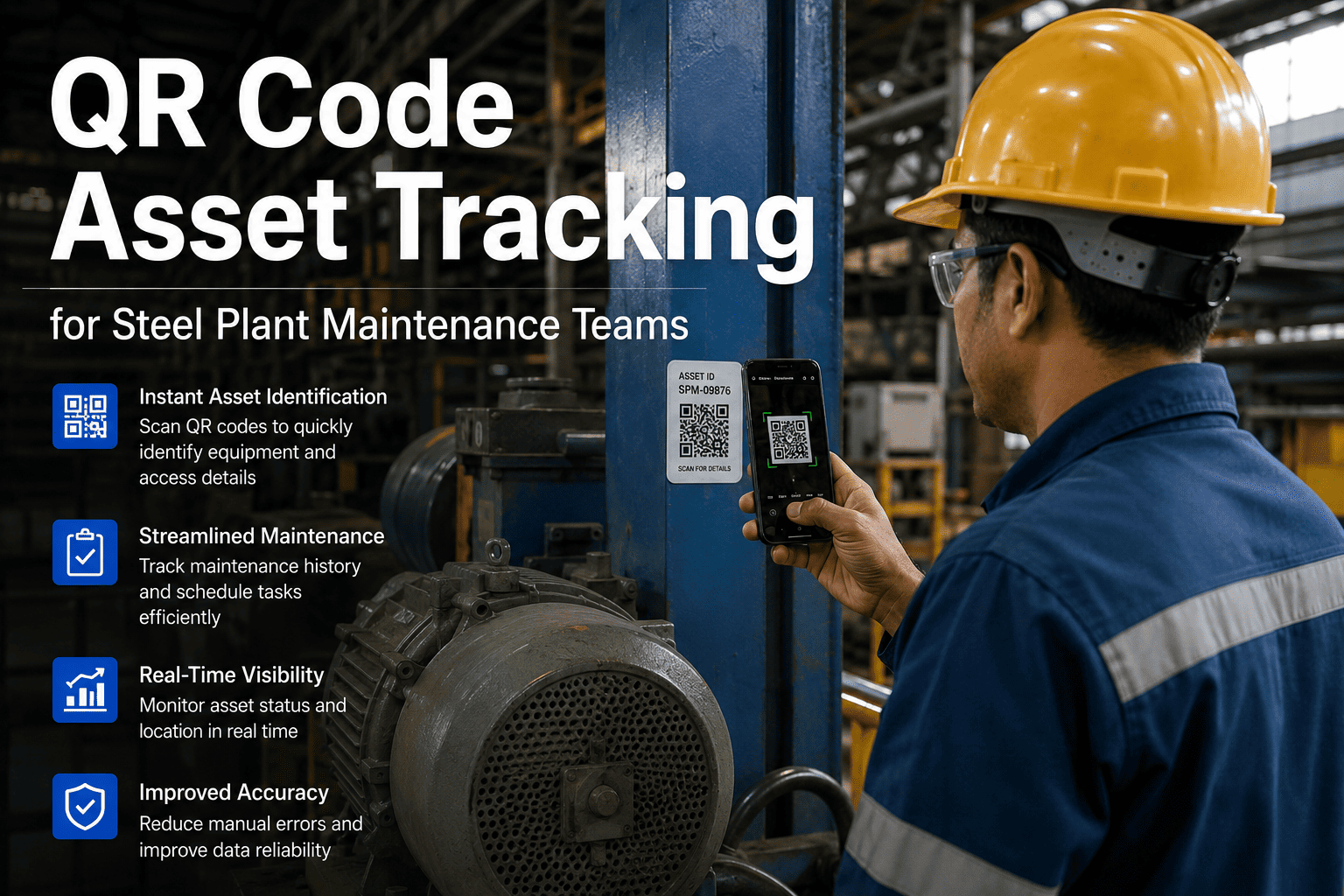
Read More
A technician walking into a steel plant bay to service a rolling mill drive motor used to start by finding the right logbook, deciphering handwritten entries from three shifts back, and calling the storeroom to...
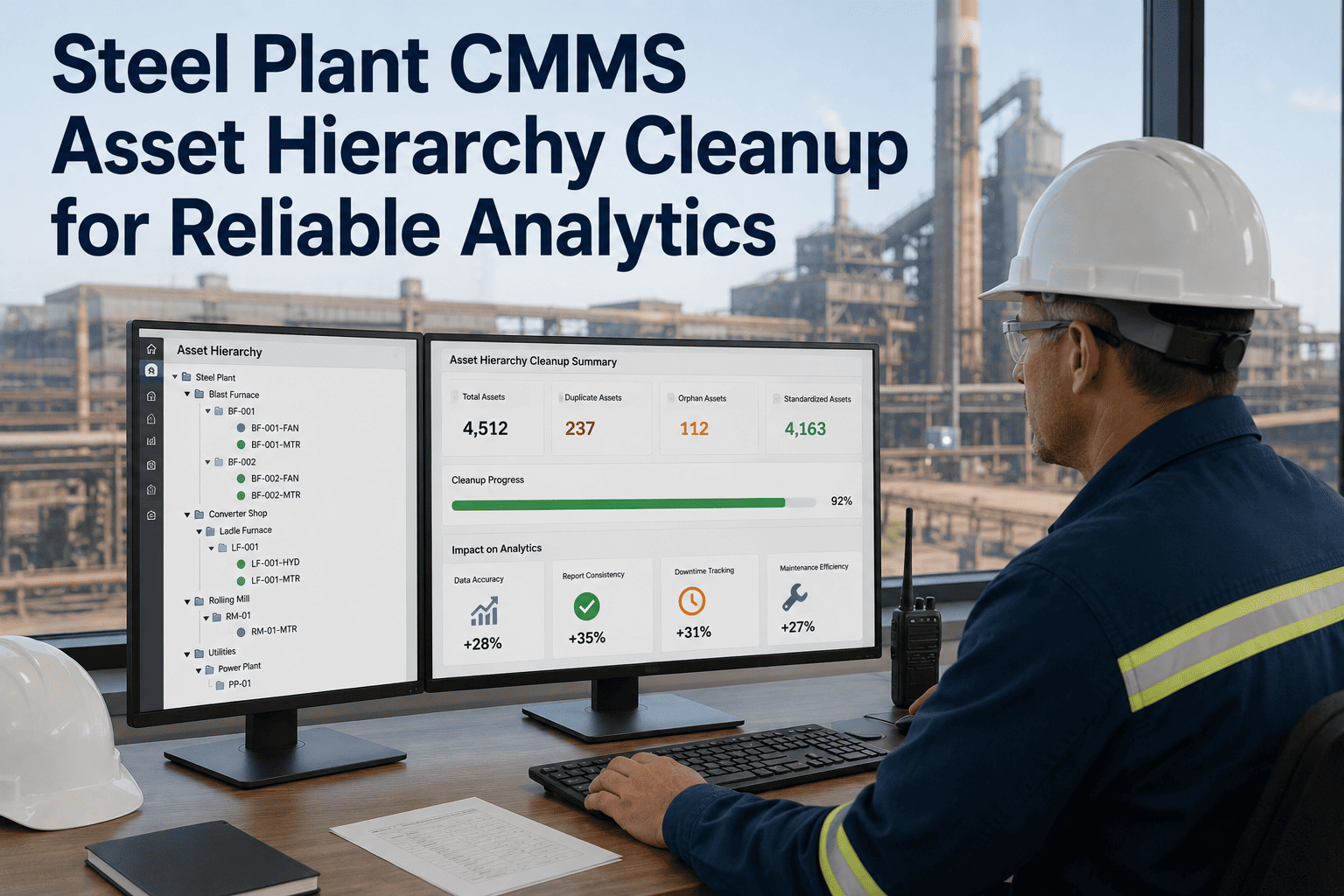
Read More
A steel plant's CMMS is only as reliable as the asset data inside it. When the same blast furnace blower appears under three different tag names, when orphaned equipment records accumulate from a 2019 plant...
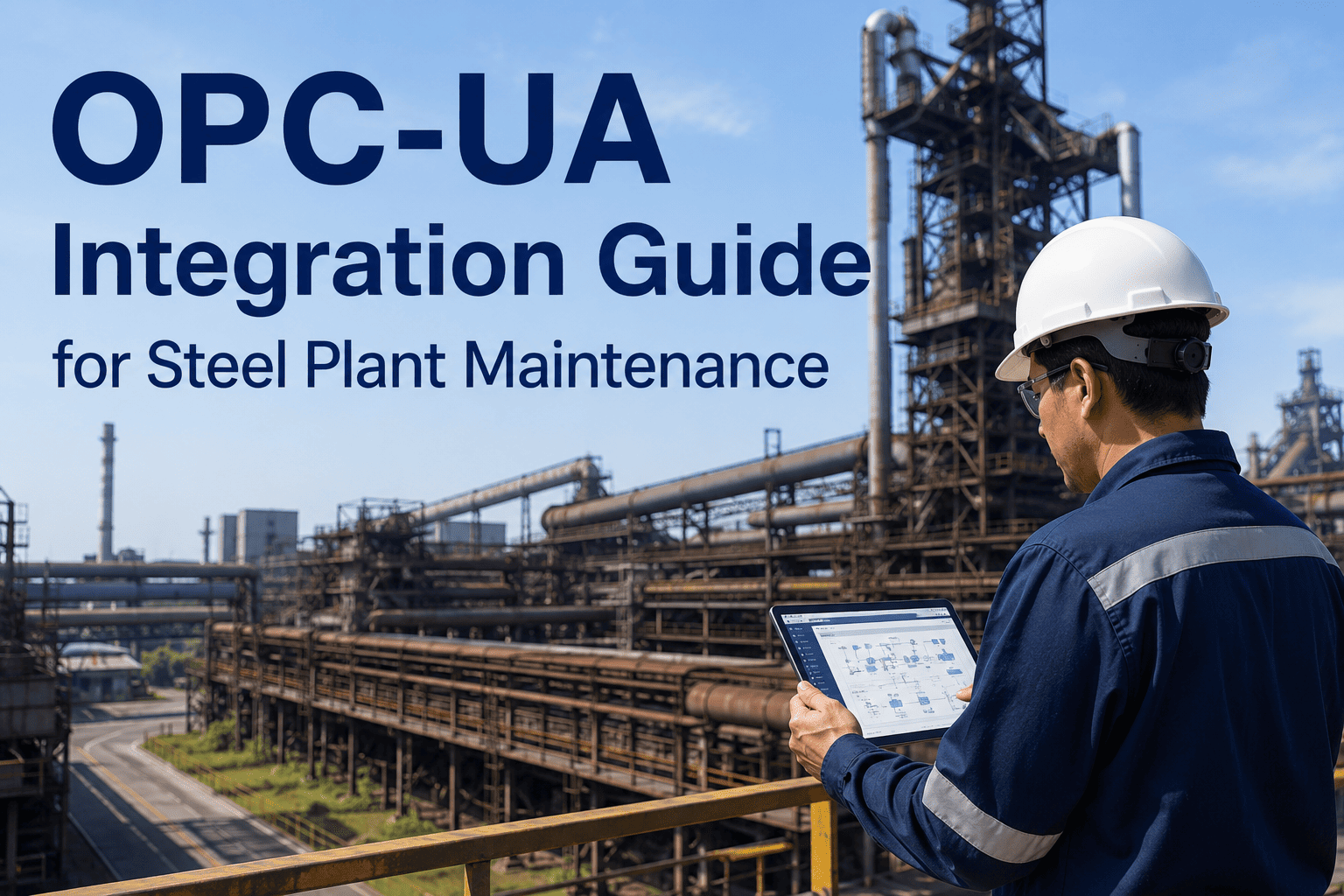
Read More
Steel plant SCADA systems generate thousands of equipment signals every shift — bearing temperatures, motor currents, vibration amplitudes, pressure deviations, and drive fault codes — each of which carries a...

Read More
A steel plant shutdown that runs over by even 12 hours costs between $800,000 and $2.4 million in lost production — yet most overruns trace back to scope additions discovered on day three, spare parts that were not...

Read More
A steel plant shutdown that overruns by even two days costs an average of $1.2M–$3.8M in lost production — and the root cause is almost never the maintenance work itself. It is the planning gaps that appear during...

Read More
Every steel plant generates thousands of data points every minute — asset temperatures, vibration readings, open work orders, energy draws, safety tasks, and downtime events — but most reliability teams are still...

Read More
Every unplanned stop on a steel production line generates a production loss event in the MES — but without a direct connection to the CMMS, that event never informs the maintenance work order that should have...

Read More
Steel plants running SAP PM for work order management alongside a separate field execution system are managing two versions of maintenance reality simultaneously — and the gap between them costs more than most...

Read More
When a SCADA system detects an alarm in a steel plant, the clock starts. Every minute between that alarm and a technician arriving with the right tools, correct asset context, and spare parts in hand is a minute of...
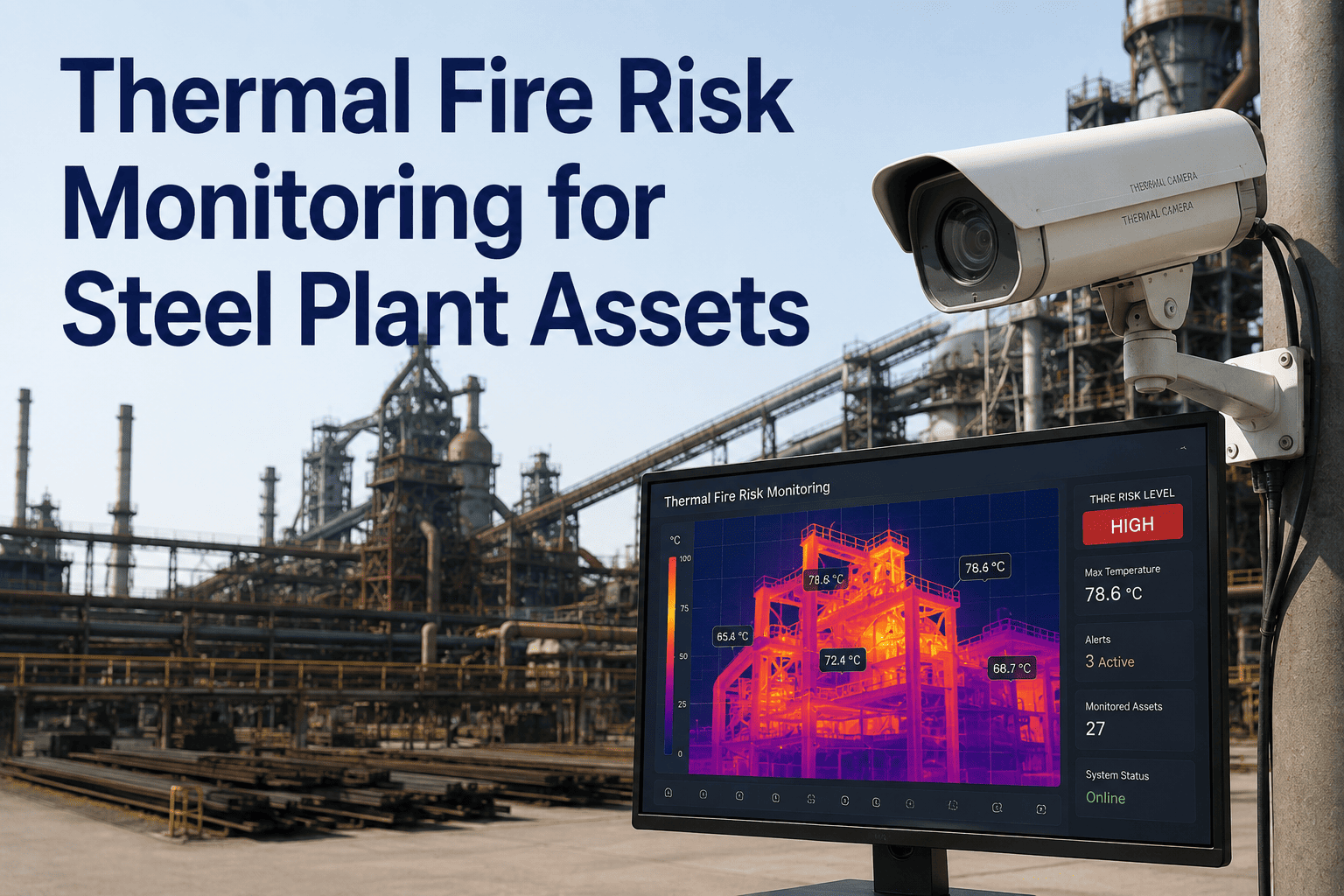
Read More
A 400kW conveyor drive motor running 18°C above its normal operating temperature is not a maintenance note — it is a fire ignition event waiting for the right accumulation of belt dust and a shift change that...

Read More
Blast furnace gas leaks are among the most dangerous and most under-detected hazards in integrated steelmaking. BFG contains 20–27% carbon monoxide by volume — a concentration that causes loss of consciousness...

Read More
Confined space fatalities in integrated steel operations are disproportionately caused not by the work itself but by the failure of the safety system surrounding it — an incomplete gas test, a permit issued without...

Read More
Lockout/Tagout violations remain among the most cited and most fatal OSHA findings in integrated steel operations. OSHA 29 CFR 1910.147 — the Control of Hazardous Energy standard — was cited 2,554 times in FY2024,...

Read More
A steel plant maintenance team conducting a blast furnace tuyere replacement without a properly isolated hot blast system is not taking a calculated risk — they are operating outside every safety standard that...
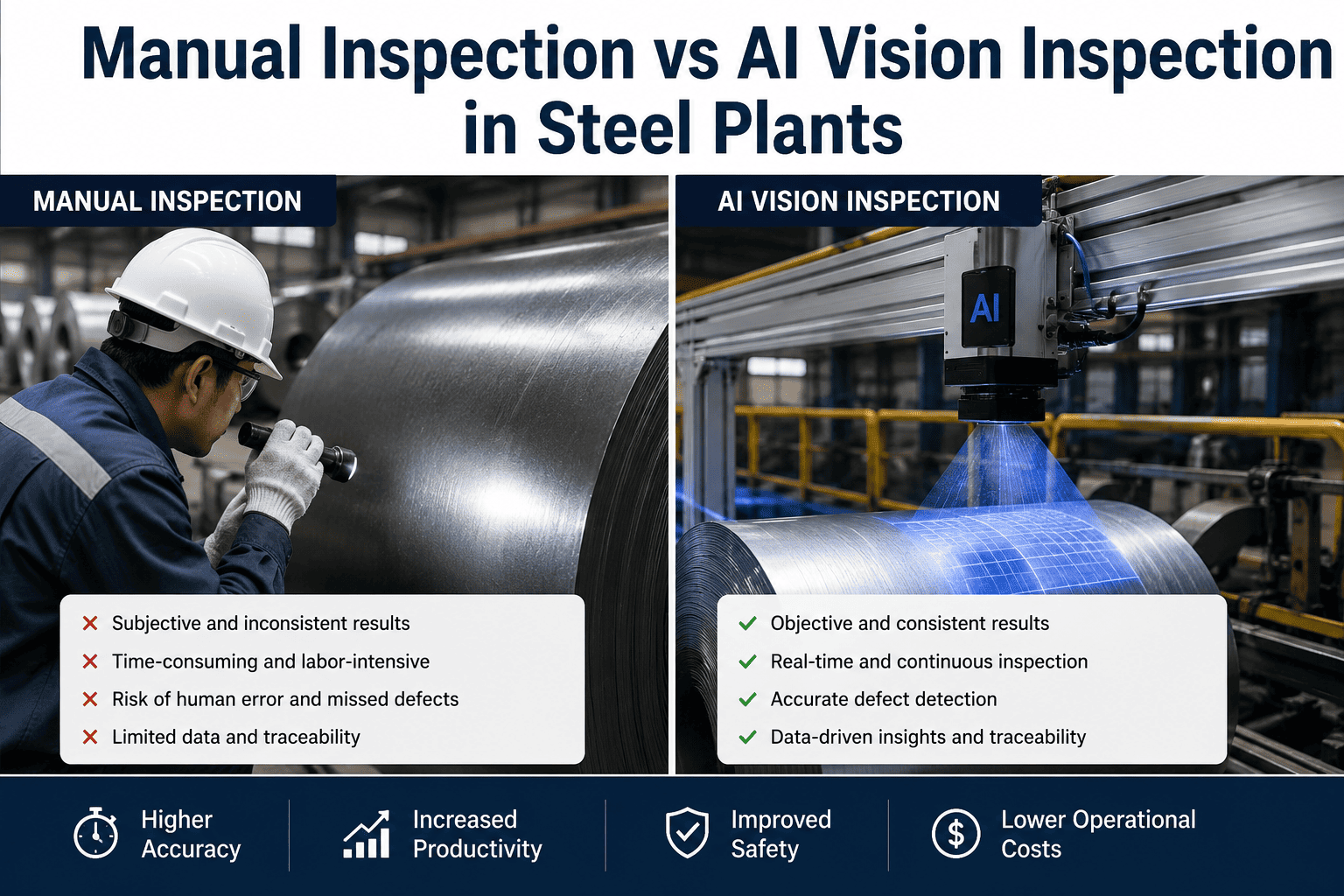
Read More
Manual visual inspection of steel surfaces has a hard physical ceiling: the human eye resolves about 0.1mm at comfortable viewing distance, fatigues after 20–40 minutes of sustained concentration, and operates at a...

Read More
A 3mm longitudinal crack on a hot-rolled steel slab costs almost nothing to catch at the mill — and tens of thousands of dollars to discover after the coil has been shipped, processed, and returned as a customer...

Read More
A 4 MTPA hot strip mill producing 1,400 coils per month cannot afford a quality event that propagates through 40 minutes of rolling before a manual inspector raises the alarm. At 1,200 metres per minute, that's 48...

Read More
Surface defects in steel — cracks, scale marks, edge irregularities — cost the global steel industry over $47 billion annually in rejections, rework, and customer claims. At rolling speeds exceeding 20 m/s, human...

Read More
Steel plants handling thousands of tons of ore daily face constant risk from conveyor failures — chute blockages, belt overloads, and material spillage that halt production for hours. OxMaint's

Read More
A conveyor belt that stops in a steel plant does not just pause material flow — it halts the entire production chain. With steel plants operating continuous casting, rolling mills, and ore handling lines that...

Read More
Steel plant conveyor belts carry thousands of tons of raw material, ore, and slag every single day — and a single undetected belt tear, roller failure, or misalignment event can halt the entire material flow chain...

Read More
Steel plant motors and gearboxes are the backbone of every conveyor, rolling mill, and blast furnace drive system. When these critical rotating assets fail without warning, the result is unplanned downtime, costly...

Read More
Hydraulic systems are the circulatory network of a steel plant — driving rolling mill roll gap adjustments, press operations, shear actuation, and descaler pumps simultaneously across every shift. A single...

Read More
Rolling mill changeovers are one of the most expensive and least-tracked sources of hidden downtime in steel operations. When tooling arrives late, spare parts are missing, or work sequences are unclear, a 4-hour...

Read More
Discover how OxMaint's AI-powered energy monitoring helped a mid-size steel plant cut furnace fuel costs by 22% and prevent $1.4M in heat cycle losses — without replacing existing equipment. This case study bre

Read More
Rolling mills are among the most mechanically demanding assets in any steel plant — operating under extreme load, heat, and speed. When a rolling mill goes down unexpectedly, the cost is not just the repair: it is...

Read More
Rolling mill bearing failures, gearbox deterioration, and shaft misalignment share one characteristic that makes them preventable: they announce themselves in vibration data weeks before they cause an unplanned...

Read More
Continuous casting machines are the bridge between liquid steel and finished product — and the maintenance decisions made across every campaign determine whether that bridge holds at full production speed or fails...

Read More
Steel plants running continuous casters without predictive maintenance face an unavoidable reality: breakout events cost $250,000–$500,000 each in direct damage, production loss, and safety exposure — and 85% of...
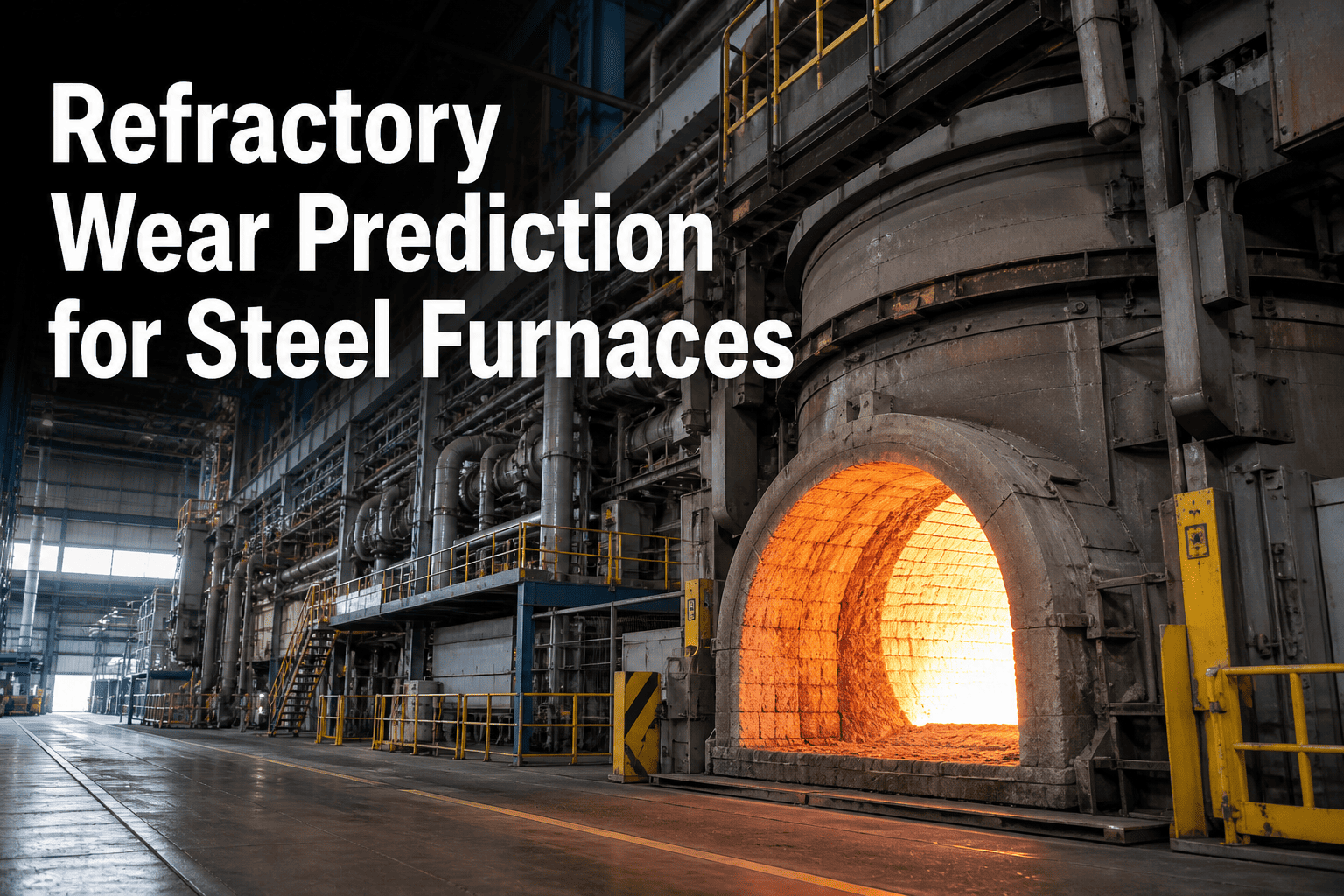
Read More
Refractory lining is the most expensive consumable in a blast furnace campaign — and the one most likely to cause catastrophic failure when it wears beyond its safe limit. An unplanned relining event costs $8–20M...

Read More
A missed inspection on a blast furnace doesn't just mean a work order slip — it can trigger a refractory failure, an unplanned blowdown, or a safety incident that halts an entire integrated plant for days. This...

Read More
Steel plants lose $50,000–$150,000 per hour when a blast furnace fails without warning. The steel industry spent $4.2 billion on unplanned downtime in 2024 — yet most plants still rely on fixed threshold alarms th
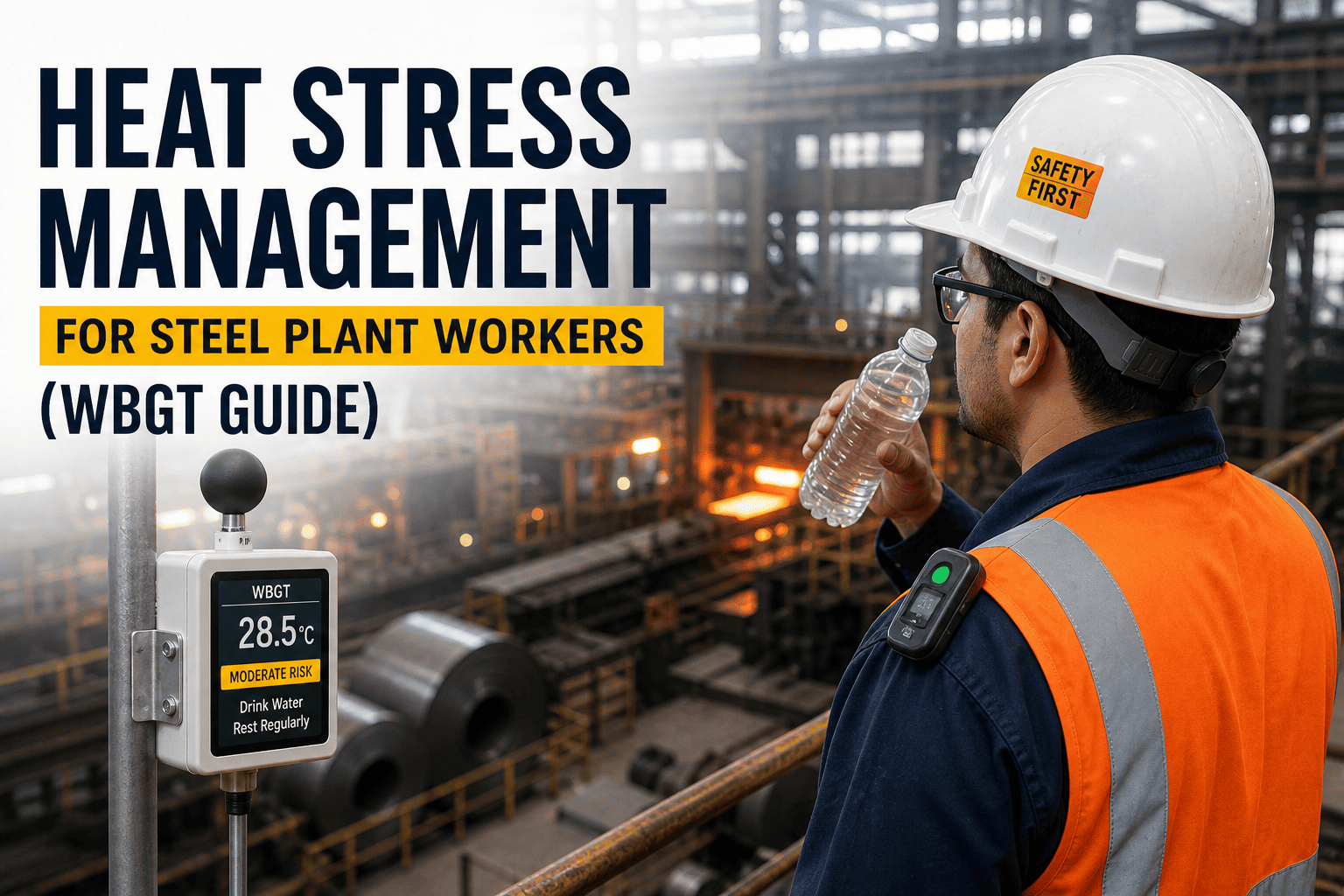
Read More
This article is published by OxMaint as part of its Workforce Safety Monitoring resource series. Steel plant workers operate in some of the most thermally demanding environments in any industry. Blast furnace...
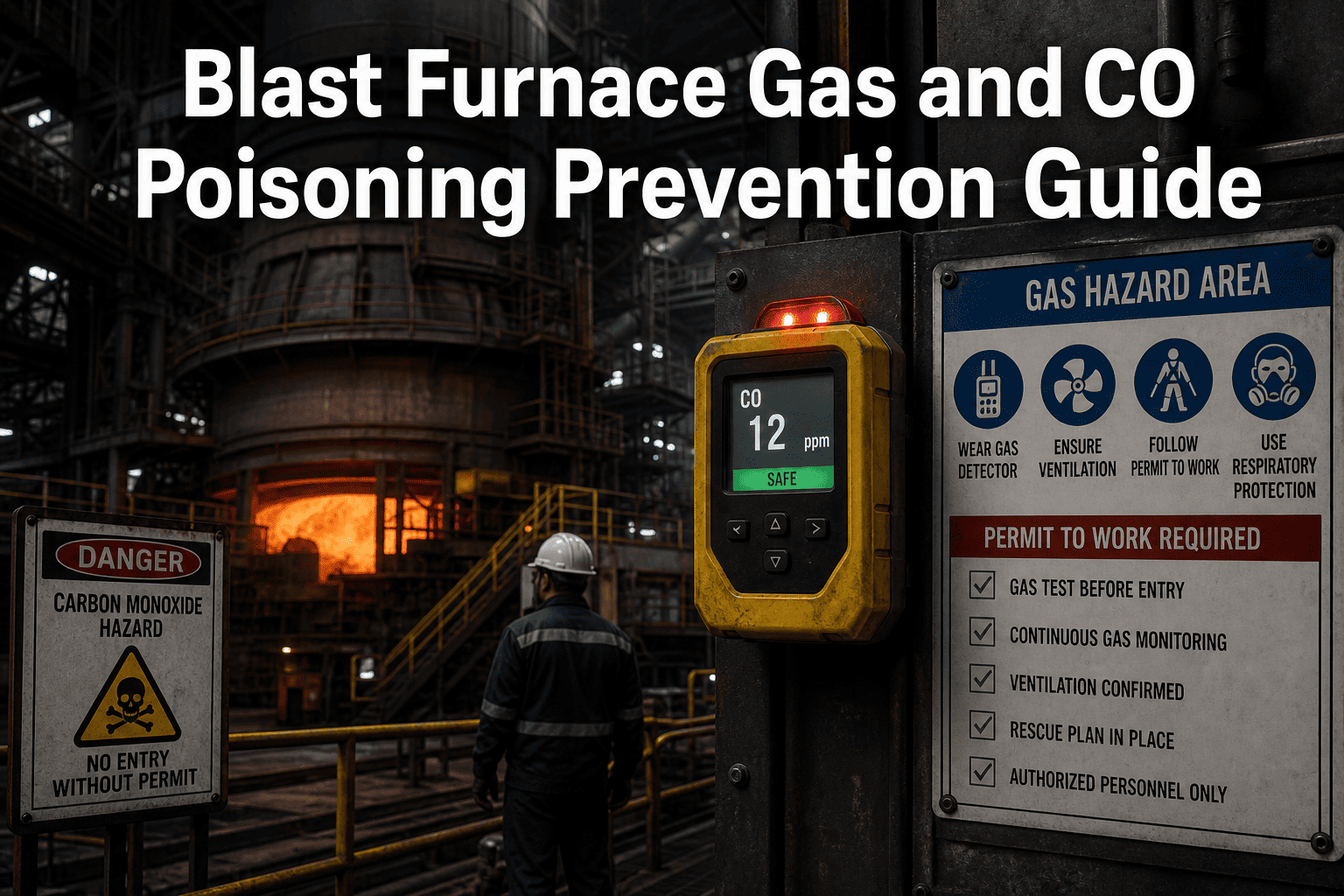
Read More
Blast furnace gas (BF gas) contains 20–28% carbon monoxide by volume — a concentration that causes rapid incapacitation and death with minimal exposure. CO is colorless and odorless, offering no sensory warning...
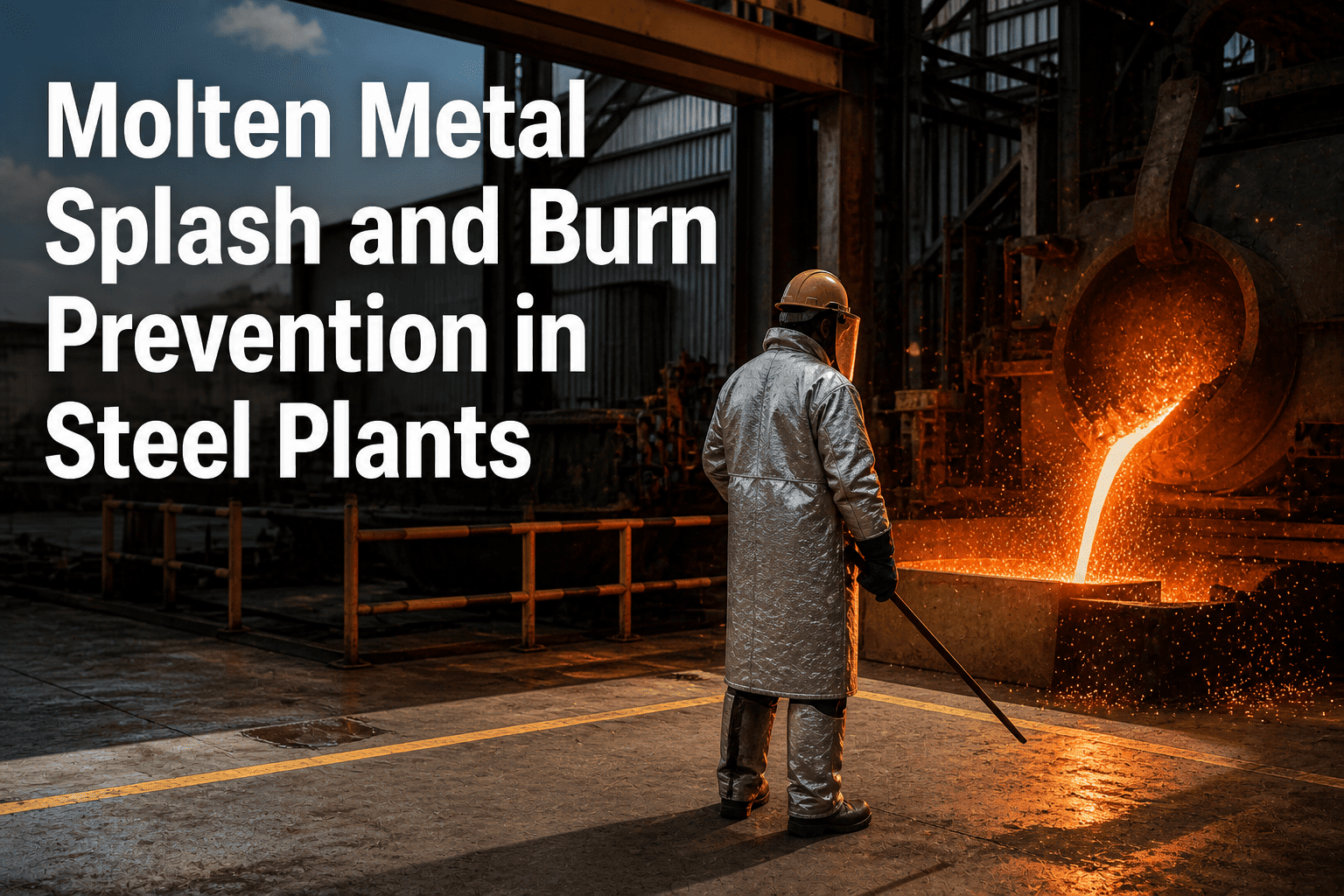
Read More
Molten metal temperatures in steel plants exceed 1,600°C — hot enough to burn through inadequate PPE in milliseconds. The average hospital stay for a molten metal burn victim is 17 days, and burns to the eyes or e

Read More
This guide is published by OxMaint as part of its AI Vision Inspection resource series. Steel plants contain some of the most hazardous inspection environments on earth — blast furnace perimeters, coke battery...
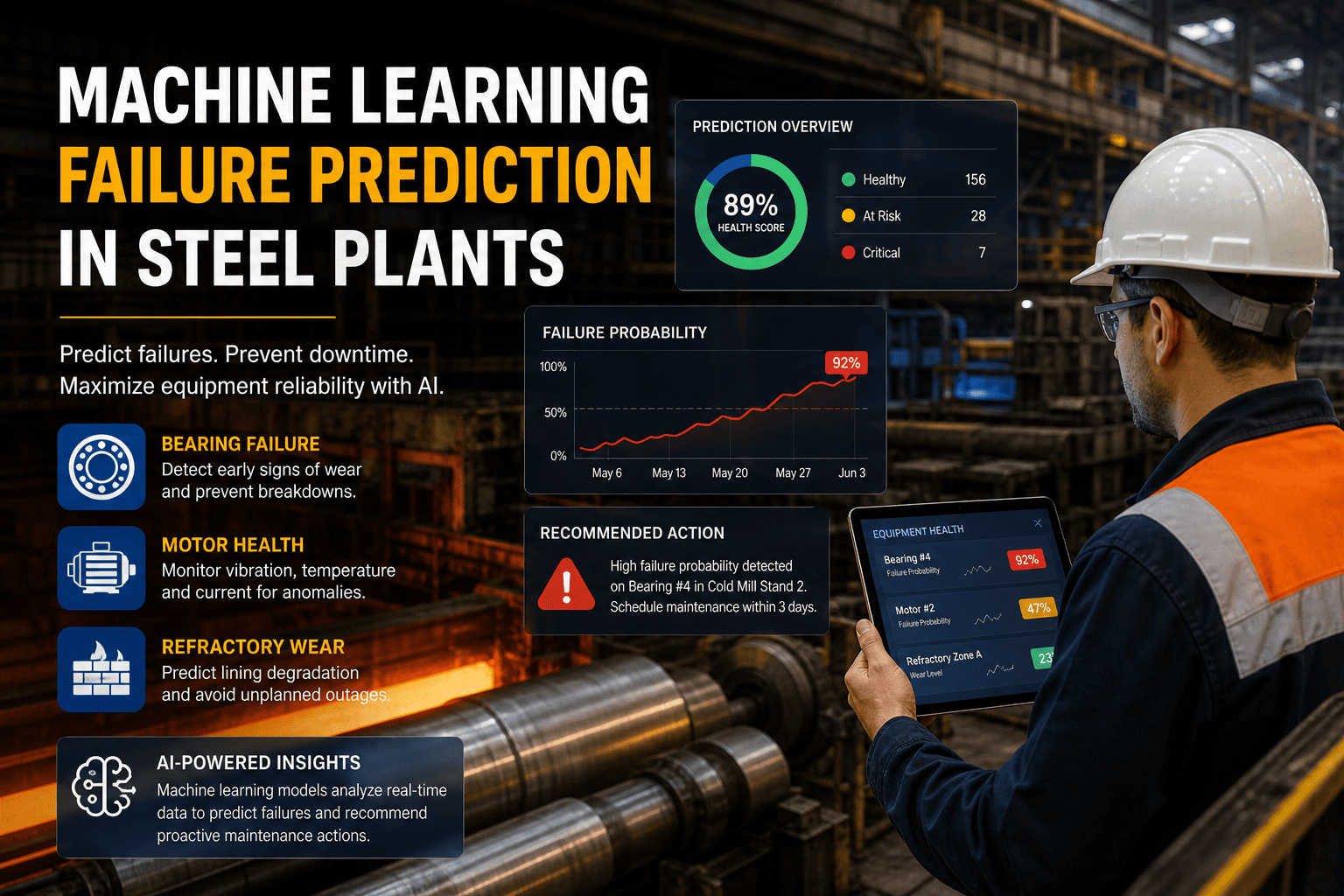
Read More
When a blast furnace tuyere fails without warning, the unplanned casthouse stoppage costs more in a single shift than a year of predictive maintenance investment. Machine learning failure prediction in steel plants...

Read More
Latin America produces over 60 million tonnes of crude steel annually — with Brazil, Mexico, and Argentina operating plants that face a unique combination of high ambient temperatures, import-dependent spare parts...
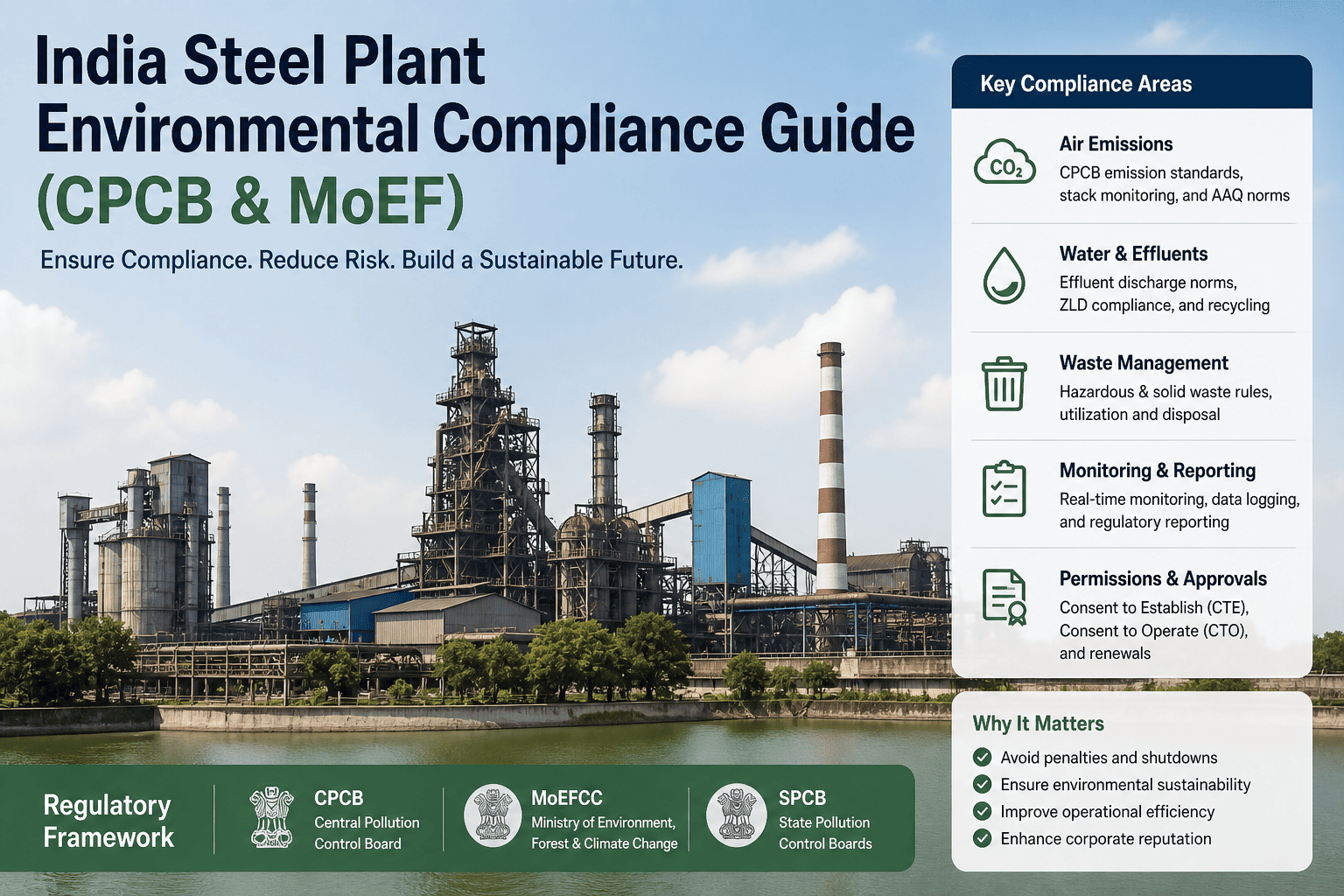
Read More
India's steel sector contributes over 9% of national industrial air pollution load — making it one of the most scrutinised industries under CPCB and MoEF regulatory frameworks. Environmental compliance for steel...
Read More
Time-based maintenance schedules replace parts that still have 40% of their useful life remaining — or miss failures that develop faster than the fixed interval predicts. Condition-based maintenanc
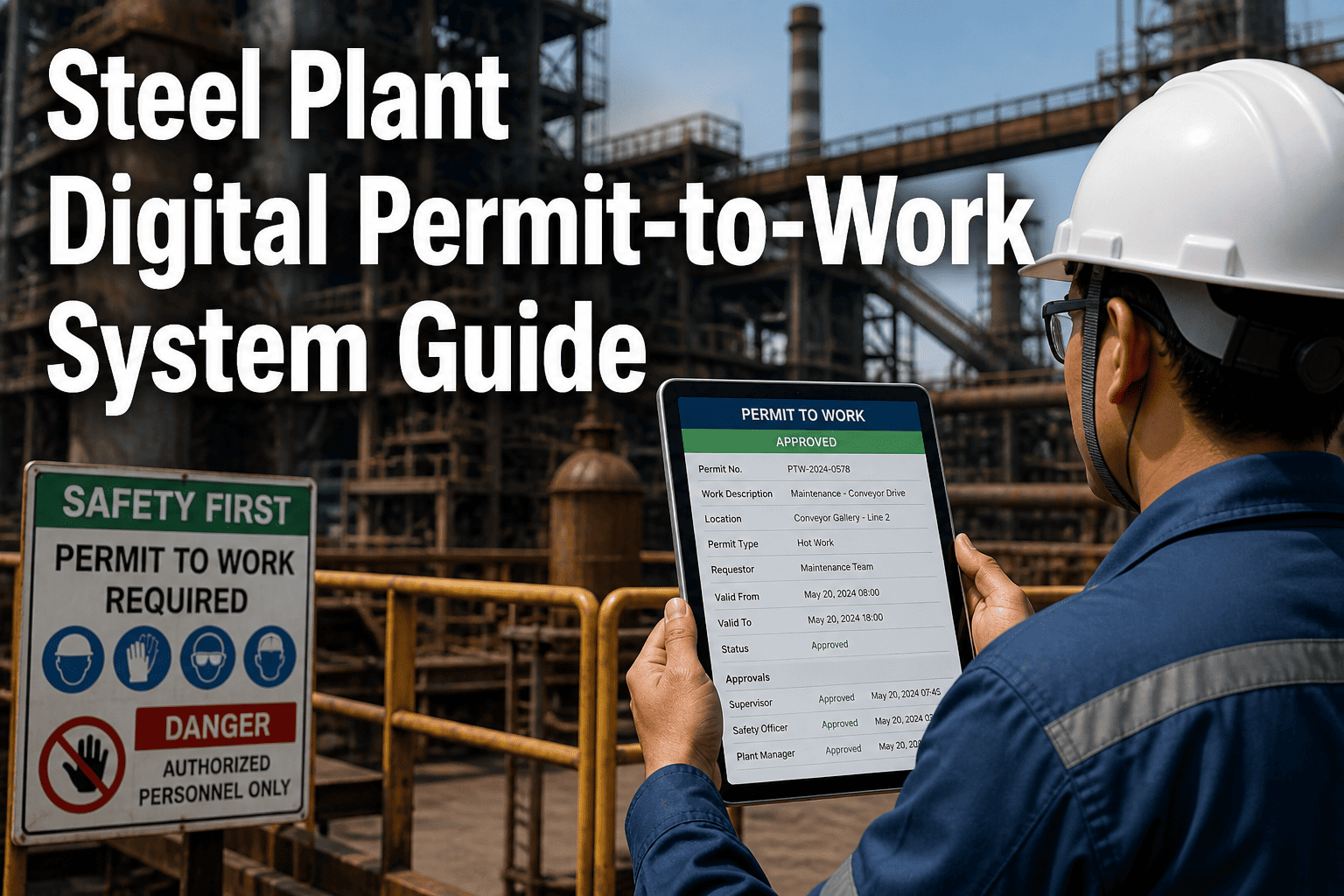
Read More
Steel plants perform 50 or more hot work, confined space, and LOTO tasks daily — in environments where a missed authorization step can kill a worker. Yet most facilities still issue permits on paper forms,...
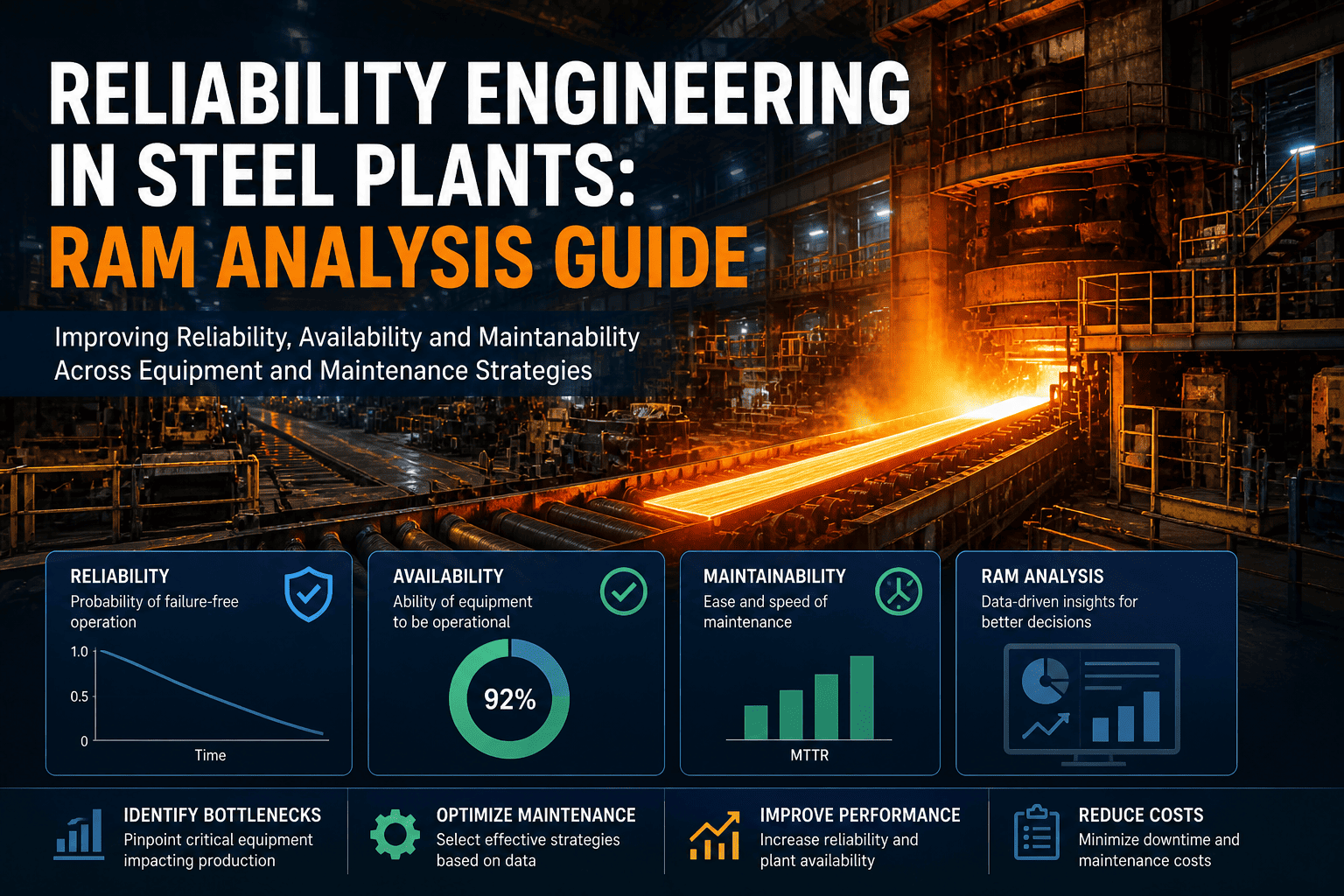
Read More
Steel plants lose an average of $500,000 per hour of unplanned blast furnace downtime. Yet most reliability engineers are still pulling MTBF data from spreadsheets, running RAM models in disconnected tools, and...
Read More
Steel plants carry some of the heaviest insurance burdens in all of heavy industry — boiler and machinery policies, business interruption coverage, property damage, and environmental liability combined can...
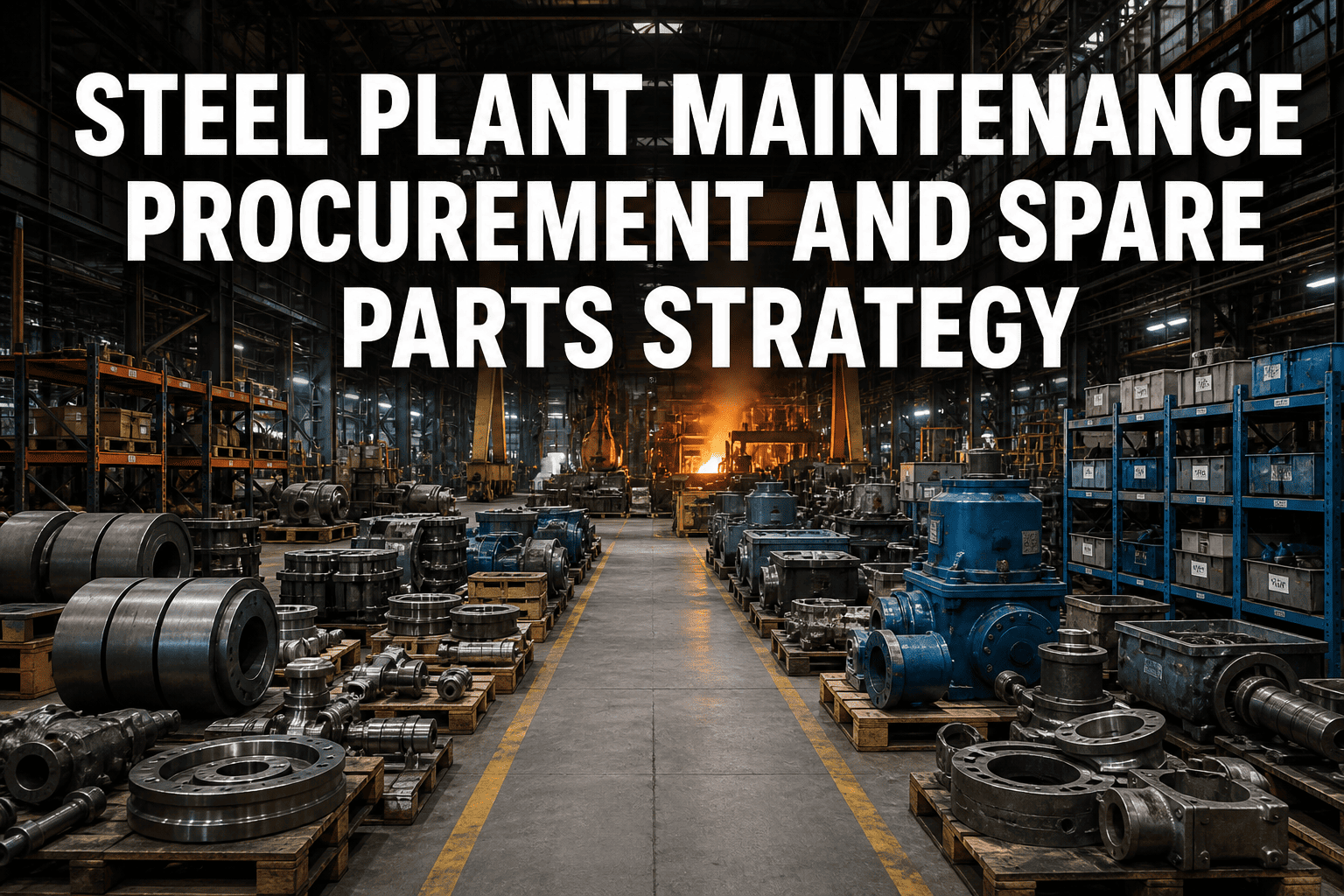
Read More
Steel plants hold an average of $8–22 million in maintenance inventory, yet 34% of emergency downtime events are caused by the wrong part being unavailable at the right moment. Procurement strategy in steel...
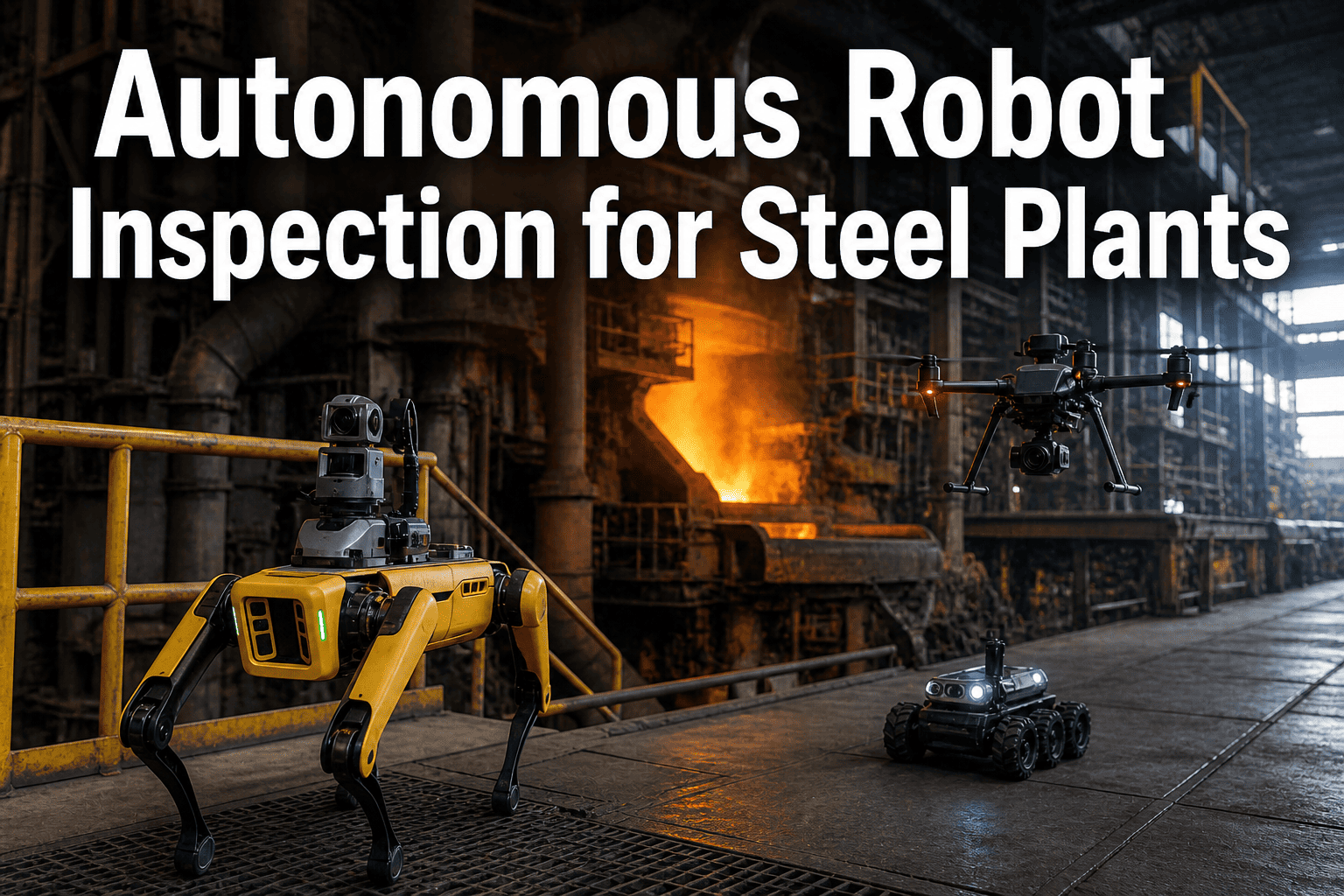
Read More
Steel plant inspection teams spend 38% of their working time in areas classified as high-risk — near blast furnace casthouse floors, inside torpedo ladle pits, and on elevated structures above active rolling lines.
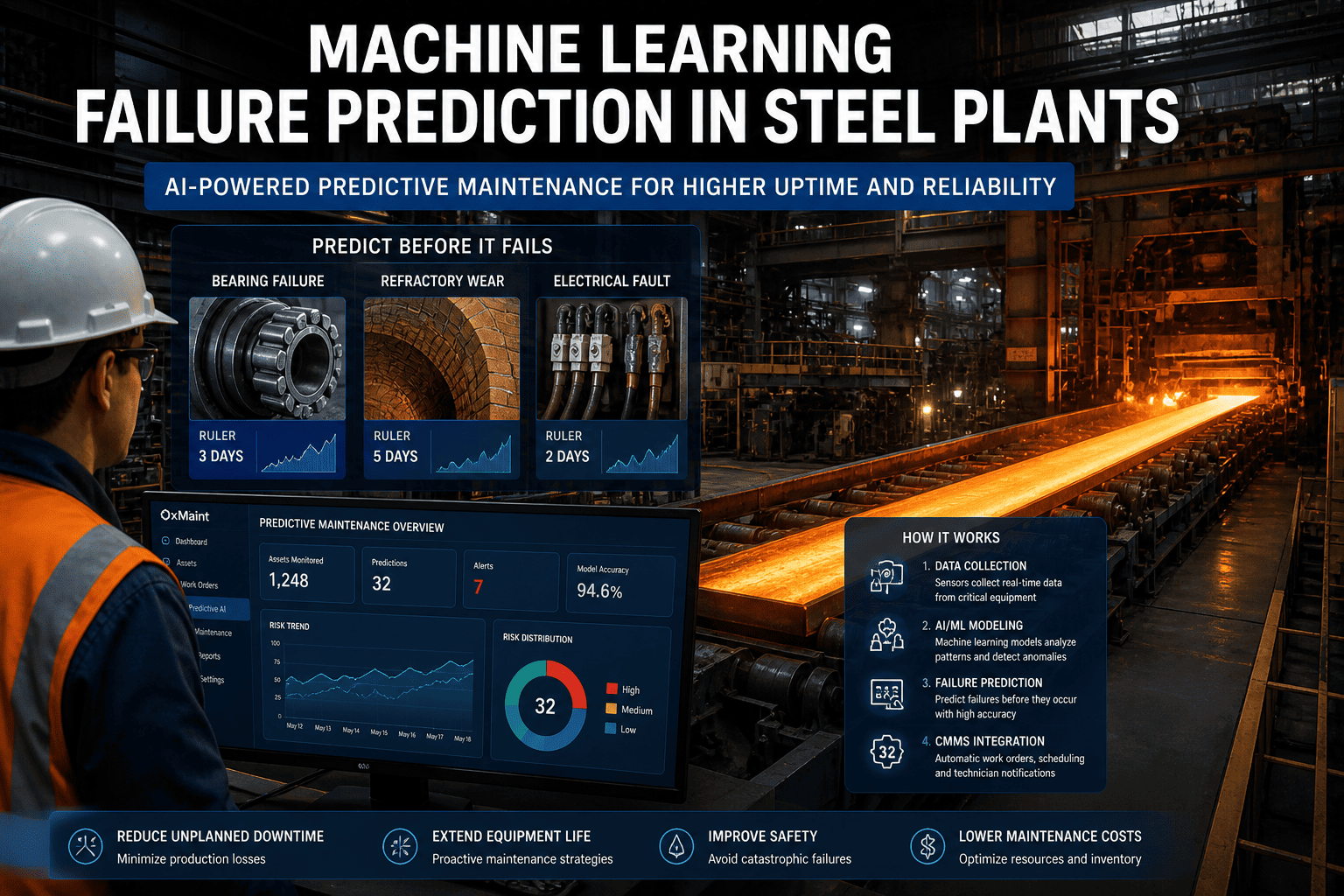
Read More
Steel plants lose an average of $1.4 million per hour of unplanned downtime. Traditional time-based maintenance schedules miss 42% of failures because they ignore real operating conditions.
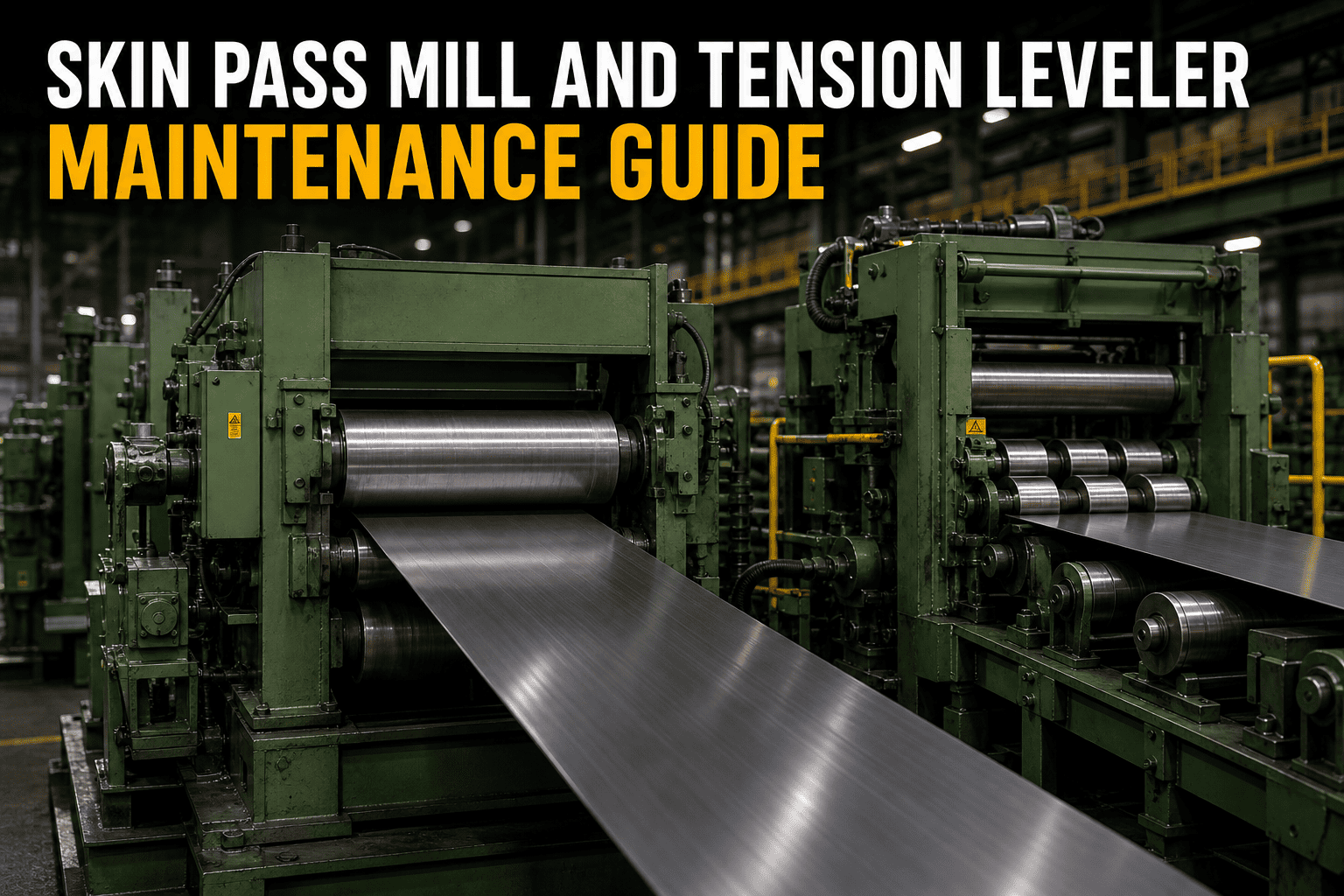
Read More
Surface defects and flatness failures at the skin pass mill stage cost finishing lines an estimated $200–$500 per tonne in downgrade and rework. Temper mill rolls, tension bridle bearings, and leveler cassettes all...
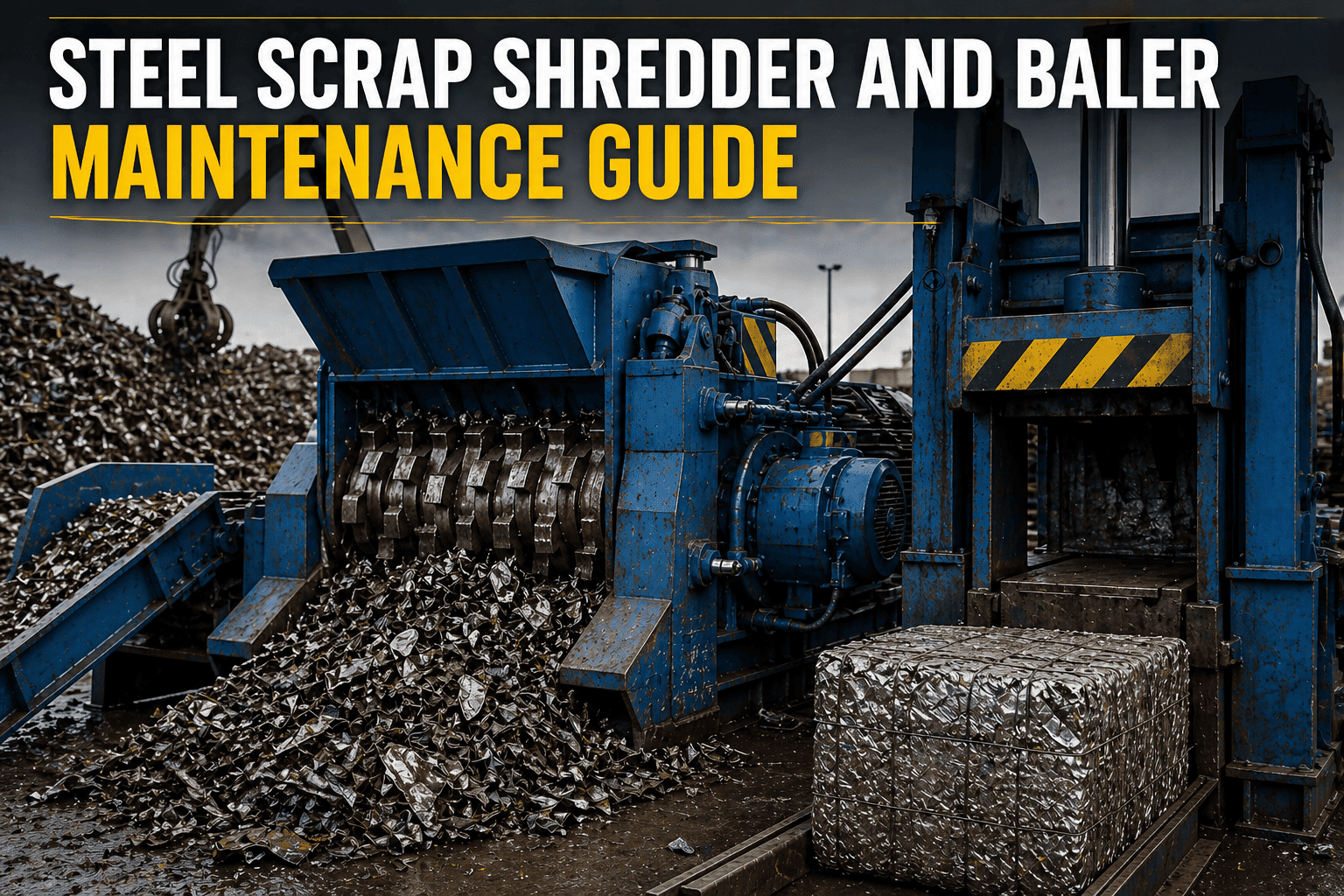
Read More
A mid-size steel recycling yard processing 80,000 tonnes of scrap per month was spending $1.2M annually on unplanned shredder downtime — hammer failures, rotor bearing seizures, and baler ram seal blowouts that...
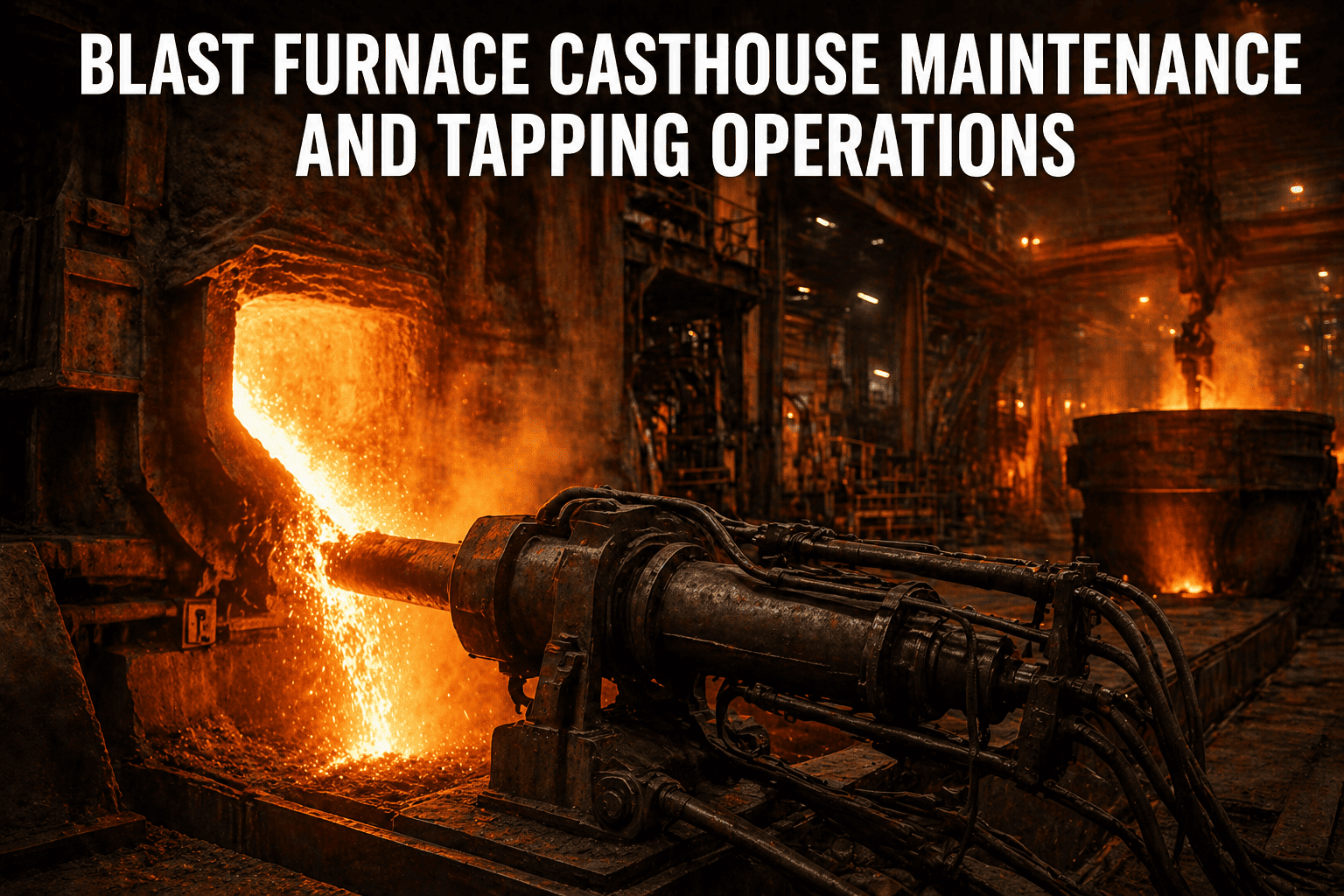
Read More
Casthouse failures account for up to 40% of unplanned blast furnace downtime — yet most plants still rely on manual inspection logs and reactive callouts. OxMaint's Shutdown Management module g
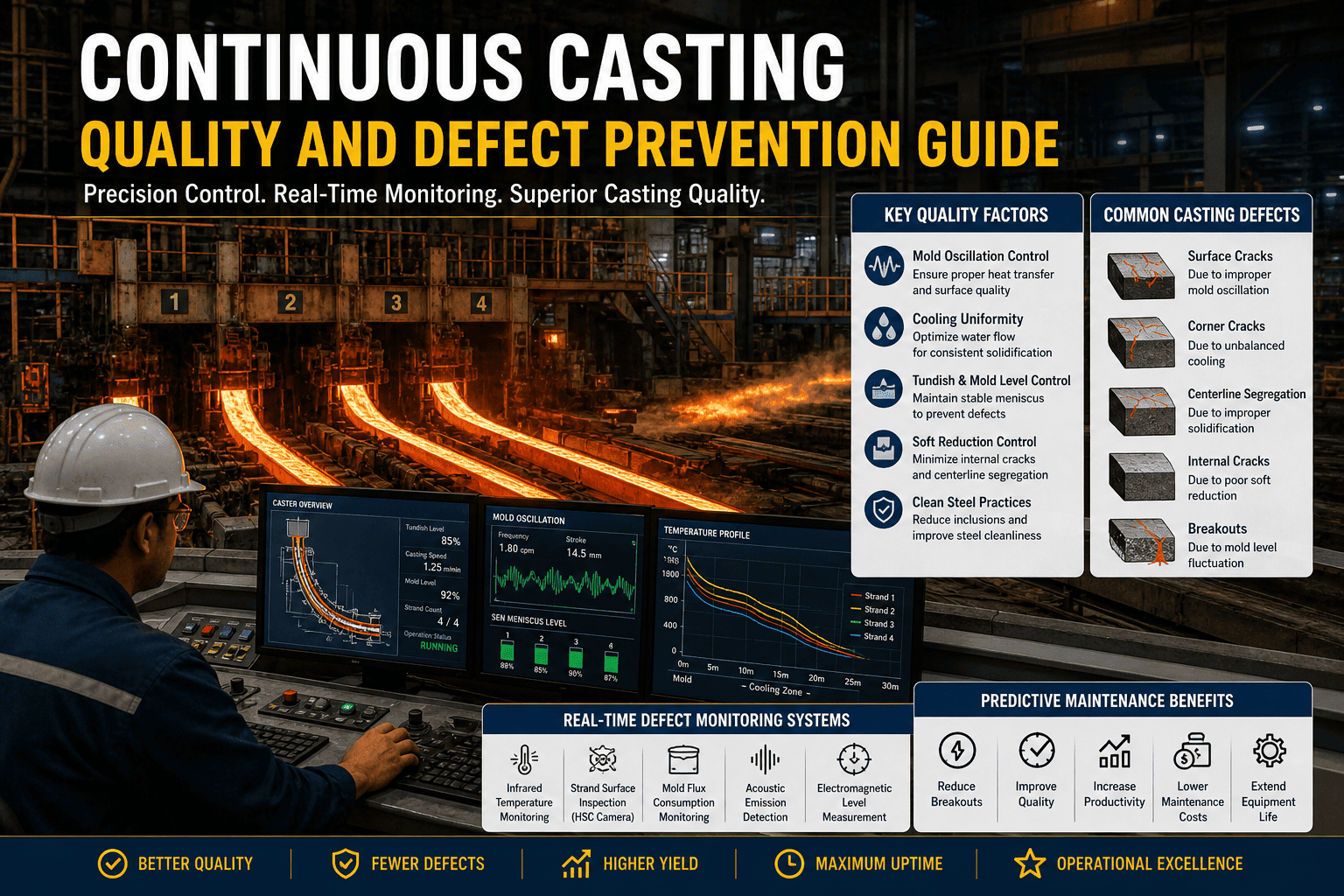
Read More
delivers predictive maintenance intelligence for steel plant continuous casting operations, connecting mold oscillation sensors, cooling zone monitors, and breakout detection systems into a unified AI-driven...
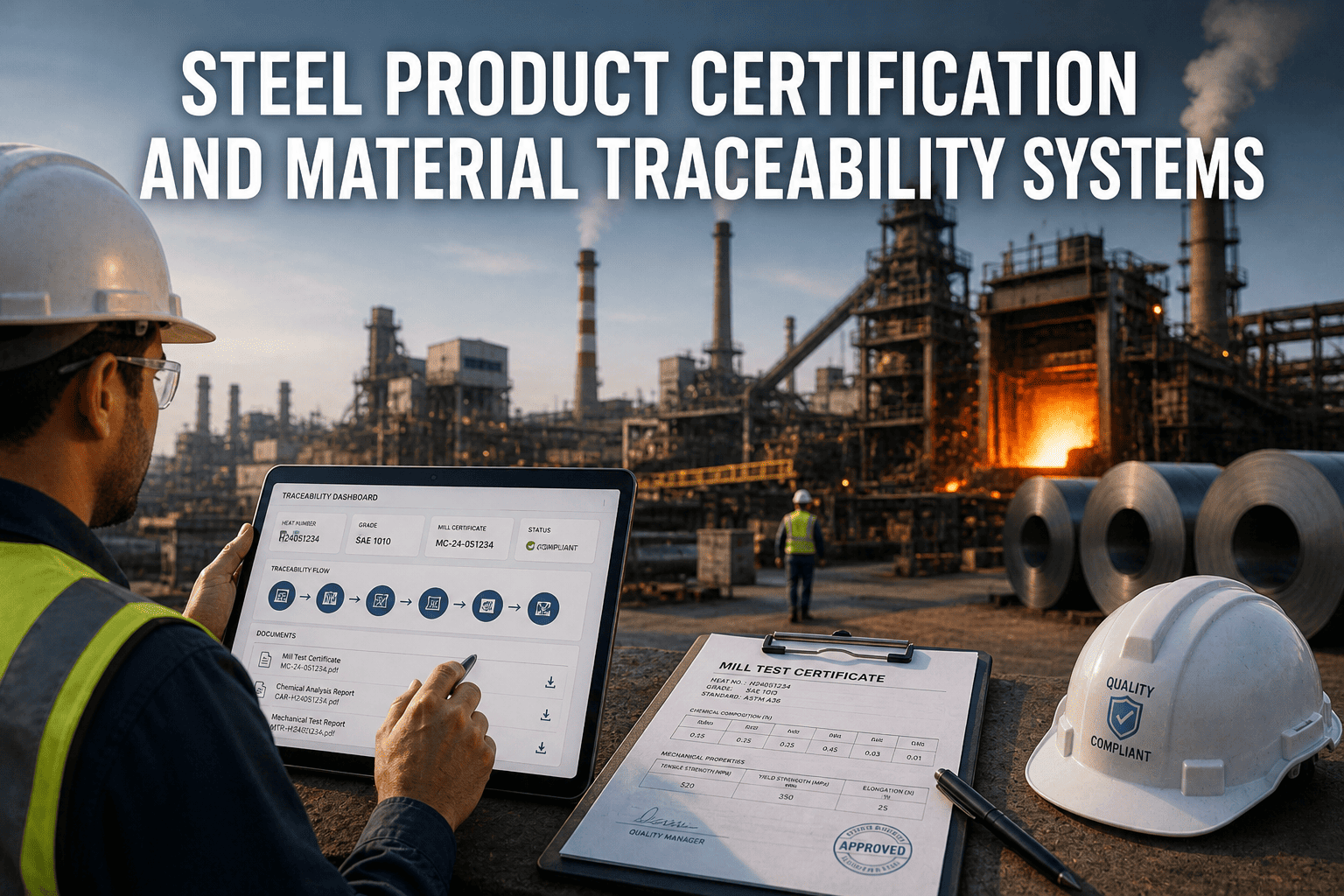
Read More
A steel plant can produce a perfect coil and still lose the order — if the mill certificate cannot be traced to the heat number, the material test report is missing a signature, or the chemical composition record...
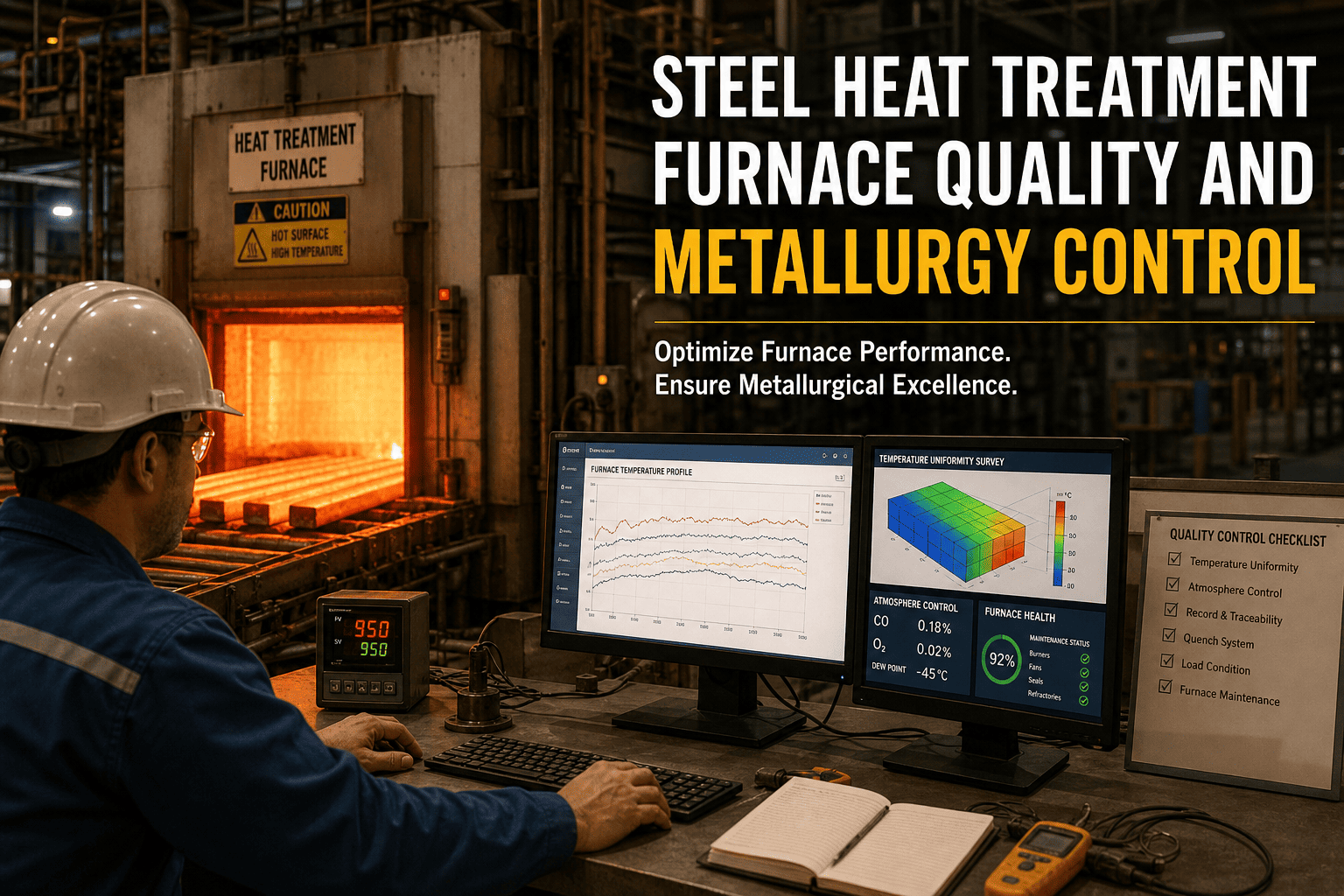
Read More
A furnace that holds 850°C at the center and 830°C at the edge produces two different metallurgies from the same heat — and neither may match the customer specification. Temperature uniformity is not a setting, it...
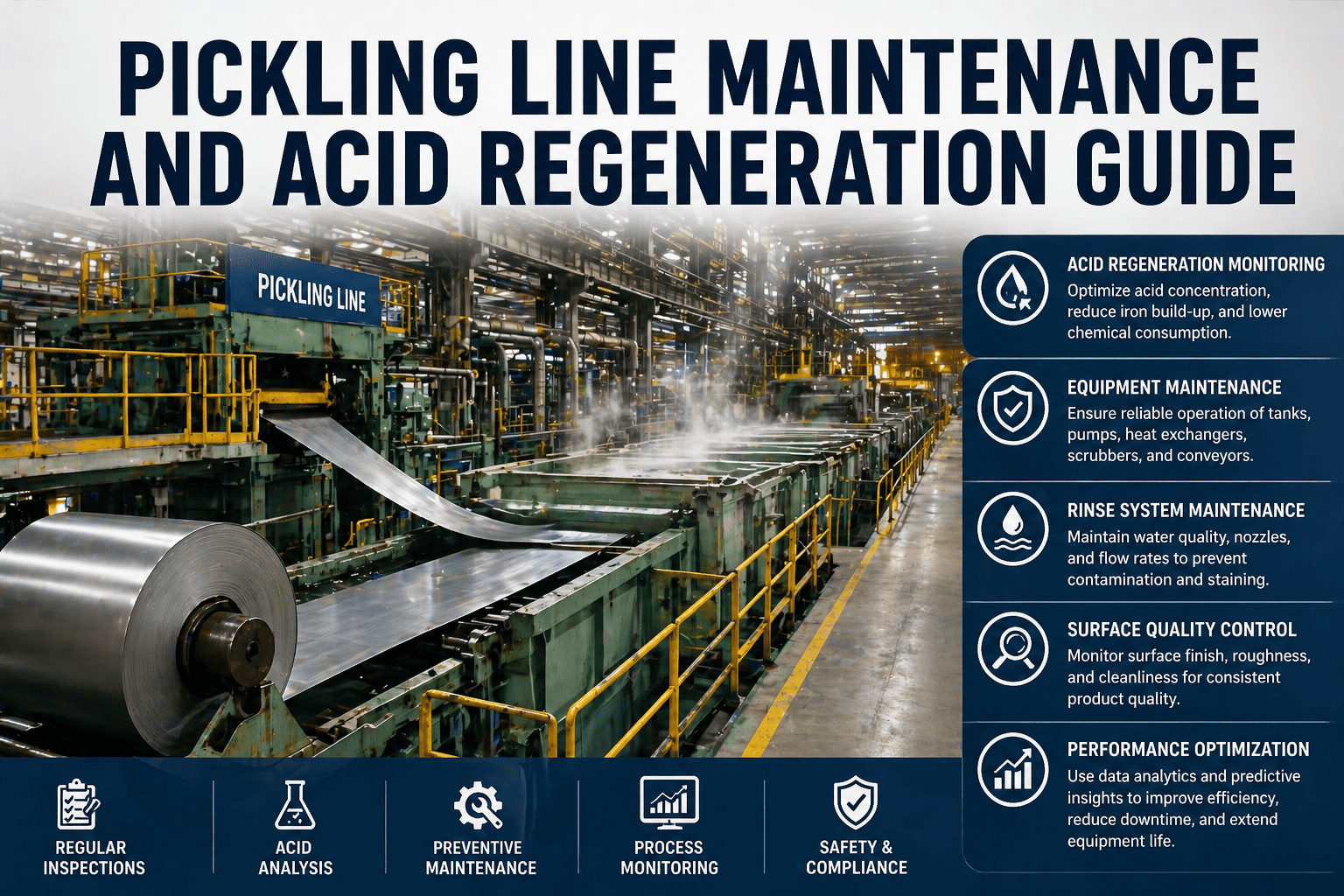
Read More
Steel surfaces don't fail in production — they fail long before that, in a pickling line no one was watching closely enough. Acid concentration drift, rinse contamination, and regeneration delays silently degrade...
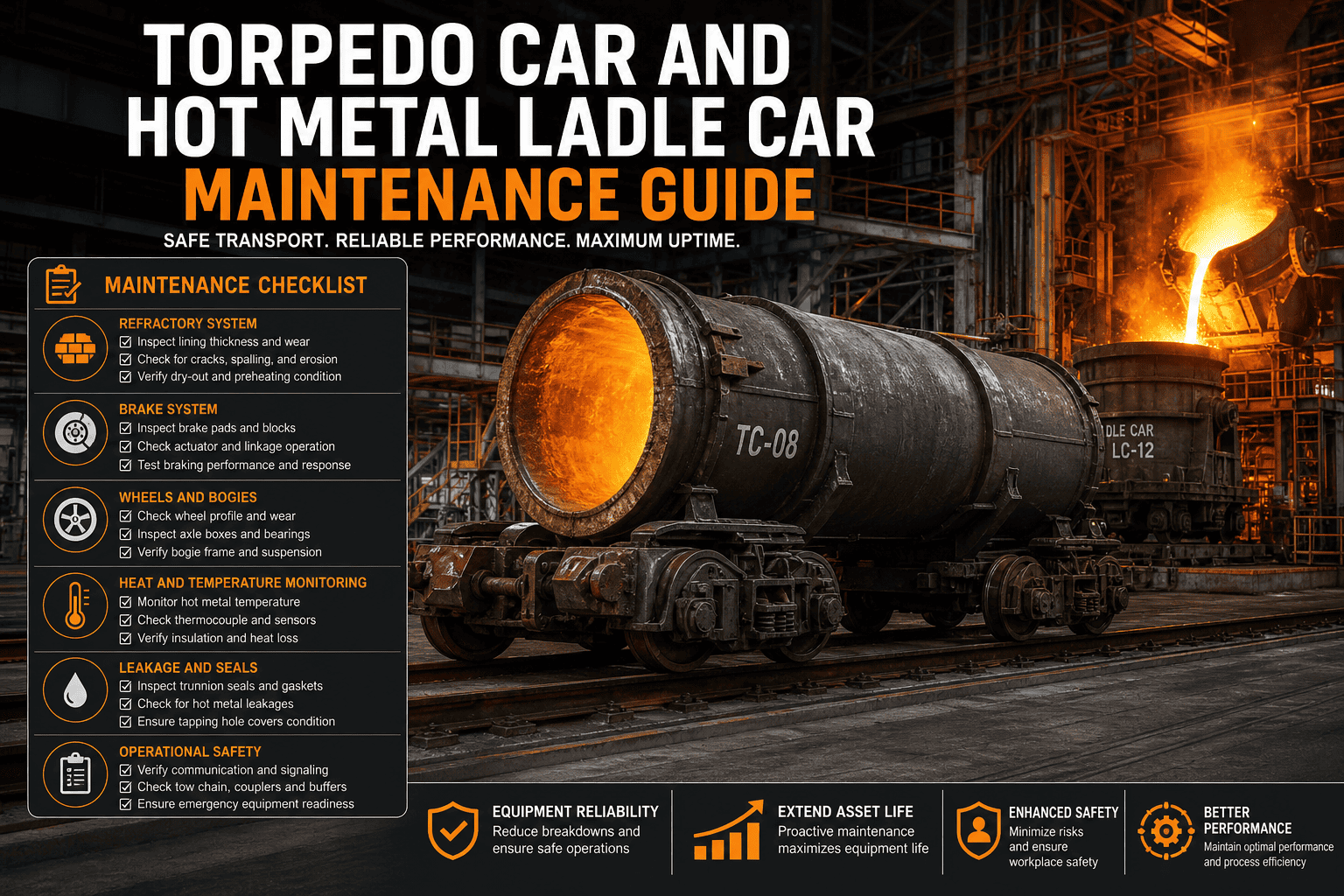
Read More
Torpedo cars and hot metal ladle cars are the most safety-critical mobile assets in any integrated steel plant. Carrying up to 350 tonnes of liquid iron at temperatures above 1,400°C, a single refractory...
Read More
Sinter quality is the upstream lever that controls blast furnace productivity more than any other single input variable. A 1% improvement in sinter tumble index (TI) translates directly to a 0.8–1.2% increase in...
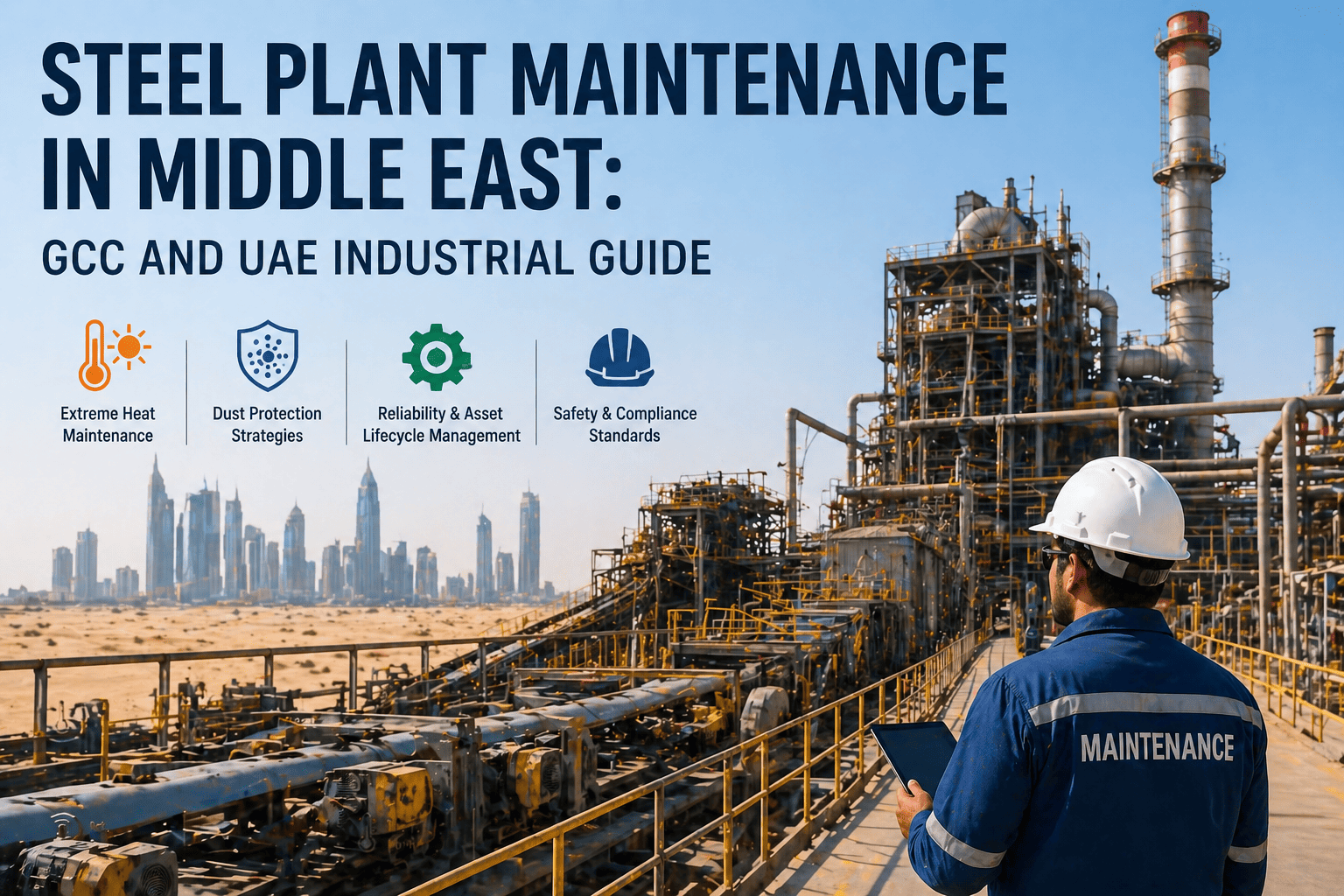
Read More
The Middle East is warming at nearly twice the global average rate, with UAE temperatures reaching 51.8°C in August 2025 — one degree higher than the previous year's record. For GCC steel plant operators, this is...
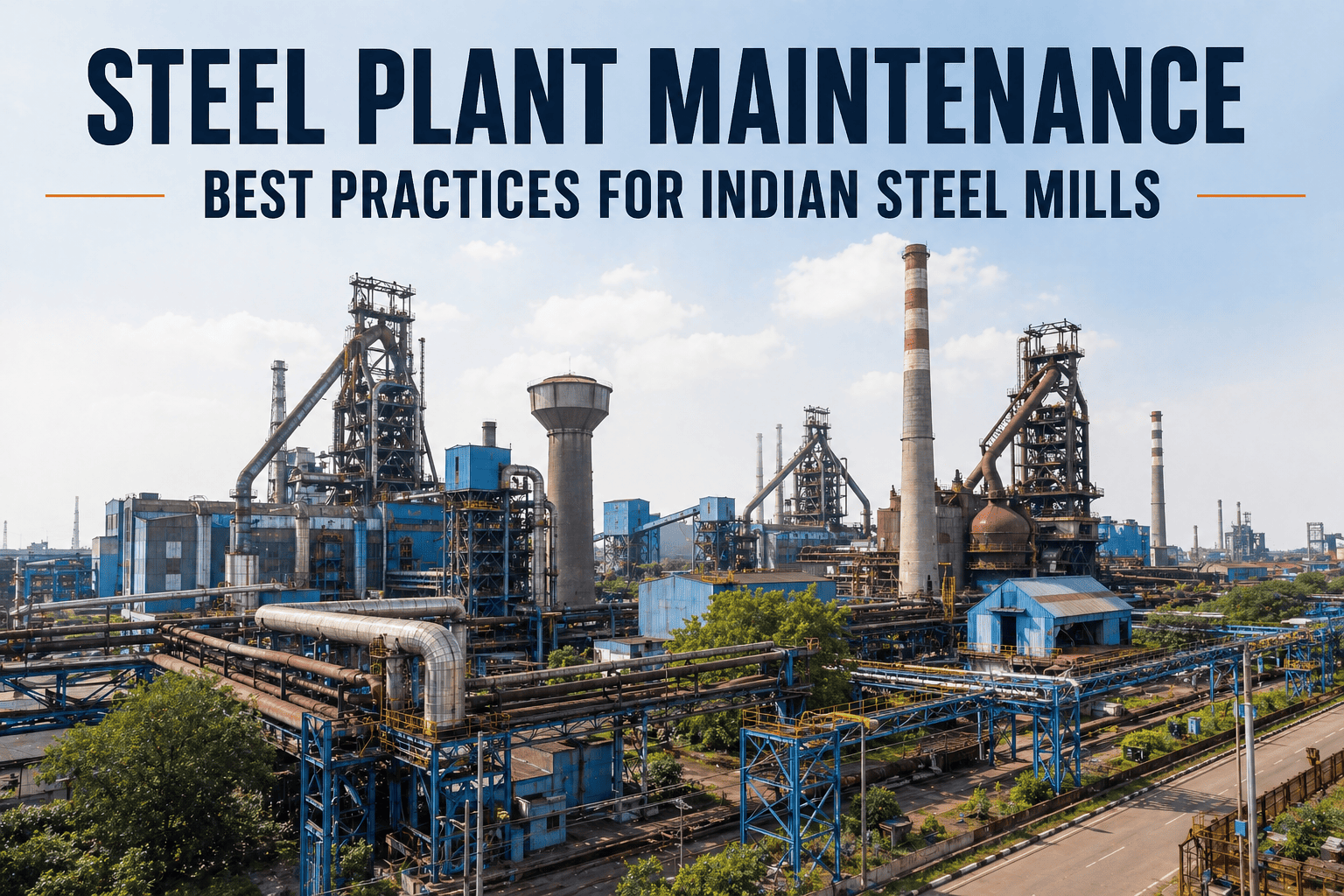
Read More
India is now the world's second-largest steel producer, with crude steel output reaching 96.08 MT in the first seven months of FY2025–26 alone — and the country's top mills are racing to match global maintenance...
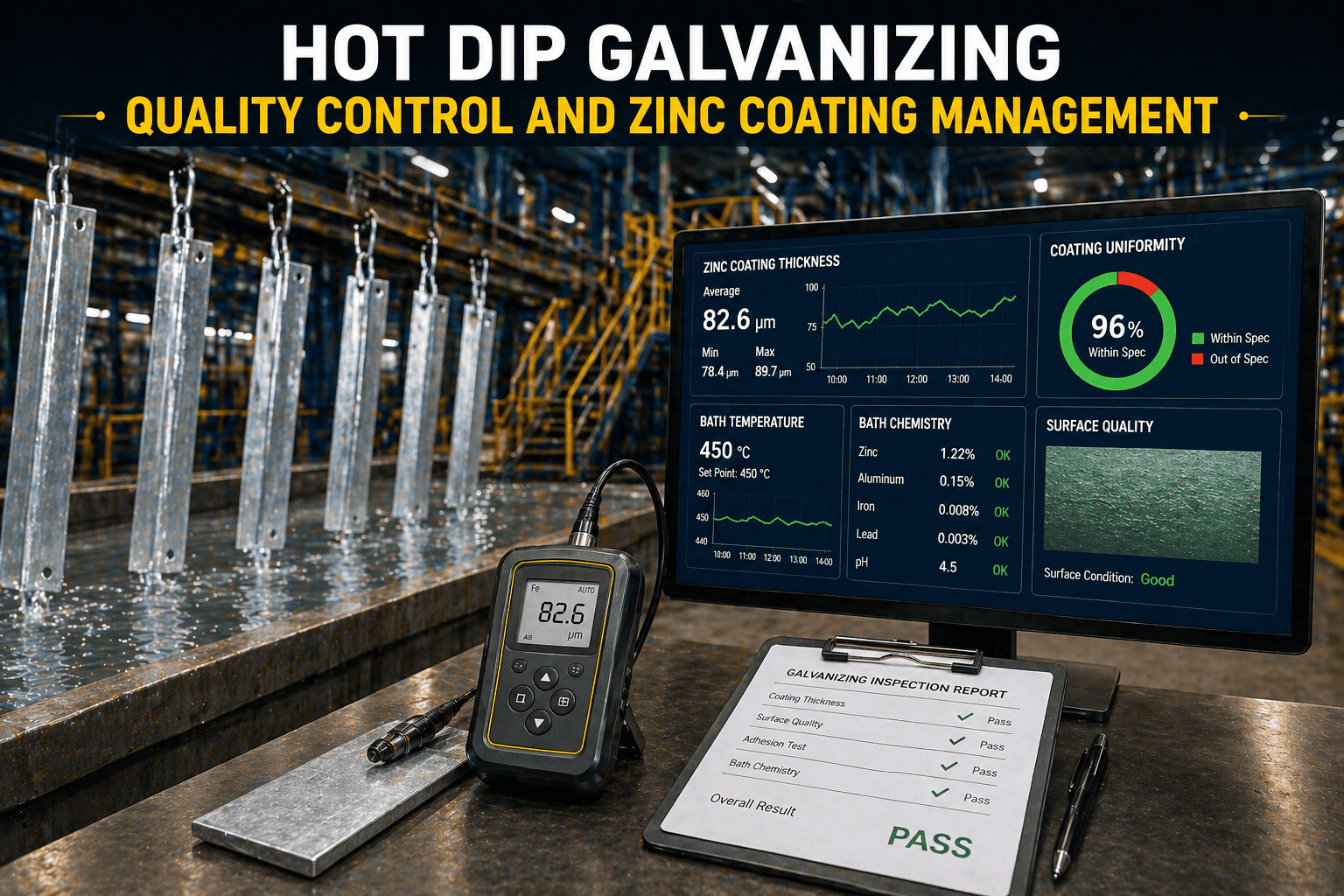
Read More
A zinc coating that is 2 microns too thin at the strip edge will fail salt-spray testing, trigger customer rejection, and require the full coil to be stripped and re-processed — a cost that regularly exceeds...
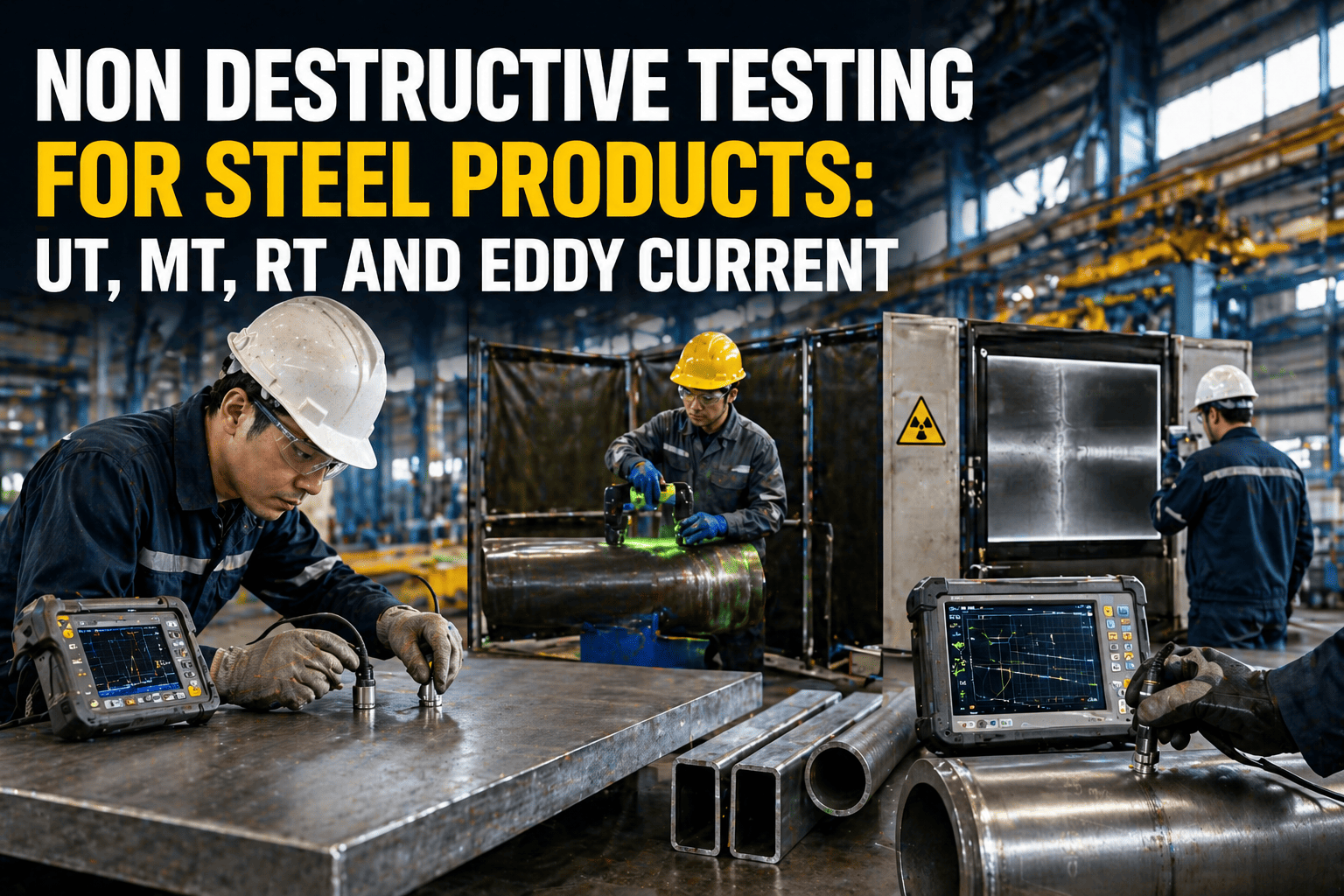
Read More
Steel product failures don't announce themselves — they develop invisibly inside welds, beneath coatings, and within the grain structure of critical components. Non-destructive testing gives quality teams the...
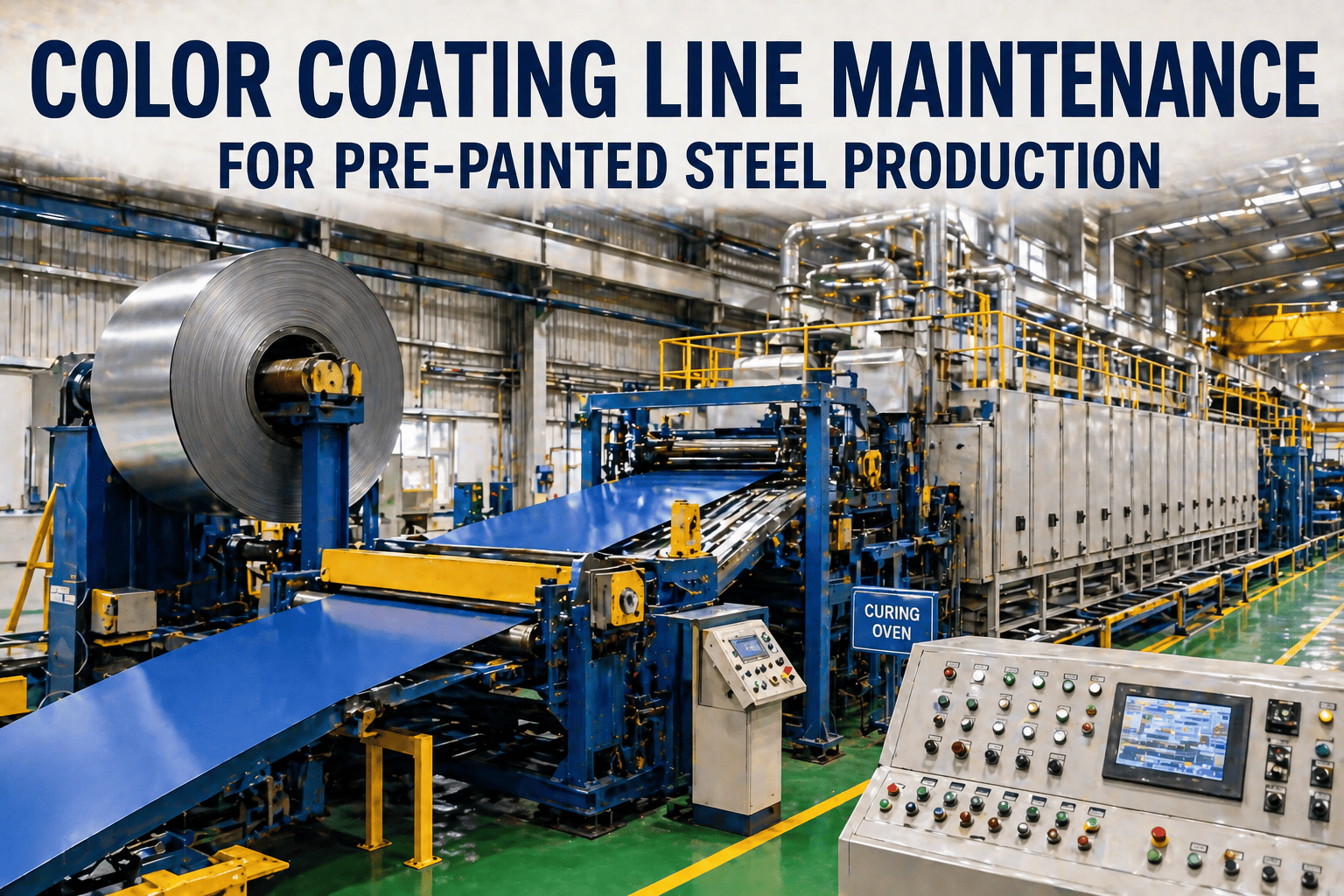
Read More
A color coating line running at full speed generates revenue only when every subsystem — roll coaters, curing ovens, tension controls, and accumulators — performs within specification simultaneously. When one...
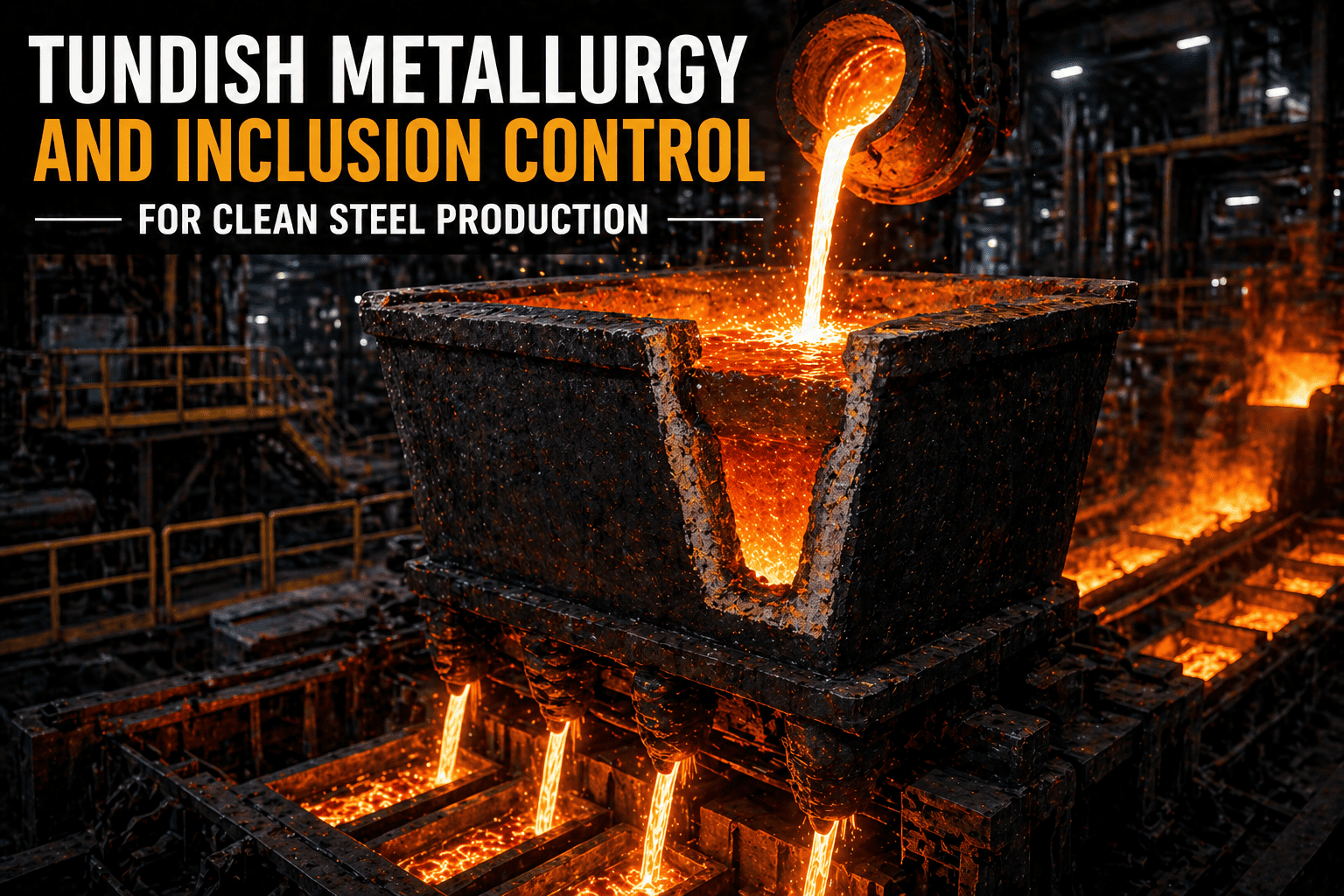
Read More
The tundish is the last metallurgical vessel through which liquid steel flows before solidifying in the continuous casting mold — and it is the final opportunity to control steel cleanliness before defects are...
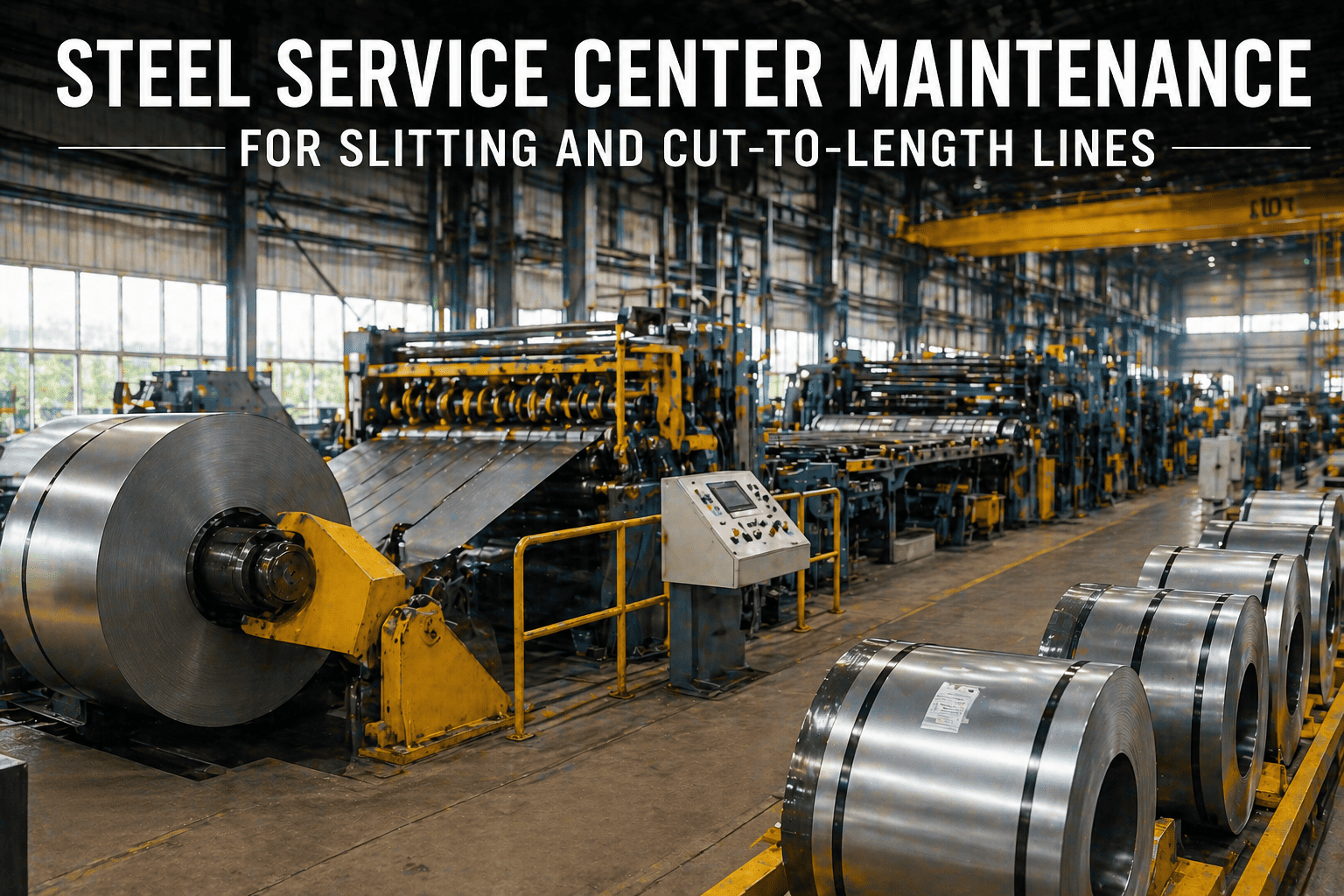
Read More
Steel service centers live and die by throughput precision. A slitting line producing strips 2mm wider than specification scraps the entire coil. A cut-to-length machine with blade wear beyond tolerance ships short...

Read More
A steel plant maintenance technician performing a ladle slide gate replacement works in an environment that simultaneously exposes them to radiant heat exceeding 60°C at 1.5 metres from the ladle, potential CO...
Read More
When ArcelorMittal, Tata Steel, and POSCO independently began deploying blockchain platforms for supply chain transparency in the early 2020s, the initial use case was not maintenance records — it was raw material...
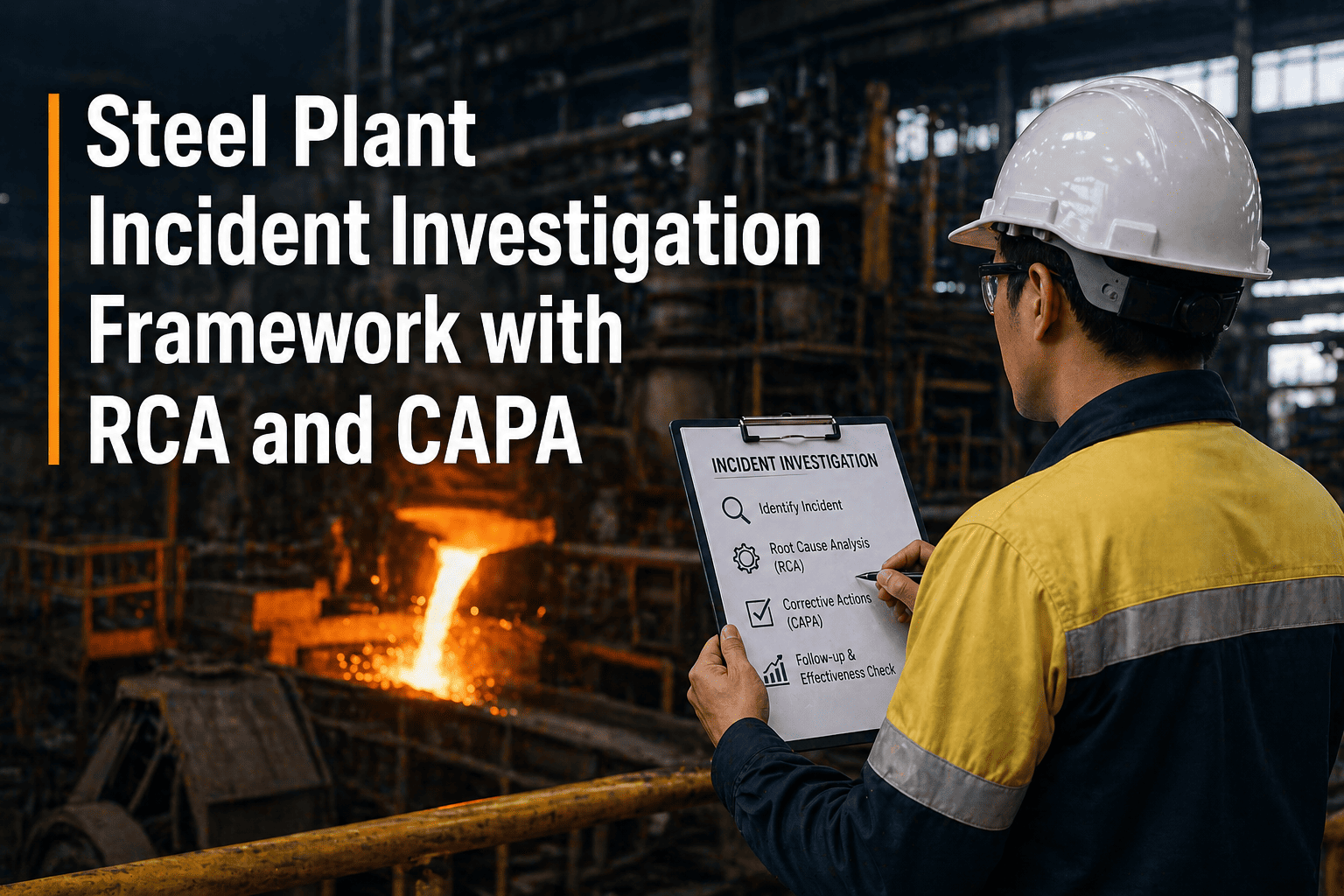
Read More
A 4,200-employee integrated steel plant in the US Midwest recorded a TRIR of 4.7 in 2022 — nearly double the manufacturing sector average of 2.8 — with 31 OSHA recordable incidents across melt shop, hot rolling,...
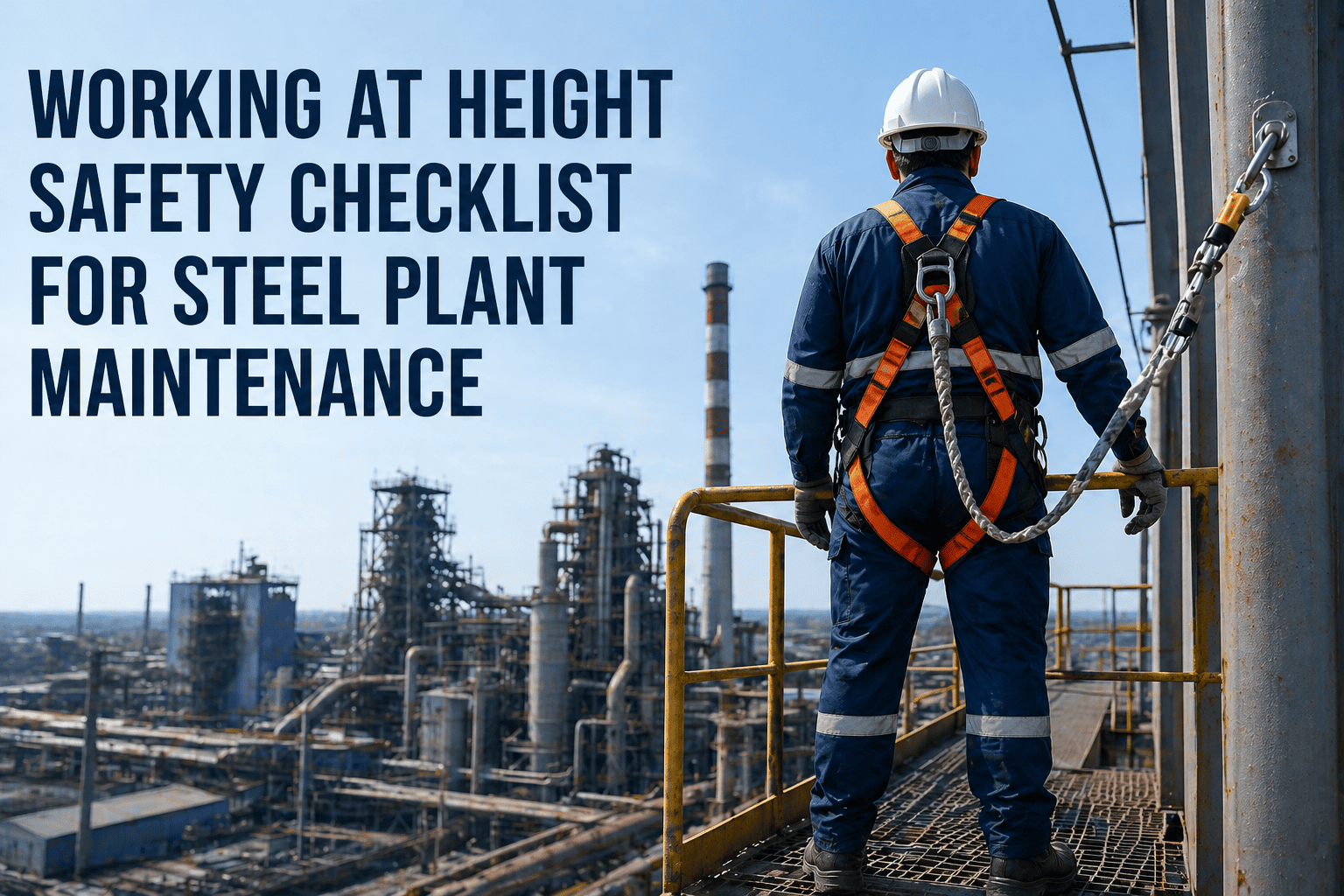
Read More
Falls are the leading cause of fatalities in American industry — and for the 15th consecutive year, Fall Protection – General Requirements (29 CFR 1926.501) topped OSHA's most frequently cited violations list, with...
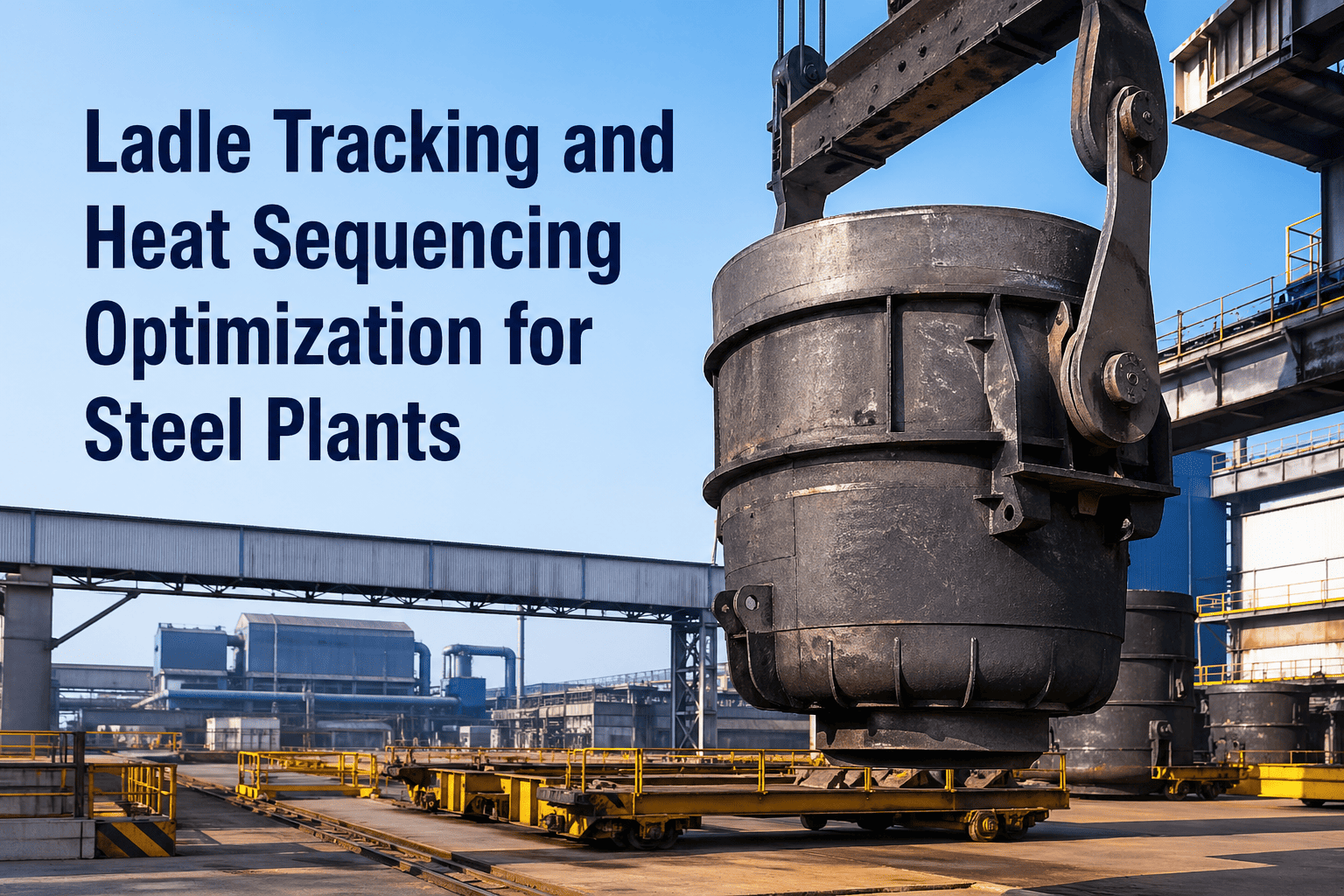
Read More
A melt shop running 12 to 24 steel ladles in simultaneous circulation is managing one of the most thermally violent asset fleets in heavy industry. Each 300-tonne ladle cycles from ambient temperature to 1,650°C...
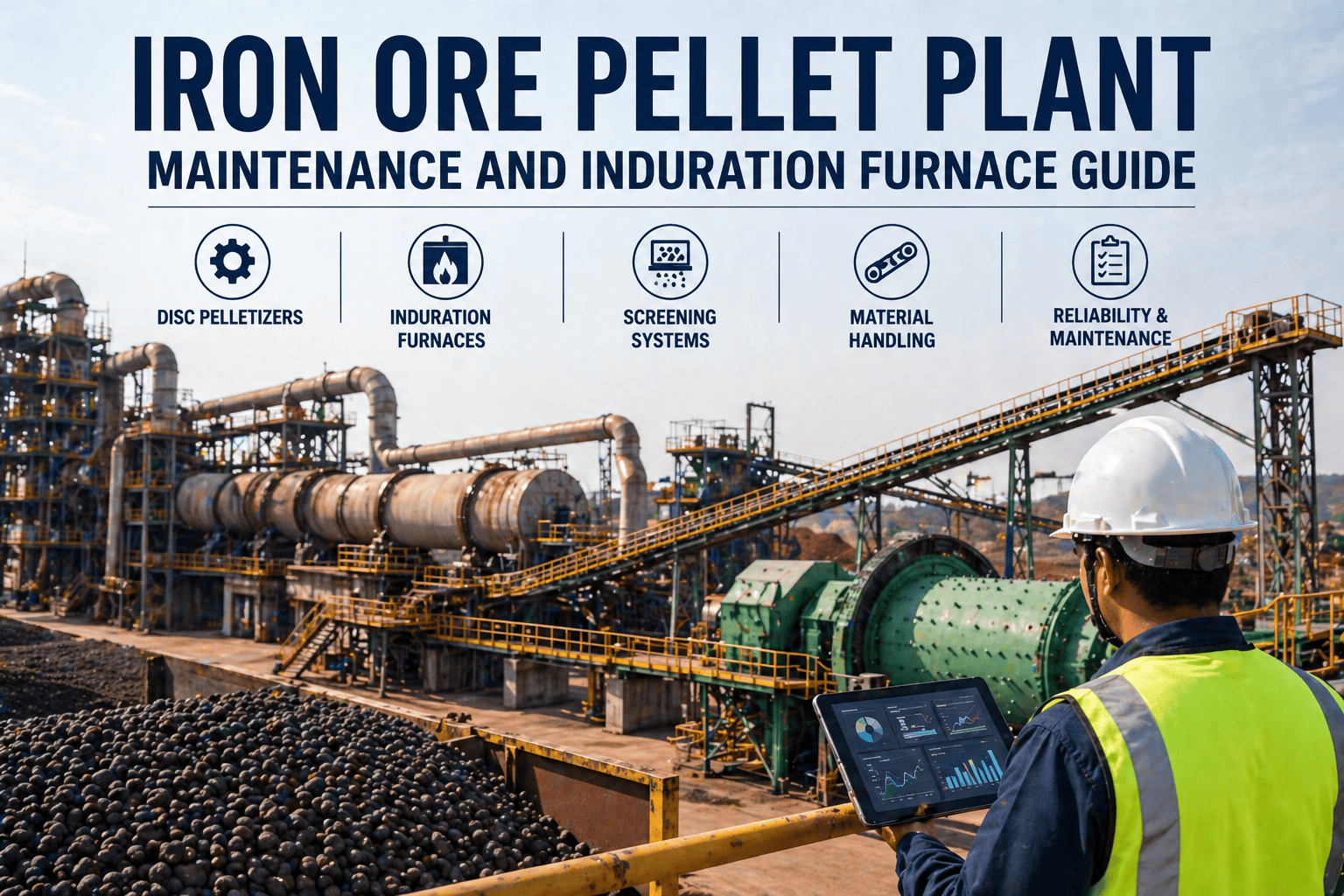
Read More
The global iron ore pellets market — valued at USD 70.6 billion in 2025 and forecast to reach USD 128.1 billion by 2035 — is being shaped by two simultaneous pressures: rising demand from direct reduction...
Read More
A MIDREX shaft furnace operating at 950°C with slightly above-atmospheric pressure, producing over 275 tonnes of DRI per hour on a Super Megamod module, does not fail catastrophically — it degrades incrementally....

Read More
A blast furnace reline that runs 6 days over schedule costs more than the entire maintenance budget for the preceding quarter. A hot strip mill annual shutdown that returns equipment to service with 14% of the...

Read More
A steel plant reporting 72% OEE on manual shift logs is often operating at closer to 58% in reality — the gap is entirely minor stoppages, unreported speed losses, and quality defects coded as planned events...

Read More
Occupational illness in steel manufacturing does not announce itself the way an injury does. A worker exposed to respirable crystalline silica at 75 μg/m³ — 50% above the OSHA permissible exposure limit — for two...

Read More
The transition to hydrogen-based steelmaking — replacing coking coal with green hydrogen in direct reduction ironmaking — is the most significant change in steelmaking process technology in 70 years. It is also the...

Read More
Indian steel producers face a maintenance cost equation that their international competitors do not — high energy tariffs, import-dependent spare parts with long lead times, skilled technician shortages outside...
Read More
ASEAN-6 steel production capacity is on track to expand from 78 million tonnes per year in 2021 to 188 million tonnes per year by 2030 if all announced projects are realised — the most aggressive regional capacity...
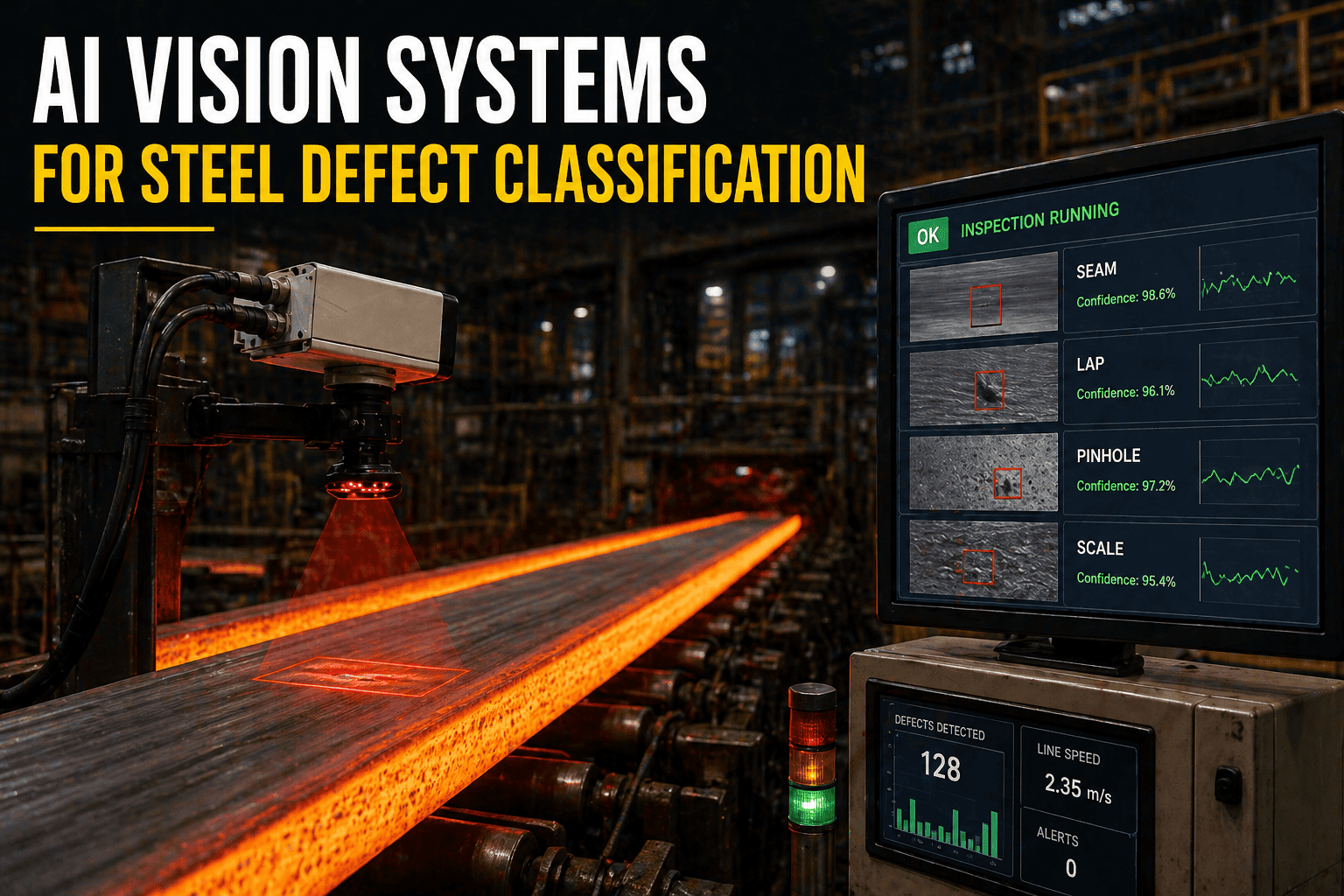
Read More
A flat-rolled steel producer in the Ohio Valley shipped 14,200 tonnes of automotive coil over six months before press-shop cracking at the customer's stamping plant traced the problem back to a tundish nozzle...

Read More
When an automotive OEM's stamping line rejects a shipment of high-strength steel coil, the supplier's cost is not the replacement material — it is the SCAR that follows, the potential PPAP re-submission, the...

Read More
Steel plants generate more real-time equipment data than almost any other industrial environment — vibration signatures, thermal images, motor current readings, and process parameters measured in milliseconds. Yet...
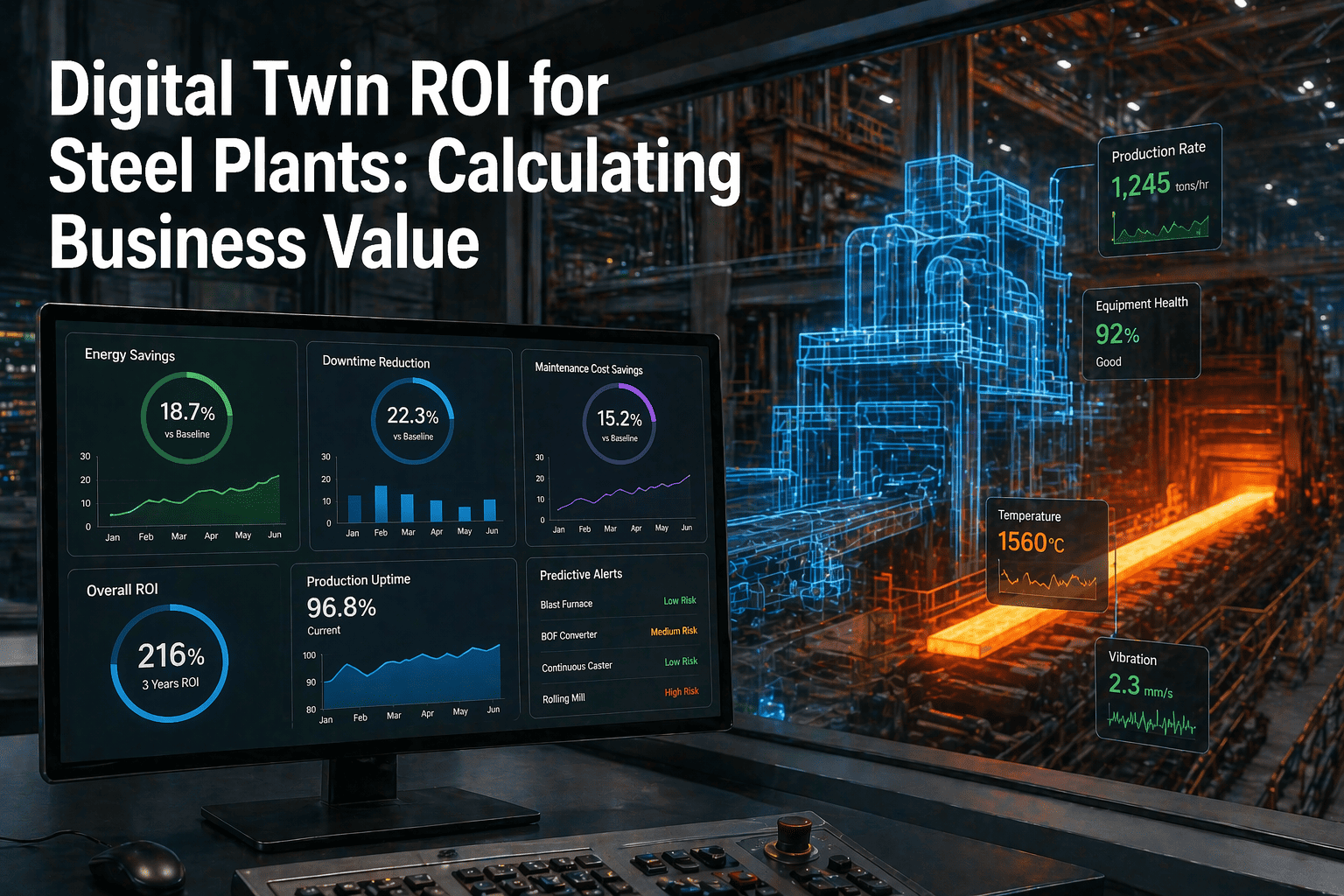
Read More
A digital twin of a steel plant is not a visualization dashboard — it is a living simulation that mirrors every furnace, caster, rolling stand, and material flow in real time. The business case is not about...

Read More
According to a single cobble event in a hot rolling mill causes $150,000–$500,000 in direct damage (rolls, guides, entry tables, hydraulic lines) plus 2–8 hours of downtime costing $30,000–$120,000 per hour in los
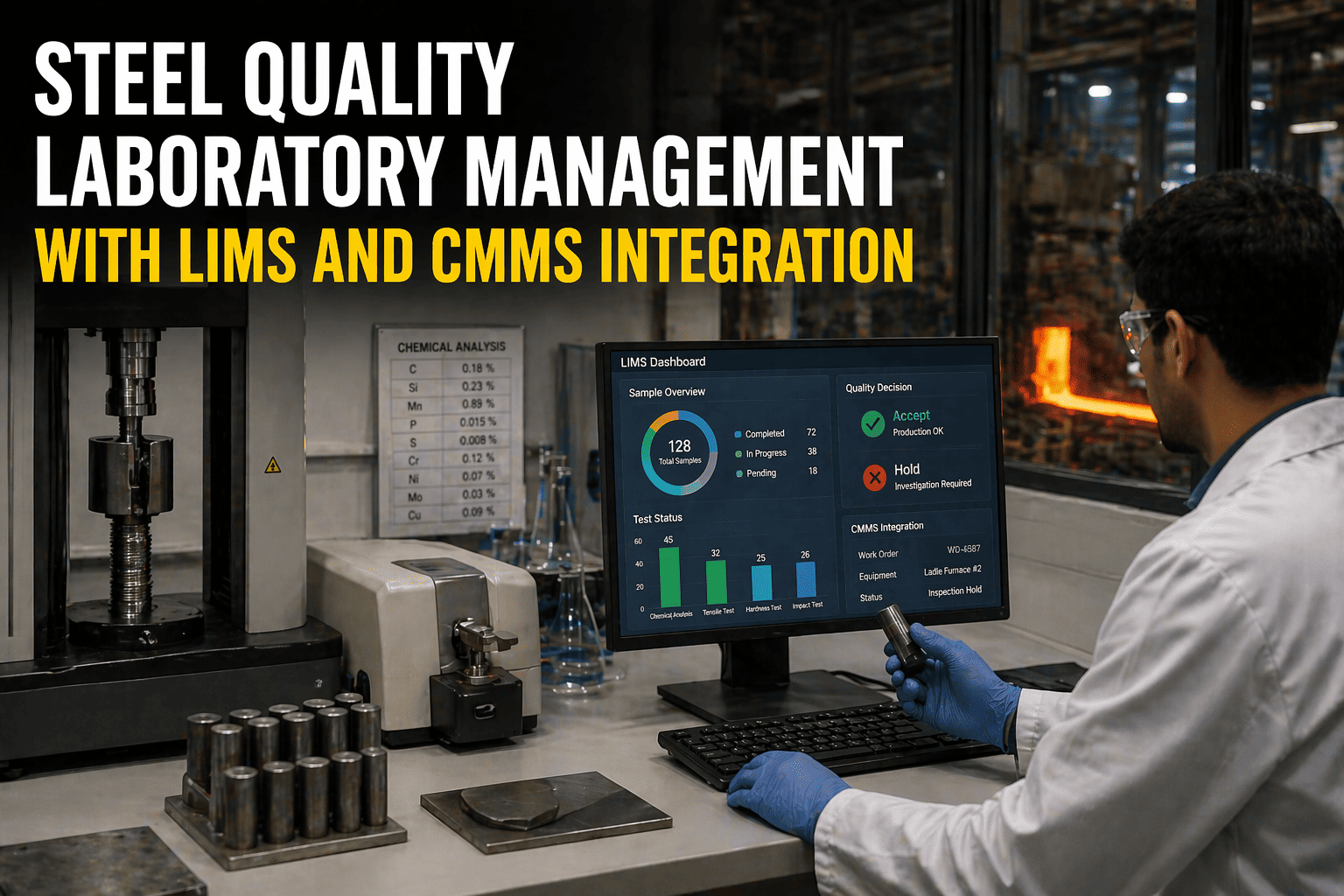
Read More
According to the global LIMS market for metals and mining is projected to reach $1.8 billion by 2028, driven by steel plants seeking to automate quality testing workflows. However, 76% of steel quality laboratories...
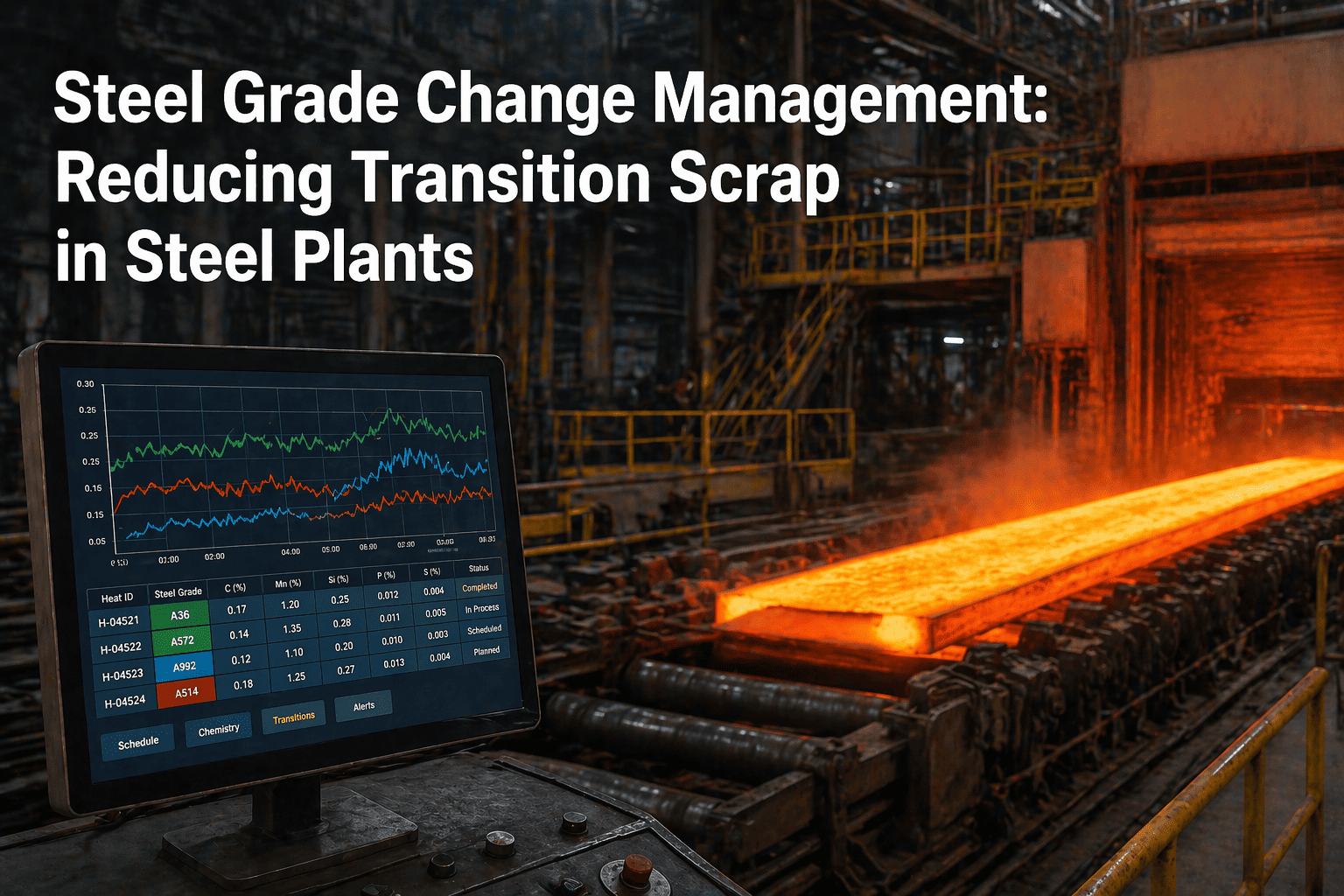
Read More
Every steel grade change in a continuous casting or rolling mill generates transition scrap — off-grade material between product specifications that cannot be shipped to customers. For a mid-size integrated steel...
Read More
A tungsten carbide die drawing brass-coated tyre cord wire fails by brittle fracture and grain cluster decohesion — not by smooth wear. When iron and cobalt weld at the die-wire interface at high temperature, the...
Read More
Tube and pipe mills operate at the intersection of forming precision and weld metallurgy — and the maintenance failure modes that shut them down are different from those in flat-product rolling because every defect...
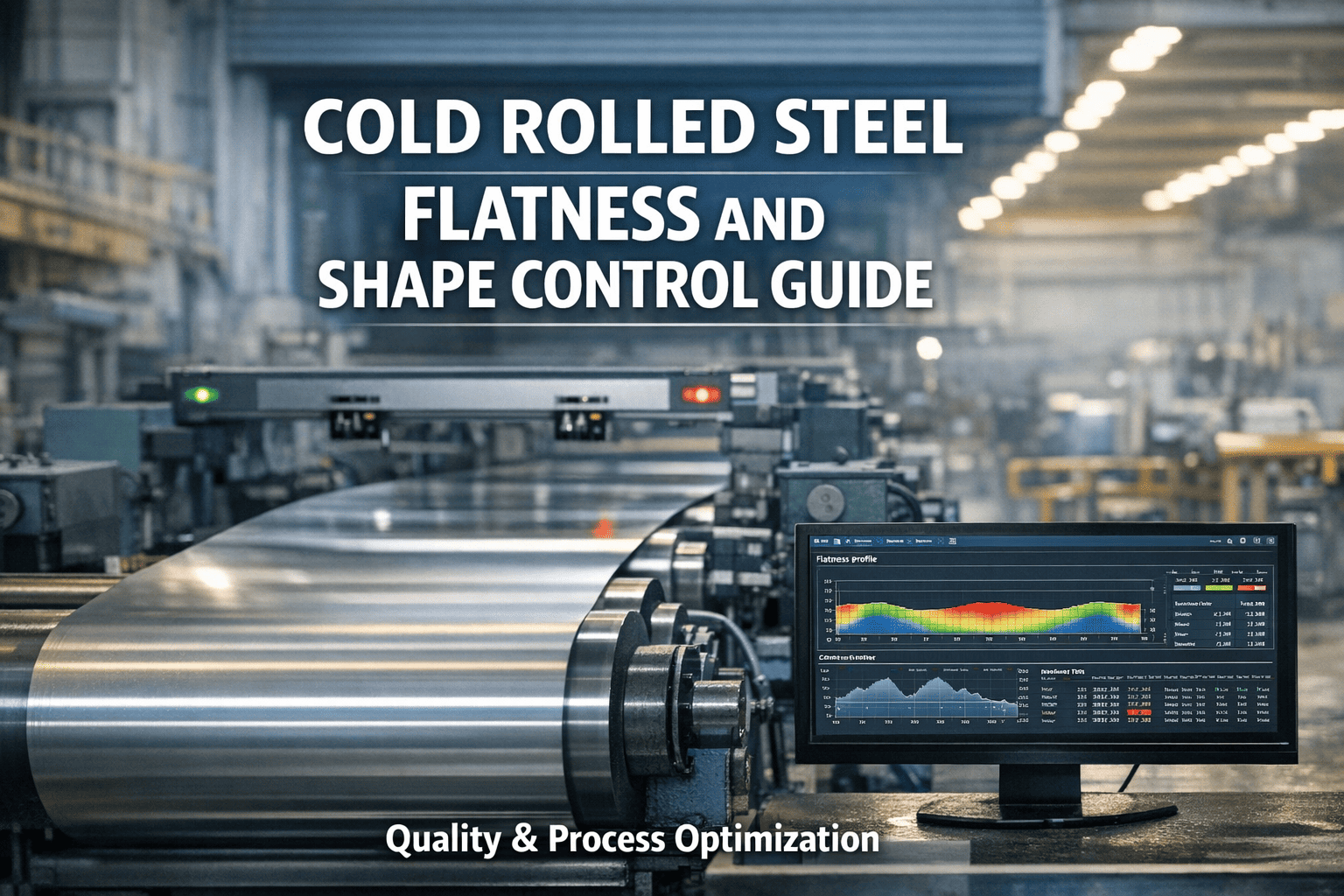
Read More
Flatness defects are the silent rejection mechanism of cold rolled steel. A coil that passes thickness tolerance and surface inspection can still be rejected at the automotive stamping press if wavy edge or center...
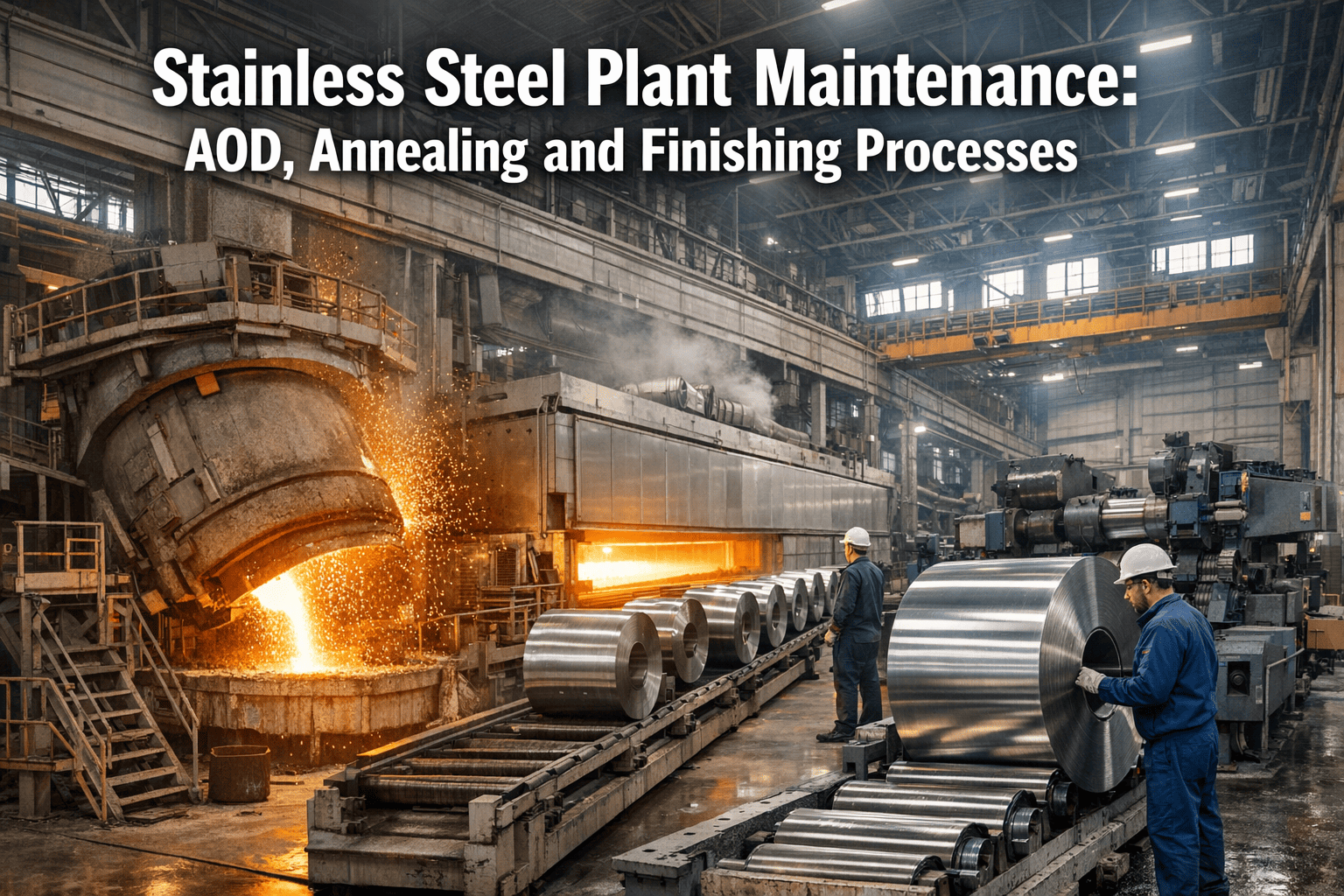
Read More
Stainless steel production presents a maintenance engineering challenge that carbon steel plants do not face at the same severity: every major process stage operates under conditions that accelerate equipment...
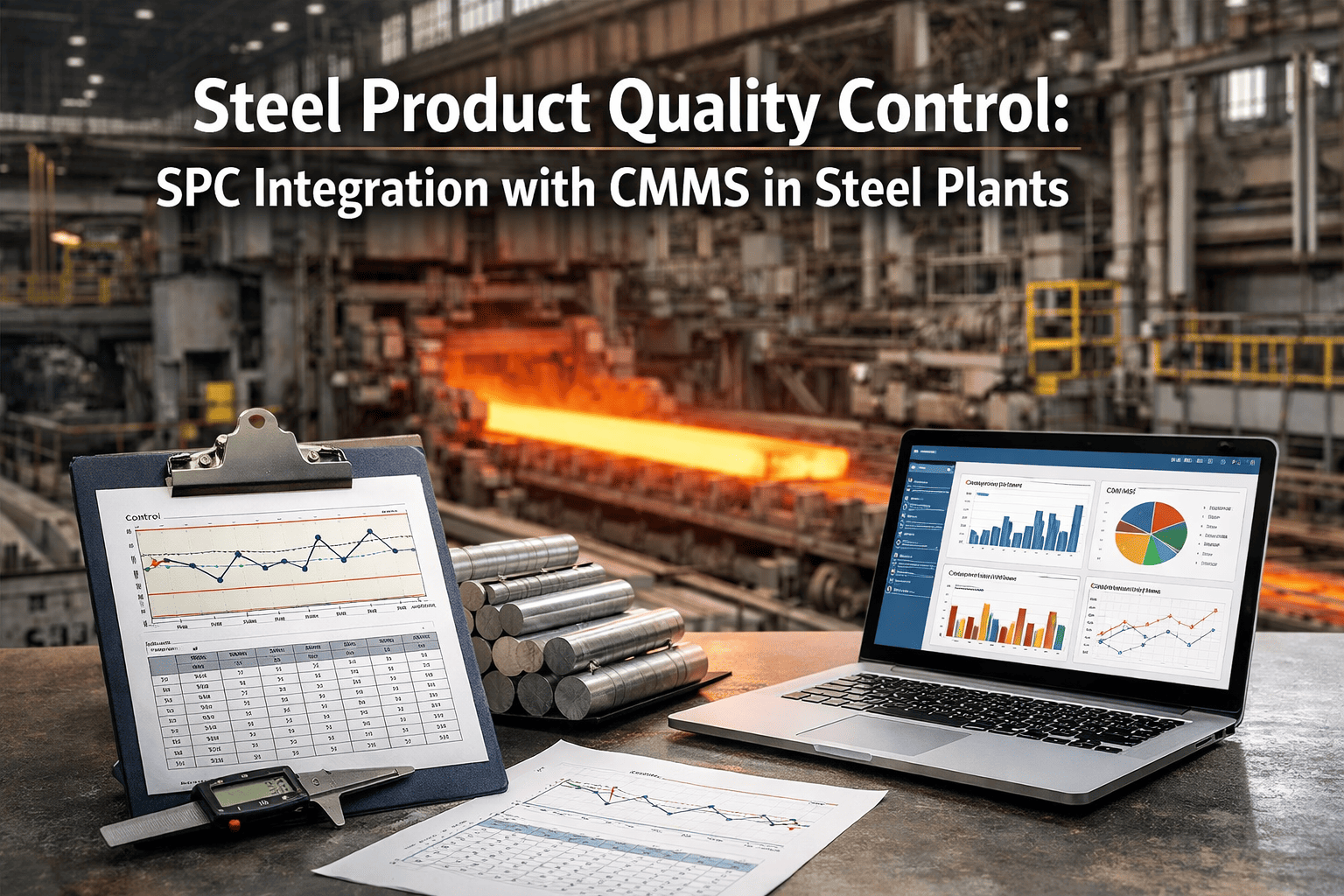
Read More
In steel manufacturing, the gap between a process that is technically within specification and a process that is statistically under control is the gap between reactive quality management and predictive quality...

Read More
A hot strip mill producing steel at 900°C and 15 m/s generates a new metre of surface every 67 milliseconds — speeds at which human inspectors catch only 45–60% of surface defects, dropping to 40% on the last hours...

Read More
Steel plants face a compliance burden that compounds annually: OSHA citations to steel operations exceeded 3,200 in 2024, penalties for willful violations reach $165,514 per occurrence, and a single incident...

Read More
Most steel plant maintenance supervisors know their team is busy. What they do not know is whether busy means productive. A technician with 35% wrench time spends more of their shift searching for tools, waiting...

Read More
Scrap is the single largest cost input in EAF steelmaking — accounting for up to 77% of total production cost per heat. Yet in most melt shops, scrap mix decisions are still driven by availability and operator...
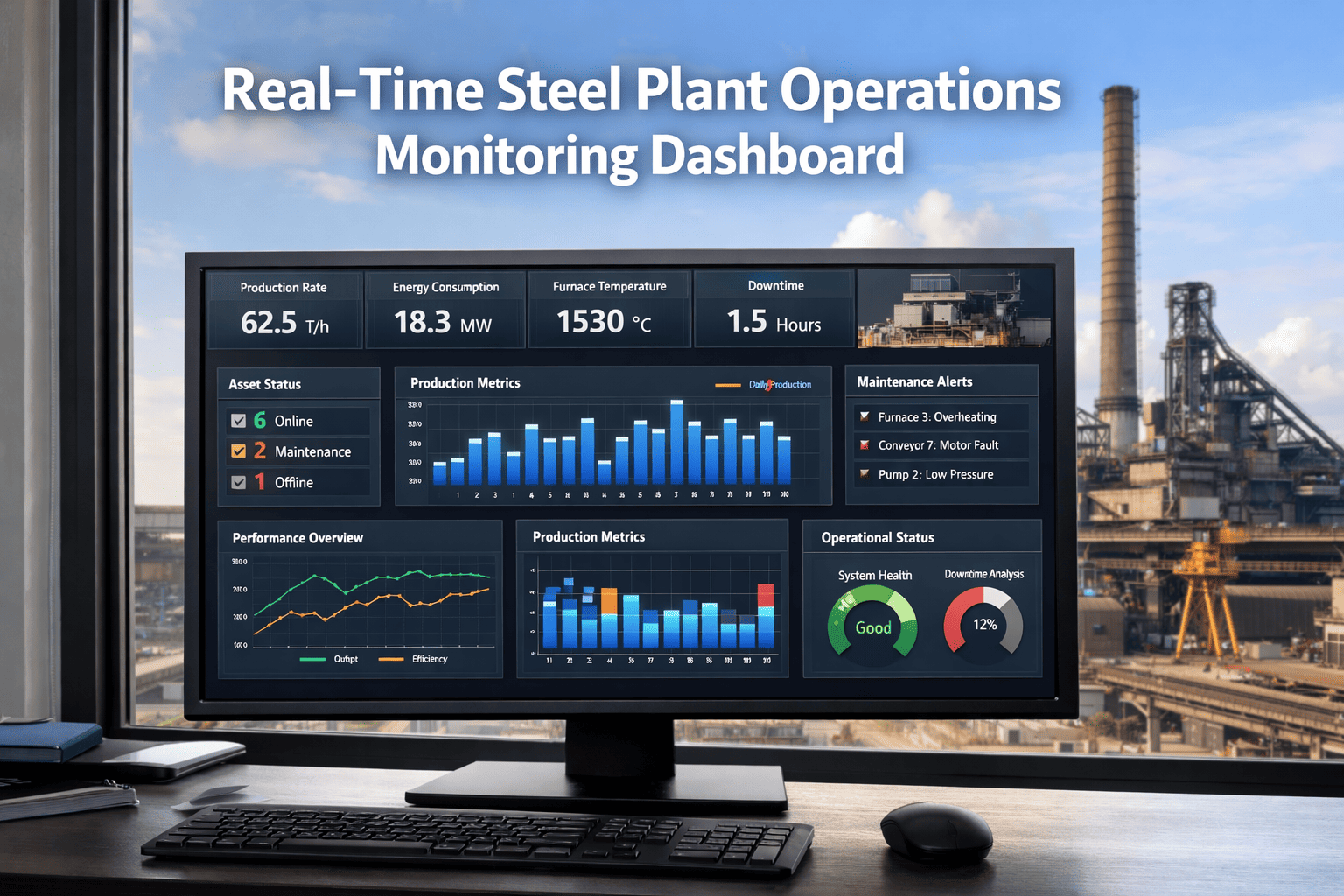
Read More
Every steel plant already has the data — it lives in Level 1 PLCs, Level 2 process control, LIMS quality databases, and SCADA historians. The problem is not collection. It is connection. Monthly reports average...

Read More
Steel reheating furnaces consume 67% of all energy used in a steel plant — yet most of that energy is never accounted for at the process level. Flue gas exits at 350 to 450°C even after recuperation, carrying 25 to...

Read More
Steel plant cooling systems operate at the intersection of extreme heat and catastrophic risk. When a blast furnace cooling circuit leaks water into a zone where molten iron is pooling at 1,500°C, the resulting...

Read More
Bearing failure is the single largest cause of unplanned downtime in steel plants — and lubrication is the root cause in roughly half of those failures. The Electric Power Research Institute estimates nearly 50% of...

Read More
The 4,500 HP main drive motor on a hot strip mill finishing stand seized without warning at 2:23 AM. The catastrophic bearing failure did not just destroy a $380,000 motor — it triggered a cascade that halted 2.4...
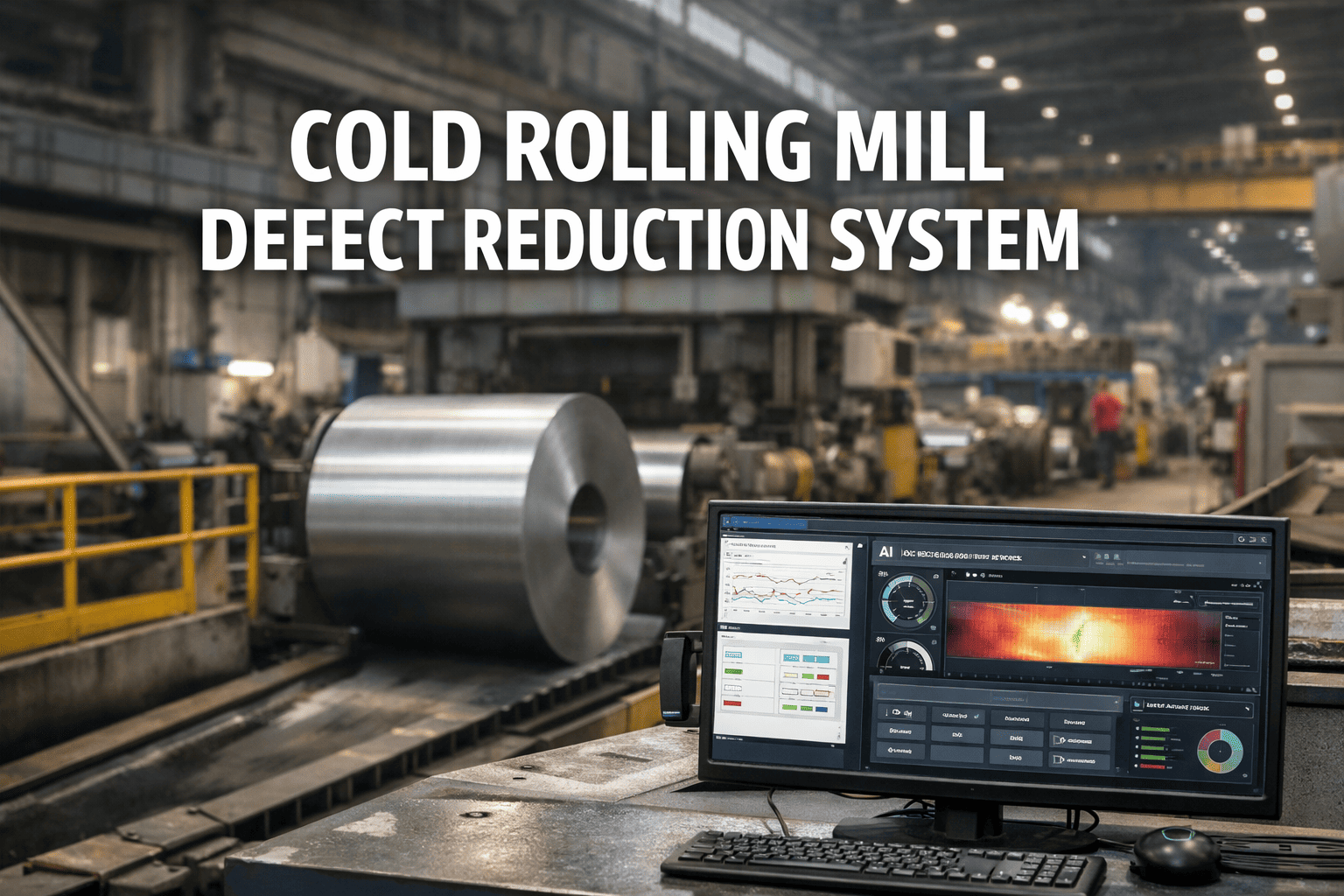
Read More
A cold rolling mill running 50–90% thickness reduction across six stands at 1,500 m/min has roughly 40 independent process parameters interacting with each other every millisecond — roll force, forward and backward...

Read More
A steel plant's spare parts storeroom carries the paradox of industrial maintenance: $12 million in inventory that still runs out of the one bearing that stops production. Most MRO stocking decisions are made with...
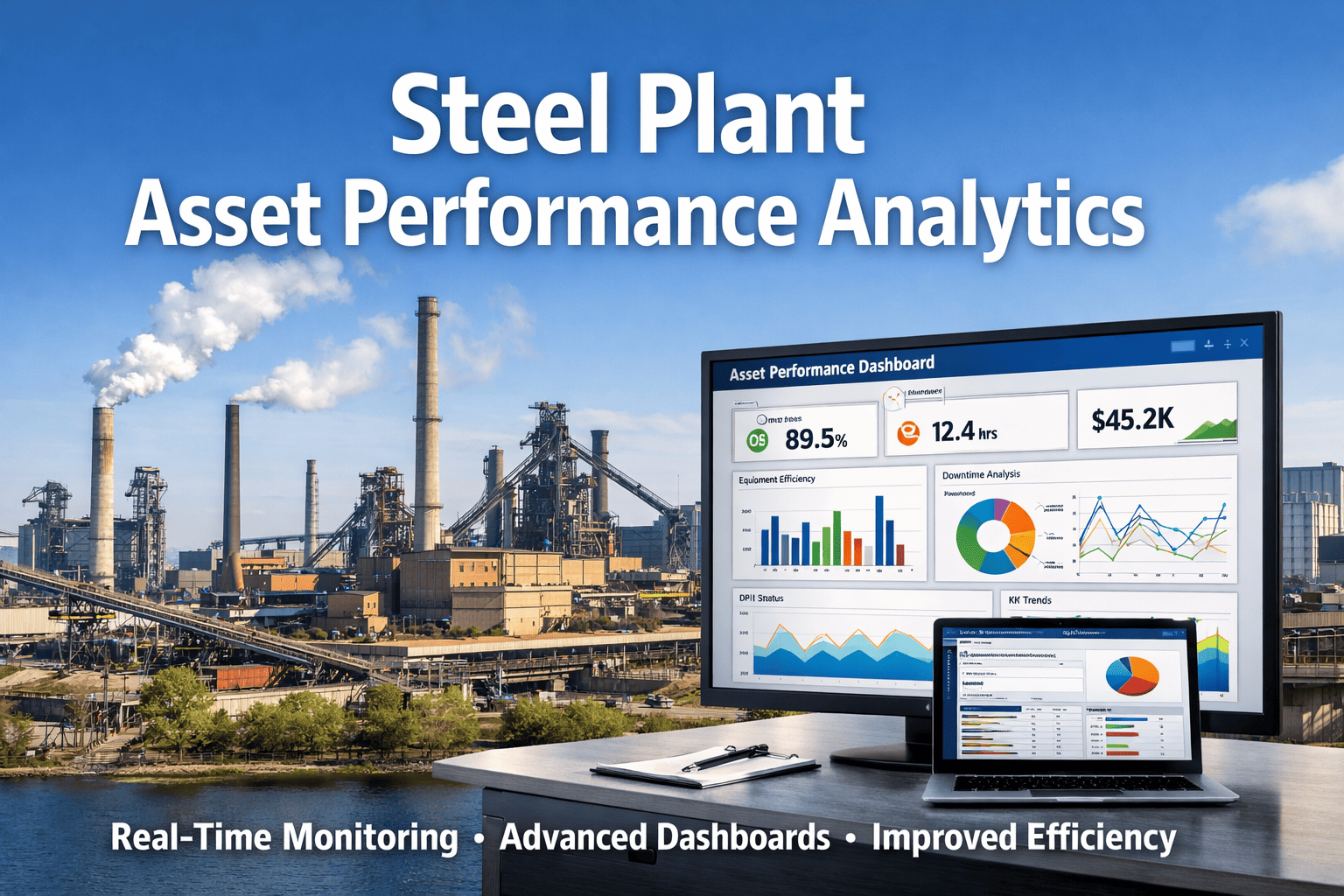
Read More
Most steel plant maintenance decisions still run on last month's data. MTBF calculations assembled in spreadsheets. OEE figures that arrive 10 days after the period they measure. Downtime reports that identify the...

Read More
A human inspector at a hot strip mill exit catches 60-70% of surface defects on a good shift. After eight hours on night watch under the glare of 900°C steel, that number drops to 40-50%. The 30-40% that slip...

Read More
An electric arc furnace consuming 400 kWh per tonne when best-in-class is 300 kWh per tonne is wasting $2.8 million per year in electricity alone at 500,000 annual tonnes — before counting electrode...
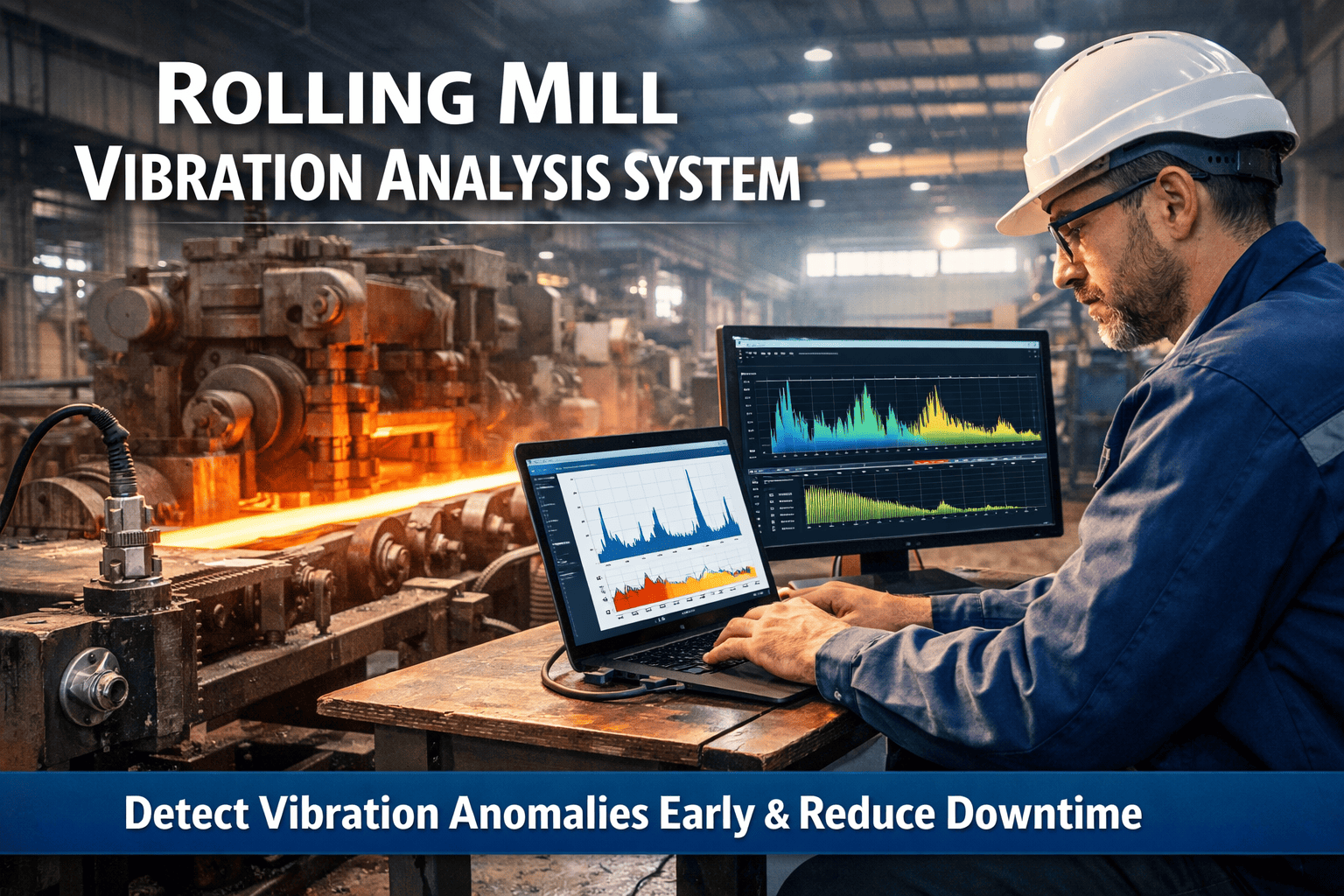
Read More
A hot rolling mill finishing stand processes steel at speeds exceeding 1,000 metres per minute through seven stands operating within ±0.02mm dimensional tolerance — while every backup roll bearing, pinion gearbox,...
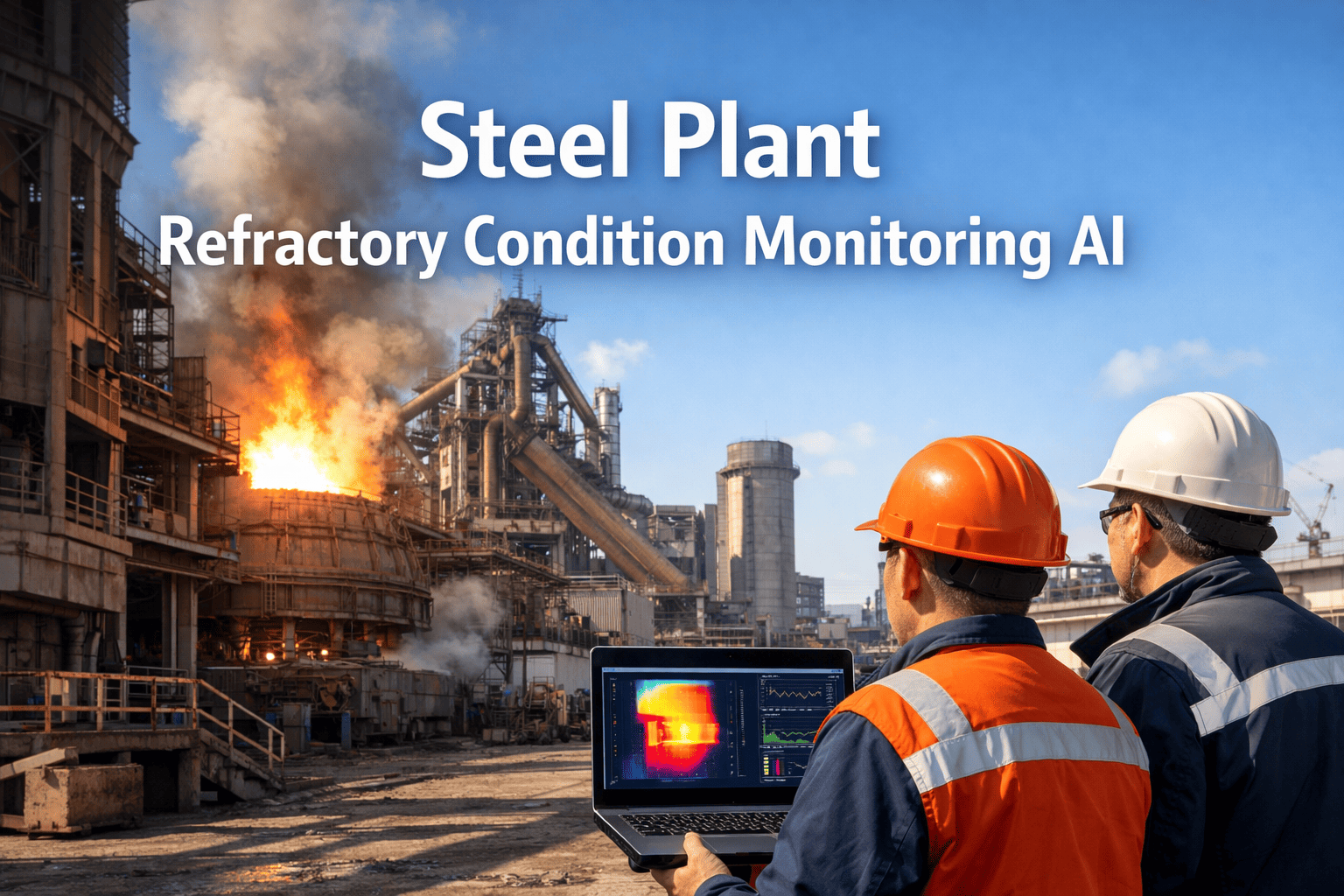
Read More
A blast furnace hearth breach is not a maintenance event — it is a $50–150 million emergency reline, six to twelve months of lost hot metal production, and a forensic investigation asking why the thermocouple data...

Read More
A steel plant running three shifts generates two handovers per day, 730 handovers per year, and at least two moments every 24 hours where critical maintenance information either transfers cleanly or disappears. A...

Read More
A blast furnace that completed 4,200 heats in the last 90 days and a standby BOF that ran 400 heats over the same period are not the same asset. Their refractory wear profiles are not the same. Their tuyere failure...

Read More
A blast furnace operator at 4:45 AM standing on a casting floor platform does not have WiFi. A crane inspector at the top of a ladle bay has one bar of signal at best. A roll change technician swapping a work roll...
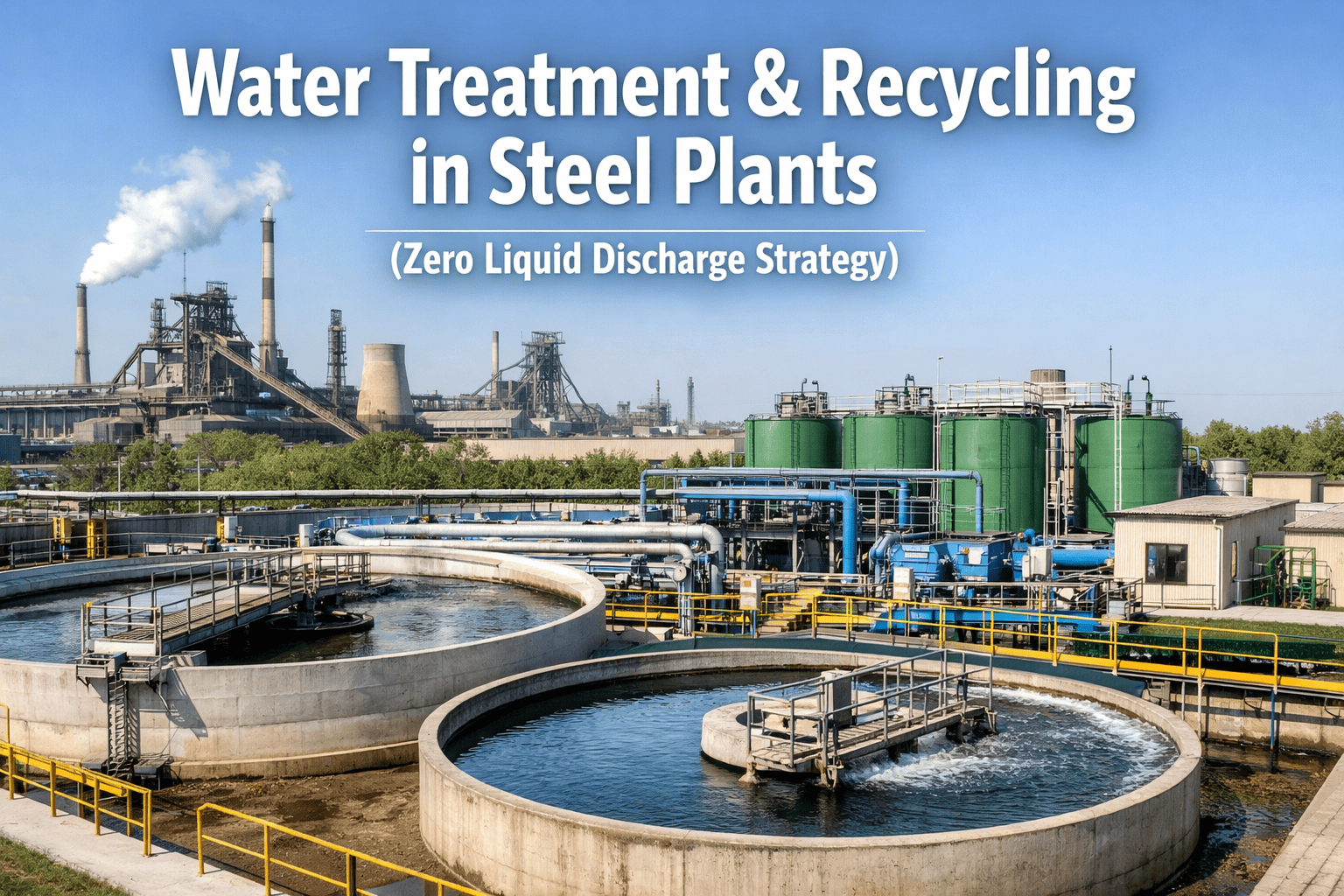
Read More
An integrated steel plant takes in 28.6 m³ of water per tonne of steel produced — but only consumes 1.6 to 3.3 m³. The rest circulates, cools, carries contamination, and must be treated before it re-enters the...

Read More
A human inspector stationed at a hot strip mill exit catches between 45% and 65% of surface defects at line speed. The defects he misses — the 0.1mm inclusion that causes paint adhesion failure at an automotive...

Read More
In 2024, survivors and families of workers killed in a welding-triggered explosion were awarded $141 million in damages — not because the welding was wrong, but because no one had assessed the flammable vapours in...

Read More
Steel is one of the most energy-intensive industries on earth — and most integrated steel plants operate 8–15% above best-available-technology energy benchmarks without a precise fix on where the overage is. Energy...

Read More
A ladle crane dropping 280 tonnes of liquid steel at 1,600°C is not a crane incident — it is a catastrophe. Steel plants operate the world's most consequence-critical lifting equipment under the world's most...
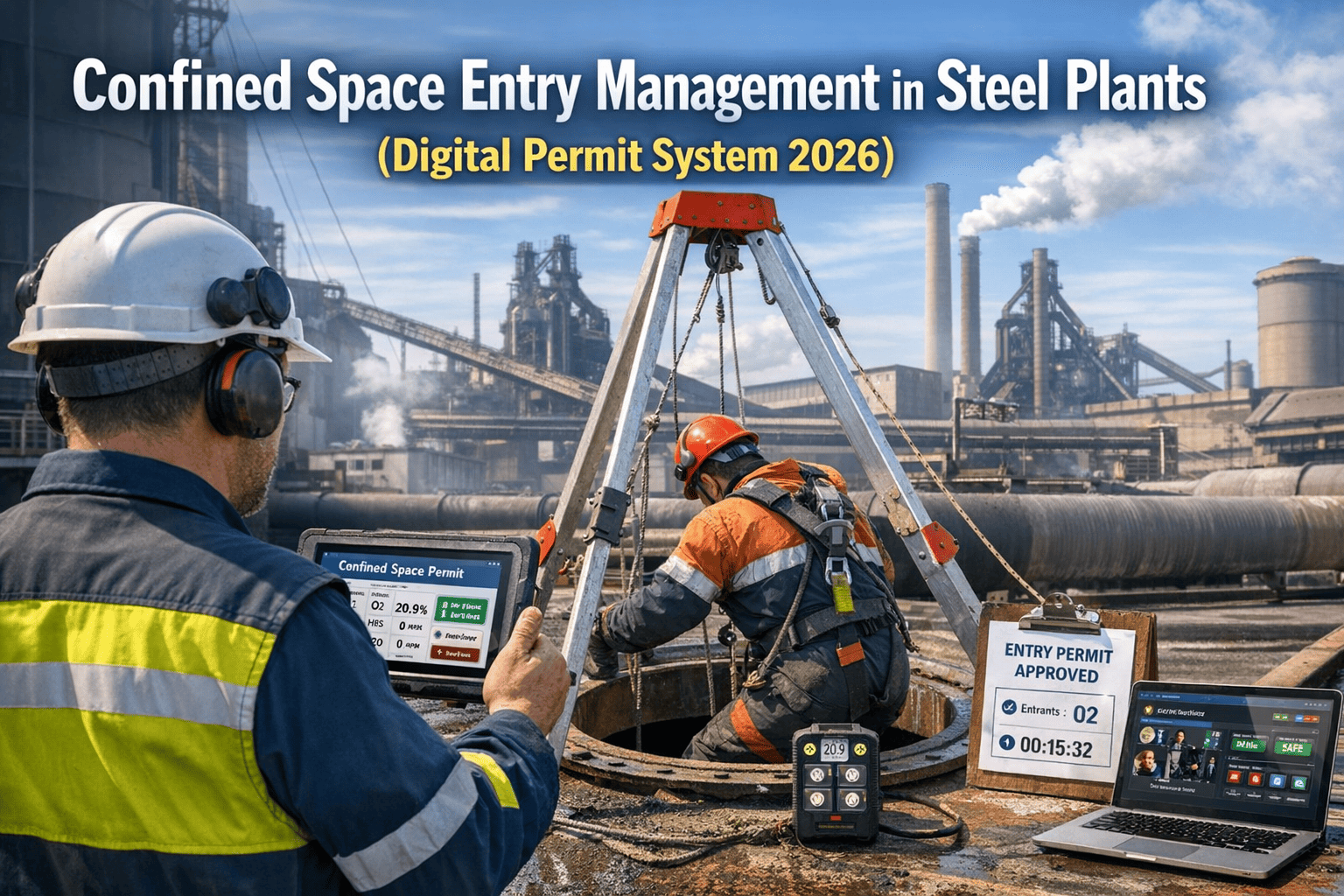
Read More
A blast furnace pit, ladle preparation bay, converter vessel, or coke oven flue is not a space that forgives a skipped step. In steel plants, confined space entry involves CO concentrations from blast furnace gas,...

Read More
A ladle crane carrying 280 tonnes of liquid steel at 1,600°C is the single highest-consequence lifting operation in any industrial facility on earth — and the difference between a safe lift and a catastrophic...

Read More
A hot rolling mill finishing stand running at 1,200 meters per minute generates enough vibration data from a single backup roll bearing to fill 40 gigabytes per day. The bearing inside that stand — one of 180...

Read More
Most steel plant maintenance teams are running critical decisions — whether to replace a hot strip mill drive, extend a blast furnace campaign, or justify a reliability engineering headcount — on gut feel,...

Read More
A steel plant that connected its blast furnace SCADA to the corporate IT network for remote monitoring in 2019 did not budget for a cybersecurity programme at the same time. Four years later, that plant's level-2...

Read More
A steel plant blast furnace operates at 1,500°C with 18-bar hydraulic pressure on tap lines, live 11kV switchgear two meters from maintenance access points, and rolling mill drives that can restart from a control...

Read More
In 2023, a steelworker in a European integrated steel plant was fatally injured when equipment was energised while he was still performing maintenance inside a confined space — a

Read More
Steel plants lose an estimated $180,000–$620,000 per unplanned equipment failure on critical assets — blast furnace tuyères, continuous caster rolls, hot strip mill drives — and the overwhelming majority of those...

Read More
An integrated steel plant running SAP PM for work order management and a separate CMMS for field execution is operating two versions of maintenance reality simultaneously — and the gap between them costs more than...

Read More
A blast furnace at a major integrated steel plant generates over 4,000 alarm events per shift — temperature excursions, pressure deviations, drive faults, and process upsets that each have a defined maintenance...

Read More
Every major production decision at a steel plant carries risk that cannot be undone once implemented — a grade transition sequence that creates excessive downtime, a maintenance outage scheduled during peak demand,...

Read More
Lubrication failures are the silent budget destroyer of every steel plant maintenance program. More than 40% of all industrial bearing failures trace directly to inadequate lubrication — either the wrong quantity,...

Read More
A rebar production line is a race against thermal decay. From the moment a billet exits the reheat furnace at 1,100–1,200°C, every second of delay or equipment irregularity costs yield, dimensional accuracy, and...
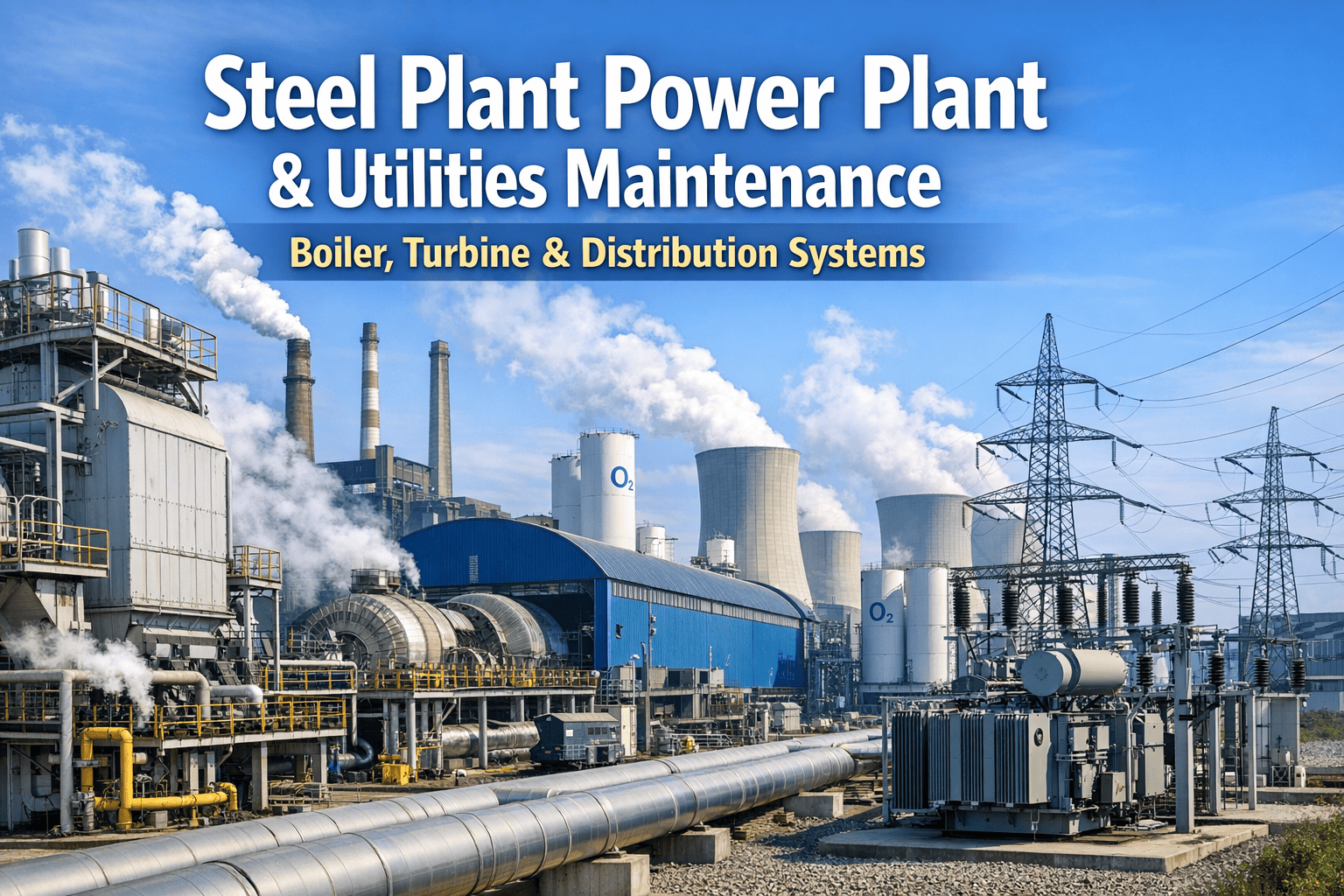
Read More
A captive power plant failure in a steel mill is not an inconvenience — it is a cascade event. When the steam turbine trips, the blast furnace loses process air injection, the BOF loses oxygen lance supply, and the...

Read More
The sinter plant is the silent constraint of every integrated steel mill. When sinter quality degrades — because the windbox suction is uneven, because ignition hood burners are fouled, because the ESP pressure...

Read More
Material handling equipment moves over 90% of bulk material in steel plants — conveyors, cranes, stackers, reclaimers, feeders, and screens. Unplanned downtime on a single belt conveyor can cost $15,000–$50,000 per...
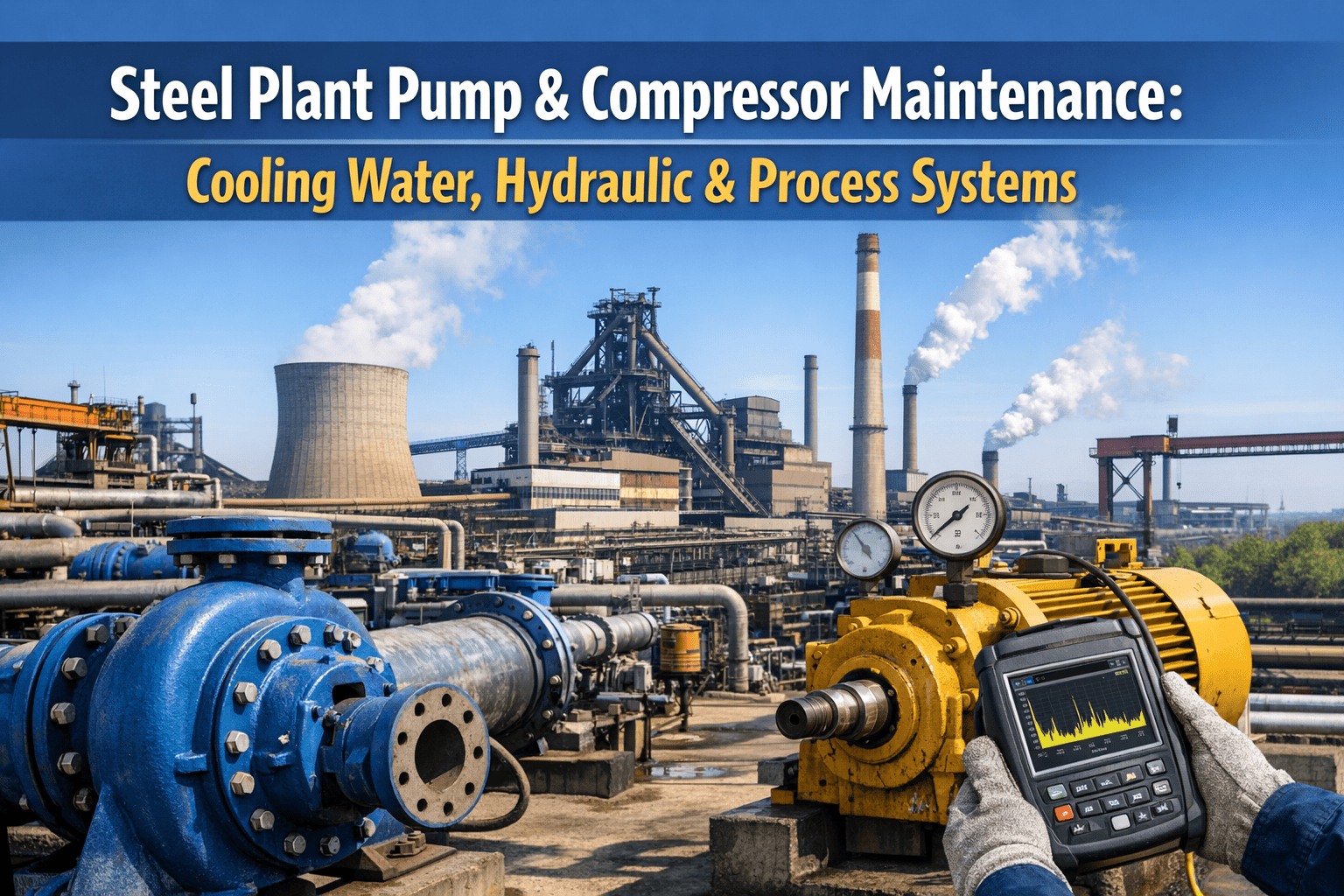
Read More
Pumps and compressors are the circulatory system of a steel plant — cooling water that keeps refractory alive, hydraulic pressure that controls roll gap to micrometre precision, and process gas compression that...

Read More
Steel plants cover areas measured in square kilometres, operate around the clock, and contain zones where no human should spend more time than absolutely necessary — blast furnace casting floors, coke oven...

Read More
Steel plants operate some of the most hazardous, hard-to-access structures in heavy industry — blast furnace shells, tall stacks, crane runway rails at 30+ metres, and expansive roofing with active heat sources...

Read More
A FANUC robot on a billet stacking line runs 6,000+ cycles per shift. A KUKA arm handling slag removal operates in temperatures that would shut down most other automation. An ABB system managing rebar bundling...

Read More
A steel plant warehouse is not a passive storage room — it is the supply chain between a breakdown and production recovery. When a technician walks to the storeroom for a critical bearing or refractory brick and...
Read More
Every tonne of crude steel produced through the blast furnace route consumes approximately 1,370 kg of iron ore, 780 kg of metallurgical coal, and 270 kg of limestone — yet most steel plants still manage these...

Read More
Steel plants spend an estimated $4.2 billion annually on unplanned downtime — and a significant share traces back to work orders never created, incorrectly prioritized, or closed without proper documentation.
Read More
When a 3.5 MTPA integrated steel plant's maintenance director sat down with the CFO to explain why the plant had spent 38% of its annual maintenance budget on emergency breakdowns, the honest answer was simple: the...

Read More
Steel plants with structured oil analysis detect 85% of lubrication failures before downtime, reduce lubricant consumption by 30-50%, and extend equipment life 3-5x versus time-based changes. Over 70% of equipment...

Read More
Steel plants experience average hourly downtime costs exceeding $500,000 — and for blast furnace failures, even minor unplanned repairs require a minimum of 8 days comprising 4 days cooling, 1 day repair, and 3...

Read More
A steel plant annual shutdown is not a maintenance event — it is a production-critical project where every unplanned extra day costs between $1.2M and $3.5M in lost output, and where 70% of turnarounds globally...

Read More
Steel plants run some of the harshest rotating equipment on earth — rolling mill drives, blast furnace blowers, ladle cranes, and continuous caster rollers operating around the clock under extreme thermal and...

Read More
Steel plants lose an average of $25,000 per hour of unplanned downtime — and the world's 500 largest industrial companies collectively forfeit $1.4 trillion annually to equipment failures that condition monitoring...

Read More
Steel plants are facing a defining workforce crisis: 40% of the manufacturing workforce retires by 2030, 1.9 million industrial jobs risk going unfilled over the next decade, and the average time to develop a fully...

Read More
Unplanned downtime in a steel plant costs an average of $500,000 per hour — and 80% of those failures are linked to inconsistent preventive maintenance. Without a structured schedule, critical equipment like blast...

Read More
Steel plants generate over 2 terabytes of sensor and operational data every single day — yet most maintenance teams make decisions from last month's spreadsheet. OxMaint's unifi

Read More
Steel plants have invested millions in SCADA, DCS, and Level 2 automation systems that capture equipment state in real time — yet that operational intelligence almost never reaches the maintenance team...

Read More
Every hour of unplanned downtime in a steel melt shop burns $400,000 to $1.8 million in lost production, scrap, and crew costs — yet most plants still rely on paper travelers, whiteboards, and tribal knowledge...

Read More
When an integrated steel plant deployed a fleet of 7 quadruped robots across its blast furnace perimeter, coke battery corridors, rolling mills, and electrical rooms — and connected every robot finding directly to...

Read More
Molten Metal Safety in Steel Plants provides essential safety protocols for handling molten metal, hot metal, and slag in steel operations. It covers key procedures like ladle safety, tundish operations, and...

Read More
Steel plant workers face some of the most hazardous occupational health conditions in modern industry. Rolling mills and grinding operations routinely exceed 100 to 110 decibels, furnace operators endure radiant...

Read More
Steel plants reported 67 fatalities globally in 2024, with contractor vulnerabilities identified as a critical safety gap by the World Steel Association.Effective contractor safety management starts before the...
Read More
A mid-size integrated steel plant with 1,200 workers and three operating shifts faced a safety crisis that many heavy industry facilities know well — paper permits scattered across departments, near misses going...

Read More
Every manufacturing facility has a calibration problem they don't know about yet. Instruments drift. Schedules slip. Certificates get buried in email threads. And by the time an auditor or a customer complaint...

Read More
Steel plants run on milliseconds and margins — yet most maintenance teams are still capturing work orders on paper, walking back to an office to type them up, and losing hours every shift to admin that adds zero...

Read More
Steel plants running SAP, Oracle, or custom ERP systems face a persistent problem: the enterprise system that finance and procurement rely on is the same system that maintenance technicians struggle to use on the...

Read More
Long product rolling mills — section mills, bar mills, and structural mills — are among the most mechanically stressed assets in any steel plant. A single unplanned stoppage can halt output for hours, costing...

Read More
Most steel plants believe their maintenance operation is performing well — until they benchmark against world-class standards and discover they are 20–30% below industry leaders on every key metric. The gap between...

Read More
The transition from blast furnace-basic oxygen furnace (BF-BOF) steelmaking to hydrogen-based direct reduced iron with electric arc furnace (H2-DRI+EAF) is the most significant technological shift in the steel...

Read More
In June 2022, a ransomware attack forced a major European steel producer into emergency shutdown for over two weeks. Blast furnaces that require continuous operation suffered refractory damage worth $2–5 million...

Read More
The steel industry spent $4.2 billion on unplanned downtime in 2024 — roughly 5-8% of total operating costs across integrated and EAF mills worldwide. That number is shrinking, but only at plants where predictive...

Read More
Modern rebar production is a continuous chain — scrap steel enters the yard, melts in an electric arc furnace at 1,700 degrees Celsius, solidifies into billets through continuous casting, and rolls into finished...

Read More
Refractory materials are the only barrier between 1,600°C molten steel and the steel shell of every vessel in the plant. When refractory fails, the consequences range from an unplanned reline costing $2-15 million...
Read More
A steel plant maintenance planner has a harder job than most engineers appreciate. Every work order competes for the same finite pool of craft resources across three continuous shifts. Every planned job must be...

Read More
A blast furnace tap hole blocked by a crew going off shift that does not record the issue in writing creates a problem the incoming crew does not know exists until it fails. A permit-to-work opened by the night...

Read More
Steel plant maintenance budgets that are built from historical spend alone — without cost-per-failure data, PM compliance rates, or asset lifecycle context — are not budgets. They are guesses that get revised...

Read More
Calendar-based maintenance schedules applied uniformly across a steel plant treat a blast furnace tuyere cooling system, a rolling mill oil film bearing, and a plant lighting circuit with identical analytical...

Read More
A steel plant operating at 54% OEE — not unusual for facilities without a structured maintenance programme — is using just over half its available production capacity. The remaining 46% is consumed by unplanned...

Read More
Most steel plant maintenance teams track MTBF and MTTR in spreadsheets — which means they are measuring the past, not managing the present. When a blast furnace blower compressor has been declining in reliability...

Read More
The average steel plant maintenance technician is 54 years old. In the next eight years, an estimated 40% of the skilled maintenance workforce across integrated steel operations in the US and Europe will reach...

Read More
A 300-tonne ladle crane hoist failure does not produce a work order — it produces an incident investigation. Hot metal on the casting floor, immediate evacuation of every worker within thirty metres, a melt shop...

Read More
A steel plant conveyor belt that fails unplanned during production does not just stop material flow — it stops every downstream process the belt feeds, from ore transfer to blast furnace charging to sinter plant...

Read More
Conventional IoT sensors measure what they are pointed at. Smart sensors — stockline radars, tuyere cameras, AI vision systems, and infrared thermal imagers — measure what no human can safely observe continuously:...

Read More
A bearing fault on a hot strip mill work roll progresses with every revolution at line speed. By the time sensor data travels to a cloud server and a prediction returns — even a fast 200 milliseconds — the roll has...

Read More
Steel plants still run critical assets on time-based maintenance schedules that ignore what sensors already know. A vibration sensor that costs $400 catches a bearing failure 3-6 weeks before it happens — turning a...

Read More
Your steel plant is already generating the data for a digital twin — every sensor ping, every work order close, every failure event, every PM inspection builds a picture of how your assets actually behave under...

Read More
Steel plants are among the most dangerous industrial environments on Earth — 67 workers died in steel industry incidents in 2024, many during routine inspections in blast furnace perimeters, coke oven corridors,...

Read More
Steel plants carry millions in spare parts inventory yet still face critical stockouts that extend shutdowns by hours or days. The problem is not the size of the inventory — it is the absence of a systematic...

Read More
A single missing bearing seal. A refractory brick out of stock. A hydraulic valve not on the shelf. In a steel plant running 24/7 at full capacity, any of these becomes a production stoppage worth $40,000 or more...
Read More
Steel plants operate under some of the most rigorous safety oversight in heavy industry — with OSHA citing steel operations over 3,200 times in 2024 alone, averaging $16,131 per serious violation and up to $170,735...

Read More
Steel plants run on high-voltage power — and that same power can kill in milliseconds. Arc flash temperatures exceed 35,000°F, switchgear failures trigger unplanned shutdowns, and a single missed maintenance check...

Read More
Steel plant fires are not accidents waiting to happen — they are predictable, preventable events that occur when fire detection equipment goes uninspected, hydraulic systems are not maintained, and emergency...

Read More
Ensure safe and efficient crane operations in steel plants with a comprehensive inspection and maintenance checklist covering overhead, ladle, and charging cranes. Regular checks on wire ropes, hooks, brakes, and...

Read More
Digital confined space entry management enhances safety in steel plants by streamlining permit-to-work processes and real-time monitoring. With features like atmospheric gas detection, entrant tracking, and...
Read More
Lockout Tagout (LOTO) procedures are critical for ensuring safety during maintenance of steel plant equipment like furnaces, mills, cranes, and electrical systems. By implementing proper energy isolation practices...

Read More
Steel manufacturing plants (NAICS 3311–3312) operate under some of the strictest OSHA oversight in American industry. In fiscal year 2024, Hazard Communication topped the most-cited list for general industry, with...

Read More
By-product gases — blast furnace gas, coke oven gas, and LD converter gas — account for approximately 30% of total energy consumption in an integrated steel plant. With only 25% of residual heat currently recovered...
Read More
A coke oven battery operating at 1,100°C continuously for 25 to 40 years is one of the most maintenance-intensive assets in heavy industry — and a single missed PM on a hydraulic seal can cascade into a $13 million...

Read More
AI-powered energy management is transforming steel plants by optimizing consumption across processes, reducing costs by 8–15%. With real-time tracking of specific energy consumption (SEC), gas balance, and...

Read More
An integrated steel plant achieved a remarkable 73% reduction in off-grade production by implementing OxMaint’s AI-powered quality prediction and analytics. By leveraging real-time process data and intelligent...
Read More
An integrated steel plant producing one million tonnes of crude steel generates between 400 and 500 kilograms of solid waste per tonne of output. At 4 MTPA scale, that is 1.6 to 2 million tonnes of slag, dust,...

Read More
India's integrated steel plants account for nearly 40% of the country's total industrial energy consumption — and most of that energy is still managed with spreadsheets, morning shift reports, and reactive gut...
Read More
India's steel industry consumes over 20,000 TOE per year per plant — and every one of those plants classified as a Designated Consumer (DC) under BEE's PAT scheme is legally required to hit SEC reduction targets,...

Read More
Most steel plants leave 15–25% of total energy on the table — not from inefficient production, but from under-maintained waste heat recovery systems. A fouled WHR boiler, a degraded turbine seal, or a scaled heat...

Read More
Steel production accounts for approximately 8% of global CO₂ emissions — more than the entire aviation sector, more than all heavy trucks combined, and more per unit of economic output than almost any other...

Read More
Steel manufacturing is one of the most water-intensive industrial processes in existence — a conventional integrated steel plant consumes between 3 and 20 cubic metres of water per tonne of steel produced depending...

Read More
Steel plants in India face the most consequential emissions compliance period in the industry's history. MoEFCC has mandated real-time CEMS data transmission to CPCB servers for all major stack sources — and SPCB...

Read More
Coke oven battery failures do not happen without warning — they build from deferred inspections, untrended condition data, and repair work that addresses symptoms without identifying the underlying deterioration...

Read More
A steel plant flaring 4% of its BFG production destroys ₹8–12 crore of fuel value annually — while its energy manager reports stable coal consumption. The gas is gone before anyone looks for it. Real-time gas...

Read More
Steel plant energy cost is not a fixed expense — it is a management variable. A plant spending 28 GJ/tcs on energy today can reach 22 GJ/tcs within 18 months without capital investment, using real-time...

Read More
In 2023, a 2.4-million-tonne integrated flat steel producer in Central Europe was generating an off-grade rate of 4.8% across its BOF-continuous casting-hot strip mill route. The quality team knew the problem was...

Read More
A European steel service centre handling 47 active grade specifications across five international standards bodies — ASTM, EN, JIS, API, and ISO — was managing its entire grade library in a combination of...

Read More
Steel quality inspection is the systematic verification that every product leaving your facility meets its specified chemical, mechanical, dimensional, and surface quality requirements — with records that prove...
Read More
A wire rod mill quality team at a central European steel plant spent four hours every Monday morning compiling a weekly quality report — pulling thickness measurements from one system, tensile test results from...

Read More
A major automotive flat steel producer lost a $4.2 million coil order when a customer inspection at the slitting line identified longitudinal surface streaks on 34% of the coil surface area — a defect pattern that...

Read More
A European flat steel producer running a 120-tonne BOF converter was generating a 4.3% non-conformance rate on a high-strength automotive grade specification — a rate that had been stable for eighteen months and...
Read More
In Q1 of the deployment year, the finishing mill at this 5 MTPA hot strip mill was averaging 78.4% OEE — a figure that plant leadership knew was suppressing output by over 340,000 tonnes annually against nameplate...

Read More
A tandem cold rolling mill in central Europe lost 11 hours of production during a peak order cycle when the main drive gearbox on stand 4 experienced catastrophic bearing failure. The gearbox had completed its...

Read More
In a hot rolling mill, the descaling system is the last line of defence between the reheating furnace and the rolling stands — and scale defects allowed to reach the strip surface are among the most costly and...

Read More
The hydraulic system in a rolling mill is not one system. It is four systems sharing one oil supply and one contamination fate. When the oil in the AGC servo valve circuit degrades past ISO 18/16/13, every servo...

Read More
A reheat furnace running with degraded burners, cracked refractory, or a walking beam mechanism with worn skid buttons is not failing visibly — it is silently consuming 15–25% more fuel per tonne reheated,...

Read More
Cold rolling fails in two ways: visibly and invisibly. A visible failure is a strip break, a cobble, a locked stand. An invisible failure is gauge deviation accumulating over three hundred coils because an LVDT...

Read More
A work roll that goes to the mill with undetected surface defects — heat checks, grinding burns, or residual roll marks from the previous campaign — produces strip surface quality failures within the first coils....

Read More
A hot strip mill is one of the most mechanically demanding assets in steelmaking — rolling slabs at 1,150°C through eight to twelve passes at speeds reaching 20 metres per second, with dimensional tolerances...

Read More
A rolling mill bearing that reaches Stage 4 failure — visible spalling, broadband noise floor rising, housing running hot — has been broadcasting its condition for weeks. The BPFO harmonic series was present in the...

Read More
A 3 MTPA integrated steel plant operating two slab casters was experiencing 14 breakout events per year at a combined cost of $18M in equipment damage, lost production, and remediation. Each event shut down a...
Read More
Secondary cooling in continuous casting does more than cool the strand — it controls the temperature gradient that determines whether the solidifying shell cracks, bulges, or segregates. When spray nozzles clog,...

Read More
A seized caster roll in the bending zone does not just wear out — it gouges the strand shell while the ferrostatic pressure of the still-liquid core presses against it. Internal cracks form, transverse surface...
Read More
A tundish failure mid-sequence in a continuous casting operation is not recoverable without a sequence break — and every sequence break means refractory drain, cool-down, rebuild, and preheat before the next heat...

Read More
The blast furnace blower is the single piece of rotating equipment that cannot fail without stopping the furnace. Every cubic metre of air delivered to the tuyeres passes through it. A centrifugal turbo-blower...
Read More
Blast furnace gas contains 20–28% carbon monoxide at operating concentrations lethal within minutes of exposure. The gas cleaning plant — scrubbers, electrostatic precipitators, gas holders, and the distribution...

Read More
A hot blast stove delivering 50°C below its target blast temperature is adding coke to every tonne of iron your blast furnace produces. If dome refractory is eroding, checker brick geometry is degrading, or...

Read More
Most blast furnace teams replace tuyeres reactively — after a burnout forces an emergency shutdown costing $800K to $1.2M in lost production. A structured tuyere lifecycle management program using d

Read More
Year 11 of an 18-year campaign. Ninety-four embedded thermocouples. One spatial anomaly — 18°C above expected — that the DCS never saw. Oxmaint AI flagged it on Day 1. By Day 23, without intervention, the hearth...

Read More
Unplanned cooling failures in blast furnaces are not maintenance events — they are catastrophic production stoppages. A single stave burnout or cooling circuit blockage can force a 72-hour reline, costing steel...

Read More
A blast furnace hearth breach is not a maintenance event — it is a catastrophic safety incident followed by a $50–150 million emergency reline, six to twelve months of lost production, and a forensic investigation...

Read More
Every blast furnace shutdown that was not planned costs between $800,000 and $1.2M per day. Most of those shutdowns were predictable — preceded by weeks of thermal data no one trended, cooling water chemistry no...
Read More
Hydraulic systems are the muscle of a steel plant. Rolling mill roll gap control, continuous caster segment drives, blast furnace bell drives, BOF converter tilting mechanisms, and ladle car movements all depend on...

Read More
Idlers account for 80% of the total number of components on a belt conveyor and perform 90% of the transportation work. An average integrated steel plant operates thousands of individual idler rollers across ore...

Read More
Technicians in steel plants are working in some of the most hazardous, information-dense environments in industry — near blast furnaces exceeding 1,000°C, through coke oven corridors with toxic gas exposure, and...

Read More
Most steel plant control rooms run on a control philosophy developed in the 1970s: PID controllers maintain setpoints, operators adjust parameters manually based on experience and shift history, and the furnace or...

Read More
A mid-sized integrated steel plant with four compressors totalling 2,000 HP conducted its first systematic ultrasonic leak survey and found 287 leaks with a combined leak rate of 840 CFM — the equivalent of running...

Read More
Water is the most pervasive utility in a steel plant and the least systematically maintained. Cooling water circuits serve blast furnaces, continuous casters, rolling mills, and electrical equipment simultaneously...

Read More
Steel finishing lines — continuous galvanizing lines, continuous annealing lines, temper mills, and organic coating lines — represent the final manufacturing step before product leaves the plant, and the one with...

Read More
A reheating furnace is the highest single energy cost in most steel rolling operations, consuming 60 to 80% of total rolling mill fuel expenditure. Yet in the majority of plants, furnace maintenance is still...

Read More
At the start of 2023, a 1.2-million-tonne-per-year EAF mini-mill in South Asia was running on a maintenance model that had not changed in a decade: paper work orders collected at the end of each shift, a whiteboard...

Read More
A plate mill or heavy section mill running on reactive maintenance is not a production asset — it is a liability accumulating costs with every untracked roller bearing, descaler nozzle, and shear blade. The...

Read More
A blast furnace maintenance technician fitting a replacement tuyere copper block works within two metres of 1,400°C hot metal, under time pressure, often on a night shift, with a job procedure they may have...

Read More
Steel plant maintenance managers frequently operate without clear visibility into how their performance compares against industry peers. Is 92% availability competitive or lagging? Does $18 per tonne maintenance...

Read More
Selecting a CMMS for a steel plant is not the same decision as selecting one for a food processing facility or a building management portfolio. A blast furnace complex with 3,000 assets, rotating shift maintenance...

Read More
A continuous caster breakout is one of the most dangerous and costly events in steel production. Liquid steel at 1,520°C breaching the solidified shell in the secondary cooling zone or below the mold — a strand...

Read More
A mid-sized European integrated steel producer faced €23 million annually in EU ETS compliance costs—purchasing allowances for emissions exceeding free allocations while struggling to document reduction efforts....

Read More
A rolling mill pre-start check is the last line of defence between an undetected hydraulic leak and a mid-campaign roll gap excursion, between a missed cooling header blockage and a cobble that shuts the mill for...

Read More
A blast furnace is one of the few pieces of industrial equipment where the consequences of a missed parameter check can escalate from a data point to a safety event within a single shift. Cooling water flow failure...
Read More
The filing room in the maintenance department of a 2.8-million-tonne integrated steel plant in Eastern Europe held 23 years of paper work orders. Forty-seven grey metal cabinets, each containing colour-coded...

Read More
A mid-sized European integrated steel producer faced €23 million annually in EU ETS compliance costs—purchasing allowances for emissions exceeding free allocations while struggling to document reduction efforts....

Read More
When the maintenance manager at a 1.2-million-tonne-per-year EAF mini-mill in Southeast Asia first pulled the MTTR numbers from their paper-based work order logs in early 2023, the figure was 6.2 hours per...
Read More
When a major integrated steel producer in the Great Lakes region analyzed their maintenance costs, they discovered that unplanned downtime across their blast furnace, caster, and rolling mill operations exceeded...

Read More
A steel plant shutdown with 800 contractors on site is statistically one of the most hazardous work environments in heavy industry. The fatality and serious injury rate for contractor workers in industrial...
Read More
A hot strip mill in Indiana experienced the same roll bearing failure four times in eighteen months. Each failure caused 8-12 hours of unplanned downtime and cost approximately $180,000 in lost production,...

Read More
The average steel plant runs a planned shutdown somewhere between every 6 and 18 months — and the average planned shutdown runs 18–35% longer than its scheduled duration. That gap is not usually caused by the...

Read More
A blast furnace reline is the largest single maintenance event in ironmaking — a $50–$200 million capital outage that typically lasts 60–120 days and involves 800–2,000 contractors working simultaneously across...

Read More
A scrap processor in Texas watched their mega-shredder sit idle for 11 days after a rotor bearing failure that could have been prevented with vibration monitoring. The downtime cost exceeded $340,000 in lost...

Read More
A steel mill in Pennsylvania completed their blast furnace reline three days behind schedule—each day of extended downtime cost $1.2 million in lost production. The overrun stemmed from poor coordination between...

Read More
A modern integrated steel plant burns through 18–25 GJ of energy for every tonne of steel it produces. At an energy cost of $8–$12 per GJ, that is $144–$300 in energy spend embedded in each tonne before a single...

Read More
A steel producer in Sweden commissioned their first hydrogen-based direct reduced iron facility, replacing coal-fired blast furnaces with green hydrogen and electric arc furnaces. Within six months, unplanned...
Read More
Starting January 2026, any steel exported to the European Union without documented embedded carbon data will trigger CBAM certificate charges that could add €30–€150 per tonne to your landed cost — on top of...
Read More
A European integrated steel producer committed to 50% emissions reduction by 2030 installed $340 million in decarbonization infrastructure—carbon capture systems, hydrogen electrolyzer arrays, and electric arc...

Read More
In 2026, the gap between steel plants that predict failures and those that react to them has become the defining competitive divide in the industry. ArcelorMittal, POSCO, and Tata Steel are running hundreds of AI...

Read More
Every minute a SCADA alarm fires in your steel plant, a clock starts running. The alarm appears on the HMI, the operator acknowledges it, and — if the right people are watching and the right process exists —...

Read More
At Outokumpu's Krefeld facility in Germany, a four-legged robot now covers 270 inspection checkpoints per day across blast furnace perimeters, coke battery corridors, and acid processing zones — areas where human...

Read More
A rolling mill bearing that fails without warning costs a mid-size steel plant between $180,000 and $400,000 in emergency repairs, lost production, and expedited parts — every single time. Yet the degradation that...

Read More
A blast furnace at a European steel producer began showing a 2.3°C upward drift in its cooling water return temperature — 38 days before any physical symptom appeared. The plant's digital twin flagged it. The...

Read More
A ransomware group encrypted a German steel plant's blast furnace control systems in 2022 — causing physical equipment damage that took months to repair. The entry point was a phishing email to a maintenance...

Read More
In 2021, a hacker accessed a water treatment plant in Florida through its remote access system and attempted to increase sodium hydroxide to dangerous levels. In 2022, ransomware shut down a German steel plant's...

Read More
Steel plants emit roughly 1.85 tonnes of CO2 for every tonne of steel produced — making the industry responsible for 7–9% of global carbon output. Yet most facilities still track emissions through disconnected...

Read More
A steel plant in the EU that misses a single quarterly CO₂ allocation reconciliation under the Emissions Trading System does not receive a warning — it receives a penalty of €100 per tonne of excess emission,...

Read More
This checklist covers the crane safety inspection requirements under OSHA 1910.179, ASME B30.2 (overhead and gantry cranes), and ASME B30.17 (overhead and gantry cranes — top running, single girder) applicable to...

Read More
High-voltage electrical systems in steel plants — arc furnaces drawing 100+ MVA, motor drive centres feeding rolling mill equipment, and transformer substations supplying continuous casting operations — create arc...
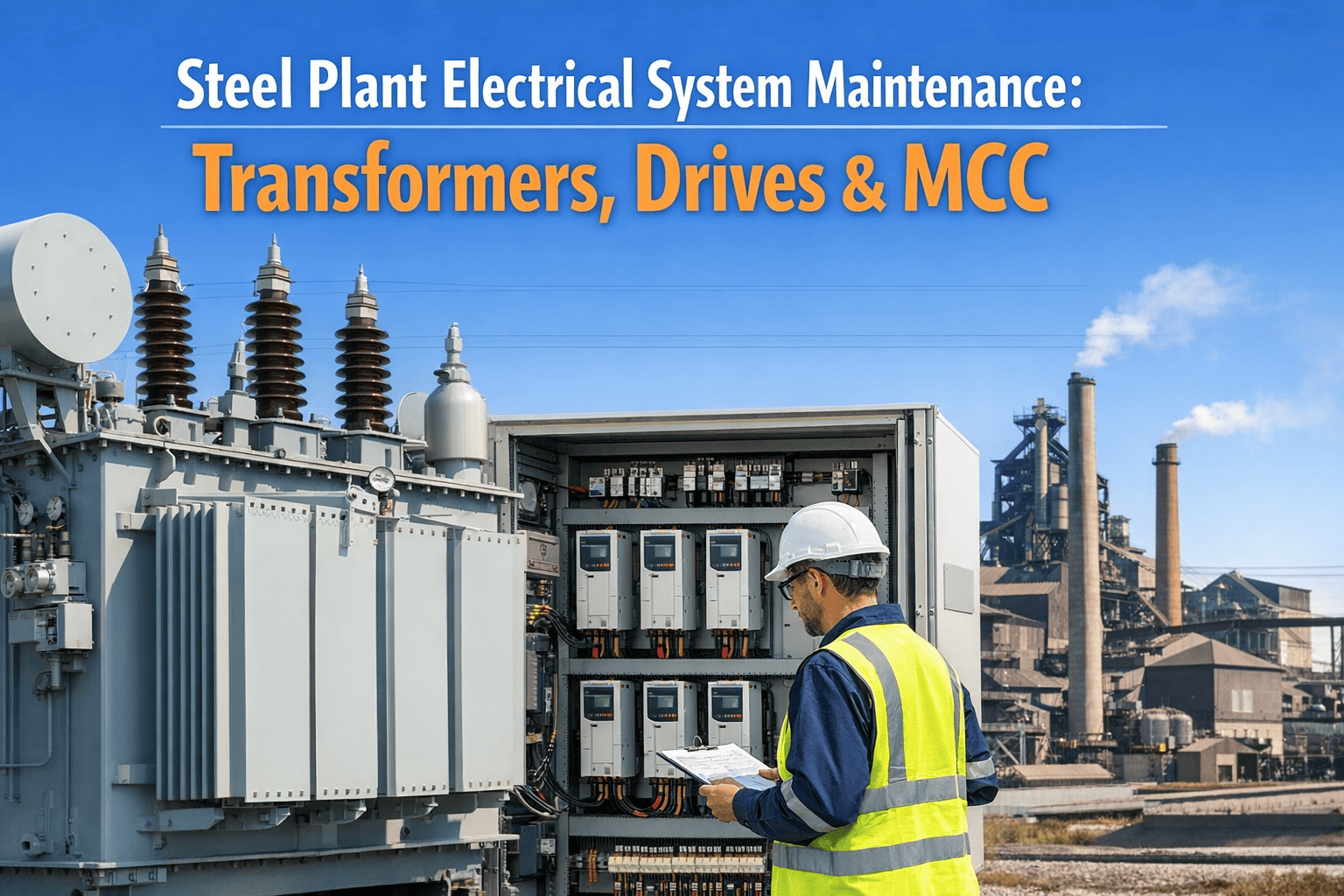
Read More
A steel plant's electrical infrastructure fails silently before it fails catastrophically. A 132 kV power transformer that has been generating dissolved acetylene above 10 ppm for three consecutive DGA samples is...

Read More
Steel plant operations carry a concentration of fatal hazard categories that is unmatched in almost any other industrial environment. Molten metal exposure, confined space entry, energised electrical systems at arc...

Read More
A 280-tonne ladle crane at a flat products plant completed its pre-shift inspection at 6:15 AM using the same paper checklist it had used for eleven years. At 9:40 AM the main hoist brake failed to hold under...

Read More
The roll shop is the operational heartbeat of any rolling mill facility. Every surface quality result, every flatness measurement, and every campaign length achieved on the mill floor originates in decisions made...

Read More
Cold rolling produces the surface and dimensional precision that defines product value — strip flatness tolerances measured in I-units, surface roughness profiles specified to the micron, and thickness tolerances...

Read More
A hot strip mill finishing stand bearing running with clearance 0.04 mm outside its tolerance band will produce strip with a width variation of 1.2 mm across the coil — enough to push the tail end outside...
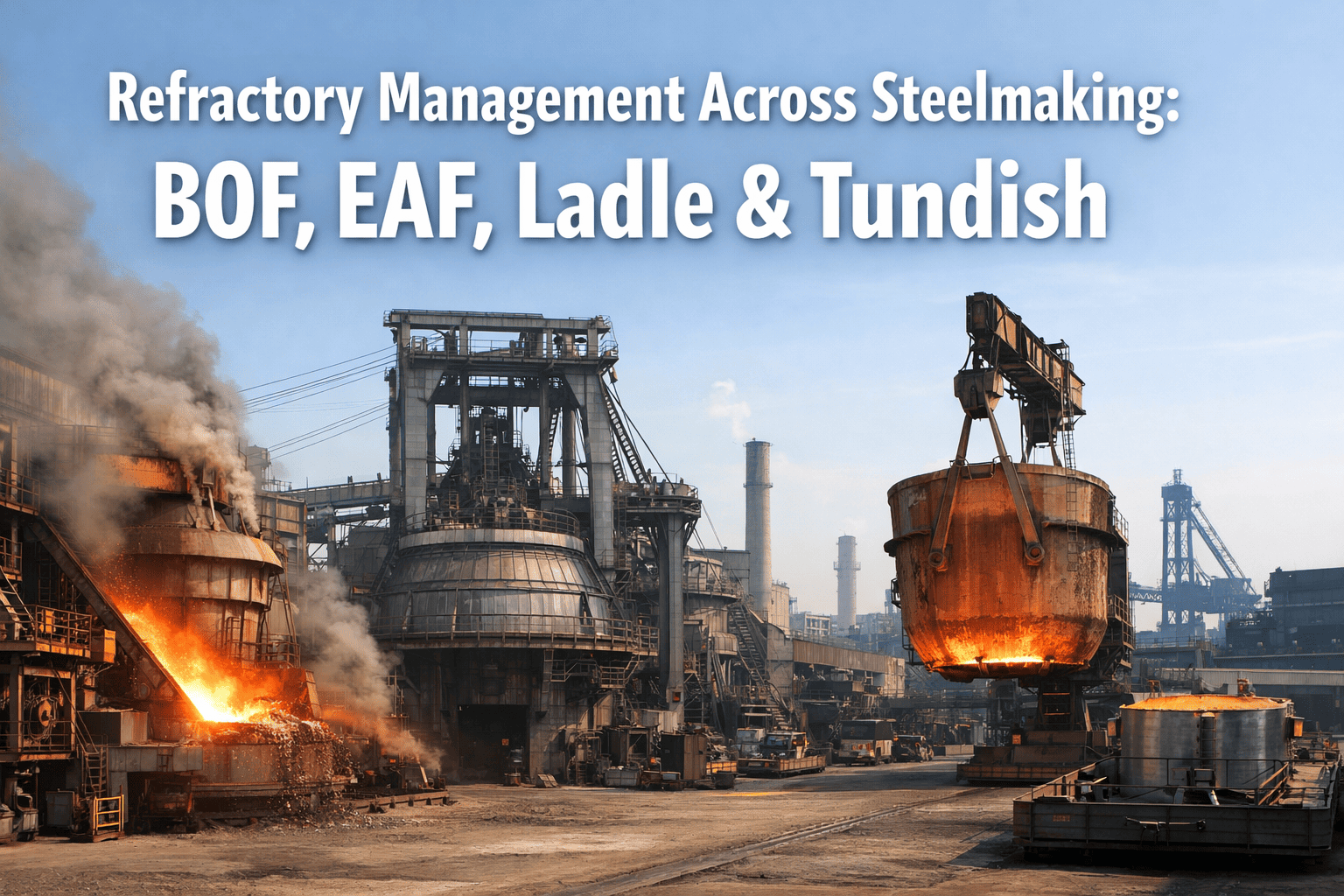
Read More
A 300-tonne BOF vessel enters its 4,800th heat with no digital record of zone-by-zone lining thickness from the last measurement campaign. The tap side and charge pad zones — the two areas that accumulate wear at...

Read More
Every caster breakout that occurs in a steelmaking facility was preceded by a detectable sequence of events. Thermocouple anomalies, rising friction indices, oscillation irregularities, and mold level instability...

Read More
A breakout — liquid steel escaping through the solidifying shell in the continuous caster — is the most catastrophic single event in steelmaking. Beyond the immediate safety hazard, a breakout causes multi-day...

Read More
A ladle arriving at the ladle furnace with 420 heats on its refractory lining and no tracked inspection record is not an operational risk — it is a scheduled catastrophe. Secondary metallurgy sits at the...

Read More
Electric arc furnace operations run on margins measured in minutes. Tap-to-tap time, electrode consumption rate, and cooling system uptime determine whether a mini mill hits its production targets or haemorrhages...

Read More
A BOF vessel at a 3-million-tonne steelworks in Germany reached 3,847 heats before an unplanned lining failure forced an emergency reline. Post-incident analysis found that the shell scanning system had logged...

Read More
In integrated steel plants, the coke oven battery sits at the critical upstream junction between coal preparation and blast furnace ironmaking. When battery reliability slips — through degraded door seals, uneven...

Read More
Blast furnace campaign life is the single most consequential variable in ironmaking economics. A 20-furnace steelmaking complex that extends average campaign life by six months — through systematic refractory...

Read More
A blast furnace reline costs between $50M and $120M and takes your ironmaking capacity offline for weeks. The difference between a planned reline and an emergency shutdown almost always comes down to whether your...

Read More
A steel plant maintenance department that does not measure the right things does not improve — it changes. There is an important difference. Changing means adjusting practices in response to the most recent event:...

Read More
A single unplanned blast furnace outage costs between $2 million and $5 million when you account for lost production at current slab prices, emergency repair at weekend rates, raw material waste in the casthouse,...

Read More
SAP Plant Maintenance (SAP PM) is the default maintenance management module for steel plants already running SAP ERP — and for many integrated producers, it has been the default for 15 to 20 years. The question of...

Read More
A steel plant that runs out of a critical bearing at 2 AM on a Saturday does not have an inventory problem — it has a production planning problem that expresses itself as an inventory problem. The immediate cost is...

Read More
Sixty to eighty percent of industrial CMMS implementations fail to deliver their stated objectives within the first 12 months. This is not a vendor-specific statistic — it holds across enterprise platforms,...

Read More
Steel plant maintenance happens in environments that a standard consumer mobile app was not designed to survive. Blast furnace casthouse floors reach ambient temperatures of 50–65°C during tapping operations....

Read More
A typical 2–4 MTPA integrated steel plant operates between 8,000 and 15,000 maintainable assets. Without a structured asset management platform, this inventory lives in fragmented spreadsheets, outdated SAP...

Read More
A steel plant generates more maintenance work orders per shift than almost any other industrial environment. A blast furnace running at campaign throughput may surface six to ten maintenance events between taps. A...

Read More
A steel plant maintenance software decision is not the same as choosing a CMMS for a food processing facility or a hospital. The asset classes are different — refractory, rolls, tundishes, ladle linings — and most...

Read More
A steel plant is not a typical industrial facility. It is a cascade of interdependent, high-consequence production zones — blast furnace, steelmaking vessel, continuous caster, reheat furnace, rolling mill — where...

Read More
A rolling mill is the highest-value, highest-consequence maintenance asset in most steel plants. The hot strip mill produces every coil that feeds the downstream cold rolling, coating, and finishing lines — a...

Read More
An overhead crane failure in a steel plant is not a maintenance inconvenience — it is a production stoppage with a safety dimension. A ladle crane carrying 300 tonnes of liquid steel at 1600°C is not an asset that...

Read More
Forty to fifty percent of bearing failures in steel plants are caused by inadequate or incorrect lubrication — not by the bearings themselves wearing out. A bearing that receives the right lubricant, in the right...

Read More
Compressed air is one of the most expensive utilities in a steel plant — and one of the least managed. A typical integrated mill running four to six large rotary screw or centrifugal compressors consumes 15–20% of...

Read More
A continuous casting machine failure during a campaign is not a maintenance event — it is a production catastrophe. Liquid steel in the mold cannot wait. A strand guide misalignment does not announce itself before...

Read More
A steel plant maintenance team is only as capable as its least-documented skill gap. When an experienced millwright retires, the plant loses not just a body — it loses 20 years of accumulated equipment-specific...

Read More
Culture is the only thing that runs when management is not watching. In a steel plant maintenance department, this means that the decision a night-shift technician makes at 2 AM — whether to properly document a...

Read More
A maintenance technician in a steel plant blast furnace cooling circuit has both hands on a coupling that has never been replaced on this unit before. The procedure is in a 340-page equipment manual that is in the...

Read More
Most steel plant maintenance software decisions go wrong, starting with a vendor demo, leading to a shortlist based on first impressions and sales team responsiveness, and ending with a price-driven decision. Six...
Read More
A blast furnace maintenance crew in Pennsylvania, with an average age of 54, faces a looming challenge as three of the six hot metal system technicians are eligible for retirement in the next two years. These...

Read More
The choice of maintenance strategy in a steel plant is not a philosophical preference — it is a financial and operational decision with measurable consequences that compound over years. A blast furnace operator...
Read More
The steel maintenance team of 2030 will not look like the one of 2024. Not because the work has changed — assets still degrade, bearings still wear, refractory still erodes. But the system surrounding that work...

Read More
In March 2025, a flat-rolled steel producer in the southeastern United States received a supplier notification that permanently changed its spare parts procurement calculus. Three critical bearing types for its...

Read More
Every finance director at a steel plant has heard the same pitch: "implement a CMMS and reduce your maintenance costs." The pitch is correct. The problem is that "reduce maintenance costs" is not a business case —...
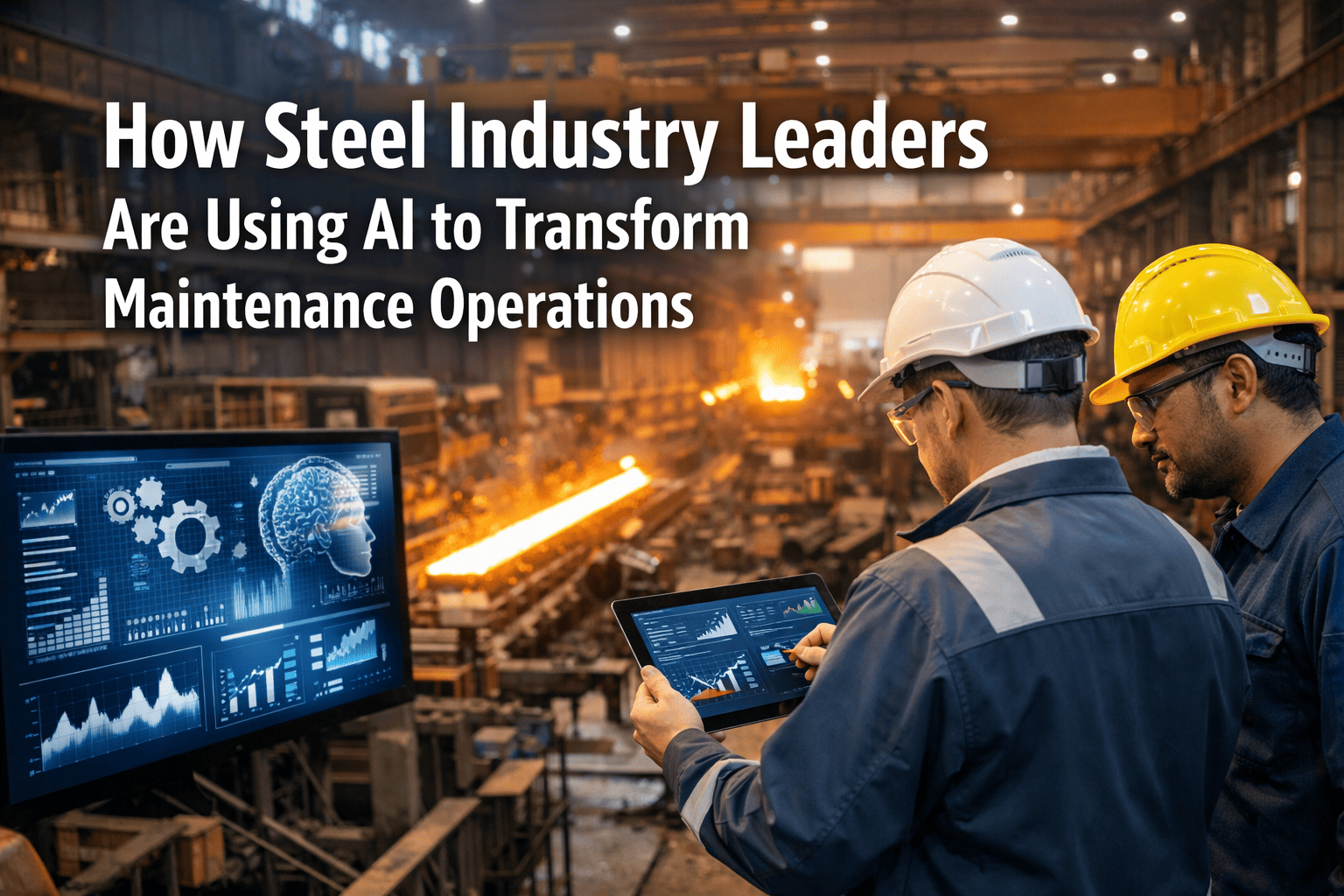
Read More
The gap between steel companies that talk about AI maintenance and steel companies that have deployed it at scale is no longer theoretical — it is measurable in cost per tonne, unplanned downtime hours, and...

Read More
When a steel plant's maintenance budget comes up for review, the question every operations director faces is the same: is this number too high, too low, or competitive? Without verified external benchmarks, the...

Read More
When a hot strip mill goes down unexpectedly, the meter starts immediately — and it counts a lot more than the repair bill. Direct production loss is obvious. What most steel plant managers undercount is everything...

Read More
Industry 4.0 gave steel plants connected sensors. It gave them data historians, IoT dashboards, and condition monitoring alerts that replaced physical rounds with remote visibility. It was a significant step. It...

Read More
Steel plant maintenance is undergoing the most significant structural transformation in a generation. The convergence of three independent forces — accelerating AI capability, tightening workforce demographics, and...

Read More
A flat-rolled steel producer in Ohio ran its hot strip mill at 76% OEE for three consecutive quarters — not because of equipment failures, but because production campaigns and maintenance windows were being planned...

Read More
In a steel plant, almost every rotating, sliding, and oscillating component depends on a thin film of lubricant to survive its operating environment. Rolling mill work roll chocks experiencing radial loads of...

Read More
An overhead crane failure in a steel plant is never just a crane problem. A 300-tonne ladle transfer crane that drops a load during a tap means hot metal on the floor, potential injury to any worker within thirty...

Read More
Compressed air is called the fourth utility in manufacturing — and in steel plants, it earns that title. From pneumatic control valves on blast furnace equipment to instrument air for automation systems, from EAF...

Read More
The sinter plant is the invisible constraint in most integrated steel mill production systems. When sinter quality degrades — because the windbox suction is uneven, because the hearth layer depth is inconsistent,...
Read More
A coke oven battery is one of the most capital-intensive and operationally demanding assets in an integrated steel plant. A battery of 60–80 ovens, each operating continuously at temperatures above 1,000°C, pushing...
Read More
Steel manufacturing is one of the most water-intensive industrial processes on earth—and cooling water is the lifeblood that makes continuous high-temperature production possible. Blast furnaces, electric arc...

Read More
No utility system in a steel plant carries a higher combined consequence of failure than the gas distribution network. Natural gas feeding reheat furnaces, coke oven gas recirculated through the byproduct plant,...

Read More
Hydraulic systems are the muscle of steel plant equipment. Rolling mill roll gap control, continuous caster segment drives, press and shear operations, blast furnace bell drives, converter tilting mechanisms, and...

Read More
Steel plants are among the largest and most complex electrical loads in any industrial sector. A modern integrated facility may draw hundreds of megawatts through transformer banks, bus ducts, switchgear lineups,...

Read More
A single conveyor belt failure in a steel plant does not stop one machine. It stops everything connected to it—the raw material feed to the blast furnace, the sinter transport from the preparation plant, the ore...

Read More
The scrap yard is the starting point of every heat in an electric arc furnace steel plant—and its operational reliability determines whether the furnace runs on schedule or waits. Scrap quality, scrap preparation,...

Read More
Steel mills are among the largest industrial sources of particulate matter, heavy metal emissions, and gaseous pollutants in the world. Every tapping event, every scrap charge, every casting sequence, and every ton...

Read More
The choice between Electric Arc Furnace and Basic Oxygen Furnace steelmaking is no longer purely a capital investment decision — it is a maintenance strategy decision that determines operating cost structure,...

Read More
A steel plant discards more energy as waste heat than most industrial facilities consume in total. The exhaust gases leaving a reheat furnace stack carry temperatures between 400°C and 700°C. The steam venting from...

Read More
Steel plants are among the most water-intensive industrial operations on earth—a single integrated facility can consume and recycle tens of millions of litres every day across cooling circuits, scrubbing systems,...

Read More
Steel manufacturing accounts for approximately 7 to 9 percent of global carbon dioxide emissions, making it one of the most scrutinized industries in every major carbon regulation framework. What makes this...

Read More
Hydrogen-based steelmaking is the most significant technological shift the steel industry has undergone in a century. Direct reduction of iron ore using green hydrogen—replacing coal and coke entirely—eliminates up...

Read More
ISO 45001 is the international standard for Occupational Health and Safety Management Systems — the framework that transforms scattered safety procedures, compliance checklists, and incident reports into a single,...

Read More
Steel plants are among the most hazardous workplaces on earth. Blast furnace gas, molten metal, high-voltage systems, overhead cranes, and confined spaces create a lethal environment where a single knowledge gap in...

Read More
A steel plant worker reaches for their face shield before entering the melt shop—and discovers a crack running across the lens that was not there yesterday. A maintenance technician pulls the wrong grade of...
Read More
Steel manufacturing is one of the loudest industrial environments on earth. Blast furnace tapping, electric arc furnace operations, oxygen lancing, rolling mill stands, shears, scale breakers, and continuous...
Read More
When a molten metal spill ignites a hydraulic system, when a gas line ruptures adjacent to an active furnace bay, when a worker is struck by a crane load in a congested melt shop—the next four minutes determine...
Read More
Process safety incidents in steel manufacturing do not announce themselves. They build silently through degraded equipment, bypassed safety systems, incomplete hazard reviews, and maintenance procedures that were...

Read More
Every year, hot work ignites fires and explosions in steel plants that were considered well-managed, with experienced workers, in facilities that had safety programs on paper. The difference between those plants...

Read More
Steel plants contain some of the most hazardous confined spaces in any industrial sector—blast furnace interiors, ladle pits, underground cable tunnels, dust collector hoppers, water treatment vessels, and hundreds...

Read More
Steel manufacturing is one of the most heavily regulated industries under OSHA jurisdiction—and for good reason. Between molten metal, heavy machinery, toxic gases, confined spaces, and extreme temperatures, the...

Read More
Every year, workers are killed or permanently disabled by equipment that was assumed to be safely shut down. In steel plants—where furnaces hold thousands of degrees, hydraulic presses exert hundreds of tons of...

Read More
Steel plant maintenance has long relied on experienced technicians, paper-based checklists, and manual data entry to keep equipment running. That model is breaking under the weight of aging assets, shrinking...

Read More
Modern steel plants are no longer isolated facilities running on mechanical instinct—they are deeply connected ecosystems of sensors, PLCs, SCADA systems, and maintenance platforms that share data across...

Read More
Modern steel plants are running on interconnected systems that have never been more efficient—or more exposed. As operational technology (OT) networks merge with IT infrastructure and maintenance platforms go...

Read More
Steel production accounts for roughly 8% of global carbon emissions—more than any other heavy industry—yet most plants still manage energy through outdated monitoring systems and manual reporting cycles. The...

Read More
SCADA-CMMS integration for steel plants represents the critical bridge between real-time equipment monitoring and actionable maintenance workflows. In modern steel production, Supervisory Control and Data...

Read More
Smart steel manufacturing represents the convergence of operational technology and information technology—where Manufacturing Execution Systems (MES), Computerized Maintenance Management Systems (CMMS), and...

Read More
Edge-deployed AI for steel plant operations represents a critical evolution in industrial digitalization, addressing the unique connectivity, security, and latency challenges inherent to heavy manufacturing...

Read More
Industry 4.0 roadmap for steel manufacturing represents one of the most strategic imperatives in modern industrial organizations. When steel companies embark on digital transformation across multiple...

Read More
Digital twin technology represents a paradigm shift in how steel plants operate, maintain equipment, and optimize production. By creating virtual replicas of physical assets, processes, and entire production lines,...

Read More
Multi-plant maintenance management for steel enterprises represents one of the most complex operational challenges in modern industrial organizations. When steel companies operate multiple facilities across...

Read More
Maintenance budget planning for steel plants represents one of the most critical yet challenging financial disciplines in heavy industry. With equipment values reaching hundreds of millions, downtime costs...

Read More
Refractory maintenance management in steelmaking represents the critical barrier between molten metal and catastrophic failure. Every heat tapped, every ladle transferred, and every continuous cast relies on the...

Read More
Crane and hoist maintenance management in steel mills represents one of the most safety-critical and operationally essential disciplines in heavy industrial maintenance. Overhead cranes, gantry systems, and...

Read More
Maintenance KPIs every steel plant manager should track represent the vital signs of operational health in one of the most demanding industrial environments on earth. In steel production, where equipment failures...

Read More
Steel plant shutdown and turnaround management represents one of the most critical and complex operational challenges in the steel industry. These planned maintenance events—whether brief scheduled outages or...

Read More
Mobile CMMS technology has evolved from a convenient add-on to an operational necessity for steel plant maintenance technicians working in some of the most demanding industrial environments on earth. In facilities...

Read More
Spare parts inventory management represents one of the most financially critical yet overlooked challenges in steel plant operations. Balancing the need for immediate parts availability against the capital tied up...

Read More
Choosing the right CMMS software for steel plant operations is one of the most critical technology decisions maintenance leaders face in 2026. With hundreds of critical assets, complex maintenance workflows, and...

Read More
Steel plant work order management represents one of the most critical operational challenges in maintaining production reliability. Organizing maintenance requests into efficient workflows—tracking from initial...

Read More
When a shipping coordinator asks "Why did that coil with a torn wrapper and missing edge protector get loaded onto the truck?" and the quality manager responds "Because the packaging inspector was covering three...

Read More
When a galvanizing line quality engineer asks "Why is the vision system only flagging that coating anomaly after the strip has already moved three seconds past the camera?" and the controls engineer answers...

Read More
When a steel plant CFO asks "What's the actual return on our $2.4M machine vision investment across the cold-rolled and galvanized lines?" and the quality director responds "We know defect detection improved, but...

Read More
When a steel plant quality director asks "Which coils, slabs, pipes, and finished bundles were flagged this week, what corrective actions were opened, and which root causes are still unresolved?" and the response...

Read More
When a continuous casting quality manager asks "How many surface defects were flagged on last night's slab output, and which heats produced cracks that will cause strip mill rejects downstream?" and the...

Read More
When a steel pipe mill quality manager asks "How many weld seam defects were detected on last night's ERW line run, and which coils produced out-of-spec fusion zones?" and the quality engineer responds "We'd need...

Read More
When a galvanizing line quality manager asks "What surface defects were detected on last night's coil run, and which ones exceeded customer rejection thresholds?" and the quality engineer responds "We'd need to...
Read More
Hot-rolled steel leaves the finishing mill at temperatures exceeding 800°C, travelling at speeds up to 1,200 metres per minute, covered in oxide scale that obscures surface features, surrounded by steam from...

Read More
Zero-defect manufacturing is not a theoretical aspiration in steel production — it is an operational reality achieved by the world's leading integrated steel mills through systematic defect elimination backed by...

Read More
Steel surface defect detection has relied on human visual inspectors for over a century — and the results have been consistently inadequate. A trained inspector examining hot-rolled coils on a finishing line at...

Read More
The ladle turret and tundish are the most overlooked bottleneck in continuous steel casting operations — yet they control the single most critical transition point in the entire steelmaking process. Every tonne of...

Read More
Steel plants lose an average of 800 to 2,200 hours of production time annually to unplanned downtime — yet fewer than 35% of downtime events in a typical mill ever receive a formal root cause analysis. The rest are...

Read More
Every steel mill generates thousands of data points per hour — furnace temperatures, casting speeds, rolling mill throughput rates, quality measurements, downtime events, and maintenance alerts — yet most plant...

Read More
Steel plants measure everything — tonnes per heat, kWh per tonne, refractory life, roll wear rates — yet most cannot answer the simplest question about their production effectiveness: how much of your theoretical...

Read More
Steel manufacturing is one of the most capital-intensive industries on the planet, yet most steel plants operate at OEE levels between 45% and 65%—leaving millions of dollars of production capacity unrealised every...

Read More
When a steel plant maintenance manager asks "Which furnace zones have open inspection defects right now, and are our crane certifications current?" and the shift supervisor responds "We'd have to check the paper...

Read More
When a steel plant maintenance director asks "Which of our furnaces, cranes, and conveyor lines have been inspected this week, and what defects were flagged?" and the reliability engineer responds "We'd need to...
Read More
When a steel plant operations manager asks "What heats are scheduled for the next shift, and which rolling mill slots are at risk of delay?" and the production planner responds "I'd have to pull the MES report,...

Read More
When a steel plant operations director asks "Which furnaces are scheduled for heat cycle three this shift, and are we on track for the monthly tonnage target?" and the production supervisor replies "I need to check...

Read More
A 2-million-ton integrated steel mill has $1.5–3 billion in installed equipment. Most of it runs at 55–70% of its rated capacity — not because demand is insufficient, but because maintenance-driven stoppages, speed...

Read More
Steel plant maintenance budgets are always too small for what the plant needs and too large for what finance wants to approve. The typical integrated steel plant spends $25–$60 per tonne on maintenance — somewhere...

Read More
Every steel plant maintenance manager knows CMMS improves reliability — but the capital approval committee doesn't fund feelings. They fund business cases with numbers: what does it cost, what does it save, when...

Read More
Global steel overcapacity exceeded 550 million tons in 2025 — roughly 25% of total installed capacity sitting idle or underutilized. When demand contracts and order books thin out, most steel plants respond by...

Read More
Your steel plant generates thousands of maintenance data points every day — work orders opened and closed, parts consumed, equipment running and stopping, technicians responding and repairing. But if that data sits...
Read More
Overall Equipment Effectiveness is the single KPI that answers the question every steel plant manager asks but rarely gets an honest answer to: of the steel we could have produced, how much did we actually produce...
Read More
Three forces are converging to make EAF the dominant steelmaking technology of the next two decades: carbon regulation, scrap availability, and grid decarbonization. Plants already operating EAFs have a structural...
Read More
The steel industry produces 7–9% of global CO₂ emissions — approximately 1.85 tonnes of carbon dioxide for every tonne of steel made through the traditional blast furnace and basic oxygen furnace route....

Read More
Your ERP says the hot strip mill ran at 83% availability last month. Your maintenance team says it was closer to 75%. Your quality team reports 91% yield. Finance sees a different number. The problem isn't that...

Read More
An electric arc furnace converts scrap steel into liquid metal through 45,000-amp arcs at 3,500°C — and every component surrounding those arcs is simultaneously subjected to thermal shock, electromagnetic forces,...

Read More
The average steel plant operates at 52–58% OEE. World-class facilities hit 78–85%. That 20–30 point gap represents $15M–$45M in unrealized production value per year for a typical integrated mill. Thegap isn't about...

Read More
Overall Equipment Effectiveness is the single metric that tells a rolling mill manager whether the mill is producing good steel at the rate it should be, for the time it was scheduled to run. An OEE score of 100%...

Read More
A breakout on a continuous caster doesn't just stop production—it destroys mold plates, damages strand guide rolls, contaminates the secondary cooling zone, and creates a safety emergency that shuts down the entire...

Read More
Connecting IoT sensors to a steel plant's CMMS transforms maintenance from schedule-based guessing into condition-based precision — but the implementation path is littered with failed pilot projects, orphaned...

Read More
A single catastrophic equipment failure in a steel plant costs $500K–$8M in emergency repairs, lost production, and collateral damage. Most integrated mills experience 25–40 major unplanned failures per...

Read More
A single day of unplanned blast furnace downtime costs $1.2M–$2.8M in lost production, wasted energy, and potential lining damage. Yet most steel plants still manage their most critical asset with paper logs,...

Read More
A 2.4 million tonne-per-year integrated steel mill was losing $8.6 million annually to unplanned equipment failures — averaging 22 major breakdowns per month across the blast furnace, steelmaking shop, caster, and...

Read More
Your steel plant spends $15M–$50M annually on maintenance. Part of that replaces parts with years of life left because a calendar said so. Another part covers $2M emergency bills when equipment fails between...

Read More
A hot rolling mill processes steel at speeds exceeding 1,000 meters per minute through seven finishing stands operating within ±0.02mm tolerance — while every bearing, gearbox, hydraulic cylinder, and drive motor...

Read More
Somewhere in your steel mill right now, a bearing is dying. Not dramatically — not yet. It's not making noise. It's not running hot enough to trigger an alarm. It's not vibrating hard enough for a technician...

Read More
Steel plants operate under some of the harshest conditions in all of manufacturing. Blast furnaces running at over 2,000 degrees, rolling mills absorbing thousands of tonnes of mechanical stress per shift, and...

Read More
Every steel executive knows their cost per tonne. It's the number that determines whether a plant is profitable or operating at a loss, whether a contract is worth bidding on, and whether a mill survives the next...

Read More
The blast furnace tapped on schedule at 2:20 AM. The hot metal was ready. The BOF was waiting. But Torpedo Car #3—the only car available on rotation—wouldn't move. Its traction motor had been drawing 18% above...

Read More
Maintenance is the single largest controllable cost in steel manufacturing. It accounts for 10–15% of total production cost, can consume up to 35–40% of operational revenue, and in large integrated steel plants,...

Read More
The color coating line stopped mid-run at 6:15 AM on a Monday—peak production window. A coater roll bearing had been vibrating above threshold for three weeks, each reading dutifully recorded on a paper checklist...

Read More
A continuous galvanizing line is one of the most complex and tightly sequenced systems in any steel plant. Strip moves at up to 200 metres per minute through cleaning, annealing at 700°C+, immersion in a 460°C...

Read More
The torpedo car stalled 200 meters from the BOF shop at 3:42 AM during a night shift. Hot metal inside—1,350°C and cooling fast. The drive motor had been flagging intermittent overcurrent warnings for six weeks,...

Read More
Every tonne of steel your plant produces eventually passes through a warehouse — stacked as coils, bundled as bars, palletized as plate, or shelved as the spare parts that keep your mill running. But while...

Read More
Inside every steel plant, there's a hidden operation running 24/7 that rarely gets the attention it deserves — logistics. Overhead cranes haul 300-tonne ladles of molten steel. Conveyors move thousands of tonnes of...

Read More
If you manage maintenance at a steel plant, you've seen it happen. A batch of low-grade iron ore enters the blast furnace. Within weeks, your refractory lining wears faster than expected, your slag chemistry goes...

Read More
If you run maintenance at a steel plant, you already know the pain. Your ERP tracks finances in one system. Your maintenance team logs work orders in another — or worse, on paper. Procurement has its own...
Read More
A coke oven battery is the most maintenance-intensive, environmentally sensitive, and operationally unforgiving asset in an integrated steel plant. It runs 24 hours a day, 365 days a year, for 25–40 years without a...

Read More
The sinter plant is the most maintenance-intensive operation per square meter in any integrated steelworks — running 24/7 at 300–500°C surface temperatures, processing 15,000–25,000 tonnes of raw mix daily through...
Read More
Steel plants don't maintain themselves with internal crews alone. At any given time, a typical integrated mill has 200–800 contract workers on site — welders relining ladles, electricians rewiring motor control...

Read More
Material handling equipment is the circulatory system of a steel plant — overhead cranes lifting 300-tonne ladles of molten metal, torpedo cars transporting hot metal across kilometers of rail, conveyors moving...

Read More
A steel plant's spare parts warehouse is either a strategic asset that prevents million-dollar production losses — or a graveyard of dead stock consuming capital that could be invested elsewhere. The typical...

Read More
When a critical spare part isn't available, a steel plant doesn't slow down — it stops. A $400 hydraulic valve that's out of stock shuts down a BOF converter worth $150,000 per hour in lost production. A $2,500...

Read More
Steel plant equipment failures are rarely random — they follow patterns rooted in specific mechanical, operational, or systemic causes that repeat until someone identifies and eliminates the root cause. Without...

Read More
Refractory is the second-largest consumable cost in steelmaking after raw materials — and the least systematically managed. A typical integrated steel plant consumes 8–15 kg of refractory per ton of steel produced,...

Read More
Steel plants worldwide are operating critical production equipment well beyond original design life — blast furnace auxiliaries at 35+ years, caster segments from the 1990s, rolling mill drives installed before...

Read More
A steel plant shutdown is the most expensive, most complex, and most consequential maintenance event of the year. A 14-day blast furnace intermediate shutdown involves 2,000–8,000 individual work orders, 150–400...

Read More
When a 280-ton steel ladle failed catastrophically during transfer at a Gulf Coast integrated mill, the refractory breakthrough didn't just release molten steel onto the melt shop floor—it ended three careers,...

Read More
When the main gearbox on a hot strip mill coiler seized without warning at 11:23 PM on a Tuesday night, the maintenance team scrambled to respond. Eight hours later, after emergency disassembly revealed...

Read More
This guide provides steel plant fire protection engineers, safety managers, and maintenance directors with a comprehensive framework for managing fire protection system maintenance and regulatory compliance through

Read More
When the 4,500 HP main drive motor on a hot strip mill finishing stand seized without warning at 2:23 AM on a Thursday morning, the catastrophic bearing failure didn't just destroy a $380,000 motor—it triggered a...

Read More
A breakout is the most dangerous and expensive event in continuous casting. Molten steel at 1,550°C ruptures through the partially solidified shell inside the mold or in the strand containment section, releasing...

Read More
Steel plant cranes are not ordinary overhead cranes. They carry the most dangerous loads in industrial manufacturing — 300-ton ladles of molten steel at 1,600°C, 25-ton slabs at 900°C, 100-ton torpedo cars of...

Read More
Cold rolling is where steel becomes a precision product. The hot strip mill produces coils to tolerances measured in millimeters — the cold rolling mill produces finished strip to tolerances measured in microns. A...

Read More
The hydraulic system PM that would have caught it was 11 days overdue — rescheduled twice because production wouldn't release the stand for the 35-minute inspection window. A hot rolling mill is a precisely...

Read More
The BOF converter is the most violently abused piece of equipment in any steel plant. Every heat cycle, the vessel interior endures 1,600°C molten steel, supersonic oxygen injection at Mach 1+, violent slag...

Read More
Your EAF transformer tripped on overcurrent protection at 11:42 p.m. on a Thursday — right in the middle of the fourth heat of a six-heat campaign that needed to ship Friday morning for an automotive customer with...

Read More
Your blast furnace blower is the single most critical rotating machine in the entire steel plant. Not the most expensive. Not the most complex. The most critical — because when it stops, everything stops. The blast...

Read More
A blast furnace doesn't break down the way other equipment breaks down. It doesn't stop running one Tuesday afternoon because a bearing seized. It degrades — silently, invisibly, across hundreds of components...

Read More
On March 14, the hydraulic accumulator on Caster 2's ladle turret had been leaking for eleven days. The maintenance request was logged on Day 3 — Priority 3, "schedule when available." It sat in a backlog of 247...

Read More
At 2:47 AM on a Tuesday, a hydraulic pump on the hot strip mill's automatic gauge control fails. The mill stops. Within six minutes, the run-out table is holding steel that's cooling below rollable temperature —...

Read More
A skilled welder lays down a beautiful bead. Then they do it again. And again. And again — 400 times a day, 250 days a year, for joints that are structurally identical to the one they welded five minutes ago....

Read More
The refractory inspector climbed into the BOF vessel at 4:20 a.m. after a 6-hour cooling period that production didn't want to give him. The vessel was still radiating 180°C from walls that were 1,400°C four hours...

Read More
Steel quality management at most plants operates as an open loop — defects are detected after they happen, investigated hours or days later, and corrective actions are implemented manually by operators who may or...

Read More
Every steel plant has a theoretical capacity and an actual capacity, and the gap between them is almost always larger than anyone realizes. A blast furnace produces 8,000 tons per day, but the caster can only...

Read More
Your electric arc furnace just drew 85 MW for a 42-minute heat. The electricity cost for that heat was $6,400. The EAF two bays over at your competitor's plant ran the same tonnage, same grade, same tap-to-tap time...

Read More
It's 2:47 a.m. and the hot strip mill just finished a campaign. Fourteen coils are sitting on the runout table conveyor waiting to be moved to the coil yard for cooling, inspection, and eventual shipping. The...

Read More
Steel plant conveyors, bearings, and rollers operate in conditions that would destroy most industrial equipment within months—ambient temperatures exceeding 150°F near furnaces and casters, fine iron oxide dust...

Read More
Rolling mill gearboxes and drive systems are the mechanical heart of steel production—transmitting thousands of horsepower through gear trains, spindles, and couplings that operate under extreme torque loads,...

Read More
A quality inspector stands at the end of your hot strip mill, watching steel move past at 15 meters per second. He has two eyes, one pair of safety glasses, and instructions to catch surface defects on a strip...

Read More
Your Security Operations Center just processed 14,200 alerts in the last 24 hours. Your two OT security analysts spent the day triaging them. They investigated 340. They escalated 12. Three were actual threats —...

Read More
The European Union's Cyber Resilience Act entered into force in 2024 and begins phased enforcement in 2027, creating the most comprehensive cybersecurity regulatory framework ever applied to products with digital...

Read More
Ransomware has become the most immediate and financially devastating cyber threat facing steel producers worldwide. Between 2021 and 2024, manufacturing overtook every other sector as the number one target for...

Read More
At 2:14 a.m. on a Tuesday, a blast furnace gas cleaning system at a European steel plant received a command to open an isolation valve that should never open during operation. The command didn't come from the...

Read More
The steel industry's cybersecurity model was built for an era when operational technology networks were physically isolated from the outside world—air-gapped from the internet, accessible only from the control room...

Read More
Your sales team just booked a 12,000-ton order for structural steel beams with a 6-week delivery window. Your production planner opens the schedule and sees the hot strip mill is already committed at 94% capacity...

Read More
Traditional process control in steel production relies on fixed setpoints, PID loops, and operator experience—systems that react to deviations but never learn from them. A rolling mill's gauge control corrects...

Read More
Somewhere in your CMMS right now, there are 47,000 closed work orders. Each one contains a free-text description written by a maintenance technician at the moment of repair — describing what they found, what they...

Read More
Your melt shop superintendent has been blending the charge mix by experience for 22 years. He knows — intuitively — that a 60/40 scrap-to-DRI ratio with a specific grade of pig iron produces acceptable chemistry at...

Read More
A single surface defect on a hot-rolled coil—a sliver, a scab, a rolled-in scale patch measuring 3mm across—can downgrade a $900/ton prime coil to a $600/ton secondary in the time it takes to miss one frame on a...

Read More
At 3:47 a.m. on a Tuesday, a vibration anomaly appeared on the #3 caster segment drive gearbox. No human saw it. An AI agent did. Within 200 milliseconds, the agent correlated the vibration signature with thermal...
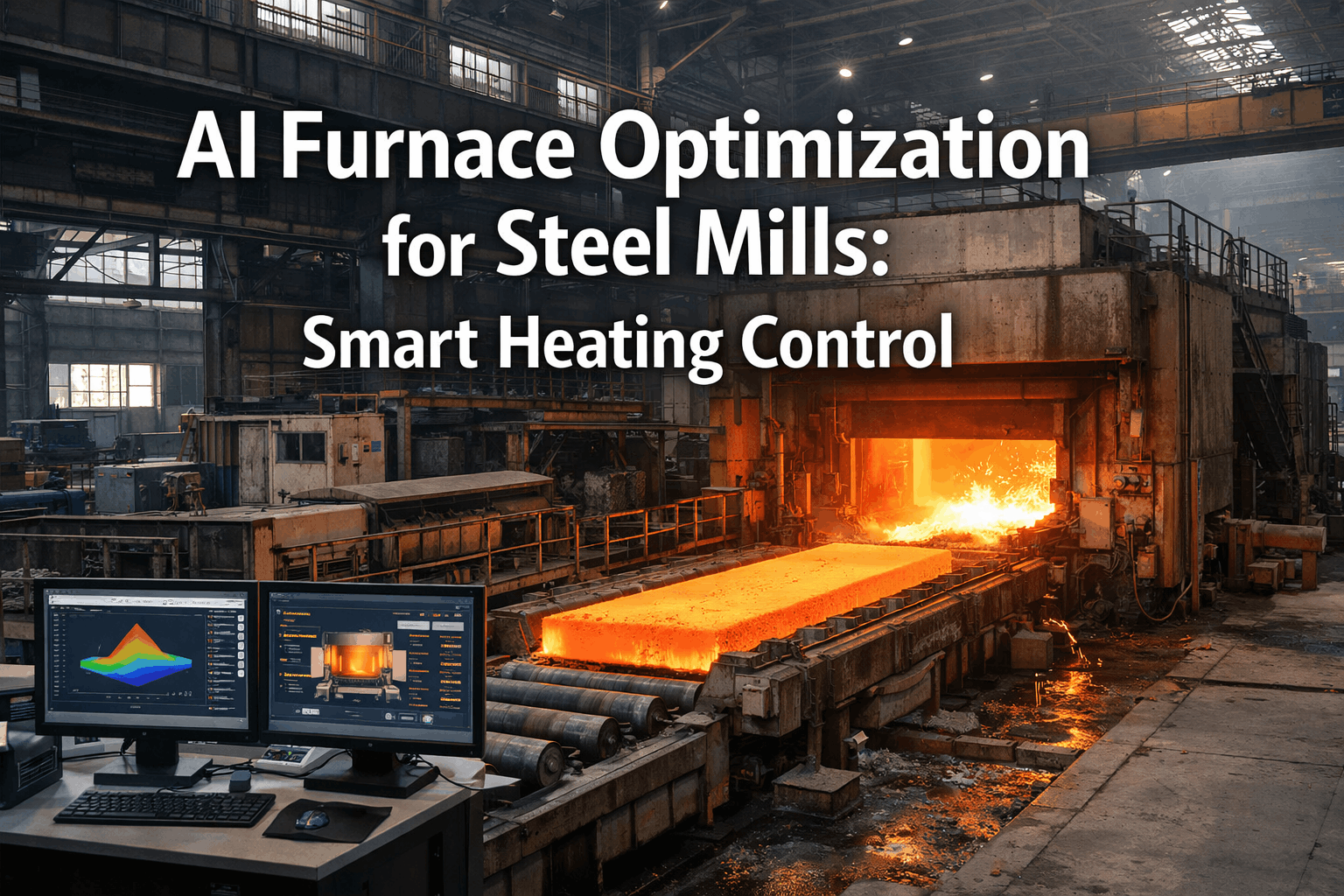
Read More
A reheating furnace in a steel rolling mill burns $8M–$15M in natural gas annually. It operates 8,000+ hours per year at temperatures between 1,800°F and 2,400°F, pushing 200–400 tons of steel slabs per hour...

Read More
A 5,000 HP rolling mill main drive motor costs $350,000 to replace and $1.2M in lost production during the 3–4 week lead time for a rewound or replacement unit. The bearing failure, stator winding fault, or rotor...

Read More
Steel production accounts for 7–9% of global CO₂ emissions — more than the entire aviation industry and roughly equal to the emissions of India. That number isn't abstract. It's now a line item on your balance...

Read More
Your steel plant generates 2–5 terabytes of operational data every day. Vibration sensors on rolling mill drives, temperature readings from blast furnace staves, current draw on crane motors, pressure trends in...

Read More
Your best furnace maintenance technician just retired. He took 32 years of pattern recognition, diagnostic intuition, and repair knowledge with him — none of it documented in a way that anyone else can learn from....

Read More
A steel plant's monitoring infrastructure faces a paradox: the equipment that needs the most frequent condition data—blast furnace cooling circuits, rolling mill bearings, crane motors, coke oven batteries, and gas...

Read More
At 2:15 p.m. on a July afternoon, a furnace helper at an integrated steel mill collapsed on the melt shop floor. The ambient temperature was 97°F. At his work station — 40 feet from a BOF vessel mid-blow — the...

Read More
The steel industry spent $4.2 billion on unplanned downtime in 2024 — roughly 5–8% of total operating costs across integrated and EAF mills worldwide. That number is shrinking, and the reason isn't better equipment...

Read More
When a veteran furnace operator with 35 years of experience retires next month, he takes with him the instinctive knowledge of exactly how BF #2 sounds before a tuyere failure, the subtle vibration pattern that...

Read More
Your procurement team just spent 14 hours this week manually entering purchase orders from the melt shop into the ERP system. Your accounts payable clerk is reconciling 340 vendor invoices against receiving reports...

Read More
In June 2022, a ransomware attack shut down a major European steel producer for over two weeks. Blast furnaces that require continuous operation were forced into emergency shutdown—a process that damages refractory...

Read More
A critical ladle shell weld failed at 2 a.m. on a Saturday. The crack propagated 18 inches along a circumferential seam before the leak detection system caught it. Your best welder is on vacation. The backup is...
Read More
A blast furnace stack stands 120 feet above the casting floor. The refractory lining inside it degrades under 2,300°F operating temperatures, and when it fails, the consequences range from unplanned outages costing...

Read More
The steel industry has automated every process it could bolt a machine to — continuous casters pour without pause, rolling mills sequence autonomously, and ladle metallurgy stations follow programmed treatment...
Read More
A single steel coil weighs between 5,000 and 40,000 pounds. Moving it from receiving dock to storage bay to staging area to outbound shipping requires a crane, a forklift, an operator, and—on a good day—20 minutes...

Read More
A maintenance technician is inspecting a blast furnace cooling system at 1,200°F ambient temperature. Visibility is near zero from airborne particulate. The work window before the next heat cycle is 45 minutes....

Read More
When a harmonic drive unit failed on a continuous caster manipulator arm at a Southern steel plant at 4:18 AM on a July night in 2024, the maintenance team already knew the part was degrading—vibration analysis had...

Read More
When a ransomware payload traversed an unpatched OPC UA gateway at a Midwest integrated steel mill at 11:47 PM on a September night in 2024, it didn't encrypt office desktops—it locked out the motion controllers on...

Read More
The quality lab at Nucor Steel's Crawfordsville mill processed 1,140 melt samples per week across three shifts. Every sample followed the same path: a furnace operator extracted the sample from the EAF or ladle...
Read More
The ladle crane at ArcelorSteel's Middletown melt shop carried 280-ton ladles of molten steel across the casting bay 38 times per shift. The crane runway — 410 feet of heavy rail mounted on built-up steel girders...

Read More
When a 25-ton steel coil slipped from an Autonomous Mobile Robot's cradle at a Midwest distribution centre at 3:12 AM in January 2025, the impact buckled 40 feet of racking, shut down an entire warehouse aisle for...
Read More
The coke oven battery at Vostok Steel's Magnitogorsk complex had 67 ovens running continuous carbonization cycles. Between the ovens and the quench tower sat a 400-meter corridor of gas mains, bleeder stacks,...

Read More
The structural steel shop at Mercer Fabrication in Houston ran six robotic welding cells and two CNC plasma cutting tables across two shifts. In March 2025, Cell 4 — a six-axis MIG welding robot handling heavy...

Read More
The melt shop at Korvald Steel's Duisburg facility ran three electric arc furnaces around the clock. Each furnace cycled every 58 minutes: charge, melt, tap, turnaround. Between cycles, a 14-person maintenance crew...
Read More
The Robot Operating System 2 (ROS 2) is rewriting the rules of industrial automation in steel manufacturing. Unlike proprietary robot controllers that lock plants into vendor-specific ecosystems, ROS 2 provides a...

Read More
Refractory linings in ladles, converters, and blast furnaces are the unsung workhorses of steel production—withstanding molten metal temperatures above 1,600°C while protecting critical equipment shells. Yet...

Read More
ArcelorMittal's Sentinel platform represents the cutting edge of predictive maintenance technology deployed across some of the world's largest steel operations. By unifying robot health monitoring, equipment...

Read More
Seamless tube and pipe manufacturing demands exceptional surface quality—and robotic grinding systems have become the backbone of achieving it at scale. JFE Steel and other leading producers have pioneered...

Read More
Continuous casting operations demand precision robotic systems to maintain consistent mold level control and perform real-time strand inspection. As casting speeds increase and quality tolerances tighten in 2026,...

Read More
When an electric arc furnace electrode breaks mid-heat because a hairline crack went undetected during the last manual inspection, the steelmaker does not just lose a $15,000 electrode — they lose the entire heat...

Read More
In January 2025, a coke oven battery at a major European steelmaker suffered a catastrophic door jam during a pushing sequence. The ram machine — operating on a maintenance schedule unchanged since 2011 — seized...

Read More
At 2:47 AM on a Saturday in 2024, a 320-tonne overhead crane at a major U.S. steel mill dropped a ladle of molten steel during a coil transfer — not because of operator error, but because a worn brake disc that had...

Read More
When a hot strip mill produces 400 coils per day and a single roll surface defect imprints itself onto every meter of steel that passes through, the cost of a missed grinding cycle or an undetected weld crack is...
Read More
In March 2024, an Outokumpu stainless steel plant in Tornio, Finland experienced what safety managers dread most: a hydrogen leak in the cold rolling mill went undetected for 47 minutes because the area was...

Read More
When a hot strip mill bearing seizes at 2 AM and the emergency crew discovers the failure started weeks ago as a minor vibration anomaly that no one could detect because the asset sits inside a 900°C rolling stand,...

Read More
When a blast furnace superintendent sends a crew into a casthouse for a routine refractory inspection, the team faces 1,200°C radiant heat, toxic CO gas pockets, and unstable slag buildup. A single misstep can...

Read More
Digital twin technology is transforming how steel plants maintain their growing fleets of inspection robots, maintenance crawlers, autonomous drones, and quadruped patrol systems. Digital twins...

Read More
Steel mills that have deployed robotics for maintenance are reporting results that would have seemed impossible five years ago: 25-45% reduction in unplanned downtime, 30-50% lower refractory material consumption,...

Read More
Coke oven batteries are among the most hazardous environments in steel manufacturing. Operating at 1,050°C or higher, these structures carbonize coal into blast furnace coke while releasing a toxic cocktail of...

Read More
Refractory maintenance is the most physically punishing and dangerous task in steel plant operations. Workers in full heat-resistant suits stand metres from molten steel at 1,600°C, manually directing gunning...

Read More
Refractory maintenance is the most physically punishing and dangerous task in steel plant operations. Workers in full heat-resistant suits stand metres from molten steel at 1,600°C, manually directing gunning...

Read More
Steel mills operate some of the most demanding crane fleets in heavy industry. Overhead bridge cranes, ladle cranes, charging cranes, slab handling cranes, and coil cranes move loads from 10 to 500+ tons through...

Read More
Surface defects in steel products cost the global steel industry an estimated $8-15 billion annually in downgrades, customer rejections, reprocessing, and warranty claims. A single missed surface crack on an...

Read More
Steel mill hot zones are the most dangerous inspection environments in heavy industry. Blast furnace casthouse floors reach 1,500°C. Coke oven batteries operate at 1,100°C with toxic gas concentrations that can...

Read More
Steel ladles are the lifeline of every melt shop — transporting, refining, and casting liquid steel at 1,600-1,650°C across dozens of heats per campaign. Their refractory linings endure extreme thermal cycling,...

Read More
Steel plants are among the most extreme manufacturing environments on Earth — molten metal at 1,600°C, toxic gas exposure, blast furnace dust, confined spaces, extreme noise, and heavy machinery operating around...

Read More
Direct reduction is the fastest-growing segment of ironmaking — and the centerpiece of steel's decarbonization future. Global DRI production reached 140.8 million metric tons in 2024, with MIDREX plants alone...

Read More
The electric arc furnace is the most violently productive vessel in modern steelmaking. Every 35-60 minutes, an EAF converts 80-150 tonnes of scrap steel into liquid metal using 30-150 MW of electrical power —...

Read More
Iron ore pellet plants are the critical link between mining and steelmaking — converting fine iron ore concentrate into uniform, high-strength pellets that feed blast furnaces and direct reduction plants...

Read More
The sinter plant is the gatekeep of blast furnace performance. Every ton of hot metal produced in a blast furnace depends on the quality, consistency, and uninterrupted supply of sinter — the porous, agglomerated...

Read More
Commercial HVAC service contracts operate in a different universe than residential agreements. A single office building may have 15-50 rooftop units, multiple air handling systems, a chiller plant, a boiler room,...

Read More
The Fourth Industrial Revolution is transforming steel manufacturing from isolated production islands into integrated smart factories where equipment, systems, and people communicate seamlessly in real-time. Smart...

Read More
A reliability manager presents a $2.4 million predictive maintenance investment proposal to the CFO — and gets one question back: "Show me the payback." Without documented cost avoidance data, failure frequency...

Read More
A steel plant maintenance manager reviews last quarter's numbers — $2.3 million in unplanned downtime from a single rolling mill bearing failure that cascaded into 72 hours of lost production. The work order...

Read More
A maintenance engineer pulls a sample from a critical hydraulic system powering a 2,000-ton forging press — the oil is dark, smells burnt, and the filter differential pressure has been climbing for three weeks....

Read More
Steel manufacturers in the United States face a critical challenge: maintenance and finance departments operate in silos, creating data blind spots that cost an average of $2.3 million annually per plant. When your...

Read More
In a steel plant, the maintenance department and the operations control room speak different languages, use different systems, and often discover the same problem at different times. A SCADA system detects a blast...

Read More
In a steel plant, documentation is the invisible backbone of every maintenance decision. When a blast furnace cooling stave fails at 2 AM, the first question isn't "what broke?" — it's "when was it last inspected,...

Read More
In a steel plant, every piece of equipment has a rhythm — it runs, it fails, it gets repaired, it runs again. The two numbers that define that rhythm are MTBF (Mean Time Between Failures) and MTTR (Mean Time To...

Read More
In a steel plant, what you don't measure, you can't manage — and what you measure wrong is worse than not measuring at all. Most steel plants collect mountains of maintenance data but convert almost none of it into...

Read More
In a steel plant, maintenance happens on the shop floor — not at a desk. Technicians walk 8-15 kilometers per shift across blast furnace platforms, rolling mill basements, coke oven batteries, and utility tunnels....

Read More
In a steel plant, equipment doesn't fail — people fail to maintain it correctly. The most advanced CMMS, the best predictive sensors, and the highest-grade spare parts are worthless without a workforce trained to...

Read More
A typical integrated steel plant employs 300-800 maintenance personnel across mechanical, electrical, instrumentation, and civil disciplines. These workers generate 50,000-150,000 work orders per year covering...

Read More
In a steel plant, nothing moves without conveyors. Iron ore, coal, coke, limestone, sinter, pellets, slag, and finished products — every material that enters or exits any process travels on belt conveyors. An...

Read More
Refractory materials are the unsung heroes of steelmaking — they're the only thing standing between 1,600°C molten steel and the steel shell of every vessel in the plant. When refractory fails, the consequences...

Read More
An overhead crane in a steel mill isn't just a piece of equipment — it's the single asset whose failure can kill someone in seconds. Every day, steel mill cranes lift 50-350 tonne ladles of molten metal at 1,600°C...

Read More
Utility systems are the invisible backbone of every steel plant. No furnace operates without cooling water. No reheating furnace fires without gas supply. No motor turns without reliable electrical distribution....

Read More
Steel production is one of the most water-intensive industrial processes on earth. An integrated steel plant takes in an average of 28.6 m³ of water per ton of steel produced (World Steel Association), while an EAF...

Read More
The continuous casting mold is the heart of every caster — the single point where molten steel at 1,600°C first solidifies against water-cooled copper plates. Mold copper plate condition directly controls slab...

Read More
The continuous caster is where liquid steel becomes solid product — and where more quality defects originate than any other process stage in steelmaking. Internal cracks, surface defects, breakouts, and off-gauge...

Read More
A steel plant's ladle fleet is the circulatory system of the melt shop — every heat of steel passes through a ladle, and every minute a ladle is unavailable costs approximately $15,000 in lost production (Viper...

Read More
The Basic Oxygen Furnace is the heartbeat of integrated steelmaking — converting 250-350 tonnes of hot metal into liquid steel in 30-45 minutes per heat. But every heat takes its toll: refractory lining erosion of...

Read More
Human visual inspection of steel surfaces is fundamentally flawed. An experienced inspector working a hot strip mill catches 60-75% of surface defects on a good day — and their detection rate drops to 40-55% by the...

Read More
Every steel product that leaves your plant carries a Mill Test Report — a legal document certifying that the chemical composition, mechanical properties, and physical characteristics meet the customer's...

Read More
Quality failures in steel manufacturing don't just create scrap — they create liability. A single batch of off-spec steel reaching a customer can trigger product recalls costing $500K-$5M, contract penalties of...

Read More
The global steel industry is in the middle of the most significant technology shift since the Bessemer process. In 2024, 93% of all new steelmaking capacity announced used electric arc furnaces — up from just 36%...

Read More
The blast furnace has been the foundation of steelmaking for over 500 years. But its chemistry is also its carbon problem: reducing iron ore with coke produces roughly 1.8-2.2 tonnes of CO₂ for every tonne of...

Read More
Steel is responsible for 7% of global greenhouse gas emissions and 11% of global CO₂ emissions — over 3.6 billion tonnes annually. That makes it one of the hardest-to-abate industrial sectors and one of the most...

Read More
The steel industry produces 7-9% of global CO₂ emissions — approximately 2.6 billion tonnes annually. With demand projected to grow 15% by 2050, decarbonization isn't optional; it's existential. Carbon capture,...

Read More
A rolling mill shutdown is the most complex planned maintenance event in a steel plant. Unlike an EAF turnaround that focuses on a single vessel, a rolling mill outage spans hundreds of interconnected systems...

Read More
A blast furnace reline is the single largest capital project a steel plant undertakes. With direct costs running $300-400 million for materials, labor, and engineering — and lost production during 30-90 days of...

Read More
Planned shutdowns are the highest-stakes maintenance events in steel manufacturing. A single turnaround on an EAF or blast furnace can involve 500-2,000 individual work orders, 200-800 maintenance personnel, $2-15...

Read More
In a steel plant spanning hundreds of acres with thousands of assets operating in extreme heat, dust, and vibration, knowing exactly where every piece of equipment, tool, and spare part is located isn't optional —...

Read More
Steel plant equipment operates under extreme conditions—temperatures exceeding 1,200°C, continuous thermal cycling, and corrosive environments that silently degrade critical assets from the inside out. Ultrasonic...

Read More
MRO (Maintenance, Repair, and Operations) procurement is the silent budget killer in steel manufacturing. While plant managers obsess over raw material costs and energy prices, MRO spend quietly consumes 5-10% of...

Read More
In a steel plant, not every spare part deserves the same level of attention. A blast furnace tuyere whose absence costs $500,000 per hour demands a fundamentally different stocking strategy than a conveyor idler...

Read More
The rolling mill is where steel becomes product — and where fractions of a millimeter determine whether you ship prime material or scrap it. A modern hot strip mill executes 15-25 passes in under 90 seconds, with...

Read More
In a large steel plant, a single missing spare part can trigger a cascade that costs $23.9 million per day. Blast furnace downtime alone exceeds $500,000 per hour, and with 8 days minimum required for even a minor...

Read More
Blast furnace ironmaking accounts for approximately 70% of total energy consumption and emissions in steelmaking. Inside a blast furnace, temperatures exceed 2,000°C, thousands of chemical reactions occur...

Read More
A digital twin is a real-time virtual replica of your entire steel plant — every furnace, crane, rolling mill, compressor, and conveyor mirrored in software with live data flowing from sensors, maintenance records,...

Read More
Compressed air is the most expensive utility in a steel plant per unit of delivered energy — yet it remains the most neglected. While electricity costs $0.03-0.05 per kWh at the meter, delivering that same energy...

Read More
A typical integrated steel plant consumes approximately 23 GJ of energy per metric ton of steel produced, yet 20-50% of that energy is lost as waste heat through exhaust gases, hot products, cooling water, and...

Read More
Furnaces are the beating heart of every steel plant — and also its single largest energy consumer. Electric Arc Furnaces (EAFs) alone account for 60-70% of total electricity consumption in mini-mill operations,...

Read More
Steel manufacturing is one of the most energy-intensive industries on the planet. A single integrated steel mill can consume between 400 and 600 kWh of electricity per ton of crude steel produced, with total energy...

Read More
The steel industry produces 4.1 billion tonnes of CO2 equivalent annually, accounting for 7-8% of all global greenhouse gas emissions. Every tonne of steel manufactured releases an average of 2.18 tonnes of CO2e...

Read More
Steel manufacturing facilities operate under some of the most rigorous OSHA oversight in American industry. With NAICS codes 3311 and 3312 flagged in OSHA's Site-Specific Targeting program, steel plants face higher...

Read More
Two workers die every week in confined space incidents across American industries. In steel plants, the risk multiplies: blast furnace interiors at 2,000°C, coke oven batteries filled with carbon monoxide,...

Read More
Every year, lockout/tagout failures kill approximately 120 workers and injure 50,000 more across American industries. Steel plants sit at the epicenter of this crisis. With blast furnaces storing thermal energy at...

Read More
A paper permit pinned to a clipboard near a 1,600°C blast furnace is not a safety system. It's a liability waiting to happen. In steel plants, where hot work, confined space entry, electrical isolation, and crane...

Read More
Steel plants are among the most hazardous industrial environments on earth. With molten metal at 1,600°C, toxic gas exposure, heavy machinery, and confined spaces, your workforce faces life-threatening risks every...

Read More
In a steel mill, every minute of unplanned downtime costs between $50,000 and $200,000—and the root cause is almost always the same: a maintenance task that was delayed, lost, or never assigned in the first place....

Read More
Steel manufacturing is one of the most asset-intensive industries on the planet. A single integrated steel plant can house over 10,000 individual assets—from mine-site crushers and ore conveyors to blast furnaces...

Read More
Between 60% and 80% of CMMS implementations fail. In steel plants—where a single hour of unplanned downtime on a continuous casting line costs upward of $50,000—a failed implementation is not just an IT setback. It...

Read More
Steel plants lose an average of $125,000 per hour of unplanned downtime—and that number climbs fast when a blast furnace trips or a rolling mill seizes mid-shift. Yet most steel manufacturers still manage...

Read More
Your steel plant technicians walk 3 to 5 kilometers per shift just to pick up paper work orders, find manuals, and report job completions back at the office terminal. In a facility where blast furnaces run at...

Read More
A digital transformation director at a 1.6-million-ton steel producer reviews three competing IIoT platform proposals — each promising "Industry 4.0 connectivity" and "predictive intelligence." One requires ripping...

Read More
Managing spare parts inventory in steel plants is a critical balancing act. Stockpiling too many parts locks up millions in working capital. Stocking too few leads to costly emergency orders and unplanned downtime...

Read More
The steel industry operates at the intersection of extreme complexity and zero tolerance for failure. From blast furnaces reaching 2,500°F to rolling mills processing hundreds of tons per hour, every asset must...

Read More
A maintenance planner stares at 14 open SAP PM notifications for the hot strip mill — three are duplicates entered by different shift supervisors, two reference equipment numbers that were changed during last...

Read More
A robotic arm freezing mid-weld. A crane controller losing connection during a 50-ton lift. A rolling mill missing thickness adjustments by milliseconds, ruining an entire coil. These aren't hypothetical...

Read More
A maintenance engineer pulls a vibration sensor off a hot rolling mill backup roll bearing housing — the third replacement this quarter. The sensor's internal electronics failed at 74°C, well below the 180°C...

Read More
Steel plants generate over 2 petabytes of data annually from thousands of sensors monitoring furnace temperatures, gas compositions, vibration patterns, and process parameters. Yet traditional cloud-based analytics...

Read More
Wire rod mills operate at extreme speeds—up to 120 m/s in finishing blocks—under relentless thermal and mechanical stress. A single guide roller failure can trigger a cobble that halts production for hours, while...

Read More
Rolling mills are precision machines operating under extreme forces, processing millions of tons of steel annually. A single unplanned stoppage can halt production for hours or days, costing manufacturers $20,000+...

Read More
Bearing failures are responsible for approximately 40% of all machinery breakdowns in steel mills, according to the American Society of Mechanical Engineers (ASME). A single $50 roll bearing that fails unexpectedly...

Read More
A single work roll failure in a hot strip mill can halt production for 10+ hours and cost hundreds of thousands of dollars in lost output, emergency repairs, and scrapped material. With finishing stands operating...
Read More
Every 36 minutes, a steel plant somewhere in the world experiences an unplanned equipment failure. With production losses running at $15,000 per minute and heavy industry downtime costs surging 1.6x since 2019, the...

Read More
Steel plants operate in some of the most punishing conditions on earth—extreme heat near blast furnaces, airborne dust that blinds conventional electronics, and constant vibration from rolling mills. When equipment...

Read More
Steel plants running SAP ECC face a hard deadline: mainstream support ends December 2027, with extended maintenance only available until 2030 at a premium. For steel-industry SAP Basis administrators, the migration...

Read More
Modern blast furnaces employ sophisticated turbo-blower maintenance programs combining vibration monitoring, oil analysis, surge protection, and predictive analytics to prevent unplanned failures. With blower m

Read More
The cooling system is the lifeline of every blast furnace—a network of hundreds of staves, thousands of water channels, and tens of thousands of liters of cooling water flowing continuously to prevent the 2,000°C+...

Read More
Blast furnaces are the beating heart of integrated steel production, transforming iron ore into molten metal at temperatures exceeding 2,000°C. These massive industrial assets represent investments of hundreds of...

Read More
Bearing failures are responsible for approximately 40% of all machinery breakdowns in steel mills, according to the American Society of Mechanical Engineers (ASME). A single $50 roll bearing that fails unexpectedly...

Read More
Steel mills operate some of the most demanding machinery in industrial manufacturing—rolling mills processing thousands of tons daily, furnaces running at extreme temperatures, and gearboxes transferring massive...

Read More
Two steel plants with identical equipment, similar workforce sizes, and the same raw material suppliers can have profit margins that differ by 8-12 percentage points. The difference isn't luck or market conditions...

Read More
A melt shop superintendent watches the EAF tap-to-tap cycle stretch to 68 minutes — eight minutes longer than target — because a refractory thermocouple reading was misinterpreted as sensor drift when it was...

Read More
You've proven AI works at one plant. Quality defects dropped 40%. Downtime predictions saved millions. Energy optimization exceeded targets. Now comes the harder question: how do you replicate that success across...

Read More
Zero defects. The holy grail of manufacturing that engineers have chased for decades. In steel production—where a single surface scratch can reject an entire coil worth $50,000, where internal inclusions invisible...

Read More
A veteran inspector with 30 years of experience approves a weld that fails catastrophically six months later. Another inspector rejects perfectly acceptable material because they're having a bad day. The same...

Read More
The global steel industry is undergoing a sensor revolution. 73% of steel manufacturers plan to increase investment in intelligent sensi

Read More
Effective OEE reporting transforms raw production data into actionable insights that drive continuous improvement. Plants operating without standardized reporting templates struggle with inconsistent metrics,...

Read More
Manufacturing excellence depends on accurate equipment performance measurement. OEE (Overall Equipment Effectiveness) audits provide the systematic framework factories need to verify data accuracy, identify...

Read More
Maintenance management has evolved beyond paper logbooks and reactive repairs. Modern manufacturing demands predictive intelligence, real-time asset visibility, and data-driven decision-making. A Computerized...

Read More
Modern manufacturing excellence relies on the precision of data captured at the source. Digital Quality Inspection Checklists eliminate the risks associated with paper-based audits—such as illegible handwriting,...

Read More
Modern steel manufacturing demands more than just structural integrity; it requires absolute regulatory precision. In an industry where a minor deviation in chemical composition or cooling rate can lead to...

Read More
Customer trust is hard to earn and easy to lose. In today's hyper-connected market, a single unresolved product defect or service failure can go viral, devastating brand reputation. Traditional methods of managing...

Read More
Manufacturing leaders know that what isn't measured cannot be improved. Yet, many factories still rely on lagging indicators—monthly scrap reports and post-production inspections—to manage quality. This reactive...

Read More
Quality improvement initiatives compete for budget with every other investment in your operation. To win funding—and to know whether past investments paid off—you need to quantify quality in financial terms. The...

Read More
Manufacturing quality depends on how quickly teams detect and respond to issues. Traditional methods relying on paper logs, email chains, and verbal handoffs create dangerous delays where a single undetected defect...

Read More
Steel quality failures don't announce themselves politely. They surface as rejected shipments, customer complaints, production line stoppages, and warranty claims that erode margins built over months of careful...
Read More
Steel manufacturing defects cost the global industry billions annually in rejected products, rework, and customer complaints. Traditional quality control catches defects after they occur, but root cause analysis...

Read More
Every manufacturing operation experiences deviations—moments when reality diverges from the plan. A temperature reading outside spec. A dimension that doesn't match the drawing. A process step skipped or performed...
Read More
In the high-stakes world of steel manufacturing, the difference between a premium grade alloy and a scrapped heat is measured in parts per million. Precise chemical composition control is the backbone of...

Read More
A single failed weld on a bridge support. A batch of sub-spec steel used in aircraft landing gear. A skyscraper column with hidden internal voids. These aren't hypothetical scenarios—they're multimillion-dollar...

Read More
Your production line runs 16 hours daily but only produces output for 11.2 hours—that's 70% availability. The operations manager nods, assuming this is acceptable given "normal" breakdowns and changeovers. Here's...

Read More
Your OEE score shows 72%—not terrible, but far from world-class. Production managers nod at the number, but here's the problem: OEE alone doesn't tell you if you're shipping defective products or burning money on...

Read More
Your OEE dashboard shows 68% availability—equipment was down 32% of planned production time. The plant manager asks the obvious question: "Why?" Without proper downtime reason code mapping, you're left with vague...

Read More
Steel manufacturing operates at extreme temperatures, crushing forces, and relentless production schedules where a single furnace breakdown can cost $50,000 per hour. In this unforgiving environment, OEE (Overall...

Read More
In manufacturing, the terms "OEE" and "efficiency" are often used interchangeably—but they're not the same thing. Understanding the difference isn't just semantic nitpicking; it's the key to unlocking real...

Read More
Performance is the silent killer of OEE. While unplanned downtime screams for attention and quality defects trigger immediate action, performance losses quietly drain 10-20% of your production capacity. A line...

Read More
Manufacturing floors generate thousands of data points per minute, but if your team is reviewing yesterday's OEE in a spreadsheet, you're steering by looking in the rearview mirror. By the time you spot the...

Read More
In manufacturing, OEE (Overall Equipment Effectiveness) is the gold standard metric—but here's the uncomfortable truth: garbage data in equals garbage decisions out. A pharmaceutical plant recently discovered their...

Read More
When your production line stops, every second counts. But here's the problem: your OEE dashboard shows you're losing money, while your maintenance team scrambles through paper logs trying to figure out...

Read More
Steel manufacturing demands precision at every stage—from raw material processing to final product inspection. Even minor deviations in temperature, chemical composition, or dimensional tolerances can compromise...

Read More
Rolling mills operate in extreme conditions where surface defects, dimensional variations, and equipment wear can compromise product quality within seconds. Traditional manual inspection methods catch only a...

Read More
Every minute of unplanned downtime costs industrial operations thousands of dollars in lost productivity, emergency repairs, and missed deadlines. Traditional maintenance approaches—paper work orders, scattered...

Read More
Steel manufacturing demands precision at every stage—from raw material handling to final product delivery. Yet many steel plants still rely on outdated scheduling methods that create bottlenecks, missed deadlines,...

Read More
Equipment breakdowns don't wait for convenient moments. When a critical machine fails mid-production, the resulting cascade of delays, missed deadlines, and frustrated customers can cost manufacturers thousands per...

Read More
Production scheduling optimization has become the competitive differentiator in modern manufacturing. While many facilities still rely on spreadsheet-based planning and reactive scheduling, industry leaders are...

Read More
Implementing OEE effectively requires more than just calculating Availability × Performance × Quality. The manufacturers who see real results from OEE follow proven practices that turn raw metrics into actionable...

Read More
Every percentage point of OEE improvement represents real money—production capacity you've already paid for but aren't using. Yet most manufacturers don't know the true financial impact of their OEE losses. ...

Read More
Numbers tell you what happened. Stories tell you how to make it happen again. OEE metrics are powerful, but without context they're just percentages on a dashboard. Case studies transform abstract concepts...

Read More
OEE is one of the most powerful metrics in manufacturing—when used correctly. It reveals hidden capacity, exposes systematic losses, and provides a clear roadmap for improvement. But when implemented poorly,...

Read More
Manufacturing operations don't run in a vacuum—they run in shifts. Day shift, swing shift, night shift. Each brings different operators, different supervisors, different conditions, and often dramatically different...

Read More
Steel manufacturers today face a critical challenge: meeting delivery commitments while managing complex production schedules and unpredictable equipment performance. When a blast furnace goes down unexpectedly or...

Read More
Manufacturing excellence demands seamless coordination between planning and execution. When production schedulers operate in isolation from Manufacturing Execution Systems (MES), the result is delayed responses,...

Read More
Steel plants face mounting pressure to maximize throughput while minimizing downtime and meeting tight delivery commitments. Traditional scheduling methods using spreadsheets and manual coordination often result in...

Read More
Steel production demands precision timing across hundreds of interdependent operations—from raw material handling through casting, rolling, and finishing. Traditional scheduling methods struggle with the complex...

Read More
Steel plants operate under relentless pressure to maximize throughput while maintaining quality and safety standards. Production bottlenecks—those critical constraint points that limit overall output—can cost...
Read More
Every defective part represents wasted materials, wasted machine time, and wasted labor. While most manufacturers achieve Quality rates above 95%, that remaining 3-5% of scrap and rework silently erodes...

Read More
Cold rolling mill production scheduling presents one of the most complex operational challenges in steel manufacturing. Traditional approaches—manual spreadsheets, experience-based decisions, and reactive...

Read More
Your equipment can only produce value when it's running. Yet for most manufacturers, equipment sits idle 10-20% of scheduled production time—and every minute of downtime is a minute of lost output, lost revenue,...

Read More
Discrete manufacturing—producing individual, countable units like machined parts, assembled products, or packaged goods—presents unique OEE challenges that continuous process industries don't face. Frequent...

Read More
Is your 72% OEE strong performance or a sign of hidden losses? The answer depends entirely on your industry. In pharmaceutical manufacturing, 72% can be outstanding due to strict cleaning, validation, and...
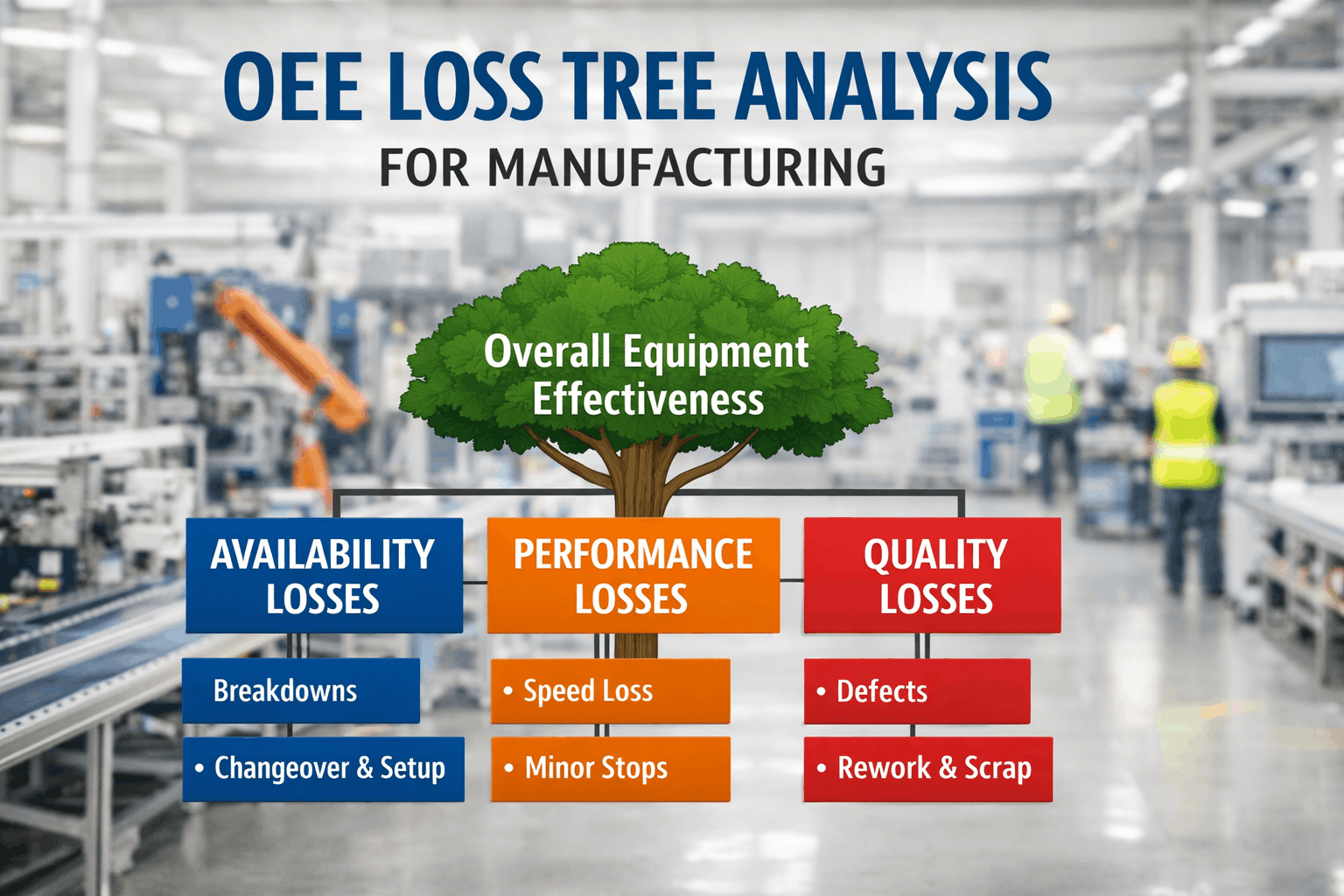
Read More
Your OEE score tells you 65%—but 65% of what? Where did the other 35% go? Without a systematic way to decompose that loss, you're guessing at improvements. The OEE Loss Tree provides a structured framework for...

Read More
Your equipment ran all shift with zero downtime and produced only good parts—yet you only achieved 75% of expected output. What happened? The answer lies in Performance, one of the three pillars of Overall...

Read More
This comprehensive guide explains everything you need to know about OEE calculation—from the fundamental formula to advanced optimization strategies used by world-class manufacturers.

Read More
Every quality event in your plant—every measurement, inspection result, defect detection, and process parameter—generates data. But if that data disappears after a few days or lives in disconnected...

Read More
You can't inspect every piece—but you need to make confident decisions about entire lots based on a handful of samples. That's the fundamental challenge of quality sampling. Get it wrong, and you either waste...

Read More
When Midwest Steel Corporation faced mounting customer complaints and a 4.2% reject rate that threatened their automotive supply contracts, they knew incremental improvements wouldn't be enough. Their quality data...

Read More
Cold rolling mill production scheduling stands at the heart of steel manufacturing efficiency. Traditional scheduling methods—manual spreadsheets, experience-based decisions, and reactive adjustments—struggle to...

Read More
Manual inspection remains the quality control method for most manufacturers—and it's failing them. Human inspectors achieve only 80% accuracy on their best days, with performance declining further due to...

Read More
The production manager wants more output. The quality manager wants fewer defects. For decades, manufacturers have treated this as an inevitable tension—push for speed and quality suffers, focus on quality and...

Read More
Manufacturing plants lose millions annually through energy inefficiencies that traditional audits simply cannot detect. Manual meter readings, spreadsheet tracking, and quarterly reviews miss the real-time patterns...

Read More
The auditor arrives in three weeks. Are you ready? For many manufacturing teams, audit preparation means frantic document searches, last-minute record updates, and sleepless nights hoping nothing critical was...

Read More
Your MES knows when production started. Your LIMS knows the test results. Your Level 2 systems know the process parameters. But do these systems talk to each other? In most steel plants, quality data lives in...

Read More
Manufacturing plants face unprecedented pressure to demonstrate environmental responsibility. With the EU's Corporate Sustainability Reporting Directive (CSRD) now in effect and California's climate laws gaining...

Read More
Quality problems discovered at the shipping dock cost ten times more than those caught at the source. In steel manufacturing, where production speeds exceed 20 meters per second and temperatures reach...

Read More
Maintenance teams across industries are drowning in spreadsheets, reactive repairs, and unpredictable equipment failures. A Computerized Maintenance Management System (CMMS) transforms this chaos into streamlined...

Read More
Every manufacturing plant manager faces the same challenge: justifying energy management investments to leadership requires solid numbers, not just promises of savings. Traditional spreadsheet-based calculations...

Read More
When a customer calls about a quality issue, can you trace that coil back to its heat number in seconds? Can you identify every other product from that same heat? In steel manufacturing, traceability isn't...

Read More
Every millimetre matters in steel. A hot strip mill producing 3 million tonnes annually loses $4-8 million per year to dimensional non-conformance — off-gauge material that gets downgraded, reprocessed, or scrapped...

Read More
Every scratch, crack, and inclusion on a steel surface tells a story of process deviation. In an industry where surface quality directly impacts structural integrity and customer satisfaction, catching...

Read More
Behind every perfectly timed production run lies a sophisticated algorithm making thousands of decisions per second. While traditional scheduling relied on experienced planners and simple rules, today's...

Read More
Production scheduling is the backbone of manufacturing efficiency. When done right, it transforms chaotic shop floors into well-orchestrated operations that deliver on time, every time. Yet many manufacturers still...

Read More
Steel plants consume approximately 21 GJ of energy per tonne of crude steel produced—representing up to 20% of total manufacturing costs. Without systematic benchmarking against industry standards, most facilities...

Read More
Energy costs can make or break a steel plant's profitability. With electric arc furnaces consuming between 500-650 kWh per ton of steel produced, and energy accounting for 25-35% of total operating expenses,...

Read More
Compressed air systems account for up to 30% of industrial electricity consumption, yet most manufacturing plants lose 20-30% of their compressed air output through undetected leaks. This hidden energy drain...

Read More
Manufacturing facilities typically waste 20–30% of their energy due to hidden inefficiencies that traditional monitoring systems simply can’t detect. AI-powered energy optimization turns this lost energy into...

Read More
Peak demand charges can account for 30-70% of industrial electricity bills, yet most manufacturing and steel plants lack the real-time visibility needed to control these costs. Intelligent peak load management...

Read More
Implementing vision AI in manufacturing is no longer a futuristic concept—it's a competitive necessity. With the global machine vision market projected to reach $41.7 billion by 2030 and manufacturers achieving up...
Read More
Steel manufacturing remains one of the most energy-intensive industries globally, with energy costs representing up to 20% of total production expenses. Traditional approaches to energy planning rely on historical...

Read More
Manufacturing plants worldwide face mounting pressure to reduce energy costs while meeting increasingly stringent compliance requirements. ISO 50001 provides the internationally recognized framework for energy...

Read More
Electric arc furnaces represent the backbone of modern steel recycling, consuming approximately 400-600 kWh of electricity per ton of steel produced. Yet most melt shops operate these energy-intensive assets...

Read More
Rolling mills are the workhorses of steel production, but they're also major energy consumers, accounting for a significant portion of total plant operating costs. Traditional approaches to energy management,...

Read More
Shift-based production scheduling determines how effectively your manufacturing operations convert available labor hours into productive output. Intelligent scheduling software eliminates the complexity of...

Read More
Integrating production schedulers with Enterprise Resource Planning (ERP) systems represents a critical capability for modern manufacturing operations. When scheduling engines communicate seamlessly...

Read More
Steel grade campaign planning represents one of the most complex scheduling challenges in steel production. Organizing heats into efficient campaigns—sequences of similar grades that minimize transitions, maximize...

Read More
Steel plant throughput is constrained by the slowest link in a complex chain—from raw material handling through casting, reheating, and rolling to finishing and shipping. Traditional approaches focus on individual...

Read More
Production scheduling in industrial environments must account for the reality that equipment fails, maintenance occurs, and unplanned events disrupt even the best-laid plans. Downtime-aware scheduling systems...

Read More
Furnace sequencing represents one of the highest-impact optimization opportunities in steel plant operations. The order, timing, and coordination of heats across multiple furnaces directly impacts energy...

Read More
When a leading integrated steel manufacturer faced rising energy costs consuming 28% of production expenses and mounting pressure to reduce carbon emissions, they turned to AI-powered energy management. Within 18...

Read More
Industrial energy management has evolved from simple cost control to a strategic imperative encompassing operational efficiency, sustainability commitments, and competitive advantage. World-class facilities combine...

Read More
When a 150-ton electric arc furnace consumes 420 kWh per ton instead of its design-optimal 360 kWh because nobody noticed the off-gas damper drifting closed over three weeks, that 60 kWh gap does not trigger any...

Read More
Steel production accounts for approximately 7-9% of global CO2 emissions, making decarbonization an urgent priority for the industry. AI-powered carbon emission tracking transforms environmental compliance...

Read More
Steel manufacturing is among the most energy-intensive industries globally, consuming approximately 5% of total world energy and accounting for 7-9% of global CO2 emissions. Implementing comprehensive energy...

Read More
Energy management demands instant awareness. When consumption spikes, equipment malfunctions, or efficiency degrades, every minute of delayed response translates to wasted resources and increased costs. AI-powered...

Read More
A single missed inspection record cost one automotive supplier $2.3 million in warranty claims—and their OEM partnership. The parts passed visual inspection, but without timestamped evidence, they couldn't prove...

Read More
Industrial facilities face a sobering reality: 5,283 workers died on the job in 2023, with 2.6 million injury and illness cases reported across the United States alone. Traditional safety monitoring depends on...

Read More
Industrial fuel management has entered a new era. Traditional approaches—monthly meter readings, spreadsheet tracking, and reactive maintenance—can no longer address the complexity of modern energy-intensive...

Read More
The regional utility discovered the transformer failure during the peak summer heatwave—three days after thermal anomalies first appeared. The cascading outage affected 47,000 customers for 18 hours, triggering...

Read More
Every false reject is money in the trash. Medical device manufacturers report up to 12,000 false rejections per week from traditional inspection systems, while the American Society for Quality confirms that cost of...

Read More
The integrated steel mill was hitting production targets—shipping 2.4 million tons annually—but the CFO couldn't explain the $18 million variance in energy costs year over year. The blast furnace operators insisted...

Read More
A steel plant in Gujarat was paying ₹47 crore annually in electricity costs. Leadership assumed this was simply the cost of doing business—after all, electric arc furnaces consume massive amounts of power. Then a...

Read More
A steel mill in Ohio tracked their electric arc furnace power consumption for years. Monthly reports showed "normal" energy usage—until a new energy manager noticed their kWh per ton of steel was 15% higher than...

Read More
Factory data belongs on the factory floor. As edge AI deployments surge toward USD 143 billion by 2034, North American manufacturers are choosing on-premise vision AI systems to keep production data secure,...

Read More
Every machine vision failure starts with the same root cause: the camera cannot see what needs to be inspected. Lighting accounts for over 70% of vision system performance, yet most implementations treat it as an...

Read More
Weld defects cost manufacturers billions annually in rework, warranty claims, and catastrophic failures. Manual inspection catches only 80% of defects under optimal conditions, while fatigue and inconsistency push...

Read More
Production lines running at 1,000+ units per minute leave no room for inspection bottlenecks. Traditional quality control methods force manufacturers into an impossible choice: slow down production for thorough...

Read More
A single voltage sag at a major steel mill in Ohio caused an electric arc furnace to trip mid-melt. The result? 47 tons of solidified steel, $180,000 in scrap, and 14 hours of unplanned downtime. That...

Read More
A steel plant in Gujarat discovered they were spending ₹847 more per ton than their regional competitors—a gap that translated to ₹42 crore in unnecessary costs annually. The culprit wasn't equipment or raw...

Read More
A 2% drift in blast temperature at a major integrated steel mill went undetected for three weeks. The result? 4,200 tons of off-spec pig iron, $2.3 million in reprocessing costs, and a 12% spike in coke...

Read More
A major steel producer in India was losing ₹15 crore annually to undetected surface defects—cracks, inclusions, and scratches that human inspectors missed on hot-rolled coils moving at 20 meters per second....

Read More
A veteran CNC operator at a precision aerospace parts manufacturer missed a subtle tool wear pattern during a night shift. The result? 127 titanium components scrapped, $340,000 in material losses, and a three-week...

Read More
The automotive assembly line was inspecting parts at 800 units per minute, but the vision system's 180ms latency meant defects sailed past quality gates before rejection signals arrived. Quality escapes cost...

Read More
The pharmaceutical manufacturer had deployed AI vision across 12 packaging lines—until a label redesign rendered all their models useless.Retraining took 6 weeks with external consultants, costing $180,000 and...

Read More
The automotive supplier had shipped 50,000 stamped brackets before the quality call came. A die shift had changed a critical mounting hole location by 0.8mm—within the tolerance of manual inspection but...

Read More
The bottling line was rejecting good product at 3% rate—costing $40,000 monthly in false rejects alone. The vision system worked perfectly in isolation, but communication delays between the camera and PLC meant...

Read More
Manufacturing quality control is at a crossroads. With the global machine vision market projected to grow from USD 20.4 billion in 2024 to USD 41.7 billion by 2030, manufacturers worldwide are questioning whether...

Read More
The assembly line had been running at 94% efficiency for years—acceptable by industry standards. Quality control relied on three trained inspectors rotating eight-hour shifts, catching defects through visual...

Read More
The continuous caster had been running for six hours when the breakout alarm triggered. Molten steel burst through the solidifying shell at 1,500°C—shutting down production for 18 hours while crews cleared...

Read More
Your quality inspector stares at a steel sheet for 8 seconds. Scratch or acceptable variation? The answer changes depending on who's inspecting, what shift it is, and how many sheets they've already reviewed today....

Read More
Cold rolling mills process steel at speeds exceeding 1,500 meters per minute—yet a single undetected surface defect can trigger $85,000 in customer rejections and halt production for hours. Traditional inspection...

Read More
The slab emerged from the reheat furnace at 1,250°C and entered the roughing mill. Somewhere in the 47 seconds it took to become 25mm plate, a surface crack propagated—invisible to operators through the steam and...

Read More
Manufacturing quality control is at a crossroads. With the global machine vision market projected to grow from USD 20.4 billion in 2024 to USD 41.7 billion by 2030, manufacturers worldwide are questioning whether...

Read More
The hot-rolled coil looked perfect to the naked eye—uniform color, consistent texture, ready for shipment to an automotive stamping plant. But embedded within that seemingly flawless surface were 23 microscopic...

Read More
The hot-rolled coil looked perfect to the naked eye—uniform color, consistent texture, ready for shipment to an automotive stamping plant. But embedded within that seemingly flawless surface were 23 microscopic...

Read More
The steel girder had been in service for 32 years—well within its designed lifespan. Annual inspections documented minor surface corrosion, dutifully treated and repainted. What no inspector saw was the 47mm...

Read More
Your inspector flags a defect on a $4,500 steel sheet—but three inspectors give three different opinions. While they debate, production waits 40 minutes. This happens 12-15 times per shift in steel plants using...

Read More
A 3mm bolt hits your conveyor at 2:47 PM. By 3:12 PM, it's lodged in a $280,000 rolling mill bearing. The mill stops. Emergency repairs: 14 hours, $47,000. Lost production: $185,000. Total damage from one tiny...
Total Posts:
Steel Plant Use Cases
How steel plants run their maintenance operation on Oxmaint
Hot strip mills, integrated works, mini-mills and long-product plants — different assets, same workflows. Four typical deployments.
Use Case 01
Roll Shop Digitalisation
Digitalising the roll shop at a 2.4 MTPA hot strip mill with Oxmaint
The Problem
Roll tracking lived in an Excel sheet updated once per shift. Grinding history was in a paper logbook, roll changes were requested by phone. Emergency changes were common because nobody had a live view of which rolls were nearing end-of-campaign.
What Oxmaint Delivered
Every roll registered as an Oxmaint asset with QR label, tonnage counter pulled from Level-2 and grinding logged as work orders. Tonnage-based PM triggered change and grind WOs in advance. Mobile app gave shop crews live roll status.
68%
Fewer emergency roll WOs
100%
Digital roll history
28 days
Roll shop go-live
Oxmaint Modules Used
Asset Management
Every work roll and back-up roll registered as a unique asset with QR label, full history and current location visible from any screen.
Meter-Based PM
Tonnage counter pulled from Level-2 fired change and grind PM WOs ahead of end-of-campaign — no more surprises mid-shift.
Work Order Management
Grinding, change and inspection all logged as structured work orders with photo evidence, sign-off and full audit trail.
Mobile App + QR
Roll shop crews scan any roll to see its history, log a grind or check current location — replacing paper logbooks and phone calls.
Use Case 02
Mini-Mill Full CMMS
Replacing paper logbooks with Oxmaint at a 1.6 MTPA EAF mini-mill
The Problem
A single-EAF mini-mill with billet caster and bar mill ran maintenance on paper logbooks, whiteboards and Excel. PM compliance sat around 40%. Nobody could tell how many heats a ladle had run without pulling out a paper sheet.
What Oxmaint Delivered
Full Oxmaint deployment in 34 days — asset registry with QR tags, heat-count and tonnage PM, mobile rollout for 46 technicians, digital permit-to-work. Level-2 tag integration for heat number, tonnage and mill drive current.
96%
PM compliance
34 days
Full go-live
46
Technicians on mobile
Oxmaint Modules Used
Asset Onboarding & QR
All plant assets registered in ten days, QR labels printed and installed, existing Excel registers bulk-imported into Oxmaint.
Meter-Based PM Scheduling
Ladle, tundish and EAF panel PM triggered by heats processed. Roll PM triggered by tonnes rolled. All meters pulled from Level-2 automatically.
Mobile App Rollout
Every technician received WOs, logged completions and ran inspections from the Oxmaint mobile app — replacing paper logbooks entirely.
Digital Permit-to-Work
Hot work, LOTO and confined-space workflows replaced paper permits — with digital signatures and photo evidence on every job.
Use Case 03
Predictive Maintenance + SAP
Connecting existing sensors and SAP at a multi-line integrated steel plant
The Problem
A multi-line integrated steel plant had condition monitoring sensors on rolling mill drives, EAF hydraulic packs and cranes — but the data lived in standalone systems. Nothing flowed into work orders, and every WO was double-entered into SAP PM by hand.
What Oxmaint Delivered
Oxmaint's predictive engine subscribed to existing sensor tags via OPC-UA and PI Historian. Anomalies auto-generated WOs in Oxmaint, which posted bi-directionally to SAP PM/MM/EAM — no double entry, no lost signals.
37%
Less unplanned downtime
Zero
Double entry into SAP
6 weeks
Sensor + SAP go-live
Oxmaint Modules Used
Sensor Integration
OPC-UA and PI Historian connectors ingested existing vibration, temperature and hydraulic pressure feeds — no new sensors installed.
Predictive Maintenance
AI learned healthy baselines per asset, flagged drift and auto-generated maintenance WOs with parts, technician and hypothesis attached.
SAP Integration
Bi-directional sync with SAP PM, MM, EAM and FI — WOs, parts reservations, costs and asset health flowing both ways with no duplicate entry.
Parts & Inventory
Predictive WOs auto-reserved parts from Oxmaint inventory; reorder alerts triggered POs before technicians arrived on-site.
Use Case 04
Refractory & Ladle Tracking
Digitising refractory campaign tracking at a 4 MTPA integrated steel plant
The Problem
Ladles and tundishes were relined on fixed calendar schedules — some too early (waste), some too late (leaks). Brick lot IDs were tracked in supplier PDFs, install work was logged on paper, and post-campaign wear data never made it back to the next planning cycle.
What Oxmaint Delivered
Every refractory lining became an Oxmaint asset with heat-count meter, install WO history and brick lot ID linked. Reline PM WOs auto-fired at threshold, brick inventory auto-reserved, and post-campaign wear photos logged against the campaign record.
100%
Digital campaign history
17%
Fewer premature relines
Zero
Paper reline records
Oxmaint Modules Used
Refractory as Tracked Asset
Every ladle, tundish and EAF lining registered with heat-count meter, brick specification, install WO history and expected campaign life.
Auto Reline Work Orders
Reline WOs fired at the PM threshold with brick lot reserved, masonry crew slot booked and install procedure attached — nothing manual.
Brick Lot Traceability
Each brick lot linked to its install WO and campaign outcome — poor-performing lots surfaced automatically for supplier scorecards.
Auto POs to SAP MM
When brick stock crossed reorder point, Oxmaint drafted the PO and pushed it into SAP MM — no manual purchase requisitions.
Oxmaint Integrations for Steel
Reads your Level-2 · Posts to your SAP · Syncs your historian
Oxmaint plugs directly into the systems your steel plant already runs — Siemens, ABB, PSI Metals and Danieli Level-2, PI & Aveva Historians, SAP PM/MM/EAM and Maximo. Bi-directional, real-time, and no double entry.
Explore All Integrations


Steel Plant CMMS FAQ
Common questions from steel maintenance managers
Full platform — work orders, preventive and predictive maintenance, inspections, spare parts, safety and compliance, shutdown planning, shift logbook, analytics and SAP integration in one CMMS. It replaces spreadsheets, paper logbooks and generic factory tools, rather than bolting onto them.
Yes. The registry supports any hierarchy your plant uses. Work rolls, back-up rolls, ladle linings, tundishes, EAF panels, blast furnace zones, mould copper plates and crane components each get their own PM schedule, WO history, parts list and meter. Bulk import from Excel or a legacy CMMS is included in onboarding.
Yes. Ladle refractory triggers on heats processed, work rolls on tonnes rolled, EAF panels on operating hours, cranes on lift cycles and shear blades on cuts made. Meters pull directly from your Level-1 and Level-2 tags — heat number, tonnage counter, motor runtime.
Yes. It subscribes to your existing vibration, temperature, pressure, current and position sensors via OPC-UA, Modbus or your historian — no new hardware. A healthy baseline is learned per asset in two to four weeks, then drift auto-generates a WO with parts reserved and the failure hypothesis attached.
Yes. Real-time bi-directional sync with SAP PM, MM, EAM and FI, plus IBM Maximo. Read-only feeds from Siemens, ABB, PSI Metals and Danieli Level-2 systems and from OSIsoft PI and Aveva Historians pull sensor and process meter data, with WOs and costs posting to the right cost center automatically.
Yes — the app is offline-first, built for high-temperature, no-signal environments like melting shops, caster tunnels and mill basements. Technicians scan QR codes, complete inspections, log work orders and take photos with no connectivity, syncing on return to Wi-Fi. The interface suits gloved hands. Available on iOS and Android.
Run your steel plant maintenance on Oxmaint
See how Oxmaint tracks your rolls, ladles, casters, EAFs and mills — with predictive maintenance from existing sensors, AI Vision and full SAP integration.