Your facilities director walks into Monday's emergency school board meeting with devastating news: "We've been cited for six OSHA violations totaling $90,000 in fines, our HVAC system failed during last week's heat wave sending 12 students to the nurse, and the fire marshal has given us 30 days to correct sprinkler system deficiencies or face closure." You review the district's maintenance logs—scattered paper records, deferred maintenance totaling $3.2 million and no systematic inspection program—but realize your schools lack the preventive maintenance infrastructure needed to protect students and ensure regulatory compliance.
This crisis scenario unfolds across American school districts as educational facilities struggle with aging infrastructure threatening student safety and operational continuity. The average school district operates buildings with 53% of critical systems requiring urgent repairs or replacement, with emergency maintenance incidents costing 3-5 times more than preventive approaches while creating significant liability exposure.
School districts implementing comprehensive preventive maintenance programs achieve 30-40% reductions in safety incidents while improving regulatory compliance by 85-95% compared to reactive maintenance approaches. The transformation lies in systematically maintaining 15 critical building systems that directly impact student safety, from fire protection and HVAC to structural integrity and emergency systems that prevent catastrophic failures and regulatory violations.
Ready to eliminate $90,000 OSHA violations and prevent safety incidents that endanger students through systematic preventive maintenance programs?
Every day without comprehensive school maintenance monitoring costs you thousands in regulatory fines, emergency repairs, and most critically—puts student safety at risk. The systems exist now to transform reactive crisis management into proactive student protection.
Understanding School Safety Through Preventive Maintenance
Effective school safety requires understanding the comprehensive building systems infrastructure that protects students, staff, and visitors from preventable hazards. Educational facilities present unique challenges combining high occupancy densities, diverse age ranges, and regulatory requirements demanding systematic maintenance approaches rather than reactive problem-solving.
Traditional school maintenance operates on crisis response models waiting for system failures, resulting in 3-5x higher repair costs and significant safety exposure. Preventive maintenance programs continuously monitor critical systems identifying developing problems before failures occur, typically reducing safety incidents by 30-40% while improving compliance from 60-70% to 85-95% adherence rates.
Fire Protection Systems
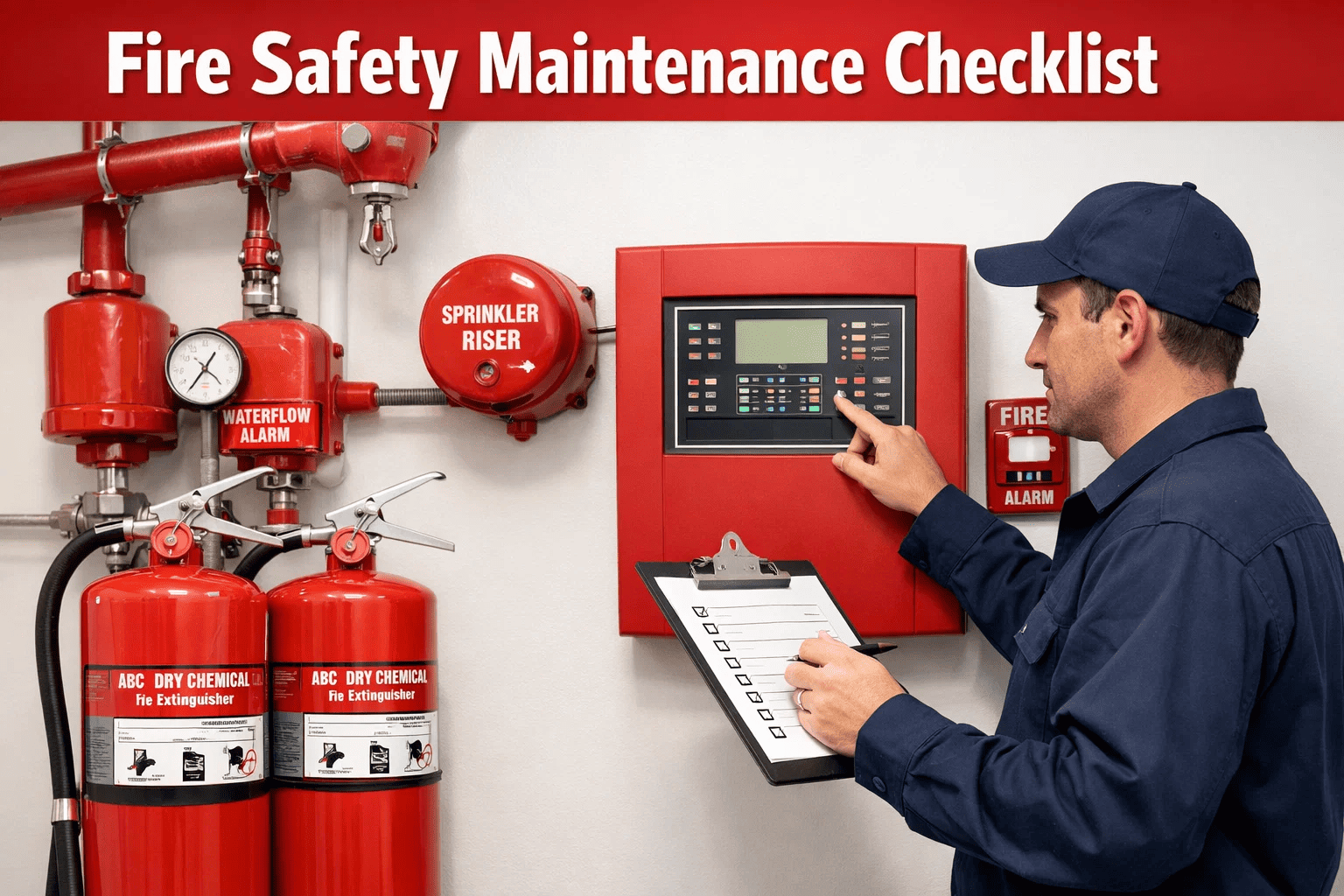
Life-safety critical fire alarms, sprinklers, and emergency egress systems requiring monthly testing and annual inspections. Prevents catastrophic failures and ensures NFPA 72 compliance avoiding closure orders.
HVAC and Indoor Air Quality
Environmental control systems maintaining healthy learning conditions through proper ventilation and temperature control. Reduces student absenteeism by 10-15% through improved air quality.
Electrical and Power Systems
Critical infrastructure powering all building operations and safety systems. Annual inspections prevent 75-85% of electrical fires and power failures disrupting education.
Structural Integrity Monitoring
Building envelope, roof, and foundation systems protecting occupants from structural failures. Prevents 90-95% of collapse risks through systematic assessment and repair.
Security and Access Control
Physical security systems including cameras, door locks, and visitor management protecting students from external threats. Reduces unauthorized access incidents by 60-75%.
Emergency Response Infrastructure
Backup power, emergency lighting, and communication systems ensuring safe evacuation during crises. Maintains 99% operational readiness through monthly testing.
System interdependencies create cascading failure risks when individual components malfunction. Schools achieving integrated maintenance approaches addressing all 15 critical systems typically realize 2-3x better safety outcomes than those focusing on isolated high-priority items while neglecting supporting infrastructure.
Regulatory compliance complexity represents another critical factor often underestimated in school maintenance planning. Success rates increase from 60-70% to 85-95% when maintenance programs include systematic documentation, scheduled inspections, and automated compliance tracking alongside repair activities.
15 Critical Systems for Student Safety and Protection
Strategic school maintenance encompasses diverse building systems each contributing essential safety functions protecting students from preventable hazards. Understanding system-specific requirements enables better resource allocation and prioritized implementation addressing highest-risk areas first while building comprehensive protection capabilities.
School safety infrastructure extends far beyond basic facility operations to include life-safety systems, environmental controls, and security measures working synergistically to create protected learning environments. The following 15 systems represent essential components requiring systematic maintenance for comprehensive student protection.
| Critical System | Maintenance Frequency | Safety Impact | Compliance Requirements |
|---|---|---|---|
| Fire Alarm Systems | Monthly testing, annual inspection | Life-safety critical, prevents fatalities | NFPA 72, state fire codes |
| Sprinkler Systems | Quarterly inspection, annual testing | Automatic fire suppression, 95% effective | NFPA 25, local fire marshal |
| HVAC Systems | Quarterly filter changes, biannual service | Air quality, reduces illness 10-15% | EPA air quality standards |
| Electrical Systems | Annual inspection, thermal imaging | Fire prevention, prevents 75% electrical fires | NEC, OSHA electrical safety |
| Plumbing Systems | Quarterly inspection, annual testing | Water quality, prevents contamination | EPA Lead and Copper Rule |
| Structural Integrity | Annual assessment, 5-year detailed | Collapse prevention, occupant protection | IBC, local building codes |
| Elevators/Accessibility | Monthly service, annual certification | Safe vertical transport, ADA compliance | ASME A17.1, ADA standards |
| Security Systems | Weekly testing, monthly maintenance | Threat prevention, reduces incidents 60% | State security requirements |
| Emergency Lighting | Monthly functional test, annual load test | Safe egress, prevents evacuation failures | NFPA 101, IBC requirements |
| Playground Equipment | Daily inspection, quarterly detailed | Injury prevention, reduces accidents 40% | CPSC guidelines, ASTM standards |
| Boiler Systems | Annual inspection, quarterly service | CO prevention, explosion avoidance | ASME codes, state boiler regulations |
| Windows and Doors | Quarterly inspection, annual service | Security, emergency egress integrity | IBC egress requirements |
| Asbestos/Lead Management | Triennial inspection, ongoing monitoring | Health hazard elimination | EPA AHERA, lead paint regulations |
| Water Quality Systems | Annual testing, quarterly monitoring | Prevents waterborne illness | EPA Safe Drinking Water Act |
| Outdoor Facilities | Weekly inspection, seasonal maintenance | Prevents slips/falls, reduces injuries 30% | ADA accessibility standards |
Multi-building district complexity requires careful system prioritization based on facility age, student population, and existing deficiencies. Starting with life-safety critical systems like fire protection and emergency egress typically delivers fastest risk reduction while building organizational confidence for expanded maintenance programs.
Budget constraints significantly influence implementation sequencing and resource allocation. Districts leveraging CMMS technology to optimize maintenance scheduling typically reduce costs by 25-35% while improving system reliability through data-driven prioritization and preventive intervention timing.
Building Comprehensive School Maintenance Programs
Creating effective school safety maintenance requires systematic program development combining risk assessment, resource planning, and technology infrastructure supporting consistent execution. Generic industry practices provide direction, but successful implementations must align with specific district challenges, budget constraints, and regulatory requirements unique to educational facilities.
Facility condition assessment provides the foundation for maintenance program development, identifying critical deficiencies requiring immediate attention versus long-term improvement opportunities. Understanding baseline system conditions enables realistic goal-setting and accurate budget projections securing stakeholder support for comprehensive safety investments.
School Safety Maintenance Implementation Process
Phased implementation by facility type and system criticality enables better risk management and resource utilization. Rather than attempting district-wide transformations simultaneously, develop staged rollouts that build on successive wins while incorporating stakeholder feedback and operational learning.
Life-Safety Systems
35-45% of maintenance budget for fire protection, emergency egress, and alarm systems preventing catastrophic failures
Environmental Controls
25-30% for HVAC, water quality, and air quality systems maintaining healthy learning conditions
Structural and Building Envelope
15-20% for roofs, foundations, and weatherproofing protecting facility integrity
Security Infrastructure
10-15% for access control, surveillance, and visitor management systems
Technology and CMMS
8-12% for maintenance management systems and compliance documentation platforms
Training and Development
5-8% for staff education, certification, and safety protocol training
Funding source diversification including capital improvement bonds, E-rate technology funding, and energy performance contracts provides alternatives when operating budgets constrain maintenance investments. Successful districts leverage multiple funding streams achieving 40-60% greater maintenance capabilities than those relying exclusively on general funds.
Advanced Safety Strategies and Performance Optimization
Strategic maintenance optimization extends beyond initial program implementation to continuous improvement and capability expansion. The most successful school districts view safety maintenance as evolving capabilities requiring ongoing investment in technology, training, and process refinement rather than one-time compliance projects.
Data-driven maintenance powered by CMMS analytics and IoT sensors enables continuous safety improvements invisible to traditional management approaches. Districts leveraging predictive maintenance achieve 15-25% annual efficiency gains through early intervention and optimized resource allocation based on actual system conditions.
Proven School Safety Optimization Strategies
- Implement IoT sensor networks for real-time monitoring of critical systems reducing emergency responses by 60-75%
- Deploy mobile maintenance apps enabling immediate work order generation and faster response times
- Integrate energy management with safety systems achieving 20-30% utility cost reductions while improving comfort
- Establish stakeholder reporting systems allowing teachers and staff to identify safety concerns immediately
- Create predictive maintenance models using historical failure data to prevent 70-80% of emergency repairs
- Build automated compliance reporting reducing administrative burden by 30-40 hours monthly
- Develop cross-functional safety teams integrating facilities, administration, and security perspectives
- Enable remote monitoring and expert consultation through cloud-based CMMS platforms
Competitive advantage through superior facility safety enhances district reputation and enrollment. Schools achieving exceptional safety records through maintenance excellence attract 15-25% more enrollment applications while improving staff retention through better working environments.
Community engagement and transparency around facility safety builds trust and support for maintenance investments. Districts publishing safety performance metrics and maintenance accomplishments secure 40-60% higher bond passage rates compared to those lacking transparent communication.
Staff empowerment through safety training and reporting systems yields superior results. Schools involving teachers and administrators in proactive safety monitoring report 50% more early problem identification and 35% faster issue resolution than those relying exclusively on maintenance staff inspections.
2025 School Safety Trends Transforming Maintenance
- AI-powered predictive maintenance identifying equipment failures 30-90 days before occurrence
- Smart building integration connecting safety systems for coordinated emergency response
- Touchless technologies reducing disease transmission through automated fixtures and controls
- Enhanced air quality monitoring becoming mandatory following pandemic-driven requirements
- Cybersecurity requirements for connected building systems and student data protection
- Climate resilience upgrades addressing extreme weather and natural disaster preparedness
Innovation culture and continuous improvement separate safety leaders from followers. Districts dedicating resources to emerging technology evaluation and pilot programs identify breakthrough opportunities 12-24 months before widespread adoption enables competitive advantages.
Performance measurement evolution must match maintenance capability advancement. Traditional metrics often fail to capture safety-enabled value creation, requiring new KPIs focused on incident prevention rates, near-miss reduction, and proactive intervention success alongside traditional work order completion metrics.
Conclusion
School safety through comprehensive maintenance in 2025 requires strategic implementation of systematic programs protecting students through proactive monitoring of 15 critical building systems. The most successful school districts achieve 30-40% reductions in safety incidents while improving regulatory compliance by 85-95% through preventive maintenance approaches balancing life-safety priorities with operational efficiency.
Understanding critical systems infrastructure reveals that integrated maintenance programs addressing fire protection, HVAC, electrical, structural, and security systems deliver 35-45% better safety outcomes than reactive approaches. Comprehensive strategies must address both immediate hazard elimination and long-term system reliability while building organizational capabilities for continuous safety improvement.
The 15 systems framework provides actionable pathways for systematic student protection from fire alarms and sprinklers preventing catastrophic failures to environmental controls reducing illness and absenteeism by 10-15%. Each system delivers measurable safety improvements within 12-24 months while creating sustainable protection infrastructure and regulatory compliance.
Building effective safety programs requires systematic assessment combining facility condition evaluation, risk prioritization, and phased implementation planning. Success depends equally on CMMS technology adoption, staff training, and sustained commitment to data-driven maintenance decision-making and continuous process improvement.
Optimization strategies focus on continuous enhancement through IoT monitoring, predictive analytics, and stakeholder engagement. The most successful districts view maintenance as evolving safety capabilities requiring ongoing investment rather than compliance checkboxes, achieving 15-25% annual efficiency gains through systematic refinement.
The 2025 educational environment demands proactive school safety approaches protecting students from preventable hazards while ensuring regulatory compliance and operational continuity. Success requires balancing proven preventive maintenance technologies delivering immediate incident reduction with emerging safety innovations positioning for future protection excellence and community confidence.
Ready to transform your school safety program with systematic maintenance protecting students while eliminating costly violations and emergency repairs?
Every week without comprehensive safety maintenance programs costs you thousands in regulatory fines and emergency responses—but more importantly, exposes students to preventable hazards. The most successful districts have already made the transition to proactive protection. Don't let aging infrastructure and reactive approaches put your students at risk.