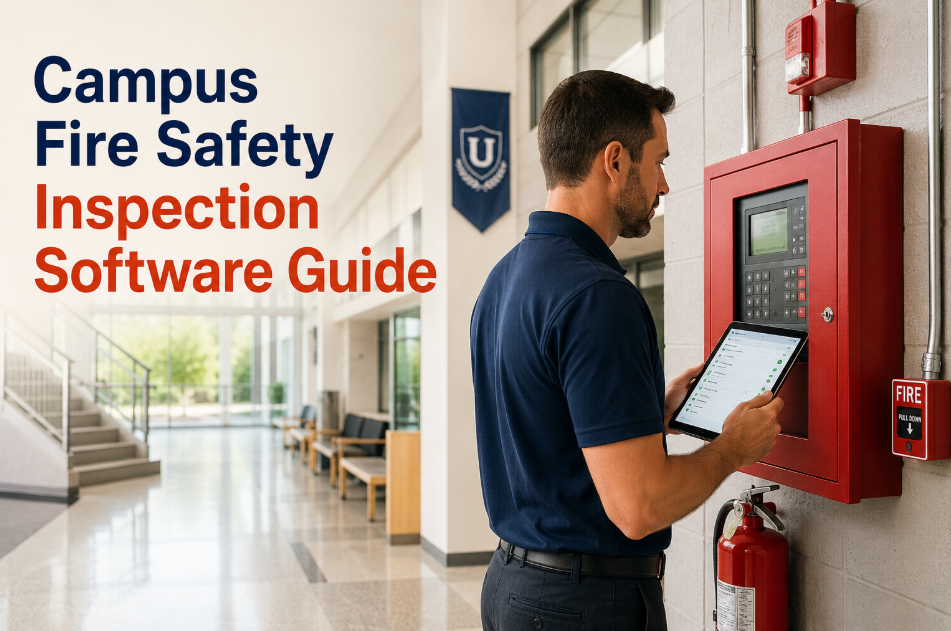
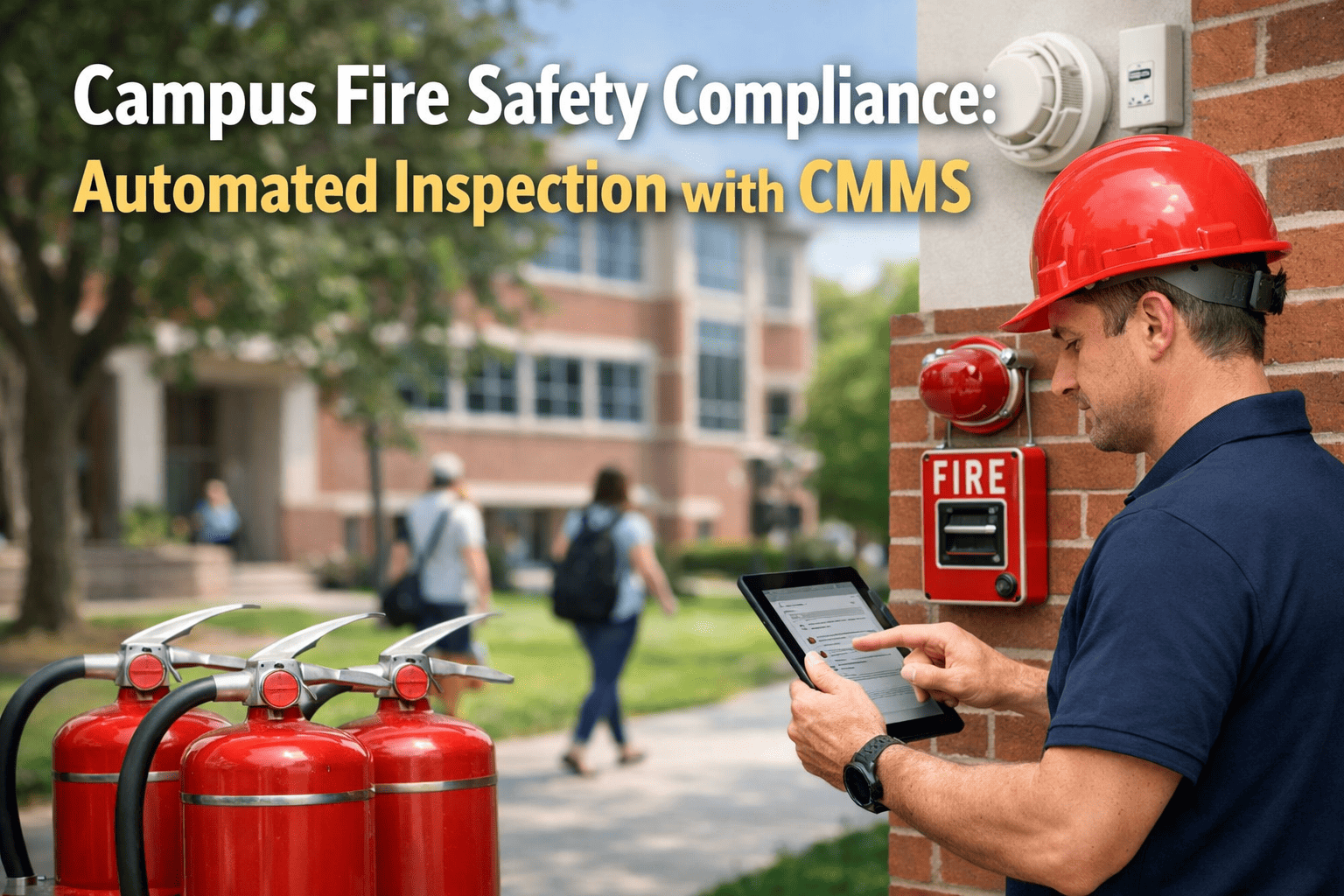
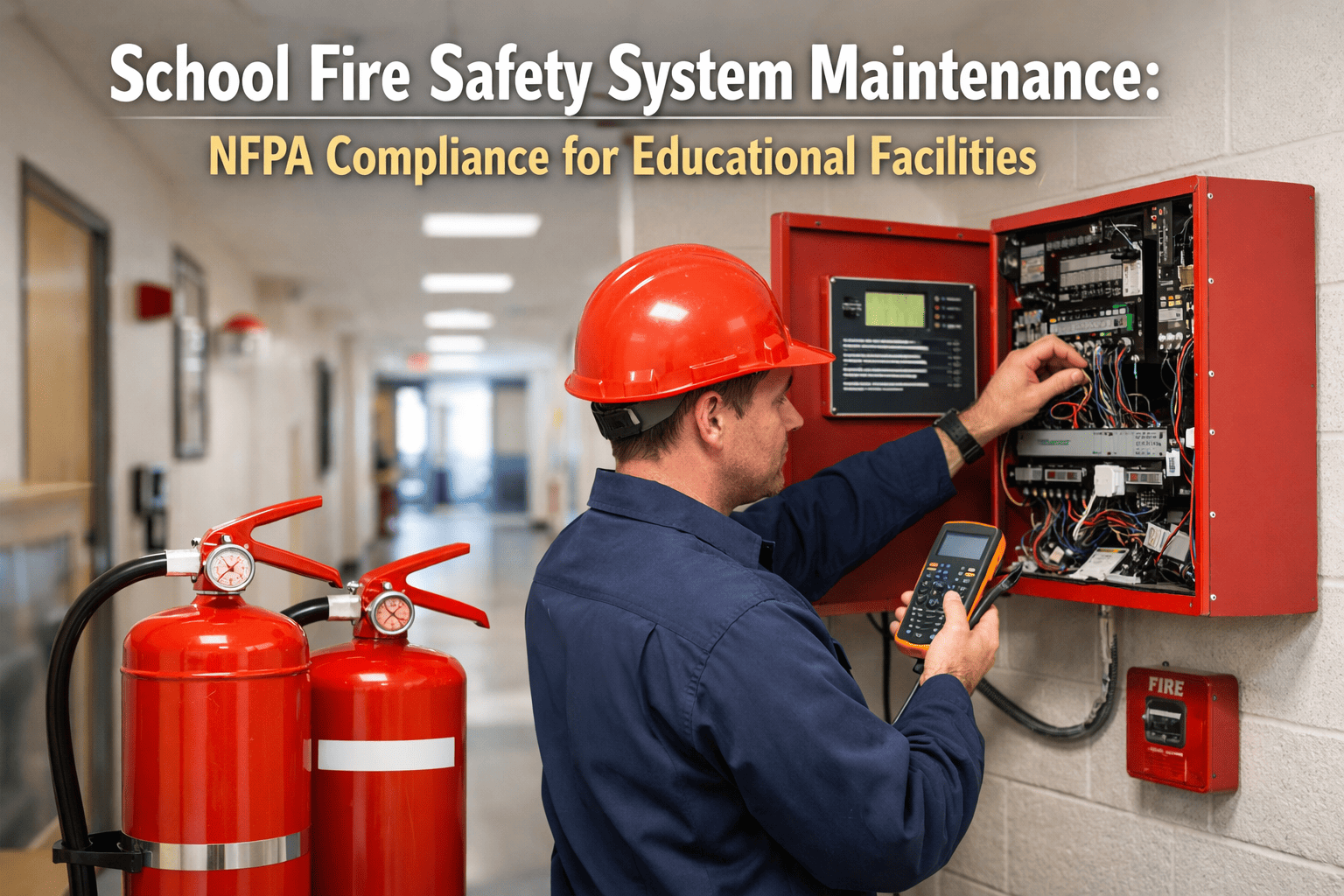
A fire marshal does not care that your facilities team is understaffed. An OSHA inspector does not accept “we meant to get to it” as documentation. An ADA investigator does not grade on a curve because your district has 47 buildings and three maintenance supervisors. Compliance is binary: documented or not, inspected or not, remediated or not. And in 2026, the penalty structure for non-compliance has expanded across every regulatory domain simultaneously — OSHA’s Heat Illness Prevention rule adds a new federal mandate, EPA’s revised Lead and Copper Rule requires testing at every outlet, NFPA codes demand digital-grade documentation, and ADA complaint-driven audits have increased 23% year over year. AI-driven compliance monitoring replaces the paper calendars, spreadsheet trackers, and institutional memory that fail every time a staff member retires, transfers, or simply gets overwhelmed by the daily volume of reactive work. The AI schedules every inspection, assigns every task, captures every record, tracks every deficiency to closure, and produces the audit-ready documentation that transforms a compliance liability into a defensible program. Book a demo to see AI compliance monitoring configured for your district’s regulatory obligations.
AI + Compliance Automation / Education Industry
AI-Driven Compliance Monitoring for Schools and Universities
How AI automates safety inspections, fire system documentation, environmental testing, and accessibility tracking across every building in your district — eliminating the documentation gaps that cause 68% of all education compliance citations.
Of school compliance citations are for documentation gaps — not actual hazards
Year-over-year increase in ADA complaint-driven audits in education
Compliance risk reduction achievable with automated scheduling and documentation
$161K
per willful OSHA violation
2026 Penalty Maximum — Heat Illness Prevention
Why Paper-Based Compliance Fails Every Time
Paper compliance tracking has a 100% failure rate over a long enough timeline. It is not a question of whether a paper system will miss an inspection — it is a question of when, which building, and how much the resulting citation will cost. The failure modes are predictable and structural:
How Paper Systems Fail:
One person owns the calendar. They retire, transfer, or go on leave — the calendar stops.
Spreadsheets have no escalation logic. Overdue items sit silently until an inspector finds them.
Filing cabinets in individual buildings create 47 disconnected compliance records.
What Gets Lost:
Inspector notes a deficiency on a paper form. The form goes into a folder. Nobody creates a work order.
Six months later, the same deficiency appears on the next inspection — now it is a repeat finding.
Repeat findings trigger escalated enforcement. The $5K fix becomes a $50K citation.
68%
Of school compliance citations are for documentation failures — not physical hazards. The sprinkler was inspected. The fire alarm was tested. The water was tested. But the record was lost, incomplete, or unfindable during the audit. AI compliance monitoring eliminates this category of citation entirely.
The Seven Compliance Domains AI Monitors Simultaneously
Campus compliance is not one regulation — it is seven distinct regulatory domains, each with unique inspection frequencies, documentation requirements, and enforcement agencies. AI monitors all seven from a single platform, ensuring nothing falls through the cracks regardless of which domain an inspector arrives to audit.
01
Fire and Life Safety (NFPA)
Fire alarm testing, sprinkler flow tests, extinguisher inspections, kitchen hood suppression, emergency lighting, exit signs, fire door inspections — each on its own frequency (monthly, quarterly, semi-annual, annual), each generating a digital record with checklist completion and deficiency tracking.
02
Occupational Safety (OSHA)
2026 Heat Illness Prevention: temperature monitoring, heat action plans, training records. Plus ongoing: lockout/tagout, confined space, hazard communication, PPE inventories, electrical safety. Every training event and safety inspection auto-documented with completion evidence.
03
Environmental (EPA)
Water quality testing (lead/copper at all outlets), Legionella water management, AHERA asbestos documentation, stormwater discharge, hazardous waste storage, refrigerant management (Section 608). Test results linked to specific fixtures with trend monitoring and exceedance alerting.
04
Accessibility (ADA / Section 504)
Transition plan maintenance, accessible route monitoring (ramps, doors, signage, restrooms), elevator inspection scheduling, barrier identification, and remediation tracking. Complaint-driven audits increasing 23% YoY — proactive documentation is the only defense.
AI Monitors:
Ventilation rate verification and CO2 monitoring per occupied zone
Filter replacement scheduling calibrated to ASHRAE thresholds
Compliance Output:
Continuous IAQ documentation satisfying ASHRAE 241 equivalent clean air delivery requirements — auto-generated from BAS integration.
AI Monitors:
State-mandated inspection scheduling (annual/semi-annual) with vendor coordination
Certificate of operation expiration tracking with auto-renewal alerts
Compliance Output:
Expired certificates trigger immediate shutdown orders. AI ensures re-inspection is scheduled before expiration, not after.
AI Monitors:
Playground equipment condition, surfacing depth, hardware integrity, entrapment hazards
Bleacher safety, pool chemistry, gymnasium equipment, athletic field condition
Compliance Output:
Playground injury claims average $28,000 and are the #2 source of school liability. Monthly documented inspections are the primary negligence defense.
AI Monitors:
CA DSA structural inspections, TX RMFE, NY Building Condition Survey, FL SREF
State energy benchmarking mandates and decarbonization reporting deadlines
Compliance Output:
Configurable by state — every federal, state, and local requirement applicable to your jurisdiction is inventoried during implementation.
All seven domains — plus state-specific requirements — are managed from a single compliance dashboard showing real-time status across every building, every system, and every regulatory deadline. Sign up free to see all seven compliance domains tracked from one platform for your campus.
68% of Citations Are Documentation Failures. Eliminate All of Them.
Oxmaint automates every inspection schedule, digitizes every checklist, tracks every deficiency to closure, and generates audit-ready reports — so your team focuses on safety, not paperwork.
How AI Compliance Monitoring Works: The Closed Loop
AI compliance monitoring is not a reminder system — it is a closed-loop engine that schedules the inspection, assigns the inspector, captures the documentation, identifies deficiencies, generates corrective work orders, tracks remediation to completion, and updates the compliance record automatically. Every step is connected. Nothing falls through the cracks.
AI Schedules the Inspection
Automated from Regulatory Database
Every inspection for every building is scheduled at the correct regulatory frequency — monthly fire extinguishers, quarterly sprinkler flow tests, annual fire alarm certification, semi-annual kitchen hood suppression
Third-party vendor inspections are coordinated automatically: scheduling notification, building access details, and digital checklist scope sent to the vendor
Inspector Completes Digital Checklist
Mobile-First Field Execution
Regulatory-specific checklists with pass/fail criteria, photo capture requirements, and measurement fields — configured to match NFPA 25, NFPA 72, CPSC, ASHRAE 241, and state-specific standards
GPS-stamped, time-stamped, inspector-identified completion records that satisfy auditor evidence requirements
Deficiencies Auto-Generate Work Orders
Zero Manual Handoff
Every deficiency noted during inspection automatically creates a corrective work order with the specific finding, regulatory deadline for remediation, assigned technician, and escalation path if not completed on time
The compliance record stays “open” until the corrective work order is closed with documented resolution — preventing the forgotten-deficiency pattern that causes repeat findings
AI Escalates Before Deadlines
Proactive Risk Management
When an inspection approaches its due date without being completed, the AI escalates: re-assigning to any available qualified person, notifying the supervisor, and flagging the risk in the compliance dashboard
When a corrective work order approaches its regulatory remediation deadline, the same escalation fires — ensuring zero overdue items on inspection day
Audit-Ready Reports Generated Instantly
One-Click Compliance Evidence
When an inspector arrives, the facilities director exports the compliance report for that specific domain — complete inspection history, checklist completions, deficiency tracking, corrective actions, and certifications — in minutes, not weeks
Read-only auditor access allows inspectors to review records directly in the system — districts report 50–70% shorter inspection visits and significantly fewer findings
OSHA 2026 Heat Illness Prevention: The New Compliance Mandate
The OSHA Heat Illness Prevention rule is not optional. It applies to every school district and university with employees who work in environments that can exceed heat thresholds — which includes virtually every campus in America during summer months. AI compliance monitoring provides the continuous documentation OSHA inspectors will request during any heat-related investigation.
Documentation Obligations:
Indoor and outdoor temperature monitoring during work hours
Documented heat action plans with trigger temperatures
Water, shade, and rest break availability verification
Acclimatization plans for new and returning outdoor workers
Training completion records for all affected employees
Automated Capabilities:
Weather API integration triggers protocols when forecast exceeds action thresholds
IoT indoor sensors flag non-AC spaces exceeding OSHA limits with timestamped logs
Digital documentation tasks auto-generated: water stations, shade, rest schedules
Training tracking with completion dates, expiration alerts, and re-certification scheduling
Penalty: $15,625 per violation, up to $156,259 for willful — documentation is the defense
Paper Tracking vs. AI Compliance: The Risk and Cost Comparison
The gap between paper-based compliance tracking and AI-driven compliance monitoring is not about convenience — it is about institutional risk exposure measured in dollars, citations, and disruption days.
0.5–1.0
FTE consumed by paper compliance
Paper: $45K–$75K annually. AI: $8K–$15K (10% of time). Net savings: $37K–$60K redeployed to productive maintenance work.
Where Time Goes (Paper):
Manual calendar management and reminder calls
Filing, searching, and assembling paper records
2–4 Wks
Paper audit prep vs. minutes with AI
Paper: $12K–$25K per audit cycle. AI: $1K–$2K (one-click reports). Net savings: $11K–$23K per audit event.
AI Audit Response:
Export domain-specific compliance report in 2 minutes
Grant read-only auditor access for direct review
$50K–$250K
Annual exposure (paper systems)
Paper: 1–3 citation events per year averaging $50K–$250K. AI: near-zero citations with documented, proactive compliance.
Penalty Ranges by Domain:
OSHA: $15.6K–$156K. NFPA: $5K–$50K+. EPA: $25K–$75K.
$118K–$413K
Net savings with AI compliance
Paper total cost: $132K–$450K. AI total cost: $14K–$37K. Plus 5–15% insurance premium reduction with documented program.
ROI Timeline:
Positive ROI within 90 days from first prevented citation
Implementation: Audit-Ready in 60 Days
AI compliance monitoring deploys in 60 days — designed for districts and universities that need results before the next inspection, not next fiscal year. Sign up free and begin digitizing your compliance obligations this week.
Weeks 1–2: Compliance Inventory
Catalog Every Obligation
Inventory every compliance requirement across every building: fire, OSHA, EPA, ADA, ASHRAE, elevator, playground, and state-specific mandates
Map inspection frequencies, responsible parties, vendor contracts, and current compliance status. Identify all overdue items for immediate remediation.
Weeks 3–4: Digital Checklist Build
Convert Paper to Digital
Convert every paper inspection form into a digital checklist with photo capture, pass/fail criteria, deficiency notation, and auto-work-order generation for findings
Configure each checklist to match specific regulatory standards: NFPA 25 for sprinklers, NFPA 72 for fire alarms, CPSC for playgrounds, ASHRAE 241 for IAQ
Weeks 5–6: Schedule Activation
Automated Calendar Live
Activate the compliance calendar: every inspection at every building scheduled for the correct frequency with the correct assignee. Overdue items flagged and escalated.
Auto-reminders sent to inspectors, vendors, and supervisors. Dashboard shows real-time compliance status across every domain and every building.
Weeks 7–8: Audit Readiness Validation
Simulated Audit and Board Report
Run a simulated audit across all seven compliance domains. Generate compliance reports for each regulatory area. Identify and close any remaining documentation gaps.
Train facilities team on report generation and inspector access procedures. Deliver first board-ready compliance status report to superintendent or CBO.
Why 2026 Is the Compliance Tipping Point for Education
Four regulatory shifts have converged to make 2026 the year when paper-based compliance tracking becomes untenable for education institutions:
01
OSHA Heat Illness Prevention
New federal mandate applying to every school district and university. Requires documented temperature monitoring, prevention plans, training records, and HVAC adequacy documentation that paper systems cannot reliably produce.
02
EPA Revised Lead and Copper Rule
Requires testing at every drinking water outlet in schools — not just representative samples. Results must be mapped to specific fixtures with remediation tracking. The data volume alone exceeds what spreadsheets can manage.
03
ADA Enforcement Expansion
Complaint-driven ADA investigations in education have increased 23% year over year. DOJ has signaled expanded enforcement focus on educational institutions. Proactive ADA transition plan documentation is the only defense against findings.
04
Digital Documentation Mandates
State regulators are increasingly requiring digital documentation rather than accepting paper records. NFPA codes continue adding documentation requirements that transform fire safety from “install and forget” to “inspect, document, and prove.”
Transform Compliance from Liability to Institutional Strength
Oxmaint’s AI compliance engine schedules every inspection, captures every record, tracks every deficiency, and produces the audit-ready documentation that eliminates citations, reduces insurance premiums, and gives your superintendent defensible evidence that student safety is systematically managed.
Frequently Asked Questions
Does Oxmaint handle third-party inspections like fire alarm and elevator companies?
Yes. Oxmaint manages the entire vendor inspection workflow: scheduling the inspection, sending vendor notification with building access details, providing a digital checklist for their inspection scope, and capturing their report and certification directly into the building compliance record. When a vendor completes an inspection, the system auto-updates the compliance calendar with the next due date and tracks any deficiencies for corrective action. Vendor certifications and licenses are tracked with expiration alerts.
Book a demo to see third-party vendor coordination and certification tracking in the compliance module.
Can inspectors and auditors access compliance records directly?
Yes. Oxmaint provides read-only auditor access that you grant to fire marshals, OSHA inspectors, EPA auditors, or ADA investigators. Instead of pulling paper files, you provide the inspector with a login showing the specific compliance domain they are reviewing — complete inspection history, checklist completions, deficiency tracking, corrective actions, and certifications. Districts using Oxmaint report 50–70% shorter inspection visits and significantly fewer findings.
Does the system cover state-specific compliance requirements?
Yes. Every state has regulations beyond federal mandates — California DSA structural inspections, Texas RMFE requirements, New York Building Condition Survey mandates, Florida SREF standards. Oxmaint’s compliance engine is configurable by state, so your district’s calendar includes every federal, state, and local requirement applicable to your jurisdiction. During implementation, we inventory your state’s regulatory landscape and configure accordingly. Updates to state regulations are incorporated as they take effect.
Sign up free to see state-specific compliance configuration for your jurisdiction.
How does the system handle the new OSHA Heat Illness Prevention requirements?
Oxmaint includes a dedicated Heat Illness Prevention module. It integrates with weather forecast APIs to automatically trigger heat action plan protocols when temperature or heat index thresholds are forecast for your location. When triggered, the system generates documentation tasks: verify water stations, shade structures, acclimatization plans, and rest break schedules. Indoor facilities with inadequate HVAC are flagged automatically based on temperature sensor data. Every action is documented with timestamps and responsible parties — creating the compliance record OSHA inspectors will request during any heat-related investigation.
What is the realistic ROI timeline for compliance automation?
Most districts see positive ROI within 90 days from three sources. First, avoided citations: a single prevented OSHA fine ($15,625), fire code citation ($5K–$50K+), or EPA water violation ($25K–$75K) often covers the entire annual software investment. Second, staff time recovery: the 0.5–1.0 FTE currently devoted to manual tracking is redeployed to productive maintenance. Third, insurance impact: carriers offer 5–15% premium discounts for documented compliance programs — savings that recur annually. Total documented savings of $118K–$413K annually against platform costs of $20K–$50K represents a 3:1 to 8:1 return.
Book a demo for a customized ROI projection based on your district’s building count and current compliance status.
Free Campus Compliance Risk Assessment
Find out exactly where your campus is exposed. Oxmaint’s Compliance Risk Assessment inventories every regulatory obligation across your buildings, identifies overdue inspections and documentation gaps, and delivers a prioritized remediation roadmap with projected cost avoidance — within 10 business days. No commitment. No cost. Just the clarity to protect your students and your institution.