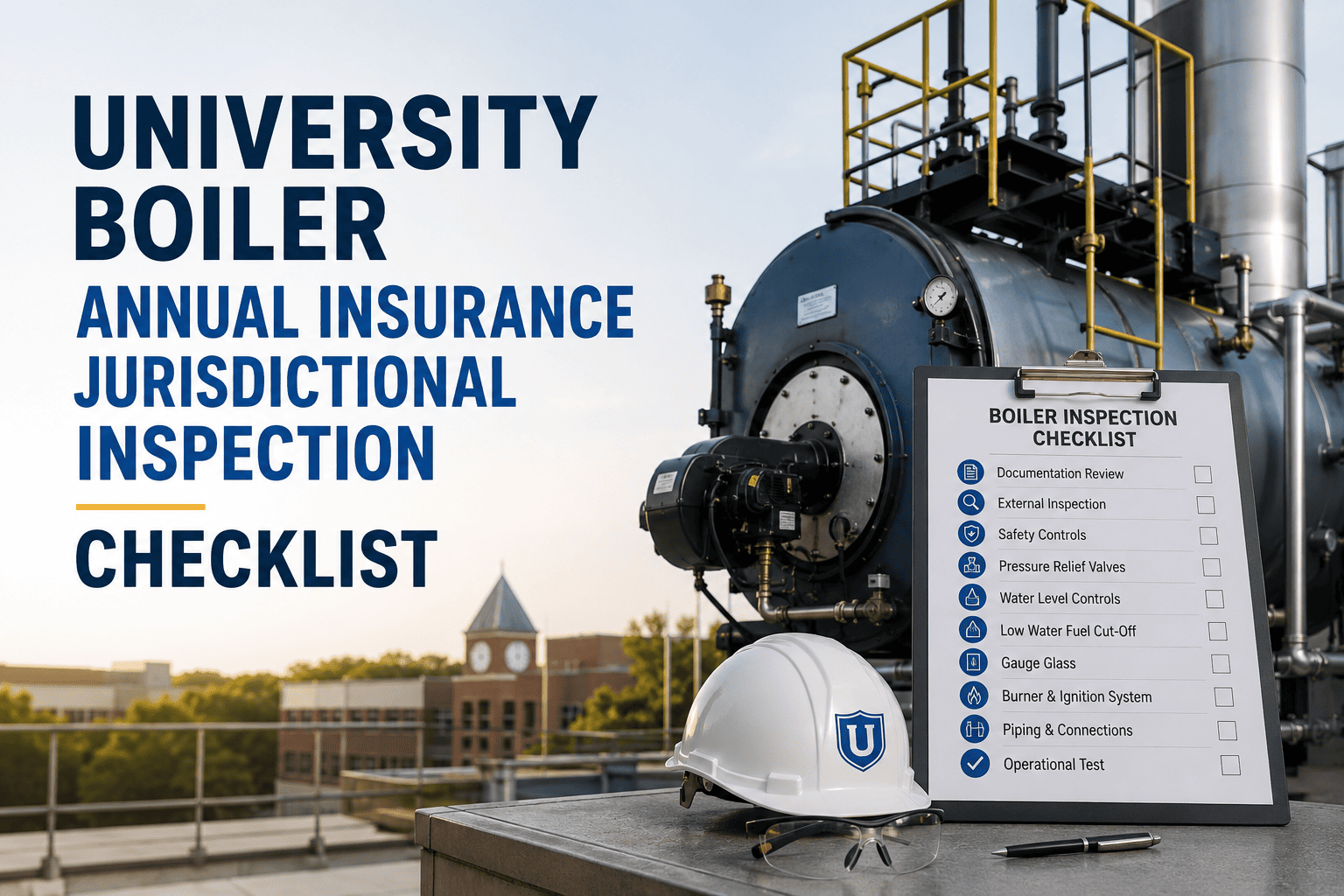
Boiler Inspection Checklist for School and University Facilities
By Oxmaint on January 3, 2026
A boiler explosion at Star Elementary School in Spencer, Oklahoma killed six children and one adult in 1982. The cause was a water heater that had never been properly inspected. That tragedy rewrote Oklahoma's safety laws overnight. Today, your campus heating system protects thousands of students, faculty and staff—but only when it's properly maintained. With 36,000 U.S. schools needing HVAC system upgrades and 83% of all boiler incidents traced to human oversight or poor maintenance, the question isn't whether your facility needs a systematic inspection program. The question is whether you have one.
Critical Safety Data
The Real Cost of Neglected Boiler Maintenance
83%Human Error
of boiler accidents caused by low-water conditions, operator error, or poor maintenance
36K
U.S. schools need HVAC system updates
1%
Learning loss per 1°F classroom temp increase
68-74°F
Optimal classroom temperature for learning
When boiler systems fail during winter months, students attend classes bundled in coats, hats, and gloves—conditions teachers' unions have called "unfair and inhumane." Research from Harvard Kennedy School confirms that temperature disruptions directly impact cognitive performance, with the effects falling hardest on low-income and minority students. Facility managers who implement digital inspection tracking catch problems before they become emergencies that close buildings and harm learning outcomes.
Interactive Boiler Inspection Checklist
This comprehensive checklist follows ASME CSD-1 standards and reflects the inspection criteria used by state boiler inspectors. Each category is color-coded by risk level to help your team prioritize inspections effectively.
Critical Safety
High Priority
Standard
Documentation
Critical Safety Controls
Failure of these components can cause catastrophic incidents
Low-Water Cutoff (LWCO)Weekly + Annual
The most important safety device on your boiler. Low-water conditions are the #1 cause of boiler accidents.
Perform weekly blowdown test to verify float operation
Confirm no isolation valve between LWCO and boiler (CSD-1 violation)
Test manual reset function activates fuel shutoff
Verify drain piping at lowest point of float chamber
Safety/Relief ValveQuarterly + Annual
Your last line of defense against overpressure. A 30-gallon water heater at 90 PSI has explosive force equal to 2.56 ounces of nitroglycerin.
Confirm ASME stamp and correct capacity rating
Verify vertical mounting with full-size discharge pipe
Check discharge has no threads at outlet (prevents capping)
Perform quarterly lift test at 75% of set pressure
High-Limit ControlsMonthly
Temperature and pressure limits that trigger safety shutdown when operating parameters are exceeded.
Test manual reset high-limit (set 5-10°F above operating limit)
Verify lockout function prevents restart without manual intervention
Confirm pressure controls protected by siphon loop
Document actual test readings vs. nameplate ratings
Combustion System
Fuel delivery and flame safety components
Gas Train InspectionAnnual
Manual shutoff valve operates freely by hand (no tools required)
Sediment trap present and minimum 3" long at bottom of vertical drop
Gas pressure regulator functioning within specifications
Verify valve leakage test capability per CSD-1 requirements
Flame Safeguard SystemMonthly
Test flame detection response time meets specifications
Verify proper purge sequence timing before ignition
Confirm safety shutdown on simulated flame failure
Document flame scanner condition and alignment
Combustion Air SupplyMonthly Visual
Fixed louvers unobstructed (85% of boiler rooms have blocked air intakes)
No plywood, cardboard, or tape covering air openings
Motorized dampers operate with end switches functional
Burner assembly and flame pattern inspected for impingement
Pressure Vessel Integrity
Internal and external condition assessment
Internal Surface ExaminationAnnual
Shell, drums, and tube sheets free of bulges, cracks, or corrosion
Scale buildup under 1/32" (thicker reduces efficiency by 7%+)
Tube ends tight with no signs of leakage or erosion
Water column piping unobstructed (flashlight test through cross-tees)
Refractory & ExternalAnnual
Refractory solid with no cracks, voids, or spalling
External surfaces free from rust, paint peeling, or water damage
Nameplate readable with ASME stamp and MAWP visible
All piping connections secure with no visible leaks
Managing comprehensive inspection protocols across multiple buildings requires more than paper checklists. Campus facilities teams overseeing dozens of boilers from different manufacturers need systematic tracking that ensures nothing falls through the cracks. Teams ready to modernize their approach can see how digital work orders streamline multi-building inspections.
State Inspection Requirements at a Glance
Inspection Frequency by Boiler Type
Requirements vary by jurisdiction—always verify with your state authority
High-Pressure Steam
>15 PSIG
Internal:Annual
External:Semi-Annual
CSD-1:Annual
Low-Pressure Steam
≤15 PSIG
Internal:1-3 Years
External:Annual
CSD-1:Annual
Hot Water Heating
>160 PSIG or >250°F
Internal:Annual
External:Semi-Annual
CSD-1:Annual
Low-Pressure Hot Water
≤160 PSIG and ≤250°F
Internal:2-3 Years
External:Annual
CSD-1:Annual
For Facilities Teams
Never Miss an Inspection Deadline
Automated reminders, digital checklists, and audit-ready documentation for every boiler on campus. See how universities manage compliance across 100+ buildings.
Inspectors follow predictable patterns. Knowing what fails inspections most frequently allows your team to address issues before the inspector arrives—not after you receive a violation notice.
01
Blocked Combustion Air Intake
Found in 85% of boiler rooms
Problem:
Fixed louvers covered with plywood, cardboard, or duct tape to "keep the cold out"
Solution:
Install motorized dampers with end switches—burner won't fire if damper is closed
02
LWCO Isolation Valve Present
Direct CSD-1 violation
Problem:
Shutoff valve installed between low-water cutoff and boiler allows dangerous isolation
Solution:
Remove any valve in LWCO piping immediately—CSD-1 CW-130c explicitly prohibits this
03
Improper Relief Valve Installation
Creates explosion hazard
Problem:
Discharge pipe with threads at outlet, horizontal mounting, or plugged to stop drips
Solution:
Mount vertically, full-size discharge, no threads at outlet, piped to safe location
04
Missing or Incomplete Documentation
Automatic inspection failure
Problem:
No CSD-1 service reports, missing water treatment logs, or absent technician license numbers
Solution:
Maintain dated records with device specs, set points, test results, and license numbers in boiler room
Expert Perspective: What Separates Safe Campuses from Risky Ones
The most important rule for safe boiler operation is maintaining proper water level at all times. If water is not visible in the water glass, shut the boiler off immediately. Low-water conditions remain the most common cause of boiler accidents—and the most preventable with proper inspection protocols.
— Minnesota Department of Labor and Industry, Boiler Safety Guide
01
Schedule Strategically
Internal inspections require 24-48 hours of cooling time. Schedule during semester breaks when heating disruptions won't affect occupied classrooms.
02
Document Everything
Inspectors require dated service reports with device model numbers, set points, and actual test results. Missing documentation fails inspections regardless of equipment condition.
03
Train Continuously
Water treatment records, daily log entries, and proper blowdown procedures demonstrate operational competence that inspectors evaluate alongside physical equipment.
Universities managing diverse boiler fleets—the University of Michigan maintains 183 boilers from 28 different manufacturers across 67 buildings—need systematic approaches that scale. When your inspection cycle runs from January 1 to December 31 with reports due within 14 calendar days, manual tracking becomes impossible. Teams coordinating this complexity can centralize their maintenance operations to ensure compliance across every unit.
Pre-Inspection Preparation Timeline
4 Weeks Before
Schedule licensed mechanical contractor for CSD-1 testing. Confirm they have valid license numbers that will appear on service reports.
2 Weeks Before
Gather all documentation: previous inspection certificates, CSD-1 service reports, water treatment logs, maintenance records, and equipment manuals.
3-5 Days Before
Begin controlled shutdown and cooling process. Communicate heating disruption to building occupants if during occupied periods.
1 Day Before
Drain boiler completely. Open all access doors, handholes, and inspection ports. Ensure adequate lighting for internal examination.
Inspection Day
Have documentation accessible, key personnel available, and boiler fully open. A clean, prepared boiler lets inspectors finish in one visit.
After the inspector confirms compliance, your team will gradually warm the boiler following manufacturer heat-up rates, then run through all safety checks. Facilities teams that discuss their specific campus requirements with maintenance management specialists often discover efficiency gains they hadn't considered.
Campus CMMS Solution
Protect Your Students. Simplify Compliance.
From inspection scheduling to audit-ready documentation, see how university facilities teams manage boiler safety across complex campus environments with Oxmaint.
QWhat is ASME CSD-1 and why does it matter for school boilers?
ASME CSD-1 (Controls and Safety Devices for Automatically Fired Boilers) is the national standard governing how safety controls must be configured, tested, and documented. It covers four key areas: general requirements, electrical controls, steam/waterside controls (including low-water cutoffs and relief valves), and combustion side controls (including flame safeguards). Most states adopt CSD-1 as part of their boiler regulations, making compliance mandatory for educational facilities. Annual CSD-1 testing by a licensed mechanical contractor is required regardless of your certificate inspection cycle.
QHow often should school boilers be inspected?
Inspection frequency varies by state and boiler type. High-pressure steam boilers typically require annual internal and external inspections. Low-pressure steam and hot water heating boilers may be inspected every 1-3 years depending on jurisdiction. CSD-1 safety device testing should occur annually regardless of the certificate inspection cycle. Many educational facilities adopt more frequent schedules than minimum requirements given the vulnerable populations they serve. Always verify your specific requirements with your state's boiler inspection authority.
QWhat documentation do I need for a boiler inspection?
Inspectors require: dated CSD-1 service reports from a licensed mechanical contractor (including device model numbers, set points, actual test results, and technician license numbers), water treatment records demonstrating proper chemistry management, previous inspection certificates, equipment operating manuals, and maintenance logs showing blowdown schedules and repairs. Reports must be submitted within 14 calendar days of inspection. Keep all documentation in the boiler room where inspectors can easily access it.
QWhat causes most boiler inspection failures in schools?
The most common failures include: blocked combustion air louvers (found in 85% of boiler rooms, often covered with cardboard or plywood), isolation valves between low-water cutoffs and boilers (explicit CSD-1 violation), improperly installed relief valve discharge piping (threads at outlet, horizontal orientation, or plugged outlets), and missing or incomplete documentation. Scale buildup exceeding 1/32" thickness also triggers concerns as it reduces thermal efficiency by more than 7%.
QHow do I prepare a boiler for internal inspection?
Internal inspections require the boiler to be completely shut down, cooled (24-48 hours), drained, and opened for physical examination. Schedule shutdown to allow adequate cooling—rushing creates safety hazards. Open all access doors, handholes, and inspection ports. Ensure adequate lighting for examining shell, tubes, and tube sheets. A clean, fully accessible boiler allows inspectors to complete their work in a single visit, saving your team additional downtime and service calls.