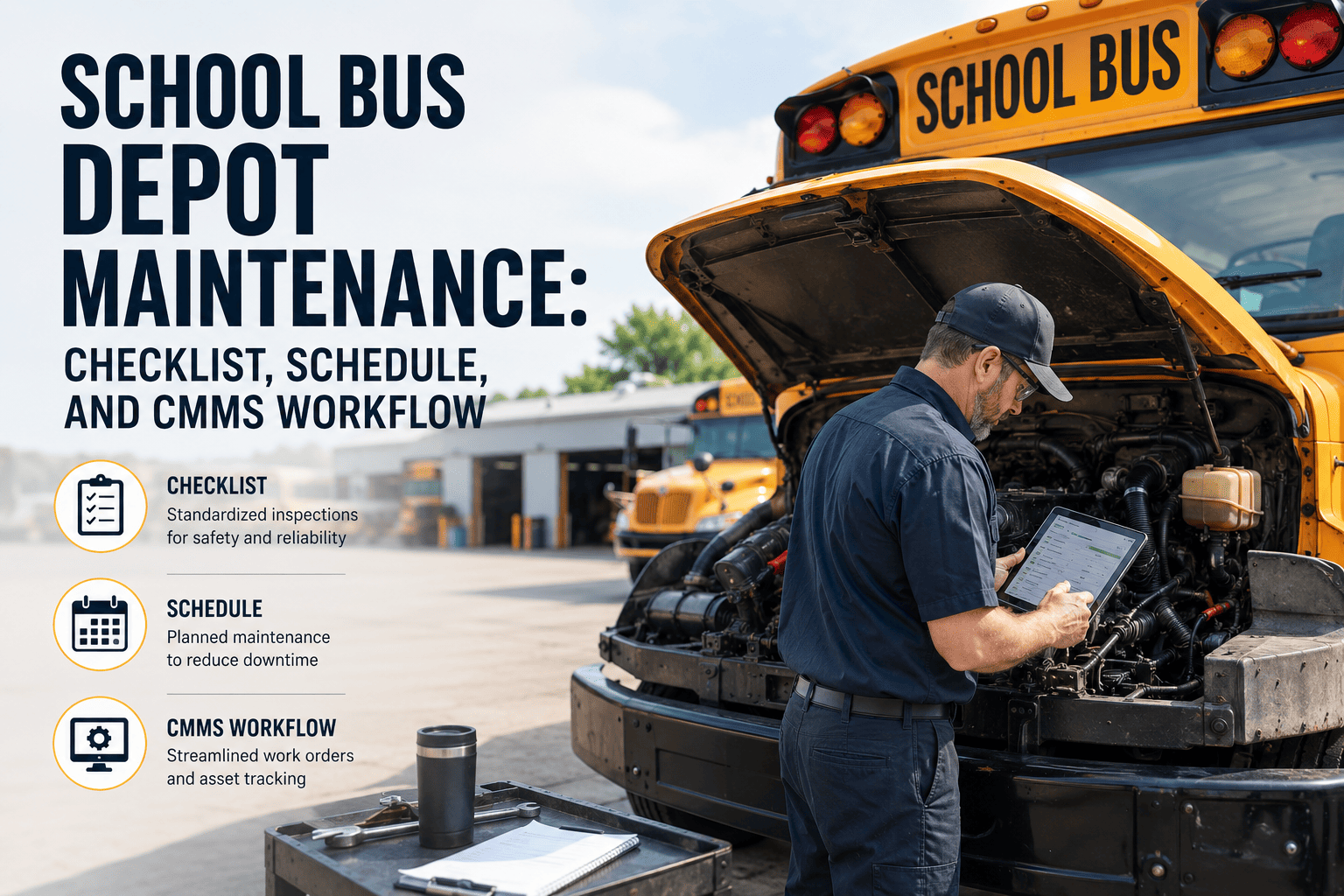
School district bus garages maintain an average fleet of 54 buses per district, yet 63% of K-12 transportation departments still track vehicle inspections on paper or disconnected spreadsheets. The consequences are predictable — FMCSA violations averaging $1,270 per occurrence, buses pulled from routes during peak hours, and lift equipment operating past ALI ALOIM certification deadlines. A single missed annual inspection can ground a bus for days and leave 72 students without transportation. Districts that implement CMMS-tracked garage maintenance programs reduce unplanned breakdowns by 38%, cut FMCSA citation rates by 61%, and extend average bus lifespan from 12 to 15.4 years. This guide covers the full operational scope of school bus garage maintenance — from vehicle lifts and bay floors to fluid handling systems and federal documentation requirements. Whether you manage 20 buses or 400, the maintenance infrastructure behind those buses determines whether they run safely and on schedule. Want to bring structure to your bus garage operations? Start a free trial or book a demo to see how Oxmaint tracks every inspection, work order, and compliance record in one platform.
School District Bus Garage Maintenance: Lifts, Bays, and FMCSA Documentation
Vehicle lift inspections (ALI ALOIM), bay floor programs, fluid handling compliance, FMCSA-ready records, and CMMS-tracked fleet support — the complete guide for school transportation directors.
Digitize Your Bus Garage in Under 14 Days
From lift certifications to FMCSA pre-trip inspections, Oxmaint tracks every garage asset and every bus in one mobile-first platform. See it running with your fleet data in a 30-minute working demo.
What Is School District Bus Garage Maintenance?
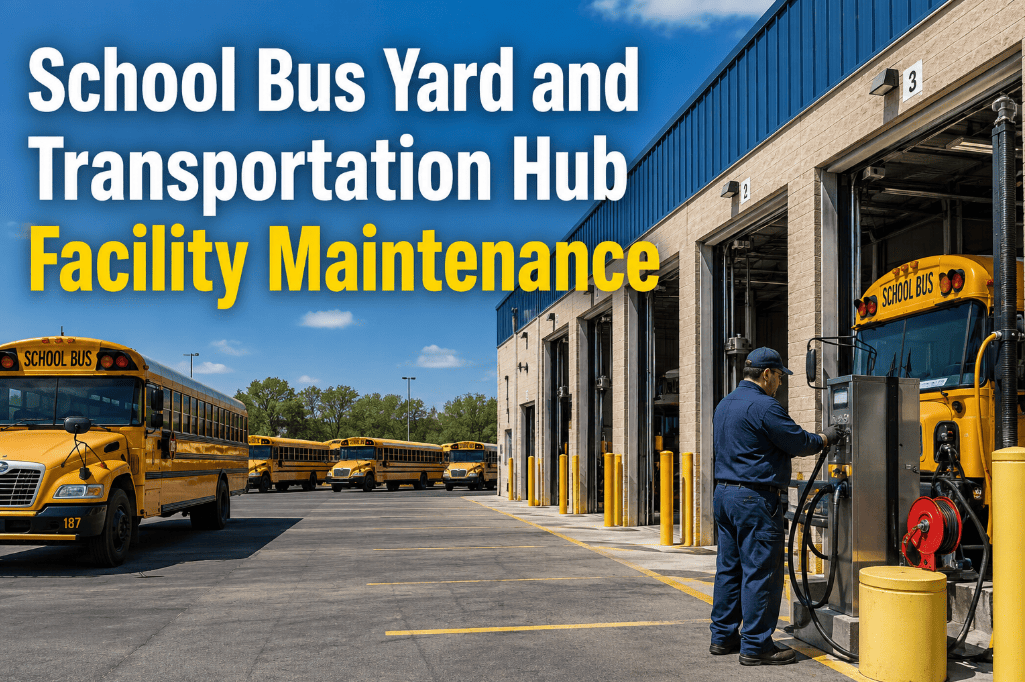
School district bus garage maintenance encompasses every activity required to keep both the fleet and the facility that services it operating safely, compliantly, and efficiently. It is not just oil changes and tire rotations — it includes the vehicle lifts that hold 36,000-pound buses overhead, the bay floors that must resist diesel and hydraulic fluid, the fluid handling systems that capture waste oil and coolant, the parts inventory that determines whether a bus returns to service today or next week, and the federal documentation that proves every inspection happened on time. Districts that treat the garage as a facility asset — not just a place where buses park — reduce total fleet maintenance costs by 22% and cut route disruptions by 41%. The garage itself has maintenance needs that are as critical as the buses inside it, and ignoring them creates cascading failures that put students at risk.
Core Garage Systems That Require Structured PM
Every bus garage contains infrastructure that directly impacts fleet readiness. These six systems fail silently when maintenance is deferred — and fail loudly when a bus is stranded on a lift or a fluid spill triggers an EPA citation.
In-ground and above-ground lifts rated for school buses (typically 30,000–60,000 lb capacity) require annual ALI ALOIM inspection per ANSI/ALI ALOIM-2020. This includes structural integrity checks, hydraulic system testing, safety lock verification, and load testing. A lift failure with a bus overhead is a catastrophic event — yet 34% of school garages operate lifts past their certification date.
Garage bay floors endure 36,000+ lb axle loads, diesel spills, hydraulic fluid, de-icing chemicals, and daily thermal cycling in cold climates. Cracked or deteriorated floors create trip hazards for technicians and can compromise in-ground lift installations. Epoxy or polyurethane coatings require reapplication every 3–5 years, and expansion joints must be inspected annually.
School bus garages generate 200–800 gallons of waste oil monthly depending on fleet size. Waste oil tanks, coolant recovery systems, oil-water separators, and above-ground storage tanks (ASTs) require EPA-compliant inspection schedules. A single spill event can trigger $37,500+ in EPA fines under the Clean Water Act.
Diesel exhaust in enclosed garages creates carbon monoxide and particulate exposure risks for technicians. OSHA requires CO monitoring and adequate ventilation in vehicle maintenance bays. Exhaust extraction systems — hose drops, rail systems, or tailpipe-connected units — require monthly filter checks and semi-annual motor inspections.
Bus garages rely on compressed air for impact wrenches, tire inflation, air brakes testing, and cleaning. Compressors, air dryers, receivers, and distribution piping require structured PM. A compressor failure halts brake work, tire rotations, and most heavy repair — effectively shutting down the shop. Receiver tanks require ASME inspection per state boiler codes.
The average school bus requires 47 unique PM parts annually (filters, belts, brake components, fluids). Districts with 50+ buses stock 800–1,200 SKUs. Without inventory tracking, technicians waste 22 minutes per work order searching for parts — and 18% of repair delays are caused by stockouts on common items like brake pads and coolant hoses.
FMCSA Documentation: What Auditors Actually Look For
School buses operating across state lines or weighing over 10,001 lbs fall under FMCSA jurisdiction. Even intrastate operations must comply with FMVSS and state DOT equivalents. Here is what auditors examine during a compliance review — and where districts fail most often.
Every bus must have a current annual inspection by a qualified inspector. The inspection report must be retained for 14 months and be available for review. 27% of school district FMCSA violations involve expired or missing annual inspection records.
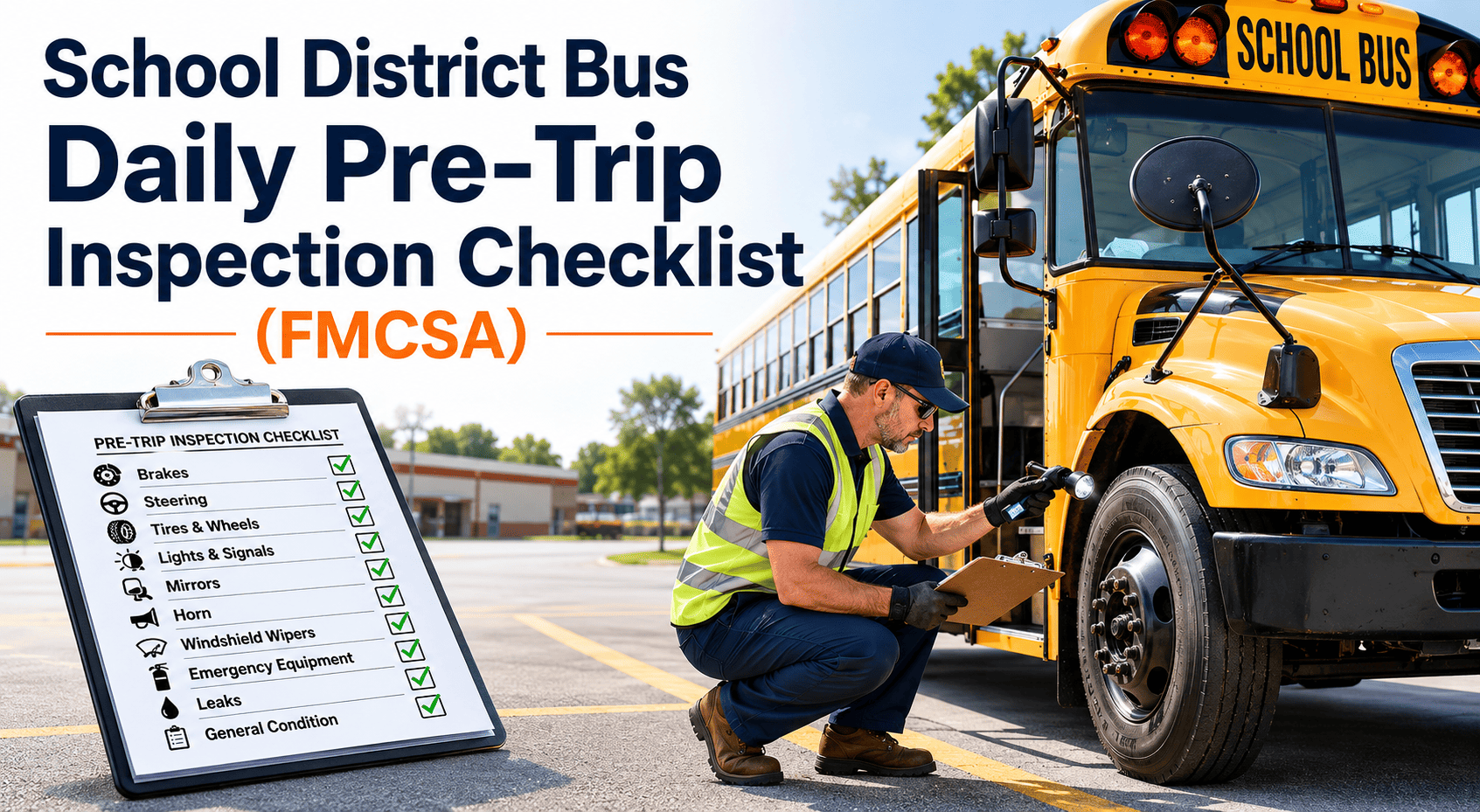
Drivers must complete pre-trip and post-trip inspections daily. Defects must be documented, and the motor carrier must certify that defects have been repaired or are unnecessary to safe operation before the next dispatch. Missing DVIRs account for 31% of all school bus compliance findings.
FMCSA requires a documented systematic inspection, repair, and maintenance program for all vehicles. This means written PM schedules, inspection checklists, repair records, and proof that the program is being followed — not just that it exists on paper. Districts must show PM completion rates, not just PM templates.
All maintenance records must be retained for one year after the vehicle leaves the fleet and for the entire time the vehicle is under the carrier's control. Records must include identifying information, date, nature of repair, and who performed the work. Paper filing systems fail this requirement 44% of the time during audits.
Paper Garage vs CMMS-Tracked Garage
The operational gap between districts running on paper and those using a structured CMMS is measurable at every level.
- Lift certifications tracked in a filing cabinet
- DVIRs on carbon-copy forms, often incomplete
- Parts inventory managed by "eyeball count"
- PM schedules on whiteboards, easily missed
- FMCSA audit prep takes 80+ hours
- No fleet-wide visibility on asset condition
- ALI ALOIM certs auto-scheduled with 60-day alerts
- Digital DVIRs with photo capture and timestamped sign-off
- Real-time parts inventory with auto-reorder triggers
- PM auto-dispatched to technician mobile devices
- FMCSA audit reports generated in under 2 hours
- Fleet condition dashboard updated in real time
How Oxmaint Supports School Bus Garage Operations
Oxmaint is built for organizations that manage both fleet assets and the facilities that service them. Here is how the platform addresses the specific needs of school district bus garages, including the ability to track both buses and garage infrastructure in a single system. Districts using Oxmaint report 38% fewer route disruptions and 61% faster audit preparation — see these capabilities running on your fleet data by scheduling a book a demo or testing with your own data through a start a free trial.
Oxmaint's hierarchy supports District > Garage > Bay > Lift/Equipment alongside District > Route > Bus > Component. Garage lifts, compressors, and exhaust systems live in the same platform as bus engines, transmissions, and brake systems. One login, one work order system, one PM calendar.
Every DVIR, annual inspection, repair record, and PM completion is timestamped, digitally signed, and stored with the vehicle's permanent record. Compliance reports are filterable by vehicle, date range, inspection type, and technician — exportable in the format FMCSA auditors expect.
Garage technicians work under buses, not at desks. Oxmaint's mobile app delivers full work order completion, photo capture, parts requests, and inspection checklists — even in garages with poor cellular coverage. Data syncs automatically when connectivity returns.
Link parts directly to work orders and specific buses. Auto-reorder triggers ensure brake pads, filters, and fluids are always in stock. Track vendor lead times and costs per bus to build accurate per-mile operating cost reports for school board budget presentations.
Measurable Results for School Districts
Frequently Asked Questions
How does Oxmaint handle ALI ALOIM lift certification tracking?
Can drivers submit DVIRs through the mobile app?
Does the platform track both buses and garage equipment in one system?
How quickly can a school district get started with Oxmaint?
Your Bus Garage Deserves Better Than Paper and Whiteboards
Every missed lift inspection, lost DVIR, and stockout on brake pads puts students at risk and puts your district at regulatory exposure. Oxmaint tracks every bus, every garage asset, and every compliance record in one mobile-first platform — built for the operational reality of school transportation. See it running with your fleet in a 30-minute demo.