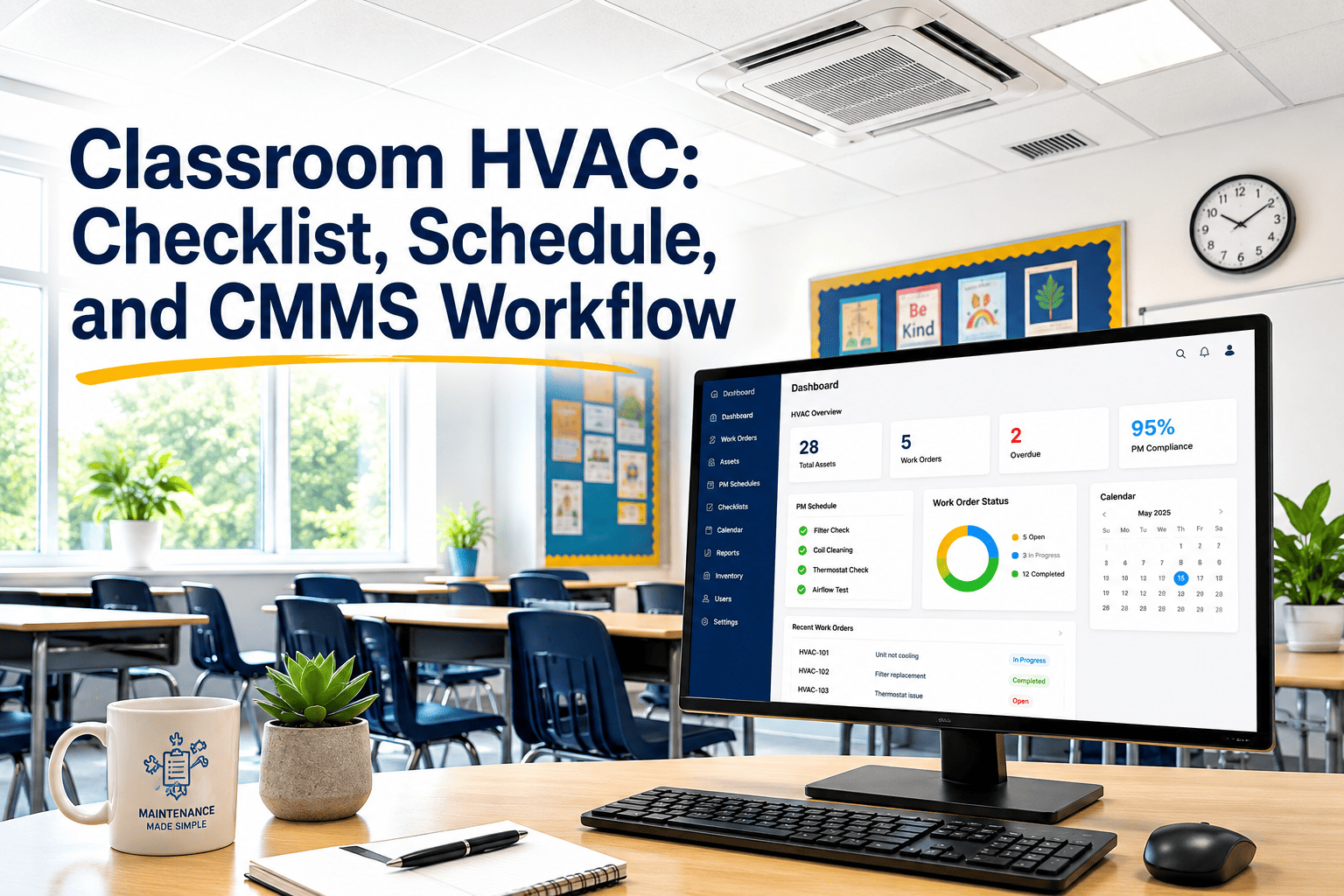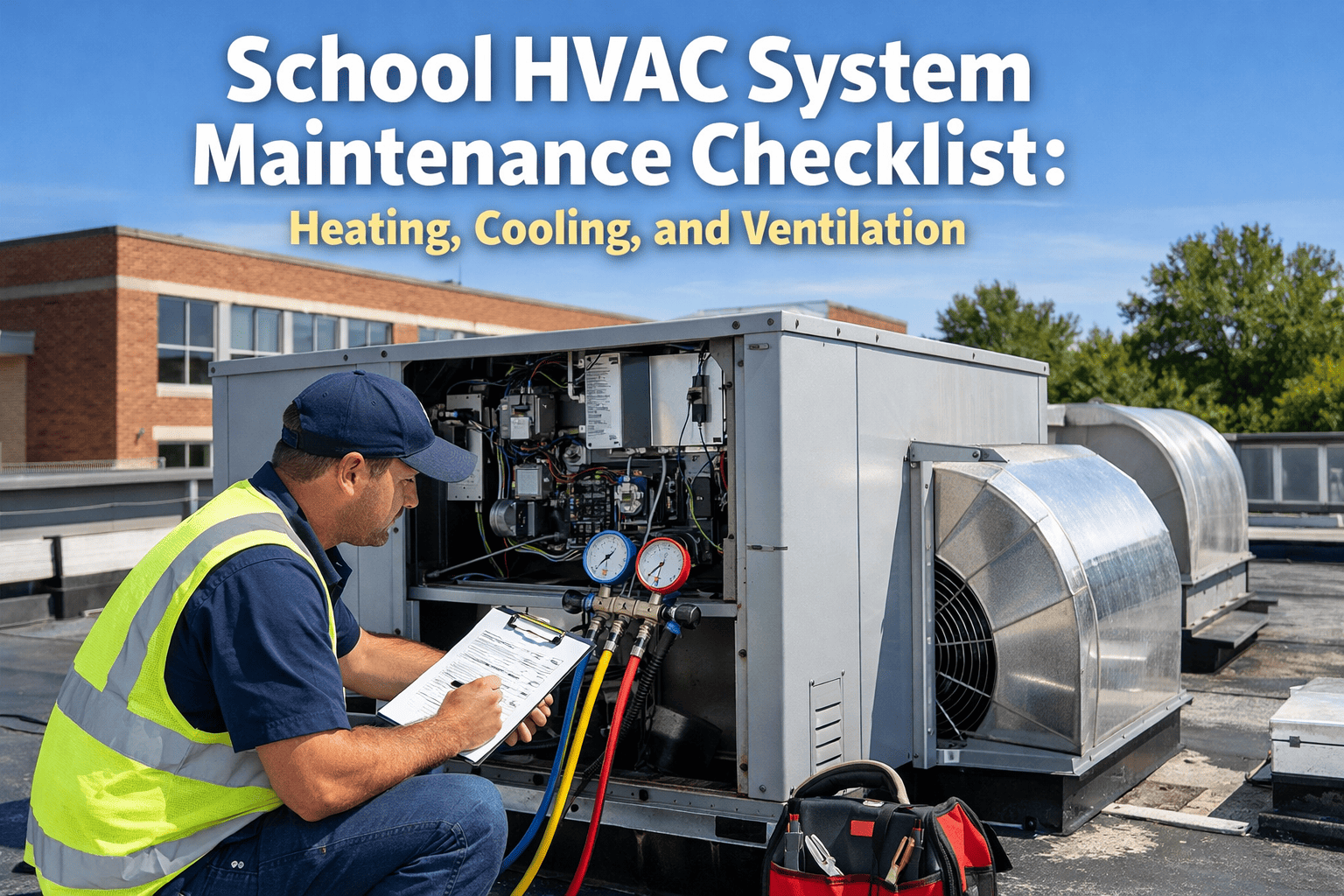
HVAC is the most expensive and most failure-prone system in a school building. A rooftop unit that fails on the first hot day of September because no one serviced it over the summer sends hundreds of students home and puts the facilities director in front of the school board. The academic calendar creates a natural PM structure that most other facilities don't have — summer break is the full-system service window, fall is the heating switchover, winter is freeze protection, and spring is the cooling recommission. This checklist maps every HVAC PM task to that calendar, covering rooftop units, split systems, boilers, chillers, AHUs, VAV boxes, exhaust fans, and thermostats. Use it as a standalone reference or deploy it in OxMaint to auto-schedule every task before each season begins and produce the compliance records required for state IAQ audits.
1. Filters and Air Quality
Filter maintenance is the highest-frequency, lowest-cost HVAC task — and the most commonly deferred. A filter loaded to collapse restriction point increases motor amperage, reduces airflow below ASHRAE 62.1 ventilation minimums, and in humid climates creates conditions for biological growth in the drain pan within weeks.
2. Rooftop Units (RTUs)
Rooftop units are the highest-value single piece of equipment in most school HVAC systems and the most commonly under-serviced. A full summer service that takes 4 hours per unit prevents the September failure call that takes 3 days to resolve — because the HVAC contractor who should have serviced it in July is now dispatching to 20 schools simultaneously.
3. Boilers and Heating Systems
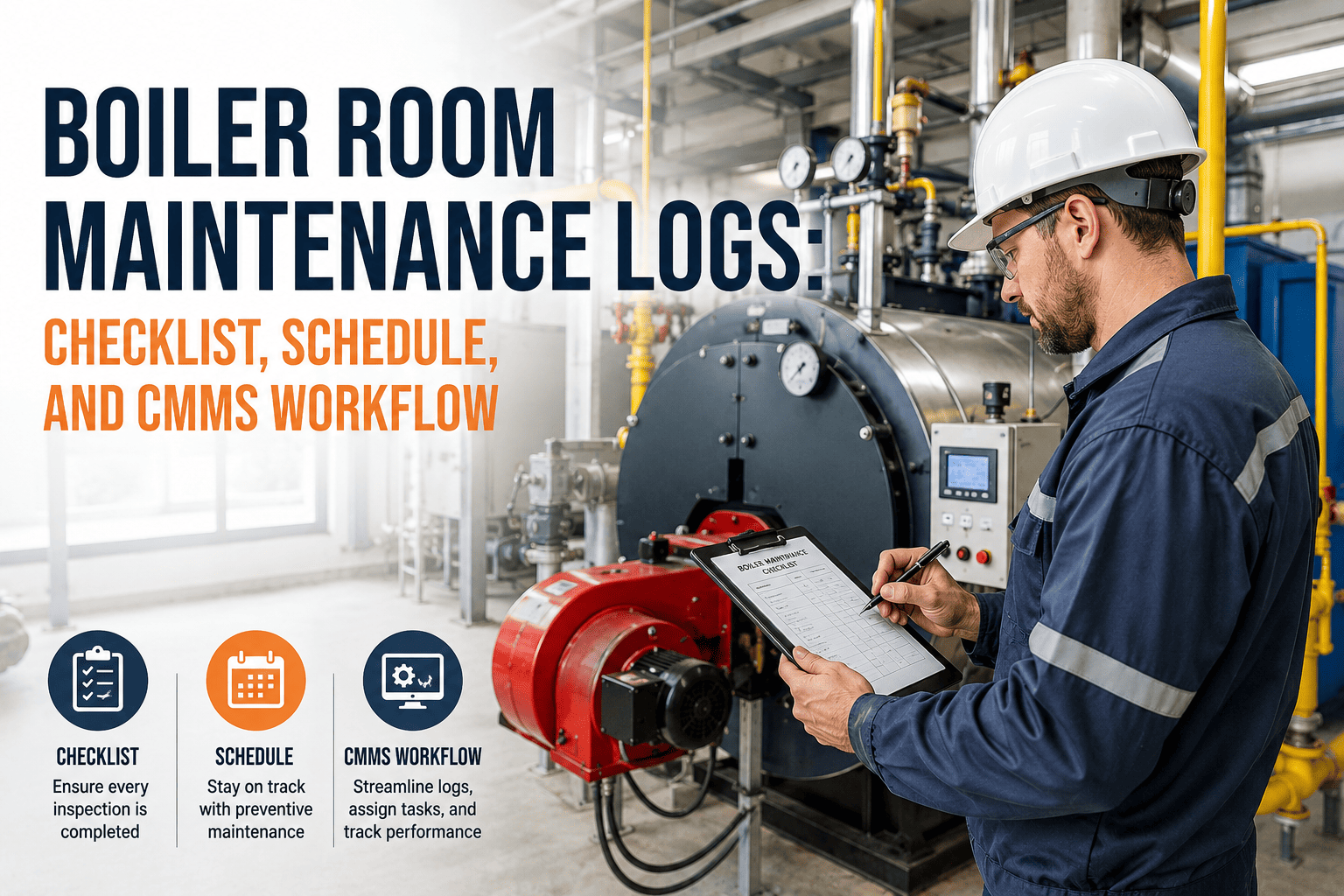
Boiler readiness must be confirmed before the first cold weather forecast, not after the first frost. A heating system that fails in November affects every classroom in the building simultaneously. Fall commissioning should be completed by October 1 in northern climates regardless of whether cold weather has arrived.
4. Chillers and Cooling Towers
Chillers require a pre-season commissioning that confirms operation before the school year begins — not a response call on a 35°C day in September when every contractor in the region is responding to calls simultaneously. Cooling tower Legionella management is a legal requirement in most jurisdictions and must be documented before each cooling season.
5. Air Handling Units and VAV Boxes
AHUs and VAV systems are the distribution layer of the HVAC system — they can only deliver what the central plant produces, but they introduce their own failure modes through belt wear, damper seizure, and coil fouling. VAV boxes that have never been recommissioned since installation commonly deliver 50–70% of their design airflow.
6. Exhaust Fans and Ventilation
Exhaust fans are the most frequently ignored HVAC component in school buildings and the most directly linked to IAQ complaints. A failed toilet exhaust fan creates odour and moisture complaints within days. A failed laboratory fume exhaust creates a chemical exposure risk. A seized kitchen exhaust creates a fire hazard. All three failure modes are preventable with a quarterly inspection.
7. Thermostats and Building Controls
A thermostat that reads 2°F high calls for cooling the room to 70°F while thinking it has reached 72°F. Multiply this across 30 classrooms and the energy impact is measurable without any equipment fault. Controls calibration is low-cost, high-return maintenance that most school facilities programmes defer indefinitely.