School Outdoor Athletic Field Maintenance Checklist
By Jamie lanister on March 27, 2026
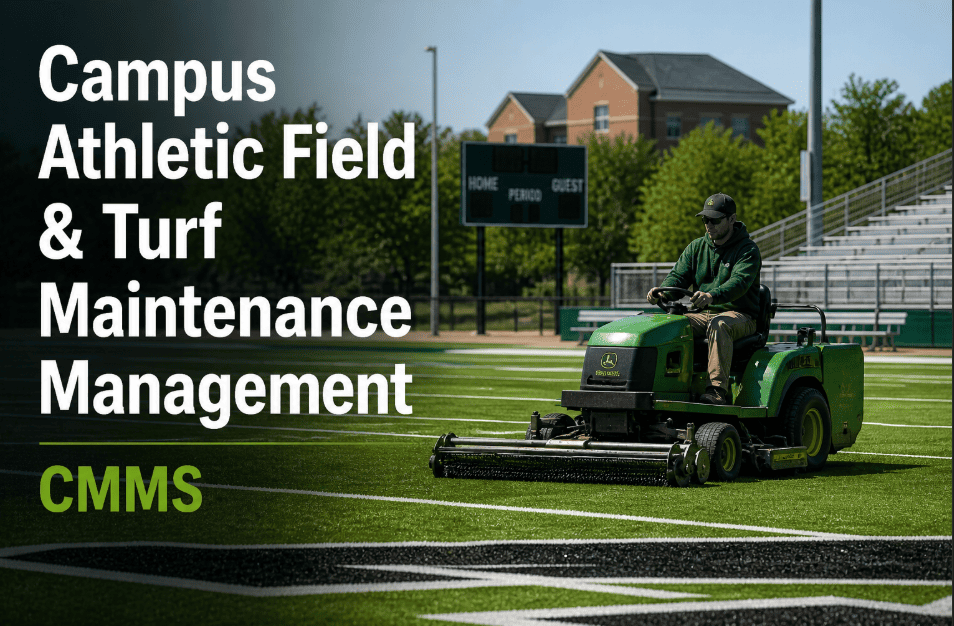
A student at a Florida high school broke her ankle during a varsity soccer game in 2023 when her cleat caught a divot that had been reported to the district three weeks earlier — the work order was never acted on. The district settled for $220,000. Field maintenance is not an aesthetic programme — it is a direct student safety obligation. This checklist covers the complete school outdoor athletic field maintenance programme — turf management, field marking, irrigation, drainage, fencing, bleachers, press boxes, scoreboards, and safety equipment — structured for year-round deployment in OxMaint as a seasonal PM programme. Book a demo.
School Outdoor Athletic Field Maintenance Checklist
Turf management, field marking, irrigation, drainage, fencing, bleachers, scoreboards, and safety equipment — every maintenance task for a safe, competition-ready school athletic field.
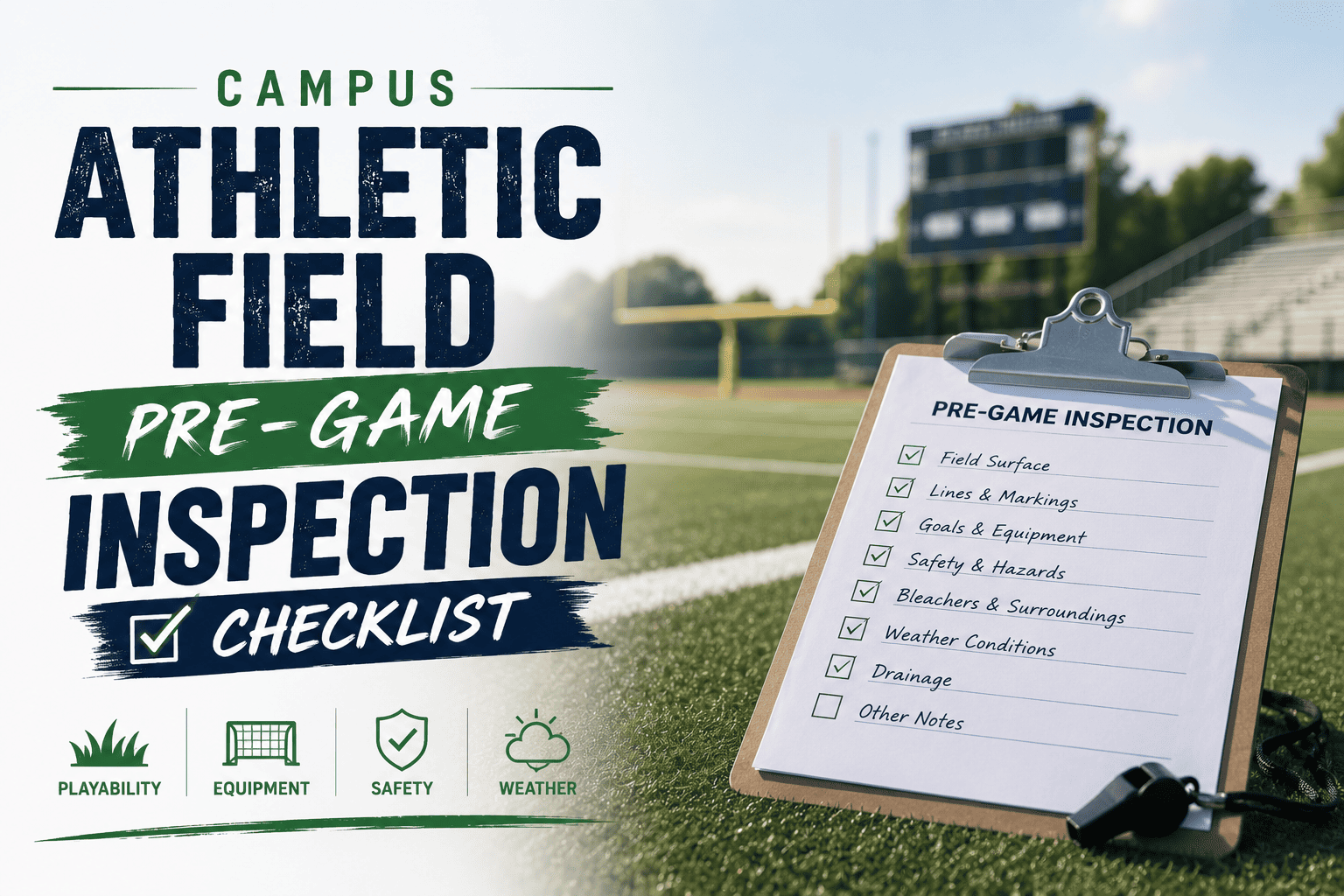
Pre-event checks apply before every game or practice. Weekly tasks cover routine maintenance. Seasonal tasks cover spring opening, fall preparation, and post-season renovation. Items marked Close Field require the field to be taken out of use until repaired. Items marked Escalate require a licensed contractor or structural engineer.
1. Turf Management
Turf quality is the primary determinant of both field safety and field usability. A field with bare spots, deep divots, or compacted soil fails two tests simultaneously — it injures players and cancels games. A $4,000 annual turf renovation programme prevents the $35,000–$80,000 complete field reconstruction that a neglected natural grass field typically requires within 5–7 years of heavy use.
Pre-EventPre-Game/Practice Field Check
WeeklyTurf Maintenance
SeasonalAnnual Turf Renovation
Field PM and Safety Checks Tracked in OxMaint
Every field is an individual asset in OxMaint — pre-event safety checks generated before every game, weekly mowing and maintenance tasks scheduled automatically, and seasonal renovation tasks triggered at the right point in the agronomic calendar. Any field closure for repairs is logged with reason, duration, and corrective action.
Pre-event visual inspections — checking for divots, holes, foreign objects, and goal post hardware — should be completed before every practice and game. Weekly maintenance tasks cover mowing, edging, and spot repairs. Quarterly inspections cover irrigation, drainage, fencing, bleacher hardware, and scoreboards. Annual turf renovation (aeration, overseeding, fertilization) should be completed on an agronomic schedule appropriate to the grass species and climate region. OxMaint auto-generates all four task frequencies for each field asset.
A proactive annual turf maintenance programme for a high school multi-sport field typically costs $4,000–$8,000 per year for aeration, overseeding, fertilization, and spot repairs. A field that loses its turf stand due to compaction, neglect, or overuse typically requires full reconstruction at $35,000–$80,000 for natural grass, or $350,000–$600,000 for synthetic turf installation. School districts that run documented PM programmes and can show 5+ years of maintenance records also carry substantially lower insurance premiums on athletic facilities.
NFPA 102 (Standard for Grandstands, Folding and Telescopic Seating, Tents, and Membrane Structures) governs bleacher and grandstand design, construction, and inspection. It requires bleachers used for public assembly to meet minimum structural, egress, and guardrail requirements. Most states also require annual inspections by a qualified inspector for bleachers over a certain capacity. Any bleacher showing signs of structural distress — corrosion at connections, bent members, or guardrail failure — should be closed to the public until a licensed structural engineer has assessed it.
ASTM F2673 (Standard Specification for Portable Soccer Goals) requires that all portable goals be anchored or weighted to prevent tip-over when not in use. The Consumer Product Safety Commission (CPSC) has documented numerous fatalities involving children and adults from tip-over of unanchored portable goals — often during unsupervised play. Schools must anchor or store portable goals whenever they are not in active supervised use. Goals left unanchored on a field overnight or on weekends are a foreseeable liability regardless of whether the field is locked.
Yes — every field is an individual asset in OxMaint with its own pre-event check schedule, weekly maintenance tasks, quarterly inspection programme, and seasonal renovation calendar. The athletics director and facilities director dashboards show which fields are event-ready, which have open repair work orders, and which fields are closed due to safety issues. The complete field maintenance history is exportable for any insurance audit, injury investigation, or board presentation. Start free today.
School Athletic Fields — OxMaint CMMS
Every Field Safe. Every Game Documented.
Pre-event
checks before every game
Seasonal
turf PM auto-scheduled
Bleacher
inspections tracked
Free
to start today
✓Pre-event field safety check generated before every game and practice
✓Field closures documented — reason, duration, and corrective action logged
✓Bleacher inspection history per structure — NFPA 102 records complete
✓Annual turf renovation programme tracked with agronomic calendar


.png)
