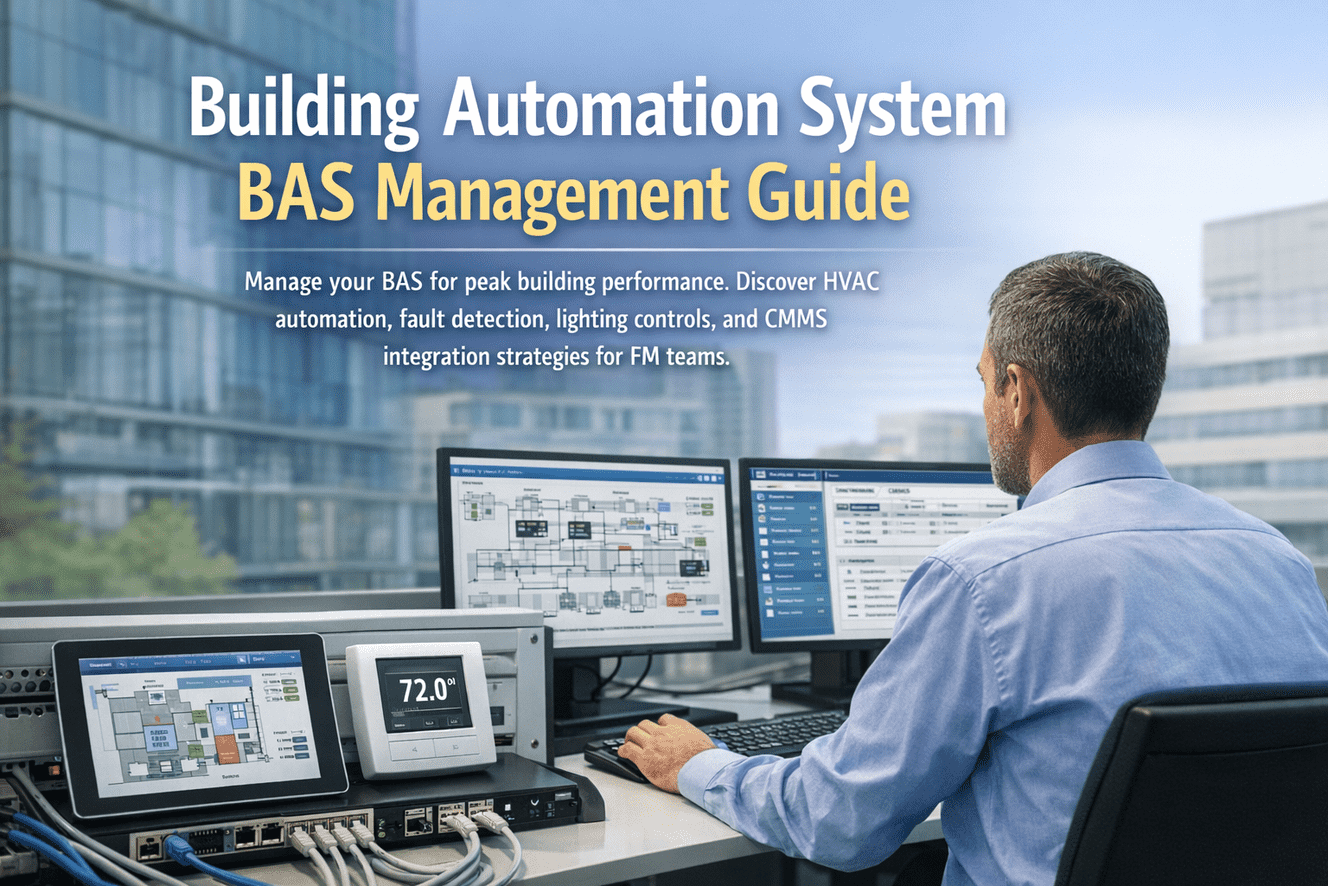
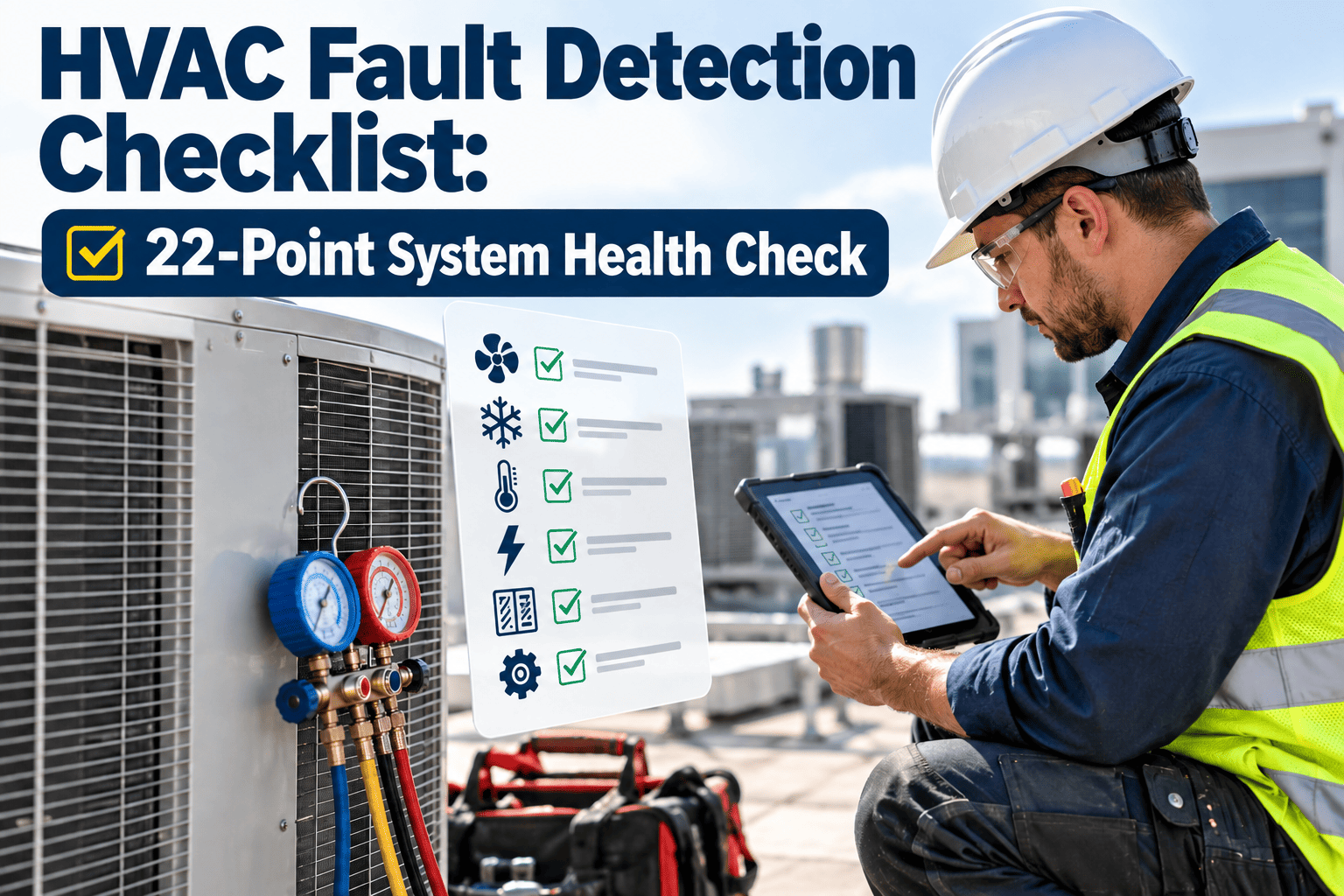
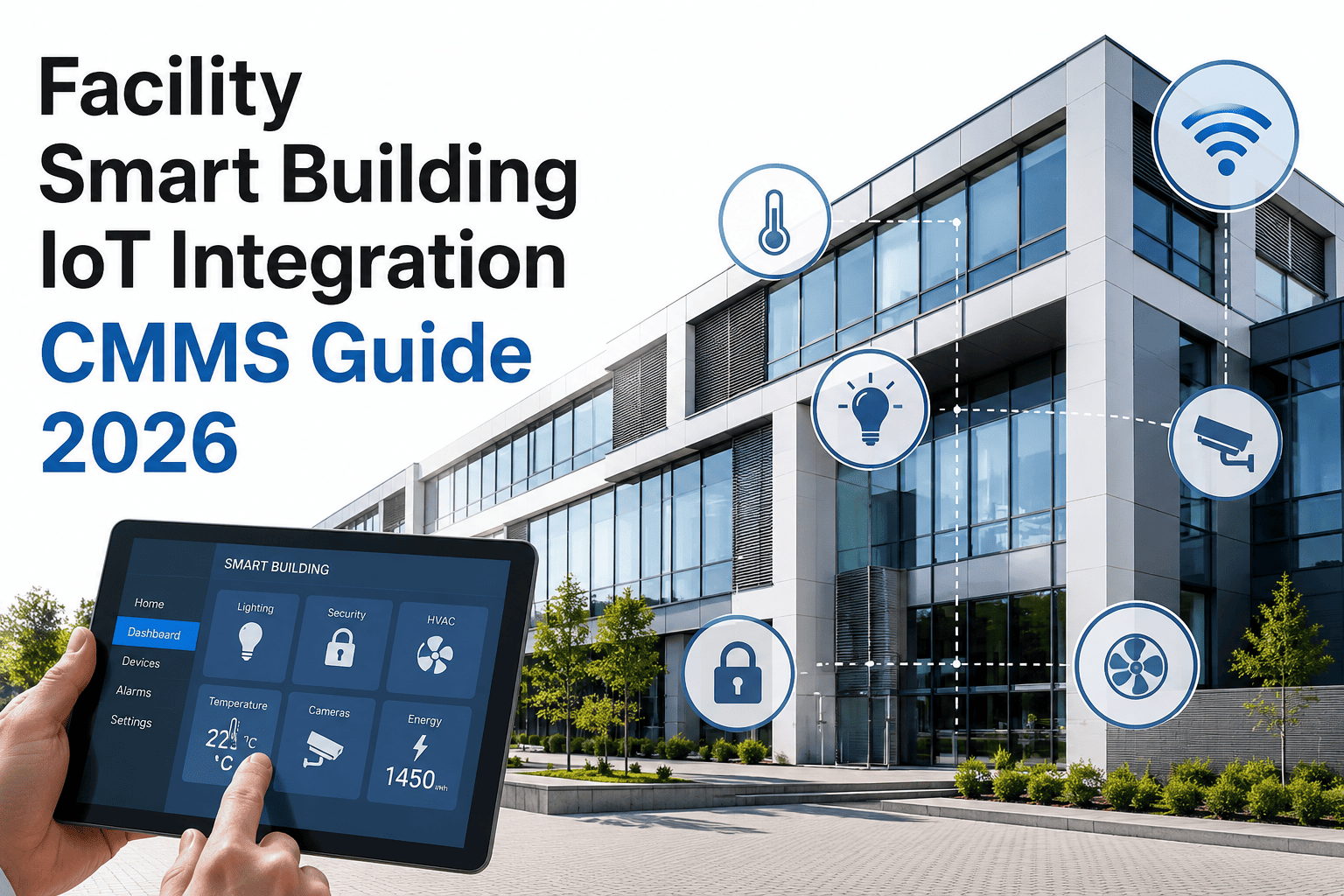
Building Automation Systems are the central nervous system of every modern commercial facility — and in 2026, most of them are significantly underperforming. The global BAS market reached $94.5 billion in 2026 and is projected to hit $191 billion by 2030, driven by energy efficiency mandates, ESG reporting requirements, and AI-powered fault detection. Yet the majority of facilities running BAS today are capturing less than 40% of the available efficiency value — because their BAS operates in isolation from their maintenance platform. HVAC anomalies go unactioned for weeks. Fault detection alerts disappear into email inboxes. Energy waste persists because nobody has linked sensor data to a work order. The gap is not the BAS itself. The gap is what happens between the BAS alert and the maintenance response. Sign up free to see how Oxmaint closes that gap, or book a demo and we will walk you through the integration live.
Connect Your BAS to a CMMS That Actually Acts on Every Alert.
Oxmaint integrates with your existing BAS — Siemens Desigo, Honeywell, Johnson Controls, Schneider Electric, and others — to convert fault detection alerts into scheduled work orders automatically. Every anomaly actioned. Every fix documented. No alerts lost in email.
$94.5B
Global BAS market in 2026 — fastest-growing segment in commercial building operations
15–35%
Energy savings achieved per building when BAS is properly implemented and actively managed
8.7%
CAGR through 2034 — regulatory mandates, ESG reporting, and AI fault detection are driving adoption
30%
Of commercial building energy is wasted — most of it preventable with active BAS management and CMMS integration
What a Building Automation System Actually Manages
A BAS is a centralised control and monitoring platform that connects a building's mechanical and electrical systems through a network of sensors, controllers, and software. Its core function is to automate decisions — adjusting temperature, controlling airflow, managing lighting levels, triggering alarms — that would otherwise require manual intervention or go unnoticed entirely.
Definition
A Building Automation System is a network of interconnected hardware and software that monitors, controls, and optimises a building's mechanical, electrical, and plumbing systems through centralised logic — reducing energy consumption, lowering operational costs, and improving occupant comfort across the full building lifecycle.
ASHRAE Guideline 36 and ISO 41001 Framework, 2024
Four System Layers
Field Layer
Sensors, actuators, and field devices collecting temperature, occupancy, pressure, and flow data in real time
Control Layer
DDC controllers and programmable logic processing field data and executing control sequences
Network Layer
BACnet, Modbus, LonWorks, and IP protocols connecting field devices to central management
Management Layer
Supervisor software, dashboards, fault detection analytics, and CMMS integration for work order generation
The 6 Core Systems a BAS Controls and Monitors
HVAC dominates 42% of BAS deployments, but a properly integrated BAS reaches every critical building system. The facilities capturing the most value are those where all six systems feed into a unified operational platform — not six separate dashboards.
HVAC Control
42% of deployments
Supply air temperature, chiller sequencing, AHU scheduling, VAV control, economiser logic, and demand-controlled ventilation — the highest-value BAS application and the largest single source of energy waste when misconfigured.
Correctly programmed BAS HVAC logic cuts energy consumption 20–30% versus manual setpoint management
Lighting Control
24% of deployments
Occupancy-based switching, daylight harvesting, scheduled dimming, and emergency circuit monitoring — with LED upgrades, integrated BAS lighting control delivers 50–70% total lighting energy savings versus uncontrolled operation.
Occupancy-linked BAS lighting saves 35–50% of lighting energy in typical commercial office environments
Security and Access
18% of deployments
Access control, CCTV integration, intrusion detection, and visitor management — with BAS integration, security events can trigger HVAC and lighting adjustments automatically for unoccupied zones after hours.
BAS-integrated access control reduces security personnel requirements by 25–40% in large commercial facilities
Fire and Life Safety
12% of deployments
Smoke detection, sprinkler system monitoring, emergency fan control, stairwell pressurisation, and lift recall — BAS monitors life safety system status continuously and triggers maintenance alerts when test intervals approach.
BAS-monitored fire systems achieve 98%+ compliance test completion versus 72% in manually scheduled programmes
Energy Management
Fastest growing segment
Sub-metering, demand management, peak load shedding, renewable integration, and WAGES (water, air, gas, electricity, steam) tracking — the layer that converts BAS data into ESG reporting and carbon compliance documentation.
Energy management systems growing at 12.4% CAGR through 2031, driven by IFRS S2 and mandatory carbon reporting
Fault Detection and Diagnostics
AI-powered in 48% of new installs
Continuous rule-based and AI-driven analysis of BAS data streams to identify equipment faults, degraded performance, sensor failures, and control sequence anomalies — the function that creates the most maintenance value when connected to a CMMS.
AI-enabled FDD deployed in 48% of new commercial facilities — reducing fault-to-repair time by 65% when CMMS-integrated
8 BAS Management Failures That Cost Facilities the Most
These are not edge cases. They are the standard operational condition in commercial buildings where the BAS was installed years ago and has been managed reactively since commissioning.
Ghost Setpoints
HVAC setpoints adjusted manually during a tenant complaint and never returned to optimal. BAS shows the modified value. Nobody knows when or why it was changed. Energy waste compounds silently for months or years.
Unactionable FDD Alerts
Fault detection generates alerts. Alerts route to an email inbox. The inbox has 340 unread items. No work order is created. The fault escalates over six weeks from a 5-minute fix to a $22,000 coil replacement.
Sensor Drift
Temperature sensors drift 2–4°C over 18–24 months without calibration. The BAS reads correct temperatures. The occupants are uncomfortable. The energy model is wrong. Nobody checks sensor calibration because there is no scheduled PM for it.
Simultaneous Heating and Cooling
One of the most common and most expensive BAS configuration faults — zones calling for both heating and cooling simultaneously due to control sequence errors. Each building with this fault wastes 8–15% of total HVAC energy. Most facility managers do not know it is happening.
Commissioning Decay
BAS was optimally commissioned at building handover. In 36 months, occupancy patterns changed, equipment was replaced, and control sequences were never updated. Performance has decayed 25–35% from commissioning baseline without any single identifiable failure event.
No PM Schedule for BAS Components
DDC controllers, field sensors, actuators, and communication modules require preventive maintenance — firmware updates, calibration, wiring inspection, and battery replacement. When these are not in the CMMS PM schedule, they fail reactively and take hours of BAS uptime with them.
Isolated ESG Data
Energy consumption data sits in the BAS. Maintenance cost data sits in the CMMS. ESG reporting requires both, together, at asset level. Without integration, sustainability reporting is a manual compilation exercise that takes days and produces data that cannot withstand audit scrutiny.
Cybersecurity Exposure
BAS platforms connected to building IP networks without network segmentation, with default credentials unchanged, and running firmware from 2018. The US GSA standardised BAS cybersecurity protocols in 2024 because building automation vulnerabilities represent genuine infrastructure risk — not a theoretical concern.
How Oxmaint Integrates with Your BAS
Oxmaint does not replace your BAS. It closes the operational gap between what your BAS detects and what your maintenance team actions — through a direct integration layer that converts BAS data into scheduled, traceable, audit-ready maintenance events.
1
BAS Detects Anomaly
Fault detection identifies a chiller delta-T variance, a supply fan current spike, or an occupancy sensor failure. Alert generated within the BAS platform.
→
2
Oxmaint Receives Signal
BACnet/IP, OPC-UA, or REST API integration routes the fault signal to Oxmaint's IoT integration layer in real time — no manual data transfer.
→
3
Work Order Auto-Created
Oxmaint generates a work order linked to the specific BAS asset — with fault description, asset history, and technician assignment. Under 1 hour from detection to work order.
→
4
Fix Executed and Documented
Technician completes the work order on mobile with photo, digital signature, and resolution notes — permanent record linked to the asset. Compliance-ready from closure.
What Oxmaint Adds to Your BAS Programme
Integration
BACnet, OPC-UA and REST API Connectivity
Connects to Siemens Desigo, Honeywell EBI, Johnson Controls Metasys, Schneider EcoStruxure, and any BACnet or OPC-UA compatible platform. No middleware required. No replacement of existing BAS hardware.
Automation
Fault-to-Work-Order in Under 60 Minutes
Every BAS fault alert that exceeds configured thresholds generates a work order automatically — assigned to the right technician, linked to the correct asset record, with full fault context attached. Zero manual translation required.
Asset PM
BAS Component Preventive Maintenance
DDC controllers, sensors, actuators, and communication modules scheduled for calibration, firmware updates, wiring inspection, and battery replacement as recurring PM work orders. The maintenance layer that most BAS operators never build.
Trend Analysis
Condition Trending Across BAS Data Streams
Chiller COP, AHU supply temperature deviation, fan current draw, and sensor calibration drift tracked against baseline over time — surfacing degradation trends weeks before they generate fault alerts or visible performance drops.
ESG Reporting
Energy and Sustainability Data From Live Operations
HVAC energy consumption, fault-related energy waste, and maintenance event data combined into investor-grade ESG reports generated directly from the Oxmaint platform. No manual compilation. No separate sustainability data collection.
Compliance
Audit-Ready BAS Maintenance Records
Every fault response, PM completion, sensor calibration, and control sequence change documented with timestamps, technician signatures, and photographic evidence. Regulatory inspection records generated in minutes from continuous operational data.
Multi-Site
Portfolio-Level BAS Performance Dashboard
Asset health, fault frequency, energy deviation, and maintenance cost across all properties simultaneously. Cross-building benchmarking identifies underperforming BAS configurations and high-cost fault patterns 6–12 months before they appear in energy reports.
Mobile
Field Access to BAS Asset Data
Technicians scan QR codes on BAS hardware to pull current fault status, calibration history, control sequence documentation, and previous work orders on mobile — from the mechanical room, not the BMS workstation. No paper manuals. No desk-bound lookups.
BAS Without CMMS Integration vs BAS + Oxmaint
The performance gap below is not theoretical. It represents the documented operational difference between buildings running BAS in isolation and buildings where BAS fault data connects directly to a structured maintenance response.
BAS Compliance Frameworks by Region — What FM Teams Must Meet
65%
Faster Fault-to-Fix
Reduction in time from BAS fault detection to completed maintenance intervention when FDD is integrated with Oxmaint work order engine
25%
Energy Cost Reduction
Average HVAC energy savings achieved in year one when BAS fault response is structured — unresolved faults are the primary source of commercial building energy waste
30%
Maintenance Cost Savings
Total maintenance cost reduction documented across commercial FM operations that integrate BAS fault data with structured CMMS-driven preventive maintenance
Days
Deployment Timeline
Oxmaint BAS integration deploys in days using BACnet/IP or REST API — no replacement of existing BAS hardware, no long implementation cycles, no consulting dependency
Your BAS Is Detecting Faults. Make Sure They Get Fixed.
Join 1,000+ commercial FM operations using Oxmaint to convert BAS fault alerts into structured work orders, track BAS component PM, generate ESG reports from live operational data, and build the audit-ready compliance records that regulatory inspections require. Free to start. Deploys in days.
Frequently Asked Questions — Building Automation System Management
Questions from facility managers, building engineers, and operations directors evaluating BAS optimisation and CMMS integration in 2026. Sign up free or book a demo to see Oxmaint's BAS integration configured for your platform.
How does Oxmaint integrate with an existing BAS without replacing it?
Oxmaint connects to your existing BAS through standard industrial protocols — BACnet/IP, OPC-UA, and REST API — without requiring any BAS hardware replacement or software modification. The integration maps BAS fault detection alerts to Oxmaint asset records and automatically generates work orders when configured threshold conditions are breached. For BAS platforms that use proprietary APIs (Siemens Desigo, Honeywell EBI, Johnson Controls Metasys, Schneider EcoStruxure), Oxmaint provides purpose-built connectors that deploy without middleware or additional infrastructure. BAS data streams continue to run on your existing BAS platform — Oxmaint adds the maintenance action layer on top of it.
Sign up free to start configuring your BAS integration, or
book a demo to see the integration architecture for your specific BAS platform.
What is BAS fault detection and diagnostics and why does it require CMMS integration to deliver value?
Fault Detection and Diagnostics (FDD) is the BAS function that analyses sensor data streams against rule-based or AI-driven models to identify equipment faults, control sequence anomalies, and degraded performance before they cause visible failures or occupant complaints. The problem is that FDD generates alerts — but alerts without a structured response process have no operational value. In buildings without CMMS integration, FDD alerts route to email inboxes or BAS dashboards that are checked intermittently. The average fault-to-intervention time in unintegrated buildings is 3–6 weeks — by which point a chiller running with degraded performance has wasted thousands of dollars in energy and moved closer to a major component failure. Oxmaint's BAS integration converts every FDD alert above threshold into a work order within 60 minutes, assigned to the correct technician with the asset history attached.
Book a demo to see the FDD-to-work-order workflow live, or
sign up free to configure it for your building today.
What preventive maintenance does BAS hardware itself require and how should it be scheduled?
BAS hardware requires structured PM that most facilities treat as optional until failure: DDC controller firmware updates (annual), field sensor calibration verification (annually for temperature and humidity sensors, more frequently for critical control points), actuator and damper end-stop testing (annual), communication module and network switch maintenance (annual), battery backup verification for controllers with local memory (annual), and UPS testing for central BAS servers and workstations (quarterly). When these are not in the CMMS PM schedule, the failure of a single miscalibrated sensor can corrupt HVAC control logic across an entire AHU zone — causing comfort complaints and energy waste that presents as a BAS software problem rather than a maintenance problem. Oxmaint maintains each BAS component as a registered asset with its own PM schedule, calibration history, and firmware record.
Sign up free to build your BAS component PM schedule, or
book a demo to see a fully structured BAS PM programme for your building type.
How does BAS and CMMS integration support ESG reporting and carbon compliance?
ESG and carbon compliance reporting requires two types of data that currently live in separate systems — energy consumption data (in the BAS) and maintenance cost and asset condition data (in the CMMS). Integration combines both datasets at the individual asset level, enabling reports that show not just how much energy a building consumed, but how much energy was wasted due to unresolved faults, how maintenance investments improved energy performance over time, and what the carbon and cost impact of deferred maintenance has been. Under mandatory frameworks like NYC Local Law 97, NABERS, and IFRS S2 carbon reporting, this integrated data set is what transforms a facility's sustainability reporting from an estimate into an auditable record. Oxmaint generates ESG performance reports directly from live operational data — no separate sustainability data collection, no manual compilation, no data that cannot be traced back to an original maintenance or sensor event.
Book a demo to see ESG reporting generated from a live BAS-integrated portfolio, or
sign up free to configure your first property today.
Oxmaint Closes the Gap Between What Your BAS Detects and What Gets Fixed.
BACnet and OPC-UA integration. FDD-to-work-order automation. BAS component PM scheduling. ESG reporting from live operational data. Multi-site portfolio dashboards. Audit-ready compliance records. All unified. All operational from day one. No replacement of existing BAS hardware. Start free — your first month costs nothing and delivers measurable results.