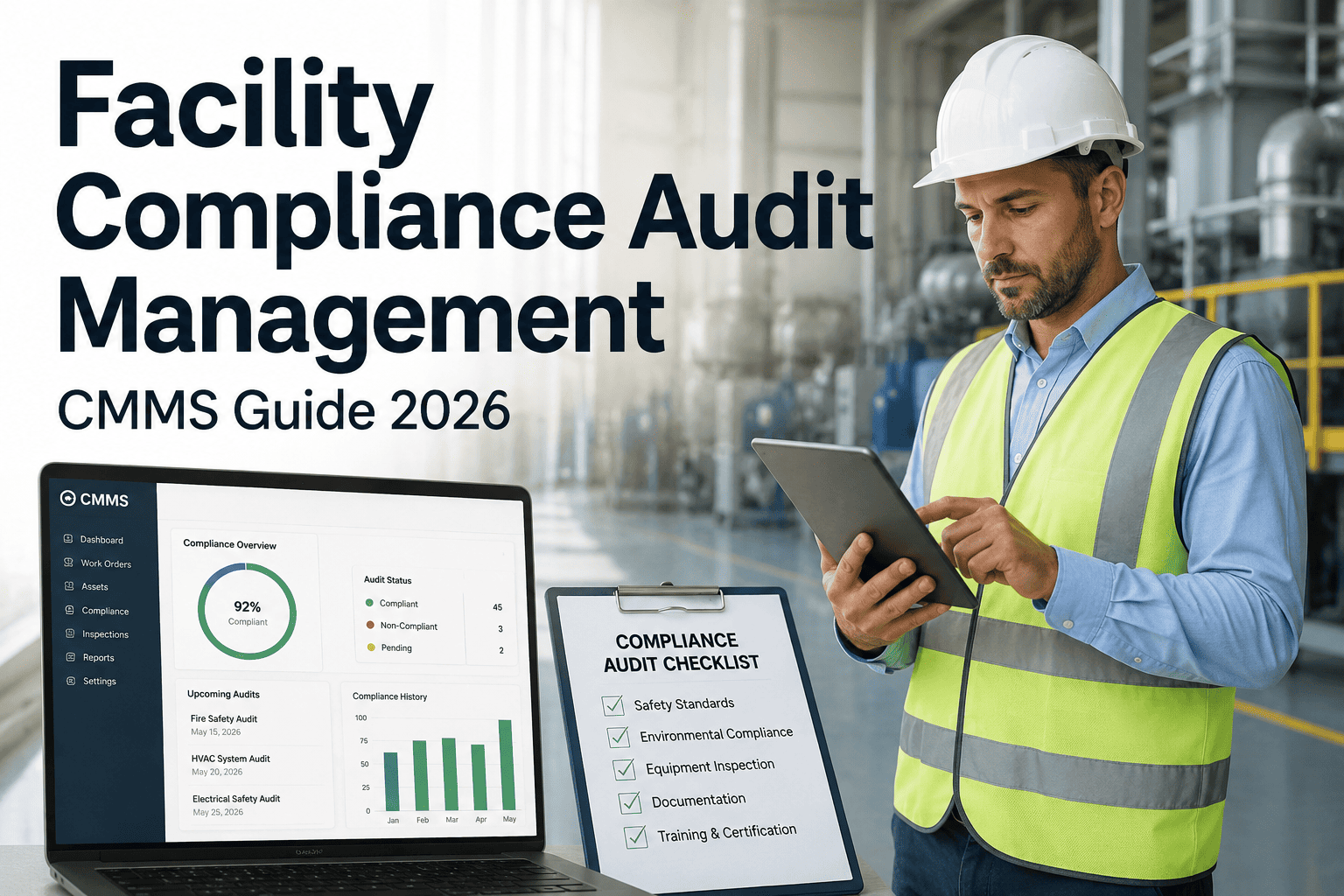
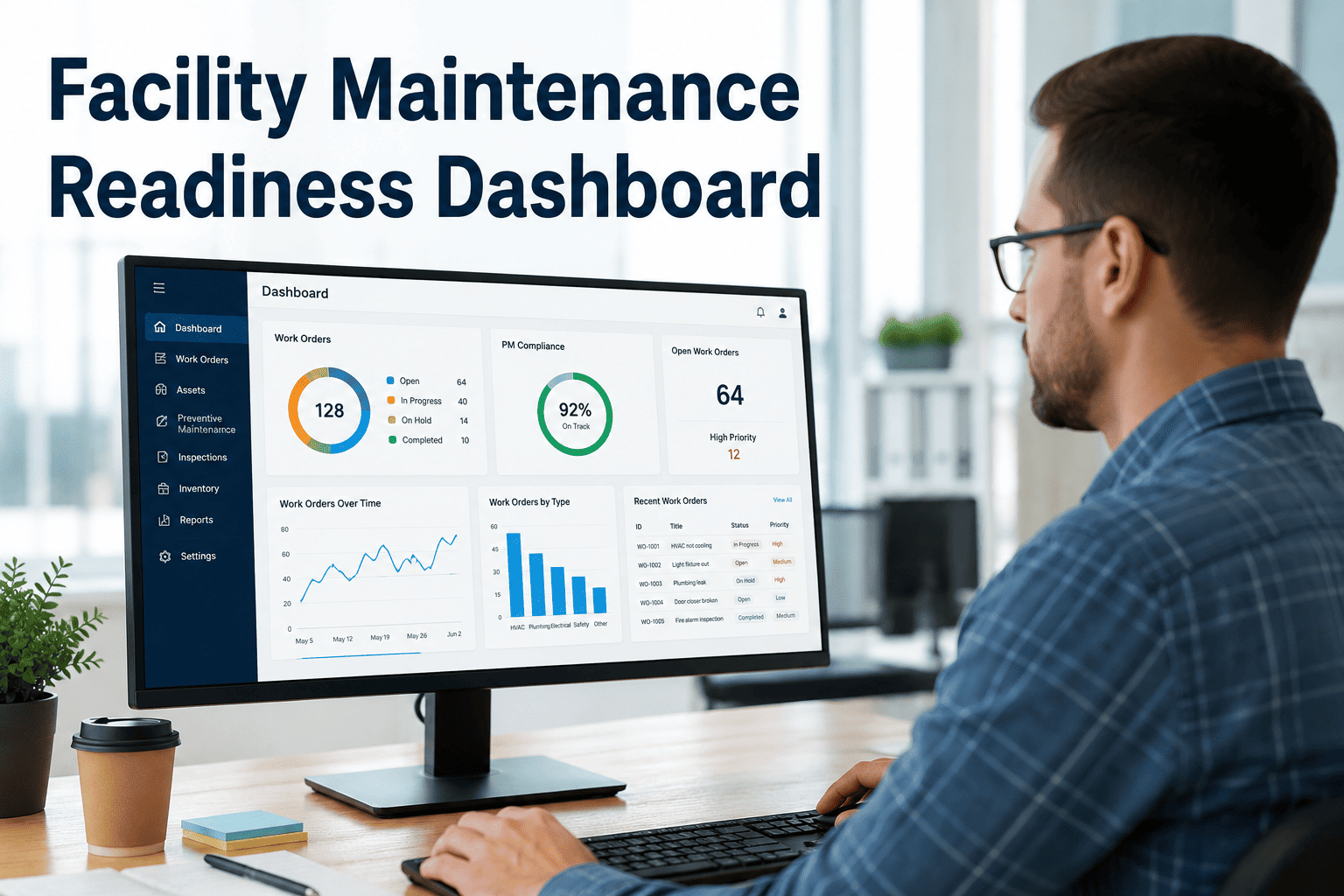
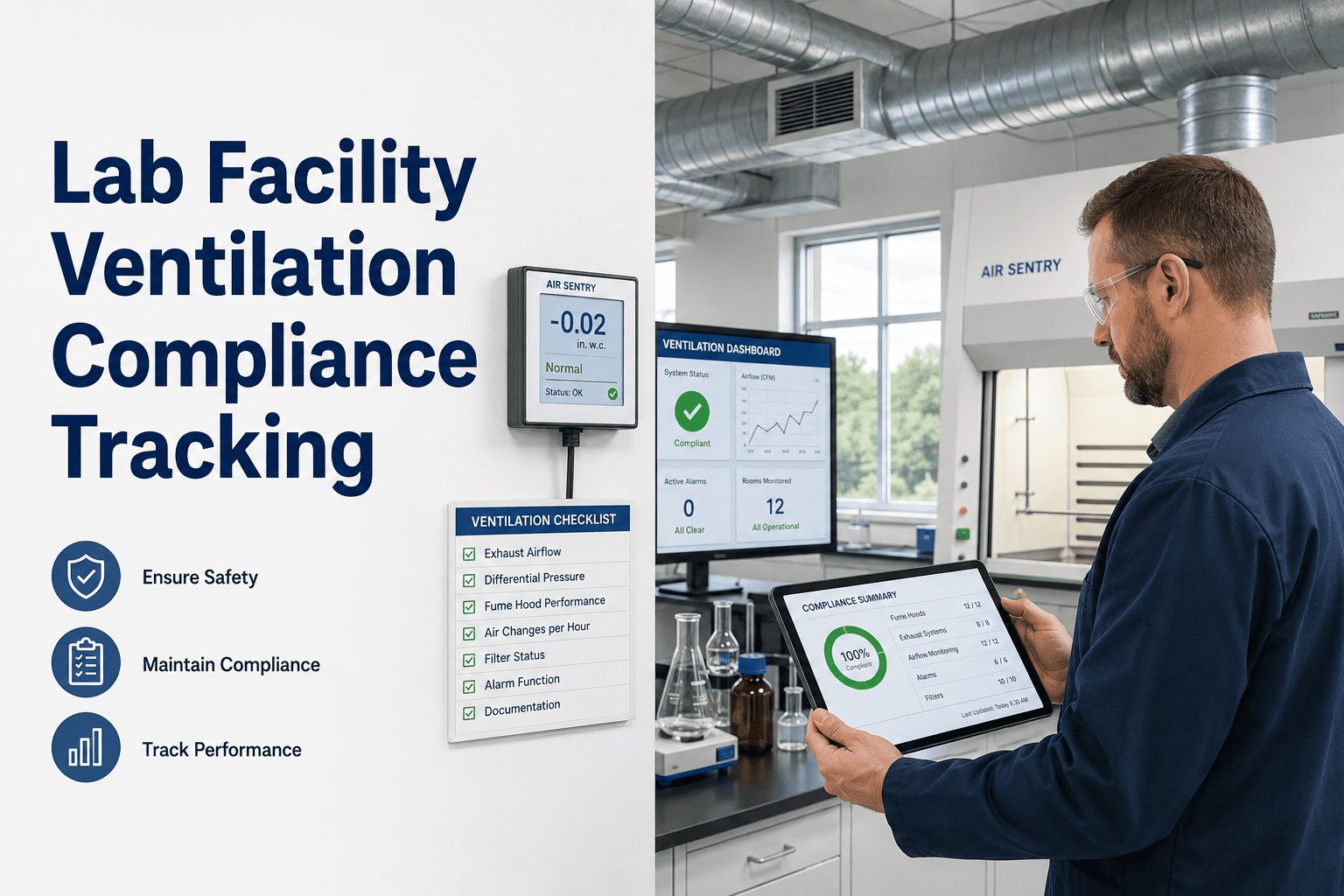
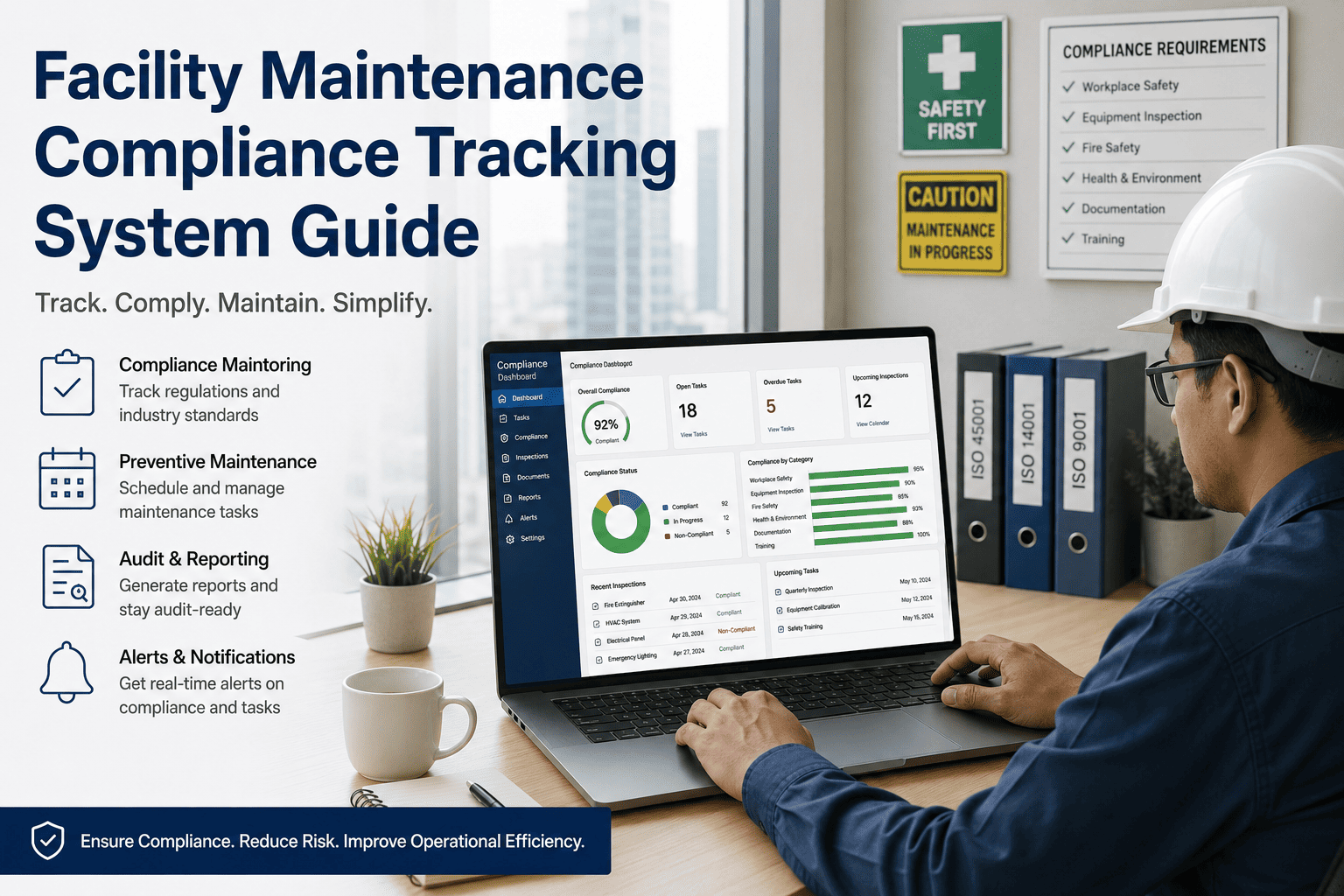
The auditor arrives on a Tuesday morning. They need three years of fire suppression inspection records, proof that every rooftop air handler received its ASHRAE-mandated filter changes on schedule, a complete history of elevator certification renewals across 14 buildings, and documentation that your Legionella water management program was executed exactly as your written plan prescribes — all within 48 hours. Your team scatters. Someone digs through filing cabinets in the mechanical room. Someone else emails three former vendors to reconstruct inspection histories. The maintenance supervisor scrolls through 6,000 work orders trying to filter the 47 that relate to backflow preventer testing. Two days later you hand over a stack of mismatched PDFs, scanned paper forms with illegible signatures, and a spreadsheet that has a suspicious three-month gap. The auditor circles it in red. This is how facilities fail compliance audits — not because the work wasn't done, but because the proof that it was done doesn't exist in any retrievable, verifiable form. Enterprise facility management software built for compliance and audit readiness eliminates this failure mode entirely. Every inspection, every test, every certification, every corrective action is captured at the point of execution, time-stamped, photo-documented, and linked to the regulatory requirement it satisfies. When the auditor arrives, you don't scramble — you sign into your platform and generate the complete audit package in minutes.
The Real Cost of Compliance Chaos
Compliance failures in enterprise facility management don't announce themselves with sirens. They compound silently — a missed fire damper inspection here, an expired elevator certificate there, a water treatment log that skipped two months because the technician who maintained it transferred to another building. Each individual lapse seems minor until a regulatory body, an insurance underwriter, or a plaintiff's attorney connects the dots. The financial exposure is staggering: OSHA penalties for serious violations now exceed $16,000 per instance and willful violations reach $163,000. EPA Clean Air Act violations carry fines up to $109,000 per day. ADA non-compliance lawsuits average $75,000–$150,000 in settlements. And none of these numbers account for the operational disruption, reputational damage, or the personal liability that falls on the facility director who signed the compliance attestation. Enterprise facilities that centralize their compliance tracking in a purpose-built platform reduce audit preparation time by 85% and eliminate the documentation gaps that cause 74% of all compliance failures.
The 39-point gap isn't about working harder. Facilities with software-driven compliance don't perform more inspections or spend more on maintenance — they capture proof of the work they already do in a format that auditors can verify instantly. The inspection happens either way. The difference is whether it exists as a retrievable, time-stamped, geo-tagged digital record or as a checkmark on a clipboard that disappeared six months ago.
The Compliance Domains Enterprise Facilities Must Cover
Regulatory compliance in facility management spans at least eight distinct domains, each with its own governing bodies, inspection cycles, documentation requirements, and penalty structures. Managing these in silos guarantees gaps. A unified platform lets your team sign in once and manage every compliance obligation from a single dashboard with automated scheduling and real-time status visibility.
Fire alarm panel inspections, sprinkler system flow tests, fire pump testing, extinguisher maintenance, fire damper inspections, emergency lighting checks, and smoke control system verification. NFPA 25, NFPA 72, and NFPA 80 define specific inspection frequencies ranging from weekly to five-year cycles — each requiring documented proof of completion with pass/fail outcomes and corrective actions for deficiencies found.
Annual full-load safety tests, five-year pressure relief testing, monthly operational inspections, and certificate renewals with the Authority Having Jurisdiction. ASME A17.1 and local codes require documented proof of Category 1 and Category 5 testing with specific data points recorded — car speed, governor tripping speed, buffer stroke, and safety gear application.
ASHRAE 62.1 ventilation rate compliance, filter change documentation, coil cleaning records, economizer functionality testing, and refrigerant tracking under EPA Section 608. Facilities above 50 lbs of refrigerant must track leak rates and document all additions — exceeding thresholds triggers mandatory repair and reporting timelines.
ASHRAE Standard 188 requires a documented water management program with routine monitoring of cooling towers, hot water systems, decorative fountains, and other water features. Documentation must include temperature readings, biocide treatment logs, Legionella culture results, and corrective actions taken when readings exceed thresholds.
NFPA 70E requires documented electrical safety programs including arc flash risk assessments updated every five years, PPE assignments for each panel and disconnect, lockout/tagout procedures for every energy source, and infrared thermography scans of electrical distribution equipment. Every protective device must have documented trip testing on manufacturer-recommended intervals.
Hazardous waste storage and disposal tracking under RCRA, above-ground and underground storage tank inspection logs under EPA regulations, stormwater pollution prevention plans with documented inspections, asbestos and lead-based paint management plans with condition assessments, and refrigerant management documentation. Each carries specific retention requirements ranging from 3 to 30 years.
How Audit-Ready Software Actually Works
The difference between a facility management system that happens to store data and one that's built for compliance and audit readiness comes down to five core capabilities. Each one addresses a specific failure mode that causes facilities to fail audits, receive citations, or face enforcement actions.
Every compliance task is linked to its governing regulation, specific code section, required frequency, and documentation standard. When you create a fire damper inspection task, the system knows it maps to NFPA 80 Section 19.4, requires annual frequency, needs pass/fail documentation with photo evidence of deficiencies, and triggers a corrective action workflow within the code-required timeframe when a deficiency is found. The template doesn't just remind you to do the work — it defines exactly what constitutes compliant documentation of that work.
The system maintains the complete inspection calendar for every regulated asset — weekly fire pump churn tests, monthly emergency generator load bank tests, quarterly sprinkler inspections, annual elevator safety tests, five-year fire damper inspections. It auto-generates work orders at the code-required frequency, assigns them to qualified technicians, escalates overdue tasks through your management chain, and flags any asset whose inspection window is approaching expiration. No spreadsheet tracking. No calendar reminders. No human memory required.
Every completed inspection generates an immutable digital record that includes the technician identity, GPS-verified location confirming they were physically at the asset, date and time stamps that can't be backdated, structured data fields capturing the specific measurements or observations required by the governing code, photo and video evidence attached to the record, and the technician's digital signature. This isn't a checkbox on a clipboard — it's courtroom-grade documentation that proves the work was done, when it was done, who did it, and what they found.
When an inspection reveals a deficiency — a fire damper that doesn't close, a cooling tower with elevated Legionella counts, an arc flash label that doesn't match current incident energy calculations — the system automatically creates a corrective action work order, assigns priority based on the regulatory severity, sets a deadline based on code-required remediation timelines, and escalates through your management chain if the deadline approaches without resolution. The complete chain from discovery through remediation through re-inspection is documented as a single linked compliance case.
When the auditor arrives, you generate a complete compliance package filtered by regulation, date range, building, or asset type. The package includes every inspection record, corrective action case, certification document, and trend analysis organized exactly the way the auditor needs to review it. What used to take your team 40–80 hours of frantic document hunting now takes 5 minutes and a PDF export. The auditor sees a professionally organized, digitally verified compliance history — not a box of paper.
Paper Trail vs. Digital Compliance Platform
The Compliance Performance Gap
These numbers represent the measured difference between enterprise facilities using integrated compliance management platforms and those relying on manual, paper-based, or fragmented digital systems. The data comes from industry benchmarks across commercial real estate, healthcare, higher education, and government facility portfolios.
Platform Capabilities Built for Enterprise Compliance
Enterprise compliance management requires capabilities that go beyond basic work order tracking. These are the platform features that separate audit-ready facility management from generic maintenance software. Every feature listed here is available when you sign up and configure your compliance environment.
Real-time compliance status across every building in your portfolio. Color-coded indicators show which sites are fully compliant, approaching deadlines, or overdue — sortable by regulation, building, region, or risk priority.
Code requirements change. When NFPA updates inspection frequencies or OSHA revises reporting thresholds, the platform flags affected task templates and provides guidance on required adjustments to your compliance program.
Track third-party vendor certifications, insurance currency, and inspection documentation within the same platform. Vendors submit their reports directly into your compliance system — no email chasing, no missing attachments, no format inconsistencies.
Every record, edit, approval, and status change is logged with user identity and timestamp in a tamper-evident audit trail. Records cannot be backdated, altered, or deleted — providing the evidentiary integrity that regulators and legal counsel require.