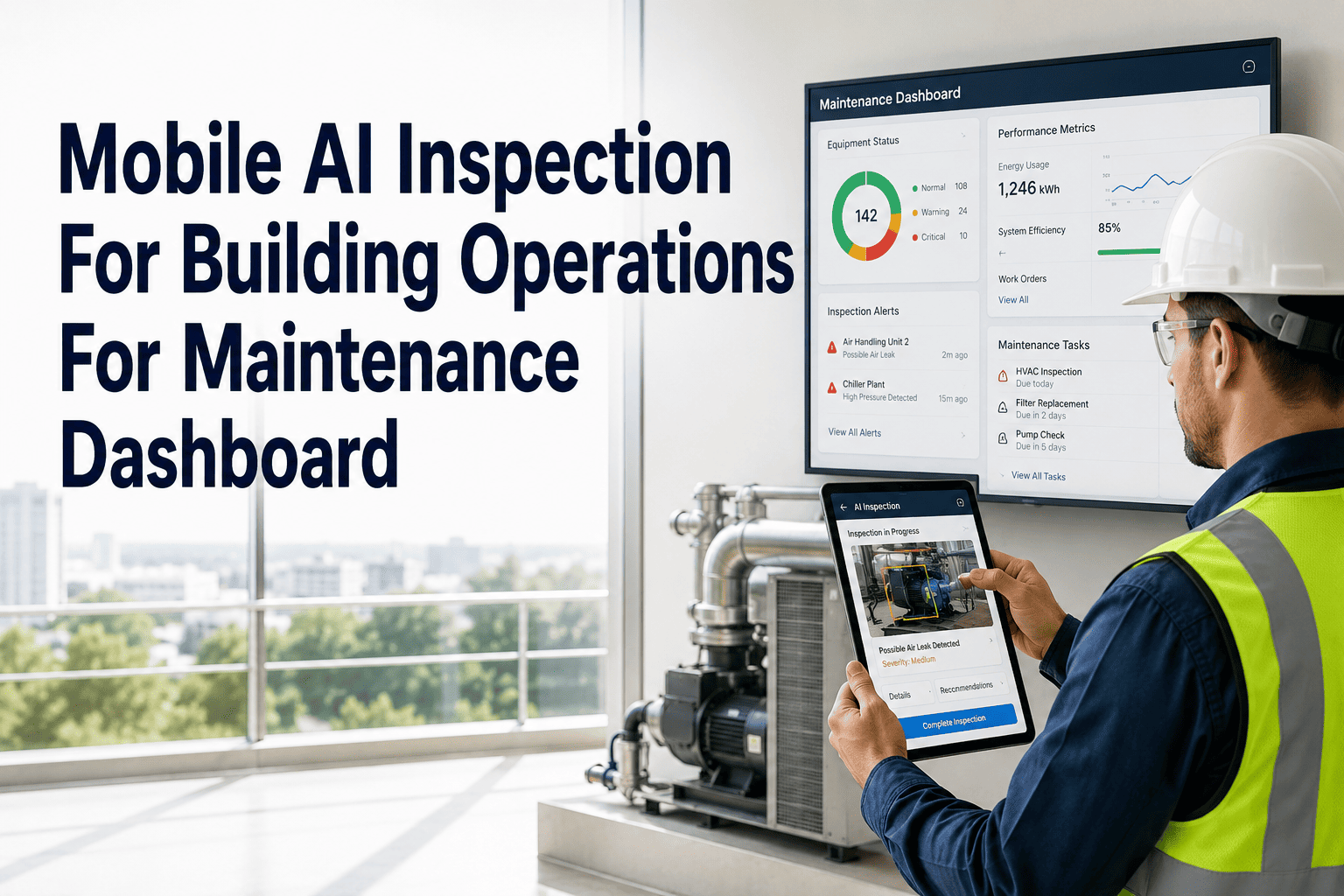
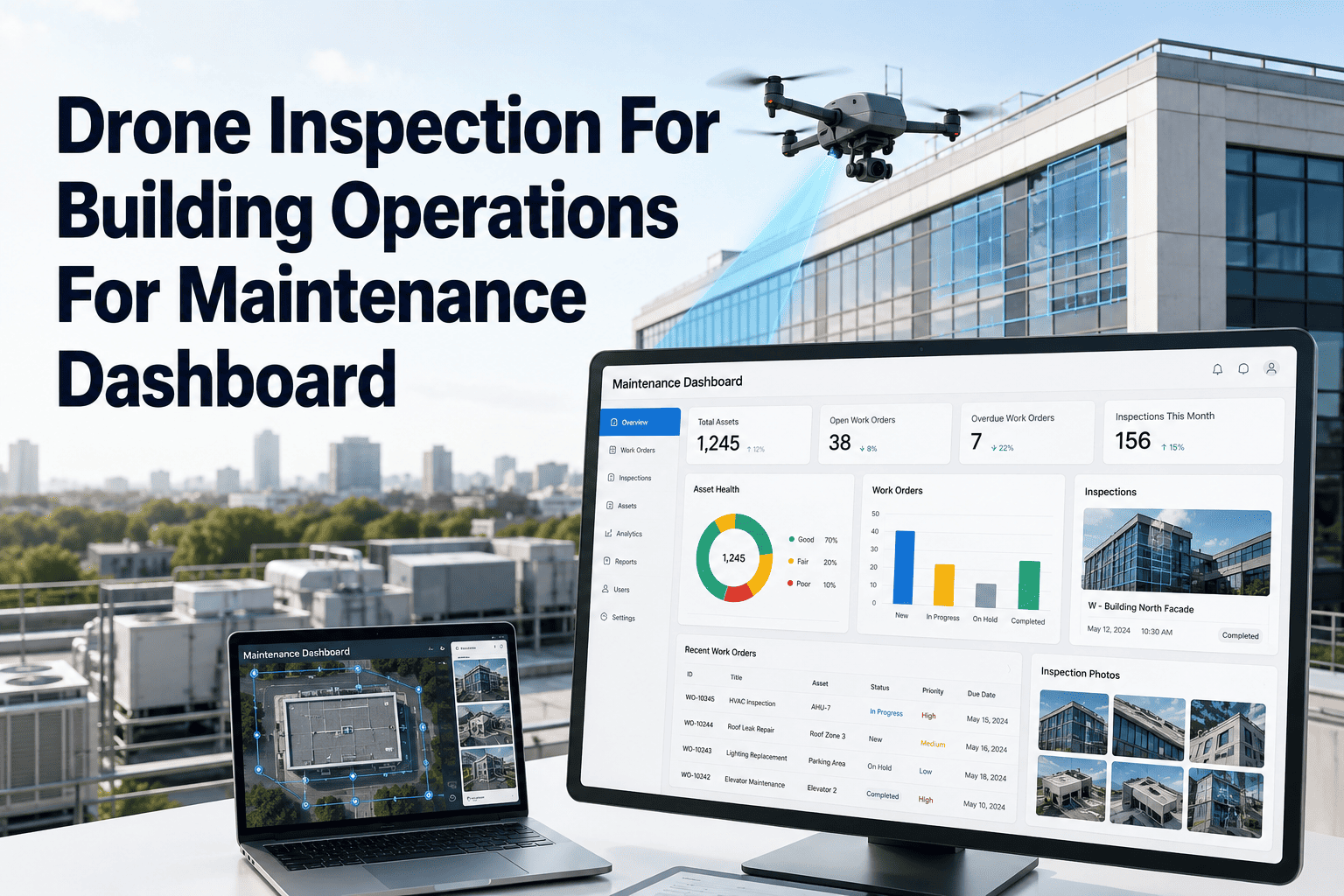
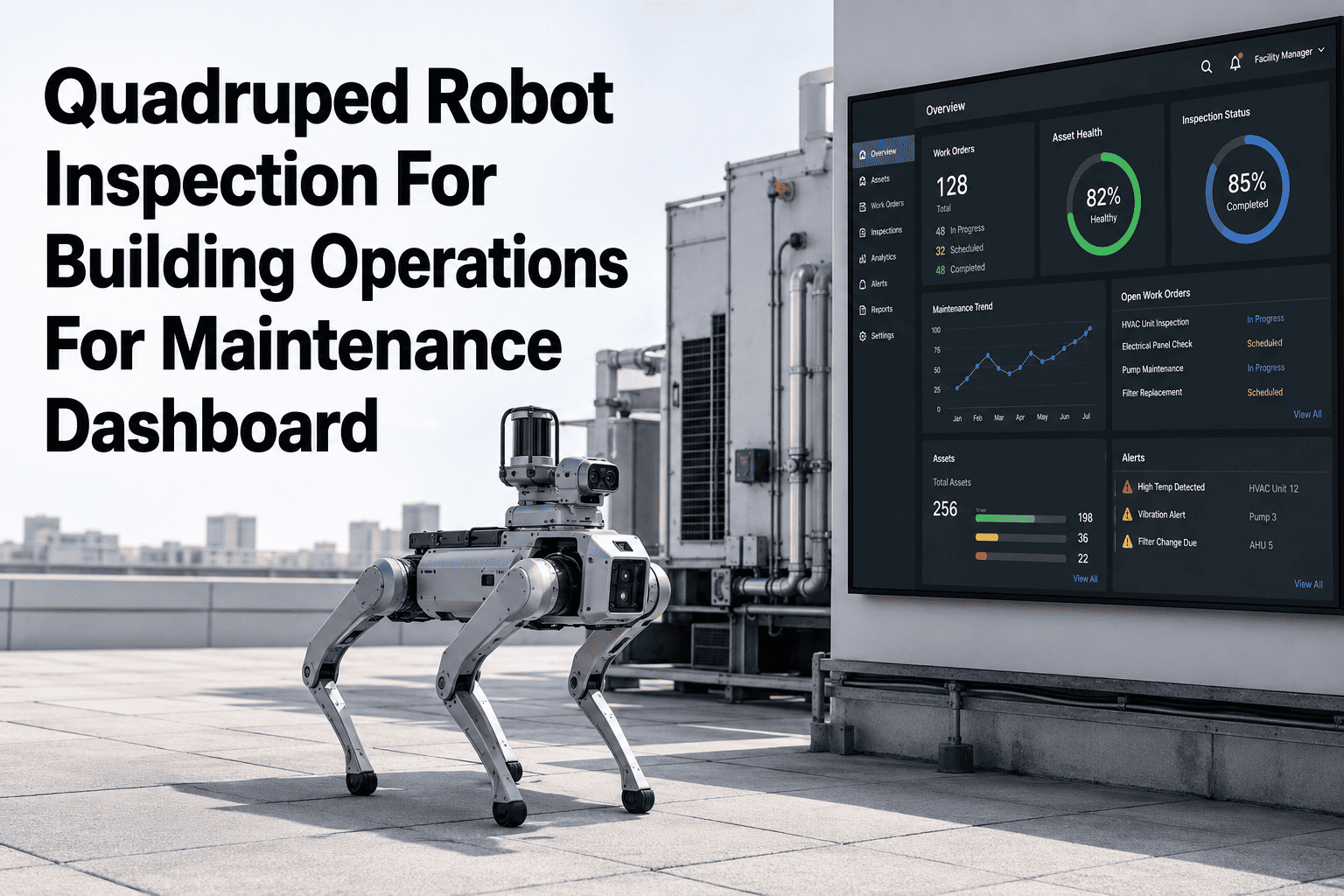
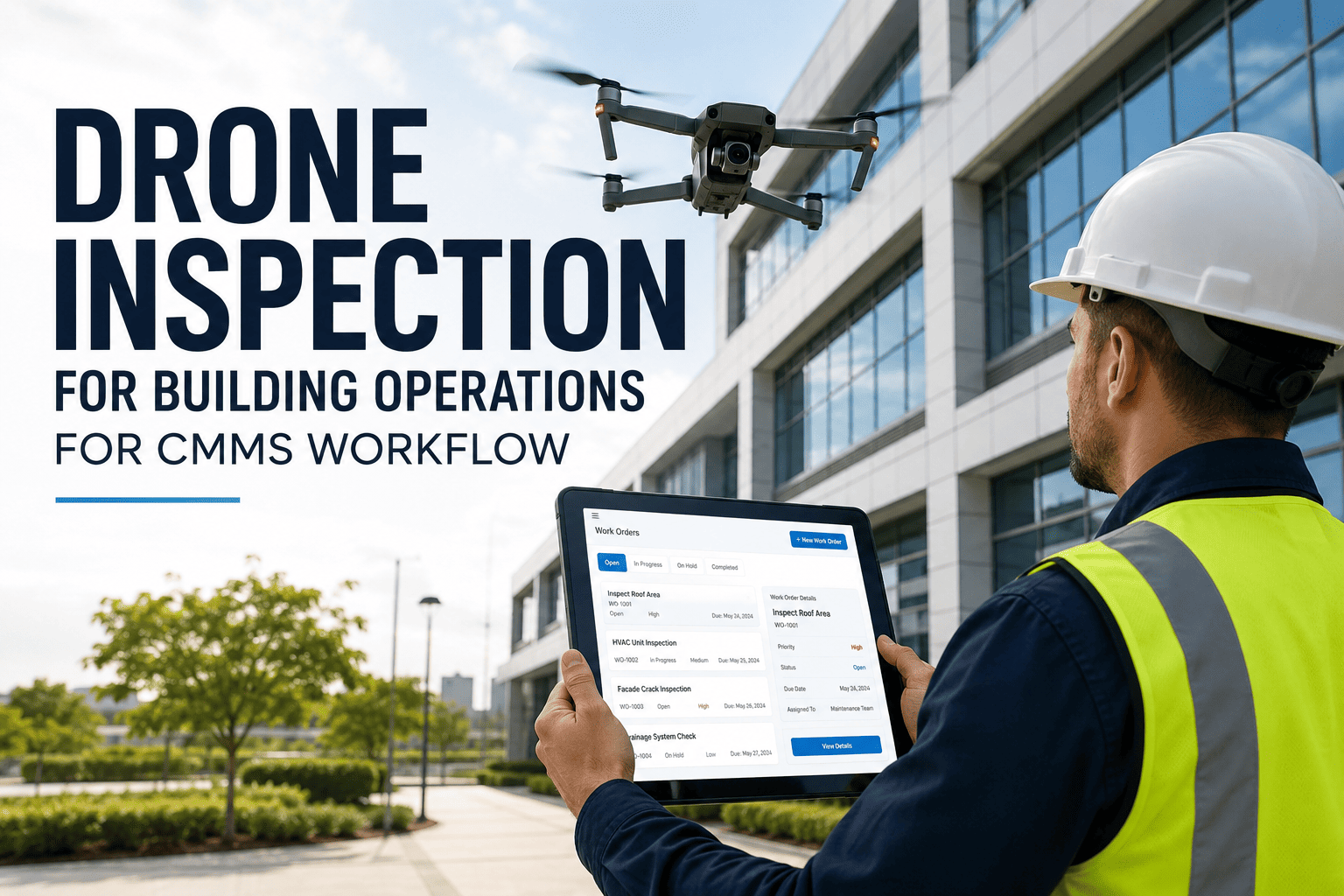
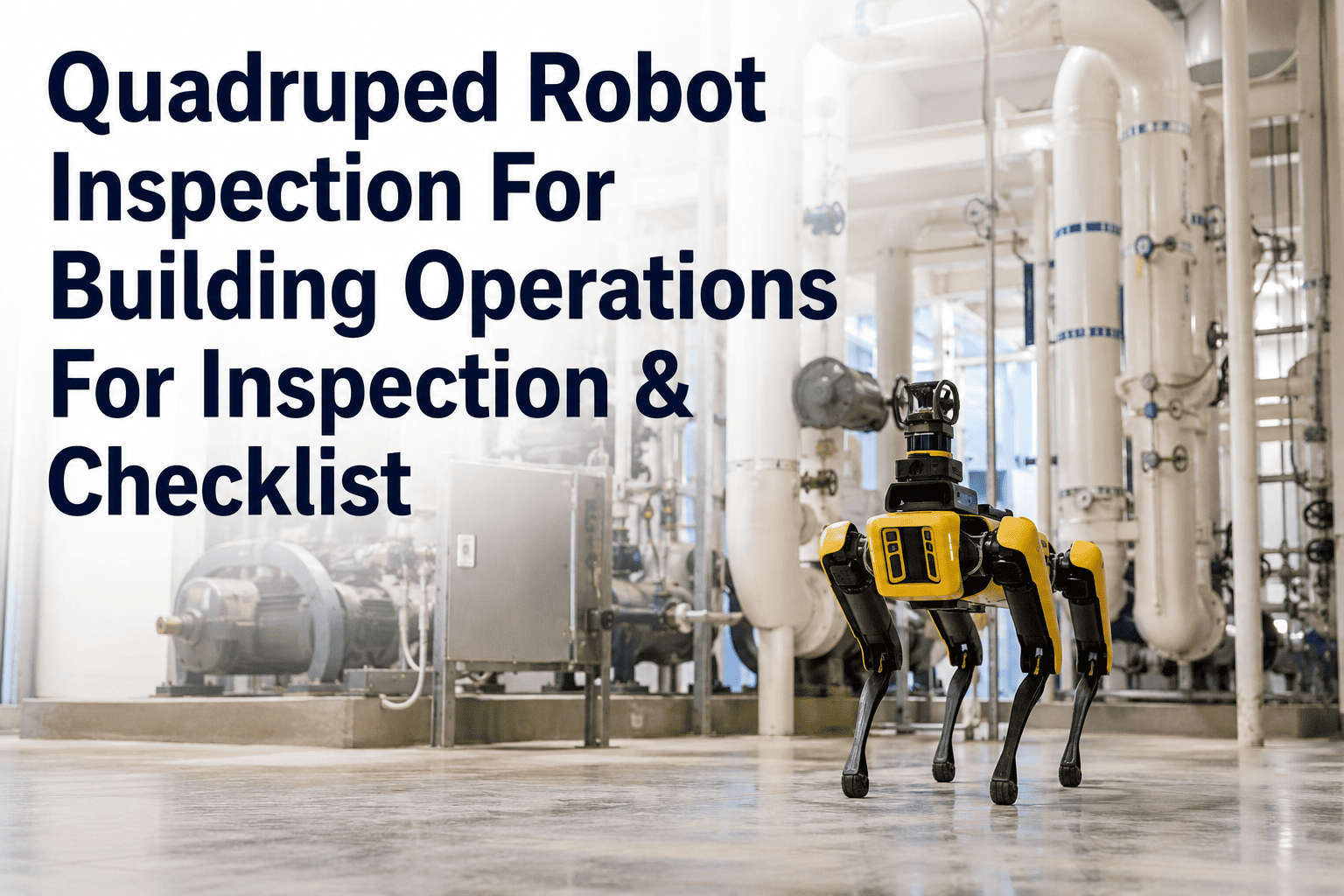
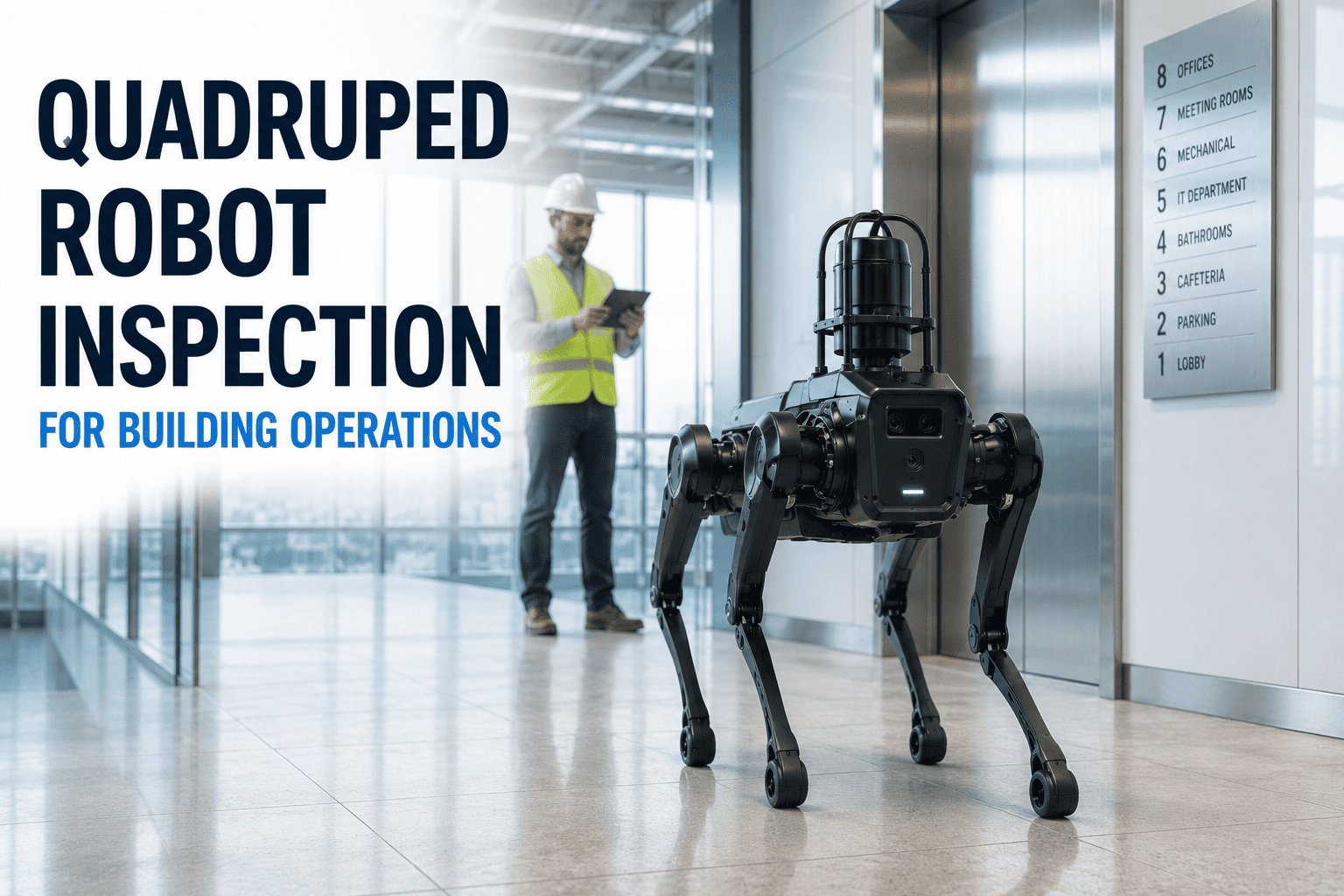
A building engineer walking the same mechanical room route every shift eventually stops really seeing it — gauge readings get glanced at, not read, and a developing problem can sit in plain sight for weeks before anyone notices the change. Quadruped robots solve a narrower problem than people expect: they don't replace judgment, they replace the repetitive, low-attention parts of a walk-round so a technician's time goes to the readings that actually need a second look. Built correctly, a robot inspection round feeds straight into a CMMS, turning a thermal anomaly or a gauge drift into a logged finding and, where it matters, an open work order before anyone manually reviews the footage. See how robot inspection data lands in a work order. None of this requires buying a fleet on day one — most building teams start with a single route and grow from there.
Quadruped Robot Inspection · Building Operations Playbook
Run The Same Inspection Route Every Shift, Without The Drop In Attention
Connect quadruped robot inspection data to OxMaint so thermal, visual and gauge findings turn into prioritized work orders automatically, not footage nobody has time to review.
The Rollout Playbook
Four Phases To Get Robot Inspection Data Into Your CMMS
Pick two or three high-value zones to start, not the whole building
Confirm docking station placement and charge cycle
Flag any access-controlled doors the robot has to pass through
2
Define What Counts As A Finding
Agree thermal delta thresholds for each equipment type
Decide which gauge types need automated reading
Set a confidence threshold for auto-flagging versus human review
3
Connect Findings To Work Orders
Route flagged findings into OxMaint with photo or thermal evidence attached
Set severity-based priority on auto-created work orders
Assign a reviewer for anything below the confidence threshold
Compare each run against the last for automatic change detection
Track time saved against manual walk-rounds for four to six weeks
Add a second route only once the first one is proven
Industry Signal
What Published Robot Inspection Deployments Are Actually Showing
60%
fewer manual inspection rounds once robot patrol covers the routine routes
130,000+
industrial assets inspected across publicly documented robot fleet deployments
Months → Days
reported drop in repair turnaround when issues are caught on routine robot passes
24/7
coverage possible for zones that are unsafe or impractical to check this often manually
Finding To Action
What Happens Once A Robot Flags Something
| Finding Type | Detected By | Severity | CMMS Action |
|---|
| Thermal hot spot on motor | Thermal imaging payload | High | Work order auto-created, dispatched same shift |
| Gauge reading drift | Visual gauge-reading model | Medium | Logged to asset history, reviewed next shift |
| Unusual acoustic signature | Acoustic sensor payload | Medium | Flagged for inspection, no auto work order |
| Surface defect or leak | Camera and change detection | Low to Medium | Added to inspection backlog for next PM cycle |
Where It Pays Off
The Zones Where Robot Inspection Earns Its Cost Fastest
Mechanical & Plant Rooms
Repetitive gauge and thermal checks on pumps, chillers and motors, run on a fixed schedule.
Roof, Facade & Hard-To-Reach Areas
Routine visual checks without scaffolding, lifts or repeated access requests.
Confined Or Hazardous Spaces
Zones with restricted human access still get checked on schedule, without exposure risk.
After-Hours & Weekend Patrol
Coverage continues when staffing thins out, instead of inspections waiting for Monday.
Expert Review
The most common rollout mistake is trying to cover an entire building on week one instead of proving value on a single high-cost route first. Network coverage along the path matters more than most teams expect — a route that loses connectivity in a back corridor will produce gaps in the data that look like missed maintenance later. Robots are very good at consistency and very bad at judgment calls, so keep a human reviewing anything near the confidence threshold rather than letting it auto-close.
Inspection Program Lead · OxMaint Implementation Advisory
14-Day Pilot · One Route To Start
Connect Your First Inspection Route To A Real Work Order Queue
Bring the findings from whichever robot platform you already use, or are evaluating, straight into OxMaint.
Frequently Asked Questions
Quadruped Robot Inspection — Common Questions
Do we need to own a robot fleet, or can we use a vendor's robot data?
Either works. OxMaint connects to inspection data from your own robot or from a vendor-managed inspection service, since the goal is getting findings into a work order queue, not which platform captured them.
See how inspection data connects in.
How does OxMaint decide which findings are worth a work order?
Severity and confidence thresholds are agreed during setup per asset type, so a high-confidence thermal hot spot can auto-create a work order while a borderline acoustic reading routes to a reviewer instead.
Walk through the threshold settings.
What happens if a finding turns out to be wrong or low-confidence?
Anything below the agreed confidence threshold routes to a human reviewer instead of auto-creating a work order, and reviewer decisions feed back into refining future thresholds for that asset type.
See the review queue in a free trial.
Can robot inspection fully replace our compliance inspections?
Generally no — most regulated inspections still require a qualified person to sign off. Robot rounds work best as the routine layer between formal inspections, catching drift earlier rather than replacing the compliance step itself.
Discuss your compliance requirements.
How long before the first inspection route is actually running?
A single mapped route with thresholds and work order rules in place is typically ready within two to three weeks, since it reuses whatever robot or sensor data already exists rather than waiting on new hardware approvals.
Start mapping your first route.
Free Trial · No Credit Card · Works With Your Robot Platform
Stop Reviewing Footage Manually. Let Findings Become Work Orders.
Book a 30-minute walkthrough and we'll map your first inspection route to a live work order workflow.