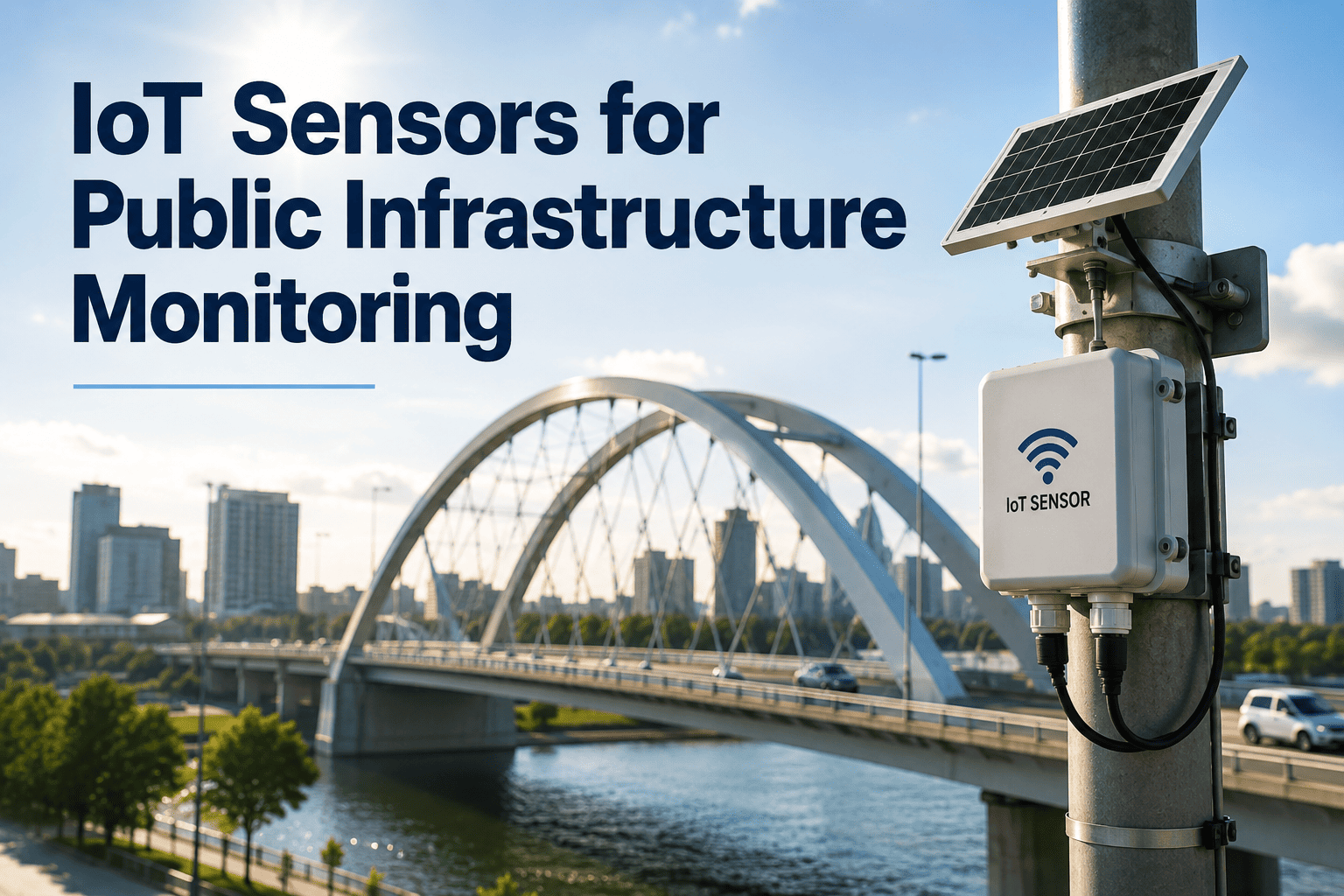
Managing municipal infrastructure across sprawling service territories creates operational blind spots that centralized teams rarely anticipate. When one water main sensor reports optimal pressure while the adjacent district experiences recurring leaks, the problem isn't the pipes—it's connectivity. When identical traffic signal controllers perform inconsistently across intersections, the gap isn't in the hardware—it's in real-time data integration. For municipal operations teams, IoT platforms aren't simply technology upgrades; they're the nervous system connecting thousands of dispersed assets into a single, intelligent infrastructure network that citizens depend on every day.
The stakes are substantial. Municipalities without integrated IoT monitoring experience 45% more emergency infrastructure failures compared to those using connected sensor networks, according to industry analysis. Reactive infrastructure repairs cost 6-10x more than IoT-driven preventive interventions, and replacing deteriorating assets without condition data can cost $100,000-$500,000 per major system component. The 2024 Smart City Infrastructure Report found that 67% of city managers cite aging infrastructure as their top operational challenge, while 54% struggle with insufficient real-time visibility across distributed assets. These constraints make IoT integration not just a modernization priority but a public service imperative.
Transform government operations through IoT-connected infrastructure
The IoT ecosystem for a typical municipality involves monitoring performance data across multiple infrastructure categories at hundreds of distributed locations. A mid-sized city might manage 3,000+ individual IoT sensor nodes, each with unique data transmission patterns, calibration requirements, and maintenance schedules. Without centralized visibility, operations leadership operates blind—unable to identify which assets consistently meet performance targets and which require immediate intervention. Field crews spend hours each week manually inspecting infrastructure that could be remotely monitored, while budget officers make capital replacement decisions without context about actual asset condition or remaining useful life.
Critical infrastructure adds another layer of complexity. Unlike park lighting where brief outages cause inconvenience, water treatment systems and emergency communications networks must maintain absolute reliability around the clock. A sensor failure at a pump station during a flooding event isn't a maintenance issue—it's a public safety crisis. IoT platforms for critical municipal systems require different alert thresholds, escalation procedures, and redundancy monitoring than standard facility operations. Municipalities managing both critical and non-critical infrastructure need IoT systems sophisticated enough to handle these varying requirements while maintaining portfolio-wide visibility.
The Hidden Costs of Disconnected Municipal Infrastructure
The financial impact of disconnected municipal infrastructure extends far beyond obvious inefficiencies. When each department tracks asset conditions independently with paper logs and spreadsheets, maintenance scheduling becomes reactive guesswork. When water pressure anomalies go undetected, pipe bursts destroy roadways and disrupt neighborhoods. When traffic signal timing relies on fixed schedules rather than real-time flow data, congestion compounds and fuel waste escalates across entire corridors. Industry research indicates that municipalities with integrated IoT platforms achieve 30-40% reductions in infrastructure maintenance costs through optimized scheduling—savings that fragmented operations forfeit entirely.
Critical systems bear particular exposure to these costs. Water distribution networks must maintain consistent pressure and quality across thousands of miles of pipe. A pressure anomaly that goes undetected for hours can escalate into a main break affecting thousands of residents. Municipalities managing critical utility systems should explore centralized IoT monitoring platforms that provide real-time condition indicators rather than periodic manual inspections.
IoT Implementation Framework for Municipal Infrastructure
Implementation in municipal organizations faces unique challenges. Government procurement cycles, inter-departmental coordination, and public accountability requirements add layers of complexity that private-sector IoT deployments never encounter. Yet the greatest barrier often isn't bureaucracy—it's cultural resistance to data-driven operations in organizations where institutional knowledge has guided decisions for decades. Research on smart city transformation suggests that organizations generally change in two ways: through top-down mandate from elected leadership (often politically charged and disruptive) or through demonstrated pilot success that builds internal advocacy (slower but more sustainable). Successful IoT implementations typically require elements of both: clear executive commitment combined with phased deployment that allows staff to experience benefits firsthand.
The change management dimension deserves particular emphasis. One metropolitan water authority dedicated a full-time IoT coordinator solely to training field crews on the new monitoring platform and documenting standard operating procedures for alert response. A regional transportation department held departmental workshops, stakeholder briefings, and monthly progress dashboards throughout implementation. This level of communication investment may seem excessive, but it directly correlates with adoption success. Organizations considering IoT infrastructure integration should schedule strategy consultations to understand requirements before committing resources.
Operationalizing IoT data — a municipal framework with smart sensors
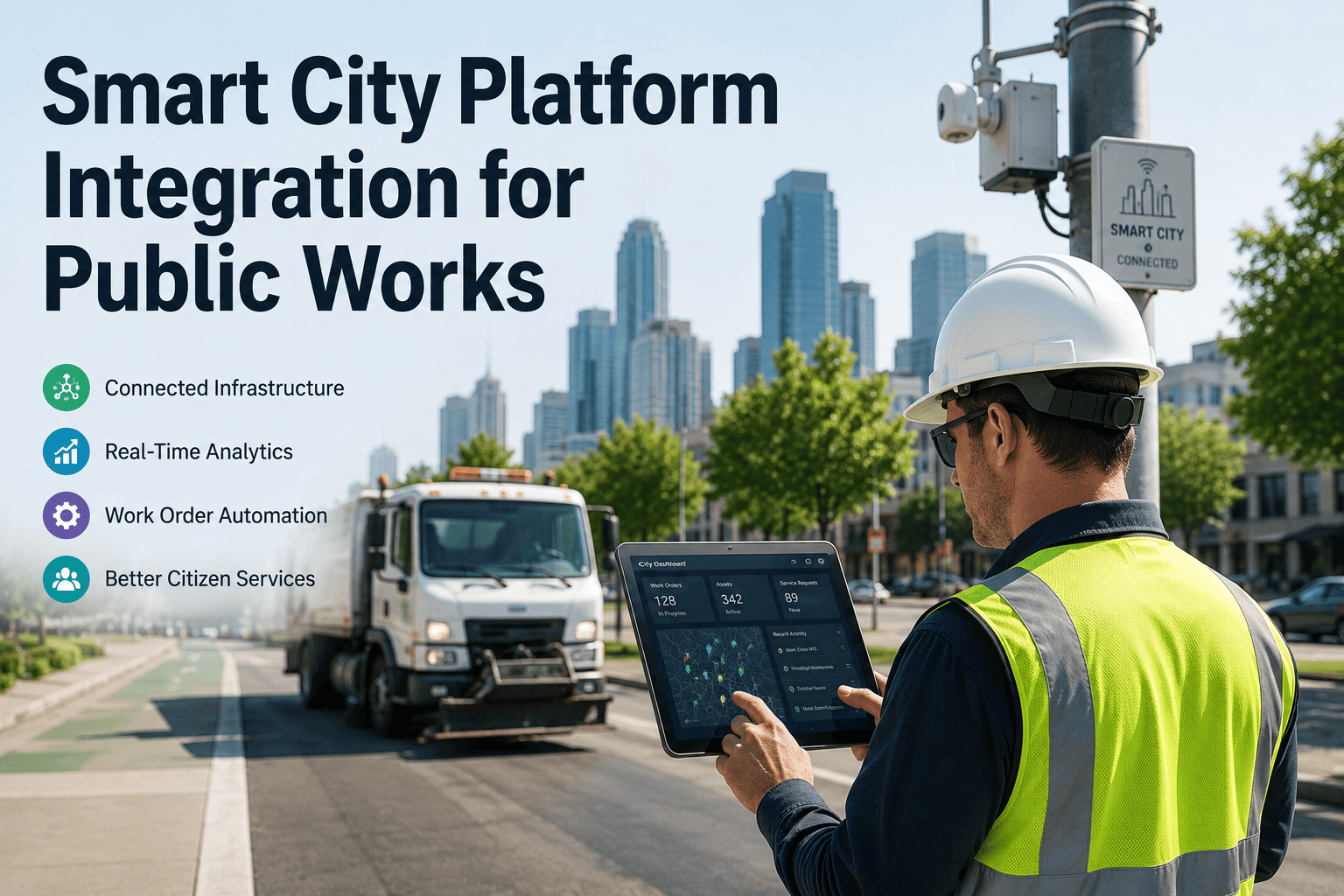
The integration of smart sensors with centralized management platforms creates unprecedented visibility into infrastructure health. When pressure sensors detect water main stress patterns, the platform can automatically generate a work order, assign it to the nearest available crew, track response time, and document completion—all without manual intervention. This automated workflow produces objective performance data: which pipe segments maintain structural integrity, which intersections require frequent signal adjustments, which buildings consume disproportionate energy. Over time, predictive analytics can identify patterns invisible to human observers: correlations between weather events and infrastructure stress, seasonal demand variations, or early indicators of component degradation.
For critical infrastructure, this intelligence becomes particularly valuable. Predictive maintenance powered by IoT can identify water main weaknesses weeks before rupture, allowing repairs during scheduled windows rather than during emergency flooding events. Municipalities using predictive infrastructure maintenance report 35-50% reductions in unplanned service disruptions and 30% decreases in maintenance costs. Leading cities use IoT dashboards to predict when aging pipes, bridges, and utility systems might fail, alerting crews before citizens experience service interruptions. Regional water authorities achieved 45% reduction in emergency repair calls through IoT-driven predictive systems. These results depend not just on technology deployment but on operations teams capable of responding to predictive alerts—making integrated CMMS workflows a critical enabler of IoT value realization.
Critical IoT Parameters for Municipal Infrastructure
Municipal IoT dashboards require specificity that generic monitoring platforms often lack. A pressure anomaly alert at a park irrigation system isn't the same urgency as the same alert at a hospital water supply—the public health impact differs by orders of magnitude, and dashboards should reflect this reality. Best practice involves tiered alert configurations that escalate based on infrastructure criticality, with corresponding response protocols that create genuine accountability across departments.
Equally important is the requirement for dashboards to integrate with maintenance management systems. When infrastructure operates on digital work order platforms, IoT data that triggers alerts but doesn't generate actionable work orders creates visibility without value. Dashboard configurations should specify automatic work order generation thresholds, ensuring that detected anomalies translate into scheduled interventions before they become emergency failures.
Performance Monitoring and Continuous Improvement
Operational hours / total required hours
Active sensors / total deployed sensors
kWh per service unit vs. baseline
Scheduled tasks completed on time
Time from IoT alert to crew dispatch
Service disruptions per 10,000 residents
Effective infrastructure performance monitoring requires both quantitative metrics and operational context. The scorecard framework above provides a starting point, but each municipality's specific requirements may warrant adjustment. Water utilities might weight system uptime more heavily during summer peak demand; transportation departments might prioritize alert response times during winter weather events. The key is consistency—applying the same evaluation criteria across all assets serving similar criticality levels enables meaningful comparison and capital planning decisions based on objective performance rather than assumptions about equipment age.
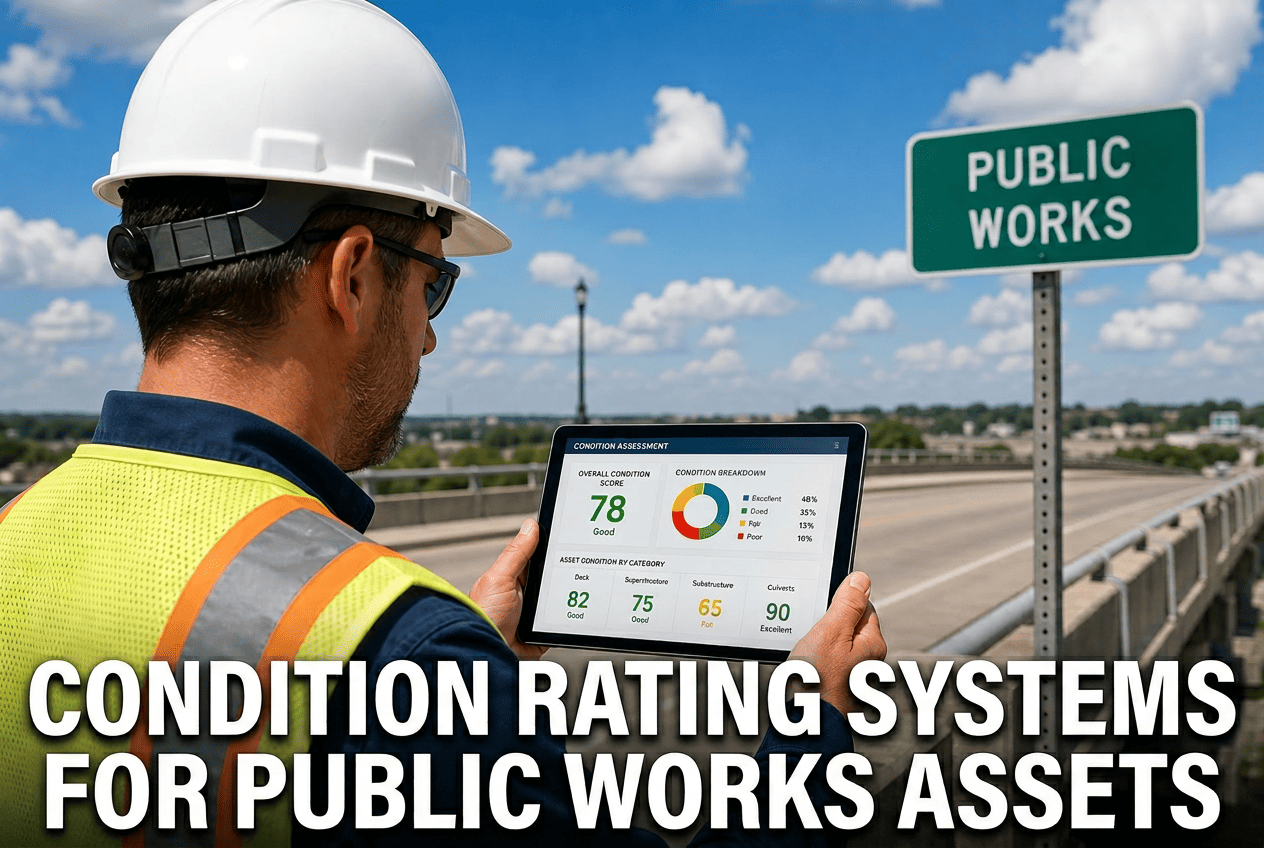
Historical trend analysis and predictive modeling provide valuable supplementary intelligence. Seasonal pattern recognition captures performance variations that spot readings miss. Multi-year degradation curves reveal when assets approach failure thresholds well before catastrophic events occur. Combined with real-time IoT sensor data on operating parameters, this multi-source approach creates comprehensive infrastructure intelligence that supports both tactical decisions (which assets need immediate attention) and strategic choices (which systems should be prioritized for replacement in next year's capital improvement program).
Conclusion: From Reactive Repairs to Predictive Infrastructure Management
The transition from fragmented, department-level infrastructure monitoring to centralized, data-driven IoT platforms represents one of the highest-impact operational improvements available to municipal operations teams. The technology exists—78% of progressive cities have already integrated IoT, cloud-based CMMS platforms eliminate legacy system constraints, and predictive analytics can transform raw sensor data into actionable maintenance intelligence. The challenge isn't technological; it's organizational. Change management requires sustained leadership commitment, comprehensive training, and patience as departments adapt to new workflows and cross-functional collaboration.
For critical systems within municipal portfolios, the stakes are particularly high. Infrastructure reliability directly impacts public health during emergencies, asset performance determines whether citizens experience uninterrupted services or preventable disruptions, and compliance documentation protects against regulatory exposure and liability. Municipalities that master IoT integration gain operational advantage through lower costs, higher reliability, and emergency readiness that enables effective crisis response. Those that continue monitoring infrastructure reactively—responding to failures rather than preventing them, making capital decisions without condition data—will find themselves increasingly vulnerable in an environment where aging systems and skilled workforce shortages make proactive management not just desirable but essential for maintaining public trust.