Water Distribution System Maintenance: Valves, Hydrants, and Pipeline Integrity
By Taylor on February 28, 2026
A six-inch gate valve on Elm Street hadn't been exercised in nine years. When a 12-inch transmission main ruptured at 3:20 AM on a January morning, the emergency crew needed that valve to isolate the break and protect 2,400 downstream customers. It wouldn't budge. The valve bonnet had corroded to the stem, the packing was fused solid, and the operating nut rounded off on the third attempt. Instead of isolating one block, the crew shut down an entire pressure zone — 8,700 customers lost water for 14 hours, a hospital activated its emergency water plan, and three schools closed. The repair that should have cost $18,000 and taken four hours became a $340,000 emergency spanning two days, six crews, and a boil-water advisory that made the evening news. Every dollar of that cost traces back to one unmaintained valve. Schedule a consultation to explore how systematic distribution maintenance prevents the failures that turn routine breaks into municipal emergencies.
This guide provides water utility managers, distribution superintendents, and public works directors with a comprehensive framework for maintaining the vast underground networks that deliver safe drinking water to every tap. We cover valve exercising programs, hydrant maintenance and flushing, pipeline condition assessment, meter management, and GIS-integrated CMMS platforms that transform reactive firefighting into proactive infrastructure stewardship. Utilities ready to modernize their distribution maintenance can start their free trial today.
Distribution System Reality
The Hidden Crisis Beneath Municipal Streets
6B+
gallons of treated water lost daily through distribution system leaks across the U.S. — AWWA estimates
35%
of distribution valves found inoperable when needed during emergencies due to lack of exercising programs
$1T
in water infrastructure investment needed over next 25 years to maintain safe distribution — EPA estimate
Source: AWWA State of the Water Industry Report, EPA Drinking Water Infrastructure Needs Survey
The distribution system is the largest and most expensive asset any water utility owns — typically 80-90% of total infrastructure value — yet it receives the least systematic maintenance attention. Buried underground and out of sight, thousands of valves, hydrants, and pipeline segments deteriorate silently until they fail catastrophically. Utilities that shift from reactive break-and-fix to proactive, GIS-integrated maintenance programs reduce main breaks 40-60%, cut emergency repair costs by half, and extend pipeline service life by decades.
Distribution System Assessment: Knowing What You Have Underground
You cannot maintain what you have not inventoried. Most utilities have incomplete records of their distribution systems — missing valve locations, unknown pipe materials, and hydrants that exist on paper but have been paved over. A comprehensive asset inventory is the non-negotiable foundation for every maintenance program that follows. GIS-integrated CMMS platforms link every asset to its geographic location, material, age, condition, and complete maintenance history.
Distribution Maintenance Program Framework
From asset inventory to predictive infrastructure management
01
GIS Asset Inventory
GPS-locate every valve, hydrant, meter, and pipeline segment; record material, diameter, age, and condition
02
Criticality Ranking
Score each asset by failure consequence: customers affected, proximity to hospitals/schools, pipe material, and break history
03
PM Program Design
Build valve exercising cycles, hydrant inspection routes, flushing schedules, and pipeline assessment programs by zone
04
Predictive Analytics
Use break history, soil conditions, pipe material, and age data to predict failures and prioritize replacement capital
A data-driven assessment reveals that most utilities have 20-40% more valves than their records indicate, 5-15% of hydrants are out of service, and pipe material records are inaccurate for 10-30% of the network. Correcting these gaps before building maintenance programs prevents crews from wasting time searching for assets that have been relocated, buried, or abandoned.
Reactive vs. Proactive: The Real Cost of Deferred Maintenance
Every distribution system manager faces the same resource tension: fix what's broken today or invest in preventing tomorrow's failures. The math overwhelmingly favors prevention. Reactive main break repairs cost 3-5x more than proactive maintenance activities that prevent those breaks — before accounting for water loss, customer disruption, road damage, and regulatory consequences.
Reactive Break-Fix vs. Proactive Maintenance Programs
✗
Reactive / Break-Fix
Wait for failures, dispatch emergency crews
Valves discovered inoperable during emergencies
Hydrants found dry during fire response
No pipeline condition data until catastrophic failure
Water loss unquantified until rate increases needed
Regulatory compliance documentation assembled in crisis
Capital planning based on guesswork
3-5x Higher Cost & Uncontrolled Risk
✓
Proactive / CMMS-Driven
Systematic valve exercising on 3-5 year rotation
Every valve confirmed operable before emergency need
Annual hydrant inspection, flow testing, and flushing
Non-revenue water tracked, leaks detected proactively
Audit-ready compliance documentation from day one
Data-driven capital improvement prioritization
40-60% Fewer Breaks & Predictable Costs
The financial case is unambiguous. A typical emergency main break repair costs $8,000-$25,000 in direct costs — excavation, pipe, labor, road restoration — plus $5,000-$15,000 in indirect costs including water loss, boil-water advisories, customer credits, and overtime. A proactive valve exercising visit costs $50-$150 per valve. Exercising 1,000 valves annually costs less than two emergency main break repairs.
Distribution Maintenance Performance Metrics
Documented results from utilities implementing proactive programs
50%
Fewer Main Breaks
With Valve Exercising Programs
35%
Water Loss Reduction
Through Leak Detection & Repair
98%
Hydrant Reliability
Annual Inspection Programs
25yr
Extended Pipe Life
Condition-Based Renewal
Core Maintenance Programs: Valves, Hydrants, and Pipelines
Distribution system maintenance operates on three interdependent pillars: valve operability ensures emergency isolation capability, hydrant maintenance guarantees fire protection readiness, and pipeline condition assessment drives long-term infrastructure renewal decisions. Neglecting any one pillar undermines the other two — inoperable valves make main break repairs catastrophically worse, dry hydrants put lives at risk, and uninspected pipelines fail without warning.
Distribution Maintenance: The Four Pillars
Valve Exercising
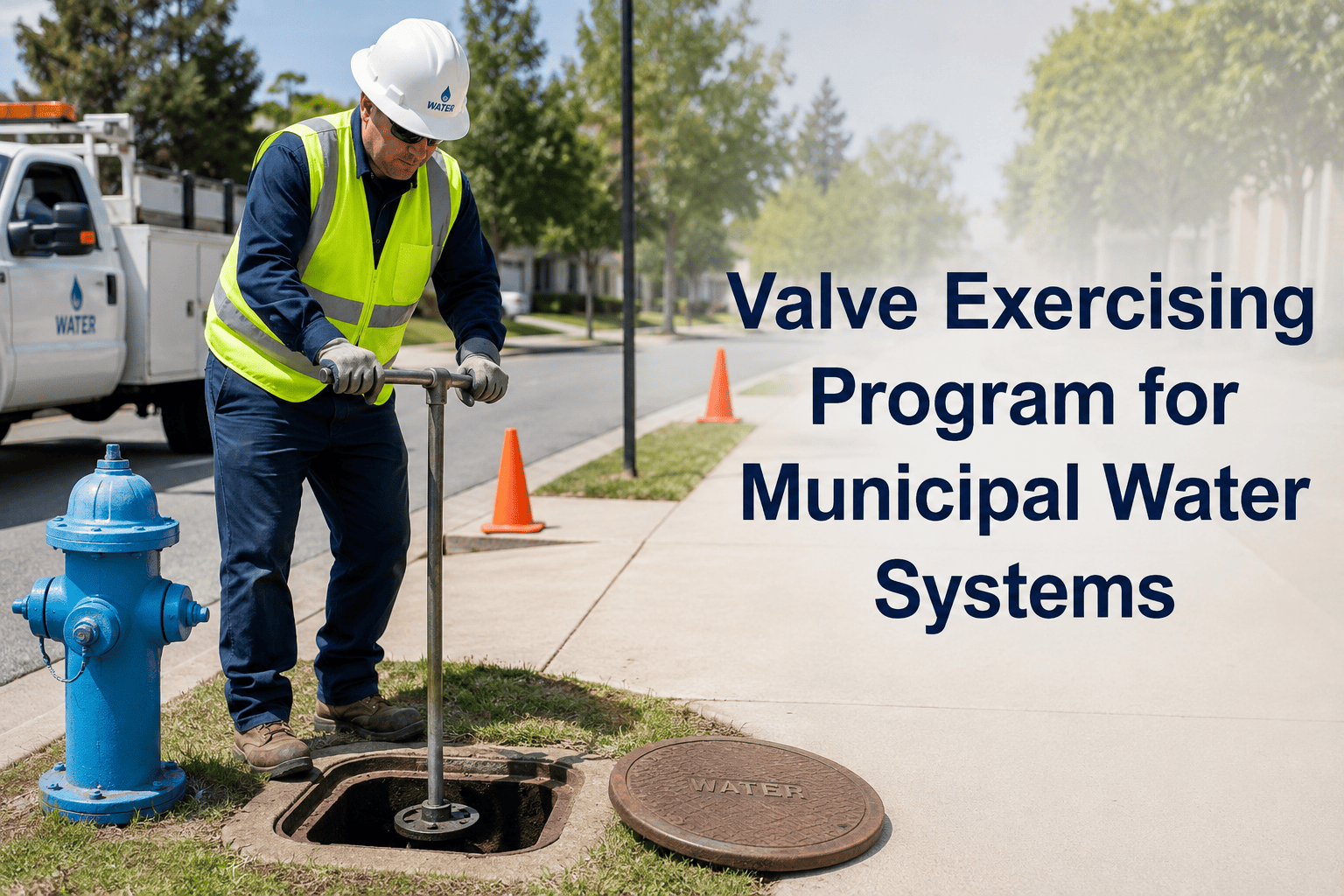
Systematic turning of every valve on 3-5 year rotation; record turns-to-close, direction, condition, and operability status.
Hydrant Maintenance
Annual inspection, flow testing, flushing, lubrication, and painting. Confirm fire protection capacity at every hydrant.
Pipeline Assessment
Condition assessment using acoustic leak detection, CCTV inspection, and pipe wall thickness testing to prioritize replacement.
Meter Management
Testing accuracy, replacing aging meters, detecting tampering, and tracking under-registration that contributes to non-revenue water.
The Financial Equation: Maintenance Investment vs. Emergency Costs
Distribution system maintenance is the highest-ROI investment a water utility can make. The cost comparison between proactive programs and reactive emergency response is so lopsided that the only question is how quickly a utility can transition — not whether the transition makes financial sense. Digital CMMS platforms generate the documentation required for state revolving fund loans, WIFIA financing, and EPA infrastructure grants that fund the capital side of distribution renewal.
Annual Cost Comparison: Reactive vs. Proactive Maintenance
Based on a mid-sized utility with 5,000 valves, 2,500 hydrants, and 300 miles of pipe
Reactive / No PM Program
Emergency Main Breaks$400K - $750K
Water Loss (NRW)$200K - $500K
Hydrant Failures$50K - $150K
Regulatory Penalties$25K - $200K
Annual Cost: $675K - $1.6M
VS
Proactive CMMS-Driven Program
Valve Exercising Program$75K - $150K
Hydrant Maintenance$50K - $100K
Leak Detection Program$30K - $80K
CMMS Platform & GIS$20K - $50K
Annual Cost: $175K - $380K
Utilities that implement CMMS-driven distribution maintenance also unlock access to infrastructure funding programs. State revolving fund applications require asset inventories, condition assessments, and capital improvement plans that paper-based systems cannot produce. The documentation argument alone justifies digitization — you cannot win infrastructure funding you cannot document.
Transform Your Distribution System Maintenance
Stop finding inoperable valves during emergencies. Oxmaint connects every valve, hydrant, pipeline segment, and meter to a GIS-integrated maintenance platform that ensures operability, tracks condition, and generates the compliance documentation your utility needs.
Distribution system CMMS implementation follows a proven three-phase maturity model. Each phase builds on the previous, progressing from basic asset inventory through systematic PM execution to predictive analytics that forecast failures before they occur. Rushing phases leads to data gaps that undermine the entire program — the investment in Phase 1 inventory accuracy pays dividends across every subsequent activity.
Distribution Maintenance Maturity Model
Phase 1 — Months 1-4
Asset Inventory & GIS Integration
GPS Valve LocationHydrant InventoryPipe Material VerificationGIS-CMMS Data Link
Break Rate Trend AnalysisPipe Failure ModelingCapital Renewal PrioritizationNon-Revenue Water Reduction
Start with the highest-value activities. Valve exercising on transmission mains and critical zone isolation valves should begin immediately — these are the valves that determine whether a main break affects one block or an entire pressure zone. Expand to smaller distribution valves, hydrant maintenance, and pipeline assessment as the program matures and CMMS data accumulates.
GIS-Integrated Distribution Maintenance Capabilities
Modern distribution maintenance requires capabilities that span field operations, data management, regulatory compliance, and capital planning. GIS-integrated CMMS platforms consolidate these functions into a single system that connects field crews with real-time infrastructure data, tracks maintenance compliance across the entire network, and generates the documentation required for regulatory audits and funding applications.
CMMS Platform Capabilities for Distribution Systems
Comprehensive digital infrastructure management from field to office
GIS Map Integration
Valve Exercising Tracking
Hydrant Inspection Forms
Flushing Program Mgmt
Leak Detection Records
Meter Testing & Swap
Break History Analytics
Capital Planning Reports
Location-Based Work Orders
Tap any asset on the GIS map to view condition, history, and generate work orders. Route crews by geographic zone for maximum efficiency.
Automated PM Scheduling
Configure valve exercising rotations, hydrant inspection cycles, and flushing schedules. System auto-generates and dispatches work orders to field crews.
Regulatory Compliance Engine
Track AWWA standards compliance, generate sanitary survey documentation, and produce annual infrastructure reports for state drinking water programs.
Start managing your distribution system digitallyGet Started →
Effective distribution maintenance depends on connecting field operations with office analytics. When a crew exercises a valve and records that it required 47 turns to close instead of the expected 22, that data should immediately flag the valve for follow-up inspection and update the system's condition scoring. When a hydrant flow test reveals declining residual pressure, the system should correlate that data with nearby main break history to identify potential pipeline deterioration. This level of integrated intelligence is impossible with paper forms and spreadsheets. Book a demo to see how GIS-integrated CMMS transforms distribution maintenance.
Every Valve. Every Hydrant. Every Mile of Pipe.
Your distribution system is the backbone of community water service. Oxmaint provides the GIS-integrated maintenance platform that tracks every asset, schedules every PM, documents every inspection, and delivers the infrastructure intelligence your utility needs to prevent failures, reduce water loss, and extend the life of your most valuable public asset.
How often should distribution system valves be exercised?
AWWA recommends exercising every distribution valve at least once every 3-5 years, with critical transmission main valves and zone isolation valves exercised annually. Many utilities prioritize a rolling program: exercise 20-25% of all valves each year to achieve a complete 4-5 year cycle. During each exercise, crews record turns-to-close, turning direction, operating condition, and whether the valve achieved full closure. Valves that fail to close or show excessive resistance are flagged for repair or replacement. The first cycle typically identifies 10-35% of valves as requiring maintenance — this discovery alone prevents countless emergency isolation failures. Start your free trial to begin building your valve exercising program.
What does a fire hydrant maintenance program include?
A comprehensive hydrant maintenance program includes annual inspection (checking for physical damage, clearance from obstructions, visibility of marker flags, and operability of main valve, caps, and nozzles), flow testing (measuring static pressure, residual pressure, and flow rate to confirm available fire suppression capacity), flushing (running water through the hydrant to clear sediment and verify drainage), lubrication (operating nut, cap threads, and nozzle threads), and painting (maintaining visibility and corrosion protection). Every inspection generates documentation that satisfies ISO fire protection ratings and insurance underwriting requirements. Utilities with CMMS-tracked hydrant programs consistently achieve 98%+ hydrant operability rates versus 65-80% for utilities without formal programs.
How does GIS integration improve distribution system maintenance?
GIS integration transforms distribution maintenance from clipboard-and-memory operations to spatially-intelligent asset management. Field crews see every valve, hydrant, and pipeline segment on a digital map with complete maintenance history, condition scoring, and work order status. During main break response, operators can instantly identify which valves need to be shut to isolate the break with minimum customer impact — eliminating the trial-and-error valve hunting that extends outage duration. GIS also enables zone-based work order routing (crews maintain all assets within a geographic sector), spatial analysis of break patterns (identifying pipe segments with clustering failures), and visual dashboards for management reporting. Schedule a demo to see GIS-integrated maintenance in action.
What pipeline condition assessment methods are available?
Multiple technologies address different pipe materials and conditions. Acoustic leak detection uses correlating sensors to identify active leaks through sound patterns. Electromagnetic pipe wall assessment measures remaining wall thickness in metallic pipes without excavation. CCTV inspection provides visual assessment of interior pipe conditions for larger mains. Soil corrosivity testing evaluates external deterioration risk. Pressure transient monitoring identifies hydraulic stress patterns that accelerate pipe fatigue. Most utilities combine break history analysis (identifying pipes with increasing break frequency) with targeted condition assessment on highest-risk segments to build data-driven capital renewal programs.
How does CMMS help reduce non-revenue water losses?
Non-revenue water — treated water that is produced but never generates revenue due to leaks, meter under-registration, unauthorized use, or data errors — typically ranges from 15-40% of total production for U.S. utilities. CMMS platforms attack NRW on multiple fronts: systematic leak detection survey scheduling and tracking identifies and repairs distribution leaks that lose water 24/7; meter management programs identify under-registering meters that fail to capture actual consumption; valve maintenance ensures zone isolation capability for district metered area monitoring; and data analytics correlate production versus metered consumption to quantify losses by zone. Utilities implementing comprehensive NRW programs through CMMS platforms typically achieve 10-20 percentage point reductions in water loss within 2-3 years. Start your free trial to begin tracking and reducing non-revenue water.