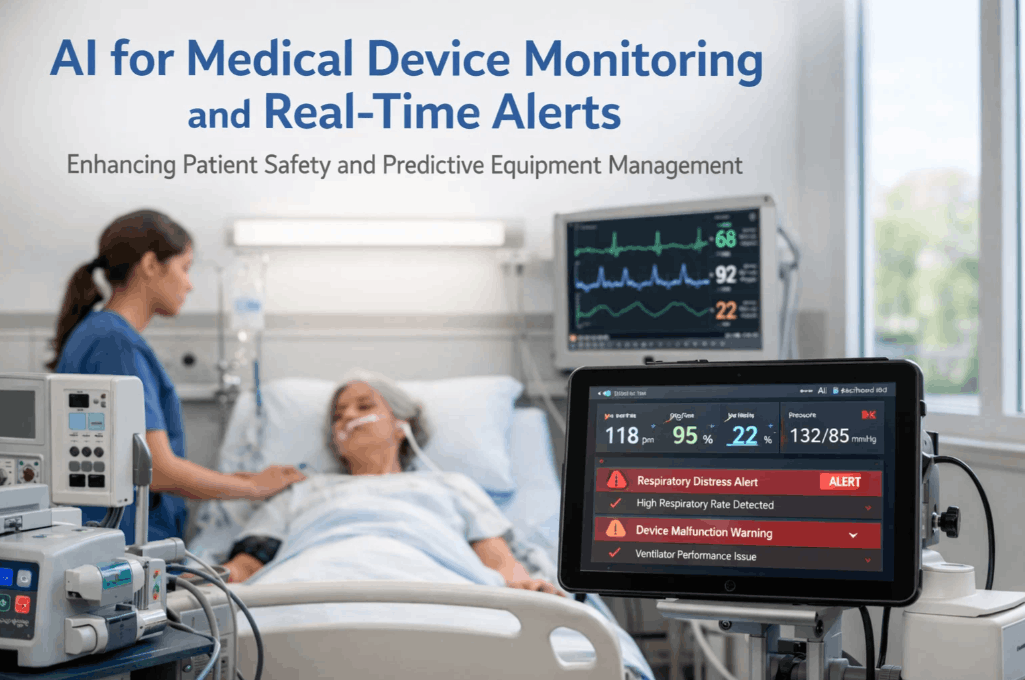
Modern hospitals are no longer simply places of treatment — they are dense, interconnected ecosystems of life-sustaining equipment, diagnostic systems, and monitoring technologies. At the center of this transformation is Artificial Intelligence, which has fundamentally changed how medical devices are monitored, maintained, and protected. AI-powered medical device monitoring enables clinical teams and biomedical engineers to receive real-time alerts, detect anomalies before they become failures, and predict equipment degradation weeks in advance. This convergence of machine intelligence and healthcare infrastructure is not a distant ambition — it is an active operational reality that is directly improving patient outcomes today. Sign up free to explore how AI monitoring can transform your facility's equipment management.
Why Real-Time Medical Device Monitoring Has Become Non-Negotiable
A single 500-bed hospital today operates thousands of connected medical devices simultaneously — ventilators, infusion pumps, patient monitors, dialysis units, imaging systems, and surgical towers. Each of these devices generates continuous streams of operational data: power consumption, cycle counts, temperature readings, pressure values, and error logs. Without AI, this data is effectively invisible to the clinical and technical teams responsible for equipment reliability. Manual inspection rounds, scheduled preventive maintenance, and reactive repair workflows were designed for a simpler era. They are structurally inadequate for the complexity of the modern hospital environment.
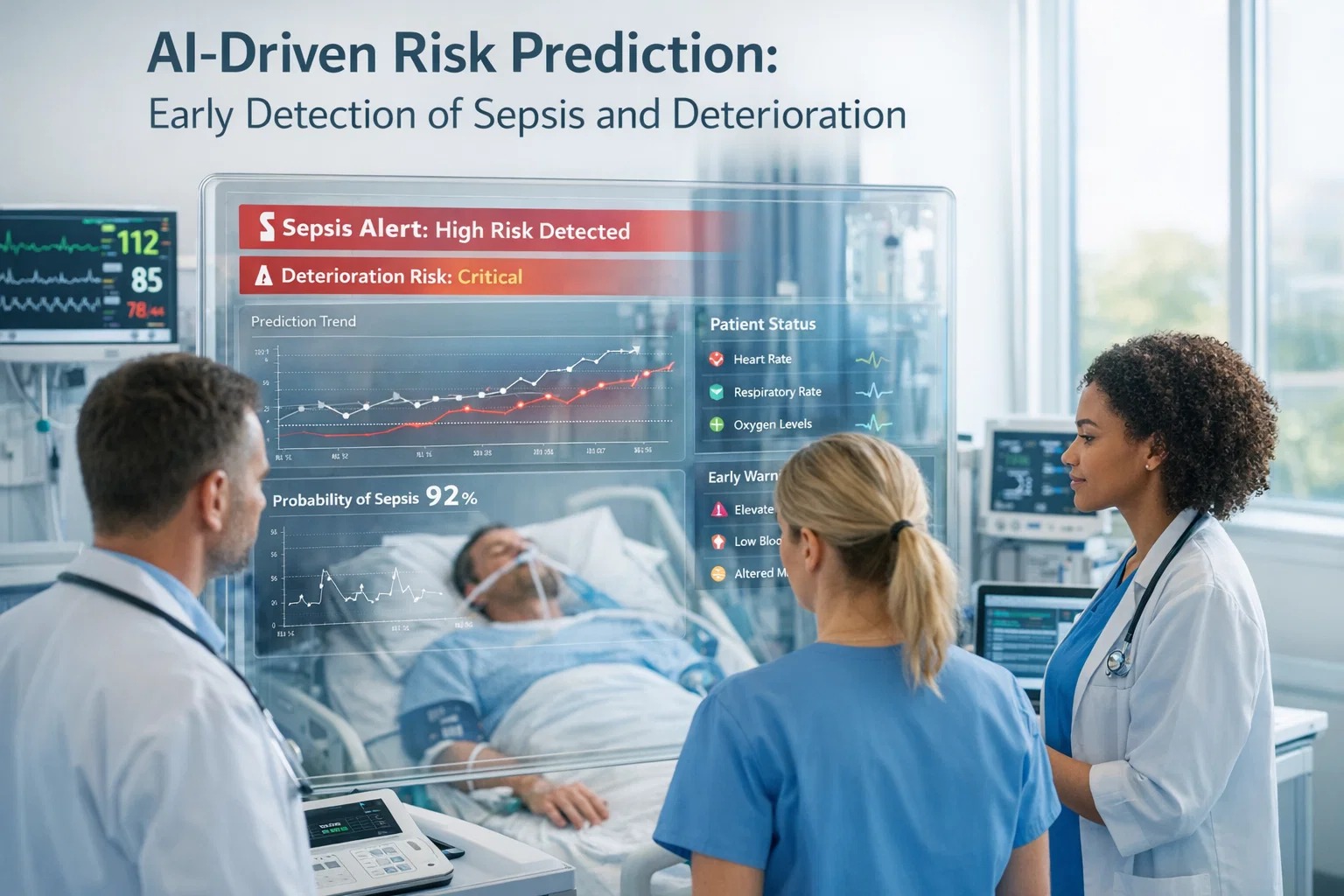
Real-time AI monitoring changes this equation entirely. By continuously analyzing device telemetry against established performance baselines, AI systems surface deviations that no human inspection schedule could catch. A dialysis machine drawing marginally higher current during a specific phase of its cycle, an infusion pump with fractionally longer motor response times, or a ventilator with subtle pressure inconsistencies — these are exactly the signals that precede catastrophic failure. AI identifies them days or weeks before clinical consequences emerge.
How AI Anomaly Detection Works in Clinical Equipment
AI anomaly detection in medical devices operates through a layered intelligence architecture. At its foundation, machine learning models establish individualized operating envelopes for each device — accounting not just for device model and age, but for its specific ward environment, clinical application, usage intensity, and historical performance patterns. This means that two identical ventilator models on different wards may have different normal operating parameters, and the AI accounts for this nuance automatically.
When a device's telemetry deviates from its personalized baseline, the system generates graded alerts calibrated to severity. Informational observations are logged for trend analysis. Caution flags notify biomedical engineers that a device warrants scheduled inspection within a defined window. Urgent alerts trigger immediate response workflows when anomalies suggest imminent failure risk. This graded approach prevents alert fatigue — a critical concern in any clinical environment — while ensuring that genuinely urgent signals are never buried under low-priority notifications. Book a demo to see how graded AI alerting works in a live hospital environment.
Real-Time Alert Architecture: From Signal to Resolution
The clinical value of AI monitoring is only realized when alerts translate into rapid, coordinated action. The most sophisticated anomaly detection engine delivers no patient safety benefit if its alerts disappear into an unmonitored inbox or generate work orders that languish in a backlog. Effective real-time alert architecture closes the loop between signal detection and operational resolution through automated workflow integration.
When an AI system detects a critical anomaly — such as a ventilator's pressure regulation showing progressive drift in an ICU — the alert triggers a complete downstream response. A prioritized work order is automatically generated with the device's full maintenance history, the relevant service manual section, the required parts, and the appropriate technician qualification matrix. The work order is routed to the available biomedical engineer with the correct certification. If the response window closes without acknowledgment, the system escalates automatically to supervisory staff. Every step of this process is timestamped and logged, creating the complete audit trail that regulatory compliance requires.
Patient Safety: The Core Imperative of AI Device Monitoring
Every discussion of hospital equipment monitoring ultimately returns to a single governing priority: patient safety. Unplanned medical device failures during active clinical use carry direct, serious patient risk. A ventilator that fails during a critical care procedure, an infusion pump that alarms and interrupts medication delivery mid-cycle, or an imaging system that goes offline during an urgent diagnostic workup — each scenario represents not just operational disruption, but a potential patient harm event. AI-powered monitoring directly reduces the probability of these events by identifying failure precursors before clinical impact occurs.
The patient safety case for predictive device monitoring is particularly compelling in high-acuity environments. ICU ventilators, NICU monitoring systems, and OR surgical equipment operate under conditions of zero tolerance for unplanned downtime. In these environments, the ability to predict and prevent equipment failures — rather than react to them — is not a performance improvement. It is a fundamental patient care standard. Hospitals operating AI monitoring platforms in these departments consistently report measurable reductions in device-related adverse event risk and significant improvements in equipment availability during peak clinical demand periods.
| Dimension | Reactive Monitoring | AI-Driven Monitoring |
|---|---|---|
| Failure Detection | After clinical symptoms appear or device fails | Days or weeks before clinical impact |
| Maintenance Scheduling | Fixed calendar intervals regardless of device condition | Dynamic, condition-based scheduling per individual device |
| Alert Generation | Device alarms during active patient use | Graded proactive alerts before performance degradation is clinically apparent |
| Work Order Process | Manual creation, manual dispatch, manual follow-up | Automated generation, intelligent routing, automated escalation |
| Compliance Documentation | Paper logs, spreadsheets, retrospective record retrieval | Automatic timestamped records, audit-ready in seconds |
| Patient Safety Risk | Elevated — failures occur unpredictably during clinical use | Reduced — interventions planned during low-census periods |
Connected Medical Device Ecosystems and IoT Integration
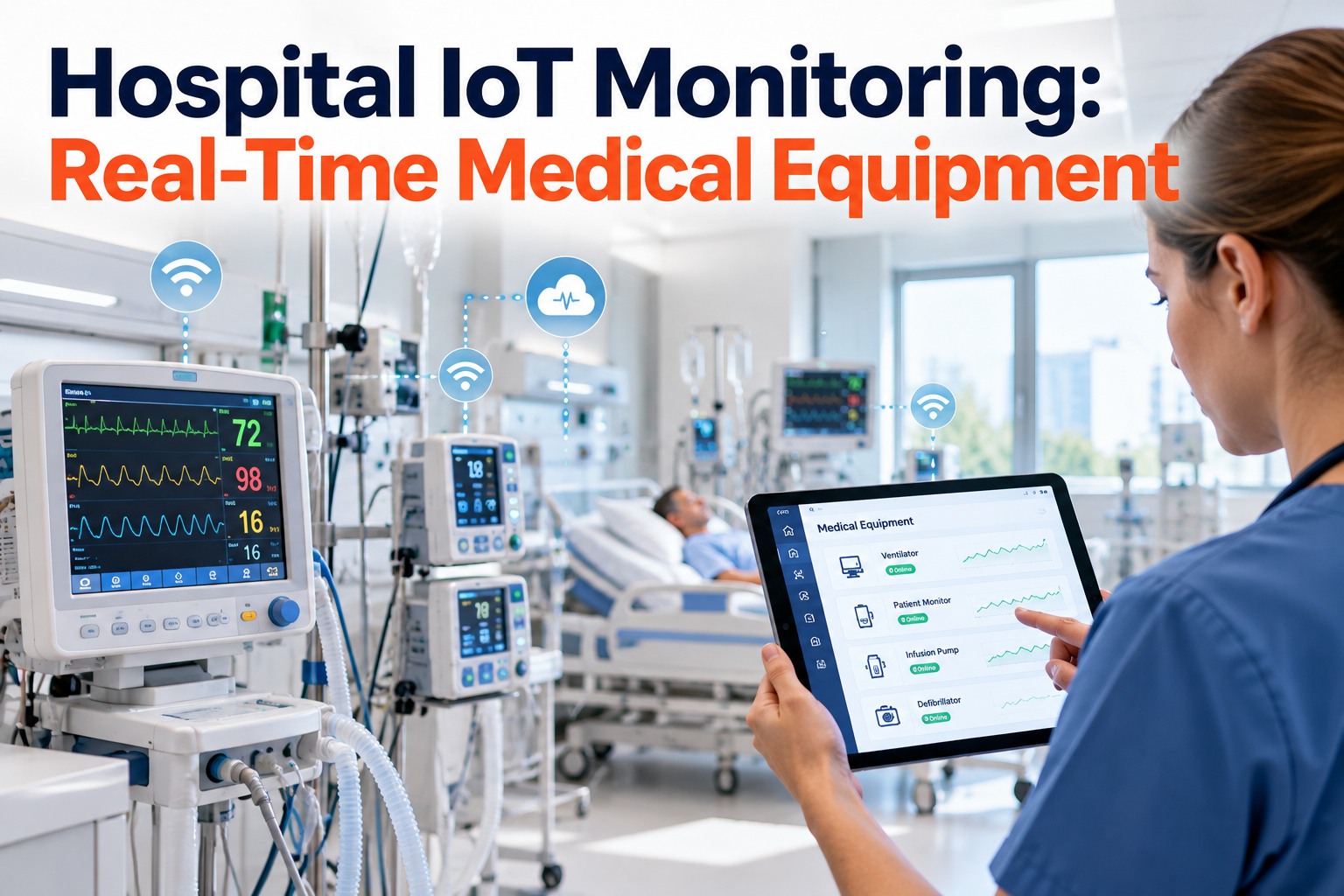
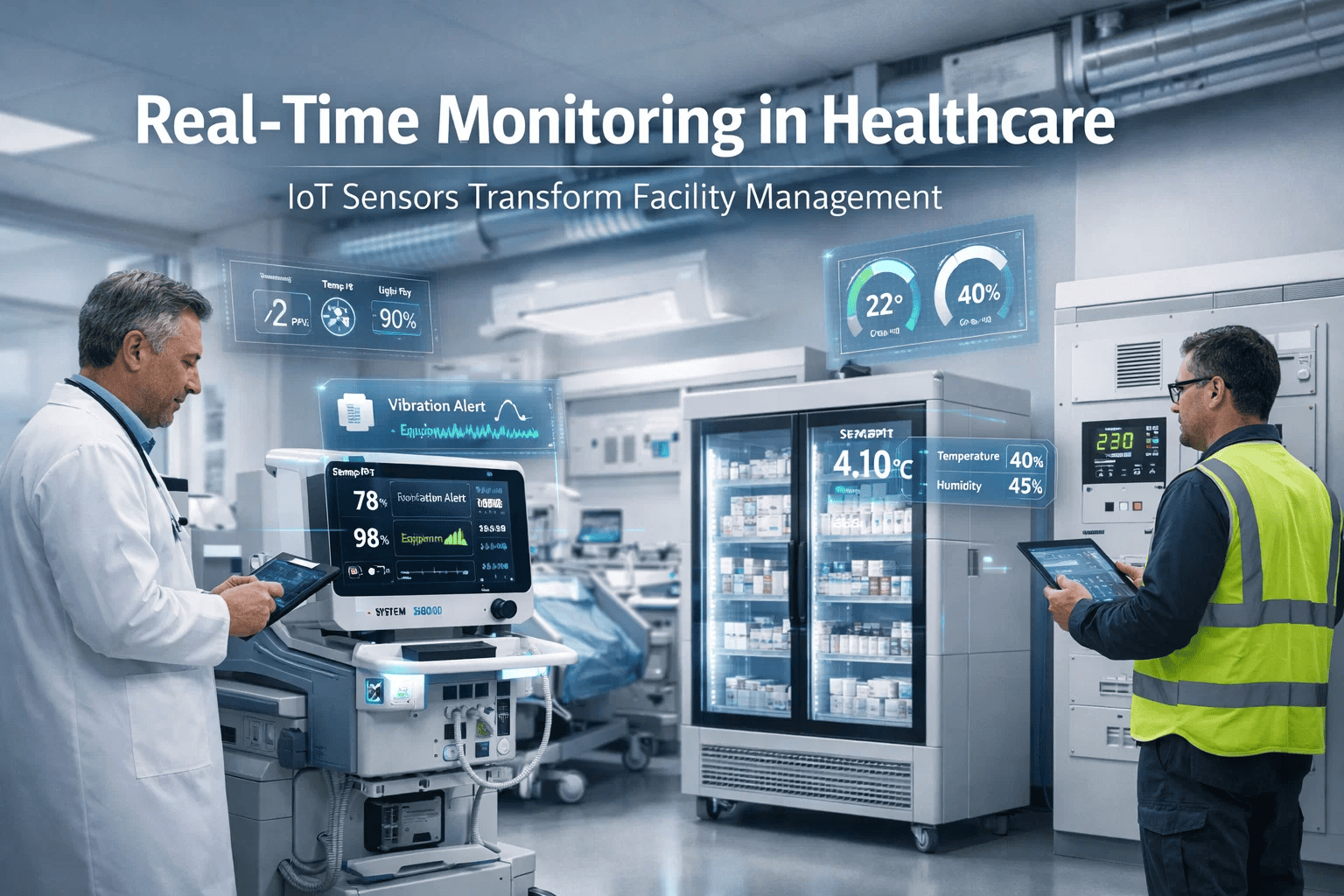
The foundation of AI-powered device monitoring is reliable, comprehensive data ingestion from the full range of medical equipment in a facility. Modern asset intelligence platforms are designed to connect with both current-generation and legacy devices through multiple integration pathways. Contemporary medical devices transmit telemetry via HL7, FHIR, SNMP, and proprietary device protocols, enabling seamless integration with centralized monitoring platforms. Older devices without native connectivity are brought into the monitoring ecosystem through IoT sensor attachments that capture utilization and environmental data — ensuring that legacy equipment does not represent a blind spot in the monitoring architecture.
This comprehensive connectivity means that a hospital's AI monitoring platform maintains a live digital twin of every device in the fleet — from the newest imaging system to decade-old infusion pumps still in active clinical use. Each digital twin reflects the device's current location, operational status, calibration state, maintenance history, and real-time performance telemetry. Biomedical engineering teams no longer operate with fragmented, incomplete pictures of their equipment ecosystem. They have unified, real-time visibility across every device in every department, enabling the kind of proactive management that was structurally impossible with legacy CMMS and paper-based tracking systems. Start your free trial and bring live digital twin visibility to your entire device fleet.
Compliance Automation: Regulatory Readiness as an Operational Standard
Regulatory compliance in healthcare is not a once-yearly event triggered by an inspection notice. Joint Commission surveys, CMS Conditions of Participation audits, state health department reviews, and accreditation body assessments can occur with minimal advance notice, and they demand comprehensive, accurate documentation of equipment maintenance, calibration, and inspection histories. Hospitals relying on paper checklists and spreadsheet logs consistently discover documentation gaps at the worst possible moment — when an auditor is already in the building.
AI-powered device monitoring platforms eliminate this vulnerability by generating immutable, timestamped compliance records as a natural byproduct of normal operations. Every PM task completed, every anomaly investigated, every calibration performed, and every work order resolved creates an auditor-accessible record linked to the specific device, the applicable regulatory standard, and the certified technician who performed the work. When an inspector requests the complete maintenance history for all ICU ventilators over the preceding three years, the compliance report is generated in seconds — not retrieved over three days of frantic record searching. This capability alone represents a transformative operational improvement for the compliance teams responsible for maintaining accreditation status. Schedule a free demo to see how audit-ready documentation is generated automatically with every completed work order.
Building the Case for AI Monitoring Investment in Hospital Leadership
For biomedical and facilities leaders, securing executive approval for AI monitoring infrastructure requires a financially grounded, outcomes-focused business case. The ROI framework is well-established and quantifiable across three primary value categories. First, cost avoidance: emergency repair costs for critical medical equipment routinely run four to eight times the cost of planned interventions, and each unplanned device failure that disrupts a clinical procedure carries additional liability exposure that rarely appears in initial cost models. Second, labor optimization: biomedical teams that eliminate manual scheduling, paper-based documentation, and reactive dispatch workflows recover 25 to 35 percent of their working hours for higher-value clinical engineering activities. Third, regulatory risk reduction: a single accreditation citation for documentation deficiency can trigger extended monitoring programs, increased survey frequency, and reputational consequences that dwarf the investment required to implement compliant systems from the outset.
When these three value drivers are modeled across a five-year operational horizon, the financial case for AI-powered device monitoring consistently exceeds 300 percent ROI for facilities operating more than 200 beds. For health systems managing multiple facilities, the scalability of modern asset intelligence platforms amplifies this return further — configuration templates built during initial deployment accelerate every subsequent facility rollout, compressing the time-to-value curve across the entire portfolio.



.png)