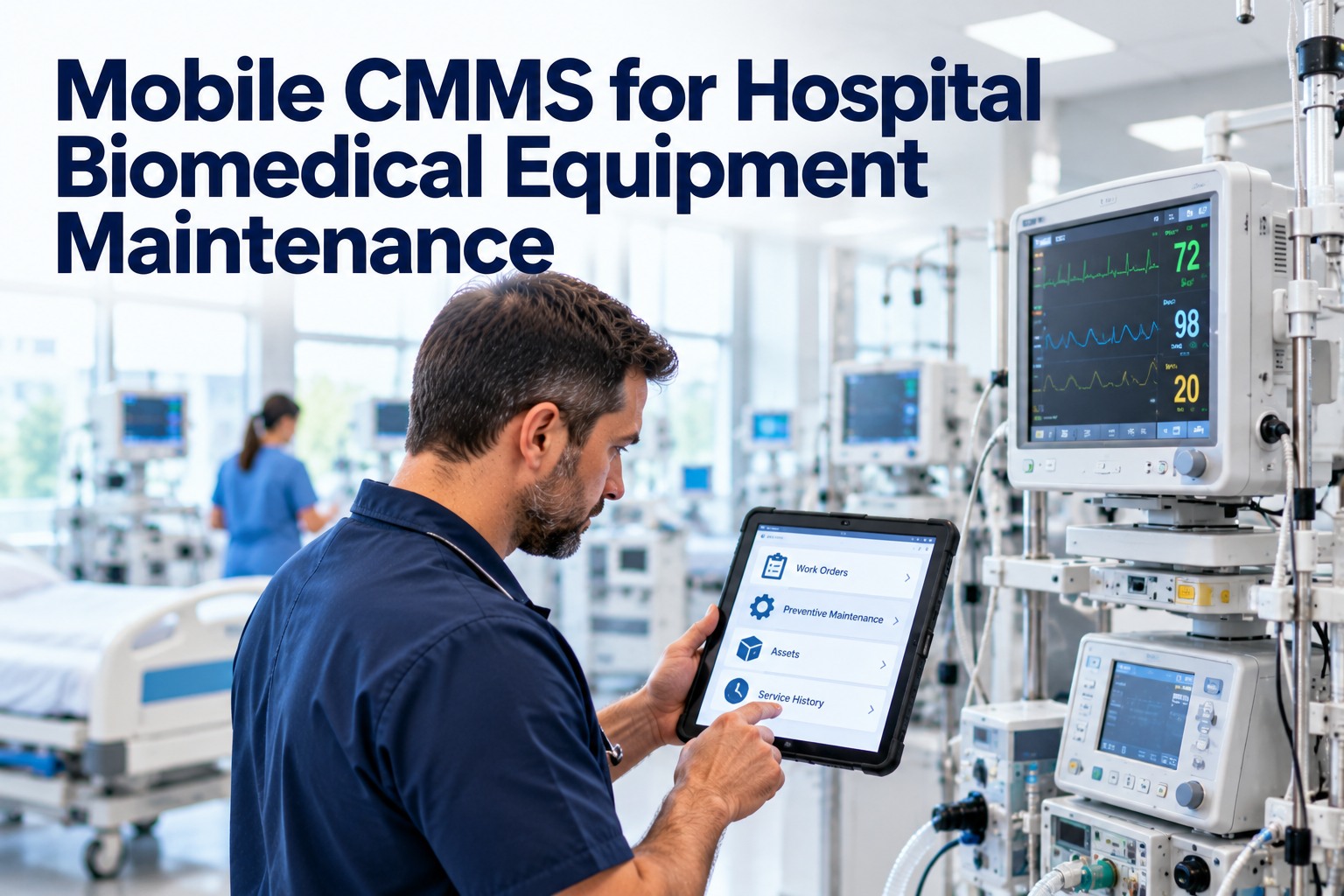
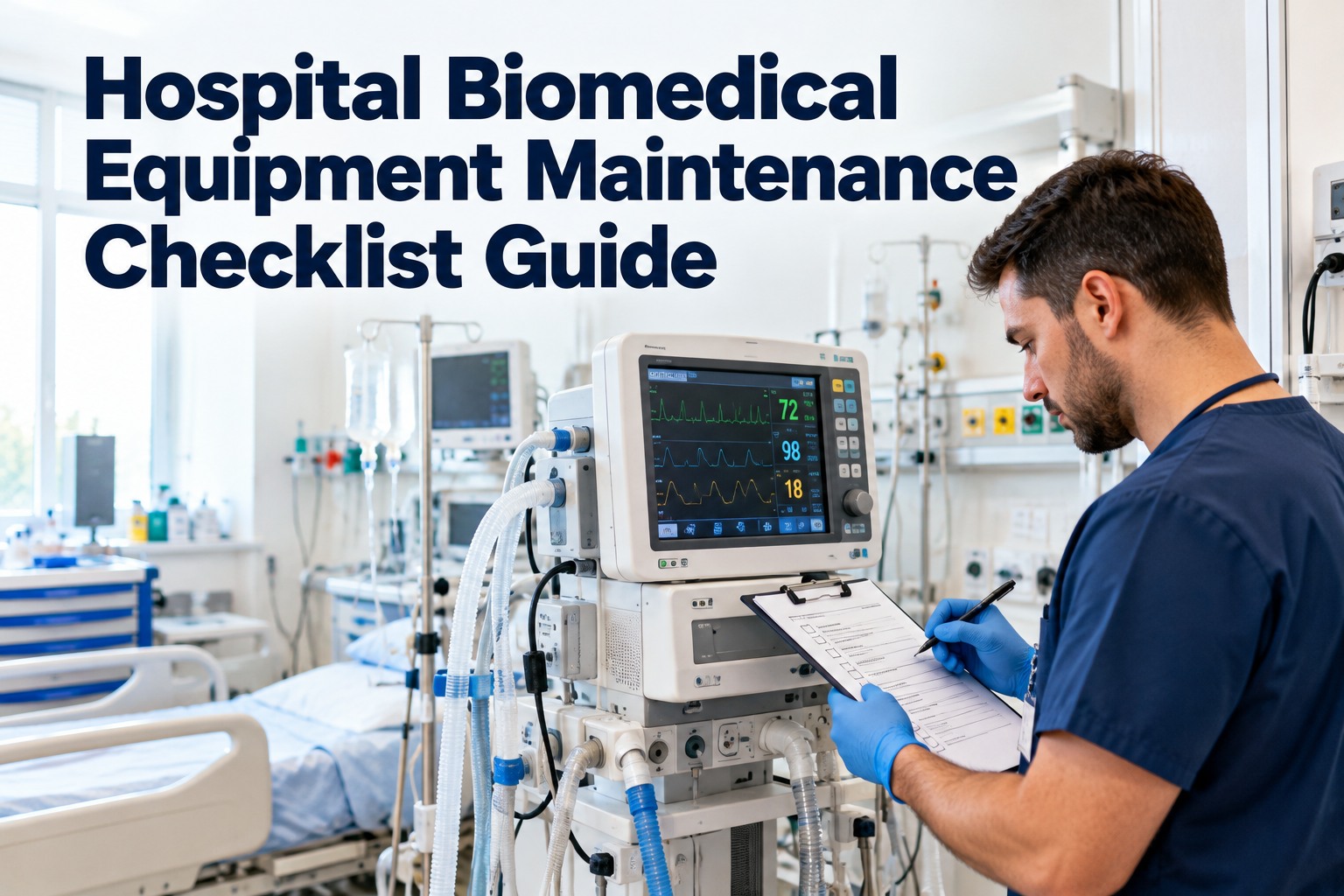
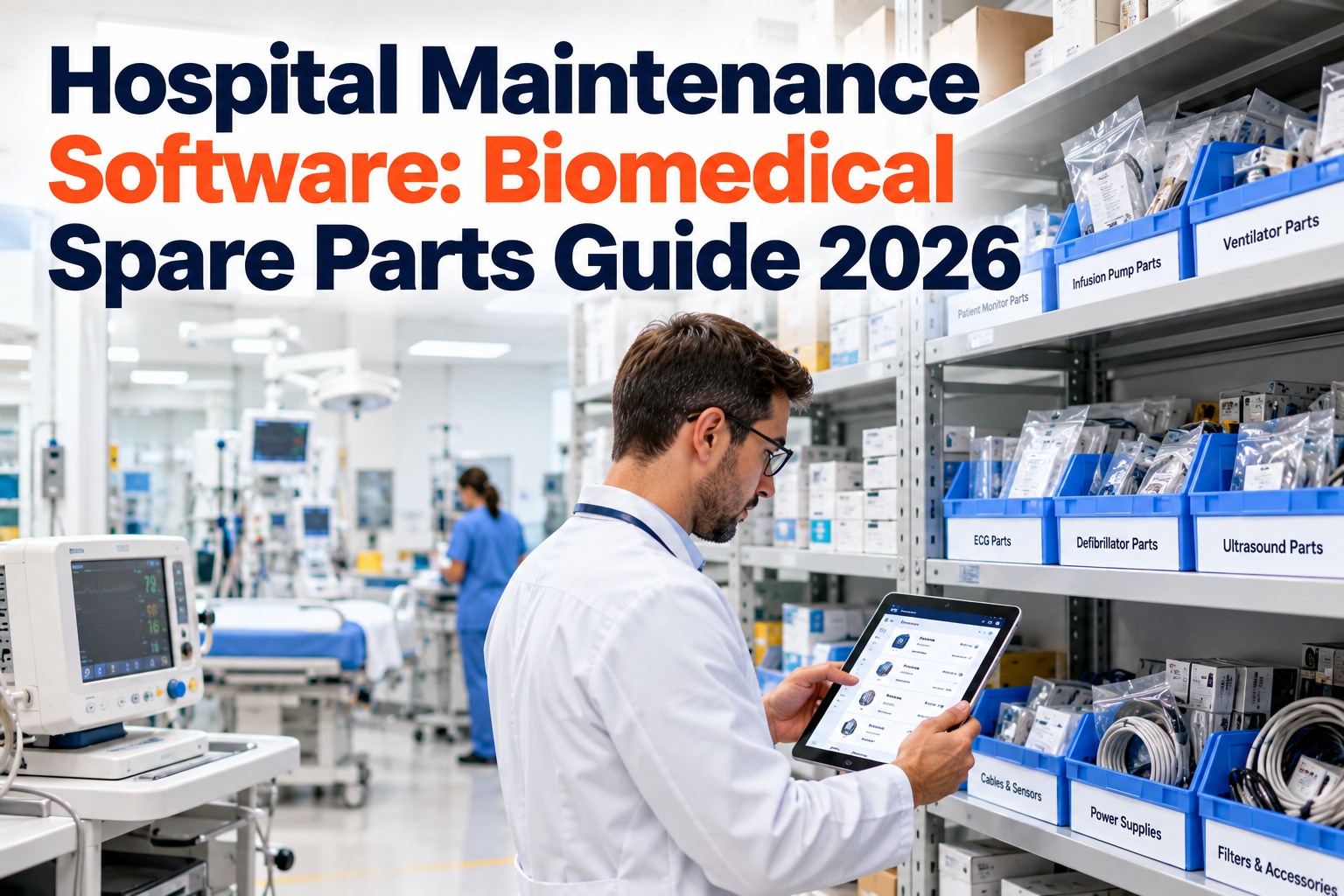
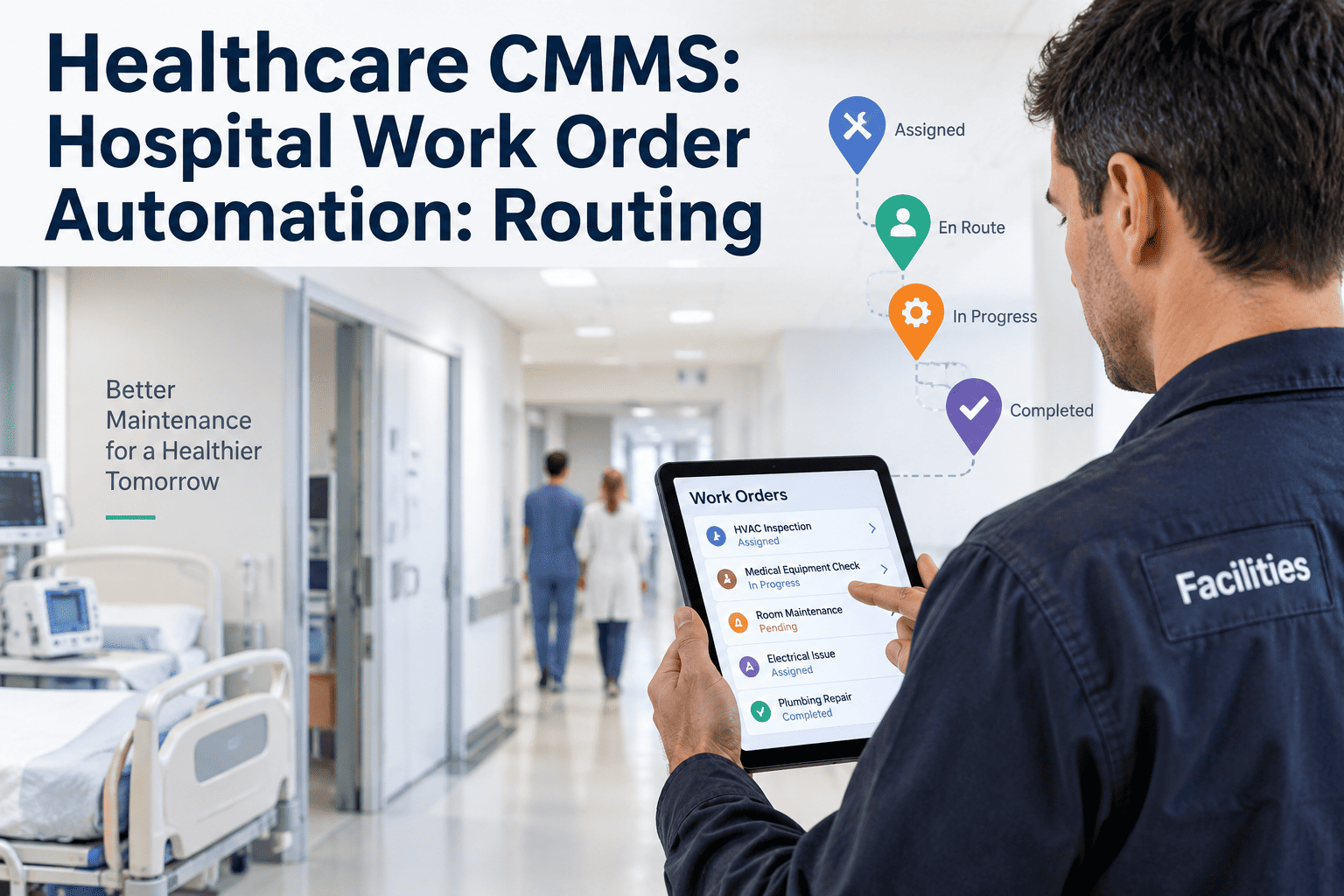
Clinical engineering departments sit at the intersection of patient safety, regulatory compliance, and capital planning — yet most are managed with tools that have not changed since the 1990s. Paper logs, siloed spreadsheets, and reactive firefighting consume the teams that should be optimising device uptime and proving their value to leadership. This guide covers how high-performing CE departments are structured, the KPIs that matter, and how a modern CMMS changes the equation. If your biomed team is still chasing PM records before a TJC survey, start a free trial or book a demo to see what structured clinical engineering management looks like at scale.
Clinical
Engineering
Department
Structure, KPIs & CMMS Integration — a field guide for biomed directors, HTM leaders, and CE managers running device-intensive hospitals.
What a Clinical Engineering Department Actually Does
Clinical engineering — also called Healthcare Technology Management (HTM) or Biomedical Engineering — manages the full lifecycle of every medical device in a hospital. From acquisition and commissioning through preventive maintenance, corrective repair, calibration, vendor negotiation, and end-of-life decommissioning, the CE department is the reason a ventilator works when a patient needs it.
CE teams are not repair shops. They are strategic operations functions. They translate bedside clinical needs into maintenance protocols, turn failure frequency data into capital justifications, and ensure every device in inventory meets TJC, CMS, and NFPA standards — documented, signed, and audit-ready.
The challenge is that most CE departments have been squeezed: more devices per technician, flat budgets, rising compliance demands, and legacy tools that generate data nobody can act on. Want a system built for exactly this? Start a free trial or book a demo with the Oxmaint HTM team.
How High-Performing CE Departments Are Built
Structure determines whether your team is proactive or perpetually reactive. These are the four operational layers that top-performing health systems use — from Duke Health's 60+ person department to single-campus community hospitals.
Six Failure Modes That Cost Hospitals Millions
These are not hypothetical. They are the default operating conditions for CE departments that have not yet moved to structured digital management.
8 KPIs Every CE Director Should Track Monthly
These metrics give leadership and finance the shared language to manage CE performance — and give biomed directors data to defend their budgets at every review cycle.
What the Gap Costs — Department by Department
Every CE department sits somewhere on this spectrum. The distance between reactive and structured is measurable in dollars, hours, and audit findings.
Benchmarks from AAMI HTM Survey 2024, ASHE Maintenance Report, and Oxmaint healthcare client data. To model this for your department, start a free trial or book a demo.
Built for CE Teams. Not Adapted From Somewhere Else.
Oxmaint is not a generic work order tool with a healthcare skin. It is a full asset intelligence platform built for the operational and financial realities of clinical engineering departments managing thousands of devices.
Outcomes From CE Departments Running on Oxmaint
Frequently Asked Questions
How many BMETs does a hospital need for its CE department?
The most widely cited guideline is one BMET per 1,000 devices in active inventory. This is a starting point, not a rule. Departments managing high-complexity imaging, large ICU footprints, or multi-campus portfolios may need more technicians per device due to specialisation requirements. Departments with heavy OEM service contracts can sometimes operate leaner. The critical input is an accurate total device count — which requires a live, up-to-date inventory. Without that number, staffing ratios are guesswork.
What is the difference between clinical engineering and biomedical engineering in a hospital?
In most U.S. hospitals the terms are used interchangeably — departments are called Clinical Engineering, Biomedical Engineering, or Healthcare Technology Management depending on the institution. The practical distinction is that biomedical engineering is the broader field (including device design and academic research), while clinical engineering refers specifically to the operational role within a healthcare facility: managing, maintaining, and optimising the technology in active clinical use.
What CMMS features matter most for a biomed team?
Non-negotiable features for a CE-focused CMMS: device-level asset registry with full service history; PM scheduling triggered by calendar, hours, or usage cycles; digital work order capture with technician signatures and photo attachments; TJC-ready reporting with retrievable PM completion records; and vendor and contract tracking linked to individual device records. Mobile-first design is critical — if BMETs must return to a workstation to close work orders, data quality suffers immediately. Multi-site capability is essential for health systems operating more than one campus.
How does a CE department justify its budget to hospital leadership?
The most effective argument is cost avoidance, not cost. Quantify three things: (1) the cost differential between reactive repairs and planned PMs — typically 3–5× more expensive reactive, per work order; (2) the service contract spend versus what your team actually maintains in-house — frequently 15–25% is redundant; and (3) the regulatory exposure of running below 90% PM compliance. Boards respond to financial exposure quantification, not operational narratives. Build your budget ask around what the department prevents, not what it costs.
Your CE Department Manages Life-Critical Equipment.
It Deserves a System Built for That.
Oxmaint gives clinical engineering teams a unified platform for device registry, PM scheduling, work order management, vendor tracking, and audit-ready documentation — operational from day one, no heavy implementation required. Departments running on Oxmaint have cut corrective work orders by 35%, reduced audit prep from days to 60 seconds, and built capital plans that finance actually approves.