Digital Maintenance Management: How Hospitals Are Replacing Manual Systems

By Jack Edwards on March 11, 2026

ppppppppppppp

Digital maintenance management is rewriting the operational playbook for hospitals worldwide — and the facilities still running on spreadsheets and paper work orders are paying the price in compliance citations, emergency repair premiums, and equipment failures that cascade straight into clinical workflows. This is how forward-thinking hospital operations teams are making the switch — and why the ROI case is impossible to ignore. Ready to see what modern looks like at your facility? start a free 30-day trial or book a demo with the Oxmaint healthcare team today.

Digital Maintenance Management for Hospitals | Oxmaint


Maintenance Management · Healthcare · 2026

Digital Maintenance Management:
How Hospitals Are Replacing Manual Systems

The gap between hospitals running on paper and those running on data is measured in millions of dollars, compliance citations, and avoidable equipment failures. Here is the full operational picture.

$1.5M+
Average annual unplanned downtime cost per mid-size hospital
4.8x
Emergency repairs cost more than scheduled preventive maintenance
36%
Of equipment failures are preventable with proper PM schedules
3.2x
Average ROI on preventive maintenance investment within 24 months

What Is Digital Maintenance Management in Healthcare?

A digital maintenance management system — or healthcare CMMS — is a unified platform that replaces paper logs, spreadsheets, and disconnected tools with a single auditable record of every asset, work order, inspection, and technician action across your facility. It is not a ticketing tool with a mobile app bolted on. It is purpose-built operational infrastructure for facilities where equipment failure has direct patient safety consequences. Hospitals running Oxmaint today moved off manual systems in weeks, not months — start a free trial or book a demo to see the migration path.

Asset Intelligence
Full Equipment Registry with Condition Scoring
Every device tracked with live condition scores, manufacturer data, and replacement forecasting. No more discovering failures mid-procedure.
PM Automation
Preventive Schedules Tied to Live Asset Data
PM tasks triggered by runtime hours, usage cycles, or calendar intervals. Missed PMs auto-escalate. Nothing falls through spreadsheet gaps.
Compliance
Audit-Ready Documentation at All Times
Joint Commission, CMS, and GMP-compliant records generated automatically — with digital signatures and timestamps. Survey-ready on any given day.
Capital Planning
5–10 Year CapEx Forecasting from Real Data
Condition scores drive rolling capital replacement models. CFOs get multi-year forecasts grounded in actual asset health — not spreadsheet guesswork.

"Emergency repairs in hospitals cost 4.8 times more than the same work planned in advance — and that multiplier compounds every quarter a facility stays reactive."
Industry Benchmark — Healthcare Facilities Management Report

Why Manual Systems Are a Liability, Not Just Inefficiency

Hospital facility teams managing critical infrastructure with Excel sheets and paper logs are not just inefficient — they are exposed. Compliance citations, avoidable failures, and emergency repair premiums are the predictable outcomes. These are the eight operational gaps that digital maintenance management is built to close. If your team is experiencing any of these, a free 30-day trial will show you what operational control actually looks like — or book a demo and we will walk through your specific scenario.

01
No Asset Visibility
Equipment condition is unknown until it fails
Without live condition scoring, teams discover problems mid-procedure. 36% of failures are preventable with structured PM programs.
02
Compliance Exposure
PM gaps trigger Joint Commission survey findings
Paper logs cannot reliably produce audit-ready records. Consequences range from citations to conditional accreditation.
03
Emergency Repair Costs
Unplanned repairs cost 4.8x more than planned
After-hours OEM callouts for imaging equipment routinely cost $1,500–$4,000 before parts. Emergency procurement adds 60–80% over scheduled pricing.
04
Siloed Records
Multiple sites, no unified operational view
Health systems managing multiple campuses often operate different tools per site. No portfolio-level visibility. No cross-site benchmarking.
05
CapEx Guesswork
Capital budgets built without asset condition data
Reactive maintenance accelerates degradation by 22%, pulling replacement cycles forward 3–5 years. Budget surprises are not a risk — they are a certainty.
06
Patient Impact
Equipment failures disrupt clinical workflows directly
A failed MRI suite cancels 6–8 scans per hour at $1,000–$1,500 average reimbursement. 40% of diverted patients do not return to the original facility.
07
Accountability Gaps
No visibility into technician work completion or quality
Paper work orders produce no reliable record. Technician turnover runs 18% higher in reactive environments — compounding knowledge loss with every departure.
08
Inventory Gaps
Unmanaged spare parts inflate every repair timeline
Without integrated MRO inventory, technicians waste hours sourcing parts. Unmanaged spare parts inventories inflate procurement costs by 15–25% annually.

Take Action Now
Is Your Facility Still Running on Reactive?

Oxmaint gives hospital operations teams the asset visibility, PM automation, and compliance documentation to move from firefighting to prevention — with no heavy implementation fees, no specialist consultants, and results measurable within the first quarter.

Reactive vs. Planned Maintenance: The Numbers Are Unambiguous

Every dollar invested in preventive maintenance returns $3–$5 in avoided emergency costs, extended asset life, and reduced downtime losses. The table below shows what staying on the reactive side of this equation costs every single month. Start a free trial or book a demo to model the ROI for your specific portfolio.

Cost Factor
Reactive Maintenance
Planned with Oxmaint
Potential Saving
Repair Cost per Incident
$4,800–$22,000 per emergency incident
$800–$3,500 per scheduled service visit
Up to 83% per incident
Response Time
4–48 hours for specialist response
Scheduled — zero unplanned delay
Near-zero unplanned downtime
Equipment Lifespan
22% shorter due to accelerated wear
Full rated lifespan achieved, often extended
27% longer average lifespan
Compliance Risk
PM documentation gaps — high survey exposure
Complete digital trail — inspection-ready daily
Zero citation risk from PM gaps
CapEx Visibility
Surprise replacements disrupt budgets annually
5–10 year forecasting from live condition data
3–5 year deferred replacement cycle
Patient Impact
Cancellations, diversions, satisfaction decline
High availability — minimal clinical disruption
$420K+ annual downtime recovery

How Oxmaint Is Built for Hospital Maintenance Operations

Oxmaint is not a generic work order tool retrofitted for healthcare. The platform is built around asset condition — your team gets early warning before failures occur, not a log of what already went wrong. The asset hierarchy (Portfolio > Property > System > Asset > Component) maps directly to how health systems actually operate. No heavy onboarding. No specialist consultants. Operational in weeks. Start a free trial for 30 days or book a demo and see the full healthcare module live.


Step 01 — Asset Registry
Build Your Complete Equipment Registry
Onboard every medical device, imaging system, HVAC unit, and building asset into a structured hierarchy. Assign condition scores, manufacturer data, warranty dates, and service history from day one. Full visibility from hour one.
01
02
Step 02 — PM Automation
Automate Every Preventive Maintenance Schedule
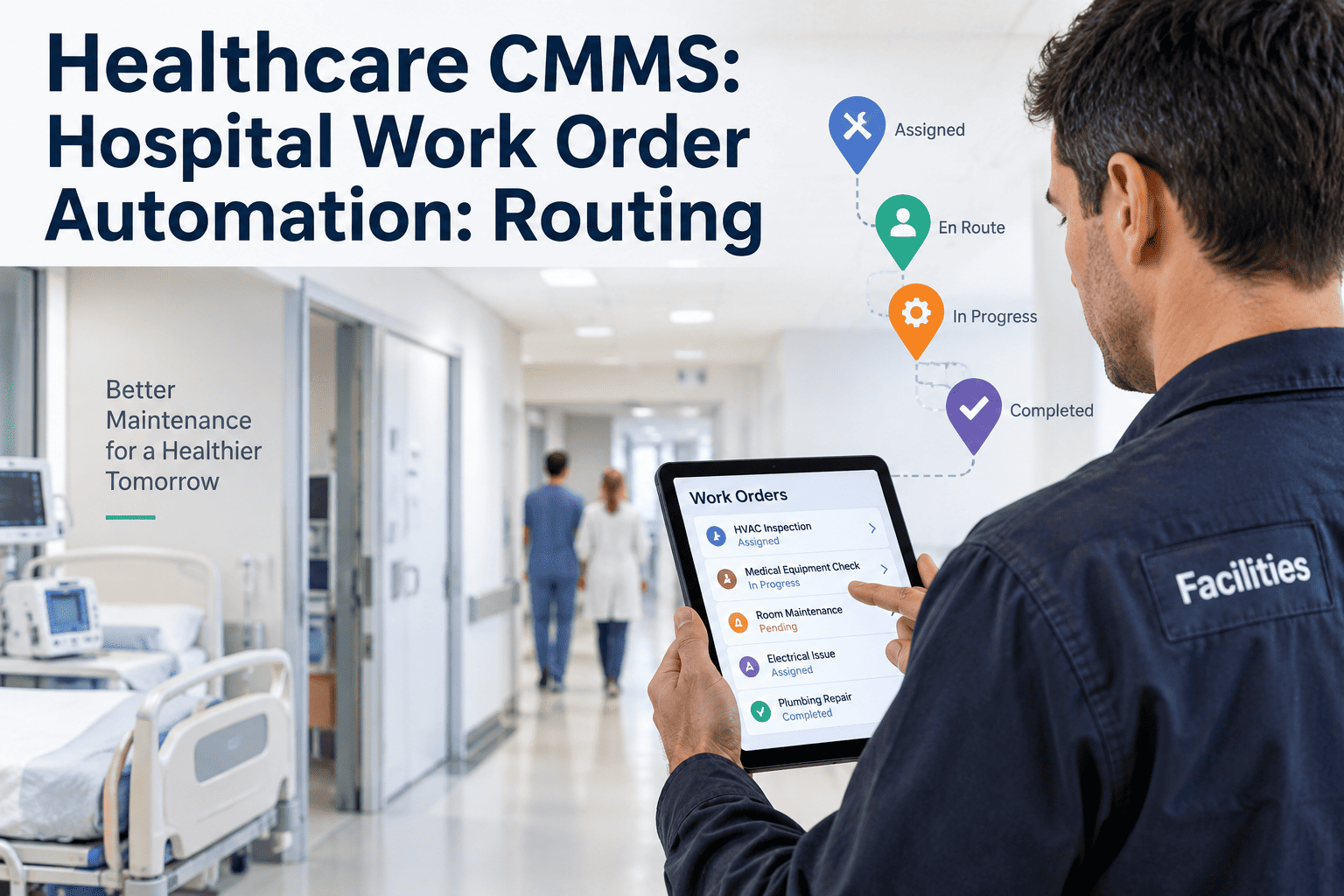
Create PM schedules tied directly to each asset — triggered by runtime hours, usage cycles, or calendar intervals. Oxmaint auto-generates work orders and escalates missed PMs before they become compliance issues.
Step 03 — Mobile Execution
Field Technicians Work on Mobile — Zero Paper
Technicians receive, execute, and close work orders on mobile — with photo documentation, checklists, parts logging, and digital signatures. Complete records from every field action. No paper. No lag. No lost records.
03
04
Step 04 — IoT Integration
Real-Time Monitoring with 48–72 Hour Early Warning
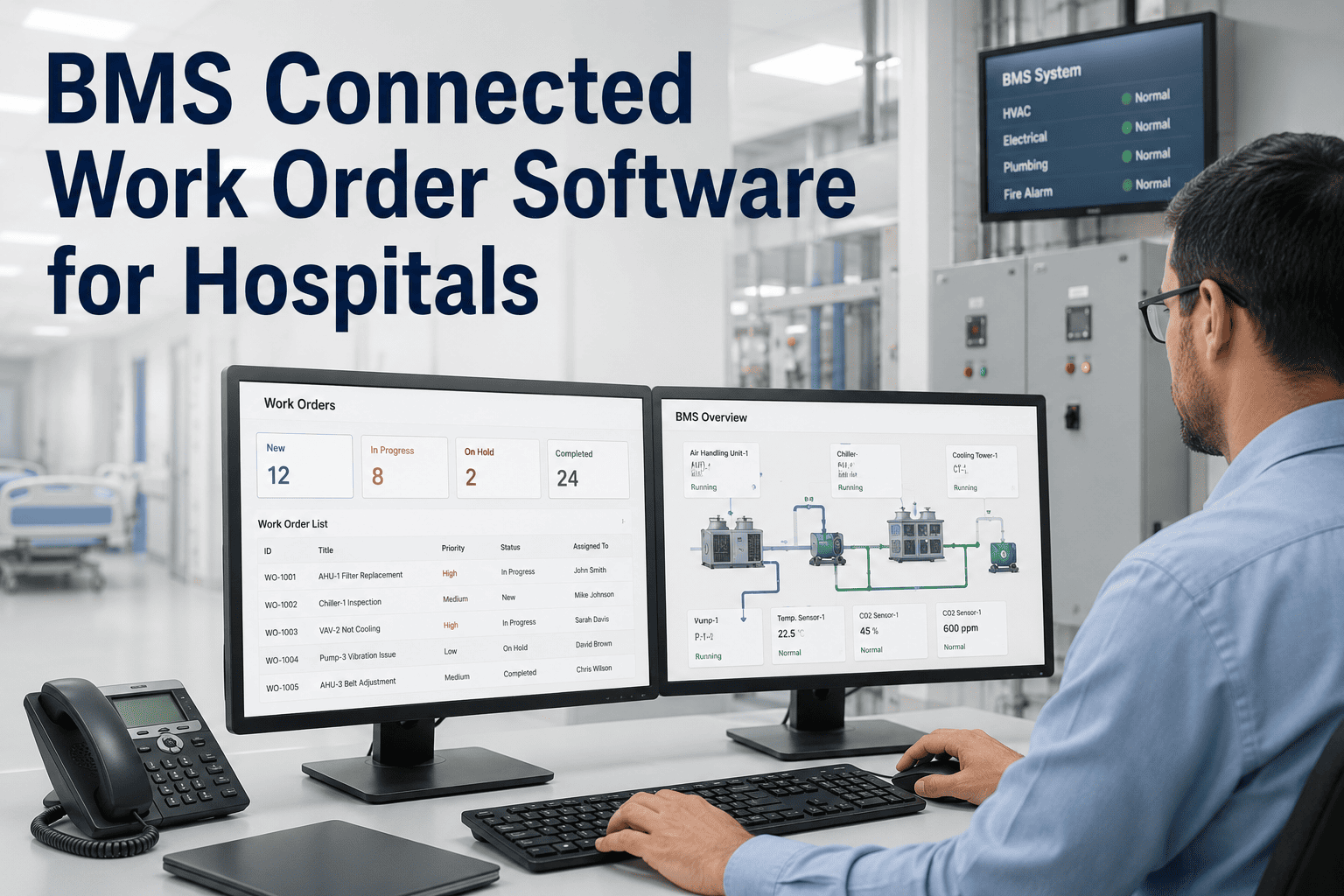
Connect clinical equipment sensors and BMS systems to receive live alerts before equipment breaches operational thresholds. Average early warning lead time: 48–72 hours ahead of failure — time to act without disrupting clinical operations.
Step 05 — Compliance
Audit-Ready Documentation Generated Automatically
Every PM task, inspection, and work order produces a Joint Commission and CMS-compliant record with digital signatures and timestamps. Available on demand — not scrambled the night before a survey team arrives.
05
06
Step 06 — Capital Planning
Forecast CapEx Replacements 5–10 Years Out
Live condition scores drive rolling capital replacement models. CFOs, directors, and board-level stakeholders get multi-year CapEx forecasts grounded in real asset health data — not estimates that collapse when an MRI fails six months early.

Every Feature a Hospital Maintenance Team Actually Needs

The gap between a basic work order tool and a purpose-built hospital maintenance platform determines whether your facility runs efficiently or lurches from one equipment crisis to the next. These eight capabilities define that gap. To see them all live, start a free trial or book a demo with the Oxmaint healthcare team.


Asset Intelligence
Medical Equipment Registry with Condition Scoring
Every device gets a live condition score. Degradation trends flagged before failures. Asset replacement forecasting tied to real condition data — not age-based assumptions.

PM Scheduling
Automated PMs Triggered by Asset Runtime and Cycles
PM schedules built from asset data — not static calendar reminders. Triggered by hours, cycles, or intervals. Missed tasks auto-escalate. Every schedule always current, always tracked.

Work Orders
Complete Technician History and Full Accountability
Every work order captures technician, timestamp, parts used, and resolution notes. Joint Commission-ready documentation generated automatically with digital signatures.

CapEx Forecasting
5–10 Year Capital Plans from Live Asset Health Data
Condition scores drive rolling capital replacement models at portfolio level. CFOs get multi-year forecasts grounded in real data — not spreadsheet estimates that blow up mid-cycle.

IoT Monitoring
Real-Time Equipment Alerts 48–72 Hours Before Failure
Clinical equipment sensors and BMS systems connected to Oxmaint deliver live alerts before threshold breaches — time to act without disrupting patient care.

Compliance
GMP-Compliant Inspections with Digital Signatures
Digital inspections with timestamped, signed records ready for Joint Commission, CMS, and GMP audits. Always current, always retrievable, always structured to meet accreditation requirements.

Multi-Site
Portfolio-Level Reporting Across All Facilities
Manage 3, 10, or 30+ facilities from a single dashboard. Compare PM compliance, downtime rates, and asset health by site. Investor-grade portfolio reporting built in.

Inventory
Spare Parts and MRO Procurement Fully Integrated
Parts inventory linked to work orders and assets. Technicians source parts in seconds, not hours. MRO procurement tracked against budget with procurement costs cut 15–25% in year one.

ROI and Performance Benchmarks

Healthcare facilities that implement structured preventive maintenance platforms consistently report measurable outcomes within 6–12 months. These benchmarks represent the performance shift when facilities move from reactive to condition-based asset management. Start a free trial or book a demo and let our team model the ROI for your specific asset portfolio.

Cost Savings
$420K
Average annual downtime savings per facility
Combined revenue recovery and avoided emergency repair spend
Asset Lifespan
27%
Longer average equipment lifespan
Delays CapEx replacement cycles by 3–5 years on average
Investment Return
3.2x
ROI on preventive maintenance investment
Industry average across acute care hospital facilities within 24 months

Frequently Asked Questions

What is digital maintenance management in healthcare and how does it differ from a standard CMMS?
A digital hospital maintenance management system is a specialised CMMS built for the regulatory, compliance, and operational requirements of healthcare facilities. While a standard CMMS manages work orders and PM schedules, a healthcare-specific platform adds Joint Commission and CMS-aligned documentation, medical equipment asset tracking, GMP-compliant digital inspections, and capital lifecycle forecasting tied to clinical asset condition scores. For health systems managing multiple sites, it also provides portfolio-level reporting — consolidated visibility that standard CMMS platforms simply do not offer.
How does a hospital maintenance platform support Joint Commission compliance?
Joint Commission Environment of Care and Life Safety standards require documented evidence of scheduled maintenance for medical equipment and building systems. A digital maintenance platform generates complete, timestamped, digitally-signed records for every PM task, inspection, and corrective work order — automatically. Facilities with PM documentation gaps or paper-based records face findings during surveys and risk conditional accreditation. With a digital system, records are always current, always retrievable, and always structured to meet accreditation requirements.
What features should a hospital look for when choosing a digital maintenance management platform?
The critical features are: a full medical equipment asset registry with condition scoring, preventive maintenance scheduling tied to asset data rather than static calendar reminders, mobile-first work order management with digital signatures, IoT integration for real-time equipment monitoring, Joint Commission-ready audit documentation on demand, multi-site portfolio reporting, and 5–10 year CapEx forecasting from live asset health data. The system must also be deployable without heavy implementation fees, specialist consultants, or a six-month onboarding process — hospital facility teams need operational capability in weeks, not months.
What is the ROI timeline for implementing a hospital digital maintenance management system?
Most healthcare facilities see measurable ROI within 6 to 12 months. The fastest gains come from eliminating emergency repair premium costs and reducing unplanned downtime — typically a 25–35% reduction in the first year. Full ROI including extended asset lifespan, deferred CapEx replacement, and compliance cost avoidance yields a 3x to 5x return within 24 months. Facilities with high-value imaging equipment or large multi-site portfolios typically reach breakeven faster. A single avoided MRI failure event — averaging $50,000–$75,000 in combined financial impact — can represent a significant portion of annual platform cost.


Get Started with Oxmaint
Give Your Hospital Maintenance Team the Platform It Deserves

Oxmaint gives healthcare facility and operations teams the infrastructure to manage every asset, automate every PM schedule, generate compliance documentation automatically, and plan capital expenditures with confidence. No heavy implementation. No specialist consultants. Operational in weeks — not months.
Full medical equipment registry Automated PM scheduling Joint Commission-ready documentation 5–10 year CapEx forecasting

Share This Story, Choose Your Platform!