Every hospital in the United States operates under a non-negotiable obligation: life-safety power must never fail. Yet maintenance teams across North America still rely on paper logs, missed fuel checks, and reactive testing cycles that leave emergency generator systems dangerously underprepared. NFPA 110 compliance is not just regulatory paperwork — it is the operational backbone that determines whether a patient on a ventilator survives a utility grid failure. Want to see how modern CMMS platforms eliminate compliance gaps for good? Start a free 30-day trial today or book a demo to explore automated generator maintenance scheduling built for healthcare facilities.
Hospital Emergency Generator Maintenance
The complete operational guide for healthcare facilities engineers — NFPA 110 testing schedules, ATS maintenance, fuel management, and CMMS-driven compliance that protects patients when the grid fails.
Automate NFPA 110 Compliance Before the Next Inspection
Oxmaint gives hospitals and health systems a single platform to schedule generator tests, track fuel levels, manage ATS records, and generate audit-ready compliance documentation — without spreadsheets or paper logs. Built for facilities teams managing complex, life-safety systems under real regulatory pressure.
What Is NFPA 110 and Why Does It Govern Hospital Generator Maintenance?
NFPA 110 — Standard for Emergency and Standby Power Systems — is the primary code governing the installation, testing, and maintenance of emergency power supply systems (EPSS) in healthcare facilities across the United States. Published by the National Fire Protection Association, it defines the performance requirements that ensure uninterrupted power to life-safety loads during any utility grid failure event.
For hospitals, compliance with NFPA 110 is not optional. The Joint Commission, CMS Conditions of Participation, and state health departments all reference NFPA 110 as the baseline standard for healthcare emergency power. Failure to maintain compliant systems risks not only patient safety but accreditation status and significant financial penalties. Healthcare facilities engineers responsible for emergency power need to understand the tiered classification system, mandatory test intervals, and documentation obligations NFPA 110 imposes — and they need a systematic way to meet them consistently. If your current process relies on manual scheduling, start a free trial with Oxmaint or book a demo to see automated NFPA compliance scheduling in action.
NFPA 110 Generator Testing Schedule — What Every Interval Requires
NFPA 110 mandates a layered testing regime. Missing a single interval is a compliance violation. Here is what each tier demands of healthcare facilities maintenance teams.
8 Generator Maintenance Failures That Create NFPA 110 Violations
These are not theoretical risks. They are the documented root causes behind the majority of hospital generator failures and compliance findings across the USA, UK, and Australia.
Hospital Generator Fuel Management — NFPA 110 Requirements and Best Practices
Fuel system failures account for the largest single category of generator non-start events. NFPA 110 section 8.3 sets the baseline — a robust fuel management program goes beyond it.
Fuel stored for more than 12 months without treatment requires polishing — a filtration process that removes water, microbial contamination, and degraded fuel particles. Facilities with extended storage tanks (above 5,000 gallons) should operate continuous fuel polishing systems per NFPA 110 A.8.3.8. Without polishing, fuel degradation accelerates in warm climates and can render stored fuel unusable within 18 months.
Automatic Transfer Switch Maintenance — The Most Critical EPSS Component
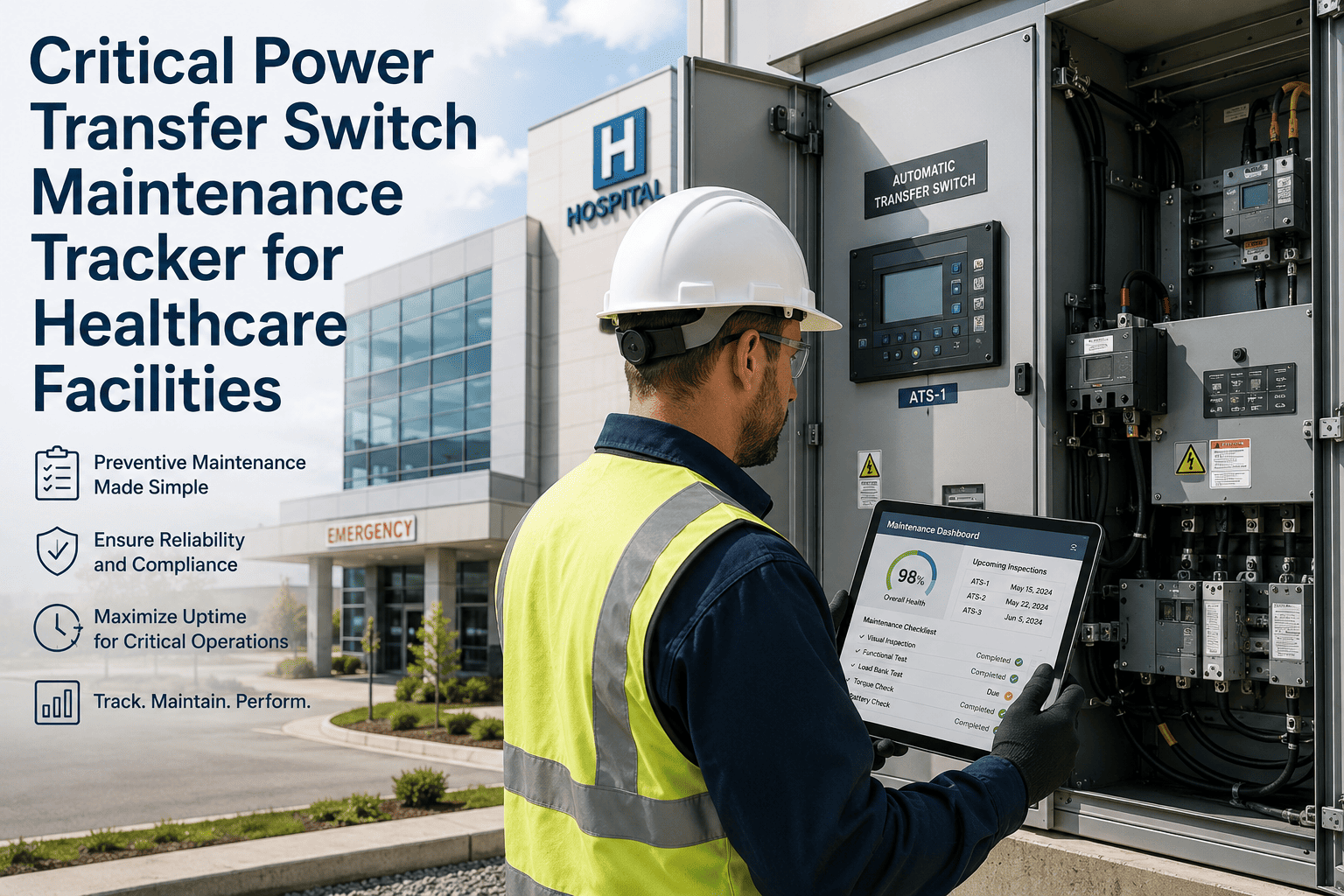
The ATS is the single point of failure between your generator and your life-safety loads. A properly maintained generator will not save a patient if the transfer switch fails to operate. Here is the complete ATS maintenance framework for NFPA 110 compliance.
How Oxmaint Eliminates Generator Compliance Gaps for Healthcare Facilities
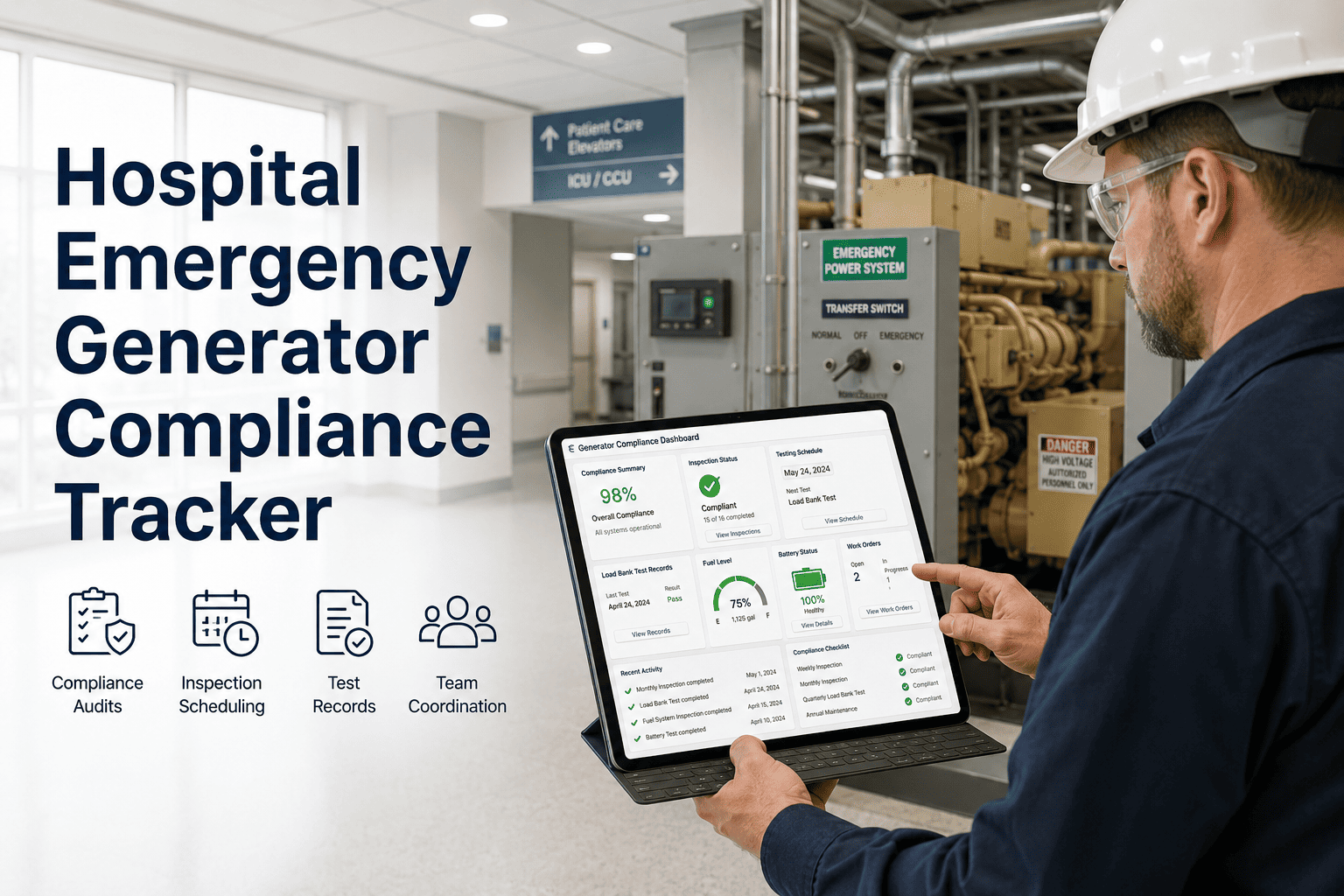
Oxmaint replaces disconnected spreadsheets, paper logs, and manual calendars with a single platform that automates NFPA 110 compliance from scheduling through documentation. Ready to eliminate compliance risk? Start your free 30-day trial or book a demo with our healthcare team today.
Reactive Generator Management vs CMMS-Driven Compliance
The gap between reactive and systematic generator maintenance is not just a compliance issue — it is a patient safety issue and a direct financial risk. This comparison shows what facilities teams experience at both ends.
| Operational Area | Without CMMS (Reactive) | With Oxmaint (Systematic) |
|---|---|---|
| PM Scheduling | Manual calendar entries, missed intervals common | Auto-scheduled, technician notified, escalated if missed |
| Test Documentation | Paper logs, often incomplete, difficult to locate | Digital records, instantly exportable, audit-ready at any time |
| Fuel Management | Checked manually, often reactive when level drops | Monitored continuously, alerted at 67% threshold automatically |
| ATS Maintenance | Addressed only during annual tests or on failure | Monthly exercise logged, annual inspection auto-scheduled |
| Compliance Status | Unknown until survey reveals gaps | Real-time compliance dashboard across all assets |
| Joint Commission Prep | Weeks of manual record compilation before survey | Export complete compliance package in under 10 minutes |
| Multi-Site Visibility | Site-by-site reporting, no consolidated view | Portfolio dashboard — all sites, one screen |
| Generator Lifecycle Cost | CapEx surprises when equipment fails without warning | 5-10 year rolling replacement forecast from condition data |
The Financial Case for Systematic Generator Maintenance
Healthcare facilities leaders need numbers, not narratives. Here is the documented financial impact of systematic vs reactive emergency generator programs.
Frequently Asked Questions — NFPA 110 Hospital Generator Compliance
What happens if a hospital fails an NFPA 110 generator test? +
A failed NFPA 110 test must be documented immediately with the specific failure mode, corrective action taken, and a re-test date. If the failure indicates a life-safety risk, the AHJ must be notified and interim protective measures implemented — which may include temporary generator rental. Continued operation without corrective action can result in CMS Condition of Participation violations and Joint Commission findings that place accreditation status at risk. The critical requirement is that you have a documented response plan and retain all failure and corrective action records for the mandatory 3-year retention period under NFPA 110 section 8.4.
How often must hospital automatic transfer switches be tested under NFPA 110? +
NFPA 110 requires ATS units to be exercised monthly as part of the generator monthly operational test. Each transfer and retransfer cycle must be observed, timed, and documented. Annually, a more detailed inspection of ATS contacts, sensing relay calibration, and mechanical condition is required. For bypass-isolation ATS units serving critical life-safety loads in ICU or OR environments, the bypass mechanism itself must be tested and documented at each annual inspection. Transfer time must be verified against the 10-second Level 1 mandate at every annual load test.
Can a hospital conduct NFPA 110 monthly tests without interrupting utility power? +
Yes. NFPA 110 permits monthly tests using a load bank when interrupting the normal utility source is operationally unsafe or impractical — which is commonly the case in active clinical environments. The load bank must provide at least 30% of the generator's rated kW for a minimum of 30 minutes. However, the ATS transfer function should still be verified through simulated testing at least monthly. Facilities that use only load bank testing for 12 consecutive months must still conduct a full utility interruption test at least annually to verify the complete EPSS transfer sequence under real-world conditions.
How does a CMMS like Oxmaint help with NFPA 110 compliance specifically? +
A dedicated CMMS eliminates the three most common NFPA 110 failure points: missed test intervals, incomplete documentation, and lack of multi-site visibility. Oxmaint pre-configures NFPA 110 maintenance schedules at the asset level so weekly, monthly, annual, and 3-year intervals auto-trigger without manual calendar management. Technicians complete digital checklists on mobile devices capturing readings, observations, and signatures at the point of work — eliminating paper log transcription errors. For Joint Commission surveys, compliance documentation packages can be exported in minutes rather than days. To see the platform configured for your facility's generator inventory, start your free 30-day trial or book a demo with our healthcare facilities team.
Stop Managing NFPA 110 Compliance on Spreadsheets
Oxmaint gives healthcare facilities engineers a purpose-built platform for generator maintenance scheduling, ATS tracking, fuel management, and audit-ready documentation. Used by hospital networks across the USA, UK, Australia, UAE, and Germany. No complex implementation. No lengthy onboarding. Operational in days.
Zero implementation fees. Free 30-day trial. Full data export whenever you want it.