A work order submitted verbally to a passing technician in a hospital corridor has no timestamp, no priority classification, and no accountability trail. Studies show 23% of verbal maintenance requests in healthcare facilities are never actioned — and when a Joint Commission surveyor asks for the maintenance history on a specific life safety system, that 23% gap becomes a compliance finding that could have been prevented entirely. Hospital work order management is not an administrative convenience — it is the operational and regulatory foundation of every maintenance function in a clinical facility. Sign in to OxMaint to digitalise your hospital work order workflow, or book a demo to see priority triage, SLA tracking, and compliance documentation configured for your facility's maintenance team.
Healthcare CMMS / Hospital Maintenance
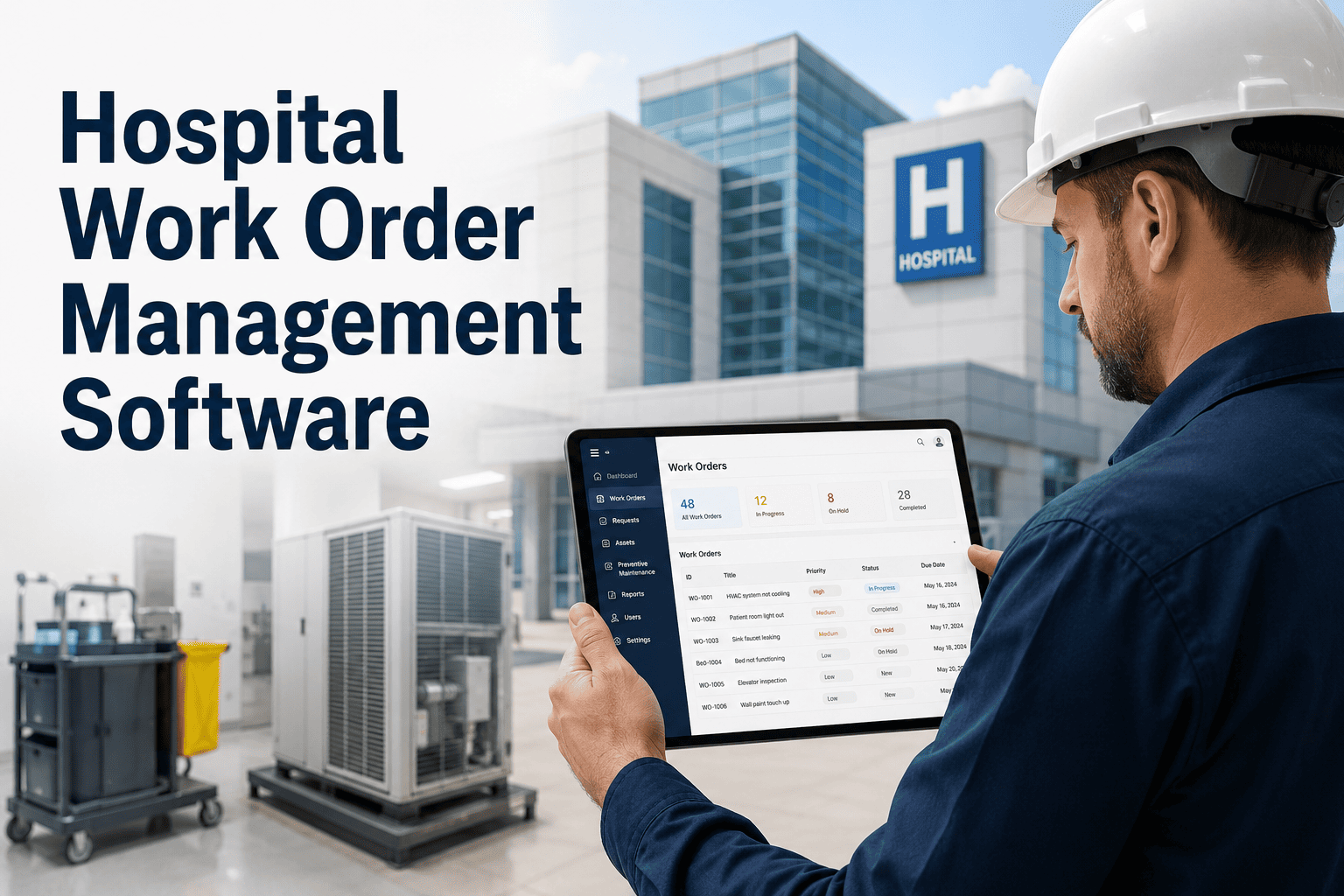
Hospital Work Order Management System: Complete Guide
Priority triage, technician dispatch, SLA tracking, compliance documentation, and PM integration — the complete framework for hospital and healthcare facility work order management in 2026.
23%
of verbal requests lost
Verbal maintenance requests in hospitals that are never actioned — eliminated entirely by digital submission with automatic timestamping
42%
of JC findings
Joint Commission facilities management findings relate to documentation gaps — preventable with structured digital work order records
31%
response time drop
Average reduction in response time for high-priority work orders within 60 days of implementing automated dispatch and SLA timers
4.8×
reactive cost premium
Every unplanned failure costs 4.8× more than the same repair completed as a scheduled PM — the core financial case for structured work order management
Why Hospital Work Order Management Requires a Different Approach
Generic ticketing tools and consumer-grade task apps are not built for healthcare. A hospital work order system must support medical equipment compliance requirements, biomedical technician workflows, and the audit documentation standards set by The Joint Commission, CMS, and OSHA — simultaneously. When a work order for a ventilator alarm malfunction arrives in the same queue as a storeroom light replacement, the system must classify, prioritise, and route each correctly without manual triage. When an NFPA 110 generator test is completed, the system must capture the right data elements in the right format for the compliance record.
The four failure modes that compound daily in facilities running on manual or disconnected work order processes are predictable: requests fall through without tracking, priority conflicts leave critical faults waiting behind routine requests, disconnected PM schedules create missed inspection gaps, and paper records cannot be assembled into defensible compliance documentation at inspection time. Every one of these failures has a direct cost in repair spend, compliance risk, or patient safety exposure. Sign in to OxMaint to eliminate all four simultaneously with a healthcare-configured work order platform.
30–40%
of maintenance supervisor time in hospitals without automation is consumed by administrative tasks — scheduling work orders, chasing completion confirmations, compiling compliance reports, and tracking parts. A structured digital work order system reclaims this time for planned maintenance and proactive asset management.
Automate Priority Triage, Dispatch, and Compliance Documentation
OxMaint classifies, routes, tracks, and documents every hospital work order from submission to closure — with SLA timers, escalation paths, and audit-ready records generated automatically at each stage.
Priority Classification and SLA Framework for Hospital Work Orders
Not all hospital maintenance requests carry equal urgency. A structured four-tier priority classification ensures the system routes and escalates correctly without manual intervention at each stage. SLA timers must start from the moment a work order is created — not from when it is assigned. Sign in to OxMaint to configure the priority and SLA framework for your hospital's work order categories.
Equipment failure or facility condition with direct patient safety impact, active life safety system malfunction, or regulatory emergency. Immediate dispatch required — SLA timer starts at submission.
Examples
Medical gas alarm or pressure failure
Fire suppression or alarm system fault
HVAC failure in OR, ICU, or isolation room
Emergency generator failure to start
SLA Target
Response: 15 minutes. Resolution or interim measure: 2 hours. Escalation to supervisor at 50% elapsed time.
Equipment or facility failure affecting clinical operations or patient care delivery without immediate safety risk. Same-shift or next-shift response required depending on care area impact.
Examples
Nurse call system malfunction in patient area
Medical equipment reporting alarm or error
Patient room HVAC outside comfort/clinical range
Sterile processing equipment fault
SLA Target
Response: 2 hours. Resolution: same shift or next shift. Supervisor notified if unresolved at shift end.
Inspection, test, or documentation task required by The Joint Commission, CMS, NFPA, or OSHA. Not an emergency but has a defined completion deadline — missed compliance tasks are survey findings regardless of clinical impact.
Examples
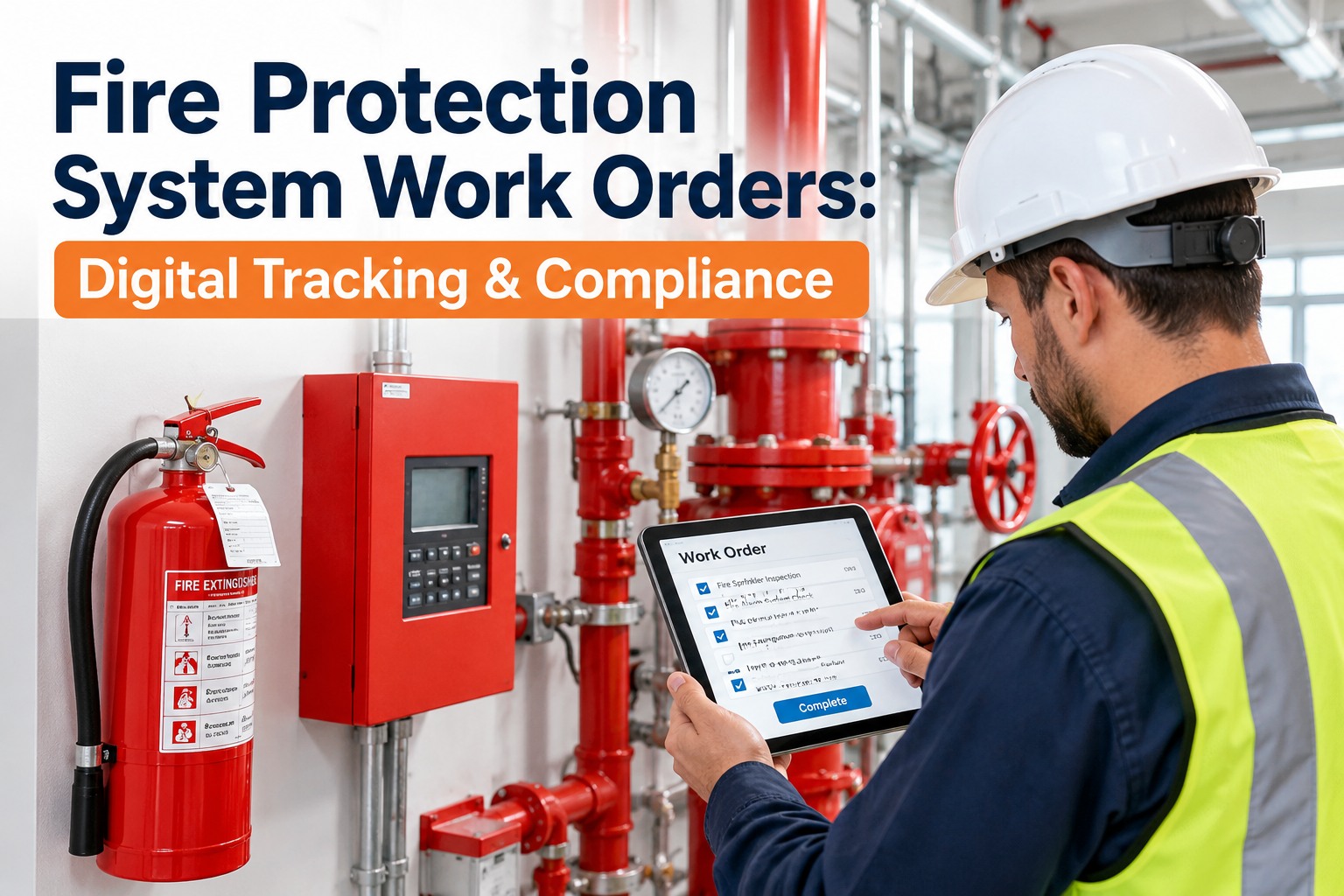
Fire extinguisher monthly visual check
Emergency lighting 30-second test (NFPA 101)
Generator monthly 30-minute exercise (NFPA 110)
Backflow preventer annual test
SLA Target
Completion within the regulatory-mandated interval. Compliance record generated at close and retained per applicable standard.
Scheduled preventive maintenance, non-urgent corrective repairs, and facility improvement requests. Executed in planned maintenance windows without production pressure. Managed from the planned backlog.
Examples
Scheduled PM for non-critical equipment
Cosmetic repairs in non-patient areas
Ancillary equipment calibration on schedule
Deferred corrective repairs from inspection findings
SLA Target
Completion within 5–15 business days depending on facility policy. Managed from the planned backlog dashboard.
SLA timers that start at assignment rather than submission create a hidden response gap — the time between work order creation and assignment is unmeasured and unmanaged. In a hospital, this gap is where P1 emergencies become patient safety events.
Escalation Structure
50% of SLA elapsed → maintenance supervisor notified
100% of SLA elapsed without resolution → facility manager notified
P1 breach → department head and compliance officer alerted
OxMaint automates
A hospital work order is not closed by task completion — it is closed by documentation completion. The closure record must capture the information that supports regulatory compliance: who performed the work, what was found, what was done, what parts were used, and whether all compliance checklist items were completed.
Required at Closure
Technician name and certification (biomedical vs. facilities)
Resolution notes and before/after photos
Parts used (part number, quantity, cost)
Compliance checklist items confirmed
Generates
Hospital Work Order Lifecycle — From Submission to Compliance Record
Every hospital work order passes through six stages. In facilities without a structured system, handoffs between stages rely on phone calls, emails, and verbal confirmations — each one a potential point of failure. In OxMaint, each stage transition is tracked, timestamped, and visible. Book a demo to see the full work order lifecycle configured for your hospital's workflows.
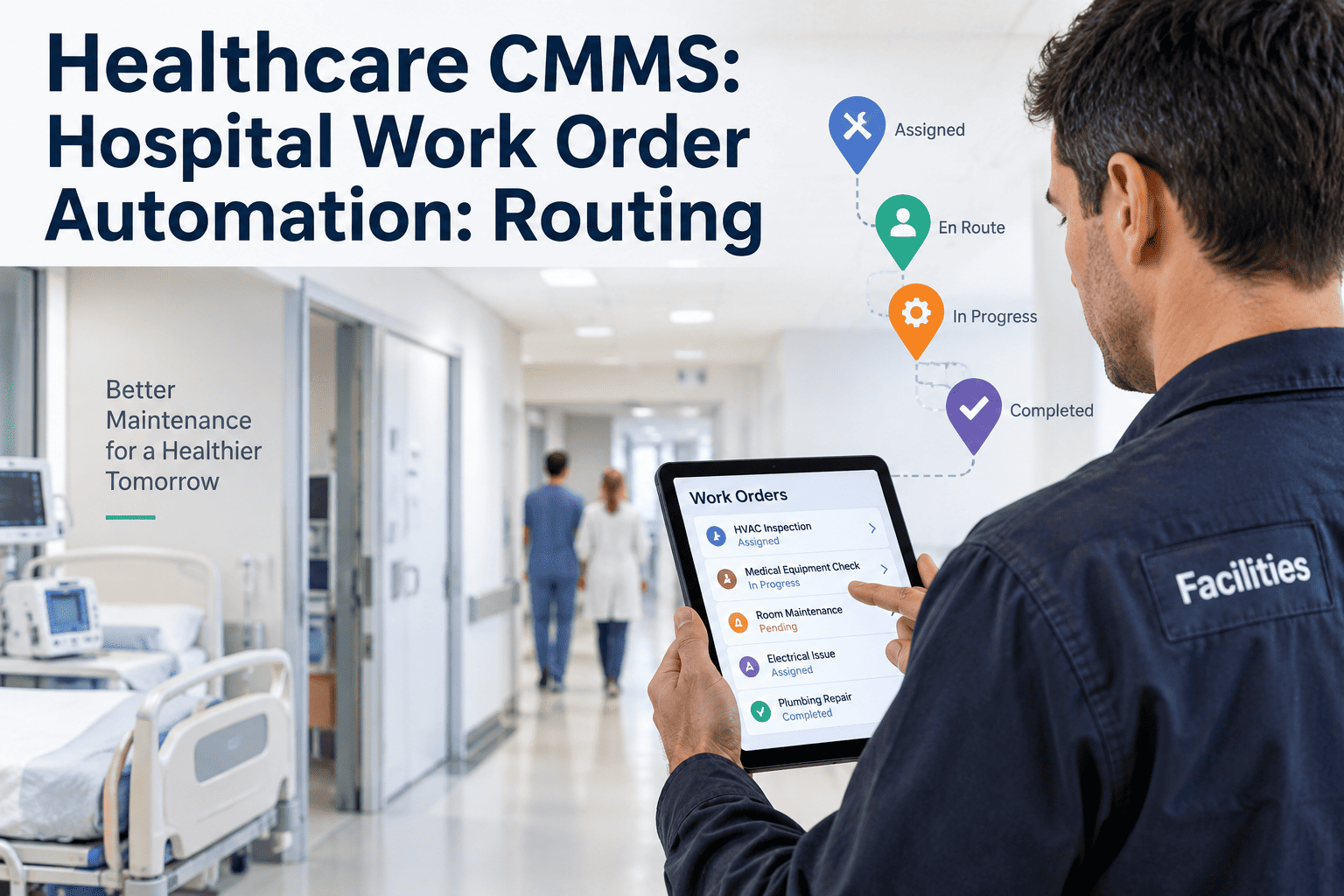
Clinical staff submit via mobile, QR code, or web portal. No calls to the maintenance office. No paper forms. Request is timestamped and queued immediately — the timestamp is the legal record of when the request was made, not when someone got around to logging it. Photo attachments, location tagging, and asset QR scans provide context that eliminates the back-and-forth clarification cycle.
Sign in to configure submission channels.
System auto-classifies by urgency: P1–P4 based on equipment type, location, and reported symptom. Biomedical vs. facilities split is maintained automatically — a ventilator alarm routes to a biomedical technician; an OR HVAC fault routes to the facilities team. Priority classification drives dispatch speed and SLA timer configuration. No manual triage step required for standard request types.
Work order routed to the right technician by skill, certification, shift, and proximity. Technician receives work order on mobile with the asset's full maintenance history, last PM date, known issues, and parts inventory status — before arriving at the equipment. Dispatch time subtracted from SLA. Biomedical equipment requiring certified biomedical technicians cannot be auto-assigned to a general facilities technician.
Book a demo to see dispatch rules.
Technician completes work order on mobile with photo documentation, checklist steps, and parts logging by part number. Compliance checklist items — NFPA test result fields, LOTO confirmation, biomedical safety verification — are mandatory fields that cannot be skipped at closure. Every action timestamped. Every photo attached to the work order record and linked to the asset history.
Sign in to configure completion checklists.
Work order closed with digital signature, resolution notes, and before/after photos. Parts consumed update MRO inventory automatically — auto-reorder triggers fire at minimum stock thresholds. Cost posted to the asset record. If the work order resolves a deficiency found during a compliance inspection, the corrective action is linked to the original finding — closing the audit chain.
At close, OxMaint generates a timestamped, immutable compliance record linked to the specific asset in the CMMS registry. When a Joint Commission surveyor requests the maintenance history for a fire alarm panel, elevator, or medical gas system, the complete record set is exportable in seconds — not assembled over days from paper files. Filter by asset, location, date range, maintenance category, or regulatory standard.
Book a demo to see a compliance export for a hospital asset.
"
In fifteen years of Joint Commission survey preparation for hospital systems, the facilities teams that receive zero findings in the maintenance management domain share one characteristic: their work order system generates the compliance record as a byproduct of normal operations — not as a pre-survey assembly exercise. The facilities team that spent three days before every survey pulling paper logs, chasing contractor invoices, and reconstructing maintenance histories from memory will eventually produce an incomplete record. The team that closes every work order with a digital checklist, a technician signature, and a timestamp linked to the specific asset produces a complete record automatically. The surveyor sees the same data either way — but one team can produce it in five minutes and the other cannot produce it at all. That gap is not a technology problem. It is a work order management discipline problem. The technology just makes the discipline sustainable at scale across hundreds of assets and thousands of work orders per year.
Every Work Order. Every Timestamp. Every Compliance Record. Automatically.
OxMaint generates the compliance record as a byproduct of normal work order operations — not as a pre-survey assembly exercise. Joint Commission and CMS documentation packages exportable in seconds.
What OxMaint Delivers for Hospital Work Order Management
Submit
Mobile and QR Submission
Clinical staff submit from any smartphone — photo, location tag, asset QR scan. No calls to maintenance office. All requests timestamped and queued immediately in one managed dashboard. Average response time drops 31% within 60 days.
Sign in to configure submission channels.
Triage
Auto-Priority Classification
Four-tier priority classification with automatic routing — P1 critical to on-call technician immediately, P2 urgent dispatched same shift, P3 compliance scheduled, P4 routine to planned backlog. Biomedical vs. facilities split maintained automatically.
Book a demo to see classification rules.
SLA
SLA Timers and Escalation
SLA timer starts at work order creation. Supervisor alerted at 50% elapsed time. Facility manager alerted at breach. No P1 work order goes unaddressed without management visibility. Breach history reported weekly for trend analysis.
Records
Compliance Documentation
Every work order close generates a timestamped, immutable record with technician attribution, completion photos, parts log, and compliance checklist confirmation. Joint Commission and CMS documentation packages exported in seconds.
Sign in to see your compliance export.
PM
Integrated PM Scheduling
Every PM task pre-configured per asset type with trigger conditions — calendar, runtime, cycles, or sensor thresholds. PM work orders auto-generate and route without manual creation. Missed PM cycles surface as compliance alerts before a surveyor finds them.
Book a demo to see PM integration.
Inventory
Parts and MRO Tracking
Parts consumed on work orders update MRO inventory automatically. Auto-reorder triggers fire at minimum stock thresholds — eliminating emergency procurement premiums. Cost tracked to the asset record for CapEx forecasting and budget reporting.
Sign in to configure inventory tracking.
Frequently Asked Questions
What is a hospital work order management system?
A hospital work order management system is a digital platform that manages the complete lifecycle of every maintenance request in a healthcare facility — from initial submission by clinical staff through priority classification, technician dispatch, execution documentation, and compliance record generation at closure. Unlike generic task management tools, a healthcare-specific work order system is built around medical equipment compliance requirements, biomedical technician workflows, and the audit documentation standards of The Joint Commission and CMS.
Sign in to start managing hospital work orders in OxMaint.
How should hospital work orders be prioritised?
Hospital work orders should be classified into four tiers: P1 Critical (patient safety or life safety impact — 15-minute response target), P2 Urgent (clinical impact — same-shift response), P3 Compliance (regulatory inspection or test requirement — completion within mandated interval), and P4 Routine (planned maintenance and non-urgent repairs). Priority classification should be automatic based on equipment type and location — not reliant on manual triage that introduces delay and human error on critical requests.
Book a demo to see OxMaint's priority classification configured for healthcare environments.
What documentation does a hospital work order need to generate for Joint Commission compliance?
A Joint Commission-compliant hospital work order closure record must include: the date and time the work order was created and closed, the name and certification of the technician who performed the work, a description of the work performed and findings, parts used (part number and quantity), and confirmation that applicable compliance checklist items were completed. For life safety system maintenance, prior inspection reports must be retained for defined periods per the applicable NFPA standard. OxMaint generates all required fields at work order close and retains them in an exportable, searchable record linked to the specific asset.
Sign in to configure compliance documentation fields per asset type.
When should the SLA timer start on a hospital work order?
SLA timers must start from the moment a work order is created — not from when it is assigned to a technician. The time between submission and assignment is the most common source of P1 response time failures in hospitals. A work order submitted at 2 AM for an ICU HVAC fault that is not assigned until a day shift supervisor reviews the queue at 6 AM has already consumed four hours of SLA time before a technician is notified. OxMaint starts the SLA timer at submission and escalates to the maintenance supervisor at 50% of SLA elapsed time — regardless of whether the work order has been assigned.
Book a demo to see SLA configuration for healthcare work order categories.


.jpg)