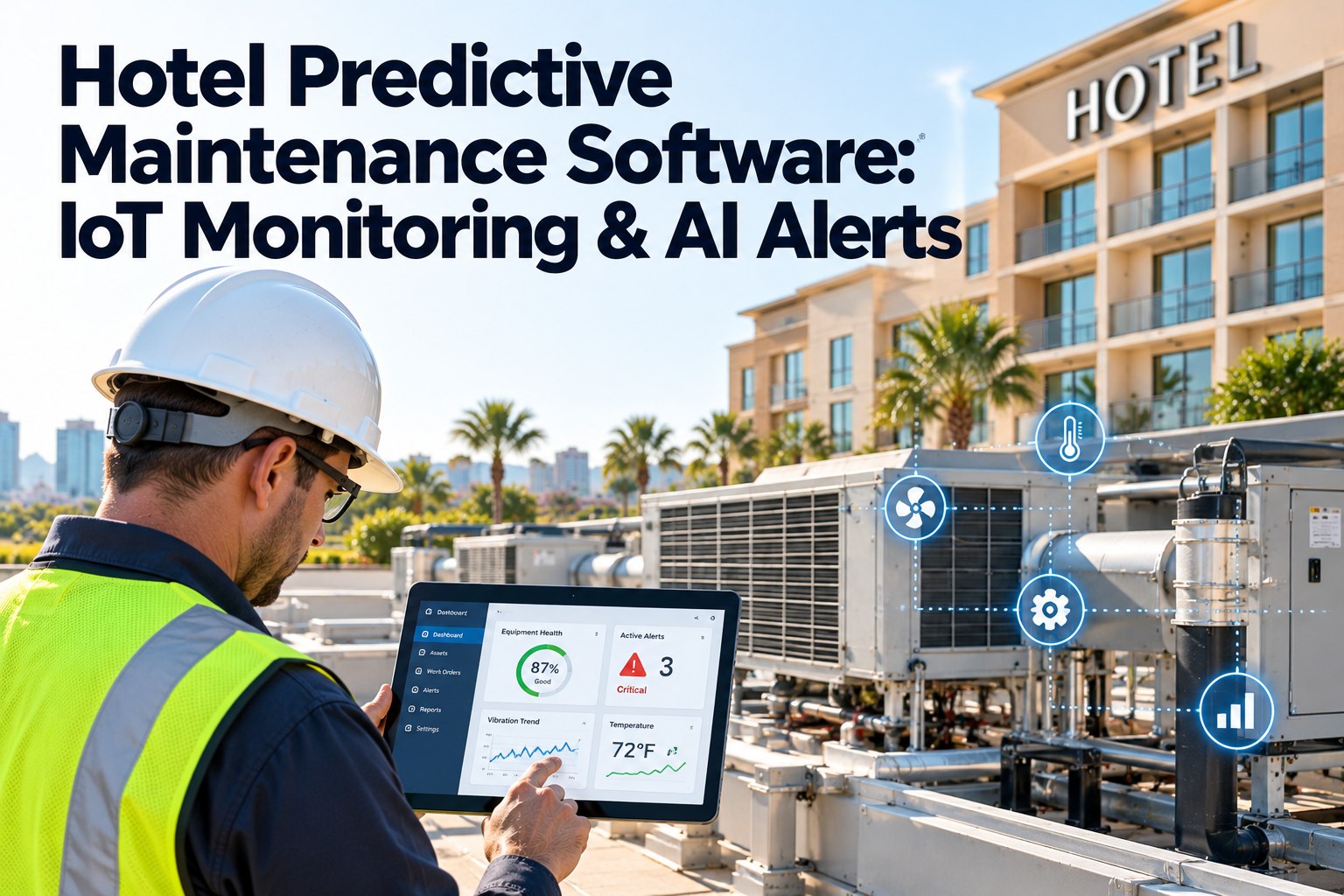
Hotels manage $4–$12 million in mechanical, electrical, and plumbing assets across a single property — chillers, boilers, AHUs, elevators, kitchen exhaust hoods, emergency generators, pool systems, laundry extractors — and most of them have no idea which ones are degrading right now. 73% of critical hotel equipment failures produce detectable performance signals 2–8 weeks before breakdown. A compressor drawing 16% excess amperage. A boiler losing 0.4% combustion efficiency per week. A cooling tower fan developing a vibration harmonic. Every one of these signals is invisible to walk-around inspections and calendar-based PM — but visible to a sensor sampling every 30 seconds and an AI model trained to recognise the pattern. The gap between what your equipment is telling you and what your team can hear is where $127,000–$380,000 per year disappears into emergency repairs, guest compensation, energy waste, and premature replacements. AI and IoT monitoring closes that gap permanently. Start monitoring your hotel assets with AI in Oxmaint — free, with automated alerts and condition scoring. Want to see it on your equipment first? Book a 30-minute demo.
AI and IoT Hotel Asset Monitoring: Your Equipment Is Talking — Start Listening Before It Screams
Every chiller, boiler, elevator, and kitchen hood in your hotel generates continuous operating data — temperatures, pressures, amperages, vibrations, runtimes. IoT sensors capture that data 24/7. AI models analyse it against failure-mode libraries trained on 200+ hospitality asset types. The result: your engineering team knows which assets are degrading, how fast, and what to do about it — weeks before the failure reaches the guest.
6 Equipment Failures Hotels Cannot See Coming — Without AI and IoT
Walk-around inspections and calendar-based PM were designed for an era without continuous data. They check equipment once per shift — 8 hours apart — while degradation happens every minute. These six failure modes are invisible to inspection schedules but fully visible to continuous sensor data analysed by AI. Each one costs more as an emergency than it would as a planned repair. Book a demo to see how Oxmaint detects each one on your asset fleet.
Compressor Bearing Wear
Rising amperage draw and vibration frequency shift signal bearing degradation 3–8 weeks before seizure. A $400 bearing service becomes an $18,000 emergency compressor replacement when missed.
Condenser Coil Fouling
Discharge pressure rises progressively as airflow degrades from dirt and biological growth. Invisible during walk-around. AI measures the pressure trend vs. ambient temperature and flags cleaning before 15–30% energy waste compounds.
Walk-In Cooler Compressor Cycling
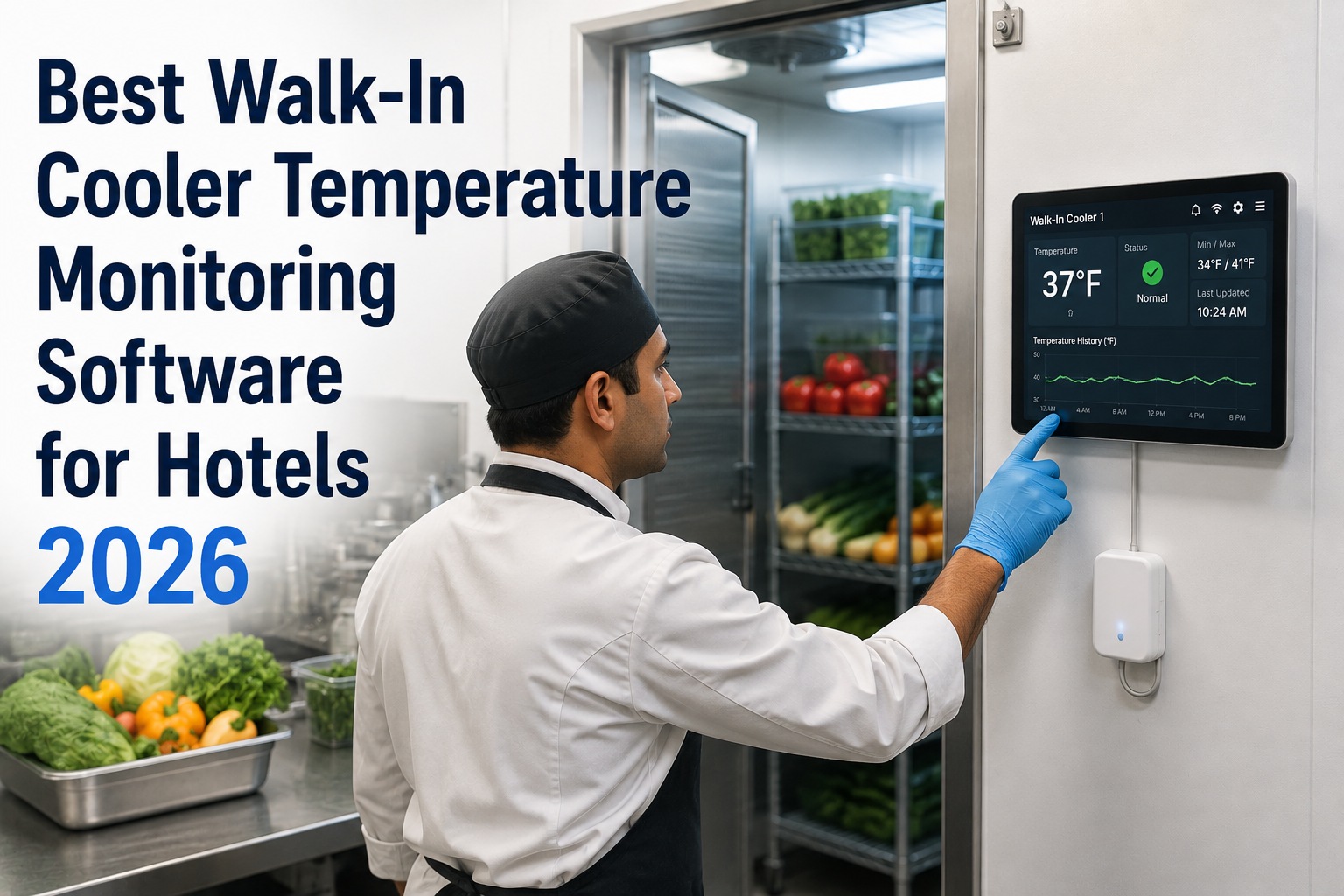
Short-cycling compressor runs are invisible to daily temp checks but indicate refrigerant loss or control failure. A walk-in that fails overnight destroys $3,000–$8,000 in food inventory and triggers health department violations.
Fan Motor Bearing Failure
Supply fan and condenser fan motors develop bearing wear producing measurable vibration changes weeks before failure. A locked rotor burns the winding — turning a $180 bearing job into a $2,800 motor replacement plus 6–12 hours of downtime.
Economiser Malfunction
Stuck or miscalibrated economiser dampers prevent free-cooling when outdoor conditions allow it — forcing mechanical cooling unnecessarily. Completely invisible without continuous mixed-air vs. outdoor-air enthalpy comparison. Energy waste: $800–$3,200/month per unit.
Boiler Efficiency Degradation
Fouled heat exchanger surfaces, incorrect air-fuel ratio, and uncalibrated controls reduce boiler efficiency by 8–15% before anyone notices. AI compares stack temperature and flue gas composition against baseline to flag degradation — preventing the cascade that ends in a $14,000+ emergency replacement.
From Raw Sensor Data to Prevented Failure — How the Intelligence Pipeline Works
IoT sensors collect the data. AI interprets it. Oxmaint acts on it. The pipeline runs continuously — every 30 seconds, across every monitored asset — detecting the degradation patterns that human inspection physically cannot see. Start a free trial and activate this pipeline on your property today.
IoT Sensors Capture Continuous Operating Data
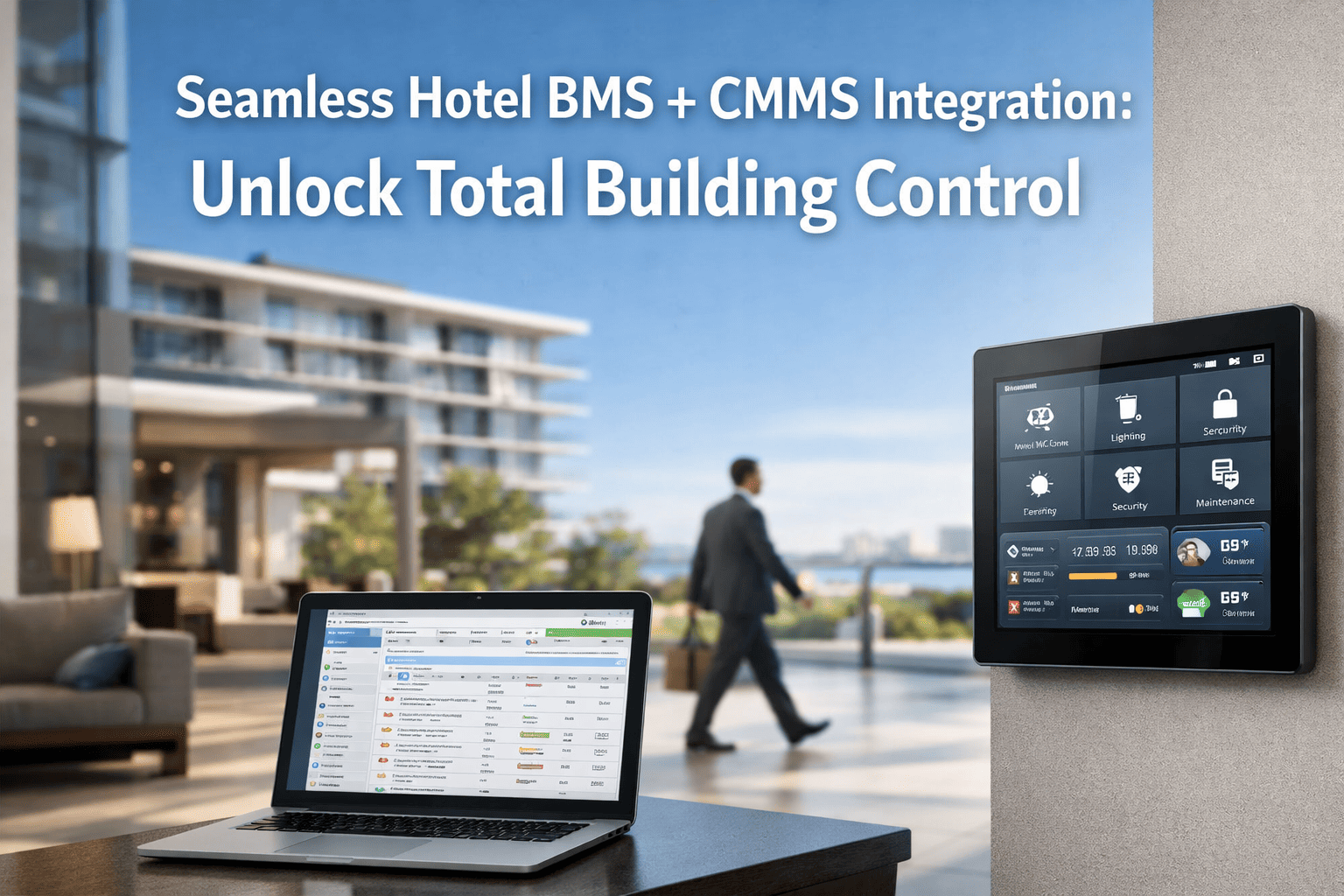
Temperature, pressure, vibration, amperage, flow rate, and runtime data streams from BACnet, Modbus, and MQTT-connected sensors — from existing BMS infrastructure or low-cost wireless IoT sensors deployed at $100–$500 per monitoring point. No proprietary hardware lock-in. Existing Honeywell, JCI, Siemens, and Tridium systems connect directly.
AI Learns Each Asset's Healthy Baseline
Machine learning models ingest 2–4 weeks of normal operating data per asset — learning the specific performance envelope for each chiller, AHU, boiler, and elevator under various load conditions. The AI does not apply generic thresholds — it builds a custom baseline for your Chiller-01, your AHU-14E, your Boiler-02.
Anomaly Detection Identifies Degradation Patterns
When an asset's operating parameters deviate from its learned baseline, AI compares the deviation pattern against a failure-mode library of 200+ hospitality-specific patterns. It identifies what is failing (compressor bearing, condenser fouling, refrigerant loss), how fast it is degrading, and how many weeks remain before failure — not just that something is "off."
Automated Work Orders with Full Context
AI-generated alerts auto-create work orders in Oxmaint — pre-populated with the asset record, failure mode identified, historical context, recommended corrective action, likely parts needed, and optimal scheduling aligned to low-occupancy windows. The technician sees what is failing, why, and what to do — before leaving the shop. No radio call. No verbal dispatch.
What to Monitor First: 4 Asset Categories Ranked by Failure Cost and Guest Impact
You do not need to instrument every asset on day one. Start with the 20% that cause 70% of your guest-facing failures and emergency spend. These four categories deliver measurable ROI within 60 days. Book a demo to identify priority assets for your property.
Stop Reacting to Failures. Start Predicting Them. Protect Your Revenue and Your Equipment.
Oxmaint connects IoT sensor data to AI failure-mode detection, condition scoring, and automated work order generation — turning raw equipment data into prevented failures, lower energy bills, and longer asset life. No proprietary hardware. Integrates with existing BMS. Live within weeks.
12-Month Outcomes on Oxmaint AI + IoT Monitoring
Aggregated from full-service hotel properties across six regions. Figures represent median outcomes at 12 months post-deployment versus same-period baseline. Start a free trial and begin building your own baseline data today.
Frequently Asked Questions
Do we need to replace our existing BMS to use Oxmaint AI monitoring?
How quickly does AI start detecting anomalies after deployment?
What is the implementation timeline and does it require IT infrastructure changes?
Can Oxmaint monitoring data support CapEx replacement requests to ownership?
Your Equipment Is Generating Health Data Right Now. Are You Acting On It?
Every hour of unmonitored operation is an hour where a detectable degradation pattern could be building toward an emergency. Oxmaint AI + IoT transforms that data into prevented failures, lower energy costs, and longer equipment life — automatically. Setup takes days, not months. Start with your highest-risk assets. Prove value in 60 days.