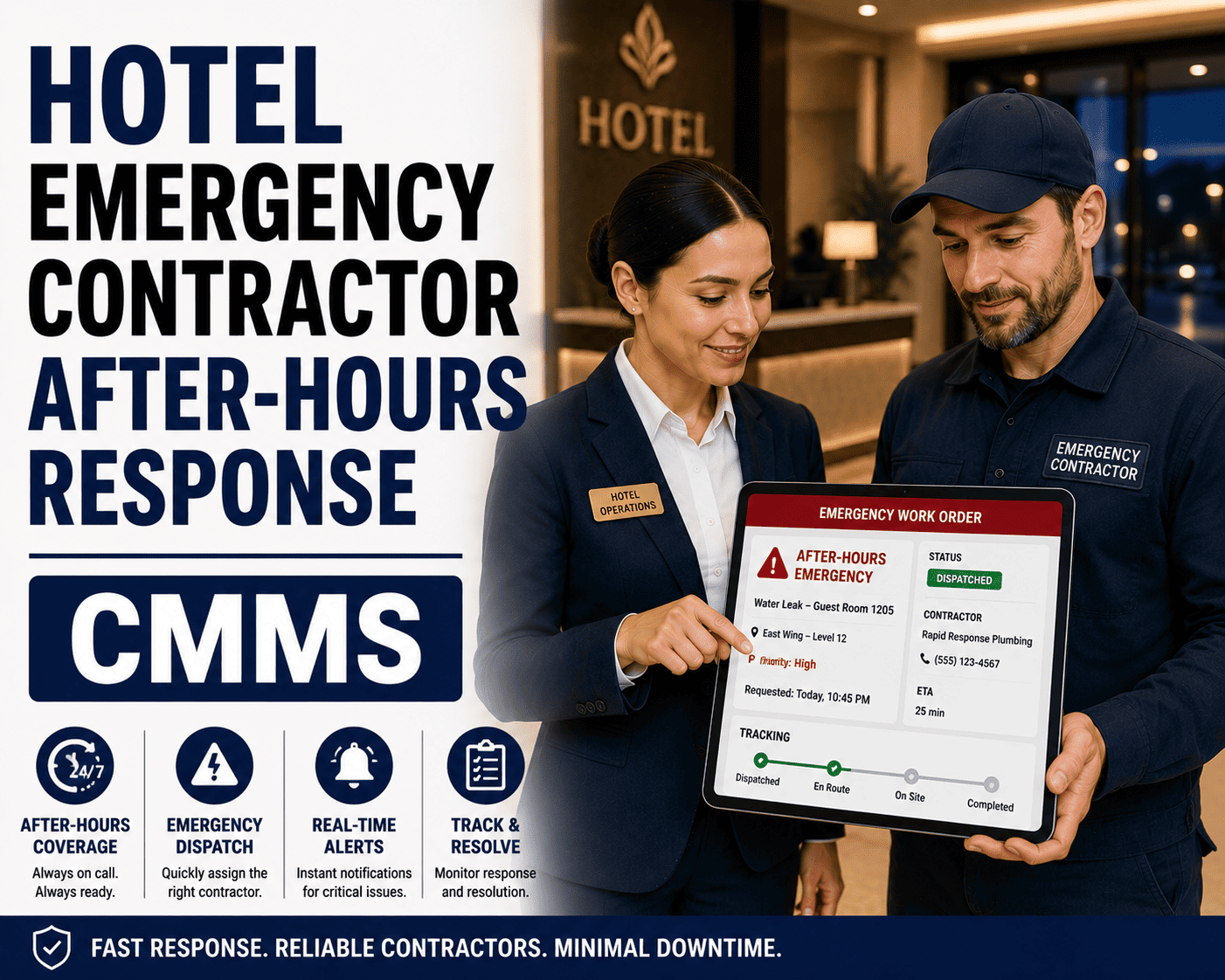
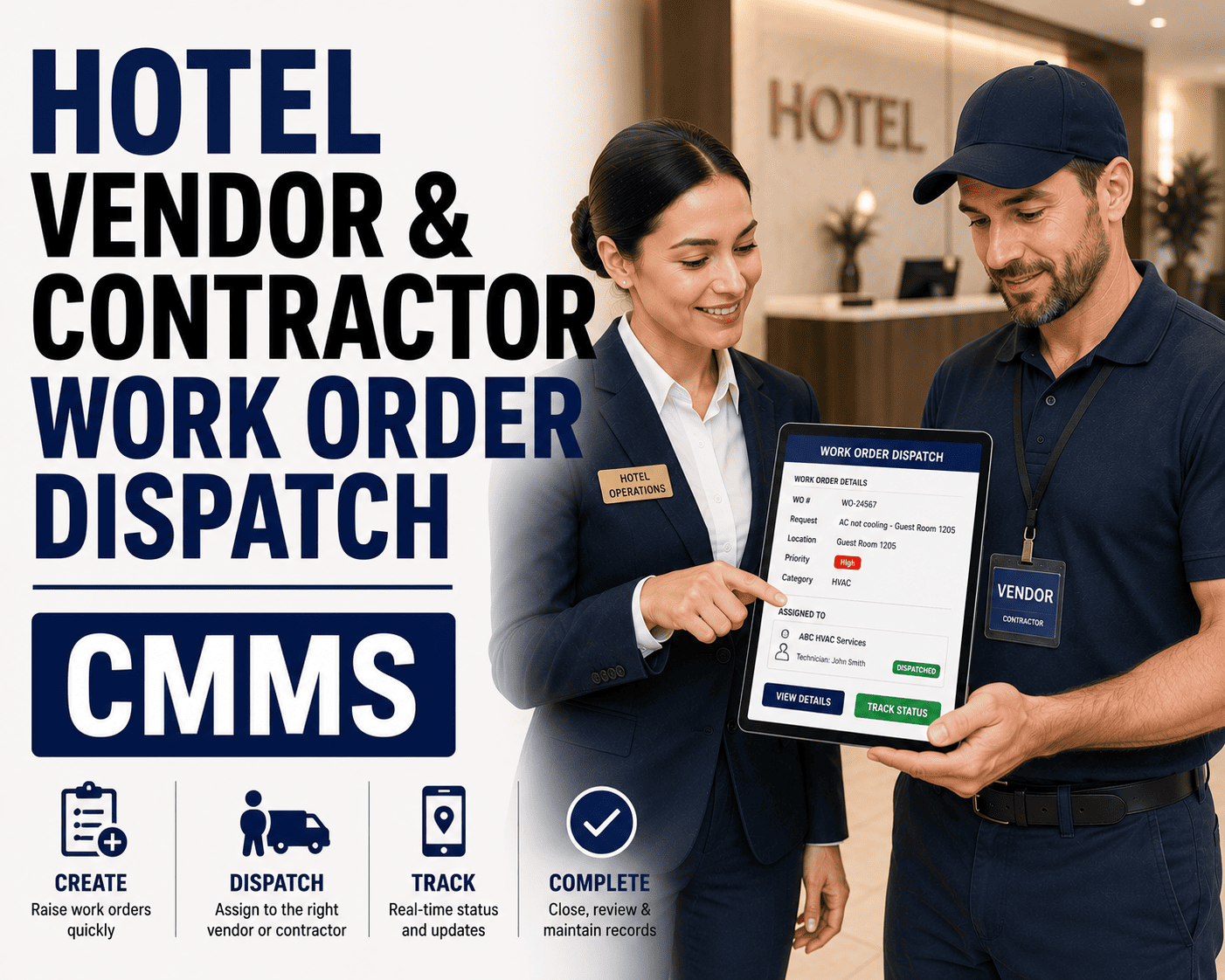
Hotel capital maintenance projects—roof replacements, HVAC system upgrades, electrical rewiring, guest room renovations, plumbing infrastructure repairs—represent major operational investments, often costing $100K–$5M+ depending on project scope and property size. Without a detailed, legally-binding Scope of Work (SOW), hotels face catastrophic project failures: contractors misunderstand deliverables (leaving work half-finished), disputes over completion standards arise (is paint "finished" if it has visible brush marks?), budgets balloon due to undefined change orders, and projects extend beyond agreed timelines causing operational disruption. The average hotel experiences 15–25% cost overruns and 20–40% timeline delays on capital projects lacking formal SOWs. These delays directly impact revenue: a 200-room hotel losing 10% room availability for 30 days due to renovation bleeding into occupancy season loses approximately $120,000 in room revenue. A comprehensive Scope of Work establishes contractual clarity: exactly what work is included, what is excluded, when work starts/stops, daily operational requirements (noise levels, work hour restrictions, guest access preservation), how changes are requested and priced, and payment milestones tied to completion verification. A CMMS-integrated SOW system enables hotels to track project progress in real-time against defined milestones, auto-generate payment authorization when tasks are complete, flag scope creep (changes requested outside original SOW), and maintain compliance documentation (permits, inspections, safety certifications) in a single repository. Oxmaint's contractor SOW template provides hotel owners and asset managers with a customizable, legally-sound framework covering scope definition, deliverables, schedules, compliance requirements, and payment structures—eliminating ambiguity and enabling objective completion verification tied to milestone-based contractor payments.
Define Your Hotel Project Scope.
Download our contractor Scope of Work template — fully editable for your specific project requirements, compliance mandates, budget constraints, and timeline. Includes change order procedures, payment milestone definitions, and quality acceptance criteria.
Why Hotels Fail at Contractor Project Management
A typical hotel capital project involves 5–8 separate contractors (general contractor overseeing subcontractors for plumbing, electrical, HVAC, finishes, etc.). Without a unified SOW, each contractor operates from a different understanding: the GC thinks "paint guest rooms" means basic wall coverage; the hotel expects fresh finishes with trimwork detail. The GC budgets 4 weeks; the hotel's timeline allows 3 weeks. The GC estimates guest disruption 8 AM–4 PM daily; the hotel needs 11 PM–6 AM only work windows (to preserve daytime operations). These misalignments cause cascading problems: contractors miss their true deadline, sequencing breaks (electrical work can't start because drywall isn't complete), guest complaints mount (noise during breakfast), and contract disputes ensue. Hotels spend 40–60% of project management time on dispute resolution and change order negotiations instead of proactive oversight. A clear SOW prevents this by establishing: (1) written deliverables with acceptance criteria (paint color, DFT film thickness, ASTM standards required), (2) detailed schedule with resource allocation (how many workers, equipment types, daily productivity rates), (3) operational impact zones (what areas are work-restricted daily, when guests can/can't access elevators, etc.), and (4) compliance requirements (permits, inspections, third-party certifications required before payment release). A CMMS tracks project progress against these baselines, enabling early warning if a contractor is falling behind (week 2 is only 30% complete instead of 50% scheduled).
The 12 Critical SOW Components Every Hotel Project Needs
1. Project Description & Objectives
Define project scope in plain language: "Complete guest room renovations (Rooms 201–300, West Tower) including flooring replacement, wall/ceiling finishes, bathroom fixture upgrades, lighting/electrical updates, HVAC ductwork cleaning. Objective: achieve mid-luxury guest experience standards as defined in brand standard document XYZ-2024." Include project budget, owner contact, and approval authority.
2. Deliverables & Acceptance Criteria
List specific, measurable deliverables with acceptance standards. Example: "Flooring: LVP (luxury vinyl plank) 8mm thickness, luxury comfort underlayment, installed per manufacturer specs, no visible seams >1/16-inch, grout lines clean. Acceptance: visual inspection with hotel reps, zero punch-list items." Vague acceptance ("looks good") causes disputes; specific acceptance (measurements, standards referenced) enables objective completion verification.
3. Timeline & Milestones
Define start date, finish date, and intermediate milestones tied to 10–25% payment releases. Example: "Start: March 1, 2024. Milestone 1 (3/15): Demolition complete, permits approved, 25% payment released. Milestone 2 (4/1): Rough-in (electrical/plumbing) complete, 25% payment released. Milestone 3 (5/1): Finishes complete, final inspection, 50% payment released." Milestone-based payments prevent contractors from skipping final details (they don't get full payment until everything is complete).
4. Operational Impact & Work Windows
Specify when contractors can work and what areas must remain guest-accessible. Example: "Work windows: 11 PM–6 AM only (Mon–Fri), 8 AM–8 PM weekends/holidays. Main stairwell must remain accessible 6 AM–11 PM. West hallway noise <75 dB during 7–11 AM (breakfast hours). Contractors liable for noise abatement or scheduling delays." This prevents 8 AM jackhammering disrupting breakfast service.
5. Change Order Procedure
Define how scope additions are requested and priced. Example: "All change requests must be submitted in writing with contractor-provided quote. Quote must include labor hours (with hourly rate), materials (with cost breakdown), and impact on schedule. Hotel approves or denies within 3 business days. Approved changes are executed via signed change order addendum before work begins. Unapproved changes performed by contractor are not billable." This prevents the "discover asbestos, stop work, argue about who pays for remediation" scenario.
6. Permits & Compliance
Specify which party obtains permits, at whose cost. Example: "Contractor responsible for obtaining electrical permit ($500 est.), plumbing permit ($300 est.), final building inspection ($150 est.). Costs included in bid price. Contractor must post permit at job site. Hotel reserves right to deny contractor access if required permits are expired/unavailable." This prevents contractors from skipping permit requirements (hotel has no legal protection if unpermitted work fails).
7. Insurance & Bonding
Require specific insurance coverage. Example: "Contractor must maintain General Liability $2M, Worker's Comp per state minimum, and $500K Performance Bond. Proof of insurance must be provided 5 days before project start and renewed if policy expires mid-project. Non-compliance results in work stop and contractor removal at hotel discretion." This protects the hotel: if a contractor's worker is injured, the hotel isn't liable (contractor's insurance covers it).
8. Quality Standards & Inspections
Define inspection triggers and acceptance authority. Example: "Hotel reps inspect work at completion of each milestone. If punch-list items identified (minor deficiencies), contractor has 5 days to correct. If major deficiencies (>2% of deliverables non-compliant), work is rejected and contractor must redo at contractor expense. Hotel can hire another contractor to complete work at contractor's expense if deadline is missed." This forces quality: contractor knows incomplete/poor work won't earn payment.
9. Warranty & Defect Resolution
Specify post-completion warranty period. Example: "Contractor warrants all work for 12 months post-completion. Any defects (leaks, electrical failures, material degradation) discovered within 12 months are contractor responsibility to repair at contractor expense. If contractor is unavailable/unresponsive, hotel can hire another contractor at original contractor's expense." This prevents contractors from abandoning properties after final payment.
10. Payment Schedule & Holdback
Outline payment milestones with holdback provisions. Example: "25% upon signed contract, 25% upon Milestone 1 completion verification, 25% upon Milestone 2, 25% upon final completion and punch-list clearance. 10% holdback (from total contract) withheld for 30 days post-completion to verify no defects emerge. Holdback released after punch-list period expires with no claims." Holdbacks ensure contractors don't disappear before warranty period ends.
11. Communication & Escalation
Define who communicates what and when. Example: "Contractor provides daily progress updates (email by 4 PM) detailing completed tasks, on-time status, and any issues. Weekly video call with GC + hotel reps every Monday 10 AM. Any delays >3 days trigger escalation call with contractor principal and hotel ownership." This prevents communication breakdowns: hotel always knows what's happening.
12. Termination & Default
Specify termination conditions. Example: "If contractor fails to meet milestone deadline by >10 days, or violates safety/compliance requirements twice, hotel can terminate with 3-day written notice and hire replacement contractor at original contractor's expense. Original contractor forfeits payment beyond work already completed and accepted." This motivates performance: contractors know non-performance is expensive.
SOW Template by Hotel Project Type
Guest Room Renovation
Typically 8–12 week project, $1,500–$3,500 per room. Deliverables: flooring, wall/ceiling finishes, bathroom fixtures, lighting, HVAC. Work windows: 11 PM–6 AM (non-disruptive). Guest accessibility: maintained 24/7 in 80% of property. Permits required: electrical, plumbing. Inspection: daily cosmetic, weekly structural. Warranty: 12 months. Milestone payment: 30% design/permits, 35% demolition/rough-in, 35% finishes.
HVAC System Replacement
Typically 6–10 week project, $250K–$750K. Deliverables: new AHUs, compressors, ductwork, controls, commissioning. Work windows: 10 PM–6 AM (heating/cooling system offline). Guest comfort: maintained via temporary units. Permits required: mechanical, building. Inspection: weekly progress, final commissioning. Warranty: 2 years parts + 5 years labor (critical system). Milestone payment: 20% equipment, 30% installation, 25% commissioning, 25% final.
Roof Replacement
Typically 4–8 week project, $200K–$600K. Deliverables: roof decking, insulation, new roofing membrane, gutters, flashing, final inspection. Work windows: 6 AM–6 PM (weather-dependent). Guest comfort: noise isolated, no water intrusion. Permits required: building, roofing contractor license. Inspection: weekly (before weather events), final. Warranty: 10–20 years (manufacturer-dependent). Milestone payment: 25% material delivery, 35% 50% complete, 40% final (after warranty certification).
Electrical System Upgrade
Typically 10–16 week project, $300K–$1M. Deliverables: new service entrance, panel upgrades, feeder circuits, device replacements, final inspection. Work windows: 11 PM–5 AM (power interruption during off-peak). Guest safety: backup generator runs during work. Permits required: electrical, building. Inspection: weekly circuit testing, final load-test. Warranty: 5 years. Milestone payment: 20% equipment procurement, 30% rough-in, 30% finishing, 20% final + testing.
Common Hotel Project Change Order Scenarios
Scenario 1: Hidden Asbestos Discovered
During demo of guest room walls, contractor discovers asbestos-containing insulation. Scope: original SOW doesn't include asbestos abatement ($15K–$30K). Contractor must stop, obtain licensed abatement contractor quote, submit change order. Hotel approves or denies based on budget. If approved, change order increases contract price by ~$25K and timeline by 2 weeks. CMMS tracks change order in project history, enabling future projects to budget for asbestos contingency.
Scenario 2: Owner-Requested Upgrade
During flooring installation, hotel owner visits and requests premium flooring instead of standard spec (adds $8K material + $3K labor). This is owner change, not contractor scope creep. Contractor quotes $11K for upgrade. Owner approves. Change order signed. Contractor proceeds. CMMS tracks as "owner-initiated change," not contractor default (affects contractor evaluation for future projects).
Scenario 3: Code Violation Identified
Building inspector identifies electrical layout violates current code (original SOW spec'd 10-year-old code). Contractor must re-route circuits per current code. Cost: $6K additional labor. Responsibility: original SOW referenced outdated code (hotel's error), so contractor can claim change order. However, contractor should have flagged code version at bid stage. CMMS enables hotel to review contractor's response time (did they immediately flag issue or hide it?) for future contractor evaluations.
Scenario 4: Scope Creep Prevention
Contractor attempts to bill for "cleaning guest rooms daily during renovation" (scope says contractor is responsible for daily cleanup of work areas, not guest areas). Hotel rejects. SOW explicitly states: contractor cleanup = work areas only, hotel housekeeping continues normal guest room cleaning. CMMS documents rejection and communicates to contractor: "Daily guest room cleaning is excluded from SOW per section 4.2. If you need scope clarification, submit change order request."
Frequently Asked Questions: Contractor SOW for Hotels
Q1 Should the hotel or contractor obtain permits?
Standard practice: contractor obtains permits at contractor cost (included in bid). Hotel is responsible for coordinating with building department and ensuring compliance. CMMS tracks permit status so hotel can deny contractor access if permits lapse.
Q2 What's a reasonable project contingency percentage?
Budget 10–15% contingency for well-defined projects (guest room renovation), 20–25% for complex projects (HVAC/electrical system replacement). Budget 25–35% for historical buildings or projects involving potential asbestos/hazmat discovery.
Q3 Can we start work before SOW is fully signed?
No. Unsigned SOWs create legal ambiguity. Both parties must sign before work begins. If contractor begins work before signing, hotel has no contractual protection (contractor could claim additional costs not in SOW).
Q4 How do we handle contractor performance issues mid-project?
Document issues in writing. If contractor is <3 days behind, schedule weekly check-ins. If >10 days behind, send formal notice citing SOW section 12 (termination clause) and allow 5 days to correct. If no improvement, terminate and hire replacement at original contractor's cost.
Q5 What's the difference between punch-list items and warranty claims?
Punch-list: minor cosmetic defects discovered during final inspection (paint touch-ups, caulk gaps, hardware alignment). Contractor fixes before final payment. Warranty claims: defects discovered after completion (wall crack, leak, electrical failure). Contractor repairs under warranty period at no cost.
Q6 Can we dock contractor payment if timeline is missed?
Only if SOW includes liquidated damages clause (e.g., "$500/day penalty for timeline overages"). Liquidated damages must be reasonable (not arbitrary penalties). Better approach: milestone-based payments tied to completion verification—contractor doesn't get paid for late milestones.
Q7 How long should warranty period last?
Standard: 12 months for finishes, 24 months for mechanical systems (HVAC/plumbing), 5+ years for structural/electrical. Longer warranties increase contractor insurance cost but provide longer protection. Balance warranty duration with contractor budget impact.
Q8 What if contractor abandons project mid-work?
Hotel can hire replacement contractor at original contractor's expense and seek damages. Having a Performance Bond ensures financial recovery (bonding company pays if contractor defaults). CMMS documents all coordination issues/warnings for litigation evidence.
"We used Oxmaint's SOW template for a $350K guest room renovation across 50 rooms. Having a detailed, structured SOW prevented misunderstandings—contractor knew exactly what was expected, we had objective acceptance criteria, and milestone-based payments tied to verified completion. Project finished on time, 3% under budget (instead of typical 15–20% overrun), and guest satisfaction improved from 78% to 94% post-renovation. The SOW also enabled real-time tracking in CMMS—we caught a contractor falling behind by day 12 and added staff, preventing the full project delay we would've experienced with normal spreadsheet tracking. That early warning saved us $50K+ in operational disruption."
Director of Capital Planning, 200-room hotel group, Midwest USA
Manage Hotel Projects Successfully.
Download our fully customizable contractor Scope of Work template — includes all 12 critical SOW components, change order procedures, payment milestone definitions, and contractor performance tracking. Start projects with crystal-clear expectations.