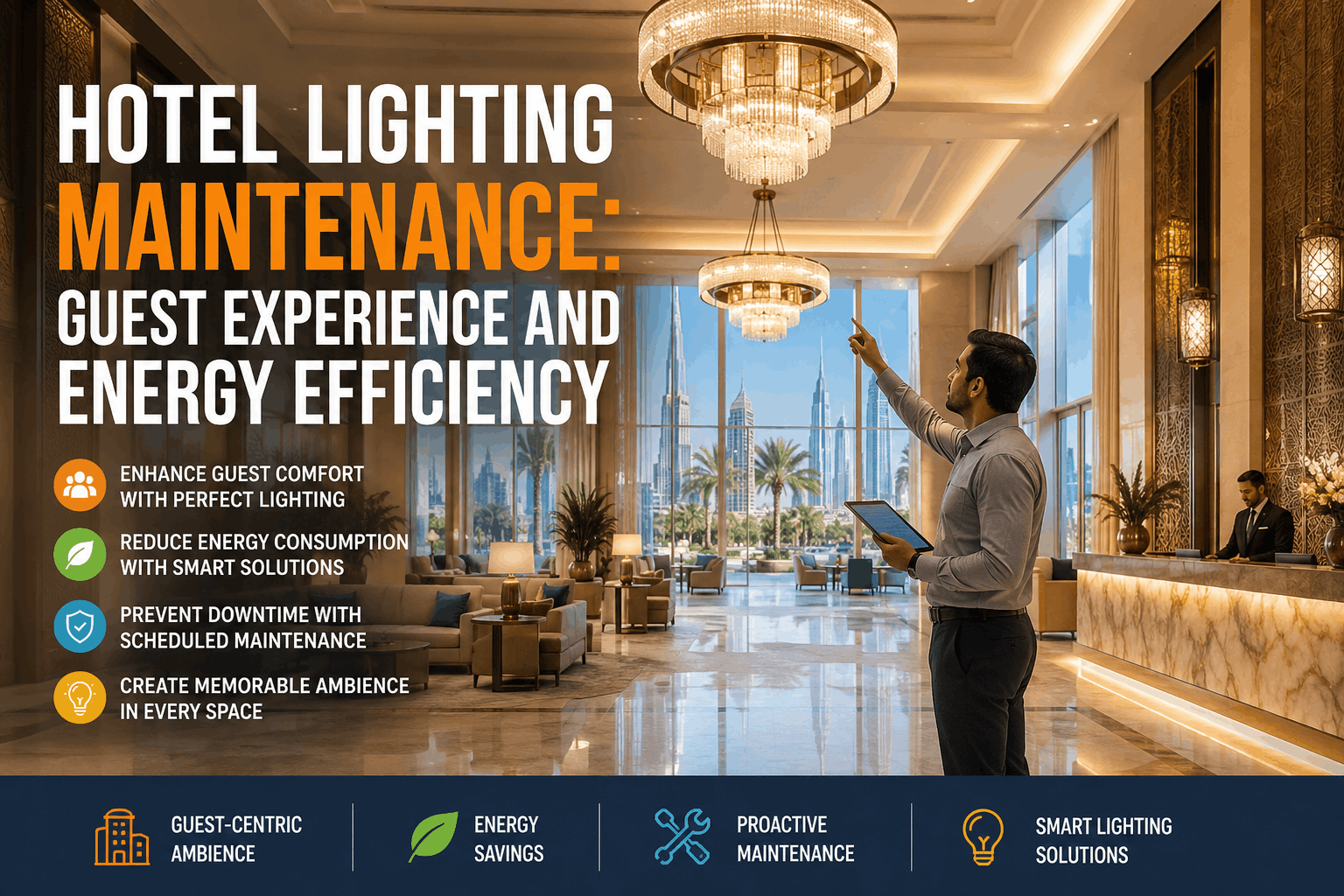
Lighting is one of the most immediate, highest-ROI energy problems a hotel can solve — and most properties are still leaving serious money on the table. Lighting accounts for 15–25% of a hotel's total energy bill, and without automation or LED upgrades, hallways blaze at full brightness at 3 AM, banquet halls run 18 hours a day, and parking garages burn power through peak daylight. The fix is not complicated. It's a combination of LED retrofit, smart controls, and asset tracking that hotels implementing today are seeing cut lighting costs by 40–60%. If you're ready to act, start with OxMaint's lighting asset management platform or book a demo with your team.
LED Retrofit · Smart Lighting · Hotel Energy · 2025 Guide
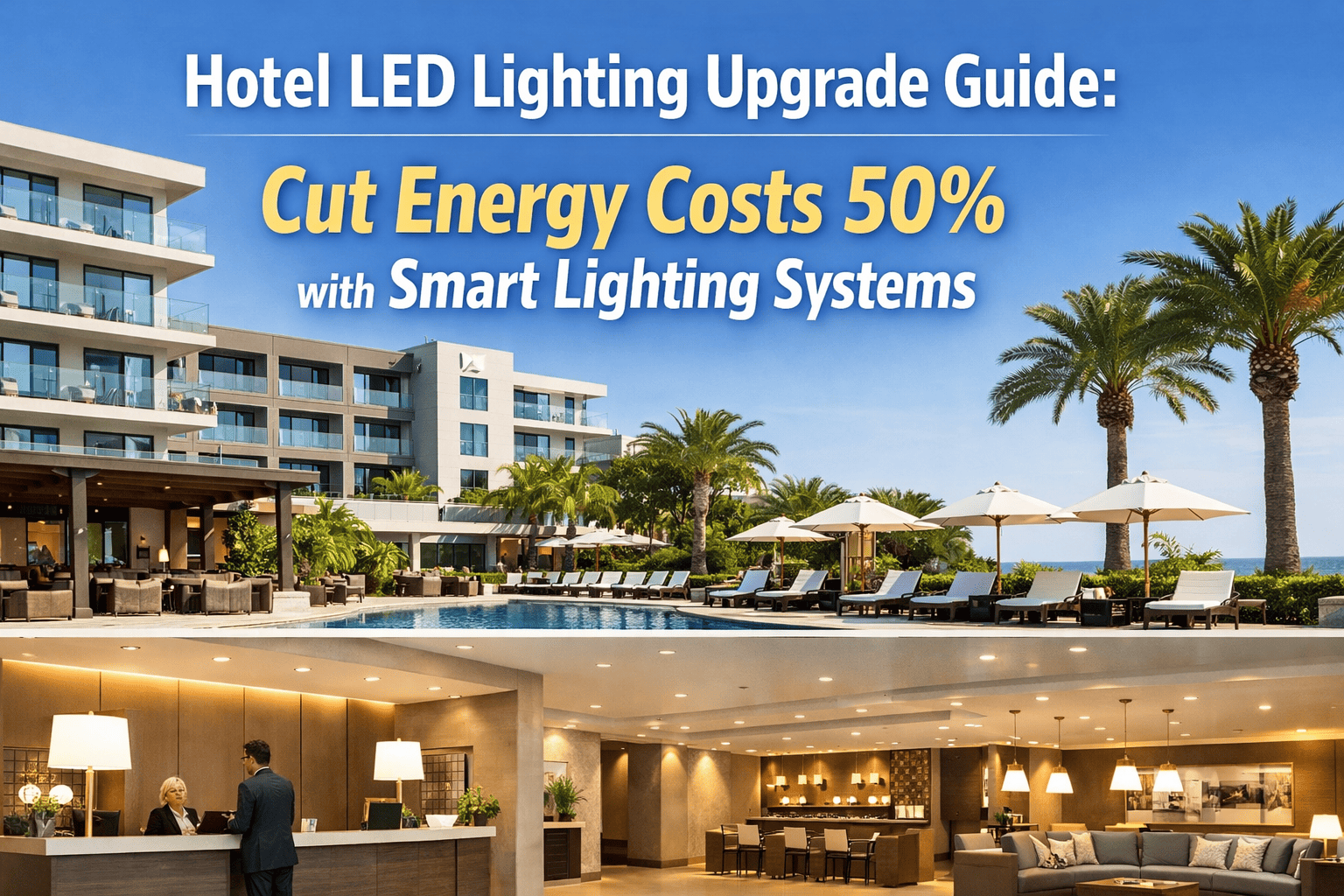
Hotel LED Lighting Upgrade: Energy Saving Lighting System & Maintenance Guide
Hotels spending $2,196 per available room on electricity annually can cut lighting costs by 40–60% with LED upgrades, smart controls, and proper asset tracking. Here is exactly how to do it.
40–60%
Lighting cost reduction with smart LED
25,000h+
LED lifespan vs 1,000h incandescent
15–25%
Of total hotel energy bill is lighting
12–18mo
Typical smart lighting ROI payback
The Lighting Problem Most Hotels Don't Fully See
Hotels operate 24 hours a day, seven days a week — and so does their lighting waste. The issue is not that properties don't care about efficiency. It's that without the right systems in place, there's no visibility into what's actually running, when, and why. The result is a predictable pattern of invisible waste across every property.
18h
Avg daily runtime for uncontrolled hotel lighting
1,400
Bulbs replaced per year in a 320-room hotel without LED
11 days
Average gap between bulb failure and replacement without tracking
$270K+
Yearly lighting energy waste for a 200,000 sq ft property without automation
The Compounding Cost
Utility expenses as a percentage of hotel revenue rose from 2.9% in 2019 to 3.3% in 2023 — meaning energy costs are growing faster than hotel revenue. For a hotel earning $10 million annually, that's an additional $40,000 in utility costs every single year.
LED vs. Traditional Lighting: The Numbers Side by Side
The business case for LED is not theoretical. It's arithmetic. Every hour a hotel runs incandescent or halogen fixtures instead of LEDs is a measurable, avoidable cost.
| Metric |
Incandescent / Halogen |
Fluorescent (CFL) |
LED |
| Lifespan |
1,000 hours |
8,000 hours |
25,000–50,000 hours |
| Energy efficiency |
10% (90% wasted as heat) |
~20% |
Up to 80%+ efficient |
| Energy savings vs incandescent |
Baseline |
~50% savings |
Up to 75–80% savings |
| Annual replacement frequency |
Very high |
Moderate |
Very low |
| Smart control compatibility |
Limited |
Partial |
Full — dimmable, sensor-ready |
| Heat output |
High (increases HVAC load) |
Moderate |
Minimal |
Where to Upgrade First: Zone-by-Zone LED Priority Guide
Not every area of a hotel delivers the same return from LED. The highest-impact upgrades are the zones with the longest daily runtimes and highest fixture counts. Start here.
Priority 1 — Fastest Payback
Corridors & Hallways
Run 24 hours a day with high fixture density. LED + occupancy sensors here alone can cut corridor energy by 50–70%. These are the first fixtures to touch in any retrofit project.
Runs 8,760 hrs/year
Priority 1 — Fastest Payback
Reception & Lobby
High-visibility area with long operating hours. LED panel lights deliver uniform illumination and daylight harvesting sensors in windowed lobbies reduce output by 35–50% during daylight.
Daylight savings: 35–50%
Priority 2 — High Volume
Guest Rooms
Dimmable warm-CCT LED downlights (2700K) create a relaxing atmosphere while vacancy sensors — auto-off when unoccupied, manual-on for guest control — eliminate waste from unoccupied rooms.
54% of rooms unoccupied at any time
Priority 2 — High Volume
Parking & Exterior
Fixtures running on timers rather than occupancy sensors waste significant energy. Motion-activated LED fixtures in parking structures cut waste without compromising safety.
Motion control saves 30–45%
Priority 3 — Back of House
Kitchens & Laundry
IP65-rated LED battens resist moisture and heat in demanding kitchen and laundry environments. Longer lifespan dramatically reduces the maintenance burden in these high-replacement zones.
Maintenance cost: -60%
Priority 3 — Ambiance
F&B, Bars & Spa
Colour-tuneable LED fittings support scene-setting, brand identity, and energy efficiency simultaneously. Dimming during off-peak hours is automated through scheduling — no manual staff intervention.
Scheduling saves 20–35%
Smart Lighting Automation: The Layer That Multiplies LED Savings
LED alone cuts energy use by up to 75% versus incandescent. Add smart controls — occupancy sensors, daylight harvesting, and centralized scheduling — and you add another 15–25% in savings on top of the LED baseline. This is where the 40–60% total reduction comes from.
01
Occupancy Sensors (PIR / Ultrasonic)
Passive infrared and ultrasonic sensors detect human presence and adjust lighting automatically. Ideal for corridors, restrooms, stairwells, and back-of-house areas that run full brightness with no one present. Payback periods as short as 6 months for corridor installations.
Lighting energy cut: 50%+
02
Daylight Harvesting (Photosensors)
Photosensors measure available natural light and dim artificial fixtures proportionally. A sunlit atrium or lobby running at 30% output at noon versus full brightness — automatically. No staff action required.
Lobby & atrium savings: 35–50%
03
Centralized Scheduling
Banquet halls, conference rooms, and event spaces scheduled to match actual bookings. Fixtures powered down automatically when no events are running — eliminating the "lights on all day just in case" pattern.
Event space savings: 20–35%
04
Vacancy Sensors (Guest Rooms)
Unlike occupancy sensors, vacancy sensors require manual on — preserving guest control and comfort — but auto-off when the room is empty. The right choice for guest rooms where privacy and control matter.
Guest room waste: eliminated
Real Results from Hotel Lighting Upgrades
Chatwal Hotel, New York City
~1,300 lamps retrofitted across 80 rooms, hallways & common areas
90%
Reduction in lighting energy
410K
kWh saved annually
$124K
Saved in year one
320-Room Full-Service Hotel
Smart lighting automation + occupancy sensors + centralized scheduling via OxMaint
43%
Cut in lighting energy
60%
Fewer bulb replacements
$71K
Saved in first year
Candlewood Suites
Motion sensors + LED retrofit + integrated energy management system
30–35%
Energy consumption reduction
$3K
Annual savings
Auto
HVAC + lighting adjustment
Lighting Asset Tracking: The Maintenance Problem Hotels Overlook
LED upgrades deliver energy savings — but without asset tracking and replacement scheduling, properties still suffer from the same reactive maintenance loop that cost them before. Burned-out fixtures go unreported for days. Replacement cycles are managed by memory, not data. High-traffic areas get neglected until a guest complaint forces action.
Without Lighting Asset Tracking
Burned-out bulbs reported by sticky note or guest complaint
No visibility into fixture age or replacement due dates
Maintenance team reacts, never plans ahead
Energy anomalies go undetected for weeks or months
No audit trail for sustainability or ESG reporting
Warranty expiry missed — costs absorbed by property
With OxMaint Lighting Asset Management
Fault alerts triggered instantly — 11-day gap eliminated
Every fixture tracked with install date, lifespan, and next service
Replacement schedules generated automatically by zone
Energy anomaly detection flags overconsuming fixtures
Automated reporting ready for sustainability audits
Warranty tracking built into every fixture record
Hotel LED Lighting Maintenance Checklist
Consistent lighting maintenance protects your retrofit investment and keeps energy performance where it should be. Use this checklist across all property zones on a regular inspection cycle.
Monthly Checks
Inspect all corridor and hallway fixtures for failures or dimming
Test occupancy and vacancy sensors for correct trigger response
Verify scheduling rules are active for event and banquet spaces
Review energy dashboard for consumption anomalies by zone
Log and action any guest-reported lighting issues
Quarterly Checks
Audit fixture asset records — verify install dates and lifespan tracking
Clean fixture lenses and covers (dust reduces output by up to 30%)
Check photosensor calibration in lobby and atrium areas
Review and update dimming profiles for seasonal daylight changes
Verify IP65 fixture integrity in kitchen and laundry areas
Annual Review
Run full lighting energy impact report — compare against baseline
Identify fixtures approaching end-of-life for proactive replacement
Evaluate zones where automation controls can be expanded
Review utility rebate eligibility for upcoming upgrades
Export energy data for ESG and sustainability reporting
Run This Checklist Inside OxMaint
OxMaint's mobile inspection app lets maintenance teams complete lighting rounds on-device, capture fixture conditions with photos, and sync data automatically — creating the audit trail your operations and sustainability teams require.
How to Build Your Hotel LED Upgrade Business Case
Current Lighting Energy Cost
Baseline: Monthly lighting electricity spend across all zones
Expected LED + controls reduction
40–60% reduction
A property spending $14,200/month on electricity — with lighting at 30% — saves $20,000–$25,000 annually from LED and automation combined.
Bulb Replacement Labor & Materials
Baseline: Annual spend on bulbs + technician labor for replacements
Expected reduction with LED lifespan
60–75% fewer replacements
LED's 25x longer lifespan directly eliminates 60–75% of annual bulb replacement work orders and associated labor costs.
HVAC Load Reduction
Baseline: Incandescent and halogen waste 80–90% of energy as heat
HVAC cooling load reduction
Secondary energy savings
LEDs produce minimal heat. Removing high-heat fixtures from guest rooms and corridors reduces HVAC cooling load — adding savings on top of direct lighting savings.
Utility Rebates & Incentives
Baseline: Available government and utility programs for commercial LED retrofit
Rebate offset on upgrade cost
Up to 30% rebates available
Many energy programs offer up to 30% rebates on commercial LED installations. This directly accelerates payback timelines for retrofit projects of any size.
Common Barriers — and How Hotels Clear Them
Barrier
High Upfront Cost
LED retrofit across a full property looks expensive on a capital budget — especially for properties with hundreds of rooms and thousands of fixtures.
How to clear it
Phase the retrofit — start with corridors, lobbies, and parking where runtime is highest and payback is fastest. Early savings fund subsequent phases. Factor in utility rebates that offset 20–30% of fixture costs.
Barrier
No Asset Visibility
Without a centralized record of what fixtures exist, where they are, and when they were installed, managing a retrofit and tracking savings is nearly impossible.
How to clear it
Use a lighting asset management platform to build the fixture registry before or during the retrofit. This becomes the baseline for tracking energy impact, scheduling replacements, and generating ESG reports.
Barrier
Guest Experience Concerns
Engineering teams worry that dimming, automation, or different light temperatures will generate guest complaints about ambiance or comfort.
How to clear it
Warm-CCT LEDs (2700K) in guest rooms match the ambiance of traditional incandescent. Vacancy sensors preserve guest control — manual on, auto off — so guests never feel the system overriding their preferences.
Barrier
Maintenance Team Bandwidth
Engineering teams managing a full property are already stretched. A lighting upgrade project feels like one more thing to coordinate on top of daily reactive work.
How to clear it
LED's dramatically longer lifespan reduces the reactive maintenance burden over time — 60–75% fewer replacements. The short-term coordination investment pays back in permanently reduced day-to-day workload.
Frequently Asked Questions
How much can a hotel realistically save by switching to LED lighting?
LED upgrades alone typically reduce lighting energy use by 40–75% compared to incandescent and halogen fixtures, depending on the starting point. Adding smart controls — occupancy sensors and daylight harvesting — delivers an additional 15–25% reduction. Together, hotels implementing both LED and automation consistently report 40–60% total lighting cost reductions. For a property spending $50,000 annually on lighting electricity, that's $20,000–$30,000 in direct annual savings.
What is the payback period for a hotel LED retrofit?
Most hotel LED retrofit projects achieve full payback within 12–18 months when occupancy sensors and scheduling automation are included. High-traffic zones like corridors and lobbies often see payback in under 12 months due to their long daily runtimes. Utility rebates — up to 30% of fixture cost in many regions — accelerate these timelines further.
How does OxMaint support hotel lighting asset management?
OxMaint tracks every lighting fixture as an asset — recording install date, lifespan, zone location, and service history. The platform generates automated replacement schedules, sends fault alerts when fixtures fail, and produces energy impact analytics that quantify savings against your pre-retrofit baseline. Maintenance teams complete lighting inspections via mobile, and all data is automatically synced for ESG and sustainability reporting without manual effort.
Which hotel areas should be prioritized in an LED upgrade?
Corridors and hallways deliver the fastest payback due to their 24-hour operation and high fixture density. Lobbies and reception areas follow closely, particularly when daylight harvesting sensors are included. Guest rooms come next — dimmable warm-CCT LEDs paired with vacancy sensors eliminate waste from unoccupied rooms. Back-of-house areas including kitchens and laundry benefit from IP65-rated LED battens that reduce both energy and maintenance costs in demanding environments.
Your Lighting System Is Either Saving You Money or Costing You Money
OxMaint gives hotel engineering teams the lighting asset tracking, replacement scheduling, and energy impact analytics to turn an LED upgrade into a measurable, managed, compounding ROI — not just a one-time project.
Lighting Asset Tracking
Replacement Scheduling
Energy Impact Analytics
Mobile Inspection Checklists