Coastal and tropical hotels operate in one of the most hostile maintenance environments on earth. Salt particles from ocean air settle on metal surfaces every single day, combining with humidity to create electrochemical reactions that corrode HVAC coils, fasteners, and structural hardware at twice the rate of inland properties. Humidity averaging 80–85% year-round triggers mold growth inside walls within weeks of any moisture breach. When storm season arrives, a property with deferred maintenance doesn't just face repair costs — it faces weeks of room inventory loss during peak season. A 122-room coastal resort in Phuket discovered this the hard way: six years of uncontrolled humidity and mold cost 40–50 million Thai Baht in remediation, consuming 35% of their entire renovation budget. The difference between that outcome and a protected property is a structured maintenance system. OxMaint's Corrosion Monitoring, Humidity Tracking, and Storm Preparation Checklists give coastal teams exactly that — book a demo to see it configured for your resort.
Coastal · Tropical · Salt Air · Storm · Humidity · Mold · 2025 Guide
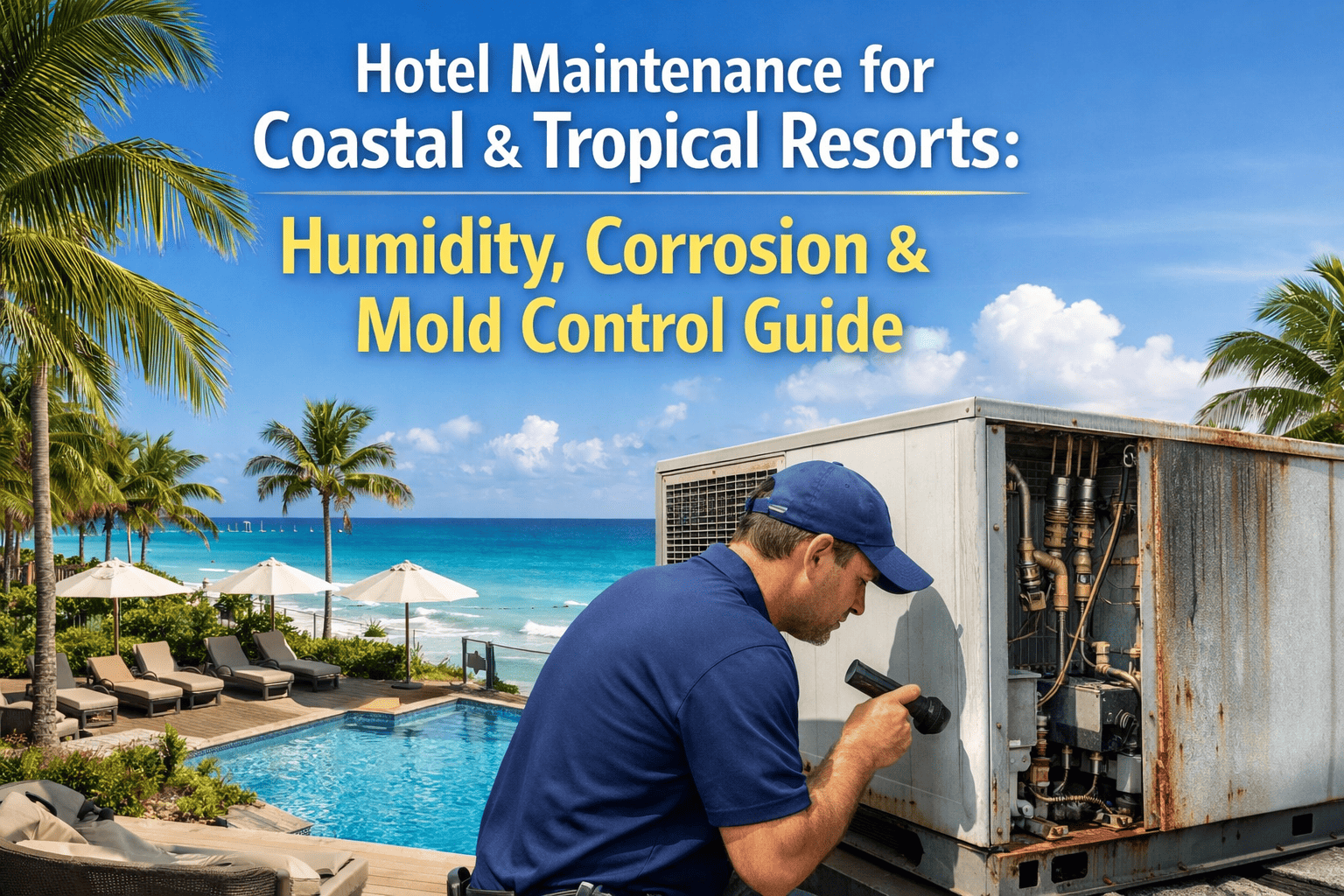
Hotel Maintenance for Coastal & Tropical Resorts: Humidity, Corrosion & Mold Control Guide
Salt air corrodes HVAC in 5–7 years without protection. Humidity above 60% triggers mold within days. Storm-season neglect costs more than a full year of proactive maintenance. Here is what coastal resort teams must do — and track — to stay ahead of all three.
2x
Faster corrosion rate in coastal salt air vs inland — standard HVAC equipment fails in 5–7 years without protection
80–85%
Average relative humidity year-round at tropical coastal resorts — peak 90–95% in monsoon mornings
35%
Of total renovation budget consumed by mold remediation at a coastal property left without climate control
10–15yr
HVAC lifespan achievable with coastal-grade materials and proactive corrosion monitoring — vs 5–7 without it
The Three Threats Every Coastal Hotel Faces — and What Each One Costs
Coastal resort maintenance is not harder than standard hotel maintenance in every area. But it is dramatically harder in three specific domains — and underestimating any one of them produces costs that dwarf a full year's maintenance budget.
Threat 01
Salt Air Corrosion
Salt particles settle on metal surfaces, attract moisture, and create electrochemical corrosion that eats through HVAC coils, structural fasteners, railings, and electrical housing at twice the inland rate.
Cost if ignored: HVAC replacement in 5–7 years vs 12–15 with protection. Structural hardware replacement, refrigerant leaks, electrical failures.
Threat 02
Humidity & Mold
Relative humidity above 60% creates conditions for mold growth. In tropical coastal zones at 80–85%, any moisture breach — a failed AC drain, a leaking window seal, a condensation drip — triggers mold penetration within days.
Cost if ignored: Full wall and ceiling demolition, 6–8 months of remediation, guest room closures, and reputational damage from visible mold reports.
Threat 03
Storm Damage
Tropical storms and hurricanes compress months of salt and moisture exposure into hours. Properties without pre-storm equipment protection and documented post-storm inspection protocols face insurance complications and extended recovery timelines.
Cost if ignored: Water intrusion through compromised seals, HVAC equipment damage, extended room inventory loss during peak season, insurance claim disputes.
Corrosion Risk by Distance from Ocean
Salt air damage is not exclusive to beachfront properties. Ocean winds carry corrosive particles several miles inland, creating risk zones that most coastal hotel operators underestimate when setting maintenance schedules.
0–500m
Direct Beachfront
Extreme Risk
HVAC coil rinse: Monthly
Anti-corrosion coating: Every 6 months
Structural hardware inspection: Monthly
Coastal-grade equipment: Mandatory
›
500m–2km
Near Coastal
High Risk
HVAC coil rinse: Every 6–8 weeks
Anti-corrosion coating: Annual
Structural hardware inspection: Quarterly
Corrosion-resistant spec: Strongly recommended
›
2–5km
Coastal Influence Zone
Moderate Risk
HVAC coil rinse: Quarterly
Anti-corrosion coating: Every 18 months
Structural hardware inspection: Bi-annual
Standard + corrosion monitoring
›
5km+
Low Coastal Influence
Reduced Risk
HVAC coil rinse: Standard schedule
Anti-corrosion coating: As needed
Structural hardware inspection: Annual
Standard inland protocol applies
What Salt Air Destroys — And How Fast
Every material category in a coastal hotel degrades faster than inland equivalents. Knowing which assets are most vulnerable and their accelerated failure timelines is the starting point for setting appropriate inspection frequencies.
| Asset / System |
Standard Inland Lifespan |
Coastal Without Protection |
Coastal With Protection |
Primary Failure Mode |
| HVAC Outdoor Units |
15–20 years |
5–7 years |
12–15 years |
Coil corrosion, refrigerant leaks, electrical failure |
| Structural Steel Fasteners |
20–30 years |
3–5 years |
15–20 years (stainless) |
Rust, structural weakening, balcony/railing failure |
| Window & Door Seals |
10–15 years |
3–5 years |
8–12 years |
UV + salt degradation, moisture infiltration, mold pathway |
| Exterior Paint / Coatings |
7–10 years |
2–3 years |
5–7 years |
Chalking, peeling, substrate exposure, moisture ingress |
| Electrical Distribution Panels |
25–30 years |
8–12 years |
20–25 years (sealed) |
Terminal corrosion, shorts, insulation failure from moisture |
| Pool & Spa Equipment |
10–15 years |
4–6 years |
10–12 years |
Pump corrosion, heat exchanger failure, scale buildup |
| Interior Drywall (standard) |
25–30 years |
Mold risk within weeks of moisture |
Indefinite with MR board + vapor barriers |
Mold penetration from condensation, wall cavity moisture |
Real Cost Example
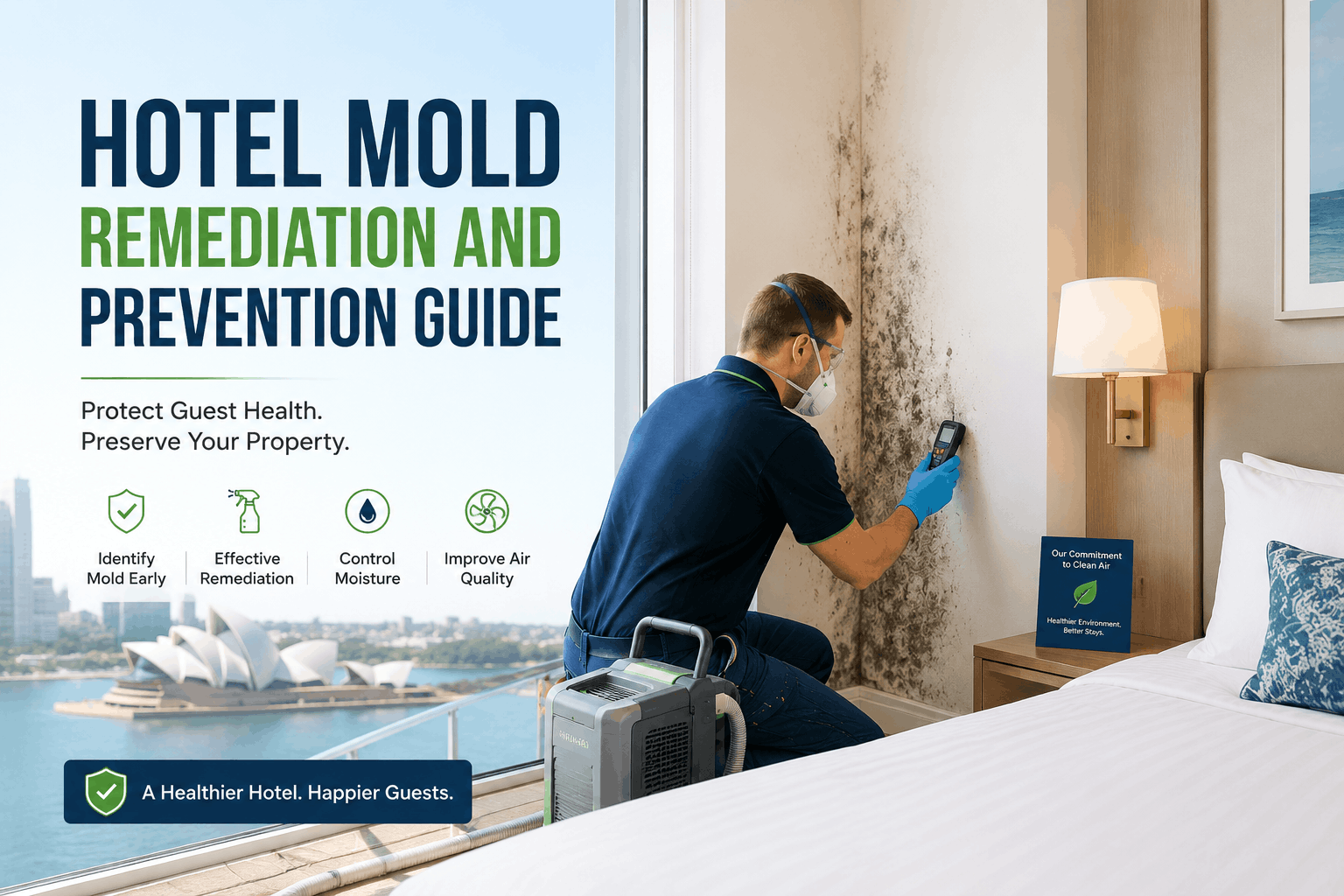
A 122-room Phuket beachfront hotel (450m from the ocean, 80–85% average humidity) experienced 70% ceiling demolition and 40% wall rebuilding across all rooms after six years without climate control. Mold remediation consumed 40–50 million Thai Baht — 35% of the total renovation budget — and took 8 months. Proactive humidity monitoring and mold-resistant materials would have cost a fraction of that outcome.
Humidity Control: The Invisible Maintenance Challenge
Mold does not announce itself. It begins inside wall cavities, behind vapor barriers, and inside HVAC duct systems — invisible and accumulating damage for weeks or months before it becomes a guest-facing problem. The only defense is continuous humidity monitoring with alert thresholds that trigger action before mold conditions develop.
Below 60%
Safe Zone
Target operating range for all guest rooms, mechanical spaces, and storage areas. No mold risk at this humidity level. HVAC and dehumidification systems performing correctly.
Action: Monitor — no intervention needed
60–70%
Alert Zone
Mold begins to become possible in micro-environments. Condensation forming on cold surfaces. AC drain pan and filter inspection triggered. Dehumidifier activation required.
Action: Inspect drains, activate dehumidification, recheck in 24hrs
70–80%
Warning Zone
Active mold growth conditions. Wall cavities, ceiling voids, and duct systems at elevated risk. HVAC fault likely. Room inspection and wall surface checks required immediately.
Action: Technician inspection same day, seal check, HVAC service
Above 80%
Critical Zone
Rapid mold development. Coastal tropical conditions can reach 90–95% in monsoon mornings. HVAC failure or occupancy gap without dehumidification creates acute mold risk within 48–72 hours.
Action: Immediate escalation — room closure, specialist assessment
Coastal HVAC Maintenance: The Accelerated Schedule
Standard inland HVAC maintenance schedules — semi-annual inspections, annual coil cleaning — are not adequate for coastal operations. Salt air requires a fundamentally different frequency and a different set of maintenance actions at every visit.
Monthly
Rinse outdoor condenser coils with fresh water (no pressure washer — garden hose only)
Inspect and clean condensate drain pans and lines
Check and replace air filters (coastal dust and salt accelerate clogging)
Visual inspection of outdoor unit for visible salt buildup and early rust spots
Check anti-corrosion coating condition on outdoor hardware
Quarterly
Professional coil cleaning with approved coastal-grade cleaning solution
Refrigerant level check and leak inspection (salt corrosion accelerates refrigerant loss)
Electrical connection inspection — moisture ingress to control boards
Fan blade and motor housing corrosion assessment
Duct system inspection for moisture accumulation and early mold indicators
Semi-Annual
Full anti-corrosion coating reapplication to coils, fins, and external housing (beachfront properties)
Comprehensive system performance test — efficiency against original spec
Capacitor and contactor replacement assessment (salt air accelerates failure)
Complete duct cleaning — mold spore removal
Indoor air quality test — CO2, humidity baseline, particle count
Storm Preparation: The Pre-Season Checklist Every Coastal Hotel Needs
Storm preparedness is not just an event-triggered activity — it is a continuous maintenance state. Properties that document pre-storm asset conditions, complete equipment protection protocols, and run structured post-storm inspections recover faster, file insurance claims more successfully, and prevent secondary damage from entering compromised structures.
Pre-Storm (72–48 hrs before)
Photograph all exterior HVAC units, outdoor furniture, signage, and building envelope with timestamps
Secure or remove all pool and outdoor furniture that can become projectiles
Shut down and cover outdoor HVAC units with breathable coastal-rated covers
Check and clear all roof drains, gutters, and storm drainage paths
Inspect and seal all known window and door gasket vulnerabilities
Protect exterior electrical panels and disconnect switches from water exposure
Confirm generator fuel level, start test, and transfer switch operation
Deploy sandbags at ground-level entry points below expected storm surge
Post-Storm (immediately after)
Full property walk-through before re-admitting guests — photograph all damage
Remove HVAC covers and inspect outdoor units for debris, water intrusion, and structural damage before restart
Check all roof penetrations, skylights, and roof-level equipment for water pathway creation
Inspect all window and door seals for storm-driven water intrusion — any wet walls trigger immediate drying protocol
Check all electrical panels for moisture before restoring power — call licensed electrician if any water contact suspected
Test all HVAC systems individually before full restart — corrosion + storm debris = increased failure risk
Deploy commercial dehumidifiers in any area with confirmed moisture intrusion immediately
Document all damage with photo evidence for insurance claim submission within 24 hours
OxMaint Runs This Checklist Automatically
Storm preparation protocols, corrosion monitoring schedules, and humidity tracking alerts — all pre-loaded into OxMaint and dispatched to your team on time, every time, with photo evidence capture built in.
Zone-by-Zone Coastal Hotel Maintenance Priorities
Different areas of a coastal resort face different combinations of salt, humidity, and storm exposure. Maintenance priorities and frequencies should be set by zone — not applied uniformly across the property.
Pool Deck & Outdoor Areas
Salt
UV
Storm
Weekly inspection of pool equipment, pump seals, and chemical systems. Monthly structural hardware inspection of railings, ladders, and diving equipment. Annual pool surface and waterline tile assessment for salt and chemical damage.
Guest Room Bathrooms
Humidity
Mold
Daily check of exhaust fan operation. Weekly grout and silicone sealant inspection for mold. Monthly drain slow-flow check. Quarterly full bathroom mold inspection including ceiling corners, shower tracks, and behind toilet fixtures.
HVAC Plant Room & Rooftop Equipment
Salt
Storm
Corrosion
Monthly coil rinse and visual corrosion check. Quarterly professional HVAC service. Semi-annual anti-corrosion coating reapplication. Annual comprehensive efficiency test and refrigerant system integrity check.
Exterior Building Envelope
Salt
Humidity
Storm
Monthly window and door seal inspection — salt and UV degrade silicone rapidly in tropical climates. Quarterly exterior paint condition assessment. Annual full envelope inspection including balcony structural hardware, flashings, and waterproofing integrity.
Electrical & Mechanical Rooms
Humidity
Corrosion
Continuous humidity monitoring with automated alerts above 65% RH. Monthly visual inspection of panels, terminals, and cable entry points for moisture. Quarterly thermal imaging scan for hot spots indicating corrosion-related resistance increase.
Food & Beverage & Kitchen
Humidity
Mold
Corrosion
Daily cleaning of commercial kitchen exhaust systems. Weekly inspection of walk-in cooler door seals and drainage. Monthly deep clean of grease traps and drain lines — tropical heat accelerates biological growth. Quarterly stainless steel equipment inspection for salt pitting and surface breakdown.
How OxMaint Supports Coastal Resort Maintenance Teams
01
Corrosion Monitoring Schedules
OxMaint pre-loads coastal-zone corrosion inspection schedules calibrated to your property's distance from the ocean. Monthly coil rinse reminders, semi-annual coating reapplication work orders, and quarterly hardware inspection checklists — all dispatched automatically to the right technician.
02
Humidity Tracking & Alerts
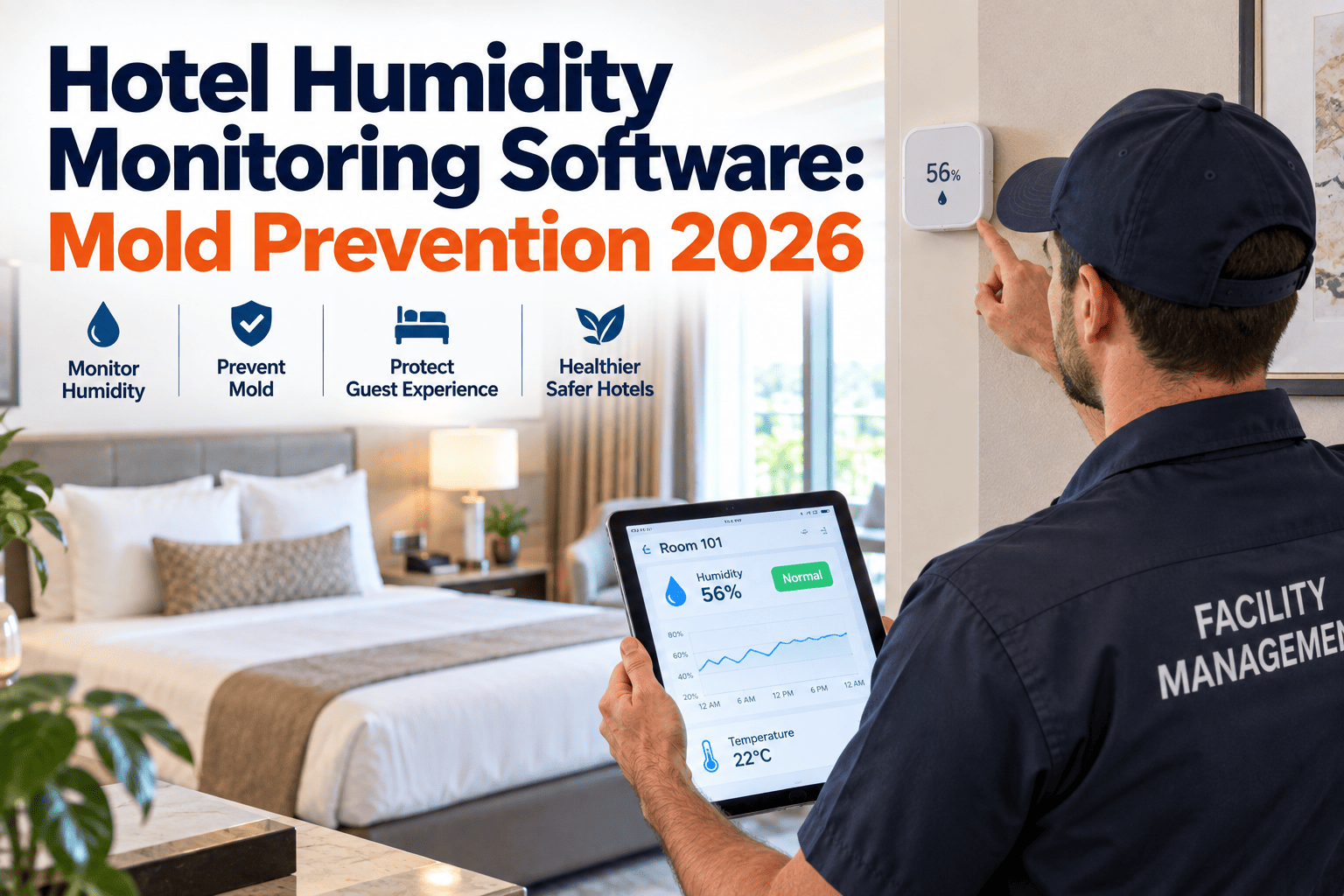
IoT sensor integration tracks real-time humidity by zone — guest rooms, plant rooms, storage areas, and F&B spaces. Alerts fire at pre-set thresholds (60%, 70%, 80% RH) and auto-generate inspection work orders so your team acts before mold conditions become mold damage.
03
Storm Preparation Checklists
Pre-storm and post-storm inspection protocols are loaded as templated work orders. When storm season arrives, your engineering team receives the full checklist with photo evidence requirements — ensuring the pre-storm documentation your insurer needs is captured before the weather hits.
04
Mobile Offline Capability
Post-storm inspections happen when connectivity is often disrupted. OxMaint's full offline mode lets technicians complete inspection checklists, capture photo evidence, and log findings without signal — syncing everything when connectivity restores. No paper forms, no lost records.
05
Asset Condition History
Every HVAC unit, every exterior seal, every pool equipment item carries a full maintenance and condition history in OxMaint. When corrosion progresses faster than expected, the trend is visible in the data — not discovered when the equipment fails during peak season.
06
Insurance Evidence Package
Timestamped maintenance records and photo evidence from OxMaint become your insurance claim documentation. Proof of pre-storm condition, proof of proactive maintenance, and proof of post-storm inspection — all exportable in minutes from a single platform.
Frequently Asked Questions
How much more frequently should a beachfront hotel service its HVAC compared to an inland property?
A beachfront property within 500 meters of the ocean should rinse condenser coils monthly (versus annually for inland properties) and apply anti-corrosion coatings every 6 months. Professional HVAC service should occur quarterly rather than semi-annually, with particular attention to refrigerant integrity, electrical connections, and coil condition. These accelerated schedules can extend HVAC lifespan from the coastal-unprotected standard of 5–7 years to 12–15 years — recovering the maintenance investment many times over.
What humidity level triggers mold risk in tropical hotel guest rooms?
Mold growth becomes possible above 60% relative humidity, particularly in micro-environments like wall cavities, ceiling voids, and inside duct systems where airflow is restricted. In tropical coastal zones where outdoor humidity consistently exceeds 80%, any HVAC failure, condensate drain blockage, or window seal failure creates acute mold conditions within 48–72 hours. OxMaint's humidity tracking triggers alert work orders at the 60% threshold — before mold conditions develop rather than after damage is visible.
What building materials are most important for coastal hotel construction and renovation?
For wall systems, concrete masonry unit (CMU) block with plaster or stucco outperforms standard drywall framing in tropical coastal conditions — eliminating the air flow cavities where moisture accumulates. Where drywall is used, mold-resistant (MR) board with vapor barriers on all exterior walls is mandatory. For structural hardware, stainless steel fasteners replace galvanized steel. HVAC units should be coastal-rated with factory-applied coil coatings and sealed electrical compartments. These material specifications are the difference between a 5-year problem and a 20-year protected asset.
How does OxMaint help with storm season preparation and post-storm insurance claims?
OxMaint's Storm Preparation Checklists are pre-built work orders that dispatch to your engineering team 72 hours before a named storm, capturing timestamped photo evidence of asset condition before the storm hits. Post-storm inspection protocols ensure nothing is missed during the recovery walk-through. All records — pre-storm photos, completed inspection checklists, maintenance history — are exportable as a single package for insurance claim submission, providing the documented evidence that prevents disputes and accelerates claim settlement.
Coastal Conditions Don't Take Breaks. Neither Should Your Maintenance System.
OxMaint gives coastal and tropical resort teams the Corrosion Monitoring schedules, Humidity Tracking alerts, and Storm Preparation Checklists to stay ahead of the three forces that cause the most expensive maintenance failures in beachfront hospitality.
Corrosion Monitoring
Humidity Tracking
Storm Prep Checklists
Mobile Offline Mode
Insurance Evidence Export