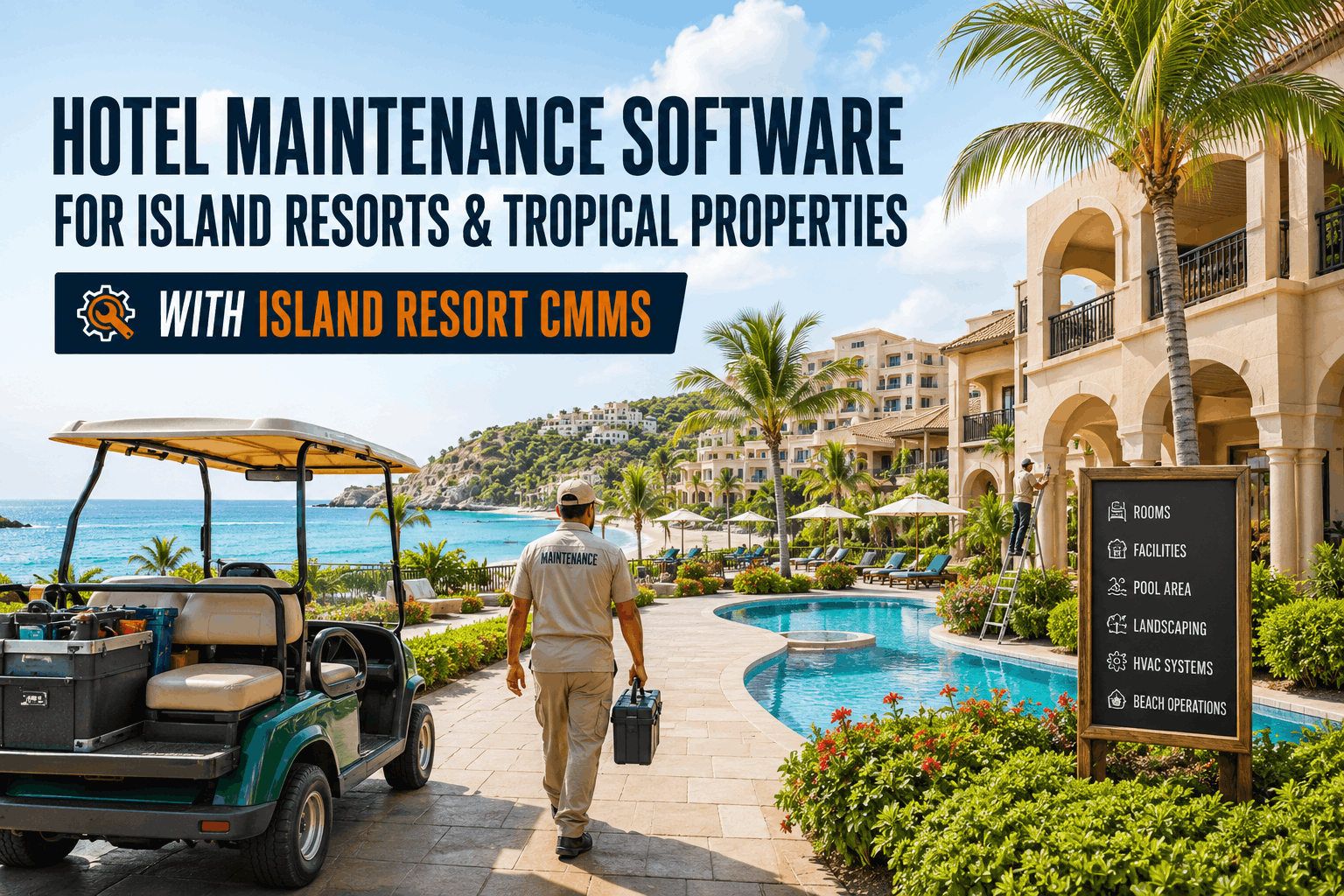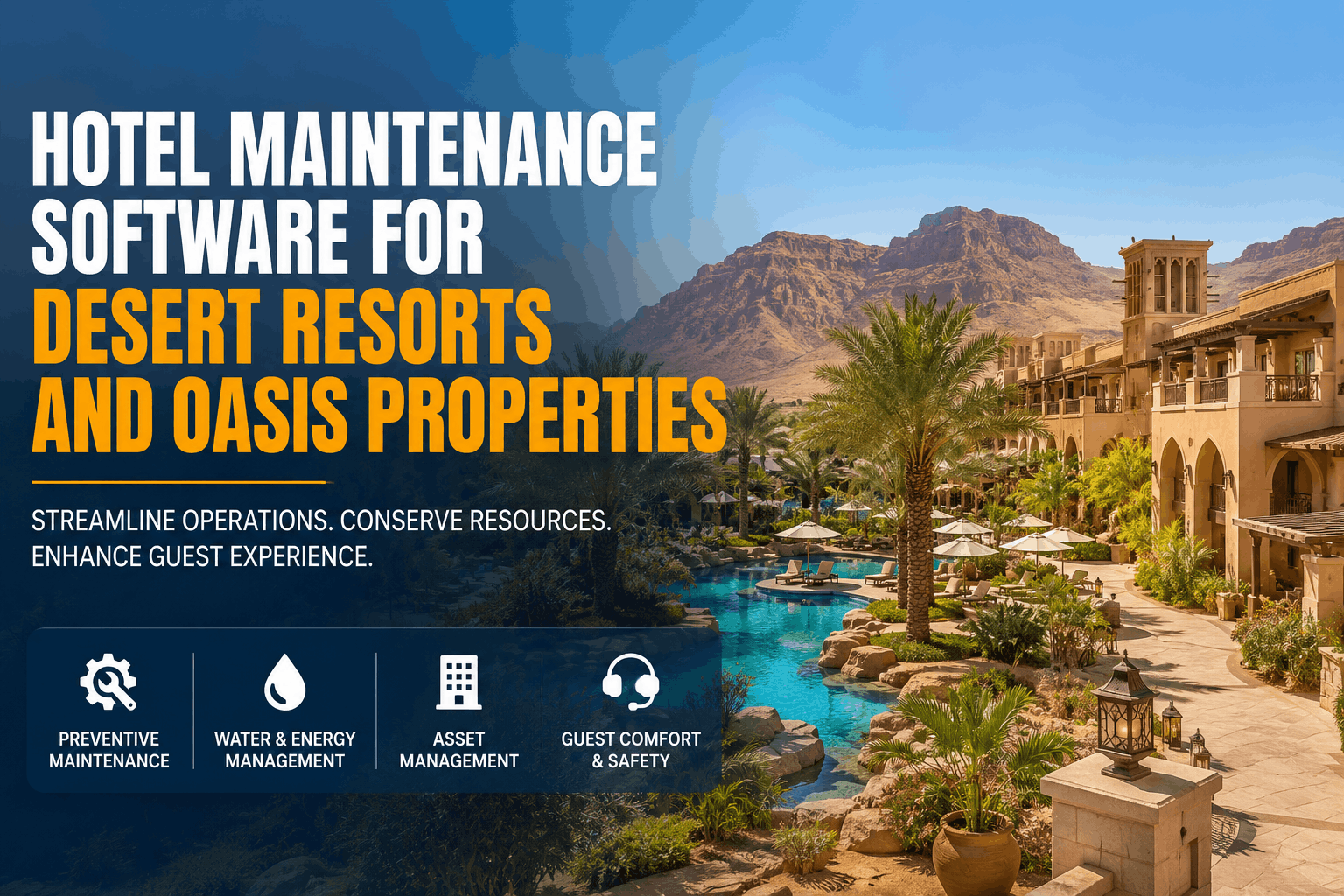
Resort maintenance is exponentially more complex than standard hotel operations. You're not just managing 300–500 guest rooms; you're managing pools (multiple depths, chemical balance, circulation systems), hot tubs and spas (temperature control, jet systems, sanitization), landscaping (irrigation systems, turf management, seasonal plantings), recreation facilities (tennis courts, fitness centers, golf courses), beach access (if applicable), and guest activity venues (restaurants, bars, meeting spaces) alongside traditional building systems. Each facility category operates under different regulatory requirements, maintenance intervals, and failure consequences. A pool closure due to chemical imbalance ruins guest experience and carries liability risk; HVAC failure in guest rooms is inconvenient; but failure to maintain pool circulation or spa sanitization can create public health risk that cascades into regulatory action and reputational damage. Most standard hotel CMMS platforms treat pools and spas as afterthoughts — they're asset categories in a dropdown menu, not specialized systems requiring dedicated chemical tracking, regulatory compliance monitoring, and guest-safety-first operational discipline. Resort operators using generic CMMS software find themselves managing critical recreational facility maintenance through manual spreadsheets, paper log books, and disconnected vendor coordination. This approach fails resorts because recreational facility downtime is highly visible to guests, safety compliance is non-negotiable, and operational complexity demands structured work management. OxMaint's resort-specific CMMS addresses these gaps through dedicated recreational facility modules, chemical tracking and compliance logging, grounds management scheduling, and integrated guest communication for facility closures. If you operate a resort property or multi-facility hospitality destination, your CMMS must prioritize recreational asset reliability as seriously as your building systems. Schedule a demo for resort operations.
Why Standard Hotel CMMS Fails for Resort Operations and What Resorts Actually Need
Resort maintenance teams operate under constraints that generic hotel CMMS platforms don't understand. Your facility footprint is 3–5× larger than standard hotels: multiple pools (main pool, lap pool, shallow children's pool), hot tubs at various temperatures, spa facilities with dedicated equipment, extensive landscaping (irrigation, turf, seasonal plantings), recreation venues (fitness center, tennis courts, water sports equipment if beach/lake property), and traditional building systems all operating simultaneously. Unlike boutique or full-service hotels where maintenance is primarily reactive to guest room issues, resort maintenance is 40–50% proactive scheduling (pool chemical treatment, grounds maintenance, facility inspections) and 50–60% reactive work. Standard CMMS platforms designed around guest request workflow fail because they deprioritize recurring maintenance that isn't guest-initiated. Your pool requires twice-daily chemical balance checks, filtration system monitoring, circulation pump verification, and deck safety inspections — none of these come through guest requests. These critical tasks must be scheduled, tracked, and documented for compliance, but they're invisible to generic CMMS systems built around ticket-driven workflows. Additionally, recreational facilities operate under different regulatory frameworks: public pools must maintain sanitizer levels within strict ranges (FDA, state health department oversight), spas require temperature and water quality certification, grounds maintenance affects property liability (trip hazards, overgrown landscaping). These compliance requirements demand structured documentation, audit trails, and corrective action tracking that standard CMMS platforms provide for building maintenance but not recreational facilities. Resort operators end up managing recreational facility maintenance through separate spreadsheets, vendor coordination outside their CMMS, and manual compliance logging — defeating the purpose of centralized work management. See how OxMaint addresses resort-specific challenges.
Five Specialized CMMS Capabilities That Resort Operations Absolutely Require
Resort CMMS software must address operational realities that generic platforms ignore. These five capabilities distinguish resort-ready platforms from standard hotel software. Missing even one creates critical gaps in compliance, guest experience, or operational efficiency. Evaluate any resort CMMS candidate against these five requirements — if the vendor can't address all five, your resort will end up managing critical recreational facility maintenance outside the system.
Chemical Tracking and Water Quality Compliance Logging for Pools and Spas
Public pools and spas are regulated assets — you must maintain documented proof that sanitizer levels (chlorine, bromine), pH balance, alkalinity, and water clarity meet state health department standards. Regulatory inspectors expect to review chemical logs showing twice-daily (or more frequent) testing and documented treatment actions. Manual spreadsheets create compliance risk because records can be lost, data entry is inconsistent, and audit trails don't exist. Resort CMMS must include dedicated chemical tracking: technicians log sanitizer readings from mobile devices, the system flags out-of-range values immediately, and automated alerts trigger corrective action (add chlorine, adjust pH, etc.). The system generates compliance reports showing regulatory inspectors that you maintain standards consistently. This capability isn't luxury — it's legal requirement for resort properties operating public recreational facilities.
Recreational Facility Preventive Maintenance Scheduling (Pools, Spas, Grounds) Separate From Guest Room Maintenance
Resort maintenance includes recurring facility work with strict scheduling requirements: pool filter backflush every 48 hours, circulation pump inspections weekly, spa jet system testing daily, landscape irrigation inspection seasonally, turf treatment schedules (fertilizer, overseeding, pest control), and equipment servicing (pool heater annual inspection, hot tub jet system professional maintenance). These tasks don't get requested through guest services — they're scheduled PM work that must happen consistently regardless of other operational pressure. Resort CMMS must separate recreational facility PM from building system PM and guest request workflows. You should be able to create recurring maintenance schedules (e.g., "Daily: 8am pool chemical check, 2pm pool deck safety inspection, 6pm spa temperature verification") that automatically generate work orders assigned to qualified technicians. The system tracks compliance: did the 8am chemical check happen yesterday? When was the last circulation pump inspection? This enforcement prevents skipping critical PM when reactive work surges.
Grounds Management and Landscape Maintenance Workflow Integration
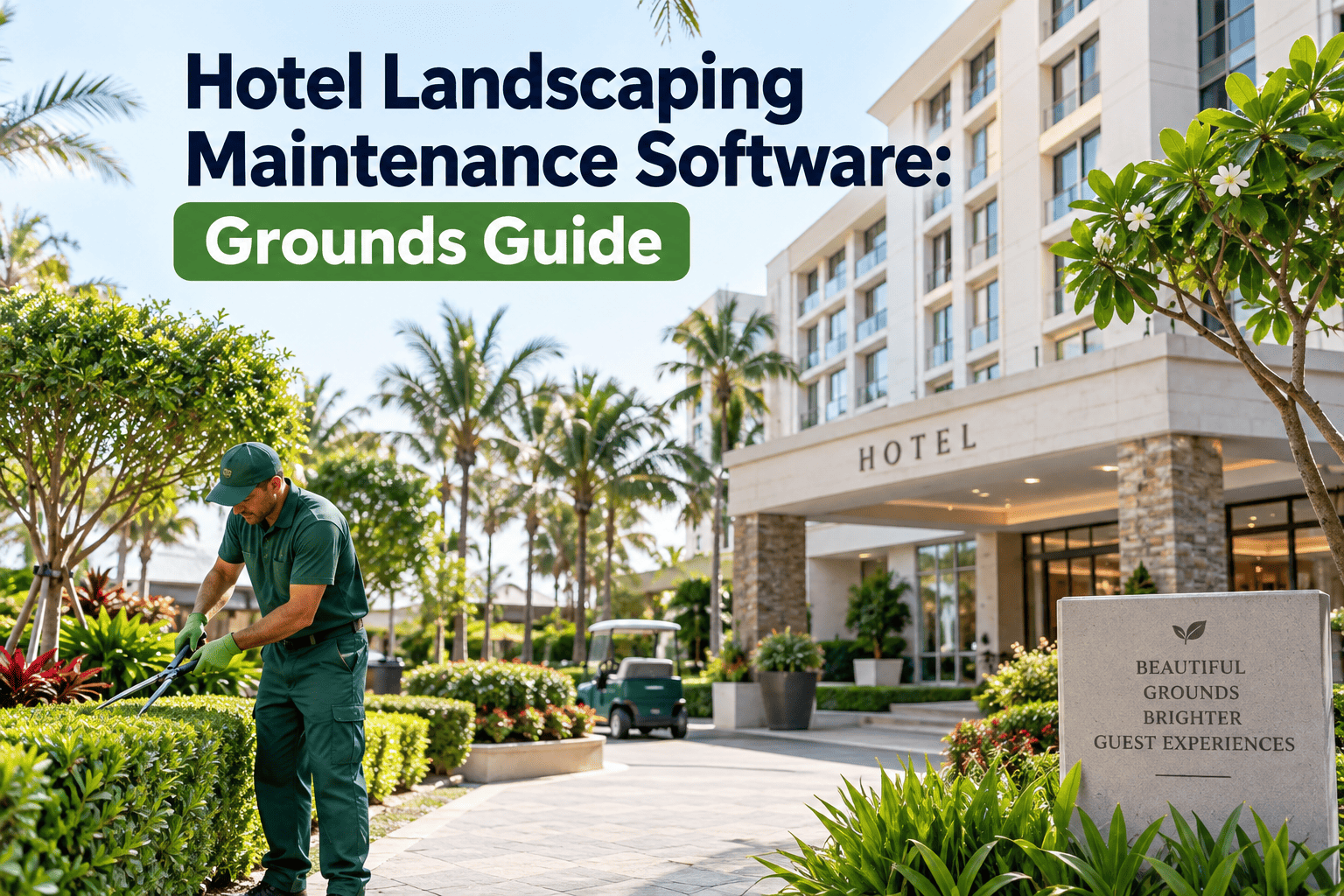
Landscape and grounds maintenance represents 25–35% of resort maintenance budget and directly impacts guest experience (well-maintained grounds convey luxury; neglected landscaping creates negative impressions). Resort CMMS must handle grounds-specific work: irrigation system scheduling and auditing, turf treatment programs (fertilization, aeration, overseeding), seasonal plantings, tree/shrub pruning, mulch replacement, pathway maintenance, and equipment calibration (sprinkler heads, irrigation controllers). Grounds maintenance differs from building maintenance: work is location-specific (not room numbers), often outsourced to landscaping contractors, weather-dependent, and seasonal. Your CMMS must support contractor coordination (sharing work schedules, receiving completion photos, tracking costs) and seasonal scheduling adjustments (spring cleanup, fall dormancy management, winter preparation). Without grounds-specific workflow, you're managing landscaping outside your CMMS, losing cost tracking and coordination visibility.
Guest Communication Integration for Facility Closures and Maintenance Windows
When a resort pool or spa needs to close for maintenance (chemical rebalancing, equipment repair, safety issue), guests need immediate notification and understanding. Poor communication creates frustration and negative reviews; proactive communication demonstrates professionalism and transparency. Resort CMMS should integrate with your PMS to notify guests when recreational facilities are unavailable and provide estimated reopening time. If you're closing the main pool for 4 hours for filter maintenance, your CMMS communicates this to guests automatically (room notifications, in-app alerts) and provides alternative amenities (smaller pool, spa, fitness center). This integration transforms maintenance from guest inconvenience into managed transparency. It also enables scheduling: you can plan recreational facility maintenance during low-occupancy periods or off-season to minimize guest impact. Standard CMMS platforms have no guest communication capability; resort-ready platforms integrate facility closures with guest expectations management.
Multi-Site Facility Coordination for Resorts With Multiple Recreation Venues
Larger resorts operate multiple recreation venues requiring coordinated maintenance: main pool area, separate lap pool, multiple hot tubs (lobby area, spa area, beach/waterfront), children's splash pad, fitness center, tennis courts, beach facilities, golf course (if applicable). Each venue has independent PM schedules, different chemical testing frequencies (pools vs. spas vs. hot tubs operate at different temperatures/sanitizer requirements), and separate vendors. Your CMMS must support multi-location work management: schedule work at Venue A (main pool) while simultaneously tracking maintenance at Venue B (spa area). Technicians need mobile dispatch showing which venue they're assigned to, what equipment they're servicing, and what documentation they need to complete. Managers need aggregate visibility: "How many open work orders do we have across all pools?" "Is any recreational facility closure imminent?" "What's our total chemical spend across all venues this month?" Resort CMMS must handle this multi-venue complexity natively, not force you to manage separate systems for each location.
Real Resort Maintenance Scenarios and How Resort-Ready CMMS Handles Operational Complexity
Understanding how resort CMMS platforms handle real operational challenges reveals platform capability and organizational fit. Let's examine four critical scenarios that differentiate resort-ready platforms from standard hotel software.
Resort Maintenance Cost Breakdown: Understanding Where Money Goes and Where CMMS Delivers ROI
Resort maintenance costs are significantly higher than standard hotels because recreational facility operations are expensive and complex. Understanding cost distribution helps you identify where structured CMMS creates the most financial impact. Resorts typically spend 20–25% more on maintenance per room than standard hotels, primarily due to recreational facilities and grounds management. OxMaint's resort cost calculator shows where your property's spending compares to industry benchmarks and where CMMS optimization creates the most savings opportunity.
| Maintenance Category | % of Resort Budget | Annual Cost (400-Room Resort) | CMMS ROI Opportunity |
|---|---|---|---|
| Building Systems (HVAC, Plumbing, Electrical) | 28–32% | $185K–$215K | 15–25% savings through PM discipline |
| Pool and Spa Operations (Chemical, Equipment, Staff) | 18–22% | $120K–$150K | 12–18% savings through chemical optimization and vendor coordination |
| Grounds Maintenance (Landscaping, Irrigation, Turf) | 15–20% | $100K–$135K | 8–15% savings through schedule optimization and contractor management |
| Guest Amenity Facilities (Fitness Center, Tennis, Recreation) | 10–14% | $65K–$95K | 20–30% savings through preventive maintenance reducing downtime |
| Labor (Technicians, Supervisors, Contractors) | 35–42% | $235K–$285K | 18–28% savings through labor efficiency and overtime reduction |
| Emergency Repairs and Reactive Work | 8–12% | $55K–$80K | 35–50% reduction through aggressive preventive maintenance |
Implementing Resort Maintenance Software: Phased Approach for Complex Multi-Venue Operations
Resort CMMS implementation differs from standard hotel deployment because facility complexity requires staged rollout. Implementing all recreational facilities simultaneously risks disruption; phased implementation allows your team to master workflows before expanding. Here's how OxMaint supports resort-specific implementation strategies that manage complexity without overwhelming your team.
Phase 1 (Weeks 1–4): Building Systems and Guest Room Maintenance Pilot
Start with traditional hotel operations: guest room maintenance, building systems, reactive work orders. This phase teaches your team CMMS basics without recreational facility complexity. Technicians learn mobile dispatch, supervisors learn work order assignment, managers learn reporting. Once building system management is operational, add recreational facility capabilities.
Phase 2 (Weeks 4–8): Pool Operations and Chemical Tracking Implementation
Integrate pool maintenance workflows and chemical tracking. Your pool technicians begin logging daily chemical readings in CMMS instead of paper logs. The system tracks sanitizer levels, pH, alkalinity, and flags out-of-range values. Compliance reporting becomes automated. During this phase, you'll discover data quality issues (inconsistent readings, technician skill variance) and fix them before regulatory inspections.
Phase 3 (Weeks 8–12): Spa and Hot Tub Management Expansion
Extend pool workflows to spa facilities. Spas operate differently (higher temperatures, different sanitizer chemistry), so customized workflows are needed. Technicians learn spa-specific PM schedules and equipment monitoring. Guest communication integrates spa closures with your notification system. By end of Phase 3, all recreational water facilities are managed in CMMS with compliance logging.
Phase 4 (Weeks 12–16): Grounds Management and Landscaping Integration
Integrate landscape and grounds maintenance workflows. Seasonal PM schedules, contractor coordination, and grounds-specific asset tracking enable centralized management. Irrigation system monitoring and turf treatment programs transition from manual scheduling to CMMS-driven workflows.
Phase 5 (Weeks 16+): Optimization and Advanced Reporting
Once all facility types are operational, focus shifts to optimization: cost reduction through PM efficiency, vendor consolidation, capital planning based on asset reliability data. Advanced reporting shows maintenance trends, seasonal patterns, and ROI realization. Most resorts see 18–24 month ROI when all phases are complete and PM discipline is sustained.
Frequently Asked Questions: Resort CMMS, Pool Maintenance Software, and Recreational Facility Management
What's the difference between standard hotel CMMS and resort-specific maintenance software in terms of pool and spa management capabilities?
Standard CMMS treats pools as generic asset categories. Resort CMMS includes chemical tracking, regulatory compliance logging, facility-specific PM scheduling (daily chemical checks, weekly equipment inspections), and integrated guest communication for closures. These specialized capabilities are essential for public pool/spa operations under health department oversight.
How does CMMS software help resorts maintain chemical compliance and create audit-ready documentation for health department inspections?
Resort CMMS logs every chemical reading (sanitizer, pH, alkalinity) with timestamp and technician identification. The system flags out-of-range values and documents corrective actions. When health department inspectors review compliance records, you have timestamped digital logs proving consistent maintenance. This documentation protects your resort from violations and liability claims.
Can resort CMMS software handle multiple pools, hot tubs, and spas with different maintenance schedules and chemical requirements simultaneously?
Yes. Resort-ready CMMS supports multi-facility scheduling where main pool, lap pool, hot tub, and spa each have independent PM schedules, chemical testing frequencies, and equipment maintenance routines. Technicians receive location-specific assignments, and managers see aggregate status across all facilities in unified dashboard.
How should resorts coordinate landscape and grounds maintenance through CMMS when work is often outsourced to contractors?
Resort CMMS includes contractor coordination workflows: scheduling contractor work, sharing facility access requirements, receiving completion reports and photos, verifying quality. Landscape PM schedules (seasonal irrigation shutdown, spring startup, fertilization programs) are managed in CMMS, and contractors receive automated assignments with detailed specifications.
What's the typical cost savings resorts achieve by implementing structured CMMS for pool, spa, and grounds maintenance?
Resorts typically see 12–20% cost reduction in recreational facility operations through PM discipline (fewer emergency repairs), labor efficiency (optimized scheduling), and chemical optimization (tracking consumption trends). A 400-room resort might save $40K–$80K annually through CMMS implementation across all recreational facilities.
How does guest-facing facility closure communication work in resort CMMS when pools or spas need maintenance downtime?
Resort CMMS integrates with PMS to automatically notify guests when recreational facilities close for scheduled maintenance. Guests receive push notifications showing closure reason and estimated reopening time. Managers can schedule closures during low-occupancy periods to minimize guest impact, and guest communication demonstrates transparency and professionalism.
What's the implementation timeline for resort CMMS covering all recreational facilities, building systems, and grounds management?
Phased implementation typically takes 16–20 weeks: Phase 1 (building systems, 4 weeks), Phase 2 (pool operations, 4 weeks), Phase 3 (spa/hot tubs, 4 weeks), Phase 4 (grounds management, 4 weeks), Phase 5 (optimization, ongoing). This staged approach prevents overwhelming your team while building capability progressively.
Can resort CMMS help resorts justify capital equipment replacement for aging pool systems, HVAC, or landscaping equipment?
Absolutely. CMMS tracks repair history, cost trends, and reliability patterns for every asset. When equipment is aging (frequent repairs, increasing costs, declining reliability), the system documents this data. You present capital justification to ownership: "This 18-year-old pool pump failed twice this year at $8K/repair; replacement would cost $25K but eliminate future failures." Data-driven capital planning is one of CMMS's strongest resort applications.