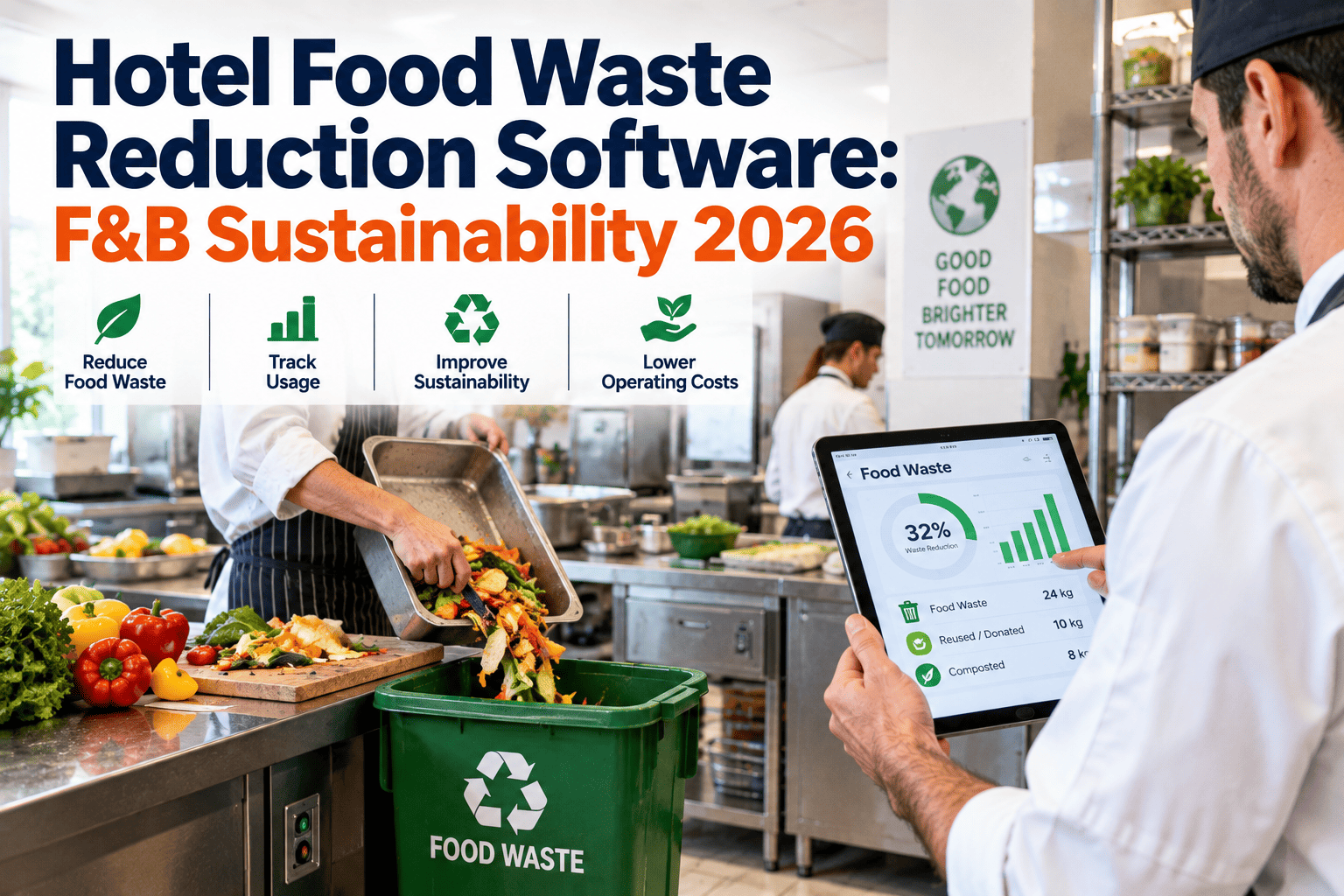
Your hotel generates roughly one kilogram of waste for every guest, every night. A 200-room property running at 70% occupancy sends over 51 tonnes of waste to landfill every single month. Yet 80% of that waste — food scraps, cardboard, glass, plastic amenity bottles — is either recyclable or compostable right now, with no new infrastructure required. The gap between where most hotels sit today and where zero-waste-committed properties operate is not a technology gap. It is a tracking gap. Hotels that have closed it are saving $89,000 to $120,000 annually in disposal costs alone, while posting ESG numbers that fill hotel rooms from sustainability-minded travelers. Sign up for Oxmaint to start tracking your waste streams digitally today.
Sustainability & ESG · Hotel Operations · Waste Management
Hotel Waste Management and Reduction: From Landfill to Zero Waste Goals
87% of hospitality waste goes to landfill. The hotels changing that number are not spending more — they are measuring more. This article shows exactly what to track, where waste hides, and how digital sustainability reporting turns reduction targets into documented ESG results.
1 kg
waste per guest per night — industry average
87%
of hospitality waste currently sent to landfill
80%
of hotel waste is recyclable or compostable today
88%
of travelers consider sustainability when booking
Where Does Hotel Waste Actually Come From?
Most hotel teams significantly underestimate how much of their waste stream is addressable. The assumption that waste is unavoidable comes from not measuring it. When hotels run structured waste audits — weighing and categorizing every bag before collection — the distribution is almost always the same, and almost always more fixable than expected.
Food & Organic Waste
~35%
Buffet overproduction, kitchen prep waste, plate returns, expired inventory
Cardboard & Paper
~25%
Supplier packaging, printed collateral, tissue products, guest in-room paper
Plastic — Single Use
~20%
Amenity bottles, straws, stirrers, coffee cups, packaging films, bin liners
Glass
~10%
Bar bottles, minibar items, condiment jars, wine and beverage service glass
Hazardous & Chemical
~5%
Cleaning chemicals, batteries, bulbs, aerosols — require regulated disposal
General / Residual Waste
~5%
Truly non-recyclable material — what remains after full diversion programs run
KEY FACT
A 200-room hotel generates up to 300,000 plastic items per month from guest rooms alone. Switching to bulk refillable dispensers eliminates this category entirely — with no capital expenditure beyond the dispensers themselves.
You cannot reduce what you are not measuring. Oxmaint's sustainability reporting module tracks waste by stream, by department, and by date — giving your team the data to cut disposal costs and hit ESG targets.
Start tracking for free.
The Zero Waste Journey: Five Stages Every Hotel Moves Through
Zero waste is not a switch that gets flipped. It is a progression — and knowing where your property sits on the spectrum determines what your next move should be. Hotels that try to skip stages without the data infrastructure to support them almost always stall. The ones that move fastest build measurement capability first.
01
Waste Audit
Weigh and categorize all waste by stream for 2–4 weeks. Establish baseline kg per occupied room night. Identify the top 3 waste categories by volume. This data drives every decision that follows.
Baseline Measurement
02
Source Separation
Introduce clearly labelled streams — general waste, recyclables, food/organic, glass. Station-level bins in kitchens, bars, housekeeping corridors, and back-of-house. Train all departments. Diversion rates typically jump 20–30% in the first 90 days.
Operational Setup
03
Food Waste Reduction
Implement portion tracking, menu demand forecasting, and kitchen prep waste logging. Food accounts for 35% of hotel waste and is the highest-cost category — restaurant overstocking and buffet overproduction are the primary targets. Hotels using demand-based catering cut food waste by 30–50%.
Biggest Cost Driver
04
Single-Use Plastic Elimination
Replace amenity bottles with bulk wall-mounted dispensers. Eliminate plastic straws, stirrers, and single-use cutlery. Switch to refillable water stations. A 200-room hotel eliminating single-use amenities removes 300,000+ plastic items monthly from its waste stream — a single high-impact action.
High Visibility Win
05
Digital Tracking & ESG Reporting
Log all waste data in a sustainability reporting platform. Track kg per occupied room night, diversion rate, recycling rate, and landfill reduction over time. Generate audit-ready ESG reports for investors, certification bodies, and sustainability-conscious corporate clients. This stage turns waste reduction into documented, monetizable proof.
ESG & Compliance
What Hotels Are Actually Achieving
These are documented results from hotels that implemented structured waste diversion programs. The pattern is consistent: committed measurement + source separation + food waste management = 67–80% diversion rates and five-figure annual savings.
201 rooms
80%
Diversion Rate
$120,000 / yr saved
Eliminated disposable F&B items, removed bottled water, added guest recycling guidance and a dedicated sustainability team.
221 rooms
80%
Diversion Rate
$89,000 / yr saved
Dedicated green team overseeing all sorting and diversion operations. Weekly team training and disposal area improvement cycles.
533 rooms
75%
Diversion Rate
$108,000 / yr saved
Restroom paper towel composting, daily line staff education sessions, cross-department accountability for diversion targets.
404 rooms
70%
Diversion Rate
$100,000 / yr saved
Bi-weekly green team reviews, cross-property benchmarking, management-driven sustainability accountability at departmental level.
Reactive vs. Tracked Waste Management: The Real Difference
Dimension
Without Tracking
With Digital Tracking (Oxmaint)
Waste baseline
Unknown — estimates only
Measured kg per occupied room night
Diversion rate
Unmeasured, not reportable
Live dashboard by stream and department
Food waste visibility
Discovered at invoice time only
Logged by meal period and station
ESG reporting
Manual compilation, often inaccurate
Auto-generated, audit-ready exports
Certification readiness
No documented evidence for auditors
Full data trail for Green Key, LEED, BREEAM
Cost visibility
Disposal invoices only — no trend data
Cost per tonne tracked, savings calculated
Waste management performance data from Hotel Council of San Francisco, ITP, and WRAP hospitality benchmarking studies.
Oxmaint's Sustainability Reporting module tracks waste streams, diversion rates, and ESG metrics in one dashboard — with export-ready reports for Green Key, LEED, and investor sustainability audits.
See it in a live demo.
Six Strategies That Move the Needle on Hotel Waste
01
Run a Waste Audit First
Every successful hotel waste program begins with a structured audit: weigh and sort all waste bags by category for two to four weeks. The data reveals which streams dominate, where overproduction is occurring, and what your actual baseline kg per occupied room night is — the single most important KPI for ESG reporting. Without this number, every reduction claim is unverifiable. Sign up to log your waste audit data in Oxmaint.
02
Eliminate Single-Use Plastics at Source
Switching from individual amenity bottles to bulk wall-mounted dispensers is the highest-impact single-action a hotel can take on plastic waste. A 200-room hotel generates roughly 300,000 plastic items monthly from guest rooms alone — this one change eliminates that category. Add refillable water stations in rooms and public areas, replace plastic straws and stirrers, and audit supplier packaging for biodegradable alternatives. The EU's Packaging Regulation requires all packaging to be recyclable or reusable by 2030 — hotels that move now avoid forced compliance costs later.
03
Address Food Waste With Demand Forecasting
Food waste accounts for 35% of hotel waste by weight and is the most expensive category. Effective food waste management requires two things: kitchen-level production logging (recording what is prepared, what is served, what is returned) and demand forecasting that adjusts ordering quantities based on expected covers, weather, and historical patterns. Hotels using this approach cut food waste by 30–50%, reducing both disposal costs and purchasing budgets simultaneously. Donate surplus food to local food banks before composting — it reduces costs and generates guest-facing sustainability content. Book a demo to see food waste logging in Oxmaint.
04
Build Source Separation Into Operations
Source separation — sorting waste into streams at the point of generation — is the operational foundation of any diversion program. Every kitchen station, bar, housekeeping cart, and back-of-house corridor needs clearly labeled, correctly sized bins for food/organic, cardboard, glass, recyclables, and general waste. Color coding and visual guides reduce contamination. Staff training must be ongoing, not a one-time orientation — weekly departmental briefings are what high-diversion hotels credit most consistently for maintaining 70–80% diversion rates year over year.
05
Compost What Cannot Be Avoided
For food waste that cannot be eliminated — peelings, coffee grounds, unavoidable plate waste — composting diverts it from landfill and eliminates the methane emissions that make food in landfill 25 times more damaging per tonne than CO2. Hotels with outdoor space or local composting partnerships can achieve near-zero organic waste to landfill. Restroom paper towel composting (deployed successfully by multiple Kimpton and Nikko properties) adds another divertible stream without guest-facing changes. Track composting tonnage in your sustainability reporting as a documented ESG metric. Start free to set up composting logs in Oxmaint.
06
Track Everything for ESG and Certification
Waste data has commercial value beyond disposal cost savings. Green Key, LEED, BREEAM, and major hotel brand sustainability programs all require documented waste performance data. Corporate travel buyers increasingly require ESG reporting from hotel partners before signing contracts. Sustainability-driven travelers — 88% of them, according to recent surveys — choose properties that publish documented reduction results over those that just make claims. Oxmaint's sustainability reporting module captures waste by stream, by department, and by date, generates audit-ready reports, and tracks your progress against your own zero-waste targets over time.
"
The numbers are more powerful than any marketing campaign. When we showed corporate buyers our actual waste diversion rate — 74%, tracked weekly, auditable — three of them converted to preferred partner agreements within the quarter. Sustainability data fills rooms.
Director of Sustainability · Full-Service Hotel Group, 6 properties
Frequently Asked Questions
How much does a hotel waste reduction program cost to implement?
The upfront costs depend on scope, but most of the highest-impact changes have short payback periods. Bulk dispensers replacing amenity bottles typically pay back within 6 to 12 months through reduced purchasing costs alone. Source separation requires labeled bins and staff training — low capital, operationally manageable. Food waste reduction through demand forecasting and kitchen logging has no capital cost: it is a process change. Digital sustainability reporting through Oxmaint adds tracking, audit exports, and ESG dashboards without on-site infrastructure. Many hotels start with an Oxmaint trial to establish their baseline before committing to physical changes.
Sign up to begin waste tracking at no cost.
What is a realistic waste diversion target for a mid-size hotel in its first year?
A well-run first-year program typically reaches 40 to 60% diversion — enough to meaningfully reduce disposal costs and meet the threshold for most sustainability certifications. Hotels that commit to both source separation and food waste reduction programs simultaneously tend to outperform this range. The documented benchmarks from comparable properties show 67% to 80% diversion is achievable within 18 to 24 months with management commitment and weekly tracking. The key variable is always measurement: properties that track weekly move faster than those that review data quarterly.
Which waste stream should a hotel address first?
Food waste first — always. It is 35% of your total waste volume, your highest disposal cost per tonne, and the stream with the greatest reduction potential through operational changes alone. Single-use plastics second: the visual impact is high, the compliance pressure is increasing (EU 2030 mandate), and the guest-facing improvement is immediate and marketable. Cardboard third — consistent recycling of supplier packaging is low effort with high diversion volume.
Book a demo to see how Oxmaint prioritizes reduction opportunities by waste stream.
How does digital waste tracking support ESG reporting?
Digital tracking through a sustainability reporting platform like Oxmaint captures the granular, time-stamped data that ESG frameworks require: kg per occupied room night by stream, monthly diversion rates, recycling tonnage, composting volumes, and landfill reduction trends over time. This data populates directly into certification audits for Green Key, LEED, and BREEAM, supports CDP and GRI sustainability report disclosures, and satisfies the waste KPI requirements of major hotel brand sustainability programs. Manual tracking with spreadsheets almost always produces data gaps that fail audits or require expensive third-party verification. The Frasers Hospitality Trust achieved an 8.1% drop in waste per occupied room night in FY2024 — documented in their ESG report with the platform data to back it up.
Does Oxmaint integrate with property management systems?
Oxmaint connects with major PMS platforms and facility management systems via API integrations, allowing occupancy data to automatically populate waste intensity calculations (kg per occupied room night) without manual data entry. The sustainability reporting module operates as a standalone tool when PMS integration is not available, with manual occupancy inputs.
Sign up to explore your integration options.
Oxmaint Sustainability Reporting
Turn Your Waste Data Into ESG Proof
Oxmaint tracks every waste stream, calculates your diversion rate in real time, and generates audit-ready sustainability reports that satisfy Green Key, LEED, and investor ESG requirements. Hotels using Oxmaint cut disposal costs and close corporate contracts faster. Start with a free trial — no hardware required.