IoT Water Leak Detection: Protect Your Hotel from Costly Water Damage
By Mark Strong on April 7, 2026
A guest at a 280-room hotel in Atlanta left the bathtub running overnight with the overflow drain clogged. Water penetrated the floor slab for six hours — the room below had a collapsed ceiling, three adjacent rooms had saturated drywall, and the elevator shaft had water intrusion that triggered a full building evacuation. Total cost: $249,000 in repairs and lost revenue. A $35 IoT water sensor on the bathroom floor would have triggered an alert within 90 seconds of water contact — before it reached the subfloor, before it reached the room below. OxMaint connects IoT leak sensors directly to your maintenance workflow, so every water event becomes an immediate work order — not a six-hour flood discovered by accident. Book a demo to see the full leak-to-work-order pipeline.
Detect Every Leak in Seconds — Repair Before Damage Starts
IoT sensors in every risk zone, real-time alerts, and auto-generated work orders — one platform
Average IoT sensor alert time from first water contact — vs 4–6 hours for manual discovery
$11,000
Average cost of a hotel water damage incident — multiplies 8x for every hour of undetected flow
73%
Of hotel water damage claims are from slow leaks — not catastrophic pipe bursts — detectable by IoT sensors weeks before visible damage
Where Hotels Leak — The 8 Highest-Risk Zones
Eight zones account for over 90% of all hotel water damage incidents. Each has a distinct leak profile — knowing where to place sensors is the difference between a $35 alert and a six-figure repair.
1
Guest Room Bathrooms
34% of incidents
Toilet supply line bursts, bathtub overflows, shower pan failures, P-trap leaks. One bathroom leak routinely damages 2–4 rooms across two floors.
2
Mechanical / Boiler Rooms
18% of incidents
Water heater tank failures release 80–120 gallons in minutes. PRV discharge, expansion tank failures, and chilled water condensation compound the risk — especially overnight.
3
Laundry Facilities
14% of incidents
Supply hose bursts during overnight cycles can release 3,000+ gallons before morning staff arrive. Drain backups and recirculation valve leaks add persistent low-volume damage.
4
Kitchen and F&B Areas
12% of incidents
Dishwasher supply failures, ice machine condensate clogs, walk-in cooler defrost drain blockages, and grease trap overflows — multiple high-volume water sources in close proximity.
5
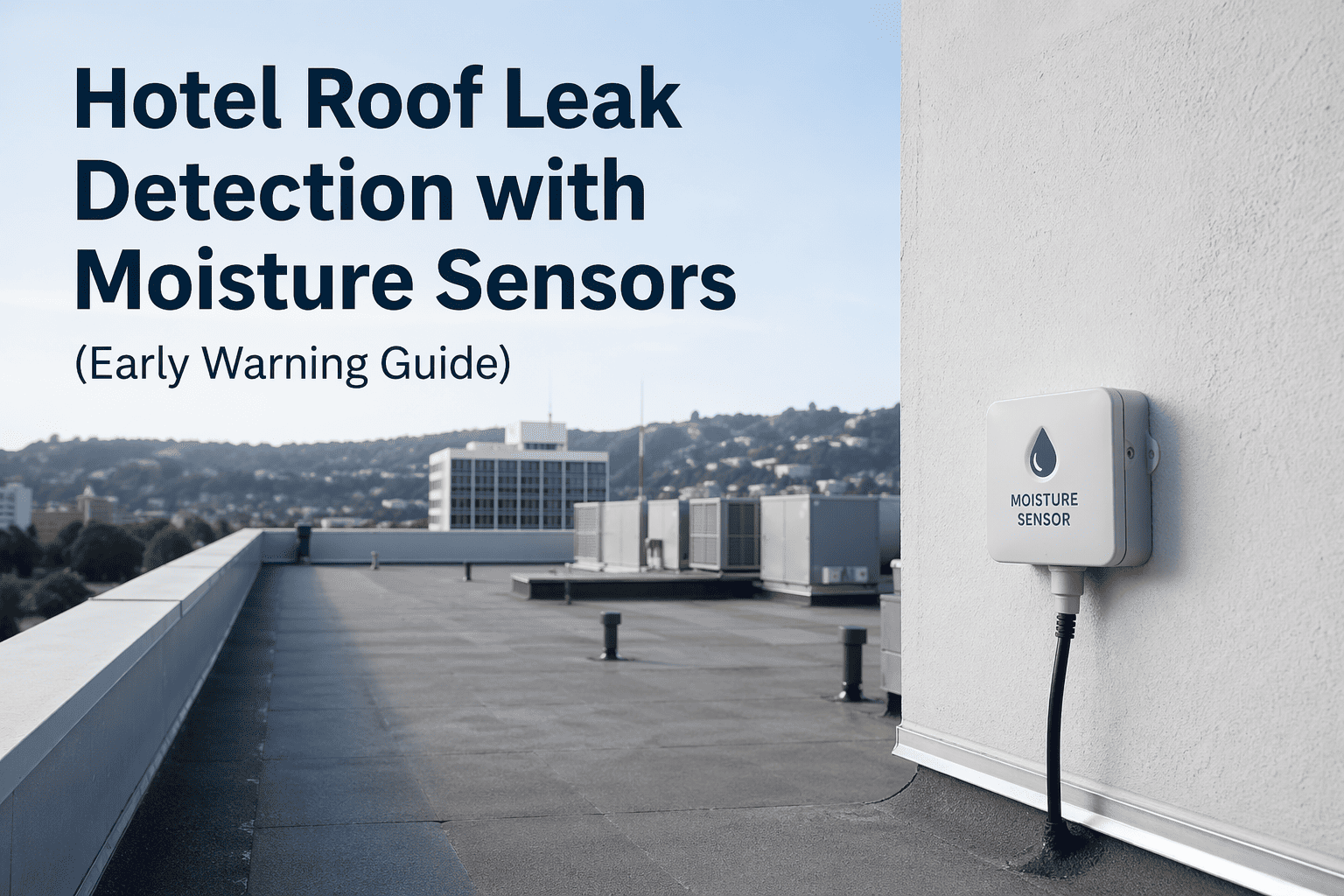
Roof and HVAC Condensate
9% of incidents
Clogged condensate drain pans overflow into ceiling cavities for weeks before visible stains appear. Roof membrane failures and cooling tower overflows add storm-event risk.
6
Elevator Pits
5% of incidents
Groundwater intrusion and sump pump failures corrode hydraulic cylinders, damage control boards, and take elevators offline for 3–10 days per incident.
7
Fire Sprinkler Risers
4% of incidents
A single sprinkler head discharges 15–25 GPM at 150+ psi. Corroded heads, accidental discharge, and frozen pipes in unheated zones cause rapid high-volume flooding.
8
Swimming Pool Mechanical
4% of incidents
Filter valve leaks, chemical pump seal failures, heater corrosion, and backwash line ruptures. Chlorinated water accelerates corrosion of adjacent equipment and flooring.
IoT Leak Detection — OxMaint
Every Leak Zone Covered. Every Alert Becomes a Work Order.
OxMaint connects IoT water sensors across all eight risk zones to your maintenance team — real-time alerts, auto-generated work orders, and a complete audit trail for every water event.
How IoT Leak Sensors Work — From Water Contact to Work Order in Under 2 Minutes
Without CMMS integration, a sensor alert is just an email. With OxMaint, the same alert is a prioritised work order with a location, an assigned technician, a response checklist, and a timestamp that documents when the leak was detected and when the response began.
0 sec
Water Contact
Sensor probes detect moisture — conductivity-based sensors trigger at less than 1mm of water depth on the sensing element
5–30 sec
Sensor Transmits Alert
Sensor sends signal via LoRaWAN, Zigbee, Wi-Fi, or cellular to the gateway — battery-powered sensors require no wiring and last 3–5 years
30–60 sec
Gateway to OxMaint
Gateway relays alert to OxMaint cloud via API — location, sensor ID, alert type, and timestamp are transmitted automatically
60–90 sec
Work Order Generated
OxMaint auto-creates a priority work order — asset location, leak zone, response checklist, and nearest available technician assignment
90–120 sec
Technician Notified
Mobile push notification, SMS, and email sent to assigned technician with one-tap work order acceptance and navigation to the exact location
5–15 min
On-Site Response
Technician arrives, isolates water source, documents condition with photos in OxMaint — full event timeline logged for insurance and compliance
Sensor Types — Choosing the Right Technology for Each Zone
Not every leak zone needs the same sensor. Guest rooms need small wireless pucks; mechanical rooms need industrial-grade rope sensors; elevator pits need float sensors rated for submersion. OxMaint integrates with all major sensor protocols.
Sensor Type
Best For
Detection Method
Battery Life
Cost per Unit
Spot sensor (puck)
Guest room bathrooms, under vanities, behind toilets
Conductivity probes on base — detects water at contact point only
3–5 years
$25–$50
Rope / cable sensor
Mechanical rooms, along pipe runs, under water heaters
Conductive cable — detects water anywhere along its length (up to 50 ft)
3–5 years
$60–$120
Float switch sensor
Elevator pits, sump basins, condensate drain pans
Mechanical float rises with water level — triggers at configurable depth
5–7 years
$40–$80
Inline flow sensor
Main supply lines, riser pipes, guest room branches
Detects abnormal flow rate or continuous flow during low-usage hours
Motorised valve closes automatically when paired sensor triggers — stops flow at source
Hardwired (powered)
$300–$800
The Cost of Water Damage vs the Cost of Prevention — By Hotel Size
Most of the cost of water damage is invisible — lost revenue from rooms out of service, insurance premium increases, and guest compensation. The comparison below shows actual annual water damage spend versus the cost of a full IoT deployment.
Small Hotel
50–120 rooms
Average annual water damage cost
$18,000–$45,000
IoT sensor deployment (Year 1)
$4,500–$9,000
OxMaint annual licence
$2,400–$4,800
Sensors needed
40–80
Expected damage reduction
70–85%
Mid-Size Hotel
120–300 rooms
Average annual water damage cost
$45,000–$120,000
IoT sensor deployment (Year 1)
$12,000–$28,000
OxMaint annual licence
$4,800–$7,200
Sensors needed
100–250
Expected damage reduction
75–90%
Large / Resort
300+ rooms
Average annual water damage cost
$120,000–$350,000
IoT sensor deployment (Year 1)
$30,000–$65,000
OxMaint annual licence
$7,200–$12,000
Sensors needed
250–600+
Expected damage reduction
80–93%
Last year we had 14 water damage incidents totalling $196,000 in repairs and lost revenue. This year, after deploying 180 IoT sensors connected to OxMaint, we had 23 leak alerts — every one caught within minutes. Total repair cost for all 23 events: $4,700. The sensors paid for themselves before the end of Q1.
— VP of Operations, 260-room select-service hotel, Mid-Atlantic US, OxMaint user since 2023
Insurance and Liability — How IoT Leak Detection Protects Your Bottom Line Beyond Repairs
Water damage is the number one property insurance claim category for hotels. Insurers are offering 5–15% premium discounts for hotels with monitored leak detection and documented response protocols. Beyond premium savings, OxMaint's audit trail — sensor alert time, work order creation, technician response, and remediation documentation — is exactly what adjusters and defence attorneys need.
Premium Reduction
Hotels with monitored leak detection and documented CMMS response protocols qualify for 5–15% property insurance premium discounts — saving $8,000–$35,000 annually depending on property size and coverage limits.
Faster Claims Processing
OxMaint provides timestamped sensor data, work order logs, technician response records, and photo documentation in a single exportable report. Claims adjusters process sensor-documented events 40–60% faster than undocumented incidents.
Liability Defence
If a guest slips on a water leak or claims property damage, OxMaint's timestamped response log demonstrates duty of care — the hotel detected the leak, generated a work order, and dispatched a technician within documented timeframes.
Loss History Improvement
Reducing water damage claims improves the hotel's 5-year loss history — the single most influential factor in commercial property insurance pricing. Two consecutive claim-free years can reduce premiums by 10–20% at renewal.
Frequently Asked Questions
How many sensors does a typical hotel need?
A general guideline is 0.5–1.5 sensors per guest room plus 10–30 sensors for back-of-house areas (mechanical rooms, laundry, kitchen, elevator pits). A 200-room hotel typically deploys 120–250 sensors for comprehensive coverage. Book a demo for a site-specific sensor plan.
Do IoT leak sensors require wiring or network infrastructure?
Most hotel deployments use battery-powered wireless sensors communicating via LoRaWAN or Zigbee — no wiring required. A single LoRaWAN gateway covers 30–50 floors in a typical hotel building. Sensors last 3–5 years on a single battery, and OxMaint tracks battery status to schedule replacements before they expire.
Can sensors automatically shut off water to prevent further damage?
Yes — automatic shut-off valves paired with leak sensors can close the water supply to an individual guest room riser, a mechanical room main, or a laundry supply line within seconds of detection. OxMaint logs the valve closure event and generates a follow-up work order to investigate and restore service. Start a free trial to explore valve integration options.
What happens if a sensor triggers a false alarm?
False alarm rates for modern conductivity-based sensors are below 1% when properly installed above floor-cleaning water levels. OxMaint allows configurable alert thresholds — a sensor can require sustained moisture contact for 15–30 seconds before triggering a work order, which eliminates condensation and cleaning-related false positives.
Does OxMaint integrate with existing building management systems?
Yes. OxMaint accepts data via BACnet, Modbus, MQTT, REST API, and direct integrations with major sensor platforms including Monnit, Samsara, Disruptive Technologies, and Ayyeka. If your BMS already collects leak sensor data, OxMaint can ingest it directly without additional hardware.
IoT Leak Detection — OxMaint
Detect in Seconds. Respond in Minutes. Prevent Thousands in Damage.