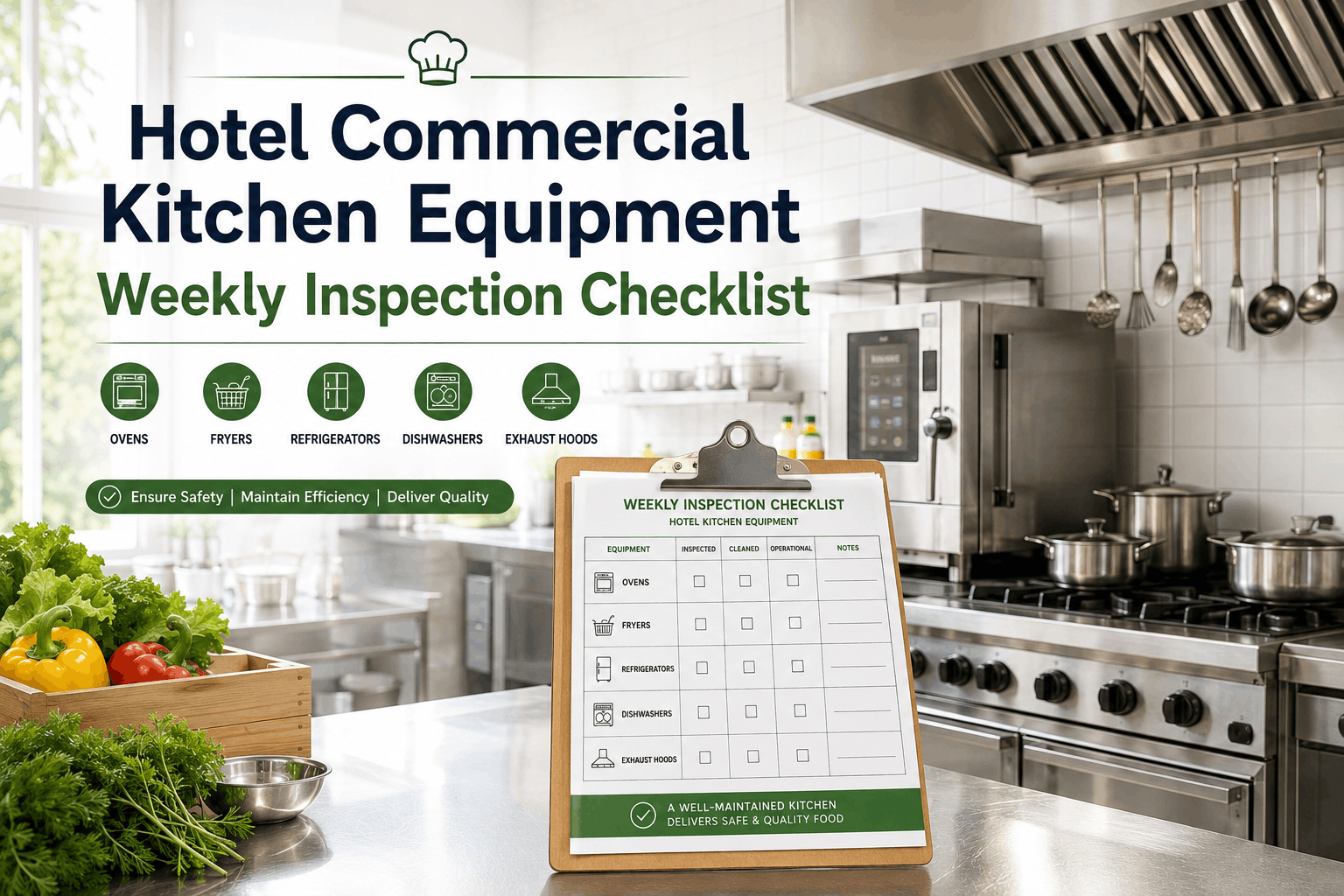
Running a commercial kitchen means every piece of equipment must perform flawlessly when it matters most—during service. But equipment performance isn't just about avoiding mid-rush breakdowns; it's about passing the health inspector's scrutiny, maintaining food safety compliance, and protecting your business from violations that can cost thousands in fines or force temporary closure. The difference between operations that consistently pass inspections and those that scramble to address violations often comes down to one factor: systematic, documented equipment inspections that catch problems before inspectors—or worse, customers—find them.
This comprehensive inspection guide provides restaurant operators, kitchen managers, and food safety professionals with everything needed to implement inspection programs that exceed health department standards. The FDA Food Code establishes baseline requirements, but jurisdictions across North America have adopted variations that create compliance complexity for multi-unit operators. With health department inspection failures costing operations an average of $8,500 in immediate remediation plus ongoing reputation damage, proper inspection protocols aren't optional—they're essential business infrastructure that protects revenue, reputation, and public health simultaneously.
Why Kitchen Equipment Inspections Determine Compliance Success
Health inspectors don't evaluate your culinary skills—they evaluate your systems. When an inspector walks through your kitchen, they're looking for evidence that you consistently maintain equipment in safe, sanitary condition. A spotless kitchen on inspection day means nothing if you can't produce temperature logs showing consistent cold holding compliance, cleaning schedules demonstrating regular sanitation, or maintenance records proving equipment is properly serviced. The inspection report becomes a permanent record that follows your operation, influences insurance rates, and appears in public databases that customers increasingly check before dining.
Equipment-related violations represent 73% of all health department citations, making systematic equipment inspection the highest-leverage activity for compliance success. Unlike food handling violations that require constant staff vigilance, equipment issues follow predictable patterns that inspection protocols catch early. A refrigerator gasket showing wear today becomes a temperature violation in two weeks. A dishwasher with mineral buildup today becomes a sanitization failure next month. Documented inspections create the paper trail that demonstrates due diligence while catching problems in their early, easily-correctable stages. Operations ready to implement inspection excellence can schedule a consultation to discuss digital inspection workflows.
The Equipment Inspection Challenge: What Makes Commercial Kitchens Different
Commercial kitchen equipment inspections face unique challenges that generic facility inspection programs don't address. Unlike office buildings where HVAC inspection follows predictable schedules, kitchen equipment operates under extreme conditions with unpredictable usage patterns. A Friday dinner rush subjects equipment to stress that Monday lunch service doesn't approach. Unlike retail environments where equipment failure is inconvenient, kitchen equipment failure creates immediate food safety risks, revenue loss, and potential health code violations simultaneously.
These factors make systematic inspection protocols essential rather than optional. Research shows that operations implementing structured equipment inspection programs reduce critical violations by 87% and extend equipment lifecycles by 25-35%. For commercial kitchens where a single walk-in cooler or combi oven represents $15,000-$40,000 in capital investment, those extended lifecycles translate directly to improved ROI and deferred replacement costs. Teams ready to address these challenges can start building their digital inspection system today.
Commercial kitchens contain 25-50+ individual equipment pieces spanning refrigeration, cooking, sanitation, and ventilation—each with different inspection requirements, temperature standards, and compliance documentation needs.
Temperature logs must be recorded at specific intervals, cleaning must be documented before and after service, and corrective actions require immediate notation—all while managing active food preparation.
Health codes vary by state, county, and municipality. What passes inspection in one jurisdiction may fail in another. Multi-unit operators must maintain different inspection protocols for different locations.
Restaurant industry turnover exceeds 70% annually. New staff must learn inspection protocols quickly, and knowledge transfer gaps create compliance vulnerabilities during transitions.
Health inspectors arrive without warning, expecting immediate access to documentation. Operations must maintain "inspection-ready" status continuously—not just before scheduled audits.
Not all violations are equal. Critical violations (temperature, sanitation) require immediate correction and can trigger closure. Understanding this hierarchy focuses inspection attention appropriately.
Complete Kitchen Equipment Inspection Guide: Category-by-Category Protocol
Effective equipment inspection requires systematic coverage of every equipment category with appropriate frequency and documentation standards. The inspection framework below organizes equipment by criticality—prioritizing food safety equipment that creates immediate violation risk, then addressing operational equipment that impacts efficiency and longevity. Each category includes specific inspection points, pass/fail criteria, and documentation requirements aligned with FDA Food Code standards.
The key insight is matching inspection frequency to risk level and equipment condition. New, well-maintained equipment may need only daily visual checks and weekly detailed inspections. Aging equipment showing wear requires more frequent attention. Digital inspection systems allow this adaptive approach while maintaining consistent documentation. Operations implementing this framework can schedule a platform demonstration to see inspection workflows in action.
Equipment Inspection Report Template: What to Document
The inspection itself is only half the compliance equation—documentation determines whether your diligence counts during a health inspection. When inspectors ask for records, they're evaluating not just whether inspections occurred, but whether they were thorough, timely, and properly recorded. A missing signature, illegible entry, or obvious pattern of retrospective completion undermines credibility and can transform a minor issue into a documented concern.
Modern digital inspection systems solve documentation challenges that plague paper-based programs. Automatic timestamps prove when inspections occurred. Photo attachments provide visual evidence of conditions. GPS tagging confirms inspections happened on-site. Signature capture creates accountability. These features make inspections both easier to complete and more valuable as compliance evidence. The template framework below shows what elements every inspection report should include.
| Report Element | What to Include | Why It Matters | Digital Advantage |
|---|---|---|---|
| Header Information | Date, time, location, inspector name/ID | Establishes chain of custody and accountability | Auto-populated, tamper-proof timestamps |
| Equipment Identification | Asset ID, name, location, manufacturer, model | Enables trend analysis and service history tracking | QR code scanning, asset linking |
| Inspection Criteria | Specific items checked with pass/fail/NA options | Ensures consistent, complete inspections | Required fields prevent incomplete submissions |
| Measurements | Temperatures, concentrations, readings | Provides objective evidence of compliance | Input validation prevents impossible values |
| Visual Documentation | Photos of conditions, deficiencies, repairs | Creates undeniable evidence of findings | In-app camera with automatic attachment |
| Corrective Actions | Issues found, actions taken, follow-up required | Demonstrates proactive problem resolution | Work order generation, assignment tracking |
| Verification Signature | Inspector signature confirming completion | Creates legal accountability | Digital signature capture with identity verification |
Inspection Frequency Matrix: Daily, Weekly, Monthly Schedules
Not all equipment requires daily detailed inspection—and attempting to inspect everything daily creates inspection fatigue that actually reduces compliance. The matrix below establishes appropriate frequencies based on food safety risk, regulatory requirements, and practical operational constraints. Critical items like refrigeration temperatures require multiple daily checks; lower-risk items like storage shelving can be inspected weekly or monthly without compromising safety.
| Equipment Category | Per Shift | Daily | Weekly | Monthly | Quarterly |
|---|---|---|---|---|---|
| Walk-In Coolers/Freezers | Temp log | Door seal, alarm test | Coil cleaning, drain check | Gasket inspection, calibration | Professional service |
| Reach-In Refrigeration | Temp log | Visual, organization | Coil cleaning, gasket check | Thermostat calibration | Deep clean, service |
| Dishwashers | Temp/chem verify | Full inspection, clean | Delime, spray arm check | Gasket replacement eval | Professional service |
| Fryers | Oil quality, temp | Exterior cleaning | Deep clean, boil out | Thermostat test, safety check | Full service, element check |
| Ovens/Ranges | — | Burner check, cleaning | Calibration spot check | Thermostat calibration | Professional calibration |
| Hood/Exhaust System | — | Filter visual | Filter cleaning | Fan/motor inspection | Professional hood cleaning |
| Ice Machines | — | Visual, production check | Exterior cleaning | Sanitize, filter change | Professional deep clean |
| Hot Holding Equipment | Temp log | Cleaning, water level | Full inspection | Thermostat calibration | Element inspection |
Expert Perspective: What Health Inspectors Actually Look For
"When I walk into a kitchen, I can tell within 60 seconds whether this operation takes food safety seriously. It's not about whether everything is perfect—it's about whether there's a system in place. Operations with digital inspection records, organized documentation, and staff who can explain their protocols almost never have critical violations. The ones scrambling to find paper logs or saying 'we usually check that' are the ones we cite. The inspection report you give yourself every day is more important than the one I give you twice a year."
Building Your Inspection Program: Implementation Roadmap
Transitioning from informal equipment checks to systematic documented inspections doesn't happen overnight—but it doesn't require months of preparation either. The 30-day implementation roadmap below provides a practical timeline for establishing inspection protocols that will pass health department scrutiny while building habits that become second nature to your kitchen team.