A high-volume electronics-to-automotive sub-assembly manufacturer was losing $6.3M annually to escaped defects, warranty claims, and three product recalls in 24 months — all traced back to a manual inspection process that missed nearly 1 in 3 critical flaws. Within 16 months of integrating Oxmaint's AI Vision Inspection module across 9 production lines, the defect escape rate dropped to 0.2%, recall risk was eliminated, and the plant avoided a projected $8M in recall-related costs. Book a demo to see how Oxmaint's AI Vision Inspection works on your production line.
Case Study · AI Vision Quality Inspection
Manufacturing · 9 Production Lines · 62,000 Units/Day
How One Manufacturer Stopped Shipping Defects — and Prevented $8M in Recalls
3 recalls in 24 months. Manual inspection missing 1 in 3 defects. OEM contracts at risk. After deploying Oxmaint AI Vision Inspection across 9 lines, defect escape rate fell to 0.2% — and recalls dropped to zero.
Results at a Glance
99.8%
Defect detection accuracy
$8M
Recall costs prevented
180ms
Per-unit inspection time
18 days
Full deployment time
Zero
Recalls post-deployment
-78%
Warranty claims reduction
01 / The Facility
The Plant Behind the Numbers
Industry
Mixed-mode manufacturer producing electronic sub-assemblies and precision-machined automotive components for Tier 1 OEM clients.
Output
62,000 units/day across 9 production lines. 3-shift continuous operation, 310 working days/year.
Prior Inspection
Team of 24 manual inspectors. Rule-based optical scanners on 3 of 9 lines. No unified defect tracking.
Quality Problem
3 product recalls in 24 months. $6.3M annual cost of poor quality. Manual inspection catch rate: 68%.
OEM Pressure
Two OEM clients issued formal quality improvement notices. One threatened to remove supplier status within 6 months if metrics did not improve.
Decision Timeline
4-month evaluation. 3 platforms tested. Oxmaint selected for full-line integration capability, CMMS connection, and fastest deployment timeline.
02 / The Real Cost of Missing Defects
When 1 in 3 Defects Escapes, Everyone Pays
Manual inspection under real factory conditions catches around 65–70% of defects. The rest ship out. Here is exactly where this plant's $6.3M annual quality cost was going before Oxmaint.
$1.8M
Scrap and rework
Defects caught late in the line — after significant value had been added — required full rework or scrapping. Average rework cost: $29 per unit on 62,000 daily units.
$1.4M
Warranty claims
Escaped defects reaching end customers generated warranty claims across 14 months. Average claim cost exceeded the factory floor fix cost by 7x due to field service and logistics.
$2.9M
3 product recalls
Two safety-related recalls and one regulatory recall in 24 months. Average direct cost per recall: $970,000 — not counting reputational damage and OEM contract strain.
$6.3M
Total annual quality cost
All traced to a single root cause: an inspection system that was too slow, too inconsistent, and too human-dependent for a 62,000-unit/day line.
Human inspectors miss up to 32% of defects at high production speeds — not from carelessness, but from biological limits that no amount of training can overcome.
Inspection Accuracy: Human vs. AI — At Production Speed
Manual Inspection
Industry average catch rate under real-shift conditions. Drops further on 3rd shift due to fatigue.
Rule-Based Vision Systems
Better than manual, but fails on subtle defects, varied lighting, and new defect types not in the original ruleset.
Oxmaint AI Vision Inspection
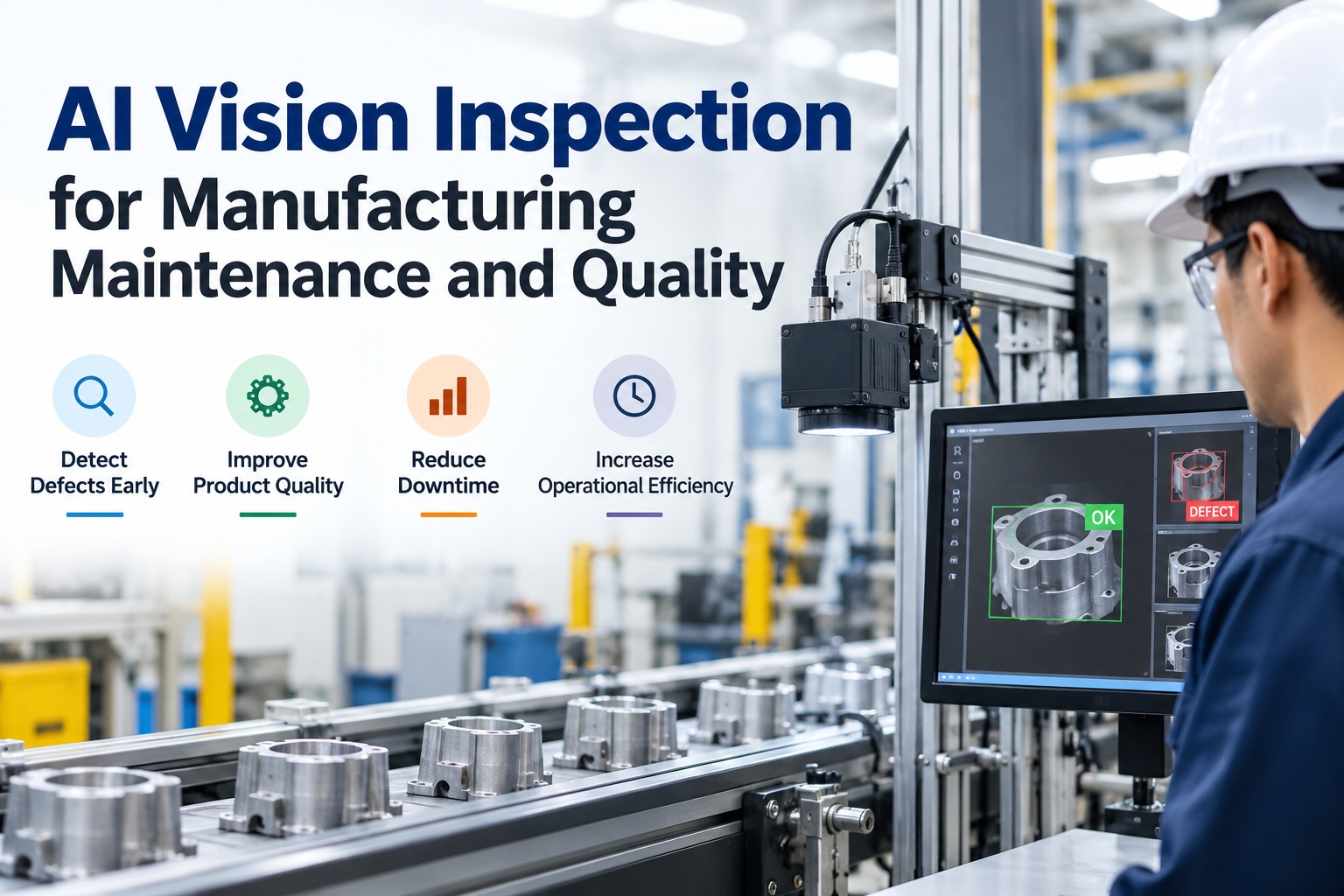
Deep learning model trained on 240,000 labeled defect images. Catches micro-cracks, weld failures, and dimensional deviations at 180ms per unit.
03 / The Deployment
9 Lines. 18 Days. No Production Pause.
Oxmaint integrated with existing cameras on 7 of 9 lines and added edge-compute units to the remaining 2. No line stoppage. No new inspection staff. The existing quality team managed the entire rollout.
Days 1–6
Camera Audit and Edge Setup
Existing cameras assessed for resolution and positioning. 7 lines connected directly to Oxmaint's AI engine. 2 lines fitted with new high-resolution units at critical inspection points.
Days 7–13
AI Model Training
240,000 annotated defect images used to train line-specific models. Defect library covered 34 defect types across surface, structural, and dimensional categories. Severity scoring configured against OEM acceptance criteria.
Days 14–18
Go-Live and Team Handover
All 9 lines live simultaneously. Quality team trained in 3 hours. Real-time defect dashboard connected to Oxmaint CMMS — every defect event auto-generates a maintenance investigation ticket when linked to equipment condition.
The CMMS connection was the difference. When AI vision flagged a cluster of micro-crack defects on Line 4, it automatically raised a work order for the tooling inspection — and prevented a second failure mode before it started.
9 Lines. 18 Days. Real-Time Defect Detection from Day One.
No production stoppage. No new inspection headcount. See what integration looks like for your specific line configuration.
04 / The Results
16 Months of Data. Six Metrics That Tell the Full Story.
| Metric |
Before Oxmaint |
After Oxmaint |
Change |
| Defect escape rate |
32% of defects escaped |
0.2% escape rate |
-99.4% |
| Detection accuracy |
68% (manual inspection) |
99.8% (AI + human review) |
+31.8 pts |
| Inspection speed |
4–7 seconds per unit |
180ms per unit |
97% faster |
| Annual scrap and rework cost |
$1.8M |
$390K |
-$1.41M |
| Warranty claims |
$1.4M/year |
$310K/year |
-78% |
| Product recalls |
3 in 24 months |
Zero in 16 months |
Eliminated |
| OEM quality notices |
2 active improvement notices |
Both formally closed |
Closed |
| Manual inspection headcount |
24 inspectors (3 shifts) |
8 inspectors (quality engineers) |
Redeployed |
The Financial Case in Three Numbers
Total Investment
$22,600
Annual platform cost
Direct Savings (Year 1)
$5.9M
Scrap, warranty, recall reduction
Recall Risk Avoided
$8M
Projected exposure eliminated
05 / What the AI Actually Found
Four Defect Categories That Were Slipping Through Undetected
01
Sub-surface micro-cracks in machined aluminum components
Manual inspectors and the existing rule-based scanner could not detect cracks smaller than 0.3mm on curved aluminum surfaces. Oxmaint's AI model, trained with polarized imaging data, detected cracks as small as 0.08mm — the exact failure mode behind the plant's most costly recall. In the first 90 days, the system flagged 1,247 components with micro-cracks that would have shipped under the previous process.
02
Weld porosity in electronic sub-assembly joints
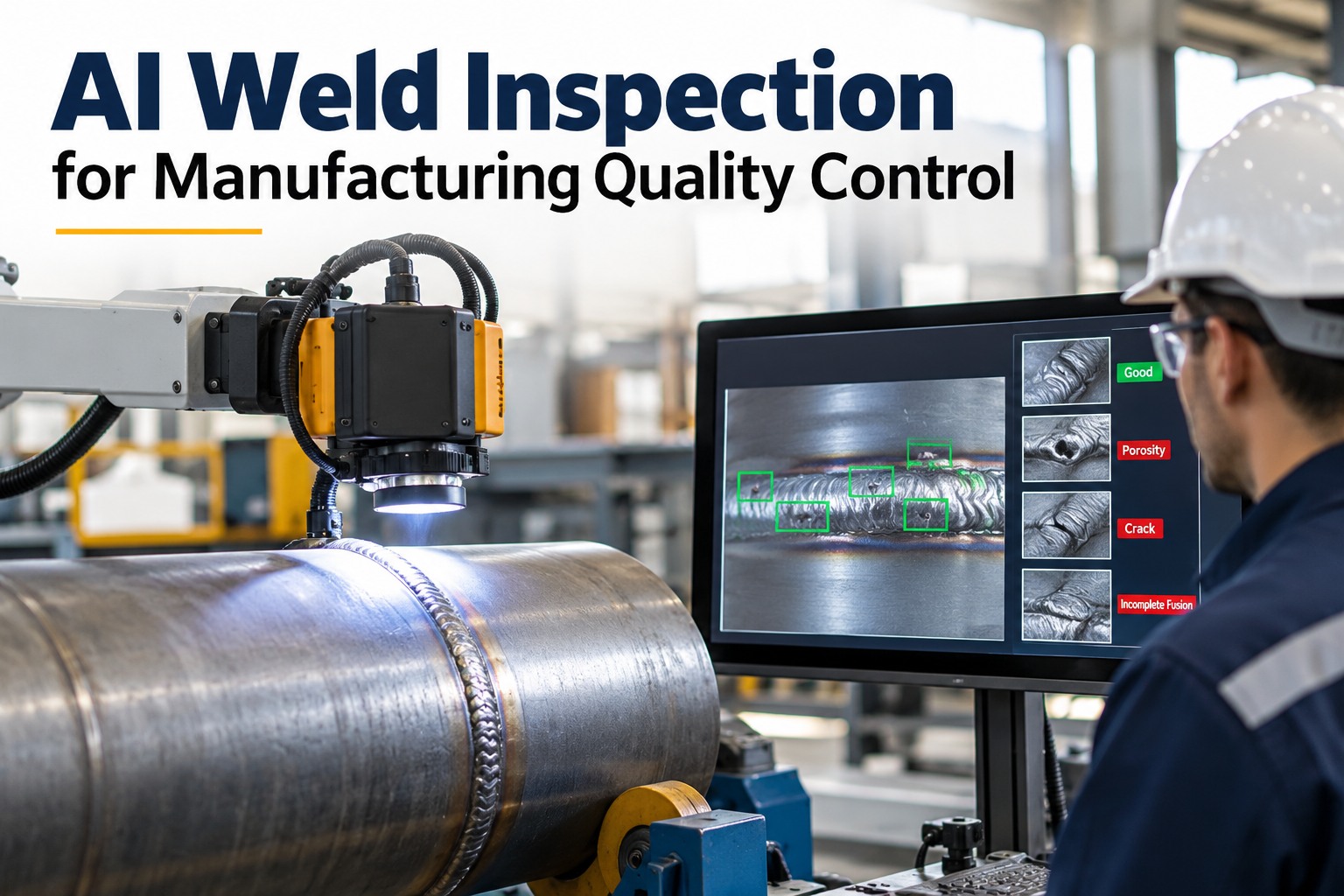
Solder joint porosity in PCB sub-assemblies was causing intermittent field failures — the hardest type of defect to attribute and the most expensive to resolve under warranty. The AI inspection model detected void-pattern anomalies in solder joints at 180ms per board, across 11,000 boards daily on Lines 6 and 7. Warranty claims on this product family dropped 84% within six months of deployment.
03
Dimensional drift across shift changeovers
Tooling wear created gradual dimensional drift during long runs — defects that were within tolerance at the start of a shift but out of spec by shift end. Real-time AI inspection caught drift patterns as they developed, not after a batch had shipped. Because Oxmaint connected vision data to the CMMS, tooling change work orders were triggered automatically at the 4.7-hour mark — preventing the late-shift batch failures entirely.
04
Label mismatches and traceability errors on outbound packaging
Two of the three product recalls had a traceability component — product lot codes applied incorrectly to outbound packaging, making targeted recalls difficult and expensive. Oxmaint's AI label verification module, added to the end-of-line inspection on all 9 lines, cross-references every label against the production order in real time. Since deployment, traceability error rate has been zero across 19.2 million units shipped. Book a walkthrough to see how the label verification module works end-to-end.
06 / Frequently Asked Questions
What Quality Managers Ask Before Deploying AI Vision Inspection
Do we need to replace our existing cameras to use Oxmaint's AI Vision Inspection?
In most cases, no. Oxmaint's AI engine connects to existing industrial cameras provided they meet minimum resolution thresholds — typically 2MP or higher for standard surface inspection. In this case study, 7 of 9 lines used existing hardware without modification. For lines requiring higher precision (micro-crack or porosity detection), edge-compute units with upgraded optics can be added without stopping production.
Book a technical assessment to find out exactly what your lines need.
How long does it take for the AI model to reach high accuracy on our specific defect types?
Oxmaint's AI Vision module ships with pre-trained models covering 34 common defect categories across surface, structural, dimensional, and traceability defects. For defect types unique to your products, fine-tuning typically takes 5–10 days using your existing defect sample library. In this case study, the models were production-ready on day 13. Post-deployment, the model continues to improve through active learning as it processes more line data.
Start a free trial to see initial model accuracy on your defect types.
What happens when the AI flags a false positive — a good part rejected as defective?
Every flagged part enters a human review queue before rejection, so no good product is discarded without confirmation. In this case study, the false positive rate settled at 0.6% within 60 days — meaning 99.4% of AI flags were genuine defects. The human review step also feeds corrections back into the model, continuously reducing false positive rates over time. Oxmaint's dashboard shows false positive trends per line and per defect category so quality engineers can track model precision directly.
Ask us about false positive benchmarks for your product category in a demo session.
How does the AI Vision module connect to the maintenance and CMMS side of Oxmaint?
This is the key differentiator of Oxmaint versus standalone vision platforms. When the AI detects a defect cluster pattern — for example, a batch of parts from Line 4 showing the same micro-crack signature — it automatically raises a linked CMMS investigation ticket on the upstream equipment most likely responsible. This closed loop means quality events trigger maintenance responses without manual escalation. In this case study, 23 equipment-linked defect clusters were caught and resolved before becoming line failures.
See the CMMS-vision integration live in a scheduled demo.
Can Oxmaint AI Vision support multi-site quality tracking across different plants?
Yes. Oxmaint supports centralized quality dashboards that aggregate defect data, escape rates, and inspection throughput across multiple facilities. Corporate quality managers get a single view of plant-by-plant performance, while individual plant teams operate independently within their own interface. Benchmarking across sites, sharing trained models between similar lines, and pushing model updates centrally are all supported. Multiple Oxmaint customers currently run 3–6 facilities on a single account.
Start a free trial and explore multi-site configuration in your own account.
Stop Shipping Defects. Start Preventing Recalls.
Your Line Is Inspecting at 68% Accuracy Right Now. AI Gets It to 99.8%.
9 lines. 18-day deployment. 99.8% detection accuracy. $8M in recall risk eliminated. Zero OEM quality notices. Same quality team — doing higher-value work than standing on a line counting defects by eye.