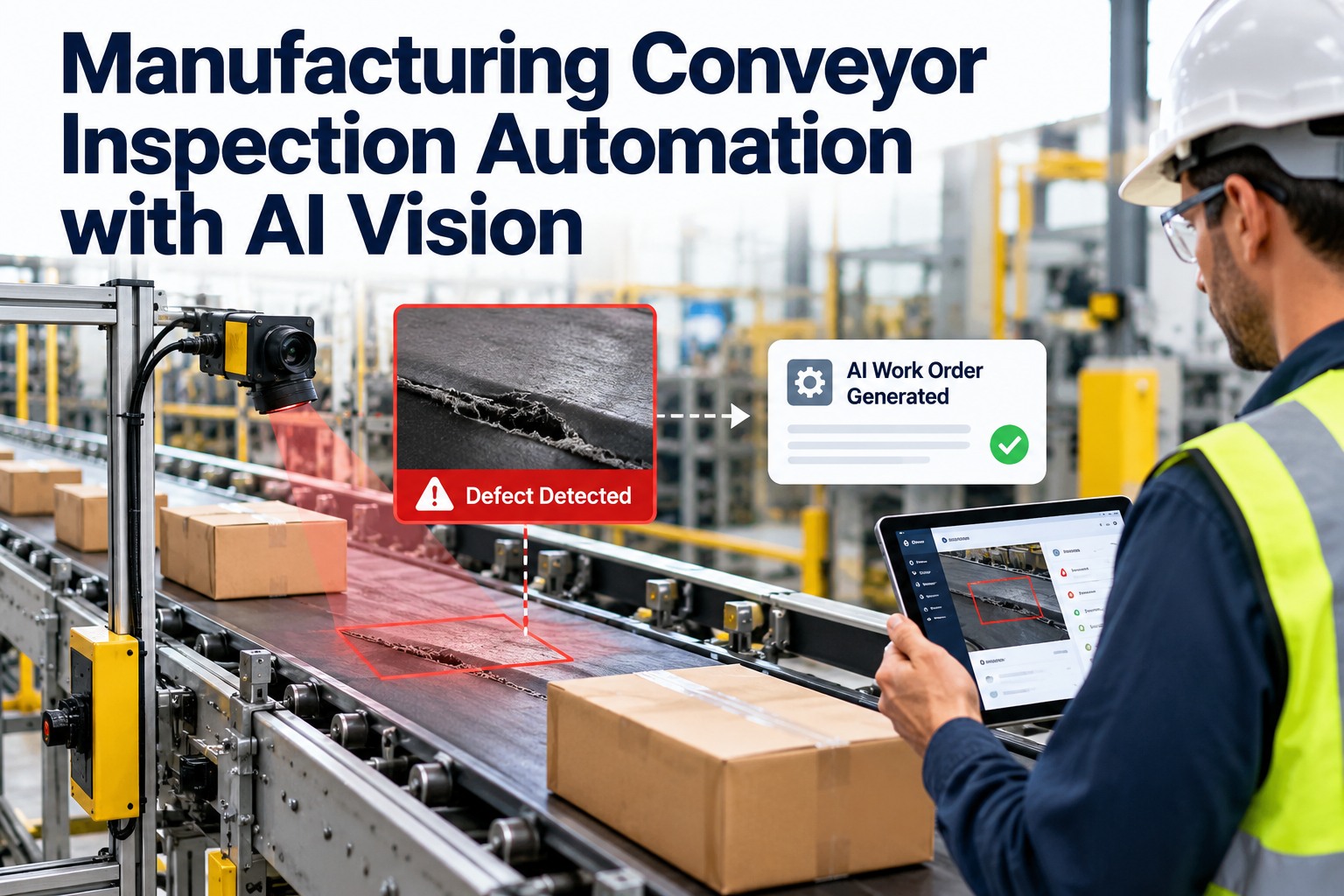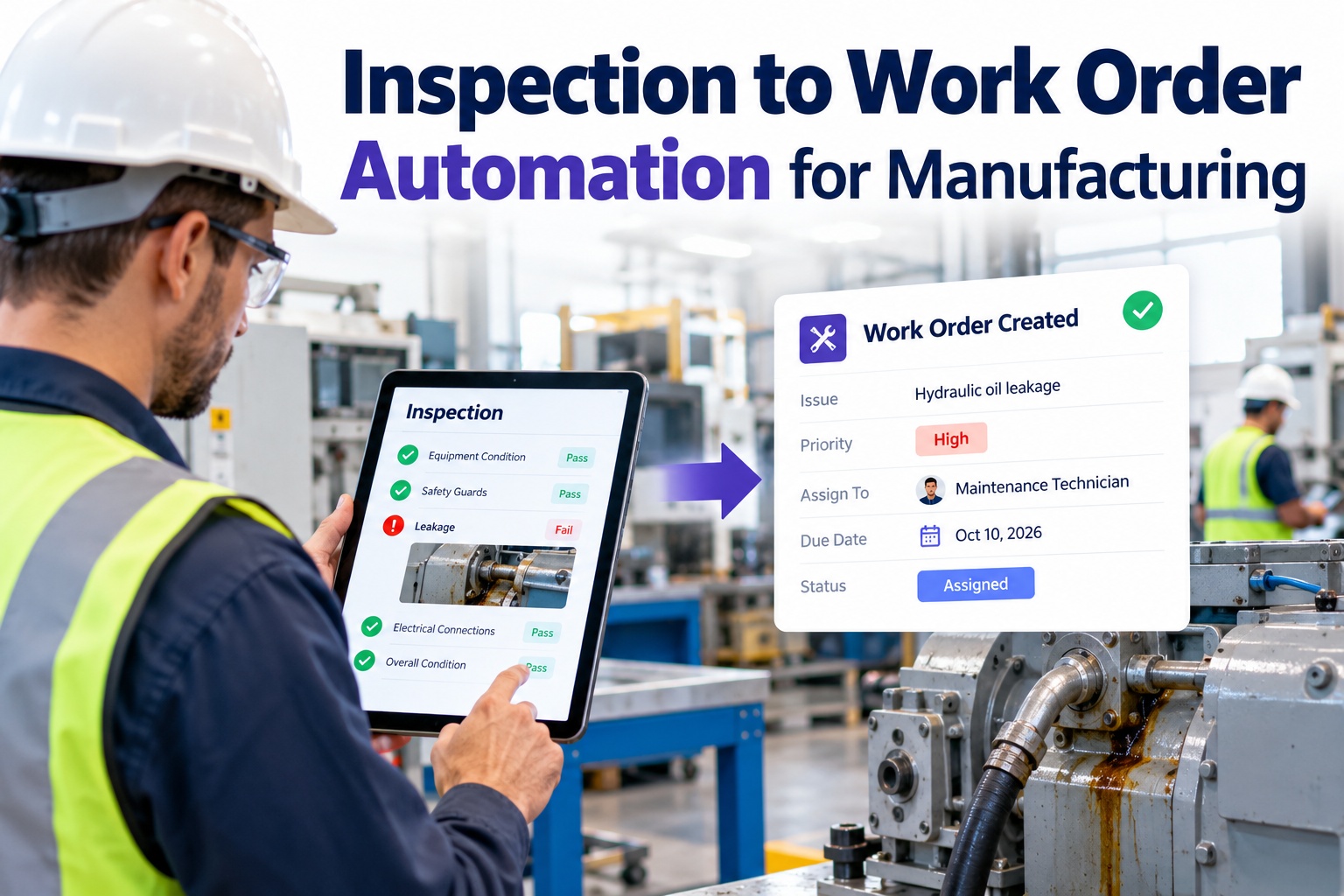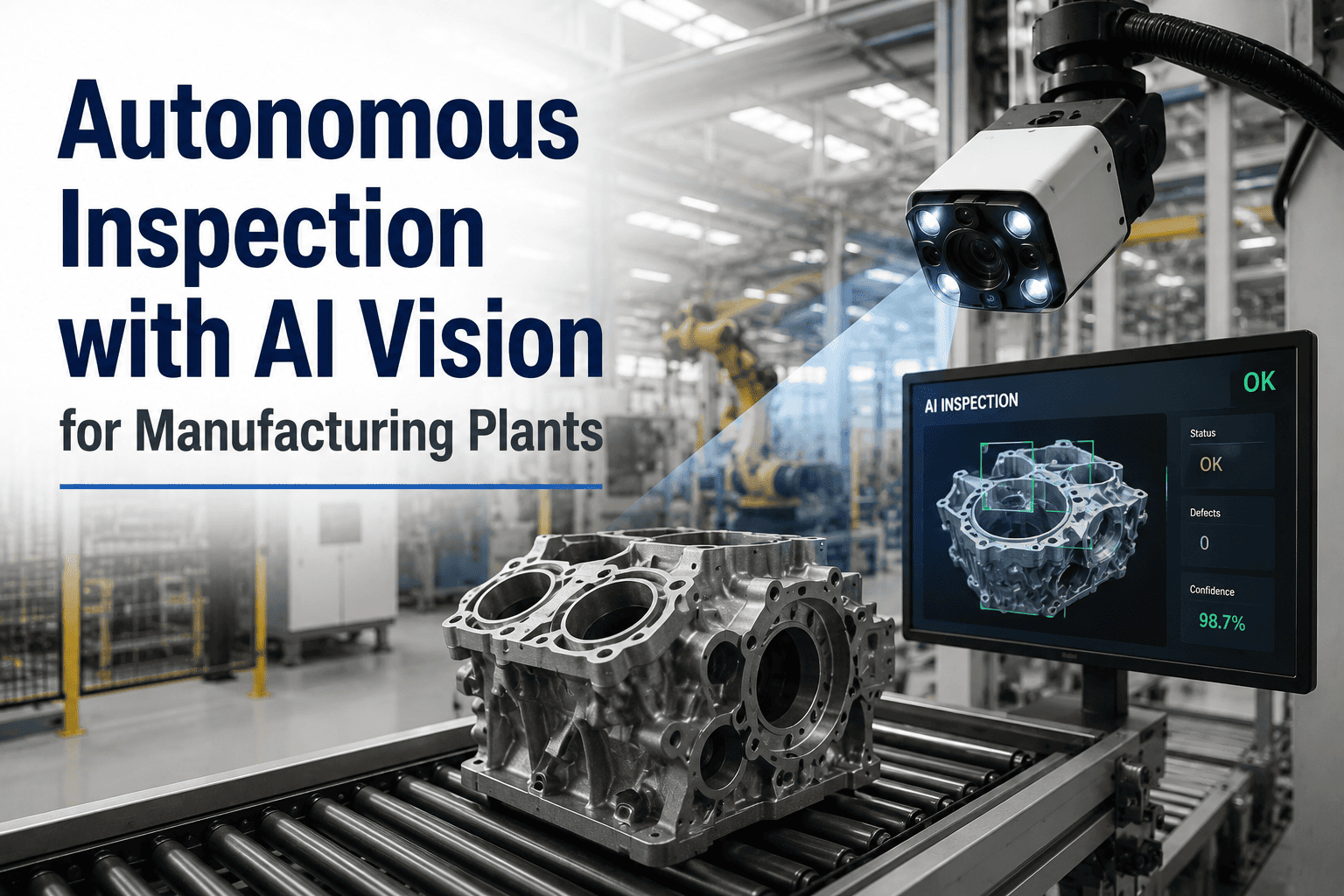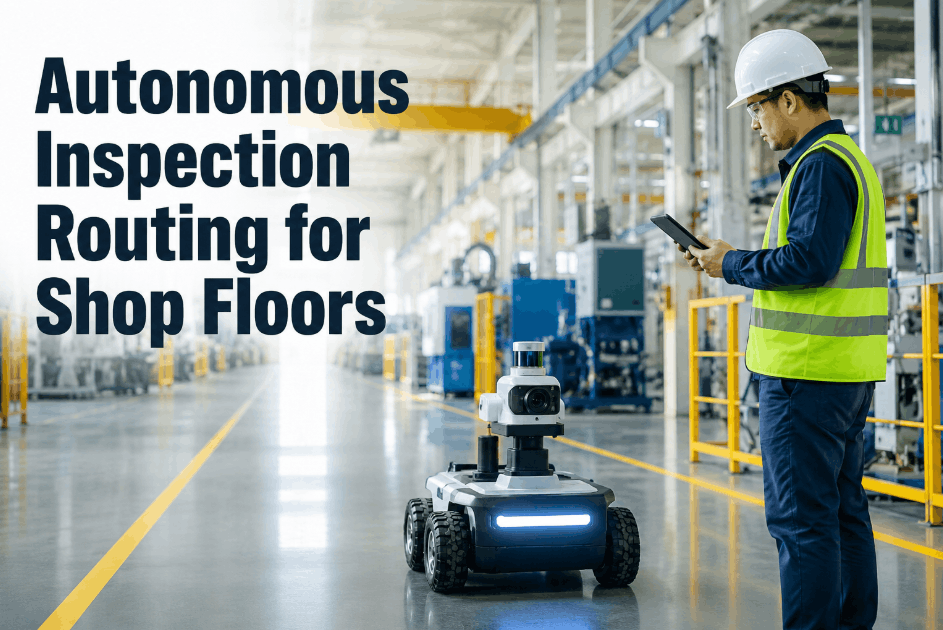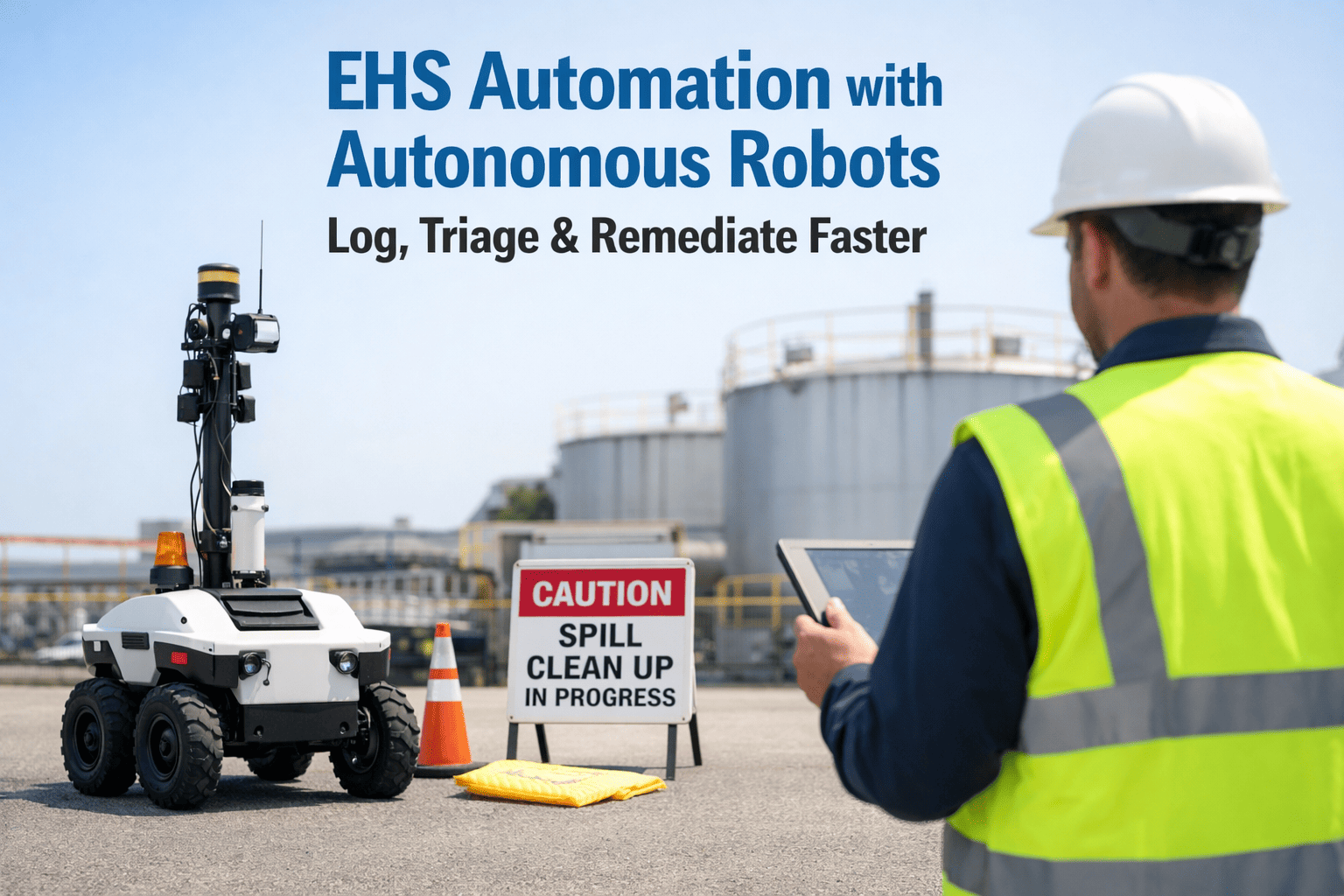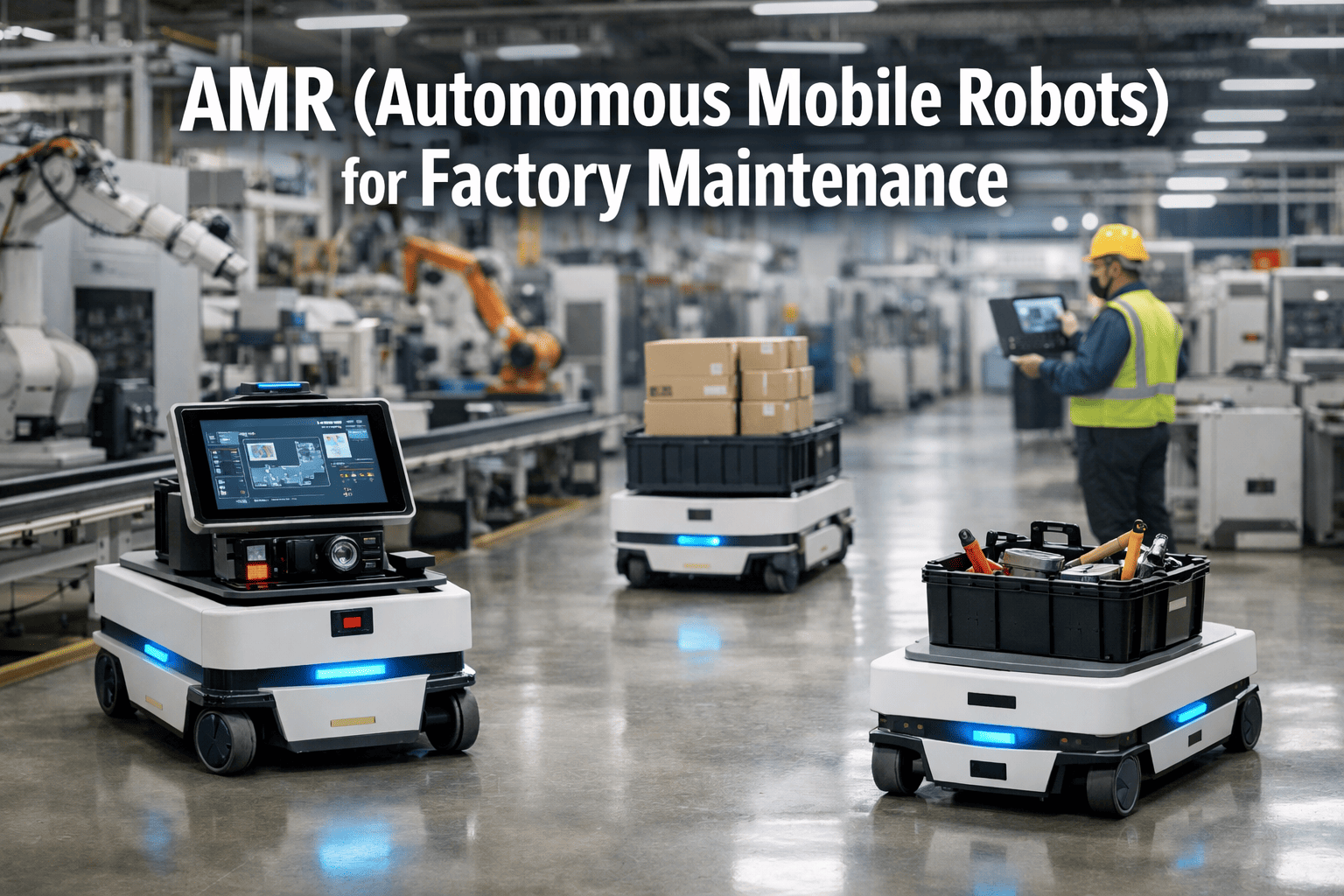
Autonomous Mobile Robots (AMRs) are moving from pilot projects to production-floor infrastructure in manufacturing — not as replacements for maintenance technicians, but as force multipliers that extend human reach into hazardous zones, eliminate repetitive patrol routes, and deliver real-time equipment condition data that no fixed sensor network can match. A single AMR running a programmed inspection patrol covers 8–12 km of floor space per shift, reads vibration, thermal, and acoustic signatures from 40–60 assets per hour, and logs every reading against asset ID, timestamp, and GPS coordinates — feeding directly into OxMaint's CMMS work order engine to trigger predictive maintenance actions before failures occur. The factories seeing the highest ROI from AMR deployment are not those with the largest robot fleets — they are the ones that connected AMR sensor data to their maintenance management platform so every robot reading drives a maintenance decision, not just a data log entry.
Autonomous Mobile Robots for Factory Maintenance: What AMRs Do, What They Cost, and Where They Deliver ROI
AMR deployment frameworks, use case ROI benchmarks, and the integration layer that converts robot sensor data into maintenance work orders — automatically.
The 5 Core AMR Use Cases for Factory Maintenance Operations
AMRs are not a single-purpose tool — their value in maintenance operations depends entirely on which use case they are deployed for. The five use cases below represent the highest-maturity and highest-ROI applications, each with distinct hardware requirements, software integration needs, and measurable outcomes.
AMRs navigate pre-programmed patrol routes — or dynamically planned routes based on asset priority — stopping at each asset waypoint to collect vibration signatures, thermal images, acoustic emission readings, and visual inspections via onboard camera. Readings are time-stamped, GPS-tagged, and logged against each asset ID. Anomalies that exceed threshold values trigger immediate alerts or work order creation in OxMaint without human intervention.
When a work order is created in OxMaint, the AMR fleet management system automatically dispatches the nearest available robot to collect required parts from the storeroom and deliver them to the work site — eliminating the 25–45 minutes per repair event that technicians spend travelling to stores and back. In facilities with multiple simultaneous breakdowns, AMR delivery prioritisation is managed by work order criticality ranking from the CMMS.
AMRs equipped with gas detection sensors (LEL, H2S, CO, O2 deficiency), radiation monitors, and thermal cameras patrol confined spaces, high-temperature zones, chemical storage areas, and electrical rooms on schedules that would require costly PPE, confined space entry permits, or hot work permits if performed by humans. Continuous environmental monitoring in these zones eliminates the condition where a hazardous gas accumulation or thermal event goes undetected between infrequent human patrols.
AMRs with optical character recognition (OCR) cameras navigate to analogue gauges, meters, and displays on a scheduled basis — reading values, comparing them against expected ranges, and logging deviations as work order triggers. This eliminates manual meter rounds that consume 2–4 technician hours per shift in large facilities, while achieving higher reading frequency and eliminating transcription errors that introduce 3–8% error rates into manually-logged utility data.
Portable maintenance equipment — welding sets, pumps, compressors, generators, and tools — moves around large facilities in ways that RFID and fixed sensor networks cannot track reliably. AMRs with RFID readers and barcode scanners locate mobile assets during patrol routes, update their location in the CMMS asset register, and flag assets that are overdue for inspection or have been moved to an area inconsistent with their assigned work order. This alone eliminates the 15–30 minutes per work order that technicians spend locating mobile equipment before repairs can begin.
Connect Your AMR Fleet to OxMaint — Turn Sensor Data into Maintenance Work Orders Automatically
OxMaint's AMR integration layer ingests inspection readings, anomaly alerts, and asset location data from your robot fleet and converts them into prioritised work orders — no manual data transfer, no interpretation delay.
AMR Deployment in Manufacturing: What the Numbers Look Like
Deployment scope, hardware selection, and integration architecture determine whether an AMR investment delivers measurable maintenance ROI or sits underutilised as a demonstration project. The benchmarks below reflect real deployment data across manufacturing segments.
AMR vs Fixed Sensor Network: Which Fits Your Maintenance Strategy?
AMRs and fixed sensor networks are not competing approaches — they serve different monitoring needs and the best implementations use both. Understanding where each delivers superior value prevents over-investment in the wrong infrastructure for your asset profile.
| Criterion | AMR Fleet | Fixed Sensor Network | Best Fit |
|---|---|---|---|
| Asset coverage flexibility | Reprogrammable in hours | Fixed at installation | AMR |
| Monitoring continuity | Periodic (every 1–4 hrs) | Continuous (real-time) | Fixed sensors |
| Per-asset cost | $80–$400/asset/year | $200–$1,200/asset/year | AMR (large asset count) |
| Hazardous zone access | Autonomous entry capable | Limited by wiring/installation | AMR |
| Data latency for fast-degrading assets | Minutes to hours | Milliseconds | Fixed sensors |
| Mobile asset tracking | Native capability | Not supported | AMR |
| Facility layout changes | Remap and redeploy | Re-installation required | AMR |
| Initial deployment time | 2–8 weeks | 3–12 months | AMR |
How OxMaint Integrates with AMR Fleets: From Robot Reading to Work Order
An AMR that collects data into a standalone robot management system — disconnected from the maintenance management platform — delivers monitoring without action. OxMaint closes this gap with a dedicated AMR integration layer that converts robot inspection data into maintenance decisions automatically.
OxMaint integrates with major AMR platforms including Boston Dynamics Spot, Clearpath Robotics, ANYbotics ANYmal, Cognex, and custom ROS-based robot systems via REST API, MQTT, or OPC-UA — no proprietary hardware lock-in.
Alert thresholds for each sensor type are configured per asset class — a pump bearing running at 82°C may be normal; the same reading on a gearbox is a critical alert. OxMaint applies the correct threshold for each asset tag automatically from the asset master data.
OxMaint tracks how each asset's condition readings change across successive AMR patrols — identifying gradual deterioration trends that stay below single-reading alert thresholds but predict impending failure when the trajectory is plotted over 10–30 patrol cycles.
When a technician completes a work order triggered by an AMR reading and documents the root cause and corrective action, OxMaint feeds that outcome back to the AMR anomaly model — improving threshold calibration and reducing false positive rates over time through operational feedback.
The question I hear from every plant engineer considering AMRs is whether the robots will actually change maintenance outcomes or just generate more data nobody has time to act on. That concern is legitimate — I have seen AMR deployments at three facilities where the robots were generating 40,000 readings per week and the maintenance team was acting on maybe 200 of them because the data had no pathway into the work order system. The rest sat in a robot management dashboard that nobody checked. The facilities where AMRs genuinely moved the needle on unplanned downtime all had one architectural decision in common: the robot data fed directly into their CMMS and created work orders automatically when thresholds were exceeded. The technicians did not need to monitor another system. The data arrived as a work order in the queue they already worked from. That integration step is not glamorous but it is the difference between an AMR being a monitoring tool and a maintenance tool. Without it, you are paying for expensive data collection. With it, you are paying for reduced downtime.
Frequently Asked Questions
A basic AMR inspection deployment — facility mapping, waypoint programming, threshold configuration, and CMMS integration — typically takes 4–8 weeks from robot delivery to first production patrol. Facilities with complex layouts, explosion-proof zone requirements, or legacy CMMS systems that require custom API development take 8–16 weeks. Book a demo to review integration timelines for your specific factory layout and CMMS environment.
ATEX Zone 1 and Zone 2 certified AMRs are commercially available — ANYbotics ANYmal and selected Clearpath Robotics platforms carry ATEX certification for flammable gas environments. These units carry a significant price premium (40–80% over standard models) but eliminate the need for hot-work permits, gas-test procedures, and PPE requirements for routine inspection patrols in classified areas. OxMaint supports ATEX zone AMR data integration with the same work order pipeline as standard deployments.
When an AMR reading exceeds a configured threshold, OxMaint automatically creates a corrective work order pre-populated with asset ID, anomaly type, reading value, and the robot's sensor image or data log. The work order is assigned to the relevant technician or supervisor via push notification, email, or CMMS queue update — typically within 60–90 seconds of the anomalous reading. See the alert-to-work-order workflow in your free trial.
Modern AMRs use SLAM (Simultaneous Localisation and Mapping) with LiDAR, ultrasonic sensors, and camera arrays that detect and avoid dynamic obstacles in real time — stopping, slowing, or rerouting when a person, forklift, or pallet enters their path. Most platforms are certified to ISO 3691-4 (industrial trucks) and comply with applicable AMR safety standards. Book a demo to discuss safe deployment architecture for your production floor layout.
OxMaint integrates with AMR platforms via REST API, MQTT, OPC-UA, and ROS bridge — covering the majority of commercially deployed inspection and logistics robots without hardware lock-in. Custom integration for proprietary robot management systems is available for fleet deployments of 5 or more units. Start your free trial to explore the AMR integration connector library for your specific robot platform.
Your AMR Fleet Collects the Data. OxMaint Turns It Into Maintenance Action.
Connect your autonomous mobile robots to OxMaint and close the loop between inspection readings and maintenance work orders — automatically. Every threshold breach becomes a work order. Every patrol cycle builds the asset condition history your predictive maintenance programme needs.