Every manufacturing plant has a number it doesn't know — the true cost of its unplanned downtime. According to Siemens' 2024 True Cost of Downtime report, the world's 500 largest companies collectively lose $1.4 trillion each year to unplanned production stoppages, equivalent to 11% of their total revenues. For the average plant, that translates to roughly 800 hours of lost production annually — about 15 hours every single week where machines stand still but wages, energy bills, and customer expectations do not. The problem isn't just that equipment breaks down; it's that most teams are operating without the visibility, structure, or tools needed to prevent failures before they happen. This page breaks down exactly where the losses come from, what's driving them, and the proven strategies that forward-thinking manufacturers are using to cut unplanned downtime by 40–60%. If you're ready to take control, sign up free on Oxmaint and start building a maintenance program that works.
Manufacturing Downtime Report 2025
Your Factory Is Bleeding $253M Every Year.
Unplanned downtime is the silent killer of manufacturing profitability. Most plants don't even know how much they're losing — until it's too late. Here's the full picture, and how to stop it.
The Scale of the Problem
$1.4T
Lost annually by the world's 500 largest manufacturers to unplanned downtime — equal to 11% of their total revenues (Siemens, 2024)
800
Hours of unplanned downtime the average manufacturer faces every year — about 15 hours every single week
62%
Rise in downtime costs since 2019. The same failure that cost you $1M five years ago now costs you $1.62M
65%
Of manufacturers experience at least one unplanned downtime event every single month
What One Hour of Downtime Costs You
Not all downtime costs the same. But no matter your industry, the numbers are alarming. Here's what one unplanned hour of silence on the floor actually means for your revenue line.
Source: Siemens True Cost of Downtime 2024 · ABB Value of Reliability Report · Aberdeen Research
The Costs You Never Put on the Spreadsheet
Most maintenance teams track repair costs. Almost none track the full damage. Research shows hidden costs consistently dwarf the visible repair bill.
3×
Emergency Repair Premium
Unplanned repairs cost 3 to 10 times more than the same work done on a schedule. Emergency labor, expedited shipping, and after-hours callouts inflate every line item.
35%
More Expensive Per Minute
Unplanned downtime costs approximately 35% more per minute than planned downtime due to the chaos, idle labor, and wasted materials that pile up instantly.
80%
Can't Calculate True Costs
Over 80% of manufacturers cannot accurately calculate their true downtime costs. If you're in this group, you're almost certainly underestimating what you're losing.
The full damage beyond the repair invoice:
Lost production output that can never be recovered
Idle workforce still drawing wages and benefits
Scrapped raw materials and wasted energy
Missed delivery deadlines and penalty clauses
Customer trust erosion and future order risk
Overtime pay to recover lost production hours
Brand reputation damage in a competitive market
Why Downtime Actually Happens
Understanding the root causes is the first step to prevention. Equipment doesn't fail randomly — there are clear, predictable patterns that a structured maintenance program can interrupt.
42%
Equipment Failure
The single leading cause — aging machinery, missed PM tasks, and lack of condition monitoring drive nearly half of all unplanned stoppages.
29%
Aging Infrastructure
Facilities running equipment beyond its design life face an accelerating failure curve. Without lifecycle data, replacement decisions happen after — not before — breakdowns.
18%
Human Error
Manufacturing leads all other sectors in human-error-caused downtime. Untrained operators, undocumented procedures, and no standardized workflows create constant risk.
11%
Parts & Supply Chain
No spare part when you need it most turns a 2-hour repair into a 2-day shutdown. Poor inventory management is a preventable multiplier of every equipment failure.
70% of companies don't know when their equipment is due for maintenance. Oxmaint automatically schedules, assigns, and tracks every PM task so nothing slips through the cracks.
How Plants That Win Are Fighting Back
The companies reducing downtime aren't guessing. They're deploying structured, data-driven strategies that turn reactive chaos into predictable, controlled maintenance.
–50%
Predictive Maintenance + IoT Sensors
Plants using AI-driven condition monitoring detect equipment degradation 30+ days before failure. Companies implementing PdM have reduced breakdown incidents from 42 to 25 per month — a 40% improvement in reliability.
–59%
Better Parts Inventory Management
58.9% of facilities that improved MRO inventory management reported a measurable decline in both downtime frequency and total cost. Having the right part at the right time eliminates the biggest repair delay.
3–10×
Planned vs. Reactive Maintenance
Every dollar spent on scheduled preventive maintenance saves 3 to 10 dollars in emergency reactive repairs. World-class facilities target 80%+ planned maintenance — the baseline that everything else is built on.
Running Blind vs. Running on Data
Without Oxmaint
Maintenance history locked in one technician's head
No spare part when the repair can't wait
PM tasks missed because nobody got a notification
Equipment fails and nobody knows the repair history
Downtime cost impossible to calculate accurately
Root cause guessed, not analyzed from real data
With Oxmaint
Full searchable repair history linked to every asset
Auto-reorder alerts keep critical parts in stock
Automated PM schedules with mobile alerts and escalations
Complete work order history with photos and root cause
Real-time MTTR, MTBF, and cost dashboards
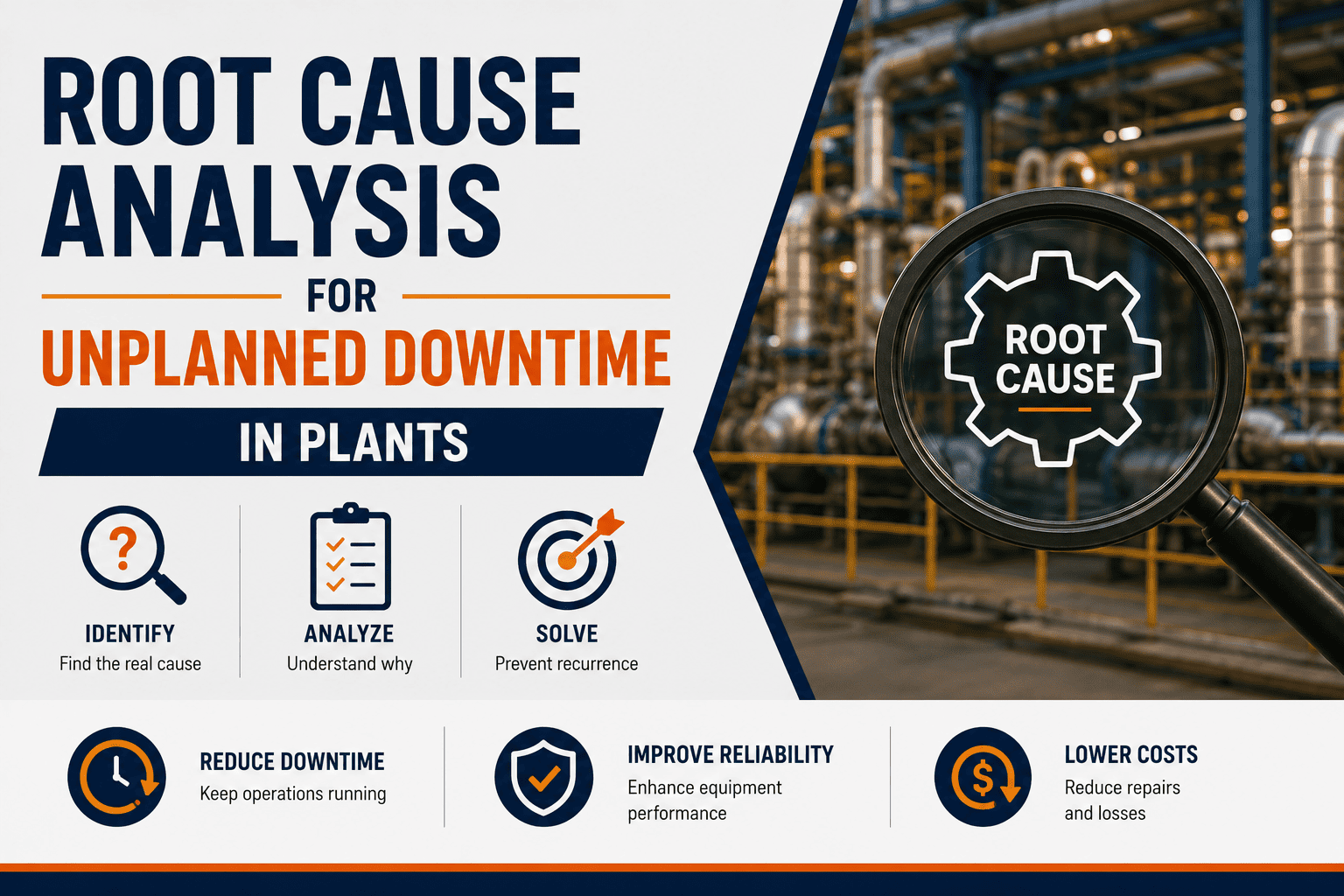
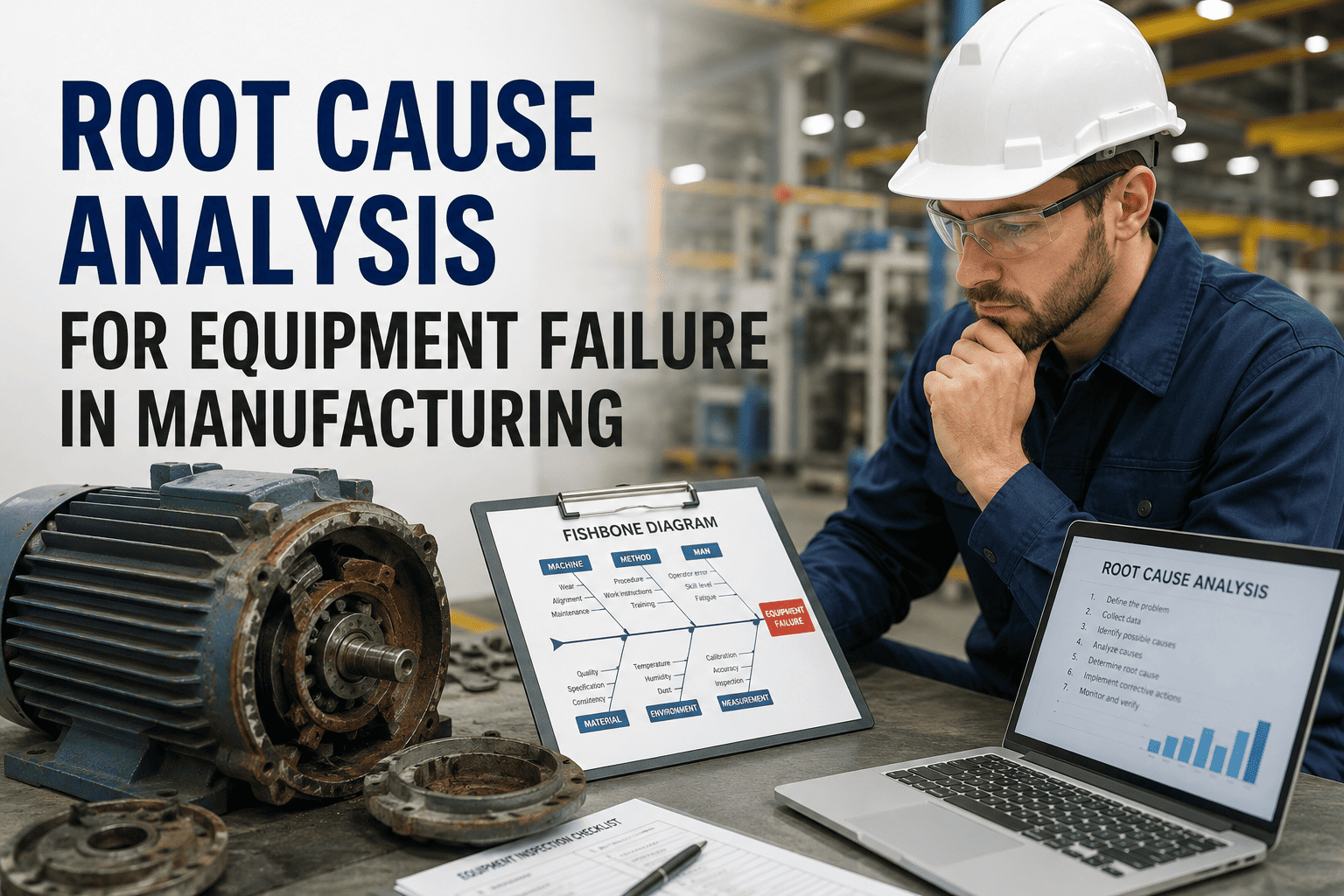
Failure patterns identified from historical work order data
What Changes When You Track It Properly
30–50%
Reduction in unplanned downtime incidents within 12 months of CMMS implementation
3–12 mo
Typical payback period for a CMMS investment based on downtime reduction and maintenance savings
$500K+
Annual savings reported by manufacturers who reduced unplanned downtime by 30% through predictive monitoring
Stop the Bleeding. Start Today.
Every week without a maintenance system is another 15 hours of paid downtime waiting to happen. Oxmaint gives your team the tools to track every asset, prevent every predictable failure, and measure every result — from day one.
Frequently Asked Questions
How much does unplanned downtime actually cost per hour?
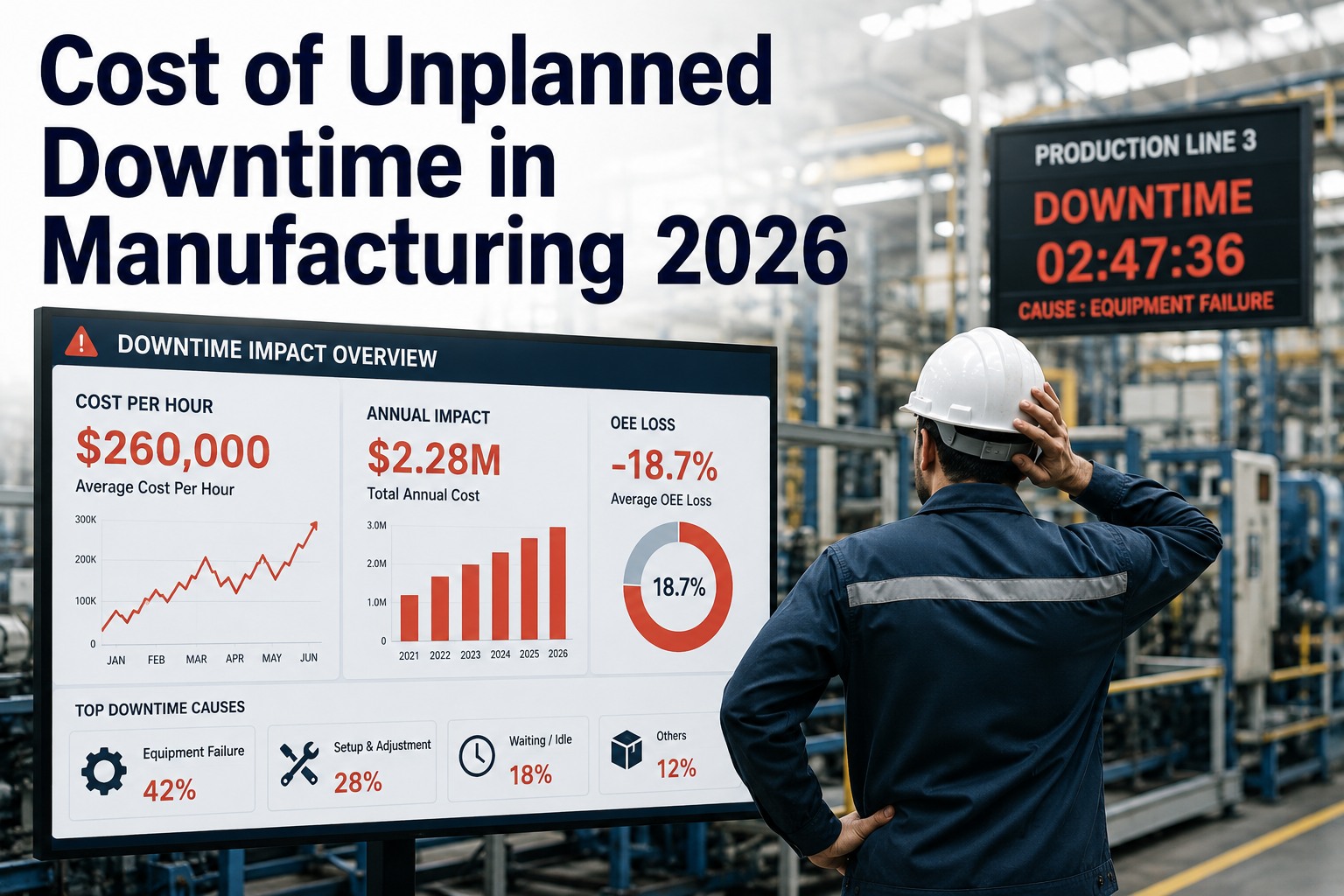
The cost varies significantly by industry and plant size. For general manufacturing, research by Aberdeen puts the average at around $260,000 per hour. Automotive plants face the steepest losses at up to $2.3 million per hour — roughly $600 per second of idle production. Even mid-size facilities report costs of $125,000 per hour. The key insight is that 98% of organizations say even a single hour of downtime costs over $100,000, making prevention almost always more economical than repair.
What is the leading cause of unplanned downtime in manufacturing?
Equipment failure accounts for approximately 42% of all unplanned downtime — making it the single largest cause by a significant margin. Aging infrastructure contributes another 29%, followed by human error at 18%, and parts or supply chain failures at 11%. The critical point is that equipment failure and aging infrastructure together — responsible for over 70% of stoppages — are both highly preventable through structured preventive maintenance programs and proper asset lifecycle tracking.
How can a CMMS help reduce unplanned downtime?
A CMMS like Oxmaint addresses the root causes of downtime directly. It automates preventive maintenance schedules so no task is ever missed, maintains a full searchable service history for every asset, manages spare parts inventory with automatic reorder alerts, and gives technicians mobile access to work orders on the plant floor. Plants that improve their MRO inventory management alone report a measurable decline in downtime — with 58.9% of facilities seeing improvement. Combined with PM scheduling, most plants see 30–50% fewer unplanned incidents within 12 months.
What is the difference between MTTR and MTBF, and why do they matter for downtime?
MTBF (Mean Time Between Failures) measures how long equipment runs reliably before breaking down — a rising MTBF means your preventive maintenance program is working. MTTR (Mean Time To Repair) measures how quickly your team restores equipment after a failure — a falling MTTR means faster recovery and less lost production. Together, these two metrics give you a complete picture of equipment reliability and maintenance team efficiency. Tracking both in a CMMS dashboard lets you spot deteriorating trends before they become costly breakdowns.
How quickly will we see ROI after implementing a downtime tracking system?
Most manufacturing plants see measurable improvements within the first 30 to 90 days — better work order visibility, fewer missed PM tasks, and improved parts availability. Significant downtime reduction and cost savings typically emerge within 6 to 12 months as the system builds data and teams refine their maintenance strategies. Industry data points to typical payback periods of 3 to 12 months depending on facility size. One mining operation that identified gearbox issues three months early extended equipment life by 25% and saved over $500,000 annually.


.png)


