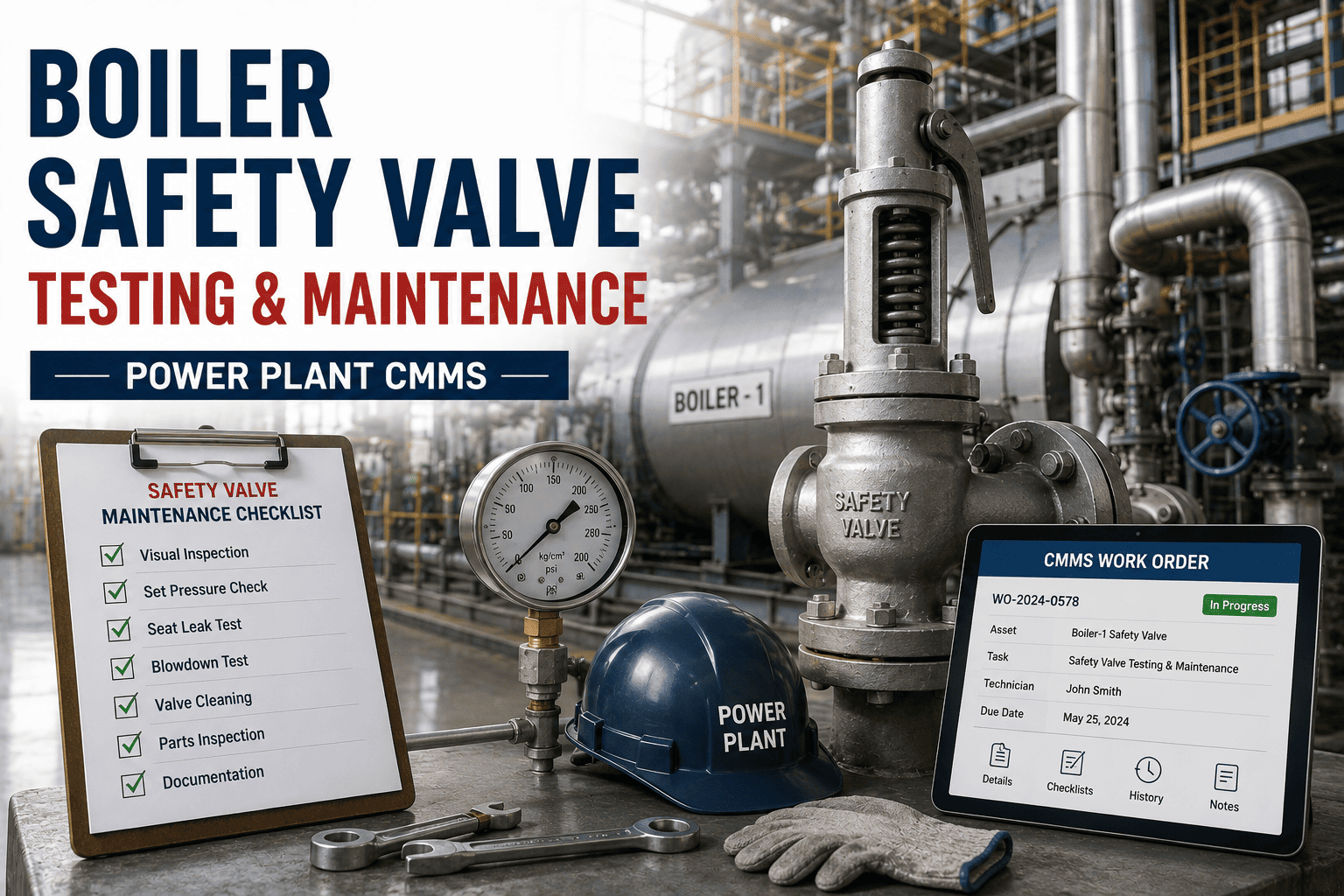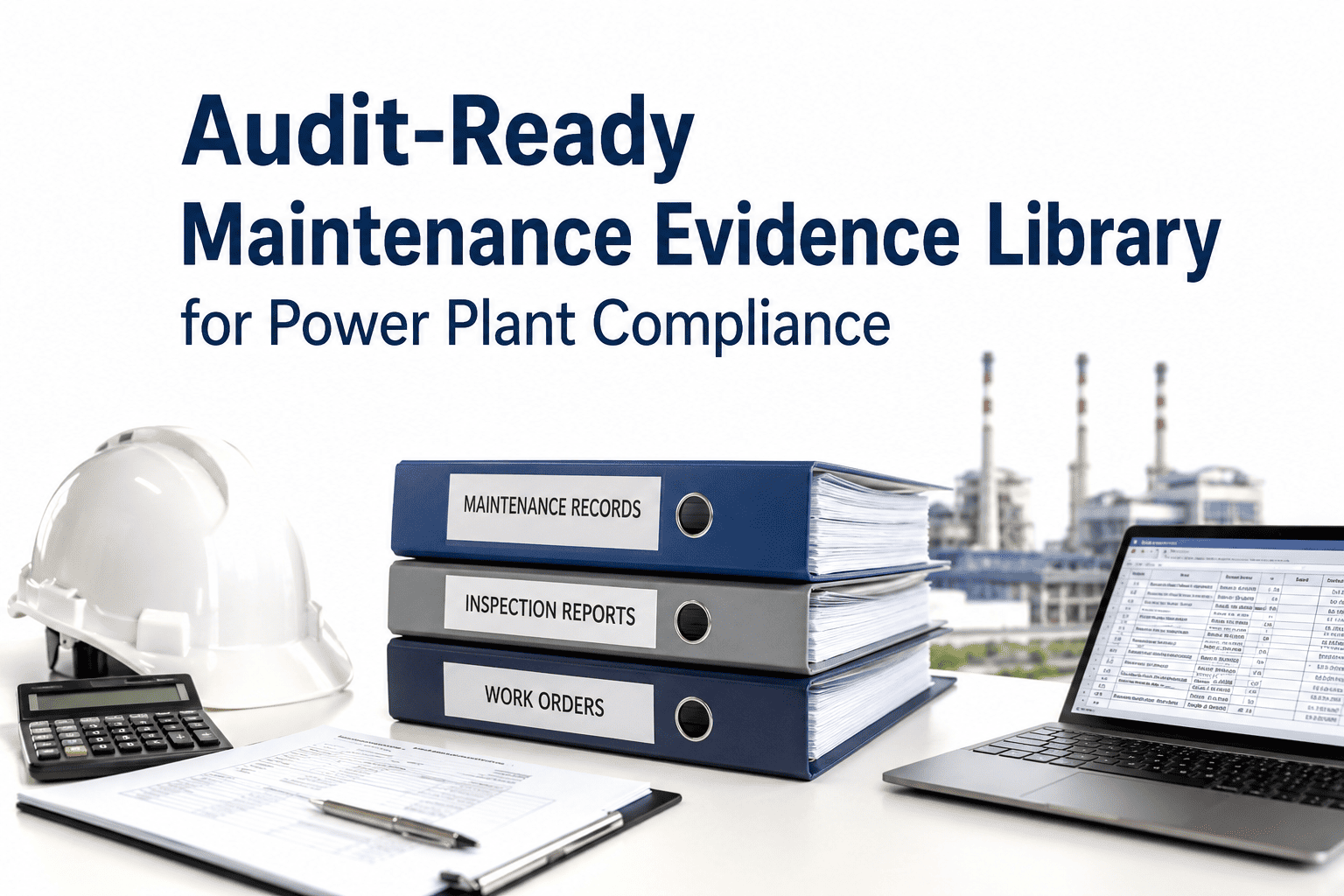
Boiler safety valves are the last line of defense against catastrophic overpressure events — a failed or untested relief valve can result in vessel rupture, personnel fatalities, and regulatory shutdowns that cost power plants weeks of lost generation. ASME and national inspection authorities require documented proof of valve testing and calibration at defined intervals, and auditors increasingly demand digital, timestamped compliance records. OxMaint's compliance tracking module gives maintenance teams a structured, audit-ready system to schedule valve tests, capture test results, store calibration certificates, and track overdue inspections across every boiler in the fleet.
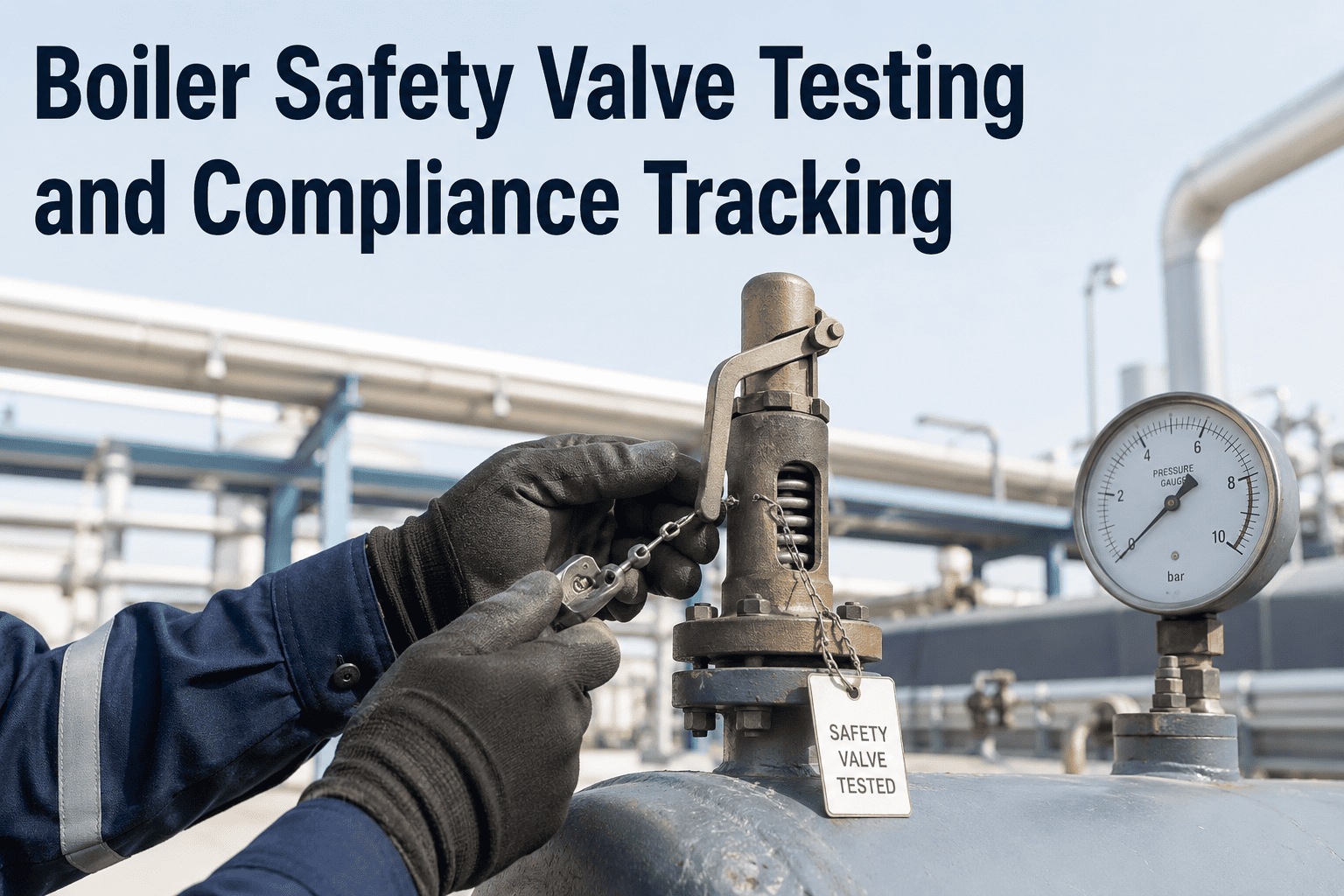
Boiler Safety Valve Testing and Compliance Tracking
A complete compliance framework for pressure relief valve inspection, certification management, and audit documentation — designed for power plant and industrial boiler teams operating under ASME, NB, and jurisdictional authority requirements.
Pre-Test Preparation and Safety Verification
Proper preparation prevents test failures and personnel injury. Every safety valve test must begin with documented isolation confirmation, system pressure status, and technician authorization before any valve manipulation occurs.
Valve Lift Test and Set Pressure Verification
Lift testing confirms the valve opens at its stamped set pressure and reseats cleanly. Inaccurate set pressure or failure to reseat indicates valve replacement is required before the boiler returns to service.
Certificate Management and Regulatory Documentation
Regulatory audits succeed or fail on documentation quality. Certificates, test reports, and inspection intervals must be stored in a traceable system that produces instant proof of compliance under audit pressure.
Never Fail a Boiler Compliance Audit Again
OxMaint stores every valve test certificate, calibration record, and inspection interval in one audit-ready digital system — with automatic overdue alerts, fleet-wide compliance dashboards, and instant report generation when inspectors arrive.
Failure History Tracking and Repeat Failure Analysis
Every valve failure carries forensic intelligence about system conditions, maintenance practices, and design margins. Capturing and analyzing failure patterns prevents repeat events and supports long-term reliability strategy.
Compliance Program Performance Metrics
| Metric | How It's Measured | Target | Review Cycle |
|---|---|---|---|
| Valve Test Compliance Rate | Tests completed on schedule ÷ total due | 100% | Monthly |
| Certificate Currency Rate | Active certs ÷ total required certs | 100% | Monthly |
| Repeat Valve Failure Rate | Repeat failures ÷ total valve events | Below 5% | Quarterly |
| Audit Finding Rate | Compliance findings per inspection | Zero | Per Audit |
| Overdue Inspection Count | Valves past due date in CMMS | Zero | Weekly |
Boiler Safety Valve Compliance Questions
How often must boiler safety valves be tested?
ASME and most jurisdictional authorities require annual testing for high-pressure steam boilers and every three years for lower-pressure systems. Some insurance carriers and state authorities mandate more frequent testing based on service conditions. OxMaint CMMS automatically calculates due dates and alerts teams ahead of schedule.
What records must be kept for a compliance audit?
Auditors require the test certificate with date, valve identification, set pressure results, technician certification, and next test due date. Digital records stored in CMMS with timestamps are accepted by most authorities and are significantly faster to produce than paper-based archives.
Can a safety valve be tested in-situ or must it be removed?
In-situ lift testing is acceptable for confirming mechanical operation, but ASME PTC 25 certified set pressure verification typically requires bench testing on a calibrated test stand by an NB-licensed shop for formal compliance documentation.
What happens if a valve fails its set pressure test?
The valve must be immediately removed from service, tagged, and replaced with a tested spare before the boiler returns to operation. Failure to replace a non-compliant valve is a reportable regulatory event in most jurisdictions. Track all replacements in OxMaint with full traceability.
How does CMMS improve safety valve compliance versus spreadsheets?
CMMS provides automatic due date calculation, certificate expiry alerts, digital document storage, fleet-wide compliance dashboards, and instant audit reports — eliminating the manual tracking errors and lost documents that cause compliance failures with spreadsheet systems.
Every Valve Tested. Every Certificate Stored. Every Audit Passed.
OxMaint gives power plant teams a complete digital compliance system for boiler safety valve testing — from automated test scheduling and certificate storage to fleet-wide dashboards and one-click audit reports. Stop managing compliance on spreadsheets and start generating proof of compliance automatically.