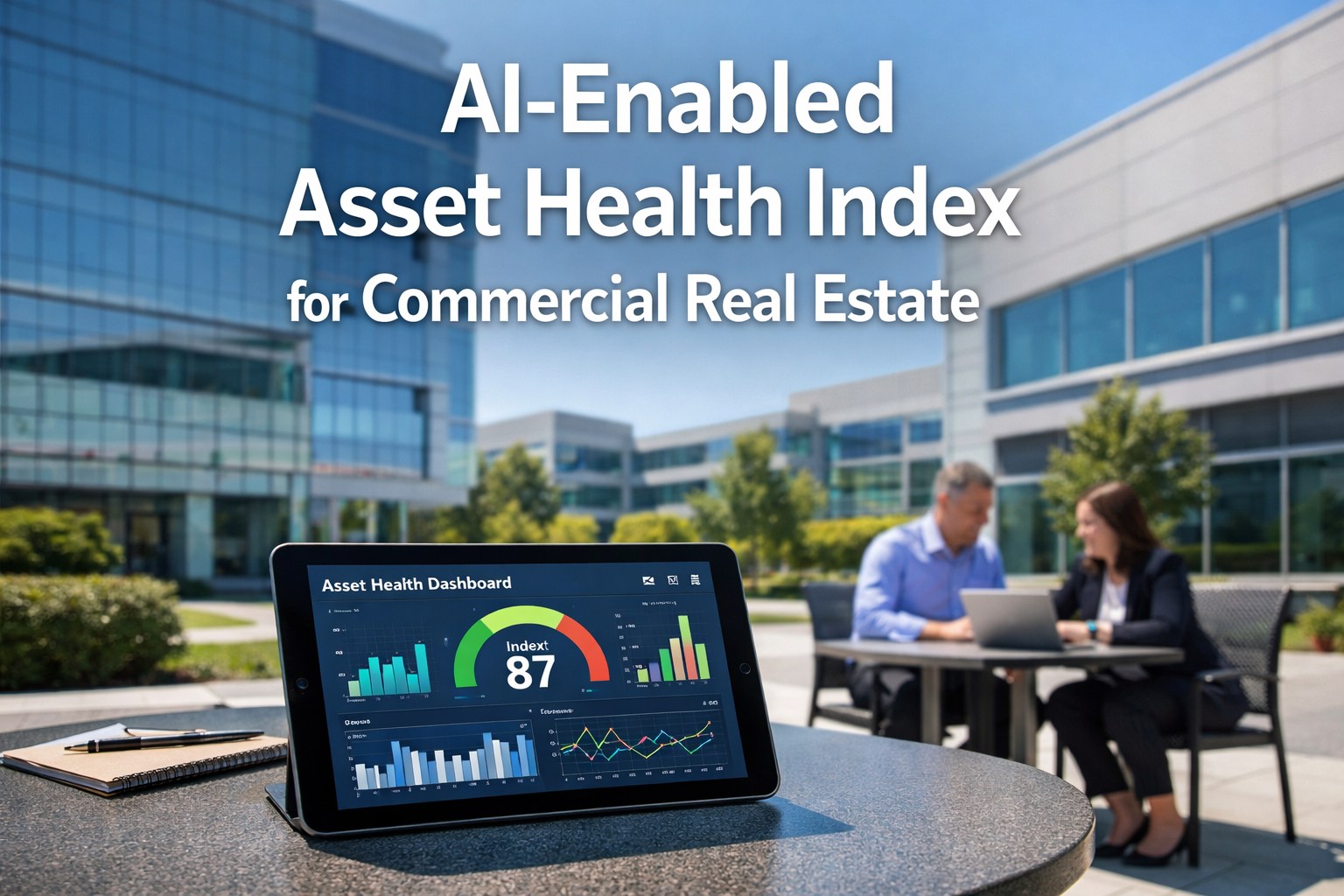
Asset Tracking and Lifecycle Management Software for Commercial Real Estate
By allen on February 28, 2026
A national commercial real estate operator managing 47 office and retail properties lost a $1.4 million HVAC chiller
serving its flagship downtown tower — not because the failure was undetectable, but because the compressor's rising
current draw had been logged in the building automation system for 9 weeks with no one analyzing it. By the time the
unit failed on a Tuesday morning, three anchor tenants had already declared lease breach clauses and an emergency
contractor was on-site billing at a 4.8x premium. The total impact exceeded $2.1 million from a bearing replacement
that would have cost $5,800 during a planned maintenance window the month prior. This is not an isolated incident.
Across U.S. commercial real estate, unplanned critical asset failures account for 81% of unbudgeted maintenance
spend, and 85% of those failures show detectable degradation patterns 3–18 months before catastrophic breakdown. CRE
portfolios using asset lifecycle management platforms reduce unplanned downtime by 65% within the first year. Start your free trial today and begin tracking every asset
from commissioning to replacement — before the next failure disrupts your tenants, damages your NOI, and drains your
emergency reserves. Schedule a 30-minute portfolio
assessment with our commercial real estate specialists to see asset lifecycle management in action across
your properties.
Reactive vs. Lifecycle-Managed Assets for Commercial Real Estate
How structured asset lifecycle intelligence transforms CRE portfolios from crisis
management to strategic capital control
Reactive / Calendar-Based
Asset Failure Detection
After Breakdown Occurs
Average Emergency Repair Multiplier
4.8x Emergency Premium
Unplanned Downtime per Year
160–320 Hours Portfolio-Wide
Tenant Disruption Events
10–24 Events per Year
CAPEX Forecast Accuracy
Estimate-Based, Often Wrong
Predictive / Lifecycle-Managed
Asset Failure Detection
3–18 Months Before Failure
Average Emergency Repair Multiplier
1x Planned Rate
Unplanned Downtime per Year
40–90 Hours (65% Reduction)
Tenant Disruption Events
1–4 Events per Year
CAPEX Forecast Accuracy
Condition-Data Driven, Defensible
Average Annual Portfolio Value Delivered — 2M SF Commercial Portfolio:
$880K–$1.4M
Not every building component justifies full lifecycle tracking investment. But the systems that drive tenant
satisfaction, carry catastrophic failure consequences, represent the largest capital replacement costs, and create
regulatory liability absolutely do. These six asset categories account for 89% of unplanned CRE maintenance spend
and 92% of tenant-facing disruption events. CRE operators deploying lifecycle platforms through Oxmaint prioritize these high-impact categories first.
Six Critical Asset Categories for CRE Lifecycle Tracking
HVAC Systems
40%
Of total CRE emergency spend — chillers, boilers, AHUs, cooling towers,
rooftop units
Elevators and Lifts
18%
Of tenant accessibility complaints — ADA compliance, entrapment risk, code
violations, downtime liability
Electrical Switchgear
Arc Flash
Fire and safety risk — pre-1980 panels, transformer oil condition, breaker
trip pattern anomalies
Emergency Generators
Life Safety
Must-run assets — data centers, emergency egress, fire systems, regulatory
compliance testing records
Plumbing and Water Systems
Cascade
Single pipe failure impacts multiple tenants and floors — backflow, fire
suppression, water quality compliance
Building Envelope
30 Years
Longest lifecycle to manage — roof membranes, curtain walls, waterproofing,
exterior cladding systems
How Asset Lifecycle Intelligence Works for CRE Portfolios
Asset lifecycle management is not simply a digital maintenance log — it is a structured intelligence pipeline that
converts continuous equipment performance data, inspection scores, and maintenance history into capital decisions
with specific timelines, cost projections, and risk assessments. CRE portfolios implementing this pipeline through
Oxmaint connect their existing BAS, metering, and sensor
infrastructure to predictive algorithms without replacing any current systems.
Detect subtle degradation invisible to manual inspection
Cross-reference weather, occupancy load, and season
Accuracy: 85–92%
03
Lifecycle Forecasting
Remaining useful life estimation per asset
Repair-vs-replace cost modeling with condition data
5–10 year CAPEX forecasting for investor reporting
Prediction: 3–18 Months Ahead
04
Automated Action
Work orders auto-generated with parts and labor
Timing aligned to tenant calendar and lease cycles
Cost avoidance documented for board reporting
Response: Weeks Before Failure
Asset-by-Asset: What Lifecycle Management Monitors and When It Alerts
Each critical commercial building asset category produces distinct degradation signatures that lifecycle algorithms
detect at different lead times. Schedule a portfolio
assessment to see these models applied to your specific building asset register.
Predictive Detection Windows by CRE Asset Category
What Oxmaint monitors, what it detects, and how far ahead it predicts failure
The 15% of failures not predicted are typically sudden catastrophic events — manufacturing
defects, impact damage, vandalism — that produce no detectable degradation pattern.
Know the Condition of Every Asset Across Every Property
Oxmaint connects to your existing BAS, IoT sensors, and metering infrastructure to
detect equipment degradation patterns invisible to manual inspection — then auto-generates work orders with
parts, timing, and cost impact documentation so your team intervenes during planned windows, not during a
tenant walk-through or lease negotiation.
ROI of Asset Lifecycle Management for CRE Portfolios
The financial case for structured asset lifecycle management is not theoretical — it is arithmetic. Every prevented
emergency failure eliminates the 4.8x cost multiplier from overtime labor, expedited parts, temporary equipment
rental, and cascade damage. CRE asset managers presenting condition-based CAPEX data to ownership groups
consistently secure capital approval that estimate-based budget requests never achieve.
Annual ROI: Asset Lifecycle Management Program
2 million SF commercial portfolio — 35 properties — mixed office and retail
Emergency Repair Avoidance
11 prevented emergencies x $44,000 average cost avoided (4.8x multiplier
eliminated)
$484,000
Energy Fault Detection
Automated fault detection eliminates 15–20% HVAC energy waste from stuck valves
and simultaneous heating/cooling
$340,000
Capital Deferral Value
Optimized maintenance timing extends critical asset life 15–25%, deferring
$3.2M in near-term capital replacement
$280,000
Tenant Retention Protection
3 prevented major tenant disruption events x average $80K NOI impact avoided
per event
$240,000
Staff and Contractor Efficiency
30% increase in technician wrench-time — teams execute planned work instead of
emergency diagnosis
$156,000
Total Annual Value Delivered
$1.5M
Platform investment: $150K–$300K per year including software, IoT sensors, and integration.
Net ROI: $1.2M–$1.35M. Return: 5–9x in first year.
Implementation: From Fragmented Data to Portfolio-Wide Lifecycle Control
Deploying asset lifecycle management follows a structured path that delivers measurable value at each phase. Start
with the 15–20% of assets causing 60–70% of your emergency costs. Prove value fast. Expand with evidence. Schedule an assessment to design a phased
deployment plan for your specific portfolio.
Phased Implementation Roadmap for CRE Portfolios
01
Month 1–2: Connect
Audit existing BAS, CMMS, and metering data
Select 3–5 pilot properties with highest risk
Connect data feeds and build initial asset registry
Output: Portfolio Visibility
02
Month 3–6: Detect
AI builds asset baselines within 2–4 weeks
First fault detections and predictive lifecycle alerts
Deploy IoT on highest-cost and highest-risk assets
Output: $300K–$600K
03
Month 7–12: Prevent
Expand coverage to 20–30 properties portfolio-wide
Predictive work orders in daily facility workflow
First investor and board presentation with ROI data
Output: $900K–$1.5M
04
Year 2+: Optimize
Full portfolio coverage on all critical asset categories
AI models continuously improve with seasonal data
CAPEX planning driven by condition scores and RUL
Output: 5–9x ROI
Real-World Lifecycle Catches: What the Data Reveals
The most compelling evidence for asset lifecycle management comes from what it catches before tenants notice — the
failures that would have happened but did not because condition data enabled planned intervention.
Documented Lifecycle Catches in Commercial Real Estate Portfolios
Real failures prevented through AI-powered condition monitoring and early
intervention
Catch 1: Chiller Compressor — Class A Office Tower
What the Platform Detected
11% current draw increase and 9% cooling output decline over 4 weeks
Prediction Lead Time
7 Weeks Before Projected Failure
Planned Repair Cost
$5,800 (Bearing Replacement)
Avoided Emergency and Tenant Cost
$318,000 (Rental, Abatement, Lease Risk)
Catch 2: Elevator Motor — Retail Center
What the Platform Detected
Motor temperature 16 degrees F above baseline, door cycle time increasing
25%
Prediction Lead Time
5 Weeks Before Projected Entrapment Risk
Planned Repair Cost
$9,200 (Motor and Door Operator Service)
Avoided Emergency and Liability Cost
$74,000 (ADA Violation, Emergency, Tenant Impact)
Combined ROI from Two Catches Alone: 58x Sensor Investment
Overcoming Common Barriers in CRE Asset Lifecycle Deployment
Every CRE portfolio faces obstacles when deploying structured asset lifecycle management. Understanding the most
common barriers — and their proven solutions — accelerates the path from pilot property to portfolio-wide
visibility.
Six Common Barriers and How CRE Operators Overcome Them
Legacy BAS Systems
Solved
Protocol gateways bridge legacy BACnet and Modbus for $500–$2K per building
IT Security Requirements
Solved
Read-only data collection, SOC 2 certified, encrypted, network-segmented OT
and IT
Facility Team Skepticism
Solved
Advisory mode first — AI recommends, your team decides. Trust builds with
validated catches.
Incomplete Asset Data
Solved
AI platforms auto-detect sensor drift and data gaps. Imperfect data is
expected — not a blocker.
Capital Budget Constraints
Solved
Self-funding — energy savings in months 3–6 typically exceed annual
platform cost. Free pilot available.
Which assets in our CRE portfolio should be prioritized first for lifecycle tracking?
Start with the 15–20% of assets causing 60–70% of your emergency repair spend and tenant
disruption events. For most commercial real estate portfolios, this means central plant HVAC systems,
elevators in high-traffic properties, electrical switchgear over 25 years old, emergency generators with
regulatory testing obligations, and systems with active warranty periods. Deploy IoT sensors on these assets
first, establish condition baselines within 60 days, and document avoided costs for ownership reporting.
This targeted approach typically costs $25K–$50K for initial sensor deployment and delivers $200K–$450K in
first-year avoided failures. Sign up free to start
building your portfolio asset priority list today.
Do we need to replace our existing property management or CMMS software?
No. Oxmaint is designed to layer on top of existing infrastructure. The platform connects
to legacy BAS systems through standard protocols — BACnet, Modbus, LonWorks — using protocol gateways
costing $500–$2,000 per building. It integrates with existing property management and CMMS platforms via API
connections established during onboarding. For properties with minimal building automation, standalone
wireless IoT sensors at $100–$500 per monitoring point fill data gaps without any BAS modification. Most CRE
portfolios achieve initial integration within 4–8 weeks.
How accurate is the remaining useful life forecasting for commercial building assets?
Fault detection — identifying current operational anomalies — exceeds 90% accuracy from
day one. Remaining useful life forecasting reaches 85–92% accuracy by month four to six as the system learns
seasonal patterns, load variations, and building-specific behaviors. The 8–15% of failures not predicted are
typically sudden catastrophic events that produce no gradual degradation signal.
Can Oxmaint support CAPEX presentations to property owners and investment committees?
Yes — this is one of the highest-value outputs for CRE asset managers. Oxmaint generates
portfolio-level capital expenditure forecasts backed by asset condition scores, remaining useful life
estimates, and replacement cost baselines. The platform produces rolling 5–10 year CAPEX models exportable
for investment committee presentations, lender due diligence packages, and board reporting. Asset managers
using condition-based CAPEX models consistently receive faster capital approval than teams presenting
estimate-only budget requests.
What is the typical payback period for a CRE asset lifecycle management program?
Most portfolios achieve positive ROI within 6–9 months. If your portfolio experiences
10–16 emergency failures per year at $30,000–$55,000 per event, and lifecycle management prevents 65% of
those events, you avoid $195,000–$572,000 annually. Add $250K–$450K in energy savings and the first-year
value typically reaches $450K–$1.0M against an investment of $150K–$300K — a 3–6x return compounding
annually. Book an assessment and we will
model the ROI using your portfolio's actual data.
Your Building Assets Are Degrading Right Now. The Data Exists. Use It.
Every chiller, elevator, switchgear panel, and rooftop unit across your commercial
portfolio is generating performance data that reveals its health trajectory. The question is not whether
failures are predictable — 85% of them are. The question is whether you will see the warnings weeks ahead or
discover them when the tenant calls.